CULT CLASSIC: LONNIE LISTON SMITH AND THE COSMIC ECHOES-RENAISSANCE.
Cult Classic: Lonnie Liston Smith and The Cosmic Echoes-Renaissance.
Innovative, influential and way ahead of the musical curve, describes the music of Lonnie Liston Smith, and specially the five albums he recorded with The Cosmic Echoes for Bob Thiele’s Flying Dutchman Productions between 1973 and 1976 This began with Astral Travelling in 1973 with Cosmic Funk followed in 1974. This was just the start.
Expansions which followed in 1975 featured Smith at the peak of his powers on what was the most successful album of his career. He had brought onboard his brother Donald, whose vocals added a new dimension to the groundbreaking music.
Later in 1975, Lonnie Liston Smith and The Cosmic Echoes released Visions Of A New World. It was their penultimate album for Flying Dutchman Productions which was tailor made for pioneering artists like Smith. It was a smaller label where artists were encouraged to experiment and innovate and produce music the music that they really wanted. Often this resulted in albums of groundbreaking music. This included Reflections Of A Golden Dream which was released in 1976, and turned out to be Lonnie Liston Smith and The Cosmic Echoes’ swan-song for Flying Dutchman Productions.
In 1976, there was a takeover of Flying Dutchman Productions by RCA. After some changes at the parent company it was decided to release Lonnie Liston Smith and The Cosmic Echoes’ next album on RCA rather than Flying Dutchman Productions. It was the end of an era. However, Renaissance was another album of innovative music from Lonnie Liston Smith and The Cosmic Echoes.
Led by musical visionary Lonnie Liston Smith Renaissance finds him pushing musical boundaries to their limits and sometimes, beyond. That’s had been the story of his career which began a decade earlier. Since then, the man who had been born to make music had been establishing himself as a musician.
For Smith, it was almost written in the stars that he would become a musicians. He was born in 1940, into a musical family and his father was a member of Richmond Gospel music group the Harmonising Four. Growing up, members of gospel groups The Soul Stirrers and Swan Silvertones were regular visitors to the Smith household. With all this music surrounding him, Smith learned piano, tuba and trumpet in High School and college. After college, he headed to Morgan State University.
Inspired by Trane, Bird and Miles Davis, Smith embarked upon a degree in musical education. Throughout his time at University, he continued playing the pianist in local clubs and singing backing vocals. He played with alto saxophonist Gary Bartz and trombonist Graham Moncur. This was all part of Smith’s musical eduction. Having completed his BSc in musical education at Morgan State University, Smith walked straight into a job.
On leaving Morgan State University, Smith got a job with the Royal Theatre’s house band. For a young musician, this was would help turn them into a musical all-rounder. After all, they had to be able to accompany a wide range of artists. For Smith this was the next stage in his musical education. The next part of his musical education took place in New York.
Having moved to New York, Smith was luck enough to get a gig playing piano in Betty Carter’s band. This helped Smith get his name known in the Big Apple. Then in early 1965, he caught a break.
He joined Roland Kirk’s band and made his recording debut on March 14th 1965. That was when Here Comes The Whistleman was recorded live in New York Smith only played on the title-track, Making Love After Hours, Yesterdays and Step Right Up. Then he featured on Roland and Al Hibbler’s 1965 live album A Meeting Of The Times. After this, he joined one of jazz’s top bands.
Over the last few years, The Jazz Messengers had established a reputation for young musicians looking to make a name for themselves. Smith joined in 1965. He shared the role with Mick Nock and Keith Jarrett. However, with The Jazz Messengers ever evolving lineup and only played in three concerts. These three concerts just so happened to be at the legendary Village Vanguard. Despite playing at such prestigious venue this must have been a disappointing time for an up-and-coming pianist. Luckily, Smith was rehired by Kirk.
He rejoined Kirk’s band in time to play on his 1968 album Now Please Don’t You Cry, Beautiful Edith. This established his reputation as the go-to-guy for anyone looking for a pianist. It was the start of period where Smith worked with some of the most innovative and inventive jazz players. Musical boundaries were about to be pushed to their limits as Smith joined Pharaoh Saunders’ legendary free jazz band.
Saunders had worked closely with John Coltrane right up to his death in 1967. The following year, Saunders formed a new band. Their music is best described as groundbreaking free jazz. Musical boundaries were pushed to their limits and beyond by one of the genre’s pioneers. Recognising a fellow believer in free jazz, Saunders asked Smith to join his band.
He went on to play on three of Saunders best albums. The first of this trio was 1969s Karma. It was followed in 1970 with Jewels of Thought and 1971s Thembi. The other Saunders album Smith played on was 1970s Summun Bukmun Umyun. which was released on Impulse. Just like the three albums Saunders recorded for Flying Dutchman Productions it was an innovative album that was way ahead of the musical curve.
During this period, Saunders and his band were constantly pushing boundaries and rewriting the musical rulebook. Their music was truly groundbreaking. Even Smith was challenged. On Thembi, Pharaoh asked Lonnie to play the Fender Rhodes. This was the first time that Smith came across an electric piano. However, he rose to challenge and wrote Thembi’s opening track Astral Travelling. Later, Astral Travelling would become synonymous with Lonnie Liston Smith and The Echoes. Before that, Smith would play with some of jazz’s maverick.
One of these mavericks was Gato Barbieri. He had just signed to Bob Thiele’s nascent label Flying Dutchman Productions. It was establishing a reputation for providing musicians with an environment where innovative and creative musicians could thrive.
Thiele believed musical mavericks didn’t thrive within such an orthodox environment like a major label. Their creativity was restricted meaning that were unable to experiment and innovate like they would like. So, he signed Barbieri to Flying Dutchman and Lonnie Liston Smith was asked to play on his 1969 debut album The Third World.
The next signing to Flying Dutchman Productions was Leon Thomas, and Smith played on his debut album Spirits Known and Unknown. Soon, Smith was a regular at Flying Dutchman sessions.
When the time came for Barbieri to record his 1971 sophomore album Fenix, Smith was called upon. He played on Fenix and joined Barbieri’s band. A year later he played on his 1972 album El Pampero and toured throughout Europe with the band. Then came the opportunity of a lifetime. After El Pampero, Smith got the chance to work with another jazz legend.
Smith was a member of Barbieri’s band when Miles Davis got in touch. He wanted the pianist to join his band. At this time, Davis’ music was changing direction. The direction it was heading in was funk.
Electronic instruments were the flavour of the month for Davis and he was exploring their possibilities. However, he was doing this outside the studio environment. That’s why there are very few recordings of Smith playing alongside Davis at that time. That came later when the two men were reignited and worked together. Meanwhile, he decided to move on with his solo career and his debut album Astral Travelling.
Astral Travelling.
When recording of Astral Travelling began, Smith had put together some of the most talented and innovative musicians. The Cosmic Echoes’ rhythm section included bassist Cecil McBee, drummer David Lee and guitarist Joe Beck. Sonrily Morgan and James Mtume played percussion and conga, Gee Vashi tamboura and Badal Roy tabla. George Barron played tenor and soprano saxophone and Lonnie played piano and electric piano on Astral Travelling. Theile produced Astral Travelling, which was released in 1973.
On its release in 1973, Astral Travelling was critically acclaimed. Critics were won over by Astral Travelling’s fusion of avant garde, experimental, free jazz and orthodox jazz. The music was variously beautiful, dramatic, explosive, ethereal, flamboyant languid, mellow, serene spiritual and urgent. It was as if Smith had drawn upon all his experience working as a sideman. He had worked with Saunders, Barbieri, The Jazz Messengers, Thomas, Stanley Turrentine and Davis.
The result was Smith’s unique brand of cosmic jazz. It went on to influence several generations of musicians and music lovers, and show that Smith was no ordinary musician. Instead, he was an innovator, who was determined to push musical boundaries to their limits and beyond. This was apparent on Astral Travelling, and its followup Cosmic Funk.

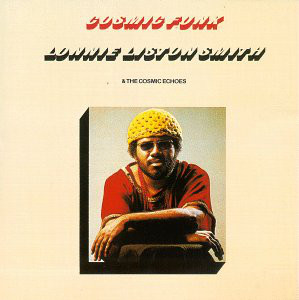
Cosmic Funk.
Cosmic Funk featured six tracks, three of which Smith wrote. They were the title-track Cosmic Funk, Beautiful Woman and Peaceful Ones. The other tracks were Wayne Shorter’s Footprints, James Mtume’s and John Coltrane’s Naima. These six tracks were recorded by an all-star band.
For the recording of Cosmic Funk, Smith had put together some of the most talented and innovative musicians. The Cosmic Echoes’ rhythm section included bassist Al Anderson, drummer Art Gore. Lawrence Killian played percussion and conga, while Doug Hammond, Ron Bridgewater and Andrew Cyrille played percussion. George Barron soprano saxophone, flute and percussion, while Donald Smith played piano, flute and added vocals. Lonnie played acoustic and electric piano plus persuasion on Cosmic Funk. Theile produced Cosmic Funk, which was released in 1974.
Cosmic Funk was released in 1974. Critics heard a different side to Smith on Cosmic Funk. It was a much more orthodox album. One thing remained the same, the reaction of critics. Just like Astral Travelling, plaudits and critical acclaim followed the release of Cosmic Funk. It turned out to be a a transitionary album Smith, which sadly, wasn’t a huge commercial success.
Cosmic Funk proved to be a much more orthodox jazz album from Lonnie Liston Smith and The Cosmic Echoes. Elements of jazz, funk, Latin and soul were combined on Cosmic Funk. The music veered between anthemic, beautiful, ethereal, experimental, flamboyant, funky, futuristic and wistful. The album was a stepping stone.
Despite its much more orthodox jazz sound, Cosmic Funk found Lonnie Liston Smith and and The Cosmic Echoes one step nearer finding his trademark sound. They found his trademark sound on his third album, Expansions, which was released in 1975. It was the first two albums of which were part of a musical voyage of discovery.
Expansions.
By the time Lonnie Liston Smith and The Cosmic Echoes released Expansions in early 1975, Thiele had take Flying Dutchman Productions’ releases to RCA. This safeguarded Flying Dutchman Productions’ future. By then, Thiele had discovered RCA wanted sales, and sales was what they got.
Expansions reached eight-five in the US Billboard 200, twenty-seven in the US R&B charts and number two in the US Jazz charts. This made Expansions one of Flying Dutchman Productions’ most successful albums.
Meanwhile, club and radio DJs were spinning tracks from Expansions. Belatedly, Lonnie Liston Smith and The Cosmic Echoes were the flavour of the month among DJs, dancers and discerning record buyers. It was no surprise that Thiele sent Lonnie Liston Smith and The Cosmic Echoes into the studio again, where they recorded Visions Of A New World.

Visions Of A New World.
For Lonnie Liston Smith and The Cosmic Echoes’ fourth album, Visions Of A New World, Smith penned seven tracks, including the hopeful anthem A Chance For Peace. The other track, Devika (Goddess) was written by Dave Hubbard and Sarina Grant. These eight tracks were recorded at Electric Ladyland Studios, New York.
At Electric Ladyland Studios, Thiele and Liston produced the eight tracks that eventually became Visions Of A New World. Accompanying Smith were The Cosmic Echoes. Their rhythm section featured bassist Greg Maker, drummer Art Gore and Wilby Fletcher and guitarist Reggie Lucas. Percussionists included Michael Carvin, Ray Armando, Angel Allende who added bongos and Lawrence Killian who also played congas. Flautist Donald Smith also added vocals on three tracks. The horn section included soprano saxophonist Dave Hubert, trombonist Clifford Adams and trumpeter Cecil Bridgewater. This was a very different lineup of The Cosmic Echoes that featured on Astral Travelling. Smith on keyboards was the only constant. This constantly evolving lineup didn’t affect the reception of Visions Of A New World.
Just like previous albums, critics hailed Visions Of A New World was hailed an album of ambitious and groundbreaking music. Smith was seen as a musical pioneer, capable of creating music that was dreamy, elegiac funky, hopeful, ruminative, sensual, smooth and sultry. It was also ambitious and innovative, and soon, was hailed a minor classic where elements of free jazz, funk, fusion, rock, smooth jazz and soul. The result was another album that was way ahead of the musical curve. It was also Lonnie Liston Smith and The Cosmic Echoes’ most successful album.
When Visions Of A New World was released in the summer of 1975, it reached number seventy-four in the US Billboard 200, fourteen in the US R&B charts and number four in the US Jazz charts. Visions Of A New World was Lonnie Liston and The Cosmic Echoes’ most successful album. After four albums, Lonnie Liston and The Cosmic Echoes’ music was reaching a much wider audience. Now they had to do it all again on Reflections Of A Golden Dream.

Reflections Of A Golden Dream.
For his fifth solo album, Reflections Of A Golden Dream, Smith penned nine tracks, and cowrote Peace and Love with Leopoldo Fleming. The ten tracks were recorded by Lonnie Liston Smith and The Cosmic Echoes featured some top musicians.
Just like with previous albums, the lineup of The Cosmic Echoes seemed in a constant state of flux. The Cosmic Echoes’ rhythm section featured bassist Al Anderson and drummer Art Gore and Wilby Fletcher. Percussionists included Guilherme Franco and Leopoldo Fleming who also added congas and guitar. Flautist Donald Smith also added vocals on three tracks; while Dave Hubert switched between flute and soprano saxophonist. The horn section also included tenor saxophonist George Opalisky; plus Joe Shepley and Jon Faddis who played trumpet and flugelhorn. Backing vocalists included Maeretha Stewart, Patti Austin and Vivian Cherry. They augmented this latest version of The Cosmic Echoes on Visions Of A New World Astral Travelling.
Smith, played keyboards, piano and added vocals. He also co-produced Reflections Of A Golden Dream with Thiele. However, it later became apparent that Smith more or less took charge of production on Reflections Of A Golden Dream. Thiele’s role, was more of an executive producer. That didn’t seem to affect the reviews of Reflections Of A Golden Dream.
Critics, when they received their advance copies of Reflections Of A Golden Dream, found Lonnie Liston Smith and The Cosmic Echoes combining dance-floor friendly music with social comment on Get Down Everybody (It’s Time For World Peace) and Peace and Love. Meditations featured a much more pensive, spiritual sound; while Journey Into Space saw Smith became a musical voyager. Just like previous albums, Reflections Of A Golden Dream received plaudits and critical acclaim. That was all very well. However, would Reflections Of A Golden Dream ensure that Lonnie Liston Smith and The Cosmic Echoes run of commercial success continued?
When Reflections Of A Golden Dream was released in 1976, the album sold well, but didn’t match the commercial success of Visions Of A New World. It remained the most successful album of Lonnie Liston Smith and The Cosmic Echoes’ time at Flying Dutchman Productions. However, it turned out that Reflections Of A Golden Dream was the last album that Lonnie Liston Smith and The Cosmic Echoes released on Thiele’s Flying Dutchman Productions.
By 1976, changes were afoot at Flying Dutchman Productions. Thiele’s label had been taken over by RCA who had distributed the label since 1972. Straight away, RCA began a review of their latest acquisition.
Eventually, RCA decided that the only artist from the Flying Dutchman Productions’ roster they wanted to keep was Lonnie Liston Smith and The Cosmic Echoes. This wasn’t good news for the label Thiele had spent years building up. Worse was to come for him. He would be retained as a producer on a project-by-project basis. This began with Lonnie Liston Smith and The Cosmic Echoes’s album Renaissance.
Renaissance.
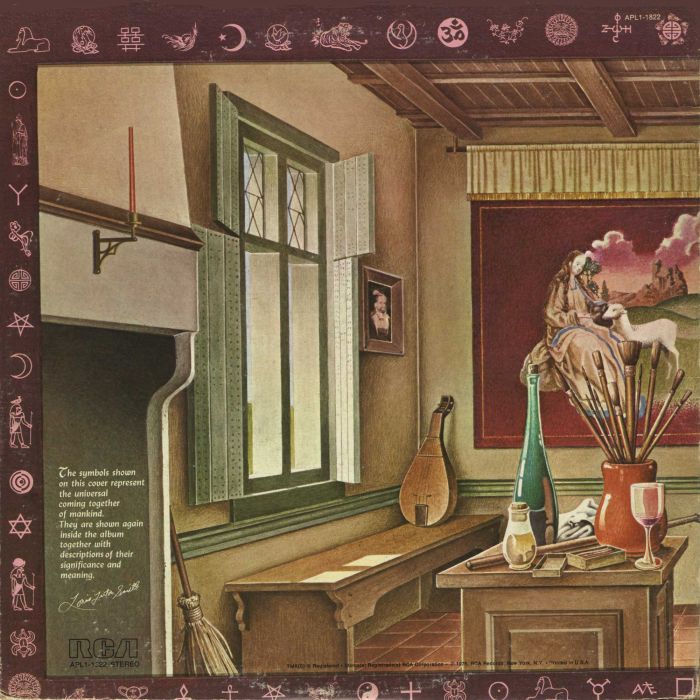
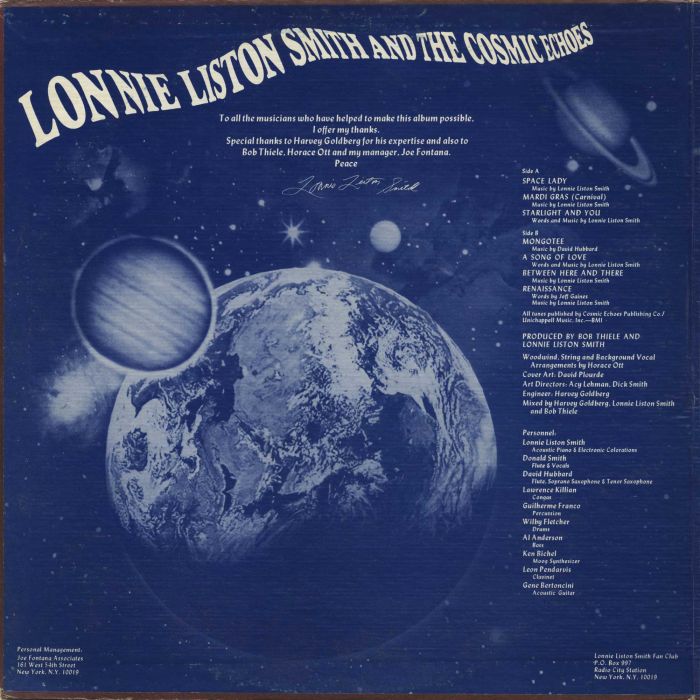
For Renaissance, which was Lonnie Liston Smith and The Cosmic Echoes’s debut for RCA Victor, the bandleader and pianist wrote five tracks. This included Space Lady, Mardi Gras (Carnival), Starlight And You, A Song Of Love and Between Here. He also wrote the music to Renaissance which features lyrics by Jeff Gaines. Meanwhile, Dave Hubbard had written Mongotee which would feature on Lonnie Liston Smith and The Cosmic Echoes sixth album of cosmic jazz, Renaissance.
Thiele brought Horace Ott onboard to arrange the strings, woodwinds and backing vocals on Renaissance. It was another ambitious, innovative genre-melting album from Lonnie Liston Smith and The Cosmic Echoes.
When recording began, Harvey Goldberg was the engineer and would later mix the album with Thiele. The latest incarnation of The Cosmic Echoes was a multitalented and versatile band who were capable of making groundbreaking music. It featured a rhythm section of drummer Wilby Fletcher and bassist Al Anderson. They were joined by Gene Bertoncini on acoustic guitar, Leon Pendarvis on clavinet, conga player Lawrence Killian, percussionist Guilherme Franco and Ken Bichel on Moog synth. Two musicians who played an important role on David Renaissance were Hubbard who played flute, tenor and soprano saxophone while Donald Smith played flute and added vocals. Bandleader Smith switched between acoustic and electric piano and coproduced the album with Thiele who had mixed Renaissance.
When Renaissance was released it was to plaudits and praise. Critics were impressed with an album that combined cosmic jazz and jazz funk. Lonnie Liston Smith and The Cosmic Echoes had effortlessly combined to create a musical potpourri that was melodic, rhythmic and continued the spiritual consciousness of previous albums. Later, the album would be considered a cosmic jazz classic. That’s no surprise given the quality of music on the album.
Side One.
Renaissance opens with Space Lady where cosmic jazz and jazz funk are combined by Lonnie Liston Smith and The Cosmic Echoes. They then unleash the jazz dance classic Mardi Gras (Carnival) which is one of the highlights of the album. Starlight and You which features a vocal masterclass from Donald Smith is a beautiful cinematic ballad that’s often overlooked and is one of the hidden gems on the album.
Side Two.
Very different is Mongotee which opens side two and heads in the direction of jazz. It’s all change on the dancer A Song Of Love which benefits from an emotive and heartfelt vocal from Donald Smith. However, the thoughtful, pensive and spacey sounding Between Here And There is without doubt one of the album’s finest moments. Bringing Renaissance to a close is the title-track which features lyrics by Jeff Gaines. Originally the song was going to be an instrumental but a chance meeting resulted in the lyrics being written and a new ending to Lonnie Liston Smith and The Cosmic Echoes’ sixth album and RCA Victor debut.
Lonnie Liston Smith and The Cosmic Echoes’ sixth album and RCA Victor debut was a captivating and eclectic mixture of moods and musical genres. It finds the pioneering bandleader and pianist leading a band on Renaissance which later became a cosmic jazz classic. However, it’s not just a cosmic jazz that features on Renaissance. There’s also jazz funk and elements of avant-garde, experimental, free jazz, funk, fusion and jazz on what was a truly ambitious album.
Renaissance like the five albums that Liston Smith and The Cosmic Echoes released on Thiele’s Flying Dutchman Productions was an innovative genre-melting album that is still influenced a new generation of musicians. That’s no surprise as Smith was a leader, not a follower, and pioneer whose music was way ahead of his time. Renaissance and the albums that Liston Smith and The Cosmic Echoes released on Flying Dutchman Productions feature a true musical visionary at the peak of his considerable creative powers.
Cult Classic: Lonnie Liston Smith and The Cosmic Echoes-Renaissance.

CULT CLASSIC: ORNETTE COLEMAN-FRIENDS AND NEIGHBORS: LIVE AT PRINCESS STREET.
Cult Classic: Ornette Coleman-Friends and Neighbors: Live At Princess Street.
Nowadays, saxophonist, trumpeter, violinist and composer Ornette Coleman is recognised as one of the founding fathers of the free jazz movement. He released his debut album Something Else in 1958 on the Contemporary label. The flowing year, 1959, he released Tomorrow Is the Question! After this, the pioneering musician signed to Atlantic and later that year, released an album that was akin to a statement of intent.
This was The Shape Of Jazz To Come, a unique and innovative album that combined elements of avant-garde and free jazz. Although this groundbreaking album wasn’t a commercial success, nowadays, it’s regarded as a landmark album and a genre classic.
At Atlantic, Coleman was recording and releasing the most ambitious album of his career. This included 1960s Change Of The Century and 1961s This Is Our Music. However, his fourth album for Atlantic surpassed everything that he head previously released.
On ‘21st’ December 1960, Coleman entered the studio with a double quartet. They played simultaneously on the album, with the bandleader’s own quartet featured on the left hand channel, while the second quartet featured on the right hand channel. The music the quartets produced was ambitious, innovative, way ahead of its time and far removed from the jazz music that had gone before. On the two lengthy movements the rhythm sections providing a multilayered rhythmic backdrop, while added what a series of freeform commentaries with some pre-composed passages. Incredibly, this album of continuous free improvisation was recorded in one take with no overdubbing or editing. When it was released nine months later and was a gamechanger
In September 1961, Coleman’s sixth album Free Jazz: A Collective Improvisation was released. Some critics realised and recognised the importance of what was a groundbreaking Magnus Opus. It was also an album that lent its name to a nascent musical movement, and free jazz was born.
The album also inspired future generations of jazz musicians. Some even copied Coleman’s use of a double quartet. This included John Coltrane on his 1965 classic album Ascension.
After the release of this landmark album, Coleman was hailed as one of the pioneers of new free jazz movement. The followup to Free Jazz: A Collective Improvisation was Ornette! It was the first of two albums he released during 1962. The second was Ornette On Tenor, which was also his swansong for Atlantic.
Following his departure from Atlantic, Coleman’s music evolved and he continued to innovate. His sound became more angular as he moved towards the avant-garde. It was also around this time that his quartet disbanded and he formed a trio with drummer Charles Moffett and bassist David Izenzon. Sometimes, the trio were augmented by string players. It was a new and exciting chapter in the career of a pioneering musician.
Meanwhile, Coleman started to teach himself to play trumpet and violin, which he played left-handed. Without the same conventional musical technique his contemporaries had, he used the instruments in a very different way. Instead, he used them to make big, hold and uninhibited musical gestures. He used these to punctuate the musical soundscapes he was making.
Influencing Coleman’s music at this time was his friend, the avant-garde saxophonist, anger and composer Albert Ayler. Another influenced was bassist Charlie Haden who joined the trio and transformed it into a two bass quartet. The bassist would later, become an important member of a new quartet.
In 1965, the live album Town Hall was released. Coleman had recorded the album in 1962, so it wasn’t truly representative of the music he was making.
This included the album Chappaqua Suite which he recorded in 1965. It was commissioned by director Conrad Rooks for the soundtrack to his film Chappaqua. However, when he heard the music he decided not to use it in the film in case its inherent beauty and emotion would detract from what was a powerful, moving and sometimes disturbing movie. This hugely underrated and oft-overlooked album was released by Columbia in 1966. By then, Coleman had signed to Blue Note Records.
Coleman recorded what became the avant-garde live album At the Golden Circle Stockholm, on the December the ‘3rd’ and ‘4th’ 1965, at the Gyllene Cirkeln jazz club. It was the first album where the saxophonist also played trumpet and violin. He had spent the three years since leaving Atlantic teaching himself how to play the instruments, then showcased his newfound skills on his Blue Note debut which was released in 1966.
So was the studio album The Empty Foxhole. Joining Coleman was his ten year old son Denardo who played drums and bassist Haden. However, this free jazz album by the trio was released to mixed reviews. Later, some critics reevaluated the album which nowadays, is regarded by some as a hidden gem.
In 1967 The Music Of Ornette Coleman-Forms and Sound was released by RCA Victor. It was another live album that had been recorded in 1967. The Philadelphia Woodwind Quintet feature on Forms and Sounds, while the Chamber Symphony of Philadelphia String Quartet play on Saints and Soldiers and Space Flight. Meanwhile, Coleman contributed bluesy trumpet interludes on an ambitious, complex and innovative album of cerebral free jazz. It was hailed as one of the most important albums of his career.
During 1968, Coleman released two albums. This included the live album Ornette At 12, which was produced by Bob Thiele. When It was released by Impulse! it received mixed reviews. However, like The Empty Foxhole two years earlier, it’s an underrated album.
In November 1969, Coleman released New York Is Now! It had been recorded on April ’29th’ and May ‘7th’ 1968, and featured two former members of John Coltrane’s band, drummer Elvin Jones and bassist Jimmy Garrison. They were joined by tenor saxophonist Dewey Redman and vocalist Mel Fuhrman. This colossus of a rhythm section powers the arrangements along and add swing. Add to this the stunning interplay between the two saxophonists, and the result was an album that was quite different to anything that Coleman had previously released. However, he would only release one more album for Blue Note, Love Call in 1971.
Friends and Neighbors: Live At Princess Street.
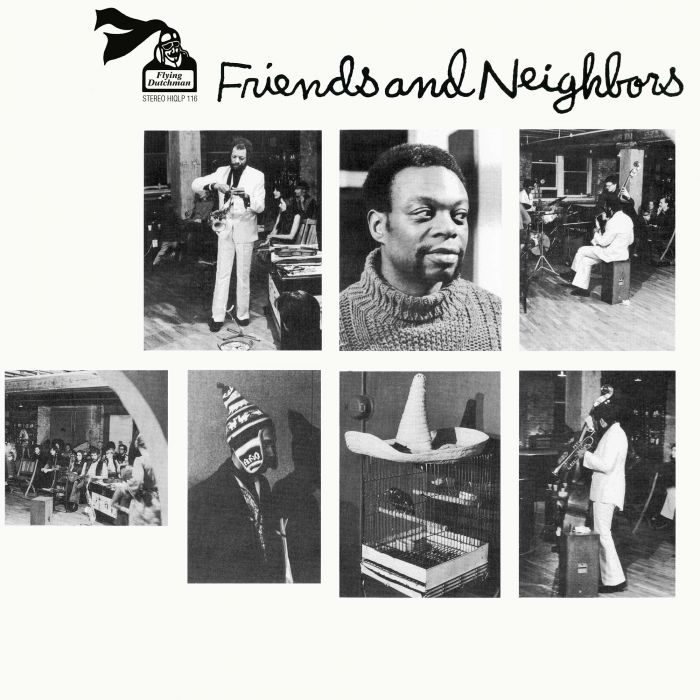
As the new decade dawned, Coleman was reunited with Bob Thiele, who had founded the Flying Dutchman label. His new label was about to record and release a live album. This became Friends and Neighbors: Live At Princess Street. It was quite unlike most live albums.
At the time, Ornette Coleman was living in the Big Apple. There were many clubs he could’ve recorded a live album. However, he decided to record the album at his large loft space in downtown New York.
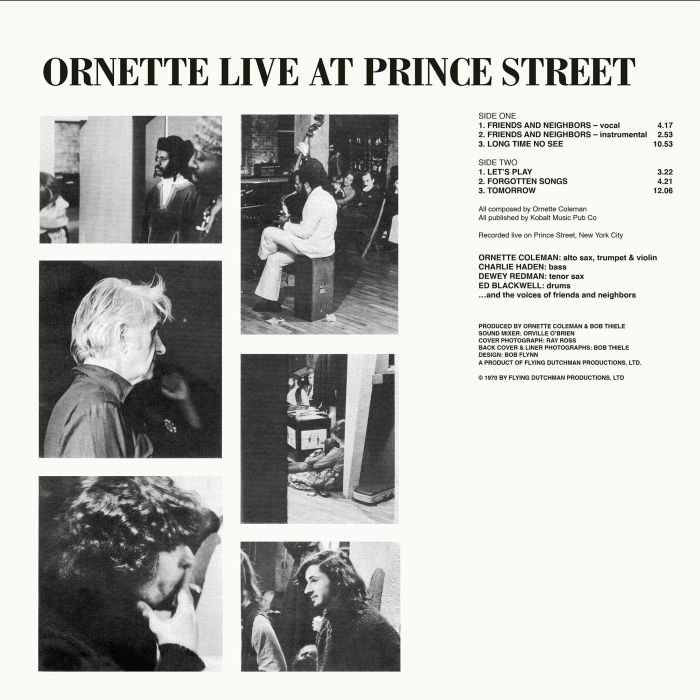
The tapes were scheduled to roll on February ’14th’ 1970. That night at the Prince Street apartment, friends and neighbours gathered and watched a truly talented quartet. The rhythm section featured drummer Ed Blackwell and bassist Haden. Dewey Redman played tenor saxophone and clarinet while Coleman played alto saxophone, trumpet and violin. They romped through six of the bandleader’s compositions. They were the vocal and instrumental version of Friends and Neighbors, Long Time No See, Let’s Play, Forgotten Songs and Tomorrow. The set was akin to a jam session where the all-star band kick loose and showcase their considerable skills.
On home turf, thirty-nine year old bandleader, Coleman is relaxed and at his innovative best, as he pushes musical boundaries to their limits and combines disparate genres. As usual, the music was ambitious, adventurous, cerebral, and sometimes challenging, futuristic and otherworldly. Other times it’s urgent, celebratory and joyous.
Side One.
That was the case on the vocal version of Friends and Neighbors which opens the album. Then on the shorter instrumental version the tempo increases and so does the urgency. Ornette Coleman’s scratchy violin keeps pace with the saxophone adding a bluesy hue as one of the founding fathers of free jazz continues to push musical boundaries fusing free jazz with avant-garde. Long Time No See is an ambitious eleven minute epic that’s powered along by the rhythm section. However, it’s the saxophones that steal the show.
Side Two.
That’s also the case on Let’s Play, where the saxophones wail and squeal but their beauty is there for all to hear and admire. The quartet then kick loose on Forgotten Songs, with the tried-and-tested rhythm section powering and driving the arrangement along. Meanwhile the saxophones soar melodically above on what’s without doubt one of the highlights of the set. It closes with Tomorrow, a twelve minute blistering workout from one of the legends of free jazz at the peak of his powers.
Despite recording Friends and Neighbors: Live At Princess Street in 1970, the album wasn’t released until 1972 by Flying Dutchman. Although the alum was well received by critics, it wasn’t a commercial success and has remained an oft-overlooked hidden gem in Coleman’s back-catalogue.
Nowadays, Friends and Neighbors: Live At Princess Street is considered a cult classic, and is an album that will introduce Coleman’s music to a new and wider audience. They’ll discover one of the founding fathers of free jazz and a groundbreaking musician whose raison d’être was to push musical boundaries to their limits and beyond. This he does on Friends and Neighbors: Live At Princess Street, and during a recording career that spanned fifty-one years.
Cult Classic: Ornette Coleman-Friends and Neighbors: Live At Princess Street.


CULT CLASSIC: CANDI STATON-I’M JUST A PRISONER.
Cult Classic: Candi Staton-I’m Just A Prisoner.
By 1968, Candi Staton was twenty-eight, and still hadn’t embarked upon a solo career. However, that would soon change when Clarence Carter introduced her to Rick Hall. He would transform the former gospel singer’s fortunes.
Sixteen R&B hit singles were recorded at Rick Hall’s Fame Studios, in Muscle Shoals, including covers of Stand By Your Man and In The Ghetto. This led to Staton being crowned the First Lady of Southern Soul. By then, she had come a long way.
Canzetta Maria Staton was born in Hanceville, Alabama, on March ‘13th’, 1940. Growing up, things weren’t easy for the Staton sisters. Their father was an alcoholic and gambler, and things got so bad that her mother left him. By then, their brother had moved to Cleveland and sent for his sisters. This was where they got their big break.
Having moved to Cleveland, Canzetta and her younger sister Maggie, met Bishop Jewell. He was amazed by the elder sister’s vocal talents and soon, the two sisters were paired with Naomi Harrison in the Jewell Gospel Trio. That was when Canzetta became Candi Staton.
Soon, the Jewell Gospel Trio were performing on the traditional gospel circuit during the mid-fifties, accompanying some of the biggest names. With Staton as lead singer they accompanied everyone from CL Franklin to Mahalia Jackson and The Soul Stirrers. This however, was just part of the story.
Between 1953 and 1963, the Jewell Gospel Trio recorded for various labels, including Nashbro, Apollo and Savoy Records. However, when Staton was seventeen, she left the Trio after five years as lead singer.
After leaving the Trio, Staton returned home. That was where she met her first husband. Sadly, he was abusive and the pair parted.
Staton was singing in Birmingham, Alabama, when one of the city’s top DJs heard her. He introduced her to someone from the Unity label who was looking for a female vocalist. The label released the single Upper Hand, which was the future First Lady of Southern Soul’s debut single.
After releasing Upper Hand, Staton’s brother took her to a club which Carter frequented. The pair met in the club. It was a fortuitous meeting.
Carter bought Staton out of her contract with Unity. He then introduced her to Rick Hall, the owner of the Fame label and legendary Fame Studios. Soon, the Fame label had a new addition to its roster.
This was Staton, who in a few short years would be crowned the First Lady of Southern Soul. The day she signed for Fame, Hall agreed a distribution deal with Capitol Records. Lady Luck was smiling on Staton, and would continue to do so.
George Jackson had cowritten I’d Rather Be An Old Man’s Sweetheart (Than A Young Man’s Fool) with Carter and Raymond Moore. Originally, he had hoped Aretha Franklin would record the song. However, when he was unable to make contact with her, he gave the song to Candi Staton.
She had walked into the Fame Studios in Muscle Shoals and George Jackson presented her with the song. That night, Staton recorded I’d Rather Be An Old Man’s Sweetheart (Than A Young Man’s Fool), Never In Public and For You with Hall taking charge of production. One of the songs would become her debut single for Fame.
I’d Rather Be An Old Man’s Sweetheart (Than A Young Man’s Fool) was chosen, with For You on the B-Side. When it was released in 1969, the single reached number forty-six in the US Billboard 100 and nine in the US R&B charts. Across the border in Canada, the single reached number fifty-one. This was just the start of the rise and rise of Staton.
For the followup, I’m Just a Prisoner (Of Your Good Lovin’) a Jackson and Edward Harris composition was chosen. On the flip side was Heart On A String. The single was released later in 1969, and reached number fifty-six in the US Billboard 100 and thirteen in the US R&B charts. In Canada, the single stalled at seventy-four. However, in America, Staton’s star was in the ascendancy.
Never In Public was released later in 1969, and became Staton’s third single. It didn’t replicate the success of her previous singles. Despite this, a decision was made to record what would become her debut album I’m Just A Prisoner.
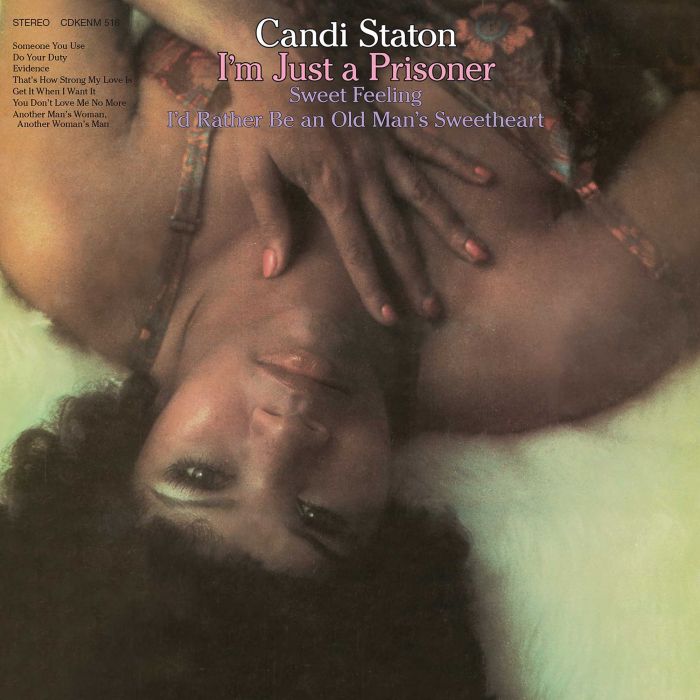
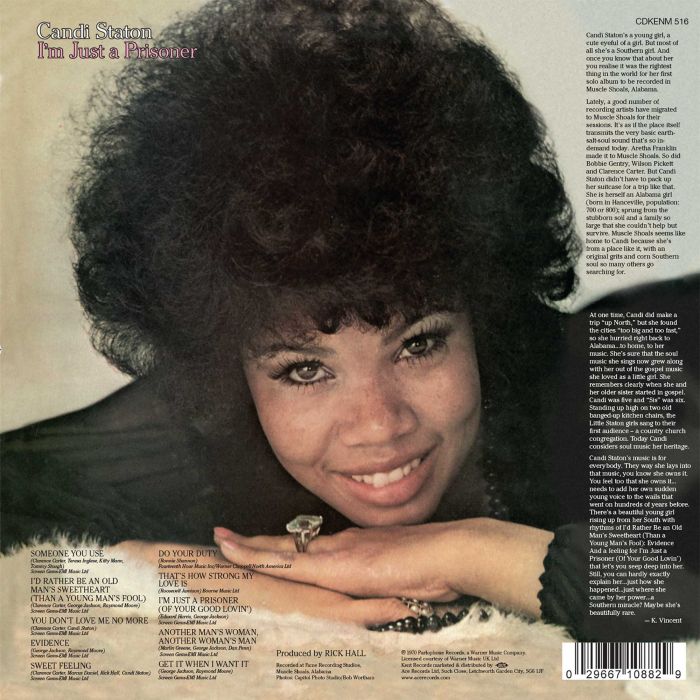
Recording of I’m Just A Prisoner took place at Fame Studios, in Muscle Shoals. Accompanying Staton were the Fame Gang, while Hall produced the album. Five new tracks were recorded and added to I’m Just a Prisoner (Of Your Good Lovin’), I’d Rather Be An Old Man’s Sweetheart (Than A Young Man’s Fool), Evidence, You Don’t Love Me No More and Sweet Feeling which had been released as singles and B-Sides. With the new tracks recorded, the release was scheduled for later in 1970.
I’m Just A Prisoner was released to plaudits and praise in 1970. Despite this, the album failed to chart. Three further singles were released. Sweet Feeling was the most successful, reaching number sixty in the US Billboard 100 and five in the US R&B charts. This was Staton’s most successful R&B single in America. However, in Canada, the single only reached number seventy-eight.
Later in 1970, Evidence, which was Staton’s fifth single for Fame gave her another R&B hit in America. She had come a long way since signing to Hall’s Fame Records.
Fifty-three years after Staton released I’m Just A Prisoner, her debut album remains a timeless classic. She breathes life, meaning and emotion into the lyrics into songs like Someone You Use, I’d Rather Be An Old Man’s Sweetheart (Than A Young Man’s Fool), You Don’t Love Me No More, That’s How Strong My Love Is and I’m Just a Prisoner (Of Your Good Lovin’). It sounds as if she’s lived, experienced and survived the lyrics on songs about love and betrayal. In others, it’s as if Staton has survived the hurt, has been treated badly and been used by men who didn’t deserve her love. She’s a strong woman, a survivor, who bares her soul on I’m Just A Prisoner, a powerful, poignant, beautiful and moving album from the future First Lady of Southern Soul, Candi Staton.
Cult Classic: Candi Staton-I’m Just A Prisoner.
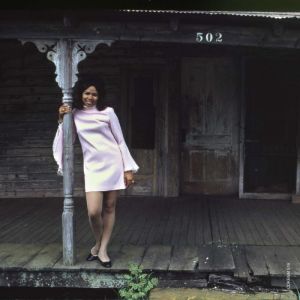

CULT CLASIC: JOHNNY LYTLE-THE LOOP.
Cult Classic: Johnny Lytle-The Loop.
Johnny Dillard Lytle was born into a family of musicians on December October ’13th’, 1932 in Springfield, Ohio. His father was a drummer and his mother an organist. Influenced by both, the future vibes virtuoso grew up playing drums and piano. However, before studying music he was a successful boxer.
The man who later became known as Fast Hands was a Golden Gloves champion. Lytle continued to box into the fifties while working as a drummer. He accompanied musical luminaries like Ray Charles, Gene Ammons and Jimmy Witherspoon. However, despite enjoying success as a drummer he switched to vibes.
This was the instrument that Lytle made his name playing. However, between 1955 and 1957 he toured with organist Hiram “Boots” Johnson. Having served his musical apprenticeship, he formed his own group later in 1957.
Joining his group was saxophonist Boots Johnson, organist Milton Harris and drummer William “Peppy” Hinnant. The quartet spent the next few years honing and refining their sound. This paid off, and in 1960 jazz writer and producer Orrin Keepnews signed the group to his Jazzland label.
By then, Lytle had established himself as a showman. He was known for his hand speed and flamboyance. Later, Lionel Hampton called him: “the greatest vibes player in the world.” However, before that, he released his debut for Jazzland.
Blue Vibes.
This was Blue Vibes by the Johnny Lytle Trio. The vibes virtuoso wrote the title-track and Mister Trundel. A total of seven tracks were recorded in New York on June ’16’, 1960. The lineup featured drummer Albert Heath and organist Milton Harris.
When Blue Vibes was released later in 1960, critics were won over by an album that was a mixture of soul-jazz that also showcased Lytle’s unique and inimitable brand of bluesy funk. He was regarded as one of jazz’s rising stars.

Happy Ground.
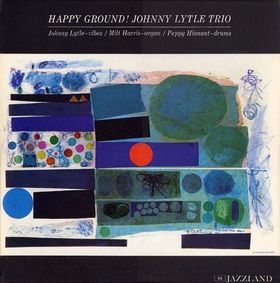
For the followup to Blue Vibes, bandleader Lytle penned Lela and Happy Ground. A total of nine tracks were recorded in New York on March ’23rd’, 1961. This time, the Trio’s line up featured drummer William “Peppy” Hinnant and organist Milton Harris. The album was recorded in one day and released later in 1961.
Just like their debut album, the Trio’s sophomore album was well received. On the album they flitted between cool jazz, easy listening as well as soul-jazz and bluesy funk. Sadly, the album wasn’t particularly successful, but is a hidden gem in Lytle’s back-catalogue.
 Nice and Easy (The Soulful Vibes of Johnny Lytle).
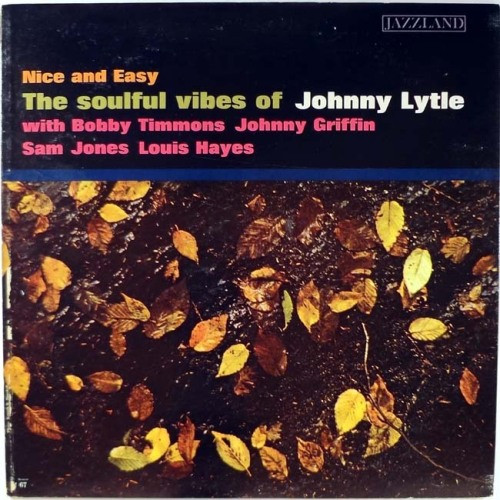
During 1962, Lytle recorded two albums. This included Nice and Easy (The Soulful Vibes of Johnny Lytle). The bandleader wrote contributed two of the seven tracks, Coroner’s Blues and 322-Wow! These tracks were recorded in New York on January ’29th’, 1962. The lineup featured drummer Louis Hayes, bassist Sam Jones, pianist Bobby Timmons and tenor saxophonist Johnny Griffin. They played their part in an album that was very different to Blue Vibes and Happy Group.
Nice and Easy (The Soulful Vibes of Johnny Lytle) was move away from the usual mix of blues-tinged funk and soul-jazz. In its place, was a much more laid-back album that had been heavily influenced by hard bop. Ballads were to the fore and rubbed shoulders with standards and the two new tracks on this critically acclaimed album. It later was recognised as one of the Fast Hands’ finest hours.
Moon Child.
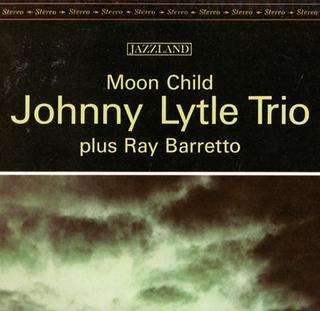
On July ‘5th’, 1962, the Trio returned to the studio to record their third album, Moon Child. The bandleader penned the title-track, The Moor Man and The House Of Winchester. They were joined by five cover versions.
This time, the Trio featured drummer William “Peppy” Hinnan and organist Milton Harris. They were joined by bassist Steve Cooper and Ray Barretto on congas. As usual, the album was produced by Orrin Keepnews and released later in 1962.
When Moon Child was released, it was credited to the Johnny Lytle Trio plus Ray Barretto. The result was another mixture of soul-jazz and bluesy funk. This was becoming the group’s trademark sound. The album was well received by critics and enjoyed a degree of commercial successful. This proved that their was a market for instrumental jazz in 1962.
After releasing five albums on Jazzland, the bandleader moved to the Riverside label and the Trio released their fourth album, Got That Feeling!
Got That Feeling!
The album was recorded at Plaza Sound Studios, in New York, on April ‘3rd’, 1963. Bandleader Lytle contributed five of the nine tracks, Pow-Wow, Big John Grady, Lela, The Soulful One and Got That Feeling! As usual, Orrin Keepnews was in charge of production.
Again, the Trio featured drummer William “Peppy” Hinnan and organist Milton Harris. They were augmented by bassist Steve Cooper on what was a truly ambitious album.
The Trio improvised and the truly infectious music swung as they focused on the groove. It was an album of innovative and imaginative music which Lytle hoped would have broader appeal than his previous albums. That should’ve been the case. The album was much more accessible and should’ve appealed to people who weren’t fans of jazz music. It was an album that found favour with critics and enjoyed a degree of success. However, this wasn’t the only album Fast Hands would record and release during 1962.

The Village Caller!
On September ’18th’, 1963 the Johnny Lytle Quintet recorded their debut album, The Village Caller! The bandleader wrote half of the eight tracks. This included the title-track, Pedro Strodder, Kevin Devin and Unhappy, Happy Soul. When the album was recorded it featured some familiar faces.
This included drummer William “Peppy” Hinnan and organist Milton Harris who had played their part in the success of the Trio. They were joined by bassist Bob Cranshaw and percussionist Willie Rodriguez. The album was produced by Orrin Keepnews and released later in 1963.
The result was an album that was a mixture of cool jazz, Latin and R&B. Some of the familiar tracks headed in a new direction and were given a rhythmical makeover. Critics were won over by the album which was released to plaudits and praise. It was the album that transformed Lytle’s career. Suddenly, he was one of jazz’s rising stars. However, meanwhile, there were problems at the Riverside label.
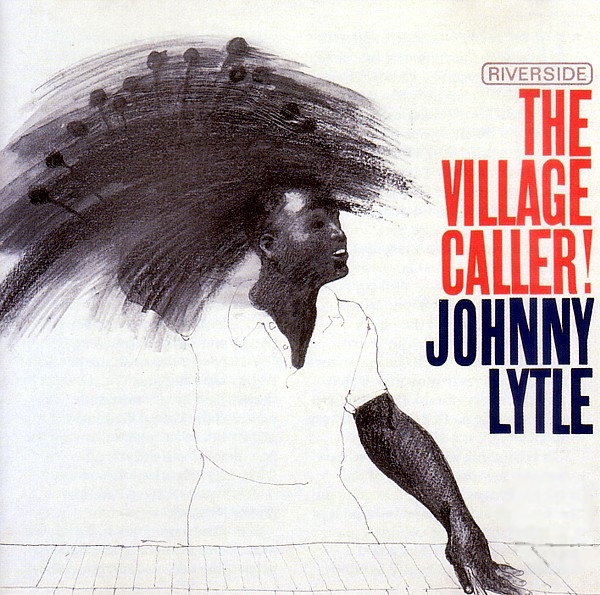
Co-founder Bill Grauer, Jr had passed away suddenly after suffering heart attack, in December 1963. He and Orrin Keepnews had founded the company a decade earlier in 1953. However, by July 1964 the company filed for voluntary bankruptcy. After eleven years, Riverside Records was no more.
This meant that Lytle was left without a label. However, he contented to work with producer Orrin Keepnews, and as 1964 drew to a close, he began work on a new album The Loop, which was the first of two he released on the Detroit-based label Tuba Records.
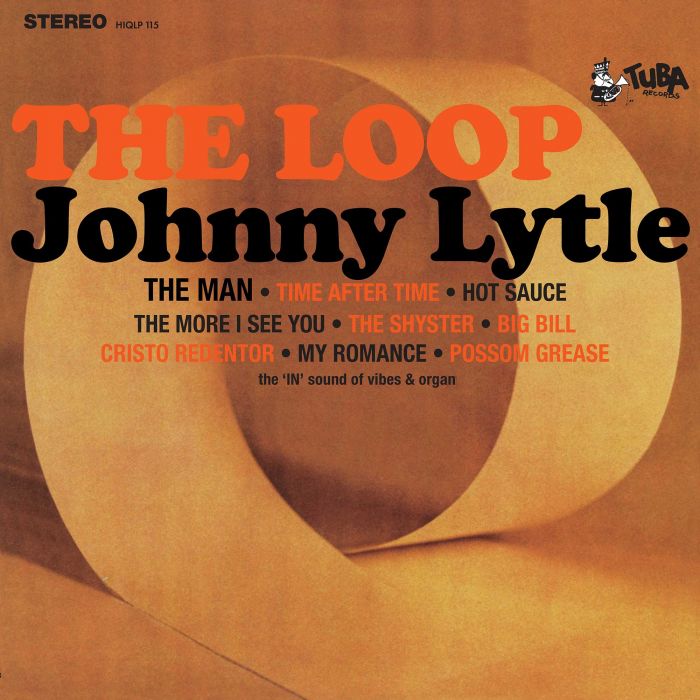
The Loop.
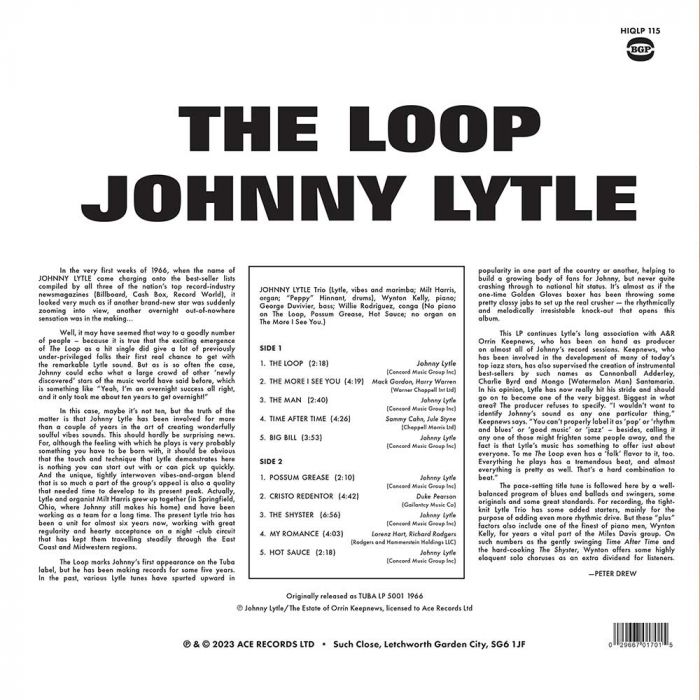
For The Loop, Lytle had written six of the ten tracks. They were The Loop, The Man, Big Bill, Possum Greaser, The Shyster and Hot Sauce. They were joined by covers of Duke Pearson’s Cristo Redento, Mack Gordon and Harry Warren’s The More I See You, Sammy Cahn and Jule Styne’s Time After Time plus Rogers and Hart’s My Romance. These tracks were recorded during two sessions by an all-star band.
The first session for The Loop took place in New York on December ‘30th’, 1964. The second took place in mid-1965.
As usual, Lytle who played vibes and marimba, and was joined by drummer William “Peppy” Hinnan and organist Milton Harris. They were augmented by bassists Bob Cranshaw and George Duvivier, conga player Willie Rodriguez and pianist Wynton Kelly who previously, had accompanied everyone from Dinah Washington and Dizzy Gillespie to Miles Davis. Producing The Loop was Orrin Keepnews. The album was completed in mid-1965 and scheduled for release later in 1965.
The Loop was released on Tuba Records to widespread critical acclaim, and built on the critical and commercial success of The Village Caller! Johnny Lytle’s seventh album was hailed as ambitious and innovative. It saw the vibes and marimba maestro continued to push musical boundaries on a genre-sprawling album. Elements of hard bop and soul-jazz were augmented by Latin and pop influences, Cuban rhythms and street funk. Tracks veered between aggressive to cinematic and groovy while others showcased a beauty, tenderness and sometimes, a sense of melancholy. There was something for everything on The Loop.
The Loop was Lytle’s seventh album, and debut for Tuba Records. It’s now regarded as a classic and one of his finest albums. It was also one of his most successful and featured a hit single. This was the title-track which spent five weeks in the US Billboard 100 in January 1966, raising Fast Hands profile no end.
Later, Lionel Hampton called Lytle: ”the greatest vibes player in the world.” He played with speed and was a versatile musician who enjoyed a recording career that lasted just over thirty years and saw him release albums right up until the early nineties.
Sadly, vibes virtuoso Johnny Lytle passed away on December ’15th’, 1995 in Springfield, Ohio, the city where he was born and called home. That day, jazz lost a flamboyant showman, a gregarious musician who was respected by the musicians who played alongside and who he accompanied. This included everyone from Louis Armstrong and Lionel Hampton to Miles Davis, Nancy Wilson, Bobby Timmons as well as fellow vibraphonist Roy Ayers. Fast Hands played alongside the great and good of jazz, and never looked out of place.
On the jazz circuit, Lytle was always a popular draw. He was a versatile musician and bandleader who could seamlessly switch between genres and styles. In an instant, he could go from cool jazz or easy listening to swinging, uptempo tracks or soulful ballads. Then there was his unique brand of soul-jazz and bluesy funk. Fast Hands was Mr Versatile and played was flair and was a flamboyant showman when he played live.
He also left behind a magnificent musical legacy. This includes his classic album The Loop. It features Johnny Lytle at the peak of his powers, and is without doubt, the perfect introduction to the man they called Fast Hands, the flamboyant vibes virtuoso from Springfield, Ohio.
Cult Classic: Johnny Lytle-The Loop.

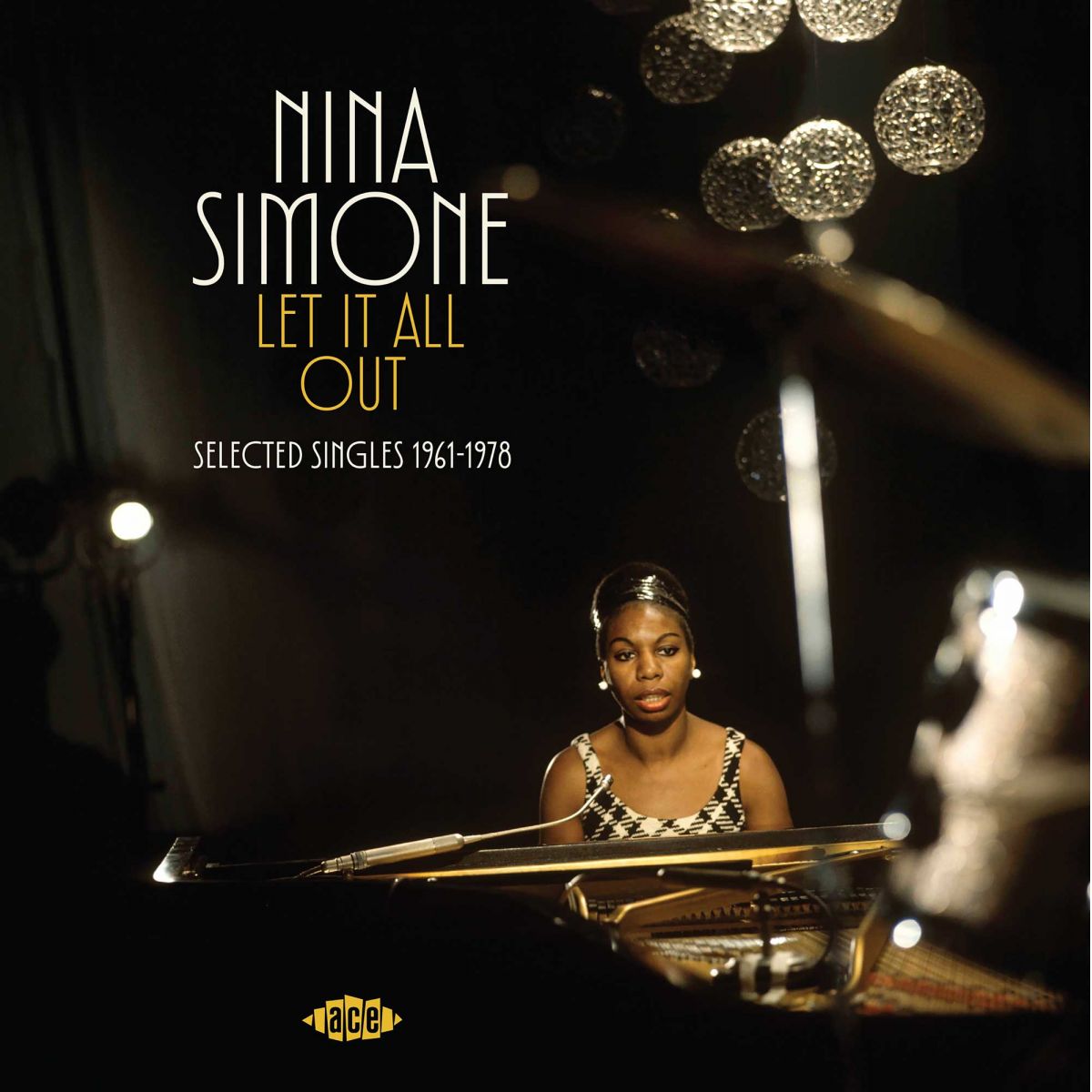
NINA SIMONE-LET IT ALL OUT: SELECTED SINGLES 1961-1978.
Nina Simone-Let It All Out: Selected Singles 1961-1978.
Label: Ace.
Format: CD.
Release Date: 31st October 2025.
Nina Simone’s recording career began at Bethlehem Records in 1957 when she started recording tracks that would eventually feature on her debut album. The tracks were recorded during two sessions for a flat fee, with Simone not receiving any royalties. However, it wasn’t until 1959 that Simone released her debut album‘Little Girl Blue’ on Bethlehem Records.
By then, Simone had signed to Colpix Records and released ‘Chilly Winds Don’t Blow’ as a single. It failed to trouble the charts.
Meanwhile Bethlehem Records released ‘I Loves You, Porgy’ as a single. It was taken from the album ‘Little Girl Blue,’ and reached number eighteen in the US Billboard 100 and number two in the US R&B charts. However, never again would Simone enjoy the same commercial success. That’s despite releasing singles to widespread critical acclaim.
Singles by Simone would be released by both Bethlehem Records and Colpix Records until she signed to Phillips in 1963.
Singles released by Bethlehem Records, Colpix Records, Phillips and RCA Victor feature on ‘Let It All Out: Selected Singles 1961-1978,’ a new compilation which will be released by Ace on 31st October 2025. It focuses specifically on the soulful singles Simone released for these four labels between 1961 and 1978.
There’s three singles that Simone released on Colpix Records on the compilation. They were all released in 1961. This included a cover Oscar Brown’s ‘Work Song’ and ‘Gin House Blues’ from ‘Forbidden Fruit,’ Simone’s sophomore album for Colpix Records. Despite the quality of singles neither single was a commercial success. It was case of deja vu when ‘Come On Back, Jack’ was released later in 1961.
In 1962, the High Priestess of Soul of released a cover of the jazz standard ‘My Baby Just Cares for Me’ on Bethlehem Records. This future classic failed to trouble the charts. Nowadays, it’s regarded as one of Simone’s finest recordings.
The following year, 1963, Simone signed to Philips in the US. She released seven albums between 1963 and 1966, and they enjoyed a degree of success.
However, the singles Simone released on Philips weren’t as successful. The exception was the mesmeric ‘I Put a Spell on You’ which reached number twenty-three on the US R&B charts in 1964. Across the Atlantic, the single reached forty-nine in the UK. This was the first of seven hit singles Simone enjoyed in the UK.
The following year, 1965, the double-A-side ‘Either Way I Lose’ and Break Down and ‘Let It All Out’ which were both written by Van McCoy was released. However, despite the quality of the two soulful sides they failed to chart.
Things didn’t get any better in 1966 when ‘Don’t You Pay Them No Mind,’ a track from Simone’s critically acclaimed album ‘High Priestess of Soul’ was released as a single. It too failed to chart and later in 1966, Simone left Philips.
After leaving Phillips in 1966, Simone signed to RCA Victor. She and her husband Andy Stroud, who was also her manager, set up Stroud Productions and negotiated a deal where Simone’s recordings would be released by RCA Victor for the foreseeable future.
The High Priestess of Soul would spend nearly eight years signed to RCA Victor. During this period, Simone released nine albums and seventeen singles on RCA Victor. For much of this period, commercial success eluded her in the US. However, in the UK Simone enjoyed a degree of success.
Simone’s first single released on RCA Victor was the poppy sounding ‘Day and Night.’ It was released in 1967 but again, commercial success eluded Simone. Included on the compilation is the B-side, the tough and sensual blues ‘Do I Move You?’ Both tracks feature on ‘Nina Simone Sings the Blues’ which was released in 1967, and reached twenty-nine on the US R&B charts.
Two other singles were released by RCA Victor during 1967. This included ‘It Be’s That Way Sometime’ ’ However, it failed to chart.
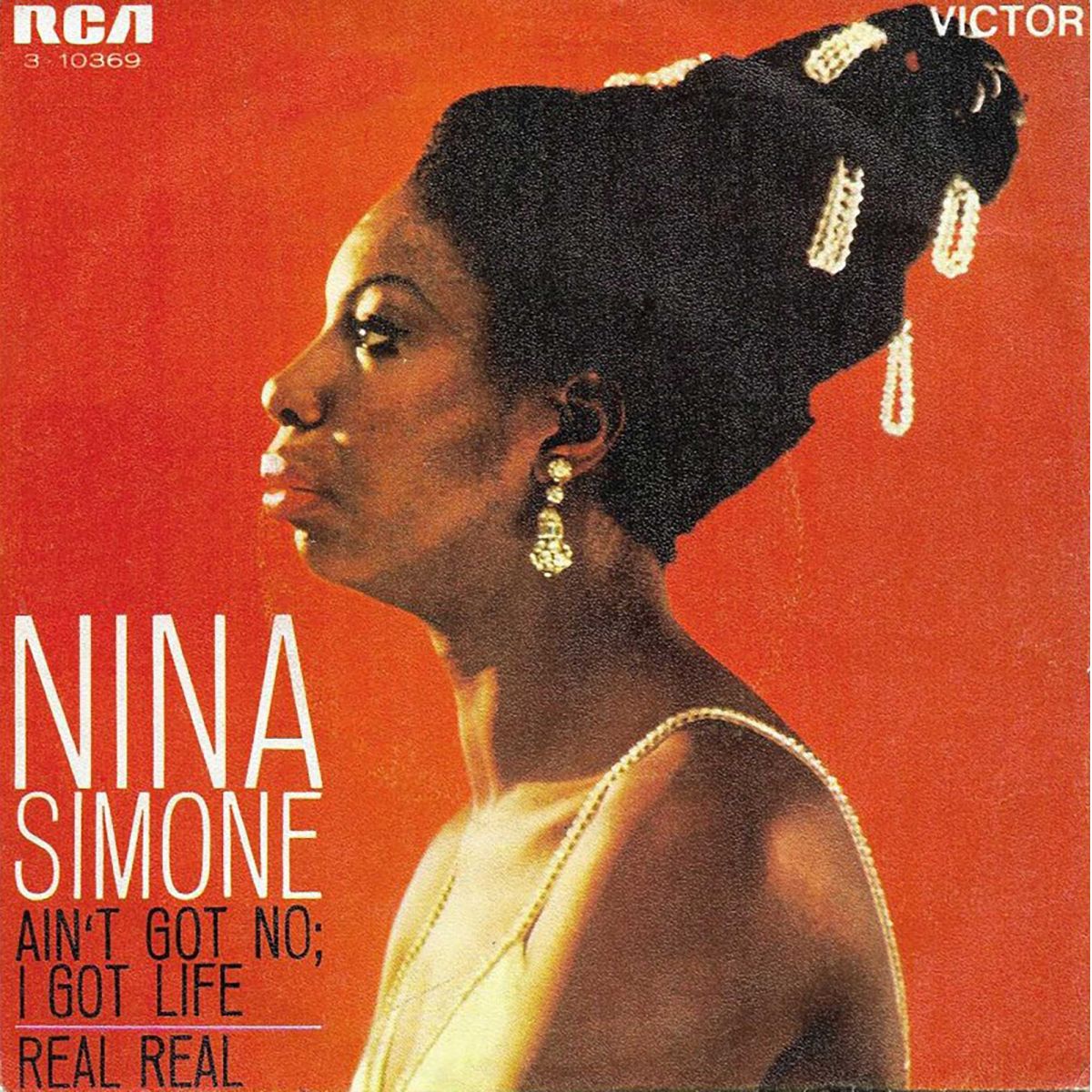
When ‘Ain’t Got No, I Got Life’ was released later in 1967 it was hailed as a black anthem. It reached number ninety-four on US Billboard 100, number two in the UK and topped the chart in the Netherland. However, the single isn’t included on the compilation. Instead, the B-Side ‘Real Real,’ a track from ‘Nina Simone Sings the Blues’ is included.
Meanwhile, Simone’s second album for Philips ‘Silk and Soul’ reached 158 on the US Billboard 100 and twenty-four on the US R&B charts. Simone’s albums were faring better than most of her singles.
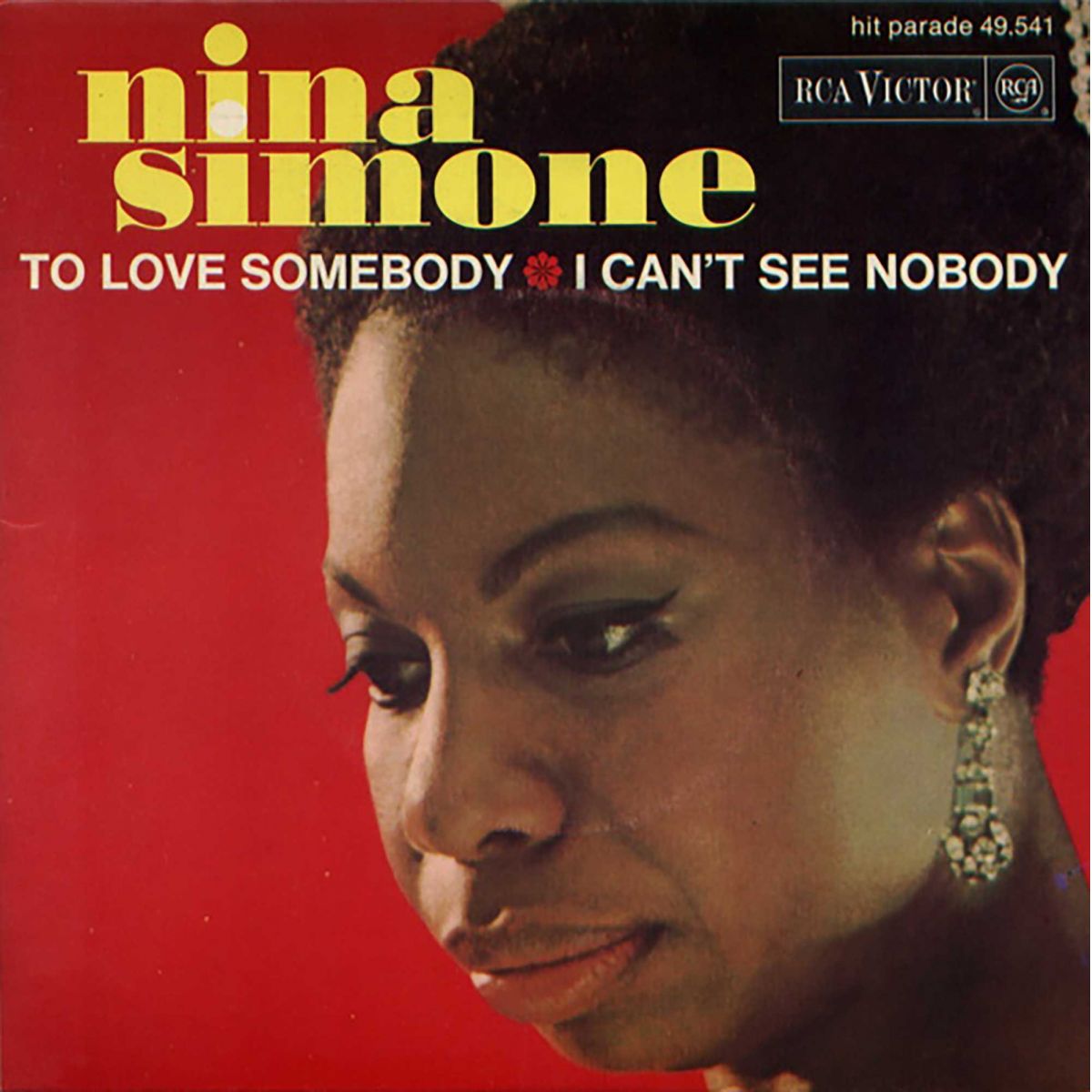
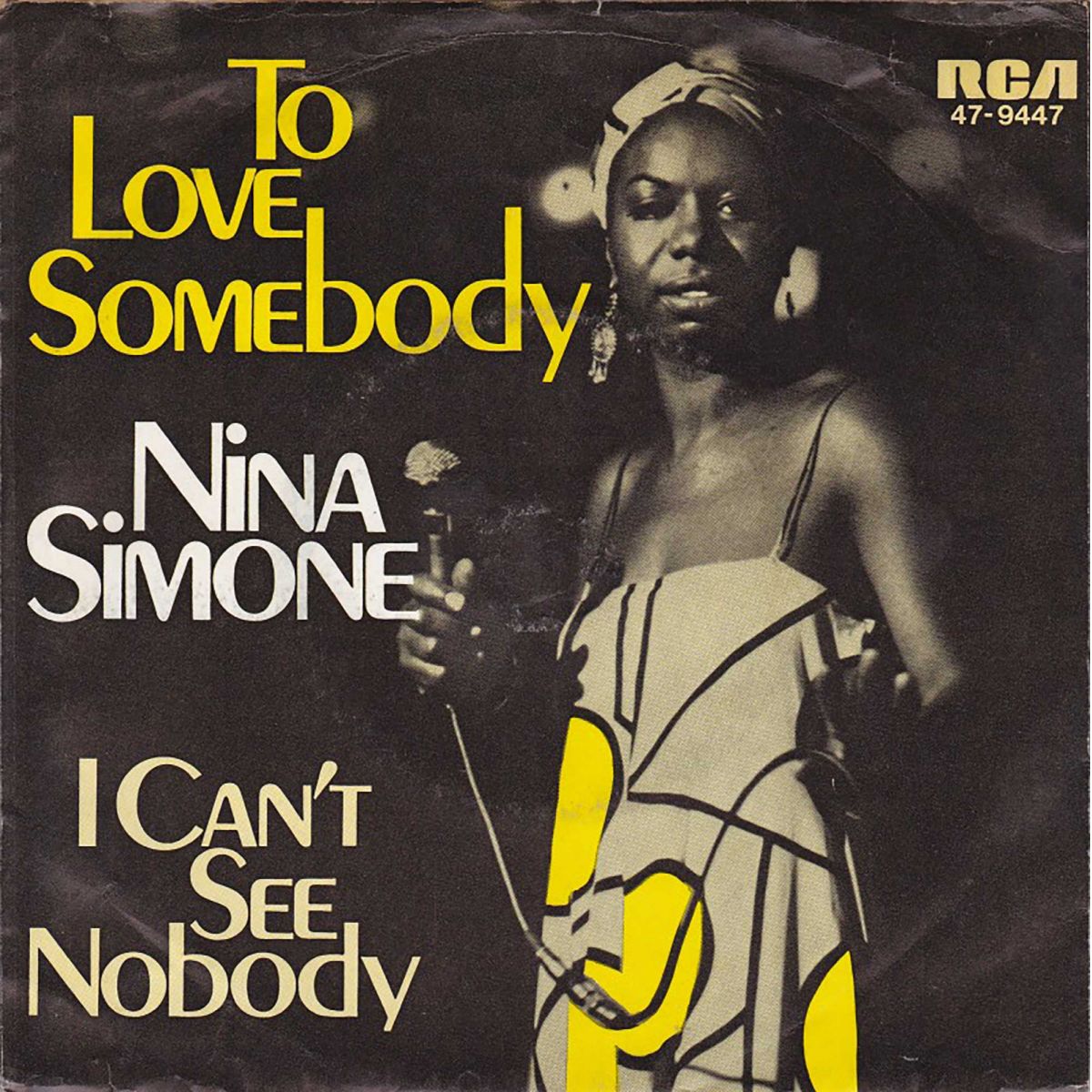
Four of the singles Simone released during 1968 feature on the compilation. This included ‘To Love Somebody.’ Although it failed to chart in the US, it reached number five in the UK. This was the High Priestess of Soul’s second hit single in Britain.
When ‘Why? (The King Of Love Is Dead)’ was released as a single, it too failed to trouble the charts. However, when ‘Do What You Gotta Do’ was released, it reached eighty-three on the US Billboard 100, forty-three on the US R&B charts and reached number two in the UK. It was Simone’s biggest hit in the UK, where her popularity was on the rise.
Then when ‘Ain’t Go No; I Got Life’ was released, it reached ninety-four and number two in the UK. It’s the UK single version that’s included on the compilation.
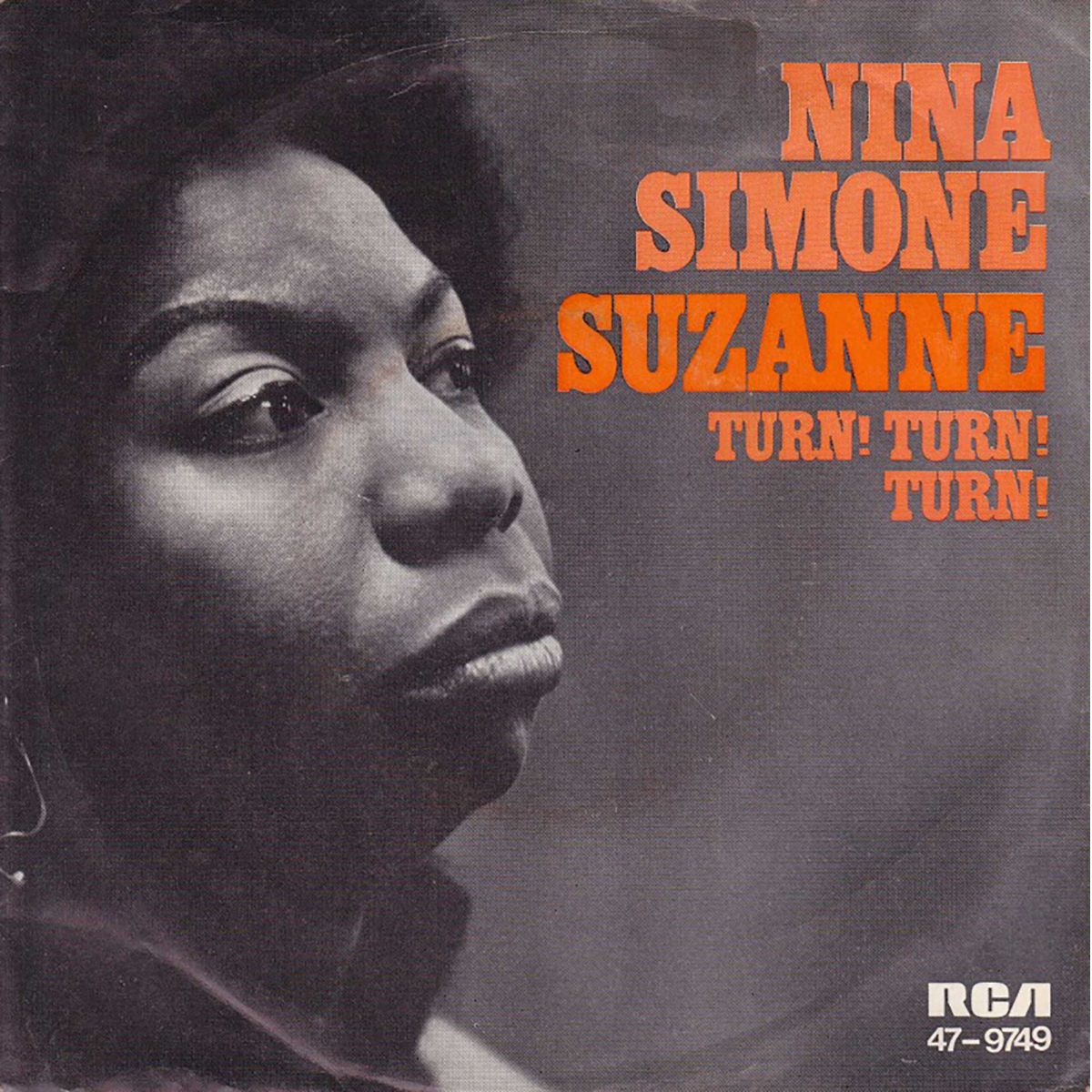
In 1969, Simone covered Leonard Cohen’s classic ‘Suzanne.’ It’s given a makeover on the album ‘Nina Simone and Piano.’ Just like the single it failed to chart. This is a disappointing cover. Especially when compared to Cohen’s original and Judy Collins’ 1967 cover version which are both classics.
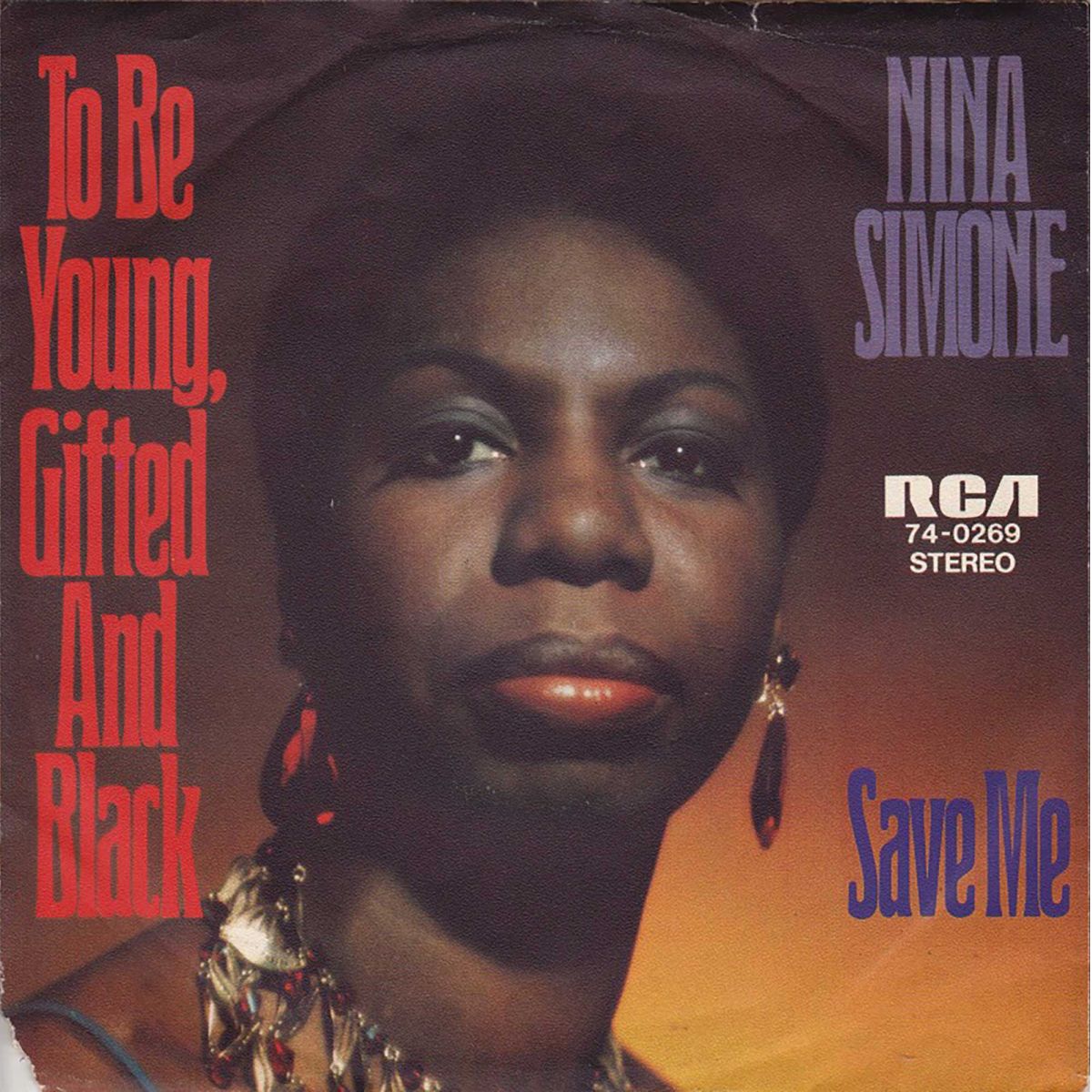
Much better is ‘Revolution (Pt 1)’ which was written by Simone and Weldon Irvine. It reached forty-one on the US R&B charts. However, Simone’s finest single of 1969 was ‘To Be Young, Gifted and Black.’ It was taken from her album ‘Black Gold.’ This anthemic track reached seventy-six on the US Billboard 100 and eight on the US R&B charts. On the B-side was ’Save Me’ a non album track penned by Curtis Ousley with Aretha and Carolyn Franklyn. It’s a sultry, soulful hidden gem
In 1970, Simone covered Willie Dixon’s ‘Whatever I Am (You Made Me).’ It was given a soulful makeover but failed to chart.
Then in 1971, the cinematic and soulful sounding ‘O-o-h Child’ was released by Simone. Despite a much more commercial sound, the single didn’t trouble the charts. That had been the story of much of Nina Simone’s time at RCA Victor.
Seven years later, in 1978, RCA Victor released ‘Baltimore’ as a single. This is the only late period single from Simone’s career. It’s slow, funky and soulful with lush strings playing their part in the sound of what’s an oft-overlooked hidden gem. It’s one of the highlights of ‘Let It All Out: Selected Singles 1961-1978.’
Several hundred Nina Simone compilations have been released over the past sixty-six years. However, very few of these compilations focus on the soulful side of her music. ‘Let It All Out: Selected Singles 1961-1978’ does. It features twenty-four tracks that span Simone’s time at Bethlehem Records, Colpix Records, Philips and RCA Victor. These tracks are a reminder of the High Priestess of Soul during her early, middle and later periods.
Although Simone didn’t enjoy massive commercial success she’s regarded one of the most important and influential singer and songwriters of the twentieth century. Her albums featured everything from jazz, soul, R&B, blues, gospel and pop. Twenty-two years after her death on April ‘21st,’ 2003 Nina Simone’s music continues to influence a new generation of singers and songwriters. That music was the legacy that the High Priestess of Soul left behind for future generations to enjoy. This includes the twenty-four tracks on ‘Let It All Out: Selected Singles 1961-1978.’
Nina Simone-Let It All Out: Selected Singles 1961-1978.
SAFE IN MY GARDEN.
Safe In My Garden.
Ace Records.
Format: CD.
Release Date: 31st October 2025.
The Vietnam War began in 1955 and ended in 1975. During that period, over 160,000 young Americans were wounded and 58,193 lost their lives. They came from small towns and cities across America and laid down their lives fighting for their country. However, not all young Americans were willing to fight for their country.
Across America, from Alabama to Wyoming, each morning, many young Americans dreaded the arrival of the post. They knew that their draft notice was due to arrive, and didn’t want to fight for their country.
Mother and fathers feared for their sons, sisters for their brothers and girlfriends for their boyfriends. They knew that it was a bloody war and one where each year the casualties were rising.
In 1966, the war in Vietnam was raging and 6,143 Americans lost their lives. This was more than the first ten years of the War. Sadly, things were about to get much worse.
The following year, 1967, 11,153 American servicemen lost their lives in Vietnam. Many of the young men who were due to be drafted saw the devastation on the news and were reluctant to join up and serve their country.
They fall into two categories draft evaders and draft resisters. Millions of men avoided the draft, while thousands resisted the conscription system and actively opposed the Vietnam War. Eventually, it was calculated that 570,000 young men were classified as draft offenders, and 210,00 were formally accused of draft violations. However, only 8,750 were convicted and a mere 3,250 were jailed. That’s only part of the story.
There were also many young men who were eligible for the draft who publicly burned their draft cards. However, the Justice Department only brought charges against 50 men, and just 40 were convicted.
As many young American men headed to Vietnam to fight for their country, many musicians were anti-war. This included the late protest singer and political activist Phil Ochs, who penned ‘The Draft Dodger Rag.’ It was released in 1965.
The following year, 1001 Ways To Beat The Draft a supposed satirical Vietnam War protest pamphlet written by Robert Bashlow and Tuli Kupferberg cofounder of the rock band The Fugs.
Then in 1967, folksinger Arlo Guthrie wrote ‘Alice’s Restaurant’ which became the title-track to his eponymous debut album. It’s a satirical talking blues track where Guthrie protests about the Vietnam War.
By 1967, many musicians were writing antiwar protest songs. Some of these musicians had failed to report for military service. One of the most high profile was Carl Wilson of the Beach Boys. He was a conscientious objector. When he failed to report for military service, he was indicted for draft evasion. Wilson was only released from custody on a $15,000 bond.
However, many musicians fought and served in Vietnam. This included Archie Bell, Jimi Hendrix, John Prine, Kris Kristofferson, Tim Hardin, jazz violinist Billy Bang and Gary Lewis of The Playboys.
During the late-sixties to early-seventies many singer-songwriters and bands wrote songs that expressed the feelings of despair, despondency and hopelessness that many young people felt. The war in Vietnam was beginning to look like one that America might not win. If they did, it might be a Pyrrhic victory. In 1968, there were 16,592 casualties and 11,616 in 1969.
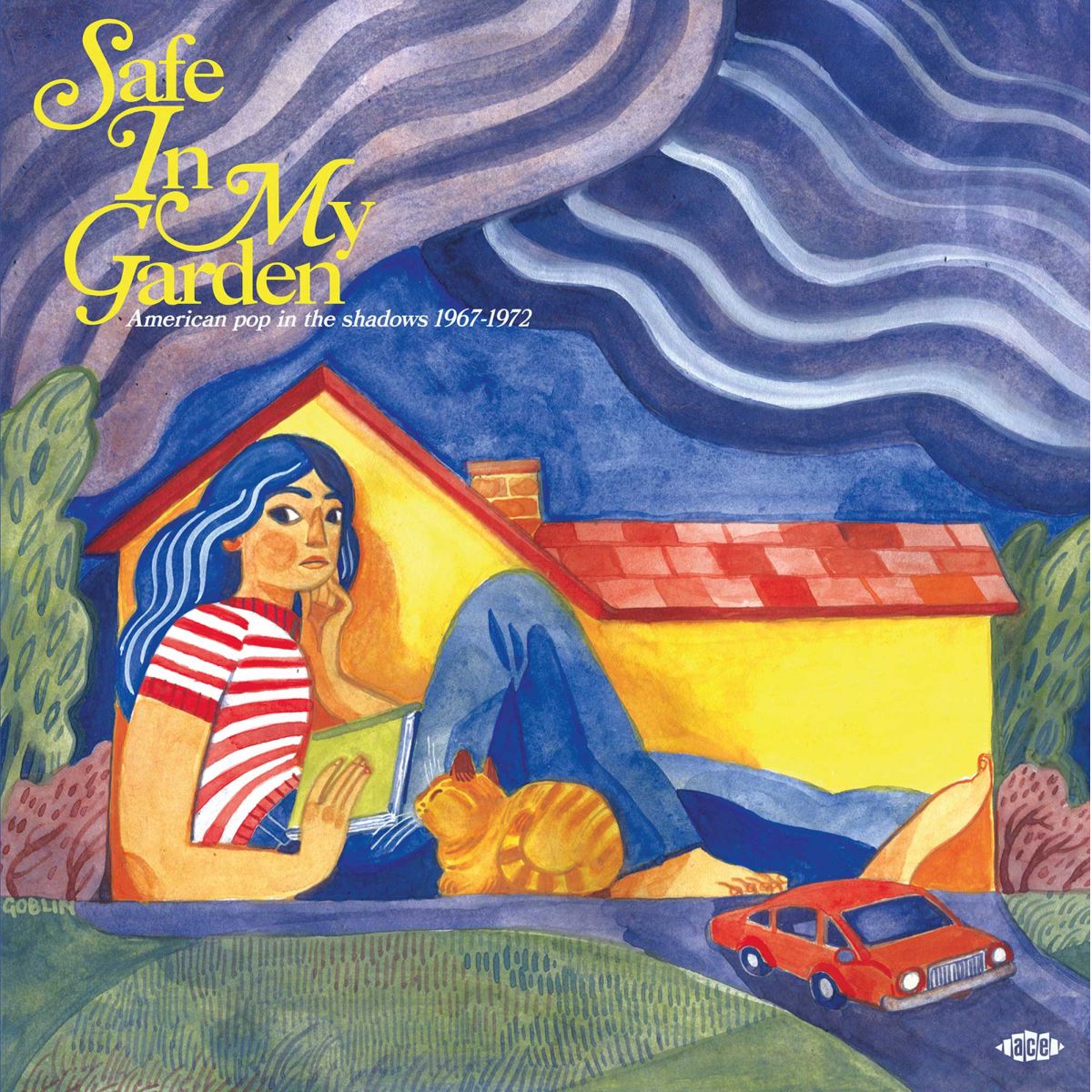
For many, music was a way to protest and express how they were feeling about life in America between 1967 and 1972. However, it wasn’t all despair, despondency and hopelessness. Some musicians were much more optimistic and wrote songs about rebirth, others that offered hope, were joyous, offered escapism or painted pictures about a simpler world. This includes some of the twenty-four tracks on ‘Safe In My Garden,’ which will be released by Ace Records on CD and LP on 31st October 2025.
Opening the compilation is ‘Always You’ by The Sundowners. It’s a track from their 1969 album ‘Captain Nemo.’ It was released on Decca and was the only album the group from Glens Fall, New York released. With its orchestral introduction and lyrics full of social comment, it’s thought-provoking song and one of the highlights of their debut album.
’She’ by Tommy James and The Shondells was released as a single on Roulette in 1969. Despite the quality of this dreamscape it reached just 23 in the US Billboard 100 charts. It’s a a beautiful ballad where lush strings, dramatic drums and soaring harmonies combine to create a song that’s a reminder of another musical era.
In 1968, Brewer and Shipley’s 1968 released their debut album ‘Down In L.A.’ on A&M. Backed by members of the Wrecking Crew, the duo recorded an album of folk rock with elements of country. The album was well received upon its release but failed to find the audience it deserved. Since then, it’s become a cult classic. One of the highlights of the album is ‘Dreamin’ In The Shade (Down In L.A.)’ where folk and country combine.
‘Knock On Wood’ was covered by Harpers Bizarre in 1969. The track featured on their album ‘Harpers Bizarre 4.’ It’s slowed down and has a trippy sound despite the addition of lush strings. Lenny Waronker’s production reinvents a song made famous by Eddie Floyd.
The Cyrkle’s sophomore album ‘Neon’ was released on Columbia in 1967. It was arranged and produced by John Simon. The highlight of the album is ‘The Visit (She Was Here).’ It’s beautiful, cinematic, dreamy, expressive and encourages reflection.
‘I See It Now’ was the title-track of Fargo’s one and only album. It’s a beautiful baroque track that paints pictures in the mind’s eye. Sadly, when this hidden gem of an album was released on RCA Victor in 1969 it failed to find the audience it so richly deserved.
The Critters were a New Jersey-based band formed by high school friends Don Ciccone and Bob Podstawski. By 1968, the group was signed to the Project 3 Total Sound label, and released their sophomore album ‘Touch’N Go With The Critters.’ It featured ‘A Moment Of Being With You’ which features a needy, hopeful vocal that’s delivered against a dreamy arrangement that floats along.
When The New Wave recorded their eponymous debut album, they were backed by the Wrecking Crew and Gene Page was responsible for the intricate baroque arrangements. This includes on ‘Little Dreams’ where strings and woodwind play an important part in the arrangement and compliments the dreamy, otherworldly vocal. Listen carefully and elements of soft psych pop combine with baroque pop to create what is, without doubt one of the album’s highlights. Sadly, when the album was released on the Canterbury label in 1967 it failed commercially. It was the only album the duo released.
In 1968, singer-songwriter Nancy Priddy’s debut album ‘You’ve Come This Way Before,’ on the Dot label. The album was produced by Phil Ramone. It featured the cinematic dreamscape ‘Christina’s World’ which is one of the highlights of the album, and indeed, the compilation.
The Eighth Day are another group that only released one album. This was ‘On The Eighth Day…’ It was released on Kapp Records in 1968, and featured ‘How Can I Stop Loving You’ a where soft rock and sunshine pop are combine on this song about loss.
‘Love Is A Rainy Sunday’ is a track from Love Generation’s 1968 album ‘Montage.’ It was released on the Imperial label, and is an uplifting, hopeful and joyous song from the group’s sophomore album.
‘Prairie Grey’ by New Colony Six closes ‘Safe In My Garden.’ It’s a track from the group’s 1969 album on Mercury, ‘Attacking A Straw Man.’ There’s an element of drama to this thought-provoking song. It considers what it meant to be a man in America in 1969.
‘Safe In My Garden’ is a carefully curated compilation that features baroque pop, folk-rock, psychedelia, soft pop, soft rock and sunshine pop. There’s tracks from familiar faces and what will be new names to many people. On the compilation there’s harmonies aplenty, dreamscapes, songs about escaping, loss, rebirth and creating a simpler future.
While some of the songs offer hope for the future, the messages in others are dark. That’s not surprising as the twenty-four tracks on ‘Safe In My Garden’ were recorded or released between 1967 and 1972 when the Vietnam War was raging, and thousands of young American men were losing their lives in a faraway foreign land. These young American men made the ultimate sacrifice.
That’s why when listening to the music on ‘Safe In My Garden’ which veers between heartachingly beautiful, hopeful and joyous to melancholy and wistful, it’s impossible not to think about of the sacrifice made by those brave young American me.
However, much of the music on ‘Safe In My Garden’ is innovative and shows how music was changing between 1967 and 1972. Sadly, many of the artists and bands on the compilation didn’t enjoy the commercial success they deserved. Many of the albums these tracks are taken from are worth checking out, and this could be the start of an exciting musical voyage of discovery.
‘Safe In My Garden’ is which was compiled by Bob Stanley, and is the companion to ‘State Of The Union (The American Dream In Crisis 1967 – 1973’ is well worth buying. It’s one of the best compilations released over the past couple of months.
Safe In My Garden.
RONNIE McNEIR-MAKES A MOVE.
Ronnie McNeir-Makes A Move.
Label: Kent Soul.
Format: CD.
It’s always exciting to discover a lost album. I’ve discovered a number of lost albums over the years, and still, it’s exciting to listen to an album that was recorded forty or more years ago. It’s like going back in time, and eavesdropping on the session.
Apart from either an artist or group, their producer and engineer, nobody else has heard the album since it was recorded. For whatever reason, the album was never released and often, the tapes are left gathering dust.
There could be many reasons for that. This includes the old favourite “artistic difficulties.” Basically, the group fell out after recording the album, and the album was shelved. The group’s one shot at glory often then lies unheard for half a lifetime.
Occasionally master tapes are lost by an artist. I was involved with an album where the tapes were thought to be lost, stolen or destroyed, but turned up thirty years after the album was completed. The tapes were discovered by the artist in a box in a dusty basement. Upon listening to the album, I realised it was an important find, and within seven months, this groundbreaking album was released to widespread critical acclaim.
Similarly, the tapes to another album that was recorded in the late-seventies and early-eighties were only discovered in 2023. By then, the group had long since split-up and its cofounder and driving force had passed away. Listening to the music for the first time, there was a sense of anticipation and excitement as I was transported back in time, and taken behind the Iron Curtain. Although the genre-melting music hadn’t been mastered, it was innovative, way ahead of its time and pushed musical boundaries to their limits, and sometimes, way beyond. Soon, a deal had been done with one of the biggest independent labels to release the album. It was hailed as the album that featured what was a successful group at the peak of its powers.
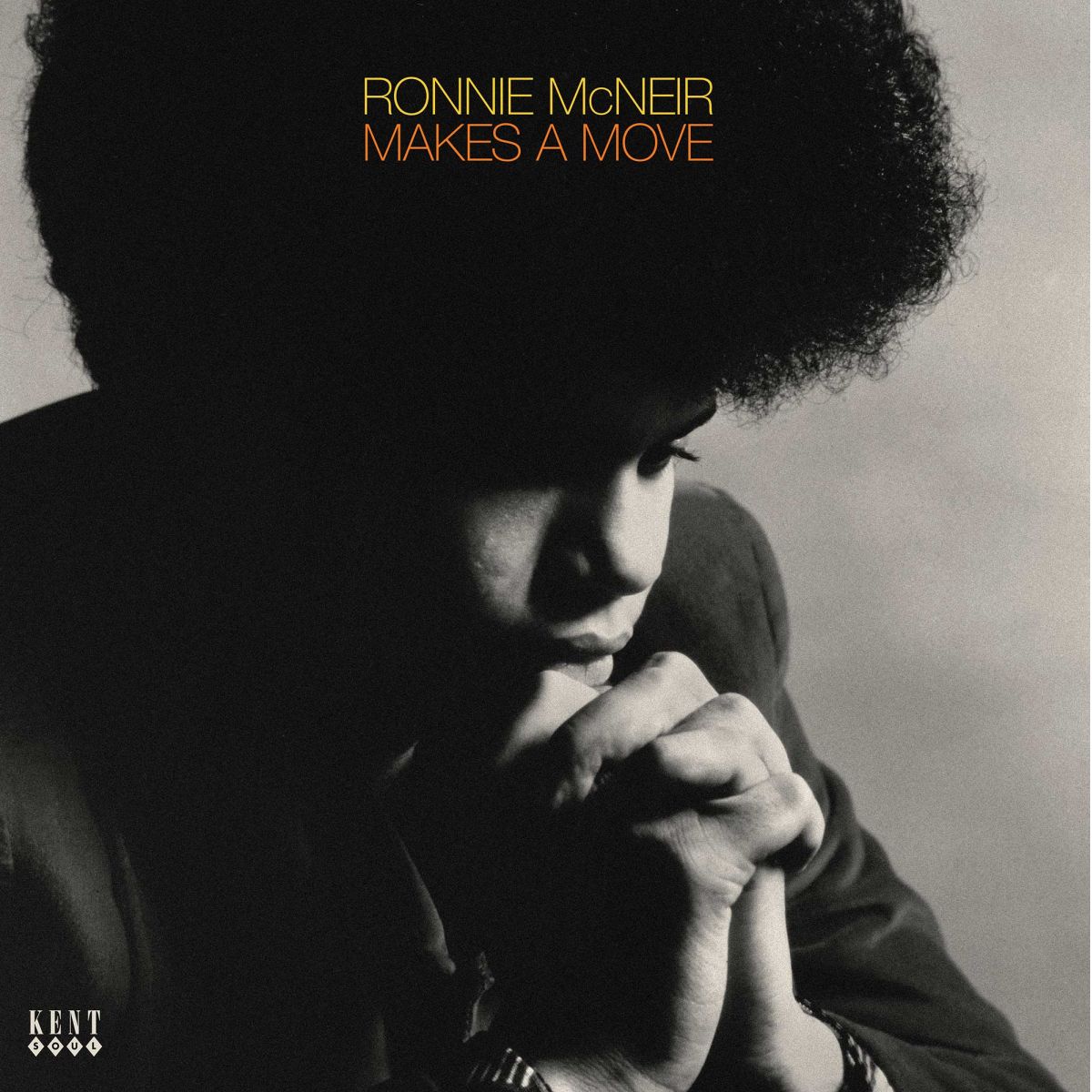
However, sometimes, a lost album is recorded at the start of an artist’s career, way before they enjoy commercial success and critical acclaim. That was the case with the twelve tracks on Ronnie McNeir’s lost album ‘Makes A Move,’ which was recently released by Kent Soul. By then, McNeir was twenty.
McNeir was born on 14th, December 1943, in Camden, Alabama. He was born into a musical family. His grandfather played trumpet, while his mother played piano and sang. Later, his brother would play organ in church. Before that, the McNeir family were on the move.
Seeking a better life, they headed north to Pontiac, Michigan, where McNeir’s father started work in the automobile industry. McNeir was only six months old when the family made the move to Pontiac. However, the move meant that the family had a regular and steady source of income.
Pontiac was also where McNeir’s musical journey began. Aged nine, he started piano lessons. However, after about six months he stoped going to the lessons. Despite this, by the time he was ten or eleven, McNeir discovered he could play by ear.
Around the age of twelve, McNeir started writing songs. This was the start of a long and successful career.
In 1965, thirteen year old McNeir entered, and won a competition on WCHB, the Detroit-based radio station. By then, he was being influenced by soul, gospel and Motown. Especially Marvin Gaye and David Ruffin.
Music wasn’t McNeir’s only interest. He was a keen and talented basketball player, and harboured an ambition to become a pro. However, sadly, a car accident meant these dreams were at an end, and McNeir decided to try and make a career out of music.
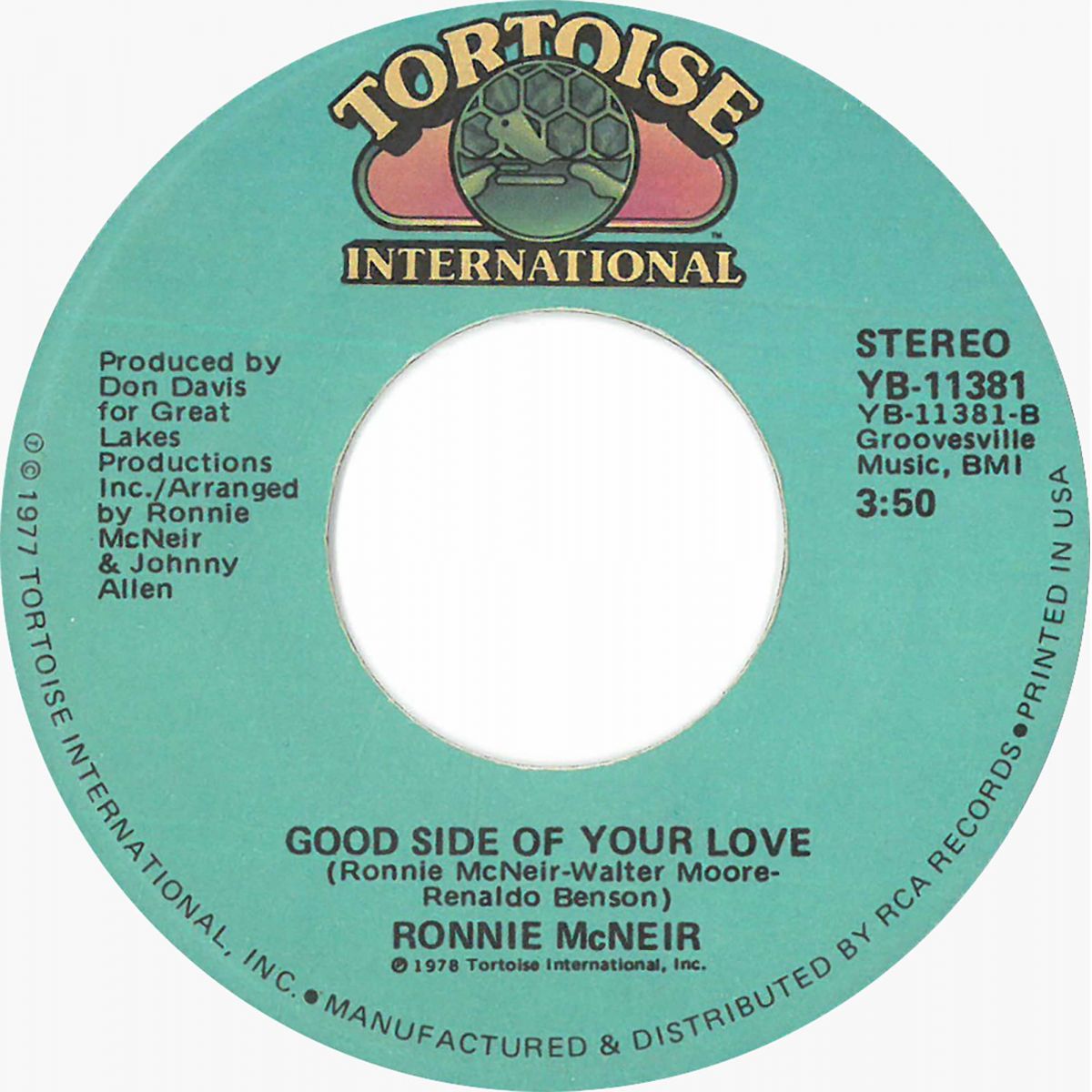
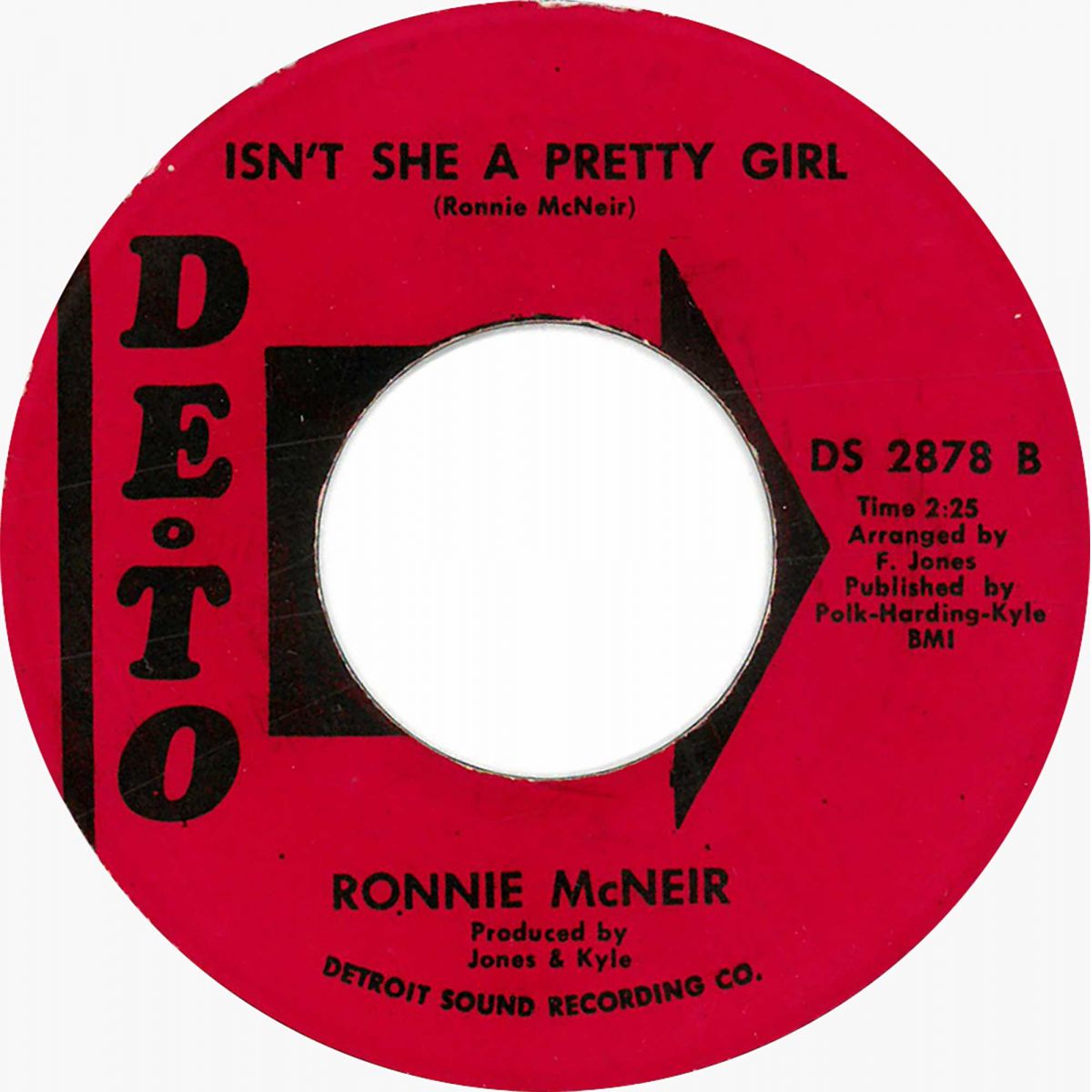
The following year, 1966, McNeir made his recording debut. He penned ‘Sitting In My Class.’ McNeir’s father knew Doc Kyle, who owned the De-To label and Detroit Sound Recording Company. Kyle signed McNeir to De-To, and ’Sitting In My Class’ was released later in 1966. However, the single failed to trouble the charts.
It was a familiar story, Kyle failed to promote the single properly. Kyle had previously been program director of a local radio station, and after retiring, moved into artist management. The studio was more of a hobby for Kyle, and it seems so was the De-To label.
However, by the mid-seventies, ’Sitting In My Class’ was a favourite on the UK’s Northern Soul scene. By then, McNeir’s career was well underway.
Before that, McNeir moved to California, and started singing in a church choir with Rene Moore. That was where Kim Weston, who was a member of the church, first met McNeir in 1971 and recognised his talents.
A member of the church asked Weston to speak to McNeir. When she met him, she liked him and decided to introduce McNeir to her husband Mickey Stevenson, who was a songwriter and producer who previously, had worked at Motown. However, Stevenson was about to take up a role as executive producer at RCA. The meeting between Stevenson and McNeir was a fortuitous one for both men.
Stevenson signed McNeir to RCA, and later in 1971, he began recording tracks for his debut album. Eventually, McNeir had recorded over twenty tracks. Eleven of these tracks became McNeir’s critically acclaimed self-titled debut album. It was released by RCA and showcased a talented and versatile singer, songwriter and musician. McNeir effortlessly switched between soul, jazz and R&B, his delivery heartfelt, emotive and as if he had lived and survived the lyrics. Great things were forecast for McNeir after the release of his debut album.
Despite that, McNeir never released anther album for RCA, and the other tracks lay unreleased. It wasn’t until March 2019 that the tapes were discovered in Stevenson’s archive by Alec Palao and Ady Croasdell of Ace Records.
Six years later, twelve tracks from the tapes were released as ‘Makes A Move.’ Eight of the tracks McNeir cowrote. This included ‘Let’s Make A Move,’ ‘I’m Sorry,’ ‘Ronnie’s Bag 1’ and ‘Ronnie’ Bag 2 with Andre Moore. McNeir penned ‘My Day Will Come,’ ‘Tell Your Mama’ ‘Eastside, Westside’ and the instrumental ‘East Side with his wife Mona.
The other four tracks were cover versions. This included Bob Dylan’s ‘Blowin’ In The Wind,’ Eddie Holland and Eddie Kendricks and Norman Whitfield’s ‘The Girls Alright With Me.’ Robert Dobyne, Charles Jones and Robert Staunton penned ‘Say You.’ There’s two versions on the album, including the Long Version.
Opening the album is the title-track, ’Makes A Move.’ It’s funky soulful and dancefloor friendly. The soul-baring ‘I’m Sorry’ features a heartfelt vocal from McNeir who was only twenty when he recorded the track.
This is followed by two cover versions. The first is a joyous reading of ‘The Girls Alright With Me.’ It comes complete with soaring backing vocals and bursts of blazing horns. Then ‘Blowin’ In The Wind’ is transformed into an uptempo, vivacious and soulful song. The rhythm section drive the arrangement along, and it’s punctuated by horns. They provide the accompaniment to an impassioned vocal. The result is a version that’s very different to the original, but loses some of the meaning of Dylan’s lyrics.
‘My Day Will Come’ is a beautiful, cinematic ballad which features a heartfelt vocal from McNeir. It’s without doubt the highlight of the album.
‘Say You’ was originally recorded by The Monitors in 1965, when they were signed to Motown. The long version sees McNeir reinvent the track. He slows the tempo and it becomes a laidback and sensual ballad
Another of the highlights of the album is ‘Tell Your Mama.’ McNeir delivers a needy, pleading vocal and is joined by female backing vocalists on this tale of hope, hurt and heartache. Then ‘Eastside, Westside’ is funky and soulful with lyrics full of social comment. It’s all change on the Ronnie’s Bag 1’ which heads in the direction of jazz, before ‘Ronnie’ Bag 2’ combines funk and fusion. The two tracks showcase McNeir’s talent and versatility.
McNeir is at his most soulful on ‘Say You,’ as he breathes life, meaning and emotion into this beautiful ballad.
Closing ‘Makes A Move’ is ‘Eastside, Westside – Long Instrumental’ where McNeir enjoys the opportunity to stretch his legs as he combines musical genres to close the album on a hight.
In 1971, McNeir recorded the twelve tracks that belatedly became ‘Makes A Move.’ He was only twenty, and a truly talented singer, songwriter and musician. McNeir cowrote eight of the twelve tracks on an album that features everything from soul and R&B to funk, fusion and jazz. Throughout the album McNeir’s vocal brings the lyrics to life, breathing meaning and emotion into them.
Quite simply, Ronnie McNeir’s lost album ‘Makes A Move’ is a tantalising taste of what was still to come from a talented and versatile singer, songwriter and musician, who would go on to enjoy widespread critical acclaim and commercial success during a long career.
Ronnie McNeir-Makes A Move.
JON SAVAGE’S 1986-1990 ROLLIN’ UNDER THE MELODY.
Jon Savage’s 1986-1990 Rollin Under The Melody.
Label: Ace.
Format: 2 CD.
Jon Savage’s 1986-1990 Rollin Under The Melody is the final compilation in what’s been, a long running series. This is the eleventh compilation in a series that began in 2018. However, does the series end on a high?
During the period between 1986-1990, music was changing and new genres were emerging on both sides of the Atlantic. This was nothing new, as music has constantly changed. That was the case in 1965. The year was documented in Jon Savage’s 1965 – The Year The Sixties Ignited, which was the first volume in the series.
Subsequent volumes documented how music continued to evolve, and documents the advent of new genres. This included everything from psychedelia, folk-rock, pop-psych, sunshine pop and progressive rock. That’s not forgetting glam rock, pub rock, Krautrock, punk, new wave, techno, rap and indie. Music continued to evolve between 1965 and 1985, which the previous volumes in this series covers.
At the forefront of many of these musical movements were groundbreaking musicians, pioneers who were willing to push musical boundaries to their limits, and sometimes, beyond. This they were often doing against a background of seismic societal change. It wasn’t just music that was changing, but also the world.
These changes were documented throughout the series. For those who didn’t live through these times, it’s a taster of the music that was made and released, and also gives a glimpse into what was an ever-changing world.
That continues in the final volume of the series, Jon Savage’s 1986-1990 Rollin Under The Melody. It features thirty tracks on two CDs. It’s an eclectic collection of tracks that ranges from baggy and house to post-punk, proto-grunge. That’s not forgetting minimalist avant-garde, neo-psychedelia and dance rock.
Disc One.
Opening disc one is the instrumental version of ‘Mystery Of Love’ by Mr Fingers. It was released by Alleviated Music in late 1985, and was the groundbreaking debut from Chicago house pioneer. Later, Larry Heard aka Mr Fingers, would release Washing Machine and Amnesia, which were two more highlights of a long and illustrious career.
In February 1986, Edinburgh-based Shop Assistants enjoyed an indie hit with ‘Safety Net.’ It was released on the 53rd & 3rd label. It’s a track that owes much to punk, and even maybe, the Velvet Underground. However, it’s not aged well despite its message about who fragile life is.
Cameo’s ‘Word Up!’ was released in 1986 gave the group the biggest hit of their career. It reached the top ten in twelve countries, and topped the US R&B charts. No wonder. It was an infectiously catchy fusion of funk, soul, R&B and rock that was a favourite of dancers and DJs.
‘Theme From S-Express’ was released on Rhythm King by S-Express in April 1988. Sampling was used extensively to produce what was an uplifting and anthemic house track with a feelgood sound.
The Primitives were formed in Coventry in 1985, and released ‘Crash’ on RCA in early 1988. It’s a song that’s been influenced and inspired by the music of the sixties and seventies. The result is a hook-laden and melodic mixture of indie pop and rock. It features one of Tracy Tracy’s finest vocals and it’s no surprise that it gave the group a top five singles.
‘Che’ by Spacemen 3 was released in November 1988. It’s a cover of a track from Suicide’s debut album. However, here Spaceman 3’s cover is a mesmeric example of mood-changing neo-psychedelia.
Closing disc one is ‘Full Fathom Five’ by The Stone Roses. It was the B-Side of the single ‘Elephant Stone’ when it was released as a CD maxi single in 1988. ‘Full Fathom Five’ is ‘Elephant Stone’ played backwards with the group overdubbing vocals and guitars to add to what’s a mixture of rock, psychedelia and post punk.
Side Two.
One of Todd Terry’s aliases in the late-eighties was Black Riot. Using the pseudonym, Terry released ‘A Day In The Life (Club Mix); in November 1988. He combines house, rap and samples to create a dancefloor filler that’s stood the test of time.
When Fine Young Cannibals released ‘She Drives Me Crazy’ in December 1988, it was their fifth single. It was also their most successful single, reaching number five and topping the US Billboard 100. The track was recorded in Prince’s Paisley Park studio, and is a fusion of Roland Gift’s unmistakable falsetto vocal, synthesised drums, beeping, squeaking synths and guitars that veer between jangling and jazzy to full blown power chords. The result was the group’s finest hour.
For many people, A.C. Marias’ single ‘One Of Our Girls Has Gone Missing will fall into the category of a hidden gem. It was released on Mute in February 1990, and features an ethereal, wistful and trouble vocal from Angela Conway. She was a video director, which is how she met Wire guitarist Bruce Gilbert. They combine to create what’s welcome inclusion to the compilation.
Soho weren’t an overnight success. Two years after releasing their debut single, ‘Hippychick (No Acid Ted Mix)’ gave them a hit on both sides of the Atlantic in 1990. There’s anger in the vocal in a track that combines pop, eighties electronic music, nineties Nu-Soul and even rock. The result was the most successful track of Soho’s career and undoubtedly the best.
Neil Young wrote ‘Only Love Can Break Your Heart,’ and his version is, the definitive version. It’s been covered by many artists and bands over the years. This includes Saint Etienne in May 1990. Sarah Cracknell delivers a hopeful vocal against a genre-melting vocal that shuffles along. Good as it is, doesn’t come close to reaching the heights of Young’s original, which is a classic.
‘The Only One I Know’ features The Charlatans at the peak of their powers. This fusion of psychedelia and rock was released in May 1990 as the group’s sophomore single. It reached number nine in the UK, and was without doubt, their finest single and is a also a reminder of what was christened by cultural commentators as the summer of baggy.
Closing disc two is ‘Take Your Time’ by The High. The single was released in on London in October 1990, and is a truly mesmeric and oft-overlooked slice of psychedelia by the Manchester-band.
These are just some of the tracks on Jon Savage’s 1986-1990 Rollin Under The Melody. It’s the eleventh and last compilation in this long-running series. Does it bring the series to a close on a high? Not really. While this eclectic compilation is long on quality, there are several tracks that disappoint. There are many better tracks that were released between 1986-1990 that would’ve been worthy candidates for inclusion. As a result, Jon Savage’s 1986-1990 Rollin Under The Melody is a good, but not great compilation. Some of the earlier compilations in the series are much better. Having said that, for anyone who lived through this period, then Jon Savage’s 1986-1990 Rollin Under The Melody may well be of interest to them.
Jon Savage’s 1986-1990 Rollin Under The Melody.
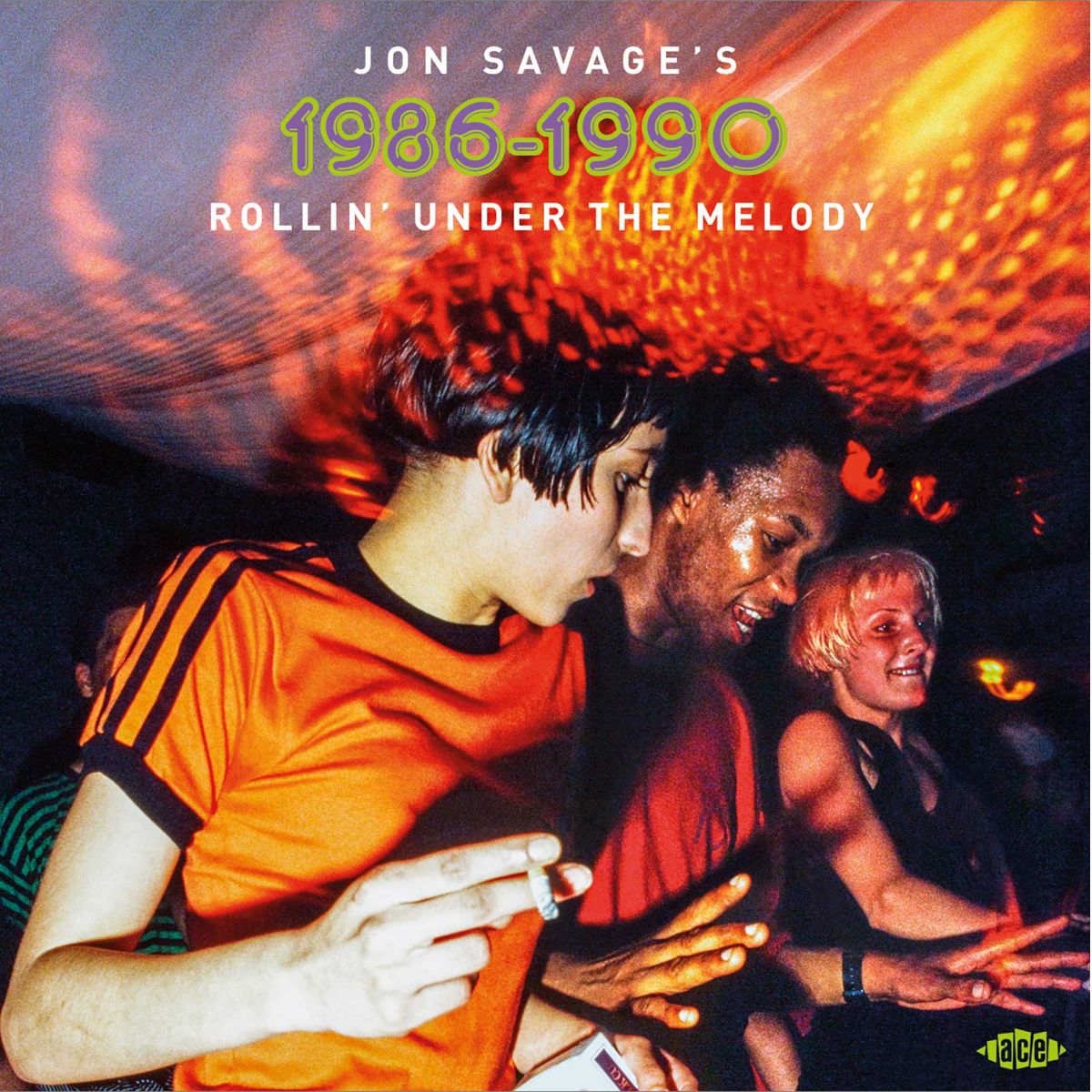
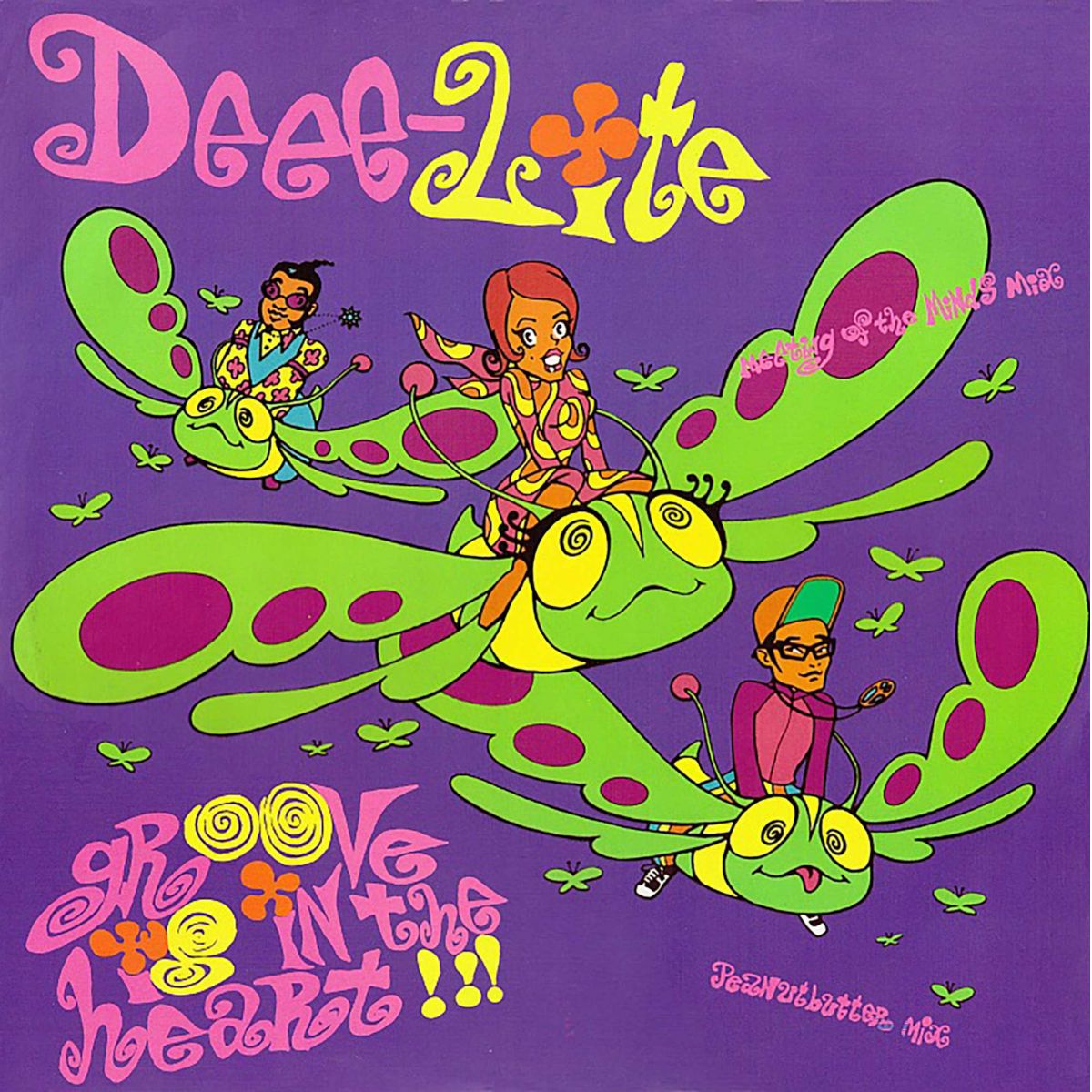
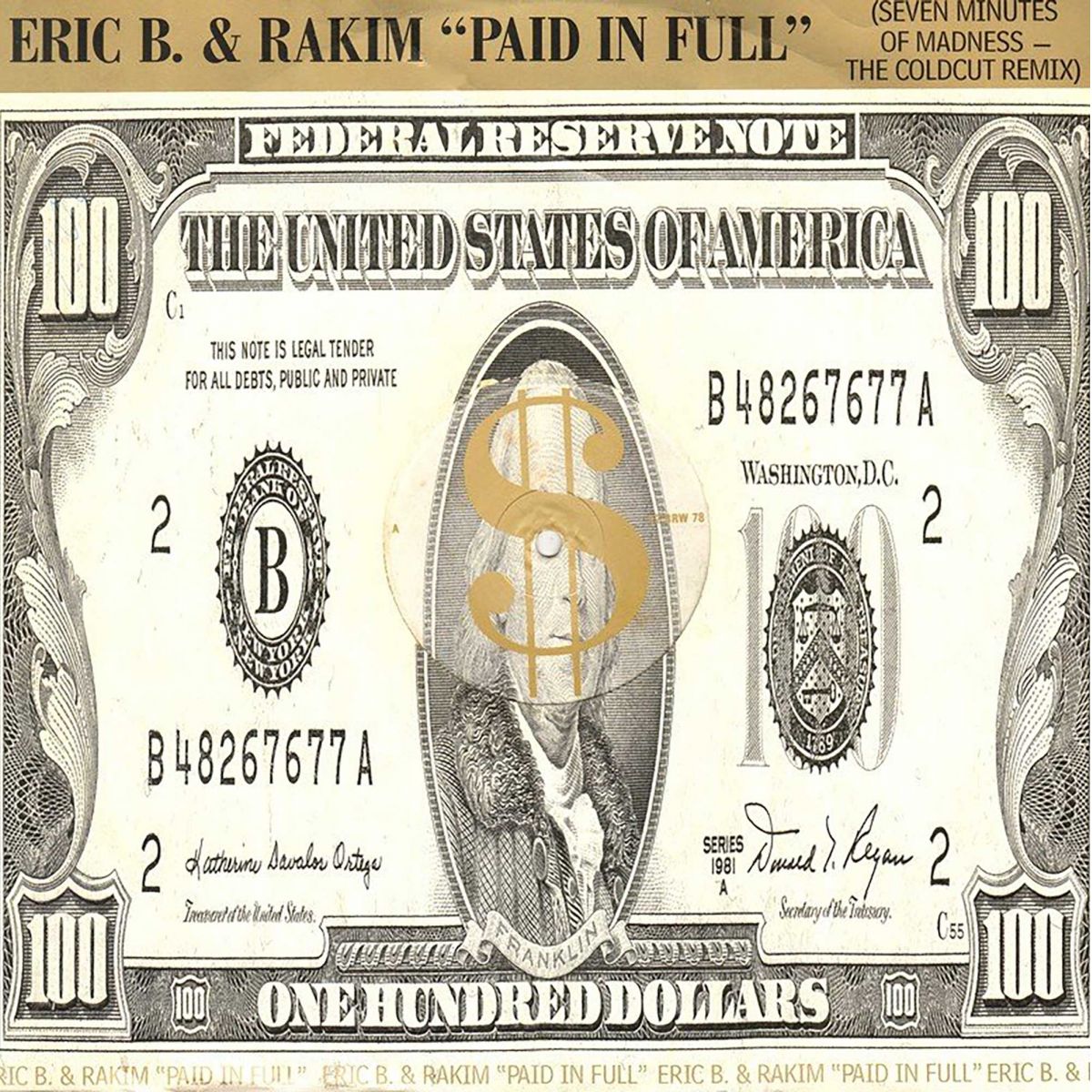
ISAAC HAYES-1969-1972.
Isaac Hayes-1969-1972.
Isaac Lee Hayes Jr was born on 20th, August 1942 in Covington, Tennessee. He was the second child of Eula and Isaac Lee Hayes Sr. However, tragedy struck when Hayes’ mother died when he was young. The situation got even worse when his father abandoned his young family.
Fortunately, Hayes’ maternal grandparents Mr. and Mrs. Willie Wade Sr. brought their grandchildren family up. Hayes grew in the Tennessee counties of Shelby and Tipton and worked on local farms. This was also where his musical career began.
Aged just five, Hayes started singing in the local church choir. Growing up, he taught himself to play piano, Hammond organ, flute and saxophone. Little did Hayes realise that he would eventually make a career out of music.
Hayes dropped out of Manassas High School, in Memphis, and got a job in a meat-packing plant. It was a case of needs must, as he had to support his closest family. At night, Hayes played in juke joints and nightclubs in northern Mississippi.
In the late fifties, Hayes made his debut as a singer at Curry’s Club, in North Memphis. That night, he was backed by Ben Branch’s houseband. Another alumni of Branch’s band was Donald “Duck” Dunn, who joined the band in 1961. Later, he found fame with Booker T and The MGs at Stax, where he would work with Hayes. That was all in the future.
Before that, Hayes’ former teachers at Manassas High School encouraged him to complete his high school. Belatedly, he graduated aged twenty-one. By then, he had already released his debut single.
This was “Laura (We’re On Our Last Go Ro-Round),” which was released in 1962, on Chips Moman and Sy Rosenberg’s Youngstown label. Although the single received some radio play and was popular in Tennessee, it failed to make an impression nationally. That would come later for Hayes.
By 1963, he was working as a session musician at Stax in Memphis. In January 1964, Hayes added the vocal to “Yank Me Doodle” by The Baracudas. However, most of his time was spent working as a session musician and as a songwriter.
However, in January 1964 “Sweet Temptation” was released as a single on Brunswick. On the B-side was Hayes’ debut single “Laura (We’re On Our Last Go Ro-Round).” The single failed commercially. Hayes continued to work at Stax.
Hayes worked with various songwriting partners, and also wrote many songs. Then between 1964 and 1969, Hayes forged a successful songwriting and production partnership with David Porter. The pair penned songs for Carla Thomas, Johnnie Taylor, The Soul Children, William Bell, The Emotions and Mable John. One of their most successful and iconic songs during Stax’s blue label years was “Soul Man” which gave Sam and Dave a huge hit. This was one of the most successful of over fifty songs Hayes and Porter wrote. By the time their partnership came to an end, Hayes’ had already embarked upon a solo career.
In 1965, Sir Isaac and The Do Dads released “Blue Groove” as a single on Volt. However, this mediocre bluesy instrumental failed to trouble the charts, and it was another three years before Hayes released another single.
This was “Precious Precious,” a track from Hayes’ debut album “Presenting Isaac Hayes.” It was released in March 1968 and again, failed to trouble the charts. However, Hayes’ debut album faired better, reaching 102 in the US Billboard 200 and twenty-five in the US R&B chart. His next album was the start of the most successful period of Hayes career at Stax.
Hayes released nine singles between 1969-1972. They were released on the Stax imprint, Enterprise.
Following the release of his debut album, Hayes demanded full that A&R executive granted him full creative control if he was going to record a followup. Bell agreed and this paid off.
Hayes released his sophomore album “Hot Buttered Soul” in June 1969. It was a landmark album that veered between symphonic soul to funk. Accompanied by The Bar Kays, Hayes recorded just four tracks that lasted over forty-five minutes. This seminal album was a future classic. It reached number eight in the US Billboard 200, topped the US R&B chart and was certified gold. There was also the small matter of two hit singles.
“Walk On By” and the Jimmy Webb composition “By The Time I Get To Phoenix” were released as a double-A side in July 1969. Both tracks had to be edited. The version of “Walk On By” on the album was edited from just over twelve minutes and three seconds to four minutes and twenty seconds. “By The Time I Get To Phoenix” which was 18.42 was edited to six minutes forty-five seconds. Both showcased Hayes new symphonic soul sound and were hit singles. “Walk On By” reached thirty in the US Billboard 100 and thirteen in the US R&B chart. “By The Time I Get To Phoenix” reached thirty-seven in the US Billboard 100 and US R&B charts. Hayes new sound was successful and Bell’s decision to grant him full creative control paid off.
In November 1969, Hayes released “The Mistletoe And Me” as a single. It’s a slice of festive symphonic soul, but was a weak track. Slightly better is the ballad on the B-Side, “Winter Snow.” This festive single failed to chart, which must have been a disappointment to Hayes.
“The Isaac Hayes Movement” was the name given to Hayes’ band by Marvell Thomas, and was also the title of his third album. It featured four cover versions, and was released to plaudits and praise in April 1970. Just like “Hot Buttered Soul,” it was a polished album of complex symphonic soul. It also reached number eight in the US Billboard 200, topped the US R&B chart for seven weeks and was certified gold. This was Hayes’ second gold album.
An edited version of “I Stand Accused” was released as a single in August 1970. The version on the album was eleven minutes and thirty-nine seconds, with a five minute spoken word intro. It was edited to six minutes and fifty seconds and features an impassioned and hurt-filled vocal by Hayes. On the B-Side is a beautiful seven minute symphonic soul cover of Bacharach and David’s “I Just Don’t Know What To Do With Myself.” However, the single stalled at forty-two in the US Billboard 100 and twenty-three in the US R&B charts. Hayes’ albums were more successful than his single.
That was the case with his fourth album “…To Be Continued.” It was released to critical acclaim on November 28, 1970. The album which combined symphonic soul with jazz and funk reached number eleven in the US Billboard 200 and was his third consecutive album to top the US R&B. However, the singles didn’t replicate this success.
The dramatic and sensual symphonic soul of “Ike’s Mood Pt 1” was chosen as the single, but failed to trouble the charts. On the B-Side was a cover of Bacharach and David’s classic “The Look Of Love.” It was transformed into a heartfelt symphonic soul ballad, but stalled at seventy-nine in the US Billboard 100.
Hayes next single “Never Can Say Goodbye,” was originally released as a standalone single in April 1971. By then, Hayes wife had filed for divorce and he delivers a soul-baring, needy vocal. On the B-Side was a cover of Hank Williams’ “I Can’t Help It (If I’m Still In Love With You” which was Hayes message to his estranged wife. The single reached twenty-two in the US Billboard 100 and five in the US R&B charts. It was Hayes most successful single. Not for long.
In July 1971, Hayes released “Shaft,” the soundtrack to the blaxploitation movie being released Metro-Goldwyn-Mayer. Hayes had written and produced the fifteen tracks on the double album. It was a mixture of symphonic soul, funk and soul. The album was groundbreaking, a gamechanger that changed the way soul and funk albums were made. When “Shaft” was released it topped the US Billboard 100 and US R&B charts, and was certified gold. Across the Atlantic, the album reached seventeen in the UK. The album also featured Hayes’ most successful single, “Shaft.”
The uber funky and iconic title-track was released in September 1971. It reached number one on the US Billboard 100, two on the US R&B charts and was certified gold. “Shaft” was a hit in Belgium, Netherlands and reached number four in the UK. On the B-Side was the beautiful, meandering and melodic “Cafe Regio’s” where symphonic soul meets jazz. It was the polar opposite of the high octane single.
For the followup, “Do Your Thing” was released as a single in February 1972. It’s soulful, sensuous and funky. On the B-Side was “Ellie’s Love Theme” a beautiful, pensive slice of symphonic soul where the vibes play a leading roll. Despite the quality of both sides, the single only reached thirty in the US Billboard 100, but reached three in the US R&B chart. However, “Shaft” had been Hayes most successful album, and introduced his music to a wider audience.
At the 1972, Grammy Awards, Hayes triumphed twice. He won a Grammys for the Best Instrumental Arrangement for “Theme from Shaft” and one for Best Original Score Written for a Motion Picture or a Television Special.
When Hayes released his fifth studio album, “Black Moses” on November 1, 1971, this album of cover versions reached number ten in the US Billboard 200. It was his fourth consecutive album to top the US R&B. Meanwhile in the UK, the album reached number thirty-eight. “Black Moses” failed to replicate the success of “Shaft” which nowadays, is regarded as a classic soundtrack.
After “Shaft,” Hayes released two non-album singles. The first was a cover of “Let’s Stay Together” which gave Al Green a number one single in 1972. His version is the definitive version. Hayes’ cover is a smooth slice of symphonic soul. On the B-Side was the smooth, slinky soul of “Soulsville” from the “Shaft” soundtrack. The single was released in February 1972 and reached forty-eight on the US Billboard 100 and twenty-five on the US R&B charts. This was another disappointment for Hayes.
The second non-album single was the funky and soulful “Ain’t That Loving You (For More Reasons Than One)” penned by Hayes and Porter. They duetted on the track and a disappointing cover of David Gates’ “Baby I’m-A Want You.” Bread’s original is the definitive version of the track. When the single was released in April 1972, it stalled at eight-six on the US Billboard 100 and thirty-seven on the US R&B charts. It was another disappointment for Hayes.
Between 1969-1972, Hayes released some of the best singles and albums during his tenure at Stax. He was at the peak of his powers, releasing four studio albums and the “Shaft” soundtrack. Each of these albums topped the US R&B charts, and three were certified gold. Hayes was one of the most successful artists signed to Stax.
Many of the singles Hayes released were edited version of his new symphonic soul sound. Other edited versions were B-Sides. For many music fans they were an introduction to Hayes’ music. Then when they bought the album the tracks were from, they were able to hear the tracks in all their glory. However, some music fans may prefer the edited version of the tracks. Many purists will prefer the full length tracks. It’s down to personal preference. However, one thing that’s indisputable is that Isaac Hayes was at the peak of his powers between 1969 and 1972.
Isaac Hayes- 1969-1972.


THE LIFE AND TIMES OF JOHNNY ADAMS.
The Life and Times of Johnny Adams.
Johnny Adams’ recording career lasted exactly forty years. His career began in early 1958, when he released his first single ‘I Won’t Cry’ on Ric. It was a hit single in New Orleans and the Southern states. For the twenty-six year old soul man this was the start of a recording career that would span five decades.
Right through to Adams’ death, on ‘14th,’ September, 1998, he was still working. He had just completed his ninth album for Rounder Records, ‘Man Of My Word.’ By then, Adams was a much-loved and popular artist whose career began forty years earlier.
However, it was at Ric and Ron where Adams’ career began. By then, he was nearly twenty-six.
Adams was born in New Orleans, on ‘5th,’ January 1932. He was the eldest of ten children. Just like many future R&B and soul singers, his introduction to music was through the church. That’s where he discovered his powerful baritone voice with a wide vocal range. However, music was nothing more than a hobby to Adams. He certainly didn’t want to sing what he thought of as the devil’s music.
That’s how R&B and rock ’n’ roll music was viewed, when Adams was growing up. R&B and rock ’n’ roll singers were doing Satan’s work. So, Adams, a deeply religious young man, stuck to singing gospel music.
Initially, he was a member of The Soul Consolators. They were mentored by Bessie Griffin, who would later, become one of the biggest names in gospel music.
After leaving The Soul Consolators, Adams joined The Soul Revivers, who featured the Reverend Clay Evans, another future gospel star. However, Adams had no ambition to take music any further. It was just a hobby. That was until one night someone knocked on his door.
As was his habit, Adams often sung when he was at home. He loved music, so it seemed natural. That night, New Orleans’ songwriter, Dorothy La Bostrie was passing his door when she heard him singing. Although the pair had never met, she decided to speak to Adams as she had just written some new songs. She knocked on his door and asked if he would like to sing her songs?
Previously, Adams had only sung gospel music. He had never sung secular music. This was going against everything he believed in. However, after a while, he had a change of heart. Johnny Adams was about to crossover.
La Bostrie decided that she would record Adams singing her two new songs, ‘I Won’t Cry’ and ‘Who You Are.’ He was accompanied by just a lone acoustic guitar. Once she had coaxed an emotive performance out of Adams she took the tape to Joe Ruffino, who owned the Ric label.
When Ruffino heard the two songs, he was won over. However, it wasn’t just the songs that impressed him. It was the singer. Ruffino decided to sign Adams to Ric, his first single would be ‘I Won’t Cry.’
Given the version of ‘I Won’t Cry,’ La Bostrie had recorded was just a demo, Ruffino decided that a new recording be made. He brought onboard his A&R man and guitarist Edgar Blanchard who would work with Adams. The A&R man took a band to Cosimo Matassa’s studio, where new versions of ‘I Won’t Cry’ and ‘Who You Are’ were recorded. They were released in early 1958.
After the two songs were recorded, Ruffino decided that ‘I Won’t Cry’ would be Johnny Adams’ debut single. When it was released in early 1958, Adams’ career got ofF to a dream start.
Before long, New Orleans’ premier R&B radio station picked up on ‘I Won’t Cry.’ The tale of hurt and betrayal seemed to strike a chord with people. Soon, it was a hit in New Orleans, then became popular across the Southern states. Despite not becoming a hit nationally, Ruffino realised that Adams had potential. So, he signed him to Ric, and a few months later, would release his sophomore single.
This was ‘Come On,’ which was penned by Seth David and Mac Rebennack, who later, reinvented himself as Dr. John. The B-Side was ‘Nowhere To Go.’ Adams’ sophomore single was very different to his debut.
‘Come On’ was an uptempo dance track with a poppy sheen. It seemed that Ruffino was trying to sell Adams to the youth market. This worked, and he enjoyed another local hit.
Things got even better when in September 1959, British label Top Rank licensed ‘Come On.’ However, the single failed to chart in Britain. Never again would any of Adams’ songs be released in Britain. Instead, he was left to try and break the lucrative American market.
At the end of 1959, Ruffino’s trusted lieutenant Edgar Blanchard left Ric. However, Ruffino had a readymade replacement in Mac Rebennack. He became Ruffino’s new A&R man, and also cowrote Adams’ third single ‘The Bells Are Ringing’ with William Allen and Ruffino. The new A&R man produced the single with a new studio band.
The A.F.O. Combo, short for All For One, had been put together by Harold Battiste, the head of A&R for both the Ric and Ron labels. His new band, epitomised the then New Orleans sound, had been honing their sound. Everything seemed to come together for The A.F.O. Combo on ‘The Bells Are Ringing.’ Would it give Adams his first nationwide hit single?
It was a case of the same old, same old. Just like his first two singles, when ‘The Bells Are Ringing,’ was released in 1960, it sold well locally, but didn’t make a breakthrough nationwide. This would be the case with Adams’ next four singles.
Between 1960 and 1961, he released a quartet of singles that failed to chart. They were all local hits and fared well in the Southern states. The first was ‘Someone For Me’ and ‘You Can Make It If You Try’ which were released in 1960. This was also the case with ‘Wedding Day’ and ‘Life Was A Struggle’ when they were released in 1961. After seven singles, Adams still hadn’t had enjoyed widespread commercial success.
By then, Mac Rebennack had realised that Adams had what many referred to as “star quality.” His singles sold well locally, and he was a popular and charismatic live performer. All he needed was a record company willing to back him. That meant money to promote his singles. So far, Ruffino had been reluctant to do so. Maybe, he was in his comfort zone?
Although Adams’ singles were selling well in the South, it would take a lot of money to break him nationwide. For Ruffino, this would be risky. It would be like betting the bank. However, when he found the right song, he was willing to do this.
‘A Losing Battle’ was an unlikely song for Adams. The former gospel singer was being asked to sing a song that more than hints at adultery. Surely, he would baulk at recording this track? He didn’t, and recorded the recorded the John Dauenhauer and Mac Rebennack composition, bringing their lyrics to life as if he had lived them. When Ruffino heard the single, he decided that this was the track that would break Adams nationally.
That proved to be the case. ‘A Losing Battle’ entered the US R&B charts on ‘30th,’ June 1962, and reached number twenty-seven. Somewhat belatedly, Adams was enjoying his first nationwide hit. It was also the label’s first hit since October 1960. This must have been a satisfying day for Ruffino. Having backed Adams, Ric been rewarded by a hit. However, for everyone at Ric, the happiness turned to sadness in August 1962.
Ever since Ruffino founded Ric, he had worked tirelessly. He died suddenly of a heart attack. His family and the wider New Orleans’ music community were shocked.
With Ruffino gone, his two sons were left to run the Ric and Ron labels. They tried to follow in their father’s footsteps. That, however, proved impossible. Eventually, his brother-in-law Joe Assunto took over the running of Ric and Ron. By then, the Ron label was on its last legs. It released its final single in August 1962. Ric however, continued, for the time being.
‘Showdown’ was the last single Adams released on the Ric label. It was another Mac Rebennack composition. Adams gave the song a bluesy hue. Despite being well received by Cashbox magazine, the single failed to chart. However, it was a regional hit in Louisiana and Texas. It was a disappointment for Adams. He would rather have ended his time on Ric with a hit.
After leaving Ric, Adams signed to Assunto’s new label, Watch Records. That was home for Adams for the next couple of years. During that period, he released three singles. However, ‘I Believe I’ll Find Happiness,’ ‘Some Day’ and ‘Got To Get Back To You’ didn’t result in an upturn in Adams’ fortunes. So when Ron reopened his doors in 1964, he returned to the label that was once his musical home.
However, he only released two singles on the newly resurrected Ron label. Both were released during 1964. The first was ‘Lonely Drifter.’ It failed to chart. So did the followup ‘Coming Around The Mountain.’ It was the final single that Adams released on Ron.
Later in 1964, Adams released ‘I’m Grateful’ as a single on Gone Records. However, if failed to chart and was his only release on the label.
Next stop for Adams was Pacemaker Records. The three singles Adams released on Pacemaker Records were recorded in Houston, not New Orleans. The first was the captivating Alton Valier composition ‘A Place Called Home.’ On the B-Side was the call to dance, ‘Spunky Onions.’ Both tracks were produced by Huey Meaux. However, despite the quality of the single it failed to trouble the charts on its release in 1966.
That was the case when the followup was released later in 1966. Both sides were penned by Meaux. The single was ‘Sometimes) A Man Will Shed A Few Tears Too,’ was chosen as the single, and featured an emotive vocal from Adams. Tucked away on the flip-side was the hidden gem ‘When I’ll Stop Loving You.’ The failure of the single was another disappointment for Adams.
He only released one more single on Pacemaker Records. This was a cover of Willie John’s ‘Let Them Talk,’ which featured ‘Operator’ on the flip-side. Again, the single failed commercially, and Adams left the label.
At the time, he was singing in local clubs and on the “Sugarcane Circuit.” It wasn’t a glamorous life travelling to gigs on the Greyhound bus. Nor was it particularly profitable. It paid the bills and put money in his pocket. However, there was no money for luxuries. So Adams took a job in the One Stop Record Shop, which was situated on South Rampart Street, in New Orleans. That was where he had a fortuitous meeting.
The One Stop Record Shop was owned by Joe Assunto. He knew Adams from their days at Ric and Ron, and decided to help him find a new label. Soon, Adams was signing another deal with Watch Records. The label paired him with arranger Wardell Quezergue.
Adams’ first single for Watch Records was the country song ‘Release Me.’ On the B-Side was ‘You Make A New Man Out Of Me.’ When this slice of country soul was released in 1968, it climbed to the upper reaches of the local charts and was a hit across the South. That was when Nashville-based Shelby Singleton bought the master, and released it on his SSS International label. It reached eighty-two on the US Billboard 100 and thirty-four on the US R&B charts. While this was the break Adams had been waiting for, little did he know that Singleton had also bought his contract.
Two singles were released on SSS International during 1969. The first was the Margaret Lewis and Myra Smith composition ‘Reconsider Me,’ which featured ‘If I Could See You One More Time’ on the B-Side. This heartachingly beautiful country-tinged song gave Adams the biggest hit of his career, when it reached number twenty-eight on the US Billboard 100 and eight on the US R&B charts.
Another Lewis and Smith composition ‘I Can’t Be All Bad,’ was chosen as the followup. On the B-Side was ‘In A Moment Of Weakness.’ The single was released later in 1969, and featured a needy, pleading vocal. It was, without doubt, one of Adams’ finest singles, and unsurprisingly reached number eighty-nine on the US Billboard 100 and forty-five on the US R&B charts.
In 1970 Adams release his debut album ‘Heart and Soul.’ It featured the four singles he had released on SSS International. Other tracks included ‘Lonely Man,’ ‘Living On Your Love’ and ‘A Losing Battle.’ They showcase a truly talented and versatile soul man who breathes life, meaning and emotion into a song. That was always the case
‘Real Life Livin’ Hurtin’ Man’ was penned by the Lewis and Smith songwriting team, and chosen for Adams next single. The pair also contributed the B-Side, ‘Georgia Morning Dew.’ Sadly, when the single was released in 1970 it failed to chart. This powerful, dramatic ballad was the one that got away for Johnny Adams.
Later in 1970, SSS International released ‘Proud Woman’ as a single. It was another Shelby Singleton production where brassy horns accompanied Adams’ vocal as he combined power, passion and emotion. Sadly, despite the quality of the single, it failed to trouble the charts.
A new version of ‘I Won’t Cry,’ which Adams had originally released as a single on Ric, featured on ‘Heart and Soul.’ It was released as a single later in 1970, with ‘I Want To Walk Through This Life With You’ on the B-Side. The single reached number forty-one in the US R&B charts. It was Adams first hit since ‘I Can’t Be All Bad’ in 1969.
In 1971, Adams recorded two singles for Atlantic Records. However, he also released the funky, soulful and hook-laden ‘South Side Of Soul Street’ on SSS International in 1971. It featured the cheating ballad ‘Something Worth Leaving For’ on the B-Side. It’s one of the hidden gems in Adams’ back-catalogue.
Two years passed before he released another single on SSS International. This was ‘I Don’t Worry Myself,’ which featured ‘Too Much Pride’ on the flip-side. The single was another fusion of funk and soul that featured an impassioned vocal from Adams. Despite the quality of the single, it failed commercially.
Later in 1973, Adams released his final single on SSS International. This was ‘Kiss The Hurt Away,’ which was produced by Singleton. Just like his previous single it failed commercially. It was another disappointment for the New Orleans-born soul man. There was more disappointment the following year.
Quezergue decided that SSS International had no future, and the label closed its doors in 1974. This came as a surprise to Adams who was hugely disappointed when he learnt that he was about to be dropped. It was the end of an era.
In 1976, Adams released a new album. ‘Stand By Me’ on Chelsea Records. It failed commercially, and was the only album her released on the LA-based label.
Two years later, in 1978, Adams signed to Ariola, and released a new album. However, just like his previous album, ‘After All the Good Is Gone’ wasn’t a commercial success. It would be six years before Adams returned with a new album.
1984 saw Adams release ‘From the Heart,’ his first album on Rounder Records. It was well received by critics. Rounder Records was Adamas musical home for fourteen years.
Adams released three more solo albums on Rounder Records during the nineties. They were 1986s ‘After Dark,’ 1988s ‘Room With A View Of The Blues’ and 1989s ‘Walking On A Tightrope.’ Since signing to Rounder Records, Adams had released four solo albums in five years. He was enjoying the most prolific period of his career, and this would continued into the nineties.
‘The Real Me: Johnny Adams Sings Doc Pomus’ was released in 1991 to plaudits and praise. This was followed by ‘Good Morning Heartache in 1993, then 1995s ‘The Verdict’ and 1996s ‘One Foot In The Blues.’ Belatedly, Adams music was starting to find a wider audience. This continued with ‘Man Of My World’ which was recorded just before Adams death, and released in 1998. It was, without doubt, one of the finest albums of his long and illustrious career.
Sadly, Johnny Adams never reached the heights of his contemporaries, like Sam Cooke and Bobby Womack. However, he enjoyed a career that spanned forty years and five decades. During that period, Adams proved a versatile and talent performer, who was loved and respected in equal measures. While he never enjoyed fame and fortune, he enjoyed an enviable longevity, and during his long career, he continued to reinvent himself.
Johnny Adams started off singing gospel, and then soul, R&B, jazz and latterly the blues. He was a truly-talented and versatile vocalist who was, without doubt, one of New Orleans’ finest.
The Life and Times of Johnny Adams.
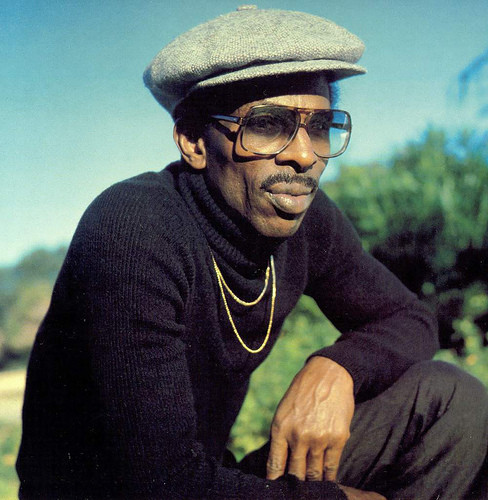
CULT CLASIC-REET HENDRIKSON-REET.
Cult Classic-Reet Hendrikson-Reet.
Sadly, Estonian folksinger Reet Hendrikson only ever released one album during her carer. This was ‘Reet,’ which was released in 1969, on the Estonian-Canadian label Reindeer Records. However, this stunning album of folk and psych-folk failed to find the wider audience it deserved.
Nowadays, though, Hendrikson’s music is starting to reach a new generation of music fans. However, the problem they had was finding a copy of the album. Copies of ‘Reet’ are now much-prized rarities. It’s showcases a truly talented singer-songwriter whose music has been compared to Bridget St. John, Linda Perhacs, Sibylle Baier and Vashti Bunyan.
Hendrikson was born in Estonia a few months before the “great escape” into exile in 1944. This resulted in her family moving to Sweden, where she was brought up and educated. However, because of the high standard of Estonian schools in Sweden Hendrikson spoke perfect Estonian. Growing up, she also received a formal musical education. She would put both to good use when she embarked upon a musical career.
In 1967, Hendrikson received a Fulbright scholarship and studied in the US. Then in 1968, she headed to Canada, where her musical career began in earnest.
It wasn’t long before Hendrikson was making her mark as a folk singer. Her arrangements of Estonian folk songs were stripped down, with just her guitar accompanying her beautiful, heartfelt, impassioned and tender vocal. There was a simplicity to her delivery, and a purity and ethereal quality to her voice as she breathed life and meaning into the traditional Estonian folk songs. They were a reminder of Estonia’s past, and Hendrikson’s delivery sounded authentic, as if she was from another time and place. It was almost otherworldly.
For Estonians living in exile in Canada, who heard Hendrikson sing her music spoke to them, and for them. She was singing at an Estonian summer seminar when Andres Raudsepp of the Estonian-Canadian label Reindeer Records heard her sing. This fortuitous meeting resulted in Hendrikson recording her one and only album.
Not long after hearing Hendrikson sing under the Muskoka pines, she entered the studio to record the twelve songs that would become Reet. It was just Hendrikson and her guitar. Raudsepp took charge of production, and was joined in the control room by engineer Mel Crosby. The producer captured the beauty, purity and ethereal quality of Hendrikson’s vocal on an album that was a mixture of folk and psych-folk. When the album was recorded it would the Reindeer Records’ second release.
‘Reet,’ which was Subtitled “Estonian Folksongs”/”Folklore d’Estonie en chansons” on the back cover and label was released in 1969, by Reindeer Records. Because The Ontario-based label was small, and they didn’t press huge quantities of the album. Their audience was mainly Estonian expats, mostly those living in Canada, as well as fans of folk music. After all, Hendrikson’s music epitomised the late-sixties folk sound where female singer-songwriters were hugely popular.
However, when ‘Reet’ was released, although it found an audience within the Estonian expat community, sadly, it never found the wider audience it deserved. Maybe if the album had been released on a bigger label who had a worldwide distribution network, ‘Reet’ would’ve been a commercial success and received the critical acclaim it deserved. And maybe Hendrikson would’ve gone on to release further albums. Sadly, she didn’t.
Following the release of ‘Reet,’ Hendrikson decided to stay in Canada for a while. During that time, she devoted herself to music. However, during this period, she travelled to Austria to attend summer courses at the Orff Institute. That’s where her friendship with Karen Schumacher began. Later, she would champion her friend’s music and in 2014, was part of a tribute to Hendrikson that took place at on ‘1st’ July, 2014 at the Museum of Occupations in Tallinn.
After leaving Canada, Hendrikson settled in Boston. She was a talented multi-instrumentalist and joined forces with a group of folk musicians. However, Boston was only a temporary home for Hendrikson.
By the eighties, she had returned to Sweden where she grew up. Hendrikson was invited to join a scholarly society of Estonian young women, and lead them during musical sessions. She enjoyed those sessions and being with women from home country. One day, she hoped to return to the country of her birth.
Russia recognised Estonian independence on ‘6th’ September 1991. Hendrikson was able to travel to her homeland and was supportive of Estonian musicians. She brought with her much-needed sheet music. The other thing she donated was repertoire from the Swedish National Radio Archives, where she had worked for some time. The repertoire was used and appreciated by both the Radio Symphony and the Philharmonic Chamber Choir, plus a variety of groups including Heinavanker and Linnamuusikud. This was Hendrikson’s way of helping Estonian’s musicians and its musical institutions who had suffered under Soviet rule.
Sadly, Reet Hendrikson died on ’21st’ October, 2000, in Stockholm, Sweden. She was only fifty-six. Hendrikson was a hugely talented singer and multi-instrumentalist who only recorded one album ‘Reet.
However, ‘Reet’ is oft-overlooked hidden gem that’s a magical mixture of folk and psych-folk. It’s a breatkakingly beautiful album that showcases Hendrikson’s beautiful, heartfelt, impassioned and tender vocal. There’s a simplicity and purity to her voice on the twelve songs on the album. Other times, her vocal is ethereal and otherworldly as she breathes life and meaning into the traditional Estonian folk songs. They’re a reminder of Estonia’s past, and Reet Hendrikson, a truly talented singer-songwriter and multi-instrumentalist who should’ve enjoyed a long and successful recording career.
Cult Classic-Reet Hendrikson-Reet.
SAMMI SMITH-THE “SOUTH’S OWN DUSTY SPRINGFIELD.”
Sammi Smith-The“South’s own Dusty Springfield.”
Without doubt, country singer singer-songwriter Sammi Smith had a voice, the talent and potential to crossover and become a huge, mainstream star. Her records were cinematic, soul-baring confessionals where her inimitable husky voice veered between melancholy and full of hurt and heartache to sensuous. It sounded as if Sammi Smith had lived the lyrics she delivered which were poignant and powerful. It was no wonder she was dubbed the: “South’s own Dusty Springfield.”
Sadly, Smith didn’t enjoy the same commercial success as Springfield and instead, remained a major star of country music. Mainstream commercial success eluded her and outside of country music circles many music fans haven’t heard of Smith. Her story is, sadly, a case of what might have been.
By 1980, her recording career was almost over, just twelve years after releasing her debut album ‘He Went A Little Bit Farther’ in 1967. Smith turned her back on music after a relatively short recording career.
Despite recording career that spanned just thirteen years, and Smith released eleven albums. This included seven for Nashville-based Mega Records between 1970 and 1975. These albums featured Smith at her best. They’re also a reminder of a truly talented singer who could breathe life, meaning and emotion into lyrics as she laid bare her soul. Sadly, still so many music fans have yet to discover the delights of Smith’s music. It was shaped by an eventful life and a nomadic childhood that saw her grow up fast.
The future Smith was born Jewel Faye Smith on August the ‘5th 1943, in Orange County, California. Her father was a serviceman and the family lived a nomadic life moving between Oklahoma, Texas, Arizona and Colorado. Aged just eleven, Smith dropped out of school and started singing professionally in nightclubs. This was her introduction to a career in music that would span twenty-five years.
By the time she was fifteen, Smith had married steel guitar player nightclub owner Bobby White. The couple had three children but divorced in 1966.
A year later, in 1967, Smith was booked to sing in the Someplace Else Night Club in Oklahoma City. In the audience that night was Marshall Grant who was Johnny Cash’s bassist. He was so impressed by the talented twenty-four year old singer that he told Cash, who having heard her sing helped get her signed by Columbia Records. This was the start of a recording career that lasted just twelve years.
Having signed to Columbia Records Smith released ‘He Went A Little Bit Farther’ later in 1967. Although the single failed to chart, commercial success wasn’t far away for Sammi Smith.
In 1968, she released ‘Brownville Lumberyard’ on Columbia Records, and it reached sixty-nine on the US Billboard Country charts. This was followed later that year by ‘Why Do You Like Me Like You Do.’ It reached fifty-three on the US Billboard Country charts and is regarded as the finest single she released on Columbia Records. The followup ‘Sand-Covered Angels’ failed to chart and shortly after this, Smith left the label. However, she had made one friend who would help launch her career.
This was Kris Kristofferson, who at the time, was working as a janitor at Columbia Records. When he had some free time the two friends would play together, and even went into the studio and recorded twelve songs. Smith would take them to producer Jim Malloy who would work with her at her new label.
Smith wasn’t without a label for long and in 1969 signed to Mega Records. The label had just been founded that year by insurance executive Harry Pratt and Brad McCuen who previously was an executive at RCA. Their new label was the perfect platform for Smith, as her music started to find a wider audience within the country music community.
At Mega Records, a decision was made to pair Smith with producer Jim Malloy. He was vastly experience and had worked with everyone from Duane Eddy to Elvis Presley and on Eddy Arnold’s ‘The Last Word In Lonesome Is Me,’ which was nominated for a Grammy. Jim Malloy went one better and one a Grammy for Henry Mancini’s ‘Charade.’ Then he worked with Townes Van Zandt’s on ‘Second Lover’s Song.’ Its wistful arrangement would influence the melancholy sounding songs he recorded with Smith.
‘He’s Everywhere.’
When Malloy listened to the twelve tracks he decided that Smith should record the Kristofferson composition ‘Help Me Make It Through The Night.’ It was one of eleven tracks recorded during May 1970 and produced by Malloy. These tracks became Smith’s debut album ‘He’s Everywhere.’
The lead single from the album was ‘He’s Everywhere’ which was released in July 1970, reaching twenty-five on the US Billboard Country charts. Other highlights of the album include the seminal ‘Saunder’s Ferry Lane,’ ‘But You Know I Love You,’ ‘When Michael Calls’ and ‘This Room For Rent.’ However, the best known track from this critically acclaimed album which was released in September 1970.
In November 1970, ‘Help Me Make It Through The Night’ was released as the second single. It topped the US Billboard Country charts and reached number eight on the US Billboard 100. This led to the album being retitled ‘Help Me Make It Through The Night.’
It wasn’t long before Smith’s debut album had topped the US Billboard Country charts. The album reached thirty-three in the US Billboard 200 and fifty-one in Canada. Great things were forecast for Mega Records’ latest signing, including mainstream success.

‘Lonesome.’
A year after the release of her debut, Smith who had married second husband Jody Payne, returned with her sophomore album ‘Lonesome’ in September 1971. Again, it was produced by Malloy who brought out the best in country music’s rising star.
The album reached fifteen on the US Billboard Country charts but stalled at 191 in the US Billboard 200. Three of the highlights of the album were ‘Jimmy’s In Georgia,’ the cinematic ‘He Makes It Hard To Say Goodbye’ which features a vocal full of hurt and heartache and the hopeful sounding ‘Then You Walk In.’ Given the quality of the music on the album, its relative lack of commercial success must have been disappointing. Smith must have been hoping her third album would be a bigger commercial success.
‘Something Old, Something New, Something Blue.’
Just seven months after the release of ‘Lonesome,’ Smith returned with ‘Something Old, Something New, Something Blue.’ It was released in April 1972 and reached seventeen in the US Billboard Country charts but failed to trouble the US Billboard 200.
This must have come as a huge disappointment Smith and everyone at Mega Records. Especially given songs of the quality of ‘I’ve Got To Have You’ which features a vocal that’s a mixture of sadness and longing. Just like in so many of her songs, the lyrics come to life and have a cinematic quality. Sadly, the wider record buying public had yet to discoverSmith whose career seemed to have stalled and mainstream success seemed even further away.
‘The Toast Of ’45.’
Just over a year passed before Smith released her fourth album ‘The Toast Of ’45’ in May 1973. Just like her previous albums it was produced by Malloy and featured some of the top musicians that Nashville had to offer. Despite this, the album only reached forty-three in the US Billboard Country charts, making it Smith’s least successful album. However, it’s something of a hidden gem.
Especially with tracks like the heartachingly beautiful ‘I Miss You Most When You’re Right Here;’ the wistful sounding ‘I’m In For Stormy Weather with its lush string arrangement; and The Toast Of ’45. They’re among the highlights of this oft-overlooked album that should’ve fared better upon its release. Little did Smith know things would get worse before they got better.
‘The Rainbow In Daddy’s Eyes.’
By 1974, Smith was still enjoying hit singles in the US Billboard Country charts. Some were just minor hits but still she continued to find favour amongst the country music community. Smith and Mega Records hoped her fifth album ‘The Rainbow In Daddy’s Eyes’ would be a turning point in her career.
Smith’s last couple of albums hadn’t been big sellers. None of her albums had matched the success of her debut which set the bar high. Sadly, ‘The Rainbow In Daddy’s Eyes’ failed to chart and was the least successful album of her career. That was despite songs of the quality of ‘Manhattan, ‘Kansas’ and ‘Birmingham Mistake which were two of the album’s highlights. Sadly, very few people heard this vastly underrated album.
‘Sunshine.’
1975 was a busy year for Smith. That year, she released two albums. The first was ‘Sunshine’ which was released at the start of the year. Despite an all-star cast of Nashville musicians and songs of the standard of ‘I Was Just Fifteen,’ ‘The Good-For-Something Years,’ ‘Cover Me, Long Black Veil’ and ‘Sunshine’ the album failed to trouble the charts. This was another disappointment. There was, however, a small crumb of comfort.
The three singles from the album all charted in the US Billboard Country charts. ‘Never Been to Spain’ reached seventy-five giving Sammi Smith a minor hit single. ‘Long Black Veil’ then reached twenty-six before ‘Cover Me’ peaked at thirty-three. This was something to build on when Smith released her seventh album for Mega Records later in 1975.
‘Today I Started Loving You Again.’
Later in 1975, Smith returned with her second album of the year ‘Today I Started Loving You Again.’ When the title-track was released as a single. it reached number nine in the US Billboard Country charts. It’s since become one of Smith’s best known and best loved tracks.
Buoyed by the success of the single, the album reached nineteen in US Billboard Country charts. This meant that ‘Today I Started Loving You Again’ was Smith’s most successful album since her third album ‘Something Old, Something New, Something Blue in 1972.’ She was back after a couple of difficult years and two albums that failed to even trouble the charts.
After the success of Today I Started Loving You Again Sammi Smith signed to Elektra and released a trio of albums between 1976 and 1978. However, 1976s ‘As Long As There’s A Sunday,’ 1977s ‘Mixed Emotions’ and 1978s New Winds, All Quadrants. They failed to match the success of ‘Today I Started Loving You Again, but are a reminder of a truly talented singer. Smith left Elektra after ‘New Winds, All Quadrants’ in 1978.
Next stop for Smith was Cyclone Records who released her 1979 album ‘Girl Hero.’ Just like her final album for Elektra it failed to chart and this was the end of a short stay on Cyclone Records.
In 1980, Sammi Smith returned to the studio and recorded ‘Texas 1947’ and ‘Desperados Waiting For A Train.’ Neither track was released at the time. However, both tracks are a reminder of a truly talented country singer-songwriter who should’ve reached greater heights than she did.
Sadly, Smith never crossed over into the mainstream and her music wasn’t heard by the wider audience it deserves. Given Smith’s undoubtable talent, her music deserved to crossover and she deserved to become a star who enjoyed a long and successful career. However, it was a case of what might have been.
Sadly, commercial success remained tantalisingly out of reach the truly talented Sammi Smith who was known as The“South’s own Dusty Springfield.” Smith should’ve become a queen of country music, and enjoyed mainstream success. That wasn’t to be.
Somewhat belatedly music fans are starting to discover the delights of Smith’s music. Especially the seven albums she recorded for Mega Records between 1970 and 1975. They’re a reminder of Smith at the peak of her powers when she looked like she was going to become one of the giants of country music and go on to forge a career in mainstream music.
Sammi Smith died on February the ’12th’ 2005 aged just sixty-one. That day, music lost a truly talented and much-loved singer who effortlessly breathed life, meaning and emotion into soul-baring confessionals who brought the powerful and poignant lyrics to life.
Sammi Smith-The“South’s own Dusty Springfield.”
NEW BREED R&B – MONEY TALKS.
New Breed R&B – Money Talks.
Label: Kent Dance.
Format: CD.
Nowadays, DJs and soul connoisseurs continue to collect and seek out new breed R&B. For those who haven’t heard of this new relatively new musical movement, it’s an offshoot of Northern Soul. The tracks that are sought out by collectors are from the fifties, sixties and seventies.
Three examples of new breed R&B are Bobby Day’s ‘Pretty Little Girl Next Door,’ Marva Josie’s ‘You Lied’ and Mike Pedicin’s ‘Burnt Toast and Black Coffee.’ These tracks are best described as early sixties R&B but with a hint of soul and/or pop. However, all of the new breed R&B tracks have one thing in common, the influence of the blues. That’s the case on New Breed R&B – Money Talks, a new compilation that was recently released by Kent Dance.
Opening the compilation is ‘Don’t Try To Tell Me,’ the first of two tracks from Berna-Dean. It’s a catchy, dancefloor friendly track that features a powerful vocal. The track was produced by Dave Bartholomew, and recorded for GNP Crescendo in 1964, but lay unreleased until 2024, when it was released as a single on Kent Select. On the B-Side was ‘Laughing On The Outside.’ This is a deeply soulful song with an emotive soul-baring vocal.
‘This Mornin’’ by The Jesse Stone Singers was recorded for the Arock label in 1962. There’s elements of folk and gospel in this uplifting and joyous R&B rocker.
‘What’s On Your Mind’ was recorded by The Four Bars, was originally released on the Cadillac label in 1960. However, when the single failed commercially that wasn’t the end of the story.
Vocalist Eddie Daye, who wrote the song, reissued the single twice on his own Dayco label in 1962. Then in 1963, he licensed the single to the Shelley label in 1963. It features a needy, pleading, hurt-filled vocal from Daye where soul and doo wop are combined.
‘Not So Much Talk’ was recorded by Jimmy Breedlove for Arock in 1962, but has lain unreleased until now. It’s thought that this cover of a Jesse Stone composition was a demo. However, it’s another dancefloor-friendly slice of rocky R&B.
Curtis Moon wrote ‘Mary Don’t You Weep,’ which was released as a single by The Delights on Golden Crest, in 1962. Soul meets doo wop on this rarity that was the only single the group released.
In 1966, Barbara Ozen penned ‘I’m A Good Woman.’ She was better known as singer, songwriter and R&B and electric blues guitarist, Barbara Lynn. She released the song as a single later that year on Tribe Records. However, the single failed commercially.
Despite that, soon, the song featured in many Bay Area group’s sets, and was covered by a number of artists and groups. This included The Afterglows, who recorded ‘I’m A Good Woman’ for the Candix label in 1969. Sadly, the song was never released. That’s a great shame as their impassioned rendition of the song featured a powerful, soulful vocal that’s an outpouring of emotion.
This alternate version of Albert Washington’s ‘Case Of The Blues’ originally featured on the Ace compilation ‘Blues and Soul Man.’ It was released in 1999, and twenty-six years later, this track from a truly talented bluesman returns for a well-deserved encore.
Buddy Wilkins also only released one single during his career. That was ‘Private Eye,’ which was written by Jesse Stone, and released on the Tri-Ess label in 1960. It’s an example of song story where Wilkins’ lived-in vocal paints pictures.
One of the best tracks on ‘New Breed R&B – Money Talks’ is ‘Hey Hey Baby’ by T-Bone Walker. It was released on Modern in 1964, and is a reminder of the legendary blues guitar pioneer who influenced a generation of guitarists.
‘You Make Me Mad’ was released as a single by Johnny Madara on Bamboo, in 1961. It’s a memorable and catchy song where R&B and rock ’n’ roll are combined. Accompanying the vocal is an arrangement that’s powerful and punchy. It’s driven along by the rhythm section before wailing, screeching horns play their part in the singles’s sound and success.
Closing ‘New Breed R&B – Money Talks’ is ‘Cleopatra’ by The Precisions. This was the Brooklyn-based group’s only single. It was released as a single on Golden Crest in 1962, and saw the group combining R&B and doo wop. However, the single failed to trouble the charts, and nowadays, it’s a much-prized rarity among collectors.
There’s twenty-five tracks on ‘New Breed R&B – Money Talks.’ It’s a compilation that may be of interest to anyone interested in new breed R&B, Northern Soul or even blues, R&B or soul. It’s a compilation that may be of interest to many people. That’s no surprise.
There’s contributions from familiar faces, and what will be new names to many people. On New Breed R&B – Money Talks there are singles, six unreleased tracks plus four songs that previously, were only available on other Ace or Kent compilations. These twenty-five tracks tracks were recorded during the sixties and seventies, which was the heyday of new breed R&B.
New Breed R&B – Money Talks.
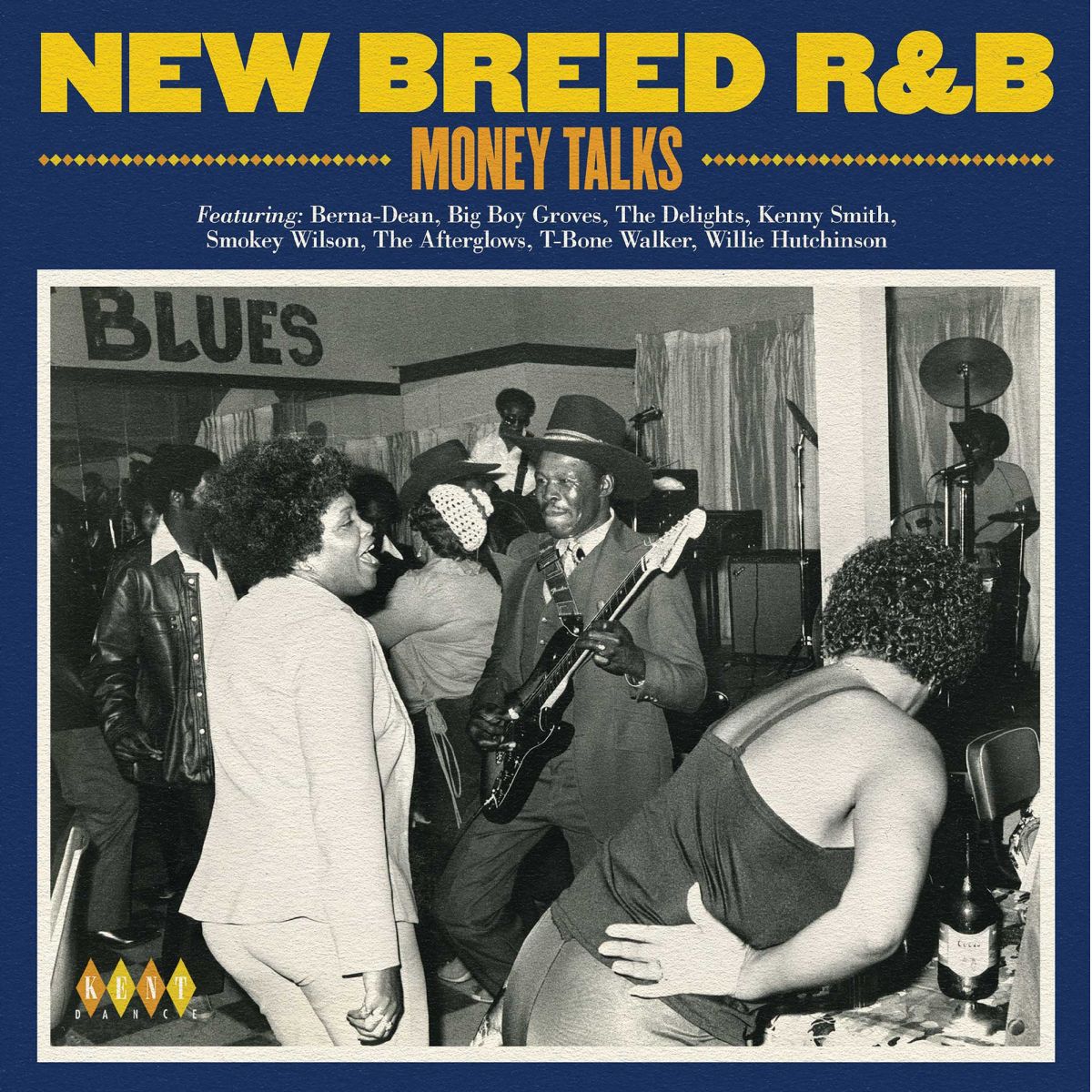
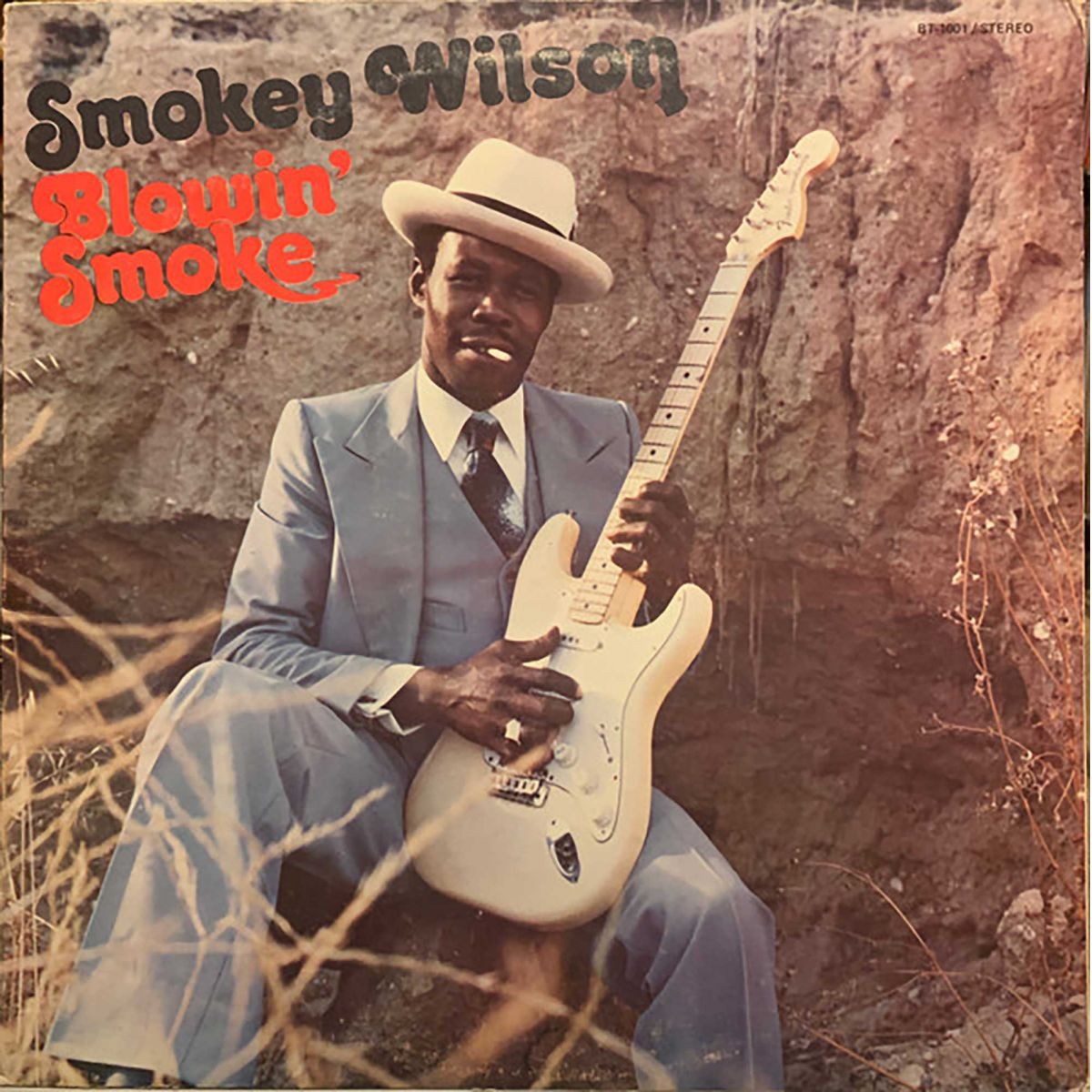
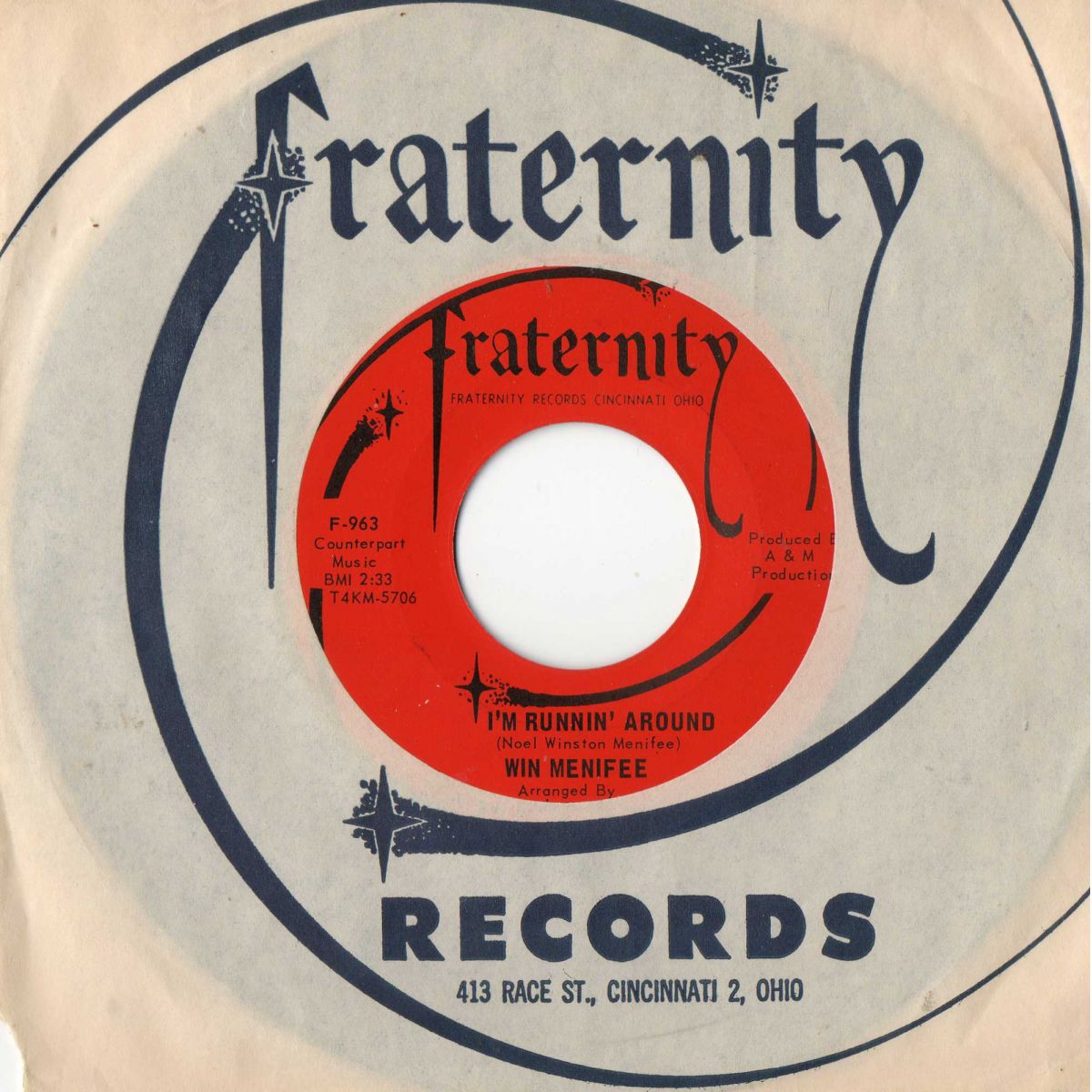
LOVE TRAIN – THE GAMBLE AND HUFF SONGBOOK.
Love Train – The Gamble and Huff Songbook.
Label: Kent Soul.
Format: CD.
Release Date: 27th June 2025.
Kenneth Gamble and Leon Huff have been familiar faces on the Philly music scene since the early sixties. The pair first played on a session by Candy and The Kisses in October 1964. Gamble cowrote ‘The 81’ with Jerry Ross, who also produced the track. The piano player for the session was Huff. He played on both tracks. Little did they know that they would form a formidable songwriting and production partnership.
Gamble and Huff met by chance. The pair were in an elevator and got talking. They got on, became friends and within a couple of weeks, the pair arranged and produced ‘There Ain’t Nothing I Wouldn’t Do For You’ for Dee Dee Sharp. She would later marry Gamble, and signed to Philadelphia International Records. That was still to come.
By 1967, Gamble and Huff had formed what was a full-time musical partnership. Soon, some of the biggest names in music were recording tracks penned by them. This includes some of the tracks on ‘Love Train – The Gamble and Huff Songbook.’
This new compilation features twenty-four tracks, and will be released on Kent Soul on 27th June 2025. There’s tracks from Elvis Presley, Gladys Knight and The Pips, Wilson Pickett, The Supremes, Barbara Mason and four tracks released on the label Gamble and Huff founded in 1971, Philadelphia International Records.
The new label became a showcase for the city’s musical talent. This included Harold Melvin and The Blue Notes, Billy Paul, The Three Degrees, People’s Choice, Dexter Wansel, Teddy Pendergrass and McFadden and Whitehead. However, this is just part of the story.
Other artists and groups that were signed to Philadelphia International Records saw a change in their fortunes. Among them, were The O’Jays, Lou Rawls and later, The Jones Girls and Patti LaBelle. However, it wasn’t just Gamble and Huff who were responsible for the unmistakable sound of Philly Soul.
There’s the third member of The Mighty Three, Thom Bell, a truly talented songwriter, multi-instrumentalist, arranger and innovative producer. Along with Gamble and Huff he was one of the architects of Philly Soul.
Many others played their part in the sound and success of Philly Soul. This includes the legendary MFSB, who were the Philadelphia International Records’ house band, and played on so many Philly Soul classics that were recorded for other labels.
So did backing vocalists The Sweethearts of Sigma. Their unmistakable backing vocals can be heard on countless Philly Soul classics. Many were arranged or produced by Vince Montana Jr, Don Renaldo, Bobby Martin and Jack Faith. They all played an important part in the sound and success of Philly Soul, which was the soundtrack to much of seventies. A number of the track on ‘Love Train – The Gamble and Huff Songbook’ were part of that soundtrack.
In 1967, Gamble and Huff formed their full-time musical partnership. Just a year later, The Vibrations released ‘Love In Them There Hills’ on the Okeh label in 1968. They cowrote the song with Roland Chambers who later, would become part of MFSB. Richard Rome arranged this funky and soulful Gamble and Huff production which features Earl Young on drums. It reached thirty-eight on the US R&B charts, and was one of the first hits the nascent songwriting and production partnership enjoyed.
Philly-based soul group The Intruders, released the Gamble and Huff composition ‘United’ in 1966. It was released on the Gamble label, stalling at 78 on the US Billboard 100, but reaching 14 on the US R&B charts.
Two years later, in 1968, Peaches and Herb covered the track, and the single was released on the Date label. It was produced by Gamble and Huff and arranged by Richard Rome. This beautiful soulful ballad reached 46 on the US Billboard 100, and 11 on the US R&B charts. It was the single that brought Gamble and Huff to the wider record-buying public’s attention.
‘I’m Gonna Make You Love Me’ was the first song that Gamble and Huff penned. It was recorded by Madeline Bell, and in 1967, featured on her debut album for Phillips, ’Bells A Poppin.’ This was the first of three versions Bell cut, and features a hopeful and heartfelt vocal from an underrated vocalist.
On June 2nd, 1969, Elvis Presley released his ninth studio album ‘From Elvis in Memphis’ on RCA Records. One of the tracks on the album was a cover of ‘Only The Strong Survive’ which Gamble and Huff cowrote with Jerry Butler. Chips Moman produced what was a deeply soulful version of a song that’s one of the highlights of Elvis’ comeback album.
Gladys Knight and The Pips released their third album, ‘Silk N Soul’ on the Soul label, in 1967. One of the tracks on the album was the Gamble and Huff’s ‘Together’. It was produced by Norman Whitfield and features a tender, impassioned and emotive vocal where Knight breathes meaning into the lyrics to this beautiful love song. It’s a welcome addition to the compilation.
For the followup to ‘Dusty In Memphis,’ Atlantic decided to send Dusty Springfield to Philly, to work with Gamble and Huff. One of the tracks they cowrote was ‘Let’s Get Together Soon.’ It features a tender, needy and hopeful vocal. The song features an understated arrangement by Roland Chambers, and features MFSB with Don Renaldo and His Horns and Strings playing an important part in the sound and success of the track. It’s one of the highlights of an album that was undoubtably, one of best of Springfield’s career.
‘Drowning In The Sea Of Love’ was the title-track to Joe Simon’s 1971 album for Spring. This mid-tempo track was written and produced by Gamble and Huff. However, Thom Bell was responsible for what’s a captivating and melancholy-sounding song. When it was released as a single in 1971, it reached number 11 in the US Billboard 100 and 3 in the US R&B charts. It was one of the biggest singles of Simon’s career, and helped introduce his music to a wider audience.
A year after The O’Jays enjoyed a number one on the US Billboard 100 and US R&B chats with ‘Love Train,’ it was covered by The Supremes. They had planned to release the song as a single, but The O’Jays beat them to it. However, their slick, smooth, soulful and poppy cover featured on ‘The Motown Sound Volume Two’ when it was released in 1973. It’s an irresistibly catchy cover of Philly Soul classic.
Billy Paul enjoyed the biggest hit of his career in 1972, with ‘Me and Mrs Jones.’ Gary Gilbert wrote the song with Gamble and Huff.
A year later, in 1973, Philly-born soul singer Barbara Mason released a response song, ‘Me And Mr. Jones’ a nine minute epic that arranged by Ron Baker that opened her album ‘Lady Love.’ There were plans to released the track as a single with the two parts edited. Sadly, it never got beyond an acetate being produced. ‘Part 1’ of this oft-overlooked track response to Paul’s classic is a tantalising taste of what was Mason’s finest album.
‘I Love Music (Part 1)’ was written and produced for The O’Jays by Gamble and Huff. The song was arranged by Norman Harris, and features MFSB at the peak of their powers. They combine Philly Soul and funk on this joyous and uplifting disco classic with a message that’s delivered with aplomb by The O’Jays. Unsurprisingly, it reached number 5 in the US Billboard 100, topped the US R&B charts and was certified gold in 1975.
Another Philly Soul classic is ‘Don’t Leave Me This Way’ by Harold Melvin and The Blue Notes. It featured on their album ‘Wake Up Everybody,’ which was released in late 1975. It was their final album for Philadelphia International Records. This was the end of an era.
The song was produced by Gamble and Huff who cowrie it with Gary Gilbert. Norman Harris arranged what became another Philly Soul classic. Harris was a member of MFSB and his unmistakable guitar playing can be heard on a track where Philly Soul, disco, drama and one of Teddy Pendergrass’ finest vocals on the album combine. Despite that, the single stalled at number 20 in the US R&B charts.
Closing ‘Love Train – The Gamble and Huff Songbook’ is ‘Hey Western Union Man’ by Bobby Rush. This twelve bar blues cover featured on the album ‘Rush Hour,’ which was released on Philadelphia International Records in 1979. The album wasn’t a commercial success but this is one of Rush’s debut album’s highlights.
‘Love Train – The Gamble and Huff Songbook’ is a lovingly-curated compilation where compiler Tony Rounce digs deeper than many other compilers. Previously, many compilers stick to familiar tracks, and their compilation is full of Philly Soul classics. While there’s some on this compilation, Rounce eschews many of the old favourites and familiar faces for songs that many people won’t be familiar with. Instead, there’s tracks from Barbara Mason, Joe Simon, Dusty Springfield and not forgetting Peaches and Herb, Madeline Bell and Gladys Knight and The Pips. These are welcome additions to the compilation.
With the tracks that were written by Gamble and Huff, and made in Philly, the success of these songs aren’t down to two men who wrote and sometimes, produced them. Far from it. Credit must be given to MFSB, the Sweethearts of Sigma and arrangers and producers like Thom Bell, Don Renaldo, Vince Montano Jr, Bobby Martin, Norman Harris and Jack Faith. They’re the unsung heroes who were also architects of Philly Soul, and made the songs that Gamble and Huff sound so good. So much so, that fifty years later, many of these songs are timeless soul classics. This includes some of the tracks on ‘Love Train – The Gamble and Huff Songbook,’ which will be of interest to anyone interested in Philly Soul.
Love Train – The Gamble and Huff Songbook.
CHRIS BANGS PRESENTS THE PLAYBOX.
CHRIS BANGS PRESENTS THE PLAYBOX.
Chris Bangs Presents The Playbox.
Label: BGP.
Format: CD.
Release Date: 30th May 2025.
Initially, DJ Chris Bangs started off as a guitarist with space rockers the Mighty Om. However, he soon realised that his talents lay elsewhere.
That came in 1982, after meeting Gilles Peterson, who was playing his first DJ gigs in a wine bar near where Bangs lived. This led to the pair forming a partnership and DJ-ing together for the best part of a decade.
Their first DJ sets took place in a small function room above the Derby Arms, near the Belvedere Arms in Sheen, West London. This was also where, in the late-eighties, Peterson played some of his legendary DJ sets. That was in the future.
Bangs and Peterson’s original one-off nights culminated with their Mambo Madness parties and the Original Jazz Bops. They were promote alongside Peterson’s Mad On Jazz show on Radio London. At these parties, 1,600 clubbers took to the dancefloor as the pair spun an eclectic selection of tracks. They were joined by various bands and artists at the famous Town and Country Club in Kentish Town. These were nights to remember.
Meanwhile, Bangs’ DJ career was progressing as he was offered various residences. His first was playing five nights a week at Bogarts in West London. Then each Saturday he played at the Exeter Bowl, Bournemouth. This led to Bang joining forces with DJ and promoter Bob Masters to run the Bournemouth soul weekenders through most of the 80s.
During the mid to late eighties Bangs DJ-ed at the Cock Happy, Special Branch and Doos At The Zoo club nights.
Every second Monday night Bangs was the guest DJ at Peterson’s Monday jazz night at the Wag Club.
Bangs was also a regular at Rockley Sands, Prestatyn and Caister weekenders, spinning everything from jazz dance and funk to rare groove. By then, Bangs was travelling further afield.
He also DJ-ed at Special Branch holidays in Ibiza and Corfu. Bangs also played at the legendary Cafe Del Mar. However, one of the things Bangs will always be remembered for happened accidentally in 1988.
In early 1988, Bangs and Peterson were DJ-ing at Nicky Holloway Special Branch Doo in Brentford, London. The pair were spinning hard Latin tunes, and behind them, the words Acid, Acid, Acid, were being projected onto the screen behind them. They stopped the music, and Bangs said “acid jazz” on the microphone. Both found this hilarious. It was meant to be throwaway comment, a reaction to the nascent acid house movement. However, acid jazz became the name for a musical movement that was popular worldwide.
When Bangs played an acid jazz set he spun everything from hard bop, early hip hop, Jimi Hendrix, psychedelic poetry and tough Latin tunes. These were eclectic sets that gave Bangs the freedom to play a wide range of tracks that he couldn’t and wouldn’t play elsewhere. However, Bangs wasn’t content to DJ.
He wanted to make music, and joined forces with Peterson to record the proto acid 12″ ‘Psychedelic Jack (That’s Where It’s At).’ They were signed to Acid Jazz Records, and in 1988, released the single as Extasis. This was just the start for Bangs.
Since then, he has released music under various names, and for various labels. This includes his solo albums ‘Firebird’ in 2023, and ‘Dream World’ in 2024. Both were released on Acid Jazz Records. Bangs has also worked with many other artists.
This includes producing Galliano and Paul Weller. Bangs has also worked with Mick Talbot, the legendary Roy Ayers, Linda Clifford and Sharon Redd. He’s also remixed Will Downing, Ce Ce Rogers and Blaze, as well as making house tracks with Faith’s Terry Farley.
However, it’s been seventeen years since Bangs last compiled a compilation. That was ‘Fuck Acid House This Is Acid Jazz’ in 2008. He’s compiled ‘Chris Bangs Presents The Playbox,’ which will be released by BGP, on Friday 30th, May 2025.
‘Chris Bangs Presents The Playbox’ features fourteen tracks from Johnny Hammond, Roy Haynes, Lonnie Liston Smith and The Cosmic Echoes, Pleasure, Johnny Lytle, Patrice Rushen and Cal Tjader.
Opening the compilation is ‘Los Conquistadores Chocolatés’ from Johnny Hammond’s classic jazz-funk album ‘Gears.’ It was released on the Milestone label in 1975, and was produced by Larry and Fonce Mizell. It’s a joyous and timeless track that fifty years later, will still fill any dancefloor.
In 1977, Bill Summers released his debut album ‘Feel The Heat’ on the Prestige label. By then, he was regarded as one of the top session percussionists. He had worked with everyone from George Benson, Eddie Henderson, Norman Connors and The Pointer Sisters. One of the highlights from his debut album was ‘Brazilian Skies.’ It’s an infectiously catchy and breezy fusion of soul, samba, jazz-funk and Latin jazz. The highlights of the track are the scatted vocals and the batucada percussion breakdown. It’s no wonder the track became a firm favourite of DJs and jazz dancers.
By the time that Roy Haynes released his album ‘Thank You Thank You’ in on Prestige, in 1977, he had been a professional drummer for thirty-five years. He was a top session player, who worked with the great and good of jazz. One of the highlights of the album was ‘Quiet Fire.’ From the opening bars, percussion joins with Hayes thunderous drums, congas, piano and a standup bass. Soon, a heavy and infectiously catchy groove is unfolding and this dancefloor filler heads in the direction of fusion and is akin to a joyous call to dance.
‘Visions Of A New World (Phase II)’ by Lonnie Liston Smith and The Cosmic Echoes is one of the highlights of the compilation. This a track from Smith’s fourth album ‘Visions Of A New World,’ which was released on Flying Dutchman, in 1975. Jazz-funk meets disco on a truly timeless track that was produced by Bob Thiele and Smith features and features an all-star band.
‘No Matter What’ is a track from Pleasure’s album ‘Get To The Feeling.’ It was released on Fantasy in 1978. This track is a delicious fusion of funk, jazz, disco and jazz-funk, and was one of the highlights of Pleasure’s fourth album.
In 1972, Johnny Lytle released ‘The Soulful Rebel’ on the Milestone label. This vastly underrated and oft-overlooked album where an all-star band combined jazz-funk and soul-jazz. On ‘Gunky,’ rocky guitar licks are unleashed, and join a mesmeric bass, swirling Hammond organ and vibes to create an acid jazz classic.
‘Braun-Blek-Blu’ is track from Dom Um Romao’s 1974 self-titled sophomore album on Muse Records. It’s a mixture of bossa nova, jazz-funk and samba, and became a jazz dance favourite.
‘Chris Bangs Presents The Playbox’ is a carefully curated compilation where the emphasis is on quality. There’s a mixture of familiar faces and what will be new names to many music fans. They’ll enjoy everything from bossa nova, jazz-funk, samba and soul-jazz to disco jazz. funk, fusion and soul. The result is ‘Chris Bangs Presents The Playbox,’ which will appeal to veterans of the acid jazz and jazz dance scene, as well as anyone loves good music.
Chris Bangs Presents The Playbox.
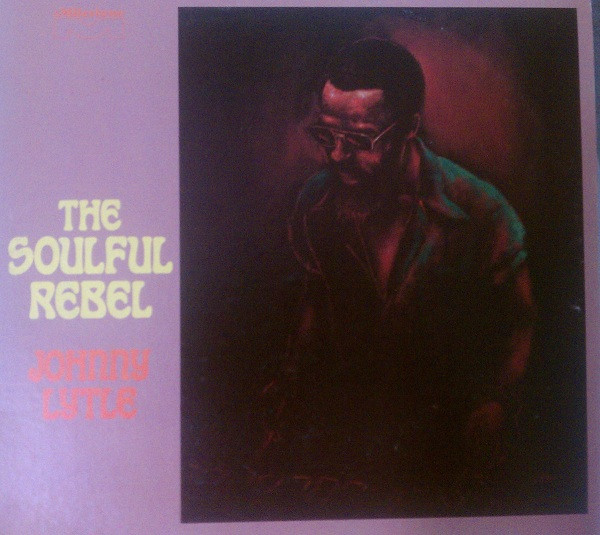
THIS IS FUNKY JAZZ.
This Is Funky Jazz.
Label: BGP.
Format: LP.
Nowadays, Charlie Parker, Thelonious Monk, Miles Davis, Dexter Gordon, Sonny Rollins, Art Blakey and Bud Powell are regarded as pioneers, and among the finest and most influential bebop artists. They were innovators, and played their part in this new musical movement that required instrumental virtuosity. Bebop was very different from what had gone before.
The tempo was fast, blisteringly quick, generally in excess of 200 bpm. Then there was complicated chord progressions and countless changes in key. That’s not forgetting improvisation which was based on a combination of harmonic structure, the use of scale and sometimes, a return to the melody. This was very different from swing music, which preceded it.
It was music for the head, not the feet. Its critics called it “intellectual music.” They didn’t understand this new. innovative and modern music would revolutionise jazz.
Fast forward to London in the eighties, where the acid jazz movement was born. DJs looked to past for inspiration, playing everything from soul jazz, fusion to jazz funk, R&B and even the music that played in small clubs and lounge bars in the sixties and early seventies. This was the soundtrack to life for black Americans. It was music to dance to.
So are the ten tracks on ‘This Is Funky Jazz,’ which was recently released on BGP. There’s tracks from Richard “Groove” Holmes, Lonnie Liston Smith and The Cosmic Echoes, Oliver Nelson, Bob Thiele Emergency and legendary drummer Pretty Purdie.
Side One.
Opening ‘This Is Funky Jazz’ is Richard “Groove” Holmes’ cover of the ‘Six Million Dollar Man Theme.’ It’s the title-track to his 1975 album, which was released on the Flying Dutchman label. This is a stunning slice of cinematic soul jazz and jazz-funk.
Dramatic, funky and soulful describes ‘Super Strut’ by Cookin’ Bag. This oft-overlooked single with socially conscious lyrics, was released on the Solid Gold label in 1972. Fifty-three years later and it’s stood the test of time.
‘Work Song’ was released as a single by The Pazant Brothers on GWP Records, in 1969. It’s a brassy slice of joyous, summery funk.
When Lonnie Liston Smith and The Cosmic Echoes released ‘Reflections Of A Golden Dream’ in 1976, it was their final album for Bob Thiele’s Flying Dutchman label. He produced an album that veered between fusion to jazz-funk and the meditative and dreamy ‘Quiet Dawn.’ It’s one of the album’s highlights. So is the anthemic plea for ‘Peace and Love.’ It was released as a single in 1976, and is a truly timeless track that’s even more relevant today.
The synth-driven ‘Skull Session’ is the title-track to Oliver Nelson’s 1975 album. It’s a dramatic and cinematic, with stabs of horns punctuating the arrangement. Some of the finest jazz musicians of the sixties and seventies played on the album. It’s like a who’s who of jazz. The album was produced by Bob Thiele and released on the Flying Dutchman label. This track is a tantalising taste of a vastly underrated album.
Side Two.
Harold Alexander’s album ‘Sunshine Man.’ It was recored on the 26th and 27th, May 1971, and the released later that year on Flying Dutchman. ‘Mama Soul’ was released as a single, the all-star band combine, jazz-funk, fusion and soul jazz seamlessly to create a groundbreaking track.
‘Head Start’ is the title-track to Bob Thiele Emergency’s 1969 album. It was released on his Flying Dutchman label, and was akin to a history of jazz, combined with electronic experimentation, free jazz, a tribute to John Coltrane and some infectiously catchy soul-jazz. This Thiele managed to do on one innovative double album, where he pushed musical boundaries to their limits, and sometimes, beyond.
Joe Bataan’s ‘Theme From The Men’ is a joyous and uplifting fusion of Latin, funk and soul. It was originally released in 2010, on the BGP Records’ compilation The Lost Sessions (New York, 1976). It returns for a well-deserved encore and will still fill a dancefloor.
‘Put It Where You Want It’ is a track from ‘Soul Is… Pretty Purdie.’ This uber funky album was released on Flying Dutchman in 1972, and features a truly-talented band. The result is one of the finest albums of the legendary drummer’s long and illustrious career. Sadly, it wasn’t a commercial success, but later, during the acid jazz era, the album was rediscovered by DJs, dancers and record collectors.
Closing ‘This Is Funky Jazz’ is Drifting by Chucky Thurmon and Pharris Wheel. This track was taken from ‘The Music City Sessions Volume 2: Super Strut,’ which was released in 2011. It’s a flute-led funky hidden gem that’s driven along by the rhythm section. This is the perfect way to close the compilation.
‘This Is Funky Jazz’ which was recently released on BGP, is, without doubt, one of the finest compilations of recent months. It features familiar faces and what will be new names to many music fans. The result is a carefully curated compilation that’s a mixture of funk, fusion, jazz-funk and soul-jazz.
The music is groundbreaking and innovative, especially that tracks that were released on the Flying Dutchman label. These tracks are a tantalising taste of the music Bob Thiele’s label released.
He released that musical maverick didn’t thrive within such an orthodox environment. Their creativity was restricted and they were unable to experiment and innovate. Thiele allowed them to do this at Flying Dutchman, and many groundbreaking albums were released between 1969 and 1976, when the label was taken over by RCA Victor. Many of the albums released during this period have been reissued by Ace Records. The six tracks from the Flying Dutchman label on ‘This Is Funky Jazz’ are, sure to be the start of a long and enjoyable musical journey.
However, there’s much more to ’This Is Funky Jazz.’ It’s a reminder of the music that was the soundtrack to black America between 1969 and 1976. Nearly fifty years later, and the music on ‘This Is Funky Jazz’ is truly timeless, and is the perfect soundtrack to the summer, and is guaranteed to get any party started.
This Is Funky Jazz.
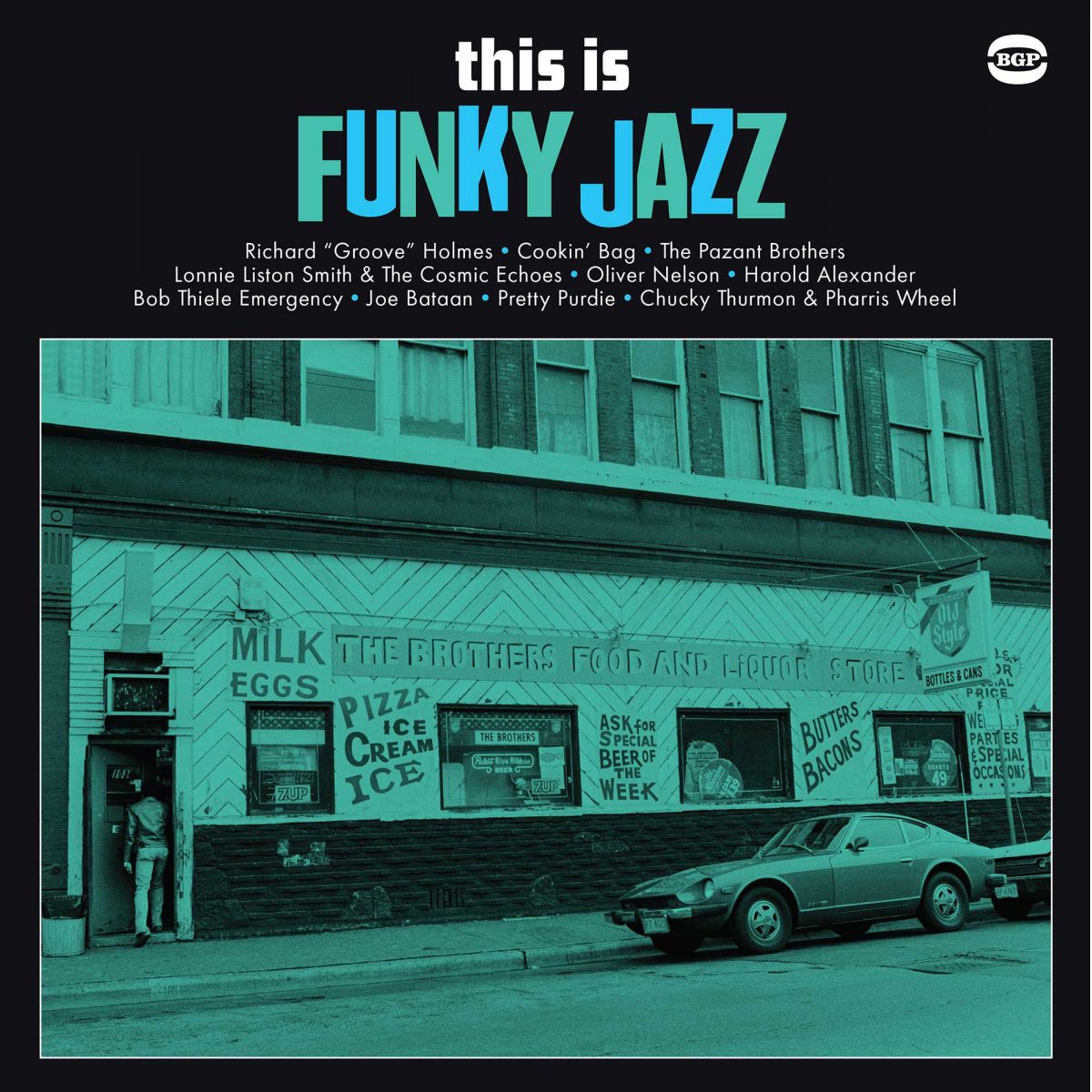
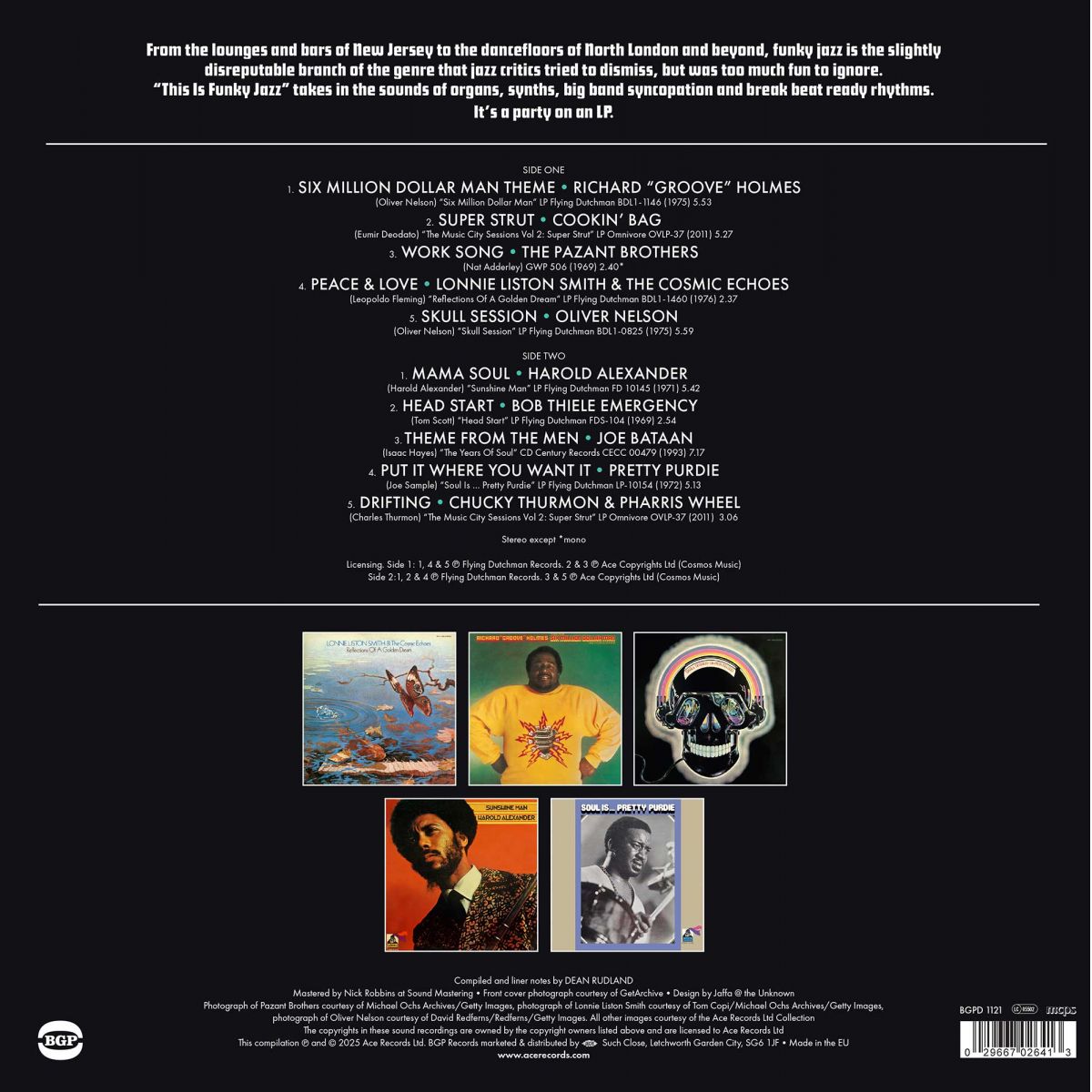
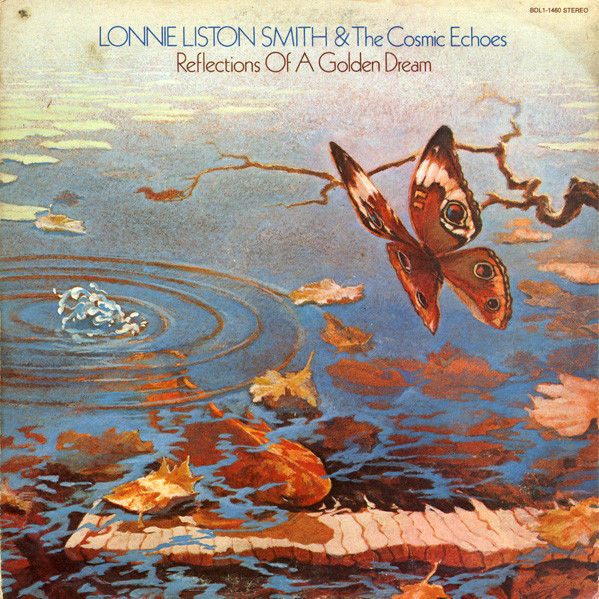
SOUL HARMONY – SWEET SOUL VOCALS 1961-1984.
Soul Harmony-Sweet Soul Vocals 1961-1984.
Label: Kent Soul.
Format: CD.
Between 1962 and the early seventies there was an increase in the popularity of soulful ballads in Southern California. These slow jams were played in the clubs and could be heard in the cars that cruised the streets of towns and cities throughout Southern California.
Initially, it was the Mexican, Central and South American immigrants who had settled around East Los Angeles that embraced these soulful ballads. However, their popularity has grown since then.
Over the years, the popularity of soulful ballads has grown, and nowadays, are favourites of DJs, soul fans and record collectors around the world. Some record buyers were drawn to the music after being fascinated by the titles of the songs that were finding favour amongst the lowrider soul scene.
The lowrider scene was named after its members, who had a love of classic American automobiles, which they customised and used to cruise the streets of LA. This became really popular from the early sixties until the dawn of the seventies. However, that wasn’t the end of the lowrider scene.
Although it wasn’t as popular from the early seventies onwards, there was still a lowrider scene. This continued into the mid-eighties, which is the period that Kent Soul’s new compilation ‘Soul Harmony-Sweet Soul Vocals 1961-1984’ covers.
There’s twenty-four slow, sweet, soul harmony ballads on the compilation. Over the last decade there’s been a resurgence of interest in Soul Harmony. So much so, that Ace have formed a new label, Soul Harmony. which is issuing tracks on vinyl for the first time.
However, ‘Soul Harmony-Sweet Soul Vocals 1961-1984′ offers a tantalising taste of these slow, sweet soul harmony ballads. This includes contributions from The Question Marks, The Puffs, John Wesley and The 4 Tees’ plus The Mad Lads, Moments, Diplomats and Lee Williams and The Cymbals. Then there’s The Imperialites, Question Marks, Music City Soul Brothers and Ray and Bob on a compilation that transports the listener back to another musical era.
It’s always important to start a compilation with a strong track. That’s the case here. I’ve Never Found A Girl by The Mad Lads is a cover of the song that gave Eddie Floyd a hit in 1968. A year later, in 1969, it appeared on the group’s 1969 LP ‘The Mad, Mad, Mad, Mad Lads.’ It was released on Volt, and is, without doubt, one of the highlights of the album. It features at their soulful best, on a track that sets the bar high for the rest of the compilation.
Instant Replay recorded four tracks at Leo Kulka’s Golden State Recorders in April 1972. However, the two parties were unable to agree a deal, and the tapes lay in the vaults for over fifty years. Then Alec Paloa copied the tape, and made his own mix of ‘87th Off Broadway.’ It then became the first single released on Ace’s nascent Soul Harmony label in October 2024. That’s fitting as it’s a gorgeous soul ballad that deserves to be heard by a much wider audience.
‘Just Because He Wants To Make Love (Doesn’t Mean He Loves You)’ by The Moments was released on the Slang label in 1972. It was produced by George Kerr and Sylvia Robinson. That’s no surprise, as it’s a heartachingly beautiful ballad, that features a vocal soul-baring vocal that’s akin to a confessional.
‘Mr Lover Supreme’ was one of three songs that Ramona King recorded for Leo Kulka at his Golden State Recorders in March 1970. The tracks were never released. However, the four tracks by Instant Replay were rediscovered by Alec Paloa. It’s his mix that features on the compilation. The best way to describe this romantic soulful ballad is a hidden gem, that’s a worthy and welcome addition to the compilation.
‘For The Love Of You’ by Natural Resources just floats along with lush strings accompanying the heartfelt, emotive and sometimes wistful vocal. It’s accompanied by tender harmonies and strings that slowly sweep. Sadly, this track which the group recorded for Dore was never released, and belatedly makes its debut on the compilation. It’s a great find, and is easily one of the compilation’s highlights.
The Soul Interiors reading of ‘My Friend Heartaches’ bristles with hurt, heartache and sadness. It’s an outpouring of emotion that sounds as if it should be cathartic. Just like other tracks on the compilation it lay unreleased, and made its debut as a single on Ace’s City label in 2024. It returns for encore on Soul Harmony- Sweet Soul Vocals 1961-1984. Take a bow The Soul Interiors.
‘Ain’t That Kinda Sad’ by The Question Marks was released on Money in 1964. This tale of love lost is a reminder of an earlier musical era, one where vocal groups ruled the roost and topped the charts in America.
‘You Still Need Me’ was the first of two singles Johnny Wesley and The Four Tees released on the Melic label. It was arranged by Arthur Wright and released in 1966. The vocal is needy, almost pleading, hoping that his partner still needs and wants him.
‘Take Me Back’ is another heart-wrenching soulful ballad about love lost, and a relationship that’s gone south. This is Joe Evans production that was released by The Three Reasons in 1971. It’s a beautiful and truly memorable ballad that many people will be able to relate to.
‘Girl I Tried’ is a beautiful, sweet and soulful ballad by The Performers. There’s an air of resignation in the vocal, knowing that despite trying hard to make it work, it’s the of the relationship. Despite never having been released on CD before, this song is another of the compilation’s highlights.
‘Love Don’t Let Me Down’ by Nightchill was written by Dexter Dixon and Dave Hamilton, who also produced the track. It was recorded in 1980, but this carefully-crafted and beautiful soulful ballad makes its debut on the compilation. This version is Nick Robbins’ mix of a track which has stood the test of time.
Closing Soul Harmony-Sweet Soul Vocals 1961-1984 is ‘The Story Says’ by The Tokays. This poignant ballad is another unreleased Dave Hamilton production. It’s essentially a demo and has an understated, spartan arrangement. One wonders what it would’ve sounded like with a bigger, fuller production?
Soul Harmony – Sweet Soul Vocals 1961-1984 is a welcome reminder not just of the lowrider scene, but the increasing popularity of soulful ballads. Nowadays, they’re favourites of DJs, soul fans and record collectors worldwide.
A tantalising taste of these soulful ballads can be found on Soul Harmony – Sweet Soul Vocals 1961-1984. It’s a lovingly-compiled compilation that features twenty-four tracks that ooze quality. There’s a mixture of lesser known and unreleased tracks, slow jams, singles and classy cuts aplenty. This makes Soul Harmony – Sweet Soul Vocals 1961-1984 a must-have for anyone who likes soulful ballads, slow jams and smoochy music.
Soul Harmony-Sweet Soul Vocals 1961-1984.

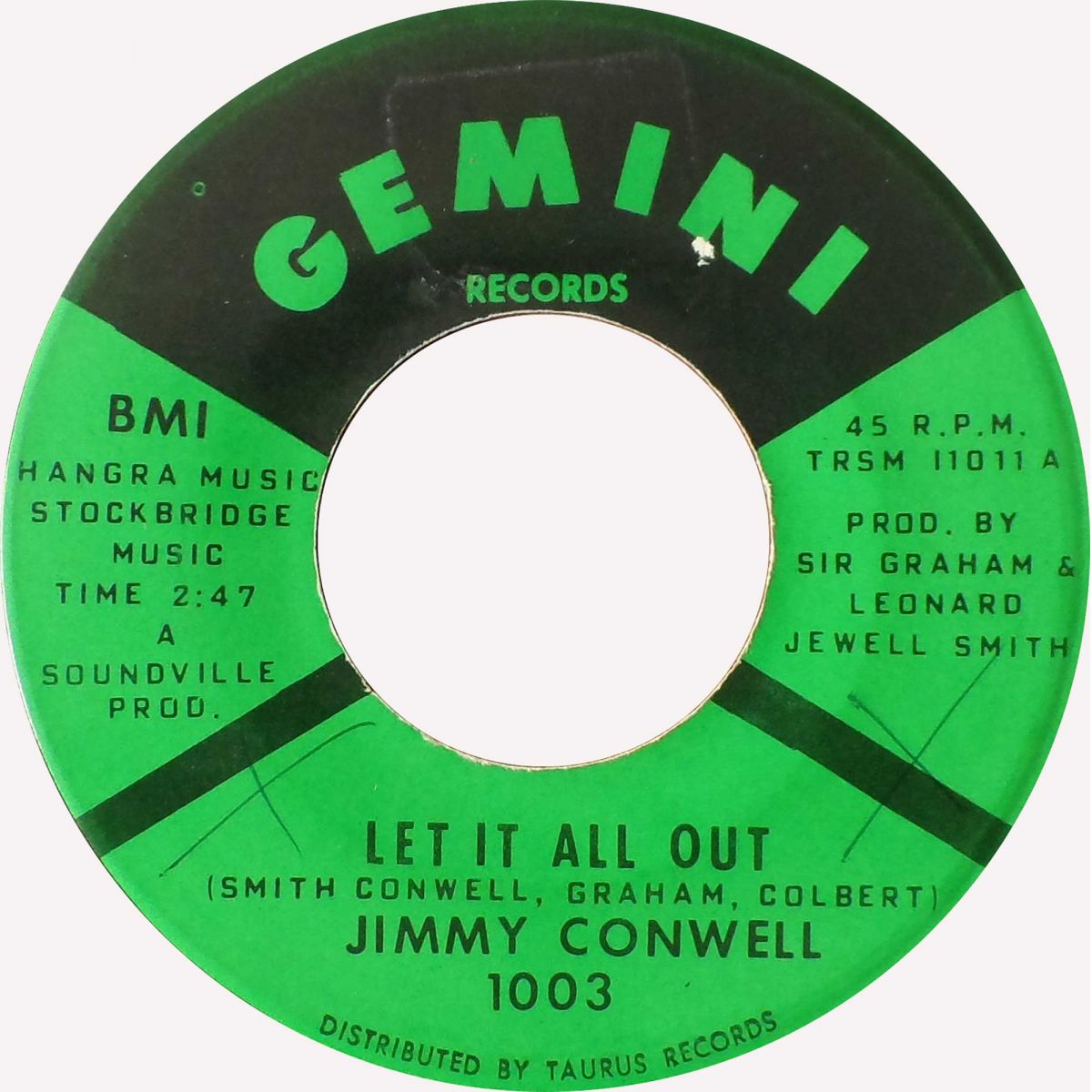
HIT AND RUN! MORE MOTOWN GUYS.
Hit and Run! More Motown Guys.
Label: Kent Soul.
Format: CD.
Just like many other record labels, the vaults at Motown contain hundreds of unreleased tracks. These tracks are part of the label’s rich and illustrious history.
Many were recorded at the company’s headquarters at 2648 West Grand Boulevard, Detroit between 1961 and 1968. This is regarded by connoisseurs of soul as the label’s golden era. During this period, Marvin Gaye, Smokey Robinson and The Miracles, Marv Johnson, The Temptations and the Four Tops were all signed to Motown, and made it arguably the most successful soul labels of the sixties.
That’s still the case over fifty years later. Albums released on Motown are regularly released, as are careful curated compilations. The latest is ‘Hit and Run! More Motown Guys,’ which was recently released by Kent Soul. It features twenty-five rare and previously unissued recordings.
These recordings would’ve been released by many soul labels between 1961 and 1968. However, not Motown. The tracks failed to capture enough votes during the company’s Quality Control meetings each and every Friday. Some of the tracks failed to get pre-meeting approval of the Quality Control queen, Billie Jean Brown. As a result, some have lay unreleased for over sixty years. That’s until now, and the recent release of ‘Hit and Run! More Motown Guys.’
‘Without You Babe’ was Skip Cunningham’s first recording for Motown. He added his vocal to this crossover style track on the 19th May 1966. However, this Ivy Jo Hunter production failed to garner enough support in the Quality Control meeting, and has lain unrelated for fifty-nine years. It makes it debut on Hit and Run! More Motown Guys.
Ivy Jo Hunter features twice on the compilation. His first contribution is ‘Lucky Lucky Me,’ a track which he cowrote with Hank Cosby, Sylvia May and William Stevenston. He delivers a heartfelt vocal full of vocal where he gives thanks for the love he’s found. Then on ‘To See The Sun Again’ which he cowrote with Jack Goga, Hunter delivers an impassioned and powerful vocal that’s a mixture of hurt, sadness and regret. It’s one of the hidden gems on the compilation.
‘Show Me The Way’ by J.J. Barnes was recorded in 1967, and made its debut on ‘Rare and Unreleased Vinyl, Volume 3’ in 2016. However, this is the first time this stomper has featured on CD. In 2016, it quickly became a favourite of UK soul fans, and has stood the test of time.
’Since I Don’t Have You’ by The Temptations was recorded in 1967, and features David Ruffin on lead vocal. He was a member of the group during their Classic Five period and sang lead on ‘My Girl’ and ‘Ain’t Too Proud To Beg.’ Despite this, he was replaced by Dennis Edwards later in 1968. Ruffin unleashes an emotive and soul-baring vocal on this previously unreleased track which is, without doubt, one of the highlights of the compilation.
Marv Johnson’s ‘Come To Me’ was the first single released on Tamla in 1959. It reached number thirty on the US Billboard 100. Three years later, in 1962, he recorded the poppy and soulful ‘Sing A Little Song About You.’ Then in 1964 he recorded ’Sad Souvenirs’ a dramatic, intense and emotional ballad. Both of these tracks are among the fifteen previously unreleased tracks.
‘I Feel Like I’m Falling In Love Again was recorded by Jimmy Ruffin in 1967. It’s a joyous and uplifting paean, where strings and harmonies providing the perfect accompaniment to a soulful, sincere and passionate vocal.
In 1965, the Four Tops recorded the ballad ‘Just Your Love.’ It was penned and produced by Ivy Jo Hunter and William Stevenston. However, the song failed to make the cut at the Friday Quality Control meeting. As a result, it’s lain unreleased for sixty years. For Four Tops’ fan and Motown completists its inclusion on the compilation will be a welcome one.
‘Goodbye Eilene’ is a beautiful hurt-filled ballad by Shorty Long that’s bristling with emotion and full of regret at the love he’s lost. The track was recorded in 1965, but has never been released on CD until now. It’s one of the standout tracks on ‘Hit and Run! More Motown Guys.’
‘It’s Love Baby (24 Hours Of The Day)’ was recorded by Joe Stubbs in 1967, and is another track that has never been released on CD. The former lead singer with The Contours unleashes a stomping take on the track that gave Ruth Brown a hit in 1965.
Closing ‘Hit and Run! More Motown Guys’ is ‘We Call It Fun’ by The Hit Pack. Their version of this poppy track was recorded in 1965, but was never released. Instead, The Headliners’ version was released as a single. However, it failed to trouble the charts. The “other” version makes its debut and closes this compilation of rarities and unreleased tracks.
Compilers Keith Hughes and Mick Patrick have dug deep to into the Motown vaults to unearth the twenty-five tracks on ‘Hit and Run! More Motown Guys.’ Fifteen have never been released before, while some have only been released digitally. They’re joined by a number of rarities that will be of interest to fans of Motown.
Throughout the compilation there’s contributions from familiar faces. However, there’s what will be new names to all but the most devoted Motown aficionados. They’re responsible for hidden gems aplenty on a compilation that’s long on quality, and will be of interest to fans of Motown, or anyone with an interest in soul music.
Hit and Run! More Motown Guys.
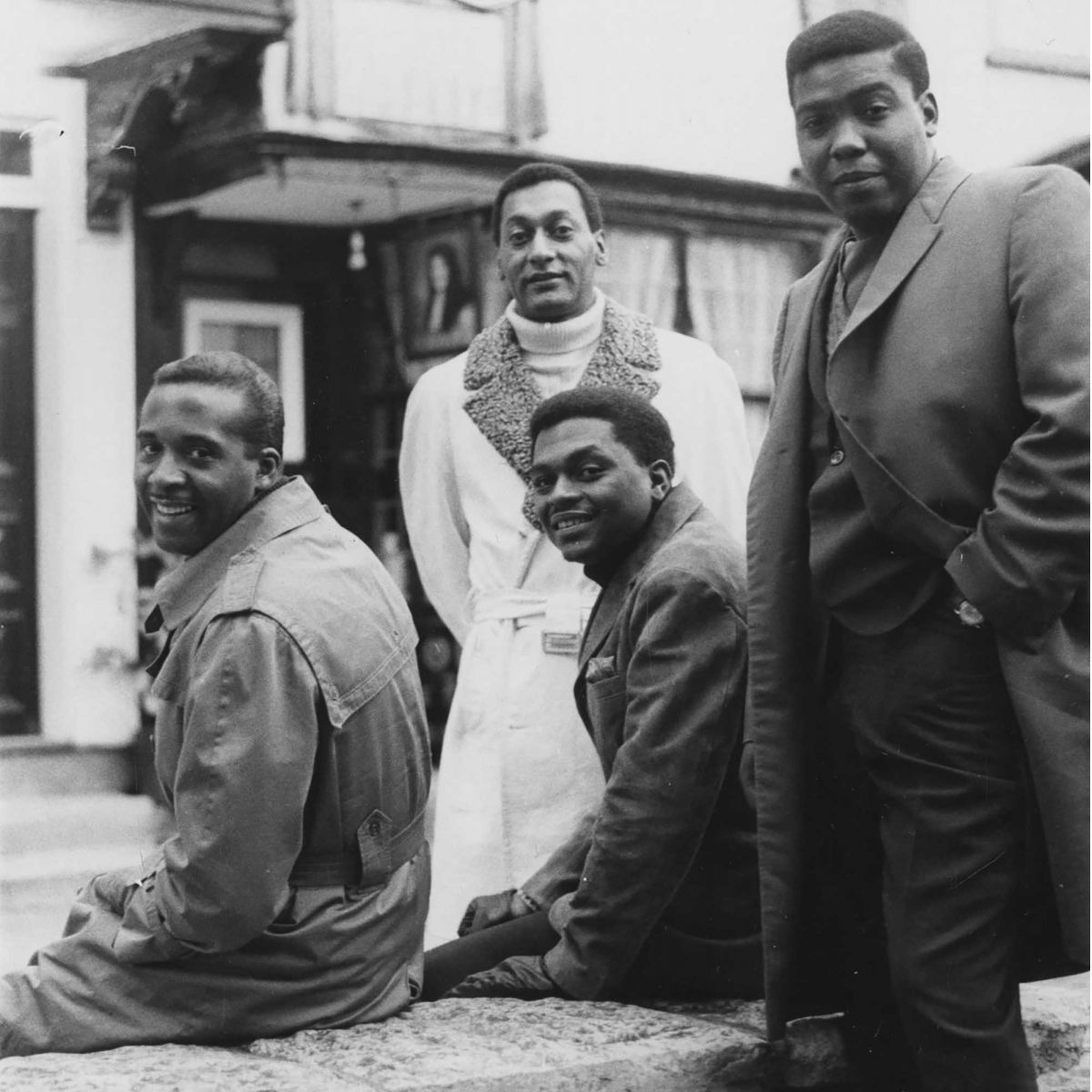
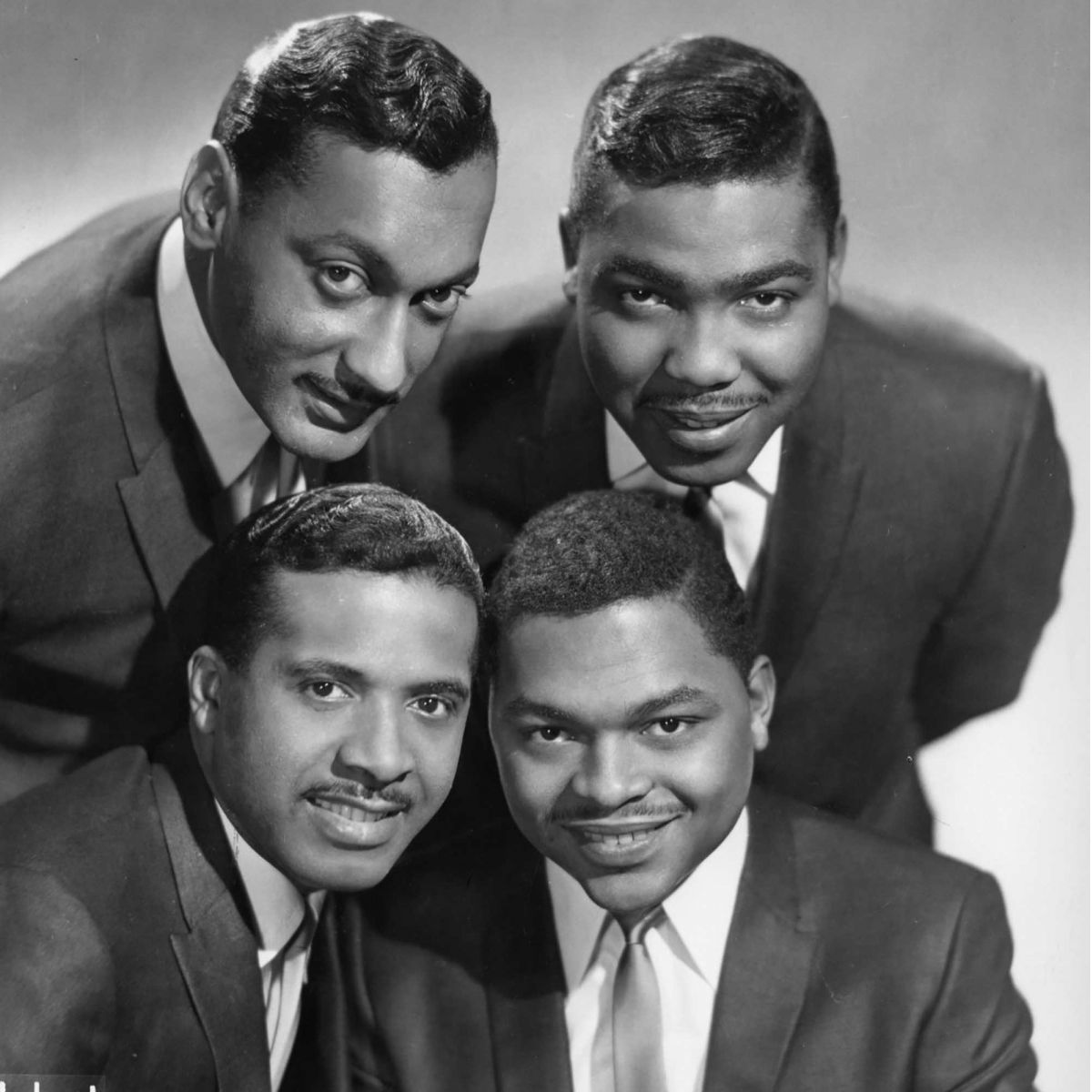
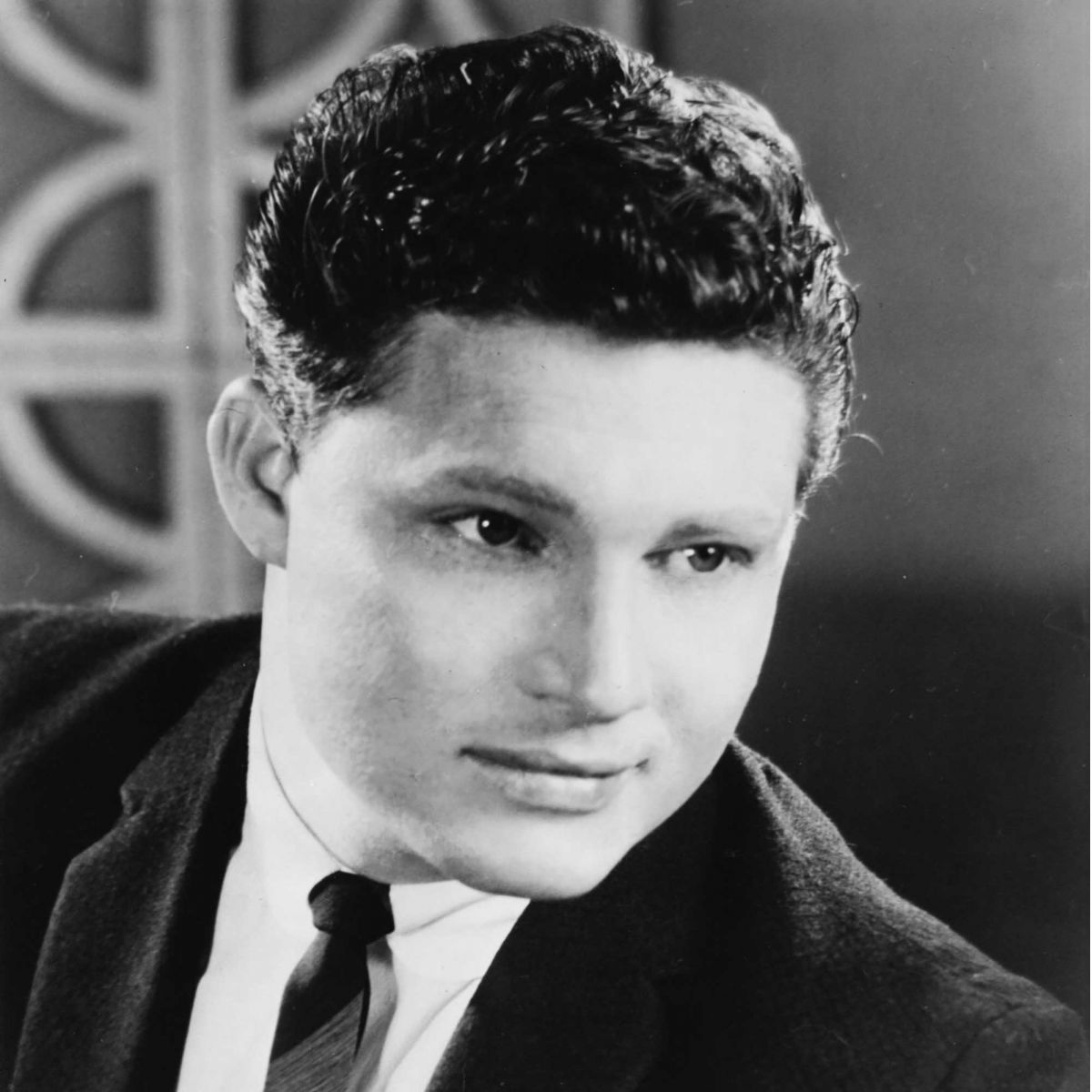
PAUL WELLER PRESENTS THAT SWEET SWEET MUSIC.
Paul Weller Presents That Sweet Sweet Music.
Label: Ace
Format: CD.
Release Date: 28th March 2025.
From an early age, soul music has played an important part in Paul Weller’s life. He grew up listening to, and buying soul singles. This was just the start.
Then during his ten years with The Jam, the group covered two soul classics on their six albums. The first was Wilson Pickett’s ‘In the Midnight Hour which featured on their 1977 sophomore album, ‘This Is the Modern World.’ Two year later in 1979, the group covered Martha and the Vandellas’’ ‘Heat Wave’ on their fourth album ‘Setting Sons.’ Soul music would continue to influence Weller’s music.
Weller formed The Style Council with Mick Talbot in 1983. The group combined blue-eyed soul with jazz, funk, pop and house on the five albums they released between 1984 and 1998. By then, Weller had embarked upon a solo career.
His solo career began with his eponymous debut album in 1992. Weller followed this up with three of his finest solo studio albums. The first was ‘Wild Wood’ in 1993. Next came ‘Stanley Road’ in 1995, with ‘Heavy Soul’ following in 1997. Soul was continuing to influence Weller’s music.
That would be the case right through to his most recent album, ’66.’ It was released on May 24th, 2024 and was Weller’s seventeen solo studio album in a career that had already spanned fifty-two years.
A day after the release of ’66,’ Weller celebrated his 66th birthday. Still his love of soul music remained, and he continued to collect and buy soul singles and albums.
Twenty-six of Weller’s favourite soul tracks feature on a new compilation that he’s compiled for Ace. This is ‘Paul Weller Presents That Sweet Sweet Music,’ which will be released on ‘28th,’ March 2025.
Opening the compilation is ‘God Made Me Funky’ by The Headhunters. The group was formed by Herbie Hancock in 1973, and became his backing group. Then in 1975, The Headhunters released their debut album ‘Survival Of The Fittest.’ The jazz-funk group were joined by The Pointer Sisters on the much-sampled album opener ‘God Make Me Funky.’ It’s a delicious mixture of jazz, funk, fusion, P-funk and soul. This is the version that was released as a single. The album cut a nine minute epic that showcases Hancock et al at the peak of their powers.
‘Breakaway’ by The Valentines was released on Sound Stage 7 in 1970. The lyrics are powerful, and full of social comment on a track that found favour on the UK’s Northern Soul scene.
John Davis produced ‘Top Of The Stairs’ for Collins and Collins. It was recorded at the legendary Sigma Sound Studios, and released as a single on A&M in 1980. The was a cover of an Ashford and Simpson composition that featured on their 1977 album ‘Send It.’ This irresistible funky, soulful and joyous cover is truly timeless and one of the highlights of the album Collins and Collins. It’s also one of the highlights of the compilation, and is sure to brighten up even the dullest day.
‘Don’t Let The Green Grass Fool You’ by The Spinners was arranged, conducted and produced by one of the architects of Philly Soul, Thom Bell. He reinvents a track that was originally recorded by Wilson Pickett in 1970. It’s very different, and so much better. No wonder. The classic lineup of MFSB feature and are complimented by a string arrangement by Don Renaldo. Bell, forever the innovator, seamlessly transforms them into a big band. Phillip Wynne is at his soulful best with what was one of his best vocals on the group’s 1973 album Spinners. It one of the finest albums they released, and the first of five consecutive albums that were certified gold in the US.
‘Black Balloons’ opened Syl Johnson finest album ‘Is It Because I’m Black.’ It was release on Twinight in 1970, and nowadays, is regarded as a soul classic. The song features an emotive, heartfelt and tender reading of Oscar Brown Jr’s rhapsodic song which deals with the subject of black pride.
‘Run For Cover’ featured on The Dells 1966 US album ‘There Is A Few.’ It was also released on Chess as a single in the US. Despite its quality, the single failed to make an impression on the charts. By the early seventies, this anthemic dancer was a favourite of Northern Soul DJs and dancers.
Another track released on Chess was ‘It Ain’t No Big Thing’ by The Radiants. It was released in 1965, and saw original members of the group Maurice McAlister and Wallace Sampson joined by Leonard Caston Jr. This new lineup breathed life and meaning into this song about the end of a relationship. It’s as if there’s an inevitability about it, and they’ve accepted that they’re about to go their separate ways. The single reached ninety-one in the US Billboard 100 and fourteen in the US R&B charts, and was The Radiants’ biggest hit.
Brother To Brother covered Gil Scott Heron’s ‘The Bottle’ in 1970. The song was released as a single on the Turbo label. Producer Michael Burton stays true to the original but adds piano and bass to the arrangement. This results in a track that’s a glorious fusion of soul, funk and jazz.
One of the hidden gems on the compilation is Joe Simon’s rendition of Mac Gayden and Bob Wilson’s ‘When.’ It was released on Sound Stage 7 in 1970. The versatile soulman delivers an impassioned and hopeful vocal as he sings of the love that many people believe exists within everyone.
James Carr delivers a soul-baring vocal on ‘Pouring Water On A Drowning Man.’ It was released on Goldwax and features a vocal bristling with emotion. It’s as if Carr’s lived the lyrics. His delivery is powerful and deeply moving, and twenty-four years after his death on January 7th, 2001, he’s quite rightly recognised as one of the greatest soul singers ever.
In 1971, Jon Lucien released ’Search For The Inner Self’ as a single on the Ampex label. Horace Ott’s arrangement provides the perfect backdrop for Lucien as he tenderly bestows wisdom to the song’s innocent protagonist on this beautiful song. It’s one of his finest songs. Lucien’s recording career spanned forty years. However, the first five albums he released are, without doubt, his finest.
Closing the compilation is Beautiful Feeling by Darrell Banks. It was released on Volt in 1969, and features a vocal that’s full of longing and tinged with regret. It’s a beautiful way to close Paul Weller Presents That Sweet Sweet Music.
It’s the first compilation that Paul Weller has compiled, and hopefully it won’t be the last. Familiar faces rub shoulders with what will be new names on this carefully and lovingly curated compilation. It’s like a modern-day mix tape, featuring well known tracks, hidden gems, album tracks and ones that got away. The result is Paul Weller Presents That Sweet Sweet Music, which is one of the finest compilation that will be released this month.
Paul Weller Presents That Sweet Sweet Music.

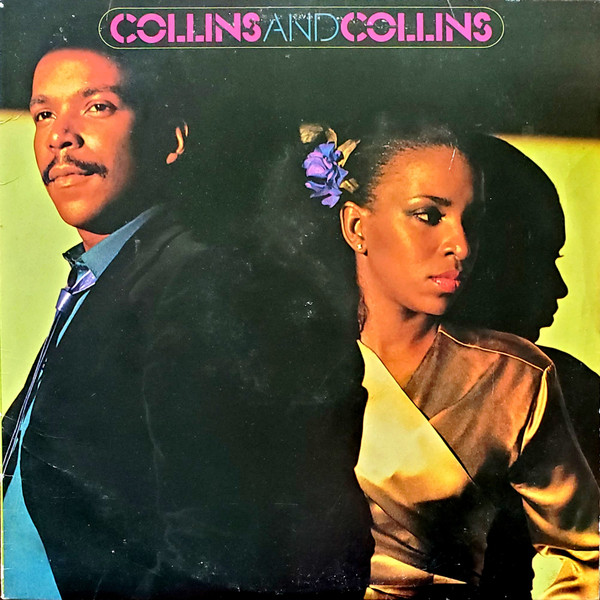

BOB STANLEY PRESENTS LIVERPOOL SUNSET: THE CITY AFTER MERSEYBEAT 1964-1969.
Bob Stanley Presents Liverpool Sunset: The City After Merseybeat 1964-69.
Label: Ace.
Format: CD.
By 1969, many of the artists and groups from the Merseybeat era were no longer enjoying the same commercial success. When they released new singles they failed to trouble the charts. It was changed days for The Searchers, Billy J Kramer and Gerry and The Pacemakers. Just three years earlier they were huge stars.
The musical landscape had changed in Liverpool. Back in 1965, Iron Door club, which was where The Searchers once called home, decided to host soul all-nighters. These were popular, and often, local groups like The Chants featured.
Meanwhile, it was all change what was once Liverpool’s most famous club, The Cavern. The club where The Beatles and many of Liverpool’s top bands took to the stage was now hosting Ben E King, Solomon Burke and Stevie Wonder. It was changed days.
Still new artists and groups were emerging and releasing singles. They released everything from beat and pop to freakbeat, R&B, soul and psych. However, many of these singles didn’t come close to troubling the charts and for some formerly successful artists and bands their search for a hit continued.
For others, the dream was over. They were dropped by their record labels, and returned to the mundane grind of 9 to 5 life. In years to come, they could be found sitting in their local pub telling anyone who would listen how close they came to finding fame and fortune.
Over the years, there’s been countless compilations of tracks from artists and bands from Liverpool that weren’t hits. They’re usually billed as hidden gems, lost classics and the ones that got away. In reality that’s often stretching the truth. Sometimes it’s a case of the barrel being badly scraped.
Not every Liverpudlian artist or band who released a single in the sixties was blessed with talent. Often record labels took chances hoping to find the next big artist or band. A year later they were back working in a bank, Boots or on a building site. Their one and only single had bombed, and it looked like it had been consigned to the dustbin of history. It was back to the real world for them.
However, over the next six decades countless compilations of music from the Merseybeat and post-Merseybeat era have been released. The latest is ‘Bob Stanley Presents Liverpool Sunset: The City After Merseybeat 1964-69.’ It claims to contain “two dozen lost gems; 60s Liverpool classics once hidden now uncovered.” Is that the case?
Opening the compilation is The Kirkbys’ single ‘It’s A Crime.’ It was released on RCA Victor in September 1966, and was the only single they released in the UK. It’s a single that looks to the past combining elements of the Merseybeat sound. Especially the harmonies. They’re combined with a tough and edgy mod production as the group reference, and pay homage to both The Who and The Pretty Things. However, the big criticism is the lack of originality. It was a fusion of two existing and established genres. There’s nothing new or innovative about the single.
In 1963, The Dennisons were regulars at the Cavern Club, and had just signed to Decca. They enjoyed a minor hit with ‘Be My Girl’ in later that years. That was as good as it got for the group. When they release ‘Nobody Like My Babe’ it failed to trouble the charts. That’s not surprising as it’s a mediocre example of Merseybeat.
Johnny Gustafson had originally been a member of The Big Three. However, when they split-up he joined The Merseybeats. A year later, he signed to Polydor and embarked upon a solo career. He released an impassioned reading ‘Just To Be With You’ in 1965. Sadly, Gustafson’s time at Decca wasn’t particularly successful. Success came is way when he spent three years as Roxy Music’s bassist, playing on their albums ‘Stranded,’ ‘Country Life,’ ‘Siren’ and ‘Viva!’
Originally, ‘You Don’t Have To Whisper’ was meant to be The Dimensions’ debut single. However, it was wrongly relegated to the B-side, to with ‘Tears On My Pillow’ being chosen as the single. When it was released on Parlophone in 1965 the single flopped. It turned out to be the group’s one only single, and is a case of what might have been.
Don’t Let A Little Pride (Stand In Your Way) by Billy Fury was released on Decca in 1966. By then, he had been a familiar face on the British music scene since the late-fifties. However, he was no longer enjoying the same commercial success as he once had, and the single failed to trouble the top fifty. If it had been released a few years earlier things would’v been different for Fury. Instead, the single is regarded by some as one that got away.
‘Imagination’ was the B-Side to The Clayton Squares’ sophomore single ‘There She Is.’ This cover of The Lovin’ Spoonful’s song was released on Decca in 1966. Those that flipped over to the B-Side found a stomper that combined rock, soul and brassy horns with a powerhouse of a vocal from Denny Alexander.
Tony Jackson released ‘Never Leave Your Baby’s Side’ on CBS in 1966. It was the second of three singles he released for the label. It’s got a tough and sometimes trippy sound, with sweeping harmonies and punchy horns accompanying the vocal. Sadly, the single wasn’t a commercial success, and it’s a welcome addition to the compilation.
‘So Much To Love’ is a track from McGough and McGear’s eponymous Parlophone album released in 1968. It’s a decidedly average example of British psychedelic pop, even despite Jimi Hendrix’s contribution.
By the late-sixties, The Swinging Blue Jeans were yesterday’s men. Music had passed them by. They had committed the cardinal sin of failing to stay relevant. However, they were still recording new music. This included laidback and wistful sounding ‘Summer Comes Sunday.’ It made its debut on ‘The Best Of The EMI Years’ in 1992. Thirty-three years later it returns for a well-deserved encore.
After listening ‘Abyssinian Secret’ by the late Liverpudlian warbler and former Cavern Club cloakroom attendant, Cilla Black. I’m tempted to reach for a bottle of absinthe to erase the memory of what’s a truly dreadful track. It’s 2.13 of my life I’ll never get back. The track was featured on her ‘Time For Cilla’ EP which was released by Parlophone in 1968. It’s no surprise that the EP wasn’t a commercial success.
Hooks haven’t been spared on ‘Come On,’ a delicious dancer by The Carrolls. It was the B-Side to their single ‘Ever Since,’ which was released on CBS in 1968. It’s an oft-overlooked hidden gem that’s stood the test of time.
Closing the compilation is ‘Into My Life She Came’ by The Penny Peeps. This example of the British baroque sound was written by lead single Denny Alexander, and the group recorded this demo version in the late-sixties. It first featured on Psychedelic Jumble Volume One: What’s The Rush, Time Machine Man? The compilation was released in 2007, and eighteen years later it closes Bob Stanley Presents Liverpool Sunset: The City After Merseybeat 1964-69.
This recently-released compilation features twenty-four tracks from the post-Merseybeat era. They’re a mixture of singles that failed to trouble the charts, B-Sides plus tracks from EPs and albums. There’s even a track from a best off and another from a compilation.
Over the years, there’s been many compilations that focused on music released by artists and bands from Liverpool. It’s a well trodden path. The result is a compilation with some tracks that disappoint. This includes the contributions from The Kirkbys, The Dennisons, McGough and McGear and Cilla Black to name but four.
Some of the tracks would’ve sounded dated when they were released. They were looking back, not forward, and the music wasn’t new and innovative. Even some of the those who tried to innovate, the music they released was a pale imitation of the music being release across the Atlantic.
A case in point was McGough and McGear. Like footballers released by Liverpool and Everton and going down the leagues to join Tranmere Rovers, the pair later found their level releasing novelty records. Their number one novelty single ‘Lilly The Pink’ was akin to Tranmere Rovers winning the Football League Trophy, and was never to be repeated. I
Having said all that, for anyone interested in the post-Merseybeat era Bob Stanley Presents Liverpool Sunset: The City After Merseybeat 1964-69 may be of interest to them. There are some “lost gems” and oft-overlooked rarities from the post-Merseybeat era. However, “lost 60s Liverpool classics” may be pushing it though. There will be many music fans who remember the Merseybeat and post-Merseybeat sound fondly. This compilation may be of interest to them, and bring back memories of their younger days and the music to their youth. For other music fans, it’s a case of caveat emptor.
Bob Stanley Presents Liverpool Sunset: The City After Merseybeat 1964-69.


 dereksmusicblog
 dereksmusicblog