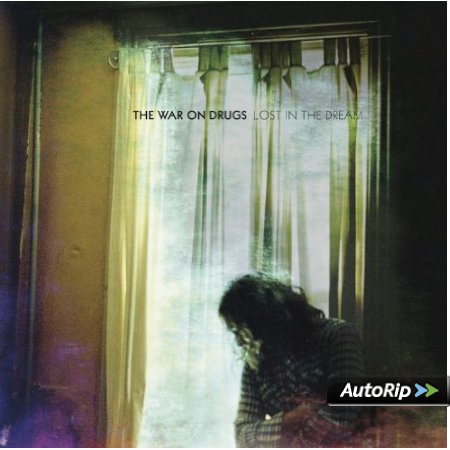
THE WAR ON DRUGS-LOST IN THE DREAM.
THE WAR ON DRUGS-LOST IN THE DREAM.
Philadelphia. Musically what does Philly mean to you? For many people, it’s Philly Soul. Back in the seventies, jump-suited groups like The O’Jays, The Detroit Spinners and Harold Melvin and The Blue Notes flew the flag for Philly. However, there’ more to Philly than Philly Soul. Much more.
This includes ambient innovator Laraaji, Philly’s best kept secret. Then there’s blues great Otis Rush. Philly also gave the world jazz legends Lee Morgan, McCoy Tyner and Stanley Clarke. Each of these artists deserve to be called innovators. Far from it. They created groundbreaking music. However, just like Philly Soul, these artists are part of Philly’s musical past. Philly’s musical future belongs to groups like The War On Drugs.
Recently, The War On Drugs released their third album Lost In The Dream. It was released on the Strictly Canadian label. Lost In The Dream is the followup to The War On Drugs’ 2011 sophomore album Slave Ambient. Slave Ambient had been a long time coming. Three years had passed since The War On Drugs released their debut album Wagonwheel Blues. In the intervening years, The War On Drugs’ had been honing their sound. They were now perceived as one of America’s best up-and-coming groups. Since then, The War On Drugs have been winning friends and influencing people, including music lovers and critics alike.
That includes with their recently released third album Lost In The Dream. It’s seen critics compare Lost In The Dream to Tom Petty, Bob Dylan, Bruce Springsteen and Dire Straits. Lost In The Dream has been described as an album that harks back to the eighties. It’s an album of everyman anthems that was recorded in the old school way.
When recording Lost In The Dream, The War On Drugs relied on vintage instruments. This gives them their unique sound. It’s is best described as a fusion of alt-rock, Americana, classic rock, Krautrock and psychedelia. The result is Lost In The Dream, the followup to the critically acclaimed Slave Ambient. Lost In The Dream Adam Granduciel hopes should see The War On Drugs make their “creative breakthrough.”There’s a reason for this.
Lost In The Dream is The War On Drugs first album which features a full band. Before Lost In The Dream, The War On Drugs was a much more ad hoc band. However, keyboardist Robbie Bennett and drummer Charlie Hall have quickly settled in to The War On Drugs. They both played on Lost In The Dream and are ready to head out on The War On Drugs’ most extensive tour of their nine year career. During that tour, The War On Drugs will showcase Lost In The Dream, which Adam hopes will be a “future rock classic.”
For some people, Adam’s description of Lost In The Dream as a “future rock classic” is a bold statement. Usually, it’s a case of an artist setting himself up for the almost inevitable fall. Maybe not this time? Adam’s realises that Lost In The Dream is a coming of age for The War On Drugs.
Adam wrote ten tracks for Lost In The Dream. They were recorded at eight studios in Philly and New York between August 2012 and November 2013. The studios used included Uniform Recording, Echo Mountain Recording, Fidelitorium, Rare Book Room, Miner Street Recordings, Water Music, Public Hi-Fi and the University Of The Arts, Philadelphia. At these studios, the four members of The War On Drugs got to work.
Lead vocalist and guitarist Adam Granduciel played piano, organ, synths, harmonica, Space Rhodes and Arp Ommi II on Lost In The Dream, The rhythm included bassist Dan Hartley, drummer and percussionist Charlie Hall. Keyboardist Robbie Bennett plays piano, organ, flux wurlitzer and arp string synth. Augmenting The War On Drugs was a huge cast of musicians.
Among the guest artists who augmented The War On Drugs on Lost In The Dream were drummers Pat Berkery, Jon Ashley and Mike Sneeringer. They were joined by guitarist Paul Sukeena, pedal steel guitarist Ricky Ray Jackson, lap steel guitarist Mike Sobel and Carter Tanton on Leslie guitar. Jeff Zeigler took charge of drum programming and effects on Disappearing, while Gabe Wax added tape flanging on Burning. Horn players included baritone saxophone Jon Natchez plus saxophonists Joseph Shabason and David Fishkin. Nicolas Vernhes played organ and tambourine, while Michael Johnson played ARP 2600. Each of these guest artists played on Lost In The Dream and gave the album its unique sound, which I’ll tell you about.
Under The Pressure opens Lost In The Dream. Briefly, it has a dubby lysergic sound. Soon, the arrangement reverberates and shimmers. This is just a curveball. Quickly, The War On Drugs kick loose. Their rhythm section lock into a tight groove. They’re joined by synths while a thoughtful piano drops in and out of the arrangement. By now they remind me of U2 in their prime. Adam’s vocal has both a seventies West Coast and eighties influence. When his vocal drops out, searing guitars, pounding drums and buzzing synths take charge. As Adam’s vocal returns, the track is a rousing anthem. Later, as The War On Drugs take a detour. They jam, for the rest of the track. ii takes on a late on a late-sixties sound, as The War On Drugs who two sides to their music during this nine minute epic.
Straight away, Red Eyes grabs your attention. Chiming guitars, keyboards and a thunderous rhythm section lock horns. They provide the backdrop for Adam’s vocal. I sounds distant and mysterious. It’s as if it’s shrouded by effects. Soon, he takes on the role of rabble rouser in chief, encouraging the group to greater heights. This works., The War On Drugs unleash a blistering rocky opus. The rhythm section, keyboards and and searing, scorching guitars power the arrangement along. Adam whoops and hollers encouraging them on, as everything from Krautrock to indie rock is combined by The War On Drugs,
Suffering sees the tempo drop. Drums provide the heartbeat and guitars reverberate into the distance. Adam’s vocal is wistful and full of pain. He sounds as if he’s lived and survived the lyrics. His vocal is the focus of your attention. That’s until the arrangement starts to build. Then layers of music unfold. Everything from a Fender Rhodes, synths, guitars played effects boxes, a Wurlitzer and pedal steel guitar are combine. Together they play their part in an atmospheric and mesmeric arrangement. Adding the finishing touch is the rasping saxophone. It’s the perfect accompaniment to Adam’s hurt-filled vocal on this heartachingly beautiful ballad.
An Ocean In Between The Waves sees another change in direction from The War On Drugs. Drummer Pat Berkery lays down a hypnotic motorik beat. To the Krautrock beat, reverberating guitars and probing bass are added. Again, this leads to comparison to late-eighties U2. Then there’s Adam’s despondent vocal. It has a seventies West Coast influence. The hypnotic arrangement and despondent vocal are a potent combination and works well. Then, later, scorching, blistering guitars are unleashed. They transform the track. What follows in a barnstorming, blistering guitar driven track where The War On Drugs kick out the jams.
As Disappearing unfolds, Adam lays down some searing guitar licks. Dave Hartley’s thundering bass is accompanied by drum machine. They’re part of a multilayered arrangement. This includes an ARP 2600, a Flux and Space Wurlitzer, slide guitar, piano and harmonica. Instruments flit in and out of the arrangement. They’re all part of a bigger picture. So is Adam’s vocal. It’s lysergic and dreamy. This is perfect for an arrangement where everything from eighties electronica, ambient, indie rock, post rock and psychedelia melts majestically and seamlessly into one.
Eyes To The Wind has a country influence from the get-go. Guitars reverberate and weep, before a strummed guitar indicates what’s about to unfold. Seamlessly, The War On Drugs are transformed into an alt-country band. Think Wilco and The Jayhawks. It seems there’s no end to The War On Drugs’ versatility. They combine alt-country, Americana and rock. Emotion fills Adam’s vocal, while guitars, the rhythm section, keyboards and a string synth combine. Then adding an authentic country sound are a pedal steel guitar and a lap steel guitar. Playing an important part is the piano. It helps define the sound. Adam seems to relish this new sound. He breathes life, meaning and emotion into the lyrics and as a result, this is one of the highlights of Lost in the Dream.
A synth bubbles as The Haunting Idle reveals its secrets. It’s totally different from everything that’s gone before. The best way to describe the track is an atmospheric, experimental soundscape, one that’s truly innovative. Faux strings cascade, guitars variously shimmer and resonate. Feedback seems never far away. It never materialises during a track that’s ethereal, atmospheric and groundbreaking.
Broody and moody describes the introduction to Burning. The arrangement meanders and buzzes along, before The War On Drugs kick loose. It’s a joy to behold. Chiming, driving guitars and a pounding rhythm section join forces. They’re joined by synths, organ and percussion. My only criticism is Adam’s vocal seems too far back in the arrangement. The same goes for the harmonies. Having said that, The War On Drugs strut their way through the track. Adam swaggers his way through the lyrics, unleashing whoops and hollers, during this gloriously rocky homage homage to Bruce Springsteen’s Dancing In The Dark.
Melancholy crystalline guitars open Lost In The Dream. They’re joined by the rhythm section, and Adam’s wistful vocal. Here, The War On Drugs draw inspiration from alt-country, Tom Petty and Bruce Springsteen. It’s a song that harks back to the great American rock albums. Adam’s thoughtful, tender and rueful vocal is perfect for the lyrics. It brings them to life. Then towards the end, Adam lays down a harmonica solo and that proves the finishing touch to what’s a quite beautiful, melancholy song.
In Reverse closes The War On Drugs third album Lost In The Dream. It’s an eight minute epic. With an atmospheric, ambient sound, there’s no hint at what direction the track is heading. Briefly, it reminds me of John Martyn’s One World. Gradually, the arrangement unfolds. It’s understated and pensive. Above it, sits Adam’s frustrated, rueful vocal. Accompanying him is a plodding bass and weeping guitar. All of a sudden, they burst into life and decide to combine alt-country, rock and experimental music. What follows is a track that reminds me of Dire Straits in their prime. It’s as if having paid homage to Bruce Springsteen, The War On Drugs have decided to pay tribute to one of the most underrated British groups, Dire Straits.
Lost In The Dream took just over a year to record. Eight studios in New York and Philly were used. So were a cast of guest artists. They augmented The War On Drugs on Lost In The Dream. Once Lost In The Dream was completed, lead vocalist and guitarist Adam Granduciel hoped that Lost In The Dream would be their “creative breakthrough.” That was the case.
Released to critical acclaim, Lost In The Dream was a coming of age for The War On Drugs. Lost In The Dream was the finest album of The War On Drugs three album career. Soon, word was out. Here was a band with a big future ahead of them. There was a reason for this. The War On Drugs weren’t like many other bands. Far from it. They were innovators who created groundbreaking, genre-melting music.
Everything from alt-country, ambient, Americana, classic rock, indie rock, Krautrock, post rock and psychedelia can be heard on Lost In The Dream. Many tracks are a fusion of several genres. There’s anthems, ballads and experimental tracks. On other tracks, including Under The Pressure and In Reverse, The War On Drugs take you on a magical mystery tour. The track heads in one direction, before The War On Drugs throw a curveball. You’re then taken in a totally different direction. This results in two truly compelling tracks. As a result, you can’t help but admire producer Adam Granduciel’s vision. He’s played a huge part in the success of Lost In The Dream, the album that should transform The War On Drugs’ career.
Maybe the next time The War On Drugs release an album, they’ll be signed to a major label? They’re certainly not lacking in talent or vision. Far from it. The War On Drugs are one of the most exciting, innovative and talented American bands. Lead vocalist and guitarist Adam Granduciel realised that. He hoped that Lost In The Dream would be a “future rock classic.” That could well be the case. However, there’s more to Lost In The Dream than a rock album.
Lost In The Dream is a truly eclectic album. Genre-melting describes the music. The War On Drugs draw inspiration from everyone from Neu, Can, Dire Straits, Tom Petty, Bob Dylan and Bruce Springsteen. Each of these artists influences the ten tracks on Lost In The Dream. The result is Lost In The Dream, a groundbreaking album of genre-melting from The War On Drugs. It could be a “future rock classic.” Only time will tell how history judges The War On Drugs’ third album Lost In The Dream.
THE WAR ON DRUGS-LOST IN THE DREAM.
- Posted in: Country ♦ Indie Rock ♦ Krautrock ♦ Rock
- Tagged: Adam Granduciel, Charlie Hall, Dan Hartley, Lost In The Dream, Robbie Bennett, Slave Ambient, The War On Drugs, Wagonwheel Blues
 dereksmusicblog
 dereksmusicblog