WAYNE COCHRAN-GOIN’ BACK TO MIAMI-THE SOUL SIDES 1965-1970.
WAYNE COCHRAN-GOIN’ BACK TO MIAMI-THE SOUL SIDES 1965-1970.
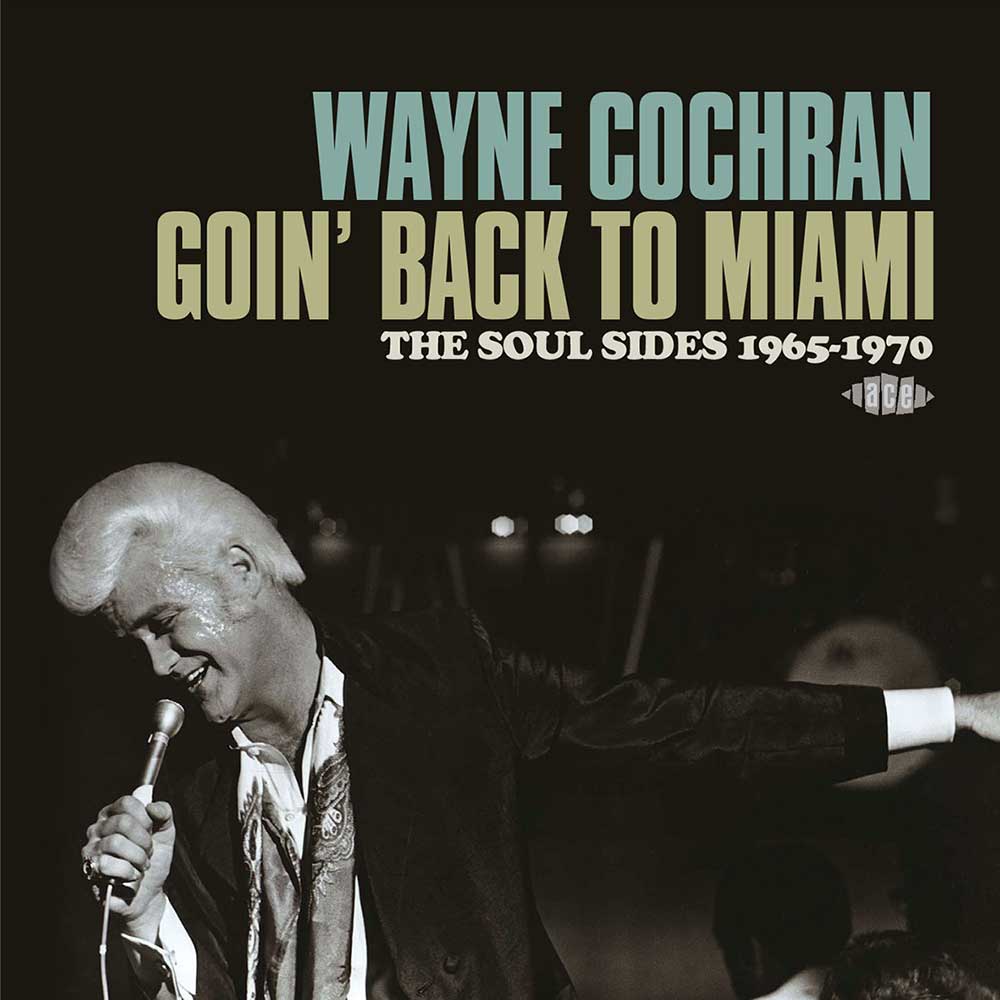
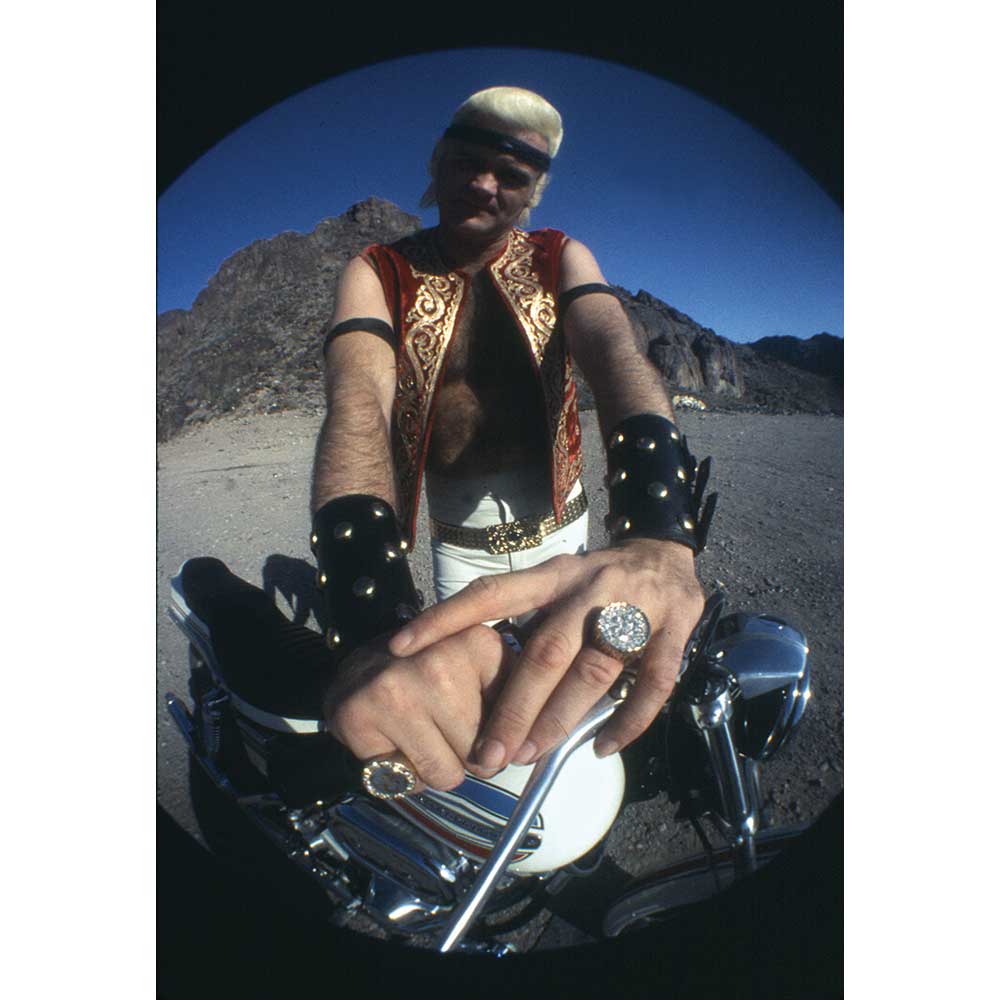
Unmistakable. That describes the outlandish outfits Wayne Cochran wore on-stage. Then there was his glistening peroxide bouffant. Wayne certainly grabbed your attention. Especially his music. It ranged from the raunchiest R&B to country soul and even biker funk. Eclectic described Wayne Cochran’s music. That’s obvious when you listen to Wayne Cochran-Goin’ Back To Miami-The Soul Sides 1965-1970, which was recently released by Ace Records.
Wayne Cochran-Goin’ Back To Miami-The Soul Sides 1965-1970 is no ordinary compilation. No way. It’s a luxurious and lovingly compiled double-album. Disc one features twenty-six tracks. This includes tracks from Wayne’s time at Mercury, Chess and King. There’s singles, rarities and unreleased track. Some of them are real finds. They fall into the category of hidden gem. That’s not the end of Wayne Cochran-Goin’ Back To Miami-The Soul Sides 1965-1970. Not at all.
Disc two of Wayne Cochran-Goin’ Back To Miami-The Soul Sides 1965-1970 is entitled The Wayne Cochran Show. It features twelve tracks recorded Live In Las Vegas between 1967 and 1970. For many people, this was Wayne Cochran in his prime. These tracks have never been released before. Originally, they were recorded by King Records, but never released. So for fans of Wayne Cochran, this is an exciting release. That’s also a good way to describe Wayne Cochran-Goin’ Back To Miami-The Soul Sides 1965-1970. Quite simply, Wayne Cochran-Goin’ Back To Miami-The Soul Sides 1965-1970 is the most comprehensive of compilation of Wayne Cochran in his prime. Everything that had gone before in Wayne Cochran’s career was leading up to this period.
The Wayne Cochran story begins back in 1939, in Thomaston, Georgia. That was where the the future White Knight of Soul was born. Wayne was always interested in music. His father played guitar before Wayne was born. So did his uncle. Then one day, his uncle through his guitar in the bin. No wonder. It had neither a bridge nor strings. So, Wayne rescued the guitar and headed to the local store. He bought a new bridge and strings. That was the start of Wayne’s musical journey.
Having learnt to play the guitar, Wayne formed his first band The Rocking Capris. By 1957, he was so confident in their ability, that he was advertising their availability in Billboard. Before long, The Rocking Capris were playing twice a week and earning $50. That was twice what his father was earning for a week working in the local cotton mill. Wayne was still in school. That’s until the school insisted he get his hair cut. He refused, quit school and got a job in the cotton mill. With his first paycheque, Wayne bought a new guitar, a Martin D-28 Jumbo. It cost him $250. This was an investment in Wayne’s future career.
Between 1959 and 1965, Wayne released around a dozen singles. This included his debut The Coo, which was released on Scottie in 1959. The Rocking Capris accompanied Wayne The Coo, which many radio stations banned. According to the radio stations, The Coo was “too vulgar.” It was inauspicious start to Wayne’s recording career. However, there was more to Wayne than a singer.
After this, Wayne released a string of other singles. Last Kiss was released on Galico Records in 1961. The same year, Wayne Cochran and The Rocking Capris released a cover of Ray Sharp’s Linda Lu on Confederate. Then in 1962, Wayne Cochran and The Rocking Capris released Liza Jane and Cindy Marie. However, it was Last Kiss that gave Wayne Cochran and The Rocking Capris the biggest hit of their career. It was a death disc single, similar to Tell Laura I Love Her. Released in Aire in 1962, Wayne Cochran and The Rocking Capris version of Last Kiss was a regional hit. Still, it surpassed the success of his previous singles. Despite this, Wayne was frustrated about the lack of success. So, he decided to launch his solo career. By then, Wayne was a budding entrepreneur.
Wayne also worked as a songwriter, musicians and publisher. Often, some of the songs he wrote were for artists who his manager Bob Smith produced or managed. Bob Smith was a local used car dealer who’d built a recording studio. Bob produced the artists who recorded in his studio. He was also their manager. So Bob needed a steady stream of new songs. This was where Wayne came in.
Away from his recording career, Wayne penned songs for Bob Smith’s artists. Wayne also had his own publishing company, Cochran Music. It published two song written by Otis Redding, who was a friend of Wayne’s. The pair were firm friends. Wayne had played on some of Otis’ earliest recordings. So, when Otis was looking for a publishing company for Shout Bamalama and These Arms Of Mine, he decided to use Cochran Publishing. For a new publishing company this was something of a coup. However, publishing wasn’t how Wayne wanted to make a living. No. He wanted to be a singer and in 1963, his solo career began.
Wayne’s debut solo single was a novelty single, Monkey Monkey (You Do It Like This). It was released in 1963, on the Deck label. The single sunk without trace. Re-recordings of Last Kiss and The Choo followed in 1964. August 1964 saw the release of Wrong Girl, Wrong Time, which was released on King Records. Just like Last Kiss, Wrong Girl, Wrong Time received some radio play, but very little in the way of sales. So, Wayne decided to head out on the road and build a fan-base.
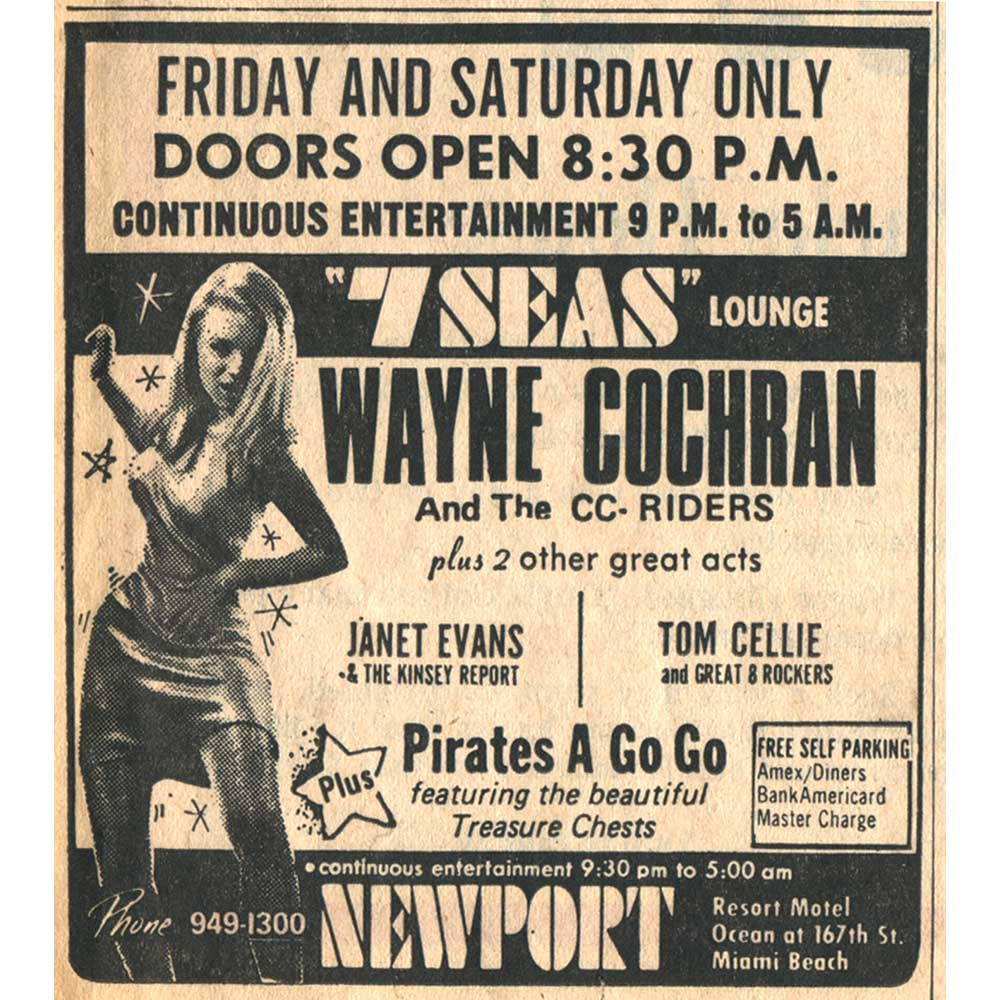
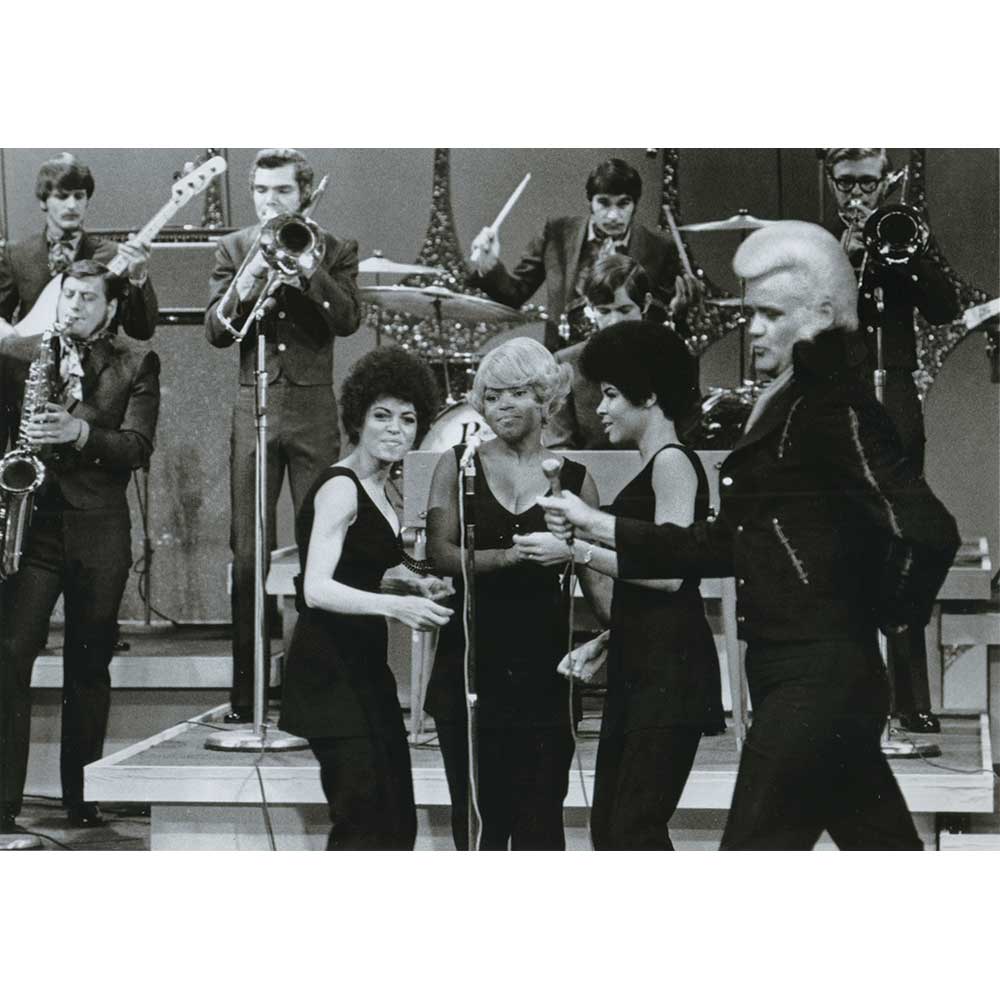
He bought an old bus and took his new band out on the road. The new band were the C.C. Riders. Wayne Cochran and The C.C. Riders headed out on the first of a series of gruelling and lengthy tours. This was Wayne’s way of spreading the word about his music. It’s no surprise that this gruelling touring schedule coincided with what’s regard as Wayne Cochran in his prime. Everything it seemed was leading up to this period. The prime of Wayne Cochran also features on Wayne Cochran-Goin’ Back To Miami-The Soul Sides 1965-1970, which was recently released by Ace Records, which I’ll tell you about.
DISC ONE.
Disc one of Wayne Cochran-Goin’ Back To Miami-The Soul Sides 1965-1970 features twenty-six tracks released between 1965 and 1995. This includes tracks from Wayne’s time at King, Mercury and Chess. These tracks feature Wayne at his very best. The earliest songs are from Wayne’s time at King.
In 1965, Wayne was signed to Mercury. November 1965 saw Wayne release a cover of Bob and Earl’s Harlem Shuffle. Wayne accompanied by soulful backing vocalists, unleashes a grizzled vocal powerhouse. He fuses soul and R&B as he vamps his way through this soul classic. Tucked away on the B-Side was Somebody Please, where Wayne sounds uncannily like James Brown. An compelling inclusion is the unedited version of Think. Here, Wayne accompanies by braying horns vamps his way through this track, unleashing whoops and hollers aplenty.
Wayne’s second single for Mercury was Get Down With It. Released in March 1966, Wayne storms his way through the track. The B-Side was No Rest For The Wicked. It’s a ballad featuring a heartbroken Wayne. He don’t hold back, unleashing a powerful, emotive vocal. Later in 1966, Wayne unreleased the song that became his theme tune, Goin’ Back To Miami where Wayne and The C.C. Riders deliver a barnstorming performance. I’m In Trouble was a ballad and shows two side to Wayne Cochran. His vocal veers between restrained to a grizzled roar. It’s a horn drivenm stomper that Northern Soul fans will adore. Two other tracks from 1966 that will interest fans of Wayne Cochran are the alternate flip ofTo Make Me A Man and the Full Length version of Get Down On It. For Wayne Cochran completists, this makes Wayne Cochran-Goin’ Back To Miami-The Soul Sides 1965-1970 a must have.
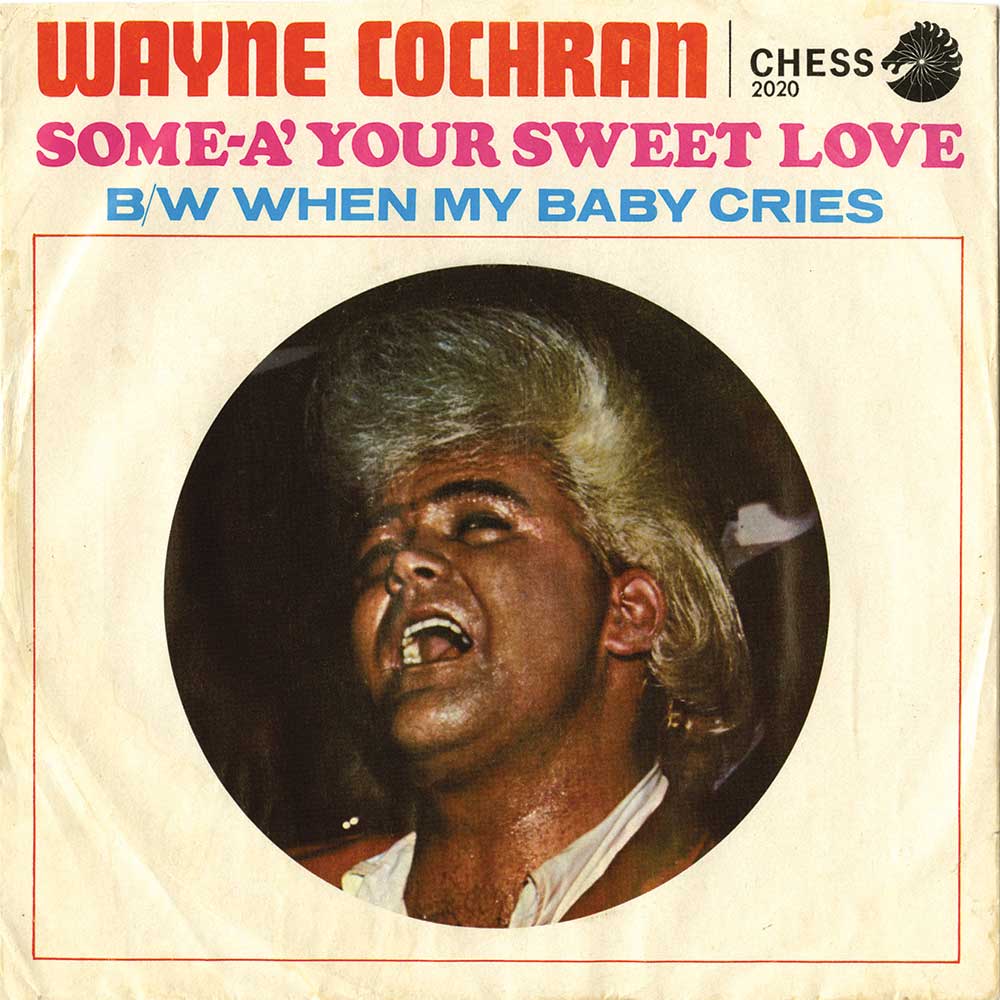
By 1967, Wayne was signed Chess Records. That year, Wayne released his debut album Wayne Cochran. It featured some of the best music Wayne had recorded. Wayne Cochran was very much a coming of age musically. It featured eleven tracks. Wayne seems to have been tamed. He sacrifices power. Gone are the powerhouses of his time at Mercury. Get Ready features a much more understated vocal from Wayne, On I’m Leaving It Up To You and Big City Woman Wayne delivers tender, heart wrenching ballads. They’re glorious example of country soul. When My Baby Cries is another ballad. Wayne’s vocal literally oozes emotion, hurt and sadness. Little Bitty Pretty One and Some-A Your Sweet Love feature a soulful, vampish vocal and a funky arrangement. Later, Wayne kicks loose, but never overdoes it. The same can be said of The Peak Of Love, You Can’t Judge A Book By It’s Cover. Hoochie Coochie Man sees Wayne deliver a grizzled vocal where R&B, blues and soul combine. it suits the song. Still, he sings within himself. There’s no whoops or hollers, just a vocal tour de force.
Wayne was signed to Chess between 1967 and 1968. During that period, Wayne released his eponymous album and several singles, including Some-A’ Your Sweet Love, Get Ready and Willie Dixon’s You Can’t Judge A Book By The Cover. Hidden away on the B-Side was a wistful, dreamy, pop-tinged ballad. If it had been chosen as a a single, it could’ve helped Wayne Cochran crossover. That’s how good this track is. Chess it seemed was tailor made for Wayne Cochran. They seemed to tame Wayne. He was no longer whooping and hollering his way through tracks. His vocals were much more restrained. He combined country soul ballads with more uptempo tracks. Even on the uptempo tracks, Wayne didn’t overdo things. Instead, he sung within himself. This resulted in the best music of Wayne’s career. However, after his time at Chess, Wayne signed to King Records, which was home to his idol James Brown.
At King, Wayne released several singles. This included Life’s Little Ups And Downs (Part One) in 1969. The B-Side Life’s Little Ups And Downs (Part Two) features on Wayne Cochran-Goin’ Back To Miami-The Soul Sides 1965-1970, It’s a soul-searching, country soul ballad. Let Me Come With You (Part One) was released as a single in 1970. This is a much more uptempo track. Soulful and psychedelic, it’s propelled along percussion Wayne delivers a lysergic vocal. My Machine was a released as a single in 1970. Funky, it features a gravelly, but soulful vocal from Wayne. Chopper 70 is a driving slice of funk. It featured on Wayne’s 1971 album for King Wayne Cochran and The C.C. Riders. Horns join forces with the rhythm section in driving the uber funky instrumental along. The result is one of the funkiest track Wayne Cochran recorded.
The other four tracks on Wayne Cochran-Goin’ Back To Miami-The Soul Sides 1965-1970 are unreleased tracks. For Wayne Cochran fans, this makes the compilation a must. Especially the given the quality of Which One Should I Choose. It’s a fusion of soul, pop, funk and psychedelia. You Got It From Me is another driving slice of funk from a grizzled vocal from Wayne. This is much more like the music he was releasing for Mercury. If It Don’t Fit, Don’t Force It is a real hidden gem. Horns, piano and the rhythm section drive the arrangement along, before Wayne’s heartbroken, lived-in vocal floats in. The arrangement, like Wayne’s vocal then starts to build and Wayne showcases his vocal talent. Everybody is the final unreleased track. Best described as a stomper, it allows Wayne to unleash another vamp.
DISC TWO.
Disc Two of Wayne Cochran-Goin’ Back To Miami-The Soul Sides 1965-1970, The Wayne Cochran Show, features twelve tracks. They see Wayne work his way through a string of soul classics. These tracks were recorded in Las Vegas between 1967 and 1970. They’re eclectic and allow Wayne to showcase his vocal prowess.
Among the twelve tracks are a cover of Sly Stone’s Dance To The Music. In Wayne’s hands it’s storming fusion of soul and funk. Wayne grabs the song and vamps his way through the lyrics. Sam and Dave’s Soul Man is given a similar treatment, before Wayne delivers a beautiful version of When Something Is Wrong With My Baby. From there, he unleashes a rousing version of 634-5789. Then it’s all change and Wayne returns to balladry on Try A Little Tenderness. It’s a captivating take on a classic. Wayne literally lives the lyrics. From there, it’s all change.
Wayne storms through I Can’t Turn You Loose and Hard To Handle. I Wish It Would Rain sees power and passion combined by Wayne. It’s a ballad sung with real feeling. After that, Wayne struts his way through Isaac Hayes and David Porter’s Hold On I’m Comin’ and breaths life and meaning into Fa Fa Fa Fa Fa (Sad Song). Wayne’s closes his set with two Otis Redding songs (Sittin’ On) The Dock Of The Bay and I’ve Been Loving You Too Long. It’s case of keeping the best to last, as I’ve Been Loving You Too Long literally oozes emotion.
Thirty-eight songs spread over two discs, that’s what you’ll find on Wayne Cochran-Goin’ Back To Miami-The Soul Sides 1965-1970, which was recently released by Ace Records. It features Wayne Cochran in his prime. That’s the case whether it’s country soul, R&B or biker funk. Whichever it is, Wayne Cochran breathes life, meaning and emotion to the songs. Often, Wayne adds power. During his time at Mercury, and for some of his time at King Records, Wayne delivered what are best described as vocal powerhouses. Sometimes, he whoops and hollers his way through the lyrics. That wasn’t the case at Chess.
No. At Chess, Wayne Cochran was tamed. His vocals are much more restrained. It’s really effective. He’s transformed into a country soul singer. This should’ve been the start of something big. After all, Wayne it seemed, had found his musical identity. Sadly, Wayne’s time at Chess ended in 1968.
Next stop for Wayne was King Records. Wayne returned veered between his newfound understated style to his trademark powerhouse vocal. He vamped and strutted his way through tracks, combining power and passion. Other times, he drops the tempo and delivers heartfelt, tender vocals. This allows you to hear two sides of Wayne Cochran.
That’s the case throughout Wayne Cochran-Goin’ Back To Miami-The Soul Sides 1965-1970. It’s without doubt the most comprehensive compilation of Wayne Cochran’s music that’s been released. It features hit singles, rarities, hidden gems annd unreleased tracks. That’s why Wayne Cochran-Goin’ Back To Miami-The Soul Sides 1965-1970 is an essential purchase for anyone interested in the unmistakable and inimitable Wayne Cochran.
WAYNE COCHRAN-GOIN’ BACK TO MIAMI-THE SOUL SIDES 1965-1970.
- Posted in: Funk ♦ Pop ♦ Psychedelia ♦ R&B ♦ Soul
- Tagged: Ace Records, Last Kiss, The Choo, The Rocking Capris, Wayne Cochran, Wayne Cochran-Goin’ Back To Miami-The Soul Sides 1965-1970
 dereksmusicblog
 dereksmusicblog