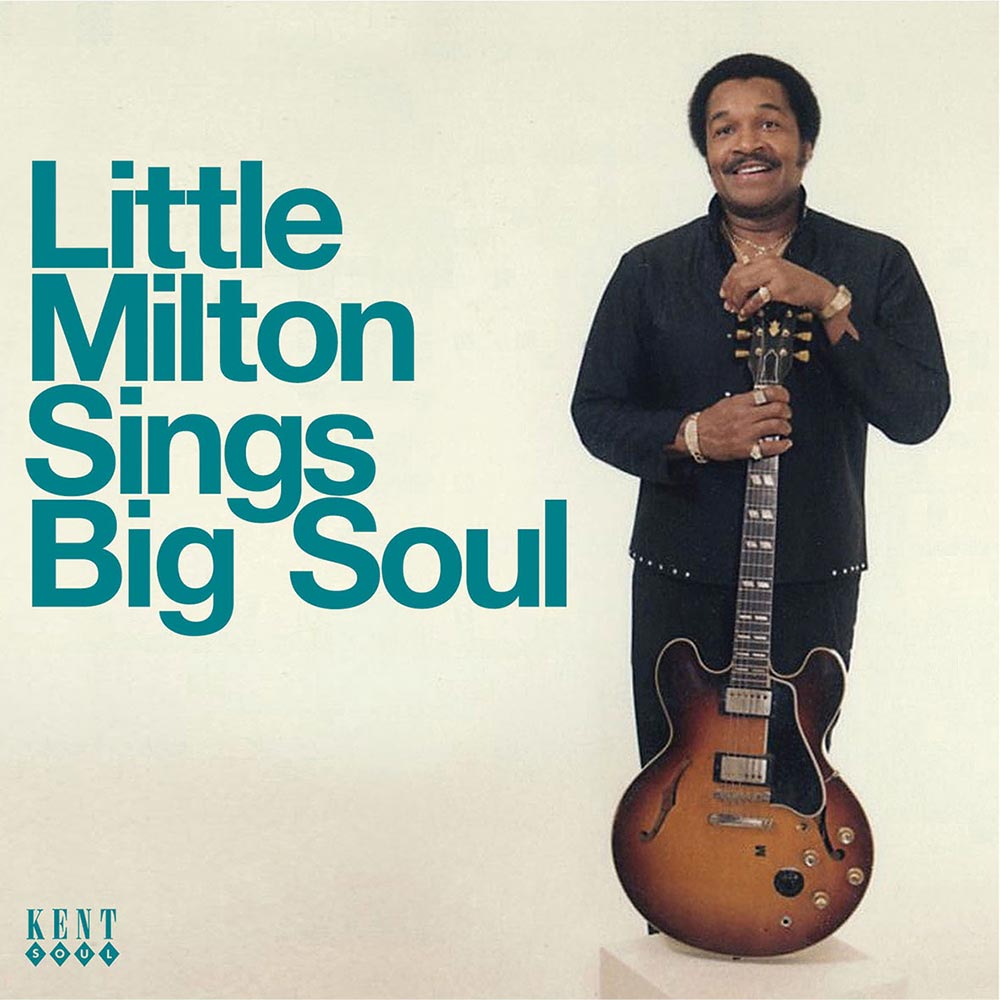
LITTLE MILTON SINGS BIG SOUL.
LITTLE MILTON SINGS BIG SOUL.
Although Little Milton eventually became one of the biggest soul singers of sixties, his background was in the blues music. Growing up, Little Milton modelled himself on legendary blues player T-Bone Walker. By the age of twelve, Little Milton was playing the blues in the streets of Greensville.
That’s where Little Milton lived, after moving from Inverness, Mississippi, where he was born on 7th September 1934. Little Milton was brought up in Greensville by a local farmer and blues musician. Just like the music of T-Bone Walker, he would influence the young James Milton Campbell Jr, growing up. This paid off. By the age of eighteen, he’d come to the attention of Ike Turner, who was then a talent scout for Sam Phillips Sun Records.
Now signed to Sun Records, Little Milton released a series of singles. They all failed to chart and Little Milton left Sun Records in 1955. After that, Little Milton released singles on various labels, including on Trumpet Records. Still success eluded Little Milton. So, he setup his own record label, Bobbin Records.
Little Milton founded Bobbin Records in St Louis. His nascent label struck a deal with Leonard Chess’ Chess Records. Before long, he signed Albert King and Fontella Bass to Bobbin Records. Soon, they were enjoying commercial success. So was Little Milton.
This was the start of Little Milton’s long and successful career. He’d go on to sign to some of the biggest American labels. This included Checker, Stax and Malaco, where Little Milton released some of the best music of his career. It features on Kent Soul’s recently released compilation Little Milton Sings Big Soul. Little Milton’s time at Malaco was still a long way away. Before that, Little Milton would enjoy his first hit single at Bobbin Records.
Although Little Milton had enjoyed a few regional hits, he’d yet to see one of his singles reach the US R&B charts. Eventually, So Mean to Me, which was released on Little Milton’s Bobbin Records, reached number fourteen in the US R&B charts. This was just the start of the commercial success that was about to come Little Milton’s way.
Three years later, Little Milton was signed to Checker, a subsidiary of Chess Records. Jis music changed direction. Whereas he’d previously been influenced by T-Bone Walker, Little Milton was now influenced by B.B. King. So, his music had a slicker sound. This resulted in a trio of hit singles. Blind Man stalled at number eighty-six in the US R&B charts, before We’re Gonna Make It reached number one. The followup, Who’s Cheating Who, then reached number two. These three singles featured on We’re Gonna Make It, Little Milton’s debut album.
We’re Gonna Make It, was released in 1969 and showcases Little Milton’s fusion of blues and soul. It reached number 101 in the US Billboard 200 and number three in the US R&B charts.This looked like transforming him into one of the biggest names in music.
Things didn’t quite work out like that. After releasing his sophomore album Sings Big Blues, Little Milton didn’t release another album for three years. He did enjoy a few minor hits. Then his luck changed in 1969.
That was when Little Milton released the single Grits Ain’t Groceries. It reached number seventy-three in the US Billboard 100 and thirteen in the US R&B charts. Just A Little Bit then reached number ninety-seven in the US Billboard 100 and thirteen in the US R&B charts later in 1969. Both singles featured on the 1969 album Grits Ain’t Groceries Featuring ”Just A Little Bit.” A year later, in 1970, Little Milton released If Walls Could Talk.
If Walls Could Talk was released in 1970. It reached number 197 in the US Billboard 200 and number twenty-three in the US R&B charts. Although If Walls Could Talk didn’t match the success of Grits Ain’t Groceries Featuring ”Just A Little Bit.” This was Little Milton’s final album for Checker. He wouldn’t release another solo album until 1973.
That was on Stax. Little Milton’s Stax debut was 1973s Waiting for Little Milton. It stalled at just number thirty-nine in the US R&B charts. Little Milton also featured on Stax’s live album Montreux Festival, which featured Albery King and Chico Hamilton. Then in 1974, Little Milton released Blues ‘N’ Soul, which reached just number forty-five in the US R&B charts. This would be Little Milton’s highest chart placing until 1990.
After the demise of Stax in 1975, Little Milton signed to the Glades label, an imprint of T.K. Records. Glades was home to Timmy Thomas, George McCrae, Latimore, Seven Seas and Otis Clay. Little Milton’s Glades debut was Friend of Mine, which reached number fifty in the US R&B charts in 1976. This was as good as it got for Little Milton at Glades. 1977s Me For You, You For Me failed to chart. Following the commercial failure of Me For You, You For Me, Little Milton left Glades.
The next few years saw Little Milton weren’t kind to Little Milton. His next three albums failed to chart. He released I Need Your Love So Bad on Golden Ear in 1980. Walkin’ The Back Streets was released in 1981, on the second coming of Stax. Then The Blues Is Alright was released on Evidence. Not one of these albums troubled the charts. Things changed in 1983.
That’s when Little Milton released Age Ain’t Nothin’ But a Number. Released in 1983, on Mobile Fidelity, it reached number fifty-three in the US R&B charts. Then a year later, Little Milton signed to a label that he’d call home for two decades, Malaco Records.
During his time at Malaco Records, Little Milton released some of the best music of his career. Little Milton Sings Big Soul is a taste of the twenty years Little Milton spent at Malaco Records. There’s a total of eighteen tracks on Little Milton Sings Big Soul. These tracks featured on ten albums released between 1984 and 2002. The story begins with two tracks from Little Milton’s 1984 album Playing for Keeps.
Opening Little Milton Sings Big Soul is Misty Blue. Accompanied by lush sweeping strings, Little Milton delivers a needy, soul-baring vocal. It’s taken from the 1984 album Playing for Keeps. It reached number fifty-five in the US R&B charts. You’re Gonna Have A Murder On Your Hands is another track from Playing For Keeps. It’s a fusion of soul, blues and gospel harmonies, from a reinvigorated Little Milton.
1985 saw Little Milton release his second album for Malaco, I Will Survive. Despite failing it to chart, there was nothing wrong with the music. That’s obvious listening to I Had A Talk With My Baby Last Night. It’s a dramatic, emotive and soulful confessional from Little Milton. We’re Gonna Make It has a hopeful, bluesy sound. Blazing horns help drive the arrangement along, as Little Milton delivers a vocal powerhouse, accompanied by cooing harmonies. Of all the albums Little Milton released for Malaco, I Will Survive is one of the most underrated albums from a musical survivor.
Following I Will Survive’s failure to chart, the same fate befell 1986s Annie Mae’s Cafe and 1987s Movin’ to the Country. 1988 saw a return to commercial success on Back To Back, which reached number seventy-three in the US R&B charts. Three tracks from Back to Back feature on Little Milton Sings Big Soul. This includes the slow, moody and bluesy Can’t Trust Your Neighbour. The tempo drops on Caught In The Act (Of Gettin’ It On), a smooth slice of soulful music about a cheating couple. Little Milton’s lived-in, weary vocal brings the lyrics to life. On The End Of The Rainbow, Little Milton mixes blues and soul, with emotion, melancholia and sadness, to create a beautiful, wistful track.
In 1990, Little Milton released his most successful album in twenty years, Too Much Pain. It reached number forty in the US R&B charts. The followup was 1991s Reality.
On Reality’s release, in 1991, it reached number seventy-three in the US R&B charts. That’s The Way I Feel About ‘Cha is one of the highlights of Reality. It’s a cover a song made famous by Bobby Womack. Although Bobby’s version is the definitive version, Little Milton reworks a soul classic. His version is an outpouring of emotion and power, where a needy Little Milton delivers a vocal masterclass. The other track from Reality is the soul soap opera You Left A Goldmine For A Golddigger.
Strugglin’ Lady was released in 1992. This was Little Milton’s eighth album for Malaco. It featured A Nickel And A Nail. Little Milton’s is akin to a confessional, as his band fuse blues and soul. Strugglin’ Lady sees a return to the soulful side from Little Milton. It features some of the best, and most moving lyrics. They were written George Jackson and Anthony McKinney. In Little Milton’s hands their transformed into a beautify, but moving song.
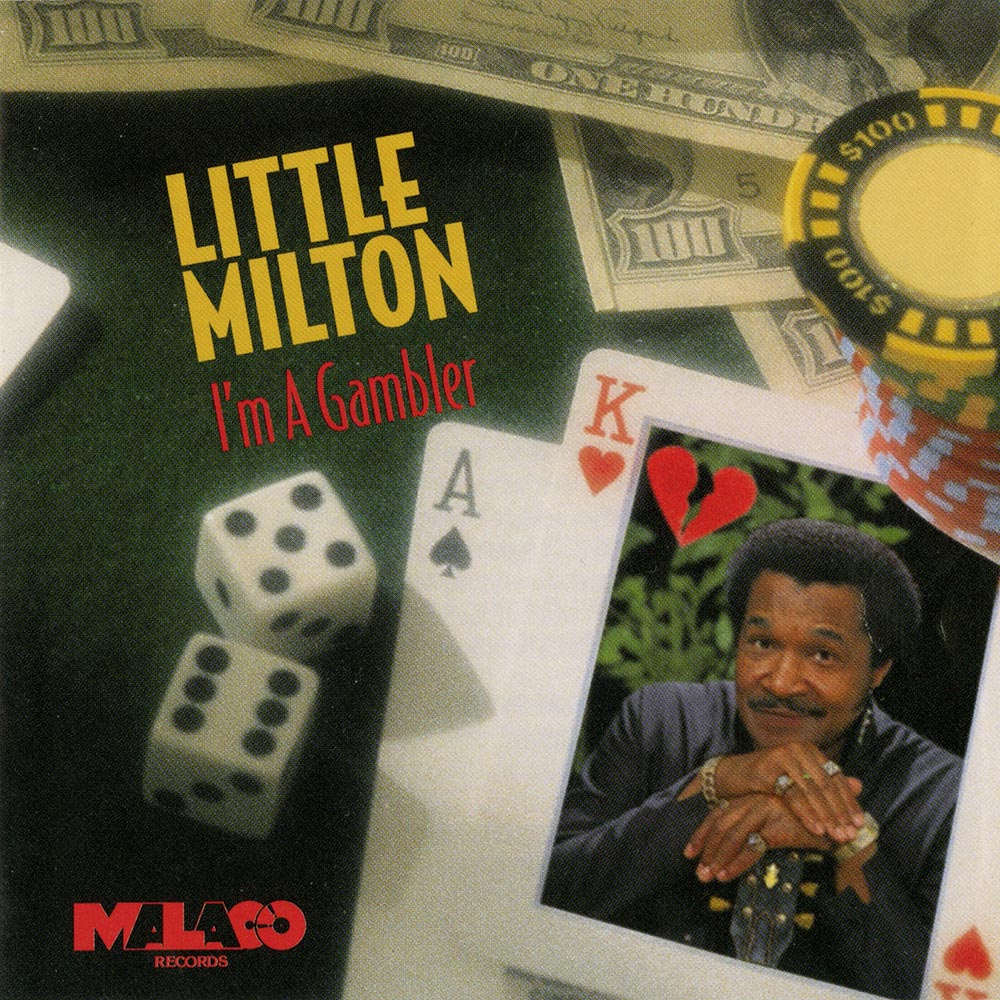
I’m A Gambler was the start of a run where commercial success eluded Little Milton. It failed to chart on its release in 1994. One of I’m A Gambler’s highlights was A Man Needs A Woman. Written by Quinton Claunch and Osbie Burnett Clinton, it’s an oft covered song. Among those who covered the track, are James Carr and Z.Z. Hill. So, Little Milton was in illustrious company. This seems to inspire him. Little Milton delivers a captivating cover of A Man Needs A Woman. He combines soul and gospel, with power and emotion.
This Time They Told The Truth is a track from Little Milton’s 1995 album Cheatin’ Habit. Although it failed to chart in the US R&B charts, it reached numb fourteen in the US Blues charts. Approaching his sixtieth birthday, Little Milton was a musical veteran. His gravelly, lived-in vocal is perfectly suited to this track.
There was a three year gap between Cheatin’ Habit and 1998s For Real. Just like his two previous albums, For Real failed to chart. It did reach number thirteen in the US Blues charts. That’s no surprise, when you hear the quality of music on For Real. Especially Little Milton’s covers of A Rainy Night In Georgia and I’d Rather Go Blind. They’re both oft-covered classics, but Little Milton’s slow, soulful covers breath new life and meaning into the songs. Especially on I’d Rather Go Blind, where Little Milton seems to draw inspiration from James Carr. What Our Love Needs is another slow soulful, ballad, where Little Milton and his band seamlessly combine soul and blues beautifully.
Welcome To Little Milton followed a familiar pattern. It failed to chart in the US R&B charts, but reached number ten in the US Blues charts. Little Milton was now sixty-five, and had spent his whole adult life as a working musician. His experience shines through on Osbie Burnett Clinton’s Lovable Girl. It’s a fusion of Southern Soul and blues, with Little Milton delivering a vocal full of hurt and longing.
Mr. and Mrs Untrue is a track from Little Milton’s 2002 album Guitar Man. It reached number eight in the US Blues charts. On Mr. and Mrs Untrue, Little Milton is joined by Karen Brown. Together, they cover a track made famous by the First Lady of Fame, Candi Staton. Without doubt, Candi’s version is the definitive version. Little Milton and Karen Brown try to reinvent the track, as they combine emotion, passion and soulfulness.
That’s the story of Little Milton Sings Big Soul, which was recently released by Kent Soul, an imprint of Ace Records. It features eighteen tracks, taken from ten of the albums Little Milton released on Malaco Records. During this period, Little Milton was releasing some of the best music of his career.
Malaco Records was the label Little Milton had spent his life looking for. During the twenty years Little Milton spent at Malaco Records, his music oozed quality. His fusion of soul and blues should’ve been much more successful. Sadly, that wasn’t the case. The reason for that is simple, musical tastes had changed.
Between Little Milton’s Malaco Records’ debut, Playing for Keeps and 2002s Guitar Man, neither blues nor soul was as popular as it had been. This resulted in many albums being overlooked. Some struggled to even break into the US R&B charts. Many albums didn’t even trouble the charts. For many people, they think because an album didn’t chart that there’s something wrong with the music. As regular readers of this blog know, that’s far from the case. There’s many a hidden gem or lost classic that failed to chart. That includes several of the albums Little Milton released for Malaco Records. The music on Little Milton Sings Big Soul is proof of this.
Little Milton Sings Big Soul showcases the voice and guitar playing of the man they call Little Milton. A hugely talented singer and guitarist, he deserved to scale the heights that B.B. King did. Sadly, that wasn’t to be. Instead, for much of his career, commercial success and critical acclaim eluded Little Milton. That shouldn’t have been the case. Not with the talent Little Milton had. Hopefully, Little Milton Sings Big Soul will inspire a new generation to discover the soulful side of Little Milton.
LITTLE MILTON SINGS BIG SOUL


 dereksmusicblog
 dereksmusicblog
Nice tribute to a great. Regards thom