THE JANET LAWSON QUINTET-THE JANET LAWSON QUINTET.
THE JANET LAWSON QUINTET-THE JANET LAWSON QUINTET.
By 1981, jazz was no longer as popular as it once been. It was a long way from the days of Bird, Trane and Miles. Fusion was still popular on both sides of the Atlantic. However, traditional jazz was at a crossroads. Bebop, hard bop and West Coast jazz were almost a reminder of another musical era. What jazz needed was someone who could revive jazz’s fortunes.
Jazz needed someone who could help transform people’s perception of jazz. For many people, jazz was the music of an older generation. Its audience was perceived as mostly middle class. The other problem was, many people didn’t understand jazz music. They couldn’t differentiate between bee bop, hard bop, free jazz and West Coast jazz. As a result, jazz passed most people by.
As the eighties dawned, a new generation of music lovers were growing up listening to pop, rock, electronica and hip hop. They were the new musical colossi. These musical genres were where the musical pound, dollar and yen were being spent. Jazz was missing out on a new generation of music lovers. However, budget conscious major record labels new they were losing the battle.
So, major labels stopped throwing money at jazz. There was no point. The money could be better spent elsewhere. Hip hop and electronica were music’s equivalent of emerging markets. Rather than spend money on jazz, major labels would invest in these emerging markets. This, not jazz, made financial sense. However, some independent label took a different view on jazz.
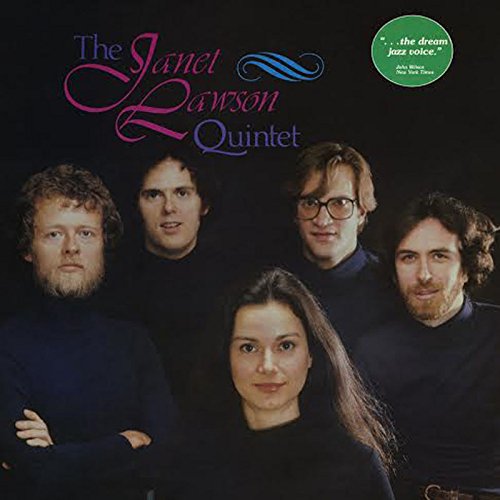
One of these labels was Inner City Records. They had just signed The Janet Lawson Quintet, and their eponymous debut album was released n 1981 on Inner City. It’ll be rereleased by BBE Music on 6th October 2014. Inner City hadn’t given up on traditional jazz music.
Far from it. Inner City believed that The Janet Lawson Quintet were capable of transforming jazz’s fortunes. The reason for this was Janet Lawson. She sounded as if she was descended from Ella Fitzgerald and Sarah Vaughan. Others compared Janet to Anita O’Day. The reason for this was her diction,phrasing and interpretation. Janet didn’t just sing songs, she lived them. Then there was Janet’s ability to scat.
Scatting has always divided opinion in the jazz world. Joe Simms is credited by Jelly Roll Morton as inventing scatting. However, Louis Armstrong was one of the first jazz singers to scat on record. He pioneered scatting in his 1926 version of Heebie Jeebies. Soon, other artists were employing scatting.
Gene Greene, Al Jolson, Cab Calloway, Ella Fitgerald and Sarah Vaughan began to scat. Bessie Smith, Dinah Washington and Billie Holliday all avoided scatting. Later, scatting was used widely by the free jazz pioneers. However, always, scatting has had its critics. Some critics saw scatting as the vocalist enjoying an opportunity to improvise. Others felt scatting destroyed the lyrics. Another criticism was that scatting was a gimmick. This didn’t stop Janet Lawson scatting.
Just like some of her contemporaries, Ursula Dudziak and Norma Winstone, Janet Lawson scatted. She did this effectively. This was neither a gimmick nor musical showboating. Janet used scatting effectively on The Janet Lawson Quintet.
For The Janet Lawson Quintet, six tracks were chosen. This included Carman Moore and Sam Brown’s You Promised, Fats Wallers’ Jitterbug Waltz and Blossom Dearie and Len Saltzberg’s Sunday Afternoon on side one. Side two featured Cootie Williams and Thelonius Monk’s ‘Round Midnight, Diane Snow’s So High and Bob Dorough and Fran Landesman’s Nothin’ Like You. This brought to a close The Janet Lawson Quintet. However, not BBE Music’s reissue of The Janet Lawson Quintet.
Augmenting the original version of The Janet Lawson Quintet, are The Miles Davis Session Versions of Ira and George Gershwin’s It Ain’t Necessary So. There’s also versions of I Thought About You, It Never Entered My Mind and Joshua. These ten tracks feature on the reissued version of The Janet Lawson Quintet. It was recorded back in 1981.
When recording of The Janet Lawson Quintet began, the rhythm section featured ex Lionel Hampton drummer Jimmy Madison and bassist Ratzo B. Harris. They were joined by pianist Bill O’Connell and Roger Rosenberg who played flute, baritone saxophone and soprano saxophone. The final piece of jigsaw was vocalist Janet Lawson. Along with producer Jack Perricone, they recorded The Janet Lawson Quintet. It was released later in 1981.
On the release of The Janet Lawson Quintet, jazz critics acknowledged featured the debut of one of the finest jazz vocalists of the late-seventies and early-eighties. However, The Janet Lawson Quintet didn’t reach a wider audience. The album failed to chart and sunk without trace. It would be three more years before The Janet Lawson Quintet released Dreams Can Be. Sadly, it too failed to find a wider audience. After that, Janet never released another album. She was lost to music. The Janet Lawson Quintet is a reminder of what music lost.
Opening The Janet Lawson Quintet is You Promised, a near eleven minute epic. A meandering bass, drums and flourishes of piano set the scene for Janet’s coquettish, breathy vocal. Along with the flute, it cascades above the arrangement. Soon, it takes on a much more traditional sound. It’s tinged with disappointment and sadness. Then when the tempo rises slightly, the arrangement becomes jaunty. This is the perfect showcase for Janet’s ethereal vocal. As the tempo rises and falls, she and the rest of the Quintet showcase their inconsiderable skills. Pianist Bill O’Connell and veteran drummer Jimmy Madison join forces, locking into a groove. Not to be outdone, bassist Ratzo B. Harris’ joins in. His fingers flit up and down the fretboard as he delivers a masterclass. After that, Janet and the rest of the Quintet encourage each other to greater heights.
Jitterbug Waltz is reimagined by The Janet Lawson Quintet. Janet adds a scatted vocal while the Quintet propel the arrangement along. Crucial to the arrangement are the standup bass and piano. That’s until the sultry saxophone enters. It gives way to dramatic rolls of drums. All the time, Janet is delivering a breathtaking scat. It’s a fusion of speed, power and accuracy. As if spent, her vocal drops out. This allows the rest of the Quintet to deliver a floaty slice of summery sounding jazz. Then when Janet returns, she surpasses her previous efforts as the track reaches a dramatic crescendo.
Sunday Afternoon has a similar summery sound. The arrangement literally floats into being. Just the rhythm section and flute combine before Janet scats. Soon, she’s delivering a tender, thoughtful vocal. She carefully delivers her vocal, highlighting words and phrases. In doing this, she paints pictures. These pictures unfold before your eyes. So vivid are the pictures, it’s as if you’re there. Meanwhile, the rest of the Quintet create an understated arrangement. It literally floats along, sweeping you along in its midst. That’s until it grows in power. So does Janet’s vocal. It’s a vocal tour de force that showcases her vocal versatility and dexterity.
Anyone covering a classic like ‘Round Midnight can’t win. After all, the definitive version has already been recorded. Janet knows this, and decides to give this classic a late night, smokey sound. Her band play within themselves, allowing her needy, wistful vocal to take centre-stage. She literally toys with the lyrics, bringing out their subtleties and nuances. Then Janet launches into a impassioned scat. It’s a akin to a cathartic outpouring of emotion. Later, she’s joined by a jaunty piano and the sultriest and smokiest of saxophones. It oozes emotion and is the perfect replacement for Janet’s vocal. When she returns, it’s as if a gauntlet has been thrown down by the saxophone. Janet rises to the challenge, delivering a needy, soul searching scat.
On So High, a nimble fingered acoustic bass solo is joined by The Janet Lawson Quintet in full flight. It’s an impressive sound. The rhythm section add an element of drama. They’re joined by stabs and flourishes of piano. Add to that a cascading saxophone. This is the perfect backdrop for Janet. With the Quintet cutting loose, Janet delivers one of her finest vocals. There’s a freedom in her vocal. Later, Janet starts to force her vocal. Sometimes, though, it sounds as if she’s been two ambitious. You wonder if she can hit the highest notes? She does. Constantly, she pushes herself to her limits. Janet is the vocal equivalent of a tightrope walker. There’s no net though. Not to be outdone the Quintet quick loose. They match Janet every step of the way during this blistering slice of jazz.
Nothin’ Like You closes The Janet Lawson Quintet. It literally explodes into life. Janet’s urgent vocal is accompanied by the rhythm section and piano. Soon, the rest of the Quintet join Janet. They become one. They’re yin to Janet’s yang. Instantly, The Janet Lawson Quintet become the tightest of units. They’re the perfect foil for Janet’s emotive scat. Then when the solos come round, the Quintet take their final bow. Honourable mentions go to pianist, Bill O’Connell, and soprano saxophonist, Roger Rosenberg. Their contributions play an important part in this dramatic, urgent and joyous epic.
Although Nothin’ Like You closed the original version of The Janet Lawson Quintet, BBE Music’s reissue doesn’t end there. There’s still four tracks to enjoy. The Quintet augment the original version of The Janet Lawson Quintet with a quartet tracks
These four tracks include The Miles Davis Sessions Versions of It Ain’t Necessary So, I Thought About You, It Never Entered My Mind and Joshua. They’re a compelling quartet that plays to The Janet Lawson Quintet’s strengths.
It Ain’t Necessary So is reinterpreted. Rather than cover this classic, it’s totally reworked. It takes on a slinky sound as veers between a sultry vocal and a scat. I Thought About You takes on a late night, smokey sound. The beautiful, and understated, It Never Entered My Mind, sounds like a homage to Ella Fitzgerald. Joshua is an explosive, fluid slice of bop where Janet unleashes a dramatic, soul baring scat. It’s the perfect way to close BBE Music’s reissue of The Janet Lawson Quintet, as it’s a reminder of what music lost, the day Janet Lawson turned her back on music.
Sadly, The Janet Lawson Quintet only ever released one further album, after their 1981 eponymous debut. This was Dreams Can Be, which was released on Omnisound in 1984. Sadly, it wasn’t a case of Dreams Can Be.
Commercial success and critical acclaim eluded The Janet Lawson Quintet. They never recorded together again. Maybe Janet realised that the writing was on the wall for a jazz vocalist for her. Despite her undoubted talent, there was no market for her music. The same can be said about her band.
The other four members of The Janet Lawson Quintet oozed talent. Each of the four instrumentalists were masters of their art. That’s apparent on The Janet Lawson Quintet. It showcases their fluidity and versatility. Whether playing as a unit, or when they’re playing a solo, The Janet Lawson Quintet are peerless. They’re a reminder of one of the golden age’s of music. That was the problem.
Apart from a small coterie of jazz lovers who embraced The Janet Lawson Quintet’s music, the album passed most people by. Even some jazz purists cast a disapproving eye over The Janet Lawson Quintet. They preferred what they referred to as “the real thing.” By this, they meant classic jazz. For Janet and the rest of the Quintet, the commercial failure of The Janet Lawson Quintet was a huge disappointment. Things didn’t get any better.
Three years later, in 1984, The Janet Lawson Quintet released their sophomore album Dreams Can Be. After its commercial failure, Janet Lawson, one of the most talented vocalists of the late-seventies and early-eighties, turned her back on music. This was a huge lost for jazz.
Back in 1984, jazz was at a crossroads. Only the popularity of fusion was keeping jazz alive. Its popularity had been usurped by pop, rock, electronica and hip hop. They were the new musical colossi. These musical genres were where the musical pound, dollar and yen were being spent. Jazz was missing out on a new generation of music lovers. Thankfully, thirty years later, and jazz is thriving.
This is helped no end by the thriving reissue market. Baby boomers, and a new generation of more adventurous music lovers, with much more eclectic tastes than the previous generation, have a taste for jazz. Now not a week passes without a myriad of jazz reissues. This week, on 6th October 2014, The Janet Lawson Quintet is being reissued by BBE Music.
However, this is no ordinary reissue of The Janet Lawson Quintet. It comes complete with four bonus tracks. This is a welcome addition. BBE Music’s reissue of The Janet Lawson Quintet allows a new generation of music lovers to experience a lost cult classic. Hopefully, and somewhat belatedly, The Janet Lawson Quintet will find the audience and critical acclaim it so richly deserves.
THE JANET LAWSON QUINTET-THE JANET LAWSON QUINTET.
- Posted in: Jazz
- Tagged: Bill O’Connell, Dreams Can Be, Inner City Records, Janet Lawson, Jimmy Madison, Ratzo B. Harris, Roger Rosenberg, The Janet Lawson Quintet
 dereksmusicblog
 dereksmusicblog