SUE BARKER-AUSTRALIA’S BEST KEPT MUSIAL SECRET.
Sue Barker-Australia’s Best Kept Musical Secret.
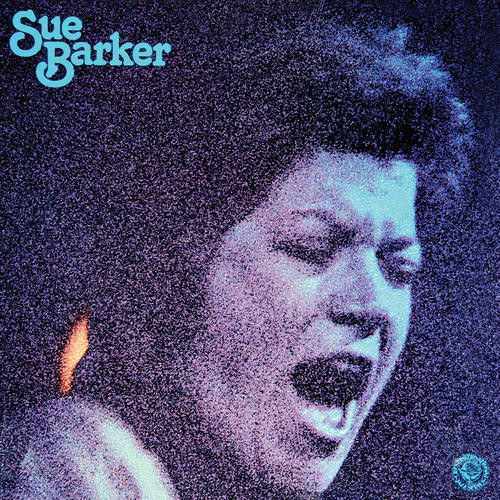
Forty-two years ago, in 1977, Adelaide-based singer Sue Barker released what’s without doubt, one of the greatest soul-jazz albums in the history of Australian music. That album was Sue Barker, which was released on Marcus Herman’s label Crest International.
The release of Sue Barker should’ve been the start of a long and glittering career. Sadly, that wasn’t the case, and nine years later, Barker turned her back on music in 1986. That day, Australian music lost one of its most talented singers in the history of modern music.
The Sue Barker story began in Sydney, when she started singing along with Guy Mitchell songs when was just two. Little did her parents realise that this would be the start of a lifelong love affair with music.
By the time she was in primary school, Barker was a regular in the school choir. When she was nine, Barker decided to join a local church choir so she could join their choir. However, by then, Barker was already taking an interest in spiritual matters.
In the local church, Barker joined the choir and started taking trying to understand and explore the meaning of life. This was something that was a lifelong commitment and something that at time, would offer solace to Barker in time of trouble.
When Barker completed primary school, her family decided to move back to Adelaide. When she returned to Adelaide, Barker was initially at a loss. That was until her uncle found her a suitable church. Soon, she was playing an active role in and a church member. It was at that church, where Barker’s potential was first discovered.
A church member spotted Barker’s potential, and offered to give her free singing lessons. Not long after this, Sue’s father sent his daughter to the prestigious Adelaide College Of Music for extra tuition.
Attending Adelaide College Of Music was an eye-opener for Barker, and she blossomed. She was introduced to classical music by her tutors in her early teens. By then, Barker had discovered The Beatles and other Liverpool-based singers and bands. This lead to her looking for a band needing a singer.
Each day, Barker looked through the small adverts in the local papers, looking for a suitable band. One day, she found a band without a singer, and decided to audition for The Cumberlands. This lead to her first gig, where she joined The Cumberlands on-stage for one song. That song marked the start of her career. Already, she knew that she wanted to embark on a career as a singer.
Not long after her first gig with The Cumberlands, she embarked upon a short tour of south Australian towns. This was good experience for Barker. So was singing in a television talent contest, where she was the runner-up. Her appearance on the talent contest lead to further television appearances. All this was good experience for her future career.
This included when Barker joined her first band. By then, her parents had returned to Sydney, and seventeen year old Barker had remained in Adelaide. That was where she heard a band rehearsing on a Sunday afternoon. Upon hearing the music, she decided to investigate. Having made her way up the stairs, Sue asked if she could sing with the band. They agreed, and before long, Barker and the guitarist began a relationship.
Two days after her eighteenth birthday, Barker and the guitarist were married. Within a year, her first child was born. She stayed at home whilst her husband played with the band. By the time Sue was twenty, she had moved to Sydney and was the mother of two children. Motherhood rather than music was what kept her busy. However, she missed music, and decided to return to Adelaide.
Back in Adelaide, Barker, her husband and two children were living close to her parents. With a support network around her, Sue Barker and her husband started putting a band together. They were helped by a booking agent, who hit on the idea of making Barker the focus of the band. This didn’t go down well with her husband, who was in her shadow. However, this was just the start of Barker’s comeback.
Before long, Barker was being asked to sing with some of Adelaide’s established bands. That was when she started to take on a new stage persona, that she had modelled on Janis Joplin. She had it off pat, right down to some serious on-stage drinking. By then, Barker was rubbing shoulders with top musicians, and her star was in the ascendancy. There was even talk of international record deals. Barker was one of Australia’s musical rising stars.
Not long after this, Barker met her future backing band, The Onions. By then, Barker was constantly busy playing live, doing session work and even testing recording equipment at various local recording studios. That wasn’t all.
Barker also decided to hire an old ballroom, where she would put on her own gigs. She would charge $2 to get in, and patrons would watch local musicians jamming after they had finished in the studio. While the nights became extremely popular, but it became clear they weren’t going to make her rich. However, it was one of these gigs where Sue Barker was discovered.
After one of the gigs, Barker was approached her and asked if she had ever thought of recording an album? By then, there were a few recording of Barker and her band testing new equipment at the various local studios. However, they hadn’t recorded any singles, never mind an album. Barker gave the stranger who was from Melbourne, one of her recordings, and never expected to hear anything.
She was wrong. One of the tapes ended up in the hands of Marcus Herman who ran the label Crest International. When he heard the recording he was impressed by Barker’s feel, understanding and command of jazz, which was way beyond her years. Herman realised that Barker was a special talent, and contacted her and asked if she would like to travel to Melbourne to discuss business.
When Barker set out on her journey to Melbourne, to discuss her future with Herman, she wasn’t alone. She took along her two children and one of her musician friends, Graham Conlon. When they arrived in Melbourne, Barker went to the meeting with Herman.
He offered Barker a three album deal, and after some discussion, she put the pen to paper. Later, Barker, like many singers and musicians claims she was naive when she signed the contract. For Barker it was never about money, and was always about the music. She just wanted to release an album that featured her own music. Having signed a three album deal in March 1976, she began work on her debut album.
After signing the contact, Barker discovered that the contract only covered her, and not her backing band The Onions. This must have been a disappointment for the band, but reluctantly, they agreed to play on Barker’s eponymous debut album. The Onions weren’t on points, but instead, would be paid as session musicians when recording began.
Before that, Barker started choosing songs for her debut album. She eventually, settled on the songs that would feature on the album. Or so she hoped. The songs were sent to Herman, who had to give his final approval. It wasn’t easy for Sue to get her choice of songs approved, but eventually, the ten songs that became Sue Barker were approved.
This included Eddie Holland, Brian Holland, Lamont Dozier’s How Sweet It Is, Gus Kahn and Nacio Herb Brown’s You Stepped Out Of A Dream, Duke Ellington and Sidney Keith Russell’s Do Nothing Till You Hear From Me, Curtis Mayfield’s Love To The People and Eddie Brigati and Felix Cavaliere’s Groovin’ featured on side one. Barrett Strong and Norman Whitfield’s I Heard It Through The Grapevine joined Eddie Floyd and Steve Cropper’s 6345789, Jimmy Davis, Jimmy Sherman and Roger Ramirez’s Lover Man, Al Cleveland, Marvin Gaye and Renaldo Benson’s What Goin’ On and Aretha Franklin and Ted White’s Think made-up side two of Sue Barker. It was recorded in Adelaide with The Onions.
Before the recording sessions began, Graham Conlon arranged the songs that Barker had chosen. Some were given a makeover, to ensure that they would suit Barker who discovered she had only three days to record the album.
Herman was covering the costs of the recording sessions, and was only willing to pay for three days at Pepper Studios, in Adelaide. This was going to be cutting it tight, but Herman adamant that Barker should be able to record the album in just three days.
She entered the studio with The Onions in a cold day in July 1976. The Onions lineup featured a rhythm section of drummer Dean Birbeck, bassist Geoff Kluke, guitarist Graham Conlon and keyboardist Phil Cunneen. They were augmented by a horn section that featured trumpeter Fred Payne and saxophonists Bob Jeffrey and Sylvan Elhay. They accompanied Barker as she laid down her eponymous debut album.
Somehow, Barker and The Onions managed to complete the album in the three days that Herman had paid for. This left just the album to mixed and mastered. However, before that, Barker was in for a surprise.
Not longer after recording Sue Barker, she discovered that she was pregnant and expecting her third child. While she continued to play live, she knew that motherhood beckoned. Meanwhile, Barker was experiencing a spiritual awakening.
This was partly inspired by the birth of her third child. Soon, after the birth, Barker’s thoughts turned to spirituality. Meanwhile, Crest Records were preparing for the release of Sue Barker.
Marketing manager Donald Fraser sent out press releases to the press, magazines, radio and television. He was determined that Sue Barker had every chance of being a success. It didn’t matter that the album would be Crest’s final release. He saw the potential in Barker.
So did Channel 9, who booked Sue Barker to appear on the Tonight Show. This was a huge break forBarker, who unfortunately, had to cancel the appearance. Despite that, Barker’s concert at the Dallas Brook Hall in Melbourne was a sell-out.
When the reviews were published, Sue Barker received praise and plaudits from critics and cultural commentators. The album had also sold well at the concert at the Dallas Brook Hall. Things were looking good for Barker.
After the success of the Dallas Brook Hall concert, Crest began planning a promotional tour to coincide with the release of Sue Barker. However, her priority was her new daughter, which frustrated Herman at Crest Records. Their relationship became difficult, and Barker prioritised motherhood over the release of her eponymous debut album on Crest International. While this was admirable it would prove costly.
When Sue Barker was released by Crest International, the album received praise, plaudits and critical acclaim. Sadly, Sue Barker received little promotion which was frustrating for everyone at Crest International who had worked hard on the release. They realised that Barker was on the verge of a breakthrough. Had she had promoted the album, it’s very likely that it would’ve sold well and introduced her to a much wider, and possibly, international audience. However, Barker’s decision not to promote the album resulted in poor album sales.
Very few copies of Sue Barker sold, and her relationship with Marcus Herman at Crest Records broke down completely. As a result, Barker never made any money from her future Australian soul-jazz classic. After the release of Sue Barker, eventually, the Adelaide-based singer returned to the local circuit.
This time, Barker wasn’t going to spend all her time playing live. While she continued to sing in local venues she didn’t mind if weeks or months passed without a gig. She who was a free spirit at heart and did things her way. Sometimes, when gigs dried up, promoted concerts. Barker wasn’t the type of person to wait for opportunities to arise. Instead, she would go out and make things happen. As long as these promotions covered their costs, Sue was happy. It had never been about the music for Barker.
Not long after this, came the news that Crest International had folded. Barker still owed the label two albums when it folded. Barker, though, realised that chance of releasing any more albums was gone. Especially given how fraught relationship with Herman was latterly. The likelihood of Barker releasing two more albums seemed unlikely. Her dream of releasing any more albums was over.
Following the demise of Crest International, Barker spent a year teaching music at the Centre For Aboriginal Studies In Music. Her time spent teaching the Centre For Aboriginal Studies In Music resulted in Barker becoming interested in reggae. Barker’s interest in reggae inspired a further spiritual awakening. However, as her spirituality began to blossom, Barker’s newfound faith was severely tested.
Tragedy struck when Barker was out walking down the street with her third child. A car mounted the pavement, and struck her daughter Billie, who was so seriously injured that she spent three months in hospital. During that time, Barker started to ask herself some of life’s big questions. Her search for the meaning of lifewould prove to an ongoing spiritual quest.
Once her daughter had recovered, Barker continued to pursue her interest in reggae music. She even decided to form a reggae band, which disappointed some of those who had followed her career as a jazz singer. Some of the musicians in her band were disappointed with this volte-face and left her employ.
As a result, Barker had to put together a new group of musicians. They would accompany Sue who had been booked to play at the Adelaide Jazz Club. When the patrons at the Adelaide Jazz Club heard about Barker’s Damascene conversion to reggae, and were unsure about this. However, Sue decided to continue down this new road.
Barker’s career continued until 1986, when sadly, tragedy struck again. Eight months after the birth of her fifth child, her eldest child died on Thursday October 30th 1986.
Despite this tragedy, Barker decided to sing at a gig she had been booked to play two nights later on the Saturday evening. That night, she said that when she sang: “she felt closer to God than I had ever before.” As she watched the patrons party that night she realised that this was the end of road for her.
After a lifetime spent in and around the music industry, after the gig Barker called time on her career. She suddenly felt that the entire music business was a “sham,” and didn’t want to be part of it anymore.
When she had recorded her soul-jazz classic Barker, never received any payment. Ironically, The Onions who had originally been disappointed not to be included in the recording contract with Herman’s label Crest International, were paid as session musicians and made more out of Sue Barker than the star of the show did. It was no wonder that Barker regarded the music industry as a sham.
Nowadays, her one and only album Sue Barker, is regarded as a soul-jazz classic, and copies of the album are now extremely rare. When they do change hands, it’s for hundreds of Dollars. That comes as no surprise, given the quality of music on Sue Barker. It features one of music’s best kept secrets, Sue Barker, who if things had been different, would’ve gone to enjoy a long and successful career. Sadly, Lady Luck didn’t smile on her and it was a case of what might have been.
Barker only released one album during a career that spanned three decades. Her career began in the late-sixties, and it wasn’t until 1977 that Sue Barker was released on Crest International. By then, Sue Barker looked destined for greatness. However, when Sue Barker was released, her third child had just been born. Barker was reluctant to leave the child to embark upon a promotion tour. Her failure to tour Sue Barker was a costly one, and the album was commercial failure.
Barker never regretted this decision as she was enjoying being a mother. She found this rewarding and loved spending time with her children.
Herman who owned Crest International certainly regretted Barker’s failure to tour her album. It resulted in the breakdown in their business relationship, and not long after this, Crest International folded. However, Barker’s decision not to promote the album was not the reason the label folded. It’s thought that the label has financial problem’s before signing Barker.
Barker may have only recorded one album, but Sue Barker is a soul-jazz classic. It’s an album that definitely deserved to find a much wider audience.
In 2017, Barker rereleased Sue Barker on CD with extra songs and a collector booklet along. There was also a remastered vinyl reissue. It was a welcome reissue of a long-lost soul-jazz classic that should’ve transformed the career of Australian songstress Sue Barker, who sadly, instead, remained Australia’s best kept musical secret.
Sadly, in December 2022 Sue Barker passed away. She was a truly talented and versatile vocalist whose one and only album is a soul-jazz classic that’s loved and appreciated by her fans new and old, worldwide.
Sue Barker-Australia’s Best Kept Musical Secret.
- Posted in: Jazz ♦ Soul ♦ Soul Jazz
- Tagged: Crest International, Marcus Herman, Sue Barker, The Cumberlands, The Onions
 dereksmusicblog
 dereksmusicblog
Sue is one of the finest singers I’ve ever listened to
I have this album & listen to it frequently love it !!
Love you
Steve Kirby your nephew