ATLANTA: HOTBED OF 70s SOUL.
Atlanta: Hotbed Of 70s Soul.
Label: Kent Soul.
Format: CD.
During the fifties and sixties, the Atlanta’s black music scene was thriving. One of the most important figures during the sixties was Bill Haney.
He was a a producer, songwriter and owner of Down South Productions, which was responsible for some of the finest Southern Soul released during the sixties. Haney’s career continued into the seventies. By then, a new name was involved in the Atlanta music scene, Michael Thevis.
The story began in the early seventies when Thevis was looking for a legitimate way to get his substantial fortune into the financial system. By then, he was heavily involved in pornography. So much so, that he would later admit to a Louisville jury that he was: “the General Motors of pornography.” That was still to come.
In the early seventies, Thevis had a problem. He discovered that he was being investigated by the FBI. Not wanting to follow in the footsteps of Al Capone and Dutch Schultz who were brought down by federal investigations, he began looking for legitimate enterprises.
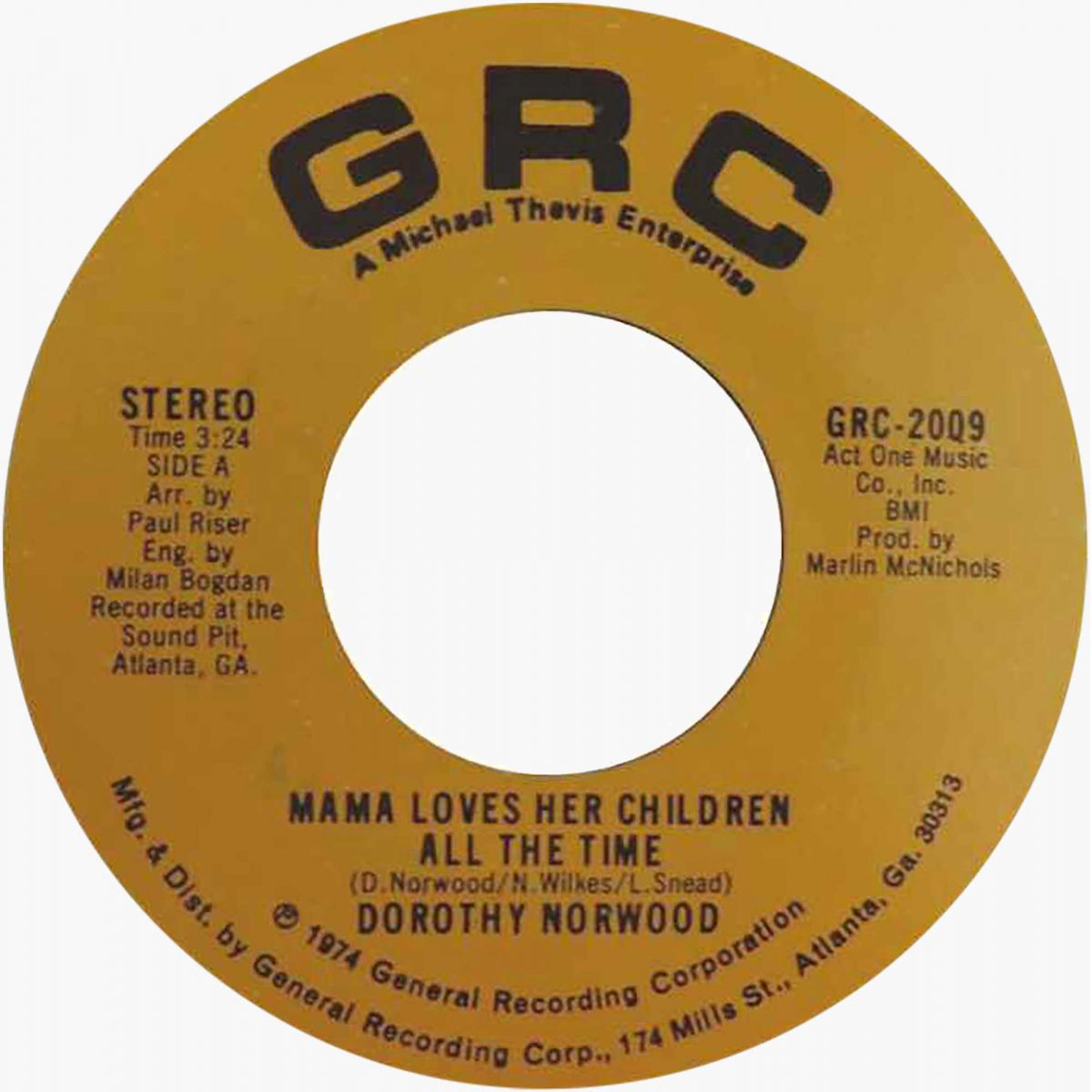
Casting around looking for a legitimate business, Thevis hit upon the idea of forming not one, but three record labels. This included GRC (General Recording Corporation), Aware and Hotlanta Records. These labels would become part of his nascent musical empire.
Soon, there was a new addition to Thevis’ musical empire, the Sound Pit Studio in Atlanta. It boasted some of the best equipment money could buy. Building the studio made financial sense. It saved hiring other studios, and meant artists signed to GRC, Aware and Hotlanta Records could record at the impressive new studio. And when the studio wasn’t in use, it could be hired out, and bring in much needed income. However, as all this empire building continued, tongues began wagging.
Veterans of the Atlanta music scene watched as the state-of-the-art studio took shape. This was the most advanced studio in Atlanta.Where was the money coming from? It was a similar case with the rest of Thevis’ musical empire.
No expense was spared as he expanded his musical empire. He added to his record labels the Act One publishing company, the Jason Management booking agency and a film company. They became part of Thevis’ musical empire which he was proud of and wasn’t shy about telling people about it.
Rather than keep a low profile, Thevis ran his musical empire from a lavish suite of offices in Atlanta. They were featured in Billboard in May 1974, when the magazine ran a feature on the Atlanta music industry. He told Billboard of his latest takeover, and his expansion plans.
Thevis’ most recently acquisition was the Moonsong Publishing Company, which he had purchased from Bill Brandon. This became part of the GRC’s publishing division, alongside Act One.
To run the newly expanded publishing division, Brandon joined GRC, and became the publishing manager of GRC’s R&B division. However, the acquisition of Moonsong was just part of Thevis’ grand plan.
He told Billboard of his plans to build a brand new twenty-eight story skyscraper in Atlanta. This would be where he ran his musical empire. It would have outposts in Nashville, Houston, Los Angles, New York and London. What made this seem all the more convincing was when he booked eight pages of advertising in Billboard’s Atlanta special.
To most people, Thevis came across as a legitimate businessman with big plans for the future and for Atlanta. By then, everyone seemed to buy into his grand plan. He was the local boy who had made good. It was a case of hail the conquering hero.
Incredibly, though, nobody seemed to be paying close attention to the numbers. None of Thevis’ record companies were particularly successful. They were neither consistently releasing hit singles nor successful albums. So where was all the income coming from? Was it the publishing company, recording studio, booking company or film company? Nobody knew, and nobody seemed in a hurry to find out. Given the musical entrepreneur’s past and his reputation for violence maybe this wasn’t surprising?
Originally, Thevis’ film company financed legitimate films. This included the Zhui Ming Qiang in 1973, and Seizure which was one of Oliver Stone’s earliest films. It was released in 1974.
A year later, Thevis had gone up in the world, and released Poor Pretty Eddy 1975. Every film was more successful than the last. However, although he was trying to build a legitimate business empire, he had reverted to type.
The film company he had acquired began producing pornographic films. If any journalist had even looked into activities of Thevis’ empire, it could’ve come tumbling down. This looked unlikely in early 1975.
Country singer Sammy Johns had been signed to GRC for a couple of years. In early 1973, Johns released ‘Chevy Van’ as a single. It was reported to have sold over three million copies. Given that a GRC artist had just enjoyed such a successful single, surely the label’s finances would be on a sound footing as 1975 progressed?
While most people would’ve thought so, the truth was that many of GRC, Aware and Hotlanta Records’ releases weren’t particularly successful and hadn’t sold in vast quantities.
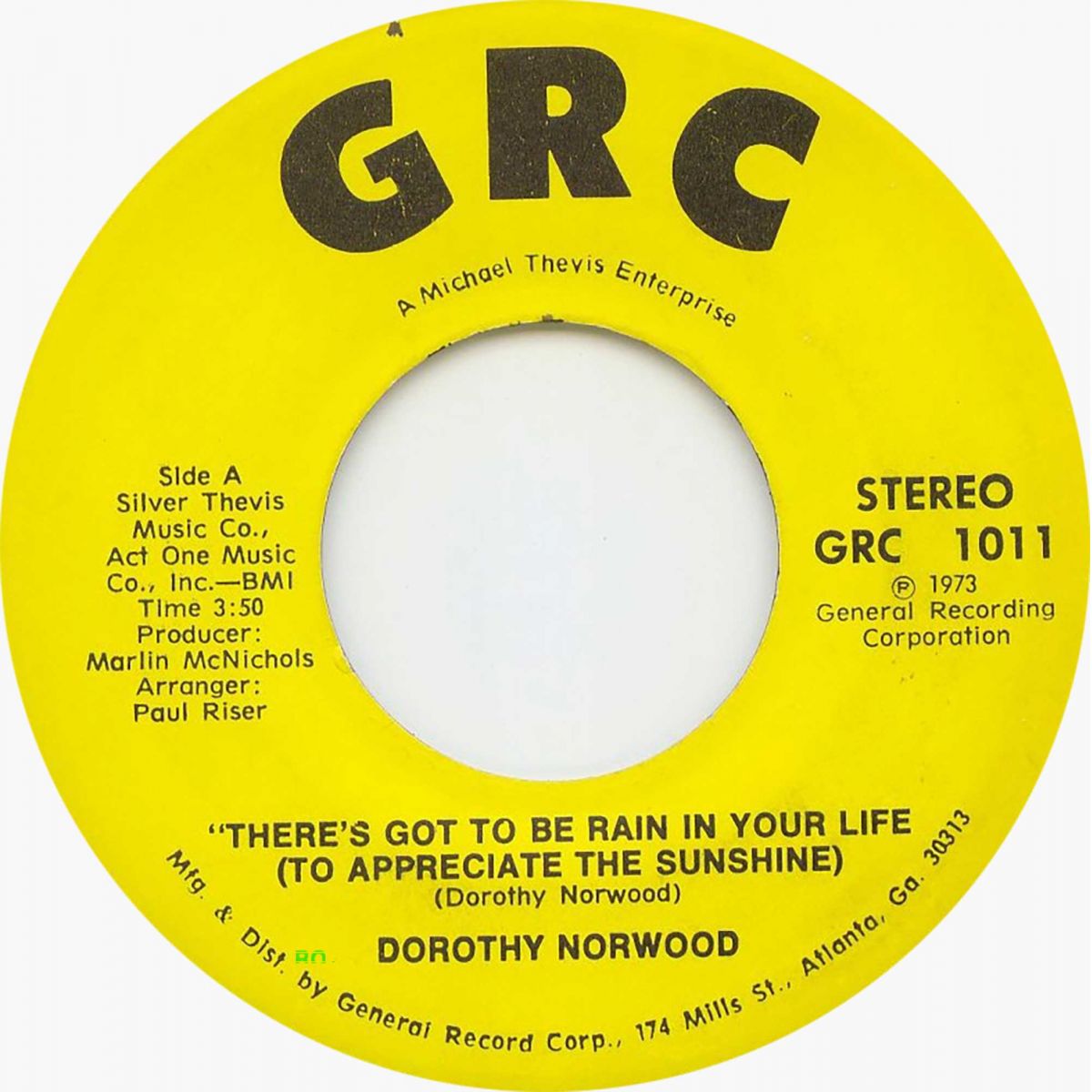
That was despite the labels having such an impressive roster of artists. This included Dorothy Norwood, Joe Hinton, Ripple, John Edwards, Loleatta Holloway, Jimmy Lewis, Deep Velvet, Joe Graham and Sam Dees. They were part of Thevis’ musical empire which later in 1975 would collapse, leaving artists high and dry.
By the time Joe Graham signed to GRC in 1975, all wasn’t well behind the scenes, and the four tracks he released were never released. Sadly, many more tracks that were recorded by various artists and they languished unreleased in the vaults. This includes sixteen tracks on ‘Atlanta: Hotbed Of 70s Soul,’ a twenty-four track compilation from Kent Soul.
Opening the compilation is ‘Con Me,’ a heartachingly beautiful ballad from former gospel singer Miss Louistine. It’s the first of two unreleased tracks from her, and was penned by David Damon and Sam Dees. He also wrote ‘Extra-Extra,’ a joyous, uptempo track with a polished production and a vocal that’s uber soulful.
There’s also two unreleased tracks from Deep Velvet. ‘Is There Something Else’ is a ballad that was written by Mose Davis. It features a heartfelt vocal full of emotion, suspicion and hurt. ‘I’m Tired Of Dreaming’ is another polished production with lush strings and harmonies accompanying Jody Trumbo’s vocal as he breathes life and meaning into the lyrics.
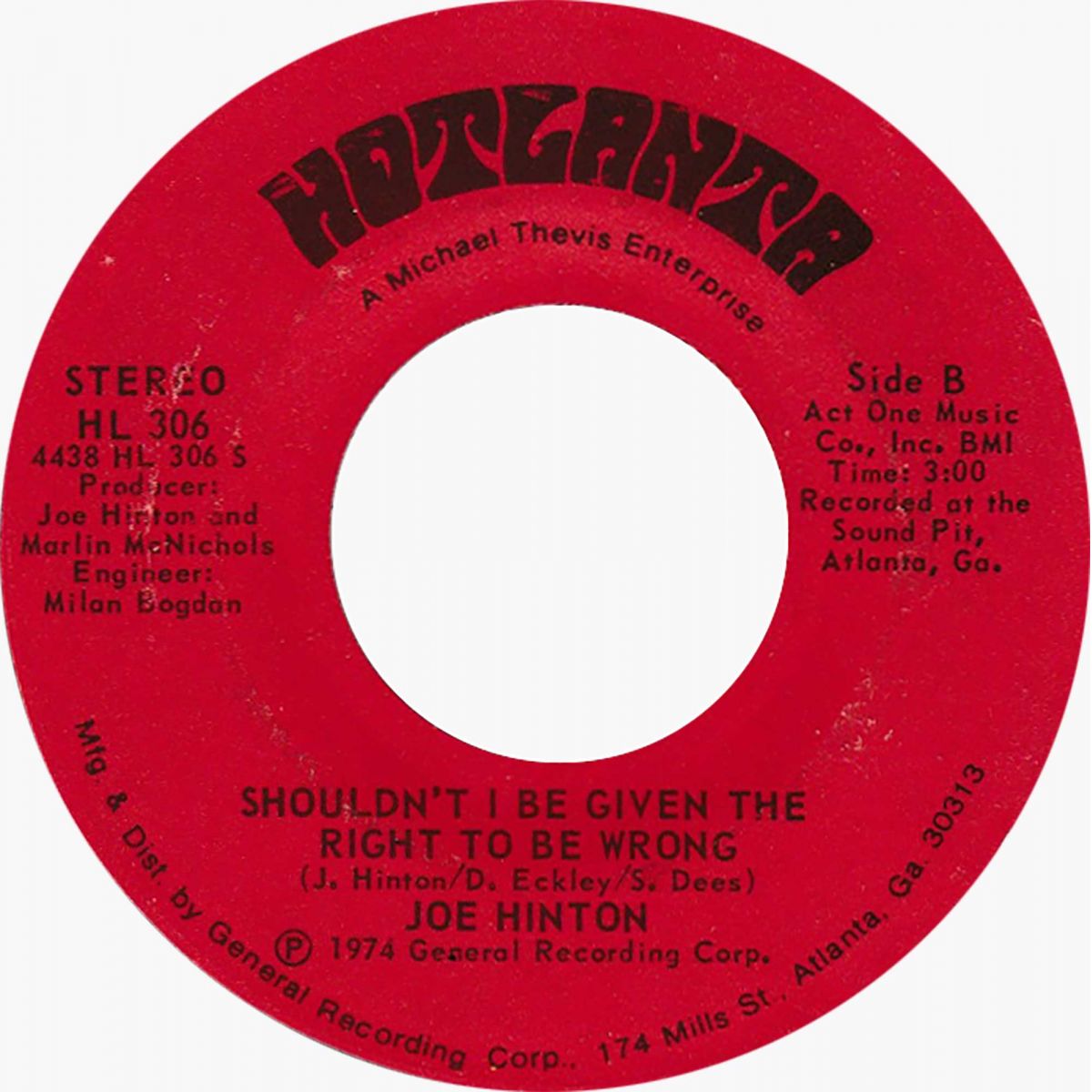
Like many artists, LA-born Joe Hinton recorded a number of tracks for Hotlanta. Three of them feature on Atlanta: Hotbed Of 70s Soul. This includes the smooth, soulful hidden gem ‘Grant Me One More Day,’ a ballad that showcases a truly talented vocalist. That’s the case on ‘Depend On Me,’ a dancefloor friendly track where hooks haven’t been spared and the vocal is heartfelt and full of sincerity. ‘Shouldn’t I Be Given The Right To Be Wrong’ is a mixture of soul, funk and social comment from the pen of Sam Dees, Daniel Eckley and Hinton.
In 1973, Aware released The Steppers single ‘Come and Get It’ as the label’s third single. However, it failed commercially. Despite this, the group recorded ‘Keep On Walking.’ It was never released and this slice of seventies Atlanta soul makes a welcome and overdue debut.
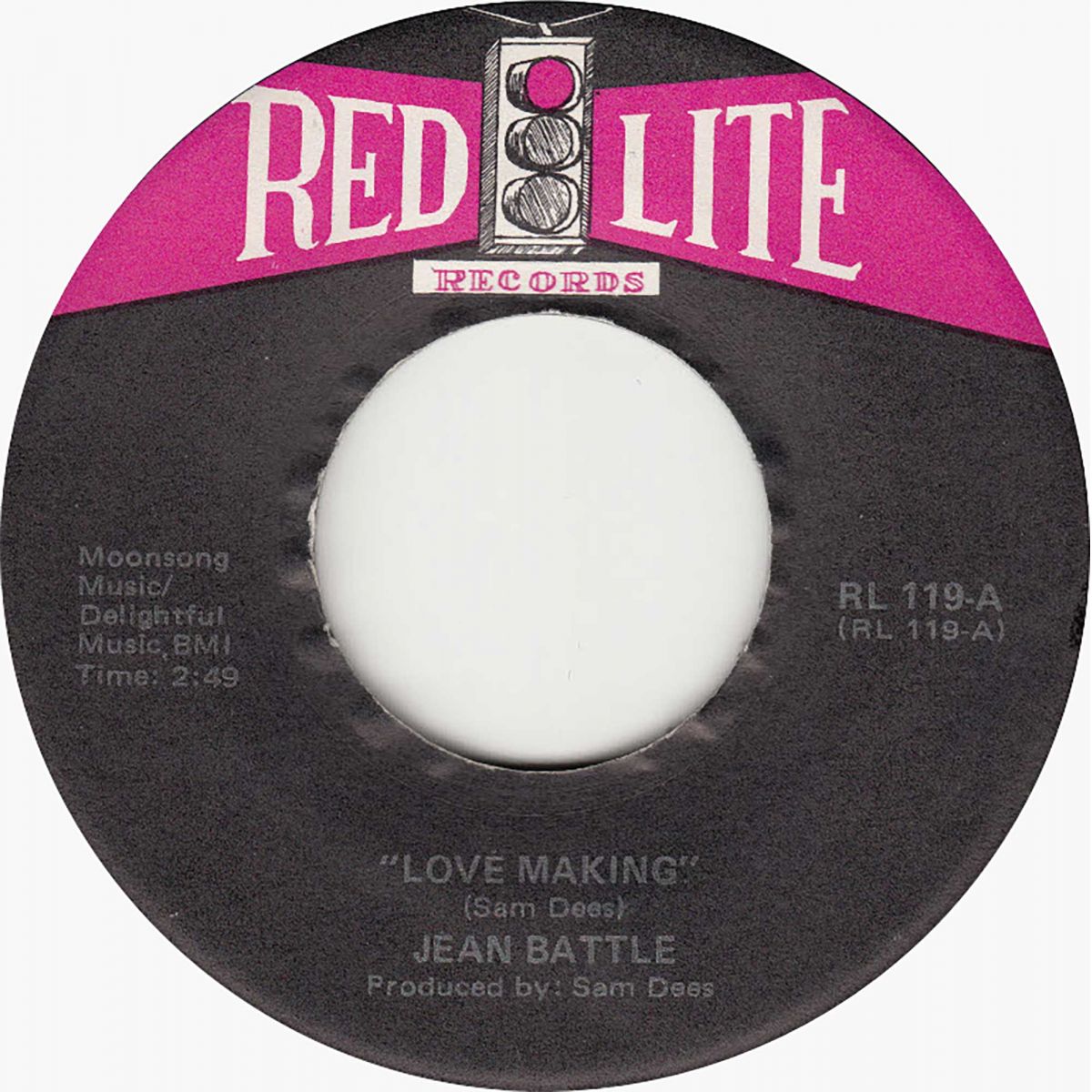
Jean Battle’s sophomore single for New York-based Red Lite Records was the sensuous-sounding ‘Love Making.’ It was written by Sam Dees and has made in Atlanta written all over it.
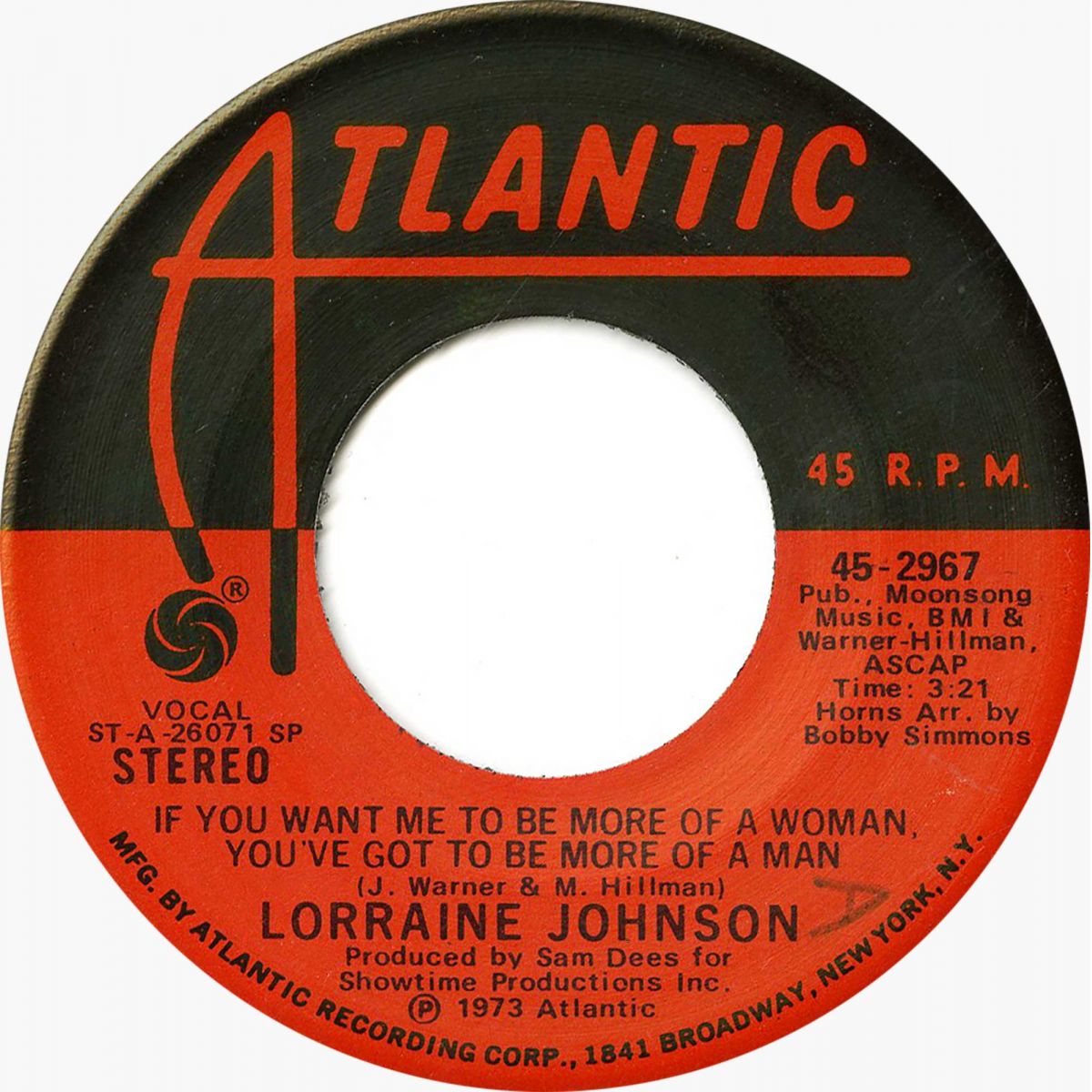
Lorraine Johnson originally started out singing gospel, but like many singers crossed over. In 1973, she recorded the Sam Dees, Albert Gardner and Jesse Lewis song ‘Can I Hold You To It?’ Although recorded in the Sound Pit Studio in Atlanta, it was released by Atlantic Records. Sadly, this ballad wasn’t a hit despite a probing, questioning vocal which is full of emotion and doubt. ‘When Will I Stop Loving You’ is a beautiful ballad with a vocal bristling with emotion and longing.
Another hidden gem of a ballad is ‘I Need Me Some More Of You’ by singer, songwriter and producer Dee Ervin. It’s lain in the vaults for the best part of fifty years, and makes a welcome debut on Atlanta: Hotbed Of 70s Soul.
Lomita Johnson was one of the members of Side Effect. However, she also recorded ‘There’ll Always Be Forever’ as a solo artist. Sadly, the song was never released and Nancy Wilson released her version in November 1974. For Johnson it was a case of what might have been? Maybe this polished production with a heartfelt and emotive could’ve given her a hit single?
Closing the compilation is ‘My Peaceful Forest’ a cinematic, soulful and dramatic song from the underrated Dee Clark. It’s a case of keeping one of the best until last.
Of the twenty-four tracks that featured on Atlanta: Hotbed Of 70s Soul, sixteen make their debut on the compilation. Another five were released after the demise of Michael Thevis’ musical empire.
Running a regional record companies offered Thevis an opportunity and facility to launder dirty money. He may have used dirty money to buy his own label’s releases. These phantom record sales would only exist on paper, and would have the effect of laundering the dirty money through the company’s accounts.
Once the money was in the record label’s company’s accounts, tax could be paid on the profit that had been made. This would further legitimise any dirty money the company was making. Especially, as the FBI were still watching Thevis.
His musical empire all came crashing down in late 1975. Thevis’ attempt to build a legitimate business empire had failed. Soon, it emerged that his musical empire was always doomed to failure. It had been for three years, ever since the FBI starting investigating his business activities.
That was when Roger Dean Underhill was involved in a routine traffic stop. An eagle-eyed traffic officer noticed a small cache of stolen guns under the passenger seat. This resulted in him being arrested. Rather than face the consequences, Underhill decided to inform upon his business partner, Michael Thevis who he met in 1967.
Back then, Underhill was a low-ranking associate of the Gambino organised-crime family. For nearly a decade he and Thevis were associates and friends. That changed the night of the routine traffic stop.
The traffic stop lead to the start of a three year investigation that resulted in the arrest, and subsequent conviction of Thevis. For all the artists signed to GRC, Aware and Hotlanta Records this was the beginning of the end.
All the artists signed to GRC, Aware and Hotlanta Records were left high and dry. It was disaster, and all the artists affected by the collapse. They were left without a label, and some of the artists were also owed royalties, which in some cases, was a significant sum of money. The artists had no idea what the future held for them.
It was a similar case for Michael Thevis whose grand plans were left in tatters. It looked like the beginning of the end for GRC, the company he had spent three years building.
It wasn’t. His wife Veld and son Michael Jr, took over the running of GRC. For a while, it was business as usual for GRC. However, for Thevis things were about to get much worse.
He was convicted of conspiracy to commit arson and distribution of obscene materials. The man who sparked the three year investigation into Thevis, even testified in court. Underhill took to the stand, and the FBI’s informant testified against his former business partner. He thought this was the right thing to do.
It was a decision Underhill would later live to regret. In 1978, Thevis managed to escape from prison. Straight away, he was placed on the FBI’s top ten most wanted list. By then, he and some of his associates had placed an open contract on Underhill.
There’s an old saying that you never see the bullet that kills you. When the hit came, the shooter was none other than Michael Thevis. He shot and killed Roger Dean Underhill and one of his associates. Not long after the murders, Thevis was arrested and taken to a high security facility.
The Scarface of Porn was later convicted of the two murders. Over thirty years later, Thevis died in prison in Bayport, Minnesota on November the ’20th’ 2013. The man who founded GRC, Aware and Hotlanta Records was eighty-one.
One day, documentary makers will chart the rise and demise of Michael Thevis and his musical empire. It’s a story of two kinds of hits, the musical ones, and the other type that cost two men their lives.
The story of GRC, Aware and Hotlanta Records is truly compelling one, and is one that deserves to be told. These three labels released some of the best Southern Soul of the seventies and enjoyed a string of hit singles. That’s no surprise.
The labels had signed some truly talented artists from Chicago, Detroit and LA. They worked with top musicians and producers during recording sessions at the Sound Pit Studio in Atlanta. Sadly, many of the singles and albums weren’t as successful as they should’ve been. This includes future Southern Soul classics from John Edwards and Loleatta Holloway. It was a case of what might have been and missed opportunities.
Thankfully, the music of GRC, Aware and Hotlanta Records is starting to find the wider audience it so richly deserves thanks to Kent Soul. Over the years, they’ve reissued albums and released a string of compilations that features some of the unreleased music that’s languished in the labels’ vaults.
The latest compilation is Atlanta: Hotbed Of 70s Soul. For anyone yet to discover the music released by Michael Thevis’ musical empire, this new compilation is a tantalising taste of some of some of finest Southern Soul recorded during the seventies.
It’s also sure to be the start of a musical voyage of discovery that includes the majestic music of Dorothy Norwood, Joe Hinton, John Edwards, Loleatta Holloway, Jimmy Lewis and all the other talented artists who were signed to GRC, Aware and Hotlanta Records. For many their starting point will be Atlanta: Hotbed Of 70s Soul.
Atlanta: Hotbed Of 70s Soul.

- Posted in: Funk ♦ Soul ♦ Southern Soul ♦ Uncategorized
- Tagged: Ace Records, Atlanta: Hotbed Of 70s Soul, Dee Clark, Dee Erwin, Deep Velvet, Dorothy Norwood, Jean Battle, Joe Graham, Joe Hinton, Kent Soul, Lomita Johnson, Lorraine Johnson, Michael Thevis, Miss Louistine, Sam Dees, The Steppers
 dereksmusicblog
 dereksmusicblog