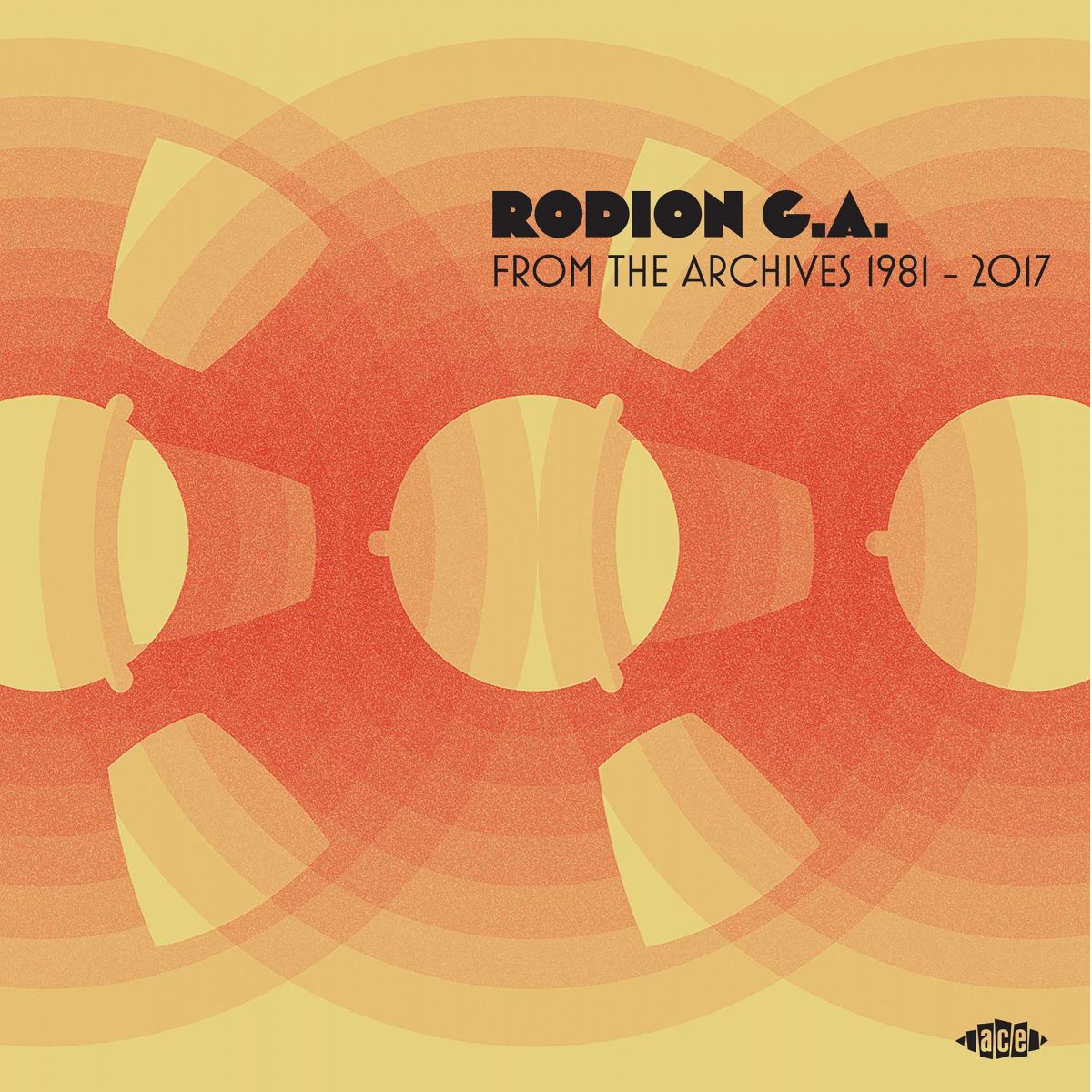
RODION G.A.-FROM THE ARCHIVES 1981-2017.
Rodion G.A.
From The Archives 1981-2017.
Label: Ace
Format: CD and 2LP.
In April 2022, I pitched the idea of a new Rodion G.A. compilation to Ace. This was a just over a year after the death of Rodion-Ladislau Rosca, the cofounder of Rodion G.A. By then, four years had passed since the release of the group’s previous album ‘Rozalia.’ Since then, there had been a clamour for a new album from Rodion G.A. There was plenty of unreleased material in the archives, and it was groundbreaking and innovative like the music on previous albums. I hoped that it wouldn’t take long to reach and agreement and release a new compilation.
However, when I pitched the album the pandemic was still affecting everyday life, and especially the music industry. As a result, it would take longer than usual to get to the stage when contracts were being signed.
Before that, the A&R committee had to listen to the unreleased material and approve the compilation for release. The original and correct title was ‘From The Archives,’ as the twenty-one tracks were recorded at different stages of Rodion G.A.’s career. Eventually, the contract was signed in October 2023, eighteen months after I originally pitched the compilation to the label. Now the hard work could begin as’From The Archives’ was to be released on CD and on vinyl as a double album.
I was commissioned to write the liner notes, and had also compiled, programmed the album and contributed four edits. Initially, the liner notes were meant to be 5,000 words, but I was told they could be longer to tell the definitive story of Rodion-Ladislau Rosca and Rodion G.A. Eventually, the liner notes came in at 7,000 and told the story of a groundbreaking musician, the band he cofounded and the changing political landscape in Romania during his lifetime. Along with previously unseen photos of Rodion-Ladislau Rosca and Rodion G.A. I envisaged a thirty-two page booklet for the CD version. However, already there were a few problems.
Usually, I like to work with my own choice of mastering engineers and graphic designers. I was led to believe that this would be okay. It turned out that the in-house mastering engineer would be used, and so would the label’s favoured graphic designer. This was a disappointed as I had wanted to use people who had worked on a previous Rodion G.A. album I compiled.
There were a few other problems over the next few months, including with the artwork. Then rather than reproducing the liner notes in their entirety, they were heavily and badly edited to save space in the booklet. No longer did the liner notes tell the definitive story of Rodion-Ladislau Rosca and Rodion G.A. This was hugely disappointing and I was far from happy about this, and with the person who edited the liner notes.
Having been mastered by the label’s in-house mastering engineer, the graphic design and new album cover were completed in early 2024. By then, the album was entitled From The Archives 1981-2017, and was released on ’26th’ April 2024, just over three years after the death of Rosca, the driving force behind Rodion G.A. This is his story and the story of the band he cofounded.
Who Was Rodion-Ladislau Rosca?
The words enigmatic, innovator, pioneer and maverick describe the late, great Rodion-Ladislau Rosca. He was, without doubt, one of the most talented, inventive and influential European musicians of his generation. He was also an inventor, philosopher, poet and a man who dared to dream.
Rosca spent a lifetime creating music that was ambitious, groundbreaking and innovative. He was a pioneering composer, talented multi-instrumentalist and producer. Continually the maverick musician pushed musical boundaries to their limits, and sometimes, way beyond. This he did firstly as a solo artist, and then with Rodion G.A, the group that he cofounded.
Rodion G.A. were, and still are, undoubtably, one of Romania’s biggest and most important bands. They were also one of the most influential and innovative. It’s no surprise that the band’s music has influenced several generations of musicians. The same can be said of all the music that Rosca made throughout what was a long and illustrious career.
Nowadays, he is remembered as “the Godfather of Romanian electronic music.” During a career of two parts, Rosca was a prolific composer and musician, constantly recording new music. That music was his legacy.
As legacies go, the music of Rodion G.A. is something that the world can continue to enjoy even after his death on 26th, March 2021, aged just sixty-seven. The man behind some of the most progressive and pioneering music ever to come out of Romania had lost his brave battle with liver cancer and Hepatitis B and C.
He left behind a daughter Isabella and two grandchildren, Beatrice and Dennis. To them he was their father and grandfather, but to his legion of fans he was a musical giant, and “the Godfather of Romanian electronic music.”
The Early Years.
Rosca was born in Cluj, the main city in Transylvania, on 4th, April 1953. He was half-Romanian and half-Hungarian. His mother Rozalia, was Hungarian and brought Rosca up.
From an early age, it was apparent that he was an intelligent child. He was also inquisitive and thoughtful. The only problem was that in school Rosca used to sit and daydream, letting his mind wander and imagination run riot. This: “frustrated his teachers and mother.”
Looking back on his formative years Rosca remembered: “ I was dreaming all the time, sailing somewhere on another planet, thinking about life and death, girls and music.” By then, music was already playing an important part of his life.
Rosca grew up in Romania during the open period between 1965 and 1972. During this period, there was a sense of hope for the new generation of young Romanians. This came about when Nicolae Ceaușescu came to power after the death of Gheorghe Gheorghiu-Dej, the first Communist leader of Romania. The former electrician turned politician passed away on 19th, March 1965.
A Changing Of The Guard In Romania.
In the beginning, Ceaușescu was a popular leader. He ensured that Romania had a free press. The new President also challenged the authority of the USSR, ensuring that Romania’s foreign policy had a greater degree of independence.
In 1967, Romania was the only Communist country to maintain diplomatic relations with Israel following the Six Day War.
Then in 1968, Romania was the only Warsaw Pact country which refused to participate in the Soviet-led invasion of Czechoslovakia. In a speech in Bucharest on 21st, August 1968, Ceaușescu denounced the invasion as a: “grave error.” The Romanian President was making a stand, and it looked like country was changing.
For young Romanians like Rosca, the open period in between 1965 and 1972, was a good time to grow-up. During this period, he was exposed to an eclectic selection of musical influences. Each night, he listened to the music that filled the airwaves. Rosca was like a sponge, absorbing an eclectic selection of music. This included everything from rock, pop, psychedelia and blues to jazz. The music he heard on the radio was primarily English and American. Some of these artists headed to Romania during the open period. This came about after Ceaușescu was invited to the USA. At that time, he was seen as a friend of the USA.
With his easing of the censorship laws, some of the biggest names in music headed to Romania. Among the luminaries of music to tour Romania were Blood, Sweat and Tears, plus jazz legends Lionel Hampton and Louis Armstrong. They were greeted by appreciative audiences, who until then, had only heard these artists on the radio. This included Rosca, who was about to immerse himself into Cluj’s music scene.
Becoming The “King of Records.”
Cluj sits in the middle of Transylvania. Between 1965 and 1972, it had a healthy musical scene. Rosca remembered the city: “as having a thriving and vibrant musical scene,” and he was about to dive headlong into it.
Among Cluj’s leading bands were progressive rock groups like Cromatic and the Experimental Quartet. Soon, Rosca had immersed himself in the local music scene and had established a reputation as a prolific and voracious collector of vinyl. As his reputation grew, Rosca became known as “the King of Records”.
Cluj’s very own “King of Records” would go to any length to add to his vinyl collection. Rosca made cross-border trips to Hungary, where he stocked up on hard-to-find albums. Before long, he had a record collection that was unrivalled. It included the classic rock of Led Zeppelin, The Beatles, Jimi Hendrix and The Who. However, Rosca didn’t just restrict himself to classic rock.
He was also interested in the more progressive, electronic bands of the era, including groups from Eastern and Western Europe. This included Jethro Tull, Emerson, Lake and Palmer and Yes. Other favourites included West Germany’s Kraftwerk, East Germany’s Karat, Romania’s Sfinx, Czechoslovakia’s Matador and Hungary’s Skorpio. These eclectic and esoteric influences would influence Rosca’s future musical career.
How It All Began.
From the late sixties, it became apparent that Rosca was going to make a career out of music. To do this, he had to forge his own unique sound. Rock music dominated Romanian music during this period. However, the music Rosca started to create in 1967 was very different from rock music.
Aged just fourteen, Rosca started experimenting musically, during what was an eight year musical journey. “My mother bought me a Tesla Sonet Duo reel-to-reel tape recorder, and I borrowed another from a friend. They had two tracks and three speeds 2, 4.5 and 9 cm per second. Soon, I was making music.”
Before long, Rosca was building soundscapes that featured just his vocal and guitars. “I used the multitrack recording method, because I had no group at that time and I was eager to record all my ideas and background voices at the same time. I discovered the flanger effect by using two different reel-to-reel recorders, and in some tracks used echo and delay.”
The music Rosca made over the next few years was understated, sparse, spartan, spacious and simple. It was a less-is-more approach to music making. This music could be described as improvisational and experimental and sometimes, headed in the direction of avant-garde. It was innovative music that was cerebral, cinematic, sometimes haunting and way ahead of its time. Rosca was a prodigious talent, and this was the start of his musical adventure, and a lifelong love affair with music.
A New Beginning.
A year later, Rosca’s life was transformed when he changed schools. Given her son’s passion for music, his mother Rozalia, sent him to Cluj High School of Music. No longer did he spend his days daydreaming. Instead, he was inspired by the new teachers. He studied clarinet and guitar. Meanwhile, the teachers attempted to quench his intellectual thirst. Suddenly, he was keen to learn, constantly questioning and displaying a keen intellect. It was a transformation that pleased both teachers and Rosca’s mother.
By then, music wasn’t his only interest. Aged fifteen he started flying gliders, and for the next two years was a regular at a local aero club. Then his life was turned upside down.
Disaster Strikes.
A large tumour was discovered under Rosca’s right arm. It was a hugely worrying time for Rosca and his mother. After six months in hospital he was cured.
When Rosca returned home later in 1970, he continued to study clarinet and guitar, and graduated from Cluj High School of Music. Meanwhile, he continued making music in his makeshift home studio.
Rodion’s Musical Journey Continues.
Two years later, in 1972, Rosca was nineteen, and like many young Romanians, had grown his hair. This didn’t go down well. “I was hunted by the Militia, treated like a criminal just because I had long hair”. Longhairs as they became known, were viewed with suspicion by the authority.
Meanwhile, Rosca remembers people were constantly complaining about everything he did: “The noise of my motorbike, and when I worked with my tools. They complained about the noise made by my guitar, when I recorded music onto my reel-to-reel tape machine.” However, his mother always remained supportive of her son’s love of music, and encouraged him to follow his dream of become a musician.
Soon, Rosca made tentative steps into Cluj’s burgeoning local music scene. Before long, he became a familiar face in the city’s clubs before the next chapter in his career unfolded.
Between 1972 and 1975, Rosca continued to make music in his bedroom. By 1975, he had recorded around 100 solo tracks. He was still a familiar face in the Cluj music scene. However, by then, the political landscape had changed drastically in Romania.
Darkness Descends In Romania As The Political Landscape Changes.
On his return from these visits, Ceaușescu was inspired to change direction politically. He was now an admirer of the political and economic ideology of China and North Korea. Worryingly, he admired the cult-like figure of Kim Il Sung. Ceaușescu wanted to implement the North Korean policy of Juche Idea. For aspiring musicians like Rosca, this wasn’t good news.
Suddenly, the role of the Communist Party grew within Romania. This would continue until the fall of Communism in 1989. Meanwhile, it was as if darkness had descended in Romania, and the country was transported back in time due to Ceaușescu’s volte-face. Censorship returned, books were banned and burnt, and a list of banned authors was circulated.
It was also a dangerous time to be a musician in Romania. Just like artists and writers, they were persecuted by the government. The brutal, Communist regime didn’t like free thinkers, or those who were creative or had a rebellious streak. With Ceaușescu ruling Romania with an iron fist, it wasn’t a good time to form a new band. However, that’s what Rosca did in 1977.
There’s A New Band In Cluj.
This was the genesis of the band that became Rodion G.A. For the first year, the nascent band played gigs around Cluj. During that time, the lineup continued to evolve. Then in 1978, a fortuitous meeting resulted in a new lineup of the band and a new name.
At the time, Rosca was working in a factory in Cluj. So was Gicu Fărcaș, a bassist who was also a talented drummer. The two men didn’t know each other, but quickly, bonded over their shared love of music.
Rosca let Fărcaș hear some of the songs he had recorded on his reel-to-reel tape recorders a few years earlier. He was amazed to hear that his new friend and future bandmate had played all the instruments and added the three vocals. They decided to join form a band together. Then, two became three.
The pair were joined by guitarist Adrian Căpraru in the as yet, unnamed band. With the lineup complete, all that was needed was a name.
Rodion G.A. Is Born.
It was Farcas who suggested that Rodion should be the band’s name. Then Rosca came up with the idea of adding G.A. as the other two members of the band were Gicu and Adrian. A new band was born, and became one of the most popular in Romania.
Before that, the newly named Rodion G.A. started honing their sound. Over the years, Rosca had amassed a myriad of musical equipment. When the new band was formed, he brought along his trusty to reel-to-reel tape recorders, drum machines, phasers and flangers. He even had a few secret weapons within his music arsenal. This included a toy Casio VL Tone, an East German Vermona drum machine and a Soviet made Faemi organ. It was an eclectic and leftfield collection of instruments and equipment. They played a hugely important part in the band’s unique and inimitable sound over the next few years.
On The Road.
Soon, the band were honing their sound playing live. Quickly they became a popular draw on the local musical scene. However, before long Rodion G.A. were playing further afield.
When the band embarked upon tours they played through a custom-made P.A. Amps and speaker cabinets proudly bore the Rodion G.A. logo. By then, Rosca had already established a reputation for building speakers. This included the ones the band used when they toured.
Through the handmade speakers and custom-made P.A. Rodion G.A. played their unique, genre-melting sound. It was totally different from the music other Romanian groups were playing. Sometimes, the band’s music was dense, multilayered, complicated and complex. Other times it was raw and experimental, but always innovative. Seamlessly, the group switched between and combined disparate musical genres. Rosca’s love of rock music influenced the group. Their music incorporated everything from hard and progressive rock to psychedelia, Kosmische Musik as well as experimental and electronic music. This was unheard of in Romania, and before long, the band’s star was in the ascendancy.
TV Stars.
By 1980, Rodion G.A. were a popular draw on the live circuit, and had fans all over Romania. However, as the year drew to a close, they were about to play to their largest audience.
Rodion G.A. had been invited to play live on Romanian television on New Year’s Eve. They were seen by a huge audience all over the country. It was the first, and sadly, only time the band appeared on television.
The following year, 1981, was another first for the band. They entered the studio for the first time. There was a problem though.
Electrecord.
When Rodion G.A. weren’t touring Rosca continued to write new music. However, there was a problem. The band hadn’t recorded any music.
To further complicate matters, in Romania, like other Communist countries, the only record label was owned and controlled by the state. If Rodion G.A. were going to release any music, it would have be on the state-owned Electrecord label.
Recording Studio Debut.
In 1981, Rodion G.A. headed to Radio Cluj Studio. It was the first time they had been in a recording studio. That day, the band recorded two tracks written by Rosca, ‘Acolo Unde E Mister’ and ‘Amintiri.’ Both tracks featured on the ‘Formații Rock (5)’ compilation which was released later in 1981. It was only released within Romania by the Electrecord label, and nowadays, copies are a rarity. Forty-three years later, these two tracks feature on ‘From The Archives 1981-2017.’
A Return To The Radio Cluj Studio.
At a second session at the Radio Cluj Studio, five other tracks were recorded by Rodion G.A. Sadly, they were never released. However, during the session, the recording engineer allowed Rosca to record the five tracks onto his own tape machine from the studio’s main mixing desk. This allowed the band to use these tracks to build new tracks. Some of these new tracks were played on Romanian radio stations and reached the top of the Romanian charts.
For Rosca’s mother, Rozalia, this was a proud moment. She had always been supportive of her son’s musical career, always encouraging him, knowing that one day, he and Rodion G.A. would enjoy success. She was proud of the music they recorded, telling her friends and neighbours that her son’s band had been on the radio and was topping the charts. Rodion G.A.’s second recording session had proved fruitful.
Sadly, the original lineup of Rodion G.A. didn’t record any more music. However, Rosca continued to record new music in using his impressive array of equipment in his home studio. This included a film score.
Mondo Umano.
In 1981, Rosca wrote the score to ‘Mondo Umano’ which was directed by Ioan Grigorescu. As the film opens, ‘In Linistea Noptii’ plays and the inimitable sound of Rodion G.A. can be heard. However, neither Gicu nor Adrian played on the score. It was essentially a solo project by Rosca. The film proved popular in Romania. 1.8 million cinema-goers watched the movie between its release in 1981 and 2014. This introduced Rosca’s music to a new and wider audience.
Rodion G.A.’s Success Continues.
Meanwhile, in the early eighties the band continued to play live, and its popularity grew. That was despite not releasing any further recordings. This would’ve resulted in more more publicity and exposure for the Cluj-based triumvirate.
Despite this, their popularity grew and they achieved a higher profile. This they did the hard way, by embarking upon a series of extensive tours.
During this period, Rodion G.A. played everywhere from festivals to clubs and restaurants. They were a firm favourite among Romanian music fans. However, all the time the band played live they had to be on their guard
Bands never knew when the state censors would arrive at concerts. Luckily, Rodion G.A. became expert at avoiding the state censors. They were known to chastise a group for singing: “yeah, yeah, yeah.” This was hugely frustrating and stifled musical creativity. It was very different to when Rodion started making music as a fourteen year old in 1967. Back then, there was a sense of hope within Romania. Not any more.
For Romanian bands like Rodion G.A., trying to make a commercial breakthrough during the Communist era was almost impossible. If they released singles and albums it had to be on the state-owned Electrecord label. This wasn’t going to make them rich. Touring was the band’s only income stream, and the only way to lift their profile. However, by the early eighties, other opportunities and success were coming Rosca’s way.
Other Opportunities For Rodion.
In 1983, Rosca lost his job in the factory he worked in. This meant he was able to devote himself to music full-time.
Still he continued to tour with Rodion G.A. However, he was dividing his time between touring and a variety of different projects.
He was asked to write and record the score to an animated film, ‘Delta Space Mission.’ It was written and directed by Calin Cazan and Mircea Toia.
Rosca retreated to his home studio where he wrote and recorded his score. Unfortunately, the groundbreaking music he wrote and recorded was turned down. When the film was released in 1984, it featured a score by Romanian electronic-pop producer Adrian Enescu. Sadly, it would be another thirty years before Rodion G.A.’s score for ‘Delta Space Mission’ was released.
Meanwhile, Rosca was kept busy. When the band wasn’t playing live, he was writing and recording new music. Some of this music was recorded using instruments he rescued and modified. His genius extended to transforming everyday devices into musical instruments. They featured on the music he made. By then, Rosca was a versatile composer who was able to record music for different occasions.
He was writing library music that was was used on television programs and documentaries that were shown on Romanian TV. This was just part of this chapter in his varied career.
Those who attended the theatre, concerts, festivals and even gymnastic contests heard the music Rosca wrote and recorded. He wrote several tracks that were used for gymnastic contests. This included ‘Diagonala,’ which in 2013, featured on ‘The Lost Tapes’ compilation.
However, Rosca continued to showcase his versatility as a composer and musician. He wrote the music for a play and a ballet. Both were performed by the Romanian National Opera in Cluj. This was one of the most successful periods of Rosca’s career. His music was being heard by a new and different audience to those that saw Rodion G.A. play live.
The Band Plays On.
Meanwhile, Rodion G.A. continued to play live and were a popular draw. In the summer they played the festival circuit, and clubs and restaurants in seaside towns. By then, the band was one of the most popular in Romania. They were also an award-winning band.
“And The Winner Is…”
One of of the awards Rodion G.A. won was the Special jury Prize at the Top T Buzau festival. Then in 1987 they won the Gold Anchor Prize at the Mangalia Music Festival. However, was it a Pyrrhic victory?
Three Becomes One.
In 280 BC, King Pyrrhus of Epirus’ army suffered what proved to be devastating and irreplaceable casualties when they defeated the Romans at the Battle of Heraclea in 280 BC. This was also the case at the Battle of Asculum in 279 BC, during the Pyrrhic War. In 1987, comparisons were drawn with Rodion G.A.’s award-winning performance at the Mangalia Music Festival.
Straight after winning the Gold Anchor Prize at the Mangalia Music Festival, Fărcaș and Căpraru left Rodion G.A. For their fans this came as a shock. The band had been together nine years, and quickly, had become one of the most popular in Romania. Some fans speculated that the departure of Fărcaș and Căpraru was a devastating loss, one that weakened Rodion G.A. so badly that surely, this spelt the end of the road for the band? However, despite Rosca being the last man standing, this wasn’t the case.
The Last Man Standing Continues His Musical Journey.
Following the departure of Fărcaș and Căpraru, Rosca continued to record new music and play live. He was now Rodion G.A. It was essentially a vehicle for Rosca’s music.
When Rodion G.A. played live, mostly it was just Rosca. Sometimes, new musicians were brought onboard. There were changes in the lineup which was fluid. However, the band was still a popular draw when they played live over the next couple of years.
During that period, Rosca continued to write, record and produce new music. He was still a prolific artist, and one who constantly sought perfection. That had been the case throughout his career. When he recorded a new track he would often record numerous versions, seeking to record the definitive version. It had to be how he “heard” and “imagined” the music sounding. Sometimes, he returned to a track recording a new version, making the smallest of changes. Only then was he happy with the track and it was finished. This continued until April 1989, when Rosca’s life was turned upside down.
Loss, Devastation and No More Music.
Just five days after his thirty-fifth birthday, Rosca’s beloved mother Rozalia, passed away on April 9th, 1989. She was 72. He was absolutely devastated. For much of his life he and his mother were inseparable.
Rozalia had always been there for Rosca. She had always been supportive of son’s dream of becoming a musician, and had encouraged him to follow his dream. He wanted to make his mother proud, and did.
Later, when Rodion G.A. were successful, she was so proud. He had been making music since he was fourteen, and now, his band’s music was being played on radio stations across Romania. She would tell her friends and neighbours about the success they enjoyed. This made all Rosca’s hard work worthwhile.
However, after Rozalia’s death he was bereft and heartbroken, mourning the loss of his mother. Suddenly, music no longer seemed important to Rosca. He turned his back on music.
No longer would Rodion G.A. play live, Rosca stopped recording new music. It would be a while before he made a comeback.
What Next For Rodion?
Having turned his back on music after the death of his mother, Rosca had to find a way to earn a living. One thing he had always excelled at was building and repairing speakers. He had built and repaired the speakers that Rodion G.A. used when they played live. Other people needed their speakers repaired. This presented an opportunity for the now, former musician.
Rosca started repairing other people’s speakers. He took pride in being to be able to repair any type of speaker. Nothing was beyond him. People brought their broken speakers to him. Some thought that he would be unable to repair them. When they returned, their speakers were as good as new. Soon, word had spread about Rosca’s ability to repair and build speakers.
As Rosca tried to rebuild his life, change was afoot in Romania. Things would come to a head In December 1989. Romania would become a very different country.
Revolution In Romania.
Change came about as a result of the Christmas Revolution in 1989. It began on 16th, December and ended on Christmas Day. It was an important day for another reason.
That was the day that the trial of Nicolae Ceaușescu and his wife Elena was held by an Exceptional Military Tribunal. The newly formed National Salvation Front had requested a drumhead court-martial. This is a military court-martial, which is usually held in the field, and renders summary justice.
The main charge the former President and his wife faced was genocide. It was alleged on Romania television that they were responsible for the death of 60,000 people. However, the outcome of the trial was predetermined, and Ceaușescu and his wife were found guilty. Both received death sentences and were executed at 4pm, at a military base just outside of Bucharest.
Although the violence continued in some parts of Romania until 30th, December, the execution of Ceaușescu and his wife five days earlier, marked the end of an era for Romania and Romanians. The Christmas Revolution resulted in the end of forty-two years of Communist rule. Communism was consigned to the dustbin of history in Romania. 1990 marked a new beginning for the country, and also for Rosca.
Love Is In The Air.
By 1990, Rosca was still mourning the loss of his mother. It had been a devastating blow to him. Then during a trip to the Someșeni Baths, a health resort in Cluj, he dropped some money. He didn’t realise until two women told him. To thank them, he invited them to join him for juice on the spa’s terrace. Little did he realise that one of the women would become his wife.
After enjoying a juice with the two women, Rosca started dating one of them. This was Cristina. The pair fell in love, and before long, were engaged to be married.
Later in 1990, Rosca and Cristina were married. By then, Rosca who was thirty-seven, wanted to settle down and start a family.
His dream came true the following year, 1991, when their only child Isabella Rozalia Rosca was born. Still mourning the loss of his mother, he decided that his newly-born daughter’s middle name should be Rozalia. It was Rosca’s way of honouring his mother, who had been so supportive of him, and encouraged him to follow his dream. Rosca never forgot his mother, and today her name lives on.
“The King Of Speakers.”
Now a married man with a young daughter, he had to earn a living. Fortunately, business was booming. People came from far and wide to have their speakers repaired.
In 1992, Rosca designed and copyrighted his own logo. This he would use when he was repairing speakers and later, with Rodion G.A.
Over the years, Rosca’s reputation grew, and people travelled from afar to have their speakers repaired. Some brought other electrical items which he quickly repaired. Others commissioned Rosca to build new speakers. This was no surprise. By then, he was known as “The King Of Speakers.”
Eventually, Rosca needed more space to store his vast collection of instruments, musical equipment, amplifiers and speakers he had accumulated over the years. With business booming, he needed more space to repair speakers and build new ones. It was time to move to the country.
Rosca moved to a house in rural Transylvania, where he was able to store all his musical equipment, and continued to repair and build loudspeakers. That’s what he was doing in 2008, when he was rediscovered.
Rodion G.A. Rediscovered.
It had been nineteen years since Rosca turned his back on music. Sadly, by 2008, some music fans had forgotten about Rodion G.A. Not musician, producer and label owner Mihai Antonescu. He was a fan of the band, and had a proposition for one of his musical heroes.
Antonescu and Alexandru Catrina owned and ran Roadrunner Music. They were going to release a compilation and wanted it to feature a track by Rodion G.A. He went in search of Rosca, and found him living in rural Transylvania. The pair spoke, and eventually, he asked if the compilation could feature a track by Rodion G.A. The answer was “yes.”
Rosca went in search of a track that could feature on the compilation. The one he chose was a previously unreleased track, ‘Isabella,’ which begins with a recording of his daughter crying when she was a baby. The track closed the Roadrunner Music compilation ‘The Next Dog Desert Island Selection,’ when it was released later in 2008. Little did Rosca realise that this was the start of a new chapter in his musical career.
Enter Sorin Luca.
By 2012, blogger and filmmaker Sorln Luca was fascinated by the mythology that surrounded Rosca. So much so, that he decided to try to track the reclusive musician down.
Eventually he discovered Rosca. By then, the man who was once one of Romania’s most successful musicians was an almost mythical figure. The filmmaker found him living in Așchileu, in rural Transylvania.
Before long, the pair become friends, and Luca decided to film a documentary about Rosca. Before that, the filmmaker posted a handful of Rodion G.A. tracks online, and footage of the band’s 1980 New Year’s Eve concert on Romanian TV. He had no idea what would happen next.
Soon, Rodion G.A’s music was reaching a new audience worldwide. Meanwhile, Romanian music fans were either discovering or rediscovering the band’s music. This included a collective of young musicians and producers living in Bucharest.
The Comeback.
This was the Future Nuggets collective. They spent their their time unearthing music from Romania’s musical past. When they heard the Rodion G.A. tracks that Luca had posted online, they went in search of the man behind the music.
Having met Rosca, he eventually, agreed to make a comeback later in 2012. It was twenty-three years since he turned his back on music. Now he was about to take to the stage once again, and make a much-anticipated comeback.
When Rodion G.A. took to the stage, Rosca, the comeback back King, received a rapturous applause. He was back doing what he loved, and was good at, making music. A year later, the comeback was complete.
The Lost Tapes.
There was still one thing that Rodion G.A. had never done, release an album. This was about to change.
In May 2013, Strut released ‘The Lost Tapes.’ It was a compilation of ten tracks written by Rosca and recorded between 1978 and 1983. Belatedly Rodion G.A.’s music could be heard by a wider audience.
The album was released to widespread critical acclaim. Critics were won over by Rodion G.A.’s groundbreaking and genre-defying music. It featured elements of lo-fi electronics, Kosmische Musik, spacey psychedelia and progressive rock. There were elements of classic rock, experimental music, traditional Romanian folk music and even Middle Eastern influences. This mind-blowing sonic stew introduced a new generation to one of Romania’s greatest bands. Some would get the chance to see the band play live.
On The Road Again.
Rodion G.A. played a series of concerts and workshops in Romania. Then the group headed further afield.
Rodion G.A. were played as far afield as Berlin and Moscow. In April 2014, Rosca was invited to do a workshop at the Red Bull Musical Academy. Later that month, the soundtrack he recorded thirty years previously was belatedly released, ‘Delta Space Mission.’
Delta Space Mission.
In 1984, Rosca had been asked to write and record the soundtrack for Calin Cazan and Mircea Toia’s animated film, ‘Delta Space Mission.’
However, the film featured Adrian Enescu’s score when it was released in 1984. Since then, Rosca’s score lay unreleased in his archives. That was until Record Day 2014.
The seventh Record Store Day took place in the UK on Saturday April 19th, 2014. One of the releases was Rodion G.A.’s previously unreleased soundtrack to ‘Delta Space Mission.’ It was released as a limited edition of 1,000 by Strut.
At last, collectors were able to buy and hear the mythical lost soundtrack Rosca had written and recorded thirty years earlier. They weren’t disappointed. It was another tantalising taste of the mercurial musical genius at the peak of his powers. So was an album released six months later, ‘Behind The Curtain-The Lost Album.’
Behind The Curtain-The Lost Album.
By then, Rosca had made a remarkable discovery. Between 1978 and 1984 he wrote and recorded ‘Behind The Curtain-The Lost Album’ in his basement studio. Safe from prying eyes, especially the state censor, he laboured long and hard to complete the album. However, once he finished the album he had no means of releasing his magnum opus.
Then disaster struck. The tapes containing ‘Behind The Curtain-The Lost Album’ went missing. Rosca had no idea where they were.
By then, fellow musicians and fans of Rodion G.A. had heard that Rosca had spent years recording an album. Rumours surrounded the tapes whereabouts. Had they fallen into the hands of the state censor, or had they been stolen by a jealous, rival musician who had burnt the tapes? There was even a rumour that the tapes had been smuggled out of Romania. Over the years, rumours grew about the whereabouts of the mythical album. Then one day in 2013, the tapes were found.
Between 1967 and 1989 Rosca was prolific, constantly writing and recording new music. Tapes were stored in packing cases and boxes which he kept in the basement of his home in rural Transylvania. He started looking through the boxes. Days turned into weeks. Then one day, in a box, he found some photos and tapes. He had no idea what was on them.
It turned out to be ‘Behind The Curtain-The Lost Album.’ There were also eight other tracks on the tapes. They were recorded during the same period, and featured on the vinyl version of the album when it was released on October 20th, 2014.
Sadly, by then, Rosca was seriously ill. He was bravely battling liver cancer and Hepatitis B and C.
Thirty years after completing ‘Behind The Curtain-The Lost Album’ was released to widespread critical acclaim. It was a career-defining, genre-melting album from the enigmatic musical maverick, and helped introduce his music to a new and wider audience.
The Band Plays On.
Despite Rosca’s failing health, he continued to play live. Following the release of ‘Behind The Curtain-The Lost Album,’ he played concerts in Romania and in London, Utrecht and Berlin. 2014 had been one of the busiest and most important of his career.
He had released two albums, ‘Delta Space Mission’ and ‘Behind The Curtain-The Lost Album,’ and played workshops and concerts at home and abroad.
Over the next few years, Rodion G.A. continued to play live in clubs, and at festivals. There were appearances at workshops and even a film festival.
In 2015, the band travelled to the Danish capital Copenhagen. Then in July 2016, they played at the prestigious Electric Castle festival, at Banffy Castle, in Cluj. By then, Rosca was working on a new project, ‘The Last Album.’
The Last Album.
Since the comeback of Rodion G.A., the band had been playing in clubs at home and across Europe. Often, Rosca was exposed to dance music which interested him, and when he began recording his new album, this influenced him. Rosca decided to mix the old with the new.
By then, Rosca had updated his studio. The new technology presented him with endless opportunities to record a groundbreaking album where he combined his own genre-melting sound with elements of dance music.
Despite his poor health, he laboured long and hard in his basement studio recording a new album. The months turned into years as Rosca recorded eleven new tracks. In the midst of recording what would eventually become ‘The Last Album,’ Rosca released another album, ‘Rozalia,’ in 2018.
Rozalia.
Rozalia was the name of Rosca’s late mother. He wanted to pay tribute to her with the new album. She had been so supportive of him and encouraged him to follow his dream. Now this dream was a reality and his music had found an audience worldwide.
In 2018, Rodion G.A. released a new album, Rozalia,’ on the Inversions’ label. It was the first album the band had released in four years, and was eagerly-awaited.
It featured nine previously unreleased tracks. The instrumental tracks for what eventually became ‘Nu Tu Vei Fi,’ ‘Ore,’ ‘Bătrânul Cais’ and ‘Moment’ were recorded at the Radio Cluj Studio in 1981, with Rosca then adding vocals at his home studio. ‘Tamburași,’ ‘Satul De Roua’ and ‘Tic Tac’ were all recorded at a session in 1983. ‘Singur Pe Drum’ was written by Rosca when he was a teenager, and recorded at his home studio in 2010. The newest track brought the album to a close.
Unlike previous albums, ‘Rozalia’ had a rougher, rawer sound with Rodion G.A. fusing garage and psychedelic rock. In doing so, it showcased the band’s versatility and Rosca’s ability and determination to reinvent their music. Critics were won over by ‘Rozalia’ which was released to plaudits and praise on 2nd, March 2018. Little did anyone realise that this would be the last album Rodion G.A. would release during Rosca’s lifetime.
Rodion’s Final Years.
Following the release of ‘Rozalia,’ Rosca’s health was deteriorating. Despite that, he continued to work on ‘The Last Album’ and played live when he could.
In 2019, Rodion G.A. played live in Romania, and in December travelled to London and Brussels. Then in February 2020, Rosca travelled to Lyon for a workshop. Sadly, it was one of the last times he played live. A month later, the global pandemic began and countries across the globe went into lockdown.
Rodion’s Death.
By March 2021, Rosca was seriously ill. He had bravely battled liver cancer and Hepatitis B and C since May 2012. His daughter Isabella had been told that her father wouldn’t recover, and it was only a matter of time. She was devastated and heartbroken. Especially since her mother had died on May 9th, 2017, aged just fifty-one.
On 26th, March 2021, Rodion-Ladislau Rosca, “the Godfather of Romanian electronic music,” passed away, aged sixty-seven. He left behind a daughter Isabella, and two grandchildren Beatrice and Dennis.
Farewell.
Rosca’s funeral took place on March 31st, 2021. Two tracks from ‘The Last Album,’ ‘Bells’ and ‘Don’t Cry If I Die’ were played at the memorial service which celebrated the life and music of “the Godfather of Romanian electronic music.” Rosca was then buried at the Central Hajongard Cemetery, in Cluj, the city where he was born and first found fame.
Meanwhile, fans of Rodion G.A. were in mourning after the announcement of Rosca’s death. Since his comeback, the band had played all over Europe and their groundbreaking music was discovered by a new, and much wider audience worldwide. That’s the case today, with fans of Rodion G.A. enjoying the four albums released between 2013 and 2018. They’re part of the rich musical legacy Rosca left behind.
From The Archives 1981-2017.
During a career of two parts, Rosca was prolific, constantly writing and recording new music. Most of it lies unreleased in the archives, and has never been heard before. That’s until now.
Rosca’s daughter Isabella, allowed this author access to the archives. The result is ‘From The Archives 1981-2017,’ which features twenty-one tracks. Only ‘Acolo Unde E Mister’ and ‘Amintiri’ have been released before. They featured on the ‘Formații Rock (5)’ compilation which was released in 1981. The other nineteen have never been released.
There’s four new edits on the album. Three of these edits, ‘Final Farewell,’ ‘Final Journey’ and Goodbye (Fade Away)’ were part of a lengthy genre-defying studio jam where Rosca played all the instruments. ‘The Journey’ was an edit of ‘Warning’ which Rosca recorded towards the end of his career, whist working on ‘The Last Album.’
‘From The Archives 1981-2017’ shows the different sides to Rodion G.A., a truly versatile and chameleon-like band. Their music was ambitious, groundbreaking, innovative and influential. Led by Rosca, a musical maverick and pioneer, who pushed musical boundaries to their limits and sometimes, way beyond. Seamlessly, the band switches between musical genres and sometimes, fuse disparate genres and influences within a track. That’s the case on from ‘From The Archives 1981-2017,’ which is a tantalising taste of Rodion G.A. at the peak of their powers.
It’s no surprise that nowadays, Rosca is regarded as one of the most talented, inventive and influential European musicians of his generation, nowadays. “The Godfather of Romanian electronic music” is much-missed by his family, friends and fans. However, Rosca left behind a rich musical legacy for future generations of music fans to enjoy, and this includes the music on ‘From The Archives 1981-2017.’ For that, we should be grateful.
From The Archives 1981-2017.

- Posted in: Uncategorized
 dereksmusicblog
 dereksmusicblog