THIS IS GOLDWAX 1964-1968.
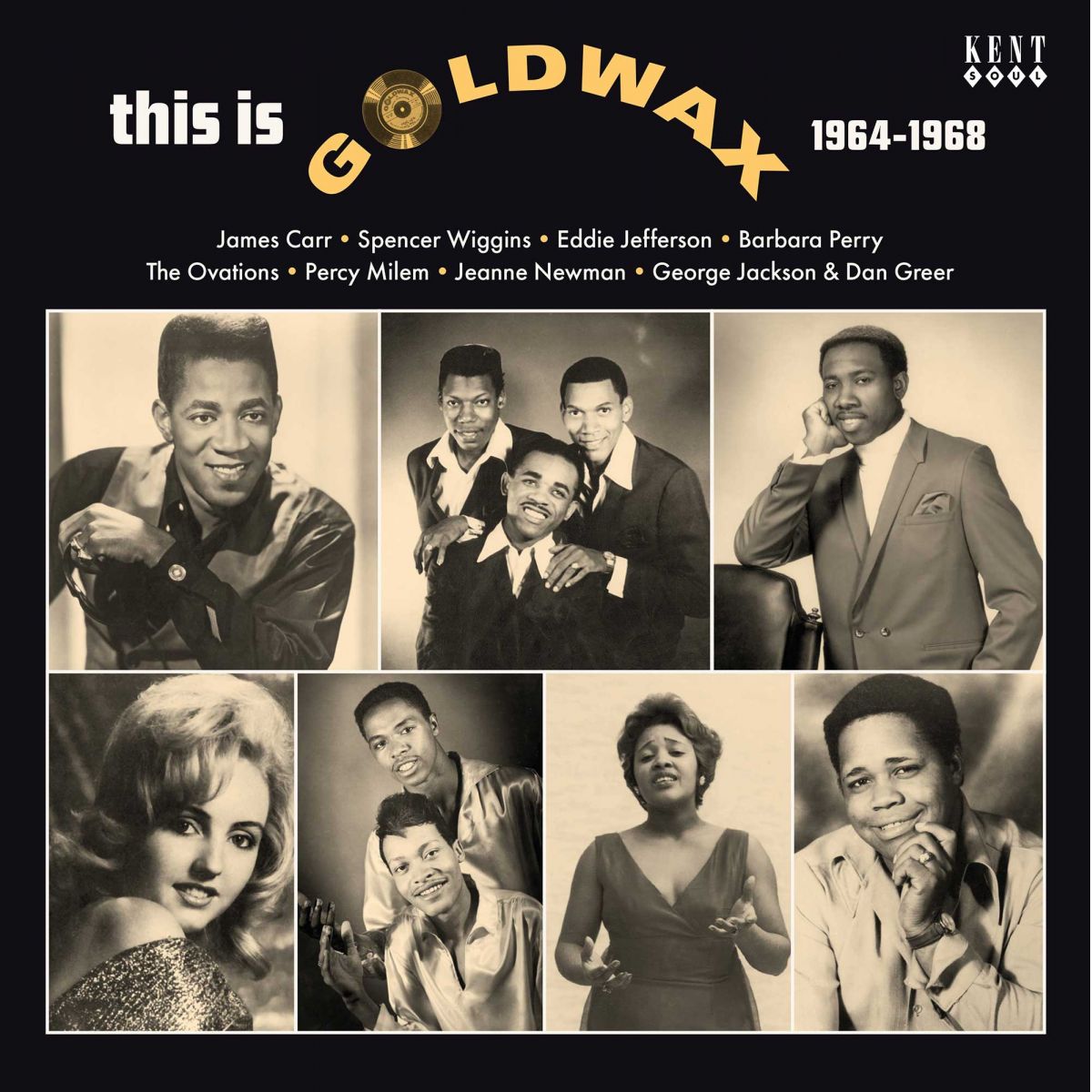
This Is Goldwax 1964-1968.
Label: Kent Soul.
Format: CD.
Quinton Claunch was born on December 3rd, 1921, in Tishomingo, Mississippi. However, in the early forties he moved to Muscle Shoals, Alabama, where his music career began.
Initially, Claunch was the guitarist in various country music groups. Then in 1943, he formed The Blue Seal Pals with Edgar Clayton. Another member of the band was Bill Cantrell, who later, would cowrite a number of hit singles with Claunch.
Soon, The Blue Seal Pals were regulars on WLAY, an AM station in Muscle Shoals. This was just the start. They then moved to a rival station, WJOI, in Florence. The group were on the move once again, and became regulars on Nashville station WSM. This resulted in them becoming regulars and favourites at the Grand Ole Opry. However, in 1948 Claunch was on the move.
Following his marriage in 1948, Claunch moved to Memphis, Tennessee. That was where he met an old friend, and former WLAY disc jockey Sam Phillips, who had founded Sun Records. Claunch played on guitar on recordings by Carl Perkins, Charlie Feathers and Wanda Jackson. However, music wasn’t his only source of income. During this period, Claunch opened a hardware store. He didn’t turn his back on music though.
In 1954, Claunch and Cantrell cowrote “Daydreamin'” for Bud Deckelman. However, it was Jimmy C. Newman who had a hit with the song. “Daydreamin'” wasn’t the only hit single Claunch would write.
Three years later, in 1957, Claunch and Cantrell cofounded Hi Records with Ray Harris and Joe Cuoghi. The label went on to become one of Memphis’ best known Southern Soul labels. However, in the early days, Claunch wrote over 200 songs and was also the in-house producer. Two years after cofounding Hi Records, it was a relatively successful local label. Claunch sold his share of the label in 1959, to grow his hardware business. Four years later, he returned to the music industry.
It was in 1963 that Claunch met pharmacist Rudolph V. “Doc” Russell and attorney Robert Dobbs. The three men founded a new label, Goldwax Records, which specialised in releasing gospel and Southern Soul. Later that year, the nascent label released its first single, “Darling” by The Lyrics. This was the start of the Goldwax Records story.
Recently, Kent Soul, an imprint of Ace Records, released “This Is Goldwax 1964-1968.” It features twenty-eight tracks, including contributions from James Carr, Spencer Wiggins, George and Greer, The Ovations, O.V. Wright, Timmy Thomas, Barbara Perry and Jeanne Newman.
Fittingly, it’s James Carr’s seminal Southern Soul ballad “The Dark End Of The Street” that opens the compilation. It’s a soul-baring performance bristling with emotion as if Carr has lived the lyrics. Despite the quality of the single, it only reached seventy-seven on the US Billboard 100 and ten on the US R&B charts in 1967. There’s two other contributions from Carr. This includes the uptempo stomping single “Freedom Train,” which was released in 1968, and features lyrics full of social comment. Then there’s Carr’s impassioned and needy reading of “A Man Needs A Woman,” which was released in 1967. It’s another of his finest singles.
Spencer Wiggins was another of Goldwax Records’ biggest artists. The heartachingly beautiful ballad “Uptight Good Woman,” released as a single in 1967, epitomises everything that’s good about Southern Soul. Quite different is the catchy Memphis dancer “I’m A Poor Man’s Son.” It was the B-side of “That’s How Much I Love You” which was released in 1968. “Once In A While (Is Better Than Never At All)” was released in November 1968, and was Carr’s penultimate single on Goldwax Records. It’s a beautiful soul-baring Southern Soul ballad.
Two unreleased tracks feature on Kent’s 2009 compilation “Goldwax Northern Soul.” The first is “To Me It’s Storming” by “George and Greer.” The duo was George Jackson and Spencer Wiggins. They only released one singe, but this was one of many demos the pair recorded. The other unreleased track on “Goldwax Northern Soul” was “What’cha Gonna Do” an urgent tale of hurt and heartache by Phillip and The Faithfuls.
“I Don’t Want To Take A Chance” by ‘Wee’ Willie Walker lay unreleased until 2004, when it featured on “The Goldwax Story Volume 2.” It features an emotion bristling with emotion and sadness. He scare to “take his baby back” in case she brings him “misery” and he’s “hurt again.” It’s a powerful and moving song that. There’s also a cover The Beatles’ “Ticket To Ride” that was released as a single in 1967. “In 1968, the single “A Lucky Loser” was leased to the Checker label. However, this soulful dancer with stabs of horns accompanying Walker’s powerhouse of a vocal. It’s a mixture of emotion, happiness and joy.
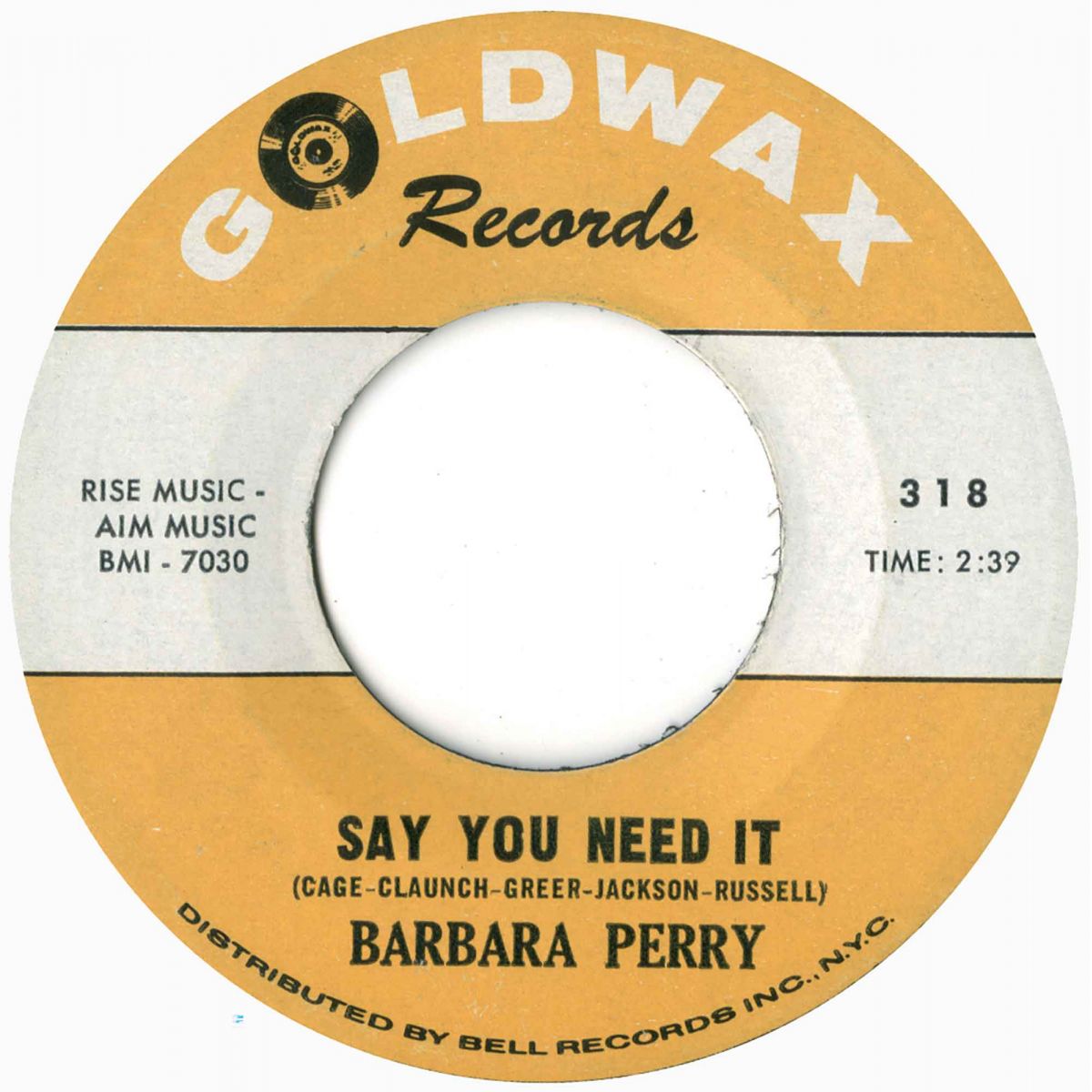
Barbara Perry features twice on “This Is Goldwax 1964-1968.” The first is “Say You Need It,” which was recorded at the Fame Studios in Muscle Shoals. This soulful earworm was released as a single in 1967, but failed to chart. Perry’s other contribution is the uptempo hidden gem “A Man Is A Mean Thing.” It wasn’t released until it featured on Kent’s “New Breed R& with Popcorn.”
One of the most beautiful, moving and powerful songs on the compilation is “That’s How Strong My Love Is” by O.V. Wright with The Keys. It was released as a single in 1964 and is one of the highlights of “This Is Goldwax 1964-1968.”
Closing “This Is Goldwax 1964-1968” is a tender, heartfelt and emotive rendition of “He Called Me Baby” by country singer Jeanne Newman. It was released a single in 1967 but wasn’t a commercial success. This was her one and only single on Goldwax Records.
Sadly, Goldwax Records folded in 1969, because of differences between Claunch and Russell. The other reason was Carr’s erratic behaviour. However, by then, Carr was already unwell and can’t be blamed for demise of the label. It was primarily the differences between Claunch and Russell that were to blame for demise of Goldwax Records.
The label was relaunched in the mid-eighties by Memphis businessman Elliott Clark. Claunch returned and became its president until the nineties. However, Goldwax Records was never the label it was between 1963 and 1969. That was the label’s heyday.
A reminder of one of Memphis’ most important soul labels is This Is Goldwax 1964-1968. It’ll be of interest to all soul fans, and especially lovers of Southern Soul.
This Is Goldwax 1964-1968.



- Posted in: Country ♦ Gospel ♦ Soul ♦ Southern Soul
- Tagged: Ace Records, Barbara Perry, Hi Records, James Carr, Jeanne Newman, Kent Soul, O.V. Wright with The Keys, Quinton Claunch, Spencer Wiggins, This Is Goldwax 1964-1968
 dereksmusicblog
 dereksmusicblog