THE BEST 50 REISSUES OF 2015-PART FIVE.
THE BEST 50 REISSUES OF 2015-PART FIVE.
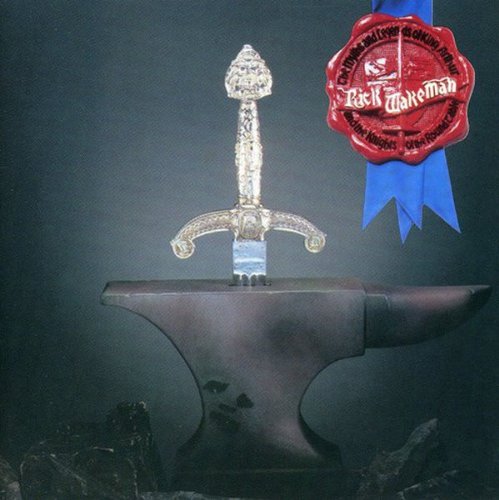
RICK WAKEMAN-THE MYTHS AND LEGENDS OF KING ARTHUR AND THE KNIGHTS OF THE ROUND TABLE,
Following the success of Journey To The Centre Of The Earth, Rick Wakeman was getting ready to begin work on his fourth album. Then disaster struck. Rick had the first of three minor heart attacks. He was taken to Wexham Park Hospital, near Slough, in Berkshire. The prognosis wasn’t good, and the doctor advised Rick to stop playing and touring. This wasn’t an option. Rick Wakeman was determined that his career continue. As his recuperation continued, his thoughts turned to his next album, The Myths and Legends Of King Arthur and The Knights Of The Round Table.
When The Myths and Legends Of King Arthur and The Knights Of The Round Table was released in 1975, it sold over twelve million copies worldwide, and was certified gold in four continents. Forty years later, and Universal Music Group reissued The Myths and Legends Of King Arthur and The Knights Of The Round Table as a double album. This is a very welcome reissue.
For far too long, Rick Wakeman’s music has been unavailable. That’s a missed opportunity. After all, Rick Wakeman was a musical pioneer, who pushed musical boundaries. That’s the case on The Myths and Legends Of King Arthur and The Knights Of The Round Table. Over seven songs, Rick combines everything from choral and classical to folk and funk, right through to classic rock and prog rock. The music is variously beautiful, captivating, cinematic, elegiacal, ethereal and graceful, right through to dramatic, rousing, stirring and urgent. The music on this prog rock classic, where Rick Wakeman paints pictures, and in doing so, transports you back in time, to another place, where you discover The Myths and Legends Of King Arthur and The Knights Of The Round Table.
RICK WAKEMAN-THE SIX WIVES OF HENRY VIII.
In early 1972, Yes were touring America to promote their fourth studio album Fragile. On a stopover in Richmond, Virginia, Rick Wakeman, joined Yes in August 1971, and made his debut on Fragile, was perusing the airport bookshop. Eventually, Rick bought four books, including Nancy Brysson Morrison’s The Private Life Of Henry VIII. On the subsequent flight from Richmond to Chicago, Rick began reading. It was then that he remembered a recording he had made in 1971. Since then, Rick had done nothing with that piece of music. After recording the music, Rick had been struggling to come up with lyrics to accompany it. This being the age of the concept album, what Rick was looking for, was a theme that could run through the recording. Not any more.
Suddenly, everything came together. The notes Rick made about Anne Boleyn on the flight to Chicago were just the start. Over the next few weeks and months, whether at home or on tour, Rick focused on each of Henry VII’s six wives. At his piano, he continued to make notes. Eventually, Rick’s notes became the thread that ran through his sophomore album, The Six Wives Of Henry VIII, which was recently reissued by Commercial Marketing as a double album. Before its release in 1973, Neither critics, nor many of the staff at A&M Records foresaw the commercial success of The Six Wives Of Henry VIII.
Since its release in 1973, The Six Wives Of Henry VIII sold over fifteen million copies. It’s now considered a stonewall prog rock classic; and Rick Wakeman is now perceived as a musical pioneer. After all, The Six Wives Of Henry VIII is also the progressive rock album that legitimised synths in progressive rock. Without Rick Wakeman and The Six Wives Of Henry VIII, maybe, things would have been very different? Rick Wakeman, a true musical pioneer, had the last laugh, when what many considered progressive rock’s ugly duckling, The Six Wives Of Henry VIII, turned into a swan.

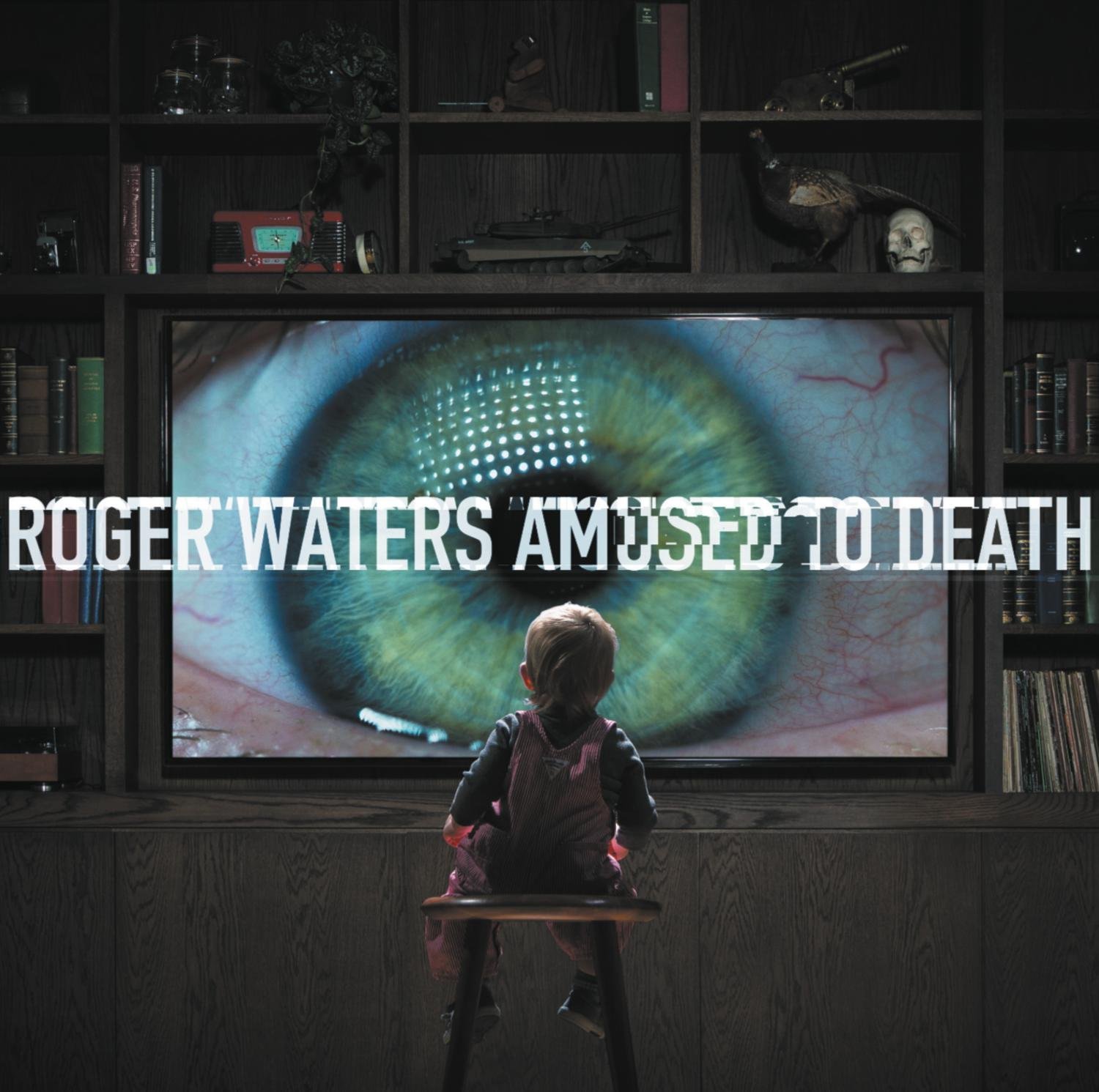
ROGER WATERS-AMUSED TO DEATH.
Just like his two previous albums, Amused To Death was a concept album. Roger had been working on Amused To Death since 1987. It was remastered, remixed and reissued by Sony Music during 2015, and brings five years work to life.
The inspiration for Amused To Death came from Neil Postman’s book Amusing Ourselves To Death. By the time the concept was complete, it revolves around the a monkey who randomly switches between television channels. As channels change, different subjects are discussed. Among them are the Gulf War, World War I, the bombing of Jordan and Libya, and the Tiananmen Square protests of 1989. A total of fourteen tracks feature on Amused To Death, which was recorded between 1987 and 1992.
The reissue of Amused To Death is an opportunity to either acquaint or reacquaint yourself with what was Roger Waters’ finest solo album. It was a case of third time lucky for Roger Waters, when he released the underrated Amused To Death in 1992. If I was to compare Amused To Death to a Pink Floyd album, it would be More. Both Roger Waters’ Amused To Death and Pink Floyd’s More are vastly underrated albums, that for far too long, many music aficionados will have overlooked. If that’s the case, the recent reissue of Amused To Death is the opportunity to right a wrong. Roger Waters would approve of that, in more than one way.
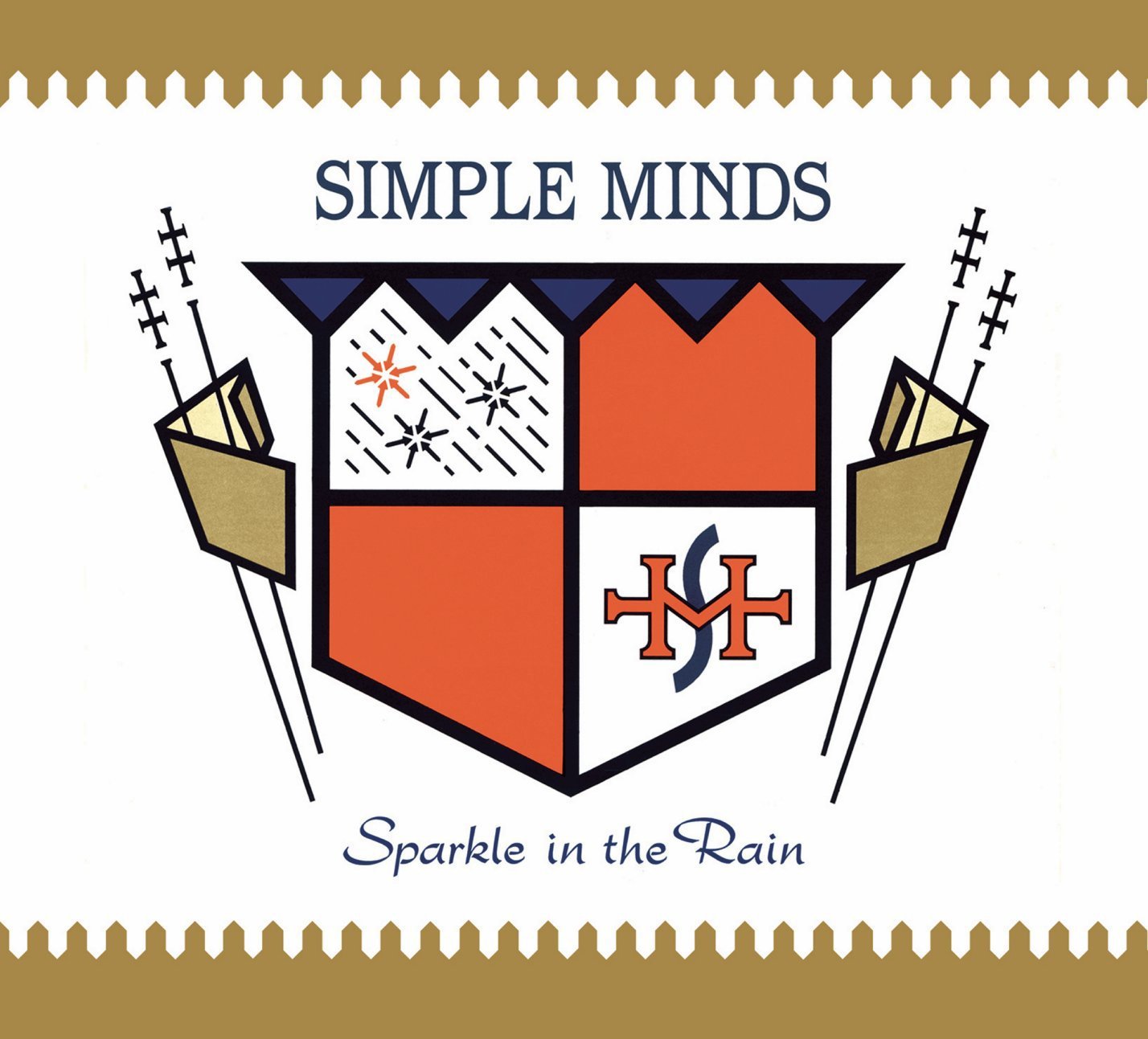
SIMPLE MINDS-SPARKLE IN THE RAIN-DELUXE EDITION.
Last year, Sparkle In The Rain was reissued by Universal Music earlier this year. This was thirty-one years after Sparkle In The Rain was released in February 1984. It became Simple Mind’s most successful album, and reinvented the Glasgow band.
Eventually, Sparkle In The Rain was certified platinum in reached number sixty-four Britain. That wasn’t surprising. Sparkle In The Rain was peppered with hits, including Up On The Catwalk, Book Of Brilliant Things, Speed Your Love To Me and Waterfront. These tracks played their part in the reinvention of Simple Minds.
They left their electronic and new wave roots behind. Now, Simple Minds were well on their way to superstardom. The album that started this off was their Glasgow album. It’s bold, stylistic and full of confidence. Simple Minds are almost gallus as they strut their way across Sparkle In The Rain, en route for stadium rocking, superstardom.
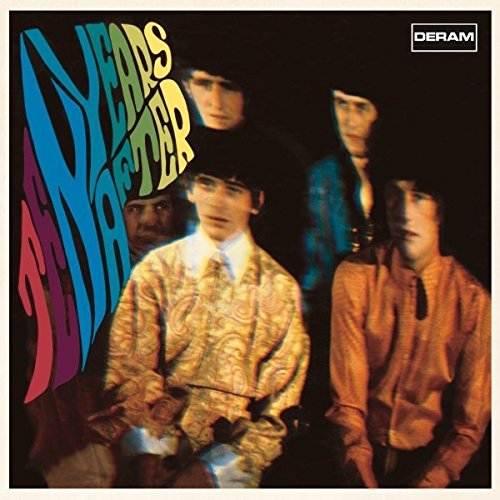
TEN YEARS AFTER-STONEDHENGE.
When Ten Years After released their live album Undead in August 1968, it proved a game-changer. It was heard by legendary promoted Bill Graham. He championed Ten Years After in America. As a result, Undead reached number 115 in the US Billboard 200. This was the start of a six year period when Ten Years After could do no wrong in the eyes of the American record buying public.
From Stonedhenge, which was recently released by UMC, right through to Ten Years After’s eighth and final studio album, Positive Vibrations, which was released in April 1974, Ten Years After spent much of their time in America. That wasn’t surprising. Ten Years After were much more popular stateside. They were the latest rock gods to make it big in America.
Stonedhenge was the start of America’s love affair with Ten Years After. The album has just been rereleased as a double album. Disc one features the mono and stereo version of Stonedhenge. On disc two, there’s six tracks, including B-Sides, live tracks and even a track from an Alvin Lee solo album. They’re be a welcome addition for anyone who wants to discover or rediscover Stonedhenge, Ten Year After’s second solo album and the latest stop on the road to commercial success and critical acclaim.
TEN YEARS AFTER-TEN YEARS AFTER.
In October 1967, Ten Years After released their eponymous debut album. The album failed to make an impression on either side of the Atlantic. It was a disappointing start to Ten Years After’s recording career. Especially considering how well things had been going for Ten Years After.
Ever since they had changed their name from Blues Yard to Ten Years After, their fortunes had changed. They had secured a residency at the Marquee, played a starring role at the Windsor Jazz Festival and then signed to Deram Records. It had been roller coaster ride. However, it was nothing compared to the next six years.
For six years Ten Years After could do no wrong, and were one of the biggest bands on both sides of the Atlantic. The album that launched Ten Years After on to the road to commercial success and critical acclaim is Ten Years After, which was recently reissued by Universal Music. The newly reissued version of Ten Years After features both the mono and stereo versions of the album on disc one. Disc two features eleven bonus tracks. They’re a welcome addition, and will especially be of interest to completists. However, the reissue of Ten Years After is a reminder of one of British music’s most successful exports, as they embark upon what would prove to be a career where commercial success and critical acclaim were constant companions.
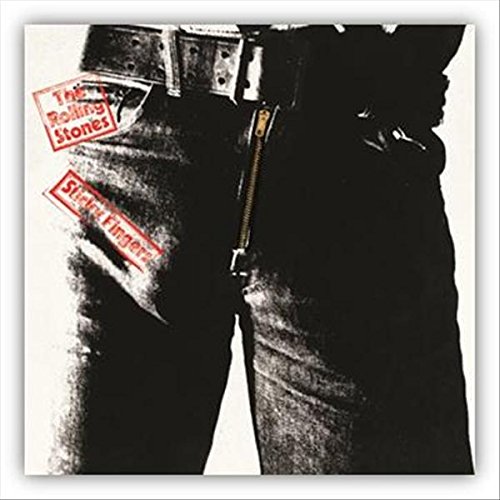
THE ROLLING STONES-STICKY FINGERS-DELUXE EDITION.
When The Rolling Stones began recording Sticky Fingers with producer Jimmy Miller, it was a poignant time. Sticky Fingers was the first recording session without Brian Jones. His replacement, Mick Taylor, played an important part in the Sticky Fingers sessions, adding lead, rhythm and acoustic guitar. Somehow, he and the rest of The Rolling Stones dug deep, and recorded a classic album, Sticky Fingers, which was reissued by Polydor.
On its release in 1971, Sticky Fingers reached number one in Britain and America. Since then, Sticky Fingers is regarded as a classic album, from the biggest rock ’n’ roll band in the world. That took some doing.
The last few years had taken their toll on The Rolling Stones. They had been arrested, lost Brian Jones and replaced him with Mick Taylor. Then there was the controversy surrounding Altamont. Somehow, The Rolling Stones had survived all this, and were still going strong, having just released a career defining classic album Sticky Fingers.
THE VELVET UNDERGROUND-LOADED.
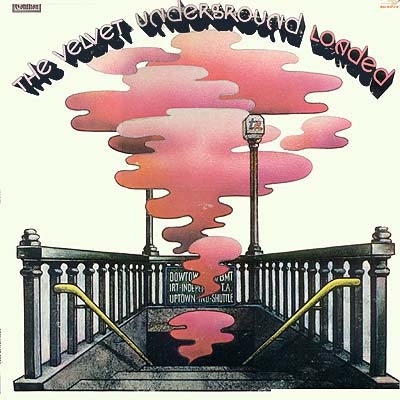
Having found themselves without a record company, The Velvet Underground’s luck changed when they signed to Atlantic Records. They were told to record an album: “loaded with hits.” The result was Loaded, the last Velvet Underground to feature Lou Reed, the group’s creative force. It was the end of era for The Velvet Underground. They essentially died on on 23rd August 1970, when Lou Reed left.
The Velvet Underground were like a rudderless ship floundering in choppy musical waters. Loaded was resequenced and Lou Reed alleged, some of the song had been edited, Despite that, Loaded, like 1967 with The Velvet Underground and Nico, 1968s White Light/White Heat, 1969s The Velvet Underground are all classic albums. That’s why it’s fitting that Loaded was reissued by Rhino as a four disc box set to celebrate the forty-fifth anniversary of this classic album’s release.
Despite failing commercially in 1970, Loaded is nowadays, regarded as a classic album; and The Velvet Underground are remembered as one of the most important, influential and innovative bands in the history of music. Their musical legacy is one of the richest in music.
TOM RUSH-TOM RUSH.
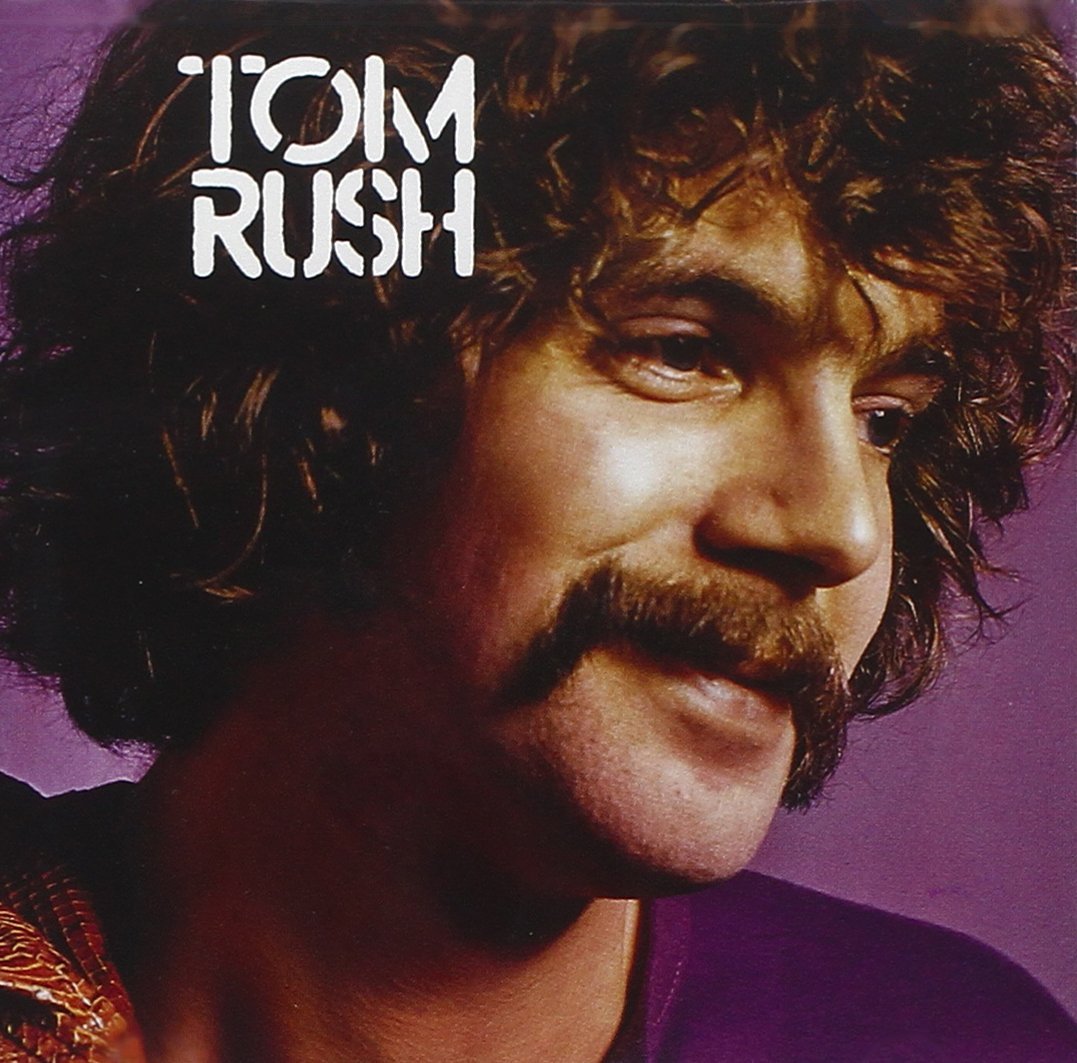
For many people, Tom Rush was a trailblazer. He was the first of the singer-songwriters. His career began in 1961, when Tom, who was born in Portsmouth, New Hampshire began singing in clubs. Back then, Tom was still a student at Harvard University, where he studied English literature. A year later, in 1962, Tom Rush released his debut album Tom Rush At The Unicorn. That was the start of a six decade recording career.
By 1965, Tom Rush was ready to release his eponymous third album. He had just signed to Elektra Records, which was well on its way to becoming home to many of the greatest singer-songwriters.
On Tom Rush, Tom breathes life and meaning into the lyrics of the ten songs. Sadness vies with excitement. So does trepidation and hope. The music is beautiful and moving, and leaves you wanting to hear more from one of music’s best kept secrets, Tom Rush.
VAN MORRISON-HIS BAND AND STREET CHOIR.
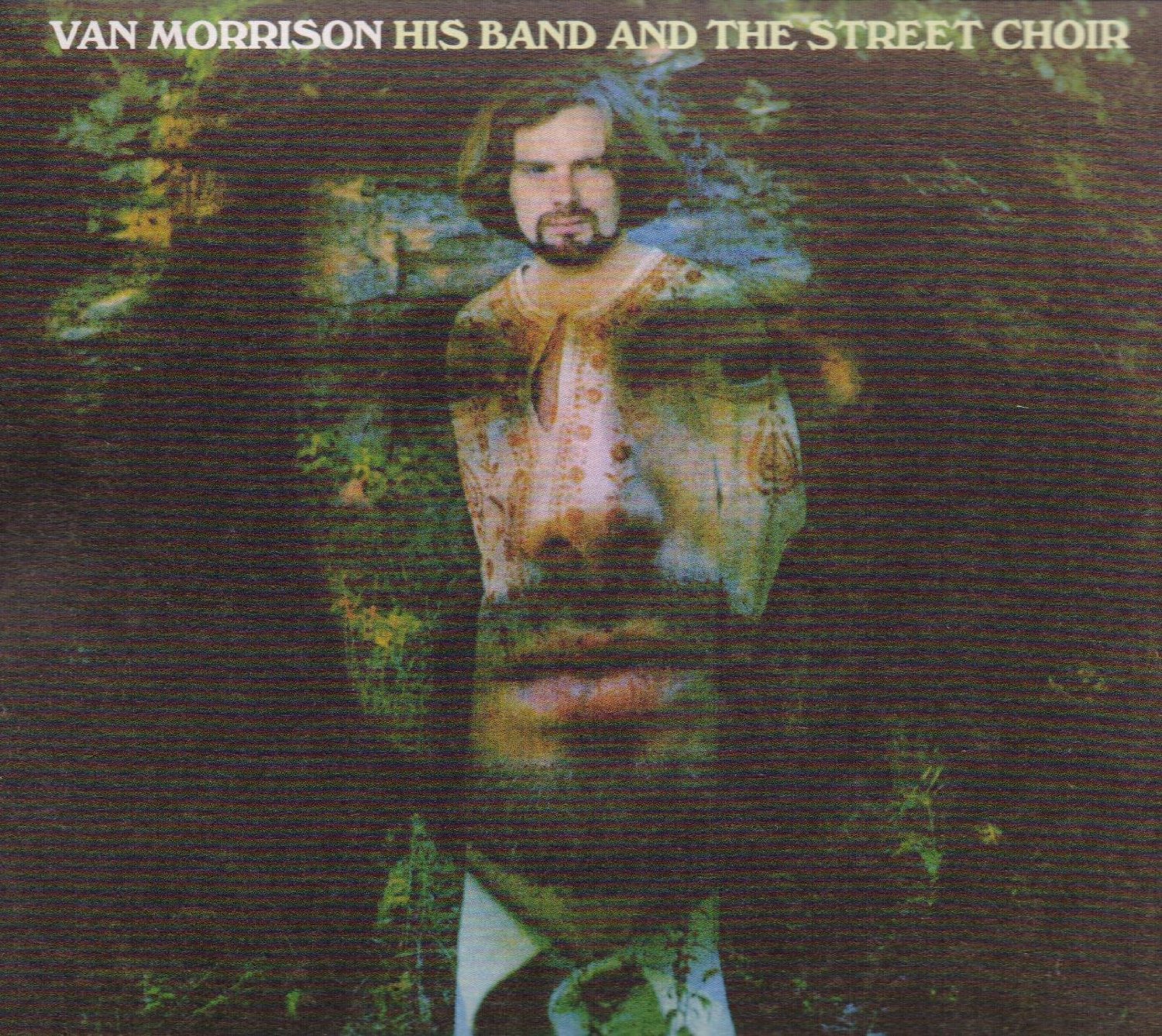
When Van Morrison began work on his fourth album His Band and Street Choir, he faced the biggest challenge of his career. His last two albums, 1969s Astral Weeks and 1970s Moondance, had been stonewall classics. Following these albums up wasn’t going to be easy. It was going to be the biggest challenge of Van Morrison’s career.
Van Morrison rose to the challenge, and His Band and Street Choir, the album became the most successful of Van Morrison’s four album career. That’s ironic, given Astral Weeks and Moondance are two of the most important albums not just in Van Morrison’s career, but the history of music. Every album Van Morrison went on to release, was compared to his two classic albums. This includes His Band and Street Choir, which was recently remastered and rereleased by Rhino.
His Band and Street Choir has always been overshadowed by Astral Weeks and Moondance. In 1970, Van Morrison was trying to followup an album of the magnitude of Moondance. It was almost impossible. Critics had said the same about Astral Weeks, and Van came back with Moondance. However, His Band and Street Choir is no Moondance. Despite that, His Band and Street Choir is one of the finest albums Van Morrison released during the seventies.
So that’s my list of the fifty best reissues of 2015. Just like the other best of 2015 lists, it’s an eclectic selection of albums. Countless musical genres are represented. There’s everything from ambient and avant garde through to experimental, free jazz and Kominische plus progressive rock, psychedelia and rock. Over forty artists and bands feature on the best reissues of 2015. Some artists feature more than once. They’re not necessary the biggest names in music. Far from it. Michael Chapman is still one of music’s best kept secrets, but features three times. He’s just one of music’s best kept secrets. There’s several on the list, which features some lavish and lovingly compiled reissues.
It seems record companies are spending much more time on reissues. Many people still want to buy reissues on CD or vinyl. Downloads and streaming isn’t an option. Music lovers of a certain age like to own something tangible, either a CD or LP. Especially the baby boomers. They are the ones with a disposable income, and want to buy the albums they grew up listening to. They’re willing to pay for deluxe versions, complete with bonus discs and sometimes, DVDs. However, they demand quality. Its improved during 2015.
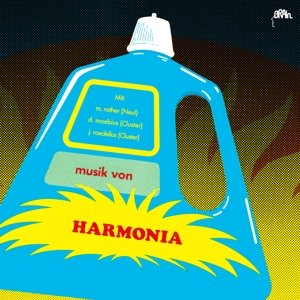
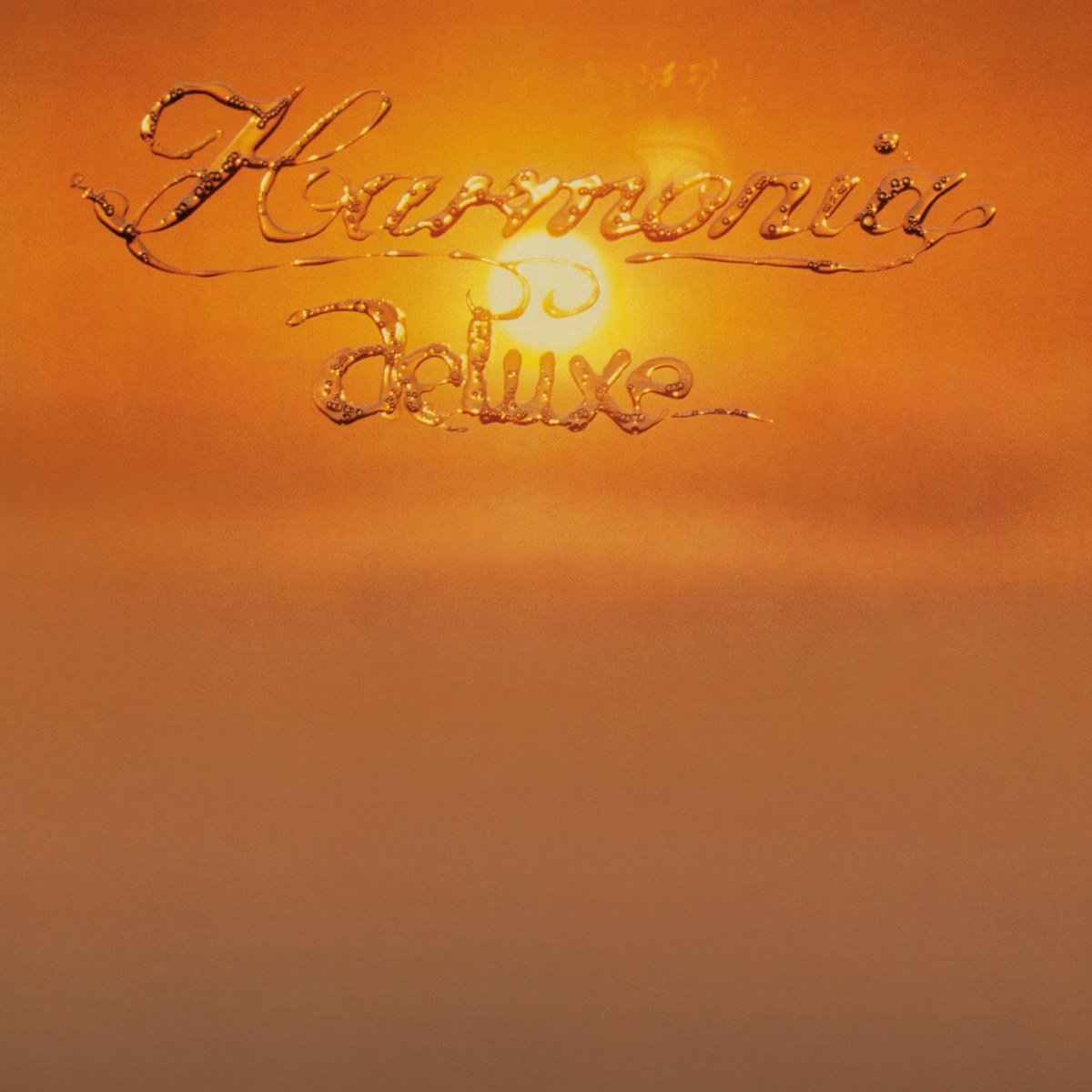
One thing I have noticed, is that the quality of mastering has improved on reissues. Often, it’s stunning. The best mastered reissues were Grönland Records reissues of Harmonia’s Deluxe and Musik Von Harmonia. They set the bar high for remasters in 2016, which hopefully will be a good year for reissues.
Especially since 2015 was such a good year for reissues. Hopefully, 2016 will be just as good. Music lovers still have an insatiable appetite for reissues. It seems for music lovers of a certain age, who no longer pay attention to the charts, reissues is what they want to buy. Proof of that is the number of reissues released each year. The reissue market shows no signs of slowing down, and for that, music lovers are thankful. It’s the gift that keeps on giving.
THE 33 BEST BOX SETS OF 2105-PART ONE.
THE 33 BEST BOX SETS OF 2105-PART ONE.
So far, in my look back at 2015, I’ve picked the best Scottish, Nordic Wave and new albums of 2015. Now we turn to the best box sets of 2015.
Last year, was a good year for box sets, which came in all shapes and sizes. Everything from two CD and a DVD, through to career retrospectives were marketed as box sets. A couple on the list, I would’ve called triple albums. However, they were marketed as box sets. So, they qualify for this list. However, they also qualify for the best reissues of 2015. More of that later this week. For the meantime, lets do the A-Z of the best thirty-three box sets of 2015. Here goes.
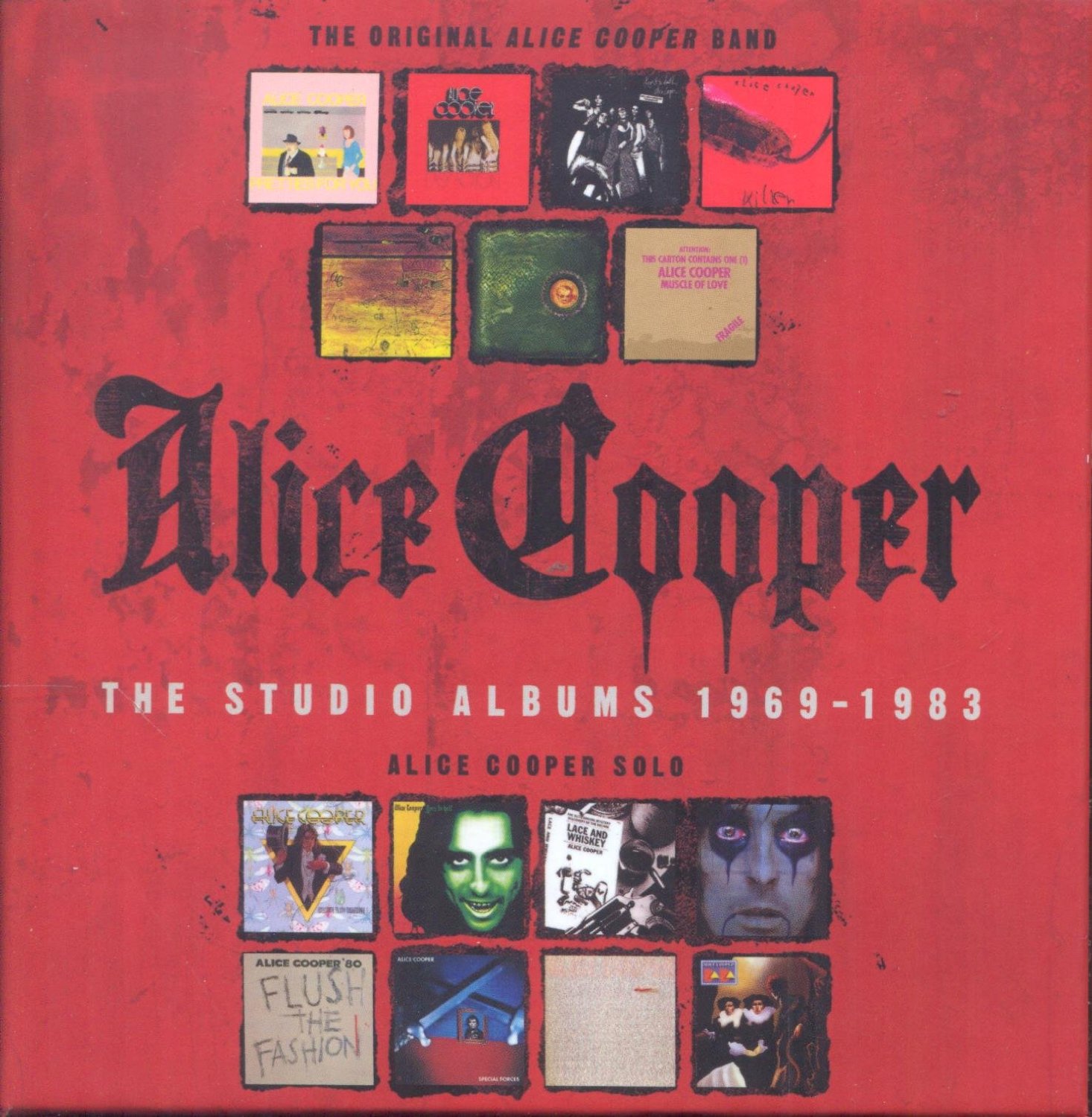
ALICE COOPER-THE STUDIO ALBUMS 1969-1983.
Alice Cooper’s career has spanned five decades and twenty-six studio albums. This includes the fifteen albums in The Studio Albums 1969-1983 box set, which was released by Warner Bros. It documents the first fourteen years of Alice Cooper’s sometimes controversial career.
These fifteen discs feature the music of Alice Cooper’s career. However, it’s far from a flawless box set. The rest of the box set is something of a mixed bag; ranging from the good, bad and indifferent. Even Alice Cooper’s trilogy of “blackout” albums feature some hidden gems. Somehow, on his worst albums, there’s something worth hearing. It seems even in his darkest hour, Alice Cooper could produce something guaranteed to grab the listener’s attention.
Now, thirty-two years after Alice Cooper’s Warner Bros. years ended, The Studio Albums 1969-1983 offers newcomers to that great survivor’s music. The The Studio Albums 1969-1983 fifteen disc box set is the perfect opportunity for newcomers to dip their toe into the water of what’s the greatest period of Alice Cooper’s career, the Warner Bros. years.
AMERICA-THE WARNER BROS. YEARS 1971-1977.
Between 1971 and 1976, America became one of the most popular bands on both sides of the Atlantic. They released six albums during this period, and they feature in the The Warner Bros. Years 1971-1977 box set. It was released by Warner Bros. and celebrates the most successful period of America’s career.
The Warner Bros. years were the best years of America’s career. For much of that time, America’s albums were released to commercial success and critical acclaim. Their first seven studio albums sold over 4.5 million albums. That’s no surprise.
During their time Warner Bros., America released the best music of their career. Their first seven studio albums and Live America are documented on America-The Warner Bros. Years 1971-1977.
BACK TO THE RIVER-MORE SOUTHERN SOUL STORIES 1961-1978.
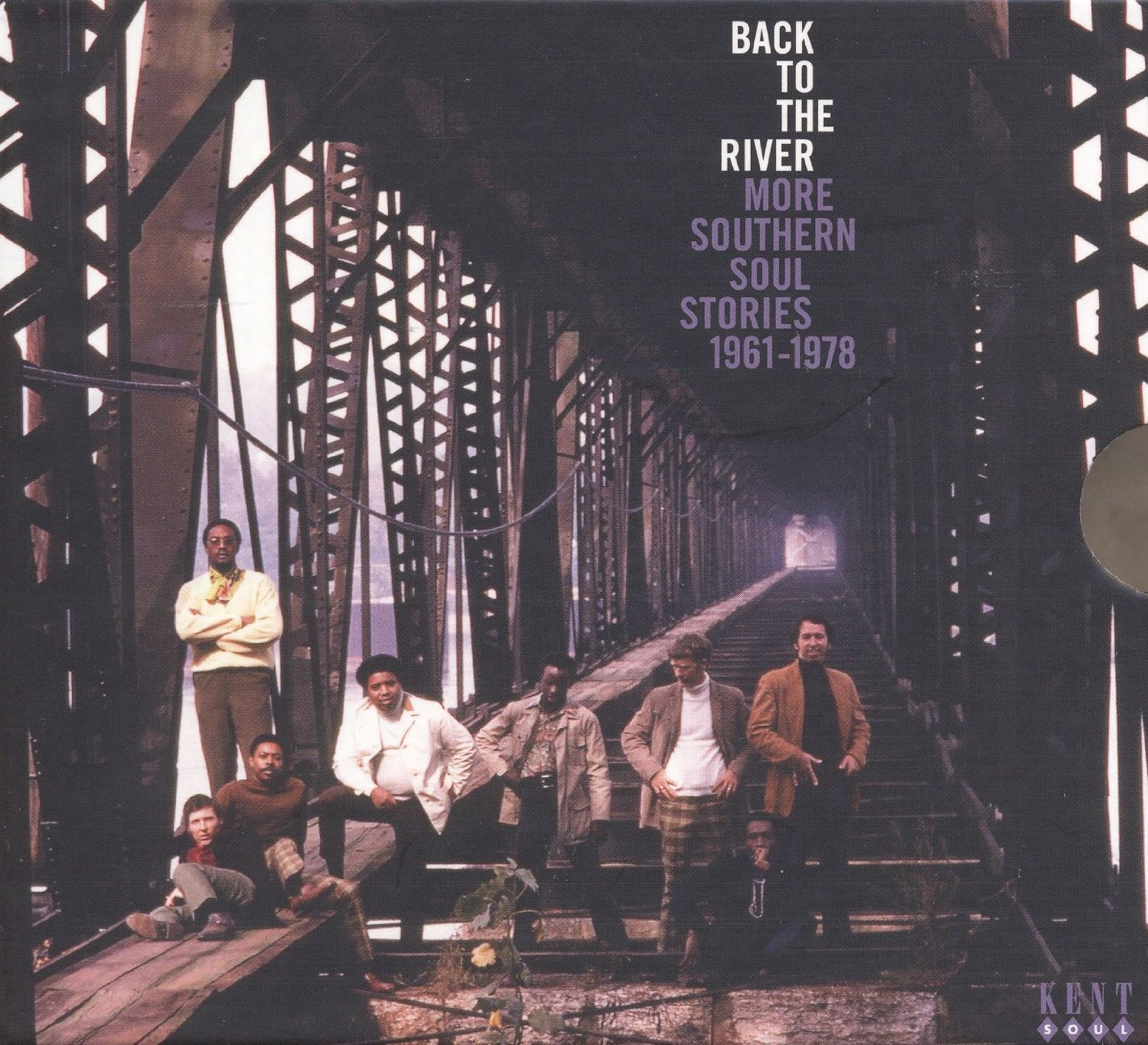
Followups to a successful box set sometimes take a while to compile. That was the case with the followup to Take Me To The River: A Southern Soul Story 1961-1977. It was released in 2006, and since then, fans of Southern Soul have waited patiently. Their patience was rewarded in December, when Kent Soul, an imprint of Ace Records, released Back To The River-More Southern Soul Stories 1961-1978. This luxurious, and lovingly compiled three disc box set, featured seventy-five songs, from the great and good of Southern Soul.
So good was Take Me To The River: A Southern Soul Story 1961-1977, that it’s manage to surpass the quality of Take Me To The River: A Southern Soul Story 1961-1977. That’s no surprise. Back To The River-More Southern Soul Stories 1961-1978 features familiar faces, new names and hidden gems among the seventy-five tracks. There’s something for everyone.
Ballads and tales of heartbreak and betrayal, rub shoulders with songs full of emotion and joy over Back To The River-More Southern Soul Stories 1961-1978’s three discs. This seventy-five song roller coaster, is a reminder of the glory days of Southern Soul.
BIG STAR-KEEP AN EYE ON THE SKY.
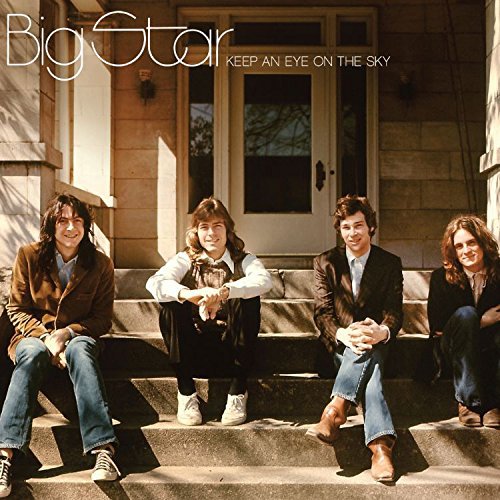
Sadly, in music, talent doesn’t equate to commercial success. If it did, Big Star would’ve been the biggest bands in musical history. That wasn’t the case. Lady luck failed to smile on Big Star when they released a trio of albums between 1972 and 1974. Despite this, nowadays, Big Star are regarded as one of the most influential bands in musical history. Their story was told on Keep An Eye On The Sky, which was reissued by Rhino.
That’s fitting. Nowadays, Big Star’s trio of albums were considered minor classics, and feature in Rolling Stone magazine’s list of the 500 greatest albums of all time. Meanwhile, Big Star were being hailed as one of the most influential, innovative and inventive bands in musical history. That’s apparent when you listen to their trio of albums Number One Record, Radio City and Third/Sister Lovers, plus Keep An Eye On The Sky, the four disc box set, which celebrates the music of Big Star, power pop pioneers.
CTI RECORDS: THE COOL REVOLUTION.
CTi Records: The Cool Revolution, is a four disc box set featuring thirty-nine tracks. Each disc focuses on an aspect of CTi Records sound. Disc one is entitled Straight Up, and focuses on what’s described as “straight up jazz,” while disc two features “deep grooves and big hits.” Then on disc three, The Brazilian Connection is in the spotlight. Finally, disc four is entitled Cool and Classic, and is the perfect way to round off this four disc retrospective of CTi Records’ music. It’s a reminder of CTi Records’ vintage years, and is a reminder just how many classic jazz albums Creed Taylor’s label released.
They’re being rediscovered by a new generation of musicians. For those yet to discover Creed Taylor’s label, then CTi Records: The Cool Revolution is the way to do so. The music is innovative and influential, and CTi Records became one of the premier jazz labels of the seventies. It swum against the tide.
By then, jazz music wasn’t as popular. So, CTi Records went looking for jazz music that was relevant and would prove popular. They enjoyed a degree of success, and achieved a reputation as a label who released innovative, inventive and important music. That music has stood the test of time, and four decades later, is just as relevant.
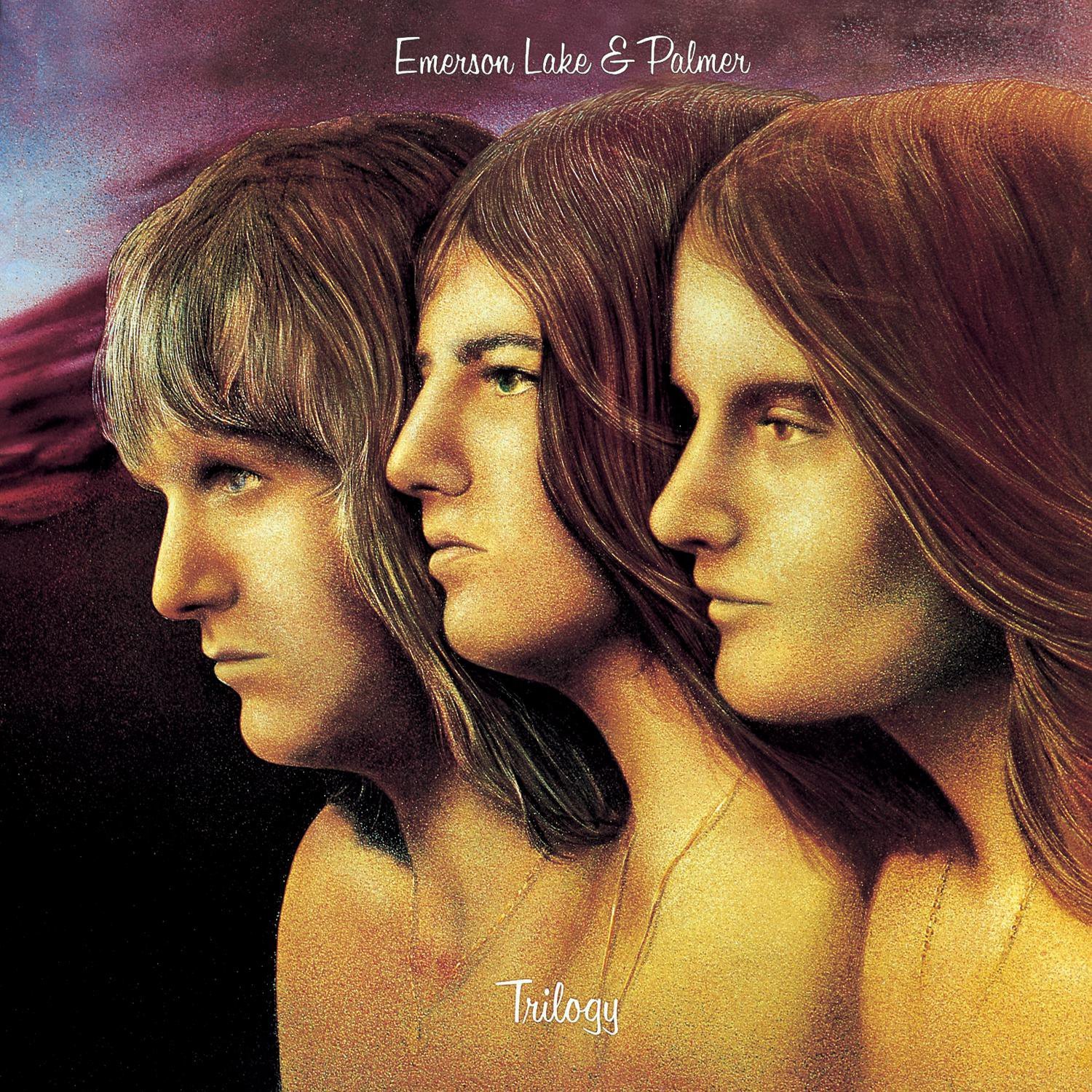
EMERSON, LAKE AND PALMER-TRILOGY (DELUXE EDITION).
By the time Emerson, Lake and Palmer set about recording their third studio album Trilogy, it seemed everything they touched turned gold. Their first two studio albums had been certified gold in America. So had their two live albums. Already, Emerson, Lake and Palmer were on their way to becoming one of the biggest bands in prog rock.
Very few bands were as innovative, inventive and influential as Emerson, Lake and Palmer. Continually, they pushed musical boundaries to their limits, and sometimes, it seemed beyond. This worked. They never stood still, and their music became stale. That’s why, forty-three years after the release of Emerson, Lake and Palmer’s third studio album Trilogy, it sounds as innovative and ambitious as it did in 1972.
Trilogy found Emerson, Lake and Palmer growing,evolving and maturing as a band. They had come a long way in the past two years. Now they were tight and multitalented. Emerson, Lake and Palmer were also a visionary band, who seamlessly, were capable of fusing classical music, folk, jazz prog rock, psychedelia, rock and symphonic rock. All these disparate musical genres played their part in the sound and success of Trilogy, Emerson, Lake and Palmer’s timeless epic, Trilogy which was reissued by Sony Music.
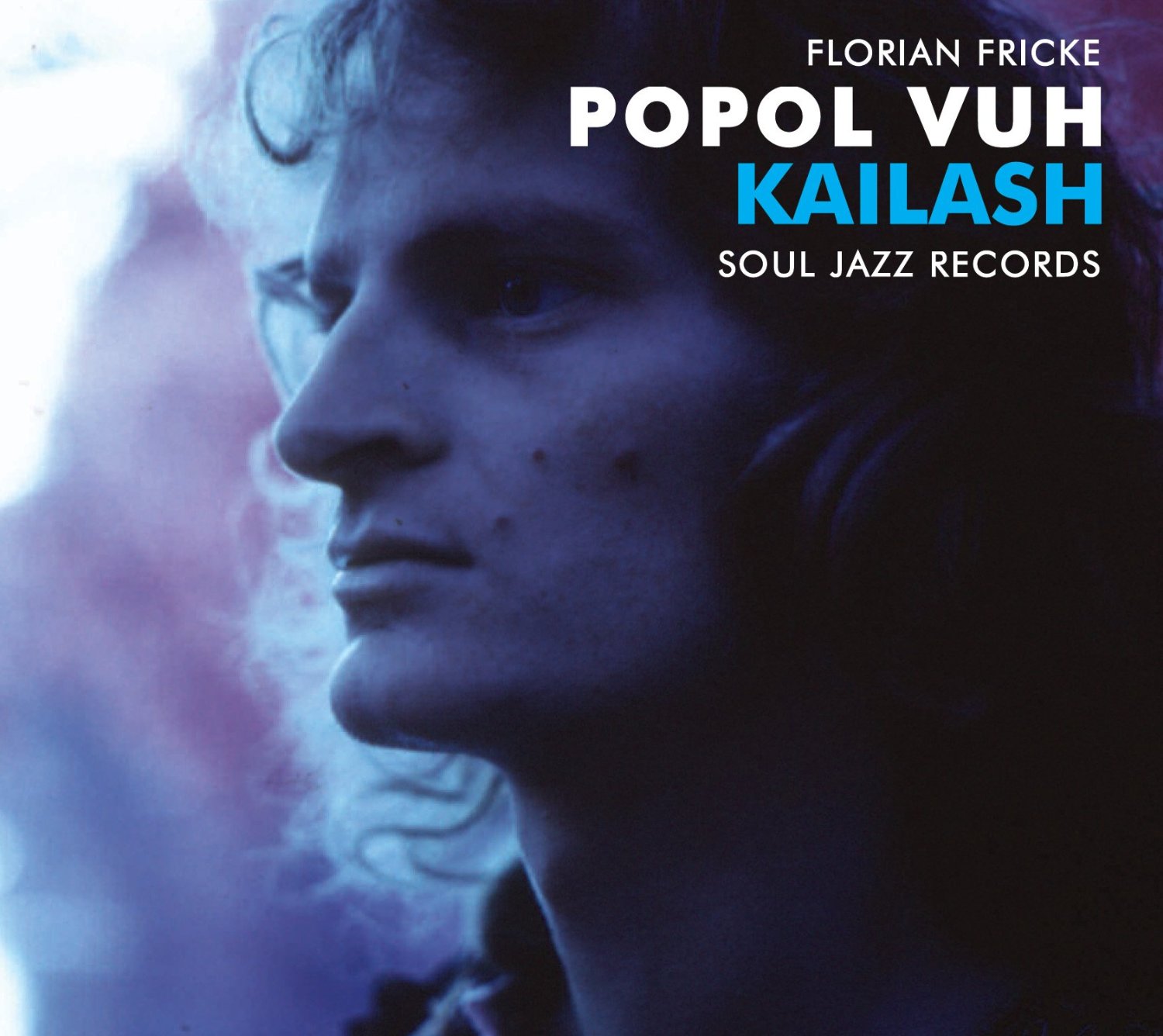
FLORIAN FRICKE/POPOL VUH-KAILASH.
Florian Fricke was a musical innovator, who as a member of Popol Vuh and Tangerine Dream, created music that was innovative and influential Part of Popol Vuh’s success, was keyboardist Florian Fricke who sadly, died in 2001 aged just fifty-seven. He left behind a rich musical legacy, including that on the Florian Fricke/Popol Vuh box set Kailash. It was released in 2015, and celebrates the life and music of a true musical innovator and legend, Florian Fricke on two CDs and a DVD.
Disc one Piano Recordings; features eight of Florian’s favourite released and unreleased recordings and compositions. Some are Florian and his piano prove a potent combination. Patterns appear, only to disappear and recur. Then Florian heads off in an unexpected direction. He improvises and experiments, fusing classical and improvisational music. The resulting music veers between beautiful and bewitching, to captivating, dramatic, ethereal, spellbinding and spiritual. That’s also the case on the unreleased soundtrack on disc two.
The soundtrack to Kailash: Pilgrimage To The Throne Of The Gods, features on disc two; while the film can be found on the accompanying DVD. Both are captivating. Especially the ten ethereal soundscapes. They’re cinematic, ethereal, dramatic and spiritual. It’s another captivating listen; that maybe, the Florian Fricke/PopolVuh Kailash box set will introduce Florian Fricke and PopolVuh’s music to a wider audience.
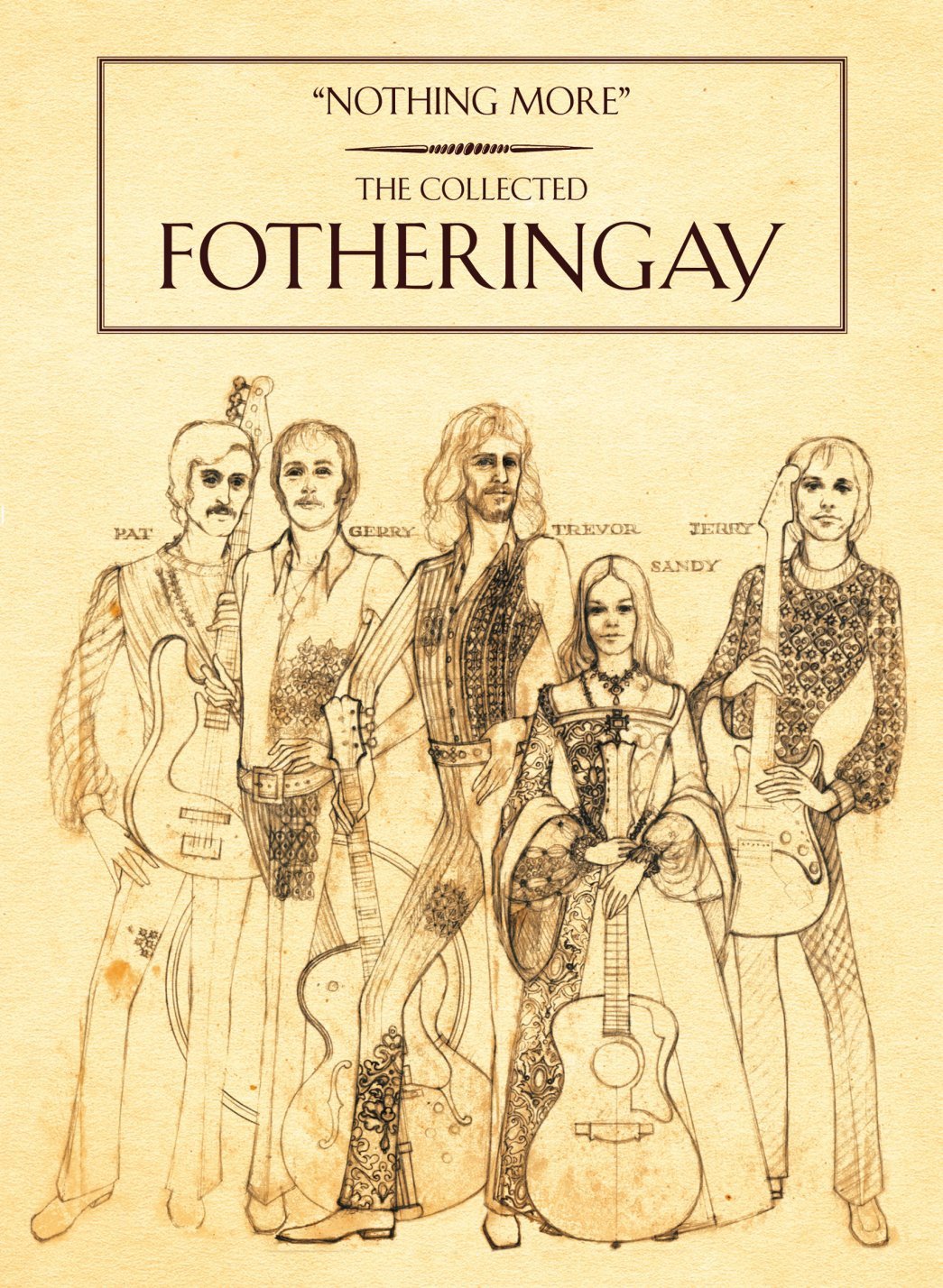
FOTHERINGAY-NOTHING MORE: THE COLLECTED FOTHERINGAY.
Fortheringay were the short-lived folk band formed by the late, great Sandy Denny. They could’ve gone on to rival Fairport Convention. Sadly, that wasn’t to be. Instead, all Fotheringay’s music fits on the four disc box set Nothing More: The Collected Fotheringay. It was released by Commerical Marketing, and is the most extensive collection of Fotheringay’s music ever released.
On disc one, is Fotheringay’s eponymous debut album. Disc two features Fortheringay’s aborted sophomore album, Fotheringay 2. It wasn’t released until 2008, thirty years after Sandy Denny’s tragic death. The third disc features Fotheringay live. So does disc four, which is a DVD. These four discs result in what’s the most extensive collection of Fotheringay’s music ever released.
While Sandy Denny is remembered for her two spells with Fairport Convention and here solo caree, often her time with Fortheringay is often overlooked. That’s a great shame, as Sandy Denny’s short-lived other group features Sandy Denny at the peak of her powers. With Sandy Denny at the helm, Fotheringay could’ve gone on to rival Fairport Convention. Sadly, they never got the opportunity to do so, and the Fotheringay story was over before it had began. It’s documented on Nothing More: The Collected Fotheringay, which is a poignant reminder of Sandy Denny’s “other,” sometimes forgotten group.
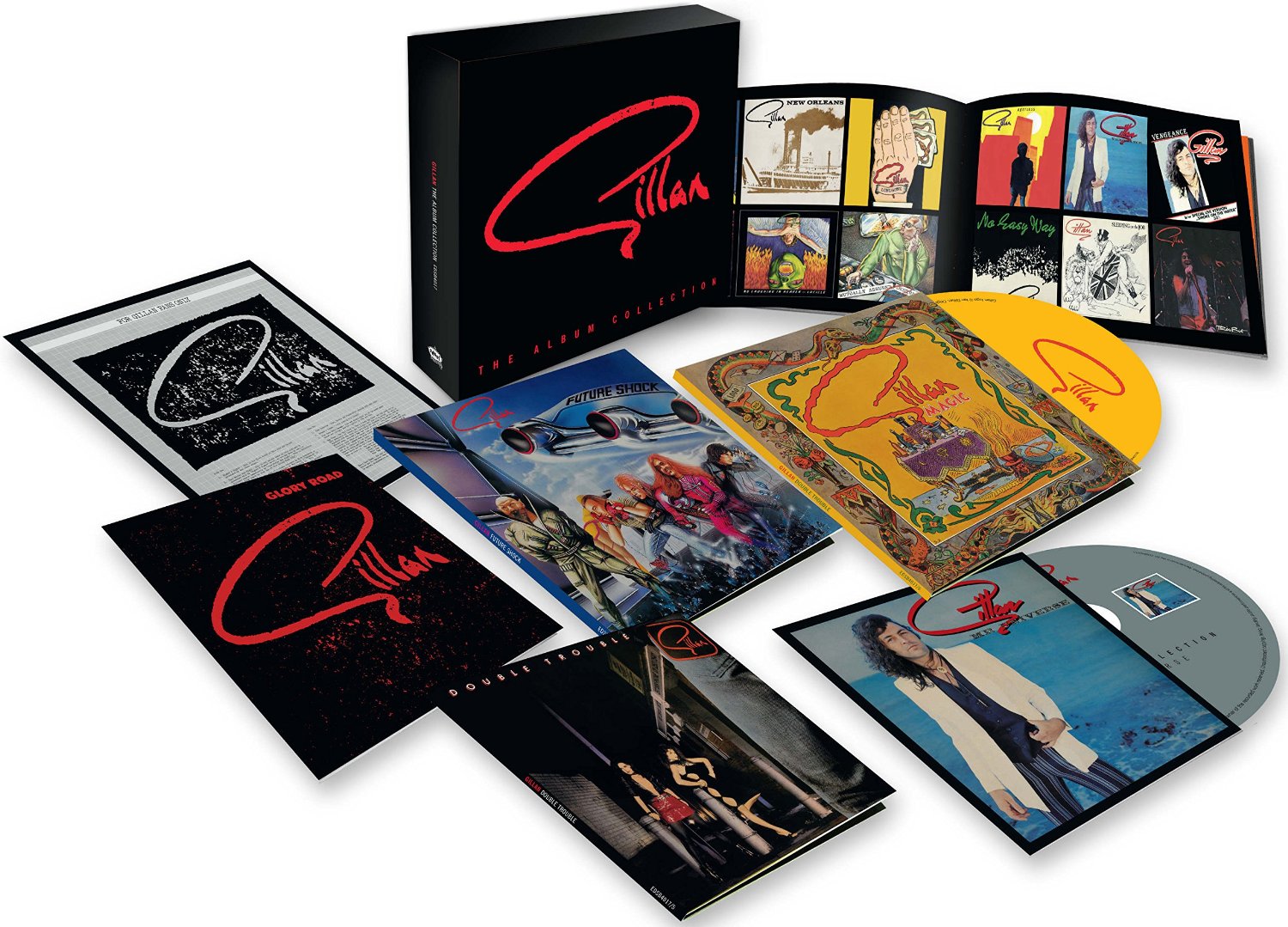
GILLAN-THE ALBUM COLLECTION.
Following his departure from Deep Purple, Ian Gillan formed The Ian Gillan Band. After the disappointment of The Ian Gillan Band’s last two albums, Ian Gillan’s career was at a crossroads. When he formed Gillan his reputation had taken a bruising. Four years later, Ian Gillan had reinvented himself. His jazz-fusion years were long gone. Ian Gillan was back to his hard rocking best with Gillan, whose career is documented on The Album Collection which was released by Edsel. It features six of the seven albums Gillan released during this period.
The Album Collection box set is a welcome reissue. However, there’s several buts. Missing from the box set is Gillan’s 1978 eponymous album. That’s probably down to licensing issues. Another complaint is the the albums haven’t been remastered. Most likely, the albums are the 2007 reissues. Granted they were remastered back then, but eight years have passed since then. A sympathetic remastering wouldn’t have gone a miss. As for the packaging and sleeve-notes, they leave a lot to be desired. They leave you thinking that this is very much a low budget product. However, what matters is the music.
In full flow, Gillan were torchbearers for British rock. As rock goes, it doesn’t get much harder or heavier than Gillan. They were one of the last great British rock bands, and were responsible for rebuilding Ian Gillan’s career.
HARMONIA-COMPLETE WORKS-BOX SET OF 2015.
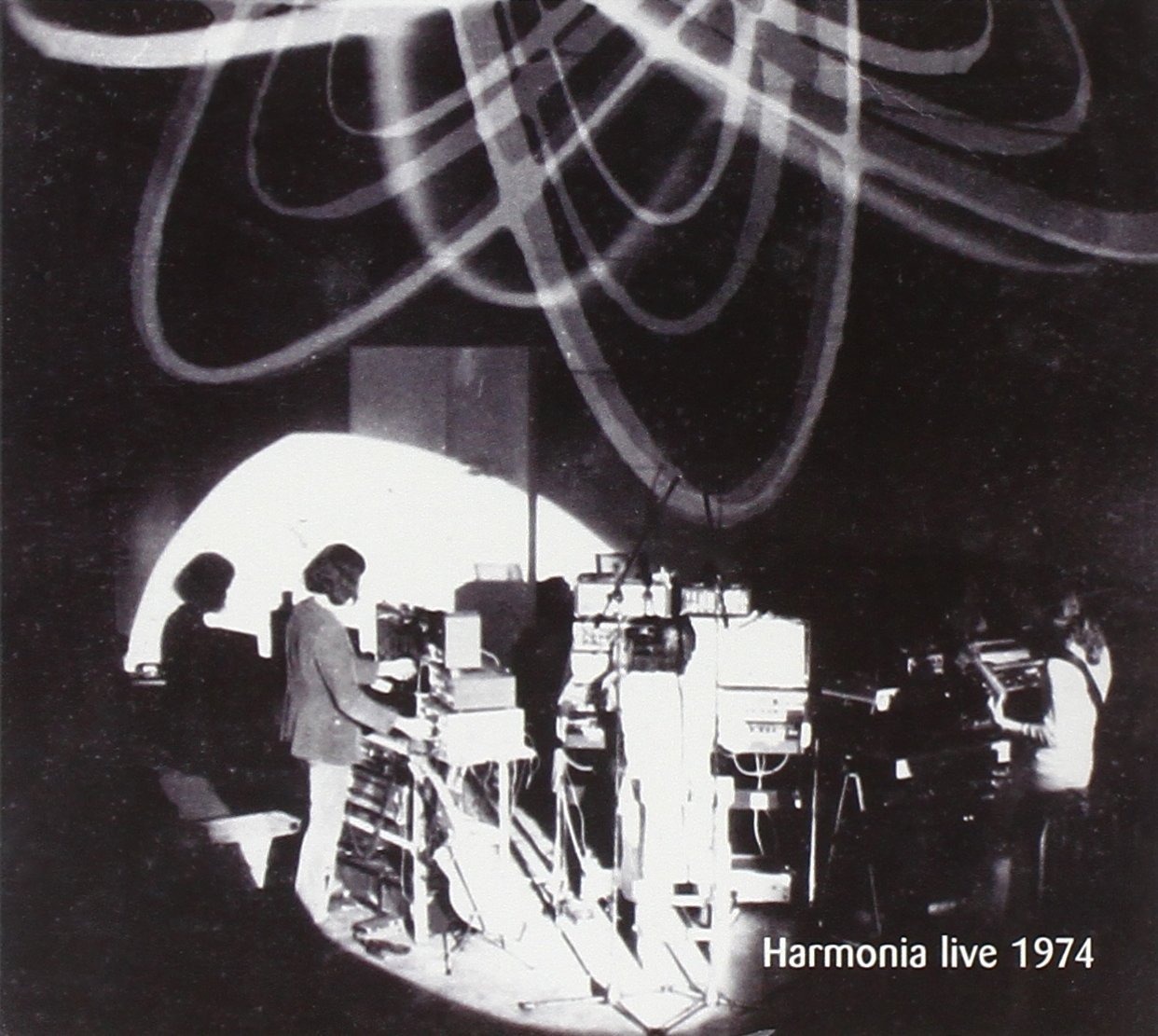
When Harmonia were formed in 1973, Germany’s first supergroup had just been born. Harmonia featured members of Neu! and Cluster. Michael Rother of Neu! had travelled to Forst to try and conivice Cluster’s Dieter Moebius and Hans-Joachim Roedelius to join Neu! Instead, an entirely new band, Harmonia, was born. They released two classic albums Musik von Harmonia and Deluxe. They feature in what’s my box set of 2015, Complete Works, which was released by Grönland Records in November 2015.
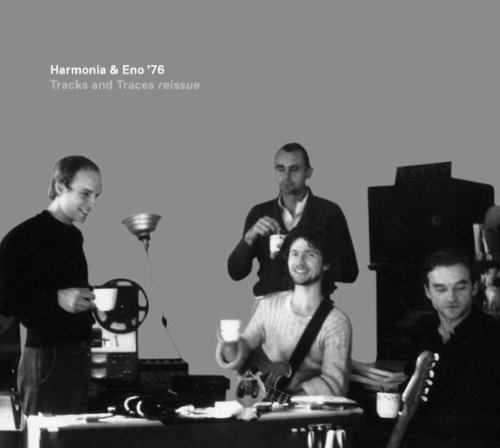
There’s only one way to describe the Complete Works, and that’s luxurious and lovingly compiled. It oozes quality from the moment you unwrap the box. Inside the Complete Works box set features five digitally remastered LPs, including: Musik Von Harmonia, Deluxe, Tracks and Traces, Live ’74 and an album of unreleased material. Then there’s a thirty-six page booklet, download code and a copy of an original tour poster.” It’s a fitting reminder of a groundbreaking group, Harmonia, who have influenced several generations of musicians.
Now, just over forty years after the release of Musik Von Harmonia and Deluxe, the music of Harmonia is more popular than ever. This is ironic. Michael Rother remembers how: “the seventies weren’t a good time for Harmonia. Our music was ignored, it was tough to survive during this period.” Now however, things are very different for Harmonia. They’re quite rightly regarded as one the giants Kominische music. Harmonia are regarded as just as important, influential and innovative as Can, Kraftwerk and Neu! A reminder of why can be found in the Complete Works box set, which celebrates and documents Harmonia’s illustrious career.

THE 33 BEST BOX SETS OF 2105-PART TWO.
THE 33 BEST BOX SETS OF 2105-PART TWO.
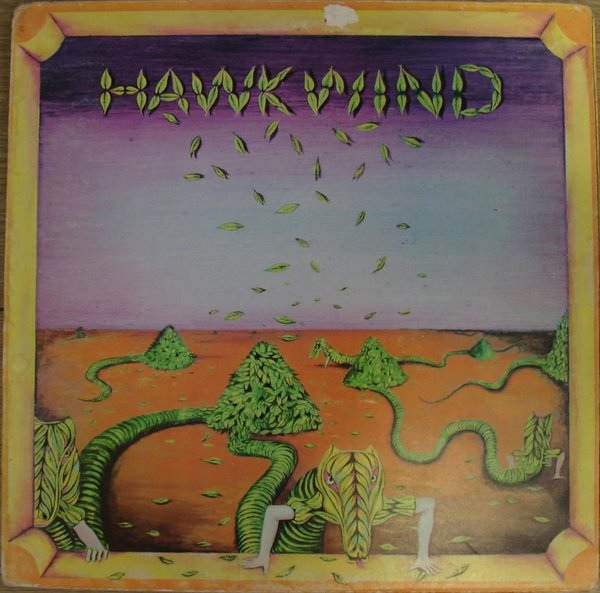
HAWKWIND-THIS IS YOUR CAPTAIN SPEAKING…YOUR CAPTAIN IS DEAD.
Since 1969, the various lineups of Hawkwind have released twenty-seven studio albums, ten live albums and fifteen compilations. That’s not forgetting the recently released eleven disc box set, This Is Your Captain Speaking…Your Captain Is Dead. It was recently released by PLG, and features Hawkwind’s first four studio albums, three live albums and a singles compilation. Mainly, This Is Your Captain Speaking…Your Captain Is Dead documents the period between 1969 and 1974.
Howkwind were musical trailblazers who inspired several generations of bands with albums like X In Search of Space and Hall of the Mountain Grill. Then there’s Hawkwind’s 1970 eponymous debut album and their third album Doremi Fasol Latido. Both are underrated, and deserve to be reappraised. The This Is Your Captain Speaking…Your Captain Is Dead box set allows music fans to do so. They’ll also be able to discover Hawkwind’s performance at the Greasy Truckers Party, and what was one their most ambitious live albums, The Space Ritual Alive. That’s not the end of the story.
As an added bonus, The 1999 Party (Live At The Chicago Auditorium) and the Time and Stars: The Singles have been included on the This Is Your Captain Speaking…Your Captain Is Dead box set. It’s the perfect introduction to what many people regard as the Hawkwind’s glory days.
HOLGER CZUKAY-ELEVEN YEARS INNERSPACE.
On Record Store Day, suddenly, everyone heads for their local record store, where there’s lots of goodies available. This year, this included Holger Czukay’s Eleven Years Innerspace which was released by Grönland Records.
Eleven Years Innerspace features six songs Holger Czukay recorded eleven years ago, when he began work at the legendary Innerspace Studios. The songs on Innerspace are reworking of songs Holger recorded earlier on, in his long and illustrious career. These tracks are reinvented by Holger, who takes something old, and transforms it into something new. In the process, he redefines and reimagines the music. The result is something new and innovative. It’s as if Holger dawns the role of a sculptor, taking a piece of music and reshapes it, moulding it into something that he never originally imagined. Gradually, it takes on new form and meaning, as Holger takes the music and reshapes it.
Eventually, it becomes the music on Eleven Years Innerspace. It’s a reminder of a true musical visionary, who is responsible for some of the most ambitious, innovative and inspirational music in the history of music, Holger Czukay musical alchemist.
IRMIN SCHMIDT-ELECTRO VIOLET.
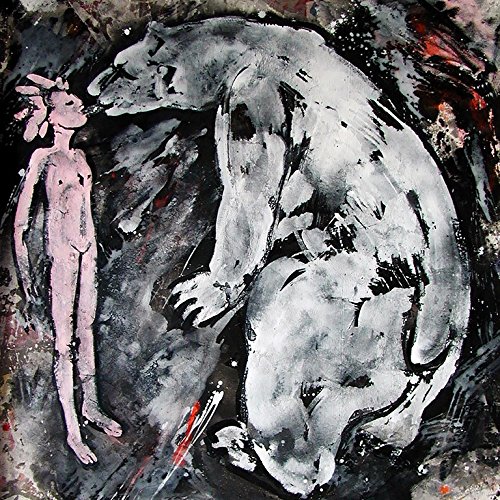
Since Can disbanded in 1979, Irmin Schmidt has established a reputation as the most prolific former member of Can. Irmin has written the scores for over 100 films and television programs. Some of this music features in the recently released Irmin Schmidt box set Electro Violet.
This twelve disc box set, which was released by Mute, features not just the five volumes of the Film Musik Anthology, but a previously unreleased sixth volume. Then there’s Irmin Schmidt’s first four solo albums, 1981s Toy Planet, 1987s Musk At Dusk and 1991s Impossible Holidays. Then there’s Irmin Schmidt’s two collaborations with Kumo, 2001s Master Of Confusion and 2008s Axolotl Eyes. The final disc in the Electro Violet box set is opera Gormenghast, which was released in 2000, and was based on Mervyn Peake’s classic novel. Gormenghast shows the versatility of Irmin Schmidt, the classically trained musician who become part of Can, one of the most successful bands of the twentieth century, and then embarked upon a successful solo career.
The Electro Violet box set is a celebration of the first five decades in Irmin Schmidt’s post can career. Throughout what has been a long and illustrious career, Irmin Schmidt has released music that’s ambitious, innovative, inspiring and influential. Irmin Schmidt is a musical visionary, who as a member of Can, and as a solo artist, has released groundbreaking music that was often, way ahead of the curve. A reminder of this is the music in the twelve disc Electro Violet box set, which like the music of Can, will forever influence and inspire further generations of musicians.
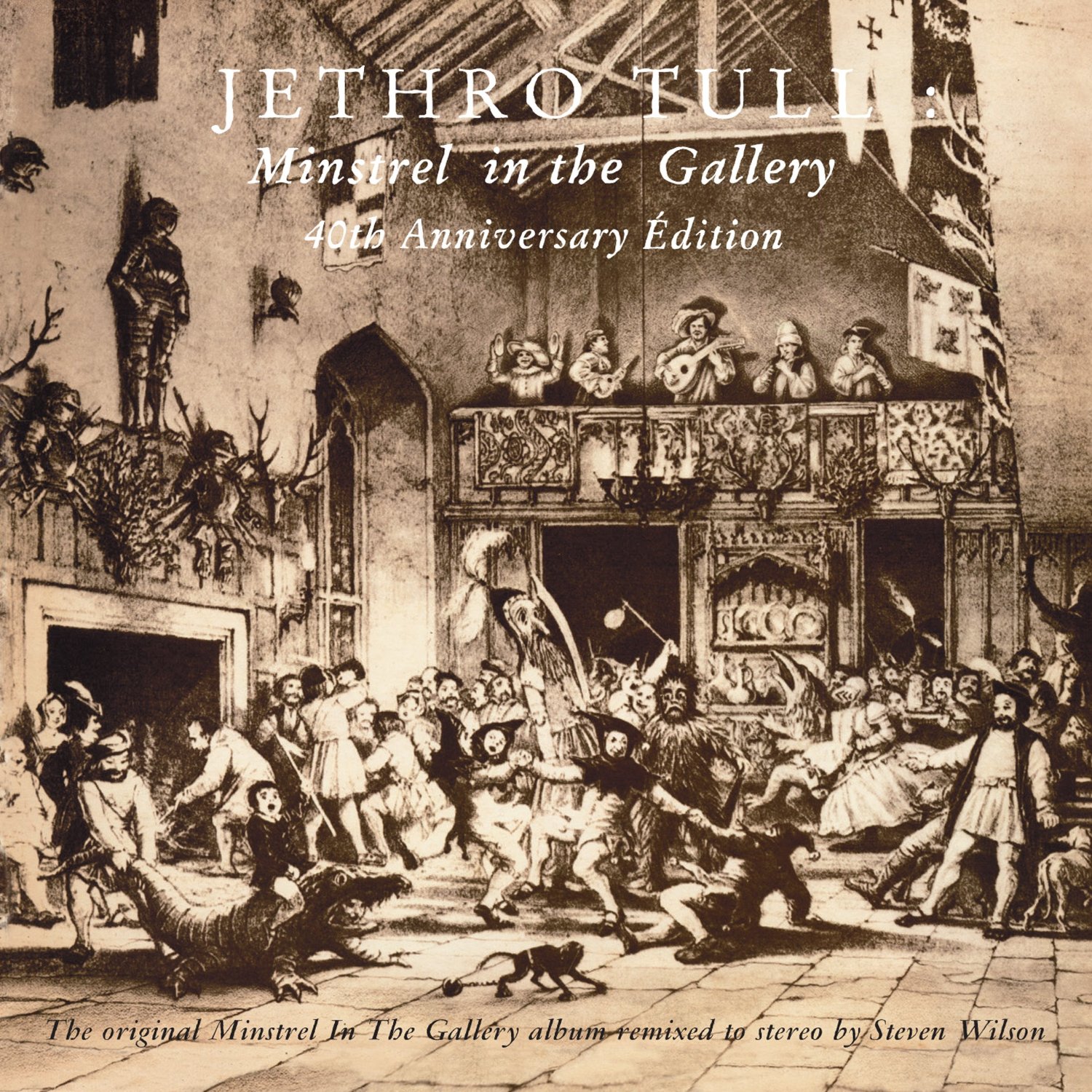
JETHRO TULL-MINSTREL IN THE GALLERY-40TH ANNIVERSARY: LA GRANDE EDITION.
By the time Jethro Tull began work on their eighth album Minstrel In The Gallery, they were one of the biggest selling groups of the seventies. Especially in America. Five of their albums had been certified gold, while 1971s Aqualung was certified triple-platinum. In America alone, Jethro Tull had sold 5.5 million albums by 1974. Jethro Tull were also enjoying a glittering career in Britain and Germany. However, when the reviews of Minstrel In The Gallery were published, it looked as if Jethro Tull had taken a wrong turning.
Rolling Stone called the album “instantly forgettable.” Despite that, Minstrel In The Gallery sold 500,000 in America and was certified gold. Since its release in 1975, Minstrel In The Gallery has been reappraised. Belatedly, Jethro Tull are receiving the credit they deserve for Minstrel In The Gallery. It’s far from the derivative album that some critics accused Jethro Tull of producing. Instead, it’s another groundbreaking album of genre-defying music. Minstrel In The Gallery saw Jethro Tull continue to create music that was cerebral, cinematic, dramatic and ethereal. Elements of classic rock, classical, folk, jazz are combined by Jethro Tull on Minstrel In The Gallery. Together, they play their part in what’s Jethro Tull’s oft-overlooked, prog rock classic Minstrel In The Gallery.
Chrysalis released Minstrel In The Gallery-40th Anniversary-La Grande Edition in 2015. It’s a fitting celebration of what’s now regarded as one of Jethro Tull’s finest albums. Disc one features Steven Wilson stereo mix of Minstrel In The Gallery, while disc two features a live show recorded in Paris, in July 1975. Then there’s two DVD’s of 5.1 DTS and AC3 Dolby Digital mixes. That’s not forgetting the lavish eighty page book. However, back in 1975, very few critics thoughtMinstrel In The Gallery was worthy of a celebration. This poses a question, who did the critics get things so wrong?
JETHRO TULL-TOO OLD TO ROCK ’N’ ROLL: TO YOUNG TO DIE!
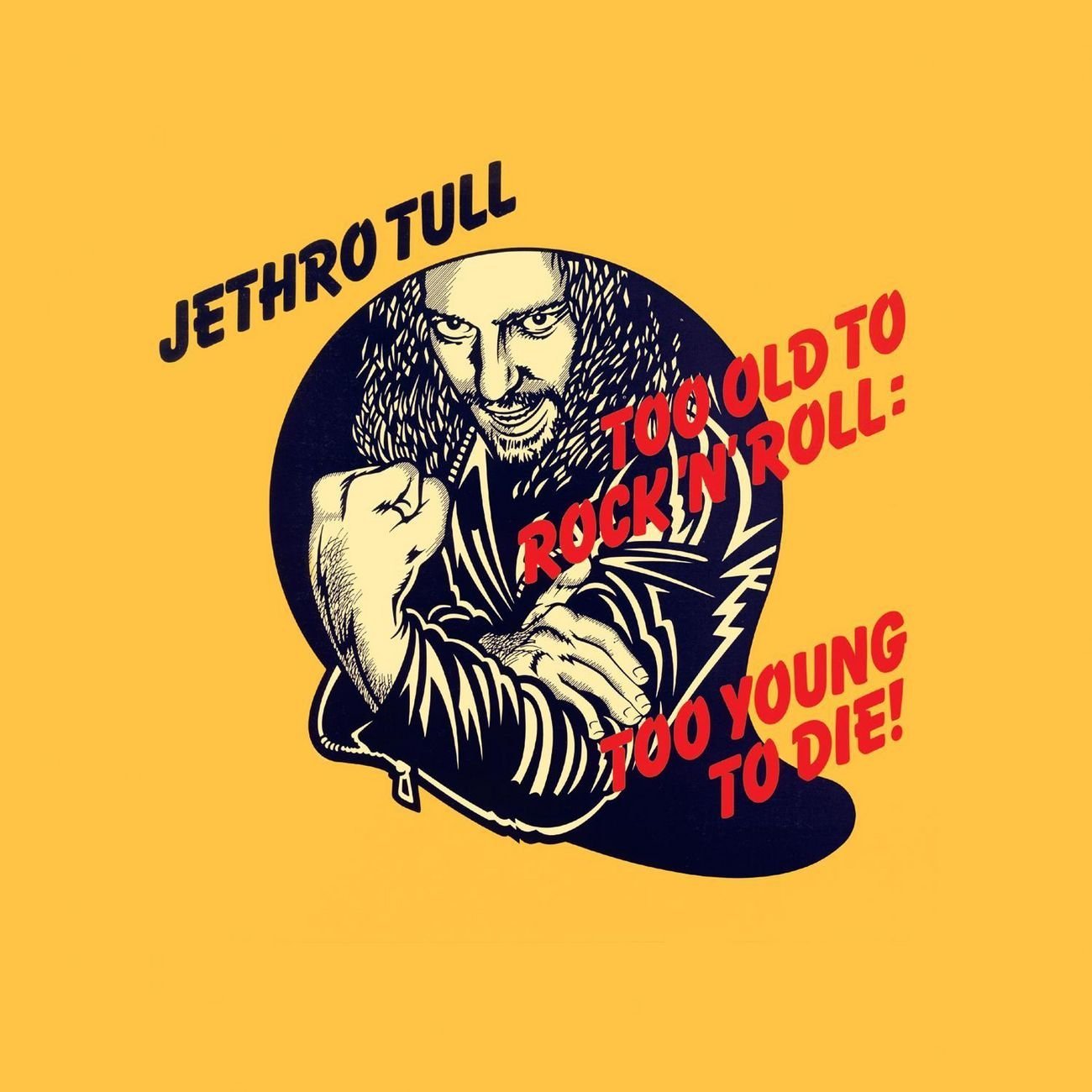
After the the Minstrels In The Gallery tour ended, Jethro Tull set about recording their ninth album, Too Old To Rock ’N’ Roll: To Young To Die, which was recently released as a box set by PLG. Too Old To Rock ’N’ Roll: To Young To Die was another concept album, where Jethro Tull told the story of an ageing rock star, who found fame when musical tastes changed. The ten tracks on Too Old To Rock ’N’ Roll: To Young To Die had been written by Ian Anderson. For Jethro Tull Too Old To Rock ’N’ Roll: To Young To Die proved the end of an era.
Too Old To Rock ‘n’ Roll: Too Young to Die was the last concept album Jethro Tull released. By then, they were masters of the concept album. That’s why, in 1976, Jethro Tull were one of the biggest progressive rock bands in the world. However, Too Old To Rock ‘n’ Roll: Too Young to Die had failed to sell in the same quantities as their previous albums. That’s despite the undoubtable quality of music on Too Old To Rock ‘n’ Roll: Too Young to Die. It’s one of the most underrated albums in Jethro Tull’s illustrious back-catalogue. However, Too Old To Rock ‘n’ Roll: Too Young to Die had the misfortune to be released just as punk was born.
Following Too Old To Rock ‘n’ Roll: Too Young to Die, Jethro Tull’s fortunes improved. There was a reason for this. Jethro Tull reinvented themselves musically. They had always been musical pioneers, and weren’t content to stand still. Instead, they experimented musically, and pushed musical boundaries to their limit over the next few years. This just happened to coincide with an upturn in Jethro Tull’s fortunes. It seemed the new breed of gunslinger critics were wrong, and Jethro Tull had a glittering future ahead of them. However, Too Old To Rock ‘n’ Roll: Too Young to Die is a reminder of their glory years, when progressive rock was king.
JOHN COLTRANE-A LOVE SUPREME-THE COMPLETE MASTERS BOX SET.
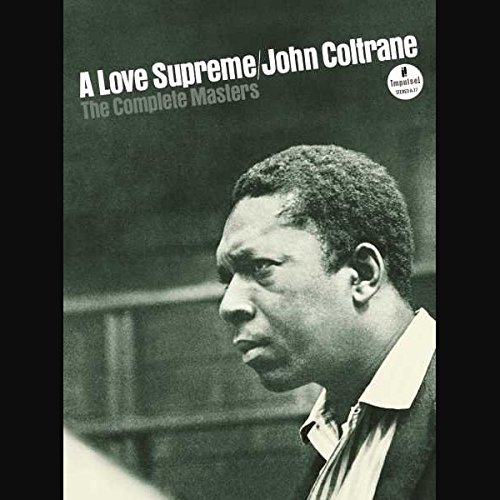
On December 9th 1964, four musicians made their war to the Van Gelder Studio, on 445 Sylvan Avenue, Englewood Cliffs, New Jersey. They were scheduled to record an album with renowned jazz producer Rudy Van Gelder. He was a veteran of countless recordings, and had worked with some of the biggest names in jazz. This included John Coltrane, who was about scheduled to record a new album, which would became a classic jazz album, A Love Supreme. It was reissued by Decca, as a three disc box set, to celebrate the fiftieth anniversary of the release of A Love Supreme.
Disc one of A Love Supreme-The Complete Masters features the original album, plus original mono reference masters of Pursuance and Psalm. Then on disc two, there’s eleven bonus tracks. They’re a mixture of alternate takes, including a version of Acknowledgment with a false start, and versions of two other takes of Acknowledgment with vocal overdubs. Essentially, these tracks offer the listener to see how the track evolved, right through to what it ultimately became on disc one. However, for many John Coltrane completists, disc three is musical gold. It features the John Coltrane quartet playing A Love Supreme in its entirety, live in Juan-les-Pins, France. This performance has entered jazz folklore, and is a very welcome addition to A Love Supreme-The Complete Masters. Sadly, just two years after this legendary performance, John Coltrane died.
It’s forty-eight years since John Coltrane died. He was in the prime of his musical life, and could’ve and should’ve gone on to be at the forefront of jazz, as the genre continued to reinvent itself. John Coltrane at spent his career as a pioneer of jazz, ensuring the genre neither stood still, nor became irrelevant. There was no chance that jazz was going to go the way of the blues. Not with musical pioneers like John Coltrane, Miles Davis and Ornette Coleman producing groundbreaking music. Sadly, John Coltrane never got the opportunity to embrace the change in jazz that took place during the late-sixties and early seventies. However, Joh Coltrane left behind a rich musical legacy, including A Love Supreme.
KEITH ROWE/JOHN TILBURY-ENOUGH STILL NOT TO KNOW.
There aren’t many collaborations that have lasted five decades. However, Keith Rowe and John Tilbury’s has. They first began working together in the mid-sixties, when they were members of AMM and then The Scratch Orchestra. Since then, Keith Rowe and John Tilbury have formed an uncanny musical bond. They’re like a musical yin and yang. One seems to know just what the other is thinking, and about to do. They anticipate each other’s next move. What follows is like a game of musical chess, except there’s no winner. That’s been the case with these two legends of experimental music. They’ve pioneered experimental music, with their unique brand of improvised music. It features on their latest project Enough Still Not To Know. It’s a four disc box set which was released on Sofa Music in October 2015. This is the soundtrack to a captivating project.
Enough Still Not To Know features just Keith Rowe and JohTilbury. However, Enough Still Not To Know was produced by visual artist Kjell Bjørgeengen. That’s not surprising. The music on Enough Still Not To Know’s four discs will provide the soundtrack to one of Kjell Bjørgeengen’s video installations. That music was recorded at City University’s Music Studios between the 17th and 18th July 2014. That’s where four lengthy soundscapes were recorded. The four discs, entitled Part One, Part Two, Part Three and Part Four total three-and-a-half hours. During that period, the music drifts in and out. Keith and John aren’t afraid to leave sometimes lengthy periods of silence. They allow for reflection and contemplation. This works away from the video installation, and allows the listener to reflect and contemplate on the travails of life.
Sometimes the music on Enough Still Not To Know is understated and ethereal. Other times it reaches a crescendo and dissipates, leaving behind a mere memory of what’s gone before. Then there’s silence. This would frighten most musicians. They feel the need to fill every second. Not Keith and John. This pregnant pause allows the listener’s brain to reboot, before further waves of cinematic music ebb and flow. All the time, music washes over the listener. They absorb and immerse themselves in the music. However, it’s also possible for Enough Still Not To Know to become the backdrop to daily life, and drop in and out when possible. As you do, distant bells chime, surprises are sprung and Keith and John take the listener on a voyage of discovery. Sounds gently implode and explode. There’s twists and turns aplenty. Constantly, there’s atonal changes. Similarly, there’s constant changes in the musical landscape. It seems to be constantly evolving. The music veers between ambient, beautiful, ethereal and understated, to captivating, cinematic and even intriguing and intense. Sometimes, there’s an element of suspense, as Keith and John spring a surprise with their rich musical palette. They continually tease and tantalise the listener on this epic musical journey.
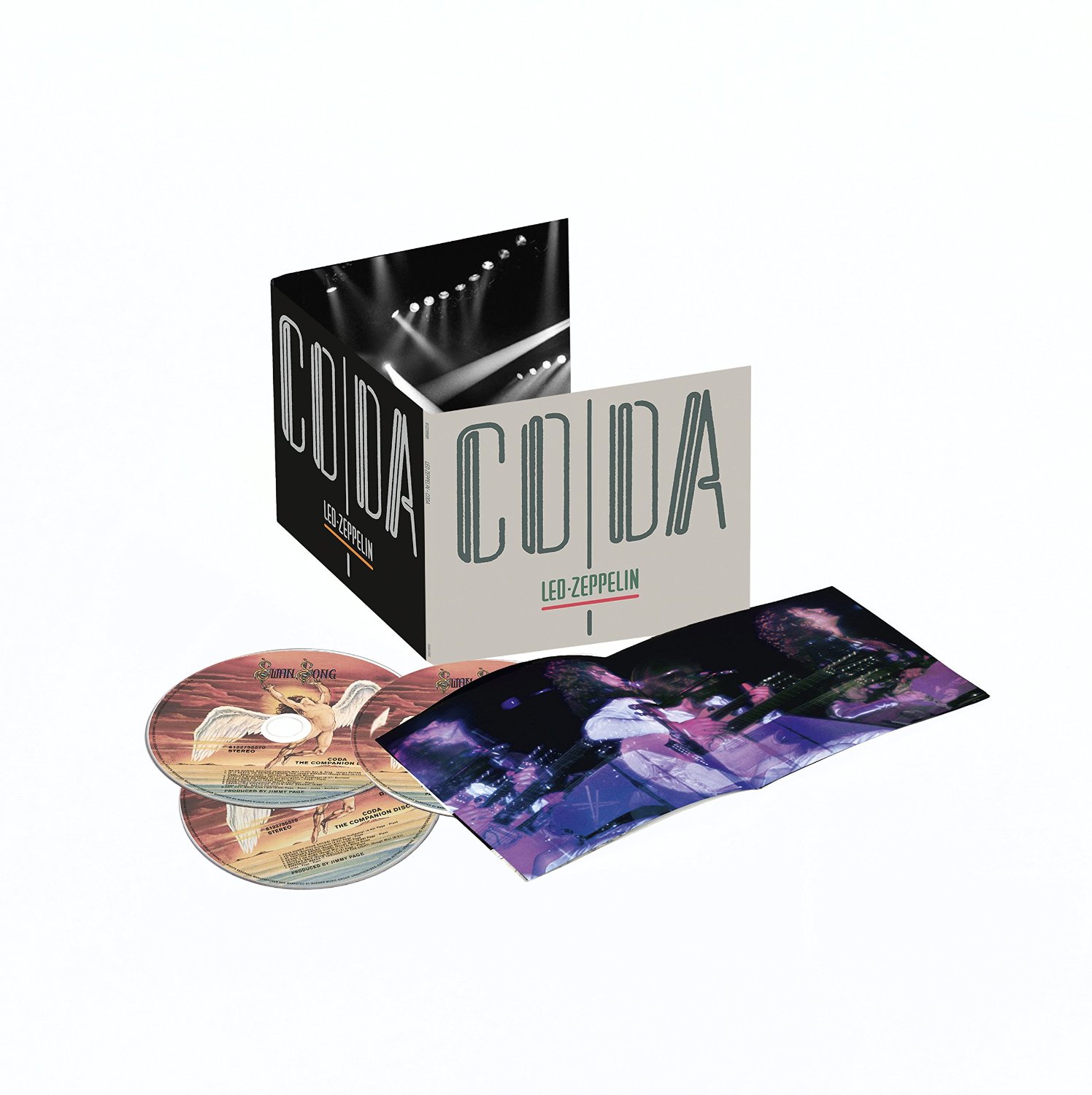
LED ZEPPELIN-CODA.
After the death of drummer John Bonham, the remaining members of Led Zeppelin wanted to cal time on the band. They didn’t want to go on without their fallen comrade. There was a problem though,
Led Zeppelin still owed Atlantic Records an album. This dated back to when Led Zeppelin formed their Swan Song label in 1974. However, this wasn’t the official reason.
According to Jimmy Page, the three members of Led Zeppelin had noticed how popular bootleg recordings were. They were selling in vast quantities. Given they were unauthorised releases, Led Zeppelin weren’t benefiting from the releases. So the remaining members of Led Zeppelin decided that they should reissue some of the unreleased material in the vaults. Led Zeppelin had been together for eleven years before John Bonham’s death, so there was plenty of unreleased material. There was more than enough for one album. That was apparent on Warner Bros’ recent reissue of Coda.
Not only does Coda feature the eight tracks on the original version of Coda, but there’s eight tracks on disc two, and another seven tracks on disc three. Forty-three years later, and the Led Zeppelin vaults are the gift that keep on giving. Back in 1982, John Paul Jones saw the release of Coda as an opportunity for Led Zeppelin to showcase some of the hidden gems that lay unreleased in the vaults. While Coda was hardly Led Zeppelin’s finest hour; just like In Through The Out Door, Coda featured fleeting moments of genius. This makes Coda a worthy addition to any record collection, and a reminder of one of the rock’s unholy trinity’s hell raising days and classic years.
MAGMA-KOHNZERT ZUND.
The Köhnzert Zünd box set is a welcome reissue for fans of Magma, and is the perfect companion to the Studio Zund twelve disc box set. When Studio Zund was released in 2009, Magma fans wondered why there was no live material in the box set? Now they know. Even back then, it looks like plans were afoot to release the definitive box set of Magma’s live material. So, what can be found in the the twelve-disc Köhnzert Zünd box set?
One can’t help be impressed by the sculptural quality of the Köhnzert Zünd box set. It’s akin to a mini work of art. A great deal of time and effort was put into the design of Köhnzert Zünd. It puts many of the cheaply made box sets to shame. Jazz Village deserve to be congratulated on the design of Köhnzert Zünd box set. Without doubt, Köhnzert Zünd features Magma’s best live albums, and a bit more. However, copies of Köhnzert Zünd are limited
Fans of Magma will have to be quick.The Köhnzert Zünd box set is a limited edition release. Only 5,000 copies are available of the definitive retrospective of Magma’s live career. Köhnzert Zünd is the perfect companion to the Studio Zund box set, and shows why after forty-six years, twelve studio albums and countless changes in lineup, that Magma are still one of France’s progressive rock Kings.

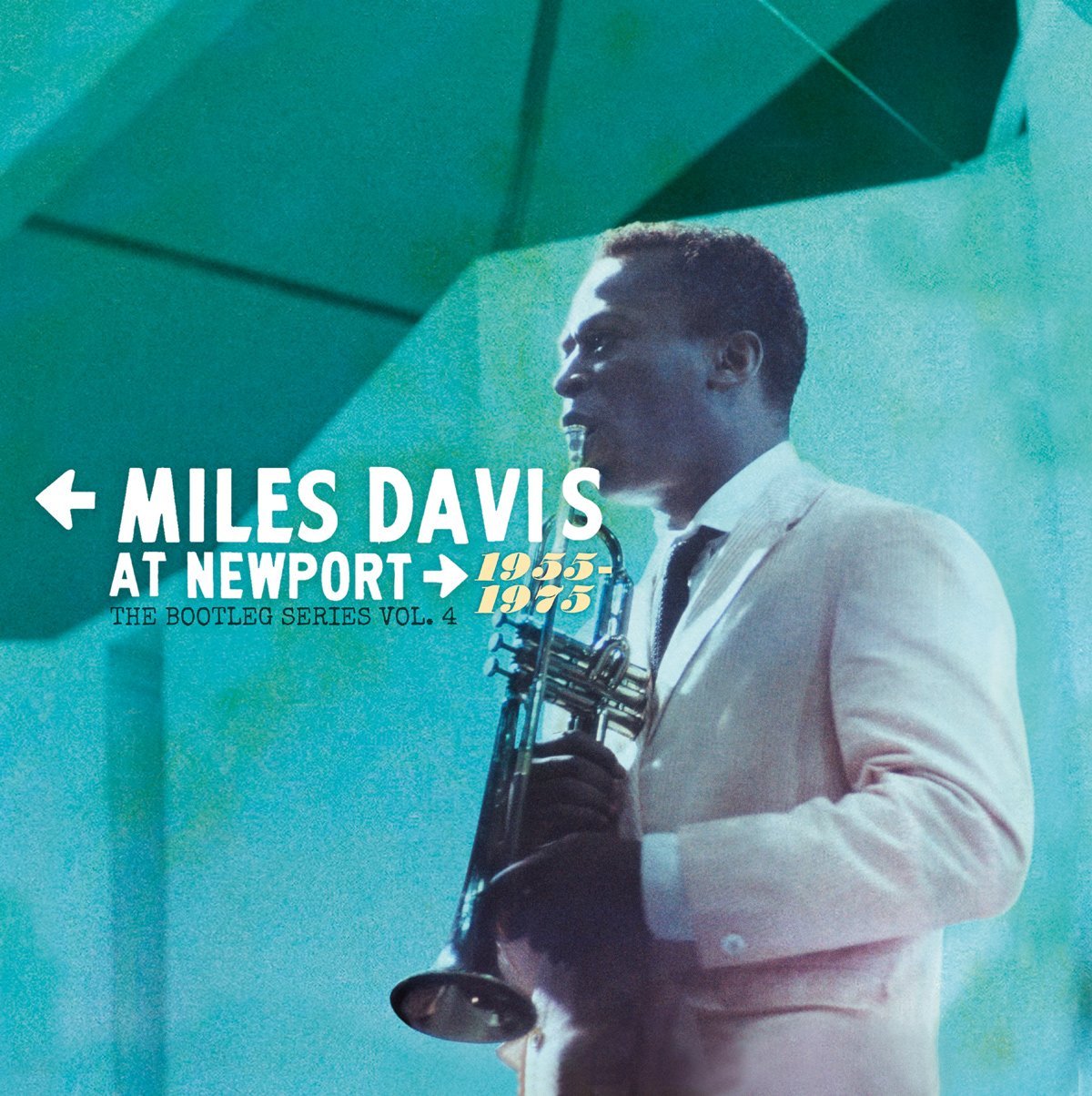
MILES DAVIS AT NEWPORT 1955-1975-THE BOOTLEG SERIES VOLUME 4.
Miles Davis’ hard bop era had finished in 1954, and 1955 was the start of a new era. It featured Miles Davis’ first great quintet. As Miles played trumpet, the rhythm section featured drummer Philly Joe Jones and bassist Paul Chambers. They were augmented by pianist Red Garland and tenor saxophonist John Coltrane. This all-star lineup was would become part of jazz history. However, this wasn’t the band that took to the stage at the second Newport Jazz Festival on 17th July 1955. Excerpts from this performance feature on Miles Davis At Newport 1955-1975-The Bootleg Series Volume 4, which was released as a four disc set by Sony Music in 2015. It documents the first twenty years of Miles Davis thirty year association with the famous festival.
Miles Davis was associated with the Newport Jazz Festival until 1985. Their relationship had lasted thirty years, and during that period, Miles Davis continued to reinvent his music. Continually, he innovated and pushes musical boundaries. That was the case right up until his death in 1991. His career had spanned five decades, during which Miles Davis released forty-eight studio albums. This include classic albums like 1957s Birth Of The Cool and ’Round About Midnight, 1959s, Kind Of Blue and 1970s Bitches Brew. Tracks from each of these albums feature on Miles Davis Live At Newport 1955-1975-The Bootleg Series Volume 4, which document and celebrates the first twenty years of Miles Davis association with the Newport Jazz Festival.
THE 33 BEST BOX SETS OF 2105-PART THREE.
THE 33 BEST BOX SETS OF 2105-PART THREE.
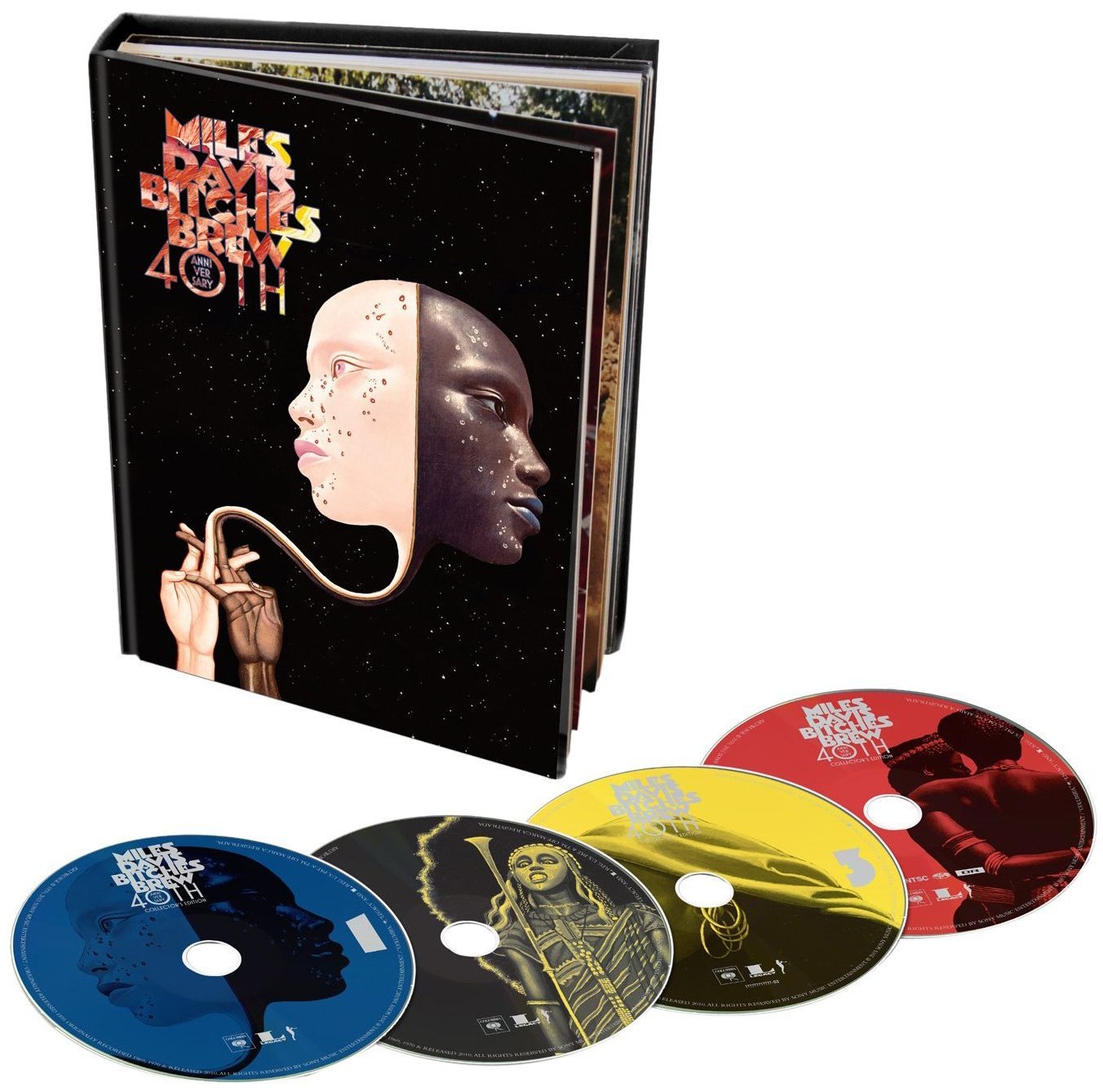
MILES DAVIS-BITCHES BREW 40TH ANNIVERSARY COLLECTORS EDITION.
Miles Davis’ recording career began in 1951, when he released his debut album The New Sounds. Soon, Miles Davis was establishing a reputation as a prolific, and innovative musician. He released a further forty-three albums between 1951 and 1969. This included classics like 1957s Round About Midnight and 1959s Kind Of Blue. While both of these albums would become classic albums, neither sold in huge quantities. Certainly not enough to result in a gold or platinum disc. That was all about change when Miles Davis released his forty-fifth album, Bitches Brew; which has just been reissued as a four disc 40th Anniversary Collectors Edition.
Ever since the release of Bitches Brew, it has been recognised as a landmark album. This musical tour de force is now perceived as one of the most important albums in the history of jazz. Bitches Brew was a game-changer. Suddenly, jazz’s rhythmic rules were rewritten. Anything was possible. Rhythm sections grew in size. Suddenly, two drummers, bassists or pianists were acceptable. The use of effects were embraced, transforming the recording studio into an extra instrument. Similarly, editing was used as part of the creative process. Here, Miles drew inspiration from the musique concrète composers of the fifties and sixties. This was just another piece in the musical jigsaw that was Bitches Brew. It rejuvenated interest in jazz.
By 1970, many critics and record buyers regarded jazz as yesterday’s music. It was the music their parents and grandparents listened to. That was until Miles Davis released Bitches Brew, the second of his electric albums. Bitches Brew was a game-changer. Fusion as the genre became known, proved to be happy a marriage between jazz and rock. Before long, fusion was the most popular genre of jazz. A generation of jazz and rock musicians collaborated, resulting in jazz that was commercially successful and critically acclaimed. It’s also music that’s stood the test of time. A copy of the Bitches Brew 40th Anniversary Collectors Edition deserves to find a place in the record collection of anyone interested in rock or jazz, as it’s the definitive way to discover this groundbreaking classic.
MOGWAI-CENTRAL BELTERS.
2015 finds post rock pioneers Mogwai celebrating their twentieth anniversary. A lot has happened in that twenty year period. Mogwai have released eight studio albums and three soundtracks. These albums have been critical acclaimed and commercially successful not just in Britain, but in America. That’s why nowadays, Mogwai are regarded as Scottish music’s elder statesmen. So it was fitting when Mogwai released a three disc retrospective box set, Central Belters, on Rock Action Records. Central Belters tells the story of twenty years of Mogwai.
For the last twenty years, Mogwai’s music has been ambitious, bold, challenging, influential and innovative music. It’s full of nuances, subtleties and surprises as Mogwai seamlessly combine musical genres. They fuse ambient, avant garde, classic rock, electronica, experimental, indie rock, psychedelia and Krautrock, to create their unique post rock sound. All the time, Mogwai continue to push musical boundaries to their limits and even sometimes, way beyond. Mogwai have never been willing to stand still. The Mogwai Young Team’s music has continued to evolve, and doubtless will continue to do so.
Glasgow’s famous five are due a new musical adventure. It’s nearly two years since the release of Rave Tapes. Hopefully, Mogwai are hard at work in their Castle Of Doom studios on their next adventure. This isn’t the type of adventure Enid Blyton’s Famous Five once enjoyed. There’s no picnics, lemonade and bicycle trips. Instead, it’s a bit more edgy and gritty.That’s the case with Central Belters Mogwai’s career retrospective.
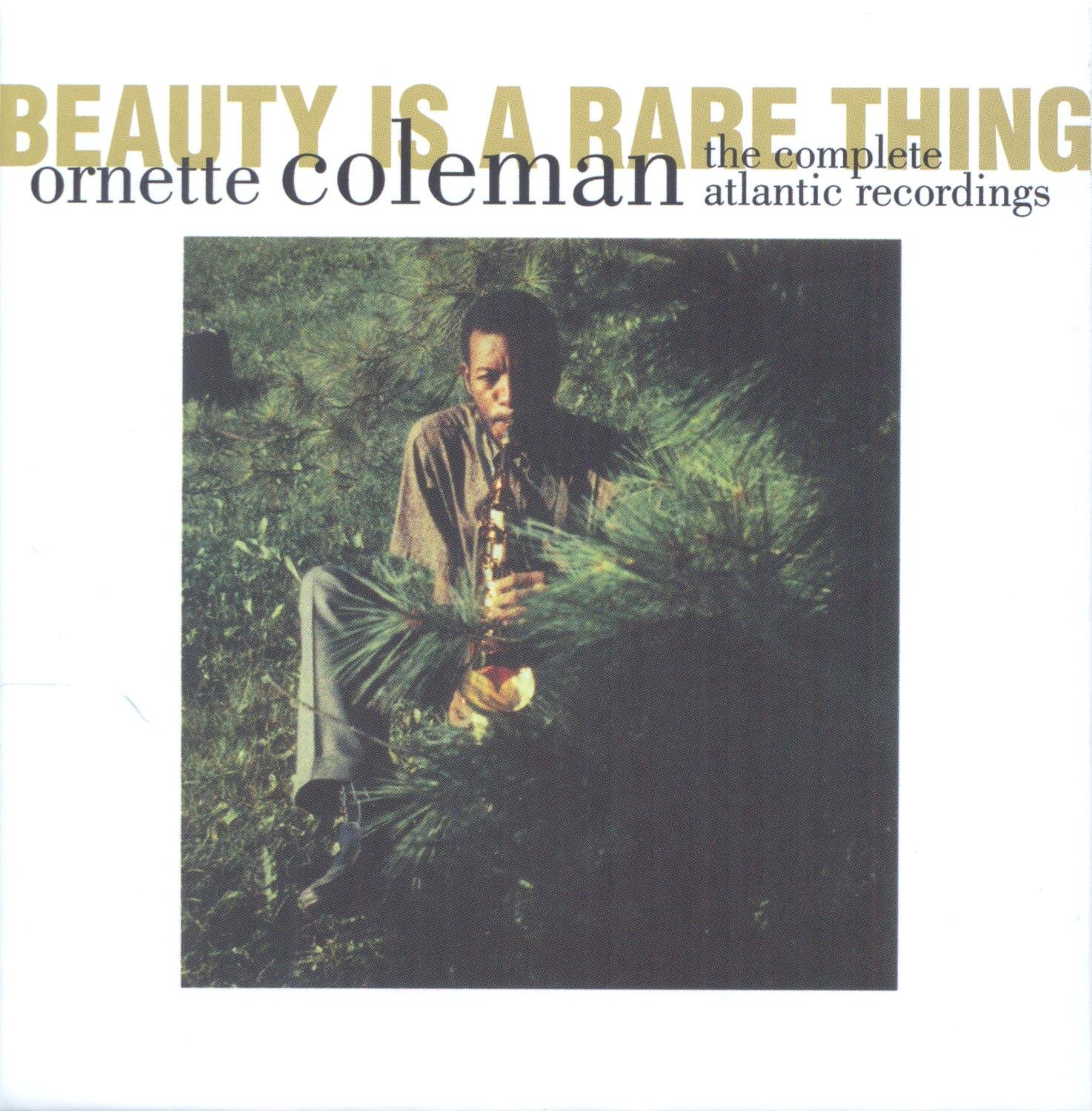
ORNETTE COLEMAN-BEAUTY IS A RARE THING.
It was on June 11th 2015, that Ornette Coleman passed away, aged eighty-five. Music had lost a true legend, whose album Free Jazz: A Collective Improvisation lent its name to a musical genre, free jazz. It’s the genre that Ornette Coleman became synonymous with, and features on the six discs within the Beauty Is A Rare Thing box set. It features an one of jazz’s most innovative and inventive musicians and composers in the history of jazz. Bold, and unafraid to produce cutting-edge music, Ornette Coleman produced music that was challenging music, music that challenged musical norms.
Realising musical rules were there to be broken, Ornette Coleman set about breaking these rules. However, Ornette Coleman knew when to break the rules. By breaking these rules, Ornette Coleman created some of the most inventive, influential and innovative music in the history of jazz. This was music that fused various musical genres and influences. Bebop, free-jazz, blues, avant-garde and experimental music all influenced Ornette Coleman’s music. These genres and influences were thrown into the melting pot of one of the most creative and inventive musicians of the twentieth century. A reminder of this, us Beauty Is A Rare Thing, which was released by Rhino, and features the best music of Ornette Coleman’s long and illustrious career.
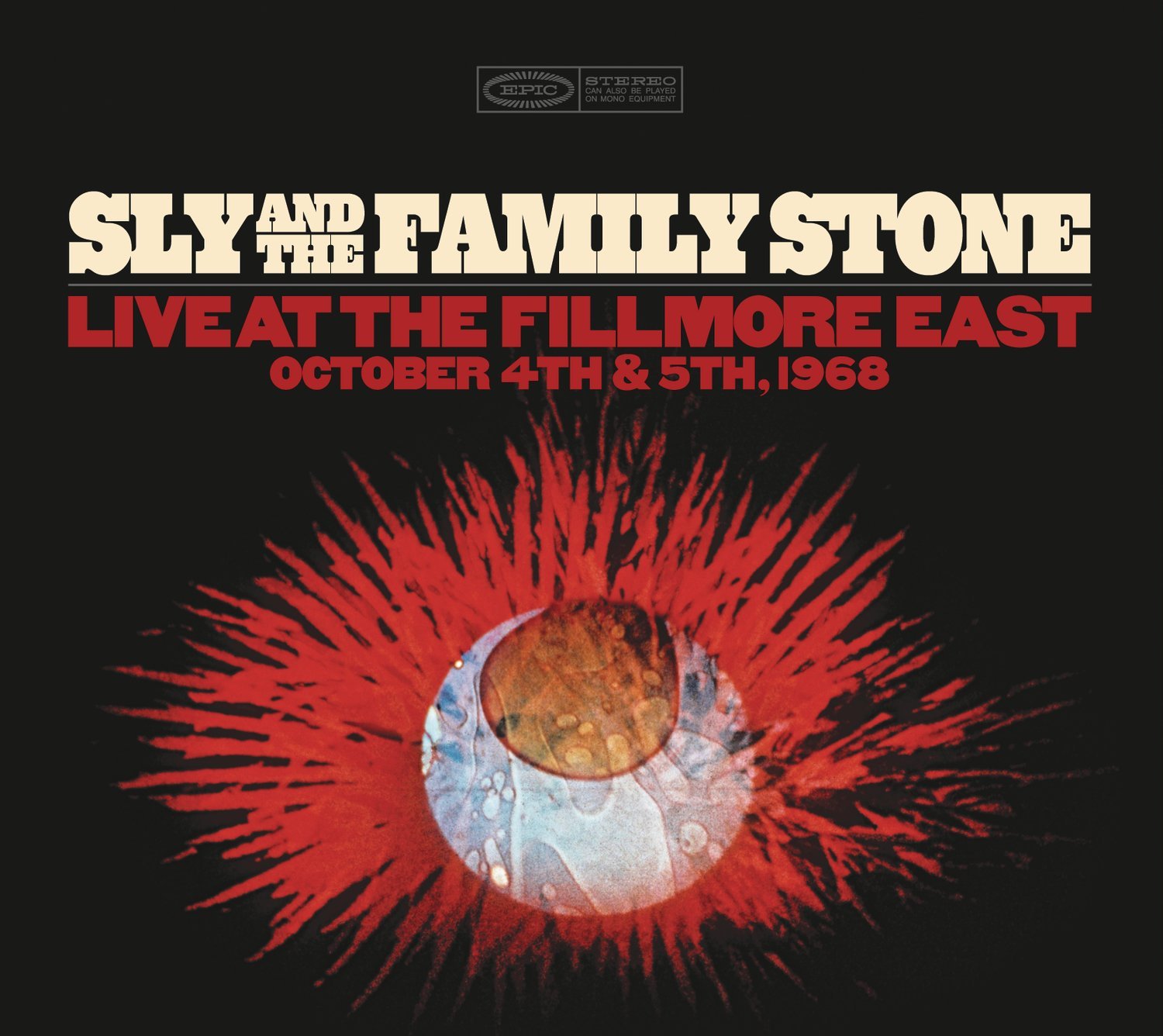
SLY AND THE FAMILY STONE-LIVE AT THE FILLMORE EAST-OCTOBER 4TH AND 5TH 1968.
For whatever reason, Bill Graham didn’t see what other people saw in Sly and The Family Stone. Initially he wasn’t won over by their unique brand of dance music. As a result, he was reluctant to book Sly Stone and his band. Eventually, though, Bill Graham was persuade to go and see Sly and The Family Stone live. Having seen Sly and The Family Stone in full flight this changed his mind.
So much so, that Bill Graham booked Sly and The Family Stone to open for Eric Burdon and The Animals at four concerts and the Fillmore East in October 1968. These four concerts were recorded, but never released. That’s until Live At The Fillmore East-October 4th and 5th 1968 was released by Sony Music as a four disc box set during 2015. It’s a reminder of what Sly and The Family Stone once were.
They were one of the most successful bands of their generation, releasing five albums, which sold over ten million copies. This run of commercial success and critical acclaim began with Stand, which was certified platinum, and ended with Small Talk, which was certified gold. In between, Sly and The Family Stone were one of the most groundbreaking groups of the late sixties and early seventies. Their music influenced several generations of musicians, and much of it is timeless.
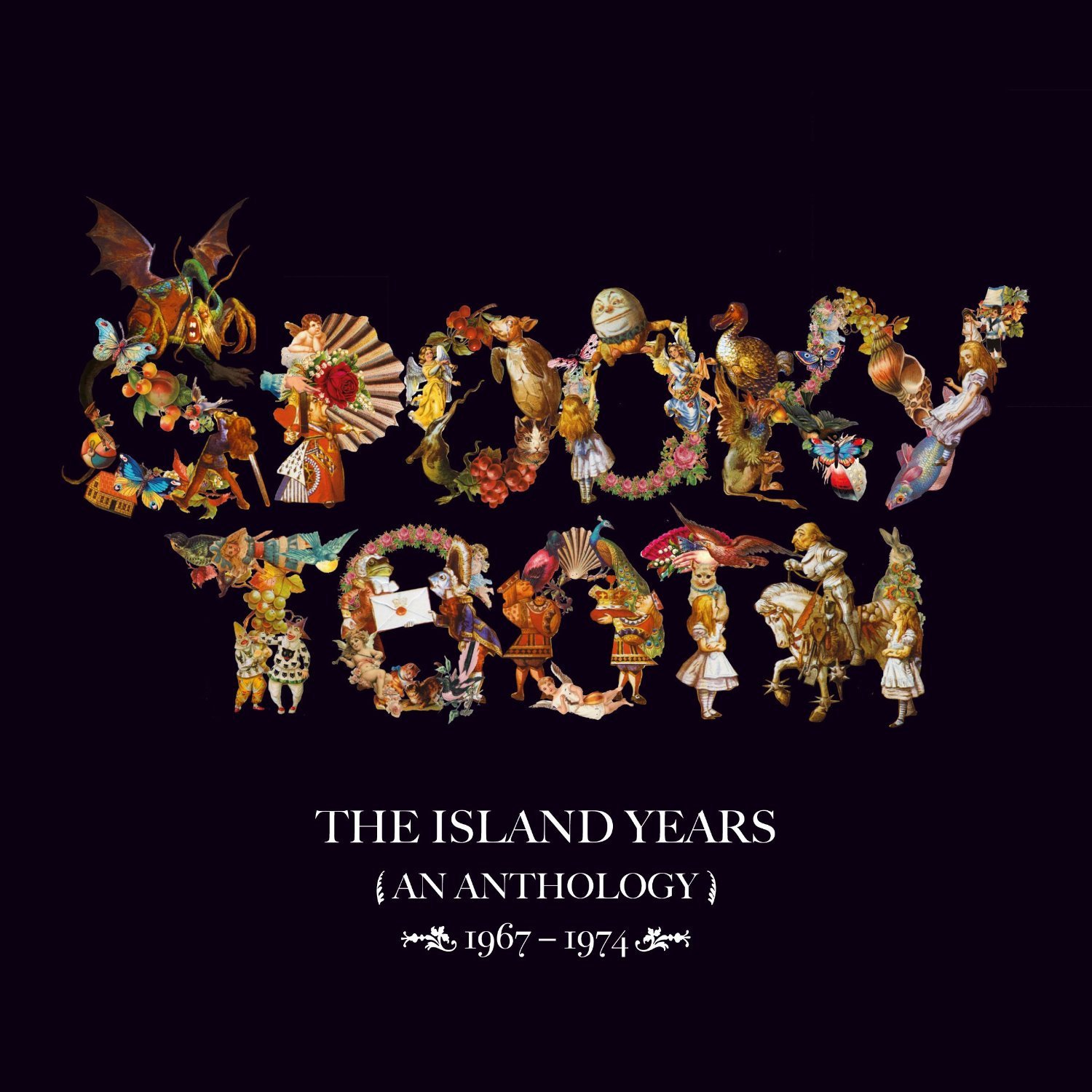
SPOOKY TOOTH-THE ISLAND YEARS.
Spooky Tooth are one of many bands that never got the credit they deserve. Their career was documented on the nine disc Spooky Tooth box set, The Island Years which was released by Universal Music Group. The Island Years features Art’s album Supernatural Fairy Tales and Spooky Tooth’s seven studio albums. Then on the ninth and final disc, there’s a live recording, Live In Oldenburg 1973. This recording has never been released before, and makes its debut on The Island Years, which documents the seven year career of Spooky Tooth.
Unlike many box sets, The Island Years is crammed full of bonus tracks. Every album has numerous bonus tracks tacked onto the end. This makes The Island Years the most comprehensive retrospective of Spooky Tooth’s career. Especially since it features Art’s one and only album Supernatural Fairy Tales. Along with Spooky Tooth’s seven studio albums and the previously unreleased live recording, Live In Oldenburg 1973, The Island Years is the most comprehensive overview of Spooky Tooth’s sometimes turbulent seven year career. Despite the changes in lineup and breakups, Spooky Tooth managed to make some of the best, most memorable rock music of the late-sixties and early-seventies.
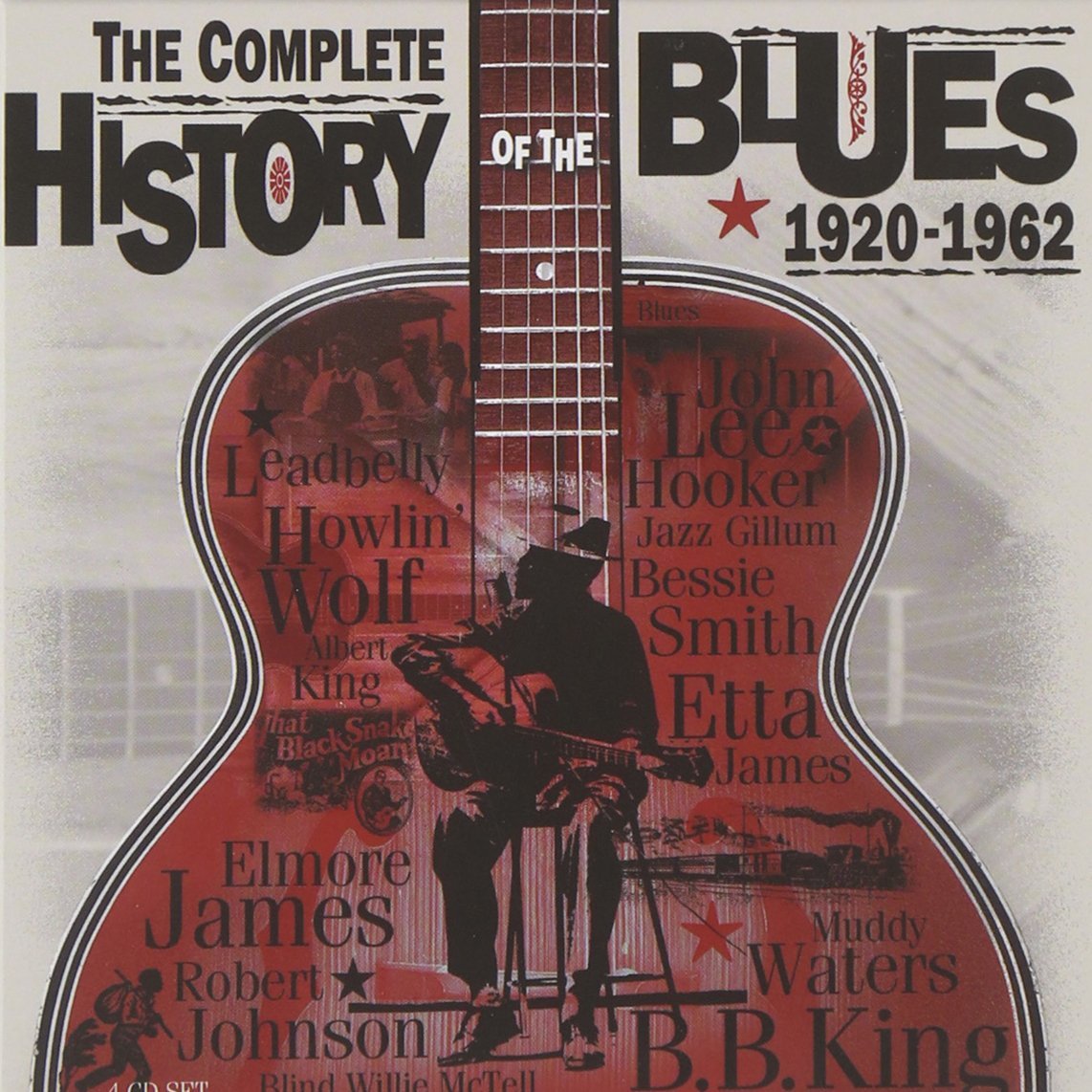
THE COMPLETE HISTORY OF THE BLUES 1920-1962.
The Complete History Of The Blues 1920-1962 is a four disc box set, featuring 100 tracks. For a newcomer to the blues, it’s the perfect introduction to what is, without doubt, one of the most important musical genres ever. Its the foundation which popular music was built in. Without the Kings and Queens of the blues on The Complete History Of The Blues 1920-1962, modern music would be very different.
Any students of modern music will tell you that. Blues styles, forms, melodies and the blues scale have influenced numerous musical genres. This includes jazz and rock ’n’ roll. Then there’s call and response, which is prominent in many musical styles, including soul music. Finally, there’s the use of the blue note, whose expressive, worried sound is at the heart of the blues. It would then go on to influence jazz, and then many major musical genres. These are just a few of the reasons that the blues is the foundation of modern music. That’s why we should never forget blues music, and its legacy.
Part of the blues’ legacy is the music on The Complete History Of The Blues 1920-1962. This box set, features four discs, featuring twenty-five tracks. Each disc has a theme and features what can only be described as the great and good of blues music. For either the newcomer to blues, or a veteran of blues’ compilations The Complete History Of The Blues 1920-1962 is essential listening.
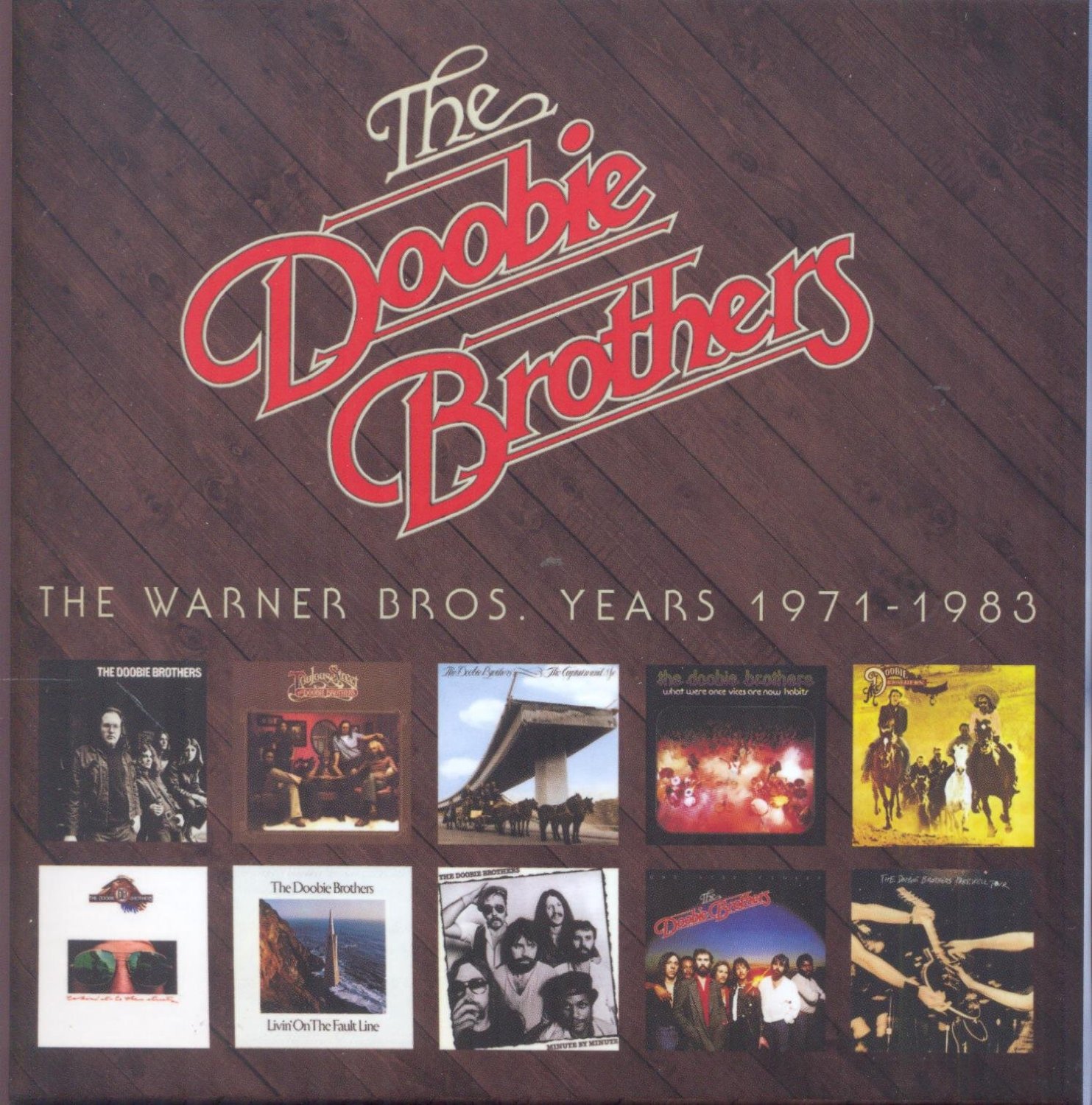
THE DOOBIE BROTHERS-THE WARNER BROS. YEARS 1971-1983.
Between 1972 and 1980, The Doobie Brothers could do no wrong. They had released eight albums, which sold in excess of ten million copies. During this period, Tom Johnson had been replaced by Michael McDonald, and sadly, The Doobie Brothers became a blue-eyed soul band. This was very different to the Tom Johnston. Both the Tom Johnston and Michael McDonald years feature on ten disc box set The Warner Bros. Years 1971-1983, along with their 1983 live album Farewell Tour.
The Warner Bros. Years 1971-1983 documents The Doobie Brothers’ glory years. This will means different things to different people. That will depend if you prefer the guitar driven boogie of the Tom Johnston years, or the blue-eyed soul of the Michael McDonald years. Both feature on The Doobie Brothers’ ten disc box set, The Warner Bros. Years 1971-1983, which is the definitive collection of The Doobie Brothers.
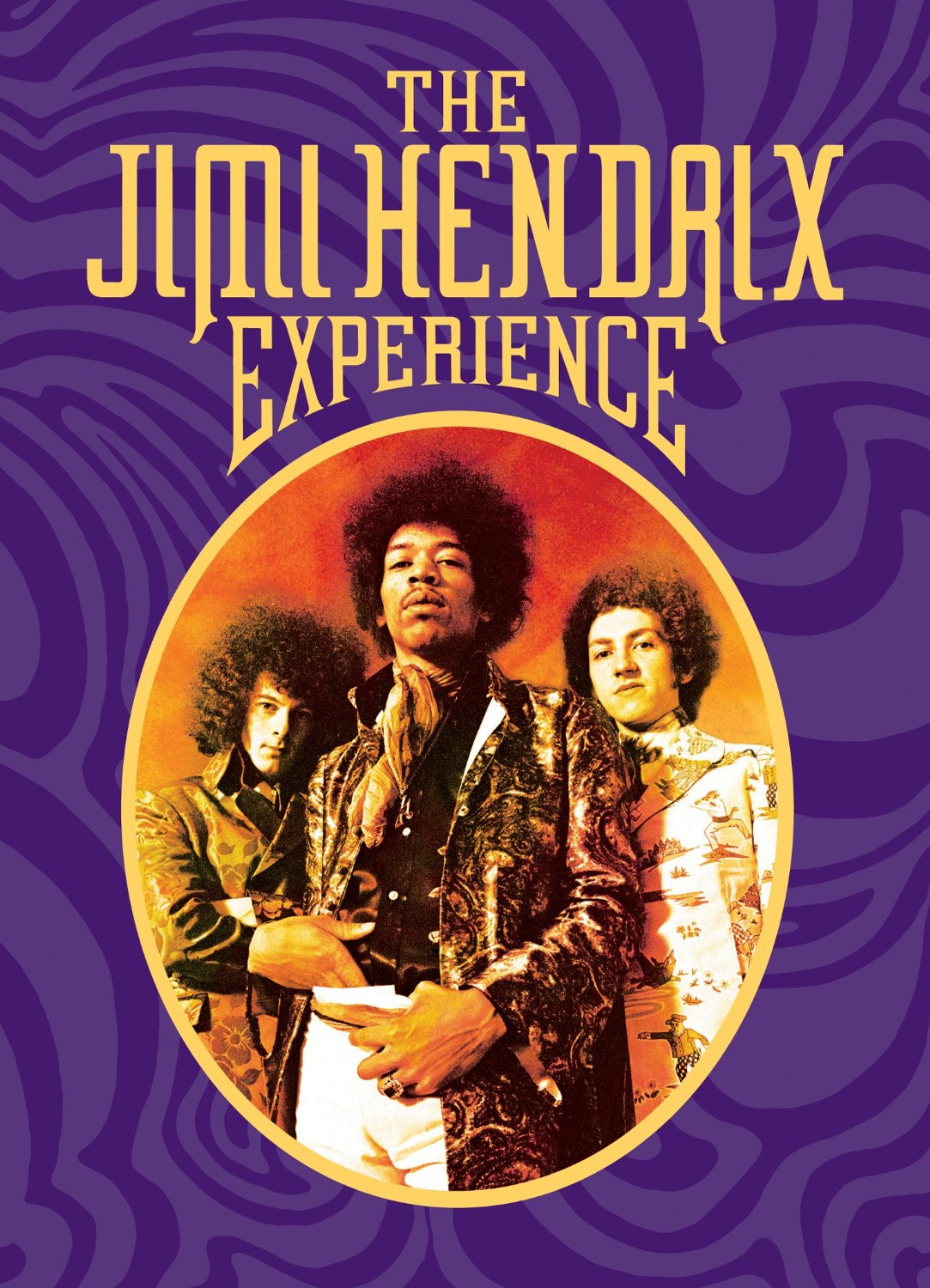
THE JIMI HENDRIX EXPERIENCE BOX SET.
The word legend is one of the overused in music, and should be reserved for the creme de la creme of music. That would definitely include Jimi Hendrix, who achieved more in twenty-seven short years than many musical journey achieve in seventy years. Otherworldly describes Jimi Hendrix. It was as if he’d descended down from another world, and was during his short time on planet music, was determined to reinvent how to play the guitar. For the next few years, Jimi Hendrix took music by storm. The world was awestruck as this musical visionary, and shaman took the guitar to another level. A reminder of that is the four disc The Jimi Hendrix Experience box set.
The Jimi Hendrix Experience box set features music recorded between 1966 and the 18th September 1970. During that period, Jimi Hendrix’s star was in the ascendancy. He was the opposite of tired, staid musicians like B.B. King, who built a career on the same sound. Right up until earlier in 2015, B.B. King was phoning in performances of the same tired and predictable songs. Jimi Hendrix would never have done that.
Instead, Jimi Hendrix was an innovator who if he’d lived, would’ve been at the forefront of music, constantly moving his sound forward. Sadly, Jimi Hendrix’s career was cut tragically short, and music was robbed of his genius when he was just twenty-seven. At least Jimi Hendrix never grew old, bloated and predictable. Forever Jimi Hendrix be twenty-seven, and the a flamboyant, maverick musician whose genius had audiences spellbound when he was with The Jimi Hendrix Experience.
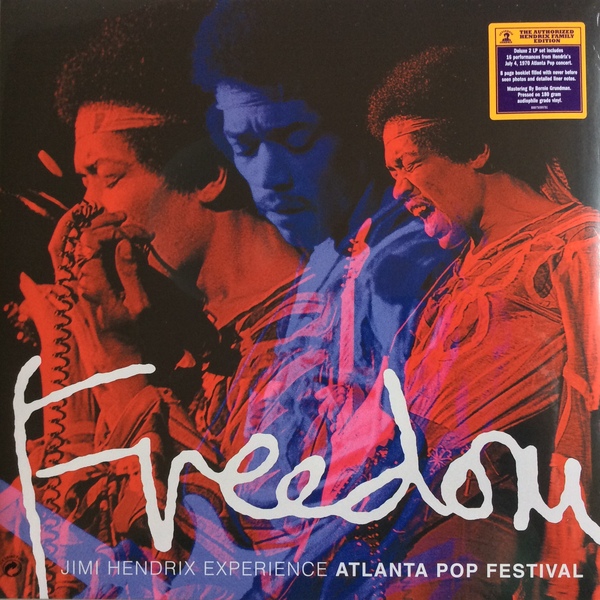
THE JIMI HENDRIX EXPERIENCE-FREEDOM: ATLANTA POP FESTIVAL.
On the 4th of July 1970, Jimi Hendrix journeyed 100 miles south of Atlanta. His destination was the second Atlanta International Pop Festival. It was being billed as the second Woodstock, and the Jimi Hendrix Experience were about play a starring role.
When the Jimi Hendrix Experience arrived at the Atlanta International Pop Festival, they were greeted by a crowd estimated to be between 300,000-400,000. What is now remembered as the “last great rock festival” was an unlikely event for Jimi Hendrix to appear at. Byron, in Atlanta was in the heart of old the Deep South. This was Klan country. Racial tensions were always threatening to bubble over. The organisers of the 1970 Atlanta Pop Festival were well aware of this. So they made the conscious decision that the star of the show should be someone who appealed to everyone. This was Jimi Hendrix, whose performance that day, features on the Freedom: Atlanta Pop Festival box set.
That day, The Jimi Hendrix Experience wrote heir place into music history by playing a starring role in what’s now remembered as the “last great rock festival.” Jimi had united a region that had been divided. His message of unity, universal love and Freedom had him friends on both sides of the racial divide can be heard on the Freedom: Atlanta Pop Festival box set. It features one of the most influential and innovative guitarists of his generation, Jimi Hendrix.
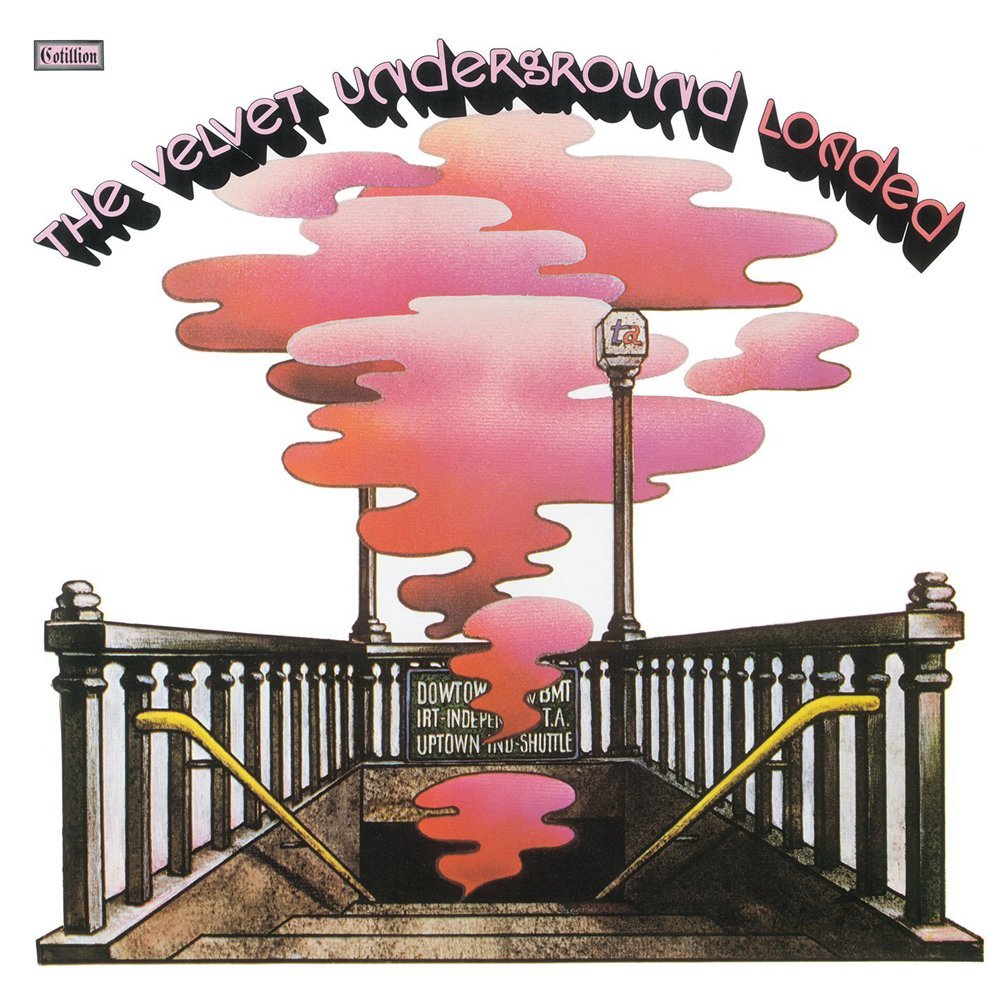
THE VELVET UNDERGROUND-LOADED BOX SET.
Having found themselves without a record company, The Velvet Underground’s luck changed when they signed to Atlantic Records. They were told to record an album: “loaded with hits.” The result was Loaded, the last Velvet Underground to feature Lou Reed, the group’s creative force. It was the end of era for The Velvet Underground. They essentially died on on 23rd August 1970, when Lou Reed left.
The Velvet Underground were like a rudderless ship floundering in choppy musical waters. Loaded was resequenced and Lou Reed alleged, some of the song had been edited, Despite that, Loaded, like 1967 with The Velvet Underground and Nico, 1968s White Light/White Heat, 1969s The Velvet Underground are all classic albums. That’s why it’s fitting that Loaded was reissued by Rhino as a four disc box set to celebrate the forty-fifth anniversary of this classic album’s release.
Despite failing commercially in 1970, Loaded is nowadays, regarded as a classic album; and The Velvet Underground are remembered as one of the most important, influential and innovative bands in the history of music. Their musical legacy is one of the richest in music.
THE 33 BEST BOX SETS OF 2105-PART FOUR.
THE 33 BEST BOX SETS OF 2105-PART FOUR.
THE VELVET UNDERGROUND-THE MATRIX TAPES BOX SET.
For a while, The Matrix had one of The Velvet Underground’s favourite venues on The West Coast. It seemed to bring out the best in The Velvet Underground. So there was no better place for The Velvet Underground to record a live album. These two nights at The Matrix featured The Velvet Underground at their very best. However, until very recently, only some of live at The Matrix album has been released by UMC as a four disc box set.
The two nights at The Matrix, are documented on The Matrix Tapes box set. This four disc box set, features forty-two tracks. There’s Velvet Underground classics, and hidden gems like New Age on The Matrix Tapes. It’s regarded by many critics as as the definitive Velvet Underground live album. Especially now, that it’s available in it entirety.
That’s never been the case before. That’s despite The Matrix Tapes being recorded forty-six years ago. Since then, thirty-three of the tracks have found their way onto various Velvet Underground reissues. Somewhat belatedly, this legendary live album can be heard in its entirety, and features one of the most innovative and influential bands in the history of music, The Velvet Underground. They’re in full flight, reinventing classics and hidden gems on what’s considered a legendary live album The Matrix Tapes.
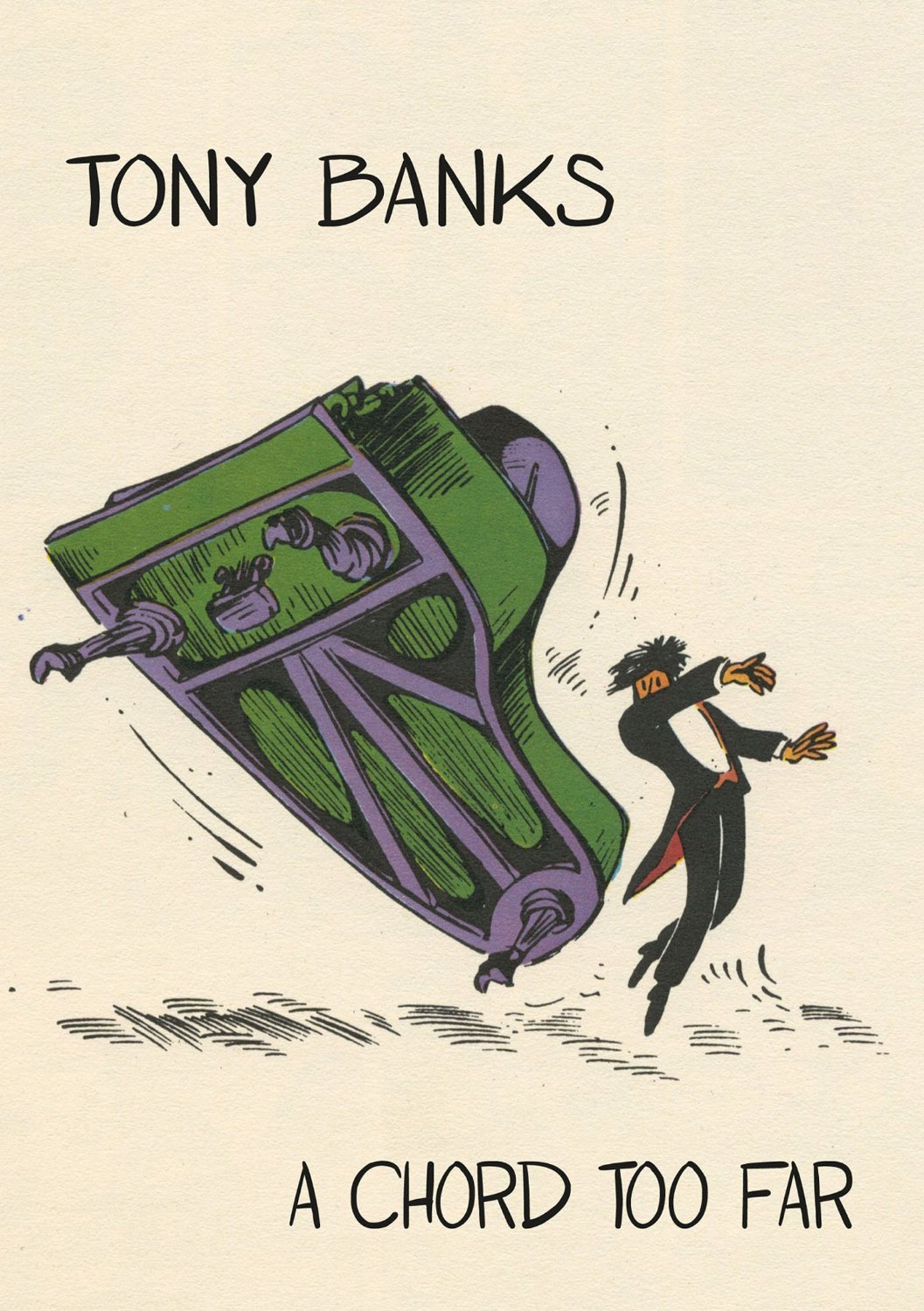
TONY BANKS-A CHORD TOO FAR BOX SET.
Too often, Tony Banks is referred to as “the keyboard player from Genesis.” This is doing the sixty-five year old a huge disservice. Tony Banks is a multi-instrumentalist, whose just as comfortable playing guitar as his playing piano, Hammond organ, synths or Mellotron. Seamlessly, Tony Banks could switch between musical instruments. That and his ability to innovate, played an important part in Genesis’ success. However, while Genesis dominated a large part of Tony Banks’ career, it’s just part of the story.
By the Genesis split-up in 1998, after thirty-one years together, Tony Banks was already an established solo artist. He released his debut album A Curious Feeling in 1979. After that, Tony Banks released another nine albums. They showed the different sides to Tony Banks. As well as solo albums, Tony Banks released soundtracks and orchestral albums. Then there’s the albums Tony recorded with his Bankstatement and Strictly Inc. projects. These albums showed Tony Bank’s versatility and ability to innovate. Tracks from each of these ten albums feature on the Chord Too Far four disc box set.
A Chord Too Far is the perfect introduction to Tony Banks’ nine album career. It goes beyond Tony Banks’ solo career, looking at soundtracks and orchestral works. The forty-eight tracks feature some of the best music that Tony Banks has released. Other tracks, like the albums they’re taken from will divide opinion. This includes 1986s Soundtracks and 1995s Strictly Inc. Neither were Tony Banks most successful, nor according to critics, his finest hour. However, tracks from both albums were included, and allow the opportunity listeners to reappraise both albums. They’re part of the musical journey that is Tony Banks’ career. It’s documented and celebrated on A Chord Too Far. This four disc box set, celebrates the career of a pioneering musician, who continually, pushed musical boundaries and by his own admission, sometimes took things, A Chord Too Far.
VAN HALEN-DELUXE.
In March 2015, Rhino released a four disc box set of Van Halen’s albums, Deluxe. It’s the perfect introduction to Van Halen. The first disc in Deluxe is their 1978 eponymous debut album. This was the album that launched one of the hardest rocking bands of the seventies and eighties.
By 1984, Van Halen were one of the biggest bands on planet rock. They were about to become even bigger when they released 1984. It featured Van Halen were at their hard rocking best, unleashing classics like Jump, Panama and Hot For Teacher. It seemed that Van Halen could do no wrong. That proved to be the case. Right through to 1995, enjoyed a glittering, multi-platinum career. That’s despite fall-outs, changes in lineup and a love of the rock ’n’ roll lifestyle. Somehow, Van Halen were still rocking in 2013, when they recorded the third album in the Deluxe box set, Tokyo Dome Live in Concert. It’s a reminder of what Van Halen in full flight sounds like. For a newcomer to Van Halen, it’s the perfect addition to Van Halen and 1984. These three albums are the perfect primer to Van Halen, who have enjoyed an almost unrivalled longevity.
So that’s the story of the best box sets of 2015. There were plenty to choose from. I started with a long-list, and gradually, that long-list became the shortlist. Even then, a couple of box sets didn’t make the cut. The thirty-three that I’ve chosen, are the best thirty-three box sets of 2015. However, the winner by far had to be the Harmonia vinyl box set, Complete Works.
Complete Works was released by Berlin based Grönland Records in November 2015, is a luxurious and lovingly curated box set. It’s flawless, and stands head and shoulders above each and every box set released during 2015. This musical Magnus Opus set the bar for future box sets.
THE BEST 55 NEW ALBUMS OF 2015-PART ONE.
THE BEST 55 NEW ALBUMS OF 2015-PART ONE.
As I continue my look back through 2015, we get to the best albums of 2105. Usually, I choose fifty albums. This year was such a good year for music. So much so, that I increased the list to fifty-five. The artists represented, come from all over the world. This includes Scotland, England, Norway, Sweden, Germany, America and . It’s one of the most eclectic lists of recent years. Equally eclectic is the music. Numerous genres are represented here. That’s no exaggerating. There’s something for everyone, and each and every album is a worthy addition to any record collection. So without further ado, here is my fifty-five best albums of 2015 in A-Z order.
ADMIRAL FALLOW-TINY REWARDS.
Admiral Fallow were formed in 2007, by Glasgow based singer-songwriter Louis Abbott. They released their debut album Boots Met My Face in June 2009. Nearly three years later, Admiral Fallow released their sophomore album Tree Bursts In Snow in May 2012. Since then, it’s all been quiet on the album front.
That was until Admiral Fallow returned with Tiny Rewards in May 2015. It was released on the Canadian label Nettwerk. Tiny Rewards marked a welcome return from Admiral Fallow. It’s a truly captivating and eclectic, career defining album from Admiral Fallow.

ANNELI DRECKER-ROCKS AND STRAWS.
In July 2015, Anneli Drecker released her long awaited, and much anticipated third solo album, Rocks and Straws on Rune Grammofon, It marked a welcome return from Anneli Drecker. Her recording career began twenty-eight years ago, with Bel Canto when she was just seventeen. Since then, Anneli Drecker released six albums with Bel Canto, worked with Röyksop and released her third album Rocks and Straws.
For Rocks and Straws, Anneli Drecker penned eleven new songs. These songs are based on lyrics by cult poet Arvid Hanssen, and were translated into English by artist and writer Roy-Frode Løvland. Arvid Hanssen´s poems have been strongly influenced by the mysterious and powerful nature of this arctic region, including the works of writer of Knut Hamsun. Despite the lyrics being based on Arvid Hanssen’s lyrics, the songs on Rocks and Straws are personal to Anneli Drecker. She describes them as an “ode” to the town and region she was born and brought up. Helping Anneli Drecker, who also produced Rocks and Straws, were some of the great and good of Norwegian music.
The result was a captivating album that showcased Anneli Drecker’s ethereal vocal. It’s complimented by understated, acoustic arrangement. They frame Anneli Drecker’s vocals, as effortlessly, she breathes life, meaning and hope into lyrics. Other times, her vocal veers between tender, dramatic and powerful. Occasionally, Anneli Drecker’s vocal and tinged with sadness. Always, it’s heartfelt and impassioned. That’s because each of the eleven songs on Rocks and Straws are personal to Anneli Drecker. They’re about Anneli Drecker’s life and formative years. These years shaped Anneli Drecker, and made her what she is now. That’s one of the most talented singers in Europe.

AS THE TIRED TRAINS CROSS EUROPE-LUCID MOMENTS.
One of the real finds of 2015 was As The Tired Trains Cross Europe’s debut album Lucid Moments. It was released on CD and heavyweight vinyl by Big Pink Records and showcases a truly talented singer-songwriters. So much so, that great things are forecast from As The Tired Trains Cross Europe. No wonder.
As The Tired Trains Cross Europe is the perfect showcase for the the multi-talented Vegard Eggum. He wrote, recorded, produced and mixed the ten tracks on Lucid Moments. It’s a musical roller coaster, where As The Tired Trains Cross Europe flits between and combines elements of country, electronica, folk, jazz, Krautrock, Nordic Wave, pop, post rock, psychedelia, reggae and rock. The result is a musical journey that all music loves should experience and embrace.
Over Lucid Moments’ ten tracks, Vegard Eggum becomes storyteller and troubadour. He embraces these roles, delivering vocals that are variously cathartic, heartfelt, hopeful, hurt-filled, impassioned, needy and soul-baring. Lyrics come to life, as Vegard Eggum lives them, on Lucid Moments, the debut album from his latest musical vehicle, As The Tired Trains Cross Europe. Essentially, Lucid Moments is a musical journey through the mind of musical adventurer and explorer Vegard Eggum.

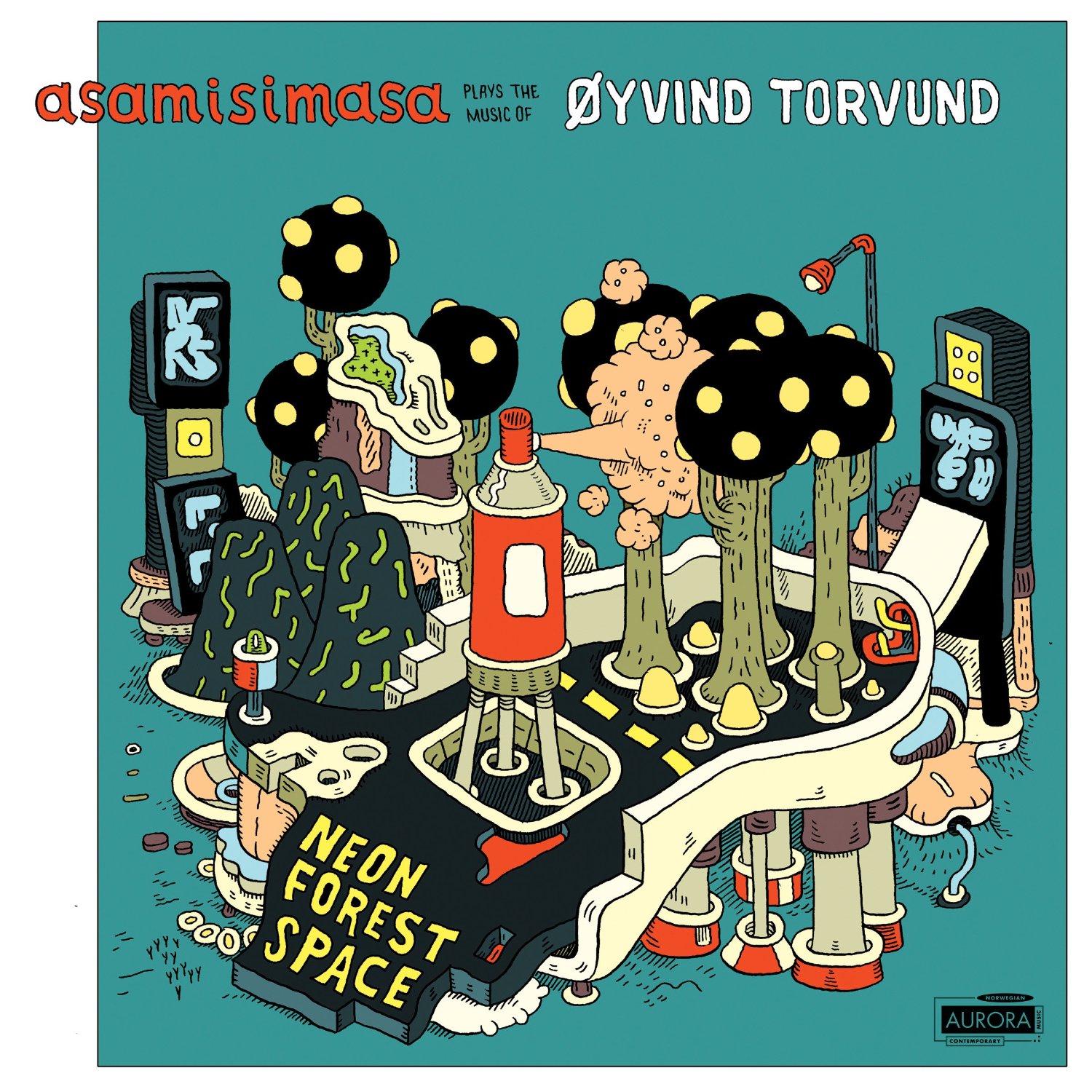
ASAMISIMASA PLAYS THE MUSIC OF ØYVIND TORVUND.
Øyvind Torvund was a composer that Asamisimasa had long admired and been inspired by. So, Asamisimasa decided to record an album of Øyvind Torvund’s compositions. The result is Asamisimasa Plays The Music Of Øyvind Torvund will be released by Norwegian Aurora Contemporary on 11th September 2015. However, this is no ordinary album.
Asamisimasa Plays The Music Of Øyvind Torvund features four lengthy soundscapes. Two of them, feature several movements. Wilibald Motor Landscape is a five piece movement, while Neon Forest Space features seven movements. Both tracks tell stories, and have a cinematic quality. Just like the two lengthy tracks, Wolf Studies and Plastic Waves, these tracks see Asamisimasa a disparate and eclectic selection of musical genres and influences.
During the four tracks on Asamisimasa Plays The Music Of Øyvind Torvund, elements of ambient, avant-garde, classical, electronica, experimental, free jazz, industrial post rock, psychedelia and rock melt into one. Somehow, though, this ambitious and pioneering fusion of disparate musical genres hangs together, and make perfect musical sense.
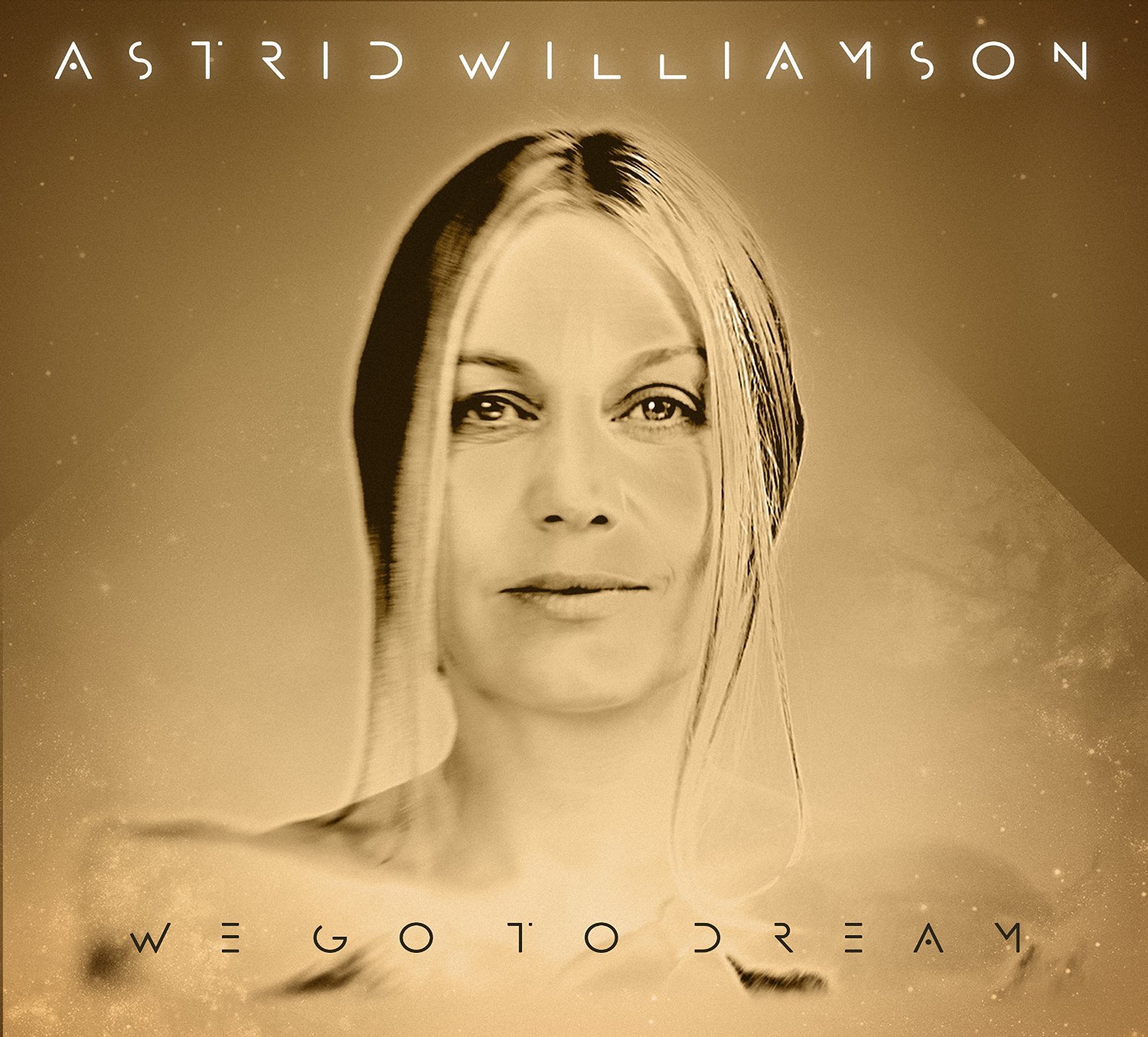
ASTRID WILLIAMSON-WE GO TO DREAM.
Despite just releasing her sixth album, We Go To Dream, Astrid Williamson is still one of music’s best kept secrets. That’s despite a career that’s spanned three decades. Sadly, widespread commercial success that Astrid Williamson deserves has so far, eluded her. That’s why Astrid Williamson decided to reinvent herself.
The reinvention ofAstrid Williamson began on Pulse, which was released in 2011. Astrid Williamson continues to reinvent herself on We Go To Dream. It’s without doubt, the most eclectic album of Astrid Williamson’s career.
So much so, that We Go To Dream is a magical mystery tour through musical genres. Seamlessly, Astrid Williamson flits between and fuses disparate musical genres on We Go To Dream. Effortlessly, Shetland born chanteuse Astrid Williamson squares the musical circle on We Go To Dream, which features something for everyone.
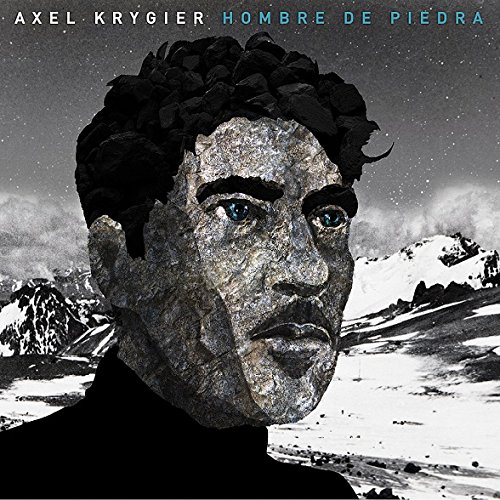
AXEL KRYGIER-HOMBRE DE PIEDRA.
Axel Krygier’s career began thirty-one years ago, in 1985. Since then, the Buenos Aries’ born multi-instrumentalist has established a reputation as a musical maverick, who continually, has pushed musical boundaries to their limits, and sometimes, beyond. That was apparent on Axel Krygier’s genre-melting fifth album, Hombre De Piedra, (Man Of Stone), which was released by Crammed Discs in 2015.
Unlike Axel Krygier’s previous albums, Hombre De Piedra is a concept album. This however, is no ordinary concept album. Instead, Hombre De Piedra is is a musical collage, inspired by the French documentary Lascaux: Le Ciel des Premiers Hommes, which was a study of the the famous paleolithic cave paintings. The documentary caught Axel Krygier’s imagination. So, he set out to what many people thought was impossible, and tell the story of mankind on Hombre De Piedra.
With a few of his musical friends, Axel recorded not just an ambitious musical collage, but a groundbreaking one. On Hombre De Piedra Axel pushes musical boundaries to their limits, and sometimes, way beyond. To do this, Axel, a musical alchemist, combines musical genres and influences. This includes Balkan rapture, blues, disco, dubstep, exotica, funk, hip hop, Latin, lounge and rock. Soundtracks also influence Axel; including Ennio Morricone’s Spaghetti Western soundtracks. Then there’s The Beatles’ Sgt. Pepper’s Lonely Hearts Club Band and Dick Dale inspired surf guitars. The result is pioneering collage Axel Krygier set out to record.
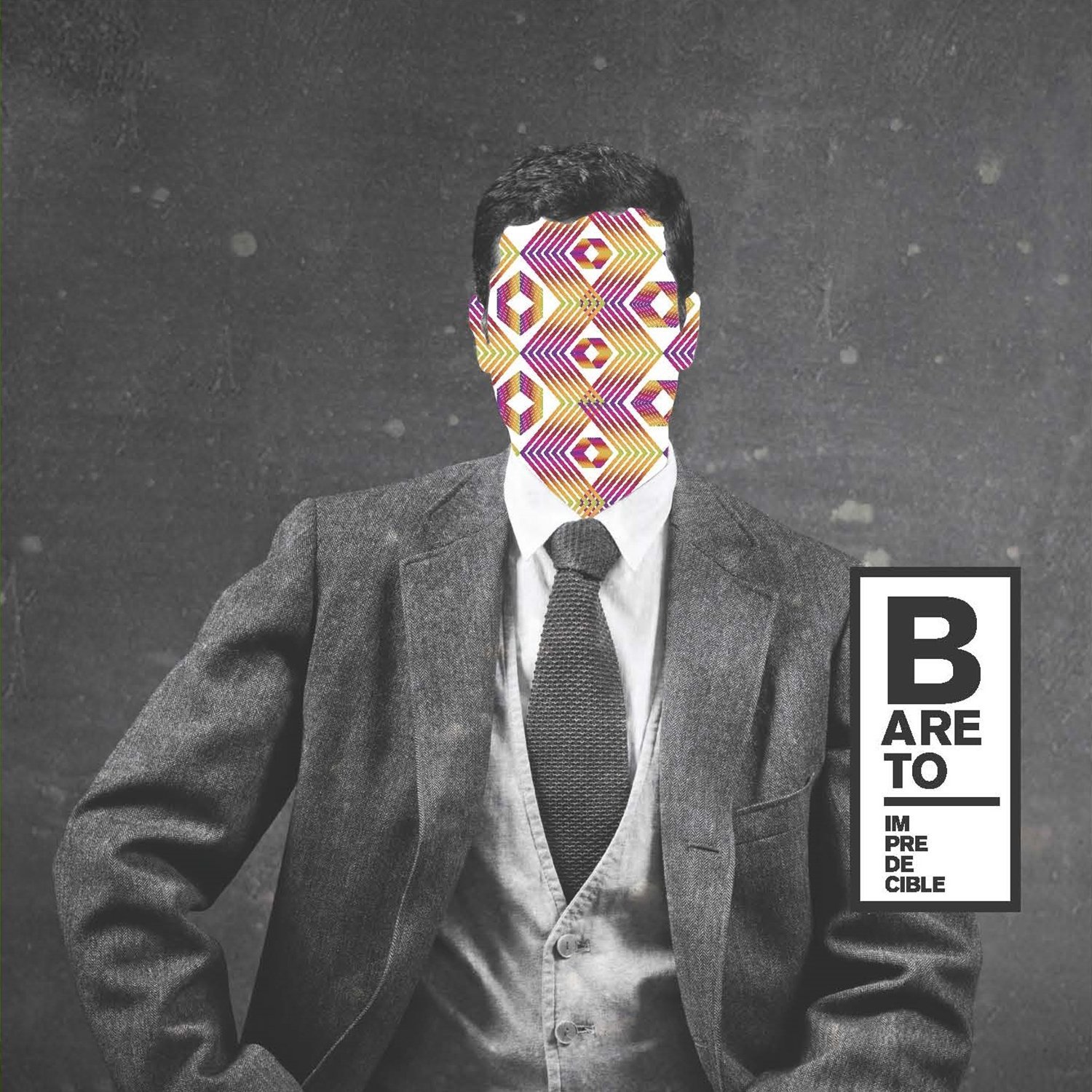
BARETO-IMPREDICIBLE.
When friends form a band, an adventure begins. Nobody knows what’s about to happen. Everyone has their hopes and dreams. It used to be being signed to a record company, and releasing their debut album. Maybe, after a couple of albums, commercial success and critical acclaim will have come their way? If that’s the case, their lives will have been transformed. They’ll have turned their back on the tedium and drudgery of everyday life. Replacing it, will be life split between recording studios and playing some of the most prestigious venues in planet music. That’s the dream. Hoping to live that dream are one of the rising stars of the Peruvian music scene, Bareto, who released their fourth album Impredecible, on the World Village label in November 2015.
Impredecible is captivating and intriguing because you never know which direction the album is heading. Bareto throw curveballs aplenty. Each track is eagerly awaited. What genre will Bareto reference next? Sometimes that’s obvious. Other times, surprises are store. The music veers between cinematic, haunting and moody to joyous, irresistible and hook-laden. However, each track on this musical magical mystery tour has one thing in common. They ooze quality. That’s why Impredecible should be the album that introduces Bareto’s genre-melting music to a much wider audience.
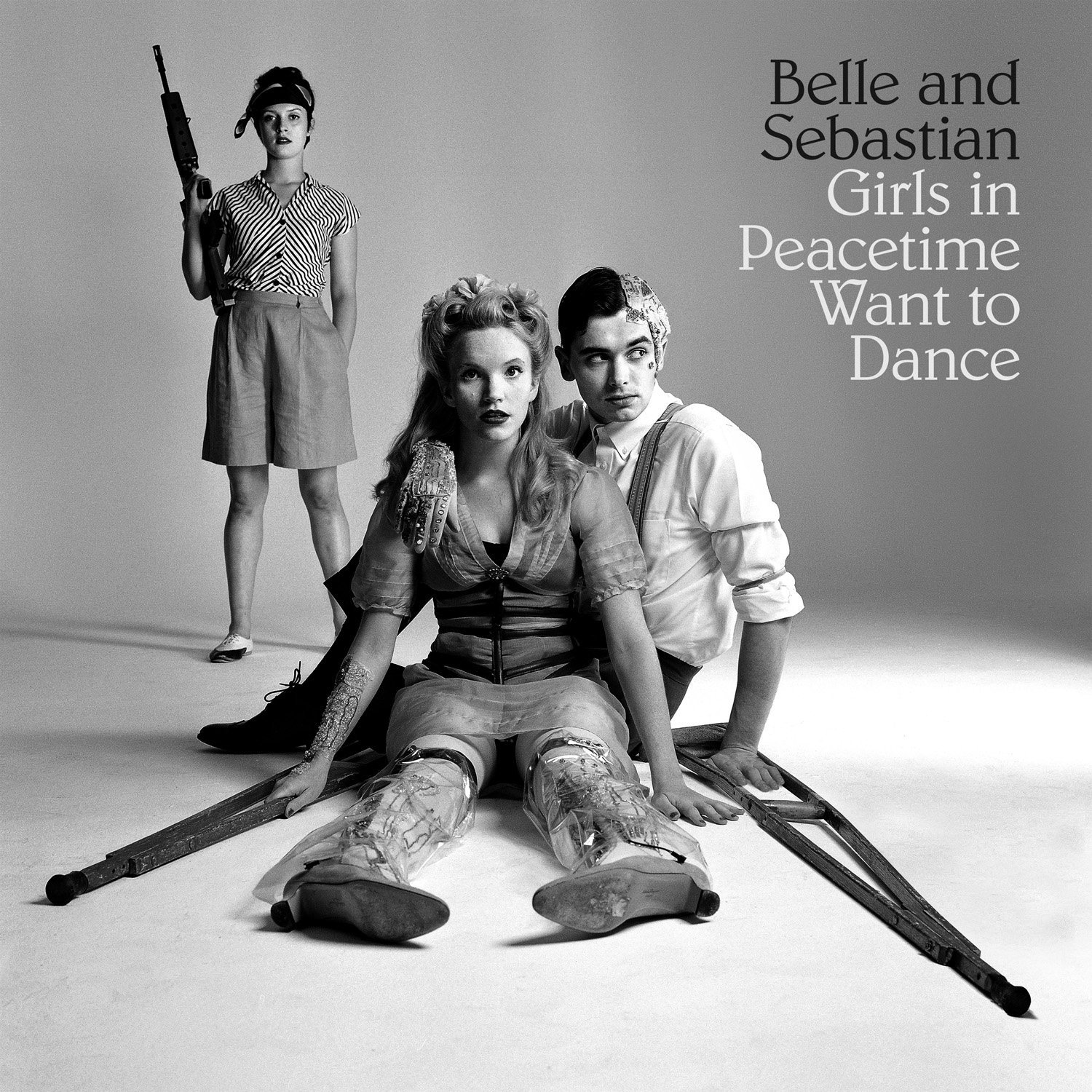
BELLE AND SEBASTIAN-GIRLS IN PEACETIME WANT TO DANCE.
Purveyors of perfect indie pop, Belle and Sebastian are almost veterans of the Scottish music industry. Their Girls In Peacetime Want To Dance, was released back in January 2015. It was recorded in Atlanta, and was the third album to be produced by Ben H. Allen III. The result was an ambitious album.
With Ben H. Allen III’s help, Belle and Sebastian, not for the first time, reinvented themselves again. Some would have as believe that Girls In Peacetime Want To Dance it seems, is the musical equivalent of a midlife crisis. That’s far from the truth. Girls In Peacetime Want To Dance was an ambitious album where Belle and Sebastian were taken out of their comfort zone. The result was a first for Belle and Sebastian, a dance album. Now as the Belle and Sebastian’s twentieth anniversary fast approaches, it’s now time to move on. Maybe, that’ll mean a return of Tony Doogan as producer, who was responsible for some of return of some of Belle and Sebastian’s finest albums.
BERANGERE MAXIMIN-DANGEROUS ORBITS.
Bérangère Maximin’s fourth album Dangerous Orbits. was released on Crammed Discs in May 2015. It was a fitting addition to the Made To Measure series. Bérangère Maximin has a reputation for continually releasing groundbreaking music. Her music is ambitious, challenging and pushes musical boundaries to their limits, and sometimes way beyond. The music can also be described as challenging, cerebral and engaging. That’s been the case throughout Bérangère Maximin’s career. Dangerous Orbits was no different, and is an album to embrace.
If you embrace the music on Dangerous Orbits, you’re richly rewarded. What follows is a sonic voyage of discovery. You’ve no idea where the destination is. It’s a case of trusting Bérangère Maximin. She takes you on a journey. All you need to bring, is your imagination. As you listen to Dangerous Orbits, scenarios and plots unfold. That’s not surprising, as Dangerous Orbits has a cinematic sound. However, the listener has to provide the script. The beauty of this is, that each script is different. Everyone will pick and choose different sounds. They’ll also interpret sounds differently. This makes Dangerous Orbits a fascinating album, one that’s a captivating, cerebral and cinematic. It’s also a journey through disparate musical genres.
Listen carefully to Dangerous Orbits, and elements of ambient, avant-garde, drone, electronica, experimental, free jazz, industrial, musique concrète, psychedelia and rock all play their part in the sound and success of Dangerous Orbits. It features sonic explorer Bérangère Maximin creating music that’s challenging, cerebral, engaging and truly groundbreaking. So much so, that Dangerous Orbits is the most ambitious, cinematic and innovative album of Bérangère Maximin’s four album career.

BILL WELLS AND AIDAN MOFFAT-THE MOST IMPORTANT PLACE IN THE WORLD.
Four years after the last musical sojourn, Scotland’s musical odd couple of Bill Wells and Aidan Moffat return with their long awaited sophomore album The Most Important Place In The World. It’s the followup to Bill and Aidan’s 2011 debut album, Everything’s Getting Older. It was received to widespread critical acclaim back in 2011. Since then, music lovers have been awaiting the return of the unlikeliest musical yin and yang, Bill Wells and Aidan Moffat. The Most Important Place In The World, which was released on Chemikal Undergound has been worth the four year wait.
On The Most Important Place In The World, Bill Wells and Aidan Moffat have returned with a dozen songs about Scotland’s dark underbelly. They’re songs that deserved to be turned into a short film. No wonder. The characters and scenarios are very realistic Macho men, drinkers rub shoulders with dancers, chancers and romancers. They’re responsible for fleeting fumblings, illicit romances and tales of love gone wrong. Even the loves songs have a twist in the tale.
There’s a reason for this. Bill Wells and Aidan Moffat keep it real. They write about what they know, what they’ve seen and experienced. That makes a difference. Far too many songwriters try and write about things they’ve neither experienced nor witnessed. Not Bill Wells and Aidan Moffat. Drawing upon their experiences, they combine caustic wit, cynicism and social comment with tragicomedy. Other times their lyrics are tinged with sadness, hurt and heartbreak as The Most Important Place In The World takes on a late-night sound. Other times, the music is joyous and uplifting, as seamlessly, the flit between musical genres. This they do throughout The Most Important Place In The World, which is without doubt, a fitting followup to Everything’s Getting Older.

THE BEST 55 NEW ALBUMS OF 2015-PART TWO.
THE BEST 55 NEW ALBUMS OF 2015-PART TWO.
BLACK MOON CIRCLE-THE STUDIO JAMS VOLUME I: YELOW NEBULA IN THE SKY.
Norwegian psychedelic space rock band Black Moon Circle are one of the rising stars of the Norwegian music scene. Their previous album Andromeda was released to critical acclaim in October 2014. A great future was forecast for the Trondheim based trio. No wonder. Black Moon Circle are one of the most talented bands in the Nordic music scene. They’re also one of the most ambitious, as they plan to release a trilogy of studio jams. The first instalment is The Studio Jams Volume I: Yellow Nebula in the Sky. It was be released on limited edition vinyl, in August 2015, on Crispin Glover Records, and is the perfect introduction to Black Moon Circle.
They’re, essentially, a power trio, who create their unique brand of psychedelic space rock. The basis for this, is the classic rock of the sixties and seventies, psychedelia and space rock. To this, Black Moon Circle add elements of electronica, experimental music and free jazz. Seamlessly, these disparate musical genres and influences merge into something new and innovative. It’s cinematic, dramatic, futuristic, moody, rocky and as Øyvin Engan says, “intense.”
This intensity is deliberate. It comes courtesy of the three members of Black Moon Circle. They deploy layers of fuzzy guitars, spacey, lysergic synths and a mesmeric rhythm section. When all this is combined, the result is the next instalment in the Black Moon Circle story, The Studio Jams Volume I: Yellow Nebula In The Sky. It’s without doubt the best album of Black Moon Circle’s three album career. That’s why, for anyone yet to discover Black Moon Circle, The Studio Jams Volume I: Yellow Nebula In The Sky is the perfect introduction to the Norwegian psychedelic space rock pioneers at their hard rocking best.
BOB DYLAN-SHADOWS IN THE NIGHT.
For his thirty-ninth album, Bob Dylan inspired by the music of Frank Sinatra crooned his way through ten of his favourite jazz and pop standards on Shadows In The Night, which was released on Columbia. Shadows In The Night however, divided opinion.
It’s safe to say that ever since the release of Shadows In The Night, it’s an album that’s divided the opinion of even the most loyal Bob Dylan fan. They seem to either love or loath Shadows In The Night. There appears, is no middle ground. Essentially, Shadows In The Night is a Marmite album.
Personally, I think Bob Dylan suits and should embrace the role of a crooner. His lived-in, world-weary vocal breathes life, meaning and emotion into the ten tracks on Shadows In The Night. Bob Dylan sounds as he’s lived, loved and survived to tell the tale. Although he might not have the smooth voice of Frank Sinatra, he’s the ability to bring the songs to life. He’s not so much singing songs, but sounds as if he’s lived survived them.
BOY-WE WERE HERE.
Valeska Steiner and Sonja Glass first met in 2005, at the Hochschule für Musik und Theater Hamburg. They were both students on a pop music course. A lot had happened in since then. They released their debut album Mutual friends in 2011. Since then, BOY’s star had been in the ascendancy. Their music us popular all over the world, and a countless awards have come their way. This includes a gold disc for sales of their latest album We Were Here. That’s not surprising.
We Were Here, which was released on Grönland Records, was a fitting followup to Mutual Friends. The music was variously melodic, melancholy and mischievous. Other times, it was anthemic and hook-laden. It was impossible not to be captivated by We Were Here, career defining album from BOY. The former pop music students BOY, have graduated summa cum laude with We Were Here, a carefully crafted album of hook-laden, perfect pop.
CHRISTIAN WALLUMROD-PIANOKAMMER.
Christian Wallumrød’s recording career began nearly twenty years ago, in 1996, when the Christian Wallumrød Trio released their debut album Birch. Released to widespread critical acclaim, Birch launched the career of Christian Wallumrød. Since then, Christian Wallumrød star has been in the ascendancy.
To the onlooker, it seems Christian Wallumrød has done everything in music. He’s worked with the great and good of Norwegian music on a variety of groundbreaking projects, and formed the Christian Wallumrød Trio, who have released five albums. Their last album, Outstairs, released in 2013, won a Spellemannspris, Norwegian Grammy. However, there’s one thing Christian Wallumrød rectified last year, when he realised his debut solo album Pianokammer on Hubro Music.
Pianokammer is a spellbinding album, of innovative, groundbreaking and genre defying music. Christian combines ambient, avant-garde, blues, experimental, free jazz and jazz. The result is a captivating collection of six songs, that are variously ambitious, bold, dark, dramatic, ethereal, haunting, hopeful, irresistible, joyous, ominous and uplifting. That’s why, Pianokammer is, without doubt, such an ambitious and captivating album from musical innovator and adventurer, Christian Wallumrød.
CHVRCHES-EVERY OPEN EYE.
Earlier this year, Chvrches returned returned with their sophomore album Every Open Eye. It’s the follow up to their million selling 2013 debut album The Bones Of What You Believe. Chvrches pickup where they left off on The Bones Of What You Believe.
Every Open Eye, an album full of dance-floor fillers, anthems and beautiful ballads. The five months Chvrcges spent recording Every Open Eye was five months well spent. Every Open Eye is a stunning album, and almost flawless album.
DALINDEO-KALLIO.
It was back in 2003, that Dalindèo, the Finnish jazz-sextet were founded by composer and guitarist Valtteri Laurell Pöyhönen. Since then, Dalindèo have released a trio of albums. Their debut was Open Scenes in 2007. Three years later, Dalindèo returned with Soundtrack For The Sound Eye. By then, Dalindèo’s star was in the ascendancy. Then in March 2015, Dalindèo released their third album Kallio on BBE Music.
Kalindèo are just the latest in a long line of hugely talented Scandinavian artists who are making groundbreaking music. Previously, many of these artists have come from Norway, which currently, has some of the most inventive and innovative musicians in Europe. This Nordic Wave has resulted in Norway becoming one of Europe’s musical cultural capitals. That looks like continuing for the some time. No wonder. Some of the best, and most groundbreaking music of the last few years has come out of Norway. This includes everything from ambient and avant-garde, to jazz, fusion and rock. Norway it seems, is at the vanguard of musical revolution. Will this musical revolution sweep across Scandinavia?
Let’s hope that’s the case. Hopefully, in the coming months and years, a new generation of Finnish artists and groups will produce equally innovative and ambitious music. Maybe, Kalindèo, will be the first of many Finnish artists and groups to enjoy commercial success and critical acclaim? That’s could to be the case. Especially, if they can produce music as groundbreaking and atmospheric as that on Kallio, Dalindèo’s third album.
DAVID GILMOUR-RATTLE THAT LOCK.
After a career than spanned forty-seven years, Pink Floyd released their final album, The Endless River in 2014. It was the end of an era. Pink Floyd had been a musical institution. For six decades, Pink Floyd had provided the soundtrack to the lives of several generations. However, the end of Pink Floyd allowed Dave Gilmour to concentrate on his solo career. His first solo album post Pink Floyd, was Rattle That Lock, which was released on Columbia, in September 2015. Rattle That Lock was a welcome return from the former Floyd frontman.
Rattle That Lock took nearly two years, a huge cast of musicians, backing singers and an orchestra accompanied David Gilmour. He and his co-producer Phil Manzanera crafted a quite beautiful and eclectic album. There’s elements of ambient, classic rock, jazz, pop and post rock on Rattle That Lock. Seamlessly, David switches between genres. He’s just as happy delivering a soul-baring ballad like In Any Tongue as he is delivering the jazz-tinged The Girl In The Yellow Dress. Then there’s a trio of cinematic instrumentals. Each and every one of them paint pictures. However, And Then features a reflective David. It’s as if he’s remembering his fallen comrades from Pink Floyd. And Then proves a poignant way to close Rattle That Lock which is, without doubt, the finest album of David Gilmour’s career and shows that there’s life after Pink Floyd.
DUKE ELLINGTON AND HIS ORCHESTRA-THE CONNY PLANK SESSION.
In the history of German music, Conny Plank is reverentially referred to as the “genius” by Michael Rother. He worked on some of the most innovative recordings of the seventies. This includes recording Duke Ellington and His Orchestra in 1970.
The resultant sessions lay unreleased until earlier this year, when The Conny Plank Session was released by Grönland Records. They were a captivating musical document, that were recorded at Rhenus Studio, Cologne. Conny Plank coaxed, cajoled and encouraged a series of spellbinding performances from Duke Ellington and His Orchestra. As Conny takes The Duke out of comfort zone, he encourages him to head on musical voyage of discovery. To do that, Conny charmed, encouraged and flattered Duke Ellington. He did whatever it took to get the best performance from The Duke. Once The Conny Plank Session was complete, Conny let Duke Ellington hear the fruits of their labours.
As Conny and Duke Ellington listened to the six tracks, the veteran jazz musician was enthralled. He complemented Conny for his work. Somehow, he had captured Duke Ellington and His Orchestra at their best. It was one of the last great recordings The Duke made. Four years later, and sadly, The Duke was dead. However, The Conny Plank Session are a tantalising reminder of what happened when The Duke met the genius, Conny Plank.
ELEPHANT9 WITH REINE FISKE-SILVER MOUNTAIN.
For their fourth album, Silver Mountain, Elephant9 have once again joined forces with Swedish virtuoso guitarist Reine Fiske. This tantalising pan-Scandinavian collaboration has resulted in a genre-melting album of rock ’n’ jazz, prog rock and psychedelia, Silver Mountain. It was released on Rune Grammofon, and is the finest album of Elephant9’s four album career.
Not only is Silver Mountain the finest album of Elephant9’s career. It features music that’s ambitious, bold, exciting and innovative. Continually, Elephant9 push musical boundaries. To do this, they combine musical genres. Everything from ambient, the classic rock of the late-sixties and seventies, electronica, experimental, free jazz, Krautrock, prog rock, psychedelia and space rock can be heard on Sliver Mountain. It’s a captivating journey through musical genres and influences. Listen carefully, and you’ll hear everyone from Can, Hawkwind, Jimi Hendrix, Klaus Doldinger, Kraftwerk, Led Zeppelin, Neu!, Pink Floyd, Ry Cooder, The Doors and Tubeway Army. Some of these influences can be heard only briefly, while others are more noticeable. Closer to home, another of Norway’s leading bands Motorpscycho also seem to have influenced Elephant9, as they take listeners on journey through twists and turns.
Continually, Elephant9 take twists and turns throughout Silver Mountain. They lead you down blind alleys, only to find an escape route. Out of a blistering slice of rock comes an ethereal ambient soundscape. That’s what you quickly come to expect from Elephant9 on Silver Mountain, musical pioneers extraordinaire.
ERLAND DAHLEN-BLOSSOM BELLS.
Back in 2012, drummer and percussionist Erland Dahlen released his long-awaited, and much-anticipated debut album Rolling Bomber. By then, the forty-one year old was a veteran of the vibrant Nordic music scene. Erland Dahlen was a veteran of countless bands, including HET, Boschamaz, Kiruna, Morris, Piston Ltd, Batagraf, The Sonic Codex Orchestra and Stian Westerhus and Pale Horses. This however, was only part of the story, as Erland Dahlen was also one of Norway’s top session musicians. Somehow, Erland Dahlen found time to record Blossom Bells, which was released on Hubro Music.
Blossom Bells is a near flawless fusion of ambient, avant garde, electronica, experimental, Krautrock, Nordic Wave, post rock, psychedelia and rock. Genres melt into one, on an album that’s variously moody and broody, to dark and dramatic, to lysergic, otherworldly, spiritual, haunting, atmospheric and ethereal. The music on Blossom Bells is definitely cinematic. That’s the case throughout Blossom Bells. It sounds like the soundtrack to a film that’s yet to be made. Other times, the music on Blossom Bells becomes anthemic and up-lifting. Always, though, the music on Blossom Bells is captivating, cerebral, cinematic, inventive and innovative.
THE BEST 55 NEW ALBUMS OF 2015-PART THREE.
THE BEST 55 NEW ALBUMS OF 2015-PART THREE.
ERRORS-LEASE OF LIFE.
Errors have come a long way since they were formed in Glasgow, in 2004, by Simon Ward, Greg Paterson and Stephen Livingstone. Back then, Errors’ makeshift studio was a bedroom. That was the Glasgow based musical alchemists laboratory. Through experimentation and innovation, Errors sound began to evolve, and earlier this year, released their fifth album Lease Of Life, on Mogwai’s Rock Action Records.
On Lease Of Life, Errors paint pictures with your music. Sometimes, they toy with your emotions on tracks like New Winged Fire and Early Nights. For much of the time, it’s as if Errors are providing the soundtrack to a series of short films. You can’t help let your imagination run riot. Before your eyes, plots and scenarios unfold. It’s an intriguing and captivating listen. Maybe Errors will follow in Mogwai’s footsteps and start making soundtracks? They certainly have the ability to do so.Then other times, Errors head for the dance-floor.
Somehow, Errors have managed to make an album that will appeal to everyone. Whether it’s the slower cinematic tracks, or the hands in the air anthems, there’s something for everyone on Lease Of Life. It features comeback Kings Errors making return to form with what’s undoubtably a career defining album.

FAIRPORT CONVENTION-MYTHS AND HEROES.
There aren’t many groups that enjoy the longevity that Fairport Convention have. They were formed in 1967, and are widely recognised as the founding fathers of English folk rock. Since then, Fairport Convention have influenced several generations of folk musicians. They released their twenty-fifth studio album Myths and Heroes on Matty Grooves Records. It’s a very welcome addition to Fairport Convention’s discography.
On Myths and Heroes, we hear three different sides to Fairport Convention. There’s the traditional folk sound, balladry and Fairport Convention where they kick loose, and rock out. Much as I like the traditional folk sound, Fairport Convention are at their best delivering beautiful ballads and unleashing their trademark folk rock sound. Both feature the veteran band at the peak of their powers. All their years of experience shines through on Myths and Heroes, Fairport Convention’s twenty-fifth album in forty-eight years. Fairport Convention, the founding fathers of English folk rock, might be reaching veteran status, but as Myths and Heroes shows that they’re still a band with much to offer.
FINLAND-RAINY OMEN.
Playing an important part in the rise and rise of the Norwegian music scene are the three members of Finland; Ivar Grydeland, Pål Hausken, Morten Qvenild and Jo Berger Myhre. They’ve been members of various bands and worked with numerous artists on a variety of projects. Given the schedules of the various members of Finland, they could be forgiven for sticking to their “day jobs.” There was no chance of that. The members of Finland love music, and formed what can only be described as a multitalented supergroup. Finland’s debut album Rainy Omen, released in July 2015, by Hubro Music.
Finland was like a meeting of minds. Each of the members of Finland’s musical raison d’être was to make groundbreaking music. They wanted to push musical boundaries to their limits, and sometimes, way beyond. That’s what they do on Rainy Omen. The music in innovative, inventive and genre-melting. Elements of avant garde, experimental, industrial, jazz, psychedelia and rock are combined to make music that’s veers between atmospheric and cinematic to dark and dramatic. Other times, the music on Rainy Omen flits between beautiful to ethereal, and between lysergic and trippy. Always, though, the music on Rainy Omen is captivating, and I eagerly await Finland’s sophomore album.
FLORIAN FRICKE/POPOL VUH-KAILASH.
Florian Fricke was a musical innovator, who as a member of Popol Vuh and Tangerine Dream, created music that was innovative and influential Part of Popol Vuh’s success, was keyboardist Florian Fricke who sadly, died in 2001 aged just fifty-seven. He left behind a rich musical legacy, including that on the Florian Fricke/Popol Vuh box set Kailash. It was released in 2015, and celebrates the life and music of a true musical innovator and legend, Florian Fricke on two CDs and a DVD.
Disc one Piano Recordings; features eight of Florian’s favourite released and unreleased recordings and compositions. Some are Florian and his piano prove a potent combination. Patterns appear, only to disappear and recur. Then Florian heads off in an unexpected direction. He improvises and experiments, fusing classical and improvisational music. The resulting music veers between beautiful and bewitching, to captivating, dramatic, ethereal, spellbinding and spiritual. That’s also the case on the unreleased soundtrack on disc two.
The soundtrack to Kailash: Pilgrimage To The Throne Of The Gods, features on disc two; while the film can be found on the accompanying DVD. Both are captivating. Especially the ten ethereal soundscapes. They’re cinematic, ethereal, dramatic and spiritual. It’s another captivating listen; that maybe, the Florian Fricke/PopolVuh Kailash box set will introduce Florian Fricke and PopolVuh’s music to a wider audience.
GEIR SUNDSTOL-FURULUND.
Prolific. That’s a word that is often used to describe musicians. Often that’s an exaggeration. Not in the case of Geir Sundstøl. Since his career began in 1988, Geir Sundstøl has featured on 260 different albums. This includes the albums he recorded as member of Rovers, and then Morris. Mostly, though, Geir Sundstøl has worked as the musical equivalent of a hired gun, playing a multitude of musical instruments on albums and live. Geir Sundstøl has done just about everything. That was apart from release a debut album. He rectified this in September 2015, when Furulund was released on Hubro Music.
The music on Furulund is variously atmospheric, beautiful, broody, cinematic, dramatic, dreamy, ethereal, melancholy and moody. It’s capable of taking the listener on a journey. All the listener needs to supply is their imagination. Geir Sundstøl supplies the music. Sometimes, the music sounds as if it belongs on a Spaghetti Western. Another track, Punsj, sound as if they belong on a Wim Wenders soundtrack. Other influences include the Cocteau Twins, Brian Eno, and Buddhist music. Add to this, ambient, Americana, blues, country, folk, post-rock and rock. Each and every one of these influences are part of the sound and success of the cinematic and cerebral Furulund.
GLORIA-GEISTER.
Just two years have passed since Gloria released their eponymous debut album. Since 2013, Gloria’s star has been in the ascendancy. They’re regarded as one of the rising stars of the German music scene. That’s why their sophomore album Geister, has been so eagerly awaited. It was released byBerlin based Grönland Records, in 2915, and features a tight and talented band. They come across as self-assured and confident, as seamlessly, Gloria combine brief moments of ambient with elements of indie rock, pop and post rock on Geister.
For anyone who enjoys well-crafted, cerebral and emotive music then Geister is sure to appeal to them. It’s melancholy, pensive and reflective music. That’s not all. The music on Geister is also beautiful, sometimes hopeful and joyful. Geister is also awash with a plethora of hooks. They grab the listener’s attention, and soon they’re captivated. What follows is music that’s variously anthemic, melodic, contemplative, reflective and thought-provoking. Geister, which is Gloria’s latest and greatest album, is designed to make the listener think, and certainly does that.
GORAN KAJFES SUBTROPIC ARKESTRA-THE REASON WHY VOLUME 2.
For the last three decades, Goran Kajfeš has been a key figure in the Swedish music scene.There’s a reason for this. Goran Kajfeš has constantly been releasing groundbreaking, genre-melting music. To do this, Goran has pushed musical boundaries to their limits, and sometimes, way beyond. This resulted in Goran Kajfeš Subtropic Arkestra’s The Reason Why Volume 1 being nominated for a Swedish Grammy in 2013. Goran Kajfeš’ “acid rock with horns” was winning friends and influencing people. Two years later, and The Reason Why Volume 2 was released on Headspin Records.
The Reason Why Volume 2, which was released in April 2015, on Headspin Records, surpasses The Reason Why Volume 1. That took some doing. After all, The Reason Why Volume 1 was nominated for a Grammy Award. However, two years later, the multitalented Goran Kajfeš Subtropic Arekestra have come of age on The Reason Why Volume 2. They seem to have matured as a band. What’s more, the music on The Reason Why Volume 2 is even more eclectic and almost flawless. That takes some doing. However, Goran Kajfeš is a musical innovator. With Goran at the Arekestra’s helm, they’re definitely destined for greater things.
HUNTSVILLE-POND.
For nine years, musical alchemists Huntsville have been creating groundbreaking, genre-melting music. They released their fifth album Pond on Hubro Music. Pond was a Joycean sonic voyage of discovery, where Huntsville combine disparate musical genres and influences on four epic tracks. With Huntsville supplying the music, all the listener needs to do is let their imagination run riot.
What follows is akin to a four part play, where Huntsville supply a musical backdrop. The music can be melancholy and thoughtful. Other times, it’s moody and broody, but can just as easily become crystalline, elegiac and ethereal, as musical influences and genres melt into one.
This includes elements of ambient, avant-garde, electronica, experimental, free jazz, industrial, post rock, psychedelia and rock. Huntsville also draw inspiration from some of their musical heroes, including Miles Davis, Steve Reich, Ennio Morricone and early Tortoise. Other influences include Brian Eno, Can, Harold Budd, John Martyn, Mind Over Midi, Neu! and Pink Floyd. That’s an eclectic mix. However, all these influences can be heard on Pond, a truly captivating and innovative album from musical alchemists Huntsville.
JOHAN AGEBJORN-NOTES.
Since 2006, Johan Agebjörn, has released a quartet of albums and a dozen remixes. Each of these releases are very different. Johan has refused to stand still, constantly reinvents his music. Johan it seems, is a musical shapeshifter. That’s been the case since 2006, when Johan released his debut album. Nine years later, and Johan Agebjörn released his fifth album Notes on the Paper Bag label on February 2015. It’s the latest
Throughout his career, Johan has constantly reinvented his music. He’s released he’s everything from ambient and electro, right through to Italo disco, 8bit and classical piano music. Eclectic, it seems, is the best way to describe the Gothenburg based musical chameleon. This is the case on Notes, Johan’s fifth album.
Notes is best described as cinematic, dramatic, dreamy, ethereal, melancholy and even, mesmeric. Sometimes Notes is beautiful, emotive, sensual and sultry. Other times Notes is bold and dark. Always, Johan Agebjörn’s fifth solo album, Notes, is a captivating and compelling album, that, full of surprises aplenty.
KATHRYN JOSEPH-BONES YOU HAVE THROWN ME AND BLOOD I’VE SPILLED.
In the history of the Scottish Album Of The Year Award, Kathryn Joseph recently became the first artist to win Scotland’s most prestigious music award with a debut album. That debut album is Bones You Have Thrown Me and Blood I’ve Spilled, which was released back in January 2015, on Hits The Fan Records.
That was until Kathryn Joseph triumphed with Bones You Have Thrown Me and Blood I’ve Spilled. Winning Scotland’s most prestigious music award was a game-changer for Kathryn Joseph. Suddenly, her music was being heard by a much wider audience. Now she has just embarked upon a European tour, where Kathryn Joseph is sure to win over the hearts and minds of music lovers.
Especially given Kathryn Joseph’s vocal. It’s variously ethereal, haunting, heartfelt, melancholy and otherworldly. On each of the ten tracks on Bones You Have Thrown Me and Blood I’ve Spilled, Kathryn Joseph lyrics come to life. That’s down to Kathryn. She’s part singer, part storyteller. Each of her vocals are captivating. Partly, that’s because she tailors her vocal to suit the song. Sonically and stylistically, her vocal is unique. Especially, when she transforms her vocal into another instrument. This adds an extra dimension to the award winning Bones You Have Thrown Me and Blood I’ve Spilled. It’s a truly enchanting album.
THE BEST 55 NEW ALBUMS OF 2015-PART FOUR.
THE BEST 55 NEW ALBUMS OF 2015-PART FOUR.
LABFIELD-BUCKET OF SONGS.
Five years after the release of their sophomore album Collab, LabField, one of the leading lights of the European improv scene make a welcome return. They returned in 2015 with their genre-melting third album, Bucket of Songs. It was released on Hubro Music. Bucket Of Songs marks the start of a new era for LabField. Not only have they changed direction musically, but Norwegian percussionist Ingar Zach had joined the band. Bucket of Songs was his debut.
And what an album Bucket of Songs was. LabField combined elements of ambient, avant-garde, electronica, experimental, free jazz, industrial, Latin, post rock, pop, rock and world music. However, at the heart of Bucket Of Songs’ sound and success, was LabField’s trademark brand of improvisational music. As LabField improvise, they visit a variety of disparate musical genres. Somehow, though, this fusion of all these disparate musical genres hangs together, and make perfect sense on what’s akin to a magical musical mystery tour.
LabField take their music in a new and unexpected directions. That’s why you should never, ever, try and second guess LabField. That would be impossible. They’re mavericks, and sonic explorers who manipulate sound, and take their listeners on other groups can only dream of. In doing so, LabField create music that’s variously ambitious, challenging, cinematic, dramatic, inventive, innovative minimalist and urgent. It’s also music that’s guaranteed to make you think. Sometimes, the music on Bucket Of Sounds sets your mind racing. Don’t fight it, enjoy the ride. LabField will take you to places you’ve never been before. Just let your imagination run riot. If you do, LabField will richly reward you, as you experience Bucket Of Songs’ nine captivating and groundbreaking soundscapes.
LAU-THE BELL THAT NEVER RANG.
Ever since the release of their 2007 debut album. Lightweights and Gentlemen, Lau have been variously described as “adventurous,” and “modern folk’s most innovative band.” That’s no exaggeration. Lau are, without doubt, one of the most exciting and ambitious folk bands of their generation. That’s why Kris Drever, Martin Green and Aidan O’Rourke have been winning awards, praise and plaudits ever since. This includes winning the BBC Folk Award for the best group four times in six years. That takes some doing. However, Lau are no ordinary band. They’re pioneers and perfectionists.
Proof of that is The Bell That Never Rang, which feature the Edinburgh based band at their innovative best. Lau seamlessly combine disparate musical genres. Everything from Celtic, electronica, electro, folk, indie rock and rock is thrown into Lau’s melting pot. Producer Joan Wasser sprinkles some sonic magic and then gives this musical melting pot a stir. Only then is this musical treat ready to serve. And what a dish it is. It’s one fit for a king or queen. Lau have surpassed their previous efforts with The Bell That Never Rang. It marks a triumphant return from Lau with their genre defying Magnus Opus, The Bell That Never Rang.

MIAOUX MIAOUX-SCHOOL OF VELOCITY.
Although it’s been three years since Miaoux Miaoux released their debut album Light Of The North in June 2012, it’s just that the man behind Miaoux Miaoux, Julian Corrie has been one of the hardest working men in Scottish music. He’s been playing live and much in demand as a remixer. So, it’s taken three years for Miaoux Miaoux to release their much anticipated sophomore album School Of Velocity. Just like Light Of The North, it was released on Glasgow’s premier label Chemikal Underground. School Of Velocity is the latest chapter in Miaoux Miaoux story.
School of Velocity oozes quality. Miaoux Miaoux’s long awaited sophomore album, which was released by Chemikal Records, was part of the soundtrack to the sumner of 2015. Especially the hook-laden anthems. They’re plentiful, and went sure to go down a storm with DJs. Similarly, the anthems were festival favourites when Miaoux Miaoux plays live. The ballads show another side to Miaoux Miaoux. A reflective, rueful and sometimes hopeful and needy Julian Corrie lays bare his soul. This means there’s something for everything on School of Velocity. Whether it’s indie pop or dance music that’s your bag, then there’s something for everyone on School of Velocity, Miaoux Miaoux’s magical, musical merry-go-round that you’re sure not to want to get off.
MOGWAI-CENTRAL BELTERS.
2015 finds post rock pioneers Mogwai celebrating their twentieth anniversary. A lot has happened in that twenty year period. Mogwai have released eight studio albums and three soundtracks. These albums have been critical acclaimed and commercially successful not just in Britain, but in America. That’s why nowadays, Mogwai are regarded as Scottish music’s elder statesmen. So it was fitting when Mogwai released a three disc retrospective box set, Central Belters, on Rock Action Records. Central Belters tells the story of twenty years of Mogwai.
For the last twenty years, Mogwai’s music has been ambitious, bold, challenging, influential and innovative music. It’s full of nuances, subtleties and surprises as Mogwai seamlessly combine musical genres. They fuse ambient, avant garde, classic rock, electronica, experimental, indie rock, psychedelia and Krautrock, to create their unique post rock sound. All the time, Mogwai continue to push musical boundaries to their limits and even sometimes, way beyond. Mogwai have never been willing to stand still. The Mogwai Young Team’s music has continued to evolve, and doubtless will continue to do so.
Glasgow’s famous five are due a new musical adventure. It’s nearly two years since the release of Rave Tapes. Hopefully, Mogwai are hard at work in their Castle Of Doom studios on their next adventure. This isn’t the type of adventure Enid Blyton’s Famous Five once enjoyed. There’s no picnics, lemonade and bicycle trips. Instead, it’s a bit more edgy and gritty.That’s the case with Central Belters Mogwai’s career retrospective.
MORTEN QVENILD-PERSONAL PIANO.
Over the last twenty years, Morten Qvenild has been at the heart of the Norwegian music scene. The thirty-seven year old pianist and keyboardist is one of the most versatile and creative musicians of his generation. That’s why, when anyone in the Norwegian music scene was looking for a pianist or keyboardist, they gave Morten Qvenild a call. This has resulted in Morten Qvenild playing on over fifty albums. However, he hadn’t released a solo album That was until he released Personal Piano on Hubro Music in September 2015.
Featuring seven improvised soundscapes, Personal Piano is a mesmeric fusion that’s guaranteed to captivate and compel. Morten Qvenild takes the listener of a seven musical adventures. The sonic sorcerer throws musical curveballs, before springing a series of musical surprises. Nothing is it seems. Using a myriad of effects, sounds are transformed. They become something very different. As a result, one minute the music is dramatic, the next it’s dreamy. Other times, it becomes moody and broody. Then the next, it veers between pensive and understated, to melancholy or melodic. Constantly, the music changes direction. It’s a case of expect the unexpected. Subtleties and sonic surprises are constantly sprung, as musical sorcerer and explorer, Morten Qvenild takes the listener on magical mystery tour, while expanding his sonic palette on his long awaited, and groundbreaking debut album Personal Piano.
MOSTER!-WHEN YOU CUT INTO THE PRESENT.
Ever since they made their debut at the Kongsberg Jazz Festival in 2010, Norwegian supergroup Møster!’s star has been in the ascendancy. So much so, that Møster! are now regarded as one of the biggest bands in the Nordic music scene. Møster! released their third album When You Cut Into The Present in November 2015 on Hubro Music.
Hard rocking, but genre-melting describes Møster! However, When You Cut Into The Present shows that Møster! are much more than a rock band. They combine avant garde, classic rock, experimental, free jazz, funk, jazz, Krautrock, progressive rock and psychedelia, with the classic Norwegian jazz sound of the sixties and seventies. It’s best describes as a fusion of Can, Alice Coltrane, King Crimson’s Red period, John Coltrane and the Nordic jazz pioneers Jan Garbarek, Terje Rypdal, Arild Andersen and Jan Christensen. Sometimes, it sounds as if Møster! have been influenced by German musical pioneers, Birth Control, Guru Guru and Neu! It sounds like the four members of Møster! have eclectic taste in music.
That’s definitely the case with guitar wizard Hans Magnus “Snah” Ryan. The virtuoso seems to have been influenced by Jimi Hendrix. Sometimes, it sounds like Hans is channeling the spirit of Hendrix in the studio. Other times, Hans’ licks sound as if they belong on an Iron Maiden or Judas Priest album. Just like the rest of Møster!, Hans is a versatile and talented member of this supergroup. They’ve made huge strides on When You Cut Into the Present. The Trondheim groove-meisters have created a career defining album of hard rocking music. They kick loose from the opening bars of Nebula and Red Giant, and never let go until the closing notes of Soundhouse Rumble. In between you’re treated a glorious assault on the sensory system which unleashes endorphins aplenty.
MUELLER-ROEDELIUS-IMAGORI.
2015 was a huge year for Hans-Joachim Roedelius, who co-founded Kluster, Cluster, Harmonia and Qluster. There was a musical celebration of his career in Berlin, where he was joined by the great and good of music. They came to pay their respects to a true innovator, who has released over 200 albums. This includes Imagori, his collaboration with Swiss born composer and Christoph H. Mueller. It was released by Grönland Records in September 2015.
Using the latest technology, Mueller-Roedelius recorded Imagori, an album of genre-melting music. Om Imagori, Mueller-Roedelius combine elements of ambient, avant-garde, classical, electronica, experimental, industrial, jazz and even techno. The music is variously captivating, cinematic, dark, dreamy, dramatic, ethereal and moody. Much of the music on Imagori is like the soundtrack to a film that’s yet to be made. Some of the tracks have a futuristic sound, and wouldn’t sound out of place on the soundtrack to a sci-fi movie. An alternative title to Imagori, could’ve been Music For Films. However, Brian Eno got their first. Imagori however, is the perfect title.
The music on Imagori conjures up images in your mind’s eye. It’s easily to visualise scenes unfolding before your eyes. Suddenly, the listener is directing their own film. All they need to supply is their imagination. They’re soon providing the film that’s yet to be made, while, Mueller-Roedelius supply the soundtrack, Imagori.
OMAR SOULEYMAN-BAHDERI NAMI.
When Omar Souleyman released his debut studio album Wenu, Wenu in 2013, it was to widespread critical acclaim. Critics and cultural commentators were won over by Omar Souleyman’s unique and irresistible sound. His songs were played on radio and remixed for the dance-floor. Suddenly, Omar Souleyman was well onto his way to becoming a musical phenomenon. Two years later, and Omar Souleyman celebrated the fortieth anniversary of his first professional appearance with the release of his sophomore album Bahderi Nami. It was released on Monkeytown Records,in July 2015.
On Bahderi Nami, Omar fuses everything from Arabic, dance, electronica, folk, funk and soul. The three producers and remixer add elements of Acid House, tech house, and techno. Somehow, this musical melting pot of disparate and eclectic sounds produces a tasty and tantalising dish, one that should be tasted be music lovers everywhere. Especially, if they’ve never been introduced to the delights of Omar Souleyman.
It’s impossible not to be captivated by Omar Souleyman’s voice. As he sings in Arabic, his rasping vocal veers beteen worldweary, lovelorn, heartfelt and heartbroken. This man of few words, Omar takes the music of Syria’s past and reinvents it. The result is Bahderi Nami, a delicious fusion of Arabian and Western music from Omar Souleyman.
RACHEL SERMANNI-TIED TO THE MOON.
Three years have passed since Rachel Sermanni released her debut album Under Mountains in 2012. It reached number twenty-six in Scotland, and number twenty-three on the British Indie charts. Considering Rachel wasn’t signed to one of the bigger indie labels, this was a successful debut album. Her debut album was heard far and wide. Since then, the followup to Under Mountains has been eagerly awaited. The wait was over when Rachel Sermani released Tied To The Moon earlier this year.
At last, Scotland’s Queen of Nu Folk was back. She was joined by a talented band and Colin McLeod of Mull Historical Society. He produced Tied To The Moon and brings out the best in Rachel. Colin frame’s Rachel’s vocals with arrangements that veer between country, folk, pop and rock. Often, there’s a twist in the tale or a surprise in store. None more so, than on Tractor, which has single written all over it. Other times, Rachel seems to have been inspired by everyone from Bob Dylan, Tom Waits and Van Morrison, right through to Eva Cassidy, Joni Mitchell, Suzanne Vega, Bjork and P.J. Harvey. Their influence can be heard throughout Tied To The Moon. So can the traditional Scottish music Rachel Sermanni grew up listening to. It has influenced and shaped Rachel Sermanni as a singer and songwriter, as she makes the next step on what will surely be the road to stardom on Tied To The Moon.
RICHARD THOMPSON-STILL.
Despite Still being Richard Thompson’s twenty-fifth album, he’s still determined to reinvent himself musically. So, for Still, Richard Thompson brought onboard Wilco’s Jeff Tweedy to produce Still which was released on Proper Music. Jeff Tweedy brought new ideas to the table, and resulted in a quite different album from the folk-rock veteran.
At Jeff’s Chicago studio, The Loft, he and Richard combined elements of Americana, country, folk, folk-rock, jazz and rock. Seamlessly, these elements are combined by Jeff Tweedy and a small, but tight and talented band. They provide the perfect backdrop for Richard Thompson on Still, as he showcases lyrics that are cerebral, heartfelt, humorous, incisive and insightful. When Richard Thompson’s lyrics were combined with Jeff Tweedy’s musical backdrop, the result is Still, an album that shows that after six decades making music, he’s still relevant musically. Long may that continue to be the case.
THE BEST 55 NEW ALBUMS OF 2015-PART FIVE.
THE BEST 55 NEW ALBUMS OF 2015-PART FIVE.
SIDSEL ENDRESEN AND STIAN WESTERHUS-BONITA.
One of the most eagerly awaited albums of 2015 was Sidsel Endresen and Stian Westerhus’ sophomore album Bonita. It was released on Rune Grammofon in January 2015. Bonita was the followup to Sidsel Endresen and Stian Westerhus’ debut album Didymoi Dreams. Just like Didymoi Dreams, Bonita is another album of groundbreaking, innovative music. However, unlike Didymoi Dreams, Bonita is a live album.
On Bonita, Sidsel Endresen and Stian Westerhus pickup where they left off on Didymoi Dreams, renewing what’s an almost telepathic relationship. Sidsel reacts to Stian’s guitar playing, and improvises. Her music veers between dramatic, ethereal, heartfelt, sensual and urgent. Listening intently, Stian picks up on a change of direction. Straight away, he reacts, and his trusty guitar and effects take the listener on a musical adventure. He’s responsible for washes of blistering, dramatic ethereal, jagged, fuzzy, scorching and understated music. This is the perfect compliment for Sidsel’s vocals.
Feeding off each other, Stian and Sidsel drive each other to greater heights, fusing elements of ambient, avant-garde, experimental, jazz, psychedelia and rock on Bonita, where Sidsel becomes yin to Stian’s yang. It’s no surprise that Bonita is an ambitious, captivating, and groundbreaking album from Sidsel Endresen and Stian Westerhus, two of Norwegian music’s most talented artists.
SKYDIVE TRIO-SUN MOEE.
For many musicians, making the step up from sideman to bandleader can be problematic. Other musicians embrace the role and seem to enjoy the added responsibility. That’s the case with guitarist Thomas T. Dahl. He founded Skydive Trio, who released their debut album Sun Moee on Hubro Music.
Sun Moee is the perfect showcase for one of Norway’s most talented guitarist, Thomas T. Dahl. His playing takes centre-stage on Sun Moee. Behind him, Olavi Louhivuori and Mats Eilertsen provide the backdrop for Thomas’ guitar wizardry. Although they’re both hugely talented and experienced musicians, it’s Thomas guitar playing that takes a starring role on Sun Moee. The music is variously beautiful, cinematic, dramatic, elegiac, ethereal, mesmeric, sparse, stirring and understated. Elements of jazz and rock melt into one. Occasionally, elements of avant garde and experimental music can be heard. Especially on Four Words, which closes Sun Moee, Skydive Trio’s debut album.
As debut albums go, Sun Moee is one of the best albums I’ve heard this year. That’s not a surprise, given Skydive Trio feature three of Scandinavia’s most talented musicians, who showcase their considerable talents on Sun Moee.
STEIN URHEIM AND MARI KVIEN BRUNVOLL-FOR INDIVIDUALS FACING THE TEROR OF COSMIC LONELINESS.
Stein Urheim and Mari Kvien Brunvoll have both enjoyed lengthy careers as solo artists. They’ve also collaborated on a trio of albums. The latest was Individuals Facing The Terror Of Cosmic Loneliness, which was released by Jazzland Recordings and recorded in just four days.
That hasn’t affected the quality of music on Individuals Facing The Terror Of Cosmic Loneliness. It oozes quality. oozes quality. The album is a filler free zone, on what can only be described as a genre-melting album. There’s everything from alt-sunshine pop, ambient, avant-garde, dub, Eastern blues, experimental, free jazz and synth pop. The result is an eclectic and potent mix of musical genres for two innovative artists, Stein Urheim and Mari Kvien Brunvoll.
Together, they have created an ambitious, innovative and captivating album. It’s like the musical equivalent of a magical mystery tour, where Stein Urheim and Mari Kvien Brunvoll “are coming to take you away” on. Over Individuals Facing The Terror Of Cosmic Loneliness’ nine tracks the music veers between atmospheric, beautiful, dark, dramatic, ethereal, haunting, hypnotic, melancholy, mesmeric, sparse, thoughtful and wistful. Quite simply, Stein Urheim and Mari Kvien Brunvoll’s Individuals Facing The Terror Of Cosmic Loneliness is an album that you’ll constantly return to.

STORNOWAY-BONXIE.
In June 2014, Stornoway announced their intention to use crowd funding to fund their third album Bonxie. Just four days later, Stornoway had 222% of their target funding. With funding in place, Stornoway were able to relax and write and record their third album Bonxie. It was released to critical acclaim via Cooking Vinyl Records.
Bonxie is, without doubt, the best album of Stornoway’s career, Bonxie. It features hook-laden music, including anthems, ballads and calls to dance. There’s something for everyone on Bonxie.
That’s no surprise. Stornoway combine everything from Americana and country, to electronica, folk, folk rock, indie pop, indie rock, psychedelia and rock. Musical genres melt into one. So do influences. Everyone from Fairport Convention, R.E.M. and Teenage Fanclub to The Beatles, The Jayhawks and Wilco seem to have influenced Stornoway. Their influence can be heard during Bonxie, Stornoway’s career defining album.
SUN RA ARKESTRA UNDER THE DIRECTION OF MARSHALL ALLEN-BABYLON LIVE.
2014 marked the 100th anniversary of the birth of one of most enigmatic and innovative musicians in the history of music, Sun Ra. So, last year, Marshall Allen decided to celebrate the 100th anniversary of Sun Ra’s birth by taking the Sun Ra Arkestra on the road, choosing the setlist can’t have been easy. Literally, Marshall Allen was spoiled for choice. However, when the Sun Ra Arkestra reached the Babylon Club, Istanbul on 21st May 2014, the concert was recorded. Eight of the eleven tracks feature on Babylon Live which was recorded by the Sun Ra Arkestra Under The Direction Of Marshall Allen. It was released on the German label, In-and-Out Records.
Babylon Live was recorded at the Babylon Club in Istanbul, Turkey on the 21st May 2014. That was always 100 years to the day that Sun Ra was born Herman Poole Blount. Little did anyone realise that, that day, one of most enigmatic and innovative musicians in the history of music was born. He combined Egyptian history and space-age cosmic philosophy with freeform jazz. Some felt that Sun Ra hid behind his newly adopted personal. Throughout his life, he remained an enigmatic figure. So much so, that many people referred to Sun Ra as Mr. Mystery. Despite being an enigma, he was one of jazz music’s great innovators.
Sun Ra’s approach to music was unique. He combined Egyptian history and space-age cosmic philosophy with freeform jazz. Over a career that spanned nearly forty years, Sun Ra and His Arkestra pushed musical boundaries. He was a perfectionist and a relentless taskmaster. Continually, he surrounded himself with some of most talented, inventive and adventurous musicians of their generation. They became the Sun Ra Arkestra, who celebrated the 100th anniversary of the birth of their founder, the man born Herman Poole Blount.
SWEETHEARTS OF THE PRISON RODEO-PIGS IN THE BULL RING [HUMANS LIKE BEASTS].
Pigs In The Bull Ring [Humans Like Beasts] was released on the Wiseblood Industries label, and is the followup to Sweethearts Of The Prison Rodeo’s 2013 album, On The Desolate Hillside. It introduced listeners to Falkirk’s very own purveyors of freak-country-folk, the Sweethearts Of The Prison Rodeo. Their raison d’être is to release cerebral music with a social conscience.
The Sweethearts Of The Prison Rodeo don’t make things easy for themselves. Writing and recording a concept album wasn’t going to be easiest way to followup their debut album. Especially when it’s told by the ghost of Mussolini. This makes Pigs In The Bull Ring [Humans Like Beasts] sound like an album that harks back to the classic concept album of the seventies.
Pigs In The Bull Ring [Humans Like Beasts] doesn’t come courtesy of Pink Floyd, E.L.P. or Yes. Instead, it come from David King and his Falkirk collective, Sweethearts Of The Prison. They’re not progressive rockers. Far from it. Sweethearts Of The Prison Rodeo described themselves as a freak-country-folk combo. That’s almost selling themselves short. They combine everything from blues, country, folk, indie rock and indie rock. Musical genres combine and collide seamlessly on Pigs In The Bull Ring [Humans Like Beasts]. To this musical hotpot, Sweethearts Of The Prison Rodeo combine, melodies and subtle hooks and social comment.
TARAF DE HAÏDOUKS-OF LOVERS, GAMBLERS AND PARACHUTE SKIRTS.
Twenty-five years ago, Taraf de Haïdouks made their debut. Little did anyone realise that this was the start of musical journey that saw Taraf de Haïdouks crowned “the best Gypsy band in the world.” That’s quite an accolade. However, anyone that’s seen Taraf de Haïdouks live, will agree with this.
Live, Taraf de Haïdouks seamlessly flit between heartfelt ballads to love songs, through old school dance tunes and Turkish tinged instrumentals. It’s a potent mix of musical genres that featured on Of Lovers, Gamblers and Parachute Skirts, Taraf de Haïdouks’ latest album, which was be released on Crammed Discs, in January 2015.
Seamlessly Taraf de Haïdouks flit between heartfelt ballads to love songs, through old school dance tunes and Turkish tinged instrumentals on Of Lovers, Gamblers and Parachute Skirts. It’s a captivating, potent and powerful mix of musical genres. The listener is taken on a musical and emotional journey, one where
the music veers between beautiful, cinematic and dramatic, to heartfelt and irresistible and urgent. Relentlessly, Taraf de Haïdouks toy with your emotions. By the time Of Lovers, Gamblers and Parachute Skirts draws to a close you realise that Taraf de Haïdouks are still “the best Gypsy band in the world.”
THE LAST HURRAH!!-MUDFLOWERS.
For over thirty years, H.P. Gundersen has been at the heart of Bergen’s thriving and vibrant music scene. The Bergen based singer, songwriter, guitarist and producer is a veteran of many groups, including Animal Farm, House Of Hiss, Nekken, Rust, Sensible Twins and The Stain Monster. Then there’s H.P. Gundersen’s latest project is The Last Hurrah!! They released their third album Mudflowers on Rune Grammofon in August 2015. Mudflowers marks the debut of the latest member of The Last Hurrah!!, up-and-coming vocalist Los Angeles based singer-songwriter Maesa Pullman.
For Mudflowers, bandleader H.P. Gundersen put together what can only be described as an all-star band. Everyone plays their part in the sound and success of Mudflowers. Marty Rifkin on pedal steel and John Thomas on Hammond organ play starring roles. However, the star of Mudflowers is Maesa Pullman, H.P. Gundersen’s latest discovery. She’s a versatile vocalist who breathes life, meaning and emotion into songs. Maesa Pullman has a great future ahead of her. So does the other vocalist on Mudflowers is Rosa Pullman, Maesa’s cousin. The Pullman family it seems, is a talented family. They’ve played a huge part in the success of The Last Hurrah!!’s third album, Mudflowers.
It’s an album that’s been inspired by an eclectic and disparate selection of musical genres. Everything from Americana, blues, country, pop, psychedelia, rock and even soul shine through on Mudflowers. One influence overshadows the rest. That’s country. Sometimes, Mudflowers sounds as if it’s been written and recorded in Nashville. Instead, Mudflowers was written and recorded in Bergen, Norway, and is a career defining album from The Last Hurrah!! On Mudflowers, A Star Is Born, and her name is Maesa Pullman.
THE PHANTOM BAND-FEARS TRENDING.
Ever since 2002, The Phantom Band have been making music. They released their fourth album Fears Trending back in January 2015, on Glasgow’s premier label Chemikal Underground. Fears Trending was recorded at the same time as The Phantom Band’s previous album Strange Friend. However, Fears Trending is a very different album.
The songs on Fears Treading are longer, darker and filled with drama. Some of the songs have a much more experimental sound. Bursts of futuristic, sci-fi, shimmering synths augment the fusion of art rock, folk rock, indie rock, post rock and psychedelia on Fears Treading. It’s an eclectic and ambitious combination of influences. However, it’s a combination that works.
Although Strange Friend and Fears Trending are very different albums, they’re both are captivating and groundbreaking albums from one of Scotland’s top bands, The Phantom Band, who for thirteen years, have been pushing musical boundaries to their boundaries, and sometimes, beyond.
THE SOULJAZZ ORCHESTRA-RESISTANCE.
Ten years after releasing their debut album in Uprooted in 2005, The Souljazz Orchestra returned with Resistance, which was released by Strut Records. Resistance sees The Souljazz Orchestra add some new ingredients to their musical melting pot. This time, The Souljazz Orchestra added some of French Caribbean and Francophone West African influences. To do this, The Souljazz Orchestra have fused elements Coupé-Décalé, Zouk, and Ndombolo to their usual mixture of Afro-beat, funk, jazz and soul. The result was Resistance, the next chapter in The Souljazz Orchestra story.
Resistance features The Souljazz Orchestra at their very best. When they’re in full flight on Resistance, it’s a joyous, impressive and irresistible sound. Especially when they’re tempting the listener to the dance-floor. They tease and tempt the listener with blazing horns, vintage keyboards, a myriad of percussion and a oulsating rhythm section. They provide The Souljazz Orchestra’s heartbeat. It’s an irresistible sound. Few can resist the delicious sound of The Souljazz Orchestra as they fuse everything from Afro-beat, Carribbean, jazz, Latin and soul with elements of Coupé-Décalé, Zouk, and Ndombolo. That’s not forgetting lyrics bristling with cutting social comment. The result is a potent and heady brew. It was recorded in The Souljazz Orchestra’s Ottawa studio. and has a decidedly lo-fi sound.
Don’t expect to find the latest equipment. No. It’s an analogue studio full of an eclectic selection of instruments. Many of these are instruments are long lost, sometimes unloved junk shop finds. A transistor organ, cheap guitars, reverb and echo units, an electric piano rescued from a dumpster and the crowning glory, an old eight-track Tascam tape machine, that was bought at a yard sale by the Royal Canadian Mounted Police. These instruments come to life in the hands of musical alchemists, The Souljazz Orchestra as they recorded their career defining album Resistance.
THE BEST 55 NEW ALBUMS OF 2015-PART SIX.
THE BEST 55 NEW ALBUMS OF 2015-PART SIX.
THE WOODBINE AND IVY BAND-SLEEP ON SLEEPING ON.
Four years after releasing their eponymous debut album in 2011. The Woodbine and Ivy Band return with their new album Sleep On Sleeping On. It was released in March 2015, on Static Caravan Recordings, and sees The Woodbine and Ivy Band head in a different direction from their eponymous debut album.
Sleep On Sleeping On, which partly, was inspired by G.I. Gurdjieff’s theories on what he termed “waking sleep,” sees The Woodbine and Ivy Band combine folk, psychedelia , progressive rock, jazz and country rock. Seamlessly, they switch between musical genres. Sometimes, they fuse several genres within the same song. Whether its traditional ballads, cover versions or new songs, The Woodbine and Ivy Band are at the top of their game. Especially, their twin vocalists Jenny McCormick and James Raynard.
Both have the ability to breath life, meaning and emotion into songs. Especially Jenny McCormick. She sounds as if she’s lived some of the lyrics. Jenny’s vocal is variously ethereal, tender, hopeful, needy and heartfelt. Jenny McCormick is one of The Woodbine and Ivy Band’s secret weapons on Sleep On Sleeping On. It’s almost unfair to refer to someone as the star of The Woodbine and Ivy Band. After all, everyone played their part in the sound and success of Sleep On Sleeping On. They’re responsible for an album that’s well worth the four year wait, Sleep On Sleeping On.
TUXEDOMOON AND THE CULT WITH NO NAME- BLUE VELVET REVISITED.
Peter Braatz was looking for just one artist to provide the soundtrack to his Blue Velvet Revisited project. Originally, he chose the Cult With No Name, one of his favourite bands. Then he heard a stunning trumpet piece. Erik told Peter that it was played by Luc Van Lieshout of Tuxedomoon. For Peter, this was another coincidence. He was also a fan of Tuxedomoon’s music. So, one became two, and Tuxedomoon and The Cult With No Name cowrote and produced the soundtrack to Blue Velvet Revisited. It was released by Crammed Discs in October, and was Volume 42 in Crammed Discs long established Made To Measure series. Blue Velvet Revisited is worthy addition to the series, and is proof that sometimes, two heads are better than one.
Tuxedomoon and Cult With No Name have penned and produced a score that’s variously ambient, beautiful and dreamy, to ethereal, erring and evocative. It also veers between moody and broody, via dark and disturbing to joyous, melancholy, rueful and wistful. It’s an emotional roller coaster. Incredibly, Tuxedomoon and Cult With No Name have managed to create such an evocative score without drawing inspiration from Angelo Badalamenti’s classic soundtrack. That took some doing. After all, Blue Velvet and Angelo Badalamenti’s soundtrack were like yin and yang.Hopefully, that will be the case with Tuxedomoon and Cult With No Name’s Blue Velvet Revisited score and Peter Braatz’s film.
It will provide a remarkable insight into the making of Blue Velvet, while Tuxedomoon and Cult With No Name take viewer on a genre-hopping musical adventure. From ambient and contemporary classical, to electronica and experimental via jazz, neo-classical, post rock. It’s a captivating, musical journey, where Tuxedomoon and Cult With No Name continually toy with the listener’s emotions on the suite of musical soundscapes that comprise the emotional roller coasters that’s Blue Velvet Revisited.
WILLIAM FITZSIMMONS-PITTSBURGH.
Like many artists, William Fitzsimmons draws upon personal experience for his songs. That has been the case since William released his 2005 debut album, Until When We Are Ghosts. Since then, William has released a further five albums.Each album has proved a compelling insight into William Fitzsimmons’ life. That’s the case with Pittsburgh, which was released by Grönland Records in May 2015.
Pittsburgh has been a long time coming. It was ten years ago that William first thought of the album, and the two themes that run through Pittsburgh. William describes Pittsburgh as: “It’s a memorial for my grandmother, who lived her whole life there, and it’s an honorarium to my hometown.” This makes Pittsburg a hugely personal album from the William Fitzsimmons.
Most of Pittsburgh’s arrangements are understated. Some are atmospheric. Often that’s down to William use of washes and waves of guitar. They play a part in framing William’s vocal. Quite rightly, they take centre-stage. Each of William’s vocal is heartfelt, and full of emotion, sadness and regret. His lyrics are variously beautiful, cerebral, melancholy, poignant, thoughtful and touching. Often, it’s possible to relate to the lyrics. Especially when William deals with death, and the loss of a loved one on what’s a beautiful and poignant album.

WILLIE NILE-IF I WAS A RIVER.
It seisms that with every album, Willie Nile releases, his music was being heard by a much wider audience. If I Was A River, Willie’s tenth album was something of a game-changer. Released in Britain on January 2015, If I Was A River introduced a new generation of music lover’s to Willie Nile’s music. No wonder. If I Was A River, was a very different album from Willie Nile.
If I Was A River was a much more understated album from Willie Nile. The piano was at the centre of If I Was A River’s sound. So were ten captivating songs and a tight, talented band. They played their part in an album that was released to critical acclaim. It lead to a new generation of music lovers discovered Willie Nile’s tenth album, If I Was A River It’s one of the best albums of his career.
Mostly, If I Was a River is an album of songs that are variously beautiful, heartfelt, introspective, poetic, soul-baring and soul-searching. They’re also tinged with melancholy, sadness and joy. Tales of love and love lost, sit side-by-side with tales heartbreak and hurt. If I Was A River is a very personal album from Willie Nile, one that’s best described as an emotional roller coaster.
ZACHARY CALE-DUSKLAND.
Before embarking upon a solo career, Louisiana born singer-songwriter Zachary Cale was a member of several college bands. By Zachary’s own admission, most were short-lived, and none of them were particularly successful. However, they taught Zachary Cale about stagecraft and songwriting. So when Zachary embarked upon a solo career, he was more than ready. He was ready to step out of the shadows, and take centre-stage. However, success didn’t come easy for Zachary Cale. It was only after releasing nine albums that his music began to reach a wider audience.
Blue Rider, which was released in 2013, was a game-changer for Zachary Cale Following the success of Blue Rider, Zachary Cale’s thoughts turned to his fifth album, Duskland. It was released on No Quarter in August 2015.
On Duskland, Zachary Cale seamlessly flits between Americana, country, country-rock, Neo Folk and rock. He’s just as comfortable singing country, as he is singing Neo Folk. Zachary Cale is a truly versatile singer, one whose capable of writing incisive, cerebral and cinematic lyrics. They tell stories, stories of people’s lives, their happiness, hopes, hurt and heartbreak. These songs come to life on Duskland. It’s a career defining album from Louisiana born troubadour, Zachary Cale who musically comes of age on Duskland, which is a near flawless opus.
That’s what I consider to be the fifty-five best new albums of 2015. As you can see, it’s an eclectic list; featuring everything from ambient and avant garde, to electro, experimental and folk, free jazz, through indie pop, progressive rock, psychedelia and rock. That’s not forgetting folk rock, post rock and space rock. The music on each of the albums is innovative, inventive and influential. Mediocre isn’t in these musicians dictionary. Leave that to the third rate Nu Soul singers and hip hoppers. They don’t feature on the fifty-five best new albums of 2015. Never will. Instead, the artists on the fifty-five best new albums of 2015 are the musical creme de la creme. They come from far and wide.
This includes Norway, Sweden and Finland. That’s not surprising. The Nordic Wave movement features some of the most most talented and innovative musicians. There’s also artists and bands from elsewhere in Europe, including Germany, Romania, Scotland and England. Then there’s artists and bands from North and South America. American and Canada represent North America; with Argentina and Peru represent South America. A man whose travelled even further afield, is the former wedding singer, Omar Souleyman. His star is still in the ascendancy, and for the second time in three years, makes the list of best new albums. He’s not alone.
Other bands and artists have graced the list, and doubtless will do so again. We’ll know who, once 2016 draws to a close. Before that, there’s a lot of music to listen to. Enjoy.
THE VELVET UNDERGROUND-LOADED (IMPORT).
THE VELVET UNDERGROUND-LOADED (IMPORT).
For The Velvet Underground, 1969 had been a turbulent year. They had released their third album The Velvet Underground in March 1969. It featured the debut of Doug Yule, who was brought in to replace John Cale. This was meant to the start of a bright new future for The Velvet Underground.
After two albums which had failed commercially, Lou Reed decided that The Velvet Underground had to change tack. They had to release music that was much more pop oriented and therefore, commercial. John Cale however, didn’t agree with how Lou Reed’s master-plan.
This had been a bone of contention between the pair for some time. John Cale wanted The Velvet Underground to continue to innovate, and create experimental music like White Light/White Heat, The Velvet Underground’s sophomore album. Lou Reed didn’t agree.
Lou Reed believed that The Velvet Underground’s music should become more pop oriented. This he felt, would broaden their appeal. No longer would they be an art rock group whose music appealed to discerning music lovers. Eventually, Lou Reed won over the rest of The Velvet Underground. For John Cale this was hugely disappointing. So, he decided the only option was to leave The Velvet Underground.
Following the departure of John Cale, The Velvet Underground began looking for a replacement. Eventually, Doug Yule was chosen as John Cale’s replacement. He made his Velvet Underground eponymous third album in November 1968, at TTG Studios, Hollywood. The Velvet Underground recorded ten songs penned by Lou Reed. By December 1968, The Velvet Underground was completed it was released in March 1969.
Before that, critics had their say on The Velvet Underground. The majority of the critics were won over by The Velvet Underground’s new sound. Some critics went as far as to say that the album was The Velvet Underground’s finest hour. They were impressed The Velvet Underground’s much more accessible sound. The Velvet Underground were congratulated on the quality of songwriting, and the delivery of the lyrics. However, there was a but.
Some critics felt that The Murder Mystery was an experiment that hadn’t worked. Others ant further, lamenting that The Murder Mystery fell short of the quality of White Light/White Heat. Other critics remarked that The Velvet Underground lacked the eclectic sound of its predecessors. Even the quality of recording was criticised. Mostly though, critics thought that The Velvet Underground were on the right road. However, as usual, record buyers had the casting vote.
When The Velvet Underground was released in March 1969, the album crept into the US Billboard 200, reaching just 197. This was a disaster for The Velvet Underground. Lou Reed’s decision to embrace a more commercial sound had backfired.
Following the release of The Velvet Underground, the band headed out on tour. They spent much of 1969 touring America and Canada. Night after night, they reworked tracks from their first three albums. The audience watched as a tight band fought for their very future. Some nights, The Velvet Underground debuted new songs.
New Age, Rock and Roll and Sweet Jane found their way onto the set list. This trio of songs found their way onto Loaded, which was released in 1970. Loaded has been reissued by Rhino, to mark the forty-fifth anniversary of Loaded’s release. It proved a landmark album in The Velvet Underground’s career.
As The Velvet Underground’s seemingly never ending tour continued, they continued to hone their sound. They were a very different band to just a few years previously when they were Warholian disciples. That was the past. Now The Velvet Underground were willing to forsake what many thought was their true sound, for commercial success. That proved ironic.
After three albums that had failed commercially, MGM were starting to loose patience with The Velvet Underground. It didn’t help that MGM had been haemorrhaging money for a couple of years. They had too many loss making acts on their roster. Something had to give.
During the night of the long knives, executives at MGM decided to cancel the contracts of eighteen loss making acts. This included The Velvet Underground. They were invited to the headquarters of MGM, and told that their contract had been cancelled. However, was the decision to cut The Velvet Underground loose purely a business decision?
Since then, there has been speculation that The Velvet Underground were dropped just because they were losing MGM money. Maybe, it was more to do with The Velvet Underground’s image being at odds with MGM’s corporate image? That proved to be the case. In 1970, an executive of MGM said: “it wasn’t eighteen groups, Mike Curb was misquoted. The cuts were made partly to do with the drug scene—like maybe a third of them had to do with drug reasons. The others were dropped because they weren’t selling.” It seemed that MGM’s mattered more than selling records. MGM it seemed, only wanted artists whose lifestyle they approved of.
Many thought that being dropped by MGM must have been devastating for The Velvet Underground. It seems it was, and it wasn’t. When Lou Reed was interviewed in 1987, he admitted: “we wanted to get out of there.” That may just be bravado. After all, the music industry is a small village, and word would’ve spread like wildfire why The Velvet Underground had been dropped. Some critics however, thought the situation was ironic.
Back in 1968, The Velvet Underground had made what many regarded as the ultimate musical sacrifice. They had changed direction musically on their eponymous third album. No longer were they seen as an art rock band by championed by many critics and cultural commentators. Instead, the move towards a more populist sound was seen as the ultimate betrayal from The Velvet Underground. This resulted in John Cale’s departure from the band. Now that The Velvet Underground had been dropped by MGM, the loss of one of their main creative forces, had been for nothing. Given what had happened, it was the ultimate irony.
Now without a record contract, The Velvet Underground headed back out on tour. Touring was now their main source of income. So they spent much of 1969 on the road. Mostly, it was the tight version of The Velvet Underground that took to the stage. Other times, they revisited their past.
The Velvet Underground decided to reinvent songs, during lengthy improvisations. This mixture of art rock, avant garde and free jazz showed that the old Velvet Underground weren’t dead. Some critics believed it was merely being suppressed in the search for commercial success.
During their gruelling touring schedule, The Velvet Underground made occasional forays into the recording studio. Some of the songs The Velvet Underground recorded, were seen as having potential. However, they couldn’t be released, as The Velvet Underground were in dispute with MGM. With no recording contract, and locked in what could prove a biter, lengthy and expensive dispute with MGM, things looked bleak for The Velvet Underground.
By November 1969, The Velvet Underground arrived in San Francisco, and were due to play at The Matrix and The Family Dog. These shows were recorded, and were meant to be released as live albums. However, that didn’t happen until the next millennia, when Bootleg Series Volume 1: The Quine Tapes was released in 2001. 1969 was fast proving to by The Velvet Underground’s Annus horriblis. Surely, things would improve as when the new decade dawned.
That proved to be the case. 1970 saw The Velvet Underground’s luck improve. They were signed by Atlantic Records, and told to record an album: “loaded with hits.” This would be a first.
Commercial success had eluded The Velvet Underground. Three albums into their career, and they hadn’t enjoyed a hit single. The nearest they came to commercial success was when their 1967 debut album, The Velvet Underground and Nico reached 129 in the US Billboard 200. It was all downhill from there. In 1968, White Light/White Heat struggled into the US Billboard 200 at 199. Then when The Velvet Underground was released in 1969, it stalled at 197 in the US Billboard 200. The Velvet Underground were faced with a mammoth task to produce an album: “loaded with hits.”
With these words ringing in his ears, Lou Reed went away and wrote the ten tracks that became Loaded. Then recording began at Atlantic Recording Studios, New York with Geoff Haslam, Shel Kagan and The Velvet Underground producing Loaded. However, one member of The Velvet Underground was missing.
Maureen Tucker missed the Loaded recording sessions. They took place between April and August 1970. Her only contribution was singing on the outtake I’m Sticking With You, and adding drums on a demo of I Found a Reason. Loaded was the first Velvet Underground album Maureen Tucker.was missing from.
Various musicians replaced Maureen Tucker on Loaded. Engineer Adrian Barber, who played on Who Loves the Sun and Sweet Jane. Tommy Castagnaro then played drums on Cool It Down” and Head Held High. Billy Yule, Doug Yule’s brother deputised on drums on Lonesome Cowboy Bill and Oh! Sweet Nuthin.’ Even bassist Doug Yule played drums.
Although hired as a bassist, Doug Yule played fuzz bass, piano, keyboards, lead guitar, percussion and added backing vocals. He added the lead vocals on Who Loves the Sun, New Age, Lonesome Cowboy Bill and Oh! Sweet Nuthin’. Sterling Morrison played lead and rhythm guitar. Lou Reed, who was now The Velvet Underground’s main creative and driving force, played lead and rhythm guitar, plus the piano. This depleted version of The Velvet Underground, plus a few friends eventually, finished recording of Loaded in August 1968. The release was scheduled for 15th November 1970. A lot would happen before then.
With Loaded completed, usually, The Velvet Underground would’ve been readying themselves for the usual round of promotion that takes place before an album is released. Not this time.
Lou Reed called time on his career with The Velvet Underground on 23rd August 1970. This left The Velvet Underground like a rudderless ship.
With The Velvet Underground having lost their leader and creative force, others took charge of final mix of the album. That was fatal. Lou Reed should’ve handed Atlantic Records the final mix, and then left.
When Lou Reed saw and heard a copy of Loaded, he was in for a shock. The claimed that Loaded had been re-sequenced. This hadn’t been authorised. That was bad enough. No longer would Loaded flow as it was meant to. Much worse, was that some of Lou Reed alleged that some of the songs on Loaded had been edited.
Lou Reed railed against the edited version of Mary Jane. So badly edited was the song, that it was bereft of its very melody. A heartbroken Lou Reed described the melody as: “heavenly wine and roses.” Sadly, it was gone. New Age was another song that had fallen victim to the razor blade in the editing suite. However, one of the remaining members of The Velvet Underground disputed Lou Reed’s claims.
It was newcomer Doug Yule who spoke out. Despite being a relative newcomer to the band, he disputed what Lou Reed said. Doug Yule claimed that it was Lou Reed who edited Mary Jane, before he left The Velvet Underground. This essence of his explanation was that Lou Reed edited the song so that it would be a hit. However, it was claim and counter-claim. If Lou Reed edited the song, why did he edit the “heavenly wine and roses” of the melody from the song? The editing was just one of several grievances Lou Reed had.
The ten songs on Loaded came from the pen of Lou Reed. However, when Lou Reed received his copy of Loaded, he discovered that the songs were credited to The Velvet Underground. What made this worse, was that Lou Reed was third in the credits. He felt he wasn’t receiving the credit he deserved. Rubbing salt into the wound was a large photograph of Doug Yule playing the piano. The Velvet Underground’s creative force was overshadowed by the newcomer. Was this a deliberate slight seen Lou Reed had left The Velvet Underground?
As Lou Reed studied Loaded album’s cover, he discovered that Maureen Tucker was credited as the drummer. She hadn’t played on Loaded, as she was pregnant. It was the only Velvet Underground she didn’t play on. Ironically, many critics felt Loaded was one The Velvet Underground’s finest albums. However, even another member of the band didn’t agree with this.
Sterling Morrison had been ever-present on the four albums The Velvet Underground had released. This made him well qualified to critique the album. He had mixed feelings on the absence of Maureen Tucker and Doug Yule’s increased influence on Loaded. Without Maureen Tucker: “it’s still called a Velvet Underground record. But what it really is is something else.” Then when asked about Doug Yule playing a bigger part on Loaded he said: ”the album came out okay, as far as production it’s the best, but it would have been better if it had real good Lou vocals on all the tracks.” It seems the newcomer hadn’t convinced The Velvet Underground guitarist. What did the critics think?
Most critics were won over by Loaded. It followed in the footsteps of The Velvet Underground, which showcased a much more populist, commercial sound. Among Loaded’s highlights were the hook-laden, Sweet Jane and Rock and Roll. Even without the “heavenly wine and roses” of the melody, Sweet Jane was a timeless classic. Along with Rock and Roll, they became favourites on American FM radio stations. Other tracks that were mentioned in dispatches by critics were the soulful infused I Found a Reason and New Age. However, not everyone was convinced by Loaded.
Rolling Stone magazine wasn’t impressed by Loaded. They were the highest profile critic of Loaded. Ironically, they’ve performed a volte face, and nowadays, Loaded is one Rolling Stone magazine’s 500 best albums of all time. However, Rolling Stone weren’t being contrarian, like some critics.
While Loaded is indeed, a minor classic, it could’ve and would’ve been a better album. Especially, if Lou Reed took charge of all the lead vocals. Sterling Morrison had a point. Lou Reed was The Velvet Underground’s best vocalist. Having written the lyrics, he was able to bring them to life. From Sweet Jane and Rock and Roll, to Cool It Down, Head Held High, I Found A Reason and Train Round The Bend, Lou Reed unleashes a series of vocal masterclasses. Sadly, he only sung six of the ten vocals. That proved to be a a mistake.
In another group, Doug Yule would’ve been a more than adequate replacement. However, he couldn’t quite live the lyrics like Lou Reed. That’s not to say his performance is disappointing on on Who Loves the Sun, New Age, Lonesome Cowboy Bill and “Oh! Sweet Nuthin’. Far from it. Instead, they’re just not as good as The Velvet Underground’s worldweary leader, Lou Reed. Those were big shoes to fill. Even Sterling Morrison agreed.
Similarly, Maureen Turner was missed. While her replacements are more than adequate, it could be argued that there’s no continuity. Each drummer has their own sound and style. Despite that, Loaded came to be regarded as a minor classic. Very few people thought that would be the case in 1970.
When Loaded was released on 15th November 1970, the album failed to chart. It stopped just short, reaching 202 in the US Billboard 200. So near, but yet so far. This was a familiar story for The Velvet Underground.
Their fourth album Loaded deserved to fare better. They had sacrificed and suppressed their true sound to deliver an “album loaded with hits.” Loaded had everything going for it. It benefited from a much more commercial sound, and plethora of hooks. This meant that Loaded was The Velvet Underground’s most accessible album. Surely this was what record buyers wanted The Velvet Underground reasoned?
Record buyers had shied away from The Velvet Underground and Nico and White Light/White Heat. Then on The Velvet Underground, which was released in 1969, Lou Reed and Co. moved towards a more populist, accessible sound. This came at the cost of John Cale. Still The Velvet Underground failed commercially, and MGM dropped the Velvets. This proved the ultimate irony.
Just under a year later, and Lou Reed was gone too. This left just Sterling Morrison and the returning Maureen Tucker. Sadly, The Velvet Underground were a shadow of the band they once were. Loaded proved to be what many regard as their swan-song.
Despite its flaws, Loaded is a minor classic from The Velvet Underground. Nowadays, it’s regarded as one of the best 500 albums by Rolling Stone magazine. Loaded also belongs in every self-respected record collection. For those who have yet to discover Loaded, now is the time to do so.
Loaded was reissued by as an import on Rhino on 8th January 2016. Sadly, the release of Loaded was the end of an era for one of rock’s most innovative bands, The Velvet Underground.
Never again would Lou Reed join with Maureen Tucker, Sterling Morrison and Doug Yale again as The Velvet Underground. Squeeze which was released in 1972, was a Velvet Underground in name only. Only Doug Yule, who was using The Velvet Underground name featured on Squeeze. It’s not worthy of bearing The Velvet Underground name. That why for many, Loaded marked the end of The Velvet Underground story.
Their recording career had started in 1967 with The Velvet Underground and Nico, 1968s White Light/White Heat, 1969s The Velvet Underground and Loaded in 1970. Nowadays, each and every one of these albums are regarded as a classic; and The Velvet Underground are remembered as one of the most important, influential and innovative bands in the history of music. However, one can’t help wonder what direction The Velvet Underground would’ve headed if they hadn’t changed direction musically?
The Velvet Underground and Loaded would be very different albums. However, maybe, The Velvet Underground had no option. MGM were losing money hand over fist. They needed bands to sell vast quantities of albums, not release albums that would find favour with discerning music lovers. Maybe, if The Velvet Underground had known they were going to be dropped, they would’ve stuck to their musical principles? That wasn’t to be.
Instead, The Velvet Underground sacrificed their musical soul at the altar of populist music. John Cale couldn’t bear to watch this sacrifice, and walked away with his principles intact. Lou Reed desperate for the band he formed find commercial success as well as critical acclaim, played the game. After two albums of The Velvet Underground suppressing what they stood for musically, Lou Reed walked away.
He left behind one of the richest legacies for any group who only recorded four studio albums. Each is a classic. From The Velvet Underground and Nico to Loaded, each album features shamanistic performances from those musical shape shifters and high priests of music, The Velvet Underground.
THE VELVET UNDERGROUND-LOADED (IMPORT).
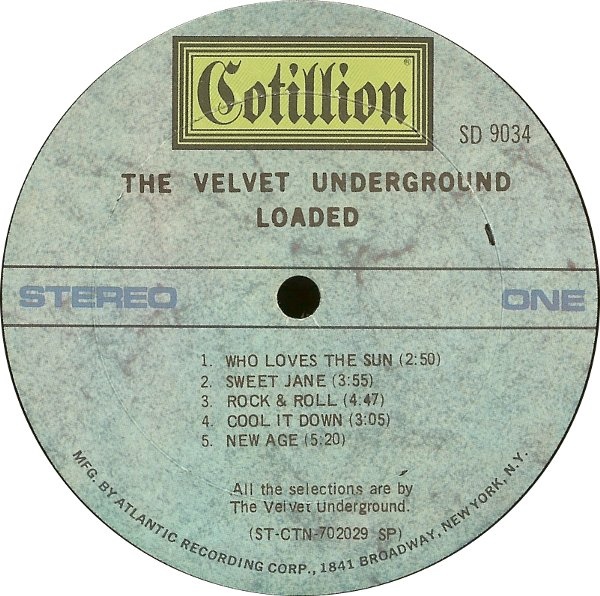
THE TWENTY BEST NORDIC WAVE ALBUMS OF 2015-PART 1.
THE TWENTY BEST NORDIC WAVE ALBUMS OF 2015-PART 1.
For the last few years, Norway has one of the most vibrant music scenes. Gradually, groups from other parts of the Nordic region are beginning to make waves. So it makes sense to add a new category to this 2015’s best of series, the best Nordic albums of 2015. Each and every one of the albums on the list would be worthy additions to any self-respecting record collections. Indeed, anyone looking for new and innovative music should work their way through the following list.
ANNELI DRECKER-ROCKS AND STRAWS.
In July 2015, Anneli Drecker released her long awaited, and much anticipated third solo album, Rocks and Straws on Rune Grammofon, It marked a welcome return from Anneli Drecker. Her recording career began twenty-eight years ago, with Bel Canto when she was just seventeen. Since then, Anneli Drecker released six albums with Bel Canto, worked with Röyksop and released her third album, Rocks and Straws.
For Rocks and Straws, Anneli Drecker penned eleven new songs. These songs are based on lyrics by cult poet Arvid Hanssen, and were translated into English by artist and writer Roy-Frode Løvland. Arvid Hanssen´s poems have been strongly influenced by the mysterious and powerful nature of this arctic region, including the works of writer of Knut Hamsun. Despite the lyrics being based on Arvid Hanssen’s lyrics, the songs on Rocks and Straws are personal to Anneli Drecker. She describes them as an “ode” to the town and region she was born and brought up. Helping Anneli Drecker, who also produced Rocks and Straws, were some of the great and good of Norwegian music.
The result was a captivating album that showcased Anneli Drecker’s ethereal vocal. It’s complimented by understated, acoustic arrangement. They frame Anneli Drecker’s vocals, as effortlessly, she breathes life, meaning and hope into lyrics. Other times, her vocal veers between tender, dramatic and powerful. Occasionally, Anneli Drecker’s vocal and tinged with sadness. Always, it’s heartfelt and impassioned. That’s because each of the eleven songs on Rocks and Straws are personal to Anneli Drecker. They’re about Anneli Drecker’s life and formative years. These years shaped Anneli Drecker, and made her what she is now. That’s one of the most talented singers in Europe.
AS THE TIRED TRAINS CROSS EUROPE-LUCID MOMENTS.
One of the real finds of 2015 was As The Tired Trains Cross Europe’s debut album Lucid Moments. It was released on CD and heavyweight vinyl by Big Pink Records and showcases a truly talented singer-songwriters. So much so, that great things are forecast from As The Tired Trains Cross Europe. No wonder.
As The Tired Trains Cross Europe is the perfect showcase for the the multi-talented Vegard Eggum. He wrote, recorded, produced and mixed the ten tracks on Lucid Moments. It’s a musical roller coaster, where As The Tired Trains Cross Europe flits between and combines elements of country, electronica, folk, jazz, Krautrock, Nordic Wave, pop, post rock, psychedelia, reggae and rock. The result is a musical journey that all music loves should experience and embrace.
Over Lucid Moments’ ten tracks, Vegard Eggum becomes storyteller and troubadour. He embraces these roles, delivering vocals that are variously cathartic, heartfelt, hopeful, hurt-filled, impassioned, needy and soul-baring. Lyrics come to life, as Vegard Eggum lives them, on Lucid Moments, the debut album from his latest musical vehicle, As The Tired Trains Cross Europe. Essentially, Lucid Moments is a musical journey through the mind of musical adventurer and explorer Vegard Eggum.
ASAMISIMASA PLAYS THE MUSIC OF ØYVIND TORVUND.
Øyvind Torvund was a composer that Asamisimasa had long admired and been inspired by. So, Asamisimasa decided to record an album of Øyvind Torvund’s compositions. The result is Asamisimasa Plays The Music Of Øyvind Torvund will be released by Norwegian Aurora Contemporary on 11th September 2015. However, this is no ordinary album.
Asamisimasa Plays The Music Of Øyvind Torvund features four lengthy soundscapes. Two of them, feature several movements. Wilibald Motor Landscape is a five piece movement, while Neon Forest Space features seven movements. Both tracks tell stories, and have a cinematic quality. Just like the two lengthy tracks, Wolf Studies and Plastic Waves, these tracks see Asamisimasa a disparate and eclectic selection of musical genres and influences.
During the four tracks on Asamisimasa Plays The Music Of Øyvind Torvund, elements of ambient, avant-garde, classical, electronica, experimental, free jazz, industrial post rock, psychedelia and rock melt into one. Somehow, though, this ambitious and pioneering fusion of disparate musical genres hangs together, and make perfect musical sense.
BLACK MOON CIRCLE-THE STUDIO JAMS VOLUME I: YELOW NEBULA IN THE SKY.
Norwegian psychedelic space rock band Black Moon Circle are one of the rising stars of the Norwegian music scene. Their previous album Andromeda was released to critical acclaim in October 2014. A great future was forecast for the Trondheim based trio. No wonder. Black Moon Circle are one of the most talented bands in the Nordic music scene. They’re also one of the most ambitious, as they plan to release a trilogy of studio jams. The first instalment is The Studio Jams Volume I: Yellow Nebula in the Sky. It was be released on limited edition vinyl, in August 2015, on Crispin Glover Records, and is the perfect introduction to Black Moon Circle.
They’re, essentially, a power trio, who create their unique brand of psychedelic space rock. The basis for this, is the classic rock of the sixties and seventies, psychedelia and space rock. To this, Black Moon Circle add elements of electronica, experimental music and free jazz. Seamlessly, these disparate musical genres and influences merge into something new and innovative. It’s cinematic, dramatic, futuristic, moody, rocky and as Øyvin Engan says, “intense.”
This intensity is deliberate. It comes courtesy of the three members of Black Moon Circle. They deploy layers of fuzzy guitars, spacey, lysergic synths and a mesmeric rhythm section. When all this is combined, the result is the next instalment in the Black Moon Circle story, The Studio Jams Volume I: Yellow Nebula In The Sky. It’s without doubt the best album of Black Moon Circle’s three album career. That’s why, for anyone yet to discover Black Moon Circle, The Studio Jams Volume I: Yellow Nebula In The Sky is the perfect introduction to the Norwegian psychedelic space rock pioneers at their hard rocking best.
CHRISTIAN WALLUMROD-PIANOKAMMER.
Christian Wallumrød’s recording career began nearly twenty years ago, in 1996, when the Christian Wallumrød Trio released their debut album Birch. Released to widespread critical acclaim, Birch launched the career of Christian Wallumrød. Since then, Christian Wallumrød star has been in the ascendancy.
To the onlooker, it seems Christian Wallumrød has done everything in music. He’s worked with the great and good of Norwegian music on a variety of groundbreaking projects, and formed the Christian Wallumrød Trio, who have released five albums. Their last album, Outstairs, released in 2013, won a Spellemannspris, Norwegian Grammy. However, there’s one thing Christian Wallumrød rectified last year, when he realised his debut solo album Pianokammer on Hubro Music.
Pianokammer is a spellbinding album, of innovative, groundbreaking and genre defying music. Christian combines ambient, avant-garde, blues, experimental, free jazz and jazz. The result is a captivating collection of six songs, that are variously ambitious, bold, dark, dramatic, ethereal, haunting, hopeful, irresistible, joyous, ominous and uplifting. That’s why, Pianokammer is, without doubt, such an ambitious and captivating album from musical innovator and adventurer, Christian Wallumrød.
DALINDEO-KALLIO.
It was back in 2003, that Dalindèo, the Finnish jazz-sextet were founded by composer and guitarist Valtteri Laurell Pöyhönen. Since then, Dalindèo have released a trio of albums. Their debut was Open Scenes in 2007. Three years later, Dalindèo returned with Soundtrack For The Sound Eye. By then, Dalindèo’s star was in the ascendancy. Then in March 2015, Dalindèo released their third album Kallio on BBE Music.
Kalindèo are just the latest in a long line of hugely talented Scandinavian artists who are making groundbreaking music. Previously, many of these artists have come from Norway, which currently, has some of the most inventive and innovative musicians in Europe. This Nordic Wave has resulted in Norway becoming one of Europe’s musical cultural capitals. That looks like continuing for the some time. No wonder. Some of the best, and most groundbreaking music of the last few years has come out of Norway. This includes everything from ambient and avant-garde, to jazz, fusion and rock. Norway it seems, is at the vanguard of musical revolution. Will this musical revolution sweep across Scandinavia?
Let’s hope that’s the case. Hopefully, in the coming months and years, a new generation of Finnish artists and groups will produce equally innovative and ambitious music. Maybe, Kalindèo, will be the first of many Finnish artists and groups to enjoy commercial success and critical acclaim? That’s could to be the case. Especially, if they can produce music as groundbreaking and atmospheric as that on Kallio, Dalindèo’s third album.
ELEPHANT9 WITH REINE FISKE-SILVER MOUNTAIN.
For their fourth album, Silver Mountain, Elephant9 have once again joined forces with Swedish virtuoso guitarist Reine Fiske. This tantalising pan-Scandinavian collaboration has resulted in a genre-melting album of rock ’n’ jazz, prog rock and psychedelia, Silver Mountain. It was released on Rune Grammofon, and is the finest album of Elephant9’s four album career.
Not only is Silver Mountain the finest album of Elephant9’s career. It features music that’s ambitious, bold, exciting and innovative. Continually, Elephant9 push musical boundaries. To do this, they combine musical genres. Everything from ambient, the classic rock of the late-sixties and seventies, electronica, experimental, free jazz, Krautrock, prog rock, psychedelia and space rock can be heard on Sliver Mountain. It’s a captivating journey through musical genres and influences. Listen carefully, and you’ll hear everyone from Can, Hawkwind, Jimi Hendrix, Klaus Doldinger, Kraftwerk, Led Zeppelin, Neu!, Pink Floyd, Ry Cooder, The Doors and Tubeway Army. Some of these influences can be heard only briefly, while others are more noticeable. Closer to home, another of Norway’s leading bands Motorpscycho also seem to have influenced Elephant9, as they take listeners on journey through twists and turns.
Continually, Elephant9 take twists and turns throughout Silver Mountain. They lead you down blind alleys, only to find an escape route. Out of a blistering slice of rock comes an ethereal ambient soundscape. That’s what you quickly come to expect from Elephant9 on Silver Mountain, musical pioneers extraordinaire.
ERLAND DAHLEN-BLOSSOM BELLS.
Back in 2012, drummer and percussionist Erland Dahlen released his long-awaited, and much-anticipated debut album Rolling Bomber. By then, the forty-one year old was a veteran of the vibrant Nordic music scene. Erland Dahlen was a veteran of countless bands, including HET, Boschamaz, Kiruna, Morris, Piston Ltd, Batagraf, The Sonic Codex Orchestra and Stian Westerhus and Pale Horses. This however, was only part of the story, as Erland Dahlen was also one of Norway’s top session musicians. Somehow, Erland Dahlen found time to record Blossom Bells, which was released on Hubro Music.
Blossom Bells is a near flawless fusion of ambient, avant garde, electronica, experimental, Krautrock, Nordic Wave, post rock, psychedelia and rock. Genres melt into one, on an album that’s variously moody and broody, to dark and dramatic, to lysergic, otherworldly, spiritual, haunting, atmospheric and ethereal. The music on Blossom Bells is definitely cinematic. That’s the case throughout Blossom Bells. It sounds like the soundtrack to a film that’s yet to be made. Other times, the music on Blossom Bells becomes anthemic and up-lifting. Always, though, the music on Blossom Bells is captivating, cerebral, cinematic, inventive and innovative.
FINLAND-RAINY OMEN.
Playing an important part in the rise and rise of the Norwegian music scene are the three members of Finland; Ivar Grydeland, Pål Hausken, Morten Qvenild and Jo Berger Myhre. They’ve been members of various bands and worked with numerous artists on a variety of projects. Given the schedules of the various members of Finland, they could be forgiven for sticking to their “day jobs.” There was no chance of that. The members of Finland love music, and formed what can only be described as a multitalented supergroup. Finland’s debut album Rainy Omen, released in July 2015, by Hubro Music.
Finland was like a meeting of minds. Each of the members of Finland’s musical raison d’être was to make groundbreaking music. They wanted to push musical boundaries to their limits, and sometimes, way beyond. That’s what they do on Rainy Omen. The music in innovative, inventive and genre-melting. Elements of avant garde, experimental, industrial, jazz, psychedelia and rock are combined to make music that’s veers between atmospheric and cinematic to dark and dramatic. Other times, the music on Rainy Omen flits between beautiful to ethereal, and between lysergic and trippy. Always, though, the music on Rainy Omen is captivating, and I eagerly await Finland’s sophomore album.
GEIR SUNDSTOL-FURULUND.
Prolific. That’s a word that is often used to describe musicians. Often that’s an exaggeration. Not in the case of Geir Sundstøl. Since his career began in 1988, Geir Sundstøl has featured on 260 different albums. This includes the albums he recorded as member of Rovers, and then Morris. Mostly, though, Geir Sundstøl has worked as the musical equivalent of a hired gun, playing a multitude of musical instruments on albums and live. Geir Sundstøl has done just about everything. That was apart from release a debut album. He rectified this in September 2015, when Furulund was released on Hubro Music.
The music on Furulund is variously atmospheric, beautiful, broody, cinematic, dramatic, dreamy, ethereal, melancholy and moody. It’s capable of taking the listener on a journey. All the listener needs to supply is their imagination. Geir Sundstøl supplies the music. Sometimes, the music sounds as if it belongs on a Spaghetti Western. Another track, Punsj, sound as if they belong on a Wim Wenders soundtrack. Other influences include the Cocteau Twins, Brian Eno, and Buddhist music. Add to this, ambient, Americana, blues, country, folk, post-rock and rock. Each and every one of these influences are part of the sound and success of the cinematic and cerebral Furulund.
THE TWENTY BEST NORDIC WAVE ALBUMS OF 2015-PART 1.
THE TWENTY BEST NORDIC WAVE ALBUMS OF 2015-PART 2.
THE TWENTY BEST NORDIC WAVE ALBUMS OF 2015-PART 2.
GORAN KAJFES SUBTROPIC ARKESTRA-THE REASON WHY VOLUME 2.
For the last three decades, Goran Kajfeš has been a key figure in the Swedish music scene.There’s a reason for this. Goran Kajfeš has constantly been releasing groundbreaking, genre-melting music. To do this, Goran has pushed musical boundaries to their limits, and sometimes, way beyond. This resulted in Goran Kajfeš Subtropic Arkestra’s The Reason Why Volume 1 being nominated for a Swedish Grammy in 2013. Goran Kajfeš’ “acid rock with horns” was winning friends and influencing people. Two years later, and The Reason Why Volume 2 was released on Headspin Records.
The Reason Why Volume 2, which was out on April 6th 2015, on Headspin Records, surpasses The Reason Why Volume 1. That took some doing. After all, The Reason Why Volume 1 was nominated for a Grammy Award. However, two years later, the multitalented Goran Kajfeš Subtropic Arekestra have come of age on The Reason Why Volume 2. They seem to have matured as a band. What’s more, the music on The Reason Why Volume 2 is even more eclectic and almost flawless. That takes some doing. However, Goran Kajfeš is a musical innovator. With Goran at the Arekestra’s helm, they’re definitely destined for greater things.
HUNTSVILLE-POND.
For nine years, musical alchemists Huntsville have been creating groundbreaking, genre-melting music. They released their fifth album Pond on Hubro Music. Pond was a Joycean sonic voyage of discovery, where Huntsville combine disparate musical genres and influences on four epic tracks. With Huntsville supplying the music, all the listener needs to do is let their imagination run riot.
What follows is akin to a four part play, where Huntsville supply a musical backdrop. The music can be melancholy and thoughtful. Other times, it’s moody and broody, but can just as easily become crystalline, elegiac and ethereal, as musical influences and genres melt into one.
This includes elements of ambient, avant-garde, electronica, experimental, free jazz, industrial, post rock, psychedelia and rock. Huntsville also draw inspiration from some of their musical heroes, including Miles Davis, Steve Reich, Ennio Morricone and early Tortoise. Other influences include Brian Eno, Can, Harold Budd, John Martyn, Mind Over Midi, Neu! and Pink Floyd. That’s an eclectic mix. However, all these influences can be heard on Pond, a truly captivating and innovative album from musical alchemists Huntsville.
JOHAN AGEBJORN-NOTES.
Since 2006, Johan Agebjörn, has released a quartet of albums and a dozen remixes. Each of these releases are very different. Johan has refused to stand still, constantly reinvents his music. Johan it seems, is a musical shapeshifter. That’s been the case since 2006, when Johan released his debut album. Nine years later, and Johan Agebjörn released his fifth album Notes on the Paper Bag label on February 2015. It’s the latest
Throughout his career, Johan has constantly reinvented his music. He’s released he’s everything from ambient and electro, right through to Italo disco, 8bit and classical piano music. Eclectic, it seems, is the best way to describe the Gothenburg based musical chameleon. This is the case on Notes, Johan’s fifth album.
Notes is best described as cinematic, dramatic, dreamy, ethereal, melancholy and even, mesmeric. Sometimes Notes is beautiful, emotive, sensual and sultry. Other times Notes is bold and dark. Always, Johan Agebjörn’s fifth solo album, Notes, is a captivating and compelling album, that, full of surprises aplenty.
LABFIELD-BUCKET OF SONGS.
Five years after the release of their sophomore album Collab, LabField, one of the leading lights of the European improv scene make a welcome return. They returned in 2015 with their genre-melting third album, Bucket of Songs. It was released on Hubro Music. Bucket Of Songs marks the start of a new era for LabField. Not only have they changed direction musically, but Norwegian percussionist Ingar Zach had joined the band. Bucket of Songs was his debut.
And what an album Bucket of Songs was. LabField combined elements of ambient, avant-garde, electronica, experimental, free jazz, industrial, Latin, post rock, pop, rock and world music. However, at the heart of Bucket Of Songs’ sound and success, was LabField’s trademark brand of improvisational music. As LabField improvise, they visit a variety of disparate musical genres. Somehow, though, this fusion of all these disparate musical genres hangs together, and make perfect sense on what’s akin to a magical musical mystery tour.
LabField take their music in a new and unexpected directions. That’s why you should never, ever, try and second guess LabField. That would be impossible. They’re mavericks, and sonic explorers who manipulate sound, and take their listeners on other groups can only dream of. In doing so, LabField create music that’s variously ambitious, challenging, cinematic, dramatic, inventive, innovative minimalist and urgent. It’s also music that’s guaranteed to make you think. Sometimes, the music on Bucket Of Sounds sets your mind racing. Don’t fight it, enjoy the ride. LabField will take you to places you’ve never been before. Just let your imagination run riot. If you do, LabField will richly reward you, as you experience Bucket Of Songs’ nine captivating and groundbreaking soundscapes.
MORTEN QVENILD-PERSONAL PIANO.
Over the last twenty years, Morten Qvenild has been at the heart of the Norwegian music scene. The thirty-seven year old pianist and keyboardist is one of the most versatile and creative musicians of his generation. That’s why, when anyone in the Norwegian music scene was looking for a pianist or keyboardist, they gave Morten Qvenild a call. This has resulted in Morten Qvenild playing on over fifty albums. However, he hadn’t released a solo album That was until he released Personal Piano on Hubro Music in September 2015.
Featuring seven improvised soundscapes, Personal Piano is a mesmeric fusion that’s guaranteed to captivate and compel. Morten Qvenild takes the listener of a seven musical adventures. The sonic sorcerer throws musical curveballs, before springing a series of musical surprises. Nothing is it seems. Using a myriad of effects, sounds are transformed. They become something very different. As a result, one minute the music is dramatic, the next it’s dreamy. Other times, it becomes moody and broody. Then the next, it veers between pensive and understated, to melancholy or melodic. Constantly, the music changes direction. It’s a case of expect the unexpected. Subtleties and sonic surprises are constantly sprung, as musical sorcerer and explorer, Morten Qvenild takes the listener on magical mystery tour, while expanding his sonic palette on his long awaited, and groundbreaking debut album Personal Piano.
MOSTER!-WHEN YOU CUT INTO THE PRESENT.
Ever since they made their debut at the Kongsberg Jazz Festival in 2010, Norwegian supergroup Møster!’s star has been in the ascendancy. So much so, that Møster! are now regarded as one of the biggest bands in the Nordic music scene. Møster! released their third album When You Cut Into The Present in November 2015 on Hubro Music.
Hard rocking, but genre-melting describes Møster! However, When You Cut Into The Present shows that Møster! are much more than a rock band. They combine avant garde, classic rock, experimental, free jazz, funk, jazz, Krautrock, progressive rock and psychedelia, with the classic Norwegian jazz sound of the sixties and seventies. It’s best describes as a fusion of Can, Alice Coltrane, King Crimson’s Red period, John Coltrane and the Nordic jazz pioneers Jan Garbarek, Terje Rypdal, Arild Andersen and Jan Christensen. Sometimes, it sounds as if Møster! have been influenced by German musical pioneers, Birth Control, Guru Guru and Neu! It sounds like the four members of Møster! have eclectic taste in music.
That’s definitely the case with guitar wizard Hans Magnus “Snah” Ryan. The virtuoso seems to have been influenced by Jimi Hendrix. Sometimes, it sounds like Hans is channeling the spirit of Hendrix in the studio. Other times, Hans’ licks sound as if they belong on an Iron Maiden or Judas Priest album. Just like the rest of Møster!, Hans is a versatile and talented member of this supergroup. They’ve made huge strides on When You Cut Into the Present. The Trondheim groove-meisters have created a career defining album of hard rocking music. They kick loose from the opening bars of Nebula and Red Giant, and never let go until the closing notes of Soundhouse Rumble. In between you’re treated a glorious assault on the sensory system which unleashes endorphins aplenty.
SIDSEL ENDRESEN AND STIAN WESTERHUS-BONITA.
One of the most eagerly awaited albums of 2015 was Sidsel Endresen and Stian Westerhus’ sophomore album Bonita. It was released on Rune Grammofon in January 2015. Bonita was the followup to Sidsel Endresen and Stian Westerhus’ debut album Didymoi Dreams. Just like Didymoi Dreams, Bonita is another album of groundbreaking, innovative music. However, unlike Didymoi Dreams, Bonita is a live album.
On Bonita, Sidsel Endresen and Stian Westerhus pickup where they left off on Didymoi Dreams, renewing what’s an almost telepathic relationship. Sidsel reacts to Stian’s guitar playing, and improvises. Her music veers between dramatic, ethereal, heartfelt, sensual and urgent. Listening intently, Stian picks up on a change of direction. Straight away, he reacts, and his trusty guitar and effects take the listener on a musical adventure. He’s responsible for washes of blistering, dramatic ethereal, jagged, fuzzy, scorching and understated music. This is the perfect compliment for Sidsel’s vocals.
Feeding off each other, Stian and Sidsel drive each other to greater heights, fusing elements of ambient, avant-garde, experimental, jazz, psychedelia and rock on Bonita, where Sidsel becomes yin to Stian’s yang. It’s no surprise that Bonita is an ambitious, captivating, and groundbreaking album from Sidsel Endresen and Stian Westerhus, two of Norwegian music’s most talented artists.
SKYDIVE TRIO-SUN MOEE.
For many musicians, making the step up from sideman to bandleader can be problematic. Other musicians embrace the role and seem to enjoy the added responsibility. That’s the case with guitarist Thomas T. Dahl. He founded Skydive Trio, who released their debut album Sun Moee on Hubro Music.
Sun Moee is the perfect showcase for one of Norway’s most talented guitarist, Thomas T. Dahl. His playing takes centre-stage on Sun Moee. Behind him, Olavi Louhivuori and Mats Eilertsen provide the backdrop for Thomas’ guitar wizardry. Although they’re both hugely talented and experienced musicians, it’s Thomas guitar playing that takes a starring role on Sun Moee. The music is variously beautiful, cinematic, dramatic, elegiac, ethereal, mesmeric, sparse, stirring and understated. Elements of jazz and rock melt into one. Occasionally, elements of avant garde and experimental music can be heard. Especially on Four Words, which closes Sun Moee, Skydive Trio’s debut album.
As debut albums go, Sun Moee is one of the best albums I’ve heard this year. That’s not a surprise, given Skydive Trio feature three of Scandinavia’s most talented musicians, who showcase their considerable talents on Sun Moee.
STEIN URHEIM AND MARI KVIEN BRUNVOLL-FOR INDIVIDUALS FACING THE TEROR OF COSMIC LONELINESS.
Stein Urheim and Mari Kvien Brunvoll have both enjoyed lengthy careers as solo artists. They’ve also collaborated on a trio of albums. The latest was Individuals Facing The Terror Of Cosmic Loneliness, which was released by Jazzland Recordings and recorded in just four days.
That hasn’t affected the quality of music on Individuals Facing The Terror Of Cosmic Loneliness. It oozes quality. oozes quality. The album is a filler free zone, on what can only be described as a genre-melting album. There’s everything from alt-sunshine pop, ambient, avant-garde, dub, Eastern blues, experimental, free jazz and synth pop. The result is an eclectic and potent mix of musical genres for two innovative artists, Stein Urheim and Mari Kvien Brunvoll.
Together, they have created an ambitious, innovative and captivating album. It’s like the musical equivalent of a magical mystery tour, where Stein Urheim and Mari Kvien Brunvoll “are coming to take you away” on. Over Individuals Facing The Terror Of Cosmic Loneliness’ nine tracks the music veers between atmospheric, beautiful, dark, dramatic, ethereal, haunting, hypnotic, melancholy, mesmeric, sparse, thoughtful and wistful. Quite simply, Stein Urheim and Mari Kvien Brunvoll’s Individuals Facing The Terror Of Cosmic Loneliness is an album that you’ll constantly return to
THE LAST HURRAH!!-MUDFLOWERS.
For over thirty years, H.P. Gundersen has been at the heart of Bergen’s thriving and vibrant music scene. The Bergen based singer, songwriter, guitarist and producer is a veteran of many groups, including Animal Farm, House Of Hiss, Nekken, Rust, Sensible Twins and The Stain Monster. Then there’s H.P. Gundersen’s latest project is The Last Hurrah!! They released their third album Mudflowers on Rune Grammofon in August 2015. Mudflowers marks the debut of the latest member of The Last Hurrah!!, up-and-coming vocalist Los Angeles based singer-songwriter Maesa Pullman.
For Mudflowers, bandleader H.P. Gundersen put together what can only be described as an all-star band. Everyone plays their part in the sound and success of Mudflowers. Marty Rifkin on pedal steel and John Thomas on Hammond organ play starring roles. However, the star of Mudflowers is Maesa Pullman, H.P. Gundersen’s latest discovery. She’s a versatile vocalist who breathes life, meaning and emotion into songs. Maesa Pullman has a great future ahead of her. So does the other vocalist on Mudflowers is Rosa Pullman, Maesa’s cousin. The Pullman family it seems, is a talented family. They’ve played a huge part in the success of The Last Hurrah!!’s third album, Mudflowers.
It’s an album that’s been inspired by an eclectic and disparate selection of musical genres. Everything from Americana, blues, country, pop, psychedelia, rock and even soul shine through on Mudflowers. One influence overshadows the rest. That’s country. Sometimes, Mudflowers sounds as if it’s been written and recorded in Nashville. Instead, Mudflowers was written and recorded in Bergen, Norway, and is a career defining album from The Last Hurrah!! On Mudflowers, A Star Is Born, and her name is Maesa Pullman.
That’s what I consider the twenty best Nordic Wave albums of 2105. Each and every one of these albums features groundbreaking music. These artists and bands combine a disparate and eclectic section of music. This includes everything from ambient and avant-garde, to experimental music, folk and free jazz through industrial and Musique concrète, Then there’s progressive rock, psychedelia, rock and space rock. Incredibly, these genre-melting fusions always works. Each of these bands are different.
There’s power trios, solo artists and supergroups. Then there’s veterans, collaborations and newcomers. Collaborators include Stein Urheim and Mari Kvien Brunvolll; while Finland, The Last Hurrah and Huntzville are worthy of the name supergroup. Among the newcomers are Black Moon Circle. Their sophomore album, The Studio Jams Volume I: Yellow Nebula in the Sky is the first of a trilogy of studio jams from the maverick space rockers. If the next two volumes are good as The Studio Jams Volume I: Yellow Nebula, they’re going to be essential listening. So is another newcomer’s debut album; As The Tired Trains Cross Europe’s debut album Lucid Moments.
As The Tired Trains Cross Europe’s debut album Lucid Moments is the perfect showcase for the the multi-talented, singer-songwriter Vegard Eggum. He’s a name you’ll be hear a lot more of during 2016. Hopefully, however, we’ll be hearing a lot more of every name on the twenty best Nordic Wave albums of 2105.
THE TWENTY BEST NORDIC WAVE ALBUMS OF 2015-PART 2.
THE BEST SCOTTISH ALBUMS OF 2015.
THE BEST SCOTTISH ALBUMS OF 2015.
It’s at this time of the year, I usually look back at the previous year. 2015 is no different. So over the last few weeks, I’ve immersed myself in the music of 2015. Somehow, I’ve managed to listen to, and remind myself of, the music I’ve reviewed during the past twelve months. I had planned to do this earlier, but there were some late entrants. They were well worth waiting for. So without any further ado, I’ll start my review of 2015. Given where I’m based, it’s seems fitting that I start with the best Scottish albums of 2015.
I’ve narrowed the best Scottish albums of 2015 down to 15. They’re mostly new albums, with one Scottish classic album that deserves a mention. Some of the artists will be familiar to most people, while others will be new to you. So without further ado, in A-Z order, I’ll briefly tell you about each release.
ADMIRAL FALLOW-TINY REWARDS.
Admiral Fallow were formed in 2007, by Glasgow based singer-songwriter Louis Abbott. They released their debut album Boots Met My Face in June 2009. Nearly three years later, Admiral Fallow released their sophomore album Tree Bursts In Snow in May 2012. Since then, it’s all been quiet on the album front.
That was until Admiral Fallow returned with Tiny Rewards in May 2015. It was released on the Canadian label Nettwerk. Tiny Rewards marked a welcome return from Admiral Fallow. It’s a truly captivating and eclectic, career defining album from Admiral Fallow.
ASTRID WILLIAMSON-WE GO TO DREAM.
Despite just releasing her sixth album, We Go To Dream, Astrid Williamson is still one of music’s best kept secrets. That’s despite a career that’s spanned three decades. Sadly, widespread commercial success that Astrid Williamson deserves has so far, eluded her. That’s why Astrid Williamson decided to reinvent herself.
The reinvention ofAstrid Williamson began on Pulse, which was released in 2011. Astrid Williamson continues to reinvent herself on We Go To Dream. It’s without doubt, the most eclectic album of Astrid Williamson’s career.
So much so, that We Go To Dream is a magical mystery tour through musical genres. Seamlessly, Astrid Williamson flits between and fuses disparate musical genres on We Go To Dream. Effortlessly, Shetland born chanteuse Astrid Williamson squares the musical circle on We Go To Dream, which features something for everyone.
BELLE AND SEBASTIAN-GIRLS IN PEACETIME WANT TO DANCE.
Purveyors of perfect indie pop, Belle and Sebastian are almost veterans of the Scottish music industry. Their Girls In Peacetime Want To Dance, was released back in January 2015. It was recorded in Atlanta, and was the third album to be produced by Ben H. Allen III. The result was an ambitious album.
With Ben H. Allen III’s help, Belle and Sebastian, not for the first time, reinvented themselves again. Some would have as believe that Girls In Peacetime Want To Dance it seems, is the musical equivalent of a midlife crisis. That’s far from the truth. Girls In Peacetime Want To Dance was an ambitious album where Belle and Sebastian were taken out of their comfort zone. The result was a first for Belle and Sebastian, a dance album. Now as the Belle and Sebastian’s twentieth anniversary fast approaches, it’s now time to move on. Maybe, that’ll mean a return of Tony Doogan as producer, who was responsible for some of return of some of Belle and Sebastian’s finest albums.
BILL WELLS AND AIDAN MOFFAT-THE MOST IMPORTANT PLACE IN THE WORLD.
Four years after the last musical sojourn, Scotland’s musical odd couple of Bill Wells and Aidan Moffat return with their long awaited sophomore album The Most Important Place In The World. It’s the followup to Bill and Aidan’s 2011 debut album, Everything’s Getting Older. It was received to widespread critical acclaim back in 2011. Since then, music lovers have been awaiting the return of the unlikeliest musical yin and yang, Bill Wells and Aidan Moffat. The Most Important Place In The World has been worth the four year wait.
On The Most Important Place In The World, Bill Wells and Aidan Moffat have returned with a dozen songs about Scotland’s dark underbelly. They’re songs that deserved to be turned into a short film. No wonder. The characters and scenarios are very realistic Macho men, drinkers rub shoulders with dancers, chancers and romancers. They’re responsible for fleeting fumblings, illicit romances and tales of love gone wrong. Even the loves songs have a twist in the tale.
There’s a reason for this. Bill Wells and Aidan Moffat keep it real. They write about what they know, what they’ve seen and experienced. That makes a difference. Far too many songwriters try and write about things they’ve neither experienced nor witnessed. Not Bill Wells and Aidan Moffat. Drawing upon their experiences, they combine caustic wit, cynicism and social comment with tragicomedy. Other times their lyrics are tinged with sadness, hurt and heartbreak as The Most Important Place In The World takes on a late-night sound. Other times, the music is joyous and uplifting, as seamlessly, the flit between musical genres. This they do throughout The Most Important Place In The World, which is without doubt, a fitting followup to Everything’s Getting Older.
CHVRCHES-EVERY OPEN EYE.
Earlier this year, Chvrches returned returned with their sophomore album Every Open Eye. It’s the follow up to their million selling 2013 debut album The Bones Of What You Believe. Chvrches pickup where they left off on The Bones Of What You Believe.
Every Open Eye, an album full of dance-floor fillers, anthems and beautiful ballads. The five months Chvrcges spent recording Every Open Eye was five months well spent. Every Open Eye is a stunning album, and almost flawless album.
DAVID KNOWLES-FOOTSTEPS.
David Knowles will be a new name to many people. However, it’s nearly twenty years since singer-songwriter he first picked up a guitar. Since then, David Knowles has been dreaming about releasing an album. That dream came true earlier this year, when he released Footsteps his long-awaited debut album.
Footsteps, which is the perfect introduction to one of music’s rising stars, David combines old, new and blues’ songs. There’s seven new songs from the pen of David Knowles sit side-by-side with covers of Ain’t No Sunshine and Hey Joe. Then there’s Satisfy My Soul, where David pays homage to his blues roots. This combination of old, new and blues on Footsteps, proves a introduction to one of music’s rising stars, David Knowles who hopefully, we’ll be hearing much more of.
ERRORS-LEASE OF LIFE.
Errors have come a long way since they were formed in Glasgow, in 2004, by Simon Ward, Greg Paterson and Stephen Livingstone. Back then, Errors’ makeshift studio was a bedroom. That was the Glasgow based musical alchemists laboratory. Through experimentation and innovation, Errors sound began to evolve, and earlier this year, released their fifth album Lease Of Life, on Mogwai’s Rock Action Records.
On Lease Of Life, Errors paint pictures with your music. Sometimes, they toy with your emotions on tracks like New Winged Fire and Early Nights. For much of the time, it’s as if Errors are providing the soundtrack to a series of short films. You can’t help let your imagination run riot. Before your eyes, plots and scenarios unfold. It’s an intriguing and captivating listen. Maybe Errors will follow in Mogwai’s footsteps and start making soundtracks? They certainly have the ability to do so.Then other times, Errors head for the dance-floor.
Somehow, Errors have managed to make an album that will appeal to everyone. Whether it’s the slower cinematic tracks, or the hands in the air anthems, there’s something for everyone on Lease Of Life. It features comeback Kings Errors making return to form with what’s undoubtably a career defining album.
KATHRYN JOSEPH-BONES YOU HAVE THROWN ME AND BLOOD I’VE SPILLED.
In the history of the Scottish Album Of The Year Award, Kathryn Joseph recently became the first artist to win Scotland’s most prestigious music award with a debut album. That debut album is Bones You Have Thrown Me and Blood I’ve Spilled, which was released back in January 2015, on Hits The Fan Records.
That was until Kathryn Joseph triumphed with Bones You Have Thrown Me and Blood I’ve Spilled. Winning Scotland’s most prestigious music award was a game-changer for Kathryn Joseph. Suddenly, her music was being heard by a much wider audience. Now she has just embarked upon a European tour, where Kathryn Joseph is sure to win over the hearts and minds of music lovers.
Especially given Kathryn Joseph’s vocal. It’s variously ethereal, haunting, heartfelt, melancholy and otherworldly. On each of the ten tracks on Bones You Have Thrown Me and Blood I’ve Spilled, Kathryn Joseph lyrics come to life. That’s down to Kathryn. She’s part singer, part storyteller. Each of her vocals are captivating. Partly, that’s because she tailors her vocal to suit the song. Sonically and stylistically, her vocal is unique. Especially, when she transforms her vocal into another instrument. This adds an extra dimension to the award winning Bones You Have Thrown Me and Blood I’ve Spilled. It’s a truly enchanting album.
LAU-THE BELL THAT NEVER RANG.
Ever since the release of their 2007 debut album. Lightweights and Gentlemen, Lau have been variously described as “adventurous,” and “modern folk’s most innovative band.” That’s no exaggeration. Lau are, without doubt, one of the most exciting and ambitious folk bands of their generation. That’s why Kris Drever, Martin Green and Aidan O’Rourke have been winning awards, praise and plaudits ever since. This includes winning the BBC Folk Award for the best group four times in six years. That takes some doing. However, Lau are no ordinary band. They’re pioneers and perfectionists.
Proof of that is The Bell That Never Rang, which feature the Edinburgh based band at their innovative best. Lau seamlessly combine disparate musical genres. Everything from Celtic, electronica, electro, folk, indie rock and rock is thrown into Lau’s melting pot. Producer Joan Wasser sprinkles some sonic magic and then gives this musical melting pot a stir. Only then is this musical treat ready to serve. And what a dish it is. It’s one fit for a king or queen. Lau have surpassed their previous efforts with The Bell That Never Rang. It marks a triumphant return from Lau with their genre defying Magnus Opus, The Bell That Never Rang.
MIAOUX MIAOUX-SCHOOL OF VELOCITY.
Although it’s been three years since Miaoux Miaoux released their debut album Light Of The North in June 2012, it’s just that the man behind Miaoux Miaoux, Julian Corrie has been one of the hardest working men in Scottish music. He’s been playing live and much in demand as a remixer. So, it’s taken three years for Miaoux Miaoux to release their much anticipated sophomore album School Of Velocity. Just like Light Of The North, it was released on Glasgow’s premier label Chemikal Underground. School Of Velocity is the latest chapter in Miaoux Miaoux story.
School of Velocity oozes quality. Miaoux Miaoux’s long awaited sophomore album, which was released by Chemikal Records, was part of the soundtrack to the sumner of 2015. Especially the hook-laden anthems. They’re plentiful, and went sure to go down a storm with DJs. Similarly, the anthems were festival favourites when Miaoux Miaoux plays live. The ballads show another side to Miaoux Miaoux. A reflective, rueful and sometimes hopeful and needy Julian Corrie lays bare his soul. This means there’s something for everything on School of Velocity. Whether it’s indie pop or dance music that’s your bag, then there’s something for everyone on School of Velocity, Miaoux Miaoux’s magical, musical merry-go-round that you’re sure not to want to get off.
MOGWAI-CENTRAL BELTERS.
2015 finds post rock pioneers Mogwai celebrating their twentieth anniversary. A lot has happened in that twenty year period. Mogwai have released eight studio albums and three soundtracks. These albums have been critical acclaimed and commercially successful not just in Britain, but in America. That’s why nowadays, Mogwai are regarded as Scottish music’s elder statesmen. So it was fitting when Mogwai released a three disc retrospective box set, Central Belters, on Rock Action Records. Central Belters tells the story of twenty years of Mogwai.
For the last twenty years, Mogwai’s music has been ambitious, bold, challenging, influential and innovative music. It’s full of nuances, subtleties and surprises as Mogwai seamlessly combine musical genres. They fuse ambient, avant garde, classic rock, electronica, experimental, indie rock, psychedelia and Krautrock, to create their unique post rock sound. All the time, Mogwai continue to push musical boundaries to their limits and even sometimes, way beyond. Mogwai have never been willing to stand still. The Mogwai Young Team’s music has continued to evolve, and doubtless will continue to do so.
Glasgow’s famous five are due a new musical adventure. It’s nearly two years since the release of Rave Tapes. Hopefully, Mogwai are hard at work in their Castle Of Doom studios on their next adventure. This isn’t the type of adventure Enid Blyton’s Famous Five once enjoyed. There’s no picnics, lemonade and bicycle trips. Instead, it’s a bit more edgy and gritty.That’s the case with Central Belters Mogwai’s career retrospective.
THE PHANTOM BAND-FEARS TRENDING.
Ever since 2002, The Phantom Band have been making music. They released their fourth album Fears Trending back in January 2015, on Glasgow’s premier label Chemikal Underground. Fears Trending was recorded at the same time as The Phantom Band’s previous album Strange Friend. However, Fears Trending is a very different album.
The songs on Fears Treading are longer, darker and filled with drama. Some of the songs have a much more experimental sound. Bursts of futuristic, sci-fi, shimmering synths augment the fusion of art rock, folk rock, indie rock, post rock and psychedelia on Fears Treading. It’s an eclectic and ambitious combination of influences. However, it’s a combination that works.
Although Strange Friend and Fears Trending are very different albums, they’re both are captivating and groundbreaking albums from one of Scotland’s top bands, The Phantom Band, who for thirteen years, have been pushing musical boundaries to their boundaries, and sometimes, beyond.
RACHEL SERMANNI-TIED TO THE MOON.
Three years have passed since Rachel Sermanni released her debut album Under Mountains in 2012. It reached number twenty-six in Scotland, and number twenty-three on the British Indie charts. Considering Rachel wasn’t signed to one of the bigger indie labels, this was a successful debut album. Her debut album was heard far and wide. Since then, the followup to Under Mountains has been eagerly awaited. The wait was over when Rachel Sermani released Tied To The Moon earlier this year.
At last, Scotland’s Queen of Nu Folk was back. She was joined by a talented band and Colin McLeod of Mull Historical Society. He produced Tied To The Moon and brings out the best in Rachel. Colin frame’s Rachel’s vocals with arrangements that veer between country, folk, pop and rock. Often, there’s a twist in the tale or a surprise in store. None more so, than on Tractor, which has single written all over it. Other times, Rachel seems to have been inspired by everyone from Bob Dylan, Tom Waits and Van Morrison, right through to Eva Cassidy, Joni Mitchell, Suzanne Vega, Bjork and P.J. Harvey. Their influence can be heard throughout Tied To The Moon. So can the traditional Scottish music Rachel Sermanni grew up listening to. It has influenced and shaped Rachel Sermanni as a singer and songwriter, as she makes the next step on what will surely be the road to stardom on Tied To The Moon.
SIMPLE MINDS-SPARKLE IN THE RAIN-DELUXE EDITION.
I can hear the cry already. Sparkle In The Rain isn’t a new album. It’s not, but in Scotland, it’s a classic album from Jim Kerr and Co. Sparkle In The Rain was reissued by Universal earlier this year. This was thirty-one years after Sparkle In The Rain was released in February 1984. It became Simple Mind’s most successful album, and reinvented the Glasgow band.
Eventually, Sparkle In The Rain was certified platinum in reached number sixty-four Britain. That wasn’t surprising. Sparkle In The Rain was peppered with hits, including Up On The Catwalk, Book Of Brilliant Things, Speed Your Love To Me and Waterfront. These tracks played their part in the reinvention of Simple Minds.
They left their electronic and new wave roots behind. Now, Simple Minds were well on their way to superstardom. The album that started this off was their Glasgow album. It’s bold, stylistic and full of confidence. Simple Minds are almost gallus as they strut their way across Sparkle In The Rain, en route for stadium rocking, superstardom.
SWEETHEARTS OF THE PRISON RODEO-PIGS IN THE BULL RING [HUMANS LIKE BEASTS].
Pigs In The Bull Ring [Humans Like Beasts] was released on the Wiseblood Industries label, and is the followup to Sweethearts Of The Prison Rodeo’s 2013 album, On The Desolate Hillside. It introduced listeners to Falkirk’s very own purveyors of freak-country-folk, the Sweethearts Of The Prison Rodeo. Their raison d’être is to release cerebral music with a social conscience.
The Sweethearts Of The Prison Rodeo don’t make things easy for themselves. Writing and recording a concept album wasn’t going to be easiest way to followup their debut album. Especially when it’s told by the ghost of Mussolini. This makes Pigs In The Bull Ring [Humans Like Beasts] sound like an album that harks back to the classic concept album of the seventies.
Pigs In The Bull Ring [Humans Like Beasts] doesn’t come courtesy of Pink Floyd, E.L.P. or Yes. Instead, it come from David King and his Falkirk collective, Sweethearts Of The Prison. They’re not progressive rockers. Far from it. Sweethearts Of The Prison Rodeo described themselves as a freak-country-folk combo. That’s almost selling themselves short. They combine everything from blues, country, folk, indie rock and indie rock. Musical genres combine and collide seamlessly on Pigs In The Bull Ring [Humans Like Beasts]. To this musical hotpot, Sweethearts Of The Prison Rodeo combine, melodies and subtle hooks and social comment.
That’s what I regard as the fifteen best Scottish albums of 2015. Many people will expect to see Belle and Sebastian, Mogwai, Chvrches, Errors, Lau The Phantom Band, Admiral Fallow and Miaoux Miaoux feature. Some of the other names on the list, most people won’t be so familiar with.
This includes Scotland’s musical odd couple Bill Wells and Aidan Moffat. Their contribution, The Most Important Place In The World is excellent late night-listening. Think Leonard Cohen meets Tom Waits’ Gutter Trilogy, and you get the right idea of what you’re missing. With Rachel Sermanni, those who have yet to discover her music, are missing Scotland’s Queen of Nu Folk. Then there’s Shetland born chanteuse Astrid Williamson, who if talented equated to commercial success would have a gold discs a plenty. Then there’s David Knowles, whose at the very start of his career. Finally, Sweethearts Of The Prison Rodeo’s concept album combines melodies and subtle hooks and social comment. It’s a captivating combination.
Captivating. That describes the fifteen albums on the list of The Best 15 Scottish Albums of 2015. They represent an eclectic selection of music that’s been released by Scottish artists and bands during 2015. There’s everything from electro, and indie pop, to post rock and Nu-Folk through perfect pop to some good old fashioned, harding rocking music. Then there’s anthems and hook-laden songs to ballads, cover versions and groundbreaking, genre-melting soundscapes. Essentially, there’s something for everyone, regardless of your musical taste. I can wholeheartedly recommend each and every one of these albums, that are a tantalising taste of the music released by Scottish bands and artists during 2015.
THE BEST SCOTTISH ALBUMS OF 2015.
BOB DYLAN-THE BEST OF THE CUTTING EDGE 1965-1966: THE BOOTLEG SERIES.
BOB DYLAN-THE BEST OF THE CUTTING EDGE 1965-1966: THE BOOTLEG SERIES.
Most artists never come close to releasing a classic album. Those that do, become part of musical history. For some though, releasing a classic album is often a burden.
They spend the rest of their life trying to reach the same heights. Constantly, they struggle to recapture the magic of their Magnus Opus. It’s that one album is what they’ll forever be remembered for. It doesn’t matter that they go on to release another twenty albums. Not at all. These albums are always compared to that one moment of musical genius. However, for a very few artists, a classic album isn’t a one-off.
The Beatles, The Rolling Sones, Van Morrison, Miles Davis, John Coltrane, Kraftwerk and The Velvet Velvet Underground released at least two classic albums. In The Beatles case, they released two consecutive classics, Rubber Soul in 1965 and Revolver in 1966. That however, almost pales into significance compared to what Bob Dylan did.
Between 1965 and 1966, Bob Dylan released a trio of classic albums. This started with Bringing It All Back on March 22nd 1965. Just over five months later, Bob Dylan returned with Highway 61 Revisited on August 30th 1965. This became Bob Dylan’s second consecutive classic. Two became three when Bob Dylan released Blonde On Blonde on May 16th 1966. By then, Bob Dylan was one of the most successful and celebrated musicians of the mid-sixties. He was a musical chameleon, the folk singer who had plugged in, and divided music. Even today, critics and cultural commentators still debate what Bob Dylan’s eschewing his folk stylings and plugging in.
This debate started again, when The Best Of The Cutting Edge 1965-1966: The Bootleg Series Volume 12 was released by Sony Music. It’s a two disc set that features thirty-six unreleased tracks recorded between 1965 and 1966. These tracks show how some of the songs on Bringing It All Back, Highway 61 Revisited and Blonde On Blonde took shape. It’s a fascinating insight to three classic albums. The first, Bringing It All Back was released on March 22nd 1965.
Bringing It All Back.
The first of Bob Dylan’s triumvirate of classics was Bringing It All Back Home. By then, Bob Dylan had changed. Many traced this back to when he met The Beatles in 1964. That was when Bob Dylan was alleged to have introduced the Fab Four to Mary Jane. Some critics wondered wether Bob Dylan was “indulging”?
Around the time Bob Dylan met The Beatles, his lyrics were akin to a stream of consciousness. They had a dreamlike, surreal quality. This would become apparent when Bob Dylan entered the studio to record Bringing It All Back.
Recording at Columbia Recording Studios, New York City between January 13th and 15th 1965. That’s when Bob Dylan recorded the ultimate album of two sides.
For what became side one of Bringing It All Back, Bob Dylan plugged in, and played with a rock ’n’ roll band. Producer Tom Wilson watched as Bob Dylan and his band showed another side to their music. They worked their way through seven songs, including Subterranean Homesick Blues, Maggie’s Farm and Love Minus Zero/No Limit. Little did Bob Dylan that by plugging in his guitar, he would divide his audience.
Then on side two of Bringing It All Back, Bob Dylan packed away his electric guitar away on side two. Out came his trusty acoustic guitar, and Bob Dylan the folk singer returned. Two of the highlights of side two were two future classics Mr. Tambourine Man and It’s All Over Now, Baby Blue. None of these songs were recorded in one take.
Far from it. Often, numerous takes were required during the Bringing It All Back sessions. That’s apparent on The Best Of The Cutting Edge 1965-1966: The Bootleg Series, Volume 12. They feature six alternate takes. This includes versions of Subterranean Homesick Blues (Take 1), Outlaw Blues (Take 2,) and On The Road Again (Take 4). On each of these “electric” tracks, Bob Dylan plugs in. Not on Love Minus Zero / No Limit (Take 2, Acoustic) and Bob Dylan’s 115th Dream (Take 2, Solo Acoustic). Both versions feature a much more stripped back, acoustic sound. Then on Mr. Tambourine Man (Take 3, With Band, Incomplete), which was meant for side two, the band fluff their lines. However, just like each and every track, gradually, this classic album is honed by Bob Dylan, his band and producer Tom Wilson. By 15th January 1965, Bringing It All Back was compete.
Bringing It All Back was released on 22nd March 1965 to almost overwhelming critical acclaim. Critics were won over by Bob Dylan’s dreamlike lyrics. They may have sounded like a stream of consciousness to some, but Bob Dylan was just as incisive as ever. The album featured stonewall classics like Subterranean Homesick Blues and Mr. Tambourine Man. Then there’s tales of betrayal and heartfelt paeans. Bob Dylan calls a former lover a “witchy woman” on She Belongs To Me. By contrast, Love Minus Zero/No Limit was a paean to his future wife. Other songs were much more straightforward. Maggie’s Farm was straightforward blues; while On The Road Again has been inspired by Jack Kerouac’s classic road novel On The Road. However, Bob Dylan’s delivers a sideswipe at hypocrisy, rampant commercialism and those he sees as war mongers on It’s Alright, Ma (I’m Only Bleeding). It was Bob Dylan at his incisive best, as metamorphosed, from folk singer to rock singer.
This didn’t please everyone. Side one of Bringing It All Back alienated parts of Bob Dylan’s audience. They turned their back on the man they saw as a poet and prophet. However, a new audience embraced Bringing It All Back, and it reached number three in the US Billboard 200, and number one in Britain. Bringing It All Back was certified gold in Britain and platinum in America. That wasn’t the end of the success for Bob Dylan.
Three singles were released from Bringing It All Back. Maggie’s Farm was released on 8th March 1965, and reached number twenty-two in Britain. Then Subterranean Homesick Blues was released in June 1965, reaching number thirty-nine in the US Billboard 100, and number nine in Britain. Only Gates Of Eden, which was released in July 1965, failed to chart. However, that hardly seemed to matter, as Bob Dylan had released a million selling, classic album. Soon, one would become two.
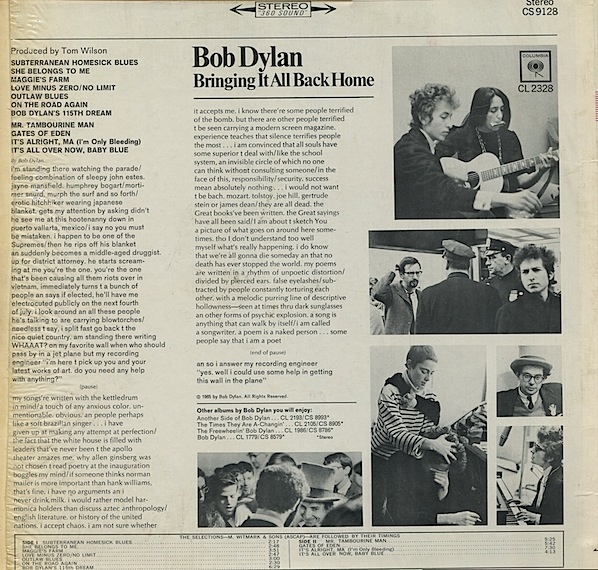
Highway 61 Revisited.
By the time Gates of Eden, the final single from Bringing It All Back was released, Bob Dylan was almost finished recording his next album, Highway 61 Revisited. He had been locked away in Columbia Studio, New York, between June 15th and August 4th 1965. During that period, Bob Dylan and his band recorded nine songs with producer Bob Johnston and Tom Wilson who produced Like A Rolling Stone.
Just like on Bringing It All Back, Bob Dylan had penned tracks that would become not just classics, but features of his live sets. Among them, were Like A Rolling Stone, Tombstone Blues, Ballad Of A Thin Man, Just Like Tom Thumb’s Blues and Desolation Row. These songs came to life with the help of Bob Dylan’s backing band, The Hawks.
Their illustrious lineup included guitarist Mike Bloomfield and organist Al Kooper. They helped Bob Dylan combine blues, folk and rock, with lyrics that can only be described as poetic on ten tracks. The exception was Desolation Row, an eleven minute epic. It was part of an album that was heralded as revolutionary. However, it wasn’t all plain sailing.
Similar to Bringing It All Back, some of the tracks took longer to nail. This is apparent on The Best Of The Cutting Edge 1965-1966: The Bootleg Series, Volume 12. There’s a piano demo of Desolation Row. Then from the rehearsals there’s Like A Rolling Stone (Take 5, Rehearsal). Among the alternate takes are Like A Rolling Stone (Take 11, Alternate Take), Desolation Row (Take 1), Tombstone Blues (Take 1), Highway 61 Revisited (Take 3 and Take 7, False Start), It Takes a Lot to Laugh, It Takes a Train to Cry (Take 8) and Queen Jane Approximately (Take 5,). These tracks are a fascinating insight to what would become a classic album. Often, the tracks are work in progress, and very different to what they became. What they eventually became part of, is Bob Dylan’s second consecutive classic album.
On its release, on August 30th 1965, reviews of Highway 61 Revisited were mixed. The worst were favourable, while the most supportive, heralded Highway 61 Revisited as a revolutionary album. Bob Dylan had completed his transformation from folk to rock singer. However, he hadn’t forgotten his folk roots, and flitted between blues, folk and rock. All the time, Bob Dylan his poetic lyrics in his own inimitable style.
For some critics, Highway 61 Revisited was a slow burner, and the more they listened to the album, the more arresting and caotivatibg it become. Even the doubters were willing to admit later, that Bob Dylan had released another classic album.
Before the release of Highway 61 Revisited, Bob Dylan released Like A Rolling Stone in July 20th 1965. It reached number two in the US Billboard 100 and number four in Britain. When From A Buick 6 was then released on September 7th 1965, it failed to chart. So did Highway 61 Revisited, which was released on December 21st 1965. By then, Highway 61 Revisited was well on the way to selling a million copies in America.
Highway 61 Revisited reached number three in the US Billboard 200 and number four in Britain. This resulted in another platinum disc for Bob Dylan in America, plus gold discs in Britain and Canada. Bob Dylan must have thought things couldn’t get much better. They did. Two became three.
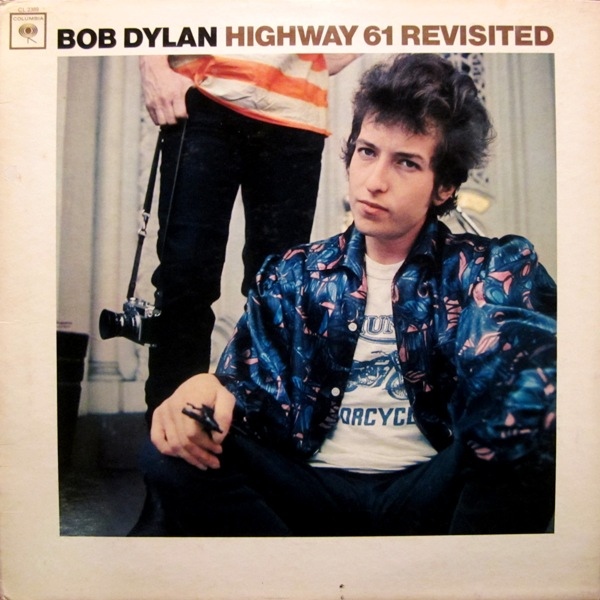
Blonde On Blonde.
Despite releasing two million selling albums during 1965, Bob Dylan wasn’t content to take things easy. He embarked upon a gruelling tour to promote Highway 61 Revisited, and began work on what what became Blonde On Blonde.
Never before had Bob Dylan released a double album. Blonde On Blonde was a first. Bob Dylan prepared to record sixteen new tracks with his live band The Hawks. These sixteen tracks would take-up four sides of vinyl. However, recording of Blonde On Blonde wouldn’t take place during one session. Instead, Bob Dylan recorded whenever and wherever he could.
The first recordings session took place with producer Bob Johnston on October 5, 1965 at Columbia Studios, New York. Bob Dylan returned on November 30th 1965 and January 25th 1966. Then between February 14th and 17th, Bob Dylan made his way to Columbia Studio B, Nashville, Tennessee. That’s where he returned for the final session. It took place between March 8th and 10th 1966. At last, Bob Dylan’s seventh studio album, Blonde On Blonde, and first double album was complete. The Blonde On Blonde sessions yielded a plethora of outtakes.
They feature on The Best Of The Cutting Edge 1965-1966: The Bootleg Series, Volume 12. This includes a piano demo of I’ll Keep It With Mine (Take 1) and an early version of Temporary Like Achilles (Take 1). There’’s also rehearsals of Just Like Tom Thumb’s Blues (Take 3), Visions Of Johanna (Take 5) and She’s Your Lover Now (Take 6). Then Bob Dylan headed to the studio.
In New York and Nashville, Bob Dylan began to record Blonde On Blonde. He tried acoustic versions of Farewell, Angelina (Take 1) and a solo acoustic version of You Don’t Have To Do That (Take 1). Then the band join Bob on alternate takes of Pledging My Time (Take 1), One Of Us Must Know (Sooner Or Later) (Take 19), I Want You (Take 4), Stuck Inside Of Mobile With The Memphis Blues Again (Take 13), Leopard-Skin Pill-Box Hat (Take 8), Just Like A Woman (Take 4) and Absolutely Sweet Marie (Take 1). With Blonde On Blonde completed, the album was scheduled for release on 16th May 1966.
Before that, One of Us Must Know (Sooner or Later) was released as a single on 14th February 1966. Incredibly, the single failed to chart in America, and only reached number thirty-three in Britain. Then Rainy Day Women ♯12 and 35 was was chosen as the second single, and released in April 1966. It reached number two in the US Billboard 100 and number seven in Britain, and would become a Bob Dylan classic. So would Blonde On Blonde.
Straight away, many critics realised the importance of Blonde On Blonde. Most reviews were favourable. A few critics realised this was one of the best albums of Bob Dylan’s career. Some went as far as to say it was a career defining album. They wondered whether Bob Dylan had come of age on what was, the second chapter of his chameleon-like career. Folk-rock, blues and rock combined with a hint of country shawn through on Blonde On Blonde. Poetic and cinematic, and rich with imagery and emotion, it was no surprise that Blonde On Blonde proved so popular.
When May 16th 1966 came round, Blonde On Blonde became one of Bob Dylan’s biggest selling albums. Blonde On Blonde reached number nine on the US Billboard 200, and number three in Britain. This resulted in Blonde On Blonde being certified double-platinum in America, and platinum in Britain. By then, another three singles had been released from Blonde On Blonde.
The third single from Blonde On Blonde was I Want You, which was released in June 1966. It reached number twenty in the US Billboard 100 and number sixteen in Britain. Just Like A Woman was released in September 1966, and reached just thirty-three in the US Billboard 100. Leopard-Skin Pill-Box Hat, the almost surreal sounding electric blues was released in April 1967, but reached just eighty-one in the US Billboard 100. While the singles hadn’t sold in the same quantities as Blonde On Blonde, Blonde On Blonde became Bob Dylan’s third consecutive classic.



From Bringing It All Back through Highway 61 Revisited to Blonde On Blonde, Bob Dylan could do no wrong. He sold over four million albums in America alone. This triumvirate of classic albums featured a plethora of classics songs.
Bob Dylan was enjoying one of the most prolific period of his career. Among the songs he penned during this period were Subterranean Homesick Blues, Mr. Tambourine Man, Like A Rolling Stone, Rainy Day Women ♯12 and 35, Leopard-Skin Pill-Box Hat and Just Like A Woman. They’re just a few of the song Bob Dylan recorded between 1965 and 1966. Each of these songs are almost imprinted on many music fan’s consciousness. They know every subtly and nuance of these classics. However, on The Best Of The Cutting Edge 1965-1966: The Bootleg Series Volume 12, which was released by Sony Music, these songs sound very different.
The thirty-six songs on The Best Of The Cutting Edge 1965-1966: The Bootleg Series Volume 12 are work in progress. Bob Dylan and his band are in the process of ironing out the kinks. They begin to take shape. That’s apparent when there’s two different versions of the song. It’s case of compare and contrast, then doing the same with the finished version. Often, it’s hard to work out how the song on The Best Of The Cutting Edge 1965-1966: The Bootleg Series Volume 12 became that familiar song on Bob Dylan’s trio of mid-sixties classic. This makes The Best Of The Cutting Edge 1965-1966: The Bootleg Series Volume 12 a captivating album.
Bob Dylan has been releasing the Bootleg Series since 1991. They celebrate their twenty-fifth anniversary this year. Four of the twelve instalments have been certified gold in America; while three have been certified silver in Britain. The Bootleg Series is an extremely popular series. So far The Best Of The Cutting Edge 1965-1966: The Bootleg Series Volume 12 has reached number thirty-three in the US Billboard 200, and number twelve in Britain. That’s not surprising. The Best Of The Cutting Edge 1965-1966: The Bootleg Series Volume 1 is a lovingly compiled and curated series, which is like eavesdropping in musical history being made.
BOB DYLAN-THE BEST OF THE CUTTING EDGE 1965-1966: THE BOOTLEG SERIES.
PHALL FATALE-MOONLIT BANG BANG.
PHALL FATALE-MOONLIT BANG BANG.
Three years after releasing their debut album Charcoal From Fire, Phall Fatale return with their eagerly awaited, and extraordinary eclectic sophomore album Moonlit Bang Bang. It will be released on Slowfoot Records on 15th January 2016. Moonlit Bang Bang marks the return of this truly cosmopolitan band. Their story began in the spring of 2008.
That’s when Phall Fatale were first formed. Its five members are from Britain and Switzerland. Bassist John Edwards is from London. Drummer Fredy Studer, double bassist Daniel Sailer and vocalists Joy Frempong and Joana Aderi are all Swiss. They’ve worked with some of the biggest names in music. However, back in the spring of 2008, they were ready to form their own band.
For many musicians, making the decision to form a band is the easy enough. The hardest part, can be coming up with a name. That can prove tricky.
Just like many bands before them, the members of Phall Fatale wanted a name that would stand out from the crowd. So they decided to embark on some blue sky thinking. Thinking outside the box worked, and Phall Fatale was born. The band took its name from the famously fiery curry, the Phall, and Fatale as in femme fatale. Now sporting what was a memorable moniker, Phall Fatale started to make music.
This wasn’t going to be staid and traditional music. Instead, it would be music that was new, exciting, energetic, innovative. and unpredictable. Infused with enthusiasm, and the spirit of ’76, this group of musical mavericks set about rewriting the musical rulebook.
Before that, they tore up the original rulebook. All bets were off. Now this extraordinary group of musicians set about doing things their way. This meant combining not just a disparate and eclectic selection of musical genres, but the music that had influenced them.
For the five members of Phall Fatale, this meant everything from ambient, avant pop and free jazz to avant garde, experimental and post punk. That’s not forgetting what Phall Fatale describe as leftfield vocal jazz and alt-R&B. All these genres became part and parcel of Phall Fatale’s unique sound. So did the influence of Nina Simone, Jimi Hendrix, Iannis Xenakis and Albert Ayler. These artists had influenced the members of Phall Fatale, who in the Spring of 2008, embarked upon their nascent career.
It took just over a year for Phall Fatale to hone and sculpt their own sound. By September 2009, Phall Fatale were ready to record their debut album. So the five members of Phall Fatale made their way to the Saraswati Studios. They’re situated in the Izery mountains of southwestern Poland. Such beautiful surroundings were almost guaranteed to inspire Phall Fatale as they began work on what became, their debut album Charcoal From Fire.
Once Phall Fatale had finished recording Charcoal From Fire, the album was mixed during the summer of 2010 at Kirschlab Studio, in Zurich, Switzerland. However, it wasn’t until 2012, that Charcoal From Fire would be released.
When Charcoal From Fire was released in 2012, Phall Fatale’s debut album was a mixture of ten new songs and some familiar tracks. This included Bob Dylan’s Desolation and Nina Simon’s Four Women. Both songs were given makeovers, and transformed into something neither artist ever envisaged. Music was added to William Blake’s The Angel, bringing new meaning to the seminal poem. It’s no wonder that critical acclaim accompanied the release of Charcoal From Fire. The Anglo-Swiss musical mavericks had created a genre-melting, and sometimes, genre-defying album. Phall Fatale took a hint of one musical genre, and then added a twist of another. Sometimes, several musical genres were added together. They were like a Michelin star chef, carefully adding ingredients and gradually creating a musical dish that was hailed as ambitious, adventurous, imaginative and inventive. Here was a group that were going to shake up music. The followup to Charcoal From Fire was eagerly awaited.
After a year became two, people wondered what had happened to Phall Fatale? When was their long-awaited sophomore album going to be released? However, what record buyers didn’t realise, was that the members of Phall Fatale are involved in other musical projects.
London based John Edwards is well known, and highly respected figure within avant garde music. He’s worked with Evan Parker, Peter Brötzmann and Wadada Leo Smith. When not working with the great and good of avant garde, John finds time to perform the songs of Robert Wyatt in Comicoperando. John’s not the only one to have a busy schedule.
The other members of the rhythm section are equally hard working. Drummer Fredy Studer has played alongside some of the biggest names in music; including Joe Henderson, Miroslav Vitous, Dave Holland, Jack DeJohnette, Paul Motian, John Abercrombie, John Zorn and Fred Frith. Previously, bassist Daniel Sailer has showcased his versatility, playing both classical music and hardcore noise with O’Haldenramm, Krakatau, Pol, Frachter. This is very different to the music made by Phall Fatale’s vocalists.
Joana Aderi makes experimental electronica under the alias of Eiko. Joy Frempong is one half of OY, who are signed to Belgian label Crammed Discs. Each of the five members of Phall Fatale are making very different types of music when away from the band. These disparate and eclectic types of music can be heard on Phall Fatale’s eagerly awaited sophomore album Moonlit Bang Bang.
Just like their debut album Charcoal From Fire, Moonlit Bang Bang, is a mixture of new songs and a cover versions. The cover versions include Jimi Hendrix’s Manic Depressionm and Edward Vareses’s Un Grand Sommeil Noir, complete with words by symbolist poet Paul Verlaine. However, the rest of the songs on Moonlit Bang Bang is the work of Phall Fatale.
Vocalist Joana Aderi has penned five songs, including The Girl, The Beat, Fish Tank, Crocodile, Tree House and Sleeping Beauty. Joana Aderi also cowrote Sugar Drops with John Edwards; and Ring The Bell with Joy Frempong. She in turn, cowrote Funny Money with John Edwards; and cowrote the music to Electric Eel, which features the words of poet Slade Hopkinson. Joy Frempong also added the music to Anne Bronte’s Night. It seems that when Phall Fatale began recording Moonlit Bang Bang, they were on course to become the most literate group in music.
Recording of Moonlit Bang Bang took two sessions to record. The first came at Machinastudios in Switzerland, between the 5th and 8th July 2014. Things were put on hold until August 28th 2014. That’s when Phall Fatale made their way to RePublica Studios, Lubrza, in Poland. By the 3rd September 2014, Moonlit Bang Bang was complete. All that was left was for Moonlit Bang Bang to be released between November 24th and December 9th 2014. Then Moonlit Bang Bang was ready for release.
History repeated itself, when there was a time lag between the recording and release of Phall Fatale’s sophomore album, Moonlit Bang Bang. However, at last, and four years after the release of Charcoal From Fire, Phall Fatale return with their eagerly awaited sophomore album Moonlit Bang Bang.
Opening Moonlit Bang Bang is The Girl, The Beat, which has been chosen as the lead single. That’s no surprise. The arrangement glides into being, reminiscent of Grace Jones. By then, a disparate fusion of genres can be heard. This includes bub and electronica. Meanwhile, the rhythm section lay down a backdrop that more than hints at jazz, funk and reggae. Sitting proudly atop the arrangement is a heartfelt, soulful and sultry vocal. Just like the rest of the song, oozes quality.
Sugar Drops finds Phall Fatale bowling a curveball. Shimmering synths give way to a masterclass on double bass by Daniel Sailer. His fingers flit up and down the fretboard. Not once does Daniel miss a beat. Somehow, the post punk inspired vocal keeps up. It’s been inspired by The Slits, and much later, the B52s. Rolls of drums and percussion join harmonies as the track heads towards a crescendo. Symmetry is the order of the day, with the two vocalists sing and crave “I need more sugar.”
A carefully plucked bass opens Electric Eel. This time, the bass is alone. Symmetry plays an important part in Phall Fatale’s sound. They deploy two basses and two vocalists. Here, though, the arrangement unfolds slowly, and dramatically. The lone bass is accompanied by a smattering of electronics and a slow, lone vocal. It adds to the drama. Soon, though, the tempo increases and the bases unite with the drums. They soon fatten up the sound. One vocal becomes two as tempo increases only to decrease. Stop-start describes the arrangement. Meanwhile, elements of jazz, funk, electronica, avant pop and even hip hop combine. There’s even a diversion via avant garde and free jazz, whilst a hint of the Caribbean shines through, on this genre-melting musical adventure from musical mavericks Phall Fatale.
Rather than plucked, the double bass is played like a cello as Fish Tank unfolds. This produces an almost discordant, but captivating sound. One wonders where this Fish Tank is heading? A vocal almost lacking in feeling is accompanied by just basses. Then effects shroud the nihilistic vocal. It’s full of desperation singing: “I wish I could die.” After that, nihilism gives way to a much more melodic vocal. Still, though, hope is absent, as the two contrasting vocals flit in and out. As they do, Phall Fatale conbine avant garde, experimental, indie pop, jazz and post punk, on what’s akin to a cathartic unburdening, or cry for help.
Ring The Bell lasts just under a minute, but during that time, Phall Fatale’s two vocalists become one. They draw inspiration from hip hop, dancehall and even Indian vocal percussion exercises. It’s very different from what’s gone before, and showcases Joana Aderi and Joy Frempong considerable vocal prowess.
Relentless, buzzing synths open Crocodile, while effects shroud Joana and Joy’s vocals. They deliver a vocal full of emotion and hope, encouraging even those from the humblest of backgrounds, never to settle for second best. Anything is possible sings Joy and Joana against a post punk arrangement. That’s until it becomes stop-start, and a bowed cello interjects. This works, and offers a contrast. Later, Phall Fatale are at their most inventive. Futuristic, otherworldly, sci-fi sounds chatter, as synths buzz, guitars grind and drums pound. This results in a delicious cacophony of eclectic, leftfield sounds. They play what’s an alternative, 21st Century mini-symphony. It takes detours via avant garde, industrial and musique concrète, before the track becomes melodic with subtle hooks.
Slowly and deliberately percussion plays on Tree House. Already, there’s more than a hint of musique concrète and industrial music. When the vocal enters, it’s delivered earnestly and dramatically. By now, Phall Fatale seem to have been partly inspired by Portishead. The music becomes cinematic, haunting, moody, as they draw inspiration from avant grade and experimental music. In doing so, one of the highlights of Moonlit Bang Bang slowly takes shape.
Rumbling drums and grinding synths join the deliberate vocal on Funny Money. Soon, the arrangement becomes melodic, with world music just one of the disparate genres that have influenced Phall Fatale. They turn their guns on the machinations of the greedy and some would say, incompetent bankers who caused the financial crash. Funny Money finds Phall Fatale combining social comment with subtle hooks, and a multiplicity of musical genres. It’s a potent mix.
Un Grand Sommeil finds a lone plucked bass combining with cymbals that are almost caressed. They set the scene for a heartfelt, emotive and haunting delivery of Paul Verlaine’s poem. It’s truly beautiful and most memorable.
Pans ring out on Sleeping Beauty, while percussion punctuates the meander arrangement. After forty-five seconds, the vocal enters. It’s delivered with emotion. Meanwhile, drums pound, while pans and percussion add an understated backdrop. That’s till the arrangement explodes, and heads in the direction of post punk. At the chorus, the vocal is delivered in call and response style. By then, the Sleeping Beauty has awakened from her slumbers. That’s until the arrangement becomes stop-start. This is one of Phall Fatale’s favourite tricks. It works though, and adds to the drama, energy and electricity of the track.
It’s always risky covering a track by a true musical icon. However, Phall Fatale take that risk on Jimi Hendrix’s Manic Depression. Literally, the arrangement explodes into life, before dissipating. Then Phall Fatale’s vocalists sound as if they’re living the lyrics. Their vocals are shrouded in effects, while a battery of electronics and effects crackles and bristles. Again the arrangement becomes stop start, veering between explosive and blistering, to a much more understated, experimental sound. From there, Manic Depression becomes a musical merry-go-round, where Phall Fatale pay homage to a true musical legend, Jimi Hendrix, in their own, inimitable way.
Night closes Moonlit Bang Bang. A bowed bass produces an eerie, otherworldly backdrop. This is perfect for the vocal, as Anne Bronte’s words come to life. They’re delivered slowly, earnestly, and dramatically. Meanwhile, a wash of sound gradually builds. Cymbals ring out, and Anne Bronte’s wistful words take on new meaning. It’s the perfect way to close Phall Fatale’s long-awaited sophomore album, Moonlit Bang Bang.
Some things are well worth waiting for. Moonlit Bang Bang is one of these things. Music fans have waited three long years for the followup to Charcoal From Fire. However, their patience has been rewarded, and Moonlit Bang Bang will be released on Slowfoot Records on 15th January 2016. It’s an album that shows how Phall Fatale had grown and matured as a band.
Despite featuring twelve tracks, Phall Fatale never let their standards slip on Moonlit Bang Bang. It’s a captivating musical journey through what’s a disparate selection of genres. There’s everything from avant garde, ambient and avante pop to Caribbean and classical through electronica and experimental via free jazz, industrial, musique concrète and rock. That’s not forgetting a hint of funk, reggae and soul, plus plenty of post punk stylings. Moonlit Bang Bang is a truly eclectic album; one that takes the listener on a roller coaster ride through the music of the past fifty years.
That’s not surprising. Phall Fatale have been inspired by Nina Simone, Jimi Hendrix, Iannis Xenakis and Albert Ayler. That’s not all. On Moonlit Bang Bang, they’ve been influenced by. Everyone from Grace Jones through to Portishead, via The Slits, and The B52. This myriad of influences results in a musical potpourri. However, it works.
Producer Roli Mosimann is given the job of bringing together the talents and energy of Phall Fatale on Moonlit Bang Bang. He’s worked with JG Thirlwell, Young Gods, New Order, The The, Faith No More Studer, and almost effortlessly and seamlessly, harnesses the combined and considerable talents of Phall Fatale.
Together, the five musical mavericks that makeup Phall Fatale, have produced an album that’s variously eclectic, inventive, melodic and sometimes, beautiful, poignant music. Other times, the music has a fragility, and bristles with emotion. Then just as quickly, Phall Fatale kick out the james and unleash a post punk powerhouse. That’s why, musically, Phall Fatale are something of an enigma, who are always capable of springing a surprise, and taking the listener in the most unexpected direction, on what’s a truly captivating musical adventure, Moonlit Bang Bang.
PHALL FATALE-MOONLIT BANG BANG.


HARMONIA-DELUXE.
HARMONIA-DELUXE.
In June 1975, the three members of Harmonia returned to their studio in Forst for the recording of their sophomore album, Deluxe which was rereleased by Grönland Records on 18th December 2015. Deluxe would become the followup to Musik Von Harmania, which had been released in January 1974. Sadly, this groundbreaking album had failed to find an audience. It was a bitter blow for Harmonia.
Following Brain Records’ release of Musik Von Harmania in January 1974, Harmonia headed out on a promotional tour. In these pre-internet days, this was the only way a band had of promoting their album. Harmonia could’ve picked a better time for a tour.
The tour took place was the middle of a long, cold German winter. Early 1974 was especially cold. Harmonia travelled wrapped in layers of clothes. Their gruelling schedule saw them criss cross Germany. Some nights they played towns, other nights, some of West Germany’s biggest cities. Among the audience were fans of Neu! and Cluster. They were joined by the few people who had bought Musik Von Harmonia. Those that made their way to each venue, heard this nascent supergroup at their inventive best. This included on the 23rd March 1974, at Penny Station in Griessem, Germany.
That night, Harmonia’s concert at Penny Station in Griessem was to be recorded, and would be released as a live album. Buoyed by the thought of recording their debut live album, Harmonia gave one of their finest performances of their winter tour. From the moment Harmonia took to the stage, they were at their innovative, genre-melting best. Those that heard Harmonia that night, thought that the resultant live album would be the perfect showcase for the nascent supergroup.
It should’ve been. Sadly, the resultant live album, Live 1974 would only be released on 18th September 2007. By then, the Harmonia story had taken several few twists and turns.
Once Harmonia’s tour was over, Hans-Joachim Roedelius and Dieter Moebius began work on the next Cluster album. Meanwhile, Michael Rother and Klaus Dinger owed Brain Records an album. Then Neu! would have fulfilled their contractual obligations.
Neu! 75.
For the recording of what became Neu!! ’75, Michael Rother and Klaus Dinger reunited in December 1974 at Conny Plank’s studio. By then, Conny’s Studio was the go-to recording studio for German groups. They all wanted “the genius” to sprinkle his magic on their albums. This would be the case for Neu! ’75.
The two members of Neu! had changed. Klaus was heavily into rock music, while Michael’s interest in ambient music was growing. As Michael explains: “After two years apart, we were different people. To complicate matters, Klaus wanted to move from behind the drum kit. He felt he was hidden away. I can understand this. But it was what Klaus did so well. However, he wanted to become an entertainer, playing the guitar and singing. He wanted to bring in two new musicians to replace him.” This included Klaus’ brother Thomas and Conny Plank’s former engineer Hans Lampe. These new musicians would allow Neu! to make a very different album.
Michael realised this was problematic. “By then Klaus could be difficult to work with. I realised we had compromise, so ended making an album with two very different sides. Side one was old Neu! and side two was new Neu!” On side two Klaus come out from behind his drum kit and play guitar and sing. He became the entertainer on what proved to be an album of two sides. It was completed in January 1975, and released later that year.
When critics were sent copies of Neu! ’75, they were struck by side one’s subtle, ambient, melodic sound. Michael remembers: “we used keyboards and phasing a lot on both sides. While Michael Rother’s name was written large all over side one; side two was very different, and quite unconventional. Reviews were mixed, partly because of side two. Some critics felt that if Neu! ’75 had the same sound throughout, it would’ve been hailed a classic. However, later Neu! ’75 and Neu!’s earlier albums would be reevaluated. Before that Neu! ’75 was released.
Just like Neu! 2, Neu! ’75 didn’t sell well. The problem was, many people didn’t understand what was essentially parts of two disparate albums joined together. The proto-punk of side two was so different from the ambient sound of side one. Records buyers were confused, and didn’t understand what Neu! stood for? It seemed that Neu! were just the latest groundbreaking group whose music was misunderstood and overlooked.
Michael looking back at Neu! ’75 reflects: “It was a time time. Klaus wasn’t the easiest person to work with. He was involved with different people, and being pulled in different ways. We were also very different musically. Then there were the new drummers on side two. They weren’t particularly good. Certainly neither were as good as Klaus,” a rueful Michael remembers. “It was a difficult project. By then Klaus was different to the man I’d met a few years earlier.” Michael wouldn’t work with Klaus for another decade. By then, Michael would’ve embarked upon a solo career. That was still to come. Before that, Michael would record what became Harmonia’s sophomore album, Deluxe.
Deluxe.
With Neu! having fulfilled their contractual obligations, Michael Rother was free to record Harmonia’s sophomore album, Deluxe. So Hans-Joachim Roedelius and Dieter Moebius took time out from Cluster. Now, they could begin work on the followup to Musik Von Harmonia, Deluxe.
Joining the three members of Harmonia, was a new face, Conny Plank, who was co-producing Deluxe. Conny Plank and Michael were good friends, and had worked together on three projects. This included Kraftwerk’s aborted album and Neu!’s two album. The addition of the man who Michael Rother calls: “the genius,” just happened to coincide with Harmonia changing direction musically.
Deluxe saw a move towards Kominische musik. Partly, this was down to the addition of Guru-Guru drummer Mani Neumeier. He played on some tracks, and added a Kominische influence. Another change was that Michael Rother’s guitar played a more prominent role. That wasn’t Michael’s only influence.
The music on Deluxe was more song oriented. This was Michael Rother’s influence. He had taught the two members of Cluster the importance of structure. However, still Harmonia were experimenting, pushing musical boundaries. This was Cluster’s influence. Other parts of Deluxe had been influenced by Michael Rother. Hans-Joachim Roedelius agrees. “Michael Rother’s influence can be heard on Deluxe, more so than on Musik von Harmonia.” What was also noticeable, was that Deluxe had a more commercial sound.
“This wasn’t a conscious decision. The music morphed and evolved, and the result was Deluxe,” Hans-Joachim Roedelius reflects. Michael Rother agrees. “Every album I’ve made I set out for it to be commercial. Sometimes, though, it doesn’t work out that way.” Sadly, that proved to be the case.
When Deluxe was released in 1975, it was to the same critical acclaim as Musik von Harmonia. The noticeable shift to what was a more commercial sound, surely would lead to a change in Harmonia’s fortunes?
That wasn’t to be. Deluxe was released on 20th August 1975, and sales of the album were slow. They never picked up, and history it seemed, was repeating itself. Michael reflects: “Still our music was being ignored. It was a difficult time for us. So much so, that Michael decided to record his debut solo album. However, he left and the other members of Harmonia left behind a classic album, Deluxe.
Straight away, Harmonia’s showcase their finely sculpted, and much more structured sound on Deluxe. Michael Rother had encouraged the other members of Harmonia to incorporate traditional song structures on the album. This he told them, would be easier to replicate live. However, two other changes played an important part in Deluxe’s sound and eventually, success.
The two other changes Michael Rother made, were to bring onboard Conny Plank to co-produce Deluxe; and Guru Guru drummer Mani Neumeie to play on some tracks. Deluxe was going to be a very different album, and the new Harmonia make their presence felt from the get-g0.
A futuristic synth signals the arrival of the synths and keyboards on album opener Deluxe (Immer Weiter). Washes and stabs of meandering, lazy synths join dreamy keyboards. Sometimes the synths have a futuristic, otherworldly sound. Other times, they just shimmer, and melt blissfully into the ether. Meanwhile, understated drums underpin the arrangement. Later, melodic, ruminative vocals are shrouded in effects. This results in a noticeable Kraftwerk influence. One wonders if this is down to Michael, a former alumni of Kraftwerk? For his part, Michael unleashes bursts of jagged, rocky guitar. Occasionally, his guitar produces an elegiac wash of lysergic, melodic and mysterious music. Soon, the arrangement veers between ethereal, cinematic, mesmeric, occasionally dramatic and sometimes, futuristic and otherworldly. This is down to the sci-fi synths and carefully hewn keyboards. That’s not forgetting the slow, pulsating heartbeat. It adds an element of drama, to the genre-melting arrangement. At its heart, are elements of ambient, avant-garde, Kominische and rock. They’re combined by Harmonia and Conny Plank, who create what’s Harmonia’s neu, groundbreaking sound.
Synths sweep and beep on Gollum, before Guru Guru drummer Mani Neumeie almost caresses his drums. He eschews the power he unleashed on previous Guru Guru albums. Meanwhile, sci-fi synths shimmer and glisten. They range from Blade Runner-esque, to ethereal and elegiac. Sometimes, it’s as if Harmonia are providing the soundtrack to a sci-fi film. However, it’s left to the listener to provide the soundtrack as the arrangement glides effortlessly along. Gradually, the tension builds to this cinematic track. Mani’s drums rumble, while hypnotic keyboards add tension and drama. All the time, the otherworld synths flit in and out, as this timeless, cinematic track heads towards its dramatic crescendo.
Kekse reminds me both of library music being produced in Britain and Europe in the early seventies, and Eastern European experimental music. The arrangement is like a mesmeric, merry-go-round, with sound effects interjecting. What sounds like animals and birds, gives way to lumbering seventies synths. Meanwhile, the mainstay of the arrangement has an obvious Kominische influence. Other parts of the arrangement, have been influenced by avant garde, classical and experimental music. Later, dreamy synths meander as the sound effects become more prominent. It’s like a journey into the Forst countryside, complete with the soundtrack of animals, birds and the tranquil sound of a river. Adding the final touch is a pastoral piano solo from Hans-Joachim Roedelius. Gradually though, its ethereal beauty dissipates, leaving a memory of Harmonia at their most ambitious and innovative.
As Monza (Rauf Und Runter) unfolds, synths meander, flutter and stutter. Meanwhile, Michael Rother unleashes washes of his guitar. It reverberates into the distance. Deep down in the arrangement, sound effects bubble, and an guitar chirps. All this plays a part in what’s a dark, dramatic arrangement. Then it’s all change, when Mani is let off the leash. He powers the arrangement along, and Michael discovers his inner guitar hero. By then, a joyous, freewheeling fusion of Kominische, rock and proto-punk has unfolded. It’s Mani’s drums that underpin the arrangement, while searing, blistering guitars are unleashed. They’re augmented by bursts of vocals and keyboards. Mostly though, it’s Mani and Michael who drive the arrangement along. Rocky guitars, crashing cymbals and pounding drums join sci-fi synths as Harmonia are a group transformed, on what’s one of the highlights of Deluxe.
Banks of progressive rock keyboards open Notre Dame. The keyboards almost sound as if they belong in a church. They’ve a big, bold and impressive sound. Some would say grandiose. That’s no bad thing. Soon, though, a drum machine provides a subtle, sonic heartbeat. Then after 1.22 it’s all change, as otherworldly synths become elegiac. A futuristic sound gradually emerges from the slow, pedestrian arrangement. Synths and keyboards play a leading role. Panning is used effectively, giving the arrangement a lysergic sound. Later, the progressive rock keyboards return for an encore, and race across the arrangement. The hypnotic drumbeats make no attempt to keep up, and provide a contrast to this captivating musical adventure.
Walky Talky closes Deluxe, Harmonia’s 1975 sophomore album. A bass is joined by plink plonk keyboards, before what resembles a braying horn interjects. This however, comes courtesy of Harmonia’s trusty synths, and adds an element of drama. Mani, Guru Guru’s legendary drummer returns for the finale. So do the futuristic, sci-fi synths and washes of Michael’s guitar. It chirps, shimmers and glistens, producing an elegiacal sound. By then, a myriad of disparate sounds are flitting in and out of the arrangement. They range from subtle and ethereal, to bold and dramatic, right through to futuristic, haunting, mesmeric and even otherworldly. It’s fitting finale to Deluxe, and finds Harmonia at their very best. Sadly, in 1975, very few people heard this future Kominische classic.
Just like so many Kominische groups, including Amon Düül II, Can, Cluster, Faust and Neu!, Harmonia’s music passed most German record buyer by in the seventies. For Harmonia, these were tough times. Neither Musik Von Harmonia, nor Deluxe sold well. Live ’74 wasn’t even released until 2007. By then, things would be very different,
Gradually, though, Kominische muzik began to grow in popularity. By the nineties, and the internet age, a new generation of record buyers had discovered Kominische muzik. Harmonia were regarded as one of the Kings of Kominische muzik. So it was fortunate that the long lost master tapes for Tracks and Traces were discovered. Tracks and Traces was belatedly released in 1997. Over the next ten years, interest in Harmonia was at an all-time high.
Just like so many Kominische groups, including Amon Düül II, Can, Cluster, Faust and Neu!, Harmonia’s music passed most German record buyer by in the seventies. For Harmonia, these were tough times. Neither Musik Von Harmonia, nor Deluxe sold well. Live ’74 wasn’t even released until 2007. By then, things would be very different,
Gradually, though, Kominische muzik began to grow in popularity. By the nineties, and the internet age, a new generation of record buyers had discovered Kominische muzik. Harmonia were regarded as one of the Kings of Kominische muzik. So it was fortunate that the long lost master tapes for Tracks and Traces had been discovered. Tracks and Traces was belatedly released in 1997. Over the next ten years, interest in Harmonia increased.
By 2007, Harmonia’s Live ’74 album was reissued. To promote the album, the three members of Harmonia reunited for what turned out to be their final concert. Never again would the three members of Harmonia take to the stage together.
Dieter Moebius, Harmonia’s synth player died on 20th July 2015. He left behind a rich musical legacy, including what many critics regard as Harmonia’s finest hour, Deluxe. It was reissued by Grönland Records on 18th December 2015. The sound quality of the remaster is stunning, and sets the bar high for future remasters. Grönland Records’ remaster of Deluxe is the definitive reissue, and is the best way to discover or rediscover this timeless Kominische classic.
On Deluxe, Harmonia changed direction musically. Michael Rother encouraged the other members of Harmonia to incorporate traditional song structures on the album. This he told them, would be easier to replicate live. The result was a finely sculpted and structure album, where Harmonia combine disparate genres.
Elements of ambient, avant garde, experimental and progressive rock can be heard on Deluxe. So can psychedelia and classic rock. However, Deluxe has a much more prominent Kominische influence than Musik Von Harmonia. Partly, this comes courtesy of Guru Guru’s legendary drummer Mani Neumeier. He played on three tracks on Deluxe, and his drums add a Kominische influence. Another change was that Michael Rother’s guitar played a more prominent role. It steps out of the shadows of the keyboards and synths, and helps transforms Harmonia’s sound. The other change from Musik Von Harmonia, was the addition of Conny Plank, who co-produced Deluxe.
By then, Conny Plank was a vastly experienced producer. He had worked with Michael Rother on Kraftwerk’s aborted album, and then on Neu!’s first three albums. The two men had established a good working relationship, and Conny Plank was the perfect man to help sculpt and structure Harmonia’s new sound on Deluxe. It was a remarkable transformation. One can’t help but wonder what Harmonia’s next album would’ve sounded like?
Although Harmonia went on to collaborate with Brian Eno on Tracks and Traces, Deluxe was their swan-song. Harmonia as a band was quietly dissolved, and what become one of the most innovative, inventive and influential Kominische bands were no more.
Hans-Joachim Roedelius and Dieter Moebius continued to work together as Cluster. Michael Rother embarked upon a career as a solo artist. It was only much later that Harmonia’s two studio albums, Musik Von Harmonia and Deluxe, enjoyed the critical acclaim and commercial success their music so richly deserved. For Harmonia, it was a case of better late than never. Now somewhat belatedly, Harmonia are regarded as Kominische royalty, and Musik Von Harmonia and Deluxe, are part of a huge treasure trove of Kominische muzik awaiting discovery.
HARMONIA-DELUXE.

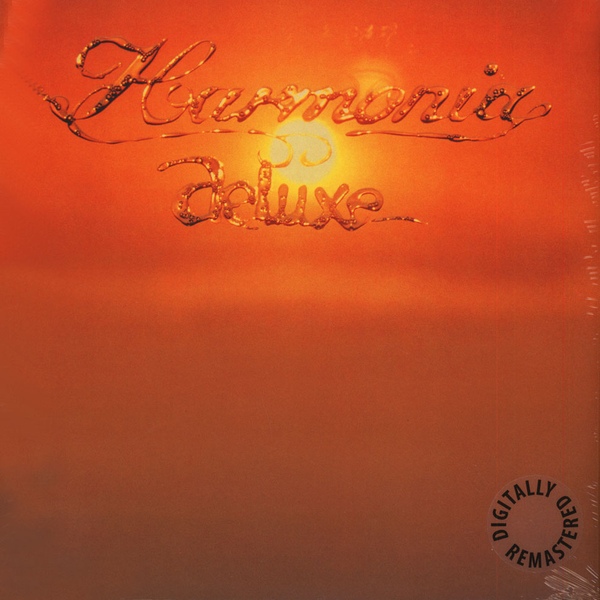
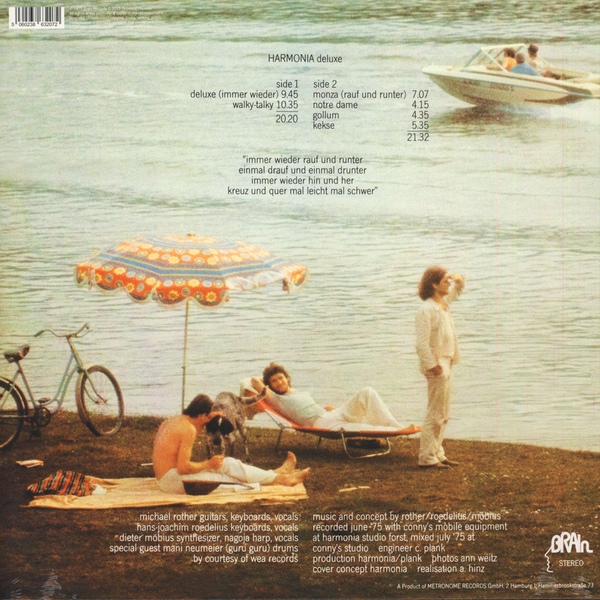
KROKOFANT-KROKOFANT II.
KROKOFANT-KROKOFANT II.
Two years ago, Krokofant were preparing to release their eponymous debut album on Rune Grammofon. It was an exciting time for the Kongsberg based trio. Krokofant were regarded as one of the rising stars of the Nordic music scene. Great things were forecast for Krokofant, who were being described by critics as one of the most exciting, innovative and pioneering Norwegian groups. This was high praise indeed; as Norway is blessed with a plethora of talented bands.
That’s been the case for several years. Norway had, and still has, one of the strongest and most vibrant music scenes in Europe. Countless bands have made a breakthrough in the last few years. This includes Elephant9, Cakewalk, Bushman’s Revenge, Moster!, Labfield, Syydive, Finland, Labfield and Space Monkey. In March 2014. Krokofant were all set to join their ranks.
That was when Krokofant was scheduled for release by Rune Grammofon. The album was the result of several years hard work. It was well worth it. Now, Krokfant were being hailed as one of Norway’s most exciting and pioneering groups. Critically acclaimed reviews of Krokofant praised the band’s pioneering, genre-melting sound. After years of hard work and dedication, Krokofant were regarded as one of Norway hottest musical prospects. It could all have been so very different. Especially, if saxophonist Jørgen Mathisen hadn’t gone into that guitar shop.
Originally, Krofofant were just a duo, consisting of guitarist Tom Hasslan and drummer Axel Skalstad. Then in 2012, Tom and Alex met saxophonist Jørgen Mathisen, in a guitar shop in Kongsberg, a town in Southern Norway which is famous for its annual jazz festival. Straight away, Tom, Alex and Jørgen hit it off. Straight away, Tom, Alex and Jørgen hit it off.
When Tom, Alex and Jørgen began playing together, it quickly became apparent that Jorgen was the missing piece in the musical jigsaw. No wonder. Jorgen was already an experienced musician. He’d already played in groups like Shagma, The Core and Zanussi Five. Soon, the new lineup of Krokofant became part of an innovative musical movement that’s sweeping the Norway.
So much so, that Krokofant epitomise this new innovative and exciting musical movement. Part of Krokofant’s music is improvisational. They fuse improvisation with rock beats and driving rhythms. Essentially, it’s a marriage of avant rock, free jazz, jazz rock and progressive rock. That’s a good description of Krokofant’s live sound, and their critically acclaimed eponymous debut album.
Probably the best way to describe Krokofant’s music, is a marriage of the Joycean progressive rock odysseys of King Crimson and Henry Cow, with Peter Brötzmann’s free jazz ensembles. Add to that, the influence of early-seventies jazz-rock pioneers; including The Mahavishnu Orchestra, Terje Rypdal and Ray Russell. It’s a unique and captivating fusion of raw but refined power, with discipline, energy and enthusiasm. Almost seamlessly, musical genres and influences becomes one. However, this didn’t happen overnight.
Like many bands before them, Krokofant’s sound was honed by playing live. The Kongsberg based trio earned their stripes by a relentless and gruelling live schedule. That was the case for the best part of two years. This constant touring paid off, and soon, Krokofant’s star was in the ascendancy. So the next step was for Krokofant was to record their debut album.
Six songs were recorded at Engfelt and Forsgren Studio in Oslo. By then, saxophonist Jørgen Mathisen had been officially confirmed as a member of Krokofant. He agreed, and with a spring in their step, the three members of Krokofant recorded their eponymous debut album. It was released in March 2014, to widespread critical acclaim.
Critics hailed Krokofant as a groundbreaking album, from one of the most exciting and pioneering Norwegian bands. Given the plaudits Krokofant had received, it was no surprise that upon its release in March 2014, the album sold well. Soon, word was out, and across Europe and further afield, Krokofant’s star was in the ascendancy.
As the year drew to a close, critics began drawing up their best of 2014 lists. When they were published, Krokofant found its way into many lists. Given this was only Krokofant’s debut album, this was a remarkable achievement. However, on 8th January 2016, Krokofant return will their eagerly-awaited sophomore album Krokofant II. It’ll be released by Rune Grammofon, and marks the welcome return of the Kongsberg based trio.
For their sophomore album Krokofant II, six songs were penned. Five of them, C.O.T.A., Sail Ahead, Nieu, The Ship and Watchtower were credited to Tom Hasslan and Krokofant. Snakedog was credited to Jørgen Mathisen and Krokofant. These six songs would become Krokofant II, which was recorded in the familiar surroundings of Engfelt and Forsgren Studio, in Oslo.
This was where Krokofant recorded their eponymous debut album. The Engfelt and Forsgren Studio was the perfect place to record Krokofant II. It was an analogue studio, and vintage equipment would be perfect to capture Krokofant’s old school sound. Providing the heartbeat, was Axel Skalstad drums. They were joined by guitarist Tom Hasslan and saxophonist Jørgen Mathisen. Christian Engfelt took charge of recording what became Krokofant II, and mixed the album. Then when Håkan Åkesson had mastered Krokofant II, it was ready for release.
The resultant album, Krokofant II, is one of the most eagerly awaited Nordic Wave albums of recent years. Krokofant was one of the best debut albums of recent years. Matching its quality, never mind surpassing it, isn’t going to be easy. However, if anyone can do it, Krokofant can.
C.O.T.A., which opens Krokofant II, explodes into life. There’s a real sense of urgency. The three members of Krokofant play as one, and this tight, talented trio never miss a beat. Not with twenty-two year old drummer Axel Skalstad providing the heartbeat. He pounds, powers and thunders his way round his kit, bringing to mind John Bonham and Keith Moon. Just like these two greats, Axel plays with equal amounts of energy and enthusiasm. This can’t help but inspired the rest of the band. Not that that they need inspiration.
Far from it. Jørgen Mathisen’s rasping, braying saxophone punctuates the arrangement, and goes toe-to-toe with Axel’s drums. Then, it’s guitarist Tom Hasslan’s turn to shine. He seems to draw inspiration from Jimmy Page. Not to be outdone, Jørgen unleashes another saxophone solo. Sheets of Pharaoh Sanders’ like saxophone drenches the arrangement. Midway through the track, Tom channels the spirit of Hendrix. By then, Krokofant are fusing avant rock, free jazz, progressive rock and psychedelia. For the next two minutes, Tom Hasslan delivers a spellbinding, inventive and innovative guitar solo. Somewhere, Jimi Hendrix is raising a glass to Tom Hasslan. For the last minute, Krokofant reunite to deliver a driving, powerhouse of an arrangement, where rock and jazz unite. This brings back memories of the golden age of the power trio, as Krokofant pickup where they left off on their debut album.
It’s a case of anchors away, as Krokofant kick loose on Sail Ahead. A seamless fusion of jazz and rock combines on another eight minute epic. This allows Krokofant to take the listener on a musical adventure. With the rhythm section driving the thunderous arrangement along, the grizzled, growling saxophone soars above the arrangement. Gradually, Tom’s guitar starts to play a more prominent role. It’s soon duelling with Jørgen’s saxophone. They drive each other to greater heights. Meanwhile, Axel powers his way round his drum kit, fills and rolls the order of the day. Then after 1.55 it’s all change.
A much more understated, jazz-tinged sound takes centre-stage. Everyone is playing within themselves. The sultry saxophone and rhythm section are straining at the leash. Very gradually, the tempo and power grows. It’s a case of when, not if Krokofant kick out the jams. By then, Jørgen’s saxophone has headed in the direction of free jazz. It wails and howls, like a melodic, cathartic unburdening. From there, Axel’s unleashes a thunderous rocky drum solo. With Tom for company, he provides the perfect foil for Jørgen’s saxophone, as rock meets jazz on this breathtaking, genre-hopping, musical tour de force.
As Jørgen’s free jazz inspired saxophone wails and howls on Nieu, Tom delivers another stunning guitar solo. His fingers flit and fly up and down the fretboard at breakneck speed. This is the musical equivalent of a master craftsman at work. As his solo draws to a close, he adds a touch of delay, and Jørgen’s saxophone takes on a much more orthodox sound. This being Krokofont, it’s sure to be a curveball.
It is. The solo gives way to Krokofont in full flight. They combine their hard rocking sound with a much more orthodox style of jazz. As Axel power’s the arrangement along, Tom delivers some Led Zeppelin inspired licks. Take out the saxophone, and it’s like listening to a classic rock album of the early seventies. However, Jørgen’s blistering, scorching saxophone runs and solos helps define Krokofont’s unique sound, adding a jazzy hue. Meanwhile, Axel’s thunderous, relentless drums and Tom’s blistering licks add waves of drama, as what’s akin to masterful, musical blitzkrieg reaches a glorious, dramatic, crescendo.
Straight away, The Ship Krokofant sets sail. Krokofant hardly let passengers take their seats, before kicking loose. Axel plays with enthusiasm, energy and power, pounding his drums while the cymbals ring out. Tom marches Axel every step of the way. They’ve been playing together for years, and have formed a potent partnership. Jørgen who joined Krokofant in 2012, barely seems to draw breath; unleashing searing, scorching jazz-tinged solos. They bray, soaring and snaking above and around the rest of the arrangement. Meanwhile, Tom and Axel provide a relentless rocky backdrop. Later, Krokofant show their versatility. A tempo change signals a diversion via progressive rock. Then it’s all change again. Fusion gives way to blistering avant rock, before Krokofant at their most adventurous, innovative and inventive, head for home on this eight minute epic.
It’s just the rhythm section and scorching, rocky guitars that open Snakedog. Soon, Jørgen’s saxophone joins the fray. He plays within himself, allowing a duel between Axel and Tom to unfold. Tom seems to be getting the better of Axel, his guitar dominating the arrangement. Axel’s drums come a close second. Then it’s Jørgen’s time to enjoy his moment in the spotlight. Everyone gets their time to shine in this fusion of avant rock, free jazz and classic rock. Gradually, Tom’s guitar and Axel’s drums begin to dominate the arrangement, while Jørgen is left to fill in the spaces. While Axel adds fills and rolls, Tom unleashes another guitar masterclass that’s reminiscent of Jimmy Page and Jimi Hendrix. Tom’s fingers race up and down the fretboard, and seamlessly, he’s at one with his guitar. Latterly, Jørgen and Tom play with a subtly, as Snakedog reaches an understated jazz-tinged ending, that shows yet another side of Krokofant.
There was a reason for this. Just under two years ago, in March 2014, Krokofant had released their eponymous debut album on Rune Grammofon. It was released to widespread critical acclaim, and as 2014 drew to a close, hailed as one of best debut albums of 2014. Krokofant was also regarded as one of the best Nordic Wave releases of 2014. Following up Krokofant wasn’t going to be easy. The pressure was on Krokofant when they began recording their sophomore album, Krokofant II.
After nearly two away, Krokofant returned with their eagerly-awaited sophomore album Krokofant II. It doesn’t just match the quality of Krokofant, but surpasses it. Krokofant II finds Krokofant coming of age musically, as they seamlessly flit between, and fuse disparate and eclectic musical genres.
On Krokofant II, there’s everything from avant rock, free jazz, fusion and rock, to avant garde, progressive rock and post rock. There’s even hints of experimental and psychedelia as Krokofant weave their unique musical tapestry. As they do so, they draw inspiration from a wide range of sources.
Collectively, everyone from Jimi Hendriix, King Crimson, Led Zeppelin and Mahavishnu Orchestra continue to influence Krokofant. l Just like on their eponymous debut album, Henry Cow, The Mahavishnu Orchestra, Terje Rypdal and Ray Russell continue to influence Krokofant. Similarly, an eclectic selection of artists inspire the individual members of Krokofant,
Both Jimmy Page and Jimi Hendrix have inspired the virtuoso guitar skills of Tom Hasslan. John Bonham and The Who’s Keith Moon have obviously influenced Krokofant’s prodigiously talented, twenty-two year old drummer, Axel Skalstad. Listening to Krokofant’s saxophonist Jørgen Mathisen, he sometimes replicates Pharaoh Sanders’ sheets of sound. Sometimes, he draws inspiration from has John Coltrane’s Impulse period. These influences have helped mould the members of Krokofant into the tight, talented band they’ve become.
While Krokofant were regarded as rising stars of the Norwegian music scene, they’ve arrived with Krokofant II, which will be released by Rune Grammofon on the 8th January 2016. Krokofant II features music that’s not just bold and brave, but inventive, innovative and influential. Continually, Krokofant continue to push musical boundaries, and constantly seek to reinvent themselves and their music. Not many bands modern bands are willing to do that. However, Krokofant do.
This becomes apparent on Krokofant II, as Krofofant take the listener on a genre-melting musical journey. Each and every song is different and full of subtleties and nuances. Having thrown another curveball, seamlessly, Krokofant change direction, and your hear another side to their music. That’s what you expect from musical pioneers.
That’s the perfect way to describe Krokofant. They’re the latest in a long line of Norwegian musical pioneers. However, Krokofant are at an important stage in they’re career. The Kongsberg based trio, are about to release their much-anticipated, and eagerly awaited, sophomore album Krokofant II. It’s a career-defining album from Krokofant, who come of age musically on Krokofant II, an album which features genre-melting, groundbreaking music that should see Krokofant become one of the leading lights of the vibrant Nordic Wave movement.
KROKOFANT-KROKOFANT II.

INTERVIEW WITH MICHAEL ROTHER-50 YEARS MAKING MUSIC.
INTERVIEW WITH MICHAEL ROTHER-50 YEARS MAKING MUSIC.
During the early seventies, the German music scene was thriving. It was one of the most vibrant in Europe. Some of the most influential and innovative music was being released by German bands. This included the holy trinity of Can, Kraftwerk and Neu!. Along with Amon Düül II, Ashra, Cluster, Popol Vuh and Tangerine Dream, these groups were at the forefront of a new musical movement.
In Germany, this new musical movement was called Kosmische musik. Its roots can be traced to the late-sixties, and in a way, were a reaction against the rigidity and rules of traditional music. No longer were musicians willing to be constrained by the rules of modern music. They wanted to free themselves from the shackles of rules and rigidity, and in the process, create new and groundbreaking music.
To do this, musicians fused a disparate and eclectic selection of musical genres. Everything from avant-garde, electronica, experimental rock, free jazz and progressive rock influenced and inspired Kosmische musik. This included the holy trinity of Can, Kraftwerk and Neu!.
They went on to create music that at the time, was ambitious, groundbreaking and innovative. Musical boundaries were pushed to their limits, and musical norms challenged. The holy trinity were fearless visionaries. This includes Michael Rother, who was a member of three of the biggest bands in German musical history.
Michael Rother, who has played a huge part in German musical history, celebrates fifty years as a musician in 2015. He started his career with Spirits Of Sound in 1965, before first jamming with Kraftwerk in the late-sixties. Later, he joined the band on a permanent basis, but left in 1971 to form another of the holy trinity, Neu! with Klaus Dinger.
The pair recorded and released two groundbreaking albums Neu! in 1972 and Neu! 2 in 1973. However, when Neu! 2 wasn’t a commercial success, Neu! was put on hold, and Michael Rother joined Harmonia, the first German supergroup.
Harmonia featured Michael Rother plus Hans-Joachim Roedelius and Dieter Moebius of Cluster. They released two albums, Deluxe in 1974 and Music Von Harmionia in 1975. Both were groundbreaking and influential albums. However, Harmonia were too ahead of the musical curve, and neither album was a success. So Michael Rother recorded another another album with Neu!
By then were very different people, and had different ideas on music. This became apparent when Neu ’75 was released. It was the last time they would record for over a decade. In the meantime, Michael Rother returned to life with Harmonia.
Their music had attracted Brian Eno’s attention. He had called Harmonia “the most important band in the world.” Soon, Harmonia and Brian Eno would spend eleven days recording an album. Once the recording sessions were complete, the master tapes went missing, and only were discovered two decades later. Belatedly, Tracks and Traces was released in 1997 Michael Rother told me, as we discussed his fifty year career.
Michael Rother was born on 2nd September 1950 in Hamburg. That was home for the early years of his life. Then the Rother family moved from Hamburg to Wilmslow in Cheshire “because my father was a pilot. This was just the first in a series of moves.|
“Next we moved to Karachi, in Pakistan, where I was: captivated by the street musicians. The sounds, scales, rhythm and constant repetition mesmerised me. They would later influence as a musician.” That wasn’t his first musical influence.
“Originally, my earliest musical influence, was classical music. I remember my mother, who was a pianist, playing Chopin’s concertos. Then it was rock ’n’ roll. My brother who was ten years older than me, had rock ’n’ parties. Little Richard was my favourite, I loved the energy. Later, after the British explosion, The Beatles, Rolling Stones and The Kinks were the groups I listened to. Much later, the guitarists Eric Clapton, Jeff Beck and Jimi Hendrix when he descended down, were my influences.” However, the mention of Jimi Hendrix’s name and almost in an instant, Michael Rother is a teenager again.
“I was lucky, I once saw Jimi Hendrix live, it was an incredible experience.” As Michael speaks, he’s almost awe-struck. Then he reflects on the subject of influences: “later, when I became a musician, I came to regard those that I worked with, and collaborated with, as my influences and inspirations.” It’s then that Michael turns to the clock back to 1965, when his career began.
Spirits Of Sounds.
“My career began in 1965, when I joined a covers band at school. I had watched them play, so went away and spent the next year practising my guitar. Once I was ready, I asked if I could join and I became a member of Spirits Of Sounds. They said yes and this was the start” This cover’s band featured two other musicians who would enjoy successful processional careers.
Wolfgang Flür went on to form Kraftwerk and Wolfgang Riechman formed Wunderbar. Spirit Of Sounds must have been the only cover’s band to feature three musicians who would later transform German music. That was still to come.
“Spirits Of Sound played just covers, including songs by The Beatles, Rolling Stones and The Who.” For Michael Rother, this was his musical apprenticeship. Playing with Spirits Of Sound allowed him to learn his trade and hone his sound. All the time, he was listening to music which changed throughout the sixties.
“Later guitarists like Eric Clapton, Jeff Beck and Jimi Hendrix that were influencing me.” By then, Michael Rother was happy being part of a band, and seeing what life in a group was like. He was also well on his way to refining his guitar playing. However, then in 1969, Michael Rother got the call all young people must have dreaded.
Back in 1969, every German citizen had to spend six months in the army. Those who refused, or suffered from ill health, could spend six months as a civilian volunteer. That’s how in 1969, Michael Rother found himself working at St. Alexius hospital, Neuss. He had no option.
By the time his six month as a civilian volunteer was over, Michael Rother “was beginning to become frustrated with playing in a cover’s band. It had its limitations, and wanted to move away from traditional music.” Fortunately, Michael Rother got the opportunity to jam with a new band, Kraftwerk in late 1969.
Kraftwerk.
At first, Michael was just jamming with Kraftwerk. He enjoyed the freedom that their approach to music had. “When I began playing with Kraftwerk, they improvised, playing melodies without the blue notes.” For Michael this opened his eyes to the possibilities that were in the process of unfolding. Kosmische musik had just been born, and Kraftwerk were one of its pioneers. “After I had jammed with Kraftwerk, Florian Schneider and I exchanged phone numbers.”
After his session with Kraftwerk, Michael returned to Spirits Of Sound. Musically, his eyes had been opened. A new musical movement had been born in West Germany. However, for the time being, Michael was back in his covers band.
Then in 1971, Michael received a call from Florian Schneider. “Ralf Hütter had quit Kraftwerk unexpectedly, and returned to university to complete a course.” Meanwhile “the first Kraftwerk album had been a hit, and they wanted to build on the momentum.” So Florian wanted Michael to join Kraftwerk on a permanent basis.
It didn’t take Michael long to agree. After six years with Spirits Of Sound, a new chapter in Michael Rother’s career was about to begin. He was going to be part of Kraftwerk, who were now a trio.
When joined Kraftwerk, the group’s lineup was very different to the one that had recorded their 1970 eponymous debut album. Just Florian Schneider and Klaus Dinger remained. The addition of Michael Rother on guitar filled out the sound. However, very quickly, Michael discovered that all wasn’t well within Kraftwerk.
Michael’s role in Kraftwerk was twofold. “I would play live and play on what was to be their second album.” Straight away, Michael discovered that life with Kraftwerk was eventful. “It was exciting, never boring. When we played live, it could become chaotic, fights broke out between Klaus and Florian. They were both spiky characters.” That was only half the story.
“Sometimes, the audience didn’t understand what they heard. They came to hear what they heard on Kraftwerk. That was just a starting point. We took things from there. For members of an audience who expected to hear Kraftwerk replicated live, this what frustrating. Other members of the audience were excited by the possibilities. It was an exciting time for everyone” However, it was also a frustrating one.
After the success of Kraftwerk, Florian and Klaus were keen to record their sophomore album with producer Conny Plank. Tension was in the air. The recording sessions were fraught with difficulties. Although songs were recorded, the album never was completed. “Eventually, we hit a dead end and the recordings have been released. It was then that Klaus and I decided to form a new band, Neu!”
Neu!
By then, Michael and Klaus realised that “we had a similar musical vision.” So the nascent band were formed later in 1971, and was based in Dusseldorf. After the disagreements and frustration of Kraftwerk towards the end, the new band was a breath of fresh air. It was sure to revitalise the two musicians. The only thing they couldn’t agree on, was the band’s name
Michael though the band should have an organic name. Klaus however, had hit on the name Neu! This made sense, as they were a new band, who were part of the new musical Kosmische musik movement.
So, the new band became Neu! To go with the new name, a pop art logo was designed and copyrighted. This new logo was seen as a comment and protest against the modern consumer society. Just like contemporaries Can, Neu weren’t afraid to combine social comment and art. Having settled on a name, Neu!’s thoughts turned to recording their debut album. There was a problem though.
Neu!
Michael explains “we were poor musicians,’ All we could afford were four nights at Windrose-Dumont-Time Studios in December 1971. The reason we chose to record at nights, is it was cheaper. However, “it was a close shave, I get the shivers thinking about it. However, with the help of the genius Conny Plank, we got our message across.”
Over the four days, Neu! recorded a total of six tracks. They were written by Michael and Klaus. The two members of Neu! laid down all the parts onto an eight-tracks. Michael played guitars and bass, while Klaus played drums and a Koto. “At first the recording was slow, then we found the positive energy to move forward. The songs were stripped down to the bare essentials, they had to be we only had eight tracks to record onto.” Five of the six songs Neu! recorded were lengthy tracks. This included Hallogallo and Negativland.
Both feature Klaus’ innovative and mesmeric motorik beat. He played a 4/4 constantly, with only an occasional interruptions. Its hypnotic sound would soon become famous.
As Klaus and Michael listened to the playback of Hallogallo and Negativland, they had no idea that this drumbeat would become synonymous with Kosmische musik. Even once Conny Plank had mixed Neu! at Star Musik Studio, in Hamburg the two members of Neu! had no idea how influential the album would become.
“Once the album was mixed, Conny Plank gave me a copy of the cassette to listen to. I was proud, and played it to my girlfriend, family and friends. I’d no idea the effect the album would have. I was just pleased to have recorded my album. It had been a close shave.” Michael had no inclination that he had recorded a classic album.
Neu! was scheduled for release in early 1972. At the time, critic’s opinions were divided. Some critics realised Neu! was a truly groundbreaking album, and appreciated what was a genre-melting album. Elements of ambient, electronica, experimental, free jazz, industrial, music concrete and rock can be heard. These critics identified the album as a Kosmische classic. Other critics didn’t seem to understated Neu!, or Kosmische musik, which by then, had been renamed.
In London, a critic at Melody Maker had coined the term Krautrock. This came after Amon Düül released their 1969 album Psychedelic Underground. It featured a track titled Mama Düül und Ihre Sauerkrautband Spielt Auf, which in English, translates as Mama Düül and her Sauerkrautband Strike Up. At first, many people were reticent about using the name of this new genre.
By the time Neu! was released in 1972, that was no longer the case. Other critics and record buyers were using Krautrock rather than Kosmische musik. This was how they described the music of Can and Kraftwerk, and then Neu!, who had just released their eponymous debut album.
When Neu! was released on Brain in 1972, the album sold 30,000 copies in Germany. For an underground album, that was seen as a success. However, outside of Germany, Neu! didn’t sell in vast quantities. Despite only selling well in Germany, Neu! began work on their sophomore album, Neu! 2.

Neu! 2.
In January 1973, Neu! found themselves back in the studio with producer Conny Plank. “We weren’t signed to a record label, so Klaus, Conny and I had saved our money, and when we went to the studio, handed over enough to record for ten days.”
With Conny Plank producing what became Neu! 2, Michael and Klaus began work. “This time, we had sixteen tracks to work with, so could layer instruments. I played my guitar, it was played backwards, the tempo was sped up and effects were added.” Neu! it seemed, had taken experimenting to a new level, and were pushing musical boundaries to their limits, and sometimes way beyond. Everything seemed to be going so well. Then a problem arose.
“By then we had spent a week exploring, adding layers. I stacked five six guitars, added effects like distortion. This had taken a week, and we only had half an album recorded. We panicked. Then we thought of a solution. We had released recently Neuschnee and Super as a single. For some reason, the record company hadn’t promoted it. They seemed not to value singles. So we began to experiment.”
This Michael explains was: “a result of desperation. Side two of Neu! 2 is made different versions of Neuschnee and Super. We did all sorts of things. I played the single on a turntable, and Klaus kicked it as it played. We than played the songs in a cassette player, slowing and speeding up the sound, and mangling the sound in the process.” Just like their debut album, Neu! 2 was completed just in time. It was another: “close shave.”
With Neu! 2 complete, it was scheduled for release later in 1973. When the album was released, critics heard than Neu! had refined their trademark sound, and taken it even further. “Für immer an eleven minute epic was the best example.” It features Klaus and Michael becoming one. As Klaus’ drums propel the arrangement along, Michael delvers a virtuoso performance. Critics were won over by “Für immer, which was regarded as the highlight of Neu! 2. However, side two proved controversial.
Many critics weren’t impressed by side two of Neu! 2. They saw the music as gimmicky, and accused Neu! trying to fool and rip off record buyers. As indignant critics took the moral high-ground, again, it was a case that they didn’t understated music.
“What we had done, was take ready made music and deconstruct it. Then they could either reconstruct or manipulate the deconstructed music.” Critics either couldn’t or didn’t want to understand this. Neither did record buyers.
Just like critics, those who bought Neu! 2 were won over by side one. Für immer was Neu! 2 masterpiece, and most people realised this. However, when record buyers turned over to side two, they quickly became alienated. “They felt that we were trying to rip them off. That was not the case. Side two was Neu! at their most experimental, deconstructing only to reconstruct or manipulate. People didn’t understand this. It’s only recently that the music on side two has began to find favour with people. That wasn’t the case in 1973.”
On its release, Neu! 2 didn’t sell well. Even in Germany, Neu! 2 failed commercially. Brian who released Neu! 2, had expected the band to tour the album. However, there was very little interest in Neu!
Klaus Dinger and his brother Thomas even headed to London, to see if he could organise a Neu! tour of Britain. There, he met DJ John Peel, and Karen Townsend, the wife of The Who’s guitarist Pete. Although John Peel played tracks from Neu! 2 on his radio show, and tried to champion the band, there was no appetite for a Neu! tour of Britain. When Klaus returned home, he and Michael put Neu! on hold.
Both Klaus and Michael were keen to make it clear that this wasn’t the end of Neu! They merely, wanted to take some time out, to pursue other interests and projects. Klaus’ new project was La Düsseldorf. Meanwhile, Michael decided to embark on a journey to the Forst Commune.
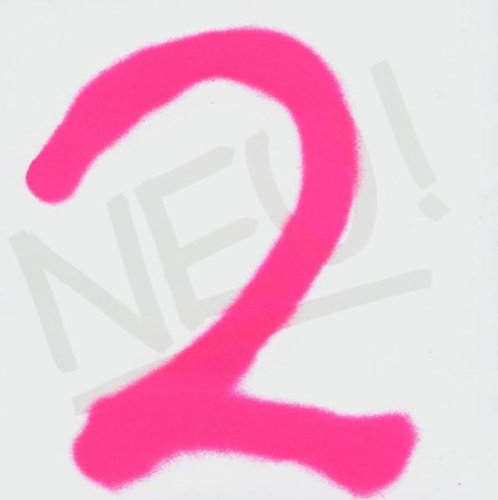
The Birth Of Harmonia.
That was where he would meet Dieter Moebius and Hans-Joachim Roedelius of Cluster. Michael had heard Im Süden, a track from Cluster’s sophomore album Cluster II. The track struck a nerve with Michael, who wondered if Dieter Moebius and Hans-Joachim Roedelius would be interested in joining an extended lineup of Neu!? Then Michael began to consider a German supergroup consisting of Neu! and Cluster.
That proved to be the case. At the Forst Commune, Michael jammed with Dieter Moebius and Hans-Joachim Roedelius. That initial jam later became Ohrwurm, a track from Harmonia’s 1974 debut album Musik von Harmonia. Following their initial jam session, Michael stayed at the Forst Commune to prepare for the recording of Harmonia’s debut album.
Meanwhile, Klaus and Thomas Dinger had returned from London. They came, they thought, baring gifts. One of the gifts was studio engineer Hans Lampe, who for much of 1972, had been Conny Plank’s engineer. The other was Klaus’ brother Thomas. They Klaus proposed, would join an extended lineup of Neu! In preparation, they played a series of concerts as La Düsseldorf. Michael however, was busy with Harmonia. Not only were they planning to record their debut album, but build a recording studio.
Building a recording can be fraught with difficulties. However, for Michael, Dieter Moebius and Hans-Joachim Roedelius the building of their studio in Forst went smoothly. This new studio would play a hugely important part in Michael Rother’s future career. Not only would it be where Harmon recorded their debut album, but where Michael worked on future projects with Neu! and later, recorded his solo albums. That was still to come. Before that, Harmonia began to record their debut album Musik von Harmonia.
Musik Von Harmonia.
Having built their new studio, Michael Rother, Dieter Moebius and Hans-Joachim Roedelius started recording what became Musik von Harmonia in June 1973. Over the next five months, Harmonia recorded eight songs. The two members of Cluster were receptive to Michael Rother’s way of working. Hans-Joachim Roedelius explained recently: “there were no problems, we wanted to learn. Previously, we improvised, which made playing live problematic. A song was merely the starting point, it could go anywhere. Michael however, taught us about structure. We influenced him. It was a two-way thing.”
That’s definitely the case. Michael Rother believes: “that working with Dieter Moebius and Hans-Joachim Roedelius made him a more complete musician.” Over his time working with the two members of Cluster; “I learnt so much.”
This became apparent when Musik von Harmonia was completed in November 1974. Harmonia’s 1974 debut album, Musik von Harmonia, was a move towards ambient rock. Both Michael Rother and the two members of Cluster’s influences can be heard on the nascent supergroup’s debut album. It was released in January 1974.
When Musik Von Harmonia was released, many critics realised the importance of what’s a groundbreaking classic. It saw this nascent supergroup seamlessly embrace and incorporate disparate musical genres. In the process, Harmonia set the bar high for future ambient rock albums. Despite the critical acclaim that accompanied Musik von Harmonia, the album wasn’t a commercial success.
Michael Rother remember ruefully: “the seventies weren’t a good time for Harmonia. Our music was ignored, it was tough to survive during this period. So towards the end of 1974, Michael and Klaus reunited for Neu!’s third album.
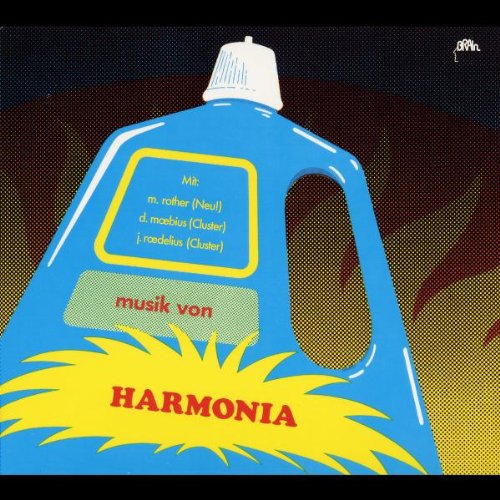
The Return Of Neu!-Neu! ’75.
For Neu!! ’75, Michael Rother and Klaus Dinger reunited in December 1974 at Conny Plank’s studio. By then, Conny’s Studio was the go-to recording studio for German groups. They wanted “the genius” to sprinkle his magic on their albums. This would be the case for Neu! ’75.
The two members of Neu! had changed. Klaus was heavily into rock music, while Michael’s interest in ambient music was growing. As Michael explains: “After two years apart, we were different people. To complicate matters, Klaus wanted to move from behind the drum kit. He felt he was hidden away. I can understand this. But it was what Klaus did so well. However, he wanted to become an entertainer, playing the guitar and singing. He wanted to bring in two new musicians to replace him.” This included Klaus’ brother Thomas and Conny Plank’s former engineer Hans Lampe. These new musicians would allow Neu! to make a very different album.
Michael realised this was problematic. “By then Klaus could be difficult to work with. I realised we had compromise, so ended making an album with two very different sides. Side one was old Neu! and side two was new Neu!” On side two Klaus come out from behind his drum kit and play guitar and sing. He became the entertainer on what proved to be an album of two sides. It was completed in January 1975, and released later that year.
When critics were sent copies of Neu! ’75, they were struck by side one’s subtle, ambient, melodic sound. Michael remembers: “we used keyboards and phasing a lot on both sides. While Michael Rother’s name was written large all over side one; side two was very different, and quite unconventional. Reviews were mixed, partly because of side two. Some critics felt that if Neu! ’75 had the same sound throughout, it would’ve been hailed a classic. However, later Neu! ’75 and Neu!’s earlier albums would be reevaluated. Before that Neu! ’75 was released.
Just like Neu! 2, Neu! ’75 didn’t sell well. The problem was, many people didn’t understand what was essentially parts of two disparate albums joined together. The proto-punk of side two was so different from the ambient sound of side one. Record buyers were confused, and didn’t understand what Neu! stood for? It seemed that Neu! were just the latest groundbreaking group whose music was misunderstood and overlooked.
Michael looking back at Neu! ’75 reflects: “It was a time time. Klaus wasn’t the easiest person to work with. He was involved with different people, and being pulled in different ways. We were also very different musically. Then there were the new drummers on side two. They weren’t particularly good. Certainly neither were as good as Klaus,” a rueful Michael remembers. “It was a difficult project. By then Klaus was different to the man I’d met a few years earlier.” Michael wouldn’t work with Klaus for another decade. By then, Neu! music had inspired a new musical movement, punk.
Things started to change in 1976. Michael explains: “many punks claim that Neu! ’75 inspired them. Especially, side two.” That wasn’t the only Neu! album that inspired the punk ideal. Side two of Neu! 2 was a favourite of punks. It was: “a result of desperation,” which struck a nerve with the nascent punk movement, and its D.I.Y. approach. That’s when the revaluation of Neu! began. However, “it was a long time before our music was accepted and recognised, and began to sell in the quantities it does now”. That’s also the case with Harmona, who began recording their sophomore album in June 1975.

The Reuturn Of Harmonia-Deluxe.
In June 1975, the three members of Harmonia returned to their studio in Forst for the recording of their sophomore album, Deluxe. Joining them, was a new face, Conny Plank, who was co-producing Deluxe. Conny Plank and Michael were good friends, and had worked together on four projects. This included Kraftwerk’s aborted album and Neu!’s two albums. The addition of the man who Michael Rother calls: “the genius,” just happened to coincide with Harmonia changing direction musically.
Deluxe saw a move towards Kominische musik. Partly, this was down to the addition of Guru-Guru drummer Mani Neumeier. He played on some track, and added a Kominische influence. Another change was that Michael Rother’s guitar played a more prominent role. That wasn’t Michael’s only influence.
The music on Deluxe was more song oriented. This was Michael Rother’s influence. He had taught the two members of Cluster the importance of structure. However, still Harmonia were experimenting, pushing musical boundaries. This was Cluster’s influence. Other parts of Deluxe had been influenced by Michael Rother. Hans-Joachim Roedelius agrees. “Michael Rother’s influence can be heard on Deluxe, more so than on Musik Von Harmonia.” What was also noticeable, was that Deluxe had a more commercial sound.
“This wasn’t a conscious decision. The music morphed and evolved, and the result was Deluxe,” Hans-Joachim Roedelius reflects. Michael Rother agrees. “Every album I’ve made I set out for it to be commercial. Sometimes, though, it doesn’t work out that way.” Sadly, that proved to be the case.
When Deluxe was released in 1975, to the same critical acclaim as Musik von Harmonia. The noticeable shift to what was a more commercial sound, surely would lead to a change in Harmonia’s fortunes?
That wasn’t to be. Deluxe was released on 20th August 1975, and sales of the album were slow. They never picked up, and history it seemed, was repeating itself. Michael reflects: “Still our music was being ignored. It was a difficult time for us. So much so, that Michael decided to record his debut solo album.
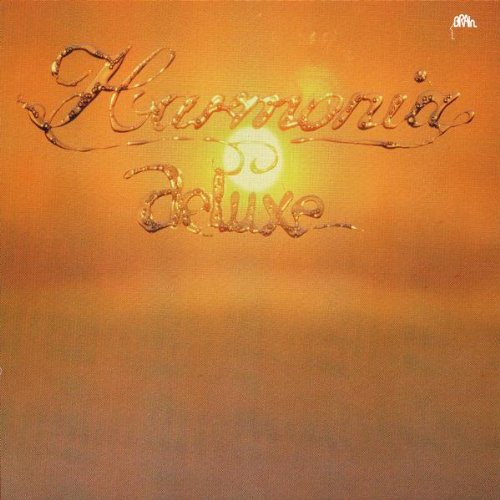
Michael Rother-The Solo Years-Part One.
With Harmonia having just about run its course, Michael Rother embarked upon his solo career. That would take up the majority of his time. Michael’s first solo album was “Flammende Herzen which I recorded at Conny’s Studio.” Michael had entrusted his solo career to the man he refers to as “the genius.”
Flammende Herzen.
Recording of Flammende Herzen began at Conny’s Studio in June 1976. Michael had penned five tracks, and planned to play most of the instruments himself. The only instrument he couldn’t play were the drums. So Jaki Liebezeit of Can came onboard, and this was the start of a long-lasting collaboration. That was the case with Conny Plank, who co-produced Michael’s debut solo album.
At Conny’s Studio, five instrumentals which were based around Michael’s guitar were recorded. These tracks became Flammende Herzen, which was completed in September 1976. Michael’s debut album scheduled for release in March 1977.
Before the release of Flammende Herzen, critics had their say on Michael Rother’s solo album. Most of the reviews were positive. It seemed that Michael’s fortunes were about to change.
When Flammende Herzen was released in March 1977, the album wasn’t a commercial success. It was as if Michael was fated. Despite releasing album after album of innovative and influential music, they failed to sell. The only small crumb of comfort for Michael, was that “Flammende Herzen, which, was released as a single, was later used in the soundtrack to Flaming Hearts.”
Nowadays, Flammende Herzen is regarded as one of Michael’s finest solo albums. It’s as if this was the album he had been longing to make. Sadly, in 1977, as punk was making its presence felt, Flammende Herzen passed record buyers by. By then, Michael had been back in the studio with Harmonia, and a special guest, Brian Eno.
The Return Of Harmonia With Brian Eno-Tracks and Traces.
After the release of Musik von Harmonia, Brian Eno had called Harmonia was “the world’s most important rock band” at the time. So it was no surprise that when Harmonia reunited to record their third album, it was a collaboration with Brian Eno. However, it was also the end of an era.
Little did the three members of Harmonia realise, that Deluxe was the last album they would release for thirty-two years. For what was their swan-song, Harmonia were joined by another legend, Brian Eno.
Michael remembers the sessions well. “Brian Eno was a very intelligent man. He seemed to know what music was on the way up. By then, he was making ambient music and was working as a producer. He was about to produce David Bowie’s Heroes’ album.” However, for the next eleven days, Brian Eno joined the band he had been championing since their debut album.
At the studio in Forst, Hans-Joachim Roedelius, Dieter Moebius, Michael Rother and Brian Eno spent eleven summer days recording what was meant to be their third album. The working title was Harmonia ’76. However, by then, Hans-Joachim Roedelius remembers “Michael Rother was wanting to concentrate on his solo career. Once the album was completed, it became apparent Harmonia had run its course. It was evolution.”
This wasn’t surprising. Harmonia weren’t selling many records. “It was a tough time for us. Our music seemed to be ignored.” Neu! also seemed to have run its course. “Neu ‘75 hadn’t sold well. Klaus wasn’t an easy person to work with. So, I decided to return to my solo career after the release of Harmonia ’76.” That never happened.
Incredibly, the master-tapes for Harmonia ’76 went missing. “We feared they were lost forever. Then twenty years later, they were found.” What was meant to be Harmonia ’76 was released Tracks and Traces in 1997.” That wasn’t the end of the Harmonia story. No. However, before the next chapter in the Harmonia story unfolded, Michael Rother’s solo career continued.
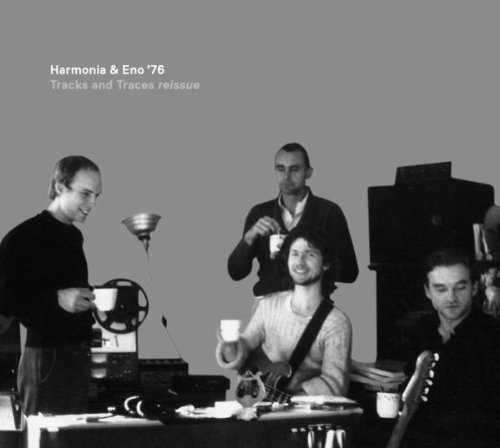
Michael Rother’s Solo Career-Part Two-Sterntaler.
After the drama and disappointment of the loss of the master tapes for Harmonia ’76, the three members of Harmonia went their separate ways. By September 1977, Michael was ready to record his sophomore album Sterntaler.
It was recorded between September and November 1977 at two studios. This included Conny’s Studio, and Michael’s studio in Forst. By then, Michael was a true multi-instrumentalist, and was playing guitar, bass guitar, piano, synths, electronic percussion Hawaiian slide guitar and synth strings. Augmented by Jaki Liebezeit’s drums, Sterntaler took shape.
Unlike his debut album, the synths were playing an important part in Sterntaler’s sound, and were responsible for the melody. Then on the ambient sounding Blauer Regen, Jaki Liebezeit’s weren’t needed. This was another signal that Michael’s music was changing. Michael and co-producer Conny Plank finished work on Sterntaler in November 1977. Maybe the stylistic shift would result in a change in Michael’s fortunes?
Sadly, it was a familiar story. The reviews of Sterntaler were generally positive, and Michael was regarded as one of the most innovative musicians of his generation. However, when Sterntaler was released, the album didn’t sell well. Michael remembers; “my music seemed to be out of fashion.” However, he continued to make music, music that continued to evolve.
Katzenmusik.
Recording of Michael’s third album Katzenmusik took place between March and July 1979. Just like his previous album, the album was recorded in Forst and Conny’s Studio. Michael used mainly electronic instruments. They were augmented by guitars and Jaki Liebezeit’s drums.
It seemed that if Michael was a painter, he was reducing his pallet. That would be the case for most musicians. Michael Rother wasn’t most musicians. Along with his co-producer Conny Plank, they recorded two suite of songs which featured twelve tracks. Essentially, they were variations layered around four different five-note melodies. They then recur in a variety of ways. While stylistically, the music was similar to his two previous albums, the instruments used had changed. However, this didn’t stop Michael recording another album of groundbreaking music. It was released later in 1979.
On Katzenmusik’s release, some critics hailed the album Michael Rother’s finest hour. He had come of age as a solo artist. This should’ve been a cause for celebration. However, it was, and it wasn’t.
Katzenmusik was the last album Michael recorded with Conny Plank. “It was no reflection on Conny. The man was a genius. However, I wanted to go my own way, and explore other options.” Sadly, Michael Rother and Conny Plank’s swan-song wasn’t a commercial success. It would be another three years before Michael released a new album.
Fernwärme.
It was 1981 when Michael Rother began work on his fourth album. The recording took place at Michael’s own Flammende Herzen Studio in Forst. It was just Michael and drummer Jaki Liebezeit. Unlike his first three albums, Conny Plank was absent. “We remained friends, and I owe Conny a lot, but it was the time to move on.”
This couldn’t have been easy. The pair had worked on nearly every project Michael had been involved with. Fernwärme was a first. It was just Michael, Jaki and the latest electronic instruments. They were used extensively on Fernwärme. This included drum machines. For Jaki Liebezeit the writing was on wall. Fernwärme was his swan-song with Michael Rother.
Michael explains: “Fernwärme was the last project Jaki worked on. Again, it was nothing personal. It was similar to the situation with Conny Plank. I wanted to move in a different direction, and already had began to use drum machines. Jaki was a fantastic drummer. The man is a machine, and will be drumming the rest of his life. However, Fernwärme was the last time we worked together.”
As Michael Rother prepared for the release of Fernwärme in 1982, it must have been with a degree of trepidation. It was the first album he had produced himself. However, he needn’t have worried, as Fernwärme was well received upon its release. Michael’s first album in three years, and the first he had produced himself was hailed a success. Sadly, the wider record buying public still hadn’t discovered Michael Rother’s music. “It was a really frustrating time for me.”
Lust.
After the release of Fernwärme in 1982, Michael didn’t return to his Sterntaler Studio, Forst until 1983. When he did, he was on his own. “Lust was the first album I wrote, recorded and produced on my own. Because I had my own studio, I found myself spending more time thinking things over. Sometimes, when I went to bed, all I could think of was what I had been working on. That is the downside of having a home studio. However, the advantages outweigh disadvantages. I had also bought a Fairlight, and was just getting use to it. Its sounds divides people. Some people like it, others love it. Lust was the first album where I used the Fairlight.” That was another reason Michael spent as long as he wanted perfecting Lust. Only then, was he ready to release the album.
Lust was released in 1983, and was Michael Rother’s fifth album. It was all his own work. No other musician had played a part in recording the album, which showcased a new sound. At the heart of the sound was the Fairlight. Although the Fairlight divided people’s opinion, the majority of critics gave Lust positive reviews. The latest reinvention of Michael had been a critical success. However, when Lust wasn’t the commercial success many critics forecast, it was another two years before Michael returned with his sixth solo album.
Süßherz und Tiefenschärfe.
November 1984 saw Michael Rother return to his Katzenmusik Studio, in Forst to record what would become Süßherz und Tiefenschärfe. Just like his previous album Lust, he wrote, recorded and produced. It was just Micael, his trusty guitar and the electronic instruments he favoured. For three months he honed what became his sixth solo album. It was completed in February 1985, and became Süßherz und Tiefenschärfe.
Later in 1985, Polydor released Süßherz und Tiefenschärfe. Before that, critics had their say on Michael Rother’s sixth solo album. Again the reviews were positive. Some critics went as far as to say that üßherz und Tiefenschärfe was one of the best albums Michael had recorded. It was released later in 1985. By then, Michael Rother and Klaus Dinger had been reunited.
Neu! Reunite Again.
Little did Micahel Rother realise what he was letting himself in for. When Michael met Klaus; “I realised that Klaus wasn’t in a good place. He had surrounded himself with people who were pulling him in all directions. Klaus was also needing money, and recording a new Neu! album offered him the opportunity to make some money. So we entered a small studio in Düsseldorf. It wasn’t like the professional studio we had worked in before. Instead, it was more like a semi-professional studio.” That was where recording of Neu!’s most controversial album began.
Recording began in October 1985. The members of Neu! then moved between Grundfunk Studio and Dinerland-Lilienthal Studio. The sessions were problematic. A decade had passed since the pair had worked together. Michael remembers: “Klaus seemed different. He was argumentative, and there was no longer the same chemistry between us. It wasn’t an easy time. Despite that, we managed to record tracks which I took to my own studio in Forst.”
The group’s sound was very different. Synths were added to Neu!’s old sound. It was Neu! with a new wave twist. However, this didn’t work. By then, Klaus and Michael were vey different as musicians. Michael had moved towards the electronics and technology. Klaus it seemed, hadn’t moved at the same pace.
By April 1986, work on the album stopped, and the project was cancelled. “Klaus and I met in Düsseldorf and agreed to abandon the project. We even went as far as sealing the tapes. This seal wasn’t to be broken without the other’s permission. The album was certainly not going to be released. That was why we sealed the master tapes. I never thought the would be released. Certainly not in the way that was released in late 1995.” By then, Michael was concentrating on his solo career.
Michael Rother The Solo Years Part 3-Traumreisen.
After the abandoned Neu! project, Michael Rother didn’t return to the studio until January 1987. He spent the next six months in his home studio. “That was the benefit of having your own studio. I could record when I wanted. Sometimes, it a lonely life, and I felt as if I was going slightly mad.” Eventually, though, Traumreisen was completed in July 1987.
Just like his previous album, Traumreisen featured just guitars and Michael electronic instruments. Critics were won over by Traumreisen, which was released later in 1987. It was a case of deja vu, when Traumreisen failed to reach a wider audience. After seven solo albums, he was still make a commercial breakthrough. Michael’s music it seemed, was only appreciated by connoisseurs of Kosmische musik. This lack of commercial success resulted in Michael “beginning to lose interest in recording albums.” It would be another nine years before he released another album. By then, Michael had founded his own record company.
Random Records was founded in 1993. This coincided with Michael managing to secure the rights to his back catalogue. However, the new label’s first release was a compilation, Radio-Musik Von Michael Rother-Singles 1977-93. It was released in 1993, with reissues of Michael’s solo albums being released over the next few years. Each album was remastered and released with bonus tracks on Michael’s Random Records. Michael was in control of his musical destiny. At least for his solo career. Neu! was another matter.
Neu! 4.
By the time Michael founded Random Records, Neu!’s first three albums had been released on CD by Germanofon Records, a Luxembourg based label. However, there was a problem.
Michael explains: “the deal to release Neu!’s first three albums was entered into, without his permission. These bootlegs were available in every record shop I entered into.” There’s frustration and anger in his voice. It’s not about money though. Instead; “I was frustrated that people were buying an inferior product. It wasn’t of the quality I expected.” If Michael was frustrated about the release of Neu!’s first three albums, he was in for a shock on the morning of 17th October 1995.
“That day, I was sitting at home, when I received a fax from Klaus congratulating on the release of Neu! 4. I was shocked, as I hadn’t given my permission or consent to release the album. Soon, the picture became clear.
“By then, Klaus was really frustrated and angry about the bootleg releases of our first three albums. They were selling well, and neither of us were making anything from them. To make matters worse, Klaus was short of money, and desperate, so entered into a deal with the Japanese label Captain Trip Records. The owner was a huge fan of Neu! and was impressed by Klaus. He gave Klaus cash which he was meant to share with me. In the sleeve-notes to what was billed as Neu! 4, Klaus railed against the bootleggers.” Ironically, this was something that both Michael and Klaus agreed about. However, the release of Neu! 4 drove a wedge between the two old friends.
With the benefit of hindsight, Michael reflects: “looking back, I wish I’d jumped on the train to Düsseldorf and punched Klaus on the nose. I’m not that kind of person though. But I might have felt better. Then we could’ve moved on. However, we never did.”
After the release of Neu! 4, Klaus and Michael were continually at loggerheads. This was ironic. “By then, Neu! were at last, a popular band. People wanted to buy our albums. All that was available were the bootlegs, and Neu! 4 which to me, wasn’t a legally released or genuine album.” Eventually, though, Michael and Klaus reached an agreement in 2000, and Astralwerks in America and Grönland Records in Europe released Neu!’s first three albums. They also recalled copies of Neu! 4, which has been out of print ever since. Michael however, stresses: “I’ve no problem people buying a second hand copy of Neu! 4, I just don’t want the album rereleased. After the problems with Neu! 4, Michael released his eighth solo album in 1996.

Esperanza.
Unlike his last couple of albums, Michael didn’t work alone on Esperanza. He was joined by Jens Harke, who wrote the lyrics and added vocals to Weil Schnee und Eis. This was a first. Apart from the occasional vocal sample, Michael’s album had been vocal free zones. That wasn’t the only change.
The other contributor to Esperanza was Joachim Rudolph. He took charge of Pro Tools programming. Things had changed since Michael’s last album. It was the digital age, and now, DAWs had found their way into recording studios. As befitting the digital age; “I used only electronic instruments on Esperanza. There were no guitars on the album. This wasn’t a first. I’d already gone on a tour of America without a guitar. I was tired of the guitar and wanted to experiment.” That’s what Michael Rother did between January 1995 and January 1996 at three studios. Once the album was completed, it was released two months later.
Esperanza was released on the 11th March 1996, on Michael’s Random Records. Most of the reviews of Esperanza were positive. Michael Rother, was continuing to innovate and push musical boundaries. However, when Esperanza wasn’t a commercial success, “I began to lose interest in recording, and decided to concentrate on playing live.” As a result, it was a new millennia when Michael released his next album.
Remember (The Great Adventure).
April the 25th 2004 proved to be a significant date in Michael Rother’s career. It was the day he released his most recent solo album, Remember (The Great Adventure). It had been recorded over a period of seven years and was a collaboration with various electronic musicians. This includes Thomas Beckmann, Andi Toma and Jake Mandell, who all programmed beats for the rhythm tracks. Sophie Williams and Herbert Grönemeye added vocals on Remember (The Great Adventure). This was only Michael’s second album to feature vocalists. Ironically, it proved to be his last.
Michael Rother’s collaboration with a new generation of musicians was well received by critics. Just like his previous albums, Michael didn’t shy away from innovating. Instead, he embraced the new and was determined to look forwards, rather than backwards. That was the case throughout his solo career.
Following Remember (The Great Adventure), Michael Rother “decided to concentrate on playing live. It’s allowed me to travel the world and play all over Europe, America and in 2014, in China. My albums were not selling well, and after a while, I lost interest in recording music.” However, it wasn’t just Michael that was playing live. One of his old groups reunited and took to the stage one more time, Harmonia.
Harmonia Reunited and Live.
The reunion was for the release of Harmonia’s Live 1974 album. It featured a a recording of Harmonia’s concert on the 23rd March 1974, at Penny Station Club in Griessem, Germany. To celebrate the release of Live 1974, Harmonia played live for the first time since 1976. This landmark concert took place at the Haus der Kulturen der Welt in Berlin, on November 27th 2007. Sadly, it would be the last time the three members of Harmonia played live. Belatedly, they had found the critical acclaim and commercial success they so richly deserved. It had taken thirty years, but Harmonia were regarded as one of the most innovative and influential groups in Kosmische musik. So were Neu!
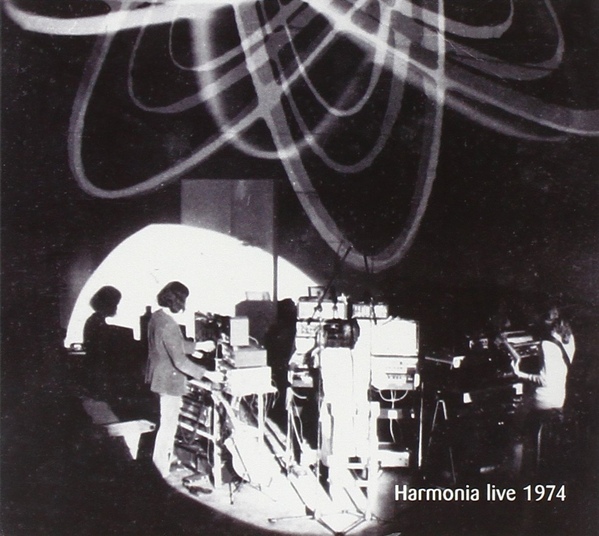
Neu! The Comeback-Neu! ’86.
As the years passed by, Neu! 4 was still a sore point for Michael Rother. It had driven a wedge between Michael and Klaus. “Sadly, Klaus died in 2008. I was deeply saddened. We had been great friends once.” Kosmische musik had lost one of its pioneers.
Two years later, Michael got the opportunity to right a wrong. He explains: “in early 2010, I came to an agreement with Klaus’ widow. It allowed me work on what had been Neu! 4. Using the master tapes, I remixed the whole album.” That wasn’t the only change.
The running order changed. Some of the tracks were given new names. Only twelve of the fourteen tracks on Neu! 86 found their way onto Neu! 86. A new song, “Drive (Grundfunken), was added to what became Neu! 86. It was released as a box set on May 10th 2010. Then on August 16th 2010, a CD version of Neu! 86 was released.
Mostly, reviews of Neu! 86 were positive. The only criticism was that the album was overproduced. Michael disagrees but agree: “it’s all matter of taste and opinion. I feel I did the best I could with what I had. Now Neu! 86 is much nearer to the album we had tried to make in 1985.” A quarter of a century later, and Michael was happy at the release of Neu! 86 in 2010. That wouldn’t be the last project from the past that Michael would undertake.


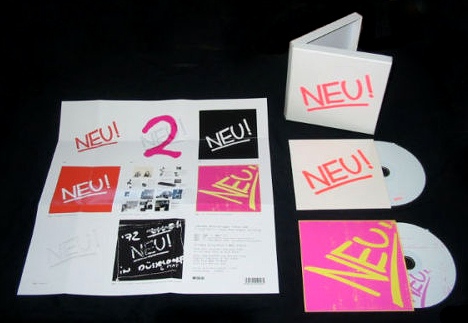
Harmonia-Complete Works.
Recently, Michael Rother has been working on what can only be described as a loving curated and luxurious box set. He has overseen the remastering of Harmonia-Complete Works, which will be released by Grönland Records in October 2015. Included in the box set are the five digitally remastered vinyls; including Musik Von Harmonia, Deluxe, Tracks and Traces, Live ’74 and an album of unreleased material. One of the unreleased tracks was nearly lost forevermore.
Michael explains what happened. “Harmonia recorded all our shows and rehearsals. However, we were a poor band, and had to reuse each tape. Luckily, one night, a friend asked if we could record a rehearsal? Hans-Joachim Rodelius recorded the show, and at the end of the night, handed him the tape. That tape features what I consider to be the ultimate version of Tiki. Having given the tape away, I feared we would never see it again. Fortunately, our friend has kept that tape and the version of Tiki features on the fifth album of Complete Works.” That however, isn’t all that features in this laving and luxurious box set.
“There’s a thirty-six page booklet, detailing Harmonia’s history and a tour poster.” For those wanting to keep their vinyl pristine, there’s even a download code. This seems a fitting way to remember the group Brian Eno considered as: “the world`s most important rock group.“ However, the release of Complete Works is tinged with sadness.
After a brave and lengthy battle against cancer, Dieter Moebius died on 20th July 2015. Michael’s saddened by the passing of his old friend. During the making of Complete Works, Michael says: “I always made sure to keep Dieter up to date with how Complete Works was progressing. Only after he had approved everything, did I move on. I would never have done anything without his approval.” Sadly, Dieter Moebius died before Complete Works was released. He never got to see what will prove to be fitting reminder of the group that Dieter Moebius played such a big part of. Along with Hans-Joachim Roedelius and Michael Rother, Dieter Moebius was part of one of the most innovative groups in the history of Kosmische musik. They’re now regarded as one of the finest purveyors of Kosmische musik. Harmonia sit alongside the holy trinity, at Kosmische musik’s top table. At the head of the table is Michael Rother.
There’s a reason for this. Michael Rother has been part of three of the biggest bands in the history of Kosmische musik; Kraftwerk, Neu! and Harmonia. He then released nine solo albums and more recently, two soundtrack albums. “That was a new experience. However, now I concentrate my time on performing live.” Michael explains.
“I’ve been fortunate it’s taken me all over the work. One of the highlights was playing in China in 2014. I’ve a tour booked for early 2016, and will be playing in London. However, I’ve really enjoyed working on the Harmonia box set project. Indeed, once Complete Works is released, I’ll not know what to do with myself. Maybe, I’ll go back into the studio? I don’t know. That’s the future. For now, I’m concentrating on the release of Complete Works. Grönland Records have done a fantastic time and I’m grateful for that. The Complete Works has been a labour of love, and I’ve enjoyed seeing it through to fruition.”
Since then, The Complete Works box set has almost sold out. It’s been a huge commercial success, and when I was asked to choose my best box set of 2015, there was only one choice, The Complete Works. Nothing else came close. Michael Rother’s loving compiled box set was the perfect way to celebrate and document one of the most innovative, influential and important Kosmische groups ever, Harmonia. They were just one of three pioneering groups Michael Rother was a member of.
Michael Rother, the one-time Kraftwerk guitarist went on to cofound Neu! and then Harmonia. Both of the groups Michael Rother cofounded, went on to play an important part in the history of Kosmische musik; and even today, continue to influence and inspire several generations of musicians. That’ll be case for the foreseeable future.
Early in 2016, Michael Rother heads out on tour, and each night, will play a selction of songs by Neu! and Harmonia. Michael Rother live is proving the hottest ticket in town, and on the 6th of February 2016, Michael Rother makes a welcome return to London, where he will play what’s one of the most eagerly awaited shows of recent years, at Under The Bridge.
INTERVIEW WITH MICHAEL ROTHER-50 YEARS MAKING MUSIC.


 dereksmusicblog
 dereksmusicblog