HAPPY LOVIN’ TIME-SUNSHINE POP FROM THE GARPAX VAULTS.
HAPPY LOVIN’ TIME-SUNSHINE POP FROM THE GARPAX VAULTS.
By 1967, Gary S. Paxton had established a reputation as one of the top producers in Los Angeles. Success hadn’t come overnight for Gary S. Paxton. Far from it. He had overcome a lot to get to where he was.
Gary Sanford Paxton was born on 18th May 1939, in Coffeyville, Kansas. he was adopted when he just three, and brought up in abject poverty. Life was tough for Gary growing up. Aged eleven, he contracted spinal meningitis. A year later, Gary’s family moved to Arizona, where he discovered rock ’n’ roll.
Aged fourteen Gary was playing in his first band. They played both country and rock ’n’ roll. A few years later, and Gary embarked upon what was akin to his musical apprenticeship. He toured the Midwest playing with various bands. This stood Gary in good stead.
In 1959, Gary had been a member of various groups. None of them had enjoyed much in the way of success. He was a member of The Rockabillies. They morphed into The Pledges, who recorded on Rev Record. The Pledges then became Gary and Clyde, who single Why Not Confess was released on Time Records. However, it was only when Gary and Clyde became Skip and Flip, that success came their way.
Gary became Flip, of the pop duo Skip and Flip. They enjoyed a million selling single with It Was I, which Gary wrote. The pair recorded the song, put together a group, and then began shoping the demo to a label. This would become the way Gary worked when he became a producer. Having shopped the single to various labels, Brent Records wanted to release It Was I.
When It Was I was released on Brent records, the single reached number eleven on the US Billboard 100. The followup Fancy Nancy, stalled at number seventy-one in the US Billboard 100. Gary and Skip’s swan-song was Cherry Pie, which reached number eleven on the US Billboard 100. Their short-lived partnership had proved successful. Now, Gary S. Paxton decided to embark upon a career as a producer.
Having started his production career in 1959, it took Gary S. Paxton until the mid-sixties before he became one of top producers in Los Angeles. During that period, Gary’s entrepreneurial skills were shining through. He had cofounded several record labels, including Garllo and Star-Burst with Lloyd Johnson, whose son Kenny was a talented songwriter. These labels meant that Gary could write, arrange, record, produce and release a single. This was perfect Gary S. Paxton, whose star was in the ascendancy.
By 1967, Gary S. Paxton was one of the top producers in L.A. Gary’s production skills had the uncanny ability to transform an artist’s reputation and fortunes. However, Gary wasn’t just a producer.
Instead, Gary was also an A&R man, arranger, engineer, musician and songwriter. Versatile described Gary in more ways than one.
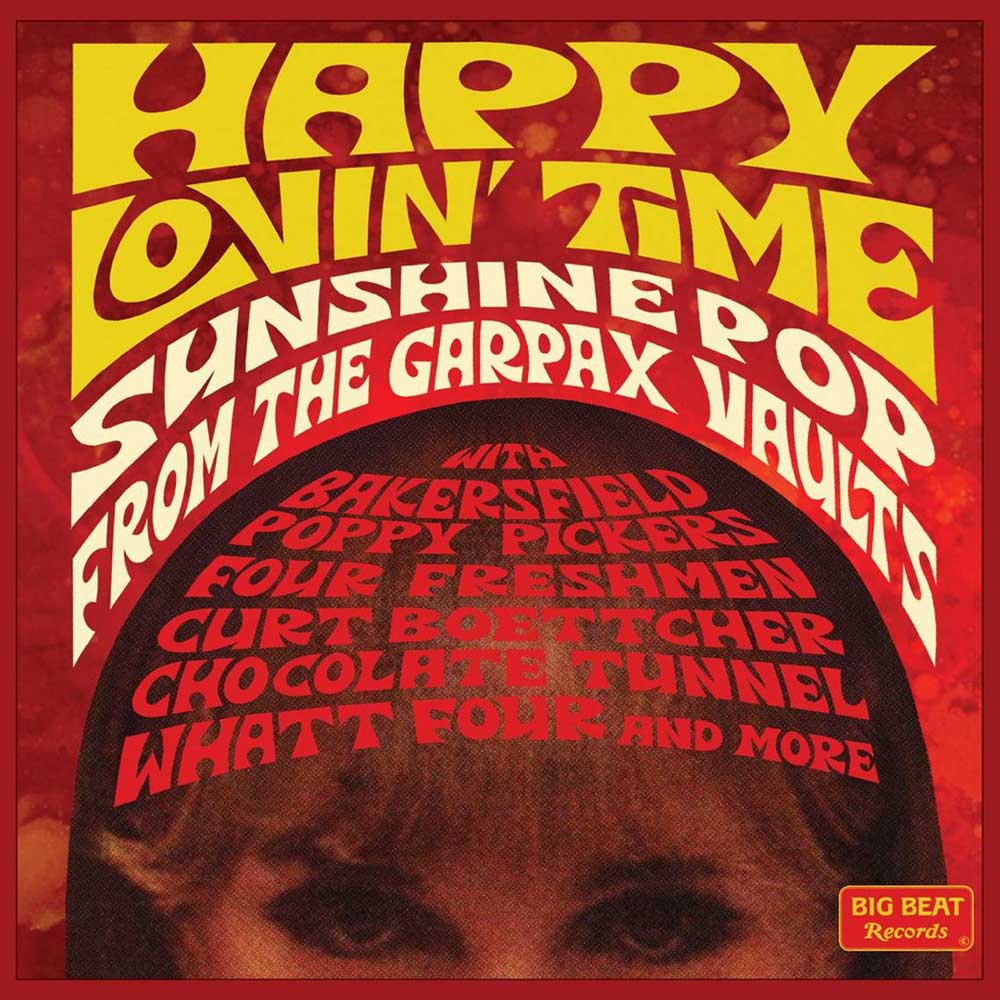
Gary didn’t just specialise in one type of music. Not at all. From the early days, Gary had worked with an eclectic selection of artists. That was still the case. He was just as happy working with The Association as he was The Four Freshman. There was no way Gary S. Paxton was ever going to be accused of being an auteur producer. No. Gary was a versatile producer, who was just as comfortable producing garage rock, psychedelia, R&B, country or sunshine pop, like that on Happy Lovin’ Time-Sunshine Pop From The Garpax Vaults. It was recently released by Big Beat Records, an imprint of Ace Records.
Happy Lovin’ Time-Sunshine Pop From The Garpax Vaults features twenty-four slices of sunshine pop. This includes thirteen previously unreleased tracks. So, Happy Lovin’ Time-Sunshine Pop From The Garpax Vaults is a mixture of familiar faces and hidden gems. There’s contributions from Augie Moreno, The Black Box, The Chocolate Tunnel, Jim Gordon, The Jaybees, The Bakersfield Poppy Pickers, The Lords, Mary Saxton and Dave Antrell. Some of the artists on Happy Lovin’ Time-Sunshine Pop From The Garpax Vaults feature twice. That’s because they’re among the finest purveyors of sunshine pop that Gary S. Paxton worked with. You’ll realise that when I pick the highlights of Happy Lovin’ Time-Sunshine Pop From The Garpax Vaults.
Opening Happy Lovin’ Time-Sunshine Pop From The Garpax Vaults is the first of the unreleased tracks, Augie Moreno’s Make Up Your Mind. It was penned by Kenny Johnson, who was a talented songwriter. Sadly, nobody got the opportunity to her this hook heavy pop gem. It’s lain unreleased for nearly fifty years, and makes a welcome and overdue debut on Happy Lovin’ Time-Sunshine Pop From The Garpax Vaults.
The New Wing released The Thinking Animal as a single in 1967. It was penned by Kenny Johnson, Bob Hopps and Jerry Ritchley, and released on Pentacle Records. This was the only single that Pentacle Records released. Mind you, what a single it was. It’s psychedelic pop at its finest.
Just like Gary S. Paxton, Curt Boettcher is a singer, songwriter, musician and producer. Sadly, his career was cut tragically short when he died in 1987, aged just forty-three. Two of the unreleased tracks come courtesy of Curt Boettcher. There’s a slight similarity to Scott Walker. That’s apparent on Christina, In My Dreams which Gene Parsons and Jon Paxton penned. It’s a hauntingly, beautiful ballad. Stay a Gene DeNovi composition, is Curt’s other contribution. This heartfelt ballad is the perfect showcase for Curt Boettcher, whose a truly talented singer capable of making a song come to life.
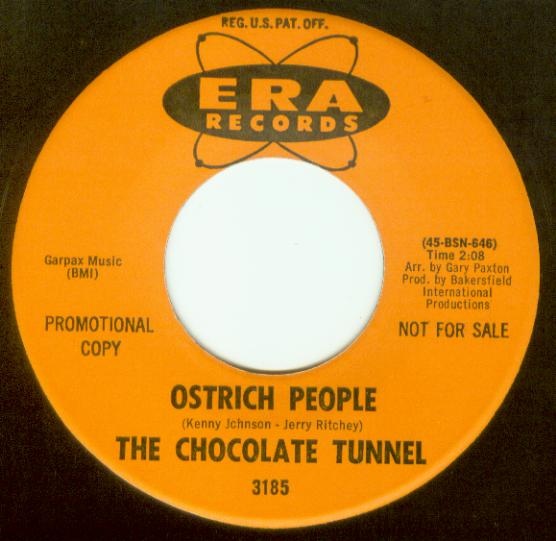
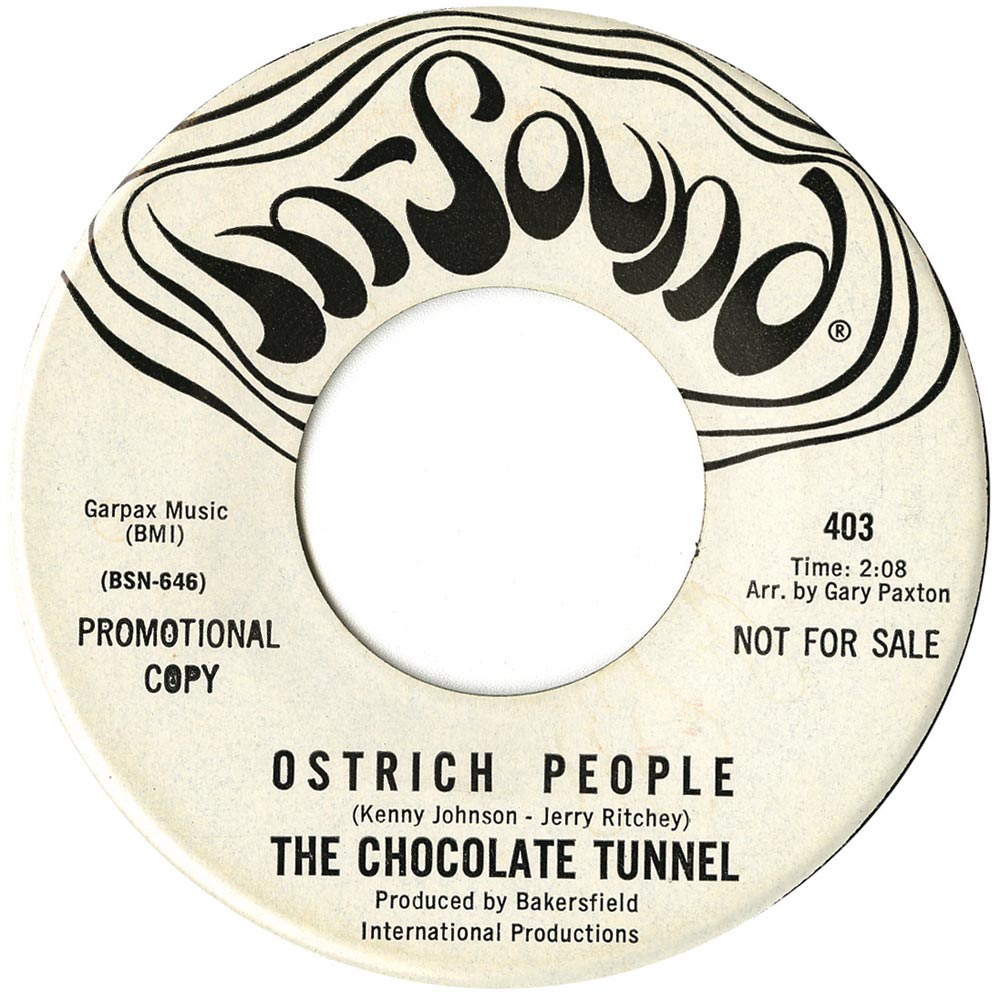
The Chocolate Tunnel only ever released one single, Ostrich People. It was released in 1967 on Era Records. It’s a Kenny Johnson and Jerry Ritchley composition. The version on Happy Lovin’ Time-Sunshine Pop From The Garpax Vaults is different from the single version. Instead it’s the stereo mix of this almost dramatic slice of psychedelic pop.
Dave Antrell’s career as a singer and songwriter began in the sixties, and continued into the early seventies. However, in the sixties, Dave worked with Gary S. Paxton. He penned some of the tracks that Gary produced. However, deep down, Dave wanted to forge a career as a singer. So, he recorded several tracks with producer Gary S. Paxton produced. Three of the tracks feature on Happy Lovin’ Time-Sunshine Pop From The Garpax Vaults. They’ve never been released before. The first is She Loves Me, a joyous and celebratory slice of sunshine pop. You Take Things Lightly Babe is a driving slice of psychedelic sunshine pop. If I Can Help It has a similar driving beat to You Take Things Lightly Babe. However, it takes on an anthemic sound, and isn’t short of hooks. This makes If I Can Help It one of best of the unreleased tracks on Happy Lovin’ Time-Sunshine Pop From The Garpax Vaults.
The Bogart Cult are without doubt, something of a mystery group. Almost nothing is known about them. All that I could find out, was that The Bogart Cult recorded Games in 1969. This Beatles’ inspired song was never released as a single. Instead, it’s case of what might have been? Games is a beautiful ballad penned by Kenny Johnson. If it had been released, it might have given producer another hit single.
Another group to feature twice on Happy Lovin’ Time-Sunshine Pop From The Garpax Vaults are The Jaybees, a Canadian band. They released Who Do You Think You Are as a single in 1967. This Kenny Johnson penned track was released on Columbia. Elements of pop, psychedelia and rock are combined by The Jaybees. There’s even a nod to The Beatles. On the B-Side was Bad Sign. another Kenny Johnson composition. Stylistically, it’s similar to Who Do You Think You Are. However, of the two tracks, I much prefer Bad Sign. Not only has it a slightly more psychedelic sound, but it’s much more catchy.
The Bakersfield Poppy Pickers were essentially a studio project that recorded on Gary S. Paxton’s Riverbottom label. Kenny Johnson played an important part in their recordings. He also penned Clean Up Your Own Backyard and It’s Written All Over My Face. These two tracks were recorded in 1969. By then, The Bakersfield Poppy Pickers’ music is best described as genre-melting. Everything from pop, psychedelia and rock was combined by to create two tracks that epitomise the late sixties sound.
Privilège are another Canadian band. released The Highly Successful Young Rupert White as a single in 1968. Lysergic and haunting, it’s another of the highlights of Happy Lovin’ Time-Sunshine Pop From The Garpax Vaults. It was released in 1968, on Capitol. However, the version on Happy Lovin’ Time-Sunshine Pop From The Garpax Vaults is the stereo mix of the single.
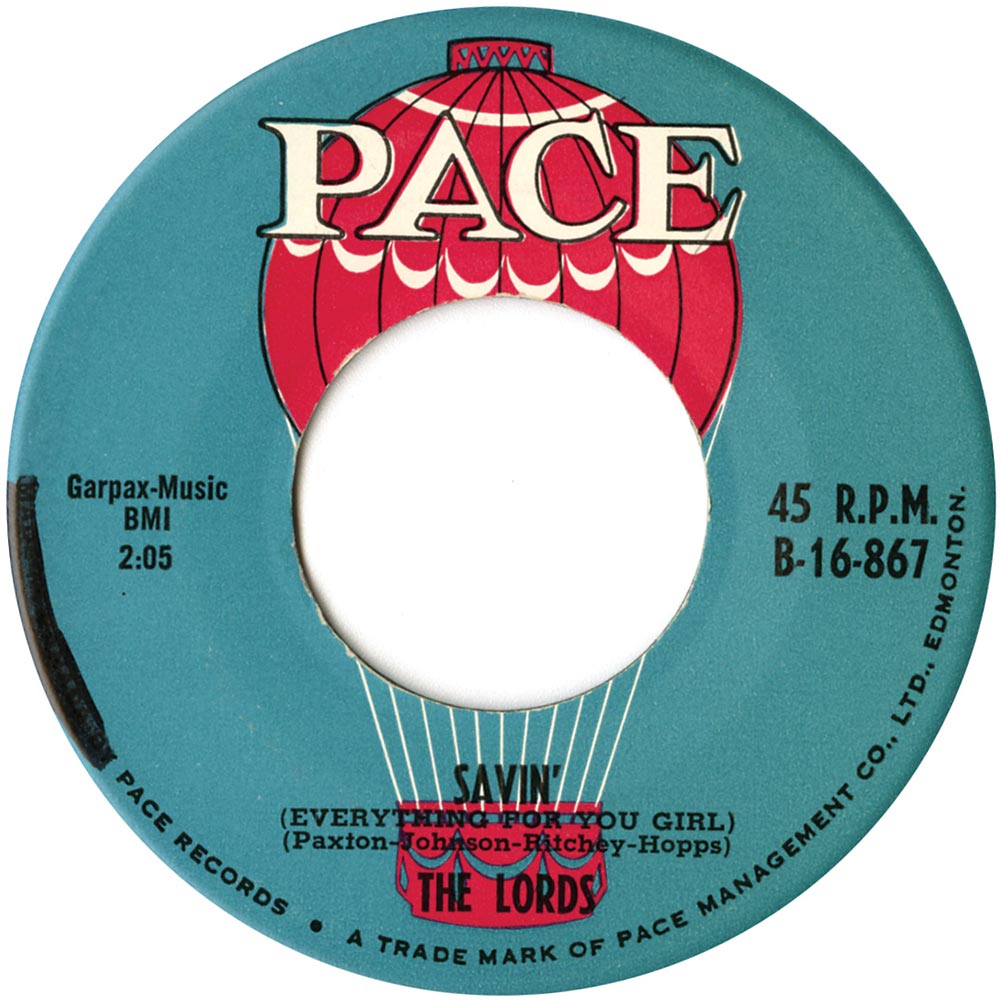
My final choices from Happy Lovin’ Time-Sunshine Pop From The Garpax Vaults, come courtesy of The Lords. Their first contribution is Savin’ (Everything for You Girl), a Bob Hopps, Kenny Johnson, Gary S. Paxton and Jerry Ritchley composition. As it takes on a rocky hue, there’s a nod to the Rolling Stones, before taking a psychedelic twist. The other tracks from The Lords, is the unreleased Don’t Put Me Down. It’s a fusion of rock and psychedelia, that’s far too good to have lain unreleased for nearly fifty years. Somewhat belatedly, Don’t Put Me Down makes its debut on Happy Lovin’ Time-Sunshine Pop From The Garpax Vaults.
Many of the tracks on Happy Lovin’ Time-Sunshine Pop From The Garpax Vaults date from 1967 to 1969. By then, Gary S. Paxton had spent the last eight years working almost nonstop. When he had time to himself, Gary enjoyed sampling the rock ’n’ roll lifestyle in Los Angeles.
By then, L.A. was one of America’s musical capitals. The great and good of music came to live and record in L.A. Just like Gary, when they weren’t recording, they came out to play. When they came out, it was easy to be tempted. Drink and drugs were readily available. Like many rock stars, drink and drugs became part of Gary’s diet, as he explored and enjoyed Tinseltown’s nightlife. He was a successful producer who was living the dream.
Gary S. Paxton had come a long way to the poverty of his early life. He had climbed out of poverty, and made a living out of music. Now he was one of L.A.’s most successful and versatile producers. He was just as comfortable producing garage rock, psychedelia, R&B, country or sunshine pop, like that on Happy Lovin’ Time-Sunshine Pop From The Garpax Vaults. It was recently released by Big Beat Records, an imprint of Ace Records, and showcases Gary’s just how talented and versatile a producer he was. That’s not all.
By the late sixties, Gary was also one of the most successful producers in L.A. It had taken him since 1959 to get this far.
He had already produced hits like Monster Mash and Alley-Oop. Not only was Gary living the dream, but he was making dreams come true. Gary had the ability to transform people’s careers. Previously unsuccessful artists went on to enjoy commercial success. Most people wouldn’t have even considered turning their back on such a successful career.
That’s what Gary S. Paxton did when he discovered religion. Gary turned his back on drink and drugs, and moved from L.A. to Nashville. Gary S. Paxton’s career as one of the most successful producers in L.A. was Gary’s in the past. His future lay with religion and the Lord’s work. This came as a shock to Gary’s friends and colleagues. However, for Gary this was the end of a chapter in his life. That chapter in Gary S. Paxton’s life is celebrated on Happy Lovin’ Time-Sunshine Pop From The Garpax Vaults, which was recently released by Big Beat Records, an imprint of Ace Records.
HAPPY LOVIN’ TIME-SUNSHINE POP FROM THE GARPAX VAULTS.
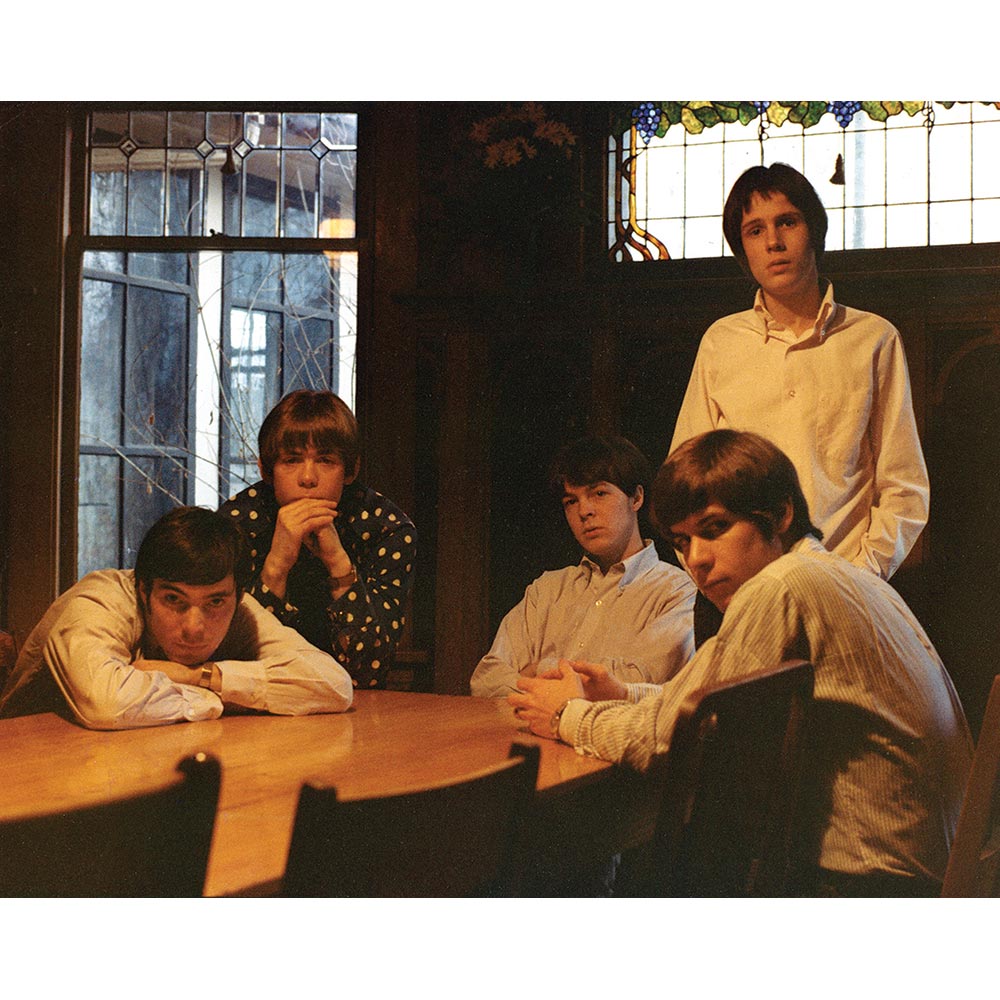

DAVE HAMILTON’S DETROIT DANCERS.
DAVE HAMILTON’S DETROIT DANCERS.
The Funk Brothers place in soul music’s history is assured. They were Motown’s studio band between 1959 and 1972, when Motown moved to Los Angeles. By then, The Funk Brothers were the most successful studio band in the history of soul music. Forty-three years later, and that’s still the case. However, there was life after The Funk Brothers.
That was the case for Marvin Gaye, Jack Ashford. Ray Parker Jr., Earl Van Dyke, Bob Babbit and Wah Wah Watson. They went on to enjoy long and successful careers after they left The Funk Brothers. So did guitarist Dave Hamilton.
Dave Hamilton was one of the original members of the The Funk Brothers. He was there in 1959, and spent three years playing guitar and vibes on early Motown recordings. Then in 1962, Dave Hamilton left The Funk Brothers and embarked on a solo career.
By then, Dave Hamilton had already released a single with Dave Hamilton and His Peppers. This was Donna’s Cha Cha, which was released on the Hi-Q label. On its release, Donna’s Cha Cha disappeared without trace. So Dave returned to The Funk Brothers. Then in 1962, Dave Hamilton left The Funk Brothers for good.
A year later, in 1963, Dave Hamilton released his debut album Blue Vibrations on the Motown jazz imprint, Workshop Jazz. Late Freight was released as the lead single from Blue Vibrations. However, neither Blue Vibrations, nor Late Freight was a commercial success. Nor was the sophomore single from Dave Hamilton and His Peppers.
Three years after the release of their debut single, Dave Hamilton and His Peppers released their sophomore single Beatle Walk. It was released on Fortune Records in 1964. Just like Donna’s Cha Cha, Beatle Walk wasn’t a commercial success. Just two years into his new career, and it looked like Dave Hamilton’s career wasn’t going anywhere. Dave Hamilton must have realised this, and decided to embark on a career as a producer.
This proved to be the best decision of Dave Hamilton’s musical career. It was as a producer, that Dave Hamilton excelled. Although he released continued to release the occasional single, Dave Hamilton is remembered a talented and successful producer. That’s why Dave Hamilton’s productions have been documented and celebrated by Kent Soul, an imprint of Ace Records since 1998.
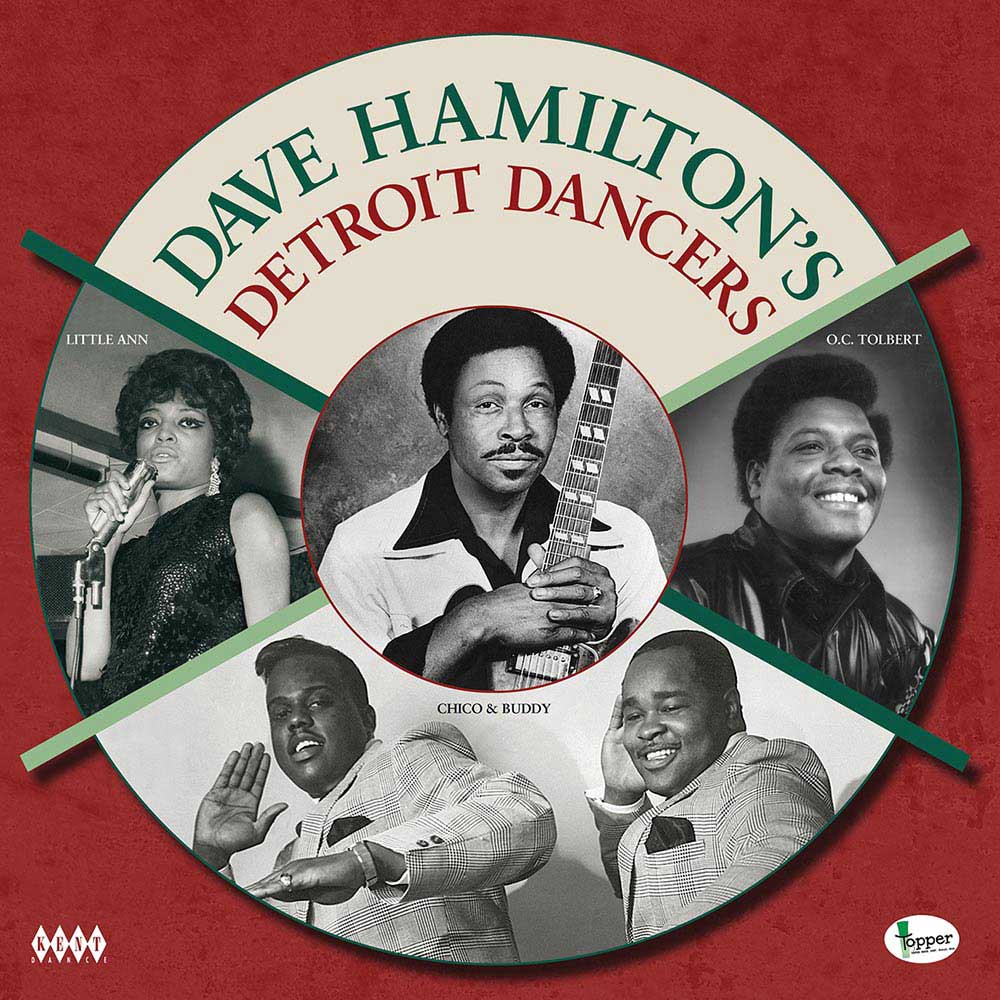
Since Ace Records secured the rights to Dave Hamilton’s productions in 1998, four compilations of Dave Hamilton’s Detroit Dancers on have been released. The first was Dave Hamilton’s Detroit Dancers. It was released CD in 1998. Another three volumes of Dave Hamilton’s Detroit Dancers followed in 1999, 2006 and 2011. However, each of these were released on CD. Recently, however, Ace Records decided to release a compilation of Dave Hamilton’s productions on vinyl. It’s entitled Dave Hamilton’s Detroit Dancers, and is the perfect introduction the this much loved compilation series.
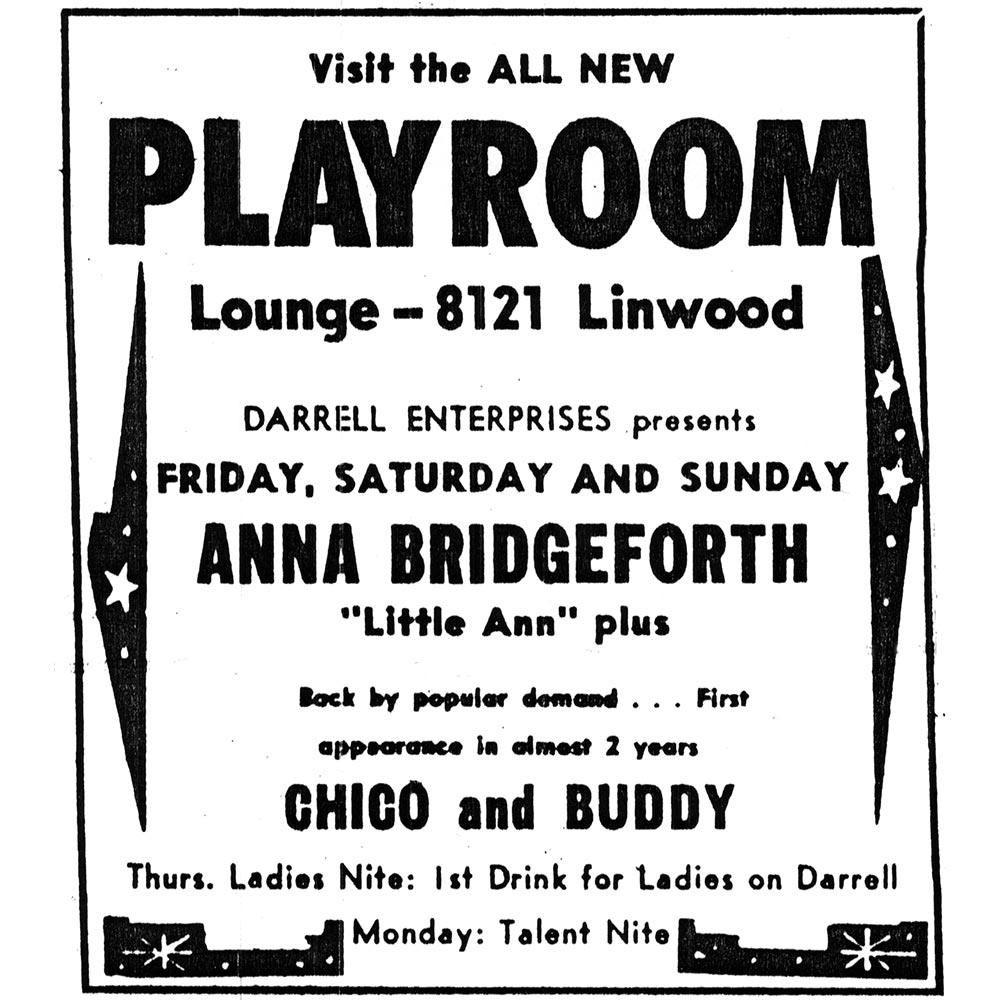
Why? Well, Dave Hamilton’s Detroit Dancers features some of Dave Hamilton’s finest dance tracks. This includes contributions from Little Ann, The Ravins, O.C. Tolbert, Tobi Lark, James Lately, Chico and Buddy and Priscilla Page and Rony Darrell. Fittingly, there’s even an appearance from the man himself, Dave Hamilton. Many of these fourteen tracks are real rarities.
Finding copies are almost impossible. If you were lucky enough to find a copy, they would be hugely expensive. Dave Hamilton’s Detroit Dancers, which I’ll tell you about costs only £12, €15 or $18.
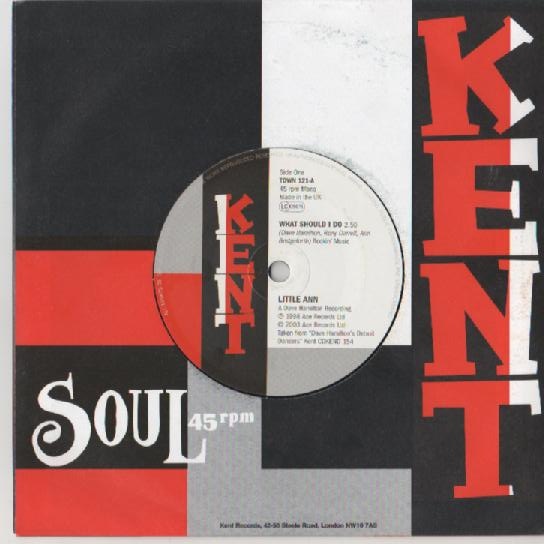
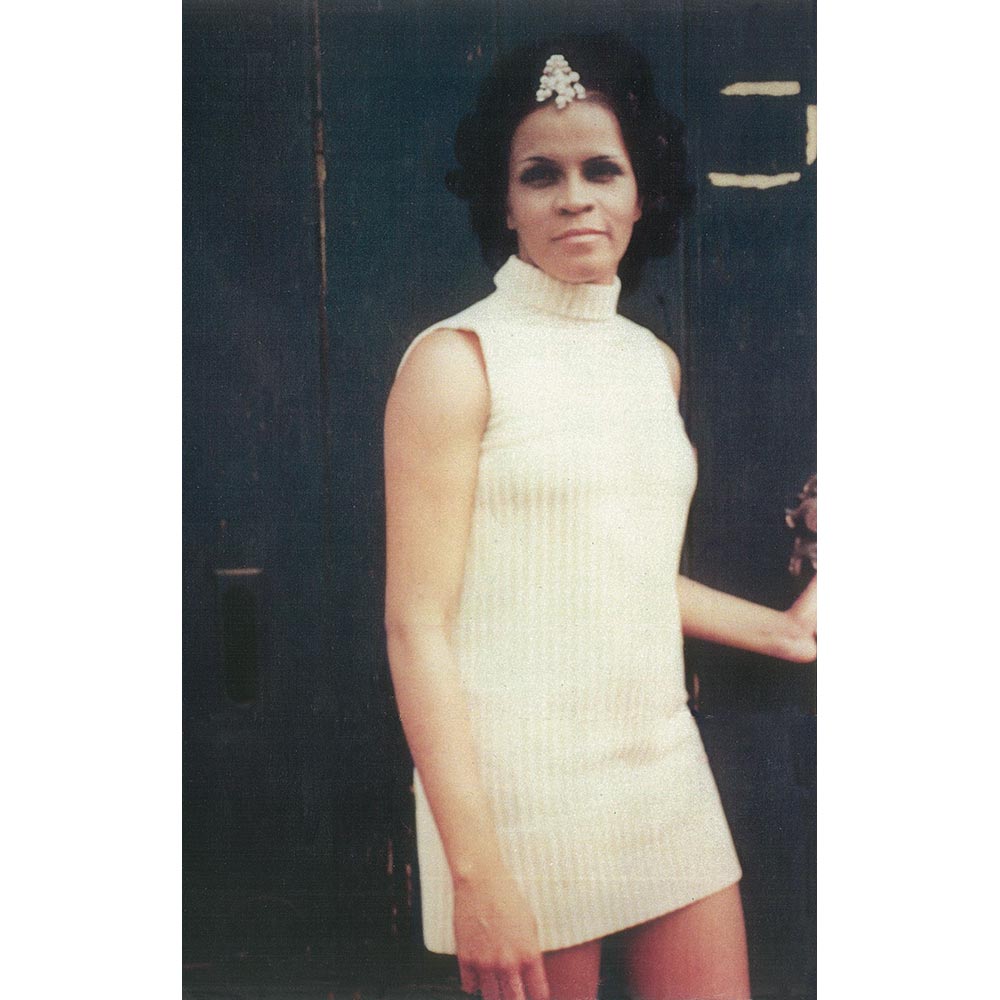
Opening Dave Hamilton’s Detroit Dancers is an alternate mix of Little Ann’s What Should I Do. This is the first of two tracks from Little Ann, whose real name is Joanne Jackson. Originally, though many people thought it was Rose Valentine. That was the name on the label of version of What Should I Do being played on the Northern Soul scene around 2000. It only later came to light that it was Little Ann that recorded the single. What Should I Do, which was produced by Dave Hamilton made its debut on Dave Hamilton’s Detroit Dancers in 1998. Four years later, it was released as a single by Kent Records. Not only had a mystery been solved, but one of the hidden gems of the Northern Soul scene was available to a much wider, and appreciative audience Little Ann’s other contribution is Who Are You Trying To Fool, which was the B-Side to What Should I Do, a defiant Northern Soul stomper. Just like What Should I Do, Who Are You Trying To Fool showcases a talented and underrated singer, who never came close to enjoying the success she deserved.
Several of the artists on Dave Hamilton’s Detroit Dancers feature twice. This includes Tobi Lark, who in 1966, released Challenge My Love as a single. It was penned and produced Dave Hamilton, and released on the Topper label. It’s an uber rare single. Copies are almost I’m impossible to find. That’s because so few copies were sold. That’s surprising, given the quality of Tobi Lark’s hurt-filled vocal from Tobi Lark. On the flip side, was Sweep It Out In The Shed, which Dave Hamilton and Rony Darren cowrote and produced. Sweep It Out In The Shed features a tender, needy vocal. Just like Little Ann, Tobi Lark never enjoyed the commercial success her talent warranted.
Dottie and Millie only ever released one single, Talkin’ About My Baby, which was penned and produced by Dave Hamilton. released on the Topper label, just before Tobi Lark’s Challenge My Love. Sadly, it suffered the same fate. Talkin’ About My Baby. Accompanied by stabs of blazing horns, Dottie and Millie almost cha cha their way across the arrangement. The result is a truly irresistible and dance-floor friendly track.
O.C. Tolbert features twice on Dave Hamilton’s Detroit Dancers. His first contribution is I’m Shooting High (I Reach For The Sky). The other is You Got Me Turned Around. They’re both Dave Hamilton and Rony Darrel compositions. I’m Shooting High (I Reach For The Sky), which has a slow, but hopeful sound and made its debut on the first instalment in the Dave Hamilton’s Detroit Dancers series, which was released in 1998. You Got Me Turned Around was released as a single on the TCB label in 1969, and is a tale of hurt and heartbreak. Twenty years later, and You Got Me Turned Around featured on Dave Hamilton’s Detroit Dancers Volume 2. Just like I’m Shooting High (I Reach For The Sky), You Got Me Turned Around became a favourite on the Northern Soul scene.
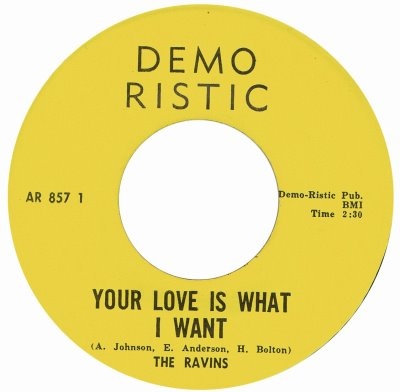
The Ravines’ Your Love Is What I Want is easily one of the rarest tracks on Dave Hamilton’s Detroit Dancers. Copies just don’t change hands. Those fortunate to have a copy, aren’t for selling. When copies come up for sale, buyers exceed sellers. Your Love Is What I Want, which was released in 1965, on the short-lived Demo Ristic label, is seen by some as soul perfection.
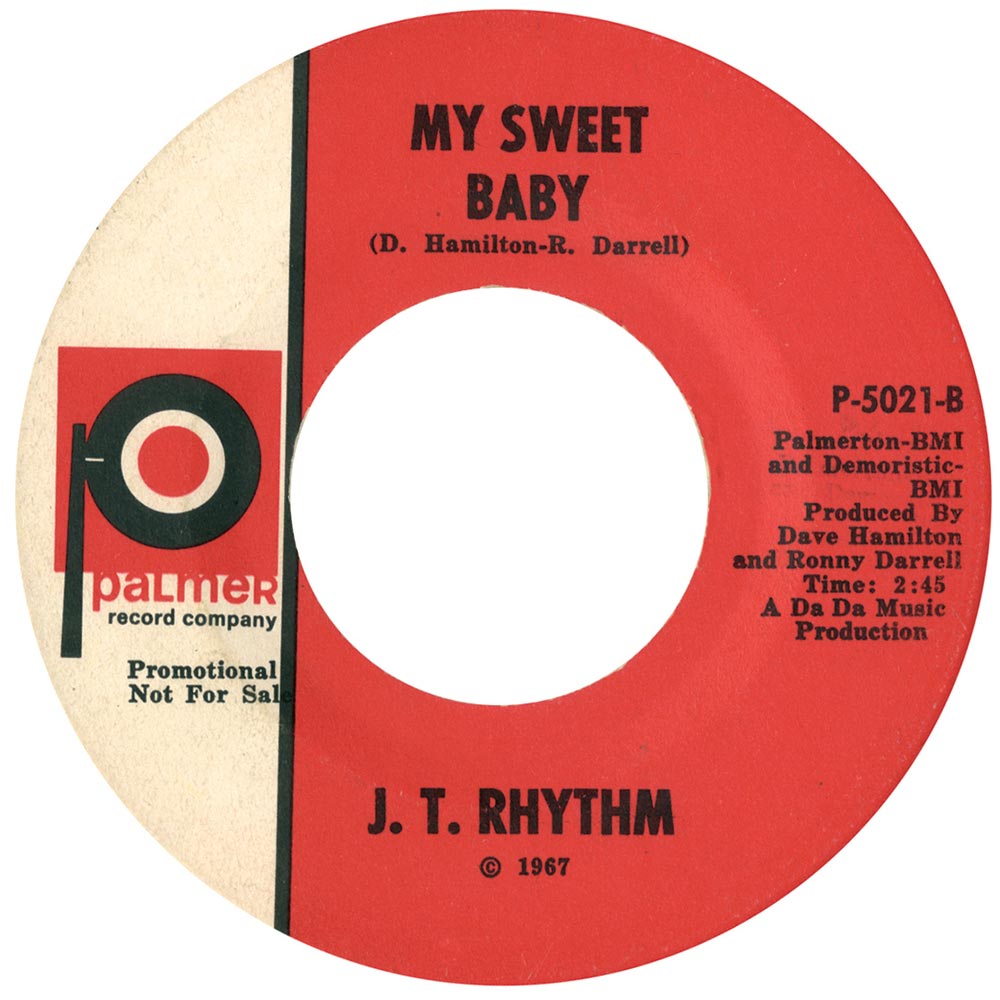
J.T. Rhythm are responsible for what’s without doubt, one of the highlights of Dave Hamilton’s Detroit Dancers, My Sweet Baby. It was penned and produced by Dave Hamilton and Rony Darrel. They’re responsible for what’s a quite beautiful Northern Soul ballad. Originally, My Sweet Baby was the B-Side to J.T. Rhythm’s 1967 single All I Want Is You, which was released as a single by the Palmer Record Company. Sadly, the single disappeared without trace, and copies are almost impossible to find. So, in 1998, My Sweet Baby was chosen as one of the tracks to feature on the first volume of Dave Hamilton’s Detroit Dancers. At last, this beautiful, elegiac ballad was being heard by a wider audience. Seventeen years later, and My Sweet Baby returns for a welcome and overdue encore.
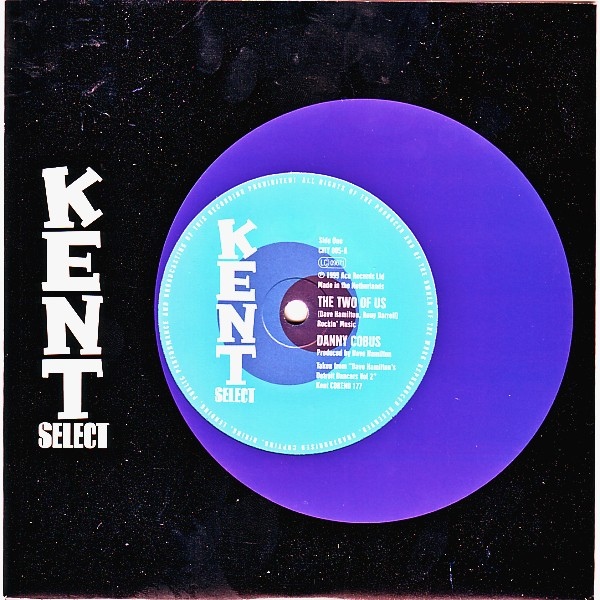
Danny Cobus recorded The Two Of Us is back in 1968. Sadly, it lay unreleased in Dave Hamilton’s vaults until 1999. By then, Ace Records were about to release Dave Hamilton’s Detroit Dancers Volume 2. The Two Of Us, which Dave Hamilton and Rony Darrell composed, and Dave produced, found its way onto Dave Hamilton’s Detroit Dancers Volume 2. At last this hidden soulful gem was being heard by a wider audience. Then in 2007, Kent Select released The Two Of Us as a single. On the flip side was Chico and Buddy’s You Won’t Miss The Water, which Dave Hamilton wrote and produced. It first featured on Dave Hamilton’s Detroit Dancers in 1998. Nine year later, and You Won’t Miss The Water made a welcome return on this limited edition single. Only 500 copies were pressed and quickly snapped up by eager record buyers, keen to acquire two long, lost soulful delights.
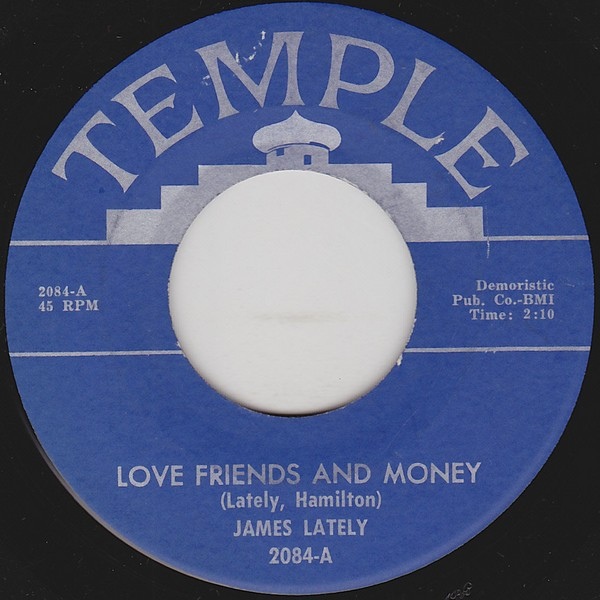
James Lately and Dave Hamilton cowrote James’ debut single, Love, Friends And Money. It was released on the Temple label in 1965. What followed was a familiar story. Love, Friends And Money, wasn’t a commercial success. That’s despite a needy, hopeful and soul-baring vocal from James. He didn’t release a followup to Love, Friends And Money, and was lost to music.
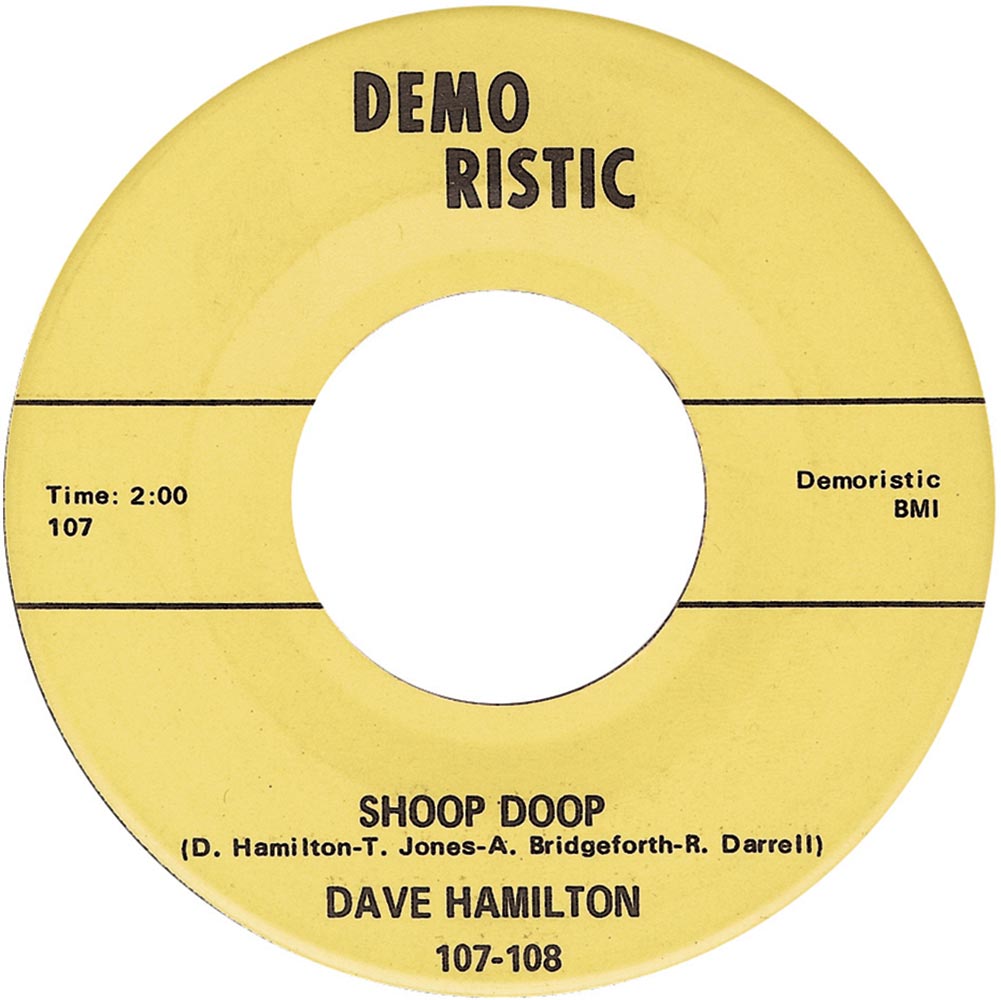
Although Dave Hamilton was spending most of his time producing other artists, he hadn’t given up on his solo career. So in 1967, Dave released Shoop Doop as a single. It was released on the Demo Ristic label, but just like Dave’s earlier singles, failed to find an audience. Sadly, it was only later, that Dave Hamilton’s music found an audience, especially within the Northern Soul scene.
Closing this special vinyl edition of Dave Hamilton’s Detroit Dancers, which was recently released by Kent Soul, an imprint of Ace Records, is Priscilla Page and Rony Darrel’s You Did. It was released on the Topper label, in 1965. You Did is another Dave Hamilton and Rony Darrel composition. They had formed a successful songwriting partnership. However, You Did was the first time Priscilla Page and Rony Darrel. Although it’s a tale of heartbreak, it’s not short of hooks. It’s a call to dance that will have dancers sashaying their way across the dance-floor.
This newly released vinyl edition of Dave Hamilton’s Detroit Dancers will appeal to both veterans of the Dave Hamilton’s Detroit Dancers series and newcomers to the series. It features a mixture of familiar faces and hidden gems. All of them have one thing in common, they’re dance-floor friendly. Some of the tracks may be fifty years old, but they’ll still fill a dance-floor. That’s partly down to one man, Dave Hamilton.
While Dave Hamilton may not have as high a profile as some soul producers, he was a successful and talented producer. He had the uncanny knack of bringing out the best in artists and groups. Sometimes, he transformed careers. Sadly, just like any producer, some of Dave Hamilton’s singles failed to find the audience they deserved. As a result, these songs are extremely rare.
That’s because very few copies of the singles sold. Despite their rarity, a few fortunate DJs and collectors picked up copies of Dave Hamilton’s productions, including those on this vinyl edition of Dave Hamilton’s Detroit Dancers. Many of these rarities were found years ago, in warehouses and basements of dusty record shops. Back then, these singles cost pennies. Nowadays, the same singles cost hundreds, if not thousands of pounds. However, fortunately, those unable to afford such exorbitant prices, can always pick up the Dave Hamilton’s Detroit Dancers compilation series.
Previously, four volumes of Dave Hamilton’s Detroit Dancers have been released. The first volume, Dave Hamilton’s Detroit Dancers was released by Kent Soul, an imprint of Ace Records in 1998. Further volumes of Dave Hamilton’s Detroit Dancers were released in 1999, 2006 and 2011. Apart from the four volumes of Dave Hamilton’s Detroit Dancers, Dave Hamilton’s Detroit City Grooves was released in 2005 and Dave Hamilton’s Detroit Funk was released in 2006 by BGP, another subsidiary of Ace Records. The latest addition to Ace Records’ Dave Hamilton portfolio, is the recently released vinyl edition of Dave Hamilton’s Detroit Dancers. Along with the six CDs, this newly released vinyl edition of Dave Hamilton’s Detroit Dancers goes some way to telling the story of Dave Hamilton’s career as a producer.
DAVE HAMILTON’S DETROIT DANCERS.
M.F.S.B.-UNIVERSAL LOVE.
M.F.S.B.-UNIVERSAL LOVE.
Unlike Motown, books haven’t been written about Philadelphia International Records. That’s a missed opportunity, as there are many stories waiting to be told. Until now, only parts of the Philadelphia International Records’ story has been told. Many of those who played an important part in the rise and rise of Philadelphia International Records, haven’t had their story told. That’s a missed opportunity. However, the other missed opportunity is failure to release loving curated reissues of the Philadelphia International Records’ back catalogue. Last year however, things looked hopeful.
On February 13th 2014, Sony Music announced that it had acquired the worldwide rights to Philadelphia International Records’ post 1975 back-catalogue. At last, one label, Sony Music now had control of the rights to the entire Philadelphia International Records’ back-catalogue. This was progress. Maybe now, a proper reissue program of Philadelphia International Records’ back-catalogue could get underway?
This would be an improvement from what has gone before. Previously, Philadelphia International Records’ back-catalogue fell into the wrong hands. It seemed that anyone with money, could license Philadelphia International Records’ back-catalogue. There seemed to be no checks into the background of the labels. What followed wasn’t pretty.
Cheap and nasty reissues of the back-catalogue made their way onto the shelves of record shops. Sometimes, the Philadelphia International Records’ back-catalogue was reduced to budget label products. Twofers were released. Occasionally, three albums were squeezed onto two discs. This meant there were no sleeve-notes and the bare minimum of details about the albums. A low point was reached when what came across what I can only describe as reissue that was a needle drop. It was obvious rather than the master tapes being sourced, a vinyl copy was used. Not a very good copy at that. What had been one of the most influential soul labels between 1972 and 1975, was reduced to this. How the mighty had fallen. Then came the news back in February 2014. This were looking better for Philadelphia International Records’ post 1975 back-catalogue.
At the time, I thought that maybe, at last, a comprehensive reissue of Philadelphia International Records’ back-catalogue would get underway. Like many people, I hoped for lavish and lovingly compiled box sets, remasters of classic albums and rereleases of some of albums that have never before released on CD before. Sadly, that’s never happened, and still any record company has licensed the Philadelphia International Records’ back catalogue has failed to do it justice.
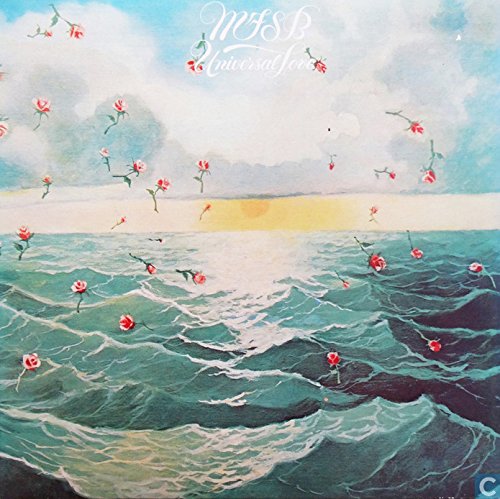
The latest to reissue Philadelphia International Records’ back catalogue are BBR, who recently reissued a reissue of M.F.S.B.’s Universal Love. It was released at a crucial part in the Philadelphia International Records’ story. This was the end of the the golden period in the Philadelphia International Records’ story.
The history of Philadelphia International Records is separated into two parts. The first part was what I’d call Philadelphia International Records’ golden period, between 1972 and 1975 and then the second part, from 1976 onwards. There’s a good reason for doing this. Between 1972 and 1975, music released by Philadelphia International Records featured the classic lineup of M.F.S.B. They’re often referred to as Philadelphia International Records’ house-band. That however, is doing them a huge disservice.
M.F.S.B. were much more than a house-band. These musicians were also songwriters, arrangers and producers. Look at the sleeve-notes to any album released on Philadelphia International Records between 1972 and 1975, and you’ll see that among the arrangers, producers and songwriters were Vince Montana Jr, Norman Harris and Ron Baker. This dispels the myth, sometimes perpetuated by people who should know better, that M.F.S.B. were “just” Philadelphia International Records’ house band. Indeed, M.F.S.B. provided the heartbeat to the music of Billy Paul, The O’Jays, Harold Melvin and The Blue Notes, The Three Degrees and countless others. M.F.S.B. were also one of Philadelphia International Records’ most successful acts.
Love Is The Message was M.F.S.B’s debut album, released in 1973, with M.F.S.B. following later that year. During 1975, a pivotal year for both Philadelphia International Records and M.F.S.B, M.F.S.B. released two more albums. The first of these, Universal Love would prove to M.F.S.B’s penultimate album for Philadelphia International Records. Philadelphia Freedom was released later in 1975. However, when Universal Love was released, M.F.S.B. and musical auteurs Gamble and Huff were locked in a dispute.
At the heart of M.F.S.B’s dispute with Gamble and Huff was money. Although people involved aren’t keen to divulge exact details, it has been alleged that musicians were only offered a pay increase of $5, from $25 to $30 a session. Arrangers and producers were only offered an increase of $10, from $50 to $60 a session. Now this was a risky situation. After all, M.F.S.B. were Philadelphia International Records’ crown jewels. Replacing the original lineup wouldn’t be possible. Where would you find another Baker, Harris, Young rhythm section, Vince Montana Jr, Bobby “Electronic” Eli or Larry Washington? It’s not as if Gamble and Huff would be able to wander down to Manpower and hire an all-star band. Granted Philly had many talented musicians, but not as good as the original lineup of M.F.S.B. This was a high stakes poker game. Who was bluffing?
Dring 1975, while the negotiations continued, there was still music to be made, including albums by M.F.S.B. They would release two albums during 1975. The first was Universal Love.
Universal Love featured eight tracks. Gamble and Huff cowrote just three tracks, Sexy, M.F.S.B and My Mood. Three tracks prove my point about how M.F.S.B. were much more than musicians. Ron Baker cowrote Human Machine with Leon Huff, while Norman Harris and Bobby Martin cowrote T.L.C. (Tender, Lovin’ Care) and Bruce Hawkes and Cynthia Biggs cowrote Love Has No Time Or Place. Norman Harris, Ron Baker and Bruce Hawkes were all locked in the dispute with Gamble and Huff. Of the other two tracks, McFadden and Whitehead plus Victor Castarphen cowrote Let’s Go Disco with Leon Huff. Charles Heardon wrote K-Jee and would later, hit the jackpot, when the track was included on the fifteen-million selling Saturday Night Fever soundtrack. These eight tracks became Universal Love. Like previous M.F.S.B. albums, recording of Universal Love took place at Sigma Sound Studios in Philly, owned by Joe Tarsia.
The recording sessions for Universal Love proved to be the penultimate appearance of the original and best lineup of M.F.S.B. Playing on Universal Love were all the M.F.S.B. greats. Providing the album’s heartbeat were the Baker, Harris, Young rhythm section, along with guitarists Bobby “Electronic” Eli and Roland Chambers. Ron “Have Mercy” Kersey and Leon Huff played keyboards, Larry Washington percussion and Vince Montana Jr. vibes. Violinist Don Renaldo was part of the string section and alto saxophonist Zach Zachery plays an important part in Universal Love’s sound. Norman Harris, Bobby Harris and Bruce Hawkes all arranged or produced tracks, while Gamble and Huff produced five tracks. Once Universal Love was completed, it was released in 1975.
On the release of Universal Love in 1975, it reached number forty-four in the US Billboard 200 and number two in the US R&B Charts. T.L.C. (Tender, Lovin’ Care) was released as a single, reaching number fifty-four in the US R&B Charts and number four in the US Disco Singles Charts. Sexy then reached number forty-two in the US Billboard 200, number two in the US R&B Charts and number one in the US Disco Singles Charts. Given how successful Universal Love had been, surely Gamble and Huff would realize just how important M.F.S.B. were to Philadelphia International Records? Was that the case? I’ll tell you that, once I’ve told you about the music on Universal Love.
Opening Universal Love is the Gamble and Huff penned and produced Sexy, arranged by Bobby Martin. Just Norman Harris’ chiming guitar opens the track, before M.F.S.B. kick loose. Vince Montana Jr’s vibes, Bobby “Electronic” Eli’s wah-wah guitar and an uber funky Baker, Harris, Young join growling horns and lush, dancing strings. Soon, the music veers between funk, disco and jazz. One minute it’s choppy and funky, the next strings ensure it flows smoothly along. Horns blaze, strings swirl and the rhythm section provide a pulsating heartbeat. They’re augmented by vibes, percussion and wah-wah guitars as M.F.S.B. lay down a marker, showing just what they can do. In doing so, the irresistibly fuse funk, jazz and disco seamlessly and peerlessly.
Not many bands have a track named after them. M.F.S.B. did. Written by Gamble and Huff and arranged by Bobby Martin, it’s a fitting tribute to M.F.S.B’s combined talents. Stabs of keyboards, a pounding Baker, Harris, Young rhythm section and waves of Hammond organ combine, before the horns and strings get to work. Horns growl, strings dance with joy while, Vince Montana Jr, subtly sprinkles vibes. Soon, M.F.S.B. have hit their stride. The arrangement is a mass of braying horns, cascading string, while the thunderous rhythm section drive the arrangement along. While every member of M.F.S.B. play their part, it’s the horns that tug at your heartstrings. They’re crucial to the sheer beauty, emotion and drama of the arrangement, making this such a potent, powerful and moving track.
Human Machine was penned by Ron Baker with Leon Huff. It has a much more experimental sound. Given the title, this isn’t unexpected. There’s a spacious, choppy and thoughtful sound to the arrangement as it unfolds. The unmistakable sound of Bobby “Electronic” Eli’s wah-wah guitar is at heart of the arrangement. Keyboards, the Baker, Harris, Young rhythm section and grizzled horns provide the mainstay of the arrangement. When strings sweep in, they smoothen out the arrangement, which still, has a jumpy, edgy sound and feel. Although this track is quite different to the two previous tracks, it’s an innovative track, something which Philadelphia International Records were famous for.
Love Has No Time Or Place closes Side One of Universal Love. Here, backing vocalists join M.F.S.B. Strangely, it isn’t the Sweethearts of Sigma. They play their part in this grand and lush, dance-floor friendly track. Blazing horns, lush, wistful strings and elegant, crystalline harmonies sweep in while Baker, Harris, Young provide a funk, hustle style backdrop. They’re joined by vibes courtesy of Vince Montana Jr, percussion, keyboards and even synths. While this wasn’t the first time synths appeared on a Philadelphia International Records’ album, they seem out of place in the arrangement. Here’s this grand disco orchestra with all these traditional instruments. Then this slightly space-age sounding synth is added. Thankfully this doesn’t spoil the track, as it floats along, with harmonies, strings and horns key to the track’s sound and success.
T.L.C. (Tender, Lovin’ Care) opens Side Two of Universal Love. Written by Norman Harris and Bobby Martin, a curveball is thrown when a jazzy introduction unfolds. Sultry horns take you back to another era. Then it’s all change. Baker, Harris, Young take charge, combining with a Hammond organ and Bobby “Electronic” Eli’s wah-wah guitar. Next comes rasping horns and swirling strings. Norman Harris lays down some of his unique jazz-tinged guitar lines, while pensive horns, dancing strings and bursts of Earl Young’s thunderous drums play crucial roles. There’s a real hustle sound to this joyful, uplifting fusion of Philly soul, jazz, funk and disco, which quite simply, is one of the best tracks on Universal Love.
Let’s Go Disco is driven along by the Baker, Harris, Young rhythm section, piano and percussion. Chanted vocals are added before blazing horns and sweeping strings enter. With the vocals and rhythm section combining, this gives the arrangement a real hypnotic, driving sound. It’s catchy, memorable and sheer simplicity. It’s like a mantra, a call to dance, to a soundtrack provided by M.F.S.B.
K-Jee proved to be the most successful track on Universal Love. Charles Heardon who wrote K-Jee, would later, hit the musical equivalent of fifteen consecutive home runs, when the track was included on the fifteen-million selling Saturday Night Fever soundtrack. From the stabs of keyboards, percussion, urgent flourishes of strings and grizzled horns you’re transported back to disco’s heyday. M.F.S.B. seem to raise their game even higher. A myriad of percussion join Baker, Harris, Young, searing guitars and rasping horns. Strings dance, swirl and sweep and Bobby “Electronic” Eli adds wah-wah guitar. Zach Zachary’s growling alto-saxophone and a wash of wailing Hammond organ provide the icing and cherry for this delicious, cake. So good and tasty was the cake, that it sold fifteen-million slices.
Closing Universal Love is My Mood a much more mellow track. Just a subtle sprinkling of Vince Montana Jr’s vibes, percussion and Norman Harris’ sparse jazzy guitar combine before the arrangement grows. Baker, Harris, Young provide the understated heartbeat. Melancholy strings sweep and swirl, horns rasp and growl while keyboards add a warm melodic sound. M.F.S.B. resist the urge to kick loose one more time. Only the horns, drums and strings are given leeway, but don’t overdo things, bringing Universal Love to a mellow, pensive and quite beautiful close.
The standoff between M.F.S.B. and Gamble and Huff certainly never affected the quality of music on Universal Love. Quite the opposite. It’s almost as if M.F.S.B. were determined to show Gamble and Huff what they were risking losing. This was a high stakes poker game. Universal Love saw the stakes rising. M.F.S.B. upped the ante. Baker, Harris, Young, Bobby “Electronic” Eli, Larry Washington and Vince Montana raised their game, fusing Philly Soul, funk, disco and jazz. This was another impressive addition to M.F.S.B’s discography. Sadly, this reissue doesn’t really do Universal Love justice.
Despite being remastered, the sound quality isn’t as good as it could be. It doesn’t match the quality of music.This newly released version of Universal Love is described as “expanded.” However, all this means is the addition of the single version of Sexy, T.L.C., Let’s Go Disco and K-Jee. There’s nothing new from the Philadelphia International Records’ vaults added to this version of Universal Love. Even the sleeve-notes don’t do the story of this period in the Philadelphia International Records’ story justice. Still it seems, so far, no record company has done the Philadelphia International Records’ back-catalogue justice. All in all, it’s a somewhat disappointing reissue. Let’s hope that next time around, the Philadelphia International Records’ back-catalogue is given the treatment it deserves. Especially the first part in the Philadelphia International Records’ story, which Universal Love covers.
After Universal Love, the original lineup of M.F.S.B. recorded one more album for Philadelphia International Records, Philadelphia Freedom. That proved to be a prophetic title. By the time Philadelphia Freedom was released, the original lineup of M.F.S.B. had achieved their own version of Philadelphia Freedom.
Realizing their demands weren’t going to met, they called Gamble and Huff’s bluff. When no agreement could be reached M.F.S.B. headed to New York, taking their considerable talents to Salsoul Records, where they became The Salsoul Orchestra. As a result, Gamble and Huff lost some of the most talented musicians of the seventies. This included the Baker, Harris, Young rhythm section, who provided M.F.S.B.’s heartbeat, guitarist Bobby “Electronic” Eli, vibes virtuoso Vince Montana Jr, violinist Don Renaldo, percussionist Larry Washington and keyboard player Ron “Have Mercy” Kersey. By the time 1975 was over, The Salsoul Orchestra’s debut album had sold over one-million copies. The original members of M.F.S.B. had played and won what was a high stakes poker game. Following the departure of many of the original lineup of M.F.S.B. the music on Philadelphia International Records was still among the best in seventies soul, but lacked something.
That something, was the combined talents of the original members of M.F.S.B. There’s no doubt that Philadelphia International Records were affected by the loss of such hugely talented musicians. M.F.S.B. Mk II couldn’t fill the shoes of their predecessors. Not only was that a big ask, but almost impossible. Granted, their replacements were talented musicians, and Philadelphia International Records continued to release critically acclaimed and commercially successful music. However, M.F.S.B. were never the same. After all, how do you replace what many regarded as irreplaceable?
Ironically, many of the musicians that became The Salsoul Orchestra flourished. It was as if their talents were unleashed. Baker, Harris, Young, Bobby “Electronic” Eli, Ron “Have Mercy” Kersey and Vince Montana Jr. all flourished as songwriters, arrangers and producers at Salsoul. Gamble and Huff’s loss was very much Salsoul’s gain. Anyone who listens to Universal Love will realize that. Not only does Universal Love features M.F.S.B. at the peak of their powers, but whilst playing one of highest stakes poker games in musical history. The lesson to be learnt from this saga, is that “the workman is worthy of his hire.”
M.F.S.B.-UNIVERSAL LOVE.
HERE TODAY!-THE SONGS OF BRIAN WILSON.
HERE TODAY!-THE SONGS OF BRIAN WILSON.
Brian Wilson is seen by some, as the closest thing music has had to a genius. Proponents of this argument cite the Beach Boys 1966 progressive, psychedelic Magnus Opus, Pet Sounds. By then, Brian Wilson was one of the most successful singer, songwriter, and producers of his generation. Already, Brian Wilson had masterminded twenty-four hit singles, including two number one singles for the Beach Boys. It looked like Brian Wilson could do no wrong.
Sadly, Smile, the followup to Pet Sounds was cancelled. Brian Wilson had suffered the first of several nervous breakdowns. As a result of Brian Wilson’s health problems, his influence on the Beach Boys diminished. This just happened to coincide with a decrease in sales of the Beach Boys’ albums.
Following Pet Sounds, the Beach Boys albums were produced by the group. No longer was Brian Wilson the sole producer. Then in 1975, Brian Wilson produced 15 Big Ones, which was released in 1976. When it was released in July 1976, 15 Big Ones reached number eight in the US Billboard 200, and was certified gold. For many, onlookers, it looked as if Brian Wilson was back. However, that wasn’t the case.
By 1975, Brian Wilson had substance abuse problems and his health was failing. His wife Marilyn realised he needed enlisted the help of psychologist and psychotherapist Eugene Landy. He was best known for an unconventional twenty-four hour treatment program. At first, Brian was resistant to the demanding program. However, with the only alternative being admitted to a psychiatric hospital, Brian came round to Euege Landy’s program. Then in 1976, when Euegene Landy tried to double hi fees, he was sacked by the Beach Boys manager.
Six years later, with Brian’s health failing, and the Beach Boys not having released an album for two years, Eugene Landy was hired again. For the next ten years, Brian was treated by Eugene Landy. This didn’t end well.
Part of Eugene Landy’s treatment, was micromanaging his client’s lives. Usually, he did this with team of counsellors, nurses and doctors. However, in Brian’s case, Eugene Landy took a more hands on approach. Not only was he Brian’s therapist, but gradually, became his business adviser and cowrote songs with Brian. Then when Brain released his debut album Brian Wilson in 1988, Eugene Landy was credited as executive producer. Later, in 1991, Eugene Landy cowrote a memoir about Brian Wilson, Wouldn’t It Be Nice: My Own Story. However, by then people were questioning Eugene Landy’s relationship with Brian.
A year later, and the relationship was over. A restraining order was issued by the court barring Eugene Landy from contacting Brian Wilson ever again. This wasn’t the end of the story. In 1994, the state of California revoked Eugene Landy’s license to practise. There had been accusations of ethical violations and patient misconduct during his years with Brian Wilson. While the relationship ended badly, Brian Wilson was on the comeback trail.
Sadly, Brian Wilson never ever reached the heights of Pet Sounds. He released another ten solo albums, some of which, were released to critical acclaim. However, compared to Pet Sounds, they never came close. Pet Sounds was Brian Wilson’s finest hour. Incredibly, he was only twenty-four, with his whole life in front of him. Sadly, ill-health, substance abuse and the internal politics of the Beach Boys curtailed Brian Wilson’s career. He was the man who could’ve been King.
While Brian Wilson is still remembered as one of the most important successful singer, songwriter, musician and producers of his generation, to some extent, his critics say that Brian Wilson never fulfilled his early potential. That however, is an accusation that could be levelled at many musicians. However, in Brian Wilson’s case, that’s a bit harsh. If illness hadn’t interrupted his career, he would probably have fulfilled his potential.
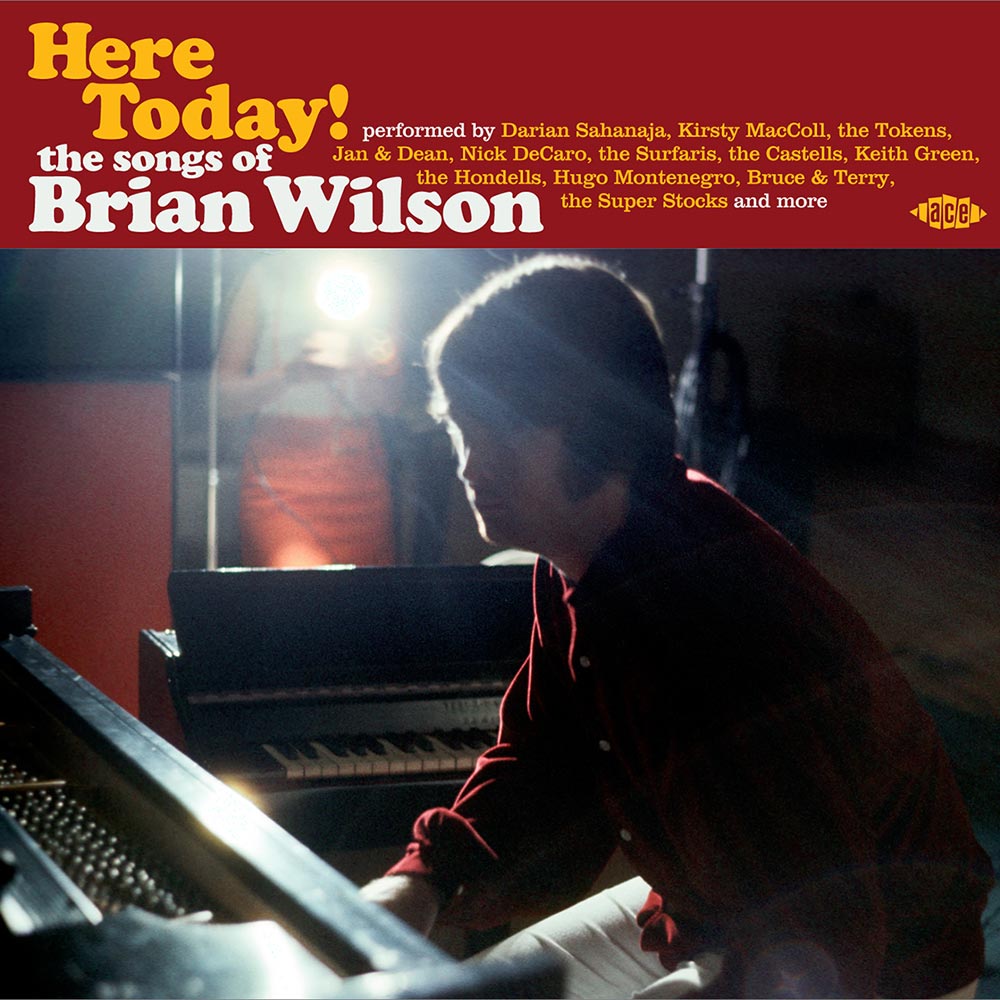
Certainly, Brian Wilson’s music has influenced two generations of music. They’ve continued to cover his songs over the past fifty years. This includes the artists on Here Today!-The Songs Of Brian Wilson, which was recently released by Ace Records.
Here Today!-The Songs Of Brian Wilson features twenty-five cover versions of Brian Wilson songs. These songs have been covered by Darian Sahanaja, Bobby Vee, The Tokens, The Castells, Jan and Dean, The Tymes, Keith Green, Peggy March, Betty Everett, Carmen McRae and Kirsty MacColl. Among the twenty-five tracks are six cover versions of songs from Pet Sounds. That’s fitting as Pet Sounds was Brian Wilson’s Magnus Opus. However, there’s much more to Brian Wilson’s music, as you’ll discover when I pick the highlights of Here Today!-The Songs Of Brian Wilson.
There’s no better way to open Do You Have Any Regrets? opens Here Today!-The Songs Of Brian Wilson than with Darian Sahanaja’s of The Wondermints cover of Do You Have Any Regrets? This is a song from Brian’s 1990 album Sweet Insanity. Darian rolls back the years, and gives Do You Have Any Regrets? a sixties makeover. As a result, the song sounds uncannily like the Beach Boys at the peak of their power. That’s no surprise as Darian has worked with Brian Wilson during his comeback, and played an important part in his solo career.
Don’t Worry Baby is, without doubt, a Beach Boys’ classic. So anyone who decides to cover Don’t Worry Baby will have their version compared to the original. The Tokens’ cover is akin to a homage to the Beach Boys. Sonically and stylistically, The Tokens’ 1970 cover of Don’t Worry Baby is one of the best, and stays true to the original.
The original recording Help Me Rhonda featured on The Beach Boys Today!, which was released in 1964. The song was written by Brian and Mike Wilson, way before rivalries split the Beach Boys. Later in 1964, Future Beach Boy Bruce Johnston and Terry Melcher then decided to record Help Me Rhonda. However, fate intervened, when the Beach Boys rerecorded Help Me Rhonda. When it was released as a single, it became a huge hit. This lead to Bruce and Terry postponing the release of their cover of Help Me Rhonda. It wasn’t until 1998 that Bruce and Terry’s hook laden take on Help Me Rhonda was eventually released. Seventeen years later, and it makes a more than welcome return on Here Today!-The Songs Of Brian Wilson.
Just like the Beach Boys, Jan and Dean were one of the leading lights of the surf and hot rod scene. They covered The New Girl In School in 1964. This wasn’t a new song. Instead, it started life as (When Summer Comes) Gonna Hustle You, which Jan and Dean recorded in 1963. Originally, it was written by Brian and Bob Norberg. A year later, after a rewrite by Brian, Jan Berry and Roger Christian, (When Summer Comes) Gonna Hustle You became The New Girl In School. Rhis hook laden tale of teenage love was released as a single in 1964, and proved the perfect showcase for Jan and Dean’s vocal prowess.
Don’t Hurt My Little Sister is another song penned by Brian and cousin Mike Wilson. They wrote the song for The Blossoms, which featured Darlene Love. However, Don’t Hurt My Little Sister featured on The Beach Boys Today!, which was released in 1964. Then in early 1966, The Blossoms version of Don’t Hurt My Little Sister was released a single. A few months later, and The Surfaris, another mainstay of the surf scene covered Don’t Hurt My Little Sister. Their version was produced by Gary Usher, and featured on their 1977 compilation Gone With The Wave. It’s one of the highlights of Gone With The Wave, and is a reminder of one of the great groups of the surf era.
In 1964, The Hondells scored a top ten single with their udebut single, Little Honda. For the followup, Gary Usher who masterminded the rise of The Hondells cowrote My Buddy Seat with Brian Wilson. My Buddy Seat was then recorded by some of the top names in the surf scene. Among them, were Gary Usher, Brian Wilson, Bruce Johnston and Terry Melcher. So, it’s no surprise that My Buddy Seat oozes quality. What’s surprising is that My Buddy Seat wasn’t a commercial success.
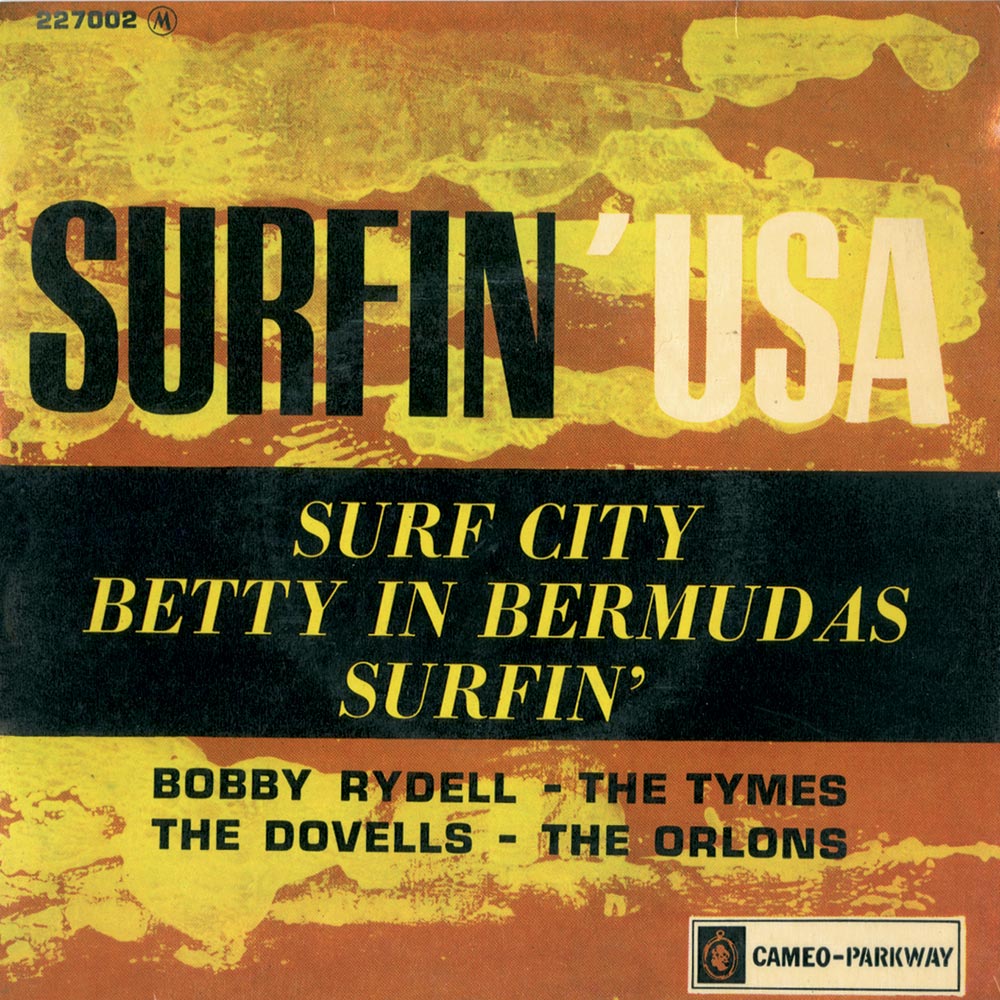
Surf City was the song the first song that Brian Wilson penned to reach number one. Brian cowrote Surf City with Jan Berry, of Jan and Dean. Much to his father’s chagrin, Brian allowed Jan and Dean to record Surf City first. It gave them a number one single. No wonder. Jan and Dean’s version of Surf City is a classic of the surf era, and fifty-two years later, still sounds timeless.
Keith Green was a child prodigy. By the time he first met Gary Usher in 1965, the eleven year old was writing songs. Gary who was an experienced songwriter, wasn’t convinced at first. However, eventually, Gary signed Keith Green on a recording contract. His sophomore single was a cover of Brian Wilson’s Girl Don’t Tell Me. This Gary Usher production was released on Decca, in 1965, just after the Beach Boys version. It was was the B-Side of Barbara Ann. The main difference between the two version are Keith’s version has a quicker tempo, as Keith and Gary Usher give the song new meaning.
Soul singer Betty Everett is one of many people to cover what’s one of the Brian Wilson’s classic songs, God Only Knows. It originally featured on Pet Sounds, in 1966. Incredibly, Gold Only Knows stalled at number thirty-nine in the US Billboard 100. Nine years later, and Betty Everett covered God Only Knows on her 1975 album Happy Endings. Accompanied by gospel tinged backing vocals, God Only Knows is given soulful makeover that’s quite beautiful.
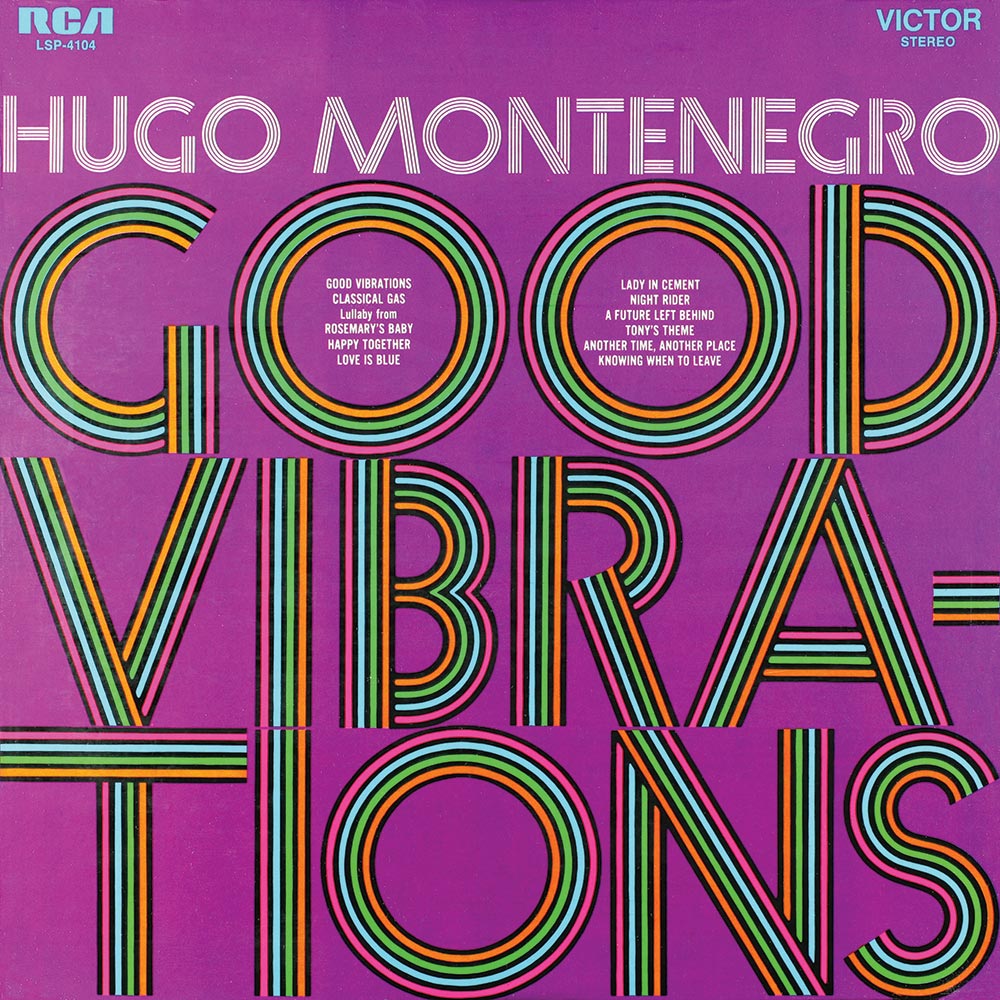
Good Vibrations, which featured on the Beach Boys 1967 album Smiley Smile, gave the Beach Boys a number one single in 1968. Not only was Good Vibrations by far the highlight of the Smiley Smile album, but one of the greatest songs Brian and Mike Love cowrote. Since 1968, Good Vibrations is perceived as one of the greatest singles ever released. Despite the original being a musical masterpiece, Hugo Montenegro covered Good Vibrations in 1969. The song lent its name to his 1969 album Good Vibrations. Without doubt. one of the highlights of the album is Good Vibrations, where Hugh pays homage to what many believe is Brian Wilson’s finest moment.
Nick DeCaro’s 1968 debut single was a cover of Caroline, No. It’s an wistful, piano lead cover of this Brian Wilson and Tony Asher composition. The addition of a sultry saxophone is a masterstroke, and is very different from the Beach Boys’ original on Pet Sounds. Here, Nick brings new life and meaning to another Beach Boys classic.
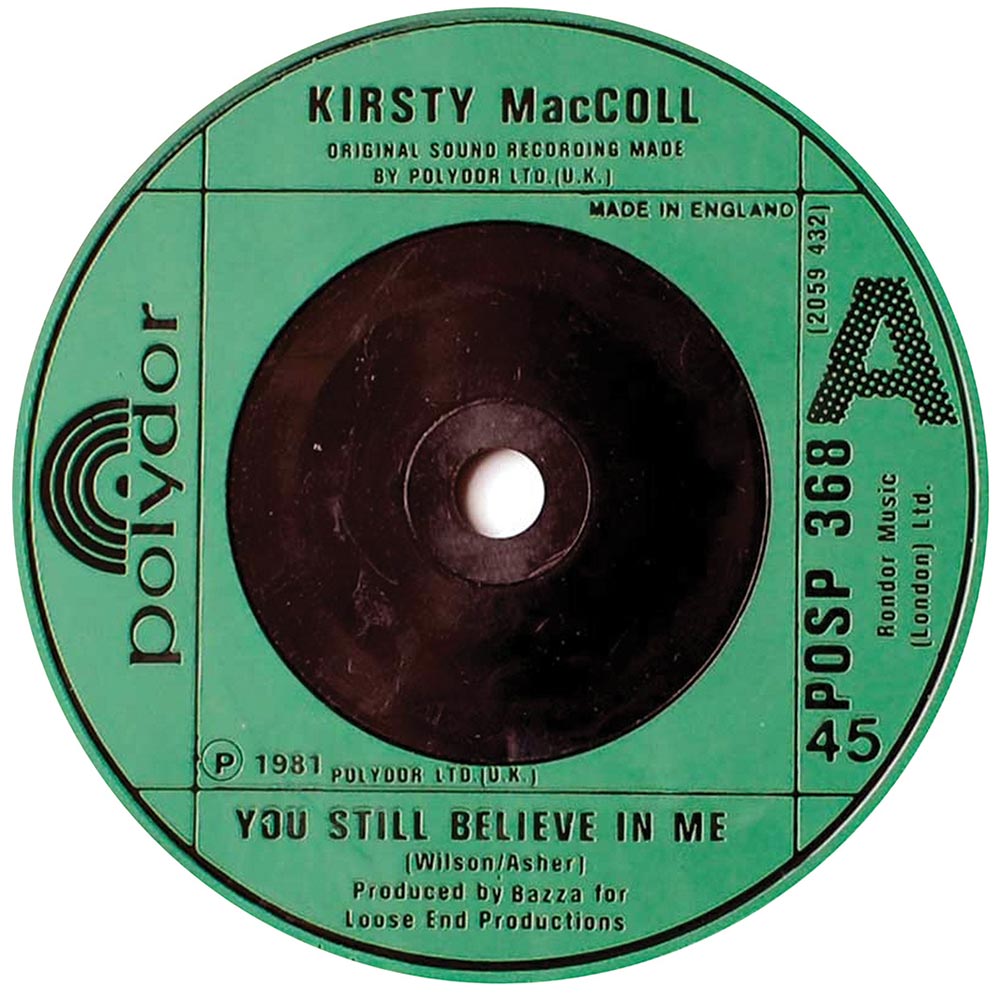
Closing Here Today!-The Songs Of Brian Wilson, is Kirsty MacColl’s cover of You Still Believe In Me, another track from Pet Sounds. Kirsty MacColl, the daughter of folk singer Ewan MacColl, had only released a quartet of singles when she released You Still Believe In Me in 1981. However, You Still Believe In Me was a game-changer. It was the finest single of her nascent career. The best way to describe Kirsty’s cover of You Still Believe In Me is understated and ethereal. This was the perfect tribute to one of Kirsty’s musical heroes.
The twenty-five tracks on Here Today!-The Songs Of Brian Wilson, which was recently released by Ace Records, is a reminder of the quality of songs Brian Wilson wrote in his heyday. He was, without doubt one of the most talented songwriters of his generation. That’s indisputable. However, Brian Wilson was much more than a songwriter.
Some people have gone as far as to describe Brian Wilson as the closest thing music has had to a genius. That is taking things to far. He was certainly one of the the most talented and successful singer, songwriter, and producers of his generation. Proof, if any is needed, are the twenty-four hit singles, including two number one singles for masterminded the Beach Boys. However, Brian’s finest hour was Pet Sounds, and of course, Good Vibrations, which was recorded at the same time.
Pet Sound, which was released in 1966 was the Beach Boys’ progressive, psychedelic Magnus Opus, Pet Sounds. They never bettered Pet Sounds. The abandoned Smile project, which was abandoned in 1967, as Brian had the first of several nervous breakdowns, onlookers believe, could’ve come close. Sadly, that wasn’t to be. Smile, the followup to Pet Sounds was cancelled.
Brian Wilson had suffered the first of several nervous breakdowns. As a result of Brian Wilson’s health problems, his influence on the Beach Boys began to diminish. This just happened to coincide with a decrease in sales of the Beach Boys’ albums.
Over the next twenty-six years, Brian Wilson’s suffered from mental health problems. During that period, he was constantly described as a troubled genius. Sadly, Brian never reached the heights he scaled between 1961 and the release of Pet Sounds in 1966.
With Brian no longer playing such an important part in the Beach Boys, their studio albums never came close to matching the Beach Boys of the sixties. The exceptions were 1976s15 Big Ones which Brian produced, and 1979s L.A. (Light Album). Bother were a return to form from the Beach Boys.
Right through to 1992, when Brian ended his association with Eugene Landy, his health problems meant he curtailed his musical career. Since then, Brian Wilson has released ten further solo albums. Some were released to critical acclaim; while others feature a fleeting glimpse of Brian Wilson’s talents. However, much of the greatest music of Brian Wilson’s career, was the music he released with the Beach Boys, between 1961 and the release of Pet Sounds in 1966. To that, I would add the musical masterpiece that is Good Vibrations, which is the work of a musical visionary.
That visionary is Brian Wilson, who has influenced two generations of music, including the artists on Here Today!-The Songs Of Brian Wilson, which was recently released by Ace Records.
HERE TODAY!-THE SONGS OF BRIAN WILSON.
FINLAND-RAINY OMEN.
FINLAND-RAINY OMEN.
Over the last ten years, the Norwegian music scene has been thriving. It’s now one of the most vibrant musical scenes in Europe. Playing an important part in the rise and rise of Norwegian music, are the members of Finland, whose debut album Rainy Omen, will be released on the 17th July 2015, by Hubro Music.
During that ten year period, Ivar Grydeland, Pål Hausken, Morten Qvenild and Jo Berger Myhre have been members of various bands. They’ve also worked with numerous artists on a variety of projects.
Given the schedules of the various members of Finland, they could be forgiven for sticking to their “day jobs.” There was no chance of that. The members of Finland love music. It courses through their veins. So in 2010, Ivar Grydeland, Pål Hausken, Morten Qvenild and Jo Berger Myhre formed Finland, who are best described as a multitalented supergroup.
That’s because Finland have an enviable musical pedigree. The four members of Finland have previously, been members of some of Norway’s most groundbreaking band. They’ve also worked alongside some of the biggest names in Norwegian music. This describes Ivar Grydeland, perfectly.
Ivar Grydeland was born in Trondheim in 1976, when was twenty, Ivar began to study at the Norwegian Academy of Music. He graduated in 2000, but returned in 2001 and graduated in 2003. Since then, Ivar has been a member of numerous groups, including Dans Les Arbres, Emo Albino, Finland, HISS, No Spaghetti Edition, Tony Oxley Project 1 and Wazahugy. However, many people will know Ivar Grydeland as Huntsville’s guitarist. He played on Huntsville’s five studio albums. On Finland’s Rainy Omen, Ivan also plays banjo, pedal steel, lap steel guitar acoustic guitar and adds vocals. This talented multi-instrumentalist is joined by an equally talented rhythm section.
The first member of Finland’s rhythm section is drummer Pål Hausken, who has been a member of many bands. This included Hilde Marie Kjersem, TUB Quartet, In The Country, Jonas H. Sjøvaag’s Navyelectre Large Ensemble, Music For A While and Sacred Hearts. Pål Hausken has also worked alongside Christer Knutsen, Ida Jenshus and Susanna Wallumrød. That’s not surprising. He’s one of Noway’s top drummers. Joining Pål Hausken in the rhythm section is another man with an illustrious musical past, bassist Jo Berger Myhre.
Describing Jo Berger Myhre as a bassist is unfair. Jo’s much more than a bassist. He also plays electric and baritone guitar. Again, Jo who has been a member of several bands, Splashgirl and Slow Motion Orchestra. Jo has previously played alongside Nils Petter Molvær and Mariam the Believer. However, for the last five years, Jo has been a member of Finland, where he’s the perfect foil for Pål Hausken. The final member of Finland is keyboard virtuoso Morten Qvenild.
Just like other members of Finland, keyboard virtuoso Morten Qvenild has been a member of numerous bands. This includes sPaceMonkey, In the Country, Susanna and the Magical Orchestra and The National Bank. That’s not all. Previously, Morten was been a member of Jagga Jazzist and The Shining. However, for the last five years, Morten Qvenild has been a member of one of Norwegian music’s rising stars, Finland.
Since 2010, the members of Finland have had to juggle their other musical commitments with that of Finland. However, when their schedules dictate, Finland play live. Finland live, and in full flight, is an impressive sight and sound.
When Finland take to the stage, four of Norway’s top musicians, fuse a disparate and eclectic selection of musical genres. The result is music that’s not just inventive, but innovative. After concerts, constantly, the members are asked when they will be releasing their debut album? Usually, the answer has been when they can find the time. However, now the time has come.
On 17th July 2015, Finland will release their debut album Rainy Omen, on Hubro Music. Rainy Omen has been a long time coming.
The sessions for Rainy Omen took place at Parachute Studio in Oslo, with technician Øystein Frantzvåg. Once the Rainy Omen sessions were complete, the album was mixed by Juhani Silvola. Since then, Rainy Omen has lain unreleased. Finland were waiting for the right time.
Partly, that was so the members of Finland could find time within their schedules. Getting everyone in the same place at the same time isn’t easy. It’s a logistical nightmare. However, eventually, everyones schedules permitted the release of Rainy Omen, which will be released on the 17th July 2015. This five track album shows why Finland are perceived as one of the rising stars of Norwegian music.
Dust Driven which opens Rainy Omen was written by Morten Qvenild. From the moment Finland are counted in, the track takes on a slightly experimental sound. Clunky drums, chiming crystalline guitars combine in the middle distance. A pizzicato guitar can be heard, while Ivan encourages Finland along. Soon, they combining quivering, shimmering, cinematic guitars with Finland’s rhythm section. A bold bass line is joined by hypnotic drums and keyboards. Washes of a lysergic, summery sounding arrangement unfold, as Finland fuse experimental, rock and surf seamlessly.
Slow and cinematic describes the introduction to George Lumineux, which is a Ivar Grydeland composition. That’s before the steel guitar and rhythm section combine to drive the arrangement along. Soon, the tempo is rising, as washes futuristic music sits above the main arrangement. By then, it’s best described as ethereal. Then Finland throw another curveball, as the arrangement rings out. That’s down to the guitars, while the rhythm section contribute the heartbeat. A muted, scrabbled bass joins the crystalline, neo Byrdsian guitars. Elements of avant garde and industrial music can be heard in this captivating, genre melting soundscape. It’s the perfect showcase for Finland, Norways fab four.
Jo Berger Myhre wrote Magnetic Sail. Straight away, it sounds like the soundtrack to a Wim Wenders film. Indeed, if Paris Texas was going to be remade in 2015, Magnetic Sail would be perfect. It’s slow, moody, but beautiful. The slow, moody sound comes courtesy of the rhythm section. Meanwhile, washes of shimmering, quivering guitars tremble provide the ethereal beauty on what’s Rainy Omen’s finest moment.
No Low Voices is a fourteen minute epic, written by Ivar and Jo. It sees Finland rock out. That’s the case from the get-go. Guitarist Ivar Grydeland, drummer Pål Hausken and bassist Jo Berger Myhre are like a power trio. While the rhythm section drive the arrangement along, a joyous jangling guitar rings out. This seems to encourage drummer Pål Hausken. Frantically, he powers his way round his kit. Bassist Jo Berger Myhre matches him every step of the way. Adding the finishing touch is Morten Qvenild’s keyboards. However, this frantic tempo can’t continue indefinitely. So, midway through the track the tempo drops and the track veers between cinematic to moody and ominous. Providing the moody, ominous sound are the drums, while guitars add a cinematic twist. Keyboards add an experimental hue, as the track becomes a dark, driving rock jam that allows Finland to showcases their considerable skills.
Rainy Omen closes Rainy Omen. This Jo Berger Myhre penned track, is very different from the previous track. It’s slow, trippy and has a darkness. The darkness comes courtesy of Ivar’s guitar. By contrast his guitars play a large part in the slow, triply and cinematic sound. Behind him, the rhythm section play slowly, adding a dramatic backdrop. By then, Finland are jamming, and into the tightest of grooves. The arrangement then takes on a moody, experimental sound. Drums provide a pounding heartbeat, while an industrial sound emerges in the background. It’s a truly innovative and atmospheric soundscape, where Finland show just why, they’re considered one of the rising stars of the Norwegian music scene.
Finland have been together since 2010, and recorded Rainy Omen in June 2011. By then, they had only been together a year. Already, they were a tight, talented band. That’s not surprising, as Finland featured four of the top musicians in Norway’s vibrant musical scene.
Ivar Grydeland, Pål Hausken, Morten Qvenild and Jo Berger Myhre had been at the heart of the Norwegian scene for over ten years. During that period, they had been part of some of the most important and innovative bands of the past decide. The members of Finland had also worked with some truly inventive and groundbreaking musicians. They’ve obviously learnt from each of these musicians, and grown and matured as musicians. By the time they formed Finland, they were vastly experienced and looking for another musical challenge. They found it in Finland.
It was like a meeting of minds. Each of the members of Finland’s musical raison d’être was to make groundbreaking music. They wanted to push musical boundaries to their limits, and sometimes, way beyond. That’s what they do on Rainy Omen. The music in innovative, inventive and genre-melting. Elements of avant garde, experimental, industrial, jazz, psychedelia and rock are combined to make music that’s veers between atmospheric and cinematic to dark and dramatic. Other times, the music on Rainy Omen flits between beautiful to ethereal, and between lysergic and trippy. Always, though, the music on Rainy Omen is captivating, and results in what’s without doubt, one of the best debut albums of 2015. So good is Rainy Omen, that I eagerly await their sophomore album.
Especially since the music on Rainy Omen was recorded in between the 4th and 6th of June 2011. Finland have come a long way in the past four years. So much so, that Finland are now regarded as one of the rising stars of Norwegian. Rainy Omen is just a tantalising taste of what Finland are capable of. The followup up to Rainy Omen could be Finland’s Magnus Opus. Only time will tell.
FINLAND-RAINY OMEN.

BOPPIN’ BY THE BAYOU-ROCK ME MAMA!
BOPPIN’ BY THE BAYOU-ROCK ME MAMA!
Asked to name America’s musical centres of excellence, and most people will come up with Chicago, Detroit, Los Angeles, Memphis, Nashville, New York and Philadelphia. Each of these cities are responsible for some of the best, and most important music of the past fifty years. To this list I would add the states of Ohio and Louisiana. Especially Louisiana.
While the music of Chicago, Detroit, Los Angeles, Memphis, Nashville, New York and Philadelphia has been celebrated and documented by compilers, the music of Ohio and Louisiana has sadly, been overlooked. Granted, there’s been compilations of the music of New Orleans. Sadly, very few compilers or record labels dig any deeper. However, one man, and one record label set about rectifying this.
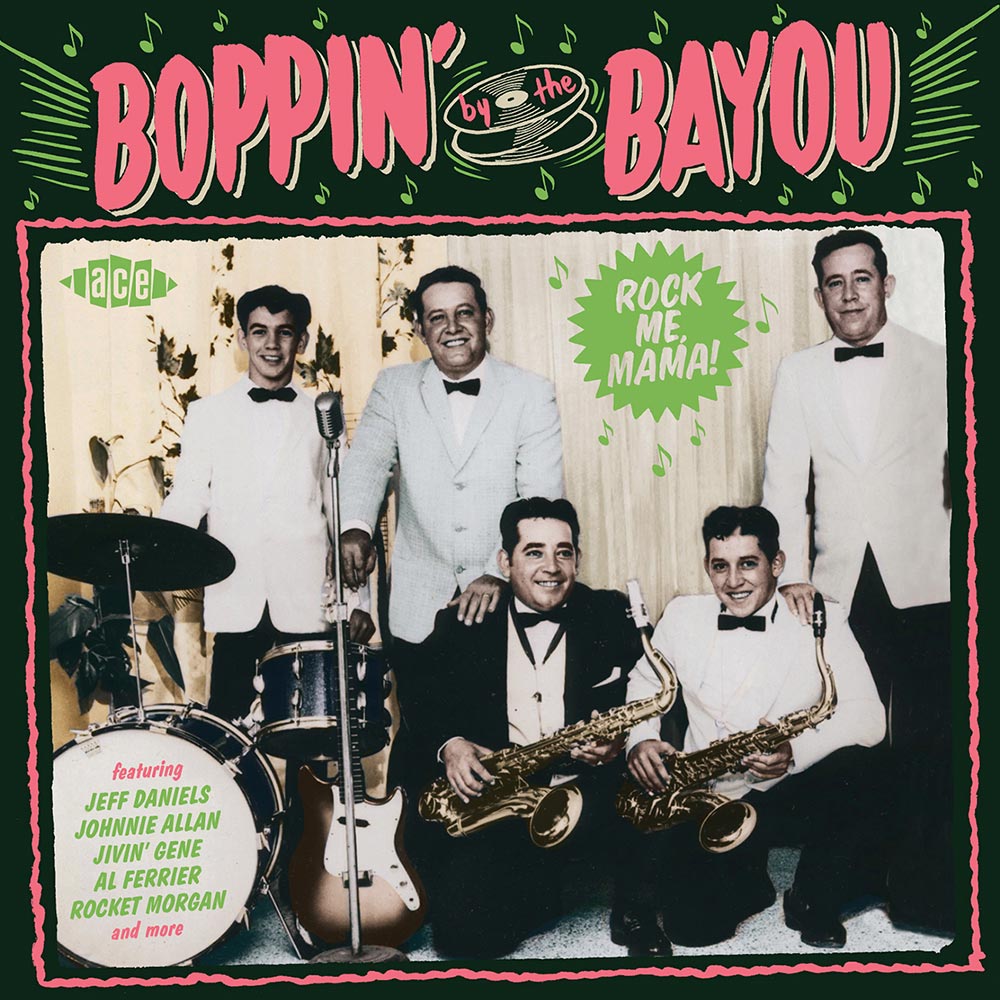
That man was Ian Saddler, the compiler of the By The Bayou series. Along with Ace Records, Ian Saddler has been flying the flag for the music of Louisiana since August 2012. That’s when Ace Records released Boppin’ By The Bayou, Ian Sadler’s lovingly compiled retrospective of Louisiana’s musical past. Since then, Ian Saddler has continued to fly the flag for Louisiana’s illustrious musical past.
By January 2015, the tenth instalment in the By The Bayou series was released, Rhythm ‘N’ Bluesin’ By The Bayou-Mad Dogs, Sweet Daddies and Pretty Babies. Six months later, and Ian Saddler returns with the eleventh volume in the The Bayou series, Boppin’ By The Bayou-Rock Me Mama! This eagerly awaited compilation was recently released by Ace Records, and is a meaty reminder of Louisiana’s illustrious musical past.
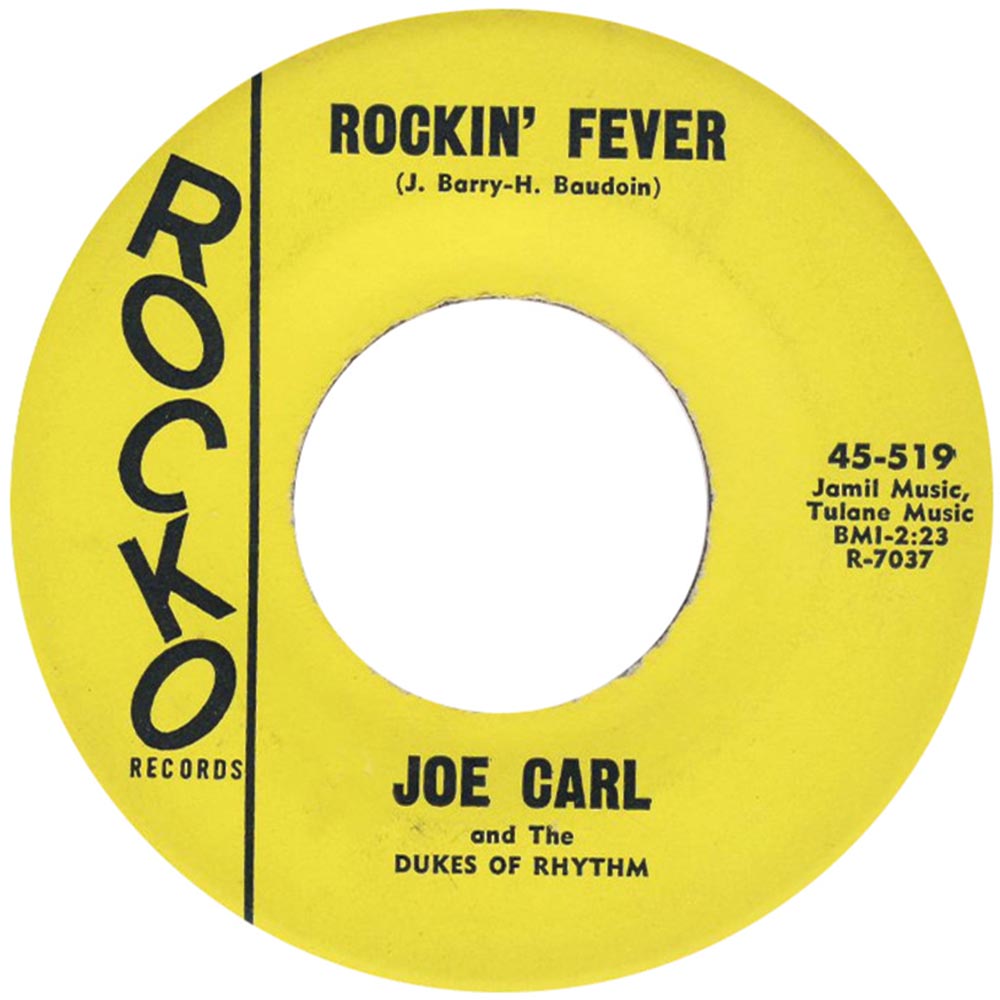
There’s a total of twenty-eight tracks on Boppin’ By The Bayou-Rock Me Mama! Familiar faces and new names sit side-by-side. This includes Jeff Daniels, Warren Storm, Joe Carl, Tony Perreau, Al Ferrier, Bennie Fruge, Billy Blank, Rocket Morgan, Johnny Jano and Collay and The Satellites. These tracks are from the vaults of J.D. Miller, Eddie Shuler and Floyd Soileau, who have provided a myriad of musical delights on previous volumes in the By The Bayou series. However, Ian Saddler has dug even deeper for Boppin’ By The Bayou-Rock Me Mama! He’s dipped into Hack Kennedy’s Big Howdy and Big B labels. This is a first, and welcome first at that. Both labels are home to some great music, some of which has found its way onto Boppin’ By The Bayou-Rock Me Mama!, which I’ll pick the highlights of.
Jeff Daniels’ Switch Blade Sam opens Boppin’ By The Bayou-Rock Me Mama! This is the first of two tracks from Jeff. Switch Blade Sam was released on Hack Kennedy’s Big Howdy label in 1959. It’s an glorious slice of rockabilly, where Jeff pays homage to The Killer. His other contribution is Uh-Huh-Huh, the B-Side to Table For Two, Jeff’s 1959 single. It was released on the Big B label, and was penned by Jeff Daniels under his real name Luke McDaniel. Although Uh-Huh-Huh has a much more understated sound, it’s still truly irresistible.
Warren Storm is one of the familiar faces on Boppin’ By The Bayou-Rock Me Mama! He’s featured many time on the By The Bayou series. In the late fifties, Warren was signed to J.D. Miller’s label. During one session, J.D. Miller had Warren cut several versions of a song he had written, Mama Mama Mama (Look What Your Little Boy’s Done). It was later released on Ernie Young’s Nashville based, Nasco Records. However, the other versions lay in J.D. Miller’s vaults. That’s until Ian Saddler uncovered this accusing and rocking version of Mama Mama Mama (Look What Your Little Boy’s Done).
In 1959, Danny Winkle recorded two sides for Hack Kennedy’s Big B label. Bad Luck, which Danny had written was chosen as the single. It was released later in 1959, with Danny Winkle becoming Danny. Sadly, the single sunk without track, despite Danny’s despairing blues tinged vocal. Following the commercial failure of Bad Luck, Danny never released another single. That was music’s loss, as he was a talented singer, who was able to bring a song to life.
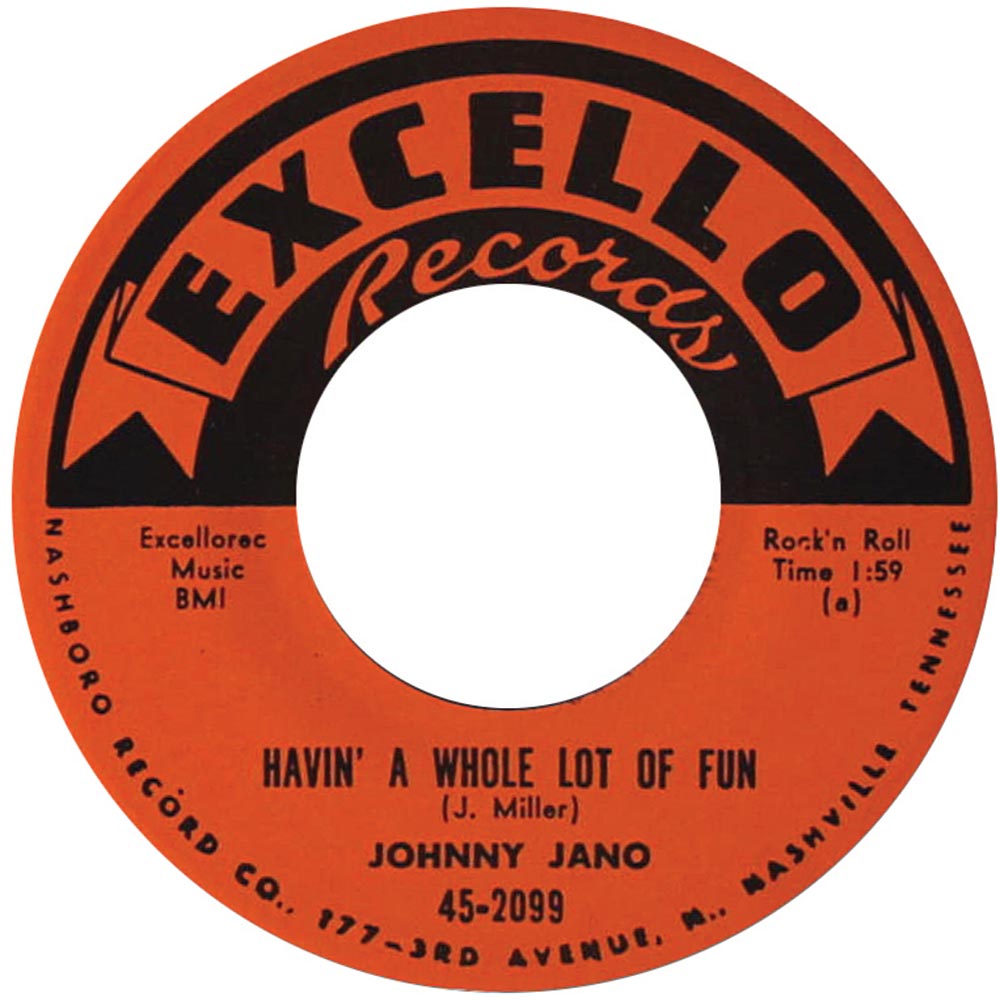
Johnny Jano is another of the artists who feature twice on Boppin’ By The Bayou-Rock Me Mama! He was discovered by J.D. Miller, who had high hopes for Johnny Jano. Ironically, it was J.D. Miller’s great rival, Eddie Schuler that Johnny enjoyed most success. However, Johnny’s two contributions date back to his days with J.D. Miller, who penned the two tracks. Havin A Whole Lotta Fun and Stop, Look And Listen show that Johnny Jano had the potential to be one of the stars of the rockabilly era.
A track Ken Lindsey recorded for J.D. Miller lent its title to the eleventh instalment in the By The Bayou series. That’s Rock Me Mama, which is a real hidden gem. It was written by Otis Hicks and J.D. Miller, then recorded at J.D. Miller’s studio. Sadly, it was never released until 1983, when it made its way onto a compilation. Thirty-two years later, and Rock Me Mama makes a welcome return, and is a reminder of one of the forgotten men of rockabilly, Ken Lindsey.
Al Ferrier features twice on Boppin’ By The Bayou-Rock Me Mama! That’s fitting, as Al Ferrier passed away on 6th January 2015, aged seventy-nine. When Al was just twenty-eight, he released You Win Again as a single. This was a song that Al had written. It was released on the Zynn label, and is a reminder of one of rockabilly’s great names. Twenty years after the release of She Left Me, Love Me Baby (Kiss Me Baby) featured on Let’s Go Boppin Tonight, which was released on Flyright Records in 1983, Incredibly, Let’s Go Boppin Tonight was Al’s debut album. By then, Al Ferrier was a favourite of rockabilly fans on both sides of the Atlantic. They all mourned Al’s passing earlier this year. He leaves behind a rich musical legacy including You Win Again and She Left Me, Love Me Baby (Kiss Me Baby).
Music was in Bennie Fruge’s blood. His father owned the Fruge Piano Company. While many thought he would follow in his father’s footsteps, Bernie had other ideas. He wanted to become a musician. His breakthrough came, when he got a job playing piano at J.D. Miller’s studio. Soon, he was playing on any session where a pianist was needed. However, Bernie wanted to pursue a solo career. Eventually, J.D. Miller allowed Bennie to cut Bayou and She’s Mine, She’s Yours, which feature on Boppin’ By The Bayou Rock Me Mama! These demos allow the listener to hear Bennie’s potential as he embarked upon what was an all too brief recording career. Sadly, most of the time, Bennie spent as a session musician, with his playing gracing many of J.D. Miller’s recordings.
Nathan Abshire and The Pine Grove Boys only released a quartet of singles on the Kajun label. Their debut was Popcorn Blues, which Nathan penned. It was released in 1960, twenty-five years after Nathan’s recording debut in 1935. Sadly, not long after this, the accordion fell out fashion in Cajun music. For Nathan this was a disaster. Twenty-five years later, and Nathan who sung in French, was fronting his own band. He proudly plays his accordion on this rocky slice of zydeco.
Most people won’t be familiar with Claylel Rodney Morgan. Mention Rocket Morgan, and that’s a name that will be familiar to veterans of the By The Bayou series. He’s making his fifth appearance. Rocket was signed to the Zynn label, and released You´re Humbuggin´ Me in 1958. Take Your Choice is a track that’s never been released before. It’s a a quite beautiful piano lead ballad, that’s the perfect showcase for Rocket Morgan’s heartfelt vocal.
Johnnie Allan could’ve been a contender. There is no doubt about that. His recording career began in 1960, when Johnnie released Angel Love as a single on Mercury. This lead to Johnnie Allan recording an album, South To Louisiana. One of the tracks that didn’t feature on South To Louisiana was the irresistibly rocky I’ll Be Waiting. Belatedly, I’ll Be Waiting finds the audience it deserves. Sadly, Johnnie’s music didn’t find the audience it deserves.
By 1975, Johnnie was still making music. Johnnie had never made the big breakthrough many thought. Then in 1975, Johnnie covered Chuck Berry’s Promised Land. British DJ Charlie Gillett championed the track. While it was popular in Britain, international stardom didn’t beckon for Johnnie Allan. He didn’t replicate the success of Chuck Berry. However, Johnnie recorded many a quality cut, including I’ll Be Waiting, which is the perfect introduction to man whose not just a singer and songwriter, but an author, publisher and producer.
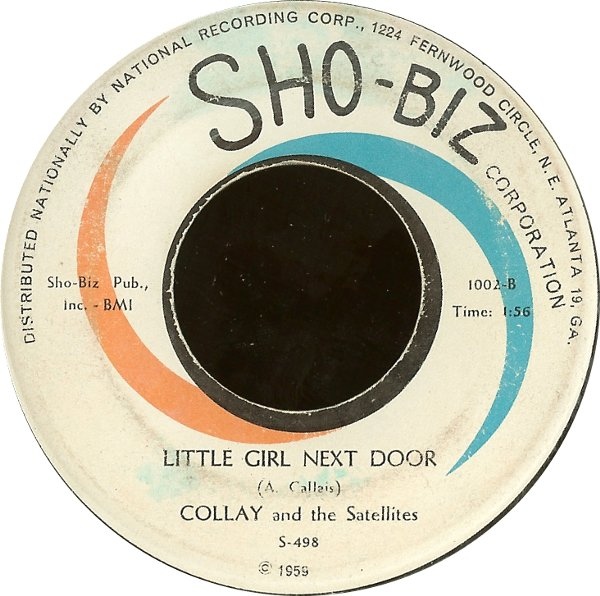
My final choice from Boppin’ By The Bayou Rock-Me Mama! is Collay and The Satellites’ Little Girl Next Door, which closes the eleventh volume in the By The Bayou series. Allan Callais formed Collay and The Satellites when he was just sixteen. Soon, Collay and The Satellites were attracting the attention of those within the music industry. They cut Last Chance and Little Girl Next Door at Cosimo Matassa’s studio. It was then released by the Sho-Biz label in 1959. On its release, Last Chance became a favourite of DJs and record buyers. Last Chance gave Collay and The Satellites a huge hit. Sadly, they were never able to replicate Last Chance, whose blistering B-Side Little Girl Next Door shows just what Collay and The Satellites were capable of. Little Girl Next Door oozes quality, and is too good to be a B-Side. It’s also the perfect way to close Boppin’ By The Bayou-Rock Me Mama!, and whets your appetite for the next volume.
Usually, compilation series runs out of steam after four or five compilations. By then, the compiler has exhausted the supply of new music. However, as with every rule, there is an exception. The exception to this rule is Ian Saddler’s By The Bayou series.
Boppin’ By The Bayou-Rock Me Mama!, which was recently released by Ace Records, is the eleventh instalment in the By The Bayou series. Still, there’s no sign of the By The Bayou running out of steam. Far from it. That’s down to compiler Ian Saddler. His dogged determination, and in-depth knowledge of the Louisiana music scene means Ian knows where all the best music was recorded.
Previous volumes of the By The Bayou series have seen Ian Saddler dig deep in the vaults of J.D. Miller, Eddie Shuler and Floyd Soileau. They’ve provided a myriad of musical delights. However, on Boppin’ By The Bayou-Rock Me Mama!, Ian Saddler decided to dig even deeper. So, He’s dipped into the vaults of Hack Kennedy’s Big Howdy and Big B labels. Both labels have yielded some musical gold. That’s the case with all the labels that feature on Boppin’ By The Bayou-Rock Me Mama!
In total, there’s twenty-eight tracks on Boppin’ By The Bayou-Rock Me Mama! There’s contributions from familiar faces and new names. They sit side-by-side on Boppin’ By The Bayou Rock Me Mama!. This includes Jeff Daniels, Warren Storm, Joe Carl, Tony Perreau, Al Ferrier, Bennie Fruge, Billy Blank, Rocket Morgan, Johnny Jano and Collay and The Satellites, who close Boppin’ By The Bayou-Rock Me Mama!, and leave you wanting more.
Hopefully, Ian Saddler is currently working on the twelfth volume of the By The Bayou series. If it’s anywhere near as good as Boppin’ By The Bayou-Rock Me Mama!, then it too, will be a must have compilation. No wonder.
It’s no exaggeration to say that Boppin’ By The Bayou-Rock Me Mama! oozes quality. That’s the case from the opening bars of Jeff Daniels’ Switch Blade Sam, to the closing notes of Collay and The Satellites’ Little Girl Next Door. For twenty-eight tracks and sixty-five minutes, Boppin’ By The Bayou-Rock Me Mama! transports you to Louisiana, where you enjoy the soundtrack the soundtrack to eighteenth state’s illustrious musical past By The Bayou.
BOPPIN’ BY THE BAYOU-ROCK ME MAMA!

LED ZEPPELIN-PRESENCE-DELUXE EDITION.
LED ZEPPELIN-PRESENCE-DELUXE EDITION.
By 1975, Led Zeppelin were at the peak of their powers. They were one of the biggest bands in the world. Every time they released an album, it was to critical acclaim and commercial success. Led Zeppelin albums sold by the million. That had been the case since Led Zeppelin released their eponymous debut album album in 1969.
When Led Zeppelin was released in January 1969, it was certified double platinum in Britain. Elsewhere, Led Zeppelin was certified gold in France, Holland and Switzerland. In Canada, Led Zeppelin sold a million copies and was certified diamond. This was almost unheard of. However, this was nothing compared to sakes of Led Zeppelin in America.
In America, Led Zeppelin sold eight million copies. This resulted in Led Zeppelin being certified platinum eight times over. Despite the success of Led Zeppelin, it wouldn’t be Led Zeppelin’s biggest selling album in America. That was still to come.
Between the release of Led Zeppelin II in October 1970, and Physical Graffiti in February 1975, Led Zeppelin were the biggest selling band in America. Their first six albums sold seventy-six million albums in America alone. This included sixteen million copies of Physical Graffiti, which became Led Zeppelin’s second most successful album. Elsewhere, Led Zeppelin continued to outsell most bands. So when Led Zeppelin announced a tour later in 1975, tickets sold out quickly.
Tickets to Led Zeppelin’s 1975 were like gold dust. It was the show everyone wanted to see. No wonder. Led Zeppelin were one of the best live bands of the seventies. They were the hardest rocking band of the seventies. The only bands that had come close, were the other the other two members of the unholy trinity of rock, Led Zeppelin, Black Sabbath and Deep Purple.
However, by 1975, Led Zeppelin stood head and shoulders above the rest in more ways than one.
Ever since the early days, Led Zeppelin were one of the hardest living bands in rock music. They embraced the rock ‘n’ roll lifestyle. Especially on tour. Led Zeppelin lived the rock ’n’ roll dream. Drink, drugs and debauchery was commonplace. So was destruction. The four members of Led Zeppelin weren’t averse to wrecking hotel rooms. Having trashed a room in the Tokyo Hilton, Led Zeppelin were banned from the chain for life. Hotel rooms weren’t just trashed. Television sets out of hotel windows. Another time, John Bonham rode a motorcycle the Continental Hyatt House, which Led Zeppelin nicknamed Riot House. However, it wasn’t just on tour Led Zeppelin embraced the rock ‘n’ roll lifestyle.
When neither touring nor recording, Led Zeppelin lived the life becoming a rock star. Members of Led Zeppelin lived in mansions, drove fast cars and in Robert Plant’s case, flamboyant clothing and expensive jewellery. Robert Plant was every inch the rock star. He enjoyed the finer things in life, including holidays to the most glamorous of destinations.
On the 5th of August 1975, Robert Plant and his family were relaxing in Rhodes. He was about to join the rest of Led Zeppelin on the 23rd of August 1975, when they embarked upon their world tour. Just like previous Led Zeppelin tours, it would prove gruelling. Especially, they way Led Zeppelin relaxed after concerts. So, Robert was enjoying himself on the beautiful Greek island. Then disaster struck.
Robert had hired a car to use during his holiday. Everything had been going well until the 5th of August 1975. That day, Robert was driving along the road when all of a sudden, the car spun off the road and crashed. He was taken to hospital where doctors discovered that Robert had broken his ankle and elbow. Once Robert had been treated, he was taken to a ward. Straight away, Robert was immediately recognised. The man in the next bed was a fan, and took to serenading Robert with a selection of Led Zeppelin songs. For the next few days, Robert Plant spent time in hospital, before being discharged in a wheelchair. Considering Led Zeppelin were meant to be heading off on tour in less than two weeks, this presented a problem.
Manager Peter Grant and the rest of Led Zeppelin realised that with Robert Plant in a wheelchair, there was no way the tour could go ahead. Led Zeppelin’s world tour was cancelled. For Led Zeppelin this was a disaster, although they never realised how much. It would take two years before Robert Plant fully recovered. By then, they would’ve released their seventh album Presence, which will be reissued by Warner Music as a Deluxe Edition. This Deluxe Edition is a two CD set.Disc one features a newly remastered version of Presence, while disc two features reference mixes of Two Ones Are Won, For Your Life, 10 Ribs and All/Carrot Pod Pod (Pod), Royal Orleans and Hots On For Nowhere. These songs were written and recorded as Robert Plant recuperated.
Following his return from Greece, Robert Plant began the lengthy period of recuperation. His convalescence began in Jersey, where Robert began writing some of the lyrics for Presence. When Robert moved Malibu, he continued to write the lyrics for Presence. By then, he was joined by Jimmy Page. The pair began to knock the lyrics into shape. Soon, the Page and Plant songwriting partnership had enough material for an album. Now they could begin rehearsing what became Presence.
Bassist John Paul Jones and drummer John Bonham joined guitarist Jimmy Page and vocalist Robert Plant at Hollywood’s SIR Studio. That’s where they spent the next month, recording the songs that became presence. After a month, Led Zeppelin flew to Giorgio Moroder’s Musicland Studios, in Munich, Germany, which was perceived as the studio to record an album. Led Zeppelin were just the latest to make their way Musicland Studios.
Led Zeppelin arrived at Musicland Studios, in November 1975. Page and Plant had penned seven of Presence’s eight tracks. The other track, Royal Orleans, was credited to the four members of Led Zeppelin. These eight tracks would feature a different Led Zeppelin.
As Led Zeppelin setup, onlookers something was missing. John Bonham’s drums and percussion were present. So were John Paul Jones four and eight string basses. Jimmy Pages’ array of guitars were setup in his corner of the studio. All Robert Plant brought was his trusty harmonica. Then it became clear what was missing, keyboards. It looked like Led Zeppelin were going to record an album without keyboards.
That’s what Led Zeppelin proceeded to do. Presence Plant and Page decided, should mark a change in Led Zeppelin’s sound. This should make Led Zeppelin’s return to hard rock. The riffs were much simpler, as Led Zeppelin moved towards guitar based jams. This was very different to some of the complex arrangements on Physical Graffiti. Another change was the lack of keyboards. Originally, they were meant to be absent. However, it was a case of needs must. Keyboards had to be used for the chorus on Candy Store Rock. Mostly, though, Presence was a much more stripped back, simpler and spontaneous album than previous Led Zeppelin albums. There was a reason for this.
Led Zeppelin had to work quickly. The Rolling Stones were scheduled to record Black and Blue. So, Led Zeppelin had to work quickly. They laid the tracks down quickly. There was an element of spontaneity in the sessions. Once the tracks were laid down, three nights were spent adding overdubs. By the 25th November 1975, Led Zeppelin’s yet unnamed album was recorded and mixed. It hadn’t been the ideal sessions for Led Zeppelin.
Usually, Led Zeppelin would spend much longer than eighteen days recording an album. However, they were against the clock.
If the album wasn’t recorded in time, Led Zeppelin would have to find another studio. They were determined not to have to do this, so they spent eighteen to twenty hours a day recording. Sometimes, members of Led Zeppelin fell asleep while mixing the album. Whoever was left awake, was left to mix the track. Somehow, Presence was recorded the album in eighteen days. Later, Robert Plant felt this showed.
With Robert Plant confined to a wheelchair, this made delivering his trademark vocals difficult. He couldn’t unleash the same power. As a result, Robert later though his vocal was “pretty poor”…and “sounds tired and strained.” Robert also felt “claustrophobic” as Led Zeppelin recorded in Musicland’s basement studios. He was also still suffering from the accident that happened three months earlier. Despite this, Robert soldiered on and the Presence sessions were finished on time.
Somehow, Led Zeppelin had managed what many thought was impossible, and recorded and mixed an album in eighteen days. All they needed now was a title and a cover.
Originally, Led Zeppelin wanted to call the album Thanksgiving. The idea was quickly forgotten, in favour of Presence. Led Zeppelin felt that this explained the powerful force and presence that surrounded the group. Now that the album had a title, Led Zeppelin asked the designers Hipgnosis to come up with an album cover.
Hipgnosis came up with an image of two people interacting within a black obelisk shaped object. This they named “The Object,” which was meant to represent the “force and presence” of Led Zeppelin. Now that the cover was complete, Led Zeppelin could release their seventh album Presence.
Before Presence was released on 31st March 1976, critics had their say about Led Zeppelin’s latest album. Previously, many critics hadn’t been fans of Led Zeppelin. It didn’t matter that they were one of the most successful bands in the world, certain critics enjoyed panning new Led Zeppelin albums. So, it was no surprise that Led Zeppelin tended to avoid the press. No wonder. Just like previous albums, Presence wasn’t well received by critics. Some critics remarked that the songs were all similar. Gone was the diversity of previous albums. Other critics called Presence inaccessible, and a difficult album to like. While Led Zeppelin had had bad reviews before, this didn’t bode well for the release of Presence.
Presence wasn’t released until 31st March 1976. The album had been delayed while the sleeve was completed. By the time Presence was released, it had racked up the highest ever advance orders in Britain. This resulted in Presence reaching number one and being certified gold upon its release, and later, was certified platinum. Across the Atlantic, Presence eventually reached number one in the US Billboard 200. It was the slowest selling of Led Zeppelin’s seven album career. Eventually, Presence sold just three million copies, and was certified triple-platinum. Considering Physical Graffiti had sold sixteen million copies, Presence was seen as a failure in America. Elsewhere, sales of Presence were slow.
In Australia, France, Japan, New Zealand, Norway, Spain and Sweden, Presence entered the top ten. Presence didn’t sell as well in Canada, where Led Zeppelin had always been popular. Gold and platinum discs were in short supply. Apart from Britain and America, Presence didn’t sell enough copies elsewhere. Nor did the single released from Presence.
Candy Store Rock was chosen as Presence’s lead single. It was perceived as one of Presence’s highlights. However, it failed to chart in any of the countries it was released in. For Led Zeppelin, Presence was a disappointing album commercially. Especially given Led Zeppelin were at the peak of their powers. Was Presence the wrong album at the wrong time? After all, music’s bastard child, punk had just been born. Did that play a part in Presence’s commercial failure? Or was it that the album had been rushed? That’s what I’ll tell you, once I’ve told you about Presence.
Led Zeppelin open Presence with Achilles Last Stand, a ten and a half minute epic that was inspired by Robert’s visit to, and experiences in, Morocco. It’s the longest song in the Led Zeppelin back-catalogue, and a song of two parts. From an understated introduction, the arrangement literally gallops along. Crucial to this galloping sound, is John Paul Jones’ eight-string bass and John Bonham’s drums. They become one, and drive the arrangement along. They’re joined by bursts of blistering guitar riffs. Sometimes, they’re multi-tracked, with twelve layers of guitars adding an orchestral twist. The other component part to Achilles Last Stand is Robert’s vocal. Sadly, it lacks the strength of earlier albums. That can be forgiven, as he manfully delivered the lyrics from his wheelchair. Bursts of vintage Robert Plant shine through, as Led Zeppelin always the innovators, showcase their new sound, which would result in the New Wave of British Heavy Metal.
Slowly and dramatically, the rhythm section and searing guitars combine on For Your Life. Robert vamps, and unleashes a venomous vocal. Anger, frustration and fury fill his vocal, as he sings of “the city of the dammed.” That’s Los Angeles, after a blizzard of cocaine resulted in numerous casualties among its musical community. As Robert delivers one of his best, and most emotive vocals, the rest Led Zeppelin jam. The rhythm section provide the foundation for Jimmy’s guitar masterclass. It might not be the most complicated song he’s played, but his contribution makes the song. His playing is no frills. There’s no showboating, as he unleashes machine gun licks. It’s as if he’s happy to let Robert’s vocal takes centre-stage, as he fires off a warning shot about the dangers of cocaine within L.A.’s music scene.
Royal Orleans is allegedly, about an unwitting encounter John Paul Jones had with a transvestite in the Royal Orleans Hotel, in New Orleans. Not knowing she was a he, John invited them upstairs. They smoked a joint, and fell asleep. The only problem was that the transvestite had a join in their hand, and the room burnt down. The song tells the story. Blistering, machine gun licks join with the rhythm section and Robert’s vocal. He struts his way through the song, recovering some of his usual power. Crystalline guitar licks, hissing hi-hats and pounding drums join with percussion. They provide the backdrop for Robert as he fires of the warning shot; “be careful how you choose it,” and later; ”poor whiskers set the room alight.”
From their early days, Led Zeppelin found inspiration in the blues music. That’s the case with Nobody’s Fault But Mine. Its roots can be traced back to Robert Johnson’s Hellhound On My Trail. However, Led Zeppelin eschew the blues, and kick loose, delivering one of the hardest, rockiest songs of their seven album career. Straight away, waves of scorching, searing guitars assail the listener. Robert vamps and wails, before the rhythm section make their presence felt. Soon, Robert seems to have regained some of his power. He delivers a tormented vocal, admitting: “it’s Nobody’s Fault But Mine.” Robert then blows a mean blues harp. Behind him, Led Zeppelin are in the rockiest of grooves. For six minutes, Led Zeppelin are at their heaviest and rockiest, delivering a blistering performance,
Candy Store Rock was chosen as the lead single from Presence. Led Zeppelin play the song as if it’s a rock ’n’ roll number. In doing so, John Bonham and Jimmy Page eschew power. Instead, their performances are controlled. Robert is transformed into an old rock ’n’ roller. His lyrics seem to have been inspired by old Elvis Presley songs. Although quite different from previous tracks, it shows another side to Led Zeppelin.
Hots On For Nowhere finds a frustrated Robert Plant make his feelings known about Jimmy Page and Led Zeppelin’s manager, Peter Grant. After a stop start introduction, the rhythm section and searing guitars accompany Robert’s vocal. Straight away, Robert’s vocal lacks the power of previous albums. It’s weak, but still the track takes on a melodic sound. Later, la-la-la harmonies are added. Then Jimmy Page steps up and steals the show with some of crystalline licks. They literally cut through the arrangement. This seems to inspire Robert. Along with the harmonies, the track takes on a singalong, anthemic sound.
Bookending Presence is Tea For One, a nine minute track. It seems fitting that epics bookend Presence. Straight away, Led Zeppelin throw a curveball. It looks as if they’re about to unleash a vintage slice of rocky music. However, they then slow the arrangement down, and it takes on a hypnotic, spacious and bluesy sound. The rhythm section leave space for Jimmy’s searing, soaring, crystalline licks. Deliberately, he plays each note with care. After nearly two minutes, Robert’s vocal enters. It’s full of pain and hurt, and can almost be described as pained. He sounds as if he’s been homesick and lonely while on tour. Occasionally, the arrangement has taken on a harder and rockier sound. Mostly, though, Tea For One is a dramatic epic where blues and rock unite seamlessly, as Led Zeppelin keep the best until last.
While Presence failed to match the commercial success of Led Zeppelin’s six previous albums, there are several explanations for this. The first is that Led Zeppelin returned to the studio too soon. With the tour having been cancelled, this gave Led Zeppelin the opportunity to record their seventh album. However, it wasn’t well planned.
Robert Plant was still recovering from a broken ankle and elbow. He was unable to walk. This resulted in Robert Plant delivering his vocals from a wheelchair. For such an expressive and powerful vocalist, this was never going to work. Robert later admitted this, saying his vocals were “pretty poor”…and “sounds tired and strained.” This shows on Presence, with Robert never quite unleashing his trademark powerhouse vocal. However, this wasn’t the only problem with the recording of Presence.
Having rehearsed Presence in Hollywood’s SIR Studio, Led Zeppelin flew to Munich. Like many bands and artists, they decided to record at Giorgio Moroder’s Musicland Studios. This was the fashionable place for bands to record. Everyone from Donna Summer to David Bowie and Deep Purple had recorded their. However, Led Zeppelin knew they had only eighteen days to record and mix Presence. Still, they decided that was the studio for them. In the end it backfired.
With only eighteen days of studio time, the recording of Presence was rushed. Whereas Led Zeppelin usually spent time honing an album, they quickly laid down the seven tracks. They then pulled several all-nighters, mixing Presence. Members of Led Zeppelin fell asleep at the mixing desk. The last man standing was left to mix the track. For Led Zeppelin, and especially Jimmy Page who produced Presence, this can’t have been satisfactory. Sometimes, it shows that Presence was recorded quickly. Mostly, Led Zeppelin get away with it. However, not everyone liked Led Zeppelin’s new sound.
Led Zeppelin had decided to adopt a heavier, stripped back sound. Presence saw Led Zeppelin return to hard rock. The riffs were much simpler, as Led Zeppelin moved towards guitar based jams. This was very different to some of the complex arrangements on Physical Graffiti. Another change was the lack of keyboards. For many critics and record buyers, they didn’t like what they heard.
As a result, Presence only sold three million copies in America. This was thirteen million less than Physical Graffiti. Presence was the least successful album of Led Zeppelin’s seven album career. For Led Zeppelin, this was a shock to their system. Surely, they weren’t yesterday’s men?
According to a new breed of “musicians,” that was the case. Punk had just been born, and the pantomime villain of music was trash talking. The punks called groups like Led Zeppelin, Deep Purple, Black Sabbath, Yes and King Crimson yesterday’s men. Their music represented the past. It had had its day. Now punk was the future. That obviously wasn’t the case. Talk is cheap, and the importance of punk has always been overstated. It certainly wasn’t going to stop people buying albums like Presence. The problem with the failure of Presence lay elsewhere.
Mostly, the failure of Presence was down to trying to record an album in eighteen days, while the lead singer was confined to a wheelchair. Then there was the sudden change of style. Led Zeppelin regressed to the hard rock of their early days. Gone was the diversity of previous albums. Acoustic tracks and anthems were nowhere to be seen. Instead, Presence featured Led Zeppelin at their hardest and rockiest. This alienated many record buyers. However, there’s another factor to consider.
What didn’t help, was that Led Zeppelin’s previous album, Physical Graffiti was a stonewall classic. It sold sixteen million copies. Following up Physical Graffiti was almost impossible. For six albums, Led Zeppelin could do no wrong.These six albums sold seventy-six million copies in America alone. Obviously, this success might not last forever. One day, Led Zeppelin would release an album that wouldn’t sell as well their previous albums. That just happened to be Presence. This could’ve been avoided if Led Zeppelin had taken more time to write and record their seventh album. Maybe then, Led Zeppelin might have had the third diamond certified album of their career? That wasn’t to be, and Led Zeppelin’s seventh album Presence, which sold three million copies in America, was perceived as a commercial failure. Despite that, Presence is one of the most underrated albums of Led Zeppelin’s career, which played a part in launching the New Wave of British Heavy Metal.
LED ZEPPELIN-PRESENCE-DELUXE EDITION.

VAN HALEN-VAN HALEN, VAN HALEN II, WOMEN AND CHILDREN FIRST, FAIR WARNING AND DIVER DOWN-REMASTERED.
VAN HALEN-VAN HALEN, VAN HALEN II, WOMEN AND CHILDREN FIRST, FAIR WARNING AND DIVER DOWN-REMASTERED.
In the history of rock ’n’ roll, Van Halen are one the most successful bands. They released twelve studio albums between their 1978 debut Van Halen, and their 2012 swan-song A Different Kind Of Truth. These albums sold an incredible 50.5 million copies in America alone. Four of Van Halen’s albums topped the US Billboard 200 charts. Van Halen were one of the biggest bands in planet rock. Rock ’n’ roll’s great survivors had outsold and out-rocked two generations of bands.
That too many people, was incredible. Van Halen were a notoriously hard living band. They burnt the candle at both ends, replicating the excesses of Led Zeppelin, Black Sabbath and Deep Purple. Just like Icarus, members of Van Halen sailed to close to the sun. Unlike Icarus, Van Halen lived to tell the tale, and in the process, released some of the best rock of a generation. That was the case from Van Halen released their debut album Van Halen in 1978.
When Van Halen released Van Halen in 1978, it wasn’t well received by critics. That’s somewhat ironic, as Van Halen reached number nineteen in the US Billboard 200. Gradually, critics changed their minds about Van Halen. Suddenly, they began to regard Van Halen as one of the best debut albums in the history of rock ’n’ roll. That’s the case today, with critics hailing Van Halen as a classic, and one of the greatest debut albums ever released. That’s why it’s fitting that Rhino are reissuing a remastered version of Van Halen on 10th July 2015.
However, it’s not just Van Halen that Rhino are reissuing. Instead, Van Halen’s first five albums have been remastered and will be reissued on 10th July 2015. These five albums were released between 1978 and 1982. During this period, Van Halen were one of the hardest working and successful bands in the world. Having released Van Halen in 1978, they followed this up with Van Halen II in 1979. As a new decade dawned, Van Halen released Women and Children First in 1980, then Fair Warning in 1981 and and Diver Down in 1982. Each of these albums have been remastered, and document the first five years of Van Halen’s recording career. By then, Van Halen were already an experienced band.
The Van Halen story began in the early seventies, when brothers, Eddie and Alex Van Halen had formed a band. Like many bands, they found it difficult to settle on a name. Initially, they were called The Broken Combs, then changed the name to The Trojan Rubber Co. By then, The Trojan Rubber Co. had a settled lineup.
Their lineup featured Alex on drums and Eddie on guitar. They were joined by bassist Mark Stone and vocalist David Lee Roth, who they had hired a sound system from. Eddie had initially failed the audition. However, Eddie and Alex were realists. Money was tight, so if they brought David onboard, they would save having to hire a sound system. They also thought that David might improve as a vocalist. However, in 1974, The Trojan Rubber Co. changed its name and its lineup.
1974 was a pivotal year for The Trojan Rubber Co. By then, bassist Mark Stone had been replaced by bassist Michael Anthony. His audition was unorthodox. Only after Michael took part in an all night jam session, was he hired. So, Michael left local band Snake and joined The Trojan Rubber Co. Soon, The Trojan Rubber Co. changed its name to Mammoth, and then Van Halen. For the next three years, Van Halen spent honing their sound.
Van Halen played wherever they could. Backyard parties, clubs and dive bars, they weren’t proud. Far from it. They certainly were loud. Too loud some thought.
When Van Halen went to audition at Gazzarri’s, a bar on Sunset Strip, that was down on its luck, the owner Bill Gazzarri, told them they were “too loud, and refused to hire them.” However, Van Halen’s new managers stepped in.
Mark Algorri and Mario Miranda had just been installed as Van Halen’s managers. They had also just taken over the booking at Gazzarri’s. So, Van Halen were installed as the house band. Not long after this, Van Halen entered the studio for the first time.
The four members of Van Halen headed to Cherokee Studios, which had recently housed Steely Dan. At Cherokee Studios, Van Halen recorded their demo tape. It would become their calling card, and see them play some of L.A.’s top clubs, including the famous Whisky-A-Go-Go.
Soon, Van Halen were a permanent fixture in L.A.’s top clubs. That’s where they continued to hone their sound. It’s also where they came to the attention of Kiss’ Gene Simmons.
Gene Simmons had heard good things about Van Halen. So, he went to check out Van Halen. According to what he had heard, they were one of the rising stars of L.A.’s music scene. When Gene Simmons arrived at the Gazzarri club in the summer of 1976, he was won over by Van Halen. He knew they were going places.
So, Gene Simmons took Van Halen to Village Recorders in L.A. to produce a new demo tape. Overdubs then took place at Electric Ladyland in New York. Things were looking good for Van Halen. The only thing Van Halen baulked at, was Gene’s suggestion to change the band’s name to Daddy Longlegs. That was a step too far. The next step was for Gene to take the newly recorded demo tape to Kiss’ management.
When Kiss’ management heard the demo, they were pretty disparaging about Van Halen. According to Kiss’ managers, Van Halen “had no chance of making it.” These words would come back to haunt them, after Van Halen sold over 50.5 million albums in America alone. However, with Kiss’ management not interested in signing Van Halen, Gene Simmons bowed out of the story. He would be replaced a year later by Mo Ostin and Ted Templeman.
Down but not out, Van Halen returned to the club circuit. For the next year, they continued to hone their sound on the club circuit. One night, in the middle of 1977, Van Halen were playing at the Starwood in Hollywood. There wasn’t much of an audience. However, little did Van Halen know, that two very special guests were in the audience, Mo Ostin and Ted Templeman of Warner Bros. Records. The pair liked what they heard and less than a week later, Van Halen had signed to Warner Bros. Records. Mo Ostin dispatched Van Halen to Sunset Sound Records with producer Ted Templeman, where recording of Van Halen I began.
Van Halen.
Like many bands recording their debut album, Van Halen were fearless. They had no apprehension. Mind you, this wasn’t exactly a new experience. Van Halen had been in studios before, recording two different demo tapes. However, this was for real. The band had written nine tracks. The other two were covers of The Kinks’ You Really Got Me and John Brim’s Ice Cream Man. These eleven tracks would eventually become Van Halen’s debut album, Van Halen.
Recording of Van Halen began in the middle of September 1977. Van Halen’s rhythm section of drummer Alex Van Halen and bassist Michael Anthony set about proving the album’s pulsating heartbeat. A week was spent recording Eddie’s guitar parts. Another two weeks were spent recording David’s vocals and the backing vocals. By early October 1977, recording of Van Halen was all but complete. The decision was made not to do much in the way of over-dubbing. This meant Van Halen was much more like hearing Van Halen live. How would critics respond to this?
Before the release of Van Halen, critics had their say. For everyone at Warner Bros. Records, they held their breath. Back in 1978, critics could be venomous. It was hardly rock critic’s finest hour. They were in the throes of a love affair with punk. Many critics took great pleasure in trashing rock albums. The critics didn’t hold back when it came to Van Halen. Most of the reviews were negative. One of the worst reviews came from the so called doyen of critics, the contrarian Robert Christgau. The equally contrarian Rolling Stone were not fans of Van Halen. At least they admitted that Van Halen were going places. Mostly, the reviews panned Van Halen. However, soon, critics would be eating their words.
When Van Halen was released on 18th February 1978, it began climbing the charts. Eventually, it reached number nineteen in the US Billboard 200 charts. This was just the start of the rise and rise of Van Halen, who critics had changed their mind about,
Gradually, critics changed their minds about Van Halen. Suddenly, they began to regard Van Halen as one of the best debut albums in the history of rock ’n’ roll. That’s the case today, with critics hailing Van Halen as a classic, and one of the greatest debut albums ever released. From that album, a trio singles were chosen.
Three singles were released from Van Halen. A cover of The Kinks’ You Really Got Me reached number thirty-six in the US Billboard 100. Runnin’ With The Devil Stalled at number eighty-four in the US Billboard 100. The final single released from Van Halen was Ain’t Talkin’ ’bout Love. It failed to chart. While the singles failed to replicate the success of Van Halen, it showcased the band at their hard rocking best.
Literally, Van Halen strut and swagger through the eleven tracks on their debut album Van Halen. It’s no surprise that rock and heavy metal fans were won over by Van Halen. It’s a track full of some of Van Halen’s biggest songs, including Runnin’ With The Devil, Eruption, You Really Got Me, Ain’t Talkin’ ‘Bout Love, Jamie’s Cryin’ and Ice Cream Man. Van Halen’s rhythm section of Alex and Michael provide the backdrop to Eddie’s blistering guitars and David’s lived-in vocal. From the opening bars of Runnin’ With The Devil, right through On Fire, Van Halen win friends and influence people. The band who just a year ago, were being hailed L.A.’s best bar band, were on their way to becoming a one of the biggest bands on planet rock.
Van Halen II.
When Van Halen entered Sunset Sound Recorders, in Hollywood, on 11th December 1978, the the four members of the band must have wondered what had happened in the last ten months? They had gone from bar room band, to a million selling rock band. All of a sudden, they were one of the biggest bands in the America. They were being touted as the saviour of American rock. This was hard to comprehend. It also meant that Van Halen were under pressure to record a fitting followup to Van Halen.
Recording of what became Van Halen II began on 11th December 1978. Nine of the ten tracks were penned by Van Halen. Many of the tracks weren’t new songs. Instead, they featured on the Gene Simmons’ sessions. However, given Van Halen were under pressure to record their sophomore album, it’s no surprise that they chose to dust off these songs. The other track chosen for Van Halen II was Clint Ballard Jr.’s You’re No Good. These ten track were produced by Ted Templeman. By January 1979, Van Halen II was complete, and ready for release.
Given the negative reviews of their debut album, the four members of Van Halen must have awaited the reviews of Van Halen II with bated breath. Mostly, reviews of Van Halen II were positive. That’s apart from the “usual suspects,” who still, failed to be won over by Van Halen. They were in the minority. The majority of critics were impressed by Van Halen II’s upbeat, feel good sound. Especially tracks like Dance The Night Away and Beautiful Girls, which some critics referred to Van Halen II as perfect party music. One track however, was very different to the rest.
This was the instrumental, Spanish Fly. It was perceived as the followup to Eruption on Van Halen. Spanish Fly however, is only a minute long, and featured Eddie Van Halen on an acoustic guitar. Rather than fingerpick, he uses a plectrum. This makes things doubly hard. Despite this, he delivers a guitar masterclass. Eddie deploys a variety of techniques, including finger tapping and tremolo picking. Those who had marvelled at Eruption, would be spellbound by Eddie’s performance on Spanish Fly.
That would be the case with Van Halen’s performance on Van Halen II. When Van Halen II was released on March 23rd 1979, copies of Van Halen II sold quickly. It was one of 1979s must have rock albums. Soon, Van Halen two reached number six in the US Billboard 200. Eventually, it sold five million copies in America, and was certified platinum five times over. Across the border, Van Halen II was certified double platinum in Canada. Meanwhile, in France Van Halen II was certified gold. It seemed Van Halen could do no wrong.
While that was the case with Van Halen’s first two albums, their singles were selling as well. While Dance The Night Away reached number fourteen in the US Billboard 100, Beautiful Girls stalled at number eighty-four. Just like many other rock bands before them, Van Halen looked like being an album’s band. Maybe that would change with their third album?
Women and Children First.
Just a year after Van Halen began recording their sophomore album, the band began work on their third album, Women and Children First. It marked the beginning of a new chapter in the Van Halen story.
On Van Halen’s first two albums, Van Halen had added cover versions. This included a cover of The Kinks’ You Really Got Me and John Brim’s Ice Cream Man on Van Halen. Then on Van Halen II, Van Halen covered Clint Ballard Jr.’s You’re No Good. However, when recording of Women and Children First began in December 1979, cover versions were a thing of the past.
Women and Children First, Van Halen’s third album was their first album featuring just songs written by the four members of the band. Maybe Van Halen had realised that putting cover versions on albums was costing the band royalties? There was certainly no need to resort to cover versions? The four members of Van Halen were talented songwriters, capable of writing their own material. So when Van Halen entered the studio to record Women and Children First, they came with ten new songs they had penned. This however, wasn’t the only change that became apparent.
As recording of Women and Children First began, onlookers in the studio realised that Van Halen’s music was becoming heavier. This wasn’t just a stylistic change, and to some extent, a thematic one. Some of Van Halen’s later songs had a degree of darkness. Mostly, though, Van Halen were still the same hard rocking, good time band. However, what became apparent was that their way of recording was changing.
Unlike Van Halen and Van Halen II, Women and Children First saw Van Halen rely more upon overdubs. Backing vocals weren’t used as extensively. They were on Could This Be Magic?, and Nicolette Larson was drafted in to sing the choruses and backing vocal. This was the one and only time a female backing vocalist featured on a Van Halen album. Another first was the keyboard driven And the Cradle Will Rock. Although it sounds like a guitar, it’s a Wurlitzer electric piano with a phase shifter used to transform the sound. It seemed that Van Halen had the confidence to experiment more on Women and Children First. Given that Van Halen were working with such an experienced producer as Ted Templeman, this was the perfect opportunity to try new things. He could show Van Halen how to make their ideas work.
Despite the stylistic change and change in their way of recording, producer Ted Templeman didn’t try to reign in Van Halen. He must have known that Van Halen wanted to broaden their horizons musically. They had always been a hard rocking band, and weren’t willing to sacrifice what many felt was their true sound. Maybe Van Halen had sacrificed some of their true sound on their first two albums. Now that they had their foot in Warner Bros’ door, they could show their true colours. This may not have pleased everyone.
Van Halen finished recording Women and Children First in February 1980. At last, those within Warner Bros. could hear Women and Children First. Some were aware of Van Halen’s music changing stylistically. This didn’t please everyone. Van Halen were one of Warner Bros.’ biggest success stories. By changing their style, this could alienate their audience. Not everyone who had bought Van Halen, and Van Halen II, would be receptive to a heavier Van Halen. Would this be the case within Warner Bros?
Once the executives at Warner Bros. heard Women and Children First, they were able to form an opinion. Most of those whose opinion mattered liked Van Halen’s new sound. They realised that Van Halen wanted to evolve as a band. They couldn’t keep rehashing Van Halen, and Van Halen II. Instead, they had to move forward. However, it was a big risk. Van Halen, and Van Halen II were million selling albums. There was a lot at stake. If Women and Children First flopped it would prove costly.
Van Halen had two hurdles to overcome before they would know if Women and Children First had been a success. The first was the critics.
As the critics their say, everyone at Warner Bros. and the four members of Van Halen awaited the verdict. Eventually, the reviews were published. Many critics remarked upon Van Halen’s heavier sound. They also noted that the four members of Van Halen had written the ten tracks on Women and Children First. Although Women and Children First was quite different from Van Halen II, it was well received by critics. They felt Van Halen were maturing as a band and songwriters. Proof of this were tracks like Could This Be Magic? and Everybody Wants Some!!, which reinforced Van Halen’s reputation and credentials as a good time party band. Having cleared the first hurdle, now record buyers had the final say.
Only if Women and Children First sold in similar quantities to Van Halen and Van Halen II could the album be declared a success. Women and Children First was released on March 6th 1980. Straight away, Women and Children First was selling well. Soon, Women and Children First reached number six in the US Billboard 200. Eventually, it sold three million copies in America, and was certified triple-platinum. Elsewhere, Women and Children First was certified double platinum in Canada and gold in France. As Van Halen and everyone at Warner Bros. breathed a sigh of relief, still Van Halen weren’t selling singles in vast quantities.
The only single released from Women and Children First, was And The Cradle Will Rock. It stalled at number fifty-five in the US Billboard 100. Van Halen it seemed, were never going to be a singles band. However, what really mattered was that Women and Children First had sold well. That was certainly the case. Worldwide, Women and Children First sold over three million copies. Van Halen’s decision to change direction had paid off.
Fair Warning.
By the time that Van Halen began recording their fourth album, Fair Warning, Van Halen were a divided band. The band’s two main men were at loggerheads. David Lee Roth wanted Van Halen to return to the sound of the first two album. He wasn’t in favour of the heavier sound, which he felt didn’t appeal to as many people. The proof of this was the sales of Women and Children First.
Eventually, Women and Children First sold over three million coupes. Van Halen eventually sold ten million copies and Van Halen II five million copies. David felt it Van Halen continued with the heavier sound, they risked alienating record buyers. Van Halen co-founder didn’t agree.
Eddie wanted Van Halen to continue their heavier sound. Women and Children First was the first time they showcased this sound. He felt that the way forward was longer songs with much more complicated song structures. This would allow Van Halen to shine as musicians, especially Eddie, who was seen one of the best guitarists of the late-seventies and early eighties. Given Eddie was one of the best guitarists of his generation, he felt his guitar playing should take centre-stage. David Lee Roth disagreed, and disagreed with Eddie’s other proposal.
The other change Eddie proposed was a continuation of the darker themes that Van Halen began exploring on Women and Children First. For David Lee Roth, this wasn’t what Van Halen were about. They were, in many people’s eyes, a good time rock ’n’ roll band. However, that wasn’t the direction Eddie wanted Van Halen to take. Instead, it looked as if Eddie wanted Van Halen to become the Led Zeppelin of the eighties. With David and Eddie at loggerheads, work began on Van Halen’s fourth album Fair Warning.
Just like Women and Children First, Van Halen penned the ten tracks on Fair Warning. Recording of these ten tracks began in late 1980. Quickly, it became apparent that Eddie’s ideas had prevailed. The music was fast, rocky and sometimes dark. This allowed Van Halen’s rhythm section to showcase their skills Fair Warning. Especially Eddie, who unleaded a series of fierce, blistering solos on tracks like Mean Street, Hear About It Later, Unchained and So This Is Love? David who seemed to have pst the argument, added his trademark vocals. Producer Ted Templman had the job of bringing Fair Warning together. The result was the hardest rocking album of Van Halen’s career, Fair Warning.
Before Fair Warning was released on April 29th 1981, the critics had their say on Van Halen’s hardest rocking album. Reviews of Fair Warning were mixed. Most of the critics embraced Fair Warning. They were impressed by Eddie’s virtuoso skills. Aided and abetted by his box of sound effects, Eddie unleashes a series of blistering solos. Along with the other two members of the rhythm section, he was key to Van Halen’s new, hard rocking style. Together, they provided the backdrop for David’s vocals. He brought to life the lyrics, as Van Halen continued to evolve musically.
It seemed Fair Warning had won over most of the critics. However, while most of the reviews of Fair Warning praised Van Halen’s fourth album, there were still some doubters. They felt that Van Halen were heading down the wrong road. On Women and Children First and Fair Warning, Van Halen’s music had become much harder. This had cost Van Halen precious sales on Women and Children First. Would this be the case with Fair Warning?
On the release of Fair Warning on 29th March 1981, sales were slow. Fair Warning was the slowest selling Van Halen album of their four album career. Eventually, it reached number six in the US Billboard 200. While this was the same as Van Halen II and Women and Children First, sales were way down. Fair Warning sold “just” two million copies. This was a million less than Women and Children First, and three million less than Van Halen II. To make matters worse, none of the singles charted.
Four singles were released from Fair Warning during 1981. The first was So This Is Love. It failed to chart. So did Mean Street, Push Comes To Shove and Unchained. This wasn’t unexpected, as Van Halen weren’t a singles band. However, it further reinforced David Lee Roth’s argument.
Given that Fair Warning was Van Halen’s slowest selling and least successful album, many onlookers wondered whether Van Halen would rethink their sound. It seemed record buyers weren’t embracing Van Halen heavier sound. Maybe it was time to come round to David Lee Roth’s way of thinking?
Diver Down.
After the release of Fair Warning, Van Halen headed out on tour. They spent months promoting Fair Warning. Still, Fair Warning sold slowly, and failed to match the sales of previous albums. Once the tour was over, Warner Bros. started pressurising Van Halen into recording their fifth album.
That wasn’t what Van Halen wanted to hear. They wanted to take some time out, and then spend time writing and recording their fifth album. That wasn’t to be though.
Not long after the Fair Warning tour ended, David Lee Roth came up with an idea. He wanted Van Halen to record a single and release it just after the New Year. He had the very song in mind, Roy Orbison’s Oh, Pretty Woman. While this wasn’t the most obvious choice for a single, the rest of Van Halen agreed.
So the four members headed to Sunset Sound and recorded their cover of Oh, Pretty Woman. After working out an arrangement with producer Ted Templeman, Van Halen recorded Oh, Pretty Woman. Once it was finished, Oh, Pretty Woman was released early in the New Year.
Just after New Year 1981, Van Halen’s version of Oh, Pretty Woman was released. Van Halen weren’t known as a singles band. However, Oh, Pretty Woman succeeded where better Van Halen songs failed, and reached number twelve in the US Billboard 100 and number one on the US Mainstream Rock charts. Ironically, this became the most successful single of Van Halen’s career. However, the success of Oh, Pretty Woman backfired on Van Halen.
Having just enjoyed the biggest selling single of their career, Warner Bros. started pressurising Van Halen into recording their fifth album. Van Halen didn’t get the time to write and record their fifth album.
Eventually, Van Halen relented. That’s despite having been on tour for months. For the last four years, Van Halen had been recording and touring albums. It was like a merry-go-round, one that Van Halen needed to get off. Especially since the last year hadn’t been easy.
Eddie and David were still at loggerheads. Although Eddie had won the day, David had been vindicated. Sales of Fair Warning were way down. It sold a million less than Women and Children First. This was costing Van Halen and Warner Bros. money. So, Van Halen could hardly refuse Warner Bros.’ request to begin recording their fifth album. However, that wasn’t Warner Bros.’ only request.
Given Fair Warning hadn’t been as successful as previous Van Halen albums, someone at Warner Bros hit on the idea that Van Halen should include some covers on what became Diver Down. The reasoning for this was, that if people recognised some of the songs on the album, they would be more likely to by it. Especially if these songs had been hits before. So, Van Halen went in search of covers.
Having already recorded and released Oh, Pretty Woman, Van Halen got to work on their fifth album, Diver Down. In addition to Oh, Pretty Woman, Van Halen had chosen four other cover versions. This included The Kinks, Where Have all the Good Times Gone and Martha and The Vandellas’ Dancing In The Streets. They were augmented by Milton Ager and Jack Yellen’s Big Bad Bill (Is Sweet William Now) and Dale Evans’ Happy Trails. Apart from the five cover versions, Van Halen had seven new songs. Three of the songs weren’t so new.
Hang ‘Em High started life as Last Night, a track from Van Halen’s 1977 demo. Happy Trails was another song from the 1977 demos, which had been included as a joke. Now the joke was on Warner Bros. The other song was Cathedral, a song Van Halen had been playing for a couple of years. During that period, the song had continued to evolve. These three songs would become part of Diver Down, which was recorded in two studios in Los Angeles.
Recording of Diver Down began in January 1982. Two studios were used by Van Halen. The first was Sunset Sound, where Van Halen had recorded previously. Other sessions took place at Warner Bros. Recording Studios, which before the corporate rebinding, was known as Amigo Studios. At these two studios, Van Halen and Ted Templeman got to work. Things weren’t going to plan as Van Halen began recording eleven of Diver Down’s twelve songs.
During the recording of Van Halen’s previous album, Diver Down, released in 1982, David, Eddie and producer Rod Templeman had clashed. The problem was, Eddie wanted to make keyboards a prominent part of the Van Halen sound. David and Rod disagreed. Thinking that Van Halen was a democracy, the two men thought the matter was settled. They were wrong.
Despite this, Eddie went ahead and recorded much of Diver Down at his home studio. When the band heard it, it was keyboard heavy rock rubbed shoulders with Van Halen’s trademark sound. Presented with what seemed like a fait accompli, David began to reconsider his position. He was far from happy with Eddie’s sudden discovery and love of synths. For a rock ’n’ roller like David, this was sacrilege. Despite this, David and Eddie managed to work together.
Over the next three months, Van Halen worked their way through the twelve tracks. Some were easier to record than others. Sometimes, things didn’t go to plan. Some of the covers were difficult to adapt, so that they took on Van Halen’s sound. One of the most problematic was Dancing In The Streets. The problem was Eddie couldn’t work out a guitar riff. Eventually though, Van Halen figured out an their take on Dancing In The Streets. Gradually, Diver Down began to take shape. By March 1982, Diver Down was completed. It would be released on April 14th 1982.
This meant there wasn’t long before Van Halen completed Diver Down and its release on April 14th 1982. By then, some of the members of Van Halen were beginning to realise that Diver Down wasn’t their finest moment. Eddie Van Halen would later say: “I’d rather have a bomb with one of my own songs than a hit with someone else’s.” However, Van Halen had folded too quickly for a band who had already sold over fifteen million albums. They had been cajoled into recording cover versions. For the hard rocking Van Halen, this almost subservient attitude was surprising. Or was it?
When critics were sent advance copies of Diver Down, they were struck by the album cover. It portrayed the diver down flag, which is used to indicate that a scuba diver is diving within that area. If ever it was a case of “a picture paints a thousand words.” David Lee Roth explained that “there was something going on that’s not apparent to your eyes…it’s not immediately apparent to your eyes what is going on underneath the surface.” That could easily be replaced by the press and record buyers weren’t aware what was going on behind the scenes. They never knew that Van Halen were pressurised to record Diver Down. Would the pressure Warner Bros. under, could come back to bite them?
Having received advance copies of Diver Down, critics were determined to have their say. Most were impressed by Diver Down. Some weren’t enamoured with the cover versions. This was quite unlike Van Halen. However, mostly, the reviews of Diver Down were positive. Things were looking up for Van Halen.
On its release on 29th April 1982, Diver Down reached number three in the US Billboard 100. This was the highest chart position of Van Halen’s first five album. Eventually, Diver Down sold four million copies, which was double the amount of Fair Warning. This was pretty good for album that included cover versions and a trio of tracks from Van Halen’s past. However, the success didn’t stop there.
Dancing In The Street was the second single to be released from Diver Down. It stalled at number thirty-eight in the US Billboard 100. The other four singles, Secrets, Little Guitars, The Full Bug and Where Have All the Good Times Gone failed to reach the US Billboard 100. At least they reached the US Mainstream Rock charts. However, times had changed, with Van Halen having enjoyed two hit singles from Diver Down. For a band who hadn’t been known as a singles band, this was changed times for Van Halen.
That had been the case throughout the last five years. Between the release of Van Halen in 1978, and Diver Down in 1982, Van Halen had been on a musical roller-coaster. Before signing to Warner Bros., Van Halen were just a bar band, albeit the biggest and best bar band in Los Angeles. Their career had began in a blaze of glory, with Van Halen, which went on to sell ten million copies. Van Halen II then sold five million copies. Suddenly, Van Halen were one of the biggest rock bands in the world. From there, the next three years were one filled with twists and turns.
After releasing Van Halen and Van Halen II, which are considered two of Van Halen’s finest albums, the next two years saw Van Halen’s music evolve. It become harder and rockier on Women and Children First. By then, Eddie Van Halen and David Lee Roth were at loggerheads as to the future direction of the band.
While Eddie wanted Van Halen’s music to take on a harder, rockier sound, David wanted Van Halen to continue the populist sound of their first two albums. Eddie won the day. However, it proved to be a Pyrrhic victory. Sales decreased on Women and Children First. The drop in sales continued on Fair Warning, where Van Halen’s music becomes even harder and rockier. After Fair Warning sold three million less than Van Halen II, Warner Bros. decided to intervene.
Ironically, Warner Bros.’ suggestion that Van Halen combine cover versions and original material on Diver Down, resulted in the most successful album since Van Halen II. Diver Down sound four million copies. For most bands, this would’ve been a cause for celebration. Not Van Halen. They soon realised that they had folded too easily. They shouldn’t have given in to Warner Bros., as they were an experienced and successful band. If they had taken the time to write and record the album they wanted, they may have reached the scaled the same heights as their next album.
Two years later, in 1984, and Van Halen’s first five albums were well on their way to selling twenty-four million copies. However, their sixth album, 1984. was a game-changer, in more ways than one.
Van Halen’s sixth album, 1984, was proof that if Van Halen were given time to write and record an album, they could come up with something very special. 1984 was a fusion of keyboard heavy rock, combined Van Halen’s trademark hard rocking sound. Thos proved a winning combination. These two sides of Van Halen resulted in a classic album that would become the biggest selling album of Van Halen’s career.
On its release on January 9th 1984, 1984 started climbing the charts. Eventually, it reached number two in the US Billboard 200. This was the highest chart placing of Van Halen’s six album career. It also became the biggest selling album of Van Halen’s career. Eventually, 1984 sold twelve million copies. 1984 became Van Halen’s second album to be certified diamond. Elsewhere, 1984 was a huge seller.
In Canada, 1984 was certified five times platinum. Over the Atlantic, 1984 was certified gold in Britain and France. Meanwhile, 1984 was certified platinum in Germany. Van Halen had recorded the album everyone knew they were capable of. It came at a cost.
Behind the scenes, all wasn’t well within Van Halen. David Lee Roth, Van Halen’s charismatic frontman would quit after 1984. In some ways, the writing had been on the wall. David left on a high. However, maybe, Van Halen might have released an album of the quality of 1984 two years earlier?
Given the time they wanted and needed, Van Halen’s fifth album would’ve been of a similar quality. Sadly, that wasn’t the case. Instead, Diver Down was an album that Eddie Van Halen openly admitted to disliking. Eddie was quite open when he said: ”I’d rather have a bomb with one of my own songs than a hit with someone else’s.” It as obvious that he didn’t see Diver Down as his finest hour. That’s the case.
While Diver Down is a good, but not great album, it’s nowhere near as good as Van Halen, Van Halen II and Women and Children First. They’re three of the first five Van Halen albums that have been remastered by Rhino. They will reissued on 10th July 2015. The others are Fair Warning and Diver Down. Of these two albums, Fair Warning is the best of the two. However, for the newcomer to Van Halen, then s Van Halen, Van Halen II and Women and Children First are the perfect introduction to Van Halen, who were well on their way to becoming one of the biggest selling bands in rock music.
From Van Halen’s 1978 debut album Van Halen, and their 2012 swan-song A Different Kind Of Truth, the former Los Angeles bar band’s twelve studio albums sold 50.5 million copies in America alone. Four of Van Halen’s albums topped the US Billboard 200 charts. Two albums were certified diamond, having sold ten million copies. This includes Van Halen and 1984, two classic albums from Van Halen, who are still one of the biggest bands on planet rock. Van Halen are one of rock ’n’ roll’s great survivors, who have outsold and out-rocked two generations of bands.
VAN HALEN-VAN HALEN, VAN HALEN II, WOMEN AND CHILDREN FIRST, FAIR WARNING AND DIVER DOWN-REMASTERED.
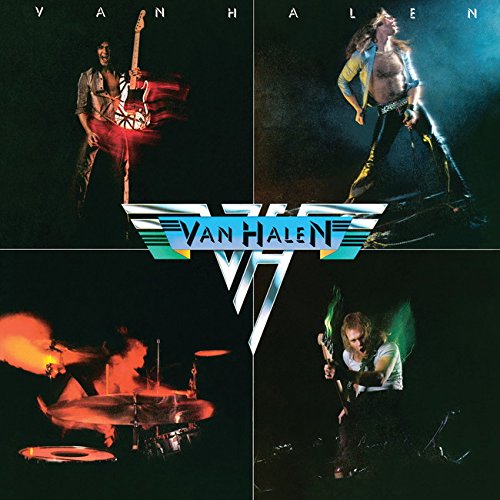

BILAL-IN ANOTHER LIFE.
BILAL-IN ANOTHER LIFE.
Just over two years ago, in March 2013, Bilal released his fourth album A Love Surreal, on BBE Music. A Love Surreal was billed as the most ambitious album of Bilal’s career. The music on A Love Surreal had been inspired by the art of legendary surrealist painter, Salvador Dali. It seemed that Bilal was intent on reinventing himself and his music. This was risky, as Bilal had just got his career back on track with Airtight’s Revenge, which was released in 2010.
Airtight’s Revenge had rejuvenated Bilal’s career, upon its release in 2010. The last few years hadn’t been easy for Bilal. Love For Sale, which was meant to be Bilal’s sophomore album, was scheduled for release in 2006, had been leaked on the internet. Interscope, Bilal’s record company pulled the release of Love For Sale. For Bilal, this was a huge disappointment, one that had him considering his future in music. Then came Airtight’s Revenge.
Airtight’s Revenge was released to critical acclaim. While it didn’t sell as many copies as Bilal’s debut album 1st Born Second, at least Bilal’s career was back on track. The man who was once the subject of a record company bidding was back.
Having rescued his career with Airtight’s Revenge, Bilal began thinking of his next album. Very few within the music industry thought that Bilal would release the most ambitious album of his career. That’s what he did though.
A Love Surreal was released in March 2013. On its release, critics hailed A Love Surreal an ambitious and groundbreaking album. Bilal’s comeback was complete, with what some critics believed was one of the best albums of his career. However, the only problem was following up such a successful album?
Just over two years later, and Bilal has returned with In Another Life. It was recently released on BBE Music, and is the his fifth album in Bilal’s career. His career began in 2001, in New York when he was the subject of a record company bidding war. However, Bilal was born and brought up in one of America’s most musical cities, Philadelphia.
Bilal Oliver Sayeed was born in Philadelphia, in 1979. That’s where he spent the first twenty years of his life. Philly’s is also where Bilal’s career began. However, it wasn’t until he moved to New York, that his career got going.
Aged just twenty, Bilal moved a hundred miles from Philly to New York. He soon began to become a familiar face within the city’s music scene. Soon, he knew artists across the hip and Nu-Soul scene, including Common, Erykah Badu and The Roots. Then when he was taking part in an after-school jam session, Bilal was discovered by Aaron Comess of the Spin Doctors. Aaron arranged for Bilal to record a demo, which was shopped to record labels. Eventually, after considering his options, Bilal signed to Inerscope Records.
Now signed to Interscope Records, Bilal began work on what became 1st Born Second. It featured contributions from the Soulquarians and saw Bilal work with producers Dr. Dre and J. Dilla.1st Born Second proved was critically acclaimed and commercially successful, reaching number thirty-one on the US Billboard 200 and number ten in the US R&B Charts. Eventually, 1st Born Second sold 319,000 copies. That wasn’t the end of the success of 1st Born Second. Bilal enjoyed his first it single.
Three singles which were released from 1st Born Second, Fast Lane, Love It and Soul Sista. The most successful single was Soul Sista, which reached number eighteen in the US R&B Charts and number seventy-one in the US R&B Charts. Things couldn’t get much better for Bilal. He had just enjoyed his first single and released what many consider is a landmark album.
Since then, 1st Born Second is perceived as one of the best R&B and hip hop debut albums of the past thirty years. With Bilal’s star was in the ascendancy, other artists were keen to collaborate with him. This was how Bilal spent the next few years.
Following the success of 1st Born Second, Bilal was keen to broaden his musical horizons. This lead to him collaborating with Jorge Ben, Dead Prez and Talib Kwell on a reinterpretation of Fela Kuti’s Suffering and Smiling. This was released as part of Red Hot and Riot’s well received compilation, where each artist covered a Fel Kuti song. During this period, Bilal collaborated with an eclectic selection of artists. From hip hop through jazz, R&B and Nu-Soul, Bilal worled with numerous artists. Among them, were Common, John Legend, Guru, J. Dilla, Jermaine Dupri, Jaguar Wright, Robert Glasper and Beyonce. This would give Bilal the inspiration for his sophomore album. However, Bilal’s career took an unexpected twist, which resulted in him questioning his musical future.
Bilal’s sophomore album Love For Sale was due to be released in 2006. Unlike his debut album 1st Born Second, Bilal was producing Love For Sale. The exception was Something To Hold On To, which was produced by Grammy Award winning songwriter and producer Nottz. Once Love For Sale was completed, the entire album was leaked on the internet. This resulted in Interscope shelving the album. They thought there was little point releasing an album that was already freely available. For Bilal, this proved to be a double edged sword.
He was questioning his future as a musician. It got so bad for Bilal, that he almost quit music entirely. Luckily, fans and critics alike, loved Love For Sale. Soon, Bilal was touring Love For Sale. This encouraged Bilal to continue his musical career. Four years later, came Bilal’s third album, which was aptly titled.
After Love For Sale was shelved, Bilal left Interscope. Again, Bilal collaborated with other artists. Whether it was hip hop, Nu-Soul or free jazz, Bilal was the go-to-guy. He worked with everyone from Sun Ra, The Roots, Scarface, Jaz-Z, J-Dilla and 88 Keys. Then in 2010, Bilal was ready to release his third album, the aptly-titled Airtight’s Revenge. So Bilal went look looking for a new label.
Rather than sign to another major, Bilal had signed to a smaller, independent label, Plug Research. It seemed that signing for a smaller label, with a lower profile allowed him the freedom to be slightly more experimental on his new album.
Despite deciding to experiment on Airtight’s Revenge, Bilal brought in many of the artists he’d previously collaborated with. Nottz, 88 Keys and Robert Glasper all joined Bilal for the recording of Airtight’s Revenge. While Bilal wanted to experiment, he wasn’t willing to sacrifice his trademark brand of Nu-Soul. One difference was Bilal’s decision to use effects to take detours into spacey jazz and funky jams. For Bilal, this seemed to reinvigorate his career, and allowed his to forget the frustrations of Love For Sale.
Bilal’s decision to combine the music of his past, with a more experimental sound paid off. Airtight’s Revenge was well received by critics and a commercial success. It reached number 101 in the US Billboard 200 and number twenty-one in the US R&B Charts. Nine years after his debut album 1st Born Second, Bilal was back, after the frustration of Love For Sale. However, it would be three more years, before Bilal released the followup to Airtight’s Revenge.
Three years after Airtight’s Revenge, Bilal returned with his fourth album, A Love Surreal. Bilal fused soul, funk and jazz over fourteen tracks and fifty-six minutes. This wasn’t just soul, funk and jazz as we know it, but Bilal’s bold, reinterpretation of it.
Bilal refers to A Love Surreal as: “an audio art gallery or musical museum.” His inspiration was the work of surrealist painter Salvador Dali. So, Bilal decided to challenge himself to do two things. One was to come up with a suite of music that reflected Dali’s paintings. The other challenge was to create music that investigates the many nuances of love. This twofold challenge was completed, when Bilal finished A Love Surreal.
Critical acclaim accompanied the release of A Love Surreal. Critics were won over by A Love Surreal, referring to the album as one of Bilal’s finest moments. It seemed Bilal continual quest to reinvent his music, and take it in a different direction had paid off. He had released one of his finest albums. However, given the quality of A Love Surreal, following it up wasn’t going to be easy. So Bilal brought decided to collaborate with songwriter and producer Adrian Younge.
For the recording of In Another Life, Bilal decided to bring onboard songwriter and producer Adrian Younge. The pair collaborated on In Another Life. Adrian’s addition is noticeable straight away. While Bilal’s usual jazz and soul sound is clearly apparent, Adrian gives several tracks on In Another Life a much more indie vibe. That’s to be welcomed, and gives the track a much more eclectic sound. One thing that stays the same, is the theme that runs through In Another Life.
On In Another Life, Bilal’s in a reflective mood. He ponders the uncertainty and paranoia of modern life. Throughout In Another Life, constantly, Bilal probes and questions. This results in some heartfelt, frustrated and impassioned vocals as he asks a similar question to Marvin Gaye, What’s Going On? Helping him in his search for answers, are some guest artists.
Among the are Def Jam’s Big K.R.I.T. He adds a verse on Pleasure Toy. Kendrick Lamar, whose star is currently in the ascendancy, features on Money Over Love. The third and final guest artist is Kimbra, who features on turns up on Holding It Back. It’s a song that Bilal dedicated: “to the victims of injustice all over the World.” These are just three songs of the thirteen songs on In Another World, which I’ll tell you about.
Sirens II opens In Another World, which touches on one of the album’s themes, paranoia Thunderous drums are joined by bubbling synths and the bass. They’re joined by stabs of shrieking synth. Having set the scene for Bilal, he adds lead and backing vocals. There’s a sense of despair and resignation in his voice. Especially as he sings: “sirens have come to take you away.” Meanwhile, a shimmering Fender Rhodes adds a melancholy backdrop. So do synth strings. Adding a dramatic contrast are the rhythm section and synths. Bilal meanwhile, delivers a vocal that’s full of regret and soulfulness, against a genre-melting arrangement.
Lengthy washes of Hammond organ open Star Now. Before long, the rhythm section enter, combining elements of R&B, rock and psychedelia. Bilal’s vocal is very different from the previous track. He indulges in what’s best described as vocal gymnastics. His vocal quivers, trembles and soars above the arrangement as dramatically, he delivers the lyrics. Stylistically, it’s as if Bilal has sought inspiration from old Prince, as he paints pictures with his vocal.
Slow stabs of Fender Rhodes open Open Up The Door, before the rhythm section join in. They raise the tempo as Bilal takes charge of lead and backing vocals. Soon, he’s delivering one of his best vocals. It bristles with emotion, especially when he sings: “we grow stronger every day…we’ve come to far to give up.” Later, synths strings are added. They prove the finishing touch to what sounds like a vintage slice of soul. The only difference are the drums. They’re more Nu Soul than the vintage soul that’s obviously inspired Bilal. That’s no bad thing, and allow Bilal to stamp his name on Open The Door.
As a piano opens I Really Don’t Care, the arrangement takes on a jazz-tinged sound. As the arrangement drifts along, the rhythm section accompany Bilal’s dreamy vocal. It’s reminiscent of Stevie Wonder. Proving a perfect foil for his vocal are the piano and bass. They frame Bilal’s joyous vocal as he sings of finding love second time around.
Briefly, Pleasure Toy’s introduction pays homage to Marvin Gaye’s Sexual Healing. Pounding drums combine with percussion and bass. Having set the scene for Bilal, he delivers a sultry, vamp that references Prince. Meanwhile, Big K.R.I.T. lays down a rap. By now, the arrangement has a strong eighties influence. Soul, funk, hip hop and boogie play their part in this homage to the eighties and the artist formerly known as Prince.
So far, Adrian Younge has played a huge part in In Another Life. Not only is he the producer, but is a talented multi-instrumentalist who plays many of the instruments on In Another Life. One of the instruments he plays on Satellites, is the drums. He gives them a rockier sound than on other tracks. Having laid down the drums, Adrian adds bass and washes of Hammond organ. Bilal delivers a questioning, probing vocal. Stabs of horns sound as Bilal sings: “why the hell did I get you high…why the hell did I let you run out.” As Bilal’s vocal soars above an arrangement elements of funk, R&B and Southern Soul are combined to create a track that’s funky and soulful.
Briefly, the tempo drops on Money Over Love, which features a guest appearance from Kendrick. Just drums accompany Bilal, who sounds like D’Angelo. Then producer Adrian Younge throws a curve-ball. Out of nowhere, the arrangement takes a rocky twist. Influences include the Sensational Alex Harvey Band and Prince. Later, Kendrick ups the ante, as he trades vocals with Bilal, who also adds harmonies. Hooks certainly haven’t been spared as funk, rock and soul is combined by Bilal and Kendrick.
As Love Child begins, it sounds not unlike The Beatles’ Fool On The Hill. Then it’s all change. Sharp bursts of drums drive the arrangement along and accompany Bilal’s heartfelt vocal. Subtle washes of organ and bubbling synths are added. So are female harmonies. They accompany Bilal as he sings about a man whose unable to see his “Love Child” because its mother has run away. Midway through the track, it takes another brief Beatles-esque twist. Then it’s a return to the jaunty arrangement, as this cinematic sounding track reveals the rest of its secrets.
Slowly and deliberately, Holding It Back, which features Kimbra begins. Just the rhythm section, Hammond organ and Fender Rhodes combine. This provides the perfect backdrop to Bilal’s and then Kimbra’s vocal. Their vocal are tinged with confusion and joy. They play the part of lovestruck lovers well, “not knowing which way is up.” As they deliver heartfelt, soulful vocals, they bring the lyrics to life, and are responsible for one of the highlights of In Another Life.
The soulful sound continues on Spiralling. Again, the drums have a rockier sound. They’re joined by bursts of horns, Fender Rhodes and the rest of the rhythm section. Bilal’s vocal has a wistful sound, especially as he sings: “she’s spiralling, she’s spiralling, out of control.” There’s a sadness in his voice as he delivers the lyrics, as if they’re personal to him. Later, as the arrangement heads to its dramatic high, Bilal delivers a brief, dramatic, Prince-like vamp. It’s like a cathartic outpouring of emotion, and is the finishing touch to the track.
Bury Me Next To You closes In Another Life. Washes of Fender Rhodes, sit in the background as the bass, guitar and drums take centre-stage. Bilal’s vocal is tinged with sadness and hurt, as the arrangement meanders along. Meanwhile, instruments flit in and out. Everything from a saxophone, slide guitar and synths are joined by flutes and a piano. They all play a supporting role to Bilal’s melancholy vocal.
That’s the story to Bilal’s fifth album In Another Life, which was recently released by BBE Music. In Another Life saw Bilal collaborate with Adrian Younge. The part he plays on In Another Life can’t be underestimated. Not only did he record and produce In Another Life, but he cowrote the twelve tracks on the album. Adrian, who is also a multi-instrumentalist, played on In Another Life. He plays everything from drums, bass and guitar, to Hammond organ, Fender Rhodes, flute and saxophone. The other thing Adrian brings to In Another Life, is the ability to switch between genres.
Granted Bilal’s flitted between genres on A Love Surreal, but on In Another Life sometimes, Adrian adds a rocky hue. Occasionally, In Another Life takes a psychedelic twist. Mostly though, Bilal sticks to soul, jazz and funk. To do that, Bilal seeks inspiration from Prince, Michael Jackson, Marvin Gaye, D’Angelo, Stevie Wonder. However, there’s also a nod to The Beatles and the Sensational Alex Harvey Band. All these artists have influenced Bilal on In Another Life. So have his guest artists.
Three guest artists feature on In Another Life. This includes hip hoppers Big K.R.I.T. and Kendrick Lamar. They take In Another Life in the direction of hip hop. The other guest artist is Kindra, who plays a starring role on Holding It Back. She was the perfect foil for Bilal’s vocal, and just like Adrian Younge, and Bilal’s other musical friends also play their part in In Another Life’s sound and success.
Just like A Love Surreal, In Another Life is a genre-melting album, one that showcases Bilal’s versatility as a singer. He constantly ponders the uncertainty and paranoia of modern life, In Another Life picks up where he left off on A Love Surreal.
Two years since the release of A Love Surreal, and Bilal returned with a worthy successor, In Another Life. Over eleven of In Another Life’s tracks, constantly, Bilal probes and questions the uncertainty and paranoia of modern life. This results in some heartfelt, frustrated and impassioned vocals from the Philly born singer. Just like Marvin Gaye On What’s Going On?, Bilal looks for answers to the big questions, on this fitting followup to A Love Surreal, In Another Life.
BILAL-IN ANOTHER LIFE.

JETHRO TULL-MINSTREL IN THE GALLERY-STEVEN WILSON 2013 MIX.
JETHRO TULL-MINSTREL IN THE GALLERY-STEVEN WILSON 2013 MIX.
By the time Jethro Tull began work on their eighth album Minstrel In The Gallery, they were one of the biggest selling groups of the seventies. Especially in America. Five of their albums had been certified gold, while 1971s Aqualung was certified triple-platinum. In America alone, Jethro Tull had sold 5.5 million albums by 1974. Jethro Tull were also enjoying a glittering career in Britain and Germany. Aqualung had been certified gold in Germany, and 1974s War Child was certified silver in Britain. For the members of Jethro Tull, this should’ve been one of the happiest time of their lives. It wasn’t though.
For lead singer Ian Anderson, it was a bitter-suite moment. The commercial success and critical acclaim was what every band craved. However, it came at a cost. The more successful Jethro Tull became, the more they had to tour. Soon, they were locked into a schedule of recording an album, then touring it. Eventually, the constant round of touring and recording, took its toll on Ian’s marriage. By April 1975, Ian’s marriage to Jennie Franks had ended in divorce. It wasn’t a good time for the Jethro Tull frontman.
So when he arrived in Monaco in April 1975, to begin work on what became Minstrel In The Gallery, it proved a cathartic experience. Ian wrote about his divorce, and the pressures of having to constantly, write, record and tour. It was as if Ian Anderson was venting his sadness and frustration as he penned Minstrel In The Gallery; which was remixed by Steven Wilson in 2013; and was recently reissued by Chrysalis. Once Minstrel In The Gallery was written, recording of Jethro Tull’s eighth album began.
When recording of Minstrel In The Gallery began, in April 1975, Ian Anderson had penned six tracks, and cowrote Minstrel In The Gallery with Martin Barre. These seven tracks were recorded using the Masion Rouge Mobile studio. Ian played flute, acoustic guitar and sang lead vocals. The rest of Jethro Tull included drummer and percussionist Barriemore Barlow, guitarist Martin Barre and bassist Glen Cornick who also played Hammond organ. John Evan played piano and organ. David Palmer took charge of the orchestral arrangements,while Ian Anderson produced Minstrel In The Gallery. It was released in September 1975. Before that, the critics had their say.
The reviews of Minstrel In The Gallery were hardly glowing. Some critics slated Minstrel In The Gallery. Rolling Stone’s unnamed critic didn’t hold back. Their review called Minstrel In The Gallery “instantly forgettable.” This is somewhat ironic, given that the 40th Anniversary: La Grande Edition is just the latest celebration of Minstrel In The Gallery. However, Rolling Stone weren’t alone. A few reviews weren’t favourable. Mostly, the reviews were mixed. However, the record buying public had the final say.
On its release in Britain on 5th September 1975, Minstrel In The Gallery reached number twenty. This resulted in Jethro Tull’s first sliver disc in Britain. Across the Atlantic, Minstrel In The Gallery reached number two in the US Billboard 200, and was certified gold. In Austria, Germany, Norway and Sweden, Minstrel In The Gallery sold well. Jethro Tull were still one of the biggest bands of the seventies, thanks to Minstrel In The Gallery.
Opening Minstrel In The Gallery, is the title-track. It was penned by Ian Anderson and Martin Barre. Here, Jethro Tull transport the listener back to Elizabethan times. They dawn the role of wandering minstrels. Their raison d’être is to entertain the guests in the gallery of the grand hall. As Ian sings, an acoustic guitar accompanies him. A lilting flute and harmonies drift in and out. Then with a flourish of guitar, a blistering electric guitar solo enters. The rest of Jethro Tull cut loose. They’re at their heaviest as the rhythm section, guitars, keyboards and Ian’s flute combine. Later, Ian’s vocal is akin to strut. It’s as if he’s frustrated at being a modern day Minstrel In The Gallery. He vents his frustration and anger. This seems to inspire the rest of Jethro Tull. Together, they play their part in this storming, but melodic opus. Elements of classic rock, English folk, jazz and prog rock combine seamlessly, as Jethro Tull start as they mean to go on.
Jethro Tull draw inspiration from Norse mythology on Cold Wind to Valhalla. In Norse mythology, Valhalla is a majestic hall, ruled over by the God Odin. Half of those who die in combat, travel to Valhalla, led by the Valkyrie. As Ian counts the band in, an acoustic guitar and organ combine. A roll of percussion signals the arrival of Ian’s flute and then Ian’s deliberate, dramatic vocal. Swathes of strings sweep urgently as the story unfolds. Drums and searing, screaming guitars add to the urgency. It’s best described as controlled aggression from Jethro Tull’s rhythm section. Later, as Ian’s vocal drops out, strings sweep dramatically, a guitar chimes and bursts of flute punctuate the arrangement. By now, it’s a masterclass from Jethro Tull. Things can’t get any better. They do. When Ian’s vocal returns, Jethro Tull are at their tightest. They never miss a beat, and with a flourish, they reach a dramatic crescendo.
As Ian’s flute flutters above the arrangement to Black Satin Dance and a bass probes. Originally, the bass playing was criticised for being rigid. This however, suits the arrangement. Soon, a piano plays and Ian’s heartfelt, needy vocal enters. He seems to have dawned the role of Elizabethan minstrel. Before long, a scorching guitar is straining at the reigns. So are sweeping strings. It’s a hint at what’s about to unfold. Jethro Tull return to their heaviest. As blistering guitars are unleashed, the bass probes and drums pounds. At the breakdown, the arrangement is stripped bare, before becoming frenzied. Ian vamps and plays his flute. After that, Jethro Tull combine controlled power, drama and imagery on this beautiful, cerebral example of prog rock at its finest.
Requiem has a much more understated sound. It reminds me of Pink Floyd. Accompanied by just an acoustic guitar and wistful strings Ian delivers a tender vocal. He delivers lyrics that are both beautiful and thoughtful. In doing so, we hear another side to Jethro Tull. Later, Requiem would remembered as one of the finest ballads Jethro Tull ever recorded.
One White Duck/010 = Nothing At All opens side two also has understated sound. An acoustic guitar and strings play an important part in the arrangement. They accompany Ian’s pensive vocal. So do the rhythm section. They take care not to overpower the rest of arrangement. Instead, they’re content to provide the heartbeat. Meanwhile, Ian’s vocal paints pictures of those he’s left behind; as the wandering minstrel tours the world. Poignantly, he sings: of “postcards on the mantlepiece” and “one white duck on the wall.” That’s reality. Not what he’s doing now. Pizzicato strings signal that a change is coming. As Ian returns to his other life, he urgently strums his guitar. His vocal is full frustration and confusion. You wonder if it’s what he wants? Ian knows he’s lucky, but isn’t sure this is the life he wants? On this very personal song, one can’t help wonder whether Ian Anderson was at a crossroads in his life.
Every Jethro Tull must have an epic. Minstrel In The Gallery has Baker St. Muse, a song in four parts. On the original album, they were one long track. Not now. Despite Ritalin, a generation’s attention span is shorter. So, Pig-Me and the Whore. Nice Little Tune, Crash Barrier Waltzer and Mother England Reverie become four tracks.
Ironically, Baker St. Muse is much more accessible than some of Jethro Tull’s previous epics. Seamlessly, the four parts become part of what’s a musical Magnus Opus. That’s the case from the opening bars of Pig Me, as Ian paints pictures of London in the seventies, and the sights, smells, sounds and sadness of Baker Street. Ian likens it to a fairground. As he does this, just an acoustic guitar plays. Soon, melancholy strings, a piano and a pounding rhythm section enter. They add an element of drama and a folk-tinged sound. As Ian’s vocal drops out, Jethro Tull stretch their legs. It’s all change. A cascading flute, blistering guitar, bubbling bass and stabs of Hammond organ unite. Joining the rocky arrangement, is Ian’s vocal before the song reaches its crescendo, giving way to Pig-Me and the Whore.
Straight away, Ian sings of Baker Street’s dark underbelly on Pig-Me and the Whore. Before heading home to respectability, the character in the song has an assignation with a hooker. Ian’s vocal is almost judgemental. Strident guitars accompany him. So do the rhythm section and swathes of lush strings. They set the scene for Nice Little Tune.
It’s an instrumental, lasting just over a minute. However, Jethro Tull pack a lot into Nice Little Tune. They jam, building the track up. Various instruments flit in and out. It has an understated, wistful sound, before the arrangement marches along to the beat of the drum. Later, swathes of strings prove the perfect bridge to Crash-Barrier Waltzer.
On Crash-Barrier Waltzer, Ian Anderson’s lyrics have a sense of sadness. They tell of a woman’s fall from grace. She’s: “some only son’s mother…a Baker Street casualty.” With wistful strings for company, Ian tells how he wanted to help her. However, he tells of the intransigent policeman’s response. Oh officer, let me send her to a cheap hotel, I’ll pay the bill and make her well – like hell you bloody will!” There’s a sense of anguish, anger and sadness as thoughtfully, he delivers the lyrics..
Mother England Reverie is the final part in Baker St. Muse. Ian’s been back on Baker Street, observing everyday life. He returns with what’s like a short story put to music. As the arrangement unfolds, it’s understated and melancholy. Just piano and guitars augment the string drenched arrangement. They provide the backdrop for Ian’s vocal. Then after two minutes, the arrangement grows. Flourishes of piano and flute are joined by a powerhouse of a rhythm section. Later, bursts of drums and cascading strings reflect the drama in Ian’s vocal. They play their part in what’s highlight of Baker St. Muse. Everything, it seems has been leading to this moment.
Grace closes Minstrel In The Gallery. It’s thirty-seven seconds of quite beautiful music. Just Ian, his acoustic guitar and lush strings combine. However, you can’t help but wonder whether this could’ve been the start of another Jethro Tull elegiac epic?
Forty years ago, very few critics thought that another generation would be celebrating the release of Minstrel In The Gallery. However, that’s what happened recently.
Chrysalis recently Steven Wilson’s 2013 remix of Minstrel In The Gallery. It’s a welcome reissue of what’s now regarded as one of Jethro Tull’s finest albums. However, back in 1975, very few critics thoughtMinstrel In The Gallery was worthy of a celebration. This poses a question, how did the critics get things so wrong?
With its fusion of art rock, avant-garde, baroque, classical, folk, free jazz, jazz, pop and psychedelia, prog rock was a melting pot of musical influences and genres. Innovative and groundbreaking, it was a move away from the throwaway pop songs that had dominated music. Prog rock was cerebral music. It provided the soundtrack to university campuses on both sides of the Atlantic. However, some critics weren’t impressed by prog rock.
When Minstrel In The Gallery was released in September 1975, already, critics were turning their back on prog rock. This was the ultimate irony. Many critics had championed prog rock. Not any more. A year later, and sadly, punk was born. This resulted in Napoleonic critics turning their back on prog rock. These self styled tastemakers tried to airbrush prog rock from musical history. They didn’t succeed.
Now, thankfully, the tide has turned, and prog rock is receiving the credit it deserves. Groups like Jethro Tull are being discovered by a new generation of music lovers. They’re no longer willing to be fed a diet of third rate modern music. This includes most of today’s hip hop and dance music. It’s disposable music at its worst. People won’t be listening to it in forty years time. It won’t stand the test of time. Unlike Jethro Tull and albums like Minstrel In The Gallery.
Since its release in 1975, Minstrel In The Gallery has been reappraised. Belatedly, Jethro Tull are receiving the credit they deserve for Minstrel In The Gallery. It’s far from the derivative album that some critics accused Jethro Tull of producing. Instead, it’s another groundbreaking album of genre-defying music. Minstrel In The Gallery saw Jethro Tull continue to create music that was cerebral, cinematic, dramatic and ethereal. Elements of classic rock, classical, folk, jazz are combined by Jethro Tull on Minstrel In The Gallery. Together, they play their part in what’s Jethro Tull’s oft-overlooked, prog rock classic, Minstrel In The Gallery.
JETHRO TULL-MINSTREL IN THE GALLERY-STEVEN WILSON 2013 MIX.

KARIN KROG-DON’T JUST SING-AN ANTHOLOGY: 1963-1999.
KARIN KROG-DON’T JUST SING-AN ANTHOLOGY: 1963-1999.
One of the most overused words in music journalism is innovative. That’s been the case throughout the last forty years. Everything from punk to hip hop and house music has been described as innovative. Go back further, and the music that Motown was making was described by many as innovative. That couldn’t be further from the truth.
Instead, the music the Motown factory made was formulaic. Teams of writers, producers and musicians churned out formulaic songs. They came rolling off the Motown assembly line. Its approach to music proved successful. Soon, other musical factories were setup.
One of the highest profile, was Philadelphia International Records. It was one the most successful soul factories of the seventies. Later, in the seventies, disco labels including Salsoul and S.A.M. Records followed the factory approach to music. For a few years, both labels enjoyed a degree of success. Since then, musical factories have come and gone. However, one thing stays the same, still overenthusiastic journalists have have continued to misuse the word innovative.
Ironically, still, music that’s genuinely innovative is being overlooked by music journalists. That includes the music of Karin Krog’s the veteran Norwegian jazz singer. She is a true innovator, who has pushed musical boundaries to their limits, and sometimes, way beyond. Despite this, Karin Krog is almost unknown outside of Norway. That’s despite being a prolific recording career that began in 1963.
Part of Karin Krog’s recording career is celebrated on Don’t Just Sing-An Anthology-1963-1999, which was recently released by Light In The Attic Records. Don’t Just Sing-An Anthology-1963-1999 features sixteen tracks, and includes collaboration Steve Kuhn, Dexter Gordon and John Surman. These are just three of the artists that have worked with Karin Krog during her long and illustrious recording career. It began in 1963, when when Karin Krog was twenty-six.
Karin Krog was born in Oslo, Norway, on 15th May 1937. She first started singing as a teenager, and in 1955, when she was eighteen joined Kjell Karlsen’s sextet. This was the start of Karin Krog’s sixty year career.
Seven years later, in 1962, Karin Krog had formed her first band. The same year, Norwegian-American singer Anne Brown took Karin under her wing. Anne taught Karin right through until 1969. During this seven year period, Karin sung everything from jazz, right though to R&B. This included a spell with the R&B band Public Enemies, who in the mid-sixties, enjoyed hits with Sunny and Watermelon Man. By then, Karin Krog had made her recording debut as a solo artist.
This came in 1963, when Karin contributed two tracks to the Metropol Jazz album. The same year, Karin recorded Tystnaden, a track from Don’t Just Sing-An Anthology-1963-1999. It was never released, but shows Karin Krog as her career was about to unfold.
Just a year later, in 1964, when Karin Krog was twenty-seven, she signed to Philips Records. Later that year, she released her debut album, By Myself. It was released to critical acclaim. Karin Krog, the critics forecast had a great future ahead of her.
A year later, in 1965, Karin won the first award of her career. It was a prestigious one at that. A Buddyprisen is awarded by the Norwegian Jazz Forum to the Norwegian jazz musician that has “been an excellent performer and significantly involved in Norwegian jazz by other means.” For an artist who had just received their debut album, this was a huge honour. However, it wouldn’t be the last award Karin Krog would win.
Two years after the release of By Myself, Karin released her sophomore album Jazz Moments. It was another album of standards. However, they were given a twist by Karin Krog. Jazz Moments was well received by critics. The album struck a nerve within the jazz community. Karin Krog was perceived by critics, record buyer and her fellow musicians as one of music’s rising stars.
Another two years passed before Karin released her third album, Joy. Karin was still under the tutelage of Anne Brown. Her influence was rubbing off on Karin, who was maturing as a singer. That’s apparent on Karin’s vampish, free jazz inspired take on Herbie Hancock’s Maiden Voyage. However, the highlight of Joy was the enchanting Lazy Afternoon. Karin had come a long way since the had released her debut album. Critics remarked upon this, and in 1969, Karin’s progress was recognised.
In 1970, Karin Krog made her way to Berlin, where she won one of Down Beat Poll Winners. Karin had won the Norwegian Poll. This resulted in her version of vampish, free jazz inspired take on Herbie Hancock’s Maiden Voyage. It featured on the album, Open Space (The Down Beat Poll Winners In Europe) and on Don’t Just Sing-An Anthology-1963-1999. Open Space (The Down Beat Poll Winners In Europe) was released in 1969, and should’ve helped spread the word about Karin’s music. However, still she remained almost unknown outside her native Norway. Maybe her fortune would change as the sixties gave way the seventies?
This seemed to be the case. In 1970 Karin recorded what was her first high profile collaboration. This was Some Other Spring, Blues And Ballads, which Karin Krog and Dexter Gordon recorded in Oslo on May 10th 1970 in Oslo. Two of the tracks recorded were the sultry sounding Blue Eyes, and a cover Ode To Billy Joe. They both feature on Don’t Just Sing-An Anthology-1963-1999.
However, when Some Other Spring, Blues And Ballads was released later in 1970, only Blue Eyes featured. It had previously been the B-Side of the single, Break Of Day In Molde, which was earlier in 1970, and also features on Don’t Just Sing-An Anthology-1963-1999. When Some Other Spring, Blues And Ballads was released, it was to critical acclaim. The album was hailed as a captivating collaboration between one of jazz’s veterans, and one its rising stars. This was reflected in the awards Karin won.
Not only did Karin win an award at the European Poll Winners awards in Osaka, but Some Other Spring, Blues And Ballads was voted Japan’s record of the year in 1970. Karin picked up her award in 1971. Given the success of Some Other Spring, Blues And Ballads, many critics thought that Karin would return to the studio straight away. That wasn’t the case.
It would be another three years before Karin released another studio album. Live At The Festival came out in 1973. Then in 1974, Karin released three albums.
This included You Must Believe In Spring (Songs By Michel Legrand). The album featured what was an all-star lineup of Norwegian jazz musicians. They played their part in what many critics felt was Karin’s best album. However, they would soon be forced to rethink this.
You Must Believe In Spring (Songs By Michel Legrand) wasn’t the only album Karin released in 1974. She also released Gershwin With Karin Krog. It saw Karin breath new life and meaning into the Gershwin songbook. While Karin wasn’t the first to give the Gershwin songbook a makeover, it was perceived musically, as a breath of fresh air. Good as Gershwin With Karin Krog was, Karin Krog’s career defining album was the other album she released in 1974.
That was We Could Be Flying, a collaboration with Steve Kuhn. We Could Be Flying also featured Steve Swallow and Jon Christensen. They were responsible for what was the most ambitious, and groundbreaking album of Karin Krog’s career. That’s apparent when one listens to songs like We Could Be Flying, Raindrops, Raindrops and All I Want. They’re among the highlights of a truly innovative, genre-melting album. Elements of avant garde, free jazz and fusion combine, creating the greatest album of Karin’s twelve year recording career.
Given the quality of music Karin had been releasing, it was no surprise that awards began to come her way. This included a Spellemannprisen, the Norwegian equivalent of a Grammy Award.
Then in 1975, Karin won the aware for Female Singer of the Year from the European Jazz Federation. Karin’s star was in the ascendancy. So in 1976, she released another album.
Different Days, Different Ways was released in 1976. However, it was only available in Japan. This meant that many people missed out on of the most groundbreaking songs Karin had recorded. As A Wife Has A Cow was way ahead of the musical curve. This was a marriage of music and technology was recorded in 1970, during downtime in a Eje Thelin session. With an hour to spare, Karin recorded As A Wife Has A Cow and Glissando. These two songs never saw the light of day until 1976, when Different Days, Different Ways was released. This hidden gem of an album was only released in Europe recently. However, European jazz fans were still able to buy a new Karin Krog album in 1976.
Karin released Hi-Fly, a collaboration with American jazz saxophonist Archie Shepp in 1976. Hi-Fly was recorded at Arne Bendiksen Studio, in Vålerengen, Oslo and was well received by critics. Karin it seemed was a popular partner for collaborations.
During 1977, Karin released three albums. They were allcollaborations. As You Are (The Malmö Sessions) was a collaboration with Swedish pianist and composer, Nils Lindberg. The other album was But Three’s A Crowd. It was a collaboration between Karin and American double bassist Red Mitchell, who was living in Sweden. The other album Karin released in 1977, was A Song for You, a collaboration with Bengt Hallberg. These three collaborations enhanced Karin’s reputation. However, in 1979 Karin’s next collaboration changed not just her musical life, but her personal life.
In 1979, Karin Krog and English saxophonist John Surman recorded their first collaboration, Cloud Line Blue. The pair had met three years earlier, in Nuremberg, Germany, in 1976. Three years later, they were recording Cloud Line Blue at Riverside Recordings, London and at Talent Studios, Oslo. One of its highlights of the sessions was Cloud Line Blue, which also features on Don’t Just Sing-An Anthology-1963-1999. It’s at the heart of Cloud Line Blue success.
Cloud Line Blue was hailed a captivating and innovative collaboration which is built around electronics. While this was a first for Karin, it wouldn’t be the last time she embraced electronics on an album. Nor would Cloud Line Blue be the last time she and John collaborated. They would collaborate again in 1985 on the album Freestyle.
By then, Karin was a prolific artist. She had released four further studio albums and a live album. Freestyle however, was different. John and Karin played all the instruments at the sessions at Rainbow Studio, Oslo. Among the songs that were recorded, was Just Holding On, a John Surman composition, which also features on Don’t Just Sing-An Anthology-1963-1999. Its lyrics were brought to life as Freestyle took shape. It was released later in 1985, and just like Cloud Line Blue was well received. However, it would a lot more than six years before John and Karin collaborated again.
By then, Karin had been just as busy as before. She was still one of the hardest working women in European jazz. Karin had also founded her own record company, Meantime in 1987. Ten years later, Karin and John collaborated on a track Images Of Glass. It was recorded at the Knowle Studio, in Oslo in 1997. Sadly, it wasn’t released and makes its debut on Don’t Just Sing-An Anthology-1963-1999. The same year, another song from Karin Krog’s vaults made its debut.
Back in 1980, Karin had covered John Coltrane’s A Love Supreme. After the recording session at Gagnef Church in Sweden, the song lay unreleased. Seventeen years later, and Karin was working on her latest album Malice Toward None. She dug out A Love Supreme and decided it was time for it to be heard. A Love Supreme which closes Don’t Just Sing-An Anthology-1963-1999 is one of the highlights of the compilation. It’s an impassioned rendition of this classic track. When Malice Toward None was released in 1997, critics praised the album, especially A Love Supreme. It was one of its highlights. The same can be said of a track from Karin and John Surman’s 1999 album.
Karin and John Surman renewed their acquaintance in 1999, when they collaborated on their album Bluesland. This twelve track album was recorded at Rainbow Studio, in Oslo. One of the highlights of Bluesland was Don’t Just Sing, which lent its title to the compilation Don’t Just Sing-An Anthology-1963-1999. It features an enchanting and impassioned vocal from Karin, who was maturing as a singer. Now sixty-two, she was releasing some of the best music of her career. John Surman was the perfect musical partner for Karin Krog. They seemed to bring out the best in each other, and in 2005, would become life partners.
By then Karin Krog had further reinforced her reputation as one of European jazz’s most prolific artists. Karin Krog had over a hundred albums to her name. This includes studio albums, live albums and collaborations with everyone from Dexter Gordon and Steve Kahn to her life partner John Surman.
Karin Krog and John Surman formed a formidable partnership. They were like a musical yin and yang, who complimented each other perfectly. Together, the created music that was ground break and often, ahead of its time. That head been a habit of Karin Krog’s for many years.
Ever since her recording career began in 1963, Karin Krog established a reputation as being one of the most versatile and innovative European jazz singers of her generation. She is just as capable of singing standards, as she is taking her music in the direction of free jazz. Improvisation is key to Karin Krog as her voice becomes an instrument. This is just one side to Sometimes, Karin’s music.
Other times, Karin Krog plays it straight, and delivers enchanting, captivating and beautiful vocals. Her vocal takes on an ethereal and elegiac sound. Then other times, Karin experiments, and with various collaborators, pushes musical boundaries.
This includes incorporating electronics and effects to her music. The first time that Karin did this, was in 1970. The two tracks d As A Wife Has A Cow and Glissando, weren’t released until 1976, on Different Days, Different Ways, which was only released in Japan. These two tracks were further proof that Karin Krog was one of music’s innovators. That’s no exaggeration.
Karin Krog, who is now seventy-eight is a true innovator. During a recording career that’s spanned six decades, Karin Krog has continually pushed musical boundaries to their limits, and sometimes, way beyond. That’s apparent on Don’t Just Sing-An Anthology-1963-1999, which was recently released by Light In The Attic Records. Despite being one of music’s true innovators, Karin Krog is almost unknown outside of Norway. That’s despite releasing over one-hundred albums. Sadly, that’s often the case with musical innovators. Often their music is way ahead of its time, and its only much later, that it’s understood and appreciated. Maybe that will be the case with Karin Krog, and the release of Don’t Just Sing-An Anthology-1963-1999 will result in her music being understood and appreciated by a much wider audience.
KARIN KROG-DON’T JUST SING-AN ANTHOLOGY: 1963-1999.

PERU BOOM-BASS, BLEEPS AND BUMPS FROM PERU’S ELECTRONIC UNDERGROUND.
PERU BOOM-BASS, BLEEPS AND BUMPS FROM PERU’S ELECTRONIC UNDERGROUND.
Nowadays, the world is a much smaller place. Partly, that’s down to the internet, which has been a boon for music lovers. In the pre-internet days, music lovers were less aware of the music being released around the world. Granted, there was a brief upsurge in interest in world music. Suddenly, some people took an interest in Afro-beat and Latin music. That was as adventurous as most people’s musical taste became. Then came the internet.
Suddenly, an internet savvy generation of music lovers were embracing disparate and eclectic musical genres. They immersed everything from Champeta to Cumbiana, and Dendi to descargo. From there, they moved on to gaita, kawina, Mapale and pachanga. Soon, record companies cottoned on to this sudden interest in what many referred to as “world music.”
Suddenly, compilations of Afro-beat and Latin music were making their way onto record shop shelves. Eventually, the more adventurous record companies dug deeper. They began to release compilations of Algerian, Arabian, Asian, Columbian, Cuban, Haitian, Indian and South American music. There were even compilations of music from behind the old “Iron Curtain.” It seemed that hardly a week went by without a new compilation being released. Many of these compilations were totally different from what many people expected.
Often, the music was funky, soulful and dance-floor friendly. Other times it was rock and psychedelic. Essentially, the music had much in common with the music being released in Britain, Europe and America. Music it seemed was a common currency worldwide.
Across the globe, there was a commonality in the music people were making. People were making rock, soul, funk and dance music from London, Lisbon and Louisiana to Lusaka and Lima. In each of these cities, music scenes had sprung up, with the participants sharing the same common interest. In some case, that had been the case for over fifty years, with music scenes coming and going. That was certainly the case in Peru, which has always had a vibrant musical scene.
That’s still the case today. One of the most vibrant and thriving music scenes in Peru today, is the electronic music scene. Especially, the Peruvian tropical bass and electronic music. Its documented on Peru Boom: Bass, Bleeps and Bumps From Peru’s Electronic Underground, which was recently released by Tiger’s Milk. The inspiration for Peru Boom: Bass, Bleeps and Bumps From Peru’s Electronic Underground came when Tiger’s Milk founder Martin Morales, visited a rave in Lima in 2012. That was a momentous occasion, one that forever changed Martin’s life.
That night in Lima, Martin danced alongside scenesters, hipsters and hedonistic youths looking forget their woes. Thunderous drums, pulsating bass lines and galactic lasers provided the backdrop to the evening. So did a soundtrack of bass, dubstep and the chicha and cumbia that could be heard in Peru during the sixties and seventies. Martin was mesmerised this melting pot of people. They came with one thing in mind, to loose themselves in the music. It didn’t matter their race or religion, or colour or creed. Instead, it was all about the music.
With this in mind, Martin returned home from Lima. He was left with the memories of this heaving mass of humanity who oozed energy, emotion and joy. This had made a big impression on him. He wanted to share this music with others.
Martin knew that previously, no record company had released a compilation of the music he had heard in Lima. So Martin decided to put together a compilation of tropical bass and digital cumbia. This wasn’t going to be easy. So, he brought onboard Chakruna and Duncan Ballantyne who helped him compile Peru Boom: Bass, Bleeps and Bumps From Peru’s Electronic Underground.
By the time Martin Morales, Chakruna and Duncan Ballantyne set about choosing the tracks that would make their way onto Peru Boom: Bass, Bleeps and Bumps From Peru’s Electronic Underground, they were already practised in the workings of Peruvian music industry. They had already released several compilations. However, this compilation was different. The tropical bass and digital cumbia scene wasn’t just about the music. It was a subculture were music and art went hand-in-hand.
With this in mind, Martin Morales, Chakruna and Duncan Ballantyne began drawing up a list of potential tracks for Peru Boom: Bass, Bleeps and Bumps From Peru’s Electronic Underground. Eventually, they settled on sixteen slices of tropical bass and digital cumbia. This included tracks from Animal Chuki, Chakruna, Deltatron, Dengue Dengue Dengue!, Piraña Sound System and Tribilin Sound. Some artists feature more than once. Indeed, Tribilin Sound feature four times, while Chakruna and Deltatron feature twice. Given their importance in the tropical bass and digital cumbia scene, and the quality of music they produce, that’s understandable. Now that Martin Morales, Chakruna and Duncan Ballantyne had chosen a track listing, their mind turned to the other important part of Peru Boom: Bass, Bleeps and Bumps From Peru’s Electronic Underground, the artwork.
The Tiger’s Milk team were aware of the colour, energy and and vibrancy of the tropical bass and digital cumbia scene. They had been fortunate enough to witness the ornate and extravagant stage backdrops. Even the flyer and posters advertising raves were colourful and vibrant. This extended to the masks that some of the artists wore. Then there were the records. Some of the covers were bold, bright, garish and referenced the graffiti art of the hip hop era. With all that in mind, Martin Morales, Chakruna and Duncan Ballantyne set about creating artwork that not only would do the music justice, but gave the listener a flavour of the tropical bass and digital cumbia scene.
To do this, the Tiger’s Milk trio brought onboard one of the top Peruvian artists, Ruta Mare. He was given the job of creating the artwork for Peru Boom: Bass, Bleeps and Bumps From Peru’s Electronic Underground. Ruta Mare’s design is bold and striking, and references eighties electronica. However, it’s also representative of disparate facets of the tropical and global bass scenes. With the artwork complete, and the track listing chosen, Martin Morales’ musical journey almost at an end.
This musical journey began in a rave in Lima, back in 2012. Fittingly, that’s where Martin Morales journey came to an end. At the Hard Party at Noise in Lima, some of the top Peruvian tropical bass acts launched Peru Boom: Bass, Bleeps and Bumps From Peru’s Electronic Underground. At last, what had been one of Peru’s last musical secrets was being heard by a much wider audience.
Given how talented that artists on Peru Boom: Bass, Bleeps and Bumps From Peru’s Electronic Underground are, that’s no bad thing. Music is for everyone, not just for a few discerning tastemakers. The wider record buying public deserve to hear the music on Peru Boom: Bass, Bleeps and Bumps From Peru’s Electronic Underground. It was made by eleven talented Peruvian producers.
This includes Animal Chuki, whose track Luto, opens Peru Boom: Bass, Bleeps and Bumps From Peru’s Electronic Underground. Animal Chuki are nu-cumbia production team featuring Andrea Campos and Daniel Valle-Riestra. Luto originally featured on their debut E.P. Nativa, which was released on the Spanish label folCORE NETlabel in 2012. Quickly, Luto draws the listener in, and leaves them wanting to hear more from this talented duo.
Deltatron feature twice on Peru Boom: Bass, Bleeps and Bumps From Peru’s Electronic Underground. Their first contribution is the mesmeric Ego Trip. It was initially released on the Track Meet Compilation 02 in October 2013, on the Track Meet label. It’s a timeless sounding track, one that’s hard to resist. That’s also the case with the anthemic El Que Abandona No Tiene Premio. It’s a joyous, hands in the air anthem.
The best way to describe Dengue Dengue Dengue! are sonic explorers. Their contribution is Como Bailar Cumbia, a track from their 2012 debut album La Alianza Profana. It was released in 2012, on the Auxiliar label. Como Bailar Cumbia features a myriad of space-age sounds, samples, squelchy bass lines and electronic beats. The result is music that’s futuristic, funky and innovative.
Piraña Sound System’s Naranja Limones is a real fusion of genres. Apart from psy-cumbia, elements of electronica, experimental, jazz and techno can be heard. All these genres play their part in a captivating and intriguing track.
Chakruna also feature twice on Peru Boom: Bass, Bleeps and Bumps From Peru’s Electronic Underground. That’s no bad thing. Cumbia Achorada and Sonido Chichero, which features Chapilitta, oozes quality. They show the standard of music being produced within Peru’s thriving electronic music community.
The maxim everything comes to he who waits, proves to be true with Rolovo’s Outropical (Version B). It’s something of a slow burner, with an almost lo-fi arrangement. That doesn’t matter. Gradually though, the arrangement builds; sweeping the listener along atop a wave of music that represents Peru’s past and present.
Straight away, Qechuaboi’s Iseecumbiapeopleagain has the listener hooked. Again, the arrangement is somewhat lo-fi. It’s also slow, robotic and has a hypnotic sound. That’s until a bass synth and thunderous drums prove to be game-changers. They play their part in another anthemic track; just like the ones that Martin Morales first heard at that life-changing rave in Lima, back in 2012.
Pe Garcia’s Subete A La Noche seems to draw inspiration from a variety of sources. This includes Acid House, eighties electronica and trance. They seem to have influenced Pe Garcia as the track takes on a big room sound.
Elegante and La Imperial’s Tardes has an intriguing sound. At the start, it’s understated and elegiac, cinematic sound. Before long, a dark, moody and experimental sound descends. The two sides of Tardes coexist side-by-side, and play their part in an intriguing and cinematic track.
Five years ago, Los Chapillacs self-released their debut album Odisea Cumbia 3000. Since then, one of Peru’s most popular cumbia bands star has been in the ascendancy. No wonder. It just takes one listen to the Deltatron Remix of Los Chapillacs’ Marcha Del Chullachaqui to realise why. It’s musical Prozac, that’s guaranteed to brighten your day.
So far, I’ve mentioned ten of the eleven artists that feature on Peru Boom: Bass, Bleeps and Bumps From Peru’s Electronic Underground. They’re responsible for twelve tracks. The other four tracks come courtesy of Tribilin Sound. El Carmen, Underground Cumbia, Negroide and Eduardo Y Hank, which closes Peru Boom: Bass, Bleeps and Bumps From Peru’s Electronic Underground showcase one of the leading lights of the Peruvian music scene. They combine the music of past and the present, to make the music of the future. This is no ordinary music. Instead, it’s catchy, full of hooks, moderne and often, has a timeless quality.
Three years ago, Martin Morales first encountered the music on Peru Boom: Bass, Bleeps and Bumps From Peru’s Electronic Underground. Since then, he’s been on a musical quest to share what’s one of Peruvian’s music’s best kept secrets. That’s what the tropical bass and electronic music on Peru Boom: Bass, Bleeps and Bumps From Peru’s Electronic Underground. It’s almost unknown outside of Peru. Not for much longer.
Through the efforts of people like Martin Morales, tropical bass and electronic music will be heard by a much wider audience. Previously, it was an underground phenomenon in the clubs of Lima and beyond. However, now tropical bass and electronic music is making its way to a record shop near you. That’s thanks to the Tiger’s Milk trio of Martin Morales, Chakruna and Duncan Ballantyne. They’ve spent not just weeks or months compiling Peru Boom: Bass, Bleeps and Bumps From Peru’s Electronic Underground, but years. It’s been a labour of love, but one that’s been worthwhile.
That’s apparent when you listen to the sixteen tracks on Peru Boom: Bass, Bleeps and Bumps From Peru’s Electronic Underground. It was made by twelve talented artists or producers. They showcase not just the talent within the Peruvian music scene, but the quality of music being made. Hopefully, Peru Boom: Bass, Bleeps and Bumps From Peru’s Electronic Underground will lead to an upsurge in interest in Peruvian tropical bass and electronic music. Maybe, the music on Peru Boom: Bass, Bleeps and Bumps From Peru’s Electronic Underground will be providing the soundtrack to raves much further afield than Lima, where Martin Morales first encountered the music he’s grown to love, enthuse and eulogise about.
PERU BOOM-BASS, BLEEPS AND BUMPS FROM PERU’S ELECTRONIC UNDERGROUND.


REMEMBERING MOUNTAINS: UNHEARD SONGS BY KAREN DALTON.
REMEMBERING MOUNTAINS: UNHEARD SONGS BY KAREN DALTON.
Karen Dalton could’ve, and should’ve, been one of the most successful singers of her generation. She certainly had the talent. Her peers agreed. Bob Dylan described Karen Dalton as his favourite singer in his autobiography. He compared Karen’s voice to Billie Holliday, and her guitar playing to Jimmy Reed’s. Sadly, all this potential and talent never materialised into commercial success. Instead, the Karen Dalton story is a case of what might have been.
Karen Dalton was born Karen J. Cariker in July 1937, in Enid Oklahoma. Growing up, she learnt to play both the twelve string guitar and long neck banjo. She wasn’t just a talented musician, she was also blessed with a fantastic voice. By the early 1960s’ she had moved to New York.
Now living in New York, Karen Dalton was soon a mainstay of the Greenwich Village folk scene. Her friends included Fred Neil, whose songs she would later cover. Karen was also associated with various bands, including the Holy Modal Rounders. However, in 1961, Karen met one of the biggest names in folk music, Bob Dylan.
Bob Dylan first encountered Karen Dalton in 1961. The pair would sing together a few time. Karen must have made a huge impression on Bob Dylan, considering his later compliments about her. However, it wasn’t just Bob Dylan Karen Dalton made a big impression on.
During the sixties, Robbie Robertson and Richard Manuel of The Band also met Karen Dalton. She must have made an impression on the two men. Karen is thought to the inspiration for Katie’s Been Gone, a track on The Basement Tapes by The Band and Bob Dylan. Karen it seemed, was making an impression on some of the biggest names in music. Surely, it wouldn’t be long before Karen Dalton was recording her debut album?
It took until 1969, before Karen Dalton before Karen signed to a record company. It was worth the wait. She signed to Capitol Records, who would release her debut album later that year. By then, Karen had been a stalwart of the New York folk scene for eight years. She was more than ready to release her debut album. Karen was an experienced and talented singer.
Later in 1969, Karen Dalton released her debut album It’s Hard To Tell Who’s Going To Love You The Best on Capitol Records in 1969. Many within Capitol Records had high hopes for Karen Dalton. It’s Hard To Tell Who’s Going To Love You The Best featured an eclectic selection of songs by a number of artists. Two are written by Karen’s friend Fred Neil, Little Bit of Rain and Blues On the Ceiling. Another, How Did the Feeling Feel to You, is written by folk singer Tim Hardin. Two others, were blues songs. Sweet Substitute was written by Jelly Roll Morton and Down On the Street (Don’t You Follow Me Down) by Leadbelly. With such a diverse range of material, this allowed Karen to demonstrate how versatile her voice was. Sadly, although It’s Hard To Tell Who’s Going To Love You the Best was well received by critics, the album wasn’t commercially successful. For Karen Dalton this was a huge blow.
To make matters worse, Karen was dropped by Capitol Records. Without a label, the future wasn’t looking bright for Karen Dalton. Her recording career had stalled after just one album. However, as the sixties became the seventies, Karen Dalton’s luck changed.
Michael Lang, the promoter of Woodstock, was also the owner of a record label, Just Sunshine Records. He realised and recognised Karen’s talent, and signed her to Just Sunshine Records. Work began on Karen Dalton’s sophomore album later in 1970.
For the recording of what became In My Own Time, no expense was spared One of the top studios of the time was chosen. This was the famous Bearsville Studios, near Woodstock, in upstate New York. It had been used by some of the biggest names in music, including Tim Buckley, The Band, Van Morrison and The Rolling Stones. With her band in tow, Karen headed to Bearsville Studios, where they met producer Harvey Brooks. He had previously played bass on Miles Davis’ Bitches Brew, and Bob Dylan’s Highway 61 Revisited would produce In My Own Time.
At the famous studios, Karen cut ten tracks. This album of cover versions and traditional songs became In My Own Time. It included covers of When A Man Loves A Woman and How Sweet It Is (To Be Loved By You). Among the highlights were covers of Karen’s arrangement of Katie Cruel, Dino Valenti’s Something On Your Mind and Are You Leaving For The Country, penned by Karen’s husband Richard Tucker. These songs became part of In My Own Time, which was released later in 1971.
Just like It’s Hard To Tell Who’s Going To Love You the Best, In My Own Time was well received by critics, but failed commercially. Lightning had struck twice for Karen Dalton. However, most people thought she would return with another album. Sadly, it never worked out like that.
For many years, Karen Dalton was a troubled soul. She was addicted to drugs and alcohol, and bravely fought her addictions valiantly. Tragically, in 1985, Karen contracted AIDS. In March 1993, Karen died after an eight year battle with AIDS. The circumstances of her death are disputed. It’s thought she either died in upstate New York, in the care of guitarist Peter Walker, or on the streets of New York. Regardless, of where she died, her death was a tragedy, she was only fifty-five, and had the potential to become one of the most talented singers of her generation.
As music mourned the loss of Karen Dalton, the obituaries referred to Karen as a singer. They never referred to Karen as a songwriter. Both of her albums, It’s Hard To Tell Who’s Going To Love You the Best, and In My Own Time featured a mixture of cover versions and traditional songs. Not once did Karen include one of her own songs. This lead people to believe that Karen Dalton wasn’t a songwriter.
After Karen Dalton’s death, two further albums were released. Cotton Eyed Joe was released by Delmore in 2007. It was a double album featuring live recordings from 1962. Then in 2008, Green Rocky Road, an album of songs Karen had recorded was released. Neither of these albums featured a song written by Karen Dalton. Critics concluded that Karen Dalton wasn’t a songwriter.
Four years after the release of Green Rocky Road, and Delmore discovered a collection of songs featuring Karen Dalton and her husband Richard Tucker. These songs were released by Delmore as 1966. Again, none of the songs on 1966 were penned by Karen Dalton. Critics felt this was irrefutable evidence that Karen Dalton wasn’t a songwriter.
That seemed a safe conclusion to draw. Twenty-nine years had passed since Karen’s death, and nobody was able to find evidence of a song she had written. This however, was all about to change.
Fellow musician, Peter Walker had been one of Karen’s best, and most loyal friends during her lifetime. He was there when she needed him most. After Karen’s death, Peter was given the job of administering her estate. It didn’t amount to much. Peter realised that, as he sorted through the various papers and files. This wasn’t, he thought, a lot to show for fifty-five years. Despite that,
Peter was determined to do the best for his late friend. Carefully and methodically, Peter Walker sorted through Karen Dalton’s estate. Much of his time was spent bringing order to the various papers and files. Within one of these files, were everything from appointments, right through to folk songs that Karen had previously transcribed. However, what caught Peter’s attention were poems and handwritten lyrics. It seemed that Karen Dalton was a songwriter after all. Everyone was wrong. Secretly, Karen had been writing lyrics. She had even got as far as adding chords to the lyrics. Given that there had been an upsurge in interest in Karen Dalton’s music, this was a discovery that Peter and Karen’s estate wanted to share with the world.
In October 2012, Peter Walker published a book called Karen Dalton: Songs, Poems and Writings. It was published by Ark Press, and was irrefutable proof that Karen Dalton wasn’t just a singer, but a singer-songwriter. Sadly, Karen had never got round to recording these songs. A rueful Peter thought that these songs would just become part of the Karen Dalton archive. They deserved to be heard Peter thought. That wasn’t possible though. The thought that Karen’s songs might never be heard, saddened Peter Walker.
Then one day when Peter was talking to his friend Josh Rosenthal of Tompkins Square Records. The pair had been friends for some time. They had often spoke about Karen Dalton and her music. Josh was already interested in the enigmatic singer. His interest had grown when he read Peter Walker’s book. So one day, Peter showed Josh Karen’s handwritten lyrics.
This was the holy grail of Karen Dalton’s estate. Although people had read the lyrics in the book, very few had seen the original. Josh was one of the privileged few. After seeing the original lyrics, Josh sent a file featuring copies of the original lyrics to some of his favourite female artists.
Josh realised that the songs had to be sung from a woman’s perspective. So, letters were sent to Sharon Van Ette, Patty Griffin, Diane Cluck, Julia Holter, Lucinda Williams, Marissa Nadler, Laurel Halo, Larkin Grimm, Isobel Campbell, Tara Jane O’Neil and Josephine Foster. Josh and Peter knew this was a long shot. Artists of this calibre are always being approached about potential projects. Most never get past their managers. However, this was different. Karen Dalton’s music had influenced many of these artists. They were just one of many artists who were now saying that Karen Dalton had influenced their music and career. With the letters sent out, it was just a matter of waiting and hoping.
Eventually, Josh Rosenthal got replies to their letters. It was good news for Josh and Peter Walker. The eleven of artists wanted to cover one of Karen Dalton’s songs. All that remained was each artist picking a song. Once that was done, the eleven artists made their way into a studio and recorded the song that they had chosen. Once these eleven songs were completed, they became Remembering Mountains: Unheard Songs By Karen Dalton, which will be released by Tompkins Square Records on 10th July 2015.
Thirty-two years after Karen Dalton’s death, her long last songs will be heard for the first time. A new generation of artists breath life, meaning, emotion and beauty into these long lost songs. They ooze quality, and choosing some of the highlights isn’t easy.
Josh Rosenthal has chosen the perfect artists to cover the songs on Remembering Mountains: Unheard Songs By Karen Dalton. This includes Sharon Van Ette’s wistful cover of Remembering Mountains and Patty Griffin’s heart wrenching take on All That Shines Is Not Truth. Then there is Lucinda Williams’ thoughtful version of Met An Old Friend. Marissa Nadler’s cover of So Long Ago And Far Away is both ethereal and melancholy. However, Isobel Campbell’s breathy, country-tinged take on Don’t Make It Easy is absolutely spellbinding and has a mesmeric quality. The former Belle and Sebastian vocalist is responsible for the best track on Remembering Mountains: Unheard Songs By Karen Dalton. Later, when Josephine Foster closes Remembering Mountains: Unheard Songs By Karen Dalton with Met An Old Friend, her unaccompanied vocal brings back memories of Karen in her heyday. It’s a poignant way to close Remembering Mountains: Unheard Songs By Karen Dalton, which is a fitting homage to Karen Dalton who wasn’t just a singer, but a talented songwriter too.
That is apparent when one listens to Remembering Mountains: Unheard Songs By Karen Dalton. It shows a side to Karen Dalton that until 2012, nobody knew existed. Until Peter Walker discovered Karen’s handwritten lyrics, she was known as a singer who covered other people’s songs. However, given the way Karen’s career and life panned out, she never had the opportunity to record her own songs.
Karen Dalton only released two albums. She never entered the studio after the release of In My Own Time in 1971. Sadly, Karen was lost to music. Her life spiralled out of control, with Karen becoming increasingly dependent on drink and drugs. It was Karen’s way of taking the pain away. On at least one occasion, Karen overdosed. There was an inevitability that the Karen Dalton story wasn’t going to end well.
By then, Karen was in self-destruct mode. She was taking heroin, and at one point, it’s thought that Karen and her boyfriend resorted to dealing to feed her habit. Karen had fallen a long way. Old friends who met her, almost didn’t recognise her. She was a very different person. Her lifestyle was taking its toll. When it seemed things couldn’t get any worse, they did.
In 1985, Karen was diagnosed with AIDS. Still she continued on a path to self-destruction. That’s despite the best efforts of her remaining friends, including country singer Lacy J Dalton.
Lacy first met Karen when she and her boyfriend were looking for a room to rent in New York. They were lifelong friends, with Lacy standing by Karen when things got tough. In 1992, in attempt to help her old friend, Lacy arranged to get her into rehabilitation in Texas. Before that, Karen wanted her cat to be brought from Pennsylvania. Lacy saw to this, and as an incentive for Karen to get clean, setup a recording session at the end of the rehab. It was all for nothing. Just a day later, Karen wanted to return to New York, where she was addicted to Codeine, which was prescribed by a dentist. For Karen, this latest addiction proved too much for her system.
Less than a year later, on March 19th 1993, Karen Dalton died. She was just fifty-five. At the time, it was rumoured that Karen had died on the streets of New York. That wasn’t the case. Instead, Karen Dalton died in the care of her old friend Peter Walker.
Since then, Peter Walker has administered Karen Dalton’s estate. For Peter, this is a labour of love. He wants his old friend’s music to be heard by a much wider audience. Sadly, Karen Dalton wasn’t a prolific artist. She released just two studio albums, 1969s It’s So Hard to Tell Who’s Going to Love You the Best and 1971s In My Own Time. Apart from these two albums, only another three recordings of Karen Dalton exist. None of them feature any of the songs Karen Dalton wrote. They were only found twenty-nine years after Karen Dalton’s deaths, and are brought to life by a new generation of artists on Remembering Mountains: Unheard Songs By Karen Dalton, which will be released by Tompkins Square Records on 10th July 2015. Remembering Mountains: Unheard Songs By Karen Dalton shows that Karen Dalton was much more than a talented singer, but a talented songwriter whose songs belatedly, have been brought to life by a new generation of singers.
REMEMBERING MOUNTAINS: UNHEARD SONGS BY KAREN DALTON.
SKYDIVE TRIO-SUN MOEE.
SKYDIVE TRIO-SUN MOEE.
For many musicians, making the step up from sideman to bandleader can be problematic. Other musicians embrace the role and seem to enjoy the added responsibility. That’s the case with guitarist Thomas T. Dahl. He founded Skydive Trio, who recently released their debut album Sun Moee on Hubro Music. Since then, Thomas T. Dahl star has been on the ascendancy. However, that’s not surprising.
Music is in Thomas T. Dahl’s blood. It always has been. He was born on 7th September 1973, and from an early age, immersed himself in music. It was no surprise that Thomas enrolled on the prestigious Jazz Programme at the University of Trondheim in 1993. The same year, Thomas mad his musical breakthrough, with Krøyt.
Thomas joined Krøyt in 1993, the year the band were formed. Then two years later, Thomas joined another band, Dingobats. For the next five years, Thomas juggled his studies and musical career. This included working on Krøyt’s debut album.
Four years after they first formed, Krøyt released their debut album Sub in 1997. By then, Krøyt were an experienced band. They had spent the previous four years honing their sound. This paid off when Sub was released in 1997. It was well received by critics. Great things were forecast for Krøyt. That proved to be the case. Before that, Thomas’ “other” band would release their debut album.
Dingobats released their debut album, The New Dingobats Generation in 1998. Thomas had just graduated from the University of Trondheim. This was a cause for celebration. So was the release of The New Dingobats.
Just like Krøyt’s debut album, The New Dingobats Generation was warmly received by critics. Just like Krøyt, the future looked bright for Dingobats.
Two years after the release of Sub, Krøyt returned with their sophomore album Low. Not only was Low released to critical acclaim, but won a Spellemannprisen, the Norwegian equivalent of a Grammy Award. For any Norwegian band or artist, this was the ultimate accolade. For Thomas and the rest of Krøyt it was a cause for celebration.
This wasn’t the end of the celebrations. In 2000, Thomas won the Edvardprisen Prize for his composition Silent. It seemed that Thomas could do no wrong. However, he wasn’t for resting on his laurels.
Far from it. Throughout his career, Thomas had been a member of various bands and worked with numerous artists. He had worked with John Pål Inderberg’s Quartet between 1995 and 1996. That was the past. However, Thomas was still a member of Skomsork, and had been since 1996. Then there was his work with other artists. Thomas it seemed, lived for music.
In 2001, Krøyt released their third album, One Heart Is Too Small. It built on the success of Low, and like its predecessors, won over critics. So much so, that it was nominated for a Spellemannprisen. This time, Krøyt missed out on their second Grammy Award. However, One Heart Is Too Small wasn’t Krøyt’s only release during 2001.
Krøyt also released the Body Electric E.P. in 2001. It further cemented their reputation as one of Norway’s top bands. Sadly, despite their lofty position within the Norwegian music scene, Krøyt decided to call it a day. However, Thomas was never short of work. His skills were always in demand.
This had always been the case. In 2001, Thomas featured on Lars Erik Drevvatne’s album Keys On and Off. Then in 2002, he played on Ivar Neergaard’s Mulle Miktor Synger og Fantasoferer. It was later, nominated for a Spellemannprisen. This was beginning to be a habit for Thomas. He seemed to have the Midas touch. So what better time for Dingobats to release their sophomore album.
It had been four years since Dingobats released their debut album. They released Pöck in 2002. Live Maria Roggen added vocals on a couple of tracks. She played her part in what was a captivating album. It seemed Thomas’ other group were picking up where Krøyt left off. However, it would be another two years before the released another album.
In between the release of Dingobats’ second and third album, Thomas played on numerous albums. This included Karin Park 2003 album, Superworldunknown. It too was nominated for a Spellemannprisen. Three would become four a year later.
Ever since 1996, Thomas had been a member of Skomsork. They released their eponymous debut album in 2004. It was also nominated for a Spellemannprisen. This was the fourth time in four years. Thomas was like a lucky msucial mascot for Norwegian groups. With Dingobats about to release their third album, this bode well.
2004 had been a busy year for Thomas. He had also worked with Ephemera and Christine Guldbrandsen. Somehow, he found time to record and release Dingobats’ third album Follow. It was perceived by many critics as Dingobats’ finest hour. That was ironic, as it was their swan-song.
From 2004, right through to 2015, Thomas T. Dahl has worked as a composer, arranger, musician and producer. He’s the go-to-guy for anyone looking for a guitarist. This includes Linda Fosse Hagen, who brought Thomas onboard for her 2005 album Eit Eventyr. Since then, Thomas has worked with the great and good of Norwegian music.
This includes Kristin Asbjørnsen, Heidi Marie Vestrheim, Christine Sandtorv, Siri Gjær and Erlend Skomsvoll. Then in 2007, Thomas worked with Elvin Friendly, Kloster, Erlend Ropstad and Terje Nilsen. There was no rest for one of the hardest working men in Norwegian music.
2008 was just like previous years. Artists were clambering to work with Thomas. Among them were Guttene and Pinocchio. Another project Thomas worked on was Vamp’s album St. Mandag. When it was released, it was to widespread critical acclaim. Later it was nominated for a Spellemannprisen. This wouldn’t be the last album Thomas worked on that was nominated for a Spellemannprisen.
In 2009, Thomas worked with Christine Sandtorv. He then worked with Mats Eilertsen on his Radio Yonder album for Hubro Music. Thomas would soon renew his acquaintance with Mats, and later played with the Mats Eilertsen Quartet. However, before that, he had a lot of music to make.
2010 was one of the busiest years of Thomas’ careers. He worked on five albums, including albums by Elg, BMX, St. Satan and Erik Moll. However, the most successful was Jan Toft’s Alle e aleina, which was nominated for a Spellemannprisen. Thomas repeated the feat a year later with another artist, Mats Eilertsen.
During 2011, Thomas worked on albums by HighasaKite and Jan Eggum. However, the most successful album he worked on, was Mats Eilertsen’s Skydive. It was released on Hubro Music, and captured the imagination of critics. Then when the nominations for the Spellemannprisens were being announced, Mats Eilertsen’s Skydive found its way onto the list. Not long after this, Thomas began playing with the Mats Eilertsen Quartet. However, he still found time to work with other artists.
This would prove useful when eventually, Thomas went from sideman to frontman. That was still to come. Before that, Thomas worked with Kåre Kalvenes and HighasaKite in 2012. Then in 2013, Thomas worked on VHO’s Hem Til Jul album. The last year, he again worked with BMX on their Rozel Point album. However, by then, he was considering his future.
Ever since Dingobats released their final album in 2004, Thomas T. Dahl had worked with numerous artists. Now he decided, he wanted to become a bandleader. He wanted to form his own band. Not just any old band though. Instead, it would be one whose roots were in the past, but its music referenced the past and present, to make the music of the future. That bbd became Skydive Trio, which features Thomas T. Dahl, Finnish drummer Olavi Louhivuori and Norwegian bassist Mats Eilertsen. This multitalented trio had a rich musical history and were guaranteed to make music that was innovative and exciting.
Previously, the members of the SkyDive Trio have worked together as part of a larger band for a number of years. This shows. They played on Mats’ two previous albums, 2009s Radio Yonder and 2011s Skydive. The trio also played on Mats Eilertsen’s Magnus Opus, Rubicon which debuted at the Vossa Jazz Festival in 2014. However, there’s more to Mats’ career than two albums.
Mats debut album was Turanga, which was released in 2005. He followed this up with Flux in 2006. Three years later, and Radio Yonder was released. It was the finest album of Mats’ three album solo career. However, he surpassed this with Skydive. It features a series of bass masterclasses from Mats Eilertsen, one of the most talented bassists in Norwegian music. Just like Thomas, Mats worked with the great and good of Norwegian music.
This includes everyone from Tord Gustavsen and The Source, to the Wolfert Brederode Quartet, Parish, and the Håkon Kornstad Trio. Then there’s Food with Iain Ballamy, Jacob Young, Solveig Slettahjell’s Slow Motion Orchestra and the Håvard Wiik Trio. Each and every one of these bands have drafted in Mats to lay down some of his trademark bass lines. So did Thomas T. Dahl when he founded Skydive Trio. All he needed was a drummer.
Thomas knew the very man, Olavi Louhivuori. He’s not just a drummer, but a talented percussionist, who sports an energetic and enthusiastic style. Olavi, Thomas felt, was the perfect partner for Mats in the Skydive Trio.
Having worked with Olavi before, Thomas saw the young drummer encourage other musicians to leave their comfort zone. Once they did this, they were able to reach new heights of creativity and productivity. Thomas was impressed by Olavi’s ability to bring out the best in much older, and experienced musicians. However, Olavi has an illustrious past.
Before turning professional, Olavi Louhivuori studied drums and composition at the Sibelius Academy. This was an important part of Olavi’s musical education. He put this into practise with the Joon Toivanen Trio, the Ilmilekki Quartet and the Sun Trio. Each of these bands won the accolade Young Nordic Jazz Group. Since then, Olavi’s career has flourished.
Olavi has toured and recorded with the legendary Polish trumpet player Tomasz Stanko. He has also played with Anthony Braxton, Marilyn Crispell, Susanne Abbuehl and Kenny Wheeler. That’s not all. There’s Olavi’s recording career to consider.
Previously, Olavi Louhivuori has released several albums as a solo artist, including Astral Fishing in 2012 and Existence in 2014. Olavi has also released albums with various bands. This includes the Olavi Trio, who released their Triologia album in 2008. However, Olavi’s proudest moment came in 2007, when Oddarang won the Emma Prize, which is the Finish equivalent of a Grammy Award. Since then, the thirty-four year old drummer has been one of the leading lights of the Scandinavian music scene. His decision to join Thomas and Mats in Skydive Trio, resulted in another Scandinavian supergroup.
For their debut album, Sun Moee, the three members of Skydive Trio wrote eight tracks. Thomas penned Talbot, Slow Turn and Sun Moee. Mats contributed Bravo, Signs and Becks Back. Olavi wrote Four Words. The other track was a cover of Portishead’s Sour Times. These eight tracks were recording in Copenhagen, in 2014.
Recording of Sun Moee took place at The Village Recording, Copenhagen in September 2014. Olavi played drums, Mats double bass and Thomas guitar. the Skydive Trio arranged and produced Sun Moee, which was recorded by Thomas Vang and mastered Danish jazz drummer Morten Lund. Once Sun Moee was complete, it was ready for release.
Sun Moee was released recently on Hubro Music. It was released to widespread critical acclaim. No wonder. Skydive Trio, this innovative and exciting guitar trio compliment each other perfectly on Sun Moee’s eight tracks, which I’ll tell you about.
Bravo opens Sun Moee. From the moment Olavi counts the rest of the Skydive Trio in, an understated and mellow arrangement begins to unfold. Olavi’s drums have a mildly mesmeric quality while Mats’ bass meanders along subtly. This leaves Thomas’ crystalline, chiming guitar to take centre-stage. His playing his polished and assured. He eschews flashiness and trickery; instead conjuring up washes of elegiac, summer music. There’s even a nod to Wes Montgomery. Meanwhile, the rest of the Skydive Trio compliment Thomas, as he settles comfortably into the role of bandleader.
Slow, thoughtful and cinematic describes the understated sounding Talbot. Gradually, the arrangement begins to show its hidden depths. A weeping guitar and walking bass combine, while Olavi’s drums are slow, subtle and ponderous. Again, Thomas’ guitar moves quickly to centre-stage. He’s not afraid to unleash some quivering licks. Mostly, he plays it straight, his guitar shimmering and chiming. Behind him, the rhythm section become one. They have the effect of encouraging Thomas to greater heights, as his fingers flit nimbly up and down the fretboard. Not once. He’s like a musical wizard, who takes delights in weaving musical magic with his trusty guitar. There’s even some showboating, as Thomas shows just why he’s one of the top guitarists in Norway during this eight minute epic.
As Thomas guitar chimes on Slow Turn, Mats’ scrabbled bass takes centre-stage. That’s until Thomas begins to create a wistful, cinematic track. His guitar weaves its way across the arrangement. Behind him, the rhythm section are content to provide the cinematic heartbeat. The music veers between beautiful, thoughtful and wistful, to heartfelt, hopeful and pensive, as the Skydive Trio create what sounds like the soundtrack to a sixties movie.
Drums ring out, and the Skydive Trio march to the beat of Olavi’s drums on Sour Times. Soon, Thomas lays down has sparse, crystalline guitar. By then, the drums have become hypnotic, as the bass probes and weaves its way across the arrangement. Thomas decides now is the time to deploy some effects. This adds to the cinematic sound. It’s as if the Skydive Trio are picking up where they left on Slow Turn. As for Thomas, he unleashes some of his best guitar licks. He seems to have reserved a virtuosos performance, as he unleashes blistering, searing quivering licks. Not to be out done, the rest of Skydive Trio play their part, and pick up the slack when Thomas’ guitar drops out. In doing so, they show that Skydive Trio isn’t a one man band. Instead, they’re a talented trio of Scandinavia’s finest musicians.
Signs is one of three tracks bassist Mats Eilertsen wrote for Sun Moee. It has an understated and intriguing introduction. Just percussion, probing bass and shimmering guitar combine. Soon, elegiac washes of glimmering, glistening guitar float across the arrangement. They’re accompanied by a scrabbled guitar, slow moody bass and percussion. That’s all that’s needed. It paints pictures in the mind’s eye. It’s also melodic and joyous music, music with a feel-good vibe. When it reaches a dramatic crescendo, you’re tempted to press play again. However, you want to know what happens next.
Sun Moee that’s what happens next. At the start, it’s moody and understated. Just a pensive, broody bass, bristling guitar and hissing hi-hats combine. Together, they create a spacious arrangement. There’s plenty of space for the music to breath. This adds to the drama. Soon, the music changes. It takes on a much more hopeful sound. That’s down to Thomas’ guitar as it shimmers, quivers and rings out. Sometimes, it adds bursts of drama. It’s very different from the ominous sound of Mats’ bass. From there, a captivating, beautiful and sometimes dramatic track unfolds. While all the members of Skydive Trio play their part, Thomas and his guitar, play a starring role.
Straight away, it’s obvious that Becks Back is one of the most beautiful tracks on Sun Moee. The three members of Skydive Trio play slowly and careful. Especially the rhythm section. They’re responsible for a slow, shuffling arrangement. Atop the arrangement is the slow, thoughtful and elegiac sound Thomas’ guitar. He chooses each note with care, before their crystalline sound shimmers and quivers. Later, Mats plays an equally understated and thoughtful solo on his double bass. He passes the baton to Thomas, who picks up where he left off. Briefly, his playing is quicker and firmer. It’s as if this was for dramatic effect, before he and the rest of Skydive Trio return to his previous understated sound and style.
Four Words closes Sun Moee. At the start, it has a much more experimental sound. In the distance, percussion plays, and washes of a guitar can be heard. They’re part of a minimalist arrangement. Skydive Trio caress their instruments. They play with a tenderness. As a result, minimalistic washes of music unfold. Mostly, the music is beautiful and captivating. However, Skydive Trio are stirring. They always threaten to cut loose, and fuse rock and free jazz. Somehow, they hold back the reins. That’s until just over a minute to go. Washes of jagged guitar and rolls of drum threaten to kick loose, but never quite do, on this captivating and genre-melting track.
Twenty-one years ago, Thomas T. Dahl made his musical debut with Krøyt. That was the start of a long and illustrious career. After Krøyt, Thomas was a member of Dingobats and Skomsork. That is only part of the story.
Thomas T. Dahl also played with the great and good of the Norwegian music scene. Over the past twenty-one years, Thomas has been the go-to-guy for anyone looking for a guitarist. He also has worked as an arranger, composer and producer. However, Thomas T. Dahl had never been a bandleader. That was the only thing he still had to do during a long and illustrious career.
That’s no longer the case. Last year, Thomas formed Skydive Trio with Finnish drummer Olavi Louhivuori and Norwegian bassist Mats Eilertsen. This multitalented and mercurial trio recorded their debut album Sun Moee at The Village Recording, Copenhagen in September 2014. Sun Moee was then released recently on Hubro Music.
Sun Moee is the perfect showcase for one of Norway’s most talented guitarist, Thomas T. Dahl. His playing takes centre-stage on Sun Moee. Behind him, Olavi Louhivuori and Mats Eilertsen provide the backdrop for Thomas’ guitar wizardry. Although they’re both hugely talented and experienced musicians, it’s Thomas guitar playing that takes a starring role on Sun Moee. The music is variously beautiful, cinematic, dramatic, elegiac, ethereal, mesmeric, sparse, stirring and understated. Elements of jazz and rock melt into one. Occasionally, elements of avant garde and experimental music can be heard. Especially on Four Words, which closes Sun Moee, Skydive Trio’s debut album.
As debut albums go, Sun Moee is one of the best albums I’ve heard this year. That’s not a surprise, given Skydive Trio feature three of Scandinavia’s most talented musicians, who showcase their considerable talents on Sun Moee, which was recently released by Hubro Music.
SKYDIVE TRIO-SUN MOEE.
THE MAGICAL MYSTERY PSYCH-OUT-A TRIBUTE TO THE BEATLES.
THE MAGICAL MYSTERY PSYCH-OUT-A TRIBUTE TO THE BEATLES.
On Saturday night, hell froze over. Hip hop “star” Kayne West took to the stage at the Glastonbury Festival. In an error strewn set, Glastonbury lost all credibility as Britain’s supposed premier music festival. To rub salt into the wound, towards the end of his “set,” West stopped the music and proceeded to tell the audience that “in twenty, thirty or forty years,” he would still be “the biggest rock ’n’ roll band.” You couldn’t make this up. The words mistaken and misguided spring to mind. Fast forward twenty-four hours, and the Glastonbury organisers tried to make amends with a proper rock ’n’ roll band closing the festival.
The Who took to the stage at 9.15pm and proceeded to blow the wannabes and pretenders like Paul Weller away. That’s despite Roger Daltrey and Pete Townsend both being over seventy. They stormed their way through eighteen songs winning friends along their way. As The Who took their bow, having tried to rescue what was left of Glastonbury’s tattered reputation, I was left with the feeling that Glastonbury, like music wasn’t what it once was.
Originally, Glastonbury was home the biggest and best rock ’n’ roll bands of the past forty years. Not this year. Instead, the audience were served up the sight of cast featuring has-beens, wanna-bes and the washed-up. I’m sure the audience could live without Mary J. Blige, Sleaford Mods, Pharrell Williams and Nile Rodgers sans the rest of Chic. Then there was the faintly ridiculous sight of Grandmaster Flash in his pimped up track suit, adding very little to Mark Ronson’s set. Mind you, the boy could clap his hands like the best of them though. Someone, somewhere, will be proud of him. However, his walk-on appearance epitomises the sorry state of music circa 2015. Sadly, music just ain’t what it used to be.
That’s why the reissue market is so strong. Hardly a week goes by without the reissue of a classic album. Most of them are from the sixties and seventies. There are a few from the eighties. They’re however, in the minority. Mostly, it’s the sixties and seventies when the best music was made. That’s why when many people are looking for new music to buy, they head to the reissue section of the record store.
After all, what is awaiting the visitor to the “new music” section of a record shop? Third-rate hip hop or Nu Soul? Or how about some cheaply made and badly mastered dance music? That’s hardly guaranteed to get have the music lover’s pulse racing. Nor will it get them parting with their heard earned cash. They may strike it lucky, and find some hook laden indie pop or innovative Norwegian jazz or post rock. That however, is in the minority. Instead, much the best music is to be found in the reissue section.
That’s not always the case. One album that might have passed many people by is The Magical Mystery Psych-Out A Tribute To The Beatles. It was recently released by Cleopatra Records, and is just the latest in a series of psychedelic tributes the label has released.
The Magical Mystery Psych-Out A Tribute To The Beatles is a twelve track compilation, where modern psychedelic rock bands cover some of The Beatles’ classics. Among the groups onThe Magical Mystery Psych-Out A Tribute To The Beatles are Electric Moon, Sugar Candy Mountain, The Blank Tapes, The KVB, Quilt, The Lucid Dream and Strangers Family Band. Each of these bands give a Beatles song a psyched out makeover.
Opening The Magical Mystery Psych-Out A Tribute To The Beatles, is the German band Electric Room, with a cover of a Beatles classic, Tomorrow Never Knows. It brought to a close The Beatles 1966 album Rubber Soul. Here, Electric Room give this Lennon-McCartney composition a real fuzzy, psyched-out makeover. It’s a lysergic fusion of the past and present.
Sugar Candy Mountain chose to cover Rain on The Magical Mystery Psych-Out A Tribute To The Beatles. That’s not the most obvious choice to cover. Originally, Rain was the B-Side to Paperback Writer, which was released as a single in 1966. Here, Oakland based Sugar Candy Mountain transform Rain into an anthemic track. It’s one of the highlights of The Magical Mystery Psych-Out A Tribute To The Beatles, and leaves me wanting to hear more from Sugar Candy Mountain.
One of the most ambitious projects of The Beatles career, was The White Album. This sprawling, thirty track double album was released in 1966 and featured Julia. It’s the track that The Vacant Lots decided to cover. The Burlington based duo combine elements of psychedelia, pop and rock. To that, they had a healthy supply of hooks, to Julia’s dark, but poppy and psychedelic sound.
California based The Blank Tapes stay true to The Beatles’ original version of The Word. It featured on the timeless Rubber Soul, which was released in 1965. Fifty years later, and The Blank Tapes sympathetically cover The Word, and in the process, show that there’s still some talented bands making music in 2015.
Martha My Dear is another song from The White Album. It was penned by Paul McCartney, but credited to Lennon and McCartney. Again, it’s not the most obvious choice of track to cover. However, The Ruby Suns decide to. It’s a quite beautiful, wistful and psychedelic take on one of the hidden gems from The White Album.
Reinventing a classic track is a brave decision. However, that’s what British duo, The KVB do. They transform Taxman, which George Harrison penned for 1966s Rubber Soul. Gone is the choppy, jaunty arrangement of the original. Replacing it is a meandering arrangement, Eastern tinged arrangement. In its midst, is a dark, despairing vocal. It’s a masterstroke, where new life and meaning is breathed into an old classic.
Whereas Paul McCartney wrote Martha My Dear, John Lennon penned Come Together, but it was credited to Lennon and McCartney. It can be found on Abbey Road, which was released in 1969. It’s one of the highlights of Abbey Road. The Underground Youth give it a psyched-out, spacey makeover. This is Come Together at it’s most dramatic and psychedelic. It’s min lysergic masterpiece.
When The Beatles released Revolver in 1966, it soon became one of their classic albums. That’s still the case today. Choosing a track to cover can’t be easy. Literally, the groups on The Magical Mystery Psych-Out A Tribute To The Beatles are spoilt for choice. So Fanstasmes go leftfield, and cover Love You To. They give the track a real Eastern twist. Instantly, the listener is transported back to the sixties and the days of gurus and love-ins. From there, psychedelia and sunshine pop are combined. It’s a potent combination from Puerto Rico’s very own Fanstasmes. They’ve a big future ahead of them.
The Beatles released a lot of beautiful ballads. This included And I Love Her, which featured on Hard Day’s Night. It was released in 1964, a year before the psychedelia era began. That doesn’t stop The Lucid Dream covering And I Love Her. Mostly, they stay true to the original, but give And I Love Her a psychedelic sheen.
Helter Skelter from The White Album, proved to be one of The Beatles most controversial tracks. It was thought that The White Album, and specifically Helter Skelter, may have influenced The Manson Family. This resulted in a backlash against both psychedelia and the hippie movement. Despite the controversy surrounding Helter Skelter, Kikagaku Moyo cover it on The Magical Mystery Psych-Out A Tribute To The Beatles. Elements of psychedelia, garage, punk and rock combine head-on, in a version of Helter Skelter totally unlike the original.
Closing The Magical Mystery Psych-Out A Tribute To The Beatles is Strangers Family Band’s cover of Sun King. It’s a track from 1969 album Abbey Road. In the Strangers Family Band’s hands, Sun King takes on a trippy, psyched-out sound. Elements of psychedelia, electronica, jazz and avant garde melt deliciously into one, proving a more than satisfactory way to close the compilation.
While there’s been numerous Beatles’ tributes released over the past fifty years, The Magical Mystery Psych-Out A Tribute To The Beatles brings something new to the table. A new generation of bands get the chance to give twelve tracks from The Beatles’ songbook a psychedelic makeover.
Given this opportunity, many of the bands eschew the familiar, and tried and tested. Instead, they choose some less obvious, and some would say, more leftfield choices. Most of these tracks are transformed, and given a musical makeover. On a couple of occasions, groups are wary of reinventing the wheel, and stay true to the original. Regardless of the approach taken, one thing becomes obvious, and that there’s still talented groups making music in 2015.
Sadly, without huge budgets and a major record company behind them, often, talented groups like those on The Magical Mystery Psych-Out A Tribute To The Beatles don’t make a commercial breakthrough. Instead, they either try to release their own music, or sign to an independent label. That from my experience, can be a bit like playing Russian roulette. Entering the sometimes chaotic world of the independent label, often ends in tears. However, very occasionally, a group gets the opportunity to feature on a compilation like The Magical Mystery Psych-Out A Tribute To The Beatles. That’s the perfect opportunity to have their music heard by a much wider audience, who realise that still, there’s talented bands out there.
That may be a shock to their system. After all, 2015 has hardly been a vintage year for music. There’s been a dearth of quality releases, apart from compilations like Cleopatra Records’ The Magical Mystery Psych-Out A Tribute To The Beatles. Compilations of the quality of The Magical Mystery Psych-Out A Tribute To The Beatles are the exception though.
Instead, nostalgia is the future. It certainly isn’t Kayne West performing an error strewn set at Glastonbury. That’s the musical equivalent of a bad acid trip; and the last think anyone wants flashbacks of, is the camouflage-clad ego warrior on the Pyramid Stage at Glastonbury.
THE MAGICAL MYSTERY PSYCH-OUT-A TRIBUTE TO THE BEATLES.

HENRY STONE’S-MIAMI SOUND.
HENRY STONE’S-MIAMI SOUND.
Henry Stone was a record man. That was the case since he founded his first record labels in 1952. Rockin’ and Glory were the first over over 100 record labels Henry Stone founded. These labels sold over 100 million copies. The most famous, and successful of these labels was T.K. Records, which is celebrated on Henry Stone’s Miami-Sound which was released on 29th June 2015, on the Edinburgh based label, Athens Of The North.
Henry Stone’s Miami-Sound is described as “The Record Man’s Funkiest 45s” on the cover. That is no word of a lie. Not with contributions from Little Beaver, Milton Wright, Lynn Collins, Wildflowers, Funky Nassau, Oceanliners and T-Connection. In an instant, these dance floor fillers take the listener back to Miami in the seventies when T.K. Records had been transformed from one of the city’s up-and-coming labels, to one of its leading lights.
For any aspiring musician or band in Miami, T.K. Records was the label they wanted to sign to. That was where hit records were made, and dreams came true. T.K. Records was the latest label founded my serial musical entrepreneur, Henry Stone. The boy from the Bronx had come a long way. Now, Henry Stones was an embodiment of the American dream.
Henry Stone was born on June 3rd 1921, in the Bronx, New York. By the time he was a teenager, Henry Stone was living in an orphanage in Pleasantville, New York. That’s where Henry learnt to play the trumpet. This was his introduction to music.
In 1943, Henry Stone joined the U.S. Army. He was soon playing in the racially integrated band. That was where Henry first heard R&B music. He was hooked. So much so, that when he was discharged from the army in 1947, he headed to Los Angeles, looking for a job in the music industry.
Having made the journey to L.A., Henry Stone soon found a job within the music industry. His first job was in sales and promotion with Jewel Records. This was the opening Henry Stone had been looking for. From there, Henry moved to Modern Records, where he first encountered the Bihari brothers. They too, would play an important part in the development of the modern record industry. Especially with Henry Stone taking care of sales and promotion. This only lasted for a year, before Henry was on the move again.
This time, Henry Stone made his way to Miami, Florida, the city that would become his home. Quickly, Henry had realised that he wasn’t going to get rich working for someone else. So, having learnt how the music industry worked, decided to setup his own distribution company Seminole in Miami. Seminole was just the first part of Henry’s burgeoning musical empire.
Soon, he opened the Crystal recording studio. Crystal wasn’t just used by local musicians. In 1951, Ray Charles was in Miami. This was before he found fame and fortune. Ray Charles was looking for a studio to cut St. Pete Florida Blues. Someone suggested the Crystal recording studio. So Henry found himself recording the man who many would later call The Genius. The pair would later renew their acquaintance. By then, Ray Charles would’ve become one of the biggest names in R&B; while Henry Stone’s musical empire would’ve grown.
The expansion of Henry Stone’s musical empire began in 1952. That’s when he founded his first two labels. Rockin’ was a blues label; while Glory was a gospel label. Quickly, both labels were enjoying a degree of success. One of Henry’s biggest success was The Charms’ single Hearts Of Stone. Henry released the single on King’s DeLuxe label. It gave Henry Stone his first U.S. R&B single. However, the next time Henry Stone had a number one single, he would own the label. Before that, Henry’s musical empire was about to expand.
The one thing that Henry Stone’s musical empire didn’t have, was a publishing company. So in 1955, Henry rectified this. He founded his first publishing companies. At the same time, Henry founded a number of record labels. This included the Chart and Dade labels. They signed a number of local blues musicians. The next company Henry next founded Tru-Tone, would become one of the most successful of his career.
Tru-Tone started life as a small record distributor. However, it quickly grew and eventually, was distributing for many of the independent labels. By then, Tru-Tone was called Tone Distribution, and was distributing Atlantic, Stax and Motown, three of soul’s most successful labels. Their records were distributed to the four corners of the globe by Tone Distribution. Essentially, this made Henry Stone one of the most powerful men in R&B. However, despite the success of Tone Distribution, Henry Stone was still record man at heart.
For most of the sixties, Henry Stone had concentrated his efforts on building up Tone Distribution. Deep down, Henry wanted to make records. So throughout the sixties, Henry still recorded R&B artists. He never enjoyed much success. This changed in 1971.
During 1971, Henry Stone recorded his first million selling hits This was Betty Wright’s Clean Up Woman. It was released on Steve Alaimo’s Alston label, and reached number six on the U.S. Billboard 100 and number two on the U.S. R&B charts. By the 30th December 1971, Clean Up Woman had sold a million copies, and was certified gold. Soon, one gold disc would become two. By then, Henry Stone had gone from distributor to label owner.
By 1972, Henry Stone had built Tone Distribution into one of America’s biggest distribution companies. One of his biggest clients was Atlantic Records. Jerry Wexler of Atlantic Records was the bearer of bad news.
Atlantic Records was about to merge with Warner Bros. The newly merged company would distribute their own records. Tone Distribution had just lost one of its biggest clients. Rather than brood, Henry began thinking about the future.
It didn’t take Henry Stone long to decide what the future held for him. His plans included two ventures. The first was manufacturing records. This would tie in with the second part of Henry’s plan, which saw him form a new record company T.K. Records.
Henry’s partner in T.K. Records was former teen idol Steve Alaimo who owned the Alston label. The pair named their new label after the initials of the studio’s recording console designer, Terry Kane. T.K. Records. Little did the pair realise, that one of the most successful record labels of seventies had been born. Success wasn’t far away.
Later in 1972, Timmy Thomas arrived at the newly founded T.K. Records with a demo a song he had written and recorded. Timmy took a song to T.K. Records. It was passed to T.K. Records producer and partner Steve Alamos a copy of Why Can’t We Live Together? As Steve listened to the song, Timmy explained it was only a demo. Steve’s first thought was to rerecord the song. Then he decided that he liked the understated, pared back sound. He explained to Timmy that he liked the single as it was. Now he and Henry Stone had to work on the release of Why Can’t We Live Together?
That didn’t take long. Henry saw the potential in Why Can’t We Live Together? They began working towards a release date in late 1972. Why Can’t We Live Together was released on Glades, a label Henry Stone had founded when he setup Tru-Tone. Straight away, Why Can’t We Live Together began to climb the charts. Eventually, in early 1973 reached number three in the U.S. Billboard 100 and number one in the U.S. R&B charts. By then, Why Can’t We Live Together had sold over two million copies and was certified platinum. For Henry Stone, his decision to move from distribution to record company owner had been vindicated. This was just the start of the success that Henry Stone and T.K. Records would enjoy.
After the success of Why Can’t We Live Together, the final pieces in the T.K. Records’ jigsaw fell into place. They were both working in the background at T.K. Records. Harry Wayne Casey and Richard Finch, both aspiring and talented musicians. When they arrived at T.K. Records, Harry and Richard were willing working unpaid. At first, they helped out behind the scenes. They were willing to do this in the hope that maybe, just maybe, they would be allowed to make music.
What really interest Wayne and Harry was making music. They were talented musicians and songwriters, who played in local bands. Gradually, their persistence paid off. They worked as engineers and session musicians on many of T.K. Records’ sessions. Most of these sessions, which featured T.K. Records’ most successful artists, took place during the day. This meant that Wayne and Harry could make music “after hours.”
With the studio quiet in the evenings, Harry and Wayne set about making music. Eventually, they came up trumps with a song that caught the attention of Henry Stone. This was Blow Your Whistle, which in August 1973, was released by Harry and Wayne’s new group, K.C. and The Sunshine Band. It had reached number twenty-seven in the US R&B Charts. Sound Your Funky Horn was K.C. and The Sunshine Band’s sophomore single, released in January 1974. This gave them their second hit single, reaching number twenty-one in the US R&B Charts and number seventeen in the UK. T.K. Records had another successful act on their hands? However, when Harry and Richard penned Rock Your Baby, K.C. and The Sunshine Band was put on hold.
Gwen McCrae was scheduled to cut Rock Your Baby for T.K. Records. Richard Finch and Harry Wayne Casey of KC and The Sunshine Band arrived had written Rock Your Baby. They had even laid down a backing track in just forty-five minutes. All that Gwen had to do was lay down a vocal. Her husband George, who had been trying to make a living as a singer, was going along to watch. However, for George the dream was over. He was fed up struggling to make ends meet, so had decided to head to college to study law enforcement. George was just whittling away the days until he headed to college. That’s why he planned to accompany his wife to the recording session. Everything was going to plan until Gwen phoned to say she was late and wasn’t going to make the session. George however, said he was happy to step in and replace his wife. It would be his swan-song before college.
When George arrived at the studio, she sung the song in two takes. After the session, Jerome Smith was paid $15 to add guitar. With a McCrae having recorded Rock Your Baby, pretty soon, George’s plans for a career in law enforcement would be a thing of the past.
Rock Your Baby was released by T.K. Records in April 1974, with the single entering at number ninety-three in the US R&B Charts. Even then George mustn’t have thought the song would change his life. Over the next seven weeks, Rock Your Baby rose up the chart, reaching number one in the US Billboard 100 in July 1974, spending three weeks there. The single also reached number one in the US R&B Charts, while reaching number one in over eighty countries worldwide. It became the song of the summer of 1974. For George this was the highlight of his career. However, for Harry and Wayne, this was just the start of the success they enjoyed at T.K. Records.
Between 1974 and 1979, K.C. and The Sunshine Band released six albums, two of which were certified platinum and two which were certified triple-platinum. That’s not forgetting four number one singles in the US Billboard 100 with Get Down Tonight, That’s the Way (I Like It), (Shake, Shake, Shake), Shake Your Booty and I’m Your Boogie Man, plus four US R&B number one singles. Richard Finch and Harry Wayne Casey had the midas touch and would play their part in the rise and rise of T.K. Records, whose music is celebrated on Henry Stone’s-Miami Sound.
While K.C. and The Sunshine Band were T.K. Records’ most successful act, Henry Stone’s label were releasing music that was funky, soulful and dance-floor friendly. Especially during the disco era. Indeed, some music historians believe George McCrae’s Rock Your Baby was the first disco record. Other music historians believe that the disco ball was rolling well before 1974. However, there’s much more to T.K. Records than disco. This includes the funky music on Athens Of The North’s new compilation, Henry Stone’s-Miami Sound. The Edinburgh based label have released a fitting celebration of the funky music that T.K. Records released during their heyday.
Henry Stone’s Miami-Sound features a total of twenty tracks. This includes contributions from Little Beaver, Milton Wright, Lynn Collins, Wildflowers, Funky Nassau, Oceanliners and T-Connection. That’s just a tantalising taste of the music on Henry Stone’s Miami-Sound. There’s much more awaiting discovery. How about Jimmy “Bo” Horne, Leno Phillips, Robert Moore and Friday, Saturday and Sunday? These tracks are described as “The Record Man’s Funkiest 45s” on the cover. That you’ll soon discover, as I pick some of the highlights, is no word of a lie.
Opening Henry Stone’s-Miami Sound is Little Beaver’s Concrete Jungle. Surprisingly, it was just the B-Side of Little Beaver’s 1977 single One Of These Fools Have To Go. Concrete Jungle is funky, soulful and dance-floor friendly. It’s also timeless and would fill a dance-floor today. Originally, Concrete Jungle featured on Little Beaver’s 1976 album When Was The Last Time. This was the fourth and final album that he released on Cat, an imprint of T.K. Records.
Before embarking upon a solo career, Ray Munnings was a member of The Beginning Of The End. His debut single was Opportunity Knockin,’ which was released on Alston Records in 1972. On the flip side was Sleep On, Dream On which was produced by Steve Alamo. It features an uber funky arrangement and a soulful, vocal powerhouse from Ray. It’s a real find and a welcome addition to Henry Stone’s-Miami Sound.
The same can be said of Wildflower’s You Knock Me Out. Wildflower were a female vocal group who released four singles on Dash between 1975 and 1977. Sunshine was their sophomore single, and was released in 1975. On the flip side, was the sultry, soulful sound of You Knock Me Out. It has everything you could want in a great song. Horns, harmonies, lush strings and a killer vocal, it’s all there. Why You Knock Me Out wasn’t chosen as a single seems a strange decision. At least it makes a welcome return on Henry Stone’s-Miami Sound.
Leno Philips’ recording career amounts to just a trio of singles released between 1972 and 2006. The first of these was Confusion, which was released on Dash, an imprint of T.K. Records in 1972. It was written by Leno under his real name Phillip Leno Wright Sr. He arranged the track with William Hale, a.k.a. Little Beaver. William and percussionist Willie Clark produced this beautiful, slow, summery sounding ballad.
Johnny K only released one single for Drive, a subsidiary of T.K. Records. That was I Got Bills To Pay. It was arranged by Clarence Reid and produced by Willie Clarke. When it was released in 1972, I Got Bills To Pay passed record buyers by. Now it’s something of a rarity, an expensive rarity at that. Copies change hands for over £100. However, you can save yourself a lot of money by buying Henry Stone’s-Miami Sound where you can hear this funky, soulful, hidden gem, plus nineteen more.
Funky Nassau only ever released one single, but what a single it was, Bahama Soul Stew. It’s one of the best instrumentals of the early seventies. No wonder. It was produced by Arnold Albury, Clarence Reid and Willie Clarke and released on Drive in 1972. Forty-three years later, and this joyous and driving slab of gloriously funky music has stood the test of time.
Oceanliners were Betty Wright’s show band and featured Anthony Turner, Jerome Smith, Robert Johnson and Ronald Smith. Their sophomore single was the instrumental Cutting Room (Hot Pants). It was released in 1972 on the Blue Candle label. Cutting Room (Hot Pants) is one of the funkiest tracks on Henry Stone’s-Miami Sound. No wonder. It’s punctuated by stabs of dramatic, screaming horns, as Oceanliners enjoy the opportunity to kick loose, and make some funky music.
Brand New are another group who only released the one single. This was Thousand Years, which was released in 1976, by Du-Vern and distributed by T.K. Productions Inc. It’s a beautiful, laid-back and soulful ballad that’s another of the hidden gems on Henry Stone’s-Miami Sound.
T-Connection were one of T.K. Records’ success stories. They released a quartet of albums between 1977 and 1979 on the Dash imprint. Do What Ya Wanna Do was the opening track from T-Connection’s 1977 album Magic. It was also released as a single on T.K. Disco, reaching number forty-six in the U.S. Billboard 100 and number fifteen in the U.S. R&B charts. Funky, soulful and dance-floor friendly, it was what DJs, dancers and music lovers wanted in 1977.
My final choice from Henry Stone’s-Miami Sound is Friday, Saturday and Sunday’s There Must Be Something. This is another B-Side. Friday, Saturday and Sunday’s There Must Be Something was tucked away on the B-Side of Potato Salad. Why? That’s the question I want the answer to. There Must Be Something surpasses the quality of Potato Salad by a long way. With a soul-baring, soulful vocal it’s guaranteed to tug at your heartstrings and is the perfect, and a beautiful way to close Henry Stone’s-Miami Sound. It’s definitely a case of keeping the best until last.
So that’s the story of Henry Stone’s-Miami Sound, which was released by Edinburgh based label, Athens Of The North on 29th June 2015. It’s one of the best compilations of 2015 so far. That’s no exaggeration. There’s a reason for this. Compilers Ian Wright and Euan Fryer have dug deeper into the T.K. Records’ vaults than previous compilers.
In doing so, they’ve eschewed the obvious and familiar. That’s no bad thing. Many of T.K. Records’ best known songs have been done to death. Now was the time to scratch below the surface. This meant forgotten releases and B-Sides. They’ve thrown up some glittering, hidden gems. This includes my favourite, Friday, Saturday and Sunday’s There Must Be Something. It’s a track I could never tire of its soulful delights. However, there’s much more to Henry Stone’s-Miami Sound than one track.
Each and every one of the twenty tracks on Henry Stone’s-Miami Sound deserves its place on the compilation. It’s definitely a case of all killer, with no filler. Compilers Ian Wright and Euan Fryer are to be congratulated for the quality of music on Henry Stone’s-Miami Sound. They ensure that there’s something for everyone.
Whether you like your music funky, soulful or dance-floor friendly, then there’s something for you on Henry Stone’s-Miami Sound. Familiar tracks and rarities rub shoulders on Henry Stone’s-Miami Sound. They all have one thing in common…their quality. Henry Stone’s-Miami Sound oozes quality and soulfulness, and as the cover states, features “The Record Man’s Funkiest 45s.”
HENRY STONE’S-MIAMI SOUND.
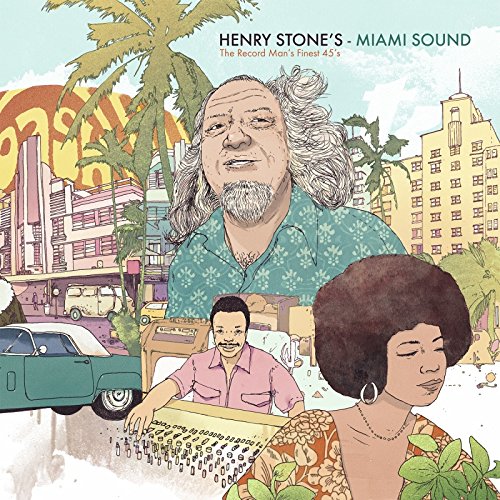


BOB MARLEY AND THE WAILERS-CATCH A FIRE.
BOB MARLEY AND THE WAILERS-CATCH A FIRE.
Forty years ago, Bob Marley and The Wailers released the album that launched their career, Catch A Fire which will be rereleased by Commercial Marketing on vinyl on 25th September 2015. Catch A Fire was certified in the UK and was the start of a career where critical acclaim and commercial success were ever-present. It also introduced the world to Bob Marley, a man who was much more than a singer. Much more.
Poet, philosopher and political activist describes Bob Marley. He was someone who spoke up for the Jamaican people, someone who was a force for good and peace. Religion played an important in his life. A devout Rastafarian, Bob Marley was a deeply religious and spiritual man. Religion played an important part in his life. Bob Marley also played an important role in raising reggae music’s popularity.
Back in the 1970s’, Bob Marley was hugely influential in increasing the popularity of reggae music. Before that, although reggae music was something enjoyed by some people, it hadn’t crossed-over and gained mainstream appeal. Bob Marley were instrumental in raising reggae music’s profile. Catch A Fire was the album that launched Bob Marley and The Wailers’ career and was their debut album for a major record label.
Catch A Fire was Bob’s first album for his new record label Island Records, owned by Chris Blackwell. Bob Marley and Chris Blackwell had first met in London in 1972, when Bob Marley and The Wailers were stranded in London. They’d entered in a deal with CBS Records, and gone on tour with Johnny Nash, the American soul singer. However, things went badly wrong, and Bob, stranded in London, thought he’d approach Chris Blackwell about recording a new single. Instead, Chris Blackwell said he wanted the group to record a whole album. This, at the time, was unheard of, but Chris Blackwell was adamant. He asked Bob how much an album would cost, and Bob said between £3,000 and £4,000. Blackwell gave Marley £4,000 and headed back to Kingston, Jamaica to record Catch A Fire.
Now that Bob Marley and The Wailers had the funds to record a new album, they headed for Harry J’s recording studio in Kingston. It had an eight track recording studio, the type that rock bands were using then. Again, this was a first, as previously, no reggae band had used such a facility. Blackwell wanted more than a reggae album, he said he wanted “more of a drifting, hypnotic-type feel than a reggae rhythm.” To achieve this, Bob travelled to London to oversee Chris Blackwell’s overdubbing of the tracks. Chris Blackwell had enlisted the help of Wayne Perkins and John “Rabbit” Bundrick, two American musicians. Wayne Perkins was responsible for re-recording some of the lead and rhythm guitar parts. John Bundrick meanwhile, added organ, synths, clavinet and electric piano to the UK mix of the album. Another of Blackwell’s decisions, was to lessen the heavy bass sound. Two songs were then left off the album. This “new mix” didn’t go down well back in Jamaica. However, music critics love the album. Their reception was positive, now the only people to convince were the record buying public.
On Catch A Fire’s release in April 1973 it initially sold 14,400 copies. Although this wasn’t going to make Bob Marley a star, it had increased his profile and gained a good reception from music fans. Catch A Fire was hugely instrumental in launching Bob Marley and The Wailers. After Catch A Fire, the band embarked on a period where they released several classic albums one after another. Suddenly, after many years of trying, Bob Marley and The Wailers, were household names. One thing that saddens many people, is how the original Wailers weren’t part of this success story. They’d split up in 1973, tired of struggling for success. Little did they know in 1973, that success was just a year away.
One of the attractions of Catch A Fire for critics and music fans alike, were Bob Marley and Peter Tosh’ lyrics. Peter Tosh penned 400 Years and Stop The Train, while Bob Marley wrote the other seven tracks. Both Peter and Bob were socially aware and militant. Neither Bob Marley, nor Peter Tosh, were afraid of raising subjects and issues that would be deemed confrontational and controversial. Both wished for a future where people in Jamaica, and elsewhere, would be free from oppression. Their view of the world was an optimistic one, and this is apparent in the music on Catch A Fire, which would eventually be successful.
The nine tracks on Catch A Fire showcase the talents of Bob Marley and The Wailers. On its release, it may not have been their most successful album. Eventually though, it was certified silver and launched the career of Bob Marley and The Wailers. Not only that, but Catch A Fire has stood the test of time well, and the messages within it, are as relevant today, as they were in 1973. You’ll realise that when I tell you about Catch A Fire.
Catch A Fire opens with Concrete Jungle. It begins somewhat hesitantly, with a guitar, rhythm section and organ combining. Quickly, the arrangement opens out. Tough, edgy and pulsating rhythms emerge as Bob delivers a heartfelt, frustrated vocal. Behind him, the arrangement has an understated quality, with a bass reverberating, an organ gently playing, drums steadily keep the beat. The track gently pulsates, as instruments emerge, joining and leaving the mix. A guitar soars, but is played subtly. One constant is the buzzing bass. It’s a feature of the track. Like all the tracks on Catch A Fire, the lyrics deal with important social issues. Here, the issue is the poverty and conditions faced by people in the poorer areas of Jamaica. Bob Marley highlights their plight in this poignant, moving song.
Slave Driver deals with the effrontery that was slavery, one of the most abhorrent shameful things in history. Bob Marley’s lyrics tackle the subject head on. His vocal takes centre-stage, while the arrangement frames it. Drums and organ, accompanied by backing vocals, open the track. When Bob sings, he surrounded by reverberating rhythms, that sound melodic, yet the bass sounds slightly brittle. The arrangement has a similar understated quality to Concrete Jungle, it meanders along, never threatening to overpower Bob’s vocal. This suits the song, allowing the you to focus on Bob Marley’s vocal and his righteous anger as he tackles one of of the most shameful and despicable things in history, slavery.
The militant Bob Marley can be heard on 400 Years. With its dark, heavy, sound, it’s very different from the two previous tracks. Even Bob’s voice sounds different, it’s deeper, there also is an edge to it. Maybe it’s because he’s airing his frustration and anger. Likewise, the arrangement is fuller. Back is that brilliant buzzing bass, accompanied by drums and guitar. Backing vocals provided by The Wailers are the perfect accompaniment to Bob’s vocal. They drench his vocal beautifully, bringing a real spiritual feel to the track. All of this, contributes towards a powerful track, which demonstrates both Peter Tosh’s talents as a songwriter and Bob Marley and The Wailers talents as singers and musicians.
One of the best known songs on the album is Stop the Train I’m Leaving, another song written by Peter Tosh. It begins with drums, guitar and organ combining, with the drums almost cracking, whilst in contrast, the organ is melodic as it meanders in and out of the track. When Bob sings, his vocal sounds strong, yet relaxed. His vocal sits right at the top of the arrangement. Behind him, one of the best arrangements on the album is emerging. A chiming guitar, throbbing bass, subtle drums, a dreamy melodic organ make a potent, musical combination. When you add Bob’s powerful, charismatic voice, you’ve the recipe for one of the highlights of Catch A Fire.
On Baby We’ve Got A Date (Rock It Baby), we see another side to Bob Marley. Here we see his romantic side, on what is a much lighter, brighter track. This is apparent when the organ plays, gently and melodically. Drums play, they’re subtle, similarly, the bass is way back in the mix. Neither overpower the organ which is a constant presence, nor do they overpower Bob’s vocal. It’s very different, it’s gentler, the edge that was present on earlier tracks is gone. Instead this is Bob Marley the romantic, the lover. Quickly, Bob’s vocal is surrounded by the most beautiful arrangement on the album. It reverberates and chugs along, a magical musical combination, supplemented by some stunning female backing vocalists.
Another track that may be familiar to many people is Stir It Up. This is one of the tracks Chris Blackwell changed, bringing in Wayne Perkins to redo the lead guitar on the track. As the rhythm section opens this track, a bass reverberates and drums play. They’re joined by Wayne’s guitar while the bass then throbs way down in the bottom of the mix. Bob’s voice sounds lighter and happier. By now, music is emerging in waves, beautifully washing over you. Although the guitar playing is of the highest standard, it sometimes overshadow other instruments. You’re drawn to solos, and miss other things that emerge during the track. Another guest artist is Tyrone Downie, who plays organ. His playing is understated and is much more suited to the track. Although Stir It Up is one of the album’s highlights, it would’ve been interesting to hear what the track sounded like before it was overdubbed by Chris Blackwell. Maybe, it would’ve been even better without the addition of the overdubbing lead guitar parts?
Kinky Reggae has a a lovely laid back feel to it when it begins. It just gently pulsates, as it emerges out of your speakers. Straight away, it’s beauty just washes over you, and envelops you. A glorious sounding track emerges, straight from the opening bars. The rhythm section play and as the track unfolds, Bob sings. His voice is much more relaxed, happier as he sings lyrics loaded with not so subtle innuendo. Backing vocals join in, they suddenly emerge, to accompany and compliment Bob’s vocal. With its laid back feel, a myriad of beautiful rhythms and melodies unveil themselves. That combination and Bob’s vocal make this a track to treasure.
It’s a combination of spacious sounding bass, drums and backing vocalists that open No More Trouble. Here the tempo, is slow, pedestrian even, laden with drama as the song opens out. There is spiritual sound to the backing vocalists, and eventually, when Bob sings, his vocal is equally spacious and dramatic. This track sees Bob sing about peace, and a cessation to trouble and war, which back then, was tearing his country apart. Behind him, the arrangement is understated and dignified. As drums and percussion punctuate the arrangement, they reinforce the lyrics, which succinctly, poetically and powerfully see Bob Marley get his message across.
Midnight Ravers closes Catch A Fire. It’s another of Bob Marley’s protest songs. Here, he was ahead of his time, when he wrote about the problem of pollution. A drum roll opens the track, a guitar plays, as the song meanders along. Backing singers join in. Then, when Bob sings he and his backing singers combine masterfully and melodically. Gone is the happiness and joy that was previously present in Bob’s voice. Instead, he sounds almost sad, as if saddened by the destruction he’s singing about, and it’s effect on everyone. Behind him, glorious rhythms can be heard, they play brightly. This is a complete contrast to Bob’s vocal. There is almost a darkness present in both his vocal, and that of The Wailers. No wonder, given what he foresaw. Here, Bob Marley is akin to a seer with a social conscience.
Catch A Fire was the album that announced Bob Marley and The Wailers arrival to the wider world. Before that, they were a huge success in Jamaica. Following Catch A Fire, their popularity spread far and wide. Although Catch A Fire didn’t match the success of later albums, including Natty Dread, Exodus and Kaya, it’s an important album in Bob Marley and The Wailers’ back-catalogue, which was recently rereleased by Island Records on vinyl.
Full of lyrics that are socially aware and militant, neither Bob Marley, nor Peter Tosh, were afraid of raising subjects and issues that would be deemed confrontational. Both wished for a future where people in Jamaica, and elsewhere, would be free from oppression. Their view of the world was an optimistic one. This is apparent in Catch A Fire’s lyrics. Although the subject matters are controversial, the music on Catch A Fire that’s no bad thing. Subjects like poverty, slavery and pollution all deserved to be tackled. The man to do that was Bob Marley. On Catch A Fire, Bob Marley and The Wailers tackled these subjects head on. Despite releasing an album of music with a social conscience, Catch A Fire wasn’t initially a commercial success.
On its release, Catch A Fire wasn’t a commercial success, selling only 14,400 albums. Eventually though, Catch A Fire was certified silver and launched the career of Bob Marley and The Wailers. Not only that, but Catch A Fire has stood the test of time. Catch A Fire is a timeless album. After that, Bob Marley and The Wailers released a string of classic albums, including Natty Dread, Exodus and Kaya. These album may have been more successful, but since the release of Catch A Fire, it has been recognised as a classic album.
Featuring Nine tracks, with lyrics that are both militant and socially aware, Bob Marley deals with some of the problems affecting the people of Jamaica. Many of these problems affected people worldwide, and sadly, these problems persist today. In some ways, it was brave of Bob Marley to include such songs on Catch A Fire, as many people would be put of by his militancy. However, it was these subjects that made Catch A Fire what it is. That’s an important and potent classic album. To me, it’s one of Bob Marley’s greatest albums. Along with Natty Dread, Exodus and Kaya, Catch A Fire contains some of the best music Bob Marley and The Wailers records, is worthy of being called a timeless classic, with a social conscience.
BOB MARLEY AND THE WAILERS-CATCH A FIRE.
LLOYD COLE AND THE COMMOTIONS COLLECTED RECORDINGS 1983-1989.
LLOYD COLE AND THE COMMOTIONS COLLECTED RECORDINGS 1983-1989.
The Lloyd Cole and The Commotions story began in 1982, when Derby born Lloyd Cole was studying at the University of Glasgow. Twenty-one year old Lloyd Cole had moved to Glasgow to study philosophy and English. Previously, Lloyd had studied a year of law at University College London. Law wasn’t for Lloyd Cole, so he decided to head to Glasgow to restart his educational career. That’s where Lloyd Cole met The Commotions.
By 1982, Glasgow was like a second home to Lloyd Cole. He had embraced the city’s vibrant musical scene. However, in 1982, he decided to make the move from onlooker to participant. So, Lloyd decided to form his own band. That band became Lloyd Cole and The Commotions.
Having made the decision to form his own band, gradually, Lloyd Cole and The Commotions’ lineup took shape. Lloyd who would sing lead vocals and play guitar, brought onboard four musicians. They became his Commotions. This included the rhythm section of drummer Stephen Irvine, bassist Lawrence Donegan and guitarist Neil Clark. They were joined by keyboardist Blair Cowan. At last the lineup of Lloyd Cole and The Commotions was compete.
With the lineup complete, Lloyd Cole and The Commotions embarked upon their musical journey. This began when Lloyd Cole and The Commotions signed to Polydor Records, and released their debut single Perfect Skin in the spring of 1984. Perfect Skin sold well, reaching number twenty-six in the UK charts. Lloyd Cole and The Commotions were on their way to becoming one of the most successful Scottish bands of the eighties, releasing a trio of critically acclaimed albums.
The three albums that Lloyd Cole and The Commotions released between 1984 and 1989 feature in the forthcoming box set Collected Recordings 1983-1989. It will be released by Universal Music on 29th June 2015 and features five CDs and a DVD. Quite simply, Collected Recordings 1983-1989 is the most comprehensive overview of Lloyd Cole and The Commotions career.
Collected Recordings 1983-1989 features remastered versions of Lloyd Cole and the Commotions’ three albums, 1984s Rattlesnakes, 1985s Easy Pieces and 1987s Mainstream. That’s just the start. There’s also b-sides and eighteen previously unreleased tracks, including six tracks that have been heard before. All this music is housed within what can only be described as a deluxe box. As an added bonus, there’s a forty-eight page hardback book, poster and three postcards. For anyone wanting to relive six years of Lloyd Cole and The Commotions’ perfect pop, this is the place to start.
The Lloyd Cole and The Commotions’ story started in earnest when the band released their debut single Perfect Skin in the spring of 1984. The single sold well, reaching number twenty-six in the UK charts. The follow up, Forest Fire, did not fare so well, only reaching a disappointing forty-one in the UK charts. That was only a minor blip. When Lloyd Cole and The Commotions released their debut album Rattlesnakes later in 1984, it was a huge success.
Rattlesnakes.
When Rattlesnakes was released later on 12th October 1984, it was to widespread critical acclaim and commercial success. Rattlesnakes reached number thirteen in the UK album charts, selling in over one-hundred thousand copies. For Lloyd Cole and The Commotions, this meant the first gold disc of their career. No wonder. Lloyd Cole and The Commotions were unique and caught the attention of critics and cerebral record buyers.
Critics and discerning music lovers were quick to release that Lloyd Cole and The Commotions were very different from most bands. Similarly, the songs on Rattlesnakes were unlike much of the music released in 1984. Lloyd Cole’s lyrics were influenced by Bob Dylan and his studies of English and philosophy. So it was no surprise that Lloyd Cole and The Commotions’ songs referenced
Renata Adler, Simone de Beauvoir and Norman Mailer in their lyrics. This was articulate, catchy and cerebral pop. Not only did it win over critics and cultural commentators, but provided the soundtrack to thousands of student bedsits.
A generation of students eavesdropped on Lloyd’s anguished, quirky and cinematic lyrics. He brought songs like Perfect Skin, Rattlesnakes, Forest Fire, 2cv, Patience and Are You Ready To Be Heartbroken to life. With vocals that were a mixture of anguish, emotion and passion, Lloyd Cole lived the songs on Rattlesnakes. Behind him, The Commotions’ trademark jangling, perfect pop caught the imagination of generation of music lovers. Lloyd Cole and The Commotions’ star was in the ascendancy.
After the commercial success and critical acclaim of Rattlesnakes, Lloyd Cole and The Commotions headed out on tour. Basking in the success of Rattlesnakes, Lloyd Cole and The Commotions played to sold out audiences. They were flavour of the month with critics and cultural commentators. Lloyd Cole and The Commotions had a reputation for producing music for the “thinking” music lover. It was the polar opposite of vacuous new romantic movement. At least, here was a group of substance, capable of making compelling cinematic songs. This would be the case with their sophomore album Easy Pieces.
Easy Pieces.
When Lloyd Cole and The Commotions began work on Easy Pieces, they wanted the album to be much more “accessible.” Rattlesnakes had passed many people by. It was, onlookers, remarked too cerebral. Lloyd also wanted Easy Pieces’ “sound to be warmer, more luscious.” With this in mind, Lloyd Cole and The Commotions began work on Easy Pieces.
Just like Rattlesnakes, Lloyd penned five of Easy Pieces ten tracks. He cowrote the other tracks with other members of The Commotions. The title had been inspired by the film Five Easy Pieces. Lloyd later said that five of the tracks were inspired by Five Easy Pieces. When the songs were completed, Lloyd Cole and The Commotions eschewed Glasgow for London.
Westside Studios, Shepherds Bush, London were where Easy Pieces was recorded. This wasn’t exactly the most glamorous setting to record an album. However, that was the studio that was chosen. When the sessions began, gone was the laid-back sessions of Rattlesnakes. The pressure was on Lloyd Cole and The Commotions to replicate the success of Rattlesnakes. Polydor didn’t exactly help things when they dismissed producer Paul Hardiman. He hadn’t been given a chance. Maybe Polydor were just waiting to parachute their producer of choice in?
Replacing Paul Hardiman was the production team of Clive Langer and Alan Winstanley. Considering the sound and success of Rattlesnakes this was a risky move. If Polydor had just been patient, Paul Hardiman would’ve got the sessions back on track. However, that wasn’t to be. Now Lloyd Cole and The Commotions were working with a producer they hadn’t chosen. Especially as the new production team had their own sound; and weren’t shy about voicing their opinions and suggestions. The new production team even tried to tell Lloyd how to sing. This had the effect of making Lloyd self-conscious when he sang. So much for producers putting bands at ease. However, stuck with a production team they hadn’t chosen, Lloyd Cole and The Commotions had to make the best of what was a bad situation. Eventually, Easy Pieces was completed and ready for release. However, the band weren’t happy.
For Lloyd Cole and The Commotions the Easy Pieces wasn’t a satisfactory experience. They felt they were forced to record Easy Pieces too soon. Lloyd also felt two songs on Easy Pieces shouldn’t have made the cut. He felt neither Grace nor Minor Character were good enough to make the album. The production team should’ve spotted this. However, they had been hired by the record company, with the job of getting the album finished and ready for release. Time was of the essence. Maybe this meant that there wasn’t time to write and record two more tracks? However, if this was the case, it could come back to bite them. The critics would spot two weak tracks.
Whilst Rattlesnakes was released to critical acclaim, Easy Pieces wasn’t as well received. The reviews were mixed. Critics felt some of the lyrics fell short of the quality of those on Rattlesnakes. The production didn’t impress some critics. They felt Easy Pieces was over produced. Another criticism was that there was no space for the music to breath. The major criticism was that the new production team took Lloyd Cole and The Commotions in the wrong direction. Easy Pieces was, some critics felt, a lengthy detour into country pop. That wasn’t what made Lloyd Cole and The Commotions such a special and unique band. With this criticism ringing in their ears, Lloyd Cole and The Commotions awaited the release of Easy Pieces with baited breath.
On 22nd November 1985, Easy Pieces was released, and reached number five in Britain. While Easy Pieces had a better chart position that Rattlesnakes, it sold less copies. There was no gold disc this time around. At least the singles faired reasonably well.
Three singles were released from Easy Pieces. Brand New Friend reached number nineteen in Britain. Then Lost Weekend surpassed Brand New Friend, reaching number seventeen in Britain. The only disappointment was Cut Me Down, which stalled at number thirty-eight in Britain. For Lloyd Cole and The Commotions this was a disappointment. That was the case with Easy Pieces.
Easy Pieces wasn’t the album they wanted to make. If they hadn’t been rushed into the studio to record Easy Pieces maybe, just maybe, Lloyd Cole and The Commotions would’ve been able to record an album that they would’ve been proud of. Lloyd Cole certainly wasn’t. He disowned some of the songs on Easy Pieces. That was the fault of Lloyd Cole and The Commotions. The blame lay at the door of Polydor, who had sacked Paul Hardiman and parachuted a production team who tried to transform Lloyd Cole and The Commotions into something they weren’t. Next time round would get it right…eventually. And there would be no sign of Clive Langer and Alan Winstanley.
Mainstream.
Work began on Lloyd Cole and The Commotions’ third album not long after the release of Easy Pieces. This time, Lloyd wrote eight of the ten tracks, and cowrote the other two. That was the easy bit. The hard bit was recording Mainstream.
Recording of Mainstream took the best part of two years. Lloyd Cole and The Commotions’ first choice for producer was Chris Thomas. The sessions began, but after a while the band realised that things weren’t working out. Remembering what happened with Easy Pieces, Lloyd Cole and The Commotions decided to bring onboard a new producer.
The replacement for Chris Thomas, was Stewart Copeland, the former Police drummer. Things started out well, when Hey Rusty was recorded. That however, was as good as it got. It was downhill after that. Lloyd Cole and The Commotions knew that they needed to replace Stewart Copeland.
Lloyd Cole and The Commotions wanted to make amends for Easy Pieces. They felt they had failed to make the pop album they set out to make. That wasn’t the case. Easy Pieces to the band sounded rushed and not the album they wanted to make. There was no way they were going to let history repeat itself. So out went Stewart Copeland and in came Ian Stanley. Maybe, it was a case of third time lucky?
With Ian Stanley onboard, Mainstream began to take shape. Eventually, nearly two years since recording of Mainstream began, the album was completed. Lloyd Cole and The Commotions spent five months in the studio with Ian Stanley. This came at a cost. Not only did Mainstream cost £300,000, ten times that Rattlesnakes cost, but cost the band their keyboard player.
By the time Mainstream was released on 26th October 1987, keyboardist Blair Cowan had left Lloyd Cole and The Commotions. The cracks were beginning to show. That’s not surprising given the difficulties surrounding the recording of Easy Pieces and Mainstream. However, hopefully, the time and money spent on Mainstream would be worthwhile.
Critics felt that wasn’t the case. Reviews of Mainstream were mixed. Some critics loved Mainstream, calling it intelligent pop music and the band’s most accomplished album. This wasn’t surprising, given the quality of songs like From The Hip, My Bag, Jennifer She Said and Mr. Malcontent. Other critics however, felt that Lloyd Cole and The Commotions hadn’t fulfilled their potential on Mainstream. The casting vote went to the record buying public.
On the release of Mainstream, it reached number nine in Britain. In America, Mainstream didn’t sell as well as Rattlesnakes and Easy Pieces. Both albums had sold over 100,000 copies. Not Mainstream. American critics weren’t as impressed with Mainstream. For Lloyd Cole and The Commotions, this was disappointing. However, some solace was the success of the singles.
Again, three singles were released from Mainstream. My Bag reached a lowly forty-six in Britain. In America, My Bag reached number thirteen in the Billboard Modern Rock chart and number forty-eight in the Billboard Dance chart. Jennifer She Said the reached number thirty-one in Britain. The final single from Mainstrea, was From The Hip. It reached a disappointing number fifty-nine in Britain. Little did anyone realise that From The Hip would be Lloyd Cole and The Commotions’ final single, from their final album.
Already the cracks were showing when keyboardist Blair Cowan left. Nearly two years later, Lloyd Cole and The Commotions and were no more. They split-up in 1989. The last album Lloyd Cole and The Commotions released was a greatest hits album, entitled 1948-1989. Lloyd Cole and The Commotions had been together for seven years and enjoyed a recording career that lasted six years. It’s documented on the Lloyd Cole and The Commotions Collected Recordings 1983-1989 box set, which features just about everything the band recorded. It will be released by Universal, on 29th June 2015. It’s the most exhaustive overview by one of Scotland’s finest pop bands, Lloyd Cole and The Commotions.
It’s twenty-six years since the four remaining members of Lloyd Cole and The Commotions went their separate ways. Looking back, Lloyd Cole and The Commotions’ debut album, Rattlesnakes, was the finest album of their career. They set the bar high, and never came close to surpassing the quality of Rattlesnakes.
Good as Easy Pieces and Mainstream are, neither are regarded as one of classic Scottish albums. Rattlesnakes was recorded when Lloyd Cole and The Commotions were unknown, and only cost £30,000. It’s not known how much Easy Pieces cost. However, Mainstream cost £300,000 and doesn’t come close to Rattlesnakes. Much of the resin for this, is the various problems with producers.
This problem began when Polydor sent Lloyd Cole and The Commotions into the studio too quickly. They then compounded this by sacking Paul Hardiman. If Paul had been given more time, he could’ve turned the situation around. Instead, Polydor brought in their own producers, Clive Langer and Alan Winstanley. For Lloyd Cole and The Commotions, working with a producer they hadn’t chosen wasn’t going to work. They took Lloyd Cole and The Commotions’ music in the wrong direction. As a result, Easy Pieces was nothing like the album Lloyd Cole and The Commotions had wanted to release. With these producer problems in mind, Lloyd Cole and The Commotions had to act decisively when recording Mainstream.
Having initially hired Chris Thomas, when this working relationship didn’t work out, he was replaced by Stewart Copeland. After only one song, Lloyd Cole and The Commotions realised that Stewart Copeland was the wrong producer. It was only when Ian Stanley came onboard that Mainstream was completed. However, by then, Lloyd Cole and The Commotions had lost sight of the album they wanted to make. Just like Easy Pieces, Mainstream wasn’t the album Lloyd Cole and The Commotions set out to make.
It seemed that after the potential Lloyd Cole and The Commotions showed on Rattlesnakes, they never truly fulfilled it on neither Easy Pieces nor Mainstream. Lloyd Cole and The Commotions had the potential to be one of the biggest and best groups of the eighties and beyond. However, looking back, some critics feel that Lloyd Cole and The Commotions never quite fulfilled their potential. Maybe that’s being hard on Lloyd Cole and The Commotions?
Instead, Lloyd Cole and The Commotions are another group whose debut album was a pop classic. Surpassing it was never going to be easy. Lloyd Cole and The Commotions set the bar high, and were forever chasing pop perfection. They came close on many occasions. That’s apparent on Lloyd Cole and The Commotions Collected Recordings 1983-1989 box set, which is a reminder of one of the greatest Scottish bands of their generation during their all too brief recording career.
LLOYD COLE AND THE COMMOTIONS COLLECTED RECORDINGS 1983-1989.
PAUL BRADY-PRIMITIVE DANCE.
PAUL BRADY-PRIMITIVE DANCE.
Paul Brady first came to prominence in 1978, when he released his debut album Welcome Here Kind Stranger. Later in 1978, Welcome Here Kind Stranger was voted Folk Album of the Year by Melody Maker magazine. However, the thirty-one year old Irishman wasn’t a newcomer to music.
Far from it. Music was in Paul Brady’s blood. He was born on 9th May 1947, in Strabane, County Tyrone in Northern Ireland. By the time Paul was six, he began learning piano and started playing the guitar aged eleven. This wasn’t surprising. Paul’s father was a music teacher. His talent had rubbed off on Paul, who was determined to make a career out of music.
Paul’s first gig, came in 1963, when he played piano in a hotel bar. By the following year, Paul, who was at University College Dublin, was a member of one of the many R&B bands that were popular. This included The Inmates, who Paul was a member between late 1964 and April 1965. That’s when they became The Kult. From there, Paul joined Rootzgroup in late 1965, and was with them until. May 1966. After Rootzgroup, Paul spent seven months as a member of Rockhouse between
May and December 1966. For Paul, this was part of his musical education before he joined one of the most popular traditional Irish groups, The Johnstons.
By the time Paul joined The Johnstons in May 1967, there had been an upsurge in interest in traditional Irish music. The Johnstons were one of the most popular traditional Irish bands. For the first two years, they were based in Dublin. Then in 1969, The Johnstons moved to London, which became their as they toured and recorded. However, in 1972, The Johnstons moved to New York in an attempt to widen their audience. With a huge Irish community in America, this made sense. Sadly, just a year later, The Johnstons split-up in 1973. So Paul returned home in 1974, and joined another popular Irish band Planxty.
When Paul joined Planxty in 1974, they had been together since 1972. The original lineup featured Andy Irvine, Liam O’Flynn, Dónal Lunny and Christy Moore. However, the lineup soon began to evolve, and is best described as fluid. Members came and go. Despite the fluidity of its lineup, Planxty were a hugely popular group. They toured constantly. Sadly, in December 1975, Planxty split-up. This was the end of another chapter in Paul Brady’s career. Another was about to unfold.
This began when Paul Brady and Andy Irvine decided to form a duo. The pair performed traditional Irish folk music. This was still popular. So, in the autumn of 1976, Andy Irvine and Paul Brady recorded their debut album. It was released in December 1976. However, it was their one and only album.
Andy Irvine and Paul Brady continued as a duo right through to 1978. By then, Paul was considering embarking upon a solo career. Eventually, Paul decided the time was right and went his own way.
Now a solo artist, Paul released his debut album Welcome Here Kind Stranger in 1978. Later in 1978, Welcome Here Kind Stranger was voted Folk Album of the Year by Melody Maker magazine. Having won such a prestigious award, it seemed unlikely that Paul Brady would change direction musically. However, that’s when he did.
For some time, Paul wanted to move more towards pop and rock music. So when Paul released Hard Station in on Polygram in 1981, his fans were in for a surprise.
Hard Station was very different from his debut album. Rock and pop were the two most prominent genres. There was still a folk influence, but it wasn’t as prominent. When critics heard Hard Station the jury was out. Reviews were mixed. The quality shawn through on tracks like Crazy Dreams, Busted Loose, Hard Station and Nothing But the Same Old Story. They would become some of Paul’s best known songs. However, critics weren’t convinced that Hard Station was a cohesive album. For Paul Brady, it was a case of back to the drawing board.
Two years passed before Paul returned with True for You, which was produced by Neil Dorfsman and Paul Brady. True For You was a fusion of AOR, folk and rock. Still, critics weren’t convinced.
Although the reviews were better than hard Station, still, Paul was winning over some of the critics. However, his popularity was on the rise. That’s not surprising, given the quality of the songs on True For You. The Great Pretender, Take Me Away and Steel Claw, which was covered on Tina Turner’s 1985 album Private Dancer were just a few of True For You’s highlights. It seemed Paul Brady’s star was in the ascendancy.
Another two years passed before Paul released his fourth solo album, Back to the Centre. It was released in 1985 and was the start of the most productive period of Paul’s career.
For Back to the Centre, Paul was joined by two of the biggest names in music. Legendary guitarist Eric Clapton was joined by U2 drummer Larry Mullen Jr and Loudon Wainwright on backing vocals. They played their part in what some critics called Paul Brady’s finest album.
When critics heard Back to the Centre, they hailed it the finest album of his career. Tracks of the quality of Walk The White Line, Deep In Your Heart, To Be The One and Soulbeat pointed at the strongest and most cohesive album of Paul Brady’s career. He seemed to be growing and maturing as a singer with every studio album. Critics and record buyers awaited his next album.
They didn’t have long to wait. Paul Brady released his first live album, Full Moon in 1986. By then, more people had heard of Paul Brady. Tina Turner had covered Steel Claw on her 1985 album Private Dancer. This helped lift Paul Brady’s profile. This meant that it was the perfect time for Paul to release a new album.
On Full Moon, it’s just Paul, accompanied by a tight, talented band as he works his way through eight tracks. Full Moon was a reminder of how good Paul was live. No wonder. He had spent twenty-two years playing live with various bands and as a solo artist. So, it’s no surprise that Full Moon featured a practiced and polished performance from Paul Brady. That would be the case with his fifth solo album Primitive Dance.
For Primitive Dance, Paul penned nine new tracks. Steal Your Heart Away, The Soul Commotion, Paradise Is Here, It’s Gonna Work Out Fine, The Awakening, Eat The Peach, Don’t Start Knocking, Just In Case Of Accidents and The Game Of Love. These nine tracks were recorded by Paul’s extended band.
When recording of Primitive Dance began, Paul’s wasn’t just accompanied by his usual band. Instead, a number of musicians would make guest appearances. This included a horn and string section plus backing vocalists. However, at the heart of the band were Paul and co-producer Ian Maidman, who were both talented multi-instrumentalists. Ian played bass, guitar, drums, percussion and keyboards. Paul added vocals and played acoustic guitar, keyboards, electric guitar, piano, keyboards, tin whistle, mandolin and percussion. They were joined by drummer Tim Goldsmith, keyboardist Steve Fletcher and Mick Bolton on Hammond organ. Guest artists included Davey Spillane, who played Uileann Pipes on Eat The Peach; while Mark Knopfler played guitar on The Game Of Love. This extended cast of musicians recorded Primitive Dance at Westland Studios, Dublin and Jam Studios, London. Once Primitive Dance was completed, it was ready for release in 1987.
Before the release of Primitive Dance, critics had their say on Paul Brady’s fifth album. Primitive Dance critics believed, was Paul’s best and most assured album. It was as if everything had been leading to Primitive Dance. After nine years, and four solo albums since Paul Brady changed direction musically, he had released the best album of his career, Primitive Dance, which I’ll tell you about.
Steal Your Heart Away opens Primitive Dance. Washes of keyboards set the scene, before woodblocks are joined by the rhythm section and guitar. They usher in Paul’s heartfelt, needy vocal. Behind him, an eighties sounding arrangement unfolds. That’s down to the drums and keyboards. Having said that, the arrangement doesn’t sound dated. Not with the sprinkling of percussion, hypnotic drums and bubbling bass. At the heart of the arrangement is Paul’s vocal, as he pleas for his partner not to leave. As he does, he combines power, passion and emotion. His vocal powerhouse breathes life and meaning into the lyrics, and whets one’s appetite for the rest of Primitive Dance.
There’s a sense of urgency as strummed guitar and stabs of horns combine on The Soul Commotion. Paul’s vocal has a similar urgency, as he and his band combine elements of country, folk and rock. Meanwhile, the rhythm section, guitar and keyboards drive the arrangement along, while a myriad of whoops and hollers augment Paul’s vocal. He vamps and whop, before a harmonica is unleashed, as this catchy track reaches a crescendo.
Paradise Is Here has a much slower, understated sound. Just a subtle rhythm section and chirping guitar accompany Paul’s vocal. It has a weary, wistful sound. He can’t give his partner the lifestyle she wants and he’s scared she’ll leave him. As he lays bare his fears and soul, the arrangement builds and quickens. By then, Paul sings: “but I don’t need no high life, to make me feel a man…just put your arms around me, devour me.”
As Paul counts the band in and guitars ring out, it’s obvious that something special is unfolding. That’s the case. It’s Gonna Work Out Fine is one of Primitive Dance’s highlights. Elements of blues, Celtic Soul, country and rock melt into one. As the rhythm section provide the backdrop for Paul’s joyous, washes of Hammond organ and cooing, sweeping harmonies are added. Paul seems to grow in stature, as joyously, he sings: “believe me baby, it’s gonna work out fine.”
Straight away, The Awakening has an understated, wistful Celtic influence. That’s still the case when the pounding drums usher in Paul’s vocal. He’s joined by Maire Brennan. She’s the perfect foil for Paul. She’s a restless free spirit, looking for answers. Her tender, ethereal and questioning vocal compliments Paul’s vocal. Together, they make the lyrics come to life. Then at the breakdown keyboards and percussion combine as elements of Paul’s past and present seamlessly combine. In doing so, they create an enchanting and quite beautiful track.
The sound of a radio changing station opens Eat the Peach. It’s like what Paul would’ve listened to growing up. Then it’s all change. The rhythm section, guitars and keyboards bound across the arrangement. Paul unleashes a vocal powerhouse. He doesn’t hold back. No wonder. Life’s for living and enjoy it while you can. He’s not the type of person that’s going to: “that spends a lifetime wondering if you’re the kind, to break the mould and see what’s on the other side.” Singer, songwriter, poet and philosopher, Paul Brady is all that and more on Primitive Dance.
Don’t Start Knocking has a much more subdued sound. It’s as Paul’s drawing breath. He delivers a thoughtful, probing vocal. Meanwhile, the rhythm section, piano, and harmonies accompany Paul. Soon, his vocal grows in power as he pleads: “Don’t Start Knocking…you’re so beautiful.” His vocal is heartfelt, needy and a mixture of hope and insecurity. As it soars above the arrangement, harmonies accompany him. Then at the bridge, Paul returns to his Celtic roots as he combines drama and passion.
Just in Case of Accidents is a piano lead ballad. Paul’s vocal is tender and needy as he delivers the cinematic lyrics. Meanwhile, a viola is plucked as percussion and keyboards augment the beautiful, understated arrangement. It allows Paul’s soulful vocal to take centre-stage, as he delivers the thought provoking lyrics: “terrified of loneliness, terrified of trusting.
The Game of Love closes Primitive Dance, and again, has another understated arrangement. Just a piano is joined by the rhythm section and guitar. Soon, a plucked viola, harmonies and tin whistle are added. Later the lushest of strings are the perfect accompaniment to Paul’s pensive vocal. It’s the finishing touch to this beautiful, dreamy song about love.
Nine years and four albums after changing direction musically, Paul Brady released Primitive Dance, the best and most cohesive album of his “second” solo career. It featured nine tracks which showcased Paul’s skills as a singer, songwriter and musician. From the soul searching ballads to the joyous, uptempo tracks, Paul Brady could do no wrong. He had come a long way since Hard Station.
Since then, Paul Brady’s star was in the ascendancy. Especially since Tina Turner covered Steel Claw. All of a sudden, people were wondering who Paul Brady was. They were in for a pleasant surprise as they investigated his back-catalogue. It was full of hidden musical gems. That’s the case with Primitive Dance.
Although Primitive Dance found a wider audience than previous albums, Paul Brady was still something of a hidden secret amongst record buyers. Ironically, Paul was better known for writing Steel Claw than for his work as a solo artist. For Paul, that must have been frustrating. However, Paul’s next album was a game-changer.
That was Trick Or Treat. It was released to widespread critical acclaim in 1991, and sold well. What helped was that Trick Or Treat was widely promoted. Previously, Paul’s solo albums hadn’t been particularly well promoted. As a result, they never found the audience they so richly deserved. This includes Primitive Dance, Paul Brady’s fifth studio albums.
Since the release of Primitive Dance, Paul Brady’s star has been in the ascendancy. Everyone from Bob Dylan and John Prime and Bonnie Raitt have championed Paul Brady’s music. Bob Dylan went as far as to say that Paul Brady was “one of the five artists worth getting out of bed for.” Once you’ve heard Primitive Dance, you’ll realise why.
PAUL BRADY-PRIMITIVE DANCE.
THE BATHERS-SWEET DECEIT.
THE BATHERS-SWEET DECEIT.
Usually, the music business is quick to celebrate anniversary. Especially, a thirtieth anniversary. That usually, is a cause for celebration, and would result in a reissue of all the band’s albums.
Each album would be remastered and released in various formats. Usually, there’s lavish double albums, featuring outtakes, unreleased tracks and live tracks. Then there’s box sets and vinyl versions released on heavyweight vinyl. I say usually. However, in the case of The Bathers, their thirtieth anniversary is passing almost unnoticed.
That’s a great shame. The Bathers are, without doubt, a Scottish musical institution. They were formed in Glasgow, in 1985, by singer, songwriter and troubled troubadour Chris Thompson and released six albums between 1987 and 1999, including Sweet Deceit which was released twenty-five years ago in 1990. Sadly, the twenty-fifth anniversary of the release of Sweet Deceit is passing unnoticed.
Twenty-five years after the release of Sweet Deceit, and sixteen years since The Bathers released their swan song Pandemonia, occasionally there are rumours of a comeback. They never come to anything. It seems unlikely that we’ll ever hear from The Bathers again. That’s a great shame, as undoubtably, The Bathers were one the most talented bands of their generation.
With Chris Thompson at the helm, the Glasgow based quintet could’ve, and should’ve, been one the biggest Scottish bands ever. The Bathers music was articulate, beautiful, dramatic, ethereal, elegiac, emotive, languid, literate and melancholy. This is music for those that have loved, lost and survived to tell the tale. Sadly, however, The Bathers never scaled the headiest of heights. Instead, The Bathers’ story is a case of what might have been. It begins in 1985.
The Bathers were formed in Glasgow in 1985. They formed after Chris Thomson’s previous group Friends Again split up. Initially, The Bathers were a vehicle for singer-songwriter Chris Thomson. However, in 1987, The Bathers secured their first record deal with Go! Discs Records, and released their debut album Unusual Places To Die.
Unusual Places To Die.
For their debut album Unusual Places To Die, Chris Thompson penned ten tracks. These tracks were recorded by The Bathers’ original lineup. This included bassist Sam Loup, drummer James Locke and Chris on guitar and keyboards. Joining The Bathers, were Michael Peden of The Chimes, Douglas Macintyre and James Grant of Love and Money. They played walk on parts on Unusual Places To Die, which was released later in 1987.
When Unusual Places To Die was released in 1987, it was to widespread critical acclaim. Chris Thompson’s songs seemed to strike a nerve with critics. They described the music as variously engaging, emotive and dramatic. One critic went as far to wonder whether Unusual Places To Die was the work of a genius? Despite this critical acclaim Unusual Places To Die wasn’t a commercial success. This was nothing to do with the music though.
Instead, Unusual Places To Die fell victim to the internal politics within the record company. As a result, sales of Unusual Places To Die were poor. Given the critical response to Unusual Places To Die, this was disappointing. So, it wasn’t a surprise when The Bathers switched labels for their sophomore album, Sweet Deceit.
Sweet Deceit.
After the Go Discs! internal problems sabotaged the release of Unusual Places To Die, The Bathers moved to Chris Blackwell’s Island Records. It had a much higher profile that Go Discs! Island Records also had an illustrious roster. Previously, Island Records had been home to everyone from Nick Drake and John Martyn to Bob Marley and The Wailers to U2. The Bathers were following in the footsteps of some of the biggest names when they began work on Sweet Deceit.
Despite the critical acclaim that accompanied their debut album Unusual Places To Die, the album wasn’t a commercial success. So, Chris Thompson decided to rethink how The Bathers approach their sophomore album, Sweet Deceit. Now signed to a major label, he didn’t want to repeat past mistakes.
Chris was determined that The Bathers brought their A-Game to the studio. He and Keith Mitchell had penned fifteen tracks. This would include some of The Bathers’ best known tracks, including Perpetual Adoration, Two Cats On A Piano and Desire Regained. It seemed Chris and Keith Mitchell had hit a rich vein of form. Hopefully, this would continue when The Bathers entered the studio.
Just like Unusual Places To Die, Sweet Deceit was recorded mostly in Glasgow. There were occasional excursions to the “other side,” with some sessions taking place in Edinburgh. Chris played guitar and keyboards and added lead vocals. He was joined by bassist Sam Loup and drummer James Locke. Other musicians made a guest appearances as Sweet Deceit took shape. Producing Sweet Deceit were Chris and Keith Mitchell. They honed what they hoped would be their epic, breakthrough album. It was ready for release in 1990.
Three years had passed since Unusual Places To Die was released. The Bathers were back, and according to critics, better than ever. Sweet Deceit was described as impressionistic, beautiful and spellbinding. One critic, quite rightly referred to the album as a mini masterpiece. However, The Bathers had been here before with Unusual Places To Die.
On Sweet Deceit’s release in 1990, lightning struck twice for The Bathers. Sales of Sweet Deceit were disappointing. Despite the critically acclaimed reviews, Sweet Deceit seemed to pass record buyers by. For The Bathers, this was a huge disappointment.
Especially for Chris Thompson. He cowrote and co-produced Sweet Deceit. He also poured his heart out on Sweet Deceit, delivering a series of soul-baring performances. That had been the case from the opening bars of The Pursuit Of An Orchid. Literally, Chris threw himself into the song, and gave something of himself. This continued on Two Cats On The Piano and Memory Fever. They were captivating short vignettes from the Glasgow born troubadour. This continued on the stark but compelling For The Delicious C and Desire Regained, which became a Bathers classic. The Bathers it seemed, could do no wrong.
Certainly not on Get Out Of Life. It was quite different from the understated sound of the previous tracks. The arrangement had a fuller sound, and more than hinted at the direction that The Bathers would take. Against this arrangement, Chris delivered what was his most heartfelt vocal. It was as if he had lived and survived the lyrics. Pistol Crazed with its jaunty arrangement, sees the return of Chris Thompson, troubled troubadour. He breathes life and meaning into the lyrics. Then the ethereal beauty of The Wreck In The Day sets the scene for the balladic beauty that’s Reason To Feel. It’s one of the most underrated tracks in The Bathers’ back-catalogue. After this, Chris returns to the past.
Memory Fever 2 picks up where Memory Fever left off. Chris delivers a vampish, soul-baring vocal. So is The Idyll Off Crown Circus, where Chris delivers a despairing vocal against a piano lead arrangement. From there, Chris moves onto one of The Bathers’ finest songs, Perpetual Adoration. It features a needy, hopeful vocal, while harmonies and acoustic guitar accompany and comfort Chris. He then combines drama and emotion on Sweet Deceit. Although it’s only thirty-nine seconds long, it leaves a lasting impression. That’s the case with uptempo, poppy sounding The Honeysuckle Rose. Then The Bathers close Sweet Deceit with the wistful and elegiac beauty of On The Steps At Park Circus. Its beauty is breathtaking and leaves you wondering why Sweet Deceit wasn’t a commercial success?
Following the commercial failure of Sweet Deceit, Island Records didn’t renew The Bathers’ contract. For Chris Thompson and Co. this was a huge blow. Lightning had struck twice. It would be another three years before we heard from The Bathers again.
Following Sweet Deceit, Chris Thompson joined with two former members of Lloyd Cole and the Commotions, Stephen Irvine and Neil Clark, to create a Scottish supergroup, Bloomsday. They released just one album, Fortuny, which is now regarded as a classic Scottish album. Just like The Bathers two previous albums, Bloomsday’s debut album Fortuny was released to critical acclaim. Unfortunately, commercial success eluded Fortuny. However, a more fruitful period was round the corner for The Bathers.
Lagoon Blues.
After signing a record contract with a German record label Marina, the group released three albums in a four year period. In 1993, they released Lagoon Blues, their Marina debut.
Just like Sweet Deceit, Lagoon Blues was another epic album penned by Chris Thompson. It featured sixteen songs, which were the perfect showcase for Chris’ octave defying vocal. Accompanied by what was essentially The Bathers and friends, sixteen tracks were recorded at Palladium Studios, Edinburgh and mixed at Palladium Studios and Cava Studios, Glasgow. Once Lagoon Blues was completed, it was released in 1993.
On its release in 1993, critics remarked that Lagoon Blues was a more eclectic album. There were diversions into jazz-skiffle on Pissor, while the album opener Lagoon Blues showcased a string quartet. The strings would play an important part on Lagoon Blues, which was hailed as poetic, elegant, sumptuous and intense. The same critical acclaim accompanied Lagoon Blues, however, this time The Bathers’ music found a wider audience. It seemed after three albums, The Bathers’ star was in the ascendancy.
Sunpowder.
For The Bathers’ fourth album, and followup to Lagoon Blues, they returned with Sunpowder. It marked the debut of a new lineup of The Bathers.
Sunpowder marked The Bathers’ debut of drummer and percussionist Hazel Morrison, keyboardist Carlo Scattini and string players Ian White and Mark Wilson. These new additions would change The Bathers’ sound greatly. Many people refer to this as the classic lineup of The Bathers. This classic lineup, plus guest artist ex-Cocteau Twin, Liz Fraser, who features on four tracks, made its debut on Sunpowder.
For Sunpowder, Chris Thompson had written eleven new songs. They were recorded a at Palladium Studios, Edinburgh. Chris and Keith Mitchell produced Sunpowder, which was released in 1995.
When Sunpowder was released, it received the same critical acclaim as The Bathers’ three previous albums. Sunpowder was called sumptuous, sensual, dramatic and ethereal. Liz Fraser, an honorary Bather was the perfect foil to Chris, forever the troubled, tortured troubadour. The result was, what was The Bathers most successful album, Sunpowder. That however, would change with Kelvingrove Baby.
Kelvingrove Baby.
Kelvingrove Baby would be The Bathers’ Marina swan-song. They were certainly leaving the German label on a high.
Chris Thompson had written thirteen new songs for Kelvingrove Baby, which was recorded in Glasgow and Edinburgh. It was at these locations that The Bathers’ expanded lineup reconvened. The Bathers and friends got to work, and eventually, had their Marina swan-song completed. It was released in 1997.
Just like each of The Bathers’ four previous albums, Kelvingrove Baby was released to overwhelming critical acclaim. Kelvingrove Baby was hailed The Bathers’ finest hour. It seemed everything had been leading up to Kelvingrove Baby.
For The Bathers, Kelvingrove Baby was a musical coming of age. It’s as if everything they’d been working towards was leading to Kelvingrove Baby. The music was variously atmospheric, cerebral, dramatic, ethereal, heartfelt, hopeful, literate, needy and sensual. It’s also tinged with pathos, regret and sadness. No wonder, given the tales of love found and lost. They’re brought to life by The Bathers’ very own troubled troubadour Chris Thompson. Along with the rest of The Bathers, they’re responsible for Kelvingrove Baby, a truly enthralling album.
On Kelvingrove Baby, the music is captivating. So much so, that you’re drawn into Kelvingrove Baby’s lush, atmospheric sound. Having captured your attention, The Bathers don’t let go. Before long, the listener has fallen in love. They fall in love with music that’s hauntingly beautiful, emotive, dramatic and pensive. Much of this is thanks to Chris Thompson’s peerless vocal performances. He plays the role of the troubled troubadour, to a tee. His worldweary, emotive, heartfelt and impassioned vocal sounds as if it’s lived the lyrics he’s singing about. That was the case on The Bathers’ swan-song Pandemonia.
Pandemonia.
Just two years after the release of Kelvingrove Baby, The Bathers released their sixth album Pandemonia. It featured fourteen new songs from the pen of Chris Thompson. They had been recorded at Cava Studios, in Glasgow. That was where The Bathers’ final hour take place.
When critics heard Pandemonia, they realised that this was a career defining album. Just like previous albums, critical acclaim accompanied the release of Pandemonia. Critics exhausted superlatives describing Pandemonia. They were almost lost for words, describing what would become a lost classic.
Pandemonia, which was released in 1999, was The Bathers’ swan-song. Just like Kelvingrove Baby, the critically acclaimed Pandemonia, should’ve transformed The Bathers’ career. Sadly, despite oozing quality from the opening bars of Twenty-Two, right through to the closing notes of Pandemonia, Pandemonia failed to find the audience it deserves. Here was an album that was cerebral,
ethereal, literate, melancholy and melodic. Pandemonia was also enchanting and captivating. It was impossible not to be swept away by its charms. Sadly, The Bathers’ brand of chamber pop passed most people by. They failed to understand its subtly and beauty. For The Bathers, this was the end of the road.
After releasing six albums in ten years, The Bathers career was at a crossroad. The problem was, nobody new this. Everyone expected The Bathers to return after a couple of years with their seventh album. That wasn’t to be. Two years became three, became five, ten and fifteen. Now, sixteen years have passed since the release of Pandemonia, and twenty-five since Sweet Deceit.
It’s only now that people are fully appreciating The Bathers’ music. Now, more and more people want to discover or rediscover The Bathers’ music, especially their early albums like Sweet Deceit. This beautiful, captivating, enchanting and impressionistic album is a forgotten classic. That shouldn’t be the case. Sadly, it is. There’s a reason for this.
Most of The Bathers’ albums are extremely difficult to find. Only their Kelvingrove Baby and Pandemonia are available for affordable prices. The Bathers’ other four albums are rarities, which are now collectors items. When they do become available, the prices are beyond most people. What is needed, is a comprehensive reissue program of The Bathers’ six albums. That would’ve been the perfect way to celebrate the thirtieth anniversary of The Bathers, and the twenty-fifth anniversary of Sweet Deceit’s release. Sadly, a reissue program might be easier said than done.
The Bathers’ six albums were released on four different labels, that could prove problematic. However, it would be well worth the time and effort, because a new generation of music fans are waiting to discover The Bathers’ music. Then they would no longer be one of Scottish music’s best kept secrets. However, The Bathers being The Bathers, that seems unlikely.
Just like The Blue Nile, The Bathers were always determined to do things their way. They were different from most bands. They’re enigmatic, almost reclusive and publicity shy. The Bathers aren’t like most bands.
Throughout a career that’s lasted thirty years, The Bathers’ have ploughed their own furrow. They didn’t head for London, seeking fame and fortune. Nor did The Bathers revel in the rock “n” roll lifestyle. Instead, they did things their way, and adopted a contrarian approach to music. Whether that worked depends on how you measure success.
Record companies measure success by records sold. That’s why Island Records dropped The Bathers after Sweet Deceit sold badly. However, Sweet Deceit was a minor classic, and is one The Bathers’ finest albums. That’s because they did things their way. This was the case throughout their career. Albums were recorded slowly and methodically, as The Bathers were sought musical perfection. Time and time, they came so close. That was the case on Sweet Deceit, Sunpowder, Kelvingrove Baby and Pandemonia. Somehow, The Bathers almost achieved the impossible, and what’s more they did it their way. For The Bathers, and their many fans, that equates to success. While The Bathers’ neither enjoyed number one singles nor million selling albums, they created six critically acclaimed albums, including Sweet Deceit, a forgotten classic, which they released twenty-five years ago in 1990.
THE BATHERS-SWEET DECEIT.
 dereksmusicblog
 dereksmusicblog