JOHAN AGEBJORN-NOTES.
JOHAN AGEBJORN-NOTES.
In music, some artists are content to jump onto the latest bandwagon, in the search of fame and fortune. Other artists however, are musical mavericks. They’re determined not to stand still. Instead, their raison d’être is to create music that pushes musical boundaries. As a result, with each album, their music evolves and constantly changes direction. That’s the case with Gothenburg based producer, Johan Agebjörn.
Since 2006, Johan Agebjörn, has released a quartet of albums and a dozen remixes. Each of these releases are very different. Johan has refused to stand still. No. He constantly reinvent his music. Johan it seems, is a musical shapeshifter. That’s been the case since his 2006, when Johan released his debut album and began living a musical double life.
Johan, it seemed wasn’t content to embark upon a solo career. He decided to lead a double life, as a member of Italo disco group Sally Shapiro. Since then, Sally Shapiro have released seven albums, and four solo albums. However, four will become five, when Johan Agebjörn releases Notes on the Paper Bag label on February 10th 2015.
Notes, which is best described as dreamy, ethereal and melancholy, is an album of mostly instrumental soundscapes. Joining Johan on his latest ambient offering, Notes, are guest vocalists Sally Shapiro, Loney Dear and Young Galaxy. They play walk-on parts in Notes, which sees Johan Agebjörn change direction yet again.
That’s been the case throughout Johan Agebjörn’s career. Since his 2006 debut album Music With Less Electricity, he’s released everything from ambient and electro, right through to Italo disco, 8bit and classical piano music. Eclectic, it seems, is the best way to describe the Gothenburg based musical adventurer, whose career began in 2006.
It was back in 2006, that Johan Agebjörn embarked upon his musical double life. He released his debut album, Music With Less Electricity on the Swedish label Husmus Media. The same year, Johan joined forces with disco pop princess Sally Shapiro.
The two Gothenburg based musicians formed the Italo disco duo, and released their debut single Anorak Romance in 2006. Later that year, Sally Shapiro released their debut album Disco Romance. This was just the start of Johan’s musical double life.
Two years after releasing his debut solo album, Johan released his sophomore album, Mossebo. It featured vocalist Lisa Barra on five of the eleven tracks. On its release, in 2008, Mossebo was well received by critics. Johan’s music was evolving, and the critics approved. Meanwhile, Sally Shapiro had been busy.
During 2008, two volumes of remixes of Sally Shapiro tracks were released. Remix Romance Volume 1, and then Remix Romance Volume 2, saw DJs transform Sally Shapiro’s original track. This whetted record buyers appetite for Sally Shapiro’s second studio album.
Just a year later, in 2009, Sally Shapiro returned with what was essentially their sophomore album, the aptly titled, My Guilty Pleasure. After all, Johan was living a double life, flitting between his solo career and Sally Shapiro, which was his guilty pleasure. With Sally Shapiro, Italo disco was given a noughties makeover. This struck a nerve with DJs and dancers. So, in 2010, Sally Shapiro released My Guilty Pleasure-Remixes. This was the last Sally Shapiro album for three years.
During this three year period, Johan was kept busy. He released two solo albums in 2011, Casablanca Nights and The Mountain Like. Johan and Ercola collaborated on their 2011 single The Last Days Of Summer. This wasn’t Johan’s only collaboration. He also collaborated with Le Prix on the Watch The World Go By in 2011. That was the last we heard from Johan as a solo artist until now.
Sally Shapiro however, were busy. They released What Can I Do as a single in 2012. Then 2013 was a busy year for Sally Shapiro. Somewhere Else became Sally Shapiro’s third studio album. Hot on its heels came Elsewhere, an album of remixes. That’s not all. Sally Shapiro released a remix of If It Doesn’t Rain and Starman, their collaboration with Electric Youth for Elsewhere. 2013 had been another big year for Italo disco’s pop princess. However, what about Johan Agebjörn’s solo career?
Johan had been contemplating the direction his career was heading, when he was asked to do a remix for Jam & Spoon. Whilst he was doing the remix, he needed what he describes as “a cheap electric piano sound.” That’s when he first encountered the Casio MT-52, a cheap keyboard from the early eighties. It was never envisaged as being used by professional musicians. No. The Casio MT-52 was favoured mostly by amateur musicians. However, having discovered the Casio MT-52, it changed the way Johan worked.
Whereas previously Johan used without the kind of drum, bass and pad sounds on previous albums, he eschews them on Notes. Instead, he uses the Casio MT-52 extensively on Notes. The Casio MT-52 “turned out to be the perfect sound to express feelings I had inside me that I wanted to turn into music.” This resulted in a eureka moment for Johan.
Whilst recording Notes, Johan realised how much his previous recordings have been influenced by the electronic music of the eighties and nineties. That’s not surprising. It’s writ large all over his four previous albums. Not Notes though. Notes you’ll realise, is a stylistic departure from Johan Agebjörn.
The Right To Play opens Notes. It has a jaunty minimalist arrangement, one that almost skips joyously along. Later, synth strings compliment he lo-fi keyboards, before a dark bass adds an ominous backdrop. Soon, percussion and sound effects flit in, and out. They add to what’s already a captivating track, one that whets your appetite for the rest of Notes.
Spin My Head Through Times is best described as a short, cinematic soundscape. A child’s vocal is cocooned amidst a crackling, analogue sound. Meanwhile a melancholy keyboard adds to the cinematic sound.
The arrangement to The Boy Who Thought It Was A Good Idea To Cry literally bounds, carefully along. This arrangement is made up of layers of instruments and sound effects. They veer between dark and broody, to angelic and ethereal. Key to the track are the big, bold, confident keyboards. They’re aided and abetted by a bass synth, synth strings and sound effects. They’re responsible for this compelling fusion of ambient, classical and electronic music.
Malala’s Dream is another of the short soundscapes on Notes. At just over a minute long, it’s akin to the soundtrack to a new day summer day dawning.
The Leftovers features the first of the guest artists, Lonely Dear. Flourishes of keyboards and washes of ethereal synths are joined by dark, dramatic and ominous drums. They provide the backdrop to Lonely Dear’s heartfelt vocal, which sits in the middle of washes of the swirling arrangement. It has a noticeable eighties, nineties influence, where drama and emotion are omnipresent.
Ethereal and dreamy describes You Passed Through. Confident, strident keyboards, washes of synths, percussion and sound effects provide the backdrop to Young Galaxy’s vocal. It’s ethereal, needy and sensual. Literally, the arrangement cocoons and caresses her vocal. Later, the arrangement grows, matching the neediness in the vocal, which plays a starring role in this ethereal, dreamy tracks’s success.
Careful features mysterious, Italo disco, pop princess, Sally Shapiro. Johan moves through the gears, creating a bold, dramatic arrangement. Keyboards are played confidently, while washes of synths sweep in and out. Soon, drums pound and crack. Eventually, the mysterious diva makes an appearance. Her tender, fragile vocal sits back in the arrangement, sweeping in and out. This works. It adds to what sounds like a mid tempo ambient track, whose ethereal quality cocoons you.
Again, the sound of children playing opens Will They Forgive Us. Keyboards and a guitar play briskly. Washes of weeping synths add to what’s a beautiful, atmospheric soundscape. Later, drums are added, and drive this mesmeric soundscape along.
Alpha Beta Gamma features another of the guest artists, Brain Machine. Here, Johan has remixed the original track, giving it a dance-floor friendly sound. Atop the pumping 4/4 beats, sit glistening keyboards. Adding depth and a contrast is another synth. It sits below, filling out the arrangement to this driving dance track. It’s akin to an atmospheric musical journey through the Swedish countryside, aboard an SJ High-speed train.
It Was Never A Challenge To Love You has an understated introduction. It’s as if the arrangement is loathe to reveal its secrets. However, gradually, the arrangement unfolds. A bass synth, hissing hi-hats join percussion. Throughout the track, stabs of synths make their presence felt. They’re later joined by bursts of ethereal, angelic sounds. Surprises assail you, as gradually, It Was Never A Challenge To Love You reveals its secrets.
As a storm breaks, a piano plays and The Best Thing unfolds. A bold, broody bass is joined by a briskly played piano and keyboards drenched in reverb. Then there’s Sally Shapiro’s tender, dreamy vocal. It’s the perfect fit for the arrangement. They’re both suitably understated, as Sally proves to be yin to the arrangement’s yang, on one of Notes’ highlights.
On Golden Wings I Fly closes Notes. The sound of a deserted beach or desolate hillside, gives way to keyboards. As they play, you drift away. You loose yourself in this dreamy, ethereal and cinematic soundscape. Adding to the cinematic sound a sample of a child speaking. When it drops out, the cinematic sound becomes dreamy and ethereal, resulting in Notes closing on a high.
Four years after releasing his previous albums, Casablanca Nights and The Mountain Like, Johan Agebjörn returns with Notes, which will be released on the Paper Bag label on February 10th 2015. It’s the latest offering from a musical shapeshifter.
Since 2006, Johan Agebjörn, has released a quartet of solo albums. He’s also released seven albums with mysterious disco pop princess, Sally Shapiro. Each of these albums are very different. That’s what you’d expect from a musical changeling.
Throughout his career, Johan has constantly reinvented his music. He’s released he’s everything from ambient and electro, right through to Italo disco, 8bit and classical piano music. Eclectic, it seems, is the best way to describe the Gothenburg based musical chameleon. This is the case on Notes, Johan’s fifth album.
Notes is best described as cinematic, dramatic, dreamy, ethereal, melancholy and even, mesmeric. Sometimes Notes is beautiful, emotive, sensual and sultry. Other times Notes is bold and dark. Always, Johan Agebjörn’s fifth solo album, Notes, is a captivating and compelling album, that, full of surprises aplenty.
JOHAN AGEBJORN-NOTES.

SIDSEL ENDRESEN AND STIAN WESTERHUS-BONITA.
SIDSEL ENDRESEN AND STIAN WESTERHUS-BONITA.
One of the most eagerly awaited albums of 2015 is Sidsel Endresen and Stian Westerhus’ sophomore album Bonita. It was released on Rune Grammofon, on 12th January 2015. Bonita was the followup to Sidsel Endresen and Stian Westerhus’ debut album Didymoi Dreams. Just like Didymoi Dreams, Bonita is another album of groundbreaking, innovative music. However, while Didymoi Dreams was a live album, Bonita was recorded in the studio.
Didymoi Dreams was a recording of a concert that took place at the prestigious Nattjazz festival in Bergen, Norway. This was a meeting of musical minds. Seamlessly, two of Norway’s finest musicians, Sidsel Endresen and Stian Westerhus, became one. Their understanding was almost telepathic. They fed off each other, driving each other to greater heights. Sidsel was yin to Stian’s yang on Didymoi Dreams. It’s no wonder that when Didymoi Dreams was released, it was to widespread critical acclaim.
On its release in August 2012, critics were won over by what was hailed as a groundbreaking album of innovative music. Critics called Didymoi Dreams one of the best Norwegian albums of 2012. Discerning music lovers agreed. They too, were won over by Didymoi Dreams. Just like the critics, they hoped that there would be a followup to Didymoi Dreams.
Little did they realise that two-and-a-half years would pass before Sidsel Endresen and Stian Westerhus released the followup up to Didymoi Dreams. In a way, that’s not surprising. Sidsel Endresen and Stian Westerhus are two of the hardest working Norwegian musicians. They’ve enjoyed long and illustrious careers.
Sidsel Endresen’s career as a singer-songwriter began back in the eighties. Since then, she’s established a reputation as one of the top vocal improvisers in the world. The rise and rise of Sidsel Endresen began in the early nineties.
Between 1990 and 1994, Sidsel Endresen was signed to ECM Records. During this period, she released two albums for ECM Records. So I Write was released in 1990, with Exile following in 1994. After this, Sidsel collaborated with Bugge Wesseltoft.
The collaboration between Sidsel and Bugge Wesseltoft proved fruitful. They released a trio of albums, 1994s Nightsong, 1998s Duplex Ride and 2002s Out Here In There. This resulted in two Norwegian Grammys for Sidsel and Bugge. Since then, Sidsel has been constantly, collaborating, recording and touring.
In 2003, Sidsel collaborated with Christian Wallumrød and Helge Sten on Merriwinkle. Then eight years later, in 2011, Sidsel worked on two collaborations.
The first of the collaborations was between Sidsel and Humcrush. Their critically acclaimed album Ha!,was released on Rune Grammofon in 2011. Sidsel’s other collaboration was with Bram Stadhouders and Jim Black. They released Bell Time on the Muzieklab Brabant label. A year later, Sidsel was involved in another groundbreaking collaboration.
Joining Sidsel were Jan Bang, Erik Honoré, David Sylvian and Arve Henriksen. They collaborated on the 2012 album Uncommon Deities. It’s best described as groundbreaking and genre-melting album music. It was well received by critics, and hailed as an ambitious album. However, Sidsel’s other collaboration of 2012, Didymoi Dreams received widespread critical acclaim.
Sidsel collaborated with Stian Westerhus on Didymoi Dreams. Released to widespread critical acclaim, this meeting of musical minds resulted in one of the best Norwegian albums of 2012. No wonder. Sidsel’s collaborator, Stian Westerhus, was a hugely talented musician.
Over the last few years, Stian Westerhus has established a reputation as one of Europe’s most accomplished and innovative abstract guitar players. This has been the result of a lifetime’s work. That’s how long it’s taken to hone and tame his unique sound. As a result of his dedication, Stian has been constantly in demand as a session player, mixer, recordist and producer. Then there’s three solo albums and numerous collaborations with the great and the good of Norwegian music. The story began back in 2006.
Back then, Stian was a member of Puma, who released their debut album Isolationism in 2006. Puma’s sophomore album was the brilliantly titled Discotheque Bitpunching. It was released in 2008. Then in 2010, Puma released their final album Half Nelson Courtship, which was released on Rune Grammofon. However, this wasn’t the only album Puma released.
No. In 2009, Puma and Lasse Marhaug joined forces. Their successful collaboration was Fist Full Of Knuckles. It was released to widespread critical acclaim and was seen as a union of innovators. This isn’t the only collaboration Stian’s been involved in.
A year before the release of Fist Full Of Knuckles, Stian had collaborated with Eldbjørg Raknes and saxophonist Eirik Hegda. The result was From Frozen Feet, released in 2008. The same year, Stian collaborated with Norwegian percussionist Terje Isungset on Laden With Rain. Together with his work as a session musician, this stood Stian in good stead for his solo career.
It was 2009 that Stian’s solo career began, when he released Galore. Released on The Last Record Company, a subsidiary of Rune Grammofon, Galore was mixed, recorded and produced by Stian. His 2010 sophomore solo album, Pitch Black Star Spangled was released on Rune Grammofon and saw Stian further develop his abstract guitar style. Critically acclaimed, Stian was seen as one of Norwegian music’s leading musicians. That’s why he was constantly in-demand as a guitarist, vocalist and later, a producer
This includes adding vocals to Bladed’s 2009 album Mangled Dreams. Then in 2010, Stian played on Jaga Jazzist’s One Armed Bandit album. Stian played everything from percussion, harp,effects, twelve-string guitar, baritone guitar and electric guitar. Then to round off 2010, Stian played on Maurhaug’s All Music At Once. 2010, had been, without doubt, the most productive year of Stian’s career.
2011 saw Stian play on Ulver’s War Of The Roses album. He also played harmonium, mixed and produced Nils Petter Molvær’s Baboon Moon. For Stian, this was all good experience for his solo career, which he returned to in 2012.
The Matriarch And The Wrong Kind Of Flowers was Stian’s fourth solo album. It was released in 2012 to critical acclaim. Critics hailed this genre melting album Stian’s finest album. That wasn’t the end of 2012 for Stian. Far from it.
During 2012, Stian collborated with Bol and Snah. Billed as Bol, Westerhus, Snah, they released Numb, Number. Then Stian collaborated with Norwegian jazz vocalist Sidsel Endresen on Didymoi Dreams. This was an album that pushed musical boundaries to their limits, and sometimes, and way beyond. Stian’s blistering, searing guitar licks and Sidsel’s explosive bursts of vocal were a potent partnership. Genres melted into one as Stian and Sidsel challenged musical norms. Ambitious, brave and groundbreaking describes this opus. After this, Stian decided to change direction and founded Pale Horses.
Pale Horses are an electronic rock trio, but they’re not exactly a new band. Stian, keyboardist Øystein Moen and drummer and percussionist Erland Dahlen all played together in Puma. Øystein Moen also was a member of Jaga Jazzist. Stian made a guest appearance on their 2010 album One Armed Bandit. So musically, they knew each other really well. The only difference is the type of music that Pale Horses will be playing. Puma’s music is best described as a fusion of experimental, jazz and post rock. That’s quite different to the music on Maelstrom, which without doubt, was one of the finest Norwegian albums of 2014. Given the success of Stian’s previous collaboration, then this bodes well for Bonita, his collaboration with Sidsel Endresen.
Recording of Bonita took place at Oslo Klang Studio in August 2014. It was recorded by Johnny Skalleberg. Stian mixed and produced Bonita during September 2014. Mastering took place during September 2014, by Helge Sten at the Audio Virus Lab. Once Bonita was recorded, it was ready for release on 12th January on Rune Grammofon. It had been a long time coming.
Two-and-a-half years to be precise. However, at last, one of the most eagerly awaited albums of the last six months is out, Bonita. It’s the much anticipated followup to Sidsel Endresen and Stian Westerhus’ debut album Didymoi Dreams. However, was Bonita worth the wait?
Opening Bonita is the title-track, Bonita. As Sidsel delivers a vocal that veers between sultry, to urgent, dramatic and confrontational and even sensual. Meanwhile, Stian wields his guitar. Briefly, it heads in the direction of surf guitar. Soon, machine gun licks are unleashed. Amidst the sound of effects and feedback, Stian tames and transforms the guitar. This is done via pedals and effects. At one point, his guitar sounds as if it’s providing the soundtrack to a futuristic computer game. Still, Sidsel is combining drama, urgency, emotion and power, as she and Stian deliver a virtuoso performances.
Stabs of spacious, space-age sounds open Ripper Silk. Filling some of the space, is Sidsel’s enquiring, inquisitive vocal. Soon, it’s apparent she’s asked a question she shouldn’t have. Behind her, an eerie, sinister, chilling and cinematic backdrop unfolds. It’s no wonder her vocal is full of fear. She literally bristles with emotion and tension, as crashes bursts of guitar and bubbling sounds assail her. Sidsel reacts to Stian’s cinematic backdrop, delivering a powerful, emotive performance, one that’s chilling and realistic.
Baton, like Ripper Silk, has a cinematic sound. A buzzing sound moves towards you, growing in power. Strident, chiming guitars, plink and clink. They join sci-fi sounds and Sidsel’s vocal. Seamlessly, she reacts to the music that’s unfolding. That’s because Stian and Sidsel have an almost telepathic musical understanding. Her vocal’s croaky, improvised, vocal is, tinged with emotion, and urgency. Meanwhile, Stian produces a swirling soundscape. His guitar chimes, sears and blisters above the arrangement. Using effects he transforms the dry signal. It becomes what can only be described as Hendrix-esque. The addition of sci-fi sounds proves the perfect addition to a seven minute epic.
Boom Boom has an understated arrangement. This comes courtesy of washes of ethereal guitar. They provide the backdrop to Sidsel’s tender, heartfelt vocal. It’s full of emotion and has a vulnerability. Behind the vocal, swells of music rise and fall. They come courtesy of Stian’s guitar Theyre the perfect accompaniment to Sidsel, on this beautiful, ethereal and melodic track.
The arrangement to Knuckle Tattoo sweeps along, occasionally beeping and squeaking. It’s hard to believe this is the work of one man’s guitar. It is though. Mind you, that guitarist is Stian Westerhus. With his guitar and trusty effects, he’s responsible for an arrangement that compliments Sidsel’s melancholy vocal. Sometimes, the arrangement grows dark and dramatic. However, never does it overpower SIdsel’s vocal. Instead, it compliments and frames her fragile, thoughtful vocal.
White Mantilla is the centrepiece of Bonita. It’s an eight minute epic. Sidsel’s husky, atmospheric vocal becomes frail and fragile, as the arrangement grows and builds. Buzzing, chiming and sometimes, taming feedback, Stian showboats. Meanwhile, Sidsel’s vocal is akin to a cathartic outpouring of emotion and hurt. Later, Stian takes centre-stage. His backdrop becomes dark, then stops, starts, and bathes in walls of feedback. After that, it heads different directions, crackling, buzzing and paying homage to Pink Floyd, circa Dark Side Of The Moon, and Wish You Were Here. As the arrangement pulsates, it makes its way towards you. That’s when Sidsel’s tender, wistful vocal reappears. Sung against the minimalist, moody arrangement it’s spellbinding and captivating. Literally, it stops you in your tracks.
The Pink Link is a short soundscape. Thanks to Stian, his gutar and effects, it has a cinematic quality. As the arrangement buzzes, squeaks, beeps and creaks, Stian successfully tames feedback. This isn’t easy, and takes a talented guitarist. Having done this, it becomes part of a soundscape that’s best described as cinematic, experimental and futuristic.
Having tamed the tiger that’s feedback on The Pink Link, Stian successfully uses washes of reverb on Solemn Vista. This allows his chiming, crystalline guitar to trip, slowly into the distance. Accompanying it is a slow, thoughtful bass line. They provide a subtle, thoughtful, accompaniment to the ethereal beauty of Sidsel’s improvised vocal.
Blue Punch closes Sidsel Endresen and Stian Westerhus’ sophomore album Bonita. A myriad or crashes, banges are joined by muted guitars and then futuristic sound effects. Meanwhile, Sidsel delivers a strutting, swaggering vocal. She feeds of Stian’s playing. As his muted, machine gun licks grow in power, and drama, so does Sidsel’s vocal. She’s determined to match him ever step of the way. The result is a grounbreaking, innovative collaboration between two generations of Norway’s top musicians.
Sidsel Endresen and Stian Westerhus’ sophomore album, Bonita, was one of the most eagerly awaited albums of past the sixth months. It was released on Rune Grammofon, on 12th January 2015. Bonita was released two-and-a-half years after Sidsel Endresen and Stian Westerhus released their debut album Didymoi Dreams. Just like Didymoi Dreams, Bonita is another album of groundbreaking, innovative music from two of Norway’s most adventurous and prolific artists.
Both Sidsel Endresen and Stian Westerhus have collaborated with a wide range of artists. This has stood them in good stead. The music on Bonita is best described as ambitious, adventurous, bold, eclectic, groundbreaking and innovative. Seamlessly, two the best Norwegian musicians of their generations fuse musical genres and influences. This includes elements of ambient, avant-garde, experimental, jazz, psychedelia and rock. These genres melt into one, resulting in music that can only be described as unique.
On Bonita, Sidsel Endresen and Stian Westerhus pickup where they left off two-and-a-half years ago on their debut album Didymoi Dreams. Somewhat belatedly, Sidsel Endresen and Stian Westerhus two of Norway’s finest musicians, became one, yet again. They renew their almost telepathic relationship on Bonita.
It’s as if Sidsel reacts to Stian’s guitar playing. Similarly, as Sidsel improvises, her music veers between dramatic, ethereal, heartfelt, sensual and urgent. Listening intently, Stian picks up on a change of direction. Straight away, Stian reacts. His trusty guitar and effects take the listener on a musical adventure. He’s responsible for washes of blistering, dramatic ethereal, jagged, fuzzy, scorching and understated music. This is the perfect compliment for Sidsel’s vocals. Feeding off each other, they drive each other to greater heights on Bonita. That’s why Bonita manages to surpass the quality of music on Didymoi Dreams. Sidsel Endresen and Stian Westerhus seem to be a musical marriage made in heaven.
Hopefully, Bonita won’t be the last collaboration between Sidsel Endresen and Stian Westerhus. After all, what could be better than another collaboration between two of the most talented and successful Norwegian artists? They’re like yin and yang on Bonita. Sidsel’s vocal is the perfect accompaniment to Stian’s guitar. They bring out the best in each other, driving each other to greater musical heights. That’s apparent throughout Bonita’s nine tracks. From the opening bars of Bonita, right through to the closing notes of Blue Punch, Bonita proves an ambitious, captivating, innovative and genre defying album, from Sidsel Endresen and Stian Westerhus,who are, without doubt, two of Norwegian music’s most talented artists.
SIDSEL ENDRESEN AND STIAN WESTERHUS-BONITA.
THE VELVET UNDERGROUND-WHITE LIGHT/WHITE HEAT.
THE VELVET UNDERGROUND-WHITE LIGHT/WHITE HEAT.
It was in September 1967, that The Velvet Underground began recording their sophomore album White Light/White Heat. A lot had happened since The Velvet Underground released their debut album The Velvet Underground and Nico in March 1967.
The Velvet Underground and Andy Warhol had decided to go their separate ways. Their relationship had been on the slide for some time. Eventually, things had deteriorated so badly that, the only option was for The Velvet Underground and Andy Warhol to go their own way. This however, wasn’t the end in the changes.
Nico had also left The Velvet Underground, after the commercial failure of their debut album The Velvet Underground and Nico.
On its release, The Velvet Underground and Nico failed commercially and wasn’t well received by critics. Worse was to come. The Velvet Underground and Nico was banned in many places. That wasn’t surprising, given the moral climate. Songs about drug abuse, prostitution, sadism and masochism and sexual deviancy weren’t what America’s moral guardians wanted the American youth to hear. As a result, what would later become one of the most ambitious, gritty, influential, innovative and revolutionary albums passed most record buyers by. Maybe, The Velvet Underground’s sophomore album would fare better?
Undeterred, in September 1967, The Velvet Underground set set about recording their sophomore album, White Light/White Heat. The changes that had taken place resulted in a very different band entering Scepter Studios, New York.
The major change was the loss of Nico. She took charge of the lead vocal on three tracks on The Velvet Underground and Nico. This wasn’t the only loss. Andy Warhol had been credited as co-producer. However, with The Velvet Underground having severed all ties with Andy Warhol, Tom Scott was named as producer. He joined The Velvet Underground in Specter Studios, New York, in September 1967.
At Specter Studios, The Velvet Underground would record six tracks. Lou Reed contributed White Light/White Heat, Lady Godiva’s Operation and I Heard Her Call My Name. He also cowrote Here She Comes Now with John Cale and Sterling Morrison. The other two tracks, The Gift and Sister Ray, were credited to The Velvet Underground. These six song were recorded by the new lineup of The Velvet Underground and became White Light/White Heat.
At Specter Studios, the recording of White Light/White Heat took place during September 1967. Lou Reed took charge of lead vocals and played lead and rhythm guitar. Sterling Morrison played lead, rhythm and bass guitar. Maureen Tucker added percussion and John Cale played bass, organ, electric viola, piano and added sound effects. John also sang the lead vocal on Lady Godiva’s Operation. When the six songs were recorded, White Light/White Heat was released on 30th January 1968.
When critics heard White Light/White Heat, reviews were mixed. Many critics didn’t get White Light/White Heat. Nor did they know what to make of White Light/White Heat. They were left scratching their head. It was, after all, unlike anything else released during this period.
White Light/White Heat can be described as an avant garde cacophony of sound. This feedback driven album would prove hugely influential, and can be credited as one of the albums that gave birth to punk. However, just like The Velvet Underground and Nico, the lyrics on White Light/White Heat were controversial. Again, The Velvet Underground weren’t going to submit to establishment censorship. The Velvet Underground it seemed, were determined to do things their way. This would prove costly.
On the release of White Light/White Heat, it wasn’t a commercial success, stalling at just number 199 in the US Billboard 200 charts. Neither of the singles, White Light/White Heat, nor I Heard Her Call My Name would prove commercially successful. For The Velvet Underground, this was a huge disappointment.
Still, The Velvet Underground were awaiting their commercial breakthrough. The Velvet Underground were at a crossroads. Little did they realise that belatedly, White Light/White Heat would be regarded as a hugely influential and innovative album. That would come later. By then, The Velvet Underground would be reduced to a trio. For one member of The Velvet Underground, White Light/White Heat was their swan-song. However, did they leave on a high?
White Light/White Heat opens with the title-track. It’s akin to an explosion of aggression. The Velvet Underground seem to vent their frustration and anger. A fuzzy, driving rhythm section and stabs of pounding piano accompany Lou’s drawling vocal. Meanwhile, the rest of The Velvet Underground add sweeping, punchy harmonies. John’s bass is supposedly, the musical equivalent of a speed rush. Adding to this wall of sound that assails you, are blistering, shredded guitars. They add a proto punk sound to this an innovative a fusion of musical genres, which seven years later, would play its part in the birth of punk.
Equally innovative is The Gift, which is akin to an eight minute short story. John Cale delivers an emotionless, Germanic spoken word vocal. It’s panned through the left hand speaker. Meanwhile, the muted, musical accompaniment is panned through the right hand speaker. Scorching, searing guitars drenched in feedback join the rhythm section in accompanying John as he tells the story of Waldo Jeffers, a lovelorn youth who embarks upon a long-distance, one-sided relationship. He misses her, but the feeling doesn’t seem to me mutual. She’s having the time of her life. Eventually, Waldo decides to parcel himself up, and mail himself to his girlfriend. When he’s delivered, he hears his girlfriend discussing how she slept with another man. Then when she decides to open the box, she struggles. So, she takes a sheet metal cutter and frustratedly, stabs it through the lid, and Waldo’s head. This brings to an end a captivating marriage of music and literature, that just like White Light/White Heat, showcases that The Velvet Underground were a groundbreaking group.
After the somewhat muted sound of the arrangement to The Gift, Lady Godiva’s Operation has a much clearer sound. By comparison, it almost jumps out. Searing, grizzled guitars and a fuzzy rhythm section accompany John Cale’s vocal. He delivers the lyrics about Lady Godiva having an operation recapture her youth. However, it goes wrong. John describes the story with his trademark deadpan style. Behind him, panning is used effectively. The guitars are panned left and the rhythm section right. Then John’s vocal is panned left to right. So are ad-libbed backing vocals, that dramatically bound out of the arrangement. It seems that The Velvet Underground were determined to use the available studio equipment to create what’s best described as avant-garde musical theatre.
Here She Comes Now closed side one of White Light/White Heat. It’s the shortest and most melodic song on the album. That’s despite the lyrics being mired in controversy. They’ve been interpreted differently by different people. As Lou delivers them, chiming guitars and a subtle rhythm section provide a taste of the way The Velvet Underground’s music would head on their third album The Velvet Underground.
Just like White Light/White Heat, I Heard Her Call My Name is an explosion of aggression, energy and feedback. The music is unashamedly brash. As the rhythm section and screaming, searing, guitars drive the arrangement along, Lou delivers an urgent, hopeful vocal. The rest of The Velvet Underground add sweeping harmonies. Later, the coup de grace is Lou’s atonal guitar solo. Accompanied by healthy doses of feedback, it’s one of the highlights of White Light/White Heat.
In many people’s eyes, The Velvet Underground kept the best to last on White Light/White Heat. That’s Sister Ray an eighteen minute epic, about drug use, violence and sex. With the fuzzy rhythm section and guitars bristling with aggression, a shuffling arrangement unfolds. Meanwhile, Lou delivers a sneering, half-spoken vocal. When his vocal drops out, the arrangement becomes a cacophony of sound. It’s the equivalent to an avant-garde, lo-fi wall of sound. This continues for eighteen minutes. Remarkably, this influential and innovative song was mostly improvised and recorded in just one take. It would later, go on to inspire a generation of would be musicians.
Although White Light/White Heat was neither a critically acclaimed, nor commercially successful upon its release, critics would later look at the album with fresh eyes. Only at a later date would critics appreciate just how innovative and influential an album White Light/White Heat is.
Originally, when critics heard White Light/White Heat, they weren’t impressed. As a result, the reviews are best described as mixed. Critics didn’t get White Light/White Heat. Nor did they know what to make of White Light/White Heat. They were left scratching their head. It was, after all, totally unlike anything else released during this period.
White Light/White Heat is best described as an avant garde cacophony of sound. Elements of avant-garde, experimental, proto-punk, psychedelia and rock make their presence felt on White Light/White Heat. This feedback driven album would prove hugely influential, and can be credited as one of the albums that gave birth to punk. However, just like The Velvet Underground and Nico, the lyrics on White Light/White Heat were controversial.
Lyrics about drug use and sexuality peppered White Light/White Heat. As a result, White Light/White Heat felt the wrath of the censors. In some places, White Light/White Heat was banned. After all songs about drug use, drag queens and homosexuality weren’t likely to find their way onto radio stations in 1968. America’s moral guardians made sure of this. For John Cale, this was the end of the road.
Following disagreements about The Velvet Underground’s future musical direction, John Cale left the group. This was almost inevitable.
For some time, John Cale and Lou Reed views about The Velvet Underground’s future differed. John Cale wanted The Velvet Underground to continue to innovate and create experimental music like White Light/White Heat, The Velvet Underground’s second album. Lou Reed, however, didn’t agree.
Lou Reed believed that The Velvet Underground’s music should become more pop oriented. This he felt, would broaden their appeal. No longer would they be an art rock group whose music appealed to discerning music lovers. Eventually, Lou Reed won over the rest of The Velvet Underground. For John Cale this was hugely disappointing. So, he decided the only option was to leave The Velvet Underground.
As a result, White Light/White Heat was John Cale’s Velvet Underground swan-song. John Cale left on a high. White Light/White Heat features The Velvet Underground pushing musical boundaries to their limits, and sometimes, way beyond. The result was a truly groundbreaking album, White Light/White Heat which is one of The Velvet Underground’s classic albums.
Undoubtably, The Velvet Underground an Nico, which featured the classic lineup of The Velvet Underground, was this groundbreaking group’s finest hour. White Light/White Heat comes a close second. Again, it featured The Velvet Underground pushing musical boundaries to their limits, on an album that seven years later, would play its part in the birth of punk.
Only during the punk era, did critics realise how innovative and influential The Velvet Underground’s sophomore album White Light/White Heat was. Looking at White Light/White Heat with fresh eyes, the album was well on its way to attaining the much vaunted classic status. Now, forty-seven years after The Velvet Underground released White Light/White Heat, it’s considered one of the most important, influential and innovative albums in musical history. That’s why The Velvet Underground’s sophomore album White Light/White Heat, belongs in every self respecting record collection.
THE VELVET UNDERGROUND-WHITE LIGHT/WHITE HEAT.

STEPHANIE NICOLE-SOULOUTIONARY ONE.
STEPHANIE NICOLE-SOULOUTIONARY ONE.
Over the last fifteen years, music has been transformed beyond recognition. Everything from the way we consume music to how it’s delivered has changed. Nowadays, many people to music on the move. It’s reduced to mere background music, an incidental soundtrack to the drudgery of daily life. This soundtrack is delivered via iPods, phones and tablets. Oh how times have changed. Gone sadly, is the ritualistic side to music.
It used to be that listening to music involved sitting down in front of a hi-fi system, and immersing yourself in the music. Having spent time looking for your weekly fix of music, you returned home. That’s when the rituals began.
Having removed the vinyl from the sleeve, you placed the pristine vinyl on the turntable. Then carefully, you lowered the tonearm and placed the stylus on the vinyl. Only then did the music come out of the carefully placed speakers. As you sat down and let the music wash over you, you examined the artwork, and began to study the sleeve-notes, poring over the credits and lyrics. Then as side one drew to a close, it was a case of turning the vinyl over. This was another ritual the record buyer enjoyed. However, then came the compact disc.
The advent of the compact disc promised greater sound quality. They were sold as indestructible. You could literally disabuse them and allegedly they would work perfectly. Another advantage of the compact disc, was the first compact discs lasted seventy-four minutes. That meant longer albums. Now albums can last as much as eighty minutes. However, that’s not always a good thing.
Back in the days of vinyl, an artist was restricted by the length of the album. So, mostly, they included their best work. With the introduction of the compact disc, artists are tempted to release longer albums. Often they’re sprawling, unfocused affairs. Then there’s the album cover and sleeve-notes. What were a thing of beauty, were reproduced in miniature. For many music lovers, this was a step too far. Then came the MP3.
For many music lovers who had lived through the age of vinyl, eight-track, cassette, compact disc and mini disc, the thought of buying music as a computer file was mind boggling. After all, it wasn’t tangible. You couldn’t sit down, study the sleeve-notes and artwork they argued. Then there was the sound quality. It was lossy and didn’t compare favourably to vinyl and the compact disc. MP3s the purists argued would never replace vinyl and compact disc. How wrong they were.
Nowadays, many albums are released on MP3 only. This fits in with the new 21st Century record company model. Record companies, nowadays, are risk averse. They’re unwilling to commit to a compact disc or vinyl release, as this ties up much needed scarce resources. So, instead, many albums are released as a digital download. This allows the record company to test the waters. If the album sells well, their next album can be released on compact disc. This also works in the artist’s favour.
The cost of releasing an album is expensive. It can cost around £15,00 or $22,500 to release an album. However, the cost of a digital release is considerably less. So, this means record companies are able to release more albums digitally, than on compact disc. In effect, the digital release allows record companies to spread their risk on a larger portfolio of artists. For the music lover, it should allow them to hear a wider selection of artists, including Stephanie Nicole.
For many people, the first time they heard of Virginia born, Stephanie Nicole, was on the BBE Music compilation BamaLoveSoul Presents On Deck 2. It featured Diligence, which is the opening track on Stephanie Nicole’s debut album Souloutionary One, which will be released on BBE Music, on 26th January 2015. Souloutionary One is the long awaited new album from Stephanie Nicole.
Although Stephanie Nicole featured on BamaLoveSoul Presents On Deck 2 in 2014, she hasn’t released any new music since the spring of 2013. That’s when Stephanie release her Voices E.P. It was well received amongst the Nu-Soul community. They forecasted a bright future for the California-based singer-songwriter, whose career began in the theatre.
Just like many soul singers before her, Stephanie Nicole was a star of stage. This included a part in The Wiz. However, Stephanie has also a background in classical music.
Back home in Virginia, Stephanie worked with many celebrated composers and conductors. This resulted in Stephanie winning a number of awards, including the Festival Choir competition, which she won three years in a row 1999-2001 as a member of the Select Women’s Ensemble. This shows a very different side to the Stephanie Nicole that features on Souloutionary One
For Souloutionary One, Stephanie Nicole reunited with her cowriter and co-producer, Craig Perkins, who is better known as Classroom Craig. They collaborated on the eleven tracks that became Souloutionary One.
Souloutionary One is best described as Nu Soul with a social conscience. Many of the tracks on Souloutionary One are full of social comment. It seems that Stephanie is determined to follow in the footsteps of India Arie and Erykah Badu. In doing so, she produces music that’s variously uplifting, spiritual and stylistically, eclectic. That’s apparent throughout Souloutionary One.
Diligence opens Stephanie Nicole’s forthcoming, new album Souloutionary One. The arrangement reverberates moodily, as keyboards set the scene for Stephanie’s vocal. Straight away, her vocal is tinged with anger and frustration at the “corruption and devastation” around her. What is needed she sings is “education and emancipation.” Meanwhile, a broody bass probes it way through the arrangement and keyboards that add an element of drama. Drums provide the heartbeat, for this slice of Nu Soul with a social conscience.
There’s an almost ethereal, spiritual, sound as Replenish unfolds. Soon, the drama builds and the rhythm section and harmonies accompany Nicole. Percussion and guitars join the mix as Nicole delivers a questioning, probing, vocal. As the arrangement grows, it becomes busy. Layer upon layer of music assail you. A horn, a male vocal, percussion and ethereal harmonies all play their part, Meanwhile, Nicole asks “when will my dreams come true?”
As Cartographic College unfolds, the rhythm section, organ, keyboards and Nicole’s vocal join forces. She claps her hands as if encouraging the band along. They respond, producing an uplifting track. It’s quite unlike the previous tracks. Indeed, sometimes, the track takes on a indie sound, as Nicole becomes a musical chameleon.
From the get-go, Soulutionary One has a dubby sound. The arrangement reverberates into the distance, giving it a trippy sound. With the rhythm section and keyboard playing leading roles, Stephanie’s scatted vocal flits in and out. It washes over you. Similarly, sound effects and percussion make brief appearances, during this captivating, laid-back, soulful track.
Maha Meditation sees Stephanie change tack again. The track has Eastern influence. That’s apparent from the opening bars. Again, the arrangement has a dubby, trippy sound. That’s down to the effects deployed. As for the instruments used, they range from traditional to Eastern. This mixture of two cultures melts into one, providing a slow, atmospheric backdrop to Stephanie’s ethereal, soulful vocal.
Stephanie’s classical background shines through on Just Love Her. Ethereal harmonies sweep in, providing a contrast to Stephanie’s melancholy vocal. Wistfully, she sings “I always want, what I can’t have.” Accompanying her is an arrangement that’s understated. Just drums, piano and a guitar accompany Stephanie as elements of classical, folk, Nu-Soul and world music combine seamlessly to create one of Souloutionary One’s highlights.
Stabs and washes of keyboards join crunchy drums on Now You’re Here. They provide the backdrop for Stephanie’s vocal. It veers between tender to sassy. Meanwhile, a buzzy bass and harmonies accompany her on this heartfelt paean.
Thoughtfully, Stephanie delivers an impassioned vocal on Vow of Nevers. Accompanied by the rhythm section, keyboards and harmonies, she reflects: “what I’ve become, are the wolves that raised me.” Soon, she’s singing about “the Vow Of Nevers,” they took, and how she’s changed. “Your love has changed me forever and ever…your love gives me security.” Then the arrangement unfolds and grows. It veers between dramatic and understated, as Stephanie delivers a soul-baring, Nu-Soul vocal.
Be Strong stops you in your tracks. Straight away, it’s obvious that this is one of Stephanie Nicole’s finest tracks. This is the case from the ethereal harmonies that float above the arrangement. They give way to Stephanie’s heartfelt vocal. She’s accompanied by the rhythm section, woodblocks and Fender Rhodes. Then as the bass drives the arrangement along, it becomes jaunty. A crystalline guitar, gospel-tinged harmonies and harmonies accompany Nicole as she pleads and encourages those who are suffering to “Be Strong.”
Unaccompanied harmonies open Welcoming Change. They set the scene for Stephanie’s vocal. It’s influenced more by classic soul, than Nu-Soul. She’s accompanied by the rhythm section, organ and harmonies which are the perfect accompaniment to Stephanie. Especially, when the arrangement is stripped bare and the harmonies take on an ethereal quality.
Soulutionary Dub closes Soulutionary One. It takes the dubby sound of Soulutionary One even further. The arrangement is drenched in a wash of reverb, while instruments and Stephanies vocal flit in and out. This results in a track that’s dubby, laid-back and soulful.
Soulutionary One marks the return of Stephanie Nicole. It’s nearly two years since she released her Voices E.P. in the spring of 2013. Back then, Vouces was well received amongst the Nu-Soul community. They forecast a bright future for the California-based singer-songwriter. However, since then, Stephanie hasn’t released any further music. That will change on 26th January 2015.
That’s when Stephanie Nicole releases Soulutionary One, on BBE Music. Soulutionary One, which will be available as a digital download, will be the introduction to the California based singer-songwriter Stephanie Nicole.
Some critics believe, that Stephanie Nicole is one of Nu-Soul’s rising stars. They see Stephanie Nicole as the rightful heir to India Arie and Erykah Badu. If that’s the case, then Souloutionary One could be the first step in the journey that sees Stephanie Nicole crowned Queen of Nu-Soul. That could be the case. Stephanie Nicole isn’t lacking in talent.
On Souloutionary One, Stephanie Nicole is reunited with her cowriter and co-producer, Craig Perkins, who is better known as Classroom Craig. They collaborated on the eleven tracks that became Souloutionary One. It’s best described as Nu Soul with a social conscience.
Many of the tracks on Souloutionary One are full of social comment. Others appear to be personal, and based on Stephanie’s life and experiences. That’s why Stephanie is able to breath life, meaning and emotion into these songs. In doing so, Stephanie takes Nu-Sould as a starting point, and constantly, changes direction.
During Souloutionary One, Stephanie Nicole veers between classic soul, gospel, jazz, Nu-Soul, R&B and even rock. This results in an eclectic, but often soulful album. It seems that Stephanie is determined to follow in the footsteps of India Arie and Erykah Badu. In doing so, Stephanie Nicole produces music on Souloutionary One, that’s variously uplifting, spiritual and stylistically, eclectic.
STEPHANIE NICOLE-SOULOUTIONARY ONE.

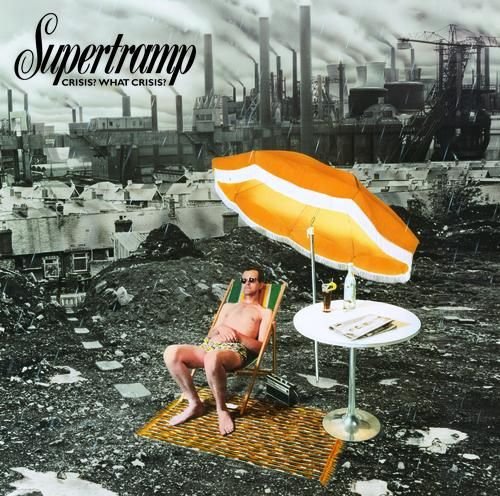
SUPERTRAMP-CRISIS? WHAT CRISIS?
SUPERTRAMP-CRISIS? WHAT CRISIS?
Very few groups are overnight successes. Most groups spend years struggling, trying to make a commercial breakthrough. Then after years of trying, success comes the way of the fortunate few. That was the case for Supertramp. It took three albums, and several changes in lineup before Supertramp made a commercial breakthrough.
Supertramp’s commercial breakthrough came with Crime Of The Century, which was released in September 1974. On its release, Crime Of The Century received widespread critical acclaim. It was widely accepted that Crime Of The Century was by far, Supertramp’s finest album. That was reflected in sales. Crime Of The Century reached number four in Britain and number thirty-eight in the US Billboard 200 charts. This resulted in Crime Of The Century being certified gold in America and Britain. That, however, wasn’t the end of the commercial success.
Just over a year later, Supertramp returned with the followup to Crime Of The Century, Crisis? What Crisis?, Released in November 1975, Crisis? What Crisis? saw the rise and rise of Supertramp continue. They were now well on their way to becoming part of rock royalty.
As soon as Crime Of The Century was released, A&M Records were pushing Supertramp to record another album. However, Supertramp were touring North America. During the tour, Roger Hodgson injured his hand. This resulted in Spertramp having to to cancel the rest of the North American tour. With extra time on their hands, Supertramp decided to begin work on what would become Crisis? What Crisis?
While extra time would be welcomed by any band about to record an album, there was a problem. Rick Davies and Roger Hodgson’s principal songwriters didn’t have a vision for their fourth album. This had been the case with Supertramp’s sophomore album, Indelibly Stamped. So, when work began on what became Crisis? What Crisis?, Rick and Roger were having to think on their feet. This could prove costly.
For Crisis? What Crisis? Rick Davies and Roger Hodgson, who had formed a potent songwriting partnership, penned the ten tracks on Crisis? What Crisis? These ten tracks were recorded between summer and autumn 1975, at A&M Studios, Los Angeles, Ramport Studios and Scorpio Studios, London.
When Supertramp began recording of Crisis? What Crisis?, Ken Scott returned as co-producer. Along with Supertramp, he would produced Crisis? What Crisis? Crisis? What Crisis? As the sessions began in the summer of 1975, Supertramp’s rhythm section featured Bob C. Benberg played drums and percussion, Dougie Thompson bass and Roger Hodgson vocals, guitar and keyboards. They were joined by Rick Davies on keyboards and vocals, while John Helliwell played saxophone and clarinet. By autumn 1975, Crisis? What Crisis? was completed. It would be released in September 1975.
On the release of Crisis? What Crisis? in September 1975, it wasn’t well received by critics. Some went as far as to ridicule some of the songs on Crisis? What Crisis? For Supertramp, this was a disaster. However, over the past forty years, a new generation of critics have looked at Crisis? What Crisis? with fresh and unbiased eyes. Crisis? What Crisis? it seems was a better album than the original critics would’ve had you believe. Sadly, this was too little, too late.
Having made the breakthrough with Crime Of The Century, Supertramp were determined to became part of rock royalty. Given the poor reviews of Crisis? What Crisis?, the sales didn’t match Crime Of The Century.
When Crisis? What Crisis? was released, it reached just number twenty in Britain and number forty-four in the US Billboard 200 charts. This was a disappointment, as Crime Of The Century had been certified gold in America and Britain. At least Crisis? What Crisis? was certified platinum in Canada and gold in France and Germany. While this success was welcome, Supertramp had wanted to replicate the success of Crime Of The Century. Sadly, that wasn’t to be. Why though? That’s what I’ll tell you after I’ve told you about Crisis? What Crisis?
Easy Does It opens Crisis? What Crisis? The introduction is understated. It’s not unlike a city awakening. Just a carefree lone whistle sets the scene for the vocal. It’s accompanied by an understated rhythm section, keyboards and firmly strummed guitar. Roger’s vocal is tender, hopeful and tinged with envy. Here, the lyrics could easily be about any rock star. They’re about identity and coping away from the fame and limelight. Roger seems to envy people who know who they are and where they’re going.
Just strummed, chiming guitars accompany Roger’s impassioned vocal on Sister Moonshine. Memories come flooding back, about when he was younger. He wishes things had been different. So, his imagination runs riot, singing “I wish I was a minstrel.”It’s as if he wants to escape from reality, and the drudgery of everyday. With a probing bass for company, Roger makes his escape from reality.
Ain’t Nobody But Me is the first of three songs where Rick Davies takes charge of the lead vocal. The arrangement is dark, dramatic and even gothic. Swells of organ, a dark, deliberate piano and the rhythm section accompany Rogers vocal. He delivers it abruptly. This adds to the drama. So, do the searing guitar. Then seamlessly, the rest of Supertramp add harmonies and Roger’s vocal takes on a tenderness. When it drops out, a blazing saxophone, blistering guitar, washes of organ and driving rhythm section combine. They play their part in a heartfelt paean, where elements of doo-wop, R&B, rock and soul combine seamlessly, to create one of Crisis, Not Crisis? highlights.
Straight away, A Soapbox Opera sounds as like Pink Floyd. Snatches of conversation, washes of synths and a lone, melancholy pain sets the scene for Roger’s wistful vocal. When he’s alone, he’s searching, searching for something to believe in. He’s struggling though. Meanwhile, Supertramp produce one of their trademark arrangements. Later, swathes of strings dance and ethereal harmonies sweep in, as the arrangement veers between dramatic to melodic.
Rick Davies returns on Another Man’s Woman. Again, an understated arrangement emerges from the distance. Just a jaunty piano solo makes its presence felt. It’s joined by Rick’s vocal, a chiming guitar and then, the rhythm section. As the jaunty arrangement unfolds, Rick vocal ranges from tender to a swagger. Meanwhile, searing guitars, stabs of piano and harmonies provide a backdrop during this tale of being the “other man,” and the danger it entails.
A marimba plays before the arrangement to Lady unfolds. It gives the listener a brief taste of Breakfast In America. This comes courtesy of urgent keyboards. They’re joined by the rhythm section, who add an element of drama. Roger’s vocal is impassioned, needy and urgent. Later, there’s a brief nod to Come Up and See Me, Make Me Smile, as Supertramp stretch their legs. Their arrangement provides the perfect accompaniment for Roger’s needy plea to the “Lady” in his life, as it reaches a dramatic high.
Just a Normal Day sees Rick and Roger share the lead vocal. They did this effectively on Crime Of The Century. As a lone piano takes centre-stage, the arraignment looks as if it’s about to head in the direction of jazz. It takes on a laid-back sound as the lyric “I like nothing better than sitting here with you.” The “Poor Boy” isn’t for complaining “as long as you’re right here with me.” By then, the arrangement has grown, and is shuffling along. As the rhythm section provide the heartbeat, a clarinet plays and harmonies add to the laid-back, understated, irresistible jazz-tinged sound,
There’s an element of drama to the piano and eerie synths that swirl above the arrangement to Just A Normal Day. They provide the backdrop to Roger’s pensive vocal. So do the rhythm section, keyboards and swathes of strings. They’re the perfect accompaniment to Roger’s soul-baring vocal on this beautiful, moving and thoughtful song.
Just like many of the songs on Crisis? What Crisis?, The Meaning has an understated introduction. It emerges from the distance, a sci-fi sound and urgent vocal combining. Soon, they’re joined by keyboards, woodwind and the rhythm section. By now, it’s as if Supertramp are drawing inspiration from prog-rock, jazz and the theatre of the Sensational Alex Harvey Band. Later, the arrangement grows in drama and an almost desperate Roger searches for “The Meaning.”
Two Of Us closes Crisis? What Crisis? An organ adds an atmospheric, dramatic backdrop before Roger’s confused vocal. He wonders “where do we go from here?” Meanwhile, an acoustic guitar, washes of organ and later, drums accompany him. Hopefully, he sings “as long as we’ve got the “Two Of Us” I’ll carry on.” However, one wonders if it’s more in hope than expectation.
Forty years ago, when Supertramp released Crisis? What Crisis? it wasn’t to the same critical acclaim as its predecessor Crime Of The Century. When Crisis? What Crisis? was released in September 1975, it wasn’t well received by critics. Some went as far as to ridicule some of the songs on Crisis? What Crisis? which some critics said, was an unfocused album. For Supertramp, this was a disaster.
Especially when Crisis? What Crisis? failed to replicate the commercial success of Crime Of The Century. Just when Supertramp looked like becoming part of rock royalty, Crisis? What Crisis? stalled at number twenty in Britain and number forty-four in the US Billboard 200 charts. This was a disappointment, as Crime Of The Century had been certified gold in America and Britain. At least Crisis? What Crisis? was certified platinum in Canada and gold in France and Germany. While this success was welcome, Supertramp had wanted to replicate the success of Crime Of The Century. Sadly, that wasn’t to be.
Critics referred to Crisis? What Crisis? as a disjointed, unfocussed album. They also felt that Supertramp had rushed the recording of Crisis? What Crisis? That was down to A&M Records.
They were desperate for Supertramp’s fourth album. So, when Roger injured his hand on their North American tour, Supertramp got to work. The only problem was Rick and Roger didn’t have a vision for the album. It was a case of using leftover songs from Crime Of The Century. At one point, Supertramp run out material. So, they stopped recording and wrote and a two new songs, including Ain’t Nobody But Me. These songs formed the basis for Crisis? What Crisis?, which has been reevaluated by critics.
Over the past forty years, a new generation of critics have looked at Crisis? What Crisis? with fresh and unbiased eyes. Crisis? What Crisis? is a better album than the original critics would’ve had you believe. There’s a reason for this. Back in 1975, a new breed of critics were making a name for themselves. They saw groups like Supertramp as music’s past. As a result, many albums didn’t receive a fair hearing. That may be the case with Crisis? What Crisis?,
While Crisis? What Crisis? may not have been one of Supertramp’s classic albums, it’s a far better album than the original reviews would have you believe. Crisis? What Crisis? is variously, beautiful, dramatic, melancholy, melodic and thoughtful. Elements of jazz, prog-rock, R&B, rock and soul can be heard over Crisis? What Crisis? ten tracks. This makes for an intriguing and underrated album. That’s why Supertramp’s fourth album, Crisis? What Crisis? is one of the hidden gems in Supertramp’s back-catalogue.
SUPERTRAMP-CRISIS? WHAT CRISIS?
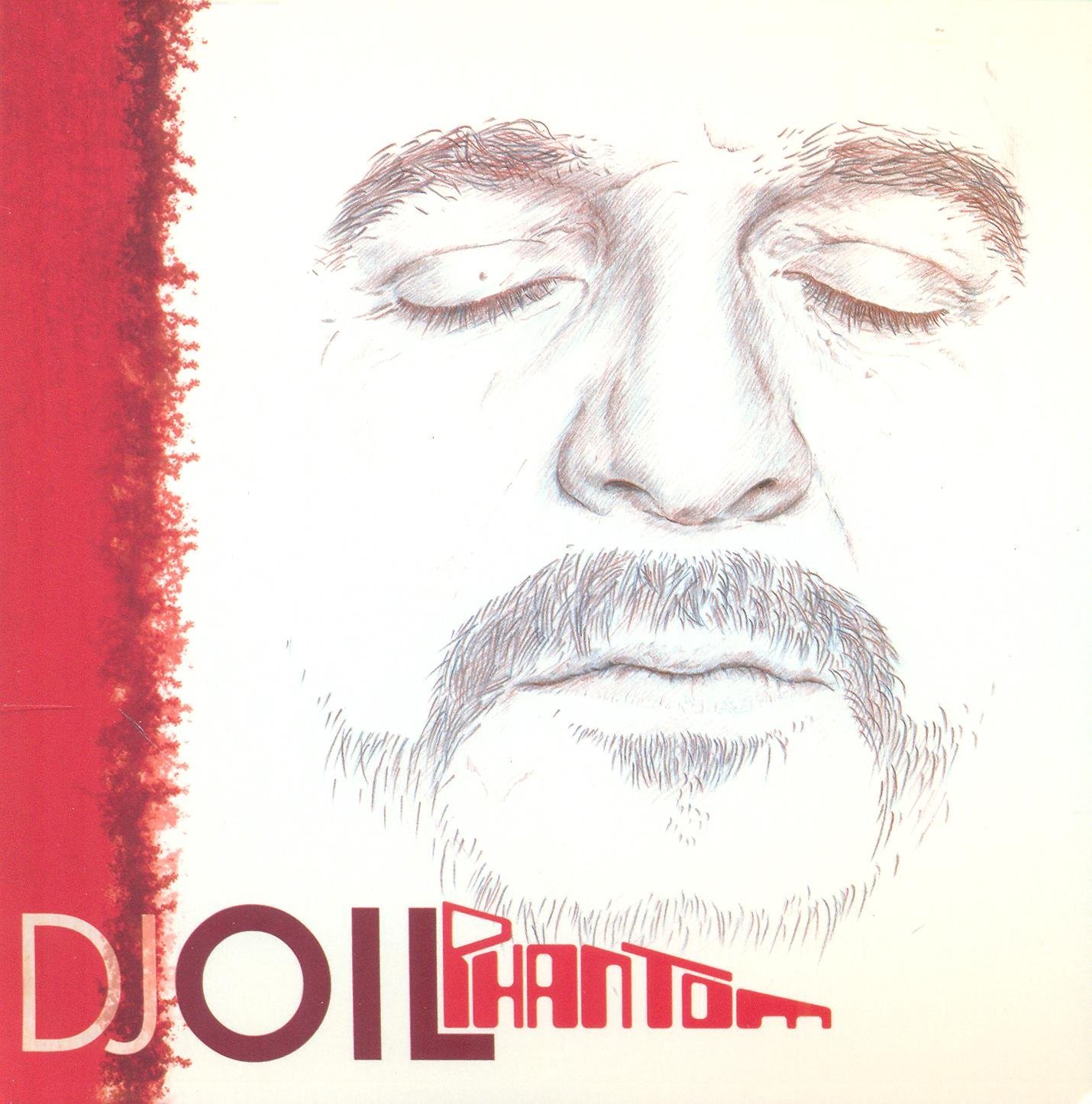
DJ OIL-PHANTOM.
DJ OIL-PHANTOM.
It was three years ago, that multi-instrumentalist Lionel Corsini dawned the role of DJ Oil, and released his debut album Black Notes on French label Discograph. Black Notes was well received by critics. That’s no surprise. After all, DJ Oil was an experienced artist.
Way before Lionel Corsini became DJ Oil, he was part of The Troublemakers. They released their debut E.P., Exodus, on Guidance Recordings. A year later, The Troublemakers released their debut album, Doubts and Convictions on Guidance Recordings. Three years later, The Troublemakers sophomore album was released on one of jazz’s legendary labels, Blue Note Records.
Following the release of Doubts and Convictions, The Troublemakers released two singles in 2002. They were Too Old To Die and Get Misunderstood. Then two years later, The Troublemakers made their Blue Note Records debut with Express Way.
2004 saw the release of The Troublemakers’ 2004 sophomore album, Express Way. It was well received by critics. Some critics forecast a bright future for The Troublemakers. However, Express Way was the last album The Troublemakers released.
Although The Troublemakers were no more, Lionel Corsini was still involved in music. He played an active part in Marseille’s music and party scene. Lionel also worked as producer and arranger. Then in 2012, Lionel Corsini became DJ Oil and released his debut album, Black Notes.
Three years after the release of Black Notes, DJ Oil returns with his sophomore album, Phantom, which will be released on BBE Music on 19th January 2015. Phantom is an eclectic, old school album.
There’s a reason for this. DJ Oil isn’t like many modern day producers. No. For Phantom, DJ Oil recorded the twelve tracks live. Unlike many modern producers, DJ Oil doesn’t rely on samples. No. He laid down the bass lines, beats, percussion, Moog and other synth sounds on Phantom. DJ Oil also uses a series of voices, street scenes and collaborations in the twelve tracks. These were taped during Lionel’s world travels. They, just like the songs that became Phantom, DJ Oil says “live on my computer like ghosts, waiting to get out, and some never did get out.” That’s until the 19th February 2015, when DJ Oil returns with Phantom, his sophomore album.
The moody, dramatic, old school R&B of Yes It Is opens Phantom. Drums pound, guitars quiver and shiver and DJ Oil vamps, yelps and hollers his way through the arrangement. Banks of synths join the rhythm section and a blistering, searing guitar in producing a wall of sound for DJ Oil. Against this grinding arrangement, his tender vocal flits in and out. All the time, this down and dirty, groove laden arrangement is reminiscent of Prince.
Straight away, DJ Oil gets into a groove on Drop Out. A dark, pulsating arrangement unfolds. Atop the arrangement one of DJ Oil’s Phantom vocal nuggets proves a compelling, somewhat disturbing accompaniment. Washes of haunting sounds and percussion sweep. They’re part of an angst ridden cry for help, wheres DJ Oil seems to draw inspiration from Frank Zappa, Captain Beefheart and classic hip hop.
Against a pulsating, moody arrangement a haunting, captivating female vocal sets the scene. It’s against this mesmeric backdrop, a vocal and broody bass combine. They grab your attention. Then later, a swaggering, jive taking vocal enters. It picks up where the equal rights activists of the sixties and seventies left off. Tinged with irony, it mocks the so called “white” establishment. This fusion of irony and social comment results in a hypnotic backdrop, and proves a powerful combination.
Against a backdrop of African drums, the arrangement to Paolo unfolds. Just like previous tracks, snippets of vocal sit atop the arrangement. Afrobeat influenced guitars chime and chirp. Sometimes, they briefly, head in the direction of surf guitar. Later, a myriad of sound effects, scratches, percussion and vocal samples flit in and out, of what’s a captivating track full of surprises aplenty.
At 120 beats per minute, Seasons has a dance-floor friendly tempo. That’s helped no end by the thunderous 4/4 drums. They’re augmented by subtle bursts of bells, percussion and sound effects. Gradually, they grow in power and the arrangement unfolds. It becomes powerful, dramatic and mesmeric. Then a sample of a scholar discussion rhythm is added. When it drops out, instruments and effects are added. Among them are a driving guitar, synths and sweeps of white noise. Later, sound effects flit in and out. At one point, there’s even a nod to Talking Heads. Mostly, though, Seasons is dance-floor friendly music with a twist, that’s bound to keep dancers on their toes.
Echoism is best described as a moody, broody, cinematic soundscape. Quite simply, it’s a six minute adventure in sound. The music is variously dramatic, eerie, gothic and spiritual. That’s quite a combination. Mind you, what do you expect when you combine elements of slow, spacey funk, downtempo and world music are combined with ethereal, sci-fi sounds? This unlikely combination results in a haunting, moody, otherworldly cinematic sound that’s Phantom’s finest hour.
Just like other tracks on Phantom, the arrangement to Beetlejuice is broody, moody, dark and dramatic. Washes of synths join drums, percussion and a vocal sample. It’s soon replaced by a swaggering rap. Then when it drops out, it’s replaced by the joyous sound of a group of female African vocalists. They add another contrast to what’s a roller coaster of eclectic sounds and influences. Each of them flit and out of the arrangement, as DJ Oil continues to spring surprises.
The cinematic Plastic Man sounds like a paranoia fuelled track. With its sinister, whispery vocal, it’s akin to the sound of someone unravelling before your eyes. Atop the arrangement sits pounding drums, washes of synths and a hypnotic holler. Soon, drums gallop along. They’ve a much sharper sound. In the distance, sci-fi synths play. They’re joined briefly, by a coke fuelled, comedic vocal sample. As the arrangement grinds along, a myriad of sounds escape from its midst. Some are disturbing, and reminiscent of a bad acid trip. It’s as if the Plastic Man has tried to open the doors of perception too far.
Le Rythme De La Vie is another Afro-influenced track. As the drums gallop along, percussion and sighs fill the gap. Meanwhile, a bass sits down in the mix, helping to provide the rhythm of life. Vocal samples flit in and out, while percussion and sound effects punctuate the track. Although slightly more minimalist than the previous track, it’s just as effective and later, eerie and dramatic.
A myriad of futuristic, sci-fi sounds bound along the arrangement to Burn It. Its hypnotic, mesmeric sounds like it belongs in a remake of Blade Runner. That’s until the vocal enters. It soon drops out, and the arrangement builds and grows. Before long, another dance-floor friendly track unfolds. While this version of Burn It is perfect for the album, it’s a track that’s ripe for a remix. In the right hands, DJ Oil could have a potential dance-floor anthem on his hands.
Crispy beats provide the backdrop to a bravado fuelled vocal on New Lord. The beats provide a minimalist backdrop to a vocal that’s equal parts bravado, drama and machismo. As the vocal drops out, the earnest vocal of the New Lord sings “God have mercy.” Meanwhile, the arrangement churns and grinds along. Later, a gospel tinged vocal replies half in earnest, half in jest “God have mercy.” Bravado it seems is omnipresent, and this isn’t one of the New Lord’s followers.
A Day closes Phantom, DJ Oil’s sophomore album. The ominous sound of pounding drums is joined by flourishes of quivering flutes. They’re joined by a tender, ethereal vocal. It’s a contrast to the drums. Soon, keyboards, percussion and a guitar enter. So do harmonies. They provide a soulful backdrop, as DJ Oil’s shows another side of his music. As this soulful side unfolds, the arrangement takes a brief diversion via jazz. Mostly, though, DJ Oil keeps this soulful, on Phantom’s finale.
Three years after the release of his debut album, Black Notes, DJ Oil returns with his sophomore album, Phantom. It will be released on 19th January 2015. Phantom features what were previously ten ghosts in the machine.
Previously, the songs on Phantom lay on DJ Oil’s computer. They were what DJ Oil describes as “ghosts, waiting to get out.” Other ghosts included the voices, street scenes and collaborations in the twelve tracks. They were taped during Lionel’s world travels. That’s where these ghosts remained, until the exorcism that was Phantom. Now these ghosts have come to life on Phantom. It’s a captivating album from the former member of The Troublemakers.
What makes Phantom such a captivating album is that, mostly, DJ Oil eschewed the use of samples. DJ Oil laid down the bass lines, beats, percussion, Moog and other synth sounds on Phantom. That’s a rarity nowadays. Most producers rely on samples. Another rarity was that the tracks on Phantom were recorded live. Again, that is unusual in modern music. So is the inclusion of what DJ Oil descries as “happy accidents.” Inadvertently, they improved Phantom. In a world where most producers will edit tracks to the nth degree, this is another rarity. It however, worked to DJ Oil’s advantage.
The “happy accidents” DJ Oil describes, play their part in the success of Phantom’s eclectic sound. Indeed, eclectic is almost an understatement. There’s everything from Afrobeat, country blues, electronic, house, jazz, psychedelia, rural French music and soul. Hip hop and trip hop play an important part in Phantom’s sound. Given such eclecticism, trying to categorise Phantom isn’t easy. However, hip hop and trip hop are two of the strongest influences. So too, is house. There’s even a couple of floor-fillers on Phantom. All this makes Phantom a captivating and eclectic album.
Given Phantom is such an eclectic album, then maybe this will be album that sees DJ Oil make his long awaited breakthrough? After all, Phantom is a musical roller coaster through genres courtesy of DJ Oil.
DJ OIL-PHANTOM.
CERRONE-CERRONE’S PARADISE.
CERRONE-CERRONE’S PARADISE.
During the disco era, it wasn’t just American labels like Salsoul, Casablanca, SAM and TK that were producing disco music. Over in Europe, producers like Giorgio Moroder, Frank Farian, Claude Francois, Don Ray and Cerrone were releasing some of the most cutting-edge dance music. One of these producers, Marc Cerrone started releasing albums in the mid-seventies, and during his career, sold over thirty-million albums. One of Marc Cerrone’s best albums, is his second solo album, the disco classic Cerrone’s Paradise, released in July 1977, and will be reissued on Because Music, on vinyl, 25th January 2015.
Marc Cerrone was neither a stranger to the music industry, nor a recording studio before he released his debut solo album Love In C Minor in 1976. Previously, he’d been a member of the Afro-rock band Kongas for three years. Having left Kongas, Marc decided to record one solo album, before bowing out of music forever. After struggling to find a record label who’d sign him, Marc decided to release Love In C Minor independently.
When by mistake, copies of Love In C Minor found there way to New York, they took the Big Apple’s discos by storm. Atlantic Records realizing the potential of the album, struck a deal to license it through their Cotillion Records subsidiary. Quickly, Love In C Minor became a hugely popular album, resulting in Atlantic desperately trying to persuade Marc to tour the US to promote the album and tour. Marc was insistent that he’d finish his second album, which would become Cerrone’s Paradise. If Cerrone’s Paradise matched the success of Love In C Minor, then Marc agreed to tour the US. The question was, would Cerrone’s Paradise prove as popular as its predecessor Love In C Minor?
While Marc Cerrone had enlisted the help of Alec R. Constansinos on his debut album Love In C Minor, Alec didn’t collaborate on Cerrone’s Paradise. The pair had fallen out due to Alec’s lack of faith in the potential success of Love In C Minor. Instead, Marc called upon Raymond Donnez, known as Don Ray. He wrote the arrangements for Cerrone’s Paradise. Joining Marc and Don, was Alain Wisniak, who cowrote the four tracks on Cerrone’s Paradise. With the songs written, Marc headed to London and the Trident Recording Studios.
At Trident studios, Marc used the same backing singers that featured on Love In C Minor. This included Madeline Bell, Sue Glover, Joy Yates, Joan Stones and Jackie Sullivan. Their backing vocals feature alongside a rhythm section that sprinkles funk among the disco, before Cerrone becomes a balladeer on Time For Love. With steel drums, synths and wah-wah guitars sitting comfortably beside percussion and strings, the four songs on Cerrone’s Paradise follow closely in the footsteps of Love In C Minor. Once Cerrone’s Paradise was completed, the album was set for release in July 1977.
Before the release of Cerrone’s Paradise, a sampler of four edited versions of the songs on the album was released to radio stations and DJs. Quickly, the music became hugely popular in both clubs and on radio.This resulted in the release reaching number six on Billboards’s Dance Music-Club Play charts. After this, Cerrone’s Paradise was released in July 1977, with the album reaching number 162 in the US Billboard 200 and number fifty-two in the US R&B Charts. Marc Cerrone then decided to release an independently funded promotional video for two tracks, Cerrone’s Paradise and Take Me. Sadly, these videos failed to ignite interest in these tracks. With that, Marc headed back to his new home in Los Angeles, where he’d start work on his next album Supernature, also known as Cerrone III. However, it’s Cerrone’s Paradise that is seen as Marc Cerrone’s classic album, and I’ll now tell you why.
Cerrone’s Paradise opens with the title track Cerrone’s Paradise, which is a sixteen minute Magnus Opus, complete with erotic sounding backing vocals. Opening with the sound of background noise and female conversations, chiming guitars, lush, cascading strings and chiming guitars combine with keyboards as the track gets underway. With strings, rhythm section and guitars driving the track along, bursts of rasping horns punctuate the track, while backing vocalists unite, contributing sweet, sultry harmonies. The strings swirl and sweep, drums pound relentlessly, while flourishes of keyboards and percussion augment the arrangement. A searing guitar solo, breathless, sensuous vocals and swathes of cascading strings, combine with the relentless pounding drums and percussion. Later they give way to erotic sounding vocals as the track reaches 126 beats per minute. For sixteen majestic minutes, a true, timeless disco classic reveals its charms, subtleties and sensuous sound.
Although Take Me has the same relentless pounding drumbeats, lush sweeping strings and sweet backing vocals, the track sees Cerrone add steel pan drums and a sprinkling of funk to the track. It has the same lovely lush sound, thanks to the strings and sensuous backing vocals. This is a much shorter track, coming in at just under six minutes. Similarly, the tempo is slower, at 119 beats per minutes. Later bursts of blazing horns are added to the disco strings, while the steel pan drums add a slight funky flavour. That’s not all. The track has lush and catchy sound which is absolutely laden with hooks aplenty.
A surprise awaits the listener on Time For Love, with the track seeing Cerrone transformed into a balladeer par excellence. With a slow, almost pedestrian tempo of just 65 beats per minute, the arrangement has a floaty, pensive sound. The verses are sung English, while the chorus in sung in French. Here, the backing vocalists unite to deliver some of their most beautiful, subtle vocals. This they do against an equally gorgeous arrangement, where slow, beautiful strings, meandering percussion and keyboards combine with the rhythm section and keyboards. Together, they play with a subtlety, resulting in a very beautiful, romantic sounding track with some lovely lyrics and that pensive, subtle arrangement.
Closing Cerrone’s Paradise is a reprise of Cerrone’s Paradise. The track gets underway with pounding drums, swirling string and bursts of punchy horns, before the backing vocalists unite to deliver some more of their almost trademark sweet vocal. They’re joined by sizzling guitars and percussion, while dramatic strings cascade and the drums drive the track along, as the song and album heads to a close. Like the Magnus Opus that was Cerrone’s Paradise, this reprisal has the same beauty and quality of the opening track, demonstrating the considerable talents of Marc Cerrone. With talent like this, it’s no wonder he sold over thirty-million albums.
Although there are just four tracks on Cerrone’s Paradise, they’re four of the finest tracks Marc Cerrone recorded. For many people, Cerrone’s Paradise was his finest hour, where he combined three delicious slices of disco music with the balladry of Time For Love. Whereas other albums recorded in the late seventies that featured synths haven’t aged well, Cerrone’s Paradise, still retains a contemporary sound, one that has an almost timeless sound. Given the timeless nature of Cerrone’s Paradise, it should’ve been a bigger commercial success in America. Instead, Cerrone’s Paradise only reached number reached number 162 in the US Billboard 200 and number fifty-two in the US R&B charts.
When Cerrone’s Paradise was released in 1977, disco was at the height of its popularity. Cerrone’s Paradise should’ve been a much bigger success. However, Cerrone’s brand of Euro Disco didn’t find favour with American DJs, dancers and record buyers. They preferred the classic American disco sound. Despite that, Cerrone’s Paradise, which will be reissued on vinyl, by Because Music, on 25th January 2015, is now perceived as one of the finest European disco albums. Indeed, Cerrone’s Paradise is regarded as Cerrone’s classic album.
CERRONE-CERRONE’S PARADISE.
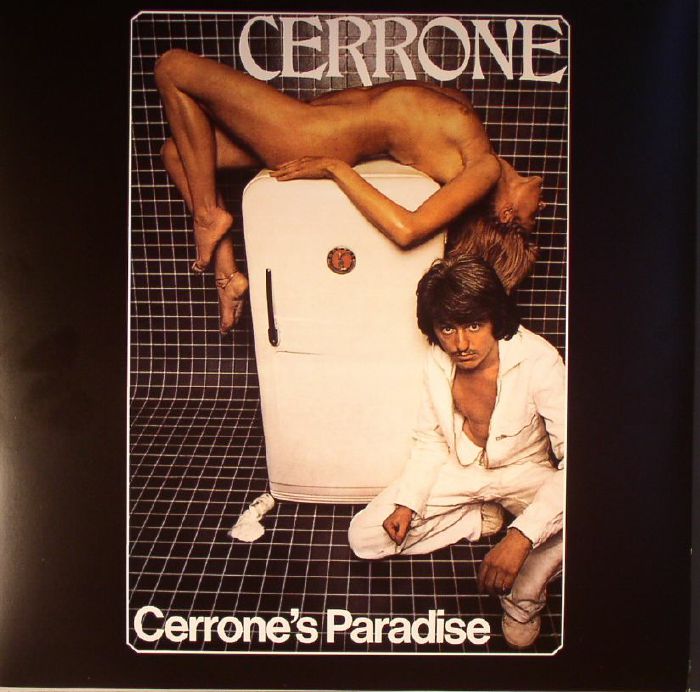
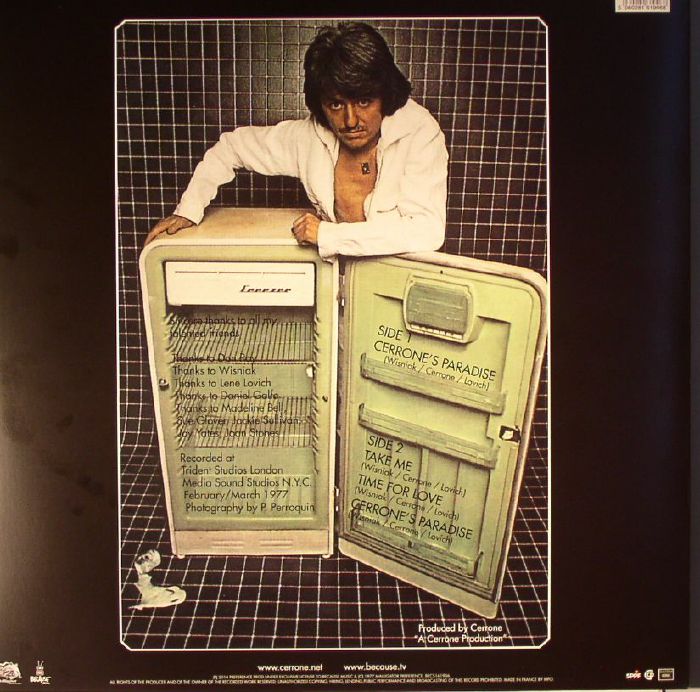
PANORAM-BACKGROUND STORY.
PANORAM-BACKGROUND STORY.
Last year, Panoram released his much anticipated, debut album Everyone Is A Door. This album of laid-back, blissed out music, was released to critical acclaim. Everyone Is A Door caught the imagination of critics and music lovers alike. Everyone wondered what next for Panoram?
The answer to that is Background Story, Panoram’s sophomore album. Background Story, will be released on 9th March 2015, via Panoram’s own Wandering Eye imprint. Panoram, it seems hasn’t let the grass grown under his feet.
Far from it. Unlike many modern day musicians, Panoram doesn’t spend years making an album. No. He’s like an old school musician, whose worked quickly to complete what is a very special album, Background Story.
As the title suggests, there’s a Background Story to Panoram’s sophomore album. Panoram describes Background Story as “a meditation on the nature of memories and reality, each song digging deeper into the mind in the search for fragmentary details.” He goes on to further explain: “this process is an unpredictable journey in which we face a complex puzzle made by our own manipulations. Mood swings can make our minds questioning what we thought it was “real”. We can get easily lost among the infinite levels of reality.” From what Panoram says, Background Story is no ordinary album. Far from it. Background Story is a truly captivating album
Opening Background Story is Mind Puncture. It’s a tantalising taste of what’s to come from Panoram. Dark, dubby beats pound menacingly while washes of elegiac, spacey synths sweep in and out. Along with a myriad of sounds, they’re drenched in reverb. Meanwhile, a guitar wah-wahs, before feedback flits in and out. For just over a minute a captivating fusion of dark, dreamy and lysergic sounds unfolds.
Wistful described the the piano lead Background Story. There’s a sense of melancholia from the opening bars. As the song progresses, there’s an overwhelming sense of sadness, and a yearning for simplicity.
Straight away, Black Milk Shower takes on a cinematic, sound. It’s as if Panoram has been asked to recreate the soundtrack to Wim Wenders’ Paris Texas. Cinematic becomes sensual, when a sassy vocal sample enters. It’s accompanied by crunchy, compressed beats, washes of ethereal synths and later, a searing, blistering rocky guitar. It is slightly muted though, so as not to overpower the rest of the mix. Later, lush synth strings sweep in adding this grandiose, cinematic symphony for a new millennia.
Dead Plastic has laid-back, blessed out sound. It’s a case of sitting back, and letting the waves of music wash over you. From what sounds like waves hitting a deserted beach, keyboards add a trippy, somewhat sci-fi sound. Indeed, the ambient, trippy delights of Dead Plastic is akin to an interstellar journey to a newly discovered planet.
From the get-go, the aptly title Fog envelops you. Its slow, spacey, sci-fi sound cocoons you. You loose yourself in its many subtleties and surprises. This includes beeps and squeaks aplenty, and plodding, dubby drums. They’re aided and abetted by a myriad of sci-fi sounds and sometimes, prog rock keyboards. The result is a track that’s a Smoker’s Delight.
Hyperuranion has a much bolder, fuller sound that previous tracks on Background Story. With keyboards to the fore, driving the arrangement along washes of synths and sound effects become one. The track plays tricks with you. Amidst the lush washes of synths you wonder is that a bird cheeping? It is. This is just the latest surprise sprung by Panoram. Later, reverb is used sparingly, resulting in the arrangement shimmering and glistening into the distance, its beauty omnipresent.
As gradually, Mind Puncture takes on a rocky hue, you wonder what direction the track is heading? Is Panoram about to throw another curveball? Quite possibly. It’s always a case of expect the unexpected. That’s the case here. The track has a seventies influence. There’s a definite seventies prog-rock influence. Add to that swirls and washes of drama. They’re part and parcel of what’s sounds like the soundtrack to an art house film that’s yet to be made.
Slowly and gradually, The Persistant Image Of The Left Eye starts to reveal its hidden secrets. Synths beep and squeak, cymbals are caressed and drums help drive the arrangement along. Again, there’s a prog-rock influence in the keyboards. Having said that, elements of acid house, ambient and avant-garde make their presence, felt on what’s an intense, dramatic and compelling musical journey.
The tempo drops on There Was A Hole Here. It’s a slow atmospheric track that occasionally, features a dreamy vocal. It flits in and out of the track. Mostly, washes of ethereal, elegiac music, drenched in reverb caress you. Their dreamy, lysergic delights wash over you, transporting you to an altogether better place.
Closing Background Story is You Are Correctly Lost. Straight away, you’re enthralled by what’s best described as the lushest of interstellar ballads. It’s simplicity itself. Washes of ethereal synths and seraphic guitars play leading roles. These are no ordinary guitars though. No they’re suitably subtle, and are transformed by waves of reverb. This results in the perfect way for Panoram to close his much anticipated sophomore album, Background Story.
Featuring ten tracks, lasting just thirty-seven minutes, Background Story, Panoram’s sophomore album, is an unpredictable musical journey. No wonder. You never quite know what direction Panoram’s music is heading. It’s akin to a lysergic magical mystery tour through musical genres. Everything from ambient, avant-garde, drone pop, experimental, prog-rock and psychedelia can be heard on Background Story, on 9th March 2015, on via Panoram’s own Wandering Eye imprint. As a result, Background Story is a captivating and worthy followup to Panoram’s debut album Everyone Is A Door.
Just like Everyone Is A Door, Background Story is a highly accomplished album. It’s also a captivating exploration of memories and reality. This is what Panoram set out to do. He’s succeeded in doing so, in what’s best described as a journey into sound.
During this journey into sound, music’s past and present play leading roles. Traditional instruments and technology play their part in the sound and success of Background Story. As a result, Background Story, Panoram’s sophomore album, is cerebral, cinematic, dramatic, elegiac, ethereal, intense and lysergic. That’s not all. Background Story is a captivating and worthy successor to Panoram’s debut album Everyone Is A Door.
PANORAM-BACKGROUND STORY.

THE BATHERS-KELVINGROVE BABY.
THE BATHERS-KELVINGROVE BABY.
2015 marks the thirtieth anniversary of a Scottish musical institution, The Bathers. They were formed in Glasgow, in 1985, by singer, songwriter and troubled troubadour Chris Thomson and released six albums between 1987 and 1999. The Bathers fifth album was Kelvingrove Baby, a minor classic, that’s one of the finest Scottish albums ever released. Sadly, Kelvingrove Baby and The Bathers is a story of what might have been.
With Chris Thompson at the helm, the Glasgow based quintet could’ve, and should’ve, been one the biggest Scottish bands ever. After all, The Bathers music is articulate, beautiful, dramatic, ethereal, elegiac, emotive, languid, literate and melancholy. This is music for those that have loved, lost and survived to tell the tale. Sadly, however, The Bathers never reached the heady heights their music deserved. As a result, the six albums The Bathers released between 1987s Unusual Places To Die and 1999s Pandemonia, never reached the audience it deserved. For Chris Thomson, history was repeating itself.
The Bathers were formed in Glasgow in 1985. They formed after Chris Thomson’s previous group Friends Again split up. Initially, The Bathers were a vehicle for singer-songwriter Chris Thomson. However, in 1987, The Bathers secured their first record deal with Go! Discs Records, and released their debut album Unusual Places To Die.
Unusual Places To Die.
For their debut album Unusual Places To Die, Chris Thomson penned ten tracks. These tracks were recorded by The Bathers’ original lineup. This included bassist Sam Loup, drummer James Locke and Chris on guitar and keyboards. Joining The Bathers, were Michael Peden of The Chimes, Douglas Macintyre and James Grant of Love and Money. They played walk on parts on Unusual Places To Die, which was released later in 1987.
When Unusual Places To Die was released in 1987, it was to widespread critical acclaim. Chris Thomson’s songs seemed to strike a nerve with critics. They described the music as variously engaging, emotive and dramatic. One critic went as far to wonder whether Unusual Places To Die was the work of a genius? Despite this critical acclaim Unusual Places To Die wasn’t a commercial success. This was nothing to do with the music though.
Instead, Unusual Places To Die fell victim to the internal politics within the record company. As a result, sales of Unusual Places To Die were poor. Given the critical response to Unusual Places To Die, this was disappointing. So, it wasn’t a surprise when The Bathers switched labels for their sophomore album, Sweet Deceit.
Sweet Deceit.
After the Go Discs! internal problems sabotaged the release of Unusual Places To Die, The Bathers moved to Island Records, where the recorded Sweet Deceit.
Sweet Deceit was an epic album, featuring fifteen tracks. Chris wrote thirteen of the tracks, and cowrote the other two. He co-produced Sweet Deceit with Keith Mitchell, and the album was released in 1990.
Three years had passed since Unusual Places To Die was released. The Bathers were back, and according to critics, better than ever. Sweet Deceit was described as impressionistic, beautiful and spellbinding. One critic, quite rightly referred to the album as a mini masterpiece. However, The Bathers had been here before with Unusual Places To Die.
On Sweet Deceit’s release, lightning struck twice for The Bathers. Sales of Sweet Deceit were disappointing. Despite the critically acclaimed reviews, Sweet Deceit seemed to pass record buyers by. For The Bathers, this was a huge disappointment.
Especially when Island Records didn’t renew The Bathers’ contract. There would be another gap of three years before we heard from The Bathers again. However, Chris was still making music.
Following Sweet Deceit, Chris Thomson joined with two former members of Lloyd Cole and the Commotions, Stephen Irvine and Neil Clark, to create a Scottish supergroup, Bloomsday. They released just one album, Fortuny, which is now regarded as a classic Scottish album. Just like The Bathers two previous albums, Bloomsday’s debut album, Fortuny, was released to critical acclaim. Unfortunately, commercial success eluded Fortuny. However, a more fruitful period was round the corner for The Bathers.
Lagoon Blues.
After signing a record contract with a German record label Marina, the group released three albums in a four year period. In 1993, they released Lagoon Blues, their Marina debut.
Just like Sweet Deceit, Lagoon Blues was another epic album penned by Chris Thomson. It featured sixteen songs, which were the perfect showcase for Chris’ octave defying vocal. Accompanied by what was essentially The Bathers and friends, sixteen tracks were recorded at Palladium Studios, Edinburgh and mixed at Palladium Studios and Cava Studios, Glasgow. Once Lagoon Blues was completed, it was released in 1993.
On its release in 1993, critics remarked that Lagoon Blues was a more eclectic album. There were diversions into jazz-skiffle on Pissor, while the album opener Lagoon Blues showcased a string quartet. The strings would play an important part on Lagoon Blues, which was hailed as poetic, elegant, sumptuous and intense. The same critical acclaim accompanied Lagoon Blues, however, this time The Bathers’ music found a wider audience. It seemed after three albums, The Bathers’ star was in the ascendancy.
Sunpowder.
For The Bathers’ fourth album, and followup to Lagoon Blues, they returned with Sunpowder. It marked the debut of a new lineup of The Bathers.
Sunpowder marked The Bathers’ debut of drummer and percussionist Hazel Morrison, keyboardist Carlo Scattini and string players Ian White and Mark Wilson. These new additions would change The Bathers’ sound greatly. Many people refer to this as the classic lineup of The Bathers. This classic lineup, plus guest artist ex-Cocteau Twin, Liz Fraser, who features on four tracks, made its debut on Sunpowder.
For Sunpowder, Chris Thomson had written eleven new songs. They were recorded a at Palladium Studios, Edinburgh. Chris and Keith Mitchell produced Sunpowder, which was released in 1995.
When Sunpowder was released, it received the same critical acclaim as The Bathers’ three previous albums. Sunpowder was called sumptuous, sensual, dramatic and ethereal. Liz Fraser, an honorary Bather was the perfect foil to Chris, forever the troubled, tortured troubadour. The result was, what was The Bathers most successful album, Sunpowder. That however, would change with Kelvingrove Baby.
Kelvingrove Baby.
Kelvingrove Baby would be The Bathers’ Marina swan-song. They were certainly eaving the German label on a high.
Chris Thomson had written thirteen new songs for Kelvingrove Baby, which was recorded in Glasgow and Edinburgh. It was at these locations that The Bathers’ expanded lineup reconvened.
Picking up where they left off, were The Bathers’ new lineup, plus a few friends. The Bathers’ rhythm section included bassists Sam Loup, Douglas MacIntyre and Ken McHugh, drummers Hazel Morrison and James Locke, who also played percussion. Joining them in the rhythm section were guitarist Colin McIlroy. They were joined by accordionist, pianist and and organist Carlo Scattini, string players Ian White and Mark Wilson. Fermina Haze plays organ, James Grant of Love and Money plays acoustic guitar and with with Hazel Morrison and Justin Currie of Del Amitri, adds backing vocals. Chris plays acoustic guitar, piano and adds his unmistakable vocals. He produced most of Kelvingrove Baby, apart from Thrive, which was produced by James Locke. Once Kelvingrove Baby was completed, it was released in 1997.
Just like each of The Bathers’ four previous albums, Kelvingrove Baby was released to overwhelming critical acclaim. Kelvingrove Baby was hailed The Bathers’ finest hour. It seemed everything had been leading up to Kelvingrove Baby.
Opening Kelvingrove Baby, is the James Locke produced Thrive. Just a strummed acoustic guitar takes centre-stage, while subtle washes of keyboards flit in and out. They provide the backdrop for Chris Thomson’s vocal. For the first time on Kelvingrove Baby, Chris dawns the role of troubled troubadour, playing it to perfection. It’s as if he’s experience, lived through, and survived someone leaving him. His vocal is full of emotion of swells of strings sweep in. They’re the perfect accompaniment as Chris delivers the lyrics “up on the west coast waiting, I wear the rain like tears.” In doing so, Chris’ hurt and loneliness is there for all to see and hear.
Girlfriend is akin to a devotional from the pen of Chris Thomson. A piano and bass probe, while a cymbal is caresses. This sets the stage for Chris’ tender, emotive vocal. There’s almost disbelief in his voice that he’s found someone to call his own. He’s fallen head over heels, hence lyrics like “I’m the kind of guy, whose dreams rise unashamed, who will love you ’til the end, cos you’re my girlfriend.” With just a subtle, meandering piano, understated drums, washes of ethereal harmonies and crystalline guitar, Chris delivers a heartfelt devotional.
If Love Could Last Forever is the perfect showcase for The Bathers’ unique brand of cerebral, literate and poetic pop. After all, who apart from The Bathers write: “they flutter down like fireflies, tugging at your sleeves, somehow rise to shame you, bring you to your knees?” It’s a beautiful, soul-searching song about love. That’s the case from the opening bars, when an acoustic guitar is strummed, a guitar chimes and drums mark the beat. Then, longingly and hopefully, Chris, accompanied by cooing harmonies, sings “ If Love Could Last Forever, forever and a day.” Effortlessly, Chris breathes life, meaning and emotion into what’s a timeless paean.
While East Of East Delier has an understated arrangement, it allows Chris to unleash his full and impressive vocal range. Drums are caressed and a piano meanders. Meanwhile, a bass adds an element of darkness. This is reflected in the hurt, loneliness and regret in Chris’ vocal. His vocal soars above the arrangement, with frustration omnipresent at the love he once had and lost.
Accompanied by firmly strummed acoustic guitar No Risk No Glory, unfolds. A guitar chimes as fingers flit up and down the fretboard. Meanwhile, Chris’ vocal is a mixture of power, emotion and hurt. The hurt is obvious from the moment he sings “I was born to love her,” it’s a case of infatuation and unrequited love. With harmonies, an accordion and guitars for company, Chris delivers a cathartic outpouring of hurt. He wouldn’t have it any other way, singing ruefully “no risk, no glory.”
Dramatic and moody describes the dark, but sparse piano lead introduction to Once Upon A Time On The Rapenburg. If a picture tells a thousand stories, so does a piano. It sets the scene for Chris, as once again, he dawns the role of troubled troubadour. With shimmering strings and a deliberate gothic piano for company, Chris remembers the love affair that almost was.
Kelvingrove Baby is the centre-piece of Kelvingrove Baby. It’s a seven minute epic about an unnamed femme fatale from Glasgow’s West End who toyed with Chris’ affections. From just a strummed guitar and subtle piano, the arrangement builds. The piano plays a more prominent role, adding an element of drama. After ninety seconds drums pound and ethereal harmonies sweep in. They give way to Chris’ worldweary, lived-in vocal. Meanwhile, Hazel Morrison adds ethereal, elegiac harmonies. This seems to spur Chris on. Using his wide vocal range, he unleashes a needy vocal tour de force. Hopefully, he sings “someday I know, that you’ll be back…I don’t know, maybe then you can be my Kelvingrove Baby.” Behind him, the epic, ethereal and dramatic arrangement is the perfect accompaniment for what’s without doubt, The Bathers’ finest hour on Kelvingrove Baby.
Memories come flooding back to Chris on Girl From The Polders. Instantly, he’s transported back to another time and place. That’s when they first met, and where “I first kissed you.” With the rhythm section and piano providing a backdrop, Chris delivers another hopeful, needy vocal. He hopes that when summer returns, and heads back to Poolewe, his “songbird, melodious and pure,” is there.
Against a backdrop of quivering strings, Chris delivers a vocal on Lost Certainties that’s equal parts power, passion, frustration and sadness. Below the vocal and strings, the rhythm section drives the arrangement along, adding to the drama and intensity of this soul-baring refrain about a bewitching woman.
After the intensity of Lost Certainties, Dial has a much looser, laid-back sound. Chris eschews the power of the previous track, as The Bathers deliver an understated, spacious, melodic track. Hazel Morrison, James Grant and Justin Currie add harmonies that are yin to Chris’ yang, as he almost croons his way through Dial.
Orchestral strings and a pounding rhythm section set the scene for Chris’ vocal on The Fragrance Remains Insane. There’s an intensity in Chris’ lovelorn vocal, on this tale of love gone wrong. He’s struggling to come to terms with the breakup of his relationship, despite his claims “that I’m not crazy about you.”
If Chris Thomson had been born twenty years earlier, he’d have been a crooner. That’s apparent on Hellespont In A Storm, where he literally croons his way through the track. Accompanied by washes of accordion, swathes of strings, a subtle rhythm section and acoustic guitar. As Chris croons, emotion and regret are omnipresent. Especially when he sings “spread your wings, above you, the time has come to fly away, where I can’t follow.” Given this is the ultimate sacrifice, the beauty and emotion is almost overwhelming.
The piano lead Twelve, closes Kelvingrove Baby. Chris lays bare his soul, accompanied by his trusty piano. Later, swathes of lush strings sweep in. They provide the accompaniment to a telephone conversation, on this story of everlasting love.
For The Bathers, Kelvingrove Baby was a musical coming of age. It’s as if everything they’d been working towards was leading to Kelvingrove Baby. The music was variously atmospheric, cerebral, dramatic, ethereal, heartfelt, hopeful, literate, needy and sensual. It’s also tinged with pathos, regret and sadness. No wonder, given the tales of love found and lost. They’re brought to life by The Bathers’ very own troubled troubadour Chris Thompson. Along with the rest of The Bathers, they’re responsible for Kelvingrove Baby, a truly enthralling album.
On Kelvingrove Baby, the music is captivating. So much so, that you’re drawn into Kelvingrove Baby’s lush, atmospheric sound. Having captured your attention, The Bathers don’t let go. Before long, the listener has fallen in love. They fall in love with music that’s hauntingly beautiful, emotive, dramatic and pensive. Much of this is thanks to Chris Thomson’s peerless vocal performances. He plays the role of the troubled troubadour, to a tee. His worldweary, emotive, heartfelt and impassioned vocal sounds as if it’s lived the lyrics he’s singing about. Lived them not just once, but several times over. As a result, Kelvingrove Baby is akin to a snapshot into Chris Thomson’s life, and very soul. Indeed, Kelvingrove Baby sounds a very personal album from The Bathers’ troubled troubadour, Chris Thomson. Kelvingrove Baby was a career high from The Bathers. However, two years later, somehow, The Bathers managed to top Kelvingrove Baby.
Pandemonia, which was released in 1999, was The Bathers’ swan-song. Just like Kelvingrove Baby, the critically acclaimed Pandemonia, should’ve transformed The Bathers’ career. Sadly, despite oozing quality, The Bathers’ cerebral, literate and melodic brand of chamber pop failed to find the wider audience it deserved. As a result, The Bathers remained almost unknown apart from loyal band of discerning music lovers.
After Pandemonia, most people expected The Bathers to return after a couple of years with their seventh album. That wasn’t to be. Two years became three, became five, ten and fifteen. Now, sixteen years have passed since the release of Pandemonia. Throughout the last sixteen years, there have been rumours that another Bathers album is in the pipeline. With every year, that looks even more unlikely. However, maybe in the year that marks the thirtieth anniversary of The Bathers, they’ll return with their seventh album. We can only hope. After all, The Bathers have always strived to do things their way.
The Bathers are unlike most bands. They’re enigmatic, almost reclusive and publicity shy. Quite simply, The Bathers aren’t exactly your normal band. Not for them the rock “n” roll lifestyle favoured by other bands. In many ways, musical fashions and fads didn’t affect them. Their attitude was almost contrarian. Albums were recorded slowly and methodically. It was as if The Bathers were striving for perfection. On Kelvingrove Baby and Pandemonia, they almost achieved the impossible. What’s more they did it their way.
This means The Bathers aren’t willing to jump onto a musical bandwagon in pursuit of fame, fortune or starlets. Quite the opposite. It seemed to be their way or no way, in the pursuit of musical perfection. By perfection this means music that cerebral, dramatic, emotive, ethereal, literate and melodic. That describes The Bathers’ fifth album Kelvingrove Baby perfectly. Kelvingrove Baby saw The Bathers strive for perfection, and very nearly, achieve the impossible.
THE BATHERS-KELVINGROVE BABY.
BOBBY WHITLOCK-BOBBY WHITLOCK.
BOBBY WHITLOCK-BOBBY WHITLOCK.
Before embarking upon a solo career in 1971, Memphis born Bobby Whitlock, had worked with some of the biggest names in music. His career started when Bobby was just seventeen. That’s when Bobby Whitlock had signed to Stax Records. He went on to work with Albert King, Booker T. and The MGs, Sam and Dave and the Staple Singlers. Then in 1968, Bobby Whitlock joined one of rock’s supergroups, Delaney and Bonnie.
A year earlier, in 1967, Delaney and Bonnie Bramlett formed what would become one of rock’s first supergroups. Over the next five years, everyone from Dave Mason, Eric Clapton, George Harrison, King Curtis, Leon Russell,Rita Coolidge and the Allman Brothers were members of Delaney and Bonnie. In 1968, Bobby Whitlock joined Delaney and Bonnie and featured on two albums.
Home.
Bobby Whitlock made his Delaney and Bonnie debut, on their debut album Home. It was recorded during 1968 and 1969, at Stax Studios, Memphis. Accompanying Delaney and Bonnie, were the Stax house band plus a few friends. This included Bobby and Leon Russell. Once Home was completed, it was released later in 1969.
On the release of Home, it failed to chart. Delaney and Bonnie’s debut seemed to pass record buyers by. However, the reviews of Home were mostly positive, and the album would later be reissued. By then, critical acclaim and commercial success would’ve come Delaney and Bonnie’s way. This started with Delaney and Bonnie sophomore album, The Original Delaney and Bonnie and Friends (Accept No Substitute).
The Original Delaney and Bonnie and Friends (Accept No Substitute).
Released to widespread critical acclaim in July 1969, The Original Delaney and Bonnie and Friends (Accept No Substitute) saw everything from blue eyed soul, country, gospel and soul melt into one. Hailed as one of the best albums of 1969, it’s a surprise that The Original Delaney and Bonnie and Friends (Accept No Substitute) only reached number 175 on the US Billboard 200 charts. After the release of The Original Delaney and Bonnie and Friends (Accept No Substitute)., Delaney and Bonnie and Friends headed out on tour with Eric Clapton.
On Tour with Eric Clapton.
On their return from touring with Eric Clapton, Delaney and Bonnie released their live album, On Tour with Eric Clapton. It was released in March 1970, and peaked at number twenty-nine in the US Billboard 200 in April 1970. Over the Atlantic, On Tour with Eric Clapton reached number thirty-nine in Britain and was certified gold. Meanwhile, Delaney and Bonnie were working on their third album, To Bonnie from Delaney. However, by then, Bobby had joined Eric Clapton’s latest supergroup, Derek and The Dominoes.
Layla and Other Assorted Love Songs.
When Bobby Whitlock joined Derek and The Dominoes, he never realised, that he was about to become part of musical history. Layla and Other Assorted Love Songs would become a classic album.
For Layla and Other Assorted Love Songs, Eric Clapton wrote or cowrote nine tracks. This included Keep On Growing, Anyday, Tell The Truth and Why Does Love Got to Be So Sad with Bobby. Bobby also contributed Thorn Tree in the Garden, which closes Layla and Other Assorted Love Songs, Eric Clapton. These nine tracks, plus five cover versions, would become Layla and Other Assorted Love Songs, Eric Clapton, which was recorded in Miami.
At Criteria Studios, Miami, what can only be described as a supergroup began recording the fourteen tracks on 28th August 1970. Joining Eric and Bobby were guitarist Duane Allman, bassist Carl Radle and drummer Jim Gordon. This band recorded the fourteen tracks, including Layla and Other Assorted Love Songs’s centrepiece Layla, which tells of Eric Clapton’s infatuation for Patti Boyd, who was then married to George Harrison. It would become a track that will forever be synonymous with Eric Clapton. By the of 2nd October 1970, Layla and Other Assorted Love Songs was completed. It would released in November 1970.
When Layla and Other Assorted Love Songs was released in November 1970, reviews were mixed. That seems strange, given Layla and Other Assorted Love Songs is now regarded as a classic album. However, in 1970, some critics viewed Eric Clapton and Duane Allman’s guitar playing as macho posturing, and the love songs as lightweight. As is often the case, music critics are prone to rewrite history. Layla and Other Assorted Love Songs is a case in point. Still, the album sold well.
Despite the mixed reviews, and a limited promotional budget, Layla and Other Assorted Love Songs managed to reach number sixteen in the US Billboard 200 charts. This resulted in Layla and Other Assorted Love Songs being certified gold. Still, Polydor viewed Layla and Other Assorted Love Songs as a commercial failure. Part of the problem was some record buyers weren’t aware of Eric Clapton’s involvement.As a result, Layla and Other Assorted Love Songs was rereleased in 1972. However, there was no followup to Layla and Other Assorted Love Songs. Derek and The Dominoes was a one-off project. Following the demise of Derek and The Dominoes, Bobby Whitlock embarked upon his solo career.
Bobby Whitlock.
Having been a member of two supergroups, Bobby Whitlock decided to embark upon a solo career. He was determined to make the move from sideman to frontman. So Bobby got to work on what would become his eponymous debut album, Bobby Whitlock.
For what became Bobby Whitlock, Bobby wrote eight tracks and cowrote two more. Bobby cowrote Where There’s A Will with Bonnie Bramlett, and A Day Without Jesus with Don Nix. These ten tracks would become Bobby Whitlock, which was recorded at Olympic Studio’s Studio B.
Recording of Bobby Whitlock took place at Olympic Studio’s Studio B, between January and March 1971. Bobby was joined by what joined by what can only be described as an all-star band. This included Delaney and Bonnie and three members of Derek and The Dominoes. Bassist Carl Radle, drummer Jim Gordon and guitarist Eric Clapton provided an enviable rhythm section. They were joined by George Harrison on guitar. Bobby had played on George’s Magnus Opus All Things Must Pass, and was repaying the favour. Other guest artists included bassist Klaus Voormann, drummer Jim Keltner, saxophonist and trombonist Bobby Keys, trumpeter Jim Price and guitarist Jerry McGhee. As for Bobby, he played piano, organ, twelve-string guitar and acoustic guitar. Once the ten tracks were recorded, Bobby went looking for a record company for his debut album, Bobby Whitlock.
Before that, George Greif, Jimmy Miller’s manager got in touch. He wanted to become Bobby’s manager. So Bobby flew to Los Angeles to meet George and his business partner Sid Garris, at their offices on Beverley Boulevard. After a lengthy discussion, the three men headed to ABC-Dunhill Records’ headquarters. That’s where George and Sid introduced Bobby to Jay Lasker, President of ABC-Dunhill Records. Bobby played Jay his eponymous debut album. Having listened intently, Jay Lasker signed Bobby to a two album deal.
The first of these two albums, Bobby Whitlock, was released in March 1972. Bobby Whitlock’s release would’ve been earlier. However, ABC-Dunhill Records objected to some of the material. Eventually, Bobby Whitlock was released in March 1972. Reviews of Bobby Whitlock were mixed, ranging from critically acclaimed to favourable. One of the problems was, that critics kept comparing Bobby Whitlock to Layla and Other Assorted Love Songs. That wasn’t fair, as Bobby Whitlock was a solo album. It just so happened that many of the same personnel featured on both albums. Despite the mixed reviews, Bobby Whitlock reached number 140 in the US Billboard 200 charts. While Bobby Whitlock didn’t reach the heights of Layla and Other Assorted Love Songs, Bobby’s solo career was underway.
Where There’s a Will opens Bobby Whitlock. Literally, the arrangement explodes into life, with the all-star rhythm section driving the arrangement along. It includes drummer Jim Gordon and George Harrison on rhythm guitar. They’re joined by Eric Clapton on slide guitar. Bobby delivers a gravelly, rocky vocal and adds flamboyant flourishes of keyboards. Later, Bobby Key’s adds the finishing touch, when he unleashes a blistering saxophone solo. This seems to spur Bobby and his all-star band on, as the track reaches a rocky, dramatic crescendo where elements of blues, rock and Southern Rock unite.
Song For Paula shows a very different side of Bobby Whitlock. Just an acoustic guitar, bass and piano provide the backdrop for Bobby’s vocal. It’s tender, heartfelt and has a vulnerability. As it grows in power, so does the arrangement. Jim Gordon’s drums, guitars and Bobby’s Hammond organ are joined by a piano. By then, Bobby’s vocal veers between hopeful and needy. Accompanied by backing vocals he unleashes a soul-baring vocal. Then when the backing vocals drop out, Bobby’s all-star band kick loose. They add an element of drama, and add to the emotion in this hopeful paean.
As Bobby plays Eric Clapton’s twelve-string guitar, Traffic’s Chris Wood adds a wistful flute on A Game Called Life. Meanwhile, Delaney adds bass and a confused Bobby delivers a vocal full of bewilderment. His relationship’s at an end, he’s got his “suitcase in his hand,” and he wonders why? Backing vocals flit in, strings swirl and a flute wanders across the arrangement. All the time, hurt and confusion is omnipresent in Bobby’s vocal.
As Bobby plays acoustic guitar and delivers a worldweary vocal on Country Life, Jerry McGee’s crystalline guitar and Carl Radle’s bass marches the arrangement along. Meanwhile, Delaney and Bonnie add backing vocals. All the time, Jim Keltner’s drums add the heartbeat to this laid-back slice of country music.
The gospel tinged A Day Without Jesus was penned by Bobby and Don Nix. Bobby’s vocal is akin to an outpouring of emotion and sincerity. The rhythm section create a slow, sometimes dramatic backdrop. Meanwhile, washes of Hammond organ and gospel influenced backing vocals are the perfect foil to Bobby’s heartfelt vocal.
Back in My Life Again is quite different from the two previous tracks. A driving, scrabbling rhythm section and funky, chiming guitar drive the explosive arrangement along. They’re aided and abetted by stabs of blazing horns and a Hammond organ. Atop the arrangement sits Bobby’s gravelly, joyous vocal. He turns the track into a celebration, when he sings “now that you’re Back in My Life Again.” His all-star band raise the stakes, storming their way through the track. That’s until the tempo drops and a trombone soars above the arrangement. This allows Bobby and his band to regroup, before grandstanding their way through this celebration of love.
The Scenery Has Slowly Changed sees Bobby drop the tempo again. A crystalline guitar floats above the understated arrangement. It’s joined by Bobby’s croaky vocal and Eric Clapton and Jim Gordon on guitar. This allows Bobby’s vocal to take centre-stage. It’s rueful, and full of emotion and regret, at the love he’s lost and is missing. Later, Bobby’s vocal becomes a hurt fuelled vamp, where he delivers the vocal as if he’s lived and survived them.
I’d Rather Live the Straight Life is another country-tinged track. Seamlessly, Bobby, accompanied by his all-star band, create a track that sounds as if it was recorded in Nashville, not London. Unlike the other tracks, which were produced by Bobby and Andy Johns, Bobby and Joe Zagarino produce this track. It features bassist Carl Radle and Bobby and Jerry McGee on guitar. Their guitars are at the heart of the track’s success. Bobby’s vocal is throaty and charismatic. Later, Delaney and Bonnie add backing vocals, that give the track a raucous, singalong sound. They’re the perfect foil to Bobby, on this country-tinged track.
Just acoustic guitars and percussion accompany Bobby on The Dreams of a Hobo. His vocal is thoughtful, tender and wistful. This shows another side of Bobby. It’s captivating, beautiful and dreamy.
Closing Bobby Whitlock is Back Home in England. It’s another wistful, dreamy track. Just guitars, lush strings and drums accompany Bobby’s vocal. It’s a cathartic outpouring of emotion. Especially with the swathes of strings and meandering guitars for company. They ensure that Bobby Whitlock ends on a beautiful, emotive high.
Having been a member of two supergroups, Delaney and Bonnie and Derek and The Dominoes, Bobby Whitlock decided now was the time to move from sideman, to frontman. So, he signed to ABC-Dunhill Records and released his eponymous debut album, Bobby Whitlock, in March 1972 and reached just number 140 in the US Billboard 200 charts. However, Bobby Whitlock was released to mixed reviews.
Bobby Whitlock was an album that divided the opinion of critics. Partly, this was because they compared Bobby Whitlock to Layla and Other Assorted Love Songs. Given it was a classic album, released by Eric Clapton, an experienced artist, this was hardly comparing like with like. The critics also compared Bobby’s voice to Eric Clapton and Delaney Bramlett. Eric and Delaney, the critics announced were better singers. That may have been the case, but Bobby’s voice brought the ten songs on Bobby Whitlock to life.
Whether it was emotion, heartache, hope, hurt, joy, melancholy, neediness or sadness, Bobby was able to bring this to a song. Sometimes, his vocal sounded lived-in, worldweary and gravelly. Seamlessly, Bobby a versatile vocalist, could switch between country, gospel, rock and Southern Rock. So could his band. They also took diversions via blues and funk on Bobby Whitlock. The result was a captivating album, Bobby Whitlock.
Although Bobby Whitlock wasn’t a huge commercial success, and divided the opinion of critics upon its release, it’s an album that falls into the category of hidden gem. Just like so many albums, Bobby Whitlock passed many record buyers by. They never heard Bobby Whitlock, or any of Bobby’s other solo albums. That’s a great shame, as Bobby Whitlock is a hugely talented artist. Sadly, most people remember Bobby Whitlock as a sideman, rather than frontman.
No wonder. As a sideman, Bobby Whitlock played with everyone from Bonnie and Delaney, Derek and The Dominoes, George Harrison, Dr. John, Eric Clapton, John Lennon and The Rolling Stones. However, between 1972 and 1976, Bobby Whitlock released a quartet of solo albums. The first of these was Bobby Whitlock, an album that’s variously beautiful, celebratory, emotive, ethereal, joyous, laid-back and rocky.
BOBBY WHITLOCK-BOBBY WHITLOCK.

CAN-FUTURE DAYS.
CAN-FUTURE DAYS.
Last year, I was fortunate enough to interview a true musical legend, Holger Czukay. He was part of Can, who were undoubtably, one of the most ambitious and innovative groups in the history of music. Their music was constantly groundbreaking. So much so, that it was always way ahead of the musical curve. As a result, Can’s music is timeless, and has influenced several generation of musicians. Especially, Can’s “golden quartet” of albums.
Can’s “golden quartet” of albums started with a stonewall classic, Tago Mago, released in February 1971. The followup to Tago Mago, was another groundbreaking, classic album.
Ege Bamyasi was released in November 1972. Just like Tago Mago, critical acclaim accompanied the release of what was called a pioneering album. However, despite Tago Mago and Ege Bamyasi being recognised as two of the most important and innovative albums in musical history, Holger Czukay regards the third in the golden quartet, Future Days, as the “most influential” Can album.
This came about when I asked Holger Czukay what he regarded as Can’s best album? Straight away, Holger responded “Future Days,” which was released in August 1973. When I asked what his favourite Can album was, without hesitation Holger responded that “Future Days is my favourite Can album.” Holger spoke about Future Days almost evangelically. So much so, that he made me listen to Future Days afresh. Just like it’s two predecessors, Future Days is a classic album, but one where Can, constantly musical chameleons, reinvent themselves and their music. Can had come a long way since their early days in Cologne.
Can’s roots can be traced back to 1963. That’s when he met Conny Plank and Irmin Schmidt. Just like Holger, they were students of Karlheinz Stockhausen. The three studied under Karlheinz Stockhausen until the graduated in 1966.
Having graduated, Holger was enjoying life as a music teacher. Holger was enjoying his newfound career as an educator. He wasn’t a fan of pop or rock music. That was about to change in 1967.
That’s when Holger heard The Beatles’ I Am A Walrus in 1967, he was captivated by this psychedelic rock single. Holger describes this “as a life-changing moment…the music of the past and present came together.” At last, “here was music that made the connection between what I’d studied and I was striving towards” With the innovative use of bursts of radio and the experimental sound and structure, “I went in search of similar music.”
Soon, Holger discovered Velvet Underground, who Holger sad would later, influence Can.“Velvet Underground they were different, they were really influential” “They influenced the music I made…I remember the first time I heard Velvet Underground and where I heard it” This was “sitting in a friend’s flat looking through piles of albums. We’d study the sleeve-notes and then spread the album covers all over the floor. We scrutinised them, then immersed ourselves in the music. It was a shared experience. We listened and discussed the music. I can remember these times well.”
Inspired by what he’d heard, Holger decided to form his own band in 1968. In his new band, Holger was joined by another graudate of Karlheinz Stockhausen, Irmin Schmidt. They had spent three years studying together, so knew each other well. However, after graduating Irmin had headed to New York.
In New York, Irmin spent time with avant-garde musicians like Steve Reich, Terry Riley and La Monte Young. Soon, Irmin was aware of Andy Warhol and Velvet Underground. This inspired him to form his own band when he returned home to Cologne.
Back home, Irmin a pianist and organist formed Can with American avant garde flautist David C. Johnson and bassist Holger Czukay. Up until then, the trio had exclusively played avant-garde classical music. Now their ambitions lay beyond that. Their influences included garage, rock, psychedelia, soul and funk. So they brought onboard three new members of the group, which started life as Inner Space, and then became The Can. Eventually, they settled on Can, an acronym of communism, anarchy, nihilism
The first two new additions were guitarist Michael Karoli and drummer Jaki Liebezeit. Vocalist and New York-based sculptor Malcolm Mooney joined the band midway through 1968. By then, they were recording material for an album Prepare To Meet Thy Pnoom. Two tracks, Father Cannot Yell and “Outside My Door were already recorded. Unfortunately, record companies weren’t interested in Prepare To Meet Thy Pnoom. As a result, it wasn’t released until 1981, when it was released as Delay 1968. Undeterred, Can continued to record what became their debut album, Monster Movie.
Despite not being able to interest a record company in Prepare To Meet Thy Pnoom, Can were confident in their own ability. So Can continued recording what would become their debut album Monster Movies. That’s despite being what Holger referred to as “a poor man’s band.” They didn’t have the equipment that other groups did. What they did have was “an ambition to create innovative music.” However, before long, there was a problem.
David C. Johnson left Can at the end of 1968. He was disappointed at the change in musical direction. Little did he realise that he’d lost the chance to be part of one of the most groundbreaking band’s in musical history, Can.
Monster Movie.
Monster Movie had been recorded in Schloss Nörvenich, a 14th-century castle in North Rhine-Westphalia. Can recorded Monster Movie between 1968-69. It was the released in August 1969. This marked the debut of Can. Their career started as they meant to go on. A groundbreaking, genre-melting fusion of blues, free jazz, psychedelia, rock and world music, Monster Movies has a Velvet Underground influence. It’s as if Can have been inspired by Velvet Underground and pushed musical boundaries to their limits.
Throughout Monster Movie, Can improvised, innovated and experimented. Multilayering and editing played an important part in Monster Movie’s avant garde sound. So did spontaneous composition, which Can pioneered.
Spontaneous composition was hugely important in Can’s success. Holger remembers “that the members of Can were always ready to record. They didn’t take time to think. It was spontaneous. The music flowed through them and out of them.” Holger remembers that he was always “given the job of pressing the record button. This was a big responsibility as the fear was failing to record something we could never recreate.” In some ways, Can were an outlet for this outpouring of creativity, which gave birth to a new musical genre.
This new musical genre was dubbed Krautrock by the British music press. So not only was Monster Movie the album that launched Can’s career, but saw a new musical genre, Krautrock coined. The founding father’s of Krautrock were Can, lead by Holger Czukay. Can would soon, begin work on their sophomore album Soundtracks.
Soundtracks.
Released in 1970, Soundtracks, was Can’s sophomore album. Essentially, Soundtracks is a compilation of tracks Can wrote for the soundtracks to various films. It’s the album that marked the departure of vocalist Malcolm Mooney. Replacing him, was Japanese busker, Kenji Damo Suzuki. He features on five of the tracks, contributing percussion and vocals. The addition of Damo wasn’t the only change Can were making.
Soundtracks was a coming of age for Can. It marked a move away from the psychedelic jams of Monster Movie and a move towards their classic sound. That saw the music becoming much more experimental and avant-garde. The music took an ambient, meditative, mesmeric and thoughtful sound. This marked the beginning of what became known as Can’s classic years, when albums like Tago Mago, Ege Bamyasi and Future Days were released.
Tago Mago.
The first instalment in the golden quartet was Tago Mago. This was the first album where Kenji Damo Suzuki was a permanent member of Can. He and the rest of Can spent a year in the castle in Schloss Nörvenich. It was owned by an art collector named Mr. Vohwinkel. He allowed Can to stay at Schloss Nörvenich rent free. For what Holger described as “a poor man’s band,” this was perfect.
Holger remembers Can during this year as “just jamming and seeing what took shape. Songs started as lengthy jams and improvised pieces.” This Holger remembers is “how Can always worked” After that, Holger worked his magic. He edited them and these mini masterpieces featured on Tago Mago, which was four months in the making.
For four months between November 1970 and February 1971, Can recorded what would become one of their most innovative and influential albums, Tago Mago.
A double album, it featured seven groundbreaking tracks. Tago Mago was released in February 1971. Straight away, critics realised the importance of Tago Mago. Here was a game-changer of an album. It has an intensity that other albums released in 1971 lacked. Jazzier with an experimental sound, the music is mysterious, mesmeric and multilayered. It’s innovative, with genres and influences melting into one. Nuances, subtleties and surprises reveal themselves. No wonder. Can deliver a avant garde masterclass.
This comes courtesy of jazz-tinged drumming, improvised guitar playing and showboating keyboard solos. Then there was Kenji Damo Suzuki’s unique vocal style. All this, resulted in an album that was critically acclaimed, influential and innovative.
Released to widespread critical acclaim in 1971, Tago Mago was the start of a golden period for Can. Their reputation as one of the most innovative groups of the seventies started to take shape. Can had released one of the most innovative albums, Tago Mago. Holger remembers the reaction to Tago Mago. “I knew Tago Mago was an innovative album, but I never realised just how innovative an album it would become?
On Tago Mago’s release, it was hailed as their best album yet. However, not in Holger’s opinion. “Tago Mago is a classic album, but I much prefer Future Days.” Despite Holger’s preference, several generations of musicians have been inspired by Tago Mago, a true Magnus Opus, that belongs in every record collection. So does the followup Ege Bamyasi.
Ege Bamyasi.
Can were on a roll. It seemed they could do no wrong. They released Spoon as a single in 1972. It reached number six in Germany, selling over 300,000 copies. That was helped no end, by the single being used as the theme to a German thriller Das Messer. It seemed nothing could go wrong for Can. The money the made from Spoon, allowed Can to hire disused cinema to record what became Ege Bamyasi.
Can advertised for a space to record their next album, Ege Bamyasi. Recording began in a disused cinema, which doubled as a recording studio and living space. The sessions at Inner Space Studio, in Weilerswist, near Cologne didn’t go well. Irmin Schmidt and Kenji Damo Suzuki took to playing marathon chess sessions. As a result, Can hadn’t enough material for an album. This resulted in Can having to work frantically to complete Ege Bamyasi. Despite this, Can were still short of material. So Spoon was added and Ege Bamyasi was complete.
Ege Bamyasi was a fusion of musical genres. Everything from jazz, ambient, world music, psychedelia, rock and electronica melted into one. When it was Ege Bamyasi released in November 1972, it was to the same critical acclaim as previous albums. Critics were won over by Can’s fourth album. It was perceived as a more accessible album than its predecessors. Just like Can’s previous albums, the quality of music was consistent.
Critics hailed Can as one of the few bands capable of creating consistent and pioneering albums. They were one of the most exciting bands of the early seventies. Can were continuing to innovate and influence musicians and music lovers alike. Just like its predecessor, Tago Mago, Ege Bamyasi is an essential part of any self respecting record collection. Having released two consecutive classic albums and their first single, it seemed nothing could go wrong for Can.
Future Days.
Despite Tago Mago and Ege Bamyasi being referred to as two of the most influential albums ever released, Holger Czukay prefers Future Days. This is the album he calls “my favourite Can album.”
Future Days, was Can’s fifth album. It was the third in Can’s golden quartet, and marked a change in direction from Can. On Future Days, Can’s music head in the direction of ambient music. The music is atmospheric, dreamy, ethereal, melancholy, expansive and full of captivating, mesmeric rhythms. It’s also pioneering and progressive, with elements of avant garde, experimental, psychedelia and rock melting into one. Rather than songs, soundscapes describes the four tracks written by Can.
Recording of Future Days took place at Inner Space Studios. Can’s rhythm section featured drummer and percussionist Jaki Liebezeit, Holger Czukay played bass and double bass and Michael Karoli added guitar and violin. Irmin Schmidt keyboards and synths. Damo Suzuki who bade his farewell on Future Days, added vocals and percussion. Once the four tracks were recorded, Future Days was released in August 1973.
On its release in August 1973, Future Days was hailed a classic by music critics. The move towards ambient music may have surprised some Can fans. However, Can were constantly determined to reinvent their music. Standing still wasn’t an option. Instead, Can wanted to move forwards musically. That’s what they did. Critics described the music on Future Days, as variously atmospheric, dreamy, ethereal, expansive and melancholy. Here was an album full of captivating, mesmeric rhythms. Future Days, you’ll realise, is also a pioneering and progressive album, were Can music moved in the direction of ambient music. This must have pleased Holger’s guru Karlheinz Stockhausen. He must have looked on proudly as Can released the third of a quartet of classic albums, Future Days.
Opening Future Days is the title-track, Future Days. Straight away, ambient and avant-garde combine. Swells of futuristic, sci-fi music unfold, combining with elements of what nowadays, is referred to as “chill out” music. The music shimmers, quivers, glistens and bubbles. Sounds flit in and out of this cinematic soundscape. They’re variously captivating, dreamy, haunting, hypnotic, mesmeric and always, understated. Resistance is impossible. You’re captivated. Hungrily, you wait to see what’s about to unfold. Surprises aplenty make flitting appearances. Some last longer, their beauty almost omnipresent. For nine minutes, instruments, and the vocal, flit in and out, of this genre-melting arrangement. It’s variously beautiful, dramatic, dreamy and ethereal, as ambient, avant-garde, Krautrock and psychedelia melt into one. The result is a track that sounds both cinematic and one that could have given birth to modern “chill out music.”
There’s an element of tension and drama as Spray unfolds. Again, the track has a cinematic sound. A bubbling, gurgling Hammond organ joins a rhythm section that combines funk, Kraurock and free jazz. It’s as of Can are jamming, feeding off each other and seeing what direction their music will head. However, it thanks to Hall makes perfect sense. The disparate genres combine to create a compelling, dramatic, dreamy and lysergic musical journey. As journeys go, it’s akin to climbing onboard the DB Netz and enjoying a journey from Cologne into the surrounding Saxony countryside.
Moonshake is the shortest track on Future Days. It lasts just under four minutes. It’s very different from the previous tracks. Can’s rhythm section is joined by bursts of subtle, chiming guitars. They provide the backdrop for Damo Suzuki’s soft, pensive vocal. When it drops out, futuristic, robotic sounds grab your attention. This results in the track taking on a sci-fi sound. Then when Damo’s vocal returns, gone is the sci-fi sound. Replacing it, is one of the most accessible, poppy songs Can produced.
Bel Air closes Future Days. It’s the centre-point of Future Days. It’s a twenty-minute epic, that’s one of Can’s finest hours. The multi-layered, ambient arrangement meanders into being. This comes courtesy of a chiming guitar, probing bass and washes of synths. Meanwhile, waves break on a beach. Soon, an ad-libbed vocal and searing rocky guitar combine. Both sit back in the mix, ensuring neither overpowers the mix. At the heart of the mix, is the rhythm section, who provide the heartbeat. They take the arrangement in the direction of Krautrock, free jazz, avant-garde, experimental and rock. Joining them, are synths and percussion, in what at one point, is a freeform jam. However, it’s more than that. Later, Bel Air heads in the direction of minimalist, ambient music. There’s even a nod to avant-garde music. From there, the music grows in power, becoming bold, confident, expansive and rocky. Can are on a roll, and become a musical powerhouse during this musical tour de force. It’s the musical equivalent to an impressionistic painting, where layer upon layer of disparate musical genres are spread upon Can’s musical canvas. These genres and influences are the equivalent of colours and hues, and play their part in an innovative and expansive musical epic.
Future Days was the third in Can’s golden quartet. Just like Tago Mago and Ege Bamyasi, Future Days was hailed a classic. However, Future Days was very different from Tago Mago and Ege Bamyasi. It saw Can, forever the musical chameleons, reinvent themselves and their music. This time, Can’s music moved in the direction of ambient music.
On Future Days, the music is atmospheric, dreamy, ethereal, melancholy, expansive and full of captivating, mesmeric rhythms. It’s also pioneering and progressive, with elements of avant garde, experimental, psychedelia and rock melting into one. Rather than songs, soundscapes describes the four tracks. Future Days and Bel Air showcase Can’s new sound. Bel Air was the Future Day’s epic. It lasted just over nineteen minutes, and takes you on an enthralling musical journey. That’s why critics called Future Days, a classic. However, Future Days wasn’t Can’s final classic.
That was Soon Over Babaluma. It marked the end of Can’s golden period. This was the end of a period where Can were releasing some of their most innovative and groundbreaking music. There was a change of direction on Soon Over Babaluma. Can were without a vocalist. Kenji Damo Suzuki left Can and married his German girlfriend. He then became a Jehovah’s Witness. Despite the lack of a vocalist, Can continued as a quartet. They released Soon Over Babaluma in November 1974.
When Can released Soon Over Babaluma in November 1974, it received praise from critics. With a myriad of beeps, squeaks and sci-fi sounds, Soon Over Babaluma is like musical journey into another, 21st Century dimension. A musical tapestry where layers of music are intertwined during five tracks on Soon Over Babaluma. It followed in the ambient footsteps of Future Days and brought to a close the most fruitful period of Can’s career. Following the “golden quartet,” Can didn’t go into decline. Instead, Can continued to reinvent themselves and their music. That was the story of Can’s career.
Throughout their career, Can were innovators. Although innovative is an overused word, that’s the perfect description of Can. They were an innovative and pioneering group, who weren’t afraid to push musical boundaries to their limits, and sometimes, way beyond. That’s what record buyers came to expect from musical mavericks, Can, when they released their fifth album Future Days.
On Future Days, Can’s reputation for releasing ambitious, innovative, and influential music continued. Can had just released their third consecutive classic album. It seemed Can could do no wrong. That’s why forty-two years after Can released Future Days, they’re regarded as one of the most innovative and influential bands of the past fifty years. That’s why today, and in the future, Can music will continue to influence and inspire further generations of musicians. Especially, Can’s “golden quartet” of Tago Mago, Ege Bamyasi, Future Days and Soon Over Babaluma.
CAN-FUTURE DAYS.
NEIL YOUNG-STORYTONE (DELUXE EDITION VINYL).
NEIL YOUNG-STORYTONE (DELUXE EDITION VINYL).
Having left Buffalo Springfield in 1968, Neil Young decided now was the time to embark upon a solo career. So, Neil put together an all-star band to record his eponymous debut album.
It featured guitarist Ry Cooder, pianist Jack Nitzche and backing vocalist Merry Clayton. They recorded Neil Young between August and October 1969. Once Neil Young was recorded, it was released in November 1968. This was meant to be the album that launched Neil Young’s solo career. However, Neil Young was an inauspicious debut album.
When the original version of Neil Young was released, Neil wasn’t happy with the mix. There was a reason for this. Neil Young was the first album to use the Haeco-CSG encoding system. It was meant to make stereo records compatible with mono record players. Things however, didn’t go to plan. There was a side effect of the new system. The sound quality suffered.
In the case of Neil Young, his vocal was buried deep in the mix, giving the album a muddy sound. For Neil, this was not the way he envisaged his solo career beginning. Eventually, Neil bit the bullet, and decided the only solution was to remix the album.
After remixing Neil Young in the summer of ‘69, the album was rereleased later that year. Still Neil Young failed to chart. However, it was a hint of what was to come from one of music’s greatest singer-songwriters.
Since 1968s Neil Young, the Canadian maverick singer-songwriter has released another thirty-four studio albums. These albums show the many sides of Neil Young. This includes everything from blues rock, country, folk, folk rock, grunge, new wave, psychedelia, rock and rockabilly. Neil Young is the original musical chameleon. He’s never content to stand still. No. A musician who stands still, in Neil’s world, risks becoming irrelevant. That’s never going to happen. So he’s constantly changing direction and throwing musical curveballs. That was the case during 2014, when Neil Young released two very different album.The second of these albums, Storytone, was released on 3rd November 2014.
However, just a few days after Christmas 2014, on 29th December, a deluxe vinyl edition of Storytone was release. This double-album, just like the Deluxe CD version, features the two versions of Storytone. This means the solo album version of Storytone and the orchestral version. Both versions are on heavyweight vinyl. However, there’s a catch. the Deluxe Vinyl Edition of Storytone is £55 or $82. For many Neil Young fans, the price will be beyond their means. If that’s the case, other formats including CD and downloads are available. If however, you’re a purist, and prefer the warmth of vinyl, then Deluxe Vinyl Edition of Storytone is for you. It was Neil Young’s second album of 2014. The first was A Letter Home.
A Letter Home.
Neil Young has released two albums during 2014. His first album of 2014, was A Letter Home, which was released in April. It saw Neil cover twelve classic songs from Bert Jansch, Bob Dylan, Tim Hardin, Willie Nelson, Bruce Springsteen and Willie Nelson. These cover versions were perfect for Neil. His lived-in vocal could bring new meaning to them. However, Neil Young decided to throw another curveball on A Letter Home.
The curveball was the way A Letter Home was recorded. Rather than use a traditional recording studio, Neil decided to record A Letter Home in a refurbished 1947 Voice-O-Graph vinyl recording booth at Jack White’s Third Man Records recording studio in Nashville. Relying upon obsolete electro-mechanical technology was somewhat restrictive. Neil couldn’t bring onboard Crazy Horse. No. It was just Neil and his trusty acoustic guitar. When this slimmed down, lo-fi recording was released, opinion was divided.
This wasn’t the first time a Neil Young album polarised opinion. 1974s On The Beach Landing On Water, 1981s Re-actor, 1982s Trans and 1986s Landing On Water divided opinion. History repeated itself with A Letter Home.
There was no middle ground, critics either loved or loathed A Letter Home. It was either the act of a maverick genius, or a vanity project. Opinion was divided. So, record buyers had the casting vote.
When A Letter Home was released, it reached number thirteen in the US Billboard 200 and seventeen in Britain. Record sales were one thing though. What did people think of A Letter Home?
It was only after people had heard A Letter Home that they cast their vote. Record buyers, including even the most loyal Neil Young fans were similarly divided. Some were disappointed at what could’ve been a captivating project. Others felt the lo-fi sound suited the twelve songs, and they took on new meaning.
This was the case with Bert Jansch’s Needle of Death, Gordon Lightfoot’s Early Morning Rain and If You Could Read My Mind. They were tailor made for Neil’s voice. Later, Willie Nelson’s On The Road Again is given a lo-fi, old school, country makeover. A compelling take of Bruce Springsteen’s My Hometown caught the attention of some record buyers. Others, myself included, felt A Letter Home was a self-indulgent, vanity project where record buyers had been short changed. Neil Young owed record buyers an album.

Storytone.
Less than seven months later, Neil Young returns with his thirty-fifth album Storytone, which was recently released on Reprise Records. Just like A Letter Home, and countless other albums, Neil Young wanted to try something new.
For Storytone, Neil penned ten new songs. When it came to recording of Storytone, this wasn’t going to be another lo-fi album. Far from it. Instead, Neil decided to record an album that was the polar opposite of A Letter Home.
When the recording of Storytone began in April 2014, Neil and co-producer Niko Bolas, a.k.a. The Volume Dealers, had hired what seemed like a cast of thousands. There was a big band and a ninety-two piece orchestra. That’s not all. On some tracks, a choir was drafted in to record one of Neil Young’s most lavish albums. It was recorded at Capitol Studios, Sony Scoring Stage and East West Studios in Hollywood. Once Storytone was recorded, it was scheduled for release early in November 2014. Could Storytone unite critics and music lovers?
On its release, Storytone continued to divide critics. Some were won over by what was perceived as a combination of Harvest and This Notes For You, another Volume Dealers production. Other critics felt Storytone was a somewhat chaotic and messy album. Yet again, music lovers had the casting vote.
November 4th 2014, was D-Day. That’s when Storytone was released. It reached number thirty-three in the US Billboard and number twenty in Britain. On the face of it, record buyers had been won over by the maverick Mr. Young’s latest offering, Storytone. However, is that the case?
Plastic Flowers opens Storytone. It’s the first of the tracks where Neil is accompanied by an orchestra. Swathes of the lushest strings, muted horns and flourishes of harp give way to a piano, and Neil’s fragile vocal. Hurt and sadness fills his voice as memories come flooding back. Meanwhile, swells of strings sweep, adding an element of drama. Later, the strings replace Neil’s vocal, adding to the drama, emotion and beauty of this opus.
Dramatic sweeping strings and woodwind set the scene for Neil on Who’s Gonna Stand Up? It’s a stirring track filled with social comment. Neil Young becomes evangelic about the environment, turning his guns on fracking and fossil fuel. This is admirable and well meaning. Sadly, the lyrics are far from vintage Neil Young. Proof of this is “end fossil fuel, draw the line, before we build another pipeline.” Later, he sings “damn the dams, save the rivers, starve the takers and feed the givers.” These lyrics disappoint. However, not the arrangement. It makes up for Neil lyrical failings. Dramatic flourishes strings, woodwind and a choir accompany Neil’s deliberate, earnest and evangelical vocal, before reaching a dramatic, thoughtful crescendo.
I Want To Drive My Car sees the big band make their debut. Neil’s band play their way into the track. They’re loose and gradually, find their feet. Blistering guitar licks accompany Neil’s thoughtful vocal. Then, all of sudden, the big band kick loose. Braying, blazing horns kick loose. They’re joined by a Hammond organ and later, a bluesy harmonica. All the time, the bass marches the arrangement along. Meanwhile scorching guitars accompany Neil’s grizzly, lived-in vocal, on what’s the highlight of Storytone so far.
Glimmer has a wistful, dreamy arrangement. That’s down to the strings and woodwind. They play slowly, leaving space within the arrangement. Strings float above the arrangement. Before long, you forget this is a Neil Young album. That’s until his tender, melancholy vocal enters. Again, memories come flooding back. He thinks of better days, when he first met the woman he loved. Back then, their love was young. Now things are changing. “New love, brings back everything to you, all the feelings in your heart are reawakened.” As Neil delivers these lyrics, it’s as if they resonate and ring true. Especially when accompanied by a swathes of lush strings. All this makes Glimmer a truly beautiful ballad, which features a wistful heartfelt vocal from Neil Young.
Say Hello To Chicago bursts into life. With the return of the big band, it’s like a return to another musical era. Bursts of grizzled horns, rolls of drums and washes of Hammond organ join a piano and upright bass in creating a swinging arrangement. They set the scene for Neil’s vocal. As if inspired, he delivers a vocal that swings. It sits atop this glorious jazzy backdrop, that brings back memories of another musical era.
Tumbleweed has an understated, wistful sound. Just the subtlest strings and woodwind join with a flourishes of harpsichord in creating a meandering, spacious backdrop. They’re joined by a pensive, reflective Neil Young. Tenderly, he delivers his vocal. Shimmering strings or woodwind respond to his call. All the time, flourishes of harpsichord add to the ethereal beauty of a song where Neil Young’s at his tenderest and most thoughtful.
A bluesy harmonica opens Like You Used To Do, which again, is reminiscent of This Notes For You. As the bass, drums and piano create the backdrop for Neil’s weary vocal, horns bray and blaze. Then when his vocal drops out, he unleashes a bluesy harmonica. It’s the perfect replacement for Neil’s vocal, on this bluesy, jazz-tinged track.
I’m Glad I Found You is another of the tracks where a full orchestra accompanies Neil. Strings sweep, as if determined to tug at your heartstrings. In the midst of the mix, horns bray and a piano plays. When the arrangement becomes understated, this is the signal for Neil’s needy, hopeful vocal to enter. He throws himself into the song, bringing out the lyric’s beauty. Neil breathes meaning and sincerity into his lyrics. They’re some of the finest on Storytone, and far removed from the disappointing Who’s Gonna Stand Up?
Straight away, When I Watch You Sleeping has a country tinged sound. Just a lone harmonica plays. It’s soon joined by a picked guitar and weeping pedal steel. They join Neil’s vocal. He can’t believe he’s found love and happiness. Tenderly, he gives thanks. Meanwhile, swathes of strings sweep above. This orchestral backdrop and the country-tinged sound may be opposites, but opposites attract. Not just that, but the compliment each other perfectly on another beautiful ballad.
All Those Dreams closes Storytone. Keyboards, guitar and the rhythm section join a tambourine in providing the backdrop for Neil’s vocal. So does the orchestra. Strings are to the fore. They’re occasionally jaunty, dancing above the rest arrangement, which is reminiscent of Harvest or Harvest Moon. Just like these two albums, the lyrics to All Those Dreams ooze quality. They’re vintage Neil Young. They’ve a poetic and cinematic quality. So much so, that when you close your eyes, Neil’s lyrics paint pictures that unfold before your eyes. That however, isn’t the end of Storytone.
Not if you’ve bought the Deluxe Vinyl Version of Storytone. Neil Young includes another version of Storytone. This time, it’s an acoustic version. It’s very different from the original version. There’s neither an orchestra, nor a big band. Instead, it’s a much more stripped down sound. Sometimes, it’s just Neil and either his piano or guitar. This works, apart from Who’s Gonna Stand Up?, which becomes dirge like. That wasn’t Neil’s finest hour. Mostly, though the songs on Storytone work well with this stripped down approach. You tend to focus more on the lyrics, rather than the lavish arrangements. Having said that, the original version of Storytone is a joy to behold.
The songs on Storytone come alive with these lavish arrangements. Lush strings, woodwind and horns add to the emotion and potency of the songs. They take on new meaning. Much of that, is down to the strings. They’re perfect for adding emotion and drama to a song. On Storytone, Neil’s decision to work with the orchestra and big band was a masterstroke.
In the case of the tracks with the big band, this is reminiscent of This Notes For You. It was produced by The Volume Dealers, and is one of the most underrated albums in the Neil Young discography. For anyone who enjoys the tracks with the big band, then This Notes For You is well worth investigating. It shows yet another side to Neil Young, the original musical chameleon.
Over the past forty-six years, Neil Young has released thirty-five studio albums. He’s always determined to reinvent himself musically. He’s released albums of Americana, blues rock, country, folk, folk rock, grunge, new wave, psychedelia, rock and rockabilly. There’s n0 finding a winning formula, and then sticking with it. That’s not Neil’s style. The closest he came was during his dalliance with grunge. However, after that, Neil spread his wings and headed in a different direction. That’s what Neil has continued to do, and did in 2014.
During 2014, Neil Young released two albums. A Letter Home was one of the most disappointing Neil Young albums of recent years. It comes across as a self-indulgent. vanity project, from a musician who should’ve known better. That’s why A Letter Home is definitely not the starting place for a newcomer to Neil Young. The Deluxe Vinyl Edition of Storytone which was released on vinyl by Rhino, on 29th December 2014, is completely different.
Storytone marks a return to form from Neil Young. The original musical chameleon draws inspiration from previous albums like Harvest, Harvest Moon and This Notes For You. This is quite an eclectic source of inspiration. So it’s no surprise that Neil veers between melancholy and wistful, to soul-baring and soul-searching, right through to flat out hard rocking. It’s a glorious combination that comes to life on the Deluxe Vinyl Edition of Storytone. Ballads and rockers rub shoulders on Storytone, where not for the first time, Neil Young becomes the comeback King.
NEIL YOUNG-STORYTONE (DELUXE EDITION VINYL).

FAMILY-BANDSTAND.
FAMILY-BANDSTAND.
By 1972, it looked as if Family were on the verge of making a breakthrough in America. Their fifth album Fearless, released in October 1971, had reached number 177 in the US Billboard 200 charts. It looked as if Family were going to be the latest British group to conquer America. That, however, wasn’t the case. The proof was there for all to see.
As the seventies dawned, Family released their third album A Song For Me in 1970. It reached number four in Britain. This was an improvement on their two previous albums. Family’s 1968 debut album, Music In A Doll’s House reached just number thirty-five in Britain. However, things improved with 1969s Family Entertainment, which reached number six in Britain. By the time Family released A Song For Me in January 1970, it seemed as if they were on their way to becoming one of Britain’s most successful bands. That proved not to be the case.
A Song For Me proved to be Family’s most successful album. Things looked good for Family. That was until Family released Anyway, later in 1970.
Anyway failed to replicate the success of A Song For Me, reached just number seven in November 1970. This to some extent, was disappointing. Family’s fifth album, Fearless, released in October 1971. It stalled at number fourteen in Britain. However, Fearless reached number 177 in the US Billboard 200 charts. Maybe, just maybe, Family were on the verge of making a breakthrough in America? However, Family had been here before.
Back in April 1969, after the commercial success of Family’s first two albums, Family decided to try and make a breakthrough into the American market. Sadly, it all ended in tears.
Midway through the American tour, Ric Grech left Family to join Blind Faith. His replacement was former Animal, John Weider. However, that was just the start of a tour beset by problems.
On their Filmore East debut, Family were sharing the bill with Ten Years After and Nice. Lead singer, Roger Chapman, was swinging his microphone stand, when it flew out of his hands. Unfortunately, it nearly hit promoter Bill Graham. He thought that this was a deliberate act. Given, he was one of the most influential American promoters, Bill Graham wasn’t someone to get on the wrong side of. So, for the rest of the tour, Roger sung with his hands firmly by his side. Roger wasn’t taking any risks. Just when it seemed things couldn’t get any worse, it did.
By the end of the American tour, Roger Chapman had lost his voice. What could’ve and should’ve been Family’s breakthrough tour, was peppered with disaster. Sadly, Family never did make a breakthrough in America. Their 1969 tour hadn’t had the desired effect. On Family’s return home, things didn’t improve.
Having returned from their 1969 American tour, Family played two high profile concerts. The first was the Rolling Stone’s Hyde Park concert. Later in the summer of ’69, Family played at the Isle Of Wight Festival. That was one of the last concerts Jim King played. He was asked to leave family. The reason given was his “erratic behaviour.” Replacing Jim, was John “Poli” Palmer, a multi-instrumentalist.
John made his Family debut on 1970s A Song for Me, and played an important part on Anyway and Fearless. During this trio of albums, Family’s music continued to evolve. By 1972s Fearless, however, Family’s music moved towards the mainstream. Fearless was also the last album to feature bassist and guitarist John Wetton.
For Bandstand, the Charlie Whitney and Roger Chapman songwriting team penned seven of the nine tracks. They also cowrote Coronation with John Wetton. The other track was Dark Eye, a Roger Chapman and John “Poli” Palmer composition. These nine tracks became Bandstand, which was recorded at Olympic Studios, London during 1972.
At Olympic Studios, the five members of Family began recording Bandstand. Family’s rhythm section included drummer and percussionist Rob Townsend, bassist and guitarist John Wetton and guitarist and keyboardist Charlie Whitney. John “Poli” Palmer added keyboards, vibes, flute, percussion and guitar. Lead vocalist Roger Chapman added percussion and played soprano saxophone on Bolero Babe. Joining Family, was Linda Lewis, who added backing vocals. Producing Bandstand with Family, was recording engineer George Chkiantz. Once Bandstand was completed, it was released in September 1972.
On the release of Bandstand, in September 1972, the album was well received by critics. They remarked that Family had moved more towards the mainstream. Similarly, the song structure was more conventional than on previous albums. Charlie and Roger admitted relying more on what they perceived as an orthodox approach to songwriting. Allied with Family’s more conventional sound on Bandstand, many thought that Family would reach the heights of 1970s A Song For Me.
Sadly, that wasn’t to be. Instead, Bandstand reached just number fifteen in Britain. Across the Atlantic, Bandstand reached number 183 in the US Billboard 200 charts. This failed to match the heights of Family’s previous album Fearless. However, Bandstand was the final time Family charted in America. Bandstand Family’s move towards the mainstream, hadn’t proved as popular as Family had hoped.
Family’s sixth album, Bandstand, may have seen the band move towards the mainstream, but it also featured an eclectic selection of songs. Burlesque, a slow, rocky number, had been chosen as the lead single, and reached number thirteen in Britain. It’s about a bar called Burlesque in Charlie and Roger’s hometown of Leicester. Having whetted your appetite, Family spring a series of surprises.
Balero Babe is something of a slow burner. Family stretch their legs, before Roger’s weary vocal enters. It’s later replaced by strings, which help propel the arrangement along. Although not Family’s finest hour, it’s something of a slow burner. Coronation is a slow, thoughtful songs on Bandstand. It tells the story of a man living in an run down flat, wondering about the lives his neighbours live? From there, Dark Eyes is best described as folk tinged, while Broken Nose deals with the British class structure. After this, Family change tack.
My Friend The Sun is a beautiful ballad. This is very different from the rest of Bandstand. The quality continues on Glove, a power ballad with a soulful side. Ready To Go sees Family turn their guns on the British music press. Many members of the music press weren’t fans of Family. By 1972, Family had enough and eloquently, gave their critics both barrels on Ready To Go. Closing Fearless was Top Of The Hill, a slow, fusion of blues and rock. Moody and dramatic, it’s a fitting finale to Bandstand.
Although Bandstand saw Family move towards the mainstream, it’s without doubt their most accessible album. Elements of blues, folk, prog rock, psychedelia and rock can be heard on Fearless. Folk tinged tracks sit side-by-side with tender ballads, power ballads and rocky tracks. The only time Family come close to disappointing, is on Bolero Babe. However, it’s something of a slow burner. Mostly though, Bandstand is an album that could’ve and should’ve transformed Family’s fortunes. Sadly, that wasn’t to be.
Bandstand only reached number fifteen in Britain, but reached number 183 in the US Billboard 200 charts. Sadly, Bandstand didn’t reach the heights of family’s earlier albums, on either side of the Atlantic. After Bandstand, Family released just one more album, 1973 It’s Only A Movie. Before that, Family headed out on tour with Elton John.
Elton John chose Family as his support band when he toured America. What should’ve brought Family’s music to a wider audience backfired. Like many support band before them, Family played to half empty auditoriums. Those that were present were only interested in Elton John. For Family, this was a soul destroying experience. Things didn’t get any better after the tour.
When It’s Only A Movie was released in September 1973, it reached just number thirty in Britain, and failed to chart in America. That was Family’s final album. Later in 1973, Family split-up. They’d been together since 1966, and had released seven albums. Sadly, Family never really fulfilled their potential.
While each of Family’s seven albums charted in Britain, with three reaching the top ten, Family should’ve enjoyed greater success. They were a talented, versatile and innovative band. Family were never content to stand still. Instead, their music continued to evolve. Musical genres melted into one on Family’s albums. This, to some extent, was the case on Bandstand. Not as much as on previous albums. No. Bandstand had a much more mainstream sound. This means that Bandstand is the most accessible of Family’s seven albums. It’s also the perfect introduction to Family.
For anyone yet to discover Family, then Bandstand is the perfect starting place. After Bandstand. there’s still Family’s six other albums to discover. These albums are a reminder of one of British rock’s best kept secrets. However, Family’s most accessible album is Bandstand, which could’ve and should’ve transformed Family’s fortunes on both sides of the Atlantic.
FAMILY-BANDSTAND.


STEVIE RAY VAUGHAN AND DOUBLE TROUBLE-THE COMPLETE EPIC RECORDINGS.
STEVIE RAY VAUGHAN AND DOUBLE TROUBLE-THE COMPLETE EPIC RECORDINGS.
2015 marks the twenty-fifth anniversary of Stevie Ray Vaughan’s death. He was, without doubt, one of the most influential electric blues guitarists ever. Sadly, Stevie Ray Vaughan only enjoyed seven years in the spotlight.
Stevie Ray Vaughan came to prominence after his performance at 1982s Montreux Jazz Festival. After his performance on the 17th July 1982, Stevie Ray Vaughan career was transformed.
Ever since Stevie Ray Vaughan had dropped out of high school in 1971, he had been playing the blues. Having played in a series of bands, Stevie’s break came when he started playing with Marc Benno’s band The Nightcrawlers. After The Nighcrawlers, Stevie played with Danny Freeman in The Cobras. For Stevie, this was all part of his musical apprenticeship. Then in 1977, Stevie Ray Vaughan went from sideman to bandleader, when he formed Triple Threat Revue.
Triple Threat Revue would later become Double Trouble. This came about, when Stevie Ray Vaughan brought onboard the rhythm section of drummer Chris Layton and bassist Tommy Shannon. It was with Double Trouble at his side, that Stevie Ray Vaughan announced his arrival at 1982s Montreux Jazz Festival.
That night, at 1982s Montreux Jazz Festival, Stevie Ray Vaughan and Double Trouble announced their arrival. Stevie, playing vintage guitars, eschewed the use of effects. Effects were used sparingly during his performance. While Stevie turned his back on effects, he and Double Trouble liked to crank the sound up. To do this, they combined a series of amplifiers. This made the audience sit up and take notice. What they saw was a a blistering, virtuoso performance. By the time Stevie Ray Vaughan and Double Trouble left the stage, at 1982s Montreux Jazz Festival their star was in the ascendancy.
Eleven months later, Stevie Ray Vaughan and Double Trouble released their debut album Texas Flood on Epic. It sold over two million copies, and was certified double platinum. This was the start of the rise and rise, of Stevie Ray Vaughan and Double Trouble.
It’s documented in The Complete Epic Recordings, which was released by Epic. The Complete Epic Recordings is a twelve disc box set, that, without doubt, is the most comprehensive retrospective of The Complete Epic Recordings. It documents the seven year period, where Stevie Ray Vaughan and Double Trouble could do no wrong. This seven year period began with Stevie Ray Vaughan and Double Trouble’s performance at 1982s Montreux Jazz Festival and their debut album Texas Flood, right through to 1989s In Step. By then, Stevie Ray Vaughan and Double Trouble had sold eight million albums. The story begins in November 1982.
TEXAS FLOOD.
Before they signed to Epic, Stevie Ray Vaughan and Double Trouble headed to Jackson Browne’s recording studio in Los Angeles. Between 22nd to 24th November 1982, Stevie Ray Vaughan and Double Trouble recorded ten tracks that would become their debut album, Texas Flood.
At Jackson Browne’s recording studio, Stevie Ray Vaughan and Double Trouble hooked up with engineer Richard Mullen. He would co-produced Texas Flood with Stevie Ray Vaughan and Double Trouble.
Texas Flood featured ten tracks. Five were penned by Stevie, who also cowrote Dirty Pool with drummer Doyle Bramhall. Along with covers of Howlin’ Wolf’s Tell Me and Buddy Guy’s Mary Had a Little Lamb, these tracks became eventually become Texas Flood.
On the first of the three days at Jackson Browne’s recording studio, Stevie Ray Vaughan and Double Trouble spent setting up their equipment. The next two days, Stevie Ray Vaughan and Double Trouble recorded what would become Texas Flood. Now all Stevie Ray Vaughan and Double Trouble needed, was a label to release Texas Flood.
In early 1983, Epic signed Stevie Ray Vaughan and Double Trouble. Epic having heard the master tapes of Texas Flood, decided it needed remastered. So, a $65,000 advance was given to remaster the recordings. The advance also allowed Stevie to lay down his vocals at Riverside Sound in Austin, Texas. Then on June 13th 1983, Texas Flood was released.
On Texas Flood’s release, it was mostly, well received by critics. No wonder. Stevie Ray Vaughan was easily, one of music’s most exciting guitarists. However, Rolling Stone magazine and Robert Christgau, forever the contrarians, weren’t won over by Texas Flood. This didn’t affect sales of Texas Flood, which reached number thirty-eight in the US Billboard 200. Having sold two million copies, Texas Flood was certified double platinum. Following the success of Texas Flood, Stevie Ray Vaughan and Double Trouble headed out on a gruelling tour.
On 20th July 1983, Stevie Ray Vaughan and Double Trouble found themselves in Toronto. That night, they played at The El Mocambo. The concert was broadcast live, with Stevie Ray Vaughan and Double Trouble, billed as a A Legend In The Making.
Stevie Ray Vaughan and Double Trouble made their way through eight tracks. They were a mixture of original tracks and cover versions. Tracks from Texas Flood and Stevie Ray Vaughan and Double Trouble’s sophomore album Couldn’t Stand the Weather, sat side-by-side. These eight tracks were a tantalising taste of Stevie Ray Vaughan and Double Trouble live, and are a very welcome addition to The Complete Epic Recordings. Following the concert at The El Mocambo, the tour continued, before Stevie Ray Vaughan and Double Trouble returned to the studio in January 1984.
Couldn’t Stand the Weather.
Just like Texas Flood, Couldn’t Stand the Weather, Stevie Ray Vaughan and Double Trouble’s sophomore album Stevie penned half the tracks. He wrote four of the eight tracks. The other four tracks were cover versions, including a cover of Jimi Hendrix’s Voodoo Child (Slight Return). These eight tracks were recorded at The Power Station, New York.
Over nineteen days at The Power Station, Stevie Ray Vaughan and Double Trouble recorded Couldn’t Stand the Weather. Producing Couldn’t Stand the Weather, were Stevie Ray Vaughan and Double Trouble, Richard Mullen and Jim Capter. From the minute Stevie Ray Vaughan and Double Trouble laid down their cover of Tin Pan Alley, it was obvious to those in the control room that, here was a band at the top of their game.
That proved to be the case. On the release of Couldn’t Stand the Weather, on 15th May 1984, Stevie Ray Vaughan and Double Trouble’s fusion of blues rock, electric blues and Texas rock, won friends and influenced people. This included the programmers at MTV. They put the video for Couldn’t Stand the Weather on heavy rotation. For Stevie Ray Vaughan and Double Trouble this meant their music reached a much wider audience.
Then when critics heard Couldn’t Stand the Weather, it received widespread critical acclaim. So, it’s no surprise that Couldn’t Stand the Weather reached number thirty-one on the US Billboard 200 charts. This resulted in Couldn’t Stand the Weather being certified platinum. It seemed that Stevie Ray Vaughan and Double Trouble could do no wrong.
Soul To Soul.
In March 1985, Stevie Ray Vaughan and Double Trouble returned to the studio. This time, they headed to the Dallas Sound Lab. Between March and May 1985, Stevie Ray Vaughan and Double Trouble recorded the ten tracks that became Soul To Soul.
For Soul To Soul, Stevie only penned four of the ten tracks. They were Only Say What, Ain’t Gone ‘N’ Give Up On Love, Empty Arms and Life Without You. Drummer Doyle Bramhall contributed Lookin’ Out the Window and Change It. The other tracks were cover versions, including Willie Dixon’s You’ll Be Mine and Earl King’s Come On. Just like Texas Flood, Soul To Soul was co-produced by Stevie Ray Vaughan and Double Trouble and Richard Mullen. Soul To Soul would be released on September 30th 1985. Before that, Stevie Ray Vaughan and Double Trouble made a triumphant return to where it all began, the Montreux Jazz Festival.
Three years after making their breakthrough at 1982s Montreux Jazz Festival, Stevie Ray Vaughan and Double Trouble returned to where it all began. They played a storming ten song set. That night, just like three years earlier, Stevie Ray Vaughan and Double Trouble had the audience enthralled. Here was the most exciting blues band in the world. Since their Montreux debut, Stevie Ray Vaughan and Double Trouble had sold four million albums in America alone. Before long, four would become five.
On the release of Soul To Soul, it was well received by critics. Soul To Soul received the same critical acclaim as their two previous albums. Change It, one of two singles released from Soul To Soul, found flavour with MTV programmers. Despite this, Soul To Soul wasn’t as big a commercial success as Stevie Ray Vaughan and Double Trouble’s two previous albums.
On the release of Soul To Soul on September 30th 1985, the album reached number thirty-four in the US Billboard 200 charts. In Canada, where Stevie Ray Vaughan and Double Trouble’s two previous albums were certified platinum, Soul To Soul was only certified gold. This was a troubling time for Stevie Ray Vaughan and Double Trouble.
Live Alive.
After the release of Soul To Soul, it would be four years before Stevie Ray Vaughan and Double Trouble released another album. During this period, Stevie’s appetite for drink and drugs couldn’t be sated. After breakfast, Stevie would begin his daily diet of a quart of whiskey and a quarter ounce of cocaine. This was Stevie’s daily diet. It would’ve killed most people. Not Stevie. He continued to record and play live. One of Stevie Ray Vaughan and Double Trouble live performances was released in July 1986, as Live Alive.
Live Alive was a double album recorded during 1985 and 1986s Live Alive tour. Stevie Ray Vaughan and Double Trouble swagger their way through fourteen tracks on Live Alive. Despite his chaotic lifestyle, Stevie was still one of the best blues guitarists of his generation. Backed by the tightest of rhythm sections, Stevie unleashes a series of blistering performances. Whether it’s original songs or cover versions, they come alive in Stevie Ray Vaughan and Double Trouble’s hands. As a result, critics and record buyers were won over by Live Alive.
Most critics gave Live Alive positive reviews. A few critics disagreed. However, that’s not surprising. Live albums always divide opinion. Not record buyers. When Live and Alive was released in July 1986, it reached number fifty-two in the US Billboard 200 charts. Although this was the lowest chart placing of any Stevie Ray Vaughan and Double Trouble album, Live Alive was certified platinum in America and Canada. This would be the last album Stevie Ray Vaughan and Double Trouble would release for three years.
In Step.
By the time Stevie Ray Vaughan and Double Trouble returned with their fourth album, In Step, Stevie was a changed man. Gone was the hard living, wild man, with the insatiable appetite for drink and drugs. This was reflected in some of the songs on In Step.
For In Step, Stevie only wrote two tracks, Travis Walk and Riviera Paradise. However, Stevie cowrote four tracks with Doyle Bramhall. This included Wall of Denial and Tightrope, which reflect Stevie’s newfound sobriety. Along with covers of Willie Dixon’s Let Me Love You Baby, Buddy Guy’s Leave My Girl Alone and Howlin’ Wolf’s Love Me Darlin,’ these songs became In Step.
Recording of In Step began on January 25th 1989 and lasted right through to March 13th 1989. Further sessions took place at Kiva Sudios, Memphis, and then in Los Angeles at Sound Castle and Summa Studios, where Double Trouble and Jim Gaines co-produced In Step. Once In Step was finished, it was released on June 6th 1989.
Little did anyone know, but In Step would be the final album Stevie Ray Vaughan and Double Trouble would release. Less than a year later, on August 27th 1990, Stevie died in a helicopter crash. In Step was their swan-song.
When In Step was released on June 6th 1989, what would be Stevie Ray Vaughan and Double Trouble swan-songs, was well received. In Step’s fusion of blues, rock and soul was perceived as an incredibly honest, personal and autobiographical album. This appealed to record buyers.
On In Step’s release, it reached number thirty-three in the US Billboard 200 charts. This resulted in In Step being certified double platinum in America, and platinum in Canada. That meant that since 1983s Texas Flood, Stevie Ray Vaughan and Double Trouble had sold eight million albums. Sadly, In Step was the final Stevie Ray Vaughan and Double Trouble album released during Stevie’s lifetime.
Tragedy struck for Stevie Ray Vaughan on August 27th 1990, when he died in a helicopter crash. Stevie was only thirty-five. That day, music lost one of its most talented and charismatic sons. That’s apparent on the three live albums released after Stevie’s death, that feature in The Epic Recordings.
In the Beginning.
The first of these live albums was In the Beginning. It featured a recording of Stevie Ray Vaughan and Double Trouble recorded in Austin Texas, on April 1st 1980. In the Beginning is tantalising taste of a band finding, and honing their sound.
On In the Beginning, Stevie Ray Vaughan and Double Trouble work their way through nine tracks. They’re a mixture of cover versions and Stevie Ray Vaughan originals, including Slide Thing, Love Struck Baby and Live Another Baby. The result was a taste of what was to come from Stevie Ray Vaughan and Double Trouble.
Two years after Stevie’s death, In the Beginning was released on October 6th 1992. It reached number fifty-eight on the US Billboard 200 charts, and was certified gold. Five years later, Live At The Carnegie Hall was released.
Live At The Carnegie Hall.
Having already released two live albums from Stevie Ray Vaughan and Double Trouble, Live At The Carnegie Hall made it three.
Live At The Carnegie Hall, was a recording of Stevie Ray Vaughan and Double Trouble from October 4th 1984. This was the day after Stevie turned thirty. As a result, the set list features fourteen of Stevie’s personal favourites, which he dedicated to friends and family. During the set, a stoked up Stevie Ray Vaughan and Double Trouble are at their best.
The best way to describe Stevie Ray Vaughan and Double Trouble performance on Live At The Carnegie Hall, is celebratory. With their friends and family in attendance, their eager to please. This shines through throughout Live At The Carnegie Hall, which was released on July 29th 1997.
On its release on July 29th 1997, Live At The Carnegie Hall reached number forty on the US Billboard 200 charts. This resulted in Live At The Carnegie being certified gold. However, this wasn’t the last live album from Stevie Ray Vaughan and Double Trouble.
Live At Montreux 1982 and 1985.
Epic released the SRV Box Set on November 21st 2000. It reached number 148 in the US Billboard 200 and was certified gold. So a year later, on November 20th 2001, Epic decided to release Live At Montreux 1982 and 1985. However, lightning didn’t strike twice, and Live At Montreux 1982 and 1985 stalled at 178 in US Billboard 200. That’s a great shame, as Live At Montreux 1982 and 1985 features two of Stevie Ray Vaughan and Double Trouble’s best live performances. That’s apparent when you listen to the two concerts in The Complete Epic Recordings. They’re a reminder of just how good a band Stevie Ray Vaughan and Double Trouble were.
That’s despite it being twenty-six years since Stevie Ray Vaughan and Double Trouble released their final studio album, In Step. Having gotten himself clean, after years of hard living, the future looked bright for Stevie Ray Vaughan. Sadly, tragedy struck and Stevie died in a helicopter crash on August 27th 1990. Stevie was only thirty-five. That day, music lost one of its most talented and charismatic sons. As a result, Stevie Ray Vaughan and Double Trouble-The Complete Epic Recordings is a celebration of one of the greatest modern bluesmen, Stevie Ray Vaughan, who for seven years, could do no wrong.
STEVIE RAY VAUGHAN AND DOUBLE TROUBLE-THE COMPLETE EPIC RECORDINGS.

DJ SPINNA PRESENTS THE SOUND BEYOND STARS.
DJ SPINNA PRESENTS THE SOUND BEYOND STARS.
DJ Spinna first stepped behind the wheels of steel aged eleven. By then, Vincent Williams, the future DJ Spinna, was already immersed in music. Music surrounded DJ Spinna. His first major influence was the Caribbean and Latin music in his father’s record collection. Then DJ Spinna heard the hip hop being spun at the neighbourhood block parties. He was hooked. A lifetime love affair with hip hop began. However, there’s more to DJ Spinna than hip hop.
Soon, DJ Spinna heard Frankie Crocker and Shep Pettibone spinning soul and disco on late night radio. The next DJ to influence DJ Spinna, was Larry Levan, who was resident at The Paradise Garage. He was just the latest DJ to influence DJ Spinna. Since then, Brooklyn born DJ Spinna has been spinning everything from hip hop to house.
In the early days of his career, it was hip hop DJ Spinna played. By the late nineties, DJ Spinna was one of hip hop’s rising stars. He was establishing a reputation as a talented producer. DJ Spinna was part of production duo, The Jigmastas. They enjoyed commercial success between 1995 and 2001. Things were going well for both DJ Spinna and The Jigmastas. Then the hip hop scene was torn apart.
Hip hop was a scene divided, by the late nineties. The underground and commercial wings of hip hop split. Never would the two meet. For DJ Spinna, this presented him with a dilemma. He’d always been part of hip hop’s underground. If he stayed part of hip hop’s underground, then he risked playing to ever decreasing audiences. So, DJ Spinna decided to do what very few DJs had previously done, and made the switch to house.
Seamlessly, DJ Spinna adapted from the hip hop, to the house scene. However, it wasn’t just house DJ Spinna was playing. No. He incorporated disco and soul into his sets. Soon, DJ Spinna had established a reputation for the soulful house he was playing and producing. Eighteen of DJ Spinna’s remixes feature on DJ Spinna Presents The Sound Beyond The Stars, a double album, which will be released on BBE Music on 12th January 2015.
DJ Spinna Presents The Sound Beyond The Stars features some of the DJ Spinna’s best known remixes. There’s eighteen remixes in total. This includes DJ Spinna’s remixes of Shaun Escoffery’s Space Rider, and Shaun’s soulful house anthem Days Like This. Then there’s remixes of tracks by producers Kerri Chandler, Karizma and Louie Vega. Add to this remixes of tracks by artists like Raul Midon, Bah Samba, saxophonist Jimmy Sommers with Rahsaan Patterson, Fertile Ground and Tortured Soul. These are just a few of the remixes on DJ Spinna Presents The Sound Beyond The Stars, which I’ll tell you about.
Disc One.
Opening disc one of DJ Spinna Presents The Sound Beyond The Stars is one of DJ Spinna’s best known remixes, Days like This, Shaun Escoffery’s soulful house anthem. This is one of two tracks from the English soul singer on disc one. The other is Space Rider. Both these tracks played a part in establishing DJ Spinna’s reputation as one of house music’s go-to remixers. There’s more to disc one than two tracks though.
Having whetted your appetite, some of DJ Spinna’s most memorable house remixes follow. This includes Louie Vega featuring Raul Midon’s A Better Day and the sensual, soulful sound of Alison Crockett’s Crossroads. Keeping things soulful and dance-floor friendly is Stephanie Cooke’s If I Have To Change. It’s understated and mellow. Similarly soulful is Rideaway, Getaway, an Agent K production. It features the vocal prowess of Carleen Anderson, the former lead vocalist of the Young Disciples. Closing disc one is DJ Spinna’s remix of Tortured Soul Soul’s Why. Anthemic, soulful and slightly futuristic, thanks to a vocoder, it’s guaranteed to fill any dance-floor. This proves the perfect way to close disc one, in that it leaves you wanting more.
Disc Two.
Luckily, there’s still disc two of DJ Spinna Presents The Sound Beyond The Stars to come. This starts with DJ Spinna’s remix of Dear Friend. This is a Loftsoul production, featuring Lisa Millet’s tender, hopeful vocal. From there, Kerri Chandler with Harley and Muscle’s You Can’t Lie is reworked.
You Can’t Lie has a slightly tougher, albeit still soulful sound. This continues on DJ Spinna Galactic Soul Remix of Faith from Groove Addix featuring Annette Taylor. Here, Annette delivers what’s best described as a vocal powerhouse. It’s up there with the best vocals on DJ Spinna Presents The Sound Beyond The Stars. So is Yvette Rovira’s vocal on I Remember. It’s best described as a joyous and irresistible sounding track. Equally joyous, is I Got Life, where guest vocalist Terrance Downs struts his way through DJ Spinna’s remix of this KemeticJust track. After this the tempo rises slightly.
On Bah Samba’s Moonlight, the tempo rises to 127 beats per minute. Against a backdrop of percussion and synths, a sultry soulful emerges during this nine minute epic. That’s not the end of DJ Spinna Presents The Sound Beyond The Stars though. No. There’s still Ralf GUM and Monique Bingham’s DJ Spinna Galactic Soul Remix of Little W. 12th Street to come. Just like Bah Samba’s Moonlight, it’s in the key of Am. Its arrangements and vocal are similar to Moonlight. Indeed, like so many of the tracks on DJ Spinna Presents The Sound Beyond The Stars, the vocal is at the heart of the track and the remix’s success.
For many people, DJ Spinna’s name is synonymous with hip hop. That was the case. Now, DJ Spinna is one of house’s hottest DJs. However, there’s much more to DJ Spinna than DJing. He’s also one of house music’s top producers and remixers. That’s apparent when you listen to DJ Spinna Presents The Sound Beyond The Stars, which will be released by BBE Music on 12th January 2015.
DJ Spinna Presents The Sound Beyond The Stars features eighteen of DJ Spinna’s house remixes, spread across to discs. The remixes are deep and soulful. Key to the soulfulness, are the vocals. They’re at the heart of the track’s sound and success. No wonder. Look at the vocalists on DJ Spinna Presents The Sound Beyond The Stars. With names like Alison Crockett, Carleen Anderson, Stephanie Cooke, Yvette Rovira, Annette Taylor and Monique Bingham, it’s no surprise that the music is uber soulful. However, it’s not just divas on DJ Spinna Presents The Sound Beyond The Stars.
Vocalists including Shaun Escoffery, Raul Midon and Terrance Downs all play starring roles. So do producers like Louie Vega and Kerri Chandler. Mostly, though, the soul sisters steal the show on DJ Spinna Presents The Sound Beyond The Stars, which features eighteen remixes by DJ Spinna.
DJ Spinna Presents The Sound Beyond The Stars allows the listener to acquaint themselves with another side to DJ Spinna. That’s his house remixes and productions. They’re not as well known as his hip hop productions. That might be about to change on 12th January 2015. That’s when BBE Music the release of DJ Spinna Presents The Sound Beyond The Stars. Maybe, after the release of DJ Spinna Presents The Sound Beyond The Stars, DJ Spinna’s name will be synonymous with house, rather than hip hop?
DJ SPINNA PRESENTS THE SOUND BEYOND STARS.


THE BEST FIFTEEN BOX SETS OF 2014.
THE BEST FIFTEEN BOX SETS OF 2014.
As anyone with a penchant for box sets knows, that box shapes come in all shapes and sizes. Sometimes, the CDs or vinyl comes in a basic box, other times, the box set is luxurious and lovingly compiled. Examples of both feature in my list of the fifteen best box sets. Some of the box sets feature just one album, others feature an artists entire discography. A couple feature twenty albums from a label’s history. However, they all share one thing in common, they feature some incredible music. That’s why I’d recommend every one of these fifteen box sets. They’d make a welcome addition to any record collection.
ATLANTIC JAZZ LEGENDS-20 ORIGINAL ALBUMS FROM THE ICONIC LABEL.
Mention the great jazz labels, and automatically think of Blue Note, Impulse, Capitol Records and of course, Atlantic Records. It was founded in 1947, by Ahmet Ertegün and Herb Abramson. Eight years later, in 1955, Ahmet’s brother Nesuhi joined Atlantic Records. By then, Atlantic Records had embraced jazz.
Jazz, Atlantic Records, believed was the future of music. They were right. There was an explosion in jazz’s popularity. This just happened to coincide with the introduction of the twelve-inch LP. Soon, Atlantic Records became synonymous with jazz music. It was home to some of the most innovative and groundbreaking artists. Among them, were John Coltrane, Charles Mingus, Ornette Coleman, Rahsaan Roland Kirk, Herbie Mann, Chick Corea, Art Blakey and Thelonious Monk. Each of these artists feature on Atlantic Jazz Legends-20 Original Albums From The Iconic Label, which was recently released by Rhino.
For newcomers to jazz, the Atlantic Jazz Legends-20 Original Albums From The Iconic Label box set, is the perfect introduction to twenty years of jazz released by Atlantic Records. It’s meant to be the perfect primer to what’s without doubt, one of jazz’s legendary labels. The albums in the Atlantic Jazz Legends-20 Original Albums From The Iconic Label box set were released between 1956 and 1973, and a are a tantalising taste of an iconic jazz label, Atlantic Records.
CAPTAIN BEEFHEART-SUN ZOOM SPARK: 1970-1972.
Having signed to A&M Records in 1966, Captain Beefheart and His Magic Band released thirteen albums. This included 1970s Lick My Decals Off, Baby, 1971s Mirror Man and 1972s The Spotlight Kid. These three albums, plus a disc of rarities feature on Sun Zoom Spark: 1970-1972, which was recently released by Rhino.
For the newcomer to Captain Beefheart and His Magic Band. The three albums in the Sun Zoom Spark: 1970-1972 box set, 1970s Lick My Decals Off, Baby, 1971s The Spotlight Kid and 1972s Clear Spot are much more accessible than albums like Safe As Milk and Trout Milk Replica. They’re ambitious, adventurous albums of avant-garde, genre-melting music. This music is unique and innovate. So are the albums in the Sun Zoom Spark: 1970-1972 box set. The difference is, that albums like The Spotlight Kid and Clear Spot are much more accessible.
Of the three albums in the Sun Zoom Spark: 1970-1972 box set Lick My Decals Off, Baby is much more like the music on Safe As Milk and Trout Milk Replica. So, rather than listening to the Sun Zoom Spark: 1970-1972 box set in chronological order, it might be best to listen to the albums in terms of accessibility. That would mean listening to Clear Spot, The Spotlight Kid and then Lick My Decals Off, Baby. After that, the more challenging and avant-garde albums, including Safe As Milk and Trout Milk Replica will make more sense. They are, after all, two innovative classic albums from one of music’s mavericks.
Another classic from Captain Beefheart and His Magic Band was Lick My Decals Off, Baby. It’s an album that rivals Trout Mask Replica for the title of Captain Beefheart and His Magic Band’s finest hour. It’s the perfect way to open the Sun Zoom Spark: 1970-1972 box set. Following Lick My Decals Off, Baby are two of the most accessible albums Captain Beefheart released, The Spotlight Kid and Clear Spot. An added bonus is Out-Takes, which makes the Sun Zoom Spark: 1970-1972 box set the perfect introduction to another of music’s mavericks and pioneers.
He was way ahead of his time. That’s why commercial success eluded Captain Beefheart for much of his career. Captain Beefheart, like his old schoolfriend Frank Zappa, was always determined to push musical boundaries, sometimes, to their limits and beyond. Other times, like on The Spotlight Kid and Clear Spot, Captain Beefheart yearned for commercial success. Captain Beefheart wanted to share his music with a wider audience. Sadly, Captain Beefheart never reached the heady heights his music and talent deserved. At least belatedly, Captain Beefheart a musical pioneer, is recognised as one of the most innovative and adventurous musicians of his generations. That’s apparent when you listen to the Sun Zoom Spark: 1970-1972 box set, which features Captain Beefheart and His Magic Band at his creative and innovative best.
RY COODER-SOUNDTRACKS.
Ry Cooder’s solo career can be separated into two parts. There’s his studio albums and the soundtracks he’s recorded. In total, Ry Cooder has released sixteen soundtrack albums. Seven of Ry Cooder’s soundtracks feature on his Soundtracks’ box set.
Throughout the seven discs in the Soundtracks box set, which was released by Warner Bros. in September 2014, Ry Cooder’s versatility is showcased. His music never stands still. It’s constantly evolving. Never does he resort to releasing the same album twice. No. He’s determined to push musical boundaries. That’s been the case throughout a career that’s spanned fifty years.
That’s apparent on Soundtracks. There’s elements of everything from ambient, blues, country, experimental, free jazz, jazz and rock. Soundtracks is a truly eclectic collection of albums. However, these seven albums are just the tip of a musical iceberg. Ry Cooder has released many more soundtracks. There’s more than enough for a Soundtracks II. However, the albums that feature in the Soundtracks box set are some of Ry Cooder’s best work.
This includes Ry Cooder’s finest soundtrack album Paris, Texas. It played a huge part in the success of Paris, Texas. That’s the case with Crossroads. Without its award winning soundtrack, Crossroads wouldn’t be such a cult classic. Then there’s Ry’s soundtrack debut The Long Riders, the underrated Blue City and the groundbreaking Johnny Handsome. These Soundtracks are the perfect introduction to Ry Cooder’s soundtrack career.
EMERSON. LAKE AND PALMER-BRAIN SURGERY SALAD.
For their fourth album, Brian Surgery Salad, Emerson, Lake and Palmer set about recording an album they could replicate live. That hadn’t been the case with their their three previous albums. Something had to change, they realised. So, Brain Surgery Salad, which was recently released by Sony as a three disc box set, marked the start of a new era for Emerson, Lake and Palmer.
Brain Surgery Salad demonstrates Emerson, Lake and Palmer at their innovative and groundbreaking best. Here were Emerson, Lake and Palmer at their tightest and loudest. It was as if everything had been building up to Brain Surgery Salad. So when Emerson, Lake and Palmer released Brain Surgery Salad they were a tight, visionary band. Their fusion of prog rock, jazz and classical music resulted in an ambitious, powerhouse of an album, Brain Surgery Salad which features Emerson, Lake and Palmer were at the peak of their creative powers.
GEORGE HARRISON-THE APPLE YEARS.
After the breakup of The Beatles in 1970, John, Paul and Ringo embarked upon solo careers. Most of the attention centred around John and Paul. This suited George Harrison fine.
George Harrison’s solo career began in November 1968, nearly two before the breakup of The Beatles. That’s when George Harrison released the soundtrack to Wonderwall, which is one of six newly remastered albums to feature in the luxurious and lovingly compiled box set The Apple Years. It features some of the most of the most innovative, yet underrated music released by a former Beatle.
The Apple Years includes George’s first six albums, Wonderwall, Electronic Sound, All Things Must Pass, Living In The Material World, Dark Horse and Extra Texture (Read All About It). This luxurious box set includes newly digitally remastered versions of each album. These remasters have been taken from the analogue masters. There’s also previously unreleased material and a DVD that’s exclusive to the box set. For all Beatles and George Harrison fans The Apple Years is essential listening.
Especially since The Apple Years features George Harrison’s first two overlooked albums, Wonderwall and Electronic Sound. Both albums are truly groundbreaking, and feature music that was way ahead of its time. George Harrison was, and will always be remembered as a musical pioneer. However, there’s more to The Apple Years than two albums.
The Apple Years features George Harrison’s two classic album All Things Must Pass and Living In The Material World, which are career defining albums. Dark Horse and Extra Texture (Read All About It), complete The Apple Years and are a reminder of George Harrison, the man who forever will be remembered not just as a Beatle, but the Dark Horse.
LITTLE FEAT-RAD GUMBO-THE COMPLETE WARNER BROS YEARS.
Before founding Little Feat in 1969, Lowell George was a member of Frank Zappa’s Mothers Of Invention. Then in 1969, Lowell met Bill Payne who previously, had auditioned for The Mothers Of Invention. Bill however, never joined The Mothers Of Invention. No. However, in 1969 pianist Bill Payne and guitarist Lowell George formed Little Feat. They were joined by former Mothers Of Invention bassist Roy Estrada, and drummer Richie Hayward. Previously, Richie had been a member of The Factory, Lowell’s previous band, and later, The Fraternity of Man, who found fame with Don’t Bogart Me, a track from the Easy Rider Soundtrack. With Little Feat’s lineup complete, they would become one of the most influential and successful bands of the seventies.
Having formed Little Feat in 1969, they signed to Warner Bros. in 1970. It was Frank Zappa that recommended Warner Bros. sign Little Feat. That was somewhat ironic. One rumour had it, that Frank Zappa had fired Lowell George from The Mothers Of Invention. Another rumour was that Lowell had written a song about drugs, Willin.’ A more plausible rumour is that Frank Zappa, realising just how talented Lowell George was, advised him to form his own band. He then recommended Little Feat to Warner Bros.
It was at Warner Bros. that Little Feat released the best music of their career. They released a total of eleven albums between 1970s Little Feat, and 1990s Representing The Gumbo. Each of these albums feature in the Little Rad Gumbo-The Complete Warner Bros. Years box set, which was recently released by Warner Bros. Little Rad Gumbo-The Complete Warner Bros. Years which charts the life and times of Little Feat.
LOUISIANA SWAMP BLUES.
One of the most eagerly awaited box sets of 2014 is JSP Records Louisiana Swamp Blues. It’s a four disc that features 101 slices of swamp blues and zydeco. Compiled by Neil Slaven, Louisiana Swamp Blues features contributions from the great and good of Louisiana blues and zydeco.
Across Louisiana Swamp Blues’ four discs, there’s contributions from Leroy Washington, Jimmy Dotson, Lonesome Sundown, Big Chenier, Charles Sheffield, Tal Miller, Silas Hogan and Boozoo Chavis. There’s also contributions from groups like Cookie and The Cupcakes, Boogie Ramblers and Jay Nelson and The Jumpers. These tracks were released between 1954 and 1962. During this eight year period, Louisiana was a musical hotbed.
Between 1954 and 1962, low down, dirty, greasy blues R&B and zydeco provided the soundtrack to nights out in Louisiana. Providing the backdrop were many of the artists on Louisiana Swamp Blues. That’s how they started off. Soon, they were spotted by some of the producers that put Louisiana on the musical map.
This included J.D. Miller, Eddie Shuler, Sam Montel, Floyd Soileau and Carl Graffagnino. They were some of the most successful producers in Louisiana. They went in search of up-and-coming musical talent. This meant heading juke joints, night clubs, dive bars and wherever music was played. Sometimes, they struck musical gold.
This includes many of the artists on Louisiana Swamp Blues. Other times, the artists on Louisiana Swamp Blues were either discovered by talent spotters and A&R men. They introduced the artists to some of Louisiana’s top producers. Once the introductions were made, the artist was taken into the basic recording studios. Accompanied by a studio band, they cut the low down, dirty, greasy blues R&B and zydeco that features on Louisiana Swamp Blues.
Featuring four discs crammed full of quality music, Louisiana Swamp Blues is the perfect introduction to the music of Louisiana during the late-fifties and early sixties. They conjur up images of Louisiana, during another musical era. This means music that’s emotive, evocative and atmospheric. Sometimes, it’s joyous, hook-laden and irresistible. Always, the music paints pictures of what life was like in Louisiana, between 1954 and 1963. Back then, Louisiana was one of America’s musical capitals. That’s apparent on Louisiana Swamp Blues.
Throughout the four discs that comprise Louisiana Swamp Blues oozes quality. Whether it’s blues, R&B or zydeco, the music is of the highest quality. That’s no surprise. Louisiana Swamp Blues features the great and good of Louisiana music. They’re joined by some lesser known names. Together, they’re responsible for Louisiana Swamp Blues. It’s a combination of blues, zydeco and R&B. Classics, old favourites and hidden gems from Louisiana’s musical past sit side-by-side on Louisiana Swamp Blues, which is without the best box set JSP Records have released during 2014.
JOHN MARTYN-THE BEST OF THE ISLAND YEARS.
Last year, Commercial Marketing released The Island Years, an eighteen disc box set celebrating the twenty years John Martyn spent at Island Records. This included the seventeen albums John Martyn released between 1967 and 1987. Now, just over a year later, Universal Music have released The Best Of The Island Years a four disc box set. The Best Of The Island Years features fifty-six tracks spread across the four discs. These fifty-six tracks are a mixture of alternative takes and live tracks. This includes versions of John Martyn classics, including Bless The Weather, Solid Air, One World, May You Never, Glistening Glynebourne, Over The Hill and Angeline. However, there’s much more on The Best Of The Island Years than six classics. After all, John Martyn spent twenty-one years signed to Island Records.
John Martyn left Island Records in 1988. A lot had happened during that period. John had arrived at Island Records as a nineteen year old folk singer. He left aged forty, having released a string of classic albums. Among them, were Bless The Weather, Solid Air and One World. Each of these albums were very different, as John’s sound continued to evolve during his time at Island Records. That’s apparent when you listen to the four discs and fifty-six tracks on The Best Of The Island Years.
Over the twenty one year period The Best Of The Island Years covers, John’s music incorporated everything from blues, country, dub, folk, jazz, psychedelia and rock. Constantly, John was taking his music in different directions. He was never content to find a “sound” and stick with it. That was for other artists. John was his own man, with his own ideas about music. One of these ideas was to be constantly pushing music boundaries, exploring and experimenting. To some extent, he did that every time he stepped onstage.
Live, John Martyn never played the a song the same way twice. Always, he gave the song a new twist. While the songs remained the same, John aided and abetted by his partner in crime, bassist Danny Thompson reinvented songs. With a mischievous glint in his eye, classics like Bless The Weather, Solid Air, One World, May You Never and Angeline took on new life and meaning. Seeing John live, was a case of expect the unexpected. He could dip into his back-catalogue, and pick out a long forgotten hidden gem, and take in a new and unexpected direction. Not many musicians could do that. Mind you, most musicians aren’t blessed with a fraction of the talent and imagination that John Martyn had.

MILES AT THE FILMORE-MILES DAVIS 1970: THE BOOTLEG SERIES VOLUME 3.
Throughout his career, Miles Davis was a musical innovator and chameleon. He constantly sought to reinvent himself and his music. This had been the case throughout his career. Miles wasn’t the type of musician who could stand still. No. So, in 1968, Miles changed direction musically and his electric period began. Miles’ electric period is celebrated on Miles At the Filmore-Miles Davis 1970: The Bootleg Series Volume 3, a four disc box set released by Sony Music earlier this year. It features four concerts recorded between 17th and 20th June 1970. Each night, Miles Davis and his band took the stage at the Filmore East and played to a packed and appreciative audience.
Six months after the fourth and final show at the Fimore East, Miles Davis At Filmore: Live At The Fimore East was released in December 1970. It reached number 123 in the US Billboard 200 and number one on the US Jazz charts. Miles Davis’ career had been rejuvenated. He was enjoying commercial success, which for four long years, had eluded him. Now, into the fourth decade of his career, Miles was back.
Despite Miles being just forty-four, his career had lasted twenty-six years. He made his professional debut when he left high school as an eighteen year old. Since then, Miles Davis had proved to be one of the most innovative jazz musicians of his career. He was perceived as the Godfather and founding father of cool jazz and modal jazz. He’d been at the forefront of these musical genres. Twenty years later, Miles made musical history again.
Now he was the Godfather and founding father of fusion. He brought together jazz, funk, psychedelia and rock. To that, he added elements of avant garde, experimental, free jazz and modal jazz. However, mostly, it was jazz, funk, psychedelia and rock that inspired Miles as he sought to reinvent himself and his music. Miles had been inspired by artists like Jimi Hendrix, Sly Stone and James Brown. He met these artist through his second wife Betty Mabry. Having been inspired by these disparate influences, Miles fused them together on two classic albums In A Silent Way and Bitches Brew. They’re two of the best albums of Miles Davis’ “electric period.”
Tracks from In A Silent Way and Bitches Brew feature on Miles At the Filmore-Miles Davis 1970: The Bootleg Series Volume 3, a four disc box set recently released by Sony Music. It’s essentially Miles Davis At Filmore: Live At The Fimore East, which was released in 1970. The main difference is the tracks haven’t been edited. They can now be heard in all their glory. There’s even three bonus tracks on Miles At the Filmore-Miles Davis 1970: The Bootleg Series Volume 3. All this means that Miles At the Filmore-Miles Davis 1970: The Bootleg Series Volume 3 is the equivalent to having front row seats for the four nights as Miles Davis and his band make musical history.
MOGWAI-RAVE TAPES.
Nowadays, it’s a common occurrence for bands to release their new albums in a variety of formats. Usually, this includes CD, vinyl and MP3. Sometimes, there’s also a box set available. This is the case with Mogwai’s ninth studio album Rave Tapes. It’s a limited edition of 4,000 was released in January 2014 on Rock Action Records. Quite simply, is one of the best box sets I’ve come across.
I realised this when I first opened up the Rave Tapes box set. Included is a heavyweight vinyl, CD and cassette version of Rave Tapes. A download code of Rave Tapes is also included in the box set. Then there’s twelve inch single and seven inch singles. Both feature tracks not on Rave Tapes. This includes Bad Magician 3 and Die 1 Dislike! on the twelve inch single and Tell Everybody That I Love Them on the seven inch single. There’s three 12″x12″ artwork art prints. They’re printed on 400 grams matt art paper and will look fantastic framed. Finally, there’s a forty page buckram wrap 12″x12″ hardback photograph book. It has a silver foil blocked cover design featuring exclusive images printed on 170 grams art paper. These photographs are taken by the legendary rock photographer, Steve Gullick, during the Rave Tapes album sessions in 2013. Essentially, the best way to describe the Rave Tapes box set is luxurious and lovingly compiled. However, what about the music on the Rave Tapes?
Rave Tapes is best described as a groundbreaking, genre-melting musical journey from Mogwai. They’ve been together for nineteen years and still, are creating music that’sThis is what they’ve been doing since 1997, when they released their debut album influential, innovative and inventive. Mogwai Young Team. Sixteen years later, Mowai are still striving to reinvent their music. They’re not content to stand still. After all, what would the fun of that be? Mogwai leave that to stadium rock groups and has been remixers. They’re not the future. Mowai are. Why?
Well, Mogwai’s Rave Tapes is another album of ambitious, bold, challenging, influential and innovative music. This is music full of nuances, subtleties and surprises. During a ten track journey through ambient, avant garde, classic rock, electronica, experimental, indie rock and Krautrock, Mogwai push musical boundaries to their limits and beyond. During these ten tracks, the music constantly changes. You never know what’s about to happen. The only thing you can expect, is the unexpected. That’s no bad thing though. After all, we’d be complaining if Rave Tapes was full of predictable music. It’s not. Far from it.
Throughout Rave Tapes, Mowai’s music constantly changes. Sometimes, it’s hard to believe it’s the same band. The music veers between wistful, melancholy and pensive, to dark, dramatic and disturbing. It’s also eerie and moody. Sometimes, it’s beautiful and melancholy. The music on Rave Tapes is always ambitious, bold, challenging, influential and innovative as Mogwai take you on a genre-hopping musical journey that is Rave Tapes.
MOTORPSYCHO-DEMON BOX.
Not many groups enjoy the longevity that Motorpsycho have. This year, Motorpsycho,who are one of Norway’s most successful bands, celebrate their twenty-fifth anniversary. They’ve come a long way since were formed in Trondheim back in 1989.
Originally, Motorpsycho were alternative metal band. However, before long, Motorpsycho’s music evolved. They began to fuse grunge with heavy metal and indie rock. Having found their own sound, it was time for Motorpsycho to release their debut album
Motorpsycho’s debut album was Lobotomizer. It was released in 1991, to widespread critical acclaim. Suddenly, great things were forecast for Motorpsycho. The future looked bright for Motorpsycho.
A year later, things looked very different. In August 1992, Motorpsycho released their single 3 Songs For Rut. However, it didn’t received the same critical acclaim as Lobotomizer. That’s despite Motorpsycho adding sonic scientist Helge “Deathprod” Sten to their lineup. Deathprod’s sonic noise experiments moved Motorpsycho’s music in a different direction. So as 1992 drew to a close, Motorpsycho knew that 1993 was going to be a pivotal year in their career.
The problem was, Motorpsycho’s contract was almost at an end. They only “owed” their record company one more album. It was a case of win or bust. Motorpsycho were up against it. This brought out the best in Motorpsycho.
In December 1992, Motorpsycho headed to Bragga Studios, where they recorded one of the most ambitious Norwegian albums of the nineties. This was Demon Box, a seventeen track double album. It was released in 1993 and proved to be a career defining album. Demon Box was received to the same critical acclaim as Lobotomizer and saved Motorpsycho’s career. After Demon Box, Motorpsycho became one of the most innovative and progressive Norwegian groups.
Given Demon Box has played such an important part in the rise and rise of Motorpsycho, it’s fitting that Rune Grammofon have just reissued Demon Box as a five CD box set. The first two discs, Demon Box Volume 1 and 2, feature 1993s landmark Demon Box album. The A and B side feature on disc one, while sides C and D feature on disc two. Disc three is entitled Demon Box Volume 3, features the Mountain E.P. and Another Ugly E.P. The fourth disc, Demon Box Volume 4, is entitled The Ones That Got Away-Rarities, Outtakes and Live Recordings. The fifth disc, Demon Box Volume 5, is a DVD, which features Motorpsycho live in concert at Vera, on 19th September 1993. Just like the previous Demon Box’s four discs, Demon Box Volume 5 is a snapshot of Motorpsycho evolving and maturing as a band.
Since the release of Demon Box in 1993, Motorpsycho have established a reputation as one of Norway’s most successful bands. Now Motorpsycho are Norwegian rock royalty. They’re a musical institution not just in Norway, but across Europe and much further afield. However, this was because Motorpsycho had the courage of their convictions.
That meant releasing a seventeen track, genre-melting double album, Demon Box. That took courage. If this gamble had backfired, Motorpsycho’s career could’ve been cut short. Thankfully, that wasn’t the case. Motorpsycho survived to tell the tale and thrive. Over twenty albums later, and Demon Box, which has just been released a five disc box set by Rune Grammofon. It was the album that launched the career of Motorpsycho. Demon Box, was an ambitious, innovative, genre-melting album; one that proved to be a career defining album for Motorpsycho; who went on to enjoy a twenty-five year career where commercial success and critical acclaim have been ever-present.
WILLIAM ONYEAEBOR 2.
Enigmatic. That’s the perfect word to describe synth funk pioneer, William Onyeabor. He is, without doubt, one of the most mysterious and elusive musicians. There’s a good reason for this, Much of William Onyeabor’s life is shrouded in mystery. After releasing deight albums between 1978 and 1985, which feature in Luaka Bop’s nine CD box set William Onyeabor 2, William became a born-again Christian. He turned his back on music and refused to talk about his life or music. In some ways, this has helped perpetuate the myths surrounding William Onyeabor.
With William Onyeabor refusing to discuss his past, numerous rumours surrounded his life after music. Rumours were rife about what happened next. Some believe William studied cinematography in the Soviet Union, then returned to Nigeria, where he founded his own film company, Wilfilms. Then there’s the rumour that William studied law in England, then became a lawyer in his native Nigeria. Others believe William became a businessman in Nigeria. According to other people, William worked for the Nigerian government. No-one can say with any degree of certainty. The only person who knows what happened next, is William Onyeabor.
William Onyeabor however, isn’t for telling. Thirty-nine after William Onyeabor found religion, and turned his back on music, he’s still refusing to discuss his past. This means still, little is known about Nigerian music’s most enigmatic musicians, William Onyeabor. The effect this has, is to perpetuate the myth of William Onyeabor. He’s a a musical riddle, wrapped in a mystery, inside an enigma. Sadly, one that looks like never being solved. There’s no clues in William Onyeabor’s discography, which is documented in William Onyeabor 2. However, what a discography it is.
Over a seven-year period, William Onyeabor released eight innovative and inventive, groundbreaking, genre-melting albums. On each of these albums, was music that was way ahead of the musical curve. Everything from Afro-beat, cosmic funk, gospel, jazz, post-disco, proto-house, psychedelia, reggae, rock and soul was thrown into the melting pot by William Onyeabor. This is apparent in William Onyeabor 2, which features all you need to know about William Onyeabor, but were afraid to ask.
The music on William Onyeabor 2 is the work of a musical visionary. That’s no exaggeration. After all, how many people could successfully mix sci-fi synths with soul and jazz? William Onyeabor could, and does on Let’s Fall In Love. Then on Fantastic Man, William like a mystic, foresaw the changing of the musical guard. The ghost of disco passes the musical baton to Chicago house. This fusion of post-disco and proto-house demonstrates the versatility of William Onyeabor.
Constantly, William Onyeabor’s music evolves throughout the period between William’s 1978 debut album Crash In Love and 1983s Good Name. Whilst other artists were churning out albums of similar music, William was pushing musical boundaries. He wasn’t content to stand still. .
From 1980 onwards, his music evolved. It became much more reliant on synths, keyboards and drum machines. Sometimes, it’s best described as futuristic, with a sci-fi sound. An example of this is Let’s Fall In Love, from his 1983 album Good Name. Buzzing, sci-fi synths are key to the track’s futuristic sound. To this inventive track, somehow, William welds soul and jazz. It’s a combination that shouldn’t work, but does. In a way, it’s just one example of the genius of William Onyeabor, which was lost to music after his 1985 album Anything You Sow.
That William Onyeabor turned his back on music, is music’s loss. Who knows what heights of innovation and inventiveness William Onyeabor might have reached? As a result, William Onyeabor 2 is a reminder of an elusive and enigmatic musical visionary.
PHILADELPHIA INTERNATIONAL-THE COLLECTION 20 ORIGINAL ALBUMS.
On February 13th 2014, Sony Music announced that it had acquired the worldwide rights to Philadelphia International Records’ post 1975 back-catalogue. At last, one label, Sony Music now had control of the rights to the entire Philadelphia International Records’ back-catalogue. This was progress. Maybe now, a proper reissue program of Philadelphia International Records’ back-catalogue could get underway?
Like many people, I hoped for lavish and lovingly compiled box sets, remasters of classic albums and rereleases of some of albums that have never before released on CD before. Sony Music it seemed were thinking along the same lines. Immediately, Sony Music announced they would be releasing a box set featuring twenty albums, Philadelphia International-The Collection 20 Original Albums.
Tantalisingly, there was no mention of what albums would feature in Philadelphia International-The Collection 20 Original Albums. Speculation was rife. Everyone had their wish-list of classics and hard to find albums. Ideally, Philadelphia International-The Collection 20 Original Albums would be a mixture of the familiar and hidden gems. When word got out about the contents of Philadelphia International-The Collection 20 Original Albums, that wasn’t what we were getting.
What people didn’t want, was a box set that was predictable. To some extent, that’s what we got. Obviously, Philadelphia International-The Collection 20 Original Albums had to feature artists and albums that played an important part in the label’s history between 1972 and 1975. This included Harold Melvin and The Blue Notes, The O’Jays, Billy Paul, The Three Degrees and M.F.S.B. Post-1975 successful and landmark albums were included by Lou Rawls, The Jacksons and Teddy Pendergrass. What frustrated some people, was that there were two albums from Harold Melvin and The Blue Notes, The O’Jays and Teddy Pendergrass. This meant there was less opportunity for hidden gems and rarities.
The rest of the artists that feature in Philadelphia International-The Collection 20 Original Albums didn’t enjoy the same commercial success and critical acclaim as Harold Melvin and The Blue Notes and The O’Jays enjoyed. However, there were welcome additions included The Intruders, the innovative Dexter Wansel and the underrated McFadden and Whitehead. Surprising choices were Edwin Birdsong, Bunny Sigler, Jean Carn, The Jones Girls and Patti LaBelle. They divided opinion among the Philadelphia International faithful. Personally, I wouldn’t have included any of these albums. They only had walk-on parts in the Philadelphia International story. As a result, Philadelphia International-The Collection 20 Original Albums was a box set that divided opinion. No wonder.
Trying to tell the story of Philadelphia International Records in twenty discs is impossible. Sony Music gave go on Philadelphia International-The Collection 20 Original Albums. Sony started well, concentrating on classic and landmark albums released between 1972 and 1975. They were responsible for transforming Philadelphia International Records into one of the most successful labels between 1972 and 1975. However, I’d have liked Philadelphia International-The Collection 20 Original Albums to feature more albums released between 1972 and 1975. Ideally, two box sets could’ve been released.
The first could’ve covered 1972 to 1975. Another could’ve focussed on 1975 onwards. This would’ve allowed classics, hidden gems and rarities to sit side-by-side. Quite simply, twenty discs and one box set doesn’t do Philadelphia International justice. Instead, Philadelphia International-The Collection 20 Original Albums is just a tantalising taste of one of soul’s legendary labels.
THE ALLMAN BROTHERS BAND-THE 1971 FILLMORE EAST RECORDINGS.
There aren’t many bands who make a commercial breakthrough with a live album. That, however, is what happened to The Allman Brothers Band. Their third album, 1971s At Fillmore East which was recently reissued as part of Universal as a six-disc box set The 1971 Fillmore East Recordings, was a game-changer. At Fillmore East reached number thirteen in the US Billboard 200 and was certified platinum, and in the process, transformed The Allman Brothers Band’ career.
Since its release in July 1971, At Fillmore East is regarded as one of the greatest live albums ever. Rolling Stone magazine included At Fillmore East in its 500 greatest albums of all time. That is quite an accolade. Not as much as the US Congress choosing At Fillmore East as one of city albums to be added to the National Recording Registry in 2004. By then, At Fillmore East had attained classic status, and is perceived as part of any self-respecting record collection. However, for some music lovers, the original version of At Fillmore East is a mere musical amuse bouche.
Having whetted their appetite, music lovers wanted ti hear more than the original double album of At Fillmore East. It featured just seven tracks on the four sides of vinyl. That’s just an introduction to the founding fathers of Southern Rock, The Allman Brothers Band. After all, over the three night in March 1971, The Allman Brothers Band played five concerts, over three nights At Fillmore East. So there was much more music in the Atlantic Records’ vaults.
Belatedly, Universal recently released a luxurious, and lovingly compiled, six-disc box set The 1971 Fillmore East Recordings. This was a game-changer. It features the five concerts At Fillmore East in their entirety. These groundbreaking concerts transformed The Allman Brothers Band’ career, and turned them into the Kings of Southern Rock.
THE NASHVILLE SOUND-COUNTRY MUSIC’S GOLDEN ERA.
By the mid-fifties, music was changing. Rock ’n’ roll had been born. This was a game-changer. Some genres, including blues and country, were no longer as popular. They were struggling to survive. It was a case of adapt or die. Country music realised this and changed.
Production values changed. The productions became much more polished. Immediately, the rough edges were smoothed away. Country music was transformed. Lush strings were added. Even the singing style change. Some singers adopted the crooning style that was popular amongst pop singers. All this this transformed the fortunes of country music. Not only was country music relevant, but the golden age of country music began.
The golden age of country music began in 1955. It lasted seven years, and finished in 1962. During that period, some of the greatest country music ever recorded was released. This came courtesy of country music legends like Patsy Cline, Jim Reeves, George Jones, Charlie Rich, Marty Robbins, Skeeter Davis, Don Gibson, Brenda Lee, Burl Ives, Stonewall Jackson, Dolly Parton and Slim Whitman. Each of these artists feature on Proper Records recently released box set The Nashville Sound-Country Music’s Golden Era.
The Nashville Sound-Country Music’s Golden Era is no ordinary box set. It features ninety-nine tracks spread over four discs. There’s also extensive sleeve-notes and a detailed discography. It’s obvious that a lot of time and effort has gone into compiling The Nashville Sound-Country Music’s Golden Era.
Each of the four discs on The Nashville Sound-Country Music’s Golden Era has a theme. Disc one is Four Walls, disc two I Fall To Pieces, disc three Lonesome Number One and disc four She Thinks I Still Care. On each disc, is a combination of classics and hidden gems. They all have one thing in common, their quality. That’s why, for a newcomer to country music, then The Nashville Sound-Country Music’s Golden Era is the perfect introduction the country music’s golden era.
THE FIFTY BEST NEW ALBUMS OF 2014-PART 1.
THE FIFTY BEST NEW ALBUMS OF 2014-PART 1.
RODRIGO AMARANTE-CAVALO.
Previously, Rodrigo Amarante was part of one of the most successful Brazilian bands of all time, Los Hermanos. However, this year, he embarked upon his solo career. His debut solo album Cavalo, was released in May 2014, on Mais Um Discos. Cavalo shows a new side to Rodrigo Amarante’s music.
It’s much more introspective and thoughtful. It’s as if the six years he’s spent in L.A. has resulted in inspiration for the eleven songs on Cavalo, where Rodrigo takes centre-stage. This is a role Rodrigo Amarante seems born for. He’s a storyteller who brings his lyrics to life. During each song, he sounds as if he’s lived, loved and survived the pain, hurt and heartbreak he’s singing about. So much so, that you find yourself empathizing with Rodrigo Amarante’s plight and pain. Then to life your spirits, he throws in a hook laden gem like Hourglass or Maná. This leaves you wanting more. The same can be said of Cavalo, Rodrigo Amarante’s critically acclaimed, genre-melting debut album, which belongs in the record collection of anyone who loves and appreciates music that’s ethereal, beautiful, wistful, heartfelt and joyous.

ALGEBRA BLESSETT-RECOVERY.
It was six years ago, that Atlanta born soul singer Algebra Blessett released her debut album Purpose. It was produced by Kedar Massenburg who previously, produced India Arie and D’Angelo. On its release in 2008, Purpose was released to critical acclaim. Comparisons were drawn with India Arie and Erykay Badu. Critics forecast great things for Algebra. Described as a charismatic and versatile singer-songwriter, Algebra Blessett was hailed as the most talented singer to come out of Atlanta in a long time. The future, critics said, looked bright for Algebra. Six years later Algebra returns with Purpose, the followup to Recovery, which was by BBE Music in February 2014.
Angela’s a hugely talented singer-songwriter. She has the uncanny ability to make a lyrics come to life. It’s as if she’s lived and survived the lyrics. Whether any of the lyrics are autobiographical, I don’t know, but the pain and hurt Algebra sings about seems very real. Maybe Algebra has suffered the heartache and disappointment she sings about on Recovery? If she has, I hope this proves cathartic for her. Should she not have experienced the heartache and disappointment, she’s obviously able to bring other people’s pain and problems to life. That’s not easy to do, because you’ve not suffered like they have. Whatever the truth is, Recovery is an emotional roller coaster of album from the hugely talented Algebra Blessett.
BLY DE BLYANT-HINDSIGHT BIAS.
Bly De Blyant are the equivalent of international musical superheroes. They dare to create innovative, groundbreaking and genre-melting music. To do this, they combine musical genres and influences. Through improvisation, Bly De Blyant fuse everything from classic rock, jazz, Krautrock and math rock. It’s an inventive and innovative combination. No wonder. This is what we’d expect from true musical mavericks like Bly De Blyant. They released their sophomore album, Hindsight Bias, will be released on Hubro Music in March 2014.
Hindsight Bias, just like Bly De Blyant’s debut album, ABC, is an old school album. Using vintage equipment, including a Hammond organ, Moog synth, and Fender Precision bass Bly De Blyant recorded eight tracks. During these eight tracks, Bly De Blyant fuse musical genres. Everything from ambient, avant-garde, blues, classic rock, electronica, experimental, free jazz, funk, jazz, Kratrock and math rock has been combined. This pot pourri of musical genres and influences became Hindsight Bias, a worthy followup to ABC.
It reinforces Bly De Blyant’s reputation as an inspirational, innovative and imaginative band. Bly De Blyant are the keeper of the flame for music that’s bold, challenging, innovative, inventive and influential. It’s a case of expect the unexpected on Hindsight Bias, which is a truly genre-melting album. Bly De Blyant after all, are no ordinary band. No way. Their music is exciting, innovative and progressive, where a fusion of musical influences and genres became one. That’s the perfect description of Bly De Blyant’s sophomore album Hindsight Bias.
BOMBAY MONKEY-DARK FLOW.
Mention Dark Flow and the words will mean different things to different people. To astrophysicists it’s a subject of conjecture and controversy. For music lovers, Dark Flow means something very different. Dark Flow is the highly anticipated fourth album from Bombay Monkey.
Combine ambient with classic rock, dub, electronica, indie rock, pop, prog rock, psychedelia and synth pop and the result is Dark Flow. It’s n album that’s variously dark, dramatic and eerie to beautiful and ethereal, right through to anthemic, dance-floor friendly, hook laden, irresistible and joyous. Dark Flow also veers between cinematic and subtle, to melodic and melancholy. That to me, is the perfect description of Dark Flow, which marks a coming-of-age from Bombay Monkey.
BUILDING INSTRUMENT-BUILDING INSTRUMENT.
Although Building Instrument formed in 2008, it’s taken them six years to release their eponymous debut album. Building Instrument, which was released on Hubro Music during 2014. Building Instrument was recorded over a period of several years. During that time, Building Instrument’s trademark sound evolved. This is apparent on Building Instrument’s eponymous debut album.
On Building Instrument, Building Instrument create what’s best described as genre defying music. It’s ambitious and innovative music. That’s why Building Instrument was released to widespread critical acclaim. No wonder. Building Instrument is best described as a beautiful, cinematic, ethereal, innovative and inventive. Musical boundaries to their limits, and sometimes, beyond, on an album that’s been six years in the making. That’s six years well spent.
VASHTI BUNYAN-HEARTLEAP.
For far too long, Vashti Bunyan was one of music’s best kept secrets. Vashti’s music was almost unknown outside of a small, loyal coterie of music lovers. This included a new generation of folk singers, including Devendra Banhart and Joanna Newsom. Their careers were influenced by Vashti Bunyan, and especially, her 1970 debut album Just Another Diamond Day. Sadly, after Just Another Diamond Day’s release, failed commercially and Vashti turned her back on music. Then in 2002, Vashti made a comeback. Her latest album is Heartleap, which was released on Fat Cat Records.
Vashti Bunyan was always a hugely talented singer and songwriter. That was the case in 1970, when she released Just Another Diamond Day. Sadly, Vashti Bunyan was ahead of the musical curve. When Just Another Diamond Day failed commercially, she turned her back on music. Gradually, though, a new generation of music lovers, critics and musicians discovered Just Another Diamond Day. Belatedly, Vashti Bunyan was receiving the critical acclaim that her music so richly deserves. No longer is Vashti Bunyan one of music’s best kept secrets. Instead, Vashti Bunyan is the comeback Queen, who has just released Heartleap, an album that oozes quality and ethereal beauty.
BUSHMAN’S REVENGE-THOU SHALT NOT BOOGIE!
Never before have I heard of a band named after a range of hot sauce. That’s until I came across Norwegian trio Bushman’s Revenge. The band discovered Bushman’s Revenge during a trip to South Africa back in 2003. During that trip, they enjoyed several memorable encounters with Bushman’s Revenge. It made a lasting impression. So much so, that when they discovered they’d a concert to play, but no name for their band, they decided to call their band Bushman’s Revenge. That was 2003. Ten years later, Bushman’s Revenge released their sixth album, Thou Shalt Not Boogie. It was released on Rune Grammofon in January 2014.
There’s no doubt, that Thou Shalt Not Boogi is the finest album of Bushman’s Revenge’s career. It’s an example of a tight and talented band who have spent the last ten years honing their sound. This has paid off. On Thou Shalt Boogie! Bushman’s Revenge veer between musical genres. There’s everything from ambient, blues, free jazz, prog rock, psychedelia and rock. Sometimes, Bushman’s Revenge seamlessly switch between musical genres. They throw a series of curveballs, lulling you into a false sense of security. Then they spring a surprise.
From a cinematic sounding ambient track, Bushman’s Revenge kick out the jams and become a hard rocking power trio. At times like that, they sound as if they’ve been influenced by Black Sabbath, Cream and the New York Dolls. Other times, their music sounds as if it’s been influenced by free jazz musicians Sun Ra, Cream, Alice Coltrane and Ornette Coleman. Seamlessly, Bushman’s Revenge are capable of flitting between musical genres. Soon, you learn to expect the unexpected. You can never tell where a track is going. Even, Rune and Gard are constantly throwing curveballs during Thou Shalt Boogie! Helping them to do this was guest artist David Wallumrod. He was ying to Bushman’s Revenge’s yang on Thou Shalt Boogie!, the best album of Bushman’s Revenge’s six album career.
CAKEWALK-TRANSFIXED.
It was May 2012, when Cakewalk released their genre-melting debut album Wired. Released to critical acclaim, Wired featured intense, mesmeric music. Featuring three experienced and talented musicians, Cakewalk became one. Each member of Cakewalk seemed to have know exactly what the other was about to do. The interaction between them was peerless. They fed off each other, and seamlessly, Cakewalk fused musical genres. Krautrock, experimental, electronica, free jazz and punk all melted into one. The result was music that veered between lively and vibrant, right through to frantic and frenzied. Influences included David Bowie’s Berlin trilogy, plus the Krautrock of Neu and Can. Wired was akin to a musical tapestry, full of nuances, surprises and subtleties. Critics who were won over by Cakewalk, hungrily awaited the followup to Wired. Thankfully, they’ve not had to wait long. No. Transfixed, Cakewalk’s sophomore album, was released by Hubro Music in January 2014.
Just under two years after the release of their debut album Wired, Cakewalk return with their sophomore album Transfixed. Transfixed is aptly titled. It’s an album that has you Transfixed from the opening bars of Ghosts to the closing notes of Dunes. During the six tracks, the music is variously atmospheric, cinematic, dark, dramatic, eerie, ethereal, evocative, experimental, gothic and haunting. Subtleties, surprises and nuances unfold. Soundscapes flower and blossom as genres and influences melt into one. This allows Cakewalk to hone and sculpt a song until they’re mini modernist works of art.
CHANCHA VIA CIRCUITO-AMANSARA.
Chancha Via Circuito released his fourth album Amansara in September 2014, on Crammed Discs. Amansara is Chancha Via Circuito’s first album for Crammed Discs. The long awaited followup to Rio Arriba marks a new chapter in the career of musical maverick, Chancha Via Circuito.
Listen carefully and Chancha Via Circuito combines a myriad of disparate musical influences. As a starting point, Chancha Via Circuito uses cumbia. He adds to that avant-garde, electronica, experimental, hip hop, industrial, Latin and soul. The soul comes courtesy of Lido Pimienta and Miriam García. Although they’re both Latin vocalists, they’re both deeply soulful. They provide a contrast to Chancha Via Circuito’s arrangements. Each of these arrangements are very different. During Amansara, Chancha Via Circuito seems determined to constantly reinvent himself and his music. He successes in doing so. Amansara is a genre-melting, musical journey. It’s a captivating journey full of twists and turns aplenty. Before long, you realise to expect the unexpected. The other thing you realise, is never try to second guess Chancha Via Circuito. He is after all, a musical maverick. That’s why Amansara is a truly refreshing, genre-melting and album of ambitious music.
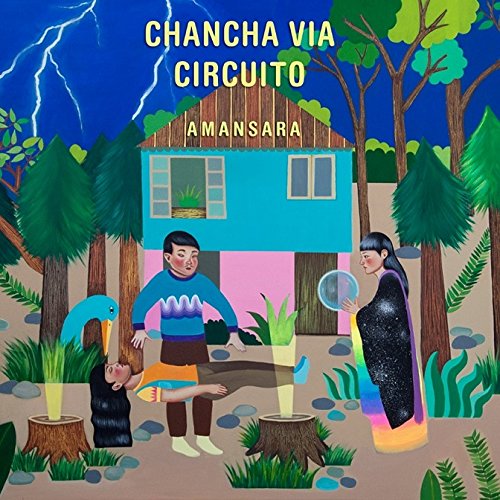
ADRIAN CROWLEY-SOME BLUE MORNING.
In November 2014, Galway born singer-songwriter, Adrian Crowley released his new, critically acclaimed, album Some Blue Morning, on Chemikal Underground. It’s his seventh album since his 1999 debut.
Wistful, melancholy, hopeful and cinematic describes Some Blue Morning, which was recently released on Chemikal Underground. Some Blue Morning features eleven songs from the pen of Adrian Crowley. They’re based upon Adrian Crowley life and experiences. Many of the songs are akin to short stories. They unfold before your eyes, while as Adrian Crowley becomes a storyteller par excellence. His lyrics come to life, as Adrian breathes life, meaning and emotion to the lyrics. Accompanied by a tight, talented band, these songs become like the soundtrack to a film that’s yet to be made.
There’s a reason for this. Adrian Crowley’s songs have a cinematic quality. Some of the songs wouldn’t sound out of place in a David Lynch or Wim Wenders film. That’s how good they are. Indeed, the songs on Some Blue Morning include some of the best of Adrian Crowley’s careers. That’s why Some Blue Morning is a career defining album for Dublin based troubadour, Adrian Crowley.

THE FIFTY BEST NEW ALBUMS OF 2014-PART 2.
THE FIFTY BEST NEW ALBUMS OF 2014-PART 2.
DJ VADIM-DUBCATCHER.
For Dubcatcher, the followup to DJ Vadim’s critically acclaimed tenth album, Don’t Be Scared, he dawned the role of hip hop’s first DJ superhero. That’s apparent from the Dubcatcher’s album cover. Looking like a cross between Robin, Bananaman and Goldfinger, a vinyl wielding DJ Vadim’s raison d’être seems to be protect hip hip from bad beats. That’s something DJ Vadim has never been guilty of.
Far from it. DJ Vadim has never been, and never will be guilty of producing bad beats. His career began twenty years ago, and since then, critical acclaim and commercial success has come DJ Vadim’s way. He’s now a globetrotting DJ who released his eleventh album Dubcatcher, om BBE Music in June 2014. Dubcatcher however, is very different to Don’t Be Scared. It sees DJ Vadim turn his back on his beloved hip hop in favour of dancehall reggae on Dubctacher. This is just the latest of numerous twists and turns in the career of DJ Vadim.
Dubcatcher sees DJ Vadim make a welcome return to reggae. It’s a modern dancehall album, where DJ Vadim, with a little help from his musical collaborators create a fitting followup to Don’t Be Scared. The best way to describe Dubcatcher is an innovative dancehall album for the 21st century. On Dubcatcher, DJ Vadim has succeeded in reinventing his music once again. That’s what we’ve come to expect from DJ Vadim, one of modern music’s most innovative producers. Proof of that is DJ Vadim’s eleventh album Dubcatcher, which is a fitting way for DJ Vadim to celebrate twenty years in music.
DJESSOU MORY KANTE-RIVER STRINGS: MANIKA GUITAR.
Twenty years have passed since Djessou Mory Kanté released his debut album N’na Niwalé (Merci Les Mères). Since then, Djessou Mory Kanté has established a reputation as one of the most talented African guitarists. That’s why Djessou Mory Kanté is the go-to-guitarist for the great and good of African music. However, two years ago, in May 2012, Djessou decided it was time to record his sophomore album. This became Manika Guitar, which was released on Stern’s Music in December 2014. It marks the return of a musical master craftsman.
River Strings: Maninka Guitar is a beautiful album of stunning music. Over thirteen tracks, elements of African and Western music melt into one. last just over one hour. Elements of blues, classical, jazz and funk shine through. Mostly, though, its traditional African music that shines through on River Strings: Maninka Guitar, a truly captivating and beautiful musical journey.Its origins are in the Maninka tradition of Guinea and Mali.
This is the music Djessou Mory Kanté grew up playing. Now he’s one of Africa’s most talented musicians. He’s akin to a musical master-craftsman. That’s apparent from the opening bars of Djessou Mory Kanté’s sophomore album River Strings: Maninka Guitar, right through to the closing notes of this beautiful, captivating, elegiac and ethereal album.

ENO-HYDE SOMEDAY WORLD.
Brian Eno, the Godfather of electronic music returned in June 2014 with Someday World, his collaboration with Underworld’s Karl Hyde. Billed as Eno-Hyde, and released on Warp, Someday World featured an all-star cast. They played their part in an album that didn’t disappoint.Just like every album Brian Eno has released, it’s an album that sees him move forward.
For Brian Eno standing still is like going backwards. That’s never going to happen. Especially with three generations of groundbreaking musicians to collaborate with. The result was a genre-melting album. Everything from ambient, Afro-beat, blues, electronica, funk, jazz, pop, rock and soul melts into one during the musical journey that’s Someday World. The music veers between funky to futuristic to dark and dramatic and right through haunting and hypnotic. Other times it melodic or mesmeric. Sometimes, the music is uplifting and joyous. Especially when slick poppy hooks are unleashed on The Satellites and Witness. These tracks should introduce a new generation to Brian Eno and Karl Hyde’s music.
Awaiting them, are a cornucopia of musical delights. That describes the Brian Eno and Karl Hyde’s music. However, cornucopia of musical delights is also the perfect description of Eno-Hyde’s critically acclaimed album Someday World.

FIRE! ORCHESTRA-ENTER.
The newly named Fire! Orchestra were building on the music of some of the legendary free jazz big bands. This includes the big bands of Sun Ra, Charlie Haden’s Liberation Orchestra, Mike Westbrook and Mike McGregor. There was more to the Fire! Orchestra that free jazz. They incorporated funk, blues, rock and jazz. This became apparent when the Fire! Orchestra made their tentative first steps. They played a few live shows and then, in 2013, released their live debut album Exit. It was released to widespread critical acclaim. So a year later, and Fire! Orchestra return with Enter, which was released by Rune Grammofon in July 2014.
The best way to describe Fire! Orchestra’s debut album Enter is innovative and progressive. It’s also an album that will influence a new generation of musicians. Enter showcases the sound of the twenty-nine members of the Fire! Orchestra in full flight. This was an impressive sound. Especially given their fusion of mesomorphic rock rhythms, funk, free jazz and the bluesy, soul-baring vocals of the Fire! Orchestra’s three vocalists. Add to this the scorching free jazz saxophone of Joe McPhee and Enter, has a potent, powerful and captivating sound.
Enter is definitely an album that makes a big impression. It was written and produced by the three members of Fire! However, it’s not just Swedish musicians that feature in the Fire! Orchestra! No. Fire! Orchestra features some of the top Scandinavian musicians. They joined forces in the Fire! Orchestra to record Enter, a groundbreaking, genre-melting album featuring ambitious, innovative and progressive music that brings back memories of musical luminaries like Sun Ra, Charlie Haden’s Liberation Orchestra, Mike Westbrook and Mike McGregor.

HEDVIG MOLLESTAD-TRIO ENFANT TERRIBLE.
Norwegian guitar virtuoso Hedvig Mollestad Thomassen first picked up a guitar when she was just ten. It was her mother’s much loved nylon strung acoustic guitar. This was the start of a lifelong love affair with the guitar. Now twenty years later, Hedvig is now one of Europe’s finest guitarists. Hedvig’s group the Hedvig Mollestad Trio, released their third album Enfant Terrible in May 2014 on Rune Grammofon. It showcases Hedvig’s critically acclaimed guitar playing.
Enfant Terrible is, without doubt, a career defining album from the Hedvig Mollestad Trio. They seamlessly shift between musical genres. Bues, jazz, psychedelia and rock are thrown into the mix by the Hedvig Mollestad Trio’s. Sometimes, they seamlessly switch between musical genres mid track. Not every band can do this. Mind you, not every band is as talented as the Hedvig Mollestad Trio. They’re more than capable of throwing a series of curveballs, and lulling you into a false sense of security. It’s the Hedvig Mollestad Trio’s way of making sure you’re listening as they strut and swagger their way through the six tracks on Enfant Terrible.
For much of the time, the Hedvig Mollestad Trio are a hard rocking power trio. They can kick out the jams like the hardest rocking power trios. As the Hedvig Mollestad Trio kick out the jams, they bring back memories of rock legends like Jimi Hendrix, Led Zeppelin, Black Sabbath and Cream. Then there’s the electric jazz of Mahavishnu Orchestra, Santana and Miles Davis between 1968 and 1975. That’s the music that’s influenced Hedvig Mollestad Thomassen growing up. The same music has inspired the music on Enfant Terrible, which is without doubt, the finest album of the Hedvig Mollestad Trio’s career.

ERIK HONORE-HELIOGRAPHS.
Erik Honoré is no stranger to a recording studio. He’s played on, or produced, over fifty albums. These albums are all very different. They’re best described as eclectic. No wonder. This eclectic selection of albums features everyone from David Sylvian to Arve Henrikse, through Eivind Aarset, Jon Hassell and Laurie Anderson, to Brian Eno and Peter Schwalm. However, despite working with so many high profile artists, there’s one thing forty-eight year old Erik Honoré still has to do. That’s release a solo album. At last, the wait is over. Heliographs, Erik Honoré’s debut album was released by Hubro Music in 17th November 2014.
Just like each of the artists Erik has collaborated with, Erik creates music that’s groundbreaking. There’s no playing it safe for Erik Honoré on Heliographs. It’s a groundbreaking, genre-melting album. Everything from ambient, avant-garde, classical, experimental, free jazz and a hint of rock melt into one. It’s an eclectic and disparate fusion of musical influences and genres. That’s not surprising. Erik Honorè is a true musical innovator and explorer. On Heliographs, Erik Honorè dares to go, where other musicians fear to tread.
JARIBU AFROBEAT ARKESTRA-JARIBU.
Over the last few years, the JariBu Afrobeat Arkestra have established a reputation as one of the best live bands in Japan. That’s been the case since the JariBu Afrobeat Arkestra released their debut album Afro Sound System in 2009. Released to critical acclaim, Afro Sound System won over DJs and music fans. Two years later, and JariBu Afrobeat Arkestra released their sophomore album Mediacracy in 2012. By then, JariBu Afrobeat Arkestra were being referred to as Japan’s most exciting bands. They released their third album JariBu, on Tramp Records, in June 2014. It was a fitting followup to Mediacracy.
Fans of JariBu Afrobeat Arkestra has been rewarded. JariBu is a game-changer. A delicious fusion of Afrobeat, free jazz, funk, jazz, jazz-funk, rock and soul, JariBu is without doubt, the best album the JariBu Afrobeat Arkestra have released. It surpasses the quality of their two previous album. The JariBu Afrobeat Arkestra have matured as a band musically. As a result, JariBu is a much more eclectic album.
The best way to describe JariBu is a melting pot of musical genres and influences. Mostly, the tracks are the JariBu Afrobeat Arkestra’s unique brand of Neo Afrobeat. However, sometimes, the JariBu Afrobeat Arkestra take diversions via Afrobeat, free jazz, funk, jazz, jazz-funk, rock and soul. This keeps things interesting. You’re never sure which direction the music is heading? Sometimes, songs explode joyously into life, becoming irresistible and hook-laden. Other times, the music is veers between dramatic and urgent, to hypnotic and mesmeric, to beautiful and joyous, right through to laid-back and mellow. Always, the music on JariBu is captivating and compelling. No wonder. This is the JariBu Afrobeat Arkestra third album JariBu we’re talking about.

JENNY HVAL AND SUSANNA-MESHES OF VOICE.
Five years ago, in 2009, Jenny Hval and Susanna Karolina Wallumrød began writing to each other. A lot has happened to Jenny and Susanna since that initial exchange of letters. This began with Jenny and Susanna being invited to play at the Oslo Jazz Festival. Their second live performance was at the Henie Onstad Art Exchange. That was where Meshes Of Voice was recorded on 8th March 2009. Sadly, since then, Meshes Of Voice has never been released. Until now. Meshes Of Voice was released in August 2014, on Susanna’s label SusannaSonatta.
Belatedly, Meshes Of Voice will be released on Susanna’s label SusannaSonatta, on 18th August 2014. Hopefully, Meshes Of Voice won’t be the last collaboration between Jenny Hval and Susanna. After all, what could be better than another collaboration between two of the most talented and successful Norwegian singer-songwriters? They’re like yin and yang on Meshes Of Voice. Their voices are made for each other. They bring out the best in each other, and drive each other to greater musical heights. That’s apparent on Meshes Of Voice, which is a tantalising taste of two of the finest Nordic vocalists Jenny Hval and Susanna as their career unfolds. Maybe, Meshes Of Voice is just the beginning, and further collaborations between Jenny Hval and Susanna will follow? Let’s hope so.
JOZEF VAN WISSEM-IT IS TIME FOR YOU TO RETURN.
It was back in 2000, that avant-garde composer and baroque lutenist Jozef Van Wissem released his debut album, Retrograde Renaissance Lute. Since then, Josef has released a series of groundbreaking solo albums and collaborations. Jozef’s latest album It Is Time For You To Return, will be released by Crammed Discs in November 2014. It Is Time For You To Return is the latest instalment in Crammed Discs’ Made To Measure series. It’s also the perfect introduction to the music of a true musical innovator, Jozef Van Wissem.
For anyone yet to discover the music of avant-garde composer, and baroque lutenist, Jozef Van Wissem then It Is Time For You To Return is the perfect starting place. It’s a breathtaking aural adventure. Featuring nine understated and hypnotic tracks, It Is Time For You To Return features Jozef at his innovative best. The music is captivating, compelling, ethereal, hopeful, hypnotic, melancholy, mysterious and wistful. That’s not all.
On several of the tracks on It Is Time For You To Return, Jozef’s lyrics are full of social comment. Jozef isn’t averse to commenting on the state of the world. His lyrics are veer between hope to hopelessness. There’s hope on Love Destroys All Evil. Confinement paints a picture of hopelessness, as days become months, months become years. All the time, the clock is ticking. Then on You Can’t Take It With You, Jozef deals with greed and avarice. Wealth and possessions, he points out, You Can’t Take It With You. These tracks are the perfect showcase for Jozef Van Wissem, as he becomes poet and philosopher, on It Is Time For You To Return.
KASAI ALLSTARS-BEWARE THE FETISH.
2014 marked the return of the Kasai Allstars. They released their sophomore album, Beware The Fetish on Crammed Discs. It’s a double album featuring twelve-tracks of the Kasai Allstars trademark sound. The twelve tracks last over 100 minutes. They showcase the Congolese collective’s genre-melting sound. Just like their debut album, Beware The Fetish is music that you must immerse yourself in. If you do, you’ll discover music that’s irresistible, joyous, otherworldly, trance-inducing, mythical and mystical. That’s down to the fifteen members of the Kasai Allstars.
The Kasai Allstars are a collective of fifteen Congolese musicians, based in Congo’s capital Kinshasa Originally, they were members of five bands based in the Kasai region. They come from very different backgrounds. Five different ethnic backgrounds are represented in the Kasai Allstars. Different cultures, languages and musical traditions play their part in the success story that’s the Kasai Allstars. Essentially, the Kasai Allstars are a cross-cultural collaboration. They’re an example to the people of Congo, as they’re able to live side-by-side happily and peacefully. In doing so, they create their unique brand of irresistible music.
Throughout the twelve tracks on Beware The Fetish, you’re spellbound. You immerse yourself in the delights of Beware The Fetish. Surprises, subtleties and nuances are never far away. Neither is irresistible, joyous, hypnotic and hook-laden music. Whether its songs with a social conscience, or tracks to dance to, Beware The Fetish is truly irresistible. Especially, when they kick loose. That’s a joy to behold. The Kasai Allstars in full flight on Beware The Fetish, is something everyone should experience once in their life.

KING CREOSOTE-FROM SCOTLAND FROM LOVE.
From Scotland With Love, which was released by Domino, was a the soundtrack to a documentary feature film directed by Virginia Heath. The film was commissioned as part of the Cultural Festival, which accompanied the 2014 Commonwealth Games. They were held in Glasgow.
During the Commonwealth Games, a screening of From Scotland With Love took place on Glasgow Green. It was accompanied by live music. This was fitting. After all, Glasgow Green has been the scene of many memorable musical events. The screening of From Scotland With Love was just the latest.
As films go, From Scotland With Love is quite unusual. The seventy-five minute film features no dialogue. That’s not surprising. The documentary was created entirely from archive film material from the National Library of Scotland and the Scottish Screen Archive. With no voiceover, Virginia Heath decided to add a musical backdrop. That’s where King Creosote came in.
King Creosote provided a musical backdrop to the themes that run through the film. This includes love, loss, resistance and migration. There’s a reminder of how Scotland has changed when the film touches on urbanisation and emigration. many Scottish people emigrated to Australia, Canada and New Zealand in the fifties and sixties. From Scotland With Love also shows Scotland at work and play. There’s a sense of sadness too. Especially when reminders of Scotland’s past.
Back then, shipbuilding, heavy industry and the fishing industry, were just three of Scotland’s industrial heavyweights. Not any more. Tragically, they’ve been brought to their knees. Another sense of sadness is when From Scotland With Love touches on the war. It’s another of the subjects King Creosote tackles on From Scotland With Love.
From Scotland With Love is a beautiful, joyous, melancholy, poignant, uplifting and wistful album. The music tugs at your heartstrings. Especially, when King Creosote is delivering vocals that are heartfelt, hopeful, needy, joyous and inspirational. King Creosote is the latest in a long line of Scottish troubadours. His Magnus Opus, From Scotland With Love, marks a coming of age from Scotland’s newly crowned musical King, King Creosote.
THE FIFTY BEST NEW ALBUMS OF 2014-PART 3.
THE FIFTY BEST NEW ALBUMS OF 2014-PART 3.
KROKOFANT-KROKOFANT.
What do you get if you cross a crocodile with an elephant? A Krokofant. For those not familiar with this surreal hybrid, then you’ve never heard the popular Norwegian children’s song. The Krokofant has been described as “a lumbering trumpeting beast with a fearsome array of teeth in its snapping jaws.” However, Krokofant is also one of the name of Norwegian jazz most exciting and pioneering groups, whose debut album Krokofant was released on Rune Grammofon in March 2014.
Krokofant create music that’s not just bold and brave, but inventive, innovative and influential. That’s why Krokofant are leaders of this new and innovative musical movement that’s sweeping the Nordic region. Word is spreading about this trio of musical pioneers. There’s a reason for this.
Their music. Krokofant are determined to push musical boundaries. They’re constantly seeking to reinvent themselves and their music. That’s why Krokofant’s music can be described as variously dramatic, challenging, futuristic, moody, cinematic, understated and pensive. Every song is different and full of subtleties and nuances. Seamlessly, Krokofant change direction, and your hear another side to their music. Then musical influences and genres melt into one thanks to one of the most talented and groundbreaking Norwegian bands, Krokofant. Their debut album Krokofant showcases one of the most exciting, innovative and talented groups I’ve heard in a long time.

BEVERLEY MARTYN-THE PHOENIX AND THE FUTURE.
It’s nearly fifty years ago since Beverley Martyn made her recording debut. This was as a member of The Levee Breakers. They were a jug band which featured Mac McGann, Johnny Joyce and Beverley. Their debut single was Babe, I’m Leaving You, which they released on Parlophone in 1965. Beverley was just sixteen and already, The Levee Breakers were a regular fixture on the folk circuit. Beverley Martyn seemed destined for a great things. However, since 1965, Beverley has only released two solo albums. Her latest is Beverley’s sophomore album, The Phoenix and The Turtle, was recently released by Les Cousins’ label.
Beverley Martyn is an artist who could and should’ve enjoyed commercial success and critical acclaim. However, Beverley has been a stranger too long. She’s only released two albums since her solo career began in 1966. That’s not enough to do her talent justice. With her talent as a singer and songwriter, Beverley Martyn should be a huge star. Maybe, after the commercial failure of her her earlier solo material and the her collaborations with John Martyn, Beverley was reluctant to record any more albums. After all, it must be soul destroying for an artist who doesn’t receive the recognition it deserves. Who can blame them for turning their back on their solo career? That’s what Beverley did.
Thankfully, she’s made a belated comeback with The Phoenix and the Turtle. On The Phoenix and the Turtle Beverley combines folk, country, blues and rock on The Phoenix and the Turtle. The nine songs are variously beautiful, poignant and wistful. Heartbreak and hurt sits side-by-side pathos and melancholia. Beverley’s lyrics have a cinematic quality and each of the songs to life. As a result, The Phoenix and the Turtle is like a series of musical journeys, where Beverley takes on the role of narrator. You’re captivated and spellbound by what’s the finest album of Beverley’s solo career, The Phoenix and the Turtle.

MOGWAI-RAVE TAPES.
Rave Tapes, which was released on Rock Action Records, was one of the most anticipated albums of 2014. The big question was, what direction Mogwai’s music would head? After all, Mogwai’s music never stands still. It’s in a constant state of evolution. That’s no bad thing. Standing still is akin to going backwards in Mogwai’s book. On Rave Tapes, Mogwai’s music continues to evolve. Musical genres and influences melt into one. One of the most prominent influences was Krautrock. Add to this ambient, avant-garde, electronica, experimental, indie rock and rock. We hear different sides to Mogwai on Rave Tapes. Whether it’s fuzzy soundscapes or kicking out the jams, Mogwai don’t disappoint on Rave Tapes.
Rave Tapes, another album of ambitious, bold, challenging, influential and innovative music. This is music full of nuances, subtleties and surprises. During a ten track journey through ambient, avant garde, classic rock, electronica, experimental, indie rock and Krautrock, Mogwai push musical boundaries to their limits and beyond. During these ten tracks, the music constantly changes. You never know what’s about to happen. The only thing you can expect, is the unexpected. That’s no bad thing though. After all, we’d be complaining if Rave Tapes was full of predictable music. It’s not. Far from it.
Throughout Rave Tapes, Mowai’s music constantly changes. Sometimes, it’s hard to believe it’s the same band. The music veers between wistful, melancholy and pensive, to dark, dramatic and disturbing. It’s also eerie and moody. Sometimes, it’s beautiful and melancholy. The music on Rave Tapes is always ambitious, bold, challenging, influential and innovative as Mogwai take you on a genre-hopping musical journey that is Rave Tapes.
MOSTER-INNER EARTH.
The best way to describe Moster, is a Norwegian supergroup. Moster was founded by Bushman’s Revenge saxophonist and bandleader Kjetil Møster in 2010. He brought onboard some of the most talented Norwegian musicians of their generation. They made their debut at the Kongsberg Jazz Festival in 2010. Three years later, Moster released their long awaited debut album, Edvard Lygre Møster. Now, a year later, Moster returned in October 2014, with Inner Earth, which was released on Hubro Music.Stylistically, Inner Earth is very different from Edvard Lygre Møster. It was an album that was perceived as spontaneous, direct and fierce. Recorded live, Kjetil Møster remembers the band finding their sound on-stage. Fortunately, the show was being taped and was issued as Edvard Lygre Møster. Inner Earth which will be released by Hubro Music in October 2014, is very different.
The perfect description of Inner Earth, is a musical journey. Moster veer between avant garde, experimental, free jazz, jazz, prog rock, psychedelia and classic rock. Prog rock and psychedelia play prominent roles on Inner Earth. So does free jazz, on this compelling musical journey through Inner Earth. This journey veers between slow, moody and broody, to dramatic and ferocious. Other times, it’s dreamy, futuristic, lysergic and otherworldly. Then sometimes, Inner Earth becomes cinematic and melodic, as slow washes of music shiver, shimmer and glimmer. Always though, Inner Earth is an ambitious and innovative, magical musical mystery tour through musical genres, with Norwegian supergroup Moster as your musical tour guides.

MOEBIUS-STORY-LEIDECKER-SNOWGHOST PEICES.
One of the most eagerly awaked recent releases is Snowghost Pieces, a collaboration between Dieter Moebius of Cluster and Americans Tim Story and Jon Leidecker. This might seem like an unlikely collaboration, given how different the three musician’s pasts are. That’s not the case though. Each of the musicians have one thing in common. They’re all innovative musicians whose raison d’être is to create groundbreaking music. That’s apparent on Snowghost Pieces, which was released on the Bureau label, in June 2014.
Snowghost Pieces is music that’s challenging and cerebral. It’s music to make you think, and music that sometimes, will take you out of your comfort area. Especially when you hear the futuristic soundscapes. They’re innovative and have a dramatic, cinematic sound. Moebius-Story-Leidecke paint pictures with your music. All you need to do is open your mind and absorb this groundbreaking, cinematic music. Let your imagination run riot and you’ll hear this music’s full potential. Turn up the volume and let Snowghost Places assail and surround you. Experience and absorb what is without doubt one of the best electronic albums of 2014.
Everything from ambient, avant garde, electronica and experimental music combine to create Snowghost Places. It’s an album that’s guaranteed to change your mood and make you think. Captivating and compelling, it’s moody, broody, dramatic, pensive and thoughtful. Snowghost Places is also melancholy, ethereal and beautiful. These are just a few of the words to describe Snowghost Places. It’s an album that variously, washes over you, embraces you, and forces you to think, as it paints pictures in your mind’s eye. Snowghost Places is best described as the soundtrack to a film that’s yet to be made. Instead, for the time being, you supply the pictures to Snowghost Places.
MOSKUS-MESTERTYVEN.
It was back in 2012 that pioneering jazz trio, Moskus, released their critically acclaimed debut album, Salmesykkel. A lot has happened since then. In 2013, Moskus were nominated for two Spellemannspris. They’re the Norwegian equivalent of a Grammy. Moskus were nominated for the highly prized best jazz album and best new act. For the three members of Moskus, this was the perfect start to their recording career. Two years later, Moskus return with their sophomore album Mestertyven, which will be released by Hubro Music in May 2014. Mestertyven marks a change in approach and direction from Morkus.
On Mestertyven, Moskus continue to create pioneering and ambitious music. There’s no chance that Moskus would stand still. That’s not what they’re about. Far from it. For Moskus, every album has to be a step forward. Mostkus’ raison d’être is to create music that’s innovative and challenges musical norms. To do this, Moskus draw inspiration from various sources. This includes free jazz legends like Ornette Coleman, Charles Mingus, Albert Ayler and Sun Ra. They also reference ambient pioneers like Brian Eno and Harold Budd. There’s even a nod to Irmin Schmidt of Can’s soundtracks. The more you listen to Mestertyven, the more influences you hear. Everything from Afro-Cuban, ambient, avant garde, experimental, free jazz and jazz can be heard on Mestertyven. This results in music that’s variously ambitious, beautiful, challenging, dark, dramatic, ethereal, eerie, evocative, haunting, hypnotic and mesmeric. Mestertyven is also groundbreaking music from a band who had a vision.
When Moskus entered the Risør Church, where they recorded Mestertyven, they knew how they wanted their sophomore album to sound. There was no searching for an elusive sound. Instead, they plugged in pressed play. Moskus embarked upon a lengthy and inventive jam session. Every single idea was recorded. This made sense. There was no chance that a moment of genius would be missed. Songs were recorded from their genesis to fruition. Songs evolved on the tapes. Others took shape later when Moskus edited the tapes. Gradually, Mestertyven took shape. Eventually, Mestertyven, Moskus’ long-awaited sophomore album was finished. It’s an album that’s been well worth the two year wait.

MOTORPSYCHO-BEHIND THE SUN.
This year, Motorpsycho, one of Norway’s most successful bands celebrated their twenty-fifth anniversary with the release of Behind The Sun, which will be released in March 2014, on Rune Grammon. Motorpsycho were formed in Trondheim, central Norway in 1989. Since then, Motorpsycho have become a musical institution. They’ve released over twenty-albums. Their debut album was 1991s Lobotomizer. Demon Box followed in 1993, and Timothy’s Monster in 1994. Since then, Motorpsycho have averaged nearly an album a year. That’s no mean feat. Especially considering Motorpsycho have established a reputation as group who constantly reinvent themselves and their music.
Ever since their debut album 1991s Lobotomizer, then 1993s Demon Box 1994s Timothy’s Monster, Motorpsycho have been establishing a reputation as one of Norway’s most successful bands. Now Motorpsycho are Norwegian rock royalty. They’re a musical institution not just in Norway, but across Europe. Over the last twenty years, word has spread about Motorpsycho. However, there are still people who haven’t heard Motorpsycho. That’s where Behind The Sun comes in.
For anyone yet to discover Motorpsycho, Behind The Sun is the perfect place to start. Behind The Sun is a reminder that there are still groups capable of making rock music. This isn’t just any rock music. No. Motorpsycho make what I’d describe as classic rock music. So much so, that Behind The Sun is an album that could’ve been recorded anytime over the last forty years. It draws inspiration from everyone from The Byrds, Led Zeppelin, Pink Floyd, Black Sabbath and Def Leopard. The result is the hard rocking Behind The Sun, where Motorpsycho keep the flag flying for classic rock, in all its glories.

MR BIRD-LO-FI CLASSICS.
Mr. Bird’s Lo-Fi Classics, which was released in July 2014, by BBE Music, is best described as a homage to your beloved mixtape. It’s guaranteed to bring memories flooding back. Especially if your mixtape was funky and oozed soulfulness. That’s the case with Mr. Bird’s Lo-Fi Classics, which features two funky cats doing what they do best, making music. This isn’t just any music though. It’s sweet, soulful and full of poppy hooks. Even better, the music has an old school sound. It’s a reminder of the music on your beloved mixtape. There’s a reason for this. It has not been over compressed. This means you can hear Lo-Fi Classics full dynamic range. That’s a rarity in modern music. Usually, modern music has been over compressed, due to the ongoing loudness war. Thankfully, Lo-Fi Classics hasn’t been a victim of the loudness war. Even better, the music flows.
That’s thanks to Mr. Bird. Remembering how much care, time and attention it took to make a mixtape, Mr. Bird has lovingly sequence Lo-Fi Classics. This means Lo-Fi Classics is a reminder of the classic hip hop soul of the nineties. Having said that, the music is totally unique. No wonder. Look at the two men behind Lo-Fi Classics, Mr. Bird and Greg Blackman.
Many of the songs tell a story Lo-Fi Classic. There’s songs about love, love lost, heartbreak, hurt and hope. They’re delivered by Greg Blackman, who breathes life, meaning and emotion to the songs. He delivers the lyrics as if he’s lived them. It sounds as if Greg has felt the pain, heartbreak, hurt and sadness that he’s singing about. Thankfully, it sounds as if he’s also experienced the happiness, hope and joy he sings about on Lo-Fi Classics, the perfect replacement for your music cherished, mixtape.

1982-A/B.
For A/B, the fourth album from enigmatic Norwegian improvisational trio 1982, they drew inspiration from the past for another groundbreaking album. A/B, which was released on Hubro Music, in May 2014, is the followup to 2012s 1982 + B.J. Cole. This was the third album 1982 had released since they formed back in 2007. A/B harks back to the age of the vinyl album and is the latest chapter in the 1982 story.
The 1982 story began back in 2007. That’s when Sigbjørn Apeland, Øyvind Skarbø and Nils Økland formed what was essentially a Norwegian supergroup consisting of innovative musicals. Each member of 1982 was an experienced and inventive musician. They’d all played on albums by other bands. Nils Økland had already released a trio of solo albums. 1982 would become a vehicle to showcase their collective talents.
A/B, which is the fourth album from Norwegian improvisational trio 1982, is without doubt, the best album of their career. Flawless describes this Nordic minimalist epic. So does innovative, understated, wistful, melancholy, dramatic, dreamy, eerie, beautiful, broody, moody and haunting. Other times, A/B is emotive and tugs at your heartstrings. It’s also music that’s beautiful, complex and full of nuances. The music is multilayered, spectral and full of textures. A/B are all these things and more as 1982 seamlessly, mix musical genres. Everything from ambient, avant garde, classical, drone, experimental, free jazz and jazz is combined by 1982. The result is A/B an album of groundbreaking sonic journeys, from Norwegian improvisational trio 1982.

ORLANDO JULIUS WITH THE HELIOCENTRICS-JAIYEDE AFRO.
Nowadays, collaborations are commonplace in modern music. So much so, that many music lovers have become complacent. However, the new collaboration between Orlando Julius and The Heliocentrics, Jaiyede Afro, is guaranteed to refresh even the most jaded musical palettes. That’s no surprise. This is a collaboration between one of the legends of African music Orlando Julius, and The Heliocentrics, who are one of London’s most exciting groups. As collaborations go, it’s a tantalising prospect. There’s more to Jaiyede Afro which was recently released by Strut Records, than a collaboration between two musical cultures and genres. Jaiyede Afro is also a fusion between two generations of musicians.
During the Jaiyede Afro, Orlando Julius The Heliocentrics create a captivating, genre-melting album, Jaiyede Afro which was recently released by Strut Records. Everything from Afro-beat, dub, free jazz, funk, highlife, jazz, psychedelia and rock melt into one. Jaiyede Afro is a case of expect the unexpected.
You never quite know which direction Jaiyede Afro is heading. It’s the ultimate music mystery tour. Curveballs are thrown. They wrong foot you. You think Jaiyede Afro is heading in one direction. Then Orlando Julius The Heliocentrics do the musical equivalent of a handbrake turn. Suddenly, you hare off in the opposite direction. Subtleties and surprises then assail your senses. Sometimes it’s far from subtle. However, it’s jazzy, joyous, funky, soulful and truly irresistible. It’s a truly captivating, mesmeric and tantalising journey, one you wish would never end. When it does, you press play again and enjoy the glorious magical musical mystery tour that is Jaiyede Afro once again.

 dereksmusicblog
 dereksmusicblog