LINDA PERHACS-PARALLELOGRAMS.
LINDA PERHACS-PARALLELOGRAMS.
In the music industry, sadly, talent alone doesn’t guarantee commercial success and critical acclaim. If only that was the case, then things would be very different. There would be no such thing as DJs, remixers and grid-iron producers. These three products of the modern music industry examples of where music has gone wrong. Their success means rather than learn to play a musical instrument, read music and write songs. That was what happened during the music’s golden age. Not now though.
Now a generation are growing up wanting to be a DJ. They want to play other people’s music, rather than make their own music. So they buy a DJ controller, and rely on the sync button to blag their way through a set. Then there’s the remixer.
They’ve been around for roughly forty years. Most of them can’t play an instrument, never mind read or write music. Yet they’re lauded for regurgitating the music someone else has written, recorded and produced. Sadly, they’ve inspired a new generation of aspiring remixers.
With their pirated software, they make their tawdry cut and paste edits. They then pollute the internet with them. Incredibly, some record companies, looking for a cheap release, are foolish enough to release them as a compilation. Thankfully, these record companies have fallen by the wayside. Then we come to the grid-iron producer.
The grid-iron producer is a sign of the times. Their raison d’être is making bad music sound good. Regardless of how bad the vocal, lead guitar, bass or drums are they can “fix” it. Melodyne can correct the vocal and samples can be triggered to fix the drums. If the timing or pitch is wrong, the grid-iron producer can “fix” it. As a result, music that should never be release is not only being released, but is making stars out of talentless people. Meanwhile, seriously talented musicians are struggling to make a living. Sadly, that’s always been the case.
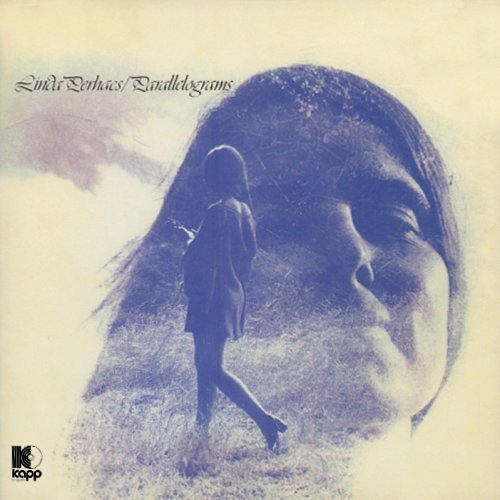
It was in 1970, that twenty-seven year old dental hygienist Linda Perhacs released Parallelograms, her debut album. Some people wondered why it had taken Linda so long. After all, she was a musical prodigy.
Linda Long was born in Mill Valley, which lies just north of San Francisco’s Golden Gate Bridge in 1943. By the time she was six or seven, Linda was able to write write quite complicated compositions. She was gifted. However, as is often the case with gifted children, her teachers didn’t maybe realise this. This didn’t stop Linda enrolling in the University of Southern California.
At University of Southern California, Linda majored in dental hygiene. This allowed her to work and study. Her course also allowed Linda to explore what was unfolding around her. Remember, this was the start of the counterculture explosion. San Francisco was central to this. Being around this meant Linda was exposed to a many different cultures. It was the same with art and music. For Linda, this was creatively stimulating and would change the course of her life.
Having graduated from University of Southern California, Linda began working with periodontist. During this period, Linda immersed herself in the various philosophies that were popular. Essentially, she taught her to mediate and rid herself of negative energy. This helped her and her patients. It may also have helped Linda develop as songwriter.
Away from work, Linda and her sculptor husband used to enjoy walking in the city’s public parks. It was during these walks that Linda was first inspired to write songs. This was something Linda hadn’t done since she and her husband moved to Topanga Canyon.
Indeed, Linda hadn’t written songs for a while. Throughout her University days, Linda hadn’t been involved in making music. However, she loved music. Topanga Canyon was full of artists and musicians. So, it was the perfect place for an aspiring singer-songwriter. With an environment that inspired her, and the sense of hope that was prevalent during the second half of the sixties, this marked the cultural blossoming of Linda Perhacs.
What also inspired Linda was her travels. She spent time travelling up the Big Sur coastline, right through Mendocino, the Pacific Northwest and to Alaska. This was her road rip. So was a trip to Chimacum, on the Olympic Peninsula. These journeys were what inspired Linda to write songs. Linda stresses her journeys inspired her. Drugs played no part in stimulating her creativity. Her songs come from her experiences in life.
This includes the colours, patters and shapes that she’s seen since she was a child. Again, they’re not the result of recreational drugs. No. They’re a phenomenon that many people experience. These colours, patters and shapes inspired Linda, who soon, would be one step releasing her first album.
Linda was, by now, working in the office of Beverley Hills’ periodontist. That’s where Linda met film soundtrack composer Leonard Rosenman and his wife Kay. Linda would ask them about their forthcoming projects. Then one day Leonard said to Linda “I can’t believe that clinical work is all you do.” So, Linda told them about her music and played a tape of one of her songs. These were songs she’d recorded during her travels. Leonard took the songs home to listen to them. The next day, Linda was offered a record contract.
When Linda handed Leonard the tape, she thought that Leonard was wanting to hear a glimpse of the type of music younger people were making. After all, Leonard had a lot of projects on the go. However, that didn’t stop him offering to produce Linda’s debut album. The song that made him make that offer was the Parallelograms, which would be the title-track of Linda’s debut album. Leonard referred to this track as “visual music composition.”
Once Leonard made the offer to produce Linda’s debut album, she headed to his home. Once there, she met musicians and singers she’d only read about. It was then that Leonard explained the his concept of “visual music composition.” Leonard who’d been a composer all his life, had never been able to achieve this. Linda had. He explained that Parallelograms was different from the other tracks. They were songs. Parallelograms was different. Each of the component parts were interactive to the composer as three-dimensional sound. It’s akin to sculpting with ice, where the result is essentially a type of light and dance. For Linda, this was the way she’d always written. However, now Linda was going to take this one step further and record what became Parallelograms.
Parallelograms featured eleven tracks. Linda wrote ten of them. The exception was Hey, Who Really Cares? which Linda cowrote with Oliver Nelson wrote. Producer Leonard Rosenman brought in an all-star cast of musicians.
When recording of Parallelograms began, Leonard Rosenman and Linda were aiming to sculpt a series of soundscapes full of textures, colours and shapes. The music Linda hoped, would be “softer and ethereal.” Accompanying her were some legendary musicians. This included Shelley Mann and Milt Jackson on percussion. The rhythm section included Reinie Press on electric bass and Fender guitar and Steve Cohn on lead and 12-string guitar. John Neufield played flute and saxophone, Leonard Rosenman electronic effects and Tommy harmonica. Brian Ingoldsby was tasked with using an electrified shower hose for horn effects. Parallelograms was no ordinary album. It was truly groundbreaking.
On its release in 1970, Parallelograms was released to critical acclaim, but sadly, this psychedelic folk classic wasn’t the huge commercial success it should’ve been. This wasn’t helped by the record company’s failure to promote Parallelograms Linda, like so many other hugely talented artists failed to enjoy their commercial success and critical acclaim. So Linda returned to her job as a periodontist and nothing was heard of Parallelograms until the nineties. Since then, it has become a cult class. Interest in Parallelograms grows with each year. Maybe only now do people fully understand and appreciate this seminal, lost classic which I’ll tell you about.
The wistful Chimacum Rain opens Parallelograms. It has an understated, acoustic arrangement. That’s perfect for Linda’s tender, ethereal vocal. She also adds harmonies. They cascade and surround you, like the rain Linda is singing about. Her vocal has a dreamy, lysergic song. It’s captivating. You’re drawn to and seduced by its ethereal beauty.
Just guitars set the scene for Linda’s vocal on Paper Mountain Man. Her vocal is slow, sultry and deliberate. It’s as if she’s taking care with her phrasing and diction. Behind her, her small tight band mix blues and country. A scorching blues harmonica, guitars and percussion join forces. They leave plenty of space in the arrangement for Linda’s vocal. It’s a mixture of power, emotion and control, that’s ying to the arrangement’s yang.
Ethereal and heartfelt describes Linda’s vocal on Dolphin. She’s accompanied by a lone guitar that reminds me of Nick Drake. Linda delivers a vocal that’s spellbinding in its beauty. It’s quite simply, haunting and captivating.
Call Of The River is reminiscent of Chimacum Rain. Just a guitar accompanies Linda’s vocal. It’s sung with feeling, as cascading harmonies accompany Linda. They’re sung by Linda and compliment her vocal. The same can be said of the arrangement. It’s understated, spacious and dreamy. It also allows Linda’s vocal to take centre-stage on a track that epitomises everything that’s good about psych-folk.
Just like the previous tracks, Sandy Toes is a carefully crafted soundscape. Here, psych-folk and country combine. An electric bass joins a chiming guitar and percussion. They provide the backdrop to Linda’s vocal. She proceeds to paint pictures. Close your eyes and they come to life. Her cinematic lyrics and tender, heartfelt vocal prove a potent combination, as we hear another side to Linda Perhacs.
Parallelograms is the track that grabbed Leonard Rosenman’s attention. It’s a musical sculpture full of textures, colours and shapes. They drift in and out, to be replaced by something else. From understated and ethereal, darkness and drama makes an appearance. Soon, the lysergic, dreamy and experimental sound makes me think of Alice In Wonderland. You loose yourself in this sonic experiment, drifting away to another place and time. It’s as if the doors of perception have been opened. The only problem is, you neither want the song to finish, nor the doors to close.
Hey, Who Really Cares? is another track where Linda is just accompanied by acoustic guitar. Her vocal is rueful and full of melancholia. It’s joined by a bass, that hesitantly probes its way through the arrangement. Effects and guitars compliment Linda’s wistful vocal. She’s despairing, wondering “if anyone really cares.” Her pain seems real as she breathes life, meaning and emotion into a song where pathos and pain are ever-present.
Slow and space describes the drums that open Moons And Cattails. Chiming, crystalline guitars quiver and shiver, before Linda’s dreamy, lysergic vocal floats above the arrangement. It’s as if it’s been caught in “sandstorm” she’s singing about. After that, her vocal is deliberate and dramatic. Adding to the drama are drums played by hand and shimmering, weeping guitar. Together, this results in a track that dramatic, moody and atmospheric.
Hesitantly, a line guitars plays as Morning Colors unfolds. It’s all that accompanies Linda, as she delivers a vocal that’s heartfelt and full of sincerity. Just like other tracks, her lyrics have a cinematic quality. They’re also cerebral, haunting and beautiful. The same can be said of the flute and horn that later, accompanies Linda. They’re addition takes the direction of jazz, sometimes free jazz. This compliments the rest of the arrangement and highlights the lyrics, as takes on the role of storyteller. Using her voice like an artist uses his palette, Linda paints pictures that come to life before your eyes.
Porcelain Baked-Over Cast-Iron Wedding was one of the earliest songs Linda wrote. She wrote it in 1969. It’s an uptempo, guitar driven track. Guitars are panned left and right, enveloping Linda’s vocal. She seems determined to make the song swing. This shows another side to her. She’s accompanied by percussion, drums and bass. Linda’s vocal is full of irony, and her lyrics full of social comment at perceived stereotypes. Her combination of intelligent lyrics and subtle hooks are another example of Linda’s versatility and talent as a singer and songwriter.
Delicious closes Parallelograms. Linda’s slow, tender, ethereal vocal is joined by a guitar, as the arrangement meanders along. Her vocal soars elegantly above the arrangement, while the guitar ambles along. Cascading harmonies flit in and out. They’re the perfect accompaniment to Linda’s vocal. It’s one of her best vocals. Ethereal, heartfelt, tender and beautiful, it’s a tantalising taste of what Linda Perhacs is capable of.
Following the release of Parallelograms, it failed commercially. This wasn’t anything to do with the music. Instead, it was the record company’s failure to promote Parallelograms. As a result, Linda, like so many other hugely talented artists, failed to enjoy their commercial success and critical acclaim their talent deserves. So Linda returned to her job as a periodontist.
Nothing was heard of Parallelograms until the nineties. Since then, it has become a cult class. Interest in Parallelograms grows with each year. Maybe only now do people fully understand and appreciate this seminal, lost classic from an artist who should’ve enjoyed a long and successful career.
Looking back, Linda admits that, much as she loved music, she didn’t seem to have the drive required to make a career as a musician. She did, however, have the talent. Linda was blessed with an abundance of talent. That’s apparent listening to her critically acclaimed debut album Parallelograms.
Parallelograms is a flawless fusion of Americana, country, folk, pop, psychedelia and rock. There’s even a twist of ambient, drone pop, experimental and jazz. It’s potent and heady brew that showcases one of music’s hidden gems, Linda Perhacs.
She’s only released two albums between 1970 and 2014. The Soul Of Natural Things was recently released. It was the long awaited followup to Parallelograms. Linda picks on The Soul of All Natural Things where she left off on Parallelograms. It’s as if she’s never been away. However, forty-four years have passed. The Soul of All Natural Thing, just like Parallelograms, reminds us that class is permanent. What The Soul of All Natural Thing has also done, is stimulate interest in Parallelograms, which will be rereleased by Anthology Recordings on 12th May 2014.
If you’re only going to buy one album next week, then Parallelograms is the one to buy. It’s real music, played by real musicians written and sung by the hugely talented Linda Perhacs, one of music’s best kept secrets. No longer though. Parallelograms will be released on vinyl as a double album. Parallelograms is a reminder of the golden age of music.
Parallelograms features a hugely talented singer and songwriter, Linda Perhacs. Then there was producer Leonard Rosenman, an ambitious, innovator who in Linda, found a musical soul-mate who wanted to push musical boundaries to their limits. The result was Parallelograms an ambitious, innovative and flawless lost classic. It features the ethereal beauty of Linda Perhacs, as she breathes, life, meaning, beauty and emotion into the eleven songs on Parallelograms. Thankfully, Parallelograms is belatedly, receiving the plaudits and critical acclaim that this lost classic deserves.
LINDA PERHACS-PARALLELOGRAMS.
MUYEI POWER-SIERRA LEONE IN 1970s USA.
MUYEI POWER-SIERRA LEONE IN 1970s USA.
In the early seventies, Muyei Power had established a reputation as one of Sierra Leone’s top dance bands. Along with Afro Nation, Sabaoh 75 and Super Combo, Muyei Power provided the soundtrack to daily life in Freetown, Sierra Leone’s capital. Their music was a fusion of the music that was popular in Sierra Leone. This included Afrobeat, funk, jazz, pop, rock and soul. Muyei Power fusion of these genres proved popular not just in Sierra Leone, but much further afield.
This included in Spain and later, America. By 1975, the Orchestre Muyei Power had a sumer residency in Las Palmas. Their unique Afro-Rock sound quickly won over locals and tourists. The Orchestre Muyei Power lengthy sets were a mixture of covers of rock music and traditional Afro-beat. Throughout the summer of ’75, the Orchestre Muyei Power were hugely popular. So much so that a single Orchestre Muyei Power At The Beach Club was released. Following that summer residency in Las Palmas, the Orchestre Muyei Power followed the sun and headed to California.
When Muyei Power arrived in California in late 1975, they were originally booked to play on the college circuit. Just like in Spain, Muyei Power were soon winning friends and influencing audiences. As a result, Muyei Power toured extensively through the West Coast right through 1976. It was during this period that Muyei Power recorded five songs.
Having recorded the five songs, Muyei Power didn’t do anything with them till they started touring the East Coast. When they arrived in Brooklyn, New York Muyei Power they came across the owner of the African Record Centre. He released Muyei Power’s debut single Ben Ben Bee on Makossa International Records in 1976. After that, Muyei Power’s tour of America ended and they headed home to Sierra Leone. Nothing more was heard of the music Muyei Power had recorded until 1979.
That was when Makossa International Records released the first of a series of 12” featuring Muyei Power. This included Yamba Sowe in 1979. Wali Bena, Bi Loko and Jackitomboi in 1980. After that, no further music was released by Muyei Power. That’s until now. Soundway Records have just released Muyei Power-Sierra Leone in the 1970s USA. It features the five tracks that Muyei Power released during their tour of America during 1975 and 1976. Muyei Power-Sierra Leone in the 1970s USA features Muyei Power at their very best. It’s also all the music Muyei Power recorded.
Just after Makossa International Records released Muyei Power’s music in 1979, the band split-up. That makes Muyei Power-Sierra Leone in the 1970s USA all the more poignant. Not only was it the only music they recorded, but just after the music was originally released Muyei Power split-up. After the split, Abou Whyte, Muyei Power’s vocalist, and formerly the lead vocalist of the Merry-Go Jazz Band, went on to enjoy a successful career. No wonder. He was, by then, a musical veteran.
Abou Whyte was just eighteen when he became the lead vocalist of the Merry-Go Jazz Band in 1964. They were popular throughout the sixties. The Merry-Go Jazz Band combined covers of The Beatles and James Brown songs with Congolese rhumba. This was a potent and heady brew. Especially given how eclectic Sierra Leone’s music scene was.
Everything from the music coming out of the Caribbean, the Congo, French Antilles and Nigeria was influencing music in Sierra Leone. So was pop and rock, including British pop groups like The Beatles. Then when soul and funk began to become popular, James Brown inspired many a group in sixties Sierra Leone. This included a future bandleader, Abou Whyte.
Having been a member of the Merry-Go Jazz Band since 1964, Abou Whyte joined a newly formed band in 1971, Orchestre Muyei, which was formed by promoter Abu Sillah. Immediately, the newly formed Orchestre Mubye headed out on the first of a series of long and gruelling tours. From small villages to large towns, Orchestre Muyei arrived and played. Soon, Orchestre Muyei conquered Freetown, with their unique brand of Afro-Rock.
Orchestre Muyei combined pop and rock music with not just the music of Sierra Leone, but Nigeria and Congo. Through relentless tours the Orchestre Muyei had established a reputation as one of the most popular and progressive bands. The next step for the Orchestre Muyei was to conquer Europe and America.
Having enjoyed their summer residency in Los Palmas, the Orchestre Muyei Power followed the sun to California. Through late 1975 and into 1976, they toured the West Coast. It was during this period that Muyei Power recorded the six songs on Muyei Power-Sierra Leone in the 1970s USA.
The six tracks on Muyei Power-Sierra Leone in the 1970s USA are credited to Muyei Power. They wrote and produced the six tracks. Muyei Power’s lineup featured a rhythm section of drummer Larry Sandy, bassist G.B. Mustapha and rhythm guitarist Ed Boy. Joining them were lead guitarist Tamyu Sesay and horn player Sammy Dumbeh. About White was bandleader, lead vocalist and played congas. His vocals were augmented by David Mado and Dr. Chessie’s vocals. Recorded back in 1976, the five tracks on Muyei Power-Sierra Leone in the 1970s USA, which I’ll tell you about, have never been released as an album.
Wali Bena opens Muyei Power-Sierra Leone in the 1970s USA. This is sung in the Limba dialect. Translated it means “good morning, we’re enjoying ourselves.” So will the listener. From the get-go the arrangement literally explodes. The rhythm section and guitars drive the arrangement along. They’re augmented by percussion and congas. Abou’s vocal is a mixture of power and passion. Harmonies responding to his call, whilst the pulsating, frantic arrangement is a mass of drums, percussion, crashing cymbals and congas. Searing wah wah guitars and a blazing horn are unleashed. Add to this Abou’s vocal and the harmonies and it’s an irresistible fusion of Afro-beat, funk and rock.
Drums pound, hi-hats hits, whistles blow and Afro-beat guitars chime as Yamba Sowe unfolds. It’s sung in the Tembe language and is one of two adapted secret society songs. Muyei Power could’ve got into a lot of trouble recording these songs. The government saw this as an act of rebellion and could’ve lead to imprisonment. The rhythm section provide the pulsating heartbeat to heartfelt, soulful harmonies. Their soulfulness is contrasted by the arrangement. It’s like an express train. All you can do is sit back and enjoy the ride. Abou takes on the roll of cheerleader, encouraging the rest of Muyei Power to greater heights. Soulful harmonies, a blazing horn, percussion, congas and a rhythm section that fuse Afro-beat and funk create a track that’s akin to a call to dance. Irresistibly catchy and full of hooks, Muyei Power are quickly proving to be Sierra Leone’s best kept musical secrets.
Be Patient sees the tempo drop and a wistful horn set the scene. The arrangement is understated, with space left in the arrangement. Guitars chime, drums are played subtly and percussion sprinkled across the arrangement. Harmonies are full of emotion and heartache. They reflect the melancholia of the saxophone. Later, Muyei Power kick loose. Not only does the tempo increase, but the arrangement is a myriad of braying horns, thunderous rhythm section and percussive delights. Whistles, harmonies and rocky guitars add to the joyous, celebratory sound. Muyei Power are right, this track is a case of Be Patient.
Bi Loko sounds is a cross between James Brown and Afro-beat. It’s sung in the Limba dialect and means I love you. Anyone who likes their music funky will love this track. It has a punchy, funky arrangement. That comes courtesy of Muyei Power’s rhythm section. They join forces with bursts of growling horns, chiming guitars and percussion. Abou’s vocal is impassioned and augmented by harmonies. He’s no one-man band. Far from it. Muyei Power strut their way through the track mixing Afro-beat, funk, soul and rock. However, Tamyu Sesay’s blistering, scorching, guitar solo steals the show.
Ben Ben Bee closes Muyei Power-Sierra Leone in the 1970s USA. This is the second adapted secret society songs sung in the Tembe language. Percusssionm congas and the rhythm section combine before a grizzled horn soars above the arrangement. Abou sings call and respond. His vocal sits above the pounding, dance-floor friendly arrangement. The rhythm section, combining with chiming guitars and congas seem to raise their game. It’s as if they want to finish on a resounding high. They do. Not only are we reminded why Muyei Power were one of Sierra Leone’s top bands, but that some of the band were top class musicians, who when they unleashed a solo, shawn like the brightest star.
As I said earlier, Muyei Power are one of Sierra Leone’s best kept secrets. They only ever entered a recording studio once.That was in 1976, during a lengthy tour of the West Coast of America. Some of the results of that session feature on Muyei Power-Sierra Leone in the 1970s USA. This is a tantalising taste of one of Sierra Leone’s band at the peak of their powers. Sadly, by the time Makossa International Records released some of the songs on Muyei Power-Sierra Leone in the 1970s USA as 12” inch singles, the band had split. They’d gone there separate ways. Muyei Power was a case of what might have been.
If Muyei Power had been spotted by the right label, things could’ve been very different. Instead, they handed their master-tapes to the owner of the African Record Centre. He released Muyei Power’s debut single Ben Ben Bee on Makossa International Records in 1976. After that, Muyei Power’s tour of America ended and they headed home to Sierra Leone. By then, Muyei Power were history. After that, nothing was heard of Muyei Power.
That was until Soundway Records released Muyei Power-Sierra Leone in the 1970s USA. It features five tracks from Sierra Leone’s best kept musical secret, Muyei Power. These five tracks are a tantalising taste of Muyei Power’s irresistible and unique fusion of Afro-beat, funk, rock and soul. The music on Muyei Power-Sierra Leone in the 1970s USA features Sierra Leone’s best kept musical secrets.
MUYEI POWER-SIERRA LEONE IN 1970s USA.

HEDVIG MOLLESTAD-TRIO ENFANT TERRIBLE.
HEDVIG MOLLESTAD-TRIO ENFANT TERRIBLE.
Norwegian guitar virtuoso Hedvig Mollestad Thomassen first picked up a guitar when she was just ten. It was her mother’s much loved nylon strung acoustic guitar. This was the start of a lifelong love affair with the guitar. Now twenty years later, Hedvig is now one of Europe’s finest guitarists. Hedvig’s group, the Hedvig Mollestad Trio, will release their third album Enfant Terrible on 27th May 2014 on Rune Grammofon. It showcases Hedvig’s critically acclaimed guitar playing.
Her style is best described as a fusion of rock and jazz. That’s the music she discovered in her father’s record collection. Hedvig was inspired by rock legends Jimi Hendrix, Jimmy Page of Led Zeppelin and Tony Iommi of Black Sabbath. They inspired the blistering, scorching licks Hedvig unleashes. However, there’s more to Hedvig than this. Her playing can be restrained, cerebral, disciplined and innovative. This has also lead to comparisons with the Mahavishnu Orchestra’s John McLaughlin, Carlos Santana and Pete Cosey, whose Hendrix-esque guitar playing graced Miles Davis’ band between 1973 and 1975. Hedvig Mollestad you’ll realise is no ordinary guitarist.
Far from it. Anyone whose heard the Hedvig Mollestad Trio’s two previous albums will tell you this. Their debut album was was Shoot, released in 2011 on Rune Grammofon. This was two years after Hedvig founded the Hedvig Mollestad Trio in 2009. She brought bassist Ellen Brekken and drummer Ivar Loe Bjørnstad onboard. Straight away, critical acclaim came the Hedvig Mollestad Trio’s way.
At the prestigious Molde International Jazz Festival, won the award for the best “young jazz talent” of 2009. This lead to a tour of Norway in 2010. The Hedvig Mollestad Trio then recorded what became their debut album Shoot. When Rune Gramophone heard Shoot, they signed the Hedvig Mollestad Trio. Released to critical acclaim, Shoot was the start of the rise and rise of he Hedvig Mollestad Trio.
Following the release of Shoot, the Hedvig Mollestad Trio continued to tour extensively. They honed their sound by playing literally hundreds of concerts. Whether it was small jazz clubs or huge festivals including Øyafestival, Utkantfestival and Pstereo Festival they were familiar faces. Their sound was soon winning friends and influencing people.This was all good preparation for the recording of the Hedvig Mollestad Trio’s sophomore album, All Of Them Witches.
It was 2013 when the Hedvig Mollestad Trio’s 2013 sophomore album, All Of Them Witches was released. Not only was it critically acclaimed, but it won the Norwegian equivalent of a Grammy Award, in the rock category. Soon, The Hedvig Mollestad Trio were on their way.
Having won one of the most prestigious awards in their homeland, word was spreading about the Hedvig Mollestad Trio. This resulted in a second tour of Europe. Sweden, Denmark, Germany, Poland, Switzerland, France and Italy were introduced to the Hedvig Mollestad Trio. Then there were trips to Japan and Malaysia. During this period, critical acclaim was a constant companion for the Hedvig Mollestad Trio, who’d come a long way since they’d formed in 2009.
So had Hedvig. She’d come a long way since she received her first electric guitar as a confirmation present. Now she’s one of Europe’s top guitarists. In Decmeber 2013, she and the other two members of the Hedvig Mollestad Trio headed into the studio record their third album Enfant Terrible.
When the Hedvig Mollestad Trio arrived at Ocean Sound Recording, they had written six songs. Hedvig penned Liquid Bridges and Pity The Children. She cowrote Arigato, Bitch with Ellen Brekken, who wrote Laughing John. Drummer Ivar Loe Bjørnstad contributed Rastapopoulos and cowrote La Boule Noire with Hedvig. These six tracks would become Enfant terrible
Recording of Enfant Terrible took place at Ocean Sound Recording. Enfant Terrible was recorded onto an eight track tape-machine. The six tracks were recorded live by Henning Sworen. This is the old school way. It’s also how the artists who influenced Hedvig recorded their legendary albums. Her thinking must have been, if it’s good enough for Black Sabbath, Led Zeppelin, Santana, Jimi Hendrix and the Mahavishnu Orchestra, it’s good enough for The Hedvig Mollestad Trio as they mix classic rock and electric jazz on Enfant Terribe. This is a heady, potent and exhilarating brew, which I’ll tell you about.
Laughing John opens Enfant Terrible. Straight away, you can’t help but be impressed by the Hedvig Mollestad Trio. They kick loose from the get go. At the heart of the action is Hedvig’s blistering, scorching guitar licks. Ivar’s pounding drums and buzzing bass provide the backdrop for Hedvig. She unleashes a swaggering virtuoso performance. Her fingers nimbly flit up and down the fretboards. As a result the guitars shimmer, chime and take on a fuzzy sixties sound. It resonates, reverb reminding you how impressive a performance this is. It’s one that encapsulates the spirit of Jimi Hendrix.
Arigato, Bitch reminds me of Black Sabbath circa Paranoid and Masters Of Destruction. The music is dark and moody, as the Hedvig Mollestad Trio lock into the tightest of grooves. You could easily be forgiven for thinking that bassist Geezer Butler and guitarist Tony Iommi that are going toe to toe. It’s not. Instead, Hedvig’s guitar and Ellen Brekken’s bass roll back the years to create a slice of vintage rock. Midway through the track, sparse drums provide the heartbeat as Hedvig’s chiming, crystalline guitar takes centre-stage. It shivers and quivers, effects used sparingly. Reverb adds space to the sound, as Hedvig delivers a guitar masterclass. Her playing is restrained and disciplined. Later, the Hedvig Mollestad Trio join forces as the track reaches a glorious rocky crescendo. It’s like the Hedvig Mollestad Trio’s homage to Black Sabbath in their prime.
Rolls of drums open Liquid Bridges as Hedvig’s guitar and Ellen Brekken’s bass. The drums provide the slow, hypnotic heartbeat. Hedvig’s guitar and Ellen’s bass veers between rocky to restrained and disciplined. Rocky gives way to jazz-tinged. When the music is restrained, it’s as the Hedvig Mollestad Trio are toying with you. That’s the case. Soon, Hedvig unleashes some classic rock licks. Her, searing, scorching and soaring licks are a reminder of the early seventies. Hedvig’s playing is flawless. Similarly, Ellen and drummer Ivar Loe Bjørnstad never miss a beat. The result is a flawless fusion of electric jazz and classic rock.
Rastapopoulos is quite simply, two minutes of musical magic. It’s named after the in Tin Tin’s nemesis. What follows is a a roller coaster journey through classic rock. It’s a case of sit back and enjoy some blistering, scorching, screaming guitar licks, machine gun bass lines and thundering drums. Throw in some feedback and it’s the perfect way to spend two minutes.
La Boule Noire has a dark, dramatic sound. The Hedvig Mollestad Trio unite to create this moody, gothic sound. The rhythm section and Hedvig’s searing, scorching guitars drive the arrangement along. The tempo is slow, allowing you to revel in a bass and guitar masterclass. Hedvig’s guitar and Ellen’s bass lock horns. They both play a part in the track’s sound and success. Then when the band kick loose, Hedvig delivers one of her best solos. Her fingers fly up and down the fretboard, unleashing a series of scorching, soaring power chords. This spurs the rest of the band on. They up their game on this seminal eight minute heavy rock epic.
Pity The Children closes Enfant Terrible. It has an understated, wistful, melancholy sound. Everyone plays within themselves. Guitars shimmer and quiver, while cymbals shiver. Then drums pound hypnotically and the bass and guitars join forces. You sense that the Hedvig Mollestad Trio are going to kick out the jams one more time. Briefly, they do. They return to a much more restrained style. This allows Hedvig to showcase her considerable skill. Her crystalline guitar chimes, climbs and soars high above the arrangement. That seems to be the signal for the band to kick loose. This they do, but only briefly. After that, the track heads to an understated, wistful and beautiful crescendo, that allows you to hear two sides to the Hedvig Mollestad Trio’s music.
Enfant Terrible is only the third album of the Hedvig Mollestad Trio’s career. They;ve come along way since they were founded in 2009. Now they’re one of Norway’s top bands, who are making a name for themselves worldwide. That’s why in 2013 they were invited to play SXSW, and they’ve also been invited to play several concerts in Canada in 2014, including the Ottawa Jazz Festival. No wonder. The Hedvig Mollestad Trio are a hugely talented band with a big future ahead of them. Hopefully, Enfant Terrible will help them make the next step. After all, Enfant Terrible is the finest album of the Hedvig Mollestad Trio’s career.
The Hedvig Mollestad Trio an example of a tight and talented band who have spent the last few years honing their sound. Their constant touring has paid off. It’s the only way for a band to tighten and hone their sound. It also allows a band to build a fan-base and honing their sound. The Hedvig Mollestad Trio like countless other bands over the past fifty years have done this. Now is the time for them to enjoy the fruits of their labour. This has paid off.
Enfant Terrible is, without doubt, a career defining album from the Hedvig Mollestad Trio. They seamlessly shift between musical genres. Bues, jazz, psychedelia and rock are thrown into the mix by the Hedvig Mollestad Trio’s. Sometimes, Bushman’s Revenge seamlessly switch between musical genres mid track. Not every band can do this. Mind you, not every band is as talented as the Hedvig Mollestad Trio. They’re more than capable of throwing a series of curveballs, and lulling you into a false sense of security. It’s the Hedvig Mollestad Trio’s way of making sure you’re listening as they strut and swagger their way through the six tracks on Enfant Terrible.
For much of the time, the Hedvig Mollestad Trio are a hard rocking power trio. They can kick out the jams like the hardest rocking power trios. That’s why they’ve a huge following not just throughout Europe, but as far afield as Japan, Malaysia and Canada. As the Hedvig Mollestad Trio kick out the jams, they bring back memories of rock legends like Jimi Hendrix, Led Zeppelin, Black Sabbath and Cream. Then there’s the electric jazz of Mahavishnu Orchestra, Santana and Miles Davis between 1968 and 1975. That’s the music that’s influenced Hedvig Mollestad Thomassen growing up.
The same music has inspired Hedvig’s band, the Hedvig Mollestad Trio. Their third album Enfant Terrible, will be released on on 27th May 2014 on Rune Grammofon. Enfant Terrible is a career defining album that marks the coming of age of one of Norway’s premier bands, the Hedvig Mollestad Trio.
HEDVIG MOLLESTAD-TRIO ENFANT TERRIBLE.
SLY AND ROBBIE-UNDERWATER DUB.
SLY AND ROBBIE-UNDERWATER DUB.
For over forty years. Sly and Robbie have been reggae’s go-to rhythm section. They’ve also established a reputation as a talented and innovative production team, producing reggae royalty like Prince Jammy, Peter Tosh, Linval Thompson, Bunny Wailer, Black Uhuru and The Revolutionaires. However, it’s not just reggae artists who Sly and Robbie have produced. Far from it.
Sly and Robbie have produced the great and good or music. This includes everyone from Bob Dylan, Herbie Hancock, Serge Gainsbourg, Grace Jones, Mick Jagger and The Fugess. These are just a few of the artists Sly and Robbie have produced during the last forty years. This is just the tip of a musical iceberg. It’s estimated that Sly and Robbie have played on and produced several thousand recordings. This includes the albums Sly and Robbie have recorded during their solo career.
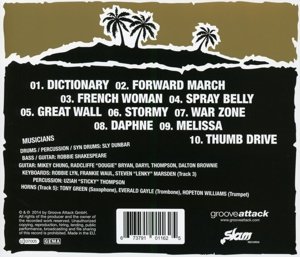
The latest addition to Sly and Robbie’s discography is Underwater Dub, which was released on 28th April 2014, on Groove Attack. Underwater Dub is the followup to 2012s Blackwood Dub. Just like Blackwood Dub, Underwater Dub was recorded at Harry J’s recording studio, in Jamaica. Producing Underwater Dub was Alberto “Burur” Blackwood of Slam Records and Groove Attack. Alberto couldn’t have picked a better studio for Sly and Robbie.
Harry J’s is one of the most prestigious studios and is like a second home for Sly and Robbie. They’ve recorded at Harry J’s many times since the mid-seventies, when Sly and Robbie established their forty year partnership.
Back in the mid-seventies, drummer Sly Dunbar was the drummer for Skin, Flesh and Bones. Robbie Shakespear was the bassist for the legendary band The Aggrovators. When they met, it was a musical meeting of minds. They both shared a love of Stax, Motown, Philly Soul, country music and classic reggae. Their favourite reggae labels were Channel One and Treasure Isle. Sly and Robbie also shared the same theories about music, and how music should be made. This was the start of a partnership that would last forty years and 200,000 recordings. Their latest recording was Underwater Dub.
At Harry J’s recording studio, Sly and Robbie recorded ten tracks they’d written with producer Alberto “Burur” Blackwood. Accompanying the legendary rhythm section of Sly on syn drums and percussion and Robbie on bass and guitar were guitarists Mikey Chung, Radcliffe “Dougie” Bryan, Daryl Thompson and Dalton Browne. They were joined by keyboardists Robbie Lyn, Frankie Waul and Steven “Leaky” Marsden, while Uziah “Sticky” Thompson added percussion. Horns came courtesy of saxophonist Tony Green, trumpeter Hopeton Williams and trombonist Everald Gayle. These musicians played on the ten tracks that became Underwater Dub, the much anticipated followup to Blackwood Dub, which I’ll tell you about.
Opening Underwater Dub is Dictionary. From the get-go Sly and Robbie join forces. Sly’s syn drums crack and Robbie’s bass probes. They’re joined by the melodic sound of a Hammond organ. Soon, the the dubby arrangement is panned. It assails and surrounds you. Later, guitars chime, drum crack and Robbie’s thunderous bass tests the tolerance of your speakers. Especially when echo and reverb are added. Then when the arrangement is stripped bare, Sly and Robbie showcase their rhythmic talents. They’re joined by percussion, which flits in and out of the mix. The mix veers between slow, moody and broody to melodic, as Sly and Robbie, dub’s innovators, return determined to reinvent dub.
From the opening bars, Forward March has a dubby sci-fi sound. This is is 21st Century dub. One thing remains the same, Sly and Robbie. They lock into the tightest of dubtastic grooves, while the futuristic sci-fi sound is ever-present. It’s accentuated when effects are added. This includes filters and reverb. Despite this, you can still hear Sly and Robbie in the distance, as they deliver a 21st futuristic Century dub masterclass.
French Woman has a bright, upbeat and melodic sound. Crystalline guitars, percussion and bubbling synths join reggae’s greatest rhythm section. Soon, Sly and Robbie unleash a myriad of effects. Again, the arrangement is panned. It swirls around your head, hidden behind filters. Reverb and echo are added. Guitars resonate into the distance, while Sly’s drums and Robbie bass are shrouded by filters. This adds to the dubby, lysergic and innovative sound. Sly and Robbie continue their dub revolution.
A reveille sound as Spray Belly gets underway. This is the signal for Sly and Robbie to gallop centre-stage. Accompanied by keyboards, guitars and percussion the arrangement explodes into life. Then the effects are added. Filters are used effectively. Sly and Robbie tease you, letting you hear more or less of the pounding, galloping arrangement. This results in a slice of vintage dub courtesy of Sly and Robbie.
As Great Wall reveals its secrets, Sly and Robbie’s rhythms are joined by blazing horns, bubbling synths, percussion and chiming, crystalline guitars. It’s a heady brew. Before long, producer Alberto “Burur” Blackwood reaches for his trusty effects. Filters, reverb and echo are added. He uses the effects effectively, especially when highlighting parts of the arrangement. This includes Robbie’s pulsating bass. It never misses a beat and is a reminder of why Robbie’s one of reggae’s greatest bass players. Then there’s the braying horns, reverb adds space, allowing them to disappear dubbily into the distance.
Stormy has a dark, dramatic arrangement, where dub meets rocky guitars. Sly and Robbie unleash hypnotic, mesmeric rhythms. At the heart of the arrangement is a haunting sound. It’s equally hypnotic. So much so, that you’re captivated. Having said that, you’re still aware of the machine gun, rocky guitars, percussion and handclap. They flit in and out of the haunting, mesmeric arrangement to what’s one of Underwater Dub’s best tracks.
A robotic warning sounds as the futuristic arrangement to War Zone unfolds. This is Sly and Robbie’s signal to enter this dub War Zone. It’s a mass of shimmering, crystalline guitars and bubbling synths. Sly and Robbie lay down some of their finest rhythms. Robbie’s pulsating, pounding bass is joined by Sly’s drums. They’re crisp, cracking and pounding, resonating and reverberating like the chiming guitars. Effects are used much more sparingly on a track that’s a glorious fusion of dub’s past, present and future.
Daphne has a much more laid back, melodic sound. Sly and Robbie roll back the years and deliver another dub masterclass. Sly’s drums provide the heartbeat. Robbie plays a starring role, his pulsating bass line at the heart of the track’s sound and success. His fingers flit up and down the fretboard. Echo is added to the drums, while synths bubble and guitars shimmer. They’re joined by percussion and handclaps. Here, the effects aren’t overused. No. Instead, they’re used sparingly and effectively. This results in a slice of musical sunshine.
Dramatic. That describes the introduction to Melissa. Feedback squeals, drums pound and Robbie’s bass rumbles, dominating the arrangement. Effects are unleashed, but not overused. Playing an important role is percussion. it adds a hypnotic sound. It’s mesmeric and joined by bursts of shimmering, dubby guitars. Keyboards and feedback drifts in and out. `However, it’s Sly and Robbie’s rhythms that are at the heart of this track’s success. It’s classic dub with a 21st century twist.
Thumb Drive, a ten minute Magnus Opus closes Underwater Dub. Straight away, the arrangement has a melodic, soulful sound. This comes courtesy of keyboards, bubbling, buzzing synths, crystalline guitars, percussion and rhythms Sly and Robbie style. Sometimes, the arrangement is masked by filters, so you can only hear a tantalising taste of the music. Other times, the arrangement assails and surrounds you. It’s transformed by effects. Then later, Sly and Robbie change direction. They seem to relish the opportunity to experiment, incorporating elements of funk, jazz and electronica. Whilst all this is happening, heavy duty effects are unleashed. Reverb, echo and filters transforms the music, which takes on a futuristic, sci-fi sound. The result is dub Sly and Robbie style. By this I mean innovative, ambitious and groundbreaking.
Underwater Dub is very different from many of the projects Sly and Robbie have been involved with. Producer Alberto “Burur” Blackwood is actually Sly and Robbie’s in-house engineer. However, back in 2011, Alberto invited his bosses to record a new dub album. They accepted Alberto’s commission. The result was Blackwood Dub. It was released to critical acclaim in 2012. So, it made sense to record a followup. The only problem was fitting what became Underwater Dub into Sly and Robbie’s schedule. As the go-to rhythm section and production team for many of music’s top artists, they don’t have much down time. When they did, they headed to the familiar surroundings of Harry J’s recording studios. That’s where Sly and Robbie laid down one of the most ambitious, innovative and exciting albums of their careers, Underwater Dub.
Underwater Dub is like nothing else Sly and Robbie have recorded. They’ve drawn inspiration from Afrobeat, drum ’n’ bass, electronica, hip hop, R&B, rock and soul. All these influences shine through on Underwater Dub, which is best described as an album of adventurous soundscapes.
Sly and Robbie collaborated with some top musicians on Underwater Dub. Their rhythms were augmented by everything from bubbling synths, dusty Hammond organs, African percussion and rocky guitars. The result was an adventure in sound Sly and Robbie style. By this I mean the music is innovative and ambitious. It’s as if Sly and Robbie are determined to rewrite dub’s rules.
That’s no bad thing. After all, if music doesn’t evolve, it risks becoming irrelevant. Sly and Robbie realised this back in the eighties, and started using synths on dub albums. This didn’t please traditionalists. They felt there was no room for synths or technology. For dub, thinking like this spelt disaster. Unless dub evolved, it risked becoming a relic of the past. Thankfully, not every producer agreed with the traditionalists. Technology was incorporated into recording studios and dub evolved. Now, however, Sly and Robbie are determined to reinvent dub.
They’ve incorporated numerous musical genres during the ten tracks on Underwater Dub. This includes Afrobeat, drum ’n’ bass, electronica, hip hop, R&B, rock and soul. It’s a glorious melange of influences. They shine through during the musical adventure that’s Underwater Dub. The result is compelling and captivating music. Underwater Dub is also innovative, inventive and influential. Mind you, that’s what we’ve come to expect from the hardest working men in dub, Sly and Robbie, whose critically acclaimed new album Underwater Dub is out now on Groove Attack.
SLY AND ROBBIE-UNDERWATER DUB.

SPACE MONKEY-THE KARMAN LINE.
SPACE MONKEY-THE KARMAN LINE.
Over the last few years, Gard Nilssen has gained a reputation as one of Norway’s top drummers. He also deserves to be described as an innovator. Anyone whose heard Gard’s work with Astro Sonic, Puma, The Trondheim Jazz Orchestra and Susanne Sunfor’s band will realise realise this. Then there’s the six albums Gard has recorded with Bushman’s Revenge.
Their most recent album was Thou Shalt Not Boogie. It was released in January 2014 to critical acclaim. It’s no exaggeration to say that Thou Shalt Not Boogie is one of the best albums of 2014. However, Gard isn’t resting on his laurels. No way.
On 12th May 2014, Gard will return with his latest collaboration. This was with another of Norway’s most innovative musicians Morten Qvenild. Morten has an equally impressive CV. He’s previously worked with In The Country, Shining, Jaga Jazzist, Trinity and Susanna and The Magic Orchestra. The latest addition to Morten’s CV is sPace monKey, whose debut album The Karman Line will be released by Hubro Music on 12th May 2014. sPace monKey, which is one of the most exciting and innovative collaborations of 2014, was the result of a chance meeting between Morten and Gard.
Having played in some of Norway’s most groundbreaking groups Morten and Gard were both members of Mathias Eick’s band. Morten was the pianist and Gard the drummer. They both enjoyed working together. So, much so, that Morten and Gard decided to collaborate. This wasn’t going to be a full-blown band, just a duo, sPace monKey. There was a reason for this.
Morten and Gard found the idea of working as a duo compelling. It allowed them for freedom to express themselves. There was the opportunity to innovate and take their music in different directions. This meant improvising. The result was The Karman Line, an album containing nine spacey and intriguing soundscapes. sPace monKey spring a series of surprises it’s a case of don’t try and second guess sPace monKey. That’s not possible. It’s also one of the reasons that sPace monKey’s debut album The Karman Line, is such a captivating album.
The Karman Line featuries nine tracks written by Morten and Gard. They arranged and produced The Karman Line, which was recorded at Propeller Studio, Oslo. At Propeller Studio, Morten played hyper-piano and is responsible for programming. Both Morten and Gerd take charge of electronics. Gerd plays drums, gongs, bells and vibes. Jørgen Træen was the only guest artist on The Karman Line. He played modular synth on Digital Cigarettes. The other eight tracks on The Karman Line, which I’ll tell you about, are Morten and Gard, sPace monKey.
Opening sPace monKey’s debut album The Karman Line is Aeronautics. Wistful and thoughtful describes this track. Just a piano and drums combine to create a poignant, melancholy arrangement. It’s akin to an outpouring of emotion and sadness. Later, brief bursts of strings flit in and out of the arrangement. Then midway through the track, it heads in the direction of avant garde and experimental. The piano becomes almost discordant. Feedback is fired above the arrangement. By now, the track has become the equivalent of Primal Scream Therapy. That’s before thunderous drums power the arrangement along to its dramatic crescendo. This proves the perfect way to close this innovative and ambitious track.
Chopping Wood In My Brand New Moon Boots has an understated and pensive arrangement. Just a lone piano dominates the arrangement. In the distance, instruments flit in and out. Bells ring and jangle, while bursts of electronica interject. Thoughtfully, the arrangement meanders along. Drums mark the time, while Morten’s piano playing is deliberate. He adds a darkness to the arrangement. There’s a sense of pathos to the haunting arrangement. Although haunting, there’s a beauty to the music which can’t help but move you.
Digital Cigarette features guest artist Jørgen Træen on modular synth. Straight away, the arrangement is atmospheric and takes on a cinematic sound. Bubbling synths, flourishes of piano and rolls of drums combine avant garde, experimental, and free jazz. Cymbals crash, drums pound. At one point, it’s as if you’re on a train journey across the Mid west. This is no ordinary road trip. Later, layers of music intermingle. Thundering drums, buzzing synths, crashing cymbals and a myriad of other effects combine with a jangling piano. Post rock, psychedelia and rock are thrown into the melting pot by sPace monKey as they push musical boundaries to their limits and way beyond, resulting in a groundbreaking 21st century sonic experience.
From the get go, Darkness has a moody, broody, gothic sound. The arrangement slowly unfolds. Deliberate and dramatic flourishes of piano take centre-stage. A droning sound escapes from the arrangement. As a result, the Darkness doesn’t just descend, but envelops you.
Blue Baboon and Carpenter is one of the slower tracks on The Karman Line. Again, it has a cinematic sound. sPace monKey’s instruments tell the story of the Blue Baboon and Carpenter. sPace monKey replicate the sound of hammers, drills and the baboon. Mostly, they use slow, plodding and drums and a melancholy piano. This is hugely effective. However, having said that, there’s a sense of sadness in the music which is also quite beautiful.
Dramatic and futuristic. That describes sPace monKey. It sounds like part of the soundtrack to a sci-fi film. You can imagine a spaceship making its way from a distant galaxy. Providing the soundtrack are banks of synths, electronics and rolls of drums. Beeps and squeaks are the perfect addition. They add to the futuristic sound. Later bursts of free jazz piano, crackling electronica, rolls of pounding drums and sci-fi synths add to the drama of this futuristic space odyssey, sPace monKey style. sPace monKey sounds like the soundtrack to a dramatic sci-fi movie waiting to be made.
Just like other tracks on The Karman Line, Meanwhile In Galaxy Far Away has a spacious sound. A piano jangles hesitantly in the distance. It’s unaccompanied. That’s until bursts of drums and then feedback enter. By now, layers of music assail you. A thunderous bass and drums help power the arrangement along. This allows sPace monKey to stretch their legs. That’s apart from the piano. It’s still hesitant. Towards the end, the track takes on a minimalist and futuristic sound, as if sPace monKey have reached the distant galaxy.
Long Distance Call shimmers then drones into being. Again, there’s a moody, dark and futuristic sound. The arrangement’s futuristic, sci-fi sound surrounds you. It has an edgy sound. Gradually, the drama and moody sound grows and builds. Then in the distance, a piano jangles and resonates. Later, the arrangement changes. While the darkness hasn’t lifted completely, it takes on an ethereal sound. That comes courtesy of the keyboards. The drums are responsible for the darkness and drama. They’re the perfect foil for the keyboards and both play equally important parts in this track’s sound and success.
sPace monKey’s journey is almost over. Landing Day closes The Karman Line. Deliberate stabs of ethereal, dreamy keyboards dominate the arrangement. They almost disappear into the distance, as if heading for a distance galaxy. All that’s left is a sense of melancholia, that this beautiful, ethereal and wistful track is over.
The Karman Line is best described as a groundbreaking, genre-melting musical journey from two of Norwegian music’s innovators, sPace monKey. sPace monKey are Gard Nilssen and Morten Qvenild. They’re both experienced musicians who’ve been mainstays of Norway’s thriving musical scene. However, The Karman Line is their first collaboration as sPace monKey. Hopefully, The Karman Line won’t be sPace monKey’s last album. Especially considering sPace monKey have created music that’s ambitious, influential, innovative and inventive.
Throughout The Karman Line, sPace monKey strive to reinvent their music and push musical boundaries. Sometimes, musical boundaries are pushed to their limits. Other times, boundaries are broken and rules rewritten. It’s as if sPace monKey aren’t content to stand still on what’s essentially a musical adventure.
Throughout The Karman Line, sPace monKey’s music constantly changes. Sometimes, it’s hard to believe it’s the same band. The music veers between wistful, melancholy and pensive, to dark, dramatic and disturbing. It’s also eerie and moody. Sometimes, it’s beautiful and melancholy. The music on The Karman Line is always ambitious, bold, challenging, influential and innovative as sPace monKey take you on a futuristic, genre-hopping musical journey.
During this musical journey, sPace monKey’s music is full of nuances, subtleties and surprises. sPace monKey combine everything from ambient, avant garde, classic rock, electronica, experimental, post rock and psychedelia on The Karman Line. It will be released by Hubro on 12th May 2014. This is just the latest critically acclaimed album from Hubro Music, who are fast gaining a reputation as a label who release groundbreaking albums. The Karman Line, sPace monKey’s debut album is proof of this.
The Karman line is without doubt one of the most ambitious and innovative genre-melting albums of 2014. Featuring nine improvised soundscapes, it’s a mesmeric fusion that captivates and compels. You’re taken on a nine musical journeys. Subtleties and surprises are constantly sprung, sPace monKey aren’t afraid of changing direction. Throughout The Karman Line, it’s a case of expect the unexpected as sPace monKey innovate and improvise creating music that’s captivating, compelling and groundbreaking.
SPACE MONKEY-THE KARMAN LINE.
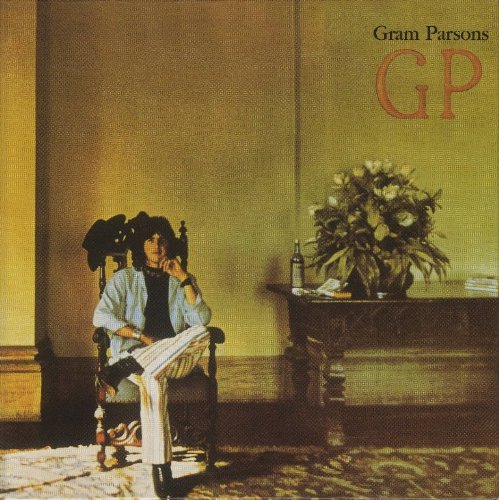
GRAM PARSONS-GP.
GRAM PARSONS-GP.
Gram Parsons’ career is a case of what might have been. He could’ve and should’ve enjoyed a long and successful career. Sadly, that wasn’t the. He only released one solo album during his career and died aged just twenty-six. However, Gram squeezed a lot of living into twenty-six years.
For many people, Gram Parsons’ epitomises the rock ‘n’ roll lifestyle. He lived every day like it was his last. The same can be said of his career.
By the time he released his solo album GP, which will be rereleased on June 10th 2014, Gram had been a member of some of the hugely influential bands. Gram founded The International Submarine Band, was a member of The Byrds and formed The Flying Burrito Brothers. After leaving The Flying Burrito Brothers, he signed to A &M Records as a solo artist.
When recording of Gram’s debut album got underway in 1971, things weren’t going well. Gram decided to take a break. However, this was no ordinary holiday. He headed to the South of France to hang out with Keith Richards who was recording Exile On Main Street at Nellcôte.
Back then, Keith was allegedly a heavy heroin user. Gram and Keith Richards became soul mates and partied constantly. They bonded over their love of the rock ‘n’ roll lifestyle. This didn’t please some people, including Mick Jagger. He asked Gram to leave, in attempt to rid the sessions of the drug users. Ironically, Mick Jagger had done Gram a favour. When Gram returned home he met Emmylou Harris, who’d play an important part in GP’s sound, which Gram referred to as “Cosmic American Music.” Before I tell you about GP, I’ll tell you about Gram’s life.
Gram Parsons was born Ingram Cecil Connor III in November 1946 in Winter Haven, Florida. His mother Avis, was the daughter of a wealthy businessman, John A Snively, who made his fortune in citrus fruit. Ingram Cecil Connor, Gram’s father, was a famous and highly decorated pilot in the US Air Force. Both Gram’s parents were alcoholics, and his mother suffered from depression. Sadly, when Gram was twelve, his father committed suicide. Later, Gram’s mother remarried, Robert Parsons, and Gram took his stepfather’s surname. In July1965, Gram’s mother died of cirrhosis, caused by her heavy drinking. She died the day before Gram was due to graduate from Bolles School in Jacksonville, Florida.
Whilst all these problems with his family were happening, Gram became more interested in music. He’d been interested in music since he saw an Elvis Presley concert in 1957. In his early teens, he’d formed bands, playing cover versions of rock ‘n’ roll song. Aged sixteen, he started playing folk music, and then in 1963 he formed his first professional group The Shiiohs.
The Shilohs were influenced by groups like The Kingston Trio and The Journeymen. They mostly played in coffee bars and high schools, but on several occasions, played in New York’s Greenwich Village. This included an appearance at Fred Weintraub’s club The Bitter End, in Bleecker Street. When The Shilohs split up, Gram headed to Harvard University to study theology, leaving after one semester.
After The Shilohs split up, Gram formed the International Submarine Band while at Harvard University. They were a folk group, and wee active between 1966 and 1968. the group signed a recording contract with Lee Hazlewood’s LHI Records, and recorded several singles and one album entitled Safe At Home. Since the album’s release in March 1968, it’s credited with being one of the first real country rock albums. Before the album was released in March 1968, Gram left the band in February, to become a member of The Byrds.
By 1968, Gram Parsons had been recruited as a member of The Byrds, after David Crosby and Michael Clarke had left the band at the end of 1967. Initially, Gram was hired as a pianist, but soon became their rhythm guitarist and sung vocals. However, Gram wasn’t considered a full member of the band by Columbia, the band’s record label, even though he was contributing as much as any other member. Instead, Gram and Kevin Kelley, another new member were paid a salary. Only Roger McGuinn and Chris Hillman were full members when the band signed their new recording contract. Gram played on The Sweetheart of The Rodeo album released in August 1968. Whether or not Gram was a full member of the band, he like Kelley, were listed as members on the album and in press coverage. While on tour in England in the summer of 1968, Gram quit The Byrds over plans by the band to tour South Africa. He was opposed to South Africa’s apartheid policy. During that tour, Gram met and befriended Keith Richards. He would become a close friend, is credited with reintroducing Gram to country music.
After leaving The Byrds, Gram headed back to Los Angeles, where he and Chris Hillman formed The Flying Burrito Brothers. They recruited pedal steel player Sneaky Pete Kleinow and bassist Chris Ethridge. Having completed the group’s line up, they recorded their debut album The Gilded Palace of Sin, which was released in February 1969. Although the album wasn’t commercially successful, it was well received and is seen as one of the most important alternative country albums ever. Before they recorded their second album, the band underwent personnel changes.
Chris Ethridge left due to the band’s lack of success. Chris Hillman became bass player, Bernie Leadon joined to play lead guitar and ex-Byrd Michael Clarke became the new drummer. Burrito Deluxe, released in April 1970, was the groups second album. Like it’s predecessor it wasn’t a commercial success, and to make matters worse, the critics didn’t like the album. After the failure of the second album, Gram was disillusioned, and he left the band. He and Chris came agreed that this was for the best. During the time the band had recorded Burrito Deluxe, Gram’s drug use was much worse, he wasn’t writing as many new songs and he’d spent much of his time partying with the Rolling Stones.
Gram signed a recording contract with A & M Records in 1970, and Terry Melcher was hired to produce the sessions. So Gram moved in with Melcher and the sessions begun. However, they were unproductive and Gram headed to France where he lived for a short time with Keith Richards while the Rolling Stones were recording Exile On Main Street. On his return to America in 1971, he married girlfriend Gretchell Burrell.
After playing a one-off reunion concert with The Flying Burrito Brothers, Hillman took Gram to hear Emmylou Harris in concert. Quickly, the pair became good friends and within a year, Gram and Emmylou headed to the recording studio to have another attempt at recording Gram’s solo album. By now, he’s been signed to Reprise Records by Mo Ostin. As well as Emmylou, Gram enlisted James Burton, who previously, had played with Ricky Nelson and Elvis Presley. Together Emmylou and James played an important part in GP’s sound.
For Gram’s solo album eleven songs were chosen. Gram penned Still Feeling Blue, A Song for You, The New Soft Shoe and Big Mouth Blues. He also cowrote She with Chris Ethridge and How Much I’ve Lied with Pam Rifkin. Other tracks included Joyce Allsup’s We’ll Sweep Out the Ashes in the Morning, Rick Grech’s Kiss The Children and Peter Wolf and Seth Justman’s Cry One More Time. Along with Tompall Glaser and Harlan Howard’s Streets of Baltimore and Darrell Edwards, Charlotte Grier and George Jone’s That’s All It Took, these songs became GP.
When the recording of GP began in September 1972, at Wally Heider Studios, Hollywood, Gram couldn’t have hoped for a better band. They included some of the top country session players. This included a rhythm section of drummers Sam Goldstein, John Guerin and Ronnie Tutt, bassists John Conrad and Rick Grech plus rhythm guitarist Barry Tashian. James Burton played electric guitar and dobro, Al Perkins and Buddy Emmons pedal steel guitar, Alan Munde banjo and Byron Berline fiddle. Glen Hardin played piano, organ and was bandleader. Adding backing vocals on Kiss The Children were Ron Hicklin, Tom Bahler, Mitch Gordon and Lewis Morford. Hal Battiste plays baritone saxophone on Cry One More Time. Emmylou Harris sung harmonies and duetted with Gram. He produced GP with Ric Grech. GP was completed in October 1972 and released in January 1973.
On its release in January 1973, GP was critically acclaimed. However, GP failed to chart. It didn’t even trouble the charts. Gram must have thought that he would go on to enjoy commercial success. Sadly, that wasn’t the case. By the time his sophomore album Grievous Angel was released, Gram would be dead. GP, which I’ll tell you about, was the only album released during Gram’s lifetime.
Still Feeling Blue opens GP. Fiddles, guitars and the rhythm section combine before Gram sings. A pedal steel guitar and banjo join in, completing the authentic country sound. The tempo is quick, Gram’s vocal is wistful and Emmylou Harris adds backing vocals. Her backing vocals compliment Gram’s heartbroken vocal. James Burton’s guitar and Byron Berline’s fiddle are at the heart of the song’s sound. They helps drive arrangement along. Gram’s lyrics are full of longing and sadness. They’re about a woman that’s left him, and how he’s still suffering, missing her, wondering why she left him? Gram’s soul-baring vocal is at the heart of the song’s sadness and success.
A guitar plays at the start of We’ll Sweep Out the Ashes In The Morning. Drums and fiddle accompany Gram as he sings. Here, his voice isn’t as strong as on the opening track, during parts of the track. He’s joined by Emmylou who shares the lead vocal. Her voice compliments Gram’s perfectly, and sometimes, her lilting voice soars high as she sings the lead. Behind them, the arrangement is mostly driven by guitars, with drums playing subtly behind them. The pedal steel guitar played by Al Perkins is really atmospheric, perfectly suited to the song. That, and Gram and Emmylou’s vocals are what makes this a quite beautiful track.
When A Song For You opens, the track has a dramatic feel and sound. Piano and guitar play, then when Gram sings, his voice sounds fragile and gentle as he sings the lyrics. The arrangement wraps round his voice like a blanket, as Emmylou accompanies him. An acoustic guitar, fiddle and pedal steel guitar accompany them. It’s a lovely understated arrangement, that’s perfect for the song. The understated, subtle arrangement is the perfect foil for the vocals and allows them to take centre-stage.
The Streets of Baltimore begins with a pedal steel guitar playing, before Gram sings. When he does, his voice is much stronger, and behind him, a lovely arrangement is unfolding. Lead and pedal steel guitars, fiddle, piano, drums and percussion play. They all play behind Gram, never overpowering his vocal. It’s much stronger, sometime soaring high as he sings the lyrics. They’re about a man moving to the bright lights of Baltimore with his wife, only to discover she loves the bright lights of Baltimore more than she loves him. Gram brings the lyrics the lyrics to life. So much so, you can almost imagine the story unfolding before your eyes, resulting in an evocative and poignant song.
She is a song he cowrote with Chris Ethridge who Gram played with in The Flying Burrito Brothers. A piano and guitar play slowly and dramatically at the start of the song, then Gram sings. When he does, his voice is laden with emotion, as he sings about a talented young girl singer, growing up in the plantations the southern states, picking cotton. During the song, Gram gives one of his best vocals on GP. Behind him, a really atmospheric, subtle arrangement plays. Drums, bass, fiddle and steel guitars combine masterfully, providing the perfect soundtrack for Gram’s vocal. Quite simply, She is one of the most beautiful tracks on the album, made all the better by the subtle, atmospheric arrangement.
That’s All It Took is a songs that sounds straight out of Nashville. It begins with peddle steel guitar, piano and rhythm section playing, before Gram sings about love, and falling in love. After his vocal drops out, Emmylou then sings the lead vocal. They’re like ying and yang Then when they sing together, their voices are perfectly suited, especially for this song. Emmylou seems to bring out the best in Gram, and it’s as if he lifts his game when he sings with her. Later, when their voices drop out, the fiddle, then the pedal steel guitar takes the lead. This is the perfect contrast to the vocal. Then as Gram and Emmylou rejoin, the song draws to a close. It finishes with a flourish Gram, Emmylou and the rhythm section combining to create a track that epitomises what Gram called “Cosmic American Music”
Guitars, rhythm section, piano and fiddle combine to produce a beautiful atmospheric and nostalgic sound at the start of The New Soft Shoe. This sound continues when Gram sings, his voice is emotive, his delivery has a heartfelt quality. Gram’s lyrics have a strong narrative, they tell a story from many years ago, one he brings to life as he sings them. As Gram sings, the band play subtly behind him. Just a guitar, fiddle, drums and piano combine with backing vocals. This allows Gram’s tender, heartfelt vocal to take centre-stage on this quite beautiful, melodic song.
When Kiss the Children begins, a fiddle plays the introduction. It’s accompanied by drums, piano and guitar, before Gram sings. As he sings, it’s immediately noticeable how much stronger his vocal is. Here, the band sing backing vocals, as they accompany him with a slice of authentic country music. Fiddles, guitars and subtle drums provide the backdrop for Gram and his backing vocalists. This is another cover version, of a song written by Rik Grech. It’s a tale of a hard living man, who likes to drink, fight and carouse. Gram and his band bring the song to life. His vocal and the band’s performance, give it an authentic country sound.
Cry One More Time bursts into life with Gram singing and baritone saxophone playing. The use of the baritone saxophone to accompany Gram is a masterstroke, which lifts the song totally. Without them, it wouldn’t be the same song, it wouldn’t be half as good. During the track, the piano and guitar play important roles. Meanwhile, Gram produces a despairing, heartbroken vocal, as he sings about how everything is going wrong. His girlfriend is about to leave him, he loves her and can’t take it, so he needs another beer. On this track, the band really raise their game. It’s as if this spurs Gram on. He seems to lift his game to another level, to match the playing around him. Everything about the track works, Gram’s vocal, the band’s playing and the songs lyrics. This is easily, one of the best tracks on GP.
A guitar, dobro, fiddle and drums open How Much I’ve Lied, a track with a lovely country feel to it. Gram’s voice, is strong and clear as he sings about being unfaithful, and having to tell his partner about it, as he can’t continue lying to her. It’s a heartfelt, emotional song as Gram comes clean, telling his partner how he’s betrayed. Behind him the arrangement is quite subtle at times. Other times, it fills out, and become much fuller. It’s a mixture of guitars, dobro, fiddles and drums. A piano joins the arrangement, as do backing singers who accompany Gram. Here, the arrangement and Gram’s vocal do the song justice. They bring the lyrics to life.
GP ends with one of the album’s best tracks Big Mouth Blues, which has one of the best arrangements on the album. The track has a really rousing, uptempo opening with guitars and drums and combining brilliantly. Then Gram sings, his voice loud at the front of the mix, keeping up with the now frantic pace. A baritone saxophone plays, punctuating the track in bursts. Some great guitar solos are played, and Gram occasionally hollers announcing their arrival. He seems to let them take centre-stage, not worrying about being upstaged. To round off the arrangement, a piano plays adding the finishing touches. By the end of what’s a frantic, rousing track, you realize that you’ve heard Gram Parsons and his band at their best. Here, they sound like the best bar band you could ever dream of hearing. They’re tight, polished and professional. As for Big Mouth Blues, it’s the perfect way to end what has been a tremendous album.
Gram Parson was undoubtedly a hugely talented artist. He was a vocalist, guitarist and talented songwriter. Like many other rock stars, he died far too young. He died aged twenty-six, after completing the recording for the follow up to GP, Grievous Angel. The sad thing about his music, is that it wasn’t successful during his lifetime. It was only after his death, that people recognized his talent, and started buying his albums. Critics had always recognized Gram talent, it’s just a pity the record buying public didn’t realize sooner. Now, his music is hugely popular, and GP and Grievous Angel are now afforded the status of classic albums. Whenever lists are released of the best albums, Gram’s two solo albums are included. His music has been hugely influential among a new generation of alternative country artists. In some ways, Gram Parsons was the founding father of this genre, and these artists owe a debt of gratitude to him. If you’ve never heard Gram Parson’s music, then GP which will be rereleased on 10th June 2014, is the perfect place to start.
GP is an introduction to the Gram Parsons, one of the most talented artists of his generation. He could’ve and should’ve enjoyed a long and successful career. Sadly, that wasn’t to be. He only released one solo album during his career and died aged just twenty-six. However, what an album GP is. GP is a critically acclaimed fusion of Americana, country, folk and rock. This was described by Gram as “Cosmic American Music.” Gram’s album of “Cosmic American Music,” GP is timeless and flawless and is the perfect introduction to one of the legends of American music, Gram Parson, who squeezed a lot of living into twenty-six years.
GRAM PARSONS-GP.
BEVERLEY MARTYN-THE PHOENIX AND THE FUTURE.
BEVERLEY MARTYN-THE PHOENIX AND THE FUTURE.
It’s nearly fifty years ago since Beverley Martyn made her recording debut. This was as a member of The Levee Breakers. They were a jug band which featured Mac McGann, Johnny Joyce and Beverley. Their debut single was Babe, I’m Leaving You, which they released on Parlophone in 1965. Beverley was just sixteen and already, The Levee Breakers were a regular fixture on the folk circuit. Beverley Martyn seemed destined for a great things. However, since 1965, Beverley has only released two solo albums.
Beverley’s sophomore album, The Phoenix and The Turtle, was recently released by Les Cousins’ label. The Phoenix and The Turtle was released thirteen years after Beverley’s debut solo album No Frills. It was released after Beverley took a lengthy break from music to bring up her family. However, thirty years earlier, it looked as if Beverley Martyn was destined for commercial success and critical acclaim.
A year after The Levee Breakers released their debut single, Beverley’s solo career began in 1966. She signed to the newly formed Deram Records. Deram was a new imprint of Decca Records. It’s raison d’être was to showcase stereo. The pop and rock music Deram would release would feature more space. This would allow record buyers to hear the difference between mono and stereo. So, for executives at Deram, it was important they chose Deram’s first single fitted the vision they had for their new label. The single choses was Beverley Martyn’s debut single Happy New Year. It featured Beverley and what would be regarded as an all-star band,
Accompanying Beverley were future members of Led Zeppelin John Paul Jones and Jimmy Page. Then there was Nicky Hopkins who’d collaborate with The Beatles and Rolling Stones. Drummer Andy White was best known as having played the drums on The Beatles’ Love Me Do. He’d forge a career as one of the top session musicians. Each of these musicians featured on Beverley Martyn’s debut single.
Released as Beverley, Happy New Year wasn’t the commercial success many people envisaged. Worst was to come. Picking Up The Sunshine, Beverley’s sophomore album was recorded, but not released. However, Beverley’s luck was changing.
It was during this period, Beverley met Bert Jansch. He taught Beverley how to play guitar and encouraged Beverley to write her own songs. Meanwhile, Beverley was relying on other people to write songs for her. Donavon wrote her third single Museum. Denny Cordell who’d produce Joe Cocker, The Move, Procul Harum and The Moody Blues produced Museum. Sadly, Museum wasn’t a commercial success. So, Beverley moved to New York with another stalwart of the folk scene Paul Simon.
Paul Simon was a regular on the British folk scene. He’d arrived a few years earlier. Back then, he was an up-and-coming folk singer. Now with Art Garfunkel, he was about to record Bookends. This was Simon and Garfunkel’s fourth album. Recorded in New York, Beverley wrote Fakin’ It. She also sings a line in the song. Things were looking up for Beverley. Especially when she appeared at the 1967 Monterey International Pop Music Festival. However, two years later, Beverley would meet the man she recorded two critically acclaimed albums with.
This was John Martyn, who was already an established name of the British folk circuit. He’d already released two solo albums, 1967s London Conversation and 1968s The Tumbler. Beverley and John would release two albums in 1970. Stormbringer was released in February 1970, with Beverley penning four tracks and John six. Recording of Stormbringer took place in Woodstock, with Joe Boyd producing Stormbringer. Upon its release, Stormbringer wasn’t the success Island Records had hoped for. Despite this, John and Beverley entered the studio again.
This time it was in London. That’s where The Road To Ruin, the followup to Stormbringer, was recorded. It was released in November 1970, and it features one of Beverley’s finest songs, Primrose Hill. It’s a song about what Beverely calls the “joys of domesticity.” Apart from Primrose Hill, Beverley cowrote three songs with John for The Road To Ruin. Sadly, on the release of The Road To Ruin, the album failed commercially. That proved to be the end of John and Beverley’s collaboration.
Island Records decided that with John and Beverley’s two albums failing commercially, it would be best to market John as a solo artist. Right through until John Martyn was recording Grace and Danger in 1980, Beverley divided her time between spending time with her family and working on John’s solo albums.That came to an end in 1980. John and Beverley were divorced when John was recording Grace and Danger, which features a cathartic outpouring of emotion from John. After their divorce in 1980, Beverley took a break from music, concentrating on her family.
By the nineties, Beverley’s family had grownup. So, she made her comeback. This began with Beverley supporting Loudon Wainwright III. Then in 2001, Beverley made released her long awaited debut album No Frills. Over the next few years, Beverley worked with some of the biggest names in music. This includes Jimmy Page of Led Zeppelin, Levon Helm of The Band, Richard Thompson, Dave Pegg and Sandy Denny of Fairport Convention and British folk guitarist Davy Graham. Then in 2004, a new generation were introduced to Beverley Martin’s music.
Fatboy Slim sampled Primrose Hill from John and Beverley Martin’s 1970 album Stormbringer. It featured on North West Three, a track from his Palookaville album. This introduced Beverley to another generation of music. For many musicians, they’d have rushed out a new album. Not Beverley. That isn’t her style. Her followup to 1998s No Frills, The Phoenix and the Turtle was only released recently.
Beverley describes The Phoenix and the Turtle “as a very personal album.” It features songs that she’s written throughout her fifty year career. This includes the first song she wrote, Sweet Joy. Reckless Jane is a song Beverley and Nick Drakes started to write. Sadly, they never finished it. Belatedly, Beverley has finished the song. When The Levee Breaks and Going To Germany are songs Beverley used to sing with her first group The Levee Breakers. Women And Malt Whiskey is a song based on Beverley’s late and legendary husband John Martyn. Along with Potter’s Blues, Nighttime, Mountain Top and Jesse James, these nine tracks became The Phoenix and The Turtle, Beverley Martyn’s sophomore album, which was recorded in Wales and California.
Most of The Phoenix and the Turtle was recorded at Les Cousins Studios in Wales, with guitarist and producer Mark Pavey. He played acoustic guitar and piano. The rhythm section features bassist Matt Malley, ex-Counting Crows drummer Victor Bisetti and guitarist Michael Watts. Matt and Victor recorded their parts Malleyable Music Studios, California.Other artists who played on The Phoenix and the Turtle included Michael Lease, who played Hammond organ on Levee Breaks. John Hwyel Morris played piano on Reckless Jane and Owain Roberts arranged the strings. Beverley added her unmistakable vocals. Once The Phoenix and the Turtle which I’ll tell about, was completed, it was released on 21st April 2014. Is The Phoenix and the Turtle a return to form from Beverely Martyn?
Reckless Jane opens The Phoenix and the Turtle. Straight away, beauty meets melancholia. Just the lushest of strings, thoughtful piano and a picked acoustic guitar combine. The guitar reminds me of Nick Drake. Beverley’s vocal is tender and wistful. Her lyrics have a cinematic quality. She brings the lyrics to life. So much so, that the scenes unfold before your eyes. Carefree describes Reckless Jane. She’s you and her life seems one adventure. Beverley sings from experience, hence her melancholy vocal. This combination of beauty, melancholia and cinematic lyrics is a potent one.
Just a strummed guitar opens Potter’s Blues. It sets the scene for Beverley’s feisty, frustrated vocal. As the rhythm section provides the heartbeat and guitars chime, Beverley’s vocal is wistful and emotive. It’s as if she’s longing to turn back the clock and right the wrongs of yesteryear. The longer the track progresses, the better it gets. However, at the three minute mark, a blues harmonica would’ve proved the perfect way to close the track. This would make a great track, even better.
Going to Germany was a song The Levee Breakers sang. It sees Beverley deliver a powerful, punchy vocal. She combines folk, blues and rock. Behind her, a weeping country-tinged guitar, Hammond organ and rhythm section combine. They take care never to overpower Beverley’s vocal, which is at the heart of the song’s success.
Sweet Joy was the first song Beverley ever wrote. You wouldn’t know. It’s a very beautiful song. The arrangement is understated arrangement and Beverley’s vocal soul-baring. An acoustic guitar is strummed, while an electric guitar chimes and weeps. A cymbal crashes and shimmers, adding an element of drama. It doesn’t overpower Beverley’s captivating and breathtakingly beautiful vocal.
Like other songs on The Phoenix and the Turtle, space is left in the arrangement to Nighttime. This is the case with Beverley’s vocal. The space is the equivalent of a dramatic pause. Her heartbroken vocal oozes emotion and hurt. Later, it becomes angry, frustrated and needy. By then, the rocky arrangement has taken a dramatic twist. Drums pound, strings sweep, a bass buzzes and guitars help drive the arrangement along. This provides the perfect accompaniment to Beverley’s needy, emotive vocal.
Levee Breaks is another track from Beverley’s days with The Levee Breakers sang. She delivers a vocal powerhouse where blues and rock combine. Mostly, the arrangement is understated. That’s apart from when blistering guitars resonate into the distance. They’re the perfect accompaniment to Beverley’s vocal. She’s like a British equivalent of Bonnie Riatt. As the song closes, the arrangement erupts. Searing guitars and Hammond organ combine as the arrangement reaches a bluesy, rock-tinged crescendo.
Beverley wrote Women and Malt Whisky about her late husband John Martyn, and other men she met in the folk scene. It’s a poignant song about fearless, hard living men. They drank, caroused and womanised, but never feared the consequences. Essentially, they were the original live fast die young generation. Especially given the line: “if I don’t be there by morning, don’t you grieve.” Later, a despairing Beverley sings “Women and Malt Whisky will lead you to your grave.” Poignant and full of pathos, this is one of Beverley’s best songs on The Phoenix and the Turtle.
The guitar that opens Mountain Top briefly, reminds me of John Martyn on Solid Air, one of John’s classic albums. It resonates, and is the perfect accompaniment to Beverley’s vocal. Her vocal is tender and wistful as she delivers some of her finest lyrics. Like other tracks, they’ve a cinematic quality. Beverley takes on the role of storyteller. She sings about a woman struggling to come to terms with the ageing process. There’s a poignancy and sadness to the lyrics. Beverley breathes life, meaning and emotion into her lyrics, resulting in poignant and powerful song full of pathos.
Jesse James closes The Phoenix and the Turtle. It’s a track with a strong country influence. Beverley’s vocal has a mid-Atlantic sound. She’s accompanied by chiming and strummed guitars, plus drums played with brushes. This results in an authentic country sound. The arrangement is understated, allowing Beverley’s vocal to take centre-stage as she demonstrates another side to her music.
Although nearly fifty years have passed since Beverley released her debut single in 1966, she’s hardly been prolific. Quite the opposite. Beverley had only released one album before The Phoenix and the Turtle. That was no frills. Released in 2001, The Phoenix and the Turtle surpasses the quality of No Frills. Just like a fine wine, Beverley Martin has improved with age.
Beverley is nearly sixty-nine and next year, marks her debut with The Levee Breakers. She then enjoyed a brief solo career and released two classic albums with John Martyn, Stormbringer and The Road To Ruin. These two albums feature two of legends of the British folk scene. Sadly, they weren’t a commercial success and that was the last we heard from John and Beverley. Who knows, maybe if they’d been given time, they’d have fulfilled their potential? Sadly that wasn’t the case. John returned to his solo career and released several classic albums. Beverley divided her time between her family and working on John’s solo albums. Then when her family grew up, Beverley made a comeback.
Sadly, Beverley was in now hurry to return to the recording studio. No Frills followed in 2001 and then nothing. That was until earlier this year. Rumours started circulating that Beverley Martyn was about to release a new album. Many people dared not believe. Some did and were rewarded with The Phoenix and the Turtle.
Recently released on Les Cousins’ label, The Phoenix and the Turtle, which was sees a return to form from Beverley Martyn. Featuring nine songs penned by Beverley, The Phoenix and the Turtle is truly a flawless and timeless album. It’s been a longtime coming, but The Phoenix and the Turtle has been worth the wait. However, The Phoenix and the Turtle is a reminder of what we’ve been missing for far too long.
Beverley Martyn is an artist who could and should’ve enjoyed commercial success and critical acclaim. However, Beverley has been a stranger too long. She’s only released two albums since her solo career began in 1966. That’s not enough to do her talent justice. With her talent as a singer and songwriter, Beverley Martyn should be a huge star. Maybe, after the commercial failure of her her earlier solo material and the her collaborations with John Martyn, Beverley was reluctant to record any more albums. After all, it must be soul destroying for an artist who doesn’t receive the recognition it deserves. Who can blame them for turning their back on their solo career? That’s what Beverley did.
Thankfully, she’s made a belated comeback with The Phoenix and the Turtle. On The Phoenix and the Turtle Beverley combines folk, country, blues and rock on The Phoenix and the Turtle. The nine songs are variously beautiful, poignant and wistful. Heartbreak and hurt sits side-by-side pathos and melancholia. Beverley’s lyrics have a cinematic quality and each of the songs to life. As a result, The Phoenix and the Turtle is like a series of musical journeys, where Beverley takes on the role of narrator. You’re captivated and spellbound by what’s the finest album of Beverley’s solo career, The Phoenix and the Turtle.
BEVERLEY MARTYN-THE PHOENIX AND THE FUTURE.
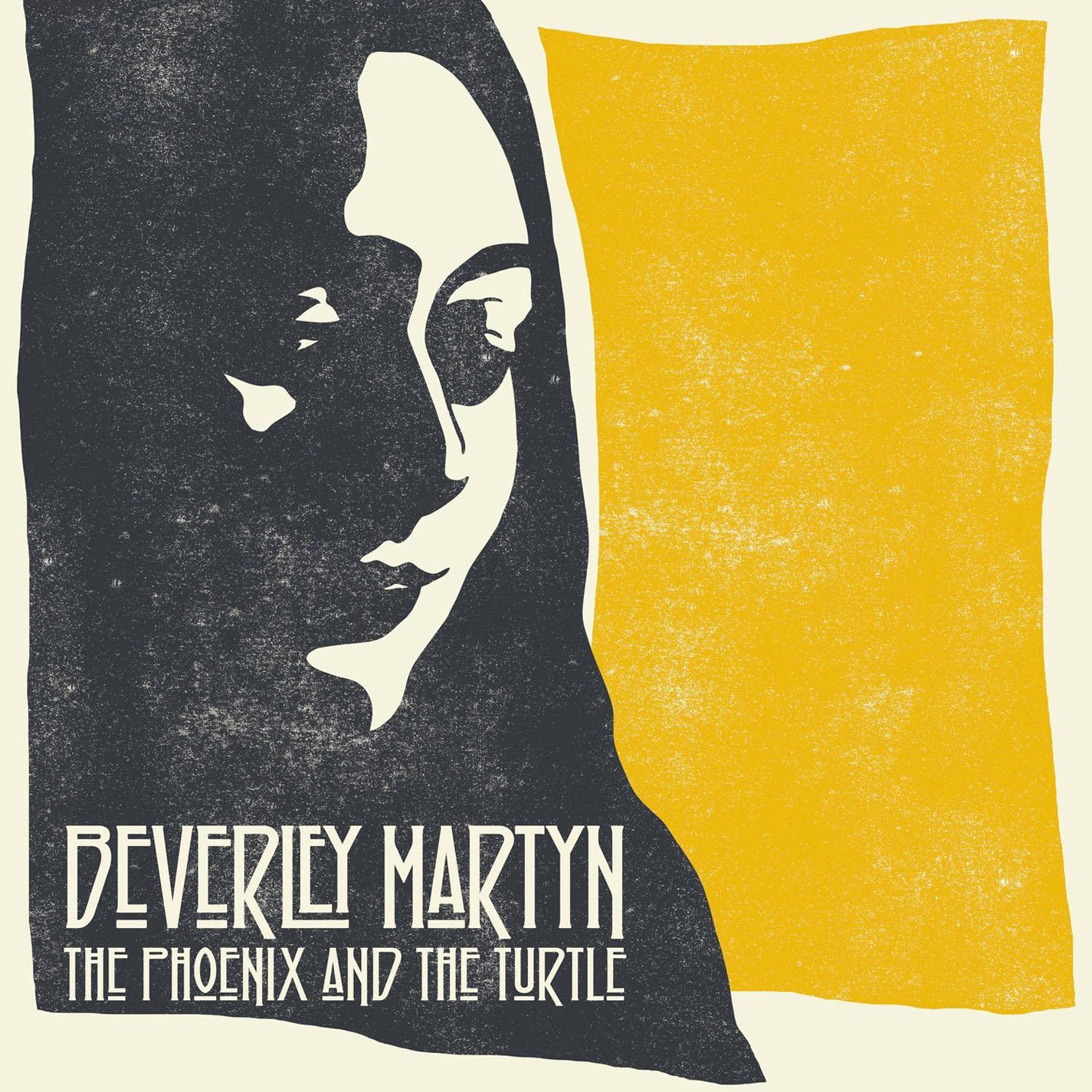
THE SALSOUL ORCHESTRA-HOW HIGH.
THE SALSOUL ORCHESTRA-HOW HIGH.
The Salsoul Orchestra were formed in 1974 by members of Philadelphia International Records’ legendary studio band M.F.S.B. They left Philadelphia International Records after a dispute with Gamble and Huff over finances. Gamble and Huff’s loss would prove to be Salsoul’s gain. It’s fair to say that between their formation in 1974 and when band was disbanded in 1982, The Salsoul Orchestra were at the heart of everything Salsoul released. Musicians that included the Baker, Harris, Young rhythm section, guitarist Bobby Eli, percussionist Larry Washington, vibes virtuoso Vince Montana and Don Renaldo’s strings and horns played on most of Salsoul’s releases. However, The Salsoul Orchestra were much more than a studio band, and were a hugely successful group in their own right. Before I tell you about the music on How High, I’ll tell you about The Salsoul Orchestra’s recording career up until the release of How High which will be rereleased on BBR Records on 28th April 2014.
Having formed in 1974, The Salsoul Orchestra released their self titled debut album The Salsoul Orchestra in 1975. It reached number fourteen in the US Billboard 200 and number twenty in the US R&B Charts. Key to the album’s sound and success were the personnel, especially the former members of M.F.S.B. They were transformed, with Vince Montana Jr. and Ron Baker now writing and arranging tracks, whereas at Philadelphia International Records, they were seen as just part of M.F.S.B. Their talents flourished at Salsoul. Little did they realise that this was just the first step on a remarkable seven year journey.
1976 proved to be a busy year for The Salsoul Orchestra. Not only did they release the followup to The Salsoul Orchestra, Nice ‘N’ Nasty, but released their own Christmas album Christmas Jollies. Nice ‘N’ Nasty was released in October 1976, reaching number sixty-one in the US Billboard 200 and number twenty-three in the US R&B Charts. A month later, Christmas Jollies was released in November 1976. It proved to be a bigger success, reaching number forty-eight in the US Billboard 200 and number thirty-eight in the US R&B Charts. Never before or after, will have Santa enjoyed a Sleigh Ride like the one on Christmas Jollies.
After releasing two albums in 1976, The Salsoul Orchestra would release a further two albums in 1977. Magic Journey was released in June 1977, featuring classics like Runaway and Magic Bird of Fire. It reached number sixty-one in the US Billboard 200 and number fifty-one in the US R&B Charts. Magic Bird of Fire gave The Salsoul Orchestra a number three hit single in the US Dance Charts. The other album The Salsoul Orchestra were involved were by Charo and The Salsoul Orchestra. Although Cuchi-Cuchi wasn’t strictly an album by The Saloul Orchestra, Cuchi-Cuchi reached number 100 in the US Billboard 200 and featured the sultry single Dance A Little Bit Closer.
By 1978, The Salsoul Orchestra had settled into the routine of releasing two albums a year. Their first release of 1978 was Up The Yellow Brick Road, which saw The Salsoul Orchestra reinvent Ease On Down the Road, Sgt. Pepper’s Lonely Hearts Club Band, Fiddler On the Roof and a medley of tracks from West Side Story. These tracks were given a disco makeover on Up The Yellow Brick Road, reaching number 117 in the US Billboard 200 and number fifty-two in the US R&B Charts. The next album from The Salsoul Orchestra would be How High, their sixth studio album.
For their sixth studio album How High, there was one major change in The Salsoul Orchestra’s lineup. Vince Montana Jr. had left The Salsoul Orchestra, so the band were without its former leader. Six tracks had been written for How High. Bunny Sigler wrote one track and cowrote two other tracks, one with his brother James. Ron Baker wrote Have A Good Time, while Edward Moore and Ron Tyson cowrote Stop and Think. Along with the title-track How High, written by Colin Horton Jennings and Steve O’Donnell, The Salsoul Orchestra headed to the familiar territory of Philadelphia’s Sigma Sound Studios for recording of How High.
At Sigma Sound Studios, over twenty musicians and backing vocalists would appear on How High. This included the Baker, Harris. Young rhythm section, guitarist Bobby Eli, percussionist Larry Washington, keyboard player Dennis Richardson and Don Renaldo’s strings and horns. Adding backing vocals were Philly’s legendary backing vocalists The Sweethearts of Sigma, plus Ron Tyson and Bunny Sigler. Ron Baker, Bunny Sigler and Ron Tyson would all produce tracks on How High, with Lenny Pakula, Tee Scott and Larry Davis arranging these tracks. With How High recorded, the album would be released later in 1978.
When How High was released in 1978, the album didn’t prove as successful as previous Salsoul Orchestra albums. Why that proved to be the case is something of a mystery. There certainly wasn’t anything wrong with the music. The only difference was that Vince Montana Jr. was no longer at the helm of The Salsoul Orchestra. Given the multi-talented personnel that appear of How High, and were involved with the project, surely one man’s loss couldn’t make such a difference? Maybe, How High is one of these hidden gems of an album that somehow, aren’t the success their music deserves. Was that the case with How High? That’s what I’ll tell you, after I’ve told you about the music on How High?
How High opens with the title-track How High, written and produced by Colin Horton Jennings and Steve O’Donnell. Cognac were drafted in to add vocals to a track that literally bursts into life. The Baker, Harris, Young rhythm section provide the track’s heartbeat, while keyboards, percussion and Don Renaldo’s lush strings and growling horns signal the arrival of the vocal. Her vocal is a mixture of power and passion, with tight, soaring, soulful harmonies accompanying it. Vibes, Bobby Eli’s guitar, the pounding, funky rhythm section and percussion combine, while the horns blaze, growling and rasping, almost ever-present and crucial to the track’s sound and success. Together, with The Salsoul Orchestra and Cognac, How High gets the album of to a brilliant start, one that’s soulful and funky.
Have A Good Time written and produced by Ron Baker, takes over where How High left off. It’s another uptempo, uplifting and joyous track. Keyboards, the Baker, Harris, rhythm section, cascading strings and percussion combine before the sassy, strutting vocal enters. Strings cascade, horns rasp and handclaps punctate the arrangement, as the rhythm section drive the track along. Flourishes of keyboards drift in and out of the track, before rocky guitars and Don Renaldo’s swinging, sweeping horns join in. By now, the track resembles a riotous party in a studio, with shrieks of joy and happiness accompanying the vocal. It’s impossible to resist this good time music. Not only is it uplifting and joyous, but it’s guaranteed to put a smile on your face.
Pounding drums, a funky bass and percussion combine as My Number’s Up begins to reveal its secrets, subtleties and surprises. Sizzling guitars are joined by the Sweethearts of Sigma, who take charge of the vocal. It’s delivered in sharp, urgent bursts, against a backdrop of lush strings, braying horns, pounding drums and percussion. Here, The Salsoul Orchestra seamless fuse funk, disco, soul and Latin music. This Latin influence is most noticeable in the arrangement’s percussive sound, especially during the lengthy breakdowns. Even the vocal is tinged with a Latin influence. Later, the band improvise and explore the nuances and subtleties of the track demonstrating just how versatile and talented the members of The Salsoul Orchestra truly were.
Straight away, when I’ll Keep You Warm begins, it’s apparent the influence the Salsoul sound had on house music. With the percussion, sound effects and pounding rhythm section, it’s a sound that was “borrowed” by several generation of house producers. Growling horns and lush cascading strings signal the arrival of The Sweethearts of Sigma and Bunny Sigler’s vocal. As the sweet, soulful vocals sweep in, disco strings, blazing horns, Latin percussion and Disco greatest rhythm section provide a powerful, dramatic and pulsating heartbeat. For nearly eight minutes, The Salsoul Orchestra and Sweethearts of Sigma take you on compelling, captivating and pulsating, Latin tinged musical journey, that demonstrates why no other label or house band came close to Salsoul and The Salsoul Orchestra. Not only were they peerless, but influenced several generations of producers.
Punchy, blazing horns and a pounding rhythm section open Resorts International, before the Sweethearts of Sigma’s beckoning vocals enter. Don Renaldo’s dancing strings and growling horns, plus the Baker, Harris, Young rhythm section play important roles in the arrangement. Along with guitars, percussion, keyboards and harmonies, a track that fuses a variety of influences reveals its beauty and glories. Funk, soul and disco are combined with elements of big band music and even doo wop vocals. They unite as one, creating a dramatic, floaty and hook-laden, dance-floor friendly track.
Closing How High is Stop and Think, which is very different to the previous tracks. It has a much more understated sound. Percussion, lush strings, guitars, keyboards and rasping strings combine, while the rhythm section create the track’s slow, subtle heartbeat. Impassioned, tender harmonies, emotive strings, growling horns and chiming guitars all play their part in what is a quite beautiful arrangement. Eventually and gradually, the arrangement grows in power and drama. Once the track reaches its dramatic peak, things calm down, before rebuilding and unleashing another wave of powerful, dramatic music. This continues throughout the rest of the track, with The Salsoul Orchestra teasing and tantalizing you, springing surprises and subtleties, along with drama and beauty.
Although How High wasn’t as commercially successful as previous albums, there’s nothing whatsoever wrong with the music on the album. During the six tracks on How High, The Salsoul Orchestra fuse soul, funk, jazz, Latin music and disco seamlessly and peerlessly. The Salsoul Orchestra were peerless, and truly. had no equal. I’ve always wondered whether Gamble and Huff ever regretted allowing so many members of M.F.S.B. leave Philadelphia International Records. Surely the must have regretted losing such talented musicians as the Baker, Harris, Young rhythm section, guitarist Bobby Eli, percussionist Larry Washington, vibes virtuoso Vince Montana and Don Renaldo’s strings and horns. Proof of just how multitalented a group of musicians The Salsoul Orchestra were can be found on How High.
Some members of The Salsoul Orchestra went from strength to strength at Saloul, becoming songwriters, arrangers and producers. It was as if all this talent was suddenly unleashed, with Salsoul providing an outlet for their talents. How High is proof of this. It was the first album since Vince Montana Jr., The Salsoul Orchestra’s leader had left the band. However, Ron Baker, Ron Kersey and Bunny Sigler stepped up to the mark, filling the void by either writing, arranging and producing tracks, This had been the case since The Salsoul Orchestra’s released their debut album in 1975. Since then, the members of The Salsoul Orchestra unleashed their creativity. All this potential just poured out, with many of Salsoul’s artists the fortunate beneficiaries of this talent.
Not only that, but The Salsoul Orchestra were one of Salsoul’s most successful artists. Between 1975 and 1982, they released a string of successful albums. This included How High, The Salsoul Orchestra’s sixth album. How High is one of the The Salsoul Orchestra’s last great albums. How High is also a reminder why for many people, The Salsoul’ Orchestra will always be remembered as one of disco’s greatest orchestras
THE SALSOUL ORCHESTRA-HOW HIGH.

GYPSY RHUMBA-THE ORIGINAL RHYTHM OF GYPSY RHUMBA IN SPAIN 1965-1974.
GYPSY RHUMBA-THE ORIGINAL RHYTHM OF GYPSY RHUMBA IN SPAIN 1965-1974.
It was in 1963 that a new musical genre was born in Barcelona, Spain. This was the Catalan Rhumba. This was a fusion of flamenco, rock ’n’ roll and Caribbean music. Catalan Rhumba had been evolving over a period of years. However, it was in 1963 when this new musical genre came to prominence. The people behind Catalan Rhumba were a group of Catalan gypsies.
These Catalan gypsies had developed a new way of playing the flamenco guitar. They called this method ventilador. Essentially, it’s a combination strumming the strings and drumming on the body of the guitar using the palms of the hands. To this, the Catalan gypsies added a myriad of handclaps. The result was a new musical genre, gypsy rhumba, which is celebrated in Soul Jazz Records’ latest compilation Gypsy Rhumba-The Original Rhythm Of Gypsy Rhumba In Spain 1965-1974.
Featuring twenty tracks, Gypsy Rhumba-The Original Rhythm Of Gypsy Rhumba In Spain 1965-1974 celebrates the golden age of gypsy rhumba. For just over a decade, gypsy rhumba provided the soundtrack to Catalan life. At weddings, christenings and festivals gypsy rhumba provided a backdrop to the festivities. With gypsy rhumba’s popularity increasing ,this resulted in some flamenco musicians and singers crossing over, playing and singing rhumba.
For some Catalan musicians, numberos, this made sense. Flamenco’s popularity had been usurped by the rhumba. They realised that there was a similarity between the two types of music. To them, they saw the rhumba as a simplified version of flamenco. The two genres of music stylistically were similar. Both used the same rhythmic structure and time signature. Another similarity was the use of dancers within their shows. So, for many numberos making the move from flamenco to gypsy rhumba made sense. Not everyone agreed with this.
Many numberos strongly believed that the only music they should play was flamenco. There was no way they were going to turn their back on what they perceived as “their music.” It would be almost like a betrayal of their heritage. However, for many numberos, the popularity of the gypsy rhumba saw their life transformed.
This included Pedro Cubil Calaf, who started out singing the zambra, a form of flamenco in 1947, when he was twelve. Little did anyone realise that the man who’d be crowned king of the rhumba had just made his debut. By the sixties, Peret was the undisputed king of the rhumba. Some people go as far as crediting Peret as the creator of the gypsy rhumba. He fused flamenco with the new rhythm that became known as the gypsy rhumba. So, it’s no surprise that the gypsy rhumba brought Peret fame and fortune. Fittingly, Peret features twice on on Gypsy Rhumba-The Original Rhythm Of Gypsy Rhumba In Spain 1965-1974.
Apart from Peret, many other legends of gypsy rhumba feature on Gypsy Rhumba-The Original Rhythm Of Gypsy Rhumba In Spain 1965-1974. This includes Antonio González, El Noi, Rabbit Rumba, Maruja Garrido, Los Gitanos Polinais and Lola Flores. They’re among the fifteen artists who contribute the twenty tracks to Gypsy Rhumba-The Original Rhythm Of Gypsy Rhumba In Spain 1965-1974. These tracks are taken from the golden age of gyspsy rhumba and feature some of the genres biggest names. To give you an idea of what gypsy rhumba is about, i’ll pick some of the highlights of Gypsy Rhumba-The Original Rhythm Of Gypsy Rhumba In Spain 1965-1974.
Rabbit Rumba’s Nester Ayer opens Gypsy Rhumba-The Original Rhythm Of Gypsy Rhumba In Spain 1965-1974. It featured on Rabbit Rumba’s 1972 album Primera Antologia De La Rumba. Released on the Tumbao label, quickly the track explodes into a joyous fusion of flamenco and rhumba. A myriad of handclaps, piano, percussion, acoustic guitar and bursts of Hammond organ combine. The result is music that’s uplifting and infectiously catchy.
El Noi features twice on El Noi Gypsy Rhumba-The Original Rhythm Of Gypsy Rhumba In Spain 1965-1974. The first track is El Loco, which was a single released in 1967, on the Hito label. Seven years later, El Noi released Labios Morenos as a single. Released in 1974 on Discophon, this was a track from El Noi album El+Pop De La Rumba Gitana. Choosing between the two tracks isn’t easy. Both ooze quality. However, Sí, Compay features a vocal that’s an outpouring of emotion. The arrangement unfolds at breakneck speed. It’s akin to a call to dance. Resisting this joyous music is almost impossible. All you can do is submit to its charms.
Peret’s two contributions are La Fiesta No Es Para Feos and Voy, Voy. They epitomise everything that’s good about gypsy rhumba. They’re taken from Peret, his 1967 album, released on Discophon. Both tracks feature a true innovator in his prime. Fusing flamenco and rhumba, Peret hones the gypsy rhumba sound. Peret was on his way to being crowned the King of Gypsy Rhumba.
Antonio González is another legend of gypsy rhumba. Along with Peret, his music epitomises the gypsy rhumba sound. His contributions are from 1966 and 1967. Levantate was released in 1966, from his Extraido del E.P. Antonio’s vocal is at the heart of the track’s success. The arrangement is just guitar and handclaps. This allows Antonio’s vocal to shine as he combines power and emotion. Sarandonga is from Antonio’s1967 E.P. Antonio González. By 1967, Barcelona born Antonio González was already forty-two and well on his way to becoming one of the legends of gypsy rhumba. That’s apparent on Sarandonga, one of the real highlights of Gypsy Rhumba-The Original Rhythm Of Gypsy Rhumba In Spain 1965-1974.
Maruja Garrido is another artist who features twice on Gypsy Rhumba-The Original Rhythm Of Gypsy Rhumba In Spain 1965-1974. No wonder. Maruja Garrido is a hugely talented singer. She gives something of herself with every performance. That’s obvious on Che Camino, a track from her 1968 eponymous album. It was released on Belter. Her vocal is best described as soul baring. It’s intense and beautiful. On Amanecí En Tus Brazos, a track from Maruja’s 1968 E.P. Maruja Garrido, she delivers a captivating and impassioned vocal. Again, Maruja’s performance is flawless. These two tracks are a tantalising introduction to one of the music of Maruja Garrido.
By the time Dolores Vargas released A-Chi-Li-Pu as a single in 1969, Dolores had spent over a decade making films and music. She’d already released several singles albums. A-Chi-Li-Pu was a track from her E.P. Dolores Vargas “La Terremoto.” It went on to become one o the biggest ever rhumba hits. This was a game-changer. Then two years later, Dolores released
Anana Hip was released as a single on Belter in 1971. Anana. Hip featured on her 1972 album Dolores Vargas “La Terremoto.” Her vocal is a mixture of powerful, feisty and sassy and demonstrates why Dolores was nicknamed The Earthquake. As for the arrangement gypsy rhumba meets soul and funk. It marks an evolution in the gypsy rhumba sound.
Chaco’s El Pan y Los Dientes is my final choice from Gypsy Rhumba-The Original Rhythm Of Gypsy Rhumba In Spain 1965-1974. He’s remembered as one of gypsy rhumba’s innovators. His career began as a rhythm clapper on Peret’s early singles. However, when Peret signed to EMI, the pair parted company. By 1971, Chaco was signed to Discophon and released El Pan y Los Dientes. This is a joyous and truly irresistible fusion of rhumba and flamenco that’s filled many a Catalan dance-floor.
Although I’ve only mentioned thirteen of the twenty tracks on Gypsy Rhumba-The Original Rhythm Of Gypsy Rhumba In Spain 1965-1974 I could’ve just as easily mentioned any of the twenty tracks. No wonder. Gypsy Rhumba-The Original Rhythm Of Gypsy Rhumba In Spain 1965-1974 features some of the biggest names in gypsy rhumba. This includes Peret, Antonio González, Dolores Vargas, Maruja Garrido and Chaco. For a newcomer to gypsy rhumba, it’s the perfect introduction.
Especially with the lengthy sleeve-notes and a separate book that features in the box to Gypsy Rhumba-The Original Rhythm Of Gypsy Rhumba In Spain 1965-1974. It charts the evolution of gypsy rhumba. By the early seventies, gypsy rhumba was changing. Many gypsy rhumba bands plugged in. They used keyboards, electric guitars and electric basses. Even flutes found their way on to gypsy rhumba recordings. Vocalists even started to change style. Their vocals were influenced by flamenco music. Sadly, by the 1974, gypsy rhumba was no longer as popular.
That’s why the period between 1965 and 1974 is the golden age of gypsy rhumba. Fittingly, that’s the period that Gypsy Rhumba-The Original Rhythm Of Gypsy Rhumba In Spain 1965-1974 covers. As compilations go, Gypsy Rhumba-The Original Rhythm Of Gypsy Rhumba In Spain 1965-1974 is all killer and no filler. Soul Jazz Records have gathered together some of the best examples of gypsy rhumba on Gypsy Rhumba-The Original Rhythm Of Gypsy Rhumba In Spain 1965-1974, which is the perfect introduction to Catalonia’s best kept musical secrets.
GYPSY RHUMBA-THE ORIGINAL RHYTHM OF GYPSY RHUMBA IN SPAIN 1965-1974.
BLACK SABBATH-MASTER OF REALITY.
BLACK SABBATH-MASTER OF REALITY.
1970 had been a year that defined Black Sabbath’s career. They’d released two hugely successful albums. This includes their debut album Black Sabbath, which was released in February 1970. It reached number eight in the UK and number twenty-three in the US Billboard 200 charts. This resulted in Black Sabbath being certified gold in the UK and platinum in the US. Black Sabbath launched the Birmingham trio’s career. However, things were about to get even better.
Paranoid, Black Sabbath’s sophomore album, was released in the UK in September 1970. It reached number one and was certified gold. Then in January 1971, Paranoid was released in the US, reaching number twelve and was certified platinum four times over. Ironically, in the US, Paranoid wasn’t well received by critics. Despite this, Paranoid sold over twelve-million copies and and featured three Black Sabbath classics Paranoid, Iron Man and War Pigs. After just two albums, Black Sabbath were one of the biggest names in rock music.
Unlike many bands, Black Sabbath’s rise and rise had been meteoric. Just two years after they’d formed in Birmingham, bassist Geezer Butler, drummer Bill Ward, guitarist Tony Iommi and lead vocalist Ozzy Osbourne were rubbing shoulders with rock royalty. There was a problem though. How do you followup an album as successful as Paranoid? After all, what chance had Black Sabbath of recording an album that surpassed Paranoid, a stonewall classic?
The answer to that is with Master Of Reality, is an album influenced three genres of music. They were stoner rock, doom metal and sludge metal, a fusion of hardcore punk and heavy metal. It seemed Black Sabbath were determined to continue pushing musical boundaries on Master Of Reality, which was recently rereleased in America, by Universal.
Black Sabbath didn’t even get the opportunity to enjoy Paranoid’s success in America. It was released in America in January 1971. That was when Black Sabbath headed into Island Studios to record eight tracks. Six of them, Sweet Leaf, After Forever, Children Of The Grave, Lord of This World, Solitude and Into The Void were written by Black Sabbath. Embryo and Orchid were written by Tony Iommi. Between January and May 1971, Black Sabbath got to work.
At Island Studios, producer Rodger Bain was joined bassist Geezer Butler, drummer and percussion Bill Ward. They provided the rhythm section. Guitarist Tony Iommi also played synth, flute and piano. Adding his inimitable vocal was Ozzy Osbourne. By May 1971, Black Sabbath had completed Master Of Reality, which was released in July 1971.
Before the release of Master Of Reality, reviews were mixed. Just like Paranoid, Lester Bangs, the supposed doyen of critics, gave the album a mixed review. Other high profile critics didn’t take to Master Of Reality. It wasn’t cerebral enough for them. Among the criticisms were that Master Of Reality was “monotonous,” “dull and decadent.” Despite the mixed reviews, Master Of Emotion was a huge commercial success.
Master Of Reality, which was Black Sabbath’s third album, was released on 21st July 1971. In the UK, Master Of Reality reached number five and was certified silver. Over the Atlantic, Master Of Reality was certified gold on preorders along. Eventually, Master Of Reality reached number eight in the US Billboard 200 and was certified double-platinum. The Black Sabbath success story continued with Master Of Reality, which I’ll tell you about.
Master Of Reality opens with Sweet Leaf, one of the earliest examples of stoner rock. A loop of Tony coughing, whilst allegedly smoking a joint opens the track. After that, the rhythm section and blistering guitars accompany Ozzy’s powerhouse of a vocal. It’s a mixture of emotion and power., Machine gun guitars and the thundering rhythm section accompany him all the way. Guitarist Tony Iommi gives a guitar masterclass, before Black Sabbath’s rhythm section kick loose. Like a well-oiled machine Black Sabbath pickup where they left off on Paranoid, creating groundbreaking rock music.
After Forever was the only single released from Master Of Reality. However, it failed to chart. Black Sabbath were always more of an albums band. This is one of the most controversial songs on the album, given the lyrics about religion and Christianity. When this song was released in 1971, it must have provoked controversy. Back then, religion played a bigger part in British and American life. A buzzing synth gives way to Black Sabbath in full flow. It’s a joy to behold. Geezer, Bill and Tony lock into a tight groove. Drums like jackhammers accompany blistering guitars. Ozzy’s rabble rousing vocal is accompanied by stomping arrangement as heavy rock anthem unfolds.
The guitars that open Embryo have a sixties influence. There’s also a brief prig rock influence, before Black Sabbath cut loose. Quickly, the arrangement gathers momentum and a glorious, driving arrangement unfolds. Ozzy struts his way through the lyrics, singing about revolution. Dramatic bursts of guitar are fired above the arrangement. Tony unleashes some blistering licks, while the rhythm section drive the arrangement along further honing and defining Black Sabbath’s trademark sound.
Children Of The Grave is an anti-war song. Black Sabbath had two anti-war songs on Paranoid, War Pigs and Electric Funeral. This is just as good. It’s no mealy mouthed protest song, like Give Peace A Chance. They left that to ex-Beatles and conceptual artists. Neither do Black Sabbath do bed ins. That’s unless groupies and class As are involved. The arrangement is big, bold and in-your-face. Literally, the arrangement is a wall of sound. Searing, blistering and crystalline guitar licks and a thundering, driving rhythm section. Ozzy’s vocal is a mixture of anger and frustration. Tony seems to play as if his very life depends on it, before the track reaches a haunting crescendo.
Straight away, it’s obvious that Orchid is very different to the other tracks on Master Of Reality. It has a folk influence. Chiming, crystalline guitars and a subtle bass combine during this beautiful, short and melancholy instrumental.
Normal service is restored on Lord Of This World. Dark. Dramatic and moody describes the arrangement. The rhythm section glue the arrangement together, while scorching guitars match Ozzy’s grizzled vocal. Later, when Ozzy’s vocal drops out, the rest of the band get their chance to shine. It’s obvious that Geezer, Bill and Tony are top class musicians who were among the greatest rock musicians of the seventies. Lord Of This World is a reminder of this, if any was needed.
Solitude has an understated, melancholy sound. Just a chiming guitar and meandering bass combine with Ozzy’s vocal. It’s full of sadness, regrets and confusion. A flute floats above the arrangement, adding to the atmospheric, haunting arrangement. While this is very different to much of Master Of Reality, it’s a beautiful, haunting and cerebral song, that shows another side of Black Sabbath.
Into The Void closes Master Of Reality, was originally called Spanish Sid. A blistering guitar solo joins a pounding, thunderous rhythm section. Black Sabbath seem to be enjoying the opportunity to showcase their inconsiderable skills. They kick loose and are joined by Ozzy. He delivers his vocal urgently, in short, sharp bursts. Behind him Geezer and Tony join forces, while Bill seems determined to punish his drums.
Although Master Of Reality didn’t quite match the success of paranoid, it proved to be a hugely influential album. Master Of Reality influenced three genres of music. They were stoner rock, doom metal and sludge metal, a fusion of hardcore punk and heavy metal. It seemed Black Sabbath were determined to continue pushing musical boundaries on Master Of Reality, which was recently rereleased in America, by Universal.
Master Of Reality also saw Black Sabbath further refine and and hone their unique sound. They were continuing to rewrite the rules of heavy metal. It was a case of the heavier the better. Leading the charge, were Black Sabbath. This didn’t please some people.
Among them were the critics. This self styled tastemaker seemed to have a downer on Black Sabbath. Along with many American critics, they felt Master Of Reality was too heavy. Critics didn’t approve of the aggression and later, satanic lyrics. That’s why Master Of Reality wasn’t released to critical acclaim. Despite that, Master Of Reality was certified gold in the UK and double platinum in the US. Not for the first time, the critics got it wrong.
Black Sabbath continued to redefine heavy metal on Master Of Reality. So much so, that Black Sabbath provided the blueprint for heavy metal If someone asked what heavy metal sounded like, Black Sabbath was what you played them. The albums that started this was Paranoid, Black Sabbath’s sophomore album. That’s why, in the history of heavy metal, there are only two periods, B.P. and A.P. Before Paranoid and After Paranoid. Following Paranoid would’ve been almost impossible for most bands. However, they weren’t Black Sabbath.
By the time Black Sabbath released Master Of Reality, they’d become a musical phenomena. That was the case for the next ten years. Excess and commercial success were ever-present for the band the redefined heavy metal. Black Sabbath rewrote the rules. Right through until 1981s Mob Rules, gold and platinum discs came Black Sabbath’s way. So did controversy. Much of it concerned Ozzy Osbourne. He parted company with the band in 1979. Sacked by the group he formed, both Ozzy and Black Sabbath survived to tell the tale. However, back in 1971, the Black Sabbath story was just taking shape and they’d go on to become one of the biggest and most successful bands in the history of heavy metal. However, back in 1971, when Black Sabbath released the influential and innovative Master Of Reality, they had another ten years of chaos, controversy, commercial success and critical acclaim coming their way.
BLACK SABBATH-MASTER OF REALITY.
EMMYLOU HARRIS-WRECKING BALL.
EMMYLOU HARRIS-WRECKING BALL.
In 1995, Emmylou Harris was thirty-eight, and about to release the sixteenth album of her career Wrecking Ball. Emmylou hoped that Wrecking Ball would be the album that would transform her fortunes. Having enjoyed commercial success and critical acclaim between 1975 and 1981, Emmylou’s career had stalled. The problem was, she was no longer enjoying the mainstream success she’d previously enjoyed. For six years, Emmylou was one of the most successful country artists
That’s why Emmylou received seven gold discs in the US and two silver discs between 1975s Pieces Of The Sky and 1981s Evangeline. During that period, Emmylou had won three Grammy awards. Following Evangeline the commercial success and critical acclaim Emmylou enjoyed seemed to dry up. The problem was, Emmylou wasn’t enjoying the same mainstream success. Country music was no longer as popular.
From, 1981s Cimarron right through to 1993s Cowgirl’s Prayer, commercial success eluded Emmylou. Cimarron was Emmylou’s most successful album, reaching just number forty-six in the US Billboard 200 charts. That was as good as it got.
When Emmylou released White Shoes in 1983, it reached just number 116 in the US Billboard 200. In My Dreams, a track from White Shoes saw Emmylou win the fourth Grammy Award of her career. Sadly, despite winning another Grammy Award, Emmylou’s career was on the slide.
1985s The Ballad Of Sally Rose stalled at number 171 in the US Billboard 200. At least The Ballad Of Sally Rose reached number eight in the US Country charts. Things improved slightly when 1986s Thirteen reached number 157 in the US Billboard 200 and nine in the US Country charts. However, after that things got even worse.
1987s Angel Band stalled at number 166 in the US Billboard 200 charts. Then 1989s Bluebird and 1990s Brand New Dance failed to chart. That was a huge blow for Emmylou Harris. However, things improved in 1993.
Cowgirl’s Prayer was released in 1993. It was a mixture of laid back track and rockers. Although Cowgirl’s Prayer was well received by critics, it didn’t find its way onto country radio playlists. Older country artists were being dropped from radio playlists in favour of younger artists. Ironically, Emmylou was just thirty-six. In the eyes of radio executives, Emmylou was a veteran. Given this policy, Cowgirl’s Prayer received little airplay and stalled at just number 152 in the US Billboard 200. It was after Cowgirl’s Prayer that Emmylou Harris decided to change direction musically with Wrecking Ball which was recently rereleased as a three disc box set by Nonesuch.
After a string of unsuccessful albums, Emmylou Harris had no other option. So Emmylou decided that from Wrecking Ball on, her music would have a harder, tougher and rockier sound. Gone was the acoustic country sound that Emmylou made her name with. To help Emmylou change direction, she brought in two innovators.
This included Daniel Lanois. He’d previously worked with everyone from Brian Eno and Harold Budd to U2, Peter Gabriel, Bob Dylan, Robbie Robertson and Ron Sexsmith. The other member of Emmylou’s new team was engineer Mark Howard. Mark had worked with Daniel on previous projects and had established a close working relationship. Many of the projects they’d worked on had both commercially successful and critically acclaimed. Hopefully, this would be the case with what became Wrecking Ball.
For Wrecking Ball, Emmylou only cowrote two tracks, Waltz Across Texas Tonight with Rodney Crowell and Deeper Well with David Olney and Daniel Lanois. Daniel contributed Where Will I Be and Blackhawk. Cover versions included Steve Earle’s Goodbye, Julie Miller’s All My Tears, Neil Young’s Wrecking Ball, Anna McGarrigle’s Goin’ Back to Harlan, Bob Dylan’s Every Grain Of Sand, Lucinda Williams’ Sweet Old World, Jimi Hendrix’s May This Be Love and Gillian Welch’s Orphan Girl. These twelve tracks were recorded in Nashville during 1995.
When recording of Wrecking Ball began in Nashville, it was an all-star lineup that accompanied Emmylou. Some musicians only played on one track, others played on several tracks. The rhythm section included U2’s Larry Mullen on drums, cymbal and percussion. Producer Daniel Lanois played bass, electric and acoustic guitar, mandolin and duetted on two tracks. Malcolm Burn played piano, vibes and tambourine while Tony Hall played drums and Daryl Johnson bass and keyboards. Other guest artists included Steve Earle and Lucinda Williams on acoustic guitar, Brian Blade on drums and hand drums. Neil Young added harmonies and harmonica. Kate and Anna McGarrigle added harmonies and Richard Bennett tremolo guitar. This all-star cast were part of the reinvention of Emmylou Harris on Wrecking Ball.
Before the release of Wrecking Ball, critics welcome Emmylou’s change of direction. They welcomed the harder, rockier sound. After a string of unsuccessful albums, Wrecking Ball was critically acclaimed. It was hailed as one of the best albums of 1995. Critics welcomed the harder, rockier sound. This was a move away from the country mainstream. However, would Emmylou’s fans and music lovers welcome this change of direction?
Released in September 1995, Wrecking Ball reached number ninety-six in the US Billboard 200. This was Emmylou’s most successful album since 1981s Cimarron. Over the Atlantic, Wrecking Ball reached number 100 in the UK. Although Wrecking Ball didn’t result in any silver, gold or platinum discs. However, Wrecking Ball saw Emmylou win another Grammy Award in 1996 for Best Contemporary Folk Album. Wrecking Ball, which I’ll tell you about, features the reinvention of Emmylou Harris.
Where Will I Be opens Wrecking Ball. It has an atmospheric, slow, spacey sound. Drums and a hand drum combine with a crystalline guitar to provide a backdrop for Emmylou’s hurt-filled vocal. Despair and despondency fill her vocal as a bass buzzes and a cymbal crashes. Meanwhile, searing guitars add a harder edge to this fusion of folk, country and rock. It’s best described as atmospheric, moody and thanks to Emmylou’s vocal, emotive and beautiful.
Goodbye is a cover of a Steve Earle song. As Emmylou is counted in, hand drums and acoustic guitars combine. Emmylou’s vocal is rueful and tinged with sadness. She breathes life and meaning into the lyrics. So much so, that they take on a cinematic quality. Her vocal is at the heart of the arrangement. Everything else plays a supporting role. Not once does the arrangement overpower Emmylou’s heartbroken vocal, which is at the heart of the song’s success.
Wrecking Ball is a Neil Young song. It’s from the album that relaunched his career in 1989, Freedom. Emmylou sticks close to Neil’s original version. She delivers a beautiful melancholy take on a Neil Young classic. Neil adds harmonies while understated guitars shimmer and drums are played with subtlety. Just like the previous track, the band play a supporting role, allowing Emmylou and Neil to shine.
Goin’ Back To Harlan, with its fusion of Americana, country and folk, has a Neil Young sound. Just the rhythm section and weeping guitars set the scene for Emmylou. Her ethereal vocal soars above the arrangement. Meanwhile, synths, organ and percussion join the arrangement. This results in an atmospheric, mellow arrangement as Emmylou reinvents this wistful Anna McGarrigle song.
Pounding hand drums that open Deeper Well. They provide the arrangement’s hypnotic heartbeat. Guitars, bass and keyboards combine, creating a multilayered arrangement. Emmylou’s vocal is a mixture of power and emotion. Daniel Lanois’ arrangement has been inspired by everything from Americana, country, folk, world music and later, rock. It’s a real pot pourri of influences.
Every Grain Of Sand is a Bob Dylan song. It featured on his 1981 album Shot Of Love. Emmylou stays true to the original. Her vocal oozes emotion. Quite simply, this one of her best vocals on Wrecking Ball. Just acoustic guitars, rhythm section and an organ accompany Emmylou as she rolls back the years. A truly beautiful and emotive vocal, this is simply vintage Emmylou Harris.
Sweet Old World sees Emmylou pick up where she left on the previous track. Written by Lucinda Williams, Emmylou delivers a tender, heartfelt and soulful vocal. She’s accompanied by the rhythm section and guitars. This includes slide and tremolo guitars. They add to the authentic country sound. So does Neil Young’s harmonica. Nell also adds tender harmonies. They’re a perfect foil for Emmylou as she delivers a vocal that can only be described as heartachingly beautiful.
May This Be Love is a Jimi Hendrix song. Fittingly, just an electric guitar and drums accompany Emmylou’s needy, hopeful vocal. The electric guitar is played by producer Daniel Lanois, who duets with Emmylou. He delivers a a blistering guitar solo while Larry Mullen Jr’s drums provide the heartbeat. Just like other tracks, Emmylou delivers lyrics like she’s lived them.
Orphan Girl opens hesitantly. Just a tambourine and searing guitars combine before Emmylou unleashes a vocal where pain and hurt are omnipresent. Just a hand drum, guitars, mandolin and harmonies accompany Emmylou. It’s as if she’s experienced what she’s singing about. Her portrayal is a mixture of sadness, hurt and honesty.
Blackhawk is the second song Daniel Lanois wrote on Wrecking Ball. It’s a mini soap opera that unfolds before you. The song has a cinematic quality. So much so, that if you close your eyes, the scenes unfold. Emmylou becomes the narrator. She describes the scenarios, bringing the characters to life. Accompanying her is a country-tinged arrangement. Acoustic guitars, the rhythm section, piano and harmonies join forces. Later, Daniel drops an electric guitar in at the right moment.It sets the scene for Emmylou. Her vocal is rueful, memories come flooding back as she wonders “Blackhawk where are you now?”
Waltz Across Texas Tonight closes Wrecking Ball. The tempo is slow, with the rhythm section, acoustic guitar and slide guitar combining with Emmylou’s tender, heartfelt vocal. Harmonies sweep in. So does a searing guitar solo. It adds a rocky twist to what’s an atmospheric, country-tinged arrangement as the reinvention of Emmylou Harris draws to a close.
Wrecking Ball was the most ambitious album of Emmylou Harris’ career. It had to be. Emmylou’s career was at the crossroads. If Wrecking Ball failed commercially, she’d nowhere to go. Her career could’ve been over. Fortunately, that wasn’t the case. Instead, Wrecking Ball saw Emmylou’s career rejuvenated. It became her most successful album since 1981s Cimarron. Fourteen years later, Emmylou Harris was back.
Much of the credit must go to producer Daniel Lanois and engineer Mark Howard. They helped Emmylou to create a multilayered album that was variously atmospheric, moody, dark and haunting. Wrecking Ball is an album that’s ethereal and full of different textures. Americana, country, folk and rock shines through on Wrecking Ball, which features an all-star cast of musicians.
This includes U2 drummer Larry Mullen Jr. He provided the hypnotic heartbeat. Emmylou did what she does so well, deliver vocals that are variously beautiful, ethereal, heartfelt, rueful, wistful and full of sadness, hurt and regret. Emmylou’s vocals are flawless. That’s the only way to describe them. Mind you, she was into her fourth decade as a singer, songwriter and musician. Like a good wine, Emmylou’s vocal matured with age. That’s apparent on Wrecking Ball. Her diction and phrasing are what you’d expect from someone who’d won six Grammy Awards. That became seven in 1996, when Wrecking Ball won a Grammy Award in 1996 for Best Contemporary Folk Album. Since then, Wrecking Ball has been remembered as the album that reinvented and rejuvenated Emmylou Harris’ career. That’s why Wrecking Ball was recently rereleased as a three disc box set by Nonesuch.
Disc two is entitled Deeper Well: The Wrecking Ball Outtakes. It features thirteen tracks. There’s alternate versions of Where Will I Be, All My Tears, Deeper Well, Sweet Old World, Blackhawk, May This Be Love and Goin’ Back To Harlan. Tracks that don’t feature on Wrecking Ball include Still Water, How Will I Ever Be Simple Again, The Stranger Song, Gold and May This Be Love. Among the highlights of the tracks that didn’t make Wrecking Ball are the beautiful and melancholy The Stranger Song and the heartbreaking, piano lead Gold. They both fall into the category of hidden gems. Overall, the various alternate tracks and unreleased tracks make Deeper Well: The Wrecking Ball Outtakes a welcome addition. These tracks are too good to lie unreleased in a record company’s vaults.
On disc three is a documentary entitled Building The Wrecking Ball. It’s a fly-on-the-wall documentary that anyone interested in how an album is made will enjoy. It documents the making of one of the most important albums in Emmylou Harris’ career, Wrecking Ball.
Before Wrecking Ball, Emmylou found her career at the crossroads. Emmylou realised she had to change direction musically. There was no other option. If she didn’t, she risk becoming irrelevant musically. So Emmylou Harris enlisted the help of producer Daniel Lanois and engineer Mark Howard. They helped Emmylou reinvent herself musically on Wrecking Ball, an album which rejuvenated Emmylou Harris’ career.
EMMYLOU HARRIS-WRECKING BALL.
THE WAR ON DRUGS-LOST IN THE DREAM.
THE WAR ON DRUGS-LOST IN THE DREAM.
Philadelphia. Musically what does Philly mean to you? For many people, it’s Philly Soul. Back in the seventies, jump-suited groups like The O’Jays, The Detroit Spinners and Harold Melvin and The Blue Notes flew the flag for Philly. However, there’ more to Philly than Philly Soul. Much more.
This includes ambient innovator Laraaji, Philly’s best kept secret. Then there’s blues great Otis Rush. Philly also gave the world jazz legends Lee Morgan, McCoy Tyner and Stanley Clarke. Each of these artists deserve to be called innovators. Far from it. They created groundbreaking music. However, just like Philly Soul, these artists are part of Philly’s musical past. Philly’s musical future belongs to groups like The War On Drugs.
Recently, The War On Drugs released their third album Lost In The Dream. It was released on the Strictly Canadian label. Lost In The Dream is the followup to The War On Drugs’ 2011 sophomore album Slave Ambient. Slave Ambient had been a long time coming. Three years had passed since The War On Drugs released their debut album Wagonwheel Blues. In the intervening years, The War On Drugs’ had been honing their sound. They were now perceived as one of America’s best up-and-coming groups. Since then, The War On Drugs have been winning friends and influencing people, including music lovers and critics alike.
That includes with their recently released third album Lost In The Dream. It’s seen critics compare Lost In The Dream to Tom Petty, Bob Dylan, Bruce Springsteen and Dire Straits. Lost In The Dream has been described as an album that harks back to the eighties. It’s an album of everyman anthems that was recorded in the old school way.
When recording Lost In The Dream, The War On Drugs relied on vintage instruments. This gives them their unique sound. It’s is best described as a fusion of alt-rock, Americana, classic rock, Krautrock and psychedelia. The result is Lost In The Dream, the followup to the critically acclaimed Slave Ambient. Lost In The Dream Adam Granduciel hopes should see The War On Drugs make their “creative breakthrough.”There’s a reason for this.
Lost In The Dream is The War On Drugs first album which features a full band. Before Lost In The Dream, The War On Drugs was a much more ad hoc band. However, keyboardist Robbie Bennett and drummer Charlie Hall have quickly settled in to The War On Drugs. They both played on Lost In The Dream and are ready to head out on The War On Drugs’ most extensive tour of their nine year career. During that tour, The War On Drugs will showcase Lost In The Dream, which Adam hopes will be a “future rock classic.”
For some people, Adam’s description of Lost In The Dream as a “future rock classic” is a bold statement. Usually, it’s a case of an artist setting himself up for the almost inevitable fall. Maybe not this time? Adam’s realises that Lost In The Dream is a coming of age for The War On Drugs.
Adam wrote ten tracks for Lost In The Dream. They were recorded at eight studios in Philly and New York between August 2012 and November 2013. The studios used included Uniform Recording, Echo Mountain Recording, Fidelitorium, Rare Book Room, Miner Street Recordings, Water Music, Public Hi-Fi and the University Of The Arts, Philadelphia. At these studios, the four members of The War On Drugs got to work.
Lead vocalist and guitarist Adam Granduciel played piano, organ, synths, harmonica, Space Rhodes and Arp Ommi II on Lost In The Dream, The rhythm included bassist Dan Hartley, drummer and percussionist Charlie Hall. Keyboardist Robbie Bennett plays piano, organ, flux wurlitzer and arp string synth. Augmenting The War On Drugs was a huge cast of musicians.
Among the guest artists who augmented The War On Drugs on Lost In The Dream were drummers Pat Berkery, Jon Ashley and Mike Sneeringer. They were joined by guitarist Paul Sukeena, pedal steel guitarist Ricky Ray Jackson, lap steel guitarist Mike Sobel and Carter Tanton on Leslie guitar. Jeff Zeigler took charge of drum programming and effects on Disappearing, while Gabe Wax added tape flanging on Burning. Horn players included baritone saxophone Jon Natchez plus saxophonists Joseph Shabason and David Fishkin. Nicolas Vernhes played organ and tambourine, while Michael Johnson played ARP 2600. Each of these guest artists played on Lost In The Dream and gave the album its unique sound, which I’ll tell you about.
Under The Pressure opens Lost In The Dream. Briefly, it has a dubby lysergic sound. Soon, the arrangement reverberates and shimmers. This is just a curveball. Quickly, The War On Drugs kick loose. Their rhythm section lock into a tight groove. They’re joined by synths while a thoughtful piano drops in and out of the arrangement. By now they remind me of U2 in their prime. Adam’s vocal has both a seventies West Coast and eighties influence. When his vocal drops out, searing guitars, pounding drums and buzzing synths take charge. As Adam’s vocal returns, the track is a rousing anthem. Later, as The War On Drugs take a detour. They jam, for the rest of the track. ii takes on a late on a late-sixties sound, as The War On Drugs who two sides to their music during this nine minute epic.
Straight away, Red Eyes grabs your attention. Chiming guitars, keyboards and a thunderous rhythm section lock horns. They provide the backdrop for Adam’s vocal. I sounds distant and mysterious. It’s as if it’s shrouded by effects. Soon, he takes on the role of rabble rouser in chief, encouraging the group to greater heights. This works., The War On Drugs unleash a blistering rocky opus. The rhythm section, keyboards and and searing, scorching guitars power the arrangement along. Adam whoops and hollers encouraging them on, as everything from Krautrock to indie rock is combined by The War On Drugs,
Suffering sees the tempo drop. Drums provide the heartbeat and guitars reverberate into the distance. Adam’s vocal is wistful and full of pain. He sounds as if he’s lived and survived the lyrics. His vocal is the focus of your attention. That’s until the arrangement starts to build. Then layers of music unfold. Everything from a Fender Rhodes, synths, guitars played effects boxes, a Wurlitzer and pedal steel guitar are combine. Together they play their part in an atmospheric and mesmeric arrangement. Adding the finishing touch is the rasping saxophone. It’s the perfect accompaniment to Adam’s hurt-filled vocal on this heartachingly beautiful ballad.
An Ocean In Between The Waves sees another change in direction from The War On Drugs. Drummer Pat Berkery lays down a hypnotic motorik beat. To the Krautrock beat, reverberating guitars and probing bass are added. Again, this leads to comparison to late-eighties U2. Then there’s Adam’s despondent vocal. It has a seventies West Coast influence. The hypnotic arrangement and despondent vocal are a potent combination and works well. Then, later, scorching, blistering guitars are unleashed. They transform the track. What follows in a barnstorming, blistering guitar driven track where The War On Drugs kick out the jams.
As Disappearing unfolds, Adam lays down some searing guitar licks. Dave Hartley’s thundering bass is accompanied by drum machine. They’re part of a multilayered arrangement. This includes an ARP 2600, a Flux and Space Wurlitzer, slide guitar, piano and harmonica. Instruments flit in and out of the arrangement. They’re all part of a bigger picture. So is Adam’s vocal. It’s lysergic and dreamy. This is perfect for an arrangement where everything from eighties electronica, ambient, indie rock, post rock and psychedelia melts majestically and seamlessly into one.
Eyes To The Wind has a country influence from the get-go. Guitars reverberate and weep, before a strummed guitar indicates what’s about to unfold. Seamlessly, The War On Drugs are transformed into an alt-country band. Think Wilco and The Jayhawks. It seems there’s no end to The War On Drugs’ versatility. They combine alt-country, Americana and rock. Emotion fills Adam’s vocal, while guitars, the rhythm section, keyboards and a string synth combine. Then adding an authentic country sound are a pedal steel guitar and a lap steel guitar. Playing an important part is the piano. It helps define the sound. Adam seems to relish this new sound. He breathes life, meaning and emotion into the lyrics and as a result, this is one of the highlights of Lost in the Dream.
A synth bubbles as The Haunting Idle reveals its secrets. It’s totally different from everything that’s gone before. The best way to describe the track is an atmospheric, experimental soundscape, one that’s truly innovative. Faux strings cascade, guitars variously shimmer and resonate. Feedback seems never far away. It never materialises during a track that’s ethereal, atmospheric and groundbreaking.
Broody and moody describes the introduction to Burning. The arrangement meanders and buzzes along, before The War On Drugs kick loose. It’s a joy to behold. Chiming, driving guitars and a pounding rhythm section join forces. They’re joined by synths, organ and percussion. My only criticism is Adam’s vocal seems too far back in the arrangement. The same goes for the harmonies. Having said that, The War On Drugs strut their way through the track. Adam swaggers his way through the lyrics, unleashing whoops and hollers, during this gloriously rocky homage homage to Bruce Springsteen’s Dancing In The Dark.
Melancholy crystalline guitars open Lost In The Dream. They’re joined by the rhythm section, and Adam’s wistful vocal. Here, The War On Drugs draw inspiration from alt-country, Tom Petty and Bruce Springsteen. It’s a song that harks back to the great American rock albums. Adam’s thoughtful, tender and rueful vocal is perfect for the lyrics. It brings them to life. Then towards the end, Adam lays down a harmonica solo and that proves the finishing touch to what’s a quite beautiful, melancholy song.
In Reverse closes The War On Drugs third album Lost In The Dream. It’s an eight minute epic. With an atmospheric, ambient sound, there’s no hint at what direction the track is heading. Briefly, it reminds me of John Martyn’s One World. Gradually, the arrangement unfolds. It’s understated and pensive. Above it, sits Adam’s frustrated, rueful vocal. Accompanying him is a plodding bass and weeping guitar. All of a sudden, they burst into life and decide to combine alt-country, rock and experimental music. What follows is a track that reminds me of Dire Straits in their prime. It’s as if having paid homage to Bruce Springsteen, The War On Drugs have decided to pay tribute to one of the most underrated British groups, Dire Straits.
Lost In The Dream took just over a year to record. Eight studios in New York and Philly were used. So were a cast of guest artists. They augmented The War On Drugs on Lost In The Dream. Once Lost In The Dream was completed, lead vocalist and guitarist Adam Granduciel hoped that Lost In The Dream would be their “creative breakthrough.” That was the case.
Released to critical acclaim, Lost In The Dream was a coming of age for The War On Drugs. Lost In The Dream was the finest album of The War On Drugs three album career. Soon, word was out. Here was a band with a big future ahead of them. There was a reason for this. The War On Drugs weren’t like many other bands. Far from it. They were innovators who created groundbreaking, genre-melting music.
Everything from alt-country, ambient, Americana, classic rock, indie rock, Krautrock, post rock and psychedelia can be heard on Lost In The Dream. Many tracks are a fusion of several genres. There’s anthems, ballads and experimental tracks. On other tracks, including Under The Pressure and In Reverse, The War On Drugs take you on a magical mystery tour. The track heads in one direction, before The War On Drugs throw a curveball. You’re then taken in a totally different direction. This results in two truly compelling tracks. As a result, you can’t help but admire producer Adam Granduciel’s vision. He’s played a huge part in the success of Lost In The Dream, the album that should transform The War On Drugs’ career.
Maybe the next time The War On Drugs release an album, they’ll be signed to a major label? They’re certainly not lacking in talent or vision. Far from it. The War On Drugs are one of the most exciting, innovative and talented American bands. Lead vocalist and guitarist Adam Granduciel realised that. He hoped that Lost In The Dream would be a “future rock classic.” That could well be the case. However, there’s more to Lost In The Dream than a rock album.
Lost In The Dream is a truly eclectic album. Genre-melting describes the music. The War On Drugs draw inspiration from everyone from Neu, Can, Dire Straits, Tom Petty, Bob Dylan and Bruce Springsteen. Each of these artists influences the ten tracks on Lost In The Dream. The result is Lost In The Dream, a groundbreaking album of genre-melting from The War On Drugs. It could be a “future rock classic.” Only time will tell how history judges The War On Drugs’ third album Lost In The Dream.
THE WAR ON DRUGS-LOST IN THE DREAM.
THE COMPLETE FAME SINGLES VOLUME 1-1964-1967.
THE COMPLETE FAME SINGLES VOLUME 1-1964-1967.
Mention Southern Soul, and certain labels spring to mind. Among them are Stax, Hi Records and Fame Records. These three labels are synonymous with Southern Soul. Together, they released some of the greatest music in the history of Southern Soul. Indeed, the artists who walked through the doors of Stax, Hi and Fame Records reads like a who’s who of Southern Soul. However, for far too long, Southern Soul has been overlooked. Instead, record labels have focused on labels like Philadelphia International Records and Motown. Thankfully, that’s no longer the case. Now reissue labels like Kent Soul, a subsidiary of Ace Records, are releasing a series of lovingly compiled compilations of music released by Fame Records. The most recent compilation is The Complete Fame Singles Volume 1-1964-1967.
The Complete Fame Singles Volume 1-1964-1967 is the first in a three disc series featuring every single released by Fame Records. It’s a double album featuring twenty-six tracks on each disc. With a mammoth fifty-two tracks, this is one of the most comprehensive retrospectives of music released by Fame Records.
On The Complete Fame Singles Volume 1-1964-1967 there’s contributions from some of the most influential artists in Fame Records’ history. This includes twenty-two tracks from Jimmy Hughes, six from Clarence Carter and a quartet of tracks from Dan Penn, Terry Woodford, Arthur Conley and Art Freeman. Then June Conquest, Spooner and The Spoons, James Barnett and The Villagers contribute two tracks each. That makes fifty-two tracks. For a newcomer to Fame Records, it’s the perfect introduction to one of Southern Southern’s greatest labels, which was founded in the late fifties.
The story starts during late fifties when Rick Hall, Tom Stafford and Billy Sherill founded a record label, and built their first studio above the City Drug Store in Florence, Alabama. However, by the early sixties, this nascent partnership would split-up, resulting in Tom Stafford and Rick Hall needing a new studio. They decided to move to what had been a tobacco warehouse in Muscle Shoals, Alabama. As if by magic, Rick Hall soon recorded what would be his first hit single, Arthur Alexander’s You Better Move On. Wisely, he decided to invest the profit in a better studio, and moved to their current location Avalon Avenue in Muscle Shoals, Alabama. The first hit single Rick Hall recorded in his new studio was Jimmy Hughes’ Steal Away. Little did Rick Hall know it back then, but soon his new studio would see artists coming from far and wide to record at Fame.
After Rick’s success with Jimmy Hughes, word got out that Fame was the place to go to record a new single or album. Quickly, everyone from Tommy Roe to The Tams, and from Joe Tex, Joe Simon, George Jackson and Clyde McPhatter right through to Irma Thomas, Etta James and Mitty Collier. Even Aretha Franklin recorded at Muscle Shoals. Indeed, it was at Muscle Shoals that Jerry Wexler brought Aretha Franklin, to record her 1967 album I Never Loved A Man the Way I Loved You. However, why did all these artists choose to head to Muscle Shoals to Fame?
Part of the reason was the session musicians that worked with Rick Hall. This included the legendary Muscle Shoals Rhythm Section and Muscle Shoals Horns. They were some of the hottest and tightest musicians of that era. This included drummer Rodger Hawkins, bassist David Hood, guitarist Jimmy Johnson and keyboardist Barry Beckett. When they recorded together, they were one of the finest backing bands ever. Between 1961 and 1969, when they departed from Fame to found the rival studio Muscle Shoals Sound Studio. However, for eight years, they graced numerous hit singles and album. This includes on the tracks on The Complete Fame Singles Volume 1-1964-1967, which I’ll pick some of the highlights of.
DISC ONE.
Jimmy Hughes is the artist who features most often on The Complete Fame Singles Volume 1-1964-1967. He features twenty-two times. No wonder. It was Jimmy who transformed Rick Hall and Fame Records’ fortunes. His recording career at Fame Records began in 1964. The song that launched Jimmy Hughes’ career was the stonewall classic Steal Away, which gave Jimmy a top twenty US R&B single. Penned by Jimmy, it features Lollypops, Lace And Lipstick on the B-side. After this, an album entitled Steal Away was released. This was a mixture of new material and songs Rick Hall had previously recorded with Jimmy. It featured Jimmy’s sophomore single.
This was the James Brown penned Try Me, which was released in 1964. It was produced by Rick Hall and features the hugely underrated Lovely Ladies on the B-Side. Reaching just sixty-five in the US R&B Charts Try Me didn’t replicate the success of Steal Away. Neither did Jimmy’s third single.
The William Bruce penned I’m Getting Better was Jimmy’s third single. A dramatic, needy ballad, it failed commercially. Hidden on the B-side was the catchy dance track I Want Justice.
In 1964, Dan Penn released Close To Me, one of his own compositions. This was his first single on Fame. Previously, he’d been signed to United Artists. He was backed by the Muscle Shoals Rhythm Section. Previously, Close To Me had been released as a single by The Tams. Dan’s version is slow and heartfelt his needy vocal full of emotion. Hidden away on the B-side was Let Them Talk was written by Rick Hall and Tom Stafford. It’s a real hidden gem, where Dan delivers a vocal where power, passion and emotion collide head on.
Dan’s other contribution is (Take Me) Just As I Am. Released in 1965, as Lonnie Ray, it wasn’t a commercial success. That’s despite its obvious quality. Penned by Dan and Spooner Oldham, the song was later recorded by Spencer Wiggins and Solomon Burke. Diamonds which was the B-side was written by Dan and David Briggs. This is a fusion of pop and soul that’s a reminder of the music of the early sixties.
Despite a recording career that lasted between 1963 and 1972, June Conquest only ever recorded about six singles. Her debut single was 1963s Almost Persuaded, which was released on Fame Records. It wasn’t a commercial success and she was dropped by Fame Records. She left behind the dramatic piano driven Don’t Let It Be Said. Written by Earl Montgomery, it features a vocal powerhouse from June. Mixing power, pride and emotion, June’s vocal is defiant and dramatic. Describing this track as a real hidden gem, is almost an understatement. It’s much better than that. It’s essential listening for fans of Southern Soul.
James Barnett was signed to Fame in 1965 on a two-year contract. Keep On Talking like the B-side Take A Good Look was written by Dan Penn and Spooner Oldham. Sadly, Keep On Talking failed commercially and James’ career at Fame was over. Since then, Keep On Talking has become a favourite among Northern Soul fans. Take A Good Look is one of the hidden gems in Fame’s back-catalogue. Featuring a heart-wrenching vocal from James, it also marks a coming of age of Dan Penn and Spooner Oldham as songwriters.
DISC TWO.
Terry Woodford featured on disc one. He has another two tracks on disc two. They’re Dan Penn and Spooner Oldham’s It’s His Town. Produced by Rick Hall it’s quite different from Gonna Make You Say Yeah. This is a much more soulful song, featuring a tender, wistful vocal from Terry. She Wants What She Can’t Have was the B-side penned by Terry and Larry Hamby. It’s a poppy slice of heartfelt soul that reminds me of The Everly Brothers.
When The Villagers released Laugh It Off, which was penned by Ray Whitley in 1965, they were the last pop or rock band to release a single on Fame until 1970. The Villagers were essentially a covers band. Their version of Laugh It Off, is a fusion of pop, rock and soul. On the B-side is a cover of Lennon and McCartney’s You’re Gonna Lose That Girl. They stick closely to The Beatles’ original version and don’t try and reinvent a classic. The only difference is the tempo is slightly quicker. Apart from that, this is one of the best covers of You’re Gonna Lose That Girl I’ve heard.
Just like disc one, Jimmy Hughes contributes the most tracks. One of his finest moments is I Worship The Ground You Walk On. He breathes life, meaning and emotion into the song. His vocal is full of hurt and heartache. Written by Dan Penn and Spooner Oldham, it’s a heartbreaking ballad that reached number twenty-five in the US R&B charts in 1966. Terry Thompson’s A Shot Of Rhythm And Blues, a much covered track features on the B-side, and allows us to hear another side of Jimmy Hughes.
For many people, Arthur Conley’s name is synonymous with Sweet Soul Music. There’s much more to Arthur than that. This includes I Can’t Stop (No, No, No) which was a double-A side. Its inclusion is a welcome one. Written by Dan Penn and Roger Hawkins, and produced by Rick Hall, this track was recorded in 1966 this is a track that literally oozes emotion. Arthur breathes life into the lyrics. On the other side the Spooner Oldham and Dan Penn composition In The Same Old Way.
Just like I Can’t Stop (No, No, No), it’s a track where emotion and quality are ever-present. I’m Gonna Forget About You is another of Arthur Conley’s singles. It was penned by Arthur. This is vintage Arthur Conley. No wonder. Otis Redding was in the studio when Arthur cut this track. He seemed to inspire Arthur. Ironically, Arthur sounds as if he’s been influenced by Sam Cooke. On the flip-side Take Me (Just As I Am), which was penned by Dan Penn and Spooner Oldham’s Take Me (Just As I Am) features a totally impassioned vocal from Arthur.
Clarence Carter’s delivery of I Stayed Away Too Long literally oozes emotion. Penned by Clarence Carter, it had been chosen as Clarence’s 1966 single. Then, when it was released, Fame decided to flip the single over. Tell Daddy which was written by Clarence, Marcus Daniel and Wilbur Terrell climbed all the way to number thirty-five in the US R&B charts. This was the start of Clarence Carter’s rise to becoming one of the biggest Southern Soul stars of the sixties.
Then in 1967, Clarence released Thread The Needle as a single. Just like the B-side Don’t Make My Baby Cry it was penned by Clarence. The groove-delicious Thread The Needle reached number eight in the US R&B charts. However, proving that fame is a cruel mistress was the commercial failure of She Ain’t Gonna Do Right.
She Ain’t Gonna Do Right is a Dan Penn and Spooner Oldham composition. It’s a glorious slice of Southern Soul that allows Clarence to showcase his considerable talents. The Road Of Love has a moody, bluesy sound. Accompanied by the legendary Muscle Shoals Rhythm Section, Clarence demonstrates why he was one of Fame Records’ biggest success stories.
So, that’s the story of The Complete Fame Singles Volume 1-1964-1967. It features an incredible fifty-two tracks. That’s both the singles and sometimes, B-sides. This is just the tip of the iceberg. There’s another two volumes in this series due for release. Kent Soul, a subsidiary of Ace Records, are doing justice to Fame Records illustrious back-catalogue and have been for some time. They’ve released a string of lovingly complied compilations. The Complete Fame Singles Volume 1-1964-1967 is just the latest in this series. It’s a combination of classics, hit singles, familiar faces and hidden gems .
Some of the most talented Southern Soul singers make an appearance. This includes old friends like Clarence Carter, Jimmy Hughes, Dan Penn, Terry Woodford, Arthur Conley, Art Freeman, June Conquest, Spooner and The Spoons, James Barnett and The Villagers. Some of these artists may not be familiar to you. That’s because they only played a walk on part in the Fame Records’ story.
This includes James Barnett. He didn’t enjoy the commercial success his music and talent deserved. However, nearly forty years later, James Barnett is being heard by a new generation of music lovers. They’ll have heard of Clarence Carter, Jimmy Hughes, Dan Penn, Terry Woodford and Arthur Conley, but not Art Freeman, June Conquest, Spooner and The Spoons, James Barnett and The Villagers. Thankfully, that’s been rectified. Kent Soul have righted a musical wrong by introducing music lovers to these artists. Although they weren’t Fame Records most successful artists, they released some deliciously soulful music.
Compiler Tony Rounce has dug deep into Fame Records vaults and released some of the best Southern Soul released between 1964 and 1967. This is vintage Southern Soul. Other tracks are a fusion of soul and pop, while others have a bluesy sound. Together, the fifty-two tracks on The Complete Fame Singles Volume 1-1964-1967 are the perfect introduction to Fame Records, one of the legendary Southern Soul labels. For anyone with an interested in either Fame Records, Southern Soul, soul music or just good music, then The Complete Fame Singles Volume 1-1964-1967 is an essential purchase. It’s also the perfect accompaniment to Kent Soul’s Hall Of Fame series and The Fame Records Story 1961-1973 box set. Together, they’re the perfect introduction to Fame Records, one of Southern Soul’s greatest labels.
THE COMPLETE FAME SINGLES VOLUME 1-1964-1967.
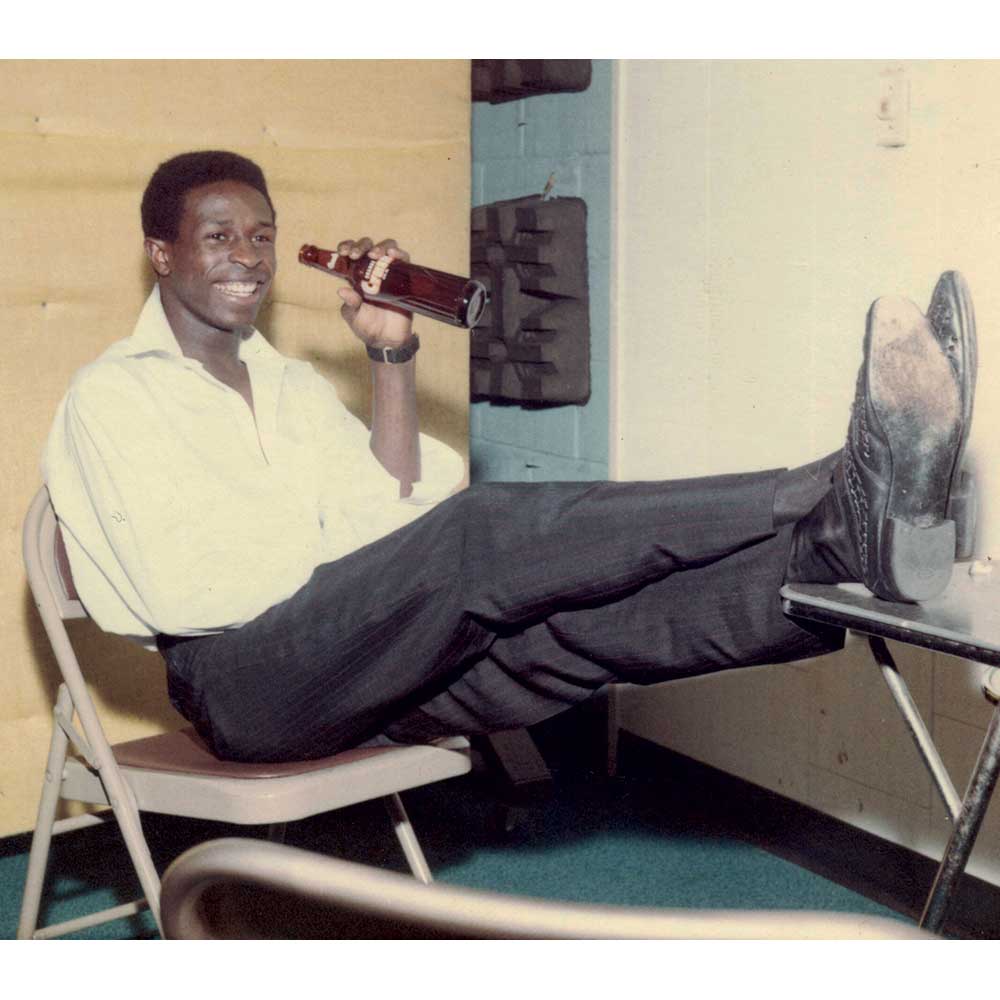
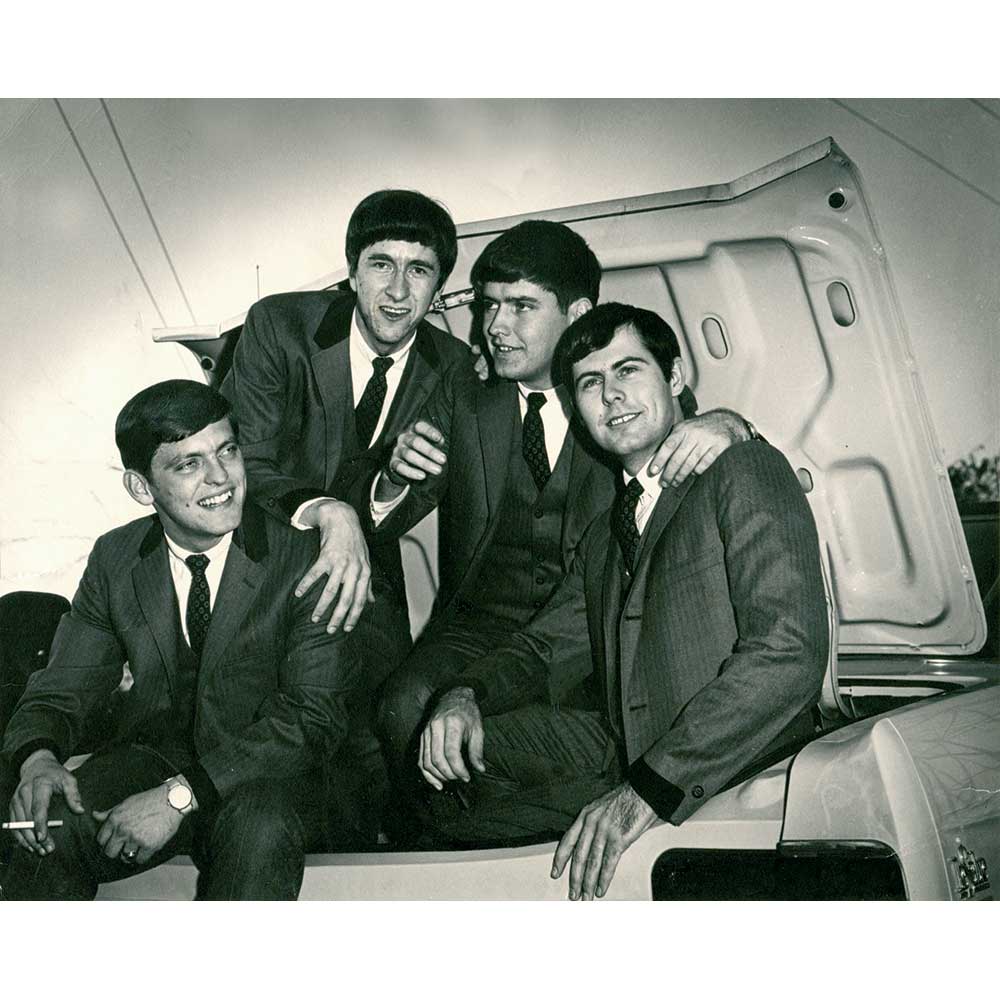
THE IMPRESSIONS-ABOUT TIME.
THE IMPRESSIONS-ABOUT TIME.
For any group, losing their lead singer can derail their fortunes. In some cases, this can prove fatal. It’s a body blow that the group never recovers from. Especially when the lead singer happens to have written many of the group’s biggest hits. This was the case with The Impressions.
Since 1960, Curtis Mayfield had been The Impressions lead singer and principal songwriter. Curtis penned and sang lead vocal on many of The Impressions’ biggest hits. Among them three number one singles, It’s All Right in 1963, 1967s We’re A Winner and 1969s Choice Of Colours. Then there’s Impressions classics like Gypsy Woman, Keep On Pushin’ and People Get Ready. However, after 1970s Check Out Your Mind Curtis left The Impressions and embarked upon a solo career.
Curtis hadn’t left The Impressions on a high. Check Out Your Mind failed to chart in the US Billboard 200 charts and only reached number twenty-two in the US R&B Charts. For a group that had previously enjoyed six top ten US R&B albums during the sixties, it looked as if The Impressions’ career was a crossroads. Over the next few years, The Impressions struggled to recapture the commercial success and critical acclaim they’d enjoyed during the sixties.
Replacing Curtis Mayfield was Leroy Hutson. He was three months out of college when he joined The Impressions. His Impression debut was 1972s Times Have Changed, which stalled at number 192 in the US Billboard 200 charts. 1973s Preacher Man failed to reach US Billboard 200 charts. It was a case of close but no cigar, with Preacher Man stalling at a lowly 204 and number thirty-one in the US R&B charts. Following 1973s, Preacher Man, Leroy Hutson left The Impressions. His replacement was Ralph Johnson and 1974 was a year of mixed fortunes for The Impressions.
1974 was a busy year for The Impressions. They provided the Blaxploitation soundtrack Three The Hard Way. It wasn’t a commercial success, reaching just 202 in the US Billboard 200 charts and only reached number twenty-six in the US R&B Charts.
Ralph Johnson’s Impressions debut was much more successful than Leroy Hutson. 1974s Finally Got Myself Together may have only reached number 176 in the US Billboard 200 charts and only reached number sixteen in the US R&B Charts. However, the title-track reached number seventeen in the US Billboard 100 charts and only reached number one in the US R&B Charts. This was The Impressions’ most successful single since 1967s We’re A Winner. This was the start of a brief Indian Summer in The Impressions’ career.
1975s First Impressions reached number 115 in the US Billboard 200 charts and only reached number thirteen in the US R&B Charts. This was The Impressions’ most successful single since 1968s This Is My Story. Two singles from First Impressions Sooner or Later and Same Thing It Took reached number three in the US R&B charts. It looked as if The Impressions’ career was back on track.
1976 was a year of upheaval for The Impressions. They left Curtom Records, which had been their home since 1970. They signed to Cotillion, a subsidiary label of Atlantic Records. The other change was Nate Evans replaced Ralph Johnson as lead singer on About Time, which was recently rereleased by Rhino. Would the change in personnel affect The Impressions’ fortunes?
About Time featured eight tracks. Six of these tracks were penned by Melvin and Mervin Steals. They’d previously, as Maestro and Lyric, had written The Detroit Spinners’ Could It Be I’m Falling In Love, Major Harris’ Each Morning I Wake Up, The Trammps’ Trusting Heart and Honey Bee for Gloria Gaynor. Melvin and Mervin also wrote tracks for Ecstasy, Passion and Pain and Blue Magic. For The Impressions, Melvin and Mervin cowrote In The Palm Of My Hands, You’ll Never Find, Same Old Heartaches, I Need You, Stardust and What Might Have Been. The two other tracks included McKinley Jackson and Shirley Jones’ This Time and Paul Richmond and Daryl Ellis’ I’m A Fool For Love. These eight songs became About Time, which was recorded at various studios.
It seemed no expense was spared on The Impressions’ Cotillion debut. Barnum Recording Studio, Wally Heider Recording and ABC Recording Studios in, Los Angeles. Other sessions took place at Paragon Recording Studios, Chicago. Mixing took place at Wally Helder Recording and Kendun Recorders, where the mastering took place. Before that, producer McKinley Jackson put together a crack team of session players.
The rhythm section included drummers Ed Greene, James Gadson and Ollie Brown, bassists James Jamerson and Scott Edwards plus guitarists Ray Parker Jr, Ben Bebay and Lee Ritenour. McKinley Jackson, Melvin Steals, John Barnes, Ronald Coleman and Sylvester Rivers played keyboards and percussion came courtesy of Eddie “Bongo” Brown, Gary Coleman and Jack Ashford. Ernie Watts played alto and tenor saxophone and Oscar Brashear trumpet. They augmented the might of the Los Angeles Brass, Woodwind And String Sections. Arrangers included Gene Page and Gil Askey. The Impressions, Fred Cash, Nate Evans, Reggie Torian and original member member Sam Gooden sung and assisted producer McKinley Jackson. Once About Time was finished, the album was ready for release later in 1976.
When About Time was completed, everyone connected with the album was excited about its prospects. That’s quite remarkable, considering McKinley Jackson wasn’t originally intended to produce About Time. Al Bell had been booked to produce About Time. For whatever reason, Al Bell changed his mind. So, McKinley stepped in to fill the void. Melvin and Mervin Steals, the principal songwriters, flew to L.A. to oversee the recording sessions. There they found an reinvigorated Impressions rolling back the years. Everything it seemed was in place for a hit album. Sadly, one mistake proved costly.
Everything was going well for The Impressions. It looked like their career was back on track. Then after a concert in Atlanta, an alleged incident by one the members of The Impressions proved costly. Atlantic Records were enraged. They felt they couldn’t back About Time. Not after what had happened. This had caused huge embarrassment to a musical institution, Atlantic Records. So, it’s no surprise that About Love reached a lowly 195 in the US Billboard 200 and number twenty-four in the US R&B charts. This Time reached just number forty in the US R&B Charts. Then in 1977, You’ll Never Find reached a lowly number ninety-nine in the US R&B charts. For The Impressions, this was a case of what if? Mostly, it was a case of what if they’d never played Atlanta. Things could’ve been very different. That wasn’t to be and About Time, which I’ll tell you about, was The Impressions’ only album for Atlantic Records’ subsidiary Cotillion.
In The Palm Of My Hands opens About Love. Stabs of growling horns, a pounding rhythm section and dancing disco strings are joined by percussion and a searing guitar. It’s a dramatic, Philly-tinged arrangement. You fully expect Harold Melvin and The Blue Notes, The Detroit Spinners or The O’Jays to take centre-stage. Instead, it’s The Impressions. Their harmonies provide the perfect accompaniment to Nate Evans’ needy, joyous lead vocal. Harmonies coo and soar, while Nate delivers a vocal powerhouse. At the breakdown, strings dance, guitars chime, horns blaze and percussion augments the rhythm section. They then pass the baton to The Impressions as this joyous hook laden opus proves the perfect way to open About Love.
The rhythm section and percussion spring into action on You’ll Never Find. They mix funk and soul. That’s before cascading disco strings signal the entrance of Nate’s grizzled, hurt-filled vocal. He’s augmented by the rest of The Impressions. Again, there’s a Philly Soul influence as The Impressions sound not unlike Harold Melvin and The Blue Notes. The Steal brothers have picked up where they left off on In The Palm Of My Hands. This tale of hurt and heartache is tailor made for The Impressions. They kick loose, mixing Philly Soul, funk and disco. Featuring a vocal masterclass from Nate, The Impressions trademark harmonies and McKinley Jackson’s production this is a real hidden gem, that would’ve made a great single.
Same Old Heartaches sees the tempo drop and swathes of strings flutter above the arrangement. Meanwhile, guitars chime and the rhythm section provide a subtle heartbeat. This sets the scene for Nate’s heartbroken vocal. Behind him, strings sweep and swirl and harmonies punctuate the arrangement. Helping drive the arrangement along is the probing bass. At the heart of the song’s success is Nate’s soul-searching vocal and tender harmonies. They coo and sweep, while the all-star band provide a big, bold, lush and dramatic arrangement. This is perfect backdrop for Nate’s vocal, where heartbreak and regret are ever-present. He brings to life and meaning the Steal brothers beautiful ballad.
Strings cascade, joining flourishes of piano and the rhythm section in creating an arrangement for I Need You that oozes drama. When the baton passes to Nate, there’s no letup in the drama. His vocal is veers between heartfelt and full of hope, to slow and sensual. Later, what starts of as a ballad changes. The tempo increases and Nate and the rest of The Impressions vamp their way through the lyrics. After that, there’s a return to the earlier balladry as the vocal continues to change hands. Two thing remain the same the quality and drama.
This Time was originally the opening track on side two. There’s no letup in the drama. It’s a hopeful, uptempo ballad. Producer McKinley Jackson, who cowrote the song with future Jones Girl Shirley Jones, makes good use if swathes of strings. They’re joined by percussion, pounding rhythm section and way way guitar. Then there’s the cooing harmonies that accompany the Nate’s rueful vocal. It’s tinged with sadness and regret at the hurt he’s caused his former girlfriend. Hopefully, he sings “this time we’re makin’ it last forever,” as the track reaches its emotive and dramatic crescendo.
Just percussion, strings and muted horns open Stardust. They’re joined by chiming guitars and harmonies. Tender, thoughtful and wistful harmonies sweep in. Meanwhile, the rhythm section provide the heartbeat. Drums pound, the bass leads the way and strings cascade. However, it’s the harmonies and strings that are the focus of your attention. That and a sultry trumpet solo leave lasting memories of The Impressions delivering some of their best harmonies on About Love.
A scorching horn solo opens I’m A Fool For Love. Straight away, it’s obvious this is a very different type of track. It’s penned by Paul Richmond and Daryl Ellis. Drums thunder, strings sweep and harmonies soar above the the arrangement. The drums crack as Nate delivers a powerhouse of a vocal. When his vocal drops out, strings sweep and swirl. Then when he returns, he combines power and passion. Nate can cope with this change of style. He seems to relish the opportunity to cut loose and bring meaning and emotion to the lyrics. Nate it seems, was The Impressions’ secret weapon on About Love.
Closing About Time was the rueful What Might Have Been. This is the sixth song from the pen of Melvin and Mervin Steals. Straight away, there’s a rueful sound. That’s apparent in the combination of the swathes of strings, rhythm section and Hammond organ. Then there’s the preacher reading the wedding vows. After that, Nate cuts in with “ he’s standing there, where I’m supposed to be.” Heartbroken and realising what he’s let go, Nate sings the lyrics like he’s lived them. That’s apparent when he delivers the line: “but now that I lost you, darlin’ Im sadder, so I’m sadder than sad.” Meanwhile, the rest of The Impressions add rueful harmonies while McKinley Jackson’s production is a mixture of drama and emotion. It’s the perfect accompaniment to one of Nate’s most impassioned and heartfelt vocals on About Time.
It’s no exaggeration to say that About Time is one of the great lost albums. Released in 1976, it should’ve soared all the way to the top of the charts. It didn’t. Far from it. Instead, it hardly made an impression on the charts. What should’ve been The Impressions’ most successful album of the seventies has been all but forgotten. There’s a reason for this.
An alleged incident by one of The Impressions lead to Atlantic almost killing the album off. Executives at Atlantic Records were enraged. They felt they couldn’t back About Time. Not after what had happened. This had caused all caused a huge embarrassment to Atlantic Record, one of America’s musical institutions. For The Impressions, what’s one of their finest albums of the sixties passed the world by. Some critics realised the quality of About Time. However, with Atlantic Records’ marketing machine behind About Time, The Impressions weren’t going to enjoy the commercial success and critical acclaim they deserved. It was an uphill struggle for The Impressions. Sadly, About Time stalled at a lowly 195 in the US Billboard 200 and number twenty-four in the US R&B charts. For many people, who’d put their heart and soul into About Time, this was heartbreaking.
This includes three members of The Impressions. Then there’s the principal songwriters Melvin and Mervin Steals. They’d contributed six songs to About Time. They could easily have shopped the songs to any number of other producers. The six songs ooze quality. Mind you, they were on a roll, having written songs for some of the biggest names in Philly Soul. Melvin and Mervin deserved better. So did arrangers Gene Page and Gil Askey. Then there’s producer McKinley Jackson. About Time was variously a big, bold, dramatic and lush album. It was reminiscent of Philly Soul at it’s best. Sadly, through no fault of McKinley’s About Love failed commercially.
Since then, About Love has languished in the vaults of Atlantic Records. Not any more. Rhino have rereleased About Time. This is part of recently released Atlantic Records, Japanese Soul and R&B range. This is a real treasure trove. Especially, when they’re rereleasing hidden gems like About Time. Belatedly, The Impressions’ About Time can be heard by music lovers. About Time was one of The Impressions’ best albums of the seventies and never again, did they come close to reaching these heady heights ever again.
THE IMPRESSIONS-ABOUT TIME.

THE DETROIT SPINNERS-MIGHTY LOVE.
THE DETROIT SPINNERS-MIGHTY LOVE.
When The Detroit Spinners signed for Atlantic Records and hooked up with producer Thom Bell there was a huge turnaround in their fortunes. Their first two albums, 1967s The Original Spinners and 2nd Time Around in 1970, hadn’t been commercial a success. Only 2nd Time Around had charted, reaching number 199 in the US Billboard 200 and number forty-six in the US R&B Charts. However, once they signed for their new label Atlantic, and started working with Thom Bell, five consecutive gold albums followed, with the group having three consecutive US R&B number one albums. This was a remarkable turnaround in fortune for Billy Henderson, Bobby Smith, Philippe Wynne, Henry Fambrough and Pervis Jackson, who were The Detroit Spinners.
After the huge success of Spinners, The Detroit Spinners debut album for Atlantic and their first album produced by Thom Bell, the group set about recording what would be the follow-up album Mighty Love which was recently rereleased by Rhino. Spinners was going to be a hard act to follow, have reached number one on the US R&B Charts, and number fourteen in the US Billboard 200. Having sold over 500,000 copies, the album was certified gold. Suddenly, with the help of Thom Bell, The Detroit Spinners were one of the biggest soul groups in America. What everyone was wondering, was could their next album match the success of Spinners?
Six of the songs on Mighty Love were penned by Charles Simmons, Joseph B. Jefferson, and Bruce Hawes. Charles Simmons and Joseph B. Jefferson also cowrote Love Don’t Love Nobody. The other track was Thom Bell and Linda Creed cowrote I’m Going Home. These eight tracks became Mighty Love which was recorded at Jpe Tarsia’s Sigma Sound Studios, in Philly.
What would become Mighty Love was recorded at the legendary Sigma Sound Studios, with Thom Bell producing the album. Eight songs were recorded, with the famous Philadelphia International house band M.F.S.B. backing The Detroit Spinners. This included one of the best rhythm sections in music B-H-Y, bassist Ronnie Baker, guitarists Norman Harris and drummer Earl Young. Together, this hugely talented trio played on numerous albums that defined The Philly Sound. This includes The Spinners’ Atlantic albums of the early to mid-seventies. Linda Creed joined with The Sweethearts of Sigma, Barbara Ingram, Carla Benson and Evette Benton. With Mighty Love recorded, it was due for release in March 1974.
After being critically acclaimed, Mighty Love was released in March 1974, reaching number one in the US R&B Charts and number sixteen in the US Billboard 200. This meant that The Detroit Spinners received their second consecutive gold disc of their careers. Little did they know back then, that they receive five in total. Adding to the success of Mighty Love was three top ten US R&B singles. The first of these Mighty Love which reached number one in the US R&B Charts and number twenty in the US Billboard 100. It was followed by the Thom Bell and Linda Creed penned I’m Coming Home which reached number three in the US R&B Charts and number eighteen in the US Billboard 100. The last single released from Mighty Love was Love Don’t Love Nobody, reaching number four in the US R&B Charts and number fifteen in the US Billboard 100. All things considered, Mighty Love had been a massive commercial success, reaching number one on the US R&B Charts and spawning three hit singles, including a US R&B number one single. By now it seemed that The Detroit Spinners could do no wrong. This success lasted until 1976, and during this time The Detroit Spinners were one of the biggest and most successful groups in soul music, releasing one great album after another, including Mighty Love which I’ll now tell you about.
Mighty Love opens with Since I Been Gone, one of six penned by Charles Simmones, Joseph B Jefferson and Bruce Hawkes. A combination of buzzing bass, piano, shimmering strings, rasping horns and punchy drums open the track, before giving way to the united vocals of The Detroit Spinners. After this, Bobby’s gentle, tender lead vocal enters, as he sings about his loneliness and how he misses his ex-girlfriend. Behind him the rest of group provide dramatic harmonies, accompanied by the rhythm section and rasping horns. Then strings sweep in, their lush sound adding to the sadness and emotion of Bobby’s lead vocal. With Thom Bell’s producing the track, his masterful arrangement manages to combine emotion, sadness and drama perfectly, resulting in a track full of heartache and regret.
The remarkable thing about Mighty Love is that three great singles were released from the album, and a track like Ain’t No Price On Happiness wasn’t one of them. That demonstrates the sheer quality of music on Mighty Love. When you hear the track you wonder why? As the track opens with the Baker, Harris and Young rhythm section combining with slow, blazing horns and the lushest of strings. It’s only then that Bobby’s beautiful vocal enters, tinged with sadness and regret. Meanwhile, the rest of the group and backing vocalists combine to contribute tender backing vocals. Swathes of strings enter, sweeping behind Bobby, while the rhythm section and horns combine. By now, the heartache and despair in Bobby’s voice is almost tangible, at the end of his relationship, as he sings that “there ain’t no price on happiness.”This beautiful, but sad and despondent vocal from Bobby is complimented by some stunning, thoughtful playing from M.F.S.B. and another emotive Thom Bell arrangement.
I’m Glad You Walked Into My Life is one of the slow songs on the album, with a beautiful, slightly dramatic introduction, where keyboards, rhythm section and lush strings combine with gently, rasping horns. They give way to a thoughtful vocal from Bobby, with the rest of the Spinners singing harmonies. There’s a mixture of joy and emotion in Bobby’s voice having finally met the woman of his dreams. Behind him, Thom Bell’s sympathetic arrangement adds to the emotion in Bobby’s vocal. Strings sweep slowly and emotively, while the rhythm section combine playing thoughtfully with short, sharp bursts of drama. As the song progresses, it just gets better and better. Bobby’s vocal grows in power and emotion, as does the arrangement, ultimately reaching an emotional and joyful crescendo.
What was side one of Mighty Love closes with I’m Coming Home, co-written by Thom Bell and Linda Creed, who over the years, co-wrote so many critically acclaimed and commercially successful songs together. When this track was released as the second single from the album, it reached number three in the US R&B Charts and number eighteen in the US R&B Charts. The track bursts into life, a punchy rhythm section, swirling strings and blazing horns combining with Philippe Wynne’s joyous vocal. His vocal is quicks, with him elated at returning home. Behind him, the rest of The Detroit Spinners and backing vocalists contribute equally joyful backing vocalists. Similarly, M.F.S.B. lock into this joyous sound, with strings swirling, horns braying and the rhythm section providing the song’s heartbeat. Overall, it’s an uplifting, joyous and hook laden track, which has an irresistibly catchy sound.
Side two of Mighty Love opens with He’ll Never Love You Like I Do, a mid-tempo track. It opens with piano and Norman Harris’ chiming guitar combining gently, before horns and Earl Young’s subtle drum enters. With a lovely subtle backdrop, Bobby gives a tender and heartfelt delivery of the lyrics, warning his ex-girlfriend that her new man will never love her like he does. With the other Detroit Spinners and female backing vocalists combining, this adds to the sense of sadness and loss, in Bobby’s voice. Rasping horns and drums add bursts of drama, as a heartbroken Bobby promises love and happiness, while Linda Creed and The Sweethearts of Sigma are among the backing vocalists, who tenderly accompany him. By the end of the track you find yourself rooting for a desperate and bereft Bobby, hoping that he’ll be given another chance by his ex-girlfriend. That’s the power of this track, and the emotion involved in both Bobby’s vocal and Thom Bell’s subtle, yet emotive arrangement.
Love Has Gone Away is a very different track, when it opens. A funk drenched and dramatic Baker, Harris and Young rhythm section combine punchy drums, buzzing bass and funky guitar, before keyboards, swirling strings and blazing horns enter, giving the track a classic M.F.S.B. sound and feel. They give way to Bobby’s searing, soaring vocal, while tight harmonies accompany him. Meanwhile, Earl’s drums drive the track along, his hi-hats, hissing, as he provides a funky and dramatic heartbeat. Horns blaze and rasp, as keyboards, chiming guitars and grand strings combine to provide a powerful, dramatic, sweeping backdrop for The Detroit Spinners. As if sensing this arrangement is something special, Bobby and the rest of the guys, up their game, producing a dynamic and energetic vocal, fitting for this drama drenched arrangement that combines a majestic combination of soul and funk.
After the welcome diversion into funky territory, things change with the gorgeous Love Don’t Love Nobody, a piano lead ballad, with one of the most thoughtful and emotional vocals on the album. The arrangement sees Bobby accompanied by the piano and rhythm section, who mostly play with subtly, but intersperse this subtly with brief bursts of drama. Mostly though, it’s just a lonely, Bobby accompanied by the rest of Detroit Spinners and backing vocalists, with the lush arrangement meandering along. Lush quivering, shivering strings join this slow, epic jam that lasts over seven minutes. When you listen to this gorgeous track, you realize just why it was so successful when released as the third single, reaching number four in the US R&B Charts and number fifteen in the US Billboard 200, and deservedly becoming a Quiet Storm classic in the process.
Mighty Love closes with the title track, Mighty Love, which was the first single released from the album, reaching number one in the US R&B Charts and number twenty in the US Billboard 100. The track opens with dramatic mixture of rhythm section, blazing horns and sweeping strings. As the arrangement becomes much more subtle, Bobby’s joyful vocal enters, with tight, sweet harmonies accompanies him. Behind him, M.F.S.B. are on top form, the dynamic rhythm section, swirling sweeping strings and rasping blazing horns combining perfectly with keyboards. On top of the arrangement sits Bobby’s powerful, soaring vocal, with the rest of the group harmonizing, and wave upon wave of the dramatic and dynamic arrangement unfolding. When this uplifting, catchy and hook laden track, ends you’re left thinking that The Detroit Spinners kept the best until last. After all, it’s best to end the album on a high.
On Mighty Love everything came together for The Detroit Spinners. It’s almost as if the stars were perfectly aligned. They had eight great songs to record, and were backed by one of the best bands of the time M.F.S.B. and were fortunate to have in Thom Bell, one of the most talented producers of all time. With that line-up, it’s no wonder that Mighty Love reached number one in the US R&B Charts and number sixteen in the US Billboard 200. Add to this three top ten US R&B singles, including the title track, Mighty Love, and 1973 had been a hugely successful year for The Detroit Spinners.
Both Spinners, their first album for Atlantic and first album produced by Thom Bell and Mighty Love reached number one in the US R&B Charts and were certified gold. This successful period would continue until 1976, with 1974s New and Improved reaching number one in the US R&B Charts and number nine in the US Billboard, while Pick of the Litter reached number two in the US R&B Charts and number eight in the US Billboard 200. The final album during this successful period was Happiness Is Being With The Spinners, which reached number five in the US R&B Charts and number twenty in the US Billboard 200. Like Spinners and Mighty Love, these three albums were all certified gold. This was a remarkably successful period for The Detroit Spinners when not only did they produce some stunning music, but became one of the biggest and most commercially successful groups in the history of Philly soul.
Although each of these five albums feature some outstanding music, Mighty Love is one of their most complete albums. Each of the eight tracks are of the highest quality and feature The Detroit Spinners at their very best. For anyone who hasn’t heard Mighty Love, Rhino recently rereleased Mighty Love. Mighty Love is a welcome reminder of a Philly Soul classic and is the perfect introduction to The Detroit Spinners, who with Thom Bell’s help, helped define the Philly sound. Standout Tracks: Since I Been Gone, I’m Glad You Walked Into My Life, He’ll Never Love You Like I Do and Mighty Love.
THE DETROIT SPINNERS-MIGHTY LOVE.

THE REBEL KIND: GIRLS WITH GUITARS.
THE REBEL KIND: GIRLS WITH GUITARS.
It was back in 2004 that Ace Records released Girls With Guitars. Featuring twenty-four tracks, Girls With Guitars it brought back memories of the golden age of the girl group. Record buyers were reminded of the sound of The Angels, The Beattle-Ettes, The Tomboys, The Daughters Of Eve and The 2 Of Clubs. Released to critical acclaim, Girls With Guitars struck a chord with many record buyers. Many people felt a followup was inevitable and would follow a year later. It did, but fans of Girls With Guitars had to be patient.
Another five years passed before Destroy That Boy! More Girls With Guitars was released in 2009. Picking up where Girls With Guitars left off, Destroy That Boy! More Girls With Guitars featured The Debutantes, What Four, Pivots, Feminine Complex, Canada’s She Trinity and Liverpool’s The Liverbirds. They strutted their way throughout twenty-four tracks mixing sass, attitude and emotion. Destroy That Boy! More Girls With Guitars and critics wondered when the next instalment in the Girls With Guitars would be released? Little did they realise it would be another five years.
Recently, Ace Records released the long awaited and highly anticipated followup to Destroy That Boy! More Girls With Guitars, The Rebel Kind: More Girls With Guitars. It features another twenty-four tracks from Colette and The Bandits, The Girls, Dana Gillespie, Brenda Lee, Honeybeats, The Debutantes, Jackie DeShannon, Pinky Chicks and The Chantels. Just like the two previous instalments in the Girls With Guitars compilation series, Mick Patrick has compiled The Rebel Kind: More Girls With Guitars. It’s a combination of familiar faces and hidden gems, which I’ll pick the highlights of.
Colette and The Bandits open The Rebel Kind: More Girls With Guitars with A Ladies’ Man. It features a feisty, strutting vocal and machine gun guitars. You’re hooked from the open bars. Released in 1965 on Stateside, A Ladies; Man was penned by John Adkins and Bobby Buie. It was produced by none other than Shel Talmy, who worked with The Kinks and The Who. This is the definitive version of A Ladies Man. No ifs, no buts.
The Girls will be familiar faces for veterans of the Girls With Guitars’ series. Their single My Baby featured on Girls With Guitars. Chico’s Girl is their contribution The Rebel Kind: More Girls With Guitars. Dramatic, with a feisty vocal, it was written by Cynthia Weil and Barry Man. Originally, Cynthia thought this was perfect for The Crystals. They recorded the song, but it was never released. Susan Barrett then covered the song in 1963. Three years later, The Girls released Chico’s Girl in 1966, on Capitol. Their dramatic and feisty version is perceived as the best version of this song.
I’ll Let You Hold My Hand was written by Chet De Milo and Mark Wiley, and is best described as The Bootles’ homage to The Beatles’ I Wanna Hold Your Hand. This was one of 200 Beatles’ inspired tracks released in 1964. Joyous and full of slick poppy hooks, it’s one of the best of the 200 Beatles’ inspired tracks released during 1964.
Only The Debutantes feature three times on The Rebel Kind: More Girls With Guitars. The Debutantes were formed by fourteen year old Jan McClellan, after seeing The Beatles on the Ed Sullivan Show. They released a quartet of singles. This included Love Is Strange, which was written by Mickey Baker, Ellas McDaniel and Sylvia Robinson. Previously, it had been hit for Mickey and Sylvia a hit in 1957. Later, The Debutantes covered it. They also covered Albert Hamilton and Richard Morris’ Strong Foundation. It was produced by Andre Williams and released on Standout. However, Jan’s composition A New Love Today, which was released on the Lucky Eleven label in 1967, is their finest moment. It’s a fusion of pop, rock and psychedelia. Featuring a vocal full of sadness and regret, it’s a reminder why The Debutantes are remembered as one of the great girl groups of the sixties.
You Just Gotta Know My Mind shows another side to Dana Gillespie’s music. Nowadays, she best known for singing the blues. Back in 1968, Dana had just signed a new recording contract with Decca. Her first release was You Just Gotta Know My Mind. Penned by Donavon Leitch and produced by Wayne Bickerton, it’s a bright, breezy fusion of pop, rock and psychedelia. This is very different from Dana’s early folk-tinged singles and is a glorious slice of upbeat sixties pop.
Brenda Lee unleashes a vocal powerhouse on her cover of Ray Charles’ What’d I Say. Produced by Mickie Most and released in 1964, this was one of the only times Brenda recorded outside of Nashville. Her reason for recording in London was to record a single with the “British sound.” Although very different from much of Brenda’s music, it’s one of her finest moments. Sadly, it proved too rocky for her American fans.
Jackie DeShannon is another of the familiar faces on The Rebel Kind-Girls With Guitars 3. Dream Boy features a hopeful, needy vocal. It’s delivered against a rocky backdrop. Written by Jackie and produced by Charles Blackwell, it wasn’t released on Liberty until 1967. Belatedly, the world got to hear this slice of perfect pop.
The Delmonas’ Peter Gunn Locomotion is a cover of Sammy Cahn and Henri Mancini’s track. Unlike most of the tracks, this isn’t a song from the sixties. No. It featured on an E.P. released on Big Beat in 1984. Having said that, The Delmonas’ has an authentic sixties sound. For lovers of sixties girl groups, this will be a welcome reminder of another era
Some groups have all the talent in the world, but never get the chance to release an album. That’s the story of San Francisco’s The Ace Of Cups, who Jimi Hendrix was a fan of. Sadly, they never released an album until 2003s It’s Bad For You But Buy It. This was an album of rarities, demos and rehearsals. It featured Stones, which features some blistering, screaming guitar solos. Along with a pro to punk vocal, this is a heady brew from one of music’s best kept secrets The Ace Of Cups.
The Chantels’ Peruvian Wedding Song closes The Rebel Kind: Girls With Guitars 3. It was recorded in 1959, but wasn’t released until 1987. Driven along by guitars and the rhythm section this is a track that puts to bed the myth that The Chantels could sing, but not play their instruments. That’s far from the truth. They’re hugely talented musicians, who can kick out the jams with the best of them.
Although there’s been a five year wait between Destroy That Boy! More Girls With Guitars and The Rebel Kind: More Girls With Guitars it’s been well worth the wait. Compiler Mick Patrick has dug deep and come up with a combination of familiar faces and hidden gems. The twenty-four tracks ooze quality. Especially tracks from Colette and The Bandits, The Girls, Dana Gillespie, The Debutantes, Brenda Lee, Jackie DeShannon, The Ace Of Cups and The Chantels. These groups combine pop with rock and sometimes, psychedelia. It’s a potent and tantalising combination that shows another side to girl groups.
The music on The Rebel Kind: More Girls With Guitars has a much more tougher, edgier sound. This is very different to the girl groups of the early sixties. Similarly, it’s very different to the girl groups favoured by labels like Motown. This was Girl Groups With Attitude. The twenty-one artists and groups strut their way through the twenty-four songs. Feisty, full of confidence, sass, emotion and attitude, The Rebel Kind: More Girls With Guitars is a welcome addition to Ace Records’ critically acclaimed Girls With Guitars compilation series.
THE REBEL KIND: GIRLS WITH GUITARS.

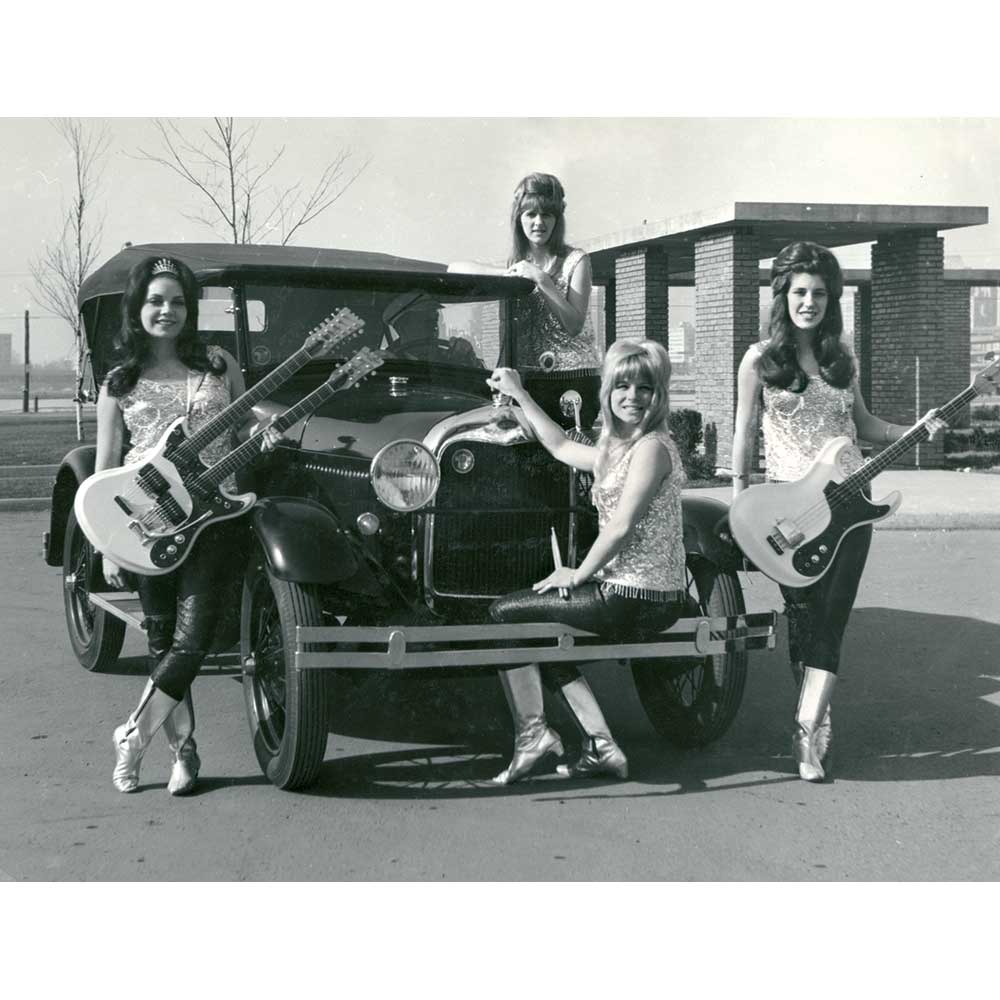
ROBBIE BASHO-THE VOICE OF AN EAGLE.
ROBBIE BASHO-THE VOICE OF AN EAGLE.
There are some artists who follow trends, while others are trendsetters. Trendsetter describes Robbie Basho perfectly. His love and appreciation of various cultures, especially Indian culture, resulted in a series of albums of genre-defying music. Robbie’s raison d’être seemed to be broaden the minds of music lovers. He wanted them to open their ears to musical possibilities. That’s what he did in 1962, when he first heard Ravi Shankar.
Before hearing Ravi Shankar, Robbie had already embraced Asian culture. This began back in 1959, when the then nineteen year old Daniel Robinson Jr, bought his first guitar. Soon, Robbie immersed himself in Asian culture. So much so, that he changed his name to Robbie Basho, in honour of the Japanese poet Matsuo Bashō. This was the beginning of the transformation of Daniel Robinson Jr, from student to Robbie Basho, groundbreaking musician who released a string of albums between 1965 and 1985. This included 1972s The Voice Of An Eagle, which was recently rereleased on Vanguard Masters, a subsidiary of Ace Records. It demonstrates why Robbie Basho is remembered as a groundbreaking musician. Robbie’s story began in Baltimore in 1940.
Tragically, Daniel Robinson Jr, was orphaned at an early age. He was then adopted by the Robinson family and attended school in Baltimore. At high school, he sang in the middle and high school choirs. Daniel also played the euphonium in his high school band. So, for some people, it wasn’t a surprise that Daniel Robinson Jr, would go on to enjoy a career as a musician. His career began at the University of Maryland.
Daniel headed of to the University of Maryland in 1958. It was there that he met John Fahey, Ed Denson and Max Ochs. They were all aspiring guitarists. Their interest rubbed off on Daniel. However, he didn’t have a guitar. Not until he met a sailor who’d just returned from Mexico.
Daniel was working his way through college by working in a club. One night, he met a sailor who’d just returned from Mexico. The sailer had an antique Mexican 12-string guitar. He offered to sell it to Daniel. The only problem was that he wanted $200 for it. Robbie however, bought the guitar for $200. However, buying the guitar was just the start of a new chapter in Daniel’s life.
With his new guitar, Daniel set about pushing the guitar to his limits. Daniel also immersed himself in Asian culture. So much so, that he changed his name to Robbie Basho, in honour of the Japanese poet Matsuo Bashō. This was the just the first change in Robbie’s life and career.
Having started off playing country blues, with John Fahey, Ed Denson and Max Ochs, that didn’t seem to satisfy Robbie. So he dipped into bluegrass, classical, oriental and free jazz. Then came the moment that changed Daniel’s life. He heard Ravi Shankar.
Sitting in the dark, listening to Ravi Shankar, Daniel found music he could relate to. This was fortuitous. Many artists who played folk music found they weren’t able to express themselves. Having listening to Ravi, Daniel realised he could. There were a whole host of tunings he hadn’t yet discovered. Soon, Daniel was studying with Ali Akbar Khan, who was a renowned sarod virtuoso. Ali helped popularise Indian music within the West. So, did Robbie Basho.
Robbie pioneered and popularised a whole host of open and exotic tunings. He also developed his coded Doctrine of Mood and Colour For 6 and 12-String Guitar. This was all part of Robbie efforts to transform the steel-string acoustic guitar into a concert instrument. That took the best part of ten years. By then, Robbie’s recording career was well underway.
After a spell spent travelling, Robbie found himself in Berkeley. There was a thriving folk scene in Berkeley. This played its part in the revival of Takoma Records, who Robbie would release Robbie’s solo album.
This was 1965s The Seal Of The Blue Lotus. Robbie’s sophomore album was 1966s The Grail and The Lotus. These two albums were innovative and much more adventurous than much of the folk music being released back then. Robbie was determined to push musical boundaries. He succeeded, releasing The Falconer’s Arm I, The Falconer’s Arm II and Basho Sings in 1967. That year, Robbie contributed The Thousand Incarnations Of The Rose to the compilation Contemporary Guitar – Spring ’67. 1967, proved to be the most fruitful year of Robbie’s career.
It wasn’t until a new decade dawned that Robbie Basho released another album. This was 1970s Venus In Cancer, which was released on Blue Thumb Records. Robbie’s last album for Takoma Records was released in 1971. That was Song Of The Stallion. After that, Robbie signed to another prestigious label, Vanguard Records, where he released two albums.
The first of the two albums Robbie released on Vanguard Records, was The Voice Of The Eagle. It featured eight tracks penned by Robbie. He played 6 and 12-string guitar and sang led vocals. Ramnad Raghavan was a guest artist. He played the mrdangam drums, which are an Indian log drum. Producing The Voice Of The Eagle, was Jack Mothrop. Robbie dedicated The Voice Of The Eagle to the Indian American and Avatar Meher Baba an Indian spiritual master, who many people believed, was God in human form. The Voice Of The Eagle was released in 1972.
The Voice Of The Eagle found Robbie immersing himself in Native American culture. It was a truly ambitious album. However, it was totally different to other albums released during 1972. David Bowie released, The Rise And Fall Of Ziggy Stardust And The Spiders From Mars, the Rolling Stones’ Exile On Main Street, Can Ege Bamyasi, Steely Dan Can’t Buy A Thrill, Nick Drake Pink Moon, Neu Neu and Big Star Number One Records. Looking back, The Voice Of The Eagle was very different to the music released in 1972. Sadly, The Voice Of The Eagle was a commercial failure. It passed most people by. Maybe the problem was, people didn’t understand what was one of Robbie Basho’s most ambitious albums, which I’ll now tell you about.
Opening The Voice Of The Eagle is the title-track. It’s described as a Hopi Raga. Just a deliberately strummed guitar sets the scene for Robbie’s vocal. It’s heartfelt and sincere, as like the eagle, which is the messenger of the gods, soars and quivers above the arrangement. Sometimes, it’s half-spoken, other times, akin to a Native American chant. A constant companion is Ramnad Raghavan’s mrdangam. It provides the heartbeats and adds to the drama. It’s the perfect accompaniment to the emotion and sincerity of Robbie’s vocal on this Hopi Rag.
Wounded Knee Soliloquy has a much more tradition folk sound. This might have been a better track to open the album. Just an acoustic guitar accompanying Robbie’s vocal. It veers between tender to powerful, while melancholia and sadness are ever-present as Robbie tells the story of Big Foot. The lyrics are beautiful and have a cinematic quality. Pictures and scenarios unfold. They come to life thanks to Robbie’s heartfelt rendition of the lyrics.
Blue Corn Serenade is an eleven minute epic that’s Robbie referred to as an “American Indian manifesto.” This allows Robbie to experiment. It sees a continuation of the folk influence of the previous track. Robbie’s fingers flit up and down the fretboards Seamlessly and quickly, he changes chords. You realise just how talented a guitarist he is. After four minutes of mesmeric guitar playing, a heart-wrenching vocal enters. It’s Robbie’s finest vocal. Oozing emotion, he gives thanks for the harvest. We should give thanks for a vocal and guitar playing as good as this.
Melancholy described the acoustic guitar that opens Joseph. Robbie’s deep, powerful vocal soars above the arrangement, as he tells the story of Thunder Rolling who set out on a twelve hour, epic journey. Again, Robbie brings the lyrics to life. You can imagine the journey unfolding. Especially, Thunder Rolling leading his people “across the mountains by the end of the day.” Just like other tracks, the lyrics have a cinematic quality. Similarly, Robbie becomes a storyteller who has you spellbound.
Omaha Tribal Prayer is similar to a song the Boy Scouts sing as they close their camp fire. Robbie changed the words slightly. He uses the Sioux word for god Wakantha. This also helps with the rhythmic quality of the track. It’s a return to the sound of the opening track, The Voice Of An Eagle. Ramnad Raghavan’s mrdangam accompanies Robbie’s needy vocal and acoustic guitar. His vocal is a cathartic outpouring of emotion. If you listen to the lyrics: “cross On Over, Cross On Over, The bridge twixt you and me, and a helping hand, will set you free” they could be construed as personal. Is this Robbie reaching out and trying to free the father he lost at an early age? If it is, this makes this track all the more powerful.
Bright stabs of guitar open Sweet Medicine, a wistful instrumental. Robbie’s chiming guitar is accompanied by him whistling. It quivers above his guitar. Thankfully, it doesn’t detract from his guitar playing, which is some of his finest. He mixes drama, beauty and melancholia over five minutes.
Roses And Gold is a heartfelt and beautiful love song. It shows another side of Robbie Basho. With just a tender, acoustic guitar for company Robbie’s vocal is impassioned and sincere. This is apparent when he sings “she ls my love, she ls my life.” Having shown another side to his music, one wonders how much commercial success and critical acclaim Robbie would’ve enjoyed if he’d made a career out of more traditional songs like this?
Moving Up A Ways, a drama myth, closes The Voice Of The Eagle. The song depicts the “spiritual and physical evolution from lover to higher forms of life.” After a lengthy introduction where Robbie lays down some of his finest guitar licks, his vocal enters. It’s a mixture of drama, emotion and sincerity as the lyrics take on new meaning and life.
The Voice Of An Eagle found Robbie Basho at the height of his interest in the Native American. The album is akin to Robbie paying homage to their memory. Hence this fusion of celebratory songs, chants and love songs. It was an ambitious, bold and groundbreaking project. That’s the case from the get-go. The title-track, which is a Hopi Raga, has a real left-field sound. It’s a challenging and innovative track. This shows that Robbie was determined to push music boundaries. However, it could be argued that it wasn’t the best track to open The Voice Of An Eagle which was recently rereleased on Vanguard Masters, a subsidiary of Ace Records.
Research has shown that potential record buyers only spend fifteen seconds decided whether to purchase an album. Often, they don’t get any further than the first track. That’s why it’s vital that the first track grabs the listener’s attention. So, possibly, if Wounded Knee Soliloquy had opened The Voice Of An Eagle maybe it would’ve made a bigger impression on record buyers. Sadly, that wasn’t the case.
The Voice Of An Eagle either passed many people by or they didn’t understand it. Then there was the fact that music had moved on. Folk was no longer as popular. Rock was King. Whether it was Krautrock, prog rock or classic rock, rock ruled the roost. Granted soul was making inroads, but only briefly. Maybe, The Voice Of An Eagle is an album that was a couple of years too late.
Indeed, The Voice Of An Eagle has a late sixties sound to it. Back in the late-sixties, people seemed more amenable to new genres of music. It was a time when anything went. That would’ve been the time to release The Voice Of An Eagle. Sadly, The Voice Of An Eagle was released in 1972 and sank without trace. That’s a great shame, because Robbie Basho was determined to create ambitious and groundbreaking music. Ironically, given his talent as a musician, singer and songwriter, Robbie could’ve enjoyed commercial success and critical acclaim.
That would’ve meant compromising what he believed in. Robbie wasn’t willing to go down the road of James Taylor and Jackson Browne. No. He was determined to release music he believed in. You can’t help but admire Robbie for sticking to his principles. That was the case throughout his twenty-year recording career. Sadly, commercial success and critical acclaim eluded Robbie Basho, who was more than a singer, songwriter and musician.
Robbie was a poet and father of American Raga. He was an innovator whose life was a spiritual quest. Life was a constant search for meaning for Robbie Basho. However, Robbie’s career was cut tragically short aged forty-six. Robbie Basho’s legacy was a string of innovative and ambitious albums, including the underrated The Voice Of An Eagle.
ROBBIE BASHO-THE VOICE OF AN EAGLE.
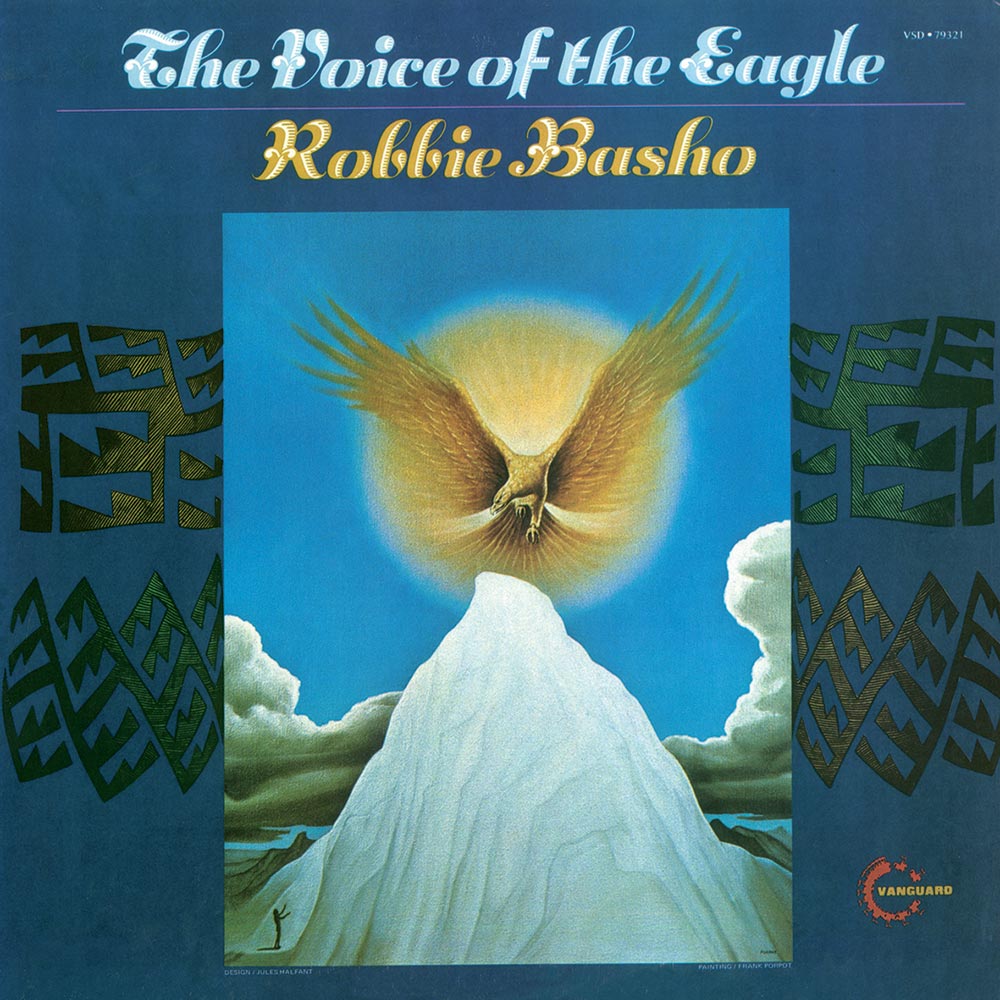
BROTHERS AND SISTERS-DYLAN’S GOSPEL.
BROTHERS AND SISTERS-DYLAN’S GOSPEL.
For too long, backing singers have been the forgotten heroes of music. That’s been the case since the sixties. Mostly, they were largely anonymous figures. Their raison d’être was to make the stars sound good. Backing singers, like session musicians, were hired guns. Every day, the found themselves working with different artists. So they had to be versatile and able to adapt. After all, yesterday they could be singing soul, today jazz and tomorrow working on a rock album. Often, the same backing singers were called upon time and time again.
This included The Sweethearts of Sigma and The Sweet Inspirations. They were among the creme de la creme of backing vocalists. That’s why top producers had their number on speed dial. However, often, the backing singers outshone the artist they were working with. Both The Sweethearts of Sigma and The Sweet Inspirations had experienced this. So had Merry Clayton, Gloria Jones, Sherlie Matthews, Ed Wallace and Fred Willis. During the sixties, they’d all worked with songwriter and producer Lou Adler.
He’d established a reputation as one of Los Angeles’ top producers. Lou worked with the great and the good of music. Who he didn’t know, wasn’t worth knowing. When producing a session, Lou always called upon the same backing vocalists. Over the years, he’d formed a good relationship. So much so, that Lou had always wanted to make an album with the backing vocalists. Lou wanted the backing vocalists to play a starring role. The only problem was, by 1969, Lou Adler, songwriter, producer and manager was without a label. He needed a new challenge. So Lou decided now was the time to make the album with backing vocalists.
The result was Dylan’s Gospel the debut album from Brothers and Sisters, which was released by Light In The Attic Records. Brothers and Sisters featured some of the L.A’s top session players. In total, twenty-seven session singers appeared on Dylan’s Gospel. Among them are Merry Clayton, Ruby Johnson, Shirley Matthews, Clydie King, Patrice Holloway, Julia Tillman. So too did Edna Wright of The Honeycones and Gloria Jones who recorded the original version of Tainted Love in 1965. It was an all-star lineup that gathered at Sound Recorders Studios.
When the recording sessions at Sound Recorders Studios in L.A, Lou had drafted Gene Page, who arranged Dylan’s Gospel. Ten of Bob Dylan’s finest songs were chosen to be recorded by Brothers and Sisters. Accompanying Brothers and Sisters were some of L.A’s best session players. The rhythm section included bassist Jerry Scheff and drummer Gene Pello. Evelyn Freeman played organ, Gene Page piano and percussionist Joe H. Vaerga. Producing Dylan’s Gospel was Lou Adler. The Dylan’s Gospel sessions weren’t like most other sessions Lou Adler had produced.
Looking back, many who were present at the recording sessions at Sound Recorders Studios in Hollywood, remember the sessions as akin to a four-day party. The great and the good of music swung by. Carole King came to hear the Brothers and Sisters. So did Peggy Lipton and Papa John Phillips. Then there cousins, mothers, partners and friends of the Brothers and Sisters. They ate, drank and were merry. It was gospel rock ’n’ style. The sessions were like a four day party where the Brothers and Sisters transformed ten Bob Dylan tracks.
Sadly, when Dylan’s Gospel was released on Ode Records in 1969, the album passed most people by. This unique album wasn’t a commercial success. For once, Lou Adler’s Midas touch failed him. Dylan’s Gospel joined the ranks of great albums never to be heard by a wider audience. That’s until Light In The Attic Records decided to rerelease Brothers and Sisters’ Dylan’s Gospel, which I’ll tell you about.
The Times They Are A Changing opens Brothers and Sisters’ debut album Dylan’s Gospel. Just an organ and piano combine to create an authentic gospel backdrop for Merry Clayton’s vocal powerhouse. She unleashes a vocal that’s equal parts power, passion and emotion. She brings hope to the lyrics that “The Times They Are A Changing.” Meanwhile, harmonies, coo, sweep and soar while the drums add to the drama. Seamlessly, a Bob Dylan classic is transformed into a hopeful stirring gospel track.
Just a lone piano opens I Shall Be Released. It’s joined by a rumbling bass and a heartfelt soaring vocal. Backing vocalists reply to the vocal. Meanwhile a wailing Hammond organ, piano and subtle drums provide the perfect backdrop. It never overpowers the vocal or harmonies. They’re at the heart of the track’s success. The vocal is a fusion of sincerity and emotion. So much so, that the lyrics take on a new meaning. Joyous describes the swaying, soaring harmonies. They’re just the finishing touch to this reinvention of I Shall Be Released.
Edna Wright takes charge of lead vocals on Lay Lady Lay. A bubbling bass, drums played with hands and harmonies accompany Edna’s tender vocal. Soon, a piano enters as the Brothers and Sisters kick loose. Soulful and needy describes Edna’s vocal. She’s accompanied by cooing harmonies. They soar above the arrangement. Later, Edna combines gospel, soul and jazz. Kicking loose, her vocal becomes sultry and sensual, as she delivers a vocal masterclass.
Distant harmonies and a gospel tinged piano make their way towards you. Then a rousing, stirring version of Mr. Tambourine Man unfolds. The song is totally transformed. Partly that’s down to the lead vocal. It ensures the song swings. Then there’s the rousing harmonies and the tight talented band. Together, Mr. Tambourine Man becomes a stirring, rousing celebration.
All Along The Watchtower is right up there with the best songs Bob Dylan has written. Here, new life and meaning is breathed into a familiar song. Atmospheric and dramatic describes the arrangement. Just the rhythm section, stabs of piano and washes of Hammond organ accompany soaring, swaying harmonies and handclaps. The lead vocal is a combination of controlled power, emotion and passion. This inspires the rest of the Brothers and Sisters. They clap their hands, stomp their feet and unleash some of their finest harmonies as they reach new heights.
Of all the songs on Dylan’s Gospel, The Mighty Quinn is the one that really takes on new life. It really suits the gospel treatment. The Brothers and Sisters really let themselves go. They throw themselves into the song. Their rousing harmonies and handclaps are joined by a wailing Hammond organ, rhythm section and rasping horn. Then there’s Merry Clayton’s joyous and celebratory vocal, which later becomes a vamp. It takes the song to new places and results in the song Bob Dylan had always hoped for.
Ethereal harmonies open Chimes Of Freedom. They soar helpfully heavenwards. Then when they drop out, an impassioned lead vocal enters. It oozes emotion. So, does the female vocal that picks up the baton. When they join together, they’re accompanied by a gospel piano, probing bass and washes of Hammond organ. They add to the spiritual sound of a track Bob Dylan started and the Brothers and Sisters finished.
For many people, Gloria Jones’ name will be forever synonymous with Tainted Love. That’s until they’ve heard her vocal tour deb force on I’ll Be Your Baby Tonight. She kicks loose. Swaying, soaring and joyous harmonies and jangling piano accompany Gloria as she lays claim to the song, her vocal a mixture of sass and need.
Piano and drums combine as My Back Pages unfolds. A tender, wistful vocal is accompanied by rousing gospel harmonies. They coo above the arrangement, while the unmistakable sound of a Hammond organ is dropped in. Lou Adler’s timing is perfect. It adds to the emotion and is the perfect accompaniment to the Brothers and Sisters on this emotive opus.
Without doubt, Just Like A Woman is one of Bob Dylan’s finest hours. That’s why it’s a fitting way to close Dylan’s Gospel. Replacing the familiar harmonica in the introduction is a church organ. This sets the scene for the massed ranks of Brothers and Sisters. They throw themselves into the song. The twenty-seven Brothers and Sisters become one. It’s an impressive and powerful combination. I’d go as far as to say it’s emotionally overpowering. In the midst of Brothers and Sisters, someone hollers “Yes She Should” while spontaneous vamps are unleashed. It sounds as if the Brothers and Sisters are having the time of their lives while making some of the best covers of Bob Dylan songs you’ll ever hear.
That’s no exaggeration. Bob Dylan songs are some of the most covered in the history of popular music. However, Brothers and Sisters’ ten covers of Bob Dylan songs are some of the best you’ll ever hear. The ten tracks ooze emotion, meaning, joy, hope and happiness. That’s thanks to some of the finest backing vocalists of the sixties. They reinvent some of the tracks, especially The Mighty Quinn, Chimes Of Freedom and My Back Pages. These are tracks that Bob Dylan started and the Brothers and Sisters finished. They made this trio of tracks their own. Their unique brand of gospel is tailor made for these songs. That’s the case with the rest of the ten tracks on Dylan’s Gospel. The songs literally, take on new meaning in the hands of the Brothers and Sisters. As a result, the music is rousing, stirring, joyous, celebratory and emotive. It must have been some session.
Described as a four-day party, where the great and the good of music swung by. Carole King came to hear the Brothers and Sisters. So did Peggy Lipton and Papa John Phillips. So did cousins, mothers, partners and friends of the Brothers and Sisters. They ate, drank and were merry. It was gospel rock ’n’ style. The sessions were like a four day party where the Brothers and Sisters transformed ten Bob Dylan tracks. During the sessions, onlookers must have thought that Dylan’s Gospel was bound to be a commercial success.
Sadly, when Dylan’s Gospel was released on Ode Records, in 1969, it wasn’t a commercial success. There was absolutely nothing wrong with the music. It oozes quality. Maybe the problem was that Lou Adler signed the Brothers and Sisters to the wrong label. Ode Records was too small and didn’t have the funds and personnel to promote Dylan’s Gospel. A major label like Columbia Records or A&M would. If either of these labels had released Dylan’s Gospel, it would’ve been a huge commercial success and the album would’ve been hailed an innovative, modern classic. That wasn’t the case. Instead, Dylan’s Gospel hasn’t been released since 1969. Thankfully, Light Of The Attic Records released Dylan’s Gospel on 14th April 2014. Belatedly, Brothers and Sisters’ lost classic Dylan’s Gospel has been rereleased and hopefully, a new generation will hear some of the finest Bob Dylan covers ever recorded.
BROTHERS AND SISTERS-DYLAN’S GOSPEL.
JOE TURNER-THE REAL BOSS OF THE BLUES.
JOE TURNER-THE REAL BOSS OF THE BLUES.
After enjoying a renaissance in its popularity during the early sixties, blues music was in doldrums. Soul had replaced the blues in popularity. However, many of the new breed of rock bands had been inspired by the blues. This included Jimi Hendrix, Cream, The Yardbirds, The Animals and Led Zeppelin had all been inspired by blues. Despite these artists continued patronage, interest in blues music was at its lowest in a longtime. So, the late-sixties would seem a strange time to form a new blues label? However, that’s what Bob Thiele did.
For eight years, Bob ran Impulse, ABC’s jazz label. Then when the jazz revival began, Bob convinced his bosses at ABC to let him found a blues label. This was Bluesway, However, Bob left ABC’s employ after a coup d’état at Impulse. The next step for Bob was forming his own labels.
When Bob left ABC’s employ, he decided to form a new label. Through working with some of the most innovative and creative musicians in the history of jazz, Bob must have realised that often, large record companies aren’t the best environment for innovative and creative musicians. Often, these musical mavericks didn’t thrive within such an orthodox environment. Their creativity is restricted, and they’re unable to experiment and innovate like they’d like. So, Bob Thiele, created an environment where this would be possible. This was Flying Dutchman Productions and its blues subsidiary Bluestime.
Before long, Bluestime became home to many of the artists formerly signed to Bluesway. This included one of Bob Thiele’s favourite blues players, Joe Turner. The man the called The Boss Of The Blues was approaching veteran status. Now fifty-nine, he’d been signed to ABC’s blues subsidiary Bluesway. Joe Turner would become Bob’s latest signing to Bluestime, where he recorded The Real Boss Of The Blues, which Ace Records recently released. For The Real Boss Of The Blues, Joe Turner’s music was given a makeover.
Bob Thiele realised that with many artists and bands name checking blues artists who’d influence them, some of the people buying their records would decided to find out what blues music was about. There was a problem though. Blues music hadn’t really moved with the times. The music was still the same as it had been twenty-years before, when the blues went electric. Back them, this was a step too far or many blues purists. What would record buyers and fans of Joe Turner think of Bob Thiele’s decision to turn his new label Bluestime into a contemporary blues’ label?
Joe Turner had spent a lifetime playing the blues. He was born Joseph Vernon Turner Jr, in Kansas City, Missouri. When Joe was four, his father died in a train accident. From an early age, music was a constant in Joe’s life. He sang at church and later, sang on street corners. Then in 1925, fourteen year old Joe Turner quit school and inadvertently, his career began.
His first job on leaving school was a chef. He then moved on to working as a barman. During his time working in the bar, Joe gained the reputation as The Singing Barman. Soon, he and pianist Pete Johnson were making a living working in Kansas City clubs. One of the clubs was run by Piney Brown, who inspired one of Joe’s best known songs, Piney Brown Blues. During this period, Joe and boogie woogie pianist Pete Johnson were making a name for themselves.
So much so, that they headed to New York and appeared on the same bill as Benny Goodman. After that, Joe and Pete returned to Kansas City. New York weren’t quite ready for Joe and Pete. They were ahead of their time. It took until 1938, when talent scout John H. Hammond realised their potential. He asked them back to New York to play at his From Spirituals to Swing concerts. The bill featured everything from gospel, blues and swing. These concerts featured integrated audiences and helped bring jazz and blues to a wider audience. For Joe and Pete, success was just round the corner. This started with the hit single Roll ‘Em Pete.
After that, Joe became resident at the New York nightclub Cafe Society in 1939. Then in 1941, Joe took part in Duke Ellington’s revue Jump For Joy. This meant a Hollywood debut for Joe. Three years later, Joe was back in L.A. providing the vocals for Meade “Lux” Lew’s silent movies. Then two years later, Joe and Pete founded their bar The Blue Moon Club in Los Angeles. That year, he signed to National Records.
At National Records, Joe worked with Herb Abramson. Soon, Joe was enjoying hits with S.K. Blues, My Gal’s A Jockey and Around The Clock. He then duetted with blues shouter Wynonie Harris on Battle of the Blues. While the singles sold well locally, this didn’t translate to national success. However, in 1947, Joe signed to a new label that Herb Abramson co-founded with Nesuhi and Ahmet Ertegun…Atlantic Records.
During his time at Atlantic, Joe Turner released both blues and rock ’n’ roll. However, it was rock ’n’ roll that Joe made his name releasing. Between 1950 and e enjoyed fourteen top ten US R&B singles 1956. This included two US R&B number ones, 1953s Honey Hush and Joe’s biggest hit Shake, Rattle and Roll. This fusion of twelve-bar blues and rock ’n’ roll helped transform Joe into a huge star. It was also during this time Joe released his debut album.
Whilst at Atlantic Records that Joe Turner released his debut solo album, 1956s The Boss of the Blues. The Boss Of The Blues Sings Kansas City Jazz followed later in 1956. Soon, Joe was releasing at least one album a year. Rock and Roll followed in 1957. Then in 1958 Joe released Rockin’ The Blues. 1959 was the end of what was a golden period in Joe’s career.
After leaving Atlantic, Joe turned his back on rock ’n’ roll. No longer was popular music for him. Maybe it was a case of returning to what he loved. Unfortunately, this coincided with a downturn in Joe’s career.
For much of the sixties, Joe combined playing live with recording a series of albums. This included Joe Turner With Pete Johnson’s Orchestra’s Jumpin’ The Blues, which was released in 1962 on Arthoolie. During this period, Joe’s albums didn’t sell well. Then in 1967, Joe recorded Singing The Blues for ABC’s jazz label Bluesway. Sadly, there was no followup. By then, Bob Thiele who ran Bluesway had been ousted. He founded Bluestime, which signed Joe Turner in 1969.
The newly founded Bluestime was trying to give blues music a more contemporary sound. For too long, many people felt, the blues had stood still. It was almost resistant to change. Not any more. Bob Thiele introduced fatback drumming, bubbling bass and rocky riffing guitars. This would all feature on the eight tracks that became The Real Boss Of The Blues.
For The Real Boss Of The Blues, a combination of old favourites and new tracks were chosen. Joe covered Charles Calhoun’s Shake, Rattle and Roll, Lou Turner’s Honey Hush, Carless Love and Leroy Carr’s How Long, How Long Blues. There was also a cover of Teddy McRae and Charles Singleton’s Lonesone Train and Joe’s Corrine, Corrina. Ted Murrell’s Two Loves Have I and Len Chandler’s Plastic Man completed The Real Boss Of The Blues. These eight tracks were arranged by Gene Page, produced by Bob Thiele and featured some top blues players.
When the band entered the studio to record The Real Boss Of The Blues, Bob Thiele had put together a crack band. The rhythm section included drummer Paul Humphrey, bassist Max Bennett and guitarist Louie Shelton. Tom Scott added tenor saxophone. Joe sang lead vocals, while Bob Thiele produced The Real Boss Of The Blues, which was released in 1969.
Despite Joe Turner’s music being given a makeover, The Real Boss Of The Blues wasn’t a commercial success. It passed both critics and music lovers by. Since then, The Real Boss Of The Blues has become a real rarity among blues fans. At last, this blues rarity has been release by Joe Turner and features the blues veteran doing what he spent a lifetime doing, singing the blues. That’s what The Real Boss Of The Blues does well.
Horns blaze, guitars chime and a wandering bass combines with a piano. They set the scene for Joe’s vocal on Shake, Rattle And Roll, which opens The Real Boss Of The Blues. Straight away, the years roll back for Joe. Fifteen years to be precise, when this gave him a number one single. Joe ensures the songs swings. Stabs of horns, pounding piano and riffing guitars accompany Joe. At the heart of the arrangement’s success are the horns and Joe’s despairing vocal as he gives a classic track a modern makeover.
Straight away, there’s a melancholy sound to Lonesome Train. Accompanied by rasping horns, rumbling bass and searing, blistering guitars, blues and rock combines. Heartache and hurt fills Joe’s vocal. It’s slow and oozes emotion. Enveloping Joe’s vocal is an arrangement that’s a fusion of power, drama and sadness. This results in one of the album’s highlights from The Real Boss Of The Blues.
Corrine, Corrina bursts into life, and is driven along by a harmonica, piano and rhythm section, complete with bubbling bass. Joe grabs the song, breezes life and emotion into it. It becomes a joyous celebration where Joe and his all-star band create a blistering slice of electric blues that truly, deserves a wider audience.
Slow, moody and bluesy describes Joe’s take on How Long, How Long Blues. Just a plodding bass, crystalline guitar and stabs of piano enter, before Joe’s lived-in vocal enters. It sounds as if he’s lived and survived the lyrics. At just the right moment. Bob Thiele drops the horns in. They’re the perfect accompaniment to Joe’s needy, pleading vocal.
From the get-go, the tempo rises on Careless Love. The rhythm section take charge, driving the arrangement along. Meanwhile, Joe’s vocal is frustrated and angry. With his band lock into a tight groove, horns are unleashed. They blaze above the arrangement, and really lift the track. It’s a transformation, as the song swings. That’s still the case when a flute enters. Accompanied by the horns, Joe heads for the finishing line doing what he does best, singing the blues.
Two Loves Have I has a much more contemporary sound. That’s down to the horns. They seems to have been influenced by soul music, that was popular during 1969. Joe’s vocal reminds me of Van Morrison. Just like Van, Joe grabs the song and lives it. Meanwhile, horns bray and the rhythm section provide the heartbeat to the arrangement. With its much more contemporary sound, it’s another of the highlights of The Real Boss Of The Blues. Bob Theile, it seems, achieved what he set out to do, give the blues a musical makeover.
Honey Hush is a cover of Joe’s first number one US R&B single. That was in 1953. Here, the song takes on new life. A blues harmonica and meandering helps propel the arrangement along. The rest of the band provide the heartbeat. It’s the harmonica, Joe’s vocal and later, a blistering saxophone solo that are at the heart of the reinvention of one of Joe’s best known songs. His high kicking vocal sees Joe Turner roll back the years.
Plastic Man, an eleven minute contemporary blues track closes The Real Boss Of The Blues. A blistering bluesy harmonica and riffing guitars envelop Joe’s heartbroken vocal. The drums and pulsating bass provides the heartbeat to a track that’s slow, moody and bluesy. Riffing guitars soar above the arrangement, while bursts of boogie woogie piano add to this blues epic. It’s as if Joe and his band are enjoying the opportunity to stretch their legs musically on this glorious blues jam. Later, growling horns are unleashed, soaring above the arrangement. Just like the jazz bands Joe played in earlier in his career, everyone gets the chance to shine. There’s no passengers in this band, just top class musicians, who Joe inspires to even greater heights. This modern blues Magnus Opus proves the perfect way to close The Real Boss Of The Blues.
Bob Thiele’s decision to give blues music a makeover was as you’d expect, from a musical pioneer, an astute one. He realised that the blues had to change. It had stood still since the blues went electric. It it didn’t change, blues music risked becoming irrelevant. Should that happen, blues music could’ve ended up as just part of musical history, rather than a musical genre that evolved and continued to be relevant. The problem was, America didn’t seem to cherish the blues. Ironically, it took a group of British musicians to remind America of the importance of the blues.
Groups like John Mayall and The Bluesbreakers, Cream, The Yardbirds, The Animals, Led Zeppelin and The Rolling Stones realised the importance of the blues. It was their inspiration. That’s why when artists like Joe Turner toured Britain, they received a hero’s welcome. They were held in a higher esteem in Britain than America. These musicians, realised, that without the blues, there would be no rock ’n’ roll. Essentially, they owed their careers to artists like Joe Turner. So British artiest were keen to promote blues legends. Sadly, many of them were eking out a living. Even with the patronage of some of the most successful groups of the sixties, Joe Turner wasn’t enjoying the popularity he once enjoyed. There was no option, the blues had to change.
Artists like Muddy Waters and B.B. King realised this. When Muddy recorded Electric Mud for Chess, he changed direction. Electric Mud was a fusion blues, rock and psychedelia. It’s one of the most groundbreaking blues albums ever. B.B. King was the most successful blues player. He’d opened for some of the biggest rock bands. This meant his music was heard by a wider audience. Joe Turner wasn’t as successful. That’s why he had to change direction.
On The Real Boss Of The Blues, Joe Turner rolls back the years. It’s a vintage performance from the blues veteran. Accompanied by an all-star band, his music is given a modern makeover. Blues, jazz and rock combines. Drawing inspiration from rock music, fatback drums, riffing guitars and a bubbling bass feature on each of the eight tracks. Then there’s the horns. They variously blaze, soar and sound sultry. Add to this some stabs of piano and even some boogie woogie and the result is Joe Turner back to his best. Producer Bob Thiele and arranger Gene Page transformed Joe. The years rolled back and suddenly, Joe was producing some of the best music he recorded since leaving Atlantic. Sadly, not many people heard the music on The Real Boss Of The Blues.
Sadly, not many people heard the second coming of Joe Turner. The Real Boss Of The Blues was back, and back to his best. However, very few people heard The Real Boss Of The Blues, which was recently rereleased by Ace Records. It wasn’t a commercial success. However, since then, a number of blues aficionados have championed The Real Boss Of The Blues, which finds Joe Turner, The Real Boss Of The Blues back to his very best.
JOE TURNER-THE REAL BOSS OF THE BLUES.
 dereksmusicblog
 dereksmusicblog