GREAT BRITISH ALBUMS.
GREAT BRITISH ALBUMS.
Usually, in the run-up to Christmas, record companies find any excuse to release compilations, best of’s and box set galore. Wander through you’re local record shop, and you’ll find the umpteenth album of greatest hits from the usual suspects, including rock stars of yesteryear topping up their pension plans. Often, a similar album was released last year, or failing that, the year before. Then there’s compilations. Every possible musical situation is covered. I’m sure they’ll be the usual cash-ins, that are only ever released at Christmas. There’s sure to be everything from driving anthems, Christmas songs, and dance parties galore. I’m sure every musical genre will be covered. So expect the usual compilations of commercial dance music, eighties pop and what every Christmas would be complete without, a barrel scraping Northern Soul compilation. Lastly, there’s box sets. Now I thought Christmas had come early, when recently I came across a box set entitled Great British Albums. After all, surely such box sets are only released at Christmas? Having checked that a couple of months hadn’t passed without me noticing, I decided to check-out what Great British Albums has to offer. With such a bold, almost boastful title, I was expecting great things from the twenty albums included in Great British Albums. Did the quality of music on the twenty albums included in Great British Albums match the title?
For any compiler given the job of compiling a box set entitled Great British Albums, they’re faced with something of an uphill task. Making this task even harder, is the description of Great British Albums. It’s meant to contain “genre defining albums” with a “unique sounds, innovative style and cult status.” Choosing twenty such albums isn’t going to be easy. Everyone, critics included, have their own favorites and reasons for their inclusion. Some albums pick themselves. The Beatles would have at least one album in the box set, either Revolver, Rubber Soul or Sgt. Pepper’s Lonely Hearts Club Band. So would the Rolling Stones, possibly Exile On Main Street. Other albums I’d expect to find are Dusty Springfield’s Dusty In Memphis, either Van Morrison’s Astral Weeks or Moondance or Pink Floyd’s Dark Side of The Moon. What about an album by David Bowie, Roxy Music, The Who, Led Zeppelin or The Smiths, who like the other artists I’ve mentioned, are among the most important artists in the history of British music. Guess what, not one of these artists are included in Great British Albums. The reason for this is quite simple and shows that the idea behind Great British albums is fundamentally flawed.
The problem with the Great British Albums box set is that it only covers RCA, Columbia, Epic and Sony. To compile a box set of twenty Great British Albums, this would’ve required all the major record labels to cooperate. This would probably be impossible. So what we have is a box set that should be entitled Great British Albums Released By RCA, Columbia, Epic and Sony. However, having told you what’s not included in Great British albums, I’ll tell what is in the box set.
Great British Albums covers the period between 1968 and 2010. Starting with Fleetwood Mac’s Mr. Wonderful and ending with The Vaccines’ What DId You Expect From The Vaccines 2010. I’m sure these two albums give you a flavor of the eighteen other albums in between. As you’ll realize, calling the box set Great British Albums, is maybe a slight exaggeration.
Given how important the sixties were musically, and the effect British groups had on music, the sixties are grossly under represented. The only album included is Fleetwood Mac’s 1968s album Mr. Wonderful. It’s one of the highlights of Great British Albums. Featuring the original and some would say classic lineup, which included guitarist Peter Green, drummer Mick Fleetwood and John McVie. This is the polar opposite of what Fleetwood Mac became circa Rumours. Mr. Wonderful features Peter Green at his very best, and is a reminder of just how talented he was. From Mr. Wonderful, there’s a gap of four years, to what many people see is where the seventies rock went awry.
Prog rock is a musical genre that divides opinion. One of the biggest prog rock bands were Emerson, Lake and Palmer, who released Tarkus in June 1971. Given prog rock was a musical genre British groups excelled at, I can see why a prog rock album was included, but wonder whether this is the right album? Mott The Hoople’s All the Young Dudes, comes close fulfils the criteria laid out. Released in September 1972 and produced by David Bowie, this was Mott The Hoople’s best album and features Ian Hunter at his very best. Forty years later, it’s stood the test of time, whereas Jeff Beck’s overblown and Blow By Blow, released in March 1975 hasn’t. It’s a self-indulgent album, where like an attention seeking child, Jeff Beck says “look at me.” There’s no disputing he’s a hugely talented guitarists, but Blow By Blow is neither a classic, nor even a great album. By the time the next album in Great British Albums was released, music had changed, drastically.
By the time The Only Ones released their eponymous album The Only Ones in April 1978, punk was now flavor of the month. Many critics had been won over by the one chord wonders of punk. Punk, post-punk and new wave all made their presence felt. There were the odd memorable albums. While The Only Ones was a decent album, it certainly is neither a great, nor classic album. I’d argue whether its inclusion can be warranted. London Calling, The Clash’s Magnus Opus was different though. Released in December 1979 and produced by Guy Stevens, London Calling is The Clash at their finest, snarling, full of political and social comment. While London Calling is a classic album well worthy of inclusion, so too would Joy Division’s Unknown Pleasures. Sadly, it’s overlooked. Indeed, Factory Records, one of the most important independent British labels in represented by an album that takes Great British Albums into the eighties.
Factory Records is represented by John Cooper Clarke’s Snap, Crackle and Bop. Released in 1980, referring to Snap, Crackle and Bop as a great album, is over-egging the musical pudding. It’s a good album, indeed I’d say it’s a very good album from one of British music’s mavericks and commentators. Since its release, it’s attracted a cult following. Sadly, referring to it as a great album, is possibly pushing things. The same could be said of the Psychedelic Furs album Psychedelic Furs, released in February 1980. Yes, it’s a cult classic, but referring to it as a great album is debatable. In many ways, Great British Albums seems to be about including an eclectic selection of albums, as the next two albums prove.
if you think about what’s missing from Great British Albums, you’ll realize neither heavy metal nor live albums have been represented..until now. Judas Priest’s British Steel, released in April 1980. This is a live album recorded during their British Steel Album. Now Judas Priest were one of the most successful British heavy metal groups, but surely if British Judas priest were to represent British heavy metal, the surely a better album could’ve been included. Mind you, British Steel shows how good a live band they were. One of the most questionable inclusions is Adam and The Ants’ Kings of The WIld Frontiers, released in December 1980. All I can say is why? Dressing up as pirates or highwaymen and releasing singles as forgettable as Antmusic doesn’t make a group innovators. Classic album this definitely isn’t, neither is it great album, merely forgettable. Things improve during the rest of the eighties.
Prefab Sprout’s Steve McQueen, released in June 1985 and produced by Thomas Dolby is what I’d refer to as an underrated classic. It showcases the genius of Paddy McAloon, one of the most talented British singers and songwriters. Steve McQueen is just one in a series of minor classics, including From Langley Park To Memphis, Jordan the Comeback and Let’s Change the World With Music. Quite simply, Steve McQueen is one of the highlights of Great British Albums. Big Audio Dynamite’s This Is Big Audio Dynamite was released in October 1985 and featured a post-Clash Mick Jones, who produced the album. While there’s some innovative music on This Is Big Audio Dynamite, comparisons will always be drawn with The Clash. This is unfair, given how different the music is. Other contenders I’d have rather included are The Cult’s Love or The LA’s debut album The LA’s. I could just as easily argue for the inclusion of an album by The Cure, X.T.C. or Depeche Mode. In many ways, Great British Albums is a box set that provokes debate and discourse. Everyone will have their own ideas about what albums deserve included. Some of the albums included in Great British Albums, rather than being British albums, remind me of and make the think of specific cities.
Calling Deacon Blue’s Raintown a British album is something i’d dispute. To me, Raintown is a quintessentially Scottish album. I’d go further and say it’s a Glasgow-centric album, much like Blue Nile’s A Walk Across The Rooftops, which I’d say is much more worthy of inclusion. Of all the Scottish albums, Raintown is a genuine classic. While Raintown is a Scottish albums, The Stone Roses debut album The Stone Roses, released in May 1989 and Primal Scream’s Screamdelica are Manchester albums. They’re two of the best albums released by Manchester bands. Both are stonewall classics, John Leckie produced The Stone Roses indie rock at its best and Screamadelica is stunning fusion of indie rock and dance. These two albums are Manchester’s music at its best, only The Smiths are missing from Great British Albums. After 1991, things go somewhat awry for the rest of Great British Albums.
Apart from Screamadelica, only the Manic Street Preachers’ Everything Must Go, released in May 1996 represents British music in the nineties. Featuring the classic lineup of Manic Street Preachers, Everything Must Go was their best album. It represents the Manic Street Preachers before they sold their soul to poppy hooks and commercial success. However, surely there are other British groups from the nineties worthy of inclusions? How about Oasis’ Definitely Maybe or (What’s the Story) Morning Glory?, Blur’s Parklife, when they were at the height of their Britpop success. Or how about an album from New Order, Pulp, Leftfield, Massive Attack or Portishead? With just two albums from the grossly underrepresented nineties, the noughties are represented by four albums.
Faithless’ No Roots, released in June 2004, is the first of four albums where the debate about whether the album’s inclusion is worthy. Certainly the dance-floor friendly No Roots is representative of the time it was released and is Faithless’ best albums. Like Kasabian’s Empire, released in August 2006, which saw a revival in indie rock, judging whether both albums will stand the test of time is just a bit early. Both were successful albums, released to critical acclaim, but whether in ten or twenty years time, they’ll have stood the test of time, is for others to decide. Whether Mark Ronson’s Version, released five years ago, in April 2007 is worthy of inclusion is highly debatable. Granted he’s an innovator, but some of the tracks on Version come across as lightweight. Some of the collaborations are better, including his collaboration with Amy Winehouse on Valerie, but others are less memorable. The final album included in Great British Albums is The Vaccines’ What DId You Expect From The Vaccines, released in March 2010. Although the album was well received and commercially successful, like the inclusion of Kasabian’s Empire and Mark Ronson’s Version, they seem somewhat strange additions. After all, they’ve been released relatively recently. At the time, they weren’t regarded as timeless classics. These weren’t instant classics like London Calling, The Stone Roses or Screamadelica. Maybe in the future, when further volumes of Great British Albums are being released, then they’ll be worthy of inclusion, but this time around is way too soon.
In many ways, Great British Albums is a bit like a burger from a fast-food joint, it looks better than it really is. Draped in the Union Flag, Great British Albums looks as if a sturdy, musical feast is in-store. Sadly, it’s more of a snack. Open the box set, the sleeve-notes are slightly disappointing. They describe Great British Albums “genre defining albums” with a “unique sounds, innovative style and cult status.”
If that’s the case, why no albums from The Beatles like Revolver, Rubber Soul or Sgt. Pepper’s Lonely Hearts Club Band. Similarly, Dusty Springfield’s soulful Magnus Opus Dusty In Memphis is missing. So too is the innovation of Van Morrison’s innovative Astral Weeks or Moondance or Pink Floyd’s Dark Side of The Moon. What about album from David Bowie, Roxy Music, Led Zeppelin, The Smiths or even The Sex Pistols? Instead we’re meant to believe Adam and The Ants, Judas Priest, The Vaccines and Kasabian are innovators? While some of the artists are true innovators, including The Clash, John Cooper Clarke, Prefab Sprout, The Stone Roses and Primal Scream, others are hardly innovators. That’s one of the reasons why Great British Albums is fundamentally flawed. Another is many ground-breaking, innovative genres are ignored. Many of them are British, including Trip Hop and Ambient House. That means no Leftfield, Massive Attack, Portishead or The Orb.
Two other reasons Great British Albums is fundamentally flawed are the title and the concept. Calling the box set Great British Albums is flawed as several albums are far from great, never mind innovative, unique or having attained cult status. Proving this are Jeff Beck’s overblown Blow By Blow, the pantomime of Adam and The Ants’ King of The Wild Frontiers and Judas Priest’s British Steel. Instead, the twenty albums included in Great British Albums are an eclectic selection of albums by British artists. It would’ve been a much better box set if the cutoff date for albums was the year 2000. Anything after that date is almost too new, to be worthy of inclusion. Like wine, albums need time to mature, for critics to decide their importance. Granted some albums you realize instantly they’re going to forever change the musical landscape and history. However, Faithless’ No Roots, Kasabian’s Empire, Mark Ronson’s Version and The Vaccines’ What DId You Expect From The Vaccines are hardly musical game-changers.
What Great British Albums is, is a talking point. Great British Albums provokes debate, brings back memories and often, proves infuriating, but similarly great fun and controversial. Sometimes, you wonder why an album was even included? Other times, you rediscover an album you’d long forgotten. It’s like meeting an old friend, after many years apart. Whether it’s worth buying Great British Albums, will depend on the extent of your record collection. What I discovered, was I have many of the albums. Indeed, given the current fashion for remasters and special editions, several albums I’ve got multiple copies of. However, given there are twenty albums included in Great British Albums, some with bonus tracks and it costs roughly £25, $38 or €30, then it represents good value for money. Whether like me, you’ll think that Great British Albums is a concept that’s fundamentally flawed and sometimes, frustrating and infuriating. At the same time, it’s a compellingly eclectic selection of albums, that shows how rich, varied and innovative British music is. Proof of this comes from The Clash, The Stone Roses and Primal Scream, plus memorable musical moments from Fleetwood Mac, Mott The Hoople, Emerson, Lake and Palmer, Prefab Sprout, Deacon Blue and Manic Street Preachers.
GREAT BRITISH ALBUMS.


TIM MAIA: WORLD PSYCHEDELIC CLASSICS 4: NOBODY CAN LIVE FOREVER: THE EXISTENTIAL SOUL OF TIM MAIA.
TIM MAIA: WORLD PSYCHEDELIC CLASSICS 4: NOBODY CAN LIVE FOREVER: THE EXISTENTIAL SOUL OF TIM MAIA.
For a label looking to release a retrospective compilation of an artist’s career, things don’t always go smoothly. Pitfalls aplenty await the label. Often their persistence, never mind patience is sorely tested. Indeed from deciding to rerelease an album or compilation can take years. There’s everything from finding out who now owns the rights to the songs, licensing tracks and in some cases, even tracking down master-tapes can prove problematic. In many cases, especially with compilations, a compiler starts with a wish-list of a hundred tracks. From there, they narrow that list down to a list of possibilities. Sometimes, the cost of licensing tracks are far too prohibitive. Once the list of tracks that becomes a compilation is finalized, many of their “first choices” are missing. The result is about compromises and financial reality. Occasionally, when a release is taking too long, a label has to admit defeat. They can neither afford to spend time nor resources pursuing a release that is proving to be problematic. However, New York label Luaka Bop persisted in their determination to release a compilation of a remarkable, maverick singer, the Brazilian cult her Tim Maia. It took them ten long years, but in October 2012, their persistence paid off when they released Tim Maia: World Psychedelic Classics 4: Nobody Can Live Forever: The Existential Soul of Tim Maia. Before I tell you about the highlights of Tim Maia: World Psychedelic Classics 4: Nobody Can Live Forever: The Existential Soul of Tim Maia, I’ll tell you the almost surreal and sometimes psychedelic life and adventures of Tim Maia.
Tim Maia couldn’t have timed the release of his debut alum Tim Maia better. It was 1970, Brazilian music was about to reach the peak of its popularity. To help consolidate the music’s popularity and get people talking about it, what was needed was an artist whose personality wasn’t just larger than life, but bigger than that. In Tim Maia they found just the artist. Here was a man who was married five times, had six children and spent time in prison. Then there was his rock and roll lifestyle. Copious amounts of drugs and alcohol were part of Tim Maia’s diet. Whether this played its part in Tim joining a cult obsessed by UFOs is unknown. Yet despite Tim’s obsessive pursuit of hedonism, excess and a rock and roll lifestyle, he still managed to make some incredible music. Despite the quality of this music, mention Tim Maia’s name and people will say Tim who? That’s a great shame, because not only is Tim’s life a compelling story, but his music deserves a much wider audience.
By 1970, Tim Maia was twenty-eight, the eighteenth child in a family of nineteen. Aged just six, Tim earned a living delivering homemade food, which his mother cooked. This would be the nearest Tim got to an ordinary job. Having learnt to play the guitar whilst a child, Tim’s musical career started at aged fifteen. He formed his first band The Sputniks. Then two years later, Tim headed to America, believing this was the land of opportunity.
With just twelve dollars in his pocket and unable to speak English, Tim arrived in America. He called himself Jimmy at customs, and bluffed his way into the country, saying he was a student. Living with extended family in Tarrytown, New York Tim worked various casual jobs and augmented his meagre earnings by allegedly, committing petting crimes. Soon, he learnt to speak and sing English. This lead to him forming a vocal group The Ideals, who recorded one of Tim’s songs. Having planned on never returning home to Brazil, things went wrong for Tim in 1964. He was caught in a stolen car in Daytona, Florida. After serving six months in prison, Tim was deported back to Brazil. Even then, Tim Maia liked living life on the edge.
Now back in Brazil, Tim Maia had to kickstart his nascent musical career. During his time away from Brazil, times and music had changed. Then Tim had a break, when Elis Regina became entranced by his song These Are the Songs. It had been released as a single, but she she asked Tim to duet with her on the song. They recorded the song in English and Portuguese, and the song featured on Elis’ 1970 album Em Pieno Veroa. This gave Tim’s career a huge boost.
Recording with such a famous Brazilian singer lead to Tim signing a recording contract. His debut eponymous debut album Tim Maia, spent twenty-four weeks on the Brazilian charts. His music was something of a game-changer for Brazilian music. Never before had soul and funk music been combined with Brazilian music. Now soul and bossa nova and funk and baiao became intrinsically linked. They intertwined. Two nation’s musical styles and heritage’s became one. It was a fusion of cultures and musical genres. This musical melting pot marked Tim Maia’s entrance to Brazilian music.
Soon, Tim Maia was at the vanguard of a new musical movement, Black Rio. This new Afro-Brazilian musical and cultural movement was heavily influenced by the American civil rights movement. However, for Tim party politics didn’t interest him, but partying did. He was at heart a pleasure seeker, a hedonist and out to enjoy life. For Tim, music wasn’t about changing the world, but having a good time.
Ever the contrarian, each of Tim’s albums were entitled Tim Maia. He wrote and recorded in English and Portuguese. Maybe by writing songs in English, Tim had an eye on crossing over into the American and European markets. Then in 1971, flushed by the commercial success of his debut album, Tim decided to head to London. In London, Tim celebrated his newfound success. There he enjoyed the rock and roll excesses. Drink and drugs were his way of celebrating his success. One of the drugs he discovered, like many had discovered to their cost, would prove to be his undoing.
In London, Tim discovered L.S.D. He became an advocate of its supposed mind opening qualities. He took two-hundred tabs of L.S.D. home to Brazil, giving it to friend and people at his record label. Little did Tim know, but this was like pressing the self-destruct button. Three years later, in 1974 and just as Tim was finishing his fifth album, he discovered and joined a religious cult, the cult of Rational Energy, who fixated on UFOs. Tim was now clean-shaved, dressed in white and no longer drank, ate red meat, smoked or took drugs. Always in his hand was a mysterious book. Even his music changed. From his fifth album Racional, Tim’s music reflected the change in his personality and character. While his voice improved from Racional, the lyrics made no sense. Then in 1976, Tim quit the cult.
When Tim quit the cult, after Racional Volume 2, he’d fallen out with its leader. He felt duped and wanted the two Ratconal albums destroyed. His music changed from his first post-Racional album, entitled Tim Maia, released in 1976. From 1976 onwards, Tim Maia continued to release albums through the rest of the seventies, eighties and nineties. While albums kept on coming, his shows were hit and miss affairs. Sometimes he’d turn up, play an outstanding set, other times he’d play a mediocre or shambling set. On many occasions, he’d fail to turn up. He returned to is rock and roll lifestyle, living life to the fullest.
His final album was Nova Era Glacial, released in 1995. Sadly three years later, Tim died in March 1998. His shows and behavior had become predictable since his 1976 post-Racional comeback. Since his death, Tim Maia’s music has been a well-kept secret, spoken about in hushed tones. Like many maverick musicians, Tim Maia’s story sees myth and reality become intertwined. Truth and reality become one, just like his music was fusion of influences and musical genres. You’ll realize this, when I tell you about some of the highlights of Tim Maia: World Psychedelic Classics 4: Nobody Can Live Forever: The Existential Soul of Tim Maia.
As Que Beleza which opens Tim Maia: World Psychedelic Classics 4: Nobody Can Live Forever: The Existential Soul of Tim Maia, is a horn driven funky track, begins where Latin music, jazz and classic rock combines. Horns add funk and jazz, while the percussion adds an authentic taste of Brazilian music and searing, soaring Santana-esque guitars add a rocky, Latin twist. Tim’s vocal supplies the soul. His vocal is heartfelt, delivered in Portuguese, with dramatic horns replying to his call. It’s a compelling, captivating melting pot of influences and musical genres, that’s the perfect introduction to Tim Maia’s music. Not only does it whet your appetite, but leaves you hungrily wanting more, much more.
Of the fifteen tracks on the compilation, Let’s Have a Ball Tonight epitomises Tim’s carefree, hedonistic attitude. He makes it clear politics, aren’t his bag. Instead “love is the answer.” He combines funk, soul, psychedelia and Latin music. His half-spoken, emotive vocal is sung against an arrangement that’s a slow, fusion of styles. There’s even a bluesy sound to the tracks, where the rhythm section, chiming guitars, percussion and Hammond organ prove the perfect foil to Tim’s vocal, which references Jimi Hendrix, Bob Dylan, gospel and soul music. Soon, he’s like a preacher, winning over and converting the nonbelievers. This is the track, that’ll win converts to Tim Maia’s music. One listen and they’ll become believers.
Given how American soul music influenced Tim Maia’s music, I wonder whether Brother Father Mother Sister is Tim paying homage to the hottest house-band of the seventies, M.F.S.B, known as Mother, Father, Sister, Brother. With cascading strings, chiming guitar’s that pay tribute to Philly’s finest, this is one Tim’s Magnus Opus. His vocal is deliberate, accentuating and annunciating the lyrics. If you listen carefully, you’ll realise these lyrics are some of his best. Combine all this, and not only is this a track that’s soulfulness personified, but it’s dance-floor friendly and infectiously catchy.
Nobody Can Live Forever sees pounding drums and percussion combine, before a Hammond organ ushers in Tim’s Jimi Hendrix style vocal. Tim’s delivery has a similar, deliberate style. As Tim sings “Nobody Can Live Forever,” the lyrics take on a poignancy, given his early death. The band fill the space left by his vocal, using waves of gloriously, repetitive, pensive rocky licks. Moody, thoughtful and melancholy, this track is all that and much more, including outstanding.
I Don’t Care sees another side to Tim Maia when the track opens. There’s a moody, despairing sound before the arrangement bursts into life. Tim, openly defiant unleashes a vocal that’s cascades, soulfulness, despair and bravado combining. The arrangement is similarly dramatic and wistful. Strings sweep and swirl dramatically, horns rasp emotively and the rhythm section build the tension. They provide a fitting backdrop to a vocal that’s tinged with desperation, but openly defiant. In many ways, it’s poignant, given it could be almost autobiographical.
Over Again is a much more uptempo track. Percussion, keyboards and rhythm section combine before Tim’s vocal enters. There are similarities to Terry Callier and Tim Buckley in Tim’s vocal. Accompanying Tim are tight, sweeping harmonies, that are the perfect foil to his vocal. They match him for soulfulness. Joining them are the lushest of strings, bursts of blazing horns and an atmospheric wailing Hammond organ. The finishing touch are the rhythm section, which provide the track’s heartbeat, adding bursts of drama. It’s a glorious combination of soul, funk and rock, where Tim Maia lays bare his soul for all to hear.
My final choice from Tim Maia: World Psychedelic Classics 4: Nobody Can Live Forever: The Existential Soul of Tim Maia is The Dance is Over. Fittingly, features one of Tim’s most heartfelt, emotive vocals. It’s as if the lyrics are personal, describing Tim’s life and attitude to it. Flourishes of cascading strings are key to the arrangement, before after a minute, a Hendrix style guitar solo is unleashed. Not only does this grab your attention, but sets up Tim’s vocal. Although melancholy mingles with hope and hedonism, you wonder who the real Tim Maia is? Is he really this hedonistic, thrill-seeker who seemed hell-bent on living life on the edge, or was he someone who in reality, was insecure and introspective and was looking for answers?
Listening to Tim Maia: World Psychedelic Classics 4: Nobody Can Live Forever: The Existential Soul of Tim Maia and researching his life, I’ve come to the conclusion that like many maverick singer-songwriters, Tim Maia was touched by genius but fundamentally flawed. He could’ve, and should’ve, been a huge star. Sadly, something held him back. It stopped him from receiving the commercial success and critical acclaim his music richly deserved. This was music shaped by a multiplicity of musical influences, genres and of course, his lifestyle. His music is a compelling, captivating fusion influences and musical genres. Everything from soul, funk, jazz, rock, bossa nova and baiao thrown into Tim Maia’s mystical and psychedelic musical melting pot. Similarly, Tim’s lifestyle including drink, drugs, multiple-marriages and imprisonment all shaped and influenced Tim Maia’s music. It’s then given a stir by one of music’s true maverick’s, who on the verge of critical acclaim and commercial success, made a couple of decisions he would later come to regret.
The first of these was Tim’s dalliance with L.S.D. in 1971. If that was his first mistake, his second was definitely, his decision to join a cult derailed his career. Maybe if Tim had never celebrated his success in London, then things might have been very different. Somewhat ironically, given the amount of music Tim Maia recorded and released, the two albums he recorded during his time with cult, have gained cult status. These two albums, were just a snapshot of his career, but one that affected his future. After leaving the cult, Tim continued releasing music, but his live shows became unpredictable. They were either outstanding, mediocre or didn’t happen. All this fueled the mythology that surrounds Tim Maia. In a cruel and tragic twist of fate, Tim Maia died young, like many maverick musicians. He was just fifty-five when he died in 1998. Since then, the mythology and rumors surrounding Tim have increased, as has his popularity.
Now belatedly, Tim Maia’s music is enjoying an Indian summer. So for anyone yet to discover the delights of Tim Maia’s music, then they’ve a majestic, musical journey ahead of them. The best place to start is quite simply Tim Maia: World Psychedelic Classics 4: Nobody Can Live Forever: The Existential Soul of Tim Maia. It’s the perfect primer and introduction to a Tim Maia, who lived life on the edge, exuberantly reveling in the excesses of the rock and roll lifestyle. Maybe without living his life in the way he did, his music wouldn’t have been either as memorable, magical, eclectic and timeless. So maybe we should be thankful that Tim Maia was both touched by genius and fundamentally flawed. Standout Tracks: Let’s Have a Ball Tonight, Brother Father Mother Sister, Nobody Can Live Forever and The Dance is Over.
TIM MAIA: WORLD PSYCHEDELIC CLASSICS 4: NOBODY CAN LIVE FOREVER: THE EXISTENTIAL SOUL OF TIM MAIA.

BLUE NILE-HATS.
BLUE NILE-HATS.
For most groups, a gap of five years between albums would be unthinkable. It just wouldn’t happen. Either the group would be keen to get a new album released, or their record company would be pressurizing them to do so. Not the Blue Nile. In fact, the five years between their debut alum A Walk Across the Rooftops and their sophomore album Hats, wasn’t long by their standards. Indeed, there was a gap of seven years between Hats, and their third album Peace At Last. The gap between albums three and four grew to eight years. High, which proved to be the Blue Nile’s swan-song was released in 2004. It had been so long between albums, that a new millennia had dawned. However, fifteen years earlier, Paul Buchanan, Robert Bell and P.J. Moore released what many people perceive as their finest album, Hats, which was recently rereleased and remastered as a double album. Disc One features the newly remastered version of Hats, while Disc Two contains a disc full of Blue Nile rarities. When I recently reviewed the Blue Nile debut album, A Walk Across the Rooftops which was also rereleased and remastered, I said that I found it hard to decide whether A Walk Across the Rooftops or Hats was their finest album. Once I’ve reviewed Hats, I’ll now decide which album is indeed the Blue Nile’s finest hour.
Five years had passed since A Walk Across the Rooftops had been released by Linn Records. A Walk Across the Rooftops was Linn Records first release. Indeed, Linn had specifically set up the label to release A Walk Across the Rooftops. It was the perfect way to showcase Linn’s high end hi-fi products. During the previous five years, the Blue Nile proved they were no ordinary band.
Describing the Blue Nile isn’t easy. They were enigmatic, almost reclusive and publicity shy. The Blue Nile weren’t exactly your normal band. Not for them the rock “n” roll lifestyle favored by other bands. In many ways, neither musical fashions nor fads affected them. Their attitude was almost contrarian. Albums were recorded slowly and methodically as the Blue Nile strived for musical perfection. This wasn’t a group willing to jump onto a musical bandwagon in pursuit of fame, fortune or supermodels. Quite the opposite. It seemed to be their way or no way. So, for their sophomore album Hats, Paul, Robert and P.J. retreated to the studio. Once there, it seemed they sought musical nirvana, perfection. What they came up with was Hats, which was pretty near it.
Hats featured seven tracks, written by Paul Buchanan, Glasgow’s answer to Frank Sinatra, a tortured troubadour, whose voice sounds as if he’s lived a thousand lives. Producing Hats was group effort, with Paul, Robert and P.J. taking charge of production duties. Guiding them, was Callum Malcolm, who with Paul and Robert took charge of recently remastering both A Walk Across the Rooftops and Hats. On the release of Hats, American audiences proved more discerning and appreciative of the Blue Nile’s sophomore album Hats.
On the release of Hats in the UK in 1989, it was critically acclaimed, but not a commercial success. Then when it was released in America in 1990, audiences seemed to “get” Hats. Not only did it reach number 108 in the US Billboard 200 Charts, but The Downtown Lights reached number ten in the US Modern Rock Tracks charts. While this was a small crumb of comfort for the Blue Nile, in the UK, they remained a well kept secret. Since the release of Hats, like their debut album A Walk Across the Rooftops it’s become a minor classic. Indeed, if everyone who claimed to have originally bought Hats had indeed done so, the Blue Nile would’ve been fabulously wealthy. Now twenty-three years later, somewhat belatedly, Hats has been remastered and rereleased. This seems like the perfect opportunity to decide whether A Walk Across the Rooftops or Hats was the Blue Nile’s finest hour.
In many ways, Hats is a like a musical journey, a voyage of discovery. Over The Hillside is the first step on the journey. Slow, spacious drums, washes of wistful synths and a dramatic guitar combine. Then Paul’s worldweary vocal enters. The sheer drudgery, repetitiveness and almost hopelessness of everyday life flavors Paul’s vocal. Sage-like, he sees through living to work and working to live. It fills him with dread and despair. Reflecting this, is the arrangement, with its somewhat industrial, repetitiveness. Drums with a synthetic, monotonous regularity and washes of wistful synths combine. As the drums reflect the pointlessness of the 9 to 5 life, synths offer a sympathetic backdrop. Meanwhile, eloquently and giving voice to the lack of hope, opportunity and escape, is Paul’s vocal, which brings to life the relentless grind of modern life. Bleak, honest but eloquence personified is this five minute track.
A sprinkling of cascading synths gives way to thunderous drums and washes of synths as The Downtown Lights begins. Soon, Paul Buchanan’s tortured vocal enters. It’s a mixture of emotions, worldweary, but heartfelt and reassuring. Drums cracks, synths fill the gaps and a pounding, broody bass reflects the drama in Paul’s vocal. As the arrangement grows in power and drama, so too does the emotion and reassurance in Paul’s voice. When he sings “it’s alright,” you believe him. His vocal grows in emotion and soulfulness, enveloped by swathes of synths, a funky bass and crispy drums. Later, as the power, drama and emotion grows, driven along by chiming guitars, you realize this is deeply soulful, but not soul music. Instead, it’s music for the soul, music about love, being in love and insecurity.
Waves of synths meander, growing in tension and drama. Let’s Go Out Tonight has just began to reveal its cerebral beauty. Guitars chime, while the backdrop is minimalistic. Paul’s whispered vocal is filled with despair. His relationship is almost over. It’s on its last legs. Rather than stay home and talk about it, it’s easier to go out. Best to dance around the subject and problems, rather admit it’s over. Meanwhile, synths, keyboards and guitar join Paul’s vocal, as he lays bare his soul, his hurt and heartache. His voice is tinged with regret and sadness, as if he can’t believe it’s over. For anyone whose been in this situation, or is going through it, then this song describes it perfectly. Quite simply, this is highlight of Hats and one of the Blue Nile’s greatest songs.
The tempo increase on Headlights On The Parade. So too does the emotion. Blue Nile mix moody funk courtesy of the bass and guitars with waves of bright, hopeful synths and stabs of keyboards. It’s almost as if they’re setting the scene for the worldweary troubadour, Paul Buchanan. From the moment Paul’s vocal begins, his vocal is filled with emotion. Saying: “I love you” isn’t easy, it’s hard, the three hardest words for him to say. Waves of symphonic, hopeful music cascade, envelop Paul’s vocal as he finally plucks up the courage.When he does, it’s almost a relief, it seems. Keyboards and quivering strings join him. Having found the courage, they serenade the one he loves. The result is an elegant, symphonic and beautiful song, one about conquering and overcoming the fear of commitment and the fear of rejection.
From A Late Night Train is a track that’s wonderfully moody and melancholy. The arrangement is broody and minimalistic, meandering behind Paul’s heartfelt vocal. It’s a bit like Frank Sinatra meets Brian Eno. Keyboards picked out carefully and cautiously are joined by occasional bursts of wistful horns. Slowly, Paul delivers lyrics that are poetic, with a strong narrative and steeped in emotion. His half-spoken vocal is filled with sadness, as he sings of his relationship being “over now.” You can imagine him heartbroken, sitting on the late night train, wondering why and what could I have done differently? Considering this track is only four minutes long, it’s a poetic, descriptive and emotive tour de force, Blue Nile style.
Squelchy synths, crunchy drums and percussion join a funky bass as Seven A.M. unfolds. A combination of an industrial sounding arrangement, which brings to mind Can, Neu and Velvet Underground join Paul’s worldweary, wistful vocal. Pensive, probing and questioning, he wonders “where is the love?” It’s a question posed a thousand times before, puzzling poets and philosophers alike. Paul sounds just as puzzled, pondering, wondering. Lovelorn and confused Paul and the Blue Nile bring out the subtleties and beauties of the lyrics, but pose a question that’s unanswerable, even for them.
Saturday Night sees the Blue Nile close Hats with another of their Magnus Opus.’ Like Let’s Go Out Tonight, this is classic Blue Nile. Washes and stabs of synths, chiming guitars, a buzzing bass and crispy drums combine with Paul’s vocal. It’s a mixture of hope, happiness and longing, but tinged with insecurity. Washes of synths and lush strings cascade. They sweep and swirl, and are joined by chiming guitars. Together they envelope Paul’s deeply soulful vocal. His vocal is filled with hope and emotion and plays its part in one of the most beautiful tracks the Blue Nile ever recorded. As if a remastered version of Hats isn’t enough in itself, then there’s the bonus disc.
Unlike the original version of Hats, the newly remastered and rereleased version includes a second disc of six bonus tracks. While these tracks may not be particularly rare, they offer an insight to an enigmatic band. A live studio version of Seven A.M, alternate versions of Saturday Night Let’s Go Out Tonight are three hidden gems from the Blue Nile back-catalogue. So too is the live version of Headlights On the Parade, which is the perfect reminder of how good a live band the Blue Nile were. The Wires Are Down is a tantalizing glimpse of the Blue Nile and what might have been. I’m sure there’s many more tracks like this hidden, safely away in the Blue Nile’s vaults. Hopefully, before too long, we’ll be able to hear many more of these hidden gems. So, having told you about the newly released, remastered version of Hats, is Hats a better album than their debut album A Walk Across the Rooftops?
Hat’s is a captivating, bewitching and beautiful album, where the Blue Nile lay bare their soul. Not only do they lay bare their soul, but articulate their hopes, fears, frustrations and dreams. Articulating this range of emotions, is Glasgow’s troubled troubadour, who mixes Frank Sinatra, Tom Waits and Tim Buckley, but doing so in a way that’s almost quintessentially Scottish. This newly remastered version of Hats accentuates the Scottishness of the seven songs. However, despite this quintessentially Scottishness, the music transcends geographical boundaries. For anyone whose lived, lost and lost love, then this album speaks to and for them. It brings to life their heartache and hurt, their sense of how life will never be quite the same again. Combining elements as diverse as Brian Eno, Can, Neu and the Velvet Underground Hats is an album of many influences, but unique. Only the Blue Nile could produce an album so special, so deeply soulful, beautiful and emotive. In some ways, Hats is a very different album from A Walk Across the Rooftops, the Blue Nile’s debut album. However, is Hats a better album?
A Walk Across the Rooftops was one of the best debut albums released by a Scottish, or indeed British band. A Walk Across the Rooftops belongs in every self-respected record collection. So too does Hats. Both albums are the perfect introduction the Blue Nile and their music. After just one listen to the seven tracks on A Walk Across the Rooftops and Hats, you’ll fall in love with the music of the Blue Nile. These were the two best albums of the Blue Nile’s career. Choosing which is the best album is like asking a parent which of their children is their favorite child. Just like they’d refuse to answer the question, I’m going to refuse to choose between not just two of my favorite albums, but two of the best albums released by a British band in the last forty years. Instead, I’ll leave you to decided. The best way to do this, is to buy copies of A Walk Across the Rooftops and Hats, two of best albums by one of music’s best kept secrets. Standout Tracks: Let’s Go Out Tonight, From A Late Night Train, Seven A.M. and Saturday Night.
BLUE NILE-HATS.

SURINAM! BOOGIE AND DISCO FUNK FROM THE SURINAMESE DANCE FLOORS ’76-83.
SURINAM! BOOGIE AND DISCO FUNK FROM THE SURINAMESE DANCE FLOORS ’76-83.
All too often, when compilers decide to compile an album of disco, boogie and funk, they stick to what I’d call tried and tested tracks. They’re hardly adventurous, and as a result, far too many compilations of predictable, if not boring compilations are released.Granted their are exceptions to this rule.
Indeed, BBE Music have released compilations like Sadar Presents Soul In the Hole, Private Wax and The Best of Disco Demands. Then there was Under The Influence Volume 1-Compiled By Red Greg and Deep Disco and Boogie Volume 1, compiled by Zaf Chowdry and released on the Dutch label Kindred Spirits. Now ten months after Kindred Spirits released Deep Disco and Boogie Volume 1, they’ve released a new compilation, which sees them dig even deeper, in their quest to discover some rare, fantastically funky and dance floor friendly music. The result is Surinam! Boogie and Disco Funk From The Surinamese Dance Floors ’76-83. For anyone yet to discover the delights of vintage Surinamese music, then the ten tracks on Surinam! Boogie and Disco Funk From The Surinamese Dance Floors ’76-83 are the perfect primer.
For anyone whose knowledge of geography and political history, is somewhat lacking and I include myself, a quick geography and history lesson is needed before I tell you about the music on Surinam! Boogie and Disco Funk From The Surinamese Dance Floors ’76-83. Surinam, which borders French Guyana, Guyana and Brazil, only gained independence from the Netherlands on 25th November 1975. Before that, it was a colony of the Netherlands. Roughly half-a-million people inhabit Surinam, with 350,000 other people of Surinamese descent. Many of these people live in the Netherlands. Even during Dutch rule, Surinam had a thriving and vibrant musical scene.
Since gaining independence, the Surinamese music scene has thrived and continued to grow. Best known for Kawina and soul music, Surinam music encompasses all things jazzy, soulful, funky and dance-floor friendly. Between 1976-1983, Surinam produced much music that crossed over, becoming popular during the boogie and disco eras. These tracks were discovered by determined crate-diggers and people of Surinamese descent. They took these hidden gems and soon they found a wider audience. They were spun them in clubs across Europe, American and further afield. This resulted in artists like Erwin Bouterse and The Group Roetoe, Sumy and Solat being heard outside Surinam for the first time. Nowadays, these obscure tracks are becoming increasingly rare and harder to find. So for anyone wanting to discover the delights of Surinamese music from between 1976-1983, you two options. Either mortgage your house and purchase some of these tracks, or for those with a budget to consider and a family to feed, pick up a copy of Surinam! Boogie and Disco Funk From The Surinamese Dance Floors ’76-83, which I’ll now pick the highlights of.
Funk meets disco on Alwin Reingoud’s Sweet Dream, which opens Surinam! Boogie and Disco Funk From The Surinamese Dance Floors ’76-83. Keyboards, blazing horns and the funkiest of bass lines unite to create an irresistibly catchy track. The rhythm section provides a pounding funky backdrop, while Alwin’s vocal is akin to a slice of sunshine. Harmonies accompany his vocal, keyboards, chiming guitars and growling horns unite to create a track that’s three of the most enjoyable minutes you spend listening to music. Timeless, dance-floor friendly and gloriously uplifting describes this track. Sadly, Alwin’s career was cut short when he’d to join the army. Only five-hundred copies of this hidden gem were pressed, so copies are extremely rare.
Erwin Bouterse And The Group Roetoe have two tracks on Surinam! Boogie and Disco Funk From The Surinamese Dance Floors ’76-83. These are Disco Party and Groovy Weekend. Disco Party is a driving slice of horn driven funk, that explodes into life. From the opening bars, it’s an explosive melting pot of influences. Funk, disco, Afrobeat and Latin music. All this is here and much more. Percussion aplenty, a driving, furiously funky rhythm section, grizzled horns and Erwin’s vocal combine. As the vocal changes hands, a soaring falsetto enters. Soon it’s funky vamp, before banks of keyboards give way to a frenzied percussive break. It’s a glorious combination, one that’s a call to dance and hedonism. Groovy Weekend is slower, but there’s no let up in sheer funkiness. Wah-wah guitars, a pounding bass and keyboards are joined by percussion and Erwin’s shamanistic vocal. Like Disco Party, it’s a track where musical genres unite, becoming one. It could only have been recorded in the seventies. Despite this, it’s stood the test of time. Sadly, Erwin’s music was rejected by EMI and maybe, somewhat belatedly, his music will find a wider, more appreciative audience.
Solat feature twice on the compilation, with Try, Try, Try and You Are Gonna Miss Me which features Billy Jones. Try, Try, Try is the best of the two tracks, where soul and funk unite, for three magical minutes. Again, funky is a good description of the arrangement. So is punchy, spacious and flowing. The rhythm section, keyboards, percussion and rasping horns combine with deeply soulful and heartfelt vocals. Billy delivers the lead, while female vocalists who sound as if they belong on a seventies Philly Soul track add harmonies. Although deeply soulful and funky, it’s a track that’s dance-floor friendly. You Are Gonna Miss Me has a similar fusion of funk and funk. Billy’s vocal is soulful and sassy, while the arrangement is uber funky. Blazing horns, a myriad of percussion and a pounding rhythm section are as funky as Billy is soulful and sassy.
Sumy have a trio of tracks on Surinam! Boogie and Disco Funk From The Surinamese Dance Floors ’76-83. They’re Funkin In Your Mind, Going Insane and Soul With Milk a track from Sumy’s Trying To Survive album. Of the three tracks, my favorite is Funkin In Your Mind. Just chiming guitars, stabs of keyboards and a slapped bass combine as the track takes on a slightly, experimental sound. Washes of synths and bursts of harmonies combine, as Sumy showcases what could be described as a space-age funk sound. He raps the vocal, his tongue poked firmly in his cheek, with dramatic harmonies and stabs of keyboards for company. While this is quite different from previous tracks, it shows Sumy to be an artist keen to push musical boundaries. The same can be said of Soul WIth Milk which also has an experimental sound. There’s shades of David Axelrod, Dexter Wansel and many more musical innovators and pioneers in Sumy’s music. Surprises aplenty in store for the listener during a track that shows another side to Surinamese music.
Thunderstorm’s Here’s To You is one of the highlights of Surinam! Boogie and Disco Funk From The Surinamese Dance Floors ’76-83. It’s one of the most soulful tracks on the compilation. Written by Randy Muller and originally recorded by Skyy on Salsoul. This seems apt, given arrangement’s Salsoul influence. Shivering, swirling strings, rasping horns, a spacious, yet funky rhythm section and keyboards accompanying a vocal that reminds me of Delegation or The Real Thing. Tight harmonies sweep in, and are a contrast to the impassioned vocal. When all this is combined, it brings new life to a familiar track. The result is a jaunty, bounding track, one with a real feel-good sound. Given the sound, you’d think it was recorded by an American band, not a Surinamese one. It just shows, music transcends geographical boundaries.
Usje Sukatma’s Waiting For Your Love closes Surinam! Boogie and Disco Funk From The Surinamese Dance Floors ’76-83. Thunderous drums, percussion and wah-wah guitars combine with a lilting, joyous vocal. It’s heartfelt and soulful. This irresistible arrangement almost bounces along, spreading happiness in its wake. Keyboards and a vocoder are added, giving the track a boogie sound. As boogie and soul unite with funk, the result is a slice of downright funky music. It’s a sound that’s like a slice of musical sunshine, and it’s impossible not to succumb to its charms and delights. It seems the perfect way to close Surinam! Boogie and Disco Funk From The Surinamese Dance Floors ’76-83.
Of all the compilations I’ve reviewed recently, Surinam! Boogie and Disco Funk From The Surinamese Dance Floors ’76-83 is quite simply, one of the best. Not only is it the perfect introduction to Surinamese music, but it’ll have you searching high and low, and far and wide for similar compilations. Sadly, this is the only compilation of its type. Kindred Spirits deserve the utmost credit for unearthing ten glittering, hidden gems and bringing them to a wider audience. When many of these tracks were released, they were either in small quantities, or to an audience that failed appreciate their charms and delights. Thankfully, people’s musical tastes are more discerning and adventurous. I’m sure that anyone who likes their musical soulful, funky and dance-floor friendly will appreciate the ten tracks on Surinam! Boogie and Disco Funk From The Surinamese Dance Floors ’76-83. Many of these tracks have stood the test of time. They’d still fill a dance-floor even over thirty-years later. I’m sure not only will people who enjoy Surinam! Boogie and Disco Funk From The Surinamese Dance Floors ’76-83 dig deeper into the delights of Surinamese music, but will hungrily await Volume Two. Let’s just hope the good people at Kindred Spirits are working on it already. Until then, you can savor the ten tracks on Surinam! Boogie and Disco Funk From The Surinamese Dance Floors ’76-83. Standout Tracks: Erwin Bouterse And The Group Roetoe Disco Party, Solat Try, Try, Try, Thunderstorm Here’s To You and Usje Sukatma Waiting For Your Love.
SURINAM! BOOGIE AND DISCO FUNK FROM THE SURINAMESE DANCE FLOORS ’76-83.

MARY WELLS-THE COMPLETE 20TH CENTURY COLLECTION.
MARY WELLS-THE COMPLETE 20TH CENTURY COLLECTION.
After four hit laden years at Motown, Mary Wells dropped a bombshell, when she announced she was leaving Motown. Mary couldn’t have chosen a better time to leave Motown. She was holding all the cards, and had just enjoyed the equivalent of a Royal Flush. My Guy had just reached number one, when Mary’s lawyers filed a suit announcing her intention to leave Motown. Her lawyers argued that Mary aged just seventeen when she signed to Motown, was still a minor. The courts agreed, despite Mary’s mother countersigning the contract. With the court finding in Mary Wells’ favour, she was free to leave Motown. After that, Mary and Motown’s legal teams were locked in talks to negotiate Mary’s release from Motown. Eventually, by the end of the summer of 1964, Mary Wells was free to sign to 20th Century Fox, for a then record, $250,000 advance. Sadly, Mary’s career at 20th Century Fox was brief. She released just two albums, which contained some of her finest music. These were 1965s Mary Wells and 1966s Love Songs To The Beatles, which were recently released by SoulMusic Records as Mary Wells-The 20th Century Collection. Unfortunately for Mary her time at suffered from backlash by DJs, who took umbrage to Mary’s decision to leave the mighty Motown.
With Mary Wells now signed to 20th Century Fox, she was to discover that glitters isn’t always gold. She’d been offered such a sizable advance, refusing it would’ve been foolhardy. It was an offer Mary couldn’t refuse. However, she would soon discover that 20th Century Fox weren’t as well equipped as Motown when it came to marketing her music. There was a further complication, one that seems almost bizarre nearly forty years later.
Radio DJs felt Mary had been disloyal to Motown. They refused to play Mary’s 20th Century Fox releases. DJs almost seemed to take it personally that an artist should decide to leave Motown. They felt Motown had backed Mary Wells, and that this was a two-way street. Whether they were as loyal to their own employers is unknown? What they were overlooking, was that no longer were artists willing to stand being treated as hired hands. They should’ve realised, that “the workman was worthy of their hire.”
What DJs forgot is that back in the early sixties, many small labels treated artists liked hired hands. Often artists were exploited by small labels, with royalties remaining unpaid and when they were paid, were a fraction of what the label made. So why shouldn’t artists enjoy the freedom of labor other employees enjoyed? Mary’s contract wasn’t legally enforceable and quite rightly, she was able to sign for a new label. As an artist, with a string of successful singles and albums, she was entitled to a her, $250,000 advance. Not in the la-la world the radio DJs lived in. They had the power and used it, to ensure Mary’s music went unheard.
Regardless of the quality of music Mary Wells recorded for 20th Century Fox, it wasn’t played by these DJs. Mary had done the unthinkable and left Motown. They weren’t going to forgive Mary in a hurry. It didn’t matter what producers, songwriters and musicians Mary worked with, her music wasn’t heard on radio. Unfortunately, this boycott coincided with Mary releasing some of the best music of her career. Considering the music Mary had previously released, this is saying something.
Before signing to 20th Century Fox, Mary Wells had been one of Motown’s most successful artists. Mary was born in 1943, had a tough childhood. She suffered from spinal meningitis, which meant she was temporarily paralysed, and became partially deaf and blind. After two years in hospital, Mary recovered and returned home. Soon, she’d discover a talent that would become her career.
After Mary’s mother heard her singing at home, she encouraged her to sing in talent shows in the Detroit area. She was still in her early teens, soon started singing and writing songs. By the time she was seventeen, she was a singer, but a songwriter. She had written a song, Bye Bye Baby and approached songwriter and producer Robert Bateman about getting Berry Gordy to listen to her composition. Mary had thought Jackie Wilson would be perfect to sing the song. By the time Berry Gordy heard the song, he was no longer writing for Jackie. Instead, Berry offered Mary a recording contract.
When Bye Bye Baby was released, it reached number forty-five in the US Billboard 100 and number ten in the US R&B Charts in 1960. This launched Mary’s career. Hits like I Don’t Want To Take A Chance followed, before Smokey Robinson was entrusted with producing Mary Wells. The One Who Really Loves You, the Grammy nominated You Beat Me To the Punch and Two Lovers gave Mary three consecutive US R&B hits and two consecutive hits in the US Billboard 100. Solo studio albums included Mary’s 1961 debut Bye Bye Baby, her 1962 sophomore album The One Who Really Loves You and 1963s Two Lovers. A single that will forever be synonymous with Mary Wells was My Guy, which reached number one in the US Billboard 100 and number five in the UK. My Guy was also the title of Mary’s final Motown studio album, released in 1964. The next studio album Mary released would be for her new label, 20th Century Fox.
MARY WELLS.
For Mary’s debut album for 20th Century Fox, Mary Wells, her new label scoured the country for the right material. This included the Sidney Barnes and J.J. Jackson penned My Mind’s Made Up, Van McCoy’s We’re Just Two of A Kind and Rudy Clark’s Why Don’t You Let Yourself Go and Everlovin’ Boy. Louis Pegues wrote two of the singles from Mary Wells, Stop Takin’ Me For Granted and Ain’t It the Truth. At least four producers worked on Mary Wells. Carl Davis, Bob Bateman and Andre Williams are three of them, while the producer of three tracks are unknown. Once Mary Wells was recorded, the album was set for release in 1965.
On the release of Mary Wells, on 20th Century Fox it failed to chart. A year later, in 1966, Mary Wells was rereleased by Movietone and reached number 145. The singles fared better. Ain’t It the Truth reached number forty-five in the US Billboard 100. Stop Takin’ Me For Granted then reached number thirty-four in the US Billboard 100 and number thirteen in the US R&B Charts. The hits kept coming, with Never, Never Leave Me the final single released from Mary Wells. It reached number fifty-four in the US Billboard 100 and number fifteen in the US R&B Charts.
He’s A Lover then reached number seventy-four in the US Billboard 100. Then in 1966, a non-album track, Me Without You penned by Sidney Barnes and J.J. Jackson reached number ninety-five in the US Billboard 100. This is one of six bonus tracks on Disc One of Mary Wells-The 20th Century Collection. While Mary Wells didn’t replicate the success Mary’s previous albums and singles at Motown, this wasn’t helped by the lack of radio play. Listeners and DJs missed out on some great music.
There were twelve tracks on Mary Wells, four of which were released as singles. The singles were well chosen and are among Mary Wells’ highlights. Two of the singles were written by Louis Pegues. He’d later fine fame as Lou Courtney. Both Stop Takin’ Me For Granted and Ain’t It the Truth were among the highlights of Mary Wells. It was as if Louis had written these songs with Mary in mind. She breathed life and meaning into them. Another of the singles, Use Your Head, which was co-written by Chuck Barksdale of The Dells in just thirty minutes. It gained some much deserved radio play, and is Mary Wells at her soulful best. Then there was Mary’s heartfelt, pleas on Never, Never Leave Me, which gave Mary a top-twenty US R&B hit single. However, there was more to Mary Wells than four singles.
Van McCoy contributed We’re Just Two of a Kind, a slice of easy listening soul. Sidney Barnes and J.J. Jackson showed just how talented a songwriting a team they were, by writing the emotive and thoughtful My Mind’s Made Up. Then there was the sheer sadness and emotion of How Can I Forget You, which Louis Pegues cowrote. It seemed that despite being on a new label, Mary Wells had lost none of her soulfulness and ability to breath life, meaning and a range of emotions into the twelve tracks. That the sheer intransigence of small-minded DJs, meant Mary Wells never found a wider audience is like a modern day Greek tragedy. Fate and hidden agendas had transpired against Mary Wells and her new label 20th Century Fox. Maybe her next album would prove more successful.
LOVE SONGS TO THE BEATLES.
It seems almost apt that Mary Wells next album would see her pay homage to The Beatles. Following the release of Mary Wells, Mary had spent time touring with The Beatles. They had become champions of Mary’s music and proved supportive towards Mary’s career. Indeed, for Mary’s second album for 20th Century Fox, Mary decided to take up The Beatles offer to record some of their songs. Previously, The Beatles had offered Mary a long list of songs she could record for future albums. Eventually, Mary chose twelve songs, which would become Love Songs To the Beatles, which would be released later in 1965.
With a plentiful supply of hits and quality music from one of the hottest and successful songwriting teams, Lennon and McCartney, Mary Wells was spoilt for choice. She chose well. Early and mid-period Beatles songs including Help, Please Please Me, Do You Want To Know A Secret, And I Love Him and I Should Have Known Better all featured on Love Songs To the Beatles. Surely a combination of The Beatles and Mary Wells’ sheer soulfulness would rejuvenate Mary’s career, and see her reach the heights she enjoyed at Motown.
When Love Songs To the Beatles was released in 1965, the album failed to chart. Neither did the only single released from I Should Have Known Better, I Should Have Known Better. It seemed the lack of radio play and 20th Century Fox’s lack of marketing prowess held back sales of I Should Have Known Better. Again radio listeners and record buyers missed out not just on some of the best music of Mary’s career, but some of the best covers of The Beatles’ songs.
Love Songs To the Beatles saw Mary Wells give twelve Beatles tracks a jazzy makeover. In a similar vein to Frank Sinatra’s work with Nelson Riddle, arranger Joe Mazzu and producer Bernie Wayne worked their magic with the twelve tracks. Tracks like All My Lovin,’ Please Please Me and I Saw Him Standing There were transformed. Mary’s vocal was transformed, delivering the songs with a jazzy style, that sometimes, swung.
Other tracks, including Do You Want To Know A Secret, And I Love Him and Can’t Buy Me Love were given also given makeover. This saw Mary deliver them in a looser, more laid back style. She leaves space and a sense of pensiveness to the songs. The other tracks ranged from a Latin sound to the poppy sound of Help and Yesterday. During the twelve tracks on Love Songs To the Beatles, Mary showcased her sheer versatility, mixing, jazz, soul, pop and Latin music. Despite this new side to Mary’s music, sales were disappointing. Mary Wells career at 20th Century Fox was over before it had even started. In many ways, it wasn’t anything to do with the music, instead, it was more about hidden agendas and self-important DJs.
That Mary Wells two 20th Century Fox albums, Mary Wells and Love Songs To the Beatles failed commercially was no reflection on the music on the two albums. Instead, it was the result of a concerted campaign by self-important DJs, determined to derail Mary’s career. Add to the equation 20th Century Fox’s lack of marketing experience in dealing with a potential soul superstar. Maybe if Mary had signed to another label, one more experienced and expert in marketing and PR, then Mary Wells could’ve become one of soul’s biggest superstars. Marketing was important even forty years ago. Maybe a guerilla marketing campaign highlighting the unfairness of radio DJs would’ve helped. Possibly a more experienced and expert PR department might have managed to get the renegade DJs onside. Instead, Mary Wells career suffered and what should’ve been the next step in becoming the first Lady of Soul stalled. Following Mary Wells’ brief career at 20th Century Fox, Mary never seemed to stay long at a label. For the rest of her career, she changed labels and never really reached the heights of her Motown years. Certainly Mary Wells’ time at 20th Century Fox shows proves that all that glitters isn’t gold. At least Mary Wells time at 20th Century Fox wasn’t in vain. During her short stay at 20th Century Fox, Mary Wells released some of the finest music of her career. That music, including Mary Wells and Love Songs To the Beatles, plus six bonus tracks, feature on Mary Wells-The 20th Century Collection which was recently released by SoulMusic Records. Mary Wells-The 20th Century Collection proves beyond all reasonable doubt, that there’s much more to Mary Well’s career than her time at Motown.
MARY WELLS-THE COMPLETE 20TH CENTURY COLLECTION.

SYREETA-ONE TO ONE.
SYREETA-ONE TO ONE.
Mention the name Syreeta, and somewhat predictably, most people remember her as being married to Stevie Wonder. That, however, is doing Syreeta a huge disservice. Not only did Syreeta play a huge role in transforming Stevie Wonder’s career, writing and appearing on his albums, but enjoyed a successful solo career. Their marriage may have only lasted eighteen months, but the pair remained close friends. Indeed, Stevie and Syreeta owed each other a great deal.
Syreeta had played a huge role in transforming Stevie’s career. She helped him make the successful transition from child star to one of the most successful soul singers of the seventies. He gained artistic control over his music, and in the process, came of age musically. He went on to release a string of commercially successful, critically acclaimed albums. Starting with 1972s Music of My Mind, the next few years saw him release classics like 1972s Talking Book, 1973s Innervisions and Fulfillingness’ First Finale in 1974. 1974 proved to be an important year for Syreeta too.
It was the year her sophomore album Stevie Wonder Presents Syreeta was released. This was the followup to her 1972 debut album Syreeta, which Stevie Wonder had also produced. So, Syreeta and Stevie Wonder had proved beneficial to each other’s career. However, by the time Syreeta released her third album One To One, which was recently released by SoulMusic Records, Syreeta’s life would’ve changed.
Although it was in Detroit Syreeta Wright made her name as a singer, it was in Pittsburgh, Pennsylvania she was born in August 1946. Syreeta started singing when she was just four, around the time her father died. Her family moved between Carolina, Detroit and Pittsburgh, but eventually, settled in Detroit, just as Syreeta started high school. It was in Detroit that Syreeta’s thoughts turned to music as a career.
Her first involvement in music was singing in local groups. However, when Syreeta got a job as a receptionist at Motown in 1965, her career started. She progressed to working as a secretary, working for producer Mickey Stevenson. Then, Brian Holland of Holland, Dozier and Holland started working with Syreeta, helping her to hone her vocal talents. Soon, she was singing on demos. As Rita Wright, which Berry Gordy renamed her, Syreeta released her debut solo single I Can’t Give Back the Love I Feel, which was penned by Ashford and Simpson. Later in 1968, Syreeta met another artist who’d play a part in her nascent career…Stevie Wonder.
Stevie Wonder met Syreeta in 1968, and encouraged her to pursue a career as a singer-songwriter. By 1970, they were married and moved to New York. It was in New York Stevie Wonder set about gaining artistic control over his music and setup his own publishing company. This lead to the album that transformed Stevie Wonder’s career Talking Book. Sadly, it was during this time that Syreeta and Stevie’s marriage broke-up. Ironically, 1972 would also be the year Syreeta released her debut album Syreeta.
Four years after the release of her debut single, Syreeta released her eponymous album Syreeta in 1972. It was released on Mowest, Motown’s new West Coast label. Syreeta cowrote three tracks with Stevie Wonder, who produced Syreeta and wrote Happiness. While Syreeta didn’t include any hit singles, it’s perceived as one of the best albums released on the Mowest imprint. Two years later, Syreeta’s sophomore album would be released on the Tamla imprint.
For Syreeta’s sophomore album, Stevie Wonder Presents Syreeta, the album was released on Tamla. The eleven tracks were written by Syreeta and Stevie Wonder. Like her debut album Syreeta, Stevie Wonder Presents Syreeta didn’t contain any singles. By 1974, Stevie Wonder had become one of the biggest and busiest artists in music. His production work had to take a back seat. He only wrote and produced one further single for Syreeta Harmour Love, in 1975. Two years later, when Syreeta released her third album, One To One not only had she a new producer, but a new collaborator and partner.
There was a gap of three years between Stevie Wonder Presents Syreeta and One To One. During that time, internal politics at Motown frustrated Syreeta. She wanted more artistic control over her music. This would allow her to explore new ideas musically. During this three year period, Syreeta had met Curtis Robertson Jr, and they cowrote four tracks on One To One. To produce One To One, Leon Ware, fresh from producing Marvin Gaye’s classic album I Want You was chose. Syreeta’s first choice was Charles Stepney, but tragically, he died in May 1976. So with Leon Ware tasked with producing One To One, a new chapter in Syreeta’s career began.
Of the eight tracks on One To One, Syreeta and Curtis Robertson Jr, cowrote four tracks. Syreeta wrote three other tracks and cowrote I Don’t Know You with producer Leon Ware. Leon cowrote Tiki Tiki Donga with Curtis Robertson Jr, while the other track was the Stevie Wonder penned and produced Harmour Love. The seven new tracks were recorded at three separate studios.
Kendum Recorders in Burbank plus The Record Plant and Crystal Industries in Hollywood were the three studios where One To One was recorded. Joining Syreeta were a rhythm section of bassists Chuck Rainey and Curtis Robertson Jr, drummers Alvin Taylor, Howard King and James Gadson plus guitarists Ray Parker Jr, David T. Walker, Greg Poree and Marc Silverman. Saxophonist Gary Bartz, keyboardists Greg Phillinganes and Sonny Burke and percussionists Eddie Bongo Brown and Mayuto were joined by backing vocalists Jim Gilstrap and Marietta Araiza. This was a real “all-star” lineup that accompanied Syreeta. Producing One To One was Leon Ware, fresh from the success of I Want You. Could he work his magic on One To One?
On the release of One To One in 1977, the album failed to chart. That made it three albums in a row that had failed commercially. Even Leon Ware’s Midas touch hadn’t helped. However, was One To One something of a hidden gem, like Syreeta’s debut album Syreeta? That’s what I’ll tell you, after I’ve told you about the music on One To One.
One To One opens with One To One, one of three tracks Syreeta wrote. Swathes of sweeping strings, join the rhythm section, percussion and keyboards in creating a dramatic backdrop for Syreeta’s cascading vocal. It soars soulfully, as she scats, before delivering a heartfelt, impassioned vocal. Leon Ware uses layers of strings as a building block. He then adds keyboards, percussion and the rhythm section creating a backdrop that’s dramatic, multilayered and beautiful. There’s a richness and boldness to arrangement, which grows in power. The longer it progresses, the better it gets. Backing vocalists add to the song’s soulfulness, as Syreeta delivers one of her best vocals, not just on One To One, but her first three albums.
I Don’t Know was a track Syreeta cowrote with Leon Ware. There’s a real Marvin Gaye sound to the track, especially in the percussion. Think Mercy, Mercy, Mercy and you’re on the right lines. Bold, pounding keyboards, wistful horns, swirling strings and the rhythm section combine to create an arrangement that grabs your attention. Layers and textures of music become one. Syreeta’s lilting vocal grows in power and passion. Soon her vocal becomes sensuous, then playful. Her band lock into the tightest of grooves, keyboards, percussion, chiming guitars and lush strings heading to growling saxophone solo. From there, the track takes on a gospel sound, as Syreeta and her backing vocalists testify in a call and response style. It’s a curveball you never saw coming, but is a glorious twist in the tail in this tantalizing track, where Syreeta seamlessly fuses genres.
Rest Yourself is another of the tracks Syreeta wrote. It features the tenderest of vocals from Syreeta, sung against an arrangement that compliments her vocal. Space is left in one of Leon Ware’s best arrangements. Not once do the band ever overpowering Syreeta’s vocal. They compliment and accentuate the song’s charms and beauty. A melancholy horn, piano, slow, subtle rhythm section and the lushest of strings are joined by equally tender harmonies. They intertwine with Syreeta’s heartfelt, pensive vocal. She explores the lyrics, bringing out their subtleties, nuances and secrets, and not forgetting their considerable beauty.
It doesn’t take long to realize that this song has Leon Ware’s name written all over I Too Am Wanting. He cowrote the track with Syreeta and Curtis Robertson Jr. As the song opens, it has a moody, pensive sound. Woodwind, strings and deliberate stabs of piano are responsible for this. When Syreeta’s vocal enters, it’s slow, emotive and dramatic. It’s deliberate, sensual and full of longing. You focus purely on Syreeta’s vocal, that’s how good it is. You’re transfixed by its beauty and sensuousness. Behind her swathes of lush strings, piano, bursts of chiming guitars and the rhythm section become one. They unite as Syreeta’s vocal elegantly and gracefully cascades. Quite simply, the result is one of the most beautiful songs Syreeta recorded.
From the elegance and beauty of the previous track, there’s a change of style on the Leon Ware and Curtis Robertson Jr, penned Tiki Tiki Donga. It’s totally unlike any other track on One To One. It has a quite experimental sound, that meanders into being. Eastern and African sounds unite, while a plentiful supply of percussion gives way to a pounding funky bass. Strings sweep in, their beauty a contrast to the power of the rest of the arrangement. Syreeta’s vocal cascades, scatting, as the track takes on a lush and at the same time, experimental sound. In amongst the layers and swathes of music, sits Syreeta’s vocal. It’s elegant and beautiful, delivered with emotion. Although totally unlike any other track on One To One, it shows Syreeta’s versatility.
Waves of lush strings carry Syreeta’s tender, cascading vocal as Don’t Cry begins to reveal its secrets and beauty. Woodwind wistfully punctuates the arrangement, while a rasping horn playfully meanders. They accompany the rhythm section and a truly heartfelt vocal from Syreeta. Her vocal is delivered with emotion, tinged with sadness, but always tender and beautiful. Leon Ware’s multilayered arrangement compliments her vocal, reflecting the beauty in Syreeta’s vocal. The result is a slow wistful, melancholic arrangement where beauty is interspersed with drama. What really makes this such a beautiful track, is Syreeta’s heartfelt, emotive vocal.
Harmour Love is the only track not produced by Leon Ware. It was written and produced by Stevie Wonder and gave Syreeta a minor US R&B hit in 1975, reaching number seventy-five. While it lacks the depth of the other tracks, it’s a track full of poppy hooks aplenty. Caribbean music, reggae, soul and pop all combine for three minutes. A guitar penned far right joins percussion, keyboards and the rhythm section to create a jaunty, uplifting track, with a feel-good sound. Stevie Wonder sings backing vocals, while Syreeta’s vocal is akin to a slice of sunshine and happiness.
Bookending One To One is One To One (Reprise) where Syreeta revisits the opening track. So good is the track, that it deserves a reprise. It’s a combination of a hugely talented producer, working with a tight, all-star band and of course, a vocal tour de force from Syreeta. Not only was One To One the perfect start to the album, but the perfect way to close One To One.
In many ways, Leon Ware was the perfect producer for Syreeta’s first post-Stevie Wonder album One To One. With Stevie concentrating on his own career, his production career was put on hold. Maybe this was just as well. Syreeta’s first two albums, Syreeta and Stevie Wonder Presents Syreeta hadn’t been a commercial success. Although his last collaboration Harmour Love gave Syreeta a minor US R&B hit, it wasn’t taking Syreeta’s music in a direction that offered her a future. It wasn’t exactly classic Stevie Wonder. Granted it was catchy and full of poppy hooks, but was no musical War and Peace. So maybe, it was time for Stevie Wonder and Syreeta to go their separate ways.
Leon Ware, who’d just produced Marvin Gaye’s classic I Want You, was on something of a roll. This made him the perfect replacement. His production style was complex, multilayered and sometimes, lavish. It was perfect for Syreeta’s third album One To One. Leon’s production style seemed to bring out the best in Syreeta. The seven new tracks, including the experimental sounding Tiki Tiki Donga, saw Syreeta seemingly revitalized and reenergized. From the opening bars of One To One, right through to the closing bars of One To One (Reprise), Syreeta gave a series of vocal masterclasses. Emotion, passion, drama and beauty all shawn through during One To One.
Assisted by a tight, all-star band and producer Leon Ware, One To One became the best album of Syreeta’s three-album career. While commercial success still eluded Syreeta, she proved not only was their life after Stevie Wonder. The three year break she’d enjoyed, had rejuvenated her career. One To One, which was recently rereleased by SoulMusic Records, was the finest album Syreeta had released and is indeed, a hidden gem in Motown’s back-catalogue. Standout Tracks: One To One, I Don’t Know, I Too Am Wanting and Don’t Cry.
SYREETA-ONE TO ONE.

OLIVIA DE LANZAC-SPANISH MONK.
OLIVIA DE LANZAC-SPANISH MONK.
Recently, I had the pleasure of reviewing Olivia De Lanzac’s forthcoming album for BBE Music Uncut, which will be released on 26th November 2012. This will be Olivia’s sophomore album, and the followup to 2010s Baby Let’s Play House. Uncut is a genre-crossing collection of compelling and eclectic tracks. It’s almost as if everything Olivia has previously released, and everyone she has collaborated with, have influenced the nine tracks on Uncut. There’s everything from funk, hip hop, ambient, jazz, Latin, dub, drum and bass and Indian music. Apart from a multiplicity of musical genres, the influences on Uncut are just as plentiful. Nightmares On Wax, Sly and Robbie, Brian Eno, Massive Attack and Leftfield all spring to mind. One of my favorite tracks on Uncut, was Spanish Monk, which featured one of Olivia’s best vocals. Indeed, Spanish Monk is the perfect introduction to the multitalented Olivia De Lanzac, whose a songwriter, musician, arranger and producer. Before I tell you about Spanish Monk, I’ll tell you about Olivia’s musical odyssey, that’s seen her cross two continents and live in three separate different countries.
Olivia De Lanzac was born in the Congo, brought up in Greece and now, is based in London. This journey has influenced Olivia’s musical career and her work as an artist and producer. Before embarking on a solo career, Olivia was a member of Quad Throw Salchow. They released their debut single Unwelcome Guest in 2006, on Try Science Records. A year later, in 2007 Olivia embarked on her solo career.
Baby Let’s Play House Parts 1 and 2 was Olivia’s debut single, released in 2007, for Tony Carrasco’s Multitronix label. In 2008, Olivia released two further singles, Hush and Steppin’ N2 Rhythm.
Later in 2008, Quad Throw Salchow released their second single. Quad Throw Salchow’s second single was Chrome September, released on the Tummy Touch label, who’d release their only album Speed in 2009. Speed was Quad Throw Salchow’s only album. The next album Olivia would feature on, would be her debut album.
2010 saw Olivia release her debut solo album Baby Let’s Play House, on the Multitronix label. Let’s Play House was a digital only release, but allowed Olivia’s music to reach a wider audience. Following the release of her debut album, Olivia’s next project was a collaboration with Marlon D. This included remastering sessions for Marlon D’s Afrika Vs. NYC. The next step on Olivia De Lanzac’s musical odyssey was recording the followup to Baby Let’s Play House.
Following the collaboration with Marlon D, Olivia decided to concentrate on her solo career. She set about recording her sophomore album Uncut. In total, nine tracks were recorded, where Olivia journeys through genres and influences. Funk, soul, ambient and Latin music all come to the fore during Uncut. One of my favorite tracks on Uncut, was Spanish Monk, which I’ll now tell you about.
After a wash of moody synths, The Spanish Monk bursts into life. Thunderous drums, percussion and bass take you on a journey where influences so diverse as jazz, drum and bass, Latin and ambient music combine. A haunting vocal, floats above the arrangement, as the track reveal its many sides and influences. Later, there’s a Latin sound and feel to the music. The more you listen to the track, the more you hear. Influences and layers of music reveal themselves as Olivia seamlessly fuses influences and genres to create one mesmeric track.
For anyone yet to discover the delights of Olivia De Lanzac’s music, then Spanish Monk is the perfect introduction. It’s a fusion of musical genres and influences, just like the other eight tracks on Uncut, which will be released by BBE Music on 26th November 2012. On Uncut, every musical genre that’s influenced Olivia’s music, is mixed together in a musical melting pot. Each of nine tracks on Uncut, were written, arranged and produced by Olivia De Lanzac. Her musical odyssey has seen her cross two continents and live in three countries. After a journey lasting six years, Olivia De Lanzac has found a label she can call home, BBE Music. The music eclectic selection BBE Music releases, reflects Olivia’s musical tastes, which shine through on Uncut, including on Spanish Monk, one of Uncut’s highlights.
OLIVIA DE LANZAC-SPANISH MONK.

DELEGATION-DELEGATION II.
DELEGATION-DELEGATION II.
Although Delegation calling their third album Delegation II, might seem somewhat confusing, but in many ways it made sense. Delegation II the second album to feature the new lineup of Ricky Bailey, Ray Patterson and Bruce Dunbar, who’d replaced founding member Len Coley. So essentially, Eau De Vie, Delegation’s sophomore album and now Delegation II marked the second chapter in the story of Delegation’s career. It was also Delegation’s second album for their new label Ariola. In many ways, the new lineup of Delegation was almost like a new band. On Eau De Vie, new member Bruce Dunbar seem like an inspired choice to replace Len Coley, who left Delegation after their debut album The Promise of Love.
While Eau De Vie failed to replicate the success of Delegation’s debut album The Promise of Love, this was almost understandable. Here was a group who’d lost a founding member, added a replacement, and in the process, recorded an album for a new record label. This couldn’t have been easy. Although Eau De Vie was an album long on quality soulful, funky music, it didn’t enjoy the success it deserved. In the UK, Eau De Vie failed to chart, while in the US it reached number sixty-nine in the US R&B Charts. Heartache No. 9 and Welcome To My World may only have given Delegation minor hits in the US, but lit up dance-floors, not just in America, but much further afield. This must have provided some small crumb of comfort to Delegation. What they really needed was to replicate the success of The Promise of Love. Both Delegation and their new label Ariola, they must have hoped that Delegation’s third album, Delegation II which will be rereleased by BBR Records on 26th November 2012, would prove more successful than its predecessor. Would that be the case?
Like Eau De Vie, Ken Gold would produce Delegation II, and cowrite many of the songs. Ken cowrote five tracks his songwriting partner Micky Denne. They also cowrote Turn On To City Life with Lynton Naiff played keyboards and arranged the strings and horns. Delegation’s members contributed just two tracks. Ricky Bailey and Bruce Dunbar cowrote Dance, Prance, Boogie with Ray Patterson, who penned Free To Be Me, and with Ricky Bailey cowrote Gonna Keep My Eyes On Me. Tony Mansfield contributed 12th House, one of Delegation II’s singles. These tracks were recorded at London’s Roundhouse Studios.
Joining Delegation were a band containing a rhythm section of drummer Nigel Martinez, bassists John Plotel and rhythm and lead guitarist Robert J. Ahwai. They were joined by the familiar faces of keyboardist Lynton Naiff, percussionist Ken Gold. New members of the band included Trevor Spencer who played syndrums, Kofi Ayivor on cabassa and congas, plus a full string and horn section. The string and horn sections were arranged and conducted by Lynton Naiff, while Ken Gold produced Delegation II. Together, they gave Delegation II a much more polished sound. Would this new sound on Delegation II see Delegation rediscover the success they enjoyed on their debut The Promise of Love, or would commercial success continue to elude them?
Delegation II was released in the UK in December 1980 as Delegation. Like Eau De Vie, Delegation II failed to chart. When Singing was released as a single in January 1981, it too, failed to chart. The only hope was that like Eau De Vie, Delegation II would prove more successful in the US?
On the release of Delegation in the US in February 1981, it was given a makeover. With a new cover and new title, Delegation II as Delegation was released as, it was hoped that the album would prove more popular in the US. Sadly that wasn’t to be. Delegation II failed to chart. Unlike Eau De Vie, it failed to even enter the US R&B Chart. The only crumb of comfort was that In Love’s Time, released in February 1981, to coincide with Delegation II, reached number fifty-four in the US R&B Charts. For Delegation and Ariola, this was a crushing blow and resulted in another change in personnel. Before I tell you about what happened, I’ll tell you about the music on Delegation II.
Opening Delegation II is Feels So Good (Loving You So Bad), the first of the Ken Gold and Micky Denne compositions. It’s as if Delegation are determined to grab your attention. There’s a real funky sound as the track bursts into life. Chiming guitars are joined by hollers, blazing horns, cascading strings and the funky rhythm section. Ricky’s vocal is joyous, delivered with a swing, as horns and harmonies accompany him. Strings are key to sound, swirling and sweeping furiously. Like so many of the tracks on Eau De Vie, this track has a proliferation of hooks, is dance-floor friendly and benefits from an uplifting, joyful sound. Now Delegation have your attention, can they hold it?
Dance, Prance, Boogie with its good-time, party sound reminds me of many a seventies funk track. It seems Ricky, Bruce and Ray Patterson have looked to the past for inspiration. Growling horns and the funkiest of rhythm section join with Chic-esque guitars before Delegation add tight harmonies. Then when Ricky’s vocal enters, it’s feisty and sassy. Behind him, the band go into funk overdrive, referencing classic funk and disco. It’s a potent, dance-floor friendly combination, with Delegation’s soulful harmonies just the finishing touch.
In Love’s Time has a very different sound, much more reflective, pensive and soulful sound. That’s the case from the moody, dramatic opening bars. Keyboards, washes of synths and a funky rhythm section combine with wistful horns. Soon, there’s an Earth, Wind and Fire to the track, even more so when the harmonies enter. Bruce takes charge of the vocal, his vocal tender and heartfelt, his vocal reminiscent of Maurice Bailey. Although this influence is undeniable, it results in a very beautiful, deeply soulful track, that’s one of the highlights of Delegation II. Maybe if Delegation had recorded more tracks like this, then their music might have found a wider audience?
Singing opens to a backdrop of a party atmosphere, before revealing its funky secrets at breakneck speed. There’s a healthy sprinkling of percussion added, with Ghanian musician Kofi Ayivor on cabassa and congas giving a percussive masterclass. He’s joined by rasping horns, keyboards and the rhythm section, who collectively, create an uber funky backdrop for Ricky’s impassioned, joyful vocal. Soulful harmonies accompany him, as this track reveals its rhythmic delights. Keeping still isn’t possible. It’s irresistibly and infectiously catchy. The music is like a call to dance, with Delegation providing the soundtrack.
12th House sees Delegation return to their soulful sound, on a track written by Tony Mansfield. There’s a thoughtful, somewhat melancholy sound to the arrangement. Just keyboards open the track, before the rhythm section and guitars join. Bruce takes charge of the vocal, his voice perfect for lyrics, which are intelligent and pensive. He’s accompanied by some of the best harmonies on Delegation, on a track that’s soulful, funky, spacious and wonderfully wistful.
From the opening bars of In the Night, you could be forgiven for thinking that you’re listening to Chic. Not only do Delegation sound like Chic, but replicate their sound accurately. Strings sweep and swirl, guitars chime and a pounding, funky bass drives the rhythm section along. Then when a flourish of keyboards signal the arrival of Ricky’s vocal, the comparisons with Chic end there. His vocal is soulful and heartfelt, with sweeping, equally soulful harmonies accompanying him. While the arrangement has the funky, dance-floor friendly Chic sound, Delegation add their own soulful stylings. This results in delicious fusion of influences and styles, which thirty-one years later, still sounds as hook-laden and catchy as the day it was recorded.
Turn On To City Life sees Ken Gold, Mickey Denne and Lynton Niaff return to Earth, Wind and Fire for inspiration. It’s not as obvious as on In Love’s Time, but still shines through. As the horns rasp and growl and the rhythm section add a funky backdrop, the lushest of strings sweep in. They’re joined by the tight, heartfelt and hugely soulful harmonies. Ricky’s vocal has a similar soulfulness, while chiming guitars lush strings play important parts. So too, do bursts of dramatic drums. Later, Lynton adds a peerless synth solo. It sets up Ricky’s vocal perfectly, as drama and soulfulness combine seamlessly.
Ray Patterson contributed Free To Be Me, one of the slowest and most beautiful tracks on Delegation II. It has an understated, spacious sound, with just guitars, keyboards and lush strings combining with Ray Patterson’s vocal. The harmonies that accompany Ray’s vocal, are tight and heartfelt, among the most soulful on Delegation II. Ironically, this track proved to be Ray’s only lead vocal. He was seen as more of a guitar player than vocalist, but this track disproves that theory.
I Wantcha Back was the last Ken Gold and Mickey Denne penned track on Delegation II. Again, there’s a Chic influence in the arrangement. Primarily it’s the chiming guitars and sweeping, swirling guitars. They’re joined by a tight, funky rhythm section and sweeping, punchy harmonies that accompany Ricky’s impassioned, pleading vocal. Delegation really lift their game, delivering a harmonic masterclass on what is, the best of the Ken Gold and Mickey Denne compositions. Not only is the track gloriously catchy, but laden with memorable hooks,
Closing Delegation II is Gonna Keep My Eyes On You, written by Ray Patterson and Ricky Bailey. It’s as if Delegation are determined to close Delegation on a high. Pounding, dramatic drums, swathes of swirling strings and chiming guitars combine with keyboards before Ricky’s emotive vocal enters. The arrangement bounds along, revealing a jaunty, dance-floor friendly sound. Tight harmonies sweep in, while keyboards, drums and quivering, shivering strings add drama and reflect the emotion in Ricky’s vocal. Soon Delegation hit their soulful stride, closing Delegation with what’s quite simply a hidden gem of a track, that’s both dance-floor friendly, deeply soulful and dramatic.
Listening back to Delegation II, it certainly wasn’t the quality of music that caused the album to fail commercially. Indeed, the music was soulful, funky and dance-floor friendly. Like Eau De Vie, Delegation II has a plentiful supply of memorable hooks. Key to this were six tracks penned by Ken Gold and Mickey Denne. They’d already gained a reputation for penning commercially successful tracks for a variety of artists. Similarly, Ken Gold had gained a reputation as a producer with the Midas touch. Sadly, Ken luck ran out with Delegation II. Even by drawing inspiration from Chic, Earth, Wind and Fire and seventies funk, Delegation II failed to match the success of either Eau De Vie and The Promise of Love. With Delegation II failing commercially, one of Delegation decided to leave the group
Bruce Dunbar, the newest member of Delegation, decided that Delegation II would be his swan-song. This meant that briefly, Delegation became a duo. Although Delegation became a trio again, they never enjoyed the commercial success of The Promise of Love and Eau De Vie. While Delegation II which will be rereleased by BBR Records on 26th November 2012, may not have matched the commercial success of either of these albums, it certainly replicates their quality. Standout Tracks: Feels So Good (Loving You So Bad), In Love’s Time, 12th House and In the Night.
DELEGATION-DELEGATION II.

BLUE NILE-A WALK ACROSS THE ROOFTOPS.
BLUE NILE-A WALK ACROSS THE ROOFTOPS.
Enigmatic, reluctant and contrarian are words that best of describe the Blue Nile, whose 1984 debut album A Walk Across the Rooftops was rereleased just two days ago. The Blue Nile are the complete opposite of most bands. Describing the Blue Nile as publicity shy, is an understatement. Indeed, since Paul Buchanan, Robert Bell and Paul Joseph Moore formed the Blue Nile, they’ve been one of the most low-profile bands in musical history. It seems that when they formed thirty-one years ago, the Blue Nile ticked the “no publicity” box. This has proved a double-edged sword, and resulted in the Blue Nile becoming one of the most enigmatic groups ever.
Having released their debut album A Walk Across the Rooftops in 1984, only three further albums were released during the next twenty years. Five years after A Walk Across the Rooftops came 1989s Hats. This marked the end of the original Blue Nile sound, where influences so diverse as Kraftwerk, Brian Eno and Frank Sinatra united. The next time Blue Nile released an album, they turned to America for inspiration.
Seven long years passed, where Blue Nile fans wondered what had become of Glasgow’s most enigmatic trio. Then the unthinkable happened. The Blue Nile signed a million Dollar deal with Warner Bros. and along came Peace At Last, released in 1996. Gone was the sound of A Walk Across the Rooftops and Hats, with the America-influenced Peace At Last showing a different side to the Blue Nile and their music. Paul, Robert and P.J. were back, but it was a different sound. One constant was Paul’s worldweary vocal. He was still the tortured soul, who wore his heart on his sleeve. Opinions were divided among fans and critics. Little did we know that Peace At Last was their penultimate album.
High released in 2004, proved to be the Blue Nile’s swan-song. It was very different from their first two albums, Although soulful, High lacked the European influence of A Walk Across the Rooftops and Hats. Some critics unkindly called High soul for the wine bar generation. Obviously, they didn’t quite get High, or more likely, didn’t want to. Maybe they didn’t want to understand its subtleties and nuances. What they neither understood nor realized was that the Blue Nile were never a band to stand still. Instead, they’d always tried to innovate and ensure their music evolved and was reborn. Sadly, there would be no rebirth for the Blue Nile’s music. After just four albums, the Blue Nile were no more. Even when they spilt-up, the Blue Nile never told anyone. Instead, like the lover that waits for the letter that never arrives, Blue Nile fans waited for an album that was never released.
Last year, 2011 was the thirtieth anniversary of the Blue Nile’s formation. Rumours of new material, or even a box set of unreleased material proved just wishful thinking. Then ever the contrarians, the Blue Nile announced the rerelease of A Walk Across the Rooftops and Hats. This was typical Blue Nile, contrarian to the end, rereleasing their two Magnus Opus’ thirty-one years after they first formed. Even the story of how A Walk Across the Rooftops came about, is typical Blue Nile. Not for the Blue Nile signing to a traditional record company. First they formed their own label, then released A Walk Across the Rooftops on a label founded by a prestigious hi-fi maker to showcase their products.
The Blue Nile were formed in 1981, when two friends Paul Buchanan and Robert Bell, met Paul Joseph Moore, all of whom met at Glasgow University. Before forming the Blue Nile, Buchanan and Bell were previously members of a band called Night By Night. Try as they may, a recording contract eluded them. Night By Night’s music wasn’t deemed commercial enough. So Paul, Robert and P.J. decided to form a new band, Blue Nile.
Once the Blue Nile were formed, they set up their own record label Peppermint Records. It was on Peppermint Records that The Blue Nile released their debut single, I Love This Life. This single was then picked up and rereleased on the RSO label. Unfortunately for the Blue Nile, RSO became part of the Polygram label and I Love This Life disappeared without trace. Despite this setback, Blue Nile persisted.
Blue Nile kept writing and recording material after the merger of RSO with Polygram. Some of that material would later be found on A Walk Across the Rooftops. When recording engineer Calum Malcolm heard The Blue Nile’s music, he alerted Linn Electronics. At last, their luck had changed.
Linn gave The Blue Nile money to record a song that they could use to demonstrate the quality of Linn’s top-class hi-fi products. When Linn heard the track they were so pleased, they decided to set up their own record label, which would release their debut album A Walk Across the Rooftops 1984.
Although this allowed the band to finally release their debut album A Walk Across the Rooftops, Paul Buchanan later wondered whether Linn was the right label for the Blue Nile to sign to. He felt that Linn didn’t operate like a record label. Mind you, he conceded that, during this period, The Blue Nile weren’t like a band.
When A Walk Across the Rooftops was released in 1984, although it wasn’t quite to critical acclaim, but the reviews were at least positive. A Walk Across the Rooftops was quite different from other albums released in 1984. Since its release, A Walk Across the Rooftops has gained almost a cult status. It’s widely recognised as one of the finest British albums of the last forty years, as you’ll realise when I tell you about Disc One, which features A Walk Across the Rooftops
A Walk Across the Rooftops opens with the title-track, A Walk Across the Rooftops. Like much of the album, the tempo is slow, the sound moody and hauntingly beautiful. It’s a song about love, and being in love. Washes of Brian Eno influenced synths meander in, joined by percussion. They add drama and tension, while the slow tempo adds to the impact of the lyrics. Beautiful lush strings, the slow steady beat of a drum machine and Paul Buchanan’s worldweary vocal, become one. Soon, Paul’s vocal and the arrangement grow in power, emotion and drama. Although it’s a love song, it’s a love song with a difference. Paul sings of his love for Glasgow, name-checking the things he loves about the city. For five minutes, drama and emotion unite to create what’s quite simply a beautiful track, featuring a vocal tour de force from Glasgow’s Frank Sinatra and troubled troubadour Paul Buchanan.
Tinseltown In the Rain is the most upbeat song on A Walk Across the Rooftops. The funkiest of bass line, stabs of keyboards and guitars unite. When Paul’s vocal enters, he delivers some really beautiful, poetic and Glasgow-centric lyrics. They reminds me of Glasgow. Even the title puts me in mind of a rainy, winter’s night in Glasgow. People going about their business, walking hand in hand on a cold, wet winter’s night. Lovers walking hand in hand, neon lights casting their shadows over them, the buildings and the city. Strings that sweep and swirl furiously, take this track to another level. Meanwhile the slap bass drives the track along, with flourishes of keyboards for company. Together, they create a track that’s a funky, orchestral, symphonic Magnus Opus, and one that’s wonderfully Glasgow-centric.
Rags To Riches like all the tracks on A Walk Across the Rooftops is written and produced by Paul Buchanan and Robert Bell. Straight away, you realise the remastering breathes new life and meaning into the song. There’s more depth to the music. Sounds and textures shine through. So do the atmospheric sounds that open the track. Along with the mid-tempo beat, meandering waves of synths give the arrangement a somewhat industrial, Kraftwerk sound. What makes the song are the lyrics, plus Paul’s heartfelt, worldweary vocal. He’s like a modern-day minstrel or troubadour, delivering a vocal bathed in sadness, passion and pathos. As the industrial sound continues, building and growing, it becomes dramatic and even, challenging. Still, beauty and emotion shines through. Paul referencing and influenced by troubadours and crooners, lays bare his soul against a post-modernist backdrop, that’s drama personified.
Stay sees the tempo and the emotion and heartache grow. Synths, drums that crack like whips and percussion set the backdrop for Paul’s vocal. He pleads, his vocal tinged with emotion, sorrow and sadness, as sings about his crumbling relationship. Robert Bell’s thunderous, dramatic, slapped bass crackles. It’s as if it’s reflecting the electricity in Paul’s vocal. Welling up with emotion, he pleads, asks, begs, his partner to stay. He’ll change: “learn to understand you.” It’s hugely moving, emotional and soulful. You can’t help but feel and sympathize for Paul and his plight, on what’s quite simply, a Blue Nile classic. Not only is one of the highlights of A Walk Across the Rooftops, but their career.
Just a wistful, melancholy piano opens Easter Parade and accompanies Paul’s weary vocal. The tempo is slow, the sound haunting and beautiful. It’s apparently about a young man being stuck on a street whilst an Easter parade takes place around him. This evokes old and painful memories, when he attended church and learned about religion and the death of Christ. This is a sad, spiritual and incredibly moving and hauntingly beautiful song.
Heatwave sees the Blue Nile tease and toy with you, before the newly remastered track comes alive. After meandering slowly into life, stabs of synths, percussion and then thunderous drums signal the arrival of Paul’s vocal. His vocal is filled with sadness, despair and even bitterness. Soon the arrangement loses its moody, pensive sound. Although other bands kick loose, the Blue Nile don’t. That’s not quite their thing. They nearly do though, just don’t tell anyone. Guitars and bass unite. Together with washes of synths and crunchy drums, they provide a sound where hope shines through. They also provide a backdrop for a peerless vocal from Paul. Although his vocal might be worldweary and tired, hope shines through. Textures and layers of music unfold, washing over you, drawing you in. The band play under and around Paul’s vocal, with Paul, Robert and P.J. becoming one. They unite, to create a track that’s a timeless, emotive roller-coaster that you don’t want to ever climb of.
Closing A Walk Across the Rooftops is Automobile Noise. It sees a return to the industrial sound that is heard on Rags To Riches. Again, the tempo is slow, with Brian Eno and Kraftwerk influencing the track. There’s a combination of avante-garde and more traditional sounds as the track reveals its secrets. This works, and works well. Thunderous crashes of cymbals, crispy drums and melancholy keyboards create a compelling backdrop for Paul’s vocal. He delivers some insightful lyrics about one person’s struggle to cope with life in the city. They find urban life tiring, almost soul destroying. Soon, they tire of the daily grind, they’re fed up just keeping their head above water. Gradually, they long to walk away from chasing the wealth the city promises. Sadly and tragically, it’s always just out of their reach. Of all the songs the Blue Nile wrote, the lyrics to Automobile Noise are among their most insightful and honest. Twenty-eight years after A Walk Across the Rooftops, these lyrics are just as relevant, poignant and insightful.
As if the original version of A Walk Across the Rooftops newly remastered isn’t enough of a bonus for fans of the Blue Nile, there’s also Disc Two, containing seven bonus tracks. Six of these seven tracks have previously been released, mostly on various singles released during the last thirty years. The only previously unreleased track is St. Catherine’s Day. For Blue Nile completists, this makes buying the newly remastered version of A Walk Across the Rooftops worthwhile. So good is the remastering, that the other six bonus tracks are like new tracks. Indeed, of all the remasters I’ve heard in 2012, A Walk Across the Rooftops sets the standard for future remasters.
So what makes A Walk Across the Rooftops such a special album? After all, it contains just seven songs and lasts just over thirty-eight minutes. Within these thirty-eight minutes, the lush, atmospheric sound draws the listener in, holding their attention. Before long, the listener has fallen in love. They fall in love with music that’s hauntingly beautiful, emotive, dramatic and pensive. Much of this is thanks to seven peerless vocal performances courtesy of Glasgow’s very own Frank Sinatra, Paul Buchanan. He plays the role of the troubled troubadour, to a tee. His worldweary, emotive, heartfelt and impassioned vocal sounds as if it’s lived the lyrics he’s singing about. Lived them not just once, but several times over. Paul’s vocal adds soulfulness to an album that references Brian Eno, Kraftwerk, Tim Buckley, classic soul and seventies funk. The result is a compelling, innovative album. A Walk Across the Rooftops, was so innovative that it was way ahead of its time. Released in 1984, Blue Nile were miles ahead of other groups. They were innovators, leaders of a new wave of Scottish bands, who trailed in their wake. In many ways, A Walk Across the Rooftops is a very Scottish album, but not in a traditional way. On several of the seven songs on A Walk Across the Rooftops, the lyrics bring to mind Glasgow, its streets, its people and its secrets. For Glasgow, you could replace it with Philly, Berlin, New York or Oslo.
A Walk Across the Rooftops is also full of subtleties, secrets and nuances. Layers, textures and hidden depths await discovery. These secrets and nuances come to life on the newly remastered version of A Walk Across the Rooftops. This crystalline new sound comes courtesy of Paul Buchanan, Robert Bell and Callum Malcolm. From the moment you hear the opening bars of A Walk Across the Rooftops, you hear things that previously, had lain undiscovered. It’s not unlike an old picture that after years covered in grime, is cleaned suddenly, a new picture emerges. Similarly, the remastering process means that A Walk Across the Rooftops suddenly comes to life. It’s reenergized, becoming something the original CD never was. You’ll be astounded at the differences. Play the original version and remastered version and you’ll never reach for your much played, much loved and treasured copy of A Walk Across the Rooftops again.
For anyone yet to discover the Blue Nile, you’ve yet to discover one of the greatest and underrated bands of the last thirty years. Although they have only made four albums in thirty years, they were four great albums. A Walk Across the Rooftops is one of the best debut albums released by a Scottish, or indeed British band. A Walk Across the Rooftops belongs in every self-respected record collection. It’s the perfect introduction to the Blue Nile, and their music. After just one listen to the seven tracks on A Walk Across the Rooftops, you’ll fall in love with the music of the Blue Nile. After that, I’d recommend Hats, which was the follow up to A Walk Across the Rooftops. It’s as good, if not better than A Walk Across the Rooftops. While Peace At Last and High had considerably more commercial success than the first two albums, I prefer A Walk Across the Rooftops and Hats. They’re the perfect introduction to one of Scotland’s best ever bands, the Blue Nile, whose music deserved to savored and treasured. One listen to A Walk Across the Rooftops, and you’ll be smitten by the Blue Nile, and treasure their majestic music forevermore. Standout Tracks: Tinseltown In the Rain, Stay, Heatwave and Automobile Noise.
BLUE NILE-A WALK ACROSS THE ROOFTOPS.
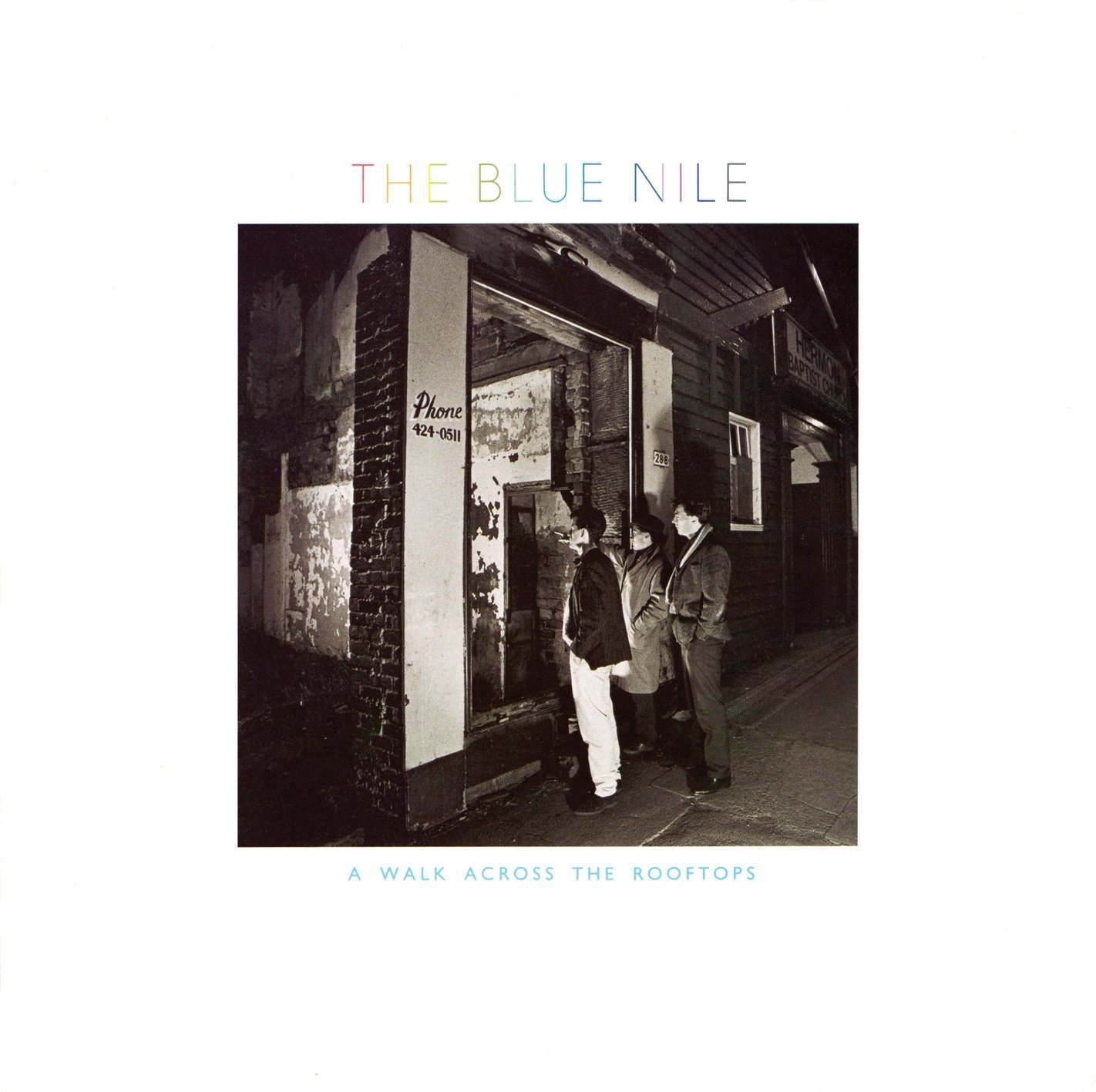
ACID JAZZ: THE 25TH ANNIVERSARY BOX SET.
ACID JAZZ: THE 25TH ANNIVERSARY BOX SET.
Over the last twenty-five years, record companies have come and gone. New labels have been set up, released innovative music, and then, they’re gone. Many of these people found that running a label wasn’t as easy as they thought. Often, the business-side got in the way of what they really loved, making music. Sometimes, people setup labels releasing music which was too specialist, too niche, and as a result, they weren’t commercial successfully. Occasionally, luck conspired against new labels. They released the wrong music, at the wrong time. Maybe they were ahead of the curve, and months or a year later, a musical scene or genre would explode. Then there was what could called the unacceptable side of music.
These were labels that fail have been set up by people who are only in it for the short-term. For them, they see the chance to exploit a scene or musical genre that’s growing in popularity. Anyone who survived the early and heady days of Acid House, will remember labels being setup, releasing a few releases that sold well and then disappeared, in some cases with bills unpaid and angry creditors keen to catchup with them. Those behind the label cashed-in and exploited the popularity of Acid House. The same can be said of people organising raves, selling T-shirts, printing flyers or any number of things. To these people, back when a generation were being drip-fed the “greed is good” philosophy, they made a quick buck and “retired” from music. They neither loved, nor believed in the music. While numerous labels failed, and everyone will be able to remember a series of labels that sadly, are no longer around, for a variety of reasons, some labels have survived. Not only have they survived, but they’ve thrived and continued to release innovative and cutting-edge music.
Often, they’re setup by people immersed in music, people whose love of music runs through their veins. Music is their lifeblood, their passion, providing meaning to their lives. For these people, music means much more than money. Music is art, not a commodity. It’s a journey of exploration, one that continues throughout life. This seems the perfect description of Eddie Piller and Giles Peterson, who founded Acid Jazz Records in 1987. So, to commemorate their twenty-fifth anniversary, is a fantastic achievement. Acid Jazz-The 25th Anniversary Box Set was recently released by Harmless Records celebrates and commemorates twenty-five years of Acid Jazz Records. It seems almost fitting that this is no ordinary box set. Quite the opposite, as you’ll soon realize, when I tell you about Acid Jazz-The 25th Anniversary Box Set.
Towards the end of 1987, Eddie Piller was a twenty-three year old mod, who despite his age, was almost a veteran of London’s music scene. Previously, he’d run a mod fanzine Extraordinary Sensations and formed his own label Countdown, which was distributed by Stiff Records. Then Eddie’s life and luck changed. Stiff became insolvent, Countdown was caught up if fall out and Eddie was without his label. Worse was to come, The Prisoners, one of Countdown’s signings split-up and Eddie started to feel disillusioned by the mod scene he so loved. Soon, he took to spending time at jazz and soul clubs, where he’d meet a like-minded music lover.
Back in 1987, Giles Peterson was a soul boy, but unlike many people who loved soul music, also loved jazz and Latin music. This set Giles apart and still does. He’s not and never has been, narrow-minded in his musical tastes. Quite the opposite, eclectic best describes Giles’ tastes. He was just as busy as Eddie, compiling the Jazz Juice compilations and compilations for the Street Sounds’ label, plus hosting his Mad On Jazz radio show on BBC London. So when Giles met Eddie, it was a meeting of musical minds.
The pair met at Nicky Holloway’s Special Branch Nights and soon, were working together. This included the nascent Talkin’ Loud and Saying Something on Sundays at Dingwalls. It was almost logical, that the pair should start a label. Eddie released a cover of a Herbie Hancock track, Theme From Blow Up, by The James Taylor Quartet, which featured The Prisoners’ organist. Quickly, a scene was developing at Dingwalls and Eddie and Giles became tastemakers, spinning old jazz, soul, funk and Latin music. Eclectic was their playlist, with everything from Jimmy Smith, Charles Earland, Public Enemy, Dinosaur Jr, and Alice Clark sitting side-by-side. As their house-band, Giles and Eddie had The James Taylor Quartet. Something was stirring, a new scene was organically growing and developing.
By 1987, music was changing and Giles and Eddie would be at the vanguard of a new musical movement. Thankfully, the old guard were toast. Gone was the selective door policies of certain soul and funk nights. Acid House was King and house music was the future. Not for Giles and his DJ partner Chris Bangs. They declared they were playing Acid Jazz. New and old music became one, with the music having a message. Whether it was hip hop, soulful house, vintage jazz, including classic labels like Blue Note and Prestige, or soul or Latin music, this was what the spun. Giles and Eddie Piller used this nascent scene as their inspiration for their new label, Acid Jazz Records.
Acid Jazz Records’ debut release saw Giles’ flatmate Rob Gallagher recite poetry over a version of the Curtis Mayfield penned Freddie’s Dead, cut by Pucho and The Latin Soul Brothers. Released by Galliano as Fredrick Lies Still, this set the ball rolling. Then came three mini albums from UK jazzers, including Bukky Leo’s Rejoice In Righteousness. Soon singles were released, including by Chris Banga, under a number of aliases and even, a single by Paul Weller’s Style Council as King Truman. One of Acid Jazz’s most important releases were by A Man Called Adam.
Like Acid Jazz Records, A Man Called Adam enjoyed longevity and proved to be one of the nascent label’s earliest signings. They featured on the two volumes of the Totally Wired compilations, which brought together the elite of the UK’s Acid Jazz scene. This included The Brand New Heavies, who made their appearance on Volume Two. They’d prove to be one of Acid Jazz’s best and most successful signings.
With the Acid Jazz scene blossoming, major labels took notice. This included Phonogram Records, who in 1988, signed The James Taylor Quartet. Their next signing was a bigger one…Giles Peterson. Phonogram Records offered Giles the bait of his own label Talkin’ Loud. Leaving with Giles were Galliano and another band, The You Disciples. At least Eddie still had The Brand New Heavies.
1990 saw the release of The Brand New Heavies debut album, which garnered radio airplay, but wasn’t a huge success in the UK. When the album was released, The Brand New Heavies found themselves without a lead singer. Touring wasn’t possible. US label Delicious Vinyl, who licensed the album, solved the problem. They added N’Dea Davenport’s vocal to backing tracks and released the track as Never Stop, which reached number three in the US R&B Charts. Meanwhile, times were tough at Acid Jazz. House music’s popularity meant the label’s finances suffered. Eddie tried to sell Acid Jazz to Island Records for £30,000. Their A&R rep said no. Oops. This would later prove to have been the deal of the century.
While Talkin’ Loud, Giles Peterson’s new label seemingly lead the way in the UK Acid Jazz scene, it was The Brand New Heavies that saved Acid Jazz Records. Their relaunched debut album sold over 300,000 copies, when licensed to London Records. Then when Jamiroquai signed to Acid Jazz Records the label had another huge success on their hands. Starting with their debut single When You Gonna Learn. Jamiroquai helped secure Acid Jazz’s future. With the label secure, an old face rejoined the label, and oh, they bought a club.
Rejoining Acid Jazz Records were The James Taylor Quartet, in late 1993. Then in 1994, Acid Jazz Records bought the Blue Note night club. It became one of the hottest and most influential clubs in London. All went well for Acid Jazz, with Mother Earth becoming another of the label’s success stories. Other artists Jamiroquai and The James Taylor Quartet sold well, especially Jamiroquai, who sold millions of albums. Later, Gregory Isaacs, the legendary reggae artist was signed but by 1997, Acid Jazz hit a problem, ironically, with the Blue Note, which was by then, a hugely influential and successful club.
In 1997 problems arose with the Blue Note. Purchasing the property had proved problematic, but eventually, its cash flow covered the costs. Then the local council revoked the Blue Note’s license. What had become a profitable club had to shut. The area was redesignated as a residential area. No longer was there the money to service its debts. Rather than just enter insolvency and walk away from the Blue Note’s debts, Eddie Piller courageously and determinedly, spent the next decade paying off the club’s debts. He undertook a managed exit and eventually, and with his head held high, and reputation in tact, managed to do so. With the future resolved Eddie got back to running his beloved label.
Since then, Acid Jazz Records, albeit on a smaller scale, has continued to release music. This has included records by Jinrai, Andy Lewis’ Are You Trying To Be Lonely, featuring vocals from Paul Weller plus releases by Jasmine Kara and Janice Graham. These releases are the next step in the Acid Jazz Records’ story. The previous twenty-five years can be found on . Acid Jazz-The 25th Anniversary Box Set, which I’ll now tell you about.
DISC ONE.
Disc One of Acid Jazz-The 25th Anniversary Box Set, is entitled: Put it All Together and What Do You Get. It features nineteen tracks that are a typical playlist of an Acid Jazz night. This means tracks that range from jazz, soul, funk, Latin, hip hop and rock sit comfortably side-by-side.
Hammond organ heroes are well represented, including Ivan “Boogaloo Joe” Jones’ Black Whip, Charles Earland’s Murriley and Jimmy Smith’s Who’s Afraid of Virginia Wolfe Part 2. They sit comfortably aside the Small Faces’ I Can’t Dance With You, Dinosaur L’s Go Bang No. 5, Spanky WIlson’s You and The Isley Brothers’ Love The One You’re With. There’s also Erma Franklin’s Light My Fire, Gil Scott Heron’s epic Lady Day and John Coltrane and the beautiful Golden Lady by Jose Feliciano. A welcome addition is Alice Clark’s Don’t You Care, Lonnie Liston Smith’s Expansions one of my favorite cosmic jazz track’s and the deliciously funky, Right On from Clarence Wheeler and The Enforcers. These nineteen wonderfully eclectic tracks, are a magical, sometimes mystical musical journey, that’s not unlike a trip back in time, to the early days of Acid Jazz at Dingwalls on a lazy Sunday afternoon.
DISC TWO.
Something Happening At the Dance is the description given to Disc Two of Acid Jazz-The 25th Anniversary Box Set. This includes the new music played at Dingwalls, with hip hop instrumentals providing many of the highlights. Added to the hip hop sounds, were elements of other musical genres. Soul, funk, jazz and house music are all added to the mix.
Among the highlights are A Man Called Adam’s Earthly Powers, Young MC’s Know How, Sugar Bear’s Don’t Scandalize Me and Stonebridge’s Jazzy John’s Freestyle. A Tribe Called Quest, Nu Yorican Soul and The Brand New Heavies all contribute tracks and Dread Flimstone’s From the Ghetto. Another track that’s included, is the one that launched Acid Jazz Records, Galliano’s Fredrick Lies Still. These sixteen tracks are from a variety of labels. They’re not just a reminder of the sounds of many an Acid Jazz club night, but demonstrate groups like The Brand New Heavies and Nu Yorican Soul’s music evolving and growing. Later, not only would The Brand New Heavies would play a huge part in the Acid Jazz Records’ success story, but saved the label from near-disaster.
DISC THREE.
Disc Three of Acid Jazz-The 25th Anniversary Box Set, is entitled How’d We Get Us Here, and features seventeen slices of classic Acid Jazz. So that means tracks from The Brand New Heavies, Incognito, Snowboy, Jamiroquai and The James Taylor Quartet. It’s a collection of track’s that if you analyzed their musical DNA says Acid Jazz. Not only that, but it brings back the memories.
Indeed, from the opening bars memories come flooding back. This includes seeing The James Taylor Quartet play a storming set in Glasgow, many years ago. Then there’s Snowboy’s New Avengers, Incognito’s delicious and deeply soulful Always There and the delights of the Young Disciples Get Yourself Together. Add to this Snowboy’s brilliant The New Avengers, which is a very welcome addition. Closing Disc Three is Funky Jam, from the UK’s only true rock ‘n’ band Primal Scream. When I looked down the credits to Disc Three, I couldn’t believe that some of the tracks are very nearly, twenty-five years old. Many of them have a timeless sound and many people, will wish they’d aged as well.
DISC FOUR.
Not only is Smokers Delight the title of Disc Four of Acid Jazz-The 25th Anniversary Box Set, but the perfect description of this chilled out, laid-back and late-night selection of thirteen tracks. New and old sit side by side. Vintage reggae from Max Romeo joins hip hop from Cypress Hill, Jazzy Jeff and The Fresh Prince. Among the other delights are Snowboy’s Astralisation, Mr. Scruff v Manasseh’s Rassellas, Dread Flimstone’s Render Your Heart and an eight-minute dub version of Sandals Nothing which brings not just Disc Four, but Acid Jazz-The 25th Anniversary Box Set to a deliciously chilled out close. It’s the perfect smokey selection of tracks to close this lovingly compiled box set.
Dig deeper into the depths of Acid Jazz-The 25th Anniversary Box Set, and you’ll find a DVD featuring an interview with Acid Jazz founder, supremo and survivor Eddie Piller. This includes twelve-tracks, which opens with Snowboy covering The Sex Pistols Anarchy In the UK. What a way to open the DVD. After that, tracks from The Brand New Heavies, The James Taylor Quartet, The Third Degree, Matt Berry and Twisted Tongue follow. Then as if that’s not enough Acid Jazz goodness, there’s a seven-inch vinyl single with previously unreleased tracks from The Brand New Heavies. Never Stop is the A-Side, featuring Jan Kincaid, and the B-Side is an instrumental of Rock Steady. For me the real icing on the Acid Jazz cake is a book entitled, The Cover Art of Acid Jazz. It’s like a journey back in time. You remember Acid Jazz Records’ releases over the last twenty-five years. It’s a demonstration of just how innovative and creative the covers were. They provoke not just musical memories, but memories of where you were, and what you were doing. That’s just the perfect finishing touch to Acid Jazz-The 25th Anniversary Box Set.
Of all the box sets I’ve come across during 2012, Acid Jazz-The 25th Anniversary Box Set is one of the best. It’s best described as lovingly and carefully compiled. There’s more to Acid Jazz-The 25th Anniversary Box Set than you first think. From small acorns, the label grew into a label whose sales were in the millions. Then after the Blue Note nightclub lost its license, Eddie Piller nearly lost everything. Courageously and determinedly, Eddie paid back the label’s debts. Rather than walk away, he spent ten years repaying the debts. It’s as if this was a matter of honor. How many other label owners would’ve gone to such lengths? That says a lot about Eddie Piller.
Acid Jazz-The 25th Anniversary Box Set begins with an eclectic selection of music that made Dingwalls on a Sunday such a popular destination for a sprinkling of DJs and like-minded music lovers. This included Acid Jazz Records‘ founders Eddie Piller and Giles Peterson. After this, Acid Jazz Records became one of the most innovative, influential and important British record labels. The Brand New Heavies, Incognito, Jamiroquai, Snowboy and The James Taylor Quartet were some of Acid Jazz’s most successful signings. There’s much, much more to Acid Jazz Records than a quintet of artists. Many, many more artists released singles and albums for Acid Jazz Records. In many cases, this included some of the most innovative and cutting-edge music of the time. Much of this can be found on this lovingly and carefully compiled collection of eclectic and innovative tracks. For anyone wanting a reminder of the heady, glory days of Acid Jazz, then Acid Jazz-The 25th Anniversary Box Set will provoke memories, musical and otherwise, aplenty. However, the music on Acid Jazz-The 25th Anniversary Box Set documents not just a record label but a musical genre and scene. One man founded both that scene and Acid Jazz Records and Acid Jazz-The 25th Anniversary Box Set is a celebration of both, and also one of its founding father’s…Eddie Piller.
ACID JAZZ: THE 25TH ANNIVERSARY BOX SET.

BRIAN ENO-LUX.
BRIAN ENO-LUX.
It seems only fitting given how often I review albums of electronic music, that I review Brian Eno’s new album Lux. After all, Brian Eno is the Godfather of electronic music and one of the genre’s founding fathers. Ever since his days with Roxy Music, Brian Eno was an innovator, looking to explore and push the boundaries of music. When he eventually tired of constantly touring with Roxy Music, Brian Eno decided to pursue a solo career. In many ways, Brian turned his back on fame and fortune, in pursuit of his art. Glam rock he realized, was a passing phase. Electronic music was the future. He was interested in technology and taking his inspiration from minimalist painting which interested and inspired him, decided to forge a career in ambient music. Brian released his debut solo album Here Come the Warm Jets in 1973, with ambient classics like 1975s Another Green World, 1978s Ambient 1: Music For Airports and Music For Films following soon after. During that period, Brian was busy with his “other career,” as a producer.
This included David Bowie’s Berlin Trilogy of 1977s Low and Heroes and final instalment, 1979s Lodger. Since then, Brian Eno has released over twenty albums and produced some of the biggest groups in music and forged a career as a remixer. He’s produced albums by Talking Heads, Devo, U2 and ahem, Coldplay. Brian has also remixed tracks by Massive Attack and Depeche Mode. Apart from production work and remixes, Brian Eno has collaborated with artists that include David Byrne, Robert Fripp and Robert Wyatt. Then there’s Brian Eno’s interest in the arts and politics. So it’s no wonder that Brian Eno solo albums are becoming something of a rarity. Granted, he’s collaborated with Jon Hopkins and Leo Abrahams on 2010s Small Craft On A Milk Sea and with Rick Holland on 2011s Drums Between the Bells. Fittingly, for an artist as innovate, inventive and bold as Brain Eno, both these albums were released on Warp Records, a label known for, and which prides itself on releasing innovative music. It’s Warp Records that recently released Brian Eno’s latest album Lux, his first solo album since 2005s Another Day On Earth. Seven years later, Brian is back, with what he calls “his most ambitious work to date.”
Lux, which is Brian’s first solo album for Warp Records, and sees Brian find inspiration from two sources. One is artwork he discovered in The Great Gallery of the Place of Venaria in Turin, Italy. There are twelve sections to Lux, which is separated into four tracks. The other inspiration are his classic seventies ambient albums. He reflects on, and builds upon the themes and sounds that can be found on albums like Ambient 1: Music For Airports and Music For Films and later, his 1983 album Apollo-Atmosphere and Soundtracks. Together with Leo Abrahams on Moog Guitar and Neil Catchpole on violin and viola, Brian came up with four tracks, that last seventy-five minutes, where he revisits and revisits his classic ambient sound, bringing it up to date with a makeover. Will Brian Eno prove that the music on Lux is just as relevant and innovative as it was in 1973, on his debut album Here Come the Jets? That’s what I’ll tell you, after I’ve told you about the four tracks on Lux.
Opening Lux, is Lux 1, a meandering, somewhat moody, spacious and thoughtful soundscape. Washes of synths, keyboards wistful strings and an occasional, elegant stab of piano enter. It’s almost as if the arrangement is stretching, awakening, not unlike a flower opening in spring. You can hear Brian’s seventies ambient sound shine through. This is contrasted with darker, moodier keyboards and strings. The arrangement is in no rush to reveal its secrets and hidden depths. Layers of music unfold. Often, as Miles Davis pointed out, the space between the notes is just as important. Occasionally, the music takes on an Eastern sound. Brian seems determined to challenge the listener, adding sounds that change your mood, make you think and sometimes, even slightly unsettle you. Quite simply, it’s compelling, complex and full of contrasts. One minute it’s beautiful, wistful and pensive, the next challenging, moody and almost makes you feel uneasy. Certainly it’s never bland, never predictable and like so much of Brian Eno’s music, innovative.
Waves of jarring music resonate as Lux 2 unfolds. Brian it seems, wants your attention. With strings and synths producing a sound that’s certainly challenging and even, slightly unsettling and disturbing, you’re forced to take notice. Again, Brian references the sound of Ambient 1: Music For Airports and Music For Films, and sometimes, Apollo-Atmosphere and Soundtracks. He does this subtly. It’s not a case of copying the music, but reminding the listener of its importance and innovation, but what it can become. Using this, and of course the artwork from Turin for inspiration, a gently cascading, mood-altering soundscape reveals its layers and textures. Bells, synths and strings take turns of massaging your senses in a way that’s pleasant and pleasing. Then Brian decides you need challenged. Then the sounds can unsettle you, make you think of their meaning and effect. This is ambient music for the mind. Rather than background music, which some ambient music becomes, this stimulates internal and external discourse, challenging you and your mind. What is the music about, what does it mean and what does it mean to me, and in a wider context? That this all stems from eighteen meandering, minimalist minutes of music is even more impressive.
Lux 3 has a fuller sound as it opens. Waves of bolder music, roll into the distance. Replacing them is space. Eventually, another wave of music replaces it. Instantly, you can tell this is Brian Eno. It has “his” sound. Anyone familiar with his seventies ambient classics will realize this. Sometimes, Brian separates the music. Panned right are the unsettling side of the track, panned left is the melancholy, wistful sound. Then just to shake things up, he switches things around. It becomes like two sides to Brian Eno’s music. Darkness and light. Morning and night. Hope and desperation. Contrasting sound and layers of music unfold. I can hear the influences of Ambient 1: Music For Airports and Music For Films. Back then, Brian Eno was at the forefront of ambient music. Now nearly forty years later, that’s still the case. He may be older, and certainly wiser, but don’t let anyone try to tell you he’s any less innovative or relevant. This quite beautiful, cerebral, pensive and melancholy track is proof of this.
Closing Lux is Lux 4. Dark, spacious stabs of challenging, jarring music open the track. It’s like Brian is laying down the gauntlet. Stay with me if you can. Persist and you’re privy to some wistful, thoughtful and haunting music. Just keyboards, with echo and delay used subtly and spaciously, meander along. They almost float in your mind’s eye. Close your eyes the music paints pictures. It takes your imagination on a journey, if you’ll let it. Mostly it’s relaxing, pleasant and pleasing, but even when Brian lays down a challenge, you rise to it. You enjoy where he and the music take you. He uses the old panning trick. Left side is pleasant and dreamy, while right side is dark and moody. When they become one, the music takes on an eerie, but quite beautiful, minimalist sound. From there it wanders and meanders taking you and your emotion and imagination on a journey of discovery, not unlike the one in Alice In Wonderland. Here, things are dreamy, pleasant, minimalist and full of secrets, surprises and subtleties, except they’re musical. Just don’t be late, for this very important date…with Brian Eno.
Thirty-nine years after his debut album Here Come the Warm Jets, Brian Eno released his first solo album for seven years, Lux. People wondered whether he’d been sidetracked by art, politics, production work and remixes. Would this be the return form from Brian Eno? Was he still the innovator, the elder statesman and Godfather of electronic music? Could he somehow, release an album that showed that after forty years making music, he still had something to offer? The answer to that is straightforward. ‘Yes’. Lux sees Brian Eno combine his vintage, classic seventies and early-eighties ambient sound and with the help of technology old and new, produces a complex, multi-textured album, Lux. On Lux, twelve sections are contained within four track. They’re not unlike the changing seasons, offering something new and different. Each track toys with your emotions, takes you on a journey, painting pictures in your mind and takes you places you never expected to go. For your part, you close your eyes and enjoy a musical journey that’s variously melancholy, wistful, challenging, beautiful, elegant and always, innovative. While many of Brian Eno’s counterparts cease to be relevant musically, although they’re still releasing music, Brian Eno is forever the innovator, forever inventive, creative and open to experimenting musically. In many ways, Brian Eno is the last man standing when it comes to seventies music, as Lux proves beyond doubt. Standout Tracks: Lux 1,Lux 2, Lux 3 and Lux 4.
BRIAN ENO-LUX.

DELEGATION-EAU DE VIE.
DELEGATION-EAU DE VIE.
Often, it seems American bands have a monopoly when it comes to producing quality and successful soul and funk music. Sometimes, British groups can match their American counterparts in the success stakes. It doesn’t happen often, but very occasionally, a British band releases a single or album that takes America by storm. One group that managed this, were Delegation, formed in Birmingham during the mid-seventies by Ricky Bailey, Len Coley and Roddy Harris. Delegation worked with songwriter and producer Ken Gold, who previously, worked with The Real Thing, Liquid Gold and Billy Ocean. After enjoying chart success in the UK with Where Is the Love (We Used To Know) and You’ve Been Doing Me Wrong in 1977, Delegation’s music successfully crossed the Atlantic. This success started with Oh Honey, which reached number six in the US R&B singles charts in 1978. The same year, Delegation’s debut album The Promise of Love reached number eighty-four in the US Billboard 200 and number eight in the US R&B Charts. Then just as Delegation looked like breaking the near monopoly American soul groups were enjoying two things happened. They changed record labels, signing to Ariola and Len Coley left the band. Replacing Len for the recording of their sophomore album Eau De Vie was Bruce Dunbar, a former Broadway singer who’d starred in the musical Hair. His falsetto vocal was a near perfect fit for Delegation’s sound and style. However, losing a founding member, plus changing labels, was pretty traumatic, especially for a group just beginning to make it big stateside. How would this affect Delegation when they released Eau De Vie, which will be rereleased by BBR Records on 26th November 2012? That’s what I’ll now tell you.
Having made a commercial breakthrough on both sides of the Atlantic, losing a member must have been galling. All the hard work, and progress made over the last few years was now at risk. In many ways, it was almost like a new band. So when it came to recording Eau De Vie, founding members Ricky Bailey and Roddy Harris plus new member Bruce Dunbar must have wondered what the future held. Could they build on the success of Oh Honey and their debut album The Promise of Love? Would their existing fans take to the new member’s singing style? Then there was the question of attracting a wider audience. There was also the adding complication of having signed to a new label. This meant dealing with new management, A&R staff and promotion people. Their heads must have been spinning. They’d gotten so close to becoming one of the few British soul bands to establishing a fan-base in America. Now all this was up for grabs. At least they had songwriter and producer Ken Gold guiding them through this new chapter in Delegation’s career. Indeed, Ken Gold would play an important part in Eau De Vie.
Of the nine tracks on Eau De Vie, Ken Gold cowrote seven of them. Six of these tracks were with his songwriting partner Micky Denne. The other track Darlin’ (I Think About You), Ken and Micky penned with Lynton Naiff. Ricky Bailey, one of the founding members of Delegation cowrote the other two tracks with Ray Patterson. Somewhat aptly, Welcome To My World saw Ricky and Ray cowrite the track with new vocalist Bruce Dunbar. These nine tracks became Eau De Vie.
Recording of Eau De Vie took place at three London studios, The Roundhouse Studios, SARM Studios and CBS Studios. A band containing a rhythm section of drummer Graham Jarvis, bassists Dil Katz and Alan Jones and rhythm and lead guitarist Robert J. Ahwai were joined by keyboardist Lynton Naiff and percussionist Ken Gold. String and horn sections were arranged and conducted by Lynton Naiff, while Ken Gold produced Eau De Vie. This was the first album featuring the new lineup of Ricky Bailey, Roddy Harris and Bruce Dunbar. Could they replicate the success of The Promise of Love on Eau De Vie?
In the UK, Eau De Vie was released in October 1979 and failed to chart. Neither did Put A Little Love On Me released in October 1979. Things weren’t looking good for the new lineup of Delegation. Sadly, things failed to improve. Neither You and I released in February 1980 nor Heartache No. 9, released in October 1980 failed to chart. The only hope was Eau De Vie might fare better in America.
For Ariola, Delegation’s new label, they must have breathed a sigh of relief when Eau De Vie reached number sixty-nine in the US R&B Charts in April 1980. Granted it failed to match the success of The Promise of Love, but at least the album charted, unlike in the UK. Welcome To My World was released as a single in April 1980, reaching just number fifty in the US R&B Charts. Then three months later, in July 1980, Heartache No. 9 reached number sixty-six in the US R&B Charts and number fifty-nine in the US Disco Charts. While Delegation and their record company must have been disappointed, the addition of a new member meant it was not dissimilar to launching a new group. However, should Eau De Vie have fared better commercially? That’s what I’ll tell you, once I’ve told you about the music on Eau De Vie.
Eau De Vie opens with the single Heartache No. 9, one of the six Ken Gold and Micky Denne penned tracks. Straight away, the track bursts into life, bringing to mind Chic. Chiming, funky guitars join the rhythm section, lush dancing strings and rasping horns. Then when the vocal enters, it’s not unlike The Real Thing. It’s a real mixture of influences and genres. Funk meets soul and disco, while British and American music become one. Glorious harmonies sweep in and out, as the joyous, uplifting and hook-heavy track reveals its delights. You’re swept along above an arrangement that’s funky and soulful while the vocal is soulful, tender and joyful. A track this good, sets Eau De Vie up nicely and if the other tracks are as good, this could be something special? Will that be the case though?
As Sho’ Nuff Sold On You opens, it reveals an understated sound. Percussion and keyboards combine as the arrangement builds. When the harmonies enter, you can’t help draw comparisons with Chic again. Then when the vocal enters, it has a tougher, funkier sound. This sounds as if it’s written specifically for the American market. It’s delivered with sassy, backing vocalists responding to Ricky Bailey’s vocal. Bruce Dunbar’s soaring falsetto is a perfect fit, yang to Ricky’s ying. Later, the harmonies become punchy, as the track takes on a seventies American funk sound, with even a touch of Sly and the Family Stone. Horns growl, percussion and a funky rhythm section play their part in demonstrating another side to Delegation’s music, one that’s uber funky.
One More Step To Take is another of the uptempo tracks. From the opening bars you’re won over, smitten. Ken Gold and Micky Denne work their magic, penning a track heavy on hooks. Waves of drama courtesy of the rhythm section join dancing strings, percussion and handclaps before Ricky’s vocal enters. When it enters, his vocal is laden with joy and emotion. Tight harmonies sweep in, reminding me of The Real Thing. They add the finishing touch. After that, it’s just a case of settling back and enjoying a track that’s an uplifting, joyous slice of good-time, sunshine soul. Why it wasn’t released as a single in the UK seems a missed opportunity.
Blue Girl sees another change in style, with the tempo dropping. There’s a wistful, melancholy sound to the introduction. Keyboards, rhythm section and percussion give way to Ricky’s tender vocal. It’s filled with sadness and emotion, sung against a backdrop of heartfelt harmonies and a meandering, wistful arrangement. The arrangement meanders along, keyboards and guitars key to its sound, providing the perfect backdrop for Ricky’s vocal. He breathes life and meaning into the lyrics, revealing his versatility as a vocalist. Harmonies reply to his call, playing their part in one of the most beautiful tracks on Eau De Vie.
There’s similarities with Darlin’ (I Think About You) and the opening track Heartache No. 9. That’s no bad thing, given their uptempo, infectiously catchy sound. Chiming guitars join the rhythm section in driving the arrangement along. A pounding bass, keyboards, blazing horns and sweeping swirling strings join a jazz-tinged guitar before Delegation add punchy harmonies. By now, the guitar licks are reminiscent of Niles Rogers on an old Chic album. That’s high praise. The harmonies and Ricky’s vocal feed off each other. They seem to drive each other to greater heights, as soul, funk and disco combine. It’s a potent, heady and hugely catchy combination. Mind you, with Ricky’s lead vocal, the punchy harmonies and a lyrics by Ken Gold, Micky Denne and Lynton Naiff, that’s no surprise.
You and I sees the Chic influence shine through again. Everything from the guitar, keyboards and lush strings is reminiscent of Bernard Edwards and Niles Rogers at their peak. It’s only when the harmonies enter, things change. They’re tight and punchy, while Ricky’s vocal is impassioned and heartfelt. With chiming, Chic guitar licks ever-present, the arrangement floats along, with Delegation soulfulness personified. Why the single wasn’t a commercial success, in retrospect, seems something of a mystery.
Like other tracks on Eau De Vie, Stand Up (Reach For the Sky) just bursts into life. A dramatic, pounding and funky rhythm section, rasping horns, percussion and chiming guitars join swirling strings before Ricky’s vocal enters. When it does, that’s when the vocal interplay begins. Delegation reveal their harmonic talents. They feed off each other, the vocal changing hands, harmonies sweep in and out and Delegation give a harmonic masterclass. Add to this, rasping horns, cascading strings and funky guitar licks and the result is another joyous, uplifting track.
Welcome To My World is another of the slower tracks on Eau De Vie, but shows Delegation at their soulful best. The arrangement has a melancholy, wistful sound. Woodwind, a slow, pensive rhythm section and keyboards usher in some tight, heartfelt and deeply soulful harmonies. They’re beautiful and emotive, as is Bruce Dunbar’s vocal. His falsetto vocal is perfect for the lyrics, with Ricky and Roddy adding some of the best harmonies on the album. Later, a half-spoken vocal is accompanied by harmonies and from there, Bruce unleashes a vocal that’s beautiful, heartfelt and full of emotion. Together with the harmonies, this is why this is the highlight of Eau De Vie.
Closing Eau De Vie is fittingly, Put A Little Love On Me, written by Ken Gold and Micky Denne, who wrote so many of the album’s best tracks. Delegation seem determined to finish the album on a high. The arrangement bounces along, reminding me of Liquid Gold, another of Ken Gold’s groups. Funk and soul unite. A pounding, funky rhythm section, synths, percussion and chiming guitars combine creating a hugely catchy backdrop. Then when Ricky’s vocal enters, he delivers a powerful, sassy and feisty vocal. Punchy harmonies accompany his vocal, while horns rasp and the songs swings along. Later, Ricky becomes a cheerleader, as if encouraging the group to end Eau De Vie on a high. This they do, with a track that’s catchy and dance-floor friendly.
Earlier I posed the question whether Delegation’s sophomore album Eau De Vie deserved to fare better commercially. The answer to that is a resounding yes. That Eau De Vie failed to even chart seems remarkable. However, in retrospect, that’s not surprising. By April 1979 when Eau De Vie was released, music was changing. Disco’s popularity had waned and by July 1979, would become something of a musical pariah. Then there was the problem of radio play. In the UK, even by 1979, the UK had only one “state” broadcaster, whose music was shall we say, unadventurous. They tended to play only what was commercially successful and were content to feed the listening public a diet of what can only be described as inoffensive, populist music. Even commercial radio, which was in its infancy, was following the lead of the “state” broadcaster and seemed to think listeners deserved a diet of bland music. Soul, funk and jazz music weren’t exactly high on radio playlists, except if it was something commercially successful. Even when disco was at the height of its popularity, all the British public heard was the acceptable and commercial side of disco. So for groups like Delegation, getting their music heard wasn’t easy. As for the music press, they were divided along the lines of those who’d jumped on the punk and post-punk bandwagon and journalists who still thought that Neil Young, Pink Floyd and Led Zepellin were cutting-edge. At least in America Delegation found a slightly more appreciative audience.
In America, Eau De Vie failed to replicate the success of The Promise of Love. Given that this was the “debut” album from the new lineup of Delegation, this wasn’t a surprise. It would take time for listeners to adapt to the new lineup’s sound. What UK listeners and many American listeners missed, was an album full of hook-heavy, soulful and funky music. Whether it was the uptempo or slow tracks on Eau De Vie which will be rereleased by BBR Records on 26th November 2012, Delegation didn’t disappoint. They never missed a beat and Eau De Vie is an album that’s full of quality music. There’s neither filler nor padding. Just great music. Eau De Vie is Delegation at their very best. Delegation were proof that when it came to soul and funk music, sometimes, British groups could match their American counterparts for quality, soulfulness and funkiness. Eau De Vie is proof of that. Standout Tracks: Heartache No. 9, One More Step To Take, Blue Girl and Welcome To My World.
DELEGATION-EAU DE VIE.

GEORGE McCRAE-GEORGE McCRAE.
GEORGE McCRAE-GEORGE McCRAE.
Describing George McCrae as an overnight success would be wrong. Instead, the success that would come his way come about almost accidentally. Lady Luck decided to look George’s way. Having spent years of trying to forge a career in music, George McCrae had just about given up hope. He was planning to head back to college, to study law enforcement. Then his luck and life changed. His wife Gwen had been booked to record a song called Rock Your Baby. Gwen was late for the recording session of Rock Your Baby, so George stepped into the breach. Rock Your Baby would become synonymous with George McCrae, reaching number one in over eighty countries. Following the success of Rock Your Baby, George hooked up with Harry Wayne Casey and Richard Finch of KC and the Sunshine Band, who’d written and produced Rock Your Baby. They wrote and produced Rock Your Baby, George’s debut album. It reached number thirty-eight in the US Billboard 200 and number seven in the US R&B Charts. Following up such a successful single and album, wasn’t going to be easy. So when George released his eponymous, sophomore album George McCrae in 1975, it must have been with a sense of trepidation. Was it even possible to replicate the success of Rock Your Baby? That’s what I’ll tell you, after I’ve told you about the background to George McCrae, which will be rereleased by BBR Records on 26th November 2012.
In many ways, Rock Your Baby must have become something of a poisoned chalice for George McCrae. Whatever he’d release would always be comparisons would be drawn. Indeed, regardless of all the other singles and albums George released, he became synonymous with one single, Rock Your Baby. So when it came to writing material for George’s sophomore album George McCrae, Harry Wayne Casey and Richard Finch of KC and the Sunshine Band must have been determined to prove that Rock Your Baby wasn’t a one-off. Like George, they were keen to show that there was more to George McCrae than one track. Harry and Richard were enjoying the hottest period of their career. Not only were they hugely successful as KC and the Sunshine Band, but as songwriters, musicians and producers. Could they work their magic again on George McCrae?
For recording of George McCrae’s sophomore album George McCrae, the recording took place at T.K. Records cutting-edge recording studios. Joining George, Harry and Wayne were a number of session players. This included a rhythm section Richard, playing bass and percussion, guitarist Jerome Smith and drummer Robert Johnson. While they provided the album’s heartbeat, Harry played keyboards and Fire adding backing vocals. Fire were a trio featuring Beverley Champion, Margaret Reynolds and Jeanette Holloway. Together with a horn section of trumpeter Vinnie Tanno, tenor saxophonist Mike Lewis and baritone saxophonist Whit Sidener, the nine tracks that became George McCrae were recorded, with Harry and Richard producing the album. Could lightning strike twice for George McCrae and would he enjoy and replicate the success of Rock Your Baby?
Unlike many albums, there was no single released in advance of the release of George McCrae in June 1975. It reached number 152 in the US Billboard 200 and number twenty-four in the US R&B Charts. So far, lightning hadn’t struck twice in the same place. Nor would it. I Ain’t Lyin’ stalled at number thirty-one in the US R&B Charts in July 1975. Honey I, was released in November 1975, and fared better, reaching number sixty-five in the US Billboard 100 and number eighteen in the US R&B Charts. Over in the UK, George McCrae proved more popular.
Sing A Happy Song was released as the lead single in March 1975, reaching number thirty-eight. It’s Been So Long gave George a number four single in in July 1975. When George McCrae was released in September 1975, it reached number fifty-four. When I Ain’t Lyin’ was released in November 1975, it reached number twelve and then Honey I reached number thirty-three in the UK in February 1975. While George McCrae proved more popular in the UK than the US, it failed to match the success of Rock Your Baby. Maybe people were expecting Rock Your Baby Mk. II. That’s not what they found on George McCrae, as you’ll realize when I tell you about the album.
Baby Baby Sweet Baby opens George McCrae. It’s an uptempo track with a driving rhythm section and chiming guitars creating the backdrop for George’s vocal. Bursts of drums signal the entrance of George’s tender, distant vocal. Although the rhythm section are key to the track’s sound, providing its heartbeat, it’s Jerome Smith’s guitar that’s a show-stealer. It’s flamboyance personified, although nit to be outdone, Harry adds a few flourishes of keyboards for good measure. This proves important to the driving, uptempo arrangement, which has Harry and Wayne’s signature sound. For his part, George’s vocal is tender, soft and soulful.
You Treat Me Good has a similar Miami hustle sound to many of the tracks on Rock Your Baby. Percussion. A pounding rhythm section and keyboards combine to create a pulsating, sultry arrangement. When George’s vocal enters, it’s heartfelt and sensual. Richard slaps and pounds his bass, which is at the heart of the pulsating, dance-floor friendly arrangement. So too are joyous harmonies which accompany George’s impassioned vocal.
It’s no surprise I Ain’t Lyin’ gave George a hit on both sides of the Atlantic. From it’s opening bars you’re smitten. A thunderous, funky rhythm section, growling horns and percussion combine before George makes his entrance. His vocal is a combination of power and passion mixed with joy. Soon, George and his tight, talented band take you on a journey that’s funky and soulful, but also sensuous and joyous. George unleashes whoops and hollers, strutting his way through one of the real highlights of George McCrae.
You Got To Know has a quite different sound. It’s almost a trip back in time to the sixties and shows another side to Harry and Wayne’s songwriting and production skills. An organ sound whose roots are the church, gives way to searing, sizzling guitars and a driving rhythm section. Soul, R&B and rock combine with gospel, which influences George’s delivery. Here, we hear another side to George McCrae, one far removed from Rock Your Baby. This is a side of George I’d like to hear much more of. In many ways, it’s a fleeting glimpse of what might have been.
It’s Been So Long sees George revisit a more sixties sound. Harry and Wayne’s band combine a dramatic rhythm section, growling horns and keyboards to create a fitting backdrop for George’s heartfelt, emotive vocal. Having built up the drama, George doesn’t let them down. He delivers a vocal that’s filled with emotion, longing and need. As the song progresses, George unleashes a vocal that’s power, emotion and power personified. Backing vocals accompany him, providing the finishing touch to the heartfelt, soulful highlight of George McCrae.
Honey I (I’ll Live My Life For You) was the most successful single released from George McCrae in the US. Waves and washes of Hammond organ join a pounding, funky rhythm section, percussion and chiming guitars. Instantly, you realize something special is unfolding. The waves of mesmeric Hammond are a huge clue. Backing vocals and handclaps accompany George’s emotive vocal. It’s classic call and response, riding the wave of this Miami hustle arrangement. Waves of funky, dance-floor friendly music unfold, and George and his backing vocalists Fire, feed off each other. Like the tight, talented and funky Miami band, they prove the perfect foil for George, on a track where funk, soul, gospel and disco unite seamlessly.
Take This Love of Mine is a track that combines elements of fifties and sixties music. The mainstay of the driving arrangement is sixties soul, although Jerome’s guitars are fifties rock ‘n’ roll. So too are the flamboyant flourishes of Jerry Lee Lewis style keyboards. Having set things up for George, he delivers a punchy, sassy vocal, as soul and rock and roll combine. They provide a vintage sounding and hugely memorable backdrop to this hook-laden slice of yesteryear.
When I First Saw You sees percussion, Hammond organ and a pounding rhythm section accompany George’s deliberate vocal. By leaving space between the lyrics, the dramatic pauses mean you pay attention, wondering what George is about to say. The gist of it is he’s in love, smitten. This is love at first sight. His delivery is effective, mixing joy and hope. Harry and Wayne’s band provide a driving arrangement, with half-spoken lyrics added to George’s joyous vamp through the track.
Sing A Happy Song closes George McCrae and sees soul, rock, gospel, pop and funk combine. From the get-go, when Southern rock guitars, rasping horns, keyboards, percussion and the rhythm section combine to create a genre-sprawling arrangement that’s catchy and memorable. When George’s vocal enters, you realize this is good-time, joyous music. George becomes the preacher, trying to covert you, with this slice poppy, slice of sunshine soul. Try as you may, you can’t help but succumb. Soon you’re turned into a believer in George’s uplifting, good-time sunshine sound.
While George McCrae’s sophomore album George McCrae failed to match the success of Rock Your Baby, that wasn’t because of the quality of music. Rock Your Baby is a track that if you’re really, really lucky comes along once in your career. It’s a classic track and it’s almost impossible to replicate this. For George McCrae, following up such a successful single and album, was nearly impossible. In many ways, any album would’ve come up short. So Harry Wayne Casey and Richard Finch took George’s music in a different direction on George McCrae. Disco, funk, soul, including sixties soul, plus a twist of Latin and rock all feature on George McCrae. Add to that a plentiful supply of poppy hooks courtesy of Harry and Richard. With a tight, talented band providing a backdrop for George’s vocal, George McCrae failed to match the success of Rock Your Baby. Still it was a success, and showed that there was much more to George McCrae than Rock Your Baby. On George McCrae, George, with Harry Wayne Casey and Richard Finch’s help, George produced an album which showcased a versatile vocalist, one capable of seamlessly delivering a variety of genres of music.
Now that George had released the followup to Rock Your Baby, he could get on with the rest of his career. In many ways, George was in a no-win situation when he released George McCrae which will be rereleased by BBR Records on 26th November 2012. Anything less than a replication of the success of Rock Your Baby would wrongly be perceived as a failure. That was the wrong way of looking at the commercial success of George McCrae. Rock Your Baby was a one-off, never to be repeated. George McCrae was the next step in the rest of his career and one which demonstrated just how versatile and talented a singer George McCrae really was. Standout Tracks: I Ain’t Lyin,’ You Got To Know, It’s Been So Long and Take This Love of Mine.
GEORGE McCRAE-GEORGE McCRAE.

MORE LIKE TREES-FULL CIRCLE.
MORE LIKE TREES-FULL CIRCLE.
Just nineteen months after More Like Trees played their first concert in an East London pub, the London-based, acoustic trio release their debut E.P. Full Circle on 26th November 2012, on BBE Music. Ever since that debut gig, More Like Trees have built a loyal following and in the process, while generating a huge buzz within the music industry. It’s no surprise More Like Trees have become so popular, given how hard they work. They’ve become regulars on the festival circuit, ever since they hooked up with Joe Driscoll. Secret Garden, Sham Bala and Green Man are just a few of the festivals where More Like Trees have played. While becoming a regular and favorite of festival and concert-goers, the three members of More Like Trees, guitarist and lead vocalist Josh, double bassist Lachlan and cajon and percussionist Matt have refined their own totally unique sound. Not only is this sound unique, but it’s lead to More Like Trees single handedly, founding a new scene, strum and bass.
Strum and bass sees More Like Trees fuse everything from drum and bass, flamenco, folk, hip hop, indie, classical and dance music. More Like Trees dispense with traditional musical rules. Instead, the reinvent and redefine a new, innovative, fusion of musical genres. This new sound has a freshness and is forward-thinking. No wonder, given that no musical genre is off limits. Similarly, collaborations with like minded artists are welcomed. On Full Circle, More Like Trees are joined by a number of guest artists.
Joining More Like Trees on Full Circle are Joe Driscoll, American loop-pedaller extraordinaire. Joe and More Like Trees are now regulars at The Local Posse sessions, where they met John Hendicott, who produced Full Circle and their debut album. Among their other collaborators at The Local Posse, are The Boxettes, Lazy Habits, John Fairhurst Band and Buffalo Ink. Collaborations for More Like Trees are a two-way process and lead to them releasing a live album.
Previously, More Like Trees have collaborated with the world’s leading female drum and bass MC Tali. This lead to More Like Trees collaborating with Tali on a live, acoustic reworking of her Dark Days, High Nights album in September 2011. Now just fourteen months later, More Like Trees have released their debut E.P. Full Circle, which I’ll now tell you about.
Opening More Like Trees’ debut E.P. Full Circle is The Night which has unveils wistful, melancholy sound when just flourishes of flamenco guitars and double bass combine. Lush strings kick in, as a deliberate, heartfelt vocal enters. It’s then that the arrangement grows, almost threatening to explode. Drama and power build and grow. A myriad of percussion, pounding drums and emotive strings take charge, accompanying a vocal that’s power and passion personified. As if spent and exhausted with the emotion that’s been expounded, there’s a lull in the arrangement. From there it builds back up, becoming a roller coaster of emotions and musical genres. Folk meets flamenco, jazz, indie and classical music. They unite to create a track that’s emotive, impassioned, heartfelt and quite beautiful.
Quivering, shivering classical strings laden with sadness open Keep On Going. They’re joined by deliberate, plucked guitars and a raspy, throaty vocal. This reminds me of Tom Waits at his finest. By now, classical and folk music combine with a healthy sprinkling of vintage Tom Waits. Drums add drama. So do the grandiose strings. They sweep and swirl theatrically and frantically. It’s a hugely impressive sound, designed to move both you, and your emotions. A double bass joins the acoustic guitar, giving the arrangement a haunting, classical sound. Drums have a very different reference point, drum and bass. The result is a dramatic, compelling and effective combination of musical genres. Who’d have imagined classical music could be combined with drum and bass, jazz and a worldweary vocal that’s reminiscent of Tom Waits in his prime could sound so good?
All Red sees a broody, moody meandering double bass joined by a melancholy acoustic guitar. Then when Josh’s vocal enters, it’s troubled, growing in tempo and power. He’s almost desperate to deliver the lyrics, doing so with drama and feeling. His vocal is delivered at breakneck speed, with just drum and bass drums, acoustic guitars and classical influenced strings which add sadness and emotion, for company. Indie sounding drums provide a pounding backbeat, as Josh lays bare his soul. Although different from the two previous tracks, the fusion of musical genres continues. There’s everything from indie, drum and bass, flamenco, jazz and classical music thrown into More Like Trees musical melting pot as they rewrite the musical rules.
Closing Full Circle, More Like Trees’ debut E.P. is Lady Lay, which sounds like a subconscious nod to Bob Dylan. It certainly doesn’t sound like it though. Instead, it’s an explosion of flamenco guitars and dramatic drums. Then when More Like Trees have your attention, Josh delivers a deliberate, impassioned vocal against an arrangement that bursts back into life. You can’t resist it. This is new and fresh, full of energy and enthusiasm. It gallops along. Wistful, classical strings, percussion, thunderous drums and flamenco guitars unite, providing the backdrop for Josh’s vocal that’s delivered energetically and enthusiastically, at an impressive breakneck speed. Then after just under four frantic minutes, the track reaches its dramatic crescendo. What a way to close Full Circle.
After hearing the four tracks on Full Circle, More Like Trees debut E.P, you’re left drooling at the prospect of More Like Trees debut album. Quite simply, it’s a delicious taster of More Like Trees debut album. I can’t wait to hear that album, and by then, I’m sure they’ll have generated even more of a buzz than they already have. After all, how many bands can seamlessly fuse flamenco, folk, classical, jazz, drum and bass, indie, hip hop and even, some vintage Tom Waits? It’s a compelling combination of genres and influences, delivered with an unmatchable passion. Josh delivers the lyrics with a sense of desperation. It’s like a stream of consciousness, that once delivered, comes as a relief. His delivery is theatrical, in the manner of the late Alex Harvey, or more recently, Ian Dury. He seems born to perform and play some stunning guitar licks. if you think Jimi Hendricks playing flamenco, you’re spot on. Fellow band members, double bassist Lachlan, and cajon and percussionist Matt are perfect foils. So too, are Claire Wackrow and Charmian Keay on violins and backing vocalists. Together, More Like Trees and their musical friends and collaborators have produced four genre-sprawling tracks, which have been influenced by six decades of music. The result is Full Circle, which will be released on 26th November 2012, by BBE Music. Full Circle is a delicious and tantalising taster of one of London’s hottest new bands, More Like Trees, who with talent like this, we’ll definitely be hearing a lot more of.
MORE LIKE TREES-FULL CIRCLE.
NICKI RICHARDS-LAY YOUR HANDS ON ME PARRISH JAMES AFRO HOUSE ONCEOVER REMIX.
NICKI RICHARDS-LAY YOUR HANDS ON ME PARRISH JAMES AFRO HOUSE ONCEOVER REMIX.
One of the latest musical innovations is releasing an E.P. featuring multiple remixes of a single. Usually, the E.P. features the original version of a single, plus three other remixes. For Hawaii born and New York-based Nicki Richards, she took this concept one step further. Rather than three remixes, seven separate remixes of Lay Your Hands On Me featured on her Lay Your Hands On Me E.P. released on Nicki’s own label, Hydrus Music. These seven remixes brought and breathed new life and meaning into the latest single from one of music’s best kept secrets Nicki Richards. Of the seven remixes of Lay Your Hands On Me, Parrish James Afro House Onceover Remix is the most innovative and dance-floor friendly. Before I tell you about Parrish James Afro House Onceover Remix of Lay Your Hands On Me, I’l tell you about Nicki Richards career so far.
Whether it’s soul, jazz or dance music, Nicki Richards is equally comfortable singing it. As if this isn’t impressive enough, Nicki is a songwriter, musician, arranger and producer. Nicki released her debut album back Naked (To the World) in 1991, on Atlantic Records. However, it would be another seventeen years before Nicki released her sophomore album.
After a gap of seventeen years, during which she’d immersed herself in music, Nicki Richards released her sophomore album Nicki in 2008. featured a cast of world class musicians. On Nicki, horns came courtesy of Tower of Power, Marcus Miller added bass and ex-Crusader Joe Sample played piano. This shows how highly regarded Nicki Richards is in musical circles. Thankfully, there wasn’t such a gap between Nicki’s second and third albums.
Four years after the release of Nicki, Nicki Richards has released Tell Me, which features a cast of special guests. Randy Brecker, Christian McBride, Take 6 and Lenny White all appear on Tell Me, which was released on Nicki’s own label, Hydrus Music. Indeed, the guest artists which appear on Tell Me, are just a few of Nicki’s musical friends. Her musical friends include Randy Brecker, Fonzi Thornton, Tawatha Agee and Parrish James who remixed Lay Your Hands On Me, the lead single from Nicki’s third album Tell Me, which. I’ll now tell you about.
Parrish James Afro House Onceover Remix of Lay Your Hands On Me opens with thunderous, bouncy drums and percusssion combining, before chanted harmonies enter. They’re panned left, while Nicki’s vocal is panned right and then sensuously, moves centre-stage. Her vocal is deeply soulful, sensual and joyous, growing in power and confidence. Tight, chanted harmonies have an African-roots influence, as keyboards, pounding drums and percussion unite, creating a fitting backdrop for Nicki’s diva-esque vocal. The end-result is an anthemic track, guaranteed to fill any dance-floor. No wonder, given Nicki Richards soulfulness and sensuality plus her presence and power. Indeed, I can’t help but draw comparisons to another legendary singer whose music ranged from soul to dance music, Loleatta Holloway.
Earlier I referred to Nicki Richards as music’s best kept secret. Many people yet to discover Nicki’s music will be racking their brains trying to think where they’ve heard her name. Well, I’ll put you out of your misery. Recently, Nicki Richards has been singing backing vocals for Madonna on her 2012 MDNA Tour. This seems almost ironic, given how talented Nicki Richards is. She deserves better, given her talent. Not only is she a singer, songwriter, musician, arranger, producer and now owner of Hydrus Music, which recently, released Tell Me, Nicki Richards’ third album. Lay Your Hands On Me, which was the lead single from Tell Me is a tantalizing taste of the multi-talented Nicki Richards.
On the Lay Your Hands On Me E.P., there were seven separate remixes, the best of which is Parrish James Afro House Onceover Remix. It’s an innovative makeover, which breathes new life, energy and meaning into a slice of sensuous, soulful, dance music. Given how talented a remixer Parrish James is, I want to hear more of his remixes and hear him remixing even bigger projects in the months to come. He’s a hugely talented remixer, who has the ability to transform a track, taking it in unexpected directions, that transform and reenergize the track. I’m sure Nicki Richards is glad she has such a talented friend.
For anyone yet to discover Nicki Richards’ music, then one listen to Lay Your Hands On Me will tempt you to buy her third album, Tell Me. Only then, you too, will be privy to music’s best kept secrets Nicki Richards and you can Tell Me that you’re now a believer her music.
NICKI RICHARDS-LAY YOUR HANDS ON ME PARRISH JAMES AFRO HOUSE ONCEOVER REMIX.
|

MIND OVER MIDI-MONOLOG.
MIND OVER MIDI-MONOLOG.
Usually, when I review albums they’re released in their thousand. Not today. When Mind Over Midi released Monolog on 12th November 2012, on the Glasgow-based Diametric label, only 200 copies of Monolog were released. This is the norm for Diametric. Their releases are limited to 300 copies of an album on CD or lovely vinyl. I’d call Diametric a boutique label, and I admire their philosophy. Diametric are certainly not “dedicated followers of fashion.” Instead, Diametric has a “love and passion for electronic music” and realize that electronic music is an “artform.” Like myself, Diametric state on their website that: “trends and hypes are not of interest.” To me, this is admirable. For too many labels, they look to latch onto musical trends and tastes, like a surfer would catch a wave. In doing so, these labels miss out on so many talented artists, whose music deserves to be heard by a wider audience. This is the case with Mind Over Midi, who I’ll tell you about, before telling you about Monolog.
Helge Tommervag, who is from Kristiansund, on Norway’s north eastern coast, has been immersed in electronic music since the early eighties. His career started as a member of the synth-pop group ToC, before launching a solo career with Mind Over Midi. Among Mind Over Midi’s early releases were Trancesurfer, which featured on a compilation released by Norwegian music magazine Rock Furore in 1994 and then Mindworks, on XS II, To the Ravezone a compilation of Norwegian techno released in 1995. After that, Helge has continued to develop Mind Over Midi’s unique sound. Ambient and minimalist are just two words that succinctly describe the music Mind Over Midi have continued to release.
Following these early releases, Mind Over Midi have released numerous singles, E.P.s and albums, between 1995 and 2012. This started with the Elektrical Activity E.P. 1, which was released on Beatservice Records. Later in 1995, came Elektrical Activity E.P. 2 and a year later, in 1996, Mind Over Midi released their debut album Elektrical Activity in 1996, on Beatservice Records. Their sophomore album was 1998s Ice Acoustik, which was also released on Beatservice Records. So too, were Mind Over Midi’s next three albums, 2001s Project 3, 2003s Statement and 2006s Monopoly. During that period, Mind Over Midi contributed tracks to compilations aplenty, including the Warners’ 1996 compilation AbStract Tracks, Beatservice Recordings’ Artic Circles’ compilations and Water Music Records’ 2002 compilation Excursions. Then there are Mind Over Midi’s remixes, which has seen them remix tracks by Motion Control, Lorenzo and Gork. By the time Mind Over Midi released their next album, it was for a new label.
2009s Habitat was Mind Over Midi’s followup to Monopoly, released on the Silent Season label. During the next three years, Mind Over Midi averaged an album a year. 2010 was their first digital only album, released unsurprisingly in 2010, on Berserk Fabrik. With a new decade dawning, Mind Over Midi’s next release would be for Glasgow-based label Diametric.
Mind Over Midi’s debut album for Diametric was Components, released in 2011. In keeping with Diametric’s philosophy, Components was released in limited numbers. So too is Monolog, Mind Over Midi’s ninth album, released on 12th November 2012. It features thirteen minimalist, ambient soundscapes which are pensive, moody, reflective and introspective. This is music for the mind, music which will change and shame your mood and emotions, as you’ll realize, when I tell you about the highlights of Monolog.
Enable opens Monolog, with a moody, broody, melodramatic sound. Soon the momentum builds. A wave of momentous, multilayered music grows. It’s unleashed, meandering and wandering. White noise joins washes of synths. Together, they drone, as if warning you that this wave of pensive, powerful music is about to reveal its hidden depths and secrets. Having grown, toying and teasing you all the way, it eventually, and is if relieved and spent, reaches a crescendo.
Interface sees Monolog’s experimental, introspective sound continue. There’s an understated, industrial sound to the track. Spacey, dubby drums, washes of eerie synths and unmistakable sound of worn vinyl combine. Synths meander, squeaking and beeping, the buzzing above and around you. It’s as if they’re encircling you, surrounding you. Squeaks and beeps join crackles and clicks as this eerie, haunting soundscape reveals its otherworldly sound.
Decoder is best described as a wave of dramatic, moody and menacing music. The darkness descends, threatening to overpower you. As Decoder unfolds, your taken into another world. Darkness doesn’t surround you. iInstead, it takes you on a journey. It’s slow, inching ever-closer to the final destination, one you almost dread. Like Enable, this wave of music builds and grows. Industrial strength synths take charge, producing a spine-tingling, roller-coaster journey, inducing fears and phobias. Then once eventually the journey is over, you breath easily, forgetting the tension and suspense. Instead, you realize just how powerful, effective and emotive Mind Over Midi’s music is.
Straight away, Divider takes on space-age, lo-fi sound. It’s not unlike being fired into space, orbiting the earth in a spaceship designed by Mind Over Midi. Washes of synths, white noise and sound effects combine with delay, creating a multi-textured sound that spirals round and round. Clicks and crackles add to the lo-fi, ambient sound, that takes on warmth, that surrounds and embraces you. What never changes, is the sense of being taken on a journey, one deep into another world.
Clicks, crackles and introspective synths combine as Remote, takes on an analog sound. These clicks and crackles surround the washes of synths, which unfold, taking you on a meandering, moody and melancholy journey. Although melancholy and wistful, it’s pleasing, pleasant and memorable. Circuitry then paints a dark, bleak landscape. Mind Over Midi’s trademark washes of synths combine with slow, spacey and pulsating drums. As they provide the track’s pulse, haunting, waves of moody, melodramatic and often elegant, crystalline synth add a quite beautiful, mood-changing counterpoint.
Sensor gallops slowly and broodily, gradually stretching, exploring its elegiac, plaintive depths. It drones, on a voyage of discovery, meandering moodily, but at the same time, melancholy textures.
Source crackles, clicks and drones, riding waves and washes of synths. They grow in drama and depth, their eerie, yet strangely warm sound reverberating into the middle-distance. Lo-fi, ambient and minimalist the music is, but it’s quite definitely captivating and compelling as it reveals its subtleties and secrets. Modus follows on from Source, as it reveals surprises and subtleties aplenty. Clicks, crackles and squeaks escape from the arrangement, as it decides to reveal its sonic surprises. They’re like a hostage, struggling to escape its captors. As they eventually emerge from the track’s hidden depths, their addition are welcomed them with open ears.
Counter seems determined to make its presence felt. Its menacing sound grows in dramatic waves. Again there’s a space-age sound, as if bounding weightlessly through space. It’s moody and broody, embracing you. Strangely, you miss it once it’s gone. Replacing it is the equally saturnine Connector, which bubbles and squeaks, splashes of water and waves of synths combining. Layers and textures unfold, taking on an organic sound, as if Neptune is rising from the depths of Mind Over Midi’s music.
Interrupt revisits the sound of earlier tracks, the droning, buzzing sound reminiscent of an old biplane encircling you. It gets closer, taking you on a two-minute, lo-fi, ambient journey, where minimalistic beeps and squeaks keep you company.
Monolog closes with Disable where the eerie, menacing sound seems to go into overdrive. From the get-go this soundscape makes its presence felt. Waves of music crash like waves. Their elegance are contrasted by the moody, menacing sound that sits above it. The after just three minutes, this compelling combination of contrasts comes to a conclusion, one that’s pensive, reflective and introspective.
Mind Over Midi’s ninth album Monolog sees Helge Tommervag further refine his trademark brand of ambient, minimalist music. He’s been practicing, perfecting and refining this sound for nearly thirty-years. So it’s no wonder that by Mind Over Midi’s ninth album Monolog, that he’s one of the most practiced, practitioners of the artform of ambient music. Monolog features thirteen tracks of lo-fi ambient music, which are guaranteed to change your mood and make you think. Moody, broody and pensive, plus dramatic, melodramatic, melancholy and beautiful are just some of the words that describe Monolog. It’s an album that variously, washes over you, embraces you, and forces you to think, as it paints pictures in your mind’s eye. Monolog is best described as the soundtrack to a film that’s yet to be made. Instead, you supply the pictures, while Mind Over Midi supply the music. In many ways, Mind Over Midi couldn’t have timed the release of Monolog better.
Given the resurgence in popularity in ambient music, Monolog has been released with perfect timing. Ambient music is back, back in a big way. After falling out of flavor for several years, there’s been a resurgence in interest, and in releases of ambient music. So, for anyone looking for some laid-back, late-night music, then Mind Over Midi’s Monolog is perfect. It’s a collaboration between two countries, Scotland and Norway, which has resulted in Mind Over Music releasing an ambient Magnus Opus, Monolog. It was recently released by Diametric, and quite simply, is one of the best ambient releases of 2012. Indeed, Monolog sees Mind Over Midi joining the ranks of European ambient royalty, where they’re surely to stay. Standout Tracks: Decoder, Divider, Sensor and Connector.
MIND OVER MIDI-MONOLOG.

http://soundcloud.com/diametric-music/14-diam-mind-over-midi-monolog
DOUBLE EXPOSURE-LOCKER ROOM.
DOUBLE EXPOSURE-LOCKER ROOM.
Following the trials and tribulations that surrounded Double Exposure’s sophomore album Fourplay, Locker Room their third and final album, proved to relatively plain sailing. Having released their debut album Ten Percent Salsoul in 1976, there was a two year delay with the followup. This was due to alleged discrepancies regarding Double Exposure’s bookings and management expenses. Salsoul didn’t want to start recording another until album until the problems were resolved. So the momentum Double Exposure built up after the success of Ten Percent wasn’t built upon. Then when Fourplay was released, neither the album, nor the singles charted. After the success of Ten Percent, and singles like Ten Percent, Everyman and My Love Is Free, Double Exposure looked like being Salsoul’s next big success. With Norman Harris at the peak of his creative powers, and Salsoul benefiting from the combined talents of some of the greatest musicians, songwriters, arrangers and producers, Salsoul circa 1976, was one of the most successful labels of the disco era. However, things started to change.
Vince Montana Jr. left Salsoul after a dispute with the Carey’s over royalties. Suddenly, The Salsoul Orchestra lost its founder and conductor. Then the Careys decided the future was DJs remixing not just singles, but whole albums. Some of these DJs weren’t musically trained and would sit with an engineer, who’d take charge of the technical side of things. This is how some of the remixes took shape. Then there was the controversy over Larry Levan’s remixes and whether he did or didn’t actually remix them. With the arrival of the supposed superstar DJ-remixers, personnel changed. The all-star lineup that graced early Salsoul Orchestra albums dwindled. By 1979, when Double Exposure released Locker Room, Salsoul was a very different label.
By the time the quartet of James Williams, Joseph Harris, Charles Wittington and Leonard “Butch” Davis set about recording their third album Locker Room, they needed a successful album, or at least a hit single. To help them with this, were some of Salsoul’s A-Team. Ron Baker wrote two tracks, I Got the Hots (For Ya) and Where Have You Been All My Life. Bruce Hawkes and Pat Cooper wrote Can We Be In Love, while James and Bunny Sigler cowrote I Wish That I Could Make Love To You. The other two tracks were Ice Cold Love, penned by Buddy Turner, Jerry Atkins and Johnny Bellmon and Why Do We Have To Go Our Separate Ways written by Brian Evans and Cheryl Dickerson. These six tracks would be recorded at Sigma Sound Studios with The Salsoul Orchestra accompanying Double Exposure.
Accompanying Double Exposure at Sigma Sound Studios were The Salsoul Orchestra which featured a rhythm section of bassist Ron Baker, drummers Early Young, Keith Benson and Scotty Miller and guitarist Norman Harris, Bobby “Electronic” Eli and T.J. Tindall. Larry Washington and Bobby Conga played congas, while Ron “Have Mercy” Kersey, Bunny Sigler, Bruce Hawkes, Bruce Gray and Carlton “Cotton” Kent played keyboards. Don Renaldo took charge of the strings and horns while The Sweethearts of Sigma Evette Benton, Carla Benson and Barbara Ingram added backing vocals. Arranging and production was split between a number of arrangers and producers, while the DJs remixed the six tracks to give it a dance-floor friendly sound. Once Double Exposure’s third album Locker Room was completed, it was released in July 1979, just when disco nearly died.
July 1979 wasn’t the best month to release an album by a group whose music was synonymous with disco. On 12th July 1979, Disco Demolition Night took place at Comiskey Park, Chicago, when thousands of disco records were blown up by the zealots of the Disco Sucks movement. After that, disco was no longer as popular. Suddenly, record labels, record shops and record buyers were no longer interested in the delights disco had to offer. So it’s no surprise that neither Locker Room, nor the single I Got the Hots (For Ya) charted. It was a case of history repeating itself. Locker Room’s predecessor Fourplay had failed to chart. However, in the case of Locker Room, it was just a case of an album being released at the wrong time, as you’ll realize, when I tell you about the album.
Opening Locker Room is the Ron Baker arranged, penned and produced I Got The Hots (For You), which was the only single released from Locker Room. It has a very different sound to previous Double Exposure songs. The Philly Sound of previous albums is replaced by a tougher, funkier sound. Handclaps give way to Ron’s pounding bass, thunderous drums, a piano riff and then blazing horns. Percussion is added before Double Exposure add punchy harmonies, complete with whoops and hollers. Horns growl as the rhythm section add tougher funkier backdrop. Then when Jimmy’s vocal enters, it veers between tenderness and powerful. Harmonies sweep in, offering the same contrasting sound, and similarly, The Salsoul Orchestra veer from funky to soulful. For seven minutes, Double Exposure’s sound is transformed by Ron Baker. It’s a remarkable transformation and results in a funky, yet remarkably soulful and timeless sounding track, where thankfully, Double Exposure never quite shake off their Philly roots.
After one Ron Baker penned track, Ron follows this up with another Where Have You Been All My Life. It’s more like what you’d expect from Double Exposure. Philly Soul, harmonies, lush strings, rasping horns and Baker, Harris, Young, what more can you ask for? The Baker, Harris, Young rhythm section, rasping horns and swathes of lush strings accompany Jimmy’s heartfelt, impassioned vocal. He grabs the song, injecting sheer soulfulness, while the rest of Double Exposure add flowing, sweeping harmonies. They drift in and out, as strings dance joyously and horns growl. Meanwhile, Baker, Harris, Young provide the arrangement’s heartbeat and Bobby “Electronic” Eli adds some of his magic. By the end of the track, it’s an example of what Salsoul did so well, a track whose hook-laden sound is guaranteed to lift your spirits and make your life feel a whole lot better.
Bruce Hawkes another Salsoul veteran takes charge of arranging and production duties on Can We Be In Love. Double Exposure drop the tempo, with swathes of shivering, quivering strings and wistful horns accompanying Jimmy’s lead vocal. He lays bare his soul, while Norman Harris’ jazz-tinged guitar, woodwind and rasping horns meander above the arrangement. Harmonies are tight, heartfelt, revealing their beauty and soulfulness while Earl Young’s drums add drama. From their the drama and emotion grows, heading into overdrive, guaranteed to toy and tease your emotions. Soul and jazz are combined by Bruce Hawkes as, The Salsoul Orchestra create an arrangement where drama, emotion and beauty is fused. For their part, Double Exposure combine heartfelt harmonies and a tour de force of a lead vocal from Jimmy Williams.
Ron “Have Mercy” Kersey arranged and produced Ice Cold Love another of the funkier tracks. From the get-go, a thunderous rhythm section, growling horns, and handclaps and searing, sizzling guitars combine to create an arrangement that races along like an express train heading between Philly and New York. Jimmy delivers the lyrics with emotion, as if believing every word. Punchy harmonies accompany his vocal, as his vocal becomes a vamp. During a breakdown, melodic keyboards, the funkiest of rhythm section, handclaps and percussion rebuild the arrangement as Jimmy and punchy harmonies unite to take the track to its dramatic, impassioned and uber funky crescendo.
Jimmy and Bunny Sigler cowrote I Wish That I Could Make Love To You, which Bunny produces and Jack Faith arranges. It doesn’t take long to realise this is a Jack Faith arrangement. His name is written all over it. Just lone pounding drums and then shakers enter before the arrangement builds. Keyboards, swathes of dancing strings and the rhythm section join forces. Jack builds the drama and sense of anticipation. After ninety-seconds, impassioned harmonies enter and Jimmy delivers a vocal that’s from his heart. It’s delivered with feeling and passion, cooing harmonies accompanying it. Soon, swathes of strings combine with Jimmy’s vocal and some of the best harmonies on Locker Room. The longer the arrangement progresses, the better it gets. By the end of the track, you realise that this is quite simply a glittering gem of a track whose soulful delights should’ve been released as a single.
Closing Locker Room is Why Do We Have To Go Our Separate Ways, arranged and produced by Ron “Have Mercy” Kersey. A real curveball is thrown, when a searing, riffing, rocky guitar weaves its way across the arrangement. For company, it has a slow moody rhythm section and Hammond organ. Then Jimmy’s vocal replaces the guitar. His vocal is full of sadness and regret, with harmonies that reflect the drama, emotion and heartache in Jimmy’s vocal. They combine with an arrangement that grows in power and drama. Soon, the song becomes an emotional roller coaster. Key to this is a vocal that’s so convincing you almost believe Jimmy’s reliving the hurt and pain he’s singing about. This is hugely soulful, heartfelt and dramatic and showcases Double Exposure’s soulful side. What you hear is a hugely talented, accomplished group, who by 1979, were in their prime, as this track proves. Sadly, that wasn’t to be the case.
Listening to Locker Room, and their two previous albums Ten Percent and Fourplay, you’d have though the best was still to come from Double Exposure. Locker Room featured six tracks where Double Exposure fused Philly Soul with a tougher, funkier sound that saw their music change. Despite changing sound on the opening track I Got The Hots (For You) and Ice Cold Love, Double Exposure stuck to their Philly Sound on the other four tracks. The result was an album that saw Double Exposure back at their best. While Locker Room failed to chart, it had the misfortune to be released the month disco almost died. Even a classic album could’ve slipped by unnoticed during this time. Granted this made it two albums in a row from Double Exposure that had failed to chart. Despite this, they were releasing some of the best music of their career. Maybe if Double Exposure hadn’t lost a year to the legal dispute, they’d have been able to build on the momentum and success of Ten Percent. Then they could’ve released the followup Fourplay earlier and Locker Room wouldn’t have been released as the Disco Sucks campaign came to an ugly head. You’d have thought it was worthwhile rethinking Double Exposure’s future, and giving them another opportunity to replicate the success of Ten Percent. Tragically, that wasn’t the case. Indeed. Locker Room, just six soulful, sometimes funky tracks, was the Salsoul swan-song from the quartet of James Williams, Joseph Harris, Charles Wittington and Leonard “Butch” Davis. After Locker Room, Double Exposure left Salsoul and never revisited the heights and success of Ten Percent. Locker Room remains a glistening gem, hidden in the Salsoul Records’ back-catalogue, which is well worth discovering and hearing the Salsoul swan-song from four of its most-talented, soulful sons. Standout Tracks: I Got The Hots (For You), Where Have You Been All My Life, I Wish That I Could Make Love To You and Why Do We Have To Go Our Separate Ways.
DOUBLE EXPOSURE-LOCKER ROOM.

ENNIO MORRICONE-MORRICONE IN COLOUR.
ENNIO MORRICONE-MORRICONE IN COLOUR.
Probably the most prolific, highest profile and best respected film composer of the past sixty years, is Ennio Morricone. He has written over five-hundred soundtracks. These soundtracks cover every possible genre of film. Mention his name to many people, and they’ll associate Ennio Morricone with the soundtracks he scored for Sergio Leone’s Spaghetti Westerns. The quartet of 1964s A Fistful of Dollars, 1965s For A Few Dollars More, 1966s The Good, the Bad and the Ugly and 1968s Once Upon A Time In the West made Ennio Morricone a household name. However, there’s much, much more to the eighty-four year old, Italian composer’s career than just four Spaghetti Westerns. Indeed, the man dubbed The Maestro’s carer started with 1959s The Death of A Friend and spanned a further six decades. The Maestro has never shirked a challenge, scoring films from everything from everything from big-budget blockbusters like Bugsy, In the Line of Fire and Mission To Mars through art-house films. His soundtracks have sold over fifty-million copies and he’s won awards worldwide, including an Academy Award for the soundtrack to The Days of Heaven. Whether Ennio Morricone would have won further Academy Awards and even that elusive Oscar if he written scores for more blockbuster films or more populist films, we can only speculate. What can be said, is Ennio Morricone’s soundtracks are truly eclectic. A recent box set Morricone In Colour, released by Bella Casta, demonstrates the sheer eclectic nature of Ennio Morricone’s work. As you’ll see, it’s a snapshot of Ennio Morricone’s work during two of the most productive decades of his career.
Morricone In Colour, is a four-disc box set, which features eight film scores, written by Ennio Morricone during a ten-year period between 1969 and 1979. In addition the eight original film scores, are a number of bonus tracks. These eight scores encapsulate everything about Ennio Morricone’s work. Eclectic. That’s how best to describe The Maestro’s music. Not only does it encapsulate his unique sound, but reflects the era’s musical diversity. There’s everything from a quintessentially sixties sound, an arty-erotica and sensuousness, right through to a cocktail-cool, jazz-tinged sound. Add to this a twist of Latin music, a plenty of drama and not forgetting humor. It’s everywhere, especially when The Maestro cocks a snook at the perceived pretentiousness of prog rock. Essentially, Morricone In Colour is a snapshot at The Maestro’s work during one of the most prolific periods of his career, starting in 1969.
LOVE CIRCLE.
This four-disc, eight score epic that is Morricone In Colour, begins in 1969. The first of the two scores on Disc One is Metti, Una Sera A Cena (Love Circle,) an Italian drama directed by Giuseppe Patroni Griffi, which starred Jean-Louis Trintignant. Metti, Una Sera A Cena was an entrant in the 1969 Cannes Film Festival. Conducting the orchestra is Bruno Nicolai, who worked extensively with Ennio Morricone. For me, much of the soundtrack has a quintessentially sixties sound, especially Alla Luce Del Giorno and the Eastern sound of Ric Happening. Other tracks range from melodramatic, broody and understated. Of the eight soundtracks, this has to be my favorite. Given it’s rarity, buying Morricone In Colour for this soundtrack alone makes commercial sense.
WINGED ANGELS.
Forza G (Winged Angels) is the second soundtrack on Disc One. Released in 1971, and directed by Duccio Tessari Forza G starred Riccardo Salvino and features an orchestra conducted by Bruno Nicolai. This is a real gem of a soundtrack, one that’s beautiful, melancholy and wistful. There’s an understated sound that you lose yourself in. An example of this Ripresa Prima and Ripresa Terza. Granted, the tempo sometimes increases, with a jaunty jazzy sound revealing itself. Mostly, it’s just a quite beautiful, pensive soundscape whose charms, subtleties and secrets are guaranteed to win you over.
HE AND SHE.
Disc Two sees a return to 1969, and the drama of L’Assoluto Naturale (He and She). This is perceived as a classic of sixties Italian cinematography. Directed by Mauro Bolognini, starring Laurence Harvey and featuring an orchestra directed again, by Bruno Nicolai. Just a small cast featured on this classic film, which was matched by a minor classic of a soundtrack. The songs change like the seasons, provoking a variety of emotions and thoughts. As usual, The Maestro paints pictures with music especially on tracks like the pensive, thoughtful L’Assoluto Naturale, the growing drama of E-Facile or the haunting, broody Studio De Colore. For The Maestro’s fans, this thirteen-track is well worth hearing and like the other soundtrack from 1969, is one of the real highlights of Morricone In Colour.
EVEN IF I WANTED TO WORK WHAT COULD I DO?
The second score on Disc Two of Morricone In Colour is Anche Se Volessi Lavorare Che Faccio? (Even If I Wanted To Work What Could I Do?) This film was released in 1972, directed by Flavio Mogherini and starred Enzo Cerisico. It’s best described as eclectic in sound and the musical genres it references. Jazz, funk, classical music, Euro Pop and Italian music in Per La Strada, it’s all there. Ennio throws this into his musical melting pot and stirred. Sometimes, genres melt into one. Ora A Te, Poi A Me is a case in point. Funk, jazz, classical and opera rolled into one. Tramonto with its melancholy, emotive sound has The Maestro’s name all over it and is quite simply, the highlight of the score.
THE BIRD WITH THE CRYSTAL PLUMAGE.
One of the best known films to feature on Morricone In Colour, is The Bird With the Crystal Plumage, or to give it its correct title, Uccello Dalle Plime Di Cristaldo. The film is loosely based on Frederic Brown’s novel The Screaming Mimi. Directed by Dario Argento, who was making his directorial debut, the film was released in 1970 and featured Tony Musante and Suzy Kendall. On its release, it was nominated for the 1970 Edgar Allan Poe Award and since then, has becoming a compelling, cult-classic. Sometimes, Ennio’s music has a jazz-tinged, experimental sound, especially on tracks like Corsa Sui Tetti, where The Maestro toy with tonality. Chilling, spine-tingling and hugely dramatic describes Svolta Drammatica. La Citta Si Risveglia sees drama, tonality and subtlety fused over three mesmeric minutes from The Maestro. For anyone yet to discover the sights and sounds of The Bird With the Crystal Plumage, then this is well worth seeking out, and persevering with.
FOUR FLIES ON GREY VELVET.
Quattro Mosche Di Velluto Grigio, or Four Flies On Grey Velvet was released in 1971. Again, the film is directed by Dario Argento and stars Michael Brandon. During the score, Ennio is an innovator, fusing atonality and humor. The humour comes when he sends up the perceived pomposity and pretentiousness of prog rock. This he does over seven tracks, adding to this a healthy sprinkling of jazz. From the opening bars of the opening track, Quattro Mosche Di Velluto Grigio (Titoli) a classic European sixties soundtrack sound meets prog rock. It’s a compelling combination. A Hammond organ provides an unmistakable sixties sound. Meanwhile, searing guitars, dramatic drum fills and rolls, searing, screeching guitars and melodramatic vocals add prog rock influence. Later, on track fifteen, Ennio gives a brief glimpse of the overblown sound Queen would make a career of, before taking the track in the direction of jazz. Looking back at the seventies and prog rock, it seems Ennio saw through its pretentiousness sound and decided to burst its bubble. However, he didn’t manage to do so, and despite his efforts, it’s still a popular musical genre.
THE CAT.
On Disc Four of Morricone In Colour, it’s a case of fast forwarding through half a decade. 1977 saw the release of Il Gatto, (The Cat), directed by Luigi Comencini and starring Uno Tognazzi. The music veers between classical influenced opening track Il Gatto to the cocktail jazz of L’attico Illumanato and Terrazza. Then there’s the contrast between the sheer sensuousness of Marriangela E La Seduzione and the jaunty Latin sound of Samba In Tribunale. Over the thirteen-tracks that comprise Il Gatto, The Maestro showcases the sheer eclecticism of his music, which even thirty-five years later, is blessed with a timeless, contemporary sound.
A DANGEROUS TOY.
Il Giocattolo is the last of the eight soundtracks that comprise Morricone In Colour. Quite fittingly, this was a year before Ennio decided to cut down on his film work, to concentrate on his concerts. Directed and co-written by Giuliano Montaldo and starring Nino Manfredi, Il Giocattolo was released as music changed drastically. Disco was no longer as popular, punk became post-punk and aging rock stars decided it was safe to make a return. They hadn’t been consigned to the dustbin of history as the faux-revolutionaries of punk forecast. Despite this, The Maestro continued to innovate and reinvent his music.
Indeed, during Il Giocattolo he revisits a sixties sound on Una Gita Mancata and unleashes the chilling suspense of Telefonata Minacciosa. Although less than two-minutes long, it’s two of The Maestro’s most intense and compelling minutes. You’re almost scared to look behind the sofa. From there drama, suspense and space are three features of the mesmeric Mirraggio E Agguato, which is akin to something Hitchcock could conjur up in his prime. In many ways Il Giocattolo is a compelling, enthralling and spine-tingling close to Morricone In Colour. He toys and tantalizes your subconscious, changing your mood and messes with your emotions, just as a master storyteller or filmmaker would. The only difference is The Maestro does so with music.
The best way of describing Morricone In Colour, is a snapshot in time, from one of the most innovative, eclectic composer of soundtracks. Morricone In Colour covers a ten year period between 1969 and 1979, where he collaborate with some of the best Italian directors of this era. Like his music, these films were cutting-edge, pushing the boundaries of cinematography. For anyone whose yet to discover Ennio Morricone’s music, then Morricone In Colour is a good introduction. It allows them to discover the many sides to his music. There’s everything from cocktail jazz, arty-erotica, drama, suspense, humor and some sixties sounds. Unlike other recent compilations of Ennio Morricone’s music, these are original recordings. All too often, box sets of Ennio Morricone’s music fails to do justice to The Maestro’s music. Not Morricone In Colour. Indeed, Morricone In Colour, this four-disc, eight soundtrack collection which was recently released by Bella Casta will delight connoisseurs of Ennio Morricone’s music. Similarly, newcomers to The Maestro’s career, will hungrily devour the delights of the eight soundtracks and the additional bonus tracks. I’m sure after just one listen to the eight soundtracks that comprise Morricone In Colour, will become devoted followers of the man they call The Maestro’s music.
ENNIO MORRICONE-MORRICONE IN COLOUR.

THE BEST OF BBE 2012.
THE BEST OF BBE 2012.
Probably one of the most difficult jobs in music came when BBE Music decided to compile their latest digital release, The Best of BBE 2012 which will be released on 3rd December 2012. After all, BBE Music have been on something of a roll during 2012. That’s something of an understatement. For BBE Music, 2012 started In January with Al Kent’s five-disc disco Magnus Opus The Best of Disco Demands. After that, the quality kept on coming. There was the rerelease of Sandy Barber’s The Best Is Yet To Come and Jean Wells’ Soul On Soul. Then came the first of two albums from Johnny De Mairo. This started with Johnny D Presents Disco Jamms Volume 1, then came JohNick’s You Know How We Dew. One of my favorite albums from BBE Music was Boddhi Satva’s beautiful and spiritual Invocation and its followup, the Invocation Instrumentals. As if this isn’t enough great music, there were eponymous albums from Mathias Stubo, Dark Room Notes and Newban, plus albums like Los Transatlanticos’ First Trip, Bara Brost’s Kokolores and more recently, Visioneers’ Hipology, DJ Vadim’s Don’t Be Scared and Olivia De Lanzac’s Uncut. That’s not forgetting compilations that included The Best of Perception and Today Records, Keb Darge and Little Edith’s Legendary Wild Rockers 2, Latin Concrete, Snowboy Presents New Vintage, Private Wax and more recently, Sadar Bahar Presents Soul In the Hole. As you’ll realize, it wasn’t easy for BBE Music to narrow it down to just fifteen tracks. So good has their music been in 2012, BBE Music could just as easily released a double or triple album. Why not go the whole nine yards and release a box set? Alas, BBE Music have restricted themselves to fifteen tracks, which I’ll now pick my ten highlights of.
My first choice is one of my favorites of 2012, Sandy Barber’s I Think I’ll Do Some Stepping On My Own. This was a track from a rerelease of Sandy’s 1977 album The Best Is Yet To Come. It also featured on Al Kent’s The Best of Disco Demands. Clyde Otis, Natt Adderley and Jay Hoggard cowrote the track, with Jay producing it. What makes the track is Sandy’s glorious, defiant vocal. It’s powerful and soulful, as the arrangement reveals flourishes of keyboards, a funky rhythm section, rasping horns and percussion. Later the lushest of strings that float above the arrangement, while punchy, rasping horns add drama. From there, the arrangement grows, revealing its beauty and drama. Soon, you realize that this is stunningly soulful, timeless sounding track, that demonstrates just how talented a vocalist Sandy Barber really is.
Of all the disco compilations I’ve reviewed in 2012, my favorite has to be Al Kent’s disco Magnus Opus The Best Of Disco Demands. It was five discos of disco gems. Panache’s Sweet Jazz Music released in 1979, on the Canadian label Rota Enterprises label and produced by the Just Brothers, this is a track you wonder how you’ve lived without it. It almost explodes into life. Percussion, handclaps, a driving rhythm section, chiming guitars and jazz-tinged keyboards join together and take you on melodic, musical journey. Jazz, soul, funk and Latin music unite as one, taking you on a seven minute journey of discovery. Irresistibly catchy, hypnotic and guaranteed to get you on your way to Disco Heaven 127, that’s what this track is.
July saw the release of Bara Brost’s second album Kokolores, which opens with The Gunman. It features a vocal from Conan Kowalski. His wistful, melancholy vocal is perfect for the track’s haunting, thoughtful lyrics. They set you thinking. Who is this flawed character that Conrad sings about? He deliver his vocal against a backdrop of meandering, melodic synths and keyboards. Then, Bara Brost throw their first curve-ball of Kokolores. His vocal gives way to crunchy hypnotic beats, while waves of synths, hissing hi-hats and percussion provide a backdrop that’s variously light, melodic, hypnotic and infectiously catchy. Now Bara Brost have your attention, they hold it for the rest of their First Trip.
Boddhi Satva’s Invocation wasn’t just one of my favorite albums of 2012 from BBE Music, but one of my albums of the year. Nankoumandjan, is track from Invocation, and was recently released as a six-track E.P. This is the original version of the track, which featured on Boddhi’s album Invocation. Nankoumandjan features Mangala Camara, from Kaye in Mali a former protege of Salif Keita. This is a track that features some glorious rhythms, that reveal themselves during the track. Powerful drumming, percussion, bursts of squelchy synths and of course the impassioned and emotive vocal of Mangala Camara. His voice has a compelling and spiritual quality, on a track that has a real African roots sound, augmented by synths. There’s a joyous and uplifting quality to what is an epic track one that lasting seven epic minutes.
Dark Room Notes released Baby Don’t Hurt Me No More a single in early March 2012. It was one of the highlights of their album Dark Room Notes. With a combination of synths and pounding drums the track opens. Soon, they give way to an ethereal female and louder male vocal. Taken together, they sound a bit like New Order, more so with the wash of synths and drums that accompany them. If you shut your eyes, you think its Barney and Gillian from New Order. All that’s missing is Hooky’s trademark bass. What they do have, are two aces up their sleeve. These are the dual guitars. They’re quick, chiming brightly, while drums pound and bright synths are key to the track’s success. Add to this an atmospheric vocal and the result is a glorious, quite joyful sounding track.
June 2012 saw the release of Mathias Stubo’s eponymous sophomore album. Those High Frequency Feelings is track from Mathias Stubo. It’s a fusion of sounds and styles that from the opening bars. It grabs your attention and doesn’t let go until the closing notes. Think funk, jazz, Latin, broken beat and even early noughties Nu-Jazz all combined in one bubbling melting pot. Stabs of horns, a proliferation of percussion, bursts of a driving funk drenched rhythm section that give way, to stabs of rasping jazzy horns while synths reverberate above the arrangement. Burst of vocal and drums that add drama. There’s so much going on that you daren’t blink, for fear of missing something. It’s a frantic, compelling and complex combination of sounds. Mathias has a used an eclectic palette of sounds and influences, painting them on with bold brush strokes, resulting in a quite fantastic sonic canvas, where the more you listen the more you hear, and the better it gets.
Los Transatlanticos released First Trip in August 2012. Donde Esta Marie is a joyful explosion of uplifting, feel-good music. This is music for the heart, feet and soul. For just under three irresistible minutes, the music sweeps you along in its pounding, impassioned wake. A proliferation of percussion and pounding drums are key to the glorious rhythms that unfold. Meanwhile, a punchy joyous vocal and a a frantic piano solo combine, before later, stabs of blazing horns join the party. When this is all combined the result is glorious, passionate track to lose yourself in, one that’s for the heart, the feet and very definitely, the soul.
DJ Vadim’s Don’t Be Scared was released back in October 2012, and saw the John Coltrane of hip hop joined by a cast of guest artists, including Jman. It’s Jman’s vocal that helps the track burst dramatically into life. Against the sound of crackly vinyl, Jman’s punchy, energetic vocal pogoes across the arrangement. For company it has thunderous drums. Soon hip hop meets drum and bass, as Jman furiously lays down a rap at breakneck speed. As drums, synths and percussion accompany him, you realize it’s impossible to keep still. Truly, it’s an explosion of emotion, drama and energy where DJ Vadim and Jman rewrite hip hop rules. Not only that, but DJ Vadim the veteran producer and DJ proves his music is just as relevant and innovative as back in the early days of hip hop.
BBE Music rereleased Newban’s two albums Newban and Newban 2 in October 2012. Both albums are real hidden gems. Free Your Mind, from Newban 2, is a jazz track that could only have been recorded in the seventies. It has that unmistakable sound. There are further similarities with the music of Jon Lucien, Andy Bey and even Gil Scott Heron. When the guitar accompanies the tender, impassioned vocal it’s almost like finding a lost track from Jon Lucien. Soon, percussion and the rhythm section join as the arrangement begins to reveal its secrets and beauty. Later, Newban’s horn section add blazing horns that could only belong on a seventies jazz album. They drift in and out, adding drama while percussion and guitars add subtle contrasts, and the rest of Newban chant “Free Your Mind.” By then the arrangement is laid-back and mellow, reminiscent of something from the late sixties. Then stabs of growling horns bring the Newban to a dramatic and compelling conclusion.
The last track from The Best of BBE 2012 is from the JohNick compilation You Know How We Dew, which was released in August 2012. On it was Major Sea, a track from JohNick’s The Bay Ridge EP 2, released in 1992. When I started listening to the track, I recognized the sample JohNick used straight away. It’s from Cerrone Love In C Minor. Finding the right sample and using properly are two very different things, and JohNick put the sample to good use. Only fifteen-seconds of reverberating drums have elapsed before the sensuous sample is introduced. Cerrone’s growling horns, cascading strings, layers of keyboards and percussion are added to the drums that dramatically drive the track along. Having found the perfect sample, JohNick use it brilliantly. It’s at the heart of the track, as they unleash wave upon wave of dramatic, hypnotic pounding music, music that’s guaranteed to liven up any dance-floor.
Choosing just ten of the tracks on The Best of BBE 2012 to mention wasn’t easy, so goodness knows how the compiler narrowed down 2012’s releases to just fifteen tracks. Indeed, I could just have chosen Jean Wells’ Have A Little Mercy, Visioneers’ Swahililand or More Like Trees’ The Night from The Best of 2012. What The Best of BBE 2012 does show, is the consistent quality of music BBE Music releases. They’re not in the habit of releasing inferior music. Instead, they concentrate on releasing innovative, eclectic music that showcases new and established artists. They seem to constantly scour the globe, searching for new artists. 2012 saw them release music from artists based in Africa, Europe and South American. What’s more, they rereleased forgotten gems like Sandy Barber’s The Best Is Yet To Come, which is one of my favorite rereleases of 2012. It seems whether its new music, music from established artists, rereleases or compilations, BBE Music have surpassed themselves. Beating 2012 for quality will be difficult for BBE Music, but I’m sure they’ll rise to the challenge. While other labels have struggled to adapt to the ever-changing musical landscape, BBE Music haven’t stood still. They’ve risen to challenge and become of the UK’s best and most respected independent labels. The music BBE Music have released is proof of this, as The Best of BBE 2012 which will be released on 3rd December 2012 shows. All I can say is let’s have more of the same in 2013 BBE Music. Standout Tracks: Sandy Barber I Think I’ll Do Some Stepping On My Own, Boddhi Satva Nankoumandjan, Newban Free Your Mind and JohNick Major Sea.
THE BEST OF BBE 2012.

 dereksmusicblog
 dereksmusicblog