JOHNNY ADAMS-RELEASE ME.
Johnny Adams-Release Me.
Label: Playback Records.
Format: CD.
Johnny Adams’ recording career lasted exactly forty years. His career began in early 1958, when he released his first single ‘I Won’t Cry’ on Ric. It was a hit single in New Orleans and the Southern states. For the twenty-six year old soul man this was the start of a recording career that would span five decades.
Right through to Adams’ death, on ‘14th,’ September, 1998, he was still working. He had just completed his ninth album for Rounder Records, ‘Man Of My Word.’ By then, Adams was a much-loved and popular artist whose career began forty years earlier.
However, it was at Ric and Ron where Adams’ career began. By then, he was nearly twenty-six.
Adams was born in New Orleans, on ‘5th,’ January 1932. He was the eldest of ten children. Just like many future R&B and soul singers, his introduction to music was through the church. That’s where he discovered his powerful baritone voice with a wide vocal range. However, music was nothing more than a hobby to Adams. He certainly didn’t want to sing what he thought of as the devil’s music.
That’s how R&B and rock ’n’ roll music was viewed, when Adams was growing up. R&B and rock ’n’ roll singers were doing satan’s work. So, Adams, a deeply religious young man, stuck to singing gospel music.
Initially, he was a member of The Soul Consolators. They were mentored by Bessie Griffin, who would later, become one of the biggest names in gospel music.
After leaving The Soul Consolators, Adams joined The Soul Revivers, who featured the Reverend Clay Evans, another future gospel star. However, Adams had no ambition to take music any further. It was just a hobby. That was until one night someone knocked on his door.
As was his habit, Adams often sung when he was at home. He loved music, so it seemed natural. That night, New Orleans’ songwriter, Dorothy La Bostrie was passing his door when she heard him singing. Although the pair had never met, she decided to speak to Adams as she had just written some new songs. She knocked on his door and asked if he would like to sing her songs?
Previously, Adams had only sung gospel music. He had never sung secular music. This was going against everything he believed in. However, after a while, he had a change of heart. Johnny Adams was about to crossover.
La Bostrie decided that she would record Adams singing her two new songs, ‘I Won’t Cry’ and ‘Who You Are.’ He was accompanied by just a lone acoustic guitar. Once she had coaxed an emotive performance out of Adams she took the tape to Joe Ruffino, who owned the Ric label.
When Ruffino heard the two songs, he was won over. However, it wasn’t just the songs that impressed him. It was the singer. Ruffino decided to sign Adams to Ric, his first single would be ‘I Won’t Cry.’
Given the version of ‘I Won’t Cry,’ La Bostrie had recorded was just a demo, Ruffino decided that a new recording be made. He brought onboard his A&R man and guitarist Edgar Blanchard who would work with Adams. The A&R man took a band to Cosimo Matassa’s studio, where new versions of ‘I Won’t Cry’ and ‘Who You Are’ were recorded. They were released in early 1958.
After the two songs were recorded, Ruffino decided that ‘I Won’t Cry’ would be Johnny Adams’ debut single. When it was released in early 1958, Adams’ career got of to a dream start.
Before long, New Orleans’ premier R&B radio station picked up on ‘I Won’t Cry.’ The tale of hurt and betrayal seemed to strike a chord with people. Soon, it was a hit in New Orleans, then became popular across the Southern states. Despite not becoming a hit nationally, Ruffino realised that Adams had potential. So, he signed him to Ric, and a few months later, would release his sophomore single.
This was ‘Come On,’ which was penned by Seth David and Mac Rebennack, who later, reinvented himself as Dr. John. The B-Side was ‘Nowhere To Go.’ Adams’ sophomore single was very different to his debut.
‘Come On’ was an uptempo dance track with a poppy sheen. It seemed that Ruffino was trying to sell Adams to the youth market. This worked, and he enjoyed another local hit.
Things got even better when in September 1959, British label Top Rank licensed ‘Come On.’ However, the single failed to chart in Britain. Never again would any of Adams’ songs be released in Britain. Instead, he was left to try and break the lucrative American market.
At the end of 1959, Ruffino’s trusted lieutenant Edgar Blanchard left Ric. However, Ruffino had a readymade replacement in Mac Rebennack. He became Ruffino’s new A&R man, and also cowrote Adams’ third single ‘The Bells Are Ringing’ with William Allen and Ruffino. The new A&R man produced produced the single with a new studio band.
The A.F.O. Combo, short for All For One, had been put together by Harold Battiste, the head of A&R for both the Ric and Ron labels. His new band, epitomised the then New Orleans sound, had been honing their sound. everything seemed to come together for The A.F.O. Combo on ‘The Bells Are Ringing.’ Would it give Adams his first nationwide hit single?
It was a case of the same old, same old. Just like his first two singles, when ‘The Bells Are Ringing,’ was released in 1960, it sold well locally, but didn’t make a breakthrough nationwide. This would be the case with Adams’ next four singles.
Between 1960 and 1961, he released a quartet of singles that failed to chart. They were all local hits and fared well in the Southern states. The first was ‘Someone For Me’ and ‘You Can Make It If You Try’ which were released in 1960. This was also the case with ‘Wedding Day’ and ‘Life Was A Struggle’ when they were released in 1961. After seven singles, Adams still hadn’t had enjoyed widespread commercial success.
By then, Mac Rebennack had realised that Adams had what many referred to as “star quality.” His singles sold well locally, and he was a popular and charismatic live performer. All he needed was a record company willing to back him. That meant money to promote his singles. So far, Ruffino had been reluctant to do so. Maybe, he was in his comfort zone?
Although Adams’ singles were selling well in the South, it would take a lot of money to break him nationwide. For Ruffino, this would be risky. It would be like betting the bank. However, when he found the right song, he was willing to do this.
‘A Losing Battle’ was an unlikely song for Adams. The former gospel singer was being asked to sing a song that more than hints at adultery. Surely, he would baulk at recording this track? He didn’t and recorded the recorded the John Dauenhauer and Mac Rebennack composition, bringing their lyrics to life as if he had lived them. When Ruffino heard the single, he decided that this was the track that would break Adams nationally.
That proved to be the case. ‘A Losing Battle’ entered the US R&B charts on ‘30th,’ June 1962, and reached number twenty-seven. Somewhat belatedly, Adams was enjoying his first nationwide hit. It was also the label’s first hit since October 1960. This must have been a satisfying day for Ruffino. Having backed Adams, Ric been rewarded by a hit. However, for everyone at Ric, the happiness turned to sadness in August 1962.
Ever since Ruffino founded Ric, he had worked tirelessly. He died suddenly of a heart attack. His family and the wider New Orleans’ music community were shocked.
With Ruffino gone, his two sons were left to run the Ric and Ron labels. They tried to follow in their father’s footsteps. That, however, proved impossible. Eventually, his brother-in-law Joe Assunto took over the running of Ric and Ron. By then, the Ron label was on its last legs. It released its final single in August 1962. Ric however, continued, for the time being.
‘Showdown’ was the last single Adams released on the Ric label. It was another Mac Rebennack composition. Adams gave the song a bluesy hue. Despite being well received by Cashbox magazine, the single failed to chart. However, it was a regional hit in Louisiana and Texas. It was a disappointment for Adams. He would rather have ended his time on Ric with a hit.
After leaving Ric, Adams signed to Assunto’s new label, Watch Records. That was home for Adams for the next couple of years. During that period, he released three singles. However, ‘I Believe I’ll Find Happiness,’ ‘Some Day’ and ‘Got To Get Back To You’ didn’t result in an upturn in Adams’ fortunes. So when Ron reopened his doors in 1964, he returned to the label that was once his musical home.
However, he only released two singles on the newly resurrected Ron label. Both were released during 1964. The first was ‘Lonely Drifter.’ It failed to chart. So did the followup ‘Coming Around The Mountain.’ It was the final single that Adams released on Ron.
Later in 1964, Adams released ‘I’m Grateful’ as a single on Gone Records. However, if failed to chart and was his only release on the label.
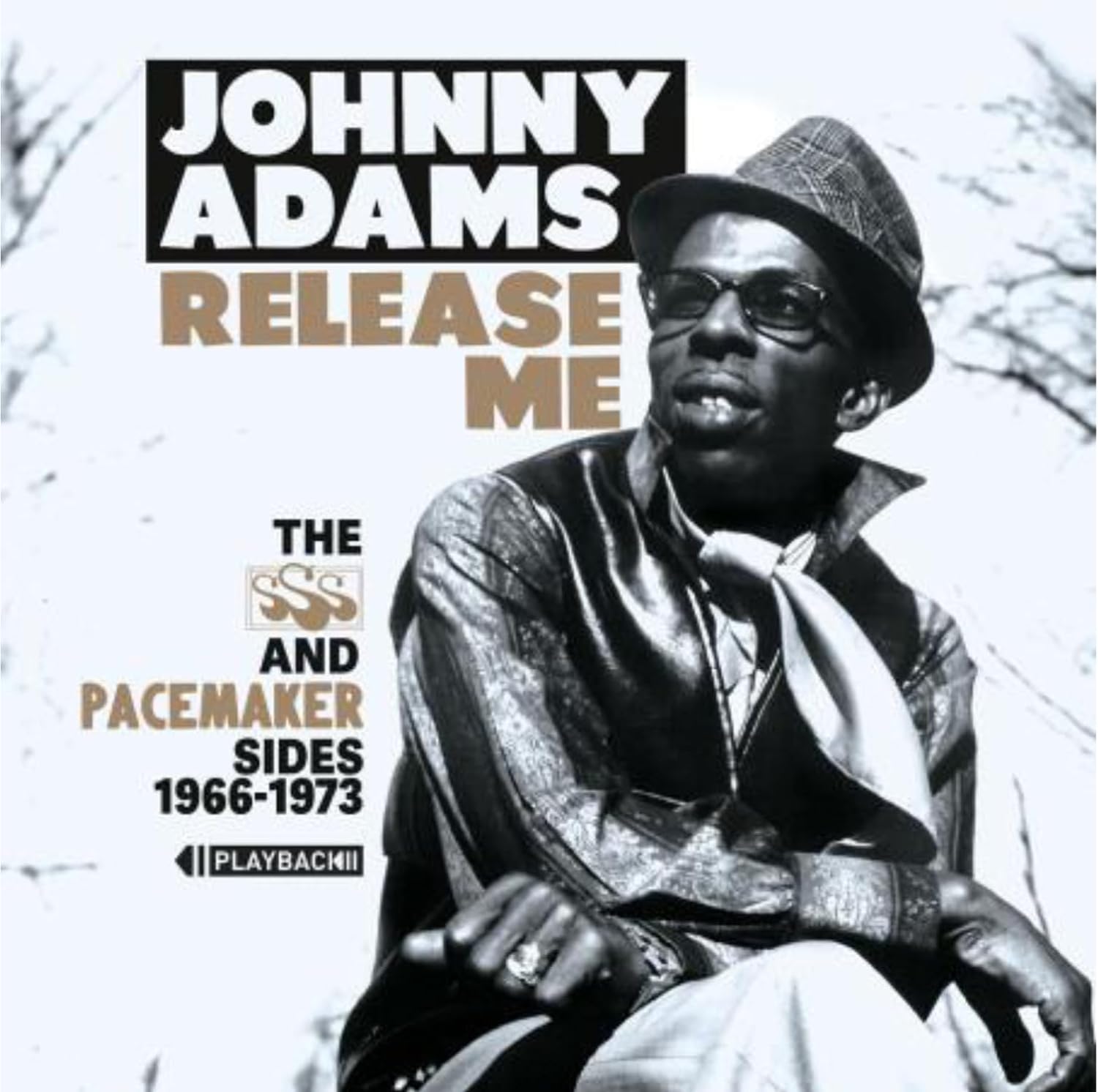
Next stop for Adams was Pacemaker Records. His time at Pacemaker Records and SSE International between 1966 and 1973 is documented on ‘Release Me,’ which was recently released by Playback Records.
The three singles Adams released on Pacemaker Records were recorded in Houston, not New Orleans. The first was the captivating Alton Valier composition ‘A Place Called Home.’ On the B-Side was the call to dance, ‘Spunky Onions.’ Both tracks were produced by Huey Meaux. However, despite the quality of the single it failed to trouble the charts on its release in 1966.
That was the case when the followup was released later in 1966. Both sides were penned by Meaux. The single was ‘Sometimes) A Man Will Shed A Few Tears Too,’ was chosen as the single, and featured an emotive vocal from Adams. Tucked away on the flip-side was the hidden gem ‘When I’ll Stop Loving You.’ The failure of the single was another disappointment for Adams.
He only released one more single on Pacemaker Records. This was a cover of Willie John’s ‘Let Them Talk,’ which featured ‘Operator’ on the flip-side. Again, the single failed commercially, and Adams left the label.
At the time, he was singing in local clubs and on the “Sugarcane Circuit.” It wasn’t a glamorous life travelling to gigs on the Greyhound bus. Nor was it particularly profitable. It paid the bills and put money in his pocket. However, there was no money for luxuries. So Adams took a job in the One Stop Record Shop, which was situated on South Rampart Street, in New Orleans. That was where he had a fortuitous meeting.
The One Stop Record Shop was owned by Joe Assunto. He knew Adams from their days at Ric and Ron, and decided to help him find a new label. Soon, Adams was signing another deal with Watch Records. The label paired him with arranger Wardell Quezergue.
Adams’ first single for Watch Records was the country song ‘Release Me.’ On the B-Side was ‘You Make A New Man Out Of Me.’ When this slice of country soul was released in 1968, it climbed to the upper reaches of the local charts and was a hit across the South. That was when Nashville-based Shelby Singleton bought the master, and released it on his SSS International label. It reached eighty-two on the US Billboard 100 and thirty-four on the US R&B charts. While this was the break Adams had been waiting for, little did he know that Singleton had also bought his contract.
Two singles were released on SSS International during 1969. The first was the Margaret Lewis and Myra Smith composition ‘Reconsider Me,’ which featured ‘If I Could See You One More Time’ on the B-Side. This heartachingly beautiful country-tinged song gave Adams the biggest hit of his career, when it reached number twenty-eight on the US Billboard 100 and eight on the US R&B charts.
Another Lewis and Smith composition ‘I Can’t Be All Bad,’ was chosen as the followup. On the B-Side was ‘In A Moment Of Weakness.’ The single was released later in 1969, and featured a needy, pleading vocal. It was, without doubt, one of Adams’ finest singles, and unsurprisingly reached number eighty-nine on the US Billboard 100 and forty-five on the US R&B charts.
In 1970 Adams release his debut album ‘Heart and Soul.’ It featured the four singles he had released on SSS International. Three other tracks from the album feature on the Release Me compilation. They’re ‘Lonely Man,’ ‘Living On Your Love’ and ‘A Losing Battle.’ They showcase a truly talented and versatile soul man who breathes life, meaning and emotion into a song. That was always the case
‘Real Life Livin’ Hurtin’ Man’ was penned by the Lewis and Smith songwriting team, and chosen for Adams next single. The pair also contributed the B-Side, ‘Georgia Morning Dew.’ Sadly, when the single was released in 1970 it failed to chart. This powerful, dramatic ballad was the one that got away for Johnny Adams.
Later in 1970, SSS International released ‘Proud Woman’ as a single. It was another Shelby Singleton production where brassy horns accompanied Adams’ vocal as he combined power, passion and emotion. Sadly, despite the quality of the single, it failed to trouble the charts.
A new version of ‘I Won’t Cry,’ which Adams had originally released as a single on Ric, featured on ‘Heart and Soul.’ It was released as a single later in 1970, with ‘I Want To Walk Through This Life With You’ on the B-Side. The single reached number forty-one in the US R&B charts. It was Adams first hit since ‘I Can’t Be All Bad’ in 1969.
In 1971, Adams recorded two singles for Atlantic Records. However, he also released the funky, soulful and hook-laden ‘South Side Of Soul Street’ on SSS International in 1971. It featured the cheating ballad ‘Something Worth Leaving For’ on the B-Side. It’s one of the hidden gems in Adams’ back-catalogue.
Two years passed before he released another single on SSS International. This was ‘I Don’t Worry Myself,’ which featured ‘Too Much Pride’ on the flip-side. The single was another fusion of funk and soul that featured an impassioned vocal from Adams. Despite the quality of the single, it failed commercially.
Later in 1973, Adams released his final single on SSS International. This was ‘Kiss The Hurt Away,’ which was produced by Singleton. Just like his previous single if failed commercially. It was another disappointment for the New Orleans-born soul man. There was more disappointment the following year.
Quezergue decided that SSS International had no future, and the label closed its doors in 1974. This came as a surprise to Adams who was hugely disappointed when he learnt that he was about to be dropped. It was the end of an era.
Twelve years later in 1986, P-Vine Records released the Johnny Adams’ compilation ‘I’ve Got Too Much To Lose.’ This oft-overlooked hidden gem returns for an encore on ‘Release Me,’ the new compilation released by Playback Records.
The twenty-six tracks on ‘Release Me’ are s reminder of a truly talented and versatile singer, who could bring lyrics to life. Adams’ vocals were heartfelt and full of emotion, sometimes hurt and heartache. Other times, they were soul-baring as he breathed life and meaning into the lyrics of the songs he recorded for Pacemaker Records, and then SSS International.
Sadly, Johnny Adams never reached the heights of his contemporaries, like Sam Cooke and Bobby Womack. However, he enjoyed a career that spanned forty years and five decades. During that period, Adams proved a versatile and talent performer, who was loved and respected in equal measures. While he never enjoyed fame and fortune, he enjoyed an enviable longevity, and during his long career, he continued to reinvent himself. That was the case between 1966 and 1973, the period that ‘Release Me’ covers. It’s a lovingly curated compilation of Johnny Adams’ music that will appeal to his old fans, and is the perfect introduction to one of New Orleans’ great soul men.
Johnny Adams-Release Me.
CANDI STATON-I’M JUST A PRISONER.
Candi Staton-I’m Just A Prisoner.
Label: Ace Records.
Format: CD.
By 1968, Candi Staton was twenty-eight, and still hadn’t embarked upon a solo career. However, that would soon change when Clarence Carter introduced her to Rick Hall. He would transform the former gospel singer’s fortunes.
Sixteen R&B hit singles were recorded at Rick Hall’s Fame Studios, in Muscle Shoals, including covers of Stand By Your Man and In The Ghetto. This led to Candi Staton being crowned the First Lady of Southern Soul. By then, she had come a long way.
Canzetta Maria Staton was born in Hanceville, Alabama, on March ‘13th’, 1940. Growing up, things weren’t easy for the Staton sisters. Their father was an alcoholic and gambler, and things got so bad that her mother left him. By then, their brother had moved to Cleveland and sent for his sisters. This was where they got their big break.
Having moved to Cleveland, Canzetta and her younger sister Maggie, met Bishop Jewell. He was amazed by the elder sister’s vocal talents and soon, the two sisters were paired with Naomi Harrison in the Jewell Gospel Trio. That was when Canzetta became Candi Staton.
Soon, the Jewell Gospel Trio were performing on the traditional gospel circuit during the mid-fifties, accompanying some of the biggest names. With Candi Staton as lead singer they accompanied everyone from CL Franklin to Mahalia Jackson and The Soul Stirrers. This however, was just part of the story.
Between 1953 and 1963, the Jewell Gospel Trio recorded for various labels, including Nashbro, Apollo and Savoy Records. However, when Candi Staton was seventeen, she left the Trio after five years as lead singer.
After leaving the Trio, Candi Staton returned home. That was where she met her first husband. Sadly, he was abusive and the pair parted.
Candi Staton was singing in Birmingham, Alabama, when one of the city’s top DJs heard her. He introduced her to someone from the Unity label who was looking for a female vocalist. The label released the single Upper Hand, which was the future First Lady of Southern Soul’s debut single.
After releasing Upper Hand, Candi Staton’s brother took her to a club which Clarence Carter frequented. The pair met in the club. It was a fortuitous meeting.
Clarence Carter bought Candi Staton out of her contract with Unity. He then introduced her to Rick Hall, the owner of the Fame label and legendary Fame Studios. Soon, the Fame label had a new addition to its roster.
This was Candi Staton, who in a few short years would be crowned the First Lady of Southern Soul. The day she signed for Fame, Rick Hall agreed a distribution deal with Capitol Records. Lady Luck was smiling on Candi Staton, and would continue to do so.
George Jackson had cowritten I’d Rather Be An Old Man’s Sweetheart (Than A Young Man’s Fool) with Clarence Carter and Raymond Moore. Originally, he had hoped Aretha Franklin would record the song. However, when he was unable to make contact with her, he gave the song to Candi Staton.
She had walked into the Fame Studios in Muscle Shoals and George presented her with the song. That night, Candi Staton recorded I’d Rather Be An Old Man’s Sweetheart (Than A Young Man’s Fool), Never In Public and For You with Rick Hall taking charge of production. One of the songs would become her debut single for Fame.
I’d Rather Be An Old Man’s Sweetheart (Than A Young Man’s Fool) was chosen, with For You on the B-Side. When it was released in 1969, the single reached number forty-six in the US Billboard 100 and nine in the US R&B charts. Across the border in Canada, the single reached number fifty-one. This was just the start of the rise and rise of Candi Staton.
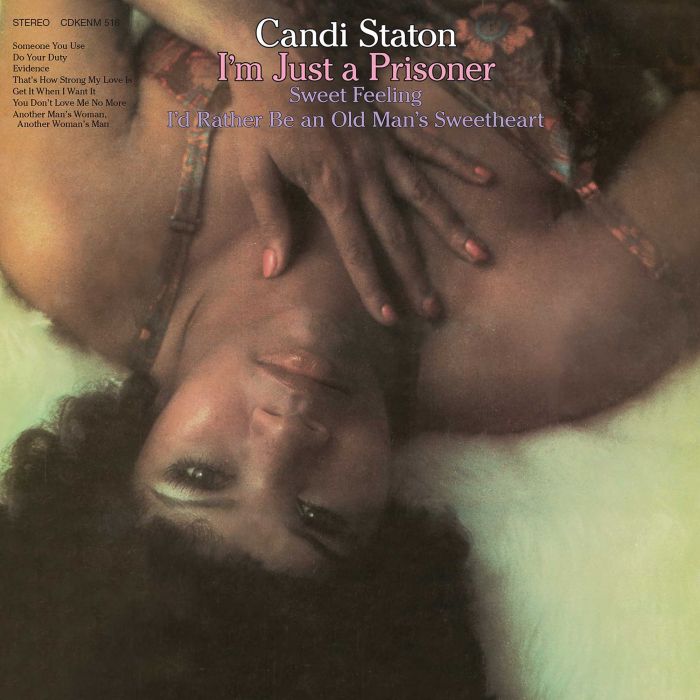
For the followup, I’m Just a Prisoner (Of Your Good Lovin’) a George Jackson and Edward Harris composition was chosen. On the flip side was Heart On A String. The single was released later in 1969, and reached number fifty-six in the US Billboard 100 and thirteen in the US R&B charts. In Canada, the single stalled at seventy-four. However, in America, Candi Staton’s star was in the ascendancy.
Never In Public was released later in 1969, and became Candi Staton’s third single. It didn’t replicate the success of her previous singles. Despite this, a decision was made to record what would become her debut album I’m Just A Prisoner. It’s just been reissued by Ace Records.
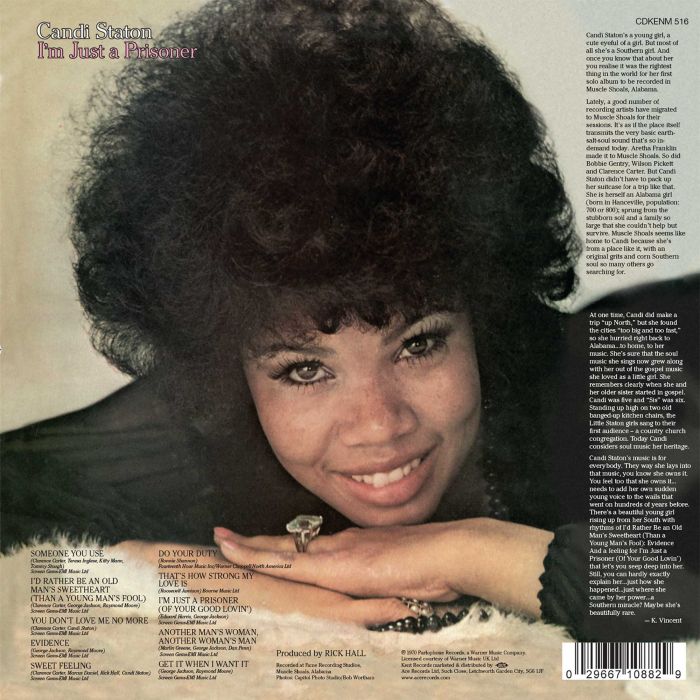
Recording of I’m Just A Prisoner took place at Fame Studios, in Muscle Shoals. Accompanying Candi Staton were the Fame Gang, while Rick Hall produced the album. Five new tracks were recorded and added to I’m Just a Prisoner (Of Your Good Lovin’), I’d Rather Be An Old Man’s Sweetheart (Than A Young Man’s Fool), Evidence, You Don’t Love Me No More and Sweet Feeling which had been released as singles and B-Sides. With the new tracks recorded, the release was scheduled for later in 1970.
I’m Just A Prisoner was released to plaudits and praise in 1970. Despite this, the album failed to chart. Three further singles were released. Sweet Feeling was the most successful, reaching number sixty in the US Billboard 100 and five in the US R&B charts. This was Candi Staton’s most successful R&B single in America. However, in Canada, the single only reached number seventy-eight.
Later in 1970, Evidence, which was Candi Staton’s fifth single for Fame gave her another R&B hit in America. She had come a long way since signing to Rick Hall’s Fame Records.
Fifty-three years after Candi Staton released I’m Just A Prisoner, her debut album remains a timeless classic. She breathes life, meaning and emotion into the lyrics into songs like Someone You Use, I’d Rather Be An Old Man’s Sweetheart (Than A Young Man’s Fool), You Don’t Love Me No More, That’s How Strong My Love Is and I’m Just a Prisoner (Of Your Good Lovin’). It sounds as if she’s lived and experienced the lyrics on songs about love and betrayal. In others, it’s as if Candi Staton has survived the hurt, has been treated badly and been used by men who didn’t deserve her love. She’s a strong woman, a survivor, who bares her soul on I’m Just A Prisoner, a powerful, poignant, beautiful and moving album from the future First Lady of Southern Soul, Candi Staton.
Candi Staton-I’m Just A Prisoner.

LAGOS THUGS-CHAOS.
Lagos Thugs-Chaos.
Label: Immensum Music.
Format: Digital Album.
Three years ago, Lagos Thugs, a twelve piece Afrobeat band, was formed in Lagos, the capital of Nigeria. That was the start of three year journey that has resulted in the recent release of their debut album Chaos, on Immensum Music. It’s a tantalising taste of a truly talented band with a big future ahead of them.
The Lagos-based Afrobeat band is led by vocalist and saxophonist Adetunji Adeyemi, a young and talented multi-instrumentalist. He and the rest of the band are responsible for Afrobeat with a difference. They incorporate elements of dub and jazz as well as traditional drumming from both Cuba and West Africa. The result is a potent, genre-melting sound that from the early days of the group proved popular.
It wasn’t until the ’29th’ of January 2021 that the band made their debut at Lagos’ Bature Brewery Vi. The event was organised by Nigerian trumpeter Etuk Ubong, and allowed the group to showcase their unique and inimitable take on Afrobeat. However, soon changes were afoot within the band.
Just a few weeks later, there were fifteen members of the group, who by then, had written new material. This they showcased when they secured their first residency.
In March 2021, just two months after making their live debut, the Lagos Thugs started a Friday night residency where it all began for them, the Bature Brewery. Each Friday night, the up-and-coming Afrobeat band were the headliners. Soon, though, they were playing further afield, and reaching a new and wider audience.
This happened after the band played a concert on the Sofar Sounds website in June 2021. Suddenly, Lagos Thugs’ music was being heard worldwide.
Meanwhile, the band continued to play clubs and were regulars at Nigerian jazz festivals. Lagos Thugs were also chosen to open for Seun Kuti. This introduced their music to a wider audience. The group had a come a long way in a relatively short space of time. However, there was one thing that they still had to do, record a single.
This was something they wanted to do. So in late-2021, the band contacted DJ Ness, of Ness Radio, and the result was their debut single Innocent Blood (Let It Be Known). So happy were they with the single that soon, plans were afoot to record an album.
2022 was a busy year for Lagos Thugs. The band began work on their highly anticipated debut album.
That year, Lagos Thugs won the Movement Of The People Award. The award was named after the political party formed by Fela Kuti in 1979, and revived by his son Seun in November 2021. When the band went to collect their award at the Felabration festival they had a fortuitous meeting.
That night, Lagos Thugs met Duke Amayo of the Brooklyn-based Afrobeat band Antibalas. He was so impressed with the award-winner’s music that he decided to feature their music in a Netflix documentary about Antibalas. This was a huge boost for Lagos Thugs, who were planning to release their debut album in 2023.
That album is Chaos, which was co-produced by DJ Ness and the Lagos Thugs. They showcase their unique and innovative take on Afrobeat on four genre-melting tracks that lasts thirty-six magical minutes.
Opening Chaos is Kalakuta President, an impassioned, uplifting and sometimes mesmeric tribute to the founding father of Afrobeat, Felt Kuti.
The band’s sophomore single is New Improved Elephant (N.I.E). Straight away, the brass section and bass are to the fore as Afrobeat and jazz combine as the arrangement meanders melodically along. Soon, beautiful, soulful, heartfelt vocals are sung in a call and response style are added to this joyous genre-melting track as it sashays along showcasing Lagos Thugs’ unique sound.
Wetin I See features Congolese singer, guitarist, composer and Afrobeat master Kiala Nzavotunga. Again, Lagos Thugs fuse Afrobeat as blazing, scorching and soaring horns combine with the rhythm section and percussion. They set the scene for a vocal masterclass which is is accompanied by female backing vocalists. They combine soulfulness and emotion with a sense of urgency before this powerful and moving track reaches a crescendo and leaves a lasting impression.
However, Lagos Thugs have kept the best until last. Innocent Blood (Let It Be Known) was their debut single, and initially, is understated as elements of Afrobeat and jazz melt melodically into one. Blazing horns kick in as the journey continues and the band stretch their legs, and showcase their considerable skills. When the vocal enters it’s emotive and heartfelt as it delivers powerful lyrics that are full of social comment. Just like previous tracks, the female backing vocalists play a huge part in the sound and success of twelve minute Magnus Opus that closes Chaos on a resounding high.
For anyone who has even a passing interest in Afrobeat, Lagos Thugs’ much-anticipated debut album Chaos is an album they must hear. It showcases a truly talented and versatile band who honed their sound playing live in Nigeria. This has paid off.
Lagos Thugs are a multitalented band have recorded an album that’s variously powerful, poignant, uplifting, emotive, joyous and melodic. During the four genre-melting tracks on Chaos the band take the listener on a musical journey that lasts thirty-six magical minutes.
Chaos is a tantalising taste of the multitalented Lagos Thugs as they seamlessly fuse disparate genres to create their own unique, inimitable and irresistible take on Afrobeat. Hopefully, it won’t be long before Lagos Thugs return with the followup to Chaos.
Lagos Thugs-Chaos.

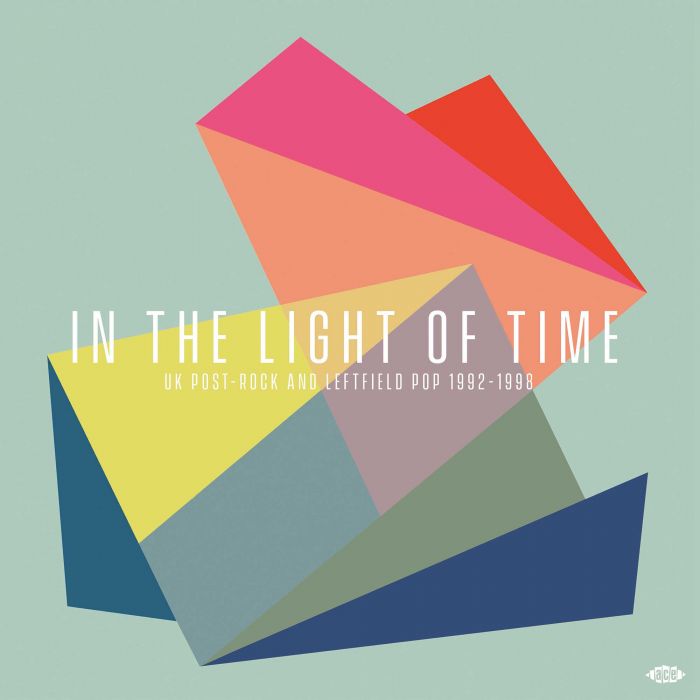
IN THE LIGHT OF TIME-UK POST-ROCK AND LEFTFIELD POP 1992-1998.
In The Light Of Time-UK Post-Rock and Leftfield Pop 1992-1998.
Label: Ace Records.
Format: CD.
Release Date: ‘29th’ September 2023.
Back in the early nineties, a number of British bands decided it was time to explore a different side to pop and rock music. They were going to push musical boundaries and create innovative music. It was a case of daring to be different.
Some succeeded, creating groundbreaking music fusing elements of seventies art rock, post-punk and minimalist music with the new and burgeoning electronic scene. This found favour with some of the established indie labels including 4AD and Rough Trade, as well as newcomers Domino and Too Pure. A new as yet unnamed scene was about to be born.
Early releases were well received by the music press. Then in an article in The Wire in 1994, music scribe Simon Reynolds used the term “post-rock” to describe this new sub-genre.
Among the British exponents of the new genre were Bark Psychosis, Disco Inferno, Main, Moonshake, Pram and Seefeel. That was despite their music not sounding similar.
Instead, the bands all believed in deconstructing music, and using the studio to manipulate the music they were making. This wasn’t new and everyone from The Beatles and Beach Boys to the pioneers of dub had used a recording studio to manipulate the new music they made.
Some bands rejected the role of lead vocalist. That was in rock music’s past they decided. Other groups still had a vocalist, but their lyrics were quiet, minimalist, simplistic, dreamy or almost silent. For some groups, the vocal was akin to a new instruments. Much of what the first wave of post-rock groups were doing was very different from what had gone before. Despite that, these new groups were happy to refer to their new music as post-rock as it had a link to the rock music of the past.
By 1994, Britpop took centrestage in the British music press and the charts. It harked back to the past, and there was a sense of nostalgia and even familiarity to Britpop. As it dominated the headlines, post-rock’s exposure shrunk. However, in other parts of the world some of the groups found an audience.
During the second half of the nineties, a new wave of post-rock bands were formed. They relied more on technology which by then, was much cheaper. The new bands were much more willing to embrace different genres and influences when they created their music. Sometimes, the music sounded emotive and introspective. Other times, there was a complexity to the music that made it almost impossible to replicate live. Especially given the reliance on technology, and that some of the proponents of post-rock weren’t exactly talented musicians.
However, to release the music being released by the latest post-rock bands bedroom labels were founded. They embraced the DIY culture of punk and released the second wave of post-rock.
By the late-nineties, post-rock was evolving. It was no longer the broad musical church it once was. Instead, post-rock was mostly instrumental guitar-based music. Gone was the much more complex music of the early nineties.
Many fans of the sub-genre preferred the original post-rock sound. It features on In The Light Of Time-UK Post-Rock and Leftfield Pop 1992-1998, which will be released by Ace Records, on the ‘29th’ September 2023. It features seventeen tracks that nowadays, would be categorised as art rock, leftfield pop or post punk rather than post-rock. However, in the nineties that’s how many of the tracks on the compilation were described.
Opening the compilation is Disco Inferno, a trio formed in Essex in 1989. Five years later in 1994, they released their second EP on Rough Trade. The lead track was Second Language. It’s a slice of post-pop which was the highlight of an EP that failed to find a wider audience.
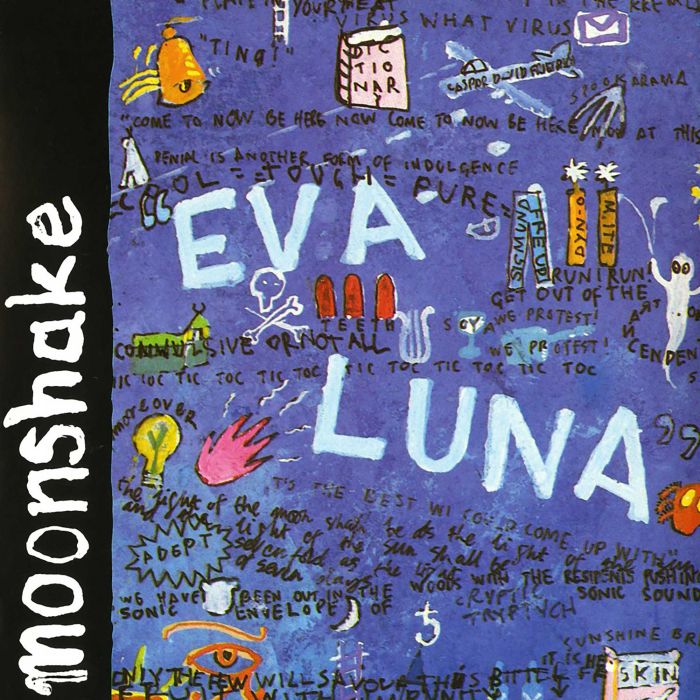
Moonshake was an Anglo-American group that fused experimental music with post-rock. City Poison is a track from their 1992 album Eva, which was released on the Too Pure label. The vocal is fuelled by anger, emotion and emotions on this powerful track as disparate genres are combined by the rest of the group.
Prior to forming Main, Robert Hampson had been a member of psychedelic drone band, Loop. In 1994, his new band released their debut album Motion Pool. It featured Spectra Delay, which was an ambitious fusion of post-rock and psychedelia with electronic and abstract music.
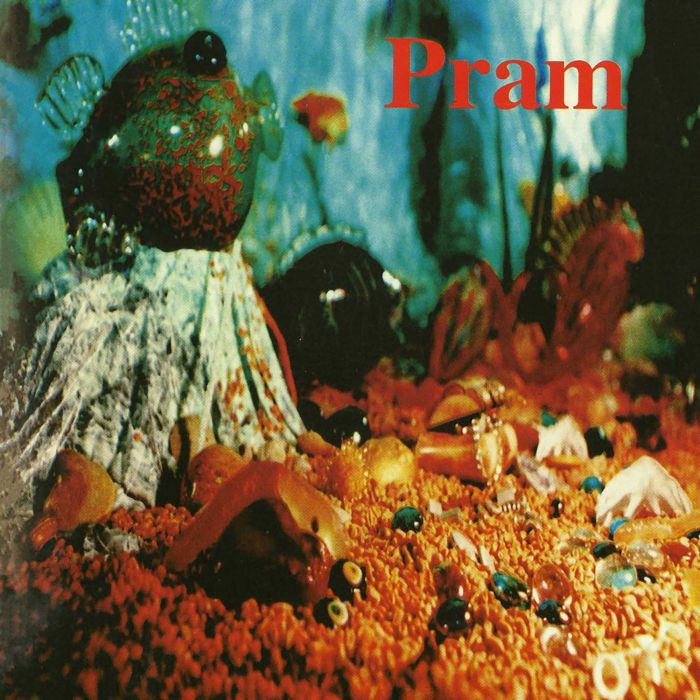
In the early days, Pram deployed everything from children’s toys and instruments to records found in charity to make music. By 1995, they had released their album Saragossa Sea on the Too Pure label. It features Loose Threads. The vocal is ethereal and delivered against an understated arrangement where perfect pop and jazz are combined, to create one of the highlights of the compilation.
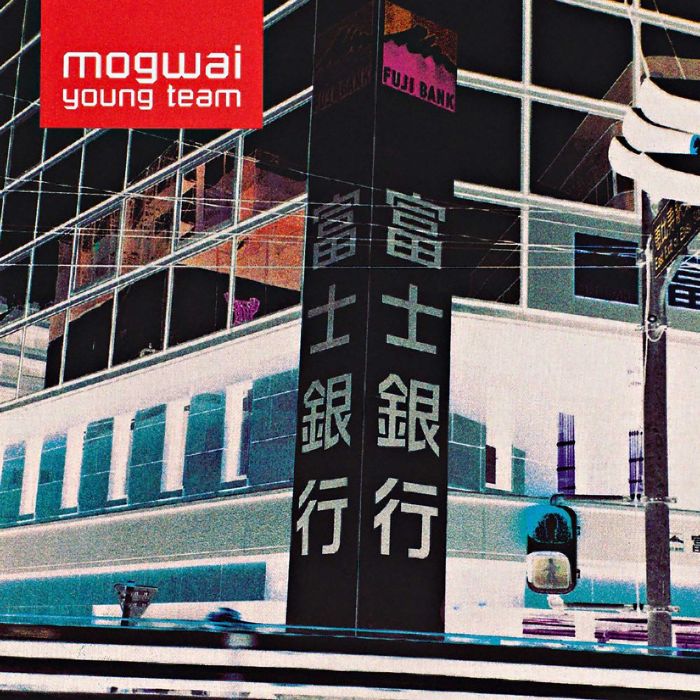
Glaswegian post-rock pioneers Mogwai are, by far, the best know group on the compilation. They released their debut album Young Team, in 1997. It features A Cheery Wave From Stranded Youngsters which is a tantalising taste of what was to come from this groundbreaking group.
Appliance were formed in Exeter and were obviously influenced by seventies Krautrock. That’s apparent on their 1998 single In The Event Of Just Looking. It has a dark, hypnotic and mesmeric sound where elements of Krautrock, post-rock and electronic music melt into one.
Dreamy, ethereal, lysergic, mesmeric beautiful describes I Am The Sub-Librarian by Piano Magic. It’s a track taken from their 1998 album Rocket Girl.
Closing the compilation is Through You by Seefeel. it’s taken from their 1993 genre-melting album Quique. Elements of Intelligent Dance Music and ambient are combined to create a dramatic and cinematic soundscape.
For anyone interested in post-rock or leftfield pop released in Britain during the nineties, this seventeen track compilation may be of interest to them. There’s a few familiar faces on In The Light Of Time-UK Post-Rock and Leftfield Pop 1992-1998. This includes Mogwai. They’re the nearest to a household name on the compilation.
Other bands on the compilation aren’t as well know. They’re not even household names in their household. However, back in the nineties some of them were pioneers British post-rock and leftfield pop scenes. Some released singles, EPs and albums that failed to find a wider audience and nowadays, are regarded as hidden gems or sub-genre classics. A selection of those can be found on In The Light Of Time-UK Post-Rock and Leftfield Pop 1992-1998.
In The Light Of Time-UK Post-Rock and Leftfield Pop 1992-1998.
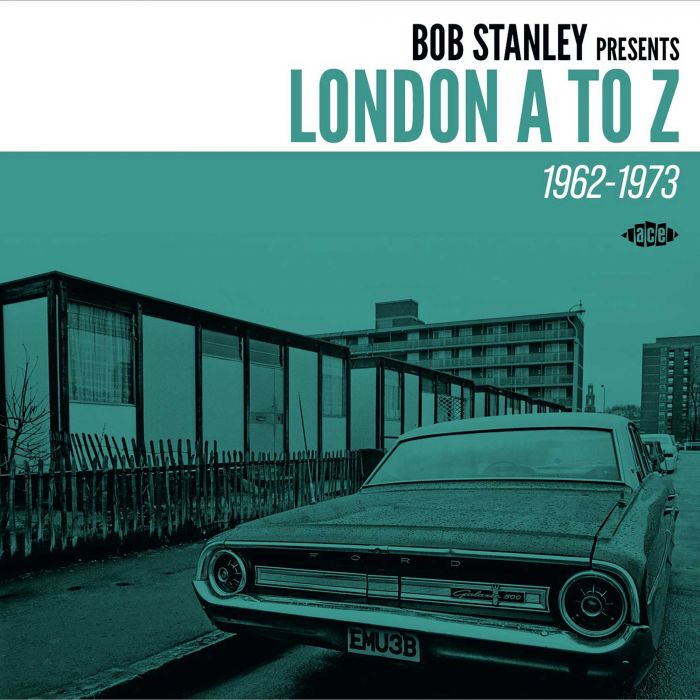
BOB STANLEY PRESENTS LONDON A TO Z 1962 TO 1973.
Bob Stanley Presents London A To Z 1962 To 1973.
Label: Ace Records.
Format: CD.
Release Date: ‘29th’ September 2023.
During a discussion on the ‘20th’ September, 1777, Samuel Johnson said: “Why, Sir, you find no man, at all intellectual, who is willing to leave London. No, Sir, when a man is tired of London, he is tired of life; for there is in London all that life can afford.”
Since then, countless artists, poets, writers and musicians have headed to London in search of fame and fortune. They arrived from all over Britain, and the lucky few went on to become household names.
Others despite their prodigious talent weren’t so lucky. Sadly, they didn’t get the break they deserved and they returned home to the drudgery of life in a small town. It was a far cry from London, where on arriving in the city the first thing many newcomers bought was an A To Z.
This is the same A To Z that every London cabbie uses to navigate their way across the city. All the familiar landmarks can be found as well as parts of the city that tourists won’t be so familiar with. This includes Alperton, Childs Hill, Honor Oak, Ladywell, Tooting Graveney and the somewhat sinister sounding Shooters Hill. These and other parts of city were also home to many musicians.
In the decades that followed, many music lovers visiting London knew what part of the city different singers and bands lived. Folk singer Sandy Denny lived in Wimbledon before moving to Muswell Hill, which was also home to The Kinks. Then there was Archway Road which was home to a young Rod Stewart and Holloway Road where producer Joe Meek lived. All across the sprawling city singers and bands who had moved to London based themselves in their quest for fame and fortune.
Some of these singers and bands London landmarks and parts of the city in song. This includes the twenty-four tracks on Bob Stanley Presents London A To Z 1962 To 1973. An imaginary cockney cabbie who knows the streets of London like the back of his hand will review this new compilation.
Where to guv? Cor blimey you’ll never guess who I had in the back of my cab? Than that Bob Stanley geezer from the group Saint Etienne. Seemed like a nice bloke. From up north he is. He was telling me he had a new compilation out. It looks pretty good. I said I remember all this music. I’ll tell you about it on the journey. Stick your belt on chief and I’ll start the meter.
The John Barry Seven and Orchestra open the compilation with Cutty Sark. Unlucky chief that’s south of the river, and is going to cost you extra. This beautiful, cinematic track was released as a single on Columbia in 1962, and sixty-one years still paints pictures in the mind eye.
So does Sunny Goodge Street which was written by Sunshine Superman Donovan, and was covered by Marianne Faithfull on her 1966 album North Country Maid. This track is one of the highlights of an oft-overlooked hidden gem where East meets West as disparate genres melt seamlessly into one.
Jeffrey Goes To Leicester Square now I remember that track. It’s from Jethro Tull’s sophomore album Stand Up, released in 1969 on Island. This is the second in a triumvirate of tracks written by Blackpool-born Ian Anderson about Jeffrey. The first was A Song For Jeffrey on their bluesy debut This Was. However, by the followup, they’re fusing progressive and folk rock as their trademark sound starts to take shape. The album topped the UK charts and was certified silver, and gold in the US.
Sorry guy couldn’t slow down there as the lights were about to turn red. So you’re saying Goodbye Post Office Tower Goodbye. That was a track from Cressida’s 1971 sophomore album Asylum, which was released on Vertigo. Sadly, by then the group had spilt-up. They showcase their considerable talents on this symphonic progressive rock opus that tells the story of a sad and angry man who was interviewed for a job that he never got. It’s sure to strike a nerve with many people. I’ve had many in the back of my cab.
Primrose Rose Hill now you say guv. Are you sure? That’s a fair old trek, and a track from John and Beverley Martyn’s album Road To Ruin. It’s a track from their sophomore alum which was released in 1970 on Island. Sadly, this was the last album the couple released. Moving, poignant and cinematic with Beverley Martyn taking charge of the vocal on a stunning track where elements of folk, jazz and blues melt into one.
Do you like Nick Drake boss? You do. You should check out the 1986 album of unreleased songs, Time Of No Reply. One of the highlights is Mayfair. That’s where we’re heading you say. No problem, mind you the rush hour traffic might be a bit tricky though. He wrote this upbeat song before signing to Island, and releasing a trio of stunning albums that sadly, never enjoyed the commercial success they deserved.
Hampstead Way guv, sure we’re crisscrossing the city. That was a song by the late Linda Lewis. It’s taken from her 1971 album Say No More, released on the Reprise label. A talented singer with a wide vocal range, she sadly, never enjoyed the commercial success she deserved. This understated and slightly funky album track is a reminder of a much missed and truly talented singer.
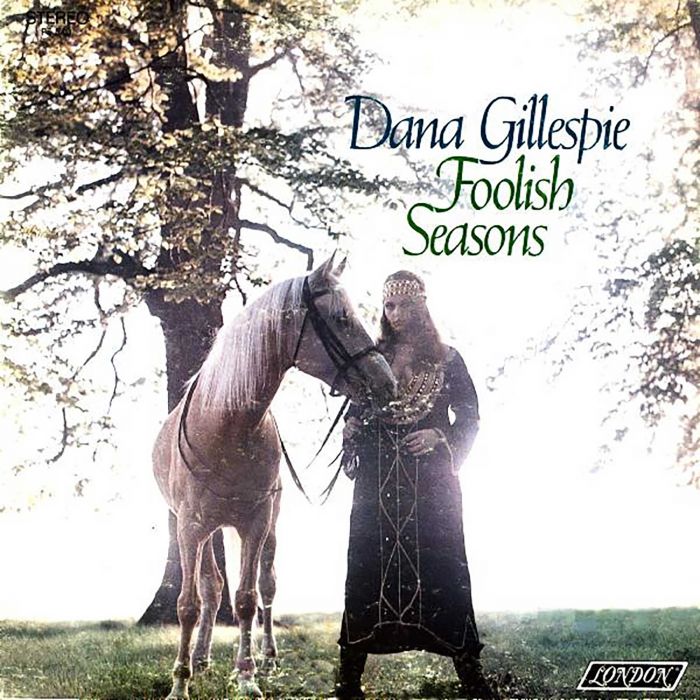
So is Dana Gillespie, who released her Foolish Seasons album on London in 1968. It featured the lysergic sounding London Social Degree which was written by Billy Nicholls and produced by Wayne Bickerton. That’s a trip you don’t want to take guv. Stick to my cab.
We’re all over the Streets Of London. I could take you to Kew Gardens. I remember the song well. It was written and produced by Croydon-born folk singer Ralph McTell, and featured on his 1967 My Side Of The Window. The song features a beautiful almost pastoral arrangement by Tony Visconti.
Parliament Hill that’s at the bottom right hand corner of Hampstead Heath. It’s also a track from the third album by Magna Carta, Songs From Wasties Orchard, which was released on Vertigo, in 1971. It’s one of the highlights of this a gorgeous collections of tracks from the folk rockers who take the listener on a trip across Britain.
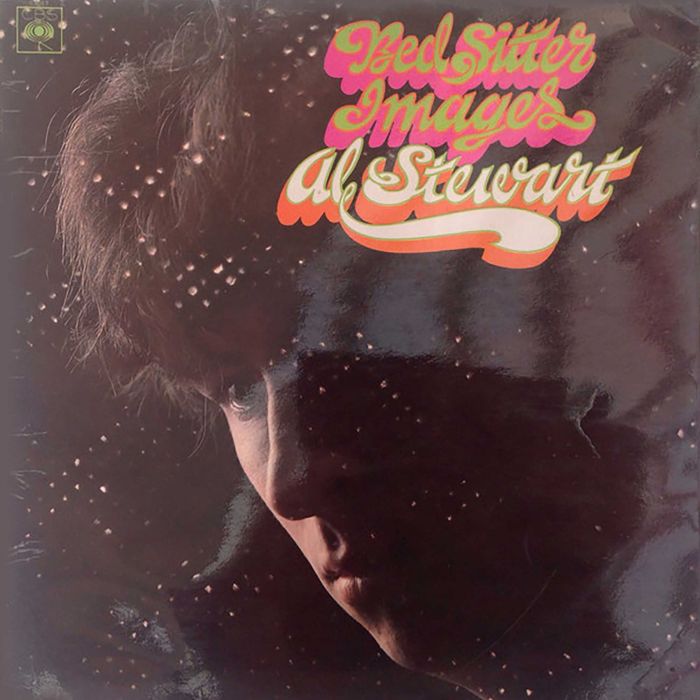
Swiss Cottage Manoeuvres reminds me of my driving test guv. And of course Al Stewart’s 1967 debut album Bedsitter Images. The Greenock-born singer-songwriter was just twenty-three when he released the album, which was produced by Roy Guest. Initially the track is understated before strings sweep in and accompany the vocal which paints pictures of life in late-sixties London.
Where do you want heading now? Vauxhall To Lambeth Bridge, that was a track by Julie Driscoll, Brian Auger and The Trinity. It featured on their 1969 album Streetnoise and is evocative and cinematic as Julie Driscoll’s take centrestage as she delivers the lyrics against an understated arrangement. It’s a quite beautiful and poignant way to close Bob Stanley Presents London A To Z 1962 To 1973.
You want out here guv. No problem, but we better settle up first. Cor blimey never had a fare like this before. We’ve crisscrossed the city and I’ve been south of the river several time. I make that £2,145, and a tip is optional. Cash if possible guv. Don’t like cards and cheques in my experience tend to bounce. I’m sure that yours don’t you seem like a nice bloke. And you’ve good taste in music.
You’ll enjoy Bob Stanley Presents London A To Z 1962 To 1973, another carefully curated collection of tracks from one of the most important periods in British music. There’s elements of blues, jazz, pop and rock as well as everything from folk and folk rock to progressive rock on this compilation.
Many of the artists are at the start of their career, and the likes of Al Steward and John Martyn went on to enjoy long and successful careers. Sadly, commercial success and critical acclaim eluded many of the artists on the compilation. This includes Nick Drake, and sadly, his music never found the wider audience it deserves until after his death.
The career of other artists and groups on the compilation was short-lived, and despite their undoubtable talent the albums they released weren’t successful. Like many others before them, it was a case of what might have been? Bob Stanley Presents London A To Z 1962 To 1973 features tracks from some of these artists, as well as some familiar faces on this latest lovingly curated compilation.
The Imaginary Cabbie hopes that everyone could understand and enjoys his cheeky cockney chat. He may return if Bob Stanley completes a second instalment. Until then, it’s been a pleasure people.
Bob Stanley Presents London A To Z 1962 To 1973.

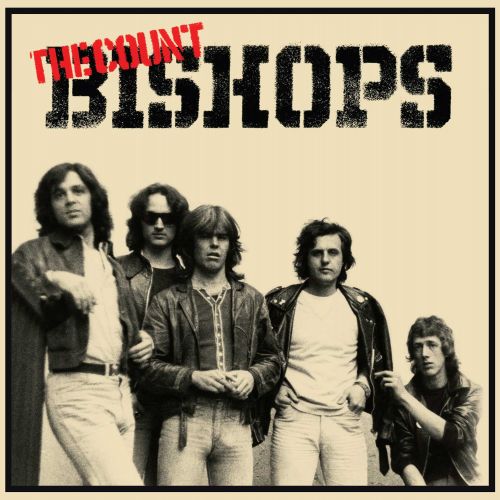
CULT CLASSIC: THE COUNT BISHOPS-THE COUNT BISHOPS.
Cult Classic: The Count Bishops-The Count Bishops.
During 1977, a genre that has continued to divide opinion was at the peak of its popularity, punk. This anti music was championed by critics and cultural commentators who were willing to overlook that many of the musical charlatans within punk bands could barely play their instruments and were musically illiterate. Music had changed the critics said, and many thought not for the better.
Despite this, DJs championed the latest punk singles on their late-night radio shows and waxed lyrical about the new genre. This was, they said the future of music.
Punk, its champions explained, was about rejecting the supposed excesses of seventies mainstream music and embracing and adopting a DIY ethos. Many punk singles were released on newly founded independent labels that sprung up across the country.
The singles were fast, edgy and featured arrangements that were pared back with lyrics were full of anger, angst and frustration. Thankfully, many of the singles were also short as these chippy class warriors ran out of things to say after a couple of minutes.
Many of these singles turned out to be one-offs and the bands sank without trace. Some punk bands enjoyed a degree of success and went on to enjoy a degree of longevity.
Meanwhile, in 1977, an eclectic selection of talented bands were playing live and releasing albums that deserved to find a much wider audience. This included The Count Bishops, who released their eponymous album on the Chiswick label in 1977. However, the story began two years earlier.
It was London, in the spring of 1975, when The Count Bishops were formed when members of the group Chrome joined forces with American vocalist Mike Spenser. The group combined elements of blues, R&B and rock. They were also influenced by sixties garage rock and the seventies pub rock scene. These influences would feature when the group played live.
By July 1977, the line of The Count Bishops had changed. The group were in Paris when Mike Spenser place the first in a series of transatlantic calls to Johnny Guitar. After some persuading, the American guitarist packed two Les Pauls and flew to Britain.
That was where Johnny Guitar was reunited with Mike Spenser who introduced him to guitarist Zenon DeFleur. He had been given the name after being discovered passed out on the floor during the group’s first recording session.
It took a few weeks for the three members of the band to recruit a new rhythm section. Drummer Paul Balbi and bassist Steve Lewins joined The Count Bishops and the following month, the new lineup made entered the studio for the first time.
The group were joined at Pathway Studios by engineer Barry Farmer. They recorded a total of thirteen tracks and four were chosen to feature on the group’s debut EP.
Route 66, I Ain’t Got You, Beautiful Delilah and Teenage Letter featured on The Count Bishops’ Speedball EP. It was released by Chiswick Records in 1975, and featured elements of garage rock, pub rock, R&B and rock ’n’ roll. Sadly, the EP wasn’t a commercial success and it was another year before the group released a single.
This was Train, Train which was released in 1976 by Chiswick Records. However, just before the release of the single Mike Spenser left the band. It’s alleged that this was because of incident involving a glass door and the singer’s boot.
Having lost their vocalist, Johnny Guitar and Zenon DeFleur shared lead vocal duties during part of 1977. This arrangement was only temporary.
Before the group recorded their eponymous album, The Count Bishops, they decided to recruit a new vocalist. This was Australian Dave Tice who previously, had been a member of Buffalo. He would feature on most of the songs on the album.
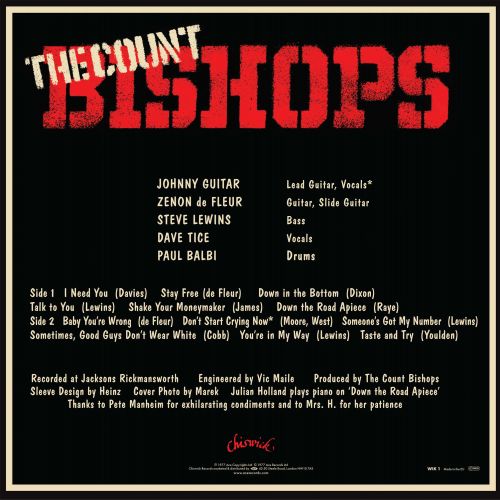
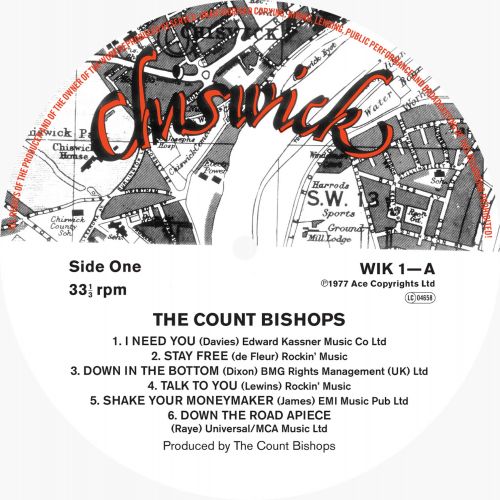
Twelve tracks were chosen, and were a mixture of covers and new songs. Zenon De Fleur penned Stay Free and Baby You’re Wrong while Steve Lewins contributed Talk To You, Someone’s Got My Number and You’re In My Way. Covers included the Ray Davies’ composition I Need You, Willie Dixon’s Down In The Bottom, Elmore James’ Shake Your Moneymaker, Don Raye’s Down The Road Apiece, Ed Cobb’s Good Guys Don’t Wear White and Taste and Try which was written by British blues rock singer Chris Youlden. The other track on the album was a cover of the blues Don’t Start Crying Now which was written by Slim Harpo with producer JD Miller.
The Count Bishops were once again a five piece band and headed to Jackson Studios to record their eponymous album. It featured a rhythm section of drummer Paul Balbi and bassist Steve Lewins. Zenon DeFleur switched between guitar and slide guitar. Johnny Guitar was the group’s lead guitarist and took charge of the vocal on Don’t Start Crying Now. Meanwhile, new recruit David Tice made his debut as vocalist. Making a guest appearance on Down The Road Apiece was pianist Julian Holland. Just like the single Train, Train, the group produced the album which was engineered by Vic Maile.
The result was The Count Bishops which featured the London-based band at their tightest on an album that’s a mixture of original material as well as covers of blues and tracks from the sixties that also inspired the band. They were fans of sixties beat music so it was fitting that a cover of The Kinks’ I Need You opened the album. This set the bar high.
Over the next eleven tracks, the group never miss a beat as they combine elements of blues, pub rock, R&B and rock ’n’ roll during a series of driving, energetic and sometime raucous, riotous and rollicking, fist pumping, good time music that was honed in the bars and clubs of London. The Count Bishops was an album that should’ve introduced the group’s music to a much wider audience.
Sadly, that wasn’t the case, and The Count Bishops wasn’t a commercial success when it was released in 1977. Nor was the single Baby You’re Wrong when it was released later that year. It was a huge disappointment for a truly talented group.
Despite the disappointment, The Count Bishops returned in 1978 with the album Live. It was a tantalising taste of the band when they played live.
During 1978, The Count Bishops also released two singles, I Take What I Want and I Want Candy. This led to an appearance on the British television show Top Of The Pops. It looked as if the London-based band were about to make a breakthrough.
Meanwhile, the group were recording their next studio album studio album Cross Cuts. By then, bassist Steve Lewins had been replaced by Pat McMullan and Ruan O’Lochlainn was drafted in to add horns. The album took eighteen months to complete and was meant to be band’s breakthrough album. It was eventually released in March 1979. Just a few days later tragedy struck for The Count Bishops.
On the ‘18th’ March 1979, Zenon DeFleur died when he crashed his Aston Martin which he had lovingly restored. It was a devastating blow for his family, friends and The Count Bishops.
Sadly, the anticipated breakthrough never happened Zenon DeFleur’s death.
Despite that, The Count Bishops headed out on tour with Blitz Krieg of Blast Furnace deputising on guitar.
Not long after this, the group were looking for a new drummer when Paul Balbi was deported back to Spain.
The Count Bishops recruited Charlie Morgan who had played with Elton John and the Tom Robinson Band on drums. This was only temporary arrangement but the group continued to tour and even toured Australia.
This meant that former drummer Paul Balbi was able to rejoin the group albeit only for their Australian tour.
In 1980, The Count Bishops split-up having never reached the heights that they should’ve. It was a case of what might have been for the London-based band. who were at the peak of their powers on their 1977 eponymous album which is now considered to be their finest hour and is belatedly is now finding the wider audience it so richly deserves.
Cult Classic: The Count Bishops-The Count Bishops.
ORNETTE COLEMAN-FRIENDS AND NEIGHBORS: LIVE AT PRINCESS STREET.
Ornette Coleman-Friends and Neighbors: Live At Princess Street.
Label: BGP.
Format: LP.
Nowadays, saxophonist, trumpeter, violinist and composer Ornette Coleman is recognised as one of the founding fathers of the free jazz movement. He released his debut album Something Else in 1958 on the Contemporary label. The flowing year, 1959, he released Tomorrow Is the Question! After this, the pioneering musician signed to Atlantic and later that year, released an album that was akin to a statement of intent.
This was She Shape Of Jazz To Come, a unique and innovative album that combined elements of avant-garde and free jazz. Although this groundbreaking album wasn’t a commercial success, nowadays, it’s regarded as a landmark album and a genre classic.
At Atlantic, Ornette Coleman was recording and releasing the most ambitious album of his career. This included 1960s Change Of The Century and 1961s This Is Our Music. However, his fourth album for Atlantic surpassed everything that he head previously released.
On ‘21st’ December 1960, Ornette Coleman entered the studio with a double quartet. They played simultaneously on the album, with the bandleader’s own quartet featured on the left hand channel, while the second quartet featured on the right hand channel. The music the quartets produced was ambitious, innovative, way ahead of its time and far removed from the jazz music that had gone before. On the two lengthy movements the rhythm sections providing a multilayered rhythmic backdrop, while added what a series of freeform commentaries with some pre-composed passages. Incredibly, this album of continuous free improvisation was recorded in one take with no overdubbing or editing. When it was released nine months later and was a gamechanger
In September1961, Ornette Coleman’s sixth album Free Jazz: A Collective Improvisation was released. Some critics realised and recognised the importance of what was a groundbreaking Magnus Opus. It was also an album that lent its name to a nascent musical movement, and free jazz was born.
The album also inspired future generations of jazz musicians. Some even copied Ornette Coleman’s use of a double quarter. This include John Coltrane on his 1965 classic album Ascension.
After the release of this landmark album, Ornette Coleman was hailed as one of the pioneers of new free jazz movement. The followup to Free Jazz: A Collective Improvisation was Ornette! It was the first of two albums he released during 1962. The second was Ornette on Tenor, which was also his swansong for Atlantic.
Following his departure from Atlantic, Ornette Coleman’s music evolved and he continued to innovate. His sound became more angular as he moved towards the avant-garde. It was also around this time that his quartet disbanded and he formed a trio with drummer Charles Moffett and bassist David Izenzon. Sometimes, the trio were augmented by string players. It was a new and exciting chapter in the career of a pioneering musician.
Meanwhile, Ornette Coleman started to teach himself to play trumpet and violin, which he played left-handed. Without the same conventional musical technique his contemporaries had, he used the instruments in a very different way. Instead, he used them to make big, hold and uninhibited musical gestures. He used these to punctuate the musical soundscapes he was making.
Influencing Ornette Coleman’s music at this time was his friend, the avant-garde saxophonist, anger and composer Albert Ayler. Another influenced was bassist Charlie Haden who joined the trio and transformed it into a two bass quartet. The bassist would later, become an important member of a new quartet.
In 1965, the live album Town Hall was released. Ornette Coleman had recorded the album in 1962, so it wasn’t truly representative of the music he was making.
This included the album Chappaqua Suite which he recorded in 1965. It was commissioned by director Conrad Rooks for the soundtrack to his film Chappaqua. However, when he heard the music he decided not to use it in the film in case its inherent beauty and emotion would detract from what was a powerful, moving and sometimes disturbing movie. This hugely underrated and oft-overlooked album was released by Columbia in 1966. By then, Ornette Coleman had signed to Blue Note Records.
Ornette Coleman recorded what became the avant-garde live album At the Golden Circle Stockholm, on the December the ‘3rd’ and ‘4th’ 1965, at the Gyllene Cirkeln jazz club. It was the first album where the saxophonist also played trumpet and violin. He had spent the three years since leaving Atlantic teaching himself how to play the instruments, then showcased his newfound skills on his Blue Note debut which was released in 1966.
So was the studio album The Empty Foxhole. Joining Ornette Coleman was his ten year old son Denardo who played drums and bassist Charlie Haden. However, this free jazz album by the trio was released to mixed reviews. Later, some critics reevaluated the album which nowadays, is regarded by some as a hidden gem.
In 1967 The Music Of Ornette Coleman-Forms and Sound was released by RCA Victor. It was another live album that had been recorded in 1967. The Philadelphia Woodwind Quintet feature on Forms and Sounds, while the Chamber Symphony of Philadelphia String Quartet play on Saints and Soldiers and Space Flight. Meanwhile, Ornette Coleman contributed bluesy trumpet interludes on an ambitious, complex and innovative album of cerebral free jazz. It was hailed as one of the most important albums of his career.
During 1968, Ornette Coleman released two albums. This included the live album Ornette At 12, which was produced by Bob Thiele. When It was released by Impulse! it received mixed reviews. However, like The Empty Foxhole two years earlier, it’s an underrated album.
In November 1969, Ornette Coleman released New York Is Now! It had been recorded on April ’29th’ and May ‘7th’ 1968, and featured two former members of John Coltrane’s band, drummer Elvin Jones and bassist Jimmy Garrison. They were joined by tenor saxophonist Dewey Redman and vocalist Mel Fuhrman. This colossus of a ruth section powers the arrangements along and add swing. Add to this the stunning interplay between the two saxophonists. The result was an album that was quite different to what Ornette Coleman had previously released. He would only release one more album for Blue Note, Love Call in 1971.
Friends and Neighbors: Live At Princess Street.
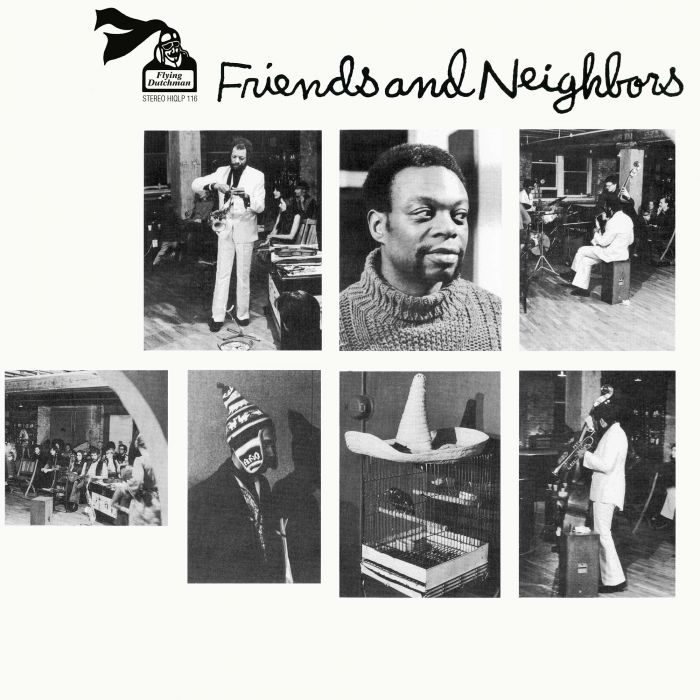
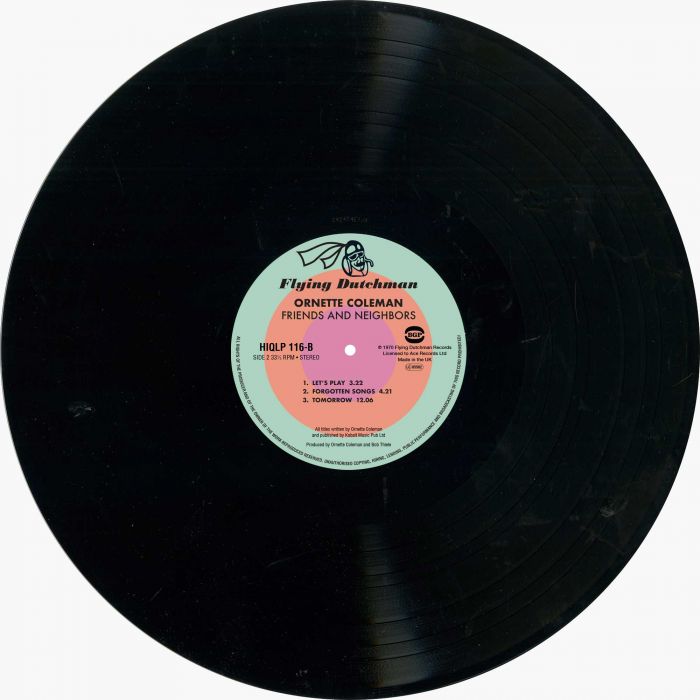
As the new decade dawned, Ornette Coleman was reunited with Bob Thiele, who had founded the Flying Dutchman label. His new label was about to record and release a live album. This became Friends and Neighbors: Live At Princess Street. It was quite unlike most live albums.
At the time, Ornette Coleman was living in the Big Apple. There were many clubs he could’ve recorded a live album. However, he decided to record the album at his large loft space in downtown New York.
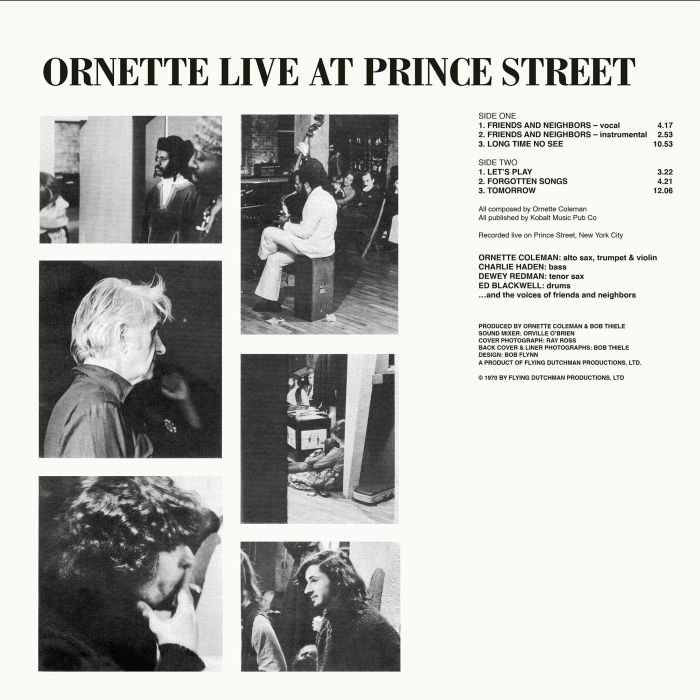
The tapes were scheduled to roll on February ’14th’ 1970. That night at the Prince Street apartment, friends and neighbors gathered and watched a truly talented quartet. The rhythm section featured drummer Ed Blackwell and bassist Charlie Haden. Dewey Redman played tenor saxophone and clarinet while Ornette Coleman played alto saxophone, trumpet and violin. They romped through six of the bandleader’s compositions. They were the vocal and instrumental version of Friends and Neighbors, Long Time No See, Let’s Play, Forgotten Songs and Tomorrow. The set was akin to a jam session where the all-star band kick loose and showcase their considerable skills.
On home turf, thirty-nine year old bandleader Ornette Coleman is relaxed and at his innovative best, as he pushes musical boundaries to their limits and combines disparate genres. As usual, the music was ambitious, adventurous, cerebral, and sometimes challenging, futuristic and otherworldly. Other times it’s urgent, celebratory and joyous.
Side One.
That was the case on the vocal version of Friends and Neighbors which opens the album. Then on the shorter instrumental version the tempo increases and so does the urgency. Ornette Coleman’s scratchy violin keeps pace with the saxophone adding a bluesy hue as one of the founding fathers of free jazz continues to push musical boundaries fusing free jazz with avant-garde. Long Time No See is an ambitious eleven minute epic that’s powered along by the rhythm section. However, it’s the saxophones that steal the show.
Side Two.
That’s also the case on Let’s Play, where the saxophones wail and squeal but their beauty is their for all hear and admire. The quartet then kick loose on Forgotten Songs, with the tried-and-tested rhythm section powering and driving the arrangement along. Meanwhile the saxophones soar melodically above on what’s without doubt one of the highlights of the set. It closes with Tomorrow, a twelve minute blistering workout from one of the legends of free jazz at the peak of his powers.
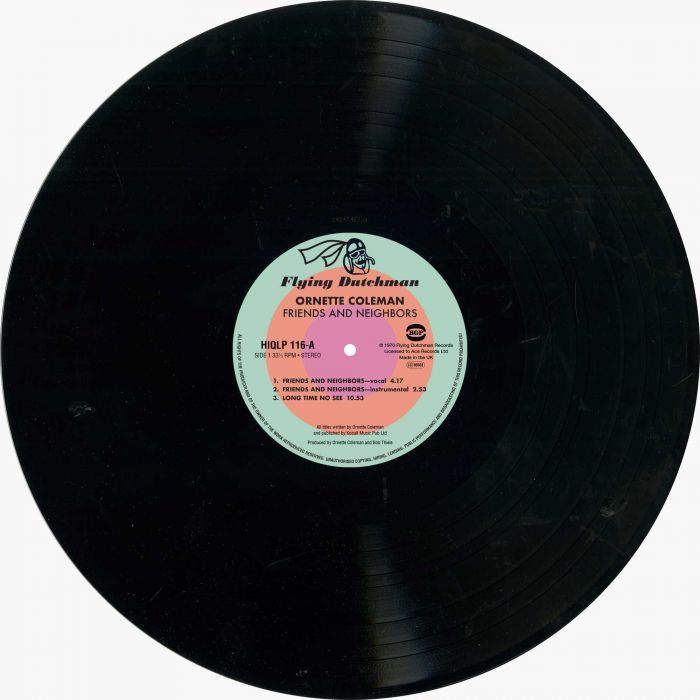
Despite recording Friends and Neighbors: Live At Princess Street in 1970, the album wasn’t released until 1972 by Flying Dutchman. Although the alum was well received by critics, it wasn’t a commercial success and has remained an oft-overlooked hidden gem in Ornette Coleman’s back-catalogue.
However, hopefully, BGP’s reissues of Friends and Neighbors: Live At Princess Street will introduce a new audience to the album, and also all act as introduction to Ornette Coleman, one of the founding fathers of free jazz and a groundbreaking musician whose raison d’être was to push musical boundaries to their limits and beyond. This he does on Friends and Neighbors: Live At Princess Street, and during a recording career that spanned fifty-one years.
Ornette Coleman-Friends and Neighbors: Live At Princess Street.


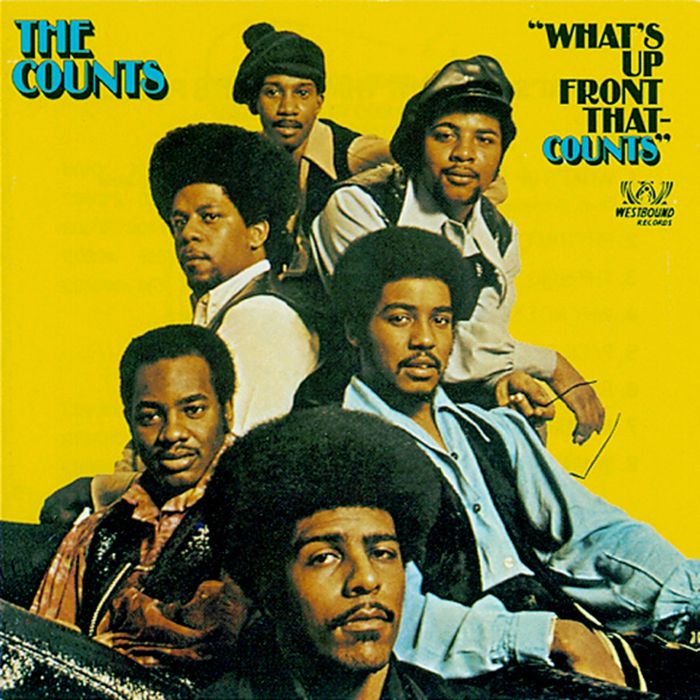
THE COUNTS-WHAT’S UP FRONT THAT COUNTS.
The Counts-What’s Up Front That Counts.
Label: Ace Records.
Format: LP.
Soul and funk group The Fabulous Counts were formed in Detroit, Michigan, in 1968 by organist Mose Davis, guitarist Leroy Emmanuel and vocalist and saxophonist Demo Cates. Initially, the trio jammed with musicians in their local neighbourhood. This included conga player Keith Mangrum and tenor saxophonist Jim White. Soon, drummer Andrew Gibson joined the band. However, it wasn’t long before people were taking notice of the nascent group.
Later in 1968, they had established a reputation as the go-to-group for solo artists visiting Detroit. The Fabulous Counts’ performances received plaudits and praise. It was no surprise when they entered the studio to record their debut single with producer Richard “Popcorn” Wylie.
This was the instrumental Jan, Jan, which was released later in 1968, on Moira Records. However, the single narrowly missed out on the US R&B charts. This was disappointing for a group whose career up until then, was on an upward trajectory.
The followup single Dirty Red was released on Moira Records in 1969, but sank without trace. However, The Fabulous Counts’ luck was about to change.
It was third time lucky for The Fabulous Counts when their third single Get Down People charted. It reached thirty-two on the US R&B charts and eighty-eight on the US Billboard 100. The commercial success of the single new version of the group’s debut.
The new version of Jan, Jan was produced by Ollie McLaughlin and released on Cotillion Records in 1969. However, the single failed to chart and the group released just one more single.
This was Get Down People, which was released on Moira Records in 1970. The single failed to trouble the charts, and later that year the group left the label.
For many groups this could’ve marked the end of the road. Not The Fabulous Counts. They decided to change their name and signed to one of Detroit’s biggest independent labels.
Now called The Counts, the Detroit-based group signed to Armen Boladian’s Westbound Records. Soon, the group began work on their debut album, What’s Up Front That Counts.
Mose Davis contributed Rhythm Changes, Thinking Single, Pack Of Lies and Bills. He also cowrote What’s Up Front That Counts with Demo Cates, Andrew Gibson, Raoul Mangrum and Leroy Emmanuel who penned Why Not Start All Over Again. These six tracks were recorded in Detroit in 1971, and produced by The Counts. When the album was completed, it was scheduled for release later that year.
However, when What’s Up Front That Counts was released in 1971, the album reached just 193 in the US Billboard 200 and thirty-five in the US R&B charts. Given the quality of music on the album was a huge disappointment for The Counts. With a new name and new label the group saw this as a new start.
Nowadays, What’s Up Front That Counts is one of the rarest funk albums released during the early seventies. Copies of this rarity are prized by aficionados of funk, crate diggers, DJs and sample-hungry producers. No wonder.
The Counts debut album What’s Up Front That Counts is über funky. They combined disparate genres, including everything from funk and funk-rock to jazz, Latin, rock, soul and even soul- jazz and Latin. It’s a heady mix.
Side One.
That’s the case from the get-go. On the title-track, The Counts kick loose and combine funk with Latin, funk-rock, and even soul-jazz . The result is hip-swaying, groove laden and gloriously funky eight-minute hidden gem that sets the bar high for the rest of the album.
Soul and funk is combined on Rhythm Changes, which features a powerhouse of a soulful vocal. Meanwhile, The Counts rhythm and horn sections showcase their considerable skills. The fabulously funky rhythm section are augmented by stabs of horns that punctuate the arrangement. They add the finishing touch to this long-overlooked fusion of funk and soul.
Thinking Single closes side one. It was released as a single in 1971, but wasn’t a commercial success. Against an arrangement where The Counts combine funk and Latin influences, vocalist Demo Cates unleashes a vocal that’s a soul-baring vocal that’s a mixture of power and emotion.
Side Two.
Probably the most soulful track on the album is Why Not Start All Over Again. It features what’s without doubt the best performance from Demo Cates. It’s full of hurt, heartache but also hope, hope that he’ll get another chance. The rest of The Counts play their part in the sound and success of what’s a beautiful, heart-wrenching. soulful ballad.
As The Counts lock into a groove, Pack Of Lies reveals a street-funk sound. This is combined with a Latin influences on a track that wouldn’t sound out of place on an early seventies Blaxploitation soundtrack.
Closing side two and What’s Up Front That Counts is Bills. From the get-go there’s a sense of urgency on a track that’s just as relevant in 2023 as it was in 1971. Demo Cates is troubled, worried about paying his bills as The Counts combine funk and soul with elements of Latin and soul-jazz. It’s a glorious combination and a poignant and sad way to close the album. Sad, because it seems that some things haven’t changed in fifty-two years. Still, across the world, many people are still struggling financially and can’t pay their bills.
Sadly, nowadays, original copies of What’s Up Front That Counts are extremely hard to find. A bit like finding a Tory MP who thinks Rishi Sunak has any chance of winning the next election. There’s probably more chance of finding an original copy of this album in the bargain bin of your local record shop. That’s unlikely.
Original copies of What’s Up Front That Counts change hands for large sums of money. Very few copies were sold when the album was released in 1971, and even less still exist. This means that collectors, crate diggers, DJs and sample-hungry producers are willing to pay a pretty price for an original copy of this much-prized Detroit funk rarity. However, now anyone can afford a copy.
What’s Up Front That Counts has been reissued on vinyl by Westbound Records, an imprint of Ace Records. It’s a welcome release of this long-lost, über-rare funk album. It finds The Counts combining disparate genres and showcasing their considerable talents on an album that deserves to be heard by a much wider audience. That time is now. Aficionados of funk or anyone who likes their music funky or soulful will enjoy and appreciate the long-lost hidden gem that’s What’s Up Front That Counts which is a heady, potent and intoxicating musical brew.
The Counts-What’s Up Front That Counts.
JOHNNY LYTLE-THE LOOP.
Johnny Lytle-The Loop.
Label: BGP.
Format: LP.
Release Date: ‘28th’ July 2023.
Johnny Dillard Lytle was born into a family of musicians on December October ’13th’, 1932 in Springfield, Ohio. His father was a drummer and his mother an organist. Influenced by both, the future vibes virtuous grew up playing drums and piano. However, before studying music he was a successful boxer.
The man who later became known as Fast Hands was a Golden Gloves champion. Johnny Lytle continued to box into the fifties while working as a drummer. He accompanied musical luminaries like Ray Charles, Gene Ammons and Jimmy Witherspoon. However, despite enjoying success as a drummer he switched to vibes.
This was the instrument that Johnny Lytle made his name playing. However, between 1955 and 1957 he toured with organist Hiram “Boots” Johnson. Having served his musical apprenticeship, he formed his own group later in 1957.
Joining his group was saxophonist Boots Johnson, organist Milton Harris and drummer William “Peppy” Hinnant. The quartet spent the next few years honing and refining their sound. This paid off, and in 1960 jazz writer and producer Orrin Keepnews signed the group to his Jazzland label.
By then, Johnny Lytle had established himself as a showman. He was known for his hand speed and flamboyance. Later, Lionel Hampton called him: “the greatest vibes player in the world.” However, before that, he released his debut for Jazzland.
Blue Vibes.
This was Blue Vibes by the Johnny Lytle Trio. The vibes virtuoso wrote the title-track and Mister Trundel. A total of seven tracks were recorded in New York on June ’16’, 1960. The lineup featured drummer Albert Heath and organist Milton Harris.
When Blue Vibes was released later in 1960, critics were won over by an album that was a mixture of soul-jazz that also showcased Johnny Lytle’s unique and inimitable brand of bluesy funk. He was regarded as one of jazz’s rising stars.

Happy Ground.
For the followup to Blue Vibes, bandleader Johnny Lytle penned Lela and Happy Ground. A total of nine tracks were recorded in New York on March ’23rd’, 1961. This time, the Trio’s line up featured drummer William “Peppy” Hinnant and organist Milton Harris. The album was recorded in one day and released later in 1961.
Just like their debut album, the Trio’s sophomore album was well received. On the album they flitted between cool jazz, easy listening as well as soul-jazz and bluesy funk. Sadly, the album wasn’t particularly successful, but is a hidden gem in Johnny Lytle’s back-catalogue.
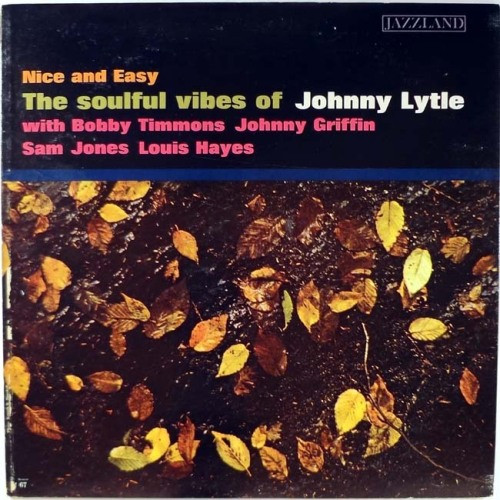
 Nice and Easy (The Soulful Vibes of Johnny Lytle).
During 1962, Johnny Lytle recorded two albums. This included Nice and Easy (The Soulful Vibes of Johnny Lytle). The bandleader wrote contributed two of the seven tracks, Coroner’s Blues and 322-Wow! These tracks were recorded in New York on January ’29th’, 1962. The lineup featured drummer Louis Hayes, bassist Sam Jones, pianist Bobby Timmons and tenor saxophonist Johnny Griffin. They played their part in an album that was very different to Blue Vibes and Happy Group.
Nice and Easy (The Soulful Vibes of Johnny Lytle) was move away from the usual mix of blues-tinged funk and soul-jazz. In its place, was a much more laid-back album that had been heavily influenced by hard bop. Ballads were to the fore and rubbed shoulders with standards and the two new tracks on this critically acclaimed album. It later was recognised as one of the Fast Hands’ finest hours.
Moon Child.
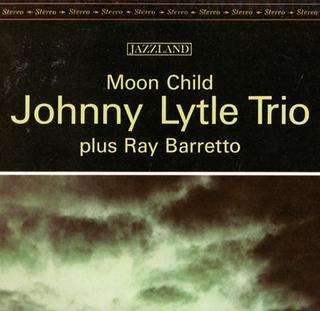
On July ‘5th’, 1962, the Trio returned to the studio to record their third album, Moon Child. The bandleader penned the title-track, The Moor Man and The House Of Winchester. They were joined by five cover versions.
This time, the Trio featured drummer William “Peppy” Hinnan and organist Milton Harris. They were joined by bassist Steve Cooper and Ray Barretto on congas. As usual, the album was produced by Orrin Keepnews and released later in 1962.
When Moon Child was released, it was credited to the Johnny Lytle Trio plus Ray Barretto. The result was another mixture of soul-jazz and bluesy funk. This was becoming the group’s trademark sound. The album was well received by critics and enjoyed a degree of commercial successful. This proved that their was a market for instrumental jazz in 1962.
After releasing five albums on Jazzland, the bandleader moved to the Riverside label and the Trio released their fourth album, Got That Feeling!
Got That Feeling!
The album was recorded at Plaza Sound Studios, in New York, on April ‘3rd’, 1963. Bandleader Johnny Lytle contributed five of the nine tracks, Pow-Wow, Big John Grady, Lela, The Soulful One and Got That Feeling! As usual, Orrin Keepnews was in charge of production.
Again, the Trio featured drummer William “Peppy” Hinnan and organist Milton Harris. They were augmented by bassist Steve Cooper on what was a truly ambitious album.
The Trio improvised and the truly infectious music swung as they focused on the groove. It was an album of innovative and imaginative music which Johnny Lytle hoped would have broader appeal than his previous albums. That should’ve been the case. The album was much more accessible and should’ve appealed to people who weren’t fans of jazz music. It was an album that found favour with critics and enjoyed a degree of success. However, this wasn’t the only album Fast Hands would record and release during 1962.

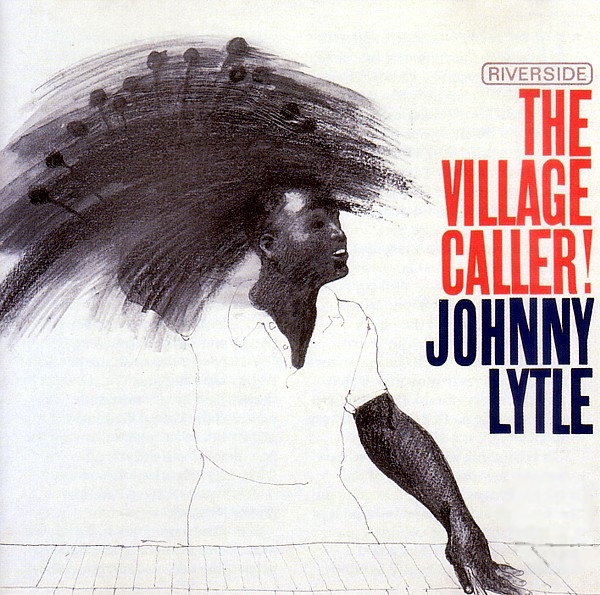
The Village Caller!
On September ’18th’, 1963 the Johnny Lytle Quintet recorded their debut album, The Village Caller! The bandleader wrote half of the eight tracks. This included the title-track, Pedro Strodder, Kevin Devin and Unhappy, Happy Soul. When the album was recorded it featured some familiar faces.
This included drummer William “Peppy” Hinnan and organist Milton Harris who had played their part in the success of the Trio. They were joined by bassist Bob Cranshaw and percussionist Willie Rodriguez. The album was produced by Orrin Keepnews and released later in 1963.
The result was an album that was a mixture of cool jazz, Latin and R&B. Some of the familiar tracks headed in a new direction and were given a rhythmical makeover. Critics were won over by the album which was released to plaudits and praise. It was the album that transformed Johnny Lytle’s career. Suddenly, he was one of jazz’s rising stars. However, meanwhile, there were problems at the Riverside label.
Co-founder Bill Grauer, Jr had passed away suddenly after suffering heart attack, in December 1963. He and Orrin Keepnews had founded the company a decade earlier in 1953. However, by July 1964 the company filed for voluntary bankruptcy. After eleven years, Riverside Records was no more.
This meant that Johnny Lytle was left without a label. However, he contented to work with producer Orrin Keepnews, and as 1964 drew to a close, he began work on a new album The Loop, which was the first of two he released on the Detroit-based label Tuba Records.
The Loop.
For The Loop, Johnny Lytle had written six of the ten tracks. They were The Loop, The Man, Big Bill, Possum Greaser, The Shyster and Hot Sauce. They were joined by covers of Duke Pearson’s Cristo Redento, Mack Gordon and Harry Warren’s The More I See You, Sammy Cahn and Jule Styne’s Time After Time plus Rogers and Hart’s My Romance. These tracks were recorded during two sessions by an all-star band.
The first session for The Loop took place in New York on December ‘30th’, 1964. The second took place in mid-1965.
As usual, Johnny Lytle who played vibes and marimba, and was joined by drummer William “Peppy” Hinnan and organist Milton Harris. They were augmented by bassists Bob Cranshaw and George Duvivier, conga player Willie Rodriguez and pianist Wynton Kelly who previously, had accompanied everyone from Dinah Washington and Dizzy Gillespie to Miles Davis. Producing The Loop was Orrin Keepnews. The album was completed in mid-1965 and scheduled for release later in 1965.
The Loop was released on Tuba Records to widespread critical acclaim, and built on the critical and commercial success of The Village Caller! Johnny Lytle’s seventh album was hailed as ambitious and innovative. It saw the vibes and marimba maestro continued to push musical boundaries on a genre-sprawling album. Elements of hard bop and soul-jazz were augmented by Latin and pop influences, Cuban rhythms and street funk. Tracks veered between aggressive to cinematic and groovy while others showcased a beauty, tenderness and sometimes, a sense of melancholy. There was something for everything on The Loop.
Side One.
Opening this future classic album was the title-track. It’s a pop-tinged slice of cinematic soul-jazz with a Latin feel. This is followed by a beautiful reading of the mid-tempo standard The More I See You. It’s one of the best of the highlights of The Loop.
Very different is The Man, which sounds as if it belongs on the soundtrack to a film about spies and the Cold War. This anthemic track later became a favourite on the Acid Jazz scene.
Then there’s the cover of Time After Time, where Johnny Lytle’s vibes and Wynton Kelly’s piano play starring roles on this tender take on this romantic jazz standard. Closing side one is Big Bill a slinky slice of soul-jazz penned by the bandleader and vibes virtuoso.
Side Two.
As the dancefloor friendly Possum Grease opens side two, stabs of organ punctuate the arrangement while Johnny Lytle shows why his nickname was Fast Hands. He plays with speed, fluidity and accuracy leading his all-star band from the front. There’s no letup after this. Next up is a stunning cover of Duke Pearson’s Cristo Redentor. It simmers, and is full of drama and tension, before the band enjoy the opportunity to stretch their legs and showcase their considerable skills on The Shyster.
Slow, thoughtful with a melancholy, wistful sound is the cover of the standard My Romance. It’s a beautiful interpretation of a song Rogers and Hart wrote for Billy Rose’s musical Jumbo in 1935. It was sung by Doris Day.
Closing The Loop is Hot Sauce, which only lasts 2.20. Despite that, the band kick loose one last time with the Trio playing starring roles. They play with speed and aggression but also fluidity, and in the case of Johnny Lytle, Fast Hands plays with the flamboyance that was expected of him as he ends this classic album on a high.
The Loop was Johnny Lytle’s seventh album, and debut for Tuba Records. It’s now regarded as a classic and one of his finest albums. It was also one of his most successful and featured a hit single. This was the title-track which spent five weeks in the US Billboard 100 in January 1966, raising Fast Hands profile no end.
Later, Lionel Hampton called Johnny Lytle: ”the greatest vibes player in the world.” He played with speed and was a versatile musician who enjoyed a recording career that lasted just over thirty years and saw him release albums right up until the early nineties.
Sadly, vibes virtuoso Johnny Lytle passed away on December ’15th’, 1995 in Springfield, Ohio, the city where he was born and called home. That day, jazz lost a flamboyant showman, a gregarious musician who was respected by the musicians who played alongside and who he accompanied. This included everyone from Louis Armstrong and Lionel Hampton to Miles Davis, Nancy Wilson, Bobby Timmons as well as fellow vibraphonist Roy Ayers. Fast Hands played alongside the great and good of jazz, and never looked out of place.
On the jazz circuit, Johnny Lytle was always a popular draw. He was a versatile musician and bandleader who could seamlessly switch between genres and styles. In an instant, he could go from cool jazz or easy listening to swinging, uptempo tracks or soulful ballads. Then there was his unique brand of soul-jazz and bluesy funk. Fast Hands was Mr Versatile and played was flair and was a flamboyant showman when he played live.
He also left behind a magnificent musical legacy. This includes his classic album The Loop, which will be reissued by BGP on vinyl on the ‘28th’ July 2018. It features Johnny Lytle at the peak of his powers, and is without doubt, the perfect introduction to the man they called Fast Hands, the flamboyant vibes virtuoso from Springfield, Ohio.
Johnny Lytle-The Loop.
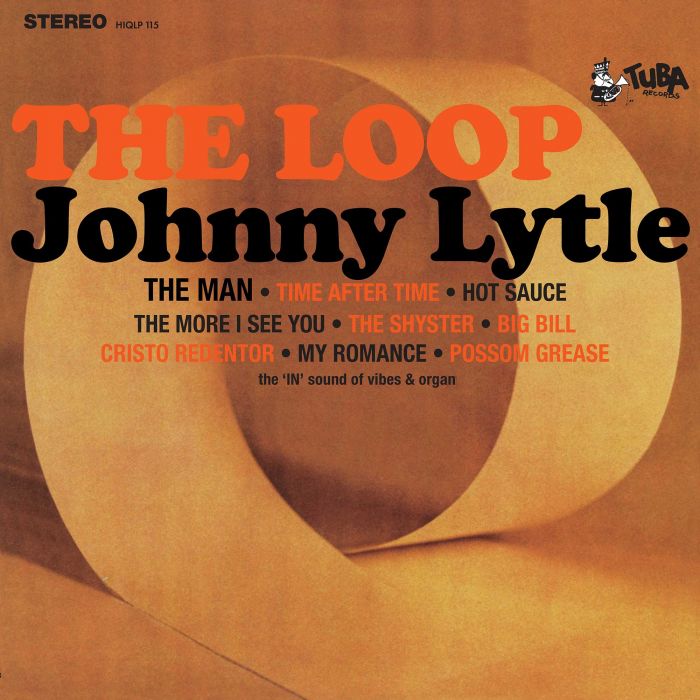
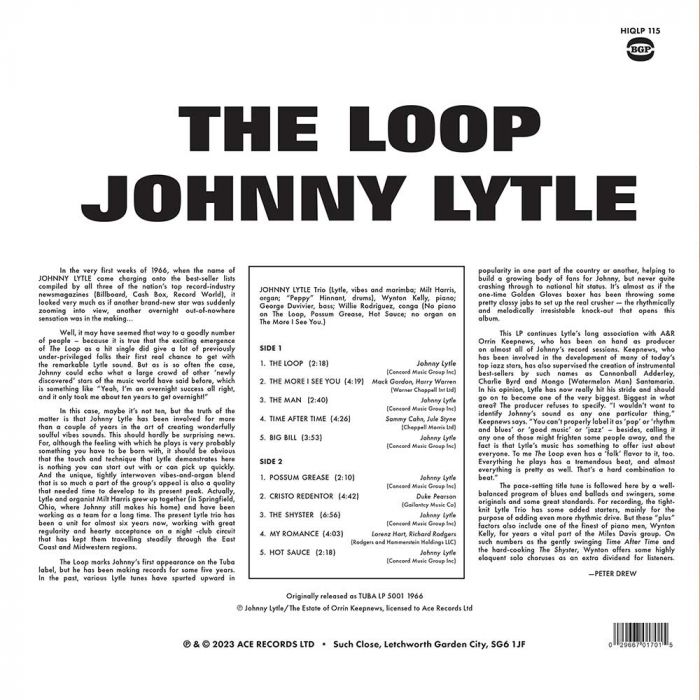
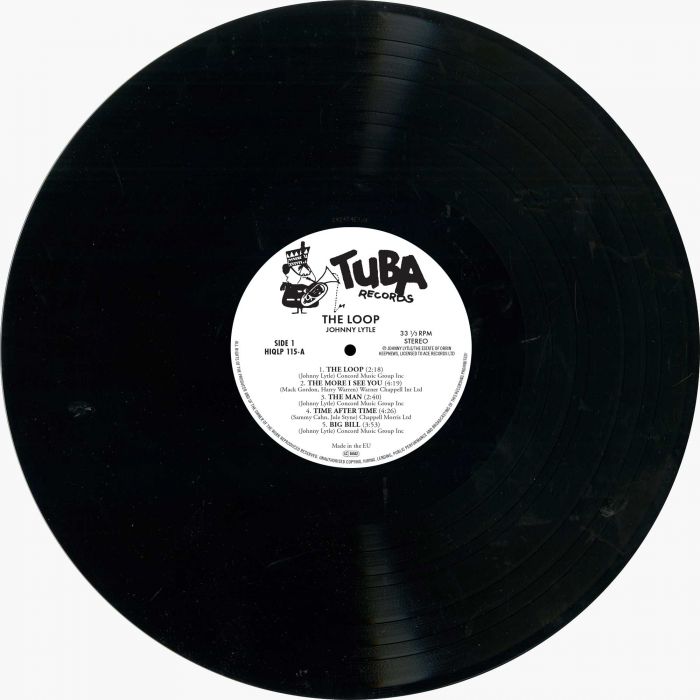

TRIBAL RITES OF THE NEW SATURDAY NIGHT-BROOKLYN DISCO 1974-5.
Tribal Rites Of The New Saturday Night-Brooklyn Disco 1974-5.
Label: Ace Records.
Release Date: 30th June 2023.
Londonderry-born writer Nik Cohn moved to New York in 1975, and started writing for New York magazine. One of his first assignments was documenting a new underground movement in the clubs of Brooklyn and Queens. These discos were far removed from Studio 54 and Paradise Garage which later, would play an important part in the history of disco.
The clubs in Brooklyn and Queens lacked the glitz and glamour of those in Manhattan. They were more downtown than uptown. One of the clubs was merely an Italian dinner club with a basic lighting rig. However, for the DJs and dancers this didn’t matter as it was the dawn of a new era.
Back then, DJs put in the hard yards, going out crate digging in record shops, second hand stores and even searching warehouses looking for music to play in clubs at weekends. Mostly they played a mixture of soul, R&B and Latin music to an appreciative audience who sought out the new clubs.
They knew, and enjoyed being part of a new musical movement. There was an air of excitement and feeling of unity. Dancers lived for the weekend, dressing up on a Saturday night and dancing the night away after another week of 9 to 5 drudgery. For those working in shops and offices it was the perfect antidote. It was what they lived for, an escape from reality that only a select few in the two boroughs knew about. This would soon change.
By June 1976, when Nik Cohn’s article Tribal Rites Of The New Saturday Night was published in New York magazine, disco was no longer an underground movement. It was now the biggest and most successful musical genre on the charts. It no longer the venue and was now a genre. Disco was now well on its way to becoming a cultural phenomenon.
Nik Cohn sold the film rights to Tribal Rites Of The New Saturday Night to musical impresario Robert Stigwood. His essay formed the basis for Saturday Night Fever which was released on December ‘16th’ 1977, grossing $237.1 million and helped to popularise disco worldwide.
Soon, disco was a global phenomenon. Record labels jumped on the disco bandwagon. Many artists saw it as a way to kickstart ailing and failing careers. Sometimes this worked and careers were revived.
Meanwhile, in New York and Philly some of the finest music of the disco era was being produced. The music proved to be truly timeless and a tantalising taste of can be found on Tribal Rites Of The New Saturday Night-Brooklyn Disco 1974-5. It’s been compiled by Bob Stanley and is the soundtrack to Nik Cohn’s essay. The twenty-two tracks were played in Brooklyn discos during 1974 and 1975 and transport the listener back to the dawn of disco.
Opening Tribal Rites Of The New Saturday Night-Brooklyn Disco 1974-5 is Helplessly by Moment Of Truth. It’s a track from their 1977 eponymous debut album. It was arranged and produced by Van McCoy and released on Salsoul. Strings dance and combine with a pulsating beat and harmonies as soul and early disco seamlessly combine on this oft-overlooked hidden gem.
Welcome To The Club by Blue Magic is undoubtably a Philly Soul classic. No wonder, as It was written by Alan Felder and Norman Harris who produced the group’s 1974 eponymous album. They’re backed by MFSB who were accompanied by Don Renaldo and His Horns and Strings. When the album was released by Atco it reached forty-five on the US Billboard 100 and four on the US R&B charts. This was the first of three albums critically acclaimed one of the Philly’s greatest soul group released.
Funk, soul and disco combine on I Can’t Move No Mountains by Margie Joseph. There’s even a hustle influence on Arif Mardin’s arrangemeny. He also produced the album Margie which was released on Atlantic in 1975. The vocal is sassy, sensual and soulful and combines beautifully with the arrangement on a track that would still fill a dancefloor.
Faith, Hope and Charity provided the vocals on Van McCoy’s 1975 classic The Hustle. That year, the trio recorded their eponymous album with Van McCoy. He also wrote the irresistible sounding Mellow Me. It’s a glorious fusion of soul and disco that became a favourite of DJs in Le Club in New York and Chicago’s Den 1.
Frank and Vance Wilson cowrote Just As Long As We’re Together with Barry White, who produced the song for Gloria Scott. It was released as a single on Casablanca in 1974 but sadly, failed commercially. That’s despite being soulful, funky and dancefloor friendly. It’s no wonder the track was a favourite of DJs and dancers in clubs in Brooklyn and Queens.
Sons Of Robin Stone were a nine piece soul group from South West Philly. They had signed to Atco and in 1974 released Got To Get You Back. It was written by Vinnie Barrett and guitarist Bobby “Electronic” Eli who also took charge of production. It features an arrangement by legendary vibraphonist Don Renaldo. His brass chart is punchy and leaves a lasting impression as the nonet combine soul and disco. It’s a single that could’ve only have been recorded in one American city, Philadelphia.
Amongst aficionados of Philly Soul, the late, great Bobby Martin is regarded as legend. He played an important part in the sound and success of The Sound Of Philadelphia. In 1975, he arranged, conducted and produced Ecstasy, Passion and Pain’s 1975 eponymous debut album for Roulette. The disco-soul group from New York is backed by MFSB and the Sweethearts Of Sigma who add their trademark backing vocals. The result is hidden gem of a dancefloor filler that deserves to be heard by a much wider audience.
Act 1 was a Detroit-based studio band who only recorded one album. This was their eponymous debut album, which was released on Spring in 1975. One of the album’s highlights is the floater It’s The Same Old Story which has stood the test of time.
By 1974, soul singer Betty Everett was thirty-five and had already enjoyed a successful career. Eighteen of her solo singles had charted and so had three of the duets she recorded with Jerry Butler. However, in 1974 she recorded the album Happy Endings for the Fantasy label. It was produced by Billy and Gene Page who also arranged and conducted the track. This includes Keep It Up which finds the Greenwood-born singer at her most soulful as she delivers a vocal full of emotion.
Before embarking upon a solo career in 1974, Virginia-born Major Harris was a member of one of the finest Philly Soul groups, The Delfonics. His debut single was Each Morning I Wake Up, which was written by brothers Melvin and Mervin Steals. This beautiful, joyous and timeless track was credited to The Major Harris Boogie Blues Band when it was released on Atco. However, when the song appeared on the album My Way later in 1974 it was the debut album from Major Harris. It’s his finest hour and also features another Philly Soul classic Love Won’t Let Me Wait.
Closing Tribal Rites Of The New Saturday Night-Brooklyn Disco 1974-5 is one of the most successful groups signed to Philadelphia International Records, Harold Melvin and The Bluenotes. Wake Up Everybody was the title-track to their million-selling fourth album which was released in 1975. The track was written by Vic Carstarphen with McFadden and Whitehead. It was a powerful, anthemic song, and is an example of music with a message. The group combine elements of gospel and disco with their trademark Philly Soul sound and in doing so, close the album on a soulful and poignant high.
Tribal Rites Of The New Saturday Night-Brooklyn Disco 1974-5 is a lovingly curated compilation, that’s a reminder of the dawn of disco. Back then, there was an air of excitement and a feeling of togetherness and unity in the clubs of Brooklyn and Queens as everyone lived for the weekend and longed to escape the drudgery of everyday life.
This was way before disco became a cultural phenomenon, and Saturday Night Fever introduced the genre to a wider audience. Robert Stigwood’s film was a gamechanger. Disco became the most successful genre on the charts. Soon, it was the age of superclubs populated by pop stars, models and beautiful people as a new breed of superstar DJs provided the soundtrack. Suddenly, glitz and glamour was the day.
This was a far cry from 1974 and 1975 when a disco was a venue not a genre. Tribal Rites Of The New Saturday Night-Brooklyn Disco 1974-5 is a reminder of this, and showcases the music that DJs discovered and played and were a soundtrack to evenings of escapism downtown for a generation of dancers who were part of what was a new and exciting musical movement.
Tribal Rites Of The New Saturday Night-Brooklyn Disco 1974-5.
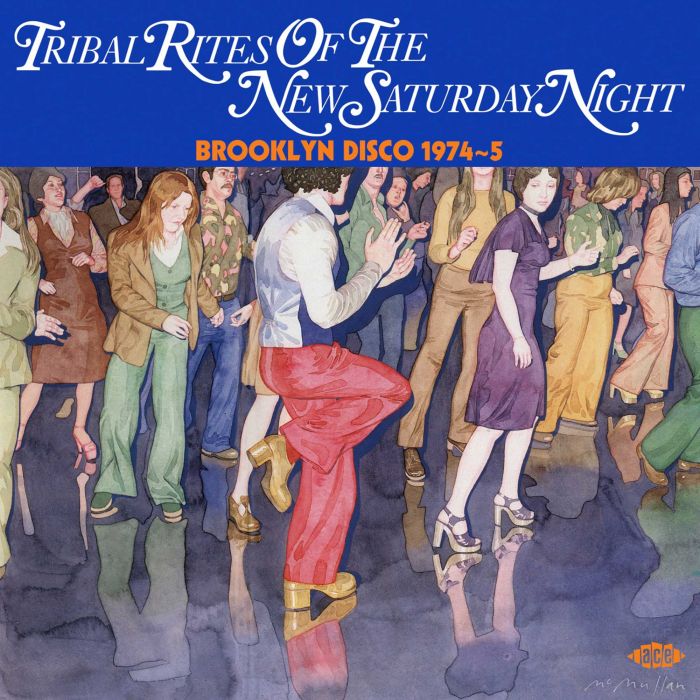





MILLIE JACKSON-MILLIE JACKSON
Millie Jackson-Millie Jackson.
Growing up, life wasn’t easy for Millie Jackson. She was born in the city of Thomson, in Georgia, on July the ’15th’ 1944. Her father was a sharecropper and worked long hours for little reward.
Life was tough for the Jackson family, and got tougher when Millie Jackson’s mother became ill and passed away while her daughter was still a child.
The family was devastated and Millie Jackson and her father decided to move to Newark, New Jersey, where they lived with an aunt. This was a new chapter for the Jackson family.
By the time Millie Jackson was in her mid teens, she had moved to Brooklyn, and was working as a model for Jive and Sepia magazine. At last, her luck was starting to change.
One night in 1964, a friend dared Millie Jackson to enter the talent contest at Small Paradise nightclub in Harlem. Aged just sixteen, she entered the talent contest and won. Little did she know that this was the start of long career as a singer.
Five years later, in April 1969, Millie Jackson released her debut single A Little Bit Of Something on MGM Records. After the single failed to trouble the charts, she signed to Spring Records in 1970. This was the start of a long association with the label.
At Spring Records, Millie Jackson was paired with the label’s in-house producer, Raeford Gerald. He produced the twenty-seven year olds 1971 single A Child of God (It’s Hard to Believe). On its release, it reached twenty-two in the US R&B charts and became Millie Jackson’s first single to chart.
The following year, 1972, Millie Jackson released Ask Me What You Want which reached twenty-seven in the US Billboard 100. Soon, two became three, when My Man, A Sweet Man reached forty-two in the US Billboard 100 and seven in the US R&B charts. Both these songs featured on Millie Jackson’s eponymous debut album.
It featured ten songs, with Raeford Gerald writing If This Is Love, I Miss You Baby, My Man, A Sweet Man and Strange Things. He cowrote You’re The Joy of My Life with Reginald Spruill, I Gotta Get Away (From My Own Self) with Dock Price Jr. The Pair teamed up with Joe Simon to write I Ain’t Giving Up. Meanwhile, Millie Jackson cowrote Ask Me What You Want and I Just Can’t Stand It with Billy Nichols and A Child of God (It’s Hard to Believe) with Don French. These ten tracks were recorded in two studios in two cities.
The recording sessions took place at Mediasound in New York and Track Recorders in Maryland, Silver Springs. Bert DeCoteaux and Tony Camillo arranged the tracks while Raeford Gerald took charge of production. Backed by a talented and experienced band Millie Jackson’s eponymous debut album was complete.
When Millie Jackson was released later in 1972, it featured a collection of songs which seemed to have been influenced by the Motown sound. However, this proved popular and Millie Jackson reached 166 in the US Billboard 200. Millie Jackson’s career was underway.
Despite it being her debut, Millie Jackson was a remarkably mature album that showcased a sound that had been inspired by classic soul. This include sixties Stax, early Philly Soul and the classic Motown sound that was still popular in 1972. That’s apparent on My Man, A Sweet Man with its bass as handclaps punctuate the arrangement.
The quality is apparent from the opening track if This Is Love. Millie Jackson sounds unsure if it is, and is yet to be convinced. Two of the best tracks follow, the defiant I Ain’t Giving Up and I Miss You Baby where the vocal is mixture of sadness, hurt and regret. This gives way the cinematic sounding A Child of God (It’s Hard to Believe), which is a tale of hypocrisy that’s brought to life by a vocal masterclass.
Closing side one is Ask Me What You Want. Strings dance and set the scene for Millie Jackson. She combines power and passion and is complimented by backing vocalists as a Hammond organ adds a Southern Soul sound on an irresistibly catchy track that swings. It was released as a single in 1972, reaching number twenty-seven in the US Billboard 100 and four in the US R&B chart
Elsewhere, the album is an emotional roller as Millie Jackson takes centrestage and lays bare her soul. She gives thank for love she’s found on You’re The Joy of My Life as she delivers a heartfelt and impassioned vocal. The tempo drops on the soul-baring ballad I Gotta Get Away (From My Own Self). It features an emotional vocal full that’s a mixture of hurt, heartache and despair on what’s akin to a soulful confessional. Strange Things closes the album and Millie Jackson and her band kick loose. She delivers a vocal powerhouse as she struts her way through the lyrics. In doing so, she closes the album on a high.
By the end of 1972, the three singles taken from Millie Jackson had charted. In 1973, three became four when I Miss You Baby was released as a single. It reached ninety-five in the US Billboard 100 and twenty-two in the US R&B chart. This was just the start of a long and successful career.
This included three albums that were certified gold. The first was 1974s Caught Up, with Feelin’ Bitchy in 1977 and Get It Out’cha System in 1978. It was the ninth album that Millie Jackson released for Spring. However, the her eponymous debut album launched her career in 1972.
Drawing inspiration from Stax, Motown, early Philly Soul, R&B and Souther Soul, Millie Jackson was an emotional roller coaster where the twenty-eight year unleashed vocals that veered between heartfelt and impassioned to soul-baring and tender. Sometimes, the vocals are full of drama and despair, other times hurt and heartache. During some songs, there’s a degree of uncertainly and even disappointment at hypocrisy and love gone wrong. Often it’s as Millie Jackson has lived the lyrics and survived to tell the tale. In doing so, one of the finest female soul singers of her generation brings the lyrics to life.
This Millie Jackson would continue to do during her time at Spring. During the seventies she released a string of successful albums and critically acclaimed albums including several future soul classics. However, the album that launched a long and illustrious career was Millie Jackson which was recently reissued on vinyl by Ace Records.
Millie Jackson-Millie Jackson.

28 LITTLE BANGERS FROM RICHARD HAWLEY’S JUKEBOX.
28 Little Bangers From Richard Hawley’s Jukebox.
Label: Ace Records.
Format: CD.
Release Date: ‘26th’ May 2023.
28 Little Bangers From Richard Hawley’s Jukebox is the first volume of the Sheffield-born singer-songwriter’s favourite singles. These are singles he’s collected during crate-digging expeditions as he’s travelled the globe. This includes singles he’s discovered in thrift shops and second hand shops. They’re joined by some that were recommended by friends and family others that previously found in pub jukeboxes. The result is an eclectic and explosive collection that includes familiar tracks, hidden gems, rarities, obscurities and instrumentals where the emphasis is on quality.
Opening 28 Little Bangers From Richard Hawley’s Jukebox is Hornet’s Nest by Curtis Knight and The Squires featuring Jimi Hendrix. It was produced by Jerry Simon and released on the RSVP label in 1966. It’s an explosive, driving track with a blistering guitar solo from a man who just a year later would announce his arrival on the world stage. This rarity more than hints at what was to come from him.
Bob Crewe produced Nasty by The Time Keepers which was the B-Side to their single 3 Minutes Heavy. It was released on Generation in 1966. The track may sound familiar to many people. That’s because it’s essentially am instrumental version of Mitch Ryder and The Detroit Ryders’ Jenny Takes A Ride. This hidden gem is fast, furious, rocky and features a barnstorming performance by a band who sadly, only released the one single.
The Premiers were formed in formed in San Gabriel, California, in 1962. Four years later, they had signed to the Faro label and released Get On The Plane as a single. This Larry Tamblyn production is a lysergic slice of garage rock that has stood the test of time. It sounds as good in 2023 as it did in 1966.
Scotch On The Socks sounds quite unlike The Shadows. It was tucked away on the B-Side to The Dreams I Dream which was released as a single in 1966. It features a virtuoso performance guitarist Hank Marvin. He makes good use of his DeArmond pedal on what’s one of the highlights of the compilation.
Quasimoto was the B-Side to The Road Runners’ single Road Runnah. It was released on the Felsted label in 1963. This slice of surf music oozes quality. That’s no surprise as the band featured Gary Paxton, Gary Usher, Wrecking Crew guitarist Jerry Scheff and Mike Deasy.
In 1963, Cheryl Thompson was crowned Miss Las Vegas and Miss Nevada. By 1964, she had embarked on a career as a singer. In 1965, she released Teardrops as a single on Stateside. On the B-Side was Black Night, which features a vocal that veers between moody to sensuous. It’s delivered against an atmospheric arrangement. The result is a track that sounds as if it belongs on the soundtrack to a David Lynch movie.
Long Line Rider was written, arranged and produced by former crooner Bobby Darin. When he released the single on Direction in 1968 his music had changed. The lyrics were full of social comment as he highlighted the recent discovery of the unmarked graves of inmates at Cummins Park Prison. They had been killed by the long line riders, who were armed guards on horseback.
Poppin’ Popeye features the unmistakable sound of Link Ray and The Ray Men. This timeless earworm was released on Trans Atlas in 1962 and is a reminder of a truly innovative guitarist whose music is belatedly, starting to find a wider audience.
A welcome addition to the compilation is Hot Rod by King Curtis. It was released on Seg Way in 1961. Musical genres are seamlessly combined on this oft-overlooked obscurity. With the help of guitarist Hugh McCracken R&B, jazz and rock ’n’ roll are combined to create a heady musical brew that even today will fill a dancefloor at an oldies night.
After the surf group The New Dimension disbanded, drummer Art Guy was unsure what to do next. His musical career was at a crossroads. Fortunately, he met Hite and Dorinda Morgan who had produced The Beach Boys. They suggested that he learn how a recording studio worked and then embark upon a career as a producer. This he went on to do. However, he also released a couple singles. This includes Where You Gonna Goon Valiant in 1967. It’s something of a musical anomaly as it was released during the Summer Of Love, when psychedelic was King. This garage rock rarity was his finest hour but sadly, failed to find the wider audience it deserved.
From the opening bars of Jimmy Gordon’s Buzzzzzz you’re hooked. It’s a truly irresistible instrumental where the guitar and organ play leading roles and transport the listener back to 1966, when this was released as a single on the Challenge label.
Les Brown Jr was a drummer, bandleader, producer, promoter, actor and radio host during his long and illustrious career. However, in 1963 he was signed to GNP Crescendo and released Surfin’ and Swingin’ as a single. It’s the shorter version that’s included on the compilation. It bursts into life and there’s no letup as elements of a big band sound with fuzz guitar and thunderous drums are combined on this little-known hidden gem.
Bobbie Gentry and Jody Reynolds joined forces to record Requiem For Love as a single. It was released as a single on Titan in 1966. Sadly, and despite featuring two successful artists the single wasn’t a commercial success. That’s a great shame as the pair combine well together and deliver needy, heartfelt vocals on a quite beautiful song that features elements of country and pop.
Closing 28 Little Bangers From Richard Hawley’s Jukebox is It’s Nothing To Me by country-rockabilly singer and guitarist Sanford Clark. The single was released on Ramco in 1967. The vocal is a mixture of bravado and vulnerability as if trying to hide his feelings and hurt. It’s a poignant song and the perfect way to close the compilation.
And what a compilation 28 Little Bangers From Richard Hawley’s Jukebox is. It’s an explosive and eclectic collection of B-Sides, hidden gems, instrumentals, obscurities and rarities. Sometimes he lobs in a musical hand grenade as he springs a surprise with a little-known or oft-overlooked track. Many when they burst into life are akin to a call to dance. However, many people won’t have heard of many of these dancefloor fillers.
That’s despite a number of familiar faces featuring on 28 Little Bangers From Richard Hawley’s Jukebox. They rub shoulders with artists who only released one, or at the most, a few singles. Sadly, all too many of these singles failed to find the audience they deserved when they were released, and it’s only fifty or sixty years later that they’re being rediscovered by a coterie of DJs and collectors. This includes Sheffield-born troubadour, Richard Hawley.
Some of his favourites feature on 28 Little Bangers From Richard Hawley’s Jukebox. This lovingly curated compilation is the first volume in the series to be released by Ace Records. It’s a dancefloor friendly musical voyage of discovery where the emphasis is always, on quality.
28 Little Bangers From Richard Hawley’s Jukebox.

FOLK, FUNK AND BEYOND-THE ARRANGEMENTS OF JOHN CAMERON.
Folk, Funk and Beyond-The Arrangements Of John Cameron.
Label: Ace Records.
Format: CD.
Release Date: ‘26th’ May 2023.
John Cameron came to prominence in 1966 after he arranged Donovan’s Sunshine Superman. The arrangement was a fusion of jazz, folk and proto-psychedelia, and when the single was released, it topped the US Billboard 100 and launched John Cameron’s career as an arranger.
By then, John Cameron was only twenty-two. He was born in Woodford, Essex, on ‘22nd’ April 1944 into a musical family. His mother played piano at the Canadian Club during the war and his father ran and organised bands after joining the RAF. This continued after the war.
Growing up, music all around John Cameron. His love of music was encouraged by his parents. When they had parties everyone joined in. This included their son. His father had taught him various standards on the piano and when his time came, he would play Guy Mitchell’s Singing The Blues. However, this was just the start.
By the time he was twelve, John Cameron was playing Neil Sedaka’s I Go Ape at various holiday camps. Then when was fourteen, he graduated to playing pubs in Croydon and earning five pounds a week. This was part of his musical apprenticeship.
In the mid-sixties, John Cameron started studying history at Cambridge University. However, most evenings he was playing gigs at jazz clubs and US Air Force bases and found himself rubbing shoulders with Annie and Ronnie Ross, Dick Heckstall-Smith and Kathy Stobart. Their repertoire during memorable shows included everything from covers of compositions by Thelonious Monk and Charles Mingus to barnstorming R&B.
Meanwhile, John Cameron’s social circle at Cambridge University included Germain Greer, Clive James and Eric idle who he cowrote songs with. By then, music was his passion and midway through his second year he switched and did his finals in music.
This meant studying composition for a year. By then, John Cameron was also Vice-President of the Footlights and was doing cabaret with Eric Idle. This included at The Place Upstairs at The Royal Theatre in London.
By then, John Cameron became part of the Peter Cook scene. However, it was always music that he was more interested in.
After University, he headed to London, where his Cambridge connections proved useful. This led to John Cameron recording the album Cover Lover, which has been described as: “esoteric jazz satire.” After that, he was introduced to David Frost at the supper club Take One in St Martin’s Lane and started doing solo cabaret. That was how he got his big break.
The house band at Take One was a quintet, featuring Art Ellison, Bill La Sage, Ronnie Ross, Tony Carr and Spike Heatley. He happened to mention that folk singer Donovan was looking for an arranger and was John Cameron interested? He was.
Accompanied by Spike Heatley, John Cameron made his way to see Donovan’s new manager Ashley Kozac. At his apartment, the twenty-two year old arranger and showcased his ideas for a couple of numbers. This included a track called Sunshine Superman. Little did anyone realise this song would launch two careers, Donovan’s and John Cameron’s.
For Donovan this was a fresh start. He had split with his first manger Geoff Stephens who was replaced by Ashley Kozac. Mickie Most had taken over production duties and would work with arranger John Cameron.
The first single they worked on was Sunshine Superman which benefited from John Cameron’s groundbreaking and unique fusion of jazz, folk and proto-psychedelia. When the single was released in 1966 it reached number two in the UK and topped the US Billboard 100 chart. Soon, Donovan and John Cameron’s stars were in the ascendancy.
Before long, John Cameron was in demand as an arranger. He became one of the best and most successful during the sixties and seventies. However, he’s much more than an arranger.
There’s many strings to John Cameron’s bow. He’s successful songwriter and has written hits for Cilla Black, Johnny Johnson and Bandwagon. He has also written for film and TV.
His first film score was for Kes, which was directed by Ken Loach. The film was released to critical acclaim in 1969 was the start of John Cameron’s career writing film scores.
After that, he wrote over forty film scores in the seventies. This included Touch Of Class which was released in 1973 and starred Glenda Jackson and George Segal. Right through to the eighties he continued to write film scores. However, by then he had branched out.
This included writing, arranging and recording library music for KPM. These recordings feature on KPM classics including Voices In Harmony and Afro Rock. Despite working on albums of library music John Cameron wanted to do more production work.
John Cameron started off by producing psych duo The Picadilly Line in 1967. This was just the start of his production career.
Soon, he was producing Vic Lewis, His Orchestra and Singers as well as The John Cameron Orchestra. He even produced Are You Ready For Love by future TV presenter Gloria Hunniford, and singles by Tim Hollier and Frog. Later, he went on to produce artists like Bonnie Tyler, Madeline Bell and the Soho Jets. However, by the early eighties he switched his attention to theatre.
This came when started work on Les Miserables. Little did he realise that he would spend twenty-three years working on the production.
Despite that, John Cameron continued to work as an arranger in the nineties and record new music. The legendary arranger is now seventy-nine and is still working and his lifelong love affair with music continues.
incredibly, no label has released a compilation of John Cameron’s arrangements. That, however, is about to change. Ace Records will release Folk, Funk and Beyond-The Arrangements Of John Cameron on ‘26th’ May 2023. This new compilation has been compiled by Saint Etienne’s Bob Stanley. It’s the followup to his hugely successful compilations of arrangements by Thom Bell and Norman Whitfield.
Opening the compilation is Kes (Front Titles) by John Cameron which he also wrote, arranged and conducted. It features Harold McNair’s flute and along with the Once More With Felix Pictures paints pictures of life in Barnsley, in the late-sixties. Although it’s mostly moody and wistful, there’s a sense of hope that maybe, just maybe, things might get better.
The Observation originally featured on Donovan’s fourth album Mellow Yellow. It’s regarded as the finest of his career. It was released in the US in 1967, and featured arrangements by John Cameron while Mickie Most took charge of production. The jazzy arrangement allows the Sunshine Superman to showcase a different side to his vocal. It’s as if he’s drawn inspiration from the beat poets as he delivers the cinematic and cerebral lyrics.
The Piccadilly Line was initially a British psych duo that featured Rod Edwards and Roger Hand. They were augmented by top session musicians including Danny Thompson, Alan Hawkshaw, Herbie Flowers and Harold McNair. In 1967, the duo released the album The Huge World Of Emily Small. It was arranged by John Cameron who co-produced the album Ron Guest. There was a warmth to the music that had a nostalgic, slightly psychedelic sound. One of the highlights of what’s now regarded as a cult classic is How Could You Say You’re Leaving Me?
Prior to joining King Crimson in 1970, Gordon Haskell released his only solo album Sail In My Boat In 1969. It was produced by Jimmy Duncan and featured arrangements by John Cameron. One of his finest arrangements on this sought-after rarity is Boat Trip where tender, impassioned vocal paints pictures against beautiful sweeping strings on this hidden folk gem.
John Cameron wrote and arranged the stunning ballad If I Thought You’d Ever Change Your Mind for Edwards Hands’ 1969 eponymous debut album. It was produced by George Martin and featured many of the members of Picadilly Line who combined pop, rock and psychedelia.
When saxophonist and flautist Harold McNair recorded his Flute and Nut album for RCA, he wrote Barnes Bridge. Just like the rest of the album it was arranged by John Cameron while it was produced by Sandy Robertson. The album was released in 1970 and a year later, Harold McNair passed away aged just thirty-nine. This track is a poignant reminder of a truly talented musician.
For many people, Tony Christie’s Avenues and Alleyways brings back memories of TV drama The Protectors. It was the theme tune to the series that ran between 1972 and 1974. This iconic single was arranged by John Cameron and written and produced by Peter Callander and Mitch Murray. From the opening bars it’s 1972 again. Instantly, the memories come flooding as the global secret society set out to protect the innocent and catch the guilty.
Half Forgotten Daydreams is a track John Cameron wrote, arranged and recorded for Voices In Harmony. This library music classic was released by KPM in 1973. Lush strings are to the fore as this beautiful wistful arrangement meanders along.
Lesley Duncan released a cover of the Goffin-King composition A Road To Nowhere as a single in 1969. It was arranged by John Cameron and produced by Mickey Keen. The way she delivers the lyrics it’s as if she’s lived and experienced them. It’s a powerful and moving rendition of a song that was also released as a single by Carole King in 1966.
John Cameron was reunited with producer Mickie Most for Hot Chocolate’s single Emma and also worked on the group’s 1974 album Cicero Park. The title-track features on the compilation. It features lyrics full of social comment delivered by Errol Brown and a tough, funky and soulful arrangement where synths and strings add the finishing touches.
Heat Haze was written, arranged and recorded by John Cameron, and featured on Afro Rock, an album of library music released by KPM in 1973. Elements of funk, fusion and psychedelia are combined to create a trippy track on this library music classic.
Closing Folk, Funk and Beyond-The Arrangements Of John Cameron is Always and Forever by Heatwave. It’s a gorgeous ballad that was produced by Barry Blue and arranged, orchestrated and conducted by John Cameron. He plays a big part in what’s without doubt the group’s finest single. This is the perfect way to close the compilation.
John Cameron is, without doubt, one of the finest British arrangers of his generation. Proof of that are the twenty-four tracks on Folk, Funk and Beyond-The Arrangements Of John Cameron. This lovingly curated compilation features twenty-four tracks from the sixties and seventies. It was compiled by Saint Etienne’s Bob Stanley and will be released by Ace Records on ‘26th’ May 2023. It’s a peerless compilation that’s all killer and no filler.
This new compilation features a tantalising taste of John Cameron’s work. For newcomers to his music this could be the start of a voyage of discovery. There’s all his arrangements including the many soundtracks he scored from 1969 onwards. Then there’s his work as a producer and the library music he recorded. Especially for KPM where he features on classics like Voices In Harmony and Afro Rock. They’re a reminder of the multitalented John Cameron a legendary figure in British music whose career began in 1966, and is still going strong fifty-seven years later. A fitting tribute to the great man is Folk, Funk and Beyond-The Arrangements Of John Cameron.
Folk, Funk and Beyond-The Arrangements Of John Cameron.

SHE’S GOT THE POWER! FEMALE POWER POP, PUNK AND GARAGE.
She’s Got The Power! Female Power Pop, Punk and Garage.
Label: Big Beat Records.
Format: CD.
Release Date: ‘28th’ April 2023.
Back in August 2020, Big Beat, an imprint of Ace Records, released the compilation Girls Go Power Pop to widespread critical acclaim. Now, just under three years later, comes the much-anticipated followup, Girls Go Power Pop. It will be released on CD on the Girls Go Power Pop. For fans of power pop, the wait is nearly over.
This carefully curated compilation features twenty-four tracks that were released between 1978 and 2018. There’s contributions from familiar faces as well as a number of hidden gems on She’s Got The Power! Female Power Pop, Punk and Garage. It features artists and bands from the USA and UK as well as Brazil, Japan, Denmark, Norway, Sweden and Spain. For fans of power pop, the compilation is a veritable musical feast.
Power pop’s origins can be traced to 1967, when Pete Townsend of The Who was promoting Pictures Of Lily. He was asked how he would describe their music? He replied: “power pop is what we play.” That day, a new genre was born.
Back then, music journalists didn’t always feel the need to pigeonhole music, so the power pop sub-genre never really caught on.
It wasn’t until the late-seventies when power pop became common currency amongst music journalists. They knew exactly what power pop sounded like, and it was like a form of musical shorthand.
Power pop was essentially guitar based pop with melodic hooks and vocal harmonies that is driven along by a dynamic and powerful beat and is energetic and played with enthusiasm. However, while power pop is described as happy sounding music, it’s often underpinned by a sense of despair, longing, sadness and yearning. That’s part of the music’s charm, and why it’s still so popular fifty-six years after Pete Townsend coined the term “power pop.”
Opening She’s Got The Power! Female Power Pop, Punk and Garage is Hanging On The Telephone by Blondie.It featured on their 1978 album Parallel Lines, which was produced by Mike Chapman. Although the song was originally recorded by The Nerves, Blondie make it their own thanks to the irresistibly catchy chorus and Debbie Harry’s unmistakable vocal. The result is power pop perfection and the perfect way to open the compilation.
Bad Moves were formed in Washington DC in 2015, and three years later in 2018, released their debut album on Don Giovanni Records. One of the highlights of the album is Spirit FM. Power pop is combined with elements of punk and indie pop on a truly memorable track where the four piece band rail against FM radio.
Baby Shakes were formed in New York in 2004 by bassist Claudia Gonzalez and guitarist Judy Lindsay. The pair met at a CBGB concert and soon the group took shape. It was influenced by everything from Little Ricard and Chuck Berry to sixties girl groups and seventies. In 2015, the group self-released their sophomore album Starry Eyes. It featured I’ll Be Alright, a melodic and memorable slice of slick power pop that’s a welcome addition to the compilation.
Pittsburgh-born singer-songwriter Amy Rigby moved to New York in 1976, and her career began in the early eighties. She and her brother were members of Americana group Last Roundup, who released their album Twister in 1987. In the nineties, she was part of the folk rock trio The Shams. Then in 1996 she released her debut album Diary Of A Mod Housewife. Nine years later came her seventh solo album Little Fugitive. It features Dancing With Joey Ramone which combines early rock ’n’ roll, sixties music, punk and power pop. It’s an intoxicating mix of musical genres.
Suzy and Los Quattro was formed in Barcelona in 2002. They were influenced by Blondie, The Ramones, The Beach Boys and Suzy Quattro. When the group released their sophomore album Stick With It in 2008 It featured Rock Boys. They fuse power pop with elements of glam, new wave and punk on this hidden gem of a track.
Cocktail Slippers were formed in the Norwegian capital Oslo, and in 2002, released their debut album Rock It! Seven years later in 2009, they released their third album Saint Valentine’s Day Massacre. It features In The City where garage rock and power pop are combined to create their own unique and unmistakable sound that proves popular everywhere they play.
Dawn Chorus and The Bluetits were formed in Leeds in the mid-eighties. The group featured future BBC DJ Liz Kershaw, her neighbour Lindsay Forrest and Carol Voderman, who at the time, was appearing on the TV quiz Countdown. They recorded a cover of The Undertones’ Teenage Kicks which was initially released as a single on The Wonderful Musical World of Chri$ Dixon label in 1985. Later that year, Stiff released the single but it failed commercially. The trio’s dream was over. This was their one and only single. It was inspired by sixties girl groups, power pop and indie rock and has stood the test of time.
Norwegian band The Dahlmanns released their debut album All Dahled Up in 2012. One of the standout tracks was Bright City Lights. It showcases this talented group’s unique fusion of power pop punk, garage rock and sixties influences, including The Beach Boys and California sunshine pop pioneers, The Association.
Lydia Loveless released her Boy Crazy EP on Bloodshot Records in 2013. The title track has a tough, edgy sound as elements of power pop, indie rock and even country are combined on this oft-overlooked hidden gem.
In 1995, LA-based Sun 60’s released their third and final album Headjoy on Epic. The music was quite different from their 1993 sophomore album, Only. Gone was the indie rock sound to be replaced by grunge. That was apart from Cmon + Kiss Me. It’s as slice of pop perfection that shows another side to a band who sadly, never scaled the heights that they should’ve.
In 1979, London-based Girlschool released their debut single Take It All Away. This driving, rocky track was the start of a forty year career that saw the band enjoy three hit singles and four alums which charted in the UK.
Closing She’s Got The Power! Female Power Pop, Punk and Garage is Unforgiven by the Go-Go’s. It’s taken from their 2001 album God Bless The Go-Go’s. The classic lineup of the group are at their best as they combine power pop and rock on this track. Despite this, the album stalled at fifty-seven on the US Billboard 200. Sadly, the group never released another studio album after this.
When Big Beat released their previous power pop compilation Girls Go Power Pop it set the bar high for future collections. However, compiler Dave Burke dug deep into his collection and came up with the twenty-four barnstorming tracks on She’s Got The Power! Female Power Pop, Punk and Garage It’s all killer and no filler. This is a compilation that will be of interest to anyone with even a passing interest in power pop. Especially power pop that was released between 1978 and 2018.
Big Beat’s new compilation She’s Got The Power! Female Power Pop, Punk and Garage is a magical mystery tour. Climb aboard and enjoy the journey and discover power pop perfection.
She’s Got The Power! Female Power Pop, Punk and Garage.


CULT CLASSIC-PER HUSBY SEPTETT-PEACEMAKER.
Cult Classic-Per Husby Septett-Peacemaker.
Growing up, Per Husby never dreamt of becoming a musician. That was despite music playing an important part in his life. Initially he took piano lessons and later, enrolled in a correspondence course from Berklee that covered elementary jazz theory and the principles of arrangement. He also spent many hours listening to everything from classical to jazz as well as the albums he bought from an American mail order company. This included the albums he read about in Downbeat magazine. However, despite his love of music he wanted to become a civil engineer.
This changed after Per Husby graduated in 1969 and enrolled at the Norwegian Institute of Technology in the city of Trondheim. Back then, it had a thriving jazz scene. That’s still the case in the city today.
Back in 1969, there were many venues where jazz was played. This included at the Student’s Union, where concerts regularly took place. However, at the time, there was a shortage of pianists and this is how Per Husby became an accidental musician.
Having arrived in the city planning to become a civil engineer, he took part in the occasional jam session. That was how Bjørn Alterhaug heard Per Husby play. He was so impressed that he asked him to join his band. This was just the start.
Soon, the pianist in the Bodega Big Band left Trondheim. Founder and bassist Jan Tro, who at the time, was looking for a replacement. He invited Per Husby to join the Band. Before long, he also became the arranger and composer. This turned out to be good practice.
Although music was still a hobby for Per Husby, this was about to change. One day in Trondheim, he met a friend from Oslo. The pair had played handball as teenagers, and shared a love of music. It turned out his friend had written a children’s musical for local theatre. He also needed a musical director for the project.
Per Husby became the new musical director. As a student struggling to make ends meet, the extra money was a big help and would finance his civil engineering studies. Little did he know they were almost at an end.
Those running the theatre were so pleased with Per Husby’s work as musical director that they offered him the role on a permanent basis. He accepted the offer that day, he realised then that he was never going to become a civil engineer. That was despite finishing his course and receiving his diploma from the Norwegian Institute of Technology. Instead, Per Husby knew that he was going to pursue a musical career.
In 1974, saxophonist Asmund Bjørken had been asked to for a band to play at the Molde Jazz Festival. Per Husby liked the concept and wrote a few arrangements for the nascent ensemble. It featured a talented horn section that was drawn from the local jazz scene. The only problem was that they weren’t good at reading music, and the band was short-lived.
However, Per Husby liked the idea of this type of ensemble. He knew to make it work that he needed better musicians. That was when he decided to move to Oslo.
At the time, Oslo was where the best and most experienced jazz musicians were based. It was also home to most of the recording studios in Norway. Now based in the Norwegian music capital, Per Husby started putting together a list of musicians who would form his “dream band.” They were really enthusiastic about the project.
Following some concerts and a recording session, Per Husby was approached by Roger Arnhoff who owned a studio in Oslo. He was planning to set up a new label. It would take a different approach to the other labels who tended to sign the more commercial bands and artists. The new label would offer a platform for new and up-and-coming bands. This he hoped would include the Per Husby Septett.
The bandleader accepted the offer, and an album was recorded. This was Peacemaker, which when it was released by the nascent label should’ve been the debut album by the Per Husby Septett.
However, just a couple of months after the album was recorded, Roger Arnhoff phoned Per Husby to tell him that he had had to cancel his plans to start a new label. This must have been a huge disappointment. However, to cushion the blow Per Husby was allowed to keep the recording of Peacemaker and do what he wished with it.
It just so happened that in Trondheim, the Students’ Union had formed their own record label Studentersamfundets Plateselskap. The new label was looking for projects by musicians who had a connection to the Students’ Union. It just so happened that Per Husby lived in a Students’ Union house.
That was how the label came to release Peacemaker by the Per Husby Septett in 1977. Nowadays this Norwegian jazz rarity is a cult classic.
Having agreed to release Peacemaker by the Per Husby Septett, the nascent Studentersamfundets Plateselskap label had 700 copies of the album pressed. There was a problem though. The label had no budget for had no budget for PR or distribution. This was hugely disappointing.
To make matters worse, Peacemaker didn’t sell well. With no PR campaign record buyers weren’t aware of the Per Husby Septett’s debut album. The lack of a distributor proved problematic as record shops were unable to source copies of album.
Before long, Peacemaker became a collector’s item in Norway and across the world. Nowadays, the album is a much-prized rarity which showcases the considerable talents of the Per Husby Septett. It features some of Norway’s top jazz musicians as what was described as a: “small big band” work their way through a captivating collection of cover versions and original tracks.
Side A.
Opening the first side of the album is a combination of two of Charlie Parker’s best known, and finest blues themes, Au Privave and Bloomdido.
They’re followed by the ballad Nokve. This Per Husby composition finds tenor saxophonist Harald Bergersenplaying a starring role. He delivers a musical masterclass and sets the bar high for the rest of the album.
At the time Peacemaker was recorded Kenny Wheeler was one of Per Husby’s favourite composers and musicians. He decided to cover two of his compositions Smatta and Introduction To No Particular Song. They provide the perfect showcase for this all-star band.
Then on Cedar Walton’s classic Fantasy In D it’s Bjørn Johansen on soprano saxophone who steals the show. That’s despite this being a difficult piece to play. However, it’s an almost effortless performance one of the greats of Norwegian jazz. This is the perfect way to close the first side.
Side B.
Harold Land’s The Peacemaker opens the second side. It’s another difficult piece to play as it moves between 3/4 and 4/4 time. However, it’s an effortless transition by the Per Husby Septett as they interpret this track and enjoy the opportunity to improvise and experiment musically.
The second Per Husby composition on the album was Adgang F. The track title is actually the Norwegian translation for Piglet’s house in Winnie The Pooh. Again, it’s Harald Bergersen’s solo that steals the show. It should be a difficult part to play, but he makes it look undemanding as he plays with a fluency that belies the complexity of this piece.
Closing Peacemaker is a cover of Charlie Parker’s Confirmation. It was a track Per Husby had always wanted to cover. However, the only problem was that he only had one trumpeter and three saxophonists. This he realised wasn’t enough. So in the second part of the piece he augments the horn section with a flugelhorn that helps fill out the sound. The result is a fitting tribute to Bird and the perfect way to close the album.
Sadly, like so many albums released on smaller labels in over the past fifty years, Peacemaker failed to find the audience it deserved. That was a great shame as the Per Husby Septett features some of the great and good of Norwegian jazz.
They showcase their considerable skills on Peacemaker, which features cover versions and original compositions where the Per Husby Septett seamlessly veer between ballads and bossa nova to modal and post bod on this oft-overlooked hidden gem of a Norwegian jazz album that belatedly is starting find the wider audience it deserves.
Cult Classic-Per Husby Septett-Peacemaker.
DOLLAR BILL Y’ALL-SPRING RECORDS AND THE FIRST DECADE OF HIP HOP.
Dollar Bill Ya’ll-Spring Records and The First Decade Of Hip Hop.
Label: BGP.
Format: CD.
Release Date 28th April 2023.
Disco was one of the musical success stories of the late-seventies, and provided the soundtrack to dancefloors across the world. That changed in 1979, and disco’s demise was rapid.
Its critics stated that some disco was formulaic, while others thought the music was mechanical. An article in Time magazine went much further, describing disco as a: “diabolical thump-and-shriek.” Another of disco’s biggest critics was Steve Dahl, a Chicago based DJ.
Up until Christmas Eve 1978, he had a show on WDAI in Chicago. This changed when WDAI’s owners read about New York’s WKTU-FM, a struggling rock station that decided to change format in 1978 and began to play disco. Suddenly, the ratings were soaring. The owners of WDAI decided to follow in the footsteps of WKTU-FM, and on Christmas Eve 1978, Steve Dahl was fired.
Talented DJs like Steve Dahl were never out of work for long, and soon, he was hired by the album rock station WLUP. Not long after starting at WLUP, he realised that the anti-disco backlash had begun. Soon, he started mocking rival station WDAI’s Disco DAI slogan on air, changing the slogan to Disco Die. This was just the start of Steve Dahl’s carefully orchestrated campaign.
Before long, the DJ had created his own mock organisation the Insane Coho Lips, which was Steve Dahl’s very own anti-disco army complete with a motto. This was that: “Disco Sucks.”
The anti-disco backlash gathered pace and led to the Disco Demolition Night at Comiskey Park, the home of the Chicago White Sox on the ’12th’ of July 1979.
Everyone who brought a disco record was admitted for ninety-eight cents. Crowds flocked from far and wide to watch the disco records being blown up at half-time during a double-header between the Chicago White Sox and the Detroit Tigers.
For many in the crowd that night, seeing the crate of disco records blown up was the highlight of the evening. Pressing the detonator was Steve Dahl. After the explosion, many in the crowd rushed onto the field and the pitch was damaged, which resulted in the Chicago White Sox having to forfeit the game. However, Chicago White Sox weren’t the only losers, because that night, disco died.
After that, record companies lost interest in disco, and DJs and record companies began looking for the “next big thing.”
This also included Bill Curtis, a former session drummer and thirty year veteran of the music industry, who during the seventies, had transformed The Fatback Band’s sound and their fortunes. Having signed to Event Records, an imprint of Spring Records, the group enjoyed a string of hit singles as their music evolved. It encompassed everything from disco, funk and jazz to R&B and soul. However, even during the disco era their sound continued to evolve.
On March the ‘25th’ 1979 The Fatback Band released what’s thought to be the first ever commercially released hip hop single, King Tim III (Personality Jock). The track was originally the B-Side of the single You’re My Candy Sweet. However, when the single stalled at number sixty-seven in the US R&B charts it was replaced by the B-Side. It reached number twenty-six in the US R&B charts and was the start of a new chapter for Spring Records.
The label was founded twelve years earlier in New York in 1967. However, the new independent label’s origins can be traced to an artist and production management company that Bill Spitalsky had setup with Roy and Julie Rifkind. Initially, the label’s releases were distributed by MGM. This changed in 1969.
Polygram, and its successor Polydor, then distributed Spring Records’ releases. They also provided financial support for the label. This was perfect timing as it coincided with the most successful period in the label’s history.
This began in 1970. Initially, the nascent label specialised in soul and funk music and had signed Joe Simon, Millie Jackson and The Fatback Band. They were among the label’s most successful signings. Later, Spring Records was hailed as: “one of the most important soul labels of the 1970s.”
By then, the label had expanded and two new imprints were founded, Event and Posse. They would play their part in the Spring Records story as music evolved during the seventies and disco took centrestage.
Disco played an important part in the success of Spring Records. This began in the mid-seventies as The Fatback Band’s sound evolved and they embraced disco. This resulted in hit singles including Keep On Steppin’, Yum, Yum (Give Me Some), and (Are You Ready) Do the Bus Stop. It was the start of a successful period for the New York-based band.
Soon, other artists signed to Spring Records were embracing disco. This included Millie Jackson. She embraced disco on her 1978 album Get It Out’cha System which reached fifty-five in the US Billboard 100 and fourteen in the US R&B charts. This resulted in a third gold disc for the thirty-four year old diva. However, when A Moment’s Pleasure was released in 1979 it stalled at 144 in the US Billboard 100 and forty-seven in the US R&B charts. It looked like the disco bubble had burst.
It did later in 1979. Suddenly, disco sucked and critics said that the genre that provided the soundtrack to much of the seventies was dead. DJs and record companies started looking for the “next big thing.”
Meanwhile, DJs in the Big Apple began spinning an eclectic selection of music. This included Afro-funk, boogie, Chicago House, Latin rock, mid-tempo Miami productions and extended mixes of Norman Whitfield productions. Some DJs even sprinkled their sets with classic funk, soul and even a few disco tracks. Others were looking for something different and new.
Soon they would find it, as the hip hop era started to take shape as the seventies gave way to eighties. However, the story began in March the ‘25th’ 1979 at the height of the disco era. This was when The Fatback Band released You’re My Candy Sweet as a single. It stalled at a lowly sixty-seven in the US R&B charts. This was disappointing and a decision was made to release the B-Side as a single.
Tucked away on the B-Side was King Tim III (Personality Jock). Nowadays, it’s thought to be the first ever commercially released hip hop single. However, by then The Sugarhill Gang had already enjoyed their breakthrough rap hit with Rapper’s Delight. Soon, The Fatback Band were enjoying a hit with their first ever hip single. It reached number twenty-six in the US R&B charts and was the start of a new chapter for Spring Records
It’s celebrated on a new compilation Dollar Bill Ya’ll-Spring Records and The First Decade Of Hip Hop. It will be released by BGP on the ‘28th’ April 2023 and features eleven of the earliest hip hop singles the Spring and Posse labels released. They’re also some of the most important and influential hip hop singles of singles released between 1979 and 1989. This includes The Fatback Band rap single that started it all off, King Tim III (Personality Jock).
However, opening the compilation is the long version of Jimmy Spicer’s Money (Dollar Bill Y’All). It was released on Spring in 1983 and was produced by Russell Simmons and Larry Smith with John “Jellybean” Benitez mixing the track. While the single wasn’t a hit, it’s regarded as a hugely influential hip hop track that inspired future generations of artists and producers.
When King Tim III released Charley Says! (Roller Boogie Baby) on Spring in 1980, rap and The Fatback Band’s unmistakable unique boogie funk sound. Adding backing vocals were Wild Sugar on what’s an irresistibly catchy and truly memorable track from a rap pioneer.
Radio DJ turned rapper Mr Magic released Magic’s Message (There Has To Be A Better Way) on Posse Records in 1984. The DJ’s only single was produced by Spyder D and mixed by Patrick Adams. It features an arrangement that combines elements of mid-eighties hip hop with electronica and boogie. This provide the backdrop for a rap that delivers lyrics with a social message.
Nowadays, the Bally Boys’ single Go For What You Know is a rarity that changes hands for seemingly ever-increasing sums of money. The single was released on Spring in 1987, and shows how hip hop was evolving. This hidden gem is one of the highlights of Dollar Bill Ya’ll-Spring Records and The First Decade Of Hip Hop.
Afrika and The Zulu Kings feature twice on the compilation. The group’s lineup included Bronx DJ Afrika Islam and Ice T. Their first contribution is the Zulu Club Mix of Cars. It was released on Posse Records in 1987 and showcased a truly talented group. Sadly, their debut single wasn’t a commercial success. It was a case of what might have been for one of hip hop’s lost groups who could’ve and should’ve enjoyed a long and successful career.
Rockin’ It was released by Miami-based breakdancing group MC Flex and The FBI Crew, on Posse Records, in 1985. The track was meant to feature in the 1986 film Knights Of The City. However, neither this memorable track nor the footage of the Crew breakdancing made the final cut of the film.
Closing the compilation is the Long Vocal Version of The Beach by Afrika and The Zulu Kings. It was released on Posse Records in 1987. Just like their debut single Cars, this prime slice of hip hop oozes quality. Sadly, it failed to make an impact and was the last single the group released. It’s another of the highlights of Dollar Bill Ya’ll-Spring Records and The First Decade Of Hip Hop.
For anyone with even a passing interest in early rap and hip hop, this eleven track compilation is a must-have. Familiar tracks rub shoulders with cult classics, hidden gems, rarities and groundbreaking singles on Dollar Bill Ya’ll-Spring Records and The First Decade Of Hip Hop.
This lovingly curated compilation also documents the evolution of Spring Records during the first decade of what turned out to be a musical revolution. Eleven reminders of what was a hugely important and influential peiood can be found on Dollar Bill Ya’ll-Spring Records and The First Decade Of Hip Hop.
Dollar Bill Ya’ll-Spring Records and The First Decade Of Hip Hop.
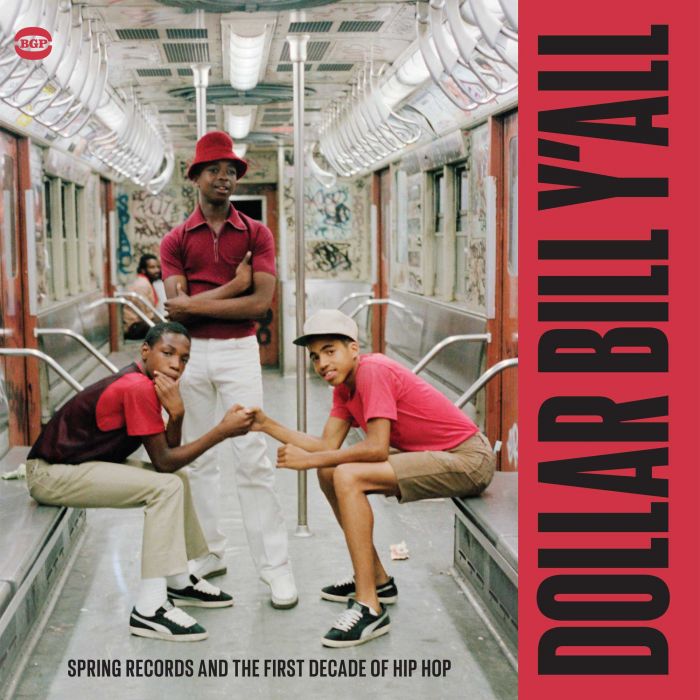

ONCE MORE WE ARE THE CHILDREN OF THE SUN.
Once More We Are The Children Of The Sun.
Label: BBE Music.
Format: CD.
Release Date: 31st March 2023.
Last year, BBE released the critically acclaimed compilation We Are The Children Of The Sun. It was one of the best compilations of 2022 and was compiled by DJ and renowned crate digger Paul Hillery.
He’s also one of leading lights of folk-funk scene and has compiled Once More We Are The Children Of The Sun. It’ll be released by BBE on the ’31st’ of March 2023. Just like We Are The Children Of The Sun, this latest compilation offers a tantalising taste of a genre that many music lovers will be unfamiliar with. That’s a great shame as there’s a veritable feast of hidden gems awaiting discovery.
Just like origins of many genres, much debate sounds when the term folk-funk was coined. Musical historians continue to debate this, but it may be as long ago as 1967.
That’s when an article written by Chuck Boller for The Democrat and Chronicle newspaper, in Rochester, New York, and he used the term folk-funk. He was writing about The Kingston Trio who were at the heart of the late-fifties folk revival that began in American colleges. After that, folk music began to evolve, and a new sound became prevalent. This the writer referred to as “folk-funk.” However, he didn’t define this new genre.
By then, a number of artists had already made their mark on what would later be called folk-funk. This included Chicago-born Terry Callier and David Crosby who were part of the folk scene and headed to New York where they became familiar faces on the Greenwich Village folk scene. Later, they would be hailed as influences on the folk-funk genre.
So would Bob Dylan, and especially when he plugged in at the 1965 Newport Folk Festival. This landmark performance and the electric folk sound was a game-changer and influenced everyone from The Byrds right through to CSNY.
Soon, other artists were playing their part in shaping the folk-funk sound. This included The Last Poets, Gil Scott-Heron and LeRoi Jones who who combined elements of jazz, proto-rap, poetry and social comment.
Other influences included sixties sunshine pop whose origins can be traced to California. The music was influenced by the past and its lysergic sound was shaped by the counter culture. However, towards the end of the sixties optimism gave way to pessimism as the music took on a darker sound.
Partly, this was because of the looming threat of nuclear war as the Cold War began. It was no surprise that other influences began to influence what later became known as folk-funk.
This included a variety of genres including early seventies Christian music which soon evolved into Xian in an attempt to interest a younger audience. Soon, a variety of genres that included elements of folk were being released and later, would become part of folk-funk scene.
Meanwhile, across the Atlantic in Britain the folk scene had changed as groups like Pentangle, Fairport Convention and Sunshine Superman Donovan were transforming folk music. To do this, they plugged in and added a lysergic sound to their music. One artist pioneered this sound.
This was John Martyn who released his debut album London Conversation, in October 1967. His music began to evolve and on his 1971 album Bless The Weather he used an Echoplex tape delay on Glistening Glyndebourne. The followup Solid Air, was released in 1973 and was genre-melting classic that showcases the future folk-funk sound. So did his other classic album, 1977s One World. Especially the groundbreaking and timeless title-track which showcases a lysergic, dreamy sound by an artist who pioneered the folk-funk sound.
In 1973, the same year that John Martyn released Solid Air, the San Francisco Examiner used the term folk-funk to describe concerts taking place in the city.
Then a year later, in 1974, the duo Brewer and Shipley were being described as folk-funk by music critic Pete Bishop in The Pittsburgh Press. Suddenly, the term was being more widely used.
By then, Jon Lucien and Terry Callier had combined soul and folk and had helped to shape the new genre which grew in popularity in the late-eighties.
That was when sample hungry crate diggers and DJs started to search for folk-funk hidden gems. They were played in clubs and the funkier cuts were sampled by producers for their drum breaks. Suddenly, these tracks were taking on a new lease of life.
With folk-funk’s popularity continuing to grow, it was no surprise that during the nineties and noughties that record labels started to release compilations of what was being referred to as a new genre.
Meanwhile, there was a resurgence of interest in many artists that had influenced the folk-funk genre. This included Terry Callier, Jon Lucien and Susan Christie.
Since then, folk-funk is still a popular genre with compiler, crate digger and DJ Paul Hillery one of the leading lights of the UK scene. Yet again, he showcases his impeccable taste on Once More We Are The Children Of The Sun.
He’s handpicked eighteen eclectic tracks on Once More We Are The Children Of The Sun. This includes a mixture of folk-funk, AOR, blissed out Balearic beats, funk, jazz-funk, soft rock, soul soft fuzzy electronica and contributions from trippy troubadours.
As The Day Grows Tired opens Once Again We Are The Children Of The Sun. The track featured on the brothers eponymous debut album. It was released in 1980 on No Mountain Records. By then, the song was a favourite when the pair played live. It’s no wonder. Crystalline acoustic guitars combine with an impassioned vocal and soaring harmonies on this beautiful, cinematic song that paints pictures and sets the bar high for the rest of the compilation.
Crazy Days was a genre-melting track that closed Forest’s eponymous debut album when it was released in 1978. It was a private press which nowadays, is highly sought after by DJ, collectors and crate diggers. The group combine AOR, jazz-funk, rock and a soulful vocal on this hook laden hidden gem.
Wendy Grace was born in Sydney, Australia, and learnt to play the guitar as a teenager. Soon, she was writing her own songs. It was almost inevitable that she would embark upon a musical career. She started working as a receptionist in a recording studio and progressed to an in-house vocalist and musician in 1975. That year she released her debut album Backyard Of Blue. Six years later she recorded the Don Reid composition More Than Hope. The lyrics are full of social comment as Latin, jazz, rock and a heartfelt femme vocal is delivered by a truly talented singer who should’ve enjoyed a successful career.
In the mid-eighties, the cultural relations department of a bank in Cologne decided that they would produce a compilation of ten songs by local amateur bands. The results was Rock De Cologne-Die Sieger ’88. One of the groups chosen was Corill. Most of their songs were instrumentals. This included Soul Shadow where a slap bass and searing rocky guitar play leading rolls as funk, jazz and rock combine on this uplifting instrumental.
New York-based Varela originally recorded Come and Take Me by the Hand in 1977. It then featured on the band’s 1978 eponymous debut album. However, this folk song was rerecorded for the group’s 1980 sophomore album A New Plateau. It’s moody, wistful and pensive but also beautiful. This oft-overlooked track is a welcome addition to the compilation.
Having moved from Wisconsin to LA, soft rock band Just As released their debut album Just A Thought in 1977. This private press was based around positive thinking and the energy of the sun. The title track heads in the direction of folk rock and features a cosmic message about positive energy, purity of heart, where we came from and where we’re going. It’s thought provoking track that’s still relevant today.
The Freeze Band from Phoenix, Arizona, released their eponymous debut album on Vista Records, in 1978. It featured the reflective Going Back In Time which epitomises everything that’s good about the folk-funk genre.
Orion was British folk duo who, in 1987, had just finished recording their debut album Jack Orion. It was released later that year on Gypsy Records and featured Moonshine. This understated and laid back instrumental meanders along gradually revealing its secrets. It’s perfect late night listening and would be perfect to watch the sun set with the one you love.
Peace Train featured on Garth Fletcher’s 1979 private press Songs… It’s Serious. It’s an uptempo and upbeat song with a message where rock, funk and soul seamlessly combine to close his debut album. Sadly, this was his only album. However, it’s a tantalising taste of a talented singer-songwriter.
Closing Once Again We Are Children Of The Sun is If Life Was Like A Ferris Wheel by Italian singer-songwriter. It featured on the B-Side to his 1975 single A Day In The Blue. However, the flip side is the standout track and finds the loved-up troubadour reminiscing about a short romance he had during a trip to England. His heartfelt and sometimes soul-baring vocal is accompanied by an arrangement that’s soulful, funky and features rocky guitars. It’s the perfect way to close the compilation.
For many newcomers to the folk-funk, We Are The Children Of The Sun was their introduction to the genre. This carefully curated compilation was the perfect starting point.
Then later in 2022, Paul Hillery returned with Folk Funk and Trippy Troubadours Volume One. It featured another tantalising taste of this oft-overlooked genre and featured hidden gems aplenty. So does his latest compilation on BBE.
This is the much-anticipated Once More We Are The Children Of The Sun. Once again, DJ and crate digger Paul Hillery’s taste is absolutely impeccable. The compilation features an array of hidden gems that showcase everything that’s good about folk-funk. It’s an eclectic compilation that includes a selection of genre-melting tracks which rub shoulders with others from private presses. There’s tracks that were released in the seventies and eighties, while others were recently released. However, they all have one thing in common, quality.
This includes the contributions from trippy troubadours and femme-folk singers. The artists on Once More We Are The Children Of The Sun tre responsible for a collection of folk-funk, AOR, blissed out Balearic beats, funk, jazz-funk, Latin, soft rock, soul and soft fuzzy electronica that’s the perfect post club soundtrack, and also for early mornings sitting on the beach watching the sun rise.
Once More We Are The Children Of The Sun.



JON SAVAGE’S 1980-1982-THE ART OF THINGS TO COME.
Jon Savage’s 1980-1982-The Art Of Things To Come.
Label: Ace Records.
Format: CD.
In November 2015, Jon Savage’s critically acclaimed book 1966: The Year the Decade Exploded was released. The book told the story of what was one of the most important and influential years in the history of popular music. However, this was just part of the story.
To coincide with the release of the book, Ace Records released Jon Savage: 1966-The Year The Decade Exploded. This two CD set was released to plaudits and praise, and turned out to be the first instalment in a year-by-year series which has documented the music scene worldwide.
The latest instalment in the series is Jon Savage’s 1980-1982-The Art Of Things To Come. It’s another two CD set that features thirty-seven tracks. This is a truly eclectic selection of music. There’s everything from disco, rap and rock to b-boy, electro, indie, new wave, pop, post-punk and synth pop. Among the artists that feature are The Cars, Echo and The Bunnymen, Donna Summer, Grace Jones, Simple Minds, Was (Not Was), Orange Juice, The Human League, The Associates, Grandmaster Flash and The Furious Five, plus the Pretenders. Singles rub shoulders with B-Sides, album tracks, hidden gems and a selection of 12” mixes. This is a first for the series.
These 12” singles include some that Jon Savage played in his DJ sets at the time. Between 1980 and 1982 he was living in Manchester and working at Granada TV with the late Tony Wilson, the man behind Factory Records. However, this was only his “daytime” job.
Then at night, Jon Savage DJ-ed at Joy Division and later, New Order gigs. During his DJ sets he was spinning the extended mixes on 12” singles. Some were six or seven minutes long. This was a far cry from the three minute pop songs from 1966. However, as Jon Savage’s 1980-1982-The Art Of Things To Come chronicles, music was changing and changing fast.
Disc One.
Opening disc one is Underground by American punk group The Bizarros. The track featured on the B-Side of their 1980 limited edition single, The Cube. It was released by the French label Sordide Sentimental. It’s an underrated track from the five piece from Akron, Ohio, who combine new wave with a hint of their punk roots.
Another B-Side is Candy-O by The Cars. It was the title track from their sophomore album which was released in 1980. The same year, the track also featured on the B-Side of Double Life in America and then It’s All I Can Do in Britain. The song features the group seamlessly fusing post-punk, rock and synth wave, something they managed to successfully master.
In 1980, Donna Summer returned with her fourth album Bad Girls. This double album was released on the Casablanca label and was produced by Giorgio Moroder. One of the highlights was the mesmeric dancefloor filler Our Love. The version included on the compilation is the 12” version which was a favourite of many DJs, including Jon Savage.
Having released a triumvirate of disco albums on Island Records, musical chameleon Grace Jones decided to reinvent herself in 1980. Accompanied by Sly and Robbie she covered the Pretenders’ Private Life. However, tucked away on the B-Side was a compelling post punk cover of Joy Division’s She’s Lost Control. The onetime disco diva transforms the track and makes it her own with a vocal that’s a mixture of frustration and despair.
Glasgow’s Simple Minds released their third album Empires and Dance in 1980. Without doubt, the highlight of the album is I Travel a timeless example of synth disco.
A Certain Ratio released their third single Flight on Factory in 1980. It was produced by the late Martin Hannett. The version on the compilation is the 12” version which is just over six minutes long. This slice of space funk helped introduce the group to a wider audience.
Wheel Me Out was released by Was (Not Was) as their debut single in 1980. On the B-Side was Hello Operator…I Mean Dad…I Mean Police…I Can’t Even Remember Who I Am. It’s a genre-melting track that’s a tantalising taste of what was to come from this groundbreaking group. Elements of electronica, jazz, funk and even avant-garde melt into one on this hidden gem.
The Psychedelic Furs reimagined and reinvented Mack The Knife in 1981, on the B-Side of the original version of Pretty In Pink. It’s dark, dramatic and edgy and features a snarling, sneering vocal, growling guitars and a wailing saxophone. They playing a leading role on a captivating cover that’s far removed from Bobby Darin’s definitive version that quite rightly, is regarded as a classic.
Closing disc one is the 12-inch version of Home Is the Where The Heart Is by Public Image Ltd. It was the B-Side of the single Flowers Of Romance which was released in 1981. However, the track originally featured on the group’s 1979 sophomore albumMetal Box. It was hailed as a groundbreaking and influential album. On what was their fifth single, the group combine dub, experimental, post-punk and psychedelia as they continued to push musical boundaries.
Disc Two.
Orange Juice open disc two with Poor Old Soul Part 2. It was the B-Side of the Glasgow-based group’s final single for Postcard Records. Released in 1981 there’s a degree of cynicism and anger in Edwyn Collins’ vocal. Later, his vocal becomes a chant as he almost sneers: “no more rock ’n’ roll for you.” The single marked the end of an era. Next stop for However the group was Polydor where they enjoyed a degree of commercial success and released a quartet of albums.
In March 1981, The Cure released their fifth single Primary on the Fiction label. Unlike so much of their music, the lyrics are much more upbeat and uplifting. They’re delivered by the inimitable Robert Smith while the bass guitars also play a leading role in the sound of success of the single. It’s 12” version which is included on the compilation and this is the first time it’s ever been reissued.
Having added vocalists Susan Ann Sulley and Joanne Catherall to their lineup The Human League released The Sound Of The Crowd on Virgin, in April 1981. This was a gamechanger for the Sheffield-based band. It showcased a much more poppy sound that featured hooks a plenty. The single introduced them to a much wider audience and reached number twelve in the UK.
When New Order released Everything’s Gone Green on Factory Benelux, in September 1981, the track had been heavily influenced by electro disco. At the time, it was popular across much of continental Europe. However, it was in Berlin where Bernard Summer first heard the music that would influence him and the group. On this 12” single that was only released in Europe, the new group replicate the pounding, pulsating beat of Giorgio Moroder and add a series of joyous whoops and hollers. The result is a track far removed from what Joy Division had been making and marked the start of a new and successful chapter for Mancunian musical pioneers.
Swiss duo Yello wrote, recorded and produced Bostich, which was released as a 12” single in September 1981. It was their sophomore single and the one that gave them their breakthrough. It’s best described as a mesmeric and hypnotic industrial dance track that on its release, became a favourite of DJs and dancers.
Soft Cell released Bedsitter on the Some Bizarre label in October 1981. It’s the 12” version of this catchy and cinematic slice of electro disco that’s preferred.
Adventures Of Grandmaster Flash On The Wheels Of Steel by Grandmaster Flash & The Furious Five is another groundbreaking track. This is the 12” version. When the single was released in October 1981 it was an early example of rap, that also showcased what was possible with sampling. The group knit together samples from several familiar tracks which play their part in this genre classic.
Closing disc two and Jon Savage’s 1980-1982-The Art Of Things To Come was My City Was Gone by the Pretenders. It featured on the B-Side of group’s classic single Back On The Chain Gang. The poignant lyrics were written by Chrissie Hynde who sings about returning home to Akron, Ohio, to discover that the city she remembered, knew and loved was very different and didn’t exist anymore. This hidden gem of a song shows another side to the group.
Jon Savage’s 1980-1982-The Art Of Things To Come features thirty-seven tracks on the two discs. It’s a truly eclectic selection of tracks that’s a tantalising taste of the music being released during this three year period. There’s everything from Afro-futurism, disco, dub and electro to post-punk and rap. That’s not forgetting b-boy, electro disco, funk, indie, industrial dance, jazz, new wave, pop, punk, space funk and synth pop on this selection of singles, B-Sides and for the first time in the series, 12” versions of tracks. There’s many familiar faces on the compilation and they rub shoulders with what will be new names for some people. However, they’re responsible for some of the hidden gems on the compilation.
Just like previous instalments in this year-by-year series, Jon Savage’s 1980-1982-The Art Of Things To Come is a lovingly curated compilation. During this period the compiler was at the heart of the Manchester music scene, andspent his evenings DJ-ing at Joy Division and New Order gigs. His love of the music shines through as he tells the story behind the music in his extensive and informative liner notes. Along with the music they’ll bring memories flooding back for music fans who remember and love the music released between 1980 and 1982, which was an exciting time and so much groundbreaking music was being made that would go on to influence future generation of musicians. A tantalising taste of that music can be found on Jon Savage’s 1980-1982-The Art Of Things To Come.
Jon Savage’s 1980-1982-The Art Of Things To Come.



A WAY TO MAKE A LIVING-THE DOLLY PARTON SONGBOOK.
A Way To Make A Living-The Dolly Parton Songbook.
Label: Ace Records.
Format: CD.
Release Date: “31st” March 2023.
On September the ‘18th’ 1967, Monument Records released Hello, I’m Dolly, the debut album twenty-one year old country singer Dolly Parton. The album reached number eleven in the US Country charts, and featured two hit singles, Dumb Blonde and Something Fishy. However, the singer from Pittman Center, Tennessee was no overnight success story.
Eight years previously, in 1959, thirteen year old Dolly Parton had released her debut single Puppy Love. After it failed to chart, it was three more years before she returned and released So Little I Wanted, So Little I Got with Buck Owens. It also failed to chart. So did It’s Sure Gonna Hurt a collaboration with The Melody Singers.
Over the next four years, Dolly Parton released a handful of singles. However, they failed to chart and commercial success eluded her as a singer.
Meanwhile the singer was busy writing songs for other artists. Soon, she had established a reputation as a talented songwriter. Initially, the songs were recorded by stars of country music. This was just the start of the Dolly Parton story.
Over the next fifty-six years, she would sell over 100 million albums worldwide. Twenty-five of her singes topped the US Country charts, and her albums have been certified gold, platinum and multi-platinum during an award-winning career. This includes eleven Grammy Awards plus ten Country Music Association Awards. The in 2022, sixty-three years after Dolly Parton’s recording career began, she was inducted into the Rock and Roll Hall of Fame.
By then, it wasn’t just country music singers that were covering Dolly Parton’s song. Her songs had recorded by everyone from stars of soul, R&B to easy listening, psychedelic folk and indie rock. By then, the charismatic country singer was one of the biggest names in music and the great and good of music had covered her songs.
This includes the twenty-four singers and bands on A Way To Make A Living-The Dolly Parton Songbook. It’s the latest instalment in Ace Records’ critically acclaimed Songwriter Series that will be released on the ‘31st’ of March 2023.
This new and lovingly compiled compilation opens with Dolly Parton and includes Buck Owens, Percy Sledge, The Everly Brother, The Incredible String Band, Margie Joseph, Emmylou Harris and Glen Campbell. Then there’s Linda Ronstadt, The White Stripes, Maria Muldaur, Betty LaVette, Hank Williams Jr and Tina Turner. It’s an all-star lineup on A Way To Make A Living-The Dolly Parton Songbook. Choosing the highlights isn’t going to be easy.
Opening the compilation is one of Dolly Parton’s most successful single, 9 To 5. It was released in 1980 and was the theme for the comedy film of the same name. The single also featured on the album 9 to 5 and Odd Jobs. This hook-laden crossover hit topped the US Billboard 100 as well as the US Country charts. It also won two Grammy Awards for Best Country Song and Best Country Vocal Performance, Female. Forty-three years after its release this timeless song is regarded as an iconic anthem and is favourite of DJs and music lovers worldwide.
Here I Am was covered by Southern soul man Percy Sledge in 1972. However, Atlantic decided not to release the song as a single. It wasn’t until 1974 that the song featured on a German mid-price compilation. Belatedly this heartachingly beautiful soul-baring ballad was heard for the first time. It returns for an encore on A Way To Make A Living-The Dolly Parton Songbook, and features a needy, heartfelt vocal bristling with emotion.
In The Good Old Days (When Times Were Bad) was covered by The Everly Brothers for their Magnum Force album in 1984. It’s delivered in a country style with backing vocalists and accompanying them as they bring to life Dolly Parton’s autobiographical lyrics. They’re deeply moving and filled with sadness as they tell the story of her impoverished childhood in Tennessee.
In January 1973, The Incredible String Band released their No Ruinous Feud album. The only cover included was Dolly Parton’s My Blue Tears. It’s an uplifting version where the folk and country is combined to take the song in a new and different direction.
When Margie Joseph released her eponymous album for Atlantic in 1973, Touch Your Woman was chosen as the second single This was just a year after Dolly Parton’s version reached number sox in the US Country charts. Sadly, commercial success eluded this deeply soulful, sassy and sensual cover.
A number of the songs Dolly Parton has written are autobiographical. This includes Coat Of Many Colors. It was covered by Emmylou Harris in 1975, on her album Pieces Of The Sky. The arrangement is understated on this beautiful, moving and emotive reading of a familiar song.
Light Of A Clear Blue Morning featured on Glen Campbell’s critical acclaimed 1991 album Unconditional Love. It’s an upbeat and cinematic song with a positive message that takes on a new meaning in the hands of another country music legend.
I Will Always Love You is, without doubt, one of the finest songs Dolly Parton has written during her long and illustrious career. This much covered classic was recorded by Linda Ronstadt for her 1975 album Prisoner Disguise. It’s one of the highlights of an album that reached number four on the US Billboard 200 and was certified platinum. There’s an intensity to this beautiful and impassioned cover of a much-loved and timeless classic.
When Dolly Parton penned My Tennessee Mountain Home she was inspired by the place she grew up. It’s a joyous and stirring song that was covered by Maria Muldaur on her 1973 eponymous debut album. It reaches number three on the US Billboard 200. The album also features the biggest single of her career Midnight At The Oasis. These two songs showcase a truly talented and versatile singer-songwriter.
In 2005, Betty LaVette made a welcome return with her I’ve Got My Own Hell To Raise album. It was her first album in over twenty years and was released to widespread critical acclaim. That was no surprise given the quality of the songs on the album. This includes a cover of Dolly Parton’s Little Sparrow. The song is reinvented and takes on a new meaning. There’s a starkness and darkness to this powerful song as the Michigan-born soul singer reaches out and speaks to women suffering physically or mentally abusive relationships.
When Hank Williams Jr released his debut single in 1964, there were the inevitable comparisons to his father. This wasn’t surprising as he was one of the legends of country music. However, Jr’s first five singles charted in the US Country charts. His cover of the Dolly Parton penned ballad was a minor hit single when it reached number sixty on the US Country charts. It’s a poignant and wistful cover that should’ve fared better and is a reminder of a talented troubadour.
Closing A Way To Make A Living-The Dolly Parton Songbook is Tina Turner’s cover of There’ll Always Be Music. It’s one of the highlights of her 1974 debut album Tina Turns The Country On! It was recorded in LA and features some of the top country musicians. The album was produced by Tom Thacker and was an attempt to introduce the singer to a new and wider audience with its mixture of country, folk and soft rock.
Just like previous instalments in Ace Records’ Songwriter Series, A Way To Make A Living-The Dolly Parton Songbook is a lovingly compiled and carefully curated compilation that pays tribute to a truly talented songwriter. This is a welcome addition to a long running and critically acclaimed series.
Writing songs has been something that seventy-seven year old Dolly Parton has been doing successfully since the sixties. This includes the twenty-four tracks on the compilation.
There’s contributions from many familiar faces on A Way To Make A Living-The Dolly Parton Songbook. This includes many legends of music. Unsurprisingly there’s covers by some of the biggest names in country music. They rub shoulders with stars of soul, R&B and easy listening. That’s not forgetting covers by psychedelic folk and indie rock groups. They’ve all covered songs written by the charismatic country singer Dolly Parton, who has sold over 100 million records worldwide and nowadays, is one of the biggest names in music.
A Way To Make A Living-The Dolly Parton Songbook.
WILLIAM BELL-THE MAN IN THE STREET.
William Bell-The Man In The Street.
Label: Kent Soul.
Format: CD.
Southern Soul man William Bell was born William Yarbrough on July the ’16th’ 1939, in Memphis, Tennessee. Growing up, he sang in church and was inspired by the gospel group The Soul Stirrers, who at the time, were led by Sam Cooke.
By the age of ten, the future William Bell had written his first song Alone On A Rainy Nite. Even then, it was almost inevitable that he would embark on a musical career.
At Booker T. Washington High School, Memphis William Yarbrough decided to form a vocal group with some friends. That was when he decide to change his name to William Bell, which was his grandmother’s surname.
Aged fourteen, he won a talent contest and soon was singing in clubs in the Memphis area. Soon, the young singer was making waves in the local music scene.
William Bell joined The Del Rios which would launch the career of several future soul greats. This included Louis Williams of The Ovations and Norman West of The Soul Children.
The nascent group began singing in clubs in the Memphis area, and decided to enter a talent contest which they won. That was how they came to the attention of Rufus Thomas who at the time was a local radio DJ.
Having won the talent contest, The Del Rios secured a one-off record deal with local label Meteor Records. It was an imprint of LA-based Modern Records which was owned by the Lester Bihari.
In the studio, Rufus Thomas’ band The Bearcats provided a bluesy backdrop on Alone On A Rainy Nite and the upbeat, and rocky track Lizzie. William Bell who was just seventeen took charge of the lead vocal.
Sadly, when the single was released in November 1956 the sales were disappointing. This was disappointing for William Bell who wondered whether to pursue a different career?
That was how the young singer found himself studying to become a doctor. However, he didn’t turn his back on music and continued to work with Memphis bandleader Phineas Newborn until the early sixties. William Bell also continued to write songs, including one that would kickstart his recording career.
Towards the end of the summer of 1961, William Bell was performing in New York when he wrote You Don’t Miss Your Water. At the time, he was with a record deal. However, this would soon change.
On returning to Memphis, William Bell met Chips Moman who was the head of A&R at a new local label. He asked him if wanted to do a session Stax Records which would become the singer’s musical home for the next fourteen years.
At Stax Records, William Bell was reunited with Rufus Thomas, who was also signed to the label until its demise in 1975. However, a lot would happen before that and can be divided into his blue and yellow periods.
Between 1961 and 1968, William Bell released fourteen singles on Stax Records. These singles featured the original design on the blue label with the Stack Of Records’ logo. This is why this period is often referred to as Stax’s blue period.
In 1961, William Bell released his debut single for Stax, You Don’t Miss Your Water. It was an innovative song with no middle eight and no instrumental break. Instead, there were just three verses. Later, the song would later become a Southern Soul classic. The single was a local hit, but reached just ninety-five in the US Billboard 100. This was a disappointing for everyone concerned given the quality of the single.
It wasn’t until 1962 the William Bell returns with his second single for the label, Any Other Way. Despite featuring a soul-baring vocal the single failed to chart. Success continued to elude the twenty-three year old Southern Soul man.
In 1963, William Bell’s career was interrupted when he received his call up papers and like all young American men, had to spend time in the military. The singer was sent to Hawaii, but returned to Memphis whenever his leave permitted and returned to the studio.
During 1963, William Bell released four singles, but none of them charted. The problem was serving in the military meant he was able to promote the singles.
This included I Told You So and then Just As I Thought which showcased the early Stax sound that was starting to develop. The singles were the perfect platform for the twenty-four year old who was maturing as a singer.
The third single William Bell released during 1963 was What Can I Do (To Forget). What was his fifth single for Stax failed to chart.
Despite commercial success continuing to elude William Bell, he released one more single in 1963. This was the beautiful ballad I’ll Show You. Just like the three previous singles he released during the year it failed to trouble the chart.
During 1964, Stax Records released just one single by William Bell. This was the Southern Soul ballad Don’t Make Something Out Of Nothing which he wrote with Steve Cropper. Sadly, when the single was released it failed commercially.
Things didn’t improve in 1965 when the ballad Crying All by Myself was released as a single and failed to trouble the charts.
As 1965 drew to a close, William Bell had released eight singles on Stax Records and just one minor hit single. However, soon the singer would be able to return to civilian life, and he hoped that his fortunes would improve.
William Bell, Steve Cropper and David Porter joined forces to pen Share What You Got (But Keep What You Need). This a beautiful ballad that was recorded in 6/8 time and reached number twenty-seven in the US R&B charts. At last, the twenty-six year old singer was enjoying a degree of commercial success.
This continued when the soulful dancer Never Like This Before was released later in 1966, and reached number twenty-nine in the US R&B charts.
After two hit singles William Bell was in no hurry to release a new single. He wanted to find the right song and wrote the ballad Everybody Loves A Winner with Booker T. Jones. The single reached ninety-five in the US Billboard 100 and eighteen in the US R&B charts. This was William Bell’s most successful single to date.
Later in 1967, William Bell returned with the dancefloor friendly Eloise (Hang On In There). However, it failed to trouble the charts?
Despite this, Stax Records released The Soul Of A Bell, which was the twenty-eight year old’s debut album. However, it also failed to chart which was another disappointment for the Memphis-born soul man.
Fortunately, this was just a temporary setback for William Bell. When he released Hang On In There, his first single of 1968, it reached thirty-three on the US R&B charts. It would go on to become a seasonal standard.
Disaster had struck on the ‘10th’ of December 1967 when the plane that was carrying Otis Redding and members The Barkays crashed in a lake in Madison, Wisconsin. William Bell was devastated at the loss of his friend and what was one of Stax’s up-and-coming groups.
William Bell and Booker T. Jones penned a tribute to Otis Redding, A Tribute To A King. His voice was filled with emotion as he delivered the poignant lyrics. The song was destined for the B-Side with Every Man Ought To Have A Woman chosen as the single. However, when it was released in 1968 DJs discovered the B-Side and started playing the tribute to a giant of soul music. It entered the charts reaching eight-six in the US Billboard 100 and sixteen in the US R&B charts. This made it the most successful single of William Bell’s blue period.
During his blue period at William Bell released fourteen singles at Stax Records between 1961 and 1968.
In 1968, William Bell and Judy Clay recorded Private Number. This future soul classic only reached seventy-five in the US Billboard 100 and seventeen in the US R&B charts. Meanwhile, the single reached number eight in the UK in early 1969. By then, William Bell had enjoyed further commercial as a new chapter in his career began.
The death of Otis Redding had left a huge void at Stax. Many thought that William Bell was the man to fill the void as his yellow period began later in 1968. It’s documented on Kent Soul’s new compilation The Man In The Street. It features twenty-four tracks and covers the remainder of his career at the Stax.
William Bell’s yellow periodbegan when he released I Forgot to Be Your Lover in December 1968. It’s heartachingly beautiful ballad that he penned with Booker T. Jones and features a vocal full of emotion and regret. On the B-Side was Bring The Curtain Down. The single reached forty-five in the US Billboard and ten in the US R&B charts in February 1969 and was the soul man’s biggest hit to date.
William Bell was reunited with Judy Clay and released My Baby Specializes in 1968. However, it stalled at forty-five in the US R&B charts.
Buoyed by the success of the single I Forgot to Be Your Lover, Stax released My Whole World Is Falling Down as the follow-up in 1969. The vocal is filled with sadness and despair and is accompanied by gospel-tinged harmonies on this poignant Southern Soul ballad. It reached thirty-nine in the US R&B charts. Tucked away on the B-Side was the hidden gem All God’s Children Got Soul. It’s a driving dancer where horns accompany the vocal as William Bell breathes life and meaning into the lyrics.
The second single he released in 1969 was Happy, a joyous, string-drenched dancer. On the B-Side was the dramatic balled My Kind Of Girl. It’s another hidden gem and is too good to be a B-Side. Sadly, the single failed to trouble the charts and was the one that got away for William Bell. However, the single later became a favourite on the UK’s Northern Soul scene.
During 1969, William Bell collaborated on a number of singles. This included Soul-A-Lujah which featured Johnnie Taylor, Eddie Floyd, Carla Thomas and The Staple Singers. However, it didn’t trouble the charts.
Neither did Love’s Sweet Sensation where he joined forces with Mavis Staples and nor I Can’t Stop a duet with Carla Thomas. This was disappointing for everyone concerned.
The William Bell and Booker T. Jones songwriting partnership penned Born Under A Bad Sign. It’s a mixture of Southern Soul, R&B and blues that oozes quality. Despite that single wasn’t a commercial success. On the B-Side was the cathartic confessional A Smile Can’t Hide (A Broken Heart). This underrated song and the single also featured on the album Bound To Happen.
Two years had passed since The Soul Of A Bell was released in 1967. William Bell returned with Bound To Happen in 1969 which stalled at forty-nine in the US R&B charts. However, it turned out to be the most successful album he released on Stax.
As the seventies dawned, William Bell and Carla Thomas released the duet All I Have to Do Is Dream in 1970. Commercial success eluded their latest collaboration and their search for a hit continued.
When Lonely Soldier was released later in 1970, it was the end of an era. It was the last song the William Bell and Booker T. Jones songwriting partnership penned. Their swansong was a poignant, moving and cinematic ballad that features Let Me Ride on the B-Side. It’s an oft-overlooked example of early seventies Southern Soul. Sadly, the successful songwriting partnership’s final collaboration failed to trouble the charts. The search for a hit single continued.
1970 was a disappointing year for William Bell, and so was 1971. His first single that year was the ballad A Penny for Your Thoughts. It features a tender, heartfelt vocal that’s accompanied by harmonies and an understated arrangement that allows the vocal to take centrestage. The first single of 1970 marked a change in direction. So did the B-Side was Till My Back Ain’t Got No Bone which Eddie Floyd and Alvertis Isbell cowrote. However, despite the change in direction the single failed to chart.
The second and final single William Bell released during 1971 was the paean All For The Love Of A Woman. Swirling strings and soaring harmonies accompany an impassioned vocal. The B-Side was the Eddie Floyd penned I’ll Be Home. It showcases a much funkier sound. However, despite the quality of both sides of the single it failed to chart. Sadly, 1971 wasn’t a good year for William Bell.
He had released his third album Wow…during 1971. It also failed to chart. The last two years had been tough for William Bell as commercial success eluded him.
Save Us was the only single he released during 1972. It’s a mixture of Southern Soul and funk that William Bell produced and cowrote with guitarist with Horace Shipp, Jr. The B-Side If You Really Love Him was written by Muscle Shoals-based songwriters George Soule and Terry Woodford. This ballad is bristling with emotion and the rueful vocal is full of sadness and regret. Both sides showcase a truly talented singer who could bring lyrics to life. Despite this, the single failed to trouble the charts.
There was further disappointment when his fourth album Phases Of Reality failed to chart in 1972. It hadn’t been a good year for William Bell.
1973 began with the release of the single If You Really Love Him, which William Bell co-produced with Al Jackson, Jr. It’s another ballad and features a wistful vocal as he sings about his lover: “who belongs to another.”The vocal is full of hurt and it sounds as if he has lived the lyrics. On the B-Side was The Man In The Street a memorable, melodic and catchy track. The single reached twenty-two on the US R&B charts and was William Bell’s first hit single since 1969.
The follow-up was I’ve Got to Go on Without You and it reached fifty-four in the US R&B charts. This bluesy sounding single is a tale of love gone wrong and a relationship: “that wasn’t meant to be.” On the B-Side was the uptempo You’ve Got The Kind Of Love I Need where hooks aren’t in short supply.
For William Bell the only disappointment of 1973 was when his fifth album Relating failed to chart. Little did he realise that it would be the last album he released for Stax.
By the time spring turned to summer in Memphis, in 1974, William Bell had released the Southern Soul ballad Gettin’ What You Got (Losin’ What You Had). It feature the vastly underrated and beautiful All I Need Is Your Love. Backing vocals on both sides come courtesy of Charles Chalmers and the Rhodes sisters, Donna and Sandra, who featured on many sessions at Hi Records. They play a part in the success of the single which reached thirty-nine on the US R&B charts. However, by then, things weren’t going well behind the scenes at Stax.
That had been the case since at least 1973. However, many artists signed to Stax didn’t know just how bad things had got by 1975. By then, the label was heading towards insolvency. Before that, William Bell released one more single.
This was the laidback and seductive sounding Southern Soul ballad Get It While It’s Hot. On the B-Side was Nobody Walks Away From Love Unhurt which features Hi rhythm section drummer Howard Grimes. When the single was released in 1975 it wasn’t a commercial success and failed to chart. Sadly, that was the end of era.
Since releasing his debut single on Stax in 1961 William Bell had released twenty-six solo singles and five albums. Fourteen singles were released during his blue period between 1961 and 1968. These singles and the B-Sides feature on Ace Records’ 2022 William Bell compilation Never Like This Before. Less than a year later comes the followup.
This is The Man In The Street. It features the twelve singles plus their B-sides that William Bell released during his yellow period. It began in 1968 and ended in 1975. It was the end of an era for one of Stax Records most successful male vocalists.
Stax and Volt Records were forced into involuntary Chapter 11 bankruptcy on December the ’19th’ 1975. It was a case of how the mighty had fallen. After all, Stax had been one of the most successful soul labels during the late-sixties. Things were very different less than a decade later.
In 1976, Al Bell was arrested and then indicted for bank fraud during the bankruptcy proceedings. However, he was acquitted of the charges in August 1976.
Then in early 1977, Union Planters sold Stax, its master tapes, and its publishing companies for around four million dollars to a holding corporation. It then sold the assets to Fantasy Records later that year. By then, William Bell was signed to Mercury Records.
He had also enjoyed the biggest hit of his. This was Tryin’ To Love Two which topped the US R&B charts and reached number ten in the US Billboard 100. Despite this success, the singles William Bell released on Stax were his best.
This includes the twenty-four singles from his yellow period that feature on The Man On The Street. These singles and B-Sides feature many hidden gems and oft-overlooked tracks, and are a reminder of one of the greatest singers in the history of Souther Soul. William Bell was also a truly talented songwriter and producer whose spiritual home was Memphis-based Stax Records.
A reminder of the second part of William Bell’s time at Stax is The Man On The Street, another lovingly curated compilation that’s just been released by Ace Records. It’ll be of interest to fans of William Bell as well as anyone interested in Southern Soul’s greatest labels, Stax Records.
For newcomers to the veteran soul man, whose now eighty-three, it’s the perfect introduction to a legend of Southern Soul. William Bell played an important part in the sound and success of Stax Records over a fourteen year spell at the label that was his musical and spiritual home.
William Bell-The Man In The Street.


 dereksmusicblog
 dereksmusicblog
