PERU BRAVO-FUNK, SOUL AND PSYCH FROM PERU’S RADICAL DECADE.
PERU BRAVO-FUNK, SOUL AND PSYCH FROM PERU’S RADICAL DECADE.
By 1965, it wasn’t just America and Britain that were in the throes of a musical revolution. No. This was musical revolution whose tentacles reached much further afield. Word spread as far afield as Africa, Australasia, Europe and Latin America. That had been the case since The Beatles released Love Me Do in 1962. Since then, the sixties started to swing. However, in 1965, music started to change. Things got psychedelic. That meant the start of another revolution.
Gil Scott Heron once sung that The Revolution Won’t Be Televised. In Peru, in 1965, the revolution was televised. That’s when Los Saicos made their television debut. Musically, that was a game changer.
The music Los Saicos’ played on that never to be forgotten day in 1965, has variously described as a garage or garage punk. Whichever way you describe Los Saicos’ music, it was certainly revolutionary. So much so, that they sparked an underground musical revolution.
What followed, is best described has been described as “fuzz, funk and flower power.” Peruvian music was never the same.
Throughout Peru, a generation of young people decided to form bands. They were spurred on by the music that was being imported into Peru. This included the music that was sweeping America, Britain and Europe by storm. Soon, Peru was swinging. Then it was all change. The age of the garage band arrived. This inspired a generation of aspiring Peruvian musicians.
Just like punk eleven years later, garage bands made music sound easy. All you needed were a few instruments. They didn’t need to be new. In keeping with the genre’s image, the more battered the better. So, a generation of Peruvians beg, stole and borrowed musical instruments. They learnt the rudiments of these instruments, and before long, were forming bands.
Some of these bands were more successful than others. In some cases, it was a case of here today, gone tomorrow. Impromptu jam sessions took place throughout Peru. Sometimes, though, bands stayed together long enough to record a single.
This was repeated throughout the rest of the sixties, and into the early seventies. The only thing that changed was the music. After Peru’s garage bands laid down their instruments, psychedelia became the musical flavour of the month. It was a case of flower power, peace, love and patchouli. This was the case for the next few years. However, psychedelia wasn’t the only show in town.
Throughout the late sixties, soul was popular in Peru. This isn’t surprising. Soul music was imported into Peru. It became a popular musical genre. Soon, Peru had their own soul stars. This would be the case as a new decade dawned.
As the sixties became the seventies, psychedelia was no longer as popular. The Age Of Aquarius was almost over. Soul was still popular. It continued to evolve and reinvent itself. However, in the early seventies, funk became much more popular. People were realising there was more to funk than James Brown.
Funk was thriving by the early seventies. Its popularity had grown since funk announced its arrival in the mid-sixties. Now,a new generation of funk singers and bands were releasing albums. This included Sly and The Family Stone, Funkadelic, Parliament, Fatback Band and the Ohio Players. Their music was winning friends and influencing people far and wide. This included in Peru.
Peruvians were won over by funk. They first heard funk via the records that were imported into Peru. Soon, they embraced funk. Just like they had with psychedelia and soul, it became part of their musical culture.
Just like previous musical genres, Peruvian musicians released their own funk singles. Some of these singles were one-off, never to be repeated hidden gems. Other groups enjoyed longer, more successful careers. This was how it had been for a while.
Bands burst onto the Peruvian music scene in a blaze of glory, the released a glorious single, but are never heard of again. Meanwhile, other groups enjoy a steady rise. They enjoy successful careers. Peru was no different from America, Britain or Europe.
The only difference is no record label has reissued the music these Peruvian psychedelic, soul and funk records. That’s until now. Tiger’s Milk Records, an imprint of Strut Records, released Peru Bravo-Funk, Soul and Psych From Peru’s Radical Decade on 6th October 2014. It features fifteen funky, soulful and psychedelic tracks, from what was one of the most traumatic times in Peruvian political history.
Peru, during the sixties and seventies, was a country divided. It was on the cusp of cataclysmic change. Cuban communists were inspiring their Peruvian comrades. They used guerrilla tactics to try and win political power. This was a dangerous business.
Right up until 1963, Peru was ruled by a military junta. The junta were ruthless. Dissidents risked “disappearing.” Despite this, the rebels didn’t give up. Eventually, after two elections, Peru became a democracy in June 1963. Sadly, democracy lasted five short years.
In 1968, the armed forces staged a military coup. Juan Velasco Alvaradoo took power. He ruled Peru between 1968 to 1975. His title was President of the Revolutionary Government. It was only in 1975, that democracy was re-established, when General Francisco Morales Bermúdez came to power. Throughout this turbulent decade, the music on Peru Bravo-Funk, Soul and Psych From Peru’s Radical Decade, provided a backdrop to the Peruvian revolution.
This includes tracks from Laghonia, Traffic Sound, Cacique, Thee Image, Black Sugar, Los Belkings, Jeriko and Los Comandos. These groups provided the musical backdrop as Peru struggled for democracy. Many of these singles have long been forgotten. Most of them won’t have been heard outside of Peru. That’s until now. They make their debut on Peru Bravo-Funk, Soul and Psych From Peru’s Radical Decade, which I’ll pick the highlights of.
Laghonia’s Bahia opens Peru Bravo-Funk, Soul and Psych From Peru’s Radical Decade. This is a track from their 1971 debut album Glue. It was released on the Mag label. Bahia had originally been released by Saul and Manuel Cornejo as a single. It’s best described as a glorious slice of garage beat psychedelia that’s long on hooks.
Traffic Sound is a name well be familiar to many music lovers. Their contribution is La Camita. It was written by Traffic Sound and released on the Sono Radio in 1971. It’s psychedelic, funky and features some Santana-esque guitars. There’s even a nod to The Beatles circa Sgt. Pepper’s Lonely Hearts Club Band. Add to that an irresistible Latin influence and what more can you want?
Not much is known about Cacique. Mostly, the recorded for the El Virrey label. A student band, Cacique recorded on an ad hoc basis. Their label wanted a new single, they turned up and laid down two sides. This was the case in 1972, when they recorded Cacique, a blistering fusion of funk, Latin, psychedelia, rock and drama.
The Meters recorded the original version of Cissy Strut. Then in 1969, Los Holy’s covered Cissy Strut. It was the B-Side to their single Hawaii Cinco O. Cissy Strut is transformed. Nervy, edgy drums, searing scorching guitars and washes of Hammond organ melt into one, on this fusion of funk, Latin, psychedelia and rock.
Things get soulful, sassy and funky with Thee Image’s Outasit. It was released as a single in 1969. Cooing harmonies accompany Richie Zellon’s needy, heartfelt vocal. Behind him, the arrangement is best described as psychedelic soul. It’s yin to Richie’s yang. Sadly, this hidden gem was Thee Image’s only single. They split-up, with Richie and Manuel Flores, taking different musical roads.
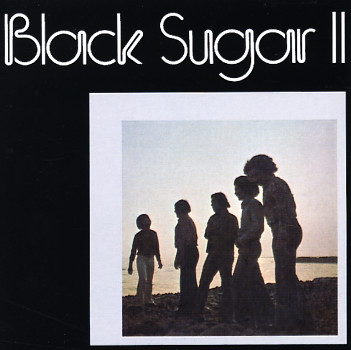
Black Sugar’s Cheean is an uber funky track. It’s taken from from their 1974 sophomore album Black Sugar II. Cheean literally explodes into life. What follows is a five minute fusion of funk, jazz, soul and rock. Frantic, funky, furious and innovative describes this genre melting track.
In 1971, Telegraph Avenue were one of the best bands in the Lima music scene. Their music was a marriage of psychedelic rock and Latin rhythms. Telegraph Avenue released their eponymous debut album in 1971. One of the highlights was Sungaligali, a track that’s soulful, explosive, dramatic and irresistible.
Covering a classic is never easy. Jeriko realised that when they covered Jimi Hendrix’s Hey Joe in 1971. Jeriko realise that Jimi is responsible for the definitive version. So Hey Joe is given a makeover. The tempo rises and Jeriko combine hypnotic Latin rhythms with a twist of rock. What follows is a complete remake of a classic. It veers between ethereal and soulful to mesmeric and urgent.
Los Nuevos Shains had been around since 1964. This makes them one of Peru’s first underground bands. Later, the band split into The Thomas Pepper Smelter and Los Nuevos Shains. Sadly, Los Nuevos Shains only ever released one album a couple of singles. Their musical swan-song was the single that featured Pancito Caliente. Released in 1970, Latin rhythms, rock and psychedelia unite seamlessly and peerlessly.
Given Peru was in the throws of a revolution, it’s apt that Los Comandos’ El Sermon is my final choice from Peru Bravo-Funk, Soul and Psych From Peru’s Radical Decade. El Sermon was released in 1970, before Los Comandos released their only album Moby Dick. Psychedelic, funky and jazz tinged, El Sermon becomes a driving jam where Los Comandos showcase their versatility and talent.
Choosing the highlights of Peru Bravo-Funk, Soul and Psych From Peru’s Radical Decade wasn’t easy. After all, Peru Bravo-Funk, Soul and Psych From Peru’s Radical Decade is literally crammed full of quality music. There’s funk, soul, psychedelia and rock. Add to that Latin rhythms and jazz. This music was produced during one of the most turbulent periods in Peruvian political history.
During the period Peru Bravo-Funk, Soul and Psych From Peru’s Radical Decade covers, Peru was ruled by a military junta. Inspired by Cuban communists, Peruvian freedom fighters used guerrilla tactics to try and win political power. Eventually, they succeeded in 1975. At last, Peru was free. However, despite living under the military junta, Peru’s underground musical scene was thriving.
Peru was no different to America or Britain. New groups sprung up on a daily basis. Some groups lasted longer than others. . In some cases, it was a case of here today, gone tomorrow. Using instruments that were begged, stolen and borrowed, impromptu jam sessions took place throughout Peru. Sometimes, though, bands stayed together long enough to record a single. This included those on Peru Bravo-Funk, Soul and Psych From Peru’s Radical Decade which was released by Tiger’s Milk Records, an imprint of Strut Records on 6th October 2014.
The fifteen groups on Peru Bravo-Funk, Soul and Psych From Peru’s Radical Decade are a tantalising taste of the music produced during Peru’s turbulent political past. However, there’s much more music from this period awaiting discovery.
Compilers Duncan Ballantyne, Andres Tapia and Martin Morales realise this. They know their way around Peruvian music. Their previous compilation Peru Maravilloso: Vintage Latin, Tropical and Cumbia, proves this. It was released to critical acclaim back in November 2013. Nearly a year later, and Tiger’s Milk Records’ return with another genre-melting compilation of Peruvian music, Peru Bravo-Funk, Soul and Psych From Peru’s Radical Decade. However, it’s been well worth the wait.
After all, Peru Bravo-Funk, Soul and Psych From Peru’s Radical Decade is a glorious musical melting pot of influences and genres. That’s why Peru Bravo-Funk, Soul and Psych From Peru’s Radical Decade is one of the best compilations of 2014. Tiger’s Milk Records seem to concentrate on quality, rather than quantity. That’s no bad things. Too many labels churn out mediocre compilations. Not Tiger’s Milk Records. They dig deep into the treasure trove that’s Peruvian music and compil genre-melting compilations of quality music like Peru Bravo-Funk, Soul and Psych From Peru’s Radical Decade.
PERU BRAVO-FUNK, SOUL AND PSYCH FROM PERU’S RADICAL DECADE.



- Posted in: Funk ♦ Psychedelia ♦ Rock ♦ Soul
- Tagged: Black Sugar, Cacique, Jeriko, Laghonia, Los Belkings, Los Comandos, Los Saicos, Peru Bravo, Peru Bravo-Funk, Peru Maravilloso: Vintage Latin, Soul and Psych From Peru’s Radical Decade, Strut Records, Thee Image, Tiger’s Milk Records, Traffic Sound, Tropical and Cumbia
 dereksmusicblog
 dereksmusicblog