1970s ALGERIAN PROTO-RAI UNDERGROUND.
1970s ALGERIAN PROTO-RAI UNDERGROUND.
As the seventies dawned, Algerian music was changing. For the next ten years, Algerian music, was constantly evolving. This included Rai music. It was a controversial style of music, that originally came to prominence at the start of the twentieth century.
Rai music Rai music was first heard in Oran, an industrial port in northwest Algeria. Influenced by Bedouin music, Rai music was mostly sung by women. They were accompanied with derbouka and bendir rhythms. The finishing touch was the unique, wailing sound of the Gasba flute. Before long, Rai music’s popularity spread.
No longer was Rai music heard just in Oran. Soon, Rai music became a musical phenomenon. It was heard in the towns and villages in the Wahran area. In cafes, bars and at weddings, Rai music was the soundtrack to daily life and festivities. However, this didn’t mean Rai singers were treated like stars.
Far from it. In the early days, the Rai singers, who were referred to as sheiks, were perceived as outcasts. This continued to be the case in the thirties.
In Rai music, the thirties was the age of the innovator This was when Sheika Rimitti, Sheika Khaldi and Djillali Ain Tedless made a breakthrough. They were true pioneers. Their lyrics were full of social comment and controversy. Nothing was off-limits. Issues weren’t skirted around. Instead, they were tackled head on. This didn’t go down well within the Algerian establishment. They accused the innovators of celebrating sex, sin, depravity and degeneracy. By doing this, this didn’t help the cause of the Rai singers. They were still seen as outcasts. However, this would soon begin to change.
Radios and records were much more commonplace. They had made their way into more and more homes. This raised the profile of the Rai singers, whose music was beginning to change.
The stylistic changes in Rai music was as a result of people who had immigrated to Algeria. This included Egyptian, French and Spanish settlers. Their music played a part in the evolution of Rai music. Everything from flamenco, Mambo, Egyptian classical, Parisian cabaret and pop began to influence Rai music. One of the most influential and innovative artists was Blaoui Houari. He and a number of pioneering musicians ensured that never again, would Rai music be the same.
For the next few years, Algerian music veered between evolution and revolution. The Wahrani sound had changed. Arrangements changed. So did the instruments that musicians used. Then as the seventies dawned, Algerian music was forced to change.
By the early seventies, Algerian music was forced to go underground. It had too. Censors controlled what could be heard on the radio. They censored lyrics. If a song fell foul of the censor, it was banned. For Algerian musicians, they had no option but to go underground.
The Wahran seaside towns, proved a popular place for Algerian musicians looking to escape the reach of the censor. This included Belkacem Bouteldja, Cheik Benfissa, Boutaïba Sghir, Groupe El Azhar and Messaoud Bellemou. Their careers thrived during the early seventies. Espeically Messaoud Bellemou’s. His L’Orchestre Bellemou rewrote the musical rulebook.
Never before, had anyone used modern instruments or the trumpet in Wahrani music. That’s until L’Orchestre Bellemou did. This was a game-changer. Suddenly, all bets were off.
Suddenly, anything was possible in Wahrani music. Trumpets sat side-by-side with violins, synths, drums, derboukas and accordions. Elements of reggae, rock, jazz and Bollywood melted into one. Soundtracks also proved an inspiration for this new generation of innovative musicians. Then as the seventies drew to a close, Cheb Zurgui decided to experiment musically.
Cheb bought an instrument that had never been heard in Wahrani music. This was an electric guitar. To this, he added a wah wah pedal. Suddently, Wahrani music met Jimi Hendrix. It seems remarkable that nobody had thought of this before. However, just like L’Orchestre Bellemou, this proved a game changer.
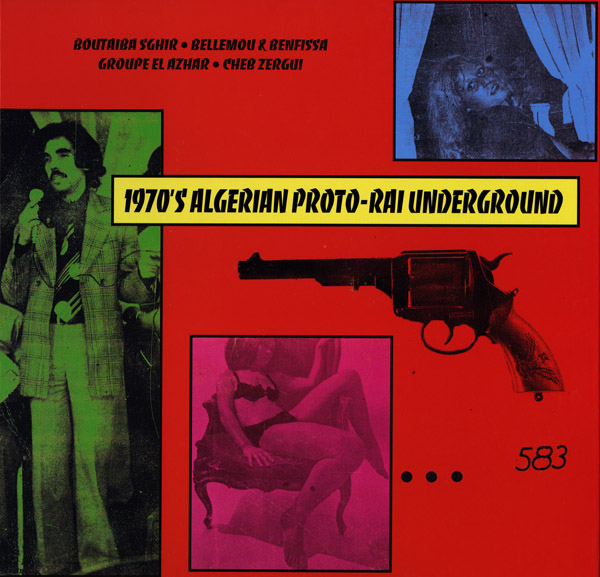
So it’s fitting that Cheb Zurgui features on 1970s Algerian Proto-Rai Underground, which was recently released by Sublime Frequencies. It features eight tracks from Bellemou and Benfissa, Groupe El Azhar, Boutaïba Sghir and Cheb Zergui. For newcomers to Algerian Proto-Rai, then 1970s Algerian Proto-Rai Underground is the perfect starting place. You’ll realise why when I tell you about 1970s Algerian Proto-Rai Underground.
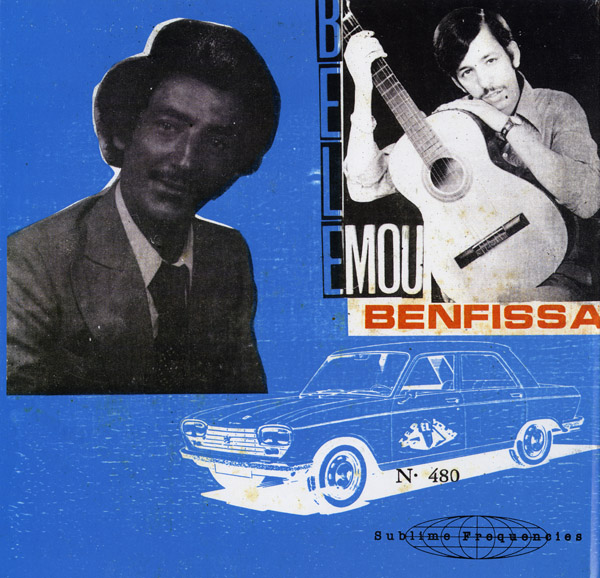
Bellemou and Benfissa’s Li Maandouche L’Auto opens 1970s Algerian Proto-Rai Underground. Their first contribution is Li Maandouche L’Auto (He, Who Doesn’t Own A Car). Bellemou Messaoud, the The Father of Raï, plays trumpet and guitarist Cheb Benfissa play their part in an irresistible fusion of influences. The starting point is Rai. Add to that elements of funk, jazz and Latin music. There’s even a nod to Afrobeat in the drums and percussion. Lah Lah Ya S’Habi is Bellemou and Benfissa’s other track. It translates as My God! My God! My Friends! It’s a fusion of drama, spirituality and frantic percussion. Punctuating the arrangement are ferocious stabs of trumpet. However, it’s a heartfelt, spiritual and soulful vocal that’s at the heart of the song’s success.
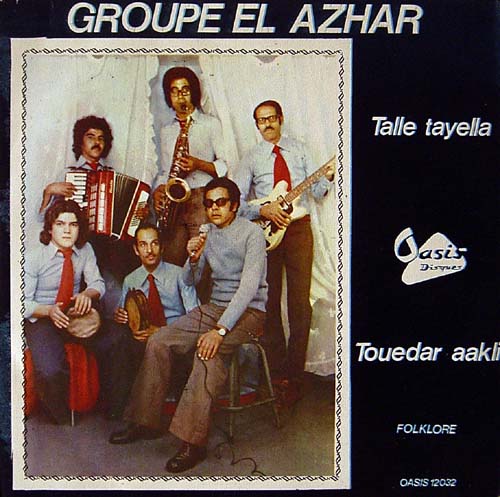
Groupe El Azhar also feature twice on 1970s Algerian Proto-Rai Underground. Mazal Nesker Mazal (I’m Still Getting Drunk…Still) is their first contribution. It’s sung in a call and response style, as an accordion drives the arrangement along. Stabs of horns punctuate an arrangement that’s a mixture of folk, jazz and Rai. Touedar Aakli (My Reason Is Lost), was the B-Side to Talle Tayella. It was released on the Oasis Disques. Stylistically, it’s similar to Mazal Nesker Mazal. Having said that, it’s infectiously catchy, and is akin to a call to dance.
It was in the late sixties Boutaïba Sghir’s career began. Soon, he was playing an important role in Algeria’s underground musical scene during the seventies. This included collaborating with Boussouar El Maghnaoui, Bouteldja Belkacem and Gana El Maghnaoui. So important is the role Boutaïba played in Rai music, that he’s referred to as one of the fathers of Modern Raï. A hugely talented vocalist, he breathes life, meaning and emotion into tracks like Dayha Oulabes (I’ll Marry Her Whether They Like It Or Not), Malgre Tout (Despire Everything) and El Fermlia (Nurse). His pain, determination and hurt, shine through, on these three tracks. Boutaïba Sghir would influence the next generation of musicians, including Cheb Zergui, who closes 1970s Algerian Proto-Rai Underground.
1970’s Algerian Proto-Rai Underground closes with Cheb Zergui’s Ana Dellali. It’s a case of keeping the best until last. Cheb is without doubt, an innovative musician. He was the first person to use an electric guitar and wah wah pedal in Rai music. On Ana Dellali (I Cuddle Myself), Cheb evokes the spirit of Hendrix. His impassioned, heartfelt pleading vocal is accompanied by a hypnotic, funky arrangement. It showcases one Algeria’s most talented and visionary musicians.
For anyone with a passing interest in Algerian music, then 1970’s Algerian Proto-Rai Underground is the perfect starting place. It features eight tracks, from four artists, who played a huge role in the rise and rise of Rai music, during the seventies. These eight tracks are sure to whet your appetite.
After immersing yourself in 1970’s Algerian Proto-Rai Underground, you’ll want to hear more music from one of the most important decades in the history of modern Algerian music. There’s much more to Rai music in the seventies than these eight tracks. 1970’s Algerian Proto-Rai Underground is just the start of this musical journey. Surely, further compilations of Rai music from the seventies must follow? I hope so.
Hopefully, the next compilation of Rai music Sublime Frequencies release, will last more than forty-three minutes. That’s all 1970’s Algerian Proto-Rai Underground lasts. The journey is almost over before it begins. However, at least 1970’s Algerian Proto-Rai Underground is a truly memorable musical journey, that’s bound to appeal to music lovers with eclectic and adventurous musical tastes.
1970s ALGERIAN PROTO-RAI UNDERGROUND.
 dereksmusicblog
