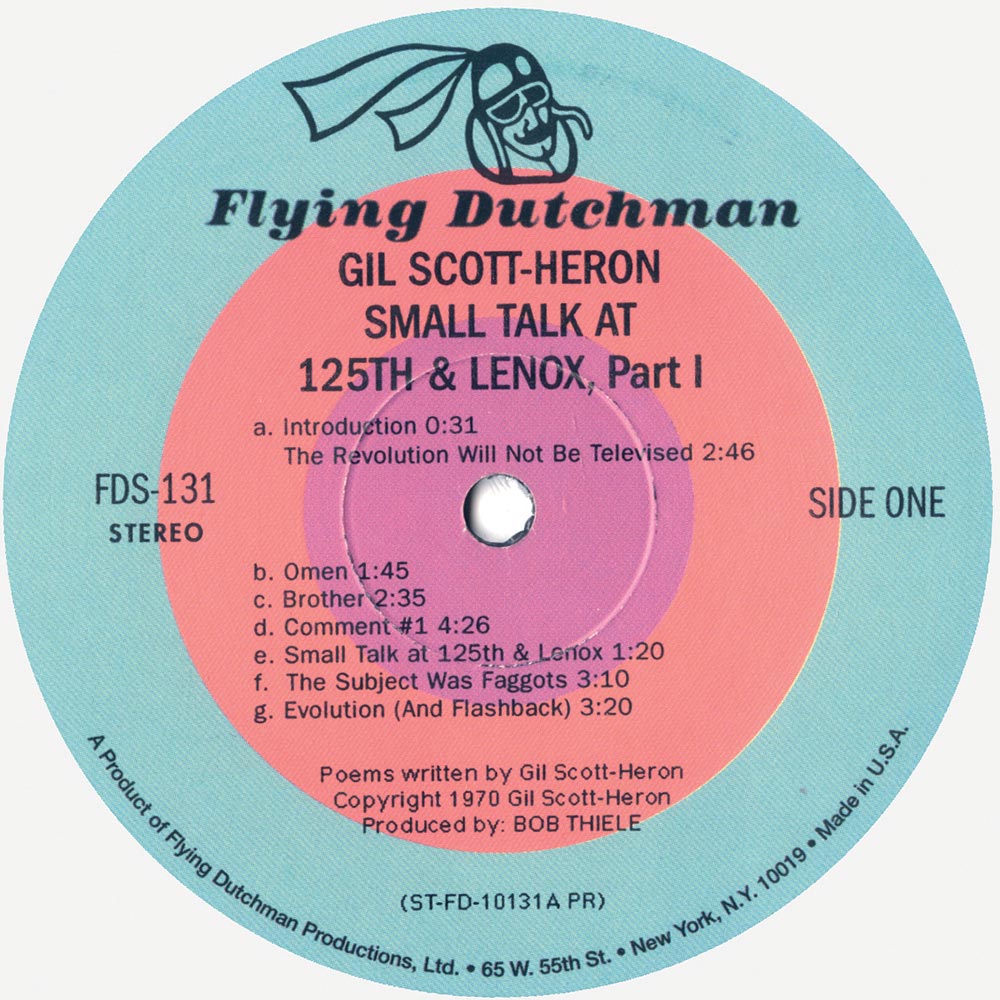
GIL SCOTT-HERON-SMALL TALK AT 125TH AND LENNOX-VINYL EDITION.
GIL SCOTT-HERON-SMALL TALK AT 125TH AND LENNOX-VINYL EDITION.
There’s been many an important day in Chicago’s musical past. That’s not surprising. The Windy City has given the world some of the biggest names in music. This includes Buddy Guy, Herbie Hancock, Nils Lofgren, Patti Smith, Ray Manzarek of The Doors and Pearl Jam’s Eddie Vedder were all born in Chicago. So was musician, novelist poet and political activist Gil Scott-Heron. Sadly, despite all he achieved, Gil Scott-Heron is to some extent, one of Chicago’s forgotten musical heroes. Gil Scott-Heron’s story began in 1949.
April Fool’s Day in 1949 was an important day in Chicago’s musical history. That was the day Gil Scott-Heron was born. His mother Bobbie Scott-Heron was an opera singer. She sang with New York’s Oratorio Society. Gil’s father was Gil Heron was a Jamaican footballer, who at one time, played for Celtic Football Club. Sadly, Bobbie and Gil’s marriage ended when Gil was young.
After this, Gil was sent to live with his maternal grandmother, Lillie Scott, who lived in Jackson,Tennessee. Then when Gil was just twelve, Lillie Scott died. Gil returned to New York to live with his mother. She was now living in the Bronx. Originally, Gil enrolled at the DeWitt Clinton High School, but later, moved to the Fieldston High School.
This came after impressing the head of the English department. He’d read one of Gil’s essays and recommended that Gil received a full scholarship. This proved a poisoned chalice. The education he was receiving was better. However, he was only one of five black students. He felt alienated. Another problem was the socioeconomic gap. Other students came from a much more affluent background. Gil was the son of a single mother. It was at this period, that Gil became socially and politically aware. His eyes were opened to inequality, injustice and racism. This would shape his music in later years. Before that, Gil headed to university.
Lincoln University was where Gil headed after high school. Gil was recommend to head to Lincoln University by Langston Hughes. He was also at Lincoln University and was a member of Gil’s first band, the Black and Blues. After two years at Lincoln University, Gil decided to take time out to write a novel.
During this period, Gil Scott-Heron wrote two novels. His first novel was a thriller entitled The Vulture, was published in 1970. Whilst writing The Vulture, Gil saw The Last Poets in Lincoln in 1969.
After watching The Last Poets, Gil approached the band and asked: “can I form a band like you guys?” The seed had been sown. Maybe, music rather than writing would be the direction Gil’s career headed?
Having been impressed with The Last Poets and now considering a career in music, Gil had a lot on his mind as he headed back to New York. He found a new home in Chelsea, Manhattan. Once he’d settled in, Gil decided to make his dream a reality. So he looked for a record company. Gil just so happened to approach a label tailor-made for his music, Flying Dutchman Productions.
After his departure from ABC/Impulse Bob Thiele decided to found his own label. Over the last few years, Bob had worked with some of the most innovative and creative musicians in the history of jazz. Bob realised that often, large record companies aren’t the best environment for innovative and creative musicians. Often, these musical mavericks didn’t thrive within such an orthodox environment. Their creativity is restricted, meaning they’re unable to experiment and innovate like they’d like. So when Bob parted company with Impulse, who he’d transformed into one of jazz’s pioneering labels, he founded Flying Dutchman Productions. This was the label that Gil Scott-Heron approached. There was a problem though.
While Bob wanted to sign Gil, there was a problem, funding. The funding that Phillips, the Dutch record label had given Bob wasn’t going as far as he’d hoped. Despite this, when he met Gil he was impressed by the poet, musician, and author. So what Bob did, was fund an album that was a fusion of poetry accompanied by understated, percussive arrangements.
This was Small Talk At 125 and Lenox, which will be reissued on 180 gram vinyl on OST Recordings. Recording of Small Talk At 125 and Lenox took place in the summer of 1970. Rather than record his debut album in a studio, Gil decided to record the album live. So, with percussionists David Barnes, Eddie Knowles and Charles Sanders accompanying him, Gil recorded fourteen tracks he had written. They became Small Talk At 125 and Lenox.
Prior to the release of Small Talk At 125 and Lenox, critics had their say on Gil Scott-Heron’s debut album. Straight away, comparisons were drawn with the group who’d inspired Gil, The Last Poets. To some extent, this was a fair comment.
When one listens closely to tracks like Whitey On The Moon, plus what was the original version of The Revolution Will Not Be Televised, it’s apparent that Gil was taking what The Last Poets had been doing to the next level. With just a trio of percussionists accompanying Gil, Small Talk At 125th and Lenox was a potent and explosive mix of social comment and humour. Given that The Last Poets had enjoyed a degree of success, surely so should Gil?
Sadly, when Small Talk At 125th and Lenox was released, it wasn’t a commercial success. However, a small crumb of comfort was, that The Revolution Will Not Be Televised found its way onto radio play lists. That was encouraging for Bob and Gil. The Revolution Will Not Be Televised introduced a wider audience to Gil Scott-Heron’s scathing take on politics, social comment and satire. This was first heard on Small Talk At 125th and Lenox.
The first thing you realise, is that Small Talk At 125th and Lenox is quite unlike most of the music being released in 1971. The nearest comparison is The Last Poets. However, Gil took what The Last Poets were dong as a starting point, and took it much further. The result, Small Talk At 125th and Lenox is a potent, powerful and explosive mix of social and political comment. It’s a reflection of where America was, socially and politically. Racism still blighted America. Gil took this personally. It was like a personal affront. He felt obliged to speak up for those without a voice. On Small Talk At 125th and Lenox, Gil Scott-Heron also rails and rages against corruption, hypocrisy, inequality, poverty and racism. Gil Scott-Heron a long-term political activist and advocate for change warns against inactivity. He longs for change, and is determined to make America a better country. His manifesto for change was Small Talk At 125th and Lenox.
After introducing his band, fittingly, Gil Scott-Heron begins his set with the song that would become synonymous with him, The Revolution Will Not Be Televised. Accompanied by just bongos and congas, Gil delivers his unmistakable proto rap. His delivery is impassioned, as he encourages the audience to make a difference. Change won’t happen if they’re at home sitting on their sofas watching television. Instead, they’ve got to go out there and make it happen.
Having set the tone for the evening, Gil Scott-Heron goes on to combine satire and passion. Racism, poverty, corruption and inequality inspire Gil. So does hypocrisy on Brothers, The Rainbow Conspiracy on Comment #1 and the money spent on the space race on Whitey On The Moon. Gil rages against money spent on the space race, while deprivation is rife within housing projects. Gil’s anger and disgust is apparent. His delivery is inspired and impassioned. Just like other tracks on Small Talk At 125th and Lenox, Gil delivers the lyrics as if they’re a personal affront.
That’s the case on Evolution (and Flashback) and Enough. Both tracks see Gil examine the progress of black America since slavery. On Evolution (and Flashback), anger and frustration fills his voice as he delivers the lyrics. Later, as he mentions the arrival of Dr. Martin Luther King, there’s a sense of in Gil’s voice. It doesn’t last though. It’s as if the dream has died. especially when Gil ruefully says: “the bitter truth lives on.” Then on Plastic Pattern People compares life in the Northern and Southern states of America. Inequality and racism were rife in the South in the late sixties and early seventies. Again, Gil sees this as a personal affront. He rails against inequality, racism and injustice, as he provides a voice for the poor and oppressed. However, on a couple of tracks, Gil Scott-Heron draws inspiration from daily life.
Like all good poets, Gil finds inspiration in everything and anything. An example is Omen. He was found inspiration for Omen in the New York subway, when he saw a painting publicising Kinji Fukasaku’s film The Green Slime. Then on Small Talk at 125th and Lenox, Gil found inspiration on the street corner. It’s as if he’s been eavesdropping on everyday conversations. He recounts what people were saying, right down to what they had for lunch. Then on a trio of tracks, Gil the poet becomes Gil the vocalist.
On The Vulture, Who’ll Pay Reparations on My Soul? and Everyday, which closes Small Talk At 125th and Lenox sits down at the piano and sings. With just the trio of percussionists accompanying him, Gil is transformed. He proves to be a talented and soulful vocalist. Especially on Who’ll Pay Reparations on My Soul?, which takes a diversion in the direction of jazz. Everyday proves the perfect way to close Small Talk At 125th and Lenox. Especially with gospel tinged harmonies and handclaps accompany Gil’s heartfelt, soulful vocal.
Throughout a fourteen album career, Gil Scott-Heron provided a voice for the disenfranchised. Fearlessly, Gil highlights the social and political problems that blighted America. He encouraged Americans to join together and change America for the better. This pioneering poet and protest singer made a difference politically. Gil made people aware of the problems people were facing and urged them to take action. His career began with Small Talk At 125th and Lenox, which introduced the world to Gil Scott-Heron, novelist, poet, political activist, singer and songwriter.
For the next five decades, Gil Scott-Heron tried to make a difference with his music. His 1971 debut album, Small Talk At 125th and Lenox, is a mature and accomplished album. Gil combines power, passion, emotion, sadness, frustration, anger and confusion. In a way, his youthfulness helps Gil brings the lyrics to life. Gil was a young man and was aware of and possibly, had experienced the inequality and injustice he sings about.
Gil rails and rages against corruption, hypocrisy, inequality, poverty and racism. Gil Scott-Heron a long-term political activist and advocate for change warns against inactivity. He longs for change, and is determined to make America a better country. His manifesto for change was Small Talk At 125th and Lenox.
This potent, powerful and explosive mix of social and political comment was a reflection of where America was, socially and politically. Racism still blighted America. Gil took this personally. It was like a personal affront. He felt obliged to speak up for those without a voice on Small Talk At 125th and Lenox which will be reissued on 180 gram vinyl on OST Recordings.
GIL SCOTT-HERON-SMALL TALK AT 125TH AND LENNOX-VINYL EDITION.



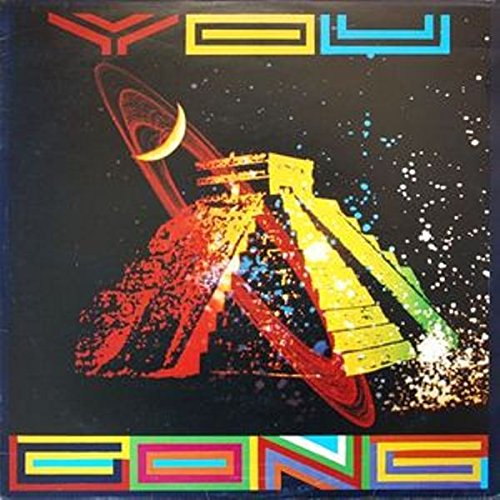
GONG-YOU.
GONG-YOU.
Prolific. That’s a good way to describe the various lineups of Gong. Since Gong formed in 1967, Gong and the various offshoots of Gong have released thirty-four studio albums. Of these albums, three standout from the crowd, the Radio Gnome Trilogy. The last instalment in the Radio Gnome Trilogy was You, which was released in 1974. It was the recently released by Charly, and concludes what was a groundbreaking trio of albums. No wonder. Gong were a pioneering group, featuring musical mavericks and innovators. Their story begins in France, in 1967,
That’s when The Franco-British band were founded by Daevid Allen, an Australian musician, and Gilli Smyth a professor of the Sorbonne. They were joined by vocalist Ziska Baum and flautist Loren Standlee. This was the first lineup of Gong. However, it wouldn’t be the last.
Since then, Gong’s lineup is best described as fluid. Around thirty musicians have come and gone. Some left of their own accord. Others left in acrimonious circumstances. However, in 1967, when Gong were formed almost accidentally, it looked like a brave new world.
In 1967, Australian musician, Daevid Allen, was a member of Soft Machine. Daevid had been spending time in Paris, France. However, the time came to return to London, where Soft Machine were based. When Daevid arrived in London, there was a problem with his visa. He was denied entry into Britain, and returned to Paris where he met Gilli Smyth a professor of the Sorbonne, one of France’s most prestigious universities.
Daevid Allen and Gilli Smyth decided to form a band, which they named Gong. The pair, who were both vocalists, were joined by another vocalist, Ziska Baum, and flautist Loren Standlee. This was the first of numerous lineups of Gong, a group who six decades and forty-eight years later, are still going strong. That’s quite remarkable, given their turbulent history.
A year after Gong formed, France was in the throes of a student revolution. Police and students clashed on the streets during May 1968. This was a worrying time for the members of Gong. So much so, that Daevid Allen and Gilli Smyth fled from Paris, and eventually, settled in Deià, in Majorca.
This resulted in the first changes in Gong’s lineup. After fleeing Paris, the band’s lineup changed. Rumour has it, that Daevid and Gilli discovered saxophonist Didier Malherbe living in a cave in Deià. He would soon join Gong, when they headed to France to record the soundtrack to Jerome Laperrousaz movie about motor cycling, Continental Circus.
Continental Circus.
For the recording of Continental Circus, Gong returned to France. Continental Circus was the soundtrack to Jérôme Laperrousaz’s film about motor cycle racing. By the time Gong arrived in France, things were much calmer. It was a different country to one the one that Gong had been forced to flee from.
Since they left France for Deià, the first changes in Gong’s lineup took place. Vocalist Ziska Baum and flautist Loren Standlee. However, saxophonist Didier Malherbe had joined Gong, who were now reduced to a trio. This was the lineup that recorded the soundtrack to Continental Circus.
The sessions took place at the Château d’Hérouville in France. There, Gong recorded the four tracks that became Continental Circus. One of then, What Do You Want? was familiar to anyone who had bought Camembert Electrique. It seemed to have been “inspired” by Fohat Digs Holes in Space. However, once recording of Continental Circus was complete, and Gong returned home. they were a very different band. Sadly, the release of Continental Circus was delayed. However, at least Continental Circus soundtrack kickstarted Gong’s nascent career. Record labels started to take an interest in Gone.
They were signed to Jean Karakos’ newly formed BYG label, on a multi-album deal. Their first album for BYG was Magick Brother. However, it would be a while before Continental Circus wars released.
Magick Brother.
Recording of Magick Brother, which is regarded as Gong’s debut album, took place in Paris. Between September and October 1969, recording of Magick Brother, took place at Studio ETA and Studio Europa Sonor. The same personnel that featured on Continental Circus, featured on Magick Brother, which was produced by Jean Georgakarakos and Jean-Luc Young.
They guided Gong through the recording of their debut album. Just like on Continental Circus, Daevid Allen played guitar and added vocals. Gilli Smyth was credited as adding vocals and a “space whisper.” Didier Malherbe played saxophone and flute. Augmenting Gong, were some top session musicians.
With Gong lacking a rhythm section, drummer Rachid Houari was brought onboard. So were Earl Freeman, Dieter Gewissler and Barre Phillips, who played contrabass on various tracks. Free jazz pianist, Burton Greene, a native of Chicago, was also brought onboard. The final piece of the jigsaw, was Tasmin Smyth. Her vocal features on Mystic Sister/Magick Brother. Tasmin and the rest of the guest artists, played their part in Gong’s debut album Magick Brother, which was released in March 1970.
On the release of Magick Brother in March 1970, Gong’s debut album was well received by critics. Gong were hailed as an innovative group, one who weren’t afraid to push musical boundaries. Their music was a fusion of musical influences and genres. Everything from psychedelia, free jazz, pop, rock and prog rock can be heard on Magick Brother. The future Kings of the potheads had made their presence felt. However, as was their want, Gong’s music wouldn’t stand still. continue to evolve. This would result in the first classic album of their career, and their first PhP album, Camembert Electrique.
Camembert Electrique.
Camembert Electrique is remembered as the first album in Gong’s PhP phase. The pothead pixies made their debut on Gong’s trailblazing sophomore album.
Gong were one of the earliest prog rock bands. Unlike other prog rock bands their music was a fusion of musical genres. Elements of psychedelia, jazz, avant garde, and pop are combined. Other times, the music is ethereal, spacey and atmospheric. Always though, there’s an intensity throughout Camembert Electrique, as Gong take you on a trailblazing journey. The destination is planet Gong. Providing the soundtrack to the journey was the now legendary radio gnome, which dips in and out of Camembert Electrique. Radio gnome plays its part in a truly groundbreaking album which was recorded in 1971.
Gong had some new additions to their lineup when work began in May 1971. The first of the new additions was bassist and guitarist Christian Tritsch. Drummer Pip Pyle slotted into the rhythm section. Eddy Luiss played Hammond organ and piano. They joined guitarist and vocalist Daevid Allen, vocalist and space whisperer Gilli Smyth and Didier Malherbe on saxophone and flute. This was the the lineup of Gong that headed to Michel Magne’s Strawberry Studios, in north west Paris where they recorded Camembert Electrique, which was mostly, written by Daevid Allen.
Eight of the tracks on Camembert Electrique were written by Daevid Allen. He wrote the other two tracks with new additions to Gong’s lineup. Bassist and guitarist Christian Tritsch cowrote And You Tried So Hard. These songs became Camembert Electrique, which Gong began recording in May 1971.
For Gong’s sophomore album Camembert Electrique, Gong headed to Michel Magne’s Strawberry Studios, in north west Paris. Gong couldn’t have picked a better studio. It was stocked with the latest equipment. This was the perfect location for a groundbreaking band. Over ten days in May 1971, Gong recorded what was the basis for the ten tracks that became Camembert Electrique. Two months later, Gong returned to the studio.
In July 1971 returned to Strawberry Studios, to finish recording of Camembert Electrique. Just like the sessions in May, everything was off the cuff. There was an experimental side to Gong. The used tape recorders that played backwards. Tape loops added bursts of laughter. Gong were making music with a smile on their face. To do this, they fused musical genres and influences. Elements of psychedelia, jazz, avant garde, and pop shine through on Camembert Electrique, which was eventually completed in September 1971, when Gong returned to Strawberry Studios. Little did they realise that they had recorded their first classic album, Camembert Electrique.
Camembert Electrique was released in 1971. Critics hailed the album a classic. It’s now regarded as a cosmic rock classic, that marked the debut of the pothead pixies (PhP). They made their debut on Gong’s trailblazing, genre-melting sophomore album Camembert Electrique. As debut albums go, Gong had released one of the most groundbreaking. Now somewhat belatedly, Continental Circus was released.
Continental Circus.
Continental Circus was released in April 1972, and was the soundtrack to Jérôme Laperrousaz’s film about motor cycle racing. There was air of mystery about the album. No musicians were listed on the cover of Continental Circus. Instead, it was credited credited to Gong avec Daevid Allen. However, it was obvious that this was a Gong album.
Especially to the critics. Gong’s adventurous, innovative streak shawn through. On Continental Circus World, Gong combined dialogue and sound effects. To that they add looped snipped from the film. It plays throughout the track. This was just another example of Gong at their innovative best. They were determine to push musical boundaries. Despite this, reviews of Continental Circus were mixed. Some critics were won over by the music on Continental Circus. However, the music went over the head of other critics. They didn’t “get” Gong. That had been the case with Camembert Electrique. So what would they think of Flying Teapot, the first album in the Radio Gnome trilogy?
Flying Teapot.
Flying Teapot marked the start of a trilogy of truly groundbreaking albums. Over a two year period, Gong released the Radio Gnome trilogy. These three albums would see Gong become part of musical history.
When work began on Flying Teapot, Gong were a very different band. Their lineup featured eight musicians, including guitarist Steve Hillage and Tim Blake. However, still, Daevid Allen penned most of the six tracks. He wrote two tracks and cowrote three other tracks. Gail Smyth cowrote Witch’s Song/I Am Your Pussy with Daevid Allen. Other members of Gong played a part in the songwriting process. Especially, Tim Blake. He wrote The Octave Doctors And The Crystal Machine and cowrote Zero The Hero And The Witch’s Spell with Daevid Allen and Christian Tritsch. These songs became Flying Teapot.
Recording of Flying Teapot began in January 1973, at The Manor Studios, Oxford with producer Giorgio Gomelsky. The newly expanded lineup of Gong combined their combination traditional instruments, sound effects and tape machines effectively. The result was an album that would become part of Gong mythology.
When Flying Teapot was released on 25th May 1973, the album was hailed as one of the most ambitious, groundbreaking albums of 1973. Psychedelia, prog rock and space melted into one on Flying Teapot. It was a meeting of the sixties, seventies and 21st Century cosmic music. The album that had been inspired by Russell’s teapot would late become both a cosmic rock and prog rock classic.
Angel’s Egg.
Having released one of most ambitious albums of 1973, Gong returned back to the studio almost straight away. This time, Gong headed France, in August 1973, where they used the Manor Mobile at Pavillon du Hay.
A total of fourteen songs were to be recorded. Many were just short, musical sketches, lasting a minute long. They had been penned by the various members of Gong. Just like previous Gong albums, Daevid Allen played an important role. He wrote two tracks and cowrote five other tracks. Other members of Gong were beginning to play a more important part of the songwriting process. Especially Steve Hillage, who wrote two tracks and cowrote two others. These songs came to life thanks to Gong and their myriad of instruments, effects and producer Giorgio Gomelsky. Once the fourteen songs were completed, they were mixed at The Manor, in Oxfordshire. Angel’s Egg was released as 1973 drew to a close.
Angel’s Egg was released on 7th December 1973. It wasn’t just the music that was groundbreaking. Gong decided that the album should come complete with a booklet introducing record buyers to the world of Gong. In the booklet, was a in-depth explanation of Gong mythology. The booklet was akin to a who’s who of Gong. It also included Angel’s Egg’s lysergic lyrics. Then there was the cast of characters and their backstory. Finally, there was an introduction to Gong speak. All this was wrapped in a gatefold sleeve. While this impressed record buyers, what the critics were interested in, was the music. How did Angel’s Egg compare to Flying Teapot?
Gong had set the bar high with Flying Teapot. However, Angel’s Egg, which introduced record buyers to Bloomdido Bad De Grass, Shakti Yoni, Sub. Capt. Hillage and Pierre de Strasbourg. These were the names that members of Gong adopted on Flying Teapot. Just like Flying Teapot, Angel’s Egg was hailed as a genre classic by critics. They embraced Gong’s ability to push musical boundaries, and open the doors of perception with their fusion of psychedelia, prog rock and space rock. The second instalment in the Radio Gnome Trilogy was given the seal of approval by critics and released on 7th December 1973. Now the pressure was on Gong to complete the Radio Gnome Trilogy with a fitting followup to Flying Teapot and Angel’s Egg.
You.
In the summer of 1974, Gong began work on the final instalment in the Radio Gnome Trilogy, You. It featured eight tracks that the members of Gong had written. Thoughts for Naught, A P.H.P.’s Advice, A Sprinkling of Clouds, Perfect Mystery and The Isle of Everywhere were written by Daevid Allen, Tim Blake, Steve Hillage, Mike Howlett, Didier Malherbe and Pierre Moerlen. Magick Mother Invocation, Master Builder and You Never Blow Yr Trip Forever were penned by Daevid Allen, Tim Blake, Miquette Giraudy, Steve Hillage, Mike Howlett, Didier Malherbe, Benoit Moerlen, Pierre Moerlen, and Gilli Smyth. The eight songs were recorded at The Manor Studios, in Oxfordshire.
That was where Gong began work on the recording of their fifth album You. The rhythm section featured drummer and percussionist Pierre Moerlen, bassists Mike Howlett and guitarists Steve Hillage. They were joined by percussionists Mireille Bauer and Benoît Moerlen, while Didier Malherbe took charge of wind instruments and vocals. Tim Blake played Moog and EMS synthesisers and Mellowdrone and Miquette Giraudy added backing vocals. Founding members Daevid Allen added vocal guitar and Gilli Smith poems and space whispers. Bringing all this together, was new producer Simon Heyworth. Once the eight tracks on You were complete, the album was mixed.
Rather than mix You at one studio, two were used. Side one was mixed at Pye Studios, Marble Arch and side two at The Manor. Once You was complete, it was ready for release in October 1974.
Some critics felt Gong had kept the best until last. You was the third instalment in the Radio Gnome Trilogy. It found Gone at their most innovative and inventive. Genres were combined, and melted into one. Elements of psychedelia, prog rock, space rock, jazz, pop and rock shine through, as Gong deploy their unique and unmistakable combination of instruments and effects. This creates an album that’s totally unique and unmistakable.
After all, what album featured a gnomic narrative, where pothead pixies and octave doctors are introduced to flying teapots. Then there’s the journeyman Zero the Hero. They’re a figment of Gong’s collective fertile imagination. They come to life thanks to narrator and vocalist Daevid Allen and space whisperer Gilli Smyth. Along with the rest of Gong, they take the listener on a genre-jumping, lysergic journey. While each and every member plays a part in Gong’s Magnus Opus, two members of Gong stand out.
Guitarist Steve Hillage is at the heart of the action. Having settled into his role in Gong, he unleashes inventive, virtuoso performances. His barnstorming solo cut through arrangements. They prove the perfect accompaniment, and foil to Didier Malherbe. The French multi-instrumentalist drenches some of You’s arrangements with musical hailstorms. Steve and Didier stand shoulder to shoulder, as Gong record their finest hour.
Meanwhile, the rest of Gong combine drama, surrealism and urgency. Like much of the rock music released in 1974, there’s a sense of theatre. However, where Gong differ, is they’ve a sense of humour. They’re determined not to take themselves too seriously on You, third and final instalment in the Radio Gnome Trilogy.
Gong had kept the best of the Radio Gnome Trilogy until last. While Flying Teapot and Angel’s Egg were groundbreaking albums, Gong went one better on You. It featured Gong at their most ambitious, innovative and inventive. That’s why You is considered one of Gong’s finest albums. Fittingly, the three instalments in the Radio Gnome Trilogy, Flying Teapot, Angel’s Egg and You have recently reissued by Charly. This trilogy features the musical mavericks as they transform a recording studio into a laboratory.
Just like with Flying Teapot and Angel’s Egg, the music on You was experimental. Much of the music was off the cuff. They used tape recorders that played backwards. Tape loops added bursts of laughter. Whispery and theatrical vocals were added. So were effects. These effects transformed the sound of the original instrument. When all this was brought together by producer Simon Heyworth, the result was a prog rock classic.
You however, features more than prog rock. As Gong make music with a smile on their face, they fused musical genres and influences. Elements of avant garde, cosmic rock, experimental, free jazz, pop, psychedelia and space rock. When this is combined, the result is music that unique and inimitable, and could only have been recorded by a group a group of musical mavericks like Gong. Their 1974 Magnus Opus You, is a fitting finale to the Radio Gnome Trilogy, which features Gong at their innovative and inventive best.
GONG-YOU.
TONY BANK-A CHORD TOO FAR BOX SET.
TONY BANK-A CHORD TOO FAR BOX SET.
Too often, Tony Banks is referred to as “the keyboard player from Genesis.” This is doing the sixty-five year old a huge disservice. Tony Banks is a multi-instrumentalist, whose just as comfortable playing guitar as his playing piano, Hammond organ, synths or Mellotron. Seamlessly, Tony Banks could switch between musical instruments. That and his ability to innovate, played an important part in Genesis’ success. However, while Genesis dominated a large part of Tony Banks’ career, it’s just part of the story.
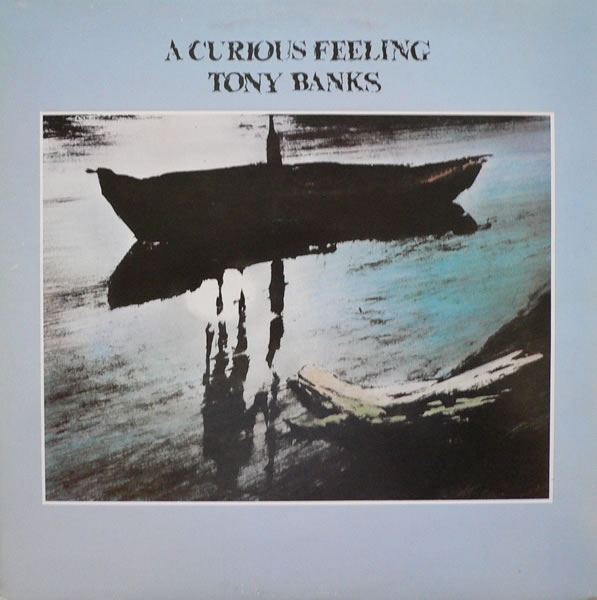
By the Genesis split-up in 1998, after thirty-one years together, Tony Banks was already an established solo artist. He released his debut album A Curious Feeling in 1979. After that, Tony Banks released another eight albums. They showed the different sides to Tony Banks.
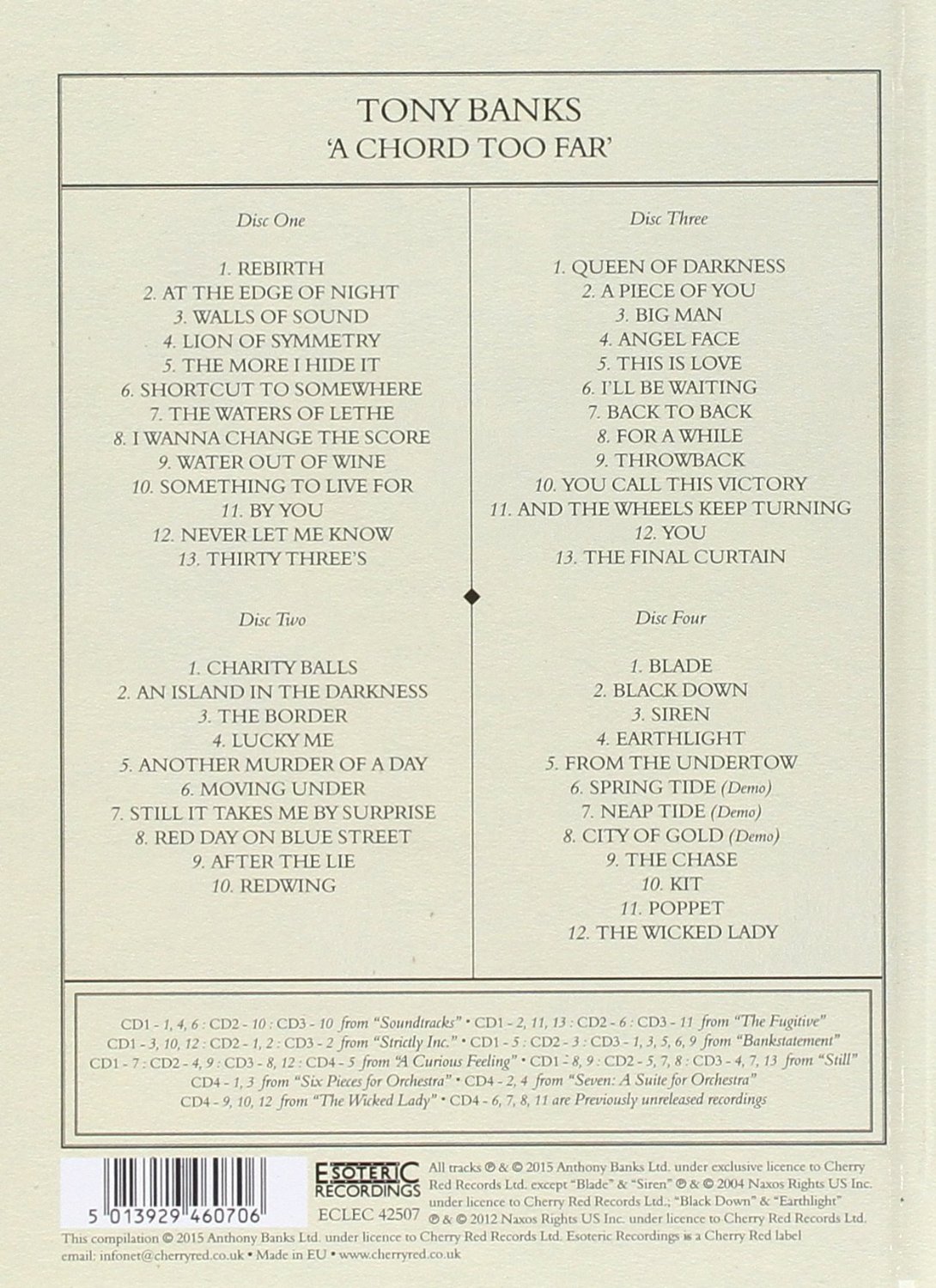
As well as solo albums, Tony Banks released soundtracks and orchestral albums. Then there’s the albums Tony recorded with his Bankstatement and Strictly Inc. projects. These albums showed Tony Bank’s versatility and ability to innovate. Tracks from each of these ten albums feature on the Chord Too Far box set, which was recently released by Estoteric Recordings.
The Chord Too Chord Too Far box set is a four disc box set. It documents Tony Banks’ five decade solo career. Annoyingly, the Chord Too Far box set isn’t in chronological order. That would’ve made sense, and really done justice to Tony Banks thirty-six year solo career. Instead, A Chord Too Far jumps between albums and decades. This is disappointing. It would’ve made sense to start with Tony Banks debut solo album A Curious Feeling, which was released in 1979, and worked through the ten albums, reaching 2012s Six: Pieces for Orchestra. That’s what most people, myself included would’ve done.
A Curious Feeling.
For the past twelve years, Tony Banks had concentrated on making Genesis one of the biggest bands. He had cofounded the band in 1967, and by 1979, the only original members of the band were Tony and Mike Rutherford. The most recent departure was guitarist Steve Hackett, who left in 1977. This left Tony, Mike and Phil Collins, whose first album was a trio was 1978s …And Then There Were Three… The following year, Tony released his first solo album, A Curious Feeling
Before heading off to Polar Music Studios, Stockholm, Sweden, Tony Banks had written eleven tracks. They became A Curious Feeling. It was a concept album. The concept for the album was Daniel Keyes’ short story Flowers for Algernon. Recording of A Curious Feeling took place during the spring and summer of 1979. Accompanying Tony were drummer Chester Thompson and vocalist Kim Beacon, while Tony Banks and David Hentschel produced A Curious Feeling. It was released on 8th October 1979.
When A Curious Feeling was released, the reviews were scathing. This was no surprise. 1979 was the height of the post punk era. Critics slated anything that represented the musical establishment. Tony never stood a chance, despite the quality of music on A Curious Feeling. Six tracks, including From the Undertow, Lucky Me, After The Lie, You, For a While, and The Waters Of Lethe, which feature on A Chord Too Far, show how wrong the critics were about A Curious Feeling.
Despite the protestations of the gunslinger critics, A Curious Feeling reached number twenty-one in Britain and number 171 in the US Billboard 200. Tony Banks was vindicated in his decision to release his debut album. However, it would be five years before he released the followup.
The Wicked Lady.
After a gap of five years, Tony Banks released the first of two albums during 1983. The first was a remake of the soundtrack to Wicked Lady. It had originally been released in 1945, and featured Margaret Lockwood. An estimated 18.4 million million people saw The Wicked Lady, which was based on Magdalen King-Hall’s novel The Life and Death of the Wicked Lady Skelton. Thirty-eight years later, and Tony Banks collaborated with the National Philharmonic Orchestra on the remake of The Wicked Lady.
While Tony Banks featured on side one of the remake of The Wicked Lady, the National Philharmonic Orchestra featured on the second side. This unlikely collaboration found favour with critics.
When The Wicked Lady was released in April 1973, critics were impressed by the Tony Banks produced soundtrack. Especially, the second side. Its drama and complexity found favour with critics. However, the only track on A Chord Too Far from side two is The Wicked Lady. The other two tracks are The Chase and Kit. Even this trio of tracks show that Tony’s vision and creativity had been put to good use. However, later in 1983, Tony released the followup to A Curious Feeling, The Fugitive.
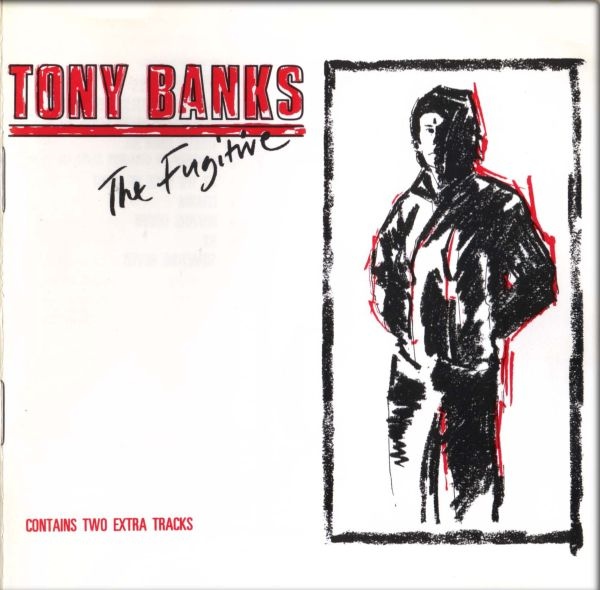
The Fugitive.
Just like A Curious Feeling, Tony wrote the nine tracks on The Fugitive. This time around, Tony recorded The Fugitive closer to home. The Farm in Surrey, Genesis’ studio, was the venue for the recording of Tony’s sophomore album. To coproduce The Fugitive, Stephen Short was drafted in. Recording began in 1982.
Tony began recording the album at home, on an eight-track studio in 1982. He laid down the basic tracks. Then in 1983, recording began at The Farm. This time around, Tony took charge of the vocals. He was joined by Genesis’ touring guitarist Daryl Stuermer, bassist Mo Foster and drummer Steve Gadd. On Charm, no drummer was used. Instead, Tony used a Linn LM-1 drum machine. Eventually, the nine tracks were complete, and The Fugitive was released in late June 1983. By then, Genesis were preparing release their eponymous album in October 1983.
It was a battle of the albums, one that The Fugitive lost. Reviews of The Fugitive were mixed. Some critics like the sparseness of the arrangements, and were won over by Tony’s vocals. Up until then, they were a well kept secret. They can be heard on And the Wheels Keep Turning, Thirty Three’s, By You, At the Edge of Night and Moving Under on A Chord Too Far. The three songs are an introduction to one of Tony Bank’s most underrated albums.
The Fugitive was released in late June 1983, and stalled at number fifty in the British charts. After just two weeks, The Fugitive disappeared from the charts. Since then, The Fugitive has become a rarity. So did Tony Banks solo albums. Genesis were on the cusp of worldwide domination, where commercial success and critical acclaim was omnipresent.
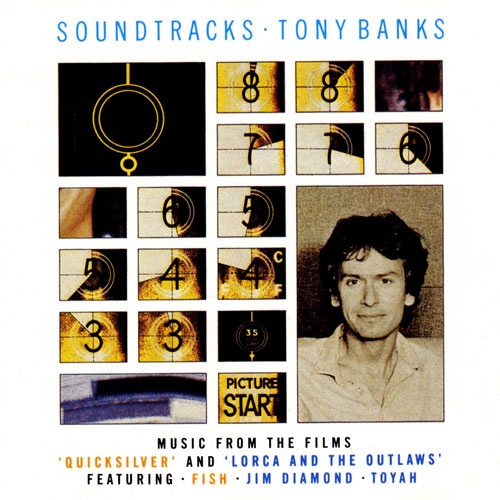
Soundtracks,
So it wasn’t until 1986 that Tony Banks next released an album. Soundtracks featured tracks from two soundtracks that Tony Banks had been involved with. The first was Starship. It was released in December 1984, and is also known as Lorca and the Outlaws. Quicksilver was the other soundtrack. Tony was just one of a number of artists who contributed tracks to Quicksilver. Tracks from both these albums made their way onto Soundtracks.
When Soundtracks was released in March 1986, reviews were mixed. Critics noted that the quality of music was mixed, with the poppier sounding tracks lacking that all important hook. Given the reviews, it was no surprise when Soundtracks wasn’t a commercial success. Despite that, five tracks from Soundtracks feature on A Chord Too Far. They’re Shortcut to Somewhere which features former Marillion frontman Fish, Rebirth and Lion of Symmetry which features Toyah Willcox. You Call This Victory features Jim Diamond and Redwing. These five tracks include the highlights of what proved to be Tony Banks’ final soundtrack album. For his next album, Tony was inspired by the success Mike Rutherford was enjoying with his “other” band.
Bankstatement.
When he wasn’t busy with Genesis, Mike Rutherford was busy with his new group, Mike and The Mechanics. They were enjoying commercial success and critical acclaim. This inspired Tony Banks to form his own band, Bankstatement.
Essentially, Bankstatement were a trio featuring Tony, Alistair Gordon and Australian born singer-songwriter Jayney Klimek. Each of the three vocalists shared vocal duties. They were augmented in the studio by a band that included former Genesis guitarist Steve Hillage. He co-produced Bankstatemen with Tony. Recording took place during 1988 and 1989. A total of eleven songs penned by Tony Banks were recorded. These songs became Bankstatement, which was released in August 1989.
On the release of Bankstatement, the album was well received by critics. They recognised the quality of what was carefully crafted pop songs. Despite the reviews, neither Bankstatement, nor the three singles charted. Two of the singles Throwback and I’ll Be Waiting feature on A Chord Too Far. So do Queen of Darkness and Big Man. However, there’s an error on the back cover of A Chord Too Far. This Is Love isn’t a track from Bankstatement. It was a single released from The Fugitive in 1983. Following the commercial failure of Bankstatement, the project never released a followup. Tony’s next album was his third solo album.
Still.
Five years had passed since Tony released The Fugitive, his second solo album. Since then, he had been busy with Genesis and released an album with Bankstatement. A solo album was overdue. So in 1990, Tony Banks began recording what would become Still.
Unlike Tony’s two previous solo albums, Tony didn’t write each of the ten tracks. He wrote seven and cowrote Red Day On Blue Street and I Wanna Change The Score with Nik Kershaw. Tony cowrote Another Murder of a Day with Fish from neo progressive rock band Marillion. They were just two of the guest vocalists on Still.
The other two vocalists were Jayney Klimek and Andy Taylor of Duran Duran. Along with Nik Kershaw and Fish, recording of Still got underway in 1990, and was completed in 1991. The album was scheduled to be released later in 1991.
Originally, Still was going to be called Still It Takes Me by Surprise, after one of the tracks on the album. However, it was shortened to Still, and released in April 1991. Reviews of Still were mixed. However, Giant Records had high hopes for Still. They promoted the album heavily. Despite their best efforts, Still didn’t sell well in Britain. That was the case a year later, when Still was released in America in April 1992. Since then, Still is regarded by some as Tony Banks best albums. There’s plenty of opportunity to decide if this is the case. Eight tracks from Still, including Red Day On Blue Street, Angel Face, Still It Takes Me By Surprise, I Wanna Change The Score, Water Out Of Wine, Another Murder Of A Day, Back To Back and The Final Curtain feature on A Chord Too Far. Following Still, Tony Banks would reinvent himself several times.
Strictly Inc.
The latest reinvention of Tony Banks came in 1995, when he released Strictly Inc. It was a collaboration between Tony and Jack Hues, the lead singer of Wang Chung. They were joined by a rhythm section of drummer John Robinson, bassist Nathan East and guitarist Daryl Stuermer. Jack Hues played guitar and Tony took charge of keyboards. Ten tracks were recorded between 1994 and 1995. Strictly Inc. was released later in 1995.
Strictly Inc. was released on 11th September 1995. Critics weren’t impressed by Strictly Inc. The highlight of the album critics said, was Tony’s keyboard playing. Layers of keyboards were stacked one on top of another, melting seamlessly into one. They were augmented by Jack’s vocals. However, critics felt that vocals were no match for Tony’s keyboards. Unsurprisingly, when Strictly Inc. was released it failed commercially. That was despite Strictly Inc. bearing the band member’s names.
That was against Tony Bank’s wishes. He wanted Strictly Inc. not to feature the band member’s names. While this would’ve added an air of mystery, it would’ve also meant that cynical critics couldn’t take a swipe at Tony. They weren’t impressed by Strictly Inc. Nor were record buyers. So much so, that Virgin Records never bothered to release Strictly Inc. in America. For those yet to discover Strictly Inc., A Chord Too Far is an opportunity to do so. Walls of Sound, Never Let Me Know, Charity Balls, Something to Live For, A Piece of You and An Island in the Darkness all feature on A Chord Too Far. Strictly Inc. proved to be Tony Bank’s last album. Given the response of critics to Strictly Inc., Tony decided to reinvent himself again.
Seven: A Suite For Orchestra.
In the nine years between Tony Banks releasing Strictly Inc. and the release of Seven: A Suite For Orchestra in March 2004, a lot had happened. Genesis had split-up in 1998. After thirty-one years together, the trio went their separate ways. Five years later, Tony began work on Seven: A Suite For Orchestra in 2003.
Seven: A Suite for Orchestra was a first for Tony Banks. He had never released a classical album. Tony penned the seven suites, and played piano on Spring Tide, The Ram and The Spirit of Gravity. Accompanying him were the London Philharmonic Orchestra, conducted by Mike Dixon. Producing Seven: A Suite For Orchestra was Tony and Nick Davis, who Tony knew from his work engineering and producing Genesis. The pair finished Seven: A Suite For Orchestra was completed in 2004, it was released in March 2004.
When Seven: A Suite For Orchestra was released in March 2004, some critics were surprised by this stylistic departure from Tony Banks. However, Tony had written soundtracks and orchestral pieces before. He took this further on Seven: A Suite For Orchestra. For those who have yet to hear the album, two tracks from Seven: A Suite For Orchestra, Black Down and The Ram feature on A Chord Too Far. It would be eight years before Tony returned with the followup to Seven: A Suite For Orchestra.
Six: Pieces For Orchestra.
It wasn’t until April 2012 that Tony Banks returned with his second classical album, Six: Pieces For Orchestra. Eight years had passed since the release of Seven: A Suite For Orchestra. However, Tony had been busy.
He wrote the six suites on Six: Pieces For Orchestra. Again, Tony and Nick Davis coproduce Six: Pieces For Orchestra. It features the City Of Prague Philharmonic Orchestra. They’re conducted by Paul Englishby. Two soloists play an important part in this evocative, haunting and bewitching album. Martin Robertson plays the alto saxophone on the opening track Siren. Charlie Siem plays violin on Blade. Fittingly, these tracks feature on A Chord Too Far, and feature two of Tony Banks’ finest classical works.
With the story of Tony Banks’ solo career brought up to date, that’s also the story of the A Chord Too Far box set. This four disc, forty-eight track box set documents Tony Banks’ thirty-six year solo career. It features the twists and turns that Tony Banks’ solo career has taken.
Who would’ve thought that after Tony Banks released A Curious Feeling in 1979, he would go on to release soundtracks, orchestral albums and form two bands, Bankstatement and Strictly Inc. However, he did. Then there’s the small matter of Tony’s two other solo albums, 1983s The Fugitive and 1991s Still. These albums are just part of Tony Bank’s long and varied career.
Sadly, of the three members of Genesis, Tony Banks didn’t come close to enjoying the commercial success that came Phil Collins and Mike Rutherford’s way. However, Tony Banks was a musical maverick, who for the last thirty six years has flitted seamlessly between musical genres. He’s a true musical adventurer, whose music is celebrated on the A Chord Too Far box set.
A Chord Too Far is the perfect introduction to Tony Banks’ nine album career. It goes beyond Tony Banks’ solo career, looking at soundtracks and orchestral works. The forty-eight tracks feature some of the best music that Tony Banks has released. Other tracks, like the albums they’re taken from will divide opinion. This includes 1986s Soundtracks and 1995s Strictly Inc. Neither were Tony Banks most successful, nor according to critics, his finest hour. However, tracks from both albums were included, and allow the opportunity listeners to reappraise both albums. They’re part of the musical journey that is Tony Banks’ career. It’s documented and celebrated on A Chord Too Far which was recently released by Esoteric Recordings. This four disc box set, celebrates the career of a pioneering musician, who continually, pushed musical boundaries and by his own admission, sometimes took things, A Chord Too Far.
TONY BANK-A CHORD TOO FAR BOX SET.




TEN YEARS AFTER-TEN YEARS AFTER.
TEN YEARS AFTER-TEN YEARS AFTER.
Between 1968 and 1974, Ten Years After were one of the most successful British bands. They released their eponymous debut album, Ten Years After in October 1967, which was recently reissued by Universal Music. Ten Years After failed to make an impression on either side of the Atlantic. However, Ten Years After showcased the band’s considerable skills. So, it was no surprise that when Ten Years After released their live album Undead in 1968, it was a game-changer.
Ten Years After were well on their way to commercial success on both sides of the Atlantic. Six of Ten Years After’s studio albums and their two live albums reached the top forty in Britain. However, America had an insatiable appetite for Ten Years After.
That was the case from 1968s Undead. It was heard by legendary promoted Bill Graham. He championed Ten Years After in America. From 1968s Undead to 1974s Positive Vibrations, Ten Years After were frequent flyers in the US Billboard 200. Ten Years After could do no wrong in the eyes of the American record buying public.
Even when Ten Years After left Deram, and signed to Columbia, Deram released an album of unreleased tracks and alternate takes. Alvin Lee and Company reached number fifty-five in the US Billboard 200 in 1972. Ten Years After were just the latest band to make it big in America. However, forty-one years after the split-up for the first time, people are still unsure how to describe Ten Years After’s music?
Often, Ten Years After’s music is described as blues rock. While there’s elements of blues rock in Ten Years After’s music, there’s also elements of folk, pop, psychedelia and rock. The reason why it’s so hard to categorise Ten Years After’s music, is they were continually experimenting, and pushing musical boundaries. Ten Years After were pioneers. That had been the case since they released their eponymous debut album in 1967. It was released a year after Blues Trip became Ten Years After. However, the Ten Years After story began in 1960.
That’s when Ivan Jay and the Jaycats were formed. They consisted of musicians from the Nottingham and Manfield area. This included vocalist Ivan Jay, guitarist and vocalist Alvin Lee and bassist Leo Lyons. In 1962, Ivan Jay became The Jaycats and later, Ivan and The Jaymen. Just as the name changed, so did the lineup.
Ivan Jay was the lead vocalists until 1962. He was replaced by Ray Cooper, who also played rhythm guitar. Drummer Pete Evans joined in 1962, but left in 1965, to be replaced by Dave Quickmire. Then in 1965, Ric Evans became The Jaybirds drummer. The following year, 1966, The Jaybirds were on the move, and changed their name.
Like so many bands, The Jaybirds headed to London, where they became The Ivy League. Later, in 1966, keyboardist Chick Churchill joined The Ivy League. They soon came to the attention of future Chrysalis founder, Chris Wright. He became The Ivy League’s manager, who changed their name to Blues Trip. However, the quartet made their debut as Blues Yard.
Chris Wright got the newly named Blues Yard the job of opening for Bonzo Dog Doo-Dah Band. That was their one and only concert as Blues Yard. Not long after this, Blues Yard became Ten Years After. This was the start of the rise and rise of Ten Years After.
Through the Chrysalis Booking Agency, Ten Years After secured a residency at the Marquee. This was a prestigious residency. Suddenly, people were taking notice of Ten Years After. However, it was their appearance at the Windsor Jazz Festival in 1967 that resulted in Ten Years After signing to the Deram, a subsidiary of Decca.
Now signed to Deram, Ten Years After began work on their eponymous debut album. Deram didn’t bother getting Ten Years After to record a single. Even then, it was obvious that Ten Years After were more of an albums band. So Ten Years After were sent into the studio to record their debut album.
For their eponymous debut album, Ten Years After chose a mixture of cover versions and new songs. Cover versions included Paul Jones’ I Want to Know, Al Kooper’s I Can’t Keep from Crying, Sometime, Willie Dixon’s Spoonful and the blues standard help me. Alvin Lee penned Feel It for Me, Love Until I Die and Don’t Want You, Woman. He also cowrote Adventures of a Young Organ with Chick Churchill and Losing the Dog with Gus Dudgeon. These ten tracks became Ten Years After.
Recording of Ten Years After took place at Decca Studios, London during September 1967. The rhythm section featured drummer Ric Lee, bassist Leo Lyons and guitar and vocalist Alvin Lee. Augmenting the rhythm section was keyboardist Chick Churchill. Producing Ten Years After were two experienced and practised producers, Mike Vernon and Gus Dudgeon. Once Ten Years After was completed, it was released in October 1967.
When Ten Years After was released in October 1967, the album was well received by critics. Many described the album as purely blues rock. That wasn’t quite the case.
Granted blues rock was the most obvious influence on Ten Years After. That was the case on I Want Know. Ten Years After seemed to be following in the direction of John Mayall and The Bluesbreakers. However, tracks like I Can’t Keep from Crying, Sometimes had a moody psychedelic hue. Adventures Of A Young Organ saw Ten Years After head in the direction of jazz. There’s a return to the blues on Spoonful. Loosing The Dogs is the perfect showcase from Alvin Lee’s virtuoso performance on guitar. Elements of Americana, blues and country shine through on the track that close side one of Ten Years After.
Side two of Ten Years After featured a trio Alvin Lee penned tracks. Feel It for Me and Love Until I Die are blues rock. Don’t Want You, Woman is an understated blues ballad. Help Me which closes Ten Years After, is an oft-covered blues classic. It comes to life in the hands of Alvin Lee and co. They sound as if they’re from Mississippi Delta, rather than the Midlands of England. However, despite the undeniable quality of Ten Years After, commercial success eluded the album.
Ten Years After was released on October 27th 1967. The album failed to chart on either side of the Atlantic. While this was a disappointment for Ten Years After and everyone at Deram, critics forecast a bright future Ten Years After.
And so it proved to be. From the release of their second album, the live album Undead in 1968, Ten Years After were riding a wave of commercial success and critical acclaim. Championed by Bill Graham, Ten Years After became one of British music’s most successful exports. Twelve of Ten Years After’s albums charted. America had an insatiable appetite for their music. That was the case whether it was studio albums, live albums or compilations. America couldn’t get enough of Ten Years After. Back home, it was a similar story.
Eight of Ten Years After’s albums charted. Their most successful period was between 1969 and 1971. This started with the release of Stonedhenge in February 1969. It reached number six. Sssh was released in October 1968, and reached number four. So did Cricklewood Green, which released in may 1970. Watt was released in January 1971, and reached number five. After that, Ten Years After stalled in the upper reaches of the top forty. It was in America where Ten Years After were most successful. That was the case until 1974, when Ten Years After split-up.
For six years Ten Years After could do no wrong, and were one of the biggest bands on both sides of the Atlantic. The album that launched Ten Years After on to the road to commercial success and critical acclaim is Ten Years After, which was recently reissued by Universal Music.
The newly reissued version of Ten Years After features both the mono and stereo versions of the album on disc one. Disc two features eleven bonus tracks, including versions of Portable People, The Sounds, Spider In My Web, Hold Me Tight and (At The) Woodchopper’s Ball. They’re a welcome addition, and will especially be of interest to completists. This newly reissued version of Ten Years After is one of three reissues. Undead and Stonedhenge have also been released. These reissues are a reminder of one of British music’s most successful exports, as they embark upon what would prove to be a career where commercial success and critical acclaim were constant companions to Ten Years After.
TEN YEARS AFTER-TEN YEARS AFTER

UNLOCK THE LOCK-THE KENT RECORDS STORY VOLUME 1 1958-1962.
UNLOCK THE LOCK-THE KENT RECORDS STORY VOLUME 1 1958-1962.
In 1944, Jules Bihari, a Hollywood based musical entrepreneur, founded Modern Music with his brothers Saul, Joe and Lester. Little did anyone realise, that within a few years the nascent Modern Music would become one of the most successful independent labels. Commercial success visited Modern Music in 1945.
This came after Jules Bihari booked some studio time. Hadda Brookes, the Queen Of The Boogie, entered the studio and recorded Swinging The Boogie. It was released later in 1945, and paved the way for the commercial success that came Modern Music’s way.Three years later, in 1948, Modern Music changed its name to Modern Records. By then, Modern Records had a problem.
Modern Records were releasing so many singles that it was becoming difficult to get all their records played on radio. Radio stations were wary of playing too many records by the same label. They were scared they’d be accused of accepting payola. For labels like Modern Records, this presented a problem. So they had to work out a way round the problem.
Their way of doing this, was to setup a subsidiary company. Often this subsidiary company only released one type of music, like blues or R&B.
Modern Records’ first subsidiary company was Colonial. It was founded in 1948. A year later, in 1949, Modern Records founded their second imprint RPM Records. More companies were founded in the early fifties.
Flair Records was founded in 1952. The same year, the Bihari brothers launched Meteor Records in Memphis. It seemed that the Bihari brothers were building an empire.
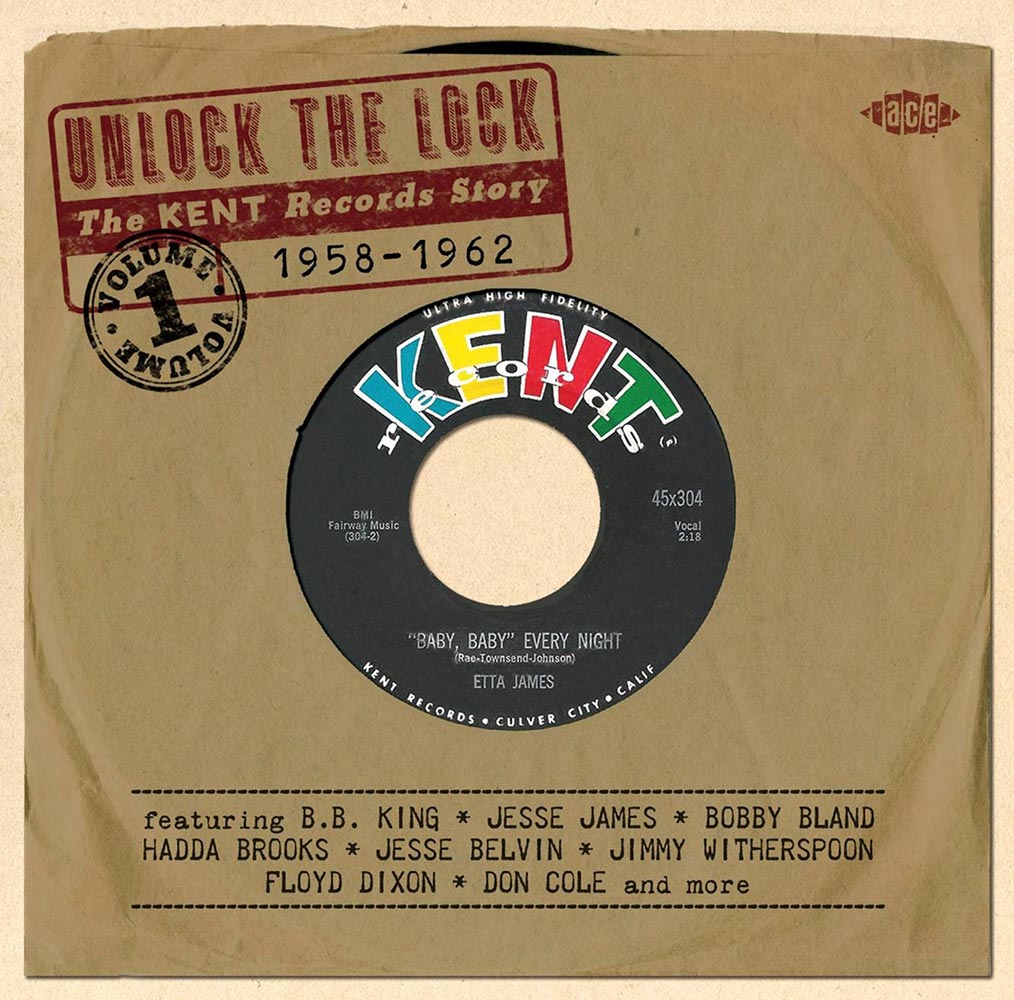
Five years later, the Bihari brothers founded the budget label Crown Records in 1957. Then in 1958, the Bihari brothers launched what was, without doubt, their greatest, and most famous label, Kent Records, whose music is celebrated on Unlock The Lock-The Kent Records Story Volume 1 1958-1962. This two disc, forty-eight track compilation was recently released by Ace Records, and tells the story Kent Records’ first four years. Just like previous labels the Bihari brothers founded, it was a case of needs must.
The Bihari brothers decision to form Kent Records came through necessity. Many of the labels they had formed previously, including Colonial, Crown, Flair and Rhythm and Blues had folded. They were currently residing in the great musical graveyard in the sky. Adding to the Bihari brothers’ problems, was the fact that neither RPM nor Modern Records were the success they once were.
RPM released Don Cole’s Snake Eyed Mama in December 1957. Meanwhile, Modern Records had released Van Robinson’s Come On Let’s Dance. Neither single proved particularly successful, and RPM and Modern Records were mothballed by the Bihari brothers. The Bihari brothers were about to launch another new label.
Kent Records was launched by the Bihari brothers in early 1958. However, Kent Records had been launched four years earlier, in 1954 by Lee Silver. He named his nascent label after a brand of cigarettes. Kent Records however, didn’t enjoy the same success as its namesake. After releasing two singles by The Four Guys, Lee Silver called time on his label. His final act was to sell it to the Bihari brothers. They kept the label until it was needed. By 1958, Kent Records’ time had come.
With RPM and Modern Records being mothballed, this allowed the Bihari brothers to get rid of under performing artists. They ruthlessly culled RPM and Modern Records’ rosters, keeping the most successful artists.
B.B. King, Danny Floers and Don Cole made the move from RPM to Kent Records. Etta James and Jesse Belvin were promoted from Modern Records to Kent Records. With its leaner roster of artists, Kent Records was about to release its first singles in 1958. These singles feature on Unlock The Lock-The Kent Records Story Volume 1 1958-1962.
Disc One.
Kent Records celebrated its launch by releasing a trio of singles in early 1958. These singles had been recorded nearly a year earlier, in 1957. The Bihari brothers had been keeping the tracks for their new venture. With a stockpile of music recorded, the Bihari brothers launched their latest label.
Danny Boy’s cover of All Of Me was delivered in a doo wop style, and sported the catalogue number Kent 300. This made it the single that launched the Bihari brothers’ most famous label. The other two singles were B.B. King’s Why Do Everything Happen To Me and The Barker Brothers’ Hey Little Mama. The version of Hey Little Mama on Unlock The Lock-The Kent Records Story Volume 1 1958-1962 is a previously unreleased take. It’s one of nine alternate takes that have never been released before. For Kent completists, this will by musical gold. However, the Bihari brothers hadn’t struck gold.
Kent Records’ first three releases failed to make much of an impact commercially. This was a bitter blow. The Bihari brother could’ve done with a hit single. Especially given their recent lack of success. So their next single was by one Kent Records’ biggest names, Etta James.
She released a sassy version of Baby, Baby” Every Night later in 1958. It was released with the catalogue number Kent 304.
However, Etta James’ flirtation with Kent Records was brief. Her then partner, Harvey Fuqua convinced her that she would be better signing to Chicago based Chess Records, who his own group The Moonglows were signed to. As a result, Kent Records lost one of their crown jewels.
With one of their most promising artists having left their new label, the Bihari brothers turned to another of their big names, Don Cole. His single Sweet Lovin’ Honey was Kent Records’ next release. Sadly, despite being Don Cole’s best release, Sweet Lovin’ Honey went the same was as Snake Eyed Mama. While commercial success eluded Don, the Bihari brothers didn’t turn their back on him. However, they decided to back an up-and-coming artist.
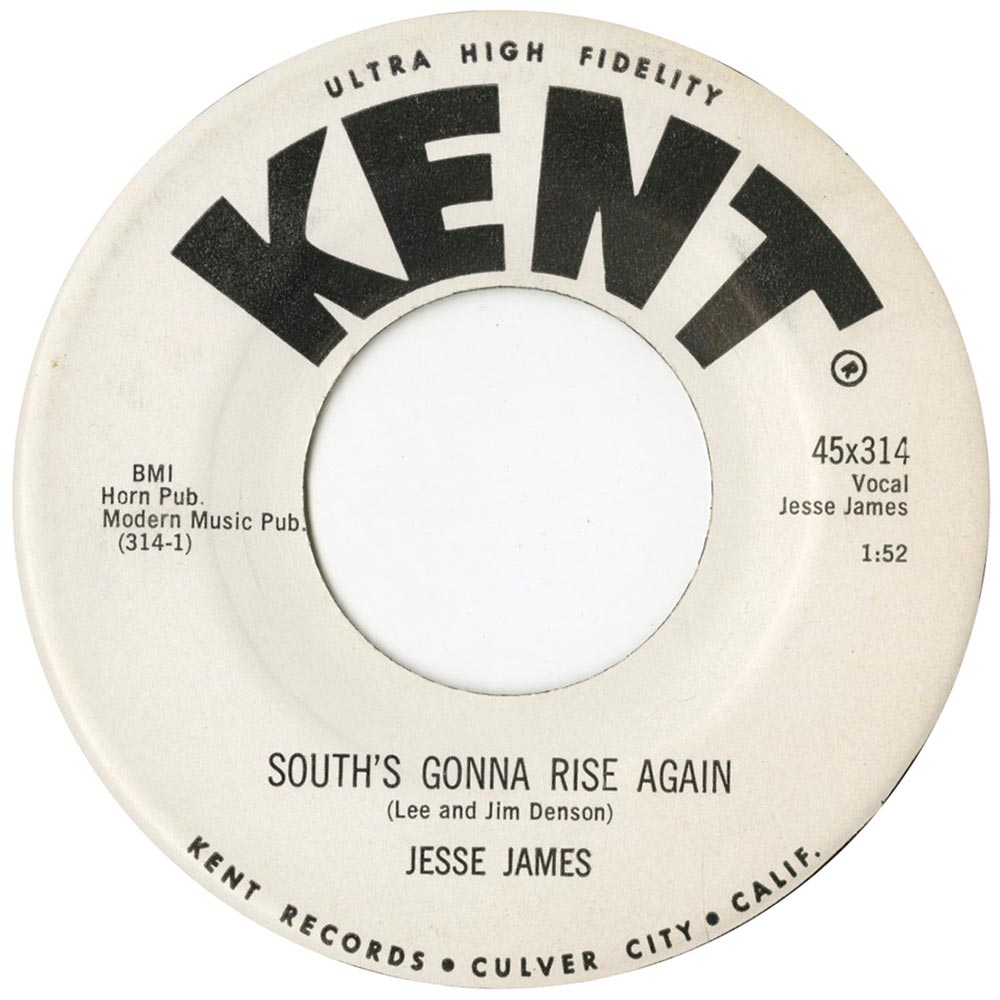
This was Lee Denson. He was twenty-six, but still hadn’t made a commercial breakthrough. However, The Bihari brothers thought he might prove popular in the teen market. So Lee Denson recorded High School Hope as a single. On the flip side was Devil Doll which ironically, was the stronger of the two sides. It features on Hey Little Mama on Unlock The Lock-The Kent Records Story Volume 1 1958-1962. High School Hop wasn’t a commercial success. Later in 1958, Jesse Davis released South’s Gonna Rise Again as a single. On the B-Side was Red Hot Rockin’ Blues. While the single was credited to Jesse Davis, it was actually Lee Denson recording using an alias. This allowed the Biharis two bites of the cherry. Neither bore fruit.
Still, the Bihari brothers continued to release singles during 1958. Flash Terry and His Orchestra released On My Way Back Home. The version on Unlock The Lock-The Kent Records Story Volume 1 1958-1962 is an extended version of On My Way Back Home. Still commercial success eluded the Biharis.
With the Bihari brothers still searching for a hit, they licensed Sonny Knight’s Madness. He had a proven track record, and enjoyed a commercial success in 1957 with Confidential. Lightning didn’t strike twice, and the search for a hit went on.
As 1958 drew to a close, Floyd Dixon and His Orchestra released Change Your Mind as a single. It seemed someone had slipped up, as the flip side Dance The Thing, which features on Unlock The Lock-The Kent Records Story Volume 1 1958-1962 had a better chance of charting. While hits eluded many on Kent Records’ roster during 1958, one of its crown jewels was busier than ever during 1959.
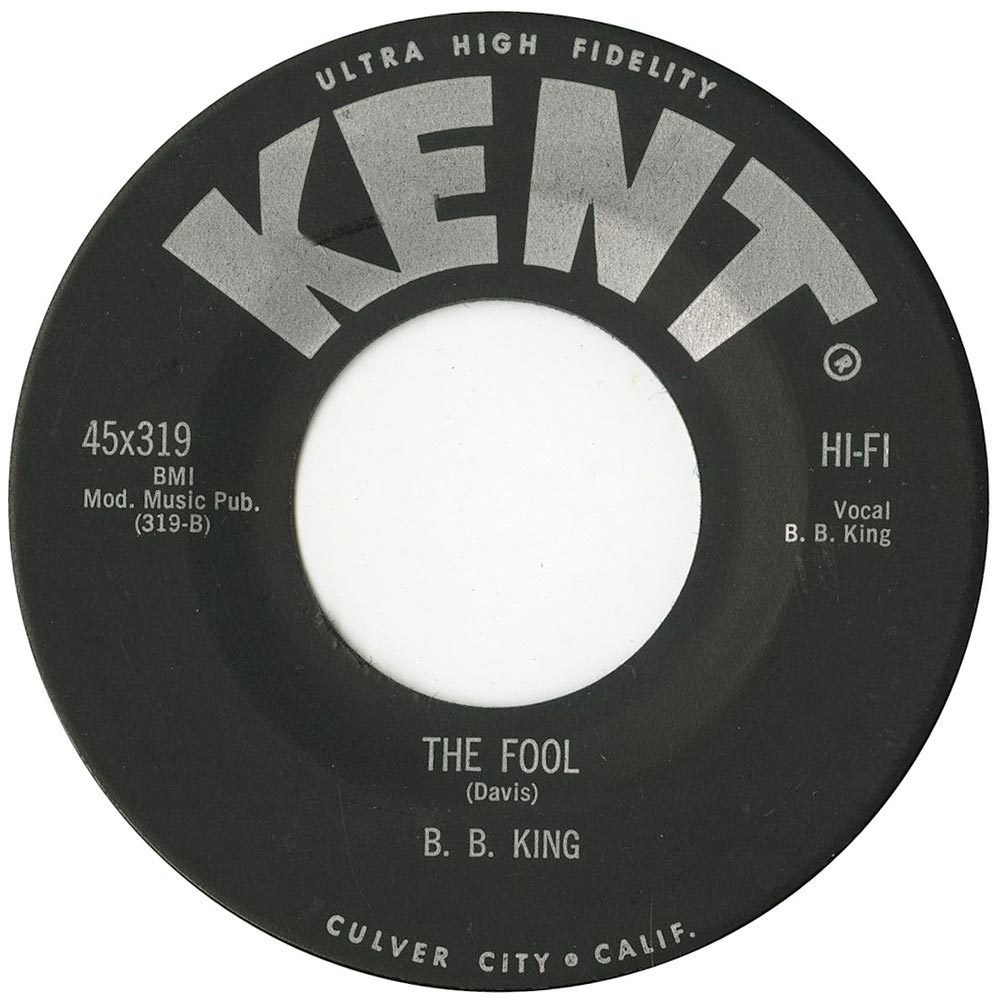
B.B. King proved to be Kent Records’ most prolific artists during 1959. He released five of the thirteen singles Kent Records released. Among the singles were The Fool, Mean Ole Frisco and Worry Worry. The versions of Mean Ole Frisco and Worry Worry on Unlock The Lock-The Kent Records Story Volume 1 1958-1962 are previously unreleased versions. While B.B. King brought some success Kent Records’ way, the Bihari brothers brought back the woman who gave them their first hit single, Hadda Brookes.
Fourteen years earlier, the Queen Of The Boogie released Swinging The Boogie on Modern Music. It was a commercial success, and launched the Bihari brothers nascent label. Their latest label was needing a shot in the arm, so Hadda returned and recorded The Thrill Is Gone, which later, would become synonymous with B.B. King. Her five minute reinvention of The Thrill Is Gone failed commercially, as it was too long for commercial radio. The version of The Thrill Is Gone is an alternate take. However, there was a small crumb of comfort for the Bihari brothers. Hadda Brookes was going to release an album on Kent Records during 1959. The Thrill Is Gone was the musical equivalent of an amuse bouche. Other artists however, concentrated on singles.
This included Jesse Belvin, who previously, had moved from Modern Records to RCA-Victor. Jesse was one of Modern’s rising stars, but couldn’t refuse the opportunity to sign to RCA-Victor. With Jesse enjoying a successful career at RCA-Victor, the Bihari brothers decided to release his 1957 cover of (I Love You) For Sentimental Reasons. Strings and backing vocals were over-dubbed. However, despite the Biharis best efforts, (I Love You) For Sentimental Reasons couldn’t compete with Jesse’s RCA-Victor single Guess Who? With an old face failing to bring that elusive hit to Kent Records, the Biharis turned to George Motola.
Previously, George Motola proved to be a reliable source of hist for the Bihari brothers. George produced The Senders, who released two singles on Kent Records during 1959; The Ballad Of Stagger Lee was the first, and Everybody Needs To Know was the followup. The versions on decided that Kent Records offered him a better chance of fame and fortune. This proved to be a big mistake. Jesse only released one single on Kent Records, (I Love You) For Sentimental Reasons. It wasn’t the commercial success he had hoped for, Unlock The Lock-The Kent Records Story Volume 1 1958-1962 are previously unreleased versions. Neither single sold well. However, the Bihari brothers weren’t for giving up. It was early days.
Disc Two.
As a new decade began, a new era unfolded at Kent Records. The label had been formed two years ago, in 1958. While Kent Records enjoyed a degree of success, the Bihari brothers’ latest venture hadn’t been the huge success many forecast. 1960 was going to be an important year in the Kent Records’ story.
With Kent Records needing hits, they turned to their biggest name, B.B. King. He released ten of the twenty singles that Kent Records released during 1960. This included Good Man Gone Bad and You Done Lost Your Good Thing Now, Five of the ten singles had been released before. However, this didn’t matter. B.B. King still had the Midas touch.
His cover of Big Joe Turner’s Sweet Sixteen Parts 1 and 2 gave B.B. King his biggest hit since 1953. It came close to topping the US R&B charts. Four of B.B. King’s other singles reached the top thirty in the US R&B charts. Kent Records had the hits they so desperately needed. However, could anyone else on Kent Records’ roster add to the commercial success?
Hadda Brooks, who had returned to Kent Records in 1959, was one of the bigger names on Kent Records. She released Tomorrow Night in 1960. Jimmy Witherspoon signed in 1960, and released his Sings The Blues album on Crown Records. It featured his take on Hank Williams’ Your Cheating Heart. Sadly, the single wasn’t promoted, and sunk without trace. This didn’t please Jimmy Witherspoon.
The Bihari brothers seemed to be concentrating their efforts on releasing budget priced albums on their Crown Records imprints. It had been founded in 1959, and was their latest budget label. Among the artists whose albums were released on Crown Records, were B.B. King and Jimmy Witherspoon. These albums were available everywhere, from gas stations to corner shops. This didn’t please B.B. King and Jimmy Witherspoon. Especially, when their singles weren’t being promoted properly. This wasn’t helping Kent Records. However, at least Kent Records had enjoyed a successful year. Would 1961 be as successful?
During 1961, Kent Records released just nine singles. Four of them were by B.B. King. This included Bad Case Of Love. The version featured on Unlock The Lock-The Kent Records Story Volume 1 1958-1962 is an alternate take, where B.B. King fluffs a line. He laughs it off, but ever the professional, records the song that gave him a minor hit single. This was the only single Kent Records enjoyed. That’s despite Jules Bihari’s best efforts.
As the search for a hit continued, Jules Bihari decided that Tony Allen and The Wanderers might bring a hit Kent Records’ way. Tony Allen and The Champs enjoyed a hit with Night Owl in 1955. Six years later, in 1961, Tony Allen and The Wanderers released If Love Was Money. Later in 1961, Dreamin’ was credited to Tony Allen and Group. Neither single was a commercial success. It seemed Tony Allen’s Midas touch had deserted him. This proved a familiar story for the Biharis.
Apart from B.B. King’s Bad Case Of Love, 1961 wasn’t a good year for Kent Records. Commercial success eluded its roster, including Charlie Owens and The Sensational Ink Spots, who released Diane. It wasn’t the type of release that usually sported the Kent Records’ logo. However, Jules Bihari must have been hoping it would strike a nerve with older music fans. That wasn’t to be. This left the Biharis hoping 1962 would prove a better year for Kent Records.
After the disappointment of 1961, the Biharis released seventeen singles between January and June 1962. This included four from B.B. King. The remainder were a mixture of releases by unknowns and reissues. That’s not forgetting the a couple of cash-ins on dance crazes.
In the early sixties, dance crazes were all the rage. The Biharis wanted a slice of the action. So, Joe Houston and Teddy Reynolds were brought onboard to record albums for Kent Records. Both were approaching veteran status, but this didn’t stop them cashing in on The Twist’s popularity. Joe Houston’s recorded Doing The Twist and Teddy Reynolds’ Do You Wanna Twist. Both owe a debt of gratitude to the Hank Ballard penned The Twist. That wasn’t the end of Kent Records’ dalliance with Twist inspired tracks. Little Joe Hinton released The Whip Twist, and Around this time, recorded Get In The Car, which wasn’t released until it featured on a compilation in 1999. Even B.B. King released a dance track, Mashing The Popeye. It didn’t give B.B. King his first hit of 1962. Hits were proving hard to come by.
So the Biharis raided Kent Records vaults. They reissued Etta James’ 1958 recording, Crazy Feeling Aka Do Something Crazy. Another reissue came from 1953, and featured a young Bobby “Blue” Bland. He’s accompanied by Ike Turner and His Orchestra on Love You Baby. Neither single proved particularly successful, so in February 1962, Bill Ray was signed to Kent Records.
Billy Ray only released one single for Kent Records. However, Playboy, and its flip side Texas Queen oozed quality. Despite this, Playboy passed record buyers by. That was the case with two groups that released one single apiece.
The Classicals one and only single was Camel Caravan. It was released on Kent Records in 1962. So was The Newports’ Wonder Of Love. Sadly, neither single was a commercial success, and their time at Kent Records was short. That was the case with the other three artists on disc two of Unlock The Lock-The Kent Records Story Volume 1 1958-1962.
Hal Davis is responsible for the first of this trio. Although he’s best known as a songwriter, who formed a formidable partnership with Burt Bacharach, he was also a singer. He released a heartfelt version of George Motola and Rickie Page’s Without You. It owes much to Jerry Lieber, Mike Stoller and Ben E. King’s Stand By Me. Despite this, Without You failed to find an audience. Neither did Pat Hunt’s cover of Goodnight My Love, nor Bobby Sanders Maybe I’m Wrong, which he penned himself.
Just like a lot of the singles released by Kent Records between 1958 and 1962, there was nothing wrong with the quality of music. That’s apparent when one listens to Unlock The Lock-The Kent Records Story Volume 1 1958-1962, which was recently released by Ace Records. Often, the singles were released at the wrong time. Good examples are Pat Hunt’s cover of Goodnight My Love, Etta James’ Crazy Feeling Aka Do Something Crazy and Bobby “Blue” Bland’s Love You Baby. They had been recorded up to nine years earlier, and released when the Biharis were searching for hits. A few years earlier, and these singles might have been a commercial success. However, music was changing. Another problem was the lack of money spent on promotion.
Similarly, with the Biharis concentrating their efforts and resources on their budget label Crown Records, singles released on Kent Records were, many artists felt, not being promoted properly. This included B.B. King and Jimmy Witherspoon. They felt that their singles never stood a chance. To some extent, that proved to be the case. However, B.B. King was Kent Records’ biggest selling artist.
B.B. King was one of Kent Records crown jewels. He was the man who first brought commercial success Kent Records’ way. This resulted in a B.B. King releasing around twenty singles between 1958 and 1962. That’s why it’s fitting that ten tracks by B.B. King feature on Unlock The Lock-The Kent Records Story Volume 1 1958-1962. The other thirty-eight tracks include some of the biggest names who were signed to Kent Records. This includes Hadda Brooks, Etta James, Jesse Belvin and Don Cole. They had already been signed to the Bihari brothers previous labels, and the Bihari brothers hoped that they could repeat that commercial success. Sadly, lightning didn’t strike twice, despite the quality of the music Kent Records was releasing. That was the case for the period Unlock The Lock-The Kent Records Story Volume 1 1958-1962 covers.
For the first four years of Kent Records’ existence, it released around fifty singles by familiar faces and new names. Sadly, Kent Records didn’t enjoy the commercial success its releases deserved. Despite that, Kent Records went on to become the Bihari brothers most successful and long running label.
Kent Records lasted three decades, and forty years after Kent Records closed its doors for the last time, is still fondly remembered by R&B fans. They’ve been eagerly awaiting the release of Unlock The Lock-The Kent Records Story Volume 1 1958-1962 by Ace Records. Unlock The Lock-The Kent Records Story Volume 1 1958-1962 is the first instalment in the Kent Records’ story, and is a tantalising taste of the music released by the Bihari brothers greatest label.
UNLOCK THE LOCK-THE KENT RECORDS STORY VOLUME 1 1958-1962.
ZACHARY CALE-DUSKLAND.
ZACHARY CALE-DUSKLAND.
Before embarking upon a solo career, Louisiana born singer-songwriter Zachary Cale was a member of several college bands. By Zachary’s own admission, most were short-lived, and none of them were particularly successful. However, they taught Zachary Cale about stagecraft and songwriting. So when Zachary embarked upon a solo career, he was more than ready. He was ready to step out of the shadows, and take centre-stage.
Zachary however, knew that the road ahead wasn’t paved with gold. He had been around long enough to know that. Even getting spotted by a record company was tough. So much so, that the Zachary recorded his first five albums and sold them at gigs. His “debut” My Autumn’s Done Come was released in 2003. The following year, 2004 Zachary released Of Endless Spirit and The Sick List. Then in 2005, Zachary released House Of Cards and Keys To The City. These albums were Zachary’s calling card, and hopefully, would result in him being picked up by a record company. This happened later in 2005.
Later in 2005, Zachary Cale was about to release his debut album, Outlander Sessions on New World of Sound Records. He was twenty-seven, and living in New York. This was a long way from Louisiana, where he was born in 1978. Outlander Sessions reflected Zachary’s personal journey.
Outlander Sessions was the first instalment in Zachary Cale’s musical autobiography. He examines subjects like “distance, isolation and alienation brought on by love.” Zachary also looks at his journey from rock guitarist to acoustic troubadour. That’s what Zachary Cale had become.
No longer were Dead Moon, Unwound and Pere Ubu inspirations. Instead, Tim Hardin, Townes Van Zandt and Peter Laughner inspired the now finger picking Zachary Cale. He announced his arrival in 2005, when Outlander Sessions was released on the New World of Sound Records. This was the start of ten year journey.
Since 2005, Zachary Cale has toured Britain, Europe and America several times, cofounded the independent label All Hands Electric and released four further solo albums. His most recent album, Duskland was recently released on the No Quarter Records. Duskland shows how far Zachary Cale has come.
Following the release of Outlander Sessions in 2005, Zachary Cale was invited to play at the CFA in Berlin. The Contemporary Fine Arts were hosting an art installation which was created by Jonathan Meese and Tal R. They needed someone to provide a musical accompaniment. Zachary fitted the bill, and proved a resounding success.
So much so, that once the installation left Berlin, Zachary was asked to accompany it. He found himself playing at the Statens Museum for Kunst in Copenhagen, before moving on to the Frankfurt Art Fair. For Zachary, this was like a mini European tour. Even better, when the installation was setup at the Bortolami Dayan Gallery in New York, where Zachary lived, he was asked to perform. This brought his music to the attention of a much wider audience. So it made sense that later in 2005, Zachary began recording his sophomore album, Walking Papers.
Walking Papers.
Recording of Walking Papers took place in upstate New York. The studio chosen, was one of the most famous studios in musical history. Bearsville Sound Studios was where The Band, Bob Dylan and Van Morrison recorded some of their best albums. Some four decades later, Zachary Cale made the same journey as these musical legends.
The recording sessions began in the summer of 2005, with engineer Kevin Mcmahon guiding Zachary and his small band. However, Walking Papers wasn’t completed until the summer of 2006. Zachary headed to Bearsville Sound Studios when his schedule permitted. Eventually, Walking Papers was completed by the summer of 2006. It was mixed at Vacation Island by Matt Boynton in 2006. With Walking Papers completed, it was a case of finding a label willing to release the album.
That was easier said than done. With the music industry in a constant state of flux, Zachary struggled to find a label. This was no reflection on his music. Instead, it was the state of the music industry. Eventually, two years after Walking Papers was complete, Zachary found a solution to his problem.
With no sign of a record label willing to release Walking Papers, Zachary decided to found his own record label. His partners in the All Hands Electric label were visual artist Ryan Johnston and musician and graphic designer, Alfra Martin. Together, they cofounded All Hands Electric. Their new label released Walking Papers in the autumn of 2008.
Walking Papers wasn’t the first album released by All Hands Electric. That honour fell to Zachary’s other project, Illuminations.
Illuminations were an outlet for Zachary’s inner rocker. They combined Cosmic Americana, country soul, power pop, post rock and rock and roll on See-Saw. It was the first album released on All Hands Electric. See-Saw showcased a talented band with bags of potential. There’s a nod to Big Star, Gram Parson and The Wipers on See-Saw, where the Illuminations make their debut.
Sadly, See-Saw wasn’t a commercial success, and Illuminations didn’t released any more music until 2011. Before that, Zachary would release another two albums.
The first of these was Walking Papers. It was a very different album to Outlander Sessions. Gone was the lo-fi sound. Replacing it, was a much fuller, bigger production. This was well received by critics. They compared Zachary’s guitar playing to of John Fahey and his songwriting style to Townes Van Zandt. This wouldn’t be the last time Zachary was compared to the great and good of music.
Noise Of Welcome.
Three years passed before Zachary Cale released his third album, Noise Of Welcome. It featured another twelve tracks from the pen of Zachary Cale. These songs were recorded at a variety of locations, including the Vocation Island studios, where parts of Noise Of Welcome was mixed. Once the rest of Noise Of Welcome was mixed at Seaside Lodge, all thoughts turned to the release of Zachary Cale’s third album.
Another year passed before Noise Of Welcome was released in 2010. All Hands Electric weren’t rushing the release of Noise Of Welcome. They were determined that Zachary Cale had every chance of making a commercial breakthrough.
When the release of Noise Of Welcome was announced, it was All Hands Electric’s thirteenth release. This proved not to be unlucky for Zachary Cale. Noise Of Welcome was well received by critics. Critical acclaim accompanied the release of Noise Of Welcome. It was an eclectic album, where Zachary combined tender acoustic ballads, electric country, instrumentals and perfect pop that’s been inspired by The Kinks. It’s a captivating combination of music, that found a champion in Dan Bejar.
Not longer after this, singer-songwriter Dan Bejar heard Noise Of Welcome. He started championing Zachary Cale. Soon, people were starting to take notice of the New York based singer-songwriter. Despite what many of his new fans believed, Zachary Cale was no newcomer to music. He was an experienced singer, songwriter and musician, who would soon, begin recording his fourth album.
Blue Rider.
For his fourth album, Zachary Cale had written eight new songs. These songs were with a small, tight band. Two of the four musicians who played on Blue Rider, only played on one track each. For the rest of Blue Rider, there was a much more minimalist sound. It seemed Zachary was determined to constantly reinvent himself.
That proved to be the case. When Blue Rider was released in September 2013, critics heard another side of Zachary Cale. His trademark vocal delivered folk ballads and country rock. Other tracks are instrumentals, featuring Zachary’s guitar. These tracks are the perfect showcase for Zachary’s picking style. They were part of another eclectic album, one that won over critics.
Just like Noise Of Welcome, critical acclaim accompanied the release of Blue Rider. Critics compared Zachary Cale to Bob Dylan, Leonard Cohen, Donavon, Nick Drake and John Martyn. Other critics compared Zachary’s picking style to John Fahey. Belatedly, Zachary Cale had come to the attention of critics. That’s despite ten years of touring and recording.
Previously, Zachary Cale had released nine albums, four on record labels and toured Britain, Europe and America, playing some of the biggest festivals. He had opened for Michael Chapman, Kurt Vile, Robin Hitchcock, Martha Wainwright and The Black Swans. However, only now was Zachary Cale winning friends and influenced people. While it had taken ten years, it was starting to pay off. So, Zachary began work on his fifth album Duskland.
Duskland.
Following the success of Blue Rider, Zachary Cale’s thoughts turned to his fifth album. He penned nine new tracks, and these new songs became Duskland, which was recorded at Vacation Island.
When recording of Duskland began, Zachary Cale was accompanied by a tight and talented band. Some of the band had worked with Zachary on previous albums. While some musicians feature throughout Duskland, some musicians feature on just one of two tracks.
That’s the case with the rhythm section. Three drummers play on Duskland. This includes Ryan Johnson who adds a rhythm machine and xylophone, while Otto Hauser and Erman Schmidt both play drums and percussion. However, Erman also plays the piano. They’re joined in the rhythm machine by bassist James Preston and Zachary on acoustic guitar, electric, 12-string and slide guitar. Zachary also adds piano, synths and vocals. They were augmented by pianist Robert Boston, organist Phil Glauberzon and trumpeter Carter Yasutake. Brady Sanson on lap steel and Philip Sterk on pedal Steel add a country influence. Alfra Martini adds harmonies throughout Duskland. Together, this tight, talented band played Duskland which was recorded, mixed and mastered by Matt Boynton. Once Duskland was completed, it was released on No Quarter on 7th August 2015. Duskland, which I’ll tell you about, is Zachary Cale’s fifth album in ten years.
Sundowner opens Duskland. The rhythm section and pericsion combine to create a slow, dreamy backdrop. Zachary adds washes of post rock slide guitar. They quiver and shiver, before Zachary delivers the lyrics. They’ve a cinematic quality, which he brings to life. That’s the case from Zachary sings the opening lines: “sundown on the western plain, all is calm, you know I feel no pain.” Later, as he sings: “branded as a fugitive, dressed as an innocent man, sirens ricochet,” scenes unfold before your eyes. It’s like a short story set to music. Meanwhile, Zachary’s vocal veers between distraught, wistful and hopeful, as he strums his acoustic guitar. Behind him, a moody, atmospheric soundscape unfolds, creating the perfect backdrop to this cinematic song.
It’s just drums and Zachary’s chiming, mesmeric acoustic guitar that rings out on Blue Moth. Soon, Zachary’s delivering an impassioned vocal. He’s accompanied by a prowling bass, as he tells how he’s always drawn back, like a “moth to flame.” Is is it a tale of true love or infatuation? Most likely, it’s true love. That becomes apparent as Zachary sings: “when every dull pain that takes host in my brain, is washed away when in the face of my love.”
I Left the Old Cell has a sparse, pared back introduction. It’s just Zachary playing his acoustic guitar. That’s until his country-tinged vocal enters. Soon, washes of lap steel add to the country sound. Meanwhile, Zachary delivers a tortured, thoughtful vocal. He reflects on the life he’s lead, and things he’s done wrong, and is determined not to make them again. “So many lives I’ve lived, I’ve got to bury them now, no surprises this time round, beneath this crown.”
Just a rhythm machine, acoustic guitar and synths combine on Evensong. The arrangement grows in power, as if it’s determined to grab your attention. That proves to be the case. Especially, when Zachary adds a melancholy vocal. It’s accompanied by harmonies and a firmly strummed guitar. Sadness and frustration fill Zachary’s vocal. There’s also an air of mystery as he sings: “a game of chance has placed you here, yet isolation brings no tears, you’ve come to terms with those fears.” These poignant, thoughtful lyrics leave you to wonder who they were about, and what the circumstances were?
Basilica is the only instrumental on Duskland. It’s best described as a two minute soundscape. Zachary plays his acoustic guitar, before percussion, drums and a weeping pedal steel combine. They’re joined by synths and a wistful trumpet. The result is a quite beautiful, melancholy soundscape.
The tempo is slow, as Zachary unleashes a choppy guitar solo on Dark Wings. Soon, he’s joined by the rhythm section and Hammond organ. Zachary’s vocal is akin to a confessional. He confesses his sins, the mistakes he’s made and the wrong turnings he’s taken. Cooing harmonies are added, as a tormented Zachary confesses: “my heart is not at peace.” By then, Zachary sounds like John Lennon on this heartfelt confessional.
Slow, deliberate and moody describes the introduction to I Forged the Bullet. Anger and determination fill Zachary’s voice, as he sings: “I Forged the Bullet, the one that will strike you dead, I built the coffin, that one day will be your bed.” With a Nu Country arrangement for company, Zachary Cale becomes a musical outlaw, with one thing on his mind…revenge.
From the distance, Changing Horses’ arrangement unfolds. Drums rumble, guitars play as the arrangement grows in power. It takes on a country rock sound, as Zachary delivers a drawling vocal. He becomes a sage, warning that: “you can’t change horses now, you can’t undo what’s already done…you can’t turn back the clock on this one.” Nor is it possible to: “vanish without trace.” The way Zachary delivers the lyrics, it’s as if he was forsaken for another. Anger, frustration and sadness fills his voice as he delivers the lyrics. That’s until he sings: “but all that you want, is somewhere to live out your years, beyond the charade.” By then, he’s empathising and sympathising with her plight. Just like other tracks on Duskland, Zachary Cale proves a talented storyteller, whose cinematic lyrics are like a short story set to music.
Closing Duskland is Low Light Serenade, seven-and-a-half minute epic. It opens with Zachary picking his acoustic guitar and delivering a lived-in vocal. Straight away, Zachary sounds like Bob Dylan. Behind him, the rhythm section provide a slow heartbeat and washes of lap steel are unleashed. Soon, a wistful trumpet plays. Meanwhile, Zachary, delivers his Dylan-esque vocal, bringing the evocative and cinematic lyrics to life. Zachary sings of a homecoming: “only to return to familiar shores.” This allows the character in the song to heal. “Now’s the time for healing, before you upon that trail, you tend to all your wounds.” This proves a poignant, thoughtful and moving way to close Duskland, Zachary Cale’s fifth album.
For Zachary Cale, Duskland marks a coming of age. It’s without doubt, the best album of his career. Everything it seems has been leading to Duskland.
As albums go, Duskland is the most accomplished of Zachary Cale’s career. He’s been releasing albums since 2003. He released his first five albums without a label. Instead, he sold them at concerts. Then in 2005, Zachary released Outlander Sessions on New World Of Sound Records. Since then, Zachary Cale has released three further albums between 2008 and 2013. With each album, Zachary Cale improved, and matured as a singer-songwriter and musician. Now thirty-seven, Zachary Cale has come of age with the most eclectic album of his career.
On Duskland, Zachary Cale seamlessly flits between Americana, country, country-rock, Neo Folk and rock. He’s just as comfortable singing country, as he is singing Neo Folk. Zachary Cale is a truly versatile singer, one whose capable of writing incisive, cerebral and cinematic lyrics. They tell stories, stories of people’s lives, their happiness, hopes, hurt and heartbreak. These songs come to life on Duskland. It’s a career defining album from Louisiana born troubadour, Zachary Cale who musically comes of age on Duskland, which is a near flawless opus.
ZACHARY CALE-DUSKLAND.

LED ZEPPELIN-IN THROUGH THE OUT DOOR-DELUXE EDITION.
LED ZEPPELIN-IN THROUGH THE OUT DOOR-DELUXE EDITION.
On 15th August 1979, Led Zeppelin released their eighth studio album In Through the Out Door. By then, they were one of the biggest selling bands in the world. Their first seven studio albums and their 1976 live album The Song Remains The Same, had sold eighty-three million copies in America alone. Worldwide Led Zeppelin’s albums had sold over 100 million copies. However, little did the four members of Led Zeppelin realise that In Through the Out Door, which was recently reissued as a two CD Deluxe Edition, marked the end of an era.
In Through The Out Door was the last album to feature the original lineup of Led Zeppelin. Not for the first time, tragedy was about to touch Led Zeppelin. Things hadn’t been going well for Led Zeppelin since the 5th August 1975.
Before Led Zeppelin embarked upon an American tour, Robert Plant decided to take his family on holiday to Rhodes. Robert decided to hire a car so he could see the Island. Disaster struck on 5th August 1975, when the car spun off the road and crashed. He was taken to hospital where doctors discovered that Robert had broken his ankle and elbow. This resulted in the American tour being postponed.
Presence.
With the American tour cancelled, Robert Plant began the lengthy period of recuperation. His convalescence began in Jersey, where Robert began writing some of the lyrics for Presence. When Robert moved Malibu, he continued to write the lyrics for Presence. By then, he was joined by Jimmy Page. The pair began to knock the lyrics into shape. Soon, the Page and Plant songwriting partnership had enough material for an album.
and Robert’s recuperation looking like being lengthy, he he decided to write the lyrics for Led Zeppelin’s next album. This made sense. However, with Robert confined to a wheelchair, it wasn’t going to be easy for him to record his vocals.
Despite this, the early recording sessions for Presence took place at Hollywood’s SIR Studio. That’s where they spent the next month, working on the songs that became Presence. After a month, Led Zeppelin flew to Giorgio Moroder’s Musicland Studios, in Munich, Germany, which was perceived as the studio to record an album. Led Zeppelin were just the latest to make their way Musicland Studios.
As Led Zeppelin setup, onlookers something was missing. John Bonham’s drums and percussion were present. So were John Paul Jones four and eight string basses. Jimmy Pages’ array of guitars were setup in his corner of the studio. All Robert Plant brought was his trusty harmonica. Then it became clear what was missing, keyboards. It looked like Led Zeppelin were going to record an album without keyboards.
That’s what Led Zeppelin proceeded to do. Presence Plant and Page decided, should mark a change in Led Zeppelin’s sound. This should make Led Zeppelin’s return to hard rock. The riffs were much simpler, as Led Zeppelin moved towards guitar based jams. This was very different to some of the complex arrangements on Physical Graffiti. Another change was the lack of keyboards. Originally, they were meant to be absent. However, it was a case of needs must. Keyboards had to be used for the chorus on Candy Store Rock. Mostly, though, Presence was a much more stripped back, simpler and spontaneous album than previous Led Zeppelin albums. There was a reason for this.
Led Zeppelin had to work quickly. The Rolling Stones were scheduled to record Black and Blue. So, Led Zeppelin had to work quickly. They laid the tracks down quickly. There was an element of spontaneity in the sessions. Once the tracks were laid down, three nights were spent adding overdubs. By the 25th November 1975, Led Zeppelin’s yet unnamed album was recorded and mixed. It hadn’t been the ideal sessions for Led Zeppelin.
Usually, Led Zeppelin would spend much longer than eighteen days recording an album. However, they were against the clock.
If the album wasn’t recorded in time, Led Zeppelin would have to find another studio. They were determined not to have to do this, so they spent eighteen to twenty hours a day recording. Sometimes, members of Led Zeppelin fell asleep while mixing the album. Whoever was left awake, was left to mix the track. Somehow, Presence was recorded the album in eighteen days. Later, Robert Plant felt this showed.
With Robert Plant confined to a wheelchair, this made delivering his trademark vocals difficult. He couldn’t unleash the same power. As a result, Robert later though his vocal was “pretty poor”…and “sounds tired and strained.” Robert also felt “claustrophobic” as Led Zeppelin recorded in Musicland’s basement studios. He was also still suffering from the accident that happened three months earlier. Despite this, Robert soldiered on and the Presence sessions were finished on time.
Somehow, Led Zeppelin had managed what many thought was impossible, and recorded and mixed an album in eighteen days. It was ready for release in early 1976.
Before Presence was released on 31st March 1976, critics had their say about Led Zeppelin’s latest album. Previously, many critics hadn’t been fans of Led Zeppelin. It didn’t matter that they were one of the most successful bands in the world, certain critics enjoyed panning new Led Zeppelin albums. So, it was no surprise that Led Zeppelin tended to avoid the press. No wonder. Just like previous albums, Presence wasn’t well received by critics. Some critics remarked that the songs were all similar. Gone was the diversity of previous albums. Other critics called Presence inaccessible, and a difficult album to like. While Led Zeppelin had had bad reviews before, this didn’t bode well for the release of Presence.
Presence wasn’t released until 31st March 1976. The album had been delayed while the sleeve was completed. By the time Presence was released, it had racked up the highest ever advance orders in Britain. This resulted in Presence reaching number one and being certified gold upon its release, and later, was certified platinum. Across the Atlantic, Presence eventually reached number one in the US Billboard 200. It was the slowest selling of Led Zeppelin’s seven album career. Eventually, Presence sold just three million copies, and was certified triple-platinum. Considering Physical Graffiti had sold sixteen million copies, Presence was seen as a failure in America. Elsewhere, sales of Presence were slow.
In Australia, France, Japan, New Zealand, Norway, Spain and Sweden, Presence entered the top ten. Presence didn’t sell as well in Canada, where Led Zeppelin had always been popular. Gold and platinum discs were in short supply. Apart from Britain and America, Presence didn’t sell enough copies elsewhere. Nor did the single released from Presence.
Candy Store Rock was chosen as Presence’s lead single. It was perceived as one of Presence’s highlights. However, it failed to chart in any of the countries it was released in. For Led Zeppelin, Presence was a disappointing album commercially. Especially given Led Zeppelin were at the peak of their powers. What was even more galling was that Led Zeppelin were unable to tour. If they had headed out on tour, maybe sales of Presence would improve? Given Robert Plant’s injuries, this wasn’t possible. So Led Zeppelin decided to complete the concert film The Song Remains The Same.
The Song Remains The Same.
Ever since late 1969, Led Zeppelin had been planning a documentary film about the band. A performance was filmed at the Albert Hall in London, on 9th January 1970. However, the sound quality wasn’t satisfactory, so the idea was shelved temporarily.
Then on 20th July 1973, Led Zeppelin’s manager Peter Grant made contact with actor and director Joe Massot. He had previously filmed George Harrison’s Wonderwall. Joe was a friend of Peter Grant, and Jimmy Page. So when Peter Grant approached Joe about filming Led Zeppelin, he didn’t take much convincing. A month later, Joe was in New Your filming Led Zeppelin.
On 27th, 28th and 29th July 1973, Led Zeppelin were playing at Madison Square Garden. The three nights were filmed on 35mm film with a twenty-four track quadraphonic mobile recoding studio. This cost $85,000, which the four members of Led Zeppelin financed. After the three shows at Madison Square Garden, progress slowed. This didn’t please Peter Grant.
He decided to bring another direction onboard Peter Clifton to complete the project in July 1974. So, Peter Grant sent someone to Joe Massot’s house to collect the film. Joe Massot however, was owed money, and decided to hide the film. This he thought would ensure he was paid. Instead, Joe’s editing machine was taken as collateral. Before long, it was stalemate and Joe served a writ.
Once the writ had been served, Led Zeppelin’s lawyers paid Joe Massot the money he was owed. He delivered the films, and Peter Clifton was given the job of completing the film.This included Led Zeppelin recreating the Madison Square concerts at Shepperton Studios in August 1974. Eventually, The Song Remains The Same was completed after three years work.
A premiere of The Song Remains The Same took place at Atlantic Records. The label’s founder and president, Ahmet Ertegun is reported to have fallen asleep during the screening. This didn’t bode well for the release of The Song Remains The Same.
On 20th October 1976, the film and soundtrack to The Song Remains The Same was released. Critics weren’t impressed with the soundtrack. They felt the album was over-produced, clumsy and awkward. Even the four members of Led Zeppelin weren’t fans of The Song Remains The Same. Jimmy Page felt that The Song Remains The Same: “wasn’t necessarily the best live stuff we have. I don’t look upon it as a live album…it’s essentially a soundtrack.” Given the subsequent recreating of the Madison Square concerts and subsequent, there’s more than an element of truth in this. However, record buyers had the casting vote.
When The Song Remains The Same was released, it reached number one in Britain and number two in the US Billboard 200. Elsewhere, The Song Remains The Same reached the top ten in the album charts in Canada, Japan and New Zealand. The Song Remains The Same was certified gold in France and Germany, platinum in Britain and four times platinum in America. With around five millions sales, The Song Remains The Same had been a success for Led Zeppelin. However, 1977 proved to be the most difficult years of Led Zeppelin’s career.
With Robert Plant fully recovered, Led Zeppelin were ready to embark upon their American tour. Things however, didn’t go to plan. In February 1977, Robert Plant was diagnosed with laryngitis. This resulted in the opening date being postponed from February to April 1977. This further impacted upon ticket sales.
When Led Zeppelin announced their 1977 American Tour, the tickets sold well. However, they didn’t sell in the same quantities they had two years earlier. Back then, Led Zeppelin were at the peak of their popularity. Two years later, Led Zeppelin tickets weren’t selling as well. The postponement impacted upon the band.
With Led Zeppelin’s equipment being shipped to America, the band had no equipment to practice with. For a month, Jimmy Page never picked up a guitar. So when Jimmy played the first few shows, he stepped on-stage with a degree of trepidation. However, the shows went to plan, until Led Zeppelin reached Cincinnati.
The Cincinnati concert was marred by a group of ticketless fans forced their way into the stadium. Within minutes, all hell broke out. It was like a mini riot at the Riverfront Coliseum. This wasn’t the end of the controversy/
Two months later, in June 1977, Led Zeppelin were due to play in Tampa. The concert began, but didn’t finish. A thunderstorm forced the cancellation of the concert. Then the following month, Led Zeppelin were embroiled in controversy.
On 23rd July 1977 Led Zeppelin were playing in Oakland, California. The concert was promoted by Bill Graham. After the show, Led Zeppelin’s manger Peter Grant lead a group, which included John Bonham. They badly beat up one Bill Graham’s employees. This was just the latest example of darkness descending during the 1977 American tour. However, the events of three days later meant everything else paled into insignificance.
A couple of days after the events at Oakland, Robert Plant’s five year old son Karac contracted a stomach infection. Then on the 26th of July 1977 came the news, Karac Plant had died. His death was sudden and came without warning. Robert Plant was totally distraught. He struggled to come to terms with the death of Kovac.
Following the death of Kovac, Robert Plant returned home. He was struggling to cope. The press and media covered the story closely. All Robert wanted to do, was be around his family. John Bonham proved supportive of Robert. Music no longer interested Robert. At one point he applied, and was accepted for a career in education. Led Zeppelin it seemed were history. So it appeared were drugs.
Before the death of his son, Robert Plant, like the rest of Led Zeppelin lived the rock ’n’ roll lifestyle. They were regarded as one of the hardest living bands in rock music.
Ever since the early days, Led Zeppelin were one of the hardest living bands in rock music. They embraced the rock ‘n’ roll lifestyle. Especially on tour. Led Zeppelin lived the rock ’n’ roll dream. Drink, drugs and debauchery was commonplace. So was destruction. The four members of Led Zeppelin weren’t averse to wrecking hotel rooms. Having trashed a room in the Tokyo Hilton, Led Zeppelin were banned from the chain for life. Hotel rooms weren’t just trashed. Television sets out of hotel windows. Another time, John Bonham rode a motorcycle the Continental Hyatt House, which Led Zeppelin nicknamed Riot House. However, it wasn’t just on tour Led Zeppelin embraced the rock ‘n’ roll lifestyle.
When neither touring nor recording, Led Zeppelin lived the life becoming a rock star. Members of Led Zeppelin lived in mansions, drove fast cars and in Robert Plant’s case, flamboyant clothing and expensive jewellery. Robert Plant was every inch the rock star. He enjoyed the finer things in life, including holidays to the most glamorous of destinations. Robert Plant planned to give all this, and the rock ’n’ lifestyle up.
Later, Robert Plant claimed that following the death of his son, he quit the various drugs he was taking. Robert eschewed treatment, and went cold turkey. However, by the time Led Zeppelin began recording In Through The Out Door, he was addicted to heroin.
In Through The Out Door.
Sixteen months after the death of Robert Plant’s son, Led Zeppelin returned to the studio in November 1978. This was exactly three years since Led Zeppelin began recording their previous album Presence. Recording of Presence had taken just eighteen days. This time, Led Zeppelin would spend three weeks in November and December of 1978 recording In Through The Out Door. That’s quite incredible, given one member of Led Zeppelin was an alcoholic, and another a heroin addict.
By the time recording of In Through The Out Door began, John Bonham was an alcoholic. while Jimmy Page was addicted to heroin. This resulted in Led Zeppelin being split in two.
Robert Plant and John Paul Jones were clean. Although the pair had enjoyed the rock ’n’ roll lifestyle, they were clean. Neither were addicted to drink nor drugs when recording of In Through The Out Door began. They became the driving force of Led Zeppelin. Meanwhile, John Bonham and Jimmy Page became increasingly reliable. This resulted in John Paul Jones playing a bigger role in writing the songs that became In Through The Out Door.
Previously, Jimmy Page and Robert Plant proved a formidable songwriting partnership. That’s one of the reasons why by 1977, Led Zeppelin sold over 100 million albums worldwide. For In Through The Out Door, Jimmy Page and Robert Plant only penned one track, Hot Dog. They cowrote In The Evening, Fool In The Rain, Carouselambra and I’m Gonna Crawl with John Paul Jones. South Bound Saurez and All My Love. These seven tracks became In Through The Out Door, which was recorded in three weeks.
Gone were the days when Led Zeppelin spent months over an album. Instead, recording took began in November 1978 at Polar Studios, in Stockholm, Sweden. At Polar Studios, Led Zeppelin split in two. Jimmy Page and John Bonham teamed up. Sometimes, one or both of them failed to turn up for recording sessions. This meant that Robert Plant and John Paul Jones had to pick up the slack.
Bassist John Paul Jones was a happy man when the sessions began. Keyboards were back on In Through The Out Door. He played keyboards, piano, synths and mandolin. Jimmy Page added acoustic and electric guitars, and deployed his newly acquired Gizmotron effects device. He also produced In Through The Out Door. Recording took three weeks, with Robert Plant and John Paul Jones recording during the day. This allowed Robert Plant and John Paul Jones to tighten songs.However, when darkness descended, drummer John Bonham and guitarist Jimmy Page entered the studio. After three eventful weeks, recording of In Through The Out Door was complete in December 1978. Now the four members of Led Zeppelin could head home for Christmas. Little did they realise that the In Through The Out Door session were their final recording sessions together.
Once the holiday season was over, Led Zeppelin’s thoughts turned to their eighth album, In Through The Out Door. Hipgnosis who had designed previous Led Zeppelin albums needed to come up with an album cover. Each of their previous album covers were unusual. In Through The Out Door was no different.
Storm Thorgerson Hipgnosis’ inspiration for In Through The Out Door’s album cover came from the bootleg albums which were popular around 1978-1979. Many came wrapped in a plain brown sleeve, with the title of the album stamped on it by a rubber stamp. This Storm Thorgerson and Led Zeppelin decided would be perfect for their eight album. It was entitled In Through The Out Door, which was Led Zeppelin trying to describe what they had been through in the last few years.
The last few years had been tough on Led Zeppelin. Obviously, the death of Robert Plant’s Karac son had been the worst experience of this period. However, during this period, Led Zeppelin were tax exiles, and were living far from their friends and family. This was also taking its toll on Led Zeppelin. This meant In Through The Out Door was the perfect description of what Led Zeppelin had been through. Maybe, Led Zeppelin’s luck would change when In Through The Out Door was released?
Originally, In Through The Out Door was scheduled to be released before Led Zeppelin played two concerts at the 1979 Knebworth Festival. However, when Led Zeppelin took to the stage on the 4th of August 1979, In Through The Out Door had been postponed. Instead, it was released on 15th August 1979.
Before the release of In Through The Out Door, critics had their say. Many of the reviews were poor. Despite this, In Through The Out Door reached number one in Britain and in the US Billboard 200. In Through The Out Door was certified platinum in Britain and six times platinum in America. Across the border, In Through The Out Door reached number one. This was also the case in Australia, where In Through The Out Door was certified platinum. Elsewhere, In Through The Out Door reached the top twenty in Austrian, French, Italian, Japanese, Norwegian, Spanish and Swedish album charts. In West Germany, In Through The Out Door reached number twenty-eight. That wasn’t the end of the commercial success for Led Zeppelin.
Not for the first time, Led Zeppelin made history on the week beginning 23rd October 1979. In Through The Out Door, and each of Led Zeppelin’s previous albums charted in the US Billboard 200. Led Zeppelin repeated this feat a week later, on 3rd November 1979. Considering that critics had panned In Through The Out Door, Led Zeppelin were having the last laugh. However, were the critics correct to pan In Through The Out Door?
Opening In Through The Out Door is In The Evening. Jimmy Page’s low, droning washes of guitar combines with John Paul Jones’ bass. He uses his myriad of pedals to twist and torment the original sound. Meanwhile, John Bonham’s drums rumble in the distance. Gradually they grow in power, before Led Zeppelin unite. Robert Plant’s gritty, needy powerhouse of vocal is accompanied by blistering guitars. They quiver, soaring above the arrangement, as effects aplenty are deployed. Robert Plant struts his way through the arrangement. At 3.48, the arrangement explodes, and Led Zeppelin kick loose. After that the tempo drops, and a moody bluesy sound takes shape. That’s just a curveball, as Led Zeppelin return to their hard rocking sound. This Led Zeppelin doing what they do best
There’s no letting up on South Bound Saurez. This is just one of two Led Zeppelin tracks that Jimmy Page didn’t write or co-write. South Bound Saurez is built around John Paul Jones’ driving, honky tonk piano. Soon, a muted guitar and the rhythm section join the fray. Robert delivers a gnarled vocal, on a track that briefly borrows from A Whole Lotta Love. That’s no bad thing, as that’s a Led Zeppelin classic. Here, they unleash what’s a slice of good time rock ’n’ roll. This is just one of two Led Zeppelin tracks that Jimmy Page didn’t write or co-
Fool In The Rain marks a change of time signature. Led Zeppelin play in 12/8 time. This gives the song a Latin feel, John Paul Jones’ keyboards are at the heart of the arrangement. At first it’s the piano. The rest of the band play around him. Meanwhile, Robert delivers a deliberate, heartfelt vocal. Later, John Paul Jones flits between piano and keyboards, while a scorching guitar bounds along. Midway through song, the Latin influence becomes more apparent. A myriad of percussion and whistles are deployed, as Led Zeppelin show their versatility, one one of the hidden gems of their discography.
Jimmy Page’s guitar is counted in on Hot Dog. Soon, he’s unleashing blistering licks. John Paul Jones adds boogie woogie piano. Meanwhile, the rhythm section drive the arrangement along. Robert’s vocal is a country-tinged vamp. The rest of Led Zeppelin add harmonies, before searing, scorching guitars punctuate the arrangement. This results in country music with a Led Zeppelin rocky twist.
As Carouselambra unfolds, synths are to the fore. They’re then joined by crunchy, scorching guitars combine and the rhythm section. They create a wall of sound. It dominates the arrangement. So much so, that it almost overpowers Robert’s vocal. Even the drums are dwarfed by the synth driven arrangement. At one point, the arrangement sounds like a carousel. That’s before this near eleven minute epic charges on, taking a prog rock twist. There’s twists and turns aplenty as Led Zeppelin show their creativity and imagination. Stylistic changes, and changes in tempo are deployed effectively. Similarly, Jimmy Page unleashes some of his best, crystalline licks, despite his battle against heroin. Led Zeppelin were down, but far from out.
All My Love sees the tempo drop and synths play a leading role as the song takes shape. The synth is accompanied by drums, chiming guitars and Robert’s impassioned vocal. Again, there’s a prog rock influence on All My Love. It was written in honour of Robert Plant’s son Karac. He delivers a vocal that’s heartfelt and emotive. When it drops out, the synths take charge. Then when Robert’s vocal returns, he combines the same emotion as he delivers a paean to his late son.
I’m Gonna Crawl closes In Through The Out Door. Again, the synths opens the song. The tempo has dropped, as the rhythm section and a chiming guitar combine. The drums create a mesmeric backdrop for Robert’s tormented vocal. He’s infatuated and unleashes a soul-baring vocal on this dramatic, rocky ballad. It features another vocal powerhouse from Robert, who in the space of two tracks, shows his versatility as a vocalist. Along with the rest of Led Zeppelin, they take what would be their final bow, on this dramatic, rocky ballad.
Little did the four members of Led Zeppelin realise it, but the In Through The Out Door sessions were the last time they would record together.
On 25th September 1980 John Bonham was found dead. The previous day, he had drunk the equivalent of forty shots of 40% vodka. The day began, when John was heading for rehearsals, downed four quadruple vodkas. He continued to drink throughout the day. At the end of the day, Led Zeppelin headed to Jimmy Page’s house. When he went to bed, John had drunk 1.4 litres of 40% vodka. Despite putting him on his side, John Bonham was sick and choked on his own vomit. The next day, John Bonham was found dead, aged just thirty-two. In Through The Out Door was his swan-song.
In Through The Out Door also proved to be Led Zeppelin’s final studio album. Their final album, Coda which was released in 1982, was a compilation of unreleased tracks. Led Zeppelin’s final album was In Through The Out Door.
While In Through The Out Door wasn’t their finest moment, it wasn’t a a terrible album. Especially considering that Jimmy Page was addicted to heroin and John Bonham was an alcoholic. Led Zeppelin dug deep, and came up with an album that sees them flit between musical genres. There’s everything from blues, country, Latin, prog rock and rock. Not just any rock, but Led Zeppelin at their heaviest. Sadly, if In Through The Out Door didn’t feature Led Zeppelin at their hard rocking best, what a fitting finale it would’ve been to the 100 million selling band. Sadly, it wasn’t to be.
What put a lot of people off In Through The Out Door was the use of synths. Keyboards had long played an important part in the Led Zeppelin sound. Synths were something that divided opinion. Especially on In Through The Out Door, which was recently reissued by Atlantic Records, as a two CD Deluxe Edition. The second disc features an alternative version of In Through The Out Door. It comprises demos and alternate tracks. This will appeal to Led Zeppelin completists. However, whether In Through The Out Door will appeal to newcomers to Led Zeppelin is another thing?
They would be better beginning with Led Zeppelin and working their way through Led Zeppelin II, Led Zeppelin III, Led Zeppelin IV, Houses Of The Holy and Physical Graffiti. These six albums feature Led Zeppelin at their hard rocking best, and show just why Led Zeppelin have sold over 100 million albums. Led Zeppelin at their hard rocking best were, and are, one of the greatest bands in the history of rock. Led Zeppelin were at the top for ten years, and their swan song was In Through The Out Door, may not have been their greatest album, but is one of their most eclectic, and shows fleeting moments of their previous genius.
LED ZEPPELIN-IN THROUGH THE OUT DOOR-DELUXE EDITION.
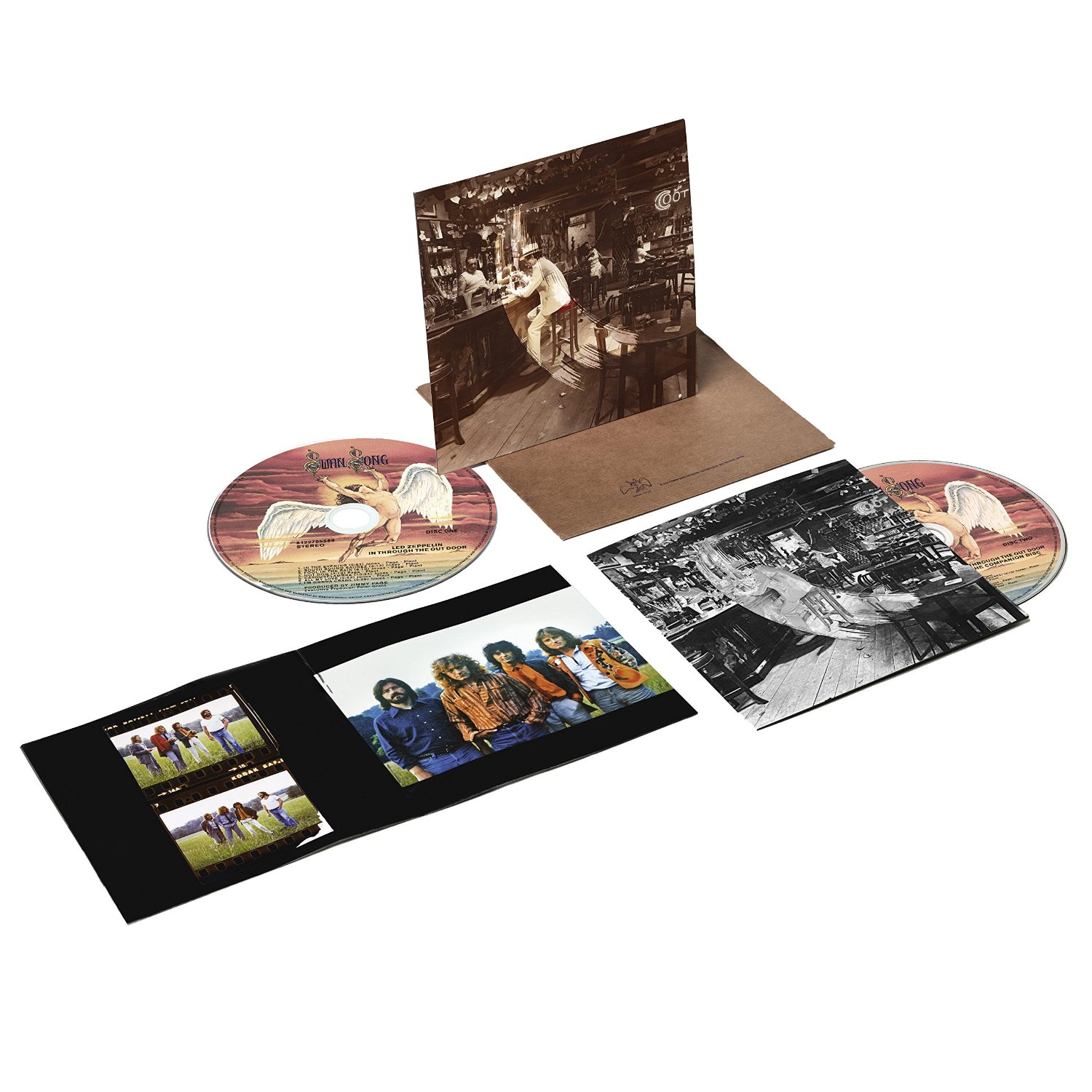
VAN HALEN-DELUXE-VINYL EDITION.
VAN HALEN-DELUXE-VINYL EDITION..
Not many bands enjoyed the longevity that Van Halen enjoy. They were released their debut album Van Halen in 1978. It was hailed as one of the greatest debut albums in musical history. Soon, Van Halen was climbing the charts, reaching number nineteen. As Van Halen’s popularity grew, sales of their debut album sold.
By 1999, when Van Halen were put on hold, their eponymous debut album had sold ten million copies. Van Halen was certified diamond, something that happens to only a handful of albums. However, by then Van Halen were one of the most successful and biggest selling bands in musical history.
After the release of Van Halen in 1978, the California based band released another ten albums. Each and every one of these albums were certified multi-platinum. In America alone, Van Halen’s next ten studio albums sold an incredible forty-million copies. Their most successful studio album released during this period was 1984.
Released on 9th January 1984, 1984 took the world by storm. It was certified diamond in America and five times platinum in Canada. In Europe, 1984 was certified platinum in Germany and gold in France and Britain. That’s no surprise. Van Halen were at their hard rocking best on Van Halen, unleashing classics like Jump, Panama and Hot For Teacher. It seemed that Van Halen could do no wrong.
That proved to be the case. Right through to 1995s Balance, Van Halen’s studio albums sold millions. So did their 1993 live album Live: Right Here, Right Now. It sold two million copies in America along. Van Halen were enjoying a glittering, multi-platinum career. That’s despite fall-outs, changes in lineup and a love of the rock ’n’ roll lifestyle.
When Van Halen released Van Halen III on March 17th 1998, it failed to match the commercial success of previous albums. It was “only” certified gold. Four years later, when Van Halen released A Different Type Of Truth on February 7th 2012, it was to controversy.
Seven of the songs on A Different Type Of Truth had been demoed in the late seventies, early eighties. However, they were never released. So, when the songs featured on A Different Type Of Truth, Van Halen’s fans weren’t happy. They voted with their feet.
No longer were Van Halen selling millions of albums. Very few groups were. On the release of A Different Type Of Truth, it reached number two on the US Billboard 200 and sold 411,000 copies. This wasn’t even enough for a gold disc. The only place that A Different Type Of Truth was certified gold, was in Canada. It was changed days for Van Halen, one of rock’s biggest, most successful and hardest living bands.
Rock ’n’ roll’s great survivors comeback wasn’t the success that they had hoped. Van Halen couldn’t leave it there. Not after thirty-eight years together. Surely, they would release one more album. They did.
It wasn’t another studio album. Instead, Van Halen released the second live album of their career. Forty-one years since they changed their name to Van Halen, they released Tokyo Dome Live in Concert on March 31st 2015. Tokyo Dome Live in Concert was no ordinary live album. Instead, it’s a twenty-five track double album featuring some of Van Halen’s biggest singles and best known songs. Two weeks later, and Tokyo Dome Live in Concert is climbing the American charts It’s already reached number twenty in the US Billboard 200 charts. However, over the last few days, a much wider audience will have heard Tokyo Dome Live in Concert.
When Tokyo Dome Live in Concert was recently on vinyl released by Rhino so were remastered version two of Van Halen’s classic albums, Van Halen I and 1984. Two weeks later, and Rhino released a four disc vinyl box set Deluxe, which features Van Halen I, 1984 and Tokyo Dome Live in Concert. For newcomers to Van Halen, this is the ideal starter pack. Van Halen I and 1984 feature Van Halen at the peak of their powers. Tokyo Dome Live in Concert allows the listener to experience what Van Halen live sounds like. Just like Van Halen and 1984, it’s’s a reminder of Van Halen at the peak of their powers. The story began back in the early seventies.
It was in 1977, that Van Ha;en signed to Warner Bros. Records. Mo Ostin and Ted Templeman of Warner Bros. Records saw Van Halen perform at the Starwood in Hollywood. The two men were so impressed with Van Halen that they signed the group within a week. At last, Van Halen were starting to go places.
Van Halen were no overnight success story. Instead, they had paid their dues. Brothers, Eddie and Alex Van Halen had formed a band in the early seventies. Like many bands, they found it difficult to settle on a name. Initially, they were called The Broken Combs, then changed the name to The Trojan Rubber Co. By then, The Trojan Rubber Co. had a settled lineup.
Their lineup featured Alex on drums and Eddie on guitar. They were joined by bassist Mark Stone and vocalist David Lee Roth, who they had hired a sound system from. Eddie had initially failed the audition. However, Eddie and Alex were realists. Money was tight, so if they brought David onboard, they would save having to hire a sound system. They also thought that David might improve as a vocalist. However, in 1974, The Trojan Rubber Co. changed its name and its lineup.
1974 was a pivotal year for The Trojan Rubber Co. By then, bassist Mark Stone had been replaced by bassist Michael Anthony. His audition was unorthodox. Only after Michael took part in an all night jam session, was he hired. So, Michael left local band Snake and joined The Trojan Rubber Co. Soon, The Trojan Rubber Co. changed its name to Mammoth, and then Van Halen. For the next three years, Van Halen spent honing their sound.
Van Halen played wherever they could. Backyard parties, clubs and dive bars, they weren’t proud. Far from it. They certainly were loud. Too loud some thought.
When Van Halen went to audition at Gazzarri’s, a bar on Sunset Strip, that was down on its luck, the owner Bill Gazzarri, told them they were “too loud, and refused to hire them.” However, Van Halen’s new managers stepped in. Mark Algorri and Mario Miranda had just taken over the booking at Gazzarri’s. So, Van Halen were installed as the house band. Not long after this, Van Halen entered the studio for the first time.
The four members of Van Halen headed to Cherokee Studios, which had recently housed Steely Dan. At Cherokee Studios, Van Halen recorded their demo tape. It would become their calling card, and see them play some of L.A.’s top clubs, including the famous Whisky-A-Go-Go.
Soon, Van Halen were a permanent fixture in L.A.’s top clubs. That’s where they continued to hone their sound. It’s also where they came to the attention of Kiss’ Gene Simmons.
Gene Simmons had heard good things about Van Halen. So, he went to check out Van Halen. According to what he had heard, they were one of the rising stars of L.A.’s music scene. When Gene Simmons arrived at the Gazzarri club in the summer of 1976, he was won over by Van Halen. He knew they were going places.
So, Gene Simmons took Van Halen to Village Recorders in L.A. to produce a new demo tape. Overdubs then took place at Electric Ladyland in New York. Things were looking good for Van Halen. The only thing Van Halen baulked at, was Gene’s suggestion to change the band’s name to Daddy Longlegs. That was a step too far. The next step was for Gene to take the newly recorded demo tape to Kiss’ management.
When Kiss’ management heard the demo, they were pretty disparaging about Van Halen. According to Kiss’ managers, Van Halen “had no chance of making it.” These words would come back to haunt them, after Van Halen sold over forty-two million albums in America alone. However, with Kiss’ management not interested in signing Van Halen, Gene Simmons bowed out of the story. He would be replaced a year later by Mo Ostin and Ted Templeman.
Down but not out, Van Halen returned to the club circuit. For the next year, they continued to hone their sound on the club circuit. One night, in the middle of 1977, Van Halen were playing at the Starwood in Hollywood. There wasn’t much of an audience. However, little did Van Halen know, that two very special guests were in the audience, Mo Ostin and Ted Templeman of Warner Bros. Records. The pair liked what they heard and less than a week later, Van Halen had signed to Warner Bros. Records. Mo Ostin dispatched Van Halen to Sunset Sound Records with producer Ted Templeman, where recording of Van Halen began.
Van Halen.
Like many bands recording their debut album, Van Halen were fearless. They had no apprehension. Mind you, this wasn’t exactly a new experience. Van Halen had been in studios before, recording two different demo tapes. However, this was for real. The band had written nine tracks. The other two were covers of The Kinks’ You Really Got Me and John Brim’s Ice Cream Man. These eleven tracks would eventually become Van Halen’s debut album, Van Halen.
Recording of Van Halen began in the middle of September 1977. Van Halen’s rhythm section of drummer Alex Van Halen and bassist Michael Anthony set about proving the album’s pulsating heartbeat. A week was spent recording Eddie’s guitar parts. Another two weeks were spent recording David’s vocals and the backing vocals. By early October 1977, recording of Van Halen was all but complete. The decision was made not to do much in the way of over-dubbing. This meant Van Halen was much more like hearing Van Halen live. How would critics respond to this?
Before the release of Van Halen, critics had their say. For everyone at Warner Bros. Records, they held their breath. Back in 1978, critics could be venomous. It was hardly rock critic’s finest hour. They were in the throes of a love affair with punk. Many critics took great pleasure in trashing rock albums. The critics didn’t hold back when it came to Van Halen. Most of the reviews were negative. One of the worst reviews came from the so called doyen of critics, the contrarian Robert Christgau. The equally contrarian Rolling Stone were not fans of Van Halen. At least they admitted that Van Halen were going places. Mostly, the reviews panned Van Halen. However, soon, critics would be eating their words.
When Van Halen was released on 18th February 1978, it began climbing the charts. Eventually, it reached number nineteen in the US Billboard 200 charts. This was just the start of the rise and rise of Van Halen.
Three singles were released from Van Halen. A cover of The Kinks’ You Really Got Me reached number thirty-six in the US Billboard 100. Runnin’ With The Devil Stalled at number eighty-four in the US Billboard 100. The final single released from Van Halen was Ain’t Talkin’ ’bout Love. It failed to chart. While the singles failed to replicate the success of Van Halen, it showcased the band at their hard rocking best.
Literally, Van Halen strut and swagger through the eleven tracks on their debut album Van Halen. It’s no surprise that rock and heavy metal fans were won over by Van Halen. It’s a track full of some of Van Halen’s biggest songs, including Runnin’ With The Devil, Eruption, You Really Got Me, Ain’t Talkin’ ‘Bout Love, Jamie’s Cryin’ and Ice Cream Man. Van Halen’s rhythm section of Alex and Michael provide the backdrop to Eddie’s blistering guitars and David’s lived-in vocal. From the opening bars of Runnin’ With The Devil, right through On Fire, Van Halen win friends and influence people. The band who just a year ago, were being hailed L.A.’s best bar band, were on their way to becoming a one of the biggest bands on planet rock.
Six years later, everything Van Halen had touched turned multi-platinum. The four albums Van Halen released between 1979s Van Halen II, to 1982s Diver Down had transformed Van Halen’s fortunes. These four albums had sold an estimated fourteen million copies. Then there was Van Halen, their debut album. It was belatedly being referred to as a classic album.
With Van Halen one of America’s biggest selling bands, critics were forced to rethink their opinion on the band’s eponymous debut album. Belatedly critics had realised the error of their ways. Not for the first time, critics were forced to do an about turn. They realised that Van Halen was a classic rock album. Now they were referring to Van Halen as one of rock ’n’ roll’s greatest debut albums. No longer were Van Halen seen as a bar band who caught a lucky break. Not when their albums were selling by the million. This included Van Halen.
As Van Halen got ready to release their sixth album 1984, Van Halen reentered the US Billboard 200, reaching number 117. Over the next fifteen years, Van Halen consistently sold well. By 1999, when Van Halen were put on hold, their eponymous debut album had sold ten million copies. Van Halen was certified diamond, something that happens to only a handful of albums. Meanwhile, Van Halen was continuing to sell well throughout Europe and Canada by 1999.
Van Halen had been certified gold in Britain, Finland, France and Germany. In Canada, Van Halen was certified platinum four times over. When sales were added up, Van Halen had sold just over eleven million copies. However, Van Halen wasn’t the band’s biggest selling album. That honour fell to 1984.
1984.
During the six years since Van Halen released their eponymous debut album, Van Halen were without doubt, the biggest bands in planet rock. Van Halen were certainly the highest paid band in rock music. No wonder. Each album reached a higher chart placing than its predecessor. So, it’s no surprise that Van Halen had sold fourteen million albums in America alone. 1984, however, was a game-changer, in more ways than one.
Behind the scenes, all wasn’t well within Van Halen. David Lee Roth, Van Halen’s charismatic frontman would quit after 1984. In some ways, the writing had been on the wall.
During the recording of Van Halen’s previous album, Diver Down, released in 1982, David, Eddie and producer Rod Templeman had clashed. The problem was, Eddie wanted to make keyboards a prominent part of the Van Halen sound. David and Rod disagreed. Thinking that Van Halen was a democracy, the two men thought the matter was settled. They were wrong.
Despite this, Eddie went ahead and recorded much of Diver Down at his home studio. When the band heard it, it was keyboard heavy rock rubbed shoulders with Van Halen’s trademark sound. Presented with what seemed like a fait accompli, David began to reconsider his position. He was far from happy with Eddie’s sudden discovery and love of synths. For a rock ’n’ roller like David, this was sacrilege. However, David decided to continue with Van Halen…meantime.
Recording of 1984 took place during 1983 at 5150 Studio, in Studio City, California. Van Halen cowrote all of 1984s songs. Michael McDonald however, received a credit for I’ll Wait. Van Halen’s rhythm section of drummer Alex Van Halen and Michael Anthony’s thunderous bass set about providing the 1984’s heartbeat. Eddie Van Halen played guitar and keyboards. For the last time, David Lee Roth added vocals. Once 1984 was completed, it was that time again, time for critics to have their say on Van Halen’s sixth album.
When reviews of 1984 were published, mostly, they were positive. As usual, there was the odd dissenting voice. One Napoleonic critic described 1984 as a one sided album. For him, the second side received the consolation prize. What he failed to see, was that side one set the bar high.
From the instrumental 1984, through the the Van Halen classics Jump and Panama, Van Halen could do wrong. They were well on their way to hitting a home run. Top Jimmy and Drop Dead Legs rounded off side one, and left you wanting more of Van Halen’s heavy rocking music. Everything just dropped into place. Even the synths had their place, and played their part in a classic album. The fun didn’t stop there.
Hot For Teacher was the perfect way to start side one. An anthemic track, it gave way to I’ll Wait, one of the singles from 1984. Girl Gone Bad was another fist pumping anthem, that showcased what Van Halen were capable. By the time House Of Pain closed 1984 it was apparent that Van Halen had released the second classic album of their career.
1984s fusion of keyboard heavy rock, combined Van Halen’s trademark hard rocking sound proved a winning combination. These two sides of Van Halen resulted in a classic album that would become the biggest selling album of Van Halen’s career.
On its release on January 9th 1984, 1984 started climbing the charts. Eventually, it reached number two in the US Billboard 200. This was the highest chart placing of Van Halen’s six album career. It also became the biggest selling album of Van Halen’s career. Eventually, 1984 sold twelve million copies. 1984 became Van Halen’s second album to be certified diamond. Elsewhere, 1984 was a huge seller.
In Canada, 1984 was certified five times platinum. Over the Atlantic, 1984 was certified gold in Britain and France. Meanwhile, 1984 was certified platinum in Germany. That wasn’t the end of the commercial success.
Four singles were released from 1984. Jump reached number one in the US Billboard 100. I’ll Wait then reached number thirteen in the US Billboard 100. Panama became the third single to be released from 1984. It reached number two in the US Billboard 200. The final single released from 1984, was Hot For Teacher, which stalled at number fifty-six in the US Billboard 200. By then, 1984 had become Van Halen’s most successful album of their career, and their second classic album. However, it was the end of an era.
Following the release of 1984, David Lee Roth left Van Halen. The disagreements with Eddie Van Halen had taken their toll. Relations had been strained since the recording of Diver Down. Eddie was pro synths, David a died in the wool rock ’n’ roller, wasn’t in favour of this stylistic departure. When the pair couldn’t resolve their disagreements, David called time on his career with Van Halen.
David had had a good run. Especially since he was originally seen as a stopgap singer. He had failed the original audition. However, David lasted six albums. They sold thirty-six million copies. Not bad for what one critic referred to as a bar band. It would be another twenty-two years before David Lee Roth rejoined Van Halen.
That was during the 2006 reunion of Van Halen. This was their second reunion. However, it took another six years before they recorded an album. A Different Kind of Truth was released in 2006, it was to controversy.
Seven of the songs on A Different Type Of Truth had been demoed in the late seventies, early eighties. However, they were never released. So, when the songs featured on A Different Type Of Truth, Van Halen’s loyal fans weren’t happy. They voted with their feet.
No longer were Van Halen selling millions of albums. Very few groups were. On the release of A Different Type Of Truth, it reached number two on the US Billboard 200 and sold 411,000 copies. This wasn’t even enough for a gold disc. It was changed days from when Van Halen and 1984, released ten and twelve million copies respectively. Music might have changed but Van Halen were still a hard rocking band capable of playing blistering rock music. They do this on their recent live album Tokyo Dome Live in Concert.
Tokyo Dome Live in Concert.
It was on February 5th 2015 that one of the worst kept secrets in music was conformed. Van Halen were about to release the second live album of their career, Tokyo Dome Live in Concert. The concert had been recorded on June 21st 2013, when Van Halen were touring their A Different Type Of Truth album. However, Tokyo Dome Live in Concert was going to be no ordinary album.
Tokyo Dome Live in Concert the announcement read, was going to be a double album, featuring twenty-five tracks. It was released on 31st March 2015, then as part of the Deluxe box set on 13th April 2015.
After its release, Tokyo Dome Live in Concert started climbing the charts. Quickly, it had reached number twenty in the US Billboard 200. That was early days. Once Van Halen fans hear snippets of Tokyo Dome Live in Concert, the album will keep climbing the charts.
Quite simply, Tokyo Dome Live in Concert features some of Van Halen’s best known songs. Classics and old favourites sit by side, as the original, and classic lineup of Van Halen roll back the years. They might be older, and somewhat worse for years of hard living, but they’re still one of best rock bands on planet rock. That’s the case from the moment they take to the stage.
Opening disc one of Tokyo Dome Live in Concert is Unchained from 1981s Fair Warning. After that, they turn to Runnin’ With The Devil and from their 1978 debut album Van Halen. From there, they turn to She’s The Woman, the first track from 2012 A Different Type Of Truth album. Later, the return to their first classic album Van Halen, for I’m the One and You Really Got Me. Other highlights include Everyone Wants Some from 1981s Woman and Children First, Somebody Get Me a Doctor from Valen II and Hear About It Later from 1981s Fair Warning. However, Van Halen aren’t finished yet.
Having worked their way through twelve tracks, they return with another thirteen. These tracks are taken from Van Halen, Van Halen II, Women and Children First, Fair Warning and 1984.
Dance The Night Away from 1979s Van Halen II kicks disc two of Tokyo Dome Live in Concert. It’s the first of three tracks from Van Halen II. The others are Beautiful Girls and Women in Love. Before then, Van Halen unleash I’ll Wait from 1984, And The Cradle Will Rock from Women and Children First and the anthemic Hot For Teacher. That’s the first of the track from the eighties.
It’s not the last. Romeo Delight from Women and Children First and Mean Street from Fair Warning follow. Then it’s back to the seventies, when Van Halen’s star were on their way to becoming one of rock’s biggest bands.
Beautiful Girls gives way to Ice Cream Man from 1978s Van Halen. Then it’s time for one of Van Halen’s hands in the air anthems, Panama. Van Halen are on a roll. So, they return to their debut album Van Halen, and unleash Eruption and Ain’t Talkin’ ’bout Love. That leaves Van Halen’s most famous single to close Tokyo Dome Live in Concert. For twenty-five tracks and over two hours, Van Halen at their hard rocking best swagger and strut their way through their second live album, Tokyo Dome Live in Concert. It’s the final album on the four disc box set Deluxe, which was recently released by Rhino.
For anyone unfamiliar with Van Halen’s music, the Deluxe box set is the perfect introduction to their music. It features their two classic albums, Van Halen and 1984. They’re without doubt, the two best albums Van Halen released.
Van Halen is now recognised as one of the greatest debut albums in rock music history. That is a big statement to make, and looked unlikely back in 1978. Critics slated Van Halen. However, they were in the throes of a love affair with punk and post punk. Later, when the critics reevaluated Van Halen, they realised how wrong they were. By then, it was a multi-platinum album. Eventually, Van Halen sold ten million copies. Somehow, Van Halen surpassed this with 1984.
By 1984, Van Halen had been given a musical makeover by Eddie Van Halen. He introduced synths on 1982s Diver Down. This didn’t please David Lee Roth. Eddie however, wasn’t going to change his mind. So, following the release of 1984, David left Van Halen. The original and classic lineup of Van Halen were no more.
It wasn’t until 2012s A Different Kind of Truth that the original lineup of Van Halen returned to the studio. A year later, Van Halen were touring A Different Kind of Truth. On June 21st 2013, Van Halen were in Tokyo, ready to record the second live album of their five decade career, Tokyo Dome Live in Concert. It was released on March 31st 2015, and as part of the Deluxe box set on 13th April 2015. Tokyo Dome Live in Concert sees Van Halen, one of the hardest rocking bands in the history of rock, roll back the years. They dig deep into their back-catalogue and unleash a string of classics and old favourites. This includes tracks from Van Halen and 1984, the other two albums on the vinyl edition of the Deluxe box set, which is the perfect introduction to Van Halen, one of the biggest and best selling bands in America’s illustrious musical history.
VAN HALEN-DELUXE-VINYL EDITION..




BUFFY SAINTE-MARIE-MANY A MILE.
BUFFY SAINTE-MARIE-MANY A MILE.
There’s much more to Buffy Sainte-Marie than music. That’s just part of the story. Buffy Sainte-Marie is an educator, social activist and visual artist. She was born on February 20th 1941, on the Piapot Cree First Nation Reserve in the Qu’Appelle Valley, Saskatchewan, Canada. However, Buffy was later adopted by Albert and Winifred Sainte-Marie.
Buffy Sainte-Marie was brought up by her adoptive parents Massachusetts. That’s where Buffy was first exposed to music. She would later make a career out of music, and in 1965, released Many A Mile on Vanguard Records. It’s recently been reissued by Vanguard Records, an imprint of Ace Records. Looking back, it seems almost inevitable that Buffy Sainte-Marie would make a career out of music.
Growing up, Buffy taught herself to play piano and guitar. By the time she was a teenager, Buffy was already writing songs. However, when Buffy left high school, she didn’t embark upon a career in music straight away. Instead, she headed to the University of Massachusetts Amherst.
At the University of Massachusetts Amherst, Buffy studied for a degree in Oriental philosophy. After graduating, Buffy decided to enrol for a second degree. This time, it was a teaching degree. So by the time Buffy departed the University of Massachusetts Amherst, she had two degrees to her name. By then, Buffy’s musical career was underway.
From the early sixties, Buffy was touring around Canada and America. She played everywhere from coffee houses and concert halls to folk festivals. Two places Buffy played frequently were the Yorkville district of Toronto and Greenwich Village in New York. They were the focal points of the Canadian and American folk scenes. Just like Greenwich Village, the folk scene in Yorkville was vibrant. Joni Mitchell, Leonard Cohen and Neil Young. Just like Buffy, they would go on to enjoy long and illustrious careers. However, it wasn’t all plain sailing.
In 1963, Buffy suffered from every singer’s worst nightmare, a throat infection. The doctor prescribed Codeine. Unfortunately, Buffy became addicted to Codeine. However, she eventually beat her addiction, and wrote a song about her experience, Cod’in. It would later, be covered by numerous artists, included Janis Joplin, Donavon, Quicksilver Messenger Service and Gram Parsons. By then, Buffy’s recording career would’ve begun. Before that, she was about to become the homecoming queen.
1964 saw Buffy return to a return trip to where she was born, the Piapot Cree reserve in Canada. She was warmly welcome to her spiritual home. So much so, that she was “adopted” by the youngest son of Chief Piapot, Emile Piapot and his wife. This reinforced Buffy’s interest in her of her people. She would make them proud a year later.
It’s My Way.
By 1964, Buffy found herself signed to Vanguard Records, which by then, was folk’s premier label. Although she was just twenty-three, Buffy was more than ready to record her debut album, It’s My Way.
For It’s My Way, Buffy had penned twelve tracks. Some she had written many years previously. Others, including Cod’in and Universal Soldier were recent compositions. Buffy was inspired to write Universal Soldier. This came about when Buffy saw the first injured veterans arriving back from Vietnam. The US government were denying that their injuries had happened in Vietnam. This prompted Buffy to pen Universal Soldier in The Purple Onion coffee house in Toronto. A year later, in 1965, Universal Soldier gave Donavon a hit single. However, in 1964, Buffy was hoping that her debut album It’s My Way would be a commercial success.
When It’s My Way was released later in 1964, it was to widespread critical acclaim. The songs were a scathing inditement on modern society. They were variously powerful, moving and disturbing. Buffy Sainte-Marie seemed to have struck a nerve. Sadly, this didn’t result in a commercially successful album.
It’s My Way failed to chart. It would only be much later that Buffy Sainte-Marie’s debut album found the audience it deserved. Since then, Buffy Sainte-Marie’s much heralded debut album is regarded as an important musical document. It marked the arrival of a singers-songwriter who would provide a voice for those that didn’t have one. Buffy Sainte-Marie continued to do this on her sophomore album Many A Mile.
Many A Mile.
Despite the commercial failure of It’s My Way, Buffy Sainte-Marie was regarded as one of the rising stars of folk music. By 1965, she was playing in Canada, America and occasionally abroad. Other artists were beginning to cover her songs, including Donavon, who covered Universal Soldier in 1965. However, what Buffy wanted was to release a successful album.
Just like It’s My Way, Buffy wrote many of the songs on Many A Mile. She penned a total of seven songs, including what would become Buffy’s most famous song, Until It’s Time for You To Go. It would be covered by everyone from Elvis Pressley to Françoise Hardy and Neil Diamond. However, in 1965, it was just one of seven songs Buffy had written for her sophomore album Many A Mile. The others were cover versions.
Among the cover versions were adaptations of traditional songs, including Must I Go Bound, Los Pescadores, Groundhog, On the Banks of Red Roses, Maple Sugar Boy, Lazarus and Come All You Fair and Tender Ladies. Other tracks included covers of Bukka White’s Fixin’ To Die and Patrick Sky’s Many A Mile. These tracks were recorded with producer Maynard Solomon.
When recording of Many A Mile began, Buffy was accompanied by bassist Russ Savakus. Daddy Bones played guitar on The Piney Wood Hills. Patrick Sky made a guest appearance on Many A Mile. Once the fourteen tracks were recorded, Many A Mile was released later in 1965.
Before Many A Mile was released, critics had their say on Buffy Sainte-Marie’s sophomore album. They were impressed by the mixture of traditional songs, cover versions and original material that Buffy had chosen. They were brought to life by Buffy, and producer Maynard Solomon.
For Many A Mile, producer Maynard Solomon decided less is more. His productions are sparse and understated. It’s just bass, guitar and taking centre-stage, Buffy’s vocal. Maynard Solomon’s arrangements aren’t polished. This is deliberate. Instead, they’re roughly hewn. This is fitting, given the material on Many A Mile.
Five of the tracks on Many A Mile are traditional songs. They were arranged by Buffy. Some of these songs have been passed from generation to generation. When they were first sung, they didn’t have a lavish arrangement. Instead, it would be just traditional instruments, and later a guitar that would accompany the songs. So, Buffy stays true to their roots. With the roughly hewn, sparse arrangements and Buffy’s vocal taking centre-stage, it’s a captivating combination. This includes on Groundhog, where Buffy plays a mouthbow. It’s a traditional stringed instrument from South Africa. Mostly, though, it’s just guitars and a bass that accompany Buffy.
That’s the case on the seven tracks she wrote. The standout track is Until It’s Time For You To Go. It oozes quality, and it’s no surprise that numerous artists covered this track. Another of Buffy’s compositions on Many A Mile would become a familiar song. That’s The Piney Wood Hills. Buffy later rewrote the song, and it became I’m Gonna Be A Country Girl Again. It became a favourite of country artists, and is another of Buffy’s most famous songs. Each of the songs she wrote for Many A Mile are brought to life by Buffy.
Buffy doesn’t so much deliver lyrics, she lives them, breathing life, meaning and emotion into them. She does this on each of the fourteen tracks, including the ballads and five traditional songs. Stylistically, she veers between folk, country, blues and Americana, proving that she’s a versatile and talented singer. One of the many highlights is her reading of Bukka White’s Fixin’ To Die. This blues takes on new meaning in Buffy’s hands. Given the quality of Many A Mile, surely it would become Buffy’s breakthrough album?
On its release in 1965, Many A Mile failed to chart. This was disappointing for Buffy and everyone at Vanguard Records. However, success wasn’t far away for Buffy Sainte-Marie.
In 1966, Buffy’s third album, Little Wheel Spin and Spin, proved to be her breakthrough album. It reached number ninety-seven in the US Billboard 200. A year later, and 1967s Fire and Fleet and Candlelight then stalled at number 126 in the US Billboard 200. However, by 1968, Buffy had rewritten That’s The Piney Wood Hills.
The newly rewritten song became I’m Gonna Be A Country Girl Again. It lent its name to Buffy’s fifth album, which reached just number 171 in the US Billboard 200. Then in 1971, I’m Gonna Be A Country Girl Again was released as a single and gave Buffy a hit in Britain, Canada and America. While I’m Gonna Be A Country Girl Again only reached number eighty-six in Canada and ninety-eight in the US Billboard 100, it reached number thirty-four in Britain. By then, Buffy was an experienced singer-songwriter.
Buffy had already released seven studio albums and the soundtrack to Illuminations by 1971. Other artists were covering Buffy’s songs, and enjoying commercial success with her songs. By 1971, Buffy was already a regular on Canadian and American television. She had featured on American Bandstand, Soul Train, The Johnny Cash Show and The Tonight Show. Buffy Sainte-Marie had come a long way since the release of her sophomore album Many A Mile in 1965. It was recently reissued by Vanguard Records, an imprint of Ace Records. Many A Mile showcases the considerable talents of Buffy Sainte-Marie, whose much more than a singer, songwriter and musicians.
BUFFY SAINTE-MARIE-MANY A MILE.

LONNIE LISTON SMITH AND THE COSMIC ECHOES-VISIONS OF A NEW WORLD.
LONNIE LISTON SMITH AND THE COSMIC ECHOES-VISIONS OF A NEW WORLD.
Bob Thiele understood musicians. He understood that often, a large record company wasn’t the best environment for musical pioneers and mavericks to thrive. This understanding came from a lifetime in the music industry. His career started in 1969. Thirty years later, in 1969, and Bob Thiele was one of the most powerful men in music.
After eight years running Impulse, and transforming it into one of jazz’s premier labels, Bob Thiele found himself at loggerheads with Larry Newton, the head of ABC Records. It looked as if Bob’s time at ABC was coming to an end. Bob Thiele’s departure from ABC Records was announced 29th April 1969. The man that had run ABC Records’ Impulse and Bluesway was about form his own record company.
Flying Dutchman Productions was no ordinary label though. It was a company where innovators, pioneers and mavericks were welcome. Bob Thiele knew, that within the right environment, innovative and maverick musicians could thrive, creating music that’s influential and forward-thinking. So, Bob Thiele went in search of innovators, pioneers and mavericks.
Over the next few years, Flying Dutchman Productions became home to everyone from Ornette Coleman, through Gil Scott Heron, Leon Thomas, Eddie “Cleanhead” Vinson, Louis Armstrong and Lonnie Liston Smith and The Cosmic Echoes, who signed to Flying Dutchman Productions in 1972.
Lonnie Liston Smith and The Cosmic Echoes debut for Flying Dutchman Productions was Astral Travelling. This groundbreaking album was released in 1973, and was the first of five albums Lonnie Liston Smith and The Cosmic Echoes released for Bob Thiele’s new label. This was the start of an exciting adventure for the cosmic jazz visionary.
By the summer of 1975, Lonnie Liston Smith and The Cosmic Echoes were about to release their fourth album Visions Of A New World, which was recently reissued by BGP, an imprint of Ace Records. It was the followup to Expansions, which was Lonnie Liston Smith and The Cosmic Echoes breakthrough album. Expansions which was licensed to RCA, sold well, reaching number eight-five in the US Billboard 200, twenty-seven in the US R&B charts and number two in the US Jazz charts.. Radio and club DJs were also spinning tracks from Expansions. Given the success of Expansions, it wasn’t surprising that Bob Thiele sent Lonnie Liston Smith and His Cosmic Echoes into the studio to record Visions Of A New World. For the thirty-five year old Lonnie Liston Smith, he was about to grasp the nettle. This success was what he had been working toward all his life.
For Lonnie Liston Smith, it was almost written in the stars that he’d become a musicians. Lonnie was born in 1940, into a musical family. His father was a member of Richmond Gospel music group the Harmonising Four. Growing up, members of gospel groups The Soul Stirrers and Swan Silvertones were regular visitors to the Smith household. With all this music surrounding him, Lonnie learned piano, tuba and trumpet in High School and college. After college, he headed to Morgan State University.
Inspired by Trane, Bird and Miles Davis, Lonnie embarked upon a degree in musical education. Throughout his time at University, Lonnie continued playing the pianist in local clubs and singing backing vocals. He played with alto saxophonist Gary Bartz and trombonist Graham Moncur. This was all part of Lonnie’s musical eduction. Having completed his BSc in musical education at Morgan State University, Lonnie walked straight into a job.
On leaving Morgan State University, Lonnie got a job with the Royal Theatre’s house band. For a young musician, this was would help turn them into a musical all-rounder. After all, they had to be able to accompany a wide range of artists. For Lonnie, this was the next stage in his musical education. The next part of his musical education took place in New York.
Having moved to New York, Lonnie was luck enough to get a gig playing piano in Betty Carter’s band. This helped Lonnie get his name known in the Big Apple. Then in early 1965, Lonnie caught a break. He joined Roland Kirk’s band and made his recording debut on March 14th 1965. That was when Here Comes The Whistleman was recorded live in New York Lonnie only played on the title-track, Making Love After Hours, Yesterdays and Step Right Up. Then Lonnie featured on Roland andAl Hibbler’s 1965 live album A Meeting Of The Times. After this Lonnie, joined one of jazz’s top bands.
Over the last few years, The Jazz Messengers had established a reputation for young musicians looking to make a name for themselves. Lonnie joined in 1965. He shared the role with Mick Nock and Keith Jarrett. However, with The Jazz Messengers ever evolving lineup, Lonnie only played three in concerts. These three concerts just so happened to be at the legendary Village Vanguard. For Lonnie, despite the prestigious venue, this must have been a disappointing time. Luckily, he was rehired by Roland Kirk.
Lonnie rejoined Roland Kirk’s band in time to play on his 1968 album Now Please Don’t You Cry, Beautiful Edith. This established Lonnie’s reputation as the go-to-guy for a pianist. It was the start of period where Lonnie worked with some of the most innovative and inventive jazz players. Musical boundaries were about to be pushed to their limits as Lonnie joined Pharaoh Saunders’ legendary free jazz band.
Pharaoh Saunders had worked closely with John Coltrane right up to his death in 1967. The following year, Pharaoh formed a new band. Their music is best described as free jazz. Musical boundaries were pushed to their limits and beyond. Recognising a fellow believer in free jazz, Pharaoh asked Lonnie to join his band. Lonnie went on to play on three of Pharaoh’s best albums. The first of this trio was 1969s Karma. It was followed in 1970 with Jewels of Thought and 1971s Thembi. The other Pharaoh Saunders album Lonnie played on was 1970s Summun Bookman Umyun. which was released on Impulse. Just like the three albums Pharaoh recorded for Flying Dutchman, it was a groundbreaking album.
During this period, Pharaoh and his band were constantly pushing boundaries and rewriting the musical rulebook. Their music was truly groundbreaking. Even Lonnie was challenged. On Thembi, Pharaoh asked Lonnie to play the Fender Rhodes. This was the first time that Lonnie came across an electric piano. However, he rose to challenge and wrote Thembi’s opening track Astral Travelling. Later, Astral Travelling would become synonymous with Lonnie Liston Smith and The Echoes. Before that, Lonnie would play with some of jazz’s mavericks.
One of these mavericks was Gato Barbieri. He’d just signed to Bob Thiele’s nascent label Flying Dutchman Productions. It was establishing a reputation for providing musicians with an environment where innovative and creative musicians could thrive. Bob believed musical mavericks didn’t thrive within such an orthodox environment. Their creativity is restricted, meaning they’re unable to experiment and innovate like they’d like. So, Bob signed Gato to Flying Dutchman. Lonnie played on his 1969 debut album The Third World. Bob’s next signing was Leon Thomas and played on his debut album Spirits Known and Unknown. Soon, Lonnie was a regular at Flying Dutchman sessions.
When the time came for Gato to record his 1971 sophomore album Fenix, Lonnie was called upon. He played on Fenix and joined Gato’s band. Lonnie played on Gato’s 1972 album El Pampero. He also toured throughout Europe with Gato. Then came the opportunity of a lifetime. After El Pampero, Lonnie got the chance to work with another jazz legend.
Lonnie was a member of Gato Barbieri’s band when Miles Davis got in touch. He wanted Lonnie to join his band. At this time, Miles’ music was changing direction. The direction it was heading in was funk. Electronic instruments were the flavour of the month for Miles and he was exploring their possibilities. However, Miles was doing this outside the studio environment. That’s why there are very few recordings of Lonnie playing alongside Miles at that time. That came later, when Lonnie would later work with Miles. Meanwhile, Lonnie decided to embark upon his solo career, and record his debut album Astral Travelling.
When recording of Astral Travelling began, Lonnie had put together some of the most talented and innovative musicians. The Cosmic Echoes’ rhythm section included bassist Cecil McBee, drummer David Lee and guitarist Joe Beck. Sonrily Morgan and James Mtume played percussion and conga, Gee Vashi tamboura and Badal Roy tabla. George Barron played tenor and soprano saxophone. Lonnie played piano and electric piano on Astral Travelling which was produced by Bob Thiele. Astral Travelling was released in 1973.
On its release in 1973, Astral Travelling was released to critical acclaim. This was no surprise. Lonnie Liston Smith had worked with some of the biggest names of jazz. It was akin to a musical apprenticeship. Astral Travelling saw Lonnie move from sideman to bandleader. Accompanied by some of the best and most innovative musicians, he had created an ambitious and groundbreaking album. Although Astral Travelling failed to chart, it sold reasonably well upon its release. This bode well for the future.
The followup to Astral Travelling, Cosmic Funk was released in 1974. Lonnie Liston Smith and The Cosmic Echoes’ genre-hopping sophomore album was released to widespread critical acclaim, and sold reasonably well. However, Cosmic Funk wasn’t going to make Lonnie Liston Smith rich. At least word was spreading about this musical visionary. Soon, Lonnie Liston Smith and The Cosmic Echoes would be enjoying both commercial success and critical acclaim.
By the time Lonnie Liston Smith and The Cosmic Echoes released Expansions in early 1975, Bob Thiele had take Flying Dutchman Productions’ releases to RCA. While this safeguarded Flying Dutchman Productions’ future, RCA weren’t a charity. They wanted sales. Sales was what they got. Expansions reached eight-five in the US Billboard 200, twenty-seven in the US R&B charts and number two in the US Jazz charts. This made Expansions one of Flying Dutchman Productions’ most successful albums.
Meanwhile, club and radio DJs were spinning tracks from Expansions. Belatedly, Lonnie Liston Smith and The Cosmic Echoes were the flavour of the month among DJs, dancers and discerning record buyers. So, it’s no surprise that Bob Thiele sent Lonnie Liston Smith and The Cosmic Echoes into the studio again, where they recorded Visions Of A New World.
For Lonnie Liston Smith and The Cosmic Echoes’ fourth album, Visions Of A New World, Lonnie penned seven tracks, including Lonnie’s hopeful anthem, A Chance For Peace. The other track, Devika (Goddess) was written by Dave Hubbard and Sarina Grant. These eight tracks were recorded at Electric Ladyland Studios, New York.
At Electric Ladyland Studios, Bob Thiele and Lonnie Liston produced the eight tracks that eventually became Visions Of A New World. Accompanying Lonnie were The Cosmic Echoes. Their rhythm section featured bassist Greg Maker, drummer Art Gore and Wilby Fletcher and guitarist Reggie Lucas. Percussionists included Michael Carvin, Ray Armando, Angel Allende who added bongos and Lawrence Killian who also played congas. Flautist Donald Smith also added vocals on three tracks. The horn section included soprano saxophonist Dave Hubert, trombonist Clifford Adams and trumpeter Cecil Bridgewater. This was a very different lineup of The Cosmic Echoes that featured on Astral Travelling. Lonnie Liston Smith on keyboards was the only constant. This constantly evolving lineup didn’t affect the success of Visions Of A New World.
Just like previous albums, critics hailed Visions Of A New World as a groundbreaking album. Lonnie Liston Smith was seen as a musical pioneer, capable of creating innovative and influential music. That music was way ahead of the musical curve. So, it’s no surprise that when Visions Of A New World was released in the summer of 1975, it reached number seventy-four in the US Billboard 200, fourteen in the US R&B charts and number four in the US Jazz charts. Visions Of A New World was Lonnie Liston and The Cosmic Echoes’ most successful album. Here’s why.
Opening Visions of a New World is one of Lonnie Liston and The Cosmic Echoes’ best known songs, the anthemic A Chance For Peace. Straight away, the rhythm section and guitar lock into a funky, bubbling groove. They’re aided and abetted by Lonnie’s keyboards, plus a myriad of percussion, congas and bongos. They provide the backdrop for Donald Smith’s impassioned, hopeful vocal. Stabs of blazing horns soar above the arrangement, as musical genres seamlessly, melt into one. Then when Lonnie steps out of the shadows, he delivers a masterclass on the keyboards. It’s Hendrix-esque. Meanwhile, the rest of the band are content to let Lonnie take centre-stage, as the uber funky arrangement flows and bubbles along. Then when Donald’s vocal returns, he combines power and passion, breathing hope and meaning into Lonnie’s lyrics. They prove as relevant in 2015, as they were forty years ago in 1975.
Love Beams sees the tempo drop, and a smooth, sensual arrangement unfold. That’s the case from the moment “Love Beams” is sung. The rhythm section combine with percussion and Lonnie’s crystalline keyboards. A smooth, sultry horn sounds, before dropping out. From there, Lonnie Liston and The Cosmic Echoes take the listener on a journey to a faraway, exotic location, on this sensual, dreamy sounding track.
Subtle flourishes of Lonnie’s keyboards open Colours of the Rainbow. They’re soon joined by Donald Smith’s powerful, impassioned vocal. It soars above the arrangement, as percussion accompanies Lonnie’s keyboards. They fill the spaces on what’s a quite beautiful, hopeful sounding song.
Devika (Goddess) was written by Dave Hubbard and Sarina Grant. Just Greg Maker’s lone bass opens the track. It’s soon joined by drums and percussion and keyboards. However, it’s when Dave Hubbard unleashes his soprano saxophone, the track begins to unfold. Its smooths soulful sound provides the perfect accompaniment to the rest of The Cosmic Echoes. Aided and abetted by Lonnie, they create a bubbling, funky arrangement. Dave’s saxophone steals the show. Partly, it’s because of his ability to improvise. He repeats the rhythm, constantly changing things around. Lonnie delivers a brief solo, and with the help of the rhythm section, keeps the funky vibe bubbling. Lonnie then passes the baton, allowing other members of the band to showcase their skills. Then Dave delivers a quivering solo, picking up where he left off, as he plays a starring role on Devika (Goddess).
With its slow, dreamy sound Sunset again, conjures up images of somewhere warm and exotic. Lonnie’s keyboards are to the fore, while the rhythm section and percussion combine. Tender harmonies are added as the arrangement literally meanders lazily along. Space is left within the cinematic arrangement, as if inviting the listener to paint pictures with their imagination. That’s not difficult given the quality of the musical backdrop.
Visions of a New World (Phase I) has a big, bold introduction. It comes courtesy of Lonnie’s rumbling piano. Soon, it gives way to Donald Smith’s impassioned vocal. It’s delivered powerfully, and soars high above the arrangement. For two minutes, Lonnie and Donald combine. However, a change is coming.
It comes on Visions of a New World (Phase II). The tempo rises as a funky rhythm section join Lonnie’s keyboards. They take the arrangement in the direction of fusion. Later, horns are added. As one, they blaze above the arrangement. It’s augmented by percussion, bongos and congas. This is very different from Visions of a New World (Phase I). The tempo has risen, and the experimental, free jazz sound is replaced by a hard, driving slice of fusion. It features Lonnie Liston and The Cosmic Echoes stretching their legs, and showcasing their considerable skills.
Closing Visions of a New World was Summer Nights. Lonnie’s keyboards dominate the introduction, before the rest of the band are counted in. They create a slow, smooth and meandering arrangement. It comes courtesy of Lonnie’s keyboards, percussion, bongos and congas. Providing a subtle heartbeat are the rhythm section. When all this is combined, the sultry sounding Summer Nights glides along, and proves the perfect way to close Visions of a New World. Summer Nights features Lonnie Liston and The Cosmic Echoes at their creating timeless music.
Forty years after Lonnie Liston and The Cosmic Echoes released their most successful album, Visions of a New World, the album sounds just as good, as it did in 1975. Visions of a New World is a timeless album. That’s the case with so much groundbreaking music.
Not only was Visions Of A New World groundbreaking, but commercially successful. That isn’t always the case. Lonnie Liston and The Cosmic Echoes first two albums didn’t sell in vast quantities. Neither 1973s Astral Travelling, nor 1974s Cosmic Funk charted. It wasn’t until the release of Expansions in early 1975 that commercial success came Lonnie Liston and The Cosmic Echoes’ way. However, Bob Thiele held his nerve, and continued to believe in Lonnie Liston and The Cosmic Echoes.
Bob Thiele was rewarded when Expansions reached eight-five in the US Billboard 200, twenty-seven in the US R&B charts and number two in the US Jazz charts. Other labels wouldn’t have been as patient as Bob Thiele. However, he believed in Lonnie Liston Smith, a music innovator who was way ahead of the musical curve. His patience was rewarded again, when Visions Of A New World became Lonnie Liston and The Cosmic Echoes’ biggest selling album.
When Visions Of A New World was released in the summer of 1975, it reached number seventy-four in the US Billboard 200, fourteen in the US R&B charts and number four in the US Jazz charts. Visions Of A New World was Lonnie Liston and The Cosmic Echoes’ became most successful album. No wonder. The music on Visions Of A New World oozed quality.
Elements of free jazz, funk, fusion, rock, smooth jazz and soul are combined on Visions Of A New World. As a result, the music was innovative and guaranteed to influence other musicians. Lonnie Liston Smith was a leader, not a follower. He released five albums on Bob Thiele’s Flying Dutchman Productions. Each of these albums feature a musical visionary at the peak of his creative powers.
One of Lonnie Liston and The Cosmic Echoes’ finest albums is Visions Of A New World, which was recently reissued by BGP, an imprint of Ace Records. Visions Of A New World, which is a truly timeless album, along with Astral Travelling, is the perfect introduction to cosmic jazz pioneer, Lonnie Liston and The Cosmic Echoes.
LONNIE LISTON SMITH AND THE COSMIC ECHOES-VISIONS OF A NEW WORLD.

SWAMP DOGG-I’M NOT SELLING OUT/I’M BUYING IN.
SWAMP DOGG-I’M NOT SELLING OUT/I’M BUYING IN.
During the sixties, Jerry Williams was for most part, a regular guy. He was a successful singer, songwriter and producer. Mostly, Jerry Williams was content to help other people become stars. He wrote songs, played on their albums and produced their music. Then, as the sixties drew to a close, Jerry Williams dropped acid. It was a life changing experience.
The Doors of Perception, as Aldous Huxley said, had been opened. Jerry Williams changed. Psychedelics became his drug of choice. This stimulated his creativity. However, he desperately needed an outlet for this heightened creativity. So he adopted an alter ego Swamp Dogg. He was obsessed by sex, drugs, politics, culture and class. All these subjects came out in his music. His music was funny, prickly, gritty, acerbic and angry. Often, politicians felt the wrath of Swamp Dogg. For the newly enlightened Jerry Williams, his debut album Total Destruction Of Your Mind introduced the world to Swamp Dogg, whose 1981 album I’m Not Selling Out/I’m Buying In was recently reissued Takoma, an imprint of Ace Records.
When Total Destruction Of Your Mind was released in 1970, the album failed to chart. It seemed, that record buyers didn’t seem to understand Swamp Dogg’s unique brand of gonzo soul. Then when Mama’s Baby, Daddy’s Maybe was released as a single, it reached number thirty-three in the US R&B Charts. This was a small crumb of comfort. Sadly, most people had overlooked a groundbreaking album. Total Destruction Of Your Mind featured Swamp Dogg at his most creative.
At the time, Swamp Dogg was compared to Sly Stone. The two men vied for the title of the most creative and innovative man in soul music. Their careers took very different directions during the first half of the seventies. However, by then, Swamp Dogg had been making music since he was twelve.
The future Swamp Dogg was born Jerry Williams in March 1942, in Portsmouth, Virginia. From an early age, Jerry Williams was immersed in music. His parents weaned their son on country music. However, the young Jerry Williams wasn’t just listening to music he released his first single when he was twelve.
Little Jerry Williams released HTD Blues (Hardsick Troublesome Downout Blues) on the Mechanic label in 1954. Despite his tender years, Little Jerry Williams penned his debut single. He wasn’t just a songwriter though. Soon, Jerry Williams would become a multi-instrumentalist.
By the time Jerry Williams turned eighteen, his musical career began in earnest. He released singles on a regular basis. His 1964 single I’m The Lover Man, which was a Jerry Williams composition, was picked up by the Loma label. While it wasn’t the success many forecast, commercial success came in 1966.
When Jerry Williams released Baby You’re My Everything, in 1966, it reached number thirty-two in the US R&B charts. This was the first of a string of singles Jerry Williams released for Calla. They didn’t match the success of Baby You’re My Everything. So Jerry Williams forged a career as a songwriter, musician and producer. He was content to turn other musicians into stars.
Jerry Williams was happy to carve out a niche as a songwriter, musician and producer until the late sixties. Much of the time, Jerry Williams worked at Atlantic.Then came the day Jerry Williams dropped acid. No longer was Jerry Williams willing to remain a star-maker, he wanted to become a star. That was when Jerry Williams’ outrageous alter ego, Swamp Dogg was born.
Total Destruction Of Your Mind was released on the Canyon label in 1970, and introduced the world to Swamp Dogg. While the album didn’t sell in vast quantities, critics realised that Swamp Dogg was a mixture of musical maverick and innovator. Soon, comparisons were being made with Sly Stone, who was enjoying commercial success and critical acclaim.
Back in 1966, when Jerry Williams enjoyed a hit with Baby You’re My Everything, Sly and The Stone didn’t even exist. They were formed in 1967, while Swamp Dogg was enjoying a successful career as a producer. When Sly and The Stone released their debut album, it would’ve taken a brave man to forecast that by 1970, Sly Stone would be one of the biggest names in music.
Sly and The Family Stone released their debut album in A Whole New Thang in October 1967. However, the album failed to chart. This was an inauspicious start for Sly Stone’s new band. Things weren’t going to plan.
Then in April 1968, Dance To The Music reached number 142 in the US Billboard 200 and number eleven in the US R&B charts. Things were looking up. However, when Sly and The Family Stone released Life in September 1968, it stalled at number 195. This wasn’t what had been forecast for a man who was being hailed as one of music’s innovators.
Things improved in 1969, when Sly and The Family Stone released Stand! It reached number thirteen in the US Billboard 200, and number three in the US R&B charts. This resulted in Sly and The Family Stone’s first platinum disc.Around this time, Swamp Dogg had a chemical awakening, when he dropped acid.
A year later, and Swamp Dogg released his Total Destruction Of Your Mind. This was when Swamp Dogg was first compared to Sly Stone. They were both mavericks and innovators, capable of releasing groundbreaking music. However, their fortunes varied hugely.
Total Destruction Of Your Mind didn’t sell well upon its release. However, when Sly and The Family Stone released their Greatest Hits album in November 1970, it sold five million copies, and was certified platinum five times over. For the next five years, this was a familiar pattern.
In November 1971, Sly and The Family Stone released There’s A Riot Goin’ On was certified platinum. There’s A Riot Goin’ On was hailed an instant classic. Gone was the psychedelic soul of previous Sly and The Family Stone albums. Replacing it was a darker, funky and soulful sound. Meanwhile, Swamp Dogg had signed to a major.
Swamp Dogg signed to Elektra in 1971. They saw the potential in Swamp Dogg. Executives at Elektra realised Swamp Dogg, they was one of music’s innovators. Elektra expected great things from Swamp Dogg. What they got was an album that entered the musical history books.
When Swamp Dogg released Rat On, his Elektra debut in 1971, it featured what’s now seen as one of the worst album covers ever. Rat On featured Swamp Dog sitting on top of a giant rat. This was slightly off-putting, and possibly, detracted from the music. Rat On, which featured Swamp Dogg at his creative zenith, didn’t sell well. As a result, Swamp Dogg was dropped by Elektra. It was a case of what might have been.
Sadly, Swamp Dogg’s dalliance with a major label was brief. Now he was back to square one. He released his next two albums on smaller labels. 1972s Cuffed, Collared and Tagged was released on Cream Records, while 1973s Gag A Maggott was released on Stone Dogg. Neither album sold well. Meanwhile, Sly Stone was one of the most successful men in music.
The success story that was Sly and The Family Stone continued apace. Fresh released in June 1973, gave Sly and The Family Stone their third consecutive number one in the US R&B charts. Just like Small Talk, which was released in July 1974, Fresh was certified gold. Good news also came Swamp Dogg’s way in 1974. Island Records wanted to sign him.
After releasing his last two albums on smaller labels, Swamp Dogg was back where his talents belonged, at one of the music’s bigger labels. Island Records was then home to everyone from Bob Marley to John Martin. Joining that list was Swamp Dogg in 1974. Sadly, his time was brief.
Have You Heard This Story?? was released on Island Records in 1974. It was Swamp Dogg’s fifth solo album. However, it was a familiar story. Commercial success eluded Swamp Dogg and he was dropped by Island Records. Meanwhile, Sly and The Family Stone had split-up. This looked like the end of the road for Swamp Dogg’s creative rival.
Sly Stone, was determined to carry on.While 1975s High On You and 1976s Heard Ya Missed Me, Well I’m Back were credited to Sly and The Family Stone, it featured a very different lineup. The other change was Sly Stone himself. Years of hard living had caught up with him. He was no longer the musical giant he once was. Neither High On You nor Heard Ya Missed Me, Well I’m Back reached the heights of Sly and The Family Stone’s previous albums. However, Sly Stone had had a good run. Between 1969 and 1974, Sly and The Family Stone sold eight million albums. With Sly Stone out of the running, the coast was clear for Swamp Dogg to unleash his creativity.
Ever since the release of Total Destruction To Your Mind, Swamp Dogg had been releasing groundbreaking and genre-melting music. However, none of the albums sold well. With Sly Stone no longer making music, there was a musical void needing filled. Swamp Dogg was ready to fill that void.
In 1976, Swamp Dogg released not one, but two albums. This included the ironically titled ?? Greatest Hits ??? on the Stone Dogg label. The irony was, that Swamp Dogg had only one minor hit single, and the album contained mostly, new material. This appealed to Swamp Dogg’s humour. However, the album didn’t sell well. Neither did You Ain’t Never Too Old To Boogie, which released on DJM. Swamp Dogg’s decision to jump onboard the disco bandwagon hadn’t paid off. After seven solo albums, Swamp Dogg was at a musical crossroads.
Each of the seven albums Swamp Dogg released didn’t sell in huge quantities. Quite the opposite. However, it didn’t help that many of the albums were released on small labels. That was the case with the two albums Swamp Dogg released in 1977. An Opportunity… Not A Bargain!!! was released on the Wizard label, while Finally Caught Up With Myself was released on Musicor. Again, neither album sold well. These albums were the last albums Swamp Dogg released during the seventies.
It wasn’t until 1980, that Swamp Dogg resurfaced. He decided to record a disco album. So he put together an experienced band, which featured many musicians who were familiar with the “disco” sound. They recorded Doing A Party Tonite, in L.A. where Swamp Dogg had been living for a couple of years. Once the album was recorded, Cream Records agreed to release the album.
By the time Doing A Party Tonite was scheduled for release in 1980, disco was dead. This presented Cream Records with a problem. However, they decided to release Doing A Party Tonite, but only in France. When it hit the shelves of French record shops, Doing A Party Tonite failed to ignite the excitement of record buyers. It was one of the least successful albums of Swamp Dogg’s career. Swamp Dogg was down, but not out.
While Swamp Dogg was a talented and experienced singer, songwriter, musicians and producer, he couldn’t catch a break. This must have been soul destroying. Swamp Dogg was thirty-eight, and had been making music since 1954. He hadn’t a lot to show for thirty-six years of music. He only had two minor hits to his name. However, in 1981, Swamp Dogg released the eleventh album of his career, I’m Not Selling Out/I’m Buying In.
It had been four years since Swamp Dogg released an album in America. His dalliance with disco had proved disastrous commercially. So, Swamp Dogg decided to return to more familiar musical territory.
For what was Swamp Dogg’s comeback album, he penned Swamping Salutations, Wine, Women And Rock ‘N’ Roll, The Love We Got Ain’t Worth Two Dead Flies, A Hundred And and Sexy Sexy Sexy # 3. Swamp Dogg cowrote the other four tracks. He cowrote Low Friends In High Places and otal Destruction To Your Mind Once Again with Tony Davis. California Is Drowning And I Live Down By The River was a Swamp Dogg and Yvonne Williams composition. They joined with Maurice McCormick and O. Jessie to pen Just A Little Time Left. These nine tracks became I’m Not Selling Out/I’m Buying In.
When recording of I’m Not Selling Out/I’m Buying In began, Swamp Dogg was joined by a band featuring West Coast musicians. The rhythm section featured drummers Carlos (Corky) Carraby and Willie Ornelas, bassist Kenny Lewis and guitarist Bob Ettol, who also played sitar. They were joined by percussionist King Errisson and Nate Morgan on electric piano and organ. Flautist Dashiell Humdy also played tenor saxophone. He was joined in the horn section by trombonists lvin Stanton and Terry Carter; plus trumpeters Gabriell Flemings, Hank Ballard, Jr. William Barnes. Swamp Dogg played piano and co-produced I’m Not Selling Out/I’m Buying In with Yvonne Williams. Once the album was completed, it was ready for release later in 1981.
When Swamp Dogg released I’m Not Selling Out/I’m Buying In, it came complete with the Swamp Dogg cookbook. This gimmick was Swamp Dogg’s way of making the album stand out from the crowd. Sadly, this didn’t work, when I’m Not Selling Out/I’m Buying In failed to attract the attention of critics and record buyers. Swamp Dogg’s comeback album hadn’t been the success he had hoped for. To rub salt into Swamp Dogg’s wounds, Chrysalis who owned Takoma, sold the label in 1982. For Swamp Dogg, this as a disappointing period in his career, one that produced an underrated album I’m Not Selling Out/I’m Buying In.
When Swamp Dogg released I’m Not Selling Out/I’m Buying In, it came complete with the Swamp Dogg cookbook. This gimmick was Swamp Dogg’s way of making the album stand out from the crowd. Sadly, this didn’t work, when I’m Not Selling Out/I’m Buying In failed to attract the attention of critics and record buyers. Swamp Dogg’s comeback album hadn’t been the success he had hoped for. To rub salt into Swamp Dogg’s wounds, Chrysalis who owned Takoma, sold the label in 1982. For Swamp Dogg, this as a disappointing period in his career, one that produced an underrated album I’m Not Selling Out/I’m Buying In.
Opening I’m Not Selling Out/I’m Buying In is Swamping Salutations. It’s just a thirteen second welcome from Swamp Dogg. He combines with the rhythm section and guitar, to give the listener a taste of what’s about to unfold.
Wine, Women and Rock ’N’ Roll literally bursts into life, picking up where Swamping Salutations left off. The rhythm section and searing guitars combine with a boogie woogie piano. They provide the backdrop for Swamp Dogg, as he delivers a joyous vocal about the good things in life. In Swamp Dogg’s case, that’s “Wine, Women and Rock ’N’ Roll.” Accompanied by harmonies and a tight band, Swamp Dogg unleashes a slice of upbeat, good time music.
The tempo drops on It’s Just A Little Time Left, and a much more serious Swamp Dogg takes centre-stage. A piano and acoustic guitar set the scene for Swamp Dogg, as he delivers lyrics full of social comment. Gradually, the arrangement grows, as a bass, Hammond organ and piano enter. They’re then joined by horns.Together, they frame Swamp Dogg’s impassioned, heartfelt vocal. When his vocal briefly drops out, the band enjoy the opportunity to stretch their legs. Then when Swamp Dogg returns, hope fills his voice as he sings of his hopes for the future, a future that includes a better, more equal America.
The Love We Got Ain’t Worth Two Dead Flies sees Swamp Dogg joined by Esther Phillips. Swamp Dogg had tried to rejuvenate her career a few years earlier. By 1981, Esther Phillips was signed to Mercury. Esther’s voice is still instantly recognisable. It’s much more lived-in, but Esther and Swamp Dogg, feed off each other during, the jaunty, disco lite arrangement. While Esther delivers a feisty, sassy vocal stabs of horns are added. Meanwhile, the rhythm section adds a funky backdrop. A distant Fender Rhodes is panned left, and a piano panned right. They frame Esther’s vocal, as she rolls back the years on what’s a real hidden gem from her discography.
Straight away, it’s obvious that Low Friends In High Places is one of I’m Not Selling Out/I’m Buying In’s highlights. A pounding, dramatic rhythm rhythm section and sitar set the scene for Swamp Dogg’s angry, frustrated vocal. Not for the first time, he turns his attention to nepotism and corruption. Sadness, fills his voice as he delivers the lyrics. Stabs of piano and braying horns punctuate the arrangement. Harmonies augment Swamp Dogg’s impassioned, angry vocal, on a track where hooks haven’t been rationed.
A Hundred And bursts into life, taking I’m Not Selling Out/I’m Buying In in the direction of the dance-floor. Soon, gospel soul, funk and disco are combining. Accompanying the vocal are a bass and funky guitar. They join the drums in powering the arrangement along. Add to that, piano, swathes of dancing strings and rasping horns, and everything is in place for an irresistible disco track. This is because the album was recorded when disco was still popular. Much had changed by the time I’m Not Selling Out/I’m Buying In was released. Disco had “died” two years earlier. However, thirty-four years later, and A Hundred And would still fill a dance-floor.
The album that launched Swamp Dogg’s career Total Destruction To Your Mind. The track was also one of the highlights of the album. Eleven years later, and Swamp Dogg picks up the story on Total Destruction To Your Mind. Nothing has changed he believes. Meanwhile, the rhythm section, guitar, piano and sitar provide a funky, dance-floor friendly backdrop. Later, stabs of horns are added. They add to the what’s a fusion of Blaxploitation, disco and soul. It’s a captivating combination of musical genres, which a few years earlier, might have given Swamp Dogg that elusive hit single.
Just a tack piano opens the dramatic sounding California Is Drowning And I Live Down By The River. They were penned by Swamp Dogg and his wife Yvonne Williams. As flourishes of piano play, an angry, frustrated vocal about California’s failings is unleashed. By then, a boogie shuffle is developing. The bass walks the arrangement along, while drums create a hypnotic beat. Boogie woogie piano and stabs of horns are added. This is the perfect for lyrics that are a mixture of frustration, anger, cynicism and satire. They’ve Swamp Dogg’s name written all over them.
Sexy Sexy Sexy # 3 closes I’m Not Selling Out/I’m Buying In. It sees Swamp Dogg head to the dance-floor again. There’s a nod to Joe Tex, as Swamp Dogg vamps and struts his way through the lyrics. More in jest though. It’s as if Swamp Dogg is poking fun at the overblown soul men of the seventies, They took themselves too seriously. Not Swamp Dogg. With the
rhythm section combining with keyboards and a guitar, they provide a funky, soulful and dance-floor friendly arrangement. So do the tabs of horns punctuate the arrangement. They accompany Swamp Dogg, as his one and only album for Takoma I’m Not Selling Out/I’m Buying In, draws to a close.
Sadly, when I’m Not Selling Out/I’m Buying In was released in 1981, the album failed commercially. There’s a reason for this. A number of the songs on I’m Not Selling Out/I’m Buying In have a disco sound. That’s not a surprise. They were recorded during the disco era. However, by the time I’m Not Selling Out/I’m Buying In was released in 1981, the disco era was over.
Despite this, when Swamp Dogg approached Takoma with an album that featured four disco tracks, they agreed to release the album. That’s surprising, as disco albums were no longer selling. So much so, that very few labels even released disco. However, I’m Not Selling Out/I’m Buying In was more than disco.
Alongside disco, was funk, gospel, R&B and soul. The few people who bought I’m Not Selling Out/I’m Buying In, discovered an album that was huge fun. It was just as eclectic as previous Swamp Dogg albums. However, just like previous Swamp Dogg albums, I’m Not Selling Out/I’m Buying In sold badly. Unlike Sly Stone, Swamp Dogg never reached the heights his talents deserved.
That’s despite Swamp Dogg and Sly Stone both being hugely talented, creative and innovative musicians. They both released groundbreaking music. However, Sly Stone spent most of his career signed to small labels. Only twice did he release an album on a major label. Sadly, neither were a commercial success. Swamp Dogg never got the chance to redeem himself. Instead, he was cut loose, and ended up drifting from label to label.
By 1981, Swamp Dogg was signed to Takoma, which is now an imprint of Ace Records. Takoma recently reissued I’m Not Selling Out/I’m Buying In, which finds Swamp Dogg combining social comment and hooks. The result is I’m Not Selling Out/I’m Buying In, an underrated album of good time music from soul music’s social conscience, Swamp Dogg.
SWAMP DOGG-I’M NOT SELLING OUT/I’M BUYING IN.



ASTRID WILLIAMSON-WE GO TO DREAM.
ASTRID WILLIAMSON-WE GO TO DREAM.
Despite just releasing her sixth album, We Go To Dream, Astrid Williamson is still one of music’s best kept secrets. That’s despite a career that’s spanned three decades. Astrid Williamson’s career began in Glasgow, where the Shetland born singer was studying music.
Astrid Williamson was born in 1971, and brought up in the beautiful Shetland Islands, in Scotland. On leaving school, Astrid Williamson headed to the the prestigious Royal Scottish Academy Of Music. By the time she graduated, in the early nineties, Astrid Williamson had cofounded Goya Dress with Simon Pearson and Terry de Castro.
Goya Dress were a Glasgow based indie rock band. The lineup featured bassist Terry de Castro, drummer Simon Pearson and Astrid Williamson on guitar, piano and vocals. They signed to Nude Records, and released the first of four E.P.s in 1995.
Now signed to Nude Records, Goya Dress released their Bedroom Cinema E.P in 1995. It was produced by Tristin Norwell, and was well received by critics. So, later in 1995, Goya Dress released their sophomore E.P.
For their sophomore E.P. a new producer was drafted in. Mark Freegard was the man chosen to produce the Ruby E.P. It featured a string quartet, which was arranged by Astrid. Her classical training was coming in useful. While the Ruby E.P. was very different to much of the music released in 1995, Goya Dress were seen as rising stars of the indie scene.
Rooms.
1996 proved to be the biggest year of Goya Dress’ career. That was the year they released their debut album Rooms. It was produced by John Cale. Nude Records it seemed were backing Goya Dress every step of the way.
The decision to bring onboard John Cale seemed a masterstroke. Previously, the former Velvet Underground bassist had worked with countless bands, including many up-and-coming bands. He came with a wealth of experience, and was a progressive and pioneering producer. If anyone could bring out the best in Goya Dress, it was John Cale.
Rooms was released in 1996. Critics were won over by Goya Dress’ distinctive style. Their brand of indie rock struck a nerve with critics. Things were looking good for Goya Dress.
When Rooms was released in 1996, the album wasn’t a commercial success. Nor was the lead single Crush. For Goya Dress and Nude Records this was a huge disappointment. However, nobody knew who disappointed Goya Dress were.
Later in 1996, Goya Dress released their Glorious E.P. This proved to be Goya Dress’ swan-song. Not long after the release of the Glorious E.P. Goya Dress split-up, and Astrid embarked upon her solo career.
Boy For You.
After Goya Dress split-up, Astrid Williamson decided to embark upon a solo career. She signed to Nude Records, the label Goya Dress had been signed to. Then Astrid as she was now billed as, began work on her debut album.
Astrid penned the ten tracks that would become Boy For You. With her band in tow, which at the time, featured the two other former members of Goya Dress, Astrid headed into the studio. Producer Malcolm Burn guided Astrid through the recording of her debut album Boy For You. It was released in 1998.
Before the release of Boy For You, critics had their say on Astrid’s debut album. It was described as beautiful, ethereal and haunting. Boy For You was a captivating and spine tingling album. Sadly, it wasn’t a huge commercial success. Nor were the singles I Am The Boy For You and Hozanna. However, it was only Astrid’s debut album. There was plenty of time for success to come her way.
Astrid Williamson’s next recording was with Stephan Eicher on his album Louanges. It was released in 1999. By then, the Swiss singer-songwriter was an experienced artist. Louanges was Stephan Eicher’s tenth album. So, Astrid was able to learn from the veteran singer. This was the case with her next recording.
In 2000, Astrid was asked to sing backing vocals on Twisted Tenderness. This was the third release by Electronic. They were formed in 1988, by former Smiths guitarist Johnny Marr and Bernard Sumner of New Order. Astrid was rubbing shoulders with some of the biggest names in music. This was good experience for her sophomore album.
Astrid.
There were five years between the release of Boy For You in 1998, and Astrid in 2003. By then, Astrid was recording as Astrid Williamson, to avoid confusion with a group also called Astrid. However, it wasn’t just a new name Astrid had.
While Boy For You was released on Nude Records, Astrid was released on Astrid’s own label, Incarnation Records. Astrid had founded the label after leaving Nude Records. It would release Astrid’s next two albums, including Astrid, which was recorded in Brighton.
Recording of ten of the tracks on Astrid took place at the Milkhouse, Brighton. Astrid was produced by Robert White. Gone was the band that featured on Boy For You. They were replaced by multi-instrumentalist Robert White. He took charge of synths and programming. The only other musician to feature on Astrid was Terry Bickers, who played guitars and harmonica. Astrid looked like the start of a new era for Astrid Williamson.
History seemed to repeat itself when Astrid was released in 2003. The album was released to widespread critical acclaim. While Astrid was a stylistic departure for Astrid Williamson, her new sound suited her. Sadly, when Astrid was released in 2003, it wasn’t a huge success. While fans of Astrid Williamson bought her sophomore album, she was struggling to win over new fans. That wasn’t going to be easy, given she was on a small label. However, with artists relying more and more on the internet, the future was bright for Astrid.
Day Of The Lone Wolf.
Another three years passed before Astrid Williamson released her third album, Day Of The Lone Wolf in 2006. By then, Astrid had signed a contract where her Incarnation Records licensed its releases to One Little Indian. They were one of the bigger independent labels, and had the marketing power that Astrid needed.
The licensing deal wasn’t the only change Astrid had made. She decided to produce her third album. This made sense. Astrid had been around studios for eleven years and watched various producers at work. However, she kept former producer Robert White onboard as engineer. He was always there if she needed guidance. However, Astrid’s decision to produce Day Of The Lone Wolf was noticeable.
Just like Astrid, Day Of The Lone Wolf didn’t feature a large band. That was a thing of the past. Especially since Astrid was able to play guitar, piano and synths. She was also able to program. This opened up a world of opportunities. Rather than use musicians, Astrid could program virtual instruments. This was, after all, the era of digital audio workstation. Albums could be recorded at home. However, Astrid didn’t turn her back on “real” musicians. She brought in a rhythm section, strings and percussion. They added some soul to Day Of The Lone Wolf. It was ready for release in 2006.
Prior to the release of Day Of The Lone Wolf, critics had their say on Astrid Williamson’s long-awaited third album. No wonder it had taken so long to record. Astrid Williamson had written, arranged, produced and played many of the instruments on Day Of The Lone Wolf. She also added her haunting, breathy and ethereal vocals. Critics hailed Day Of The Lone Wolf as Astrid Williamson’s finest album. One track stood out, the haunting Superman 2.
It just happened to be the lead single from Day Of The Lone Wolf. The followup was Shhh. Sadly, neither of the singles nor Day Of The Lone Wolf were hugely successful. While Astrid Williamson’s fan-base was expanding, she still wasn’t enjoying the commercial success her talent deserved. However, Astrid Williamson wasn’t going to give up.
Here Come The Vikings.
Now based in Brighton, Astrid sought inspiration from home, for the title of her fourth album. During the late 8th and 9th centuries, the Shetland Islands were colonised by the Vikings. Astrid’s fourth album title seemed to be referencing her homeland’s past. So could the closing track, The Stars Are Beautiful. On a clear night in unspoiled and beautiful Shetland Islands, The Stars Are Beautiful. This was one of ten tracks that became Here Come The Vikings.
Written and produced by Astrid Williamson, Here Come The Vikings featured the Shetland siren at her sensual best. Against a backdrop of guitars and piano, Astrid’s vocal veers between seductive, needy, hopeful and frustrated as she sings about love, lust, loss and regret. She even quotes poet Walt Whitman on Sing the Body Electric, which closes Here Come The Vikings. It’s an album of sensual, emotive and cerebral pop that should’ve brought Astrid Williamson to the attention of music lovers everywhere.
Just like Astrid Williamson’s previous albums, Here Come The Vikings was released to widespread critical acclaim. Astrid Williamson, it seemed improved with age. She was the musical equivalent of a fine wine, and Here Come The Vikings was a vintage.
Despite its undoubted quality, still chart success eluded Astrid Williamson with Here Come The Vikings. While each album sold well, it seemed that Astrid Williamson was destined to be forever a singer that flew under the musical radar. That was unless she signed to a major. Sadly, that was beginning to seem unlikely. Either that, or Astrid Williamson changed direction musically.
Pulse.
After four albums where Astrid Williamson carved a niche combining pop and alt rock, a performance at the 2010 Brighton Festival saw the Shetland born singer change direction musically.
This came about when Astrid saw Leo Abrahams perform as part of Brian Eno’s Pure Scenius project at the 2010 Brighton Festival. She was captivated by the former Roxy Music guitarist’s performance. From that moment on, Astrid knew she had to work with Leo.
So, Astrid sent the first of dozens of demos to Leo Abrahams. Eventually, he relented and agreed to work with Astrid. The result was Astrid Williamson’s fifth album Pulse.
Pulse featured ten tracks penned by Astrid Williamson. These soundscapes were produced by Astrid Williamson and Leo Abrahams. The result was Pulse, where Astrid Williamson changes direction musically, a genre-melting album. It was released in 2011, a year after Astrid met Leo.
When critics heard Pulse, they were impressed by Astrid Williamson’s “new sound.” It was variously ethereal, eerie, haunting, intimate, lush, mesmeric and spacey. Elements of ambient, dream pop, electronica, folk, shoe gaze and techno are combined over ten tracks. While it was very different to Astrid Williamson’s previous albums, it oozed quality and introduced her music to a new audience on its release in 2011. However, since then, Astrid Williamson’s loyal fan-base have wondered what direction her next album will take? Will it feature the old or new Astrid Williamson? After four years of waiting, We Go To Dream, was recently released licensed to One Little Indian who released Astrid Williamson’s sixth album.
We Go To Dream.
Four years after the release of Pulse, Astrid Williamson made a very welcome return with We Go To Dream. It features eleven new tracks. Each of these tracks were penned by Astrid Williamson. She recorded these tracks with a small, but talented band.
Given that Astrid Williamson is almost a one-woman band, she doesn’t need to bring onboard many musicians. Astrid plays autoharp, fiddle, guitars, piano, Rhodes Piano, synths and adds vocals. She also arranges strings. The rhythm section features drummer Christian Parsons, bassist Richard Yale and Steve Parker on electric guitar. James Orr takes care of drum programming, and plays synths and keyboard Jamie Orr. Violinist Cye Woods makes a guest appearance on Vermillion, a beautiful ballad. It’s one of the We Go To Dream’s many highlights, which I’ll tell you about.
Opening We Go To Dream is the title-track. It showcases Astrid Williamson’s “new sound.” A myriad of beeps and squeaks are joined by slow, pounding, mesmeric beats and a slow, wistful piano. They set the scene for Astrid’s tender, breathy vocal. It’s joined by strings. As they sweep, a bass probes and a roll or drums are added. Astrid’s phrasing is slow and deliberate as if she’s considering every word. Her vocal is multi-tracked, so she adds spacey harmonies. By then the arrangement has grown, and has become a beautiful, dreamy soundscape featuring the new Astrid Williamson.
A buzzing bass synth is joined by beeps and squeaks on Loaded Like a Gun. Soon, an eerie vocal is sung through a vocoder. It’s aided and abetted by thunderous beats. They accompany Astrid as she heads for the dance-floor. Soon, Astrid becomes a dance-floor diva. Synths, keyboards and beats are combined. Add to this, a healthy supply of poppy hooks and Astrid’s cerebral lyrics. Her lyrics chastise violence and false prophets, as a dance-floor anthem unfolds. This is an anthem with a difference, as the lyrics have a substance, something lacking in most dance music.
Washes of spacey synths shimmer into the distance on Hide In Your Heart. They’re soon joined by broken beat drums, keyboards and waves of lysergic, space-age synths. They provide the perfect backdrop for the haunting beauty of Astrid’s dreamy vocal. Later, snarling synth are added to the broken beat drums. One thing stays the same…the quality of Astrid’s vocal as she sings: “I just wanna hide, hide in your heart, we should be together.” Seamlessly, disparate musical genres, including broken beat, dream pop and electronica combine as Astrid Williamson showcases her versatility.
There’s another change of direction on Vermillion, a truly beautiful ballad. It features Astrid delivering a heartfelt, breathy vocal. She’s accompanied by an autoharp, piano, guitar and Rhodes Piano. They’re all played by Astrid. The only other musician to feature on Vermillion is violinist Cye Woods. She adds beautiful, haunting strings. They prove to be the perfect foil for Astrid. So does the autoharp and harmonies. Each of these instruments play their part in what’s without one of the highlights of We Go To Dream. I’ll go much further, and say that Vermillion is one of the most heartachingly beautiful songs Astrid has recorded during her seventeen year recording career.
Big, bold, spacey beats are joined by otherworldly synths on Ambienza. They’re soon joined by a dreamy, ethereal vocal from Astrid. It floats in and out of the arrangement. So do spacey keyboards. Reverb is added, creating the spacey sound. The reverb is also added to Astrid’s vocal, giving a similar spacey sound. It’s cocooned amidst washes of synths, while the mesmeric beats and keyboards add to Ambienza’s ambient, lysergic and dreamy sound.
It seems with each track, Astrid Williamson changes direction. This shows how versatile she is. Scattered however, features Astrid at her best. It’s a piano lead ballad with some of the best lyrics on We Go To Dream. They’re about being unable to escape the “control” of an unhealthy relationship. As Astrid sings: “I wish I was braver, I wash I were wise, but my heart still turns over, when I look in your eyes.” They’re part of a captivating, thoughtful song; one that made all the better for the understated arrangement. It allows Astrid’s vocal to take centre-stage, and the listener to focus on the lyrics. Their among the best Astrid has ever written. She seems to be maturing as a songwriter with every album.
Say Goodbye sees Astrid head to the dance-floor again. This is a song that sounds as if it was recorded in Munich, by Giorgio Moroder. Drums take the tempo to 124 beats per minute. This is dance-floor friendly. Synths, keyboards and bass are added. They provide the backdrop for Astrid as she metamorphoses into a dance-floor diva. She jumps on what’s like a musical roller coaster. There’s occasional rises and falls in the tempo. The best example is at the end, where the arrangement is stripped bare, leaving just keyboards and Astrid’s pensive vocal. Not only is Say Goodbye dance-floor friendly, but ripe for a remix.
Against a haunting, minimalist arrangement, Captured begins to unfold. Astrid scats before a piano plays slowly and poignantly. Soon, beats are added and a fiddle. It adds an atmospheric sound. By then, Astrid is adding an impassioned, hopeful vocal, singing: “set me free.” She does this against an arrangement that’s atmospheric, haunting and spacey. Just like Say Goodbye, Captured could be remixed and transformed into something even Astrid never imagined.
Synths almost tick as Astrid delivers an ethereal vocal Home. Soon, a curveball is added. Thunderous beats are added. So are strings and keyboards. By then, Astrid’s vocal is a scat, before being swept away atop the choppy keyboards and pounding beats. She’s singing: “take me home again, wrap me up again, take me home again.” As Astrid sings hopefully, strings sweep urgently and another uplifting and dance-floor friendly anthem unfolds.
My Beautiful Muse is very different from Home. It’s a thoughtful ballad, where electronica, folk and pop combines. The lyrics are quite beautiful. Especially the poignancy of: “standing there in your cast of dress, don’t ever think that you are less, cause falling in love, is not something that can be bought.” Astrid delivers the lyrics against a melancholy arrangement. Drums are to the fore, while swells of strings also play a leading role. Augmenting the drums and strings are electric guitars and keyboards. They frame Astrid’s heartfelt, sage like vocal.
Closing We Go To Dream is Saint Saviour. It’s a thoughtful, piano lead ballad. It’s built around the lyrics: “oh Saint Saviour, what do you know? won’t you take me now, or will you let me go.” Poignant, thoughtful, wistful and ultimately beautiful, it’s the perfect way to close We Go To Dream.
It’’s always risky leaving four years between albums. There’s the possibility that the artist will be forgotten about. While that’s happened to many up-and-coming bands, it wasn’t going to happen to Astrid Williamson. She had just reinvented herself with Pulse, her fifth album, released in 2011.
Pulse was the most eclectic album of Astrid Williamson’s career. Everything from ambient, dream pop, electronica, folk, shoe gaze and techno were combined by Astrid Williamson. She takes this even further on We Go To Dream. It’s without doubt, the most eclectic album of Astrid Williamson’s six album career.
From the opening bars We Go To Dream, right through to the closing notes of Saint Saviour, Astrid Williamson combines a disparate and eclectic selection of musical genres. There’s the folk, pop and rock or Astrid’s first four albums. However, there’s diversions via ambient, broken beat, dream pop, Euro disco, electronica, house and even a hint of psychedelia. There’s something for everyone.
For DJs and dancers, there’s anthems like Loaded Like a Gun, Say Goodbye and Home. Then there’s the ambient sound of We Go To Dream, Ambienza and Captured. Captured has a haunting sound, while Hide In Your Heart is best described as dreamy. However, Astrid Williamson comes into her own on We Go To Dream’s ballads. Vermillion, Scattered My Beautiful Muse and Saint Saviour features Astrid Williamson at her very best, not just as a vocalist, but as a songwriter. She’s come a long way since Boy For You.
When Astrid Williamson released Boy For You, she was just twenty-seven. Boy was released to critical acclaim in 1998, and showcased the ethereal beauty of Astrid Williamson’s vocal. Back then, it was obvious that Astrid Williamson was a hugely talented singer-songwriter. Many critics thought that it was only a matter of time before commercial success came Astrid Williamson’s way.
While Astrid Williamson has enjoyed a degree of success, she’s never reached the heady heights her considerable talents deserve. If talent equated to commercial success, then Astrid Williamson would be chart-topper. She’s a talented singer, songwriter and multi-instrumentalist. However, that’s not the way the music industry works.
The widespread commercial success that Astrid Williamson deserves has so far, eluded her. That’s why Astrid Williamson decided to reinvent herself on Pulse. Astrid Williamson continues that reinvention on We Go To Dream. It’s without doubt, the most eclectic album of Astrid Williamson’s career.
So much so, that We Go To Dream is a magical mystery tour through musical genres. Seamlessly, Astrid Williamson flits between and fuses disparate musical genres on We Go To Dream. Effortlessly, Astrid Williamson squares the musical circle on We Go To Dream, which features something for everyone. We Go To Dream is also one of the best albums of 2015, and features the welcome return of Astrid Williamson, the Shetland born chanteuse with the ethereal voice.
ASTRID WILLIAMSON-WE GO TO DREAM.

BONNIE DOBSON-DEAR COMPANION.
BONNIE DOBSON-DEAR COMPANION.
There aren’t many songwriters whose first attempt to write a song, results in a classic. That’s what happened to Bonnie Dobson. The first song she wrote was Morning Dew. It was covered by Fred Neil in 1964. After that, Morning Dew has been covered by Einstürzende Neubauten and The Grateful Dead, to Nazareth, The Jeff Beck Group and Robert Plant. Morning Dew should’ve been providing Bonnie Dobson with a healthy income. However, in 1967, lost title to Morning Dew.
Despite Fred Neil covering Morning Dew in 1964, three years later, in 1967, Tim Rose claimed to have to have penned the song. This was the start of a prolonged dispute that lasted several decades.
That’s how long it took for Bonnie Dobson to reclaim ownership of the song she wrote, and the royalties she was entitled to. By then, Bonnie Dobson had turned her back on music.
This happened in 1969, when Bonnie Dobson withdrew from music. She moved to England in 1969, and retired from music. Bonnie decided to return to university, where she studied politics, philosophy and history. Academic life seemed to suit Bonnie.
Once she finished her degree, Bonnie ended up at working at the Philosophy Department of the University of London’s Birbeck College. That was home to Bonnie for the rest of her working life. By the time she retired, Bonnie was head of administration. It was only after she retired, that Bonnie Dobson thought about making a comeback.
Forty-four years after turning her back on music, Bonnie Dobson returned with a new album in 2013. Take Me For A Walk In The Morning Dew marked the comeback of Bonnie Dobson, fifty-three years after she released her debut album.
Bonnie Dobson’s recording career began in 1960, when she released her debut album She’s Like A Swallow. By then, Bonnie Dobson was only twenty. However, she had been immersed in music since she first saw Pete Seeger at a summer camp. That was a life changing experience for Bonnie Dobson not just musically, but politically.
On her return home, Bonnie Dobson, who was just thirteen, formed a folk group with her friends. This was the first chapter in the Bonnie Dobson story. Seven years later, and Bonnie Dobson found herself recording her debut album at Rudy Van Gelder’s Engelwood Cliffs’ studio. The resultant album, She’s Like A Swallow, was released on Prestige Records in 1960 to critical acclaim. Sadly, She’s Like A Swallow wasn’t a commercial success. Despite this, Prestige still believed in Bonnie, so sent her into the studio again.
Not long after the release of She’s Like A Swallow, Bonnie Dobson began work on her sophomore album Dear Companion, which was recently reissued by Big Beat Records, an imprint of Ace Records. This is a welcome and overdue reissue of an album by a musical pioneer, who was one of the first female folk singers of the sixties folk boom. She had been immersed in music since she was thirteen.
It was on November 13th 1940, that Bonnie Dobson was born. Bonnie family would influence her future career. Her father was a trade unionist and Bonnie’s elder sister was a fan of folk music. By eleven, so was Bonnie.
Her first introduction to live folk music, was seeing Pete Seeger at summer camps in Ontario and Quebec. This was during the McCarthy era. Pete Seeger had been blacklisted after refusing to testify at the House Committee on Un-American Activities. He couldn’t work within America. So he headed to Canada, and soon became a popular draw. This included at summer camps. That’s where Bonnie first heard Pete Seeger.
Having attended the summer camps for a couple of years, eventually, Bonnie met Pete Seeger. This was a huge moment in her life. Pete Seeger was an important influence not just musically, but politically. Bonnie who was just thirteen, hooked. So was her sister.
Soon, Bonnie’s sister formed a folk group with her friends. They called their nascent group The Travellers. They were influenced by The Weavers and Pete Seeger, whose music was extremely political. For the daughter of a trade unionist, this struck a nerve.
Although Bonnie’s was only thirteen, she was already politically aware. Growing up, she was aware of the injustice that surrounded her. The union songs her father sung and Pete Seeger’s songs spoke to Bonnie, and for her. Soon, she would playing the folk songs she had heard other people sing.
Whilst still in high school, Bonnie was already singing in folk clubs. She accompanied herself on guitar. Then on Fridays, Bonnie would sing a folk song in school assembly. After graduating high school, Bonnie headed to university.
The University of Toronto was Bonnie destination. Despite being so politically aware, Bonnie enrolled on an English literature course. The course didn’t work out. Bonnie was deeply unhappy. Luckily, salvation came in the form of an invite to play at a folk club in Denver, Colorado.
So, in May 1960, Bonnie made her way to the Exodus Folk Club, in Denver, Colorado. This gig resulted in Bonne being offered the opportunity to support Sonny Terry and Brownie McGhee. For a relative newcomer to the folk scene, this was the opportunity of a lifetime. However, things were about to get even better for Bonnie.
It wasn’t just a case of supporting Sonny Terry and Brownie McGhee. Bonnie got the opportunity to work with blues greats Lightnin’ Hopkins, Mississippi John Hurt, Reverend Gary Davis and Big Joe Williams. For Bonnie, this was the opportunity of a lifetime. She criss-crossed America playing two shows a day, supporting some of the biggest names in folk and blues music.
Eventually, Bonnie reached what many people regarded as America’s folk capital, New York. Greenwich Village was the centre of New York’s folk scene. That is where Woody Guthrie, Pete Seeger, blues legend Leadbelly and more recently, Bob Dylan had played. The most important venue was the Folklore Centre. So, Bonnie made her way to the Folklore Centre.
At the Folklore Centre, Bonnie met the owner Izzy Young. He had booked some of the biggest names in music. Bob Dylan, Simon and Garfunkel, Emmylou Harris, Sonny Terry and Brownie McGhee had all played at the Folklore Centre. Izzy, having met Bonnie, booked her to play. However, Bonnie met some friends and missed the gig. Despite this, Bonnie would later make her Folklore Centre debut, following in the footsteps of many a musical great. She also followed in the footsteps of many a musical legend by signing to Prestige Records.
After playing a concert at Philadelphia’s Folk Song Society, Kenny Goldstein recommended Bonnie Dobson to Prestige Records. This was a huge honour. Prestige Records had been home to John Coltrane, Miles Davis, Thelonius Monk, Eric Dolphy and Sonny Rollins. These were big shoes to fill, but Bonnie Dobson relished the challenge.
She’s Like A Swallow.
Like so many albums recorded during this period, Bonnie Dobson headed to Rudy Van Gelder’s Engelwood Cliffs’ studio. Rudy’s studio was state-of-the art. He was determined to constantly improve his facilities. No expense was spared, in an attempt to capture the sound as accurately as possible. With Kenny Goldstein acting as producer, Bonnie Dobson headed Rudy Van Gelder’s Engelwood Cliffs’ studio.
Recording of what became She’s Like A Swallow took just four hours. During that period, fourteen songs were recorded. They were songs that Bonnie had chosen. This was unusual. Often, artists had no say in the material they recorded. Bonnie, however, chose what she wanted to record. These songs became She’s Like A Swallow. It was released in 1960.
Before the release of She’s Like A Swallow in 1960, the album was well received by critics. They were won over by Bonnie Dobson’s impassioned vocals and the understated arrangement. Critics were also impressed by Bonnie’s choice of songs. She had chosen well, and brought the lyrics to life beautifully. The critics forecast a bright future for Bonnie Dobson.
With critical acclaim ringing in her ears, Bonnie Dobson must have felt positive about the release of She’s Like A Swallow in 1960. It was released on Prestige Records, but didn’t sell in vast quantities. Despite this disappointment, executives at Prestige Records kept faith in Bonnie Dobson. They sent her into the studio to record her sophomore album Dear Companion.
Dear Companion.
Just like She’s Like A Swallow, Bonnie was allowed to chose the twelve tracks that became Dear Companion. They were an eclectic selection of songs; songs that showcased Bonnie’s versatility as a singer. There was everything from blues and folk ballads to French-Canadian and Yugoslavian songs. These songs were recorded at Rudy Van Gelder’s studio.
Bonnie Dobson made the now familiar journey to Rudy Van Gelder’s Engelwood Cliffs’ studio. As studios went, Rudy Van Gelder’s Engelwood Cliffs’ studio was state-of-the art. He was constantly upgrading the studio. No expense was spared, so he could capture the sound as accurately as possible. As Rudy engineered the Dear Companion sessions, Kenny Goldstein took charge of production. Before long, the twelve songs were laid down, and Bonnie Dobson’s sophomore album was ready for release.
Prior to the release of Dear Companion in 1961, critics had their say on Bonnie Dobson’s sophomore album. They were impressed by Dear Companion, and its disparate selection of songs. Each were brought to life by Bonnie Dobson. She was a combination of singer and storyteller. Bonnie who was a rising star of the folk scene, was quickly coming to the attention of the press and media.
In 1961, Time magazine wrote an article on the blossoming folk scene. The article spoke of how a folk boom was underway, and Bonnie, Joan Baez, Judy Collins and Carolyn Hester were trailblazers. They were making inroads into the previously male dominated folk scene. A great future was forecast for these musical pioneers. One of them, Bonnie Dobson, was about to release her sophomore album, Dear Companion, which I’ll tell you about.
Dear Companion opens with the title-track. It’s a traditional lament, from British Columbia. As Bonnie delivers Cecil Sharp’s lyrics, she accompanies herself on guitar. Her vocal is full hurt and despair, as she plucks at her guitar. She brings to life the hurt and betrayal in the lyrics.
My Mother Chose My Husband is a song that was translated from French to English. Two guitars feature in the arrangement. One is panned right, while the other is panned left. It’s much quieter, to allow space for Bonnie’s vocal. It soars above the arrangement, as Bonnie delivers a realistic portrayal of the lyrics. In an instant, the listener is transported back to an era, when marriages were arranged, much to the chagrin of the participants. This becomes very real in My Mother Chose My Husband.
Girl Of Constant Sorrow is a song that’s evolved over the years. When Bonnie decided to cover the song, she wrote a new verse, the second one. Again, the arrangement features just Bonnie and her guitar. She plays it with a degree of urgency, as she delivers the lyrics. There’s a sense of sadness and melancholia in her voice as she sings of returning home. She’s not making the triumphant return she hoped. Instead, it’s a case of what might have been. There’s no “ruby for my finger”…nor a “a lovely ribbon for my hair.”
Vranyanka is a Yugoslavian folk song, where the a young man pleads with his lover to open the door, as “he burns with love for her.” Accompanied by guitar and whistle, Bonnie delivers the lyrics to this folk dance in Yugoslavian. This delivers a beautiful, heartfelt and ethereal vocal. It’s one of her best, and shows her versatility as a singer.
Ben’s Lullaby is the only song on Dear Companion penned by Bonnie Dobson. She was already a talented songwriter by the time Dear Companion was released. The inspiration for the song came from the son of a friend who was just fourteen month’s old. As she delivers the lyrics to Ben’s Lullaby, Bonnie sings unaccompanied. Her vocal is tender, soothing and reassuring, which is perfect for a lullaby.
Bob Coltman wrote The Bonnie Lass Of Kenmore Town He’s written many songs. However, this traditional folk ballad is one of his finest. Its cinematic lyrics are brought to life by Bonnie. She plays guitar and delivers what can only be described as a heartfelt, emotive vocal. Her vocal changes depending upon the lyrics. She brings to life the hope, sadness, betrayal and the ultimate twist in the tale. It’s like a mini soap opera put to music.
A wistful flute and guitar combine on When I Was In My Prime. They provide the backdrop for Bonnie’s vocal. It’s tinged with sadness and regret, as Bonnie reflects on what might have been, and how different her life could’ve been?
Ah! Si Mon Moine is a song from Novia Scotia. Bonnie delivers the lyrics in French. She’s accompanied by her trusty guitar. It’s responsible for a jaunty arrangement. This is perfect as Bonnie sings about the young girl who tries to get a monk to dance with her. Despite offering him gifts, he stays true his vows and his faith.
Blues Jumped A Rabbit was a song that Bonnie was taught to play by Brownie McGhee. She’s accompanied by two guitars. They provide a backdrop that’s a fusion of blues and folk. That describes Bonnie’s impassioned, ethereal vocal. She combines power and passion on what’s without doubt, her finest vocal.
Dink’s Song is another song where Bonnie sings unaccompanied. That’s not an easy to do. However, Bonnie makes it seem ridiculously easy as she delivers a captivating vocal. There’s a longing and loneliness in her voice. All she wants to do, is sprout wings, and fly off in search of true love.
Vertsa Dievcha is Czech folk song. Bonnie was taught the song by Hennie Kubik and her mother. Hennie duets with Bonnie, and also featured on The Bonnie Lass Of Kenmore. Here, Bonnie and Hennie deliver joyous vocals, against a backdrop of guitars. That’s despite the song being about a man breaking up with his partner.
Closing Dear Companion is The Cruel Mother. It’s another folk ballad. It tells the story of an unmarried mother who kills her two children. They come back to haunt her, and she’s doomed to burn in hell. Accompanied by just her guitar, Bonnie dawns the role of storyteller, and brings to life the lyrics to this gruesome tale. It brings to a close Bonnie Dobson’s critically acclaimed sophomore album.
Critical acclaimed accompanied the release of Dear Companion in 1961. Despite the quality of music, Dear Companion wasn’t a commercial success. Prestige kept faith with Bonnie Dobson. They knew that success wasn’t far away.
That proved to be the case. In 1962 Bonnie released Bonnie Dobson At Folk City. This was Bonnie Dobson’s breakthrough album. It featured one of Bonnie’s best known songs, Morning Dew, which was covered by Fred Neil in 1964. He was just the first of many artists to cover Morning Dew.
It was recorded by some of the biggest names in music. This included Einstürzende Neubauten, The Grateful Dead, Nazareth, The Jeff Beck Group and Robert Plant. Morning Dew should’ve been providing Bonnie Dobson with healthy income. However, in 1967, lost title to Morning Dew.
In 1967, Tim Rose claimed to have to have penned the song. This was the start of a prolonged dispute that lasted several decades.
Bonnie Dobson wasn’t going to give up without a fight. After several decades, Bonnie Dobson reclaim ownership of Morning Dew. Belatedly, she received the royalties she was entitled to. Sadly, then, Bonnie Dobson had turned her back on music.
Two years after the dispute about Morning Dew began, Bonnie Dobson announced she was retiring from music. Whether the dispute with Tim Rose was the cause of Bonnie withdrawing from music isn’t know. However, in 1969, she returned to university.
Bonnie Dobson decided to move to England, and finish what she started nearly a decade earlier. Back then, Bonnie was studying at the University of Toronto. Then Bonnie decided to embark upon a musical career. Ten years later, and her career was over. S it was the perfect time to return to university.
When she enrolled at university, Bonnie Dobson decided to study politics, philosophy and history. She was only twenty-nine. Quickly, she discovered that academic life suited her.
Once Bonnie finished her degree, she began work at the Philosophy Department of the University of London’s Birbeck College. That was home to Bonnie for the rest of her working life. By the time she retired, Bonnie was head of administration.
Now aged seventy-five, and happily retired, Bonnie is busier than ever. In 2013, Bonnie Dobson released her first new album for forty-five years, Take Me For A Walk In The Morning Dew. It saw Bonnie pickup where she left off in 1969. However, eight years earlier, in 1961, Bonnie released one of her finest albums Dear Companion.
Dear Companion was Bonnie Dobson’s sophomore album, which was recently released by Big Beat Records, an imprint of Ace Records. It finds Bonnie Dobson at her most versatile. There was everything from blues and folk ballads to French-Canadian, Czechoslovakian and Yugoslavian songs. Each and every one of these songs are brought to life by Bonnie Dobson. She’s a combination of singer and storyteller on Dear Companion, where she veers between folk, blues and country. As she does, the songs come to life. Not every singer can do that. However, Bonnie Dobson was a pioneer of the sixties folk scene.
Along with Joan Baez, Judy Collins and Carolyn Hester, Bonnie Dobson was one of the stars of the sixties folk scene. Sadly, she retired from music in 1969, having released just five albums. However, it was at Prestige where Bonnie Dobson released the best music of her career. This includes Bonnie Dobson’s two studio albums, She’s Like A Swallow and Dear Companion, and then her live album Bonnie Dobson At Folk City. These albums show just what Bonnie Dobson was capable of?
One wonders if legal problems hadn’t disrupted Bonnie Dobson’s career in 1967, if she would still have retired two years later, aged just twenty-nine? We’ll never know. Nor will we know what heights Bonnie Dobson may have reached? Instead, Bonnie Dobson’s career is a case of what might have been. At least Bonnie Dobson recorded albums of the quality of She’s Like A Swallow and Dear Companion before she retired. They’re a reminder, if any were needed, of what Bonnie Dobson was capable of.
BONNIE DOBSON-DEAR COMPANION.

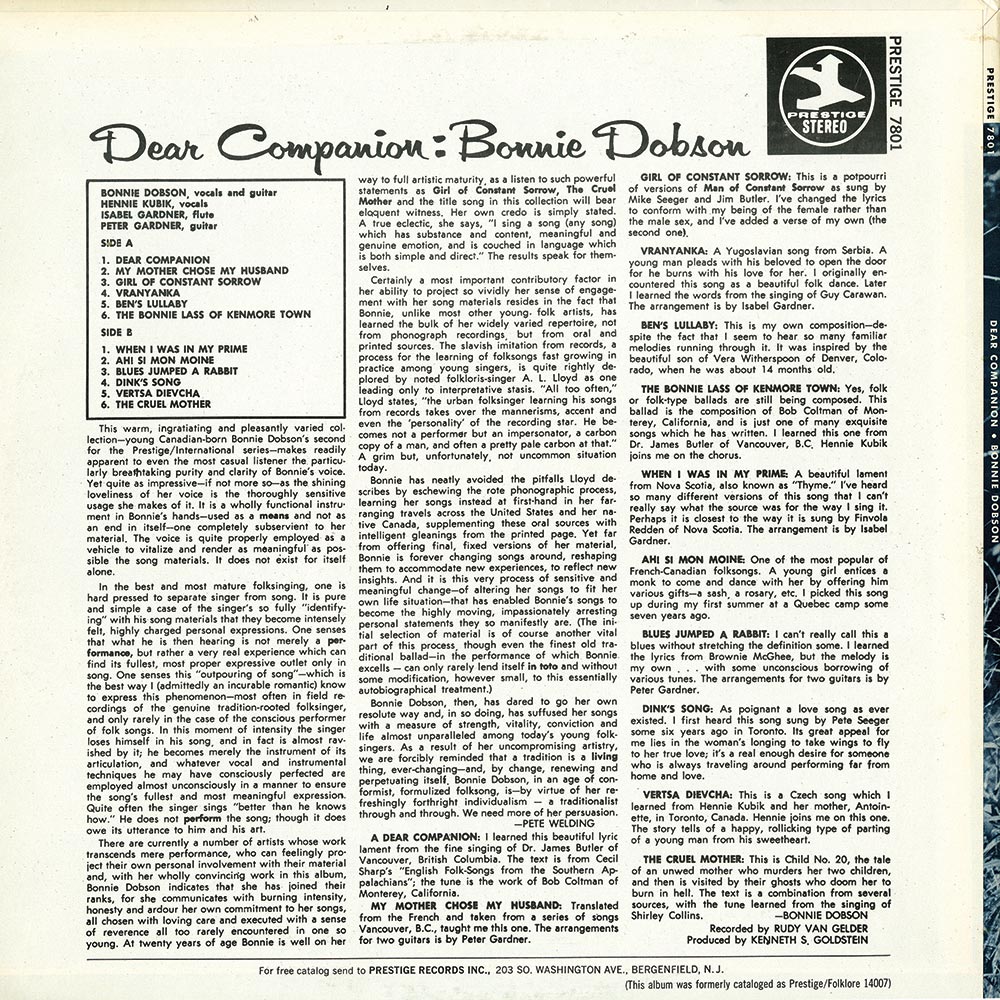
ADMIRAL FALLOW-TINY REWARDS.
ADMIRAL FALLOW-TINY REWARDS.
Often, the hardest thing about forming a new band is coming up with a name. It can be a long and tortuous process. Especially, in the internet age. A new band have to ensure the dot com address hasn’t been taken. If it has, it’s a case of starting the process all over again. Either that, or negotiating with the owner of the dot com to buy the address. That can be an expensive and time consuming process. So for most bands, it’s case of starting again.
That’s been the case since the birth of rock ’n’ roll. Even the biggest band of all changed their name. The Beatles started life as The Blackjacks, before briefly becoming The Quarrymen and then The Silver Beatles. It wasn’t until July 1959 that The Silver Beatles became The Beatles. Since then, countless other bands have had a similar struggle to come up with a suitable name.
In 2007, Glasgow based singer-songwriter Louis Abbott decided to formed a new band with Kevin Brolly, Philip Hauge, Sarah Hayes and Joe Rattray. They settled on the name Brother Louis Collective. Two years later, and the Brother Louis Collective changed its name to Admiral Fallow. The rest as they say, is history.
Since then, Admiral Fallow have toured the world, and played at some of the biggest and most prestigious venues and festivals. Admiral Fallow have also released a trio of albums. Their most recent album Tiny Rewards, was released recently on Nettwork. Tiny Rewards is the latest chapter in the Admiral Fallow story. It began in 2007.
That’s when Glasgow based singer, songwriter and Louis Abbott decided to formed a new band. This wasn’t going to a traditional indie band. Instead, Brother Louis Collective were going to fuse orchestral and indie pop. To bring this about, Louis was joined by four other Glasgow based musicians. This included the rhythm section of drummer and percussionist Philip Hauge and bassist Joe Rattray. They were joined by a two musicians who would help create the orchestral sound. Sarah Hayes played flute, piano and accordion, while Kevin Brolly added clarinet, keyboards and percussion. Along with Louis Abbot, they became Brother Louis Collective.
With a lineup in place, the Brother Louis Collective set about honing their sound. The five friends quickly began to define their sound. Through the rest of 2007 and throughout 2008, the Brother Louis Collective were gaining a reputation as a popular live act. So in early 2009, Brother Louis Collective decided to record their debut single.
For Brother Louis Collective’s debut single, These Barren Years was chosen. The B-Side was Gypsy Woman. These Barren Years was well received upon its release in March 2009. The single brought the Brother Louis Collective’s music to a wider audience. With the Brother Louis Collective’s recording career up and running, the band decided to change their name.
Usually, bands change their name early on in their career. However, after nearly two years, the band realised something wasn’t quite right. That was the name. This resulted in a rethink, and Brother Louis Collective became Admiral Fallow.
Given that the Brother Louis Collective already were a popular live band, and were attracting the attention of critics, a change of name could’v backfired on Admiral Fallow. All the time they had spent during the last two years could’ve been in vain.
Fortunately, that wasn’t the case. Instead, the last two years had been time well spent. The newly named Admiral Fallow had spent much of the last two years playing live. This allowed them to hone and tighten their sound. It also allowed the band to grow their fan-base. Already they were a popular draw wherever they played. So, it made sense for Admiral Fallow to record their debut album.
Boots Met My Face.
In June 2009, Admiral Fallow made the short journey from Glasgow to Blantyre, in Lanarkshire. That’s where former Delgados Paul Savage and Emma Pollock’s studio is situated. Admiral Fallow were following in the footsteps of many successful Scottish bands.
At Chem 19 Studios, Admiral Fallow met former Delgados’ drummer Paul Savage. By 2009, he had established a reputation as a successful and talented producer. Paul was the go-to-guy producer for many Scottish bands, including up-and-coming bands. This made him the perfect person to produce Admiral Fallow’s debut album.
While Admiral Fallow were an experienced live band, they had only recored one single. Recording an album was very different. So, producer Paul Savage guided Admiral Fallow through the recording process. In total, ten tracks were recorded at Chem 19 Studios.
The ten tracks were written by Louis Abbott. He describes the songs as autobiographical, and document his childhood and youth. Each song is based upon a person or event. This includes Subbuteo, where Louis remembers being beaten up in Edinburgh, where he grew up. A lyric from Subbuteo also provided the album title, Boots Met My Face.
With Boots Met My Face recorded, Admiral Fallow started looking for a record label to release their debut album. However, that search was put on hold briefly, as Admiral Fallow played a band-storming set at Scotland’s biggest music festival.
Although Admiral Fallow had only been together two years, they were chosen to headline the Sunday night T Break stage at T In The Park. For a Scottish group, this was a huge honour, one they must have hoped would help in Admiral Fallow’s search for a record label.
That took a while. In March 2010, Admiral Fallow opened for fellow Scot King Creosote at the Fence Collective’s Homegame Festival. Then in April 2010, Admiral Fallow supported The Futureheads in Glasgow, This was perfect timing.
In April 2010, Admiral Fallow released their debut single Squealing Pig on Lo-Five Records. That however, was a mere aperitif.
Later in April 2010, came the release of Boots Met My Face. It was released to critical acclaim. A great future was forecast for Admiral Fallow, who were about to head out on the festival circuit.
Admiral Fallow renewed their acquaintance with King Creosote at the Glasgow West End Festival. They then played the Wee Chill, Rockness and Insider festivals. However, it was at T In The Park that Admiral Fallow made a triumphant return. This time, Admiral Fallow were playing the prestigious BBC Entroducing stage. A lot had happened to Admiral Fallow since they took T In The Park by storm a year earlier. There seemed to be no stopping Admiral Fallow.
They had played their first Scottish tour in August 2010. Then later in 2010, Admiral Fallow opened for another Scottish band, Frightened Rabbit. Then in October 2010, Admiral Fallow released the second single from Boots Met My Face, Subbuteo. This was the perfect way to round off 2010. 2011, looked like being a big year for Admiral Fallow.
In February and March of 2011,Admiral Fallow hit the road, and completed their first tour of Britain. This was to coincide with the reissue of Boots Me My Face. Then on 13th March the band flew to Austin, Texas for SxSW 2011. Given this is one of the most prestigious American festivals, this was a huge boost for Admiral Fallow. During their time in America, Admiral Fallow were embraced by American critics. The critics forecast a great future for Admiral Fallow. They weren’t wrong.
Tree Bursts In Snow.
Just like Boots Met My Face, Tree Bursts In Snow was recorded at Chem 19 Studios. This time however, some guest artists would join Admiral Fallow. Among them were former Frightened Rabbit vocalist Gordon Skene, Jo Mango, Kenny Reid, Tom Gibbs and Tom Stearn. These guest artists featured on three of the ten tracks that became Tree Bursts In Snow.
Before the release of Tree Bursts In Snow on 21st May 2012, Louis Abbot explained what the title meant. Tree Bursts In Snow Louis explained is: “the sound and the image of an artillery shell exploding into a cluster of snow-drenched trees.” It was a poignant picture that Louis Abbot was painting. Especially as he went on to speak about gun crime in America and: ”the effect that losing friends through violence, in particular during times of war or conflict has on young men and women.” Louis had thought deeply about this, and on Tree Bursts In Snow combined social comment and poppy hooks.
When Tree Bursts In Snow was released, critics were won over by Admiral Fallow’s sophomore album. Superlatives were exhausted praising the Glasgow’s band’s unique brand of orchestral and indie pop. Admiral Fallow’s star was in the ascendancy, and would be during the rest of 2012.
During the 2012 festival season, Admiral Fallow played The Great Escape, Glastonbury Festival, Latitude, Cambridge Folk Festival, Green Man and the End of The Road festival. There were also appearances at Sligo Live and Crossing Border. Later in 2012, Admiral Fallow were asked to open for Scottish indie pop royalty Belle and Sebastian. Admiral Fallow also opened for Paul Heaton and The Low Anthem. All this was good experience for Admiral Fallow, who were quickly becoming one of Scotland’s most successful musical exports.
That’s been the case in the last three years. Admiral Fallow have gone from strength to strength. They’ve continued to play live, and are now recognised as one of the best Scottish live bands. However, in late 2013, Admiral Fallow cut back on the live shows they were playing. They had an album to record. That album would become Tiny Rewards, which was released on 25th May 2015.
Tiny Rewards.
Admiral Fallow’s weren’t going to rush their third album. Work began in late 2013. Admiral Fallow wrote the music and Louis Abbott wrote the lyrics for Tiny Rewards. This was Admiral Fallow’s third album, and second album for Canadian label Nettwerk.
Unlike previous albums, Tiny Rewards wasn’t recorded at just one studio. Three studios, Angelic, Red Kite and Voltaire Road Studios were used. So were the familiar surroundings of Chem 19 Studios. That’s where Paul Savage took charge of “additional production.” However, Paul Savage wasn’t in charge of production. This time around, Admiral Fallow and Cameron Blackwood produced the twelve tracks that became Tiny Rewards.
At the three studios, Tiny Rewards’ twelve tracks were recorded by Admiral Fallow and friends. The rhythm section featured guitarist and vocalist Louis Abbott, drummer and percussionist Philip Hauge and bassist Joe Rattray. They were joined by a two musicians who would help create the orchestral sound. Sarah Hayes played flute, piano and accordion, while Kevin Brolly added clarinet, keyboards and percussion. They’re joined by cellist Jackie Baxter, violinist Kristian Harvey and guitarist Stu Goodall. Once Tiny Rewards was recorded, it was mixed by Paul Savage and mastered by in London by Mandy Parnell.
Only then was Tiny Rewards ready for release. The big day was 25th May 2015. That’s when Tiny Rewards was released to widespread critical acclaim. Tiny Rewards was hailed as Admiral Fallow’s finest hours. Here’s why.
Opening Tiny Rewards is Easy as Breathing. A pounding rhythm section, stabs of keyboards and searing guitars create a dramatic wall of sound. In the midst of the arrangement, a piano carries the melody. It’s present when Louis Abbott delivers a soul-baring vocal. He doesn’t so much deliver lyrics, but lives them. Behind him, the thunderous, mesmeric arrangement has an anthemic sound. During the break, the arrangement is stripped bare. Just wistful harmonies, and piano accompany Louis before Admiral Fallow kick loose. By then, it’s easy to imagine East As Breathing becoming a festival favourite.
A drum machine and synths are deployed on Evangeline, as Louis delivers a slow, melancholy vocal. Soon, chiming, crystalline guitars, bass and keyboards are added. They fill out the arrangement, as slowly and dramatically Louis delivers the lyrics. By then, Admiral Fallow sound like a 21st Century version of The Smiths. Later, Sarah Hayes’ backing vocals are the perfect foil for Louis. They’re reminiscent of Lorraine MacIntosh of Deacon Blue. As the arrangement continues to grow, electronica and indie pop combine head-on. It’s a potent partnership, one that’s not short of poppy hooks.
Beeps courtesy of a synth and drums combine with a myriad of disparate sounds on Happened in the Fall. They create a lo-fi, left-field and almost robotic arrangement. Very different, is Louis’ despairing vocal. As his vocal drops out, a guitar rings out, and cuts through the arrangement. Then Louis, accompanied by Sarah Hayes, delivers a tender, hurt filled vocal as he sings: “ it Happened in the Fall” When Louis poignant vocal drops, a blistering guitar gives way to a wistful piano and strings. They frame Louis’ vocal as accompanied by harmonies, memories come flooding back.
From the opening bars of Good Luck, it’s obvious something special is unfolding. A piano and drums combine, before a scorching guitar is unleashed. Then a roll of drums signals the arrival of Louis’ vocal. Slowly and deliberately he delivers the lyrics. Harmonies augment his vocal, as the arrangement grows in power and drama. Admiral Fallow aren’t afraid the unleash their inner rocker. Similarly, they’re not afraid to vary the tempo. This grabs the listener’s attention, and forces them to listen. A pleasant surprise comes when Sarah takes charge of the vocal. She’s a talented and versatile vocalist. Later, though, the baton passes to Louis. He takes charge of the vocal. Aided and abetted by harmonies, a storming, hook heavy anthem unfolds.
Against the chatter of a radio playing, a piano plays and Holding The Strings begins. Drums provide the heartbeat as Louis delivers an emotive vocal. Ethereal harmonies, keyboards, a crystalline guitar and the rhythm section combine. Soon, the tempo is rising and the arrangement takes on a rocky hue. Dramatic flourishes and variations in tempo are used, before the rhythm section and guitar drive the arrangement along. Louis seems to have reserved one of his best vocals. With Sarah encouraging him every step of the way, he breathes life, meaning and emotion into the lyrics, delivering the lyric “we are old” poignantly.
As a piano and drums combine on Sunday, the track takes on an almost hypnotic sound. Then when Louis’ vocal enters, it’s obvious he’s singing about being at a festival. “Far from being alone, surrounded by tents and future friends.” Soon, the track takes a dark twist. Especially, lyrics like; ”take those pills, you bought to take the guilt.” This leaves the listener to wonder what caused the guilt? Was it one night stand? From there, the arrangement becomes a lysergic merry-go-round. It also takes on rocky and sometimes dramatic sound. Meanwhile, Louis and Sarah combine, bringing to life the guilt on the day after the night before, as they leave the festival behind, and return to their respective lives.
On the count of “5,6” a drum and crystalline guitar combine on Building As Foreign. They’re joined by Louis’ vocal and a prowling bass. Like so many of Admiral Fallow’s songs, the lyrics are based upon Louis childhood. That becomes apparent straight away:“how we ended up here, with the start we had is amazing.” He goes on to remembers “measuring his height by the door,” his first football strip, and “first kiss.” Accompanied by ethereal harmonies, pounding rhythm section and searing guitar, memories come flooding back for a wistful, grateful Louis.
A lone guitar opens Salt. It’s just two minutes long, but is a quite beautiful song. The arrangement is understated. Just a chirping, mesmeric guitar accompanies Louis. He’s accompanied by Sarah. She’s a perfect foil for Louis. They’re like yin and yang. They compliment each other, on what’s a beautiful ballad. It shows another side to Admiral Fallow.
Drums pound and crack, while washes of keyboards sweep in on Some Kind of Life. Slowly, the arrangement unfolds. Admiral Fallow don’t rush. They drop in a piano and bass. After a minute, Louis’ heartfelt vocal enters. As he sings: “I left the house and started the next chapter,” confusion and uncertainty fills his voice. Has, and is, he doing the right thing? Behind him, the rest of Admiral Fallow create one of the best arrangement. It unfolds in waves, as Louis delivers an emotive, soul-searching vocal. He describes this as a “never ending tussle with the mind.” By then, the arrangement has grown in drama and power. When Louis’ vocal is added, Some Kind of Life takes on anthemic sound. It’s also one of the highlights of Tiny Rewards.
The drums that open Liquor and Milk are similar to those on Building As Foreign. However, this time, it’s mesmeric, deliberate stabs of piano that accompany the drums. They frame Louis’ vocal as he reminisces. Accompanying him is Sarah, her vocal equally impassioned and emotive. Their vocal take centre-stage, as the drums and piano provide the accompaniment. Later, strings and percussion are added, as the arrangement reaches a crescendo.
Carousel see the tempo rise slightly. Admiral Fallow jump on the merry-go-round. It’s has a much more upbeat sound. Driving along the arrangement along are the piano and drums. They accompany Louis. However, Sarah steals the show, combining power and emotion. Meanwhile, a bass, keyboards and drums power the arrangement along. Louis and Sarah combine, hopefully singing: “get yourself out from under the weather, stick another pin in that map you drew, get yourself out from under the weather, and I long for this to be the pin you want to do.”
Melancholy. That describes the slow, deliberate introduction to Seeds, which closes Tiny Rewards. Louis, accompanied by the piano, delivers a wistful, deliberate vocal. Drums rumble, while keyboards and piano combine with a clarinet. They set the scene for Louis and Sarah. As they sing: “we sow seeds wherever we go,” there’s an element of hope amidst the melancholia. It grows, as the arrangement builds, and Tiny Rewards draws to a close.
Three years after the release of their sophomore album Tree Bursts In Snow, Admiral Fallow returned recently with Tiny Rewards. It was released on the Canadian label Nettwerk. Tiny Rewards was well worth the three year wait.
With its mixture of anthems, future festival favourites, heart wrenching ballads and cinematic tracks, Tiny Rewards is a captivating album. Lyricist and vocalist Louis Abbott is aided and abetted by Sarah Hayes. Together, they bring the lyrics to life, breathing life, meaning, emotion and sometimes, melancholy into the twelve tracks. Other times, there’s a hopeful, sound on Tiny Rewards, which is a career defining album from Admiral Fallow.
Six years after the Brother Louis Collective became Admiral Fallow, the Glasgow based band are now one of Scottish music’s most successful exports. No wonder, given the quality of music on Tiny Rewards. It manages to surpass the quality of Tree Bursts In Snow. Many people thought Tree Bursts In Snow was an album Admiral Fallow would struggle to surpass. However, after three years hard work and the a little from help from their friends, Admiral Fallow return with Tiny Rewards, the eclectic album of their career.
Tiny Rewards sees Admiral Fallow jump onboard the Carousel and combine disparate musical genres. Everything from electronica, folk, indie pop, indie rock, orchestral, pop, psychedelia and rock is combined by Admiral Fallow. The result is Tiny Rewards, the finest, and most captivating and eclectic album ofAdmiral Fallow’s career.
ADMIRAL FALLOW-TINY REWARDS.
VAN HALEN-VAN HALEN, VAN HALEN II, WOMEN AND CHILDREN FIRST, FAIR WARNING AND DIVER DOWN-VINYL EDITION
VAN HALEN-VAN HALEN, VAN HALEN II, WOMEN AND CHILDREN FIRST, FAIR WARNING AND DIVER DOWN-VINYL EDITION.
In the history of rock ’n’ roll, Van Halen are one the most successful bands. They released twelve studio albums between their 1978 debut Van Halen, and their 2012 swan-song A Different Kind Of Truth. These albums sold an incredible 50.5 million copies in America alone. Four of Van Halen’s albums topped the US Billboard 200 charts. Van Halen were one of the biggest bands in planet rock. Rock ’n’ roll’s great survivors had outsold and out-rocked two generations of bands.
That too many people, was incredible. Van Halen were a notoriously hard living band. They burnt the candle at both ends, replicating the excesses of Led Zeppelin, Black Sabbath and Deep Purple. Just like Icarus, members of Van Halen sailed to close to the sun. Unlike Icarus, Van Halen lived to tell the tale, and in the process, released some of the best rock of a generation. That was the case from Van Halen released their debut album Van Halen in 1978.
When Van Halen released Van Halen in 1978, it wasn’t well received by critics. That’s somewhat ironic, as Van Halen reached number nineteen in the US Billboard 200. Gradually, critics changed their minds about Van Halen. Suddenly, they began to regard Van Halen as one of the best debut albums in the history of rock ’n’ roll. That’s the case today, with critics hailing Van Halen as a classic, and one of the greatest debut albums ever released. That’s why it’s fitting that Rhino are recently released a remastered vinyl edition of Van Halen, Van Halen II, Women and Children First, Diver Down and Fair Warning.
However, it’s not just Van Halen that Rhino are reissuing. Instead, Van Halen’s first five albums have been remastered and will be reissued on 10th July 2015. These five albums were released between 1978 and 1982. During this period, Van Halen were one of the hardest working and successful bands in the world. Having released Van Halen in 1978, they followed this up with Van Halen II in 1979. As a new decade dawned, Van Halen released Women and Children First in 1980, then Fair Warning in 1981 and and Diver Down in 1982. Each of these albums have been remastered, and document the first five years of Van Halen’s recording career. By then, Van Halen were already an experienced band.
The Van Halen story began in the early seventies, when brothers, Eddie and Alex Van Halen had formed a band. Like many bands, they found it difficult to settle on a name. Initially, they were called The Broken Combs, then changed the name to The Trojan Rubber Co. By then, The Trojan Rubber Co. had a settled lineup.
Their lineup featured Alex on drums and Eddie on guitar. They were joined by bassist Mark Stone and vocalist David Lee Roth, who they had hired a sound system from. Eddie had initially failed the audition. However, Eddie and Alex were realists. Money was tight, so if they brought David onboard, they would save having to hire a sound system. They also thought that David might improve as a vocalist. However, in 1974, The Trojan Rubber Co. changed its name and its lineup.
1974 was a pivotal year for The Trojan Rubber Co. By then, bassist Mark Stone had been replaced by bassist Michael Anthony. His audition was unorthodox. Only after Michael took part in an all night jam session, was he hired. So, Michael left local band Snake and joined The Trojan Rubber Co. Soon, The Trojan Rubber Co. changed its name to Mammoth, and then Van Halen. For the next three years, Van Halen spent honing their sound.
Van Halen played wherever they could. Backyard parties, clubs and dive bars, they weren’t proud. Far from it. They certainly were loud. Too loud some thought.
When Van Halen went to audition at Gazzarri’s, a bar on Sunset Strip, that was down on its luck, the owner Bill Gazzarri, told them they were “too loud, and refused to hire them.” However, Van Halen’s new managers stepped in.
Mark Algorri and Mario Miranda had just been installed as Van Halen’s managers. They had also just taken over the booking at Gazzarri’s. So, Van Halen were installed as the house band. Not long after this, Van Halen entered the studio for the first time.
The four members of Van Halen headed to Cherokee Studios, which had recently housed Steely Dan. At Cherokee Studios, Van Halen recorded their demo tape. It would become their calling card, and see them play some of L.A.’s top clubs, including the famous Whisky-A-Go-Go.
Soon, Van Halen were a permanent fixture in L.A.’s top clubs. That’s where they continued to hone their sound. It’s also where they came to the attention of Kiss’ Gene Simmons.
Gene Simmons had heard good things about Van Halen. So, he went to check out Van Halen. According to what he had heard, they were one of the rising stars of L.A.’s music scene. When Gene Simmons arrived at the Gazzarri club in the summer of 1976, he was won over by Van Halen. He knew they were going places.
So, Gene Simmons took Van Halen to Village Recorders in L.A. to produce a new demo tape. Overdubs then took place at Electric Ladyland in New York. Things were looking good for Van Halen. The only thing Van Halen baulked at, was Gene’s suggestion to change the band’s name to Daddy Longlegs. That was a step too far. The next step was for Gene to take the newly recorded demo tape to Kiss’ management.
When Kiss’ management heard the demo, they were pretty disparaging about Van Halen. According to Kiss’ managers, Van Halen “had no chance of making it.” These words would come back to haunt them, after Van Halen sold over 50.5 million albums in America alone. However, with Kiss’ management not interested in signing Van Halen, Gene Simmons bowed out of the story. He would be replaced a year later by Mo Ostin and Ted Templeman.
Down but not out, Van Halen returned to the club circuit. For the next year, they continued to hone their sound on the club circuit. One night, in the middle of 1977, Van Halen were playing at the Starwood in Hollywood. There wasn’t much of an audience. However, little did Van Halen know, that two very special guests were in the audience, Mo Ostin and Ted Templeman of Warner Bros. Records. The pair liked what they heard and less than a week later, Van Halen had signed to Warner Bros. Records. Mo Ostin dispatched Van Halen to Sunset Sound Records with producer Ted Templeman, where recording of Van Halen I began.
Van Halen.
Like many bands recording their debut album, Van Halen were fearless. They had no apprehension. Mind you, this wasn’t exactly a new experience. Van Halen had been in studios before, recording two different demo tapes. However, this was for real. The band had written nine tracks. The other two were covers of The Kinks’ You Really Got Me and John Brim’s Ice Cream Man. These eleven tracks would eventually become Van Halen’s debut album, Van Halen.
Recording of Van Halen began in the middle of September 1977. Van Halen’s rhythm section of drummer Alex Van Halen and bassist Michael Anthony set about proving the album’s pulsating heartbeat. A week was spent recording Eddie’s guitar parts. Another two weeks were spent recording David’s vocals and the backing vocals. By early October 1977, recording of Van Halen was all but complete. The decision was made not to do much in the way of over-dubbing. This meant Van Halen was much more like hearing Van Halen live. How would critics respond to this?
Before the release of Van Halen, critics had their say. For everyone at Warner Bros. Records, they held their breath. Back in 1978, critics could be venomous. It was hardly rock critic’s finest hour. They were in the throes of a love affair with punk. Many critics took great pleasure in trashing rock albums. The critics didn’t hold back when it came to Van Halen. Most of the reviews were negative. One of the worst reviews came from the so called doyen of critics, the contrarian Robert Christgau. The equally contrarian Rolling Stone were not fans of Van Halen. At least they admitted that Van Halen were going places. Mostly, the reviews panned Van Halen. However, soon, critics would be eating their words.
When Van Halen was released on 18th February 1978, it began climbing the charts. Eventually, it reached number nineteen in the US Billboard 200 charts. This was just the start of the rise and rise of Van Halen, who critics had changed their mind about,
Gradually, critics changed their minds about Van Halen. Suddenly, they began to regard Van Halen as one of the best debut albums in the history of rock ’n’ roll. That’s the case today, with critics hailing Van Halen as a classic, and one of the greatest debut albums ever released. From that album, a trio singles were chosen.
Three singles were released from Van Halen. A cover of The Kinks’ You Really Got Me reached number thirty-six in the US Billboard 100. Runnin’ With The Devil Stalled at number eighty-four in the US Billboard 100. The final single released from Van Halen was Ain’t Talkin’ ’bout Love. It failed to chart. While the singles failed to replicate the success of Van Halen, it showcased the band at their hard rocking best.
Literally, Van Halen strut and swagger through the eleven tracks on their debut album Van Halen. It’s no surprise that rock and heavy metal fans were won over by Van Halen. It’s a track full of some of Van Halen’s biggest songs, including Runnin’ With The Devil, Eruption, You Really Got Me, Ain’t Talkin’ ‘Bout Love, Jamie’s Cryin’ and Ice Cream Man. Van Halen’s rhythm section of Alex and Michael provide the backdrop to Eddie’s blistering guitars and David’s lived-in vocal. From the opening bars of Runnin’ With The Devil, right through On Fire, Van Halen win friends and influence people. The band who just a year ago, were being hailed L.A.’s best bar band, were on their way to becoming a one of the biggest bands on planet rock.
Van Halen II.
When Van Halen entered Sunset Sound Recorders, in Hollywood, on 11th December 1978, the the four members of the band must have wondered what had happened in the last ten months? They had gone from bar room band, to a million selling rock band. All of a sudden, they were one of the biggest bands in the America. They were being touted as the saviour of American rock. This was hard to comprehend. It also meant that Van Halen were under pressure to record a fitting followup to Van Halen.
Recording of what became Van Halen II began on 11th December 1978. Nine of the ten tracks were penned by Van Halen. Many of the tracks weren’t new songs. Instead, they featured on the Gene Simmons’ sessions. However, given Van Halen were under pressure to record their sophomore album, it’s no surprise that they chose to dust off these songs. The other track chosen for Van Halen II was Clint Ballard Jr.’s You’re No Good. These ten track were produced by Ted Templeman. By January 1979, Van Halen II was complete, and ready for release.
Given the negative reviews of their debut album, the four members of Van Halen must have awaited the reviews of Van Halen II with bated breath. Mostly, reviews of Van Halen II were positive. That’s apart from the “usual suspects,” who still, failed to be won over by Van Halen. They were in the minority. The majority of critics were impressed by Van Halen II’s upbeat, feel good sound. Especially tracks like Dance The Night Away and Beautiful Girls, which some critics referred to Van Halen II as perfect party music. One track however, was very different to the rest.
This was the instrumental, Spanish Fly. It was perceived as the followup to Eruption on Van Halen. Spanish Fly however, is only a minute long, and featured Eddie Van Halen on an acoustic guitar. Rather than fingerpick, he uses a plectrum. This makes things doubly hard. Despite this, he delivers a guitar masterclass. Eddie deploys a variety of techniques, including finger tapping and tremolo picking. Those who had marvelled at Eruption, would be spellbound by Eddie’s performance on Spanish Fly.
That would be the case with Van Halen’s performance on Van Halen II. When Van Halen II was released on March 23rd 1979, copies of Van Halen II sold quickly. It was one of 1979s must have rock albums. Soon, Van Halen two reached number six in the US Billboard 200. Eventually, it sold five million copies in America, and was certified platinum five times over. Across the border, Van Halen II was certified double platinum in Canada. Meanwhile, in France Van Halen II was certified gold. It seemed Van Halen could do no wrong.
While that was the case with Van Halen’s first two albums, their singles were selling as well. While Dance The Night Away reached number fourteen in the US Billboard 100, Beautiful Girls stalled at number eighty-four. Just like many other rock bands before them, Van Halen looked like being an album’s band. Maybe that would change with their third album?
Women and Children First.
Just a year after Van Halen began recording their sophomore album, the band began work on their third album, Women and Children First. It marked the beginning of a new chapter in the Van Halen story.
On Van Halen’s first two albums, Van Halen had added cover versions. This included a cover of The Kinks’ You Really Got Me and John Brim’s Ice Cream Man on Van Halen. Then on Van Halen II, Van Halen covered Clint Ballard Jr.’s You’re No Good. However, when recording of Women and Children First began in December 1979, cover versions were a thing of the past.
Women and Children First, Van Halen’s third album was their first album featuring just songs written by the four members of the band. Maybe Van Halen had realised that putting cover versions on albums was costing the band royalties? There was certainly no need to resort to cover versions? The four members of Van Halen were talented songwriters, capable of writing their own material. So when Van Halen entered the studio to record Women and Children First, they came with ten new songs they had penned. This however, wasn’t the only change that became apparent.
As recording of Women and Children First began, onlookers in the studio realised that Van Halen’s music was becoming heavier. This wasn’t just a stylistic change, and to some extent, a thematic one. Some of Van Halen’s later songs had a degree of darkness. Mostly, though, Van Halen were still the same hard rocking, good time band. However, what became apparent was that their way of recording was changing.
Unlike Van Halen and Van Halen II, Women and Children First saw Van Halen rely more upon overdubs. Backing vocals weren’t used as extensively. They were on Could This Be Magic?, and Nicolette Larson was drafted in to sing the choruses and backing vocal. This was the one and only time a female backing vocalist featured on a Van Halen album. Another first was the keyboard driven And the Cradle Will Rock. Although it sounds like a guitar, it’s a Wurlitzer electric piano with a phase shifter used to transform the sound. It seemed that Van Halen had the confidence to experiment more on Women and Children First. Given that Van Halen were working with such an experienced producer as Ted Templeman, this was the perfect opportunity to try new things. He could show Van Halen how to make their ideas work.
Despite the stylistic change and change in their way of recording, producer Ted Templeman didn’t try to reign in Van Halen. He must have known that Van Halen wanted to broaden their horizons musically. They had always been a hard rocking band, and weren’t willing to sacrifice what many felt was their true sound. Maybe Van Halen had sacrificed some of their true sound on their first two albums. Now that they had their foot in Warner Bros’ door, they could show their true colours. This may not have pleased everyone.
Van Halen finished recording Women and Children First in February 1980. At last, those within Warner Bros. could hear Women and Children First. Some were aware of Van Halen’s music changing stylistically. This didn’t please everyone. Van Halen were one of Warner Bros.’ biggest success stories. By changing their style, this could alienate their audience. Not everyone who had bought Van Halen, and Van Halen II, would be receptive to a heavier Van Halen. Would this be the case within Warner Bros?
Once the executives at Warner Bros. heard Women and Children First, they were able to form an opinion. Most of those whose opinion mattered liked Van Halen’s new sound. They realised that Van Halen wanted to evolve as a band. They couldn’t keep rehashing Van Halen, and Van Halen II. Instead, they had to move forward. However, it was a big risk. Van Halen, and Van Halen II were million selling albums. There was a lot at stake. If Women and Children First flopped it would prove costly.
Van Halen had two hurdles to overcome before they would know if Women and Children First had been a success. The first was the critics.
As the critics their say, everyone at Warner Bros. and the four members of Van Halen awaited the verdict. Eventually, the reviews were published. Many critics remarked upon Van Halen’s heavier sound. They also noted that the four members of Van Halen had written the ten tracks on Women and Children First. Although Women and Children First was quite different from Van Halen II, it was well received by critics. They felt Van Halen were maturing as a band and songwriters. Proof of this were tracks like Could This Be Magic? and Everybody Wants Some!!, which reinforced Van Halen’s reputation and credentials as a good time party band. Having cleared the first hurdle, now record buyers had the final say.
Only if Women and Children First sold in similar quantities to Van Halen and Van Halen II could the album be declared a success. Women and Children First was released on March 6th 1980. Straight away, Women and Children First was selling well. Soon, Women and Children First reached number six in the US Billboard 200. Eventually, it sold three million copies in America, and was certified triple-platinum. Elsewhere, Women and Children First was certified double platinum in Canada and gold in France. As Van Halen and everyone at Warner Bros. breathed a sigh of relief, still Van Halen weren’t selling singles in vast quantities.
The only single released from Women and Children First, was And The Cradle Will Rock. It stalled at number fifty-five in the US Billboard 100. Van Halen it seemed, were never going to be a singles band. However, what really mattered was that Women and Children First had sold well. That was certainly the case. Worldwide, Women and Children First sold over three million copies. Van Halen’s decision to change direction had paid off.
Fair Warning.
By the time that Van Halen began recording their fourth album, Fair Warning, Van Halen were a divided band. The band’s two main men were at loggerheads. David Lee Roth wanted Van Halen to return to the sound of the first two album. He wasn’t in favour of the heavier sound, which he felt didn’t appeal to as many people. The proof of this was the sales of Women and Children First.
Eventually, Women and Children First sold over three million coupes. Van Halen eventually sold ten million copies and Van Halen II five million copies. David felt it Van Halen continued with the heavier sound, they risked alienating record buyers. Van Halen co-founder didn’t agree.
Eddie wanted Van Halen to continue their heavier sound. Women and Children First was the first time they showcased this sound. He felt that the way forward was longer songs with much more complicated song structures. This would allow Van Halen to shine as musicians, especially Eddie, who was seen one of the best guitarists of the late-seventies and early eighties. Given Eddie was one of the best guitarists of his generation, he felt his guitar playing should take centre-stage. David Lee Roth disagreed, and disagreed with Eddie’s other proposal.
The other change Eddie proposed was a continuation of the darker themes that Van Halen began exploring on Women and Children First. For David Lee Roth, this wasn’t what Van Halen were about. They were, in many people’s eyes, a good time rock ’n’ roll band. However, that wasn’t the direction Eddie wanted Van Halen to take. Instead, it looked as if Eddie wanted Van Halen to become the Led Zeppelin of the eighties. With David and Eddie at loggerheads, work began on Van Halen’s fourth album Fair Warning.
Just like Women and Children First, Van Halen penned the ten tracks on Fair Warning. Recording of these ten tracks began in late 1980. Quickly, it became apparent that Eddie’s ideas had prevailed. The music was fast, rocky and sometimes dark. This allowed Van Halen’s rhythm section to showcase their skills Fair Warning. Especially Eddie, who unleaded a series of fierce, blistering solos on tracks like Mean Street, Hear About It Later, Unchained and So This Is Love? David who seemed to have pst the argument, added his trademark vocals. Producer Ted Templman had the job of bringing Fair Warning together. The result was the hardest rocking album of Van Halen’s career, Fair Warning.
Before Fair Warning was released on April 29th 1981, the critics had their say on Van Halen’s hardest rocking album. Reviews of Fair Warning were mixed. Most of the critics embraced Fair Warning. They were impressed by Eddie’s virtuoso skills. Aided and abetted by his box of sound effects, Eddie unleashes a series of blistering solos. Along with the other two members of the rhythm section, he was key to Van Halen’s new, hard rocking style. Together, they provided the backdrop for David’s vocals. He brought to life the lyrics, as Van Halen continued to evolve musically.
It seemed Fair Warning had won over most of the critics. However, while most of the reviews of Fair Warning praised Van Halen’s fourth album, there were still some doubters. They felt that Van Halen were heading down the wrong road. On Women and Children First and Fair Warning, Van Halen’s music had become much harder. This had cost Van Halen precious sales on Women and Children First. Would this be the case with Fair Warning?
On the release of Fair Warning on 29th March 1981, sales were slow. Fair Warning was the slowest selling Van Halen album of their four album career. Eventually, it reached number six in the US Billboard 200. While this was the same as Van Halen II and Women and Children First, sales were way down. Fair Warning sold “just” two million copies. This was a million less than Women and Children First, and three million less than Van Halen II. To make matters worse, none of the singles charted.
Four singles were released from Fair Warning during 1981. The first was So This Is Love. It failed to chart. So did Mean Street, Push Comes To Shove and Unchained. This wasn’t unexpected, as Van Halen weren’t a singles band. However, it further reinforced David Lee Roth’s argument.
Given that Fair Warning was Van Halen’s slowest selling and least successful album, many onlookers wondered whether Van Halen would rethink their sound. It seemed record buyers weren’t embracing Van Halen heavier sound. Maybe it was time to come round to David Lee Roth’s way of thinking?
Diver Down.
After the release of Fair Warning, Van Halen headed out on tour. They spent months promoting Fair Warning. Still, Fair Warning sold slowly, and failed to match the sales of previous albums. Once the tour was over, Warner Bros. started pressurising Van Halen into recording their fifth album.
That wasn’t what Van Halen wanted to hear. They wanted to take some time out, and then spend time writing and recording their fifth album. That wasn’t to be though.
Not long after the Fair Warning tour ended, David Lee Roth came up with an idea. He wanted Van Halen to record a single and release it just after the New Year. He had the very song in mind, Roy Orbison’s Oh, Pretty Woman. While this wasn’t the most obvious choice for a single, the rest of Van Halen agreed.
So the four members headed to Sunset Sound and recorded their cover of Oh, Pretty Woman. After working out an arrangement with producer Ted Templeman, Van Halen recorded Oh, Pretty Woman. Once it was finished, Oh, Pretty Woman was released early in the New Year.
Just after New Year 1981, Van Halen’s version of Oh, Pretty Woman was released. Van Halen weren’t known as a singles band. However, Oh, Pretty Woman succeeded where better Van Halen songs failed, and reached number twelve in the US Billboard 100 and number one on the US Mainstream Rock charts. Ironically, this became the most successful single of Van Halen’s career. However, the success of Oh, Pretty Woman backfired on Van Halen.
Having just enjoyed the biggest selling single of their career, Warner Bros. started pressurising Van Halen into recording their fifth album. Van Halen didn’t get the time to write and record their fifth album.
Eventually, Van Halen relented. That’s despite having been on tour for months. For the last four years, Van Halen had been recording and touring albums. It was like a merry-go-round, one that Van Halen needed to get off. Especially since the last year hadn’t been easy.
Eddie and David were still at loggerheads. Although Eddie had won the day, David had been vindicated. Sales of Fair Warning were way down. It sold a million less than Women and Children First. This was costing Van Halen and Warner Bros. money. So, Van Halen could hardly refuse Warner Bros.’ request to begin recording their fifth album. However, that wasn’t Warner Bros.’ only request.
Given Fair Warning hadn’t been as successful as previous Van Halen albums, someone at Warner Bros hit on the idea that Van Halen should include some covers on what became Diver Down. The reasoning for this was, that if people recognised some of the songs on the album, they would be more likely to by it. Especially if these songs had been hits before. So, Van Halen went in search of covers.
Having already recorded and released Oh, Pretty Woman, Van Halen got to work on their fifth album, Diver Down. In addition to Oh, Pretty Woman, Van Halen had chosen four other cover versions. This included The Kinks, Where Have all the Good Times Gone and Martha and The Vandellas’ Dancing In The Streets. They were augmented by Milton Ager and Jack Yellen’s Big Bad Bill (Is Sweet William Now) and Dale Evans’ Happy Trails. Apart from the five cover versions, Van Halen had seven new songs. Three of the songs weren’t so new.
Hang ‘Em High started life as Last Night, a track from Van Halen’s 1977 demo. Happy Trails was another song from the 1977 demos, which had been included as a joke. Now the joke was on Warner Bros. The other song was Cathedral, a song Van Halen had been playing for a couple of years. During that period, the song had continued to evolve. These three songs would become part of Diver Down, which was recorded in two studios in Los Angeles.
Recording of Diver Down began in January 1982. Two studios were used by Van Halen. The first was Sunset Sound, where Van Halen had recorded previously. Other sessions took place at Warner Bros. Recording Studios, which before the corporate rebinding, was known as Amigo Studios. At these two studios, Van Halen and Ted Templeman got to work. Things weren’t going to plan as Van Halen began recording eleven of Diver Down’s twelve songs.
During the recording of Van Halen’s previous album, Diver Down, released in 1982, David, Eddie and producer Rod Templeman had clashed. The problem was, Eddie wanted to make keyboards a prominent part of the Van Halen sound. David and Rod disagreed. Thinking that Van Halen was a democracy, the two men thought the matter was settled. They were wrong.
Despite this, Eddie went ahead and recorded much of Diver Down at his home studio. When the band heard it, it was keyboard heavy rock rubbed shoulders with Van Halen’s trademark sound. Presented with what seemed like a fait accompli, David began to reconsider his position. He was far from happy with Eddie’s sudden discovery and love of synths. For a rock ’n’ roller like David, this was sacrilege. Despite this, David and Eddie managed to work together.
Over the next three months, Van Halen worked their way through the twelve tracks. Some were easier to record than others. Sometimes, things didn’t go to plan. Some of the covers were difficult to adapt, so that they took on Van Halen’s sound. One of the most problematic was Dancing In The Streets. The problem was Eddie couldn’t work out a guitar riff. Eventually though, Van Halen figured out an their take on Dancing In The Streets. Gradually, Diver Down began to take shape. By March 1982, Diver Down was completed. It would be released on April 14th 1982.
This meant there wasn’t long before Van Halen completed Diver Down and its release on April 14th 1982. By then, some of the members of Van Halen were beginning to realise that Diver Down wasn’t their finest moment. Eddie Van Halen would later say: “I’d rather have a bomb with one of my own songs than a hit with someone else’s.” However, Van Halen had folded too quickly for a band who had already sold over fifteen million albums. They had been cajoled into recording cover versions. For the hard rocking Van Halen, this almost subservient attitude was surprising. Or was it?
When critics were sent advance copies of Diver Down, they were struck by the album cover. It portrayed the diver down flag, which is used to indicate that a scuba diver is diving within that area. If ever it was a case of “a picture paints a thousand words.” David Lee Roth explained that “there was something going on that’s not apparent to your eyes…it’s not immediately apparent to your eyes what is going on underneath the surface.” That could easily be replaced by the press and record buyers weren’t aware what was going on behind the scenes. They never knew that Van Halen were pressurised to record Diver Down. Would the pressure Warner Bros. under, could come back to bite them?
Having received advance copies of Diver Down, critics were determined to have their say. Most were impressed by Diver Down. Some weren’t enamoured with the cover versions. This was quite unlike Van Halen. However, mostly, the reviews of Diver Down were positive. Things were looking up for Van Halen.
On its release on 29th April 1982, Diver Down reached number three in the US Billboard 100. This was the highest chart position of Van Halen’s first five album. Eventually, Diver Down sold four million copies, which was double the amount of Fair Warning. This was pretty good for album that included cover versions and a trio of tracks from Van Halen’s past. However, the success didn’t stop there.
Dancing In The Street was the second single to be released from Diver Down. It stalled at number thirty-eight in the US Billboard 100. The other four singles, Secrets, Little Guitars, The Full Bug and Where Have All the Good Times Gone failed to reach the US Billboard 100. At least they reached the US Mainstream Rock charts. However, times had changed, with Van Halen having enjoyed two hit singles from Diver Down. For a band who hadn’t been known as a singles band, this was changed times for Van Halen.
That had been the case throughout the last five years. Between the release of Van Halen in 1978, and Diver Down in 1982, Van Halen had been on a musical roller-coaster. Before signing to Warner Bros., Van Halen were just a bar band, albeit the biggest and best bar band in Los Angeles. Their career had began in a blaze of glory, with Van Halen, which went on to sell ten million copies. Van Halen II then sold five million copies. Suddenly, Van Halen were one of the biggest rock bands in the world. From there, the next three years were one filled with twists and turns.
After releasing Van Halen and Van Halen II, which are considered two of Van Halen’s finest albums, the next two years saw Van Halen’s music evolve. It become harder and rockier on Women and Children First. By then, Eddie Van Halen and David Lee Roth were at loggerheads as to the future direction of the band.
While Eddie wanted Van Halen’s music to take on a harder, rockier sound, David wanted Van Halen to continue the populist sound of their first two albums. Eddie won the day. However, it proved to be a Pyrrhic victory. Sales decreased on Women and Children First. The drop in sales continued on Fair Warning, where Van Halen’s music becomes even harder and rockier. After Fair Warning sold three million less than Van Halen II, Warner Bros. decided to intervene.
Ironically, Warner Bros.’ suggestion that Van Halen combine cover versions and original material on Diver Down, resulted in the most successful album since Van Halen II. Diver Down sound four million copies. For most bands, this would’ve been a cause for celebration. Not Van Halen. They soon realised that they had folded too easily. They shouldn’t have given in to Warner Bros., as they were an experienced and successful band. If they had taken the time to write and record the album they wanted, they may have reached the scaled the same heights as their next album.
Two years later, in 1984, and Van Halen’s first five albums were well on their way to selling twenty-four million copies. However, their sixth album, 1984. was a game-changer, in more ways than one.
Van Halen’s sixth album, 1984, was proof that if Van Halen were given time to write and record an album, they could come up with something very special. 1984 was a fusion of keyboard heavy rock, combined Van Halen’s trademark hard rocking sound. Thos proved a winning combination. These two sides of Van Halen resulted in a classic album that would become the biggest selling album of Van Halen’s career.
On its release on January 9th 1984, 1984 started climbing the charts. Eventually, it reached number two in the US Billboard 200. This was the highest chart placing of Van Halen’s six album career. It also became the biggest selling album of Van Halen’s career. Eventually, 1984 sold twelve million copies. 1984 became Van Halen’s second album to be certified diamond. Elsewhere, 1984 was a huge seller.
In Canada, 1984 was certified five times platinum. Over the Atlantic, 1984 was certified gold in Britain and France. Meanwhile, 1984 was certified platinum in Germany. Van Halen had recorded the album everyone knew they were capable of. It came at a cost.
Behind the scenes, all wasn’t well within Van Halen. David Lee Roth, Van Halen’s charismatic frontman would quit after 1984. In some ways, the writing had been on the wall. David left on a high. However, maybe, Van Halen might have released an album of the quality of 1984 two years earlier?
Given the time they wanted and needed, Van Halen’s fifth album would’ve been of a similar quality. Sadly, that wasn’t the case. Instead, Diver Down was an album that Eddie Van Halen openly admitted to disliking. Eddie was quite open when he said: ”I’d rather have a bomb with one of my own songs than a hit with someone else’s.” It as obvious that he didn’t see Diver Down as his finest hour. That’s the case.
While Diver Down is a good, but not great album, it’s nowhere near as good as Van Halen, Van Halen II and Women and Children First. They’re three of the first five Van Halen albums that have been remastered by Rhino. They were reissued on vinyl on 10th July 2015. The others are Fair Warning and Diver Down. Of these two albums, Fair Warning is the best of the two. However, for the newcomer to Van Halen, then s Van Halen, Van Halen II and Women and Children First are the perfect introduction to Van Halen, who were well on their way to becoming one of the biggest selling bands in rock music.
From Van Halen’s 1978 debut album Van Halen, and their 2012 swan-song A Different Kind Of Truth, the former Los Angeles bar band’s twelve studio albums sold 50.5 million copies in America alone. Four of Van Halen’s albums topped the US Billboard 200 charts. Two albums were certified diamond, having sold ten million copies. This includes Van Halen and 1984, two classic albums from Van Halen, who are still one of the biggest bands on planet rock. Van Halen are one of rock ’n’ roll’s great survivors, who have outsold and out-rocked two generations of bands.
VAN HALEN-VAN HALEN, VAN HALEN II, WOMEN AND CHILDREN FIRST, FAIR WARNING AND DIVER DOWN-VINYL EDITION
IAN LEVINE’S SOLID STAX SENSATIONS.
IAN LEVINE’S SOLID STAX SENSATIONS.
The Stax Records’ story began in 1957, when Jim Stewart founded Satellite Records. Four years later, in 1961, Satellite Records changed its name to Stax Records. That day, one of what become one of the most successful independent soul labels was born.
This success lasted fourteen years. Then on December 19th 1975 Stax Records and its sister label Volt Records were forced into Chapter 11 Bankruptcy. Less than a month later, on January 12th 1976, a bankruptcy judge ordered that Stax Records close its doors for the last time. The last person to leave Stax Records was engineer and producer Terry Manning. It was the end of an era.
Since then, countless compilations of Stax and Volt Records have been released. Many play it safe, and stick with the tried and tested. They showcase Stax and Volt’s bigger names, including Otis Redding, Booker T and the MGs, Isaac Hayes, The Soul Children, Johnny Taylor, William Bell, Judy Clay, The Dramatics and The Bar-Kays. However, often, what veterans of Stax and Volt compilations long for, is a compilation where the compiler has dug much deeper. They got their wish recently.
Stax Records, an imprint of Ace Records, recently released Ian Levine’s Solid Stax Sensations. It’s the followup to a compilation Ian Levine compiled back in 1974. That was Solid Soul Sensations, which was the first ever Northern Soul compilations. It featured tracks from the Scepter and Wand back-catalogues. On its release, Solid Soul Sensations was a huge success in Britain, reaching number eleven. A followup was planned, but somehow, Ian Levine never got round to it, until recently.
While Solid Soul Sensations was released on vinyl, and featured just sixteen tracks, the newly released Ian Levine’s Solid Stax Sensations has been released on CD and features a mighty twenty-five tracks. On Ian Levine’s Solid Stax Sensations, Ian digs deeper into the Stax and Volt vaults than other compilers. He’s eschewed the familiar, and tried and tested.
Instead, Ian has chosen tracks from some of the lesser known names to have recorded on Stax and Volt. This includes Bobby Whitlock, Joni Wilson, Annette Thomas, The Stingers, Reggie Milner, Paul Thompson, The Newcomers and John Gary Williams. Familiar faces include William Bell, The Dramatics, Barbara Lewis and David Porter. However, the tracks from these “familiar faces” aren’t the ones most people would expect. That’s what makes Ian Levine’s Solid Stax Sensations such a captivating compilation.
Opening Ian Levine’s Solid Stax Sensations is Bobby Whitlock’s And I Love You. It was the B-Side of Raspberry Rug, which was released on Hip Records, an imprint of Stax Records. And I Love You was produced by Don Nix and Donald “Duck” Dunn. However, Raspberry Rug sunk without trace. Later, the hidden gem that is And I Love You was discovered by the Northern Soul crowd. By then, Bobby Whitlock had been a member of Derek and The Dominoes, and collaborated with Eric Clapton and The Rolling Stones. Bobby also release four solo albums between 1972 and 1976. The best of these albums are Bobby Whitlock and Raw Velvet. They’re the perfect introduction to one of music’s best kept secrets.
The Rance Allen Group feature three times on Ian Levine’s Solid Stax Sensations. They released I Know A Man Who as a single in 1973, on Gospel Truth Records. This was an imprint of Truth Records. Soul and gospel combine as Rance Allen delivers an impassioned vocal powerhouse.
Gonna Make It Alright was hidden away on the B-Side of The Rance Allen Group’s 1973 single I Got To Be Myself. As a result, I Got To Be Myself passed most people by. Not any more, this uplifting, joyous gem makes a welcome comeback on Ian Levine’s Solid Stax Sensations.
Ain’t No Need Of Crying is the third and final track from The Rance Allen Group. It’s a David Porter composition, which was released as a single on Stax Records’ gospel imprint Truth Records in 1974. It features a beautiful, heartfelt vocal where soul and gospel combine seamlessly.
Charlene and The Soul Serenaders’ Can You Win was originally released on Paradox in 1970. When Stax Records heard the single, they decided to take a chance on the single. However, promos were sent out to DJs, Love Changes and Can You Win as a double-A-side on Volt. These singles are now a real rarity. Then when the single was released, Can You Win was the B-Side. Since then, it’s become a favourite in the UK’s Northern Soul scene.
Tony Hester and Richard Wylie cowrote You’re My Only Temptation. It was recorded by Roz Ryan and produced by Don Davis, and released on Volt in June 1970. Despite its smooth, soulful and melancholy sound, You’re My Only Temptation passed record buyer by. This proved to be Roz’s one and only single for Volt. Mind you, what a single it was. Later, Roz would go on to enjoy a successful career as an actress.
Proud As Punch released their one and only since on Stax in 1970. That was So Easy To See, On the B-Side was If You Look Into My Eyes in 1970. It was written by Ted Tierce and produced by Don Nix. With its big, bold and jaunty arrangement, it’s a delicious slice of blue-eyed soul.
The Stingers are another group who only released one single on Stax, Do The Cissy. On the flip-side was Refuse To Be Lonely. It was produced by future member of M.F.S.B. Lenny Pakula. He also cowrote the track with Palmer Lakes and Robert Seville. In The Stingers’ hands, Refuse To Be Lonely is transformed into a stomper, Philly style.
Originally, The T.S.U. Tornadoes were the house band at Skipper Lee Frazier’s Ovide Records. They later, became Archie Bell’s backing band. However, in 1969, they released My Thing Is A Moving Thing. This was the first of two singles The T.S.U. Tornadoes released on Volt. On the flip-side of My Thing Is A Moving Thing is the the Leroy Lewis penned I Still Love You. It has Northern Soul written all over it, and is a real find by Ian Levine.
A real rarity is Ilana’s single Where Would You Be Today. It was released on Volt in 1971, and proved to be her only single. Accompanied by female backing vocalists Ilana delivers an under soulful vocal of a single that’s almost impossible to find. When copies of Where Would You Be Today become available, they’re beyond the budget of most record buyers. So its inclusion on Ian Levine’s Solid Stax Sensations is to be welcomed. It’s one of my highlights of Ian Levine’s Solid Stax Sensations.
Before signing to Volt, Margie Joseph was briefly signed to Okeh. That’s where she released her debut single Why Does A Man Have To Lie? After that, Margie Joseph signed to Volt, and released One More Chance as a single in 1969. It was produced in New Orleans by Larry McKinley. Margie Joseph delivers what’s without doubt one of the most soulful ultimatums as she sings I’m gonna give you One More Chance to prove your love.”
After leaving Atlantic Records in 1968, Barbara Lewis signed to Enterprise, an imprint of Stax Records. Two years later, in 1970, Barbara released what was the final album of her career, The Many Grooves Of Barbara Lewis. It featured The Stars, which features Barbara at her soulful best, delivering a heartfelt, hopeful vocal. It’s a tantalising taste of what Barbara Lewis is capable of.
One of the most underrated albums released on Stax was John Gary Williams’ 1973 eponymous album. It was released on Stax, and featured John Gary Williams’ 1973 single The Whole Damn World Is Going Crazy. His melancholy vocal is tinged with disbelief as he sings “The Whole Damn World Is Going Crazy.” Social comment and soulfulness, it doesn’t get much better than that.
My final choice from Ian Levine’s Solid Stax Sensations is David Porter’s If I Give It Up, I Want It Back. This is the opening track on what’s regarded as the finest album of David’s career, Victim Of The Joke?….An Opera. It was released in 1973. However, If I Give It Up, I Want It Back had been released two years earlier, in 1971 on Stax. Sadly, the single failed commercially. However, by the time Victim Of The Joke?….An Opera was released in 1973, David Porter was enjoying the commercial success and critical acclaim his talent as a singer deserved.
Over the years, I’ve bought countless Stax compilations and box sets. Sometimes, compilers stick to the tried and tested. They never stray far from Stax and Volt’s biggest names. This means a compilation packed full of tracks from Otis Redding, Booker T and the MGs, Isaac Hayes, The Soul Children, Johnny Taylor, William Bell, Judy Clay, The Dramatics and The Bar-Kays. Usually, they’re these artists biggest hits. Occasionally, however, a compiler goes of piste and digs deeper. This includes veteran DJ Ian Levine.
For Ian Levine’s Solid Stax Sensations, the veteran and venerable DJ has dug deep in the Stax vaults. He’s also dipped into the Volt, Truth, Hip and Enterprise vaults, and found twenty-five tracks that eschew the familiar and predictable. The result is Ian Levine’s Solid Stax Sensations, a compilation that’s all killer, and no filler. That’s no surprise.
Ian Levine’s life has revolved around soul for over forty years. He’s lived and breathed all things soul. From his days spinning Northern and Modern Soul at the Blackpool Mecca, Ian Levine knew where the soulful secrets were hidden. He’s decided to share a few of them on Ian Levine’s Solid Stax Sensations, which was recently released by Stax Records on Ace Records. It’s one of the best Stax compilations money can buy. Ian Levine’s Solid Stax Sensations is also the perfect way to dig deeper into Stax’s discography.
Especially for those whose budget can’t stretch to the trio of box sets that were reissued earlier this year. They feature every single released by Stax and its various imprints between 1958 and 1975. However, they’ll set you back in excess of £200. Ian Levine’s Solid Stax Sensations won’t break the budget, and is a welcome introduction to some of the best kept, soulful secrets in the Stax Records’ vaults.
IAN LEVINE’S SOLID STAX SENSATIONS.
DAVID PORTER-…INTO A REAL THING…AND MORE.
DAVID PORTER-…INTO A REAL THING…AND MORE.
Ten years ago, in 2005, David Porter was inducted into the Songwriter’s Hall Of Fame. By then, David Porter was a veteran of the music industry. He started off as a singer, and then became a producer and songwriter. It was as a songwriter that Dave Porter’s best known.
Between 1962 and 2005, David Porter penned 1,700 songs. These songs sold over 300 million units. This includes a trio of Grammy Award singles. The first was Sam and Dave’s Soul Man in 1968. Twenty-five years later, and David Porter won a second Grammy Award with Mariah Carey’s Dreamlover. David Porter wasn’t done yet. He wrote Get Jiggy Wit It for Will Smith. It won a Grammy Award in 1999. However, there’s much more to David Porter than three songs.
Much more. It’s fair to say that David Porter has written songs for some of the biggest names in music. He penned tracks for an eclectic selection of artists. This includes Aretha Franklin, Bonnie Raitt, Charlie Rich, Don Covay, Dusty Springfield, James Brown, Joe Cocker, Otis Redding, Patsy Cline, The Sweet Inspirations, Wilson Pickett and ZZ Top. They’re just a few of the artists that David Porter penned songs for. However, it was at Stax that David Porter’s career took off.
At Stax, where David formed a successful songwriting partnership with Isaac Hayes. The pair wrote songs for everyone from Sam and Dave and The Soul Children to The Astors, Carla Thomas and Johnny Taylor. However, although David Porter was enjoying a successful career as an A&R man, songwriter and producer at Stax, he hadn’t given up on his solo career.
Despite the success he was enjoying, David Porter still wanted to pursue a solo career. He had brief brush with fame in 1965, with his single Can’t See You When I Want To. After that, David Porter’s solo career was put on hold until 1970. That’s when he released Gritty, Groovin’ and Gettin’ It. Sadly, it wasn’t a commercial success. However, David Porter wasn’t for giving up. He was made of stronger stuff.
So David Porter released his sophomore album …Into A Real Thing in 1971. It’s been recently released by Stax Records, an imprint of Ace Records as …Into A Real Thing…and More. There’s a recent for this. The newly released …Into A Real Thing…and More features a trio of bonus tracks, one of which has never been released before. These tracks were recorded during the …Into A Real Thing sessions, when David Porter was determined to get his solo career back on track. That determination had taken David Porter a long way.
Thirty years before, David Porter was born on November 21st 1941. He was the ninth of twelve children born in Memphis, to James and Corean Porter. David first sang in church. Later, he would enter competitions with his friend and classmate at Booker T. Washington High, Maurice White. The future founder of Earth, Wind and Fire and David proved a potent partnership, winning numerous competitions. It seemed almost inevitable that they would both pursue a career in music.
That proved to be the case. While still at school, David worked part-time in a grocery. As luck, or fate would have it, the grocery was across the road from Satellite Records. One day, David plucked up the courage to go across and ask if Satellite Records would consider recording soul music? Soon, David was having regular meeting with Chips Moman. This resulted in David becoming a songwriter at Satellite Records.
With his new role, David Porter set about bringing some of his musical friends to Satellite Records. This included Booker T. Jones, William Bell and Andrew Love. These three men would play an important part in the future of Satellite Records.
Not long after David Porter was brought onboard, Satellite Records became Stax Records and became a soul label. Little did anyone realise that it would become one of soul’s biggest and most successful labels. David Porter played an important role in the rise and rise of Stax Records.
Despite his new role, David Porter made sure he graduated from Booker T. Washington High in 1961. He later enrolled on a music course at LeMoyne College. However, in 1962, the twenty-one year old David Porter was playing a crucial role at Stax Records.
David Porter became Stax Records’ first staff songwriter. The first song he wrote at Stax was That was The Life I Live, the B-side to Barbara Stephens single I Don’t Worry. Soon, he was writing songs for many artists at Stax. This wasn’t his only role at Stax.
Given Stax Records was a new company, David Porter juggled various roles. He was also Stax Records’ A&R man. David signed The Emotions, Homer Banks and The Soul Children to Stax, and produced many of these acts. However, one of his most important signings was the man who would become his songwriting and production partner…Isaac Hayes.
Bringing Isaac Hayes to Stax Records proved to be a masterstroke. The pair became songwriting and production partners. Isaac was yin to David’s yang. One complimented the other. Their track record of success was enviable. They wrote most of Sam and David’s biggest hits, including Soul Man, which won David Porter and Isaac Hayes a Grammy Award. David Porter and Isaac Hayes also wrote songs for Otis Redding, Carla Thomas, Mabel John, Albert King and The Bar Keys. It seemed the pair had the Midas touch. They wrote and produced numerous hit singles for artists signed to Stax; and played a huge part in the rise and rise of Stax Records. Away from Stax, David Porter was writing songs for some of the biggest names in music.
Away from Stax David Porter penned tracks for Aretha Franklin, Dusty Springfield, Wilson, Pickett, Charlie Rich, The Sweet Inspirations, Don Covay and Joe Cocker. It seemed David Porter could do no wrong. His songs were released to critical acclaim and commercial success. Artists were desperate to record David Porter’s songs. Everything was going right for David Porter during the sixties. However, as the sixties gave way to the seventies, there was a huge void in David Porter’s life.
Something was nagging away at David Porter. Here he was, nearly thirty years old, and was one of the most successful songwriter and producers. Artists were literally queuing up to record his songs. Still though, something was missing from David’s life. That was a successful solo career.
Writing and producing songs was one thing, but David wanted to forge a career as a solo artist. He had a tantalising taste of commercial success in 1965, when Can’t See You When I Want reached the top thirty in the US R&B charts. That was the sum-total of David’s solo career. Since then, David’s solo career had been put on hold. Now as he approached this thirtieth year, David decided to relaunch his solo career. Maybe his luck would change when David Porter released his debut solo album Gritty, Groovin’ and Gettin’ It? Especially, if Isaac Hayes cowrote some songs with David.
With David needing some new songs for his debut album, Many expected that David and and old friend and songwriting partner Isaac Hayes would pen some tracks. That wasn’t going to happen.
By the time David Porter set about rebuilding his solo career, his old songwriting partner Isaac Hayes was now well on his way to becoming a musical superstar. His 1969 sophomore album reached number eight on the US Billboard 200 and number one on the US R&B charts. Isaac Hayes was no working on the followup, The Isaac Hayes Movement. It would also reach number eight on the US Billboard 200 and number one on the US R&B charts. With Isaac Hayes now well on his way to superstardom, it was unlikely he would collaborate with David. Their partnership wasn’t as strong as it had once had been. So David launched a plan B.
When David set about choosing material for Gritty, Groovin’ and Gettin’ It. David dusted off his lucky charm Can’t See You When I Want. Five years after it was released as a single, it joined seven cover versions and became Gritty, Groovin’ and Gettin’ It. They were recorded in 1970.
Recording of Gritty, Groovin’ and Gettin’ It took place in the familiar surroundings of McLemore Avenue, Memphis. That’s where all the Stax sessions took place. It must have been like a second home to David, who’d spent many a session in the McLemore Avenue studios. Recording began on 10th September and stretched into October. With The Mar-Keys accompanying David Porter, he laid down the eight tracks that became his debut album Gritty, Groovin’ and Gettin’ It. Dale Warren and Isaac Hayes arranged the eight tracks and Isaac produced Gritty, Groovin’ and Gettin’ It. Overdubbing of strings took place on 29th December 1969, and Gritty, Groovin’ and Gettin’ It was ready for release in 1970.
Gritty, Groovin’ and Gettin’ It was released in March 1970. It reached just number 163 in the US Billboard 200 and number four in the US R&B Charts. For David, this vindicated his decision to pursue a solo career. Now his thoughts turned to the followup to Gritty, Groovin’ and Gettin’ It.
While Gritty, Groovin’ and Gettin’ It was a commercial success, one thing was missing, David Porter compositions. There was a reason for this. David liked to work with a songwriting partner. He didn’t have one for Gritty, Groovin’ and Gettin’ It. However, by the time David began work on what became …Into A Real Thing, he had found a new songwriting partner, Ronnie Williams.
Ronnie Williams had been around the Memphis music scene since the mid-sixties. He worked at Onyx, one of the city’s smaller studios. The following a recommendation from Mickey Gregory, who was the trumpeter in Isaac Hayes band. This recommendation saw Ronnie Williams moved to Stax just at the right time.
David Porter was going out on the road. He was putting a band together when Ronnie Williams arrived at Stax. All David needed was two keyboard players. When David added Lester Snell, two became one. Then Ronnie Williams arrived and filled the in David’s band. Later, Ronnie Williams became David Porter’s songwriting partner for much of the seventies.
The Ronnie Williams and David Porter partnership made its debut on …Into A Real Thing. They cowrote four of the six tracks. Ooo-Wee Girl, Too Real To Live A Lie, Grocery Man and Thirty Days were all composed by the new songwriting partnership. This time around, the only cover versions were Bert Berns and Wed Farrell’s Hang On Sloopy, and Luther Dixon and Chuck Jackson’s I Don’t Wanna Cry. These six tracks became …Into A Real Thing.
Recording of …Into A Real Thing took place at Muscle Shoals Sound Studio. It’s thought that accompanying David were the Muscle Shoals’ house band. David Porter, Ronnie Williams and Dale Warren arranged five tracks. These five tracks were produced by David Porter and Ronnie Williams. However, I Don’t Wanna Cry was arranged and produced by Isaac Hayes. He brought along his three backing vocalists Hot Buttered Soul. However, for I Don’t Wanna Cry, Rosie Williams, Pat Lewis and Diane Lewis were billed as The Precious People. Once …Into A Real Thing was completed, it was released later in November 1971.
Ironically, just a month before …Into A Real Thing was due to be released in November 1971, Stax released Isaac Hayes’ fourth album …To Be Continued in Octover 1971. It reached number eleven in the US Billboard 200 and number one in the US R&B charts. This was Isaac Hayes third consecutive number one album on the US R&B charts. Matching the success of his old friend was going to be almost impossible.
When …Into A Real Thing was released, the album reached number 104 on the US Billboard 200 and number nine on the US R&B charts. Although …Into A Real Thing hadn’t matched the success of Isaac Hayes’ …To Be Continued, David Porter was enjoying a successful solo career.
A cover of Hang On Sloopy opens …Into A Real Thing. It’s transforms a familiar song. What could easily be a church organ, combines with dramatic rolls. They’re scene setters. Stabs of stirring string add to the drama. Then David drops the tempo, and delivers a vocal that veers between heartfelt, powerful and soul-baring. Accompanying him are The Precious People. They add soulful, soaring harmonies. Bursts of blazing horns, stabs of piano and to the drama. The tempo changes at just the right moment, and David delivers a half-spoken vocal. He’s like a soul preacher, as a piano and percussion add a subtle backdrop. Strings and drums interject dramatically. So does a moody bass and crystalline guitar. Later, a Thom Bell French horn sounds as David dawns the role of “narrator.” That’s until he and the band kick loose, combining soul and funk during what’s a dramatic, emotionally charged eleven minute epic.
Despite the big, bold introduction complete with blazing horns and thunderous rhythm section, Ooo-Wee Girl sees David’s impassioned, needy vocal accompanied by cooing, ethereal harmonies from The Precious People. As strings sweep, harmonies coo and horns interject, a flute flutters above the arrangement. Later, David’s vocal is impassioned and full of pride as he sings: “they’ve got the castle, and I’ve got the Queen.”With rasping horns, dancing strings and the rhythm section providing the heartbeat, David delivers a vamps his way through the lyrics, giving thanks for the love he’s found on this beautiful ballad.
From the opening bars of Too Real To Live A Lie, it’s obvious that David isn’t happy. Bursts of drums and horns interject, while percussion replicates the sound of a clock. It’s marking the time running out on David’s relationship. He’s angry, frustrated and hurt, that his girlfriend has cheated on him. There’s an air of menace in his voice as he sings: “don’t lie to me.” Then as David sings: “if you want to have a ball, go ahead but don’t play in my park” all of a sudden, the tempo changes and a smooth, soulful ballad unfolds. With lush strings, gently braying horns for company, David lays bare his soul; “don’t be stepping in my heart, say it if you don’t love me.” As David breathes life, meaning and emotion into the lyrics, he delivers a heart-wrenching vocal, that’s without doubt, one of his finest.
Horns sound and flourishes of piano open Grocery Man. Soon, percussion and the rhythm section enter. By then, David’s delivering a powerhouse of a vocal. Machismo fills his voice as he sings: “I’m the Grocery Man, with all the love you want.” Meanwhile, strings sweep and swirl, and the arrangement is beginning to sound as if it belongs on a seventies Blaxploitation movie. Especially, as stabs of growling horns, dancing strings, percussion and a driving rhythm section accompany David’s sassy, strutting vocal.
I Don’t Wanna Cry sees David drop the tempo on another ballad. It’s cover of a song penned by Luther Dixon and Chuck Jackson. This is the only track arranged and produced by Isaac Hayes. he’s responsible for an understated arrangement. The drums play subtly, marking time as the bass, washes of Hammond organ and quivering strings combine. They’re joined occasionally by the piano, as David delivers a slow, seductive and needy vocal. Adding the finishing touch are The Precious People’s soulful interjections. This results in David Porter at his best, delivering a beautiful, romantic ballad.
Thirty Days closes David Porter’s sophomore album …Into A Real Thing. Drums pound, strings sweep, a guitar chimes and a horn sounds. Only then does David Porter deliver a needy, hopeful vocal. Behind him, washes of Hammond organ, piano and chirping guitar are added. They’re the perfect foil for David’s needy vocal. When his vocal drops out, a tack piano takes centre-stage. When David returns, his vocal is an outpouring of emotion. The stabs of horns that accompany him compliment his vocal perfectly, as the song and the original album reaches its emotive crescendo.
It’s almost ironic that while Isaac Hayes was receiving plaudits and critical acclaim, for albums like Hot Buttered Soul, The Isaac Hayes Movement and …To Be Continued, David Porter’s albums were going under the radar. Granted they were successful in the US R&B charts. Gritty, Groovin’ and Gettin’ It reached number four in the US R&B charts, while …Into A Real Thing reached number nine. However, David Porter didn’t have the same crossover appeal. Neither of his first two albums reached to top 100 in the US Billboard 200. That’s a great shame, as David Porter is a hugely talented artist.
While David Porter’s third album, Victim of the Joke? An Opera is considered by many as his finest hour,…Into A Real Thing is an often overlooked album. The best known track is the eleven minute reinvention of Hang On Sloopy. A familiar song takes on new life and meaning. However, that’s just part of the story.
There’s much more to …Into A Real Thing than one track. Ballads Ooo-Wee Girl, I Don’t Wanna Cry and Thirty Days feature David Porter at his best. Then there’s the hurt-filled Too Real To Live A Lie. Very different is the strutting machismo of Grocery Man. It shows David Porter’s versatility. He’s one of the most underrated of the seventies soul men.
For anyone yet to discover David Porter, then the reissue of …Into A Real Thing is the perfect place to start. Three bonus tracks Come Get From Me, Gotta Get Over The Hump and Somebody’s Trying To Ride Piggy Back have been added; and …Into A Real Thing became …Into A Real Thing…and More. It was recently released by Stax Records, an imprint of Ace Records. …Into A Real Thing…and More is the perfect introduction to the best seventies soul man you’ve never heard…David Porter.
DAVID PORTER-…INTO A REAL THING…AND MORE.
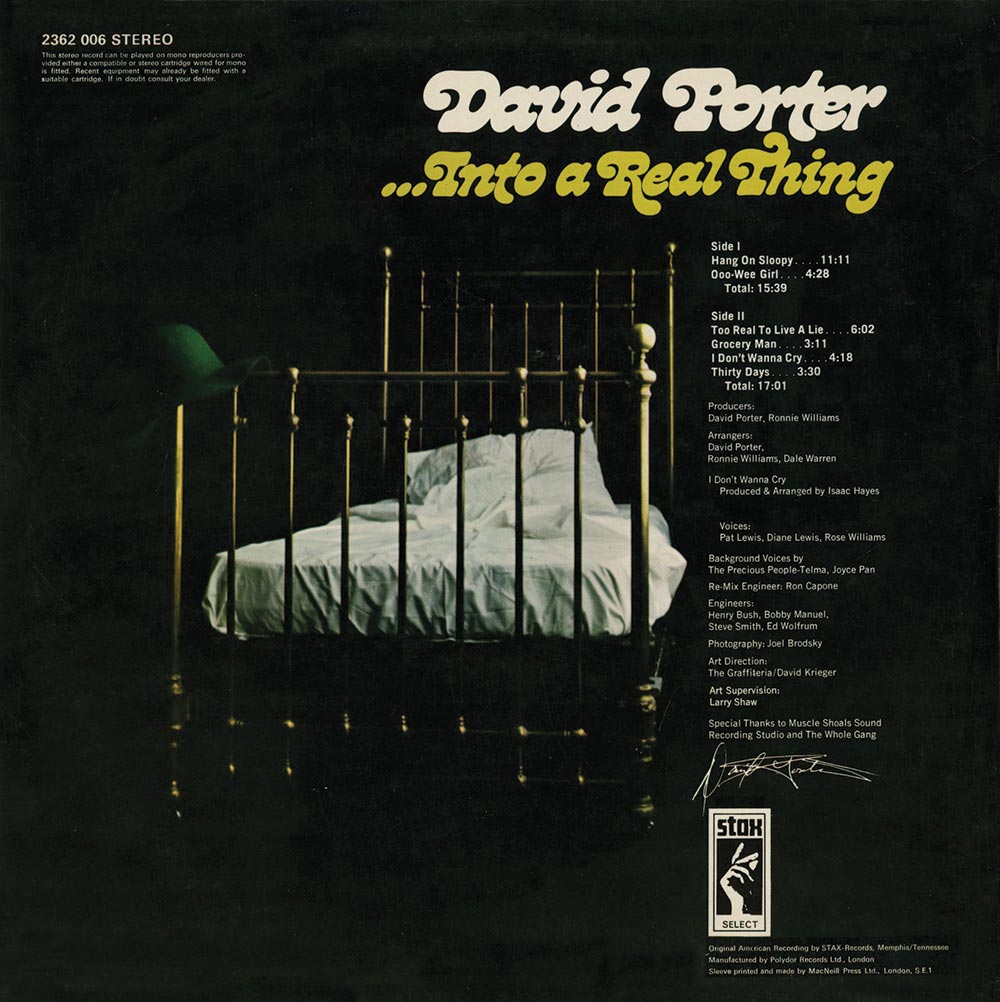


BLACK MOON CIRCLE-THE STUDIO JAMS VOLUME I: YELOW NEBULA IN THE SKY.
BLACK MOON CIRCLE-THE STUDIO JAMS VOLUME I: YELOW NEBULA IN THE SKY.
Norwegian psychedelic space rock band Black Moon Circle are one of the rising stars of the Norwegian music scene. Their previous album Andromeda was released to critical acclaim in October 2014. A great future was forecast for the Trondheim based trio. No wonder. Black Moon Circle are one of the most talented bands in the Nordic music scene. They’re also one of the most ambitious. Why?
While most bands don’t plan any further than their next single or E.P., Black Moon Circle plan to release a trilogy of albums in the next two years. They’re no ordinary album. Instead, they’re a trilogy of studio jams. The first instalment is The Studio Jams Volume I: Yellow Nebula in the Sky. It will be released on limited edition vinyl, on the 14th August 2015, on Crispin Glover Records, and is the perfect introduction to Black Moon Circle.
Founder member of Black Moon Circle Øyvin Engan, describes The Studio Jams Volume I: Yellow Nebula in the Sky as an album: “all about intensity. “Intense heavy fuzzed out guitars, blasting bass and drums and spaced out synthesisers. This is an intense instrumental trip with some killer jamming from the entire band.” And what a band Black Moon Circle are. They’ve been together since 2012.
That was when brothers Øyvin Engan and Vemund Engan formed Norwegian psychedelic space rock band, Black Moon Circle. This wasn’t the Engan brothers first band. No. They were previously, members of Trondheim-based punk rock band The Reilly Express. That was the past.
By 2012, the Engan brothers were ready to form their own band. However, it wasn’t another punk rock band. Instead, Black Moon Circle would become a psychedelic space rock band. Øyvin, plays bass, guitar and takes charge of vocals. His brother Vemund is also a guitarist. Now all that Black Moon Circel needed was a drummer.
Completing Black Moon Circle’s lineup was drummer, Per Andreas Gulbrandsen on drums. He was the final piece of the jigsaw. Now Black Moon Circle could set about honing their sound.
Gradually, Black Moon Circle’s sound began to evolve. It’s essentially a combination of lengthy jams, searing guitar riffs and a myriad of effects added to the bass and guitar. This Black Moon Circle describe as space rock band. They’re not alone.
Black Moon Circle are just one of many Norwegian space rock bands. Earthless and Colour Haze are two other Norwegian bands, who are flying the flag for space rock. In Black Moon Circle’s case, they’ve been doing this since 2013.
That’s when Black Moon Circle recorded their eponymous, debut, mini-album, at Nautilus studios in 2013. Black Moon Circle was then released in February 2014 by Space Rock Productions, the label run by the Øresund Space Collective from Copenhagen, Denmark. However, Black Moon Circle aren’t the type of band to let the grass grow under their feet.
No. Black Moon Circle returned to the studio in April 2014. That’s when Black Moon Circle recorded Andromeda. They worked quickly and efficiently. As a result, the five songs on Andromeda were recorded in one day. Six months later, and Andromeda was ready to be released.
Black Moon Circle’s sophomore album, Andromeda, was released by Crispin Clover Records, to critical acclaim in October 2014. A great future was forecast for the Trondheim based trio. They were already hatching a plan that sounded like something from the seventies, the golden age of rock.
What Black Moon Circle had in mind was a trilogy of studio jams. The first of this trilogy of albums is The Studio Jams Volume I: Yellow Nebula in the Sky. Fittingly, it features a trio tracks. One of the tracks was recorded during the first jam session in April 2013, while the other two tracks were recorded in 2014. Joining Black Moon Circle were Scott Heller Scott Heller the synth player in Øresund Space Collective. He plays an important part in the three tracks which became The Studio Jams Volume I: Yellow Nebula in the Sky, which showcases the hugely talented Trondheim trio, Black Moon Circle.
Closed Loop Circle opens side one of The Studio Jams Volume I: Yellow Nebula in the Sky. What sounds like a howling gale is accompanied by a bounding bass. It reverberates into the distance while drums add an element of drama. Synths beep and squeak, like a siren sending out a warning. A blistering, searing fuzzed-out guitar cuts through the slow, moody, cinematic arrangement. Soon, a fuzzy guitar unleashes a wall of feedback. It’s controlled though, in a Hendrex-esque manner. Meanwhile, the bass bounds along. By then, Black Moon Circle are seamlessly combining elements of electronica, experimental, free jazz, psychedelia, rock and space rock. As musical genres combine, Black Moon Circle are locked into a groove, creating a rocky, psychedelic, space age soundtrack for a film that’s yet to be made. In doing so, Black Moon Circle showcase their considerable skills.
Sea Of Vapors is the other track on side two of The Studio Jams Volume I: Yellow Nebula in the Sky. Futuristic, space-age sounds are scene setters, before the rhythm section enter. They lock into a groove, playing within themselves. As they do, Black Moon Circle sound like a power trio from the seventies. That’s no bad thing, as it was the golden age of rock. Listening to Black Moon Circle is like being transported back to another time and place. Meanwhile, a scorching guitar and bass cut through the arrangement, and drums provide the heartbeat. The futuristic synths give the impression that Black Moon Circle are under attack from an alien nation. When the synths drop out, a blistering guitar solo is unleashed. It soars higher and higher, and is best described as a gravity defying masterclass. Later, the arrangement takes on a darker sound. However, there’s another surprise is store. It’s another scorching guitar solo, which is accompanied by space invader synths. Together, they lighten the mood, as Black Moon Circle drive this musical Magnus Opus to even greater heights. Psychedelic space rock doesn’t get better than this.
The whole of side two of The Studio Jams Volume I: Yellow Nebula in the Sky is given over to Yellow Nebula in the Sky. It’s a twenty-two minute epic where Black Moon Circle stretch their legs. There’s plenty of opportunity to head off on a musical voyage of discovery. Washes of whirling synths set the scene for a crunchy, rocky guitar. Soon, Black Moon Circle unite, and become a power trio. They unleash a dramatic, rocky backdrop. Atop the arrangement a myriad of futuristic synths float. These sounds are twisted and transformed. Meanwhile, a blistering, crunchy guitar threatens to feedback and Black Moon Circle’s rhythm section relentlessly drive the arrangement along. Later, sirens sound, squeak and beep. They’re the perfect foil to Black Moon Circle as they kick loose and get into the tightest of grooves. Everything from electronica, psychedelia, rock and space rock melts into one. The result is music that’s gloriously loud, rocky, dramatic and mesmeric. Black Moon Circle never miss a beat on this epic track, as they show why they’re one of the rising stars of the Nordic music scene.
That’s no exaggeration. Black Moon Circle are, without doubt, one of the most exciting, talented and pioneering Norwegian groups. Considering how rich and vibrant the Nordic music scene is, that’s high praise indeed. They remind me of their fellow countrymen, Motorpsycho and Moster! That’s not all. It sounds as of Black Moon Circle have been influenced by Led Zeppelin, Hawkwind, early Pink Floyd and Jimi Hendrix’s guitar playing. All these influences shine through on The Studio Jams Volume I: Yellow Nebula in the Sky.
Black Moon Circle’s third album, The Studio Jams Volume I: Yellow Nebula in the Sky will be released on limited edition vinyl, on the 14th August 2015, on Crispin Glover Records. It’s the first of a trilogy of albums of studio jams Black Moon Circle will release during the next two years.
If the next two volumes of The Studio Jams are as good as The Studio Jams Volume I: Yellow Nebula In The Sky, then they’ll be well worth buying. Black Moon Circle are a 21st Century band, but musically, their roots are in proudly in the past.
Black Moon Circle are, essentially, a power trio, who create their unique brand of psychedelic space rock. The basis for this, is the classic rock of the sixties and seventies, psychedelia and space rock. To this, Black Moon Circle add elements of electronica, experimental music and free jazz. Seamlessly, these disparate musical genres and influences merge into something new and innovative. It’s cinematic, dramatic, futuristic, moody, rocky and as Øyvin Engan says, “intense.”
This intensity is deliberate. It comes courtesy of the three members of Black Moon Circle. They deploy layers of fuzzy guitars, spacey, lysergic synths and a mesmeric rhythm section. When all this is combined, the result is the next instalment in the Black Moon Circle story, The Studio Jams Volume I: Yellow Nebula In The Sky. It’s without doubt the best album of Black Moon Circle’s three album career. That’s why, for anyone yet to discover Black Moon Circle, The Studio Jams Volume I: Yellow Nebula In The Sky is the perfect introduction to the Norwegian psychedelic space rock pioneers at their hard rocking best.
BLACK MOON CIRCLE-THE STUDIO JAMS VOLUME I: YELOW NEBULA IN THE SKY.


SUN RA ARKESTRA UNDER THE DIRECTION OF MARSHALL ALLEN-BABYLON LIVE.
SUN RA ARKESTRA UNDER THE DIRECTION OF MARSHALL ALLEN-BABYLON LIVE.
2014 marked the 100th anniversary of the birth of one of most enigmatic and innovative musicians in the history of music, Sun Ra. The man that many referred to as Mr. Mystery has proved to be one of the most important figures in jazz. Constantly, Sun Ra’s pushed musical boundaries. Sun Ra was never content to stand still musically. Similarly, he was always striving to reinvent his music. That was the case throughout his long and illustrious career.
Accompanied by his Arkestra, that sometimes numbered thirty musicians, the original version of a song was merely the starting point. What it became, was anyone’s guess? Under Sun Ra’s guidance the Arkestra set out to innovate. Their mission was to reinvent a track, and take it in the most unexpected direction. It was a case of expect the unexpected. No wonder.
Sun Ra combined Egyptian history and space-age cosmic philosophy with freeform jazz. This innovative fusion transformed the career of the man born Herman Poole Blount. He was born on 22nd May 1914, and became a giant of jazz.
Herman Poole Blount was also a cosmic philosopher, composer, bandleader, musician, writer and poet. However, it was music that Sun Ra became famous for. Becoming one of the most innovative musicians in the history of jazz didn’t come easily.
Sun Ra was a perfectionist and relentless taskmaster. He brought together some of most talented, inventive and adventurous musicians he could find. They became his Arkestra. After that, Sun Ra’s started transforming them into one of jazz music’s legendary orchestras. This took time, patience and dedication.
Having honed their sound, Sun Ra took his band on the road. That’s where they developed and refined their unique chemistry. Eventually, Sun Ra and His Arkestra made their recording debut. Their debut album was 1956s Jazz by Sun Ra. This was the first of over a hundred studio and live albums Sun Ra and His Arkestra recorded. It’s fair to say that Sun Ra was one of the most prolific recording artists ever.
So when Marshall Allen decided to celebrate the 100th anniversary of Sun Ra’s birth by taking the Sun Ra Arkestra on the road, choosing the setlist can’t have been easy. Literally, Marshall Allen was spoiled for choice. However, when the Sun Ra Arkestra reached the Babylon Club, Istanbul on 21st May 2014, the concert was recorded. Eight of the eleven tracks feature on Babylon Live which was recorded by the Sun Ra Arkestra Under The Direction Of Marshall Allen. It was recently released on the German label, In and Out Records.
For Babylon Live Marshall Allen chose eight tracks. Seven were penned by Sun Ra. The other was a cover of Hoagy Carmichael and Mitchell Parish’s Stardust. These eight tracks are brought to life by the hugely talented Sun Ra Arkestra.
Back when the Sun Ra Arkestra were in their prime, Sun Ra hit the road with thirty musicians. For last year’s tour, their number was somewhat reduced. However, in full flow, they still packed a potent punch. That was the case on 21st May 2015, at the Babylon Club in Istanbul, Turkey. That’s where the latest lineup of the Sun Ra Arkestra took to the stage, and paid homage to its founder and a giant of jazz. Fittingly, the Sun Ra Arkestra was under the guidance of one of Sun Ra’s closest friends, Marshall Allen.
Directing the Sun Ra Arkestra was alto saxophonist Marshall Allen who also added vocals. He was joined by violinist and vocalist Tara Middleton. The rhythm section features drummer Wayne Anthony Smith, bassist Tyler Mitchell and guitarist Dave Hotep. They’re joined by pianist Farid Barron, percussionist Elson Nascimento and Stanley Morgan on congas and percussion. In the horn section are vocalist and alto saxophonist Knoel Scott, trumpeter Cecil Brooks, trombonist Dave Davis, tenor saxophonist James Stewart, baritone saxophonist Danny Ray Thompson and Vincent Chauncey on flugelhorn. This fourteen piece version of the Sun Ra Arkestra worked their way through eight tracks, taking them in the most unexpected directions.
Opening Babylon Live is Astro Black, which originally, was Sun Ra’s proclamation of spiritual emancipation. It opens with a congas and percussion combining urgently. They set the scene for vocalist Tara Middleton. As she delivers a powerful, but heartfelt vocal, joyously, Marshall Allen answers her call. A slow moody bass meanders along. Above the arrangement, the frantic percussion provides a backdrop for Tara Middleton’s vocal powerhouse, as the Sun Ra Arkestra whet your appetite.
On Ra # 2, whose origins are rehearsal tapes discovered by Marshall Allen, the Sun Ra Arkestra threaten to cut loose. That’s the case from the get-go. Pounding drums create a 4/4 beat. Meanwhile, flourishes of piano are joined by the bass and bursts of scorching horns. They play in a bar in 4/4 time, before switching to 5/4. By then, stabs of searing, blistering kick loose. They’re at the heart of everything that’s good, combining elements of avant-garde, free jazz, funk and jazz. Pianist Farid Barron joins the fun. So do the rest of the band. Drummer Wayne Anthony Smith pounds the skins, as if encouraging the Sun Ra Arkestra to greater heights. However, they don’t need any encouragement. Nobody does it better than the Sun Ra Arkestra in full flight. It’s a joy to behold. Especially, as they kick loose. Their late founder and the great cosmic philosopher Sun Ra would be proud of the latest incarnation of his Arkestra.
Saturn is one of Sun Ra’s classic tracks. This time around, the Sun Ra Arkestra play it straight. There’s no no heading off at a tangent. However, this allows certain members of the Sun Ra Arkestra to enjoy their moment in the sun. This includes pianist James Stuart. He gets the ball rolling, laying down a solo before dramatic bursts of horns enter. Together, they produce a wall of sound. It’s impressive. The Sun Ra Arkestra play as one, swinging their way through Saturn. That’s until individual members get the opportunity to express themselves on the solos. Vincent Chauncey on flugelhorn and Knoel Scott on alto saxophone play starring roles. So does the veteran bassist Tyler Mitchell and pianist Farid Barron producing stunning, show stealing performances. Then when one thinks things can’t get any better, Marshall Allen, whose ninety years old, unleashes a stunning improvised solo. Despite his age, he hasn’t lost his magic touch, and steals the show.
The unmistakable sound of Danny Ray Thompson’s baritone saxophone opens Discipline 27B. He plays slowly and deliberately. Maybe even dramatically. Soon, the rhythm section, piano and horn sections combine, creating a hypnotic, mesmeric arrangement. Pianist Farid Barron ploughs his own furrow, playing above the arrangement. However, as the horns howl, lead trumpeter Cecil Brooks steps out of the shadows, and blows a blistering, fluttering solo. Meanwhile, Farid Barron pounds his piano. He Dave Hotep and Marshall Allen prove a potent partnership as they improvise, feeding off each other and reaching new heights musically.
Stardust might seem like unlikely track for the Sun Ra Arkestra to cover. However, they’re a hugely versatile Arkestra, who are just as happy playing what’s a quite beautiful version of an old classic. Pianist Farid Barron takes the lead, setting the scene for Tara Middleton’s hauntingly, beautiful, heartfelt vocal. Soon, the alto saxophone and enters. It’s accompanied by the trum pet and walking bass. Instantly, it’s like being transported to a smokey jazz club in the thirties, as the Sun Ra Arkestra become a big band. However, Farid Barron isn’t content to play it straight. He unleashes flamboyant flourishes as the horns unite. While Tara’s vocal is at the heart of the song’s success, so are the solos from the alto saxophone and the trumpet. Together they play their part in a twelve minute, epic cover of Stardust.
A punchy baritone saxophone is joined by percussion and congas as Carefree #2 unfolds. They’re joined by the horns. They rasp, growl and bray. The result is a melodic, joyous and occasionally mesmeric groove. Marshall Allen on his trusty EVI adds space age beeps and squeaks. It’s as if he’s trying to contact another galaxy. This is the signal for the Sun Ra Arkestra to play with an increased urgency. Stabs of piano, thunderous drums and a myriad of percussion join braying, blistering horns. As musical adventures go, this is one you’ll want to undertake often, as the Sun Ra Arkestra take you on an innovative, intergalactic journey par excellence.
Dancing Shadows is another epic track, lasting over eleven minutes. Farid Barron adds cinematic, then free jazz piano. Whoops and hollers signal the arrival of the Sun Ra Arkestra. As drums rumble, horns blaze and the bass helps drive the arrangement along. Still, at the heart of the arrangement is the piano. That’s until the tenor saxophone takes centre-stage. It competes with the piano for supremacy. While the tenor saxophone is much more melodic, the piano is much more innovative. This seems to encourage the drummer Wayne Anthony Smith and guitarist Dave Hotep. Marshall Allen unleashes his otherworldly, cosmic UVI. Soon, the Sun Ra Arkestra are in full flight, improvising and pushing musical boundaries. There’s even an excursion in slow, dramatic and moody fusion. Before long, howling, wailing, haunting horns take the arrangement in the direction of otherworldly jazz. It’s the free jazz equivalent of ju ju, as the Sun Ra Arkestra work their musical magic.
Closing Babylon Live is Satellites Are Spinning. It features Tara Middleton on lead vocal. Her call is answered by Marshall Allen and other members of the Sun Ra Arkestra. Behind them, percussion, piano and bass combine. They’re create a sparse, but sprightly arrangement. Soon though, the horns make their presence felt. They wail, howl and bray. Sometimes, they’re punchy and abrupt. Accompanying them, are drums, percussion and piano. Tara’s vocal has a hypnotic, hopeful sound. It draws the listener in, as she delvers what’s akin to her mantra: “we sing this song to a great tomorrow, to abolish sorrow.” This proves a fitting way to close Babylon Live, because in 1990, Sun Ra performed Satellites Are Spinning in Babylon in Istanbul, where the album was recorded.
Babylon Live was recorded at the Babylon Club in Istanbul, Turkey on the 21st May 2014. That was always 100 years to the day that Sun Ra was born Herman Poole Blount. Little did anyone realise that, that day, one of most enigmatic and innovative musicians in the history of music was born.
In later years, Herman Poole Blount adopted his Sun Ra personal. He combined Egyptian history and space-age cosmic philosophy with freeform jazz. Some felt that Sun Ra hid behind his newly adopted personal. Throughout his life, he remained an enigmatic figure. So much so, that many people referred to Sun Ra as Mr. Mystery. Despite being an enigma, he was one of jazz music’s great innovators.
Sun Ra’s approach to music was unique. He combined Egyptian history and space-age cosmic philosophy with freeform jazz. Over a career that spanned nearly forty years, Sun Ra and His Arkestra pushed musical boundaries. He was a perfectionist and a relentless taskmaster. Continually, he surrounded himself with some of most talented, inventive and adventurous musicians of their generation. They became the Sun Ra Arkestra. All Sun Ra had to do, was hone the Arkestra’s sound.
That was easier said than done. Sun Ra was demanding bandleader, one with exacting standards. Second best was no use to Sun Ra. What he was after was an Arkestra who were innovators and musical adventurers. That describes Sun Ra perfectly. He found that in Marshall Allen.
That’s what it’s fitting that it’s Marshall Allen that leads the Sun Ra Arkestra. He took the Sun Ra Arkestra out on tour during 2014. On 21st May 2014, they played at the Babylon Club, in Istanbul, Turkey. That was nearly a hundred years to the day Sun Ra was born. The concert was recorded for posterity, and became Babylon Live, which was recently released by the German label In and Out Records. There’s two versions of Babylon Live available, a single CD version and a double album featuring CD and DVD. The version reviewed her is the single album. It finds the Sun Ra Arkestra paying homage to a musical innovator and giant of jazz, Sun Ra.
He died back in 1983, aged seventy nine. By then, Sun Ra was already one of the most important musicians in the history of jazz. Constantly, Sun Ra pushed musical boundaries. Sun Ra was never content to stand still musically and was always striving to reinvent his music. That was the case throughout his long and illustrious career.
Now twenty-two years after the death of the great man, Sun Ra’s music is kept alive by the Sun Ra Arkestra Under The Direction Of Marshall Allen on Babylon Live, which is a fitting way to celebrate the 100th anniversary of the man born Herman Poole Blount.
SUN RA ARKESTRA UNDER THE DIRECTION OF MARSHALL ALLEN-BABYLON LIVE.
RICHARD THOMPSON-STILL.
RICHARD THOMPSON-STILL.
Not many musicians enjoy the longevity that Richard Thompson has. His professional career career began in 1967, when Richard was just eighteen. He had just left the William Ellis School in Highgate. That’s where Richard Thompson formed his first band, Emile and The Detectives with future Strangler Hugh Cornwell.
It was with Emile and The Detectives that Richard Thompson honed his skills as a guitarist. Then when he was eighteen, he joined the newly formed Fairport Convention. They came to the attention of American producer Joe Boyd. Partly, that was down to Richard Thompson’s guitar playing. Joe Boyd decided to take a chance on Fairport Convention. So he signed them to his Witchseason production and management company.
For Richard Thompson, this was the start of a career that’s spanned forty-eight years. This began with the five alums he released with Fairport Convention.
Fairport Convention.
Their debut was Fairport Convention, which was released by Island Records in June 1968. Fairport Convention was heavily influenced by American music. It was well received by critics, who forecast a bright future for Fairport Convention.
What We Did on Our Holidays.
They were right. The followup What We Did on Our Holidays, was released in January 1969 and became one of Fairport Convention’s classic albums. It marked the move away from the Amerian influence to a much more traditional, English folk rock sound. A combination of Sandy Denny’s ethereal vocals and Richard’s guitar playing proved a potent combination. This continued with Unhalfbricking, which released in July 1969. Sadly, by then, tragedy had struck for Richard Thompson.
On 11th May 1969, Fairport Convention were returning from a concert in Birmingham. The band’s van crashed, and drummer Martin Lambie and Richard’s girlfriend’s Jeannie Franklyn both died. For Fairport Convention, and Richard Thompson who was just twenty, it was a lot to cope with. At one point, the remaining members of Fairport Convention almost called time on the band. However, eventually, they chose to continue.
Unhalfbricking.
Fairport Convention released Unhalfbricking in June 1969. It completed Fairport Convention’s move towards the traditional English folk rock sound that began on What We Did on Our Holidays. When critics heard Unhalfbricking, they hailed the album as Fairport Convention’s finest. Record buyers agreed, and the album reached number twelve in Britain. However, good as Unhalfbricking was, it was surpassed by Fairport Convention’s third album of 1969.
Liege and Lief.
Liege and Lief was released in December 1969. The album was a mixture of tradition folk song and original compositions. After four albums, it seemed, Fairport Convention had found their own style.
Critics hailed Liege and Lief a classic. Record buyers agreed, and Liege and Lief spent fifteen weeks in the British charts, reaching number fifteen. Later, Liege and Lief would become a hugely influential album. It’s been called the first British folk rock album. However, that’s since been disputed. For Fairport Convention, it was a case of “when will we see your likes again?”
After the release of Liege and Lief, Sandy Denny left Fairport Convention and formed Fotheringay. This left a huge void. Her vocals played a huge part in the sound and success of Fairport Convention.
Full House.
Sandy Denny wasn’t the only person to leave Fairport Convention. So did Ashley Hutchings. However, bassist Dave Pegg joined the band, and recording of Full House began. It was Fairport Convention’s first album without a female vocalist.
Despite the absence of Sandy Denny, Full House was well received by critics. They were won over by Fairport Convention reinterpreting traditional folk songs. Some went as far as to compare Fairport Convention to The Band. However, despite the critically acclaimed reviews, commercial success eluded Full House. Maybe this made Richard Thompson’s mind up to leave Fairport Convention?
In January 1971, Richard Thompson announced he was leaving Fairport Convention, and was about to embark upon a solo career. At the time, Richard Thompson said he hadn’t planed his departure from Fairport Convention. Instead, it was a spur of the moment decision. It’s a decision that’s worked well.
Henry The Human Fly.
Just over a year later, in April 1972, Richard Thompson released his debut album Henry The Human Fly. It featured many of the biggest names in folk music. This included two former members of Fairport Convention, Sandy Denny and Ashley Hutchings. Other guest artists included Pat Donaldson, Linda Peters and Andy Roberts. Despite this star studded lineup, Henry The Human Fly wasn’t a commercial success. However, since then, Richard Thompson has been a truly prolific artist. Following the release of Henry The Human Fly, Richard Thompson recorded six albums with his then wife Linda. These albums were released between 1974 and 1982. They weren’t particularly successful. So, in 1982, Richard Thompson resumed his solo career. Since then Richard Thompson has released another fifteen albums. His sixteenth album is Still, which was released on Proper Music.
Despite Still being Richard Thompson’s twenty-fifth album, he’s still determined to reinvent himself musically. So, for Still, Richard Thompson brought onboard Wilco’s Jeff Tweedy to produce Still. Jeff Tweedy brought new ideas to the table, and resulted in a quite different album from the folk-rock veteran. However, after his 1972 debut album Henry The Human Fly, Richard Thompson decided to put his solo career on hold.
I Want To See The Bright Lights Tonight.
Following the commercial failure of Henry The Human Fly. Richard Thompson decided to record an album with his then wife Linda. I Want To See The Bright Lights Tonight was recorded in May 1973. However, due to the petrol shortage, the album was held over until April 1974.
On its release in April 1974, critics were won over by I Want To See The Bright Lights Tonight. Richard had written most of the lyrics. They feature Richard’s somewhat bleak worldview. While the lyrics were appreciated by critics and the album would become a minor classic, the album was all but ignored by record buyers. So was their sophomore album.
Hokey Pokey.
By the time Hokey Pokey was released in April 1975, Richard and Linda had converted to Islam, and were living in an Islamic commune. The songs on Hokey Pokey had been written prior to their conversion to Islam, so didn’t represent where the Thompsons were spiritually.
Instead, Hokey Pokey continued with Richard’s bleak worldview. In Richard’s world, people lived a shallow existence. They weren’t spiritually enlightened. Instead, they found solace in drink, drugs and casual sexual encounters. It’s as if Richard is casting a disapproving eye at the faithless. Later, in Hokey Richard declares his new found faith on A Heart Needs a Home.
However, while critics gave Hokey Cokey a warm reception, record buyers continued to turn their back on Richard and Linda Thompson. They still owed Island Records an album, so began recording what was their final album together.
Pour Down Like Silver.
Richard and Linda Thompson recorded Pour Down Like Silver in the summer of 1975. It was ready for release in November 1975. Pour Down Like Silver was a very personal album for Richard and Linda Thompson.
Having converted to the Sufi faith in 1974, and trying to make a living as a musician wasn’t easy. At one point, one of Richard’s ‘spiritual’ leaders forbade Richard to make music. This contradicted his earlier advice that “you have a voice and you’ve got to sing.” On another occasion, another ‘spiritual’ leader forbade Richard from playing his guitar. All this was proving hugely frustrating for Richard. He poured his frustration into Pour Down Like Silver which was released in November 1975.
Pour Down Like Silver was quite different from Richard and Linda Thompson’s two previous albums. Much of the album was about God and faith. However, stylistically, Pour Down Like Silver was different. Richard’s electric guitar was much more prominent. Over-dubbing wasn’t used as extensively and the album had a much sparser sound. Critics remarked that despite the changes, it was still very much a Richard and Linda Thompson album. When it failed commercially, Richard and Linda Thompson were dropped by Island Records. This resulted in Richard and Linda withdrawing from music.
After three years away from music, Richard and Linda Thompson returned refreshed and reenergised. Richard and Linda released another three albums together.
First Light.
The first was First Light, which was released in October 1978. It was the first album the Thompsons released for Chrysalis. First Light featured mostly religious songs, and saw Richard and Linda accompanied by musicians who were practitioners of the Sufi faith. Unsurprisingly, First Light wasn’t a commercial success, and the Thompson’s continued their journey into the musical wilderness.
Sunnyvista.
Another year passed before Richard and Linda Thompson released another album, Sunnyvista. It had been recorded at Olympic Studios, and was a very different album from First Light.
It’s thought that Richard and Linda Thompson were under pressure to deliver a commercially successful album. Sunnyvista was a vast improvement on First Light. Partly, that was down to the musicians that accompanied Richard and Linda. They were much more accomplished and talented than those that featured on First Light. The other reasons were the songs were much more commercial, and rocky. Maybe, just maybe, the Richard and Linda Thompson’s luck was going to change?
That proved not to be the case. While critics praised Sunnyvista, it wasn’t a commercial success. Granted it was a bigger success than First Light. That didn’t stop Chrysalis dropping Richard and Linda Thompson. Things were looking bleak for Richard and Linda Thompson.
Following the commercial failure of Sunnyvista, Richard and Linda Thompson toured with Gerry Rafferty. They were reduced to the role of the support act during Gerry’s 1980 tour. Once the tour was completed, Richard and Linda recorded some demos. No record company was expressing an interest in Richard and Linda Thompson. That’s until Gerry Rafferty stepped in.
Gerry Rafferty offered to finance and produce a new Richard and Linda Thompson album. This proved to an expensive mistake. The album was recorded between September and October 1980. When it came to the mixing of the album, Richard who worked quickly and spontaneously, couldn’t cope with Gerry Rafferty’s approach. He was a perfectionist, someone who took pride in his work. Eventually, Richard stopped turning up. Soon, the project was doomed.
Gerry Rafferty tried to interest record companies in Richard and Linda’s new album. However, after what happened to Island and Chrysalis with Richard and Linda Thompson albums, nobody was interested. For Gerry Rafferty this was a disaster. He lost £30,000, and the Thompson’s journey into the musical wilderness continued apace.
Shoot Out The Lights.
It was Joe Boyd rode to the rescue of Richard and Linda Thompson. He was running his own record label Hannibal Records, and decided to offer Richard and Linda Thompson a contract in the summer of 1981. However, there was a catch.
Rather than spend months recording what became Shoot Out The Lights, Joe Boyd decided that the album would be recorded quickly, over the space of a few days. The money saved could be spent on an American tour. Richard and Linda agreed.
For Shoot Out The Lights, Richard and Linda rerecorded six of the songs from the ill-fated Gerry Rafferty sessions. Two other songs were recorded. They became Shoot Out The Lights, the song the relaunched Richard and Linda’s career.
By the time Shoot Out The Lights was released on March 15th 1982, Richard and Linda’s marriage was over. This was ironic. Shoot Out The Lights was released to widespread critical acclaim. It Richard and Linda’s biggest selling album. In American and Britain, Richard and Linda Thompson were back.
While Richard and Linda split-up after the release of Shoot Out The Lights, their sixth and final album rescued their careers. In the aftermath of Shoot Out The Lights Richard Thompson decided to return to his solo career, and in 1983, released Hand Of Kindness his belated sophomore album.
Hand Of Kindness.
Hand Of Kindness saw Richard team up with Joe Boyd again. Eleven years after releasing his debut solo album, Richard was back, and back with a critically acclaimed album.
After being down and nearly out, Richard, aided and abetted by his old friend Joe Boyd pulled a rabbit out of the bag. Hand Of Kindness saw Richard combine Americana, country, folk-rock and rock. It was a much more upbeat and palatable album. Gone was Richard’s dark, cynical worldview. It was as if someone had said, “let there be light.” Richard’s response to that was Hand Of Kindness, the album the completed the reinvention of Richard Thompson.
Since then, Richard Thompson has released another fourteen solo albums. Among the highlight are 1988s Amnesia, 1991s Rumour and Sigh and 1999s Mock Tudor. Richard’s most recent album is Still. It was recently released, and see Richard collaborate with Jeff Tweedy of Wilco. Jeff produced Still, Richard Thompson’s sixteenth studio album.
Still.
For what became Still, Richard Thompson penned twelve new tracks. Richard was determined that his sixteenth studio album be different from previous albums. Deep down, he was scared of standing still. The last thing Richard wanted to do, was keep making the same kind of album. Instead, he wanted to change things around. So he decided to bring onboard a new producer.
Given how long Richard has been involved in music, he could’ve chosen just about anyone. However, eventually, he made what many regarded as an unlikely choice, Jeff Tweedy of Wilco. It wasn’t though.
Richard liked the way Jeff Tweedy makes albums. He felt that: “Jeff is musically very sympathetic.” This was important. The changed that Jeff would make would be subtle, rather than radical. It was the musical equivalent of a nip and tuck. However, for this minor surgery, Richard Thompson had to journey to Chicago.
Recording of Still took place at Jeff Tweedy’s The Loft Studio in Chicago. Richard who sang vocals and played guitar, was accompanied by a small, but tight and talented band. The rhythm section featured drummer Michael Jerome, bassist Taras Prodani and guitarist Jim Elkington. Liam and Sima Cunningham add backing vocals. Producer Jeff Tweedy plays guitar and adds backing vocals. Once Still was completed, it was released in June 2015.
Critical acclaim accompanied the release of Still. It reached number eighty-two in the US Billboard 200 and number ten in Britain. Elsewhere, Still reached number eighty-six in Belgium, number twenty in Holland and number ninety-one in Germany. However, it was in Britain and America that Still proved most popular. It seems Richard Thompson’s decision to reinvent himself on Still, his sixteenth studio album was vindicated. I’ll tell you why.
She Never Could Resist A Winding Road opens Still. Just a lone crystalline guitar accompanies Richard’s heartfelt, wistful vocal. Soon, the rhythm section add a slow, moody and country tinged backdrop. Meanwhile, Richard dramatically tells the story of a restless spirit; “she never could stay any place too long.” He’s accompanied by harmonies. They compliment his vocal, as elements of Americana, country, folk and folk-rock are combined by producer Jeff Tweedy and his band. They’re the perfect foil for Richard as he delivers a heart wrenching vocal.
The drums that open Beatnik Walking have a traditional folk sound. They provide the heartbeat while guitars are played quickly. Fingers flit up and down the fretboard. Soon, Richard accompanied by backing vocals enters. He’s determined “to leave the beatnik blues behind.” His destination is: “Amsterdam where good things come in threes, soothe your troubles and shoot the breeze.” These lyrics play their part in an upbeat and catchy song about escaping the tedium of everyday life.
Straight away, Patty Don’t You Put Me Down has a cinematic folk-rock sound. Stylistically, it’s quite different from the first two songs. It’s has a much more rocky sound. That’s down to the guitars. They play an important part in the mix, and could easily belong on a Neil Young album. The rest of the rhythm section lock into a groove. Richard struts his way through the track, delivering a feisty,sassy vocal. Complimenting his vocal, are backing vocalists. They add the finishing touch to what’s easily, one of Still’s highlights.
Broken Doll marks another change in style. Gone is the rocky style. Instead, it’s replaced by a ballad. The arrangement meanders along. Muted guitars and the rhythm section provide a backdrop for Richard’s vocal. It’s variously dramatic, emotive and heartfelt as he almost serenades the “Broken Doll.” By then, the arrangement is like a lysergic merry-go-round. There’s a sense of despair in Richard’s voice as he realises ahe can’t mend the “Broken Doll.”
All Buttoned Up has a jaunty arrangement. As the band march along to the beat of the drum, guitars chime. Richard’s vocal is full of frustration, as he sings: “I got a girl-best girl in the world, but she won’t give me a taste of it.” Accompanied by harmonies and duelling guitars, he continues to vent his frustration.” However, Richard’s delivery is tongue in cheek, as as he combines humour and hooks.
Just a guitar opens Josephine. It sounds as if it belongs on a folk album from the late-sixties or early-seventies. The arrangement is understated. Meanwhile, Richard’s delivery is both dramatic. He’s like an actor on the stage, as he paints pictures. So much so, it’s easy to imagine a haunted and tormented Josephine, in her room scribbling frantically her thoughts on the wall.
Long John Silver sees another stylistic change. The tempo increases and Richard and his band plug-in. Bristling, electric guitar are accompanied by the rhythm section. They anchor the arrangement. Meanwhile, Richard and his backing vocalists combine, and warn about Long John Silver. “Don’t bet you shirt on Long John Silver.” Regardless of how hard they try,the lyrics to Long John Silver let the song down. Producer Jeff Tweedy does his best, but isn’t a magician.
Pony In The Stable proves to be a bit of a slow burner. That’s the case as Richard sings: “you’re messing with my mind, you’re thrilling me, you’re killing me.” Just drums and a guitar combine to create an understated, folk-tinged arrangement. Then after thirty seconds, the band kick loose, combining elements of folk, country, Americana and rock. They move up through the gears. Eventually, Richard, accompanied by backing singers and a rocky arrangement sings: “I’m flattered but I’m scared, you picked me out from all the others.” There’s a sense of insecurity in his voice as he wonders why this modern day Cleopatra has chosen him?
Where’s Your Heart sees the tempo drop. Guitars shimmer and the rhythm section create a slow, moody backdrop. This is perfect for Richard’s soul-searching vocal. With backing vocalists for company, he asks “Where’s Your Heart, it should be there?” The backing vocalists are perfect accompaniment for Richard, as his band provide an atmospheric and moody arrangement. It’s the highlight of Still.
No Peace, No End has a folk rock sound. Producer Jeff Tweedy isn’t trying to reinvent Richard Thompson. Instead, he given him a sympathetic makeover. Here, Jeff and Richard take Still in ten direction of folk rock. It’s a driving, rocky track with an anthemic sound and some of the best lyrics on Still. He poses a series of questions to a shallow, uncaring person; “where were you when the walls were crumbling, where were you when the guns were rumbling, where were you when the hounds of hell, took sons and lovers away?” They show that Richard hasn’t lost his ability to write insightful, relevant lyrics. The song also features some blistering guitar licks. Especially as Richard asks: “someday won’t you, stand in my shoes, and see the world as I see.”
After a rocky workout, Richard and the band drop the tempo on Dungeons For Eyes. As guitars chime, and the rhythm section create a moody, dramatic backdrop, Richard sings: “he’s smiling at me, the man with the blood on his hands, the man with the snakes in his shoes, how am I supposed to love him?” Just like No Peace, No End, the lyrics are among the best on Still. Especially, the way Richard delivers them. He literally lives the lyrics as another anthem unfolds.
Guitar Heroes close Still, Richard Thompson’s sixteenth studio album. In an instant, Richard is transported back to his you, when he stayed in at weekends to practice his guitar. Or as he sings “the Django way.” Seamlessly, Richard pays a homage to Django Reinhart, before recollecting how the teachers threatened to throw him out of school: “cos I’m nothing but a bebop, twang-headed, rock ’n’ roll fool.” Sixteen studio albums, five with Fairport Convention and six with his ex-wife Linda, Richard Thompson has the last laugh, and is now a fully fledged guitar hero.
Now aged sixty-six, Richard Thompson returns with the sixteenth studio album of his career. He’s now a musical veteran, one who has been releasing music for six decades.
Richard Thompson’s career started with Fairport Convention. After leaving Fairport Conventionin January 1971, Richard released his debut solo album Henry The Human Fly in 1972. When it failed commercially, Richard could never have imagined that forty-three years later, he would be one of the biggest names in folk-rock. Back in 1972, Richard Thompson was forced to put his solo career on hold.
Between 1974 and 1982, Richard and Linda Thompson released six solo albums. The only album that was a commercial success, was their swan-song Shoot Out The Lights. By the time it was released, Richard and Linda’s marriage was over. This left Richard with no option, but to resume his solo career.
In 1983, Richard released his belated sophomore album Hand Of Kindness. Eleven years after the release of his debut album, Richard Thompson was back with a critically acclaimed album. It
launched Richard Thompson’s solo career. Thirty-two years and fourteen albums later, and Richard Thompson is still going strong, and is still determined to reinvent himself musically. That’s what he did on Still, which was recently released by Proper Music.
Before releasing Still, Richard Thompson made the conscious decision to reinvent himself. So he brought onboard Jeff Tweedy of Wilco. At Jeff’s Chicago studio The Loft, he and Richard combined elements of Americana, country, folk, folk-rock, jazz and rock. Seamlessly, these elements are combined by Jeff Tweedy and a small, but tight and talented band. They provide the perfect backdrop for Richard Thompson on Still, as he showcases lyrics that are cerebral, heartfelt, humorous, incisive and insightful. When Richard Thompson’s lyrics were combined with Jeff Tweedy’s musical backdrop, the result is Still, an album that shows that after six decades making music, he’s still relevant musically. Long may that continue to be the case.
RICHARD THOMPSON-STILL.
 dereksmusicblog
 dereksmusicblog