DIRECTIONS IN MUSIC 1969 TO 1973.
Directions In Music 1969 To 1973.
Label: BGP.
Format: CD.
By the time of John Coltrane’s death in 1967 rock was by far the most popular musical genre in America. A headline in Downbeat magazine warned that: “Jazz as We Know It Is Dead.” The future of jazz looked bleak.
Fortunately, fusion rode to the rescue of jazz in the late-sixties. Pioneering the new genre was when Miles Davies who released Filles De Kilimanjaro in September 1968. This was his first album of fusion and the start of a new era.
Just ten month months later, Miles Davis returned with In A Silent Way in July 1969. On the cover of his second fusion album were the words “Directions In Music By Miles Davis.” Some listeners wondered what this meant?
When In A Silent Way was being recorded Miles Davis and producer Teo Macero were working in a very different way. They looked closely at every aspect of the recording session as the band combined jazz and rock during the sessions. Miles Davis wanted the world to know that he was firmly in control of his music and career. However, this way of working only lasted for two albums, and second was Bitches Brew which was one of the most important, innovative and influential albums of his career.
When Bitches Brew was released on March the ‘30th’ 1970, it reached number thirty-five in the US Billboard 200 and number one on the US Jazz charts. It was the biggest selling album of Miles Davis’ career and resulted in his first ever gold album in America. Across the Atlantic, in Britain, audiences embraced Miles Davis’ groundbreaking opus Bitches Brew, which was certified silver.
Meanwhile, many jazz musicians in America, Britain and Europe had been influenced by the music on Bitches Brew. It was a gamechanger of an album. Musicians were inspired and influenced by the album and went away and recorded music that was ambitious, innovative and groundbreaking.
This includes the nine musicians and groups that feature on Directions In Music 1969 To 1973, which was recently released by BGP, an imprint of Ace Records. Fittingly, there’s also a live version of Miles Davis’ Directions which is from the First Set that was recorded at the Cellar Door, on the “16th” December 1970. Just like the rest of the music on Directions In Music 1969 To 1973 it’s ambitious and innovative and is a reminder of what was an exciting time for jazz.
Opening Directions In Music 1969 To 1973 is In A Silent Way by Joe Zawinul who was part of the band that played on Bitches Brew. The music that he recorded with Miles Davis undoubtably influenced him. When he recorded his eponymous album two electric pianos and two contra basses were used during the session. Miles Davis had used two rhythm sections during the recording of Bitches Brew. One was on the right side and the other on the left side. The thirty-eight year old Austrian pianist did likewise on what’s regarded as essentially the first Weather Report album. Zawinul was released in May 1971 and was a pioneering album of fusion.
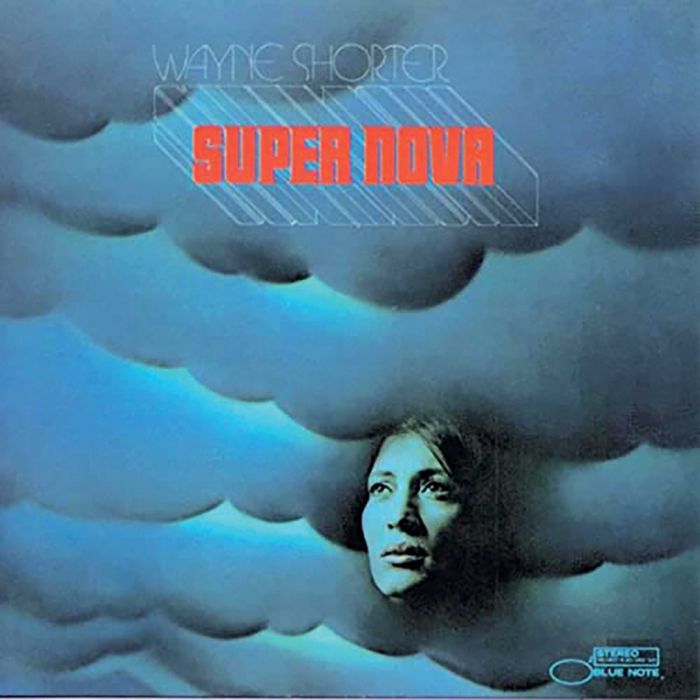
Just ten days after playing on the first Bitches Brew session Wayne Shorter recorded his Super Nova album on the ‘29th’ August 1969. It featured some of the members of Weather Report and was produced by Duke Pearson who helped the soprano saxophonist make the transition to fusion on what was a landmark album that was released by Blues Note Records later in 1969.
After leaving Art Blakey’s Jazz Messengers, Lonnie Liston Smith played alongside Pharaoh Saunders and was a member of Miles Davis touring band but never played on an album. By 1973, the pianist and keyboardist had formed Lonnie Liston Smith and The Cosmic Echoes’ classic and had signed to Bob Thiele’s Flying Dutchman label. Later that year the group released their debut for the label Astral Travelling. It featured In Search Of Truth a genre-melting track which veers between beautiful, laidback and poignant to dramatic as fusion, jazz and Eastern influences melt into one and is one of the highlights of this jazz classic.
British guitarist John McLaughlin was part of the band that played on Bitches Brew. However, in January 1969 he recorded Arjen’s Bag for his album Extraploitation which was released later that year. The track features one of pioneers of fusion as he make tentative steps in the genre that he would make his name playing.
On the ‘14th’ and ‘20th’ May 1969, Bette Davis who was married to Miles Davis entered the Columbia 52nd Street Studios, in New York. She was backed by an all-star fusion band when she recorded Politician Man which was penned by Pete Brown and Jack Bruce. The vocal is soulful and sultry and is delivered against an arrangement where funk and fusion are combined. Sadly, this song and others lay unreleased until it was released as The Columbia Years by Light In The Attic in 2016.
Gary Bartz was a member of Miles Davis’ live band and played on two live albums. He founded Gary Bartz NTU Troop who were recording the Milestone album at Decca Sound Studio, New York, in January 1971. The band included vocalist Andy Bey whose vocal features on Uhuru Sasa. It’s one of the highlights of the album and introduction to two of jazz’s best kept secrets Andy Bey and bandleader and saxophonist Gary Bartz who both play a starring role on the sound and success of the song.
The live version of Joe Zawinul’s Directions was recorded by Miles Davis during the First Set at the Cellar Door on the ’16th’ of December 1970. It’s a tantalising taste of The Cellar Door Sessions 1970 which were released in 2005 and are a reminder of one of Mies Davis’ great bands as he continued to reinvent his music.
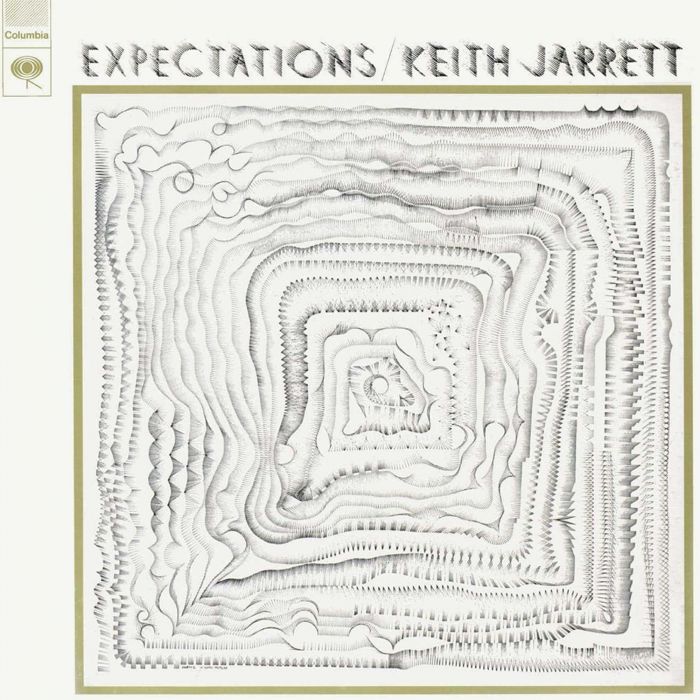
Having heard Keith Jarrett play Miles Davis wanted to recruit him to his band. Despite being a pianist, he ended up playing organ in the band. However, his versatility meant he was able to adapt to the new role. However, on April the ‘6th’ 1972, Keith Jarrett recorded his Expectations album which was released by Columbia later that year. It featured the gospel-tinged Common Mama which was one of the standout tracks on the album.
For three days between May the ‘11th’ to ‘13th’ 1969 Chick Corea recorded his Is album which was released later that year. He switched between acoustic and electric piano on album that featured Song Of The Wind. An alternate take of the track featured on The Complete “Is” Sessions which were released by Blue Note Records in 2002. However, just a couple of months after the Is sessions Chick Corea was making history when he was part of Miles Davis’ extended band that featured on Bitches Brew.
Herbie Hancock also had a spell as pianist in Miles Davis’ band. However, in 1971 he released his Mwandishi album which featured You’ll Know When You Get There which was his Warner Bros debut. It featured a new band who played much more complicated and had been influenced by Miles Davis’ fusion albums. For Herbie Hancock this was the start of a new era so it’s fitting he closes Directions In Music 1969 To 1973.
When Miles Davis released Filles De Kilimanjaro in 1968 it was a landmark album. This was his first album of fusion which he followed up with In A Silent Way in 1969 and one of the greatest albums of career Bitches Brew in 1970. It was a groundbreaking album that like its two predecessors would inspire musicians in America, Britain and Europe. They followed in his footsteps and their bands plugged in and became part of the fusion movement. This was the start of a new era for jazz and saved the genre from becoming irrelevant.
Between 1969 and 1974 some of the most important, innovative and influential fusion albums were released. This included albums by many of the artists on Directions In Music 1969 To 1973.
All of the artists on Directions In Music 1969 To 1973 have one thing in common, they’ve all members of Miles Davis’ band. He was a hard taskmaster who had the highest and exacting standards. Some musicians had recorded albums with him other stood beside him on stage and watched as he encouraged and cajoled performances from his band. Their time with his band made them better musicians and bandleaders.
Many of the musicians who were part of Miles Davis went on to form and lead there own bands and between 1969 and 19674 recorded and released some of the most important, innovative and influential albums of the fusion era. Tracks from some of these albums feature on Directions In Music 1969 To 1973 which is a reminder of what was the start of a new, exciting and innovative era for jazz.
Directions In Music 1969 To 1973.
CULT CLASSIC: WALTER BISHOP JR-CORAL KEYS.
Cult Classic: Walter Bishop Jr-Coral Keys.
In 1971, Gene Russell and Dick Schory founded Black Jazz Records and later that year, the nascent label released their first release. This was Doug Carn’s debut album Infant Eyes. It was the first of twenty albums that the label released between 1971 and 1975.
Later in 1971, Black Jazz Records released their second release Coral Keys, the fifth album by forty-four year old pianist Walter Bishop Jr. By then, he had been a professional musician since he left school in New York. That was no surprise as he was born into a musical family.
Walter Bishop Jr was born in New York on October the ‘4th’ 1927 and grew up in Harlem. His father was the composer Walter Bishop Sr and he had passed on his musical genes to his son.
Growing up, Walter Bishop Jr learnt to play piano and spent time with some of his musical friends who lived nearby. This included three future jazz musicians Art Taylor, Kenny Drew and Sonny Rollins. By the time he left high school, Walter Bishop Jr had already decided that wanted to embark upon a career as a professional musician.
Initially, he played in local dance bands and this was akin to his musical apprenticeship. However, things changed once Walter Bishop Jr was called up in 1945 to do his military service.
He served in the Army Air Corp and was based not far from St Louis. That was where he first heard bebop when visiting jazz musicians played on the base. This made a big impression on Walter Bishop Jr and would transform his career.
After his military service was over, Walter Bishop Jr was able to resume his professional career. By the late-forties he had returned to Manhattan and had developed his bebop style by playing in jam sessions at Minton’s Playhouse. This was good experience, as he was about to encounter one of the giants of jazz, Art Blakey.
He asked twenty-two year old Walter Bishop Jr to join his band. However, he only spent fourteen weeks in the drummer’s employ. The pair were reunited a few years later and recorded together. A lot would happen before that happened.
In 1949, Walter Bishop Jr recorded with Milt Jackson and Stan Getz. Then as a new decade dawned he found himself working old friends and some of the biggest names in jazz.
This included Charlie Parker. Walter Bishop Jr joined his band and worked with him until 1954. He also found time to work with Oscar Pettiford, Kai Winding, the Kenny Dorham Quintet and Miles Davis between 1951 and 1953. The following year he was reunited with a previous employer.
Walter Bishop Jr rejoined Art Blakey’s band for a session and recorded eight tracks with him. They were released later that year on the Blakey album. By then, times were tough for one of jazz’s rising stars.
At the time, Walter Bishop Jr had become addicted to drugs. Sadly, this was not uncommon amongst jazz musicians as drugs were readily available in clubs and many became addicted to heroin.
Things got worse for Walter Bishop Jr when he was arrested and imprisoned. This also led to the withdrawal of his New York Cabaret Card. For a jazz musician this was a disaster as he was no longer able to play live in the city’s clubs.
In early May 1956, Walter Bishop Jr was asked to play on a Hank Mobley session. It became Mobley’s 2nd Message, which was released on Prestige on July the ‘27th’ 1956.
During the second half of the fifties, Walter Bishop Jr converted to the Muslim faith and adopted the name Ibrahim ibn Ismail. This he didn’t publicise and he continued to perform and record as Walter Bishop Jr.
This included when he played on the sessions for Jackie McLean’s album Swing, Swang, Swingin’. It was recorded at Van Gelder Studio on October the ‘20th’ 1959, and released by Blue Note Records in March 1960.
As the sixties dawned, Walter Bishop Jr continued to work as a sideman and he played on a number of sessions during 1960. This included Charlie Rouse’s album Takin’ Care of Business which was released later that year and Dizzy Reece’s Soundin’ Off which was released by Blue Note Records in October 1960.
Walter Bishop Jr also played on Ken McIntyre’s Looking Ahead, Jackie McLean’s Capuchin Swing and Curtis Fuller’s Boss of the Soul-Stream Trombone which were all released in 1961.
During the first two months of 1961, Walter Bishop Jr had played on the sessions for Shorty Baker and Doc Cheatham album Shorty and Doc and The Magnificent Trombone of Curtis Fuller. Then on March the ‘13th’ 1961 he played on the Rocky Boyd Quintet’s Ease It. The following day, Walter Bishop Jr returned to Bell Sound Studio to record his first album as bandleader.
Speak Low.
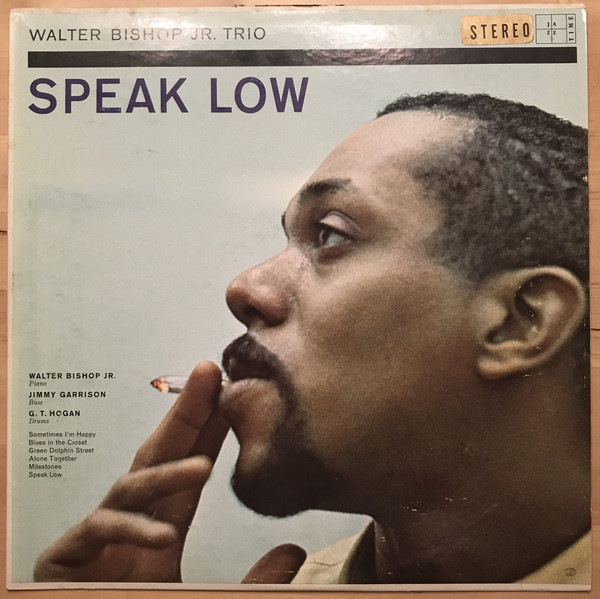
He had made his professional debut as a teenager in the mid-forties and music had been his life since then. The thirty-three year old pianist made his way to Bell Sound Studio, New York, on March the ‘14th’ 1961 to record an album of standards with the Walter Bishop Jr Trio. He was joined by drummer GT Hogan and bassist Jimmy Garrison and they recorded six standards that became the post bop album Speak Low.
When it was released later in 1961 Speak Low was well received by critics. Many forecast a big future for bandleader Walter Bishop Jr.
Having released his debut album as bandleader, he returned to playing live and session work. Between October the ‘17th’ and ‘18th’ Walter Bishop Jr played on Gene Ammons’ Boss Soul! and Up Tight! Just a month later, on November the ‘13th’ he played on Kenny Dorham’s Inta Somethin’and this brought to an end one of the most important years of a career that had already spanned three decades.
In 1962, Stateside released A Pair of “Naturals” which included contributions the Peter Yorke Orchestra and Walter Bishop Jr Trio. The bandleader must have hoped that the album would introduce his music to a wider audience.
Despite having embarked upon a solo career, he continued to work as a sideman. Just like many jazz musicians session work augmented the income he made playing live and from record sales. In 1962, Walter Bishop Jr played on the sessions for the John Handy album Jazz. It was released later that year. However, after that, session work seemed to dry up for Walter Bishop Jr.
Summertime.
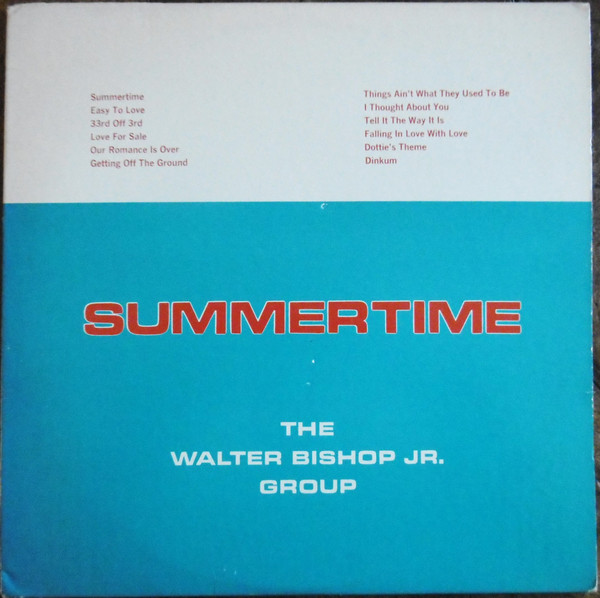
Two years after the release of his debut album as bandleader the new Walter Bishop Jr Group entered the studio. It featured drummer Jimmy Cobb and bassist Butch Warren who joined forces with bandleader and pianist Walter Bishop Jr. They recorded twelve track that were a mixture of standards and familiar tracks. These tracks became Summertime.
Later in 1963, Summertime was released by Cotillion Records, an imprint of Atlantic. It found the new Group flitting between bop and Bossa Nova on album that was well received by critics and hailed as a success. However, it wasn’t a commercial success and it was another five years before Walter Bishop Jr returned with a new album.
Over the next couple of years, Walter Bishop Jr concentrated on playing live. Session work had dried up and the only album he played on in 1965 was Sonny Stitt’s Broadway Soul which was released later that year.
Two years later, Walter Bishop Jr was asked to play on the sessions for Harold Vick’s album Commitment. However, it wasn’t released until 1974. By then, things had changed for Walter Bishop Jr.
During the late-sixties, he decided to return to college. When he left high school in the mid-forties he had embarked upon a career as a professional musician. With jazz no longer as popular as it once was, he enrolled at The Juilliard School and studied with Hall Overton. Later, Walter Bishop Jr would teach music theory in colleges in Los Angeles. Before that he would return to the studio.
1965.
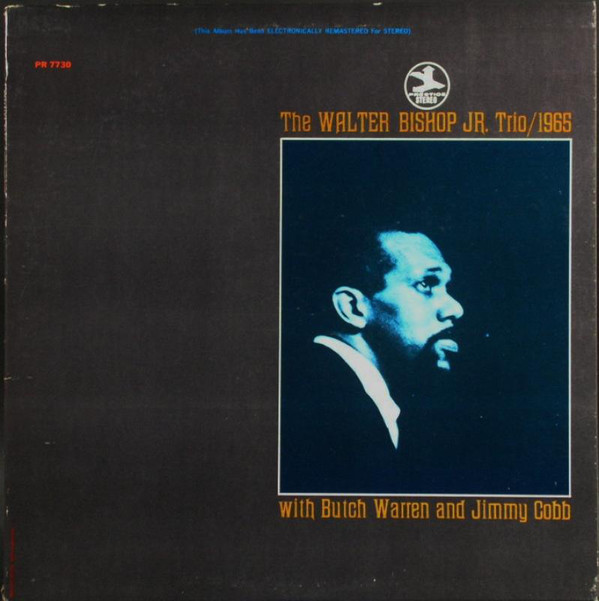
In 1970, the Walter Bishop Jr Trio returned with their sophomore album, 1965. The lineup featured drummer Jimmy Cobb and bassist Butch Warren and they recorded sixteen tracks with producer Addison Amor.
When 1965 was released, this latest album of bop was hailed as the finest album that the bandleader’s recording career. Walter Bishop Jr was back and would return with a new album in 1971.
Coral Keys.
Walter Bishop Jr signed to Gene Russell and Dick Schory’s nascent Black Jazz Records in 1971. They had founded the label to promote the talents of young African-American jazz musicians and singers. Their first signing was Doug Carn who had just released his debut album Infant Eyes. The second album the label released in 1971 was Walter Bishop Jr’s Coral Keys.
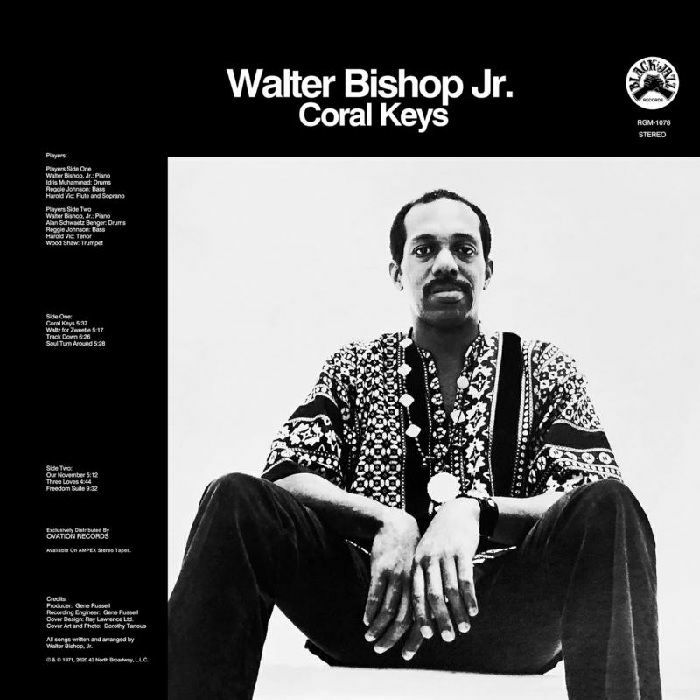
Coral Keys featured seven of Walter Bishop Jr’s compositions. Some of these he recorded with a quartet, and others with a quintet.
The quartet played on Coral Keys, Waltz for Zweetie, Track Down and Soul Turn Around. The lineup was drummer Idris Muhammad, bassist Reggie Johnson, Walter Bishop Jr on piano and Harold Vick who switches between flute, soprano and tenor saxophone. For the rest of the album the lineup changed.
For the recording of Our November, Three Loves and Freedom Suite Alan Shwaetz Benger replaced Idris Muhammad and trumpeter Woody Shaw was added to the band. This was the lineup that competed the recording of Coral Keys.
When Coral Keys was released later in 1971, the album wasn’t the commercial success that Walter Bishop Jr or the owners of Black Jazz Records had hoped. It was a disappointment for everyone involved with the album.
Record buyers had missed out on a groove-centric album that found Walter Bishop Jr’s band flitting between modal jazz, hard bop and post bop. Just like all good bandleaders, he’s not afraid to let the rest of the band shine. They grasp the opportunity throughout the album and showcase their considerable skills.
This includes reedman Harold Vick on Coral Keys. Around Walter Bishop Jr’s piano he unleashes an exquisitely melodic soprano saxophone solo. This brings back memories of John Coltrane’s classic My Favourite Things.
Elsewhere the band shine and this includes the rhythm section of drummer Idris Muhammad and bassist Reggie Johnson on the first four tracks. Then the addition of trumpeter Artie Shaw on the final three tracks adds a new dimension to the first album to be credited to Walter Bishop Jr.
On Coral Key’s he’s been influenced by his hero Bud Powell as well as Horace Silver’s classic Blue Note Records’ era as well as Les McCann, Ramsey Lewis and sometime Bobby Timmons, Gene Harris and Red Garland. All these influences shine through on Walter Bishop Jr’s Black Jazz Records’ debut Coral Keys.
Sadly, Coral Keys wasn’t a commercial success when it was released. It was the album that got away for Walter Bishop Jr and so did his 1973 album Keeper Of My Soul. The only Black Jazz Records’ releases that enjoyed a degree of success were Doug Carn’s quartet of albums.
It was only much later when critics, cultural commentators and DJs rediscovered and revisited the Black Jazz Records’ back-catalogue that they realised just how important an album Coral Keys was. It was a groundbreaking album where Walter Bishop Jr and his quartet and quintet flit between and fuse musical genres on what’s without doubt one of the finest of his career. s
Walter Bishop Jr’s Coral Keys is a a reminder of one of one of the greatest American independent jazz labels of the seventies who always strived to released innovative albums that were ahead of the musical curve.
Walter Bishop Jr-Coral Keys.
CULT CLASSIC: QUICKSAND-HOME IS WHERE I BELONG.
Cult Classic: Quicksand-Home Is Where I Belong.
Musical history is littered with examples of groups who only ever released one album during their what proves to be a short-lived career. Especially, during the late-sixties and early seventies when many record companies had unrealistic expectations.
All too often, when a band’s debut album failed to find an audience they were unceremoniously dropped by their record label. This was yet another example of short-term thinking in the music industry.
There could’ve been any number of reasons for an album to fail, and often the blame lay fairly and squarely at the door of the record company. In Britain and America there were many smaller labels that were run by enthusiastic amateurs who talked a good game but couldn’t deliver. Sadly, that’s still the case today and getting mixed up with these dreamers and fantasists can damage a band’s future prospects.
Many bands who signed to smaller labels or imprint in late-sixties and early seventies would soon regret their decision. Often, a band was so desperate to release an album that they signed a one album deal, with the option of a second album. Straight away, this put the record label in a stronger position. If the album did well, they picked up the option and if it failed the band were dropped. All to often, bands didn’t understand that contract they had signed or knew the questions to ask before signing on the dotted line. They just wanted to release an album.
Fast forward a few months and the album has been recorded, mixed and mastered; the album cover designed and the LPs are being produced at the pressing plant and are due to be sent to the distributor. By then, the band has realised that all isn’t well behind the scenes at the label. It lacks the financial muscle and marketing expertise to properly promote an album. The owner is out of their depth and is floundering, and the band know that the album that they had spent so long working on had no chance of success. This they know was their one and only chance to release an album and if it fails to find an audience their dream is over and it’s back home and to the 9 to 5 life in the factory or office.
When the album is eventually released their worst fears come true when it sinks without trace. At the post mortem, the label owner blames the distributor, the PR company, retailers who failed to stock the album, critics who failed to review it and DJs who failed to play it. The band listen and know that the only person to blame is the label owner and wait to be told there won’t be a second album. They’ve just joined the ranks of the groups who only ever releases one album.
This includes Quicksand who were formed in Port Talbot, in South Wales, in 1969 and featured drummer Robert Collins, future Man and The Neutrons bassist Will Youatt, guitarist Jimmy Davies and keyboardist Anthony Stone. The group started life as a covers band but the time they signed to the Carnaby label in 1970 their music was evolving.
Having signed to the Carnaby label Quicksand went into the studio with producer Terry Britten and recorded two Will Youatt compositions. Passing By was chosen as the single and Cobblestones relegated to the B-Side. Quicksand’s debut single saw the group move in the drection of psychedelic rock. However, the single wasn’t a commercial success and it was their only release on the Carnaby label.
Not long after this, Will Youatt left and was replaced by Phil Davies. This new lineup of Quicksand Mk II would go on to release their sophomore single.
Having left the Carnaby label, Quicksand concentrated their efforts on playing live and were familiar faces in clubs and concert halls all over Britain. Quicksand were putting in the hard yards and honing their sound in the hope that one of the many A&R men would spot them playing live.
Their luck was in and they were signed to Dawn Records which was Pye’s “underground and progressive” label. This seemed the perfect home for Quicksand.
After signing to Dawn Records, Quicksand went into the studio with producer Tito Burns to record two Phillip Davis compositions for their sophomore single. The song chosen for the single was the joyous and optimistic sounding Time To Live which features the band’s trademark harmonies as they combine the West Coast Sound, fusion and progressive rock keyboards. On the B-Side was the hidden gem Empty Street, Empty Heart which is a quite beautiful folk rock track with a country influence that shows another side of Quicksand. These two tracks showed what the Dawn Records’ latest signing was capable of.
Sadly, when Time To Live was released later in 1973 the single failed to trouble the British charts. This must have been a disappointment for Quicksand who by then, had been together for over four years.
Despite the commercial failure of Time To Live, Quicksand returned to the studio to record six more tracks for their debut album Home Is Where I Belong. Hideaway My Song, Sunlight Brings Shadows, Overcome The Pattern/Flying, Home Is Where I Belong and Hiding It All were also written by Phillip Davies. The other track was Seasons/Alpha Omega which was written by former band member Will Youatt. Taking charge of production this time round were Geoff Gill, Glyn Jones and the members of Quicksand. The result was an eclectic sounding album.
It’s hard to believe that the track that Hideaway My Song which eventually opened the album Home Is Where I Belong was recorded by a group from Port Talbot, in South Wales. It has a feelgood sound that sounds as if it’s been influenced by the California Sound which was popular at the time the album was recorded.
Very different is Sunlight Brings Shadows where the tempo rises as Quicksand change direction and unleash an unrelenting example of heavy progressive rock. Key to its success are the driving rhythm section, blistering rock guitar, banks of keyboards and Quicksand’s trademark harmonies.
Then Overcome The Pattern/Flying shows different sides to the group. It starts off as a progressive rock track with some stunning psychedelic guitar playing from Jimmy Davies before heading into freak out territory at the midway point. There’s a trippy sounding interlude before things become even more spacey, psychedelic and way-out. Lysergic doesn’t even come close to describing the second part of this musical trip.
Home Is Where I Belong is one of the most commercial sounding tracks on the album. It’s rocky and progressive in parts, and is an uplifting song with a feelgood sound and strong hook.
It’s all change on Seasons/Alpha Omega which is another track that lasts over eight minutes and allows Quicksand to showcase their considerable talents. Especially during the solos. Initially, there’s a nod to Pink Floyd before the band spring into action and the tempo rises. Soon, searing guitar, banks of keyboards, a galloping rhythm section and harmonies that compliment the lead vocal make an appearance.What follows is a masterful and majestic example of progressive rock. To non believers, the music may sound overblown and pompous but give it a chance and it’s soon apparent that this is the album’s progressive epic that shows just what Quicksand were capable of.
Quicksand have saved one of the best on Home Is Where I Belong. Hiding It All close a quite beautiful and moving progressive folk anthem that is sure to tug at the heartstrings and should’ve been released as a single.
When Quicksand’s debut album Home Is Where I Belong was released in February 1974 there was no single to proceed it. The previous single Time To Live had been released in 1973 and hadn’t troubled the British charts. Home Is Where I Belong would’ve been a tantalising taste of the delicious main dish. However, Dawn Records decided just to release the album without a single to proceed or accompany it. This backfired badly when Home Is Where I Belong sunk without trace. For the members of Quicksand this was a disaster, and they must have feared for their future.
Sadly, Quicksand’s time at Dawn Records was at an end and they never returned with a followup to Home Is Where I Belong.
Worse was to come when Quicksand split-up not long after the release of Home Is Where I Belong. By then, they had been together for five years and had released two singles and one album, Home Is Where I Belong. It’s the highlight of a career that promised so much.
Quicksand were a hugely talented and versatile band, and Home Is Where I Belong is proof of that. It’s usually described as a progressive rock album but it’s much more than that. There’s elements of the California Sound, country, folk rock, fusion, progressive folk, psychedelic rock and the West Coast Sound on Home Is Where I Belong. They seamlessly switched between and fused genres on a carefully crafted album that should’ve found a much wider audience.
That was despite being signed to Dawn Records which was Pye’s “underground and progressive” label. Maybe Dawn Records was the wrong label for Quicksand and they would’ve succeeded on a bigger label?
Especially if the had played the long game by signing Quicksand on a longer deal and helped them break into the lucrative American and European markets. Quicksand were ostensibly a progressive rock band but could also write radio friendly anthems and beautiful ballads. Maybe their music would’ve been more successful in America? Given the American influences on the album and the popularity of progressive rock in early 1974 maybe record buyers in the land of the free might have embraced, enjoyed and appreciated Quicksand’s debut album Home Is Where I Belong?
Sadly, the album was never even released in America in 1974. This was an own goal from Dawn Records who could’ve licensed Home Is Where I Belong to an American label. However, as is often the case after an album fails commercially the label moves on to the next project. Sometimes labels lose interest and other times they’re reluctant to spend any more money or even invest any more time on an album that wasn’t a commercial success. That’s a great shame and is frustrating and heartbreaking for a band.
That must have been the case for the four members of Quicksand who never recorded a followup to Home Is Where I Belong. Sadly, very few record buyers, even fans of progressive rock discovered the delights of an album that had something for everything. Progressive rock epics and psychedelic freakouts rub shoulders with anthems and beautiful ballads on Quicksand’s long-lost Magnus Opus Home Is Where I Belong which rather belatedly is starting to find a new and wider audience.
Cult Classic: Quicksand-Home Is Where I Belong.

THE RADIATORS FROM SPACE-TV TUBE HEART 40TH ANNIVERSARY VERSION.
The Radiators From Space-TV Tube Heart-40th Anniversary Version.
Label: Ace Records.
Format: CD.
When The Ramones played at the Roundhouse in London on the ‘4th’ of July 1976, this was a catalyst for punk movement. Many of the future leading lights of the punk movement have since claimed to have been present that night. In the audience were apparently future members of Generation X, Siouxsie and the Banshees, The Adverts, The Slits and X-Ray Spex. They watched the as the support act The Stranglers worked their way through their set. Little did they know how important a band The Stranglers would be or the longevity they would go on to enjoy.
As The Stranglers, left the stage, there was a sense of anticipation in the air about The Ramones. Very few people had seen them live, but some had read about them in the music press. Others had only heard third hand about The Ramones and speculated about what was about to unfold. The speculation was nothing compared to the reality of The Ramones live at the Roundhouse on the ‘4th’ of July 1976. This was a seminal moment for the nascent British punk scene. After seeing The Ramones legendary concert, many of the future leading lights of the punk scene went on to form bands.
They weren’t alone. Up and down Britain, new bands were formed on an almost daily basis and the punk rock movement exploded. It was the musical movement British youths had been waiting for, as it allowed them to vent their frustration at life in battered Britain in 1976. Soon, it was a similar situation elsewhere.
This included across the Irish Sea in Dublin, where the punk movement was also born in July 1976. Just like Britain, the Republic of Ireland’s economy was far from healthy. Less that fifty percent of school leavers were fortunate enough to find a job. The rest was known as the “unemployed generation.” Adding to their woes, and that of the rest of the Irish youth was the lack of recreational facilities. They had been overlooked and failed by their government.
Some fell into a life of crime, while others made the journey “across the water,” to British cities where many Irish people had settled. This they hoped would lead to a better life. However, the prospects were no better there, and often, the natives were far from friendly. As a result, many young Dubliners decided to stay were they were. It was a case of “better the devil you know.”
Some of the young Dubliners that stayed in the city of their birth would become involved in the city’s nascent punk scene after July 1976. This was ground zero for Irish punk and many young Dubliners would form bands, found independent record labels and publish or write for fanzines. A thriving and vibrant scene was about to take shape over the next year or so. All this was partly due to Ireland’s first punk band The Radiators From Space. They issued a call to arms, and asked the Irish youth to unleash their creativity.
That is what the Irish youth proceeded to do, over the next few months and years. They discovered hidden talents that had passed unnoticed at schools across the country. This wouldn’t have happened if it hadn’t been for the band who are credited as Ireland’s very first punk band,
The Radiators From Space, whose debut album TV Tube Heart was recently reissued by Ace Records. This is the 40th Anniversary Version of TV Tube Heart and features the thirteen songs on the album and twenty bonus tracks. This in the perfect entrée for newcomers to The Radiators From Space who were formed in 1976, and were unlike most punk bands.
It’s safe to say that The Radiators From Space were a much more cerebral and literate band that the majority of punk bands. They were intelligent and didn’t indulge in the clichéd, vacuous posturing of many of the British punk groups who used controversy as a means of self promotion. That wasn’t the way that The Radiators From Space operated.
The Radiators From Space were formed in Dublin in 1976, and their early lineup included Philip Chevron, Pete Holidai, Steve Rapid (Steve Averill), Jimmy Crashe and Mark Megaray. From their early days, it was obvious that were different from other Irish and indeed, British punk bands.
Not only were The Radiators From Space cerebral and literate, they also had an almost encyclopaedic knowledge of music and musical history. Partly, this was because Steve Rapid’s father brought back music and American music magazines from his regular trips to New York. These magazines Steve Rapid and the rest of the band poured over, developing and honing their knowledge of music. Meanwhile, The Radiators From Space listened to groups like Hawkwind, MC5, The Deviants and The Stooges, right through to pop, rock, subversive German cabaret and traditional Irish music. This The Radiators From Space regarded as their musical education, and unlike many other punk bands, they didn’t reject this music when punk arrived. Instead, it was part of The Radiators From Space’s musical DNA as they moved forward.
Having formed The Radiators From Space, the band announced that they had developed their own manifesto. This had all been thought out and carefully considered as The Radiators From Space announced that they wanted to transform the Irish youth from consumers to producers. The Radiators From Space knew that the Irish youth were capable of forming bands and record labels, founding fanzines and putting on club nights. They would issue a rallying call, and this encouraged the Irish youth to become producers not just of music, but create a fledgling music and entertainment industry. Part of this inspirational rallying call was also about enjoyment and pleasure.
This wasn’t easy in Ireland in 1976, where poverty and unemployment were rife. Many youths were from broken homes and there was a massive problem with illiteracy. There was also ‘The Troubles’, which blighted both sides of the Irish border. Many Irish youths didn’t want to get involved in the conflict and watched with sadness as friends and acquaintances got caught up in it. Some ended up in prison, while others were injured or even killed. That was a road they weren’t going down and the only rallying call they listened to was The Radiators From Space.
They were at the heart of the nascent punk movement, with The Radiators From Space playing live and ran and published their own fanzine Raw Power. This was an outlet for the band’s manifesto and allowed them to discuss their plans for an Alternative Ireland. This wasn’t a political movement. Instead, it was about making a better life for young Irish people. The Radiators From Space, wasted to inspire and foster a feeling of solidarity. Readers were encouraged to try to find pleasure during each day. Sometimes, readers found love, and a few even found love across the religious divide. This was controversial and indeed dangerous in Ireland in 1976.
Before long, The Radiators From Space and their fanzine was coming in for criticism from the Catholic Church. When Father Brian D’Arcy, a spokesperson for the Catholic church wrote about out The Radiators From Space and their fanzine Raw Power, he didn’t encourage their endeavours or creativity. Instead, he sneered contemptuously of The Radiators From Space and their fanzine Raw Power. It seemed that The Radiators From Space had the Catholic church rattled with their call to arms as a largely secular generation look for an alternative to organised religion. However, The Radiators From Space had another means of reaching an even wider audience…their music.
Although The Radiators From Space were activists and creatives, they were also musicians. That was what they hoped would offer them an escape from the grinding poverty and unemployment that besmirched Ireland, and indeed Britain. Music just like football and boxing was still an escape for working class youths in 1976.
It was a similar case in Britain, where punk bands were being formed almost daily. Many of them lacked talent and charisma, and were ill-suited to what was still the entertainment industry. By comparison, those that encountered The Radiators From Space found them engaging and intelligent. They were also talented, and a cut above the average punk band.
After a while, The Radiators From Space wanted to embark upon a recording career. They were no different from punk bands in Britain, America and Australia. For punk bands, releasing a single was a rite of passage, and for others, would be a reminder of their brief brush with the music industry. Most didn’t get any further than that, and disappeared without trace. However, releasing a record in Britain was much easier than in Ireland.
Unlike many capital cities, Dublin didn’t have a music industry by 1976. There were neither major labels nor recording studios. Some bands travelled across the border to Belfast to record singles prior to the punk era. That was the past; and given the DIY spirit of punk, bands in Britain had recorded singles without going near a recording studio. They used basic equipment and transformed garages or basements into makeshift studios.
One option for all Irish bands had been to pack their bags and travel to London, where they would try to forge a career. The lucky ones like Rory Gallagher and Thin Lizzy went on to sign recording contracts, and became Ireland’s most successful musical exports. However, not all bands wanted to move to London, and that included The Radiators From Space during the early part of their career.
They were at the centre of Dublin’s scene and realised that something special was starting to take shape. Across Ireland, a new wave of bands, writers, fanzine publishers, promoters, record label owners and DJs were becoming part of the country’s burgeoning music scene. This included Eamon Carr and Jackie Hayden, who had founded the independent label Midnite Records.
The pair was also friendly with a trio of Irish expats living in London, where they were part of the music industry. Ted Caroll was from the Republic of Ireland, while his friend and colleague Roger Armstrong was from Northern Ireland. Both lived and breathed music and were cut from the same cloth as Eamon Carr and Jackie Hayden. Both Ted Caroll and Roger Armstrong were musical entrepreneurs who had embraced the DIY principal and owned Chiswick Records. They kept in touch with booking agent Paul Charles, another Irish expat who still kept his finger on the pulse in the Irish music scene. He booked many of the top Irish bands and was part of The Radiators From Space inner circle.
Of all the Irish bands, Paul Charles was especially taken with The Radiators From Space. They were the only punk band who managed their own affairs. This was just a continuation of the DIY spirit The Radiators From Space had tried so hard to foster. It’s also likely given The Radiators From Space encyclopaedic knowledge of music that they were wary of music managers and would rather manage their own affairs. This was about to work in their favour.
In 1977, The Radiators From Space signed to Chiswick Records. Unlike many labels, Chiswick Records didn’t require the band to move to London. Instead, The Radiators From Space could continue to live in Dublin.
Television Screen.
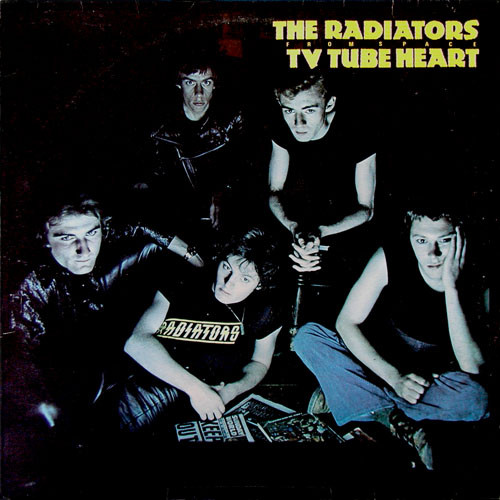
With the deal signed and sealed, The Radiators From Space began work on their debut album TV Tube Heart. Before the album was recorded, The Radiators From Space their debut single in May 1977. The song they chose was Television Screen with Love Detective on the B-Side of their debut single. It was Sounds magazine record of the week, and was a memorable way for The Radiators From Space to announce their arrival. Both songs are among the twenty bonus tracks on the 40th Anniversary reissue of TV Tube Heart.

It was a mixture of original songs and Party Line’s version of the traditional song The Radiators From Space. TV Tube Heart was very much a group effort with the five members of the band having penned the twelve original songs.
Guitarist Phil Chevron penned Television Screen, Prison Bars and Enemies, while Pete Holidai wrote Roxy Girl and Steve Rapid wrote Party Line. Press Gang and Ripped and Torn were credited to the band. Great Expectations was written by Mark Megaray, Steve Rapid and Phil Chevron. He was one of the one of the most productive band members when it came to songwriting. Phil Chevron and Pete Holidai wrote Electric Shares, and the pair then joined forces with Steve Rapid to write Contact, Sunday World and Not Too Late. Phil Chevron’s other contribution was Blitzin’ At the Ritz which he wrote with Jimmy Crashe. Along with Party Line, those songs became TV Tube Heart.
When recording began of TV Tube Heart began on ‘22nd’ June 1977, with Roger Armstrong took charge of production. The Radiators From Space’s rhythm section featured drummer Jimmy Crashe, bassist Mark Megaray and guitarists Phil Chevron and Pete Holidai. Adding the lead vocal was Steve Rapid. Eventually, TV Tube Heart was completed by August 1977.
On the ‘9th’ of September 1977, The Radiators From Space played a showcase gig at The Vortex. During a blistering set, they played Prison Bars, Contact, Party Line, Press Gang and Enemies, which feature on the newly released 40th Anniversary Version of TV Tube Heart. These tracks feature The Radiators From Space at the peak of their powers.
A month later, TV Tube Heart was released by Chiswick Records on October the ‘7th’ 1977. Critics were won over by The Radiators From Space’s debut album TV Tube Heart. Critics spoke as one, praising TV Tube Heart. That came as no surprise given the reception their debut single had received.
The Radiators From Space had followed this up with an accomplished album of pop punk that wasn’t short of anthems and social comment. From the howling feedback that opens Television Screen, it’s a case of sit back and enjoy the ride. It’s a memorable way to open the album, as The Radiators From Space combined elements of garage rock, pop, punk, rock and even rock ’n’ roll. Unlike many punk bands, The Radiators From Space prove to be talented songwriters and musicians on album which features many highlights.
Among them, are the anthem Prison Bars and driving Great Expectations which features some blistering guitar licks. Roxy Girl unfolds at breakneck speed and is a mixture of energy and raw power. There’s a defiance to Press Gang as The Radiators From Space reference The New York Dolls and Ramones which is another The Radiators From Space’s finest moments. Contact is a mixture defiance, despair and social comment, while Sunday World which closed side one of the album is a melodic mixture of energy and raw power.
It’s a similar case on Electric Shares, where The Radiators From Space showcase their skills as musicians. Thunderous drum fills and searing guitars are part of a potent and heady brew. Machine gun guitars are unleaded on Enemies and ratty drums add join the vocal on this melodic fusion of garage rock and punk. Ripped and Torn epitomises the spirit of ’76, while Not Too Late sounds like an anthemic hybrid of The Undertones and Sex Pistols. Blitzin At the Ritz finds The Radiators From Space with their feet to their floor on another memorable and anthemic song. Closing the album is The Radiators From Space’s rework of Party Line which is raw and rocky and features vocal that is a mixture of frustration and defiance. It closed TV Tube Heart on high.
Forty years later, and TV Tube Heart is punk classic, and a cut above many of the third-rate albums that were being released. The Radiators From Space had made their mark on the punk scene on both sides of the Irish Sea. Surely, it was only a matter of time before one of the majors came calling?
Two months later, and The Radiators From Space released their sophomore single Enemies in on Chiswick Records in December 1977. Just like its predecessor Television Screen, it won the approval of critics. Things were looking good for The Radiators From Space, who critics said had a bright future in front of them.

Nearly two years later, and The Radiators From Space were still signed to Chiswick Records. However, they had moved to London earlier in 1979. This was a big step for the band, leaving their home city behind. Some said it paid off when they released their critically acclaimed sophomore album Ghostown on August ’10th’ 1979. For some critics, the album was The Radiators From Space finest hour. Others sill believed that TV Tube was their best album. What was clear, was that The Radiators From Space had released two genre classics.
Sadly, two years later in 1981, The Radiators From Space split-up. It was the end of an era for what many regard as Dublin and indeed Ireland’s first punk band.
The Radiators From Space were reunited in 1987 and were together until they spilt for the second time in 1989. They were reunited in 2004, and are still together thirteen years later. During that period, they’ve released two albums 2006s Trouble Pilgrim and Sound City Beat in 2012. It was another five years before The Radiators From Space returned to the studio.
Earlier in 2017, The Radiators From Space made a welcome return to the studio and rerecorded some of their songs. Ten of the songs they rerecorded feature on TV Tube Heart-40th Anniversary Version. They’re billed as Live In The Studio. This includes old favourites like Television Screen, Electric Shares, Ripped and Torn, Roxy Girl and Love Detective. The Radiators From Space roll back the years to 1977, when they were embarking upon their music adventure. These old favourites are joined by Psychotic Reaction, Teenage Head and Try and Stop Me as The Radiators From Space continue to take listeners down memory lane. However, the story of TV Tube Heart-40th Anniversary Version isn’t over yet.
There’s also versions of Blitzin At the Ritz and Not Too Late that featured on the cassette versions of the compilation Buying Gold In Heaven The Best Of The Radiators (From Space)-1977/1980. It was released by the Hotwire label in Ireland, in 1985. These tracks complete TV Tube Heart-40th Anniversary Version which was recently released by Ace Records,
This recently released version of TV Tube Heart-40th Anniversary Version has been expanded and features thirty-three tracks. Fourteen of these songs, including those recorded Live At The Vortex in September 1977 and Live In The Studio 2017. Just like the rest of the bonus tracks, they’re a welcome addition to this lovingly curated release. It’s the perfect way to celebrate The Radiators From Space’s landmark debut album TV Tube Heart.
The Radiators From Space were punk pioneers, who are regarded by many as Ireland’s first ever punk band. Their debut album TV Tube Heart is a true genre classic, and is their finest album. TV Tube Heart showcases one of the best and most accomplished punk bands, who were a cut above the competition. By comparison, many of the British punk bands, who were a rag-bag of chancers, charlatans, publicity seekers and talentless no-hopers. Meanwhile, across the Irish Sea, The Radiators From Space were cerebral, literate, inspirational and had a social conscience. They were also one of the leading lights of the Irish punk scene and recorded a true genre classic TV Tube Heart-40th Anniversary Version.
The Radiators From Space-TV Tube Heart-40th Anniversary Version.

CULT CLASSIC: DR JOHN-IN A SENTIMENTAL MOOD.
Cult Classic: Dr John-In A Sentimental Mood.
There aren’t many musicians who enjoy the longevity that the late, great Dr John enjoyed. His career lasted the best part of sixty years and he released thirty studio albums and nine live albums. Dr John also won six Grammy Awards and was inducted into the Rock and Roll Hall of Fame in 2011. By then, his music which influenced thousands of musicians was enjoying a resurgence in popularity.
It hadn’t always been smooth sailing for Dr John who had battled heroin addiction and eventually conquered his demons. Sometimes, his music fell out of favour and Dr John went back to working as a session musician. That was how he spent much of the eighties, when he only released three albums including In A Sentimental Mood, which shows a different side to Dr John and marked a return to form from one of music’s great survivors.
The future Dr John was born Malcolm John “Mac” Rebennack Jr, on November the ‘20th’ 1940, in New Orleans, Louisiana. He grew up in the Third Ward of New Orleans, and music was always around him.
His father Malcolm John Rebennack ran an appliance shop in the East End of New Orleans, where he repaired radio and televisions and sold records. He introduced his son to the music of King Oliver and Louis Armstrong. However, one of the people who inspired Mac Rebennack was his grandfather who he heard singing minstrel songs. So did hearing his aunts, uncles, cousins and sister playing the piano. Despite this, Mac Rebennack wasn’t inspired to take music lessons.
This only came later when he was a teenager. He also joined a choir, but was soon asked to leave. However, over the next few years Mac Rebennack learnt to play the guitar and later piano, and through his father’s contacts in the local music scene was soon playing alongside some well known names including Guitar Slim and Little Richard. This was just the start for Mac Rebennack.
When he was thirteen, he met Professor Longhair and he was instantly impressed by the flamboyant showman. Mac Rebennack was soon playing alongside his new hero, and this was the start of his professional career.
Around 1955 or 1956, Mac Rebennack made his debut in the recording studio when he was signed as a singer and songwriter by Eddie Mesner at Aladdin Records. The future Dr John’s career was underway and towards the end of 1957 with the help of Danny Kessler, he joined the musician’s union. That was when he considered himself to be a professional musician.
By the time he was sixteen, Mac Rebennack had been hired by Johnny Vincent at Ace Records as a producer. This led to him working with Earl King, James Booker and Jimmy Clayton. This was all good experience for the young, up-and-coming musician
Despite his new career, Mac Rebennack was still a student at Jesuit High School. This didn’t stop him playing in night clubs and forming his first band The Dominoes. The Jesuit fathers weren’t happy with Mac Rebennack’s lifestyle and issued him with an ultimatum. He was to either stop playing in nightclubs or leave the school. Not long after this, he was expelled from the school. It turned out to be the best thing that happened to him as he was able to concentrate on music full time.
By the late-fifties, Mac Rebennack was playing with various bands in and around New Orleans. This included his own band Mac Rebennack and The Skyliners. However, the young bandleader had also embarked upon a career as a songwriter.
In 1957 Mac Rebennack cowrote his first ever rock ’n’ roll song Lights Out. It was recorded by New Orleans based singer Jerry Byrne, and released on Specialty Records later in 1957 and give him a regional hit.
Two years later, in 1959, Mac Rebennack also enjoyed a regional hit single when he released Storm Warning, a Bo Diddley insprired instrumental, on Rex Records. This was the first hit he enjoyed in a long, illustrious and eventful career.
After Storm Warning, Mac Rebennack and Charlie Miller joined forces and recorded singles for various local labels. This included Ace, Ron, and Ric. They continued to release singles until Charlie Miller decided to move to New York to study music. Mac Rebennack stayed in the Big Easy and continued his career.
Around 1960, Mac Rebennack was playing a gig in Jacksonville, Florida, when his career was changed forevermore. That night, his ring finger on his left hand was injured by a gun shot during an incident. This was a disaster for a right handed guitarist and when he recovered he made the switch to bass guitar. However, after a while Mac Rebennack switched to the instrument he made his name playing, the piano.
Soon, Mac Rebennack had developed a style that was influenced by Professor Longhair who he had met when he was thirteen. It looked as if this was a new chapter in Mac Rebennack’s musical career.
That wasn’t the case and Mac Rebennack ended up getting involved in the dark underbelly of The Big Easy. He was using and selling illegal drugs and at one point, running a brothel. It was almost inevitable that Mac Rebennack was going to have a brush with the law.
He did. In 1963, when Mac Rebennack was arrested on drug charges and sentenced to two years in the Federal Correctional Institution, in Fort Worth, Dallas. By the time his sentence ended and he was released in 1965, New Orleans was a different place.
There had been a campaign to rid the city of its clubs, which meant that musicians like Mac Rebennack found it hard to find work. That was why he decided to move to LA where he knew he could find work as a session musician.
It turned out to be a good decision, and it wasn’t long before Mac Rebennack was one of the first call session musicians in LA. That was the case for the rest of sixties and the seventies. He was also a member of the legendary Wrecking Crew and worked with some of the biggest names in music. This was the new start Mac Rebennack had been looking for when he left New Orleans.
Growing up Mac Rebennack had developed an interest in New Orleans voodoo. This was something he revisited during his early years in LA when he began to develop the concept of Dr John, which initially he thought could be a persona for his friend Ronnie Barron. The concept was based on the life of Dr John, a Senegalese prince, a witch doctor, herbalist and spiritual healer who travelled to New Orleans from Haiti. He was a free man of colour who lived on Bayou Road, and claimed to have fifteen wives and over fifty children. It was believed Dr John also kept a variety of lizards, snakes, embalmed scorpions as well as animal and human skulls, and sold gris-gris, voodoo amulets which were meant to protect the wearer from harm. This Mac Rebennack incorporated into the project he was working on for Ronnie Barron.
Soon, Mac Rebennack had decided to write, produce and play on an album and stage show based on his concept with Dr John emblematic of New Orleans’ heritage. It was meant to feature Ronnie Barron. However, when he dropped out of the project Man Rebennack took over the role and adopted the identity of Dr John. This was a turning point in the life and career of the man born Mac Rebennack.
Dr John became the name that he found fame as and won five Grammy Awards. However, that was still to come.
Having adopted the moniker Dr John,The Night Tripper he was signed by Atco Records and recorded his debut album Gris Gris. It was his his own “voodoo medicine” and marked the start of what’s now regarded as a golden era for Dr John.
Gris Gris.
When a copy of Dr John’s debut album Gris Gris, which was sent to Atlantic Records’ founder Ahmet Ertegun he disliked the album so much, that he was reluctant to even release the album and said: “how can we market this boogaloo crap?” This wasn’t the response that Dr John had been hoping when he recorded Gris Gris which was a combination of psychedelia, blues, free jazz, R&B, soul, funk, jazz. Add to this psychedelic stew the authentic music of the melting pot that is New Orleans and the voodoo image that Dr John had carefully cultivated and Gris Gris was like no other album that Atlantic Records had released. That presented the label with a huge problem.
Atlantic Records’ PR department had idea to promote an album like Gris Gris, as they had no cultural reference points, nothing to compare the album to. Despite the best efforts of Atlantic Records PR department, when Gris Gris was released on January the ’22nd’ 1968 and introduced the world to Dr John The Night Tripper, it failed to trouble the charts and neither critics nor record buyers understood Dr John’s groundbreaking debut album. However, like so many albums that fail to find an album on their release, Gris Gris was later reappraised and belatedly, was recognised as a seminal album that was the start of a rich vein of form from Dr John.
Gris Gris was the start of a six-year period when Dr John could no wrong, and released seven innovative albums that are among the his finest work.

Babylon
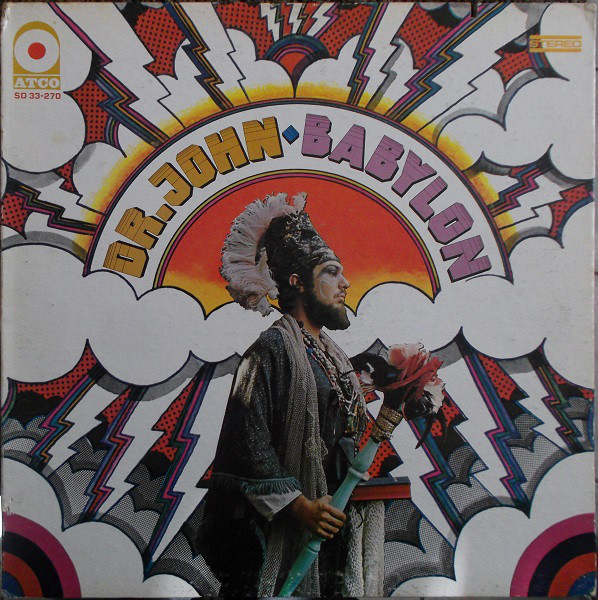
This included his sophomore album Babylon on January the ’17th’ 1969. It was a powerful, cerebral and innovative genre-melting album which socially had much in common with Dr John’s debut album Gris Gris.
Sadly, critics didn’t ‘get’ Babylon and the album which failed commercially. However, just like Gris Gris, Babylon was later reappraised by critics and nowadays is regarded as one of his finest albums and a minor classic.
Remedies.
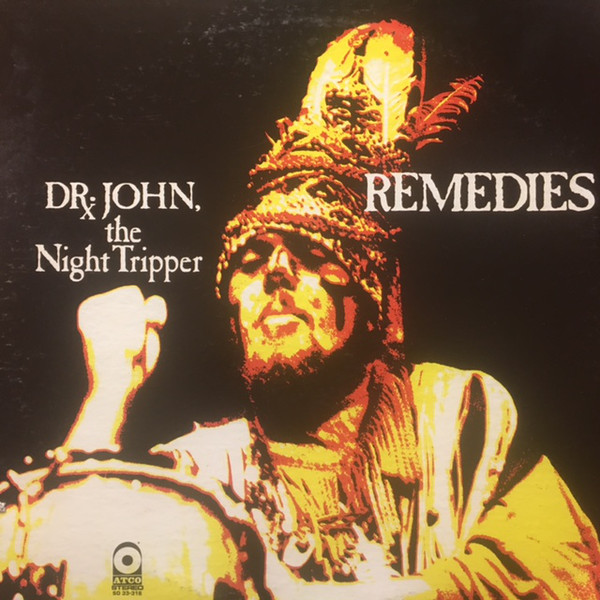
Following the commercial failure of Babylon, things went from bad to worse for Dr John, before he could begin work on his third album Remedies. This started when a deal went south, and he was arrested by the police and ended up in jail. It was a worrying time for Dr John who was parole, and if he ended up with a parole violation, he knew he might end up in the infamous Angola jail. That didn’t bare thinking about, and already Dr John was desperate to get out of the local jail. However, he needed someone to post bail, so contacted his managers who he remembers: “were very bad people.” This proved to be an understatement.
Not long after this, Dr John’s managers had him committed to a psychiatric ward, where he spent some time. By then, it was obvious to Dr John that his managers were no longer playing by the rules. All he wanted to do was make music, and everything that had happened recently were nothing to do with music. Instead, it was all connected to Dr John’s increasingly chaotic lifestyle, which made it all the more frustrating for those that realised just how talented the Gris Gris Man was.
Eventually, having managed to put his problems behind him, Dr John wrote the six tracks that became Remedies using his real name Mac Rebennack. Among the tracks Dr John had written was What Goes Around Comes Around which later became a favourite during his live shows and Mardi Gras Day which paints pictures of New Orleans when it comes out to play. Very different was Angola Anthem which was inspired by a friend of Dr John’s who had just been released from Angola, the Louisiana State Penitentiary after forty years. Dr John paid tribute to his friend with an eighteen minute epic that took up all of side two of Remedies. It was produced by one of the most successful producers of the day.
Although Harold Battiste had produced Gris Gris and Babylon, he was replaced by Tom Dowd and Charles Greene who were tasked with transforming Dr John’s career. However, although Tom Dowd was enjoying the most successful period of his career, he had never worked with anyone like Dr John.
When Remedies which was released in the spring of 1970, just like his two previous albums, critics didn’t seem to understand Remedies, which was credited to Dr John The Night Tripper. Remedies was another ambitious album of genre-melting, voodoo-influenced album where Dr John The Night Tripper through everything from psychedelia, blues, R&B, soul, funk and jazz into the musical melting pot and gave it a stir to create an album where the music was mysterious, otherworldly and haunting.
By the time Remedies was released on April ‘9th’ 1970, some FM radio stations had picked up on the album, and were playing it on their late shows. Despite the radio play Remedies had received, the album never troubled the charts, and it was only much later that record buyers realised that they had missed out on another important and innovative album from Dr John.
The Sun, Moon and Herbs.
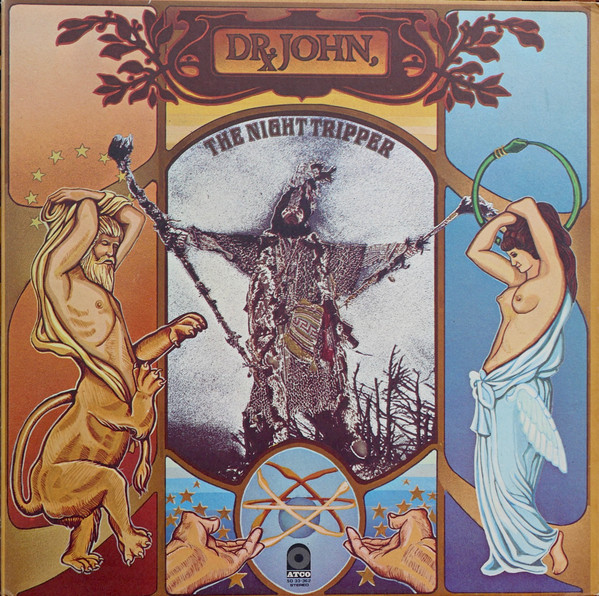
Despite Dr John’s first three albums failing to find an audience, many of his fellow musicians were fans of his music, and were only too happy to feature on his fourth album The Sun, Moon and Herbs. This included Eric Clapton, Mick Jagger, Bobby Whitlock, Graham Bond, Carl Radle, Jim Gordon and Doris Troy. They were joined by The Memphis Horns as Dr John and Charles Greene took charge of production.
They were responsible for a dark and swampy sounding album that is rich in imagery and paints of New Orleans on a hot, sticky night as thunder crackles and rumbles in the distance like the drums on The Sun, Moon and Herbs. When it was released on August the ’31st’ 1971, still critics struggled to understand Dr John’s music, but this time, The Sun, Moon and Herbs which featured an all-star cast, spent five weeks in US Billboard 200 and peaked at 184. At last, Dr John’s music was starting to find a wider audience.
Dr John’s Gumbo.
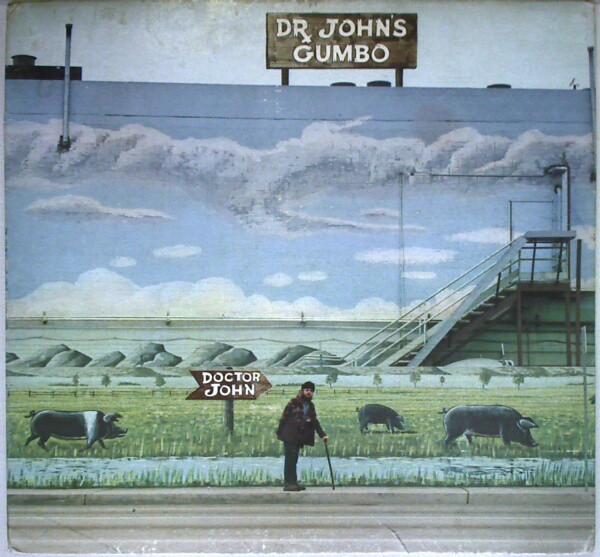
Buoyed by the success of The Sun, Moon and Herbs, Dr John decided to record an album of cover versions of New Orleans’ classics for his fifth album Dr John’s Gumbo. It was produced by Harold Battiste and Jerry Wexler and ironically given Dr John’s Gumbo featured tracks by legends some of the New Orleans’ musical legends including Professor Longhair, Huey “Piano” Smith, James “Sugar Boy” Crawford and Dr John the album was recorded in LA. However, Dr John’s Gumbo was The Night Tripper’s most successful album.
Unlike previous albums, Dr John’s Gumbo was a much more straightforward album of R&B, and it found favour with critics. After Dr John’s Gumbo was released to critical acclaim, it reached entered the US Billboard 200 where it spent eleven weeks, peaking at 112. Dr John was on his way.
In The Right Place.
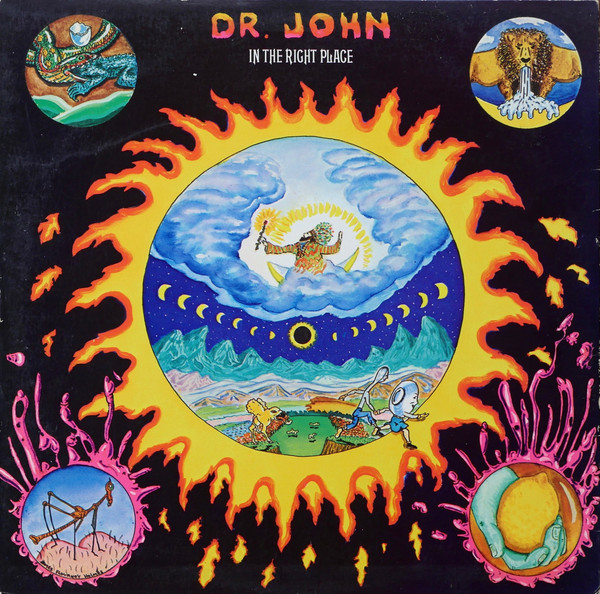
Following the success of Dr John’s Gumbo, Dr John headed to Criteria Studios, in Miami, where he recorded In The Right Place with songwriter, musician, arranger and producer Allen Toussaint. He was one of the most influential figures in the New Orleans’ music scene, and was able to bring out the best in Dr John as he laid down songs of the quality of Right Place, Wrong Time, Same Old Same Old, Peace Brother Peace and Such A Night. Once In The Right Place was completed, the two men returned to the Big Easy and watched as Dr John’s popularity soared.
Critics on hearing In The Right Place which was a fusion of funk, blues and New Orleans R&B hailed the album was one of his finest. Record buyers agreed when In The Right Place was released on February the ’25th’ 1973 thirty-three weeks in the US Billboard 200 and peaked at twenty-four. What Ahmet Ertegun had foolishly described as: “boogaloo crap” just a few years earlier, was now proving profitable for his company. Dr John was having the last laugh.
Desitively Bonnaroo.
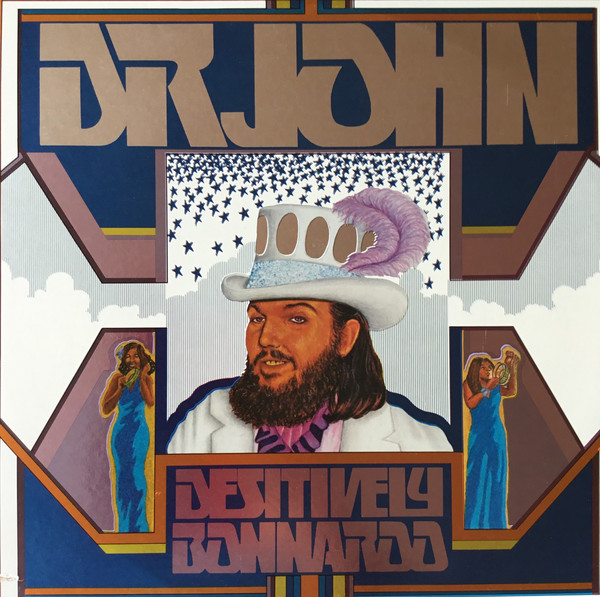
The success of In The Right Place was a game-changer for Dr John, whose popularity soared. After six albums, he was enjoying the commercial success and critical acclaim his music deserved. However, Dr John knew that he would have to think about his seventh album, and began writing what became Desitively Bonnaroo.
When critics heard Desitively Bonnaroo they were once again won over by another carefully crafted album of funk and New Orleans R&B from Dr John. It was released on April the ‘8th’ 1974, spending eight weeks on the US Billboard 200 stalling at 105. Despite the quality of Desitively Bonnaroo it had failed to replicate the commercial success of In The Right Place, which must have been a huge disappointment for Dr John.
Sadly, Desitively Bonnaroo was the last album that Dr John released on the Atlantic Records imprint Atco, and was the end of a golden period for Dr John.
Hollywood Be Thy Name.
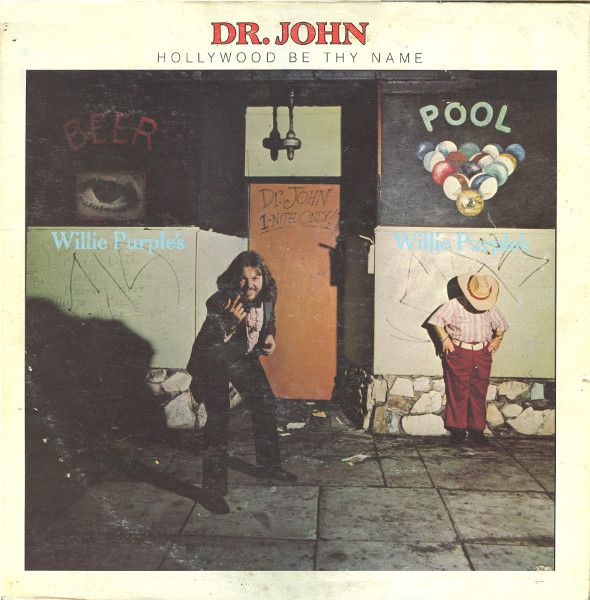
In 1975, Dr John’s manager Richard Flanzer, hired producer Bob Ezrin to produce a live album which became Hollywood Be Thy Name. It was recorded live at Cherokee Studios, in Los Angeles, which for one night only, was transformed into a New Orleans nightclub. The album was released later in 1975.
Hollywood Be Thy Name was released on October the ‘6th’ 1975. Critics weren’t won over by an album which was a mixture of original material and cover versions. To make matters worse for Dr John, the album wasn’t the commercial success his last three albums had been. Was this just a temporary blip?
City Lights.
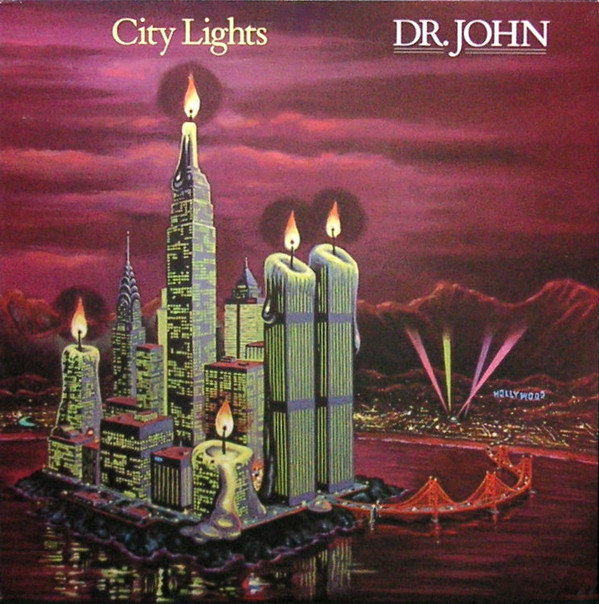
Dr John didn’t return to the studio until 1978. By then, he had signed to Horizon, an imprint of A&M and recorded City Lights. It featured three of his own compositions and five he cowrote with various songwriting partners. These songs were recorded with a crack band of musicians and was a return to form from Dr John.
City Lights was released in February 1979, and was well received by critics. However, the album which featured everything from cool jazz, fusion, R&B and soul-jazz failed to find an audience. For Dr John this was another disappointment.
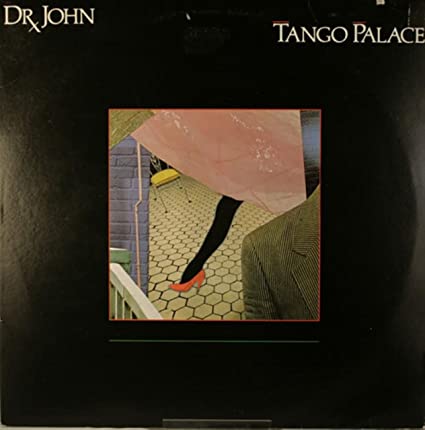
Tango Palace.
By the time Dr John released Tango Palace later in 1979 he was spending more of his time working as a session musician and had played keyboards on Rickie Lee Jones eponymous debut album. Now he was about to release his with studio album and tenth album overall.
When Tango Palace was released it wasn’t well received by critics who believed it was the weakest album of his career. This came as a blow to Dr John.
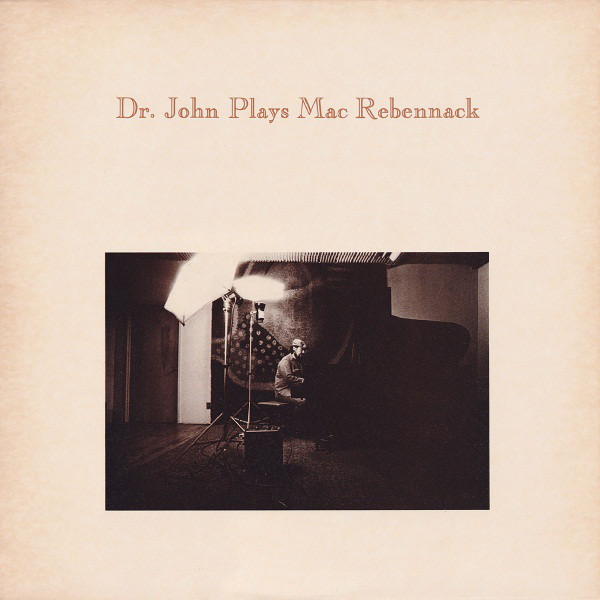
Dr John Plays Mac Rebennack.
The eighties began with the release of Dr John Plays Mac Rebennack in 1981. It featured many of his own boogie woogie compositions and showcased the Dr John’s piano playing. The rest of the eighties was a fallow period for Dr John until he released In A Sentimental Moon in 1989.
In A Sentimental Mood
After over a decade recording for smaller labels In A Sentimental Mood saw Dr John recording for a major label, Warner Bros. The sessions for the album took place in two prestigious recording studios, The Power Station in New York, and Los Angeles’ Ocean Way Studio. With a full string and horn section, and a tight band in tow, Dr John recorded some classic songs from yesteryear, including Makin’ Whoopee, Accentuate the Positive and Don’t Let the Sun Catch You Crying. These songs, and other classics, which feature on On In A Sentimental Mood, are reinterpreted by Dr John as he gives them his own unique twist.
In A Sentimental Mood opens with Makin’ Whoopee. It’s given the big band treatment by Dr John, slowed right down, and given a jazzy twist. Rickie Lee Jones sings the female part, as Dr John gives this old classic a new twist. With horns a blazing and drums pounding slowly, the song opens, giving way to Dr John’s tinkling piano. It’s only then that his raspy vocal enters, and you can almost imagine him singing the mildly suggestive lyrics with a big smile on his face. When Rickie Lee enters, her voice is sweet and coy, a real contrast to the Dr’s raspy, more powerful voice. Behind them, the strings sweep and horns rasp and blaze, the tempo slow, the arrangement swings and band play with power on what’s a welcome return to form for Dr John, one that hints at later albums, where he would cover classic by Duke Ellington and Johnny Mercer.
When you hear Dr John’s version of Candy there’s only one man that springs to mind, Ray Charles. Indeed, in the sleeve notes to the album, Dr John gives credit to Ray Charles and Charles Brown for their inspiration. This smoky sounding cover is a fitting testament and tribute to one of the giants of music. The tempo is slow, rasping horns and lush strings sweep and swirl as Dr John gives a beautiful and heartfelt rendition of the lyrics. His piano playing is sparse and jazz tinged, and when he and the piano drop out, the strings take his place. Here, the horns play second fiddle to the strings, with the strings playing a starring role. Of course, the other key ingredient is Dr John’s rasping vocal. Later a saxophone solo drifts above the arrangement, the rest of the horns playing with a subtly. Marty Paich’s arrangement of the strings and horns plays an important part in making this such a great song.
Johnny Mercer becomes the latest of the great songwriters Dr John pays tribute to on Accentuate The Positive. With high kicking horns almost marching through the track, accompanying Dr John’s gruff, rough and rocking vocal. He really gets the song swinging, after a slow and somewhat thoughtful introduction, where a meandering piano solo gives way to his earthy vocal. It’s only after that, that the song unfolds, transforming into a swinging, rocking number with the piano at the forefront and those high kicking horns rasping and adding drama. The combination is a potent and swinging one, that gets even better when a saxophone solo blows gloriously, as the song heads towards a dramatic crescendo.
One of the most beautiful songs on the album is My Buddy, co-written by Gus Kahn and Walter Donaldson. This song has a lovely, understated lush arrangement, with strings playing a major roll, while horns play a supporting roll. It’s just Dr John with his trusty piano that opens the track, with cymbals hissing gently in the background. When the strings enter, they’ve the lushest sound, a perfect accompaniment for Dr John’s thoughtful vocal and piano playing. Behind him a bass meanders, with the strings and later, gently rasping horns entering. Together, they produce a poignant and quite melancholy sound, one that
In A Sentimental Mood benefits from an understated arrangement, with the piano and lovely, lush strings combining as the track meanders along. It’s a song from a different age, gentle and beautiful, as it slowly reveals itself. A few jazzy flourishes from the piano accompany the swathes of strings that float above. During the song, Dr John’s piano playing is among the best on the album, as is Marty Paich’s string arrangement. Together with producer Tommy Lipuma, they combine to produce a beautiful, piano led track, that features swathes of lush strings.
Black Night finds Dr John upping the tempo, on a song written by Jessie Mae Robinson. Dramatic flourishes of piano and braying horns combine as the song opens, with Dr John demonstrating his talent and versatility as a pianist. When his vocal enters, it’s a downbeat and despondent Dr John we hear, as horns rasp and a bass makes its presence felt. The arrangement is full, and drama laden, horns swirling grandly, while the rhythm more than section play their part in the song’s success. By now, Dr John’s raspy voice is powerful, regret and sadness his only friends. As the arrangement reverberates, a combination of jazz players new and modern, including drummer Harvey Mason and bassist Abe Laboriel play their part in helping Dr John give an old song a new magical new twist.
One of the saddest songs on the album is a version of Joe Greene’s Don’t Let the Sun Catch You Crying. As strings swirl in, flourishes of dramatic piano, give way to a wistful vocal from the Dr John. With chiming guitars, strings and piano combining, the song meanders along, flourishes of piano escaping, while a butter and rueful Dr John delivers the lyrics. The arrangement taps into perfectly into the sadness of the lyrics, which have a melancholy, and almost bittersweet quality. Again the arrangement has a somewhat understated sound, relying on the strings, instead of horns. This works well, getting across perfectly the sadness and emotion in the lyrics, especially when delivered by Dr John.
When you talk about the greatest American songwriters of the first half of the twentieth century, then you can’t not mention Cole Porter. Similarly, Dr John couldn’t record an album featuring some of the greats of American songwriting and not cover a Cole Porter song. The one he chose was Love For Sale, choosing to transform the track, with some of his best piano playing on the album. Here he veers between some rollicking jazzy piano playing with flourishes of drama included, while strings sweep and swirl grandly, their sound vaguely reminding me of a movie soundtrack, while horns rasp and blaze, reverberating and the rhythm section provide a light sprinkling of funk. It’s a track that absolutely swings, and has an irresistible sound. Towards the end, Dr John almost raps over the arrangement, a brilliant track, just getting even better.
In A Sentimental Mood ends with More Than You Know, which opens with the wistful strings which have a real retro sound, in keeping with music. They give way to a thoughtful vocal from Dr John while his piano meanders along. He delivers the lyrics perfectly, with a tenderness and thoughtfulness. Above him, sits the strings, which float in and out of the arrangement, with Harvey Mason playing the drums with subtlety, forsaking sticks for brushes. Similarly, the bass meanders, the playing sparse, leaving flourishes of Dr John’s piano playing and his thoughtful vocal to take centre-stage, on what was a tender, beautiful and heartfelt delivery of the lyrics. This thoughtful and somewhat poignant and melancholy song seems the perfect way to end the album.
For anyone who has only experienced the music of Dr John’s vintage Atco Records years, the music on In A Sentimental Mood will come as something of a surprise when they hear it. It features a different side to Dr John’s music. He was a a musical chameleon who seamlessly could flit between musical genres Proof of that is In A Sentimental Mood which was very different to his previous albums.
In A Sentimental Mood is an album that was perfect for late night listening as Dr John revisits a different musical era with an all-star cast for company. Effortlessly Dr John transports the listener to another time and place during the album with his lived-in, worldweary vocal and peerless piano playing during In A Sentimental Mood.
During In A Sentimental Mood Dr John with a string and horn section in tow, transform nine standards, breathing new life and energy into them, as gives them his own unique twist. After In A Sentimental Mood his music continued to evolve, with aalbums rediscovering the music of Duke Ellington, Johnny Mercer and the wonderful music of New Orleans. That is no surprise.
Throughout his career, the late great Dr John was always an innovator, never afraid to try something new, sometimes, even becoming a contrarian. However, he always provided his many fans with some majestic and memorable music, which they’ll always cherish, and return to. This includes In A Sentimental Mood which marks a return to form from Dr John, and is a reminder of this flawed genius who is much missed.
Cult Classic: Dr John-In A Sentimental Mood.

HANK MOBLEY-SOUL STATION
Hank Mobley-Soul Station.
Label: Blue Note Records.
Format: LP.
It was Leonard Feather, the British-born jazz pianist, composer, producer and music writer who described Hank Mobley as the: “middleweight champion of the tenor saxophone.” This metaphor made sense to critics and connoisseurs of jazz.
His tone was neither as aggressive as John Coltrane nor as melodic as Stan Getz. Instead, it had a laidback, languid sound that was subtle and melodic. Especially when compared to the likes of Sonny Rollins and John Coltrane. Despite his undeniable talent, Hank Mobley never seemed to get the credit he deserved.
Sadly, Hank Mobley is still one of the most the underrated jazz musicians. Especially those who came prominence during the bop era.
Hank Mobley signed was still twenty-four when he recorded his first session for Blue Note Records on the ‘27th’ of March 1955. That day he recorded the album that became Hank Mobley Quartet which was released in October 1955. He had come a long way in a short space of time.
Musically, Hank Mobley was a late starter, and first picked up a saxophone was when he was sixteen, and suffering from an illness that meant he had to stay at home for several months. By then, he was living in Elizabeth, New Jersey, and was finding that the days were long and he needed something to pass the time. That was why his grandmother decided to buy her grandson a saxophone. It passed the time as Hank Mobley recuperated, and also transformed his life.
Eight years later, Hank Mobley had signed to Blue Note Records where he would spend the majority of his career. He eventually recorded and released twenty-six albums for jazz’s premier label between 1955 and 1972. This includes one of his classic albums Soul Station which were released by Blue Note Records in October 1960. It was the tenth album that Hank Mobley had recorded for Blue Note Records.
The Soul Station session took place at the Van Gelder Studio, in Englewood Cliffs, New Jersey. It was a quartet recording with drummer Art Blakey, bassist Paul Chambers and pianist Wynton Kelly joining the twenty-nine year old bandleader, composer and tenor saxophonist. As usual, Alfred Lion who took charge of production which were recorded by Rudy Van Gelder.
That day, six tracks were recorded. This included covers two standards, Irving Berlin’s Remember and If I Should Lose You which written by Ralph Rainger and Leo Robin. They were joined by This I Dig Of You, Dig Dis, Split Feelin’s and Soul Station which were Hank Mobley compositions. The six tracks were recorded during the one-day session and the release was scheduled for later in 1960.
When Soul Station was released in early October 1960, critics heaped praise on the future hard bop classic calling it Hank Mobley’s finest album. Some critics went further and said it was one of the finest albums released by Blue Note Records during the hard bop era. This was high praise indeed.
Soul Station opens with the standard Remember, which was a favourite of American dance bands during the classic jazz age. Hank Mobley pays homage to this era. His sultry tenor saxophone is to the fore and carries the simple melody above the finger clicking groove before enjoying opportunity to improvise. By then the arrangement is swinging. However, Wynton Kelly’s piano playing is subtle, understated and he resists the urge to innovate. Instead, the band to the script during this quite beautiful and captivating cover of this much-loved standard that sashays along before reaching a crescendo. In doing so, this sets the bar high for the rest of the album.
Very different This I Dig of You which epitomises everything that’s good about hard bop. Each member of the band plays their part in the sound and success of the track. Especially pianist Wynton Kelly who opens the track and is joined by Hank Mobley as the rest of rhythm section drive and power the arrangement along. Meanwhile, slinky sounding piano plays and later, Art Blakey unleashes a thunderous solo before hissing hi-hats signalling the return of the sultry sounding saxophone which soars above the arrangement to impressive hard driving track.
The tempo drops on Dig Dis where Wynton Kelly’s piano takes centrestage as the rhythm section accompany him. Their playing is understated even when Hank Mobley’s tenor saxophone enters and soars above the piano. It’s everpresent and gets another chance to shine when the saxophone drops out. Soon, though the baton passes to the smooth souding tenor saxophone which continues to play a starring role. However, just like the previous tracks Wynton Kelly’s contribution is crucial and it would be a poorer track without it.
From the opening bars of Split Feelin’s there’ no stopping the band as they move through the gears on this uptempo track with a Latin-tinged groove. Soon, they’re sitting in the fast lane and are being driven along by rhythm section. Paul Chambers plucks his bass firmly and deliberately while Art Blakey powers the arrangement along and later unleashes a thunderous solo that’s one of his best on the album. Not to be outdone, Wynton Kelly’s hands dance across and sometimes jab and stab the keyboard. Meanwhile, Hank Mobley plays with speed, fluidity, power, passion and fluidity on what’s one of the album’s highlights.
Another highlight of Soul Station is the title-track. Here, the band is at their tightest as they play a lowdown bluesy groove. At its heart is Wynton Kelly’s piano playing and somehow he reaches new heights. Meanwhile Paul Chambers unleashes a peerless solo while Art Blakey’s playing is much more understated. Hank Mobley’s playing is smooth, melodic and he plays within himself always in control on a track that features this all-star band at their very best.
Bookending Soul Station is the other standard, If I Should Lose You. Just like the opening track Remember, Hank Mobley looks back to the jazz’s glory days when this was a staple of American dance bands. Here, the band stay true to the original and their toe-tapping cover is uptempo, joyous and is a a reminder of another musical era.
Soul Station is the album that transformed Hank Mobley’s career. By the time the album was released in 1960 he was a prolific recording artist. Although his albums were well received by critics Soul Station was called the finest of his career.
Nowadays Soul Station is regarded as a classic album and one of the finest albums released by Blue Note Records. Although it’s an album that’s rooted in the hard bop style elements of blues, Latin and classic jazz can heard during this almost flawless six track set which should’ve transformed Hank Mobley’s career.
Despite releasing over thirty albums during his carer, Hank Mobley didn’t get the recognition his music deserved His finest hour was Soul Station which features Hank Mobley the man they called the: “middleweight champion of the tenor saxophone” at the peak of his powers.
Hank Mobley-Soul Station.
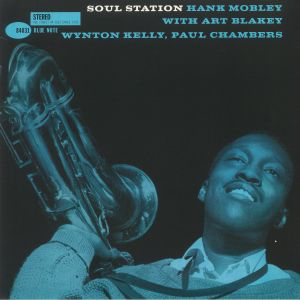
NEIL YOUNG-YOUNG SHAKESPEARE.
Neil Young-Young Shakespeare.
Label: Warner.
Format: CD.
On September the ‘30th’ 1970 Canadian singer-songwriter Neil Young released his critically acclaimed third album After The Gold Rush. It was hailed as the finest album of his solo career and nowadays, is regarded as a classic.
Live At Massey Hall 1971.
After the release of After The Gold Rush, Neil Young headed out on tour to promote the album. By January the ’19th’ 1971 he had arrived in Toronto where he was due to play a solo, acoustic set at the Massey Hall. That night, the tapes were running and the concert was recorded with a view to releasing a live album.
Sadly, the recording lay unreleased in Neil Young’s archives until 2007 when it was belatedly released as Live At Massey Hall 1971. It reached number six on the US Billboard 200 chart and is one of Neil Young’s finest live albums. However, this wasn’t the only live album recorded during the tour.

Young Shakespeare.
Three nights after the Massey Hall concert the tapes were running again.The venue was The Shakespeare Theater, in Stratford, Connecticut, and when Neil Young took to the stage January the ’22nd’ 1971 the show was filmed and recorded.
Later in 1971, the concert film was shown on German television. However, the recording lay in Neil Young’s vaults for nearly fifty years.
It wasn’t until 2020 when Neil Young was working with his team and reviewing tapes in his Archive for future projects. That was when they found the 16mm film and the recording of the concert at The Shakespearee Theater which had been persevered for almost have a century. It was a remarkable find.
When Neil Young and his team watched the film and listened to the recording. Gradually, they were able to piece together the film footage and the tapes of the concert. Soon, they realised that they had the entire concert. This was a historic find as the film features the earliest live footage of Neil Young as a solo artist live in concert.
The tapes were carefully and lovingly restored to their former glory. When Neil Young heard the Young Shakespeare tapes he said his performance was: “superior to our beloved Massey Hall” concert. That’s no surprise to anyone who has heard both albums.
He gives a calmer performance and is much more measured and assured during the twelve song set that eventually became Young Shakespeare. Gone is the celebratory atmosphere that can he heard on Live At Massey Hall 1971. The result is a much better album and a reminder of one of the great, young singer-songwriters who in January 1971, was enjoying a prolific period when he recorded Young Shakespeare.
Three months earlier Neil Young had released After The Goldrush which would eventually be certified double platinum in the UK and America. He had started writing and recording his second classic album Harvest, and showcases four tracks from the album on Young Shakespeare which was recently released by Warner on CD.
When Neil Young took to the stage at The Shakespeare Theater he was just twenty-five but was already a gifted and celebrated songsmith. That night, he delivered vocals that were impassioned, heartfelt and emotive as he works his way through an acoustic set that features old favourites and classic songs.
Opening Young Shakespeare was Tell Me Why which also opened After The Gold Rush. Neil Young’s vocal is full of emotion as he asks the question and but is left wondering? Its a powerful way to open the set.
He then played a couple of tracks from his next album, Harvest. up was an impassioned reading of Old Man which become a staple of his concerts for years to come. So would The Needle and The Damage Done where Neil Young describes the effects of heroin addiction.
After this, he played Ohio which was released by Crosby, Stills, Nash and Young in 1970 and nowadays is regarded as a classic. It’s a powerful track full of social comment.
Very different is Dance, Dance, Dance which Neil Young wrote and was originally covered by Crazy Horse on their 1971 eponymous debut album. This solo acoustic version is very different from the original and shows a different side to what would often feature in the setlist.
Neil Young then return to his sophomore album Everybody Knows This Is Nowhere which was released in May 1969 and delivers a tender, wistful version of Cowgirl In The Sand.
It’s followed by a medley of A Man Needs A Maid and Heart Of Gold from Harvest. It would go on to top the US Billboard 200 when it was released and eventually sold over four millions copies. This resulted in the album being certified four times platinum. Those in the audience at The Shakespeare Theater were fortunate to hear two more tracks from Neil Young’s next classic album.
He then played the title-track to his soundtrack to Journey Through The Past which was released in November 1972. This was the first of four soundtrack albums that Neil Young released between 1972 and 2018.
After this, he returns to After The Goldrush for Don’t Let It Bring You Down which also featured on Crosby, Stills, Nash and Young’s 1971 live album 4 Way Cellar. It’s a quite beautiful, impassioned reading on Young Shakespeare.
It gives way to Helpless which featured on Crosby, Stills, Nash and Young’s 1970 album Deja Vu. Neil Young wrote the song and he delivers an emotive vocal as he brings the lyrics to the life accompanied by a lone acoustic guitar.
Down By The River was the penultimate song of the set and was one of the highlights of Everybody Knows This Is Nowhere. Since he wrote the song, Neil Young has given various explanations of the lyrics. This includes that they’re about a man who shot his lover after feeling unable to continue from the emotional highs of their relationship. When he played the song in New Orleans on September the ‘27th’ 1984 Neil Young told the audience that it was about a man who had trouble controlling himself, and when he discovered his lover had been cheating on him, he met her down by the river and shot her. It’s a dark cinematic song and very few people know the backstory to the lyrics.
Closing the set and Young Shakespeare was Sugar Mountain which Neil Young penned on his nineteenth birthday. The song made its debut on the B-Side of his debut solo single The Loner. Just two years later and he was well on his way to becoming one of the most successful solo artists not just of the seventies, but the last fifty years.
Just over fifty years after Neil Young played at The Shakespeare Theater, in Stratford, Connecticut, this beautiful acoustic solo concert was belatedly released as Young Shakespeare by Warner. It’s one of the finest live albums that Neil Young released, and there’s been plenty to choose from since 1973.
His first live album was Time Fades Away which was released in 1973, and 1979s Live Rush where Neil Young is accompanied by Crazy Horse. This was followed by Weld in 1991 and two years later in 1993 he released his Unplugged album. Just like Young Shakespeare, these albums show different sides to Neil Young’s music.
During a long and illustrious solo career that’s spanned fifty-three years Neil Young has been a musical chameleon constantly reinventing his music. It’s if he’s frightened to stand still in case he’s accused of becoming irrelevant. Instead, he strives to reinvent himself. That’s why so many of the thirty-nine solo albums and the live albums that Neil Young has released are so different.
However, Young Shakespeare is a reminder of Neil Young singer-songwriter in the early stages of his solo career. He switches between acoustic guitar and piano during Young Shakespeare where the songs are beautiful, powerful and poignant and his delivery is heartfelt, impassioned and emotive as he works his way through a twelve song set that features future classics and others that would become a staple of Neil Young’s concerts over the next fifty years.
Neil Young-Young Shakespeare.
PORCUPINE TREE-STUPID DREAM.
Porcupine Tree-Stupid Dream.
Label: Transmission.
Format: CD.
When Steven Wilson founded Porcupine Tree in 1987, the nascent progressive rock group was essentially a solo project for the twenty year old songwriter and multi-instrumentalist. He had no idea that the group would eventually release ten studio and twelve live albums. The story begins in 1988.
In 1988, recording of Porcupine Tree’s debut album began at No Man’s Studio in Hemel Hempstead, Hertfordshire. Some of the tracks featured lyrics by Alan Duffy who was a school friend of Steven Wilson. He wrote the rest of the songs and played most of the instruments. On The Sunday Of Life…was a labour of love and took four years to complete. However, it wasn’t the first released by Porcupine Tree.
Up until 1989, Steven Wilson was concentrating on his No-Man project with Tim Bowness. Porcupine Tree he initially regarded as little more than a joke and the music he made was for his own amusement. Then he realised that the music had commercial potential and released two cassette-only albums.
The first was Tarquin’s Seaweed Farm an eighty minute album which was a mixture of progressive rock and psychedelic rock was released in 1989. Despite the music being created by Steven Wilson, he included a lineup that featured fictitious band members. Similarly, the history of the group that was included was equally fictitious and was Steven Wilson’s idea of a joke.
Two years later, in 1991, The Nostalgia Factory was released on Delerium Records. It was another album that featured progressive rock and psychedelic rock. Already, the Porcupine Tree sound was taking shape.
On The Sunday of Life…
In early 1992, On The Sunday of Life…which was produced by Steven Wilson was released on Delerium Records. It’s regarded as Porcupine Tree’s debut album and featured progressive rock, psychedelic rock and space rock. The album was well received by critics upon its rebased and was a popular album. Initially, only 1,000 copies of the CD were pressed but it’s now sold over 20,000 units.
By 1993, Steven Wilson had decided that he wanted to work with a band and recruited drummer Chris Maitland, bassist Colin Edwin and keyboardist Richard Barbieri. This was the first permanent lineup of Porcupine Tree and they were together until 2002.
Up The Downstair.
The first album that the new lineup of Porcupine Tree recorded was Up The Downstair which was originally intended to be a double album. Recording began in February 1992 and the album finished eleven months later in January 1993. By, then, it was decided that it would be a single album.
When Up The Downstair was released on the ‘7th’ June 1993, it was to plaudits and praise. The album sounded as if it had been influenced by Pink Floyd, Ozric Tentacles and The Orb as Porcupine Tree continued to combine progressive rock, psychedelic rock and space rock on their sophomore album and their first to feature the new lineup of the band.
The Sky Moves Sideways.
When Porcupine Tree returned with The Sky Moves Sideways in January 1995 it was the finest album of their career. They began recording the album in June 1993 straight after the release of When Up The Downstair. The album was finished thirteen months later in July 1994. Six months later the album was released, and it was well worth the wait.
The Sky Moves Sideways was released to critical acclaim and just like pervious albums featured progressive rock, psychedelic rock and space rock. Some critics drew comparison to Pink Floyd’s Wish You Were Here. This was high praise indeed. Porcupine Tree were making progress and would soon begin work on their fourth studio album.
Signify.
This was Signify which was recorded during 1995 and the first half of 1996. It was the first album that was recorded by Porcupine Tree as a full band unit. For previous albums Steven Wilson had brought onboard musicians when they were needed. However, this was no longer the case and Porcupine Tree was operating like a traditional band, and from 1995 divided their time between recording and touring. For the group, this was the start of a new chapter in their career.
When Signify was released on the ‘30th’ September 1996 most of the reviews of Signify were positive. It found Porcupine Tree combining progressive rock, psychedelic rock and space rock with Krautrock and even elements of ambient and new age music. Some of the music on the album was experimental, while the title-track was inspired in part to Krautrock pioneers Neu! Other tracks had more structured, radio-friendly and commercial sound. This would continue on Porcupine Tree’s next album Stupid Dream.
Stupid Dream.
In January 1999, Porcupine Tree returned to No Man’s Land studio where most of the album was recorded. Other sessions took place at Foel Studio, Llanfair Caerinon, in Wales. A total of twelve tracks which marked a transition from “abstract instrumentality” to more “natural songwriting.” The songs were inspired by Brian Wilson, CSNY,Jeff Buckley, Soundgarden and Todd Rundgren who’s music Steven Wilson had been listening to since the release of Signify. This resulted in much more complex songs than on previous albums.
The songs were also much more tightly structured and featured layers of instruments. This included the strings arranged by Chris Thorpe and Steven Wilson which performed by the East of England Orchestra. By the time Stupid Dream was finished Porcupine Tree had spent their £15,000 budget and had an album that had a much more commercially accessible pop-rock sound but still retained its progressive rock influences.
Richard Barbieri said that Stupid Dream had: “A much more sophisticated sound and meticulous attention to detail defines my approach on this album. Steven came up with a strong selection of songs and a long process followed during which we attempted to condense as many ideas, flavours and colours into the arrangements as possible. Orchestra, flute and saxophone added further to the eclectic mix and I also feel that we started to focus more of what each other was contributing.”
Stupid Dream was also an album that much more personal for Steven Wilson. The lyrics dealt with: his own personal: “insecurities and feelings” and what he called: “the usual singer-songwriter stuff.” Just like many songwriters the songs he wrote were inspired by his own life and he felt other people would be able to relate to them. Other personal lyrics dealt with his relationship and views on the music industry. He said:
“When I was writing some of the songs of the album I was very much aware of this contradiction between being an artist, being a musician, trying to be creative and write songs and, then, at the point you finish an album, the music is finished, the creative side is finished, you then have to go out and sell and market and promote. And that’s like a completely different experience. It’s not a very creative process. It’s quite-in some ways-a cynical process going on having to sell your music. But you have to do it. I mean, if a modern musician is going to survive as a musician, you have to-in a sense-‘prostitute yourself’ to try and sell your music and your art. And I was very much aware of that contradiction. If you think about that too much, it can drive you crazy, you know. It’s an absurd thing to be doing. That kind of led me thinking about when I was a teenager, when I was just starting out and I was interested in being a musician. And I think a lot of teenage kids have this dream of being pop stars, of being a professional musician. This ‘stupid dream’ of being famous and ‘life is a ball and everything is wonderful’. And, of course, actually the reality is that being a professional musician is a very hard work. It can be very heartbreaking, there’s a lot of disappointment, there’s a lot of hard work, there’s a lot of travelling.”
Steven Wilson said that Slave Called Shiver and Don’t Hate Me were songs about feelings of “unreturned love.” He explained: “A Slave Called Shiver’s a very perverse love song, yeah. I mean, it’s an unrequited love song. It’s a love song with somebody who’s obsessed with someone else, but none of that affection is returned. It relates very closely to Don’t Hate Me, which is a song again about someone who’s obsessed with someone from afar. Don’t Hate Me is an even more extreme version, because here this person actually begins to follow and make phone calls and, you know, it becomes very unhealthy. Slave Called Shiver is slightly less extreme. It’s about someone who’s very much in love and obsessed with somebody else. That love is not returned and so there’s a slightly violent perverse undercurrent. Pure Narcotic’ also is very much the same subject.”
Then there’s Baby Dream in Cellophane which is a short psychedelic track. Steven Wilson explains the backstory to the song: “The baby in the song is basically singing the song: ‘I am in my pram’. And it’s quite a cynical song because he’s basically saying that the boy’s life is almost mapped out already as the child is born, it’s already predetermined by society and the baby’s kind of singing from the pram if you like, saying ‘well, actually no, I’m not going to go down this path that’s been laid out for me. I’m gonna break out.’ It’s almost like a very surreal teen rebellion song.”
Very different is the instrumental Tinto Brass. It features a spoken word part. Steven Wilson tells the story behind it: “Oh, yes, it’s spoken in Japanese! It’s my girlfriend who’s Japanese and she’s got a film book. I tell you it’s so difficult to find anything on Tinto Brass in England. He’s completely unknown… And then my girlfriend… found this little biography: where he was born, the films he made. So she said, ‘well, should I translate that for you?’ (because I wanted it to be spoken in the track) and I said ‘No, it’s great’—I thought—’I’ll have it in Japanese’. So she just read it in Japanese. But it’s just a list of his films and where he’s from… It’s nothing interesting”
Closing the album was Stop Swimming which is one of the songs which deals with Steven Wilson’s relationship with the music industry. “I found that when I was writing the music for this album a lot of the songs were about me and my relationship with the music industry and how I felt about where I was going in the music business and all that. Things like ‘Stop Swimming’… maybe it’s time to stop swimming…and this kind of whole impulse to just give up and go with the flow can be very strong sometimes. I mean I’ve never given into it. I never will.”
Stupid Dream was released on the ’22nd’ March in the UK and on the ‘6th’ of April 1999 worldwide, and the majority of the reviews were positive. A number of critics said that they felt that the lyrics on the album were some of the best of Steven Wilson’s career. It was a coming of age for the thirty-one year old songwriter. Meanwhile, some critics even compared Porcupine Tree’s performance on Stupid Dream to Radiohead as they combined alt-rock, pop and progressive rock on what was the commercial sounding album of the band’s career. It also signalled a move away from the concept of extended composition that was based largely on jamming, drones and the space rock sound that was a feature of previous albums.
The three singles Porcupine Tree released from Stupid Dream were Piano Lessons, Stranger By The Minute and Pure Narcotic and they all enjoyed mainstream exposure. Especially in the US and Europe where the group toured extensively. They knew it was a case of putting in the hard yards like so many other bands before them.
Porcupine Tree also toured the UK in support of Stupid Dream and watched the three singles charted in the independent charts during 1999. Piano Lesson reached thirty-four, Stranger By The Minute thirteen and Pure Narcotic forty-six. Each of the singles found their way onto radio station playlists and it looked like Porcupine Tree were about to make a commercial breakthrough after five albums and twelve years of trying.
Sadly, it wasn’t to be and Stupid Dream failed to trouble the UK albums charts. This was hugely disappointing given the success of the singles.
Stupid Dream with its more commercial sound was the start of a new chapter in the Porcupine Tree story. I also resulted in three hit singles for the band. It had taken five albums and twelve years but Porcupine Tree’s music was starting to find a wider audience. The decision to change direction musically had paid off.
When Porcupine Tree returned Lightbulb Sun in 2000 the album reached the lower reaches of the UK album charts. This was the first album that had charted and was progress for the group. That came as no surprise as Lightbulb Sun like Stupid Dream is a carefully crafted and sophisticated sound album that is accessible and has a commercial sound that should’ve introduced the band to a much wider audience.
Sadly, that wasn’t the case. Despite that, Stupid Dream was the best album of Porcupine Tree’s five album career. Stupid Dream also marked the start of a new chapter in the Porcupine Tree story and this continued with Lightbulb Sun. They’re both accessible albums, and for newcomers to Porcupine Tree, are the perfect introduction to this talented, versatile and chameleon-like group.
Porcupine Tree-Stupid Dream.
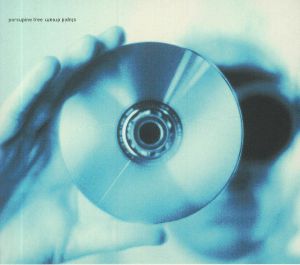
CULT CLASSIC: BOBBY HUTCHERSON-OBLIQUE.
Cult Classic: Bobby Hutcherson-Oblique.
On July the ‘21st’ 1967, Bobby Hutcherson journeyed to Van Gelder Studio, in Englewood Cliffs, New Jersey, to record Oblique which was his sixth solo album for Blue Note Records. It was just the second album he had recorded with a quartet.
The first was Happenings, an album of modal hard bop and hard bop which was recorded on February the ‘6th’ 1966 and featured pianist Herbie Hancock. When Happenings was released in late January 1967 it was to widespread critical acclaim.
Just seventeen months later, and Bobby Hutcherson and Herbie Hancock were reunited and were joined by drummer Joe Chambers and bassist Albert Stinson as they travelled to Van Gelder Studio to record Oblique. It marked a stylistic departure for Bobby Hutcherson and resulted in one of the finest albums of his career. His recording career began in 1960 but jazz had always been part of Bobby Hutcherson’s life.
The future vibes virtuosos was born on January the ’27th’ 1941. His was father Eli was a master mason and his mother Esther was a hairdresser. Growing up, Bobby Hutcherson was introduced to jazz by his brother Teddy who listened to Art Blakey records with his friend Dexter Gordon. Meanwhile, Bobby Hutcherson’s elder sister Peggy was a singer in Gerald Wilson’s orchestra and her boyfriend was Eric Dolphy. She introduced to her younger brother to her boyfriend and also tenor saxophonist Billy Mitchell. However, it was after hearing Milt Jackson play Bemsha Swing on Miles Davis All Stars, Volume 2 that Bobby Hutcherson decided to learn to play the vibes.
By the late-fifties, Bobby Hutcherson who was still in his late teens had embarked upon a career as a professional musician. He worked with tenor saxophonist Curtis Amy, trumpeter Carmell Jones, Eric Dolphy and tenor saxophonist Charles Lloyd at the Pandora’s Box on the Sunset Strip. This was all good experience for Bobby Hutcherson.
He made his recording debut on August the ‘3rd’ 1960, when he recorded two tracks with the Les McCann Trio who were signed to Pacific Jazz. The single was released in 1961. By then, Bobby Hutcherson’s career was well underway.
Just over four months after making his recording debut, Bobby Hutcherson joined the Curtis Amy-Frank Butler Sextet when they recorded Groovin’ Blue on December the ‘10th’ 1960. This was the first of many albums that featured Bobby Hutcherson’s vibes.
In 1962, Bobby Hutcherson moved to New York as he was determined to make a career as a full-time jazz musician. He found a place to live in the Bronx and soon, was spending part of the time working as a session musician. The rest of the time he drove a taxi to supplement his income.This he knew was only a temporary arrangement.
That was the case. Bobby Hutcherson met his childhood friend, the bassist Herbie Lewis who at the time, was working with The Jazztet and also hosted jam sessions at his apartment.
Bobby Hutcherson soon became a regular at the jam sessions which was where Grachan Moncur III who was a member of Jazztet and Jackie McLean’s band saw him play. Straight away, he realised that he might be a useful addition to Jackie McLean’s band and recommended him. When Jackie McLean heard him play, he asked him to join his band and he made his debut on the recording of One Step Beyond on April the ’30th’ 1963. This was also Bobby Hutcherson’s first session for Blue Note Records.
Over the new few months he played on three more Blue Note Records sessions. The first was on the ‘30th’ September when Jackie McLean recorded Destination… Out! Then on the ‘4th’ and ‘15th’ of November, Bobby Hutcherson played on Grant Green’s classic album Idle Moments. Less than a week later, on the ‘21st’ of November Bobby Hutcherson played on the sessions for Grachan Moncur III’s album Evolution. However, Bobby Hutcherson still had one more album to record and this time it was his debut solo album The Kicker.
The Kicker.
Recording of The Kicker took place on the ‘29th’ of December 1963, at Van Gelder Studio. Joining Bobby Hutcherson were drummer Al Harewood, bassist Bob Cranshaw, pianist Duke Pearson and tenor saxophonist Joe Henderson. Guitarist Grant Green played on two of the six tracks on the album which was produced by Alfred Lion and engineered by Rudy Van Gelder.
Sadly, Bobby Hutcherson’s debut album The Kicker was shelved and wasn’t released until 1999. When it was belatedly released jazz fans heard a blistering album of hard bop and blues from Bobby Hutcherson’s all-star quintet.
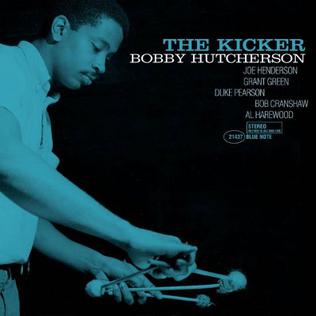
Dialogue.
When Bobby Hutcherson returned to Van Gender Studio on April ‘3rd’ 1965 to record his second album he led a sextet that featured some top musicians. This included drummer Joe Chambers, double bassist Richard Davis, pianist Andrew Hill, trumpeter Freddie Hubbard and Sam Rivers who switched between bass clarinet, flute plus soprano and tenor saxophone. They recorded what was one of the most ambitious and adventurous albums of Bobby Hutcherson’s career.
The music on Dialogue was complex as the sextet combined avant-garde, free jazz, Latin, modal jazz and post-bop with social comment. The album Latin-tinged album opener Catta was regarded as the most conventional on the album but was recorded in 8/4 time. Dialogue was a truly ambitious album.
When Dialogue was released in September 1965 to widespread critical acclaim. Despite this being the second album Bobby Hutcherson had recorded it was regarded as his debut and critics called it one of the finest jazz debuts of recent years.
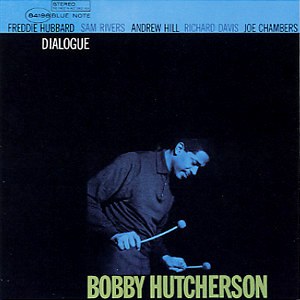
Components.
Three months before the release of Components, Bobby Hutcherson recorded the third album of his carer, Tranquillity. Just like his two previous albums it was produced by Alfred Lion. However, the sextet he led at the Van Gelder Studio on June the ‘14th’ 1965 was a quite different band from the one that featured on Components.
This included drummer Joe Chambers, double bassist Ron Carter, pianist Herbie Hancock, trumpeter Freddie Hubbard and James Spaulding on flute and alto saxophone. They recorded eight tracks including four written by Bobby Hutcherson while the other four were penned by James Spaulding. These eight tracks showed the two sides of the sextet.
The four tracks on the first side were penned by Bobby Hutcherson and found the sextet playing in the hard bop style. Then on the second side it’s all change on the James Spaulding compositions as the album heads in the direction of avant-garde. Components was hailed as another innovative album that won over critics when and was released to critical acclaim in November 1966. Bobby Hutcherson’s finest moment was Components which became his best-known composition. By then, he had only released two album but was already regarded as one of jazz’s rising stars.
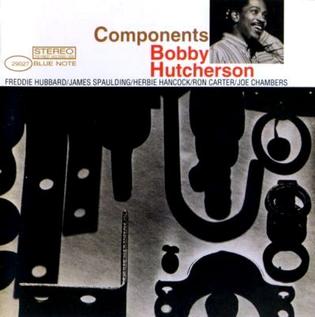
Happenings.
For the followup to Components, Bobby Hutcherson wrote six of the seven tracks that featured on Happenings. The other track was a cover of Herbie Hancock’s Maiden Voyage. These tracks were recorded at Van Gelder Studio on February the ‘8th’ 1966 by a quartet.
This was a first for Bobby Hutcherson who had never led a quartet as a bandleader. He was joined by drummer Joe Chambers, bassist Bob Cranshaw and pianist Herbie Hancock while Alfred Lion took charge of production and Rudy Van Gelder engineered the Happenings’ sessions.
Happenings was released to plaudits and praise by Blue Note Records at the end of January 1967 and was album of post-bop that sometimes, had an experimental sound. It was another ambitious album from Bobby Hutcherson who constantly was seeking to reinvent his music. This he succeeded in doing.
Stick-Up!
Just five months after the recording of Happenings, Bobby Hutcherson was back at Van Gelder Studio on July the ‘14th’ 1966 for the recording of Stick-Up! The twenty-five year old vibes and marimba player wrote five of the six tracks and decided to cover Ornette Coleman’s Una Muy Bonita.
Just like previous albums, Stick-Up! was produced by Alfred Lion and the engineer was Rudy Van Gelder. However, the lineup of the band had changed beyond recognition. Billy Higgins replaced drummer Joe Chambers and joined bassist Herbie Lewis, pianist McCoy Tyner and tenor saxophonist Joe Henderson. Despite that, Bobby Hutcherson’s new quintet had managed to record a classic jazz album.
Stick-Up! wasn’t released until April 1968 and found Bobby Hutcherson’s quintet flitting between avant-garde and hard bop on what was hailed as a groundbreaking album. It’s now regarded as a classic and just like Components, is another of Bobby Hutcherson’s finest albums.
Oblique.
Disaster struck for Bobby Hutcherson in 1967 when he and and Joe Chambers were arrested for marijuana possession in New York’s Central Park. They both lost their cabaret card and Bobby Hutcherson also lost his taxi driver’s license. Unable to play in New York’s clubs he moved to California, eventually settling in San Francisco. However, Bobby Hutcherson continued to record for Blue Note Records.
He returned to Van Gelder Studio on July the ‘21st’ 1967. Over a year had passed since he recorded his previous album Stick-Up! During that period, Bobby Hutcherson had written Til Then, My Joy and Subtle Neptune for his new album Oblique. These tracks were joined by Herbie Hancock’s Theme from Blow Up and two Joe Chambers’ compositions Oblique and Bi-Sectional. They were recorded by Bobby Hutcherson’s quartet.
The lineup featured drummer Joe Chambers, bassist Albert Stinson, pianist Herbie Hancock and Bobby Hutcherson on vibes. Rudy Van Gelder was in charge of engineering duties and Alfred Lion produced by Alfred Lion.
Much of the music on Oblique was complex, especially the trio of Bobby Hutcherson compositions. The first of his compositions is Til Then a samba-tinged ballad which breezes along.
It’s followed by another Bobby Hutcherson composition the baroque influenced My Joy.When the solos come around vibes virtuoso Bobby Hutcherson and pianist Herbie Hancock are at the top of their game as they improvise. They play with speed and power before only the piano remains. Its sound is elegant and slinky as it plays a starring role before he stabs and jabs the keyboard before the baton passes to bassist Albert Stinson. However, when the piano returns its joyous, beautiful and full of hope on what’s one of the highlights of Oblique.
Theme From “Blow Up” is best describes as a slow burner. The piano led arrangement is understated with the vibes joining as it builds gradually. Herbie Hancock plays with confidence his fingers darting and dancing across the keyboard. Not to be outdone Bobby Hutcherson unleashes a breathtaking solo where he plays four mallets. The piano and vibes combine as the rhythm section accompany them as the quartet effortlessly combine straight ahead jazz with languid funky fusion on a stunning cover of this iconic Herbie Hancock composition.
Subtle Neptune is akin to musical sunshine as the quartet combine sashaying Brazilian rhythms with post-bop. It’s a truly irresistible combination. Resistance is impossible. The result is like a call to dance that’s guaranteed to brighten up even the darkest day.
Free thinking drummer Joe Chambers wrote the two other tracks on the album including Oblique. The quartet’s playing is hard driving and direct on this complicated example of post bop. Bobby Hutcherson unleashes an urgent and driving vibes solo and later, he’s accompanied by pianist Herbie Hancock who matches him every step of the way. When the piano drops out this leaves the coast clear for one of the finest and fastest vibes solos on the album. It’s followed by a darting, urgent and fleet-fingered piano solo before drummer Joe Chambers unleashes his finest solo on the album. Despite that, it’s the bandleader that steals the show on this romping and adventurous example of hard bop.
Closing Oblique is Bi-Sectional which is innovative example of collective improvisation. Although it’s one of the shortest tracks on the album, it finds the quartet pushing musical boundaries to their limits. In doing so, they dared to do what many other bands were reluctant to do on a groundbreaking, spacious and experimental cinematic track.
After the recording of Oblique was completed, Alfred Lion who was by then eighty decided to retire and the project was shelved. History was repeating itself for Bobby Hutcherson as the same thing had happened to his debut album The Kicker. This must have been hugely frustrating for him as he now had recorded six albums and only four had been released by Blue Note Records.
Oblique found Bobby Hutcherson picking up where he left off on Stick-Up! with an album that combined elements of avant-garde, free jazz, funk, fusion, hard bop and post bop. The quartet showcased their considerable talent and versatility throughout the album. Especially Bobby Hutcherson and Herbie Hancock who seemed to drive each other to even greater heights and play a starring role on Oblique.
If the album had been released in 1967 it would’ve built on the success of Stick-Up! and Bobby Hutcherson’s career would’ve continued to go from strength-to-strength. However, Alfred Lion’s decision to retire and his arrest for possession of marijuana derailed his career.
Bobby Hutcherson returned to Van Gelder Studio on March the ‘14th’ 1968 where he led a quintet as they recorded is seventh album Patterns. Sadly, it was also shelved and was only released in 1980.
Blue Note Records was home to Bobby Hutcherson throughout his career. He recorded The Kicker in 1963 and over the next fourteen years, released fifteen studio albums, one live album, two collaborations with Herbie Hancock and five with Harold Land. Bobby Hutcherson was also the go-to-guy for anyone looking for a vibes player and played on over forty albums during his time at Blue Note Records. These albums featured the great and good of jazz, and most of them were released on Blue Note Records.
In 1977, Bobby Hutcherson released Knucklebean which was his fifteenth solo album and his swan-song for Blue Note Records. It was the end of era for Bobby Hutcherson whose recording career began seventeen years earlier.
Sixteen years later in 1993 McCoy Tyner and Bobby Hutcherson released a new album on Blue Note Records, Manhattan Moods. The album was well received by critics but there was no followup or sign of Bobby Hutcherson making a comeback.
That was until vibes virtuoso Bobby Hutcherson returned on the ‘24th’ June 2014 with his first solo album in thirty-seven years, Enjoy The View. It was well received by critics who were looking forward to the followup and wondering what direction Bobby Hutcherson’s music was head.
Sadly, Bobby Hutcherson passed away on the ‘15th’ of August 2016 aged just seventy-five. That day jazz last one of the greatest vibes players ever. During his long and illustrious career Bobby Hutcherson redefined the vibraphone’s emotional pull and what it could do melodically, sonically and technically. He also introduced a new generation to the vibes and the marimba which he also played.
On Oblique, Bobby Hutcherson only plays the vibes on the six track. His playing is absolutely flawless and he unleashes a series of breathtaking solos on Oblique a genre-melting album which was belatedly released in 1980 and was one of the finest albums he recorded for Blue Note Records.
Cult Classic: Bobby Hutcherson-Oblique.
CULT CLASSIC: JIMMY SMITH WITH STANLEY TURRENTINE-PRAYER MEETIN’.
Cult Classic: Jimmy Smith With Stanley Turrentine-Prayer Meetin’.
When Jimmy Smith entered Van Gelder Studio on February the ‘8th’ 1963, he was about to record his fourth album in a week. This meant that he had fulfilled the terms of his contract with Blue Note and could sign with Verve. The album he was about to record was Prayer Meetin’ which was a collaboration with tenor saxophonist Stanley Turrentine. It was the third time Stanley Turrentine had played on a Jimmy Smith album.
The first time Stanley Turrentine played on a Jimmy Smith session was on April the ’25th’ 1960 at session for Blue Note Records at Van Gelder Studio. That day, he was part of a quartet that featured drummer Donald Bailey and guitarist Kenny Burrell. During the session which was engineered by Rudy Van Gelder and produced by Alfred Lion the quartet recorded enough material for two albums.
This included Midnight Special which was released to plaudits and praise in November 1961, At the time, the album was hailed as one of Jimmy Smith’s finest recordings for Blue Note Records. That’s still the case fifty-nine years later.
In April 1963, Back At The Chicken Shack was released to widespread critical acclaim. Just like Midnight Special, critics called at another of Jimmy Smith’s finest recordings for Blue Note Records. Nowadays, it’s regarded not just as a genre classic, but a jazz classic as he combined hard bop and soul-jazz.
Just two months before the release of Back At The Chicken Shack, Jimmy Smith had journeyed to Van Gelder Studio, in Englewood Cliffs, New Jersey, for the final day of what had been a marathon recording session. By the end of February the ‘8th’ 1963, he would’ve recorded four albums in a week. This included Prayer Meetin’ his collaboration with his friend Stanley Turrentine.
This time around, the band featured drummer Donald Bailey, guitarist Quentin Warren, tenor saxophonist Stanley Turrentine Jimmy Smith on Hammond organ. They were joined during for the session by bassist Sam Jones as they recorded eight tracks.
Bandleader Jimmy Smith had written Prayer Meetin’, Picnickin’ and Smith Walk. He decided to cover When The Saints Go Marching In and Ivory Joe Hunter’s I Almost Lost My Mind. They were joined by Wilmoth Houdini’s Stone Cold Dead In The Market (He Had It Coming), Gene Ammons’ Red Top plus Gene Austin and Nathaniel Shilkret’s Lonesome Road. Six of these tracks became Jimmy Smith’s Blue Note Records swansong Prayer Meetin’.
During the session which was engineered by Rudy Van Gelder and produced by Alfred Lion, bassist Sam Jones only played on Lonesome Road and Smith Walk. However, neither track made it onto Prayer Meetin’ which was released in 1964 and was another quartet recording.
When Prayer Meetin’ was released in 1964, the album was billed as Jimmy Smith With Stanley Turrentine. By then, soul-jazz pioneer Jimmy Smith had signed to Verve and embarked upon a new chapter in his career. He watched with interest when Prayer Meetin’ was released and critics lavished praise on his latest collaboration with Stanley Turrentine. It was hailed as the perfect way to close the triumvirate of albums they had recorded for Blue Note Records.
When the album was released in 1964, Prayer Meetin’ reached eighty-six on the US Billboard 200 where it spent twenty weeks. This meant the album was one of the most successful albums Jimmy Smith released on Blue Note Records. This was ironic given he had left the label a year earlier. However, he bowed out in style.
Side One.
Prayer Meetin’ was Jimmy Smith’s Blue Note Records’ swansong and found him flitting between and fusing musical genres. The album opener and title-track is best described as jazz-gospel while I Almost Lost My Mind has a late night bluesy sound that’s wistful and invites reflection. It also features some of the best solos from Messrs Smith and Turrentine on the album. Wilmoth Houdini who was born in Trinidad and Tobago and moved to American where he wrote Stone Cold Dead In The Market. The The cover stays true to the original and sashays along a Caribbean and Latin influences present as the sultry saxophone dances above the Hammond organ resulting in a track that will puts a smile on anyone’s face.
Side Two.
A joyous and uplifting version of When The Saints Go Marching In opens side two and finds the quartet combining gospel and soul-jazz. Add to this a jazz-tinged guitar and a spellbinding tenor saxophone solo from Stanley Turrentine and the result is a truly memorable cover of this classic. As Donald Bailey provides the heartbeat on Red Top washes and then stabs of Jimmy Smith’s Hammond organ accompany Stanley Turrentine’s swinging tenor saxophone. It plays a leading role before passing the baton to the bandleader before they’re reunited as the saxophone and organ soar above the arrangement on a funky, swinging and toe tapping slice of soul-jazz. The tempo rises on Picknickin’ which closes Prayer Meetin’. Jimmy Smith’s fingers fly up and down the keyboards while the drums and jazzy guitar play supporting roles. Right up until the last minute it’s the Jimmy show. Then Stanley Turrentine enters his playing his subtle as he fills the gaps and lets his friend Jimmy Smith play a starring role on what was the last album he recorded for Blue Note Records.
Despite Jimmy Smith’s last recording for Blue Note Records taking place in 1963, the label was still releasing new albums right up until 2007. was prolific during his time with Blue Note Records when he was one of the pioneers of soul-jazz and also one of its finest exponents.
The three albums he recorded with Stanley Turrentine are among the best soul-jazz albums he recorded for Blue Note Records. This began with Midnight Special and continued with his classic album Back At The Chicken Shack and ended with Prayer Meetin’. However, there’s much more to Prayer Meetin’ than soul-jazz.
Soul-jazz is a starting point for Jimmy Smith and Stanley Turrentine who combine switch between and combine blues, funk, gospel, hard bop and Latin on Prayer Meetin’. Seamlessly the move between and fuse disparate genres as they reinvent familiar tracks and take them in a new direction. Sometimes, the music is wistful and ruminative and other times it’s uplifting, joyous and stirring as Jimmy Smith and Stanley Turrentine prove to be a potent partnership. They bring out the best in each other on Prayer Meeetin’ which was Jimmy Smith’s swansong for Blue Note Records which nowadays, is regarded as one of the finest albums he recorded for the label.
Fifty-six years after the release of Jimmy Smith and Stanley Turrentine final’s collaboration for Blue Note Records, Britain and America are becoming secular societies, but their Prayer Meeetin’ is one where there would be standing room only and dancing in aisles.
Cult Classic: Jimmy Smith With Stanley Turrentine-Prayer Meetin’.
FAREWELL RODION LADISLAU ROSCA.
Farewell Rodion Ladislau Rosca.
Nowadays, the word innovator is used far too often, but the music that Rodion Ladislau Rosca the founder of Romanian experimental rock group Rodion G.A. recorded was innovative, influential and way ahead of its time. Sadly, living and making music behind the Iron Curtain meant music fans in the West never heard their music. That only came later.
Belatedly, Rodion G.A. released their debut album The Lost Tapes on the ‘26th’ May 2013. Four months later Rodion Ladislau Rosca got in touch with me after reading my review of the album. We continued to exchange emails and became friends. Sometimes he would send me an unreleased track that Rodion G.A. had recorded between 1975 and 1984. One day, Rodion mentioned he had a master tape of unreleased tracks in his cottage. This turned out to be a hugely important find.
Eventually, many of these tracks featured on Behind The Curtain: The Lost Album. This was Rodion G.A.’s sophomore album which I compiled and project managed. The album was released by BBE Music on the ‘20th’ October 2014. It was one of the most exciting projects I’ve been involved with.
Sadly, yesterday I heard that Rodion Ladislau Rosca had passed away on the ‘26th’ of March 2021, aged just sixty-eight. However, the maverick musician left behind a rich musical legacy, and right up until his death was regarded as one of the leading lights of the Romanian music scene. Here is his story.
Rodion Ladislau Rosca was born in Cluj, in North West Romania, on the ‘4th’ April 1953. He was half-Romanian and half-Hungarian. His mother was Hungarian and brought Rodion up.
Growing up, he was an inquisitive and restless child. When I interviewed him he remembers that at meal times, when he was eating, he would shake his legs and bang around with his hands. Spoons and plates becomes drumsticks and drums. For Rodion’s mother, this was a worrying time. So he was sent to a psychologist and this resulted in him discovering music.
The psychologist suggested that Rodion attended a musical school and this transformed him behaviour. Before he started to play guitar he was different from other children. Some people though he was unbalanced. This was far from the case.
Instead, Rodion needed something to pour his energy into. This was music. It gave something to focus all his energy on.
By the time he was in the sixth grade, one of his classmates had a band. They met and played in a basement. Their instruments were pretty basic and included a toy drum, a guitar and a tape recorder. Despite this, Rodion was fascinated by this rudimentary setup and wanted something similar.
Back home, Rodion told his mother what about his friend’s setup and that wanted the same setup. He embarked upon a charm offensive and eventually, it worked.
His mother bought him a guitar and he borrowed his friend’s tape recorder and locked himself in his room with the instruments. Soon, Rodion started writing his own songs. He was only fifteen, but he knew what he wanted to do with his life. This was possible because Rodion grew up in Romania during the open period between 1965 and 1972.
Growing up, there was a sense of hope for a new generation of young Romanians. This came about when Nicolae Ceaușescu came to power, after the death of Gheorghiu-Dej, on the ‘19th’ of March 1965.
In the beginning, Ceaușescu was a popular leader and he challenged the authority of the U.S.S.R. and ensured that Romania had an independent foreign policy. Under his leadership, Romania withdrew from the Warsaw Pact. The other thing Ceaușescu did was ensure that there was a free press.
For the young Rodion Ladislau Rosca, Romania between 1965 and 1972 was a good place to grow-up. Little did he and many Romanians realise that this was one of the golden ages of Romania.
During this time, Rodion was exposed to an eclectic selection of musical influences. Each night, he listened to the music that filled the airwaves. Rodion was like a sponge, absorbing an eclectic selection of music. This included everything from rock, pop, psychedelia and jazz . While the music he heard on the radio was primarily English and American. Some of these artists headed to Romania during the open period.
This came about after Ceaușescu was invited to the U.S.A. Although he was regarded as a maverick politician, he was seen as a friend of America.
With Ceaușescu’s easing of the censorship laws, now some of the biggest names in music headed to Romania. It was an exciting time for anyone who loved music.
Among the luminaries of music to tour Romania were Blood, Sweat and Tears, plus jazz legends Lionel Hampton and Louis Armstrong. They were greeted by appreciative audiences, who until then, had only heard these artist on the radio. This included Rodion, who was about immerse himself into the city of Cluj’s music scene.
Cluj sits on the border with Hungary. Between 1965 and 1972, it had a healthy musical scene. Rodion remembers Cluj “as having a thriving and vibrant musical scene. And he was about to dive headlong into it.
Among Cluj’s lead bands were progressive rock groups like Cromatic and the Experimental Quartet. Soon, Rodion had immersed himself in the local music scene and had established a reputation as a prolific and voracious collector of vinyl. His collecting habit was funded by his sound equipment hire business. He became the go-to-guy for anyone looking to hire PA systems for a concert or wedding. This allowed Rodion to indulge his passion for record collecting.
Soon, his reputation grew, and Rodion became known as “the King of Records.” He would go to any length to add to his beloved vinyl collection. Rodion made cross border trips to Hungary where he stocked up on hard to find albums. His friend in Norway would also send him the latest releases and before long, he had a record collection that was unrivalled.
Rodion’s collection included the classic rock of Led Zeppelin, The Beatles, Jimi Hendrix and The Who. Rodion didn’t restrict himself to classic rock. He was also interested in the more progressive, electronic bands of the era, including groups from Eastern and Western Europe. This included Jethro Tull, Emerson, Lake and Palmer and Yes. Other favourites included West Germany’s Kraftwerk, East Germany’s Karat, Romania’s Sfinx, Czechoslovakia’s Matador and Hungary’s Skorpio. These eclectic influences would influence Rodion’s musical career.
From the late sixties, it became apparent that he was going to make a career out of music. To do this, he had to forge his own unique sound. Rock music dominated Romanian music during this period. However, the music Rodion would create between 1969 and 1972, was very different from rock music.
Using reel-to-reel tape recorders and built around just vocals, guitars and drums. Starting in 1969, Rodion began recording music that was understated, sparse and simple. Sometimes, the music could be describes as improvisational, experimental and haunting. Three years later, Rodion had made tentative steps into the world of music. However, another three years would pass, before Rodion would form Rodion G.A.
During the three years between Rodion finishing his first recordings, in 1972, and forming Rodion G.A.in 1975, the political landscape in Romania changed drastically. For aspiring musicians, this wasn’t good news. Musicians became part of the government propaganda machine. This came about after Ceaușescu visited China and North Korea.
On his return from these visits Ceaușescu was ”inspired” to change direction politically. He came back from his visits an admirer the political and economic ideology of China and North Korea. Worryingly, he admired the cult-like figure of Kim Il Sung. Ceaușescu wanted to implement the North Korean policy of Juche Idea. The effect this had on Romania was like turning the clock back to pre-1965.
Suddenly, the role of the Communist Party grew with Romania. This would continue. Censorship returned. Books were banned and burnt. A list of banned authors was circulated. All of a sudden, writers had a reason to be scared. So did musicians. Under the new regime, musicians would become part of the government propaganda machine. Not Rodion Ladislau Rosca who was twenty-two and a fearless aspiring musician.
In 1975, Rodion was working at the Heavy Machinery Manufacturing Plant. This was where he met Gicu Farcas and Adrian Caparu who were work colleagues. At breaks and in evenings, they listened Rodion’s tapes and suggested forming a band.
Originally, Rodion wanted to call the band Fort. It was, he felt, a reflection of his “vision.” However, another band were already called Fort. They started looking for a new name and eventually the three friends forming Rodion G.A.
It was Rodion who lent his name to the new band, while Gicu and Adrian provided the G.A. in Rodion G.A. Rodion also contributed a myriad of studio equipment.
By 1975, Rodion had amassed an eclectic selection of equipment and established a reputation as a DIY tech wizard. He created his own unique way of creating music on reel-to-reel tape recorders, using the various tape machines to multitrack. His nascent studio included several Tesia tape recorders, drum machines, phasers, flangers and fuzz pedals. Rodion’s arsenal of secret musical weapons included a toy Casio VL Tone, an East German Vermone drum machine and a Soviet made Faemi organ. Like the music Rodion G.A. were making, the equipment they were using was leftfield and eclectic.
Although Rodion G.A. were producing music during music this period, they weren’t releasing music. After all, this was the communist era and the state dominated countries like Romania and there was only one Romanian record label. This was the state-owned Electrecord label. Musicians weren’t going to get rich. Despite this, Rodion G.A. released two tracks.
These two tracks were recorded during Rodion G.A’s first recording session. They can be found on the Formatti Rock Volume 5 compilation. Then at a second session, five other tracks were recorded. Sadly, they were never released. However, the recording engineer allowed Rodion to record the five tracks onto his own tape machine from the studio’s main mixing desk. This allowed Rodion G.A. to use these tracks to build new tracks. Some of these new tracks were played on Romanian radio stations and reached the top of the Romanian charts. That people thought, was the extent of music Rodion G.A. recorded.
Without further recordings and more publicity and exposure, they weren’t going to achieve a higher profile. Despite this, Rodion G.A. didn’t give up. Instead, they embarked upon a series of extensive tours during the eighties.
During Rodion G.A’s tours, the band played through a custom-made P.A. Amps and speaker cabinets proudly bore the Rodion G.A. logo. This resulted in Rodion G.A. having a totally unique sound, one that bore no similarities to other Romanian groups. Best described as dense, raw, complicated and complex, veering into the realms of classical and prog rock, Rodion G.A’s music was unique and inimitable. They became a firm favourite at festivals throughout Romania, which since 1972, had become a much harsher regime, where bands had to be on their guard.
Rodion G.A. toured Romania, playing everywhere from festivals to restaurants. Bands had to be on their guard. They never knew when the state censors would arrive at concerts. Luckily, Rodion G.A. became expert at avoiding the state censors, who were known to chastise a group for singing: “yeah, yeah, yeah.” It seemed that for a Romanian band, like Rodion G.A, trying to make a commercial breakthrough during the communist era was almost impossible. After all, they couldn’t release albums, and touring was the only way to lift their profile. However, by the early eighties, other opportunities were coming Rodion’s way.
Away from touring, Rodion contributed the soundtrack to the movie Delta Space Mission during the mid-eighties. Unfortunately, the music Rodion had provided was turned down, and Adrian Enescu was given the job.
Then Rodion contributed the soundtracks to plays, ballet and gymnastics exhibitions. Despite being well received, none of these projects provided a lasting legacy for Rodion G.A. By now, the end was almost nigh for one of Romanian music’s great innovators.
What proved to be Rodion G.A’s final concert took place at Mangalia Festival in 1987. It was around this time that Rodion’s mother Rozalia died. This resulted in Rodion walking away from music for twenty-five years.
During the next twenty-five years, Rodion Ladislau Rosca became a mythical figure. Rumours surrounded his whereabouts. He was an elusive figure. He was distraught after the death of his beloved mother. Rodion felt: “he had been robbed of his closest friend, and the one person he could always rely upon, and trust.” Even now, his mother’s death is a void that has not been filled. Grieving and with the band he founded having split-up, Rodion withdrew from public life.
The rumours surrounding Rodion’s whereabouts refused to go away. Little did anyone know that Rodion was traveling back and forwards to London where he was making a living as a labourer. His colleagues never knew of Rodion’s past. He was just “Rodion, the guy who loved music.”
Throughout those traumatic times, Rodion still loved music. It was the one constant in his life. He listened to music constantly, and was fascinated in sound.
After moving back home to Cluj, it made sense for Rodion to start up a small business, doing what he knew and loved. Soon, Rodion was making a living repairing musical equipment and repairing speakers. So much so, that in Cluj, he’s known as “the speaker man.” Defiantly, Rodion would say no speaker will defeat “the speaker man.” It was whilst repairing speakers and musical equipment, Rodion was tempted back into making music.
One day, Rodion saw a Casio keyboard for sale. Every day, for a while Rodion walked past the shop selling the Casio keyboard. Then one day, Rodion took the plunge. He walked into the shop and bought the keyboard. Before long, Rodion had written and recorded a few tracks. Rodion was back. Little did he know, many people had been looking for him,
Whist Rodion had been away from music, many people become interested in the whereabouts of Rodion. Journalists, bloggers and filmmakers were all keen to track down Rodion. One of he first to do so was Luca Sorin.
A blogger and filmmaker, Luca Sorin became interested in the mythology that surrounds Rodion. After months of researching Luca discovered a handful of tracks by Rodion and footage of their 1980 New Year’s Eve concert. He posted this online. This came to the attention of Future Nuggets. They are a collective of musicians and producers who are determined to preserve Romania’s musical heritage. A year later, Rodion G.A. made their comeback.
It was in 2012, that Rodion G.A. made their long awaited and much anticipated comeback. After twenty-five years away from music, Rodion G.A. were back. Rodion was the only original member. They received a rapturous applause, and Rodion the comeback King, was back where he belonged, making music. A year later, the comeback was complete.
Just a year after their comeback concert, Rodion G.A, were preparing to release a compilation of their music. The Lost Tapes was released by Strut Records to critical acclaim on the ‘26th’ May 2013. At last, the wider world were introduced to the enigmatic genius that is Rodion Ladislau Rosca.
I was one of the people who reviewed The Lost Tapes and was won over by their groundbreaking music. Little did I realise when I published my review that a few months later I would hear from the man behind the music.
At 7:45pm on the ‘21st’ of September 2013 I received an email from the groundbreaking Rodion who had come across my review of The Lost Tapes and decided to get in touch to tell me what had happened to him.
Sadly, Rodion was seriously ill and was struggling to make ends meet. Life hadn’t been easy for him since 2004. When he was unable to pay his bills he had to leave his flat in the city of Cluj.
Nine years later, he was Now he was living in what he described as “poor material conditions” and didn’t have money to play for the medicine he needed for liver cancer due to hepatitis C and B. It was a heartbreaking and tragic story.
This was the start of an exchange of emails between Rodion and I. Mostly, we discussed music and sometimes he sent me an unreleased track that Rodion G.A. had recorded between 1975 and 1984. Over the next few weeks Rodion sent other tracks which I told him were good enough to release. That’s when Rodion mentioned there he had more tracks on a master tape.
This was an exciting development as The Lost Tapes had been released to widespread critical acclaim and there was a resurgence in interest in Rodion G.A’.s music. It was the perfect time to release another album and any money he made would make his life a bit more comfortable and pay his medical bills.
When Rodion got back in touch he didn’t just have a few tracks, he had two master tapes full of music. I explained to Rodion that I knew plenty of people within the music industry who owned, ran or worked with record companies and would be interested in releasing a new Rodion G.A album. Rodion decided in late-March 2014 to send me the master-tapes so I could find a label who would release the music.
The next couple of weeks, were nerve racking. I was waiting for the Rodion G.A. master tapes winding their way from Romania. They took their time and as time went by, Rodion and I were becoming nervous. Had the master tapes gone missing? Then one day, a battered envelop dropped through the letter box. Inside, were what I’d been waiting for, the Rodion G.A. master tapes. Now was time for me to listen to them.
For the next few hours I put up the do not disturb sign. I was a man with a mission. That mission was listening to the master tapes. They contained a musical feast of innovative music. Listening to the music, it was hard to believe it was recorded between 1975 and 1983. Here was music that was way ahead of its time. If it had been released back then, Rodion G.A. would’ve been huge. They still could be.
Straight away, I started getting in touch with people I knew at record companies and casually mentioned I had someone I wanted them to listen to. They heard pitches every day. However, when I said Rodion G.A. that was a different. The opportunity to sign Rodion G.A. didn’t come along every day. They were hooked. I sent across some of the music on the master tapes.
It didn’t take long for an offer to come in. BBE Music were interested in signing Rodion G.A. A contract was drawn up, and the two parties signed the contract in May 2014.
Delta Space Mission.
Meanwhile, Strut Records had released Rodion G.A’s soundtrack Delta Space Mission to celebrate Record Store Day 2014. Fans worldwide were determined to get a copy of this previously unreleased musical hidden gem of a soundtrack. The lucky ones weren’t disappointed and enjoyed what was a tantalising taste of a mercurial musical genius. This was just a musical amuse bouche. The main course was still to come.
Behind The Curtain-The Lost Album.
Now the hard work began and I was to curate and protect manage the release of what became what became Behind The Curtain-The Lost Album. It was to be released on CD, LP, CD and LP plus two digital versions. Luckily, I had a great team with Harvey Summers restoring mastering the majority of the tracks and Shawn Joseph doing the rest. Meanwhile, graphic designer Jake Holloway designed the sleeve and I had written the liner notes. Everything was going to plan and BBE Music were preparing for the release when there was bad news.
In July 2014, Rodion got in touch to say that his health was worsening. By then, he had with hepatitis B and C, and also hepatic cirrhosis and he hadn’t long to live. It was devastating news and we decided to bring forward the release date.
Despite his worsening health, Rodion continued to plan for the future. In the last few months Rodion G.A. had played a series of concerts and workshops. Berlin, Bucharest and Moscow were just three of the cities to be won over by the musical innovator and maverick. However, with his health failing it looked as if he wouldn’t be able to play many more concerts.
While everyone working on the album was trying to help Rodion, Romania it seemed some people were trying to take advantage of Rodion. This included a parasitical promoter who had crawled out from underneath a stone. He was a Christian I’d willingly and happily fed to the lions. None of the team wanted anyone taking advantage of Rodion. We were all protective of him and t busy preparing for the release of Behind The Curtain-The Lost Album in October 2014.
Belatedly, one of the most innovative Eastern European bands make their debut. They’re led by a true musical maverick, Rodion Ladislau Rosca He’s more than a musician though. He’s an inventor, philosopher, poet and dreamer. He invented many of the instruments that feature on Behind The Curtain-The Lost Album. Other instruments he rescued and modified. His genius extends to transforming everyday devices into musical instruments. Using these musical instruments he recorded the groundbreaking music on Behind The Curtain. It was intended to be Rodion G.A’s debut album. Sadly, fate intervened and the album lay unreleased until 2014.
During the Communist era, there was only one Romanian record label. This was the state-owned Electrecord label. Releasing an album on the Electrecord label wasn’t exactly going to be a profitable enterprise. Rodion wasn’t going to become a rich man. Then fate robbed Rodion of the opportunity of releasing his debut album.
The tapes of Rodion G.A’s debut album went missing. Nobody knew where they were. Rumours surrounded their whereabouts. Had they fallen into the hands of the state censor? Other rumours were that the music had been stolen by a jealous rival musician and that he’d burnt the tapes. There was even the rumour that Rodion G.A’s debut album had been smuggled out of Romania. Over the years, rumours grew surrounding the mystery over what many people referred to as The Lost Album. Then last year, the mystery was solved.
Rodion found himself living in a cottage in rural Romania. Apart from the occasional concert, Rodion was no longer involved in music. His musical career was another country. He still had the remnants of his makeshift studio. They were now akin to museum pieces but were a connection to his past. So were the pile of boxes and packing cases.
One day, Rodion decided to start sorting through their contents. This was no easy task. It took several weeks. Towards the end of this journey through Rodion’s past, Rodion found some old reel-to-reel tapes in amongst some old photos.
He had no idea what was on them. Fortunately, Rodion still had his beloved reel-to-reel tape recorder. With some TLC, he had the reel-to-reel tape recorder up and running. He started spending time listening to the old tapes. Some were just ideas for tracks, other recordings of rehearsals. Then Rodion hit the jackpot.
He found the long lost album. The album that had long been lost, was now found. It had never left Rodion’s possession. All the time, it had been amongst the photos that will feature in the sleeve-notes to Behind The Curtain-The Lost Album. However, that wasn’t the end of Rodion’s discoveries. He should be commended for his foresight in signing such an innovative and groundbreaking musician, and releasing this long lost, groundbreaking album, Behind The Curtain-The Lost Album.
In October 2014, BBE Music released Behind The Curtain-The Lost Album to widespread critical acclaim. Belatedly, Rodion G.A.’s music was starting to find an audience outside of his native Romania. Critics and cultural commentators were won over by this long-lost album. It featured the finest music that Rodion G.A. had recorded during the nine years they were together. Rodion was delighted that the album had been released and was even talking about releasing more music in the future. That would depend upon his health, which at the time was failing.
Rodion G.A.’s many fans hoped that another album would be released. There were rumours of more unreleased music and Rodion recorded some new tracks which I heard. However, two years passed and there was no followup to Behind The Curtain-The Lost Album. Soon, two became three and it seemed unlikely that Rodion G.A. would ever release another album.
Rozalia.
Then in March 2018, Rodion G.A. released their third album Rozalia to plaudits and praise. Sadly, the album which was released by the Inversions label slipped under the radar and is the hidden gem in Rodion G.A.’s back-catalogue.
Nine months later, in December 2018 the digital EP Sesiune cu Rodion was released by Rodion G.A. It was a lowkey release that featured genre-melting music. Sadly, it was also the last release from Rodion G.A.
On the ‘26th’ March 2021 the group’s founder and figurehead Rodion Ladislau Rosca passed away aged sixty-eight. However, Rodion G.A’s music will live on and new generations of musical lovers will discover the delights of The Lost Tapes, Behind The Curtain-The Lost Album, Rozalia and the Delta Space Mission EP. They will continue to cherish the music of a mercurial and enigmatic musical genius, Rodion Ladislau Rosca.
The three albums and the EP are his musical legacy and his parting gift to music lovers the world over. They feature Rodion G.A. doing what they do best creating innovative, inventive and influential music that was way ahead of its time. That’s no surprise as Rodion Ladislau Rosca was a musical visionary whose pioneering group Rodion G.A. recorded genre-melting music that was progressive, ambitious and groundbreaking that’s starting to receive the recognition it deserves and is starting to find a wider audience.
Farewell Rodion Ladislau Rosca.
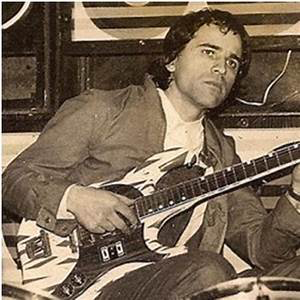
PIERRE MOERLEN’S GONG-DOWNWIND.
Pierre Moerlen’s Gong-Downwind.
Label: Esoteric Recordings.
Format: CD.
In January 1973, Daevid Allen invited drummer and percussionist Pierre Moerlen to join Gong following the departure of Laurie Allan. He agreed and became the group’s new drummer.
However, in June 1973 he was asked by Virgin Records’ founder Richard Branson to play percussion at the premier of Mike Oldfield’s Tubular Bells. When he agreed Pierre Moerlen never knew that he would spend twelve years working with the Mike Oldfield and become his percussionist of choice between 1975 and 1987.
Pierre Moerlen travelled to France in August 1973 Pierre Moerlen where Gong were recording their fourth studio album Angel’s Egg using the Manor Mobile. The album was released in to critical acclaim in December 1973 and nowadays is a regarded as a classic.
During the summer of 1974, Gong recorded You, which was the followup to Angel’s Egg at the Manor, in Oxfordshire. The album was a mixture of fusion, progressive rock, psychedelic rock and space rock and was well received upon its release. However, it was the last album by Daevid Allen’s iteration of Gong.
Having recorded You, Pierre Moerlen left Gong for the first time and joined Les Percussions de Strasbourg. They premiere Karlheinz Stockhausen composition Musik im Bauch on the ’28th’ of March 1975 as part of the Royan Festival. This was very different to music he had recorded with Gong and would go on to record in the future.
Shamal.
In the summer of 1975, Pierre Moerlen was asked to rejoin Gong and co-lead the band with Didier Malherbe and Steve Hillage. Having agreed to rejoin and co-lead the band, Gong began recording their next album.
Pink Floyd’s Nick Mason was drafted in to produce the album which was recorded during December 1975. However, Steve Hillage left having only played on a couple of tracks on the album. Losing one of its co-leaders and such a talented guitarist was a huge blow for Gong. Despite that, Shamal was released in February 1976 and hailed as an ambitious, experimental and sometimes beautiful album where the group flitted between and fused disparate musical genres. However, like previous albums Shamal wasn’t a particular successful album.
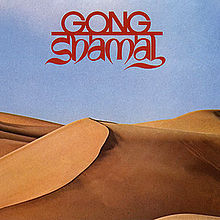
Gazeuse!
Despite that, Gong began work on their seventh studio album Gazeuse! It was recorded at the Manor Studio, in Oxfordshire, with Dennis MacKay producing what was a jazz-driven instrumental album where Pierre Moerlen’s vibes play a prominent part in the album’s sound. The album was released in late 1976 with the title changed to Expresso for its release in America. Just like previous albums, Gazeuse! was well received by critics but didn’t sell in vast quantities. Despite that, the group had a loyal following and were a popular draw when they played live.
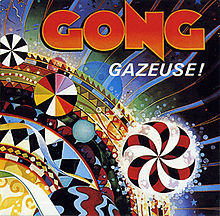
Expresso II.
Gong returns to the studio in July 1977 to begin recording their eighth studio album Expresso II. This time, the sessions took place at the Pye and Matrix Studios, in London with the group coproducing the album with John Wood. The album was completed by August 1978 and was another jazz-driven instrumental album where Pierre Moerlen’s vibes play an important part in the album’s sound. Stylistically and sonically Expresso II was similar to Gazeuse!.
When Expresso II was released in March 1978 it was the second Gong album to showcase their new sound. It was well received by many music critics despite being very different from the group’s earlier space rock sound. When critics were reviving the album they didn’t realise that it marked the end of an era.
Because of contractual reasons Virgin Records had to release Expresso II as a Gong album. However, a few months later the band became known as Pierre Moerlen’s Gong.
Downwind.
The newly named band entered the studio in June 1978 and began working on what was the third since Pierre Moerlen became the group’s co-leader. However, further changes weer afoot and the first album the group released as Pierre Moerlen’s Gong would be different from previous albums.
Pierre Moerlen wrote Crosscurrents, Downwind, Emotions and Xtasea. He also cowrote Aeroplane and What You Know with . The other track was a cover of Jin-go-lo-ba which was written by Nigerian percussionist Babatunde Olatunji. These seven tacks would eventually become Downwind.
When recording began, Pierre Moerlen was producing Downwind and played drums, percussion, concert toms, timpani, vibes, marimba, Fender Rhodes, organ, synths and took charge of the lead vocals. He was joined in the rhythm section by bassist Hansford Rowe and guitarist and vocalist Ross Record. They were augmented by vibraphonist Benoît Moerlen, percussionist François Causse and former Gong saxophonist Didier Malherbe who on the title-track. He was one of several musicians guesting on the album.
Making guest appearances were guitarist Mick Taylor, Steve Winwood who played synths, violinist Didier Lockwood, flautist Terry Oldfield and his brother Mike Oldfield who played bass, guitar, Irish drum and Solina strings. The guest artists and members of Pierre Moerlen’s Gong started recording Downwind in June 1978 and finished the album in September 1978.
When Pierre Moerlen’s Gong released Downwind on February the ‘9th’ 1979, it was the start of a new chapter in the Gong story. Although he had been co-leader of the band for three albums, Downwind was the first where the group was billed as Pierre Moerlen’s Gong. Downwind also saw the group change direction musically on several tracks.
This includes on Aeroplane which opens Downwind. Just like What You Know it’s a short-form pop song which feature vocals Pierre Moerlen. This was the only time the group tried this. While it’s effective on both tracks it was a short-lived experiment that they didn’t repeat.
Crosscurrents was a driving fusion track where the vibes are to the fore. As the track builds, it becomes dramatic, mesmeric, progressive and at times, funky and jazz-tinged. It’s six genre-melting minutes on what’s one of the album’s highlights.
The title-track is a twelve minute progressive rock epic where Pierre Moerlen’s Gong are joined by some familiar faces. Steve Winwood plays keyboards, Mike Oldfield guitar and Didier Malherbe saxophone as the group continue to reinvent their music.
Thunderous drums and percussion open the cover of Jin-Go-Lo-Ba before the vibes enter and are played at breakneck speed. Then there’s the chanted vocals, a myriad of percussion and a blistering, searing rocky guitar which gives way to frantic percussion, joyous harmonies and sweeping, rolling synth. It’s a stunning reinvention of the track and shows another side to the group.
Pierre Moerlen’s shimmering vibes open Emotions which is a slow, wistful and ruminative sounding track. The understated genre-melting arrangement meanders along with group combining classical, folk, jazz and rock to create a quite beautiful, sometimes haunting and filmic track that encourages the listener to reflect and ruminate.
Closing Downwind is Xtasea where drums, subtle percussion and hypnotic vibes combine as the bass prowls and a gypsy violin tugs at the heartstrings. Again, it’s a beautiful combination. Later, a blistering guitar is unleashed and the track is transformed becoming rocky and dramatic. What follows is some of the best guitar playing on the album from bandleader Pierre Moerlen as he ensures that the album closes on a high.
For anyone yet to discover Pierre Moerlen’s Gong, then Downwind is the album to begin with. It’s their most accessible album and features everything from funk, fusion, jazz, pop and progressive rock to rock. During the seven tracks the group and their friends seamlessly switch between and fuse disparate musical genres on what’s a vastly underrated album.
Sadly, Downwind didn’t chart and wasn’t a hugely successful album. The group had a loyal fanbase but some weren’t won over by the new sound. They preferred the space rock sound of Gong. With Pierre Moerlen at the helm the group initially moved in the direction of fusion and then their music continued to evolve on Downwind. The new sound should’ve introduced the band to a much wider audience but sadly, that wasn’t the case.
Downwind is an oft-overlooked album that slipped under the radar when it was released in March 1978, but hopefully the recent reissue by Esoteric Recordings will introduce Pierre Moerlen’s Gong’s hidden gem to the wider audience it so richly deserves.
Pierre Moerlen’s Gong-Downwind.

GEORGE OHTSUKA QUINTET-LOVING YOU GEORGE.
George Ohtsuka Quintet-Loving You George.
Label: Wewantsounds.
Format: CD.
When the George Otsuka Quintet took to the stage at the Nemu Jazz Inn on the ‘19th’ of July 1975 the Japanese bandleader, composer and drummer was thirty-seven and about to record a live album. He was following in the footsteps of Norman Connors, Eddie Henderson and Gary Bartz who had recorded the critically acclaimed live album Dance Of Magic at the same venue.
Once the George Otsuka Quintet knew that the tapes were rolling the group unleashed four stunning performances that became Loving You George. It was released later in 1975 on the Bellwood label which had established a reputation for releasing groundbreaking albums.
Just a few months before the release of Loving You George, Bellwood had released Haruomi Hosono’s landmark album Hosono House. It was the perfect label for such an ambitious album. So was Loving You George which was the fifth album by the George Ohtsuka Quintet. It was led by one of the top drummers in the Japanese jazz scene.
George Ohtsuka was born on April the ‘6th’ 1937 and his breakthrough came in the late-fifties when he became the drummer in Sadao Watanabe’s Cozy Quartet. This was akin to a musical apprenticeship and allowed him to hone his craft and developed into one of Japan’s top drummers.
By the mid-sixties he had formed the George Ohtsuka Trio with bassist Masaoki Terakawa and pianist Hideo Ichikawa. They released their debut album Page 1 in 1967 with Page 2 following in 1968. Later that year, American drummer Roy Haynes and George Ohtsuka Trio collaborated on the album Groovin’ With My Soul Brother.
A year later, in 1969, the George Ohtsuka Trio returned with their third album Last Summer-Page 3. It was the last album the Trio released for four years.
Two years later, in 1971, the George Ohtsuka Quintet released their debut album Sea Breeze on Union Records. That was the only album they released for the label. They signed to the Three Blind Mice label who release their sophomore album Go On in 1972 and In Concert in 1973, That was the year The Trio made their comeback.
The Trio’s first album in four years was another collaboration. This time, Akira Miyazawa and His Groupe and George Ohtsuka Trio recorded Now’s The Time which was released in 1973. It was the last album the Trio released. They contributed two tracks to Drum Battle when it was released by RCA in 1975.
In 1974, Three Blind Mice released the live album Now’s The Time which was recorded at March the ’26th’ 1974 at Toshi Center Hall, Tokyo and featured Isao Suzuki and Sunao Wada With The Tsuyoshi Yamamoto Trio, George Otsuka Quintet +2. This was fitting as George Otsuka Quintet’s next release was a live album.
On the ‘19th’ of July 1975, the George Otsuka Quintet journeyed to the Nemu Jazz Inn where they were about to record the live album Loving You George. By then, the lineup featured drummer George Ohtsuka, bassist Mitsuaki Furuno, keyboardist Fumio Karashima, percussionist Norio Ohno and Shozo Sasaki who switched between tenor and soprano saxophone. This was the lineup of the George Otsuka Quintet who took to the stage.
That night, the concert was produced by Yasuyuki Koike who watched on as the George Otsuka Quintet unleashed a barnstorming performance switching between and fusing jazz, rock, funk, fusion, jazz-funk and soul. It was ambitious album that even heads in the direction of modal jazz and post bop. The audience were lucky to witness the George Otsuka Quintet at the top of their game on a four track set.
Rapturous applause greets the George Otsuka Quintet as they take to the stage and open Loving You George with the Fumio Karashima composition Love Island. It’s a slow burner with the piano playing a leading role before the dark, broody and mesmeric bass is joined by the drums and a wistful soprano saxophone. Around 3:23 the tempo increases and the arrangement sweeps and breezes along. Later, the saxophone is played with power, passion and freedom while George Otsuka powers his way around the kit and Fumio Karashima jabs and stabs his piano keyboard. He plays a starring role in the sound and success of the track he wrote while Shozo Sasaki plays a supporting role on this musical amuse bouche.
Steve Kuhn’s Something Everywhere bursts into life and is driven along by a surging drum groove. It’s accompanied by a fleet-fingered bass solo, wailing, squealing soprano saxophone and shimmering keyboards that epitomise the fusion sound. The Quintet is in the groove with thunderous drums and rolling bass driving and powering the arrangement along. Each member of the band plays their part in this near eleven minute breathtaking jam.
There’s no stopping the quintet on Miles Mode which was written by John Coltrane, and they soon pickup where they left off on Something Everywhere. The band play with speed, fluidity and accuracy racing along and produce a new flawless performance as they play as one. George Otsuka’s upbeat swing then gives way to a lengthy drum solo midway through the track. It’s by far the best on the album and is shows why by 1975 he was regarded as one of Japan’s top drummers. Quite simply it’s a masterclass from a drummer at the peak of his powers.
A cover of Minnie Riperton’s Loving You closes Loving You George. The only problem covering this classic song is how does the Quintet replace her spellbinding five octave vocal? In its place are Fumio Karashima’s bank of keyboards. They take centrestage during this laidback cover a quite beautiful soul classic. Meanwhile the bandleader pounds a his drum kit and bassist Mitsuaki Furuno’s considered and confident cover. However, it’s the keyboards that steal the show and play a leading role as the Quintet reinvent a classic and close the concert on a high.
Forty-six years after the original release of Loving You George Wewantsounds reissued the album on CD. It’s a welcome reissue and a reminder of the George Ohtsuka Quintet at their creative zenith during a four track set at the legendary Nemu Jazz Inn.
By July 1975, George Ohtsuka was regarded as one of the top jazz drummers in Japan. That comes as no surprise given his performances on Loving You George where he unleashes several musical masterclasses. However, the rest of the George Ohtsuka Quintet play their part on Loving You George. They’re a talented and versatile group who seamlessly switch between and combine genres on the other great live album recorded at the Nemu Jazz Inn, Loving You George.
George Ohtsuka Quintet-Loving You George.
GENE RUSSELL-NEW DIRECTION.
Gene Russell-New Direction.
Label: Real Gone Music.
Format: CD.
In 1969, pianist Gene Russell and percussionist Dick Schory founded Black Jazz Records in Oakland, California. The nascent label’s raison d’être was “to promote the talents of young African American jazz musicians and singers.” This was only part of their vision for their new label.
They were determined that Black Jazz Records would released an alternative to what they saw as the old school jazz that was popular at the time. They wanted to release an alternative to traditional jazz, and this included albums that featured political and spiritual influenced music. However, spiritual jazz was just part of the Black Jazz Records’ story.
Between 1971 and 1975 Black Jazz Records released twenty albums that included everything from free jazz and funk to soul-jazz and spiritual jazz.
Although the Oakland-based released twenty albums during the five years it was in existence, this was a lot more albums than similar sized labels. That was no surprise.
Before Dick Schory cofounded Black Jazz Records he had founded the Chicago-based Ovation Records, which was a successful country and western label. Not only was it providing the funding for Black Jazz Records, it was also distributing its releases. This gave the label a helping hand and meant it had an edge on its competitors.
Other labels looked on enviously as the Black Jazz Records began. The new kid in town had a bigger budget that its competitors and had a distribution deal in place from day one. Label owners watched on wondering what Black Jazz Records’ first release would be?
Fittingly, Black Jazz Records’ first release was Gene Russell’s sophomore album New Direction which was released in 1971. It was the first of five albums the label released during its first year in existence.
After cofounding Black Jazz Records much of Gene Russell’s time was spent running the nascent label. Despite this, he still found the time to write, record and release New Direction which was the followup to his 1969 debut album Up and Away. The pianist led a trio on an album of instrumental easy listening which was released by Decca Records. His sophomore album found Gene Russell’s music moving in a New Direction.
Just like his debut album New Direction was an album of cover versions. Gene Russell covered Neal Hefti’s Black Orchid, Richard Carpenter’s Hitting The Jug, Ann Ronell’s Willow Weep For Me and Eddy Harris’ Listen Here. They were joined by Bronislaw Kaper and Ned Washington’s On Green Dolphin Street, Horace Silver’s Silver’s Serenade, Henry Crosby, Stevie Wonder and Sylvia Moy’s My Cherie Amour plus Gene Harris’ Making Bread. These tracks became New Direction.
Joining Gene Russell who recorded, arranged, produced and played piano on New Direction were drummer Steve Clover, bassists Henry Franklin and Henry Glover plus Tony William on congas. The recorded the eight tracks that became the first album released on Black Jazz Records, New Direction.
When New Direction was released the album was well released by critics who were excited about Gene Russell and Dick Schory’s groundbreaking new label. Here was a label was promising to release the latest jazz releases. It was a case of out with the old and in with the new at Black Jazz Records. This began with Gene Russell’s sophomore album New Direction which launched the new label.
Sadly, when New Direction was released it wasn’t the commercial success that Gene Russell had hoped. That was despite being promoted properly and the label having a distribution deal in place. It was disappointing start for Gene Russell and Dick Schory’s new label.
When New Direction is best described as mostly a straight-ahead piano album. It features a trio that’s led by pianist Gene Russell. However, on some tracks the trio are augmented by conga player Tony William. Sometimes, the music heads in the direction of modal jazz and soul-jazz, while other times the music is sweet, funky and soulful. Gene Russell plays the piano with an enviable fluidity but for much of the album ensures the music swings. The rest of the band follows his lead throughout New Direction.
It’s an album of familiar songs, old favourites and standards. Gene Russell sets the bar high with his cover of Black Orchid which opens the album is one of the highlights. So is Hitting The Jug which follows hard on its heels. Other highlights include Listen Here, a stunning remake of Silver’s Serenade and Making Bread which closes the album on a high. Even the standard Willow Weep For Me takes on a new meaning and heads in a New Direction thanks to Gene Russell and his multitalented band who had the honour of playing on the first album released by Black Jazz Records.
New Direction was a vast improvement on Gene Russell’s debut album Up and Away, which had been released two years earlier in 1969. This was the start of a new chapter for Gene Russell and he followed New Direction up with Talk To My Lady in 1973. Sadly, both albums failed to find the audience they deserved and were underrated by jazz aficionados.
It was only in the early nineties that a new generation of DJs and record collectors rediscovered the twenty albums that Black Jazz Records released between 1971 and 1975. This included the first album that the label released Gene Russell’s New Direction. It was the one that got away for Black Jazz Records.
Nowadays, New Direction is the most sought after album of the twenty albums that Black Jazz Records released between 1971 and 1975. Very few copies of the album come up for sale and when they do, copies of New Direction change hands for large sums of money. However, Real Gone Music has just reissued Gene Russell’s sophomore album which found the pianist leading a talented and versatile band as his music moved in a New Direction on what’s one of his finest albums.
Gene Russell-New Direction.

ART BLAKEY AND THE JAZZ MESSENGERS-MOANIN’.
Art Blakey and The Jazz Messengers-Moanin’.
Label: Blue Note Records.
Format: LP.
Although Philly-born tenor saxophonist Benny Golson’s tenure with The Jazz Messengers was short-lived, he still played an important part in the development and history of the group. He joined in 1958, and during the summer, helped Art Blakey recruit three new Messengers.
They were all from Philly, and included bassist Jymie Merritt, pianist Bobby Timmons and trumpeter Lee Morgan who joined Benny Golson in the front line. This latest lineup of The Messengers made their recording debut on what would become a classic album, Moanin’.
It was also Art Blakey and The Jazz Messengers debut album for Blue Note Records. The group had led a nomadic existence for the past few years recording for a number of different labels including Columbia, Pacific Jazz, Cadet, Vic Records, Jubilee, Atlantic and Bethlehem. Now Art Blakey and The Jazz Messengers had signed to jazz’s premiere label and were about to record one of the most important albums of their career.
On the ‘30th’ of October 1958, Art Blakey and The Jazz Messengers journeyed to the original Van Gelder Studio, at 25 Prospect Avenue in Hackensack, New Jersey. By then, Benny Golson was The Jazz Messengers’ musical director and chief composer. He wrote Are You Real, Along Came Betty, The Drum Thunder Suite and Blues March. These compositions plus Bobby Timmons’ Moanin’ and a cover of Come Rain or Come Shine were recorded by Rudy Van Gelder and produced Alfred Lion and eventually became Moanin’.
After the recording of Moanin, Art Blakey and The Jazz Messengers embarked upon a European tour. During November and December 1958, they wowed and won over audiences across Europe with a series of spellbinding performances. However, all wasn’t well behind the scenes and there were personality clashes during the tour. When Art Blakey and The Jazz Messengers retuned home, Benny Golson left the group.
Although he had only been a Messenger for a few months, he had played on a future jazz classic and ensured the band stayed relevant in spite of the growing popularity of the soul-jazz movement. However, Benny Golson wanted to be part of a more structured band, and in 1959 formed The Jazztet with Art Farmer. By then, Moanin’ had been released, and Hank Mobley who was former Messenger had rejoined the group.
Meanwhile, Moanin’ was released to widespread critical acclaim in January 1959. Critics were won over by what a captivating combination of old-fashioned gospel and blues which Art Blakey and The Jazz Messengers combined with what was their innovative and sophisticated take on modern jazz. The result was a potent and powerful combination and Moanin’ featured some of the finest music that Art Blakey and The Jazz Messengers would ever record.
Side One.
Moanin’ opens with the title-track is mellifluous and melodic bluesy shuffle that’s also an early example of soul-jazz. Art Blakey and The Jazz Messengers are at the top of their game and set the bar high for the rest of this future classic album.
Straight away, there’s an almost wistful sound to Are You Real? Especially the horns who pose the question and play a starring role while the rhythm section drive the arrangement along. Then when the solos arrive, the rest of the band enjoy the opportunity to shine. Bobby Timmons fingers dance across the keyboard, Art Blakey powers his way round his drum kit enjoying the opportunity to showboat before the baton passes to bassist Jymie Merritt who plays a fleet-fingered solo. The result is a propulsive tracks that’s a mixture of beauty and melancholy.
Closing side one of Moanin’ is Along Came Betty where the tempo drops on this lyrical track that’s much more melodic and expressive. It’s the nearest thing to a ballad on the album and is without doubt one of the highlights.
Side Two.
The Drum Thunder Suite was written by Benny Golson especially for Art Blakey. This three part suite features Drum Thunder, Cry A Blue Tear and Harlem’s Disciples and was a showcase for the legendary drummer and bandleader. Just like the rest of the album there’ an intensity to his playing as he unleashes on of his finest performance on the album. Later, the suite would become a staple of his live sets.
Blues March is another of the Benny Golson composition on the albums. From the get-go it sounds as if he had been influenced by the music of New Orleans’ marching bands. Art Blakey’s drums plays a leading role in the sound and success of this truly memorable track.
Closing Moanin’ is the standard Come Rain Or Come Shine. It’s been reinvented and features a brisk, lilting arrangement. Initially the horns play a leading role while the piano plays a supporting role. Soon, it’s all change and Bobby Timmons jabs and stabs at the keyboard picking out the melody before the drums signal the arrival of the saxophone. It’s played with power and freedom revealing a joyous sound that soars above the arrangement before Jymie Merritt plays a solo and then the band are reunited and continue to reinvent this standard which closes this classic album.
Sadly, this lineup of Art Blakey and The Jazz Messengers was short-lived and the only album they recorded was Moanin’. Benny Golson left before the release of Moanin’ and was replaced by Hank Mobley. However, he was just a short-term replacement.
By the time The Big Beat was recorded on March the ‘6th’ 1960 Wayne Shorter was the latest tenor saxophonist to join The Messengers. The group’s lineup was fluid and that would always be the case.
Who knows what would’ve happened if Art Blakey and The Jazz Messengers had continued to record with the same lineup that features on Moanin’? With Benny Golson as musical director, chief composer and tenor saxophonist the group may have gone on to release a string of groundbreaking classic albums. Sadly, personality clashes meant that Benny Golson left after Art Blakey and The Jazz Messengers toured Europe in December 1958 and it’s a case of what might have been.
Surely even Art Blakey must have wondered what would’ve happened to the group he cofounded if Benny Golson had continued to play a leading role? However, the tenor saxophonist played a huge part in the sound and success of Moanin’ which nowadays is regarded as a jazz classic and one of the greatest hard bop albums ever released.
For newcomers to both jazz and hard bop Moanin’ is an album that’s a vital part of any collection and features the finest lineup of Art Blakey and The Jazz Messengers at the peak of their considerable powers. It’s an album the legendary bandleader and drummer never surpassed during what was a long and illustrious career leading a band that featured many of the future giants of jazz.
Art Blakey and The Jazz Messengers-Moanin’.
CULT CLASSIC: HORACE SILVER QUINTET-FURTHER EXPLORATIONS BY THE HORACE SILVER QUINTET.
Cult Classic: Horace Silver Quintet-Further Explorations By The Horace Silver Quintet.
By 1950, composer and pianist Horace Silver was twenty-two and living in Hartford, Connecticut, where he had formed his own trio. They were already a familiar sight in the local clubs and are were quickly establishing a reputation as one of the up-and-coming jazz combos.
That was why when Stan Getz was booked to play in one of the clubs in Hartford, Horace Silver’s trio was booked to back him. The saxophonist was so impressed by the trio that he hired them to accompany him on tour. This was the big break that Horace Silver had been looking for.
The trio spent the rest of 1950 touring with Stan Getz, and in December he had a session booked to record a quartet album. This was Horace Silver’s recording debut but he wasn’t fazed and his career continued on an upward spiral. That was despite being replaced in Stan Getz’s group after a year.
Horace Silver moved to New York where he worked as a session musician. During this period, he established a reputation as a gifted composer and his bluesy piano playing was in demand. He worked with Lester Young, Coleman Hawkins and Lou Donaldson who he credited with helping develop his understanding of bebop.
In 1952, Lou Donaldson had signed to Blue Note Records and was about to record his debut album. It was a quartet recording at Van Gelder Studio that featured drummer Art Taylor, bassist Gene Ramey and Horace Silver. Little did he know how important a session this would be.
Later in 1952, Lou Donaldson was scheduled to record another quartet album for Blue Note Records. It was a slightly different lineup that made their way to the Van Gelder Studio. Art Taylor had been replaced by Art Blakey. However, someone else was missing…Lou Donaldson. The saxophonist had withdrawn from the session which presented a problem for Alfred Lion who had booked the studio. He offered Horace Silver the opportunity to record a trio album. History had just been made.
Horace Silver would go on to spend twenty-eight years with Blue Note Records. During this period, the bandleader recorded thirty-six studio albums and three live albums. This includes Further Explorations By The Horace Silver Quintet.
Having made his recording debut, Horace Silver divided his time between his nascent solo career and his work as a sideman. His services were in demand and in 1953 he played on sessions for albums by Sonny Stitt, Howard McGhee and Al Cohen. The following year, 1954, he worked with some of the biggest names in jazz including Art Farmer, Miles Davis and Milt Jackson. Horace Silver also won Down Beat critics’ new star award for piano players in 1954, and was a member of the Modern Jazz Quartet at the first ever Newport Jazz Festival when he stood in for John Lewis. The twenty-six year old had come a long way in a short space of time.
Whilst he was living in New York, Horace Silver cofounded the Jazz Messengers with Art Blakey. In late 1954 and early 1955 the nascent group recorded two ten inch albums under Horace Silver’s name. They were later repackaged and reissued as Horace Silver and The Jazz Messengers in October 1956. It featured The Preacher which gave Horace Silver his first hit single.
Horace Silver was also a member of the Art Blakey Quintet when they recorded A Night at Birdland Volume 1. It was originally released as a ten inch album in 1954 and repackaged and reissued in 1956. It’s regarded as an important album in the development of hard bop.
So were At The Cafe Bohemia, Volumes 1 and 2 which Horace Silver recorded during his time with The Jazz Messengers. These albums feature the original lineup of the group and nowadays, are regarded as jazz classics. However, by the time the albums were released in 1956, Horace Silver had left The Jazz Messengers.
The last time Horace Silver recorded with The Jazz Messengers was in May 1956. Later that year, he left the band. He had been a Jazz Messenger for eighteen months and recored several important and influential albums during that period. However, towards the end of his time with the band, some of the members were becoming increasingly reliant on heroin. This was something he didn’t approve of and wanted no part of, so he left The Jazz Messengers and formed the Horace Silver Quintet.
This made sense for Horace Silver. While he was still a Jazz Messenger he had been contacted by club owners who had heard his albums and wanted to book him. Joining him in the first lineup of the Horace Silver Quintet was drummer Louis Hayes, bassist Doug Watkins, trumpeter Art Farmer and tenor saxophonist Hank Mobley. However, the lineup was fluid and changed over the next few years.
Silver’s Blue.
By the time that Silver’s Blue was recorded on July the ‘2nd,’ ‘17th’ and ‘18th’ of July 1956 the group’s lineup had evolved. Only Hank Mobley and Doug Watkins reminded from the original lineup. During the three day session, they were joined by drummers Art Taylor and Kenny Clarke and trumpeters Joe Gordon and Donald Byrd. They recorded a total of seven tracks which were produced by Carl Lampley.
When Silver’s Blue was eventually released in August 1957 and was an innovative album of funky jazz. It was an album that was ahead of its time which the critics didn’t understand. They gave the album mixed reviews and it was only much later that the album’s importance was recognised.
6 Pieces Of Silver.
Three months after the Silver’s Blue session, the Quintet made their way to Van Gender Studio on November the ‘10th’ 1956. The lineup was drummer Louis Hayes, bassist Doug Watkins, tenor saxophonist Hank Mobley and trumpeter Donald Byrd who played on five of the seven tracks. This was essentially the previous year’s lineup of The Jazz Messengers. This multitalented and versatile combo were joined by engineer Rudy Van Gelder and producer Alfred Lion. During the session, the Quintet continued to develop their sound and recorded a track that launched Horace Silver’s career.
This was the Horace Silver composition Señor Blues which went on to become a jazz standard. He also went on to write lyrics which were recorded for the first time in 1958 by the Quintet with vocalist Bill Henderson. However, when 6 Pieces Of Silver was released in January 1957 it was to critical widespread critical acclaim. This time, the Horace Silver Quintet had over critics with an album of hard bop. It was the start of a fruitful period for Horace Silver.

The Stylings Of Silver.
On May the ‘8th’ 1957 the Horace Silver Quintet journeyed to Van Gelder Studio to record what would become The Stylings of Silver. By then, the Quintet and their charismatic leader were a crowd pleasing combo who were already a popular draw in jazz. No wonder with such a talented lineup.
Horace Silver was joined by drummer Louis Hayes, bassist Teddy Kotick, tenor saxophonist Hank Mobley and trumpeter Art Farmer. Five of the six tracks were written by Horace Silver with My One and Only Love the only cover version. Just like the scions for 6 Pieces Of Silver, it was engineered by Rudy Van Gelder and produced by Alfred Lion.
When The Stylings Of Silver was released later in 1957, this album of swinging hard bop was well received by critics. It was a consistent and enjoyable album of finger popping and toe tapping hard hop that showcased Horace Silver’s skills as a composer, bandleader and pianist. He and his Quintet were going from strength-to-strength.
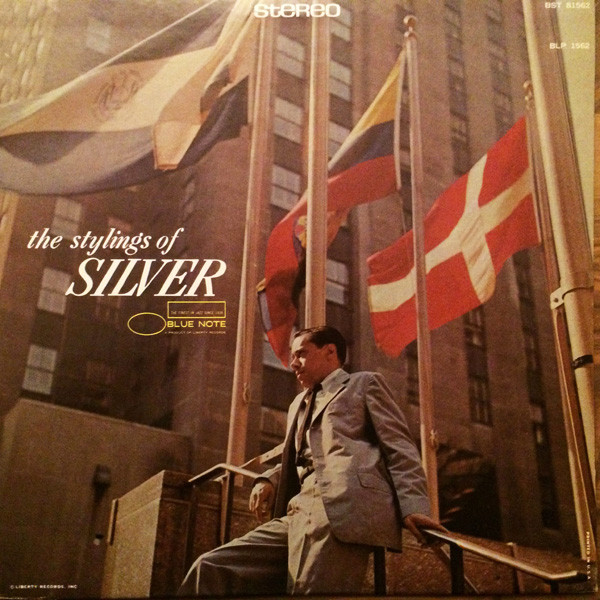
Further Explorations By The Horace Silver Quintet.
Another eight month passed before the Horace Silver Quintet returned to Van Gelder Studio on January the ’13th 1958. By then, Horace Silver was a successful bandleader and composer and was no longer working as a sideman. This was unusual as many successful jazz musicians still worked as sidemen. It was another source of income and allowed them to keep up with new developments in jazz. That was something that Horace Silver did throughout his career as his music evolved and he recorded everything from bebop and hard bop to soul-jazz and fusion.
When he recorded Further Explorations By The Horace Silver Quintet he was joined by drummer Louis Hayes, bassist Teddy Kotick, tenor saxophonist Clifford Jordan and trumpeter Art Farmer. Alfred Lion took charge of production and Rudy Van Gelder engineered the album which eventually feathered six tracks.
This included five Horace Silver compositions, The Outlaw, Melancholy Mood, Pyramid, Moon Rays and Safari which had been released as Horace Silver’s debut single in 1952. They were joined by a cover Harold Arlen and Ted Koehler’s Ill Wind on Further Explorations By The Horace Silver Quintet.
Two months after the recording session, Blue Note Records released Further Explorations By The Horace Silver Quintet was released in March 1958. The reviews of the album were positive with critics won over by another substantial and impressive album of hard bop that revealed the considerable talents and versatility of the Quintet. While the album was slightly more restrained than previous albums it had one thing in common…quality.
Side One.
Further Explorations By The Horace Silver Quintet featured a band that was firing on all cylinders from the opening bars of The Outlaw. The rhythm section power the arrangement along, and it sashays along fusing elements of reggae and bebop. Meanwhile, the horns are to the fore and play a starring role. Horace Silver is no slouch and gives an impressive performance during the solos and as he leads the Quintet on this irresistible future hard bop classic.
Very different is Melancholy Mood a much more understated and quite beautiful piano-led track which allows time to reflect and contemplate.
There’s a degree of urgency as the horns unite and open Pyramid. They’re joined by stabs of dramatic piano before the arrangement unfolds and there’s a fluidity to the trumpet and then the sultry tenor saxophone as they soar above the arrangement. Meanwhile, drummer Louis Hayes and Horace Silver piano play with freedom. He goes from jabbing and stabbing the piano to adding a slinky accompaniment before his fingers dance across the keyboard during a fleet fingered solo. He’s then joined by the horns and they reunite and play a starring role as he once again jabs and stabs his keyboard before the this Horace Silver composition reaches a crescendo and closes side one.
Side Two.
Initially, Moon Ray is slow and mournful and at times dramatic as it unfolds. Partly this is because of the horns which add a mournful sound while the drums and piano add a degree of drama. Soon, it’s all change as the Quintet kick loose and it’s as if the sun has come out after a thunderstorm as the horn carries the melody. Clifford Jordan sounds as if he’s enjoying himself before the baton passes to Art Farmer who unleashes one of his best solos. So does Horace Silver whose fingers effortlessly glide across the keyboard playing with speed on accuracy before he’s joined by the rest of band. By now, the joyous sounding arrangement is swinging. That’s until the last minute as the tempo drops but the quality remind on a track that would become a Horace Silver classic.
Safari bursts into life as scrabbling horns inject urgency as drums pound, hi-hats hiss and the piano punctuate the arrangement. The quintet is like a boy racer as they go from nought to 100 in the blink of an eye. It’s a case of sit back and enjoy the ride as play with urgency and invention on a track that epitomises everything that’s good about hard bop circa 1958.
Closing Further Explorations By The Horace Silver Quintet is a cover of the standard Ill Wind. The tempo drops and straight away, the arrangement seems to hark back to earlier era. The melancholy horns are to the fore with the piano playing a supporting role Drummer Louis Hayes adds occasional bursts of drama and with bassist Teddy Kotick drives the arrangement along. Meanwhile, Horace Silver showcases his versatility his piano stuttering before becoming slinky and fluid. He then joins the sultry, late night horns as the Quintet take their leave and close the album with a truly memorable track.
When Further Explorations By The Horace Silver Quintet was i n March 1958, it was well received by critics. However, the album was never regarded as one of the Quintet’s classic. By then, they had released their first classic, 6 Pieces of Silver. Over the next few years, the Quintet would release Blowin’ The Blues Away, The Tokyo Blues, Silver’s Serenade and Song For My Father which nowadays are regarded as jazz classics.
Meanwhile, Further Explorations By The Horace Silver Quintet has been reevaluate by critic and while it’s not regarded as a classic it’s an oft-overlooked and underrated album. There’s not a weak track on the album where the Quintet are firing on all cylinders as they showcase their talent and versatility. This includes tenor saxophonist Clifford Jordan whose playing was sometimes underrated. He plays a starring role on Further Explorations By The Horace Silver Quintet where he joins forces with Art Farmer to create a potent front line. They’re part of a Quintet where there’s no weak links. The result is a stunning, soulful and swinging album of hard bop that for too long was overlooked and underrated, but thankfully that’s no longer the case with Further Explorations By The Horace Silver Quintet.
Cult Classic: Horace Silver Quintet-Further Explorations By The Horace Silver Quintet.
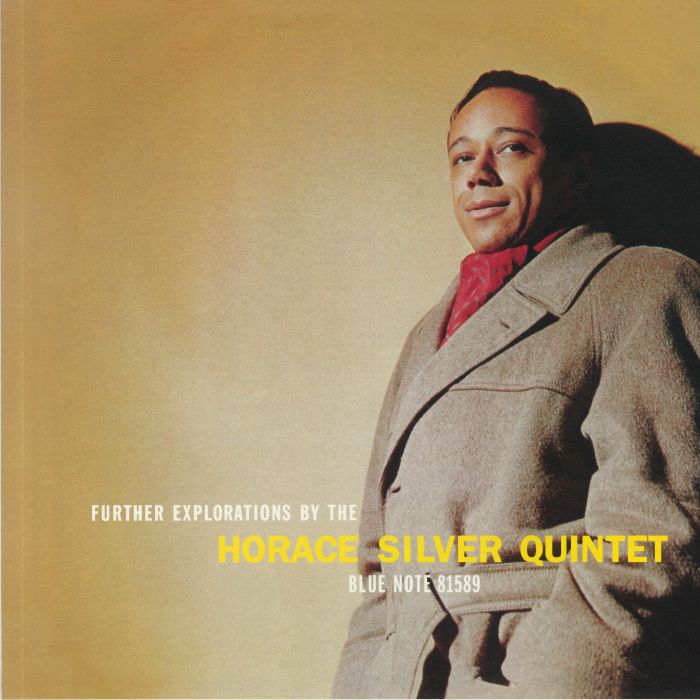
CLASSIC ALBUM: DR JOHN-IN THE RIGHT PLACE.
Classic Album: Dr John-In The Right Place.
Very few musicians or bands can be accurately described as an overnight success. That is something that hardly ever exists except in the minds of a few tabloid journalists . The reality is that most bands need to do the hard yards and hone their sound before commercial success comes their way. That was the case with Dr John.
Commercial success eluded him until he released his fourth album The Sun, Moon and Herbs on August the ’31st’ 1971. That was despite him having already released future classics like Gris Gris and Babylon. Sadly, neither album was a commercial success and it was only much later that critics reappraised both albums and they started to find a wider audience. However, The Sun, Moon and Herbs fared better spending five weeks on the US Billboard 200 peaking at 184 . It was a start for Dr John, and something he could build on.
Things improved when Dr John’s Gumbo was released on April the ’20th’ 1972, and spent eleven weeks on the US Billboard 200 reaching reached 112. Gradually, Dr John’s music was starting to find the wider audience it deserved.
When he released his sixth album In the Right Place on the ‘25th’ of February 1973 it was a gamechanger and transformed Dr John’s career. Not only was did it become his biggest selling album, it featured his biggest hit single which became one of his classic songs. Those that were unaware of the Dr John story and didn’t know that the thirty-one year old had been a professional musician since he was thirteen.
The future Dr John was born Malcolm John “Mac” Rebennack Jr, on November the ‘20th’ 1940, in New Orleans, Louisiana. He grew up in the Third Ward of New Orleans, and music was always around him.
His father Malcolm John Rebennack ran an appliance shop in the East End of New Orleans, where he repaired radio and televisions and sold records. He introduced his son to the music of King Oliver and Louis Armstrong. However, one of the people who inspired Mac Rebennack was his grandfather who he heard singing minstrel songs. So did hearing his aunts, uncles, cousins and sister playing the piano. Despite this, Mac Rebennack wasn’t inspired to take music lessons.
This only came later when he was a teenager. He also joined a choir, but was soon asked to leave. However, over the next few years Mac Rebennack learnt to play the guitar and later piano, and through his father’s contacts in the local music scene was soon playing alongside some well known names including Guitar Slim and Little Richard. This was just the start for Mac Rebennack.
When he was thirteen, he met Professor Longhair and he was instantly impressed by the flamboyant showman. Mac Rebennack was soon playing alongside his new hero, and this was the start of his professional career.
Around 1955 or 1956, Mac Rebennack made his debut in the recording studio when he was signed as a singer and songwriter by Eddie Mesner at Aladdin Records. The future Dr John’s career was underway and towards the end of 1957 with the help of Danny Kessler, he joined the musician’s union. That was when he considered himself to be a professional musician.
By the time he was sixteen, Mac Rebennack had been hired by Johnny Vincent at Ace Records as a producer. This led to him working with Earl King, James Booker and Jimmy Clayton. This was all good experience for the young, up-and-coming musician
Despite his new career, Mac Rebennack was still a student at Jesuit High School. This didn’t stop him playing in night clubs and forming his first band The Dominoes. The Jesuit fathers weren’t happy with Mac Rebennack’s lifestyle and issued him with an ultimatum. He was to either stop playing in nightclubs or leave the school. Not long after this, he was expelled from the school. It turned out to be the best thing that happened to him as he was able to concentrate on music full time.
By the late-fifties, Mac Rebennack was playing with various bands in and around New Orleans. This included his own band Mac Rebennack and The Skyliners. However, the young bandleader had also embarked upon a career as a songwriter.
In 1957 Mac Rebennack cowrote his first ever rock ’n’ roll song Lights Out. It was recorded by New Orleans based singer Jerry Byrne, and released on Specialty Records later in 1957 and give him a regional hit.
Two years later, in 1959, Mac Rebennack also enjoyed a regional hit single when he released Storm Warning, a Bo Diddley inspired instrumental on Rex Records. This was the first hit he enjoyed in a long, illustrious and eventful career.
After Storm Warning, Mac Rebennack and Charlie Miller joined forces and recorded singles for various local labels. This included Ace, Ron, and Ric. They continued to release singles until Charlie Miller decided to move to New York to study music. Mac Rebennack stayed in the Big Easy and continued his career.
Around 1960, Mac Rebennack was playing a gig in Jacksonville, Florida, when his career was changed forevermore. That night, his ring finger on his left hand was injured by a gun shot during an incident. This was a disaster for a right handed guitarist and when he recovered he made the switch to bass guitar. However, after a while Mac Rebennack switched to the instrument he made his name playing, the piano.
Soon, Mac Rebennack had developed a style that was influenced by Professor Longhair who he had met when he was thirteen. It looked as if this was a new chapter in Mac Rebennack’s musical career.
That wasn’t the case and Mac Rebennack ended up getting involved in the dark underbelly of The Big Easy. He was using and selling illegal drugs and at one point, running a brothel. It was almost inevitable that Mac Rebennack was going to have a brush with the law.
He did. In 1963, when Mac Rebennack was arrested on drug charges and sentenced to two years in the Federal Correctional Institution, in Fort Worth, Dallas. By the time his sentence ended and he was released in 1965, New Orleans was a different place.
There had been a campaign to rid the city of its clubs, which meant that musicians like Mac Rebennack found it hard to find work. That was why he decided to move to LA where he knew he could find work as a session musician.
It turned out to be a good decision, and it wasn’t long before Mac Rebennack was one of the first call session musicians in LA. That was the case for the rest of sixties and the seventies. He was also a member of the legendary Wrecking Crew and worked with some of the biggest names in music. This was the new start Mac Rebennack had been looking for when he left New Orleans.
Growing up Mac Rebennack had developed an interest in New Orleans voodoo. This was something he revisited during his early years in LA when he began to develop the concept of Dr John, which initially he thought could be a persona for his friend Ronnie Barron. The concept was based on the life of Dr John, a Senegalese prince, a witch doctor, herbalist and spiritual healer who travelled to New Orleans from Haiti. He was a free man of colour who lived on Bayou Road, and claimed to have fifteen wives and over fifty children. It was believed Dr John also kept a variety of lizards, snakes, embalmed scorpions as well as animal and human skulls, and sold gris-gris, voodoo amulets which were meant to protect the wearer from harm. This Mac Rebennack incorporated into the project he was working on for Ronnie Barron.
Soon, Mac Rebennack had decided to write, produce and play on an album and stage show based on his concept with Dr John emblematic of New Orleans’ heritage. It was meant to feature Ronnie Barron. However, when he dropped out of the project Man Rebennack took over the role and adopted the identity of Dr John. This was a turning point in the life and career of the man born Mac Rebennack.
Dr John became the name that he found fame as and won five Grammy Awards. However, that was still to come.
Having adopted the moniker Dr John,The Night Tripper he was signed by Atco Records and recorded his debut album Gris Gris. It was his his own “voodoo medicine” and marked the start of what’s now regarded as a golden era for Dr John.
Gris Gris.
When a copy of Dr John’s debut album Gris Gris, which was sent to Atlantic Records’ founder Ahmet Ertegun he disliked the album so much, that he was reluctant to even release the album and said: “how can we market this boogaloo crap?” This wasn’t the response that Dr John had been hoping when he recorded Gris Gris which was a combination of psychedelia, blues, free jazz, R&B, soul, funk, jazz. Add to this psychedelic stew the authentic music of the melting pot that is New Orleans and the voodoo image that Dr John had carefully cultivated and Gris Gris was like no other album that Atlantic Records had released. That presented the label with a huge problem.
Atlantic Records’ PR department had idea to promote an album like Gris Gris, as they had no cultural reference points, nothing to compare the album to. Despite the best efforts of Atlantic Records PR department, when Gris Gris was released on January the ’22nd’ 1968 and introduced the world to Dr John The Night Tripper, it failed to trouble the charts and neither critics nor record buyers understood Dr John’s groundbreaking debut album. However, like so many albums that fail to find an album on their release, Gris Gris was later reappraised and belatedly, was recognised as a seminal album that was the start of a rich vein of form from Dr John.
Gris Gris was the start of a six-year period when Dr John could no wrong, and released seven innovative albums that are among the his finest work.
Babylon.
This included his sophomore album Babylon on January the ’17th’ 1969. It was a powerful, cerebral and innovative genre-melting album which socially had much in common with Dr John’s debut album Gris Gris.
Sadly, critics didn’t ‘get’ Babylon and the album which failed commercially. However, just like Gris Gris, Babylon was later reappraised by critics and nowadays is regarded as one of his finest albums and a minor classic.
Remedies.
Following the commercial failure of Babylon, things went from bad to worse for Dr John, before he could begin work on his third album Remedies. This started when a deal went south, and he was arrested by the police and ended up in jail. It was a worrying time for Dr John who was parole, and if he ended up with a parole violation, he knew he might end up in the infamous Angola jail. That didn’t bare thinking about, and already Dr John was desperate to get out of the local jail. However, he needed someone to post bail, so contacted his managers who he remembers: “were very bad people.” This proved to be an understatement.
Not long after this, Dr John’s managers had him committed to a psychiatric ward, where he spent some time. By then, it was obvious to Dr John that his managers were no longer playing by the rules. All he wanted to do was make music, and everything that had happened recently were nothing to do with music. Instead, it was all connected to Dr John’s increasingly chaotic lifestyle, which made it all the more frustrating for those that realised just how talented the Gris Gris Man was.
Eventually, having managed to put his problems behind him, Dr John wrote the six tracks that became Remedies using his real name Mac Rebennack. Among the tracks Dr John had written was What Goes Around Comes Around which later became a favourite during his live shows and Mardi Gras Day which paints pictures of New Orleans when it comes out to play. Very different was Angola Anthem which was inspired by a friend of Dr John’s who had just been released from Angola, the Louisiana State Penitentiary after forty years. Dr John paid tribute to his friend with an eighteen minute epic that took up all of side two of Remedies. It was produced by one of the most successful producers of the day.
Although Harold Battiste had produced Gris Gris and Babylon, he was replaced by Tom Dowd and Charles Greene who were tasked with transforming Dr John’s career. However, although Tom Dowd was enjoying the most successful period of his career, he had never worked with anyone like Dr John.
When Remedies which was released in the spring of 1970, just like his two previous albums, critics didn’t seem to understand Remedies, which was credited to Dr John The Night Tripper. Remedies was another ambitious album of genre-melting, voodoo-influenced album where Dr John The Night Tripper through everything from psychedelia, blues, R&B, soul, funk and jazz into the musical melting pot and gave it a stir to create an album where the music was mysterious, otherworldly and haunting.
By the time Remedies was released on April ‘9th’ 1970, some FM radio stations had picked up on the album, and were playing it on their late shows. Despite the radio play Remedies had received, the album never troubled the charts, and it was only much later that record buyers realised that they had missed out on another important and innovative album from Dr John.
The Sun, Moon and Herbs.
Despite Dr John’s first three albums failing to find an audience, many of his fellow musicians were fans of his music, and were only too happy to feature on his fourth album The Sun, Moon and Herbs. This included Eric Clapton, Mick Jagger, Bobby Whitlock, Graham Bond, Carl Radle, Jim Gordon and Doris Troy. They were joined by The Memphis Horns as Dr John and Charles Greene took charge of production.
They were responsible for a dark and swampy sounding album that is rich in imagery and paints of New Orleans on a hot, sticky night as thunder crackles and rumbles in the distance like the drums on The Sun, Moon and Herbs. When it was released on August the ’31st’ 1971, still critics struggled to understand Dr John’s music, but this time, The Sun, Moon and Herbs which featured an all-star cast, spent five weeks in US Billboard 200 and peaked at 184. At last, Dr John’s music was starting to find a wider audience.
Dr John’s Gumbo.
Buoyed by the success of The Sun, Moon and Herbs, Dr John decided to record an album of cover versions for his fifth album. These weren’t just any cover versions. Instead, they were covers of what were New Orleans’ classics. These tracks became Dr John’s Gumbo.
The recording took place at Sound City Studios, in LA with Dr John playing guitar, piano, cornet and taking charge of the vocals. He was joined by drummer and percussionist Fred Staehle, bassist Jimmy Calhoun and guitarist Ken Klimak. They were joined by percussionist Richard Washington, a horn section plus backing vocalists Shirley Goodman, Tammy Lann, Robbie Montgomery and Jessica Smith. Producing Dr John’s Gumbo were Harold Battiste and Jerry Wexler.
They produced what was Dr John’s tribute to the music of the city of his birth. It was a very different album to his four previous releases. Dr John’s Gumbo marked a move away from what his persona Dr John The Night Tripper. Some critics didn’t understand Dr John’s musical alter ego and certainly didn’t “get” the voodoo references. Despite that, he had a cult following. That was about to change.
When Dr John’s Gumbo was released critics called it one of Dr John’s finest albums. They preferred and understood the music on the album which was much more straightforward, accessible and steeped in New Orleans’ R&B traditions. Especially, tracks like Iko Iko, Dr John’s new composition Somebody Changed The Lock, Mess Around, Let The Good Times Roll, Junko Partner, Those Lonely Lonely Nights and the Huey Smith Medley. These songs were part of what was akin to a homage to the Big Easy that showcased Dr John’s considerable talents. It was also Dr John’s most accessible album.
Dr John’s Gumbo was released on April the ‘20th’ 1972, it spent and spent seven weeks in the US Billboard 200. On June the ‘24th’ 1972 it reached 112 in the US Billboard 200 and became Dr John’s most successful album. However, that would change with the release of his next album In The Right Place.
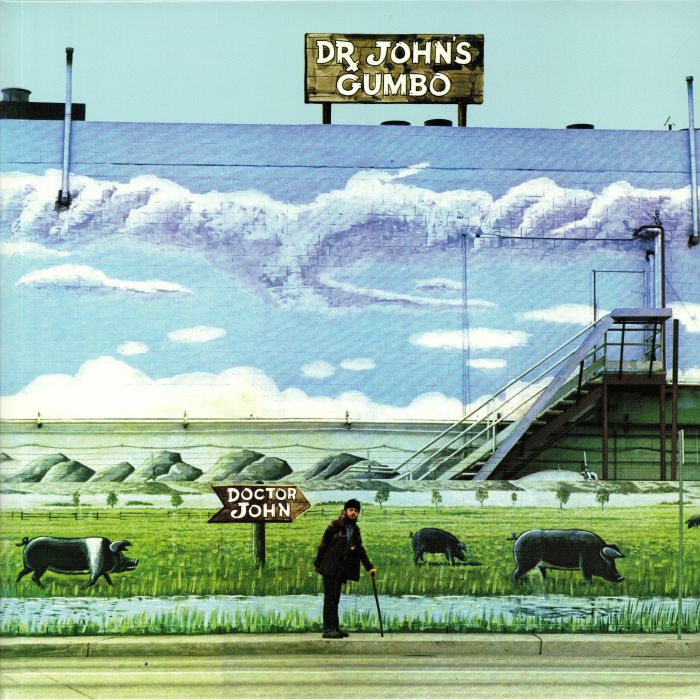 .
.
In The Right Place.
Following the success of Dr. John’s Gumbo, Dr John began work on the followup album which eventually became In The Right Place. It was a very different album from its predecessor which was an album of covers of New Orleans’ classics. The only song that Mac Rebennack aka Dr John had written was Somebody Changed the Lock. This time things were different.
Mac Rebennack had penned seven new songs for his sixth album including Right Place, Wrong Time, Same Old Same Old, Just the Same, Life, Such A Night, Shoo Fly Marches On and Cold, Cold, Cold. He joined forces with Jessie Hill to write Qualified and the pair wrote I Been Hoodood with Alvin Robinson. The other two tracks were covers and included James Waynes’ Travelling Mood and Allen Toussaint’s Life. These eleven tracks became In The Right Place which was recorded in Miami, Florida.
Dr John travelled to Criteria Studios, in Miami, where he recorded In The Right Place with songwriter, musician, arranger and producer Allen Toussaint. He was one of the most influential figures in the New Orleans’ music scene and was able to bring out the best in Dr John. Especially with The Meters acting as his backing band. Their lineup included drummer Joseph Modeliste, bassist George Porter Jr, lead guitarist and organist Art Neville. They were joined by The Bonaroo Horn Section, Gary Brown on acoustic and electric saxophone and Allen Toussaint who showcased his versatility as he switched between a variety of instruments. Adding backing vocals were Jessie Smith and Robbie Montgomery while percussionist Ralph MacDonald and David Spinozza made guest appearances. They augmented the all-star band that accompanied Dr John on In The Right Place as Allen Toussaint took charge of production. He was the perfect foil for Dr John and the result was one of his finest albums.
Once In The Right Place was completed, Dr John and Allen Toussaint returned to the Big Easy and Atco began preparing for the release of In The Right Place.
It was a fusion of blues, funk and New Orleans R&B. There’s also elements of gospel, jazz, New Orleans rock, soul and voodoo funk on another Dr John album where musical genres melted into one.
Side One.
That was the case with the album opener Right Place, Wrong Time. It bursts into life and there’s a degree of urgency as funk, New Orleans R&B, rocky guitar licks and soulful, soaring backing vocals combine and accompany Dr John on a track that would become a classic and a staple of his live shows. Same Old Same Old has a slow, moody and swampy sound that features on previous albums. This is the backdrop for a despairing vocal about the mundane reality everyday life and especially the 9-5 grind. Very different and quite beautiful is the ballad Just The Same where gospel-tinged and soulful harmonies accompany the heartfelt vocal. Then as Qualified unfolds Dr John showcases his peerless piano playing before he and his all-star band deliver a breathtaking performance. They combine funk, jazz, New Orleans R&B, rock and soul on a track that has made in the Big Easy by Dr John and has his name written all over it. Traveling Mood is a tale of love gone wrong which still swings. Horns punctuate the arrangement which features a complex bass line as Dr John’s piano plays a leading role as he contemplates his future. The tempo drops and the Dr is accompanied by soulful backing vocalists as he delivers his message Peace Brother Peace “all over the world.”
Side Two.
It’s a cover of Allen Toussaint’s Life that opens the second side, and gives way to another Dr John classic, Such A Night. This hook-laden song is instantly recognisable and is without doubt one of his finest and most popular songs. Just like it Right Place, Wrong Time it was always on the setlist when Dr John played live. Shoo Fly Marches On is another genre-melting track where blues, funk, jazz and R&B combine with a searing a rocky guitar and soulful harmonies. They’re the perfect accompaniment to the lived-in and impassioned vocal on a track that was way ahead of its time. I Been Hoodood has a moody, swampy sound that is best described as voodoo funk and is one of the album’s highlights. Cold Cold Cold features a vocal full of hurt from Dr John who discovers his partner has been cheating on him. Soaring harmonies, horns, washes of Hammond organ and piano accompany his soul-baring vocal on this tale of love gone wrong. It brought to a close In The Right Place which was a gamechanger of an album.
Critics on hearing In The Right Place which was a fusion of funk, blues and New Orleans R&B hailed the album as one of his finest. Later, the album would regarded as one of Dr John’s classic albums and the album that transformed his career.
Right Place, Wrong Time was released by Atco as the lead single from In The Right Place and it gave Dr John the biggest single of his career. It reached nine on the US Billboard 100, six in Canada and ninety-eight in Australia. Then when In The Right Place was released on February the ’25th’ 1973, it spent thirty-three weeks on the US Billboard 200 and peaked at twenty-four on June the ’23rd’ 1973. This meant that In The Right Place was the most successful album of Dr John’s career.
What Ahmet Ertegun had foolishly described as: “boogaloo crap” just a few years earlier, was now proving profitable for his company. Dr John was having the last laugh. In The Right Place was the sixth of seven albums that Dr John released via Atco Records between 1968 and 1974. While these albums weren’t always appreciated or understood by critics, they’re now regarded as part of what was a golden era for Dr John.
He was at his creative zenith during his Atco Records years and was often misunderstood even by the supposed experts who ran the label. It was only much later that critics reappraised the albums that Dr John released for Atco Records and realised that he was recording and releasing ambitious, imaginative and innovative albums of genre-melting music. That describes perfectly the music on his first four albums Gris Gris, Babylon, Remedies and The Sun, Moon and Herbs.
Ironically when he returned to what was a much more traditional R&B sound for his fifth album Dr John’s Gumbo, Dr John enjoyed the most successful album of his career. That was until he followed this up with In The Right Place which featured two classic tracks Right Place, Wrong Time and Such A Night. They would go on to become staples of his live sets over the next four decades. They would prove eventful for Dr John.
He only released one further album for Atco, and that was Desitively Bonnaroo on the ‘8th’ of April 1974. It was the much-anticipated followup to In The Right Place. It was also produced by Allen Toussaint and found The Meters backing Dr John. However, the album only spent eight weeks on the US Billboard 200 and peaked at 105 on June the ‘1st’ 1974. This brought the curtain down on Dr John’s Atco Records’ years.
Nowadays, the Atco Records’ years are regarded as a golden era in Dr John’s career which lasted six decades. One of the finest albums of Dr John’s Atco Records’ is In the Right Place a genre-melting epic produced by Allen Toussaint who coaxed, cajoled and brought out the best in Dr John and in the process transformed his career.
Dr John enjoyed a long and illustrious career, and released thirty studio albums and nine live albums. He also won six Grammy Awards and was inducted into the Rock and Roll Hall of Fame in 2011. However, it wasn’t always been smooth sailing for Dr John who battled heroin addiction but eventually he conquered his demons and continued to released albums and tour.
Sadly, Dr John passed away on June the ‘6th’ 2019 aged just seventy-seven. Dr John was a truly talented and versatile musician who was a mercurial maverick who left behind a rich musical legacy. This includes the seven albums he recorded during his Atco Records years which includes his classic album In The Right Place which was Dr John’s most successful album and introduced his music to a much wider audience. .
Classic Album: Dr John-In The Right Place.
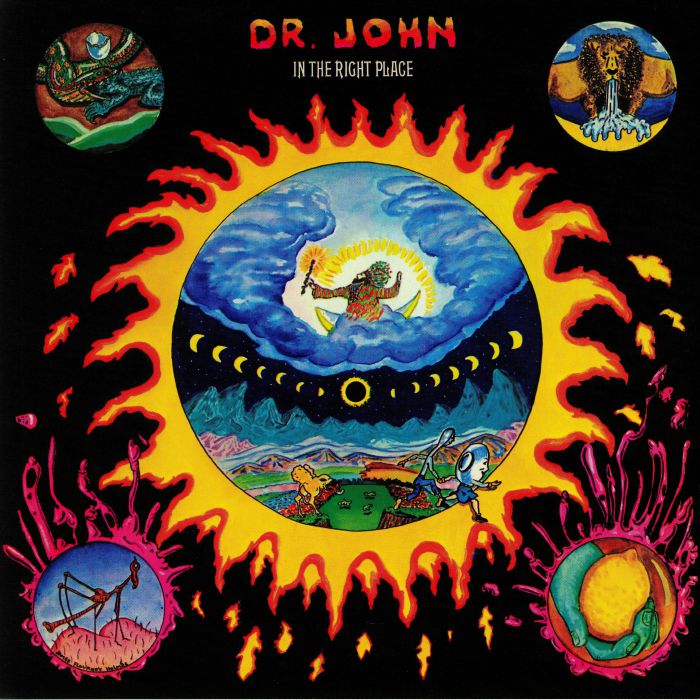
CULT CLASSIC: JACKIE MCLEAN-IT’S TIME!
Cult Classic: Jackie McLean-It’s Time!
When Jackie McLean and his band journeyed to Van Gelder Studio, in Englewood Cliffs, New Jersey, on August the ‘5th’ 1964, it was his fourteenth solo session for Blue Note Records and resulted in the album It’s Time! It which featured a new band and saw him revisit his old hard bop sound.
For the It’s Time! session, Jackie McLean had put together a new band. It still featured drummer Roy Haynes who at thirty-nine was the elder statesman of the band. The rest of the band were newcomers. This included thirty year old bassist Cecil McBee, pianist Herbie Hancock who was twenty-five and twenty-two year old trumpeter Charles Tolliver. They were due to record six new compositions that became It’s Time!
This included Das’ Dat, It’s Time and Snuff which were Jackie McLean compositions. They were joined by Cancellation, Revillot and Truth which were written by Charles Tolliver. The It’s Time session was engineered by Rudy Van Gelder and was produced by Alfred Lion and on August the ‘5th’ 1964.
The producer and engineer listened to what was a quite different album from Destination…Out!, which was regarded as one of the most innovative, progressive and experimental albums that Jackie McLean had recorded. He embraced the avant-garde on an album which was a fusion of post-bop and free jazz. It was thought that the followup would see him embrace free jazz fully. Instead It’s Time was an album of driving, swinging hard bop from his new band.
It’s Time! opened with Cancellation which is best described as an advanced example of driving hard bop. Horns add a fanfare while the rhythm section provide stop time rhythms and Herbie Hancock pounds his piano. Meanwhile, the almost abrasive sound of Jackie McLean’s alto-saxophone soars, wah wahs as his playing becomes fast and fluid. Charles Tolliver’s playing starts with the same fluidity but later heads in the direction of free jazz. It’s accompanied by a piano which veers between abstract, ruminative to dramatic, fluid and urgent as it’s played with speed and accuracy. Later, the band join forces and head for home never missing a beat during this breathtaking example of hard driving, angular and swinging hard bop.
Das’ Dat bursts into life and the quintet play as one on what’s a more traditional example of hard bop. Its bluesy roots can be quite clearly heard as Jackie McLean revisits his part. The horns and piano that play leading rolls as the rhythm section ensure the track swings. When the solos come around, up first is a sultry swinging solo from the composer and bandleader. Next up is trumpeter Charles Tolliver who plays like a veteran. So does pianist Herbie Hancock whose fingers dance across the keyboards as the rhythm section provide a subtle backdrop. Then when the band reunite and head for home combining to create what can only be described as swinging, high kicking and hard bop par excellence.
It’s Time is another of the more progressive tracks on the album and the influxes of modal jazz can be heard. The quintet play at breakneck speed before it’s time for the solos and effortlessly Jackie McLean plays with speed and fluidity. Next up, is Charles Tolliver whose solo is inventive and imaginative before he builds up a head of steam and plays with speed accuracy All the time, the piano punctuates the arrangement and then Herbie Hancock delivers a fleet-fingered solo his fingers caress, jab, stab and dance across before he accompanies Cecil McBee’s bass. When drummer Roy Haynes unleashes a solo his playing is subtle as he takes a polyrhythmic approach and plays an important part in the sound and success of what’s one of the album’s highlights.
Side Two.
Horns unite, blaze and soar on Revillot before uniting with the rest of the band playing with speed and an inventiveness. From the get-go the horns go head-to head and it’s akin to a musical duel with two master craftsman showcasing their considerable skills. They deliver spellbinding solos and everyone else plays a supporting role. Even Herbie Hancock whose play with speed, jabbing, stabbing and adding flamboyant flourishes before his playing becomes fluid and sometimes abstract. Despite that, it’s the horns that steal the show.
On Snuff the horns lead the way as drums punctuate the arrangement. Soon, it’s time for the solos and Jackie McLean steps up and plays his alto-saxophone with speed, fluidity and an inventiveness during a complex solo where it bobs, weaves and winds. Herbie Hancock accompanies him and plays a supporting role. He rises to the challenge and goes toe-to-toe with the bandleader answering the saxophonist’s call and does the same with trumpeter Charles Tolliver who unleashes one of his finest performances during a complex solo takes twists and turns. Herbie Hancock is inspired and raises his game adding further flamboyant flourishes and when his solo comes around he plays with speed, accuracy and inventiveness during a breathtaking performance. All too soon, the band reunite and it’s a race to the finishing post. It’s not hands and heels going into the final furlong. Instead, it’s a sprint finish and after a performance as good as this there’s only one winner…jazz.
Closing It’s Time! is the melancholy ballad Truth which was written by Charles Tolliver. Sometimes, the truth hurts and that seems to be the case here. His trumpet playing it emotive and has a worldweary soul-baring sound. Meanwhile, the rest of the band provides a sympathetic backdrop on this beautiful ballad that shows another side to the quintet.
Having recorded It’s Time! Blue Note Records scheduled a release for the summer of 1965. In late-June, early July It’s Time! was released in a Miles Reed album cover that would later be regarded as a design classic. The album was well received by the majority of critics who had expected Jackie McLean to fully embrace free jazz on It’s Time! They were surprised to hear an album of hard bop but welcomed its familiarity of It’s Time. Sadly, the album passed jazz fans by, and they never heard Jackie McLean’s new quintet in full flight.
It was only much later that jazz fans discovered Jackie McLean’s It’s Time! By then, it was one of the hidden gems in his back-catalogue and one the most underrated albums that he recorded at Blue Note Records. It’s Time! is an album of hard driving and swinging hard bop from Jackie McLean that features a series of breathtaking performances and is bristling with energy that somewhat belatedly is starting to receive the recognition it so richly deserves.
Cult Classic: Jackie McLean-It’s Time!
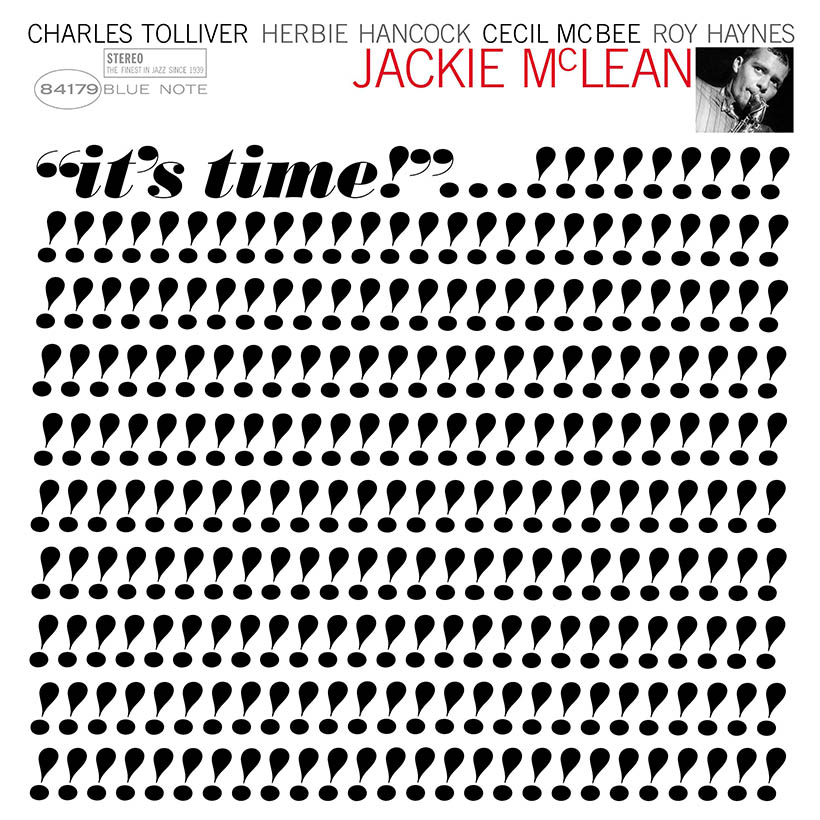
KEITH MANSFIELD-VIVID UNDERSCORES.
Keith Mansfield-Vivid Underscores.
Label: Be With Records.
Format: LP.
Composer, arranger and musician Keith Mansfield nowadays is recognised and regarded as one the doyens of library music and original copies of his albums are now highly collectable. This includes Vivid Underscores which was released in 1977, a year after his other genre classic Contempo. Both albums were part of the legendary KPM 1000 series and were recently reissued on vinyl by Be With Records. These are welcome reissues as original copies of Contempo and Vivid Underscores are now rarities like so many of the KPM Records’ releases. That’s no surprise
Everyone from sample-hungry hip hop producers and crate-digging DJs to film producers collect library music. They remember hearing library music in cartoons, documentaries and quizzes as they growing up in the seventies and eighties. So will many other people who listen to a KPM Records’ releases including Vivid Underscores which was released nearly two hundred years after the company was formed.
The Rise and Rise Of KPM.
Robert Keith founded a comp[any in 1780, to make of musical instruments, and fifty years later, in 1830, entered into a partnership with William Prowse, a music publisher. The newly formed partnership was named Keith Prowse Music (KPM), and over the next hundred years, the company grew and expanded into other areas,
By the early twentieth century, Keith Prowse Music was selling sheet music and concert tickets, but it was the invention of the gramophone that proved to be a game-changer.
Demand for sheet music and concert tickets grew, and in 1955, Keith Prowse Music was decided to diversify, into one of the most profitable areas of music, music publishing.
One of the reasons behind the decision to diversify into music publishing, was to feed the demand for soundtracks for radio, television and film. Previously, music libraries supplied classical music, which was what was required. By the mid-fifties, and the birth of television, the world and music were changing, and changing fast.
Four years later, in 1959, Associated Rediffusion bought another music publisher Peter Maurice and merged it with Keith Prowse Music. The newly merged company became Keith Prowse Maurice, which became known as KPM Music.
The newly named KPM Music was a much bigger player in the world music publishing. However, in the mid-sixties, a new name took the helm at KPM Music, and transformed the company into one of the biggest names in library music.
When Robin Phillips joined KPM Music in the mid-sixties, he proved to be an astute and visionary businessman. Two decisions Robin Phillips made demonstrate why. His first decision was that KPM Music should switch from the old 78 records to the LP, which made sense, as LPs were what people were buying. They were less prone to breakage, which meant less returns and more profit. LPs could contain more music, and could be released in limited editions of 1,000. The other decision he made was to hire the best young British composers and arrangers.
Among the composers Robin Phillips hired were Keith Mansfield and Johnny Pearson, whose talent and potential as composers he recognised. Robin Phillips managed to hired them before they’ had established a reputation, although they were known within music publishing circles.
Later, Robin Phillips managed to hire some of jazz musicians of the calibre of John Cameron, Syd Clark, Alan Hawkshaw and Alan Parker. Their remit was to provide him with new music, which was referred to as production music. Many of their remits was to write music which matched themes or moods, which initially, wasn’t isn’t easy, but soon, the composers were able to do so. Almost seamlessly, the composers created themes for many well known television shows and films.
For the composers and musicians involved in writing and recording library music, they were part of what was one of the most lucrative areas of music. When EMI realised that KPM Music had one of the best and most profitable music libraries and decided to buy the company. Executives at EMI had spotted the profitability of library music and the consistency, quality and depth of KPM Music’s back catalogue. However, not everyone within the music industry approved of library music.
Other songwriters looked down on writers of library music, and the British Musician’s Union wasn’t fan of library music. They banned their members from working on recording sessions of library music. Somewhat shortsightedly, the Musician’s Union thought that eventually, there would come a time when there was no need for any further recordings. Their fear was that the sheer quantity of back-catalogue would mean no new recordings would be made, and their members would be without work. Fortunately, KPM Records thought of a way to subvert the ban.
KPM Records would fly out composers, arrangers and musicians to Holland and Belgium, where local musicians would join them for recording sessions. This meant that often, the same musicians would play on tracks that were penned by several composers. For the musicians involved, this proved lucrative and some were reluctant to turn their back on session work for companies like KPM Records.
Still the Musician’s Union’s draconian ban continued, and it wasn’t until the late seventies that they lifted their ban on new recordings of library music. By then, the Musician’s Union realised that they were fighting a losing battle and had no option but to concede defeat.
Meanwhile, the music that was being recorded in Europe and once the ban was lifted in Britain, found its way onto albums of library music released by KPM Music. Again, KPM Music were innovators, and released limited editions of library music. Sometimes, only 1,000 albums were released, and they were sent out to film studios, television and radio stations and advertising agencies. However, by then, interest in library music had grown.
Although the albums of library music were never meant to be commercially available, a coterie of musical connoisseurs had discovered KPM Music’s albums of library music and were determined to add each release to their collection. They weren’t alone.
Later, DJs and sample hungry hip hop and house producers discovered the world of library music. This was a boon for many of these producers who were musically illiterate, and could neither read music nor play an instrument. with lots of practise the musically challenged “producers” were eventually able to sample albums of library music for their latest “production” and very occasionally, this resulted in a hit single for the musical pirates. However, most of the credit should’ve gone to those who made the music that had been sampled.
This included Keith Mansfield who recorded some of the best library music was ever recorded in the UK. Especially the music they recorded for KPM which has ‘inspired’ several generations of musicians. One of the albums of library music that Keith Mansfield recorded for KPM was Vivid Underscores, which is part of the legendary KPM 1000 series.
Vivid Underscores features Keith Mansfield at his best on a cohesive and truly timeless album of library music. The music is funky, soulful, sometimes dramatic, mesmeric, joyous and uplifting. Strings and horns are deployed and put to good use during a series of cinematic and filmic soundscapes from a musical master craftsman, Keith Mansfield.
Side One.
Opening Vivid Underscores is High Velocity where driving horns join forces with wah-wah guitars, a funky bass and synths to create a dramatic and filmic all-action track that transports the listener to the seventies.
Crash Course is akin to a mini soundtrack in three parts. The first part paints pictures as the drama builds and jazz, funk and fusion combine as what could be the backdrop to a car chase. It’s the type of track that could be heard during The Sweeney after a blag. Echo is added to the horns during the second part before the big finish in the third part where the good guys say: “you’re nicked.”
Horns play an important part during Matter Of Urgency. It’s a slow burner that’s uber funky, jazz-tinged and cinematic with aggressive undertones.
There’s two parts to Dawn Of Aquarius which is a futuristic sounding track with sci-fi sounds. It sounds like the type of soundtrack that Kraftwerk would’ve written circa 1977 and has plenty of material for sample hungry producers. During the second part, the drums and percussion drop out leaving more room space-age and sci-fi sounds.
Staying Power is very different from the two previous tracks. It’s dramatic, moody and almost menacing as elements of funk, jazz and rock are combined by Keith “The Man” Mansfield.
Side Two.
The second side opens with the first of four parts of Trucking Power. This is the introduction and akin to a scene setter. The tempo rises as synths and strings combine and take centrestage. This is highly effective. So is the addition of echo during the Part A while Part B is an alternative mix and a captivating variation on a theme. Then during Part C the tension is gone as the gorgeous middle section breezes along. The result is what can only be described as a thing of beauty.
There’s plenty of tension and drama during Hot Tempo and Espionage which sound as if they’re part of a late-seventies Cold War spy thriller.
Then the tempo drops on Interplay which is a much more understated track. Flutes flutter above a shimmering piano which is almost hypnotic and is quite beautiful.
Very different is Omen which is dark, dramatic and menacing. It wouldn’t sound out of place on a seventies detective series.
It’s all change with Perpetual Motion which flows and meanders revealing an intricate arrangement where keyboards, synths, percussion and lush sweeping strings combine with woodwind to create another beautiful, cinematic track. Keith Mansfield closes Vivid Underscores on a high.
During the seventies, Keith Mansfield was without doubt one of the finest purveyors of library music. His 1976 album Contempo and the followup Vivid Underscores which was released as part of the KPM 1000 series in 1977 are both genre classics and a reminder of a truly talented arranger, composer and musician.
He combines everything from jazz and funk to jazz-funk, fusion and rock on Vivid Underscores. Strings, synths and horns are deployed during this cinematic opus by one of the doyens of library music on Vivid Underscores .
Sadly, nowadays original copies of Vivid Underscores rarities and very few copies come up for sale. When they do, the prices are beyond the budget of most collectors of library music. However, Be With Record recently reissued Keith Mansfield’s library music classic. Vivid Underscores is just the latest reissue from the KPM 1000 series and is a reminder of the golden age of library music and features Keith Mansfield at the peak of his powers.
Keith Mansfield-Vivid Underscores.
PORCUPINE TREE-LIGHTBULB SUN.
Porcupine Tree-Lightbulb Sun.
Label: Transmission.
Format: CD.
Between 1987 and 2010 progressive rockers Porcupine Tree released ten studio and twelve live albums. Their sixth studio album was Lightbulb Sun which was released on May the ‘22nd’ 2000 and was the much-anticipated followup to Stupid Dream, which was released in March 1999. It marked the start of a new chapter in the Porcupine Tree story.
Stupid Dream was the first Porcupine Tree album to feature a much poppier sound. This was very different to their abstract instrumental sound of their prior albums, Signify and Stupid Dream which was their most successful album.
Stupid Dream.
The three singles Porcupine Tree released from Stupid Dream were Piano Lessons, Stranger By The Minute and Pure Narcotic and they all enjoyed mainstream exposure. Especially in the US and Europe where the group toured extensively. They knew it was a case of putting in the hard yards like so many other bands before them.
Porcupine Tree also toured the UK in support of Stupid Dream and watched the three singles charted in the independent charts during 1999. Piano Lesson reached thirty-four, Stranger By The Minute thirteen and Pure Narcotic forty-six. Each of the singles found their way onto radio station playlists and it looked like Porcupine Tree were about to make a commercial breakthrough after five albums and twelve years of trying.
Sadly, it wasn’t to be and Stupid Dream failed to trouble the UK albums charts. This was hugely disappointing given the success of the singles. The members of Porcupine Tree hoped that their next album would see them make a commercial breakthrough.
Lightbulb Sun.
When Steven Wilson and the rest of Porcupine Tree began to write Lightbulb Sun, little did the group know that the album found them still at a crossroads.
Just like Stupid Dream, the album that Porcupine Tree were about to write and record would also have a much more commercial, poppier sound. Once again, the group turned their back on the abstract instrumental sound of their first four albums on Lightbulb Sun. However, after their sixth album the group changed direction and their music took on a heavy metal for the rest of the noughties. In a way, Lightbulb Sun was the end of an era for Porcupine Tree.
Of the ten songs on Lightbulb Sun, Steven Wilson penned eight of them and cowrote the other two. He wrote Hatesong with Colin Edwin. Then the pair joined forces with Chris Maitland and Richard Barbieri to write Russia on Ice Chris Maitland. These tracks would eventually become Lightbulb Sun.
Recording of Lightbulb Sun took place at Foel Studio-No Man’s Land between November 1999 and January 2000. The rhythm section featured drummer Chris Maitland and bassist Colin Edwin who Gimbri and was experimenting with a drum machine. Keyboardist Richard Barbieri played Hammond organ, Fender Rhodes, clavinet, mellotron and synth. Meanwhile bandleader, producer and vocalist Steven Wilson played guitars, piano, hammered dulcimer, mellotron, banjo, harp and used samples during the recording of Lightbulb Sun.
Augmenting Porcupine Tree were rhythm guitarist Eli Hibit, cellist Nick Parry and Stuart Gordon who played viola and violin. During the recording session, The Minerva String Quartet were brought. Violinists Katy Latham and Lisa Betteridge plus cellist Emmeline Brewer and Sarah Heines on viola added the all-important strings to Lightbulb Sun. It was completed after just three months recording and was the quickest album that Porcupine Tree had recorded.
Having completed Lightbulb Sun in January 2000, the album was scheduled for release on the ‘22nd’ May 2000. Before this, Porcupine Tree planned to release a single and nervously awaited the verdict of the critics.
Four Chords That Made a Million was released as the lead single in April 2000 and reached eighty-four in the UK charts and sixteen in the UK Independent Charts. This built upon the success of the triumvirate of singles released from Stupid Dream.
When Lightbulb Sun was released on the ‘22nd’ May 2000 it feature a much commercial, poppier sound that should’ve appealed to wider audience than the he abstract instrumental sound of their first four albums. However, Lightbulb Sun was also an album of two parts.
Lightbulb Sun is divided into two parts between Rest Will Flow and Hatesong. However, the first part focuses on a more melodic, poppy style. Then the part allows Porcupine Tree to showcase the experimental side of their music. The group was hoping there was something for fans old and new.
The majority or critics were won over by Lightbulb Sun which was released to mostly critical acclaim. They praised the standard of songwriting and musicianship with some critics calling the album Porcupine Tree’s finest hour.
No wonder as Porcupine Tree mixed unique brand of progressive rock with melodic pop, metal and experimental music. After six albums and thirteen years Porcupine Tree had come of age with a career-defining album. It featured dense harmonies, captivating arrangements, melancholy melodies that tugged at the heartstrings and sometimes the tracks referenced Pink Floyd. Two of the highlights of Lightbulb Sun were the Steven Wilson compositions Feel So Low and The Rest Will Flow. They were part of what was the most consistent and complete album of Porcupine Tree’s tree.
Unlike many progressive rock albums Lightbulb Sun wasn’t a concept album. However, Steven Wilson explains that some of the songs relate to different subjects: “There are at least four or five songs on that record which I call the divorce songs, the relationship songs, which are all about various stages of the splitting up a relationship, of dissolving a relationship. Russia on Ice, How Is Your Life Today, Shesmovedon, Feel So Low, I mean, the last track of the album. The period in a relationship, where the relationship is kind of… still exists, but it’s in that period where, really, there is nothing left but hatred and despise-Hatesong is the other one.”
He goes on to say: “But then on the other hand, there are groups of songs on the album which are all about various childhood… nostalgic childhood reminisces, Lightbulb Sun and the first part of Last Chance To Evacuate Planet Earth, Where We Would Be. So there are kind of groups of songs.”
Later he explains: “And then there’s a couple of songs that don’t have any relation to anything else. Four Chords That Made A Million doesn’t have any relation to anything else on the album, or anything else I’ve ever written. It’s just that.”
Lightbulb Sun was regarded as the best and strongest album that Porcupine Tree had recorded and released. Surely their sixth album would be the first to chart and see the group make a commercial breakthrough after thirteen years of touring, recording and doing the rounds of press, radio and television?
The members of Porcupine Tree watched as Lightbulb Sun reaches 161 in the UK album chart where it stalled. Although this was disappointing, it was still the most successful album of the group’s six album career.
Then in July 2000 was released as the second single from Lightbulb Sun and reached eighty-five in the UK charts and twenty-four in the UK Independent Charts. This was a small crumb of comfort for Porcupine Tree as Steven Wilson believed that it was: “our best work to date.”
Nowadays, Lightbulb Sun is regarded by critics as one of the finest albums of Porcupine Tree’s long career. It’s also the album that got away and should’ve transformed Porcupine Tree’s.
When they released Lightbulb Sun it was also a much more accessible album than their previous albums. Steven Wilson made a conscious decision not to write lyrics about abstract concepts like war and religion. Instead, he drew on his own person experiences and wrote songs with much more personal and emotive lyrics. However, some of the songs he wrote especially Hatesong and Feel So Low featured negative lyrics. Despite this, many record buyers would be able to relate to the subjects that the lyrics dealt with on what was without doubt the most accessible album of Porcupine Tree’s six album career.
Lightbulb Sun should’ve been a much bigger success and introduced the group to the wider audience that their music deserved. Sadly, as is so often is the case Lightbulb Sun was an album that passed record buyers by when it was released by Snapper.
Maybe Snapper was the wrong label for Porcupine Tree and their music would’ve found a wider audience if signed to another indie or major label? They left Snapper after Lightbulb Sun and signed to Lava who released their seventh studio album In Absentia on the ’24th’ September 2002. That was the start of Porcupine Tree’s progressive metal years. Lightbulb Sun was the end of an era for the group.
Although Lightbulb Sun wasn’t a commercial success when it was originally released in May 2000, it had started to find a wider audience by the time it was reissued in 2008. Recently, Lightbulb Sun was reissued by the Transmission label and this is an opportunity to discover or rediscover what’s one of Porcupine Tree’s most accessible albums and what was a career-defining album when it was released to widespread critical acclaim twenty-one years ago in May 2000.
Porcupine Tree-Lightbulb Sun.
 dereksmusicblog
 dereksmusicblog