SPIRIT OF MALOMBO: MALOMBO JAZZ MAKERS, JABULA AND JAZZ AFRIKA 1966-1984.
SPIRIT OF MALOMBO: MALOMBO JAZZ MAKERS, JABULA AND JAZZ AFRIKA 1966-1984.
Four years have passed since the last instalment in Strut Records’ critically acclaimed Next Stop Soweto series. At last, however, the wait is over. Recently, Strut Records have released Spirit of Malombo: Malombo, Jazz Makers, Jabula and Jazz Afrika 1966-1984. This is a double album, which celebrates the life and music of influential drummer, and political activist, Julian Bahula, whose career began in the late fifties.
It was around 1959, when Julian Bahula’s family were forced to move from Eesterust, a township a few miles west of Mamelodi. Their new home was Mamelodi, a township, to the north east of Pretoria. For the young Julian Bahula this could’ve been a turbulent time in his life. After all, he was leaving behind his friends and family. However, the move to Mamelodi resulted in Julian’s musical career unfolding.
In Mamelodi, Julian first met flautist Abbey Cindi and guitarist Philip Tabane. Abbey was also a newcomer to Mamelodi, having moved from Witbank. Phillip, however, had lived in Mamelodi all his life. Indeed, it was in Mamelodi Phillip’s career began.
Ever since the early fifties, Phillip had been playing live. He had blossomed into a gifted and talented guitarist. Phillip played in a variety of groups, including jazz groups. Then as the sixties dawned, Phillip was a member of a jazz group, The Crotchets. However, he decided to form a vocal group The Lullaby Landers.
Two of the other members of The Lullaby Landers were Abbey Cindi and drummer Julian Bahula. They were part-time musicians. Unlike Phillip, who was able to practice during the day, Abbey and Julian worked during the day. The only time they had to rehearse, was in the evenings, at the Mamelodi centre. Phillip would join them, and they became a trio.
The trio would meet in the evenings and play the music Phillip had composed. With Phillip’s guitar, Abbey’s flute and Julian’s drums, they were able to create a sound that ws very different to other groups. There was a reason for this. That was the type of drums Julian used.
This became obvious during rehearsals. Phillip had composed the music for the band. The music he composed didn’t require trap drums. Despite this, when Julian played the music with a Western drum kit, it didn’t sound right. This was patently obvious. So, Julian made the decision to buy African drums.
Having bought a new set of drums, Julian returned to the Mamelodi centre to practice. Julian was proudly setting up his new drums, when the caretaker looked in. He was one of the Venda people, a group of Southern African people who live near the South African and Zimbabwean border. Straight away, he recognised Julian’s new drums. They were actually malombo drums, which traditionally, he explained, the Venda people play. However, there was another explanation of the word malombo.
A malombo, the caretaker explained is a word given to to ancestral spirits. Very occasionally, he told Phillip, Abbey and Julian, these spirits can make people unwell. The only way to cure this illness, is through dance and spirit possession. A healer puts the person into a trance, and calls upon the spirits. As the caretaker explained, Julian and Phillip remembered this. They had been told about this as they grew up. Still, the were fascinated by the story. Even more so, when the malombo drum was involved. After hearing this explanation of the drums’ origins and use, Phillip, Abbey and Julian decided that their nascent group be called The Malombo Jazz Men. Little did they know the effect the Malombo drum would have on their music.
The Malombo Jazz Men.
The Malombo drum brought a totally unique and innovative sound to African jazz scene. Rather than drawing inspiration from America, jazz’s homeland, the inclusion of the Malombo drum saw an Africanisation of jazz music. It was as if The Malombo Jazz Men wanted to reconnect with traditional African music, tradition and culture. This was a huge step, one that had never been made before. This made the Malombo Jazz Men Malombo musical pioneers, who were set to make their musical debut.
Originally, The Malombo Jazz Men were set to make their debut at the Soweto Cold Castle Jazz festival. The Malombo Jazz Men practiced, and practised hard. They were determined to tighten and hone their sound. As the festival neared, Phillip realised the band weren’t ready. A decision was made to delay their debut until a competition at Orlando stadium. That’s where The Malombo Jazz Men made their debut. Their unique, innovative sound won over the audience and judges. When The Malombo Jazz Men returned home with the first prize, they were the all conquering heros. This resulted in the Malombo Jazz Men recording their debut album.
As part of their prize for winning the Castle Lager Jazz Festival in 1964, The Malombo Jazz Men got the chance to record their debut album. The Malombo Jazz Men featured on one side and the festival runners-up, the Early Mabuza Quartet, featured on the other side. For The Malombo Jazz Men, this looked like the start of a long and successful career. It wasn’t.
A year later, in 1965 The Malombo Jazz Men split-up. Two separate groups evolved out of The Malombo Jazz Men. Philip Tabane formed a duo with drummer Gabriel Thobejane. Just like Phillip. Julian and Abbey decided to form a new band. They recruited guitarist and fellow Mamelodi resident, Lucas ‘Lucky’ Ranku.
Lucas was a self-taught guitarist. When he met Julian and Abbey, he was The Four Lads guitarist. He was also a member of another popular band, Jimmy’s Band. Julian and Abbey first met Lucas at the Mamelodi Community Centre, where The Malombo Jazz Men won a talent contest. The runners-up were Jimmy’s Band. Julian had complimented Lucas on his guitar playing, and as a parting shot, said “maybe we’ll play with you one day?” Little did anyone realise that, less than a year later, this would come true, when Lucas joined The Malombo Jazz Makers.
From the get-go, The Malombo Jazz Makers were one of the hardest working groups in South Africa. Peter Magubane, who was the photographer for Drum magazine became their manager. He accompanied The Malombo Jazz Makers as they embarked upon relentless touring schedules. At first, The Malombo Jazz Makers ventured into neighbouring states. The constant touring honed The Malombo Jazz Makers’ sound. Soon, they were a tight, talented and innovative group, who were selling out venues big and small. Then gradually, The Malombo Jazz Makers travelled as far afield as Swaziland, for the 1967 Swaziland Jazz Festival. By then, The Malombo Jazz Makers’ recording career had began.
Malompo Jazz.
It was in 1966, that The Malombo Jazz Men released their debut album Malompo Jazz, on the Gallo label. It featured a guest vocalist, Hilda Tloubatla of Mahotella Queens. This was a coup for The Malombo Jazz Makers. Hilda was one of South African music’s top vocalists. She played her part in the sound and success of Malompo Jazz.
Four tracks from Malombo Jazz feature on Strut Records’ recent compilation Spirit of Malombo: Malombo, Jazz Makers, Jabula and Jazz Afrika 1966-1984. This includes the driving, hypnotic and rock-tinged Abie’s Mood and the understated, wistful and jazzy Bababelo. Equally understated is Abbey’s Body, a quite beautiful track that allows each of The Malombo Jazz Men to shine. Then Hilda Tloubatla’s vocal prowess features on Jikeleza, an upbeat, joyous and dance-floor friendly track. These tracks showcase a tight, talented and pioneering band, who were able to seamlessly combine musical genres. It’s no surprise that The Malombo Jazz Men was such a well received debut album. The future looked bright for The Malombo Jazz Makers.
Malombo Jazz Makers Volume 2.
This proved to be the case. A year later, Malombo Jazz Makers Volume 2 was released by The Malombo Jazz Makers. They had been busy since they recorded their debut album. What with touring and recording radio sessions for SABC, the state broadcaster. However, the most important date in 1967, was the release of their sophomore album Malombo Jazz Makers Volume 2.
Just two tracks from Malombo Jazz Makers Volume 2, feature on Spirit of Malombo: Malombo, Jazz Makers, Jabula and Jazz Afrika 1966-1984. They’re Hleziphi and Sibathathu, which fittingly, translates as “we are three.” The three members of The Malombo Jazz Makers had a lot more music to release over the next few years.
In 1968, The Malombo Jazz Makers decided to augment their sound. They added extra musicians and released two singles as The Malombo Jazz Makers Plus 2. The singles included Bahula Dithabeng, which is included on Spirit of Malombo: Malombo, Jazz Makers, Jabula and Jazz Afrika 1966-1984. So is the B-Side, Away From Malombo’s which has a much more pensive sound. This expanded lineup shows another side to The Malombo Jazz Makers’ music. Their music was continuing to evolve. This was the case throughout the rest of the sixties.
Down Lucky’s Way.
As the sixties drew to a close, The Malombo Jazz Makers released another album Down Lucky’s Way. Released in 1969, Down Lucky’s Way is one of The Malombo Jazz Makers’ rarest albums. Little is known about the album. It isn’t even mentioned in the Gallo record label’s discography. Despite its rarity, a track from Down Lucky’s Way, Matshenyogo, features on Spirit of Malombo: Malombo, Jazz Makers, Jabula and Jazz Afrika 1966-1984. Just like the two singles released as The Malombo Jazz Makers Plus 2, Down Lucky’s Way features an expanded lineup. A bass and Hammond organ augment Julian’s drums and Lucky’s guitar on Down Lucky’s Way. Not on Matshenyogo. It’s just Julian’s drums and Lucky’s guitar that feature on this captivating track, that brought the sixties to a close.
When the sixties became the seventies, The Malombo Jazz Makers were South Africa’s most popular jazz bands. However, they weren’t becoming rich. Far from it. Just like so many musicians before them, they were being exploited. They were paid, but not what they should have received. This must have been hugely frustrating. Especially considering how along with their contemporary Philip Tabane, The Jazz Makers had revolutionised South African jazz. Their influence, in what became known as the Malombo sound, would be heard throughout the next two decades.
For the next two decades, the Malombo drum, guitar and flute were the starting point for a generation of groups. These groups followed in The Jazz Makers’ footsteps in more than one way.
Peter Magubane, The Malombo Jazz Makers’ manager was an active member of the African National Congress. It had been outlawed by the government. For the last few years, The Jazz Makers’ had played a part in the African National Congress’ fight for equality. Their drums had hidden documents being smuggled across the border, to places like Botswana, where members of the African National Congress were in hiding. This was the start of the politicisation of The Malombo Jazz Makers.
By 1971, The Malombo Jazz Makers toured South Africa with African Follies’ stage and variety show. South Africa was a dangerous place. Especially for anyone involved in the Anti Apartheid movement. This included Peter Magubane, The Malombo Jazz Makers’ manager. During the tour, he introduced The Malombo Jazz Makers to Steve Biko, Saths Cooper and Strini Moodley.
They were founder members of the Black Consciousness Movement and played an important part in the South African Student Organisation. Soon, friendships were formed. Steve Biko invited The Malombo Jazz Makers to become part of a musical cultural production, Into the Heart of Negritude. This offer was accepted, and The Malombo Jazz Makers embarked upon the riskiest tour of their career.
Throughout the tour, The Malombo Jazz Makers had to be on their guard. Constantly, the security services were watching The Jazz Makers. They risked arrest each day. Their every move was constantly watched. This continued after the tour.
Following the tour, The Malombo Jazz Makers were under the constant scrutiny of the security services. Things got so bad, that the three members of The Malombo Jazz Makers were followed by the police. Soon, they were having to change address. Things got so bad, that they were constantly moving house to avoid harassment and surveillance. As if this wasn’t bad enough, their families were harassed by the police. Still, The Malombo Jazz Makers continued to make music.
Music Of The Spirit.
In 1971, The Malombo Jazz Makers recorded a new album, Music Of The Spirit. This time, The Malombo Jazz Makers were billed as Malombo. Only 100 copies of Music Of The Spirit were pressed. As a result, it’s a real rarity. Two tracks, Malombo Workshop and Bird Meets Elephant feature on Spirit of Malombo: Malombo,Jazz Makers, Jabula and Jazz Afrika 1966-1984. This was the last album from The Malombo Jazz Makers. However, they continued to make music.
Not only were The Malombo Jazz Makers playing live, but they became part of a multi-racial group. Concerts were clandestine affairs. It was a game of cat and mouse with the police. Then when the band came onstage, they wore masks. Other times, they had to play behind the curtain. For everyone involved, they must have been under tremendous pressure. It’s no surprise that when Julian got the chance to leave South Africa, he jumped at the opportunity.
In 1972, Julian got the opportunity to play malombo drums in Hawk, with a white fusion band. They had just been offered a deal on the British based Charisma Records. Hawk were also due to tour Britain. For Julian, this was his chance to escape the constant oppression of South Africa. Having played a few warm up concerts in South Africa, he boarded the plane to Britain, never planning to return until the end of Apartheid.
Julian arrived in London on 19th February 1973. Straight away, he started trying to secure work permits for the other two members of The Malombo Jazz Makers. This couldn’t happen quick enough. They were under constant scrutiny, having to change addresses constantly to stay one step ahead of the police. Eventually, Julian was able to send a work permit and plane ticked to Lucas ‘Lucky’ Ranku. He never told a soul, and escaped from South Africa.
Sadly, one member of The Malombo Jazz Makers was left behind, Abbey Cindi. Two years later, in 1975, Abbey was meant to make the journey to London. Sadly, this never happened. The Malombo Jazz Makers were no more.
London had been home to a number of South African musicians over the year. Julian and Lucas were just the latest to call London home, whilst in exile. Hawk however, offered no future for Julian.
They were a talented band, but they didn’t want to get involved in the anti apartheid movement. Julian wanted to use Hawk as a platform to tell people about what was going on in South Africa. Hawk didn’t want to get involved. So Julian and Hawk went their separate ways.
Julian became involved in the UK and Western Europe branch of the African National Congress. They were aware of what The Malombo Jazz Makers had been doing in South Africa. Julian was keen to do the same in Britain. So, Julian decided he would tour Britain, in an attempt to increase awareness of Apartheid.
The concerts had to be promoted independently, as the African National Congress didn’t have the funds to pay musicians. These concerts, as well as raising awareness of apartheid, would raise much needed funds for the African National Congress. It was a win-win situation.
For his new band, Jabula, Julian recruited British, Caribbean and African musicians. They became the focal point for the African National Congress, as they set about raising awareness of apartheid in South Africa. Before long, Jabula were a popular band, who were attracting a lot of attention. This time, for the right reason.
Ever since he arrived in Britain, Julian had been looking for a record deal. Initially, he was trying to interest labels in The Malombo Jazz Makers. He had no luck. His luck changed when he formed Jabula.
Simon Draper was an A&R man, who just so happened to be a cousin of Richard Branson. He had previously attended Natal University. That was where he first heard The Malombo Jazz Makers. When he met Julian, he offered Jabula a deal with Virgin imprint Caroline Records. Jabula released their debut album Jabula Happiness, in 1975.
Jabula Happiness.
Two tracks from Jabula Happiness features on Spirit of Malombo: Malombo, Jazz Makers, Jabula and Jazz Afrika 1966-1984. That’s the genre-melting Let Us Be Free. Elements of Afrobeat, jazz, funk, rock and soul melt into one. The other track, is the title-track Jabula Happiness, which features a joyous, vocal powerhouse from Vicky Busiswe Mhiongo. These two tracks were a tantalising taste of what Jabula were capable of. For Simon Draper and Virgin Records, they must have thought Jabula had a big future ahead of them. After all, they oozed talent.
Thunder Into Our Hearts.
That was apparent on Jabula’s sophomore album Thunder Into Our Hearts. It was released on Caroline Records in 1976. Thunder Into Our Hearts was dedicated to Julian’s fellow countryman, Mongezi Feza, the former Blue Notes’ drummer. Two tracks, Thunder Into Our Hearts and Ithumeleng Ba Mamelodi, feature on Spirit of Malombo: Malombo, Jazz Makers, Jabula and Jazz Afrika 1966-1984. Both tracks show Jabula evolving as a group, honing and tightening their sound. Sadly, Thunder In Our Hearts was Jabula’s last album for Caroline Records. The political activists weren’t selling enough records.
By 1977, Jabula were at the forefront of the Antiapartheid movement in Britain. They played up and down Britain. All the time, they publicised the injustices happening in South Africa. They were advocates for justice and change. Another thing changing, was Jabula’s lineup.
What is perceived as the classic lineup of Jabula took shape in 1977. Julian’s drums and Lucas’ guitar were central to Jabula’s sound. They were augmented by flautist Michael Rose and Steve Scipio of Cymande, and Pinese Saul a South African vocalist. Adding the finishing touch was trumpeter Peter Segona. This was the lineup that played on the 1977 live album, Jabula in Amsterdam.
Jabula in Amsterdam.
Among the highlights of Jabula in Amsterdam, were Journey Into Africa and the uber funky All For One. These tracks feature on Spirit of Malombo: Malombo, Jazz Makers, Jabula and Jazz Afrika 1966-1984, and are a reminder of just how good, Jabula were live. No wonder. Jabula toured relentlessly. This was Julian’s way of making a difference. He was one of the lucky ones. After all, Julian had escaped the oppression of inequality of Apartheid era South Africa.
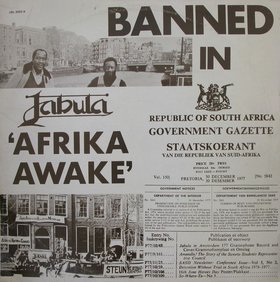
Sadly, people in South Africa didn’t get the opportunity to hear Jabula in Amsterdam. On its release, Jabula in Amsterdam was banned in South Africa, because of its lyrical content. This didn’t stop Julian, Lucas and the rest of Jabula trying to bring about change in South Africa.
Afrika Awake.
A year later, Jabula would release their third studio album. However, they were without a record deal. So, Jabula formed Jabula Records. It released Afrika Awake, a ten track album. Just two tracks, Sorrows and the mellow Mathome, feature on Spirit of Malombo: Malombo, Jazz Makers, Jabula and Jazz Afrika 1966-1984. Afrika Awake would be Jabula’s last studio album until 1982.
Between 1978 and 1982, Julian continued campaigning with the African National Congress. He was determined to bring about change, in his home land. Mostly, he did this through his music. So in 1979, he took Jabula to Sweden.
Stamping Out Apartheid.
In Sweden, Jabula recorded a live album with the South African Freedom Singers. Jabula featured on side two. They contributed four tracks, and joined with the South African Freedom Singers on the Stamping Out Apartheid album. However, Jabula’s finest hour was the impassioned Siakala. It features on Malombo: Malombo, Jazz Makers, Jabula and Jazz Afrika 1966-1984 and ia heartachingly beautiful track.
Jabula With Me.
Right through until 1982, when Jabula released final album, Jabula With Me, Julian used music to draw attention to the plight in his homeland. Jabula With Me was a delicious fusion of Afro-beat, disco, funk, jazz and soul. Botlokwa which features on Spirit of Malombo: Malombo, Jazz Makers, Jabula and Jazz Afrika 1966-1984, epitomises everything that’s good about Jabula. Dance-floor friendly, funky, soulful, joyous and full of hooks, this is one of Jabula’s finest moments. It meant that Jabula bowed out in style.
Jabula With Me was Jabula’s swan-song. They never released another album. His next album was with his new group, Jazz Afrika.
Son Of The Soil.
After Jabula, Julian formed Jazz Africa. They fused Afrobeat with and funk. Their debut album was Son Of The Soil. It was released on the newly founded Tsafrika Records. Two tracks from Son Of The Soil feature on Spirit of Malombo: Malombo, Jazz Makers, Jabula and Jazz Afrika 1966-1984. They’re Woza Cindi and Tlhompho. These tracks are a tantalising reminder of what Jazz Africa could have become. Sadly, Son Of The Soil was their only album. Julian had other things on his mind.
Throughout his career, Julian didn’t stop trying to make a difference. In doing so, his career suffered. Julian sacrificed fame and riches to make a difference. Not many people would be will willing to do this. Julian Bahula was. He was determined that Apartheid would be defeated. By 1983, his and the African National Congress’ efforts were rewarded.
The Release Mandela and All Political Prisoners’ campaign started in 1980. Oliver Tambo and the African National Congress were determined to raise the profile of Nelson Mandela, and the other political prisoners in South Africa. By 1983, the campaigned had grown. It had international backing. Especially in Britain.
1983 was a landmark year for Nelson Mandella. He would celebrate his sixty-fifth birthday on the 18th July 1983. Julian had an idea. He wanted to put on a concert in London that would gain publicity for the anti-apartheid movement. This took a lot of planing and persuasion. Eventually, the African Sounds concert took place on the 17th July 1983, just a day before Nelson Mandela’s sixty-fifth birthday.
The African Sounds concert was a huge success. A mixture of South African and British musicians took to the stage. This included Jazz Afrika, Julian’s new group. They helped raise much needed funds and more importantly, the profile of the Antiapartheid movement. This was the first step in the Free Mandela campaign.
For Julian Bahula, at last, he was making a difference. For three decades, he had strived to bring about change in homeland. He was doing this from a distance. Exiled in London, Julian made a difference through what he did best, making music.
From his days with The Malombo Jazz Makers, through his time with Jabula and latterly, Jazz Africa, Julian Bahula had used music to help spread the Anti-apartheid message. This took time and patience. However, eventually, Apartheid was defeated. Nelson Mandela was freed in 1990. South Africa was no longer a divided country. Only them was Julian Bahula able to return from exile.
His time as a political activist, and then in exile cost Julian Bahula. His family were persecuted. They suffered at the hands of the secret police. Julian was forced to flea South Africa, and until Apartheid was defeated, he was unable to return home. This was a huge sacrifice. Another sacrifice was his career.
Just like Lucas ‘Lucky’ Ranku, Julian’s career suffered. Who knows what height he might have reached if he hadn’t become involved in the antiapartheid movement? He was a truly innovative and pioneering musician, who was capable of creating groundbreaking and genre-melting music. However, for much of his career, Julian sacrificed critical acclaim, fame and riches, in an attempt to change South Africa for the better. This he did. Julian Bahula was part of the Antiapartheid movement, who transformed South Africa, and made it a better place. Only now, is Julian Bahula receiving the recognition he deserved.
Recently, Strut Records released Spirit of Malombo: Malombo, Jazz Makers, Jabula and Jazz Afrika 1966-1984. It’s a double album featuring twenty five tracks that cover Julian’s career. The best way to describe Spirit of Malombo: Malombo, Jazz Makers, Jabula and Jazz Afrika 1966-1984 is lavish, and lovingly compiled. Spirit of Malombo: Malombo, Jazz Makers, Jabula and Jazz Afrika 1966-1984 is also a celebration of the life and music of musician, political activist and humanitarian, Julian Bahula, who played a an important role in transforming and modernising South Africa.
SPIRIT OF MALOMBO: MALOMBO JAZZ MAKERS, JABULA AND JAZZ AFRIKA 1966-1984.



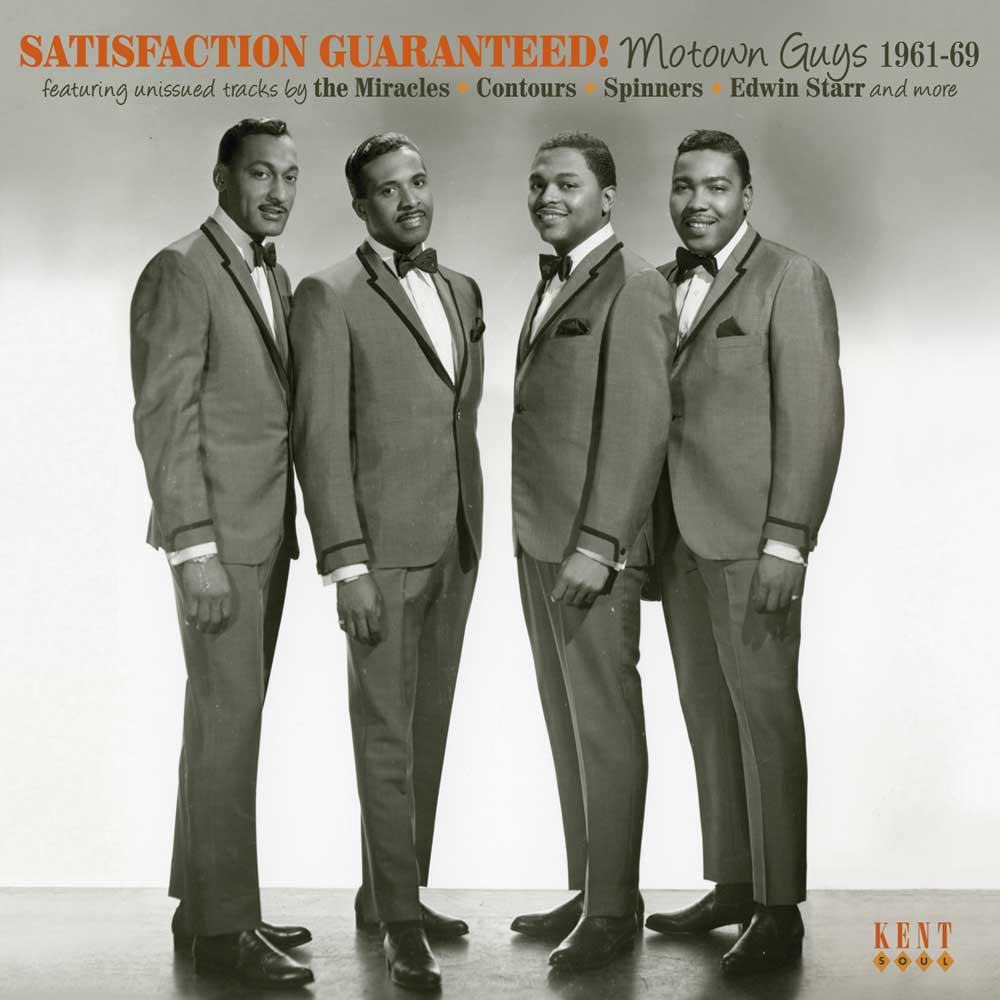
SATISFACTION GUARANTEED-MOTOWN GUYS 1961-1969.
SATISFACTION GUARANTEED-MOTOWN GUYS 1961-1969.
During the sixties, Berry Gordy Jr’s Motown Records, was a musical colossus. Between 1961 and 1969, seventy-nine of the singles released by Motown reached the top ten in the US Billboard 100. It seemed Motown could do no wrong. That’s not surprising. Look at the artists signed to Motown.
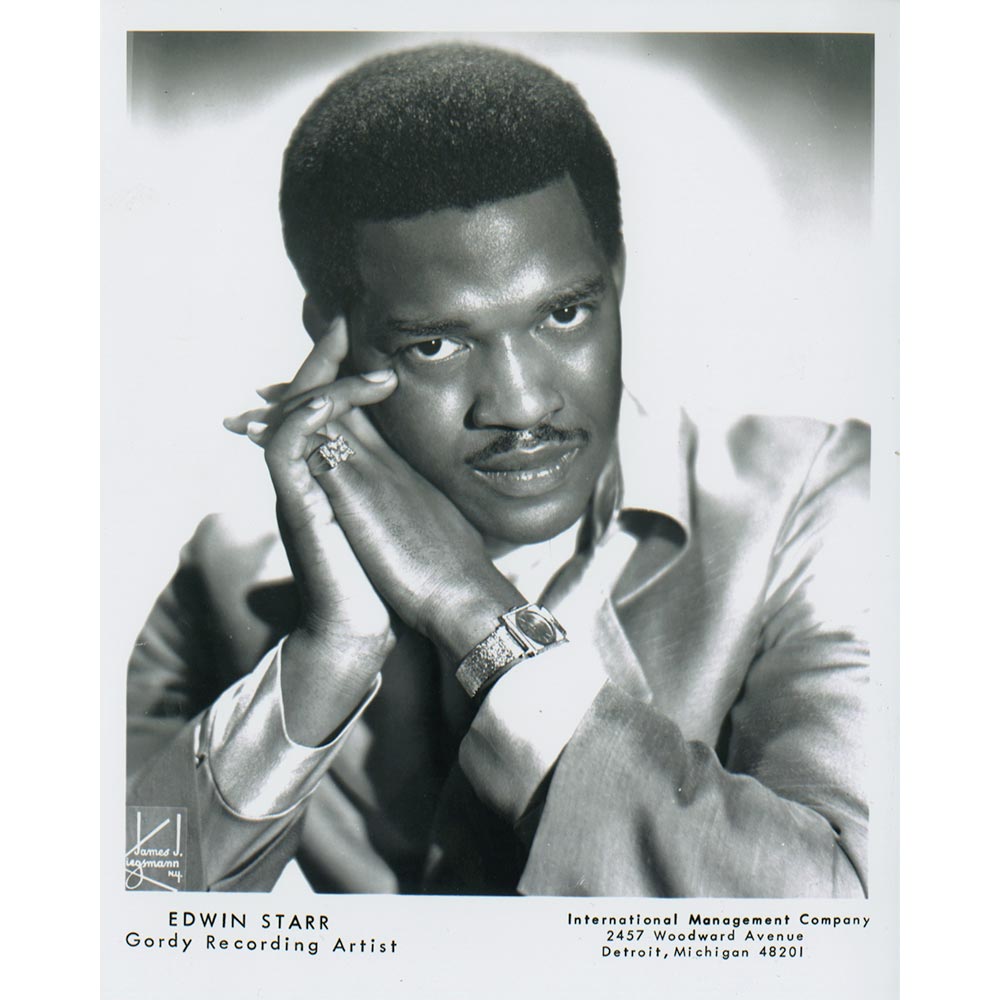
This included Marvin Gaye, The Temptations, The Four Tops, Smokey Robinson and The Miracles, Junior Walker and The All Stars, Johnny Bristol, Edwin Starr, Chuck Jackson and The Fantastic Four. Each of these artists played their part in the rise and rise of Motown. These artists also feature on Satisfaction Guaranteed-Motown Guys 1961-1969, which was recently released by Kent Soul, a subsidiary of Ace Records.
Satisfaction Guaranteed-Motown Guys 1961-1969 is a compilation of twenty-four previously unreleased tracks. Some of these tracks are alternate takes of well known tracks. This includes contributions from some of Motown’s biggest names, including Marvin Gaye, The Temptations, The Four Tops, Smokey Robinson and The Miracles. For fans of Motown, Satisfaction Guaranteed-Motown Guys 1961-1969 is bound to find its way into their record collection. I’ll tell you why that’s bound to be the case, by picking the highlights of Satisfaction Guaranteed-Motown Guys 1961-1969.
Opening Satisfaction Guaranteed-Motown Guys 1961-1969 is Bobby Taylor and The Vancouvers’ Satisfaction Is Guaranteed. Bobby Taylor and The Vancouvers signed to Motown in 1967. Their debut was Does Your Mama Know About Me, which reached the top thirty in the US Billboard 100 chart. The followup was meant to be Satisfaction Is Guaranteed. It was written by Tom Baird. He cowrote Does Your Mama Know About Me with Tommy Chong. However, Satisfaction Is Guaranteed was recorded, but never mixed. Since then, it has lain in the Motown vaults…until now. Belatedly, Satisfaction Is Guaranteed makes a welcome debut on Satisfaction Guaranteed-Motown Guys 1961-1969.
Johnny Bristol enjoyed a long and successful career as a singer, songwriter and producer. His career began in 1959. For the next four years, he worked with Harvey Fuqua. When Harvey moved to Motown, so did Johnny. He worked as a staff songwriter, penned a number of hits. However, Johnny wanted to forge a career as a singer. He recorded six tracks for Motown between 1963 and 1964. This included Tell Me How To Forget A True Love. None of the tracks were ever released. Considering the quality of the irresistible Tell Me How To Forget A True Love, that’s a great shame. Who knows what heights Johnny might have reached with the Motown machine behind him?
Before signing to Atlantic Records, and hooking up with Thom Bell, The Spinners were signed to Motown. They’d enjoyed two hits in 1965 and 1966. They only released just one album on Motown, The Original Spinners in 1967. It failed commercially. A year later, in February 1968, The Spinners recorded Hold On To Me (A Little Longer). A beautiful, needy slice of soul, it’s the perfect showcase for The Spinners’ harmonies. Despite oozing quality and soulfulness, Hold On To Me (A Little Longer) was never released. Three years later, in 1971, with Thom Bell’s help, The Spinners’ career was transformed and they would become one of the biggest soul groups.
Smokey Robinson and The Miracles were one of Motown’s most successful groups. In 1966, Smokey Robinson and The Miracle were recording their 1966 album Away We A Go-Go. One of the tracks recorded was Baby You Got The Key, a thoughtful ballad. When Away We A Go-Go was released, Baby You Got The Key had missed the cut. Since then, it’s lain unreleased. That’s a great shame, as it’s a real hidden gem from Smokey Robinson and The Miracles.
Frank Wilson’s best known track is the Northern Soul classic Do I Love You (Indeed I Do). It was released in 1965. That year, Frank recorded the ballad Together ‘Til The End Of Time. Penned by Frank, it was produced by Hal Davis and Marc Gordon. Together ‘Til The End Of Time was never released. There was a reason for this. Brenda Holloway had also recorded the track. Motown weren’t going to release two versions of the same track. So a decision had to be made about which version was to be released. Brenda’s version got the nod. Only now, do we get the opportunity to discover the beauty of Frank’s version of Together ‘Til The End Of Time.
It wasn’t until 1968, that The Fantastic Four signed to Motown. There’s a reason it took this long. 1968 was the year Ed Wingate sold his Ric Tic label to Motown. After signing to Motown, The Fantastic Four were prolific. They recorded fifty tracks between 1968 and 1971. One of these tracks was I Wanna Say I Love You, which was recorded back in 1969. Penned by Lawrence Brown, George Gordy and Allen Story, it’s a bluesy, soulful track from The Fantastic Four.
Motown aficionados will remember Frank Gorman. He was a member of The Fidelitones and cowrote Please Mr. Postman for The Marvelettes. As a result, Frank was given a recording contract. His first single was The Day Will Come. After this, Frank was climbing the Motown ladder. He formed a songwriting partnership with Lamont Dozier and Brian Holland. Later, he lost his place in the partnership to Eddie Holland. They wrote I’m Gonna Make It To The Top. Recorded in 1963, this hopeful version of I’m Gonna Make It To The Top was one of Frank’s final recordings for Motown.
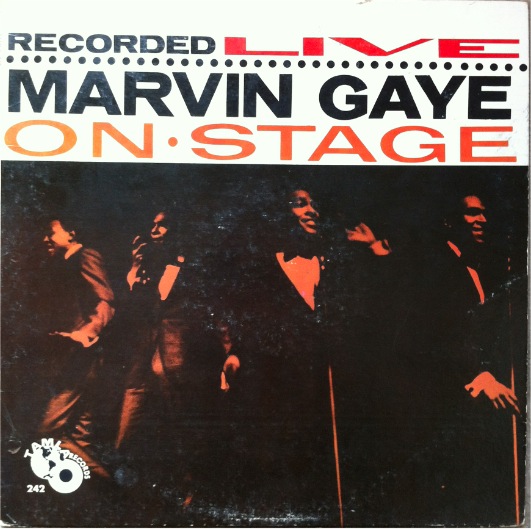
From the opening bars of Mojo Hannah, the inimitable voice of Marvin Gaye pours out of the speakers. This track was recorded in 1963, when Marvin’s career was just beginning. He’d enjoyed hits with Stubborn Kind Of Fellow and Hitch-Hike. Mojo Hannah was recorded with a view to releasing it as a single. This never happened. However, Mojo Hannah featured in Marvin’s 1963 album Recorded Live On Stage. The version of Mojo Hannah on Satisfaction Guaranteed-Motown Guys 1961-1969, is a reminder of a young Marvin Gaye, as his career unfolded.
It was in 1963, that The Temptations first recorded He Who Picked A Rose. Eddie Kedricks delivered the lead vocal, that day in 1963. The song was never released. Five years later, The Temptations decided to revisit He Who Picked A Rose. In the intervening five years, Tammi Terrell had recorded the song. New lyrics were added and it became I Gotta Find A Way (To Get You Back). This song featured on The Temptations’ 1968 album Cloud Nine. Since then, He Who Picked A Rose has been overlooked. At last, it makes an appearance on Satisfaction Guaranteed-Motown Guys 1961-1969.
By 1968, Jr. Walker and The All-Stars had enjoyed eleven consecutive hit singles, since their Motown debut in 1965. Their sound was unmistakable. It was raw R&B full of energy and electricity. This was very different to Motown’s “house” sound. So Johnny Bristol was brought onboard to change Jr. Walker and The All-Stars sound. This began with What Does It Take To Win Your Love? Jr. Walker and The All-Stars rough edges were smoothed away. This continued on My Girl Annie. It was recorded in 1968, but never released until now. However, it was the latest stage in the remaking of Jr. Walker and The All-Stars’ sound.
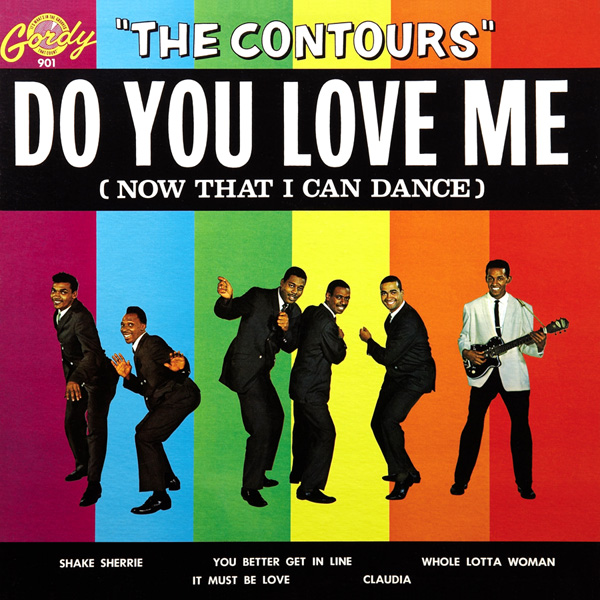
Originally, The Contours recorded Claudia on 13th December 1961. It featured on their one and only album Do You Love Me (Now That I Can Dance, which was released in 1962. Claudia was written by Joe Hunter, Clarence Paul and Andre Williams. It was produced by Clarence Paul, who also sang lead. The version of Claudia on Satisfaction Guaranteed-Motown Guys 1961-1969, is an alternate take, which shows the track taking shape.
My final choice from Satisfaction Guaranteed-Motown Guys 1961-1969 is The Four Tops’ The Night We Called It A Day. This was a Tom Adair and Matt Dennis composition. It was recorded on 19th April 1963 and produced by William Stevenson and Henry Crosby. Jazz-tinged, soulful and sultry, The Night We Called It A Day is a beautiful way to close Satisfaction Guaranteed-Motown Guys 1961-1969.
For either anyone interested in soul music, or Motown, then Satisfaction Guaranteed-Motown Guys 1961-1969 will be a must have. It’s chock full of rarities. There’s twenty-four tracks on Satisfaction Guaranteed-Motown Guys 1961-1969. Twenty tracks make their debut on Satisfaction Guaranteed-Motown Guys 1961-1969. This includes contributions from the great and good of Motown’ men. Marvin Gaye, The Temptations, The Four Tops, Smokey Robinson and The Miracles, Junior Walker and The All Stars, Johnny Bristol, Edwin Starr, Chuck Jackson and The Fantastic Four. Each of these artists played their part in the rise and rise of Motown.
By 1969, the end of the period that Satisfaction Guaranteed-Motown Guys 1961-1969 covers, Motown Records, was a musical colossus. Between 1961 and 1969, seventy-nine of the singles released by Motown reached the top ten in the US Billboard 100. It seemed Motown could do no wrong. They were one of the most successful record labels. However, the party was almost over for Motown.
As the seventies dawned, other labels usurped Motown at soul’s top table. Philadelphia International Records, Atlantic Records and Hi Records were home to some of the biggest names in soul. Motown was left with Marvin Gaye, Stevie Wonder, The Temptations and Diana Ross. While these artists would bring commercial success and critical acclaim Motown’s way, it never reached the same heights during the seventies. As a result, Satisfaction Guaranteed-Motown Guys 1961-1969 is a reminder of Motown Records’ sixties glory days, when seemingly, Motown could do no wrong.
SATISFACTION GUARANTEED-MOTOWN GUYS 1961-1969.





EDDY GILES-SOUTHERN SOUL BROTHER-THE MURCO RECORDINGS 1967-1969.
EDDY GILES-SOUTHERN SOUL BROTHER-THE MURCO RECORDINGS 1967-1969.
For the last sixty years, Eddy Giles has been a regular on KOKA, a Shreveport based radio station. Originally, Eddy was a guitarist in various local groups. Then between 1967 and 1969, Eddy Giles was signed to Murco Records. His singles, which feature on Southern Soul Brother-The Murco Recordings 1967-1969, which was released on Kent Soul, an imprint of Ace Records, were a staple of KOKA’s playlist. Eddy was the local boy made good. KOKA was playing an important part in his career.
Fast forward twenty years, and Eddy was a DJ on KOKA. Eddy was behind the wheels of steel, spinning the latest hits. That was the latest incarnation of Eddy Giles. Another thirty years have passed. Now Eddy Giles is the Reverend Eddy Giles, who preaches on KOKA. An ordained pastor, this is just the latest in a long line of career changes for Eddy Giles. His story began seventy-six years ago.
It was in 1938, that Eddy Giles was born in Frierson, a country town in Minnesota. Frierson was home to Eddy until the fifties. That’s where he first picked up a guitar. Unlike many musicians, the guitar didn’t come easy to Eddy. No wonder. There were only two strings on Eddy’s guitar. However, Eddy persisted. He was determined to play the guitar. Then he caught a break.
Eddy saw an advert in a magazine in a cowboy magazine. If he could sell 300 packets of seed, he could win a prize. One of the prizes was an acoustic guitar. So, having sold 300 packets of seeds, Eddy sent away a money order and waited. Eventually, an acoustic guitar wound its way back to Eddy. This was the start of Eddy’s nascent career.
With nobody to teach him the basics, Eddy had to rely upon an instruction manual that came with the guitar. Tuning the guitar was problematic. It was a case of trial and error. Eventually, Eddy’s patience paid off. He was able to play his new guitar. Soon, the first chapter in Eddy’s musical career began.
Now able to play guitar, Eddy and three friends formed a group. They appeared at talent shows in the local area, where they covered songs by Elvis and Chuck Berry. This was how Eddy spent the new few years. Then in 1958, Eddy headed to Shreveport.
Originally, Eddy headed to Shreveport to attend Booker T. Washington high school. He was determined to graduate high school. Fortunately, Eddy’s aunt and uncle lived in Shreveport, and he was able to stay with them. For Eddy, an eduction was important. Eddy wasn’t interested in returning to the family farm. So, he attended high school, worked as a bell boy in a local hotel and played in talent shows. After a year, Eddy graduated. As a reward, his aunt and uncle bought Eddy his first electric guitar.
Having graduated, Eddy headed home to the family farm. Along came his new electric guitar. This caused problems for Johnny. His mother couldn’t stand the noise. Luckily, he was able to practice at a friend house. Gradually, Eddy mastered the electric guitar. When he did, he was able to join a local gospel group The Humming Bees.
Joining The Humming Bees looked like the break Eddy had been looking for. However, there was a problem. Churches didn’t allow electric guitars. For Eddy, this was frustrating. Then he caught a break.
KOKA, a Shreveport based radio station gave local groups fifteen minute slots to showcase their talent. Eddy was many of these groups go-to guitarist. This lead to Eddy joining the Chicago based group, The Pilgrim Jubilees.
Although Eddy was The Pilgrim Jubilees guitarist, he was to all intents and purposes, their bassist. He had to convert his guitar to a bass. For the next couple of years, Eddy was on the road nonstop with The Pilgrim Jubilees. Then his new wife told Eddy it was either The Pilgrim Jubilees, or her. Eddy chose his wife.
Ironically, his relationship with his wife didn’t last. They eventually split-up. During this period, Eddy was working in a restaurant. At one point, he began taking his guitar to work. On his break, he would go downstairs and play his guitar. It was at this point Eddy met drummer Willie “Caveman” Harris and a bassist. They formed The 3 Corners.
Originally, The 3 Corners were a covers band. They made just seventy-five cents each. Soon, they were getting bookings all over town. They became so popular, that The 3 Corners were being asked to enter the recording studio. There was a problem. The 3 Corners didn’t have any material. They were just a covers band. So, some new members joined The 3 Corners, who became The Jive 5.
The 3 Corners then decided to add a vocalist, Dori Grayson. After that, James R. Steward and Earl Carter joined Dori, Eddy and Willie. They became The Jive 5. This new group quickly gelled. Soon, The Jive 5 became a popular group. Before long, the word was out about and The Jive 5 were attracting the attention of a local record company.
Dick Martin, cofounder of Murco Records got in touch with The Jive 5. He asked them if they’d considered recording some songs? However, The Jive 5 didn’t have any songs. Eddy told them this. Luckily, Dee Marais had got in touch with The Jive 5. He offered a song. Unfortunately, it wasn’t suitable for The Jive 5. So Eddy told Dee he was going to write a hit record.
Eventually, after weeks of trying to write a song, Eddy came up with Losin’ Boy. It was cut by at the Robin Hood Studios in 1967. The Robin Hood Studios were situated just across the state line in Tyler, Texas. This was where Eddy Giles cut his debut single.
Vocalist Dori Grayson wasn’t present when Losin’ Boy and the B-Side I Got The Blues, another Eddy Giles’ track were recorded. So, Eddy took charge of the lead vocal and played guitar. The other three members of The Jive 5, drummer Willie “Caveman” Harris, bassist Charles Lawrence and saxophonist James R. Steward. accompanied Eddy on what became his first hit single.
Murco Records picked up Losin’ Boy. When they released Losin’ Boy 1967, they had no idea how well the single would do. This tale of heartbreak from Eddy Giles sold 2,000 copies in Shreveport alone. For Murco Records, this gave a hint of what was about to happen. Soon, Losin’ Boy was selling well. In the Dallas area, it sold 10,000 copies, and reached number one in the local charts. Losin’ Boy sold so well, that it crept into the US Billboard 100, where it spent five weeks. For Dick Martin, cofounder of Murco Records, Eddy Giles must have looked like the future of his label.
For the follow-up to Losin’ Boy, Eddy wrote Don’t Let Me Suffer. The version of Don’t Let Me Suffer on Southern Soul Brother-The Murco Recordings 1967-1969, is a previously unreleased extended version. It sees a heartbroken Eddy plea for his partner to return. The flip-side is While Im Away (Baby, Keep The Faith), a ballad that Eddy delivers from the perspective of a soldier heading to Vietnam. The song was inspired by saxophonist James R. Steward, who’d just entered the US Army. Despite the quality of Don’t Let Me Suffer, it failed to chart. For Eddy Giles and Dick Martin of Murco Records, this was a disappointment.
Just a few months after the release of Don’t Let Me Suffer, Eddy returned with Eddy’s Go-Go Train. It’s a fusion of funk and soul, where Eddy appears to have been inspired by Otis Redding and James Brown. Sadly, lightning struck twice for Eddy. Eddy’s Go-Go Train failed to chart. Despite failing to chart, Eddy’s Go-Go Train proved a popular track in Eddy’s live sets. That was a small crumb of comfort. Eddy’s recording career had stalled.
So for Eddy’s fourth single, and first of 1968, he chose Happy Man, a beautiful ballad. This was the answer to Losin’ Man. Here, a contented Eddy lays bare his soul. This was Eddy finest hour. The quality continues on Music, B-Side. Just like Happy Man, it was the perfect showcase for Eddy’s talents. Sadly, Happy Man failed to chart. Eddy Giles looked like being a one-hit wonder.
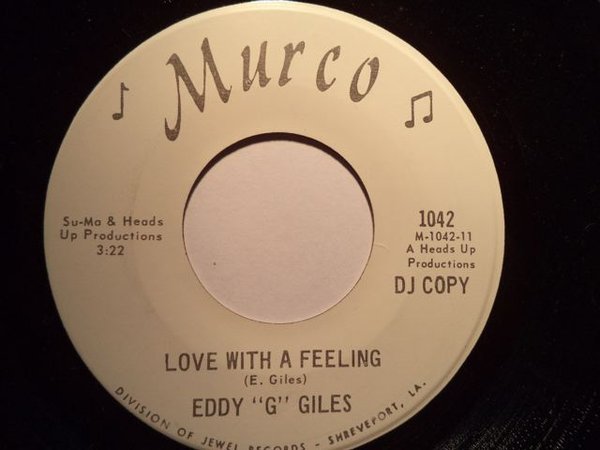
This was despite Baby Be Mine, a heartfelt ballad, being chosen as Eddy’s next single. Released later in 1968, played to Eddy’s strengths. He was at his best delivering ballads. Eddy delivered lyrics like he’d lived them. The B-Side was the blues tinged Love With A Feeling on the B-Side. Despite Eddy’s fifth single oozing quality, his second hit single eluded him. Time was running out for Eddy.
Eddy only released three further singles on Murco Records. His sixth single was Soul Feeling Part 1, coupled with Soul Feeling Part 2. A driving, vampish slice of funky soul. Soul Feeling Part 1 sees Eddy pay homage to James Brown as he hollers, whoops and vamps his way through two minutes of uber funky music. Sadly, despite its undoubtable funkiness, Soul Feeling Part 1 didn’t trouble the charts. Neither did his next single.
Given Eddy had released five singles that failed to chart, there’s a certain irony that he chose Aint Gonna Worry No More as his next single. It was another ballad, where power and heartbreak are omnipresent. Tucked away on the B-Side was Tingling, which Dick Martin cowrote with Eddy. Sadly, Aint Gonna Worry No More failed to chart and proved to be Eddy’s Murco Records. Eddy just couldn’t catch a break. How different things had looked back in 1967. Now Eddy was in the last chance saloon.
Although Eddy was still signed to Murco Records, So Deep In Love was licensed to Nashville based, Silver Fox Records. Shelby Singleton was a friend of Dee Marais, of Murco Records. They agreed that, in an attempt to revitalise Eddy’s career, Silver Fox Records would released So Deep In Love. So in 1969, So Deep In Love with Thats How Strong My Love Is on the B-Side, was released as a single. The change of label didn’t result in Eddy’s luck changing. The end was neigh for Eddy.
After So Deep In Love failed to chart, Eddy Giles met Dick Martin and Dee Marais of Murco Records. This was the end of the road. Eddy had never reached the heights of Losin’ Boy, his debut single. He’d released seven singles that failed to chart. This couldn’t go on. So Eddy and Murco Records went their separate ways.
For Eddy Giles, his time at Murco Records had been a case of what might have been? Eddy was a seriously talented singer. That’s apparent on Southern Soul Brother-The Murco Recordings 1967-1969, which was recently released on Kent Soul, an imprint of Ace Records. On Southern Soul Brother-The Murco Recordings 1967-1969, we hear the different sides to Eddy Giles.
On Southern Soul Brother-The Murco Recordings 1967-1969, Eddy veers between Southern Soul and funk. These tracks are a mixture of singles, B-Sides and previously unreleased tracks. They were recorded between 1967 and 1969, when anything looked possible for Eddy Giles.
His career started so well. That was apparent on Losin’ Boy, his debut single. It showed that Eddy Giles was capable of bringing lyrics to life. The way he delivered lyrics, made you think he’d lived, loved and survived them. He’s at his best delivering Southern Soul ballads. Other times, he becomes a fully fledged funkateer.
When that happens, Eddy vamps his way through tracks, fusing funk and soul. Eddy’s reminiscent of James Brown, as he swaggers and struts his way through the funkier tracks on Southern Soul Brother-The Murco Recordings 1967-1969. This funkier side of Eddy Giles failed to attract the attention of record buyers.
Apart from Losin’ Boy, Eddie Giles’ debut single on Murco Records, commercial success eluded the man from Frierson, Minnesota. That became the story of Eddy Giles’ career in secular music. Belatedly, Eddy released his debut album I’m A Losing Boy in 1979. Still, commercial success eluded Eddy Giles. After that, Eddy returned to where it all began KOKA, a Shreveport based radio station in the eighties.
Rather than making records, Eddy was spinning them. Eddy Giles’ career had come full circle. There were still a few twists and turns still to come.
Fast forward another thirty years, and Eddy Giles is now the Reverend Eddy Giles, who preaches on KOKA. Now aged seventy-six, Eddy Giles has come full circle. KOKA, was where he made his musical debut. Eddy Giles has packed a lot of living into the intervening sixty years, including recording the eighteen tracks on Southern Soul Brother-The Murco Recordings 1967-1969, which feature the best music of his career.
EDDY GILES-SOUTHERN SOUL BROTHER-THE MURCO RECORDINGS 1967-1969.




GOOD ALL OVER-RARE SOUL FROM THE WESTBOUND RECORDS VAULTS 1969-1975.
GOOD ALL OVER-RARE SOUL FROM THE WESTBOUND RECORDS VAULTS 1969-1975.
It was in late 1968, that music veteran Armen Boladian founded Westbound Records, in Detroit. This was a boost for Detroit’s ailing independent music scene. During the previous years, Motown had put most of Detroit’s independent labels to the sword. Gradually, Detroit’s independent labels fell by the wayside. Motown had a monopoly over Detroit soul music. Not any more.
Armen Boladian had been running record labels since the fifties. So he knew his way around the music industry. He’d also established a reputation amongst major and local labels. They respected Armen, and would help him establish Westbound Records and later, its label Eastbound Records.
Ironically, as Westbound Records’ reputation grew, Motown left Detroit, heading for Los Angeles. This left the stage clear for Westbound Records’ to become two of Detroit’s biggest, and most successful labels. No wonder. Westbound Records’ was home to funk royalty, including the Ohio Players, Funkadelic. That’s not all.
The Detroit Emeralds, Denise LaSalle, The Fantastic Four, A.C. Tilmon, The Motiviations, Damon Shawn and Unique Blend all called Westbound Records home. They all feature on Ace Records’ latest compilation music from Westbound Records’ back-catalogue, Good All Over-Rare Soul From The The Westbound Records Vaults 1969-1975. It’s a twenty-three track compilation, which features two previously unreleased tracks. They’re A.C. Tilmon and Denise LaSalle’s Tender Moments and Bob and Harold’s You Can’t Take This Love From Me. These are just two of the twenty-three tracks on Good All Over-Rare Soul From The The Westbound Records Vaults 1969-1975, which I’ll tell you about.
The Fantastic Four’s I’m Falling In Love (I Feel Good All Over) opens Good All Over-Rare Soul From The The Westbound Records Vaults 1969-1975. It’s the first of three contribution from The Fantastic Four. I’m Falling In Love (I Feel Good All Over) was released as a single on Eastbound in 1973. An uptempo, joyous track, it’s The Fantastic Four at their soulful best. The B-Side was a beautiful ballad, I Believe In Miracles (I Believe In You). Both tracks were penned by Albert Hamilton and Norma Toney, and produced by Al Kent. Another single released in 1973, was I Had This Whole World To Choose From (And I Chose You). The B-Side was If You Need Me I’ll Come Running. Written by Wallace Childs and William Garrett, it’s a hidden gem of a ballad that plays to The Fantastic Four’s strengths.
In 1972, Unique Blend signed to Eastbound Records. A year later, in 1973, they released Old Fashioned Woman as a single on Eastbound Records. The flip side, was Mommy and Daddy a delicious fusion of the smoothest soul and jazzy horns. It was written by Charles Holman and Milton Overton. Sadly, Old Fashioned Woman failed to chart and is now, something of a rarity. Unique Blend’s other contributions is the heartfelt ballad, Does He Treat You Better. Penned by Lorenzo Smith, it was released as a single in 1973. Just like Old Fashioned Woman, Does He Treat You Better failed to chart. After this, Unique Blend released just one further single on Eastbound Records. Their finest moments were the balladry of Old Fashioned Woman and Does He Treat You Better.
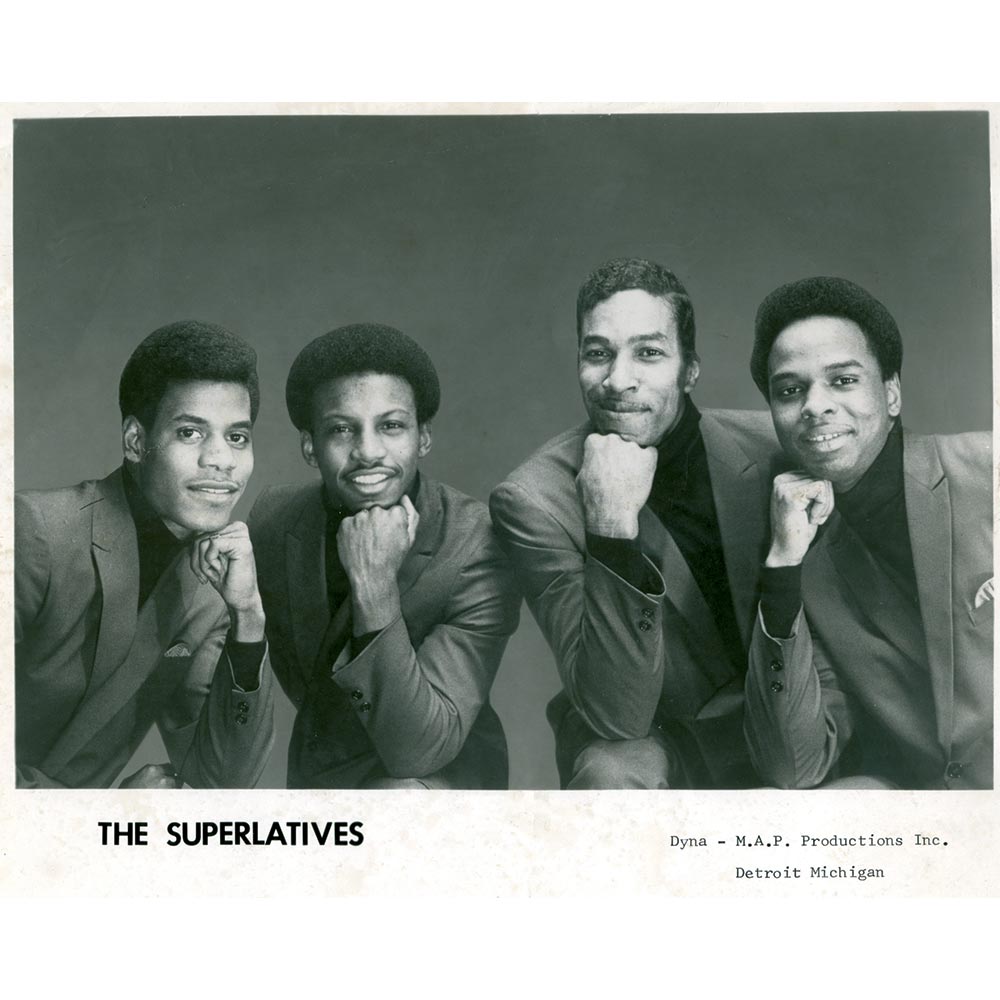
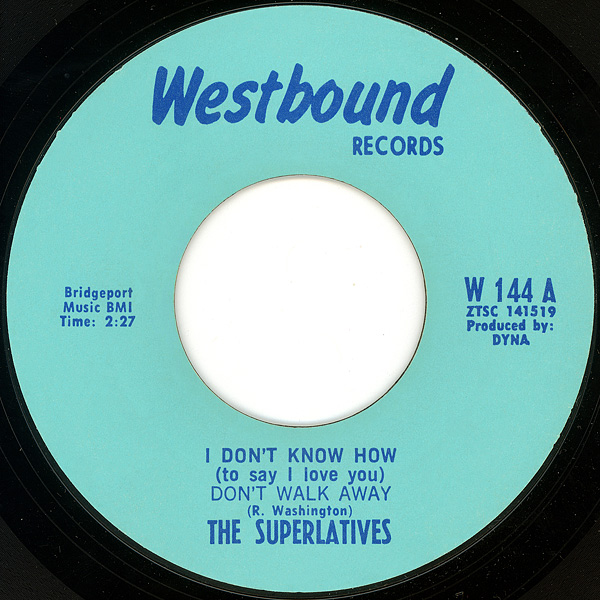
I Don’t Know How (To Say I Love You) Don’t Walk Away was The Superlatives only release on Westbound Records. It was released in 1969, and was one of the nascent label’s first releases. Penned by Robert Washington, I Don’t Know How (To Say I Love You) Don’t Walk Away somehow manages to be dramatic, soulful and wistful all at once.
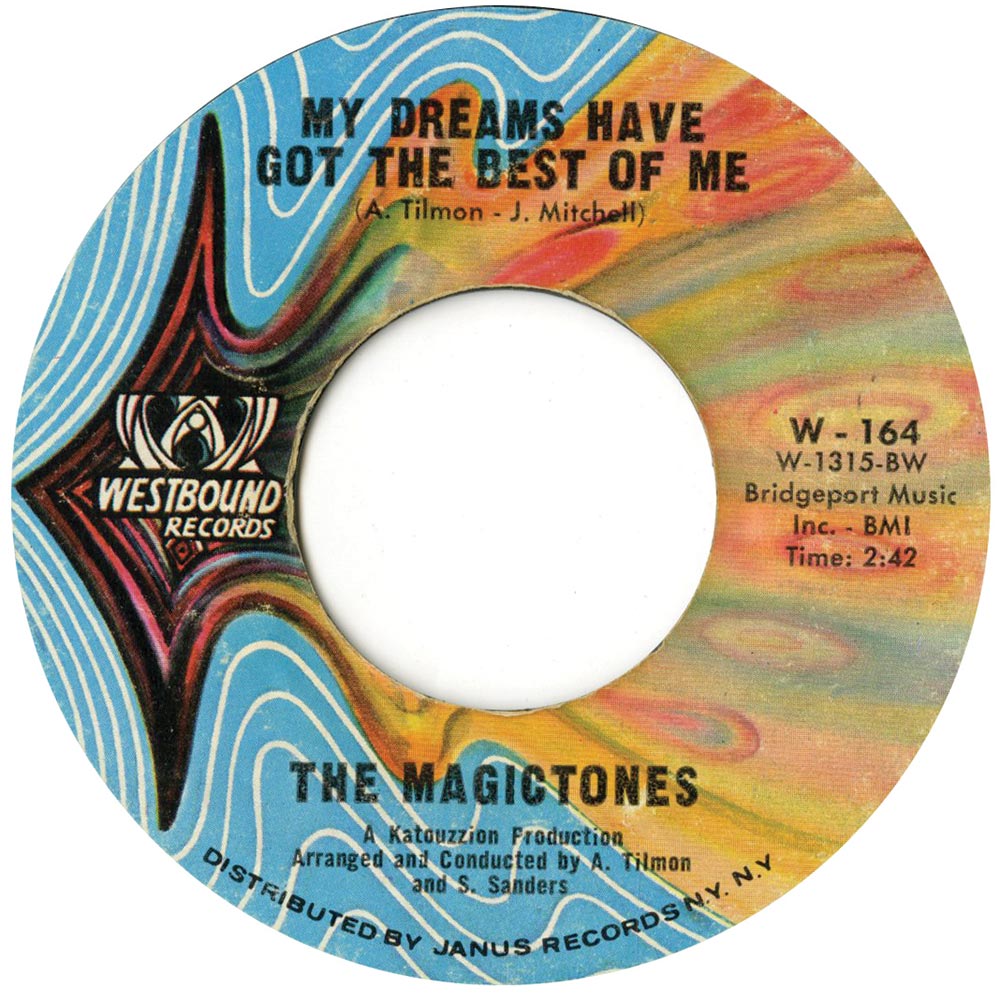
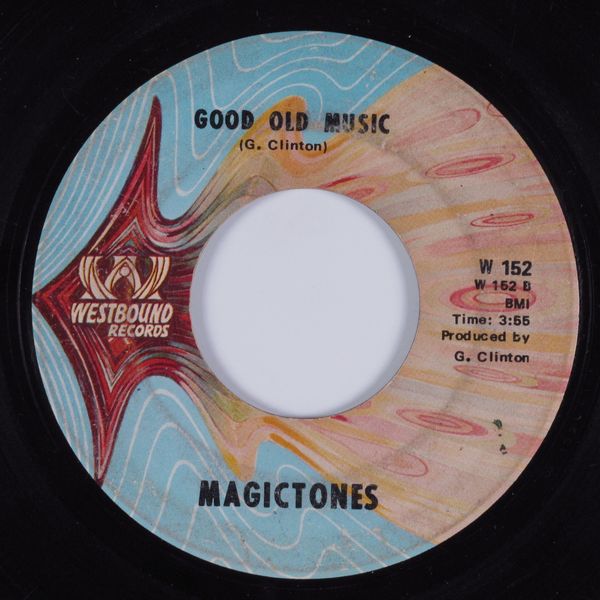
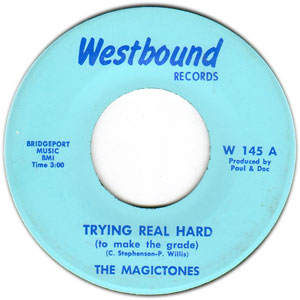
The Magictones spent three years signed to Westbound Records. Between 1969 and 1971, they released a quartet of singles on Westbound Records. This includes the 1969 single Doc Paul produced Trying Real Hard (To Make The Grade). The same year, The Magictones released the George Clinton penned I’ll Make It Up To You. It’s two minutes of beauty, emotion and regret. Two years later, in 1971, The Magictones fused soul and funk on I’ve Changed. They plead and promise their way convincingly through I’ve Changed. In 1972, My Dreams Have Got The Best Of Me proved to be The Magictones swan-song on Westbound Records.
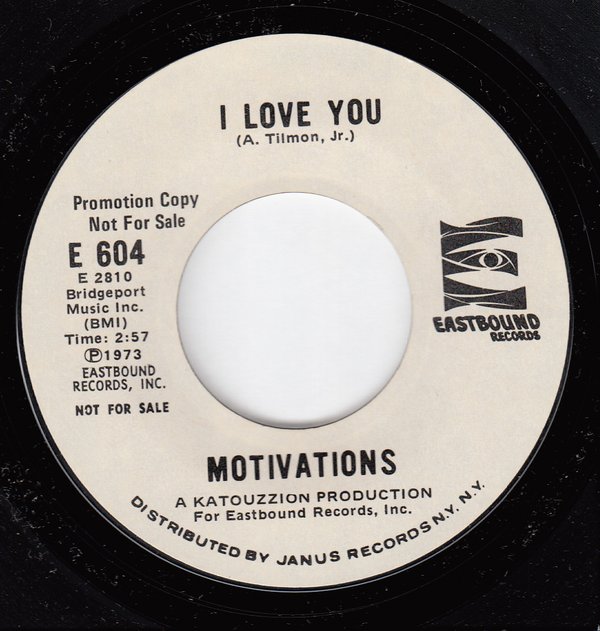
Back in 1973, The Motivations released their one and only single on Westbound Records. This was I Love You. Just like the B-Side, I’m Loving You You’re Loving Me it was written by Albert Tilmon Jr. I Love You is fusion of soul and funk, where the hooks haven’t been spared. I’m Loving You You’re Loving Me is a tender ballad, which shows another side to The Motivations.
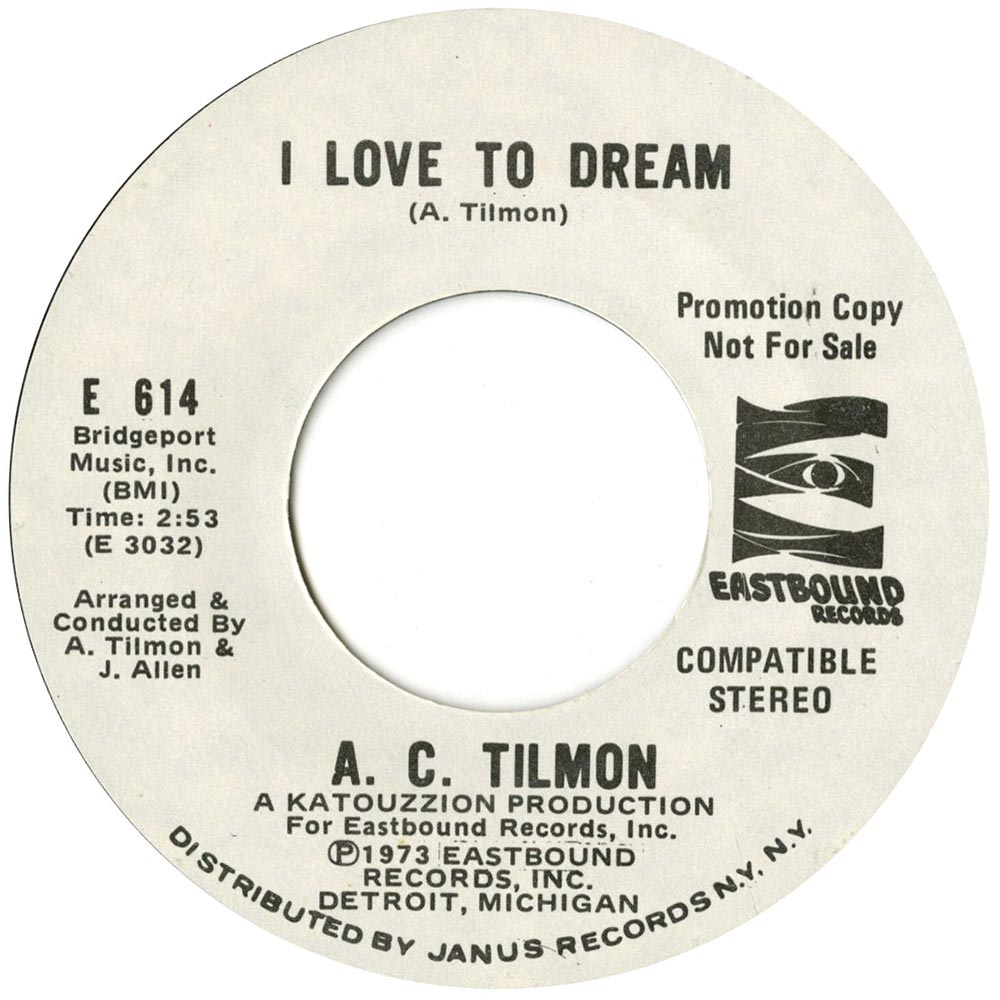
A.C. Tilmon was a singer, songwriter and guitarist. Sadly, his career was cut short, when he died in 1982, aged just thirty-seven. In 1974, he released Girl You Thrill Me as a single on Eastbound Records. The B-Side was I Love To Dream. Both were written by Albert Tilmon Jr. Of the two tracks, I Love To Dream is my favourite. It features a truly tender and heartfelt vocal.
A year later in 1975, A.C. Tilmon and The Detroit Emeralds collaborated on two singles. One of these singles was The Rosetta Stone. It was penned by Barry Blue and Dave Jordan. That’s All I Got was the B-Side. Hook-laden and dance-floor friendly, it’s a delicious fusion of soul and funk.
The Houston Outlaws released three singles on Westbound Records. This included What Am I Gonna Do, in 1972. It was written by Junie Morrison and produced by Cholly Atkins and Pearl Jones. Floaty, elegant and seriously smooth, this is The Houston Outlaws finest moment.
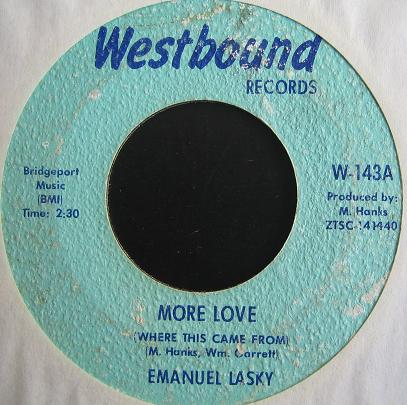
Emanuel Laskey released More Love (Where That Came From) in 1969. It was one of Westbound Records’ first released. Written by William Garrett and Michael Hanks, this was one of two singles Emanuel released on Westbound Records. It’s an outpouring of emotion, that’s very different from the social comment of B-Side, A Letter From Vietnam.
The final two tracks on Good All Over-Rare Soul From The Westbound Records Vaults 1969-1975 come courtesy of Damon Shawn. He released a trio of singles on Westbound Records. Admit Your Love Is Gone was released as a single in 1971. Then in 1972, Damon released Feel The Need. Tucked away on the B-Side was I’m Wishing, an understated, melancholy ballad. It’s a tantalising taste of Damon Shawn’s music. He delivers a needy, hopeful ballad on a track that’s quite simply, a glittering hidden gem.
Good All Over-Rare Soul From The Westbound Records Vaults 1969-1975, features twenty-three slices of the rarest soul. That’s no exaggeration. Many of these tracks will be new to many people. They may have heard of The Fantastic Four, The Detroit Emeralds, and Denise LaSalle, but not the tracks on Good All Over-Rare Soul From The Westbound Records Vaults 1969-1975. Similarly, many people won’t have heard the delights of A.C. Tilmon, The Motiviations, Damon Shawn and Unique Blend. That’s until now.
Ace Records recently released Good All Over-Rare Soul From The Westbound Records Vaults 1969-1975. It’s the latest instalment in Ace Records’ journey through the Eastbound and Westbound Records’ back-catalogues. Just like previous releases, Good All Over-Rare Soul From The Westbound Records Vaults 1969-1975, is a lovingly compiled compilation. The man behind Good All Over-Rare Soul From The Westbound Records Vaults 1969-1975, is Tony Rounce.
Tony has compiled a compilation where a sprinkling of old favourites rub shoulders with B-Sides, unreleased tracks and hidden gems. That’s the perfect way to describe Good All Over-Rare Soul From The Westbound Records Vaults 1969-1975. It’s one of the finest soul compilations of recent months. No wonder. Look at the quality of music on Good All Over-Rare Soul From The Westbound Records Vaults 1969-1975. That’s not all. Much of the music on Good All Over-Rare Soul From The Westbound Records Vaults 1969-1975, is truly timeless, even forty years after its original release.
GOOD ALL OVER-RARE SOUL FROM THE WESTBOUND RECORDS VAULTS 1969-1975.



THE LONDON AMERICAN LABEL YEAR BY YEAR 1965.
THE LONDON AMERICAN LABEL YEAR BY YEAR 1965.
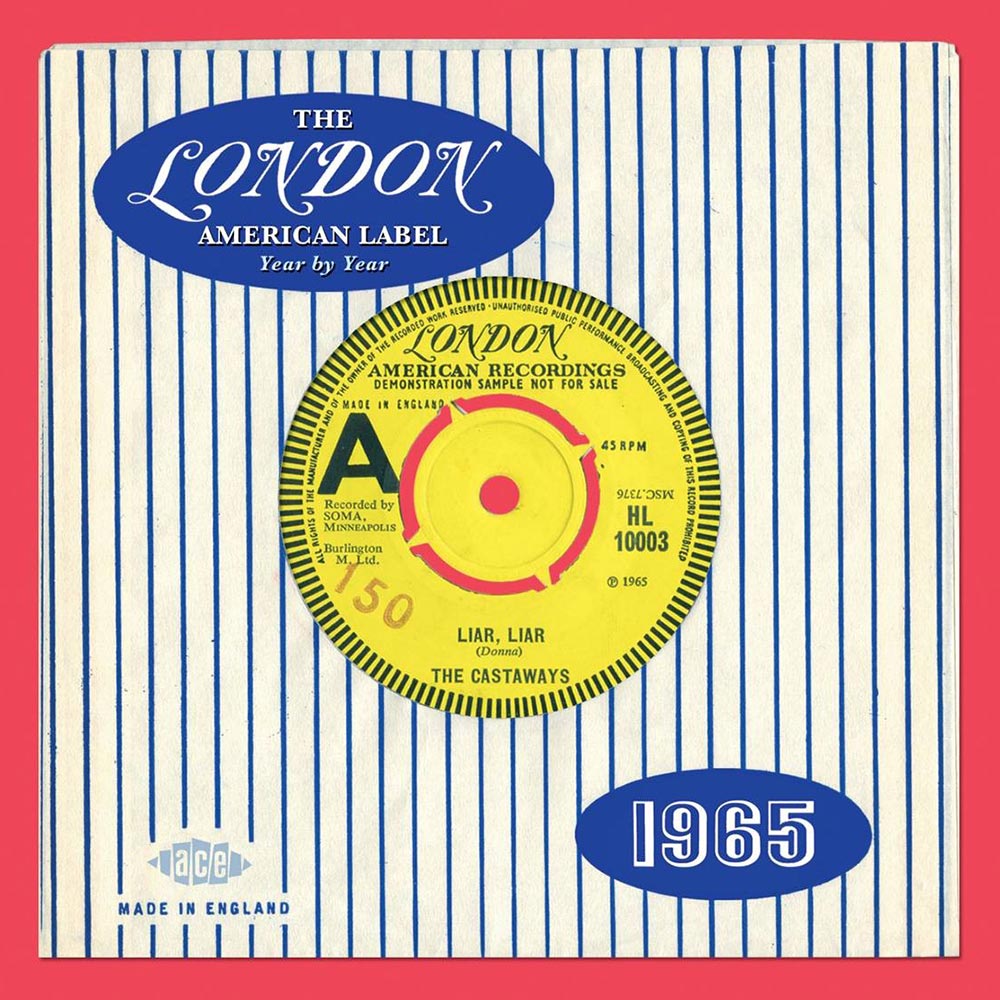
For a generation of music lovers, their introduction to American pop, rock ’n’ roll and soul was the London American label. It released the latest American hit singles. This had been the case since the mid-fifties.
London American had been licensing singles by Atlantic, Chess, Dot, Imperial, Speciality and Sun since the fifties. By the sixties, further labels were licensing their releases to London American. This would include Big Town, Hi Records, Monument and Philles Records. For a generation of music lovers, this made anything featuring the London American label essential listening. It was part of their musical education.
Only by listening to London American’s releases, were music lovers able to keep track of the latest music trends. They usually started in America, then took Britain by storm. Time and time again, this proved to be the case. That’s why, for a generation of music lovers, the London American label has a special place in their heart.
It brings back memories of when their love affair with music began. For some music lovers, that was nearly sixty years ago. This was the start of a life long love affair with music. Now it’s possible to relive these memories once again.
Since 2012, Ace Records have been releasing a series of compilations dedicated to the London American label. The first was The London American Label Year By Year 1956, which was released back in 2012. Recently, the tenth instalment in the series, The London American Label Year By Year 1965 has just been released.
The London American Label Year By Year 1965 is a tantalising taste of the soundtrack to a pivotal year in the Swinging Sixties, 1965. By 1965, music was changing, and changing fast.
One of the most important musical events in 1965, was when The Beatles played Shea Stadium. Little did anyone realise it, but the the stadium tour has just been born. Meanwhile, The Beatles and the rest of the British Invasion were still winning friends and influencing people in America. However, one of the most controversial events of 1965, was when Bob Dylan plugged in.
According to large swathes of his fans, when Bob Dylan plugged in, he sold out. Obviously, that wasn’t the case. It was an overreaction. Bob Dylan had to plug in to progress his career. If he hadn’t, he risked the ignomy of irrelevance. For the people’s poet, that was never going to happen. Another thing that many thought would never happen, was psychedelia.
In 1965, music was on the cusp of a psychedelic revolution. This psychedelic revolution would come to fruition, and blossom, a year later. However, some pioneering groups were at the vanguard of the psychedelic revolution. This included The Byrds and The Beatles, who released Rubber Soul later in 1965. Rubber Soul and The Byrds gave a hint at the direction music was heading. However, that was still to come. The music London American was releasing in 1965, was very different to the psychedelic revolution.
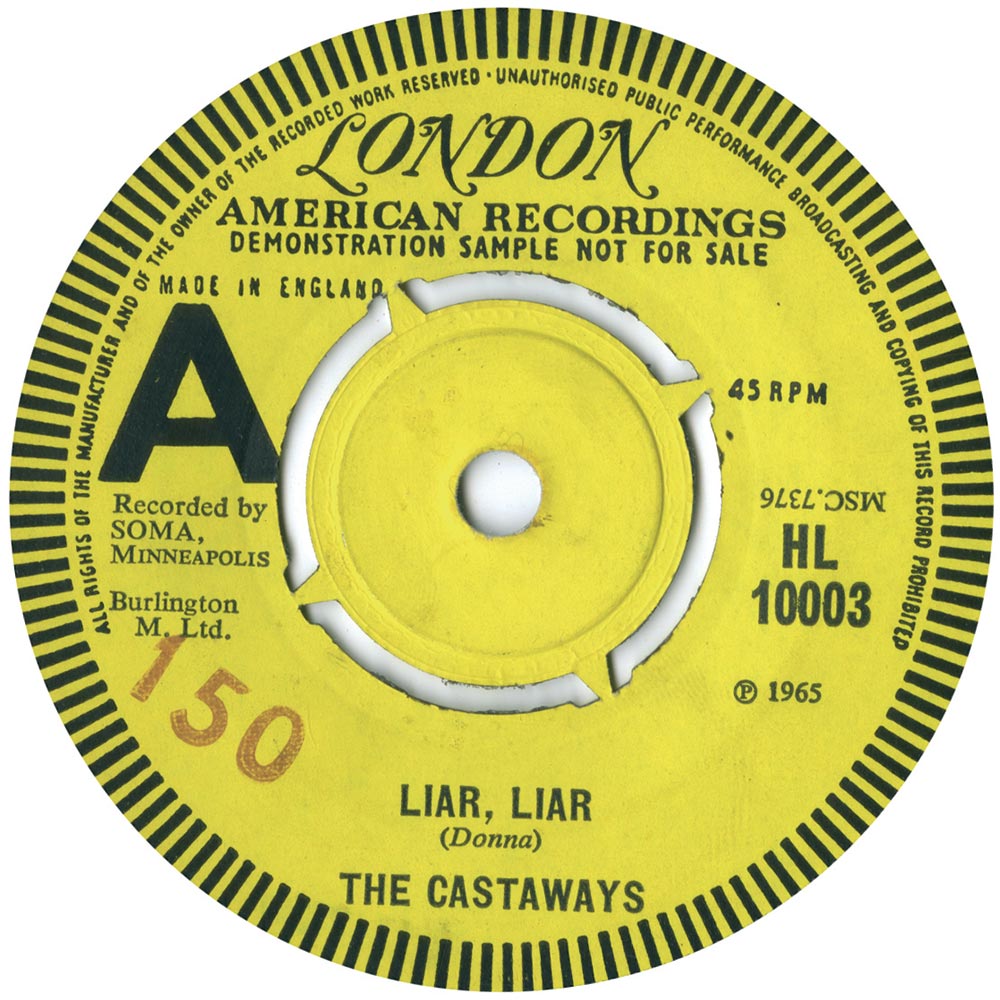
The best way to describe London American Label Year By Year 1965, is eclectic. There’s contributions from James Brown and The Fabulous Flames, Jerry Lee Lewis, Burt Bacharach, Dobie Gray, Barbara Mason, The Righteous Brothers and Carolyn Carter. Easy listening, funk, pop, Northern Soul, rock and soul feature on London American Label Year By Year 1965, which I’ll pick the highlights of.
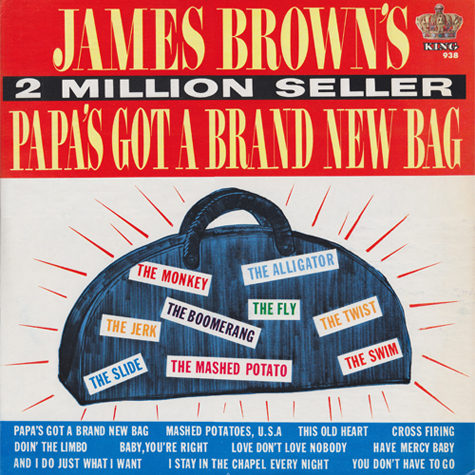
Opening London American Label Year By Year 1965 is Mercy, Mercy, Mercy the first of two tracks from James Brown and The Fabulous Flames. Mercy, Mercy, Mercy was originally released on King in America, reaching number ninety-two in the US Billboard 100. When Mercy, Mercy, Mercy was released on London American, the single failed to chart. That’s despite the impassioned pleas from Mr. Dynamite. The second track from James Brown and The Fabulous Flames, is Papa’s Got A Brand New Bag Part 1. It reached number eight in the US Billboard 100 and number twenty-five in the UK. This is without doubt, one of James Brown’s finest hours. So much so, it’s remembered as a classic funk track.
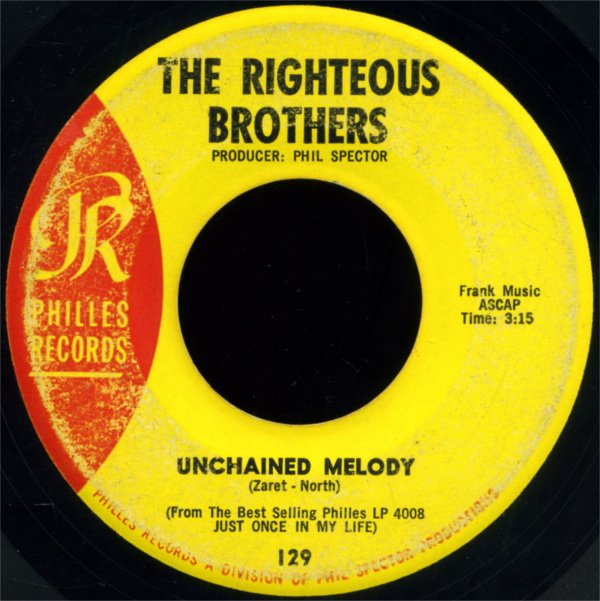
In 1965, The Righteous Brothers covered Gerry Goffin, Carole King and Phil Spector’s Just Once In My Life. Released on Philles Records, Just Once In My Life reached number nine in the US Billboard 100 charts. The decision was made to release Just Once In My Life in the UK. No wonder. The Righteous Brothers had already enjoyed a trio of hit singles in the UK, during 1965. Promos were pressed, and sent out to DJs. Then for some reason, the single was withdrawn. This was a missed opportunity. Heartachingly beautiful, dramatic and Spectoresque Just Once In My Life could’ve been a huge hit. Sadly, that wasn’t to be. Belatedly, Just Once In My Life was released in 1966, giving The Righteous Brothers a hit single. However, later in 1965, Unchained Melody gave The Righteous Brothers a hit single. This pop classic reached number four in the US Billboard 100 and number fourteen in the UK. Since then, Unchained Melody has been a pop classic, which was one of The Righteous Brothers’ most successful singles.
By 1965, Jerry Lee Lewis was on the comeback trail. He was still persona non gratis in America. This had been the case since he married his younger cousin. However, in Europe and Britain, Jerry was still popular. He’d reinvented himself as a country singer, and rolls back the years on James Bland’s Carry Me Back To Old Virginia. In Jerry’s hands, Carry Me Back To Old Virginia becomes a joyous, hook-laden country track.
During the sixties, the Burt Bacharach and Hal David enjoyed a successful songwriting and production partnership. Burt was also a successful artist in his own right. Billed as Burt Bacharach, His Orchestra and Chorus he enjoyed a hit single with an easy listening version of Trains and Boats and Planes. It reached number four in the UK. Later in 1965, Burt Bacharach and His Orchestra Featuring Tony Middleton released My Little Red Book, a track from the What’s New Pussycat soundtrack. On the soundtrack, Manfred Man perform this track. Here, veteran cabaret singer, Tony Middleton, takes charge of the vocal, injecting urgency and drama. Despite this, the single failed to chart.
The Ronettes are synonymous with the girl group sound of the early, to mid sixties. They were guided by Phil Spector, the man behind the legendary Wall of Sound. As 1965 dawned, his roster featured just two groups. One of these groups were The Ronettes. He cowrote You Baby with Barry Mann and Cynthia Weil. It was recorded by The Ronettes and released on Philles Records. However, despite its undoubtable quality, You Baby failed to chart. Music had moved on. The problem was, Phil Spector hadn’t kept up with these changes.
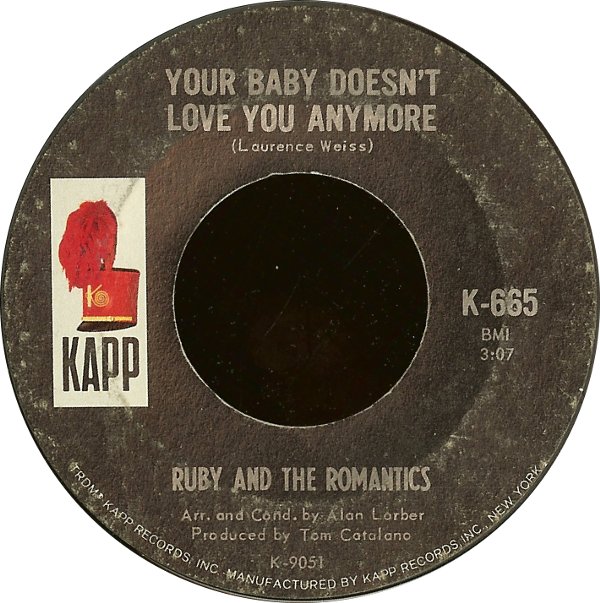
For a while, Ruby and The Romantics could do no wrong in America. Each of their singles charted. Then they released You’re Baby Doesn’t Love You Anymore, which failed to chart. For Kapp, this was a disaster. Ruby and The Romantics were one of Kapp’s most successful acts. So, a new version of You’re Baby Doesn’t Love You Anymore was pressed and released in Britian on London American. However, Ruby and The Romantics weren’t as popular in the UK. Their only single to chart was Our Day Will Come. Sadly, Ruby and The Romantics’ luck didn’t change with the dreamy, yet dramatic You’re Baby Doesn’t Love You Anymore.
Mention Dobie Gray’s The In Crowd to anyone with a passing interest in Northern Soul, and they’ll wax lyrical about the track. It’s a Northern Soul classic. Originally released on the Charger label, it reached number thirteen in the US Billboard 100 and number twenty-five in Britain in 1965. In the intervening forty-nine years, The In Crowd has continued to fill dance floors with “The In Crowd.”
Lenny Welch’s highest profile fan was Paul McCartney. He introduced the rest of The Beatles to the New York based singer. One of Lenny’s finest performances is on Run To My Loving Arms. Penned by George Fischoff and Tony Powers, it stalled at number ninety-two in the US Billboard 100. Later in 1965, Run To My Loving Arms was released Britain. There was a problem though. Billy Fury had covered Run To My Loving Arms. So when Lenny’s version was released, it failed to chart. Since then, Lenny’s version of Run To My Loving Arms has remained a hidden gem, which makes a welcome return on The London American Label Year By Year 1965.
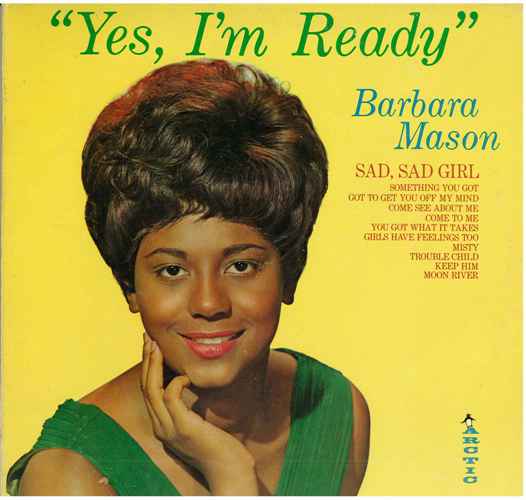
Philly born Barbara Mason released her original version of Yes, I’m Ready in 1965. She was just eighteen. Yes, I’m Ready was her third single, and would become a song that was synonymous with Barbara Mason. She recut the song when she signed to Buddha Records. The version on The London American Label Year By Year 1965 is the original. It reached number five in the US Billboard 100, and was Barbara Mason’s breakthrough single. Yes, I’m Ready also lent its name to Barbara’s debut album, which was released on Arctic Records.
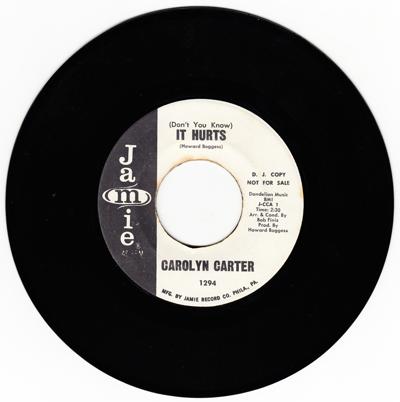
Carolyn Carter’s It Hurts is another of the hidden gems The London American Label Year By Year 1965. Originally released on the Philly based Jamie label, It Hurts failed to chart. It sees Carolyn Carter fuse soul with a Spectoresque girl group sound. Sadly, It Hurts passed British record buyers by and it failed to chart. However, forty-nine years later, and It Hurts is a case of what might have been for Carolyn Carter.
Charles Boyer is best known for his acting career. In 1965, he released Where Does Love Go, which closes The London American Label Year By Year 1965. It’s very different to anything that’s gone before. There’s an air of mystery as Charles’ half-spoken vocal sits above an orchestral arrangement. Harmonies are added. They sweep in, and add to the lush backdrop. Despite Charles Boyer’s popularity in Hollywood, the single failed to chart. It remains an interesting reminder of Charles Boyer’s second career.
Just like The London American Label Year By Year 1964, The London American Label Year By Year 1965 is a fascinating and eclectic musical document. It demonstrates the sheer variety of music being released in 1965. There’s everything from country, easy listening, funk, pop, R&B, rock ‘n’ roll, pop and soul. Eclectic is the best way to describe The London American Label Year By Year 1965.
There’s contributions from James Brown and The Fabulous Flames, Jerry Lee Lewis, Burt Bacharach, Dobie Gray, Barbara Mason, The Righteous Brothers and Carolyn Carter. Hits sit side-by-side with misses. Similarly, classics and hidden gems rub shoulders on The London American Label Year By Year 1965, which was compiled by Tony Rounce.
Tony should be congratulated for the way he’s approached The London American Label Year By Year 1965,. Rather than choose the most successful singles released by London American during 1965, Tony has chosen an eclectic and captivating selection of tracks. Forgotten favourites and familiar faces feature, during The London American Label Year By Year 1965, which is eclectic and compelling compilation that’ll bring back memories for anyone introduced to American pop, rock ’n’ roll and soul by the London American label.
THE LONDON AMERICAN LABEL YEAR BY YEAR 1965.


JOZEF VAN WISSEM-IT IS TIME FOR YOU TO RETURN.
JOZEF VAN WISSEM-IT IS TIME FOR YOU TO RETURN.
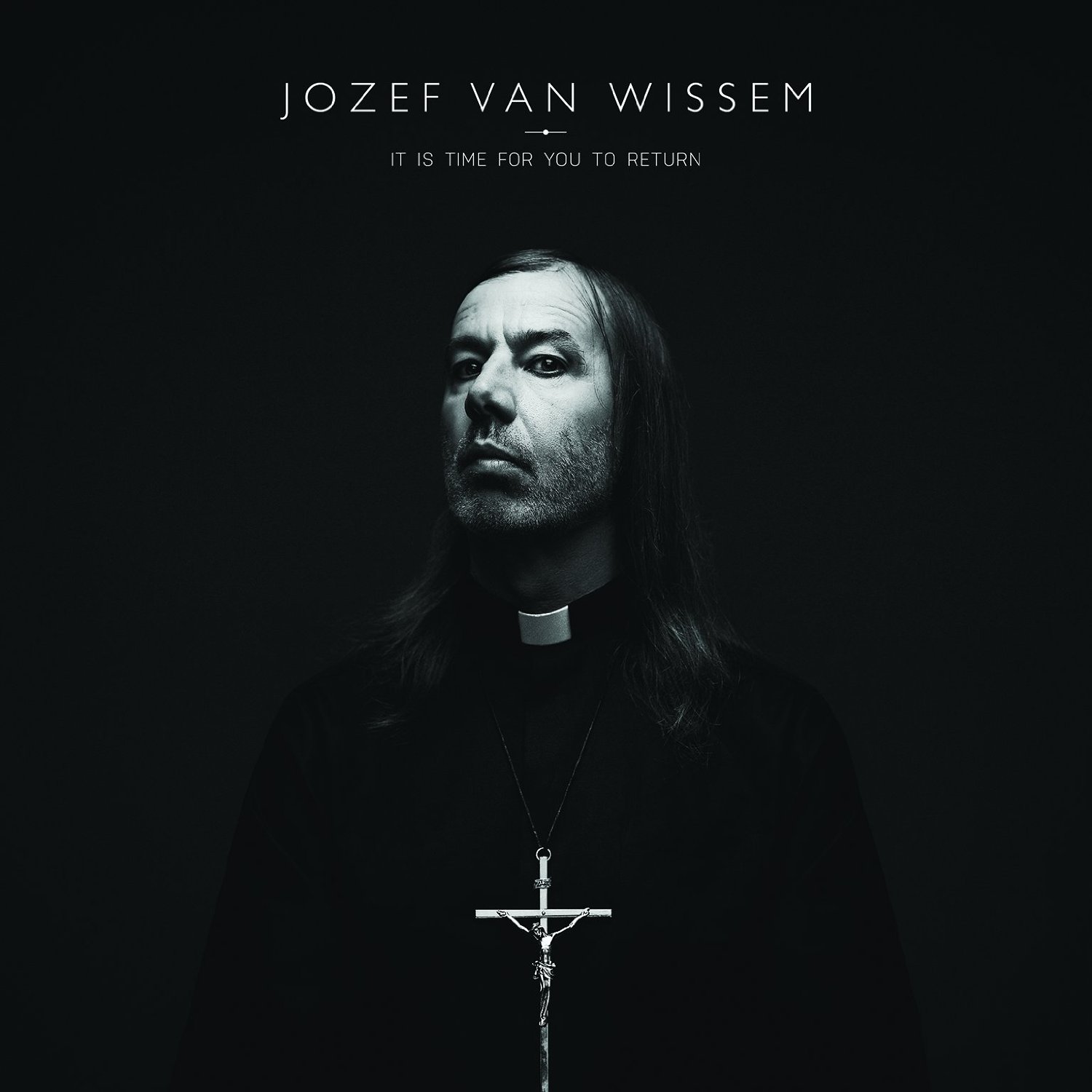
It was back in 2000, that avant-garde composer and baroque lutenist Jozef Van Wissem released his debut album, Retrograde Renaissance Lute. Since then, Josef has released a series of groundbreaking solo albums and collaborations. Jozef’s latest album, It Is Time For You To Return, will be released by Crammed Discs on 10th November 2014. It Is Time For You To Return is the latest instalment in Crammed Discs’ Made To Measure series. It’s also the perfect introduction to the music of a true musical innovator, Jozef Van Wissem, whose recording career began as a new millennia dawned.
Jozef Van Wissem was born in 1962, in Maastricht, a town in Southeast of the Netherlands. A classically trained musician, Jozef has spent a lifetime honing his sound. He’s now based in New York, and has established a reputation as one of the top avant-garde musicians of his generation. His recording began back in 2000.
That was when Jozef Van Wissem released debut solo album Retrograde Renaissance Lute. It was released on the Persephone label in 2000. Two years later, Jozef returned with Narcissus Drowning. Just like his debut album, Narcissus Drowning was a fusion of classical, contemporary and electronic music. A groundbreaking, genre-melting album, Narcissus Drowning was a foretaste of what Jozef Van Wissem was capable of.
By 2003, Jozef released his third album Simulacrum (Mirror Images For Solo Lute And Electronics). Just like his two previous albums, Jozef innovated. He made a series field recordings, and “manipulated” them in the studio. The result was a captivating and compelling album. Meanwhile, Jozef was establishing a reputation as a musical pioneer.
So much so, that word was spreading about Jozef Van Wissem. Other artists began collaborating with Jozef. The first was guitarist Gary Lucas. He asked Josef to play on his 2003 album Diplopia. Just like Narcissus Drowning, genres melted into one on Diplopia. The pair reconvened on Gary’s next album The Universe Of Absence, which was released on 2004. This was just the start of a string of collaborations Jozef Van Wissem was involved with.
The next collaboration Jozef was involved with, was Tetuzi Akiyama’s 2004 album Proletarian Drift. This was a live album recorded in 2003, at the Gendai Heights Gallery, Setagaya, Tokyo. Proletarian Drift featured two lengthy improvised tracks. Tetuzi and Jozef would collaborate again on the 2007 album, Hymn For A Fallen Angel. By then, Jozef would’ve released two further albums.
Between 2005 and 2009, Jozef Van Wissem released an album each year. This began with 2005s Objects In Mirror Are Closer Than They Appear. A Rose By Any Other Name (Anonymous Lute Solos Of The Golden Age followed in 2006, and Stations Of The Cross in 2007. With each album, Jozef pushed musical boundaries even further. He released A Priori in 2008 and in 2009, released two albums, It Is All That Is Made and Ex Patris. This is quite incredible, because during this period, Jozef embarked upon a relentless touring schedule.
Throughout his career, Jozef has constantly toured the world. He’s played over 800 solo lute shows at concert venues around the world. This includes rock festivals like ATP and Primavera Sound. At these festivals, Jozef dawns the the stage playing his custom made, black lute. During his set, the audience are captivated as he delivers music that’s mesmeric and hypnotic. That’s also the case with his solo albums.
After a gap of two years, Jozef returned in 2011 with a new album, The Joy That Never Ends. That year, he also collaborated with United Bible Studies on their Downland album. Busy as 2011 had been, 2012 would be the busiest year of Jozef’s career.
During 2012, Jozef collaborated with film director Jim Jarmusch. Jim is also a guitarist, and was looking for someone to collaborate with. Jozef fitted the bill. So much so, that they recorded three albums together, Apokatastasis, Concerning The Entrance Into Eternity and The Mystery Of Heaven. On Concerning The Entrance Into Eternity, Tilda Swinton was the guest vocalists. She also performed with Jozef and Jim at an ATP festival in 2012. This collaboration with Jim lead to more work for Jozef. Before that, Jozef found time for another collaboration.
This time, Jozef collaborated with Gregg Kowalsky. They worked on Gregg’s Movements In Marble And Stone album. It was released later in 2012. Along with playing live, 2012 had been one of the busiest years of Jozef Van Wissem’s career.
2013 saw Jozef Van Wissem release a new solo album, Nihil Obstat. His reputation had grown. Now he was well known beyond avant-garde circles. That’s why so many artists were so keen to work with Jozef. This includes Jim Jarmusch.
After collaborating with Jim Jarmusch on the three albums, he commissioned Jozef Van Wissem to write most of the soundtrack for the 2014 film Only Lovers Left Alive. It featured Tilda Swinton and Tom Hiddleston. When Only Lovers Left Alive premiered at Cannes, it was awarded the Cannes Soundtrack Award. For Jozef this was recognition that his work was finding a wider audience. The other advantage was, that the promotional tour for Only Lovers Left Alive allowed Jozef the opportunity to play a tour of twelve cities.
During the promotional tour for Only Lovers Left Alive, Jozef played in twelve cities around the world. Jozef performed solo lute music, and also appeared as part of Jim Jarmusch’s band SQÜRL. Since then, Jozef has been working on his new solo album It Is Time For You To Return,
It Is Time For You To Return features nine tracks written by Jozef Van Wissem. He plays lute and adds a series of mesmeric, haunting vocals. Joining Jozef is Chilean filmmaker, Domingo Garcia-Huidobro, who contributed electronic programming on a couple of tracks. Jim Jarmusch plays guitar and Lebanese singer Yasmine Hamdan adds a vocal on Invocation Of The Spirit Spell. It’s one of the nine tracks on It Is Time For You To Return, which I’ll tell you about.
It Is Time For You To Return opens If There’s Nothing Left Where Will You Go? Just a lone lute plays hesitantly. Space is left within the arrangement. This adds a sense of melancholy. It’s as if Jozef is contemplating each note before playing it. Notes linger, hanging in the air, as if posing a question, to which Jozef knows there’s no answer.
Love Destroys All Evil has a brighter, more upbeat sound. Jozef’s lute sparkles and chimes. It sounds like what a minstrel would play at a medieval feast. Then, later, it’s all change. Jozef’s hopeful vocal enters. He sings “Love Destroys All Evil and frees us.” His vocal is hope felt and heartfelt. It’s as if Jozef desperately wants to believe what he’s singing.
Just Jozef’s lute plays as Once More With Feeling unfolds. Soon, Jozef’s lute is joined by Jim’s guitar. It adds a Byrdsian sound to the mix. When the guitar drops out, Jozef takes centre-stage. That’s the case throughout the track. However, when when it returns, Jim’s guitar is yin to Jozef’s yang on this beautiful, meandering track.
As Confinement unfolds, it’s apparent that this is very different to anything that’s gone before. What sounds like a radio crackling, or a biplane flying above is accompanied by a dark, broody, booming drum. Then Jozef’s lute enters. He delivers a tender, dramatic and wistful vocal. It’s as if he’s sympathises with those in Confinement. He can imagine the days becoming months and years. The hopelessness of the situation shines through as he delivers the lyrics. All the time, the drum pounds and the arrangement crackles, replicating the horror of Confinement.
Wherever You Will Live I Will Live has a thoughtful, and almost dark introduction. Jozef plucks at his lute. Carefully, and slowly, he plucks and probes the strings. They resonate, resulting in a sound that veers between dark and ominous, to an ethereal and hopeful sound. One word however, describes the track perfectly, cinematic.
Meandering and chiming, Jozef’s lute sets the scene on You Can’t Take It With You. Then he scats, before unleashing a deliberate, urgent vocal. As usual, his lyrics are full of social comment. A case in point is when he sings: “until the next damaged world we go… your worldly possessions what will they do.…You Can’t Take It With You” Part poetry, part philosophy, Jozef Van Wissem ruminates on greed and avarice, cutting to the chase, with the conclusion “You Can’t Take It With You.”
Straight away, Temple Dance Of The Soul has an avant-garde sound. A scratchy sound flits across the arrangement. All the time, the arrangement pulsates. That’s even the case when Jozef’s lute enters. It wanders across the arrangement, with Jim’s guitar for company. Assailing them are a myriad of scratches and glitches. That’s not forgetting that pulsating sounds. It’s the arrangement’s heartbeat, as elements of electronica, avant-garde, classical and folk combine to create a hypnotic soundscape.
Wistful, spacious and full of pregnant pauses describes After We Leave. It’s a create a mesmeric, pensive and captivating cinematic track where ethereal beauty is omnipresent.
Closing It Is Time For You To Return is Invocation Of The Spirit Spell. It features Lebanese singer Yasmine Hamdan. Her tender, heartfelt vocal provides the perfect foil to the rest of the arrangement. It’s a fusion of lute and washes of buzzing guitar and glitch. The guitar unleashes washes of controlled feedback. Along with a thoughtfully strummed lute, this is the perfect foil for the breathy beauty of Yasmine Hamdan’s vocal. This glorious fusion from music’s past, present and future proves a breathtaking way to close It Is Time For You To Return.
For anyone yet to discover the music of avant-garde composer, and baroque lutenist, Jozef Van Wissem then It Is Time For You To Return is the perfect starting place. It’s a breathtaking aural adventure. Featuring nine understated and hypnotic tracks, It Is Time For You To Return features Jozef at his innovative best. The music is captivating, compelling, ethereal, hopeful, hypnotic, melancholy, mysterious and wistful. That’s not all.
On several of the tracks on It Is Time For You To Return, Jozef’s lyrics are full of social comment. Jozef isn’t averse to commenting on the state of the world. His lyrics are veer between hope to hopelessness. There’s hope on Love Destroys All Evil. Confinement paints a picture of hopelessness, as days become months, months become years. All the time, the clock is ticking. Then on You Can’t Take It With You, Jozef deals with greed and avarice. Wealth and possessions, he points out, You Can’t Take It With You. These tracks showcase Jozef Van Wissem, whose part poet and philosopher. That’s not all.
Jozef Van Wissem creates innovative, groundbreaking and genre-melting music. On It Is Time For You To Return, elements of ambient, avant-garde, baroque, classical, electronica, experimental, folk and folk-rock melt into one. You may wonder at the folk-rock element? It’s there though. The guitar on Once More With Feeling remind me of The Byrds. Just like the rest of It Is Time For You To Return musical influences and genres melt into one, on a truly groundbreaking album. This makes Jozef Van Wissem’s It Is Time For You To Return the perfect candidate for the return of Crammed Discs’ Made To Measure series.
For those unfamiliar with the Made To Measure Composers’ Series, it’s best described as the musical equivalent of a collection of art books. These albums are a reminder of some of the most innovative, important and interesting instrumental music of an era. A total of thirty-five albums were released between 1983 and 1995. This included albums by musical luminaries like Harold Budd, Fred Frith, Arto Lindsay, Steven Brown, Brion Gysin, David Cunningham and Daniel Schell. Now, nineteen long years after the last in the Made To Measure series, it makes a very welcome return.
For the return of the Made To Measure series, Crammed Discs were looking for a very special album. That’s what Jozef Van Wissem’s It Is Time For You To Return is. It’ll be released on Crammed Discs on 10th November 2014. It Is Time For You To Return is an ambitious and groundbreaking album from Jozef Van Wissem, true musical innovator.
JOZEF VAN WISSEM-IT IS TIME FOR YOU TO RETURN.
BRING IT ON HOME-BLACK AMERICA SINGS SAM COOKE.
BRING IT ON HOME-BLACK AMERICA SINGS SAM COOKE.
By the time of his death on 11th December 1964, Sam Cooke was soul’s first superstar. Throughout his career, it seemed Sam could do no wrong. You Send It, Sam’s 1957 debut single, reached number one in the US Billboard and US R&B charts. This was was the start of a run of twenty-eight top forty singles that saw Sam Cooke’s career transformed.
Between 1957 and 1964, Sam Cooke became one of the biggest names in music. For seven years, his records filled the airwaves. Many of these singles, Sam wrote and produced. That’s not all. In 1961, Sam founded his own record label, SAR Records, which released Sam’s singles. Not only was Sam soul’s first superstar, but soul’s first entrepreneur.
Three years later, SAR Records was a successful record company. Sam was its most successful artist. That’s no surprise. By 1964, Sam was enjoying the most successful period of his eight year career. His popularity was at an all-time high. It seemed Sam Cooke could do no wrong. Then on 11th December 1964, thirty-three year old Sam Cooke’s life ended in a hail of bullets. That night, soul music lost its first superstar. Since then, a whole host of artists have covered Sam Cooke songs.
This includes the twenty-four artists who feature of Bring It On Home-Black America Sings Sam Cooke, which was recently released by Ace Records. Bring It On Home-Black America Sings Sam Cooke features Percy Sledge, Otis Redding, Bobby Womack, The Soul Stirrers, The Miracles, Lou Rawls, Aretha Franklin, The Supremes and Sam and Dave. These artists are just some of the artists that feature on Bring It On Home-Black America Sings Sam Cooke, which I’ll pick the highlights of.
Opening Bring It On Home-Black America Sings Sam Cooke is The Ovations Featuring Louis Williams’ Havin’ A Party. This was released as single on MGM Records, reaching number fifty-six in the US Billboard 100 and number seven in the US R&B charts. For The Ovations, this was their final hit single. Havin’ A Party also lent its name to their 1973 album Having A Party, which was released on MGM Records. It was arranged and produced by Dan Greer. One of Having A Party’s highlights was the title-track, where The Ovations Featuring Louis Williams pay homage to a soul great.
Many people have covered You Send Me. This includes Percy Sledge. He covered You Send Me on The Percy Sledge Way, which was released Atlantic Records in 1966. The album was produced by Quin Ivy and Marlin Greene. Just like the original version of You Send Me, Percy’s cover is understated. Percy literally toys with the lyrics, mixing melancholy, beauty and joy, as he gives thanks for the love he’s found.
In 1965, Otis Redding covered shake on his album Otis Blue/Otis Redding Sings Soul, which was released on Atco Records. Shake became the first single released after Otis’ death. Produced by Steve Cropper, this track owes a lot to Little Richard. It reached number seven in the US Billboard 100 and number two in the US R&B charts. No wonder. Otis stomps and vamps his way through Shake. Accompanied by braying horns, Otis grabs the song and makes it his own.
Sam Cooke was a huge influence on Bobby Womack. So it’s no surprise that Bobby covered I’m Gonna Forget About You. It featured on his 1970 album My Prescription, which was released on Minit. I’m Gonna Forget About You was released a single and gave Bobby a top thirty single. No wonder. It features the former Valentino unleashing a vocal masterclass that’s a mixture of power, passion and sheer soulfulness.
Before embarking upon a solo career, Sam was a member of The Soul Stirrers. One of the final songs he recorded with The Soul Stirrers was That’s Heaven To Me in 1961. It lay unreleased until the early seventies, when an overdubbed version was released. The version on Bring It On Home-Black America Sings Sam Cooke, is the spine-tingling original version.
Back in 1959, at one of Sam’s concerts, he met Little Anthony Gourdine. The two decided to collaborate on a song. The result was I’m Alright. It was released by Little Anthony and The Imperials later in 1959. It’s literally, an explosion of hooks and happiness.
Ever since Sam, Herb Albert and Lou Adler penned Wonderful World, it’s been an oft covered song. A whole host of artists have covered Wonderful World. This includes Johnny Nash in 1976. He recorded his cover in Muscle Shoals, along with the rest of his 1977 album What A Wonderful World. It was produced by Mickey Buckins and Sonny Limbo. They increased the tempo and transformed the song into a slice of musical sunshine. Despite this, the single stalled at just number sixty-six in the US R&B charts.
In 1969, Brenton Wood covered A Change Is Gonna Come. It was released as a single on Double Shot Records. Sadly, it failed to replicate the success Sam’s original enjoyed. That’s despite a vocal that stays trues to Sam’s version. It’s a mixture of despair, hurt and hope for the future. Brenton sounds as if he’s seen too much. As a result, it’s a powerful interpretation of one of Sam’s finest songs.
1970 saw Lou Rawls released an album of Sam Cooke songs, entitled Bring It On Home….And Other Sam Cooke Hits. It was released on Capitol Records. Lou gave then ten tracks his own unmistakable twist. This includes Win Your Love For Me. Just like the other tracks, it was recorded at FAME Studios, Muscle Shoals. Producing Bring It On Home….And Other Sam Cooke Hits was David Axelrod and Rick Hall. They provided a glorious Southern Soul backdrop for Lou as he unleashes a heartfelt, needy vocal.
On Aretha Franklin’s 1967 eponymous album, she covers Sam Cooke’s Good Times. This was Aretha’s Atlantic Records’ debut. Aretha Franklin reached number five in the US Billboard 200 and number one in the US Billboard 200 charts. For Aretha, this was the start of a period where she’d be crowned the Queen of Soul. Good Times was a taste of what was to come from Aretha Franklin during the next five years.
Sam and Dave’s Soothe Me closes Bring It On Home-Black America Sings Sam Cooke. Soothe Me was a track from Sam and Dave’s 1966 album Double Dynamite. It was released on Stax. So was their 1967 single Soothe Me, which features the soul men creating a joyous slice of Sweet Soul Music.
After his death in 1967, Sam Cooke left behind a rich musical legacy. So, it’s no surprise that for the last fifty years, a whole host of artists have covered Sam Cooke’s songs. This includes the twenty-four tracks covered on Bring It On Home-Black America Sings Sam Cooke, which was recently released by Ace Records.
On Bring It On Home-Black America Sings Sam Cooke, the great and good of soul pay homage to Sam Cooke. This includes everyone from Percy Sledge, Otis Redding, Bobby Womack, The Soul Stirrers, The Miracles, Lou Rawls, Aretha Franklin, to The Supremes and Sam and Dave. That’s no surprise. Sam Cooke influenced each and every one of these artists. So, it’s no surprise that these artists wanted to pay tribute to soul’s first superstar, who died on 11th December 1964.
Now, nearly fifty years since the death of Sam Cooke, Ace Records have brought together twenty-four of these tracks on Bring It On Home-Black America Sings Sam Cooke. It’s a belated celebration of the music of Sam Cooke.
For too long, Sam Cooke’s music hasn’t been celebrated. Especially when you compare the music industry has been celebrated other soul singers. This includes Otis Redding. Otis died far too young. He was just twenty-six when he died in a plane crash. However, the manner of Otis Redding’s death meant that his record company wanted to celebrate his music. With Sam, this was very different.
There was a very good reason for that, the manner of Sam’s death. Sam Cooke’s death was shrouded in controversy. Nobody knew for certain what happened. Was Sam in the wrong or wronged? Even today, nobody knows. Rumours and conjecture surround what happened at the Hacienda Motel, Los Angeles. Sadly, we’ll never know for sure the truth surrounding Sam Cooke’s death. As a result, for the past fifty years, the music industry seems to have been somewhat reticent about celebrating the music of Sam Cooke. However, with fiftieth anniversary of Sam Cooke’s death fast approaching, now it seems, is the time to celebrate the life and music of Sam Cooke.
What better way to do this, than with a compilation featuring the great and good of soul music? That’s what Bring It On Home-Black America Sings Sam Cooke is. It’s twenty-four of soul music’s biggest names, paying homage to one its most talented sons, on Bring It On Home-Black America Sings Sam Cooke.
BRING IT ON HOME-BLACK AMERICA SINGS SAM COOKE.
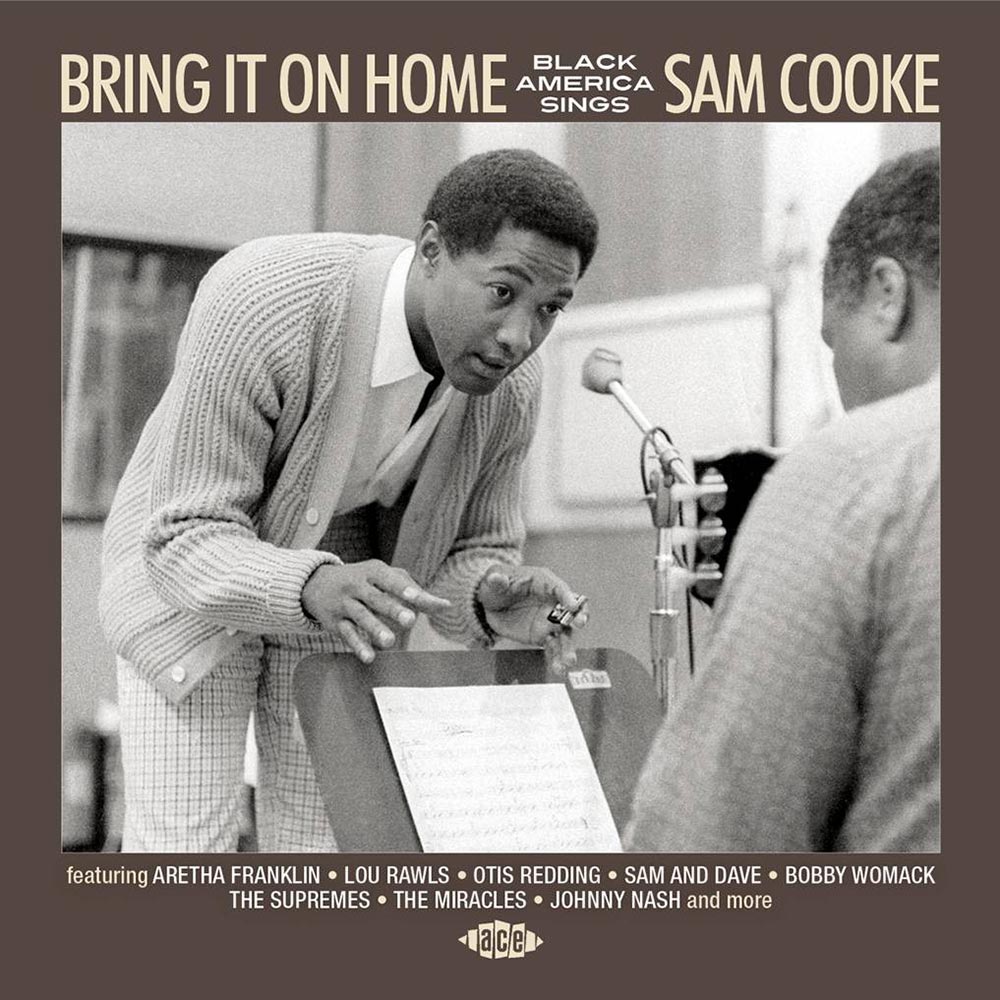




CHARLIE GILLETT’S RADIO PICKS-HONKY TONK VOLUME 2.
CHARLIE GILLETT’S RADIO PICKS-HONKY TONK VOLUME 2.
Music was Charlie Gillett’s life. He literally lived for music. It was his passion. As a result, Charlie had an encyclopaedic and eclectic knowledge of music. That was apparent to listeners to his radio show Honky Tonk, which first hit Radio London’s airwaves in 1972.
Soon, Charlie was educating his listeners musically. He introduced them to an eclectic selection of music. Each night, listeners to Honky Tonk had no idea what musical delights Charlie had in store for them. What they did know, was that by the end of the show, Charlie would’ve introduced them to something new. That was the case each each week. Week in, week out, Charlie Gillett introduced his listeners to new music. Eventually, Charlie became a musical institution. So, it’s no surprise that Charlie was asked to compile a compilation.
The only surprise was, that it took until 2009. On the 2nd November 2009, Ace Records released Charlie Gillett’s Radio Picks From Honky Tonk. It was an intriguing and eclectic selection of music. Joe South, J.J. Cale, Bobby Charles, Dale Hawkins, Bruce Channel, Eddy Raven, Dire Straits and Tabou Combo sat side-by-side on Charlie Gillett’s Radio Picks From Honky Tonk. It proved a successful compilation. Charlie Gillett’s Radio Picks From Honky Tonk sold well. So in early 2010, Ace Records announced there would be a followup.
So Charlie began work on the followup, which would become Charlie Gillett’s Radio Picks-Honky Tonk Volume 2, which was recently released by Ace Records. Charlie through himself into the project. This wasn’t work. No. It was a labor of love for Charlie. After all, Charlie was passionate about music. However, out of nowhere, tragedy struck.
By early 2010, Charlie became unwell. The prognosis wasn’t good. He didn’t have long to live. For Charlie and his family, this was a huge blow. Despite the tragedy of the situation, Charlie was determined to finish what became Charlie Gillett’s Radio Picks-Honky Tonk Volume 2. There was a problem though.
Charlie hadn’t decided on a final track listing. He had a list of 106 songs. This isn’t unusual. A compiler always starts with a long list, and will whittle the list down to a short list. The short list will always include a few extra tracks, because often, clearance won’t be given for tracks. Sadly, Charlie didn’t get as far as compiling a short list. Charlie Gillett died on 17th March 2010. The death of Charlie Gillett looked like the end of Charlie Gillett’s Radio Picks-Honky Tonk Volume 2.
Thankfully, that wasn’t the case. Roger Armstrong, who Charlie Gillett worked with on Charlie Gillett’s Radio Picks From Honky Tonk decided to finish the project they’d started would be Roger Armstrong’s tribute to the late, great, Charlie Gillett.
Roger began with Charlie’s list of 106 songs, and gradually, whittled them down to twenty-five tracks. There’s contributions from Tom T. Hall, Archie Bleyer, Roy Buchanan, Marty Robbins, Kate and Anna McGarrigle, Irma Thomas, Dr. John, Ricky Nelson, Betty Wright, Professor Longhair and The Blue Scholars and Rico. The format is the same as Charlie Gillett’s Radio Picks From Honky Tonk. This means a song that was current when Charlie was presenting Honky Tonk, is followed by an oldie. Charlie Gillett’s Radio Picks-Honky Tonk Volume 2, which I’ll pick the highlights of, is a truly eclectic compilation. Everything from blues, country, folk, funk, rock and soul features on Charlie Gillett’s Radio Picks-Honky Tonk Volume 2.
Opening Charlie Gillett’s Radio Picks-Honky Tonk Volume 2 is a track from country singer, Tom T. Hall. Tulsa Telephone Book is a track from Tom’s fifth album In Search Of A Song. It was released on Mercury in 1971. Tom wrote Tulsa Telephone Book, a tale of hurt and heartbreak, that’s straight out of Nashville.
Travis Wammack is another country singer. Born in Memphis, he’s a guitarist, singer and songwriter, who recorded his debut aged twelve. By the time he released his sophomore album, Not For Sale in 1975, Travis was almost a veteran. Not For Sale was released on Capricorn Records and featured (Shu-Do-Pa-Poo-Poop) Love Being Your Fool, a hook-laden slice of country music. This is the perfect showcase for the multitalented Travis Wammack.
Billy Swan’s I Can Help doesn’t sound like a single released in 1974. Instead, it sounds as if it should’ve been release ten or fifteen years earlier. In many ways, it was an unlikely hit single in 1974. However, it was a huge hit single, one that Charlie Gillett championed. It was released on Monument, and reached number one in the US Billboard 100 and US Country charts. That’s not all. It also gave Billy a top hit throughout Europe. I Can Help also became the title of Billy’s debut album. Released in 1974, this was the first of six albums Billy Swan released. However, Billy never again, reached the heights of I Can Help.
Roy Buchanan was, without doubt, one of the greatest blues guitarists of his generation. Born in 1939, he died tragically in 1988. He left behind a rich musical legacy. This includes his eponymous debut album Roy Buchanan,which was released in 1972, on Polydor. It features Sweet Dreams, which features a beautiful blues’ masterclass from Roy Buchanan.
Canadian singer-songwriters Kate and Anna McGarrigle were folk royalty. The Quebec born duo spent thirty-five years making music. This came to an end in 2010, with Kate’s death. However, back in 1975, Kate and Anna McGarrigle’s recording career was just just about to begin. They released their eponymous debut album, Kate and Anna McGarrigle on Warner Bros. Records. This was just the start of a long and successful career, which saw Kate and Anna become Canada’s most successful folk group.
In New New Orleans, Irma Thomas is known as the Soul Queen Of New Orleans. No wonder. She’s been making music since 1959. In 1963, Irma Thomas was signed to Minit Records, and recorded Ruler Of My Heart. This was a song written by Allen Toussaint, using his Naomi Neville alias. Ruler Of My Heart is the perfect showcase for Irma. She delivers a vocal that veers between heartfelt and tender to powerful and sultry. Given the quality of this single, it’s no surprise Irma was crowned the Soul Queen Of New Orleans.
My favourite track from Charlie Gillett’s Radio Picks-Honky Tonk Volume 2 is, without doubt, Dr. John’s Such A Night. It’s is a track from Dr. John’s 1973 album In The Right Place. It was released on Atco, during a period where the charismatic, Night Tripper at the peak of his powers. The time Dr. John spent at Atco was his most productive. That’s where he released the best music of his career. This includes In The Right Place, Dr. John’s biggest selling album, which reached number twenty-four in the US Billboard 200 and number twenty-eight in the US R&B charts. For newcomers to Dr. John’s music, Such A Night is bound to make you delve deeper into the Night Tripper’s back-catalogue.
Dennis Turner released Lover Please back in 1962. This was cover of a track penned by Billy Swan. It was originally recorded by The Rhythm Steppers and then covered by Dennis Turner. Sadly, Dennis’ version wasn’t a commercial success, sinking without trace. Another ten years passed, before Charlie Gillett picked up on Dennis Turner’s cover of Lover Please. He played it on Honky Tonky. Belatedly, Lover Please was heard by the wider audience that it deserved.
Clean Up Woman is one of the finest moments of Betty Wright’s career. Released in 1971, Betty was just eighteen when Clean Up Woman was released on Alston Records. It reached number six in the US Billboard 100 and number two in the US Billboard R&B charts. Since then, Clean Up Woman has become a soul classic. A year later, Clean Up Woman featured on Betty’s sophomore album I Love The Way You Love. Forty-two years later, and Betty Wright is still making music. However, she never again reached the heights of Clean Up Woman.
Professor Longhair is a legend of New Orleans music. He’s influenced several generation of New Orleans’ musicians. This includes Dr. John, who also recorded Tipitina. However, Professor Longhair and The Blue Scholars recorded Tipitina first, back in 1954. It’s a tantalising taste of what Professor Longhair is capable.
Rico’s Ramble closes Charlie Gillett’s Radio Picks-Honky Tonk Volume 2. For those unfamiliar with Rico, back in the sixties, he was the finest trombonist in Jamaica. His recording career began in 1961. By 1977, Rico had released his third album Wareika Dub. One of its highlights is the laid-back Ramble, which proves the perfect way to close Charlie Gillett’s Radio Picks-Honky Tonk Volume 2.
For anyone looking to buy just one compilation this week, then Charlie Gillett’s Radio Picks-Honky Tonk Volume 2 is the one to choose. It’s a truly eclectic compilation, where everything from blues, country, folk, funk, reggae, rock and soul sits side-by-side. There’s contributions from Tom T. Hall, Archie Bleyer, Roy Buchanan, Marty Robbins, Kate and Anna McGarrigle, Irma Thomas, Dr. John, Ricky Nelson, Betty Wright, Professor Longhair and The Blue Scholars and Rico. The format is the same as Charlie Gillett’s Radio Picks From Honky Tonk. This means a song that was current when Charlie was presenting Honky Tonk, is followed by an oldie. That’s the same format as Honky Tonk, Charlie Gillett’s much missed musical institution.
Honky Tonk, on Radio London, was where people went to complete their musical education. Charlie Gillett introduced them to an eclectic selection of musical delights. It was a case of anything goes. Album tracks, classics and hidden gems featured on Honky Tonk. They were introduced by the man with an encyclopaedic, and eclectic, knowledge of music, Charlie Gillett. He loved, and lived for, music. It was his passion. That was apparent to listeners to his radio show, Honky Tonk, which first hit Radio London’s airwaves in 1972. A reminder of that much missed musical institution Honky Tonk, is Charlie Gillett’s Radio Picks-Honky Tonk Volume 2, which was recently released by Ace Records.
CHARLIE GILLETT’S RADIO PICKS-HONKY TONK VOLUME 2.
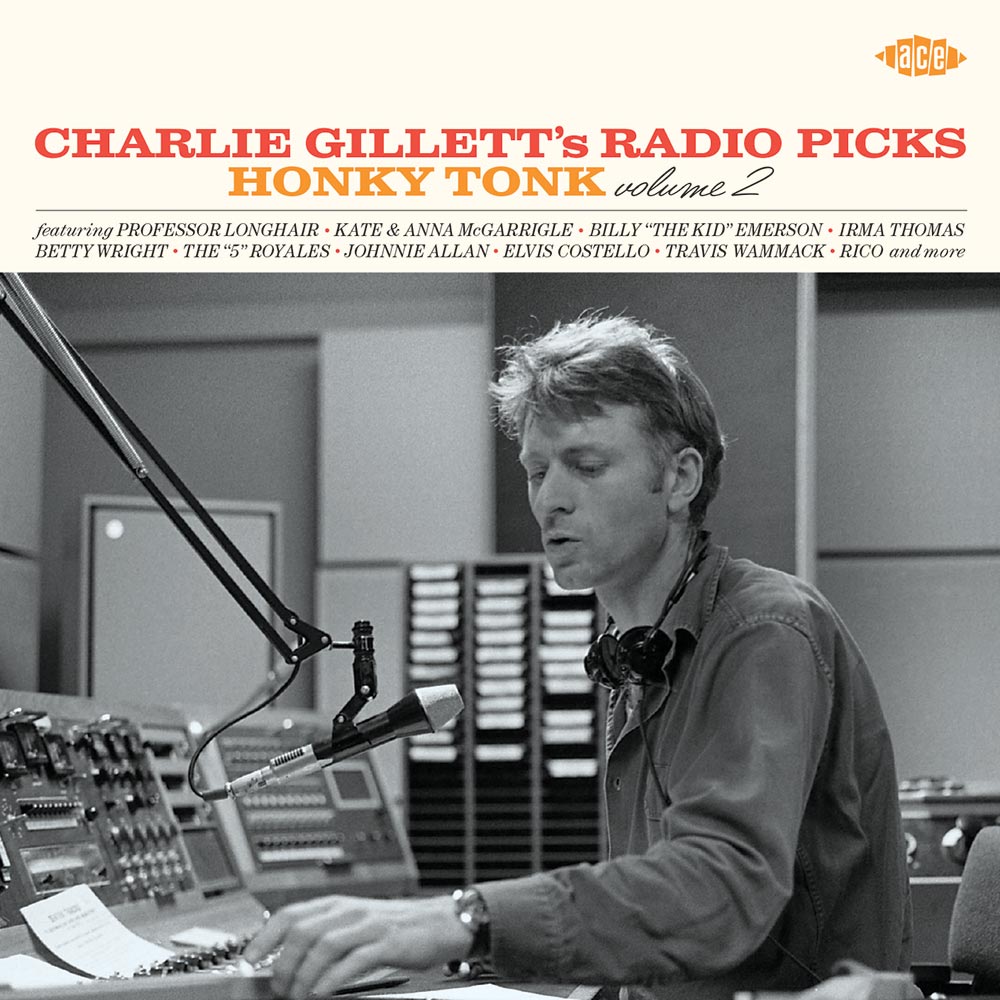

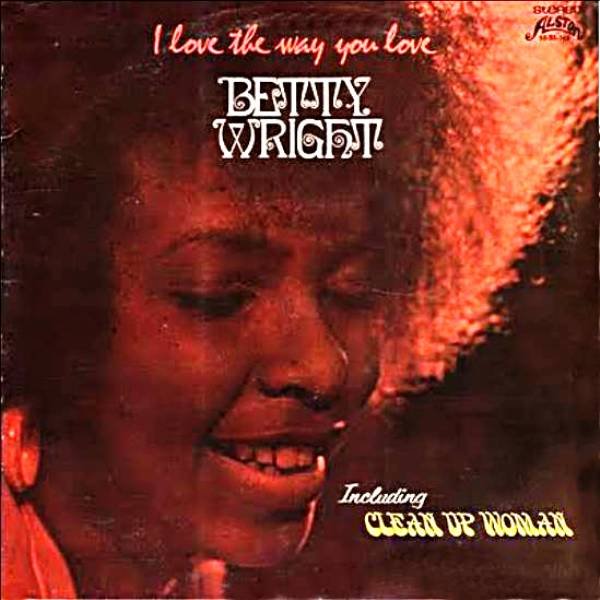
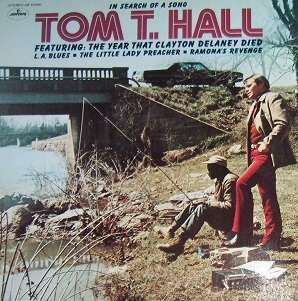
HARD TO EXPLAIN-MORE SHATTERED BLUES-FUNKY BLUES 1968-1984.
HARD TO EXPLAIN-MORE SHATTERED BLUES-FUNKY BLUES 1968-1984.
Nearly three years have passed, since BGP Records, a subsidiary of Ace Records, released Funky Blues and Shattered Dreams 1967-1978. It was released to widespread critical acclaim in early 2012. No wonder. Funky Blues and Shattered Dreams 1967-1978 featured blues greats like Lowell Fulson, Albert King, Buddy Guy and The Johnny Otis Show. They sat side-by-side with lesser known names like Smokey Wilson and Freddie Robinson. These tracks, were just a tantalising taste of the music on Funky Blues and Shattered Dreams 1967-1978. Since then, we’ve been awaiting the followup to Funky Blues and Shattered Dreams 1967-1978. Thankfully, the wait in over.
Hard To Explain-More Shattered Blues-Funky Blues 1968-1984 was released by BGP Records, a subsidiary of Ace Records. It features twenty funky blues released between 1968 and 1984. This includes Lowell Fulsom, Albert King, Icewater Slim and The Fourth Floor, Earl Wright, Tommy Youngblood and Jimmy Robbins. That’s not all. Freddie Robinson, Artie “Blues Boy” White, Obrey Wilson, Big Daddy Rucker and Adolp Jacobs all feature on Hard To Explain-More Shattered Blues-Funky Blues 1968-1984. The twenty tracks on Hard To Explain-More Shattered Blues-Funky Blues 1968-1984 come from a time when blues music was in the doldrums.
As the sixties drew to a close, blues music was no longer as popular. It had enjoyed a brief resurgence in popularity, after the latest generation of rock musicians, including The Rolling Stones, Cream and The Yarbirds, name checked the blues musicians that influenced them. Suddenly, Muddy Waters, Howlin’ Wolf, Little Walter and T-Bone Walker’s music was being heard by a new generation of music lovers. This didn’t last long.
Despite the decline in popularity of the blues, soul music was still popular. Soul was popular right through until the the dawn of the disco era. After that, soul’s popularity declined. Just like the blues, soul music was no longer as popular as it once been. So much so, that some high profile soul singers, including Bobby Womack, were left without a recording contract. This trend would continue, right through the seventies and the early eighties.
During this period, many blues musicians were struggling to make a living. They were finding it tough to adapt to the changes in musical tastes. While rock groups played huge venues, blues players were relegated to playing some of the many smaller, run-down clubs that could be found in every part of America. Many of these musicians raised on the blues, stubbornly refused to change their style of music. Eventually, it became a case of adapt or die.
If blues musicians didn’t adapt, the music risked dying. It would become a relic of music’s past. If this happened, the future looked bleak for a generation of blues musicians. So, they had to adapt to survive.
During their sets, some blues musicians decided to adapt. They didn’t want to. This went against the grain. Despite this, they started throwing in some funky licks, soulful hollers and screams into their music. It became hugely popular with their audiences. The funky licks, hollers and screams added an element of showmanship to the music. Suddenly, their was a resurgence of interest in blues music. This music is still as popular.
Since then, crate diggers and collectors of funk and blues music have been collecting these funky blues’ tracks. Twenty of these funky blues feature on Hard To Explain-More Shattered Blues-Funky Blues 1968-1984. Many of these tracks on Hard To Explain-More Shattered Blues-Funky Blues 1968-1984 are real rarities and hidden gems, which I’ll pick the highlights of.
Freddie Robinson’s The Creeper opens Hard To Explain-More Shattered Blues-Funky Blues 1968-1984. Written by Freddie and Jamo Robinson, it was released on Checker in 1966. This is the perfect introduction to the Memphis born blues guitarist. With braying horns for company, Freddie and his band combine blues, funk and soul with sass to create a sultry sounding track.
Artie “Blues Boy” White was a latecomer to blues music. He didn’t release his first single until 1968. After that, his music combined blues, funk and soul. That’s apparent on Gimme Some Of Yours. It was released on Gamma Records in 1970, and is a fusion of three musical genres. A bluesy harmonica and funky rhythm section provide the backdrop for Artie. His vocal is a mixture of blues and soul, as he struts his way through the sassy Gimmie Some Of Yours.
Although Larry Davis released the original version of You Upset Me Baby, in 1968, it was Stevie Ray Vaughan’s version most people remember. However, Larry’s version of You Upset Me Baby is well worth revisiting. It was released on the Duke label. Featuring blistering blues guitars, and a vocal tinged with heartbreak, it’s a hidden gem that oozes emotion.
Finis Tasby features twice on Hard To Explain-More Shattered Blues-Funky Blues 1968-1984. The two tracks are taken from his album Blues Mechanic. It was meant to be released on Big Town in 1977. Big Town was a label founded by the Bihari brothers. They owned Modern and Kent Records. That was the past. Blues, they thought, was the future. Sadly, that proved not to be the case. Sadly, once the album was completed, Big Town closed its doors. For Finis Tasby, and many other blues musicians, this was a disaster. His album was never released until Ace Records reissued Blues Mechanic. Walk On and Find Something Else To Do are two of the highlights of Blues Mechanic, and a tantalising taste of what Finis Tasby was capable of.
By the time Ray Agee released It’s Hard To Explain on Romark, in 1972, he was a blues veteran. His vocal is lived in and full of hurt and sadness. Against a dramatic, piano lead arrangement, Ray lays bare his soul. As he does, blues and soul melt into one. The addition of lush strings are the perfect finishing touch to this blues opus.
Lowell Fulsom is one of the biggest names on Hard To Explain-More Shattered Blues-Funky Blues 1968-1984. His contribution is Lovemaker, the title-track from Lowell’s 1978. Released on Big Town, Lovemaker was a return to form from a blues legend.
In 1970, Albert King was a giant of the blues. He was up there with Howlin’ Wolf, Muddy Waters, Little Walter, T-Bone Walker and B.B. King. Albert was signed to Stax, and released Can’t You See What You’re Doing To Me as a single. On the B-Side was a cover of James Brown’s Cold Sweat. The track is a revelation. It features what can only be described as a blistering, blues guitar masterclass from the man that should’ve been King.
Smokey Wilson is another artist that features twice on Hard To Explain-More Shattered Blues-Funky Blues 1968-1984. His contributions come from the time he was signed to the Big Town label. Go Go Train is from his 1977 album Blowin’ Smoke. I Want You is from Smokey’s 1978 album Sings The Blues. Both tracks feature Smokey as his music evolves in an attempt to stay relevant.
From the opening bars, Big Daddy Rucker’s He Made You Mine epitomises everything that’s good about the blues. No wonder. He Made You Mine was written by Big Daddy Rucker and Johnny Otis, who produced He Made You Mine. It was released on Hawk Sound, in 1972. Accompanying Big Daddy Rucker is The Johnny Otis Show. They’re responsible for an arrangement that’s slow, moody and full of sadness and emotion. Meanwhile, Big Daddy Rucker’s vocal is a mixture of regret and hurt.
Getting Down With The Game is the perfect showcase for Adolph Jacobs guitar playing. He’s a hugely talented blues guitarist. On Getting Down With The Game, which was released on Romark in 1972, he’s accompanied by a washes of bluesy harmonica. The result is three minutes of driving, dramatic blues. This is a real find from Adolph Jacobs, who before he got the blues, was one of the original members of The Coasters.
Tommy Youngblood wrote and recorded Hey Little Girl for his album The Soul Of Tommy Youngblood. It was released in 1970, on United. On Hey Little Girl, Tommy fuses blues, funk and soul. He literally vamps and pleads his way through the track, as a crack band provide a funky, bluesy, driving backdrop.
Closing Hard To Explain-More Shattered Blues-Funky Blues 1968-1984 is Jimmy Robbins’ Its Real (Part 1). Written by Jimmy, it was released in 1968, on the Chicago based Jerhart label. It’s a quite beautiful song. Jimmy fuses equal parts emotion and drama. His vocal is a mixture of power, hope and emotion, as blues and soul unites. The result is a track that’s guaranteed to tug at your heartstrings.
The recently released, Hard To Explain-More Shattered Blues-Funky Blues 1968-1984 is the perfect followup to Funky Blues and Shattered Dreams 1967-1978. It might have been three years in the making, but it’s been well worth the wait. Hard To Explain-More Shattered Blues-Funky Blues 1968-1984 features twenty funky blues released between 1968 and 1984. This includes contributions from Lowell Fulsom, Albert King, Icewater Slim and The Fourth Floor, Earl Wright, Tommy Youngblood and Jimmy Robbins. That’s not all. Freddie Robinson, Artie “Blues Boy” White, Obrey Wilson, Big Daddy Rucker and Adolp Jacobs all feature on Hard To Explain-More Shattered Blues-Funky Blues 1968-1984. Familiar faces, cult classics and hidden gems sit side-by-side. The result is Hard To Explain-More Shattered Blues-Funky Blues 1968-1984, a captivating collection of funky blues.
Hard To Explain-Shattered Blues-Funky Blues 1968-1984 was compiled by Dean Rudland. He’s had to dig deeper than he’s dug before. For that, Dean deserves the utmost credit. After all, crate digging takes patience and persistence. When it pays off, it’s well worth all the disappointment that’s gone before. It’s certainly paid off for Dean Rudland.
He has rediscovered, and rescued, many long forgotten tracks. For far too long, they’ve lain unloved in the dusty vaults of record companies. Not any more. They now feature on Hard To Explain-More Shattered Blues-Funky Blues 1968-1984 and are the perfect introduction to eighteen blues musicians. Hopefully, these tracks will be the start of a musical journey.
After hearing Hard To Explain-More Shattered Blues-Funky Blues 1968-1984, hopefully you’ll head off on a musical journey. During that journey, you’ll discover more from the artists on Hard To Explain-More Shattered Blues-Funky Blues 1968-1984. That, for me, is the joy of buying compilations. It allows you to discover music from artists you’ve never heard before. This could be the case when you buy Hard To Explain-More Shattered Blues-Funky Blues 1968-1984, which was recently released by BGP Records, an imprint of Ace Records? Let’s hope so.
HARD TO EXPLAIN-MORE SHATTERED BLUES-FUNKY BLUES 1968-1984.
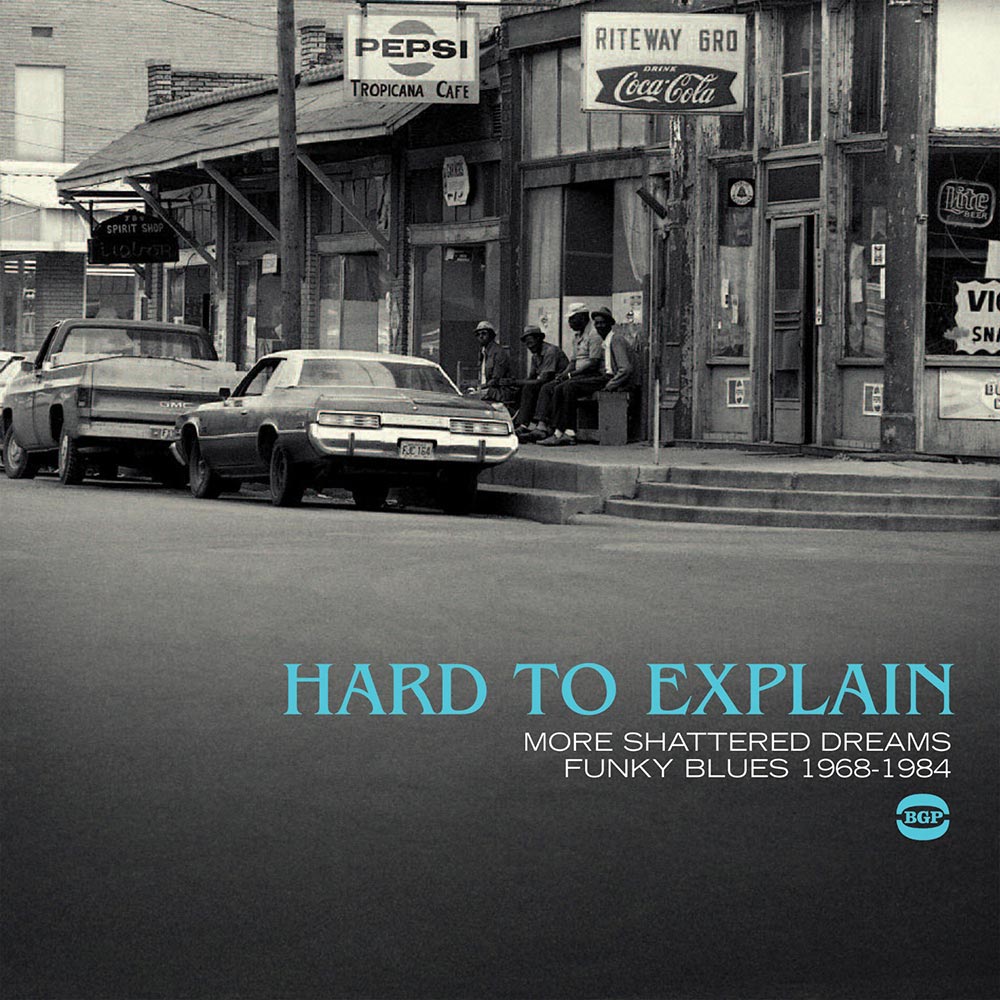
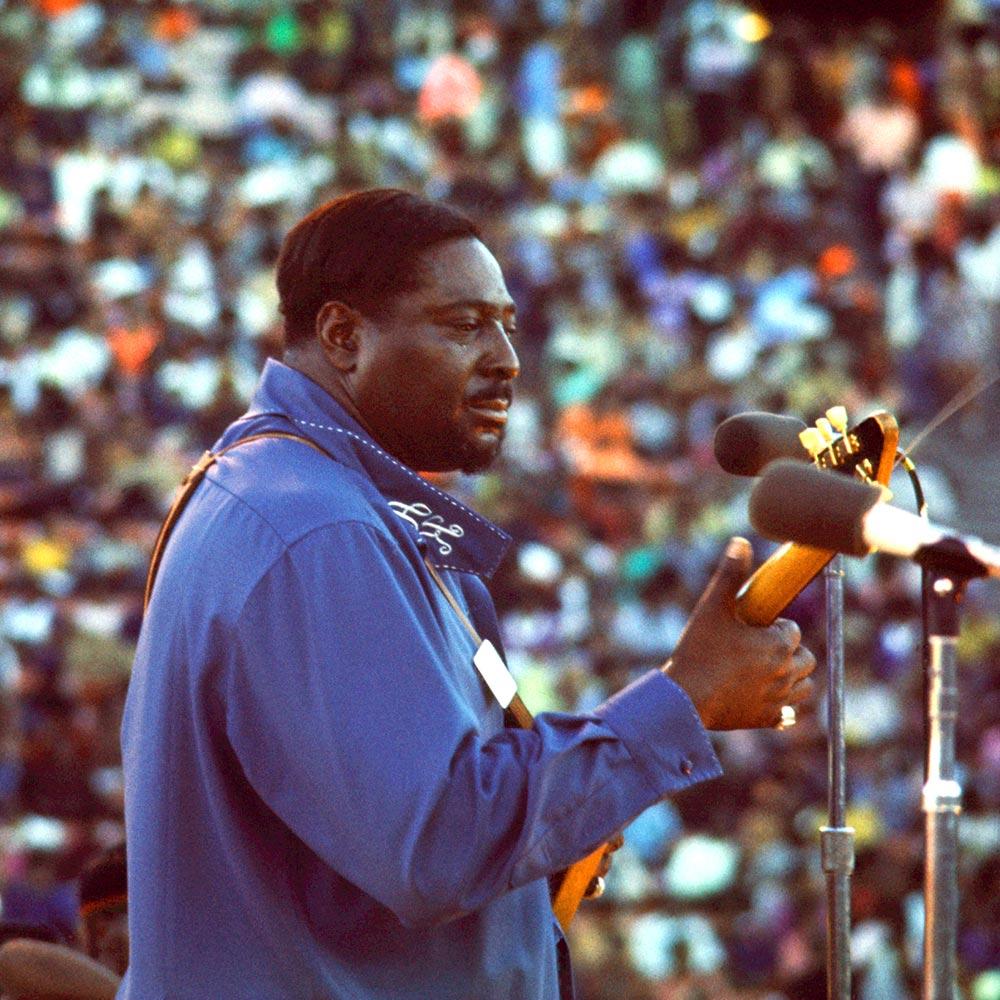
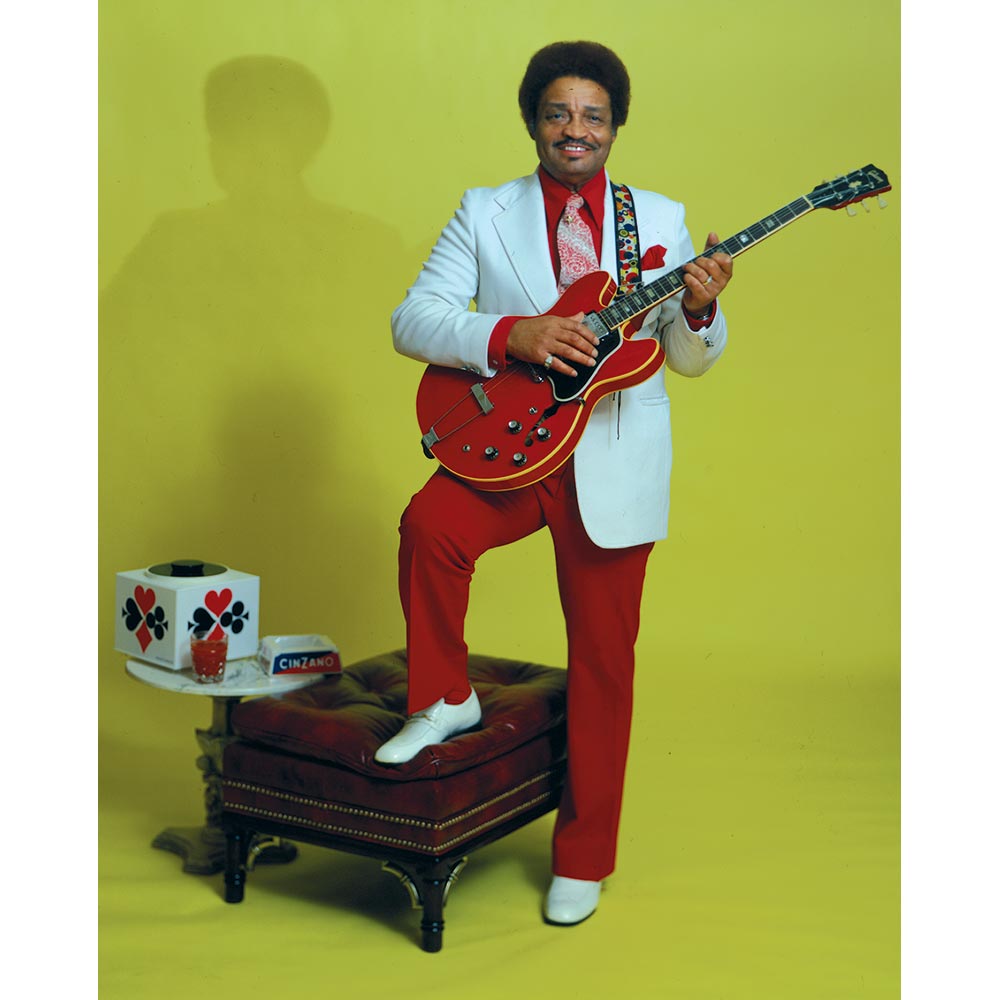
ERIK HONORE-HELIOGRAPHS.
ERIK HONORE-HELIOGRAPHS.
Erik Honoré is no stranger to a recording studio. He’s played on, or produced, over fifty albums. These albums are all very different. They’re best described as eclectic. No wonder. This eclectic selection of albums features everyone from David Sylvian to Arve Henrikse, through Eivind Aarset, Jon Hassell and Laurie Anderson, to Brian Eno and Peter Schwalm. However, despite working with so many high profile artists, there’s one thing forty-eight year old Erik Honoré still has to do. That’s release a solo album. Soon, the wait will be over. Heliographs, Erik Honoré’s debut album will be released by Hubro Music on 17th November 2014.
In some ways, it’s no surprise that it’s taken Erik Honoré such a long time to record his debut album. There’s more to Erik’s career than his solo career. He’s also a successful musician, producer and author.
Erik was born on 11th December 1966, in Kristiansand, Norway. Growing up, music was Erik’s passion. So it’s no surprise that, having left high school, Erik headed to college in Oslo.
His destination was the Norwegian Institute for Stage and Studio. That was where Erik spent the next few years. When Erik graduated, he was a fully qualified sound engineer and producer. Now, his career got underway.
One of the first projects after he left college was Woodlands’ 1988 eponymous album. Erik a member of Woodlands, played electronic percussion and keyboards. He also mixed and produced Woodlands, which featured Jan Bang, who Erik would later collaborate with.
Jan Bang and Erik Honoré have released six albums togther. Their first collaboration was 2000s Birth Wish. It featured Arve Henriksen and Christian Wallumrød. A year later, Erik and Jan released their sophomore album on Going Nine Ways From Wednesday. Released in 2001, it featured Nils Christian Moe-Repstad and Anne Marie Almedal. After the release of Going Nine Ways From Wednesday, it would be another eleven years before Jan Bang and Erik Honoré released another album. One reason for this, was Erik’s career change.
In 2002, Erik released his first novel Orakelveggen. This was the first of a trio of successful novels Erik wrote. Ubåten på Nørholm followed in 2003. However, Erik hadn’t turned his back on music.
Eivind Aarset, a Norwegian guitarist, asked Erik to collaborate with him in 2004. The result was Connected, Eivind Aarset’s third album. Connected was critically acclaimed. It was hailed as an album of groundbreaking music. Erik had played his part in Connected’s success. Despite the success of Connected, Erik continued to juggle his parallel careers as a musician and author.
2005 saw Erik release this third novel Kaprersanger. This was Erik’s literary swan-song. He hasn’t written another book. That’s a great shame, as the novels were well received. A great future was forecast for Erik as a writer. However, literature’s loss was music’s gain.
Although his three novels showed another side to Erik Honoré, he had decided to concentrate on music. He was content to work as a songwriter, session musician and producer. That was, until Erik cofounded a music festival.
This was the Punkt Festival in Kristiansand. Jan Bang and Erik founded the Punkt Festival in 2005. Jan and Erik had known each other since they were teenagers. They’d similar tastes in music and were determined to create a festival that was truly unique.
The Punkt Festival was very different to any other Norwegian festival. The idea was that, as a concert was taking place, it would be remixed live in another room. Remixers improvised and added samples to the live sound, essentially creating new and original music on the fly. For everyone involved, the audience, musicians, producers and remixers, this offered endless opportunities. So, it’s no surprise that the Punkt Festival grew legs.
Since 2005, when the first Punkt Festival took place, what are essentially spin-offs of the original festival have taken place across Europe. Paris, London, Tallinn, Wroclaw and various German cities have played host to Punkt Festival spin-offs. Since then, Erik has been busier than ever.
It seems the Punkt Festival opened doors for Erik Honoré. He’s worked with some of the biggest names in music, including Laurie Anderson, Brian Eno, Peter Schwalm and David Sylvian.
The first time Erik worked with David Sylvian, was in 2011. They collaborated on the 2011 album Died In The Wool. This was the start of a successful musical partnership. David Sylvian then featured on the third collaboration between Jan Bang and Erik Honoré. However, there was more to 2012 than one album from Erik Honoré.
2012 was a busy year for Erik. He’d collaborated with Greta Aagre on Yyear Of The Bullet. That wasn’t all. Then there was the collaboration between Jan Bang and Erik Honoré.
After eleven long years, Jan Bang and Erik Honoré were back with their third album, Uncommon Deities. Featuring David Sylvian, Uncommon Deities was a hailed a return to form from Jan and Erik. So they released two albums in 2013.
For Jan Bang and Erik Honoré, 2013 was their most productive year. They released two albums, Narrative From The Subtropics and Victoria. After not releasing an album for eleven years, Jan and Erik had released three albums in two years. The drought was well and truly over, in more than one way.
Narrative From The Subtropics and Victoria weren’t the only albums that Erik Honoré had been working on during 2013. He’d began work on his debut solo album Heliographs, an album whose title was inspired by his debut novel.
The titles and narrative on Heliographs originate from parts of Erik’s debut novel, Orakelveggen. It was released back in 2002. However, it provided the inspiration for the concept for Erik’s belated debut album Heliographs.
Much of the recording of Heliographs, took place in Erik’s Oslo home studio. His approach to recording is fascinating. He used samples, but not just any samples. Instead, the basis for much of Heliographs were samples taken from concerts and live remixes. These were then reworked into new tracks. The first track was recorded in August 2013. Gradually, Heliographs began to take shape.
It wasn’t until a few months passed, before it dawned on Erik that potentially, he was working on his long awaited debut album. When he realised this, Erik called upon some of the musicians he regularly collaborated with.
The musicians who played on Heliographs, which features nine tracks, reads like a who’s who of Norwegian improvisational music. The nine tracks are all collaborations. Some of Erik’s collaborators cowrote the tracks. They’re also responsible for Heliographs’ groundbreaking sound.
This is no surprise. Just look at the the lineup of musicians that feature on Heliographs. There’s guitarist Eivind Aarset, trumpeter Arve Henriksen and percussionist Ingar Zach of Huntsville and Dans Les Arbres. They’re joined by Dutch violinist Jeffrey Bruinsma from Zapp 4. That’s not all.
Jo Wang, Nils Petter Molvær, Okavango and Jan Bang provide the myriad of samples that feature on Heliographs. So does Erik. He also plays synths and takes charge of programming. The other person who plays an important role in the success of Heliographs, is vocalist and improviser Sidsel Endresen. She’s part of what’s a array of talented and innovative Norwegian musicians. They accompany Erik Honoré on his long awaited debut album Heliographs, which I’ll tell you about.
Navigators opens Heliographs. It literally meanders into being. Elements of ambient, avant-garde, experimental and jazz melt seamlessly into this experimental soundscape. Shimmering, quivering and fluttering, the arrangement is variously melancholy, ethereal, dark and eerie. You’re drawn in, it cocoons you. A shimmering, shivers, quivering, cooing sound floats above the arrangement. Deep down, dark strings add a gothic tone. Later, the track takes on an experiment and eerie sound. That doesn’t matter, as you can’t help but succumb to its charms and delights.
Halfway House is a short, spacious and minimalist track. The arrangement crawls along, as if hesitant to reveal its secrets. Ambient and classical music provide inspiration for Erik, on this cinematic track.
Percussion and a pulsating bass provide a backdrop for the wistful, ethereal beauty of Sidsel Endresen’s vocal on Sanctuary. She delivers a tender, thoughtful and truly heartfelt vocal. It’s the focus of your attention. No wonder. Literally, her vocal oozes emotion and ethereal beauty.
Pioneer Trail has a captivating introduction. A myriad of disparate layers of sounds assail you. A grinding, churning arrangement meanders along. All the time, a radio plays and a pounding drum pulsates. The grinding, churning sound is reminiscent of a journey along the Pioneer Trail. Meanwhile, the other two stratas of sound are reminiscent of late night, city living, far from the Pioneer Trail. Just like Halfway House, Erik Honorè uses music to paint pictures and tell stories.
Just a lone bass plays as the arrangement to Red Café shows its secrets. Meanwhile, a subtle wash of sound sits down in the mix. Before long, a violin plays. Its minimalist, melancholy sound adds a heartachingly beautiful, wistful sound.
Washes of synths open Last Chance Gas and Water. They’re joined by a broody bass and sci-fi sounds. Together they combine darkness and a futuristic, otherworldly sound. Gradually, layers of music unfolds. A buzzing synth bass adds a cinematic sweep. That’s fitting. Sometimes, the arrangement is reminiscent of the soundtrack to a Cold War thriller. Other times, moody and broody describes the music. So does futuristic and 21st century. All this is down the imagination of Erik Honorè, a true musical innovator and explorer.
Strife might be a relatively short track, but it leaves an impression. It’s futuristic, and packed full of sci-fi sounds. Elements of avant-garde, experimental free jazz and rock melt into one. They play their part in a captivating and futuristic sounding track that packs a punch.
Sanctuary Revisited picks up where Sanctuary left off. It welcomes back Sidsel Endresen’s vocal. Her vocal is tender, and melancholy. There’s a fragility to her voice and a sense of sadness. Despite that, the ethereal beauty is omnipresent. She’s accompanied by an arrangement that’s slow, minimalist and has a classical influence. Strings are at the heart of the arrangement. They swell, and sweep the arrangement along. Later, so are pizzicato strings and Sidsel’s tender, thoughtful, scatted vocal. They’re at the heart of track that’s the highlight of Heliographs.
Departed closes Heliographs Erik Honoré’s long awaited debut solo album. Elements of ambient and classical music melt into one. Slowly, the arrangement unfolds. It’s reticent about doing so. However, eventually, Departed reveals its secrets and beauty to all, proving the perfect way to close Heliographs.
Erik Honoré is now forty-eight. He’s been involved in music all his life. However, there’s one thing he’s never done, release a solo album. That’s about to change. Heliographs, will be released by Hubro Music on 17th November 2014. Belatedly, one of Norwegian music’s most creative and innovative musicians releases his solo debut album Heliographs. However, Erik is no newcomer to music.
He’s worked with the great and good of music. This includes David Sylvian and Arve Henrikse, through Eivind Aarset, Jon Hassell and Laurie Anderson, to Brian Eno and Peter Schwalm. Each of these artists have one thing in common. They release music that’s groundbreaking. That’s what Erik Honoré does on Heliographs.
That’s no surprise. Erik has collaborated with many artists. They’ve never played it safe. So why should Erik start playing it safe now? He doesn’t. There’s no chance of that. Heliographs is a groundbreaking, genre-melting album. Everything from ambient, avant-garde, classical, experimental, free jazz and a hint of psychedeliaan and rock melt into one. It’s an eclectic and disparate fusion of musical influences and genres. That’s not surprising. Erik Honorè is a true musical innovator and explorer. On Heliographs, Erik Honorè dares to go, where other musicians fear to tread.
ERIK HONORE-HELIOGRAPHS.
DAVID SANCIOUS AND TONE-TRANSFORMATION (THE SPEED OF LOVE).
DAVID SANCIOUS AND TONE-TRANSFORMATION (THE SPEED OF LOVE).
Although David Sancious was a self-taught guitarist, the New Jersey born multi-instrumentalist was a classically trained pianist. David, who was born on November 30th 1953, first started playing piano aged seven. That was the start of David Sancious’ long and illustrious career.
David went on to play with rock royalty, including Eric Clapton, Jack Bruce, Peter Gabriel and Bruce Springsteen. Indeed, David was an early member of the E-Street Band, and played on Bruce Springsteen’s first two albums. He made his debut on Bruce Springsteen’s 1973 debut album Greetings from Asbury Park, N.J. However, by then, David Sancious had served his musical apprenticeship.
Four years after he took his first classical piano lesson, the eleven year old David Sancious first picked up a guitar. He managed to teach himself the rudiments of guitar. A few years passed, and David had immersed himself in Asbury Park’s music scene.
This was the late sixties and early seventies. The Asbury Park music scene was vibrant. At the heart of it, was a teenage David Sancious, Bill Chinnock, Southside Johnny, Bruce Springsteen and future members of the E-Street Band. Along with David, they played in various bands, including Glory Road, Dr.Zoom and The Sonic Boom, The Bruce Springsteen Band and The Sundance Blues Band. Right through until 1972, this was the first part of David Sancious’ apprenticeship. The final part came, when David moved to Richmond, Virginia.
As 1972 dawned, David Sancious moved to Richmond, Virginia. His destination was Alpha Studios. David’s new job was a studio musician, who played on jingles and sessions. That was how he met Ernest “Boom” Carter, the E-Street Band’s drummer. This was how David spent two years in Bruce Springsteen’s employ.
Between 1972 and 1974, David was a member of the E-Street Band. He played keyboards on Bruce Springsteen’s 1973 debut album Greetings from Asbury Park, N.J.
Recording of Greetings from Asbury Park, N.J. took place between July and September 1972. Four months later, on January 5th 1973, Greetings from Asbury Park, N.J. was released. It was well received by critics, and nowadays, features in Rolling Stone magazines list of 500 best albums of all time. Despite this, Greetings from Asbury Park, N.J. wasn’t a huge commercial success.
On its release, Greetings from Asbury Park, N.J. reached just number sixty in the US Billboard 200 charts. Little did anyone know that this was the start of the career of one of the most successful American musicians ever.
Even David didn’t appear to realise this. After Greetings from Asbury Park, N.J. was recorded, he didn’t head out on tour with Bruce Springsteen. Instead, he returned to Alpha Studios.
At Alpha Studios, David recorded some demos with drummer Ernest “Boom” Carter and bassist Garry Tallent. There was a problem though. The rights to the demos that the three members of the E-Street Band recorded, were owned by producer and songwriter Will Farrell. These would become a bone of contention, when they were later released without David’s permission. That was still to come. Before that, David would play on The Wild, The Innocent & The E-Street Shuffle.
Recording of Bruce Springsteen’s sophomore album, The Wild, The Innocent & The E-Street Shuffle took place between May and September 1973 at was re914 Recording Sound Studios. It was the perfect showcase for David’s skills.
On The Wild, The Innocent and The E-Street Shuffle, David talents as a multi-instrumentalist shines through. He played piano on New York City Serenade, organ on Kitty’s back and a soprano saxophone solo on The E Street Shuffle. That’s not all. During instrumental breakdowns, David enjoys the chance to showcase his versatility. Drawing inspiration from his eclectic musical taste, he takes The Wild, The Innocent & The E-Street Shuffle on unexpected directions. In doing so, David played his part in Bruce Springsteen’s first great album.
When The Wild, The Innocent and The E-Street Shuffle was released in September 1973, it was too widespread critical acclaim. So much so, that The Wild, The Innocent and The E-Street Shuffle features in the Rolling Stone magazines list of 500 best albums of all time. Sadly, this didn’t translate into sales.
The Wild, The Innocent and The E-Street Shuffle stalled at just number fifty-nine in the US Billboard 200 charts. Although slightly better than Greetings from Asbury Park, N.J., it was a disappointing chart placing. Maybe this is why David’s time with The E-Street Band was soon at an end.
David toured with The E-Street Band from June 1973 right through to August 1974. He also played on the title-track to Bruce Springsteen’s third album Born To Run. However, David was about to leave the E-Street Band, albeit not for ever.
Having left The E-Street Band, David and drummer Ernest “Boom” Carter formed their own group Tone. The third member of Tone was bassist Gerald Carboy. Other members would come and go. This would include vocalists Gail Boggs, Patti Scialfa, Brenda Maddison and Gayle Moran, of Return To Forever and The Mahavishnu Orchestra. Another future member of Tone was Alex Ligertwood, who’d become Santana’s vocalist. These vocalists were part of Tone’s fluid lineup. Their debut album was Forest Of Feeling.
Forest of Feeling.
For David Sancious and Tone’s debut album, 1975s Forest Of Feeling, they decided to change direction from the music they’d been making with Bruce Springsteen. To do this, they brought onboard a producer capable of making this happen.
Billy Cobham of The Mahavishnu Orchestra was brought onboard to produce Forest Of Feeling. Their debut album saw David Sancious and Tone’s music move in an innovative direction. Progressive rock and jazz fusion melted into one on Forest Of Feeling. There was more than a nod to The Mahavishnu Orchestra, Yes and Genesis. A captivating fusion of musical genes and influences, Tone’s debut Forest Of Feeling, was released in 1975.
On its release in 1975, Forest Of Feeling was well received by critics. They realised that Forest Of Feeling was an album of groundbreaking music. It was very much a mixture of music’s present and future. Despite this, Forest Of Feeling failed to chart. For David Sancious and Tone this a huge disappointment. So they started work on their sophomore album, Transformation (The Speed Of Love), which was reissued by Esoteric Recordings.
Transformation (The Speed Of Love).
For Transformation (The Speed Of Love), David Sancious and Tone’s sophomore album, David penned four tracks. They were Piktor’s Metamorphosis, Sky Church Hymn #9, The Play And Display Of The Heart and Transformation (The Speed Of Love). These four lengthy pieces were the perfect showcase for David Sancious and Tone.
Recording of Transformation (The Speed Of Love) took place at Caribou Ranch studios with Bruce Botnik producing. David played acoustic piano, Fender Rhodes, piano plus Hammond and electric organ. That’s not all. A true multi-instrumentalist, David also played Moog synth, clavinet, electric and acoustic guitars. Ernest “Boom” Carter played drums, percussion and added the vocal on Piktor’s Metamorphosis. Gerald Carboy played bass and wind chimes. Gayle Moran sang the vocal chorus on Transformation (The Speed Of Love), an eighteen minute epic that closes the album. Once these four songs were recorded, Transformation (The Speed Of Love) was released in 1976.
On Transformation (The Speed Of Love)’s release, it was released to widespread critical acclaim. A genre-melting album, everything from blues, boogie, classic rock, psychedelia, funk, fusion, jazz, progressive rock and rock feature on Transformation (The Speed Of Love). It’s three hugely talented musicians showcasing their considerable talents. Despite this, commercial success eluded Transformation (The Speed Of Love).
Transformation (The Speed Of Love) failed to chart. It passed record buyers by, upon its release in 1976. Since then, Transformation (The Speed Of Love) has found an audience within the rock and jazz community. You’ll realise why, when I tell you about Transformation (The Speed Of Love).
Opening Transformation (The Speed Of Love) is Piktor’s Metamorphosis. A melancholy Fender Rhodes plays slowly and thoughtfully. Tenderly, wind chimes make their presence felt. Soon, the track heads in the direction of fusion. Starting slowly, it’s a laid back track. Just scatted harmonies accompany Tone. Then Tone kick loose. The rhythm section and scorching guitars drive the arrangement along. David’s guitar are at the heart of the arrangement. His fingers fly up and down the fretboard, as he draws inspiration from fusion and rock. However, Tone aren’t a one man band. Ernest “Boom” Carter’s drums and Gerald Carboy bass play important roles. Especially the pounding, probing bass. Along with David’s blistering, searing, guitars, it plays a starring role during this musical roller coaster that veers between laid back and melancholy to raucous and rocky.
Sky Church Hymn #9 sees Tone head in the direction of the blues, as they pay homage to the late, great Jimi Hendrix. Early on, there’s even a country and rock influence. Mostly, though, the blues are the starting point as Tone get into the deepest of grooves. After a couple of minutes, it’s time for Tone to stretch their legs musically. This is the signal for David to unleash some scorching, rocky guitar licks. He goes toe-to-toe with Tone’s rhythm section. They match him every step of the way. Soon, the track becomes a funky slice of boogie, with more than the merest hints of psychedelia. Later, fusion is the next genre Tone make a fleeting visit to, on a truly genre-melting homage to a musical legend, Jimi Hendrix.
The Play And Display Of The Heart sees another change in direction. A wistful piano plays. David unleashes some flamboyant flourishes, before the track returns to what’s almost a fusion modern classical and jazz. He duets with himself on acoustic guitar. This is a compelling combination, where David becomes a one man band. After three minutes, David injects drama and flamboyance. Elements of classical, jazz and rock shine through on what’s a truly beautiful track.
Closing Transformation (The Speed Of Love), is the title-track, an eighteen minute epic. It took up the entire second side of the original album. As the arrangement unfolds, it’s almost discordant. You wonder what’s about to unfold. It’s best described as heading in the direction of ambient, avant-garde, experimental and free jazz. This is a brief detour. Then Tone become one and get down to business. The track heads in the direction of fusion and progressive rock. In full flight, the rhythm section, propelled along by the bass provide the backdrop for a vampish Hammond organ. Then sci-fi synths signal a breakdown. A lone Fender Rhodes meanders across the arrangement. Boom Boom marks time, as if desperate to kick loose. When he does, he and the rest of Tone become a tight, progressive band. As the tempo increases, they showboat their way through what’s the album’s highlights. It’s another musical journey, one where drama and melancholy are ever-present. Adding to that is Gayle Moran’s ethereal vocal, during the chorus. It plays a part in David Sancious and Tone’s musical Magnus Opus where beauty, drama, darkness, joy and melancholy make their presence felt.
Transformation (The Speed Of Love), David Sancious and Tone’s sophomore album was their finest moment. Sadly, they were neither a prolific nor successful group.
Indeed, they only released two further albums, 1977s Dance Of The Enlightenment and True Stories. Just four albums are the sum total of David Sancious and Tone’s discography. For the newcomer to David Sancious and Tone’s music, then Transformation (The Speed Of Love) is the place to start.
Quite simply, Transformation (The Speed Of Love), is an innovative, genre-melting album. During the four tracks, elements of ambient, avant-garde, blues, classical, experimental, funk, fusion, jazz, progressive rock, psychedelia and rock are combined by three hugely talented musicians. Seamlessly, the change direction. They’re able to do this, because they’re versatile musicians. However, David Sancious and Tone were hardly musical veterans.
David was just twenty-three when Transformation (The Speed Of Love) was released. However, he’d spent a lifetime making music. That’s apparent on Transformation (The Speed Of Love). Whether he’s playing guitar, piano or organ, David Sancious is a truly gifted musician. Accompanying him are two talented musicians, drummer Ernest “Boom” Carter and bassist Gerald Carboy. Their contribution to Transformation (The Speed Of Love), which is something of a hidden gem, is equally important.
Recently, Transformation (The Speed Of Love) has been reissued by Esoteric Recordings. This will allow a new generation of music lovers to discover David Sancious and Tone’s captivating and genre-melting album Transformation (The Speed Of Love).
DAVID SANCIOUS AND TONE-TRANSFORMATION (THE SPEED OF LOVE).
WILLIAM ONYEAEBOR 2.
WILLIAM ONYEAEBOR 2.
Enigmatic. That’s the perfect word to describe synth funk pioneer, William Onyeabor. He is, without doubt, one of the most mysterious and elusive musicians. There’s a good reason for this, Much of William Onyeabor’s life is shrouded in mystery. After releasing eight albums between 1978 and 1985, which will feature in Luaka Bop’s forthcoming nine CD box set William Onyeabor 2, William Onyeabor became a born-again Christian. He turned his back on music and refused to talk about his life or music. In some ways, this has helped perpetuate the myths surrounding William Onyeabor.
With William Onyeabor refusing to discuss his past, numerous rumours surrounded his life after music. Rumours were rife about what happened next. Some believe William studied cinematography in the Soviet Union, then returned to Nigeria, where he founded his own film company, Wilfilms. Then there’s the rumour that William studied law in England, then became a lawyer in his native Nigeria. Others believe William became a businessman in Nigeria. According to other people, William worked for the Nigerian government. No-one can say with any degree of certainty. The only person who knows what happened next, is William Onyeabor.
William Onyeabor however, isn’t for telling. Thirty-nine after William Onyeabor found religion, and turned his back on music, he’s still refusing to discuss his past. This means still, little is known about Nigerian music’s most enigmatic musicians, William Onyeabor. The effect this has, is to perpetuate the myth of William Onyeabor. He’s a a musical riddle, wrapped in a mystery, inside an enigma. Sadly, one that looks like never being solved. There’s no clues in William Onyeabor’s biography.
Trying to write an accurate biography of William Onyeabor is almost impossible. Especially when William Onyeabor refuses to talk about his past. There are some things we can say with a degree of certainty. The first is that growing up, William Onyeabor was a talented musician.
William Onyeabor was born either in 1945 or 1946. Nobody knows. Only William Onyeabor and he won’t say. He was born and brought up Enugu, in the Nigerian provinces. Growing up, William Onyeabor showed an interest in music.
Soon, William was hooked. Music began to play a bigger part in his life. Before long, he realised listening to music was one thing. He wanted to make music. So he decided it was tine to learn how to play an instrument. It’s thought that the first instrument William learnt to play were keyboards. That was his musical weapon of choice. Before long, it became apparent that William Onyeabor was a talented musicians. Some people thought that when William Onyeabor left school, he would make a living out of music. They were in for a surprise.
When William was a teenager and ready to leave high school, it’s thought he was awarded a scholarship to study cinematography in the old Soviet Union. That may, however, be one of the myths surrounding William Onyeabor.
Anyone who has a copy of William Onyeabor’s 1977 debut album, Crashes in Love, will see he is described as an American and French trained filmmaker on the back cover. Crashes in Love is allegedly the soundtrack to the film of the same name. It’s meant to have been made by William’s own film company Winfilms. That however, is another of the controversies surrounding William Onyeabor.
On his return to his native Nigeria, William Onyeabor founded his own film company, Winfilms. Between 1977 and 1985, when William’s career was at its height, people speculated whether Winfilms released any films? It was known if Winfilms had even released a film? Since then, efforts have been made to trace whether Winfilms released any films. There has been no trace of Winfilms releasing any films. That includes Crashes in Love. It’s billed as “a tragedy of how an African princess rejects the love that money buys.” However, another company William Onyeabor founded was more active and successful.
Winfilms wasn’t the only company William Onyeabor founded. No. A subsidiary of Winfilms, Wilfims Records released William Onyeabor’s eight albums. They were recorded at Winfilms Recording Studio in Enugu, Nigeria. William Onyeabor’s debut album was 1978s Crashes In Love.
Crashes In Love.
Crashes In Love was released in 1978 on Wilfims Records. This was supposedly a soundtrack album. However, no trace of the film Crashes In Love has ever been traced. That’s not the only mystery surrounding William Onyeabor’s debut album Crashes In Love.
Seemingly, there are two versions of Crashes In Love in existence. Both versions feature in Luaka Bop’s forthcoming CD box set 2. There’s what’s known as the electronic version. It’s essentially a remix album. The four songs have added drumbeats. Then there’s the original version.
The original version of Crashes In Love has just five tracks. It opens with the ten minute spic Something You’ll Never Forget. After that, the music continues to be funky, soulful and dance-floor friendly. Especially Ride On Baby and Crashes In Love would showcase William Onyeabor’s trademark sound. However, with two version of Crashes In Love being released, it seems even mystery surrounds William Onyeabor’s debut album.
Atomic Bomb.
Following his debut album, William Onyeabor released his sophomore album Atomic Bomb in 1978. Featuring the Winfilms Resident Band, Atomic Bomb was groundbreaking, genre-sprawling album. Released on his own label, Wilfilms Records, William Onyeabor Atomic Bomb was a career defining album further established William’s reputation as a pioneering musician.
Atomic Bomb is one of those albums where there’s no weak tracks. It just oozes quality. From Beautiful Baby to the defiant, social comment of Better Change Your Mind and Atomic Bomb, William Onyeabor unleashes a series of musical tour de forces. They’re just three reasons why William Onyeabor would be hailed as one of the most innovative musicians with Nigeria in the late seventies. So is the understated, spacey lo-fi funk of Shame and I Need You All Life.
Tomorrow.
For the recording of his third album Tomorrow, William Onyeabor headed to the familiar surroundings of Wilfilms Studios Limited, Awakunanaw, Enugu. William had written another five tracks. They would feature what was his trademark sound.
Essentially, this was funk and soul fused with a pulsating Afro-beat beat. Sometimes, the female backing vocal took the music in the direction of gospel music. Especially when they sung call and response with William. The music was joyous and irresistible. What made William Onyeabor’s music stand out, were the banks of synthesisers. This was very different from most of the music coming out of Nigeria.
William it seemed, was determined to stand out musically. Tomorrow and Fantastic Man are proof of this. This is Why Go To War, one of many ant-war songs William recorded. His music had a social conscience. It was also evolving with each album. There was no chance of William Onyeabor standing still. That wasn’t his style. He was determined his music would continue to evolve. That would be the case as a new decade dawned.
Body and Soul.
For the cover of Body and Soul, William Onyeabor dawns a while suit and bow tie. This makes him resemble Lou Rawls. So when you drop the needle on The Way To Win Your Love, you’re expecting a slice of the smoothest soul. You’re in for a shock. It’s all beeps, squeaks from the music and sound-effects department of Wilfilms Ltd. Add to this stabs of horns and hissing hi-hats. After that, soul, funk and Afro-beat melt into one. This is the case right Poor Boy, Body and Soul and Believe In God, which provides a clue to William Onyeabor’s future.
Five years after the release of Body and Soul, William Onyeabor would become a born-again Christian. Was the release of Believe In God a hint of the direction William Onyeabor’s life was leading? He was certainly known for his anti-war songs and social conscience, but religion was apparently a new thing. Believe In God was just a hint that William Onyeabor was changing.
Great Lover.
Just like Body and Soul, the cover of Great Lover is akin to a homage to the album covers of giants of American soul. William Onyeabor dawns a tuxedo and top hat on Great Lover. Wearing a watch that’s the size of a dinner plate, William Onyeabor looks urban and debonair. This is very different to the younger version of William Onyeabor that headed to the former Soviet Union to study cinematography. The image William Onyeabor is also very different to the reality of his life.
By 1981, when he released Great Lover, William Onyeabor wasn’t exactly a giant of Nigerian music. He was enjoying a modicum of success. However, he wasn’t one of Nigerian’s most successful musical exports. So it’s no wonder rumours continued to surround this mystery man. However, one thing wasn’t in doubt, William Onyeabor’s talent.
That’s apparent on the genre-hopping Great Lover. Elements of Afro-beat, Afro-Cuban, funk and soul melt into one during this concept album. Just like his previous albums, William Onyeabor is determined to innovate. He manages to do that on an album that’s soulful, funky and tinged with the influences of three continents.
Hypertension.
In 1982, William Onyeabor was ready to release his sixth album, Hypertension. It marked a change of direction from the man they called a musical chameleon, William Onyeabor. He fused Afro-beat, funk, psychedelia, rock and even a hint of soul. This musical melange also so songs of praise and protest songs sit side-by-side. Hypertension was William Onyeabor his eclectic best.
From the opening bars of The Moon And The Sun, what was probably William Onyeabor’s most eclectic and ambitious album proved a musical mystery tour. After The Moon And The Sun gave way to Papa Na Mama and Hypertension, William’s social conscience shines through on Politicians. They’re far from William Onyeabor’s people. They’re to blame for Nigeria and the wider world’s problems. This impassioned track closes William Onyeabor’s most eclectic and innovative album Hypertension.
Good Name.
Little did anyone realise it, but 1983s Good Name would be the penultimate album William Onyeabor released. Good Name is a truly compelling album. Although it only features two tracks, where elements of Afro-beat, electronica and funk are fuses, these two tracks speak volumes.
On side one, William almost dawns the role of a preacher. The message he preaches is about Love. That he believes leads to peace, harmony and happiness. Then on side two, Williams sings about the importance of good name. It he believes is better than silver and gold. William reinforces this message by singing: “no money, no money, no money, Nn money can buy good Name.” Looking back, this could be seen as the beginning of a change in William Onyeabor. Maybe this was the start of William Onyeabor turning his back on music?
Anything You Sow.
If Good Name gave a hint of what was about to happen, Anything You Sow spelt it out in large letters. Given the title, Anything You Sow, it looks as if William was changing. Maybe he was on the verge of a spiritual awakening and was questioning the world around him? This would explain songs like When The Going Is Smooth and Good, This Kind Of World, Anything You Sow and Everyday?
A fusion of Afro-beat, funk and soul, the changes in William’s life didn’t affect the quality of music on Anything You Sow. William was continuing to push musical boundaries. He was determined, maybe even fearful of releasing music that didn’t evolve. There was no chance of that. Similarly, there was no hint of what was about to happen next.
Looking at the back cover to Anything You Sow, William Onyeabor continued to give an impression that Wilfilms Limited was an important, thriving company. It wasn’t a case of what Wilfilms Limited did, it was case of what they didn’t do. Their services were listed as “recording and record manufacturing industry. Music, video and film producers.” They also had within their portfolio of business interests an office, factory and recording studios within the Wilfilms Complex. To the onlooker, it looked like William Onyeabor was on his way to building a business empire on the back of his recording career. Surely, the last thing he was about to do was walk away from music?
1985s Anything You Sow was William Onyeabor’s final album. After that, William Onyeabor turned his back on music. He became a born-again Christian. Since then, he has refused to discuss his music or his past. Both his musical career and his past are another country. Since then, rumours, myths and speculation have surrounded William Onyeabor.
One of the most controversial parts of his life was where he studied. Which side of the Iron Curtain did William Onyeabor study? Originally, he claimed to have won a scholarship to study cinematography in the former Soviet Union. Then on his 1977 debut album Chains Of Love, which was the alleged soundtrack album, William Onyeabor claims to have studied cinematography in France and America. Just like the rest of his life, William Onyeabor refused to speak about this period of his life. So tight lipped is William Onyeabor, that ge wouldn’t even confirm if he had ever made a film. As a result, allegations of the Russian connection in William Onyeabor’s life refuse to go away.
This is all part of rumours, mystery and speculation the Nigerian synth funk pioneer, William Onyeabor. As a result, for far too long William Onyeabor has been one of music’s best kept secrets. Not any more.
Over a seven-year period, William Onyeabor released eight innovative and inventive, groundbreaking, genre-melting albums. On each of these albums, was music that was way ahead of the musical curve. Everything from Afro-beat, cosmic funk, gospel, jazz, post-disco, proto-house, psychedelia, reggae, rock and soul was thrown into the melting pot by William Onyeabor. This is apparent on Luaka Bop’s forthcoming nine CD box set William Onyeabor 2. It’ll be released on 24th November 2014, and features all you need to know about William Onyeabor, but were afraid to ask.
The music on William Onyeabor 2 is the work of a musical visionary. That’s no exaggeration. After all, how many people could successfully mix sci-fi synths with soul and jazz? William Onyeabor could, and does on Let’s Fall In Love. Then on Fantastic Man, William like a mystic, foresaw the changing of the musical guard. The ghost of disco passes the musical baton to Chicago house. This fusion of post-disco and proto-house demonstrates the versatility of William Onyeabor.
Indeed, William Onyeabor’s music evolves throughout the period between William released his 1978 debut album Crash In Love and 1983s Good Name. Whilst other artists were churning out albums of similar music, William was pushing musical boundaries. He wasn’t content to stand still. One listen to the nine discs within William Onyeabor 2 and you’ll realise this.
From 1980 onwards, his music evolved. It became much more reliant on synths, keyboards and drum machines. Sometimes, it’s best described as futuristic, with a sci-fi sound. An example of this is Let’s Fall In Love, from his 1983 album Good Name. Buzzing, sci-fi synths are key to the track’s futuristic sound. To this inventive track, somehow, William welds soul and jazz. It’s a combination that shouldn’t work, but does. In a way, it’s just one example of the genius of William Onyeabor, which was lost to music after his 1985 album Anything You Sow.
That William Onyeabor turned his back on music, is music’s loss. Who knows what heights of innovation and inventiveness William Onyeabor might have reached? As a result, William Onyeabor 2 is a reminder of an elusive and enigmatic musical visionary.
WILLIAM ONYEAEBOR 2.
BLACK FIRE! NEW SPIRITS! RADICAL AND REVOLUTIONARY JAZZ IN THE USA 1957-1982.
BLACK FIRE! NEW SPIRITS! RADICAL AND REVOLUTIONARY JAZZ IN THE USA 1957-1982.
Throughout the last hundred years, jazz music has been in a constant state of evolution. Jazz refused to stand still. New genres grew out of old ones. From swing, bebop was born. After bebop, there was the cool school. Suddenly, the cool school was out. Hard bop was now flavour of the month amongst the jazz cognoscenti. Having enjoyed its moment in the sun, hard bop’s popularity was replaced by modal jazz. Then the evolution of jazz became revolution.
From the late fifties, through to the the sixties and seventies, jazz embarked upon one of its most revolutionary journeys. A group of innovative musicians, including Ornette Coleman, Sun Ra, Archie Shepp, Albert Ayler, Pharaoh Saunders and Cecil Taylor transformed jazz. This transformation was free jazz, one of the most ambitious and radical sub-genres of jazz. It was a sub-genre that divided opinion.
Especially between jazz purists, and the more progressive amongst the jazz community. This however, was the start of a jazz revolution, that would last over twenty-five years.
This jazz revolution is documented in Soul Jazz Records’ latest release Black Fire! New Spirits! It’s a deluxe double CD, which explores some of the deep, radical and spiritual jazz released in America between 1957-1982. For much of the period, jazz music reflected and reacted to, American society’s troubles and ills.
During the sixties, racism, poverty and inequality were rife in America. It may have said 1960 on the calendar, but in parts of America, it might well have said 1860. America was a divided country. One subject especially, divided America, race.
For too long, African-Americans had been persecuted. They were treated like second class citizens, rather than equals. Gradually, a small, courageous group of African-Americans decided to make a stand, and the civil rights movement was born. It lasted right through until the seventies. The civil rights movement brought African-Americans together, and gave them a common cause. One group of African-Americans at the forefront of the fight for equality and justice, were American jazz musicians.
Given the state of America, American jazz was in a constant state of revolution. Many African-American jazz musicians had become politicalised during the rise and rise of the civil rights movement. Their music reflected this political awakening. It seemed, the Black Power movement, had been part of a new spiritual awakening.
This was reflected in the release of many of deep and spiritual jazz albums released during the sixties, seventies and even early eighties. Many were on small, independent labels. Others were on some of the biggest jazz labels. Some of these albums were hailed as instant classics, others sunk without trace. These albums were released by some of the most groundbreaking musicians of their generation.
It’s no exaggeration to describe many of these albums, as the work of groundbreaking and visionary musicians. This includes Don Cherry, Archie Shepp, The Last Poets and Yusef Lateef, who feature on Black Fire! New Spirits! That’s not all, there’s contributions from some lesser know names on Black Fire! New Spirits! There’s contributions from the Creative Artists Ensemble, Granchan Moncur, Lloyd McNeill and Tyrone Washington. Quite simply, Black Fire! New Spirits! is a tantalising reminder of one of a golden musical age, where music reacted to society’s inequality and injustice?
However, that’s not surprising. Some of the artists on Black Fire! New Spirits! are more than musicians. They were poets, philosophers and politicians. They’d experienced society’s inequality and injustice. Having a walked a mile in these shoes, Don Cherry, Archie Shepp, The Last Poets and Yusef Lateef set about making a difference using their music. You’ll realise that, when I pick the highlights of Black Fire! New Spirits!
Disc One.
Yusef Lateef’s Chang, Chang, Chang opens Black Fire! New Spirits! It’s one of the earliest tracks on Black Fire! New Spirits! It featured on Yusef’s 1957 album Before Dawn: The Music Of Yusef Lateef. Released on Verve Records, this was one of the earliest albums of a jazz pioneer’s career. Chang, Chang, Chang is a an innovative fusion of post-bop and modal with African and Eastern influences. That’s not all. Another word to describe Chang, Chang, Chang is melodic, as it breezes hopefully along.
The Last Poets were a hugely influential group, during the sixties and seventies. Amongst the many artists they influenced, was Gil Scott-Heron. Just like Gil, The Last Poets made music with a social conscience. This is the case on It’s A Trip, a track from their 1977 collaboration with Bernard “Pretty” Purdie, Delights Of The Garden. Released on the Douglas label, Delights Of The Garden is a genre-melting album, where jazz and poetry become one. In doing so, The Last Poets, like Gil Scott-Heron, helped give birth to rap.
Don Cherry’s name is synonymous with groundbreaking jazz. He was at the forefront of the free jazz and avant-garde movement. By 1973, it was eleven years since Don released his debut album Evidence. Since then, Don had been creating ambitious, challenging music. That’s the case with Utopia and Visions, a track from Don’s 1973 album Organic Music Society. It’s a fusion of free jazz, Afro-beat, folk and world music. There’s even a soulful twist to this beautiful, spiritual track.
Archie Shepp and Jeannie Lee have your attention from the opening bars of Blasé. It’s the title-track to Archie’s 1969 free jazz album. Released on the Paris based BYG Records, Blasé is a hidden gem within Archie’s back-catalogue. No wonder. Blasé has a captivating sound that draws you in. Soon, you’re transfixed, spellbound by the music’s haunting, ethereal and mesmeric beauty during this ten minute epic.
Graham Moncur III and The Jazz Composer’s Orchestra collaborated on the 1975 album Echoes Of Prayer. It was released on JCOA Records, a non-profit record label of the Jazz Composer’s Orchestra Association, founded in the late 60’s by Carla Bley and Michael Mantler. This seems fitting, given such an ambitious and innovative project. Echoes Of Prayer was an album featuring four lengthy movements. Each featured a different lineup of The Jazz Composer’s Orchestra, who were essentially, a jazz supergroup. Some of the top jazz musicians made guest appearances. The only constant was trombonist Graham Moncur III. He played a crucial role on the genre-melting, timeless track, Angela’s Angel.
Disc Two.
Opening disc two of Black Fire! New Spirits!, is one of jazz’s best kept secrets, Harold McKinney and The Creative Arts Ensemble’s debut album Voices And Rhythms Of The Creative Profile. Released in 1974, on the Tribe label, one of the album’s highlights, is In The Moog. Glen Miller, this ain’t. Instead, this is Harold McKinney and The Creative Arts Ensemble reaction to the social, political and socioeconomic problems blighting America. It’s best described as an emotive and cathartic outpouring of anger and frustration.
David Lee Jr, was born in the musical melting pot, that’s New Orleans. Growing up, he learnt to play the drums. He went on to play with Dizzy Gillespie, Joe Zawinul, Sonny Rollins, Roy Ayers and Lonnie Liston Smith. However, David’s solo career numbers just one album Evolution, released on the Supernal label in 1974. Second Line March, is one of the many highlights of Evolution. It’s essentially, a fusion of free jazz, avant-garde, jazz and drama. Urgent and full of subtleties and nuances, it’s two minutes of compelling music.
Forty years ago, in 1974, Tyrone Washington released his third album Do Right, on the Blue Labour label. He saves the best until last on Evolution. Universal Spiritual Revolt closes Evolution. It’s a blazing, dramatic call to arms. Funky, soulful and frantic, genres and influences melt into one. It’s akin to a futuristically funky, free jazz protest song.
Back in 1969, Joe Henderson released Power To The People on Milestone Records. This was no ordinary album. Far from it. On Power To The People, a fascinating fusion of hard bop and post bop, collides head on. One of Power To The People’s centrepieces is Black Narcissus. So much so, that in 1976, Joe would build a new album around Black Narcissus. However, the version of Black Narcissus on Power To The People, features Joe Henderson at his best. Wistful, thoughtful and sultry, there’s brief dramatic stirrings as Joe and his all-star band stretch their legs. Herbie Hancock’s influence can be heard throughout the track. Washes of crystalline keyboards twinkle and shimmer. They’re the perfect foil for Joe’s sultry, braying saxophone.
My final choice from, Black Fire! New Spirits! is Doug Hammond’s Spaces and Places. It’s a track from Doug’s 1982 album Space, which was released on the Idibib label. It’s pioneering and innovative free jazz track. Other times, the music has a much more orthodox sound. To However, for much of the time, musical boundaries are pushed to their limits, as Doug Hammond takes you to Spaces and Places you’ve never been before.
That’s the story of Black Fire! New Spirits!, Soul Jazz Records’ most recent release. Quite simply, it’s a compilation of groundbreaking and innovative music. Described as deep, radical and spiritual jazz, there’s detours into modal, hard bop and post bop. That’s not all. There’s plenty free jazz. This is a potent and heady brew, for those with eclectic and adventurous tastes. Even if this doesn’t describe you, Black Fire! New Spirits! is a captivating and compelling compilation that’s guaranteed to expand your musical horizons.
After all, Black Fire! New Spirits! isn’t just a compilation of familiar face. Granted, there’s contributions from some well known and groundbreaking musicians. This includes Don Cherry, Archie Shepp, The Last Poets and Yusef Lateef, who feature on Black Fire! New Spirits! That’s not all. There’s also contributions from some lesser know names on Black Fire! New Spirits! There’s contributions from the Creative Artists Ensemble, Granchan Moncur, Lloyd McNeill and Tyrone Washington. Some of these lesser known names are responsible for some truly ambitious and innovative music. Sadly, most people haven’t heard music from these artists. Until now.
Black Fire! New Spirits! is the perfect way to discover some of the most groundbreaking jazz released between 1957 and 1982. That’s no exaggeration. Much of the music on Black Fire! New Spirits! was way ahead of its time. No wonder. It was the work of some of groundbreaking and visionary musicians of their generation. Sadly, apart from a few members of the jazz cognoscenti, many of these musicians are hardly remembered. That’s a great shame. Thankfully, Black Fire! New Spirits! rights that wrong, and remembers fourteen pioneering musicians whose musical legacy was a potent mix of passion, political comment and hope, hope for a better future.
BLACK FIRE! NEW SPIRITS! RADICAL AND REVOLUTIONARY JAZZ IN THE USA 1957-1982.

GEORGE HARRISON-ELECTRONIC SOUND
GEORGE HARRISON-ELECTRONIC SOUND.
Whenever people discuss the disparate personalities of The Beatles, George Harrison is billed as the “quiet one.” That’s doing a George Harrison a huge disservice. He was spiritual, cerebral, and a humanitarian. Away from the constraints of The Beatles, George Harrison was also a truly innovative musician.
Anyone familiar with George Harrison’s eclectic discography will realise that. Having written While My Guitar Gently Weeps, Hear Comes The Sun and Something, for The Beatles, it was apparent that George Harrison was a talented songwriter. As lead guitarist of The Beatles, there was no doubt that George was a talented guitarist. However, George was very much in the shadow of Lennon and McCartney.
George, it seemed, was a junior partner in The Beatles. Lennon and McCartney enjoyed star billing. They wrote most of the songs and were the focus of all the attention and speculation. For George, this must have been frustrating. He was, undoubtably, a talented songwriter. This would become apparent when his solo career blossomed.
George Harrison’s solo career began in 1968. That was nearly two before the breakup of The Beatles. By the time Paul MacCarney announced his departure from The Beatles, George had already released two of the most innovative solo albums released by a Beatle.
Wonderwall Music was George’s debut solo album. It was released in November 1968. The following year, 1969, George returned with the ambitious and groundbreaking album, Electronic Sound, which was recently released by Universal Music Group. However, before I tell you about Electronic Sound, I’ll tell you about George Harrison’s career up until then.
Wonderwall Music.
Wonderwall Musicwas the soundtrack to Joe Massot’s film. The soundtrack was a fusion of two musical cultures. Indian classical music and rock sat side-by-side on Wonderwall. This isn’t surprising. George Harrison had been interested in Indian music since 1966. Now George had the opportunity experiment with his new musical love.
Recording of Wonderwall Music took place between November 1967 and February 1968. On Wonderwall Music, George Harrison collaborated with renowned classical pianist and orchestral arranger John Barham. He played an important part in Wonderwall Music. So did a number of Indian musicians, including of the other Mahapurush Misra, Shivkumar Sharma and Aashish Khan. However, it wasn’t just classical musicians that featured on Wonderwall Music.
Eric Clapton, Ringo Starr and Peter Tork featured on Wonderwall Music. So did Tony Ashton and his band The Remo Four. Once recording of Wonderwall Music was complete, it was released on The Beatles’ new record label Apple.
Before Wonderwall Music was released, it failed to catch the attention of critics. Many didn’t even bother to review Wonderwall Music. They perceived it as “just a soundtrack.” However, since then, critics have reevaluated Wonderwall Music. It’s now perceived as a compelling and innovative album. Indeed, Wonderwall Music is now one of the most underrated solo albums by a former Beatle. Not many people would’ve realised this in 1968.
Wonderwall Music was released in Britain on 1st November 1968, it failed to chart. A day later, Wonderwall Music was released on 2nd November 1968. It peaked at number forty-nine in the US Billboard 200. This vindicated George Harrison’s decision to release such a groundbreaking album. The followup to Wonderwall Music saw George’s music head in a much more avant garde direction.
Electronic Sound.
Just over a year later, George Harrison released his sophomore album, Electronic Sound. It was an album of avant garde music. Electronic Sound was released on The Beatles’ short lived Zapple label in May 1969.
Zapple was an imprint of Apple. Its raison d’être was to release of avant garde music. However, Zapple didn’t last long. When Allen Klein started managing The Beatles, he closed Zapple down. This was one of his cost cutting measures. One of the few albums it released was Electronic Sound.
Electronic Sound was recorded during November 1968 and February 1969. The album featured just two lengthy pieces played on the Moog snyth. Under the Mersey Wall lasted nearly nineteen minutes and No Time or Space was a twenty-five minute epic. Both these songs were written by George. However, Bernie Krause, an electronic pioneer, later claimed otherwise.
After the release of Electronic Sound, Bernie Krause took legal action against George Harrison. Bernie Krause, the claimant, alleged that No Time Or Space, was, to all intents and purposes, a recording of him demonstrating a Moog III. He further alleged that, the recording of Bernie Krause’s demonstration was recorded without neither his knowledge nor consent. However, Bernie Krause’s name was originally credited on the front cover under George Harrison’s cover credit. It was, however, painted, at George Harrison’s insistence. If you look closely enough at an original copy, the words “assisted by Bernie Krause” can be read. However, back in November 1969, George was all set to release his sophomore album Electronic Sound.
Just like Wonderwall, critics weren’t interested in Electronic Sound. Reviews were few and far between. That’s not surprising. Here was an album that ahead of its time. Very few people understood what George was trying to achieve. Later, when critics revisited Electronic Sound, it was deemed as an album for completists only or those interested in pioneering electronic albums. Electronic Sound hadn’t stood the test of time. Neither was it a commercial success.
Electronic Sound was released in Britain on 9th May 1969, and failed to chart. Just over two weeks later, Electronic Sound was released in America on 25th May 1969. History repeated itself and Electronic Sound failed to chart. However, in the intervening forty-five years, critics have reappraised Electronic Sound, which I’ll tell you about.
Under the Mersey Wall opens Electronic Sound. It fills side one of Electronic Sound. Recorded in February 1969, it’s mostly George, playing two Moogs. What sounds like bullets being fired opens the track. Then a myriad of space-age, sic-fi sounds are unleashed. They’re very much reminiscent of the Space Age. Later, the sounds replicate a howling gale. Other times, it’s like an old transistor radio changing channels. George it seems, is happy to let his imagination and the new technology run wild. Surprises are around every corner. You never quite know which direction the track will head in. At one point, it’s like being stuck inside a computer game. The only problem is, computer games weren’t even a figment of the most fertile minds. This includes George Harrison, soundscape pioneer. He pioneered what’s now called sound design. Somehow, he managed to do this, with quite basic equipment. Despite this, George creates a futuristic, innovative and cinematic soundscape where subtleties and surprises are omnipresent.
No Time or Space is a twenty-five minute epic, that fills side two of Electronic Sound. Slow, dark and trippy describes the myriad of buzzes, crackles, shrieks, interference and feedback. Gradually, George tames his Moogs. It veers between melodic to challenging, futuristic and compelling. Quickly, your realise never to try and second guess George. Where the track is heading, is anyone’s guess? Later, it sounds like something Brian Eno would produce circa Music For Airports. There’s even a chance No Time or Space influenced Kraftwerk’s Autobahn. George sounds as if he’s embarking upon a train journey. Other times, it’s as if he’s jumped onboard the latest Apollo Mission, and is part of the space race. Futuristic, and full of eerie, otherworldly beeps, squeaks and crackles, it’s a truly compelling and groundbreaking track. So much so, that’s hard to believe that No Time or Space was recorded in 1969. Instead, it sounds like a track that was recorded much later. However, George Harrison was a musical visionary, who was capable of creating music that was truly innovative.
Sadly, when Electronic Sound was released, critics failed to even review this groundbreaking album. It was as if they couldn’t be bothered with the quiet one’s latest project. However, if it had been John announcing his latest protest, critics and cultural commentators would’ve been hanging on his every word. It’s still the same today.
Paul McCartney, is still the beneficiary of a fawning media. They hang on his every word, failing to see the irony of album titles like Kisses On The Bottom. That irony is directed at the fawning critics and cultural commentators. Sadly, George didn’t receive such a fair hearing.
Although Electronic Sound wasn’t the greatest album George Harrison ever released, it’s an interesting and innovative project. Two captivating and cinematic soundscapes take you on a musical journey.
The music is eerie and futuristic, full of beeps, buzzes, squeaks, shrieks and sci-fi sounds. This is music that could only be a figment of the most fertile imagination. It would take someone who was a groundbreaking musician to create music like that on Electronic Sound. One such musician was George Harrison.
In 1969, George Harrison looked like embarking upon a career as a soundscape pioneer. He was pioneer or what’s now called sound design. Somehow, he managed to do this, with quite basic equipment. The result was variously lo-fi, groundbreaking, innovative and cinematic. That’s why forty-five years after the release of Electronic Sound, George Harrison’s sophomore album, a new generation of critics and music lovers are reappraising this captivating and pioneering album.
GEORGE HARRISON-ELECTRONIC SOUND.
THE VENTURES-IN THE VAULTS VOLUME 5.
THE VENTURES-IN THE VAULTS VOLUME 5.
When Don Wilson and Bob Bogle founded The Ventures in Seattle in 1958, little did they know that fifty years later, in 2008, they would be inducted into the Rock ’N’ Roll Hall of Fame. In the intervening fifty years, The Ventures sold over 100 million records. This makes The Ventures one of the most successful instrumental bands in musical history. Fifty years previously, The Ventures story began when Bob Bogle went looking for a used car.
It was at The Bargain Spot, that Don Wilson and Bob Bogle first met in 1958. Bob Bogle was looking to buy a used car. So he headed into the used car dealership owned by Woodrow Wilson, Don Wilson’s father.
At The Bargain Spot, Bob saw a used Hudson, which he bought. It was whilst buying the Hudson, that Bob met Don Wilson. They soon became friends. The reason for this, was Bob and Don were both keen guitarists. Soon, Bob’s trips to The Bargain Spot became more frequent, with the pair enjoying their discussions about music. Not long after this, a a vacancy at Bob’s workplace came up. He told Don, and Don got the job. After this, Bob and Don were spending all their time together.
This wasn’t just at work. Both Bob and Don owned guitars. Woodrow Wilson had taught his son a few basic chords on the tiple, which was not unlike a ukelele. Now, Don had graduated to the electric guitar.
Bob and Don both owned Harmony and Kay guitars, which they had bought at a local pawn shop. They played it through a shared amp. This rudimentary setup was okay for practising with, but not for playing professionally, which Bob and Don decided to do.
By late 1958, Bob and Don wanted to form a band and make their professional debut. So Bob bought a Stratocaster, and Don a Musicmaster. They plugged their new guitars into a Fender Twin amplifier, which like the guitars, they bought at Joos Music Shop in Seattle. As an added bonus, the new equipment came with free guitar lessons from shop owner Art Joos.
He taught Bob and Don new chords. They were enthusiastic students, who were both keen to learn. So much so, that they were progressing faster than Art could teach them. Soon, they were ready to make their professional debut.
This came at the Elks Club, in Moscow, Idaho. Bob and Don were billed as The Bob Bogle Band. They’d spent time honing their sound, and learning songs that suited their audience. Don’s natural gift for comedy, meant they were well received by the audience. Having made their debut, Bob and Don were even more determined to further hone their skills. This, they realised, was just the beginning.
Bob and Don continued to practice, until they became good enough to record a demo. They recorded a demo tape of their most popular songs, including Walk, Don’t Run. Don’s mother, Josie, heard the demo and contacted C&C Distributing.
They were responsible for distributing most of the labels in the Northwest. Bob and Don got a break. C&C Distributing recommended that Bob and Don get in touch with Bob Reisdorff, a former employee of C&C Distributing. He was running his own label, Dolton. Josie arranged an interview, but Bob Reisdorff turned the duo down. Little did Bob realise, he’d kissed goodbye to one of the biggest American groups of the fifties and sixties.
For Bob and Don, that they’d failed the audition only made them doubly determined. They auditioned for Bill and Grover’s Variety Show, which was hosted by Bill Wiley and Grover Jackson. The winner of the audition won a spot on a local television show. Bob and Don, billed as The Versatones won the talent show, and won the right to play on television. However, that night, they also met Nokie Edwards.
Nokie Edwards was, in Don’s mind, the best guitarist, he’d heard. It was then that Bob and Don had an idea. Although they’d won the audition as a duo, they might be received received as a quartet. So, Bob and Don invite Nokie to join The Versatones.
With two becoming three, there was a problem. The Versatones needed a drummer. Nokie, however, knew Skip Moore. He agreed to join an expanded lineup The Versatones, as they made their television debut on 20th March 1959. It was on the television show The Versatones met Nancy Claire.
She was a country singer, who played guitar. However, Nancy Claire also had a show on local radio station KAYE. Nancy needed backup. This was where Bob and Don came in. The act would be billed as Nancy Claire and The Versatones. This was good publicity for The Versatones. However, Bob and Don weren’t getting paid. That was the downside. Despite this, they accompanied Nancy, to get the publicity.
This worked. Soon The Versatones were one of the busiest bands in the local area. They were playing six days a week, ten hours a day. It was a gruelling schedule. So, Bob and Don decided to become a quartet again.
The first choice drummer was George Babbit. Don’s sister Jacqueline knew Bob. He was invited to audition and it was apparent, that he was a talented drummer. However, his age meant he wouldn’t be able to play in the bars The Versatones played in. So the search continued for two more Versatones.
Eventually, Nancy Claire introduced Bob and Don drummer Buddy Dumas and bassist Earl Herbert. This was the latest of many, different lineups, of The Versatones. The only constant was Bob and Don. However, this latest lineup recorded a demo tape. Soon, The Versatones would be ready to enter recording studio. There was a problem though.
A doo wop group called The Versatones released a single. This was a huge problem. It necessitated a change of name for Bob and Don’s Versatones.
Names were proposed and rejected. Eventually, someone suggested The Adventures. Don suggested shortening the name, and calling themselves The Ventures. This was the first chapter in The Ventures’ story.
Further chapters of The Ventures’ story can be found on The Ventures-In The Vaults Volume 5, which was recently released by Ace Records. The Ventures-In The Vaults Volume 5 features twenty-six tracks. Only two of these tracks have been released before. The remainder of the tracks have been for too long, hidden away, in The Ventures vaults. Not any more. They make their debut on The Ventures-In The Vaults Volume 5. The story behind these songs begins back in 1959.
The Ventures recorded their debut on 20th September 1959. Cookies and Coke featured Bob, Don and George Babbit. Don’s mother Josie had the single mixed and 500 copies printed. However, despite her best efforts, the single failed to sell. Neither did it make radio playlists. For The Ventures, this was a huge disappointment.
Bob and Don returned to Tacoma, and working on building sites. They still played music, and got a spot playing in a nightclub the Blue Moon. Soon, The Ventures built-up a loyal audience. The Ventures were one of Tacoma’s most popular groups. This meant The Ventures would be able to record more recordings. However, they needed a bassist. Then Nokie Edwards entered their lives again.
When Nokie reentered The Ventures’ lives, he was clutching a Fender Precision bass. He’d bought it from a pawn shop. Nokie asked if he could sit in with The Ventures. They agreed and Nokie made a guest appearance. It was an arrangement that worked well, and one that they’d revisit.
Over the next few months, Nokie occasionally sat in with The Ventures. Then when Buck Owens, who Nokie was working with decided to head to California, Nokie was without a gig. It was agreed he’d become a member of The Ventures. This was the latest incarnation of The Ventures.
Over the next few months, drummers Stan Smith and Bob Babbit briefly become members of The Ventures. So did bassist Earl Herbert. Saxophonist Keith Schumaker even briefly, became a Venture. However, as the 1959 became 1969, Bob and Don became even more determined to make The Ventures a success.
The Ventures first single of the sixties was a cover of Walk, Don’t Run. Recorded on 22nd March 1960, Walk, Don’t Run reached number two in the US Billboard 100. This resulted in the release of The Ventures’ debut album Walk, Don’t Run. It was released in December 1960 reached number eleven in the US Billboard 200 charts. That wasn’t the only hit single The Ventures had in 1960.
Perfida gave The Ventures their second hit single, when it reached number twenty-eight in the US Billboard 100. For The Ventures, this was the start of a run where they’d go on to sell over 100 million copies.
Between 1960 and 1970, The Ventures released over fifty singles and a remarkable, thirty albums. They were easily, one of the most prolific instrumental bands. With a lineup that’s best described as fluid, the commercial success continued to come The Ventures ways. Sadly, after 1971, success began to elude The Ventures. They were and still are, a musical phenomena.
It hadn’t been easy for The Ventures. They’d spent two years struggling to make a breakthrough. What’s more, they struggled to find a settled lineup. Bob and Don were ever-present. However, other members came and went. Some stayed longer than others. In Bob and Don’s case, they’ve been at the heart of The Ventures’ success story.
This means over 200 albums and over sixty singles. Collectively, The Ventures have sold over 100 million records. The Ventures-In The Vaults Volume 5 is another addition to The Ventures’ discography.
Mostly, The Ventures-In The Vaults Volume 5 features previously unissued tracks. They were recorded between 1959 and 1963. For fans of The Ventures, this means musical gold. After all, these tracks feature The Ventures as they’re evolving as a band. These tracks can be broadly separated into unreleased tracks, alternate takes and live studio recordings.
The unreleased versions on The Ventures-In The Vaults Volume 5 include Getaway, Mr. Blue, Let The Four Winds Blow and Hank Marvin of The Shadows’ I Want You To Want Me. There’s also a live studio recording of The Shadows’ classic Apace. This seems fitting, one of America’s premier instrumental bands covering a track penned by the leader of Britain’s biggest instrumental bands. There’s much more on The Ventures-In The Vaults Volume 5.
Other unreleased tracks include a cover of Duane Eddy and Lee Hazelwood’s The Lonely One. Then there’s a compelling cover of Leiber and Stoller’s Kansas City. However, The Ventures’ weren’t just a cover’s band though.
The Ventures were talented songwriters. Don Wilson penned Death Of A Matador, and with Bob Bogle and Mel Taylor cowrote numerous other tracks for The Ventures. This includes Bogie’s Tune, Scarlet Sunset, Country Gravy Aka Turkey ‘n’ Taters, Bossa Nova Beach Girl, Shake It Easy and Fuzz Factor. They all feature on The Ventures-In The Vaults Volume 5. So do a number of alternate takes.
Alternate takes on The Ventures-In The Vaults Volume 5 include Ventures Stomp, Ups ‘n’ Downs, Sealed With A Kiss, Lady Of Spain and Acher Bilk’s Stranger On The Shore. These tracks reinforce how versatile The Ventures were.
So do the live studio recordings on The Ventures-In The Vaults Volume 5. Slaughter On The Tenth Avenue is a reminder of surf’s glory days. There’s also a nod to The Shadows. That’s fitting. The Ventures cover Apache, The Shadows’ classic. It’s as of they’re paying homage to Hank Marvin and co. Wipe Out, the final live studio recording is a blistering end to The Ventures-In The Vaults Volume 5. This new take on an instrumental classic is worth the admission price alone. However, that’s not the end of The Ventures-In The Vaults Volume 5.
The other two tracks on The Ventures-In The Vaults Volume 5, aren’t by The Ventures. They’re Don Dixon’s 1961 single For Your Love and Bobby Leonard and The Explorers 1962 single Rockin’ Ship. Penned by Bob Bogle, he dawns his alter ego on this track. It’s a welcome inclusion on The Ventures-In The Vaults Volume 5.
Despite four previous visits to The Ventures’ vaults, there was still much more for Ace Records to release. So, recently, the released The Ventures-In The Vaults Volume 5. It features twenty-six tracks, recorded between 1959 and 1963. Only two, which weren’t even by The Ventures, have ever been released before. So, for fans of The Ventures, The Ventures-In The Vaults Volume 5 is musical gold.
Despite being founded in 1958, The Ventures still have legions of loyal fans. They hungrily await each instalment of the The Ventures-In The Vaults series. The Ventures-In The Vaults Volume 5 is a compelling collection of tracks.
Cover versions and originals sit side-by-side. The unlikeliest of cover versions, including Stranger On The Shore and Sealed With A Kiss are given a makeover by The Ventures. They combine this with tracks they’ve written, including Bogie’s Tune, Scarlet Sunset, Country Gravy Aka Turkey ‘n’ Taters, Bossa Nova Beach Girl, Shake It Easy and Fuzz Factor. Some of the tracks were recorded live, others unused takes. These tracks give the listener an insight into how The Ventures worked.
Some of the unreleased tracks and alternate takes could’ve been released. However, Don and Bob had high standards. Only the best was good enough for The Ventures. Even back in the late fifties and early sixties, they were perfectionists and protecting The Ventures’ brand. Only now, somewhat belatedly, do these tracks make their debut on The Ventures-In The Vaults Volume 5.
The twenty tracks on The Ventures-In The Vaults Volume 5 are a reminder of one of the most successful instrumental bands, The Ventures. They sold over 100 million albums. If you’ve never heard of The Ventures and are wondering why, then the music on The Ventures-In The Vaults Volume 5 explains why.
THE VENTURES-IN THE VAULTS VOLUME 5.

I’M JUST LIKE YOU:SLY STONE’S FLOWER 1969-1970.
I’M JUST LIKE YOU:SLY STONE’S FLOWER 1969-1970.
Having just released their fourth album Stand, Sly and The Family Stone took Woodstock by storm. Their early morning set on 17th August 1969, was one of the highlights of Woodstock. This further cemented their huge popularity. After Woodstock, CBS, their record company were desperate for a new album. No wonder. Sly and The Family Stone’s profile was at an all time high. Deadlines were set, and deadlines missed. It seemed Sly Stone and The Family Stone were in no rush to release their fifth album.
For CBS, this was frustrating. They were desperate for a new album. Realising a new album wasn’t going to be imminent, a Greatest Hits album was released in 1970. Featuring three new songs, Greatest Hits reached number two in the US Billboard and number one in the US R&B Charts. Certified gold, Greatest Hits surpassed the success of Stand. Despite the three new songs, there was still no sign of album number five from Sly Stone and The Family Stone. That wasn’t a surprise.
Behind the scenes, chaos and controversy had surrounded one of the most flamboyant bandleaders of the sixties and the seventies, Sly Stone. There were tales of large scale drug usage. The drug use had worsened when Sly Stone and The Family Stone had relocated to California. PCP and cocaine were now the drugs of choice for the band. This started to affect the recoding schedule and tours. Sly’s moods changed One minute he was upbeat and happy, then suddenly he was moody. His behaviour started to become erratic. Between concerts, it was reported that he spent much of his time taking drugs. His infamous violin full of drugs which accompanied Sly Stone everywhere. Then there was Sly Stone’s involvement with y Stone, was his newfound relationship with The Black Panthers.
This was said to be affecting the band’s music. They wanted the band’s music to be more militant, both in style, lyrically and musically. The Black Panthers also felt that Sly and The Family Stone should reflect the movement’s beliefs. Even more controversial was that The Panthers wanted Sly to fire the two white instrumentalists Greg Errico and Jerry Martini. Their replacements, The Panthers said, should be black musicians. Their final request, was that manager David Kapralik be sacked. Replacing him, should be a black manager who would represent the group. Soon, politics were the least of Sly’s problems. Soon, Sly was involved with gangsters.
Adding to all these problems was Sly Stone’s decision to hire of gangsters to manage his affairs, protect him and source him drugs. Add to that band members leaving, and this was a tumultuous time for the band. So much so, that drummer Greg Errico decided to leave the band. That any music ever got made was a miracle. However, music Sly and The Family Stone recorded a career defining album.
Sly and The Family Stone’s fifth album, There’s A Riot Goin’ On was a stonewall classic. Released in November 1971, There’s A Riot Goin’ Onreaching number one in the US Billboard 200 and US R&B Charts. Originally certified gold in November 1972, There’s A Riot Goin’ On was then released platinum. In the midst of all this chaos, Sly and The Family Stone. That wasn’t the only music Sly Stone recorded.
By late 1969, Sly Stone was becoming disenchanted by the constant schedule of recording an album, then touring the album. He’d been on this merry go round too long. Sly wanted to get off and return to production. Clive Davis at Columbia, who was desperate for Sly and The Family Stone to record their fifth album by February 1970, agreed.
When Sly started recording, at Columbia’s New York and Los Angeles’ studios, it wasn’t for the new Sly and The Family Stone album. Instead, he was recording artists for his new Stone Power label. Sly was producing acts like Little Sister, Joe Hicks and 6IX for Stone Power Productions. For Clive Davis, this was a blow. However, at least Sly was in the studio. Maybe, this would inspire Sly to record Sly and The Family Stone’s fifth album?
This wasn’t the case. However, Sly Stone did record a number of tracks for Stone Power. This included Just Like a Baby and Africa, which would later, feature on Sly and The Family Stone’s 1971 Magnus Opus There’s A Riot Goin’ On. These two tracks, along with
Spirit and Scared, feature on I’m Just Like You: Sly Stone’s Flower 1969-1970, which was recently released by Light In The Attic Records. These four tracks from Sly Stone, plus contributions from Little Sister, Joe Hicks and 6IX feature on I’m Just Like You: Sly Stone’s Flower 1969-1970, which I’ll tell you about.
The recording studio has always been perceived as Sly Stone’s natural habitat. It’s where Sly Stone spend long periods of time. This would be the case with There’s A Riot Goin’ On. During the lengthy recording sessions for There’s A Riot Goin’ On, Sly spent countless hours honing the album’s sound. This involved lengthy overdubbing sessions, which gave the album its multilayered sound. Sly it seems, was looking for perfection. Considering Sly’s seemingly chaotic life, this seems at odds with his image. However, this was the case with the recording sessions for Stone Power.
A total of eighteen tracks from Joe Hicks, 6IX and Sly Stone feature on I’m Just Like You: Sly Stone’s Flower 1969-1970. Little Sister feature five times, Joe Hicks contributes three tracks and 6IX feature six times. The other four tracks are from Sly Stone, whose just billed as Sly. These eighteen tracks were recorded just before, and while, Sly and The Family Stone were recording their classic album There’s A Riot Goin’ On.
Little Sister contribute five tracks to I’m Just Like You: Sly Stone’s Flower 1969-1970. They were an American all-female vocal harmony group, who were the background vocalists for Sly and The Family Stone. Originally, Little Sister were a gospel music group called The Heavenly Tones. Their lineup included Mary McCreary, Elva Mouton and Vet Stewart, Sly’s sister. The first contribution from Little Sister is You’re The One (Part I and 2).
There’s two versions You’re The One (Part I and 2). on t I’m Just Like You: Sly Stone’s Flower 1969-1970. There’s the early version and the UK edit. Originally, You’re The One (Part I and 2) was released as a single in America, in April 1970. The version on I’m Just Like You: Sly Stone’s Flower 1969-1970, is the five minute edit released in the UK, in 1972. Soulful, sassy and funky, it’s Little Sister’s finest moment. However, this wasn’t the only single Little Sister released.
Somebody’s Watching You was Little Sister’s sophomore single. Again, there’s two versions of on I’m Just Like You: Sly Stone’s Flower 1969-1970. There’s the single version released in 1970. Little Sister’s gospel root shine through, on a track that’s soulful and subtly funky. The other version of Somebody’s Watching You is the Full Band Version. An added bonus is the B-Side Stanga is added. Its arrangement has Sly Stone’s name written all over it, as Little Sister add their soulful stirrings.
Although Sly Stone wrote and produced Joe Hicks’ debut single Home Sweet Home – Part II, it was released on Scepter Records. It’s a driving fusion of funk and soul. There’s a nod to James Brown. Tucked away on the B-Side is I’m Goin’ Home, where Joe is transformed into the stomping soul man. After the release of Home Sweet Home – Part II, Joe’s next single, was released on Stone Power.
Joe Hicks only ever released one single on Stone Power, Life & Death in G & A, Pt. 1 and 2. It was penned and produced by Sly Stone. Slow, bluesy, funky and moody describes Life & Death in G & A, Pt. 1 and 2. Joe Hicks toys with the lyrics, vamping his way through them, while Sly adds an understated funky arrangement
6IX are remembered as a group of journeymen musicians, from northern California. They have worked as the Soul Rascals and recorded with H.B. Barnum. They also opened for Sly and The Family Stone and backed Little Sister. That’s how Sly Stone encountered 6IX. He decided to transform their fortunes.
In 1969, 6IX recorded Trying to Make You Feel Good. Slow, sultry and dramatic, it features a vampish vocal and an arrangement that’s a fusion of funk, blues and rock. There’s another version of Trying to Make You Feel Good. It’s billed as the Full Band Version. Another contribution from 6IX is the You Can, We Can. It’s a real fusion of influences. There’s blues, rock and soul. Sometimes, there’s even a nod to Cream, on this hidden gem.
I’m Just Like You was 6IX’s debut single. Released in December 1970, it’s features a funky vocal, delivered against an arrangement that’s variously funky, lo-fi and bluesy. Dynamite, the B-Side is a fusion of soul, funk and blues reminiscent of Sly and The Family Stone. There’s a second version of Dynamite, the alternate version. Personally, I feel the versions on the B-Side of I’m Just Like You is the best of the two versions.
The other four tracks on I’m Just Like You: Sly Stone’s Flower 1969-1970, are from Sly Stone. Just Like a Baby and Africa were recorded in 1970, are the merest of hint of what Sly and The Family’s next album There’s A Riot Goin’ On, was heading. Africa is an eight minute, epic jam. Spirit another Sly’s contributions, has a lo-fi funky sound. Scared never rises above mediocre. It’s a jam between a Hammond organ and synthetic drums. As a result, it’s a pretty soulless track, that sounds either like work in progress or a demo.
When Sly Stone was writing and producing the music on I’m Just Like You: Sly Stone’s Flower 1969-1970, he was up against insurmountable odds. He overcame the influence of drugs, gangsters and The Black Panthers. Somehow, Sly dug deep and recorded not just the greatest album of Sly and The Family Stone’s career, There’s A Riot Goin’ On, but worked with Little Sister, Joe Hicks and 6IX. He also recorded a quartet of tracks as a solo artist. This included Just Like a Baby and Africa. They were the merest of hint of the direction Sly and The Family Stone’s next album There’s A Riot Goin’ On, was heading. However, not all the tracks on I’m Just Like You: Sly Stone’s Flower 1969-1970 reach the same heights.
They’re a mixture of singles, alternate tracks, B-Sides and unreleased tracks. Some of the tracks are an interesting reminder of Sly Stone during one of the most productive periods of his career. After all, Sly and The Family Stone had just released Stand and were working on There’s A Riot Goin’ On. However, Sly at Stone Power, was limited with the artists and equipment he had to work with.
Much of the music on I’m Just Like You: Sly Stone’s Flower 1969-1970 almost has a lo-fi sound. There’s no lavish arrangements. Instead, this is music made on a budget. Sadly, the sound quality isn’t great. As for the music, Little Sister were and Joe Hicks were talented. 6IX had their limitations. They’re described as journeymen musicians. That’s unfair, as 6IX aren’t without talent. A group capable of creating genre-melting music, they were hindered by the low budget recordings. Who knows what they might have achieved with a bigger budget. Ironically, one of the poorest tracks on I’m Just Like You: Sly Stone’s Flower 1969-1970 is Scared, which after one listen, you’ll be Scared to play again. It’s far from vintage Sly Stone.
Indeed, that’s a fair description of I’m Just Like You: Sly Stone’s Flower 1969-1970. While I’m Just Like You: Sly Stone’s Flower 1969-1970 has its moments, there’s not enough of them. There’s too many alternate takes, edits and tracks like Scared, that don’t rise above mediocre. As a result, I’m Just Like You: Sly Stone’s Flower 1969-1970, Light In The Attic Records’ latest offering, is best described as for Sly and The Family Stone completists only.
I’M JUST LIKE YOU:SLY STONE’S FLOWER 1969-1970.
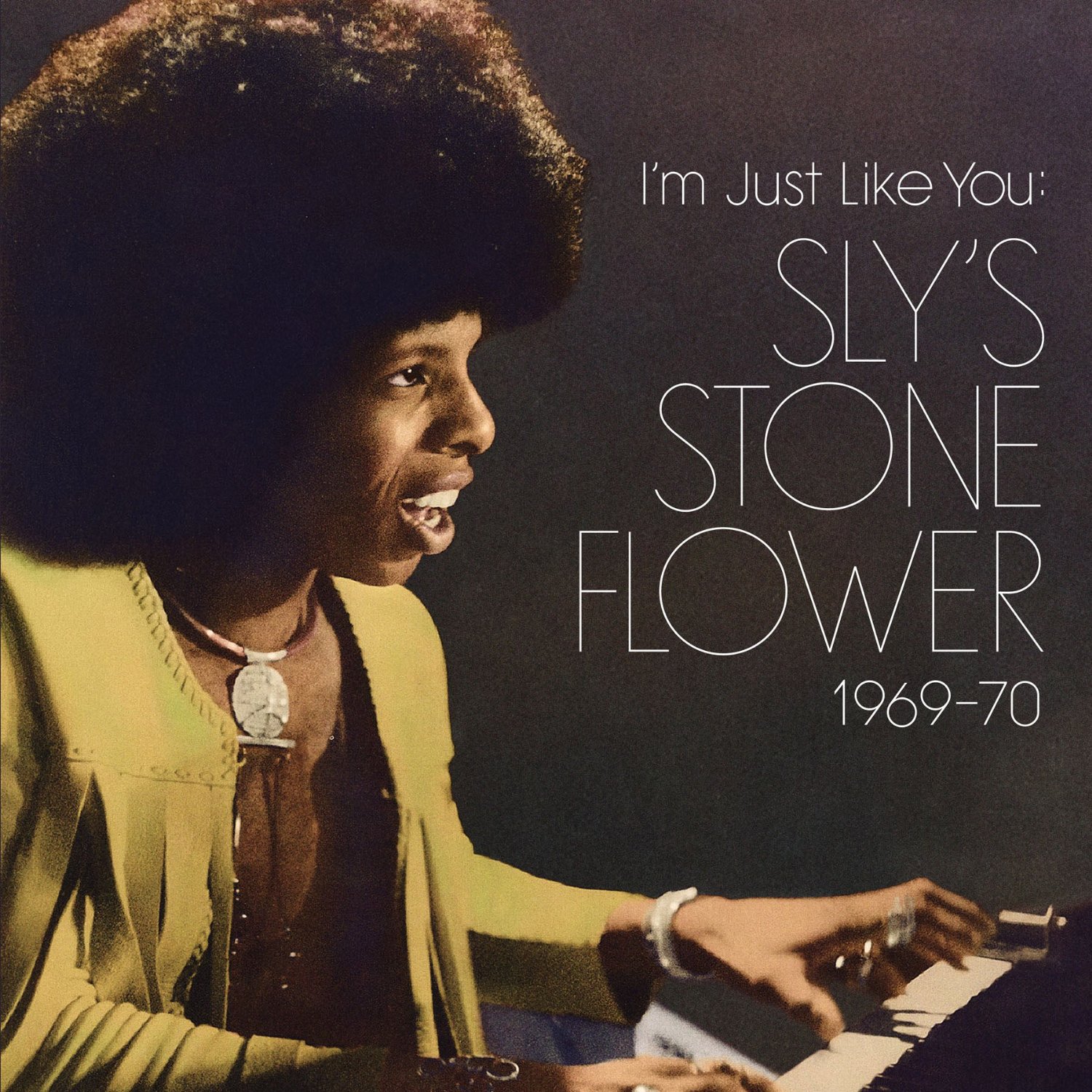

THE ESOTERIC CIRCLE-GEORGE RUSSELL PRESENTS THE ESOTERIC CIRCLE.
THE ESOTERIC CIRCLE-GEORGE RUSSELL PRESENTS THE ESOTERIC CIRCLE.
With Norwegian music going through something of a renaissance, it’s fitting that George Russell Presents The Esoteric Circle has reissued by BGP Records, a subsidiary of Ace Records. George Russell Presents The Esoteric Circle was one of the most important albums in Norwegian musical history. Released in 1971, George Russell Presents The Esoteric Circle featured four pioneering jazz musicians. Sadly, George Russell Presents The Esoteric Circle was The Esoteric Circle’s only album.
The Esoteric Circle was founded in 1969 by bassist Arild Andersen, drummer Jon Christensen, guitarist Terje Rypdal and tenor and soprano saxophonist Jan Garbarek. The quartet met in Oslo, which in 1969, had a vibrant jazz scene.
Arild, Jon and Jan had grownup playing jazz. They had been members of various quartets. Terje hoever, was a relative newcomer to jazz. He only started playing in 1968. Previously, he’d played in rock bands. Stylistically, this was a whole new ball game. However, after a year playing jazz, he was hooked and became a member of The Esoteric Circle.
Jan Garbarek was fourteen when started to play tenor sax. He was a natural. A year later, he won first prize in the soloist category, for Norwegian Amateur jazz musicians. It seemed, Jan was destined to make a career out of music.
By 1965, Jan had his own group. They played at jazz festivals across Europe. This included Prague, Stockholm, Warsaw, Molde, Kronisberg and the prestigious, Montreux Jazz Festival. Jan also accompanied Karin Krog live and on record. During this period, Jan got the opportunity to study under a jazz legend, George Russell.
George Russell had made Oslo his home. Like many American jazz musicians, he made Europe his adopted home. That’s where he taught the Lydian Chromatic Concept Of Tonal Organisation. Jan spent five years studying a theory that Miles Davis and Eric Dolphy pioneered. As well as studying with George Russell, Jan played in his sextet and big band. The other thing George Russell was responsible for, was bringing together The Esoteric Circle.
Terje Rypdal, Jon Christensen and Arild Andersen and Jan all met through George Russell. Guitarist Terje Rypdal originally played in rock bands. He was a member of Norway’s most popular pop group, The Vanguards. He then joined progressive rock and blues group Dream. By 1969, he was also a student at the Conservatory of Music.
A gifted student, Terje had just written, Eternal Circulation a symphony for an eighty-nine piece orchestra and and sixteen vocalists. He’d also played on George Russell’s Electronic Sonata For Souls Loved By Nature. This was just part of the Terje Rypdal story.
Having turned to jazz, Terje played at festivals across Europe. His background was similar to Jan. Terje played at Stockholm, Bologna, Molde and Kronisberg. Then at Badden Baden, Terje joined a group of pioneering jazz musicians, including John Surman, Roscoe Mitchell and Lester Bowie. They dipped their toe into the waters of free jazz. This wouldn’t be the last time.
Before Jon Christensen joined The Esoteric Circle, he’d been a session musician. He was the most sought after session drummer in Norway. Before long, his talents were in demand all over Scandinavia. Especially, among visiting American jazz musicians. They wanted Jon providing the heartbeat. There was more to Jon than a session musician.
Jon had been part of George Russell’s sextet and big band. He also was a member of the Steve Kuhn Trio, and played many jazz festivals. This included Bologna, Stockholm, Warsaw, Molde, Kronisberg and Montreux. Somehow, Jon also found time to play on two albums by Karin Krog. A talented and sought after musician, it’s no surprise, that Jon won the Buddy Award for Norwegian musician of the year in 1967. Two years later, another future member of The Esoteric Circle would win the Buddy Award.
This was bassist Arild Andersen. He’d played alongside Jon many times, including when visiting American jazz musicians arrived in Norway. Jon and Arild were part of Karin Krog’s. They also played at the same festivals, including Bologna, Stockholm, Molde and Kronisberg. However, Arild would play alongside another future member of The Esoteric Circle.
Arild played alongside Jan Garbarek. Their paths crossed in the mid-sixties. That’s not surprising. The Oslo jazz scene was relatively small. On other occasions, Arild accompanied George Russell and in 1968, The Don Cherry Big Band. A year later, Arild won the Buddy Award for Norwegian musician of the year in 1969. This was an important year for Arild. It was the year The Esoteric Circle was founded.
Having founded The Esoteric Circle in 1969, they entered the Henie-Onstad Kunstsenter, recording studio in Oslo in October 1969. The rhythm section of bassist Arild Andersen, drummer Jon Christensen and guitarist Terje Rypdal were augmented by tenor and soprano saxophonist Jan Garbarek. George Russell produced George Russell Presents The Esoteric Circle. It featured nine tracks. Seven were penned by Jan Garbarek. The other two, Nefertite and Breeze Ending were cover versions. These nine tracks, became George Russell produced George Russell Presents The Esoteric Circle. It wasn’t until 1971 that George Russell Presents The Esoteric Circle was released.
Two years passed before Bob Thiele released George Russell Presents The Esoteric Circle on his Flying Dutchman Productions’ label. It was well received within jazz circles, and perceived as an important, ambitious, pioneering and genre-melting album. Sadly, it wasn’t a commercial success. As a result, George Russell Presents The Esoteric Circle was The Esoteric Circle’s only album. However, what a musical legacy it is.
The sultriest of saxophone and wistful, dramatic guitar combine on Traneflight, which opens George Russell Presents The Esoteric Circle. Percussion plays, as the rhythm section slowly join in. All the time, the music is tinged with sadness, melancholia and drama. Jazz’s past, present and future combines. Happily, the old and the innovative sit side-by-side on this beautiful, wistful track that’s designed to tug at your heartstrings.
Drums roll and pound on Rabalder. It’s as if drummer Jon Christensen is setting the scene for the rest of The Esoteric Circle. He showcases his considerable skills, making his way round the kit. His playing is flawless, as he showboats his way round his kit, showing why he was one of the best drummers in Scandinavia. Eventually, the rest of The Esoteric Circle enters. A braying, howling horn, chiming guitar and subtle bass combine. It’s the frenzied saxophone and drums that take centre-stage. The rest of The Esoteric Circle are almost playing supporting role. Again, the track heads in the direction of free jazz. Later, a searing guitar is unleashed, as if if The Esoteric Circle are drawing inspiration from John McLaughlin. Rock meets free jazz and jazz, on a truly groundbreaking track.
Just a bass and subtle cymbal open Esoteric Circle. When, The Esoteric Circle enter, they sound like a band from jazz’s golden age. They play within themselves, producing a late night, smoky sound. Partly, that’s down to the saxophone. Sometimes, it’s akin to a cathartic outpouring of hurt. All the time, the arrangement marches to the tune of Arild Andersen bass. He and drummer Jon Christensen anchor a track where jazz’s past and present combine seamlessly, producing a laid-back slice of jazz.
Thoughtfully, and pensively Vibs, unfolds. Just the bass plays. Soon, the drums join. Eventually, a scrabbling saxophone enters. It injects a sense of urgency. So does the driving, dramatic guitar. Again, there’s a nod to John McLaughlin, in the way jazz and rock are combined by guitarist Terje Rypdal. The rest of The Esoteric Circle combine avant-garde, jazz, experimental and free jazz. It’s a compelling fusion of influences, that was way ahead of its time. So much so, it’s hard to believe that such a groundbreaking track as Vibs, was recorded in 1969.
Sas 644 is an eight minute epic. This allows The Esoteric Circle to explore the track’s nuances and subtleties. The rhythm section of bassist Arild Andersen and drummer Jon Christensen combine. Jon works his way round the kit, and with Arild Andersen’s bass, drive the arrangement along. Soon, Jan Garbarek’s saxophone and Terje Rypdal’s choppy guitar licks enter, adding urgency and drama. That’s not all. They signal The Esoteric Circle to cut loose. Terje uses a myriad of pedals and effects, mangling the sound. His guitar wah-wahs and wails, as The Esoteric Circle veer between fusion and free jazz. Jan seems to be inspired by Terje. He makes his saxophone howl and wail. Other times it brays and blazes. Later, the rhythm section accompany Jan’s allowing him to take centre-stage, but sometimes, showcasing their considerable talents.
Just a hauntingly beautiful saxophone solo and deliberately strummed guitar combine on Nefertite. Occasionally, the bass wails and a cymbal crashes. Mostly the music is hauntingly beautiful, and a tantalising taste of what The Esoteric Circle are capable of.
Gee is best described as an ambitious melange of avant-garde, experimental and free jazz. It veers between ambitious, challenging, discordant and innovative.
A thoughtful, mesmeric bass gets into a groove on Karin’s Mode. Gradually, distant drums, a subtle, braying saxophone and wailing guitar combine. Terje unleashes his array of pedals and effects. The result is futuristic and funky. Not to be outdone, saxophonist Jan Garbarek makes his saxophone bray, blaze and wail. It’s as if The Esoteric Circle are improvising. They encourage each other to experiment and push musical boundaries. The status quo isn’t an option, as they unleash a groundbreaking, futuristic, eight minute epic that forty-five years after it was recorded, is truly mesmeric.
Closing George Russell Presents The Esoteric Circle is Breeze Ending . Just a lone saxophone skips across the arrangement. It’s very much a showcase for saxophonist Jan Garbarek. The rest of The Esoteric Circle only make an appearance after two minutes. Drummer Jon Christensen and bassist Arild Andersen, combine. Then guitarist Terje Rypdal enters, and the track takes on a much more uplifting sound, and is a joyful, hopeful way to close George Russell Presents The Esoteric Circle.
Two years the recording of George Russell Presents The Esoteric Circle in Norway, in 1969, it was eventually released on Bob Thiele’s Flying Dutchman Productions in 1971. At last, The Esoteric Circle’s one and only album was heard by a wider audience.
When George Russell Presents The Esoteric Circle was released, it was well received by critics. They hailed it one of the most important album in European jazz history. Sadly, this critical acclaim didn’t translated into sales. George Russell Presents The Esoteric Circle wasn’t a commercial success. The problem was, here was an album that was way ahead of its time.
Listening back to George Russell Presents The Esoteric Circle, it could easily be an album that the latest generation of Norwegian jazz musicians could’ve released. Norwegian music, including jazz, is enjoying another golden age. So much good music is coming out of Norway. That was the case back in 1969, when George Russell Presents The Esoteric Circle was recorded. By 1971, Norwegian music was still thriving. Fast forward forty-three years, and George Russell Presents The Esoteric Circle is an album that has obviously influenced a new generation of Norwegian jazz musicians.
Without George Russell Presents The Esoteric Circle, the latest generation of Norwegian jazz musicians may not have had the courage to innovate, and create bold, ambitious, groundbreaking and genre-melting music. Thankfully, they do. That in part, is down to five men, George Russell and The Esoteric Circle.
They played their part in an important, innovative and groundbreaking album George Russell Presents The Esoteric Circle, which was recently released by BGP Records, an imprint of Ace Records.
THE ESOTERIC CIRCLE-GEORGE RUSSELL PRESENTS THE ESOTERIC CIRCLE.
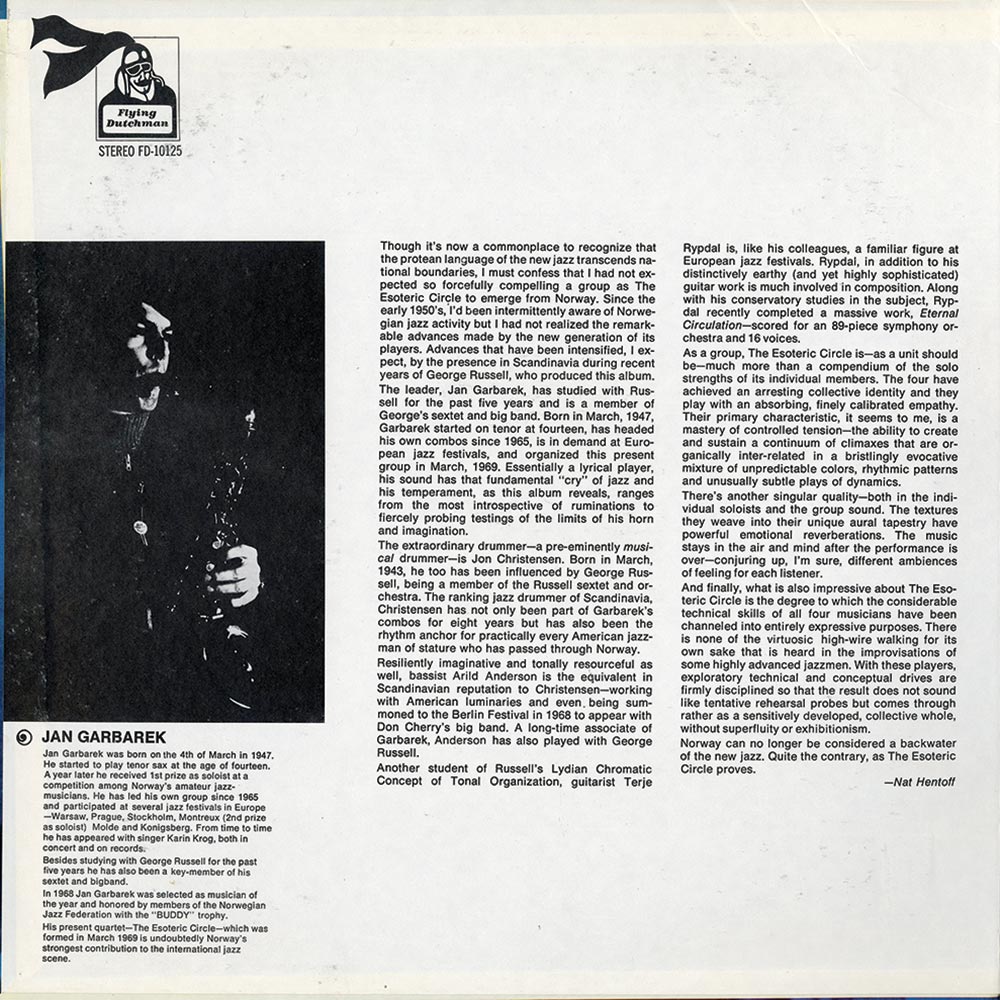
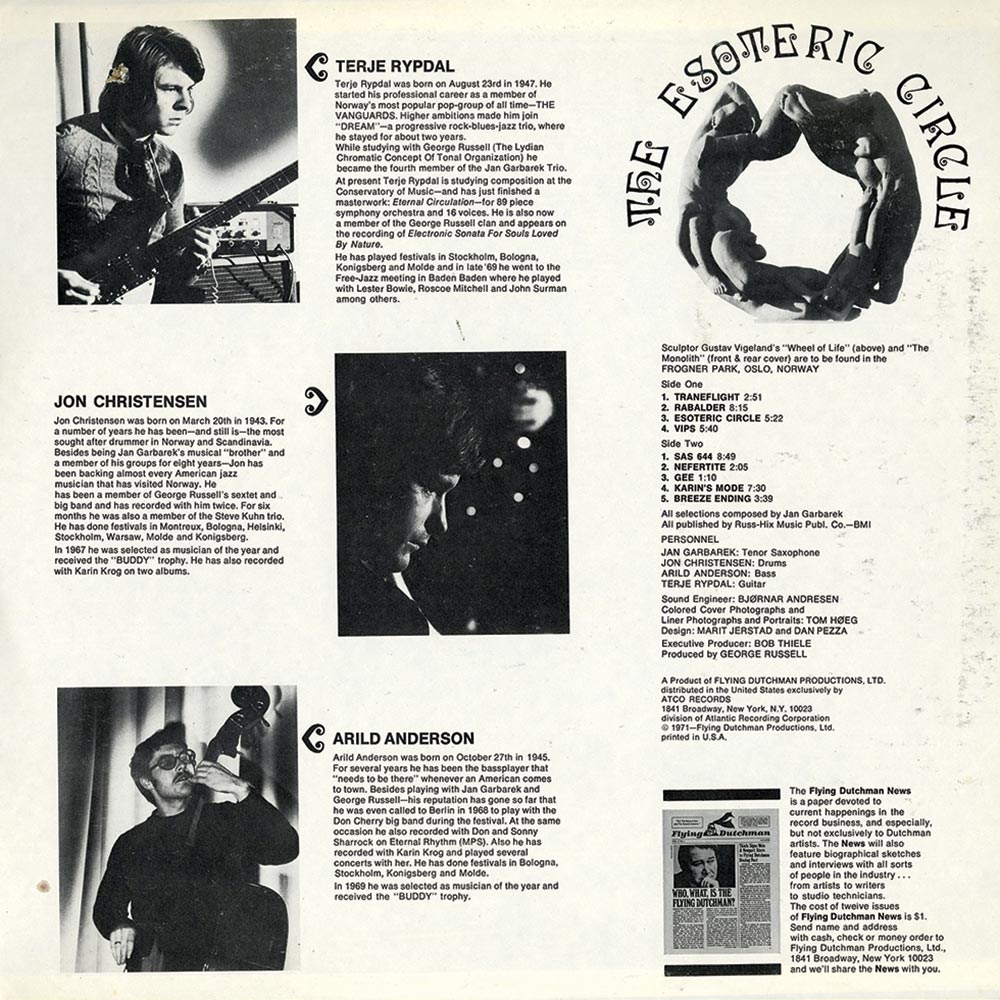
GIL SCOTT HERON-FREE WILL.
GIL SCOTT HERON-FREE WILL.
Throughout his career, poet, musician, and author. Gil Scott-Heron highlighted the social and political problems affecting American society. He was, to all intents and purposes, America’s conscience. Racism, poverty, corruption, inequality and drug addiction featured in Gil’s lyrics. His lyrics are cerebral, witty, scathing and most importantly, honest as Gil speaks up for the downtrodden and disenfranchised. Fearlessly, Gil highlights the social and political problems that blighted America. That’s not all.
Gil tried to unite a divided America, encouraging Americans to join together, and change America for the better. The way Gil did this, was through his music.
Some of the best lyrics Gil wrote, were during his three album spell at Bob Thiele’s Flying Dutchman Productions. This started with Gil’s debut album, 1970s Small Talk At 125 and Lenox. Gil followed this up with 1971s Pieces Of A Man. Gil Scott-Heron’s final album for Flying Dutchman Productions was Free Will, which he released in 1972. Unbelievably, he was only twenty-three.
April Fool’s Day in 1949 was an important day in Chicago’s musical history. That was the day Gil Scott-Heron was born. His mother Bobbie Scott-Heron was an opera singer. She sang with New York’s Oratorio Society. Gil’s father was Gil Heron was a Jamaican footballer, who at one time, played for Glasgow Celtic Football Club. Sadly, Bobbie and Gil’s marriage ended when Gil was young.
After this, Gil was sent to live with his maternal grandmother, Lillie Scott, who lived in Jackson,Tennessee. Then when Gil was just twelve, Lillie Scott died. Gil returned to New York to live with his mother. She was now living in the Bronx. Originally, Gil enrolled at the DeWitt Clinton High School, but later, moved to the Fieldston High School.
This came after impressing the head of the English department. He’d read one of Gil’s essays and recommended that Gil received a full scholarship. This proved a poisoned chalice. The education he was receiving was better. However, he was only one of five black students. He felt alienated. Another problem was the socioeconomic gap. Other students came from a much more affluent background. Gil was the son of a single mother. It was at this period, that Gil became socially and politically aware. His eyes were opened to inequality, injustice and racism. This would shape his music in later years. Before that, Gil headed to university.
Lincoln University was where Gil headed after high school. Gil was recommend to head to Lincoln University by Langston Hughes. He was also at Lincoln University and was a member of Gil’s first band, the Black and Blues. After two years at Lincoln University, Gil decided to take time out to write a novel.
During this period, Gil Scott-Heron wrote two novels. His first novel was a thriller entitled The Vulture, was published in 1970. Whilst writing The Vulture, Gil saw The Last Poets in Lincoln in 1969.
After watching The Last Poets, Gil approached the band and asked: “can I form a band like you guys?” The seed had been sown. Maybe, music rather than writing would be the direction Gil’s career headed?
Having been impressed with The Last Poets and now considering a career in music, Gil had a lot on his mind as he headed back to New York. He found a new home in Chelsea, Manhattan. Once he’d settled in, Gil decided to make his dream a reality. So he looked for a record company. Gil just so happened to approach a label tailor-made for his music, Flying Dutchman Productions.
After his departure from ABC/Impulse Bob Thiele decided to found his own label. Over the last few years, Bob had worked with some of the most innovative and creative musicians in the history of jazz. Bob realised that often, large record companies aren’t the best environment for innovative and creative musicians. Often, these musical mavericks didn’t thrive within such an orthodox environment. Their creativity is restricted, meaning they’re unable to experiment and innovate like they’d like. So when Bob parted company with Impulse, who he’d transformed into one of jazz’s pioneering labels, he founded Flying Dutchman Productions. This was the label that Gil Scott-Heron approached. There was a problem though.
While Bob wanted to sign Gil, there was a problem, funding. The funding that Phillips, the Dutch record label had given Bob wasn’t going as far as he’d hoped. Despite this, when he met Gil he was impressed by the poet, musician, and author. So what Bob did, was fund an album that was a fusion of poetry accompanied by understated, percussive arrangements.
Small Talk At 125 and Lenox.
This was Small Talk At 125 and Lenox. It was recorded at a studio and released in 1970. Immediately, comparisons were drawn with the group who’d inspired Gi, The Last Poets. This was a fair comment. However, one listen to tracks like Whitey On The Moon, plus what was the original version of The Revolution Will Not Be Televised, and people realised that Gil took what The Last Poets had been doing to the next level. With just a trio of percussionists accompanying Gil, Small Talk At 125 and Lenox was a potent and explosive mix of scathing political and social comment.
Sadly, when Small Talk At 125 and Lenox was released, it wasn’t a commercial success. However, a small crumb of comfort was, that The Revolution Will Not Be Televised found its way onto radio play lists. That was encouraging for Bob and Gil. They knew they were on the right track. So they decided that Gil should begin work on his sophomore album Pieces Of A Man.
Pieces Of A Man.
For Pieces Of A Man, Gil wrote The Revolution Will Not Be Televised, Save The Children, Lady Day and John Coltrane and Home is Where The Hatred Is. He cowrote the other seven tracks with Brian Jackson. These eleven tracks were recorded on 19th and 20th April 1971. Joining Gil were a few well known names.
When Bob Thiele asked Gil who he’d like to accompany him, jokingly, Gil said flautist and saxophonist Hubert Laws and bassist Ron Carter. So Bob got them onboard for the recording of Pieces Of A Man. This was Bob Thiele’s way of making Gil feel at home. Bob knew this was the way to get the best performance possible from an artist.
With a crack band in tow, Gil Scott Heron set about recording his sophomore album Pieces Of A Man. This crack band included a rhythm section of drummer Bernard “Pretty” Purdie and guitarist Burt Jones. Brian Jackson played piano and Gil played guitar, piano and sang lead vocals. Producing Pieces Of A Man was Bob Thiele. After two days recording, Pieces Of A Man was completed. Now it was ready for release.
When Pieces Of A Man was released in 1971, only Rolling Stone magazine realised the cultural importance of the album. Pieces Of A Man passed the rest of the music press by. This is a sad indictment on music journalism at one of the most important period in musical, social and political history. Just like Pieces Of A Man passed the majority of the music press by, the same can be said of the record buying public. Apart from spending six weeks in the US Jazz Charts, where it peaked at a lowly number twenty-five, commercial success passed Pieces Of A Man by. Ironically, later, critics reappraised Pieces Of A Man and hailed it a classic album that’s intense, politically charged, innovative and influential.
Despite being innovative and influential album, Small Talk At 125 and Lenox and Pieces Of A Man passed music lovers by. For Gil this was disappointing. He would only release one further album for release one further album for Flying Dutchman Productions, Free Will.
Free Will,
Free Will, which features twelve songs, is a mixture of music and poetry. Gil wrote eight of the twelve tracks. The other four tracks, Free Will, The Middle Of Your Day, The Get Out Of The Ghetto Blues and Speed Kills were collaborations between Gil and Brian Jackson, who played a huge part in the Gil Scott-Heron story.
For the Free will sessions, an all-star lineup accompanied Gil. Recording took place on the 2nd and 3rd March 1972. The rhythm section included bassist Jerry Jemmott, drummer Pretty Purdie and guitarist Jerry Jemmott. Flautist and saxophonist Hubert Laws, who’d played on Pieces Of A Man returned. Brian Jackson played electric piano, flute, bells and added vocals on the first five tracks. Gil took charge of lead vocals. Arranging and conducting the first five tracks on Pieces Of A Man, was Horace Ott. Producing Pieces Of A Man was Bob Thiele. After two days recording, Pieces Of A Man was completed. It was released later in 1972.
On Free Will’s release later in 1972, it was well received by critics. Rolling Stone flew the flag for Free Will and Gil Scott-Heron. Despite this, Free Will failed to chart in the US Billboard 200 and US R&B charts However, Free Will sold between 20,000 t0 30,000 copies, and reached the US Jazz charts. Despite this, for Gil Scott-Heron, this was a huge disappointment. Free Will, which I’ll tell you, about was the last album Gil Scott-Heron released on Flying Dutchman Productions.
Free Will opens with the title-track, Free Will. After the band tune up, Free Will gets underway. Gil snaps his fingers as if saying lets make this a take. Herbert Laws’ flute, Brian Jackson’s piano and a rhythm section, complete with chirping guitar cut loose. Above the driving arrangement sits Gil’s vocal. His lyrics are tinged with anger and disappointment. Gil criticises those who grasped the opportunities the civil rights movement fought for, but never did anything to improve society. Gil’s frustrated and angry, while the flute and piano provide the perfect accompaniment to Gil Scott-Heron at his scathing, articulate best.
The Middle Of Your Day has a wistful sound. A flute and piano play, as the drums mark time. The rest of the rhythm section play slowly. They set the scene for Gil, as he sings about people making something of their lives. His lyrics are poignant and tinged with sadness, at the thought of people trying to make their way in life, with nobody to guide them, and show them what’s write and wrong. However, throughout the song, Gil encourages people to make something of their lives.
The Get Out Of The Ghetto Blues has a slow, bluesy, jazz-tinged backdrop. A piano plays and a crystalline guitar chirps. Then Gil rounds on those who are content to stay in the ghetto, cheating the system, hustling and taking drugs. Gil wants them to set their sights higher and make something of their lives.
Speed Kills is just as relevant in 2014, as it was in 1972. Brian Jackson plays electric piano and a bass drives the arrangement along. They provide a dramatic backdrop for Gil’s heartfelt, worried vocal. He’s worried that people’s lives are so busy, they’re forgetting what’s important in life. Forty-two years later, and people are still making the same mistakes.
A dark, pensive piano is panned right Did You Hear What They Said? As Herbert Laws flute sails wistfully above the arrangement, a piano and subtle, chiming guitar combine with Gil’s vocal. It’s tinged with sadness, frustration and regret that “another brother is dead…did you hear what they said…they shot him dead, in the head, to save his country.” Gil’s saddened, angry and despondent that another young life is lost, fighting in a war. To Gil’s it’s another life wasted, as he delivers a devastating attack on the follies of war. This proved a poignant end to side one of Free Will.
Side two of Free Will is essentially Gil’s poetry set to music. On The King Alfred Plan and No Knock, it’s just drums and flute. Gil’s at his most political. He’s angry and unleashes his anger, frustration and vitriol at the Nixon regime. The King Alfred Plan worries him. He’s worried, scared and angry, about the way the black community are being treated.
It’s the same on No Knock. It features an angry and fearful Gil Scott-Heron. No Knock tells the story of legislation that was mooted in 1972, where the police would be able to enter a person’s house without permission. Gil, America’s conscience, was determined that this would never happen.
Wiggy is a short poem set to music. Again, it’s just drums and a wistful flute that accompany Gil, as he tells the story of a sad figure, who every night dawns her old and worn wig, before hitting the town. Here, equal parts irony, sadness and humour combine. You’re not laughing at the person, but at Gil’s delivery of the lyrics.
Ain’t No New Thing sees Gil comment on how white artists have constantly “ripped off black artists.” Accompanied by drums and a wistful, subtle, flute, Gil delivers the lyrics. Anger, sadness and frustration, Gil says “this Ain’t No New Thing.”
Billy Green Is Dead sees Gil comment on the shallowness and selfishness of people in 1972. They’re not interested in anything unless it affects them. They didn’t care that racism, poverty, corruption, inequality and drug addiction. As long as they were okay, then nothing else mattered. Sadly, this is still the case today.
Sex Education: Ghetto Style finds Gil at his angriest. He almost barks out the lyrics. Just like Billy Green Is Dead, Gil realises that nobody is interested in the young people who are sleeping around from an early age. As long as it doesn’t affect them, they don’t care what goes on in the ghetto. This is a sad reflection on society, which is just as true today, as back in 1972, when Gil wrote Sex Education: Ghetto Style.
Closing Free Will is…And Then He Wrote Meditations. It’s a song that Gil wrote in homage to John Coltrane, and what Gil refers to as his “finest piece A Love Supreme.” What follows is a three minute, impassioned tribute to a true musical legend’s finest work. Although Pieces Of A Man was only Gil’s sophomore album, it’s a hugely accomplished album. Of the eleven tracks on
Listening back to Free Will, forty-two years after its release, one thing strikes me, that’s how mature an album Free Will is. Gil Scott-Heron was only twenty-three. Already, Gil had written three novels and released three albums. He was, to all intents and purposes, America’s conscience.
No subjects are off-limits on Free Will. Gil Scott-Heron tackles them head on. Racism, poverty, inequality, war and ghetto life are tackled head on. That’s not all. Gil wants the black community to strive for a better life. He wants them not to settle for ghetto life. Instead, he wants young black Americans to set their sights high. However, sometimes, Gil unleashes his ire.
Politicians, including the disgraced Nixon regime are in the firing line. Gil worries about civil liberties in No Knock and the way black people are being treated on The King Alfred Plan. It features a worried and angry Gil Scott-Heron. On the title-track Free Will, Gil criticises those who grasped the opportunities the civil rights movement fought for, but never did anything to improve society. Gil’s righteous anger shines through as he dawns the role of America’s conscience. It’s a role that doesn’t weigh heavy on his shoulders. Instead, it helps him reach even greater heights.
He delivers each of the songs with variously power, passion, emotion, sadness, frustration, anger and confusion. In a way, his youthfulness helps Gil brings the lyrics to life. Gil was a young man and was aware of and possibly, had experienced the inequality and injustice he sings about.
Fusing everything from jazz, blues, funk, proto-rap and soul, Gil Scott-Heron highlights the social and political problems of the early seventies. Fearlessly, Gil tackles these subjects head on during Free Will, delivering the lyrics with his proto-rap style. With keyboardist Brian Jackson at his side, Gil would become one of the most important artists of his generation. However, Free will was his final album for Bob Thiele’s Flying Dutchman Productions.
1972s Free Will, which was recently rereleased by BGP Records, a subsidiary of Ace Records only sold between twenty and thirty thousand albums. This wasn’t enough to trouble neither the US Billboard 200 nor US R&B charts. Free Will did enter the US Jazz charts. Gradually, Gil’s music was finding the audience it so richly deserved.
It may not have enjoyed the commercial success and critical acclaim it deserved, but was later, reappraised by critics.
Somewhat belatedly, critics reappraised Free Will. It’s now perceived as a culturally important album. Future generations were inspired by Gil Scott-Heron. No wonder. Here was a man who provided a voice for the disenfranchised. Fearlessly, Gil highlights the social and political problems that blighted America in 1972, and still do. Throughout his life, he encouraged Americans to join together and change America for the better. This pioneering poet and protest singer made a difference politically and socially. The way he did this, was through his poetry, books and music, including Free Will. They’re part of the rich legacy Gil Scott-Heron’s legacy left behind, when he died aged just sixty-two, in 2011.
GIL SCOTT HERON-FREE WILL.
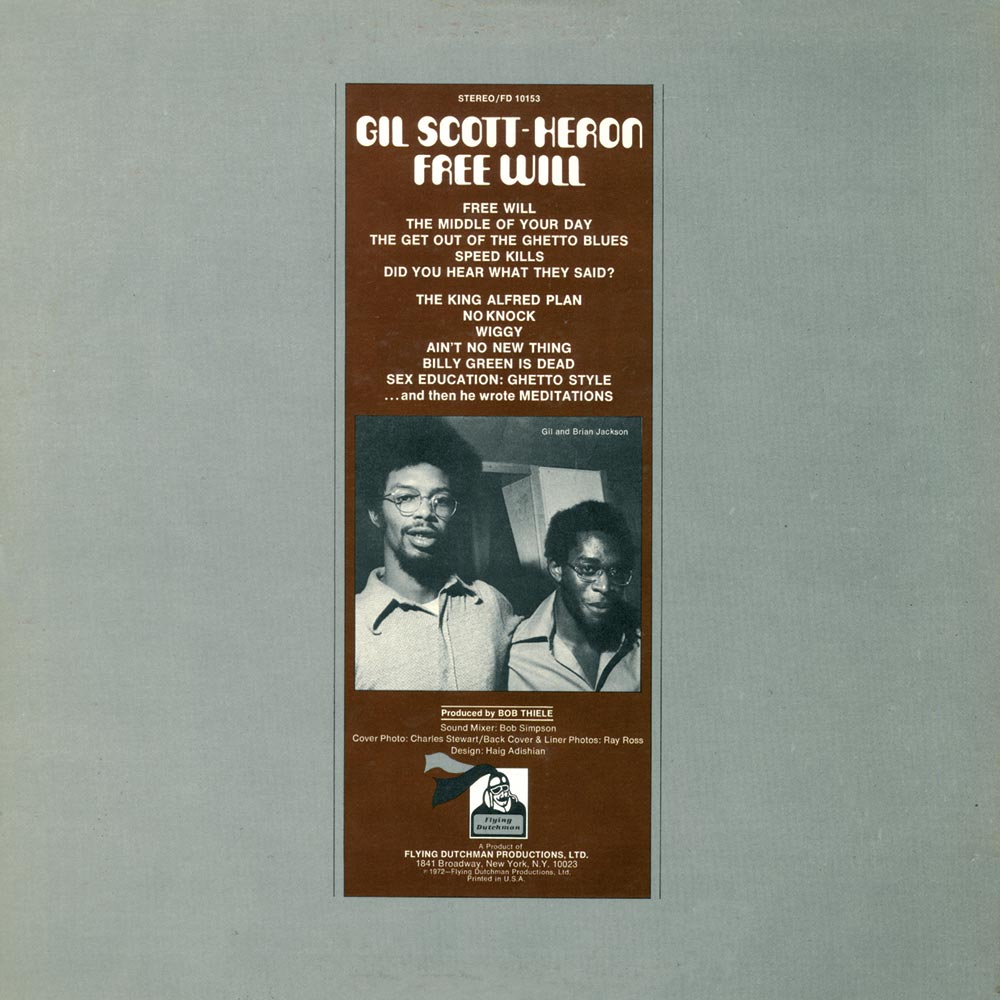
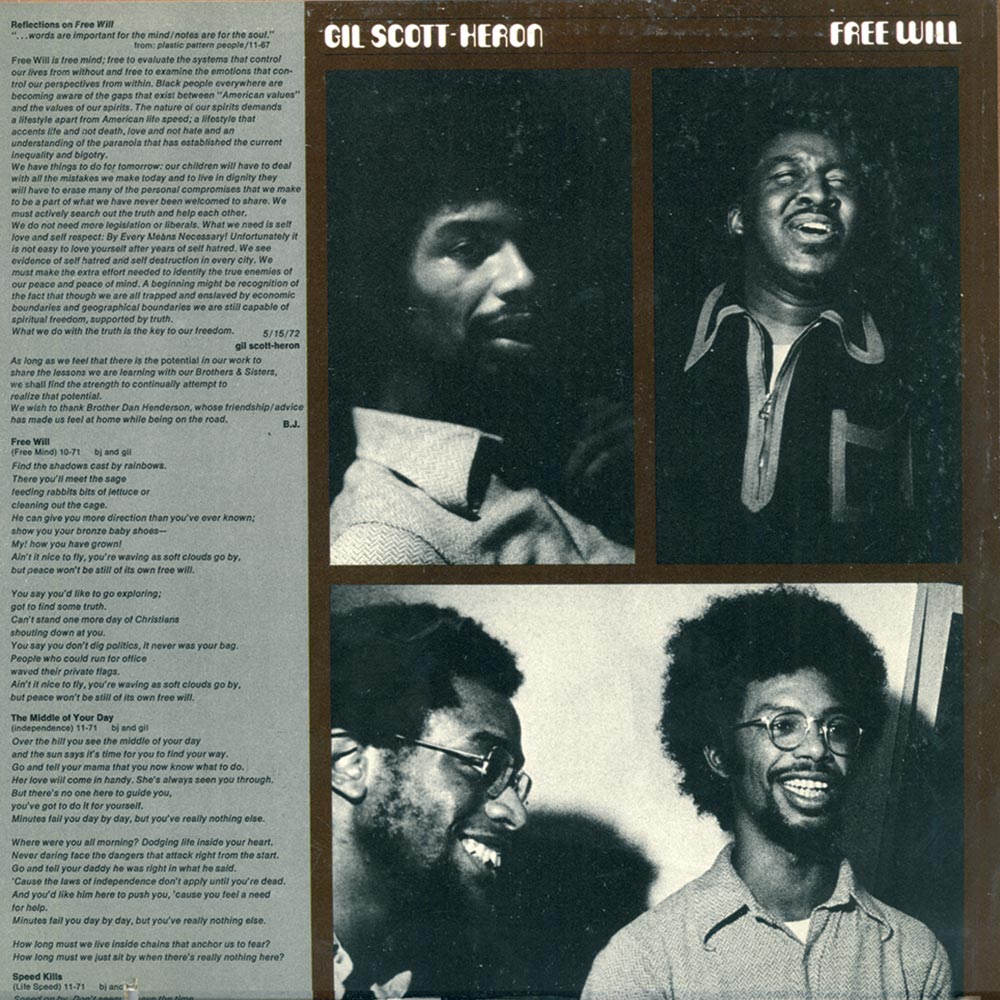
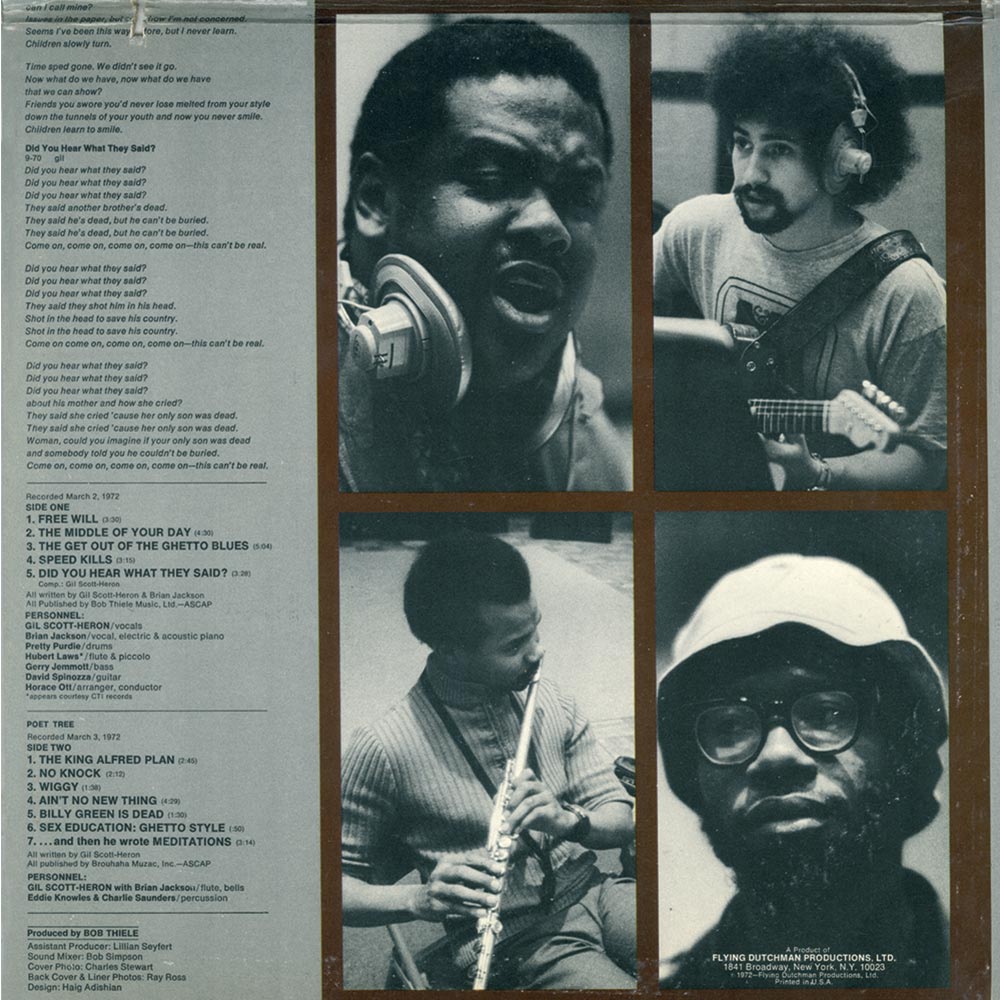
SCOTT WALKER AND SUN O-SOUSED.
SCOTT WALKER AND SUN O-SOUSED.
If I was to describe Scott Walker in one word, “chameleon” is the word I’d use. Scott started life as lush pop ballads with The Walker Brothers. On leaving The Walker Brothers, Scott’s style began to evolve.
As Scott’s solo career began, he stuck with the same formula that had served him so well with The Walker Brothers. Not for long. Soon, Scott wanted to create much more innovative music.
Scott Walker didn’t want to be pigeonholed as a balladeer. Too many artists had made that mistake.
So Scott decided to learn from their mistakes. After all, one day, maybe soon, people would tire of Scott Walker the balladeer. Deep down, Scott was tiring of dawning the role of Scott Walker the balladeer.
He wanted to move his music in different directions. Scott was a talented songwriter, musician, arranger and producer. The other word people used when describing Scott was successful.
Scott.
From his debut album Scott, which was released on September 16th 1967, his music had found a wide audience. That’s not surprising. The Walker Brothers had just released their third album. They were riding the crest of a wave of success. Although this pleased Scott, he wanted people to see him as a serious artist. So he decided to embark upon a parallel solo career.
When Scott was released, it was a mixture of covers and Scott’s own material, including tracks like Montague Terrace (In Blue), Such a Small Love and Always Coming Back to You. The covers were a mixture of songs by Belgian singer-songwriter Jacques Brel, including Amsterdam. Along with movie songs and covers of contemporary songs, these tracks became Scott. This eclectic selection of material found favour with record buyers and critics.
Released in September 1967, Scott was critically acclaimed by critics. They saw a new side to Scott Walker and his music. Record buyers enjoyed Scott. It reached number three in the UK. For Scott this was the start of a three album run where he could do now wrong.
Scott 2.
Seven months later, Scott released his sophomore Scott 2, in in the UK. Scott 2 followed a similar formula as his debut Scott. This meant covers of Jacques Brel’s Next, The Girls and the Dogs and Jackie, plus Scott Walker originals like The Amorous Humphrey Plugg, The Girls from the Streets and Plastic Palace People. The rest of Scott 2, was made up of covers of contemporary songs.
On its release in the UK, in March 1968, critics noticed that Scott 2 was a much more grownup album. Its lyrics were deemed controversial, and even risque, featuring songs about sexuality and the decadence that was prevalent in swinging London. Scott 2 seemed to strike a nerve with record buyers.
Scott 2 climbed the charts, reaching number one in the UK. For Scott, this was critics forecast, was the start of a long and successful career for Scott Walker, balladeer.
Scott 3.
Sadly, this success only lasted one further album. By the time Scott released Scott 3, record buyers were turning their back on his music.
The reason for this, was Scott was tiring of being a balladeer. He wanted to stretch his legs musically, and innovate. So for Scott 3, he penned ten tracks and covered three tracks that Jacques Brel cowrote. When recording began, Scott brought in arranger Wally Stott.
With Wally Stott in tow, Scott recorded an album that’s best described as Scot dawning the role of a Las Vegas crooner. Sometimes, he almost parodies the role. It’s as if he sticking two fingers up at the crooners who headed to Vegas for vast paydays. During Scott 3, the lush arrangements take a harsh twist. Again, it’s as if Scott is being contrary. Critics however “got” Scott 3.
Critics understood what Scott was trying to achieve on Scott 3. The album was well received. However, album sales weren’t as good as Scott’s two previous albums. Despite reaching number three in the UK, sales of Scott 3 were worrying.
Scott: Scott Walker Sings Songs from his T.V. Series.
So it’s no surprise that four months later, in June 1969, Phillips released Scott: Scott Walker Sings Songs from his T.V. Series. It songs that featured on his various television programs. They featured Scott Walker the balladeer and, Scott Walker delivering a series of easy listening songs. This was what his fans wanted.
Scott: Scott Walker Sings Songs from his T.V. Series features a series of heavily orchestrated, M.O.R. songs. It wasn’t vintage Scott Walker. What it was, was Scott’s record company cashing in on an artist whose popularity was on the slide. On Scott 3’s release, in July 1969, it reached number seven in the UK. This was the end of a golden period in Scott Walker’s career.
Scott 4.
Stylistically, Scott 4 was very different from his previous album. Gone was Scott Walker balladeer, and purveyor of cover versions of movie songs and Jacque Brel track. Instead, Scott wanted to be seen as a series artist. His covers of Jacque Brel hinted at this. On Scott 4, the transformation is complete.
Scott 4 features ten songs written by, Noel Scott Engel, Scott’s real name They’re best described as baroque pop. These songs were produced by John Franz, who’d produced Scott’s previous albums. The pair produced the most ambitious and forward thinking album of Scott’s career.
Sadly, Scott 4 failed to chart upon its release in November 1969. Critics, however, loved Scott 4. So much so, it’s seen as one of Scott’s best albums. Released to critical acclaim, critics admired Scott’s willingness to risk everything on Scott 4. He could just as easily have produced another album of M.O.R. balladry. That wasn’t for Scott Walker.
After Scott 4, Scott Walker became a musical chameleon. He explored avant-garde musical. Sometimes, his albums moved in the direction of modernism and post modernism. Scott even drew inspiration from classical music. However, this was all at the expense of commercial success.
‘Til the Band Comes In, released in December 1970, was the start of a period where commercial success eluded Scott. An ambitious album, ‘Til the Band Comes In failed to win over Scott’s fans. Neither did The Moviegoer released in 1972. It was a compilation of movie themes, where Scott dawned the role of balladeer. The Moviegoer failed to chart. Neither did Any Day Now, released in May 1973, nor Stretch, released in November 1973. Then when the ironically titled We Had It All, failed to chart upon its release in August 1974, Scott had had enough.
Ten years passed before Scott released another solo album. In the interim period, there was a Walker Brothers’ reunion. Mostly, Scott was a reclusive figure. That was until March 1984, when Scott released Climate of Hunter, which reached number fifty-one in the UK. After that, Scott’s released just three further albums, until now.
Another eleven years passed, and in May 1995, Scott released Tilt to critical acclaim. It reached just number sixty in the UK. Tilt was one of his finest solo albums, where a musical innovator reminded music what he was capable of. However, another eleven years passed before we heard from Scott again,
Drift, released in May 2006, exactly eleven years after Tilt, was worth the wait. It was vintage Scott Walker. Like a fine wine, he was maturing with age. He was an ambitious and innovative artist, determined to push musical boundaries. This is what he did on Tilt, which only reached number fifty-one in the UK. For Scott, this must have been a huge disappointment.
It was another six years, before Scott raised his head above the parapet, and released Bisch Bosch in December 2012. It was well received by critics, who hailed the mercurial and elusive Scott Walker the comeback King. Sadly, Bisch Bosch stalled at ninety-five in the UK. With Scott sixty-nine in 2012, some critics wondered if we’d ever hear from Scott Walker again?
During a solo career that began in 1967, Scott Walker has hardly been prolific. He released fourteen solo albums and two soundtracks, 1999s Pola X and 2007s And Who Shall Go to the Ball? And What Shall Go to the Ball? Many critics felt that wasn’t a lot to show for a forty-seven year solo career. However, it’s about quality, not quantity. Furthermore, Scott’s back with a new collaboration with experimental metal band Sun O.
Soused.
Released on 4AD on 20th October 2014, Soused is a collaboration between Scott and Sun O. It features five tracks written by Scott Walker. On these tracks, Scott and Sun O unleash a myriad of interments and effects.
Soused features Scott and Sun O, plus a few friends. The rhythm section features drummer Ian Thomas and guitarists Greg Anderson, Stephen O’Malley and Tos Nieuwenhuizen who also played synths. They’re joined by trumpeter Guy Barker, saxophonist Andy Findon and keyboardist Mark Warman, who also added shakers. Scott and Peter Walker took charge of drum programming. Peter also adds keyboards and FX. When Soused was finished, the result was an early Christmas present, for fans of the elusive and innovative, Scott Walker. You’ll realise why, when I tell you about Soused.
Crystalline synths and searing, rocky guitars open Brando, which opens Soused. Scott’s vocal is emotive and heartfelt. When it drops out, whips crack and the arrangement drones. It’s an unstoppable force. Then Scott’s vocal returns. It literally, oozes emotion and drama. Machine gun guitars fire off fierce licks. The crystalline synths return. They playing their part in a compelling, droning, moody collaboration. Much later, a free jazz trumpet punctuates this genre melting arrangement. Everything from avant-garde, experimental, drone rock, free jazz, baroque pop and rock melt into one. My only reservation are the whips. They’re unnecessary and overpower other parts of the arrangement. In doing so, they stop a good track, becoming a great one.
Bells chime as Herod 2014 unfolds. Synths bubble and the droning arrangement returns. It has a post apocalyptic sound. It’s as if it’s signalling that the bomb has dropped. A wailing, discordant free jazz saxophone sounds. Then as blistering, moody guitar licks are unleashed, Scott’s melodramatic vocal enters. Behind him, disparate musical genres unite during this eleven minute epic. Again, avant-garde, experimental, drone rock, free jazz, baroque pop and rock can be heard as Scott rolls back the years, and shows what we’ve been missing for too long. His partners in crime Sun O, prove the perfect foil for Scott, taking his music in a new and unexpected direction.
That’s the case on Bull. Just like the other tracks on Soused, it’s a lengthy track. Ominously, the arrangement drones, taking on a cinematic sound. What sounds like footsteps can be heard. Then Scott’s dramatic, powerful vocal enters. Searing, screaming guitars accompany him. So do sound effects. They punctuate the arrangement, before thunderous drums make their presence felt. Later, the arrangement becomes eerie and gothic. This is perfect for Scott’s earnest, theatrical vocal. He throws himself into the track. Just like an actor, he seems to be playing a role, drawing inspiration from baroque pop, modern classical and opera. Meanwhile, Sun O provide a a dramatic, cinematic backdrop for Scott’s vocal masterclass.
Guitars shriek and feedback on Fetish. A drums sounds in the distance. So do sound effects and cinematic synths. Scott’s vocal has the same, earnest, theatrical sound. He’s come a long way from singing Make It Easy On Yourself. His old fans wouldn’t recognise him, as he pushes new musical boundaries. That’s not surprising. Constantly, Scott has produced innovative and challenging music. It’s sometimes ethereal. That’s until the droning arrangement unfolds. This adds an element of drama. That’s the case with the drums. They add a mesmeric sound, before the music returns to its earlier ethereal sound, showcasing Scott Walker, forever the troubled troubadour.
Closing Soused is Lullaby. Shakers join a droning arrangement. It’s dramatic, gothic sound is the perfect contrast to Scott’s vocal. It almost has a classical influence. Again, it’s earnest and heartfelt. The rest of the arrangement is understated, playing a supporting role to Scott’s baroque vocal. Later, the arrangement becomes eerie, cinematic, broody and ominous. The drama builds, and the arrangement becomes almost discordant. As for Scott, his vocal is questioning and melancholy, as the arrangement fades into the distance. This proves poignant, as I’m left wondering when or whether we’ll ever hear from Scott Walker again?
As a longtime Scott Walker fan, the release of a new album, is a cause for celebration. That’s because, in a career lasting forty-seven years, Scott has released just fourteen solo albums and two soundtracks. Soused Scott’s collaboration with Sun O, is a welcome addition to his discography. It’s a reminder of Scott’s unique and inimitable voice. That’s not all. Soused is a reminder that Scott Walker is one of the most ambitious and innovative musicians of the past fifty years. Sadly, for most of Scott’s solo career, commercial success has eluded him.
His career started successfully, with four top ten UK albums. However, when Scott strayed from the tried and tested formula of balladry and cover versions, he lost his mass market appeal. However, from Scott 4, Scott Walker became the critic’s darling.
The more commercial success eluded Scott, it seemed the more the critics hung on his every word. This has been the case for thirty years, when he released Climate of Hunter. Since then, Scott Walker, has been the critic’s choice. That’s continued with Soused, which was released on 4AD on 20th October 2014.
Soused is a groundbreaking, genre-melting fusion from Scott Walker and Sun O. They combine everything from ambient, avant-garde, drone rock, experimental, industrial, psychedelia and rock. These genres become one on Soused, where Scott Walker and Sun O push musical boundaries to their limits, and even, way beyond.
SCOTT WALKER AND SUN O-SOUSED.
BLACK MOON CIRCLE-ANDROMEDA.
BLACK MOON CIRCLE-ANDROMEDA.
Just now, Norway has one of the most vibrant music scenes in Europe. Some of the best new music I’ve heard during 2014, has come from Norwegian bands and artists. This includes Motorpsycho, Moster!, Supersilent, Moskus, 1982, Space Monkey, Bly De Blyant, Stein Urheim, Cakewalk and Krokofant. These artists are among the most talented groups and artists in the Nordic music scene. However, new names are emerging all the time. This includes Black Moon Circle.
Black Moon Circle are a Norwegian space rock band. They were formed back in 2012, by brothers Øyvin Engan and Vemund Engan in 2012. Øyvin plays bass, guitar and takes charge of vocals. His brother Vemund is a guitarist. Both brothers used to play in the Trondheim-based punk rock band The Reilly Express. That was the past. Now, the Engan brothers are two thirds of Black Moon Circle. All they needed was a drummer.
Completing Black Moon Circle’s lineup was drummer, Per Andreas Gulbrandsen on drums. He was the final piece of the jigsaw. Now Black Moon Circle could set about honing their sound.
Gradually, Black Moon Circle’s sound began to evolve. It’s essentially a combination of lengthy jams, searing guitar riffs and a myriad of effects added to the bass and guitar. This Black Moon Circle describe as a space rock band. They’re not alone.
Black Moon Circle are just one of many space rock bands. Earthless and Colour Haze are two other Norwegian bands, who are flying the flag for space rock. In Black Moon Circle’s case, they’ve been doing this since 2013.
That’s when Black Moon Circle recorded their eponymous, debut, mini-album, at Nautilus studios in 2013. Black Moon Circle was then released in February 2014 by Space Rock Productions, the label run by the Øresund Space Collective from Copenhagen, Denmark. However, Black Moon Circle aren’t the type of band to let the grass grow under their feet.
No. Black Moon Circle returned to the studio in April 2014. That’s when Black Moon Circle recorded Andromeda. They worked quickly and efficiently. As a result, the five songs on Andromeda were recorded in one day. Now six months later, Andromeda will be released.
Black Moon Circle’s latest album, Andromeda, will be released by Crispin Clover Records, in cooperation with Stickman Records in October 2014. It’s available on vinyl and digital download. Andromeda, which I’ll tell you about, is the perfect introduction to Black Moon Circle.
Opening Andromeda, is The Machine On The Hill. Per Andreas Gulbrandsen’s drums set the scene for the Engan brothers. A guitar reverberates and a buzzing bass enters. Effects are unleashed. What sounds like a howling wind, accompanies Øyvin’s pensive vocal. Meanwhile, sci-fi sounds and feedback are unleashed. Then Black Moon Circle become one. Vemund and Per join Øyvin on vocals, as they showcase their unique version of space rock. It’s akin to a wall of sound. That’s not all. What follows is a glorious melange of classic rock, heavy metal, space rock, psychedelia and futuristic, sci-fi sounds. There’s even a nod to Hawkwind. For nine minutes, Black Moon Circle unleash blistering, searing guitar licks. Literally, they go toe-to-toe. They’re laden with effects, while the rest of the rhythm section become a two man powerhouse. It’s a glorious combination, and the perfect showcase for space rock pioneers Black Moon Circle, in full flight.
A pounding, thunderous rhythm section create a slow, dramatic introduction to Jack’s Cold Sweat. This is the perfect backdrop for Øyvin’s vocal. It starts off slow and moody, growing in power and presence. Per and Vemund add harmonies, as guitars soar above the arrangement, drums pound and the buzzing bass makes its presence felt. Black Moon Circle, are at their best when they kick loose. In full flight, Black Moon Circle are a tight, talented group. They kick out the jams and lock into a groove. Trading licks, the Engan brothers drive each other to greater heights. This is what music used to sound like, back in the days of Led Zeppelin, Black Sabbath and Deep Purple. Music like this, will never die. Not with groups like Motorpsycho, Moster! and Black Moon Circle fly the flag for the golden age of rock. For that, I’m truly grateful. Music’s future is in safe hands.
Supernova has a moody, ominous sound. The arrangement unfolds in waves. Its dark sound buzzes. Drums and a crystalline guitar play. Along with Øyvin’s wistful vocal, they’re responsible for a sound that’s reminiscent of Pink Floyd. Effects are added to the arrangement. As a result, it frames Øyvin’s vocal. It’s the perfect foil for a vocal that’s full of sadness and melancholy. Tinged with regret and emotion, Øyvin delivers the vocal like he’s lived the lyrics. The rest of Black Moon Circle play their part in what’s without doubt the highlight of Andromeda.
Just a lone guitar opens Dragon. Having set the scene, Øyvin’s husky, dramatic vocal enters. Soon, the rest of Black Moon Circle enter. The rhythm section provide the heartbeat, while a myriad of effects are added. A wind blows, the arrangement bubbles and futuristic, sci-fi sounds emerge from the arrangement. Mostly, though it’s Øyvin’s that grabs your attention. Everything else is playing a supporting role. Only when the vocal briefly drops out, do the rest of Black Moon Circle showcase their considerable talents. Then Black Moon Circle kick loose, and searing, howling, braying guitars join the driving, churning rhythm section on this nine minute Magnus Opus, where we hear two sides of the hugely talented Black Moon Circle.
The title-track Andromeda closes Black Moon Circle’s latest albums. It’s another epic track, lasting fifteen magnificent minutes. At the start, it’s just Øyvin’s thoughtful, powerful vocal. He’s joined by the rhythm section. Straight away, they make their presence felt. So do the searing, choppy, shimmering guitars. Always, though, they leave space for the heartfelt, dramatic vocal. When the vocal drops out, Black Moon Circle get the opportunity to stretch their legs. Slowly, and purposely, they play. Choppy guitars reverberate, a buzzy bass howls and pulsates. All the time, drums provide the heartbeat. Guitars steal the show. Howling, searing and blistering machine gun licks are unleashed, as Black Moon Circle lock into a groove. The result is a mesmeric, hypnotic and dramatic rock epic, where Black Moon Circle join the Norway’s musical elite.
Andromeda, the latest musical missive from Norwegian space rock pioneers, Black Moon Circle is an old school album. It features five tracks lasting forty-five minutes. This is how albums used to be, back in the days of classic rock. Back then, Led Zeppelin, Black Sabbath and Deep Purple were kings. Albums were very different.
They weren’t sprawling, unfocused affairs featuring eighteen tracks. No. Instead, they featured between seven and ten tracks. These tracks featured on albums made of vinyl. That’s the way Black Moon Circle do things.
Black Moon Circle will release Andromeda, on Crispin Clover Records, in cooperation with Stickman Records in October 2014. It’s available on vinyl and digital download. Andromeda is the perfect introduction to Black Moon Circle, who have a huge future ahead of them.
Over five tracks, Black Moon Circle a power trio, combine elements of classic rock, psychedelia and space rock on Andromeda. Sometimes, there’s a nod to Led Zeppelin, Hawkwind and Pink Floyd. That’s not all. Black Moon Circle remind me of their fellow countrymen, Motorpsycho and Moster!, two other pioneering Norwegian groups. The latest name to be added this list of Norwegian musical pioneers, are Black Moon Circle.
It’s no exaggeration to say, that Black Moon Circle, are one of the most exciting, talented and pioneering Norwegian groups. They’re flying the flag proudly for classic rock and space rock. This is the case on Black Moon Circle’s latest album Andromeda, which features a coming of age from the multitalented Norwegian power trio.
BLACK MOON CIRCLE-ANDROMEDA.
 dereksmusicblog
 dereksmusicblog