GINA CAREY-MY SUNSHINE.
GINA CAREY-MY SUNSHINE.
Back on 31st January 2013, Gina Carey released the ninth album of her career. This was Gina Carey…The Songbird. To coincide with Gina Carey…The Songbird’s release, Hey Mr was released was the lead single. Now two months later, Gina Carey releases the second single from Gina Carey…The Songbird My Sunshine. My Sunshine is perfect for the long summer months ahead. Indeed, I’d describe it as a slice of musical sunshine, from California’s Queen of Nu Soul. While Gina Carey…The Songbird was critically acclaimed and commercially successful upon its release, attracting radio play in the US, UK and Europe, this bodes well for Gina’s new single My Sunshine.
My Sunshine. This is a fitting title, given it’s an uplifting, uptempo track where Nu-Soul, jazz, funk and dance music combine. As if determined to close Gina Carey…The Songbird on a real high, Gina unleashes a powerful, passionate and soulful vocal. Piano and the rhythm section join backing vocalists accompany Gina. Later, she unleashes a jazzy scat, demonstrating her talent and versatility, as only Gina Carey…The Songbird can.
Of the thirteen tracks from Gina Carey…The Songbird, My Sunshine was one the album’s real highlights. My Sunshine is one of the best singles Gina Carey has released during the past few years. It’s a slice of musical sunshine, designed to lift your spirits. With its sultry, feel-good sound, it’s impossible to resist the charms of My Sunshine. It showcases the talent and versatility of Gina Carey, at what is an important point in her career. With new management guiding her career, then Gina Carey…The Songbird this is the start of a new, exciting and successful chapter in the career of Gina Carey…The Songbird.
GINA CAREY-MY SUNSHINE.

J.J. CALE-CLASSIC ALBUM SELECTION.
J.J. CALE-CLASSIC ALBUM SELECTION.
One of the most underrated singer, songwriter and guitarists is J.J. Cale, whose career began back in the late fifties as Johnny Cale. However, it wasn’t until 1972 that J.J. Cale released his debut album Naturally. Naturally featured a track that would become synonymous with J.J. and would introduce his music to a much wider audience. This track was After Midnight, which Eric Clapton had covered in 1970. At the time Eric Clapton covered After Midnight, J.J. Cale was struggling to pay his bills working as a musician, so the royalties from After Midnight were like manna from heaven. Unknown to him, Eric had covered After Midnight. When it gave Eric one of the biggest hits of his career, J.J. Cale’s problems were suddenly solved. The royalties he received from After Midnight allowed J.J. Cale to pay his bills and somewhat belatedly, record his 1972 debut album Naturally. It’s one of five albums that feature in the recently released J.J. Cale-Classic Album Selection. Other albums include 1976s Troubadour, 1981s Shades, 1982s Grasshopper and 1983s Number 8. Are these five album sthe perfect introduction to one of the most enigmatic, languid and laid-back musicians of a generation… J.J. Cale? That’s what I’ll now tell you.
NATURALLY.
Following the success of Eric Clapton’s cover of After Midnight, J.J. Cale decided to use some of the royalties to record his debut album Naturally. It was released on Shelter Records and produced by Audie Ashworth. By that time, J.J. had been trying to make a living as a musician for fourteen years. He was a talented songwriter, who wrote eleven of the tracks on Naturally and cowrote Clyde with C.W. Beavers. Recording of Naturally took place in Nashville, with the musicians payed demo feels. This is quite fitting, as the drum machine that features on several tracks, including the classic Call Me The Breeze, gives the track a demo sound.
Two singles were released from Naturally. Crazy Mama gave J.J. the biggest hit of his career, reaching number twenty-two in the US Billboard 100. After Midnight then reached number forty-two in the US Billboard 100. When Naturally was released in 1972, it reached number fifty-one in the US Billboard 200. Featuring tracks like Call Me The Breeze, Don’t Go To Strangers, Crazy Mama and After Midnight J.J. Cale’s understated fusion of blues, boogie, Americana and J.J’s Tulsa sound proved immediately popular. Indeed, Naturally has since become seen as one of J.J. Cale’s classic albums. Why was that?
Well, the music on Naturally was understated, and crossed musical genres. J.J’s playing was very different from other guitar players, including Eric Clapton. They tended to me much more showy and impressive guitarists. However, J.J.’s playing were subtle and understated, leading to him gaining a reputation as a guitarist’s guitarist, whose debut album Naturally, was something of a classic.
NATURALLY.

TROUBADOUR.
When compiling a five-disc box set of any artist’s career, it makes sense to compile them in chronological order. Sadly, that isn’t the case with J.J. Cale-Classic Album Selection. From his 1972 debut album Naturally, we skip J.J’s 1973 sophomore album Really and 1974s Okie. So next stop is 1976s Troubadour. It was released on Shelter Records and produced by Audie Ashworth.
Troubadour was recorded on Nashville during 1976. J.J. wrote eleven of the twelve tracks. One of these tracks was Cocaine, which Eric Clapton covered on his 1977 album Slowhand, giving Eric another huge hit single. Along with tracks like Ride Me High, Travellin’ Light and Hold On, Troubadour was filled full of quality music.
On the release of Troubadour in 1976, it stalled at number eighty-four in the US Billboard 200. When Hey Baby was released as a single, it crept into the US Billboard 100 at number ninety-six. Despite Troubadour’s relative commercial failure, it remains one of J.J. Cale’s best albums of the mid to late seventies. The other three albums from J.J. Cale-Classic Album Selection are from the period between 1981 and 1983.
TROUBADOUR.

SHADES.
J.J. Cale’s sixth album was Shades, which was released on MCA Records in February 1981. It was released on Shelter Records and produced by Audie Ashworth. All the ten tracks on Shades were written by J.J. and recorded in Hollywood and Nashville. As was the musical fashion, the use of synths was creeping into the recording of albums by artists like J.J. Cale. Given his usual rootsy, bluesy sound this was something of a surprise. Some people would say, an unwelcome surprise. One thing stayed the same, J.J’s fusion of an eclectic selection of influences, including blues, Americana, rock, jazz and country. He was accompanied by a tight, talented band, who would try to help J.J. rejuvenate his career.
On the release of Shades, it was neither critically acclaimed nor commercially successful. Stalling at number 110 in the US Billboard 200, this proved a huge disappointment. So too was the critic’s reaction. They weren’t as enthusiastic as before. Usually, the critics were almost cheerleaders for J.J. Cale. Not this time. Although the band and J.J. got into a groove and remained there throughout Shades, the laid-back, languid sound of the album didn’t convince critics as to its merits. Their shortsighted approach meant tracks like Carry On, If You Leave Her and Cloudy Day didn’t receive the credit they deserved. If you revisit Shades, you’ll discover one of J.J. Cale’s most underrated albums of his six album career.
SHADES.

GRASSHOPPER.
Grasshopper marked the tenth anniversary of J.J. Cale’s debut album. SInce 1972s Naturally, success had been sporadic. His shuffling boogie sound won him friends among critics and record buyers. With record sales dwindling, he’d moved from Shelter Records to MCA for the release of Shades. It was his only release for MCA and was produced by Audie Ashworth.. Next stop was Mercury Records, where J.J. would release Grasshopper, an album that marked a change in style from J.J.
For Grasshopper, J.J. wrote eleven of the fourteen tracks and cowrote the other three tracks. Grasshopper has a more poppy sound as the opening track City Girls demonstrates. Having said that, Grasshopper doesn’t eschew the usual fusion of blues, country, Americana, boogie and rock. Still J.J. is usual languid and laid-back self, although the production has a sharper sound. Among the highlights are Devil In Disguise, Downtown L.A. and Can’t Live Here. Would Grasshopper replicate the success of J.J. Cale’s early albums.
When Grasshopper was released in 1982, neither critics nor record buyers took to the album. Critics were disappointed, and argued that despite a change in sound, J.J. Cale’s luck hadn’t changed. Worse still, was that Grasshopper only reached number 149 in the US Billboard 200. Sadly, Grasshopper didn’t mark a happy tenth anniversary for J.J. Cale’s recording career. Maybe the last album featured in J.J. Cale-Classic Album Selection, 1983s Number 8, will see a change in luck for J.J.?
GRASSHOPPER.

NUMBER 8.
Number 8 is the last album featured in J.J. Cale-Classic Album Selection. Released in 1983, eleven years after his debut album Naturally, J.J. Cale wasn’t going to radically change his way of working. His groove driven songs provided the backdrop for his complex and intricate guitar playing. The nearest he came to changing his sound, was the addition of female vocalist and sometime co-writer, Christine Lakeland. Christine and J.J. contributed the best tracks on Number 8, Money Talks and Losers. Many of the songs on Number 8 were laden with social comment, as if attempting to tap into America’s economic and social woes. For American people, J.J. would be their spokesman, with songs like Hard Times, Reality, Unemployment and Trouble In The City.
Sadly, Number 8 didn’t mark a change in fortune for J.J. Cale. Number 8 failed to chart. Critics didn’t enthuse about Number 8, and J.J’s music was seen as belonging in another musical era. Despite that, Number 8 remains something of a hidden gem in J.J. Cale’s back-catalogue. It seemed while music was constantly evolving, J.J. Cale’s music was almost standing still. While this appealed to long-term fans, it didn’t win him any new fans. That sadly, meant J.J’s career was at a crossroads.
NUMBER 8.

After seven albums that had charted, Number 8 marked the end of era for J.J. Cale. He was still one of the most underrated singer, songwriter and guitarists of his generation, and seen as the guitarists guitarist. However, his unwillingness to change his music meant he failed to attract the critical acclaim and commercial success his undeniable talent deserved. The five albums that comprise J.J. Cale-Classic Album Selection are proof, if any is needed of this. Quite simply, They’re also proof that the laid-back, languid and understated sound of J.J. Cale matches and often, surpasses many guitarists his era. During the five album in J.J. Cale-Classic Album Selection, J.J. demonstrates that he’s both one of the greatest and most underrated guitarists of a generation.
J.J. CALE-CLASSIC ALBUM SELECTION.

RODION G.A.-THE LOST TAPES.
RODION G.A.-THE LOST TAPES.
Rodion G.A’s The Lost Tapes is the most eagerly awaited albums of 2013. It’ll be released Strut Records on 27th May 2013. However, Rodion G.A. aren’t a new band. Quite the opposite. Instead, Rodion G.A. were formed by Rodion Rosca between 1975 and 1976. The ten tracks that comprise The Lost Tapes are experimental and innovative tracks which were recorded during the early eighties. Incredibly, this the first album Rodion G.A. have released during their long career, which stretches back to the seventies. Apart from two tracks released by the Romanian state-owned Electrecord label, no other material by Rodion G.A. has been released during the past four decades. That’s what makes this such an exciting project. Indeed, for those that haven’t heard of Rodion G.A, The Lost Tapes is an opportunity to discover one of music’s real innovators, which I’ll now tell you about.
Like so many other artists, the words enigmatic is the perfect way to describe Rodion Rosca. He was born in Romania and is half-Romanian and half-Hungarian. Rodion grew up in Romania during the open period between 1965 and 1972. During this time, Rodion was exposed to an eclectic selection of musical influences, he heard on the radio. This included everything from rock, pop and jazz music. While the music he heard on the radio was primarily English and American, the city of Cluj, on the border with Hungary, had a healthy musical scene.
Among Cluj’s lead bands were prog rock groups like Cromatic and Experimental Quintet. Soon, Rodion had immersed himself in the local music scene and had established a reputation as a prolific collector of vinyl, including the classic rock of Led Zeppelin, The Beatles, Jimi Hendrix and The Who. Rodion didn’t restrict himself to classic rock. He was also interested in the more progressive, electronic bands of the era, including groups from Eastern and Western Europe. This included Jethro Tull, Emerson, Lake and Palmer and Yes, plus West Germany’s Kraftwerk, East Germany’s Karat, Czechoslovakia’s Matador and Hungary’s Skorpio. These eclectic influences would influence Rodion Rosca’s musical career.
From the late sixties, it became apparent that Rodion was going to make a career out of music. To do this, he had to forge his own unique sound. Rock music dominated Romanian music during this period. However, the music Rodion would create was very different from rock music. Using reel-to-reel tape recorders and built around just vocals, guitars and drums. The result was music that was understated, sparse and simple. Sometimes, the music could be describes as improvisational, experimental and haunting. Having made his first step into the world of music, three years later, Rodion would form Rodion G.A.
In 1975, Rodion joined with Gicu Farcas and Adrian Caparu to complete the lineup of Rodion G.A. Gicu and Adrian provided the G.A. in Rodion G.A. For his part, Rodion contributed a myriad of studio equipment. By 1975, Rodion had amassed an eclectic selection of equipment and established a reputation as a D.I.Y. tech wizard. He created his own unique way of creating music on reel-to-reel tape recorders, using the various tape machines to multitrack. His nascent studio included several Tesia tape recorders, drum machines, phasers, flangers and fuzz pedals. Then there were a toy Casio VL Tone and a Soviet made Faemi organ. Like the music Rodion G.A. were making, the equipment they were using was leftfield and eclectic.
Although Rodion G.A. were producing music during music this period, they weren’t releasing music. After all, this was the communist era and the state dominated countries like Romania and there was only one Romanian record label. This was the state-owned Electrecord label. During their first session, two tracks which can be found on the Formatti Rock Volume 5 compilation were recorded. Then at a second session, five other tracks were recorded. Sadly, they were never released. However, the recording engineer allowed Rodion to record the five tracks onto his own tape machine from the studio’s main mixing desk. This allowed Rodion G.A. to use these tracks to build new tracks. Some of these new tracks were played on Romanian radio stations and reached the top of the Romanian charts. That was the extent of Rodion G.A’s recordings. Without further recordings and more publicity and exposure, they weren’t going to achieve a higher profile. Despite this, Rodion G.A. didn’t give up. Instead, they embarked upon a series of extensive tours during the eighties.
During Rodion G.A’s tours, the band played through a custom-made P.A. Amps and speaker cabinets proudly bore the Rodion G.A. logo. This resulted in Rodion G.A. having a totally unique sound, one that bore no similarities to other Romanian groups. Best described as dense, raw, complicated and complex, veering into the realms of classical and prog rock, Rodion G.A’s music was unique and inimitable. They became a favorite at festivals throughout Romania, which since 1972, had become a much harsher regime. Rodion G.A. toured Romania, playing everywhere from festivals to restaurants. Bands had to be on their guard. They never knew when the state censors would arrive at concerts. Luckily, Rodion G.A. became expert at avoiding the state censors, who were known to chastise a group for singing: “yeah, yeah, yeah.” It seemed that for a Romanian band, like Rodion G.A, trying to make a commercial breakthrough during the communist era was almost impossible. After all, they couldn’t release albums, and touring was the only way to lift their profile. However, by the early eighties, other opportunities were coming Rodion’s way.
Away from touring, Rodion contributed the soundtrack to the movie Delta Space Mission during the mid-eighties. Unfortunately, the music Rodion had provided was turned down, and Adrian Enescu was given the job. Then Rodion contributed the soundtracks to plays, ballet and gymnastics exhibitions. Despite being well received, none of these projects provided a lasting legacy for Rodion G.A. By now, the end was almost nigh for one of Romanian music’s great innovators.
What proved to be Rodion G.A’s final concert took place at Mangalia Festival in 1987. It was around this time that Rodion’s mother had died. This resulted in Rodion walking away from music for twenty-five years.
Nothing further was heard from Rodion for twenty-five years. Then Luca Sorin, a blogger and filmmaker became interested in the mythology that surrounds Rodion. After months of researching Luca discovered a handful of tracks by Rodion and footage of their 1980 New Year’s Eve concert. He posted this online. This came to the attention of Future Nuggets. They’re a collective of musicians and producers who are determined to preserve Romania’s musical heritage. They also are seeking to forge new alliances within the country’s musical community. Then in 2012, Rodion G.A. made their comeback, after twenty-five years away from music. Now a year later, Rodion G.A. who were formed nearly four decades ago, will release their debut album The Lost Tapes, on Strut Records, which I’ll tell you about.
the Lost Tapes is a real genre-sprawling album. During its ten tracks, musical influences and genres melt seamlessly into one. It’s full of musical surprises aplenty. Listen carefully and you’ll hear an eclectic selection of influences. Alpha Centauri which opens The Lost Tapes is a prime example. Its influences are eighties electronics, jazz, folk, rock, World Music and ambient influences.
Cântec Fulger is a much more intense experience. It’s broody, moody and dramatic, before heading in the direction of dense and discordant. Rock, jazz and prog rock are the influences for Caravane, where the guitars draw inspiration from Jimi Hendrix. Here, sixties rock and seventies prog rock inspire Rodion G.A. to even greater heights of musical genius. Citadela is reminiscent of Cântec Fulger. It has a darker and much more dramatic sound, before banks of prog rock keyboards drive the track along.
Diagonala has a much more spartan arrangement. This is reminiscent of Radion’s early music. While this track was recorded in the eighties, it has a much more seventies sound. That’s down to the synths, which are at the heart of the arrangement. Similarly, Salt 83 is dominated by synths. They’re at the heart of everything that’s good about this track. It has a real uplifting early eighties sound that has you captivated for three minutes. The same can be said of Disco Mania. It’s rich in influences. There’s everything from prog rock, eighties electronics, jazz, psychedelia and Afro Beat thrown into the musical melting pot by Rodion G.A. This results is a groove oriented track that’s an enthralling fusion of influences.
Zephyr draws its influences from electronic music. It has a quite lo-fi sound, with just synths and drum machines at the heart of the arrangement. Having said that, this multilayered, dramatic track has a hypnotic sound and isn’t short of surprises.
Probably the most intriguing track on The Lost Tapes is Imagini Din Vis. One minute it’s elegant and ethereal, the next it’s heading in the direction of searing seventies rock guitars. These rocky guitars are joined by rolls of drums and old school synths. When all this is combined, the result is a track that draws inspiration from a variety of musical genres and influences.
A quite beautiful and poignant way to close The Lost Tapes is În Liniștea Nopți. It’s a track that’s inspired by fuzzy guitars, pensive piano and washes of synths. Just two-and-a-half minutes long, it’s not unlike the soundtrack to a film that’s yet to be made. Melancholy, pensive and ponderous, it demonstrates a very different and eclectic side to Rodion G.A’s music. Here, elements of rock, classical and jazz all play their part in what’s quite simply the best track on The Lost Tapes.
If Rodion G.A. had been either a British or American band, they’d have enjoyed the critical acclaim and commercial success their talent deserved. Sadly, their most productive period was during communist rule in Romania. That meant that their music never found the wider audience it deserved. That’s what makes the story of Rodion G.A. almost tragic. Through no fault of their own, they were unable to enjoy the success their talent so obviously deserved.
Although innovative is an overused word, Rodion G.A. were a truly innovative group. They weren’t afraid to push musical boundaries. In doing so, they fused musical genres, throwing everything from rock, jazz, prog rock, electronic, ambient and classical music into their musical melting pot. Having given it a stir, the result was a unique, enthralling and captivating sound that was unlike anything else of its time. Indeed, Rodion G.A. were way ahead of their time.
Sadly, Rodion G.A’s career lasted just over ten years. In 1987, after the death of his mother, Rodion Rosca walked away from music. For the next twenty-five years, nothing was heard of this charismatic, enigmatic and mercurial musician. Then in 2012, blogger and filmmaker Luca Sorin tracked Rodion down. Thanks to Luca, Rodion G.A. played a comeback concert and on 27th May 2013, The Lost Tapes will be released by Strut Records. Amazingly, The Lost Tapes is Rodion G.A’s debut album and will give a new generation of music lovers the opportunity to discover the music of an innovative and visionary musical group, albeit nearly four decades after they made their debut. Standout Tracks: Alpha Centauri, Zephyr, Imagini Din Vis and În Liniștea Nopți.
RODION G.A.-THE LOST TAPES.

THE T.K. RECORDS STORY VOLUME 1.
THE T.K. RECORDS STORY VOLUME 1.
Throughout his life, Henry Stone has been immersed in music. Indeed, ever since he was discharged from the US army in 1947, Henry Stone’s life has revolved around music. His career started in sales and distribution, at Modern and Jewel Records in 1948. After that, he moved to Miami, where he ran his own distribution company, worked as a producer, run his own publishing company and founded record labels,. Undoubtably, Henry Stone’s most successful record company was Miami based T.K. Records. It was one of many labels Henry founded during the sixties and seventies. T.K. Records enjoyed commercial success with K.C. and The Sunshine Band, George McCrae. Through subsidiary companies like Glades and Alston, Henry Stone released hit singles by Timmy Thomas and Betty Wright. However, there’s much more to T.K. Records and its subsidiary companies than this quartet of artists, as The T.K. Records Story Volume 1 demonstrates. The T.K. Records Story Volume 1, which was released by Gold Legion Records on 26th February 2013, features twelve tracks from an eclectic selection of artists. This includes T-Connection, Funk Machine, Foxy, Dr. Lonnie Smith, Midnight Flite and Gregg Diamond. These twelve tracks are a combination of original album versions and 12” mixes. For anyone who thinks T.K. Records back-catalogue starts with K.C. and The Sunshine Band and finishes with George McCrae, then The T.K. Records Story Volume 1 will prove something of a musical eyeopener. You’ll understand what I mean when I tell you about The T.K. Records Story.
Opening The T.K. Records Story Volume 1 is T-Connection’s Do What You Wanna Do. T-Connection were from Nassau, in the Bahamas, who released four albums for T.K. Records and their associated imprints. Do What You Wanna Do was released as a single in 1977 on T.K. Records’ Dash imprint. This was a track from their sophomore album Magic and epitomizes T-Connection’s unique, trademark fusion of funky disco.
Funk Machine only released one single for Drive Records. This was Funk Machine, which was released in 1977. Like T-Connection’s Do What You Wanna Do, it was produced by Cory Wade and Alex Sadkin. The version included on The T.K. Records Story is the eight-minute 12” version. It’s a hook-laden, hidden gem where funk, disco and urgent soulful harmonies unite seamlessly and are a welcome reminder of disco’s glory days.
Rocky Mizell and Sugar Rock Band released their debut single Hey Sexy Dancer on Drive Records in 1976. A year later, in 1977, they released their debut album Rocky Mizell and Sugar Rock Band. Hey Sexy Dancer was produced by Willie Clarke, who cowrote the track with Rocky Mizell. From the opening bars, the track has the T.K. Records’ Miami sound. With its combination of funk and disco, it seems K.C. and The Sunshine Band and George McCrae have influenced Rocky Mizell and Sugar Rock Band. Although it would be easy to describe this track as derivative, given its obvious inspiration, it’s one of these tracks that’s hard to resist.
After K.C. and The Sunshine Band relinquished their position as house-band at T.K. Records, Foxy were chosen as their replacement. Their best known single is Get Off, which was released as a single in 1978. This was a track from their sophomore album Get Off. Get Off is a real fusion of musical genres and influences. Everything from funk, disco, soul and Latin influences is added to Foxy’s musical melting por. Unlike other tracks on The T.K. Records Story, Get Off hasn’t aged as well. With its synths, vocoders and nascent technology, it fails to match the previous tracks for quality and is something of a disappointment.
Herman Kelly and Life released Dance To The Drummer’s Beat in 1978, on Electric Cat. This is a track from Herman Kelly and Life’s 1978 album Percussion Explosion. Straight away, you realize something special is unfolding. Stabs of keyboards and a myriad of percussion combine before blazing horns enter. When urgent, punchy harmonies join the fray, Herman Kelly and Life have locked into the tightest of grooves, where jazz, funk, soul and Latin percussion play their part in one of the highlights of The T.K. Records Story. Quite simply, this is a delicious Percussion Explosion.
By the time Tony Middleton released Lady Fingers on T.K. Disco, he’d enjoyed a varied career. Although he’d released numerous singles and demos as a solo artist and been a member of The Five Willows during the early fifties. Success however, had eluded him. Then in 1976, twenty-five years after his career began, and at the height of disco’s popularity, Tony tried to reinvent himself as a disco star. While Tony’s reinvention as a disco artist failed to revive his career, it’s shows a different side to him and his music.
When Dr. Lonnie Smith released Funk Reaction on T.K. Records in 1977, he’d enjoyed a long and successful career as a pianist and Hammond organist. His recording career began in the mid-sixties, when he’d been signed to Columbia and then Blue Note Records. Then in 1977, Lonnie released Funk Reaction, an irresistible fusion of funk and soul that’s one of the compilation’s highlights. It also demonstrates just how eclectic the music on The T.K. Records Story is.
Wildflower released a trio of singles for T.K. Records and its various subsidiaries. Their second single was Harlem Nocturne, which released in 1977, on T.K. Disco. It’s a fusion of hypnotic funk and good time disco. From the opening bars, it doesn’t quite grab your attention. It takes time before the track reveals its secrets.Although it’s a good track, it doesn’t quite match the quality of the other tracks on The T.K. Records Story.
Midnite Flite are another group who only released one single for T.K. Disco. This was Don’t Turn Away, released in 1977. After something of a curveball, cooing harmonies, handclaps and the rhythm section get this funky slice of disco on track. There’s everything you could want from a disco track, including a a great vocal and harmonies, lush strings, blazing horns and a generous helping of funk. The result is a memorable and timeless slice of disco, that’s a true hidden gem.
Peter Brown’s Do You Wanna Get Funky With Me is a dramatic, sensual slice of funk that was released in 1978. It was a single released from Peter’s 1978 album A Fantasy Love Affair. Here, everything from funk, jazz, disco, P-funk and soul are woven together by Peter. The result is a sassy, feisty and sensual funky track, that thirty-five years later, has stood the test of time.
Joe Thomas released Plato’s Retreat as a single in 1978. It was a track from Joe’s 1978 album Get In The Wind, which was produced by Sonny Lester and released on the Lester Radio Corporation label. Straight away, you realise something really special is unfolding.What’s unfolding is a track that epitomizes everything that’s good about disco. This includes everything from the vocal, the strings, horns and Sonny Lester’s production. Seamlessly, they play their part in this peerless slice of seventies disco.
Closing The T.K Records Story Volume 1 is Gregg Diamond’s Star Cruiser, which was released as a single in 1978. Star Cruiser was also the title of his 1978 album, which was released on Marlin Records. By 1978, Gregg had established a reputation as an innovative and influential artist and producer. He’d enjoyed commercial success with Bionic Boogie, and Star Cruiser demonstrates just how talented an artist he was. Quite simply, this track surpasses anything else on The T.K. Records Story. It’s best described as a soulful, funky and irresistible slice of disco.
What I like about The T.K Records Story Volume 1, is that the compiler has eschewed the well known tracks T.K. Records and their various subsidiary companies released. So, this means no George McCrae, K.C. and The Sunshine Band, Timmy Thomas or Betty Wright. That’s no bad thing. Most people will already be familiar with these tracks. It also shows that there’s much more to T.K. Records than a handful of artists. This allows people to discover the delights of Midnite Flite, Peter Brown and Joe Thomas. Then there’s tracks by veteran jazzer Dr. Lonnie Smith and Gregg Diamond, the innovative disco artist and producer. Of the twelve tracks on The T.K Records Story Volume 1, only two tracks disappoint. These are Foxy’s Get Off and Wildflower’s Harlem Nocturne. The remainder of the tracks on The T.K Records Story Volume 1 are quality all the way. My only criticism is that the twelve tracks on The T.K Records Story Volume 1 just scratch the surface of T.K. Records’ back-catalogue. Like The Salsoul Records Story and The West End Records Story, The T.K Records Story Volume 1 could’ve been a double or triple album. That would’ve done justice to T.K. Records’ illustrious and eclectic back-catalogue. However, The T.K Records Story, which was released by Gold Legion Records on 26th February 2013, is the perfecting starting point in a voyage of discover through T.K. Records eclectic and illustrious back-catalogue. Standout Tracks: Funk Machine Funk Machine,Dr. Lonnie SmithFunk Reaction, Midnite Flite Don’t Turn Away and Gregg Diamond Star Cruiser.
THE T.K. RECORDS STORY VOLUME 1.

THE WEST END RECORDS STORY.
THE WEST END RECORDS STORY.
When Ed Kushins and Mel Cherin founded West End Records in 1976, they had no idea that their newly founded label would become one of the most important, influential and innovative labels of the disco era. Now nearly four decades later, West End Records is held in the same esteem as Salsoul, Prelude, Casablanca and SAM Records. West End Records built up an inevitable roster of artists, including Loose Joints, Taana Gardner, Raw Silk, Barbara Mason, Karen Young and the N.Y.C. Peech Boys. Soon, West End Records was providing the soundtrack to disco and post-disco era. Critically acclaimed and commercially successful, West End Records’ releases were favorites of DJs like Larry Levan, who helped Ed and Mel forge their unique. This sound that came to define the sound of New York during the late seventies and early eighties. Since then, West End Records’ popularity has never waned. New generations of DJs and music lovers are rediscovering the label and its timeless music. However, like many of disco’s legendary labels, West End Records’ back-catalogue is one of the most underexploited labels.
Just like SAM Records, Casablanca and to some extent Salsoul Records, there’s a lack of compilations and reissues of West End Records’ back-catalogue. So, for anyone looking to discover the delights of West End Records they’re hardly spoiled for choice. Sadly, no record label has decided to give West End Records’ back-catalogue an extensive reissue program. Granted a few compilations have been released, but they vary in quality. Thankfully, Gold Legion Records have decided to release a new West End Records’ compilation, The West End Records Story in April 2013. The West End Records Story features ten tracks, including Tanna Gardner, Loose Joints, Barbara Mason, Raw Silk, Phase II and Billy Nichols. This is similar to Gold Legion Records’ recently released The Salsoul Records Story. Like Salsoul, West End Records were one of disco’s premier labels and The West End Records Story features some of the label’s best releases, which I’ll now tell you about.
Opening The West End Records Story is Taana Gardner’s When You Touch Me. Released in 1979 and produced by Kenton Nix, Larry Levan mixed this ten and a half minute epic. An understated combination of rhythm section, percussion and pensive strings usher in Taana’s vocal. It’s gentle and subtle vocal, before soaring high above the arrangement. Crunchy beats accompany keyboards, sweeping strings and percussion, as this epic track reveals its hidden charms and subtleties. Suddenly, with the beats pounding, the tempo increases, and the arrangement kicks loose. When the bass and keyboards enter, they give the arrangement a jazzy feel that’s a contrast to the pounding beats. Then spurred on, Taana unleashes an impassioned, heartfelt diva-sque vocal. Her powerful delivery is peerless, while the rhythm section and keyboards drive the arrangement along, magically mixing funk and disco during this epic track.
Another West End Records classic is Loose Joint’s Is It All Over My Face. It was released in 1980 and demonstrates how dance music was changing. Written and produced by producer Arthur Russell and DJ Steve D’Aquisto, this marked the start of the post-disco era. The track incorporates an early house sound thanks to the drums and has a hypnotic bass line. Add to this a sassy, feisty female vocal that struts across the arrangement, and it’s remarkable how dance music had changed within a year. However, like Taana Gardner’s When You Touch Me, this is a timeless dance track, that thirty-three years later, has a contemporary sound.
Although Barbara Mason’s career started back in the sixties, she released the best music of her career between 1972 and 1975, when she was signed to Buddah Records. Albums like Give Me Your Love and Lady Love contain Barbara’s best music. Then in 1983, she reinvented herself as a dance-floor diva, releasing Another Man on West End Records. Written and produced by Butch Ingram, Another Man saw Barbara’s music head in a very different direction. The arrangement married elements of eighties electronics and boogie. This meant drum machines and synths, which was very different to her work with Norman Harris. One thing didn’t change, her vocal. It was sassy, sultry and filled with emotion and frustration, as she brought meaning and life to the lyrics.
Mahogany’s Ride On the Rhythm was released in 1982 and features a vocal from Bernice Watkins. Squelchy synths, cascading strings and rasping horns combine with the rhythm section before Bernice’s vocal enters. Her voice suits the arrangement, fusing emotion, passion and controlled power. Behind her, the arrangement magically marries funk and soul, providing the perfect backdrop for her vocal. When you listen to the track, you realise how sophisticated a track this is, one that’s quite unlike much of the music of the time. It’s very different to much of the music of the time. Maybe that’s why it’s aged well and remains one of the gems of the West End Records back-catalogue.
Let’s Go Dancin’ by Sparque is an uplifting and joyous track that was released in 1981. It was arranged and produced by Larry Joseph, while Larry Levan and Francois K mixed the track. Like so many West End Records releases, this track benefits from a great vocal, almost diva-like in its quality. It’s sung against an arrangement that combines electronic music with disco and funk. With plenty of percussion, keyboards, synths and a rhythm section that injects some funk in to the track, it’s a track with a real joyful, feel-good sound and of course that diva-esque vocal.
Another track that demonstrates how dance music changed during the early eighties is Shirley Lites Heat You Up. It was released in 1983 and produced by Nick Martinelli and David Todd. Gone are the lush orchestral arrangements of the disco era. They’re replaced by drum machines and synths which take the track in the direction of boogie and Hi-NRG sound. Unlike many similar tracks, this one has stood the test of time. No wonder, given a stunning, sensual vocal, which is accompanied by dramatic, soaring and sassy harmonies. Like so many West End Records’ releases, it’s the vocal that’s key to the track’s success. That’s definitely the case here.
Raw Silk were a studio group assembled by producers Bert Reid and Ron Dean Miller. They released two of West End Records best known tracks 1982s Do It To The Music and 1983s Just In Time. Do It To The Music which was written, arranged and produced by Ron Dean Miller, features on The West End Records Story. This is Raw Silk’s finest moment. Quite simply, it’s seven minutes where a boogie arrangement, tender, heartfelt and impassioned vocal and cooing harmonies unite. Add to this a sultry jazz-tinged saxophone and the result is one of the highlights of The West End Records Story play their part in a track where soul, boogie and jazz become one.
Recently, I reviewed Michelle’s debut album Magic Love, which was released on West End Records in 1977. Quite simply, Magic Love is a true hidden gem of the disco era. So too is the single Can’t You Feel It, where a funky bass line, wah-wah guitars, stabs of blazing horns and a pulsating disco beat sets the scene for Michelle’s tender breathy vocal. The Sweethearts of Sigma add cooing, sweeping harmonies as Michelle’s vocal grows in power, passion and sensuality. Meanwhile, the rhythm section create the pounding disco beat. Bursts of growling horns, percussion and the sweetest of harmonies envelop her vocal. Thunderous drums and a strident bass provide the heartbeat as Michelle takes on the roll of disco diva. Confidently and with just the right mix of sass and sensuality, she struts her way through this delicious slice of American disco.
Forrce are another group who only released one single for West End Records. This was 1982s Keep On Dancin’ (Phase II). It was mixed by Francois K, who was responsible for the overdubs. Thanks to the banks of keyboards, the arrangement has a tougher, funkier sound. Percussion and chanted vocals are added, giving the track a hypnotic sound. Then when the vocal enters, it’s a feisty rap that takes its inspiration from hip hop. By now, you realise that this is very different from anything else on The West End Records Story. Indeed, it’s an innovative fusion of musical genres and influences, and one that deserves to bare the West End Records’ logo.
Closing The West End Records Story is Billy Nichols Give Your Body Up, which was released in 1979. Mixed by Larry Levan, this track has a much more classic disco sound. That’s thanks to the blazing horns, swirling strings and the arrangement’s percussive delights. It’s a track laden with drama and energy. Quite simply, from the get-go you’re hooked. Keyboards, rhythm section and stabs of horns drive the arrangement along while strings dance. Billy’s vocal veers between urgent and vampish, while backing vocalists join the horns in adding to the drama. The arrangement and Billy’s vocal compliment each other. They drive each other to greater heights, becoming a musical ying and yang, who play their part in this irresistible, hook-laden slice of disco.
While The West End Records Story only features ten 12” versions, they’re ten great tracks. Indeed, some of the tracks on The West End Records Story are the real highlights of the label’s history. There’s neither filler nor flops, just one great track after another. The ten tracks just fly by, bringing back memories from the late seventies and early eighties. These tracks are a mixture of disco and post-disco tracks. The compiler has chosen well, digging deep into West End Records’ back-catalogue. There’s a combination of familiar faces like Loose Joints, Taana Gardner, Raw Silk, Barbara Mason and Karen Young. Then there’s hidden gems from Michelle and Sparque and the innovative sound of Forrce. These ten tracks will give a newcomer to West End Records’ back-catalogue a tantalizing taste of what delights are in-store for them on the voyage of discovery that they’ll surely head upon. It’s just a pity that The West End Records Story wasn’t a double or triple album, as there’s so much more great music within West End Records’ back-catalogue. Maybe they’re saving that for volumes 2 and 3? Until then, The West End Records Story which will be released in April 2013, will give newcomers to West End Records a tantalizing taste of one of disco’s premier labels. For veterans of West End Records, then The West End Records Story will bring back musical memories of the disco and post-disco eras. Standout Tracks: Taana Gardner When You Touch Me, Barbara Mason Another Man, Michelle Can’t You Feel It and Billy Nichols Give Your Body Up.
THE WEST END RECORDS STORY.

THE SALSOUL RECORDS STORY.
THE SALSOUL RECORDS STORY.
Given Salsoul Records is disco’s premier label and was responsible for some of the most innovative and influential music of the disco era, you’d expect there to be many more compilations available than there are. Granted there have been a number of compilations released over the past few years, but recently, things have quietened down. What I’ve discovered is that when Salsoul compilations are released, it’s often the same tracks that appear on the compilations. That’s quite disappointing, given how extensive Salsoul’s back-catalogue is. Indeed, there’s more than enough for a box set, ideally one similar to Harmless Records lovingly compiled Philadelphia International Records 40th Anniversary Collection. That would be a fitting homage to what is the most important, innovative and influential back-catalogues not just in the history of disco, but modern dance music. The best Salsoul compilation I’ve encountered was Harmless Records’ The Definitive Salsoul Mixes, a three-disc box set. For me, that set the standard against all future Salsoul compilations should be compared. Essentially, The Definitive Salsoul Mixes is the King of Salsoul compilations, with every new Salsoul compilation a contender for their crown. The latest contender is The Salsoul Records Story, which was released by Gold Legion Records on 26th February 2013.
The Salsoul Records Story is a ten-track compilation featuring some of the biggest names in the history of Salsoul Records. This includes the undisputed Queen of Disco Loleatta Holloway, First Choice and the greatest disco orchestra, The Salsoul Orchestra. There’s also contributions from Candido, Carol Williams, Charo and The Salsoul Orchestra, Metropolis, Gary Criss and Bunny Sigler. Included in the eight-page sleeve-notes is a forward written by Bobby “Electronic” Eli, who was guitarist in both M.F.S.B. and The Salsoul Orchestra. Will The Salsoul Records Story come close to wrestling The Definitive Salsoul Mixes’ crown as the definitive Salsoul compilation.
Opening The Salsoul Records Story is Runaway, by The Salsoul Orchestra featuring Loleatta Holloway. Released as a single in June 1977, this version can be found on The Salsoul Orchestra’s 1977 album Magic Journey. It provides the perfect showcase for a true disco diva Loleatta Holloway. A combination of some of the most talented musicians of the era, Vince Montana’s production skills and a true diva are at the heart of the track’s success. Opening with that unmistakable introduction, where the Baker, Harris, Young rhythm section combine, the introduction blossoms. Rasping horns, swirling strings and percussion accompany Loleatta. Her vocal is confident, defiant and powerful, while drums punctate the arrangement and lush strings cascade. The arrangement sweeps along. A potent combination of dramatic horns and drums, is contrasted by percussion, Vince Montana Jr’s vibes and strings. What makes the track is Loleatta’s vocal, as the confidently and defiantly vamps her way through a genuine and timeless disco classic.
By the time First Choice signed to Norman Harris’ Gold Mind Records, they’d already released three albums. They’d release three more albums on Gold Mind, including 1977s Delusions, which features Dr. Love, which was arranged and produced by Norman Harris. The version included on The Salsoul Records Story is a previously unreleased eight minute epic. With a combination of a pounding Baker, Harris, Young rhythm section combining with blazing horns, cascading strings and a sizzling guitar the track bursts into life. A flourish of keyboards gives way to Rochelle’s vocal. It’s perfect for the arrangement, with its mixture of power, passion and confidence. Behind Rochelle, the rest of the group contribute soulful, soaring harmonies. All the time, Ron Baker’s bass and Earl Young’s drums anchor the track, each matching the other note for note. By now, Rochelle is overflowing with confidence. Her vocal is a powerful sassy, vamp with Annette and Joyce responding to her call. Strings quiver and shiver, horns growl, Norman Harris adds a jazzy guitar solo and The Salsoul Orchestra are in full flight. Together with First Choice and Rochelle’s vocal tour de force which is a mixture of power, passion and emotion. Add in Norman Harris’ stunning arrangement and the result is a hook-laden disco classic.
Gary Criss’ Rio De Janeiro is one of the more leftfield choices on The Salsoul Records Story. It’s the title-track from Gary’s only album for Salsoul, released in 1978. Arranged and produced by John Davis, the standout track on this Latin-tinged disco album was Rio De Janeiro. Along with tracks like Amazon Queen and My Rio Lady, Rio De Janeiro was one of the most compelling and intriguing albums Salsoul released during 1978. It’s something of a hidden gem and Rio De Janeiro’s inclusion here can only be welcomed.
Like Gary Criss, Metropolis only released one album on Salsoul, 1978s The Greatest Show On Earth. Produced by Tom Moulton and Thor Baldursson, The Greatest Show On Earth featured unmistakable sound of The Sweethearts of Sigma. Billed as The Sweethearts, Barbara Ingram, Carla Benson and Evette Benton’s harmonies were the perfect foil for the Euro Disco arrangements and like Rio De Janeiro, is one of the most underrated albums Salsoul released. The best track on The Greatest Show On Earth was the uplifting, joyful and irresistible single, I Love New York.
In 1978, Charo released her debut album Cuchi Cuchi on Salsoul. Billed as Charo and The Salsoul Orchestra, it featured what became her best known track Dance A Little Bit Closer, which became a sensuous Salsoul classic. A pounding Baker, Harris, Young rhythm section, keyboards, lush strings and growling horns signal the arrival of Charo’s breathy vocal. She’s accompanied by blazing horns, vibes and swathes of lush strings that glide elegantly into the arrangement. Earl Young’s drums provide the track’s heartbeat, while backing vocalists accompany Charo. Later, her vocal becomes much more flamboyant, as disco and Latin music are fused seamlessly. By the end of this irresistible track, you realize a little Charo will brighten up your life.
Carol Williams is another artist who only released one album on Salsoul. However, if you’re only going to release one album for disco’s greatest labels, make it one as good as 1977s ‘Lectric Lady. One of the singles was Love Is You, released in March 1977. For far too long, it was an underrated and overlooked track. Thankfully, Carol’s track has come back into “fashion,” and is one of the hidden gems in the Salsoul back-catalogue. Produced and co-written by Vince Montana Jr., who fuses the sweetest, joyful vocal with a stunning arrangement. This results in five minutes of majestic, magical music. When the track opens, it’s just Earl Young’s drums that you hear, before literally, the track explodes into life. Suddenly, you’re greeted by sweet, cascading strings, blazing horns, percussion and the rhythm section. They give way to Carol’s sweet, beautiful vocal. She’s accompanied by a backdrop of quivering strings, flourishes of guitars and bursts of horns as the track reveals its irresistible sound. Later, Vince adds just the finishing touch to the track with his vibes, playing a lengthy and glorious solo. This is just the perfect way to close this gorgeous track, one with a hook-laden, feel-good sound.
Before signing to Salsoul, Bunny Sigler released a trio of albums for Gamble and Huff’s Philadelphia International Records. Sadly, they weren’t commercially successful. Next stop for Bunny was Norman Harris’ Gold Mild Records, which was a subsidiary of Salsoul. Bunny was a member of The Salsoul Orchestra and worked as a songwriter, arranger and producer. Between 1977 and 1980, he released three albums, Let me Party With You in 1977 and 1979s I’ve Always Wanted To Sing…Not Just Write Songs. His third album Let It Snow, released in 1980, was released on Salsoul, after Gold Mind’s demise. One of his best singles was By The Way I Dance (I Knew It Was You) from 1979s I’ve Always Wanted To Sing…Not Just Write Songs. With a myriad of percussion, synths and soaring, dramatic harmonies from The Sweethearts of Sigma disco, boogie, funk and Philly Soul unite. The result is a nine-minute dramatic epic which showed the direction disco was heading after disco’s untimely demise.
There aren’t many artists who released albums on Blue Note and Salsoul. One man did… the Cuban percussive maestro Candido. Twenty-three years after releasing his debut album Candido released two albums for Salsoul in 1979, These were Candi’s Funk and Dancin’ and Prancin.’ Of the two albums, Dancin’ and Prancin’ is the highlight of Candido’s short time at Salsoul. One of his most memorable moments was Jingo, an enthralling eleven-minute percussive masterclass from the Cuban maestro. After listening to Dancin’ and Prancin,’ you’ll want to know much more about one of the finest percussionists of his generation.
Chicago Bus Stop (Ooh I Love It) was a track from The Salsoul Orchestra’s 1976 debut album The Salsoul Orchestra. It has an irresistibly, joyous and uplifting sound. This track features the Sweethearts of Sigma adding breathy, sassy vocals. The Baker, Harris, Young rhythm section lock into a funky groove, while keyboards, guitars and percussion are joined by sassy, sensual vocals from the Sweethearts of Sigma. A sultry alto saxophone enters, as strings, sweep and swirl as the breathy vocal drifts in and out. Dramatic stabs of growling horns accompany the saxophone, and the rhythm section never miss a beat. They’re responsible for the mesmeric, almost hypnotic backdrop, while flourishes of woodwind and a myriad of percussion give the arrangement a Latin flavor. Here, funk meets disco with a twist of Latin flavor and Philly Soul added for good measure, as only The Salsoul Orchestra could, that is with style, flair and a flourish.
Closing The Salsoul Records Story is Loleatta Holloway’s Dreamin.’ This was a track from her 1976 album Loleatta, which was released on Gold Mind Records. It’ one of four tracks Norman Harris cowrote with Ron Tyson and Allan Felder. Norman arranged and produced the track, while Loleatta gives one of the best performances of her career. Larry Washington’s congas give way to grand strings that sweep and swirl, before the Baker, Harris, Young rhythm section, guitars and blazing horns. Loleatta struts centre-stage, her vocal sassy and fiery. She combines controlled power and confidence, while the Sweethearts of Sigma add sweet, soaring backing vocals. With the pounding rhythm section, punchy blazing horns and dancing strings accompanying Loleatta she gives one of sassiest, feistiest performances, settling into the role of disco diva as if born for the roll. Little did she’d given “The Greatest Performance Of My Life.”
For anyone looking for an introduction to Salsoul Records, then The Salsoul Records Story provides a starting point. It features familiar tracks, leftfield choices and unreleased tracks. Familiar tracks include The Salsoul Orchestra featuring Loleatta Holloway’s Runaway, Carol Williams’ Love Is You, Charo’s Dance A Little Closer and Loleatta Holloway’s Dreamin.’ Leftfield choices includes Gary Criss Rio De Janeiro and Metropolis’ I Love New York. To me, they’re welcome additions to any Salsoul compilation. So too is the previously unreleased version of First Choice’s Dr. Love and Candido’s eleven-minute percussive epic Jingo. Overall, The Salsoul Records Story is a good Salsoul compilation. It’s not however, a definitive Salsoul compilation. However, it would’ve worked even better if it had been a double or triple album. This would’ve allowed the compiler to dig deeper and include a much wider variety of tracks. As it is, The Salsoul Records Story comes across as a tantalizing taste of what might have been. While it’s a good compilation, it’s not as good as Harmless Records’ The Definitive Salsoul Mixes. The Definitive Salsoul Mixes set the standard for other Salsoul compilations. Sadly, The Salsoul Records Story doesn’t come close to stealing its crown. If The Salsoul Records Story had been a much more comprehensive and in-depth compilation, then maybe The Definitive Salsoul Mixes might have lost its crown. As it is, The Salsoul Records Story is still the King of Salsoul compilations and The Salsoul Records Story just another contender. Standout Tracks: The Salsoul Orchestra featuring Loleatta Holloway’s Runaway, Carol Williams’ Love Is You, Charo and The Salsoul Orchestra Dance A Little Closer and Loleatta Holloway’s Dreamin.’
THE SALSOUL RECORDS STORY.

BACKBEATS-METROPOLIS STOMP TIME-NORTHERN SOUL FROM THE BIG CITY.
BACKBEATS-METROPOLIS STOMP TIME-NORTHERN SOUL FROM THE BIG CITY.
When it comes to compiling a Northern Soul compilation, Harmless Records couldn’t have selected a better compiler than Kev Roberts for their latest Backbeats’ compilation Metropolis Stomp Time. After all, Kev Roberts life has been Northern Soul since Northern Soul’s heyday. Kev Roberts started off as a DJ at the legendary Wigan Casino, and in the intervening forty years, has been a promoter, owned record labels, been a radio presenter and a songwriter and producer. Then there’s the small matter of Kev compiling over 300 albums. To that number he can add one more, Metropolis Stomp Time which was one of the latest batch of Backbeats’ compilations released on 25th March 2013.
Metropolis Stomp Time features thirty-one tracks from a truly eclectic selection of artists. There’s everyone from Little Richard, Paul Anka, Chuck Jackson, Inez and Charlie Foxx, The Just Brothers, Melba Moore, Maxine Brown and The Shirelles. These tracks were released on labels like RCA, Wand, Columbia, Date, Scepter, King, Dynamo, Garrison and Musicor. It seems Kev Roberts who came up with the idea for Metropolis Stomp Time has looked through every corner of his extensive and unrivaled collection of Northern Soul records. The result is a peerless collection of Northern Soul that’ll appeal to Northern Soul veterans and newcomers alike. That’s what you’d expect from a man whose life has revolved around Northern Soul
Indeed, if you’ve never bought a Northern Soul compilation, this is a good place to start. Every one a winner, without any filler describes Kev’s selection. This should give you a flavor of one of Kev’s DJ sets, forty years ago at the Wigan Casino. Back then Northern Soul was a true musical phenomena. In the intervening forty years, Northern Soul’s popularity has never faltered, and its followers appetite for compilations like Metropolis Stomp Time has never waned. However, unlike many compilations, Metropolis Stomp Time has thirty-one quality tracks. Picking just a few of Metropolis Stomp Time’s highlights won’t be easy, but hear goes.
Opening Metropolis Stomp Time is Dean Courtney’s I’ll Always Need You, which was released on RCA Records in 1966. Written by Leon Huff and Len Barry, who had been a member of The Dovells and then enjoyed a solo career. I’ll Always Need You became a Wigan Casino anthem around 1974. It only takes one listen to realize why. It’s one of these tracks that’s truly irresistible and totally anthemic.
Many people might think Paul Anka is a strange choice for a Northern Soul compilation. Not one bit. I Can’t Help Loving You has Northern Soul written all over. Written by Artie Schroeck and Jet Loring and released in 1966 on RCA Records, this track has everything you could want in a Northern Soul track. Lush strings, stabs of horns, stomping beat and a heartfelt, emotive vocal from Paul Anka. In many ways, this track helps define what Northern Soul sounds like.
Way before Gamble and Huff founded Philadelphia International Records, they cowrote and produced The Vibrations’ Cause You’re Mine. It was released in 1968, on Epic. By then, The Vibrations recording career was eight years old. They’d released singles for Checker, Atlantic and Okeh plus two albums for Okeh 1965s Shout and 1966s Misty. Their biggest singles were 1964s My Girl Sloopy and 1968s Love In Them Thar Hills. Although Cause Your Mine didn’t replicate the success of these singles, it lead to The Vibrations releasing singles on Gamble and Huff’s Neptune Records.
Of all the tracks on Metropolis Stomp Time, there was one I just couldn’t overlook. It’s Maxine Brown’s seminal One In A Million, which she recorded during her time at Wand Records. For Maxine, her time at Wand was where she released the best music of her career. The best of all was One In A Million, released in 1966. Truly, it was a career defining track and one that despite Maxine’s best efforts, wouldn’t better. It became a Wigan Casino classic and indeed, is worthy of being referred to as a soul classic.
One of the rarest tracks on Metropolis Stomp Time The Gentlemen Four’s You Can’t Keep A Good Man Down. If you could find a copy, it would set you back around £600 or $900. So considering Metropolis Stomp Time costs only £5, this must be the bargain of 2013. Released in 1966 on Wand, and produced by Dionne Warwick and arranged by George Andrews, this is a case where rarity equates to quality. With its cascading blazing horns, tight harmonies and a vocal laden with emotion, you’ll soon realize why this track is so in-demand.
Chuck Jackson’s career started in the early sixties, with his first hit I Don’t Wanna Cry released in 1961. Since then, he’s enjoyed a long and successful career. By 1966, when he released one of his best known tracks These Chains of Love (Are Breaking Me Down) on Pye, he’d released five albums on Wand and Pye. He’d also released an album with Maxine Brown, Saying Something in 1965. These Chains of Love (Are Breaking Me Down) is one of Chuck’s most compelling, potent and powerful performances. He unleashes an impassioned vocal that’s accompanied by a stomping backbeat that drives the arrangement along. The result is a classic slice of Northern Soul.
Marie Knight was originally a gospel singer before she crossed-over. Her career started back in 1946, with Marie duetting with Sister Rosetta Sharpe on Old Landmark in 1952. Five years later, in 1957, she released debut album Songs Of The Gospel. Ten years later, in 1967, Marie had established a career as a soul singer and released That’s No Way To Treat A Girl on Musicor Records. From the opening bars, the song is bristling with raw emotion. Marie’s is the focus of your attention, while soaring harmonies, vibes and stabs of rasping horns compliment her impassioned and soulful pleas. Sadly, Marie Knight never enjoyed the commercial success her talent deserved. However, this track is a poignant reminder of her talent and ability to breath meaning into lyrics.
Way before Melba Moore found fame and fortune, with singles like Pick Me Up, I’ll Dance, You Stepped Into My Life and Standing Right Here, she recorded a demo for Musicor Records. This was The Magic Touch, written by Ted Daryll and produced by Stan Kahan. During three magical minutes, you get a tantalizing glimpse of Melba Moore’s nascent talent. It’s obvious even then that Melba would enjoy a critically acclaimed and commercially successful career in music. It seems that even then, she had The Magic Touch.
The Shirelles were something of a pioneering group. They were the first female group to have a number one single in the US Billboard 100. Although they released I Met Him On A Sunday on Decca, most of their success came when they signed to Scepter Records, where they released six albums. Their final album for Scepter was Spontaneous Combustion, which featured Last Minute Miracle. Again, this is a quintessentially Northern Soul track. From the opening bars, The Shirelles roll back the years. They combine a wistful, but heartfelt lead vocal with urgent and sometimes melancholy harmonies. This would later become a Wigan Casino classic, one that evokes fond memories of veterans of the legendary all-nighters.
My final choice is Freddie Williams’ I’ve Got To Live While I Can, which closes Metropolis Stomp Time. This track was released in 1967 on Hollywood Records. Although just two minutes long, you’re swept along atop soaring harmonies, thunderous drums and a grizzled vocal which proffers the words of wisdom “I’ve Got To Live While I Can.” The result is a memorable, stomping and anthemic slice of Northern Soul.
Having constantly listened to Metropolis Stomp Time since I received it, I can honestly say that if you’re going to buy one Northern Soul compilation, make it this one. Metropolis Stomp Time features thirty-one delicious slices of Northern Soul compiled by Kev Roberts, a man whose life has revolved around Northern Soul. He’s a forty-year veteran of Northern Soul, who was a DJ at the legendary Wigan Casino. SInce then, he’s been immersed in Northern Soul and has compiled more compilations that most people will have in their collection. Kev is a man who knows his floaters from his stompers. For Metropolis Stomp Time he’s surpassed himself, compiling thirty-one tracks that are a perfect introduction to Northern Soul. If you weren’t around when the Wigan Casino was in its heyday, Metropolis Stomp Time will give you a musical flavor of what it was like. In its day, the Wigan Casino held the title of the most famous nightclub in the world. People came from far and wide to hear DJs like Kev Roberts spin Northern Soul. Now thanks to the good people at Harmless Records, you don’t even have to leave your home to experience the Wigan Casino experience. All you need to do, is buy a copy of Metropolis Stomp Time, which is one of the latest batch of Backbeats compilations released on 25th March 2013. Regardless of whether you’re a veteran of Northern Soul compilations, or a relative newcomer, Metropolis Stomp Time belongs in your record collection. In fact, I’m sure you won’t come across a better Northern Soul compilation than Metropolis Stomp Time this year. That’s how good Metropolis Stomp Time is. Standout Tracks: Dean Courtney I’ll Always Need You, The Vibrations Cause You’re Mine, Maxine Brown One In A Million and Freddie Williams’I’ve Got To Live While I Can.
BACKBEATS-METROPOLIS STOMP TIME-NORTHERN SOUL FROM THE BIG CITY.

BACKBEATS-UNEXPLOITED AND UNDERRATED-MORE CONTEMPORARY MODERN SOUL GEMS.
BACKBEATS-UNEXPLOITED AND UNDERRATED-MORE CONTEMPORARY MODERN SOUL GEMS.
Ever since the heady days of the Northern Soul scene, British DJs and record buyers have been on a mission to unearth rare records. These are either underrated tracks that previously, have been released to apathy, and since then, have remained unloved and unheard. Often, these are some seminal soulful gems just awaiting discovery. Many of these tracks are extremely rare and can change hands for hundreds, if not thousands of pounds. To find these hidden gems, requires patience, persistence and sometimes, luck. Crate diggers head to backstreet record shops, dusty basements, warehouses, car-boot sales and junk shops, all in the hope of finding that elusive rare record. Often, rare records can be found in the unlikeliest of places. Everyone has their own story of finding that elusive record in the unlikeliest of places, often for a bargain price. Next stop is to head home and discover your hidden gem’s soulful delights.
Having discovered that elusive hidden gem, you take it home, and with some trepidation play it. After a few bars, you realise not only are you listening something very special, but hugely underrated. When you let friends hear it, they too fall in love with this hugely underrated, soulful gem.You begin to find out more about the artist. Sadly, you discover that they neither enjoyed the commercial success nor critical acclaim their talent deserved. Often, that was their only recording. Now their dream is over, they’re working in a factory or pumping gas. All too often, you hear this story of hugely talented and underrated artists who should’ve enjoyed commercial success and critical acclaim. Sad as this is, there’s nothing most people can do to rectify this, unless of course, your name is Ian Levine.
In 1987, Ian Levine began recording artists who’d recorded for various American labels, including Motown. Recording of tracks took place in Los Angeles, London and Detroit between 1989 and 2009. Eventually, he’d recorded sixty former Motown artists. Ian produced and cowrote many of these tracks, including sixteen of the eighteen tracks on Unexploited and Underrated, which was one of the Backbeats’ compilations released on 25th March 2013. Among the artists that feature on Unexploited and Underrated are The Elgins, Billy Preston, The Contours, The Originals, Gina Foster and Betty Lavette. With so many well known names on Unexploited and Underrated, choosing the highlights isn’t going to be easy, but hear goes.
The track that opens Unexploited and Underrated, compiled by Simon White, is an example of how Ian Levine rejuvenated a group’s career. Back in the mid-sixties, The Elgins released like Darling Baby, Heaven Must Have Sent You and I Understand My Man on V.I.P. Records, plus their debut album Darling Baby in 1966. Then in 1990 The Elgins signed to Ian’s Motorcity Records, where they released 1990s Take The Train and 1991s Sensational. Then in 2004, Don’t Wait Around was released. It featured Yvonne Vernee on lead vocal, who took over lead vocal duties from the late Saundra Edwards. Don’t Wait Around became a Modern Soul classic, and the 2004 7” Remix brings new life and meaning to a track Ian Levine cowrote.
Billy Preston was one of the few musicians to play with both The Beatles and The Rolling Stones. Indeed, Billy worked with most of music’s big names. He also enjoyed a long and successful solo career, releasing albums for Vee Jay, Apple, Capitol, Buddah and A&M. In 1990, Billy hooked up with Ian Levine and recorded You Are The Rhythm In My Life. The result is a glorious mid-tempo track, where Billy’s heartfelt, emotive vocal shows that he’d not lost any of his talent. Ian’s remix with stabs of horns and swathes of lush string compliments Billy’s vocal Magnus Opus. Instead of the original, the version on Unexploited and Underrated is the 2006 Remix, which somehow surpasses the original. Quite simply, this is one of Unexploited and Underrated highlights.
J.J. Barnes’ career began in 1964, when he released Poor Unfortunate Me (I Ain’t Got Nobody) on Ring Records. He then released a series of singles on Ric Tic, including Please let Me In, Day Tripper and Say It. After that, J.J. released singles on Volt, Motown and Perception. Then in 1991, J.J. recorded the Edwin Starr and Ian Levine penned I’ve Seen The Light. It was produced by Ian Levine and released on Motorcity Records. This dance-floor friendly slice of Modern Soul introduced a new generation of music lovers into J.J. Barnes.
One of the most welcome additions on Unexploited and Underrated is David Ruffin’s Hurt The One You Love. The reason for this, is it’s the last track David recorded. Written by Ronnie McNeir, Ian Levine, Ronaldo Benson and Mike Crump, it’s a fitting, poignant and classy reminder of one of the great names in soul music. David’s rasping and impassioned vocal becomes a heartfelt, pleading vamp. He’s accompanied by one of the best arrangements on the compilation. With its blazing horns, soaring harmonies and sultry saxophone solo, Ian and Ronnie’s production is a fitting accompaniment to David’s vocal and a fitting memory of the ex-Temptation.
Before embarking on a solo career, James Epps was lead singer of the Fantastic Four. James is known as one of the finest voices in soul music. The Fantastic Four’s career started at Ric Tic, during the mid-sixties and they enjoyed their biggest hit with 1965s The Whole World Is A Stage. Later, they released five albums for Westbound, after releasing The Best Of The Fantastic Four on Soul in 1969. Then in 1992, they released Back In Circulation on Motorcity Records. The title-track Back In Circulation was penned by James and Ian Levine. On Unexploited and Underrated, the Metropolitan Soul Mix of Back In Circulation by Sweet James Epps allows newcomers to the Fantastic Four to experience one of the greatest and most underrated vocalists in soul music.
By the time The Originals joined forces with Ian Levine, they’d enjoyed a long and successful career. Their recording career had started in the mid-sixties and had released eleven albums, including 1975s California Sunset on Motown. Their final album was 1981s Yesterday and Today. Nine years later, The Originals recorded Love Still Lives In My Heart. It featured on Motorcity Records’ 1990 compilation Motorcity Love Songs and is one of the most beautiful songs on Unexploited and Underrated and features the same lineup that recorded the classic track, Baby I’m For Real.
Blthough Bettye Lavette’s career began back in the sixties, she only released her debut album Tell Me A Lie in 1982 on Motown. It would be another nine years before she released her sophomore album Not Gonna Happen Twice for Ian Levine’s Motorcity Records. One of the tracks on Not Gonna Happen Twice is Too Great A Price To Pay written by Ian Levine and Jake Jackas. From the opening bars, you realize something special is unfolding. When Bettye scats, her world weary voice sounds as if it has lived a thousand lives. Cooing harmonies and rasping horns provide a perfect accompaniment as Bettye lays bare her soul, hurt and heartache for all to hear.
My final choice from Unexploited and Underrated, is Barbara Randolph’s Soul Searching. It’s a case of from one great female vocalist to another. Amazingly, while Barbara’s career began in the mid-sixties, she’d never released an album until she met Ian Levine. Her discography featured a handful of singles, including I Got A Feeling and Can I Get A Witness. Realizing the raw talent and potential of Barbara Randolph, Ian Levine got Barbara into a studio. The result was Breaking Into My Heart, which featured the deliciously soulful, and emotive musical journey that is Soul Searching. What a way to close Unexploited and Underrated, with a truly underrated, hidden soulful gem, one that you must hear.
When Ian Levine decided to head off on his voyage to discovery, to find some of soul music’s forgotten and underrated artists he’d no idea he’d where his journey would take him. It was a journey that lasted five years and during this period, he rediscovered 108 artists and released 800 tracks and brought their music to a new generation of music lovers. During this period, he was on the front page of every Detroit newspaper. His love of Motown, turned into an incredible story, one that’s reminiscent of a Hollywood script. One minute previously forgotten artists are pumping gas or working in diners, the next, Ian Levine takes them into a recording studio to record new material. Much of that music was music he cowrote and produced. Indeed, Ian Levine is a successful songwriter and producer, whose enjoyed success over three decades. What started off as a passion, when he first heard soul music, became his career. Underrated and Unexploited, which is one the latest batch of Harmless Records’ long-running and commercially successful Backbeats’ compilation that was released on 25th March 2013, and is an introduction to Ian Levine, songwriter and producer. Not only is Ian Levine a successful songwriter and producer, but he’s a passionate and legendary record collector, who loves discovering Underrated and Unexploited music, just like the eighteen tracks that feature on the Backbeats’ compilation Underrated and Unexploited. Standout Tracks: The Elgins Don’t Wait Around, David Ruffin Hurt The One You Love, Bettye Lavette Too Great A Price To Pay and Barbara Randolph Soul Searching.
BACKBEATS-UNEXPLOITED AND UNDERRATED-MORE CONTEMPORARY MODERN SOUL GEMS.

BACKBEATS-DETROIT GOLD-70S SOUL GROOVES FROM MOTOR CITY.
BACKBEATS-DETROIT GOLD-70S SOUL GROOVES FROM MOTOR CITY.
After becoming embroiled in a dispute with Motown Records during 1967, the songwriting and production team of Lamont Dozier and brothers Eddie and Brian Brian Holland left the label in 1968. Motown sued Holland, Dozier, Holland, who countersued Motown. Like all litigation, things were getting messy and expensive. Motown played hardball. This is no wonder, after all, they were losing one of their most successful songwriting and production teams, who provided hits for The Four Tops and Supremes. However, during this dispute, Holland, Dozier, Holland were unable to write their own material for the best part of a year. With one eye to the future, Holland, Dozier, Holland decided to set up two new labels, Invictus and Hot Wax.
While Holland, Dozier, Holland set up Invictus and Hot Wax, there was one problem looming on the horizon. Due to the legal dispute with Motown, they were unable to write their own material for the best part of a year. Despite being legally unable to write new songs, they found a way around this. They used pseudonyms. Nowadays, this wouldn’t wash. They’d have found themselves back in court on a charge of contempt of court. Things, however, were very different back then. So legally, all Holland, Dozier, Holland could do was production. Now given they were one of the best production teams of that time, this wasn’t exactly a hardship. Despite their indisputable track record of critical acclaim and commercial success, the naysayers wondered whether Holland, Dozier, Holland could replicate their earlier success at Motown.
Critics wondered whether Holland, Dozier, Holland could make it on their own? Their doubters and critics wondered whether Holland, Dozier, Holland could only prosper within the rarified confines of Motown. Soon, Holland, Dozier, Holland had defied their critics, and were producing and later, writing scores of hits for artists. Freda Payne, Chairman of The Board, Eloise Laws, The 8th Day and 100 Proof (Aged In Soul) all gave Holland, Dozier, Holland the critical acclaim and commercial success they’d enjoyed at Motown. They’d proved their critics wrong and were back, where they’d been before the bitter litigation began, at the top.
Now, as part of Harmless Records’ long running and commercially successful Backbeats’ series, Detroit Gold, which will be released on 25th March 2013, looks back at Holland, Dozier, Holland’s invictus and Hot Wax labels. There’s all the big names, plus a few lesser known names, including the hugely talented Barrino Brothers. Detroit Gold is a fitting reminder of one of the most innovative, talented and respected songwriting and production teams in the history of soul music…Holland, Dozier, Holland. Indeed, Detroit Gold, which features sleeve-notes by Dean Rudland demonstrates that for Holland, Dozier, Holland, there was life after Motown, which I’ll now tell you about.
Of all the artists on Detroit Gold, one artist features more than any other..Freda Payne. That’s understandable, given the success she brought to Invictus. There are four tracks from Freda on Detroit Gold. This includes her 1970 single Deeper and Deeper, which like Happy Heart featured on Freda’s most successful album Band Of Gold. It reached number sixty in the US Billboard 200 and number seventeen in the US R&B Charts. The other two tracks are her 1973 single Two Wrongs Don’t Make A Right and the B-side We’ve Got To Find A Way Back To Love. Both tracks featured on her 1973 album Reaching Out. Of the four tracks, my favorite is the sultry Holland, Dozier, Holland penned Two Wrongs Don’t Make A Right.
Another of Holland, Dozier, Holland’s most successful signings to Invictus were Chairmen of The Board. They released four albums between 1970 and 1974. Their most successful single was the million-selling Give Me A Little More Time. Let Me Down Easy was a single they released in 1972, failed to replicate this success. It has Chairmen of The Board’s unmistakable sound and features an impassioned, pleading vocal from General Norman Johnson. Truly, it’s a deliciously soulful hidden gem from the Invictus back-catalogue.
General Johnson, the lead singer of Chairmen of The Board also released one solo album on Invictus in 1972. Entitled, General Johnson, it this marked the start of his solo career. On Detroit Gold are two tracks from the album, I’m In Love Darling and the 1973 single Only Time Will Tell, which marked a soulful start to the Grammy Award winning songwriter’s solo career.
100 Proof Aged In Soul have a trio of tracks on Detroit Gold. They released two albums for Hot Wax between 1971 and 1972. Their first contribution is their 1971 single 90 Day Freeze (On Her Love). Then there are two tracks from their 1972 sophomore album 100 Proof. This includes Nothing Sweeter Than Love and Everything Good (Is Bad), which were both released as a single. So good are the three tracks, that choosing the best isn’t easy. If pushed, I’d have to chose Nothing Sweeter Than Love where Steve Pancha’s vocal veers between testifying and tenderness, but is always laden with emotion and satisfyingly soulful.
Honey Cone were a female soul trio discovered by Eddie Holland. Their breakthrough singles was Want Ads. After that, they released four albums for Hot Wax between 1970 and 1972, before disbanding in 1973. Four of their tracks feature on Detroit Gold. You’ve Made Me So Very Happy features on their 1970 debut album Take Me With You. The Day I Found Myself was released as a single in 1971, and features on their 1971 sophomore album Sweet Replies. A Woman’s Prayer is the best of the quartet and is from their 1972 album Love, Peace and Soul. It features a truly impassioned, sincere vocal, complete with cooing harmonies, lush strings and sultry saxophone. Their other contribution to Detroit Gold is The Truth Will Come Out, which was the B-side to 1976s Somebody Is Aways Messing Up A good Thing.
Eloise Laws came from a family with a rich musical pedigree. Her brothers were flautist Hubert and saxophonist Ronnie. Tighten Up, which was released as a single in 1972 on the Music Merchant imprint, demonstrated that Eloise shared their musical genes. Then when Music Merchant folded, Eloise signed to Invictus, where she released her 1977 debut album, Ain’t It Good Feeling Good. By now disco was at the height of its popularity, and music had changed since Tighten Up was released. Which of the two tracks you prefer, will be up to your musical preferences.
Satisfaction Unlimited only ever released one album Hot Wax, 1972s Think Of The Children. Two of their tracks feature on Detroit Gold, including their debut single Bright City Lights. It has a lovely laid-back, Latin tinged sound as soul and funk unite. Quite simply, compiler Dean Rudland deserves credit for sharing such a beautiful track with us. As an added bonus, Let’s Change The Subject is also included. Once you’ve heard these two tracks, you wonder why they Satisfaction Unlimited didn’t enjoy the commercial success their music deserved.
The same could be said of The Barrino Brothers, from North Carolina. Two of their tracks feature on Detroit Gold, but as is often the case, quality music didn’t equate to commercial success and critical acclaim for The Barrino Brothers. They only released three singles, including the defiant I Shall Not Be Moved, released in 1971 and Trapped In Your Love and one album, 1973s Livin’ Off The Goodness Of Your Love. While commercial success and critical acclaim eluded The Barrino Brothers, their legacy is some timeless, soulful music.
Of the three other tracks on Detroit Gold, Silent Majority’s 1971 single Something New About You is the best of the trio. Produced by Ronald Dunbar, this was Silent Majority’s second single for Hot Wax. They may not have been Holland, Dozier, Holland’s most successful signing, but they certainly weren’t lacking in talent. Danny Woods was taken under Holland, Dozier, Holland’s wing. For Aries, his 1972 release for invictus, Holland, Dozier, Holland produced the album, and cowrote several tracks, including the emotive and heartbreaking Two Can Be As Lonely As One. The final track from Detroit Gold is The 8th Day’s Just As Long. This was a track from their 1971 debut album 8th Day, which was the first of two albums they released for invictus. Although their lineup is best described as fluid and in a state of constant evolution, The 8th Day didn’t disappoint on their two Invictus albums.
While many compilers would’ve trodden a familiar path when compiling Detroit Gold, and chosen the label’s biggest hits, that’s not the case here. They’ve been bold not just in his choices, but his omissions. Dealing with the omissions first, Dean’s chosen neither to include Freda Payne’s Band Of Gold nor Chairmen Of The Boards’s Give Me A Little More Time. To me, this makes sense. After all, look through you record collection and you’ll discover it’s a favorite of compilers during the past thirty years. By eschewing two obvious tracks, he’s made way for two lesser known tracks, including Freda Payne’s Chairmen Of The Board’s Let Me Down Easy.
As for the inclusions, all the artists who played their part in making Invictus and Hot Wax successful labels are there. This means Freda Payne, Chairmen of The Board, Eloise Laws, The 8th Day, Honey Cone and 100 Proof Aged In Soul. So too, are less obvious choices like Danny Wood and Silent Majority. Again, the compiler has managed to strike a balance between tracks by well known artists and adding a sprinkling of lesser known names. Striking such a balance isn’t easy. Managing to do so is the difference between alienating record buyers. After all, if you stick to the lesser names, you risk losing people who are only familiar with the bigger names. Likewise, people who are familiar with Invictus and Hot Wax’s back-catalogue are always looking for rarities and hidden gems. What will really sell Detroit Gold, on its release on the 25th March 2013, is the music. Like so many other Backbeats’ compilations, it’s quality from the get-go. Through twenty-three tracks, the quality coming. Not once does his judgement lapse. Quite the opposite. Always, the quality is consistent. That’s not easy on a compilation that contains twenty-three tracks.
Holland, Dozier, Holland’s critics wondered whether they could replicate the success they enjoyed at Motown with their new labels Hot Wax and Invictus. Having started again, they reached the top of the musical mountain. They managed to reach the same heights they reached at Motown. In many ways, Holland, Dozier, Holland and the music in Detroit Gold is proof that form may be temporary, but class is permanent. Standout Tracks: 100 Proof Aged In Soul Sweeter Than Love, Chairmen Of The Board’s Let Me Down Easy, Danny Woods Two Can Be As Lonely As One andHoney Cone A Woman’s Prayer.
BACKBEATS-DETROIT GOLD-70S SOUL GROOVES FROM MOTOR CITY.

BACKBEATS-CROSSOVER TO SOUL-MORE CROSSOVER SOUL FROM THE 60S AND 70S.
BACKBEATS-CROSSOVER TO SOUL-MORE CROSSOVER SOUL FROM THE 60S AND 70S.
Two of my favorite compilations from Harmless Records’ Backbeats series have been the two crossover compilations. The first of these was I Get My Groove, released in 2010. Then in 2011, came They Call It Crossover, which somehow, surpassed the quality of its predecessor. Now, two years after the release of They Call It Crossover, comes the next installment of crossover soul, Crossover To Soul on 25th March 2013. Compiled by Sean Hampsey, Crossover To Soul features twenty-three tracks from the vaults of Hi, Wand, Invictus, Kudu and Okeh. This includes tracks some of the giants of soul music. Aretha Franklin, The O’Jays, Esther Phillips, Major Lance, The Soul Children and Maxime Brown. So without any further ado, I’ll pick my ten highlights of Crossover To Soul.
Opening Crossover To Soul, is Lou Courtney’s stepper The Common Broken Heart. This was a track from Lou’s classic 1974 sophomore album I’m In Need Of Love, which was released on Epic. It was the followup to his 1967 debut album Skate Now/Shing-A-Ling. Of the three solo albums the former member of The Fifth Dimension released, I’m In Need Of Love Is Lou’s greatest album. Quite simply, it’s an album that belongs in every record collection. After listening to Lou’s tender, pleading vocal you’ll realize why.
One of my favorite tracks on Crossover To Soul, is The O’Jays’ People Keep Telling Me. This was the B-side to their 1973 single For The Love Of Money, which reached number nine in the US Billboard 100 and number three in the US R&B Charts.Written by McFadden and Whitehead with Victor Carstarphen, it was the track that closed Ship Ahoy, The O’Jays 1973 platinum album. Here, The O’Jays and Philadelphia International Records’ house-band M.F.S.B. combine to create a track that’s way too good to be a B-side. Not only is it soulful and funky, but is upbeat, joyous and features a harmonic masterclass by The O’Jays.
Of all the artists to record for Hi Records, Syl Johnson was one of the most underrated. Between 1973 and 1979, Syl released a quartet of albums for Hi. 1973s Back For A Taste Of Your Love, was followed by 1974s Diamond In The Rough, 1975s Total Explosion and 1979s Uptown Shakedown. Main Squeeze was released as a single in 1975. It epitomizes the Hi sound, and Syl pays homage to Al Green as his hurt-filled vocal, unleashes waves of sadness and regret. Adding to the sheer emotion of the track are Rhodes, Chalmers and Rhodes, Hi’s legendary backing vocals. For anyone whose yet to discover Syl Johnson, wait no longer.
It would almost be remiss of me not to mention Aretha Franklin contribution, Cry Like A Baby, which was released as a single in 1966. This was a track from her album Soul Sister. Produced by Clyde Otis, Cry Like A Baby was released towards the end of Aretha’s time at Columbia. Indeed, after leaving Columbia, she signed to Atlantic, where she was crowned Queen of Soul. Cry Like A Baby is a glimpse of what was to come from Aretha.
While most people will have heard Gil Scott Heron’s Home Is Where The Hatred Is, fewer will have heard Esther Phillips’ version. It’s spine-tingling, captivating and mesmeric. It breaths new life, meaning and hitherto unrealised emotion into the song. This was a track from Esther’s debut album for Kudu, where she’d release the best music of her career. Compiler Sean Hampsey’s inclusion of this track is is to be applauded. Hopefully, it’ll introduce more people to the music of the unmistakable and evocative voice of Esther Phillips.
Ike Lovely released Fool’s Hall Of Fame is one of the real hidden gems of More Crossover Soul. It was released as a single in 1973, on New York’s Wand label. Arranged by Horace Ott and Robert Banks, it doesn’t take more than a few bars to realize something special is unfolding. It’s the combination of Ike’s pleading, heartfelt vocal and an arrangement where horns blaze, strings swirl and harmonies sweep in. They sooth the hurt and heartache Ike sings about, as he lays bare his soul and delivers a vocal that’s raw, emotive and enthralling.
Crossover To Soul is proving to be something of a musical treasure trove of music, thanks to compiler Sean Hampsey. His inclusion of Major Lance’s Think Nothing About It which was written by Curtis Mayfield, is a real treat for anyone who loves crossover soul. This was the B-side of a 1964 single on Okeh. It’s one of his rarest son and most obscure cuts. With so many tracks to choose from, Sean must be applauded for digging deep. Most compilers would’ve plumped for a familiar track, Not Sean, he’s come up with this delicious and rare slice of crossover soul, which after one listen, you’ll cherish forever.
Back in 1968, California born Freddie Hughes released his debut album Send My Baby Back on New York’s Wand label. One of the singles released from Send My Baby Back, was I Got To Keep My Bluff In, which was produced by Lonnie Hewitt. It’s an irresistible introduction to one of soul’s best kept secrets. Dramatic, filled with emotion and joy, Freddie unleashes a heartfelt, soaring vocal. Stabs of horns and sweeping harmonies drive Freddie on, as he unleashes a vocal that’s peerless in its sheer soulfulness.
Given the quality of the music is so consistently high throughout More Crossover Soul, choosing the ten best tracks isn’t easy. However, one track I had to mention was The Soul Children’s Midnight Sunshine. This was a track from their first album after Stax’s demise. They’d signed to Epic, where they released their fifth album Finders Keepers in 1976. The title-track Finders Keepers was released as a single. On the B-side was the soulful delight that is Midnight Sunshine. Sensual, needy and laden with emotion, it’s an impassioned plea that truly, you’ll be unable to resist.
My final choice from More Crossover Soul picked itself. Indeed, I couldn’t overlook Maxine Brown’s It’s Gonna Be Alright. Written by Gerry Goffin and Carole King, it was released as a single in 1964 on Wand Records. It then featured on her 1965 album Spotlight On Maxine Brown, which featured the seminal Oh No Not My Baby. From the opening bars of It’s Gonna Be Alright, Maxine’s vocal is reassuring and soothing. You believe her when she sings with sincerity and soulfulness, “It’s Gonna Be Alright.” Once you’ve heard Maxine sing these four words, you too, will believe her every word.
More Crossover Soul is a worth successor to I Get My Groove and They Call It Crossover. So good is More Crossover Soul, that it somehow, manages to surpass the two previous compilations. From the first track right through to the last, there’s no drop in quality. Quite the opposite. Compiler Sean Hampsey ensures standard of music is consistently high. Unlike many other compilations, you’re never tempted to skip a track. Indeed, you’re more likely to press repeat, and revel in some soulful gems. Whether it’s the bigger names like Aretha Franklin, The O’Jays, Esther Phillips, Major Lance, The Soul Children and Maxine Brown, or lesser lights like Ike Lovely or Winfield Parker, the quality just keeps on coming, like a Soul Train, driven along by compiler Sean Hampsey. He takes you on a captivating, emotive and soulful musical journey. After this musical journey is over, you’ll find yourself further investigating the artists and labels featured on More Crossover Soul. The starting point of this journey is when you press play and let the twenty-three tracks on More Crossover Soul wash over you. Thankfully, you haven’t long to wait until this journey begins, as More Crossover Soul, which is part of Harmless Records’ long-running Backbeats series will be released on 25th March 2013. Standout Tracks: Esther Phillips Home Is Where The Hatred Is, Major Lance Think Nothing About It, The Soul Children Midnight Sunshine and Maxine Brown It’s Gonna Be Alright.
BACKBEATS-CROSSOVER TO SOUL-MORE CROSSOVER SOUL FROM THE 60S AND 70S.

BACKBEATS-DANCE FLOOR REVOLUTION-70S MODERN SOUL STUNNERS.
BACKBEATS-DANCE FLOOR REVOLUTION-70S MODERN SOUL STUNNERS.
Over forty years ago, in the North of England a musical revolution was taking place in venues like the Wigan Casino, Cleethorpes Pier, Leeds Central, Stoke-On-Trent’s Torch and Samantha’s in Sheffield. Soon, Northern Soul became one of the biggest musical scenes. Not only was it thriving, but people from all over Britain, and further afield, wanted to experience this new musical movement. People came from far and wide to hear the music, dance, trade records and often, forged lifelong friendships. Mostly, the soundtrack was obscure soul records with a 4/4 beat. Often, these records had been released to indifference and the artists faded into obscurity. Now, these records were being revitalized, with these unknown recording artists becoming stars again. Suddenly, people wanted to know these artists and even better, were buying their music. Often, these singles were released in small quantities. So with demand outstripping supply, singles changed hands for huge amounts of money. Then between 1972 and 1974, two DJs decided to start changing the Northern Soul sound.
By 1972, musical battle-lines were being drawn at the Blackpool Mecca. There, DJs Ian Levine and Colin Curtis, decided to start introducing songs with a more modern soul sound, which can be heard on the new Backbeats compilation Dance Floor Revolution, which will be released by Harmless Records on 25th March 2013. Many DJs and dancers welcomed this change of style. However, for many traditionalists, this was seen as an act of treason, the equivalent of a musical coup d’tat.
With the benefit of hindsight, Ian and Colin’s introduction of Modern Soul was far from an act of treason. Instead, it was an attempt to ensure Northern Soul didn’t stagnate. Ian and Colin were passionate about music and were being realistic. Change had to happen. After all, if the same songs were constantly played, then eventually, Northern Soul might have stagnated and died. Ian and Colin had their supporters. There were also a legion of people opposed to their changes. Battle-lines were drawn. For their opponents, this was an act of sedition, revolution, not evolution.
While Ian and Colin had their supporters, they had their opponents. People on both sides, voiced their opinions, often strongly. Northern Soul was split. Similarly, the introduction of early disco tracks divided opinion between Northern Soul diehards. Infighting gave way to collectively seeking a future vision for Northern Soul. The result was, friendships were fractured, and sadly, forty years later, many friendships have never recovered. This meant Northern Soul was weaker. Infighting rather than unity meant that other musical genres would overtake Northern Soul in popularity. All this infighting left the door ajar for disco, to create the UK’s next important dance-floor revolution. It could be argued that all this infighting weakened Northern Soul.
Remarkably, the rivalry between Northern Soul traditionalists and those favoring Modern Soul has never recovered. The sad, and ironic thing about this is, that everyone involved had one thing in common…they loved Northern Soul. Where they differed, was in what the future held for Northern Soul. Now, forty-one years after the introduction of Modern Soul into the Northern Soul scene, the latest Backbeats compilation Dance Floor Revolution celebrates the Modern Soul sound, from 1972 onwards. Compiled by Harmless Records label manager Ian Dewhirst Dance Floor Revolution is crammed full of twenty-three musical gems. Whether you were for or against the introduction of the Modern Soul sound into the Northern Soul scene, you’ll realize that Dance Floor Revolution is laden with Modern Soul gems, when I tell you about the compilation’s highlights.
Proving the importance of sequencing in a compilation, is the decision to place Earth, Wind and Fire’s Happy Feelin’ as the first track on Dance Floor Revolution. This was a track from their 1975 album That’s The Way of The World. It reached number one in the US Billboard 200 and US R&B Charts, resulting in the album being certified triple-platinum. After a few bars, you realize why. Straight away, this percussive driven track grabs your attention. Stabs of growling horns signal the arrival of Maurice White’s falsetto, while guitars and vibes drive the arrangement along. You’re enthralled by this stunning fusion of soul and funk. Having said that, you can’t help wonder what dancers at Northern Soul nights thought when this track dropped?
The Brothers oft-sampled Are You Ready For This has a sound that would fit perfectly into a Northern Soul set. Released in 1974, on RCA Victor, this was a track from The Brothers’ Disco Soul album. Driven along by rasping horns and with swathes of the lushest dancing Philly strings, it’s a track that could’ve marked the future for Northern Soul. It’s not too modern, and would still appeal to traditionalists.
David Ruffin and Eddie Kendricks’ I Couldn’t Believe This is the newest track on Dance Floor Revolution. It was released in 1987, on RCA Victor. Accompanied by blazing horns and crispy drums, which have a real eighties sound, the two Temptations spur on to greater heights. Quite simply, the interplay between David’s tenor and Eddie’s soaring falsetto is peerless. Soulful, emotive and this track swings along, leaving you wanting to hear much more of the two ex-Temptations.
Bill Harris’ Am I Cold, Am I Hot was written, arranged and produced by Van McCoy. Released in 1975 on RCA, this was Bill’s sophomore single, and the followup to 1974s Uptown Saturday Night. Although this track benefits from Van’s assured production sound, it’s Bill’s heartfelt, impassioned delivery that steals the show. Sadly, Bill didn’t release any further music, and this track is tantalizing taste of an artist laden with talent. You can help but wonder why Bill didn’t enjoy a longer or more successful career?
During his career, Lou Courtney was a member of Fifth Dimension and released three solo albums between 1967 and 1976. I’m In Need Of Love was his 1974 sophomore album. For anyone who hasn’t heard it, this must have album for anyone who loves their music soulful. The title-track, I’m In Need Of Love has a tough funky sound, with swathes of strings ushering in Lou’s powerful, needy and sassy vocal. He pleads and struts his way through this four minute epic.
Gwen McCrae’s debut single was Lead Me On. It was released in 1970, on Columbia Records and was the start of a recording career lasting three decades. However, her career could’ve been very different, if she’d made the recording session for Rock Your Baby, which she was scheduled to record. When she was late, her husband George filled in, and the result was a career defining hit single. Despite this, Gwen enjoyed a long and successful career. This is apparent on Lead Me On, where Gwen unleashes a vocal tour de force. Emotion and power are combined as Gwen pleas, while cooing harmonies, piano and crystalline guitars accompany her. The result is one of the real highlights of Dancefloor Revolution.
Sharon McMahan only released one single during her career. That was 1973s Get Out Of My Life, on Columbia Records. Produced by Toxey French and arranged by the legendary Bobby Martin, it doesn’t take long before you realize something special is unfolding. The orchestral arrangement, complete with swathes of lush strings is proof of this. Then when Sharon’s vocal enters, it stops you in your tracks. It’s tinged with frustration and regret, bringing the lyrics to life. Cooing harmonies sympathize with her plight, as her vocal grows in power and passion, delivering them with feeling and meaning. Given the talent Sharon displays on this standout track, you can’t help but wonder why we never heard much more her?
The difference between a good compiler and a great compiler, is how deep they’re willing to dig. To find Betty LaVette’s You Made A Believer Out Of Me, compiler and Harmless Records label manager Ian Dewhirst has dug deep. Really deep. You Made A Believer Out Of Me was the B-side to Betty’s 1975 single Thank You For Loving Me. It has a jaunty, floaty string drenched, dramatic arrangement before Betty’s impassioned pleas enter. Harmonies sweep in, drums add drama and strings sweep and swirl. For her part, Betty delivers one of her trademark vocals, where emotion, sincerity and soulfulness become one.
Ronnie Dyson released Lady In Red as a single in 1975, on Columbia Records. Like his 1973 album One Man Band, Lady In Red saw Ronnie undergo a Philly Soul makeover. Written by Vinnie Barrett and Norman Harris who arranged and produced the track for Baker, Harris, Young Productions. Accompanying Ronnie, were the classic lineup of M.F.S.B. It’s an uptempo dancer, with a real Philly Soul influence. Straight away, you can hear Norman Harris’ influence in the arrangement. Spurred on, Ronnie delivers a tender, hopeful vocal, against a backdrop cascading strings, cooing harmonies and confident rhythm section. While the result is a track that has Modern Soul written all over, it’s dance-floor friendly and laden with delicious hooks.
My final choice is Bobby Womack Home Is Where Heart Is, which closes Dance Floor Revolution. This was the title-track from Bobby’s 1976 album, released on Columbia Records. Again, it’s an uptempo, dance-track. Here Bobby’s sassy vamp is accompanied by a driving rhythm section, gospel-tinged harmonies, piano and dancing strings. Later, the addition of rasping horns really lifts the track, as Bobby unleashes a grizzled vocal. The result is a vintage slice of soul, from a legend and survivor of soul music, that closes Dance Floor Revolution on a high.
For Dance Floor Revolution, compiler Ian Dewhirst has selected twenty-three tracks that represent the perfect introduction to Modern Soul. This includes several tracks that Ian Levine and Colin Curtis played at the Blackpool Mecca. While Ian could’ve selected tracks “played at the Blackpool Mecca,” that’s been done before. So, he’s cast his net wider, and come up with a captivating compilation of some familiar tracks and hidden Modern Soul gems. He’s even chosen three quite recent tracks, including Damaris’ What About About My Life, David Ruffin and Eddie Kendricks’ I Couldn’t Believe. These tracks were released in 1983 and 1987 respectively. Many other compilers would’ve eschewed these of tracks, arguing that they’re “too modern.” To dispense with two quality slices of soul because they’re too modern, would’ve made Dance Floor Revolution a poorer compilation. Thankfully, Ian has stuck by the courage of his convictions. Add to these two tracks, contributions from Earth, Wind and Fire, Johnnie Taylor, David Ruffin and Eddie Kendricks, Lou Courtney, Patti Austin, Gwen McCrae, Betty Lavette, Ronnie Dyson and Bobby Womack and you’ll realize that from start to finish, Dance Floor Revolution is quality all the way. As an added bonus, there are hidden gems from Bill Harris and Sharon McMahan. When all this is combined, then Dance Floor Revolution, which will be released by Harmless on 25th March 2013 is the perfect introduction to Modern Soul. Forget the politics behind Modern Soul and enjoy the music on Dance Floor Revolution. After just one listen and you’ll realize why this music resulted in a Dance Floor Revolution. Standout Tracks: The Brothers Are You Ready, Lou Courtney I’m In Need Of Love, Sharon McMahan Get Out Of My Life and Ronnie Dyson Lady in Red.
BACKBEATS-DANCE FLOOR REVOLUTION-70S MODERN SOUL STUNNERS.

BACKBEATS-LAY BACK AND CHILL-MORE SUPERIOR AND SENSUOUS SOUL
BACKBEATS-LAY BACK AND CHILL-MORE SUPERIOR AND SENSUOUS SOUL.
It was back in 2010 that Harmless Records released the first of the Backbeats’ series. Since then, Backbeats had grown to become the world’s most popular budget series. Now there are forty-two compilations in the series,plus ten artists specific compilations. They’ve come a long way. However, several things have been crucial to the seemingly never-ending rise in popularity of the Backbeats’ series. This includes compilations complied by some of the most knowledgeable and enthusiastic crate-diggers in music. They’ve delved into archives of legendary labels, including Philadelphia International Records, Kudu, CTi, Hi, Scepter, Wand, Epic, Hot Wax, Invictus and Columbia. The result has been compilations of every genre of soul, including Philly Soul, Northern Soul, Modern Soul or Southern Soul. There’s also been compilations of disco, US Garage, house, jazz-funk and funk. Every musical taste has been catered for, and this continues to be the case. So too has every budget. Priced at just £5, $7.50 or €8, the Backbeats series represents quality at a bargain price. Soon, the next six installments of the Backbeats series will be released.
On 25th March 2013, Backbeats’ fans head on a soulful journey through Modern, Contemporary, Detroit, Crossover and Northern Soul. The final stop on this journey is Lay Back and Chill, More Superior Sensuous Soul, compiled by Ralph Tee. Lay Back and Chill features nineteen sensual slices of smooth soulfulness, from some of the biggest names in soul music. This includes Luther Vandross, Dionne Warwick, Lou Courtney, Esther Phillips, Lou Rawls, Earth, Wind and Fire, Gladys Knight and The Pips and The Isley Brothers. There’s also welcome contributions from Glenn Jones, Linda Williams, The Dynamics and Phyllis Hyman. For anyone who likes their soul music laid-back, romantic and more than a little sensual, then this is for you, as you’ll realize when I tell you about some of the many highlights of Lay Back and Chill.
Lay Back and Chill is certainly not short of big names. Quite the opposite. Proof of this is Luther Vandross’ Once You Know How, which opens Lay Back and Chill. This is a track from Luther’s 1982 sophomore album Forever, For Always, For Love. Written and produced by Luther, this beautiful, understated track features a heartfelt, needy vocal. It demonstrated the direction his music would take. Soon, he’d become one of the most successful and influential artists of the eighties. This track is a tantalizing taste of one of the eighties great soul singers as his solo career unfolds.
Although Dionne Warwick’s 1980 album No Night So Long failed to replicate the success of the platinum Dionne, it was album that contained several hidden gems. We Never Said Goodbye is one of these. Produced by Steve Buckingham, it features one of Dionne’s best vocals. She sings call and response with her backing vocalists. They drive each other to greater heights of emotion, as sadness and regret are ever-present.
I’ve always felt that Patti Austin was one of the most underrated vocalists of her generation. She should’ve enjoyed much more commercial success than she did. Say You Love Me opened Patti’s 1976 debut album End Of A Rainbow, which was released on CTi Records features Patti at her best. Accompanied by an all-star band and produced by Creed Taylor, Say You Love Me features Patti delivering a vocal Magnus Opus. One minute it’s tender and deliberate, the next tinged with heartache, hurt and feeling. Quite simply, this is the perfect introduction to one of music’s most underrated artists.
Put simply, Esther Phillips is one of music’s best kept secrets. Having started her career as Little Esther Phillips, Esther released several critically acclaimed albums for CTi Records. Among her best albums are 1971s From A Whisper To A Scream, 1972s Alone Again, Naturally and 1973s Black-Eyed Blues. Like so many artists, she didn’t enjoy the commercial success her talent deserved. That talent is apparent from the opening bars of the Carole King penned Brother, Brother. It’s best described as an atmospheric and emotive, fusion of jazz, soul and gospel tinged harmonies. Absolutely spine-tingling, describes Esther’s performance.
during his career, Lou Rawls recorded over seventy-five albums and won three Grammy Awards. Ain’t That Love Baby. By 1982, Lou was signed to Epic and released Now Is The Time. Thom Bell produced four tracks, including Ain’t That Love, Baby. Smooth, soulful and assured describes Lou’s performance. So does sensual, needy and pleading. With a typical Thom Bell arrangement accompanying him, Lou rolls back the years. The result is soul that’s smooth, sensual and peerless.
Earth, Wind and Fire were a group who enjoyed success during two decades. Between 1973 and 1987, they released eleven albums. Three were certified gold, three platinum, two double-platinum and two triple-platinum. Their third album Last Days and Time, released in 1972, was the precursor to this critical acclaim and commercial success. It featured They Don’t See, which was written by Maurice White and Earth, Wind and Fire. Soulful, jazzy and tinged in drama describes the arrangement, while Maurice’s vocal is tender, impassioned and delivered with emotion. Add in some of their trademark harmonies, the lushest of strings and cascading guitars and you realize just why huge commercial success was just round the corner for Earth, Wind and Fire.
Philly born Phyllis Hyman released just ten albums during her twenty-one year recording career. Her 1978 sophomore album Sing A Song,was released on Buddah Records. It was her only album that failed to chart. One of the album’s highlights was Gonna Make Changes, which Phyllis wrote. Not only does Phyllis deliver one of her best vocals on the album, mixing power, passion and emotion, but demonstrates just how talented a songwriter she was.
Looking back, it’s remarkable that Gladys Knight and The Pips were allowed to leave Motown to sign to Buddah Records. After all, Gladys was the only rival and heir to Diana Ross’ crown as Motown’s leading Lady. It was lucky for Gladys she did leave Motown. She enjoyed commercial success and critical acclaim at Buddah. This included three gold discs and two number one US R&B albums, including Claudine-The Original Motion Picture Soundtrack. It was produced by Curtis Mayfield, reached number one in the US R&B Charts and was certified gold. One of the best tracks was The Makings Of You. With an understated arrangement where swathes of lush strings, keyboards and chiming guitars are at its hear, Gladys delivers a soul-baring vocal. It’s laden with sheer emotion as she brings life, meaning and beauty into the lyrics.
Most people will remember Chapter 8 as the band that helped launch Anita Baker’s career. Anita joined the band in 1975, who also included Michael J. Powell. He’d become Anita’s producer, when she embarked upon her solo career. They released their debut albumChapter 8 in 1979, on Ariola. Two R&B singles were released from Chapter 8, I Wanna Be Your Girl and Ready For Your Love. Why We Need Love wasn’t released as a single seems a real missed opportunity, given how powerful, moving and beautiful a track it is.
My final choice from Lay Back and Chill is The Isley Brothers’ I Once Had Your Love (and Can’t Let Go). This is a track from 1981s Grand Slam, which was certified gold. This was their ninth consecutive album to certified gold, platinum or double-platinum. Like Earth, Wind and Fire, The Isley Brothers enjoyed success over two decades. This is a much more understated, romantic sounding track. The arrangement and harmonies provide a complimentary backdrop for the tender, impassioned lead vocal. While very different to much of The Isley Brothers’ music during this period, it demonstrates their versatility. It also demonstrates why three of their albums were certified gold, four platinum and two double-platinum.
Earlier I said that Lay Back and Chill wasn’t short of big name artists. That’s very true. You don’t get much bigger than Luther Vandross, Dionne Warwick, Lou Rawls, Earth, Wind and Fire, Gladys Knight and The Pips and The Isley Brothers. As if that’s not enough, there’s welcome appearances by Esther Phillips, Patti Austin, Phyllis Hyman and Tower of Power. Hidden gems include Chapter 8’s We Need Love and a previously unreleased version of Angela Bofil’s Love Light. Then there’s contributions from Lou Courtney and Linda Williams. Truly, there isn’t a bad track on Lay Back and Chill. So, compiler Ralph Tee deserves credit for putting together such a complete collection. He’s dug deep into his record collection, resulting in a compelling and beautiful selection of smooth, sensuous and soulful songs. This sets the bar high for the other five Backbeats compilations.
Lay Back and Chill is a perfect description of what this compilation is all about. You just put on Lay Back and Chill, then let this beautiful, emotive, romantic selection of tracks take you on a journey that’s soulful and jazz-tinged. It’s a journey I’d recommend to anyone who likes their soul music laid-back, seductive and sensuous. You too, will be able to embark on this journey on 25th March 2013, when Harmless Records release their next batch of the Backbeats’ series, including Lay Back and Chill. With music as good as is on Lay Back and Chill, it’s no wonder Backbeats has become the world’s most popular budget series. Standout Tracks: Esther Phillips Brother, Brother, Patti Austin Say You Love Me, Lou Rawls Ain’t That Love Baby and Gladys Knight and The Pips The Makings Of You.
BACKBEATS-LAY BACK AND CHILL-MORE SUPERIOR AND SENSUOUS SOUL

THE MANHATTANS-THERE’S NO ME WITHOUT YOU.
THE MANHATTANS-THERE’S NO ME WITHOUT YOU.
Like so many other groups, success took time to come The Manhattans’ way. Indeed, The Manhattans released seven albums before making a commercial breakthrough with 1976s The Manhattans. It was certified gold, and 1977s It Feels So Good and 1980s After Midnight repeated the feat. However, before their 1976 breakthrough album, The Manhattans were one of soul music’s best kept secrets.
Their recording career had started in 1965, when The Manhattans released Dedicated To You on Carnival Records. Sing For You and Yours Followed in 1968 on Carnival, before they released two albums on Deluxe Records. These were 1971s With These Hands and 1972s A Million To One. For their fifth album, 1973s There’s No Me Without You, The Manhattans signed to Capitol Records, where the next chapter in their career began.
Now signed to Capitol Records, the five members of The Manhattans Richard Taylor, Edward Bivins, Winfred “Blue” Lovett, Kenneth Kelly and Gerald Alston were about to encounter a man who’d play a crucial role in their career. This arranger and producer Bobby Martin, who was something of a musical veteran. He was playing an important part in Philadelphia International Records’ rise and rise. Bobby wasn’t the only member of Philly’s musical elite to play a part in the recording of There’s No Me Without You. M.F.S.B. Philadelphia International Records’ legendary house-band would accompany The Manhattans on their major label debut.
For There’s No Me Without You, The Manhattans contributed six of the ten tracks. Edward Bivins wrote There’s No Me Without You and cowrote The Other Side of Me with Gerald Alston. Wilfred Lovett wrote We Made It and Wish That You Were Mine. He also cowrote Soul Train with Little Harlem and It’s So Hard Loving You with Charles Reed. Other tracks included Kenneth Kelly’s The Day The Robin Sang To Me and You’d Better Believe It penned by John Fowlkes and Roger Genger.Teddy Randazzo cowrote the other two tracks. With Roger Joyce he cowrote I’m Not A Run Around and with Victoria Pike and Souren Mozian penned Falling Apart At The Seams. These ten tracks became For There’s No Me Without You, which was recorded at Joe Tarsia’s Sigma Sound Studios in Philly.
At Sigma Sound Studios, M.F.S.B. were accompanying The Manhattans on There’s No Me Without You. M.F.S.B’s lineup included the Baker, Harris, Young rhythm section, plus guitarists Bobby “Electronic” Eli and Roland Chambers. They were joined by organist Lenny Pakula, Larry Washington on congas, vibes virtuoso Vince Montana Jr and violinist Don Renaldo, who was the string and horn contractor. Adding backing vocals were The Sweethearts of Sigma, Barbara Ingram, Evette Benton and Carla Benson. Once There’s No Me Without You was recorded, it was released in 1973. Would The Manhattans major label debut There’s No Me Without You prove a commercial success.
On the release of There’s No Me Without You in 1973, it reached number 150 in the US Billboard 200 and number nineteen in the US R&B Charts. This made There’s No Me Without You The Manhattans’ most successful album. The title-track There’s No Me Without You reached number forty-three in the US Billboard and number three in the US R&B Charts, becoming The Manhattans’ most successful single. Wish That You Were Mine then reached number nineteen in the US R&B Charts. It seemed The Manhattans’ Philly Soul makeover by Bobby Martin had transformed their career and fortunes. You’ll realize why, when I tell you about There’s No Me Without You.
There’s No Me Without You opens with the title-track There’s No Me Without You. Earl Young’s pounding drums, Vince Montana Jr’s vibes and percussion combine to create a heartbreakingly beautiful backdrop for Gerald Alston’s pleading vocal. Harmonies sweep in. Elegantly and beautifully, they sooth Gerald’s hurt. Meanwhile, the Baker, Harris, Young rhythm section add drama, while Vince’s vibes, lush strings and Norman Harris’ guitar add to the beauty. Later, when a half-spoken vocal enters, it adds to sadness and emotion. Add to this the tight, tender harmonies and the result is track filled with sadness, emotion and heartbreak.
From the opening bars of We Made It, you realize something special is unfolding. Understated, wistful and meandering describes the arrangement. So too does sensual and beautiful, which describes The Manhattans harmonies and vocals. Here, they indulge themselves, demonstrating that when it comes to harmonies, The Manhattans were one of the best. Their cascading, pleading and hopeful harmonies, are perfection. They’re laden with emotion, joy and hope. Quite simply, We Made It, with its doo wop influence is simply sensual and beautiful.
Wish That You Were Mine is another of the slow, beautiful ballads that The Manhattans do so well. Percussion, Vince Montana Jr’s vibes and Norman Harris jazzy guitar provide a melancholy backdrop for the half-spoken vocal. Gerald’s vocal is tinged with regret at the hurt at the hurt he’s about to cause his friend. As the drama builds, harmonies sweep in, adding to the chaos and heartache that’s about to be unleashed. Muted horns, sweeping strings and an understated Baker, Harris, Young rhythm section add to the atmospheric, emotive backdrop as Gerald unleashes a vocal tour de force.
Swathes of strings sweep and horns rasp as I’m Not A Run Around unfolds. Norman Harris’ guitar chimes and Earl Young’s drums pound dramatically. Having set the scene for Gerald, he lays bare his soul. He assures and pleads with sincerity and emotion: “I’m Not A Run Around.” Harmonies cascade, adding further reassurance, while Baker, Harris, Young provide the arrangement’s heartbeat. By the end of the track, so impassioned and heartfelt are his pleas that you can’t help but believe him.
Soul Train closes SIde One of There’s No Me Without You. There’s an increase in tempo as The Manhattans kick loose, against a tougher, funkier arrangement. Baker, Harris, Young provide the necessary funk, while Gerald’s vocal is sassy and powerful. Chanted harmonies, blazing horns and searing guitars play their part in adding a dramatic and funky backdrop for your journey on the Soul Train.
You’d Better Believe It opens Side Two of There’s No Me Without You. It’s a return to the balladry of much of Side One, but with a twist. Heartfelt, tender harmonies are cascading strings and Vince Montana Jr’s vibes, while Baker, Harris, Young add to the emotion and beauty. The only differences are guitars drenched in reverb, while the arrangement has a real sixties influence. This works well, bringing out the interplay between the lead vocal and some peerless harmonies.
Norman Harris’ chiming guitar dances across the introduction to It’s So Hard Loving You. Cooing harmonies from The Sweethearts of Sigma and Manhattans accompany the pleading, impassioned vocal. The harmonies and lead vocal take centre-stage, with M.F.S.B. providing a subtle backdrop. This includes growling horns that add to the sheer emotion of The Manhattans’ vocal prowess.
It doesn’t take long to realize that The Day The Robin Sang To Me is one of the best tracks on Side Two. Ron Baker’s probing bass joins swathes of lush strings, woodwind and cooing harmonies from The Sweethearts of Sigma and Manhattans. Their tenderness and beauty are the perfect foil for Gerald’s vocal, while the husky half-spoken vocal provides a contrast. Add to this Larry Washington’s congas, a wistful flute and sensual harmonies. A combination of a gorgeous meandering, intricate arrangement and The Manhattans at their very best make this fusion of jazz, Latin and Philly Soul an enchanting and timeless track.
Keyboards and the Baker, Harris, Young rhythm section open Falling Apart At the Seams. Soon, producer Bobby Martin works his magic. Strings sweep and swirl, Norman Harris adds his jazzy guitar and Vince Montana Jr sprinkles his vibes. This seems to encourage The Manhattans to raise their game. Gerald’s lead vocal is even more heartfelt and impassioned, while the harmonies are tighter, more soulful and filled with feeling and meaning.
The Other Side of Me closes Side Two of There’s No Me Without You. It seems The Manhattans are determined to close the album on a soulful, emotive high. Just keyboards, Baker, Harris, Young and Vince Montana Jr’s vibes accompany Gerald’s heartbroken vocal. Harmonies sweep in, trying to sooth his hurt and heartache. He delivers each word as if he’s experienced the hurt he’s singing about. Baker, Harris, Young add to the drama, while pizzicato strings pluck at your heartstrings and The Manhattans bring There’s No Me Without You to a heartbreakingly sad, but beautiful close.
While There’s No Me Without You was The Manhattans’ fifth album, it was their major label debut. Producer Bobby Martin and M.F.S.B. play their part in the sucess of There’s No Me Without You. From the opening bars of There’s No Me Without You right through to the closing notes of The Other Side of Me, The Manhattans never miss a beat. Their vocal and harmonic prowess is peerless. So, it’s no surprise that There’s No Me Without You was the most successful album of their career. Sadly, it would be three more years until they made their commercial breakthrough with 1976s million-selling The Manhattans. They’d repeat this feat with 1977s It Feels So Good and 1980s After Midnight.
Albums like There’s No Me Without You demonstrate that there’s much more to The Manhattans’ music than these three albums. Indeed, There’s No Me Without You is an album packed full of quality soul music. There’s No Me Without You is helped no end by the producer Bobby Martin, M.F.S.B. and The Sweethearts of Sigma. They played their part in ensuring The Manhattans Philly Soul makeover There’s No Me Without You, launched them onto the road marked critical acclaim and commercial success. Standout Tracks: There’s No Me Without You, Wish That You Were Mine, It’s So Hard Loving You and The Other Side of Me.
THE MANHATTANS-THERE’S NO ME WITHOUT YOU.

CASTON AND MAJORS-CASTON AND MAJORS.
CASTON AND MAJORS-CASTON AND MAJORS.
When Caston and Majors released their eponymous debut album in December 1974, it was very different from the music Motown had made their name releasing. This wasn’t the poppy soul that was referred to as The Sound Of Young America. Quite the opposite. Caston and Majors demonstrated how Motown’s music had slowly evolved over the past few years. Indeed, we need to go back five years to how Motown’s music started changing.
The change in Motown’s sound can be traced back to 1969, when The Temptations moved towards psychedelia with their US R&B number one alum Puzzle People. Psychedelic Shack followed in 1970, and was the start of a change in Motown’s seventies sound. Then when Marvin Gaye released the seminal What’s Going On in 1971, this marked a change in direction for Marvin and Motown. Marvin replaced poppy soul with a much more mature, cerebral sound. 1972s Troubled Man and 1973s Let’s Got it On demonstrate this perfectly. Stevie Wonder was undergoing a similar transformation. No longer was he Little Stevie Wonder. Instead, from 1972s Music Of My Mind, Stevie Wonder reinvented himself as an artist. Albums like 1972s Talking Book and 1973s Innervision proving innovative and groundbreaking. Similarly progressive was Eddie Kendricks 1973 album Eddie Kendricks, which featured the proto-disco number one single Keep On Truckin.’ Working on that album were Frank Wilson and Leonard Caston, who had played their part in the changing Motown sound. For Leonard Caston, this would prove inspirational for his next project Caston and Majors.
Leonard Caston was something of an institution at Motown by the time he released Caston and Majors, which will be rereleased by BBR Records on 25th March 2013. He’d been part of Motown’s pool of songwriters, session musicians and producers since 1968, when he left Chess Records. He’d worked alongside many of Motown’s most creative minds. This included Frank Wilson, one of Motown’s great songwriters and producers. Soon, Leonard was writing songs for The Four Tops, The Jackson Five and Eddie Kendricks. For Eddie Kendricks, he cowrote Girl You Need A Change of Mind, Boogie On Down and Keep On Truckin.’ However, Leonard wasn’t just a songwriter and producer, but a talent spotter. One of his latest musical discoveries was Carolyn Majors.
While Carolyn Majors had been born in Greenville, South Carolina, she grew up in Detroit. When she was just sixteen, a family friend offered to introduce the musically talented Carolyn Majors to Berry Gordy. Carolyn had started singing in church, and by the time she was offered the introduction to Berry Gordy was a leading member of the Beverly Glenn Concert Chorale. Her father, a strictly religious man forbade this.
Then five years later, she met Leonard Caston. He was making his way through Motown’s ranks. After their initial meeting in 1971, their friendship flourished. Soon they were involved in a relationship. Then when Motown asked Leonard to move to Los Angeles, Carolyn decided to move with him. By then Leonard’s responsibility and workload at Motown was increasing. Then in 1974, when Leonard and Carolyn released their debut album Caston and Majors, they were married. Not only did Caston and Majors mark the debut album of Leonard’s latest musical discovery, but his new wife Carolyn Majors. Would Caston and Majors prove as innovative and influential as the other albums that had help change Motown’s sound?
For Caston and Majors, Leonard Caston and Kathy Wakefield cowrote the eight tracks on the album. By then, they’d established a reputation as a talented and successful songwriting partnership. Previously, they’d written The Supremes and Eddie Kendricks. This was the first album Leonard and Kathy had written together. The eight songs they cowrote became Caston and Majors.
Recording of Caston and Majors took place in Motown Recording Studios in Los Angeles. Accompanying Caston and Majors were the Motown house band. This included a rhythm section of drummers Fred White, Earl Palmer, Kenneth Rich, Abraham Mills and Ed Greene, bassists James Jamerson and Henry Davis and guitarist Jay Graydon, while Ray Brown and Arni Egillson played upright bass. Percussion came courtesy of Alton Hendrickson on bongos, King Errisson on congas and Gary Coleman on vibes. Mike Melvoin, Larry Muhoberac and Leonard played keyboards and Syreeta Wright makes a guest appearance on Say You Love Me. Leonard Caston produced Caston and Majors, which was released was released in December 1974.
On the release of Caston and Majors in December 1974, the album failed to chart. No singles were released in the US. Over in the UK, the lead single Child of Love Failed To Chart in February 1975. Caston and Majors was then released in March 1975, but again, failed to chart. Neither Sing released in June 1975, nor I’ll Keep My Light On released in September 1975, charted. Despite Leonard’s track record as a musician, songwriter and producer, Caston and Majors wasn’t a commercial success. Why was that? That’s what I’ll now tell you, when I tell you about Caston and Majors.
Opening Caston and Majors is Child Of Love, which has a bold, dramatic folk pop take on the Motown shuffle. With thundering bongos, swathes of strings and gospel tinged lyrics, it’s a fiting way to introduce Carolyn Majors. Carolyn and Leonard deliver the lyrics with power, passion and sincerity. Together, they sing: “rise now, child of love, no time for wasting, rise now, child of love, stop hesitating.” The result is a powerful, spiritual fusion of gospel and soul with equal helpings of drama. Similarly dramatic is There’s Fear. It’s an examination of the uncertainties of life which everyone faces. Here, Carolyn delivers an impassioned solo, while percussion and the orchestral arrangement help the song reach its dramatic climax.
Satisfied Mind (Sing) is quite different from what’s gone before. It draws its inspiration from a variety of sources and influences. The driving, pounding beat grabs your attention, before the arrangement looks back to the sixties. Folksy, mystical and even slightly psychedelic describes the arrangement. Think The Beatles circa 1967 and you’re getting there. Tinged with swathes of grandiose strings and harmonies, that are reminiscent of Godspell and other Broadway musicals, soon, a magical musical mystery tour unfolds. Carolyn’s vocals are crucial to the track. Through the sheer force of her personality she carries the track, harrying and encouraging, driving her backing vocalists and band to greater heights, as it reaches an emotive crescendo similar to You’ll Never Walk Alone from Rogers and Hammerstein’s Carousel. Say You Love Me Too has similar sound and influences. This includes psychedelia, Broadway musicals and folk music. A good reference point is The Turtles Happy Together, albeit with a Vaudevillian twist.
Let There Be Love is another track where Caston and Majors return to their gospel sound. Having said that, the lyrics are powerful, moving and beautiful. They’re delivered against a slow, sprawling and orchestral arrangement, that’s been inspired by Broadway shows. When the vocals enters, emotion, belief and sincerity combine. Leonard, then Carolyn take charge of the vocal. She steals the show, her vocal a mixture of power, passion and spirituality. This allows Carolyn to step forward and demonstrate how talented and effective a vocalist she is. In doing this, she ensures everyone raises their game, playing their part in this deeply moving gospel-tinged song.
It doesn’t take long to realize that I’ll Keep A Light In My Window is something special. Here, Carolyn and Leonard combine brilliantly. They drive each other to greater heights. It’s as if whatever Carolyn does, Leonard betters. Spurred on, she raises her game and lays down a challenge. Hope, heartache, emotion, passion and power are combined. Just as good is the arrangement. Like the vocals, it’s one of the best on Caston and Majors.
No One Will Know is one of Caston and Majors’ highlights. Graceful and elegant, you wonder where the track is heading. Then doo wop harmonies enter, while Leonard unleashes his gospel-infused vocal. Things get even better when Beach Boys’ inspired harmonies enter. Unlike the original, the sugarcoated sound is replaced by something much more soulful and substantial. The addition of the lushest strings and meandering bass provide the finishing touches to this inspirational and uplifting track.
Closing Caston and Majors is Everything Is All Right Now. Straight away, there’s a real Motown sound, albeit with a gospel twist. Leonard and Carolyn deliver alternate verses, with cooing harmonies for company. Good as Leonard’s vocal is, it’s Carolyn who casts a spell over you. She mixes power, confidence and soulfulness, as this uptempo slice of orchestral soul that ensures Caston and Majors closes on a deliciously soulful high.
Earlier, I wondered why Caston and Majors hadn’t been a commercial success? Just like the commercial failure of any album, there are many possible explanations for this. Maybe Caston and Majors was released at the wrong time? Possibly people didn’t understand the music on Caston and Majors? After all, while gospel and soul were the two main influences on Caston and Majors, was tinged with pop, folk, Broadway musicals and sixties psychedelia. The other real possibility is that with its overt religious lyrics, people weren’t comfortable with the music? Then there’s musical fashion. In 1974, Philly Soul was King, with disco was growing in popularity. Gospel music was nowhere as popular as it had once been. It certainly was no longer a major musical genre. What people needed to do was approach Caston and Majors with an open mind. If they didn’t do this, then they may not have understood or “got” Caston and Majors.
Sadly, Caston and Majors passed many people by. That’s a pity, as there were some good tracks on Caston and Majors. Let There Be Love, I’ll Keep A Light In My Window, No One Will Know and Everything Is All Right Now are the best tracks on Castors and Majors, which will be rereleased by BBR Records on 25th March 2013. As an added bonus, there are nine other tracks, which allow you to hear everything Castors and Majors ever recorded. Following Castors and Majors, there was no followup. Instead, Castors and Majors only album was their 1974 debut, where soul, gospel, folk, Broadway musicals and sixties psychedelia were poured into a musical melting pot and transformed into an intriguing, genre-sprawling album, that’s best described as innovative, like much of Motown’s early seventies releases. Standout Tracks: Let There Be Love, I’ll Keep A Light In My Window, No One Will Know and Everything Is All Right Now.
CASTON AND MAJORS-CASTON AND MAJORS.

ARTHUR PRYSOCK-ALL MY LIFE.
ARTHUR PRYSOCK-ALL MY LIFE.
Ever since his career began in 1944, Arthur Prysock had watched musical tastes constantly change. Since then, Arthur’s music had been in and out fashion several times. His fusion of jazz, blues, pop and R&B had proved commercially successful during the fifties and sixties. Arthur’s recording career began in 1959 at United Records, when he released Like Who? Like Basie, with Paul Quinichette following in 1960. Then between 1960 and 1965, at Old Town Records, Arthur Prysock enjoyed the most successful period of his career. After leaving Old Town, Arthur was signed to Verve, Metro, King and MGM. As a new decade dawned, Arthur found himself without a record label. For four years, Arthur Prysock suffered the indignity of being without a recording contract. This all changed in 1974, as he marked his thirtieth year in the music industry. He returned to Old Town Records, where Arthur Prysock had enjoyed the most successful period of his career.
By 1976, balladeers like Arthur Prysock were now back in fashion. Lou Rawls, Jerry Butler and Barry White lead the way. Arthur would join their ranks, releasing All My Life, which will be rereleased by BBR Records on 25th March 2013. All My Life saw Arthur Prysock receive a Philly Soul makeover. Taking charge of this was producer John Davis, accompanied by some of Philly’s greatest songwriters, musicians and legendary backing vocalists The Sweethearts of Sigma. Would All My Life mark an upturn in fortune for Arthur Prysock?
For what became Arthur Prysock’s 1976 album All My Life, John Davis and his cast of Philly songwriters, musicians and backing vocalists got to work. John Davis penned All My Life and One Broken Heart, while Gamble and Huff contributed I Watcha Baby and When Love Is New. Bobby “Electronic” Eli and Terry Collins cowrote This Is What You Mean Tonight, Melvin and Mervin Steals wrote All I Need Is You Tonight and Alex Brown and Dee Ervin contributed Baby I’m The One. The other track on All My Life was I Love Making Love To You, written by Ben Weisman, Evie Sands and Richard Germinaro. With the material in place, recording of All My Life began at SAM Studios in New York, with The John Davis Monster Orchestra accompanying Arthur.
When recording of All My Life began in New York, The John Davis Monster Orchestra accompanied Arthur. This included the rhythm section of bassist Michael “Sugar Bear” Foreman, drummer Charles Collins and guitarist Dennis Harris. Larry Washington played congas, John Davis played saxophone, flute and keyboards, while strings came courtesy of Don Renaldo. Together with a horn section and backing vocals from The Sweethearts of Sigma, Carla Benson, Evette Benton and Barbara Ingram, Arthur Prysock was given a Philly Soul makeover. Would All My Life revive his career?
The two Gamble and Huff penned tracks were released as singles. First up was When Love Is New, released in October 1976. It reached number sixty-four in the US Billboard 100, number ten in the US R&B Charts and number eleven in the US Disco Charts. When All My Life was released in December 1976, it reached number 153 in the US Billboard 200 and number thirty-six in the US R&B Charts. Then in February 1977 I Wantcha Baby reached number forty-three in the US R&B Charts. After being out of fashion for several years, it seemed musical fashion and Arthur Prysock fortunes were revived by All My Life. Now into his third decade as a recording artist, Arthur Prysock was back, with All My Life, which I’ll now tell you about.
Opening Arthur Prysock’s All My Life is the Gamble and Huff I Wantcha Baby. The lushest of strings, pulsating rhythm section and percussion join cooing harmonies from The Sweethearts of Sigma. They give way to Arthur’s sultry half-spoken vocal, before he unleashes a needy, heartfelt vocal. By now, the arrangement fuses disco and Philly Soul with sensuality and drama. Horns rasp, strings swirl and harmonies soar elegantly, as Arthur croons his way through the track. His husky baritone is perfect for the lyrics, bringing sass and sensuality to them.
All My Life is one of two tracks John Davis wrote. As it unfolds, it’s reminiscent of Barry White, but with an added soulfulness. The Sweethearts of Sigma prove the perfect foil to Arthur’s grateful, impassioned vocal. Their soaring, soulful encouragement inspires Arthur to even greater heights. Meanwhile, the rhythm section add a pulsating, dramatic heartbeat, as strings dance and percussion punctuates the arrangement. Add to this flourishes of piano, sweeping harmonies, searing guitars and thunderous drums, and Arthur out-croons the best of seventies soulful crooners.
I Love Making Love To You sees John Davis’ production make good use of The Sweethearts of Sigma’s harmonies. They’re at the heart of the arrangement, cooing and soaring, sensually. Their neediness spurs Arthur on. He unleashes a vampish husky, come-hither vocal. This he does against an arrangement where horns blaze, while the rhythm section inject funk and guitars add a rocky twist. John Davis Monster Orchestra play around Arthur’s vocal and The Sweethearts of Sigma’s harmonies. This allows them to drive each other to even greater heights, as they prove to be a musical ying and yang.
Baby I’m The One has a much more understated backdrop than previous tracks. Guitars chime, while the rhythm section, keyboards and rasping horns provide a meandering backdrop. Arthur’s vocal is much more tender, but filled with sincerity and hope for the future. Harmonies from The Sweethearts of Sigma add a tender, assuring backdrop, while swathes of strings and rasping horns play their part in this beautiful Philly Soul ballad.
When Love Is New is the second Gamble and Huff composition. Here, it’s given a makeover. The tempo drops, becoming a slow, emotive ballad. Arthur delivers his vocal with a tenderness, assuring, pleading and promising. The Sweethearts of Sigma fill the spaces, their harmonies sweeping in, adding to the sheer emotion and soulfulness. A saxophone solo is dropped at the perfect moment, before the strings, horns, percussion and rhythm section unite, playing their part in another sumptuous slice of delicious Philly Soul.
One Broken Heart is the other John Davis composition. It allows Arthur to deliver a hurt-filled, wistful vocal. Tinged with heartache and regret, Arthur revisits his earlier crooning style. Producer John Davis makes good use of layers of the lushest strings, a slow rhythm section and melancholy harmonies from The Sweethearts of Sigma. They provide the backdrop for Arthur’s heartbroken vocal, as he lays bare his soul, hurt and regrets for all he hear.
All I Need Is You Tonight was penned by Melvin and Mervin Steals, who cowrote The Spinners’ Could It Be I’m Falling In Love, Gloria Gaynor’s Honey Bee and Major Harris’ Each Morning I Wake Up. It’s an uptempo slice of Philly Soul, which soon reveals its secrets. Keyboards, rhythm section, stabs of horns and dancing strings signal the arrival of Arthur’s deliberate, heartfelt and needy vocal. When Arthur leaves brief pauses, the strings and then horns fill it. Adding to the drama and soulfulness are a harmonic masterclass from The Sweethearts of Sigma. Their cascading vocals prove the perfect accompaniment for Arthur’s pleading vocal.
Closing All My Life is This Is What You Mean To Me, written by Bobby “Electronic” Eli and Terry Collins. Strings sweep and swirl, joining cooing, soulful harmonies from The Sweethearts of Sigma. They provide an understated, soulful and quite beautiful backdrop for Arthur’s joyous vocal. Horns growl and kick, strings dance and harmonies cascade as if the everyone in the band is joining Arthur in giving thanks for the love, joy and happiness he’s found. Quite simply, it’s a deeply satisfying and hugely soulful way to close All My Life.
The combination of Arthur Prysock and producer John Davis was one made in musical heaven. With John’s help, Arthur recorded All My Life, his best album in more than a decade. This combination of Philly Soul and disco featured eight outstanding vocals from Arthur Prysock. There’s no such thing as an average vocal from Arthur. Whether ballads or uptempo, dance tracks, Arthur was equally comfortable. The musicians that accompanied Arthur were some of the best in Philly. They provided All My Life’s heartbeat, with Don Renaldo’s lush strings adding to the sheer beauty and emotion. Three women were key to the success of All My Life. The Sweethearts of Sigma’s delicious harmonic delights transformed each of the tracks. They were the perfect foil for Arthur Prysock. Their cooing, soothing harmonies were soulfulness personified. Together with The John Davis Monster Orchestra, The Sweethearts of Sigma played their part in one of Arthur Prysock’s greatest albums All My Life, which will be rereleased by BBR Records on 25th March 2013. Indeed, since its release in 1976, Arthur Prysock’s All My Life has become a minor Philly Soul classic, which is well worth discovering. Standout Tracks: I Love Making Love To You, Baby I’m The One, All I Need Is You Tonight and This Is What You Mean To Me.
ARTHUR PRYSOCK-ALL MY LIFE.

PHILADELPHIA INTERNATIONAL CLASSICS-THE TOM MOULTON REMIXES-SPECIAL VINYL EDITION.
PHILADELPHIA INTERNATIONAL CLASSICS-THE TOM MOULTON REMIXES-SPECIAL VINYL EDITION.
Just a year after the release of Philadelphia Classics-The Tom Moulton Remixes, now lovers of vinyl will be able to purchase a copy of what was one of the most anticipated box sets of 2012. While the four CD box set of Philadelphia Classics-The Tom Moulton Remixes that was released in March 2012, lovers of good old fashioned vinyl, were left drooling jealously. Now a year later, Harmless Records have rectified this with Philadelphia Classics-The Tom Moulton Remixes-Special Vinyl Edition. This new vinyl version, which will be released on 25th March 2013, features eight heavyweight 180 gram vinyl albums. To ensure maximum fidelity, the thirty-one tracks have been resequenced, resulting in a very different running order. For lovers of Philadelphia International Records and Tom Moulton’s remixes, then you’re in for a treat.
Philadelphia Classics-The Tom Moulton Remixes, featured thirty-one of Tom’s remixes. This included fourteen of his classics and seventeen new tracks. On its release, Philadelphia Classics-The Tom Moulton Remixes was hailed as one of the box sets of 2012. A year later, it’s the same story, and a case of get your orders in soon, as stock is limited. Truly the music on Philadelphia Classics-The Tom Moulton Remixes was stunning. The same can be said of Philadelphia Classics-The Tom Moulton Remixes-Special Vinyl Edition. It’s a fitting tribute to Tom Moulton, one music’s innovators, and whose influence on dance music has been huge. Without Tom Moulton, there would have been neither remixes nor twelve inch singles, and doubtless, the history of DJ-ing would be very different. Single-handedly Tom invented both the remix and twelve inch single, while creating some of the best remixes in the history of music. Before I tell you about the music on Philadelphia Classics-The Tom Moulton Remixes, I’ll tell how Tom Moulton inadvertently invented both the remix and twelve inch single.
How Tom Moulton invented the remix is a fascinating tale of how fate and being in the right place at the right time can change history. Throughout Tom’s career, he’d been steeped in music. His first position was a junior promo man for United Artists, RCA and then King Records from the late fifties onwards. By the late sixties and disillusioned with the dishonesty and corruption that scarred music, Tom left the music industry. From there, he became a model, working on photographic shoots and on the catwalk. While he was making a comfortable living, his real passion was music, it was in his blood and what he loved most. However, when a colleague in the modelling industry invited him to Fire Island to a diner and club the Sandpiper, he’d have a eureka moment that would change his life and music.
Having made the crossing on the ferry from New Jersey and arrived at the Fire Island, Tom headed to the Sandpiper, where he’d change musical history. When watching a DJ at the Sandpiper he was matching the resident DJ mix the old seven inch singles. It was then he realized that just when dancers were gaining momentum and getting into the groove, the single was over. After this there another single was mixed in and the same thing was happening. Realizing this must be hugely frustrating for dancers and DJs, Tom decided to rectify the problem.
Back home, he spend nearly a week editing a forty-five minute reel-to-reel tape designed keep the dance floor going. Now this wasn’t easy. He extended parts of tracks, looping the most exciting parts and ensured there was a seamless changeover between tracks, so much so, that dancers hardly noticed it. Using his own collection of soul music, the tape was compiled, but this hadn’t been easy. It meant editing the tape using razor blades, tape and fluid, constantly joining and rejoining the tape. Dexterity, patience, skill and an ear for music were needed, but Tom had all that. So after a week, the tape was finished, and was given to a DJ at the Sandpiper. The result was as he’d expected, the dance-floor loved it. This would be Tom’s first step on the road to remixer extraordinaire.
Having made his first disco mix, Tom set about finding tracks to remix. This turned out to be relatively easy, mainly because Tom wasn’t a DJ. The reason for this was radio was still King, with DJ’s in clubs and record companies neither communicating nor perceived as important in the great scheme of things .This is very different from today. So, when Tom approached record companies to remix one of their tracks, then often they say yes. Starting with The Carstairs’ It Really Hurts Me Girl, remixed by Tom for Red Coach Records, Tom’s nascent remixing career was underway. By 1974, Tom Moulton had perfected his craft, remixing BT Express’ Do It Till You’re Satisfied. Although the group didn’t like the track, Tom’s remix became a big hit. Suddenly, Tom was remixing Gloria Gaynor, Loleatta Holloway, Eddie Kendricks and First Choice. By now he’d arrived, with the Tom Moulton remix a surefire sign of quality. Having invented the remix inadvertently, fate intervened again, with Tom inventing the twelve inch single.
The first twelve inch single was made cut purely because of fate and a shortage of seven inch singles. After remixing I’ll Be Holding On by Al Downing, Tom took that remix to have an acetate cut. However, when the single was going to be cut, engineer Jose Rodriguez realized that there were no seven inch singles left, so cut it on a twelve inch single. When Tom saw this, he realized that it didn’t look right. It looked like a seven inch single on a twelve inch piece of vinyl. Then Tom hit on the idea of spreading grooves so that they reached the end of the vinyl. The effect this had was to increase the volume and dynamic range because the groove was much wider. This mean the music was much louder than other singles, resulting in clubs and DJs complaining that the single nearly blowing their speakers. This begs the question, why didn’t they just adjust the volume?
Although they might have complained about volume, they liked the break midway through Al Downing’s I’ll Be Holding On. Everything bar drums and percussion dropped out and then the started to rebuild. This was Tom’s way of dealing with a key change. He gradually took out parts one by one, leaving merely drums and percussion. This breakdown grabbed the attention of record companies, DJs and dancers, with people asking why didn’t Tom put these breakdowns in other records. After this Tom would add breakdowns to other tracks, something that’s since been copied by remixers worldwide. However, the next step in Tom’s career would see him Philly bound, where he’d remix some of his most famous mixes for Philadelphia International Records, which cane be heard on Philadelphia Classics-The Tom Moulton Remixes.
In 1974 Tom discovered the Philly Devotions’ I Just Can’t Say Goodbye on the Don De label. Having worked on the track at home, Tom took this to Columbia Records in New York. They loved what he’d done, and wanted him to remix the track. Although Columbia offered to send the tapes to New York, Tom decided to head to Philadelphia, having fallen in love with the Philly Sound.
Once he’d moved to Philadelphia, Tom fell in love with the city and its slower pace of life. He was constantly in demand, once being booked into the city’s legendary Sigma Sound Studios for a year in advance. Having established himself in Philly, Tom hooked up with the two men who’d responsible for the Philly Sound, Kenneth Gamble and Leon Huff. Gamble and Huff and Tom Moulton met through The Trammps manager Harry Chipetz. At first, Tom thought that Gamble and Huff hadn’t any need for Tom’s help. However, eventually, Harry Chipetz brought Tom into the “Philly Family.” Initially, Harry brought the forthcoming albums about to be released, to see whether Tom could do anything with the music. The first song Tom chose was a People’s Choice track Do It Any Way You Wanna. However, when Tom first got involved with the Philly Sound, there was a backlash against with music coming out of Philly.
The problem was some people in the black community felt that the Philly Sound was being transformed into music for white people with the addition of strings and horns. Tom like many people was amazed and even annoyed. Tom decided to make a point, but needed the right track. He chose the People’s Choice track Do It Any Way You Wanna, mixing it without strings or horns. This would dispel the accusation that Philly were making soul music for white people. He offered to do the song without taking a fee, but asked for his name to be put on the label, which it wasn’t. On the release of Do It Any Way You Wanna, it became a huge hit, reaching number one in the US R&B Charts, while reaching the top twenty in the US Billboard 100. This would be the start of a long and fruitful relationship between Tom and Philadelphia International Records. Gamble and Huff would supply the soundtrack to the seventies and early eighties, with much of this music being remixed by Tom Moulton.
After the success of People’s Choice single Do It Any Way You Wanna, Harry Chipetz approached Tom with an idea to produce an album entitled Philadelphia Classics, complete with a cover of an old Rolls Royce on the album cover. This was because Harry saw the music as rich and classy, which it really is. There was one caveat, Tom couldn’t include M.F.S.B.’s Love Is the Message, as it had already been a hit. However, Tom wasn’t keen, because Love Is the Message was the track he desperately wanted to remix. Eventually, the label changed their mind, allowing Love Is the Message to be on the album. This changed Tom’s mind and his album of remixes went ahead, including Love Is the Message, the song which he’s most proud of. The resulting album was a huge success, and over the next few years, Tom became Philadelphia International Records’ go-to-guy for remixes. Tom remixed many of the label’s biggest singles. Indeed, thirty-one of them feature on Philadelphia Classics-The Tom Moulton Remixes. Given that they’re eight heavyweight vinyl discs in the Philadelphia Classics-The Tom Moulton Remixes-Special Vinyl Edition box set, I’ll now pick eight of the best tracks from this Magnus Opus.
On the first album in the Philadelphia Classics-The Tom Moulton Remixes-Special Vinyl Edition box set, there are tracks from The Intruders, Robert Upchurch and Johnny Williams. One track stands out though, The O’Jays’ Back Stabbers, released on 8 July 1972, whilst Tom mixed the track in September 2011. It reached number ten in the US Billboard 200 and number three in the US R&B Charts. When released as a single, it reached number three in the US Billboard 100 and number one in the US R&B Charts. The introduction is extended by Tom. This means flourishes of piano, the Baker, Harris, Young rhythm section, complete with Norman Harris’ jazzy guitar. They’re combined with lush sweeping strings, the introduction is extended by Tom. This gives way to Eddie’s vocal. Soon, the lead vocal changes hands. Behind them a stunning arrangement unfolds. It’s an infectious combination of dramatic, yet beautiful music, thanks to the combination of lush strings, chiming guitars, piano and drums, while the horns and rhythm section deliver punchy, brief bursts of drama. When combined with the vocal the result is an O’Jays classic, made even better by Tom’s near ten minute masterpiece of a mix.
Just like The O’Jays, Harold Melvin and The Blue Notes were another of the biggest groups on Philadelphia International Record. The Love I Lost one of their classic tracks. It’s from their Black and Blue album, released in September 1973. It reached number five in the US R&B Charts and fifty-seven in the US Billboard 200. When The Love I Lost was released as a single, it reached number seven in the US Billboard Hot 100 singles’ charts and reached number one in the R&B Charts. Originally it was meant to be recorded as a ballad, but Kenny Gamble the cowriter and producer asked the group to speed the song up, and sing it with a swagger. In doing so, this transformed the track. Keyboards, then chiming guitars enter, before the pounding drums and strings sweep in. Here, Tom extends the glorious introduction, building up the drama, and providing the perfect backdrop for Teddy’s impassioned vocal. Meanwhile, the rest of the group compliment his lead vocal with tight harmonies, against an arrangement that’s dramatic and emotive. M.F.S.B., Philadelphia International’s house band surpassing themselves, producing a impassioned and dramatic arrangement. Here, Tom Moulton extends the track to over twelve minutes, allowing you to revel in the emotion and sadness of a true Philly classic, as a seminal arrangement reveals itself. Apart from The Love I Lost, the second album contains M.F.S.B. featuring The Three Degrees’ T.S.O.P. and The Three Degrees’ Dirty Ole Man.
Of all the tracks in the Philadelphia International back-catalogue, the one Tom wanted to remix was M.F.S.B.’s Love Is the Message, released in July 1974. Anyone who knows the track will realize why. Once Tom got the opportunity to remix the track in September 1976, this became a career defining track, lasting over eleven minutes. This is Tom’s Magnus Opus, the remix he’s most proud of. When the track opens it’s a mass of the lushest strings, blazing horns, percussion and the rhythm section. From its soulful beginnings, the track quickly decides to reveal its drama and delights. On the signal of the drums, a sizzling saxophone solo enter, while Lenny Pakula’s Hammond adds atmosphere. After that, the track briefly heads in a direction marked funk, before returning to its soulful sound. Later, the Three Degrees add their soulful strains, as the track combines soul and funk seamlessly. With Tom looping and extending parts, building up drama, then breaking it down, only to rebuild, no wonder he’s so proud of this track. He truly should be, it truly is one of his greatest remixes, one blessed with a contemporary, timeless sound, that sounds as good today as in 1976. Together with Tom’s remixes of The Trammps’ Love Epidemic and The O’Jays’ Love Train, this is one of the best albums in the box set.
Billy Paul was Philadelphia International’s male superstar, releasing a string of successful albums, including 1974s War of the Gods, which reached number 110 in the US Billboard 200 and number twelve in the US R&B Charts. It featured The Whole Town’s Talking which Tom remixed in December 2011. He totally transforms the track. The tempo is quicker, with a myriad of swirling strings, percussion and the Baker, Harris, Young rhythm section combining, during an extended introduction, before giving way to Billy’s vocal. It’s soft, full of sadness and regret, accompanied by backing vocalists. Behind him, the strings sweep, while the punchy rhythm section inject drama as Billy’s vocal grows in power. Flourishes of piano, percussion and the rhythm section combine when Billy’s vocal drops out, before the strings rejoin and the track starts to rebuild. Tom’s decision to extend this part of the track and highlight the frenzied, flourishes of piano is a masterstroke. After that Billy and his backing vocalists rejoin, as the track heads to its glorious finish, with an emotive and impassioned vamp from Billy. Truly, this is an irresistible remix from Tom Moulton, the godfather of the remix. As if that’s not enough, there are remixes of The Trammps and Harold Melvin and The Blue Notes.
Like so many of the albums in the Philadelphia Classics-The Tom Moulton Remixes-Special Vinyl Edition box set, choosing which one to write about wasn’t easy. Eventually, Harold Melvin and The Blue Notes won out over The Three Degrees and The O’Jays. Bad Luck was a track from Harold Melvin and The Blue Notes’ 1975 album To Be True. It reached number twenty-six in the US Billboard 200 and number one in the US R&B Charts, resulting in the group’s only album to be certified gold. The track has a bold, punchy introduction with the rhythm section, piano and percussion combining before Teddy’s powerful, passionate vocal enters. Strings enter, sweeping and swirling above Teddy’s vocal as he rues his Bad Luck. Then the rest of the group enter, contributing joyous, sweet backing vocals, as Teddy’s vocal takes centre-stage. Punchy, rasping horns enter as Teddy starts to vamp his way through this anthemic track. Like so many of Tom’s remixes, it has an irresistible, dramatic sound during its eight minutes. Not only has he the uncanny ability to know exactly what will work best, by extending and looping parts of the track, but his remixes have a timeless quality and are deserving of the work classics in the title.
Lou Rawls’ You’ll Never Find Another Love Like Mine is one of his best known tracks. It’s from his All Things In Time album, released in June 1976. It reached number seven in the US Billboard 200 and number one in the US R&B Charts. When You’ll Never Find Another Love Like Mine was released as a single, it reached number two in the US Billboard 100, and number one in the US R&B Charts and US Dance Charts. What makes the track work so well is how Bobby Martin’s arrangement and Lou’s vocal unite. They compliment each other perfectly. Piano and rhythm section combine before Lou’s slow, smooth, sensuous vocal enters. As Lou sings, it’s almost call and response between Lou and the piano. He leaves a space which the piano fills dramatically. Then when the tempo increases, with drums, rasping horns and the piano adding brief flourishes of drama, Lou’s voice rises, becoming stronger, full of emotion and passion. Meanwhile, female backing vocalists cut in, their gentle voices a contrast to Lou’s powerful vocal. What makes this track is an arrangement that builds and builds. Layer upon layer of sumptuous music reveals itself, with the rhythm section and piano key to success of the track, with the horns adding just the finishing touch. Add to this Lou’s fantastic vocal, and the result is one of the best songs Lou Rawls ever recorded made even better by Tom’s magnificent mix recorded in September 2011. Despite quality contributions from The O’Jays, People’s Choice and The Three Degrees, nothing else comes close to Lou.
Looking at the sheer quality of music on the seventh album, choosing one track isn’t easy. There’s Teddy Pendergrass’ I Don’t Love You Anymore and Lou Rawls gorgeous See You When I Git There. Eventually, I chose The Jones Girls, Nights Over Egypt, from their 1980 album Get As Much Love As You Can. Nights Over Egypt still retains the magical, timeless sound it had back in 1980. Opening with hissing hi-hats, the mystical, meandering introduction begins. A combination of synths, rhythm section, harp and acoustic piano combine. The funkiest of basses plays its part before the sisters unite to sing gentle, tight harmonies. Their voices grow in strength and power, as the arrangement peaks, before giving way to a lush, almost mystical and exotic sound, before lush strings sweep and swirl, as the vocal rejoins. Jack Faith plays flute on the track, while gentle, rasping horns escape from the arrangement. By the end of the track, you realize that you’ve been fortunate enough to hear a classic remix, never before released from the godfather of the remix, Tom Moulton, a true musical genius and innovator.
PHILADELPHIA INTERNATIONAL CLASSICS-THE TOM MOULTON REMIXES-SPECIAL VINYL EDITION.

ANITA WARD-SONGS OF LOVE.
ANITA WARD-SONGS OF LOVE.
The best way to describe Anita Ward is an accidental disco diva. Why? Well, before the release of her disco classic Ring My Bell, Anita hadn’t even been in a disco. Instead, the whole disco craze had passed her by. So, when she released Ring My Bell, Anita became disco’s latest divas. Ring My Bell sold over one-million copies, reaching number one in the US Billboard 100, US R&B Charts and US Disco Charts, while repeating the feat in the UK. Sadly, that was as good as it got for Anita Ward. She’s since become known as a “one hit wonder.” That isn’t exactly fair though. Songs Of Love, which featured Ring My Bell, reached number eight in the US Billboard 200 and number two in the US R&B Charts. Key to the success of Songs Of Love, which will be rereleased by BBR Records on 25th March 2013, was the quality of songs. Eight quality tracks, written by some of the most talented songwriters of the time made Songs Of Love such a successful album. Indeed, there’s far more to Songs Of Love than Ring My Bell, as you’ll soon realize.
Following the financial meltdown of Stax Records, everyone connected with the company had to reconsider their futures. For Fredrick Knight, his post-Stax future was in running his own record label. Given he was a successful artist, songwriter and producer, Fredrick had the background for running his own label. So he set up Juana Records. Soon Fredrick was recording groups like The Controllers, who were in a similar vein to The Temptations. Then when Juana Records signed a distribution deal with Henry Stone’s T.K. Records, this would prove crucial in his nascent label’s future. Eventually, Fredrick moved his label to Jacksonville, so he could take advantage of Malaco Studios. One of Juana Records’ first hits was Fern Kinney’s Groove Me. However, another female singer Juana Records would sign, would surpass the success of Fern Kinney.
By the time Fredrick Knight first heard Anita Ward, she was enrolled at college, where she was studying towards becoming a teacher. Anita’s voice was similar to Deniece Williams, right down to style and range. So when college administrator Chuck Holmes heard Anita audition for a college production of Godspell, he realized here was a star in-waiting. Chuck contacted Fredrick Knight, acting in a managerial role. When Fredrick heard Anita’s voice, he quickly agreed to record a demo.
initially, Fredrick agreed to record just a three song demo. However, when the recording began, he changed his mind, recording eight tracks. Fredrick Knight wrote Ring My Bell, and cowrote Spoiled By Your Love with Sam Dees. They then penned Make Believe Lovers with David Camon and Michael Ward. Sam Dees wrote Sweet Splendor, David Camon penned If I Could Feel That Old Feeling Again and Chuck Holmes contributed I Won’t Stop Loving You, while Joe Shamwell and Tommy Tate cowrote There’s No Doubt About It. Anita Ward cowrote You Lied with Jimmy Lowe and Chuck Jackson. Given the quality of songwriters involved in what became Songs Of Love, this was a collection of songs with huge potential. All that was needed was a crack band of musicians.
At Malaco Studios, Jacksonville, Mississippi, producer Fredrick Knight put together a crack band of musicians for the recording of Songs Of Love. This included a rhythm section of bassists Ray Griffin and Don Barrett, drummer and percussionist James Stroud plus guitarists Michael Toles, Michael Ward, Dino Zimmerman and Fred Knobloch. Carson Whitsett played keyboards and synths, Fredrick Knight synths and syndrums and Carl Marsh played synths. Ex-Hi Records’ backing vocalists Rhodes, Chalmers, Rhodes joined Fredrick Knight, Cheryl Bundy and Valerie Williams in adding harmonies. They were joined by a horn and string section. Once the eight tracks that became Songs Of Love were recorded, the album was set for release in May 1979. By then, Anita Ward’s life would’ve changed.
Before Songs Of Love was released in May 1979, Ring My Bell was released as the lead single. It sold over one-million copies, reaching number one in the US Billboard 100, US R&B Charts and US Disco Charts. Ring My Bell repeated this feat in the UK in May 1979, heading all the way to number one. When Songs Of Love was released in May 1979, it reached number eight in the US Billboard 200 and number two in the US R&B Charts. Strangely, no other singles were released from Songs Of Love in the US. Over in the UK, Make Believe Lovers was released in July 1979, but failed to chart. As this was when disco suddenly sucked, it was a case of any artist who had any connection to disco was affected. ironically, there was much more to Songs Of Love that disco. It was just a case of people having to look below the surface. With tracks penned by Sam Dees, Fredrick Knight and Chuck Jackson, Songs Of Love was a deeply soulful album.
Proving my point that Songs Of Love is a deeply soulful album, are a two tracks which Sam Dees wrote or cowrote. His best contribution is the title-track, Songs Of Love. It’s tailor-made for Anita’s vocal. Her delivery is heartfelt, ethereal and angelic. She breathes life, meaning and emotion into the Sam’s lyrics. Then on Spoiled By Your Love, written by Sam and Fredrick Knight, Anita pays homage to Deniece Williams. Their vocals have similar styles and ranges. Both can inject meaning, beauty and emotion into a track like this, Here, Anita’s vocal is impassioned, filled with hope and longing. I find it somewhat ironic that given how talented a balladeer Anita Ward is, she’s always been perceived as a disco diva.
Sam Dees’ other contribution was Make Believe Lovers, an uptempo dance track he cowrote with David Camon and Michael Ward. It’s a seven-minute epic, remixed by Robbie Riviera, as was the fashion back in 1979. With its stabs of synths and myriad of percussion, the song soon reveals a soulful, dance-floor friendly sound. Anita’s delivers the lyrics sweetly, subtly and soulfully. Harmonies envelop her, while Rhodes, Chalmers, Rhodes are the perfect accompaniment. They provide the perfect foil for Anita, on a track that although a dance track, is laden with soulfulness.
Ring My Bell was the track that transformed Anita Ward into a disco diva. In some ways, it proved a poisoned chalice. Granted the success and money that came with it was welcome, but sadly, it pigeonholed Anita as a disco singer. She wasn’t. Instead, she was a soul singer with bags of talent and potential. However, for eight minutes, Anita and her career were transformed. For eight minutes, Anita Ward becomes disco diva, strutting her way through the arrangement bells, percussion and synths providing the backdrop. Add into the equation Rhodes, Chalmers, Rhodes’ delicious harmonies, and the result was a memorable, hook-laden disco classic. For eight minutes, Anita Ward becomes disco diva, strutting her way through a track that would forever become synonymous with her.
Just like Sam Dees, Chuck Holmes is a talented singer and songwriter. Chuck’s contribution to Songs Of Love was I Won’t Stop Loving You. This is a slow, heartbreakingly sad ballad, where Anita’s deliver a vocal that’s laden with emotion, heartache and hurt. Rhodes, Chalmers, Rhodes dramatic, soaring harmonies add to the sheer sadness and emotion. Quite simply, this is a stunningly soulful track. Equally soulful, moving and beautiful is Sweet Splendor, written by David Camon. It’s another of Songs Of Love slow ballads, that allows Anita showcase her vocal prowess. This is what she does so well, and could’ve prolonged her career, providing her with a career after disco.
The two tracks that close Songs Of Love are Anita doing what she does so well, singing ballads. This was how she saw her career as progressing. Maybe she realized that disco was merely a passing musical trend. What she needed was music with longevity and music that was suited to her voice. There’s No Doubt About It was perfect for Anita, allowing her angelic voice to transform the lyrics her breathy, joyous delivery. Upbeat and positive, it set Songs Of Love up for its closing track You Lied. It was co-written by Anita. Immediately, the combination of meandering, understated arrangement and Anita’s tender, heartbroken vocal stops you in your tracks. It’s as if Anita has lived the lyrics, but survived the hurt and lived to survive, and tell the tale, eloquently, soulfully and with dignity.
The commercial success and critical acclaim that came with the million-selling Ring My Bell, proved to be a double-edged sword for Anita. It resulted in Anita Ward being perceived as a disco diva. She wasn’t. If anything, Anita was an accidental disco star. She’d never even been in a disco before Ring My Bell was released. Anita never foresaw her career as heading down that road. Why should she? After all, there were far better tracks on Songs Of Love than Ring My Bell. Perm any one from Songs Of Love, Spoiled By Your Love, I Won’t Stop Loving You, Sweet Splendor and You Lied. In some ways, it was lucky Anita didn’t see herself as a disco singer.
There was no future to disco. The events of Disco Demolition Night at Comiskey Park on 12th July 1979 in Chicago saw to that. After that, disco artists, records and labels weren’t popular. So it was lucky Anita Ward wasn’t wanting to build her career on the success of Ring My Bell. She’d enjoyed number one singles in the US and UK, and sold over a million copies of Ring My Bell. Now she could continue her chosen musical career path.
All along Anita was more comfortable with ballads. Indeed, she was at her very best on the six ballads on Songs Of Love. This was where Anita Ward was at her best and where she saw her career heading. Sadly, after her sophomore album, Sweet Surrender was released, Anita Ward split with Juana Records. So 1980 found Anita
Ward without a record label. Worse was to come. Anita Ward was in a car crash, where she suffered horrendous injuries, including a fractured skull. Thankfully, she pulled though and released her third album Wherever There’s Love in 1989. Maybe if tragedy hadn’t touched her life, then Anita Ward would’ve enjoyed a long and illustrious career. Her debut album Songs Of Love, which will be rereleased by BBR Records on 25th March 2013, demonstrates just how much potential and talent Anita Ward had. Given her talent, Anita Ward should’ve enjoyed critical acclaim and commercial success aplenty. Anita Ward isn’t a disco singer. Instead, she’s a singer who released a disco single. There was much more to Anita Ward’s music than disco. Songs Of Love demonstrates this perfectly. Standout Tracks: Spoiled By Your Love, I Won’t Stop Loving You, Sweet Splendor and You Lied.
ANITA WARD-SONGS OF LOVE.

FERN KINNEY-GROOVE ME.
FERN KINNEY-GROOVE ME.
After taking a break from music to raise her young family, Fern Kinney decided to mount her musical comeback. Little did she realize that she was about to release what not only what become a disco classic, but a song that would become synonymous with her and transform her career. That song was Groove Me, originally recorded by King Floyd, who Fern used to sing backing vocals for. By giving Groove Me Fern Kinney a makeover, maybe Fern’s fortunes would be transformed.
By 1979, Fern’s eleven-year career was hardly littered with commercial success and critical acclaim. Despite certainly not lacking in talent, Fern Kinney just hadn’t enjoyed the breaks other artists had. Now with disco at the height of its commercial success, other artists, including Anita Ward, had enjoyed career defining hits. Their careers, courtesy of disco blossomed. So too would Fern Kinney, when producer, songwriter and keyboardist Carson Whitsett suggested she sign to Malaco Records. At Malaco Records, Fern released a trio of albums between 1979 and 1982. The first of these was Groove Me, which will be rereleased by BBR Records on 25th March 2013.
Carson Whitsett knew Fern Kinney’s reputation and believed he could transform her career. He felt that he could work with Fern and that together, they could fulfill her potential. Disco, and in particular Euro Disco, would be Carson’s secret weapon. His inspiration for that would be Donna Summer’s I Feel Love and tracks like Amii Stewart’s cover of Eddie Floyd’s Knock On Wood. For Fern’s debut album, she too, would return to an old track. This was Groove Me, which had given King Floyd’s a huge hit. Little did they realize that it would kickstart Fern’s career. Together with six other tracks, this became Fern’s debut album Groove Me.
For Groove Me, King Floyd provided Groove Me and Baby Let Me Kiss You, while producer Carson Whitsett contributed Angel On The Ground and Sun, Moon, Rain. B.A. Robertson and Terry Britten penned Under Fire, Michael Burton and Sylvia Robinson cowrote Pillow Talk. The other track was Kin Leray’s Together We Are Beautiful, which gave Fern a number one single in the UK.
Recording of Groove Me took place Malaco Studios, Jacksonville, Mississippi. The band included bassists Ran Griffin and Don Barrett, drummer and percussionists James Stroud and Blair Cunningham and guitars came courtesy of Dino Zimmerman and Fred Knobloch.Carson Whitsett played keyboards and synths, while Wolf Stephenson played syndrums. Together with a horn section and backing vocalists, the seven tracks that became Groove Me were recorded.
Before the release of Groove Me, a duet Fern recorded with Fredrick Knight was released as a single in October 1978. It failed to chart. Then when Groove Me was released as the lead single, it reached number fifty-four in the US Billboard 100, number twenty-six in the US Disco Charts. Sadly, disco was about to almost die. Suddenly, disco’s bubble had burst. Not only had popularity waned, but now disco sucked. The disco backlash had hit hard, after the events of Disco Demolition Night at Comiskey Park of 12th July 1979 in Chicago. After that, disco artists, records and labels weren’t popular. Indeed, on Groove Me’s release in September 1979, it failed to chart. Neither Baby Let Me Kiss You, released in October 1979, nor Together We Are Beautiful, released in February 1980 charted. Things were different in the UK.
When Sweet Life was released in November 1979, it failed to chart. So too did Groove Me, released in September 1979, and Baby Let Me Kiss You, released in November 1979 fail to chart. Then In February 1980, Together We Are Beautiful reached number one in the UK. Spurred on by this, non-album tracks I Want You Back was released in June 1980 and Movie Show was released in September 1980. Neither charted. However, Groove Me transformed in Fern Kinney’s career on both sides of the Atlantic. Why?
Listening back to Groove Me, it’s an album that should’ve been a bigger commercial success. It had the misfortune to be released as disco died. What many people missed, was a selection of seven disco and soulful tracks. Groove Me is nine-minutes of sensual disco and funk, complete with gospel tinged backing vocals. It’s one of two tracks written by Floyd Curtis. The other is another eight-minute epic Baby Let Me Kiss You. Washes of synths and keyboards provide a dramatic, driving arrangement. Fern’s urgent vocal is sassy, sensual and feisty.
Angel On The Ground was penned by producer Carson Whitsett. It’s a dance-floor friendly and soulful track. Swathes of lush strings are the perfect accompaniment for Fern’s vocal. Carson’s other contribution was a the country-tinged, Sun, Moon, Rain. It has a lovely understated arrangement, allowing Fern’s tender, deliberate and heartfelt vocal to take centre-stage. In doing so, Fern demonstrates her talent and versatility. For Fern Kinney, there was life after disco.
Of the other three tracks, two stand out. Pillow Talk is given a Philly Soul makeover that’s truly delicious. Probably the standout track on Groove Me is Together We Are Beautiful. It’s a gorgeous ballad, delivered with tenderness and emotion by Fern. To me, that was a career defining vocal, in a style that offered more longevity than disco.
Although Fern Kinney released three albums for Malaco Records between 1979 and 1982, she didn’t enjoy the commercial success and critical acclaim that she might have. She was hugely talented, with a voice that’s emotive, expressive and laden with soul. Ironically, after the success of the single Groove Me, Fern billed as a disco artist. Almost ironically, disco died and became as popular as a rattlesnake in a lucky dip.
In truth, there was much more than disco to Fern Kinney. During the seven tracks on Groove Me, there’s everything from soul, country and balladry. Versatile is a better description of Fern Kinney. So marketing Fern forevermore as a disco artist was foolhardy and short-term. Anyone who listens to Groove Me, will realize that Fern Kinney. She’s at her very best on the non-disco tracks on Groove Me. Following Groove Me, which will be rereleased by BBR Records on 25th March 2013, Fern Kinney never reached the same heights as Groove Me in the US and Together We Are Beautiful in the UK. Standout Tracks: Angel On The Ground, Pillow Talk, Together We Are Beautiful and Sun, Moon, Rain.
FERN KINNEY-GROOVE ME.
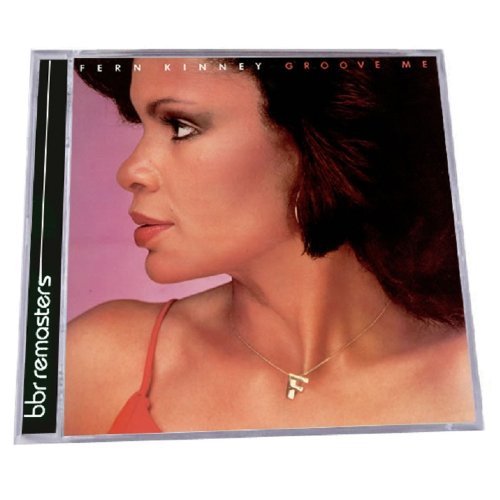
THE ORIGINAL MASTERS-DISCO VOLUME 10.
THE ORIGINAL MASTERS-DISCO VOLUME 10.
Often, when it comes to a successful compilations series, record companies are loathe to kill what has become a musical golden goose. You can see their point. After all, the music industry is not only going through the toughest time in its history. So any album that’s commercially successful and profitable is to be welcomed. Sadly, however, record companies must face up to reality. Always, there comes a time when a compilation series has to end. Sadly, it almost becomes unavoidable. All too often, it becomes the equivalent to a musical mercy killing. Afterwards, everyone connected with the compilation, collectively breathes a sigh of relief. They knew it had to happen, it was inevitable, they watched the following scenario unfold before their eyes.
Usually, what has happens is, that after several critically acclaimed and commercially successful volumes, the quality of music diminishes. With each volume, the music gets worse. Tracks start to appear on compilations that would’ve never gotten near the early volumes. As a result, sales fall and the memories of the compilation’s heyday are just a distant memory. For compilers everywhere, they dread this happening. The thing is, there’s no set number of compilations after which, the decision to kill the musical golden goose should be contemplated. Some compilations last three of four volumes, others get into double-figures. Indeed, The Original Masters-Disco Volume 10 has just celebrated getting into double figures. The last two volumes lived up to the quality of the early volumes. Is this the case with The Original Masters-Disco Volume 10, or is the series beginning to show its age? That’s what I’ll tell you, when I tell you about the twelve tracks on Milestone Records’ The Original Masters-Disco Volume 10.
The first track on The Original Masters-Disco Volume 10 is Travis Biggs’ Tibetian Serenity. This is a track from Travis 1979 album Solar Funk, on Source Records. Given this is a disco compilation, it’s a captivating way to open the album. Understated and meandering, a noodling slice of floaty jazz-funk has you spellbound for five minutes,
Miami were a soul, funk and disco band who released four albums for Drive, a subsidiary of Henry Stone’s T.K. Records. Their sophomore album was 1976s Notorious Miami, which featured Kill That Roach. It’s a fusion of soul and funk, with the lushest of swirling strings an added bonus. Quite simply, this is something of a hidden gem.
Skyy’s First Time Around is one of the big hitters on The Original Masters-Disco Volume 10. This was track from Skyy’s debut album Skyy. It was the first of seven albums Skyy released between 1979 and 1984. Since then, this disco classic has become synonymous with Skyy.
One thing you certainly can’t accuse the compiler of The Original Masters-Disco Volume 10 of, is being predictable. Quite the opposite. They’ve unearthed Yambu’s 1975 Afro-Cuban disco single Sunny. Like their debut album Yambu, it was released on Montuno Records in 1975. This was the first of three albums the Yambu released. Soulful, funky and filled with hooks, this is a slice of musical sunshine, which will brighten anyone’s life.
In 1977, the Fantastic Four released their fourth album I Got To Have Your Love on Westbound Records. This was their second album to be released on Westbound. Released as a single, was the title-track I Got To Have Your Love. It was remixed by Tom Moulton, the Godfather of the remix and twelve-inch single. Soulful and dance-floor friendly, this string-laden disco classic is all this and more.
Sometimes, you just need to look at an album cover to realize that it’s going to be something special. This is the case with Captain Sky’s 1978 debut album The Adventures Of Captain Sky. It’s that wonderfully over-the-top, almost surreal, P-Funk style cover. Thankfully, the music matches the quality of the album cover. One of the highlights of the album was the twelve-minute epic Super Sporm. ironically, it’s misspelt on The Original Masters-Disco Volume 10 as Super Sperm. That is quite a Freudian slip.
One of the great innovators of Philly Soul, then disco, was Vince Montana Jr. He was a founder member of M.F.S.B. and then founded The Salsoul Orchestra. Ooh I Love It (Love Break) was a track from The Salsoul Orchestra’s eponymous debut album. Then after Vince left Salsoul Records, he revisited Ooh I Love It (Love Break) with the Vince Montana Orchestra. Like the original version, Vince did what he did so well, and that’s innovate musically.
AKB was a collaboration between arranger and producer Andy Khan and Philly DJ Kurt Borusiewicz. They cowrote Karen Young’s massive 1978 hit Hot Shot. A year later, they were back with AKB’s debut album Rhythmic Feet, released on Robert Stigwood’s RSO Records. Stand Up Sit Down gave AKB their one and only hit. Mind you, if you’re only going to have one hit, make it one as good as this.
Dinosaur’s Kiss Me Again was written and produced by Arthur Russell and Nicky Siano. Released in 1978 and remixed by Jimmy Simpson, on Sire Records, this is one of the poorest tracks on The Original Masters-Disco Volume 10. Regardless of the quality of personnel involved in the project, this is a disappointing inclusion.
Trax was a collaboration between Pete Bellotte and Keith Forsey. They released two albums on Polydor. The first was 1977s Watch Out, with Dancing In The Street Following in 1978. Trax was a track from Dancing In The Street. This pulsating, percussive filled track more than makes up for the previous track. Disco, funk and soul combine with Latin music, resulting in five action-packed minutes of music.
Probably the best known track on The Original Masters-Disco Volume 10 is K-Jee. Why I hear you ask? Well, it featured on the fifteen-million selling Saturday Night Fever Soundtrack. The original version on The Saturday Night Fever Soundtrack was by M.F.S.B. This version is by David Shire. He and Bill Oakes had a trio of tracks on the Saturday Night Fever Soundtrack. They were Manhattan Skyline, Night On Disco Mountain and Salsation. Here, he gives an M.F.S.B. classic a makeover, bringing new life and meaning into a slice of seventies Philly Soul.
I always thing that whether it’s a compilation or album, make the last track one of the best. It’s a case of leave the listener wanting more. Sadly, that’s not the case on The Original Masters-Disco Volume 10. Certainly not when the final track is Disco Tex and The Sexolettes’ Get Dancin.’ This is a track from their 1975 debut album Disco Tex and The Sexolettes Review. Sadly, this derivative track is what gave disco a bad name. There’s nothing good I can say about the track, except it only lasts four minutes. That however, is only a small crumb of comfort.
Having listened to The Original Masters-Disco Volume 10, I can say that Milestone Records have reached this milestone with a compilation of quality music. Dance-floor friendly, soulful, funky and laden with subtle, and not so subtle hooks, familiar tracks and hidden gems sit side-by-side. Only two tracks disappoint, Dinosaur’s Kiss Me Again and the dreadful Disco Tex and The Sexolettes’ Get Dancin. Out of the twelve tracks, ten work really well. The other two, well it’s a matter of taste.
My one gripe is the lack of proper sleeve-notes. That won’t bother many people. However, for some people, myself included, knowing who wrote and produced a track and for what label is a necessity. Instead, when you open up the booklet that comes with the CD, all you find are two empty pages. This was the case with The Original Masters-Disco Volume 8 and 9. Small details matter to people. What would really have made this compilation even better, was some background to each of the tracks. Overall though, the standard of music on The Original Masters-Disco Volume 10 surpasses that of The Original Masters-Disco Volume 9. Somehow, the compilers continue to unearth several underrated slices of disco, including some glistening hidden disco gems. For that, I commend them, and look forward to the next installment in this long and successful compilation series. Until then, I’ll enjoy most of The Original Masters-Disco Volume 10. Standout Tracks: Travis Biggs Tibetan Serenity, Skyy First Time Around, Yambu Sunny and Vince Montana Orchestra Ooh I Love It (Love Break).
THE ORIGINAL MASTERS-DISCO VOLUME 10.

DEVIL’S JUMP: INDIE LABEL BLUES 1946-1957.
DEVIL’S JUMP: INDIE LABEL BLUES 1946-1957.
The latest box set from British reissue label JSP is Devil’s Jump: Indie Label Blues 1947-1957. Compiled by Neil Slaven, and released on 11th March 2013, Devil’s Jump: Indie Label Blues 1947-1597 is a four-CD box set which focuses on the blues music released by King Records, and its sister label Queen, during the eleven year period between 1946 and 1957. Now, when King Records was founded, it wasn’t a label most people would associate with blues music.
When Syd Nathan founded King Records in Cincinnati, Ohio 1943, it was to release rockabilly, western swing, bluegrass and country music. Then in 1945, Syd Nathan founded Queen Records. After that, King and Queen Records started releasing R&B and blues music. This included releases by John Lee Hooker, Memphis Slim, Lee Brown, Jimmie Gordon and Johnny Temple. While these releases were commercially successful, an artist Syd Nathan signed to his newly formed Federal Records in 1950, would prove to be a game-changer.
Syd Nathan and Ralph Bass launched Federal Records in 1950. Their first signing was James Brown. He would prove to be their most successful signing. Little did Syd or Ralph realize just how influential and successful James Brown would be. Indeed, the success James Brown would enjoy, would secure King and Queen Records’ futures. It would also allow Syd Nathan to expand his burgeoning musical empire.
With James Brown’s career on the rise, Syd Nathan decided to launch further labels. So, in 1960, Syd and Henry Glover, who was then a veteran of King Records, launched two new labels. They were Deluxe Records and Bethlehem Records. For the next eight years, Deluxe and Bethlehem Records roster grew. Like Syd Nathan’s other labels, they continued to enjoy commercial success throughout the sixties. Sadly, in 1968 Syd Nathan passed away and Syd’s musical empire was sold. However, during the previous twenty-five years, since Syd founded King Records, he’d played an important part in music.
Syd Nathan was a musical pioneer, who championed many different musical genres, including rockabilly, western swing, bluegrass and country music. Another musical genre Syd Nathan was passionate about, was blues music. On Devil’s Jump: Indie Label Blues 1947-1957, this four-CD box set features over 100 tracks released on King and Queen Records. Twenty of these tracks have never previously been released before. So for blues’ completists, Devil’s Jump: Indie Label Blues 1947-1957 is a must-have compilation. For anyone looking for an introduction to blues music, then Devil’s Jump: Indie Label Blues 1947-1957 is a good starting point. After all, there’s tracks from everyone from John Lee Hooker, Memphis Slim, Lee Brown, Jimmie Gordon, Johnny Temple and many, many more, which I’ll tell you about.
Disc One of Devil’s Jump: Indie Label Blues 1947-1957 features twenty-five tracks. This includes a combination of familiar faces and some lesser known artists. Similarly, the music ranges from deep blues right through to country blues. Among the bigger names on Disc One are John Lee Hooker, Memphis Slim and the country blues of Jimmie Gordon, Smokey Hogg, Country Paul and Eddie Kirkham. Many of these artists feature several times. For example Lee Brown features twice and Smokey Hogg three times.
Now given the age of the recordings, many of the tracks have a raw, almost primitive sound. That just adds to the emotion and potency of the music. A proof in point is several of the John Lee Hooker tracks on Devil’s Jump: Indie Label Blues 1947-1957. They were recorded in the back of a record shop. While there’s a rawness to the music, care has been taken with the sources. As a result, the sound quality is much better than many other blues compilations I’ve come across.
A number of the artists that featured on Disc One of Devil’s Jump: Indie Label Blues 1947-1957, feature heavily on Disc Two. Compiler Neil Slaven seems a huge fan of John Lee Hooker, including a further four tracks on Disc Two. So too does Memphis Slim. There’s also welcome returns from Jimmie Gordon, Eddie Kirkland, Smokey Hogg and Country Paul. New names include Robert Henry, Eddie Burns and Ralph Willis. Like Disc One, Disc Two is representative of King and Queen’s roster during the eleven year period between 1946 and 1957. Whether you’re a veteran of blues compilations, or a relative newcomer, there’s plenty of familiar and names on Disc Two of Devil’s Jump: Indie Label Blues 1947-1957. Similarly, different sub-genres are covered, resulting in an eclectic selection of twenty-five tracks.
Just like the two previous discs, many of the same artists feature on Disc Three of Devil’s Jump: Indie Label Blues 1947-1957. This includes unsurprisingly, John Lee Hooker, plus two of my personal favorites Memphis Slim and the country blues’ sound of Jimmy Gordon. For fans of country blues music, some of the best cuts on Disc Three come courtesy of Smokey Hogg and Country Paul. A welcome addition is more music from Ralph Willis, plus newcomers Johnny Wright, Walter Mitchell and Robert Henry. On Disc Three, compiler Neil Slaven has managed to combine a selection of familiar faces and less well-known names. This results in twenty-five further compelling, captivating and potent blues cuts from King and Queen Records.
Taking Devil’s Jump: Indie Label Blues 1947-1957 up to the magic figure of 100 tracks in Disc Four. Again, we follow a familiar pattern of combining familiar faces and newcomers. Big-hitters included are John Lee Hooker and Memphis Slim. For fans of country blues, then there’s Jimmie Gordon, Eddie Kirkland, Smokey Hogg and Country Paul. Newcomers include three tracks by Kid Thomas and Johnny Temple. Detroit Count and Johnny Wright both make welcome returns, as this trip through the back-catalogue of King and Queen Records draws to a close.
Devil’s Jump: Indie Label Blues 1947-1957 is a musical journey that’s four discs and 100 tracks long. Lasting an eleven year period between 1946 and 1957, there are contributions from some giants of blues music and some less familiar faces. This means that Devil’s Jump: Indie Label Blues 1947-1957 will appeal to veterans of many a blues compilation, plus relative newcomers to blues music. For blues veterans, Devil’s Jump: Indie Label Blues 1947-1957’s U.S.P. is the twenty unreleased tracks. For completists, this makes Devil’s Jump: Indie Label Blues 1947-1957 an essential purchase.
What makes Devil’s Jump: Indie Label Blues 1947-1957 an essential purchase is emotion and potency of the music. That many of the tracks have a raw, almost primitive sound just adds to this. It makes Devil’s Jump: Indie Label Blues 1947-1957 one of the most captivating and compelling box sets of 2013 so far. In many ways, Devil’s Jump: Indie Label Blues 1947-1957 is just a tantalizing taster of the hidden delights of King and Queen Records’ rich and illustrious back-catalogue. Given how good Devil’s Jump: Indie Label Blues 1947-1957 is, I just hope that JSP are currently working on Volume 2. We can but hope and dream.
DEVIL’S JUMP: INDIE LABEL BLUES 1946-1957.

 dereksmusicblog
 dereksmusicblog