SLICK-SLICK.
SLICK-SLICK.
The best way to describe Slick, who released their eponymous debut album Slick in 1979, on Fantasty WMOT Records, are a disco supergroup. Slick were a collaboration between legendary Philly backing vocalists The Sweethearts of Sigma, members of Ingram and Fat Larry’s Band. Between them, the members of Slick were no strangers to disco and funk, which they fused on their two albums Slick and 1980s Go For It. Indeed, Slick comprised vastly experienced musicians and backing vocalists. Given this all-star lineup, it’s no surprise that Slick’s fusion of disco and funk proved both commercially successful and popular, as you’ll discover when I tell you about Slick’s debut album Slick.
Slick was the latest in a long line of disco collaborations. It’s no exaggeration to call Slick a supergroup, with members of Fat Larry’s Band and Ingram joining The Sweethearts of Sigma, there was no shortage of talented musicians and vocalists.
Ingram were one of many groups that were formed in Philly during the seventies. Previously, Ingram previously been known as The Ingram Family, which was fitting as they were a family group. Before that, The Ingram Family had been called The Ecstasies. This family group, and had released two albums, 1976s The Ingram Kingdom and 1977s That’s All. Billy, Jimmy, Timmy, John and Norman Ingram were all members of Slick. So too, was Barbara Ingram.
Barbara Ingram had established her reputation with Evette Benton and Carla Benson. They were known as The Sweethearts of Sigma, Philly’s legendary backing vocals. The Sweethearts of Sigma had worked most of the Philly Soul sessions of the seventies. Whether it was Billy Paul, The O’Jays, The Stylistics, Blue Magic, Major Harris or Barbara Mason, The Sweethearts of Sigma’s inimitable backing vocals featured on these albums. Then in 1976, The Sweethearts of Sigma had become the voice of The Salsoul Orchestra. Completing the lineup of Slick, were three members of Fat Larry’s band.
Three members of Fat Larry’s Band featured in Slick. They were bassist Jimmy LaBes, guitarist Tony Middleton and percussionist Larry James. Fat Larry’s Band had enjoyed commercial success, releasing four albums between 1976 and 1980. Their debut was 1976s Feel It, with 1977s Off The Wall, 1978s Spacin’ Out and Lookin’ For Love released in 1979. Now they were joining forces with The Sweethearts of Sigma and members of Ingram. The result was Slick’s debut album Slick.
Five tracks became Slick. Larry and Doris James penned Space Bass with Len Barry. Billy and Jimmy Ingram penned Feelin’ Good, while Butch Ingram wrote Put Your Pants On. Butch and Len Barry penned The Whole World’s Dancin’ and Sexy Cream with Doris James and Len Barry. These five tracks became Slick and were recorded at Philly’s Alpha International Studios.
At Philly’s Alpha International Studios, Slick recorded the five tracks that became Slick. The rhythm section featured drummer John Ingram, bassist Jimmy Williams and Jimmy LaBes, plus Tony Middleton, Ronnie James and Billy Ingram. Jimmy Ingram played keyboards, synths and flute, while Larry James added percussion. Timmy Ingram contributed congas, percussion, timbales, trumpet and alto saxophone, John Mimms played trombone and Sylvester Middleton trumpet. The Sweethearts of Sigma sang backing vocals, while Barbara Ingram and Doris James sang lead vocals. Once Slick was completed, it was released in 1979.
1979 wasn’t the best year to release a disco album. Slick fared well in clubs, but failed to chart. Two singles were released, with Space Bass reaching number sixteen in the UK. Sexy Cream was then banned from UK radio. This didn’t help sales of the single or album. What didn’t help sales of Slick was disco fall in popularity. Maybe if Slick had been released a year earlier, it would’ve fared better. Instead, Slick remains a hidden gem in disco’s history, as you’ll realize when I tell you about the music on Slick.
Space Bass, a seven-minute epic opens Slick. Thunderous drums, a funk-laden bass, congas and percussion combine before guitars chime and strings dance in appreciation. They signal the arrival of The Sweethearts of Sigma’s sweet, tender harmonies. Their tenderness and subtly are a contrast to the rest of the arrangement which is pulsating, pounding and dramatic. Synths sweep in, adding a space-age sound to the arrangement. By now, the drama has grown, as Funk, disco and Latin music combine seamlessly. Musical genres unite, as the track takes on an experimental, innovative sound. It’s as if Slick are preparing for disco’s demise and planning for music post-disco. In doing so, they look to Europe for inspiration, mixing technology and a Euro Disco influence to their innovative fusion of disco, funk and Latin percussion.
Barbara Ingram takes charge of lead vocals on Feelin’ Good, which closes Side One of Slick. Again, the pounding beat has a Euro Disco influence. Melancholy woodwind, rasping horns and bubbling synths combine, before The Sweethearts of Sigma add their joyous harmonies. With a jazz piano and slapped bass for company, Barbara steps forward and delivers a confident, assured vocal. Carla and Evette add harmonies and handclaps, their sweet, jazzy vocals the perfect foil. When her vocal drops out, a percussion and a bass bound across the arrangement. Spurred on, Barbara delivers a strident, diva-esque vocal. She unleashes a powerful, heartfelt, soaring vocal. Harmonies soulfully, soar, while the arrangement pounds along. Jazz, funk, disco and Euro Disco are combined, as Barbara and the other Sweethearts of Sigma deliver a vocal and harmonic masterclass, on what is, the highlight of Slick.
Sexy Cream, which opens Side Two of Slick, was the second single from Slick, but was banned from UK radio in 1979. The rhythm section, buzzing synths and percussion combine elements of funk and Euro Disco with Latin percussion. Soon, strings dance centre-stage, as The Sweethearts of Sigma add punchy, sassy harmonies. Doris James delivers a sensual, teasing vocal. Meanwhile, horns growl and kick, strings sweep and swirl and the rhythm section create a pounding, pulsating beat. The thunderous bass is at the heart of the action, while Doris moans and groans her way through the track. Equally sassy and sensual harmonies prove the perfect foil for Doris, as funk, Euro Disco and soulful harmonies combine to create a timeless dance-floor track.
Put Your Pants On was written by Butch Ingram and produced by Billy Kennedy. Handclaps and tough, funky keyboards open the arrangement, before sassy, harmonies from The Sweethearts of Sigma enter. They’re joined by a pounding bass and growling horns as a hypnotic, uber funky track unfolds. A myriad of Latin percussion and then the best bass line on Slick unfolds. Sometimes, the track reminds me of Rolls Royce’s Car Wash or Donna Summer’s Bad Girls. Later, punchy harmonies, braying horns, handclaps and percussion join cascading strings, as a captivating, hypnotic and Latin-tinged track unfolds.
Closing Slick is The Whole World’s Dancin.’ Thunderous drums open a track which is a fusion of musical styles and influences. It’s a bit like Voyage’s Fly Away. While Voyage took a whole album to do this, Slick manage the same thing in five minutes. Listen carefully, and a melting pot of musical influences unfolds. Whether it’s Latin, Caribbean, Eastern European, African or Asian, all these influences are within this musical melting pot. To that, add disco, Euro Disco, funk and soul. Uplifting, joyous and infectiously catchy, never mind around the world in eighty days, Slick’s journey is quicker, joyous and laden with hooks.
Given that Slick were an all-star band, made up of members of Fat Larry’s Band and Ingram, with The Sweethearts of Sigma adding harmonies, it’s no surprise that Slick was such a good album. Unlike many albums released at this time, Slick has stood the test of time. Indeed, it’s no exaggeration to say that Slick is a timeless, hidden gem of an album. Slick was no ordinary disco album. Quite the opposite. Instead, Slick is an album that looks to the future.
It’s as if Slick are preparing for disco’s demise and planning for music post-disco. In doing so, they look to Europe for inspiration, mixing technology and a Euro Disco influence to their innovative fusion of disco, funk, Philly Soul, Euro Disco and Latin percussion. In doing so, they prolonged their career, proving there was life after disco’s demise. Like many other disco albums, Slick was a fusion of musical genres.
The crowning glory are The Sweethearts of Sigma’s harmonies. Their inimitable harmonies are the finishing touch to the album. While the band are tight and multi-talented, The Sweethearts of Sigma lifted Slick to the next level. From the opening bars of Space Bass right through to the closing notes of The Whole World’s Dancin,’ Slick have your attention. They take you an a journey through musical genres and influences. Hooks are in plentiful supply, as Slick’s all-star lineup of musicians and vocalists make their memorable debut on Slick, a real hidden gem of an album, where musical influences and genres are fused to create a hidden disco gem. Standout Tracks: Space Bass, Feelin’ Good, Sexy Cream and Put Your Pants On.
SLICK-SLICK.

MICHAELA MCCLAIN-THE STORY SO FAR.
MICHAELA MCCLAIN-THE STORY SO FAR.
Recently, I came across one of the most talented singer, songwriters and musicians I’ve heard in a long time. Her name is Michaela McClain, who released her debut single Needed More in March 2012, with her sophomore single Ur Love following later in March 2012. After that, Michaela headed to Dallas, Texas, in April 2012, where she recorded her first E.P. The Dallas Sessions, which feature seven original songs, written by Michaela. Having finished The Dallas Sessions, Michaela and her tight, talented band, were honing their live show. Whilst playing concerts each month, Michaela and her band were working on her second E.P. The Manhattan Sessions, which was released in December 2012. Before I tell you about Michaela McClain’s music, I’ll tell you more about Michaela and her career so far.
Ever since Michaela McClain has been four, she’s been singing. It’s as if she was born to sing. She and her five sisters, of which Michaela is the youngest, all love music. Their love of music stems from watching their father play guitar. Since then, music has been a constant in Michaela’s life. She has an eclectic taste in music, enjoying the music of Ella Fitzgerald, Carlos Joim, Jimi Hendrix and The Indigo Girls just as much as bossa nova, soulful jazz or vocal harmonies. While music provided a soundtrack to Michaela’s life, learning to play guitar was the first step in her musical career.
Having learnt to play three chords on her guitar, Michaela wrote her first song when she was just fourteen. For Michaela, this opened up a new world for her. She was able to express how she felt about the world and life. What she saw around her and what was going on in her life inspired her to write songs. It allowed her to express her feelings, and was what she enjoyed doing most. So, it’s no surprise that Michaela McClain would form a band.
It was in college that Michaela finally decided to form her own band. She’d been singing for a few years, but the next step was putting a band together. The first member of her band was the talented, multi-instrumentalist Meredith Foreman. Meredith plays drums, flute, saxophone and sings backing vocals. Next to join was bassist Raul Huaman, who temporarily, doubles up as guitarist. Raul is an MSU alum, and brings to the band a jazz and Peruvian influence. With her band in place, Meredith began playing live. Having honed their live sound, and established a set-list of songs written by Michaela, the next step was recording her debut single.
Michaela recorded and then released her debut single Needed More in March 2012. Her sophomore single Ur Love, was released later in March 2012. Then, just a month later, Michaela and her band headed on a cross country road trip. Their destination was Dallas, Texas.
At Michaela’s uncle’s studio in Texas, they recorded seven songs written by Michaela. These seven tracks became The Dallas Sessions, which were released in July 2012. Whilst in Dallas, Michaela and her band were honing their live sound and playing live. At the same time, Michaela was working on new songs. This meant another road trip.
From Dallas, they headed to New York. In New York, they recorded three new songs, and gave Somber Colors a makeover. These four new songs became The Manhattan Sessions, which were released in December 2012. Since then, Michaela and her band have been regularly performing live. Now Michaela has returned to teaching music, whilst waiting for her commercial breakthrough which hopefully, will come soon. Listening to her music, which I’ll tell now tell you about, that won’t be long.
Needed More was Michaela McClain’s debut single released, back in March 2012. It swings into life, with just Michaela accompanied by a tambourine. Her vocal is jazz-tinged, reminiscent of Ella Fitzgerald. When a piano enters, it’s the perfect accompaniment for Michaela’s tender, heartfelt vocal. Tinged with regret and hurt, backing vocalists accompany her, as she delivers the lyrics about a walking out on a relationship. Filled with meaning and emotion, it’s as if this song as personal. Later, Raul adds a searing, crystalline guitar solo. Then when Michaela’s rueful vocal returns, it’s softer, soaring soulfully and sweetly. It’s filled with emotion and maybe, regrets.
Ur Luv was Michaela’s second single, and has a very different sound. It’s a much more understated track. There’s a folk influence, with just an acoustic guitar strummed confidenly accompanying Michaela. Her vocal is tender, filled with sincerity and beauty. Although just short of two minutes long, they’re two beautiful and memorable minutes, and being in love and wanting to spend time with someone.
Having released two singles in March 2012, Michaela and her band embarked on a road trip to Dallas. In Dallas, seven songs Michaela wrote were recorded, then in July 2012, were released as The Dallas Sessions.
THE DALLAS SESSIONS.
When I first heard More Like Love, I heard similarities with Scottish singer-songwriter Carol Laula. Both have charismatic, voices and are versatile vocalists. Here, Michaela and her tight band mix elements of folk, jazz and rock. The upbeat, jaunty arrangement features piano, bass and drums. They set the scene for Michaela as her vocal grows in power and joy. Cooing harmonies sweep in, enveloping Michaela’s vocal, as she delivers the song with a swing, whilst bringing life and meaning to the lyrics.
Somber Colors is breakup song, where Michaela unleashes an urgent, punchy and angry vocal. The lyrics are delivered stridently and powerfully, showing another side to Michaela. Whereas other tracks were acoustic, Michaela and her band plug in and and kick loose. They demonstrate their versatility on this rockier track. Stabs of searing guitar reflect the frustration in Michaela’s vocal, while drums reflect her disappointment in her ex-boyfriend. Every step of the way, the band match Michaela for sheer passion. Raul unleashes another soaring solo, while guitars and drums accompany Michaela. Later, her voice a mixture of anger, frustration and disappointment, she sings: you had, your chance, to prove your love to me.” Not only does this track show how versatile Michaela is, but reinforces her talent as a singer-songwriter.
Fireworks sees a slow, moody bass, reverberating guitar and violin combine, setting the scene for Michaela. As the pensive, wistful arrangement unfolds, Michaela’s emotive, deliberate and needy vocal enters. She delivers each word with feeling and longing. Guitar chime, the bass prowls and backing vocalists sweep in. They unite as one with Michaela’s ethereal, tender vocal.
No Amount is an understated, acoustic song. It allows Michaela’s heartbroken vocal to take centre-stage. Her vocal becomes the focus of your attention as she sings “no amount of cigarettes, no amount of beer, no amount of tears, can bring you back here.” Her voice is wistful, filled with sadness and longing. Adding to the melancholy, wistful sound, are the acoustic guitar and piano that accompany Michaela. They play their part in a heartbreakingly sad, but very beautiful song, where Michaela reminds me of Joni Mitchell and Laura Nyro.
He Loves Me, is a love song where a combination of musical influences unite. There’s elements of folk, country and sometimes, jazz. Again, the acoustic arrangement has an understated sound. Michaela’s vocal is confident and joyous, sounding like someone whose deeply in love. Just An acoustic guitar, bass and keyboards accompany Michaela. Like Needed More, Michaela makes the song swing, injecting some of her hope and happiness into it. The result is a joyous, uplifting, love song with some great lyrics.
Sun On My Skin demonstrates how a talented songwriter can find beauty in even the most everyday, mundane thing. Perceptively, Michaela manages to make something everyone takes for granted into something quite beautiful. A shuffling bossa nova beat provides the backdrop for Michaela’s vocal. They’re joined by a strummed acoustic guitar, percussion and keyboards, which provide a subtle accompaniment for Michaela’s ethereal vocal. Gratitude, joy and wonderment fill her voice, as she delivers descriptive, perceptive and evocative describe the lyrics. She paints pictures before your eyes, while her delivery is heartfelt and tender, but filled with sincerity.
Too Bad sees Michaela and her band return to their rocky side. The rhythm section drive the arrangement along, before it’s all change, as the arrangement almost pauses. Then a piano and handclaps accompany Michaela’s punchy, vocal, while guitar fills and pounding drums enter. It seems the band are gaining their earlier momentum, and enjoying rocking out. By now, Michaela is scatting her way through the track, handclaps and harmonies punctuating the arrangement. Then when her vocal drops out, the guitar takes center-stage. When Michaela returns, it’s as if she’s been reenergized and finding her inner rock chick, kicks loose, to close The Dallas Sessions on rock-tinged high.
THE MANHATTAN SESSIONS.
Cold Hearts is a piano lead track, with a jaunty arrangement. Here, Micahaela lays bare her soul, delivering a hurt-filled vocal that’ss filled with emotion and pain. It’s another relationship song, where Michaela’s ethereal, heartbroken vocal is filled with heartache and hurt, at what seems like the inevitable end of her relationship. Cymbals crash adding to the drama, while a crystalline guitar wanders in and out of the arrangement. Keyboards provide the jaunty backdrop for the arrangement, while backing vocalists sweep in. It’s as if they empathize and sympathise with Michaela and her plight, as she lays bare her hurt and heartache for all to hear.
Better Than Fine has some of the best lyrics The Manhattan Session. Guitars and slow, deliberate drums accompany Michaela’s deliberate, frustrated vocal. She’s frustrated and angry at living with someone who has a destructive, addictive personality. Her delivery of the lyrics are like a woman who just can’t take any more. Regardless of what she does or has done, the situation never improves. Adding to the drama are an alto saxophone and searing, riffing guitar. Eventually, it’s as if Michaela is spent, exhausted physically and mentally at the situation and torment she’s lived with. Now having told her partner how she feels, this proves overwhelming and cathartic.
Singin’ is another track with an understated, acoustic arrangement This really suits the the lyrics and Michaela’s delivery of them. She delivers them with equal parts passion, emotion and joy. Accompanying her are just a confidently strummed acoustic guitar and percussion. When her vocal grows in power, Michaela’s voice veers between a warmth and ethereal quality. Backing vocalists accompany her, as she scats her way through the track. Her vocal grows in power and passion and conviction, as handclaps and backing vocalists accompany her, as this infectiously catchy, hook-laden tracks comes to a rousing close.
The other track on The Manhattan Sessions was Somber Colors, which featured on The Dallas Sessions. It’s delivered with the same emotion, frustration and anger as on The Dallas Sessions. Like other tracks, Somber Colors features some powerful lyrics, with a strong narrative. This demonstrates just how talented and songwriter and storyteller Michaela is. She’s a storyteller who can paint vivid pictures with music. Whether it’s songs about relationships, full of heartache and hurt, or songs about being in love Michaela breathes life and meaning into them. She sounds as if she’s lived and survived these songs. Then on Sun On My Skin, Michaela finds beauty and inspiration in a sunny day. Having written such meaningful, intelligent and poignant lyrics, Michaela and her band bring the lyrics to life.
On her two singles, The Dallas Sessions and then The Manhattan Session, Michaela and her band fuse musical influences and genres. Folk, jazz, country, rock and bossa nova can all be heard in Michaela’s music. Listen carefully, and Michaela’s voice and delivery is similar to Joni Mitchell, Laura Nyro, Carol Laula and Ella Fitzgerald. With a tight, multitalented band accompanying Michaela, seamlessly she can switch between folk, jazz, country and sometimes, when Michaela and her band kick loose, she finds her inner rock chic. Regardless of what style of music, Michaela McClain and her band play with passion, panache and style.
Listening to Michaela McClain’s music was refreshing for me. This is music old school. Indeed, nowadays when many independent musicians work with computer programs like Logic, Pro-Tools, Reason and Ableton Live, using loops rather musicians, Michaela has reversed this trend. Instead, Michaela headed to a recording studio with her band of tight, talented musicians. The result was music just like Joni Mitchell and Laura Nyro would produce. For me, this has been a really welcome departure. Instead of the usual Nu-Soul warbler, using a copy of Logic and loops, Michaela McClain’s music is old-school music, from an old-school singer, songwriter and musician. Michaela writes intelligent music, music that’s filled with emotion, heartbreak and joy. You won’t hear Michaela deliver anything mundane, trite or vacuous. Instead, Michaella writes intelligent lyrics, which vividly paint pictures. Michaela McClain has restored my faith in music. Music is in safe hands, with singers like Michaela McClain. Quite simply, they’re the future of music. That’s why, in the future, people will hear much, much more of Michaela McClain. Quite simply, Michaela McClain has a big future ahead of her in music. It won’t be long until record companies start to take an interest in Michaela McClain and her music. Her two singles, plus the music on The Dallas Sessions and The Manhattan Sessions, prove that the multitalented singer, songwriter and musician Michaela McClain has a big future ahead of her.
MICHAELA MCCLAIN-THE STORY SO FAR.

BEN E. KING-I HAD A LOVE.
BEN E. KING-I HAD A LOVE.
In 1975, Ben E. King had resigned to Atlantic Records. His first album for Atlantic Records was Supernatural, which was produced by Bert De Coteaux and Tony Silvester. Supernatural had proved a commercial success, reaching number thirty-nine in the US Billboard 200 and number thirteen in the US R&B Charts. While this had rejuvenated Ben’s career. However, music was changing, and changing quickly. While Bert De Coteaux and Tony Silvester were highly regarded and successful producers, it was decided that for the followup to Supernatural, 1976s I Had A Love, production would be spilt. Bert De Coteaux and Tony Silvester would produce four of the nine tracks. The other five tracks would be produced by one of the most successful and hottest producers of the time, Norman Harris.
By 1976, Norman Harris had established a career as a successful producer. Having worked with producers like Thom Bell and Gamble and Huff, Norman had a good grounding in production. He’d struck out on his own in the early seventies, and enjoyed commercial success and critical acclaim ever since. Previously, he’d been a member of M.F.S.B, Philadelphia International Records’ legendary house-band. Following a dispute with Gamble and Huff, Norman Harris and many of the founder members of M.F.S.B. had left Philadelphia International Records, becoming a member of The Salsoul Orchestra. At Salsoul, the Cayre brothers, who owned Salsoul, gave Norman his own label to run, Gold Mind Records. He ran Gold Mind from an office in Philly, bringing artists like First Choice, Double Exposure and Loleatta Holloway to Gold Mind Records. Still, Norman found time to produce other artists and would produce five tracks on I Had A Love. Would I Had A Love replicate the success of Supernatural?
After the success of Supernatural, Ben E. King was keen to build on its success. Since his days at Atco and later Atlantic, Ben’s career had stalled. He hadn’t replicated the success of the early sixties. It seemed musical fashions had overtaken Ben. So for I Had A Love, some of the best songwriters of the time contributed songs to I Had A Love. Among the songwriters contributing tracks to I Had A Love, wereAshford and Simpson. Ever since their Motown days, had established a reputation as talented songwriters and producers. Their contribution was the title-track I Had A Love. Sam Dees penned No Danger Ahead, and cowrote three other tracks. Fredrick Knight and Sam wrote I Betcha Didn’t Know That and Tower of Strength, while Sam and Clinton Moon penned Standing In The WIngs of Heartache. Patrick Grant and Gwen Guthrie contributed You’re Stepping On My Heart, while Everybody Plays The Fool was a Clark, Williams, Bailey composition. Norman Harris’ Philly friends wrote the other two tracks. Alan Felder and T.G. Conway cowrote Smooth Sailing and with Bruce Gray wrote We Got Love. These nine tracks became I Had A Love.
With two producers working on I Had A Love, this meant recording took place at different studios with different musicians. At Sigma Sound Studios, the musicians working with Norman Harris were former members of M.F.S.B. and now, members of The Salsoul Orchestra. Providing I Had A Love’s heartbeat, were the Baker, Harris, Young rhythm section. They were joined by Bobby “Electronic” Eli, percussionist Larry Washington and vibes virtuoso Vince Montana Jr, while Bruce Gray and T.G. Conway played keyboards. Strings and horns came courtesy of Don Renaldo. Providing backing vocals were The Sweethearts of Sigma, Barbara Ingram, Evette Benson and Carla Benson. Once I Had A Love was completed, it was released in 1976.
On the release of I Had A Love in 1976, rather than build on the success of Supernatural, it failed to chart. The Ashford and Simpson penned title-track I Had A Love was released in 1975, and reached number twenty-three in the US R&B Charts. When I Betcha Didn’t Know was released as a single, it failed to chart. That I Had A Love hadn’t charted wasn’t unusual. Ben E. King was no longer as popular. Indeed,1975s Supernatural had been Ben’s first album of the seventies to chart. It seemed Ben E. King’s music was no longer as fashionable. This was a long way since his time with The Drifters and the early years of his solo career. However, was the commercial failure of I Had A Love purely down to Ben E. King’s music no longer being as popular? That’s what I’ll tell you, when I tell you about I Had A Love.
The title-track I Had A Love opens I Had A Love. Produced by Norman Harris, the tempo is slow, with a real Philly Soul sound from the opening bars. A drum cracks, before a piano and Vince Montana Jr’s vibes combine. Then Earl Young’s drums dramatically signal the entrance of lush strings and The Sweethearts of Sigma’s cooing, sweeping, sweet harmonies. Having set the scene for Ben, he delivers a heartbroken vocal. Hurt, heartache and regret fill his voice. Baker, Harris, Young provide the heartbeat, harmonies and strings reflect the hurt in Ben’s vocal, while growling horns and pounding drums add drama. Together, this provides the perfect backdrop for Ben’s heartbroken, soul-baring vocal Magnus Opus.
I Betcha Didn’t Know is another Norman Harris production. He picks up, where he left off with the opening track. Baker, Harris, Young, percussion, rasping horns and cascading strings dramatically open the track. Ben’s vocal is powerful, filled with passion and joy. Providing the perfect foil are The Sweethearts of Sigma’s heartfelt, soaring harmonies. Meanwhile, Norman Harris lays down one of his trademark guitar lines, Vince Montana Jr’s adds vibes and Earl Young’s drums provide a thunderous, strident heartbeat. The horns which punctuate the arrangement at just the right time, have a Thom Bell influence. Ben and The Sweethearts of Sigma seem to drive each other to greater heights of emotion and soulfulness, as Ben rolls back the years, returning to his soulful best.
Smooth Sailing sees Norman Harris and Alan Felder who cowrote the track with T.G. Conway produce the track. Swathes of the lushest strings float in, quivering and shivering. Horns growl, hi-hats hiss and Baker, Harris, Young provide an understated heartbeat. Ben’s deliberate, emotive vocal grows in power, while tender harmonies and punchy, braying horns accompany him. The arrangement flows along, with percussion, piano and strings at its heart. Earl Young’s drums inject drama, as Ben’s vocal veers between tender and powerful, but is always impassioned and heartfelt.
Baker, Harris, Young produce No Danger Ahead which explodes joyously into life. They provide the pulsating, urgent heartbeat, as Philly Soul and funk combine. Ron Baker’s bass and Norman Harris’ guitar join growling horns and dancing strings. The Sweethearts of Sigma add sweet, cooing harmonies. All this seems to inspire Ben. His vocal is powerful, confident and assured. He literally struts his way through the arrangement. Horns blaze, strings swirl and woodwind get in on the act. With The Sweethearts of Sigma adding joyous, cascading harmonies. They’re the finishing touch, as Ben confidently and assuredly, soulfully struts his way through this Sam Dees song that closes Side One of I Had A Love.
Everybody Plays The Fool opens Side Two of I Had A Love. It’s the first of four Bert De Coteaux and Tony Silvester produced tracks. A piano, guitar, slow strings and gospel tinged harmonies combine, before Ben’s pensive, melancholy vocal enter. Straight away, you realize the production has a rawer sound. It lacks the polish of Side One, resulting in a good track failing to become a great track. You could argue, that given the gospel influence this is fitting. What are fitting are the gospel-tinged harmonies. Ben’s delivery is thoughtful, filled with emotion, which suits the track and the lyrics.
Standing In The WIngs of Heartache sees Ben and the band kick loose. From an understated opening, the rhythm section explode into life. They drive the arrangement along, fusing funk and soul. Drums pound, harmonies sweep in, soaring above the arrangement. Layers of strings sweep, while Ben’s vocal is a powerful vamp as his band fuse funk with soul.
We Got Love sees Norman Harris take charge of production duties. Straight away, there’s a much more polished sound. Baker, Harris, Young add a pulsating beat, as an uplifting, joyous track unfolds. Strings dance in appreciation and The Sweethearts of Sigma add tight, soulful harmonies. Ben seems to have found his sparkle, delivering the lyrics with power, passion and joy. Bobby “Electronic” Eli adds his trademark funky guitar, Vince Montana Jr adds vibes and Norman Harris adds a jazzy guitar solo. Strings dance, harmonies sweep in and and Ben and the band lock into a groove, where funk and Philly Soul unite seamlessly. This results in the best track on Side.
Tower of Strength was penned by Sam Dees and Fredrick Knight. It has a real Sam Dees sound. There are similarities in production to Everybody Plays The Fool. It’s the way the harmonies have a dramatic, soaring gospel sound. That’s no bad thing. This is a dramatic, soulful song with a gospel twist, where Sam literally rolls back the years. Helping him every step of the way are the harmonies. Swathes of strings, rasping horns and a dramatic, strident rhythm section, make this the best of the Bert De Coteaux and Tony Silvester productions.
You’re Stepping On My Heart (Tearing My World Apart) closes I Had A Love. After the drama of the previous track, this track has a much more understated sound. Ben’s vocal is tender, needy and filled with hurt. Just the rhythm section, growling horns and percussion combine before, a burst of drums signals the arrival of Ben’s vocal. Muted horns, subtle percussion and understated rhythm section are joined by melancholy horns as Ben lays bare his hurt and heartache for all to hear.
Listening to I Had A Love, it seems strange that production was split between Norman Harris and the production team of Bert De Coteaux and Tony Silvester? On Side One of I Had A Love, Norman Harris and his production partners rejuvenate Ben E. King. His music is given a Philly makeover. The four tracks on Side One of I Had A Love I Had A Love, are the best on the album. SIde Two, when the changeover in producer takes place, Ben’s vocals fall short of the quality on Side One. On Everybody Plays The Fool, the rawer sound stopping a good song becoming a great one. Similarly, on Standing In The WIngs of Heartache’s good as the production is, it falls short of the four tracks on Side One. Things improve on We Got Love, produced by Norman Harris, while Tower of Strength is the best of the four Bert De Coteaux and Tony Silvester productions. You’re Stepping On My Heart (Tearing My World Apart) brings I Had A Love to an understated, soul-baring close, as Ben E. King rolls back the years. I suppose, using two producers or production teams will always lead to comparisons.
The production team of Bert De Coteaux and Tony Silvester had a successful track record, and were talented producers. So too, did Norman Harman Harris. Indeed, since Norman Harris’ had struck out on his own as a producer, he’d enjoyed commercial success and critical acclaim with a variety of artists. He’d enjoyed commercial success with artists that included Major Harris, Blue Magic and First Choice. Ben E. King was the latest to enjoy a Philly Soul makeover from Norman and his Philly friends. While it’s a matter of opinion, I feel that it would’ve been best if Norman Harris produced all the tracks on I Had A Love. Norman seemed to get the best out of Ben E. King. Granted Bert and Tony had revitalized Ben’s career with Supernatural, but Ben E. King and Norman Harris seemed a dream team. WIth Norman Harris, came his colleagues in The Salsoul Orchestra and The Sweethearts of Sigma. The five tracks ons Ben E. King’s I Had A Love produced by Norman Harris and his Philly friends, are the highlights of the album. While I Had A Love is one of Ben E. King best albums of the seventies, it could’ve been an even better album, if Norman Harris had produced the whole album. Maybe then, Ben E. King’s second album for Atlantic Records I Had A Love, would’ve matched the commercial success of Supernatural? Standout Tracks: I Had A Love, I Betcha Didn’t Know, Smooth Sailing and No Danger Ahead.
BEN E. KING-I HAD A LOVE.

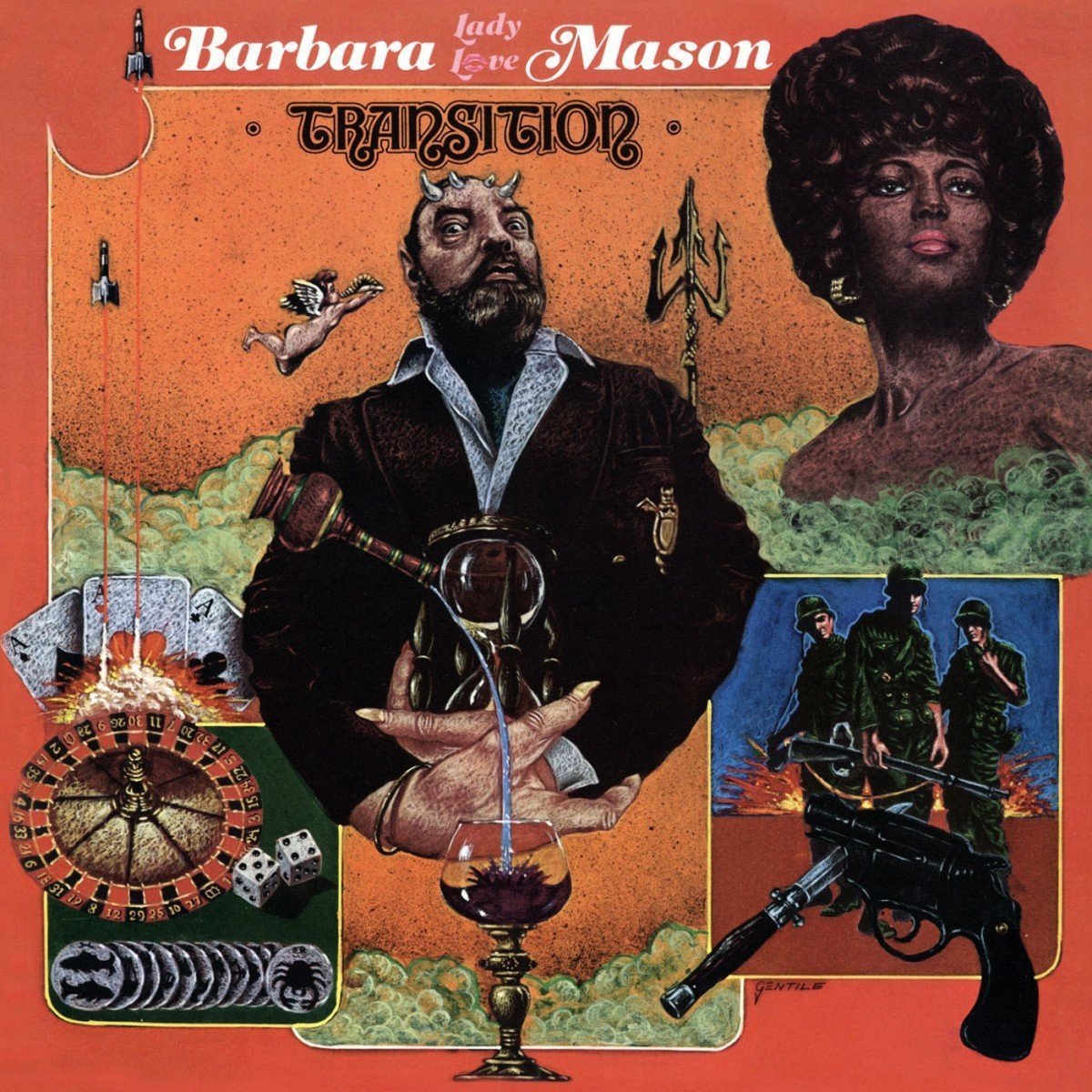
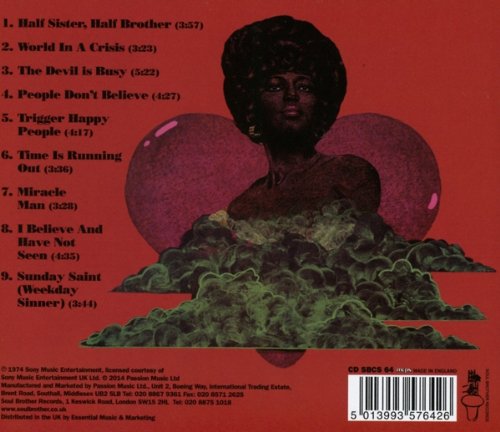
BARBARA MASON-TRANSITION.
BARBARA MASON-TRANSITION.
When Barbara Mason signed to Buddah Records in 1973, she was already an experienced artist. Indeed, Philly born Barbara, released her debut single Trouble Child in 1964, on Crusader Records. Then in 1965, aged just eighteen, Barbara enjoyed the biggest single of her career, the classic, Yes, I’m Ready, which reached number five in the US Billboard 100 and number two in the US R&B Charts. Later in 1965, Barbara released her debut album Yes, I’m Ready, on Arctic Records. It reached number 129 in the US Billboard 200. Her 1968 sophomore album Oh How It Hurts reached just number forty-two in the US R&B Charts. Having switched labels to National General, If You Knew Him released in 1970, failed to chart. Then in 1973, Barbara’s career received a boost, when she signed to Buddah Records, where she released four albums between 1973 and 1975.
1973s Give Me Your Love was Barbara Mason’s first album for Buddah Records. It saw Barbara hookup with M.F.S.B, Philadelphia International Records’ legendary house-band. They provided the backdrop for what was Barbara’s most successful album on Buddah Records. It reached number ninety-five in the US Billboard 200 and number seventeen in the US R&B Charts, and featured another classic track Bed and Board. A year later, and Barbara Mason returned with her second album for Buddah Records/
Lady Love followed in 1974. Again, M.F.S.B. accompanied Barbara, on an album that reached number twenty-nine in the US R&B Charts. This was slightly disappointing for Barbara. Maybe her third album for Buddah Records, 1974s Transition, would mark a change in fortune for Barbara Mason? Would that be the case, or would Transition mark a Transition in Barbara Mason’s career?
For what became Transition, Barbara wrote eight of the nine tracks. Just like her previous albums, Barbara’s lyrics were powerful, filled with social comment. The exception was Sunday Saint (Week Day Sinner), which Jerry Akines, Johnny Belmon, Reginald Turner and Victor Drayton penned. These nine tracks became Transition. Eight of the tracks were recorded at Philly’s Sigma Sound Studios, where Barbara recorded Give Me Your Love and Lady Love. Only Sunday Saint (Week Day Sinner) was recorded elsewhere, at Philly’s Future Gold Studio. Accompanying Barbara, were many of the same personnel that featured on Give Me Your Love and Lady Love. This meant Philadelphia International Records’ legendary house-band M.F.S.B.
Recording got underway at Sigma Sound Studios in 1974 with the cream of Philly’s musicians accompanying Babara on Transition. This included the Baker, Harris, Young rhythm section. They were joined by guitarist Bobby “Electronic” Eli, keyboardist Ron “Have Mercy” Kersey, percussionist Larry Washington and Vince Montana Jr, on vibes. Adding the trademark Philly Soul sound were familiar strains of Don Renaldo’s strings and horns grace Transition. The final piece in the jigsaw were the Sweethearts of Sigma, backing vocalists Carla Benson, Evette Benton and Barbara Ingram. This hugely talented group of musicians and singers would accompany Barbara on Transition. Arrangers included Norman Harris, Bobby “Electronic” Eli and Richard Rome. Once Transition was recorded, it was released later in 1974. Would Transition mark an improvement in Barbara Mason’s fortunes or prove to be a period of Transition in her career?
On the release of Transition in 1974, it proved to be Barbara’s least successful album on Buddah Records. It failed to chart. The three singles, World War Three, The Devil Is Busy and Half Sister, Half Brother all failed to chart. Considering Give Me Your Love and Lady Love had both proved popular, why did Transition fail to chart? That’s what I’ll tell you, after I’ve told you about the music on Transition.
Half Sister, Half Brother which opens Transition, was arranged by Norman Harris. Growling horns dramatically punctuate the arrangement while Baker, Harris, Young provide its heartbeat. Vince Montana Jr’s vibes, Norman Harris’ jazz-drenched guitar and Hammond organ combine. Then Barbara’s tender, breathy, sultry vocal enters. The Sweethearts of Sigma add sweeping harmonies, while Barbara’s vocal is filled with hurt and regret. Strings swirl and sweep, harmonies coo and a Hammond organ add to Norman Harris’ atmospheric, dramatic and emotive arrangement. It has Philly Soul written all over it. For her part, Barbara delivers a heartfelt, hurt-filled vocal, that demonstrates just why she was one of Philly Soul’s leading ladies.
Baker, Harris, Young and Bobby “Electronic” Eli’s wah-wah guitar open World In A Crisis. This is a track where Barbara soulfully and sincerely delivers lyrics filled with social comment. The Sweethearts of Sigma answer her call, their harmonies sweeping in urgently and soulfully, reflecting Barbara’s concerns at A World In A Crisis.” Meanwhile, horns growl, drums pound, strings cascade and Bobby delivers some uber funky guitar licks. Adding a contrast is Vince Montana Jr, who subtly sprinkles his vibes. By then, Barbara is at her soulful best, delivering one of her most impassioned pleas, that’s just as relevant nearly forty years later.
From the get-go, The Devil Is Busy has a moody, dramatic and pulsating sound. This is thanks to Bobby “Electronic” Eli’s arrangement. Larry Washington’s percussion, keyboards, Vince Montana Jr’s vibes and Baker, Harris, Young create a dramatic, moody arrangement. Funk, Philly Soul and Latin are fused. Barbara’s vocal is a mixture of power and passion, as she almost judgementally warns that: “The Devil Is Busy.” Meanwhile, Bobby “Electronic” Eli’ lays down some of his trademark wah-wah guitar, as Larry Washington and Vince Montana Jr, add a Latin influence. Urgent, soaring harmonies from The Sweethearts of Sigma and male backing vocalists reflect the urgency, concern and sincerity in Barbara’s vocal.
People Don’t Believe closes Side One of Transition. As it unfolds, it has a much more understated, melodic sound. That’s just a curveball. As the rhythm section, Hammond organ and braying horns combine with Vince Montana Jr’s vibes, Barbara delivers a deliberate, frustrated vocal. She’s unhappy: “People Don’t Believe enough in my god for me,” angered that they place more faith in astrology. While Barbara vents her frustration and anger, the arrangement takes on a tougher sound than other tracks. Although still soulful, there’s a funkier sound, with Bobby “Electronic” Eli’ wah-wah guitar at the heart of the action. Fittingly, The Sweethearts of Sigma add ethereal, gospel-tinged, soaring harmonies. They provide a fitting foil for Barbara’s frustrated, angry and disapproving vocal, as she emotively delivers her lyrics.
Trigger Happy People opens Side Two of Transition. Drama, Philly Soul and funk combine. Again, it’s a song with a message, penned by Barbara. Baker, Harris, Young provide the arrangement’s pulsating heartbeat, while Vince Montana Jr’s vibes, keyboards and funky guitars set the scene for Barbara. Her emotive, vocal delivers a warning, again almost judgementally about: “Trigger Happy People,” and the consequences of guns, gun crime and violence. She sings with passion, concern and sincerity. Her voice The Sweethearts of Sigma add cooing, sweeping harmonies, while pounding drums add to the the drama of this powerful, poignant and soulful song, with an important social message.
Time Is Running Out was arranged by Richard Rome, who masterminded The Ritchie Family. The arrangement has a tougher, edgier and funkier sound. Keyboards, clavinet and the rhythm section combine with bursts of blazing horns. Pounding drums accompany Barbara’s sassy, strident vocal. She struts her way through the track, confidently and assuredly. Vince Montana Jr’s vibes and Don Renaldo’s growling horns play important and contrasting roles, but it’s Barbara who takes centre-stage, delivering one of her most assured performances.
Miracle Man sees Philly Soul and funk combine peerlessly. At the heart of the action are Baker, Harris, Young who provide a dramatic, pounding beat. Bobby “Electronic” Eli’s wah-wah guitar adds the necessary funk. The Sweethearts of Sigma give a masterclass in soulful harmonies. Don Renaldo’s horns growl and kick, matching Earl Young’s drums note for note. Spurred on, Barbara delivers one of her best vocals. Soulful, heartfelt and sincere, it’s also beautiful and filled with emotion.
I Believe and Have Not Seen is the last of the eight songs on Transition Barbara wrote. It’s also one of the best. It sees the tempo drop and Barbara deliver one of her tenderest and most beautiful vocals. Soulful doesn’t even come close to describe it. The arrangement ebbs and flows, piano, rhythm section and swathes of the lushest strings uniting. Accompanying Barbara are The Sweethearts of Sigma, whose elegant, tender harmonies cascade. With lush strings, rasping horns, percussion and cooing harmonies, drama, beauty and emotion combine, as Barbara delivers a peerless vocal.
Sunday Saint (Week Day Sinner) closes Transition. It was the only song Barbara didn’t write. Having said that, there’s no drop in quality. This track has a gospel influence. The Sweethearts of Sigma add testifying harmonies, while Barbara delivers a powerful, punchy and assured vocal. A male vocalists gives thanks, hollering “amen.” Behind her, the band add a dramatic, pounding arrangement, as Barbara and The Sweethearts of Sigma fuse Philly Soul and gospel, to bring Transition to a stomping, rousing close.
Transition was aptly named. The music on Transition marked a change in Barbara Mason’s music. Granted Barbara’s music was still a fusion of Philly Soul and funk, filled with social comment. There was a shift towards gospel, on tracks like The Devil Is Busy, People Don’t Believe and Time Is Running Out. World In A Crisis and Trigger Happy People, are laden with social comment and see Barbara commenting on the world’s problems. Some of the tracks have a tougher sound, especially on, The Devil Is Busy and Time Is Running, which features a clavinet. One thing doesn’t change, Barbara’s delivery. She becomes Philly Soul’s conscience. Regardless of whether it’s gospel, Philly Soul or funk, Barbara delivers each song with either passion, emotion, sincerity and urgency. Always she’s soulful. Playing a vital role are The Sweethearts of Sigma. Their harmonies are a perfect foil for Barbara, and were ying to Barbara’s yang. With members of M.F.S.B. providing the backdrop for Barbara Mason’s vocals on Transition, it’s an album that should’ve been a commercial success. Sadly it wasn’t.
Transition was the least successful album of Barbara Mason’s career at Buddah Records. Not only did Transition fail to chart, but the three singles failed to chart. It seemed after a promising start to Barbara’s career at Buddah, her career had stalled. That was a great shame, as Transition is a truly underrated album. Elements of Philly Soul, funk, gospel and jazz unite, combine on Transition, where Philly’s finest musicians and backing vocalists accompany Barbara Mason. Sadly, despite the quality of this genre-meleting album, it failed to match the commercial success of Barbara Mason’s previous two albums.
Maybe record buyers were put off by Transition’s gospel influence? This is most prominent on Sunday Saint (Week Day Sinner). It’s is very different to much of the music on Barbara Mason’s previous two albums. However, the gospel influence can be heard throughout Transition. For many of Barbara Mason’s fans, this wasn’t what they wanted to hear. They weren’t comfortable with the gospel influence, and preferred the mixture of Philly Soul and R&B. This was a step too far on album that’s full of social comment. Meanwhile, fans of gospel music regarded Barbara Mason with suspicion. Wasn’t she a soul singer? Barbara Mason had not only alienated her fans, but failed to find an audience within the much smaller, gospel community. For Barbara Mason, this was a huge disappointment.
After all, 1973s Give Me Your Love had proved the most successful of Barbara’s career. It had reached number ninety-five in the US Billboard 200 and number seventeen in the US R&B Charts. 1974s Lady Love then reached number twenty-nine in the US R&B Charts. Following Transition, Barbara Mason’s career could end up going through a transitional phase. Thankfully, that wasn’t the case.
1975s Love’s The Thing saw Barbara Mason get her career back on track, reaching number 187 in the US Billboard 200 and number forty-two in the US R&B Charts. The title Transition describes what was happening to Barbara Mason’s career. Her music was changing, but like her two previous albums Give Me Your Love and Lady Love, Transition features Barbara Mason at her heartfelt, emotive and soulful best, as she becomes the conscience of Philly Soul.
BARBARA MASON-TRANSITION.
B.B. KING-TO KNOW YOU IS TO LOVE YOU.
B.B. KING-TO KNOW YOU IS TO LOVE YOU.
In 1973, B.B. King decided to head to Philadelphia, to work with some of the city’s greatest musicians on his album To Know You Is To Love You. Many of these musicians were members of M.F.S.B, Philadelphia International Records’ legendary house-band. Among the members of M.F.S.B. which would accompany B.B.King on To Know You Is To Love You, were the Baker, Harris, Young rhythm section, guitarist Bobby “Electronic” Eli, percussionist Larry Washington and vibes virtuoso Vince Montana Jr. M.F.S.B. had accompanied Philly Soul legends, helping to shape the Philly Sound. The Delfonics, The Stylistics, Billy Paul, Harold Melvin and The Blue Notes and The O’Jays had all worked with M.F.S.B. Other artists, realizing that M.F.S.B. could help transform an artist’s career, headed to Philly. Recently. Dusty Springfield and Laura Nyro had headed to Philly, to work with M.F.S.B. Both Dusty’s A Brand New Me and Laura’s Gonna Make A Miracle had proved successful albums. It seemed that M.F.S.B. had the magic touch. Now was B.B. King’s turn to work with M.F.S.B. Would M.F.S.B. work their magic with B.B. King on what would become To Know You Is To Love You.
B.B. King was born in 1925, and his career started in the forties. It wasn’t until 1957, when his recording career started, with the release of his debut album Singin’ The Blues, on Crown Records. He released eleven albums on Crown, but none of them charted. When he left Crown, he released thirteen further albums, for a variety of labels, before signing to ABC Records. It was at ABC Records that B.B. King enjoyed the most successful period of his career.
Although B.B. King had released Confessin’ The Blues in 1965, for ABC Records, it was a one-off. Completely Well, released in 1969, was B.B. King’s most successful album, and featured The Thrill Is Gone, which won him a Grammy Award. It reached number thirty-eight in the US Billboard 200 and number five in the US R&B Charts. This was just the start of the most successful period of B.B. King’s career.
1970s Indianola Mississippi Seeds reached number twenty-six in the US Billboard 200 and number eight in the US R&B Charts. B.B. King Live In London, released in 1971, then reached number fifty-seven in the US Billboard 200 and number fifteen in the US R&B Charts. For a live album, B.B. King Live In London was considered a commercial success. However, it marked a fall in B.B. King’s commercial success
During 1972, B.B. King released two albums. L.A. Midnight, reached just number fifty-three in the US Billboard 200 and number twenty-one in the US R&B Charts. Guess Who reached just number sixty-five in the US Billboard 200 and number fourteen in the US R&B Charts. These two albums proved disappointing for B.B. King. What he needed was a group of musicians who could help rejuvenate his career. So, the call went out to M.F.S.B. and B.B. King headed to Philly.
It made sense for M.F.S.B. and B.B. King to hookup. M.F.S.B. were enjoying success as Philadelphia International Records’ house-band and were releasing albums in their own right. They were also the go-to-guys for artists looking for a backing band. With M.F.S.B. ready to accompany B.B. King, B.B. and his producer got to work on the material for To Know You Is To Love You.
For To Know You Is To Love You, B.B. King penned Love and Thank You For Loving The Blues. Producer Dave Crawford wrote I Can’t Leave and Oh To Me. Dave cowrote I Like To Live The Love with Charles Mann and Who Are You with Horace Johnson. Luther Ingram and Mack Rice penned Respect Yourself, which gave The Staple Singers a huge hit single. The other track was a cover of To Know You Is To Love You, which Syreeta Wright and Stevie Wonder cowrote, These eight tracks became To Know You Is To Love You.
Recording of To Know You Is To Love You took place at Philly’s Sigma Sound Studios. The lineup of M.F.S.B. included the the Baker, Harris, Young rhythm section, plus guitarist Bobby “Electronic” Eli and Roland Chambers. Larry Washington played congas, Vince Montana Jr vibes and keyboards came courtesy of Ron “Have Mercy” Kersey, Charles Mann, Dave Crawford and Stevie Wonder. The Memphis Horns supplied the horns, while Charles Mann and producer Dave Crawford added backing vocals. Once To Know You Is To Love You was recorded, it was released in 1973.
On the release of To Know You Is To Love You in 1973, it reached number seventy-one in the US Billboard 200 and number thirteen in the US R&B Charts. This marked the end of an era for B.B. King. After this, it wouldn’t be until 1997s Deuces Wild that B.B. King would release an album that surpassed the success of To Know You Is To Love You. At least the singles fared better. To Know You Is To Love You reached number thirty-eight in the US Billboard 100 and number twelve in the US R&B Charts. I Like To Live The Love reached number twenty-eight in the US Billboard 100 and number six in the US R&B Charts. This became B.B. King’s most successful single since B.B. King’s Grammy Award winning single The Thrill Is Gone. Who Are You was the third and final single, released in 1974. It reached number seventy-eight in the US Billboard 100 and number twenty-seven in the US R&B Charts. While To Know You Is To Love You may not have matched the success of Completely Well and Indianola Mississippi Seeds, it’s certainly not because of the music, which I’ll now tell you about.
I Like To Live The Love opens Side One of To Know You Is To Love You. Written by Dave Crawford and Charles Mann, this was the lead single. Straight away, you realize something special is unfolding, as B.B. King and M.F.S.B. lock into a groove. Baker, Harris, Young provide the heartbeat, guitars chime and the growling Memphis Horns punctuate the arrangement. Norman Harris and B.B. King trade guitar licks, before B.B. adds a heartfelt, grateful vocal. Meanwhile, Vince Montana Jr, adds vibes, horns kick, drums pound and tender backing vocals sweep in. By now, M.F.S.B, The Memphis Horns and B.B. have created a beautiful and peerless, fusion of soulful blues.
Respect Yourself is a cover of a song made famous by The Staple Singers. Here, B.B. King gives the track a makeover, where soul, funk and blues unite. The song is slowed down, with M.F.S.B. providing a moody, broody and dramatic backdrop. Baker Harris, Young are at the heart of the action, before The Memphis Horn blaze in. B.B. King’s vocal veers between styles. It’s deliberate, vampish, soars high and later, becomes a powerful growl. Meanwhile he lays down some of his trademark bluesy guitar lines, as he brings new meaning to a classic track and its anthemic lyrics.
A jangling, bluesy piano combines with Baker, Harris, Young as Who Are You begins to reveal its secrets. As the arrangement drives along, B.B. adds his signature guitar sound, before unleashing a needy, hurt-filled vocal. Backing vocalists tenderly sweep in, adding a contrast, while The Memphis Horns growl and blaze dramatically. The longer the song progresses, the better things get. B.B’s vocal and weaving, chiming, crystalline guitar, plus the combination of M.F.S.B. and The Memphis Horns prove a potent combination.
Just B.B’s bluesy guitar opens Love. Then Baker, Harris, Young, Larry Washington’s congas and the blazing Memphis Horns accompany B.B. He expresses his happiness and gratitude. For their part, M.F.S.B. provide a slow, understated backdrop for B.B. as he unleashes another powerful, emotive and grateful vocal.
I Can’t Leave closes Side One of To Know You Is To Love You. The tempo drops, with B.B. King’s searing, crystalline guitar and Ron Baker’s moody, prowling bass accompany B.B’s heartbroken, frustrated vocal. His rasping, grizzled vocal has Vince Montana Jr’s vibes, braying horns, and Earl Young’s drums add a dramatic, bluesy backdrop, as B.B. lays bare his soul, hurt and betrayal for all to hear.
To Know You Is To Love You opens Side Two of To Know You Is To Love You. It’s an eight-minute epic, where Stevie Wonder and Syreeta Wright’s song is given bluesy makeover. Stevie Wonder plays keyboards, joining M.F.SB. and The Memphis Horns. The result is something of a musical dream team. Baker, Harris, Young provide the pulsating heartbeat, while horns growl and rasp as they dramatically punctuate the arrangement. B.B’s vocal is impassioned, powerful and emotive, while he lays down some of his best guitar lines. He’s helped no end by Norman Harris’ jazz tinged guitar playing and Stevie Wonder’s contribution on keyboards. With such a multitalented personnel accompanying B.B, it’s no wonder this is one of the best tracks.
Oh To Me sees a piano and B.B’s guitar set the scene for his vocal. What follows is B.B. delivering one of his most heartfelt vocals. He lays bare his feelings for the woman he loves. His vocal and guitar playing are at the heart of the track, while churning, growling horns accompany him. Ron Baker’s bass and a piano helps drive the arrangement along, as we hear a soulful side to B.B. King’s music.
Thank You For Loving The Blues closes Side Two of To Know You Is To Love You. It’s another epic track, lasting nearly seven-minutes. Mind you, it’s seven minutes where B.B, M.F.S.B. and The Memphis Horns showcase their talents. B.B’s guitar weaves its way across the arrangement. For company, he has Norman Harris’ guitar, Vince Montana Jr’s vibes, an atmospheric Hammond organ and Earl Young’s drums which pound dramatically. Here, B.B’s vocal is half-spoken, pensive and thoughtful. He takes the time to say Thank You For Loving The Blues, before he and the band kick-loose and showcase their considerable, combined talents. This seems a fitting way to close To Know You Is To Love You.
So, To Know You Is To Love You marked the end of an a short, commercially successful period B.B. King enjoyed at ABC Records. Between 1969 and 1973, he enjoyed the most successful period of his career so far. After this, his music was no longer as popular. Musical fashions overtook B.B. King. To Know You Is To Love You marked the end of an era for B.B. King. Blues music was no longer as popular. Its popularity had been overtaken by other musical genres, including Philly Soul.
This didn’t stop B.B. King releasing albums and constantly touring. His patience eventually paid off. Twenty-four years after the release of To Know You Is To Love You, B.B. King released an album that surpassed its success, Deuces Wild. By 1997, B.B. King’s music had become fashionable again. On 1997s Deuces Wild, he was joined by an “all-star” cast of recording artists, which included Van Morrison, the Rolling Stones, D’Angelo and Eric Clapton. Three years later, in 2000, B.B. and Eric Clapton released Riding With The King, which became B.B. King’s most successful album. These two albums marked the start of a new era for B.B. King. To Know You Is To Love You marked the end of an era for B.B. King with one of his most soulful albums. Standout Tracks: I Like To Live The Love, Respect Yourself, Who Are You and I Can’t Leave.
B.B. KING-TO KNOW YOU IS TO LOVE YOU.

BLACK SLATE-AMIGO.
BLACK SLATE-AMIGO.
Back in London in 1974, Black Slate became one of the first wave of British reggae bands. Indeed, Black Slate were the third major British reggae band to be formed. They were following in the footsteps of British reggae pioneers The Cimarons and Matumbi. These three bands were pioneers, leading the way for the next wave of reggae bands. Not only were Black Slate around when British reggae was born, but like The Cimarons and Matumbi, were one of the most successful British reggae groups. Between 1980 and 1982, Black Slate released seven albums. Black Slate’s 1980 debut album was 1979s Black Slate. It featured the hit single Amigo, which lead to Black Slate signing to Ensign Records. Released in 1980, Amigo, Black Slate’s sophomore album, will be rereleased by BBR Records on 25th February 2013. Before I tell you about the music on Black Slate’s album, Amigo, I’ll tell you about their six year journey from formation, to releasing their first album for a major label Amigo.
Ever since the early sixties, reggae had grown in popularity as a musical genre in Britain. The first wave of people who migrated from the Caribbean to Britain, had introduced reggae into Britain. Initially, it had been discovered by the Mods during the sixties. Since then, it had become part of Britain’s musical landscape. However, one thing Britain lacked, was their own reggae groups. That’s where groups like The Cimarons, Matumbi and Black Slate came in.
The Cimarons had been the first major British reggae band. They’d formed in 1969, in north London. While they were a tight, skilled, band, with a charismatic, talented lead singer in Winston Reed, their own songs lacked the depth of Jamaican reggae. Matumbi were formed two years after The Cimarons, in 1971. Bassist Dennis Bovell had founded Matumbi in 1971. Just like The Cimarons, much of their early work was working as a backing band. However, two years later, found themselves opening for Bob Marley and The Wailers. According to some reports, Matumbi managed to upstage the headliners. It seemed The Cimarons and Matumbi had a big future ahead of them. Dennis Bovell certainly did, becoming an important reggae producer. As the seventies progressed, the British reggae scene developed. Then in 1974, Black Slate were formed. Little did anyone realize the significance, but one of British reggae’s pioneering and most successful bands had been born.
Black Slate were founded by a combination of British and Jamaican born musicians. Bassist Elroy Bailey and keyboardist Anthony Brightly were born in Britain, to Jamaican parents, while drummer Desmond Mahoney, guitarist Chris Hanson and vocalist Keith Drummond were born in Jamaica. Rhythm guitarist Cledwyn Rodgers, the other member of Black Slate, hailed from Anguilla. The group were just teenagers when Black Slate formed. They would lead the way for groups like Aswad and Steel Pulse to follow. Like other British reggae groups, including The Cimarons and Matumbi, Black Slate started out backing other artists. Delroy Wilson, Ken Boothe and Dennis Brown used Black Slate as their backing band when touring Britain. Much as this allowed Black Slate to hone their sound and become a tight unit, what they really wanted, and needed, was to play and record their own music. Two years after forming, this would happen.
In 1976, two years after they’d formed, the time came for Black Slate to release their first singles. Forming their own record label Slate, Sticks Man was their debut single. It was heartfelt plea for Jamaican youths to change their ways. Clashes between police and Jamaican youths had lead, often unfairly, meant Jamaican youths were gaining a bad reputation in the press and media. Black Slate pleaded with them to change their ways. Having taken London by storm with Sticks Man, Piano Twist was their next single, released later in 1976. Then two years later, 1978 proved to another important year for Black Slate.
Not only did Black Slate embark on their first ever British tour, but formed another record label, TCD. On TCD, Black Slate released the single Mind Your Motion. This was another song with a message. Black Slate’s message was that Britain was heading for a breakdown within society. Later in 1979, Black Slate released their debut album on TCB, Black Slate. It featured the hit single Amigo, which lead to Black Slate signing to Ensign, who’d release their sophomore album Amigo.
Now signed to Ensign, Black Slate’s major label debut was a mixture of their previous singles and new tracks. Of the ten tracks, Amigo, Mind Your Motion, Reggae Music, Freedom Time (Black Star Liner), Losing Game, Romans and Legalize Collie Herb were written by the six members of Black Slate. They also received a credit on Boom Boom, which The Jamaicans had won the 1967 Jamaican Song Festival with. Elroy Bailey and Anthony Brightly cowrote Sticks Man ’80 and Thin Line Between Love and Hate was a cover of The Persuaders single.
Recording of Amigo took place at Gooseberry studios in London. Rather than bring in an outside producer, Black Slate produced and arranged the ten tracks on Amigo. Once Amigo was completed, it was released in October 1980.
On the release of Amigo in October 1980, the album failed to chart in the UK, bit proved successful in New Zealand, reaching number fourteen. The two singles proved more popular. Amigo reached number nine in the UK, number twenty in the Netherlands, number twenty-one in Belgium and number nine in New Zealand, when it was released in September 1980. Boom Boom was released in November 1980, reaching number fifty-one in the UK and number eleven in New Zealand. It seemed that following the release of Black Slate’s sophomore album Amigo, word was spreading of Britain’s reggae pioneers. Why was that? That’s what I’ll tell you, once I’ve told you about the music on Amigo.
Amigo was the single that lead to Black Slate signing to Ensign. Straight away, you realize how tight and talented a band Black Slate were. Demonstrating this, is the way they fuse percussion with pulsating rhythms and Hammond organ. Key to the sound are the rhythm section of bassist Elroy Bailey and drummer Desmond Mahoney. Add to this crystalline guitar. Keith Drummond’s vocal assures and soothes Rastafarian followers fears. They’ll neither be misled nor deserted. Backing vocalists further sooth these fears, as the stop, start nature of the arrangement adds to its effectiveness and potency.
Mind Your Motion is a dub-tinged track, where Black Slate’s hope is equality and justice. While the rhythm section play a crucial part in the track, laying down some pounding rhythms, it’s the horn section that steal the show. Trombonist Nicky Ridguard and Rudy Tynes tenor saxophone are at the heart of track’s success, while Keith’s vocal is heartfelt and sincere. Sadly, it’s questionable whether his hopes have come to fruition, thirty-three years later.
From the get-go, Reggae Music has an uplifting, joyous sound that grabs your attention. You’re swept along with braying horns, a churning rhythm section and Keith’s pleading vocal. Here, Black Slate want to share their love of Reggae Music, They’re spreading the word, preaching to the “unconverted,” Soon they won them over, including the people of Europe, Britain and New Zealand. No wonder they conquered three continents, with such a melodic, joyous and inspiring sound.
Sticks Man ’80 was a reworking of their 1976, debut single. Given the troubled times Britain faced in 1980, this song was just as relevant. It transgresses race, religion, borders and time. Keith’s vocal is filled with frustration and emotion, while Black Slate raise their game. They produce a bold, dramatic and equally emotive backdrop. Thunderous rhythms, angry stabs of horns and deliberate bursts of keyboards provide the backdrop for Keith impassioned, pleas, on a song that’s just as relevant in 2013, as 1980 or 1976.
Freedom Time (Black Star Liner) is a laid-back, melancholy and melodic sounding track. It deals with Marcus Garvey founding the Black Star Line African to help repatriate Africans to their homeland. When Keith sings of: “seven miles of Black Star Liners coming into the harbor,” it’s with a sense of pride and happiness. Similarly, when he sings: “It’s coming to me, sing hip-hip-hop hooray,” its with a sense of joy and hope at a new beginning and a sense of returning home. His vocal is also, melancholy and wistful, at the thought of what became of the Black Star Line. It fell victim to corruption and was infiltrated by the F.B.I. Accompanying Keith, is one of the best performances by the rest of Black Slate, especially the rhythm section, who provide the arrangement’s heartbeat. Of the ten tracks on Amigo, this is easily the best.
Boom Boom sees the tempo increase, as Black Slate reinterpret a track written by The Jamaicans in 1967. Again, it’s the rhythm section who play a starring role, adding pounding, pulsating rhythms, while percussion and punchy harmonies accompany Keith’s vocal on this anthemic track.
While many of Black Slate’s songs have a social message, Losing Game is a song about love lost. Bassist Elroy Bailey and keyboardist Anthony Brightly play leading roles in this track. Anthony adds Hammond organ above the choppy beat, which is driven along by Elroy’s pounding bass and percussion. Harmonies accompany Keith’s vocal, which is tinged with sadness and emotion, as Black Slate demonstrate another side to their music.
Romans is another spacey, dubby track. Here the rhythm and horn section join forces. They’re at the heart of everything that’s good about this slow, moody and pensive track. Bursts of blazing horns compliments a confident, meandering rhythm section. Keith’s vocal is deeper and deliberate as if to reinforce the lyric’s meaning. Harmonies accompany him, his voice persuasive, tender and thoughtful, complimented by, and complimenting the horn and rhythm section.
The only cover version on Amigo, is a cover of The Persuaders’ Thin Line Between Love and Hate. Given this is a minor soul classic, choosing to reinterpret such an iconic track is a big ask. Staying true to the original, an understated combination of broody bass and percussion combines. Crystalline guitars, washes of Hammond organ and stabs of keyboards set the scene for Keith’s vocal. Filled with emotion, he breaths new life and meaning to the track. The result is a track that’s far better than The Pretenders’ version.
Legalize Collie Herb closes Amigo. It’s not as defiant as Peter Tosh’s Legalize It, but Black Slate paean to the benefits of marijuana, sees them firmly in the Legalize It corner. While Keith’s vocal is heartfelt and impassioned, the rest of Black Slate lay down some of their finest reggae riddims, as they literally close Amigo on a high.
Black Slate’s sophomore album Amigo, features a group of tight, talented musicians who’d spent six years honing their craft as musicians and songwriters. This is something many groups fail to do now. These six years were well spent, backing other artists, touring and independently releasing singles and their debut album 1979 Black Slate. By the time Black Slate signed to Ensign, they were ready to make the next step. The next step was signing to a major label, with a successful track record, just like Ensign.
Maybe Ensign wasn’t the label for Black Slate? Possibly, if Black Slate had signed to Island Records, then success would’ve come their way. Regardless of whether Ensign was the correct label for Black Slate, Amigo was an album that was highly relevant in 1980. Given the economic and social problems that blighted Britain in 1980, it’s surprising, is that Amigo wasn’t a bigger commercial success. WIth its socially relevant lyrics, Amigo should have spoken to young people who were becoming disenfranchised and marginalized. Sadly, Amigo wasn’t a commercial success. This must have been disappointing for both Ensign and Black Slate. At least the two singles, Amigo and Boom, Boom gave Black Slate some chart success, across three continents. Following Amigo, was 1981s Sirens In the City, Black Slate’s second and final album for Ensign. Following SIrens In The City, Black Slate released three more albums, Rasta Festival, Ogima and SIx Plus one. That was all that was heard of Black Slate, until Black Slate Meets Soul Syndicate’s Moodie In Dub Volume 1, released in 2002. That is, until now, thirty-three years after Amigo’s release. On 25th February 2013, BBR Records will rerelease Black Slate’s sophomore album Amigo, complete with three bonus tracks. This will allow both a new old generation of music fans to discover the powerful music on Black Slate’s sophomore album Amigo. Standout Tracks: Sticks Man ’80, Freedom Time (Black Star Liner), Boom, Boom and Thin Line Between Love and Hate.

MUSIC FOR DANCEFLOORS-THE KPM MUSIC LIBRARY (DELUXE EDITION).
MUSIC FOR DANCEFLOORS-THE KPM MUSIC LIBRARY.
Ever since the dawn of hip hop, library music has proved a source of inspiration for sample-hungry hip hop producers and crate-digging DJs alike. Library music has also proven popular with music lovers with discerning musical tastes. Little did the founders of Chappell, Bosworth and KPM Music realize the lasting effects the music of mainly anonymous, young composers would have. Whether it’s children growing up in the seventies, weaned on cartoons like Dangermouse, viewers of TV quizzes or current affair, hip hop producers Jay-Z, Doom and Guilty Simpson, film producers including Quentin Tarantino or cutting-edge DJs, library music has influenced their lives. Given how wide library music’s influence is, you’d think everyone would have of this musical secret? Well, if you answered yes, you’re wrong. However, that’s about to change. On 2nd of April 2013, Strut Records will rerelease a deluxe edition of Music For Dancefloors-The KPM Music Library. This is the first installment of a series Strut Records successfully released back in 1999, but with the welcome addition of a bonus disc.
Unlike the 1999 edition of Music For Dancefloors-The KPM Music Library, the Deluxe Edition is a double album. Disc One features twenty classic tracks from KPM’s back-catalogue. On Disc Two, which is an exclusive bonus disc, where many of KPM’s original composers and musicians were reunited and London’s prestigious Jazz Cafe, for a one-off concert. Fittingly, they were billed as The KPM All-Stars. That concert was recorded, with The KPM All-Stars revisiting fourteen KPM classics. During fourteen tracks, musical memories come flooding back, courtesy of The KPM All-Stars. For the first time in over forty years, they were reunited and roll back the years, unleashing fourteen performances. Soul Thing, Swamp Fever, That’s What Friends Are For, Second Thump and Crash Course, musical memories are rekindled and not one track disappoints. For anyone with even a passing interest in library music, especially KPM Music, then this will bring memories flooding back. However, for anyone yet to discover the delights of library music, and join a discerning and growing band of producers, DJs and music lovers, I’ll tell you about the history of KPM Music and the twenty tracks on Disc One of Music For Dancefloors-The KPM Music Library.
The origins of KPM Music can be traced back over two centuries. Robert Keith founded a copmany in 1780, to make of musical instruments. Fifty years later, in 1830, he entered in a partnership with William Prowse, a music publisher. Their newly formed partnership was named Keith Prowse Music. Over the next hundred years, the company grew, and by the early twentieth century, included selling sheet music and concert tickets. The invention of the gramophone proved to be a game-changer. Demand for sheet music and concert tickets grew. However, in 1955, Keith Prowse Music was decided to diversify, into one of the most profitable areas of music, music publishing.
One of the reasons behind the decision to diversify into music publishing, was to feed the demand for soundtracks for radio, television and film. Previously, music libraries supplied classical music. That was what the demand was for. By the mid-fifties, and the birth of television, the world and music were changing, and changing fast.
Four years later, in 1959, Associated Rediffusion bought another music publisher Peter Maurice and merged it with Keith Prowse Music. The newly merged company became Keith Prowse Maurice, which became known as KPM Music. Now the newly named KPM Music was a much bigger player. Then in the mid-sixties, a new name took the helm at KPM Music, and transformed the company into one of the biggest names in library music.
When Robin Phillips joined KPM Music in the mid-sixties, he proved to be an astute and visionary businessman. Two decisions Robin Phillips made demonstrated this. His first decision was that KPM Music should switch from the old 78 records to the LP. This made sense, as LPs were now what people were buying. They were less prone to breakage, which meant less returns and more profit. LPs could contain more music, and be released in limited editions of 1,000. The other decision he made was to hire the best young British composers and arrangers.
Among the composers Robin Phillips hired were Keith Mansfield and Johnny Pearson. Robin spotted their potential, and hired them before they’d establish a reputation. Many were know within music publishing circles, but not as artists or producers. Later, Robin hired jazz musician John Cameron, Syd Clark, Alan Hawkshaw and Alan Parker. Their remit was to provide him with new music, which was referred to as production music. Many of their remits was to write music to match themes or moods. This isn’t easy, but they were able to do so. Almost seamlessly, they created themes for TV shows and films. For these composers and musicians, they were entering one of the most lucrative areas of music. EMI realizing that KPM Music had one of the best and most profitable music libraries, decided to buy KPM Music. While EMI spotted the profitability of library music and the consistency, quality and depth of KPM Music’s back catalogue, not everyone approved of library music.
Other songwriters looked down on writers of library music. Neither were the British Musician’s Union a fan of library music. They banned their members from working on recording sessions of library music. Somewhat shortsightedly, the Musician’s Union thought that eventually, there would come a time when there was no need for any further recordings. Their fear was that the sheer quantity of back-catalogue would mean no new recordings would be made, and their members would be without work. So, KPM Records would fly out composers, arrangers and musicians to Holland and Belgium, where local musicians would join them for recording sessions. This meant that often, the same musicians would play on tracks for several composers. It was only in the late seventies, that the Musician’s Union lifted their ban on new recordings of library music.
Once these tracks were recorded, KPM Music would release albums of library music. Again, KPM Music were innovators. They’d release limited editions of albums. Often, only 1,000 albums were released. By now, the interest in library music had grown. Music fans would buy each release. Now these albums have become rarities and copies change hands for huge sums of money. Little did the writers of the music and musicians that played on them, realize the effect they’d have in years to come.
During the hip hop era, producers would “borrow” from old KPM Music’s back-catalogue. These songs would provide the producers with their “inspiration.” For lovers of library music, a new game was born, spot the sample. During this period, interest in library music grew. DJs and discerning music lovers sampled the many delights of library music companies. The favorites were Chappell, Bosworth and KPM Music. Sadly, there was a problem. Many of these tracks were almost impossible to find, unless you had deep pockets or the time, patience and persistence to head out on crate-digging expeditions. Thankfully, in 1999, Strut Records came to the rescue, releasing the first of three compilations of library music. This was Music For Dancefloors-The KPM Music Library, which contained twenty trips into the back-catalogue of KPM Music. For lovers of library music, this was a lifeline. Now fourteen years later, Music For Dancefloors-The KPM Music Library has been rereleased, complete with a bonus disc, where The KPM All-Stars make their memorable live debut. Equally memorable is the music on Music For Dancefloors-The KPM Music Library, which I’ll tell you about.
Nineteen of the twenty tracks on Music For Dancefloors-The KPM Music Library are instrumentals. The exception is That’s What Friends Are For, which opens the compilation. It’s one of two tracks penned by Alan Parker, and featured onthe 1976 compilation Voice Of Soul, released on the Themes International imprint. What makes this one of the hidden-gems of KPM Music’s illustrious back-catalogue is a vocal masterclass from Madeline Bell, where she fuses soul and gospel. Alan Parker’s other contribution is the Unlimited Love, which was the theme for Top Of The Pops. Released in 1976, on the Pan-American Travelogue compilation on his Themes International imprint, this track has been inspired by Philly Soul, which in my book, is no bad thing.
Keith Mansfield is another composers who has two tracks on Music For Dancefloors-The KPM Music Library. They demonstrate two sides to Keith’s music. His first contribution is the slow, subtle and atmospheric, bass-driven, cool, cocktail jazz of Incidental Backcloth No. 3. It featured on the 1968 album Underscore, which contained the music of Johnny Pearson, David Lindup and Keith. This is one of my favorite tracks on Music For Dancefloors-The KPM Music Library. Crash Course, which featured on Vivid Underscores is quite different. While Incidental Backcloth No. 3 is understated, Crash Course is dramatic, as the music moves in the direction of fusion. Although just a few years separate both recordings, the Keith’s music is quite different, but the quality remains
Belgian pianist, Francis Coppieters’ two tracks on Music For Dancefloors-The KPM Music Library, explode into life. Both featured on the 1975 album Piano Vibrations. Cross Talk bursts into life. Upbeat and joyful, vibes and piano are at the heart of Francis’ arrangement. Things get even better on Piano In Transit. It’s an explosive musical gem. Francis’ piano drives the track along, with the vibes for company. Soon, a delicious swinging slice of jazz unfolds and an upright bass and percussion join the fun. These two tracks are a tantalizing introduction to one of Belgium’s best kept musical secrets.
Three tracks on Music For Dancefloors-The KPM Music Library have been reedited. One is Duncan Lamont’s Funky Express, which featured on the 1970 compilation Sound of The Times. It’s been reedited to just over three gloriously, funky minutes of music. A clavinet, wah-wah guitar and stabs of blazing horns, take you on an uber funky musical journey, reminiscent of Weather Report circa Headhunters. Another reedit is James Clarke’s Second Cut, a slice of jazz-funk is taken from the 1974 compilation The Trendsetters. The final reedit is Peter Xanten’s In Advance, from The Pierre Lavin Pop Band/The Motion Explosion. Although In Advance lasts just over two minutes, they’re two unforgettable minutes of hard-driving music, where funk and jazz collide head-on.
One of the moodiest, dramatic tracks on Music For Dancefloors-The KPM Music Library is Johnny Pearson’s Assault Course. It featured on the 1970 compilation Underscore Voume 2. Johnny Pearson’s music provided the theme to many a television show, including seventies cartoon Captain Pugwash. Here, he uses Lalo Schifrin as part of his inspiration, mixing Latin percussion, a prowling bass and stabs of blazing horns and a melancholy flute, to create a drama-laden track.
Several of the tracks on Music For Dancefloors-The KPM Music Library are a musical worldwide journey through KPM Music’s back-catalogue. First stop is Brazil, Barry Morgan and Ray Cooper’s uplifting and joyous Samba Street, was from the 1974 Percussion Spectrum compilation. Les Baxter’s Freeway To Rio continues the Latin flavour. Taken from 1970s Bugaloo In Brazil, this pulsating, Latin gem features a peerless piano riff that sample-hungry producers will adore. Just when you think things can’t get any better, along comes the percussive driven delights of Hans Ehrlinger’s Jungle Baby. Performed by Juan Erlando and His Latin Band and released on the Studio One imprint, a myriad of blazing horns, Latin percussion and woodwind create a celebratory call to dance.
From Latin America, next stop in the tour through KPM Music’s exotic back catalogue are Africa, India, Jamaica and Japan. First up and equally exotic is John Cameron’s Swamp Fever, from the 1973 album Afro Rock. It’s a funky introduction to the music of a British jazz musician and film composer, whose credits include Kes and A Touch Of Class, which saw John nominated for an Academy Award. Nascimbene’s Interlude Witchdoctor might only last eighty-seconds, but it’s a compelling and authentic field recording of chants and percussion. It’s taken from the Ethnic Songs and Dances/India-A Theme Set compilation. Next we climb onboard William Farley & Dennis Bovell’s Reggae Train, which featured on 1980s The Reggae Album. This dubby track was Dennis Bovell’s only composition for KPM Music. His other work included producing The Slits and Edwyn Collins‘ Orange Juice. What Reggae Train demonstrates, is just how eclectic KPM Music’s back catalogue is. The final destination on this musical journey is Japan, thanks to Alan Moorhouse’s Expo In Tokyo, which is taken from 1970s The Big Beat Volume 2. Slow, funky and atmospheric, featuring a meandering bass and Hammond organ, this is funk with an oriental influence.
Alan Hawkshaw is one of the most prolific British composers. What many people don’t know, is that he worked as a session musician. Dusty Springfield, Cerrone and Donna Summer are just a few of the artists he’s worked with. As a composer, he’s written the themes to many a British television show, including the quiz show Countdown. The mid-tempo Senior Thump, is one of Alan’s compositions. This blues infused track has a real sixties sound. So, it’s no surprise to discover that it featured on 1969 compilation, The Big Beat.
The reason I’ve not mentioned Klaus Weiss’ Morning 1 /Morning 2 is that I’m keeping the best to last. Four majestic minutes of pulsating, moody and dramatic music. Performed by Klaus Weiss Sounds and Percussion, which was the title of their 1975, jazz, funk and rock are fused, creating a Magnus Opus of a track, that’s the best on Music For Dancefloors-The KPM Music Library.
The twenty tracks that feature on Music For Dancefloors-The KPM Music Library, are a tantalizing taste of KPM Music’s illustrious back-catalogue. These tracks will take you on a voyage of discovery. Quite simply, after hearing these track, you’re bound to want to dig deeper into the KPM Music Library. What a treat is in store for the newcomer to KPM Musics’s back-catalogue. There’s so much music that is just awaiting discovery. Much of this music is from composers and musicians who many people won’t yet be aware of. Granted they’ll maybe have heard some of the music on television shows or sampled by hip hop producers. However, they may not be aware of John Cameron, Alan Hawkshaw, Keith Mansfield or Francis Coppieters. After hearing the twenty tracks on Music For Dancefloors-The KPM Music Library, you’ll want to hear more of the music. Regardless of what type of music you love, there will music that suits your tastes. Whether it’s jazz, funk, Latin, pop or something a bit more leftfield, there’s just so many hidden gems awaiting discovery. Discovering much of this music won’t be easy.
Back in the sixties and seventies, the original KPM Music compilations were released in limited quantities. Most people who own them, love, cherish and treasure them. Unless you’re really lucky, and strike gold in a second hand store, record shop or car boot sale, then your pursuit of musical treasure could be a long and fruitless. Often, when copies of the original albums change hands, it’s for large sums of money. Nowadays, in these recession hit times, not everyone has the budget to buy these albums. At least come 2nd of April 2013, you’ll be able to enjoy the Deluxe Edition of Music For Dancefloors-The KPM Music Library, complete with the bonus disc of The KPM All-Stars reunited at the Jazz Cafe. Standout Tracks: Madeline Bell and Alan Parker That’s What Friends Are For, Johnny Pearson Assault Course, John Cameron Swamp Fever and Klaus Weiss’ Morning 1 /Morning 2.
MUSIC FOR DANCEFLOORS-THE KPM MUSIC LIBRARY.

DONNA ALLEN-PERFECT TIMING.
DONNA ALLEN-PERFECT TIMING.
Donna Allen, whose 1986 debut album Perfect Timing will be rereleased by BBR Records on 25th February 2013, career started ten years before her debut album was released. However, Donna Allen’s career was almost accidental. She’d originally been a cheerleader for the Tampa Bay Buccaneers, and in 1976, as a favor to a friend, who was getting married, joined the Florida-based group Hi-Octane. After a year spent touring with Hi-Octane, Donna left the group, to join Trama.
Having joined Trama, they signed to Henry Stone’s T.K. Records, which was home to George McCrae, Betty Wright and K.C. and The Sunshine Band. Trama released just one album Trama, on T.K. Records’ Cat subsidiary. Produced by Saxton Kari, Trama provided the showcase for the raw, but soulful strains of Donna Allen on one of the funkiest albums T.K. Records ever released. Trama featured covers of The Bee Gees You Should Be Dancing and Betty Wright’s If I Ever Do Long. Following the release of Trama, After this, Donna decided it was time to form her own group.
After leaving Trama, Donna then formed Donna Allen and Company. They were a popular group, who performed throughout the Tampa Bay area. Eventually, Donna decided to pursue a solo career. Then when Donna started singing at the Forge Restaurant on Miami Beach, she would encounter a songwriter, arranger and producer who’d transform her career.
With Donna now a regular at the Forge Restaurant on Arthur Godfrey Road, which in previous years had enjoyed a colorful past. When Donna was singing at the Forge, it was one of the “in” places in Miami Beach. One night, Donna was approached by Lou Pace, who’d arranged the Miami Sound Machine’s worldwide hit Dr. Beat. Lou Pace was an arranger, producer and songwriter. He had numerous contacts within the music industry. However, back then, Lou didn’t know another Forge regular Fernando Pruna.
Fernando Pruna started visiting the Forge just to hear Donna Allen sing. Eventually, he approached her about producing her. Donna introduced Fernando to Lou. Straight away, they hit if off. Eventually, they’d become business partners. Deciding to join forces to further Donna’s career, they formed Triage Entertainment, which would introduce the world to Donna Allen. Given Fernando’s finances and Lou’s musical contacts, a distribution deal with Atlantic Records was secured. Having financed Triage, Fernando even owned a share in the recording studio, International Sound Recording. Soon, Triage was growing its roster. However, their first signing was Donna Allen. Work would begin on what would become her debut album Perfect Timing.
Now Triage Entertainment was formed, work began on what would become Donna Allen’s debut solo album Perfect Timing. Donna would cowrite four of the nine tracks. She cowrote Serious, Wild Nights and Bad Love with Lou Pace and Blitz. Lou and Donna also penned Satisfied with Will English. Ann Goodwin, Curtis Joseph and Robbie Kilgore contributed Sweet Somebody, while Emeridge Jones and Michelle Beaudry wrote Daydreams. Carl Sturken, Cindy Mizelle and Evan Rodgers cowrote Perfect Timing, and Bit By Bit was written by Peggy March and Steve Wittmack. Drummer Joe Galdo, Lawrence Dermer and Raphael Vigil cowrote the other track Another Affair. These nine tracks became Perfect Timing.
Recording of Perfect Timing took place at International Sound Recording, in North Miami Beach, Florida. Accompanying Donna were a rhythm section of bassist Reggie White, guitarist Gary King and drummers Harry King and Joe Galdo, who also programmed the drum machines. Keyboards and synths were played by Lawrence Dermer and Emeridge Jones, while Carlos Santos played percussion. Horns came courtesy of trumpeter Gary Concepcion and saxophonist Ed Galle. Backing vocalists included Betty Wright, Reggie White, Gary King, Emeridge Jones and Donna Allen. Lou Pace produced Perfect Timing, which was released in December 1986, ON 21 Records.
On the release of Perfect Timing in December 1986, it reached number 133 in the US Billboard 200 and number thirty-three in the US R&B Charts. Serious was released as the lead single in October 1986, reaching number twenty-one in the US Billboard 100, number five in the US R&B Charts and number seventeen in the US Dance Charts. In the UK, Serious reached number nine, while Satisfied reached number ninety-two in April 1987. It also reached number fourteen in the US R&B Charts and number thirty-three in the US Dance Charts. Sweet Somebody was the final single, released in August 1987, stalling at number fifty-five in the US R&B Charts and number forty-eight in the US Dance Charts. Not only had Donna Allen’s debut album Perfect Timing had proved a commercial success, but featured three hit singles. Donna’s meeting Lou Pace and Fernando Pruna had transformed her career. However, twenty-seven years after the release of Perfect Timing, how has Donna Allen’s debut album fared?
Opening Perfect Timing is the lead single Serious, which gave Donna her biggest single. Straight away, you hear an arrangement that has a real mid-eighties sound. Drums crack, and are joined by buzzing synths. It’s reminiscent of many artists of the time, including Madonna. Where things differ, is when Donna’s sassy, sultry vocal. It confidently struts centre-stage. Sweet, sweeping harmonies accompany and envelop Donna’s vocal. Then dramatic stabs of brassy horn and a vocoder are added. Thankfully, the vocoder isn’t overused. Later, a rapped vocal from Jimmy Magnoli adds to the tough, edgy and sassy sound, as Donna Allen opens her debut album Perfect Timing confidently and assuredly.
Keyboards tease and toy with you, as Sweet Somebody wonders whether to reveal its secrets. Synths buzz and beep, before Donna delivers a powerful, strident vocal. It’s not unlike Chaka Khan. Both deliver vocals with power and presence. One thing Donna doesn’t lack is confident. She’s self-assured and sassy, strutting confidently through the track. Soaring harmonies, bursts of rasping horns and the rhythm section accompany Donna, who unleashes a strident, sassy vocal.
Satisfied was the second single released from Perfect Timing. Washes of synths, deliberate, spacious drums and a moody, pounding bass accompany Donna’s sensual vocal. Soon, she’s unleashing another powerful, grizzled vocal. Donna demonstrates her wide vocal range. Tender, backing vocalists accompany her, while the arrangement fuses funk and eighties electronica. Dance-floor friendly, funk and sensuous, this track is all these things and more. It should’ve replicate the success of Serious.
Daydreams allows the soulful side of Donna Allen to shine through. The tempo drops, with the arrangement taking on a much more soulful, R&B sound. While there’s still an eighties electronica sound, this is downplayed, allowing Donna to deliver a heartfelt and emotive vocal, with backing vocalists for company. Donna delivers an inspired and impassioned vocal, demonstrating a side of Donna Allen that she should’ve concentrated more on. Especially given how powerful, soulful and emotive a vocal Donna has.
Wild Nights sees Donna change style again, as things get funky, sensual and steamy. Her band kick loose. Drums crash and reverberate, while horns growl and Reggie White lays down one of his trademark funk-laden bass line. Backing vocalists take charge, adding soaring, dramatic vocals. They give way to Donna’s powerful, vampish, sassy vocal. Soon, Donna and her backing vocalists sing call and response. They seem to feed off each other. One drives the other to greater heights, while the band lay down some funky licks. It sees whether it’s soul, funk and dance music, Donna Allen is just as home.
Perfect Timing sees a return to the soulful sound of Daydreams. The track has a lovely mellow, laid-back soulful sound. Her band provide a mid-tempo, understated arrangement, with keyboards, guitar and drums combining. Cascading harmonies sweep in, before Donna unleashes a tender, needy and impassioned vocal. Her vocal is filled with sincerity and hope, growing in power, pain and passion. Again, Donna proves that she’s at her best on soulful tracks like this.
Beeping, spacious, synths open Bit By Bit before chiming guitars, washes of synths and crispy drums combine. This marks a return to the electronic arrangement of earlier tracks. One thing doesn’t change…Donna’s powerful, soaring, soulful vocal. Assured, emotive and confident, she grabs the lyrics, injecting meaning into them. As if spurred on, the band up their game. The arrangement grows in power and drama, horns rasp, drums pound and harmonies soar, as they match Donna, a true diva every step of the way.
Percussion, synths and punchy vocals open Another Affair, which is very different to any other track on Perfect Timing. When Donna’s tender, wistful vocal enters, it’s filled with hurt and heartache. Drums pound and crash, while scatted harmonies add to the arrangement’s hypnotic sound. Later, Donna’s vocal veers between sensual, joyous and teasing, before the band take charge. When Donna’s vocal briefly returns, it drifts into the distance tinged with laughter at Another Affair.
Bad Love close Perfect Timing perfectly. It’s another dance track. Drums, keyboards, percussion and synths combine, before chiming guitars and Donna’s frustrated, angry vocal enters. She delivers the lyrics with her trademark power and soulfulness. Urgent harmonies add to the drama, as Donna unleashes another diva-esque vocal, closing Perfect Timing with another confident, assured vocal.
When you listen to Donna Allen’s debut solo album Perfect Timing, one thing strikes you, and that’s just how good a vocalist Donna is. The word diva describes Donna’s delivery perfectly on many of the songs on Perfect Timing. Powerful, sometimes sassy and sensual, other times emotive and impassioned, Donna’s vocal is always at the heart of a song’s success. Other times, Donna’s vocal is hugely soulful, especially on the two soulful cuts Daydreams and Perfect Timing. These are two of the best cuts on Perfect Timing. Maybe this soulful side is something Donna should have explored more after Perfect Timing. On the release of Perfect Timing, the fashion was for the electronic sounding arrangement. This wasn’t going to last forever. Musical tastes would change, whether sooner, or later.
So, when musical tastes changed, some artists had nowhere to go. For Donna Allen, she could easily have further explored her soulful side. After all, it’s on the soulful songs on Perfect Timing that Donna Allen was at her very best. Granted her vocals on other tracks allowed her to unleash some powerful diva-esque vocals. Unlike many vocalists, Donna Allen was a versatile singer. You’d expect that Donna Allen would go on to enjoy a long and successful career. That wasn’t the case. She only released one further solo album, Heaven On Earth in 1988. After her short solo career, Donna worked as a backing vocalist for many artists, including nine years singing backup for Gloria Estafan and The Miami Sound Machine. It seems that despite her talent, Donna Allen’s solo career was far too short, lasting just two albums. The best of Donna Allen’s two album solo career was Perfect Timing will be rereleased by BBR Records on 25th February 2013. Standout Tracks: Sweet Somebody, Satisfied, Daydreams and Perfect Timing.
DONNA ALLEN-PERFECT TIMING.

GEORGE MCCRAE-DIAMOND TOUCH.
GEORGE MCCRAE-DIAMOND TOUCH.
For George McCrae, Rock Your Baby, the single that transformed his career was something of a double-edged sword. Commercially, releasing a single that sold over eleven-million copies, reached number one in over eighty countries and was named Rolling Stone magazine’s song of the year in 1974 changed George McCrae’s life forevermore. The downside was, that how do you followup such an iconic song? George’s debut album Rock Your Baby, released in 1974, reached number thirty-eight in the US Billboard 200 and number thirteen in the US R&B Charts. After his debut album, his next two albums failed to match the success of Rock Your Baby.
The followup to Rock Your Baby, was George McCrae, released in 1974. It reached just number 152 in the US Billboard 200 and number fifty-four in the US R&B Charts. Together Again, released in 1975, reached just number thirty-three in the US R&B Charts. Rock Your Baby was proving to be a musical poisoned chalice. After all, songs like Rock Your Baby only come along once in an artist’s career, if they’re really lucky.George McCrae’s fourth album was 1976s Diamond Touch, which will be rereleased by BBR Records on 25th February 2013. T.K. Records, George’s label, decided a change in personnel was needed for Diamond Touch. Richard Finch and Harry Wayne Casey, who’d masterminded George’s first three albums, were replaced. Gregg Diamond was chosen as their replacement. Gregg Diamond help George McCrae regain his Midas touch with Diamond Touch?
Richard Finch and Harry Wayne Casey had written Rock Your Baby, the song that transformed George McCrae’s career. They’d also written much of George McCrae’s first three albums and produced them. By 1976, when George was about to record his fourth album, Diamond Touch, things were changing. T.K. Records, George’s label had been unprepared for the success that George would bring them. Ever since Rock Your Baby was released, the label had been growing from a small, almost unknown label, into one of the most successful labels of the time. Similarly, George’s life had been changing with the success he’d enjoyed.
Before George found fame with Rock Your Baby, he’d been married to Gwen McCrae. She’d been meant to record Rock Your Baby, but when she couldn’t make the session, George filled the void. Gwen was a successful singer in her own right, recording an album of duets Together with George. However, their marriage was almost over, and by 1976, George and Gwen were divorcing. So, when George prepared to record Diamond Touch, it was a challenging time, what with his marriage over and working with a new producer.
For Diamond Touch, Gregg Diamond hit the ground running. He wrote three tracks, Nothing But Love, Love Motion and Givin’ Back The Feeling, plus cowrote Dancin’ Through The Storm with George, Robert Geiger, Gene Heimlich and Steven Fineo. George and Robert Geiger penned Loved and Lost, while Chris Robinson contributed I’m Gonna Stay With My Baby Tonight. Robert Duarte and Stephen Argy cowrote Cut The Rug, while guitarist Hugh McCracken, Morgan Ames and Norman Mershon wrote Dance In A Circle. These eight tracks became Diamond Touch.
Another change for Diamond Touch was rather than recording taking place at T.K. Studios in Miami, recording took place at Big Apple Studios. A very different lineup of musicians accompanied George. This included a rhythm section of bassist Stephen Argy, drummer Marty Rodriguez and guitarists Steve Love, plus Dennis Sierra who also played sitar. George, Robert Duarte and Godfrey Diamond played percussion. Gregg played percussion, piano and backing vocals. Robert Geiger played clavinet, Hammond organ and piano, while Steve Fineo piano, electric piano and Fender Rhodes. Together with the Tony Pasch String Section, horns, woodwind and backing vocalists, the eight tracks that became Diamond Touch were produced by Gregg Diamond. Did Gregg Diamond have the Midas touch with Diamond Touch, George McCrae’s fourth album?
On the release of Diamond Touch in December 1976, it seemed Gregg Diamond didn’t quite have the Midas touch. Diamond Touch failed to chart. A small crumb of comfort was Love In Motion, released as a single in January 1977. It reached number four in the US Disco Charts. However, while Diamond Touch wasn’t a commercial success in 1976, is it one of these hidden gems that for too long, remain hidden? That’s what I’ll now tell you.
From the opening bars of Nothing But Love, which opens Diamond Touch, the track explodes into life. It’s a very different sound to George’s three previous albums. Quite simply, with a pulsating, funky, rhythm section joins guitars and keyboards. They accompany, George’s joyous, urgent vocal. It literally dances across the arrangement, which has Gregg Diamond’s trademark sound. Strings join the party, dancing with delight, horns rasp and harmonies add to the urgency, as a hook laden disco track unfolds. Producer Gregg Diamond has made a bold statement, bringing George right into the disco era, albeit with a funky twist.
Love Motion sees the tempo slow slightly, but Diamond Touch focus solely on the dance-floor. Tough, funky keyboards and the lushest of strings sweep and swirl. They provide contrasts, while the pounding disco beat is ever-present. Key to the disco beat is Stephen Argy’s Fender bass, which propels the arrangement along. George, spurred on, delivers a confident, strident vocal. Flourishes of piano add flamboyance, while the constant clavinet panned right is part of Gregg’s robotic boogie “sound.” Like the opening track, it’s dance-floor friendly, infectiously catchy and sees George with a new lease of life.
While the two previous tracks were penned by Gregg Diamond, Chris Robinson wrote the deeply soulful I’m Gonna Stay With My Baby Tonight. Chiming guitars announce the arrival of Southern Soul horns, cascading horns and the rhythm section. When George’s vocal enters, it’s heartfelt and filled with emotion and happiness. Handclaps and harmonies accompany George, as he tenderly delivers one of his most soulful, inspired vocals. The harmonies add the finishing touch to the song, as George demonstrates whether it’s soul or disco, he’s equally at home.
Givin’ Back The Feeling sees an other change in style. Tough and funky describes the arrangement. Horns blaze, the bass leads a funky rhythm section while keyboards, panned right add a tough, edgy sound. George’s vocal is vampish, sassy and fiery. Sometimes, it’s enveloped in delay, adding an air of mystery. Strings cascade, guitars chime as horns growl and kick, as George struts and vamps his way confidently through the track, reminding me somewhat of Sylvester, another giant of disco.
Just like the opening track, Cut The Rug explodes into life, grabbing your attention. A myriad of dancing strings, driving rhythm section and grizzled horns combine with percussion and keyboards. Having set the scene, George’s urgent falsetto soars in. Filled with emotion, and delivered with urgency, George is driven on by one of the band’s best performances. Their performance really lifts a song which is filled with poppy hooks, as disco, funk, jazz and Latin combine for four minutes.
Shimmering, quivering strings open Dance In A Circle, before Gregg Diamond’s bionic boogie sound unfolds. This is one of the highlights of Diamond Touch. Gregg’s production and George’s performance are peerless. George delivers his falsetto vocal, while the arrangement dances beneath him. Again, there are similarities with Sylvester. A pulsating, pounding disco beat, swirling, sweeping strings and keyboards are combined. The result is truly breathtaking. From start to finish, you’re swept along, hooks aplenty unfolding, as George unleashes an urgent, vampish vocal. Having found a new enthusiasm, George delivers a call to dance, where resistance is futile. Best just submit to the songs charms, and Dance In A Circle.
Dancin’ Through The Storm was the only track George cowrote on Diamond Touch. Coincidence or not, it’s one of the songs best suited for George. He seems comfortable, not forcing the vocal. Indeed, he delivers one of his most soulful vocals. The tempo slows, with the rhythm section, guitars and keyboards driving the arrangement along. George’s vocal veers between tender, needy and impassioned. Searing, riffing guitars and keyboards play an important part in the arrangement, as George rolls back the years, returning to the soulful side of his music.
Loved and Lost closes Diamond Touch on a high. Again, George’s soulful side is allowed to shine through. The slower tempo and vintage sounding arrangement suits the song. George’s heartbroken, needy vocal is accompanied by equally emotive harmonies. They’re the perfect foil for his pleas. Meanwhile the rhythm section, percussion and guitars provide an emotive, mid-tempo, backdrop for his vocal. Its roots are in the fifties and sixties, and thanks to producer Gregg Diamond, provides a quite beautiful backdrop to George’s hurt-filled and heartbroken vocal. This seems a fitting and quite beautiful way to close Diamond Touch.
After three albums with Richard Finch and Harry Wayne Casey masterminding George McCrae’s career, T.K. Records decided that, in an attempt to rejuvenate George’s career, a new producer was required. This is always risky. After all, many producers have a trademark sound. Their solution, to rejuvenate an artists career is to stamp that sound on an artists album. Sometimes this works, other times, it doesn’t. In the case of George McCrae’s fourth album Diamond Touch, producer Gregg Diamond didn’t have the Midas Touch.
Granted the eights songs that comprise Diamond Touch see George’s music moving in new directions. Out was the Miami sound of his three previous albums. Replacing it was disco, and Gregg’s bionic boogie sound. Opening with Nothing But Love and the single Love In Motion, Gregg grabs your attention. Then comes the deeply soulful sound of I’m Gonna Stay With My Baby Tonight. This wasn’t the only soulful cut on Diamond Touch, Dancin’ Through The Storm and Loved and Lost were two other soulful treats from George McCrae. The other tracks were disco and funk. Givin’ Back The Feeling has a tough, funky sound, while Cut The Rug is an explosive fusion of influences. Dance In A Circle is an irresistible track, where George McCrae becomes a disco shaman. Sadly, the change in producer for Diamond Touch didn’t help rebuild George McCrae’s career.
Not only was it a case that producer Gregg Diamond didn’t have the Midas touch on Diamond Touch, but it was the least successful album of George McCrae’s four album career. However, Gregg played his part in ensuring that Diamond Touch, which will be rereleased by BBR Records on 25th February 2013, moved George McCrae’s career in a new direction. Funk, soul, disco and bionic boogie are combined over the eight tracks that comprise Diamond Touch. Indeed, Diamond Touch features some hidden disco gems and deeply soulful cuts from George McCrae, and marked the opening in a new chapter of his career. Standout Tracks: Love In Motion, I’m Gonna Stay With My Baby Tonight, Dancin’ Through The Storm and Loved and Lost.
GEORGE MCCRAE-DIAMOND TOUCH.

DELEGATION-DEUCES HIGH.
DELEGATION-DEUCES HIGH.
By the time Delegation came to record their fourth album, 1982s Deuces High, which BBR Records will released on 25th February 2013, the group’s lineup had changed several times. It seemed Delegation’s lineup was constantly evolving. Members joined, then left. When Delegation came to record their fourth album, Deuces High, Ricky Bailey was the last man standing. Ricky was the last of the original lineup of Delegation. The lineup of Delegation that would record Deuces High, were just Ricky Bailey and Ray Patterson, who’d joined the group for the recording of Delegation’s sophomore album Eau De Vie. Deuces High would prove to be Delegation’s last album, until fourteen years later, when they reformed to release Encore. For Delegation, Deuces High was the end of an era. Would Delegation end this era on a high, with Deuces High?
Having formed in 1975, Delegation had released three previous albums. The Promise of Love, released in 1978, had been Delegation’s most successful album, reaching number eighty-four in the US Billboard 200 and number eight in the US R&B Charts. With a different lineup, including new member Ray Patterson, Delegation released their sophomore Eau De Vie, in 1979. It failed to chart and neither did 1981s Delegation II. In Europe, Delegation’s albums were successful, but success eluded them in the UK and US. Delegation did enjoy minor chart success in the UK and US R&B single’s charts. That was a small crumb of comfort. Maybe Deuces High would prove see Delegation’s fortunes improve?
For Deuces High Ricky Bailey and Ray Patterson cowrote three tracks, If You Were A Song, Gonna Bring The House Down, Dance Like Fred Astaire and Would You Like To Start A Thang With Me? Ken Gold, Delegation’s producer cowrote the other five tracks. With Michael Denne they penned What Took You So Long, I Figure I’m Out Of Your Life, Tell Her and No Words To Say. Dance Time-USA was a track Ken Gold and Nigel Hanson cowrote. These nine tracks became Deuces High.
Recording of Deuces High took place at London’s Sound Suite Studios. Many of the same personnel that played on Delegation’s three previous albums played on Deuces High.The band accompanying Delegation bassists Paul Westwood, Lenny Willis, Les Hurdle and Mark King and guitarists Robert J. Ahwai and Ray Patterson. Rather than a drummer, a Linn Drum machine was used. Lynton Naiff played synths and keyboards, plus arranged the horns. Ken Gold added percussion and produced Deuces High. Once Deuces High was recorded, it was released in 1982.
The release of Deuces High in 1982, didn’t see Delegation’s fortunes improve, when it failed to chart. Neither Gonna Bring The House Down, nor If You Were A Song charted when released as a single in 1982. Deuces High was a case of deja vu for Delegation. However, why did Deuces High not fare better commercially?
Opening Deuces High What Took You So Long. Straight away, you hear a very different side of Delegation. The poppy soul of previous albums is replaced by synths and drum machines. One thing stays the same, the soulful vocal, which is Delegation at their best. With synths, chiming guitars and drum machines providing the backdrop for Delegation, the vocal is heartfelt, emotive and deeply soulful. Harmonies sweep in. They glide elegantly above the arrangement, as a hooky slice dance-floor friendly poppy soul shows another side to Delegation’s music.
I Figure I’m Out Of sees a drop in tempo and the drama increase. Like the previous track, the new Delegation sound unfolds. A buzzing bass weaves across the arrangement with keyboards, synths and hissing hi-hats for company. It’s when the vocal enters, that Delegation grab your attention. Filled with emotion and tinged with sadness, it brings to life the lyrics. Heartfelt harmonies, percussion and stabs of keyboards add to the sadness and emotion. A rasping horn is added at the perfect moment, reinforcing the heartbreak and hurt in Ray’s vocal, as one of the saddest songs on Deuces High unfolds.
Pensive keyboards open If You Were A Song, before Ray’s melancholy vocal enters. His vocal is slow, deliberate and accompanied by a slow, wistful and understated arrangement. Just drums, washes of synths and percussion combine as his vocal wells up with emotion and hurt. Later, a searing, riffing guitar adds to the drama. It replaces the vocal as the drama grows and builds. From there, Ray delivers another emotive, hurt-filled vocal.
Gonna Bring The House Down has a James Brown influence when it explodes into life. Thunderous drums, chiming guitars and driving, blazing horns combine. They set the scene for powerful, urgent harmonies, with subtle synths and handclaps. Soon, Delegation have gotten into a funky groove, with the bass and guitars propelling the arrangement along, in a direction marked funk. This allows Delegation to demonstrate their versatility, marring funky, hooks an eighties electronica.
Tell Her is another of the slow songs on Deuces High. This is what Delegation do so well. Just a slow combination of synths, keyboards, guitars and funky bass accompany Ray’s impassioned vocal. He delivers the lyrics with feeling, tenderness and sincerity. It’s his vocal that’s the focus of your attention. You’re captivated by its beauty, tenderness and sheer soulfulness, Delegation prove to be masters of heartfelt ballads.
Blazing horns, pounding drums and synths open Dance Like Fred Astaire. Then an uber funky, slap bass weaves its way across the arrangement. When the joyous, soaring vocal enters, funk and dance music are combining seamlessly. With the growling horns helping drive the arrangement along, cascading harmonies sweep in. Lynton Naiff’s horn arrangement is crucial to the arrangement. Then during the breakdown, the band showcase their talents, with percussion, bass and guitars combining. Meanwhile, Delegation are almost desperate to deliver the rest of the lyrics on this infectiously catchy fusion of funk, dance and poppy soul.
No Words To Say has an early eighties sound, when the synths, bass and the drum machine combine. While synths and the drum machines add an electronic sound, the bass adds a funky heartbeat. Then when Ray’s impassioned vocal enters, he adds the necessary soul. His delivery is deliberate and sensuous, while harmonies soulfully sweep in. Later, a rasping horns is added, adding to the beauty and soulfulness of this ballad. Again, Delegation demonstrate that when it comes to ballads, they’re peerless in terms of British early eighties British soul.
Would You Like To Start A Thang With Me is a much more uptempo track. It’s funky and soulful, swinging along. Chic style chiming guitars, growling horns and a pounding bass help propel the arrangement along, helped by the drum machine and synths. This track is proof that the use of synths and drum machines don’t always lessen the soulfulness of a track. Granted often, this is the case. Not here. Used well, which they are by producer Ken Gold, they help, not hinder an arrangement. What also helps the track are Ricky Bailey and Ray Patterson partnership. Ray’s sassy, teasing vocal helps the song swing. Urgent harmonies reply to his call, as Ray and Ricky prove a potent and soulful partnership.
Dance-Time U.S.A. closes Delegation’s fourth album, Deuces High. There’s a tougher, funkier sound, that has a real American influence. The tempo drops, with just synths, dramatic, blazing horns and a pedestrian, deliberate rhythm section providing the heartbeat. Ray’s vocal is deliberate and sassy. When Ray and Ricky add harmonies, they’re tight, sweet and soulful, gliding elegantly above the arrangement. Later, the vocal becomes a rap, as soul, funk, eighties electronica and hip hop combine, as Delegation close Deuces High. It would be another fourteen years until their next and final album Encore. At least they closed Deuces High on a high.
Why Delegation’s fourth album, Deuces High wasn’t a commercial success wasn’t do with the quality of music. Instead, it was a case that other musical genres were much more fashionable. In the UK, during 1982, when Deuces High was released, British soul and funk wasn’t particularly popular. Instead, the dreaded New Romantic movement was blighting the musical landscape. Indie music, eighties electronica and hip hop were all popular. So too, was rock music, despite the propaganda spread by those who overstate punk’s importance and lasting effect. So for groups like Delegation, their only hope was breaking through in America. That didn’t happen for Delegation. Granted they were popular in mainland Europe, but in Britain and America, the only minor success they enjoyed was with singles. After their fourth albums, Deuces High, Delegation didn’t record another album, until 1996s Encore. Deuces High which BBR Records will released on 25th February 2013, marked the end of an era Delegation. Having released four albums between 1978s The Promise of Love and 1982s Deuces High, Delegation split up in 1984. Despite reforming in 1996, and releasing Encore, Delegation’s four albums, The Promise of Love, Delegation II, Eau De Vie and Deuces High feature one of the great hopes of British soul. Now, after an absence of seventeen years, these four albums, including Deuces High have been rereleased by BBR Records, allowing people to discover the soulful, funky delights of Delegation all over again. Standout Tracks: If You Were A Song, Tell Her, No Words To Say and Dance-Time U.S.A.
DELEGATION-DEUCES HIGH.

THE O’JAYS SHIP AHOY.
THE O’JAYS SHIP AHOY.
In August 1972, when The O’Jays’ released Back Stabbers, little did they realize how important an album it would become. Back Stabbers was certified gold, and fourteen years after The O’Jays were formed, were on their way to becoming one of the most critically acclaimed and commercially successful groups in the history of Philly Soul. Between 1972s Back Stabbers and 1979s Identify Yourself, The O’Jays released eight studio albums. Three were certified gold and five platinum.
Back Stabbers helped launch Gamble and Huff and their newly founded label, Philadelphia International Records as one of soul music’s premier labels. In the process, it established Gamble and Huff’s reputation as one of the most innovative, influential and pioneering production and songwriting teams. Indeed, The O’Jays followup to Back Stabbers, Ship Ahoy, released in October 1973, cemented Gamble and Huff’s reputation not just innovators and pioneers, but with a social conscience. Ship Ahoy featured songs about slavery, racism, greed and pollution. Side-by-side on Ship Ahoy, sat love songs and songs with a social conscience. While The O’Jays may have sung sweetly about love, but they weren’t afraid to become the conscience of a nation, using their music to shame those who they thought were bringing their country to its knees, by their actions. Through the medium of music, politicians, corporate America and race, were all subjects that they dealt with in the music on Ship Ahoy, which will be rereleased by BBR Music on 25th February 2013. Before I tell you about some of the most powerful, potent and moving songs The O’Jays recorded, I’ll tell you about the background to Ship Ahoy.
By 1973, Philadelphia International Records had established its reputation as a pioneering label, who’d released critically acclaimed and commercially successful albums. During 1972, Philadelphia International Records had released Billy Paul’s 360 Degrees of Billy Paul, Harold Melvin and The Blue Notes’ I Miss You and The O’Jays’ Back Stabbers. Further success had come Philadelphia International Records’ way with Harold Melvin and The Blue Notes’ Black and Blue M.F.S.B’s sophomore album Love Is The Message and The Three Degrees’ eponymous album The Three Degrees. Gamble and Huff and Philadelphia International Records were on a roll by the time The O’Jays released Ship Ahoy.
Ship Ahoy featured four tracks penned by Gamble and Huff. They wrote Put Your Hands Together, Ship Ahoy and Now That We Found Love, while they cowrote the seven minute epic For The Love Of Money With Anthony Jackson. Kenny Gamble cowrote The Air That I Breathe and Don’t Call Me Brother with Bunny Sigler, who also contributed You Got Your Hooks Into Me. The songwriting team of Gene McFadden, John Whitehead and Victor Castarphen cowrote People Who Keep Tellin’ Me, which closes Ship Ahoy. Recording of Ship Ahoy took place at the familiar surroundings of Joe Tarsia’s Sigma Sound Studios.
At Philly’s Sigma Sound Studios, Gamble and Huff were joined by the classic lineup of M.F.S.B, Philadelphia International Records’ legendary house-band. This included the Baker, Harris, Young rhythm section, plus bassist Anthony Jackson and guitarist Bobby “Electronic” Eli. They were joined by organist Lenny Pakula, percussionist Larry Washington, vibes virtuoso Vince Montana Jr and violinist Don Renaldo, who was part of the trademark string and horn sound that featured on many Philadelphia International Records’ recordings. Arrangers who worked on Ship Ahoy included Norman Harris, Dennis Williams, Lenny Pakula and Bobby Martin. Producing Ship Ahoy were Gamble and Huff. Once Ship Ahoy was recorded, it was released in October 1973. Would Ship Ahoy match the success of 1972s Back Stabbers?
On the release of Ship Ahoy in October 1973, it surpassed the success of Back Stabbers, reaching number eleven in the US Billboard 200 and number one in the US R&B Charts, resulting in The O’Jays first platinum disc. Put Your Hands Together was the lead single, released in November 1973. It reached number ten in the US Billboard 100 and number two in the US R&B Charts. For The Love Of Money was released in March 1974, reaching number nine in the US Billboard 100 and number three in the US R&B Charts. In the UK, three singles were released, Put Your Hands in November 1973, For The Love Of Money in March 1974 and Now That We Found Love in August 1974. Unbelievably, they all failed to chart. However, Ship Ahoy had surpassed the success of Back Stabbers, and in the process, transformed The O’Jays’ career. Why was that? That’s what I’ll tell you, when I tell you about the music on Ship Ahoy.
Put Your Hands Together opens Ship Ahoy. It’s a paean to cooperation and optimism in the face of hard times. Forty years later, The O’Jays message is just as relevant. When the track reveals its secrets, the sound is dramatic, moody and funky. The Baker, Harris, Young the rhythm section, guitars and keyboards combine drive the arrangement along. Having set the scene, Eddie Levert’s growling, vampish vocal enters. It soars passionately and emotively. Urgent harmonies sweep, sweetly and soulfully in. Meanwhile, strings dance and growl, while Earl Young’s drums and stabs of keyboards and percussion add to the drama. A funky bass and wah-wah guitar accompany The O’Jays, as they spread their message of optimism, in the face of adversity. Emotive and impassioned, filled hope and optimism The O’Jays, helped no end by M.F.S.B. create an uptempo, hook-laden track with a social message.
The title track, Ship Ahoy deals with a shameful subject, slavery. It tells the story African people being taken captive, transported on a ship as part of the slave trade. Originally, Gamble and Huff had hoped the track would be part of the soundtrack for the film Shaft In Africa, but this never happened. Complete with the sound of crashing waves and whips cracking this powerful track unfolds. They’re joined by keyboards, a slow plodding bass and a guitar, before deliberate strings enter. When Eddie’s emotive vocal enters, The O’Jays sing tight harmonies. Their voices are tinged in anger, as the drama builds and grows. Stirring, dramatic and pounding drums join strings that sweep in loud and grand. Blazing horns add to the drama and emotion. Later, guitars soar, screaming and screeching, as if empathising with the pain suffered. It’s impossible not to be moved by the lyrics, and their delivery. Like Norman Harris’ arrangement, they bring the lyrics to life. Such is the power of the music, that by the end, you feel moved, angry and upset. To be able to achieve these emotions through the power of soul music, is testament to the talent of The O’Jays and Gamble and Huff.
The Air That I Breathe has a slightly Latin sound and feel. Norman Harris’ chiming guitar, percussion, piano and rasping horns uniting. The Baker, Harris, Young rhythm section provide the heartbeat, as this anthemic, hooky song with a message unfolds. When Eddie’s vocal enters, it’s laden with emotion. Almost with disbelief he powerfully rages at the pollution around him. Still there’s a joyous sound, as M.F.S.B. and The O’Jays kick loose. His vocal soars heavenwards, his vocal tinged anger and resentment. As if spurred on, the harmonies are tighter, sweeter and more soulful. M.F.S.B. are similarly spurred on. Braying horns, Baker, Harris, Young, percussion and piano provide the backdrop for Eddie’s moving, emotive and soulful masterclass. Like Put Your Hands Together, their message is one of optimism, hoping things will improve. By the end of the track, you can only salute The O’Jays for managing to get their message across in such a deeply soulful and melodic way.
Bunny Sigler and Kenny Gamble cowrote You Got the Hooks In Me, which Bobby Martin arranged. A piano slowly and subtly plays, before Eddie’s vocal enters. It’s accompanied by Earl Young’s drums and short sharp bursts of organ. The tempo is slow, the playing subtle. Soon, the arrangement reveals is soulful secrets. Eddie’s heartfelt, heartbroken vocal soars, and soothing, soulful harmonies sweep in. They’re enveloped by melancholy horns, lush strings and Lenny Pakula’s Hammond organ. By now, The O’Jays are at their soulful best, delivering a track that’s heartbreakingly sad, where Eddie lays bare his soul, hurt and heartbreak to hear.
For the Love Of Money is another protest song, this time against materialism, that was and is, contributing to the world’s problems. During the track, Anthony Jackson contributes one of the most famous bass lines in popular music. It was played through a phaser, then bathed in echo. Since then, it’s been sampled by many hip hop artists. Originally, the track was written around the bass line. Straight away, that bass line pounds, weaving its way across the arrangement. It’s fast and funky, surrounded by crisp crashing cymbals, pounding drums, angry horns and harmonies. They yell “money” over and over. When Eddie’s vocal enters, it’s strong, angry and filled with frustration. His ire is directed at people’s “Love Of Money. Bobby Martin’s arrangement mixes elements of soul and funk masterfully. A combination of searing, soaring guitars solos, loud, angry, drums, percussion and grizzled horns accompany a vocal that’s angry, frustrated and impassioned. Like other tracks on Ship Ahoy, the lyrics, are still relevant today. Oh and that bass line sounds just as good, forty years on.
Now That We’ve Found Love is a beautiful, heartfelt love song, arranged by Norman Harris. This is what many people think of when The O’Jays are mentioned, beautiful love songs. They aren’t aware of their socially aware protest songs. Keyboards, percussion and the Baker, Harris, Young rhythm section unite, before tight, tender harmonies enter. Eddie’s vocal takes centre-stage, with a heartfelt delivery of the lyrics, which preach forgiveness. His vocal is swathed in lush strings and rasping horns. Like other tracks, the arrangement veers between lush and dramatic, as The O’Jays deliver another beautiful, heartfelt and impassioned love song. Indeed, it’s one of the most beautiful love songs The O’Jays ever recorded.
Don’t Call Me Brother is a protest song, and finds The O’Jays at their angriest and fieriest. A jazz-tinged backdrop, complete with Norman Harris’ chiming, jazz guitar, wistful horns and the lushest of strings cascades along. Dramatic bursts of Earl Young’s drums signal The O’Jays to unleash their anger. They do this is style that’s part Philly Soul, part doo wop. Close, impassioned and angry harmonies sing about the false claims of racial harmony from people who would just as soon stab you in the back. Eddie’s angry vocal rails against the hypocrisy and lies of politicians and leaders. Bobby Martin’s arrangement, like the anger and frustration, builds up, reaching a dramatic musical crescendo. Thunderous drums, blazing horns, strings and guitars unite. Then as if spent, returns to a much more gentle and melodic sound. For nearly nine minutes, The O’Jays vent their anger and frustration, passionately and peerlessly. By the end of the track, it’s impossible to not be touched and moved by their powerful, deeply moving message, where doo-wop, Philly Soul, jazz and gospel unite.
People Keep Tellin’ Me closes Ship Ahoy is People Keep Tellin’ Me. It’s an upbeat and uplifting track, arranged by Norman Harris. Strings sweep and swirl, horns rasp and growl and Baker, Harris, Young provide the track’s heartbeat. Harmonies sweep in soaring soulfully and joyously. Even the, you sense something special is unfolding. Washes of Hammond organ and Vince Montana Jr’s vibes join forces, before Eddie’s heartfelt, impassioned vocal enters. He and the other O’Jays drive each other to greater heights. M.F.S.B. are enjoying the opportunity to kick loose. Something very special has unfolded. Joyous and emotive describes this irresistible slice of Philly Soul. It features The O’Jays and M.F.S.B. at their very best, as they bookend Ship Ahoy perfectly. As the song closes, you can’t help but Put Your Hands Together for The O’Jays, as they close Ship Ahoy in a way that’s not just sweet and soulful, but uplifting, melodic and memorable.
Following up an album as critically acclaimed and commercially successful as Back Stabbers, wasn’t going to be easy for The O’Jays. However, they were no ordinary group. Even by their second album for Philadelphia International Records, The O’Jays had earned a reputation as one of Philly Soul’s great groups. By 1973, The O’Jays were seasoned performers, the group having been formed in 1957. Over the previous fifteen years, they’d refined their sound. A combination of Eddie Levert’s lead vocal and sweet, tight vocal harmonies becoming huge polished and deeply soulful. It was as if all these years of experience were coming to fruition on Back Stabbers and then Ship Ahoy. While Back Stabbers was critically acclaimed and commercially successful, Ship Ahoy surpassed its success.
During the eight tracks on Ship Ahoy, The O’Jays mixed beautiful love songs with songs filled with social comment. Ship Ahoy featured songs about slavery, racism, greed, materialism and pollution. Social comment and protest songs stood side by side, and the emotion, anger and frustration wells up in The O’Jays’ voices. They were also preaching a message of optimism and togetherness on Ship Ahoy. Many of the songs on Ship Ahoy, their messages are just as relevant forty years after the album’s release in 2013. Still people are seduced by materialism, greedy for money and willing to do anything to gain even more. Sadly, racial discrimination, like many other forms of discrimination is prevalent, and the backstabbers mentioned in Don’t Call Me Brother, are still around, still causing trouble, when they claim to be a force for good and harmony. Ship Ahoy features The O’Jays sing emotionally and passionately. Just below the surface, tension, frustration and anger is palpable, at the various problems that faced society. Then when The O’Jays sing the love songs on Ship Ahoy, we hear the side of their music most people are aware of. Their delivery of these gorgeous love songs feature the peerless combination of Eddie Levert’s vocal, laden with emotion and passion and tight, sweet and soulful harmonies. These two sides of The O’Jays’ music come to the fore on Ship Ahoy.
Forty years after the release of The O’Jays sophomore album for Philadelphia International Records, the music Ship Ahoy is just as relevant in 2013, as it was in 1973. To celebrate the fortieth anniversary of one of The O’Jays’ classic albums Ship Ahoy, BBR Records will rerelease it on 25th February 2013. Ship Ahoy is a stonewall Philly Soul classic, where songs filled with social comment sit side-by-side with beautiful love songs. Indeed, the platinum certified Ship Ahoy is one of the best albums ever released, and is one of several classic albums The O’Jays released between 1972 and 1979. Standout Tracks: Put Your Hands Together, Ship Ahoy, Now That We’ve Found Love and Don’t Call Me Brother.
THE O’JAYS-SHIP AHOY.

DISCO LOVE VOLUME 3-EVEN MORE RARE DISCO AND SOUL UNCOVERED (COMPILED BY AL KENT)
DISCO LOVE VOLUME 3-EVEN MORE RARE DISCO AND SOUL UNCOVERED (COMPILED BY AL KENT).
Glasgow’s disco don Al Kent is back, and he’s been crate-digging again. Digging deep. Way deeper than he’s ever dug before. The result is his new compilation Disco Love 3, which will be released on BBE Music on 18th February 2013. Like the two previous volumes of Disco Love, Disco Love Volume 3 is a double-album. Disc One features a continuous mix from Al, featuring the fifteen tracks on Disc Two. So, for anyone who likes their disco soulful or funky, then Disco Love Volume 3 is for you.
Of the fifteen tracks on Disco Love Volume 3, five have been edited by Al Kent. Just like the two previous installments of Disco Love, some of the tracks on Disco Love Volume 3 are extremely rare tracks, that until now, most people will never have heard. To discover these tracks, Al’s been on another crate-digging expedition. Al has dug deep, dusty basements, warehouses and backstreet record shops have all been scoured. So too, has Al’s extensive record collection. He’s decided to share some of the soulful and funky disco delights, that, until now, have been tucked away in his arsenal of secret disco weapons. No wonder, many of the tracks on Disco Love Volume 3 are almost too good to share. Now after a two year wait since Disco Love Volume 2 was, Disco Love Volume 3 is about to be released, with fifteen more tracks from Glasgow’s very own disco don Al Kent. However, will Disco Love Volume 3 match the quality of 2010s Disco Love and 2011s Disco Love Volume 2? That’s what I’ll tell you, after I’ve explored the fifteen disco delights that comprise Disco Love Volume 3.
Opening Disc Two of Disco Love Volume 3, is the 1978 single from Mighty Gents, Mighty Gents. Written by Peter Link, who produced the track with Peter Dante, they released the single of The Mighty Gents Record Co. Cinematic, soulful and orchestral describes this instrumental track. Soul, disco and Latin percussion combine, while quivering, shivering strings and stabs of horns add to the drama that build and builds, helped by Al’s creative editing skills. This is a real hidden gem that Al has uncovered. Moody, broody, dramatic and cinematic. It’s all these things and more. You wonder what delights will follow?
North By Northeast’s Disco Unusual was released in 1976, on the Detroit label Red Line. This is another of the five Al Kent edits, where he transforms a song that was originally under four minutes long, into a five minute plus epic. While the previous track was soulful, this has a tougher, funkier sound, albeit with a Latin influence. It also has a sassy female vocal. Percussion and growling horns are almost ever-present, as Al takes Disco Love Volume 3 to the funky side of disco. In doing so, he demonstrates his considerable editing talents.
From Detroit, the musical journey that is Disco Love Volume 3 heads to Montgomery, Alabama. For it was on Top Records in 1981, that Bo Baligher T.S.B. Inc. released the single Oh Baby, with the instrumental Get On Down on the flip side. A heavy duty slice of driving, funky music unfolds, with blazing horns aplenty. The vampish, strutting vocal is soulful, while there’s a boogie influence to the keyboards. During six minutes, a real fusion of influences unfolds. Funk, soul and boogie combine to create a infectiously catchy, dance-floor friendly track.
It was on the Los Angeles label Smooth City Records, that Frank and James released How Long Is Forever. Released in 1982, Frank and James Monroe there was a seven year gap until their second single You Got The Love I Need. Listening to How Long Is Forever, they certainly were neither lacking in talent, nor soulfulness. Not only is it soulful, but with a tempo of 119 beats per minute, it’s perfect for the dance-floor. Lush, dancing strings are at the heart of the funky arrangement, while Frank and James deliver heartfelt, powerful vocals. Tender, cooing backing vocals are the finishing touch, as soul, funk, boogie and disco, combine to create one of the hook-laden highlights of Disco Love Volume 3.
Gregory Andre and The Two Plus Three’s contribution to Disco Love Volume 3 is I Want To Be With You, which Al has edited. This is a track with an interesting backstory. It was recorded in Kansas and released on the Sea Gate label. To generate publicity, sales and interest, producer George Chambers put his brother’s San Diego address on the label. It’s a slice of modern funk that’s guaranteed to grab your attention. An array of thunderous drums, bass breaks, banks of keyboards and effects are combined. Then when the vocal draws you in and soon, you’re hooked and swept along by captivating track.
Magnetic Post released their single Is It Wrong on Pickin’ Post in 1978. Arranged and produced by Patrick Higdon and Michael Heeney, this is one of the rarities that Al has uncovered for you. Copies of this track are becoming increasingly harder to find. If you could find one, it would cost you much more than a copy of Disco Love Volume 3. No wonder, it’s gloriously soulful, funky and dance-floor friendly. Key to the track’s success is the vocal, harmonies and swathes of strings. They’re combined with bursts of blazing horns and a pounding disco beat, as four of the best minutes on Disco Love Volume 3 unfold.
Released on Alaga Records, and produced by Roy C. and Bob Ericson Hustle On Down (Pt. 1) was released by Michael LeGrair and The Band That Played All Night in 1975. The B-side was Hustle on Down (Pt. 2). On Disco Love Volume 3, Al Kent reinvents both sides of Hustle On Down (Pt. 3). The result is a tough, funky horn driven hustle track, with a pulsating heartbeat, that is irresistible.
Al Kent has really dug deep in his latest quest for disco perfection. This has meant discovering hitherto, undiscovered B-sides, like Moses’ Something About You. Although Love To Live was released by Pure Silk Records in 1978, as a single, Al prefers the B-side, which is a delicious fusion of funk, jazz, disco and Latin percussion and Hammond organ. This is set against a hustle beat, with urgent harmonies. Combined, the result is a joyful, uplifting track that lifts your spirits and puts a smile firmly on your face. My only thought is, if the B-side is this good, what was Love To Live like?
Neo Experience released Human in 1975, on Philadelphia’s Sahara Records, was one of two singles they released. The other was Make My World. Formed by David Simmons, the lineup of Neo Experience also included future member of The Ritchie Family Vera Brown and former member of The Millionaires Vincent Paul Unto. Recorded at Joe Tarsia’s Sigma Sound Studios in Philly, and featuring Vince Montana Jr’s vibes, Philly Soul meets disco. With lush trademark Philly strings and growling horns, sweeping, cooing harmonies and a truly impassioned pleading vocal, Human is the best track on Disco Love Volume 3. Don’t just believe me, listen to this track once and you’ll be smitten by its beauty and emotion.
Rhond Duran released Disco Fever (Pt. 1) in 1979. It was arranged by Clive Waugh and produced by Sam Cummings, and released on April Records. The B-side was Disco Fever (Pt. 2). Just like Hustle on Down, Al’s edit features both versions, spliced seamlessly together. It’s a pulsating, funky reminder of the disco era. There’s everything from soul, funk, Latin and disco. Add to that sassy vocals and rocky guitars. Oh, and one of the best bass lines on Disco Love Volume 3. It’s slapped, pounded and uber funk. For any aspiring bass players, this is a joy to behold, as is Disco Fever (Pt. 3).
So far, in the musical journey that’s Disco Love Volume 3, Al Kent’s taken us to Philly, Detroit, Los Angeles, Kansas and Alabama. Next stop is Houston, where Encore Records were based. They released Marion Javius’ Waiting In The WIngs in 1978. Featuring Afro Fusion, who provide the rhythm section, what follows is a sweet, sassy vocal, combined with an arrangement where jazz, soul, funk and disco combine. Harmonies sweep in cascading, while strings shimmer and shiver. Then less than three minutes later, the soulful delights of Marion Javius is but a pleasant and irresistible memory. You can’t help yourself, but you do and press play again.
Ronnie April released her only album Ronnie April’s Positive Energy Volume 1, on Jude Records. It featured nine tracks, including Dancer’s Theme, written by James Wydeman. This is an uptempo, funk-laden disco track, that slowly, reveals its secrets and subtleties. Far from subtle is the bass line, which pounds it way across the arrangement. For company it has chiming guitars, sweeping, ethereal harmonies and a teasing, sassy vocal. An eight-minute epic unfolds, courtesy of Glasgow’s disco don and crate-digger extraordinaire, Al Kent.
Sandy’s Gang Hungry was written and arranged by Patrick Adams who produced the track with Arthur Aaron. Later Patrick founded Inner Life. Even by 1976, when New York based Sunrise Records released this track, Patrick was an experienced writer, arranger and producer, as this tracks shows. Dramatic describes the introduction, where swathes of strings dance, horns blaze and a thunderous rhythm section add the heartbeat. Urgent, soulful harmonies are added, as things get funky. Still things stay soulful, thanks to the harmonies and diva-esque vocal, which make this track.
The last Al Kent edit on Disco Love Volume 3 is Sil Austin Disco Lady. Released on Jerri Records in 1976, and produced by Tommy Stewart, there’s a real Miami sound to the track. Given it was distributed by T.K. Records, this is no surprise. Horn lead, with soaring, soulful harmonies, keyboards and rhythm section give the track a heavy funky sound, that drives along. With Al Kent’s editing skills, you sense Disco Love Volume 3 is building to a dramatic crescendo.
Closing Disco Love Volume 3 is Cherish’s For You. Released in 1979, on DT Records, Al Kent has built the tempo up, guaranteeing the compilation ends on a soulful high. The track literally bursts into life, the vocal and harmonies driving each other to greater heights of soulfulness. They literally dance, joyously along the arrangement, spreading their slice of sunshine soul and disco, as Disco Love Volume 3 comes to a sweet and soulful close.
So, after two previous volumes of Disco Love, where Al Kent had set the bar high, he’d two hard acts to follow. Somehow, he’s done it again, with Disco Love Volume 3 surpassing the standards of both 2010s Disco Love and 2011s Disco Love Volume 2. Now this isn’t easy, given how many disco compilations have been, and are being released. With the internet making crate-digging a whole lot easier, rarities and hidden gems are becoming easier to find.
Although surfing the net from the comfort of your armchair makes crate-digging somewhat easier, it’s real devotees of disco, like Al Kent, who continued to dig deep in dusty basements, warehouses and backstreet record shops. It’s these places where you can find these gems that no-one else has yet. While the temptation must be for DJs like Al Kent to keep them for DJ sets, he’s a generous guy.
During Disco Love Volume 3, Al Kent so has decided to share and let you in on his secret disco weapons, fifteen on them. These fifteen tracks feature on Disc Two of Disco Love Volume 3, while on Disc One, Al seamlessly weaves his way through the fifteen tracks. Next Monday, 18th February 2013, BBR Music will release Disco Love Volume 3, which feature fifteen more of Al Kent’s soulful and funky slices disco delights and hidden gems aplenty. So, if you love Disco, you’ll love Disco Love Volume 3, and Disco Love and Disco Love Volume 2, which BBE Music also released. Standout Tracks: Frank and James How Long Is Forever, Neo Experience Human, Ronnie April Dancer’s Theme and Cherish For You.
DISCO LOVE VOLUME 3-EVEN MORE RARE DISCO AND SOUL UNCOVERED (COMPILED BY AL KENT).

LAURA NYRO-GONNA TAKE A MIRACLE.
LAURA NYRO-GONNA TAKE A MIRACLE.
Recently, I’ve been reviewing albums which although not strictly Philly Soul, feature many of the musicians, songwriters, arrangers and producers who were architects of the Philly Sound. This include Ecstasy, Passion and Pain’s Ecstasy, Passion and Pain, Joe Simon’s Drowning In A Sea of Love, Dusty Springfield’s A Brand New Me, Eddie Kendrick’s Goin’ Up In Smoke, Eddie Holman’s A Night To Remember and Dick Jensen’s Dick Jensen. These were just a few of the artists who travelled to Philadelphia, seeking a Philly Soul makeover. For some artists, their careers were needing rejuvenated, so turned to innovative, pioneering producers like Norman Harris, Bobby Martin, Thom Bell and of course, Gamble and Huff. In the case of Laura Nyro, her career was certainly not in need of rejuvenating. Quite the opposite. Before Laura headed to Philly in 1970, to record what would become Gonna Take A Mircale she’d released three album. She’d enjoyed critical acclaim and commercial success. With this success, came artistic freedom. So, Laura Nyro headed to Philly, to record her most ambitious, genre-sprawling album Gonna Take A Miracle. On Gonna Take A Miracle Laura combined doo-wop, gospel, soul, pop and R&B. Producing Gonna Take A Miracle, were Gamble and Huff, who were about to found Philadelphia International Records.
Laura Nyro was born in the Bronx, New York in October 1947. Her father was a piano tuner and jazz trumpeter, while her mother loved classical music. So, it’s no surprise that with Laura was surrounded by music, she immersed herself in it. The soundtrack to Laura’s childhood was classical composers like Debussy and Ravel, jazz singers Billie Holliday and opera singer Leontyne Price. By listening to the classical composition, Laura taught herself to play piano. By the age of eight, she was writing her own songs. Later, she attended Manhattan’s High School of Music. Growing up, she discovered Nina Simone, John Coltrane, Motown, Curtis Mayfield and Van Morrison. Soaking all these diverse musical influences, fate intervened, and in 1966, almost inevitably, Laura made the first step in her musical career.
It was through her father’s business, that in 1966, Laura was introduced Artie Mogull, a record company executive. Together with his business partner Paul Barry, the auditioned Laura and they’d become her managers. They negotiated Laura’s first recording contract, which was with Verve Folkways. Laura released her debut album More Than A New Discovery in January 1967, which reached number ninety-seven in the US Billboard 200. While More Than A New Discovery was a commercial success, later, other artists would cover songs from the album. In 1969, The 5th Dimension enjoyed a number one hit with Wedding Bell Blues, while Blowin’ Away reached number twenty-one. Blood, Sweat and Tears covered Stoney End, which reached number two in 1969. Then in 1971, Barbara Streisand covered Stoney End, which reached number six. Following the success of More Than A New Discovery, Laura released her sophomore album in 1968.
Eli and The Thirteenth Confession was Laura Nyro’s sophomore album, released in March 1968. This is perceived as Laura Nyro’s classic album. However, it only reached number 181 in the US Billboard 200. It included two classic tracks, Stoned Soul Picnic and Eli’s Comin.’ Again, other artists covered songs from Eli and The Thirteenth Confession. Three Dog Night covered Eli’s Comin,’ which reached number ten in the US Billboard 100. The 5th Dimension had a number three single with Stoned Soul Picnic, and their cover of Sweet Blindness reached number thirteen.
New York Tendaberry was released on Columbia Records and marked Laura’s major label debut. Released in September 1969, eighteen months after her sophomore album, New York Tendaberry was perceived as almost as good as Eli and The Thirteenth Confession. It would prove to be aura’s most successful album so far, reaching number thirty-two in the US Billboard 200. Like her two previous albums, artists including The 5th Dimension and Barbara Streisand covered songs from the album. Now Laura had released a trilogy of critically acclaimed albums, she was seen as one of the great musical hopes for the new decade that was about to dawn.
Laura’s first album of the new decade was Christmas and The Beads of Sweat, released in November 1970. Unlike her two previous albums, Laura didn’t produce Christmas and The Beads of Sweat. Instead, Arif Mardin and Felix Cavaliere took charge of production, although technically, Laura was in charge of the project and arranged each song. Good as the album was, it didn’t quite match her three previous albums. The result was an album that reached number fifty-one on the US Billboard 200. It also featured Laura’s only hit single, a cover of Up On The Roof, which reached number ninety-seven in the US Billboard 100. After four successful albums, Laura was given artistic freedom, so decided to head to Philly for album number five.
The reason Laura Nyro headed to Philly, was quite simple. She wanted to work with one of the hottest production teams Gamble and Huff, who in 1971 would found Philadelphia International Records. With Gamble and Huff, this gave Laura access to the greatest musicians and arrangers of the time. M.F.S.B. as they became known, were Philadelphia International Records’ legendary house-band. Arrangers included Bobby Martin, Thom Bell and Lenny Pakula. Adding backing vocals were Labelle, the trio of Patti LaBelle, Sarah Dash and Nona Hendryx.
Patti LaBelle and Laura had met in 1970, when Laura was about to be interviewed by Labelle’s manager Vicki Wickham. Vicki had invited Patti along and instantly, they bonded. They ended up touring together, and Patti even cooked for Laura. So, when Laura came to record Gonna Take A Miracle, Labelle were chosen to add the backing vocals. Recording of Gonna Take A Miracle took place during the summer of 1970.
Unlike Laura Nyro’s four previous albums, Gonna Take A Miracle comprised ten cover versions. This included covers of The Shirelles’ I Met Him On A Sunday, The Originals’ The Bells, The Royalettes’ It’s Gonna Take A Miracle and Nolan Strong and The Diablos’ doo-wop classic The Wind. Other tracks included the Smokey Robinson penned You’ve Really Got A Hold On Me and Jerry Lieber and Phil Spector’s Spanish Harlem. There were two Holland-Dozier-Holland composition, Jimmy Mack and Nowhere To Run. The ten tracks that became Gonna Take A Miracle were recorded at Joe Tarsia’s Sigma Sound Studios in Philly.
Accompanying Laura, were many members of the classic lineup of M.F.S.B. This included bassist Ron Baker and guitarists Norman Harris and Roland Chambers. They were joined by organist Lenny Pakula, Larry Washington on bongos and congas, percussionist Vince Montana Jr. Strings came courtesy of Don Renaldo and horns Sam Reed. Non-Philly musicians included drummer Jim Helmer and Nydia Mata on congas and bongas. Labelle added backing vocals. These ten tracks became Gonna Take A Miracle, which was released in November 1971.
On the release of Gonna Take A Miracle in November 1971, it reached number forty-six in the US Billboard 200 and number forty-one in the US R&B Charts. Not only did Gonna Take A Miracle match the success of previous albums, but crossed-over into the US R&B Charts. This meant Laura’s fifth album, Gonna Take A Miracle was being heard my a much wider audience. However, what do Laura’s cover versions of Gonna Take A Miracle sound like? That’s what I’ll now tell you.
Opening Gonna Take A Miracle is a cover of The Shirelles’ I Met Him On A Sunday. Laura’s tender, soulful vocal is accompanied by Labelle’s cooing, sweeping harmonies. They play their part in the track’s doo-wop sound, and add handclaps and finger-clicks. Then when M.F.S.B. enter, things get even better. Piano and percussion join in, giving the track a joyous, doo-wop sound, before it reaches a beautiful crescendo.
The Bells allows Laura to deliver a breathtakingly beautiful vocal. Tender and ethereal, the doo-wop influence continues. Labelle add harmonies, while M.F.S.B. build the drama and emotion. Piano, rhythm section, percussion and shimmering strings enter. Norman Harris lays down one of the best guitar parts on Gonna Take A Miracle, its crystalline sound weaving its way across the arrangement. By then, Labelle and Laura are delivering each other to greater heights of drama, emotion and sheer soulfulness.
Monkey Time and Dancing In The Street is a two song medley, that literally bursts into life. It provokes memories of the Brill Building songwriters. Propelled along by piano, thunderous rhythm section, Larry Washington’s Latin tinged bongos and congas. Then when Monkey Time segues into Dancing In The Street, M.F.S.B, Labelle and Laura move through the gears. Laura’s vocal is powerful, strident and confident, while Labelle add soaring, gospel-tinged harmonies. Lenny Pakula’s Hammond organ adds to the song’s sheer soulfulness, as the drama builds. Labelle and Laura surpass themselves. They testify their way through the song, driving each other to greater heights of soulfulness, adding a gospel hue. What was formerly a poppy slice of sugary soul, is transformed into something that’s much more meatier, soulful and altogether much better.
Desiree has a wistful, understated sound when it unfolds. Laura’s melancholy vocal is accompanied by piano, percussion and Vince Montana Jr’s vibes. Labelle add sweeping harmonies, as Laura delivers a heartfelt, wistful and beautiful vocal.
You’ve Really Got A Hold On Me was written by Smokey Robinson and is given new meaning by Laura and Labelle. Sometimes, Laura’s vocal references Dusty Springfield and Carole King. With just piano and urgent harmonies, Laura delivers a fiery vocal, filled with frustration and anger. Labelle add some of their most potent harmonies. Needy and powerful, they match Laura every step of the way. Later, M.F.S.B. kick loose. Things get even better. The rhythm section, percussion and piano combine. Norman Harris adds jazz-tinged guitar, while Lenny Pakula’s Hammond organ adds an atmospheric sound. Then Larry Washington’s bongos and congas propel the arrangement along, as Laura and Labelle combine. Laura’s vocal and Labelle’s harmonies needy, emotive, urgent and deeply moving and soulful.
Spanish Harlem is a song that’s been covered by a many artists. The problem with covering such a familiar song is reinventing it. Gamble and Huff manage to do this. Latin percussion and piano accompany Laura’s gentle, scatted vocal. Soon, a moody bass, growling horns and cooing, sweeping harmonies enter. By then, Laura is injecting new meaning into song, bringing out the song’s subtleties and nuances. This she does with an arrangement that’s broody and dramatic but elegant and ethereal too.
Jimmy Mack is another oft-covered track, but rather than reinvent the wheel, Laura delivers it with a swing. Soaring, gospel-tinged harmonies are joined by a driving rhythm section, piano and Norman Harris’ crystalline, jazzy guitar. Soon, M.F.S.B, Labelle and Laura Nyro, accompanied by handclaps, are delivering a joyous, uplifting and rousing version of a classic track that swings, and then some.
Very different to the previous track, is The WInd. Pensive, wistful and thoughtful describes the track. Just Laura’s ethereal vocal, tender harmonies and subtle piano combine. The result is a captivating, enchanting and bewitching track, that quite simply, is beautiful.
Nowhere To Run sees Laura return to the Motown songbook. With Labelle accompanying her, they’re transformed into a sixties girl group, who are certainly not lacking in soulfulness. The rhythm section provide the arrangement’s heartbeat, and with the piano, propels the arrangement along. Norman Harris and Roland Chambers add guitar, while Ron Baker’s bass helps drive the arrangement along. It’s as if Laura and Labelle are spurred on, delivering one of their most dynamic, dramatic and urgent performances, where emotion and soulfulness are im abundance.
It’s Gonna Take A Miracle proves the perfect track to close Gonna Take A Miracle. Just Laura’s scatted vocal, piano and sweeping, elegant harmonies combine. They’ve the effect of stopping you in your tracks. They’re laden with emotion, heartache and hurt. Lush strings that sweep above the arrangement prove the perfect accompaniment, adding the finishing touch to this heartachingly beautiful track.
Afforded the artistic freedom by her record company, Laura Nyro decided that Philly was the place to head for her fifth album. This was a shrewd decision, considering how influential a musical city Philly had become. Laura timed her decision perfectly. Gamble and Huff were about to enter the most creative and innovative period of their career. Bringing Gamble and Huff onboard meant M.F.S.B. would provide the accompaniment to Laura’s vocal. Bobby Martin, Thom Bell and Lenny Pakula would also come onboard, arranging the ten tracks. Labelle’s backing vocals played a huge part in Gonna Take A Miracle’s success. They drove Laura to greater heights of soulfulness, as ten familiar tracks were reinvented on Gonna Take A Miracle. These ten tracks were given new meaning, and in the case of Dancing In The Street and Nowhere To Run, become much more meaty and soulful. Gone is the poppy, saccharine soul of sixties Motown, which was nothing more than a sanitized version of soul music. From the opening bars of I Met Him On A Sunday, right through to the closing notes of It’s Gonna Take A Miracle, Laura Nyro produces ten captivating and compelling performances.
For anyone yet to discover the delights of Laura Nyro’s music, then Gonna Take A Miracle is a good place to start. Gonna Take A Miracle is a genre-sprawling album, where Laura seamlessly switches between doo-wop, gospel, soul, pop and R&B. Each of the ten tracks on Gonna Take A Miracle will be familiar to most people, although maybe not like this. Indeed, Laura Nyro, guided by Gamble and Huff, and accompanied by M.F.S.B. and Labelle, produces ten peerless performances on Gonna Take A Miracle. After you’ve discovered the delights of Laura Nyro’s Gonna Take A Miracle, then surely, you’ll head on a voyage of discovery through her critically acclaimed back-catalogue. Standout Tracks: I Met Him On A Sunday, Jimmy Mack, The Wind and It’s Gonna Take A Miracle.
LAURA NYRO-GONNA TAKE A MIRACLE.

GWEN GUTHRIE-GOOD TO GO LOVER.
GWEN GUTHRIE-GOOD TO GO LOVER.
By 1986, when Gwen Guthrie released Good To Go Lover, her first album for Polydor, she was already an established artist and songwriter. Good To Go Lover which will be rereleased by SoulMusic Records on 18th February 2013, marked Gwen’s debut as producer. It seemed that Gwen Guthrie had the Midas touch when it came to production. Not only was Good To Go Lover Gwen’s most successful album, but featured a number one single that would become synonymous with Gwen Guthrie, Ain’t Nothin’ Goin’ On But The Rent. Would this success last though? That’s what I’ll tell you, once I’ve told you about Good To Go Lover.
Before signing to Polydor, Gwen had been signed to Island Records, where she’d released three albums between 1982 and 1985. Her 1982 eponymous debut album, Gwen Guthrie, reached just number 208 in the US Billboard 200 and number twenty-eight in the US R&B Charts. Portrait, Gwen’s 1983 sophomore album, failed to chart and 1985s Just For You, stalled at number fifty-five in the US R&B Charts. While Island had been supportive of Gwen’s career, signing to Polydor made sense.
Signing to Polydor made sense on several levels. They were willing to fund Gwen’s tours. This in turn would grow her fan-base, so was a win-win situation. Not only were Polydor willing to help fund her tours, but were would fund the now necessary music videos, but allow Gwen to produce her albums, including her Polydor debut, Good To Go Lover. The clincher was that Polydor would allow Gwen to produce her albums. It seemed that Polydor were the perfect label for Gwen. So, having signed to Polydor, Gwen started work on recording Good To Go Lover.
Gwen Guthrie had already established a reputation as a gifted songwriter, penning hits for Ben E. King, Roberta Flack and Angela Bofill. So, it’s no surprise she penned two tracks on Good To Go Lover, You Touched My Life and Ain’t Nothin’ Goin’ On But The Rent. Gwen also cowrote the title-track Good To Go Lover with Bill Hagans. Bernard Jackson, David Conley and David Townsend cowrote I Still Want You and Stop Holding Back. With Joshua Thompson, they cowrote Outside In The Rain. The other two tracks included Passion Eyes, penned by Charles Rogers and a cover of Bacharach and David’s (They Long To Be) Close To You. These eight tracks became Good To Go Lover, which marked Gwen’s production debut.
For recording of Good To Go Lover, several studios were used, including House Of Music, Soundtrack, Quadrasonic and Ears. Accompanying Gwen were guitarist Ira Siegel, drummer, Steve Farrone, percussionist Danny Grigsby, Dave “Pic”Conley and Jimmy Maelen. As was the fashion in 1986, keyboards, synths, Moog Bass and drum programming played a major part in Good To Go Lover’s sound. Dave “Pic” Conley, Brian Morgan and Bill Hagans played an important part in this. So too, did Sly Dunbar, who helped with the drum programming. Horns and strings were arranged by Onaje Gumbs, while Gwen took charge of background and lead vocals. She also produced and mixed Good To Go Lover. Helping with the mixing of Good To Go Lover, was legendary DJ Larry Levan, who turned Gwen into a Paradise Garage favorite. Once Good To Go Lover was recorded, it was released in 1986.
On the release of Good To Go Lover in 1986, it reached number 158 in the US Billboard 200 and number twenty in the US R&B Charts. The lead single, Ain’t Nothing Goin’ On But The Rent, was a game changer for Gwen. It reached number forty-two in the US Billboard 100, number one in the US R&B and Dance Music/Club Play Charts, while reaching number three in the Hot Music Charts. This made Gwen the Queen of clubland, especially in the Paradise Garage, thanks to legendary DJ Larry Levan . Outside In The Rain, which was a duet with Surface reached number fifty-five in the US R&B Charts. (They Long To Be) Close To You was the final single released from Good To Go Lover in 1987, but stalled at number sixty-nine in the US R&B Charts. While Good To Go Lover, Gwen Guthrie’s Polydor debut had been a commercial success, this would be the only album she’d release on Polydor. Their alliance would last just one album. However, Good To Go Lover was Gwen’s most successful album. Indeed, Good To Go Lover represents Gwen Guthrie at the height of her career, as you’ll realize when I tell you about the album.
A cover of Bacharach and David’s (They Long To Be) Close To You, made famous by The Carpenters opens Good To Go Lover. It features an emotive, heartfelt vocal from Gwen. The song is slowed way down, with keyboards and strings accompanying Gwen. Then the arrangement slows way down, and drums crack signaling all change. Keyboards, percussion and guitars combine, while Gwen with multi-tracked backing vocals for company makes the song swing. Her vocal is playful, sassy and joyous, as she reinvents a familiar classic, helped no end by her tight, talented band.
Outside In The Rain was the sophomore single released from Good To Go Lover. The arrangement is spacious, with sound effects and keyboards accompanying Gwen’s scatted vocal. Multi-tracked backed vocals accompany Gwen, as the arrangement is panned, surrounding you. Just the backing vocals, keyboards, chiming and percussion accompany Gwen’s teasing, tender vocal. Cascading backing vocals and synths play an important part in the song’s success. Washes of synths join beeping, buzzing synths. The backing vocals are a perfect foil for Gwen, as she delivers a vocal that’s sweet and sensual.
Cunchy drums and understated keyboards combine, before the drums drive Good To Go Lover along. Gwen’s vocal is tough, sassy and confident, with even a hint of a country music influencing her delivery. Meanwhile keyboards, synths and drums transform the arrangement into a musical juggernaut. Soon a hypnotic, driving dance-floor friendly track is unfolding, with Gwen delivering a strident, sassy vocal.
You Touched My Life sees the tempo drop, marking in a change in style. Just keyboards, percussion and synths combine, setting the scene for Gwen’s tender, emotive vocal. This shows a very different side to Gwen Guthrie. She’s just as comfortable delivering a ballad, as she is as a dance-floor diva. Her vocal grows in power and emotion, as she breathes life and meaning into the lyrics. Her band are spurred on, providing one of their best performances on Good To Go Lover, providing the backdrop for one of Gwen’s most inspired and impassioned vocals.
When you hear the familiar lyrics: Bill collectors at my door…What can you do for me,” instantly, it’s 1986 again. Back in 1986, Ain’t Nothin’ Goin’ On But The Rent was one of the hottest dance-floor hits. This classic has become synonymous with Gwen Guthrie. No wonder. She struts her way sassily through the arrangement. The arrangement has a real eighties sound, but has aged well. Crispy, crunchy drums crash, guitars chime, with synths and percussion for company. They provide the perfect backdrop for Gwen, as she delivers a career defining vocal.
Like the previous track, I Still Want You has a real mid-eighties sound. There’s even a Madonna influence on this track. Synths, Moog Bass and drums join multi-tracked backing vocalists as Gwen delivers a needy, pleading vocal. Filled with sincerity and emotion, her vocal veers between wistful and tender to powerful and passionate. The backing vocals are arranged perfectly, replying to Gwen’s call, and reflecting the heartache and hurt in her needy vocal.
A vocoder and crunchy drums open Stop Holding Back, before Gwen’s urgent, cascading vocal struts centre-stage. Sassy, strident and full of confidence describes her vocal. With synths, backing vocalists and drum machines providing the backdrop, Gwen delivers a considered, sensuous vocal. It’s her vocal you concentrate on, given its sheer quality. Meanwhile the arrangement dances around it, the vocoder making regular reappearances. Thankfully, it’s not overused. Gwen realizing that a little vocoder goes a long, long way, uses it sparingly and lets nothing detract from her vocal.
Passion Eyes closes Good To Go Lover. Keyboards and synths meander along, while Gwen delivers a breathy, sensual vocal. The understated arrangement allows Gwen’s heartfelt, beautiful vocal to take centre-stage. Backing vocalists sweep in, matching Gwen for emotion and beauty. Soon, Gwen’s vocal grows in power and passion. Behind her, keyboards give the arrangement a jazz-tinged sound. Like Gwen, the band have kept one of their most inspired performances for last. For her part, Gwen delivers what is quite simply, her best vocal on Good To Go Lover.
While Gwen Guthrie only released one album for Polydor, Good To Go Lover, it proved to the most successful album of her six album career. This proved somewhat fitting. After all, if you’re only going to release one album for a label, make it one as good as Good To Go Lover. Maybe after Good To Go Lover, Gwen regretted leaving Island, who’d been supportive of her career. However, like so many things in life, if we don’t see whether the grass is indeed greener, we’re left wondering and sometimes, rueing the spurned opportunity. At least Gwen Guthrie got the chance to compare whether the grass was greener. It also allowed her to release her most successful album, Good To Go Lover. Sadly, Good To Go Lover was as good as it got for Gwen Guthrie.
Good To Go Lover was the highpoint of Gwen Guthrie’s career. Two further albums followed. Lifeline, the 1988 followup to Good To Go Lover was released on Warner Bros, but failed to chart. This proved to be the case with 1990s Hot Times, which released on Reprise. It was Gwen’s final album, and it too failed to chart. Tragically, Gwen Guthrie died of cancer in 1999, aged just forty-nine. One song has since become synonymous with this muti-talented singer, songwriter and producer, Ain’t Nothin’ Goin’ On But The Rent. It was one of the eight tracks on, Good To Go Lover, which looking back on Gwen Guthrie’s tragically short career, was her best and most successful album. Now twenty-six years after the release of Good To Go Lover, SoulMusic Records are rereleasing the album, complete with four bonus tracks. This rerelease of Good To Go Loveris a fitting and poignant reminder of a hugely talented singer, songwriter and producer, Gwen Guthrie. Standout Tracks: (They Long To Be) Close To You, Outside In The Rain, Ain’t Nothin’ Goin’ On But The Rent and Passion Eyes.
GWEN GUTHRIE-GOOD TO GO LOVER.

FREDA PAYNE-SUPERNATURAL HIGH.
FREDA PAYNE-SUPERNATURAL HIGH.
Mention the name Freda Payne, and most people will automatically think of her 1970 two-million-selling single Band of Gold. That, however, is doing Freda Payne a huge disservice. Why? Well, Freda Payne’s career has lasted over fifty years, and saw Freda release eleven studio albums. One of these albums was 1978s Supernatural High, which will be rereleased by SoulMusic Records on 18th February 2013. Supernatural High was Freda’s ninth album, since her 1964 debut album on Impulse After The Nights Go Down Low and Much More. Even by 1964, Freda was an experienced singer, having worked with artists as diverse as Duke Ellington, The Four Tops and Billy Eckstein. By 1978, when Freda released Supernatural High, she was something of a musical veteran. As you’ll see, much had happened to Freda Payne between her 1964 debut album and 1978s Supernatural High.
Freda was born in Detroit in September 1942, and as a child studied ballet and modeled. In 1956, Freda appeared on the syndicated television show Ted Mack’s Original Amateur Hour. From there, Freda appeared on various radio shows, including Make Way For Youth, on WJR. Around this time Freda’s mother was approached by Berry Gordy. This was before he found fame at Motown. Berry Gordy wanted to sign Freda, but her mother wouldn’t sign the contract. After this, Freda graduated from Central High School in Detroit. She toured with Pearl Bailey’s musical review and sang with Duke Ellington’s band. Then in 1964, Freda released her debut album.
Just five years after Freda graduated from high school, she released her After The Nights Go Down Low and Much More on Impulse. Two years later, in 1966, Freda released her sophomore album, on MGM Records. This was How Do I Say I Don’t Love You Anymore. During this time, was making guest appearances on television shows, and working in theatre. It’s as if Freda wanted to broaden her horizons, and that there would be more to her career than music. However, things were about to change. For Freda’s third album, she’d sign to a newly founded Detroit label, Invictus Records, and enjoy the most successful period of her career.
In 1969, Brian Holland, Lamont Dozier and Edward Holland Jr, had just founded their own record company back in Freda’s native Detroit. By then Freda was living in New York. Eddie Holland approached Freda with a song the trio had written, Band of Gold. Luckily, Freda decided to record the song. On its release in 1970, as a single, Band of Gold sold over two-million copies worldwide. Later in 1970, Freda released her first album on Invictus, Band of Gold. It reached number sixty in the US Billboard 200 and number seventeen in the US R&B Charts. Freda then released Contact in 1971, which reached number seventy-six in the US Billboard 200 and number twelve in the US R&B Charts. The anti-Vietnam song Bring The Boys Home gave Freda one of her biggest hit singles in America, reaching number twelve in the US Billboard 100 and number three in the US R&B Charts. 1973 saw the release of Freda’s final album for Invictus, Reaching Out. After Freda left Invictus, she signed to ABC Records.
During her time at ABC Records, Freda only released two albums. They failed to replicate the success Freda enjoyed at Invictus. Payne In Pleasure, released in 1974, was the most successful album, reaching number fifty-five in the US R&B Charts. Out of Payne Comes Pleasure was then released in 1975. Following Out of Payne Comes Pleasure, Freda signed to Capitol Records. Would she recapture the success of her time at Invictus?
Stares and Whispers, released in 1976, was Freda’s debut album for her new label Capitol Records. This was Freda’s eighth album in twelve years. Still Freda failed to recapture the commercial success she’d enjoyed with Holland-Dozier-Holland at Invictus. Maybe a change of producer for her Capitol Records sophomore album Supernatural High, would revitalize Freda Payne’s career?
For the followup to Stares and Whispers, Freda would hookup with songwriter and producer Skip Scarborough. Not only would Skip would cowrite three of the seven songs on Supernatural High, but produce the album. He penned part of the opening medley of Happy Days Are Here Again/Happy Music (Dance The Night Away) and wrote Tell Me Please. Skip also cowrote Pullin’ Back with Gregory Abbott, Freda’s husband, who cowrote Livin’ For The Beat. Freda’s younger sister Scherrie, contributed Storybook Romance.Thom and Leroy Bell penned Just The Thought of You (Supernatural High), while David Crawford and Jerome Evans wrote I’ll Do Anything For You. Fallin’ In Love was written by another successful singer Deniece Williams, with Chicago songwriter Tennyson Stephens. These eight tracks became Supernatural High.
Recording of Supernatural High took place at Capitol Recording Studios, with Skip Scarborough producing the album. Accompanying Freda, was a band that included a rhythm section of bassist Robert Russell, drummers Nate Neblett and Alphonse Mouzon plus guitarists John Rowin and Louis Russell. They were joined keyboardists Ernest Straughter and Michael Stanton, while Munyungo Jackson added percussion. Together with a string, woodwind and horn section lead by George Bohannon, the eight tracks that became Supernatural High were recorded. Would Supernatural High mark an improvement in Freda Payne’s fortunes?
When Supernatural High was released in 1978, it failed to chart. Neither Happy Days Are Here Again/Happy Music (Dance The Night Away) released as single in 1978, nor I’ll Do Anything For You, released in 1979 charted. It seemed the commercial success Freda Payne enjoyed at Invictus was a long way away? Why was that the case? That’s what I’ll tell you, once I’ve told you about the music on Supernatural High.
Opening Supernatural High is the medley of Happy Days Are Here Again/Happy Music (Dance The Night Away). A pounding, Latin-tinged rhythm section and chiming guitars propel the arrangement along. Having set the scene, backing vocalists sweep, joyously in. Then Freda takes charge of the familiar song. It’s given a complete makeover. Funk and disco combine, with swathes of lush strings and rasping horns accompanying the funky rhythm section. Soon, the medley is unfolding, with the backing vocalists accompanying Freda, as she discovers her inner diva, as Supernatural High gets off to an uplifting, joyous and dance-floor friendly high.
There’s no drop in the tempo on Pullin’ Back. Indeed, the track bursts into life, allowing Freda to showcase her considerable vocal prowess. Skip Scarborough’s arrangement is a mass of dancing strings, growling horns, keyboards and a funk-laden rhythm section. Freda mixes power, passion and sass, while harmonies sweep in, soaring above the arrangement. Soon, Freda cajoles and encourages the backing vocalists and band “higher.” Spurred on, they respond to Freda’s call. They join Freda and create another delicious dance track.
Tell Me Please sees the tempo drop, and Freda unleash a heartfelt, soulful vocal. Keyboards, rhythm section and braying horns combine with percussion, before layers of strings sweep in. They’re joined by Freda’s needy, emotive vocal. Soon, she’s probing and questioning, hope filling her voice. Cooing harmonies sweep in, while and keyboards add a jazzy twist. Meanwhile, the rhythm section and percussion create the backdrop for Freda’s impassioned, powerful plea as she ask, begs: “Tell Me Please.”
Just The Thought of You (Supernatural High) has an almost understated arrangement, when it unfolds. Just keyboards, rhythm section, chiming guitars and flourishes of strings combine, before Freda’s wistful, tender vocal enters. Horns rasp and groan, while Freda’s vocal brings life and meaning into the lyrics subtleties and nuances. Her vocal is tender, deliberate and filled with emotion, while the arrangement fuses jazz and soul. Later, backing vocalists enter, their sweet, soulful sound the perfect foil to Freda’s heartfelt, tender vocal.
Livin’ For The Beat marks a change in sound and style. It has a tougher, funkier sound. Blazing horns, an edgy, funky rhythm section and urgent, punchy harmonies accompany Freda’s sassy, fiery vocal. Searing guitars, slapped bass and pounding drums join a saxophone that reminds me of David Bowie’s Fame. The urgent, dramatic harmonies add the finishing touch, as Freda demonstrates her versatility.
Fallin’ In Love has a vintage jazz-tinged sound. With a string-drenched, understated arrangement that meanders along, Freda delivers a vocal where power, passion and emotion unite. Cooing harmonies, rasping horns, keyboards and a subtle rhythm section provide the backdrop for Freda as she unleashes one of her best vocals on Supernatural High, while reminding me of Deniece Williams who cowrote the song.
Melodic keyboards, percussion and drums open I’ll Do Anything For You, before the band and Freda kick loose. Strings dance, horns rasp and the rhythm section provide the arrangement’s heartbeat. Having set the scene, Freda delivers a joyous, heartfelt and powerful vocal. Harmonies sweep in, soaring, soulfully above the arrangement. By the strings dance appreciatively and horns serenade Freda, who has hit her soulful stride, during this infectiously catchy, hook-laden paean to love.
Storybook Romance which closes Supernatural High, was written by Sherrie Payne, Freda’s younger sister. Strings dance, drums pound and horns growl, grabbing your attention. The arrangement continues to do this, until Freda, accompanied by backing vocalists struts centre-stage. She delivers a strident, confident vocal, while harmonies, swathes of sweeping, swirling strings, growling horns combine. Along with the rhythm section, they combine to create the perfect backdrop for Freda’s vocal. As if realizing this is the track that would close Supernatural High, Freda goes on to deliver what can only be described as a masterclass in soulfulness. To do this, she’s helped no end by a tight, talented band, that bring Supernatural High to memorable, musical high.
That Supernatural High failed commercially, seems somewhat strange, and almost unjust. After all, from the opening bars of Happy Days Are Here Again/Happy Music (Dance The Night Away), right through to Storybook Romance, the music is of the highest standard. Surely, music as good as the eight tracks on Supernatural High, should’ve fared better commercially? Sadly, that wasn’t the case. There’s no filler on Supernatural High, just songs that cross musical genres. Disco, soul, funk, jazz and Latin music are fused, as Freda Payne rolls back the years. During Supernatural High, Freda either sassily struts her way through tracks, or tenderly and soulfully, delivers songs with emotion. Producer Skip Scarborough played his part, as do the all-star band and backing vocalists.
By 1978, when Supernatural High was released, Skip was an experienced producer and songwriter. He knew what was required to make an album a commercial success. So, he penned three tracks, and added to them, five other tracks. This included songs from songwriters from the calibre of Thom Bell and Deniece Williams. To record these tracks, he put together a band that contained some of the best session musicians and backing vocalists. They played their part, seamlessly switching between soul, funk, jazz and disco, which was the most possible musical genre. Sadly, Supernatural High’s release went almost unnoticed. Freda Payne had failed to rediscover the commercial success she enjoyed at Invictus. Since the release of Supernatural High in 1978, it has remained a hidden gem in Freda Payne’s back-catalogue. Now, thirty-five years after the release of Supernatural High, it’ll be rereleased by SoulMusic Records on 18th February 2013. SoulMusic Records’ rerelease of Supernatural High sees one of the hidden gems of Freda Payne’s back-catalogue get a welcome rerelease. Hopefully, and somewhat belatedly, Freda Payne’s Supernatural High will be discovered by a new generation of music fans, who will cherish and enjoy this hidden gem of an album. Standout Tracks: Pullin’ Back, Tell Me Please, I’ll Do Anything For You and Storybook Romance.
FREDA PAYNE-SUPERNATURAL HIGH.

STEPHANIE MILLS-I’VE GOT THE CURE.
STEPHANIE MILLS-I’VE GOT THE CURE.
By 1984, Stephanie Mills was about to release her ninth album, I’ve Got The Cure. This was her final album on Casablanca Records, and featured Stephanie’s number one single Medicine Song. However, success hadn’t come overnight for Stephanie. Neither Stephanie’s 1974 debut album For The First Time, nor her 1975 sophomore album Movin’ In The Right Direction were commercially successful. It wasn’t until Stephanie signed to 20th Century Fox Records that she found commercial success.
She released a trio of successful albums for 20th Century Fox Records. Between 1979s What Cha Gonna Do About My Lovin,’ 1980s Sweet Sensation and 1981s Stephanie established Stephanie’s reputation as one of disco’s stars. By now, Stephanie was Movin’ In The Right Direction For The First Time. Following her departure from 20th Century Fox Records, Stephanie signed to Casablanca Records.
Her Casablanca debut was 1982 Tantalizingly Hot. That year, Motown realizing how successful Stephanie had become, released Love Has Lifted Me. Then in 1983, Stephanie released Merciless, her second album for Casablanca. By now, Stephanie was at the height of her commercial success. Things were about to get even better for Stephanie, when she released I’ve Got The Cure, which will be rereleased by SoulMusic Records on 18th February 2013. I’ve Got The Cure would be Stephanie Mills final album for Casablanca Records, and would see her bow out on a soulful and successful high, while her sound evolved thanks to producers George Duke and David “Hawk” Wolinski.
That I’ve Got The Cure was Stephanie Mills’ ninth album, was quite remarkable. Stephanie, after all, was only twenty-seven years old. She was born in New York, in 1957, and made her stage debut aged just nine. Two years later, she won the Amateur Night at the Apollo Theater a record six times. This resulted in Stephanie making her Broadway debut in the musical Maggie Flynn. Then in 1973, Stephanie signed to Paramount records.
After Stephanie’s 1974 debut album For The First Time, and her 1975 sophomore album Movin’ In The Right Direction weren’t commercially successful. This resulted in Stephanie leaving the label. Her career received a boost when she appeared in The Wiz. Then in 1979, her career got back on track.
the success that had eluded Stephanie was now behind her. She was now signed to 20th Century Fox Records. Soon, Stephanie became a rising star of the disco scene. 1979s What Cha Gonna Do About My Lovin,’ 1980s Sweet Sensation and 1981s Stephanie saw Stephanie become a consistent hit-maker. When she signed to Casablanca Records, commerical success kept on coming Stephanie’s way, with 1982s Tantalizingly Hot and 1983s Merciless.For I’ve Got The Cure, Stephanie Mills final album Casablanca Records, she hooked up with producers George Duke and David “Hawk” Wolinski, a former member of Rufus.
For I’ve Got The Cure, nine tracks were chosen. David “Hawk” Wolinski contributed The Medicine Song and cowrote Rough Trade with Pat Leonard and Keithen Carter, who contributed three other songs. They were In My Life, You Might Just Need A Friend and Undercover. Tom Snow and Roy Freeland penned Edge of The Razor, while Kenny Loggins and Stephen Bishop cowrote Give It Half A Chance. Len Ron Hanks and John Lewis Parker contributed Outrageous, and Howard Grate and Michael Powell wrote Everlasting Love. These nine tracks became I’ve Got The Cure, Stephanie’s final album for Casablanca Records.
George Duke had been Stephanie Mills first choice when Casablanca asked her who she wanted to produce I’ve Got The Cure. He had just enjoyed produced albums for Jeffrey Osbourne and enjoyed commercial success and critical acclaim with Deniece Williams’ Let’s Here It For The Boy. Given George’s track record as a producer, record companies were desperate to get George to produce their artists. With George onboard, he decided given the type of album Stephanie wanted to make, they should bring David “Hawk” Wolinski onboard to deal with the dance tracks on I’ve Got The Cure. David was a songwriter, keyboardist and producer. Previously, he’d been a member of Rufus, so realized what it took to produce a hit single. Now all they needed, was an all-star band, containing some of the best session players of the era. They’d provide the backdrop for Stephanie on I’ve Got The Cure.
Recording of I’ve Got The Cure took place at various studios in California. This included Fantasy Records in Berkeley, plus Sound Castle, Le Gonks West and Fool On the Hill in Los Angeles. The all star band George and David put together included a rhythm section of bassist Fred Washington, drummer John Robinson and guitarist Bruce Gaitsch and David T. Walker. Joining them were percussionist Paulinho Da Costa, flautist Larry Williams and Pat Leonard on synths and keyboards. John Robinson played Simmons drums, Kevin Murphy vocoder and The Weather Girls and Walter Sisters added backing vocals. David played guitar, keyboards and synths, while George played Rhodes, Memory Moog, Mini Moog Bass, Linn Drums, CP70 and electric grand piano. Stephanie sang lead and backing vocals. Producing I’ve Got The Cure were George Duke and David “Hawk” Wolinski. Once I’ve Got The Cure was finished, it was released in 1984.
I’ve Got The Cure was released in 1984, reaching number seventy-three in the US Billboard 200 and number ten in the US R&B Charts. The Medicine Song was released as the lead single. It reached number sixty-five in the US Billboard 100, number eight in the US R&B Charts and number one in the US Dance Music/Club Play Charts. Edge of The Razor was also released as a single in 1984, reaching number forty-seven in the US R&B Charts. Then in 1985 it reached number fourteen in the US Dance Music/Club Play Charts. For Stephanie Mills, I’ve Got The Cure brought her time at Casablanca Records to a successful and soulful high, as you’ll soon realize.
The Medicine Song opens I’ve Got The Cure and sees David “Hawk” Wolinski take charge of production. Not only does it mark change in Stephanie’s music, but her voice maturing. There’s a harder eighties funky, electronic sound to the arrangement. This is obvious from the get go when the synths, sequencers and drums grab your attention. Having built the drama and power, Stephanie’s vocal is fiery, sassy, deliberate and powerful. She struts her way through the song, backing vocals cascading, while the synths, searing guitars and cracking drums provide the backdrop for Stephanie’s sassy, divaesque vocal.
Edge of The Razor was George Duke’s first production on I’ve Got The Cure. Stephanie picks up where she left off on the opening track. She mixes power, passion and confidence, from the opening bars. It’s an assured performance. Here, electro-pop and soul unite. While quite different from her early work, this was now 1984, so perfect for the times. The arrangement is filled with rocky guitars, pounding drums and synths. A blazing saxophone weaves its way across the arrangement. It gives way to Stephanie, who with searing guitars for company. During the chorus, she unleashes a series of poppy hooks, ensuring this is a memorable track.
Of the first three songs, In My Life has the most eighties sound. Straight away, you’re transported back nearly thirty year. While the arrangement has a real bold, brash eighties sound, Stephanie delivers one of her most heartfelt, needy and soulful vocals. Backing vocals from The Walter’s Sister provide the perfect accompaniment. For the rest of the arrangement, riffing guitars, buzzing, beeping synths and crispy drums combine. Stabs of deliberate keyboards help anchor the arrangement, adding to the drama and emotion of Stephanie’s vocal, which steals the show. Quite simply, her vocal is sweet, soulful and laden with emotion.
As Give It Half A Chance unfolds, it’s quite different from previous tracks. Suddenly, it’s not 1984 anymore. There’s a much more understated, subtle backdrop to Stephanie’s wistful, melancholy vocal. Just keyboards, ethereal harmonies and lush strings combine with guitars and percussion accompany her. Indeed at the bridge, the band build the drama, setting the scene for a vocal Magnus Opus from Stephanie. Indeed, not once do they overpower the beautiful, bittersweet vocal from Stephanie, ably assisted by The Walter’s Sisters equally beautiful vocals.
Outrageous reminds me of the type of music Prince was releasing during this period. The track literally explodes into life, with synths, rhythm section and searing guitars combining. A flourish of keyboards, signals the entrance of Stephanie’s powerhouse of a vocal. Adding gospel tinged backing vocals are The Walters Sisters. They’re the perfect foil for Stephanie, as the band drive the arrangement along. By then, funk, eighties electronica, rock, soul and gospel tinged harmonies are combine dramatically. This genre-sprawling fusion, results in one of the best tracks on I’ve Got The Cure.
Thunderous electronic drums open You Might Just Need A Friend. It’s as if they’re determined to grab your attention. Then synths and the rhythm section combine. Stephanie’s tender, breathy vocal cascades, with an understated combination of guitars, keyboards and percussion for company. Add to this The Walters Sisters crystalline harmonies. All this provides a contrast to the boldness and drama of the eighties drums sound, as this wistful, pensive track unfolds, revealing its subtleties and secrets.
Everlasting Love sees the tempo drop, when keyboards meander along. Then a dramatic burst of drums ensures you’re not going to miss what follows. This is one Stephanie’s most enchanting vocals. You’re captivated by its beauty, focusing solely on it. You’ve almost to pay attention to the rest of the arrangement. Just chiming guitars, strings and keyboards combine, as the arrangement veers between soulful and slightly funky. The band play their part in ensuring that what’s one Stephanie’s best vocal takes centre-stage. With cooing harmonies for company, The Weather Girls join Stephanie. They seem to drive each other to greater heights of sheer soulfulness. Stephanie’s vocal grows in power, emotion and sheer soulfulness, as she rolls back the years.
Rough Trade is the first of two tracks produced by David “Hawk” Wolinski. Straight away, you notice the change in sound. It marks a return to the fusion of eighties electronic, funk and soul. Again, there’s a tougher edge to the track, with synths, eighties drums and keyboards. During the bridge, a vocoder is added. Thankfully, it’s used sparingly. With vocoders, a little goes a long way. Later, The Walters Sisters add sweet, cascading harmonies, as Stephanie’s vocal grows in power. Soon, she’s finding her inner diva, her vocal growing in confidence, power and drama, as producer David “Hawk” Wolinski, takes I’ve Got The Cure in a dance-floor oriented direction.
Undercover, which closes I’ve Got The Cure, bookends the album perfectly. There are similarities with The Medicine Song, which opened I’ve Got The Cure. However, there’s a darker, broodier, moodier sound. Like The Medicine Song, synths, sequencers and drums are key to the track’s dance-floor friendly sound. Having set the scene, Stephanie’s vocal begins tender, but quickly grows in power, drama and emotion. Behind her, the arrangement becomes a musical juggernaut. Synths and drums propel the arrangement along. Riffing guitars and backing vocals add to the dramatic, sinister backdrop. This is perfect for the lyrics about streetwise people preying on unsuspecting, naive people. Given these lyrics, surely Stephanie could be singing about the music industry?
While Stephanie Mills’ ninth album I’ve Got The Cure may not have been nominated for a Grammy Award, like her previous album Merciless was, it featured a number single, The Medicine Song. It reached number one in the US US Dance Music/Club Play Charts. I’ve Got The Cure was also a commercial success, reaching number seventy-three in the US Billboard 200 and number ten in the US R&B Charts. Given that I’ve Got The Cure was Stephanie Mills’ final album for 20th Century Fox Records, she was leaving the label after a commercially successful album. Not only was I’ve Got The Cure, a commercial success, but saw Stephanie’s sound change.
During the nine tracks on I’ve Got The Cure, Stephanie fuses soul, funk, electro-pop and eighties electronic music. Soulful, funky and dance-floor friendly, I’ve Got The Cure is all these things and much more. I’ve Got The Cure also marks Stephanie’s voice maturing. This is quite remarkable, considering she was only just twenty-seven when she recorded I’ve Got The Cure. Indeed, her voice sounds much more mature than her then, quite tender years. While Stephanie’s vocals on I’ve Got The Cure demonstrate a vocalist at the height of her success, George Duke was at the height of his commercial success and critical acclaim as a producer. George’s decision to bring David “Hawk” Wolinski onboard, was a bold and brave one. Together, George and David ensured that Stephanie Mills’ final album for Casablanca Records, I’ve Got The Cure saw Stephanie Mills leave on a soulful, successful high. Now nearly thirty years after the release of I’ve Got The Cure, SoulMusic Records have will rerelease the album on 18th Fenruary 2013, complete with a trio of bonus tracks. Stephanie Mills’ farewell to Casablanca Records, I’ve Got The Cure is certainly an album that you’ll “play again.” Standout Tracks: The Medicine Song, Give It Half A Chance, You Might Just Need A Friend and Everlasting Love.
STEPHANIE MILLS-I’VE GOT THE CURE.

ECSTASY, PASSION AND PAIN-ECSTASY, PASSION AND PAIN.
ECSTASY, PASSION AND PAIN-ECSTASY, PASSION AND PAIN.
The maxim that Good Things Don’t Last Forever proved to be true for Ecstasy, Passion and Pain. They released just one album, Ecstasy, Passion and Pain in 1974. Featuring just ten songs, Ecstasy, Passion and Pain was a tantalizing taste of what might have become for Barbara Roy’s group. The lineup featured a rhythm section of guitarist Jimmy Clark, bassist Joseph Williams and drummer Althea “Cookie” Smith, plus percussionist Carl Jordan and keyboardist Ronnie Foster. Barbara Roy sang lead vocals and was the voice of Ecstasy, Passion and Pain. On the release of their debut album Ecstasy, Passion and Pain they looked to have a great future ahead of them. With Philly Soul and disco about to dominate the seventies, their 1974 debut album couldn’t have been released at a better time.
Joining Ecstasy, Passion and Pain for the recording of their debut album, would be some of the most talented musicians of the time. The result would be Ecstasy, Passion and Pain, the one and only album from Barbara Roy’s innovative supergroup.
Barbara Roy’s first introduction to the music business was recording a series of singles with her niece Brenda Gaskins, as Barbara and Brenda. The released singles that included 1963s Let’s Get Together released on Avanti, plus 1967s If I’m Hurt You’ll Feel the Pain and Never Love A Robin on Dynamo Records. After her niece Brenda retired from music, Barbara played guitar for Inez and Charlie Fox. Barbara played on their biggest hit single, Mockingbird. Session work and songwriting was how Barbara earned a living. That was until 1973, when Ecstasy, Passion and Pain were formed in 1973.
Having formed Ecstasy, Passion and Pain, Barbara’s manager Phil Braxton got the group a recording contract with Roulette Records. Now that the deal was signed, work began on Ecstasy, Passion and Pain’s debut album, Ecstasy, Passion and Pain. For Ecstasy, Passion and Pain, Barbara penned seven of the ten songs under her real name, Barbara Gaskins. These were Ask Me, Let’s Love. I Wouldn’t Give You Up, I’ll Take The Blame, Try To Believe Me, Don’t Burn Your Bridges Behind You and Born To Lose You. The songwriting team of Norman Harris, Allan Felder and Bunny Sigler penned two tracks, Somebody’s Loving You and Good Things Don’t Last Forever. I’ll Do Anything For You was written by Melvin and Mervin Steals, fresh from the success of their million-selling single Could It Be I’m Falling In Love, which gave The Detroit Spinners a number one single. These tent tracks became Ecstasy, Passion and Pain, which was recorded at Philly’s Sigma Sound Studios, with an all-star band.
Accompanying Ecstasy, Passion and Pain for the recording of Ecstasy, Passion and Pain at Philly’s Sigma Sound Studios were the classic lineup Philadelphia International Records’ legendary house-band M.F.S.B. This included the Baker, Harris, Young rhythm section and guitarists Bobby “Electronic” Eli and Roland Chambers. Vince Montana Jr, played vibes, Larry Washington percussion and keyboards came courtesy of Lenny Pakula and Ron “Have Mercy” Kersey. They were joined by Don Renaldo’s Strings and Horns, plus backing vocalists The Sweethearts of Sigma, Barbara Ingram, Carla Benson and Evette Benton. Arranging, conducting and producing Ecstasy, Passion and Pain was the legendary Bobby Martin. Once the recording of Ecstasy, Passion and Pain was completed, it was released in 1974.
On the release of Ecstasy, Passion and Pain in 1974, the album reached number thirty-eight in the US R&B Charts. I Wouldn’t Give You Up was the lead single, released in 1974, reaching number seventeen in the US R&B Charts. Ask Me then reached number fifty-two in the US Billboard 100, number nineteen in the US R&B Charts, number four in the US Disco Singles Charts and number two in the US Dance Music/Club Play Charts. Ecstasy, Passion and Pain’s debut album Ecstasy, Passion and Pain had proved a commercial success. However, little did anyone realize that there would be no followup to Ecstasy, Passion and Pain. This would be a missed opportunity, as you’ll realize, when I tell you about Ecstasy, Passion and Pain.
Opening Ecstasy, Passion and Pain is Ask Me, one of six tracks lead singer Barbara Roy wrote, under her real name Barbara Gaskins. Just a moody Baker, Harris, Young rhythm section give way to swathes of lush strings, growling horns and Hammond organ. Straight away, Barbara’s strident, joyous vocal takes charge Power and passion are combined, while The Sweethearts of Sigma urgently answer her call. Meanwhile, Baker, Harris, Young provide the track’s pulsating heartbeat. Ron Baker’s bass helps drive the arrangement along, as strings dance and horns growl. Throughout the track, Barbara’s powerful, pleading vocal is at the heart of the track’s success, holding you in its spell.
The tempo drops on Let’s Love. Just an understated rhythm section, Vince Montana Jr’s vibes and lush strings sweep slowly. When Barbara’s vocal enters, it’s tender and thoughtful. Immediately, the arrangement and vocal become one. Cooing, sweeping harmonies from The Sweethearts accompany her. Later, they grow in power, urgency and soulfulness, matching Barbara every step of the way. They taking their signal from Baker, Harris, Young. The Sweethearts of Sigma and M.F.S.B. provide the perfect accompaniment for Barbara, as she delivers a tender, beautiful and emotive vocal Magnus Opus.
I Wouldn’t Give You Up sees Ecstasy, Passion and Pain and M.F.S.B. kick loose. The tempo increases from the get-go. Larry Washington’s percussion and congas are joined by Baker, Harris, Young, growling horns, keyboards and cascading strings. Together, they ensure the arrangement bursts into life. Soon, Barbara climbs onboard. Her vocal is urgent, defiant and confident, with The Sweethearts of Sigma adding soaring harmonies. Meanwhile, Norman Harris’ chiming guitar, Earl Young’s pounding drums and Don Renaldo’s dancing strings combine to create an arrangement that straddles the sixties and seventies in sound and influence. Having said that, it’s a hook-laden track, driving, dance-floor friendly track.
Just Ron Baker’s bass and sweeping swirling strings combine as I’ll Take The Blame unfolds. A burst of Earl Young’s drums injects a sense of urgency. It also acts as your signal to pay attention, as Barbara unleashes a soul-baring vocal. Her voice fills with emotion and hurt, as tender harmonies from The Sweethearts of Sigma enter. They’re joined by sweeping, swirling strings, bursts of dramatic drums and a prowling bass. An added bonus is melancholy guitar line. The longer the track progresses, the better Barbara’s vocal and The Sweethearts of Sigma’s sweeping, cooing harmonies get. Filled with emotion, sadness and heartache, they drive each other to greater heights, resulting in a heartachingly beautiful, soul-baring song.
Try To Believe Me closes Side One of Ecstasy, Passion and Pain. It has a tougher sound. Barbara’s vocal is fiery, sassy and powerful, while The Sweethearts of Sigma add cascading, gospel-tinged harmonies. For their part, M.F.S.B. combine elements of funk, Philly Soul and jazz. This means blazing horns, searing guitars and a sometimes, dramatic Baker, Harris, Young rhythm section. Both The Sweethearts of Sigma and M.F.S.B. play their part in setting the scene for Barbara’s fiery, sassy and strident vocal, which when it grabs your attention, just won’t let go.
I’ll Do Anything For You opens Side Two of Ecstasy, Passion and Pain. It was written by Melvin and Mervin Steals, who had recently written the million selling Could It Be I’m Falling In Love for The Detroit Spinners. It seems the Steals’ brothers were on a roll. Straight away, two things strike you. This track has Philly Sound written all over it. The other is just how hook-laden a song it is. It’s like a slice of musical sunshine. The Baker, Harris, Young rhythm section join the lushest of dancing strings and keyboards, producing the mainstay of the arrangement. Barbara scats and The Sweethearts of Sigma add the sweetest, tenderest of harmonies. From there, the arrangement allows Barbara and The Sweethearts of Sigma to take centre-stage. Spurring each other on, they drive, cajole and encourage each other to deliver some of the most heartbeat, impassioned and emotive vocals and harmonies on Ecstasy, Passion and Pain.
Waves of atmospheric Hammond organ, percussion and a broody bass open Don’t Burn Your Bridges Behind You. They join Barbara’s half-spoken sincere vocal. Then she scats, her vocal soulfully soaring, with just an understated arrangement accompanying her. Just Baker, Harris, Young with slow, lush strings and Vince Montana Jr’s vibes. Norman Harris’ adds a pensive guitar solo, while pizzicato strings and emotive, heartfelt harmonies from The Sweethearts of Sigma. By now, Barbara’s husky vocal is filled with emotion, veering towards gospel in her delivery. So moving, emotive and soulful is Barbara’s vocal, you’re spellbound and captivated.
Somebody’s Loving You is the first of two Norman Harris, Allan Felder and Bunny Sigler penned tracks. Piano and Baker, Harris, Young combine with rasping horns and dancing strings to drive the arrangement along. Barbara’s vocal is urgent and filled with hurt and heartache. Sensing this is one of Barbara’s best vocals, The Sweethearts of Sigma add dramatic, urgent soaring harmonies. Lush strings float above the arrangement, while the rhythm section, keyboards and harmonies inject urgency and drama. While Barbara displays her considerable vocal prowess, Norman Harris, Allan Felder and Bunny Sigler demonstrate just how talented a songwriting team they were.
Born To Lose You is the last of seven tracks Barbara wrote for Ecstasy, Passion and Pain. It’s another slow song, with an understated arrangement. Just a meandering bass, atmospheric Hammond organ and bursts of dramatic drums combine. They set the scene for Barbara’s heartbroken, hurt-filled vocal. She lays bare her hurt, sounding rueful, wistful and melancholy. The Sweethearts of Sigma add tender, sweeping harmonies, as if wanting to sooth Barbara’s hurt. Meanwhile, the arrangement veers between understated to dramatic. String frantically sweep and swirl, drums pound and horns rasp. This is the perfect accompaniment for one of Barbara’s most moving, emotive and hurt-filled vocals.
Good Things Don’t Last Forever, closes Ecstasy, Passion and Pain. It’s the second Norman Harris, Allan Felder and Bunny Sigler penned track. Just like I’ll Do Anything For You, this delicious slice of Philly Soul grabs your attention and won’t let go. From the opening bars, the track bursts into life. Strings cascade, their lush sound accompanied by growling horns, chiming guitars and Baker, Harris, Young who provide the track’s pulsating heartbeat. Spurred on By M.F.S.B, Barbara unleashes a wistful vocal, where power and passion combine. Matching her every step of the way are The Sweethearts of Sigma. They add soaring, cascading vocals. By now, Ecstasy, Passion and Pain, M.F.S.B. and The Sweethearts of Sigma are in the groove, determined to bring Ecstasy, Passion and Pain to a memorable high. This they do, mixing Philly Soul and disco seamlessly.
Released in 1974, Ecstasy, Passion and Pain sees Ecstasy, Passion and Pain fuse Philly Soul and disco, with elements of jazz and funk Over ten tracks, seven penned by lead singer Barbara Roy. In some ways, Ecstasy, Passion and Pain is a tantalizing taste of what might have been. Ecstasy, Passion and Pain was their only album. Granted they released a few more singles and enjoyed chart success during the seventies. Singles like 1975s One Beautiful Day and 1976s Touch and Go gave Ecstasy, Passion and Pain top ten singles in the US Disco Charts. Further singles were released on Roulette, including 1976s Passion and 1977s Dance The Night Away. By then, the lineup of Ecstasy, Passion and Pain had changed. One constant was Barbara Roy. Ecstasy, Passion and Pain was her group after all.
Following 1977s Dance The Night Away, 1981 saw the release of If You Want Me on Barbara’s Roy B Records. By then, disco was no longer King. It was the post-disco age, after all. Disco had to evolve and reinvent itself, with boogie picking up the baton from disco. However, during the disco age, Ecstasy, Passion and Pain were one of the genre’s success stories. Similarly, so was their only album, 1974s Ecstasy, Passion and Pain.
Sadly, Ecstasy, Passion and Pain was the only album Ecstasy, Passion and Pain released. Who knows what might have happened if they’d released further albums? Listening to Ecstasy, Passion and Pain, they weren’t wanting when it came to talent. Especially with M.F.S.B. providing the musical backdrop, The Sweethearts of Sigma adding their deliciously soulful harmonies and of course, Bobby Martin arranging and producing Ecstasy, Passion and Pain. Although Ecstasy, Passion and Pain contained just ten songs, from the opening bars to the closing notes, it’s a deliciously soulful and often, dance-floor friendly album, with Barbara Roy’s vocal key to Ecstasy, Passion and Pain’s sound and success. For anyone yet to discover the Philly Soul and disco of Ecstasy, Passion and Pain, then a veritable musical treat is in-store for you. Standout Tracks: Let’s Love, I’ll Take The Blame, I’ll Do Anything For You and Somebody’s Loving You.
ECSTASY, PASSION AND PAIN-ECSTASY, PASSION AND PAIN.

DUSTY SPRINGFIELD-A BRAND NEW ME.
DUSTY SPRINGFIELD-A BRAND NEW ME.
For Dusty Springfield, her 1970 album A Brand New Me proved to a hugely significant album for three reasons. A Brand New Me was the followup to what is seen as Dusty’s finest album Dusty In Memphis, released in 1969. Another reason was that A Brand New Me featured what would be Dusty’s last top forty US Billboard 100 hit for seventeen years. Lastly, A Brand New Me saw Dusty Springfield undergo a Philly Soul makeover by Gamble and Huff, who a year later, would found Philadelphia International Records. It was a case of a musical journey that started in Memphis and that ended in Philly and resulted in A Brand New Me for Dusty Springfield. How would A Brand New Me compare to Dusty In Memphis?
Although Dusty In Memphis, released in March 1969, is considered Dusty’s classic album, it wasn’t a huge commercial success on its release. It only reached number ninety-nine in the US Billboard 200 charts. The eleven tracks on Dusty In Memphis were cover versions, including Just A Little Lovin,’ Son of A Preacher Man and Breakfast In Bed. For A Brand New Me, the ten tracks would all be written by the same production team. This included six tracks penned by Gamble and Huff.
For A Brand New Me, Gamble and Huff were involved either together, or with other songwriting partners, in each of the ten tracks. Gamble and Huff contributed four tracks, Let’s Get Together Soon, Silly, Silly, Fool, The Star of The Show and Let’s Talk It Over. They cowrote Lost with Jerry Butler and Never Love Again with legendary Philly guitarist Roland Chambers. Roland cowrote Bad Case of The Blues and Let Me In Your Way with Kenny Gamble. Kenny Gamble then joined Thom Bell and Jerry Butler to write Brand New Me, then with Norman Harris and Allan Felder, Kenny cowrote Joe. This meant Gamble and Huff who’d produce A Brand New Me had played some part in writing then ten tracks. For the recording of A Brand New Me, this would take place at Joe Tarsia’s Sigma Sound Studios, which had been founded in 1968. In later years, Sigma Sound Studios would become a home-from-home for Gamble and Huff, where they recorded all the great Philadelphia International Records’ recordings.
At Sigma Sound Studios, for the recording of A Brand New Me, Dusty Springfield was accompanied by what an early lineup of M.F.S.B, Philadelphia International Records’ legendary house-band. This included a rhythm section of Baker, Harris, Young and guitarist Roland Chambers. Vince Montana Jr, played vibes and Ugene Dozier piano. They were joined by Don Renaldo and His String Section and Sam Reed and His Horn Section. Arrangers included Roland Chambers, Thom Bell and Bobby Martin. Producing A Brand New Me were Gamble and Huff, which was released in November 1970.
Before the release of A Brand New Me in November 1970, the title-track A Brand New Me, was released as a single. It reached number twenty-four in the US Billboard 100, which would be Dusty’s last top forty single until 1976. Silly, Silly, Fool stalled at number seventy-six in the US Billboard 100. On the release of A Brand New Me, it only reached number 107 in the US Billboard 200. Although this was disappointing, it meant A Brand New Me had nearly matched the success of the classic Dusty In Memphis. However, is A Brand New Me also a classic album from Dusty Springfield? That’s what I’ll tell you.
A Brand New Me opens with Lost, a title which is almost poignant, given Dusty’s later life. It was penned by Gamble and Huff with Jerry Butler and arranged by Thom Bell. Norman Harris’ guitar weaves its way across the arrangement as Baker, Harris, Young join a Hammond organ, quivering strings and rasping horns. Having set the scene for Dusty, her vocal is tinged with sadness and confusion although hope shines through. Urgent harmonies and dramatic drums reflect the emotion in her vocal. It’s as if the combination of a tight, slick band and some emotive lyrics inspire Dusty to greater heights of soulfulness.
Bad Case of The Blues sees the tempo slow, but no let up in the emotion. Dusty unleashes a vocal that’s one part passion, pain and power. With just Vince Montana Jr’s vibes, growling horns, piano and keyboards combining Dusty’s tender, soulful vocal quickly, grows in power and emotion. Baker, Harris, Young provide an understated heartbeat. Ron Baker’s bass helping drive the meandering arrangement. Cooing, sweeping harmonies match Dusty all the way for soulfulness, as she delivers one of her most impassioned and heartfelt vocals, with blazing horns for company.
Never Love Again was written by Gamble and Huff with guitarist Roland Chambers Tender and wistful describes Dusty’s vocal, with just Ron Baker’s bass and Norman Harris’ guitar for company. Strings sweep and swirl, reflecting the emotion and hurt in Dusty’s vocal. Horns growl and drums pound, adding to the drama, as Dusty lays bare her soul and hurt for all to see and hear.
Vince Montana Jr’s vibes and shimmering strings combine as Let Me In Your Way unfolds. Roland Chambers’ arrangement is understated, allowing Dusty’s pleading, needy vocal to take centre-stage. The lushest of shivering, swirling strings are the perfect accompaniment for Dusty’s pleading, needy vocal. They add a sense of urgency and drama. So do the urgent harmonies. Wistful horns, vibes and an acoustic guitar, provide a contrast and reflect the beauty and hope in Dusty’s vocal.
Let’s Get Together Soon closes Side One of A Brand New Me. Just Norman Harris’ guitar, Earl Young’s thoughtful drums and lush cascading strings accompany Dusty. Her vocal is filled hope and longing. Backing vocalists answer her call, reinforcing her longing. Baker, Harris, Young provide the heartbeat, while strings sweep and swirl. Flourishes of piano and Vince Montana Jr’s vibes combine, as Dusty’s vocal grows in power, passion and hopefulness.
Brand New Me opens Side Two of A Brand New Me. Just Baker, Harris, Young join keyboards and lush strings. Dusty’s vocal starts of melancholy and wistful, before hope and happiness shines through. Norman Harris adds one of his trademark guitar lines, before Baker, Harris, Young ensure the arrangement swings along. Horns kick, strings swirl and harmonies match Dusty for emotion and joy.
Norman Harris, Allan Felder and Kenny Gamble cowrote Joe, which Thom Bell arranged Rolls of drums, cascading strings and pensive horns set the scene for Dusty. Vince Montana Jr, sprinkles his vibes as Dusty’s hurt-filled vocal enters. She’s lost and confused: “searching here and there, everywhere for Joe.” As Dusty’s vocal fills with hurt, pain and heartache, the arrangement grows in power. Baker, Harris, Young, melancholy horns and heartbroken backing vocals play their part. They help make this one of the highlights of A Brand New Me.
Silly, Silly, Fool sees Dusty kick loose. Spurred on, M.F.S.B. deliver one of their best performances. This is a side of Dusty I’d have liked to hear more of. It also allows the band to stretch themselves. Baker, Harris, Young provide the a pounding heartbeat, that drives the arrangement along. Strings dance, horns growl and Dusty’s vocal mixes power and passion. Testifying backing vocalists feed off Dusty, and like M.F.S.B, drive each other to greater heights of sheer soulfulness.
Dramatic. That’s the only way to describe the introduction to The Star of The Show. Piano and Ron Baker’s bass provide a moody, dramatic backdrop. Strings quiver, harmonies soar and Dusty delivers heartfelt sincere vocal. Baker, Harris, Young join quivering strings, piano and melodramatic, deliberate harmonies. By the end of the track, Dusty and her backing vocalists have built up the drama and tension.
Let’s Talk It Over closes A Brand New Me. The arrangement bursts into life. Baker, Harris, Young, dancing strings and dramatic harmonies combine. They pass the baton to Dusty. Sensing the urgency, she delivers a sweeping vocal, where power, passion and urgency combine. Soon, horns rasp, strings dance, the rhythm section add drama and gospel tinged harmonies combine. Dusty can’t fail to respond to such an inspirational arrangement, and does so, closing A Brand New Me on a high.
After heading to Memphis for her previous album, Dusty In Memphis, Dusty Springfield headed to Philly, which was about to become the most important city in soul music. In Philly, Dusty teamed up with Gamble and Huff, plus some of the most talented songwriters and arrangers, plus an early lineup of M.F.S.B. This was the perfect backdrop for Dusty and was no Dusty in Memphis Part 2. Quite the opposite. This was ten new songs, written for Dusty. For her part, Dusty would produce a series of emotive, heartfelt and sometimes, inspired vocals. Everyone who worked on A Brand New Me must have felt Dusty Springfield was an enigmatic performer.
While A Brand New Me was one of Dusty’s two great albums, sometimes she doesn’t come across as a particularly enthusiastic vocalist. Granted, Brand New Me was much better than her music pre-Dusty In Memphis. Similarly, A Brand New Me was much better than anything that Dusty would go on to produce. During A Brand New Me, Dusty only really unleashes an enthusiastic, inspired performance on The Star of The Show and A Brand New Me. She truly is The Star of The Show on these songs. On other songs, Dusty is much more reserved. Sometimes, you just wish Dusty would give more of herself. She never really throws herself into the songs, unleashing their and her potential. Possibly, once A Brand New Me was finished, everyone involved in the project must have wondered whether Dusty could’ve given more of herself? In many ways, that would be a problem that followed Dusty throughout her career. Although Dusty Springfield had so much talent and potential, she only ever produced two great albums. These were Dusty In Memphis and A Brand New Me, where she was given a Philly Soul makeover. Standout Tracks: Bad Case of The Blues, Let Me In Your Way, Joe and The Star of The Show.
DUSTY SPRINGFIELD-A BRAND NEW ME.

BLUE MAGIC-MYSTIC DRAGONS.
BLUE MAGIC-MYSTIC DRAGONS.
The story of Blue Magic, is far from unique. Their eponymous debut album Blue Magic, released in January 1974, reached number forty-five in the US Billboard 200 and number four in the US R&B Charts. This resulted in Blue Magic being certified gold. Blue Magic featured the million-selling Philly Soul classic Sideshow, written by Vinnie Barrett and Bobby “Electronic” Eli. Sadly, after their debut album, Blue Magic failed to replicate the success of Blue Magic.
The Magic of The Blue, released in December 1974, reached number seventy-one in the US Billboard 200 and number fourteen in the US R&B Charts. Even when the Vinnie Barrett and Bobby “Electronic” Eli, penned Three Ring Circus was released as a single, it stalled at number thirty-eight in the US Billboard 100 and number five in the US R&B Charts. Blue Magic’s fortunes improve during 1975.
1975 saw Blue Magic embark on their first world tour. It lasted sixteen grueling and exhausting weeks. However, their luck was about to improve. Blue Magic won an Ebony Award for the best new group. Then in September 1975, their third album, Thirteen Blue Magic Lane reached number fifty in the US Billboard 200 and number nine in the US R&B Charts. With Blue Magic’s fortunes improving, work began on their third album Mystic Dragons. For Mystic Dragons, there would be some changes.
Unlike Blue Magic’s first three albums, Norman Harris wasn’t producing Mystic Dragons. Neither would Norman provide any of the songs on Mystic Dragons. Given Norman had co-written eleven songs on Blue Magic’s three previous albums this would be a huge void. Another void was the loss of the Baker, Harris, Young rhythm section. They’re didn’t provide Mystic Dragon’s heartbeat. Only Norman Harris would play on Mystic Dragons. For Mystic Dragons, Bobby “Electronic” Eli would produce and cowrote six of the nine tracks.
Mystic Dragons featured nine tracks, with Bobby “Electronic” Eli contributing six tracks. With Vinnie Barrett, Bobby “Electronic” Eli penned To Get Love (You Must Give Love). Bobby cowrote Freak-N-Steln, Mother Funk, Summer Snow and Making Love To A Memory with Len Barry. They then penned Rock ‘N’ Roll Revival with Keith Barrow, who wrote It’s Something About Love. Blue Magic’s lead singer wrote Spark of Love and cowrote See The Bedroom with Keith Beaton. These nine tracks became Mystic Dragons, which was recorded at Philly’s Sigma Sound Studios.
Blue Magic returned to Philly’s Sigma Sound Studios for the recording of Mystic Dragons. They were accompanied by some of Philly’s best musicians. The rhythm section included bassists Larry LaBes and Michael “Sugarbear” Forman, drummers Jerry James and Larry James plus guitarists Bobby “Electronic” Eli, Norman Harris, T.J. Tindall and Ted Cohen. Vince Montana Jr, played vibes, Larry Washington congas and percussion and Evette Benton tambourine. Carlton “Cotton” Kent, Ron “Have Mercy” Kersey and Erskine Mills played keyboards, while Dexter Wansell and Travers Huff played synths. Alto saxophonist Jack Faith and violinist Don Renaldo were part of the woodwind, string and horn section that featured on Mystic Dragons. Add backing vocals were The Sweethearts of Sigma, Carla Benson, Evette Benton and Barbara Ingram. Once Blue Magic had finished recording Mystic Dragons, it was released in 1976.
On the release of Mystic Dragons in 1976, it was the least successful album of Blue Magic’s career. It stalled at number 170 in the US Billboard 200 and number forty-four in the US R&B Charts. Three singles were released from Mystic Dragons during 1976. Freak-N-Steln only reached number seventy-three in the US R&B Charts. It’s Something About Love then reached number forty-eight in the US R&B Charts. Summer Snow proved to be the most successful single, reaching number forty in the US R&B Charts. This must have been hugely disappointing for Blue Magic. This was a long way from their million-selling album Blue Magic and single SIdeshow. So, why wasn’t Mystic Dragons a commercial success? That’s what I’ll tell you, after I’ve told you about the music on Mystic Dragons.
Opening Mystic Dragons is Freak-N-Steln, penned by Bobby “Electronic” Eli and Len Barry. Straight away, you hear a very different sound to Blue Magic. It’s a tougher, funkier sound, but still soulful. Searing guitars, stabs of keyboards and a funk-laden rhythm section combine, before a powerful, almost dramatic vocal enters. Sweeping harmonies provide the soulful side of the track. Growling horns add to the tough, funky side, while soaring synths from Dexter Wansell provide another new side to Blue Magic. Although a long way from the dreamy, wistful sound of Sideshow and Three Ring Circus, it’s almost as Blue Magic are trying to reinvent themselves. While it’s still a quality track, maybe the new sound alienated Philly Soul lovers?
To Get Love (You Must Give Love) has a much more Blue Magic sound. Written by Bobby “Electronic” Eli and Vinnie Barrett, the track has a dreamy, melancholy sound. It features Ted Mills’ first lead vocal. The tempo slows, keyboards, a wandering bass and Vince Montana Jr’s bass combining. Then comes Ted’s tender, heartfelt vocal. Accompanying him, are harmonies from The Sweethearts of Sigma and the rest of Blue Magic. A piano and bass play a crucial role in the arrangement, while the drums reflect the drama and emotion in Ted’s vocal. Synths are deployed, and thankfully, don’t detract from the arrangement. Norman Harris’ chiming guitar makes an appearance, on this beautiful ballad, that quite simply, is one of the highlights of Mystic Dragons.
See The Bedroom sees another change in style. There’s everything from rock, funk and soul combining. Sometimes, there’s even a psychedelic era Beatles sound in the mix. The rhythm section, searing guitars and blazing horns combine with vocal, before the track heads in a dramatic and soulful direction. It’s the vocal that provides the soulfulness, while the rhythm section, horns and synths that add the drama. Cascading harmonies and searing guitars accompany Ted’s vocal, as Blue Magic combine elements of Philly Soul, psychedelia and funk. Drama and soulfulness are combined, as Blue Magic continue to reinvent themselves with this experimental track. Ironically, the previous track, which had Blue Magic’s name written all over it, is what they do best.
Given the title Mother Funk, it’s no surprise the track has a heavy-duty funky sound. It’s like Blue Magic trying to reinvent themselves as Funkadelic. From the get go, riffing guitars, blazing horns and a pounding, funky rhythm section accompany the vocal. It’s edgy, tough and sassy. Cascading, soulful harmonies and percussion join an arrangement where, a driving rhythm section, growling horns and riffing guitars combine. Then Don Renaldo unleashes a violin solo. Country and folk are his reference points. Somehow, Blue Magic have managed to pull off the impossible, by combining elements of Philly Soul, funk and Southern Rock. By then, Blue Magic’s mystical, heady brew of musical genres suddenly all makes sense. This seems a fitting way to close Side One of Mystic Dragons.
Summer Snow opens Side Two of Mystic Dragons, with a much more Blue Magic sounding track. They return to their Philly Soul sound. Just a combination of the rhythm section, piano, Vince Montana Jr’s vibes and chiming guitars accompany Ted’s tender vocal. Suddenly all is well with the world, as Blue Magic do what they do so well. I can even forgive the use of the synths. When the vocal changes hands, Blue Magic showcase their combined vocal prowess. Similarly, their harmonies are tight, heartfelt and soulful, as they do what they do best, deliver soulful, beautiful music.
As Rock ‘N’ Roll Revival unfolds, it’s as if Blue Magic are in church, testifying. Then having given thanks, the arrangement explodes. Searing guitars and a driving rhythm section accompany the powerful, joyous vocal. Funk, rock and soul combine. Slide guitar and piano play leading roles, complete with handclaps and gospel harmonies from Blue Magic and The Sweethearts of Sigma. The result is an infectiously catchy, genre-sprawling track, hook-laden track.
Just an understated arrangement opens It’s Something About Love. Synths, a subtle rhythm section and flute combine, before Ted’s vocal enters. The only problem is the synths, which jar. This means Ted’s vocal is forced to compete with the synths. His vocal is a mixture of hope and happiness, but tinged with confusion. Subtle sweeping, cooing harmonies, piano and rasping horns combine, as the vocal changes hands. From there, Ted’s vocal grows in power, passion and joy, complete with some delicious harmonies. Apart from the synths, which seem out of place and jar somewhat, this is a gorgeous Philly Soul ballad, which demonstrates that even by 1976, Blue Magic had neither lost any of their soulfulness, nor magic.
Making Love To A Memory is the last of the Len Barry and Bobby “Electronic” Eli songs. Just Vince Montana Jr’s vibes and keyboards combine, before a burst of drums signals the cooing, tender harmonies to sweep in. Blue Magic are joined by The Sweethearts of Sigma as the lead vocal is delivered with sadness and regret. Harmonies answer the vocal, sweeping in, as if sympathizing with the plight. Meanwhile, the arrangement allows the vocal and harmonies to take centre-stage. Just the rhythm section, keyboards and percussion accompany Blue Magic, as they roll back the years, delivering a vintage slice of Philly Soul.
Closing Mystic Dragons is Spark of Love, penned by Ted Mils. The rhythm section build the drama and emotion, before the lead vocal enters. It’s hurt-filled and emotive, with the synths providing an accompaniment. Sometimes, it seems out of place, competing with the vocal and harmonies. Here, it’s a case of the synths are overused. A little goes a long way. They should’ve been used sparingly. It’s a shame, as Blue Magic are at their soulful, dramatic and emotive best. The arrangement cascades along, like a merry-go-round. Just the rhythm section, piano provide the accompaniment to Blue Magic. For their part Blue Magic seem to drive each other to greater heights of emotion, drama and sheer soulfulness.
So, Blue Magic’s fourth album Mystic Dragons, produced by Bobby “Electronic” Eli saw a change in sound and style from one of Philly Soul’s giants. With Norman Harris no longer producing Blue Magic, their familiar Philly Soul sound changed. Gone were the lush strings of the three previous albums. Similarly, the horns were used much more sparingly. The Baker, Harris, Young rhythm section were also badly missed. So too, were the songwriting skills of Norman Harris and his various songwriting partners. Having said that, this doesn’t mean Mystic Dragons is a bad album. Quite the opposite. There’s much to commend Mystic Dragons
Producer Bobby “Electronic” Eli combined elements of funk, rock and even psychedelia with Philly Soul. Freak-N-Steln and the Funkadelic inspired are very different to Blue Magic’s previous music. Of the two tracks, Mother Funk works best. On See The Bedroom, Philly Soul, funk and Southern Rock are fused. Somehow this works, and works well. Rock ‘N’ Roll Revival is a hook-laden track where Blue Magic and The Sweethearts of Sigma testify their way through the track, fusing Funk, rock, soul and gospel. Ironically, although each of these tracks see producer Bobby “Electronic” Eli take Blue Magic out of their comfort zone, it was the Philly Soul tracks which stand out.
Bobby “Electronic” Eli and Vinnie Barrett, who penned Blue Magic’s biggest single Sideshow, cowote The To Get Love (You Must Give Love). This was the best track on Mystic Dragons. It had a lovely, dreamy, wishful sound, just like Sideshow and Three Ring Circus. Of the other four tracks, Summer Snow and Making Love To A Memory see Blue Magic back to their soulful best. Both are tracks quite beautiful slices of Philly Soul. So too are It’s Something About Love and Spark of Love, which could’ve been an even better tracks if the synths hadn’t been used during the track. Overall, the five Philly Soul tracks were what Blue Magic did so well. However, given the change in musical tastes, Blue Magic’s music had to change.
Disco was now the most popular musical genre. Funk was also a popular musical genre. Philly Soul was no longer as popular. So it made sense for Blue Magic to change direction. However, Mystic Dragons didn’t sell well. Indeed, Mystic Dragons was the least successful album of Blue Magic’s career. While Mystic Dragons is a good album, it doesn’t match the quality of their first three albums. For anyone looking to discover the music of Blue Magic, then Blue Magic, The Magic of The Blue and Thirteen Blue Magic Lane are the place to start. After that, Mystic Dragons is an album to explore and enjoy, as Blue Magic open the next chapter in their career. Standout Tracks: To Get Love (You Must Give Love), Summer Snow, It’s Something About Love and Making Love To A Memory.
BLUE MAGIC-MYSTIC DRAGONS.

JOHN DAVIS MONSTER ORCHESTRA-UP JUMPED THE DEVIL.
JOHN DAVIS MONSTER ORCHESTRA-UP JUMPED THE DEVIL.
By 1977, disco was at the peak of its popularity. Salsoul Records, owned by the Cayre brothers had established itself as disco’s premier label. Soon, other labels looked enviously at Salsoul’s success. They wanted to hitch a ride on the disco bandwagon. One thing many labels hadn’t worked out, was that what made Salsoul such a successful label, was personnel. The Salsoul Orchestra weren’t just musicians, they were also songwriter, arrangers and producers. Many of these musicians were pioneers, innovators and visionaries, including Vince Montana Jr, and Norman Harris of the Baker, Harris, Young rhythm section. Over at the newly founded SAM Records, Sam Weiss had big plans for his nascent label. He had plans to build SAM into a label that would rival the success of Salsoul. Eventually, SAM would become one of the biggest and best known disco labels. One thing that Sam Weiss realized he needed to make his dream a reality, was SAM Records’ very own musical innovator. This innovator was John Davis, who had just founded his own disco orchestra, John Davis and The Monster Orchestra. It was John Davis and The Monster Orchestra that gave SAM Records their first hit single Night and Day. John Davis and The Monster Orchestra then released their debut album, Night and Day in 1976. Then a year later in 1977, John Davis and The Monster Orchestra released their sophomore album Up Jumped The Devil.
For John Davis and The Monster Orchestra’s sophomore album, Up Jumped The Devil, John decided to change tack from their debut album Night and Day. While Night and Day had been six cover versions of Cole Porter songs and two original tracks, Up Jumped The Devil featured original songs. John wrote five of the seven songs and cowrote You Gotta Give It Time and Once Upon A Time with guitarist Craig Synder. These seven songs became Up Jumped The Devil, John Davis and The Monster Orchestra’s sophomore album.
Many of the personnel that played on Up Jumped The Devil would also feature on albums by The Salsoul Orchestra. This includes the rhythm section of bassist Michael “Sugar Bear” Foreman, drummer Charles Collins and guitarist Dennis Harris. Larry Washington played percussion, while strings and horns came courtesy of Don Renaldo and backing vocals from The Sweethearts of Sigma, Carla Benson, Evette Benton and Barbara Ingram. Only guitarist Craig Snyder, bassist Vince Fay and drummer Jimmy Young hadn’t played with The Salsoul Orchestra. John Davis, played keyboards, flute and saxophone and sang the lead vocals. He conducted the orchestra and produced Up Jumped The Devil, which was released in 1977.
On the release of Up Jumped The Devil in 1977, John Davis and The Monster Orchestra’s sophomore album wasn’t a commercial success. Only the title-track Up Jumped The Devil was released as a single, but it wasn’t a commercial either. However, John Davis and The Monster Orchestra’s third album Ain’t That Enough For You would see commercial success come John Davis and The Monster Orchestra’s way. However, should success have come John Davis and The Monster Orchestra’s way earlier, with Up Jumped The Devil? That’s what I’ll tell you, when I tell you about the music on Up Jumped The Devil.
Up Jumped The Devil opens with the title-track and single Up Jumped The Devil. A pounding, uber funky, rhythm section, growling horns and percussion before John takes charge of the lead vocal. With The Sweethearts of Sigma, shakers, riffing, searing guitars and blazing horns for company, a dramatic slice of funk-tinged disco unfolds. Thunderous drums, sizzling guitars and grizzled, riffing horns prove the finishing touch and the perfect accompaniment to John and The Sweethearts of Sigma dramatic vocals. Having gotten your attention, you sense John Davis and The Monster Orchestra won’t let go.
We Can Fly sees disco combined with Philly Soul. Key to this, is his orchestra’s background. Many members of the orchestra and The Sweethearts of Sigma are from Philly. So, it’s no surprise the track’s Philly Sound, as the arrangement unfolds. The rhythm section and lush strings accompany John’s tender, soulful vocal. The Sweethearts of Sigma’s equally tender, soulful harmonies provide a perfect foil. Then chiming guitars, dancing strings, flourishes of keyboards and a pulsating rhythm section take charge, sweeping the arrangement along. Later, acoustic guitars weave their way across the arrangement. From there, the vocal drops in and out, teasing and tantalizing, as disco and Philly Soul are combine seamlessly.
A thunderous, funky rhythm section opens You Gotta It Up. Then blazing horns, searing guitars and slap bass combine to create funk-laden backdrop. Urgent, sassy vocals from John and The Sweethearts of Sigma add to the tough, funky arrangement. Hollers, whoops and handclaps punctuating the arrangement. Then chiming guitars, percussion, high, kicking grizzled horns and the funkiest of rhythm section are unleashed. An added bonus is a searing, riffing guitar solo that dances across the funk laden arrangement, as John Davis and The Monster Orchestra demonstrate another side to the their music, one I’d love to hear much more of.
Once Upon A Time soulfully and dramatically, closes Side One of Up Jumped The Devil. The arrangement is driven along by a funky, thunderous rhythm section, dancing strings and rasping horns. A flourish of keyboards signals the soulful entrance of John and The Sweethearts of Sigma. When they exit stage left, this is the signal for the drama to build. Blazing horns and the rhythm section take charge. Having taken the arrangement to a dramatic crescendo, the vocal returns. Then during a breakdown, percussion, horns and the rhythm section combine with breathy harmonies, before the arrangement bursts back into life, bringing the track to a soulful, dramatic close.
Side Two of Up Jumped The Devil is a three part disco medley. These medleys were hugely popular during the disco era. The Magic Is You (Main Theme) is the first movement of three. Hissing hi-hats, sharp, dramatic bursts of horns and flourishes of strings unite with percussion. Driving the arrangement along is the funky rhythm section and sizzling guitars. John’s vocal is powerful and joyous, with swathes of lush strings, growling horns and later, pizzicato strings for company. Providing the pulsating, uber funky heartbeat is a Philly rhythm section. They build the drama as a dance-floor classic unfolds. Adding to the drama are testifying harmonies from The Sweethearts of Sigma, sweeping, swirling strings and glorious riffing horns. What makes this medley even better, is there are two more parts to enjoy.
You’re The One picks up where the previous track left off. Percussion, congas, keyboards and the rhythm section combine. Choppy, wha-wah guitars and layers of strings join the fun, before the unmistakably, sweet and soulful sound of The Sweethearts of Sigma enters. They add urgent, then cooing harmonies, before John Davis vocal enters. He’s quite happy to play second fiddle to The Sweethearts of Sigma, given their sheer soulfulness. They play a crucial role in the track, making this pulsating tracks one of the most soulful on Up Jumped The Devil.
Closing Up Jumped The Devil is Recapitulation, the last track in the three part medley. This is one of the five tracks penned by the orchestra’s innovative leader. Horns growl, lush strings sway, sweep and swirl and the rhythm section provide a thunderous, pounding and pulsating beat. It’s as if John Davis and The Monster Orchestra are determined to close the album on a high. This they do. The Sweethearts of Sigma add their soulful, joyous contribution. Their harmonies soar and quiver, as they accompany John’s vocal. Again he seems content to let The Sweethearts of Sigma take centre-stage. So too do his orchestra. They provide a dramatic, funky and dance-floor friendly arrangement. Urgent bursts of horns, wah-wah guitars, flourishes of dancing strings and the pulsating arrangement combine to create a soulful, funky and dance-floor friendly dramatic high to Up Jumped The Devil.
That Up Jumped The Devil wasn’t a huge commercial success seems almost unjust. After all, here was John Davis and The Monster Orchestra, one of the greatest disco orchestra’s in full flight. It’s a joy to behold. Only The Salsoul Orchestra bettered the sound of John Davis and The Monster Orchestra in full flight. What made John Davis and The Monster Orchestra such a success was that John was a musical innovator and pioneer, just like Vince Montana Jr, who’d founded The Salsoul Orchestra and Norman Harris. Another part of John’s success was that he surrounded himself with hugely talented musicians and backing vocalists.
Many of these musicians and backing vocalists were from Philly, and played an important part in the success of Philadelphia International Records and later, Salsoul Records. They’d also feature on albums by The Salsoul Orchestra. Crucial to the success of John Davis and The Monster Orchestra musicians like the rhythm section of bassist Michael “Sugar Bear” Foreman, drummer Charles Collins and guitarist Dennis Harris. Then there’s percussionist Larry Washington, Don Renaldo and The Sweethearts of Sigma.
It was The Sweethearts of Sigma who transformed a great album into a minor disco classic. The Sweethearts of Sigma were the voice of The Salsoul Orchestra and The Salsoul Strings. Their backing vocals feature on every great album of the Philly Soul era. So, their contribution was crucial. Indeed, they were the perfect foil for John Davis, who wasn’t the greatest vocalist. He was a good, but not great vocalist. However, with The Sweethearts of Sigma accompanying him, his deficiencies were well hidden. They took charge, adding The Sweethearts of Sigma provided the finishing touch to Up Jumped The Devil. Not only did The Sweethearts of Sigma play an important part in the success of Up Jumped The Devil, but made it one of John Davis and The Monster Orchestra’s greatest albums and indeed, a real hidden gem and timeless classic of the disco era. Standout Tracks: We Can Fly, Once Upon A Time, Magic Is You (Main Theme) and You’re The One.
JOHN DAVIS MONSTER ORCHESTRA-UP JUMPED THE DEVIL.

 dereksmusicblog
 dereksmusicblog