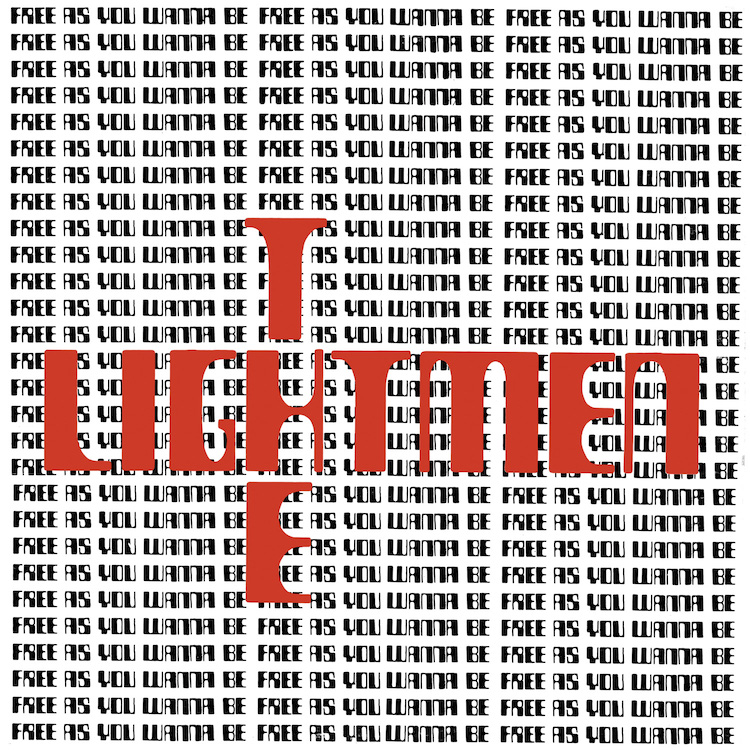
CULT CLASSIC: THE LIGHTMEN-FREE AS YOU WANNA BE.
Cult Classic: The Lightmen-Free As You Wanna Be.
Before founding The Lightmen, drummer, bandleader and political activist Bubbha Thomas had toured the length and breadth of America playing in R&B revues. The rest of his career had been spent working alongside the legends of jazz and playing on sessions for Peacock and Back Beat Records. However, Bubbha Thomas’ career took a different path in the late-sixties after witnessing the political and social upheaval that was tearing America apart.
Bubbha Thomas formed a new jazz group The Lightmen, who released four albums of spiritual jazz during the seventies. This includes their debut Free As You Wanna Be. It finds The Lightmen following in the footsteps of the late John Coltrane on what was a powerful album of spiritual jazz from Bubbha Thomas’ new band.
He was born and grew up in the Houston’s Fourth Ward, where Bubbha Thomas’ father was a preacher and his mother a musician. Sadly, his mother passed away before he started school, and he was brought up by his maternal grandmother. Growing up, Bubbha Thomas was a talented basketball player, but it was music that he grew to love.
All around the Fourth Ward, the young Bubbha Thomas heard music playing, especially the blues. He could walk down the streets and hear Big Mama Thornton, Clarence “Gatemouth” Brown and Lightnin’ Hopkins. Bubbha Thomas heard the music as he made his way through the Fourth Ward. This made an impression on Bubbha Thomas, and so do did what was happening within the Fourth Ward.
Many of the black residents who had moved to the Fourth Ward in the post-war years, were becoming upwardly mobile socially and economically. Some were keen to become active politically, while others had joined the police force and were determined to change the force from within. This included by opposing the enforcement of the Jim Crow laws from within the police force. It looked like Houston and the South was changing.
Meanwhile, as Bubbha Thomas headed to school each morning, he always met a professional drummer called Fats. By the time he returned home at night he could hear Fats practising. He had spent most of the day honing his skills and was a talented drummer who made a big impressions on Bubbha Thomas.
By then, Bubbha Thomas was attending Booker T. Washington High School, and was playing basketball. However, his first love was music, and he was the drummer in the intermediate and senior bands. Later, he was taught by Conrad O. Johnson who would later enjoy a successful career in jazz music. Prof as he was affectionately known, would influence many young musicians, including Bubbha Thomas.
Via what was called the orchestra at Booker T. Washington High School, Prof introduced his pupils to jazz music. This wasn’t meant to happen, but he saw this as part of his pupil’s musical education. The curriculum at the school had been drawn up by white people for primarily white children. Those that were responsible for the curriculum referred to the “orchestra,” which under Prof’s tutelage became a jazz band and Bubbha Thomas’ its drummer.
Between the influence of Prof and Fats, Bubbha Thomas’ people were soon taking attention of the young drummer. He was still playing basketball, but that was more of a hobby. Bubbha Thomas was more interested in music. Meanwhile, he was about to discover the other side of Houston.
When Bubbha Thomas boarded a bus in Houston, he was still forced to sit at the back of the bus, away from his white friends. It’s hard to believe that any civilised society was treating its citizens like this in the fifties. Bubbha Thomas who was still in high school new this was wrong.
Gradually it started to eat away at him, being treated like a second class citizen. Things came to a head when he boarded a bus with his elderly grandmother who was exhausted and needed a seat. The only remaining seat was on the white part of the bus, and Bubbha Thomas encouraged his grandmother to sit down. She wasn’t sure but, was so tired that she eventually sat down. When a white woman got on the bus, she wouldn’t sit down in the empty seat next to Bubbha Thomas’ grandmother. The bus driver was watching what was happening, and stopped the bus and told his grandmother to get out of her seat and give it the white lady. Bubbha Thomas got upset with the driver, and this resulted in them being thrown off the bus. This was the first time he had been a victim of racism, and this would shape his future and eventually he would rail against political and social injustice.
Before that, Bubbha Thomas was hoping to head Wiley College, in East Texas, on a basketball scholarship. He was told that there were no scholarships available until the following year, but he was offered a musical scholarship. Bubbha Thomas and one his neighbours in the Fourth Ward spent the next four years drumming in East Texas.
When Bubbha Thomas returned the his grandmother had died, and the house that he lived in the Fourth Ward had been sold. Meanwhile, the Fourth Ward was now seen as part of the Gregory-Lincoln campus. It wasn’t the place Bubbha Thomas knew and he left the Fourth Ward for good, and moved in with his father in another part of Houston.
That was until Bubbha Thomas received his call up papers, and soon, he was en route to Korea. The irony was he was being asked to fight for a country where he was regularly discriminated against, and couldn’t even sit next to a white person on a bus.
After a few days doing mundane chores in Korea, Bubbha Thomas told a superior officer that he was a musician, and soon doing what he did best playing music. He spent his time in the army playing jazz rather than as a regular soldier. By the time Bubbha Thomas left the army, he was a much better musician than the one that arrived in Korea.
Back home in Houston in 1961, Bubbha Thomas put together his own band and hit the road. Each night, he played his own music, but other nights, he was asked to accompany other artists. He and his band backed R&B singer Chuck Jackson, bluesman Lightnin’ Hopkins and jazz musicians like Leon Spencer and Melvin Sparks. Before long, Bubbha Thomas and his band were capable of playing every style of music.
It was around this time that Bubbha Thomas met Frederick Tillis who would influence him as a musician. So would Don Wilkerson, who released his debut album The Texas Twister in 1960, and then released a trio of well-regarded albums on Blue Note Records. Soon, Bubbha Thomas and Don Wilkerson were part of a quartet together and played all over Texas.
By the mid-sixties, Bubbha Thomas was a talented and versatile musician who had played all over America. He played from small venues and taken to the stage in some of the most prestigious concert halls America had to offer. However, by then, jazz’s popularity was in the decline in America, and other musical genres were growing in popularity.
Fortunately, Bubbha Thomas was asked to join Chuck Jackson’s band in the mid-sixties, and after that, led a trio in Houston that featured Leon Spencer. Later, he founded The Jazz Merchants, who despite their name, weren’t influenced by Houston’s very own The Jazz Crusaders. The Jazz Merchants were determined to head in a different direction and make music that was unique. This they managed to do as the world around them started to change.
By the late-sixties, the civil rights movement had brought about change in America, and the country was changing. Bubbha Thomas had been part of the civil right’s movement and played his part in the changes that were taking place around him. Now he turned his attention to the musicians with the Houston music scene.
While Houston had many talented musicians, Bubbha Thomas realised that they had an image problem. People’s perception of the local musicians wasn’t good. They were seen as people who slept all day, lived on fast food and after gigs drank too much and smoked reefer. Many people were looking down their noses at musicians, and they were starting to receive bad PR. This Bubbha Thomas knew was wrong and ironic as he was university educated, and many of his musician friends were well-educated. Others were studying at college and music was a way of paying the bills. This was very different to the articles that were being write about local musicians in Houston.
Bubbha Thomas started to spend more time with groups of musicians, and got to know them. His next step was to try to get them some much-needed publicity. This was how drummer Bubbha Thomas found himself working for the local anti-poverty, grassroots newspaper Voice Of Hope.
Soon, Bubbha Thomas had a regular column and wrote about a variety of local issues. This resulted in the local police targeting Bubbha Thomas, who was regularly followed and stopped for no apparent reason. The musician and part-time community and cultural activist was once again being discriminated against. Just when it looked as if things were changing in the land of the free.
Meanwhile, Bubbha Thomas was collaborating with playwright, poet and professor at Texas Southern University Thomas Melecon. He was combined the philosophy of the Black Panthers with the style of early Bob Dylan. It was a potent and powerful combination and one that impressed Bubbha Thomas.
So much so, that Bubbha Thomas produced the two singles that Thomas Melecon released on Judnell Records. Not long after this, he asked the poet to join him when he played live and bring a new angle to his music. By then, Bubbha Thomas was already an innovator when it came to art and music.
He was also someone who wanted equality, and when he noticed that there were no black television presenters, wrote to local stations. This resulted in Bubbha Thomas being given his own television show, which sadly, was short-lived. It featured the only live footage of the Kashmere Stage Band, and spiritual jazz combos the Fifth Ward Express and The Lightmen Plus One led by Bubbha Thomas. It was part of his plan for the future.
As 1969 dawned, Bubbha Thomas was leading The Lightmen and The Jazz Merchants. They accompanied some of the high-profile local jazz musicians including Annette Cobb. However, Bubbha Thomas was thinking beyond live gigs and wanted to release music that was very different to what his peers were releasing. The music would be ambitious, innovative and revolutionary, and released on record labels that were co-ops. This was way before Strata in Detroit and Strata Records in New York thought of the concept.
Soon, Bubbha Thomas and his band The Lightmen were rehearsing and writing material for a new album. During the rehearsals before the recording of Free As You Wanna Be, the members of The Lightmen had been discussing the concept of freedom from the perspective of the African-American people. By then, many had started to question the United States’ constitution regarding their rights as American citizens. Ed Rose who knew that Bubbha Thomas had been active within the civil right’s movement asked Bubbha Thomas: “how free are black people in America?”
It took some time before Bubbha Thomas responded: “free as they wanna be.” This inspired Ed Rose to write new track.
He remembers: “with the answer to the question came the name to a tune i had written, the title tune of this album. After the head of tune, there should be no sense of time; each musician has the freedom to be free musically, as he can imagine himself.”
By the time The Lightmen were ready to record their debut album Free As You Wanna Be, members of the band had penned seven tracks. Bandleader Bubbha Thomas had written May ’67, which referred to a clash between student protesters in the Third Ward and the Houston Police Department. During the clashes twenty-four year old rookie policemen Louis Kuba was shot, and 500 people were arrested. These events insured Bubbha Thomas to write May ’67.
Meanwhile, Ed Rose who had written Free As You Wanna Be had also written Luke 23:32-49 which deals with Jesus’ forgiving two criminals just before his crucifixion. These two songs by Ed Rose were joined by Joe Singleton’s High Pockets, Kenny Abair’s Talk Visit, Doug Harris’ #109 Psychosomatic and Creative Music which was a Carl Adams and George Nelson composition. These tracks were recorded by The Lightmen.
Bubbha Thomas’ band featured a rhythm section of drummers Bubbha Thomas and William Jefferies, bassist Ed Rose and guitarist Kenny Abair. They were joined by conga player Mike O’Connor and a horn section that featured trumpeter Carl Adams, trombonist Joe Singleton, tenor saxophonist Doug Harris and flautist Ronnie Laws who played alto and soprano saxophone. The Lightmen’s debut album was produced by George Nelson.
When the Houston underground jazz collective had completed its debut, The Lightmen released Free As You Wanna Be on Judnell Records in 1970. Although Free As You Wanna Be found a small but appreciative audience in Houston sadly, it never found the wider audience it deserved.
It was only much later that a new generation of record buyers discovered The Lightmen’s debut album Free As You Wanna Be. By then, it was regarded as a hidden gem and an oft-overlooked album that featured music that was ambitious, cerebral, innovative album, powerful and thought-provoking album of spiritual jazz.
Especially tracks like Free As You Wanna Be, May ’67 and the album closer Luke 23:32-49. These are especially thought-provoking and have a strong narrative. However, the album opener Creative Music, High Pockets, Talk Visit and #109 Psychosomatic feature a group of like-minded innovative musicians pushing musical boundaries to their limits and sometimes beyond.
Album opener Creative Music finds spiritual jazz almost heading in the direction of free jazz, before The Lightmen play with speed, power and freedom on Free As You Wanna Be. It gives way to the melodic shuffling High Pockets and then Talk Visit where the tempo increases and The Lightmen keep things melodic. That is despite playing with the utmost urgency, power and accuracy. May ’67 is cinematic and thought-provoking and is without doubt one of Free As You Wanna Be’s highlights. So is #109 Psychosomatic where sharp bursts of squealing horns play their part in the sound and success of the track. Closing Free As You Wanna Be is Luke 23:32-49 which is another slower cinematic and cerebral track from spiritual jazz pioneers The Lightmen.
Nowadays, this oft-overlooked spiritual jazz hidden gem is regarded as a cult classic. Free As You Wanna Be features Bubbha Thomas’ band The Lightmen as they embark on the start of a four album musical journey. It’s an album of spiritual jazz that is ambitious and innovative and finds The Lightmen pushing musical boundaries to their limits and playing with freedom. In doing so, The Lightmen created music that is cerebral, cinematic, melodic and thought-provoking as they broach subjects like freedom, religion and one of the darkest days in Houston’s recent history in May ’67. All this makes Free As You Wanna Be as a compelling and groundbreaking album of spiritual jazz from Houston-based musical mavericks The Lightmen.
Cult Classic: The Lightmen-Free As You Wanna Be.
ORCHESTRA COMETA-DAYDREAM AND MISCELLANEA.
Orchestra Cometa-Daydream and Miscellanea.
Label: Cometa Edizioni Musicali.
Format: LP.
Over the last few years, interest in library music released between the sixties and early eighties has grown, and albums released by labels like KPM, De Woife, Amphonic, Conroy and Sonoton have become highly collectable. This is ironic as these albums were never meant to fall into the hands of collectors.
Originally, library music was meant to be used by film studios, television and radio stations or advertising agencies and was never meant to be commercially available. That was the theory.
The music was recorded on spec by music libraries who often hired young unknown composers, musicians and producers. This ranged from musicians who were known within publishing circles, to up-and-coming musicians who later, went onto greater things, and look back fondly at their time writing, recording and producing library music. This they now regard as part of their musical apprenticeship.
For the musicians hired to record library music, their remit was to supply music libraries with a steady stream of new music which originally, was referred to as production music. During some sessions, the musicians’ remit was write and record music to match themes or moods. This wasn’t easy, but after a while they were able to this seamlessly. Soon, the musicians were able to enter the studio and write and record a piece of music that matched a theme or mood for a film or television show.
Once the library music was recorded, record libraries sent out demonstration copies of their music to advertising agencies, film studios, production companies, radio stations and television channels. If they liked what they heard, they would license a track or several tracks from the music libraries. That was how it was meant to work.
Sometimes, copies of these albums fell into the hands of DJs, sample-hungry producers and record collectors who realising the quality of music, recorded by these unknown musicians, started collecting library music.
That is still the case today, and nowadays, many original albums of library music are highly collectable. Often, though, these albums are beyond the budget of most record buyers. Luckily, many independent record labels in Britain and Europe are releasing compilations of library music as well as classic albums.
One of these labels is Cometa Edizioni Musicali which is based in the Italian capital, Rome. They’ve recently reissued Orchestra Cometa’s 1974 album Daydream and Miscellanea which was originally released in 1969. They’re the perfect introduction to two of the most important Italian library music labels.
Orchestra Cometa-Daydream.
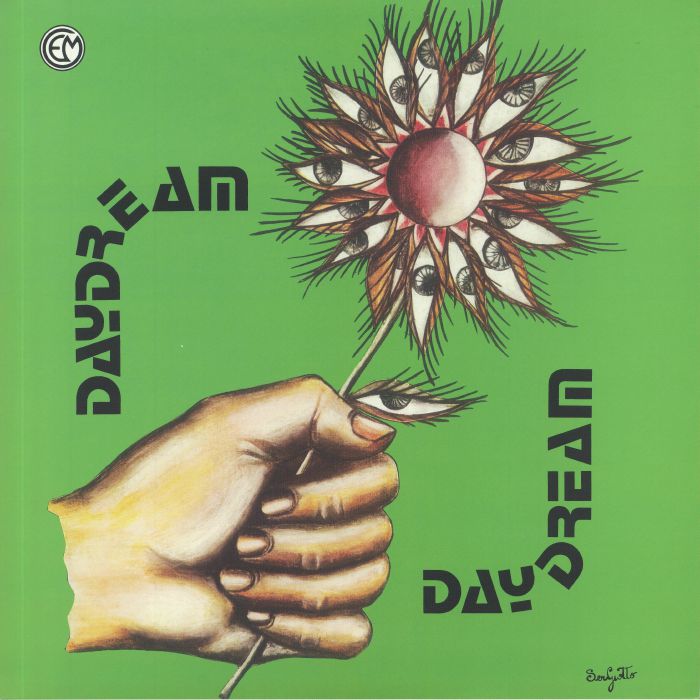
When Daydream was released in 1974 by Orchestra Cometa it came with what some people will describe as a distinctive album cover. Other people will describe the picture of a hand holding a flower that has eyeballs on each petal as weird or lysergic. It certainly makes one wonder what the music on Daydream will sound like? Is this the type of library music that Salvador Dali might have made?
Despite the cover, the music isn’t as trippy or lysergic as one might have thought. Far from it. Appearances can be deceptive and that’s the case on Daydream.
Instead, a wide range of musical genres can be heard during the fifteen tracks on Daydream. There’s everything from jazz, funk, fusion and folk to blues, jazz-funk, psychedelia and rock. The Orchestra Cometa featured top Italian session musicians who were versatile musicians and able to seamlessly switch between disparate genres. That wasn’t all.
They were able to write and record music to match themes or moods. Not all musicians could do this. However, the Orchestra Cometa were able to and it was akin to painting pictures with music. This they do throughout Daydream.
Side One.
Among the highlights are Rash with its tough, funky sound while Daydream is beautiful, wistful and jazz-tinged and Simpton moody and dramatic. Bike is a genre-melting track where funk, fusion and jazz combine and a clavinet adds a tough edge. Quite different is Gadder which is melancholy, dramatic and guaranteed to tug at the heartstrings. Then Diplomat which closes side one, sounds like the theme to a late-seventies television drama.
Side Two.
Canty opens side two and is jazz-tinged and funky with a feelgood sound. Very different is Swallow which sounds as if it was written for a period drama. Then a clavinet is deployed on Obstinacy which sounds as if it belongs on a seventies cop show or Blaxploitation film. Reeds are to the fore on the Riddle a mellow slice of jazz that closes Daydream on a high.
Sadly, Daydream was the only album that the Orchestra Cometa recorded for the Cometa Edizioni Musicali label. Just like so many albums of library music, the musicians who played on Daydream aren’t credited. Given the quality of music on they album they were obviously top session players.
Daydream showcases their considerable skill and versatility as they flit between and fuse disparate musical genres. This is something that lesser musicians would’ve been unable to do. However, the members of Orchestra Cometa make this seem easy on Daydream which forty-six years after its release in 1974 is regarded as an Italian library music classic.
Miscellanea.
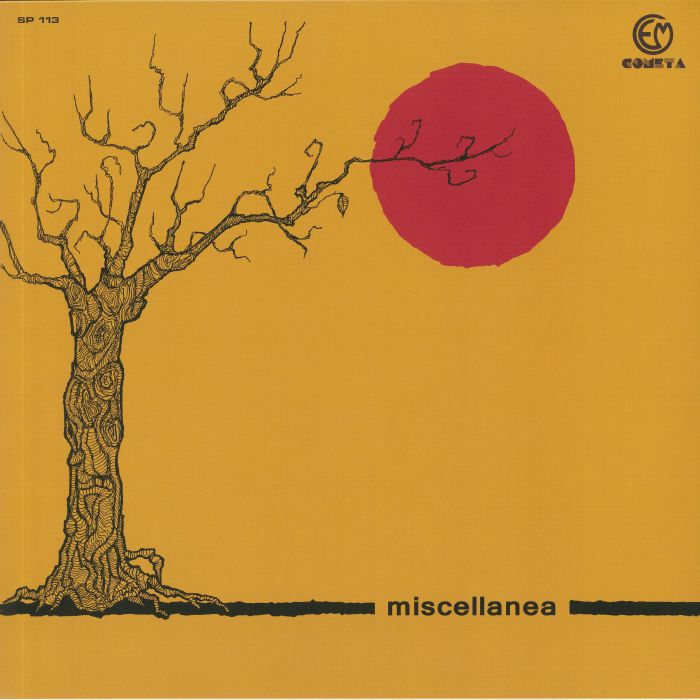
So is the compilation Miscellanea, which was released by the SR Records in 1969. It features ten tracks including nine written by Luigi Zito. This was his debut as a composer and he continued to write and record throughout the seventies.
The other track was Dolce Notte which was penned by Ranieri Romagnoli. He had started working as a writer and arranger in the mid-fifties and continued to work until the early nineties.
The ten tracks on Miscellanea were recorded by a group of musicians who recorded under various names including Unione Musicisti Di Roma. They play their part in the sound and success of an album of evocative tracks that paint pictures and toy with the listener’s emotions.
Sometimes the music on Miscellanea is dramatic, moody and full of tension. Other times, it’s wistful and melancholy. Sometimes, the music transports the listener to another time and place. It’s like time travel going back in time before hearing a snapshot of what the future will sound like. That is Miscellanea is another Italian library music classic. It’s also a reminder of what was a golden age for library music. It began in the sixties and lasted until the early eighties and the music released during this period is highly collectable.
Especially albums released by KPM, De Woife, Amphonic, Conroy and Sonoton. Then there’s lesser known labels like Cometa Edizioni Musicali and SR Records who released Orchestra Cometa’s album Daydream and Miscellanea.
Nowadays, both albums are regarded by connoisseurs as library music classics. Original copies of both of these albums and highly collectable and extremely rare. When a copy does come up for sale there’s a premium attached and usually it’s beyond the budget of most collectors.
Thankfully, Cometa Edizioni Musicali recently reissued Orchestra Cometa’s album Daydream and Miscellanea as limited editions of 300 and this is the perfect opportunity to discover the delights of these two Italian library music classics.
Orchestra Cometa-Daydream and Miscellanea.
TIM MAIA-RACIONAL VOLUME 2.
Tim Maia-Racional Volume 2.
Label: Seroma.
Format: LP.
By 1975, Tim Maia was a changed man and had turned his back on the rock ’n’ roll lifestyle that he had embraced and enjoyed since releasing his eponymous debut album in 1970. Back then, the charismatic Brazilian singer realised that he was only here for a visit and decided to live life to the fullest. He drank, took drugs and partied as he enjoyed the newfound wealth his musical career had brought him.
Despite that wealth and a lifestyle that many of his fans must have envied, Tim Maia wasn’t happy. The problem was the royalty rate that he had been paid by Polydor for his first four album. That was why he decided to found his own publishing company Seroma. This just happened to coincide with him signing to RCA Victor.
This was a new start for Tim Maia, and he began work on his next album which was going to be a double album. He wrote and recorded the instrumental parts and all that was left was for him to write the lyrics.
Seeking inspiration for the lyrics, Tim Maia decided to visit one of his former songwriting partners Tibério Gaspar. That was where he found the book that would change his life, but sadly, not for the better. The book was Universo em Desencanto (Universe in Disenchantment) which revolved around the cult of Rational Culture. It transformed Tim Maia’s life and inspired what was to be his fifth album Racional Volumes 1 and 2, which was also the most controversial of his career. It was the latest extraordinary chapter in his life.
Tim Maia, was born in Rio De Janeiro on September the ‘28th’ 1942 and was the eighteenth of nineteen children. Aged just six, he earned a living delivering homemade food which his mother cooked. This he hoped would be the nearest he ever got to an ordinary job. After that, Tim Maia decided to devote himself to music which offered him an escape from the grinding poverty that was around him.
It turned out that Tim Maia was a prodigiously talented child who wrote his first song as an eight year old. By the time he was fourteen, he had learnt to play the drums and formed his first group Os Tijucanos do Ritmo. They were only together for a year, but during that period, Tim Maia took guitar lessons and was soon a proficient guitarist. This would stand him in good stead in the future.
In 1957, Tim Maia joined the vocal harmony group The Sputniks who made a television appearance on Carlos Eduardo Imperial’s Clube do Rock. However, the group was a short-lived, and Tim Maia embarked upon a solo career. This lasted until 1959 when the seventeen year old decided to emigrate.
Tim Maia decided to head to America, which he believed he was the land of opportunity and arrived in New York with just twelve dollars in his pocket. On his arrival, he who was unable to speak English, but somehow managed to bluff his way through customs telling the officials that he was a student called Jimmy. Incredibly, the customs officer believed him and he made his way to Tarrytown, New York, where he lived with extended family and started making plans for the future. By then, Tim Maia had decided he would never return to Brazil.
During his time in New York, Tim Maia held down a variety of casual jobs and it has been alleged that he even augmented his meagre earnings by committing petty crimes. However, Tim Maia also learnt to speak and sing in English which lead to him forming a vocal group, The Ideals.
During his time with The Ideals, they decided to record a demo which included New Love which featured lyrics by Tim Maia. When they entered the studio, percussionist Milton Banana made a guest appearance. Sadly, nothing came of the demo although Tim Maia later resurrected New Love for his album Tim Maia 1973. Before that, things went awry for Tim Maia and he was eventually deported.
Confusion surrounds why and when Tim Maia was deported from America, and there’s two possible explanations. The first, and more rock ’n’ roll version is that Tim Maia was arrested on possession of cannabis in 1963, and deported shortly thereafter. That seems unlikely given how punitive penalties for possession of even a small quantity of cannabis were in the sixties. Indeed, it’s highly unlikely that Tim Maia would’ve been deported without having to serve a jail sentence first. This lends credence to the allegation that Tim Maia was caught in a stolen car in Daytona, Florida, and after serving six months in prison he was deported back to Brazil in 1964.
Now back home in Brazil, Tim Maia’s life seemed to be going nowhere fast. He was fired from several jobs and was also arrested several times. It was no surprise when he decided to move to São Paulo, where he hoped that he could get his career back on track.
Having moved to São Paulo, Tim Maia, hoped he would be reunited with Roberto Carlos who had been a member of The Sputniks. Ironically, it was Roberto Carlos who Tim Maia had insulted before he left The Sputniks. Despite leaving several messages, Roberto Carlos never returned Tim Maia’s calls and he had no option but to try to make his own way in the São Paulo music scene.
Tim Maia’s persistence paid off, and soon, he had featured on Wilson Simonal’s radio show, and then appeared alongside Os Mutantes on local television. Despite making inroads into the São Paulo music scene, Tim Maia was still determined to contact Roberto Carlos and sent him a homemade demo. Eventually, Tim Maia’s persistence paid off.
When Roberto Carlos heard the demo, he recommended Tim Maia to CBS who offered him a recording deal for a single, and an appearance on the Jovem Guarda television program. However, when Tim Maia’s released his debut single Meu País in 1968, it failed to find an audience.
Tim Maia tried a new approach with his sophomore single and recorded These Are the Songs, in English. It was released later in 1968, but again, commercial success eluded Tim Maia. Things weren’t looking good for the twenty-six year old singer.
Fortunately, Tim Maia’s luck changed when he wrote These Are the Songs for Roberto Carlos which gave his old friend a hit single. At last, things were looking up for Tim Maia.
Things continued to improve when Elis Regina became captivated by Tim Maia’s composition These Are the Songs. This led to Elis Regina asking Tim Maia to duet with her on the song. Tim Maia agreed and they recorded the song in English and Portuguese and the song featured on Elis Regina’s 1970 album Em Pieno Veroa. Recording with such a famous Brazilian singer gave Tim Maia’s career a huge boost, and soon, he was offered a recording contract by Polydor.
Having signed to Polydor in 1970, and somewhat belatedly recorded his debut album Tim Maia 1970. Although it showcased a talented, versatile and charismatic singer, who married soul and funk with samba and Baião. This groundbreaking album spent twenty-four weeks in the upper reaches of the Brazilian charts and launched Tim Maia’s career.
The following year, Tim Maia returned with his sophomore album Tim Maia 1971, where elements of soul and funk were combined with samba and Baião There were even hints of jazz, psychedelia and rock during what was an ambitious and innovative album of genre-melting music. It was released to critical acclaim and like his debut was a commercial success.
Tim Maia 1971 also featured two hits singles Não Quero Dinheiro (Só Quero Amar) and Preciso Aprender a Ser Só. Having released just two albums Tim Maia’s star was in the ascendancy, and it looked as if he was well on his way to becoming one of the biggest stars of Brazilian music.
After the success of his sophomore album, Tim Maia headed to London to celebrate after years of struggling to make a breakthrough. For the first time in his career he was making a good living out of music, and he was determined to celebrate and enjoy the fruits of his label. However, it was during this trip to London, that he first discovered his love of the rock ’n’ roll lifestyle.
Realising that he was only here for a visit, Tim Maia embraced the rock ‘n’ roll lifestyle and almost defiantly, lived each day as if it was his last. He hungrily devoured copious amounts of drugs and alcohol which became part of Tim Maia’s daily diet. Fortunately, his new-found lifestyle didn’t seem to affect his ability to make music. That was until he discovered a new drug that would prove to be his undoing.
In London, Tim Maia discovered LSD and became an advocate of its supposed mind opening qualities. He took 200 tabs of LSD home to Brazil and gave it to his friends and people at his record label. Little did he know, but this was akin pressing the self destruct button.
Over the next two years, he released two further albums, Tim Maia 1972 and Tim Maia 1973. Both were released critical acclaim and were a commercial success in Brazil. It seemed that the charismatic singer who had been christened the father of Brazilian soul music could do no wrong.
The only problem was that after the success of Tim Maia 1973, Tim Maia became unhappy at the royalty rate he was receiving from his publisher. This led to him founding his own publishing company Seroma, which coincided with Tim Maia signing to RCA Victor.
Racional Volumes 1 and 2.
RCA Victor had offered Tim Maia the opportunity to record a double album for his fifth album and he was excited by this opportunity. He, agreed to sign to RCA Victor and soon, began work on his fifth album.
Somehow, Tim Maia was still seemed able to function normally on his daily diet of drink and drugs. He and his band headed to house in a quiet part of Rio de Janeiro and spent their days smoking marijuana and experimenting with hallucinogenics as they worked on new songs. By the end of July, they already had worked out several dozen songs and instrumental grooves followed . They stayed true to Tim Maia’s samba-soul formula.All that was left was for Tim to write the lyrics to the double album.
Seeking inspiration for the lyrics, Tim Maia decided to visit one of his former songwriting partners Tibério Gaspar. That was where Tim main found the book that would change his life, but sadly, not for the better. The book was Universo em Desencanto (Universe in Disenchantment), which revolved around the cult of Rational Culture who didn’t believe in eating red meat or using drugs. Given Tim Maia’s voracious appetite for drink and drugs, he seemed an unlikely candidate to join the cult. However, sadly, he did. It’s also alleged that he coerced the rest of band to join the cult and live by its strict precepts.
Straight away, the cult’s beliefs affected Tim Maia and his music. Ever since he joined the cult of Rational Energy, he was clean-shaved, dressed in white and no longer drank, ate red meat, smoked or took drugs. He also became fixated on UFOs and wherever he went he held a mysterious book in his hand. Tim Maia was a changed man and even his music changed.
The lyrics for his fifth album, and RCA Victor debut, were supposedly about his newly acquired knowledge that came courtesy of Universo em Desencanto. With the ‘lyrics’ complete, Tim Maia’s vocals were overdubbed onto what became Racional Volumes 1 and 2. With the album completed, Tim took it to RCA Victor who promptly rejected the album.
RCA Victor’s reason for rejecting the album was that it wasn’t of a commercial standard. To make matters worse, the lyrics made absolutely no sense. There was only one small crumb of comfort and that was that Tim Maia’s voice was improving. That hardly mattered for RCA Victor who said that they weren’t going to release the album. For RCA Victor, Racional Volumes 1 and 2 was a huge disappointment.
That was until Tim Maia offered to buy the master tapes from RCA Victor so that he could release the album independently. RCA Victor accepted his offer which allowed them to recoup some of their money. Having bought the master tapes, Tim Maia set about releasing Racional Volume 1 in 1975.
When critics and record buyers heard the lyrics on Racional Volume 1 they struggled to understand them. They were very different to the lyrics on his four previous albums. It was hard to believe it was the same artist. Tim Maia was a changed man since joining the cult and was as if he had been brainwashed and was transformed into an excitable evangelist as he shouts: “Read the book, the only book!” throughout the album. That was apart from Rational Culture which was an epic genre-melting jam that closed the album on a high. It was a reminder of what Tim Maia was capable of.
Elsewhere it was a different story as Tim Maia combines his own inimitable brand of gospel music that’s full of sci-fi imagery with elements of blues, soul, pre-disco funk and psychedelic rock. The influence of Motown can be heard and the album heads in the direction of on Imunização Racional. The arrangements were tight and up to Tim Maia’s usual standards as he delivered impassioned and powerful vocals. However, the problem was that Tim Maia was using his fifth album Racional Volume 1 to spread the word about the cult’s so-called philosophy.
This extended to the album cover which detailed the cult’s core beliefs. It was very different from Tim Maia’s previous albums. However, he released Racional Volume 1 on his own label Seroma.
There was a problem though. Most record shops were sure about stocking such a controversial album. However, Tim Maia managed to convince a few shops to stock copies of Racional Volume 1. Despite that, the album wasn’t a commercial success when it was released in 1975. The only track to receive any radio play was Imunização Racional (Que Beleza). Even then, it was only a minimal amount and Racional Volume 1 was the least successful album of Tim Maia’s career. Still he as determined to release Racional Volume 2.
Racional Volume 2.
Following the release of Racional Volume 1 many of Tim Maia’s fans thought he was no longer the artist he once was. The album was very different to his first four albums and they thought he had lost his way musically. However, the problem was his membership of the cult was affecting his judgment and also his music.
It was as if he had been brainwashed and Tim Maia was willing to publicise the cult’s so-called philosophy via his music. He wasn’t the first to do this, but very few artists had decided to dedicate two consecutive albums to a cult’s philosophy. Tim Maia was the first do this.
In 1976, he was preparing to release the rest of the music that he had originally recorded for RCA Victor as Racional Volume 2. Just like his previous album, the lyrics were inspired by the cult’s philosophy which Tim Maia had embraced fully by 1976. He was almost unrecognisable and very different to the musical bon viveur he once was. Now he was preparing to self-release Racional Volume 2 via his own Seroma label.
He went through all the same problems as he had with Racional Volume 1 and struggled to get shops to stock his new album. Given the commercial failure of Racional Volume 1, most shops were reluctant to stock the followup. For Tim Maia this was another disappointment. Despite this, he went ahead with the release of Racional Volume 2.
When Racional Volume 2 was released in 1976 lightning struck twice when the album failed to impress the critics. Worse was to come when the album sunk without trace. Very few copies of Racional Volume 2 were sold and it was another commercial failure for Tim Maia.
Meanwhile, his fans thought that he had lost his way musically after the release of his sixth album Racional Volume 2. It was his second album that wasn’t a commercial success. There was a reason for this.
Tim Maia’s fans didn’t want to buy another album that featured lyrics about the cult’s philosophy. They preferred his usual albums lyrics which ranged from romantic to party oriented while other songs had a feelgood sound. That wasn’t the case on Racional Volume 2.
Just like his previous album, the problem with the songs were the lyrics where Tim Maia parroted the cult’s philosophy. Despite that, he delivers heartfelt vocals while others are a mixture of power, passion and emotion. He may have been singing about a cult’s philosophy but Tim Maia was still a talented vocalist and was improving with every album he released. His voice was clear and powerful and he seemed to be maturing as a vocalist.
Meanwhile, the arrangements marked a return to form from Tim Maia. He combined shuffling South American rhythms with soul and funk where horns play an important part in the arrangements. Sometimes, sweeping orchestrated arrangement take the songs in the direction of MPB. Other times, elements of blues, early-seventies funk and psychedelic rock can be heard on Racional Volume 2. It features some stunning arrangements that are tight and provide the perfect backdrop for Tim Maia’s vocal. Sadly, very few people heard Tim Maia’s sixth album. Maybe this was the wakeup call he needed?
In 1976, Tim Maia quit the cult after the release of Racional Volume 2. By then, he had fallen out with its leader and felt as if he had been duped. So much so, that he wanted the master tapes to Racional Volumes 1 and 2 destroyed. The two albums were part of his past, and now Tim Maia was ready and wanted to move forward.
Nowadays, Racional Volumes 1 and 2 are both regarded as cult classics, whereas in 1976 they tarnished Tim Maia’s reputation. Joining the cult was one of the worst decisions he made in what had already been an eventful life. For the two years he was part of the cult it was as if Tim Maia had been brainwashed and his music was regarded as a way to publicise the cult. He was being used and eventually saw through this ruse in 1976.
By then, Tim Maia had spent money buying back the tapes for Racional Volumes 1 and 2 from RCA Victor and had released the two albums on his own Seroma label. It had been an expensive episode for Tim Maia and wasn’t a happy time in his life.
Tim Maia’s music changed after the release of Racional Volumes 1 and 2 and he entered what was the most prolific period of his career. Sadly, he struggled to reach the heights of his first four albums and Tim Maia was never the same man or musician after his dalliance with the cult of rational behaviour.
Despite this, Racional Volumes 1 and 2 are still regarded as cult classics and must have albums for anyone interested in Tim Maia’s music. However, Racional Volumes 2 is strongest of the two albums and is a reminder of the father of Brazilian soul music during what was one the strangest periods in what was an eventful, roller coaster of a life.
Having said that , Tim Maia enjoyed every minute of a life lived in the fast lane. It was as if his mantra was to live life to the full. That was just as well because Tim Maia passed away on March the ‘15th’ 1998, aged just fifty-five.
Since his death, Tim Maia’s music has been a well-kept secret outside of his native Brazil and even many Brazilians still aren’t aware of his music. However, older record buyers still talk about the maverick singer-songwriter in hushed tones and remember the flawed genius that was Tim Maia and a singer who could’ve and should’ve been a huge star outside of his native Brazil. Sadly, something held him back and stopped Tim Maia from enjoying the widespread commercial success and critical acclaim that his music so richly deserved.
Was it Tim Maia’s love of the rock ’n’ life style which he embraced and enjoyed with a voracious appetite? Maybe Tim Maia’s dalliance with the cult of rational behaviour had lasting effects and somehow stopped this hugely talented singer, songwriter, musician and producer from scaling the heights that he should’ve? However, he left behind a rich musical legacy including several classic albums and his cult classic Racional Volume 2.
Tim Maia-Racional Volumes 2.

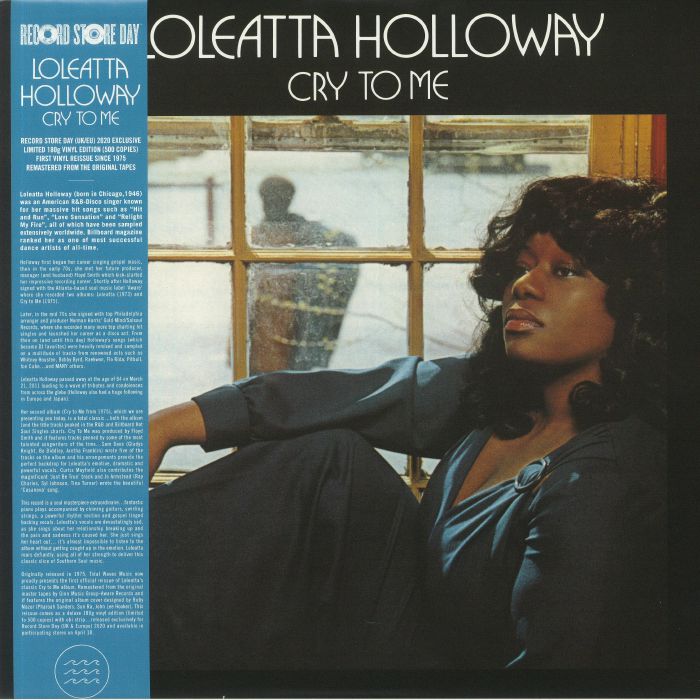
LOLEATTA HOLLOWAY-CRY TO ME.
Loleatta Holloway-Cry To Me.
Label: Tidal Waves Music.
Format: LP.
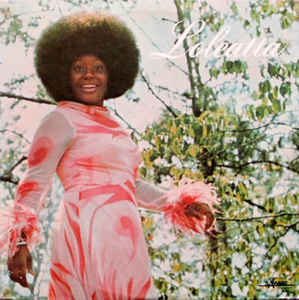
Before being transformed into a disco diva by arranger, guitarist and producer Norman Harris at Salsoul imprint Gold Mind Records, Loleatta Holloway released two albums of Southern Soul for Michael Thevis’ Aware Records. This includes her sophomore album Cry To Me, which was released in 1975, and has just been reissued for Record Store Day 2020 by Tidal Waves Music.
Loleatta Holloway was born in the Windy City of Chicago, on November the ‘5th’ 1946, and just like Minnie Ripperton and Aretha Franklin her talent was noticeable from an early age. Growing up, music was always part of Loleatta Holloway’s life.
Her first involvement with music was when she joined her mother’s gospel group. Her time with The Holloway Community Gospel Singers was akin to a musical apprenticeship.
That was also the case for another young singer that Loleatta Holloway met whilst singing with her mother’s gospel group. This was a young Aretha Franklin who later, would influence Loleatta Holloway’s vocal style and phrasing.
In 1967, Loleatta Holloway was asked by Albertina Walker to join The Caravans, the gospel group she founded in the fifties. She agreed, and later, that year, The Famous Caravans as they were now billed, released their critically acclaimed album Help Is On The Way. Loleatta Holloway’s recording career was underway.
For the next four years, she was a member of The Caravans and on their 1969 album Think About It takes charge of the lead vocal on two tracks. However, by 1971 Loleatta Holloway was ready to embark on a new chapter in her career.
She acted in the musical revue Don’t Bother Me, I Can’t Cope and formed and toured with her own company Loleatta Holloway and Her Review. By then, she had also met future husband and manager Floyd Smith, who arranged for Loleatta Holloway to record her first secular tracks.
This was a cover of a Gene Chandler song Rainbow 71, which was released on the Apache label in 1971. Later, they leased to Galaxy who were able to distribute the single nationwide. However, the song failed to chart and Loleatta Holloway returned to the studio.
Her next single was Bring It On Up, originally the b-side to Sentimental Reasons. It was around this time that Michael Thevis became aware of Loleatta Holloway, and he signed for his new Atlanta based Aware label.
Now that he had signed Loleatta Holloway, Michael Thevis wasted no time recording her first single for his new label. This was Mother Of Shame, which was released in May 1973, and reached number sixty-three in the US R&B Charts. Although it was only a minor hit, Loleatta Holloway entered the studio with producer Floyd Smith to record her debut secular album.
Loleatta.
This was Loleatta, which was recorded at the Sound Pit Studios, in Atlanta, Georgia. The album was produced by Floyd Smith who penned Part Time Lover, Full Time Fool and cowrote Only A Fool with William Johnson. Accompanying Loleatta Holloway as she recorded the ten tracks were The “Homegrown” Rhythm Section. Once the album was completed, it was released later in 1973.
By July 1973, DJs were playing Our Love which was on the B-Side of Mother Of Shame. It eventually reached forty-three in the US R&B charts and game Loleatta Holloway her second hit single.
Buoyed by the success of Our Love, Part Time Lover, Full Time Fool was released as a single. Despite being one of the strongest song on the album and an obvious choice for a single it failed to chart. This was a disappointment for Loleatta Holloway and Floyd Smith who wrote and produced the song.
There was further disappointment when Loleatta was released later in 1973 and failed to chart. That was despite the album receiving positive reviews from the critics that reviewed it.
The album featured a series of vocal masterclasses from Loleatta Holloway who sounded as if she had lived the lyrics. She breathed life, meaning and emotion into the songs on Loleatta and was like actress in a play on the tales of love and love gone wrong. Sadly, very few people heard Loleatta when it was released in 1973 and she hoped that the followup fared better.
Cry To Me.
In the spring of 1974, Loleatta Holloway returned to the studio to record her next single.The song that had been chosen was a Sam Dees’ composition Help Me My Lord. It found Loleatta Holloway strutting her way through the track delivering a vocal powerhouse as she combines Southern Soul and gospel.
Then Loleatta Holloway delivers a defiant vocal that is a mixture of anger and frustration on Frederick Knight’s The World Don’t Owe You Nothin’. It features a funky, soulful arrangement that is the perfect backdrop to this mini soap opera. However, despite being the stronger of the two tracks it was destined for the B-Side.
This decision came back to haunt Aware Records when Help Me My Lord was released as a single and failed to chart. Despite this, Loleatta Holloway returned to the studio to record the rest of her sophomore album Cry To Me.
Another eight tracks were chosen for the album including Sam Dees’ I Know Where You’re Coming From and The Show Must Go On. They were join ed by David Camon’s Cry To Me; Curtis Mayfield’s Just Be True To Me; Johnny Jacobs and Ronnie Walker’s Something About The Way I Feel; A. Jerline Williams and William Johnson’s I Can’t Help Myself and Jo Armstead’s Casanova. The other track was the Loleatta Holloway composition I’ll Be Gone. These tracks were recorded at the Sound Pit Studios, in Atlanta, Georgia.
Just like Loleatta, Cry To Me was produced by Floyd Smith. Accompanying Loleatta Holloway at the Sound Pit were The “Homegrown” Rhythm Section. Just like her debut album they played an important part in the album’s sound.
This includes on the album opener Cry To Me where a piano plays slowly, guitars chime and combine with the rhythm section as Loleatta Holloway delivers a soliloquy. She’s heartbroken and sings about how her relationship is breaking up against an arrangement that is a mixture of power and drama. Strings sweep in while the rhythm section add drama and backing vocalists accompany a powerful, soul-baring vocal. It’s almost impossible not to to get caught up in the emotion and sadness of what’s one of the album’s highlights.
The Show Must Go On was written by Sam Dees who originally recorded this ballad. Loleatta Holloway delivers a hurt-filled soliloquy against Floyd Smith’s arrangement. By the time the vocal enters, the rhythm section, sweeping strings horns, gospel-tinged backing vocalists, vibes and even applause accompany a defiant, dramatic soul-baring vocal.
I Know Where You’re Coming From is a song about a relationship breakup with a twist in the tale. Loleatta Holloway delivers a soliloquy as a guitar chimes and a bass cuts through the arrangement. Meanwhile, soaring backing vocals join Loleatta Holloway as she reassures her friend: “I Know Where You’re Coming From” before singing: “why don’t you take my hand and be my man” on this timeless slice of sassy Southern Soul.
There’s a sense of drama to the ballad Just Be True To Me. It features an arrangement where strings sweep and horns rasp as the rhythm section provide the heartbeat. Meanwhile, Loleatta Holloway delivers a heartfelt and impassioned vocal that becomes needy and hopeful when she sings: “Just Be True To Me” on this beautiful ballad.
The tempo rises slightly on Something About The Way I Feel as the rhythm section, horns and vibes set the scene for an impassioned vocal. Loleatta Holloway reflects about the past and what she’s been through with her partner. She’s accompanied by backing vocalists that prove to be the perfect foil as the song swings and she gives thanks for the love she’s found, what she has and “the way I feel.” It’s a beautiful paean where the future disco diva paints pictures with the lyrics.
I’ll Be Gone is another ballad and the only song on the album written by Loleatta Holloway. She warns on this tale of love gone wrong that: “I can’t let you keep on hurting me for I’ll Be Gone.” Her vocal is bristling with emotion and hurt as the rhythm section add a degree of drama and are joined by a crystalline guitar, vibes plus sweeping and pizzicato strings. They provide the perfect backdrop as Loleatta Holloway delivers an ultimatum to her cheating, no good man.
Dramatic describes the introduction to I Can’t Help Myself before it sets the scene for Loleatta Holloway’s vocal. There’s a degree of confusion in her voice as she’s fallen for the wrong guy. “I never thought I could fall in love with a guy like you, although I know you could never be true, I find myself wanting to live with ‘cos I love you, I can’t help myself.” Meanwhile, backing vocals soar above the arrangement and coo, as drums pound, a guitar chimes, strings sweep and horns rasp. It’s one of the best arrangements on the album and the perfect accompaniment for the vocal.
Stabs of horns, backing vocalists and the rhythm section combine to create a dramatic backdrop before Loleatta Holloway unleashes a powerful, emotive vocal on Casanova. She tells her parter “Casanova your playing days are over.” Meanwhile, the backing vocalists sing “it’s over, it’s over baby” as strings sweep and swirl and the drama builds during this four minute soap open. It’s one of the eight tracks recorded at the Sound Pit and is without doubt one of the highlight Cry To Me.
With the rest of the album completed, Cry To Me was scheduled for release later in 1975. Loleatta Holloway must have been hoping that it would fare better than her debut album.
Things were looking good when Cry To Me was released as a single in January 1975 and reached sixty-eight in the US Billboard 100 and ten in the US R&B charts.
In June 1975, I Know I Where You’re Coming From was released as a single and stalled at sixty-nine in the US R&B charts. It was a case of one step forward and two steps back for Loleatta Holloway.
She released her sophomore album Cry To Me later in 1975 and although it was well received by critics but like her debut failed to trouble the charts. The problem was this future Southern Soul classic hadn’t been promoted properly. However, this time there was a reason for the lack of promotion.
All wasn’t well at Aware and the label was teetering on the brink. Despite this, Casanova was released as a single but failed to find the audience it deserved. Not long after this, Aware and the rest of Michael Thevis’ empire folded.
All the artists signed to GRC, Aware and Hotlanta Records were left high and dry. They were left without a label and some of the artists were also owed royalties, which in some cases, was a significant sum of money. These artists had no idea what the future held for them.
In the case of Loleatta Holloway she was signed to Salsoul imprint Gold Mind Records by Norman Harris. This was the start of a new chapter Loleatta Holloway who was transformed into a disco diva at her new label.
This was very different to the two albums of Southern Soul Loleatta Holloway had recorded at Aware. Sadly, neither Loleatta nor Cry To Me was a commercial success when they were released. It was only much later that the two albums started to find a wider audience.
Cry To Me is the best of the two albums and is almost flawless. Ironically, the weakest track on the album is the lead single Help Me My Lord. The rest of the songs on the album are tailor made for Loleatta Holloway and play to her strengths. She delivers vocals that veer between dramatic, emotive, heartfelt, impassioned and soul-baring to defiant, hopeful and sassy as she struts her way through the lyrics about love and love gone wrong. Other times, the vocals are needy and hopeful as Loleatta Holloway brings the lyrics to life. Especially when accompanied by Floyd Smith’s timeless arrangements. They add to the drama and theatre of the songs on Cry To Me and are play their part in the sound and success of the album.
Sadly, Aware was the wrong label for Loleatta Holloway and the two albums weren’t promoted properly. Especially Cry To Me which was released just before Michael Thevis’ house of cards collapsed. This was a great shame and meant that very few people got to hear Cry To Me. For Loleatta Holloway it was a case of what might have been?
Forty-five years later, and Loleatta Holloway’s music is more popular than ever. Although she’s better known as a disco diva the two albums she recorded for Aware are belatedly receiving the recognition they deserves and this includes Loleatta Holloway’s Southern Soul classic Cry To Me.
Loleatta Holloway-Cry To Me.
CULT CLASSIC: CAN-SOON OVER BABALUMA.
Cult Classic: Can-Soon Over Babaluma.
When Can released their fifth studio album Soon Over Babaluma in In November 1974, it was another ambitious album of innovative music that saw the Cologne-based band continue to push musical boundaries to their limits. This is what they had been doing since they Can was founded in 1968.
Although they would release six more albums, what the members of Can didn’t realise was that they had already released the best music of their career. These four albums are known as Can’s golden quartet, and began with 1972s Tago Mago and continued up until 1974s Soon Over Babaluma. The golden quartet were the pinnacle of their career and featured music that was bold, challenging, innovative and progressive and is why nowadays, Can are regarded as one of the most influential bands in musical history. The story began in 1963.
That was when Holger Czukay and Irmin Schmidt met when they were students and studying music under Karlheinz Stockhausen. He was one of the pioneers of electronic music, and was also fascinated by aleatoric music and serialism. The two future members of Can were influenced by his teachings during the three year course and graduated in 1966. That was when Holger Czukay decided to become a music teacher.
The twenty-eight year old settled into his new life as a teacher. Then his life was changed forevermore in 1967 when he heard a song on the radio. This was The Beatles’ I Am A Walrus. Holger Czukay was captivated by this psychedelic rock single and its innovative use of bursts of radio and the experimental sound and structure. He went in search of similar music discovered Frank Zappa and the Velvet Underground. Inspired by this new music, he decided to form his own band in 1968…Can.
After his time studying under Karlheinz Stockhausen, Irmin Schmidt headed to New York, where he spent time with avant-garde musicians like Steve Reich, Terry Riley and La Monte Young. Soon, he was aware of Andy Warhol and Velvet Underground. This inspired him to form his own band when he returned home to Cologne.
In Cologne, Irmin Schmidt who could play piano and organ joined forces with his old friend and bassist Holger Czukay plus American flautist David C. Johnson. This was a stylistic departure for the trio.
Up until then, the trio had exclusively played avant-garde classical music. Now their ambitions lay beyond that. Their influences included garage, rock, psychedelia, soul and funk. So they brought onboard three new members of the group which started life as Inner Space, and then became The Can. Eventually, they settled on Can, an acronym of communism, anarchy, nihilism
The first two new additions were guitarist Michael Karoli and drummer Jaki Liebezeit. Then vocalist and New York-based sculptor Malcolm Mooney joined the band midway through 1968. By then, they were recording material for an album Prepare To Meet Thy Pnoom. Unfortunately, record companies weren’t interested in the album.
Despite that, the group continued recording what would become their debut album Monster Movies. However, David C. Johnson left the group at the end of 1968. He was disappointed at the change in musical direction. Little did he realise he’d lost the chance to be part of a groundbreaking band, Can.
Monster Movie,
They began recording their debut album Monster Movie in Schloss Nörvenich, a 14th-century castle in North Rhine-Westphalia during July 1969. The album which was credited to The Can featured four tracks and bore the subtitle “Made in a castle with better equipment.”
When Monster Movie was released in August 1969, it was an ambitious genre-melting album where Can fused blues, free jazz, psychedelia, rock and world music. It’s also as if Can have been inspired by Velvet Underground throughout Monster Movie as they improvised, innovated and experimented. Multilayering and editing played an important part in Monster Movie’s avant garde sound. So did spontaneous composition, which Can pioneered.
Spontaneous composition was hugely important in Can’s success. Holger Czukay remembered: “that the members of Can were always ready to record. They didn’t take time to think. It was spontaneous. The music flowed through them and out of them.” Holger remembers that he was always “given the job of pressing the record button. This was a big responsibility as the fear was failing to record something we could never recreate.” In some ways, Can were an outlet for this outpouring of creativity, which gave birth to a new musical genre.
This new musical genre was dubbed Krautrock by the British music press. So not only was Monster Movie the album that launched Can’s career, but saw a new musical genre, Krautrock coined. The founding father’s of Krautrock were Can, led by Holger Czukay.

Soundtracks.
Released in 1970, Soundtracks, was Can’s sophomore album. Essentially, Soundtracks is a compilation of tracks Can wrote for the soundtracks to various films. It’s the album that marked the departure of vocalist Malcolm Mooney. Replacing him, was Japanese busker Kenji Damo Suzuki. He features on five of the tracks, contributing percussion and vocals. His addition wasn’t the only change Can were making.
Soundtracks was a coming of age for Can. It marked a move away from the psychedelic jams of Monster Movie and a move towards their classic sound. That saw the music becoming much more experimental and avant-garde. The music took an ambient, meditative, mesmeric and thoughtful sound. This marked the beginning of Can’s classic years, when albums like Tago Mago, Ege Bamyasi, Future Days and Soon Over Babaluma were released.

Tago Mago.
The first instalment in Cam’s golden quartet was Tago Mago. This was the first album where Kenji Damo Suzuki was a permanent member of Can. He and the rest of Can spent a year in the castle in Schloss Nörvenich. It was owned by an art collector named Mr. Vohwinkel. He allowed Can to stay at Schloss Nörvenich rent free. For what Holger Czukay described as “a poor man’s band,” this was perfect.
He remembers Can during this year as “just jamming and seeing what took shape. Songs started as lengthy jams and improvised pieces.” This Holger Czukay remembers is “how Can always worked” After that, he worked his magic editing them and the mini masterpieces featured on Tago Mago, which was four months in the making.
For four months between November 1970 and February 1971, Can recorded what would become one of their most innovative and influential albums, Tago Mago.
A double album, Tago Mago featured seven groundbreaking tracks. Tago Mago was released in February 1971. Straight away, critics realised the importance of Tago Mago. Here was a game-changer of an album. It has an intensity that other albums released in 1971 lacked. Jazzier with an experimental sound, the music is trippy, mysterious, mesmeric and multilayered. It’s innovative, with genres and influences melting into one. Nuances, subtleties and surprises reveal themselves. No wonder. Can deliver an avant garde masterclass.
This comes courtesy of jazz-tinged drumming, improvised guitar playing and showboating keyboard solos. Then there was Kenji Damo Suzuki’s unique vocal style. All this, resulted in an album that was critically acclaimed, influential and innovative.
Released to widespread critical acclaim in 1971, Tago Mago was the start of a golden period for Can. Their reputation as one of the most innovative groups of the seventies started to take shape. Can had released one of the most innovative albums, Tago Mago. Holger remembers the reaction to Tago Mago. “I knew Tago Mago was an innovative album, but I never realised just how innovative an album it would become?
On Tago Mago’s release, it was hailed as Can’s best album yet. However, not in Holger’s opinion. “Tago Mago is a classic album, but I much prefer Future Days.” Despite Holger’s preference, several generations of musicians have been inspired by Tago Mago, a true Magnus Opus, that belongs in every record collection. So does the followup Ege Bamyasi.

Ege Bamyasi.
Can were on a roll and it seemed they could do no wrong. They released Spoon as a single in 1972 and it reached number six in Germany, selling over 300,000 copies. That was helped no end, by the single being used as the theme to a German thriller Das Messer. It seemed nothing could go wrong for Can. The money the made from Spoon, allowed Can to hire disused cinema to record what became Ege Bamyasi.
Can advertised for a space to record their next album, Ege Bamyasi. Recording began in a disused cinema, which doubled as a recording studio and living space. The sessions at Inner Space Studio, in Weilerswist, near Cologne didn’t go well. Irmin Schmidt and Kenji Damo Suzuki took to playing marathon chess sessions. As a result, Can hadn’t enough material for an album. This resulted in Can having to work frantically to complete Ege Bamyasi. Despite this, Can were still short of material. So Spoon was added and Ege Bamyasi was completed.
Ege Bamyasi was a fusion of musical genres. Everything from jazz, ambient, world music, psychedelia, rock and electronica melted into one. When it was Ege Bamyasi released in November 1972, it was to the same critical acclaim as previous albums. Critics were won over by Can’s fourth album. It was perceived as a more accessible album than its predecessors. Just like Can’s previous albums, the quality of music was consistent.
Critics hailed Can as one of the few bands capable of creating consistent and pioneering albums. They were one of the most exciting bands of the early seventies. Can were continuing to innovate and influence musicians and music lovers alike. Just like its predecessor, Tago Mago, Ege Bamyasi is an essential part of any self respecting record collection. Having released two consecutive classic albums and their first single, it seemed nothing could go wrong for Can.

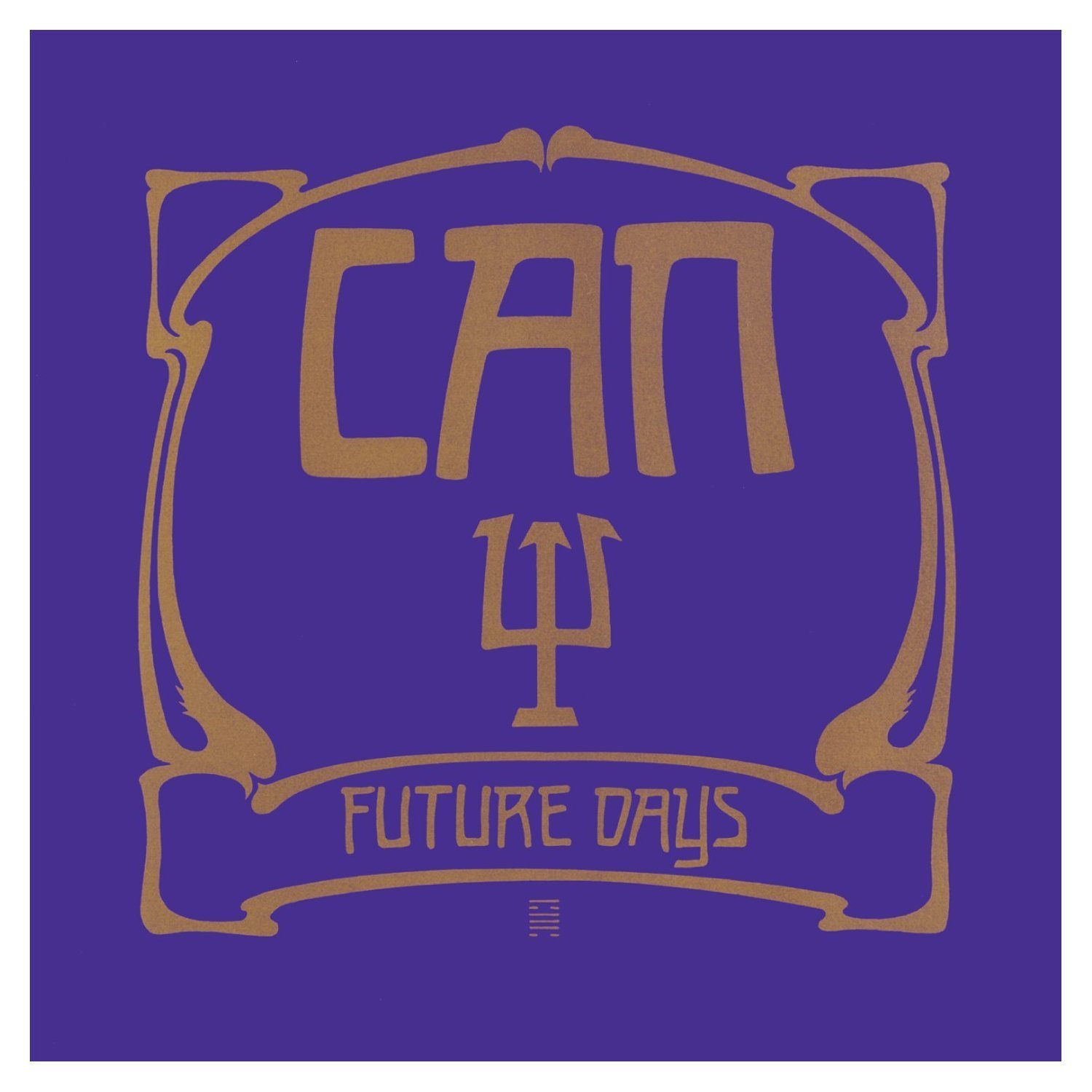
Future Days.
Despite Tago Mago and Ege Bamyasi being referred to as two of the most influential albums ever released, Holger Czukay prefers Future Days. This is the album he calls “my favourite Can album.” It was the third in Can’s golden quartet, and marked a change in direction from Can.
Future Days saw Can’s music head in the direction of ambient music. The music is atmospheric, dreamy, ethereal, melancholy, expansive and full of captivating, mesmeric rhythms. It’s also pioneering and progressive, with elements of avant garde, experimental, psychedelia and rock melting into one. Rather than songs, soundscapes describes the four tracks. Future Days and Bel Air showcase Can’s new sound. Bel Air was the Future Day’s epic. It lasted just over nineteen minutes, and sees can take you on an enthralling musical journey. Just like the rest of Future Days, critics hailed the album a classic.
On its release in August 1973, Future Days was hailed a classic by music critics. The move towards ambient music may have surprised some Can fans. However, Brian Eno was just one artist pioneering ambient music. This move towards ambient music must have pleased Holger’s guru Karlheinz Stockhausen. He must have looked on proudly as Can released the third of a quartet of classic albums. The final album in this quartet, Soon Over Babaluma was released in 1974.
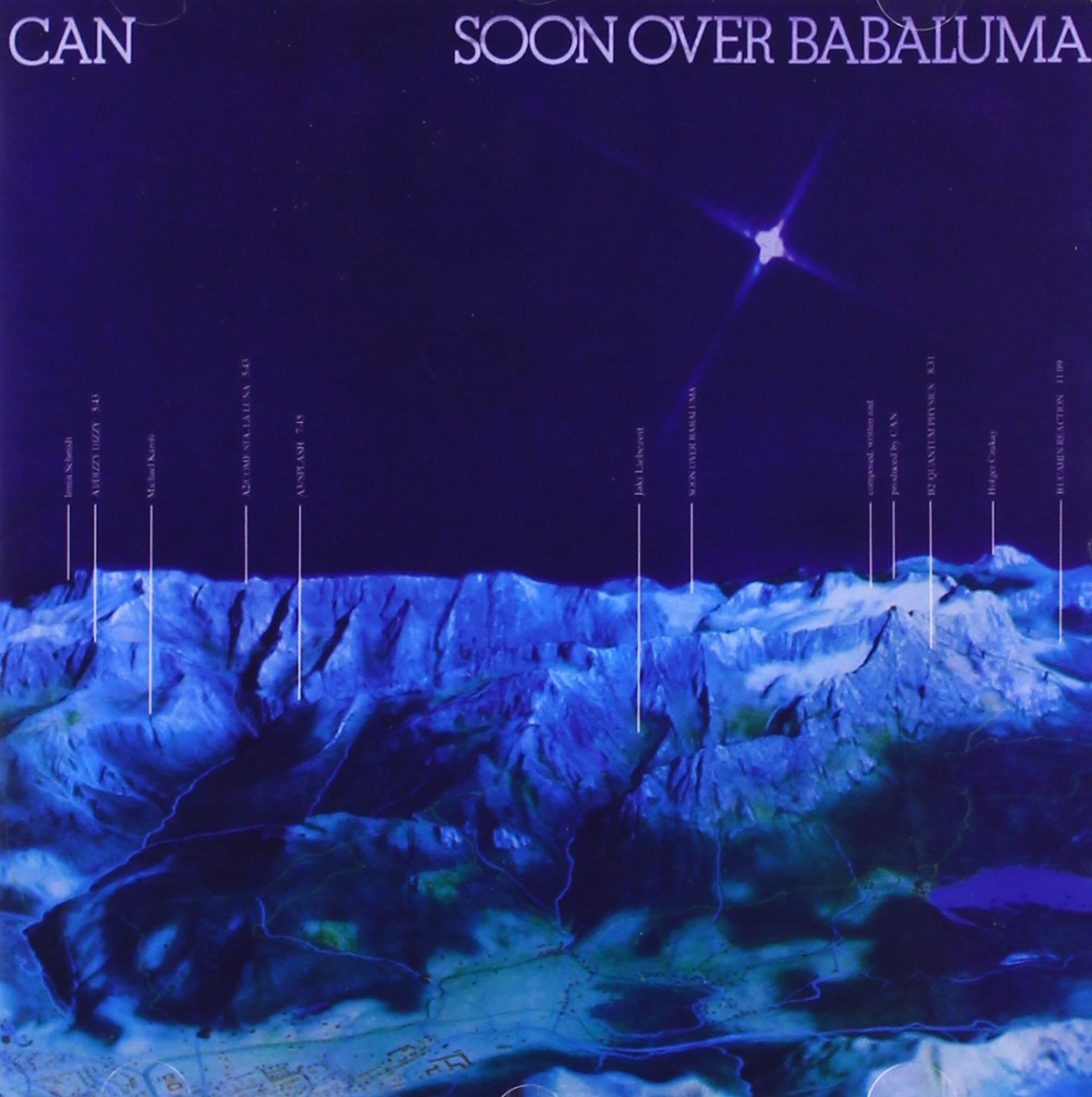
Soon Over Babaluma.
The final album in Can’s golden quartet was released in November 1974. This was Soon Over Babaluma, which was recorded at Inner Space Studios, Munich.
Soon Over Babaluma features five tracks penned and produced by Can. It marked a change in direction for Can. This was their first album without a lead vocalist. During this period, Can had released some of the most groundbreaking music of the late-sixties and early seventies. This continued with Soon Over Babaluma.
Can released Soon Over Babaluma in November 1974. It featured the ambient sound that Can pioneered on their previous album, Future Days. Critically acclaimed, and featuring a myriad of beeps, squeaks and sci-fi sounds, Soon Over Babaluma is like musical journey into another, 21st Century dimension. A musical tapestry where layers of music are intertwined during five tracks, Soon Over Babaluma, which brought to a close the most fruitful period of Can’s career.
Dizzy Dizzy opens Soon Over Babaluma. Moody and atmospheric describes the arrangement. A whispery scat, scratchy strings and drums combine with crystalline, sometimes, wah-wah guitar. Soon, Can are in the groove. From this groove, the song emanates and this is an example of Can’s spontaneous composition. Through jamming, then with Holger editing the end result the song evolves. When he’s finished this is the result, an innovative fusion of musical genres. Everything from ambient, country, electronica, folk, funk, jazz, Kraturock and rock is combine as Can continue their quest to reinvent themselves.
Can spring a series of surprises on Come Sta, La Luna. Driven along by the rhythm section, the arrangement is slow and moody. Harmonies interject, and with the piano adds drama. Then there’s the return of the sinister scat. It’s as if we’re eavesdropping on someone unravelling. Meanwhile sound effects, piano and the broody vocal combine with a myriad of percussion as the arrangement takes on a jazz-tinged, ambient sound. Other times, the music is dramatic, discordant and veers towards folk, jazz and rock. Gypsy violins, melancholy horns and percussion are all thrown into the melting pot, as the music becomes cinematic and theatrical. Multilayered, full of nuances and subtleties, it’s a pioneering, groundbreaking piece of art. Describing this track as just music, doesn’t do it justice.
Splash explodes into life, allowing Can the chance to showcase their versatility. Seamlessly and peerlessly, they combine musical genres. A myriad of musical influences unite. So do a multitude of instruments. Some are transformed. In the hands of Can, their sonic possibilities seem infinite. Instruments are reinvented as Can maraud their way across the arrangement. Driven along by a thunderous rhythm section, grizzled horns, screeching strings, blistering guitars and percussion Can push musical boundaries. Avant-garde, experimental and free jazz join forces with Krautrock and Latin are added to this lysergic, musical pot pourri. Groundbreaking, defiant and bold, Can go where no group dared go before.
Chain Reaction is best described as an eleven minute epic. With a sci-fi, cinematic sound, it’s as if we’re heading on a musical journey to another dimension. Drums pound, synths bubble and searing guitars herald the start of this journey. Can lock into a groove and explore it to its fullest. Crystalline guitars chime, while the drums provide the thunderous heartbeat. Percussion and sci-fi synths augment the arrangement as the arrangement makes fleeting visits to musical genres. Funk, jazz, Krautrock, ambient and rock are all combined. As Can maraud their way through musical genres, blistering mating gun guitar licks are unleashed. Groove laden, edgy, funky, jazz-tinged, pioneering and cinematic this soundscape is all this more.
Quantum Physics closes Soon Over Babaluma. Broody, moody and haunting, it’s akin to a track from a movie soundtrack. Over nine minutes, washes of eerie, haunting synths, ethereal, chilling vocals, crashing cymbals and dramatic drums play their part in the track’s cinematic sound. This could easily be the soundtrack to a film. The music conjures up pictures, that unfold before your eyes. They’re chilling, haunting, eerie, atmospheric and sometimes, sinister. Ambient, minimalist, experimental and post modern describes this track’s cinematic 21st Century sound. This seems a fitting way to end not just Soon Over Babaluma, but Can’s golden period, when they could do no wrong.
When Soon Over Babaluma it was released in November 1974, Soon Over Babaluma it was to critical acclaim. Sadly, the album wasn’t the commercial success that it deserved to be. Instead, it was more of an underground album. However, weren’t alone.
Can followed in the footsteps of a whole host of innovative artisst who didn’t enjoy the commercial success their music enjoyed. Among them are Velvet Underground and Frank Zappa, who had with influenced Can. A small crumb of comfort for Can was that they went on to influence several generations of musicians. There’s a reason for this.
Can were pioneers and the music that they released during the golden quartet was inventive, innovative. The musical revolutionaries pushed musical boundaries to their limits and sometimes beyond during their golden quartet. It ended with Soon Over Babaluma which finds Can fusing elements of ambient, avant-garde, electronic, experimental, free jazz, funk, industrial, jazz, psychedelia and rock on a genre-melting epic. It’s a case of expect the unexpected on an album where musical influences and genres became one on Soon Over Babaluma which marked the end of Can’s golden quartet.
These albums, including Soon Over Babaluma, feature some of the ambitious, progressive and innovative music of Can’s career is why nowadays, they sit proudly at Krautrock’s top table alongside the genre’s other giants including Neu!, Cluster, Harmonia and Kraftwerk.
Cult Classic: Can-Soon Over Babaluma.
CULT CLASSIC: SHINA WILLIAMS AND HIS AFRICAN PERCUSSIONISTS-AFRICAN DANCES.
Cult Classic: Shina Willians and His African Percussionists-African Dances.
By 1979, Afrobeat had grown in popularity in Nigeria, and was influencing and inspiring a number of Western musicians including the legendary vibes player Roy Ayers. He was just one of many musicians who had started to incorporate elements of Afrobeat into his unique and inimitable sound. No longer was it just Western musicians who were influencing their African counterparts like Shina Willians.
It was a two-way street, with African and Western musicians listening to the latest music and using it to inspire their music. One of these albums was Shina Willians and His African Percussionists’ album African Dances, which issued in 1979.
At this time, a musical revolution was taking place in Ghana with musicians combining elements of West African musical genres including highlife and fuji music with American funk and jazz. Playing an important part important part in this new genre which later, became known as Afrobeat, were chanted vocals, percussion and complicated converging rhythms. The result was an irresistible, potent and heady musical brew that later, spread across West Africa.
By the early seventies, Fela Kuti and his band had just returned to Nigeria after a brief stay in America, where they had hurriedly recorded what later became The ’69 Los Angeles Sessions. The album had been recorded quickly, as a promoter had informed the Immigration and Naturalization Service that Fela Kuti and his band had no work permit. Fela Kuti was tipped off that the Immigration and Naturalization Service was about to swoop, and decided to head home to Nigeria.
When Fela Kuti and his band arrived back in Lagos, Nigeria, he decided to rename his group The Afrika ’70. Fela Kuti’s next move was to found the Kalakuta Republic, which was a commune which soon, became home to the many people connected to The Afrika ’70. It also meant that Fela Kuti and The Afrika ’70 were always ready to practise and record music.
Within the Kalakuta Republic was a recording studio where Fela Kuti and The Afrika ’70 could work. By then, Fela Kuti was writing song were the lyrical themes ranged from love right through to the various social issues affecting Nigeria. Despite his concern for his fellow Nigerians, Fela Kuti, who was the leader of Kalakuta Republic, declared independent from the Nigerian State. That was still to come.
Having established the Kalakuta Republic, Fela Kuti and The Afrika ’70 began experimenting musically. They regularly incorporated disparate musical genres into their This new sound was innovative, and also proved to be influential, when Fela Kuti established a new club that he called Afrika Shine.
That was where Fela Kuti and The Afrika ’70 first introduced Afrobeat to Nigeria in 1970. Between 1970 and 1975, Fela Kuti and The Afrika ’70 had a residency at Afrika Shine, in Lagos, and people from all over Nigeria flocked to the club. This included many Nigerian musicians who were inspired by Fela Kuti and The Afrika ’70.
Even after Fela Kuti and The Afrika ’70 completed their five-year residency at Afrika Shine, their music was inspirational. So was the music of the Afrobeat pioneers in Nigeria. It would influence and inspire the next generation of musician including Shina Willians.
By 1979, bandleader, percussionist and vocalist Shina Willians was already an experienced and talented musician when he began work on the album that eventually became African Dances. To record his debut album he brought onboard the creme de la creme of Nigerian musicians.
This included Biddy Wright, Fred Fisher, Prince Bolam, Saliu Alabi and Tutu Shoronmu, Tunde Willimas who were joined by some of Nigeria session player and musicians. The members of this all-stat had backed and played alongside everyone from Fela Kuti, SJOB Movement, Sonny Okoson and King Bucknor. These musicians were christened as Shina Willians and His African Percussionists as they entered Phonodisk Studio, a twenty-four track studio in Ijebu-Igbo, Ogun, Nigeria.
That was where Cunny Jam Wayo, Agboju Logun and Gboro Mi Ro, which were recorded by Shina Willians and His African Percussionists and became African Dances. It featured three timeless genre-melting songs where Shina Willians and His African Percussionists fuse elements of Afrobeat, boogie, disco, electronica and even a hint of psychedelia and soul on what was an ambitious album of groundbreaking and genre-melting music.
This includes the album opener Cunny Jam Wayo which features a rueful, emotive vocal as harmonies, hypnotic and jazz-tinged horns play. Meanwhile, the rhythm section and percussion lock down a groove where Afrobeat and funk combine, on a track that sometimes sounds as if it’s from a lost Blaxploitation film.
The centrepiece to African Dances was the eleven minute disco classic Agboju Logun. It’s best described as call to dance as where dancers give thanks to the disco gods. As they do, the psychedelic sound of taking drums, a mesmeric bass combine with searing guitars, chanted vocals and the fattest of horns. Adding finishing touches is a peerless synth part of Shina Willians and His African Percussionist’s Magnus Opus.
This leaves Gboro Mi Ro which closes African Dances. It gradually unfolds with elements of Afrobeat and funk combining with soulful harmonies and Shina Willians’ impassioned vocal. Blazing drums, pounding drums and crashing cymbals are added to this mesmeric and irresistible musical stew which closes African Dances on a high.
Despite the quality of music on African Dances, Shina Willians and His African Percussionist’s debut album wasn’t a hugely successful album when it was released in 1979 by Phonodisk. African Dances sold steadily but wasn’t the success they had hoped.
That was a great shame as African Dances veered between a feegood sound to joyous, uplifting and irresistible to beautiful, soulful and dancefloor friendly. The members of Shina Willians and His African Percussionist’s had combined the best of American and American music, and in doing so, created an album that was funky, melodic, memorable and guaranteed to get any party started. Sadly, it was a case of what might have been for Shina Willians and His African Percussionist
If only record buyers had given Shina Willians and His African Percussionist’s cult classic a chance, they would’ve discovered an album full of floorfillers that is akin to an irresistible call to dance.
Cult Classic: Shina Willians and His African Percussionists-African Dances.
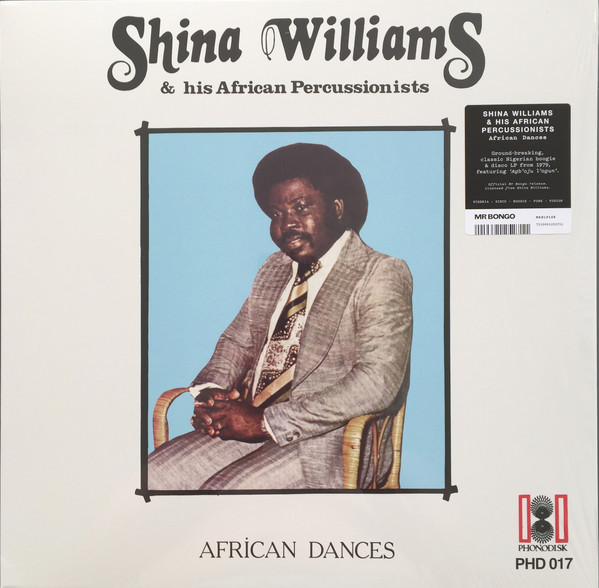
CULT CLASSIC: RYO FUKUI-MELLOW DREAM.
Cult Classic: Ryo Fukui- Mellow Dream.
Ryo Fukui, who was born in Biratori, Hokkaido, in Japan, on the ‘1st’ of June 1948, was a late starter when it came to the piano and unlike most of the musicians he encountered during a career that spanned five decades, had never learnt to play the instrument as a child. Instead, Ryo Fukui had just turned twenty-two in 1970, when he announced that he wanted to learn to play the piano, and was going to teach himself.
If Ryo Fukui’s friends thought that his decision to teach himself to play the piano was bound to end in tears, they were soon proved wrong as he turned out to be a talented pianist. So much so, that the self-taught pianist was good enough to embark upon a career as a professional musician, playing the music that he loved…jazz.
As September 1976 dawned, twenty-eight year old Ryo Fukui was living in Sapporo, where he led his own trio who were a familiar sight in local jazz clubs. Ryo Fukui had also just signed to Trio Records, and was preparing to record his debut album Scenery.
Scenery.
For his debut album Ryo Fukui had written the title-track Scenery, and the rest of the album comprised cover versions. This included Jimmy Van Heusen and Johnny Burke’s It Could Happen To You, Billy Eckstine’s I Want To Talk About You, Hideo Ichikawa’s Early Summer, Ann Ronell’s Willow Weep For Me and Joseph Kosma and Jacques Prévert’s Autumn Leaves. These tracks became Scenery, which Ryo Fukui planned to record at Yamaha Hall, Sapporo.
The recording of Scenery took place at Yamaha Hall, Sapporo, on the ‘7th’ of September 1976, pianist Ryo Fukui leading a trio that featured drummer Yoshinori Fukui and bassist Satoshi Denpo. Taking charge of production were Masataka Ito and Ryo Fukui who worked well together, and Scenery like many jazz albums was recorded quickly, with just a day spent laying down the tracks. This was how countless classic albums had been recorded during the fifties and sixties.
Scenery was released in late 1976, and was regarded as an important album by Japanese jazz critics, who called the album a game-changing release that was one of the finest of the seventies. Despite receiving widespread critical acclaim in Japan, Scenery passed American jazz fans by, and they missed out on hearing what was a remarkable debut album.
Ryo Fukui opens his 1976 debut album Scenery with It Could Happen To You, which was the first of four oft-covered classics that he set about reinventing. It was a similar case on I Want To Talk About You, Willow Weep For Me and Autumn Leaves where with the help of drummer Yoshinori Fukui and bassist Satoshi Denpo, pianist Ryo Fukui ensures that these classics take on new life and meaning. This isn’t easy given who often these tracks had been recorded by 1976. However, the twenty-eight year old pianist who had only been playing for six years by the time he recorded Scenery plays with maturity that belies his relative inexperience.
For much of the time, his playing is smooth, subtle and effortless as his fingers glide and flit across the piano keyboard as he plays with fluidity ensuring the songs swing. Other times, he plays with speed and energy, and isn’t afraid to improvise and innovate. Stylistically, Ryo Fukui sometimes sounds like Bill Evans, and especially during the energetic modal rework of Early Summer. By then, Ryo Fukui and his trio play with a newfound urgency, before closing the album with the title-track Scenery. It was Ryo Fukui’s only original composition on Scenery and is a reminder of a talented bandleader, composer and pianist as he began his career with game-changing album which is a glorious fusion of bop, cool jazz and modal jazz.
Buoyed by the critical reaction and success of Scenery, Ryo Fukui continued to hone his skills as a pianist, and before long, he was already beginning work on his sophomore album Mellow Dream.
Mellow Dream.
While Scenery only featured one Ryo Fukui composition, he wrote half of the tracks on his much-anticipated sophomore album Mellow Dream. This included the title-track Mellow Dream, Baron Potato Blues and Horizon, which were joined by covers of Victor Young’s My Foolish Heart, Johnny Burke’s What’s New and Richard Rodgers’ My Funny Valentine. Mellow Dream was a mixture of the new music and much-loved classics and just like Scenery, was recorded at Yamaha Hall, in Sapporo.
This time, Masataka Ito took charge of production when Mellow Dream was recorded on August the ’17th’ and ’18th’ 1977. Joining pianist Ryo Fukui was drummer Yoshinori Fukui and bassist Satoshi Denpo, which was the same lineup of the trio that featured on Scenery. They took just two days to record Mellow Dream, which was mixed during two days in September 1977 and was ready for release.
Mellow Dream was released in late 1977, to plaudits and praise, with critics calling the album a fitting followup to Scenery. By then, Ryo Fukui had a matured not just as a pianist and bandleader, but as a composer.
The twenty-seven year old’s pianist sophomore album Mellow Dream, found Ryo Fukui continuing to combine and explore bop, cool jazz, modal jazz, post bop and even a hint of blues on what was a much mellower, soulful and ruminative album that allowed time to reflect, especially on Mellow Dream and the reinvention of My Foolish Heart. Other times, the music on Mellow Dream packs a punch and swings as Ryo Fukui grabs Baron Potato Blues and Horizon by the scruff of the neck. His fingers fly across the piano keyboard as he plays with speed and fluidity as the rest of the trio match him every step of the way. Meanwhile, the music on Mellow Dream is an emotional roller coaster as it veers between vibrant to joyous and melancholy and rueful. Ryo Fukui it seems is a man for all seasons on his sophomore album Mellow Dream.
Following the success of his sophomore album Mellow Dream, Ryo Fukui continued to hone his skills and mature and improve as a musician, but made the decision to concentrate playing live. This included in the Slowboat jazz club in Sapporo, which Ryo Fukui owned and ran with his wife Yasuko. With Ryo Fukui concentrating on playing live, it was eighteen years before he returned with a new album.
Ryo Fukui returned with My Favorite Tune in 1995, and followed this up with Ryo Fukui In New York in 1999. It was another sixteen years before Ryo Fukui released A Letter From Slowboat in 2015, which proved to be his swan-song.
Sadly, Ryo Fukui passed away on March the ‘15th’ 2016, aged just sixty-seven. That day Japanese jazz was in mourning at the loss of one of its great pianists, who although self-taught was a masterful performer who played with grace, fluidity and invention during a career that spanned five decades.
Although Ryo Fukui enjoyed a long career, he only released five albums, including his cult classic Mellow Dream which like his debut album Scenery are a reminder of bandleader, composer and pianist Ryo Fukui who sadly, was and still is one of jazz’s best kept secrets outside of his native Japan. Hopefully, that will change and Ryo Fukui’s music will be discovered by the new and wider audience it deserves.
Cult Classic: Ryo Fukui- Mellow Dream.
BOBBIE GENTRY-THE DELTA SWEETE.
Bobbie Gentry-The Delta Sweete.
Label: UMC.
Format: CD.
Less than three weeks after Bobbie Gentry released Ode To Billie Joe as a single on the ‘10th’ of July 1967 the song topped the US Billboard 100 and US Country charts. The song was penned by Bobbie Gentry and was the twenty-five year old’s debut single as a solo artist.
Buoyed by the success of the single, Capitol Records released Bobbie Gentry’s debut album Ode To Billie Joe on August the ’21st’ 1967. It reached number one on the US Billboard 200 and US Country charts and was certified gold. This was something to celebrate.
In Houston, Mississippi, it was announced that September ’30th’ 1967 was Bobbie Gentry Day. The singer travelled home a week after Ode To Billie Joe ended its four-day run at number one. Bobby Gentry was greeted by 5,000 people, and the same day, Life magazine interviewed her for their November issue. It would feature a photograph of her standing on the Tallahatchie Bridge which Ode To Billie Joe had made famous.
A month later, Bobby Gentry returned to California where and began working on her sophomore album. This became the concept album The Delta Sweete which was recently reissued by UMC as a two CD set.
For the followup to Ode To Billie Joe, Bobby Gentry decided to write a concept album which was based on modern life in the Deep South. The eight songs documented her childhood and are essentially snapshots of both her home and church life. This includes Reunion and Sermon. For the other songs on the album, Bobby Gentry thought back to the music she heard growing up.
She remembered hearing blues and country songs growing up in Mississippi and decided to cover four of them. This included Mose Allison’s Parchman Farm, John D. Loudermilk’s Tobacco Road, Doug Kershaw’s Louisiana Man plus Luther Dixon and Al Smith’s Okolona River Bottom Band. These songs and the eight originals were recorded during the half of 1967 and featured on The Delta Sweete.
Just like Ode To Billie Joe, The Delta Sweete was produced by Kelly Gordon and recorded at Capitol Recording Studio, in Hollywood. Accompanying Bobby Gentry were some top session musicians including members of the Wrecking Crew. Drummer Hal Blaine and percussionist Earl Palmer were joined by a horn and string section as Bobby Gentry recorded the twelve tracks over a five days in 1967.
The first session took place on July the ‘16th’ 1967 when Penduli Pendulum was recorded. Nearly three months later, Okolona River Bottom Band and Courtyard were recorded on the ‘5th’ of October by Bobby Gentry. She retrained to the studio on November the ‘4th’ and cut Big Boss Man and Parchman Farm. Just a week later, on November the ‘11th Reunion, Mornin’ Glory, Jessye’ Lisabeth and Refractions were recorded. This was Bobby Gentry’s most productive day. A month later on December the ‘12th’ she returned and laid down her vocals for Tobacco Road and Louisiana Man and her sophomore album was finished.
It was decided to call the album The Delta Sweete.The Sweete in the album title was a play on words in two ways. Where Bobbie Gentry grew up, a woman with her Southern Belle good looks would be called “sweete.” The music on the concept album was also a suite of songs. Some thought had gone into the album title and the album cover.
For the album cover, a double exposure of a black and white close up of Bobby Gentry’s face was taken by George Fields. It was then superimposed over a colour photo of her grandparent’s farm where she grew up. The result was an expressive and poignant album cover that was perfect for the music on The Delta Sweete.
Just two months after Bobbie Gentry had finished recording The Delta Sweete, it was released on the ‘16th’ of February 1968. Critics were won over by the album the album’s swampy and folk-infused sound that was mixture of country, pop and blues. There’s also diversions via chamber pop, psychedelia, soul and the Nashville Sound on The Delta Sweete which critics thought would be a commercial success.
That was despite the lead single Okolona River Bottom Band stalling at fifty-four in the US Billboard 100 in 1967. This was a disappointment. It was hoped it was a blip and having chosen the wrong single.
Then when The Delta Sweete was released, it stalled at just 132 on the US Billboard 200 but reached twenty-six on the US Country chart. This was a small crumb of comfort, but there was no gold disc for Bobbie Gentry’s first concept album.
The second single Louisiana Man reached sneaked into in the US Billboard 100 at number 100 and reached seventy-two in the US Country charts. This wasn’t the success that Bobbie Gentry and executives at Capitol Records had been hoping for.
Given the success of Ode To Billie Jo, the commercial failure of The Delta Sweete surprised many people. Especially given the quality of the music on the album which showcased a talented singer, songwriter and storyteller who painted pictures with her lyrics.That was the case on Bobbie Gentry’s sophomore album.
The Delta Sweete opens with one her eight new compositions, the swampy Southern sound of Okolona River Bottom Band. It gives way to the blues Big Boss Man which in Bobby Gentry’s hands is occasionally bawdy and tinged with innuendo.
Reunion finds Bobby Gentry going back to her childhood as she recreates a family arguing at the dinner table. At one point, she even adds a proto rap as she paints pictures of growing up in the Deep South. Then she delivers a despairing version of the chain-gang lament Parchman Farm, which is another of the four songs she heard growing up. It fits well with the rest of the album.
Very different is the sensuous sounding Bobby Gentry composition Mornin’ Glory. It’s followed by another of her songs Sermon, which was inspired by the gospel song Run On. Somehow, she makes song sound both ominous and strangely uplifting.
Bobbie Gentry delivers a filmic cover of Mornin’ Glory, and is accompanied by strings and a Mariachi band. They play their part in song’s bittersweet and wistful sounding song. Penduli Pendulum is a lysergic sounding track while Jesse’ Lisabeth is a heartfelt and emotive folk fable that brings about a sense of apprehension. One of Bobbie Gentry’s finest compositions is Refractions, a thoughtful sounding chamber pop song about a crystal bird that is unable to land because its legs are broken.
While f Bobbie Gentry’s cover of Louisiana Man is well done, it seems to be the odd man out on this concept album. One can’t help but wonder does it deserve its place on The Delta Sweete? It closes with Courtyard a sad and thought-provoking song about a woman who feels stifled by her partner and she struggles with to cope with living with a man who makes promises he doesn’t keep. Bobby Gentry has kept one of the best until last.
Sadly, never came close to matching the success of Bobbie Gentry’s debut album The Delta Sweete. That doesn’t make it a bad album. It was well received upon its release and in many ways this concept album is oft-overlooked and under-appreciated.
It’s been remixed from the original master tapes on disc one of the newly remastered two CD set of The Delta Sweete. There’s also five bonus tracks which include alternate takes and demos. They show how the tracks started life and then as they started to take shape. Then on disc two, there’s the original mono version of the album where Bobbie Gentry’s vocal sits proudly out front playing a starring role. Some people will prefer the mono mix. It’s a case of of personal preference. Especially since the remastered album has been remixed. For many purists that will be a no-no as they prefer to hear the album that was recorded I’m 1967.
The newly remixed album allows the listener to hear subtleties and nuances that they may not have heard on the original album. It’s an album where strings and horns were used effectively throughout the album and just like Bobbie Gentry’s vocal their importance and quality are reinforced on the newly remixed version of The Delta Sweete.
It was a fitting followup to Ode To Billie Jo which was the most successful album of her career. When she was recording The Delta Sweete, Bobbie Gentry was given full creative control by Capitol Records and this paid off given the quality of the album she recorded with producer Kelly Gordon. Sadly, it wasn’t a commercial success, and it was a case of what might have been for Bobbie Gentry?
When asked about the commercial failure of the album, she said: “I didn’t lose any sleep over it. I’ve never tried to second-guess public taste. If I were just a performer and not a writer, I might have felt more insecure about the whole thing.”
Bobbie Gentry’s career continued and although she released six solo albums and one with Glen Campbell, The Delta Sweete is nowadays regarded as the finest album of her career.
The Delta Sweete was the album that got away for Bobbie Gentry. If it had matched the success of Ode To Billie Jo she could’ve gone on to become one of the most successful female singer-songwriters of the late-sixties and early seventies.
Fifty-two years later, and The Delta Sweete is regarded as Bobbie Gentry’s finest hour. It’s an oft-overlooked timeless and cinematic concept album where Bobbie Gentry takes the listener on a journey to the Deep South and paints pictures across the suite of songs that is her Magnus Opus, The Delta Sweete.
Bobbie Gentry-The Delta Sweete.
CULT CLASSIC: CARL PERKINS-ON TOP.
Cult Classic: Carl Perkins-On Top.
By the time Carl Perkins signed to Sam Phillips’ Sun Records in 1954, he had already been a professional musician for eight years. His career began in 1946, when he was fourteen and still living in Tiptonville, Tennessee, where his parents worked as sharecroppers.
Life was tough for Buck and Louise Perkins, who spent twelve to fourteen hours each day toiling in the fields. Despite working such long days, the Perkins family lived in poverty. To try to make life easier for his family, six-year-old Carl Perkins joined his parents in the cotton fields during the school holidays. After the first day, he knew how hard his parents worked for so little. Carl Perkins was exhausted and his reward for a day in the cotton fields was just fifty cents which he gave to his parents.
After that, Carl Perkins spent every school holiday in the cotton fields, working from dawn to dusk dawn. By the time he was a teenager, he promised himself that he one day, sooner, rather than later, he would escape from the grinding poverty of life in the cotton fields. Offering him an escape from poverty was music.
The young Carl Perkins was introduced to music by the Grand Ole Opry, which he heard on his father’s radio. Carl Perkins listened intently to the music, and one night, asked his father if he could have a guitar? With money tight, there was no way the Perkins family could afford a guitar, so he had to make do with a homemade guitar which his father made out of a cigar box and broomstick. This was enough to get Carl Perkins started, and allow him to learn the basics of the guitar.
Later, Buck Perkins bought a Gene Autry model guitar from a neighbour who had fallen on hard times. They were grateful for the couple of dollars they got for the old guitar. Carl Perkins didn’t care that the guitar had seen better days. At last, he had his first real guitar.
Not long after this, Carl Perkins met John Westbrook, an African-American field worker who he called Uncle John. He took Carl Perkins under his wing, and taught him blues and gospel. Uncle John was a good teacher, and Carl Perkins was a willing pupil, who came on leaps and bounds.
Around this time, Carl Perkins was asked to join the Lake County Fourth Grade Marching Band. There was a problem though, the Perkins family couldn’t afford the uniform. Fortunately, Lee McCutcheon the lady who organised the Band gave Carl Perkins the uniform he needed and he joined Band.
In late 1946, Carl Perkins and his brother Jay made their professional debut at the Cotton Boll tavern on Highway 45, which was twelve miles south of Jackson. At first, the Perkins brothers played on Wednesday night, but soon, they were playing further afield at the Sand Ditch tavern, which is near the western boundary of Jackson. Both taverns had reputations as places where trouble could break out all of a sudden, but the Perkins brothers proved a popular draw.
As 1947 dawned, the Perkins family were on the move. They left Lake County, Tennessee and settled in Madison County, Tennessee. Over the next couple of years, Carl and Jay Perkins continued to play further afield. They were a popular draw, but Carl Perkins felt their sound was incomplete. What he felt he needed was a bassist, and Carl Perkins recruited his brother Clayton on standup bass. At last, the band was complete and went from strength to strength.
By the late forties, Carl Perkins was playing on WTJS, which was the local radio station in Jackson. This lead to an appearance on another radio program, Hayloft Frolic, where Carl Perkins played a couple of songs, including Talking Blues. Sometimes, Carl Perkins took to the stage with the Tennessee Ramblers, which augmented his income.
Still, though, he was only a part-time musician and worked during the day in various jobs, including the cotton fields. However, what Carl Perkins wanted was to become a full-time professional musician.
This came about not long after his marriage to Valda Crider in 1953. By then, Carl Perkins was working in bakery, and one day, he was told that his hours were being cut and he would be working part-time. When his wife heard this, she encouraged Carl Perkins to start playing the taverns on a full-time basis. This was the encouragement that he needed and he embarked upon his career as a professional musician.
A turning point for Carl Perkins was hearing Elvis Presley, Scotty Moore and Bill Black’s newly released Blue Moon of Kentucky in July 1954. Upon hearing the song, Carl Perkins told Valda: “there’s a man in Memphis who understands what we’re doing. I need to go see him.” Not only did he journey to Memphis, but this resulted in him auditioning for Sam Phillips’ Sun Records.
Five months later, and Carl Perkins released his debut single Movie Magg which he had written as a thirteen year old. On the B-Side was Turn Around which was another Carl Perkins composition. Movie Magg released on the Sun Records’ imprint Flip on March ‘19th’ 1955. While it wasn’t Carl Perkins’ most successful single, the B-Side gave him a regional hit single. So did Gone Gone Gone in October 1955. However, around this time, Carl Perkins wrote one of the most famous songs in music.
This was Blue Suede Shoes, which Carl Perkins wrote in autumn 1955. When he completed the song, which was recorded on December ’19th’ 1955. Little did he know that it would change his life forevermore. When January Blue Suede Shoes was released on January the ‘1st’ 1956, it gave Carl Perkins the biggest hit of his career. It reached number one on the US Billboard Country charts, two on the US Billboard 100 and three on the US R&B charts. For Carl Perkins this was a game-changer.
It should’ve been, but disaster struck after a show in Norfolk, Virginia on March ’21st’ 1956. The Perkins Brothers Band was heading for New York, where they were due to appear on Perry Como’s NBC-TV show the following day. However, the car they were travelling in hit the back of a pickup truck and driver of the pickup truck was declared dead at the scene of the accident.
The two Perkins’ brothers were badly hurt in the accident. WS Holland, the Band’s drummer found Carl Perkins lying facedown in the water. He was taken to hospital and was discovered he had a broken collar-bone, fractured three vertebrae in his neck and had lacerations all over his body. Carl Perkins lay unconscious for a day. Meanwhile, doctors discovered that brother Jay Perkins had fractured his neck and suffered various internal injuries. Sadly, he never fully recovered and died two years later in 1958. March ’21st’ 1956 was a day that Carl Perkins would never forget.
It was only later that Carl Perkins discovered that Sam Phillips was going to present with him with a gold disc for Blue Suede Shoes on Perry Como’s NBC-TV show. By then, Blue Suede Shoes had sold over 500,000 copies and transformed Carl Perkins’ career.
On April ‘21st’ 1956, Carl Perkins returned to recording and touring. Boppin’ The Blues was released in May 1956, and reached number seven on the US Billboard Country charts, seventy on the US Billboard 100. Later in 1956, Boppin’ The Blues joined Blue Suede Shoes on Carl Perkins debut album, Dance Album Of… Carl Perkins. This was the first of two albums Carl Perkins released during 1956.
Carl Perkins’ next single was Dixie Fried, which was released in August 1956, and reached number ten in the US Billboard Country charts. Dixie Fried was the third hit single Carl Perkins had enjoyed during 1956, and as 1957 dawned, the future looked bright for the twenty-five year old.
Sadly, Carl Perkins was unable to replicate the success of 1956, and he only enjoyed one hit single during 1957, Your True Love. It reached number thirteen in the US Billboard Country charts, and took Carl Perkins number of hits to four. Carl Perkins was hoping he would enjoy a change of fortune during 1958.
On January ‘25th’ 1958 Carl Perkins signed to Columbia Records, after spending three years on Sam Phillips’ Sun Records. It was the start of a new era for Carl Perkins, who in June 1958, recorded his debut album for Columbia Records Whole Lotta Shakin’.
Whole Lotta Shakin’.
For his first album for Columbia Records, the majority of the tracks that Carl Perkins chose were rock ’n’ roll standards, This included Whole Lotta Shakin’ Goin On, Tutti Frutti and Shake Rattle And Roll which joined the country blues of Sittin’ On Top Of The World. It was joined by Ready Teddy, Long Tall Sally, That’s All Right, Where The Rio De Rosa Flows, Good Rockin’ Tonight, I Got A Woman, Hey Good Lookin’ and Jenny Jenny. These tracks became Whole Lotta Shakin’, which was recorded during two days in June 1958.
When Carl Perkins joined his band entered the studio in early June 1958, he was sporting a new Fender Stratocaster, which he intended to play on Whole Lotta Shakin’. As the tapes ran, Carl Perkins and his new Fender Stratocaster became one, as he and his band recorded the ten tracks that became Whole Lotta Shakin’ over a two-day period. After that, Carl Perkins found time to record another four tracks which Sun Records would later release as singles.
With Whole Lotta Shakin’ complete, the album was sent to Columbia, who scheduled a release date for the autumn of 1958. That was when record buyers would hear what was one of the greatest albums Carl Perkins would record.
Whole Lotta Shakin’ features some of the truest rock ’n’ roll ever committed to vinyl. It’s essentially a rock ’n’ roil masterclass from twenty-six year old Carl Perkins. Proof of that is Whole Lotta Shakin’, Tutti Frutti, Shake Rattle And Roll, That’s All Right and I Gotta Woman. Critics upon hearing the album thought that Whole Lotta Shakin’ marked a coming of age for Carl Perkins who was about to step out of Elvis Presley’s shadow. Critics thought that it would be his biggest selling album.
When Whole Lotta Shakin’ was released in the autumn of 1958, incredibly, the album failed to even trouble the lower reaches of the charts. Record buyers missed out on a future rock ’n’ roll classic. For Carl Perkins the commercial failure of Whole Lotta Shakin’ must have been hugely frustrating, given the quality of music on the album.

Carl Perkins’ fortunes improved later in 1958, when he released Pink Pedal Pushers as a single. It reached seventeen on the US Billboard Country charts and ninety-one on the US Billboard 100. Little did he know this was the last hit single he would enjoy until 1966.
By then, Carl Perkins had visited Britain in 1964 sharing a bill with Chuck Berry, Carl had been greeted with cries of “King Of Rock”. After one London show, his agent Don Arden told him four friends wanted to see him. When he opened the door, Carl Perkins was greeted by The Beatles, who took him to a recording studio, where the Fab Four recorded Matchbox. When it was released in America, the Carl Perkins composition reached number one.
The Beatles were just the latest band to cover Carl Perkins’ songs. By then, everyone from The Beatles and Elvis Presley, Johnny Cash, June Carter, Nancy Sinatra, Lee Hazelwood had covered his song. This provided him with a steady income stream given the hits had dried-up.
This changed in 1966 when Country Boy’s Dream reached twenty-two on the US Billboard Country charts. It looked as if Carl Perkins was back. The following year, Shine, Shine, Shine reached forty on the US Billboard Country charts. Although it was only a minor hit, Carl Perkins was back where he belonged, in the charts.
King Of Rock.
After enjoying two hits in two years, 1968 seemed the perfect time for CBS to release King Of Rock, a sixteen track compilation. It was compiled by David Howells and featured several singles and B-Sides. This included hits like 1958 hit Pink Pedal Pushers and the B-Side Jive After Five and 1959s Pointed Toe Shoes and the flip-side Highway Of Love. They were joined by singles that failed to chart including 1958s Levi Jacket (And A Long Tail Shirt) and Pop, Let Me Have The Car; 1960s Honey, Cause I Love You and Just For You and L-O-V-E-V-I-L-L-E and Too Much For A Man To Understand; 1962s Twister Sister and Hambone and Hollywood City and The Fool I Used To Be and 1963s Forget Me (Next Time Around). Completing King Of Rock was This Life I Have, which covered the first five years of Carl Perkins’ career at Columbia Records.
For fans of Carl Perkins, King Of Rock gave them an overview of his career between 1958 and 1963. It featured hits, hidden gems, B-Sides and the ones that got a way. King Of Rock showcases the considerable talents of the man who would later be crowned the King of Rockabilly.
Just like Whole Lotta Shakin’, King Of Rock failed to chart upon its release in 1968. This was becoming a regular occurrence, with none of Carl Perkins albums reaching the charts. This changed in 1969.
Carl Perkins’ Greatest Hits.
In 1969, the King of Rockabilly entered the studio to record what became Carl Perkins’ Greatest Hits. It found Carl Perkins re-record Blue Suede Shoes, Match Box, Mean Woman Blues, Turn Around, Folsom Prison Blues and Daddy Sang Bass. They joined Boppin’ The Blues, Honey Don’t, That’s Right, Your True Love and Restless on Carl Perkins’ Greatest Hits.
When Carl Perkins’ Greatest Hits was released in 1969, it came with a forward from Johnny Cash, who grew up not far from him. The pair was so close that Johnny Cash says in the forward: “I consider him a brother”and encourages him: “to keep singin’ old songs that you know.” That was what he did on Carl Perkins’ Greatest Hits. He recorded ten familiar songs for the album. Some given a makeover, while he stayed true to the original on others. This resulted in an album that found favour with critics and record buyers.
Before the release of Carl Perkins’ Greatest Hits in 1969, Restless was released as a single and reached twenty on the US Billboard Country charts. This was Carl Perkins since Your True Love in 1957, which reached thirteen on the US Billboard Country charts. Things were looking up Carl Perkins.
Upon the release of Carl Perkins’ Greatest Hits in 1969, the album reached thirty-two in the US Billboard Country charts. At last, one of Carl Perkins had charted. With the monkey was off his back, Carl Perkins began work on another new album.
On Top.
This was On Top, which found Carl Perkins cover an eclectic selection of songs. This ranged from blues-rock to country and soul, and included songs by Buddy Holly’s I’m Gonna Set My Foot Down and Brown Eyed Handsome Man; Ronnie Self’s A Lion In The Jungle; Jimmy Reed’s Baby, What You Want Me To Do? and Eddie Polo’s Riverboat Annie. They were joined by Champaign, Illinois which Bob Dylan and Carl Perkins wrote. Carl Perkins also wrote Soul Beat, Power Of My Soul and arranged C.C. Rider with Bill Denny. These ten songs became On Top.
When On Top was released later in 1969, it was hailed as one of the best albums of the rock ’n’ roll revival. On Top featured some of the best material Carl Perkins had released in recent years. Among the highlights were the blues of Baby, What You Want Me to Do and the , rock ’n’ roll of C.C. Rider and Brown Eyed Handsome Man. They joined Champagne Illinois which was Carl’s collaboration with Bob Dylan, and two of the new compositions from Carl Perkins, Soul Beat and Power Of My Soul. On Top was one of Carl Perkins’ strongest albums of recent years, and received praise and plaudits from critics. The King of Rockabilly’s comeback continued.
On Top reached forty-two in the US Billboard Country charts later in 1969. This meant that Carl Perkins had enjoyed two successful album in 1969 already. Things got even better when Sun released Original Golden Hits and it reached forty-three in the US Billboard Country charts. Carl Perkins the King of Rockabilly, was now the comeback king.
The comeback King Carl Perkins released Greatest Hits and On Top during 1969. They featured some of the best music that he released during his Columbia Records’ years. However, not all the records he released were commercially successful and while Greatest Hits and On Top charted in the US Country charts they didn’t crossover to the US Billboard 200.
Despite that, Carl Perkins was still a popular draw in Britain and America during the Columbia Records’ years . By then, the King of Rockabilly had also influenced a generation of artists and bands, who had recorded Carl Perkins’ songs. Everyone from The Beatles, Elvis Presley, Johnny Cash, June Carter and Lee Hazelwood had covered Carl Perkins songs. These artists, especially The Beatles, championed Carl Perkins’ music and intruded it to new audience.
They followed the career of the King of Rockabilly up until his death on January ’19th’ 1998. By then, Carl Perkins had won a Grammy Award and had been inducted into the Rock ’N’ Roll, Rockabilly, Memphis and Nashville Halls Of Fame. Carl Perkins had come a long way from when he first picked up a guitar in Tiptonville, Tennessee. This was how Carl Perkins escaped the poverty of his early years, and went on to live the American Dream.
Nowadays, Carl Perkins is regarded as musical royalty, and one of the founding fathers of modern music. While he recorded some of his best known music during his three years Sun Records, Carl Perkins recorded some of his best and most underrated music during his Columbia Records’ years including On Top, a country music cult classic.
Cult Classic: Carl Perkins-On Top.
CULT CLASSIC: GUITAR SLIM GREEN’S “STONE DOWN BLUES” WITH JOHNNY AND SHUGGIE OTIS.
Cult Classic: Guitar Slim Green’s “Stone Down Blues” With Johnny and Shuggie Otis.
Guitar Slim Green was never the most prolific of musicians despite his career lasting four decades. However, during that period, he only released a handful of recordings. This included his one and only album, Stone Down Blues, which was released in 1970 and featured Johnny and Shuggie Otis. Sadly, five years later, the multitalented Guitar Slim Green passed away on September the ‘28th’ 1975 aged just fifty-five. His story began in Oklahoma in 1920.
That’s where Guitar Slim Green was born Norman G. Green on 25th July 1920. Growing up, he played guitar and dreamt of making a living as a musician. However, that was just a dream. Even when he moved to Las Vegas in his early twenties.
Las Vegas was home to Norman G. Green until 1947. In 1947, he moved to California where his dreams came true. Norman G. Green became a musician and Guitar Slim Green was eventually born.
Like many other guitarists, his inspiration was one of music’s most flamboyant showmen, T-Bone Walker. He had pioneered the electric guitar and through listening to his playing Norman G. Green developed his own distinctive style and this resulted in him making a breakthrough.
This came when he got the chance to work with J.D. Nickelson and he featured on the singles, Strange Woman Blues and Bouncing Boogie. They were released on Courtney Records. Not long after this, Norman G. Green released his debut single.
Alla Blues was credited to R. Green and Turner, and released on the J&M Fullbright label. This song would eventually become a blues standard.
The followup to Alla Blues was Baby I Love You, which was released on the Murray label. It was credited to R. Green, and essentially was, Norman G. Green’s debut solo single. The two singles were well received, and showed the future Guitar Slim Green evolving from a country blues singer, to a much more urban, contemporary sound.
Having released his debut single, Guitar Slim Green moved to Fresno, where he played alongside Jimmy McCracklin and L.C. Robinson. Then in 1957, Norman headed to Los Angeles, where he formed his own band.
In Los Angeles, Guitar Slim Green and his band The Cats recorded two singles during 1957. This included My Woman Done Quit Me, where Guitar Slim Green takes charge of the vocal. Both singles were produced by Johnny Otis, who would reenter Guitar Slim Green’s life in 1970. Before that,he had more music to make.
Another two years passed before Guitar Slim Green released another single. Scratch My Back was released in 1959, and would be the last single he released until 1968.
Having been away from a recording studio for nine years, Guitar Slim Green was keen to record some new music. He recorded singles on the Gee Note and Solid Soul labels but the singles sunk without trace. Guitar Slim Green’s career looked as if it was at a crossroads. His music critics remarked, hadn’t evolved. What Guitar Slim Green needed, was someone who could get his career back on track.
Luckily, Johnny Otis was about to reenter Guitar Slim Green’s life. Johnny Otis had turned his back on music for much of the sixties. Instead, he had been concentrating on Democratic politics and community projects. However, he still kept practising and by the end of the decade was ready to make a comeback.
Encouraged by his friend Frank Zappa, Johnny Otis returned to music. He signed to Kent and recorded two albums, Cold Shot and Snatch and The Poontangs. He also signed Preston Love to Kent, and produced his Omaha Bar-B-Q album. The other artist Johnny Otis signed to Kent was Guitar Slim Green.
Although Guitar Slim Green had released a number of singles, he had never released an album. This was about to change. Johnny Otis and Guitar Slim Green set about to write material for Guitar Slim Green’s comeback album.
Eventually, Guitar Slim Green and Johnny had penned ten tracks. Shake Em Up, Bumble Bee Blues, Make Love All Night, My Little Angel, You Make Me Feel So Good, Big Fine Thing and Play On Little Girl. 5th Street Alley Blues and Old Folk Blues were written by Guitar Slim Green. Johnny contributed This War Ain’t Right. These ten tracks would become Stone Down Blues.
When recording of Stone Down Blues began, Guitar Slim Green played guitar and added vocals. Producer Johnny Otis played drums and his seventeen year old son Shuggie Otis played bass, guitar, piano and harmonica. They were joined on Bumble Bee Blues by pianist Roger Spotts. It wasn’t long before Once Stone Down Blues was completed, and it was scheduled for release in 1970.
On the release of Stone Down Blues in 1970, on Kent, the album sunk without trace. For Guitar Slim Green, Stone Down Blues it was a huge disappointment and an inauspicious end to his recording career. Never again, would he set foot in a recording studio again.That’s a great shame given the quality of his one and only album Stone Down Blues.
Shake Em Up opens Stone Down Blues and was Guitar Slim Green’s attempt to launch a dance craze. He unleashes a chiming, crystalline guitar and is accompanied by the Otis’ funky rhythm section. Meanwhile, Guitar Slim Green vamps his way through the song and is accompanied by some searing, blistering licks. They play their part in a contemporary sounding track where Guitar Slim Green delivers a guitar masterclass.
Bumble Bee Blues sees a return to a much more traditional bluesy sound. The arrangement is slow, moody and bluesy. As the rhythm section create a churning arrangement, Shuggie Otis blows a blues harmonica and a piano plays slowly. Guitar Slim Green delivers a needy, hopeful vocal. Then when his vocal drops out the blues harp blows. It’s joined by the rhythm section and piano and together, they provide a glorious bluesy backdrop, before Guitar Slim Green returns, to deliver a hopeful vocal.
Johnny and Shuggie Otis provide a driving arrangement on Make Love All Night. Meanwhile, Guitar Slim Green delivers a bravado fuelled, vampish vocal. Then when his vocal drops out, he unleashes a searing guitar solo. All the time, crystalline guitar licks and the rhythm section drive the bluesy arrangement along, as Guitar Slim Green struts his way through the lyrics on what’s one of Stone Down Gone’s highlights.
Guitar Slim Green takes centrestage on My Little Angel. Meanwhile, Johnny’s drums provide the heartbeat and Shuggie’s bass adds a bluesy hue. Flourishes of piano accompany Guitar Slim Green’s soul-baring vocal as he lays bare his hurt and heartbreak to hear. His guitar playing is just as good. Especially when accompanied by Shuggie Otis on piano. He’s the perfect foil for Guitar Slim Green as he unleashes some of virtuoso licks and tricks.
Slow, moody and bluesy describes 5th Street Alley Blues. That’s down to the rhythm section and chirping, searing guitars. They join the piano, and play slowly, as Guitar Slim Green delivers a despairing vocal. As he sings: “where can my baby she went down 5th Sreet Alley and left me in misery,” it’s as if Guitar Slim Green’s lived and survived the lyrics.
A bass bounds, guitars ring out and hi-hats hiss on Old Folk Blues. Guitar Slim Green seems to be paying homage to John Lee Hooker. Both his vocal and guitar are similar in sound. Guitar Slim Green is like a man inspired as he unleashes some searing, ringing licks and a vocal full of emotion and hope.
This War Ain’t Right was an ant-war song penned by Johnny Otis. As Guitar Slim Green delivers a slow, pensive vocal, a jangling piano plays. It’s accompanied by a shuffling rhythm section and chiming, chirping guitar licks. However, Guitar Slim Green’s vocal takes centre-stage. This allows you to focus on the lyrics. That’s until it’s time for Guitar Slim Green to unleash what’s easily, one of his best solos. After that, he considers the folly of war, on this poignant anti-war blues.
The tempo rises on You Make Me Feel So Good. Straight away, the piano and rhythm section drive the arrangement along and provide a backdrop for Guitar Slim Green’s vocal. It veers between joyous, to frustrated. Later, Shuggie Otis unleashes a blistering guitar solo as Guitar Slim Green vamps his way through the lyrics. Once again, Shuggie Otis proves the perfect foil for Guitar Slim Green as they drive each other to greater heights.
Big Fine Thing sounds as if it was recorded in the late fifties. It’s best described as a vintage sounding blues, with much more stripped down sound. As the rhythm section leave space, Shuggie blows his blues harmonica. Meanwhile, Guitar Slim Green delivers a vampish vocal, paying homage to his “Big Fine Thing.” He also unleashes some crystalline, searing licks. They’re the perfect accompaniment to Shuggie Otis bluesy harmonica. Together, they add the finishing touches to this vintage sounding blues.
Play On Little Girl closes Stone Down Blues and sees the tempo drop. It’s slow, broody and bluesy as the rhythm section join a jangling piano and Guitar Slim Green’s crystalline guitar. As it rings out and flourishes of piano accompany Guitar Slim Green’s despairing, hurt-filled vocal. It soars above the arrangement and he lays bare his broken heart. Accusingly and despairingly, he sings “Play On Little Girl keep on playing till you break up your happy home.” The way Guitar Slim Green sings the lyrics, it’s as if he’s been there, and survived to tell the tale.
Fifty years ago, Guitar Slim Green belatedly released his debut album. He had been a musician for twenty-three years, but had only released a handful of singles. When Johnny Otis reentered Guitar Slim Green’s career, he got him a recording contract with Kent.
Back then, Kent were no longer the powerhouse they once were. Neither was Johnny Otis. He was once one of the biggest names in R&B. However, music had changed and that’s partly why Johnny Otis sat out much of the sixties. Then in the late sixties, he made a comeback. He signed to Kent and released two albums. Despite their quality, they didn’t fare well. Johnny Otis it seemed, was no longer a big star. However, he was a talented musician and producer. This made him the ideal person to kickstart Guitar Slim Green’s career.
Together, Johnny and Guitar Slim Green wrote the ten tracks on Stone Down Blues. Johnny brought his seventeen year old son onboard for the recording of Stone Down Blues. The young virtuoso almost stole the show on several occasions. This seemed to spur Johnny and Guitar Slim Green on. They unleashed a series of spellbinding performances. Guitar Slim Green was like a man reborn. Surely, his career was about to be reborn?
Sadly, that wasn’t to be. Guitar Slim Green’s debut album, Stone Down Blues sunk without trace. It was the age old story. Stone Down Blues was the wrong album at the wrong time. Blues was no longer as popular as it had once was.
While the blues enjoyed a brief resurgence in interest, music had moved on. What also didn’t help was that Kent was no longer the force it once was. It’s no surprise Stone Down Blues failed to be heard by a wider audience. Sadly, they missed out on this vastly underrated album, Stone Down Blues which marked Guitar Slim Green’s comeback.
Some fifty years later after the release of Stone Down Blues in 1970, it is regarded as a cult classic and is held in highest regard by blues fans who believe the album features some of the finest recordings of Guitar Slim Green’s four decade career.
Cult Classic: Guitar Slim Green’s “Stone Down Blues” With Johnny and Shuggie Otis.
BARRENCE WHITFIELD AND THE SAVAGES-1977-1987: THE FIRST TEN YEARS AND THREE ALBUMS.
Barrence Whitfield and The Savages-1977-1987: The First Ten Years and Three Albums,
Barry White, who later found fame as the frontman for Barrence Whitfield and The Savages was born on June the ‘13th’ 1955, in Jacksonville, Florida, but his family moved to East Orange, in New Jersey when he was a child. That was where the Barry White sang in a gospel choir, and where he attended West Side High School where he sang and played drums in various rock and funk bands. This came as no surprise to Barry White’s friends and family who had watched his love of music blossom.
Initially, Barry White discovered Little Richard, Sam Cooke, James Brown and Otis Redding, before later, embracing Jimi Hendrix and Funkadelic’s music. All these musicians and bands had inspired and influenced Barry White when he played the various high school bands. However, after he graduated from West Side High School, it looked like Barry White had turned his back on a musical career.
Instead, Barry White enrolled at Boston University, where he planned to spend the next four years studying for a degree in journalism. However, Barry White soon discovered that a student loan didn’t go far, and decided to look for a part-time job after the university. Fortunately, a local used record shop was looking for someone to work part-time in the early evenings, and after Barry White spoke to the owner he was given the job.
For Barry White who had loved music ever since he was a child, working in the record shop was a dream job. He didn’t even mind people joking about his name, as he was doing something he loved and meeting and mixing with people who shared his passion for music. This included Peter Greenberg the former guitarist with the Boston-based punk group DMZ, who had also played the with legendary local band The Lyres. When he entered the used record store one evening in 1977, he happened to hear Barry White singing, and straight away, realised that Barry White had potential.
Little did Peter Greenberg realise that twenty-two year old Barry White had been in a number of bands while he was in high school ands he had been in back home in New Jersey. Soon, the pair got talking and before long, Peter Greenberg had invited Barry White to his house later that evening.
Having spent the evening listening to records, Peter Greenberg and Barry White had come up with an idea of forming a new group, and had worked out what they wanted to do and who they wanted to bring onboard. This included The Lyres’ former rhythm section of drummer Howard Ferguson, bassist Phil Lenker and guitarist Peter Greenberg who would be joined by local saxophonist Steve LaGreca. The final member of the band was Barry White who was going to be the new band’s vocalist. Initially, the pair planned to call the band Barry White and The Savages, but the worry was people would confuse the journalism student and used record story employee with the soul superstar having. That was why Phil Greenberg and Barry White decided to call their new band Barrence Whitfield and The Savages.
Before long, the nascent Barrence Whitfield and The Savages were playing live and soon, had established a reputation for their high-octane live performances where they played a mixture of new songs and obscurities from the fifties and sixties that Barrence Whitfield had discovered during his days working in the used record shop. These songs Barrence Whitfield and The Savages learnt and incorporated into their stage show.
Over the next few years, Barrence Whitfield and The Savages who were now a six piece band after the addition of pianist and organist Bill Mooney-McCoy, hit the stage running and unleashed sets where the music was raw, raucous, rough and tough and struck a nerve with many fans of fifties and sixties R&B. Meanwhile, Barrence Whitfield seemed to be channeling the spirit of the old soul screamers including his hero Little Richard and Don Covay, Solomon Burke and Wilson Pickett. Barrence Whitfield and The Savages were a force to be reckoned with, whose star was in the ascendancy as they became one of the top acts on the Boston music scene.
Many within the Boston music scene thought that it was only a matter of time before a record company came calling and Barrence Whitfield and The Savages signed on the dotted line. However, when this didn’t happen, Barrence Whitfield and The Savages decided to take matters into their own hands and finance and produce their eponymous debut album.
Barrence Whitfield and The Savages.
Having made the decision to record their debut album Barrence Whitfield and The Savages, chose a mixture of cover versions and original songs penned by the band. This included Walking With Barrence, Mama Get The Hammer, Go Ahead And Burn, Savage Sax, Walk Out, Miss Shake It, Whiskey Wagon and King Kong. They joined covers of Don Covay’s Bip Bop Bip, Ronnie Molleen’s Fat Mama, Bill Ballard’s Cotton Pickin’, Jimmy McCracklin’s Georgia Slop and The Customs’ The Ship Sailed At Six. These tracks were recorded at Perfect Crime Studios, Watertown, Massachusetts.
That was where the rhythm section of drummer Howard Ferguson, bassist Phil Lenker and guitarist Peter Greenberg who would be joined by local saxophonist Steve LaGreca and pianist and organist Bill Mooney-McCoy. Barrence Whitfield continued in his role of soul screamer, while Peter Greenberg took charge of production. With the band financing the recording, the band worked quickly and Barrence Whitfield and The Savages, was ready for release later in 1984.
Despite the band financing Barrence Whitfield and The Savages, which they released on their own short-lived label Mamou Records, critics were won over by an album that managed to replicate the band’s live sound. There was a raw, raucous sound to Barrence Whitfield and The Savages’ unique brand of high-octane R&B and rock ’n’ roll.
After the release of Barrence Whitfield and The Savages in 1984, mostly, the album was sold at the band’s gigs or through various independent distributors.
Meanwhile, Barrence Whitfield and The Savages continued with what was a gruelling live schedule and by late 1984 were omnipresent on the Boston music scene. Whenever any of the bigger local bands played in Boston, including De Fuegos, they wanted Barrence Whitfield and The Savages to open for them. Barrence Whitfield and The Savages worked the audience into a frenzy before passing the baton to the headliner.
Across the Atlantic, copies of Barrence Whitfield and The Savages had become prized items among music lovers. This included David Woodhead, who was a member Billy Bragg’s touring band. He had discovered the album whilst touring America, and on his return home, leant his copy to Radio One DJ Andy Kershaw.
When he heard Barrence Whitfield and The Savages, went into bat for the band. Soon, he was playing the album on his radio show. Before long, Andy Kershaw headed stateside where saw Barrence Whitfield and The Savages in Boston when they opened for Del Fuegos. The next time he saw Barrence Whitfield and The Savages, was in London, where they once again, were opening for Del Fuegos. This lead to an appearance on the legendary BBC television programme The Old Grey Whistle Test, where Barrence Whitfield and The Savages were following in the footsteps of many musical legends. After their first appearance on The Old Grey Whistle Test, promoters were scrambling to book Barrence Whitfield and The Savages on their first British tour.
Dig Yourself.
When Barrence Whitfield and The Savages returned to Britain for the tour, things had changed for the band. Rounder Records had swooped and signed Barrence Whitfield and The Savages, and sent the band into Blue Jay Studios, in Carlisle, Massachusetts where they recorded the twelve songs that became Dig Yourself.
For Dig Yourself, Barrence Whitfield and The Savages chose eleven tracks that became their sophomore album. Unlike their eponymous debut album, Barrence Whitfield and The Savages didn’t write any of the songs on the album. However, Phil Lenker penned Bloody Mary and Bread Box and wrote Hug Me Squeeze Me with Barrence Whitfield, Howard Ferguson and Peter Greenberg. The members of Barrence Whitfield and The Savages also arranged the traditional song Big Mamou. It was joined by covers of Rudy Green’s Juicy Fruit, Bobby Dunn and Lee Cropper’s Dig Yourself, Jerry McCain’s Geronimo’s Rock, Bob Geddins and Jimmy McCracklin’s Shame Shame Shame, Jerry West and Leroy Washington’s Wild Cherry, Billy Jones’ Frieda Frieda and Chris Tyler’s Sadie Green. These tracks were recorded by the latest lineup of Barrence Whitfield and The Savages.
When Barrence Whitfield and The Savages arrived at Blue Jay Studios, in Carlisle, Massachusetts, there had been one change in the band’s lineup since they recorded their eponymous debut album. Pianist and organist Bill Mooney-McCoy had left the group and they returned to being a five piece band. This meant that the lineup featured a rhythm section of drummer Howard Ferguson, bassist Phil Lenker and guitarist Peter Greenberg who would be joined by local saxophonist Steve LaGreca and soul screamer Barrence Whitfield. They were joined Rob Dimit who engineered and produced Dig Yourself which was released later in 1985.
Critics on hearing Dig Yourself were won over by what was a relatively short, but explosive album of high-octane music that flitted between and fused elements of R&B, rock ’n’ roll, blues, funk and soul. Still, the music had a rawness, energy and vibrancy from the explosive opening bars of Bloody Mary where the saxophone accompanies primal soul screamer Barrence Whitfield as he whoops and hollers. Meanwhile, The Savages turn the calendar back to 1955 as they work their way standout tracks like Juicy Fruit which is dripping with innuendo, while Hug Me Squeeze Me is raw and ribald.
The stomping Geronimo Rock opened the second side of Dig Yourself, as the music became visceral, gritty and explosive as Barrence Whitfield and The Savages strut and swagger their way Bread Box, Wild Cherry, Frieda Frieda and Sadie Green, which closes the album on a high.
When Barrence Whitfield and The Savages’ sophomore album Dig Yourself was released in 1985, it proved popular on both sides of the Atlantic. Especially in Britain were record buyers played the album non stop, then told their friends who did the same thing. Mostly, through word of mouth, Dig Yourself sold well in Britain, and back in home in America, especially in Boston and across Massachusetts.
Eight years after Barry White met Peter Greenberg, and first spoke about forming a new band together, Barrence Whitfield and The Savages were enjoying more success in Britain than in America. This was frustrating for the members of Barrence Whitfield and The Savages.
While Barrence Whitfield and The Savages enjoyed their trips to Britain, where their records sold well, but not well enough to chart, they were a popular live band. That was the case in their home city of Boston. However, still Barrence Whitfield and The Savages’ albums weren’t selling well, and after eight years of playing live almost nonstop, this frustration boiled over, when The Savages quit. The last man standing was Barrence Whitfield, who decided to put a new lineup of the band together.
Call Of The Wild.
Eventually, Barrence Whitfield drafted in six new members and lineup of Barrence Whitfield and The Savages was almost unrecognisable. Barrence Whitfield was the only familiar face and he was joined by a rhythm section of drummer Lorne Entress, bassist Richie Robertson and guitarist and vocalist Milton Reder. He was joined by pianist and organist Bruce Katz and saxophonist David Sholl. Given this was essentially a new band, it took time for the latest lineup of Barrence Whitfield and The Savages to hone their sound.
It took longer than Barrence Whitfield had envisaged to get the new lineup road ready, but eventually, he took the latest lineup of the band he cofounded in 1977 on the road. This allowed Barrence Whitfield and The Savages to reconnect with their fans, before heading into the studio to record their third album Call Of The Wild.
Two years had passed since Barrence Whitfield and The Savages released Dig Everything in 1985, and the band’s fans were clamouring for a new album. When Barrence Whitfield and The Savages recorded just six new tracks in studios in Boston and New York. This included Madhouse and Girl From Outer Space which was penned by Milton Reder who wrote Livin’ Proof with Jon and Sally Tiven. They were joined by on Call Of The Wild by David Sholl’s Stop Twisting My Arm, Ben Vaughn’s The Apology Line and Sid Prosen’s Rockin’ The Mule In Kansas. These tracks were produced by Mike Costello and Milton Reder, and scheduled for release in 1987.
With Call Of The Wild only featuring six tracks it was referred to as a mini album. Despite this, Call Of The Wild was released in Europe in 1987, and later in 1987 four other tracks were added and became Ow! Ow! Ow! which was released in America as a full length album. By then, Call Of The Wild was selling reasonably well, but not enough to trouble the charts.
Call Of The Wild opened with Stop Twisting My Arm and straight away, the band’s trademark raw rocking sound can be still heard, although the almost manic energy of Dig Yourself has been reigned in somewhat. The tempo drops on the bluesy Madhouse where David Sholl’s saxophone accompanies the vocal. However, one of the highlights of Call Of The Wild Livin’ Proof which features a much more contemporary sound as rock and R&B melt into one. Soul Screamer Barrence Whitfield unleashes a vocal powerhouse on the bluesy Girl From Outer Space, before he delivers a heartfelt vocal on the ballad The Apology Line. Rockin’ The Mule Back In Kansas which showcases the sound that featured on Dig Yourself closes the album on a high, and leaves the listener wanting more the new lineup of Barrence Whitfield and The Savages.
Despite only featuring six tracks and being called a mini album, Call Of The Wild was actually a longer album than Barrence Whitfield and The Savages’ sophomore album Dig Yourself. It was a high-octane album where Barrence Whitfield and The Savages flitted between and fused elements of R&B, rock ’n’ roll, blues, funk and soul, as they swaggered and strutted their way through twelve tracks that were visceral, gritty and explosive. The album proved more popular in Britain than in America. This was frustrating for Barrence Whitfield and The Savages and hastened the demise of the original lineup of The Savages. It was the end of the first chapter in the Barrence Whitfield and The Savages’ story.
Two years later, the second chapter in the Barrence Whitfield and The Savages’ story began with the release of the mini album Call Of The Wild. It features blues, R&B and rock on an album that includes raw and explosive tracks as well as the ballad The Apology Line. It finds Barrence Whitfield transformed from soul screamer to balladeer. This shows another side to Barrence Whitfield and The Savages who in 1987 were celebrating their tenth anniversary.
Little did anyone realise that thirty-three years later, and Barrence Whitfield and The Savages would still be making music. They’ve been together since 1977, and although the lineup has changed several times, their music is still raw, energetic and explosive. That was the case on the three albums they released between 1984 and 1987. This trio of albums began with their 1984 eponymous debut album and was followed by 1985s Dig Yourself and 1987s Call Of The Wild. They’re a tantalising reminder of the raw power of Barrence Whitfield and The Savages and are the perfect introduction to this oft-overlooked band.
Barrence Whitfield and The Savages-1987: The First Ten Years and Three Albums,

CULT CLASSIC: DAVID AXELROD-SONGS OF INNOCENCE.
Cult Classic: David Axelrod-Songs Of Innocence.
By the time David Axelrod began work on his debut album Songs Of Innocence in 1968, the thirty-seven year arranger, composer, drummer and producer old had enjoyed a chequered career. He had started off as a boxer, before changing direction and finding work in film and television. However, in 1959 David Axelrod embarked upon a musical career when he produced Harold Land’s album The Fox. This launched David Axelrod’s nascent musical career.
Four years later, David Axelrod was hired by Capitol Records as a producer and A&R man. Initially, he worked with R&B artists, including Lou Rawls who was signed to Capitol Records. David Axelrod produced a string of hit singles for Lou Rawls, his Live album and several albums that were certified gold. David Axelrod was the man with the Midas Touch.
Soon, David Axelrod was working with jazz saxophonist Julian “Cannonball” Adderley, and produced his 1966 Grammy Award winning album Mercy, Mercy, Mercy! Live at “The Club.” The album also featured the hot single Mercy, Mercy, Mercy which reached number eleven in the US Billboard 100. By then, David Axelrod’s star was in the ascendancy at Capitol Records.
It was around this time, David Axelrod began working with some top session musicians including drummer Earl Palmer, bassist Carol Kaye and guitarist Howard Roberts. This band would play an important part in David Axelrod’s future.
David Axelrod wrote and arranged Mass in F Minor and Release of an Oath for the psychedelic rock band The Electric Prunes. The only problem was that both songs were complex pieces of music. Mass in F Minor consists of a mass sung in Latin and Greek and performed in a psychedelic style. However, there was a problem, it was too complex a piece for The Electric Prunes to record and it was recorded by David Axelrod’s band. This lead to The Electric Prunes disbanding and David Axelrod’s band completed the albums. Executives at Capitol Records were grateful that David Axelrod had rescued what was a particularly tricky situation, and wanted to reward him for his recent success. This resulted in David Axelrod being allowed to record his debut solo album Songs Of Innocence .
David Axelrod had been watching trends in popular music and realised that there was a new breed of record buyer with much more sophisticated taste than the three chord pop of the early Beatles’ record. They were willing to embrace and buy much more experimental sounding albums, including two of the best known, The Beach Boys’ Pet Sounds and The Beatles’ Sgt Peppers Lonely Hearts Club Band. Both of these experimental albums had been hugely successful, and proved to David Axelrod that there was a demand for this type of music.
Buoyed by the experimental climate of popular music David Axelrod decided to write and record his what was akin to a suite-like tone poem, which was based on Songs Of Innocence which was an illustrated collection of poems written in 1789 by William Blake. The poet had inspired many composers and musicians during the twentieth century. Many composers had set his poems to music, and William Blake’s music had been used in theatre and inspired everyone from folk musicians to David Axelrod who was a self-confessed “Blake freak.”
Over the space of a week, David Axelrod wrote seven compositions and borrowed titles from William Blake’s poems. The compositions death with a variety of themes, ranging from visions, religious iniquity, rite of passage and life experience after a person’s birth and innocence. After just a week, David Axelrod had completed Songs Of Innocence, which was his homage to William Blake. David Axelrod had been captivated by William Blake’s poetry since he was a teenager and seemed to relate to the poet. Neither William Blake nor David Axelrod were regarded as sociable men, and this could’ve hindered the producer’s career. However, he had a successful track record as he began recording Songs Of Innocence in 1968.
Having written Songs Of Innocence in just one week, David Axelrod arranged the seven tracks which he intended to produce and add the vocals to. Now he was ready to record his debut album, and work was scheduled to start in mid-1968 at Capitol Studios, in Los Angeles.
David Axelrod decided to use many of the musicians that he worked with on a regular basis. This included drummer Earl Palmer, bassist Carol Kaye and guitarist Al Casey. They were joined by percussionist Gene Estes and organist and pianist Don Randi who would conduct the string and horn section that David Axelrod planned to use on Songs Of Innocence. They would allow David Axelrod to create his musical vision.
Songs Of Innocence was essentially an instrumental album of jazz-fusion, but incorporated elements of baroque pop, blues, classical music, funk, jazz, liturgical music, pop, psychedelia, R&B, rock and theatre music. During Songs Of Innocence, David Axelrod used contrast extensively during the orchestral compositions which was peppered with euphoric psychedelic soul and dramatic, sometimes, distressing arrangements to reflect the supernatural themes that are found within William Blake’s poems. So does the music’s almost reverential psychedelic undercurrent which brings to mind the themes of innocence and spirituality that is a feature William Blake’s poems which inspired David Axelrod to write such an ambitious album as Songs Of Innocence.
His arrangements on Songs Of Innocence accentuated the pounding drums played in 4/4 time, complex baselines, searing and gritty guitars, sweeping melodramatic and progressive strings, organ parts designed to disorientate and blazing, dramatic horns. David Axelrod who had written Songs Of Innocence in the rock idiom, but used a mixture of jazz, rock and classical musicians to record his debut album.
They were all comfortable when David Axelrod asked them to improvise during this psycheliturgical opus. David Axelrod had been influenced by György Ligeti’s 1961 piece Atmosphères, and Lukas Foss’ concept of starting a piece with a sustained chord and improvising for over 100 bars, and ending on a different chord. However, it wasn’t joust improvisation that David Axelrod embraced.
David Axelrod encouraged musicians to use various sound effects, including reverb and echo during the recording sessions. This included adding echo to breakbeats to reflect the spiritual nature of William Blake’s poetry. For much of the album, David Axelrod’s rock orchestra painted pictures with music which veered between spartan, dramatic and harrowing to liturgical, ruminative and celebratory. As the music changed, so did the rock orchestra.
Seamlessly David Axelrod’s rock orchestra changed direction and were transformed into a vampish big band. Other times, they played bluesy bop or locked into a jazzy groove and on occasions started to swing. Meanwhile, producer David Axelrod was constantly encouraging his band to experiment, and not be afraid to improvise. Towards the end of recording sessions, David Axelrod’s rock orchestra had fully embraced psychedelia deploying organ licks that seemed to be designed to disorientate and gritty guitars. Then as The Mental Traveler was recorded, David Axelrod was keen to embrace and experiment with atonality. However, he felt that music that lacks a tonal centre of key was a step too far even on such an ambitions and innovative album as Songs Of Innocence.
When David Axelrod completed recording his suite-like tone poem, everyone who had worked on the concept album realised that it was an impressive, innovative and immersive album, that was ambitious, cerebral. However, the big question was what would the critics who make of Songs Of Innocence?
Not only was Songs Of Innocence David Axelrod’s debut album, but it was ambitious concept album inspired by William Blake’s poetry. This was too much for many critics, and the album regarded as something of a curio when it was released in October 1968 by Capitol Records. Many critics failed to understand what was essentially a mixture of genre-melting music, mysticism and philosophy that was cerebral, creative and showed just how much music had changed over the last few years. David Axelrod’s suite-like tone poem Songs Of Innocence, was a long way from Love Me Do in 1962. Music was changing, and record buyers were embracing much more experimental and sophisticated music. This augured well for the release of Songs Of Innocence.
Sadly, when Songs Of Innocence was released in October 1968, AM and FM radio stations started playing the title-track and Holy Thursday, which became the best known track on the album. However, despite being played on radio, Songs Of Innocence wasn’t the commercial success that David Axelrod or executives at Capitol Records had hoped. By October 1969, Songs Of Innocence had only sold 75,000 copies in America.
It was the best part of twenty-five years before critics reassessed the oft-overlooked Songs Of Innocence, and realised that it was a groundbreaking and timeless release that was unlike nothing else that had been released in the late-sixties. Maybe the problem was that Songs Of Innocence was way ahead of its time? If that was the case, a new audience was discovering David Axelrod’s Songs Of Innocence.
This soon included many DJs and producers who realised that David Axelrod’s Songs Of Innocence was a rich source of samples. One of the producers who sampled Songs Of Innocence was DJ Shadow who sampled the album for his debut album Endtroducing. Soon, the DJs and producers who were sampling Songs Of Innocence were championing David Axelrod’s music and especially his debut album, which was soon well on its way to becoming a cult classic.
Sadly, David Axelrod didn’t live to see this latest resurgence of interest in his solo career. One of music’s pioneers passed away on February the ‘5th’ 2017, aged eighty-six. However, David Axelrod left behind a rich musical legacy, including the trio of albums he recorded for Capitol Records.
This included his debut album Songs Of Innocence, which is an ambitious, cerebral and innovative album that for far too long was overlooked by critics and record buyers. That is no longer the case. Somewhat belatedly, this genre-melting cult classic, which is a mixture of music, mysticism and philosophy is finally starting to find the wider audience who understand and appreciate David Axelrod’s timeless, psycheliturgical opus Songs of Experience, which was inspired by his hero, poet William Blake.
David Axelrod-Songs Of Innocence.
CULT CLASSIC: BUFFY SAINTE-MARIE-MANY A MILE.
Cult Classic-Buffy Sainte-Marie-Many A Mile.
Although Buffy Sainte-Marie started out as folk singer in the early-sixties, her career was transformed when she cowrote Up Where We Belong with Jack Nitzsche for the 1982 film An Officer and A Gentleman. The million selling single topped the charts in America, Australia, Canada and South Africa and went on to win Buffy Sainte-Marie an Academy Award, Golden Globe and an Oscar. This was by far the most successful song that she had written and was a game-changer for the educator, social activist and visual artist.
Buffy Sainte-Marie was born on February 20th 1941, on the Piapot Cree First Nation Reserve in the Qu’Appelle Valley, Saskatchewan, Canada. Sadly, she was abandoned as an infant and was later adopted by Albert and Winifred Sainte-Marie.
She was brought up by her adoptive parents in Massachusetts where Buffy Sainte-Marie was first exposed to music. This became her passion and she would later make a career out of music, and in 1965, released Many A Mile on Vanguard Records. Even then, it seemed almost inevitable that Buffy Sainte-Marie would make a career out of music.
Growing up, Buffy Sainte-Marie taught herself to play both piano and guitar and by the time she was a teenager was already writing songs. However, when she left high school, she didn’t embark upon a career in music straight away. Instead, she headed to the University of Massachusetts Amherst.
At the University of Massachusetts Amherst, Buffy Sainte-Marie studied for a degree in Oriental philosophy. After graduating, she decided to enrol for a second degree. This time, it was a teaching degree. When she finally left the University of Massachusetts Amherst, she had two degrees to her name. By then, Buffy Sainte-Marie’s musical career was underway.
From the early sixties, she was touring around Canada and America playing everywhere from coffee houses and concert halls to folk festivals. Two places Buffy Sainte-Marie played frequently were the Yorkville district of Toronto and Greenwich Village in New York. They were the focal points of the Canadian and American folk scenes. Just like Greenwich Village, the folk scene in Yorkville was vibrant. Joni Mitchell, Leonard Cohen and Neil Young would often play there and use like Buffy Sainte-Marie they would go on to enjoy long and illustrious careers. However, it wasn’t all plain sailing.
In 1963, she suffered from every singer’s worst nightmare, a throat infection. The doctor prescribed Codeine and unfortunately, she became addicted to the drug. However, Buffy Sainte-Marie eventually beat her addiction and and wrote a song about her experience, Cod’in. It would later be covered by numerous artists, included Janis Joplin, Donovon, Quicksilver Messenger Service and Gram Parsons. By then, Buffy Sainte-Marie’s recording career had begun. Before that, she was about to become the homecoming queen.
1964 saw Buffy Sainte-Marie return to a return trip to where she was born, the Piapot Cree reserve in Canada. She was warmly welcome to her spiritual home. So much so, that she was “adopted” by the youngest son of Chief Piapot, Emile Piapot and his wife. This reinforced Buffy Sainte-Marie’s interest in her people. She would make them proud a year later.
It’s My Way.
By 1964, Buffy Sainte-Marie found herself signed to Vanguard Records, which by then, was folk’s premier label. Although she was just twenty-three, she was more than ready to record her debut album, It’s My Way.
For It’s My Way, Buffy Sainte-Marie had penned twelve tracks. Some she had written many years previously. Others, including Cod’in and Universal Soldier were recent compositions. Buffy Sainte-Marie was inspired to write Universal Soldier when she saw the first injured veterans arriving back from Vietnam. The US government were denying that their injuries had happened in Vietnam and this prompted her to pen Universal Soldier in The Purple Onion coffee house in Toronto. A year later, in 1965, Universal Soldier gave Donavon a hit single. However, in 1964, Buffy Sainte-Mariewas hoping that her debut album It’s My Way would be a commercial success.
When It’s My Way was released later in 1964, it was to widespread critical acclaim. The songs were a scathing inditement on modern society and were variously powerful, moving and disturbing. Buffy Sainte-Marie seemed to have struck a nerve. Sadly, this didn’t result in a commercially successful album.
It’s My Way failed to chart and was only much later that Buffy Sainte-Marie’s debut album found the audience it deserved. Since then, her much heralded debut album is regarded as an important musical document which marked the arrival of a singers-songwriter who would provide a voice for those that didn’t have one. Buffy Sainte-Marie continued to do this on her sophomore album Many A Mile.
Many A Mile.
Despite the commercial failure of It’s My Way, Buffy Sainte-Marie was regarded as one of the rising stars of folk music. By 1965, she was playing in Canada, America and occasionally abroad. Other artists were beginning to cover her songs, including Donavon, who covered Universal Soldier in 1965. However, what Buffy Sainte-Marie wanted was to release a successful album.
Just like her debut album Buffy Sainte-Marie wrote most of the songs on Many A Mile. She penned a total of seven songs, including what would become her most famous song, Until It’s Time for You To Go. It would be covered by everyone from Elvis Pressley to Françoise Hardy and Neil Diamond. However, in 1965, it was just one of seven songs Buffy Sainte-Marie had written for her sophomore album Many A Mile. The others were cover versions.
Among the cover versions were adaptations of traditional songs, including Must I Go Bound, Los Pescadores, Groundhog, On the Banks of Red Roses, Maple Sugar Boy, Lazarus and Come All You Fair and Tender Ladies. Other tracks included covers of Bukka White’s Fixin’ To Die and Patrick Sky’s Many A Mile. These tracks were recorded with producer Maynard Solomon.
When recording of Many A Mile began, Buffy Sainte-Marie was accompanied by bassist Russ Savakus. Daddy Bones played guitar on The Piney Wood Hills. Patrick Sky made a guest appearance on Many A Mile. Once the fourteen tracks were recorded, Many A Mile was released later in 1965.
Before Many A Mile was released, critics had their say on Buffy Sainte-Marie’s sophomore album. They were impressed by the mixture of traditional songs, cover versions and original material that she had chosen. They were brought to life by Buffy Sainte-Marie and producer Maynard Solomon.
For Many A Mile, producer Maynard Solomon decided less is more and his productions are sparse and understated. It’s just bass, guitar and with Buffy Sainte-Marie’s vocal taking centre-stage. Maynard Solomon’s arrangements aren’t polished. This is deliberate. Instead, they’re roughly hewn and this is fitting given the material on Many A Mile.
Five of the tracks on Many A Mile are traditional songs which were arranged by Buffy Sainte-Marie. Some of these songs have been passed from generation to generation and when they were first sung didn’t have a lavish arrangement. Instead, it would be just traditional instruments, and later a guitar that would accompany the songs. That was why decided to Buffy Sainte-Marie stay true to their roots with the roughly hewn, sparse arrangements accompanying her vocal. This proves to be captivating combination.
That was the case on Groundhog, where Buffy Sainte-Marie plays a mouthbow. It’s a traditional stringed instrument from South Africa. Mostly, though, it’s just guitars and a bass that accompany Buffy.
That’s the case on the seven tracks she wrote. The standout track is Until It’s Time For You To Go. It oozes quality and it’s no surprise that numerous artists covered this track. Another of Buffy Sainte-Marie’s compositions on Many A Mile would become a familiar song. That’s The Piney Wood Hills. She later rewrote the song which became I’m Gonna Be A Country Girl Again. It became a favourite of country artists, and is another of Buffy’s most famous songs. However, each and every one of the songs she wrote for Many A Mile are brought to life by Buffy Sainte-Marie.
She doesn’t so much deliver lyrics, she lives them, breathing life, meaning and emotion into them. This she does on each of the fourteen tracks including the ballads and five traditional songs. Stylistically, she veers between folk, country, blues and Americana, proving that she’s a versatile and talented singer. One of the many highlights is her reading of Bukka White’s Fixin’ To Die and this blues took on new meaning in Buffy Sainte-Marie’s hands. Given the quality of material on Many A Mile many thought that it would become Buffy’s breakthrough album.
On its release in 1965, Many A Mile failed to chart. This was disappointing for Buffy Sainte-Marie and everyone at Vanguard Records. However, success wasn’t far away for Buffy Sainte-Marie.
In 1966, her third album, Little Wheel Spin and Spin reached number ninety-seven in the US Billboard 200. This was Buffy Sainte-Marie’s breakthrough album and introduced her music to a wider audience.
A year later, and 1967s Fire and Fleet and Candlelight then stalled at number 126 in the US Billboard 200. This was a disappointment for Buffy Sainte-Marie. It was a case of one step forward and two back.
By 1968, Buffy Sainte-Marie had rewritten That’s The Piney Wood Hills and the newly rewritten song became I’m Gonna Be A Country Girl Again. It lent its name to Buffy’s fifth album, which reached just number 171 in the US Billboard 200. It was a huge disappointment for Buffy Sainte-Marie.
Three year later in 1971, I’m Gonna Be A Country Girl Again was released as a single and gave Buffy Sainte-Marie a minor hit single in Britain, Canada and America. It reached eighty-six in Canada; ninety-eight in the US Billboard 100 and thirty-four in Britain. By then, Buffy was an experienced singer-songwriter who had featured on American Bandstand, Soul Train, The Johnny Cash Show and The Tonight Show.
She had already released seven studio albums and the soundtrack to Illuminations by 1971. Other artists were covering her songs and enjoying hit singles. Many were signed to bigger labels than Vanguard Records which maybe, was the wrong label for Buffy Sainte-Marie? Maybe she had outgrown the label and needed to move to a bigger label to enjoy the commercial success that her talent warranted?
Buffy Sainte-Marie released nine albums on Vanguard Records and moved to MCA after the release of Duffy in 1974. Maybe she had been too loyal to the label that signed her and released her critically acclaimed sophomore album Many A Mile?
It’s without doubt one of the finest albums that Buffy Sainte-Marie released on Vanguard Records. It finds her breathing life, meaning and emotion into new compositions and taking traditional songs in a new direction on Many A Mile which is a cult classic, and the perfect introduction to Buffy Sainte-Marie’s Vanguard Records’ years.
Cult Classic-Buffy Sainte-Marie-Many A Mile.

CULT CLASSIC: SANDRA PHILLIPS-TOO MANY PEOPLE IN ONE BED.
Cult Classic: Sandra Phillips-Too Many People In One Bed,
Maverick producer Swamp Dogg, hadn’t known Sandra Phillips long before he signed her to Wally Roker’s Canyon Records where he had a production contract. Swamp Dogg was introduced to the singer by her ex-husband who let him hear a single she had cut for Epic. This was kismet.
Sandra Phillips was hugely talented and versatile vocalist who was blessed with a soulful, emotive voice that could make lyrics come to life. This was just what Swamp Dogg needed and would fill a void left by Doris Duke who he had previously worked with.
She was proving unreliable and had stopped taking Swamp Dogg’s calls. To make matters worse Doris Troy was missing concerts. Then there was the small matter of a Buick Estate Wagon that Swamp Dogg bought her which had been shot up by her new “manager.” Doris Troy looking unlikely to have much of a future with Swamp Dogg. This was a huge loss for both parties.
After all, Doris Troy had just released the deep soul classic I’m A Loser and could’ve gone on to become one of the most successful female soul singers of the late-sixties and early-seventies. Sadly, that wasn’t the case. She’d gone A.W.O.L. and Swamp Dogg needed someone to fill that huge void.
That’s where Sandra Phillips came in. Realising the potential she had, Swamp Dogg signed her to Canyon Records. He then took his latest signing to Macon, in Georgia, where with a crack band in tow, Sandra Phillips recorded her debut album Too Many People In One Bed for Canyon Records. Swamp Dogg hoped that she would fill the void left by Doris Troy. For Too Sandra Phillips this was an exciting new chapter in her career and something she had dreamt about all her life,
Sandra Phillips was born in Mullins, South Carolina and sang from an early age. She entered talent contests and sang in her church choir and when she left high school, headed to New York to try and fulfil her dream of becoming a singer.
Now living in New York, she was signed by Sue Records, releasing two singles on their Broadway imprint. When You Succeeded and World Without Sunshine were released in 1967 neither were commercially successful, but later, became favourites on the Northern Soul scene.
Next stop for Sandra Phillips was Okeh, where she released I Wish I Had Known and I Still Love You in 1968. Neither single troubled the charts and success continued to eluded Sandra Phillips. She was no quitter though.
Not only was she confident in her own ability, and so was her ex-husband. When he met Swamp Dogg, he let him hear a single Sandra Phillips had cut for Epic. Given the problems he was having with Doris Duke this was fate. She was proving unreliable and he could no longer rely on her.
Doris Duke had stopped taking Swamp Dogg’s calls, and to make matters worse was missing concerts. The presence of a new “manager” wasn’t helping things either. He had shot up the Buick Estate Wagon that Swamp Dogg had bought her. While Swamp Dogg knew Doris Duke was hugely talented and had the potential to enjoy a long and successful career, dealing with her was proving hard work. Signing Sandra Phillips as her replacement made sense.
She was a singer who could fill the void left by Doris Duke at Wally Roker’s Canyon Records, where Swamp Dogg had a production deal. He signed her to Canyon Records and work began on her debut album Too Many People In One Bed.
For Too Many People In One Bed, Swamp Dogg wrote or cowrote eleven of the twelve tracks. Swamp Dogg as Jerry Williams Jr, penned Rescue Song, Ghost Of Myself and If You Get Him (He Was Never Mine). With Charlie Whitehead, he cowrote My Man And Me, Now That I’m Gone (When Are You Leaving) and Some Mother’s Son. They cowrote She Didn’t Know (She Kept On Talking) with Gary US Bonds. He and Jerry Williams Jr cowrote I’ve Been Down So Long,To The Other Woman (I’m The Other Woman), After All I Am Your Wife and Please Don’t Send Him Back To Me. The other track was Someday (We’ll Be Together) which was written by Jackey Beaver, Johnny Bristol and Terry Johnson. These twelve songs became the concept album Too Many People In One Bed which was recorded in Macon, Georgia.
To record Too Many People In One Bed, Swamp Dogg took Sandra Phillips down to Macon, Georgia, where with a crack band in tow, the recording began. The band included a rhythm section of drummer Johnny Sandlin, bassist Robert Popwell and guitarist Pete Carr. Paul Hornsby played organ and piano, while Swamp Dogg played piano. Once the recording of the rhythm section and vocals were completed, Swamp Dogg headed to Philly where strings were added.
Recording took place at the Cameo Parkway studios, with Swamp Dogg’s favourite arranger, Richard Rome taking charge of proceedings. Then when Too Many People In One Bed was completed, Sandra Phillips had to stand in for Doris Troy who had gone A.W.O.L, again.
With Doris Troy missing in action, Swamp Dogg had a problem. He had shows booked in the Midwest and a had lot of money riding on them. Doris Duke was nowhere to be seen so Swamp Dogg convinced Sandra Phillips to pretend to be his A.W.O.L singer. This worked and I’m A Loser stayed in the top ten for two months. Sadly, Too Many People In One Bed didn’t enjoy the same success.
Canyon Records was owned by Wally Roker, and the label scheduled the release of Too Many People In One Bed for later in 1970. The album was dispatched to retailers before the release date, but disaster struck when the label folded. For Sandra Phillips this was a huge disappointment as her debut album lay unreleased. It was another case of what might have been?
Too Many People In One Bed was an album that could’ve and should’ve transformed Sandra Phillips’ career? That is apparent throughout the album.
Rescue Song, which opens Too Many People In One Bed, has Southern Soul written all over it. With washes of Hammond organ and soaring gospel tinged harmonies for company, Sandra Phillips’ vocal is a mixture of power and emotion. It’s almost needy as she almost pleads for “somebody to rescue me” and it’s as if she’s lived the lyrics. Behind her Swamp Dogg’s band fuse Southern Soul with rocky guitars. It’s the perfect accompaniment to this vocal tour de force.
I’ve Been Down So Long sees the tempo dropped way down. That’s perfect for this song. So too is the wistful sounding arrangement. Again, bassist Robert Popwell plays an important part, while guitars chime, horns rasp and drums add a melancholy heartbeat. As Sandra Phillips sings: “I’ve Been Down So Long” there’s a defiance and hope in her voice. She’s not given up yet and never will. With harmonies matching her every step of the way, she unleashes a vocal dripping in emotion, defiance and hope.
Chiming, crystalline guitars open My Man And Me, before a sassy, feisty vocal struts centre-stage. Horns growl, harmonies soar dramatically and the Hammond organ adds its unmistakable atmospheric sound. The rhythm section adds a funky heartbeat and some boogie woogie piano proves the finishing touch to Sandra Phillips’ strutting, feisty vocal.
From the opening bars of To The Other Woman (I’m The Other Woman) it’s obvious that something special is unfolding. The song takes on a cinematic quality and pictures unfolds before the listener’s eyes. That’s down to the washes of Hammond organ, piano and the rhythm section that provide the backdrop for Sandra Phillips’ vocal. It’s a mixture of power and emotion as is accompanied by strings as she lays bare her soul. Veering between confusion, defiance, joy, melancholy and sadness, Sandra Phillips makes the lyrics come to life. Proud and defiant, her parting shot is that: “the other woman will always be the wife.”
A pensive piano opens Now That I’m Gone (When Are You Leaving), before Sandra Phillips unleashes a powerhouse of a vocal. The arrangement unfolds, sometimes just at the right time. Swamp Dogg builds up from just the piano and the rhythm section providing the heartbeat. He drops stabs of blazing horns and soaring, gospel-tinged harmonies in at the right time. They provide a foil for the embittered, angry and dramatic vocal.
Jazz-tinged is the best way to describe Someday (We’ll Be Together). Sandra Phillips scats while horns rasp, strings swirl and guitars chime. Bassist Robert Popwell is at the heart of the action, his playing intricate and thoughtful. However, Sandra Phillips plays the starring role as horns bray and blaze, strings sweep and jazz and soul unites. She transforms the song and In her hands it becomes an anthemic track. This plea for unity and togetherness could’ve and should’ve become the anthem for a generation.
After All I Am Your Wife sees a lonely and heartbroken Sandra realize her marriage is all but over. She realises this and lays bare her soul. Sadness, frustration and anger comes to the surface during this cathartic outpouring of emotion. Sung against a backdrop of lush strings, Hammond organ and bubbling bass, years of emotion come pouring out. Deep down though, she’s not over him and the clue is when she sings: “after all, you’re my life.” Whether it’s a case of love gone wrong or unrequited love there’ll be no happy ending. So convincing is Sandra Phillips’ delivery that you’ll almost share her hurt. That’s why it’s one of the highlights of Too Many People In One Bed.
Stabs of piano provide a dramatic backdrop to her vocal on Ghost Of Myself. Her vocal isn’t as powerful as on other tracks. It’s as if she’s singing within herself and that’s no bad thing as the listener hangs on her every word. Her heartfelt, impassioned vocal is truly compelling as she sings about how relationship is over and she’s a “Ghost Of Myself.” Swamp Dogg’s arrangement reflects this heartbreak and drama as a Hammond organ, swathes of strings and the rhythm section accompany the vocal Later, she unleashes a vocal that’s a fusion of power and emotion and with harmonies for company, this proves the perfect way to close this heart-wrenching, confession.
Gospel-tinged harmonies sweep as If You Get Him (He Was Never Mine) unfolds. Straight away, Sandra Phillips’ vocal is defiant and dramatic. Delivered against a backdrop of quivering strings, Hammond organ and meandering bass the angry vocal takes centre-stage. Harmonies drift in, adding to the drama and emotion of the feisty vocal. With a combination of defiance and heartbreak her parting shot is: “If You Get Him (He Was Never Mine).”
Bluesy horns open the melancholy She Didn’t Know (She Kept On Talking). With a slow, thoughtful arrangement where horns, piano and swathes of lush strings combine a quite beautiful song unfolds. A song about a two-timing, good-for-nothing guy, Sandra Phillips delivers what’s easily her best vocal. It’s not just the way she breathes life and emotion into the lyrics. It’s that she resists kicking loose and delivers a tender, wistful and heartbreakingly beautiful vocal.
Please Don’t Send Him Back To Me bursts into life as Swamp Dogg’s band and the backing vocalists spring into action. Sandra Phillips’ vocal is sassy and feisty, oozing confidence. Harmonies accompany her, soaring above the arrangement. Meanwhile, horns growl and the rhythm section add a driving beat. As for Swamp Dogg he unleashes some of the best piano playing on the piano. It’s the finishing touch to this slice of good time music.
Some Mother’s Son closes Too Many People In One Bed. Moody, broody and dramatic describes the arrangement. Then it’s all change. Stabs of grizzled horns, searing guitars and probing bass join the piano as Sandra Phillips seems determined to close the album on a high. She does, delivering a needy, hurt-filled vocal. Her lovelorn vocal is a mixture of loneliness, emotion and hope, that one day, Some Mother’s Son will be the one.
Too Many People In One Bed could’ve and should’ve been the album that launched Sandra Phillips’ career. She was a hugely talented singer who was capable of bring lyrics to life. Songs take on a cinematic quality in Sandra Phillips’ hands and pictures unfolds before the listener’s eyes. The characters within the twelve songs become very real and they end up sharing their hurt and pain. Not every singer can make music come alive like that. However, Sandra Phillips could.
Too Many People In One Bed is like a twelve short stories. Tales of betrayal, heartbreak, loneliness and love gone wrong, it’s all on Too Many People In One Bed. A whole range of emotions come pouring out. We also hear the different sides to Sandra Phillips. One minutes she’s heartbroken, the next defiant, feisty or sassy. Whether her vocal is powerful or tender, it’s equally effective allowing Sandra Phillips to breath life, meaning and emotion into the lyrics on Too Many People In The One Bed. It’s a soulful and funky concept album which should’ve launched Sandra Phillips’ career.
Sadly, that wasn’t to be. When Wally Roker’s Canyon Records folded in 1970 the release of Too Many People In One Bed was pulled. After that, Sandra Phillips’ musical career petered out.
She retrained and enjoyed commercial success and critical acclaim as an actress, even portraying Bessie Smith, The Empress Of The Blues, on Broadway. However, Sandra Phillips’ life and career could’ve been very different, if Canyon Records hadn’t folded. Maybe then, she’d have enjoyed the commercial success and critical acclaim that later came her way as an actress?
In 2013, Too Many People In One Bed was belatedly released and this long-lost Southern Soul concept album was finally available. It’s a musical masterpiece and a tantalising reminder of one of Southern Soul’s best kept secrets, Sandra Phillips, who could’ve and should’ve gone on to enjoy a long and illustrious career if Canyon Records hadn’t folded and her concept album Too Many People In One Bed had been released in 1970. Who knows what heights she might have reached? Sadly, the Sandra Phillips’ story is a case of what might have been?
Cult Classic: Sandra Phillips-Too Many People In One Bed,

CULT CLASSIC: THE MANHATTANS-THERE’S NO ME WITHOUT YOU.
Cult Classic: The Manhattans-There’s No Me Without You.
Like so many other soul groups, success took time to come The Manhattans’ way. The Manhattans had already released seven albums before making a commercial breakthrough with 1976s The Manhattans. It was certified gold, and 1977s It Feels So Good and 1980s After Midnight repeated the feat. However, before their 1976 breakthrough album, The Manhattans were one of soul music’s best kept secrets.
The Manhattans had signed to Carnival Records in 1964, and released For The Very First Time as their debut single. However, it failed to chart and so did the followup There Goes A Fool when it was released later in 1964. However, the group’s luck changed the following year.
I Wanna Be Your Everything was released as a single in 1965, and reached number sixty-eight in the US Billboard 100 and twelve in the US R&B charts.
The same year, The Manhattans released their debut album Dedicated To You on Carnival Records, and it reached number nineteen in the US R&B charts. It featured the singles Searchin’ For My Baby and Follow Your Heart which both reached number twenty in the US R&B charts. 1965 had been an important year for The Manhattans.
By 1968, eight of The Manhattans’ singles had reached the top forty the US R&B charts. Two had crossover and given them minor hits in the US Billboard 100. This was something to build on as they prepared to release their sophomore album.
This was Sing For You and Yours, which was released by Carnival Records in 1968. Just like their debut album it failed to chart. This was a huge disappointment for The Manhattans and was the last album they released on Carnival Records.
They signed to Deluxe, a subsidiary of King Records in 1969. This was a fresh start for a group whose last hit single was I Call It Love in 1967. It had stalled at ninety-six in the US Billboard 100, but reached twenty-four in the US R&B charts. The Manhattans hoped that better times were ahead for the group.
Now signed to Deluxe, they embarked upon a college tour and played at Kittrell College in North Carolina. That was where The Manhattans met The New Imperials and their lead singer Gerald Alston. They were so impressed by his performance that they asked him to join the group. However, he declined to do so. Little did he realise that their paths would cross the following year.
In 1970, The Manhattans returned with their third album With These Hands. It featured five originals and five standards and was well received by critics. However, the album failed to chart. The single If My Heart Could Speak reached ninety-eight in the US Billboard 100 and thirty in the US R&B charts. It was the group’s first hit single in three years. Then From Atlanta To Goodbye reached forty-eight in the US R&B charts. Things were looking up for The Manhattans.
Sadly, that wasn’t the case. George Smith fell and later, took ill and was unable to perform. The Manhattans started looking for a replacement and approached The Cymbals’ lead singer, Lee Williams. However, he was unwilling to leave his current group. This was when they approach Gerald Alston he agreed to join the group and became The Manhattans new lead vocalist. It was the start of a new era for the group.
Tragedy struck on on December the ‘16th’ 1970, when The Manhattans’ original lead vocalist George Smith died of a brain tumour twelve days before his thirty-first birthday. He had been a member of the group since they formed in Jersey City in 1962. It was a huge loss for The Manhattans.
In 1972 they returned with their fourth album A Million To One. It reached thirty-five in the US R&B charts and was the first time one of The Manhattans had charted. Things got even better when A Million To One reached forty-seven in the US R&B chats and then One Life To Live reached number three. This was perfect way to end their three year spell at Deluxe. Next stop was Capitol Records where the next chapter in their career began with There’s No Me Without You.
Now signed to Capitol Records, the five members of The Manhattans Richard Taylor, Edward Bivins, Winfred “Blue” Lovett, Kenneth Kelly and Gerald Alston were about to encounter a man who would play a crucial role in their career. This was arranger and producer Bobby Martin, who was something of a musical veteran.
He was currently playing an important part in the success story that was Philadelphia International Records. Bobby Martin wasn’t the only member of Philly’s musical elite to play a part in the recording of There’s No Me Without You. M.F.S.B. would accompany The Manhattans on their major label debut.
For There’s No Me Without You The Manhattans contributed six of the ten tracks. Edward Bivins wrote There’s No Me Without You and cowrote The Other Side of Me with Gerald Alston. Wilfred Lovett wrote We Made It and Wish That You Were Mine. He also cowrote Soul Train with Little Harlem and It’s So Hard Loving You with Charles Reed.
Other tracks included Kenneth Kelly’s The Day The Robin Sang To Me and You’d Better Believe It which was penned by John Fowlkes and Roger Genger. Teddy Randazzo cowrote the other two tracks. With Roger Joyce he cowrote I’m Not A Run Around and with Victoria Pike and Souren Mozian he penned Falling Apart At The Seams. These ten tracks became For There’s No Me Without You, which was recorded at Joe Tarsia’s Sigma Sound Studios in Philly.
At Sigma Sound Studios, M.F.S.B. were accompanying The Manhattans on There’s No Me Without You. M.F.S.B’s lineup included the Baker, Harris, Young rhythm section, plus guitarists Bobby “Electronic” Eli and Roland Chambers. They were joined by organist Lenny Pakula, Larry Washington on congas, vibes virtuoso Vince Montana Jr and violinist Don Renaldo, who was the string and horn contractor. Adding backing vocals were The Sweethearts of Sigma, Barbara Ingram, Evette Benton and Carla Benson. Once There’s No Me Without You was recorded, it was released in 1973 and The Manhattans hoped their major label debut would be a commercial success.
On the release of There’s No Me Without You in 1973, it reached number 150 in the US Billboard 200 and number nineteen in the US R&B Charts. Sales of the album were helped by the success of the single There’s No Me Without You. It reached number forty-three in the US Billboard and number three in the US R&B Charts and became The Manhattans’ most successful single. Wish That You Were Mine then reached number nineteen in the US R&B Charts. Bobby Martin’s Philly Soul makeover resulted in The Manhattans’ most successful album and was a very different to their previous albums.
There’s No Me Without You opens with the title-track There’s No Me Without You. Earl Young’s pounding drums, Vince Montana Jr’s vibes and percussion combine to create a heartbreakingly beautiful backdrop for Gerald Alston’s pleading vocal. Harmonies sweep in. Elegantly and beautifully, they sooth his hurt. Meanwhile, the Baker, Harris, Young rhythm section add drama, while vibes, lush strings and Norman Harris’ guitar add to the beauty. Later, when a half-spoken vocal and harmonies enters they adds to sadness, emotion and heartbreak of what was The Manhattans’ most successful single.
From the opening bars of We Made It, you realize something special is unfolding. Understated, wistful and meandering describes the arrangement. So too does sensual and beautiful, which describes The Manhattans harmonies and vocals. Here, they indulge themselves, demonstrating that when it comes to harmonies, The Manhattans were one of the best. The cascading, pleading and hopeful harmonies are laden with emotion, joy and hope. Quite simply, We Made It, with its doo wop influence is simply sensual and beautiful.
Wish That You Were Mine is another of the slow, beautiful ballads that The Manhattans do so well. Percussion, Vince Montana Jr’s vibes and Norman Harris jazzy guitar provide a melancholy backdrop for the half-spoken vocal. Gerald Alston’s vocal is tinged with regret at the hurt at the hurt he’s about to cause his friend. As the drama builds, harmonies sweep in, adding to the chaos and heartache that’s about to be unleashed. Muted horns, sweeping strings and an understated Baker, Harris, Young rhythm section add to the atmospheric, emotive backdrop to the vocal tour de force.
Swathes of strings sweep and horns rasp as I’m Not A Run Around unfolds. Norman Harris’ guitar chimes and Earl Young’s drums pound dramatically. Having set the scene for Gerald Alston as he lays bare his soul. He assures and pleads with sincerity and emotion: “I’m Not A Run Around.” Harmonies cascade, adding further reassurance, while Baker, Harris, Young provide the arrangement’s heartbeat. By the end of the track, so impassioned and heartfelt are his pleas that you can’t help but believe him.
Soul Train closes SIde One of There’s No Me Without You. There’s an increase in tempo as The Manhattans kick loose, against a tougher, funkier arrangement. Baker, Harris, Young provide the necessary funk, while Gerald’s vocal is sassy and powerful. Chanted harmonies, blazing horns and searing guitars play their part in adding a dramatic and funky backdrop for your journey on the Soul Train.
You’d Better Believe It opens Side Two of There’s No Me Without You. It’s a return to the balladry of much of Side One, but with a twist. Heartfelt, tender harmonies are cascading strings and Vince Montana Jr’s vibes, while Baker, Harris, Young add to the emotion and beauty. The only differences are guitars drenched in reverb, while the arrangement has a real sixties influence. This works well, bringing out the interplay between the lead vocal and some peerless harmonies.
Norman Harris’ chiming guitar dances across the introduction to It’s So Hard Loving You. Cooing harmonies from The Sweethearts of Sigma and Manhattans accompany the pleading, impassioned vocal. The harmonies and lead vocal take centre-stage, with M.F.S.B. providing a subtle backdrop. This includes growling horns that add to the sheer emotion of The Manhattans’ vocal prowess.
It doesn’t take long to realize that The Day The Robin Sang To Me is one of the best tracks on Side Two. Ron Baker’s probing bass joins swathes of lush strings, woodwind and cooing harmonies from The Sweethearts of Sigma and Manhattans. Their tenderness and beauty are the perfect foil for Gerald Alston’s vocal, while the husky half-spoken vocal provides a contrast. Add to this Larry Washington’s congas, a wistful flute and sensual harmonies. A combination of a gorgeous meandering, intricate arrangement and The Manhattans at their very best make this fusion of jazz, Latin and Philly Soul an enchanting and timeless track.
Keyboards and the Baker, Harris, Young rhythm section open Falling Apart At the Seams. Soon, producer Bobby Martin works his magic. Strings sweep and swirl, Norman Harris adds his jazzy guitar and Vince Montana Jr sprinkles his vibes. This seems to encourage The Manhattans to raise their game. Gerald Alston’s lead vocal is even more heartfelt and impassioned, while the harmonies are tighter, more soulful and filled with feeling and meaning.
The Other Side of Me closes Side Two of There’s No Me Without You. It seems The Manhattans are determined to close the album on a soulful, emotive high. Just keyboards, Baker, Harris, Young and Vince Montana Jr’s vibes accompany Gerald Alston’s heartbroken vocal. Harmonies sweep in, trying to sooth his hurt and heartache. He delivers each word as if he’s experienced the hurt he’s singing about. Baker, Harris, Young add to the drama, while pizzicato strings pluck at your heartstrings and The Manhattans bring There’s No Me Without You to a heartbreakingly sad, but beautiful close.
While There’s No Me Without You was The Manhattans’ fifth album, it was their major label debut. Producer Bobby Martin and M.F.S.B. play their part in the sucess of There’s No Me Without You. From the opening bars of There’s No Me Without You right through to the closing notes of The Other Side of Me, The Manhattans never miss a beat. Their vocal and harmonic prowess is peerless. It’s no surprise that There’s No Me Without You was the most successful album of their career. However, this is relative as the album stalled at 150 in the US Billboard 200 although it reached a respectable nineteen in the US R&B chart. Despite this, the album didn’t sell in huge quantities.
It would be three more years until they made their commercial breakthrough with 1976s million-selling The Manhattans. They repeated this feat with 1977s It Feels So Good and 1980s After Midnight. They were the most successful albums of The Manhattans’ long career. However, that is only part of the story. There’s No Me Without You proves that there’s much more to The Manhattans’ music than these three albums. Indeed, There’s No Me Without You is an album packed full of quality soul music.
Producer Bobby Martin, M.F.S.B. and The Sweethearts of Sigma all played their part in the sound and success of There’s No Me Without You. They played their part in The Manhattans’ Philly Soul makeover on There’s No Me Without You, which although not their most successful album, is one of their finest and helped transform the New Jersey group’s fortunes after eleven years together.
Cult Classic: The Manhattans-There’s No Me Without You.
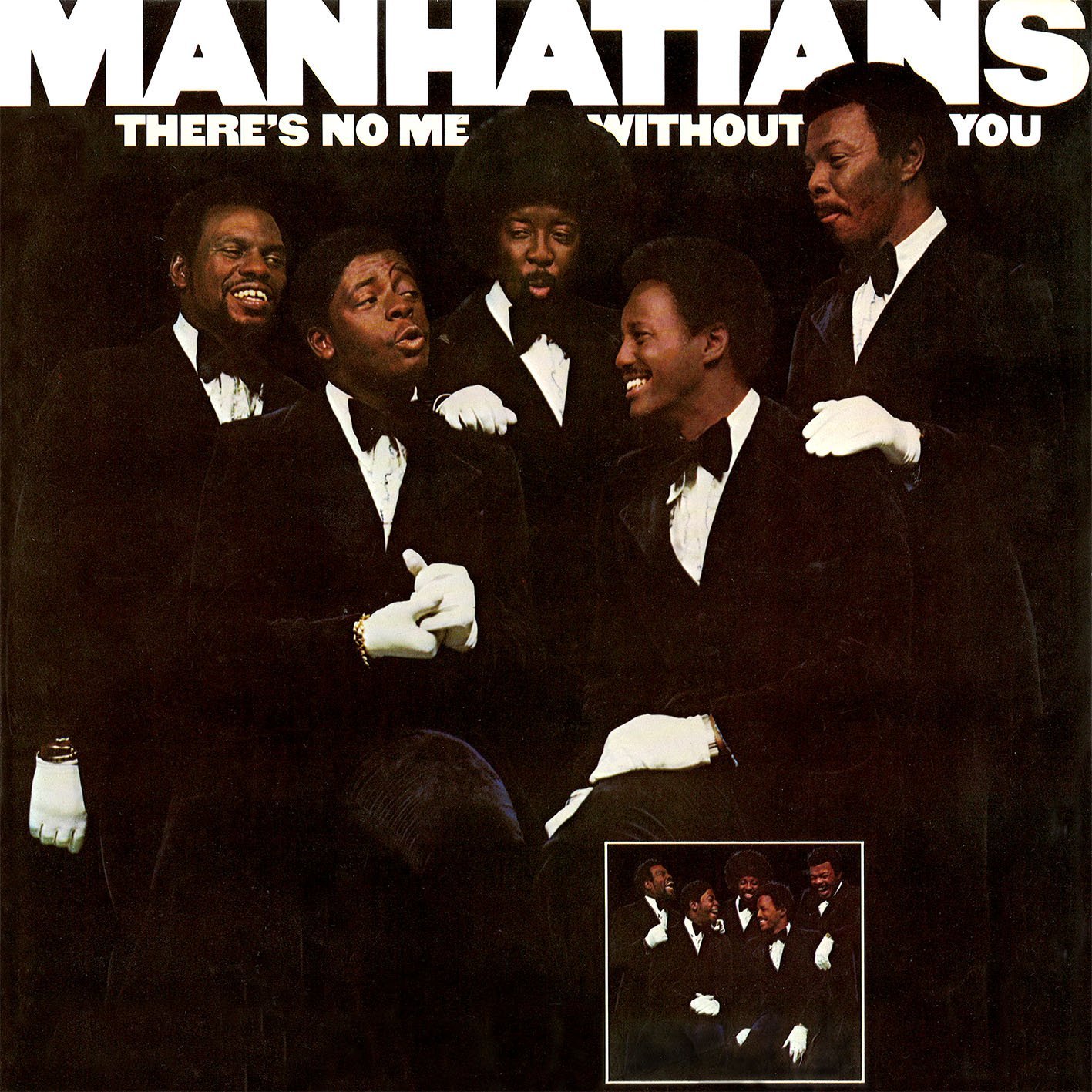
THE THIRD POWER-BELIEVE.
The Third Power-Believe.
Label: Magic Box.
Format: LP with CD.
By 1967, Detroit’s eclectic music scene was thriving and new bands were being formed almost daily. Some never got beyond practising in a garage, while others graduated to playing in local bars and clubs which was where they were spotted by A&R reps for local indie labels.
Once signed, they released a single which in many cases, sunk without trace. For other bands, the single they released was a stepping stone to bigger and better things.
That was the case with The Third Power who released We, You, I on Baron Records in 1968. By 1969, they had been signed by Vanguard Records which was primarily a folk label, which had started releasing psychedelic rock. A year later in 1970, The Third Power released their debut album Believe which has just been reissued by Magic Box. The album wasn’t a commercial success and The Third Power split-up after the release of Believe. Theirs is a case of what might have been? Would things have been different if they had signed to a different label? Instead, the group were only together three years.
The story begins in Detroit in 1967, when drummer Jim Craig, bassist and vocalist Jem Targal and guitarist and vocalist Drew Abbott formed The Blewsies. They moved into a rented farmhouse which became their base as they honed their sound. It wasn’t long before the group was ready to play on the local live circuit.
For the next year, The Blewsies were a familiar face on the local rock clubs where it soon became apparent that they were a cut above the competition. This was because of the interplay between the three band members who were soon attracting the attention of a local record company.
This was a local indie label Baron Records. By then, The Blewsies had changed their name and were now known as The Third Power.
They entered the studio in 1968 to record their debut single We, You, I, which featured Snow on the B-Side. When it was released later in 1968 the single sold well in Detroit. This was encouraging for a band who had only been formed a year ago.
After the release of their debut single, The Third Power returned to the live circuit and were supporting a number of bands including local heroes MC5 at the Grande Ballroom. This was all good experience for a band who were about to go up in the world.
By 1969, Vanguard Records which was primarily a folk label, was also signing psychedelic groups. They had already signed The Frost who were from Michigan. When Vanguard Records’ A&R rep heard The Third Power they offered them a recording contract.
This was the opportunity to sign with a prestigious and reputable label. However, one wonders if The Third Power stopped to think was Vanguard Records the right label for them? The label had made its name releasing folk music, and hadn’t much experience with psychedelic music. Would the label know how to market the group and their album? And who was going to produce the album? These were all questions The Third Power should’ve asked executives at Vanguard Records.
When The Third Power entered the studio, they were a progressive power trio whose music incorporated psychedelia, hard rock, blues, funk rock and the influence of Cream, Jimi Hendrix, Led Zeppelin and Moby Grape. They had written nine songs which they would record with Vanguard Records’ Sam Charters who was producing the session.
Jem Targal was the group’s songwriter-in-chief and penned Feel So Lonely, Passed By, Lost In A Daydream, Comin’ Home and Crystalline Chandelier. He cowrote Gettin’ Together and Won’t Beg Any More with Drew Abbott who wrote Persecution. Like Me Love Me was written by The Third Power and closed the album.
The members of The Third Power kick out the jams on the album opener Gettin’ Together. Searing, scorching guitars combine with the tight rhythm section and Jem Targal’s powerhouse of a vocal. Meanwhile, distortion is part of their armoury as they grab the listener’s attention from the get-go on this hard rocking track.
Feel So Lonely is quite different to the album opener and sounds as if it’s been inspired by Crossroads’ from Cream’s Wheels Of Fire album. Especially the meandering rhythm and a blistering, wailing guitar solo. It comes courtesy of Jem Targal who delivers an impassioned against the hard rocking and psychedelic backdrop.
Very Different is Passed By a beautiful ballad where Jem Targal’s wistful vocal is accompanied by an arrangement features a twelve-string acoustic guitar, piano and tambourine. It’s the perfect accompaniment one of the highlights of the Believe and shows another side to The Third Power.
Lost In A Daydream is the equivalent to time travel and takes the listener back to the late-sixties, early seventies. The arrangement gallops along and seems to have been inspired by Moby Grape. It’s dreamy, languid and lysergic and is the perfect track to listen to as you while away a lazy day.
After a hesitant start The Third Power kick loose on Persecution and quickly go from 0-60 mph. Frontman Drew Abbot struts and swaggers his through this hard rocking track. His bass helps drives the arrangement along as Jim Craig powers and pounds his way around his double kit. Meanwhile, Jem Targal sprays searing, scorching and machine gun guitar licks. The interplay between the three band members plays an important part in the sound and success of this hard rocking track full of social comment that apparently, was a favourite at Detroit’s Grande Ballroom.
Straight away, the influence of Led Zeppelin can be heard on Comin’ Home. Especially the drums and guitar parts. Elsewhere there’s a nod to Cream and this is noticeable on Jem Targal’s vocal and the harmonies. It’s a melodic and memorable track this is reminder of what The Third Power were capable of.
They drop the tempo on Won’t Beg Anymore which starts life as a soul-baring psych ballad. That is the case until 2:28 when chatter can be heard in the distance. Meanwhile, the tempo increases and Jem Targa’s chiming guitar takes centrestage. Then the arrangement slows down before becoming rocky and dramatic. Still the vocal is still full of emotive and impassioned on this powerful and poignant track.
One of the most beautiful tracks on Believe is Crystalline. Chandelier It finds The Third Power combine everything from a rolling bass, baroque harmonies, wind-chimes and a heartfelt, tender vocal on a truly timeless track that should be a favourite amongst compilers of psychedelic compilations.
Closing Believe is Like Me Love Me which was written by the band. It’s another hard rocking track and is the perfect showcase for this tight and talented power trio. They close their debut album with this melodic example of riff rock. It bookends Believe and The Third Power take their bow.
Sadly, when Believe was released in 1970, the album wasn’t a commercial success. It sold reasonably well in Detroit where The Third Power had a following. However, elsewhere the album sank without trace. It was a disaster for The Third Power. Worse was still to come.
When The Third Power returned home to Detroit, they supported the MC5, Bob Seger and various high-profile acts who played at the Grande Ballroom.
Not long after the release of Believe, Vanguard Records announced that they were dropping The Third Power. Their reason was that they were “too heavy.”That seems strange as they must have known what type of group they were signing?
Even before they signed to Vanguard Records, The Third Power’s music was a mixture of hard rock, psychedelia, blues, funk-rock. They were a progressive power trio who Vanguard Records had been keen to sign as they were branching out and signing psychedelic rock bands. This was very different to the folk music that the label made its name releasing. Maybe that was the problem?
It may have been that Vanguard Records didn’t know how to position and market The Third Power? If they had been signed to a different label Believe may have found the wider audience it deserved and things would have been very different for The Third Power.
Not long after the release of Believe, The Third Power split-up. They had released just one single and one album, Believe. Their story is a case of what might have been. The Third Power were talented songwriters and musicians who technically were streets ahead of many similar bands who were releasing albums in 1970. Sadly, talent only gets a band so far.
That was the case with The Third Power. Sadly, they were only together for three year, but released what is regarded as “one of the finest psychedelic hard rock albums of its era.” Rather belatedly, record collectors have discovered the hard rocking and lysergic delights of The Third Power’s cult classic Believe which could’ve and should’ve launched the Detroit-based progressive power trio’s career in 1970.
The Third Power-Believe.
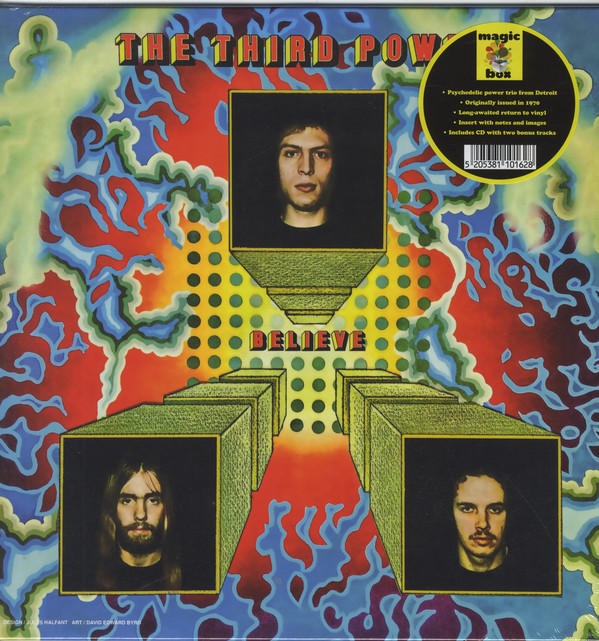
SUN RA-CELESTIAL LOVE.
Sun Ra-Celestial Love.
Label: Modern Harmonic.
Format: LP.
Nowadays, maybe music journalists are guilty of using the words innovator and musical pioneer all too freely, but that is the perfect description of the inimitable Sun Ra. He’s quite rightly regarded as one of the true pioneers of free jazz and a truly innovative and influential musician who pushed musical boundaries to their limit, and sometimes, way beyond.
Sun Ra was also a prolific artists who released around 125 albums during a career that spanned six decades. This includes Celestial Love, which has just been reissued on vinyl by Modern Harmonic. It was the final studio album to be released by El Saturn Records. These albums are all part of Sun Ra’s fascinating life story.
Before dawning the moniker Sun Ra, Herman Poole Blount was born on the ‘22nd’ of May 1914, in Birmingham, Alabama, but very little is known about his early life. So much so, that for many years, nobody knew what age he was. However, at an early age Herman immersed himself in music.
He learnt to play the piano at an early age and soon, was a talented pianist. By the age of eleven, Herman was to able read and write music. However, it wasn’t just playing music that Herman enjoyed. When the leading musicians of the day swung through Birmingham, Herman want to see them play and saw everyone from Duke Ellington to Fats Waller live. Seeing the great and good of music play live only made Herman all the more determined to one day become a professional musician.
By his mid teens, Herman was a high school student, but even by then, music was his first love. His music teacher John T. “Fess” Whatley realised this, and helped Herman Poole Blount’s nascent musical career.
John T. “Fess” Whatley was a strict disciplinarian, and this rubbed off on Herman who would layer acquire a reputation as a relentless taskmaster when he formed his Arkestra. The future Sun Ra was determined that the musicians in his Arkestra to reach his high and exacting standards and fulfil the potential that he saw in them. At rehearsals, musicians were pushed to their limits, but this paid off when they took to the stage. Led by Sun Ra, the Arkestra in full flow were peerless. However, that was way in the future. Before that, Herman’s career began to take shape.
In his spare time, Herman was playing semi-professionally in various jazz and R&B groups, and other times, he worked as a solo artist. Before long, Herman was a popular draw. This was helped by his ability to memorise popular songs and play them on demand. Strangely, away from music, the young Herman was very different.
He’s remembered as studious, kindly and something of a loner and a deeply religious young man despite not being a member of a particular church. One organisation that Herman joined was the Black Masonic Lodge which allowed him access to one of the largest collection of books in Birmingham. For a studious young man like Herman this allowed him to broaden his knowledge of various subjects. However, still music was Herman Poole Blount,’s first love.
In 1934, twenty-year-old Herman was asked to join a band that was led by Ethel Harper. She was no stranger to Herman Poole Blount, and just a few years earlier, had been his high school biology teacher. Just a few years later, and he was accepting Ethel Harper’s invitation to join her band.
Before he could head out on tour with Ethel Harper’s band, Herman joined the local Musicians’s Union. After that, he embarked on a tour of the Southeast and Mid-West and this was the start of Herman’s life as a professional musician. However, when Ethel Harper left her band to join The Ginger Snaps, Herman took over the band.
With Ethel Harper gone, the band was renamed The Sonny Blount Orchestra, and it headed out on the road and toured for several months. Sadly, The Sonny Blount Orchestra wasn’t making money, and eventually, the band split up. However, other musicians and music lovers were impressed by The Sonny Blount Orchestra.
This resulted in Herman always being in demand as a session musician. He was highly regarded within the Birmingham musical community, so much so, that he was awarded a music scholarship to Alabama Agricultural and Mechanical University in 1937. Sadly, he dropped out after a year when his life changed forever.
In 1937, Herman experienced what was a life-changing experience, and it was a story that he told many times throughout his life. He describes a bright light appearing around him and his body changing. “I could see through myself. And I went up … I wasn’t in human form … I landed on a planet that I identified as Saturn. They teleported me. I was down on a stage with them. They wanted to talk with me. They had one little antenna on each ear. A little antenna over each eye. They talked to me. They told me to stop attending college because there was going to be great trouble in schools … the world was going into complete chaos … I would speak through music, and the world would listen. That’s what they told me.” For a deeply religious young man, this was disturbing and exciting. It certainly inspired the young Herman Poole Blount.
After his: “trip to Saturn,” Herman Poole Blount decided to devote all his time and energy to music. So much so, that he hardly found time to sleep. Day in, day out, Herman spent his time practising and composing new songs in his first floor home which he had transformed into a musical workshop. That was where also where he rehearsed with the musicians in his band. Away from music, Herman took to discussing religious matters. However, mostly, though, music dominated his life.
It was no surprise to when Herman announced that he had decided to form a new band. However, his new band was essentially a new lineup of The Sonny Blount Orchestra. It showcased the new Herman Poole Blount, who was a dedicated bandleader, and like his mentor John T. “Fess” Whatley, a strict disciplinarian. Herman was determined his band would be the best in Birmingham. This proved to be the case as seamlessly, The Sonny Blount Orchestra were able to change direction, as they played an eclectic selection of music. Before long, The Sonny Blount Orchestra were one of most in-demand bands in Birmingham, and things were looking good for Herman. Then in 1942, The Sonny Blount Orchestra were no more when Herman was drafted.
On receiving his draft papers, Herman declared himself a conscientious objector. He cited not just religious objections to war and killing, but that he had to financially support his great-aunt Ida. Herman even cited the chronic hernia that had blighted his life as a reason he shouldn’t be drafted. Despite his objections the draft board rejected his appeal, and things got worse for Herman.
His family was embarrassed by his refusal to fight and some turned their back on him. Eventually, Herman was offered the opportunity to do Civilian Public Service but failed to appear at the camp in Pennsylvania on the December ‘8th’ 1942.
This resulted in Herman being arrested, and when he was brought before the court, Herman Poole Blount debated points of law and the meaning of excerpts from the Bible. When this didn’t convince the judge Herman Poole Blount said he would use a military weapon to kill the first high-ranking military officer possible. This resulted in Herman being jailed and led to one of the most disturbing periods in his life.
Herman’s experience in military prison were so terrifying and disturbing that he felt he no option but to write to the US Marshals Service in January 1943. By then, Herman felt he was on the verge of a nervous breakdown. He was suffering from stress and feeling suicidal. There was also the constant fear that he would be attacked by others within the military prison. Fortunately, the US Marshals Service looked favourably on his letter.
By February 1943, Herman was allowed out during the day to work in the forests around Pennsylvania, and at nights, he was able to play the piano. A month later, Herman was reclassified and released from military prison which brought to an end what had been a harrowing period of his life.
Having left prison, Herman formed a new band that played around the Birmingham area for the next two years. Then in 1945, when his Aunt Ida died, Herman left Birmingham, and headed to the Windy City of Chicago.
Phase One-Chicago.
Now based in Chicago, Herman quickly found work within the city’s vibrant music scene. This included working with Wynonie Harris and playing on his two 1946 singles, Dig This Boogie and My Baby’s Barrelhouse. After that, Herman Poole Blount worked with Lil Green in some of Chicago’s strip clubs. Then in August 1946, Herman Poole Blount started working with Fletcher Henderson but by then, the bandleader’s fortunes were fading.
By then, Fletcher Henderson’s band was full of mediocre musicians, and to make matters worse, the bandleader was often missed gigs. This couldn’t be helped as Fletcher Henderson, was still recovering after a car accident. What Fletcher Henderson needed was someone to transform his band’s failing fortunes and this was where Herman came in. His role was arranger and pianist, but realising the band needed to change direction, he decided to infuse Fletcher Henderson’s trademark sound with bebop. However, the band were resistant to change and in 1948, Herman left Fletcher Henderson’s employ.
Following his departure from Fletcher Henderson’s band, Herman formed a trio with saxophonist Coleman Hawkins and violinist Stuff Smith. Alas, the trio was somewhat short-lived and didn’t release any recordings.
Not long after this, Herman made his final appearance as a sideman on violinist’s Billy Bang’s Tribute to Stuff Smith. After this, Herman Poole Blount became Sun Ra.
By then, Chicago was changing, and was home to a number of African-American political activists. Soon, a number of fringe movements sprung up who were seeking political and religious change. When Herman became involved he was already immersing himself in history, especially, Egyptology. He was also fascinated with Chicago’s many ancient Egyptian-styled buildings and monuments. This resulted in Herman Poole Blount discovering George GM James’ book The Stolen Legacy which turned out to be a life-changing experience.
In The Stolen Legacy, George GM James argues that classical Greek philosophy actually has its roots in Ancient Egypt. This resulted in Herman concluding that the history and accomplishments of Africans had been deliberately denied and suppressed by various European cultures. It was as if Herman’s eyes had been opened and was just the start of a number of changes in his life.
As 1952 dawned, Herman had formed a new band, The Space Trio. It featured saxophonist Pat Patrick and Tommy Hunter. At the time, they were two of the most talented musicians Herman knew. This allowed him to write even more complicated and complex compositions. However, in October 1952 the author of these tracks was no longer Herman Poole Blount was Sun Ra had just been born.
Just like Malcolm X and Muhammad Ali, adopting the name Sun Ra was perceived by some as Herman choosing to dispense with his slave name. This was a kind of spiritual rebirth for Sun Ra, and was certainly was a musical rebirth.
After Pat Patrick got married, and moved to Florida, this left The Space Trio with a vacancy for a saxophonist. Tenor saxophonist, John Gilmore was hired and filled the void. He would become an important part of Sun Ra’s band in the future.
So would the next new recruit alto saxophonist Marshall Allen. They were then joined by saxophonist James Spaulding, trombonist Julian Priester and briefly, tenor saxophonist Von Freeman. Another newcomer was Alton Abraham, who would become Sun Ra’s manager. He made up for Sun Ra’s shortcomings when it came to business matters.
While he was a hugely talented bandleader, who demanded the highest standards, Sun Ra, like many other musicians, was no businessman. With Alton Abraham onboard, Sun Ra could concentrate on music while his new manager took care of business. This included setting up El Saturn Records, an independent record label, which would release many of Sun Ra’s records. However, El Saturn Records didn’t released Sun Ra and His Arkestra’s debut album, Jazz By Sun Ra.
Instead, Jazz By Sun Ra was released in 1956, on the short-lived Transition Records. However, Sun Ra and His Arkestra’s sophomore album Super Sonic Jazz was released in March 1956, on El Saturn Records. Sound Of Joy was released on Delmark in November 1956. However, it was El Saturn Records that would release the majority of Sun Ra and His Arkestra’s albums.
In 1961, Sun Ra deeded to leave Chicago and move to New York where he would begin a new chapter in his career. Much had happened to Sun Ra since he first arrived in Chicago 1945 as the World War II drew to a close. Back then, he was still called Herman Poole Blount and was trying to forge a career as a musician. By the time he left Chicago he was a pioneer of free jazz
Phase Two-New York.
Sun Ra and His Arkestra journeyed to New York in the autumn of 1961, where they lived communally. This allowed Sun Ra to call rehearsals at short notice, and during the rehearsals, he was a relentless taskmaster who was seeking perfection. However, this paid off and Sun Ra and His Arkestra recorded a string of groundbreaking albums. This included Secrets of the Sun in 1962 which was the most accessible recording from their solar period. However, Sun Ra and his music continued to evolve in the Big Apple
The Heliocentric Worlds of Sun Ra Volume 1 was released by Sun Ra and his Solar Arkestra in 1965. Sun Ra had dispensed was the idea of harmony and melody, and also decided there should be no continuous beat. Instead, the music revolved around improvisation and incorporated programmatic effects. This was the case The Heliocentric Worlds of Sun Ra Volume 2 which was released later in 1965.
As Sun Ra and His Arkestra came to the end of their time in New York, their music was often described as “avant-garde jazz” or “free jazz.” However, Sun Ra started to reject the free jazz label that was attached to his music. He pointed out that his music had been influenced by different types of ethnic music and he often used percussion, synths and in one case strings.
A case in point was Strange Strings which was released in 1967 and found Sun Ra and His Arkestra playing an array of stringed instruments while he adds vast quantities of reverb. Strange Strings was just the latest innovative album Sun Ra released during his New York period, which came to an end in 1968. By then, the cost of living was proving prohibitive and Sun Ra decided to move his band again.
Phase Three-Philadelphia.
Sun Ra wasn’t moving his Arkestra far, just to Philadelphia where it was much cheaper to live. Again, Sun Ra and His Arkestra lived communally in Philadelphia which was their “third period.”
During this period, Sun Ra’s music became much more conventional and often incorporated swing standards when they played live. However, still Sun Ra’s concerts featured performances where his sets were eclectic and the music full of energy as they veered between standards and always at least, one lengthy, semi-improvised percussive jam.
In the studio, Sun Ra and His Arkestra continued to innovate, releasing albums of the quality of 1970s My Brother The Wind Volume 1, The Night Of The Purple Moon and 1972s Astro Place. However, Sun Ra in 1973 released two classic albums like Space Is The Place and Discipline 27-II. Sun Ra was at the peak of his powers and seemed to have been reinvigorated creatively after moving to Philly.
The Next Phase.
Buoyed by the critical acclaim and commercial success of Space Is The Place and Discipline 27-II had enjoyed during 1973, Sun Ra knew that 1974 was going to be yet another busy year. He was used to this, as Sun Ra and His Arkestra had been working non stop since 1972. They embarked upon lengthy tours and recorded several albums in Chicago, California and Philly. It was more of the same in 1974, with Sun Ra and His Arkestra embarking upon yet another lengthy and gruelling tour of America. Still, Sun Ra found time to prepare a couple of live albums for his label El Saturn Records including 1975s Pathways To Unknown Worlds; 1976s What’s New and Live At Montreux, and 1977s Somewhere Over The Rainbow and Taking A Chance On Chances and Some Blues But Not The Kind That’s Blue. However, in 1978 Sun Ra and His Arkestra began work on another new album, The Other Side Of The Sun which was released in 1979 but was an oft-overlooked and vastly underrated album.
As the seventies gave way to the eighties, Sun Ra continued to record new albums including Celestial Love in 1982.
Celestial Love.
When Sun Ra began work on Celestial Love he was sixty-eight and had been a professional musician since he was twenty. With forty-eight years of experience behind him he was a vastly experienced and highly respected bandleader, composer and musician who in 1957, had cofounded his own label El Saturn Records.
For the previous twenty-five years the label had released many albums by Sun Ra and the Arkestra. Sun Ra planned to release Celestial Love on El Saturn Records. That was all in the future as the album still had to be recorded.
For Celestial Love, Sun Ra decided to record a total of nine tracks. This included five of his own compositions: Celestial Love, Interstellarism, Blue Intensity, Nameless One No. 2 and Nameless One No. 3. They were joined by four cover version of familiar songs including Sometimes I’m Happy and Smile. The other two tracks were cowritten by Duke Ellington. During his long and illustrious career he had penned Sophisticated Lady with Irving Mills and Mitchell Parish, and Drop Me Off In Harlem with Nick Kenny. The inclusion of these tracks should’ve hinted to onlookers that the Celestial Love sessions had the potential to produce one of Sun Ra’s most.
Recording of Celestial Love took place in the familiar surroundings of Variety Recording Studio which had been owned and run by Warren Allen Smith and Fred Vargas since 1961. It had been Sun Ra’s studio of choice in New York since the sixties and he had recorded some of his best and most innovative albums in Variety Recording Studio. He liked the familiar surroundings and was joined by many familiar faces.
Joining Sun Ra who played piano, organ and synths and produced the Celestial Love sessions was his Arkestra. It included a rhythm section of drummer Samarai Celestial aka Eric Walker and bassists Hayes Burnett and John Ore. They were augmented by percussionist Atakatune aka Stanley Morgan and James Jacson who played infinity drum and bassoon. The horn section included alto saxophonist and flautist Marshall Allen; baritone saxophonists and flautist Danny Ray Thompson; tenor saxophonist John Gilmore; trombonist Tyrone Hill; trumpeter Walter Miller and Vincent Chancey on French horn. June Tyson the Queen of Afrofuturism added vocals on Sometimes I’m Happy and Smile during the sessions in 1982.
After the Celestial Love sessions, only eight of the nine tracks recorded made their way onto the album. The cover of Drop Me Off In Harlem was omitted from the original album. However, it has been included as a bonus track on Modern Harmonic’s recent reissue of Celestial Love.
It wasn’t until 1984 that Celestial Love was released on vinyl by El Saturn Records and was the last Sun Ra studio album to be released by the label. Although the label continued to release live albums by Sun Ra, Celestial Love marked the end of an era for El Saturn Records.
Meanwhile, in Europe much of Celestial Love featured on the full-length Nuclear War record which was issued in by the post punk label Y Records. That was ironic given how different the apocalyptic sounding Nuclear War single was to the music on Celestial Love.
When Celestial Love was released in 1984 it was one of Sun Ra’s most accessible albums, and whether by design or accident, was the perfect introduction to his music. For newcomers to Sun Ra, and those who struggled with his music, Celestial Love was the perfect primer to one of the pioneers of jazz.
On Celestial Love, Sun Ra and his Arkestra combines jazz and swing standards with his own compositions. This includes the album opener Celestial Love, where Sun Ra plays an organ which sounds as if it belongs in a church and is at the heart of the arrangement. It combines with drums and wistful, braying horns as Sun Ra and the Arkestra fuse elements of blues, gospel, jazz, soul-jazz and swing during a quite beautiful track that’s a roller coaster of emotions. June Tyson’s croons her way through Sometimes I’m Happy and plays a starring role in this joyous, swinging track.
When Sun Ra recorded Interstellarism in 1959, John Gilmore and Marshall Allen played on the recording. Twenty-five years later when Celestial Love was released they feature on this slow, swaying and sometimes spacious remake. The tempo increases on Blue Intensitywhere Sun Ra’s organ and saxophone play leading role as the track swings and then some. Then as Sophisticated Lady unfolds its slow and bluesy before the tempo gradually increases and Sun Ra and the Arkestra unleash the first of his homages to one of his heroes.
There’s two version of Nameless One on Celestial Love. The first is Nameless One No Two which starts off briskly, with the blazing horns playing a leading role as a walking bass propels the arrangement along as Sun Ra plays keyboards. They’re part of another swinging arrangement. It’s a similar case on Nameless One No Three where rasping, braying and sultry horns play a leading role and Sun Ra plays synths. Together, they play their part in a truly memorable and swinging track.
Very different is the cover of Smile, which sounds as if it were recorded during a different era. Sun Ra and the Arkestra show their versatility while June Tyson’s vocal is tender and hopeful. Closing the reissue of Celestial Love is a joyous, upbeat cover of Duke Ellington’s Drop Me Off In Harlem.
Celestial Love is one of Sun Ra’s most accessible of the 125 albums the great bandleader, composer and musician released during what was a long and illustrious career. It finds Sun Ea combining jazz’s past and present with sometimes the music of the future as he and the Arkestra innovate and combine free jazz, avant-garde, blues, soul-jazz and swing. In doing so, Sun Ra creates Celestial Joy, which is an uplifting and joyous genre-melting album bristling with optimism and positivity.
Sun Ra-Celestial Love.
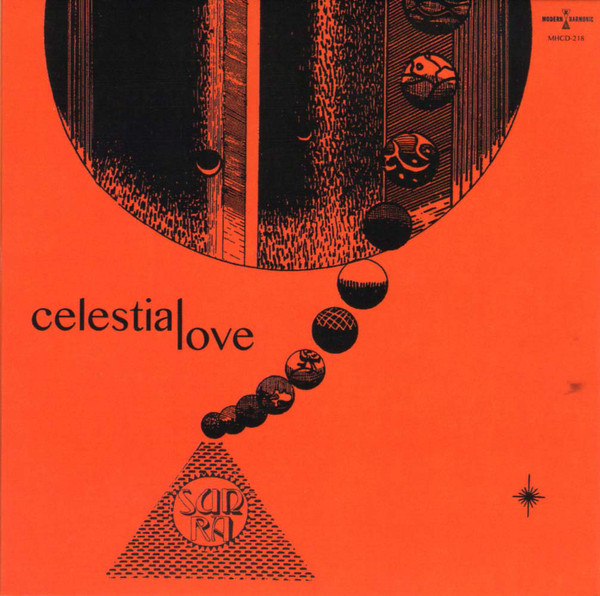
CATAPILLA-CATAPILLA AND CHANGES.
Catapilla-Catapilla and Changes.
Label: Trading Places.
Format: LP.
The story of Catapilla is another case of what might have been. They were formed in West London around Christmas 1970, and signed to Vertigo Records and released two ambitious and innovative albums where they combined progressive rock with experimental fusion. Sadly, neither their 1971 debut album Catapilla, nor the followup Changes, which was released in 1972, found the audience they deserved. Not long after the release of their sophomore album Catapilla disbanded. Their legacy is the two albums they released on Vertigo which have just been reissued by Trading Places on vinyl.
When Catapilla was formed around Christmas 1970 the original lineup featured drummer Malcolm Frith, Edison Lighthouse bassist Dave Taylor and guitarist Graham Wilson joined forces with vocalist Jo Meek, saxophonists Robert Calvert and Hugh Eaglestone plus woodwind player Thiery Rheinhart to form Catapilla. The newly formed Catapilla began playing live.
Not long after this, they came to the attention of Cliff Cooper of the Orange Music Electronic Company. He’s credited with “discovering” Catapilla and became their manager. One of the first things he did was arrange a showcase for the band where they played in front of an audience that featured top music industry figures. This included none other than Black Sabbath’s manager Patrick Meehan.
He was so impressed with Catapilla that he helped the group secure a recording contract with Vertigo Records. Patrick Meehan also offered to produce the group’s eponymous debut album. However, before he could get Catapilla into the studio vocalist Jo Meek left, and was replaced by her sister Anna. This was the lineup of Catapilla that recorded their eponymous debut album.
Catapilla.
By then, Graham Wilson, Thierry Reinhardt, Robert Calvert, Malcolm Frith and Anna Meek had written the four tracks that became Catapilla. Naked Death, Tumbleweed, Promises and Embryonic Fusion a twenty-four minute epic were recorded with producer Patrick Meehan. When the album was completed, it was scheduled for release in late 1971.
When Catapilla was released it failed to find the audience it deserved, and record buyers missed out on what was an ambitious and innovative album where the group combined progressive rock with experimental fusion, psychedelic free jazz and funky rhythms. Catapilla was an album that benefited from structure but also featured stunning jams, blistering riffs, fuzzy wah wah guitars and atmospheric, wailing saxophone solos. They helped drive the arrangements along and were joined by woodwinds and Anna Meek’s inimitable vocals.
She was the group’s very own tortured troubadour, and unleashed gutsy gasps, shrieks and otherworldly vocals full of emotion. It was an unconventional vocal style and one that many fans of progressive rock didn’t understand. They were used a more traditional delivery. However, for many fans of Catapilla the enigmatic vocalist is key to the group’s sound and comes into her own on the album opener Naked Death and the twenty-four minute Magnus Opus Embryonic Fusion that even encompasses voodoo jazz and a soul-baring vocal. It’s a genre-melting track and is akin to a journey on a musical roller coaster. It’s a case of sit back and enjoy the rides as this epic takes twists and turns as it reveals a myriad of surprises. By the closing notes, one can only wonder why the album wasn’t a bigger success? Maybe it was an album that was ahead of its time?
What happened after the release of Catapilla certainly didn’t help. Following the album release, the band embarked upon a tour sponsored by Vertigo Records. Catapilla toured the UK supporting Graham Bond and Roy Harper, which it was hoped would lift their profile. Sadly, this wasn’t the case and after the tour disaster struck.
Citing musical differences, Malcolm Frith, Dave Taylor, Hugh Eaglestone and Thiery Rheinhart all left the band. It looked like the end of the road for Catapilla.
A decision was made to reform the group. Joining the remaining members of Catapilla were drummer Bryan Hanson, bassist Carl Wassard and keyboardist Ralph Rolinson. This new lineup immediately began work on their sophomore album Changes.
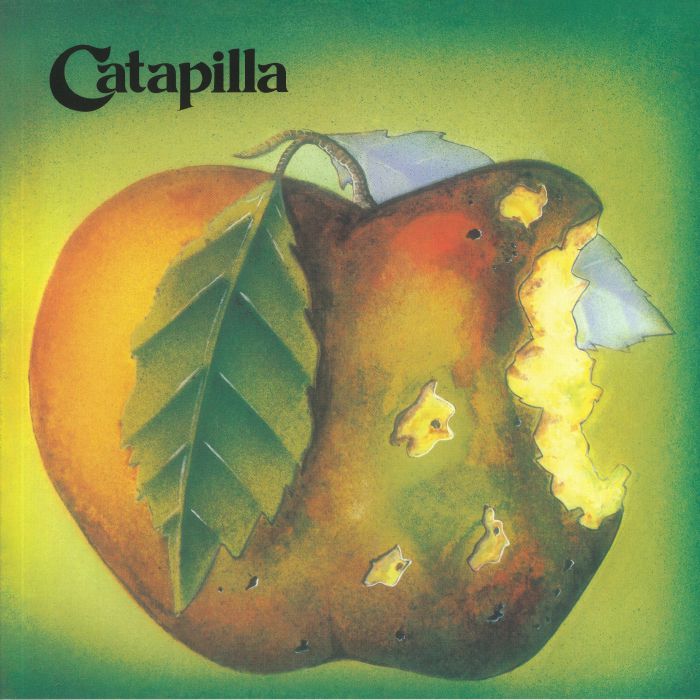
Changes.
This time around, Anna Meek wrote all the lyrics on the album. She cowrote the music to Reflections, Charing Cross and Thank Christ For George with Robert Calvert and Graham Wilson who wrote the music to It Could Only Happen To Me. These four tracks were recorded by the new line-up of Catapilla and the album was scheduled for release later in 1972.
On the release of Changes lighting struck twice for Catapilla and the album failed commercially. It was another album that deserved to be heard by a wider audience.
They would have discovered another genre-melting offering from Catapilla. They start with progressive rock and add elements of fusion, psychedelic rock, avant-garde, experimental and space rock. The arrangements are multilayered and lysergic and feature cerebral, thought-provoking lyrics. They’re delivered by Anna Meek whose inimitable vocals add an atmospheric hue to the album.
Especially on the album opener Reflections which veers between ethereal to eerie and is punctuated by saxophone solos and benefits from the addition of Ralph Rolinson’s Hammond organ. Charing Cross features some of Anna Meek’s best lyrics. They’re full of social comment, while the arrangement starts off slow and atmospheric becoming rocky and later a guitar solo seems to pay homage to Pink Floyd. Catapilla’s rhythm section lays down a mesmeric groove on the psychedelic sounding Thank Christ For George. It features a fuzzy wah wah guitar and later, heads in the direction of fusion. By them, Anna Meek’s vocal is a mixture of mystery and misery even desperation and is accompanied by an otherworldly saxophone. They play starring roles in the sound and success of the track. Quite different is the instrumental It Could Only Happen to Me. It’s moody, mesmeric, introspective and languid and allows the rest of Catapilla to showcase their considerable musical skills on the album closer.
For Catapilla, Changes was the end of the road. Not long after they released their sophomore album the group disbanded. They had been together for less than two years, but managed to released two albums. Sadly, neither album were a commercial success and failed to find the audience they deserved.
The problem was the genre-melting music on Catapilla and Changes was way ahead of its time and record buyers neither understood nor appreciate such ambitious and innovative albums.
Although Catapilla are described as a progressive rock band they’re much more than that. Their music incorporates a variety of disparate genres. Seamlessly they fuse and switch between different genres on their two albums. However, their secret weapon was Anna Meek whose inimitable vocals added something new and different to the albums. Her vocals veered between emotive to hurt-filled, soul-baring and otherworldly. Sometimes, her lyrics were cerebral and full of social comment. Sadly, Anna Meek’s vocals and lyrics weren’t heard by a wider audience when Catapilla and Changes were released.
One can only wonder what type of music Catapilla would’ve gone on to make if they hadn’t disbanded in 1972? The lineups who recorded Catapilla and then Changes were innovators who weren’t afraid to push musical boundaries and in 1971 and 1972 set about creating the music of today, tomorrow. This they succeeded in doing, and fifty years after they were formed in West London, this groundbreaking group are belatedly starting to receive the plaudits and praise they deserve for recording and releasing two ambitious and innovative genre-melting albums, Catapilla and Changes.
Catapilla-Catapilla and Changes.

THE OHIO PLAYERS-PAIN.
The Ohio Players-Pain.
Label: Westbound.
Format LP.
It wasn’t until The Ohio Players signed with Westbound, and released their sophomore album Pain in 1972, that commercial success came the way of a group that was founded in 1959. Originally, they were known as The Ohio Untouchables, and had a chequered history.
Initially, The Ohio Untouchables lineup featured drummer Cornelius Johnson, bassist Marshall “Rock” Jones, guitarist and vocalist Robert Ward, guitarist and saxophonist Clarence “Satch” Satchel plus trombonist and trumpeter Ralph “Pee Wee” Middlebrooks. In the early days, the Drayton-based quintet was best known as The Falcons’ backing band. This allowed the group to hone their sound before heading out on their own.
When The Ohio Untouchables started playing live, it soon became apparent that Robert Ward was an unreliable bandleader. He would suddenly walk off the stage during concerts forcing the band to stop playing. Eventually, the band decided to keep playing when their leader left the stage. However, things came to a head in 1964 when Robert Ward and bassist Marshall “Rock” Jones got into fight onstage. This resulted in the group splitting up for the first time.
Robert Ward decoded to draft in new musicians, while the rest of The Ohio Untouchables headed home to Drayton. That was where they discovered guitarist Leroy “Sugarfoot” Bonner who became the band’s lead singer. The other new recruit was drummer Gregory Webster. This wasn’t the end of the changes.
The group decided to change direction musically and starting playing R&B. This allowed them to play to new Leroy “Sugarfoot” Bonner’s strengths, and meant they weren’t competing with Robert Ward’s group. With that, the new group began playing live.
In 1965, the group decided changed its name to The Ohio Players. The reason for this was because of how the group perceived themselves as musicians and “ladies men.”
The newly named group added two more singers to its lineup. Bobby Lee Fears and Dutch Robinson joined The Ohio Players who were ready to record their debut single.
By then, they were managed by Johnny Brantley a manager and producer. He recorded The Ohio Players’ debut single This Thing Called Love which was released on Ray Charles’ Tangerine Records in 1967. However, the single failed to find an audience and The Ohio Players moved on.
Johnny Brantley arranged for the group to become the house band at New York-based Compass Records. They played on various recordings and backed Helena Ferguson on her top thirty single Where Is The Party?
The Ohio Players also released two singles on Compass Records during 1967. This included Trespassin’ and It’s A Crying Shame. Despite neither single making any impression on the charts, an expanded lineup began recording the group’s debut album.
By then, vocalist Helena Ferguson Kilpatrick had joined the group. She was part of the expanded lineup who began recording what later became Observations In Time. It was nearly completed when their manager decided to license the album to Capitol Records. This seemed a strange decision.
It turned out that Compass Records wasn’t in the best financial health. That was why the incomplete version of Observations In Time was licensed to Capitol Records. However, the decision backfired when Observations In Time was released in 1968 and although it was a hit in Ohio, it failed to make any impression on the national charts. This was a huge disappointment for The Ohio Players.
So was the commercial failure of the single Here Today and Gone Tomorrow in the UK in 1970. Executives at Capitol Records thought that the single would sell well in the UK. However, this wasn’t the case and was another disappointment for the band.
Just two years after the release of their debut album The Ohio Players split-up in 1970. It looked like the end of the road for the band.
It wasn’t, and the group reformed with a new lineup. This included drummer Gregory Webster, bassist Marshall “Rock” Jones, guitarist and guitarist and saxophonist Clarence “Satch” Satchel. They were joined by trombonist and trumpeter Ralph “Pee Wee” Middlebrooks, trumpeter Bruce Napier, trombonist Marvin Pierce, keyboardist Walter “Junie” Morrison plus vocalists Leroy “Sugarfoot” Bonner and Charles Dale Allen. The new line-up was the start of a new and exciting chapter for The Ohio Players.
Especially when a local label Top Hit sent the group to Sound Recorders in Nashville, to record a new eight-track album. By then, The Ohio Players had discovered that Walter “Junie” Morrison was the group’s secret weapon. Not only was he a talented, inventive and progressive keyboardist who also played guitar and drums. He was part of the group that recorded an album’s worth of funky and sometimes jazz-tinged cover versions. However, when the label listened to the tracks the highlight of the session was Pain, a funky instrumental.
By then, The Ohio Players had come to the attention of Armen Boladian who had founded Westbound Records in 1968. He had signed Funkadelic who were well on their way to becoming one of the most innovative and successful funk bands of the seventies. They were joined in 1971 by The Ohio Players.
Having signed to Westbound Records, Pain (Part 1) was rerecorded and released in 1971, and reached sixty-four in the US Billboard 100 and thirty-five in the US R&B charts. Across the border in Canada, the single reached ninety-one giving The Ohio Players a minor hit single. This was just a start for Armen Boladian’s latest signing.
Buoyed by the success of Pain, Armen Boladian was keen that The Ohio Players release an album soon. They could’ve released the material recorded in Nashville as their sophomore album, but Armen Boladian decided to send the group into the studio to record a new album.
When they entered the studio The Ohio Players were joined by two new recruits. This included vocalist and saxophonist James Johnson and Dale Allen who was going to share the lead vocal. However, his time with the group was cut short after he had a heated argument with Clarence Satchell in the studio during the third day of the recording session. That was the end of his time with The Ohio Players.
They had written the six tracks that became Pain and coproduced the album with Herb James and Billy Pittman. Once the album was completed, it was scheduled for release in early 1972.
When Pain was released in February 1972, it still featured some of sound that appeared on their debut album Observations in Time. However, the album was funky and had a tough, slick, polished sound that was soulful and sometimes, jazz-tinged. Walter “Junie” Morrison’s keyboards played an important part in the album
Pain opened with the funky, jazz-infused instrumental Pain, and showcases The Ohio Players’ new sound. It’s followed by the soulful ball Never Had A Dream which later heads in the direction of jazz. Players Balling (Players Doin’ Their Own Thing) has a looser, funkier and vampish sound as the group jam and experiment. The result is a very different tracks to what’s preceded it.
I Wanna Hear From You is a funky, soulful and psychedelic sounding track where Dale Allen and Sugar take charge of lead vocal. The Reds is a progressive genre-melting track where elements of blues, funk, jazz and rock are combined by The Ohio Players. They close the album with Singing In The Morning which features Granny on a track that has a looser, space sound and finds the band combining a jazz, funk and soul. It brought to an end The Ohio Players’ Westbound Records’ debut, Pain.
It was also an album of firsts. Pain was the first Ohio Players’ album to feature the group’s romantic, sensual sound and featured songs that were devoted to their love of women. It was also the first album to feature what many regarded as a suggestive photo on the album cover. The Ohio Players knowing that: “sex sells” used a Joel Brodsky photo of a woman in leather underwear dominating a prostrate man. This was a controversial photo and similar to the one on the cover of Funkadelic’s album Free Your Mind.
The other first was the inclusion of Walter “Junie” Morrison’s character Granny on Pain. She featured on all their Westbound Records’ albums and he revisited the character on his solo albums. That was in the future.
Before that, The Ohio Players released Pain in February 1972, and it reached 177 in the US Billboard 200 and twenty-one in the US R&B charts. This was enough for Pain to be certified gold and was the start of the most successful period of the band’s career.
They released eight albums between 1972 and 1976 that sold in excess of six million copies. The Ohio Players were one of the most successful funk band in the world.
This began with Pain where The Ohio Players music was ambitious, innovative and progressive on Pain, where they combined funk, soul and jazz with elements of blues and psychedelia to create a timeless and heady musical brew.
The Ohio Players-Pain.


 dereksmusicblog
 dereksmusicblog