CHRISTIAN WALLUMROD ENSEMBLE-MANY.
Christian Wallumrød Ensemble-Many.
Label: Hubro Music.
Although Christian Wallumrød has been a familiar face on the Norwegian music scene since the early nineties, it wasn’t until 1996 that the Christian Wallumrød Trio released their debut album Birch on ECM. It was released to widespread critical acclaim, Birch launched the career of Christian Wallumrød.
Over the next few years, Christian Wallumrød worked with a variety of different artists. Then in 2001, the Christian Wallumrød Ensemble released their debut album Sofienberg Variations on the ECM. It was released to plaudits and praise and hailed as an album of ambitious and innovative music.
This was the case with the followup A Year From Easter which was released in 2004, and 2007s The Zoo Is Far. By then, the Christian Wallumrød Ensemble was regularly touring and playing at festivals in Norway and in others parts of Scandinavia and Europe.
Meanwhile, Christian Wallumrød continued to collaborate with a number of artist and groups. This included recording albums with Close Erase, Generator X and Karl Seglem. However, it wasn’t long before he returned with the fourth album from the Christian Wallumrød Ensemble.
This was Fabula Suite Lugano which was released to critical acclaim on ECM in 2009. Just like previous albums, the Christian Wallumrød Ensemble continued to release genre-melting music that was ambitious, inventive and innovative.
That was the case on Fabula Suite Lugano which was released to widespread critical acclaim in 2013. What proved to be the Christian Wallumrød Ensemble’s swansong for ECM, won them a Spellemannspris, which is a Norwegian Grammy.
Two years after the release of Fabula Suite Lugano, Christian Wallumrød returned with his debut solo album Pianokammer, which was released on Hubro Music in 2015. It was a captivating album album of adventurous and ambitious genre-melting music that combined elements of ambient, avant-garde, blues, experimental, free jazz and jazz.
A year later, the Christian Wallumrød Ensemble returned with Kurzsam and Fulger, which was released in 2016 on Hubro Music. Hailed as one of the finest and most innovative offerings from the Ensemble, whose lineup continued to evolve and so did the music they made. However, following the release of Kurzsam and Fulger they began work on a new album that would be four years in the making.
This is Many, which has just been released by Hubro Music and is the much-anticipated followup to Kurzsam and Fulger. Many is a fusion of old-school musique concrete interludes and elements of electronic music and is a stylistic departure from Norwegian sonic explorer Christian Wallumrød and his crew. They’re a mixture of familiar faces and some new names.
Joining pianist Christian Wallumrød who also plays harmonium and like the rest of the quintet adds electronics. He’s joined by drummer and vibraphonist Per Oddvar Johansen, who has been a member of the Ensemble since the beginning. They’re joined by trumpeter Eivind Lønning, cellist Tove Törngren Brun and saxophonist Espen Reinertsen who also plays recorder. This was the lineup of the Ensemble that spent the next four years recording Many at Isitart Studio.
Christian Wallumrød explains what he was trying to achieve: ”The material for this album has been developed over a 4 year period. I wanted to somehow expand the sonic palette of the Ensemble and to look for different ways to make music for and with them. For me, the process with the electronic instruments on board has led to some unpredictable combinations of sounds, and to new approaches to improvisation.”
Just like on previous albums, Christian Wallumrød allowed the members of the Ensemble the freedom to improvise and take the music in a new and different direction. To do that, they combine acoustic instruments like the cello, harmonium, piano percussion, saxophone and trumpet with electronics which members of the Ensemble credit as instruments. This is a first and shows that this a group who are willing to try new things and whose music is constantly evolving. In doing so, they create ambitious and innovative genre-melting soundscapes.
Elements of jazz, musique concrete, electronic music, ambient and Nordic folk music is combined with avant-garde jazz. The influence of the church and even early court music can be heard on Play, where the Christian Wallumrød Ensemble draw inspiration from disparate musical genres as they weave what’s akin to a musical tapestry. Its patterns have been influenced by
by a variety of artists and source. One of the most obvious is John Cage and Morton Feldman’s thoughtful, ruminative and tranquil soundscapes. Then there’s British and European library music, the BBC Radiophonic Workshop as well as the pioneers of experimental electronic modernism. This includes Arne Nordheim, Pierre Henry and Karlheinz Stockhausen, who taught and influenced several generations of musicians including Can and Jodi. Closer to home, Christian Wallumrød has been influenced by two groups he’s a member of. This includes the international quartet Dans Les Arbres and Brutter, the anti-techno duo he formed with his brother Fredrik. All these influences influence the sound and success of Many.
They’re part of Christian Wallumrød Ensemble’s captivating and enchanting musical adventure. A crucial part to the sound and success of Many is when the five sonic explorers improvise and the albums take twists and turns aplenty.
They paint pictures throughout Many, and on the album opener Oh Gorge the music veers between cinematic, lysergic and otherworldly. The piano led 50-50 is ruminative, hesitant and spacious as the harmonium wheezes creating an almost eerie filmic sound. Danszaal is the musical equivalent of time travel as the Ensemble transport the listener to a distant kingdom and paint pictures with music. Dark, dramatic and ominous describes Abysm a slow brooding soundscape that’s one of Many’s highlights. It gives way to the juddering Staccato where pizzicato strings and robotic electronics combine effectively.
Very different is the jaunty piano led El Johnton, which begins as a truly irresistible jazzy track that swings as it sweeps joyously and melodically along before becoming understated. Suddenly a myriad of sounds emerge from the arrangement like an alternative orchestra communicating via some secret code. Later, it’s all change and the Ensemble unite and return to the swinging, jazzy track on this captivating and epic musical adventure.
Dialect which closes Many, sends out a warning signal before the choppy arrangement unfolds. Later, it almost grinds to a halt, as a dramatic pause is left before a strident, choppy piano takes the lead as the tempo varies and the Ensemble experiment and create music where they push musical boundaries to their limits.
Many which was four years in the making, is a spellbinding album, of innovative, groundbreaking and genre defying music. On Many, the Christian Wallumrød Ensemble combines ambient, avant-garde jazz, electronica, court and experimental music as well jazz, Nordic folk and even the music of the church . The result is a musical adventure from Christian Wallumrød and his fellow sonic explorers in the Ensemble.
They’ve combine musical genres and influences to create an ambitious album where teh seven soundscapes are variously bold, dark, dramatic, dreamy. ethereal, haunting, hopeful, intriguing, irresistible, joyous, ominous, otherworldly and uplifting. The soundscapes are also cinematic as the Christian Wallumrød Ensemble paint pictures throughout Many, and take the listener on a captivating journey where the listener’s imagination is sure to run riot on this musicalMagnus Opus.
Christian Wallumrød Ensemble-Many.

BRIGITTE BARDOT-LA BELLE ET LE BLUES.
Brigitte Bardot-La Belle Et Le Blues.
Label: Ace Records.
In 1957, Vadim’s Et Dieu… Créa La Femme (And God Created Women) was released internationally and thrust Brigitte Bardot into the public spotlight. For the twenty-three year old Paris born actress, this was the break she had been waiting for. Her acting career began in 1952, but And God Created Women was a game-changer for Brigitte Bardot whose career lasted twenty-one years.
During the sixties, Brigitte Bardot was an iconic figure and one of the most influential women of her generation. She had a huge influence on fashion, the wider pop culture and was also one of the pioneers of female empowerment. Brigitte Bardot was without doubt, one of the most iconic figures of the sixties and B.B. as she became known as is instantly recognisable.
Back then, Brigitte Bardot was a fashion icon and a star of the silver screen who was known for playing sexually emancipated characters who enjoyed and embraced hedonistic lifestyles. However, B.B. was also a singer who recorded everything from yé-yé and late-night smokey jazz to sixties, groovy pop-psych and her inimitable introspective Tropezian sound. Between 1962 and 1973, Brigitte Bardot was a versatile vocalist and proof of this can be found on Ace Records’ new compilation La Belle Et Le Blues. It features twenty-five tracks from Brigitte Bardot recorded and released between 1963-1970 and is the first ever legitimate retrospective of her recording career compiled especially for the English-speaking market.
By 1962, when Brigitte Bardot’s recording career began, she was twenty-eight and had been an actress for a decade. This was a new chapter in the career for B.B. She was self-assured, cerebral as well as beautiful. There was also a mystique that surrounded Brigitte Bardot who captured the hearts of young men around the world. This included two future giants of music, John Lennon and Bob Dylan who it’s believed wrote his first song about B.B. While he would enjoy a long and illustrious career, Brigitte Bardot only recorded some sixty songs and three albums.
La Belle Et Le Blues opens with Harley Davison, one of five tracks penned by Serge Gainsbourg. Catchy with a commercial sound, the single was released in 1967. The same year, B.B. recorded the mesmeric sounding Contact.
A year later, in 1968, B.B. and Serge Gainsbourg duetted on his classic composition include Bonnie and Clyde. However, five years earlier in 1963, Brigitte Bardot released the effervescent sounding twist L’appareil À Sous. This was a game-changer and marked her coming of age as a singer. The most recognisable Serge Gainsbourg song B.B. recorded was Je T’aime Moi Non Plus which was released in 1986. A sensual sounding song that literally smoulders as Brigitte Bardot and Serge Gainsbourg duet.
During her eleven year recording career, B.B. wasn’t willing to record just one genre of music. That was the case from her debut album Brigitte Bardot, which was released in 1963. It was a truly eclectic album that included everything from Bossa Nova to mambo as well as L’appareil À Sous and La Madrague. It’s a song about the house in St. Tropez which B.B. regarded as a place to escape from the life she was leading.
A year later, in 1964, Brigitte Bardot returned with her sophomore album B.B. It featured two of her finest ye-ye cuts Bob Barratt’s Ça Pourrait Changer and Moi Je Joue which features a coquettish vocal. Other tracks included the late-night jazz of Un Jour Comme Un Autre and Je Danse Donc Je Suis which has an unmistakable early sixties sound. Two other highlights of B.B. were the cinematic Ne Me Laisse Pas L’Aime and the tender ballad Une Histoire De Plage. B.B. was another eclectic offering from Brigitte Bardot.
Another four years passed before B.B. returned with her third and final album, Show. However, she continued to release singles and EPs. This included the baroque folk pop influenced sound of Gang Gang and the rueful Je Reviendrai Toujours Vers Toi in 1966. Both tracks featured on Show. So did Contact, Bonnie and Clyde, Ce N’est Pas Vrai and a breathy sensuous cover of Mr. Sun which closes La Belle Et Le Blues.
Apart from the tracks on the three albums B.B. released between 1963 and 1968, other tracks worth mentioning include the dramatic pop ballad Tu Es Venu Mon Amour. It was released in 1970. However, one of the the highlights of the compilation is the late night smokey jazz of La Belle Et Le Blues which wasn’t rebased until 1993. By then B.B.’s recording career was over.
Brigitte Bardot’s recording career began in 1963 and was over by 1972. She only released a triumvirate of eclectic albums and no more than sixty songs. Twenty-five of these songs feature on feature on La Belle Et Le Blues, which was recently released by Ace Records. It’s a lovingly curated compilation that is the first retrospective of B.B.’s recording career compiled especially for the English-speaking market.
There’s everything from baroque folk pop to yé-yé, and late-night smokey jazz through to sixties, groovy pop-psych and B.B.’s inimitable introspective Tropezian sound. They’re a reminder of Brigitte Bardot, a truly talented and versatile vocalist who was also a fashion icon, star of the silver screen, pioneers of female empowerment and animal rights activist. Brigitte Bardot is an iconic figure and one of the most influential women of her generation.
Brigitte Bardot-La Belle Et Le Blues.
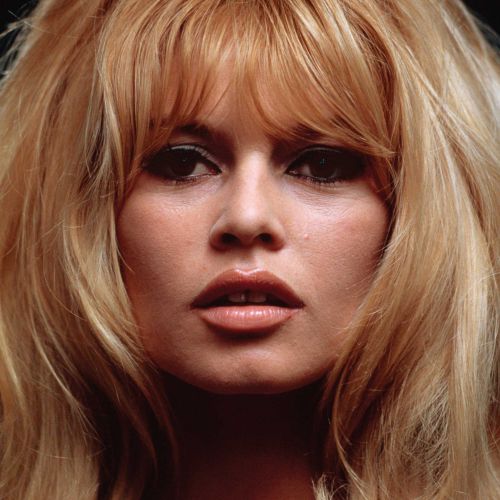
CULT CLASSIC: FREDDIE HUBBARD-GLEAM.
Freddie Hubbard-Gleam.
By the time thirty-six year old Freddie Hubbard arrived in Japan, in March 1975, he was already regarded as one of the most influential trumpeters of his generation. That had been the case since the early sixties when, Freddie Hubbard’s career began, and he brought what was a new perspective to bebop and later, modern jazz. That had been the case when he was signed to Blue Note, Impulse, Atlantic, CTi and then Columbia.
Freddie Hubbard had signed to Columbia in 1974, after leaving Creed Taylor’s CTi label, which had been his home since 1971, and where he had released five albums. Soon, five would become six when CTi released Polar AC on April the ’18th’ 1975. It featured five tracks recorded during different sessions, which were packaged to make Polar AC. While the release of a new album usually excited Freddie Hubbard, he had moved on from CTi.
He was now signed to Columbia, and had released High Energy in the summer of 1974. However, the critics didn’t like High Energy, which didn’t compare well to some of the albums Freddie Hubbard had released at CTi. Especially, his CTi debut, Red Clay an album of hard bop which was released in May 1970 and Straight Life which was released later that year, and was soulful and funky. However, the followup First Light which was released on October the ’12th’ 1971 was Freddie Hubbard’s finest hour at CTi, and even better than Sky Dive that was released in early 1973. High Energy was compared to these albums, but there Freddie Hubbard’s Columbia debut wasn’t in the same ballpark.
Freddie Hubbard wasn’t used to failure, and took the critical response and commercial failure of High Energy to heart. He was keen to returned to the studio and record his second album for Columbia. That was the plan, a Japanese tour was scheduled and Freddie Hubbard was booked to play in venues across the land of the rising sun.
Joining bandleader and trumpeter Freddie Hubbard who also played the flugelhorn was the rest of his sextet. This including a rhythm section of drummer Carl Burnett, bassist Henry Franklin and George Cables on electric piano. They were joined by tenor saxophonist and flautist Carl Randall and percussionist and conga player Buck Clarke. They boarded the plane in America, and travelled halfway around the world, where they planned to record an album.
Columbia knew that Freddie Hubbard needed to record an album, and needed to record an album now. High Energy wasn’t a good start to his career at Columbia, who wanted their latest signing to make amends to his fans by recording a live album. Columbia began negotiating with their Japanese counterparts, to record a live album during the tour. Eventually, a deal was struck that a live album would be recorded at the Yubin Chokin Hall, on March the ’17th 1975, but released in Japan only. This was similar to a deal that Herbie Hancock had negotiated, and seemed to work well for him.
The idea of Freddie Hubbard releasing a live album in Japan was appealing, as the country had many jazz fans. However, Freddie Hubbard had also a large fan-base back home in America, and they wouldn’t be able to buy the album unless it was imported into the country. This Freddie Hubbard realised would be expensive for his loyal fans, who had followed his career for the best part of two decades. Many wouldn’t be able to afford or find his new album Gleam, which is a reminder of his 1975 Japanese tour.
When Freddie Hubbard and his band arrived in Japan, they knew had a few shows to tighten their sound, and hopefully, would bring their A-game to the Yubin Chokin Hall, on March the ’17th 1975.
This they spent the first few shows doing and working on the setlist for the recording of Gleam. Eventually, Freddie Hubbard arrived at a set that featured a mixture of the old and the new.
The old included George Cables’ Ebony Moonbeams and Steve Wonder’s Too High from High Energy. They were joined by Freddie Hubbard’s Spirit Of Trane from Keep Your Soul Together plus Thom Bell and Linda Creed’s Betcha By Golly Wow from Polar AC. New songs included David Nichtern’s Midnight At The Oasis, Carl Randall and Freddie Hubbard’s Put It In The Pocket and Kuntu which would feature Freddie Hubbard’s next studio album Liquid Love. Recording of Liquid Love was scheduled to start the day after Freddie Hubbard’s Japanese tour concluded. Before that, Freddie Hubbard had a live album to records.
When Freddie Hubbard took to the stage with his sextet, he planned to work his way through seven tracks, and once the respectful applause died down, he and his band launched into the grooving jazz funk of Put It In The Pocket. It gives way to Ebony Moonbeams where Freddie Hubbard unleashes one of his best performances. His playing is inventive, flamboyant and melodic as the arrangement meanders along ebbing and flowing allowing Freddie Hubbard before the tempo briefly rises as his crack band launch into a Latin groove. In doing so,they showcase their skills as jazz, funk, fusion and Latin melt into one.
Freddie Hubbard switches to flugelhorn on Betcha By Golly Wow, which gets a jazz-tinged makeover. However, it loses none of its beauty nor soulfulness during this dreamy and impassioned remake. Spirits Of Trane explodes out of the starting blocks, and this hard bop homage is the equivalent of a musical express train.
Kuntu is a near twenty-three minute epicwhich took up the entire third side of the original double album. This African inspired modal jazz track is one of the highlights of the album.
On the laid-back remake of Midnight At The Oasis Henry Franklin’s bass sets the scene for Freddie Hubbard’s tenor saxophone. Soon, the tempo is rising and this beautiful track is revealing its secrets. It’s one of the highlights of Gleam as funk and jazz combine. Closing Gleam is a cover of Too High from Stevie Wonder’s Innervisons album. Initially, it stays true to the original, but Freddie Hubbard forever the innovator heads in the direction of modal jazz. Later, when the solos come round, Freddie Hubbard and his band raise their game and close the concert and album on a resounding high.
Freddie Hubbard and his band brought their A-game to the Yubin Chokin Hall, on March the ’17th 1975, when he recorded what was his third live solo album. It found Freddie Hubbard and his talented band at the peak of their powers as they worked their way through familiar and new songs. They won over the audience as Freddie Hubbard switched between and combined disparate musical genres on Gleam which was produced by Keiichi Nakamura.
While jazz was the starting point, Freddie Hubbard incorporated elements of African and Latin music with funk, fusion, jazz, jazz-funk and modal jazz during what was an accomplished, innovative and inspired performance. It was as if Freddie Hubbard was keen to atone for the critical and commercial failure of High Energy. This he did on Gleam, where he rolled back the years and showed the audience what he was capable of.
Just a few months later, and Freddie Hubbard had completed Liquid Love, and was just about to release Gleam in Japan. It was released to widespread crucial acclaim was popular amongst Japanese jazz fans. Sadly, Freddie Hubbard ’s fans in America and elsewhere were unable to discover the delights of Gleam unless they could find or afford an imported copy. For many of Freddie Hubbard’s fans, Gleam was the album that got away and since then, it’s a cult classic that is appreciated by connoisseurs of jazz.
Freddie Hubbard’s third live album Gleam is akin to the musical equivalent of time travel. It’s like being in the Yubin Chokin Hall, on March the ’17th 1975, when Freddie Hubbard recorded Gleam, which was the finest live album of his long illustrious career that spanned six decades and fifty years.
Freddie Hubbard-Gleam.
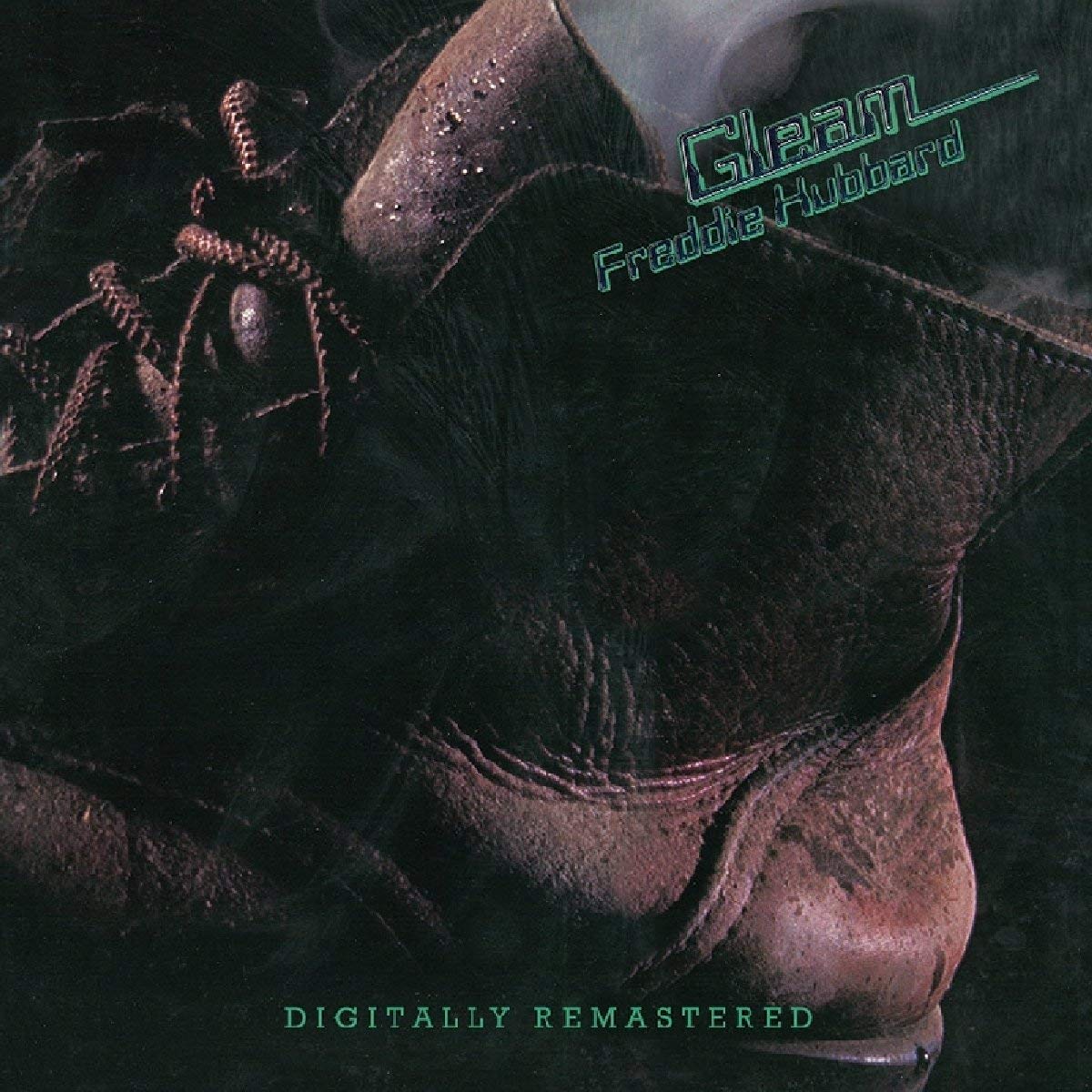
CULT CLASSIC: CUASARES-AFRO-PROGRESIVO.
Cult Classic: Cuasares-Afro-Progresivo.
In 1972, a new Argentinian band Cuasares, entered the recording studio and began work on what became their debut album Afro-Progresivo. This was the latest project that was masterminded by arranger, composer and pianist Waldo Belloso who previously, had been a member of Los Abrodo Brothers and recorded a sexploitation soundtrack in 1969. However, Afro-Progresivo was totally different from anything that Waldo Belloso had previously worked on and was a truly ambitious project.
That was why Waldo Belloso took great care selecting the musicians that would become members of Cuasares. They had to be able to carry out Waldo Belloso’s instructions to the letter, as he guided them through the recording of Afro-Progresivo, teasing nine performances out of the nascent lineup of Cuasares. This took time, it wasn’t until 1973 that Waldo Belloso had managed to coax an album’s worth of music out of Cuasares.
With Cuasares’ debut album complete, Waldo Belloso called this groundbreaking and genre-melting release Afro-Progresivo, which was released on the short-lived Pais label later in 1973. Sadly, when Cuasares released Afro-Progresivo the album failed to find the audience it deserved. It didn’t help that Pais was a small label, and didn’t have the marketing expertise or financial muscle to promote Afro-Progresivo. However, the main problem was that Argentinian record buyers neither understood nor appreciate such an innovative album.
Following the commercial failure of Afro-Progresivo in 1973, copies of Cuasares’ debut album became almost IMpossible to find in record shops. Very occasionally a lucky record collector would stumble across a copy of Afro-Progresivo in the racks of a second-hand record shop. However, as the years passed, Afro-Progresivo became one of the rarest Argentinian rock albums which copies changing hands for excess of £600. This rarity showcases the considerable talents of Waldo Belloso.
The man who masterminded Cuasares was Waldo Belloso, who was born in the Argentinian capital Buenos Aires, on April the ‘4th’ 1933. By the age of six started studying the piano, which was the instrument that Waldo Belloso would later make his name playing.
Soon, Waldo Belloso was studying the roots of Argentinian folklore music, which before long became his passion. Over the next few years he spent much of his studying the studying and practising Argentinian folklore music, and by the time he was a teenager, was regarded as an expert in the subject. Later, Waldo Belloso would become a professor at Alberto Williams Conservatory, and later, became the chair at the National Dance School. By then, Waldo Belloso’s musical career was starting to take shape.
Waldo Belloso became a member Los Abrodo Brothers, and before long, became an important figure within the band. This was all part of his musical apprenticeship.
By then, Waldo Belloso wasn’t content to work as a musician, and was also an aspiring composer, who would spend years honing his craft. This would eventually payoff in the future, as would Waldo Belloso’s academic studies.
Although Waldo Belloso’s life seemed to revolve around music, he qualified as an ophthalmologist during the second half of the sixties. After that, Waldo Belloso’s twin careers in medicine and music continued apace.
In 1969, Waldo Belloso completed the soundtrack to one of the most controversial projects he worked on, the sexploitation movie Juegos De Verano. When it was rated by Argentinian film board, it received a triple-X rating and it four years passed before the premiere of Juegos De Verano took place in 1973. By then, Waldo Belloso had just completed his latest project.
This was Cuasares’ debut album Afro-Progresivo which Waldo Belloso began working on in 1972. By then, the thirty-nine year old arranger, composer and pianist had already written the album Waldo Belloso had written eight of the ten tracks himself, including Transmigración, Colisión, Mutación, Ancestral, Evanescente, Amalgama, Pentatonik and Simbiosis. The other two tracks Cuasares and Vertical were penned by Waldo Belloso and Hector Quattromana a talented and versatile multi-instrumentalist who dawned the moniker Mingo. These ten tracks were recorded by a carefully selected group of musicians, and later, became Cuasares’ debut album Afro-Progresivo.
After carefully choosing the musicians that would become Cuasares, just drummer and percussionist Enrique “Zurdo” Roizner and sixteen year old guitarist Tomás Gubitsch joined Waldo Belloso in the studio. They began recording Afro-Progresivo in 1972, and eventually, the album was completed in 1973. By then, Waldo Belloso had coaxed and encouraged performances out of his small band and now, Afro-Progresivo was ready for release.
Having spent so long recording Afro-Progresivo, Waldo Belloso made a decision he would surely live to regret when he decided to release Cuasares’ debut album on the Pais label. It was a new label and unlike the major labels, didn’t have the marketing expertise or financial muscle to promote Afro-Progresivo, and it was no surprise when upon the release of Afro-Progresivo later in 1973, the album sunk without trace. Part of the problem was that Argentinian record buyers neither understood nor appreciated such an innovative album. For Waldo Belloso this was a huge disappointment.
Just when it looked like things couldn’t get any worse for Waldo Belloso it did, when the Pais label closed its doors after releasing just two albums in less than three months. This included Cuasares’ debut album Afro-Progresivo.
Now forty-five years after Cuasares released Afro-Progresivo, the reissue by Pharaway Sounds allows record buyers to discover what was a groundbreaking and genre-melting album that was masterminded by Waldo Belloso who combined elements of Afro-Latin, jazz, psychedelic funk and European library music. Especially, French and Italian library music, and sometimes, fusion, which was growing in popularity in America, Britain and Europe. As Cuasares flitted between and fused disparate musical genres, they deployed an eclectic musical arsenal.
This included a lysergic fuzzy guitar, futuristic sci-fi synths, an effects laden Hammond organ, flute, vibraphone and a myriad of disparate effects that added a psychedelic vibe to an album that drew inspiration from Africa, America, Europe and Latin America as musical alchemist Waldo Belloso and his band of brothers recorded an album that was way of its time.
That was the case from Cuasares which opens Afro-Progresivo and elements of psychedelic funk, fusion and instrumentation usually found on a progressive rock album are combined to create an ambitious and otherworldly track. The tempo drops on Transmigración which initially, seems an understated track, but that soon changes as lo-fi synths, a marimba and urgent Carlos Santana inspired guitar solo are unleashed. Effects are added to the guitar which joins forces with the marimba on this urgent, hypnotic and funky track. After percussion opens Cuasares head in the direction of fusion during this mesmeric, percussive rocky and urgent genre-melting track that incorporates elements of Latin and psychedelia. Cuasares slow things down on Mutación, which sounds as if it’s been inspired by Santana, as the guitar organ and percussion play starring roles in this beautiful, melodic and memorable offering. Ancestral is a genre-straggling workout with Cuasares play with speed and fluidity and seamlessly combine elements of Latin, psychedelia, fusion and rock on what’s one of their finest moments.
Vertical features Cuasares at their most innovative as they fuse elements of Latin, progressive rock, psychedelia, fusion and library music. Effects are sometimes deployed adding to the lysergic sound while the track veers between dramatic, hypnotic and repetitive. Vibes set scene for another Santana-inspired guitar solo on Evanescente, while the dusty organ solo hints at late-sixties R&B. Later, the searing guitar solo take on a more contemporary sound as Cuasares play with a fluidity, with guitarist Tomás Gubitsch stealing the show. Amalgama finds Cuasares combining an Afro-Latin groove with rocky guitar licks during this breathtaking jam. It’s a similar case on Pentatonik as Cuasares combine vibes, organ, percussion, a rocky guitar, and sometimes deploy effects on a track that sounds as if it was recorded far from Argentina. Simbiosis which closes Afro-Progresivo is an ambitious, genre-melting track where everything Afro-Latin, fusion, jazz and psychedelic rock on one of the highlights of the album.
Forty-seven years after Cuasares released their debut album Afro-Progresivo in 1973, this oft-overlooked hidden gem is a prized possession amongst a small coterie of record collectors who appreciate this groundbreaking and genre-melting album.
Sadly, that wasn’t the case when Afro-Progresivo was released in 1973, and failed to find an audience, as record buyers didn’t understand an album that was way ahead of its time. Waldo Belloso who founded Cuasares, had his handpicked band combine elements of Afro-Latin, European library music, fusion, jazz, psychedelic funk and rock on this innovative album. Afro-Progresivo found Cuasares pushing musical boundaries to their limits as they fused music genres and influences and sometimes beyond on this cult classic that gradually, and somewhat belatedly, is starting to find the wider audience it deserves.
Cult Classic: Cuasares-Afro-Progresivo.
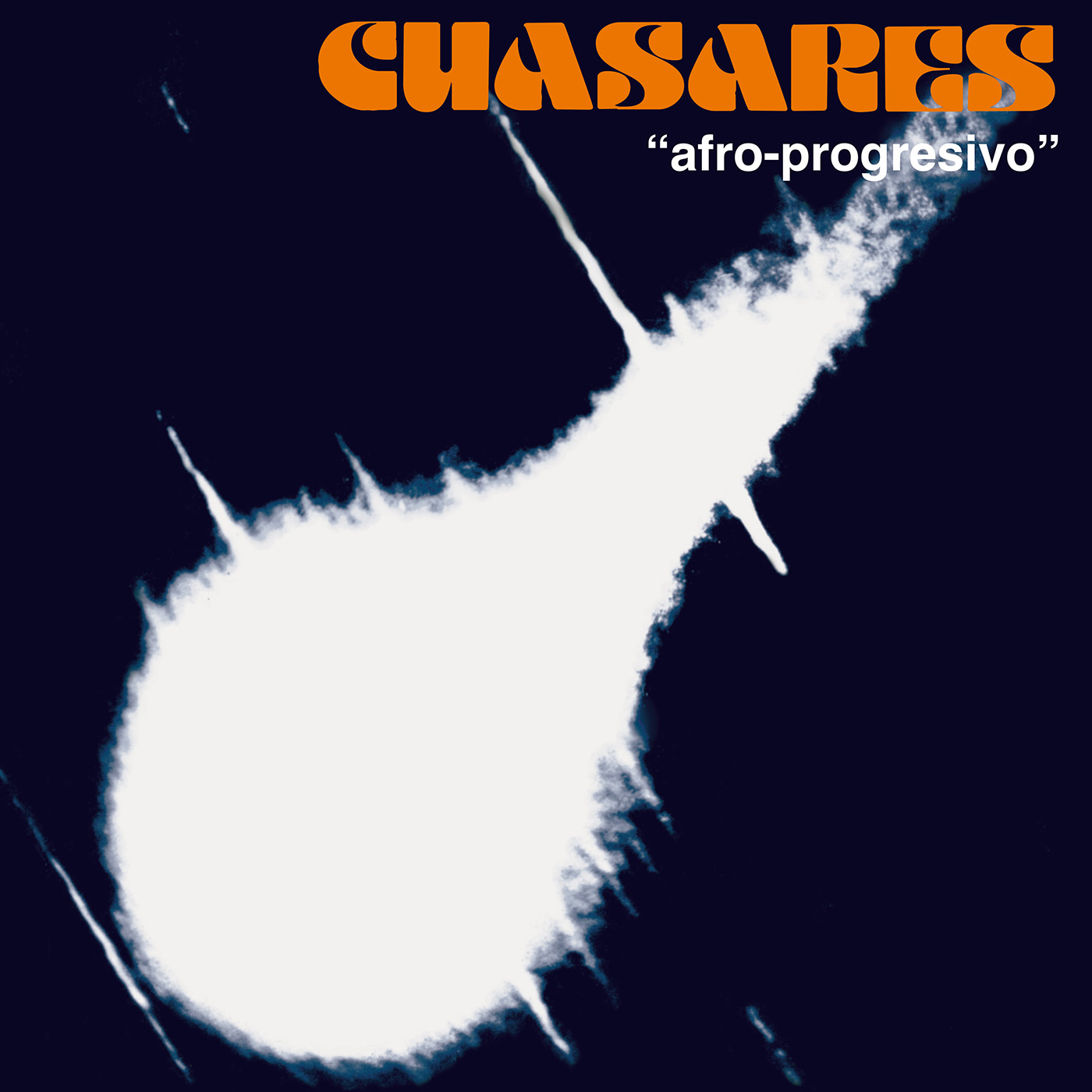
SUN RA AND HIS MYTH SCIENCE ARKESTRA-WHEN ANGELS SPEAK OF LOVE.
Sun Ra and His Myth Science Arkestra-When Angels Speak Of Love.
Label: Cosmic Myth Records.
One of the most prolific artist of the twentieth century was the inimitable Sun Ra, who released around 125 albums during a career that spanned six decades. Over the last few years, dozens of these albums have been reissued by various reissue labels in Britain, Europe and America. For fans of Sun Ra this is the perfect opportunity to discover albums that have never been reissued before.
Many of these albums were originally released in the fifties, sixties or seventies, and nowadays, original copies are either impossible to find, or beyond the budget of most Sun Ra fans. The reissue of these albums is a welcome opportunity to add these albums to their collection. However, many newcomers to Sun Ra are confused by the dozens of albums that have been released over the last few years.
While many of the albums are reissues of some 125 albums that Sun Ra released, some record companies seem to be repacking existing or unreleased music to make new albums. This isn’t just confusing newcomers to Sun Ra, but many longterm fans and even some people within the music industry. It takes some research to separate reissues of original Sun Ra albums from those that contain repackaged material. While some are of interest to fans of Sun Ra, others are of dubious quality. There lies the problem.
If a newcomer to Sun Ra chooses the wrong album, it could put them off his music for life. That would be a great shame as Sun Ra was one of jazz’s pioneer and innovators who released many albums of groundbreaking music during his long and illustrious career. This includes When Angels Speak Of Love which has been remastered and released by Cosmic Myth Records. This new reissue is described as the “Definitive Remastered Version” of what’s one of Sun Ra’s rarest albums. It was recorded in 1963, and only a small quantity were released in mono in 1966. By then, Sun Ra had achieved much.
Before dawning the moniker Sun Ra, Herman Poole Blount was born on the ‘22nd’ of May 1914, in Birmingham, Alabama. Very little is known about Herman Poole Blount’s early life. So much so, that for many years, nobody knew what age he was. What we do know, is that growing up, Herman Poole Blount immersed himself in music.
He learnt to play the piano at an early age and soon, was a talented pianist. By the age of eleven, Herman Poole Blount was to able read and write music. However, it wasn’t just playing music that Herman Poole Blount enjoyed. When musicians swung through Birmingham, Herman Poole Blount was there to see everyone from Duke Ellington to Fats Waller play. Seeing the great and good of music play live inspired Herman Poole Blount to become a professional musician.
By his mid teens, Herman Poole Blount was a high school student, but even by then, music was his first love. His music teacher John T. “Fess” Whatley realised this, and helped Herman Poole Blount’s nascent musical career.
John T. “Fess” Whatley was a strict disciplinarian, and this rubbed off on Herman Poole Blount. Later, he would acquire a reputation as a relentless taskmaster when he formed his Arkestra. He was determined that the musicians in his Arkestra to reach his high and exacting standards and fulfil the potential that he saw in them. At rehearsals, musicians were pushed to their limits, but this paid off when they took to the stage. Led by Sun Ra, the Arkestra in full flow were peerless. However, that was way in the future. Before that, Herman Poole Blount’s career began to take shape.
In his spare time, Herman Poole Blount was playing semi-professionally in various jazz and R&B groups, and other times, he worked as a solo artist. Before long, Herman was a popular draw. This was helped by his ability to memorize popular songs and play them on demand. Strangely, away from music, the young Herman Poole Blount was very different.
He’s remembered as studious, kindly and something of a loner. Herman Poole Blount was also a deeply religious young man despite not being a member of a particular church. One organisation that Herman Poole Blount joined was the Black Masonic Lodge. This allowed him access to one of the largest collection of books in Birmingham. For a studious young man like Herman Poole Blount, this allowed him to broaden his knowledge of various subjects. Whether this included the poetry and Egyptology that would later influence his musical career.
In 1934, twenty-year-old Herman Poole Blount was asked to join a band that was led by Ethel Harper. She was no stranger to Herman Poole Blount, and just a few years earlier, had been his high school biology teacher. Just a few years later, and he was accepting Ethel Harper’s invitation to join her band.
Before he could head out on tour with Ethel Harper’s band, Herman Poole Blount joined the local Musicians’s Union. After that, he embarked on a tour of the Southeast and Midwest. This was the start of Herman Poole Blount’s life as a professional musician. However, when Ethel Harper left her band to join The Ginger Snaps, Herman Poole Blount took over the band.
With Ethel Harper gone, the band was renamed The Sonny Blount Orchestra, and it headed out on the road and toured for several months. Sadly, The Sonny Blount Orchestra wasn’t making money, and eventually, the band split up. However, other musicians and music lovers were impressed by The Sonny Blount Orchestra.
This resulted in Herman Poole Blount being always in demand as a session musician. He was highly regarded within the Birmingham musical community, so much so, that he was awarded a music scholarship to Alabama Agricultural and Mechanical University in 1937. Sadly, he dropped out after a year when his life changed forever.
In 1937, Herman Poole Blount experienced what was a life-changing experience. It’s a story he told many times throughout his life. He describes a bright light appearing around him and his body changing. “I could see through myself. And I went up … I wasn’t in human form … I landed on a planet that I identified as Saturn. They teleported me. I was down on a stage with them. They wanted to talk with me. They had one little antenna on each ear. A little antenna over each eye. They talked to me. They told me to stop attending college because there was going to be great trouble in schools … the world was going into complete chaos … I would speak through music, and the world would listen. That’s what they told me.” For a deeply religious young man, this was disturbing and exciting. It certainly inspired the young Herman Poole Blount.
After his: “trip to Saturn,” Herman Poole Blount decided to devote himself to music. So much so, that he hardly found time to sleep. Day in, day out, Herman Poole Blount spent his time practising and composing new songs in his first floor home which he had transformed into a musical workshop. That was where also where he rehearsed with the musicians in his band. Away from music, Herman Poole Blount took to discussing religious matters. Mostly, though, music dominated his life.
It was no surprise to when Herman Poole Blount announced that he had decided to form a new band. However, his new band was essentially a new lineup of The Sonny Blount Orchestra. It showcased the new Herman Poole Blount, who was a dedicated bandleader, and like his mentor John T. “Fess” Whatley, a strict disciplinarian. Herman Poole Blount was determined his band would be the best in Birmingham. This proved to be the case as seamlessly, The Sonny Blount Orchestra were able to change direction, as they played an eclectic selection of music. Before long, The Sonny Blount Orchestra were one of most in-demand bands in Birmingham, and things were looking good for Herman. Then in 1942, The Sonny Blount Orchestra were no more when Herman was drafted.
On receiving his draft papers, Herman Poole Blount declared himself a conscientious objector. He cited not just religious objections to war and killing, but that he had to financially support his great-aunt Ida. Then there was the chronic hernia that blighted Herman Poole Blount’s life. Despite his objections the draft board rejected his appeal, and things got worse for Herman Poole Blount.
Herman Poole Blount’s family was embarrassed by his refusal to fight, and some turned their back on him. Eventually, though, Herman Poole Blount was offered the opportunity to do Civilian Public Service. However, he failed to appear at the camp in Pennsylvania on the December ‘8th’ 1942.
This resulted in Herman Poole Blount being arrested, and when he was brought before the court, Herman Poole Blount debated points of law and the meaning of excerpts from the Bible. When this didn’t convince the judge Herman Poole Blount said he would use a military weapon to kill the first high-ranking military officer possible. This resulted in Herman Poole Blount being jailed. For Herman, this led to one of the most disturbing periods in his life.
Herman Poole Blount’s experience in military prison were so terrifying and disturbing that he felt he no option but to write to the US Marshals Service in January 1943. By then, Herman felt he was on the verge of a nervous breakdown. He was suffering from stress and feeling suicidal. There was also the constant fear that he would be attacked by others within the military prison. Fortunately, the US Marshals Service looked favourably on his letter.
By February 1943, Herman Poole Blount was allowed out during the day to work in the forests around Pennsylvania. At nights, he was able to play the piano. A month later, Herman Poole Blount was reclassified and released from military prison. This brought to an end what had been a harrowing period of his life.
Having left prison, Herman formed a new band. They played around the Birmingham area for the next two years. Then in 1945, when his Aunt Ida died, Herman Poole Blount left Birmingham, and headed to the Windy City of Chicago.
Phase One-Chicago.
Now based in Chicago, Herman quickly found work within the city’s vibrant music scene. This included working with Wynonie Harris and playing on his two 1946 singles, Dig This Boogie and My Baby’s Barrelhouse. After that, Herman Poole Blount worked with Lil Green in some of Chicago’s strip clubs. Then in August 1946, Herman Poole Blount started working with Fletcher Henderson but by then, the bandleader’s fortunes were fading.
By then, Fletcher Henderson’s band was full of mediocre musicians, and to make matters worse, the bandleader was often missed gigs. This couldn’t be helped as Fletcher Henderson, was still recovering after a car accident. What Fletcher Henderson needed was someone to transform his band’s failing fortunes and this was where Herman came in. His role was arranger and pianist, but realising the band needed to change direction, he decided to infuse Fletcher Henderson’s trademark sound with bebop. However, the band were resistant to change and in 1948, Herman left Fletcher Henderson’s employ.
Following his departure from Fletcher Henderson’s band, Herman formed a trio with saxophonist Coleman Hawkins and violinist Stuff Smith. Alas, the trio was somewhat short-lived and didn’t release any recordings.
By then, Chicago was changing, and was home to a number of African-American political activists. Soon, a number of fringe movements sprung up who were seeking political and religious change. When Herman became involved he was already immersing himself in history, especially, Egyptology. He was also fascinated with Chicago’s many ancient Egyptian-styled buildings and monuments. This resulted in Herman Poole Blount discovering George GM James’ book The Stolen Legacy which turned out to be a life-changing experience.
In The Stolen Legacy, George GM James argues that classical Greek philosophy actually has its roots in Ancient Egypt. This resulted in Herman concluding that the history and accomplishments of Africans had been deliberately denied and suppressed by various European cultures. It was as if Herman’s eyes had been opened and was just the start of a number of changes in his life.
As 1952 dawned, Herman had formed a new band, The Space Trio. It featured saxophonist Pat Patrick and Tommy Hunter. At the time, they were two of the most talented musicians Herman knew. This allowed him to write even more complicated and complex compositions. However, in October 1952 the author of these tracks was no longer Herman Poole Blount was Sun Ra had just been born.
Just like Malcolm X and Muhammad Ali, adopting the name Sun Ra was perceived by some as Herman choosing to dispense with his slave name. This was a kind of spiritual rebirth for Sun Ra, and was certainly was a musical rebirth.
After Pat Patrick got married, and moved to Florida, this left The Space Trio with a vacancy for a saxophonist. Tenor saxophonist, John Gilmore was hired and filled the void. He would become an important part of Sun Ra’s band in the future.
So would the next new recruit alto saxophonist Marshall Allen. They were then joined by saxophonist James Spaulding, trombonist Julian Priester and briefly, tenor saxophonist Von Freeman. Another newcomer was Alton Abraham, who would become Sun Ra’s manager. He made up for Sun Ra’s shortcomings when it came to business matters.
While he was a hugely talented bandleader, who demanded the highest standards, Sun Ra, like many other musicians, was no businessman. With Alton Abraham onboard, Sun Ra could concentrate on music while his new manager took care of business. This included setting up El Saturn Records, an independent record label, which would release many of Sun Ra’s records. However, El Saturn Records didn’t released Sun Ra and His Arkestra’s debut album, Jazz By Sun Ra.
Instead, Jazz By Sun Ra was released in 1956, on the short-lived Transition Records. However, Sun Ra and His Arkestra’s sophomore album Super Sonic Jazz was released in March 1956, on El Saturn Records. Sound Of Joy was released on Delmark in November 1956. However, it was El Saturn Records that would release the majority of Sun Ra and His Arkestra’s albums.
In 1961, Sun Ra deeded to leave Chicago and move to New York where he would begin a new chapter in his career. Much had happened to Sun Ra since he first arrived in Chicago 1945 as the World War II drew to a close. Back then, he was still called Herman Poole Blount and was trying to forge a career as a musician. By the time he left Chicago he was a pioneer of free jazz
Phase Two-New York.
Sun Ra and His Arkestra journeyed to New York in the autumn of 1961, where they lived communally. This allowed Sun Ra to call rehearsals at short notice, and during the rehearsals, he was a relentless taskmaster who was seeking perfection. However, this paid off and Sun Ra and His Arkestra recorded a string of groundbreaking albums. This included Secrets of the Sun in 1962 which was the most accessible recording from their solar period. However, Sun Ra and his music continued to evolve in the Big Apple
The Heliocentric Worlds of Sun Ra Volume 1 was released by Sun Ra and his Solar Arkestra in 1965. Sun Ra had dispensed was the idea of harmony and melody, and also decided there should be no continuous beat. Instead, the music revolved around improvisation and incorporated programmatic effects. This was the case The Heliocentric Worlds of Sun Ra Volume 2 which was released later in 1965.
As Sun Ra and His Arkestra came to the end of their time in New York, their music was often described as “avant-garde jazz” or “free jazz.” However, Sun Ra started to reject the free jazz label that was attached to his music. He pointed out that his music had been influenced by different types of ethnic music and he often used percussion, synths and in one case strings. Regardless of the the name given to Sun Ra’s music, it was album innovative. This was the case with Sun Ra and His Myth Science Arkestra’s 1966 album When Angels Speak Of Love.
A year after releasing Secrets Of The Sun, Sun Ra And His Myth Science Arkestra released When Angels Speak Of Love in 1966. It was also reissued by Grey Scale and showed a very different side of Sun Ra.
When Angels Speak Of Love was released on Sun Ra’s El Saturn label, and was only available by mail order or at concerts. Those that bought When Angels Speak Of Love discovered what some critics at the time called “a bizarre record” However, these critics failed to discover what was a truly groundbreaking album where Sun Ra And His Myth Science Arkestra continued to move free jazz in a new direction.
To do this, they used increasingly shrill notes, layered rhythms and effects including echo reverb. During Next Stop Mars, which is the centrepiece and highlight of the album, a space chant sets the scene for Marshall Allen and John Gilmore braying, growling and shrill horns as they push them to the limits. Meanwhile, Sun Ra’s keyboards underpin the arrangement, during Next Stop Mars, which was part of genre-melting album of groundbreaking album.
It finds Sun Ra And His Myth Science Arkestra fusing avant-garde and free jazz with their unique brand of space age jazz on When Angels Speak Of Love. For fans of Sun Ra’s music this was album where not for the first time, he was way ahead of the curve musically.
Sadly, Sun Ra died on May the ’30th’ 1993, aged just seventy-nine. That day, music lost an innovative musician who had played his part in rewriting the history of jazz. Sun Ra is remembered as one of the pioneers of free jazz, and helped shape the genre on over 125 albums.
For nearly forty years, Sun Ra pushed musical boundaries to their limits, and sometimes, way beyond. He was a pioneer and innovator, and also a perfectionist and relentless taskmaster. With some of most talented, inventive and adventurous musicians of their generation, Sun Ra set about honing his Arkestra’s sound. He was demanding and exacting standards. Second best was no use to Sun Ra. What he was after was an Arkestra who were innovators and musical adventurers.
Sun Ra was never content to stand still musically, and was always looking to reinvent familiar tracks. The original version of a song was merely the starting point. What it became, was anyone’s guess? Sun Ra was forever determined to innovate, and when he reinvented a track, he took the music in the most unexpected direction. He combined Egyptian history and space-age cosmic philosophy with free jazz, avant-garde, improv. Another component of Sun Ra’s music was his unique and inimitable brand of futuristic, space-age jazz which was part of an innovative fusion that totally transformed the career of the man born Herman Poole Blount.
Very little is know about the early years of Herman Poole Blount. However, over a long and illustrious career that spanned six decades, Sun Ra fulfilled his potential and became a giant and legend of jazz. This took time, patience and dedication and by his death in 1993, Sun Ra had come a long way since his early days as musician in Birmingham, Alabama.
The early days of Sun Ra’s career as a musician in Birmingham, Alabama, helped shape him, and make him the man and musician that he later became. So did his mentor John T. “Fess” Whatley, his religion and the time Herman Poole Blount spent studying at the Black Masonic Lodge, in Birmingham. That was where his love of poetry and interest in Egyptology blossomed. This helped shape the future Sun Ra’s philosophy and music. However, it was his ‘trip’ to Saturn that changed his life forevermore and influenced the music he made as Sun Ra.
By his death in 1993, Sun Ra had released over 125 albums with a variety of different bands. This includes Sun Ra and His Myth Science Arkestra who released When Angels Speak Of Love in 1966. It’s a reminder of the Sun Ra, the man simply known as Mr. Mystery, who was musical pioneer who spent six decades creating groundbreaking, innovative and inventive music which nowadays, is more popular than ever.
Sun Ra and His Myth Science Arkestra-When Angels Speak Of Love.
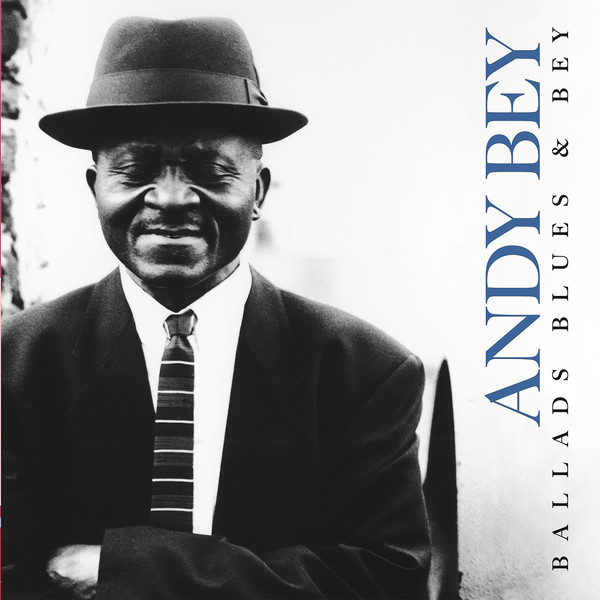
ANDY BEY-BALLADS, BLUE AND BEY-VINYL.
Andy Bey-Ballads, Blue and Bey-Vinyl.
Label: Ko Ko Music.
By the time Andy Bey released Ballads, Blue and Bey in 1996, his career had already spanned four decades. His career began in 1959 when he worked on the Startime television show with Connie Francis. This continued until 1960, and by then, he had also sang for legendary musician, songwriter and bandleader Louis Jordan. However, when he was seventeen, Andy Bey decided to form a new group with his sisters.
The new group became Andy and The Bey Sisters. They recorded a trio of albums 1961s Andy and The Bey Sisters, 1964s Now! Hear and 1965s Round Midnight. Andy and The Bey Sisters also toured extensively, and spent sixteen months touring Europe. However, two years after releasing Round Midnight, the group split-up in 1967 and Andy Bey embarked upon a new chapter in his career working with various jazz musicians.
He had already worked with the Howard McGhee Orchestra on their 1966 album Cookin’ Time. Two years later in 1968, he worked on Max Roach’s Members, Don’t Git Weary. The following year, 1969, Andy Bey worked with Duke Pearson on How Insensitive. However, as the sixties gave way to the seventies, Andy Bey entered one of the busiest and most fruitful periods of his career.
As the new decade dawned, in 1970, Andy Bey was one of a trio of featured vocalists on Horace Silver’s album That Healin’ Feelin’. This was the first of four Horace Silver albums that Andy Bey would feature on over the next three decades.
In 1970, Andy Bey collaborated for the first time with jazz saxophonist Gary Bartz on his latest project NTU Troop. They combined jazz, funk, and soul with social comment and powerful messages. Andy Bey, who was then thirty-one, featured on Gary Bartz NTU Troop’s sophomore album Harlem Bush Music Taifa. He returned for the followup Harlem Bush Music Uhuru which was released in 1971. That wasn’t the only album Andy Bey worked on during 1971.
He was invited to join the Mtume Umoja Ensemble when they recorded what became their debut album Alkebu-Lan: Land Of The Blacks (Live At The East). It was released by the Chicago-based label Strata East in 1972. The same year, Andy worked on two albums.
This included Children Of Forever the debut album by jazz fusion bassist Stanley Clarke. Andy Bey and Dee Dee Bridgewater were the two featured vocalists on the album which was released to critical acclaim and launched Stanley Clarke’s solo career.
The other album released during 1972 that featured Andy Bey was Gary Bartz NTU Troop’s Juju Street Songs. It was hailed as one of the group’s finest releases. However, like so many groundbreaking groups Gary Bartz NTU Troop’s only really started to find a wider appreciative audience at a later date.
In 1973, Gary Bartz NTU Troop released Follow, The Medicine Man. This was the fourth and final album that Andy Bey recorded with Gary Bartz NTU Troop. The thirty-four year old vocalist was about to embark upon a solo career.
A year later, in 1974, Andy Bey released Experience and Judgment on Atlantic Records. It had been recorded during two sessions at New York’s Regent Sound Studios on July ‘26th’ and September the ’19th’ 1973. Jazz, funk, soul and Indian music were combined by Andy Bey and his band on what’s regarded as the finest album of his long and illustrious career. Sadly, it failed to find the audience it deserved upon its release and it was seventeen years before Andy Bey returned with the followup.
Two years later, in 1976, Andy Bey took to the stage in a theatre production of Adrienne Kennedy’s A Rat’s Mass, directed by Cecil Taylor at La MaMa Experimental Theatre Club in the East Village of Manhattan. However, the following year Andy Bey returned to music.
Andy Bey featured on Grachan Moncur III’s 1977 album Shadows. This was the last album released during the seventies to feature Andy Bey.
After six years away, he made a guest appearance on Heart Is A Melody Of Time (Hiroko’s Song), a track from Pharoah Sanders’ 1983 album Heart Is A Melody. Alas, it was another five years before Andy Bey returned.
He was reunited with Horace Silver on Music To Ease Your Disease, which was released in 1988. This was the second album Andy Bey had recorded with Horace Silver and they could continue to collaborate until 1996.
Andy Bey’s long-awaited sophomore album As Time Goes By was rcorded live in B.P. Club, on the ‘4th’ of May 1991 and released that year. It found Andy Bey delivering a set of that included a jazz classics like It Ain’t Necessarily So and As Time Goes By. However, it would another five years before he released anther album and much had happened in his professional and private life.
In 1993, Andy Bey featured on Horace Silver’s It’s Got to Be Funky. It featured an an-star band was released to plaudits and praise. Things seemed to be going well for Andy Bey. Then in 1994, he received devastating news.
Andy Bey had never hid his sexuality, and was openly gay. However, in 1994 he was diagnosed as HIV-positive. Despite the diagnosis, Andy Bey decided to continue his musical career.
In 1995, Andy Bey featured on tenor saxophonist Bob Malach’s album The Searcher. Then in 1996 he joined forces with his old friend Horace Silver.
Total Response which was released in 1996 was the fourth and Horace Silver to feature Andy Bey. They had first collaborated in 1970, and three decades later in were still making music.
1996 was also the year that Andy Bey returned with his much-anticipated third album Ballads, Blue and Bey. This was only the second studio album that Andy Bey had released since his 1974 debut album Experience and Judgment. However, Ballads, Blue and Bey which has just been released as 2 LP set by Ko Ko Music is very different to Andy Bey’s debut.
Instead of a band, Ballads, Blue and Bey features just Andy Bey who accompanies himself on piano on the ten jazz standards. These he extends and delivers with in his own inimitable style with his four octave baritone vocal.
Side A.
Opening Ballads, Blue and Bey is a beautiful heartfelt version of Ira and George Gershwin’s Someone To Watch Over Me. It gives way to a cover of Cole Porter’s You’d Be So Nice To Come Home To where Andy Bey’s piano provides the perfect accompaniment as his vocal veer.
Side B.
Two songs cowritten by Duke Ellington feature on the second side. The first is a soul-baring take of I Let A Song Go Out Of My Heart. It’s followed by a beautiful, emotive rendition of In A Sentimental Mood . This seven minute epic features one of Andy Bey’s best vocals and showcases his skills as a pianist.
Side C.
A wistful sounding cover Willow Weep For Me where Andy Bey lays bare his soul is followed by a thoughtful reading of Jerome Kern and Otto Harbach Yesterdays. Closing the third side is If You Could See Me Now where Andy Bey breathes meaning and emotion into the lyrics.
Side D.
Duke Ellington and Mack David’s I’m Just A Lucky So and So opens the fourth and final side of Ballads, Blue and Bey. It features a vocal that’s joyous as he reflects on his good fortune at having found the one he loves. Day Dream is another song that Duke Ellington cowrote. This time, he joined forces with Billy Strayhorn and John Latouche. Here, Andy Bey takes the track in a new direction. Partly, this is because of the understated arrangement where the piano sets the scene for Andy Bey’s vocal masterclass. He paints pictures against an arrangement where less is more and is another of the album’s highlights. Embraceable You which was written bye George and Ira Gershwin, closes Ballads, Blue and Bey on a high thanks to his spellbinding vocal.
For anyone yet to discover Andy Bey’s music, Ballads, Blue and Bey is one of his finest albums. His finest hour was his 1974 album Experience and Judgment which is a cult classic that’s highly regarded by connoisseurs of funk and soul. However, Ballads, Blue and Bey which was Andy Bey’s third album was very different from his debut.
By then, twenty-two years had passed and Andy Bey’s music had evolved and Ballads, Blue and Bey is album of jazz. This wasn’t the only change.
Andy Bey isn’t accompanied by a band on Ballads, Blue and Bey and instead, accompanies himself on piano. These understated arrangements are hugely effective and provide the perfect backdrop to the vocals on the ten standards. He makes good use of his four octave baritone vocal throughout the album as he breathes life, meaning and emotion into these familiar and oft-covered songs. Sometimes, Andy Bey’s vocals are heartfelt, other times hurt-filled, reflective, rueful, thoughtful, wistful and worldweary. Like an actor in a play, Andy Bey lives the lyrics on the standards on Ballads, Blue and Bey, which is a truly timeless jazz album that is the perfect introduction to one of music’s best kept secrets.
Andy Bey-Ballads, Blue and Bey-Vinyl.
CULT CLASSIC: DON ELLIS-AUTUMN.
Cult Classic: Don Ellis-Autumn.
Bandleader, composer and trumpeter Don Ellis’ life was changed forevermore in 1974, when he was diagnosed with an abnormal heart condition. Just a year later, in 1975, he suffered his first heart attack which very nearly cost him his life. Fortunately, Don Ellis recovered and by 1977 signed to Atlantic Records.
Later in 1977, Don Ellis released his Atlantic Records’ debut Music From Other Galaxies and Planets, which was his first album in three years. Don Ellis was back, and his comeback was complete after playing at the Montreux Jazz Festival, in Switzerland on July the ‘8th’ 1977. That concert was recorded and was released in 1978 as Don Ellis Live At Montreux and was a poignant release.
By 1978, all the years of touring were taking a toll on Don Ellis. After what was his final concert on April the ’21st’ 1978, Don Ellis’ doctor advised him to stop touring and playing the trumpet, as the strain on his heart was proving too great.
Sadly, just under eight month later, on December the ’17th’ 1978, Don Ellis returned from a Jon Hendricks concert and suffered what proved to be a fatal heart attack at his North Hollywood home. Don Ellis was just forty-four and that day, jazz lost one of its great trumpeters.
Nearly forty years after his death, Don Ellis’ music is often overlooked by the majority of jazz fans, and sadly only a small but appreciative audience remember a man who was one of the great jazz trumpeters. A reminder of this talented and innovative bandleader, composer and trumpeter is Don Ellis and His Orchestra’s album Autumn, which was released in 1969. That was all in the future.
As 1968 dawned, Don Ellis was already regarded as an innovative bandleader, composer and trumpeter within jazz circles due to his use of willingness to experiment, and particularly due to his use of different time signatures. That had been the case since he released his debut album How Time Passes in 1960. Eight years later, and Don Ellis was preparing to record Shock Treatment which was his ninth album and second for Columbia Records.
Shock Treatment.
Don Ellis had signed to Columbia after leaving Pacific Jazz, and in 1967, released the critically acclaimed album Electric Bath, which was nominated for a Grammy Award and won the Down Beat Reader’s Poll. Electric Bath was produced by John Hammond and saw Don Ellis’ band incorporate the use of electronics and was influenced by rock music. This was a first for Don Ellis, and the perfect way to start his career at Columbia.
Just like many artists before him, the problem that Don Ellis was faced with after releasing such a groundbreaking album as Electric Bath, was following it up. While Don Ellis knew that wasn’t going to be easy, he was keen to build on the success of Electric Bath, and began work on his ninth album Shock Treatment.
Don Ellis wrote five new tracks Homecoming, Star Children, Beat Me Daddy, Seven To The Bar, Milo’s Theme and The Tihai. He also joined forces with Kelly MacFadden to write Night City. John Magruder a member of Don Ellis’ band wrote Zim, which was joined by four cover versions. This included Hank Levy’s A New Kind Of Country and Mercy Maybe Mercy and Howlett Smith’s Opus 5 and Seven Up. These eleven tracks would eventually become Shock Treatment, which was produced by John Hammond.
It took just two days to record Shock Treatment, with Don Ellis and his twenty-four piece orchestra recording the eleven tracks on the album on February the ’14th’ and ’15th’ 1968. It was an impressive sight and sound with the rhythm and horn sections combining with keyboards, percussion and Eastern instruments as bandleader Don Ellis played a starring role and unleashed a series of trumpet solos. Once again, John Hammond took charge of production on Shock Treatment, which was the much-anticipated followup to Electric Bath.
Shock Treatment opens with A New Kind Of Country, which becomes funky, energetic and vibrant in the hands of Don Ellis and his orchestra who play part of a composition in 7/4 time. Briefly, the tempo drops on Night City, but soon builds and reveals its secrets as lysergic soulful harmonies combine with Don Ellis and his orchestra, and play their part in the sound and success of this genre-melting track. Straight away, the soulful blues Homecoming takes on a late-night sound, and is played in 3/4 time, before bandleader Don Ellis seamlessly changes to 7/4 time on Mercy Maybe Mercy, where drummer Steve Bohannon provides the heartbeat as horns and Hammond organ play leading roles. Very different is Zim, which is a more ruminative piece, while Opus 5 finds Don Ellis and his orchestra showcase their versatility and talent by switching to 5/4 time during this nine minute modal jazz epic.
Star Children could only have been recorded during the late-sixties, with its captivating mixture of cosmic sounds, Eastern influences, drama and the Don Ellis’ Hispanic-tinged trumpet interjections. Don Ellis then switches to 7/4 time on Beat Me Daddy, Seven To The Bar and takes centre-stage for the first thirty-seconds, before he and his orchestra combine jazz and Latin influences during this six-minute propulsive opus which eventually reaches an explosive crescendo. Milo’s Theme offers the opportunity for experimentation as Don Ellis plays electric trumpet and effects are deployed during this ambitious and innovative piece. Seven Up finds Don Ellis returning to 7/4 time during this dazzling, jaunty and lively composition. Closing Shock Treatment is The Tihai which is played in 9/4 time and initially is mellow before becoming exuberant and ultimately a complex rhythmic piece that allows Don Ellis and orchestra to showcase their considerable skills while combining elements of jazz and Latin.
When critics heard Shock Treatment, they realised that it was an ambitious and innovative album, where Don Ellis incorporated elements of blues, experimental, funk, Indian Latin, psychedelia and rock into his ninth album of jazz. Shock Treatment which was Don Ellis’ much-anticipated followup to Electric Bath, was the album that he hoped would transform his fortunes.
While Don Ellis was a popular live draw by the time Shock Treatment, was released in 1968, his albums never sold in huge quantities. Sadly, that was the case with Shock Treatment which failed to trouble the US Billboard 200. That was despite Shock Treatment being another ambitious and innovative album. After nine albums, Don Ellis had still to make a commercial breakthrough. Maybe Don Ellis’ next album would result in a change in fortune for the thirty-four year old?
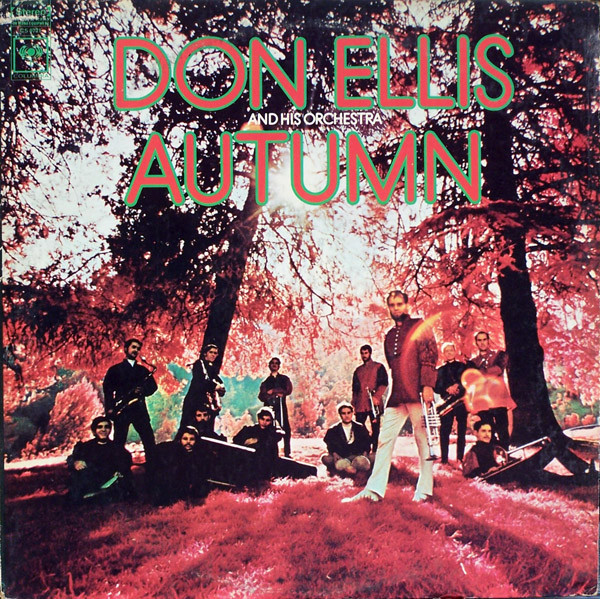
Autumn.
In August 1968, Don Ellis and His Orchestra were preparing to enter the studio to record their next album Autumn. This time, there was no sign of producer John Hammond, who had been replaced by Al Kooper, of Blood, Sweat and Tears and it was hoped that he would transform the fortune of Don Ellis and His Orchestra.
Autumn featured five pieces penned by bandleader Don Ellis, including Variations For Trumpet, Scratt and Fluggs, Pussy Wiggle Stomp, Child Of Ecstasy and Indian Lady which like the cover of Charlie Parker’s K.C. Blues, had been recorded live at Stanford University. The rest of Autumn was recorded by Don Ellis and His Orchestra in the studio with producer Al Kooper.
The mind-blowing Magnus Opus Variations For Trumpet opens Autumn, and is a six-piece movement that is essentially a showcase for Don Ellis’ trumpet. He delivers a musical masterclass as his playing veers between to dark and wistful to explosive, powerful, urgent and always inventive as he plays with a freedom. Meanwhile, his orchestra switch seamlessly between 9/4 to 7/4 and incorporate elements of fusion, avant-garde and Latin music as bandleader Don Ellis continually throws curveballs during what’s now regarded as one of his finest hours. Very different is Scratt and Fluggs which bursts into life with Don Ellis and His Orchestra playing with urgency and in 5/4 time while an enthusiastic studio audience whoop and holler and encourage them to create what sounds like a coke-fuelled soundtrack to an old-time barn dance. The swinging and joyous Pussy Wiggle Stomp is played in 7/4 time and incorporates elements of gospel and jazz, and when the solos arrive, Don Ellis allows his members of his band to take centre-stage and showcase their considerable skills.
It’s a similar case on the live version of Charlie Parker’s KC Blues, which was recorded by a big band and reaches a dramatic ending. Trumpeter Glenn Stuart plays a starring role on Child Of Ecstasy, and unleashes a breathtaking performance and latterly, plays with power and control. This is a performance that bandleader Don Ellis would be proud of. Closing Autumn is the second live track Indian Lady, which originally featured on the 1967 album Electric Lady. Here it’s extended to eighteen minutes during what’s an urgent, frenetic and innovative reworking that closes a future genre classic.
What at the time must have seemed like a gamble replacing John Hammond with Al Kooper as producer turned out to be a masterstroke, when critics haled Autumn as a genre classic. However, the big question was would Don Ellis and His Orchestra’s genre classic Autumn be a commercial success and transform their fortunes?
When Autumn was released in 1969, Don Ellis and His Orchestra’s latest album wasn’t the commercial success that they had hoped. Just like many jazz artists before him, Don Ellis had released a classic that slipped under the musical radar and never came close to troubling the charts.
Just nine years after the release of his genre classic Autumn, Don Ellis passed away on December the ’17th’ 1978 aged just forty-four. That day, jazz lost one of its great bandleader, composer and trumpeter.
Sadly, nearly forty years after Don Ellis’ tragic death, his music is almost forgotten amongst jazz fans. His recording career began in 1960 and continued right up until his death in December 1978. During that period, Don Ellis released eighteen albums and composed nine soundtracks, including his Grammy Award-winning soundtrack to The French Connection in 1971. It’s a reminder of a truly talented bandleader, composer and musician.
So is the cult classic Don Ellis and His Orchestra’s 1969 genre classic Autumn which features the bandleader, composer and trumpete at the peak of his powers. Sadly, this oft-overlooked jazz musician whose music sadly never reached the wider audience that it so richly deserved, and is still one of jazz music’s best kept secrets.
That is a great shame as Don Ellis was a talented, imaginative, inventive and innovative compeer and musician, but never enjoyed the success his talent deserved. Incredibly, even winning a Grammy Award didn’t transform Don Ellis’ fortunes, and although he was a popular live draw, his albums weren’t huge sellers and sadly slipped under the radar. This includes Autumn, which nowadays is regarded as a cult classic, and is the perfect introduction to Don Ellis, who had the potential to become one of the giants of jazz.
Cult Classic: Don Ellis-Autumn.
CULT CLASSIC: RANDY MEISNER- RANDY MEISNER.
Cult Classic: Randy Meisner Randy Meisner.
Musical history was made in September 1971, when Don Henley, Glenn Frey, Bernie Leadon and twenty-five year old Randy Meisner formed The Eagles and signed with David Geffen’s new label Asylum Records. Little did David Geffen realise that he had signed one of the biggest bands of the seventies, and The Eagles would transform the fortunes of new label.
Over the next six years, Randy Meisner was the bassist and adding backing vocals on The Eagles’ first five albums which sold twenty-five million copies in America alone. The most successful album The Eagles released was Hotel California in December 1976 which sold sixteen million copies, was certified diamond and won two Grammy Awards. The success of the album was beyond The Eagles’ wildest dreams, but despite that, all wasn’t well behind the scenes.
In September 1977, Randy Meisner announced he was leaving The Eagles, citing exhaustion, which was no surprise given the band’s gruelling recording and touring schedule over the past six years. However, part of the reason behind Randy Meisner’s departure was the constant arguments among the group. While the departure of Randy Meisner marked the end of an era for The Eagles, but the start of a new chapter for thirty-one year old singer, songwriter and bassist.
Randy Meisner.
Randy Meisner had decided to embark upon a career as a solo artist, and signed to Asylum Records in 1978. Later that year, the thirty-two year old released his debut album Randy Meisner in June 1978. While this album of country rock, AOR and rock was well received by the majority of critics, it wasn’t the success that Randy Meisner had hoped and the album failed to trouble the charts. For Randy Meisner who wasn’t used to failure, this was a huge disappointment, and to make maters worse, he was dropped by the label. This made him doubly determined that his sophomore album would be a success.
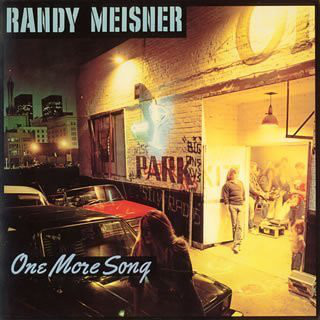
Two years later, and Randy Meisner returned in 1982 with One More Song which was released on Epic and was the start of a new chapter for the singer-songwriter.
One More Song.
Following the commercial failure of Randy Meisner, the former Eagle eventually began work on his sophomore album which later, became One More Song. It was a quite different album from Randy Meisner, which was essentially an album of cover versions. The only Randy Meisner composition on the album had been a reworking of Take It To The Limit which he cowrote with Don Henley and Glen Frey. This was proof, if any was needed, that Randy Meisner was a talented songwriter. All he needed was the right songwriting partner.
Fortunately, Randy Meisner discovered singer-songwriter Eric Kaz, and the pair cowrote Hearts On Fire and Deep Inside My Heart. They the joined forces with Wendy Waldman and penned Gotta Get Away, Come on Back to Me, I Need You Bad and Trouble Ahead. Jack Tempchin who wrote The Eagles classic Peaceful Easy Feeling contributed One More Song and White Shoes. To close One More Song, Randy Meisner decided to cover Richie Furay’s Anyway Bye Bye.
The recording of One More Song began on May the ’26th’ 1980 and continued to August the ’20th’ 1980. Joining Randy Meisner who took charge of lead vocals and played guitar was a rhythm section of drummer Craig Krampf, bassist Bryan Garofalo and guitarist Craig Hull who also played steel guitar and pedal steel. The other members of the band included keyboardist Sterling Smith and percussionist and backing vocalist Don Francisco. Other musicians were brought onboard to record one or two songs.
This included Kim Carnes who added background vocals on Deep Inside My Heart. When it came time to record One More Song, Eagles Glen Frey added backing vocals and Bill Cuomo played synths and returned when it came to record I Need You Bad, which featured saxophonist Michael Jacobs. Wendy Waldman joined the band during the recording of Come On Back To Me, and played acoustic guitar, backing vocals and guitar. Meanwhile, Val Garay took charge of production on One More Song which was hoped would kickstart Randy Meisner’s solo career.
With One More Song completed in late August 1980, the album was scheduled for release by Epic in October 1980. This was a quick turnaround and only left two months to promote what was now the most important album of Randy Meisner’s solo career.
When critics heard One More Song, they were won over by a carefully crafted album of country rock, AOR and rock that was a much better album than his 1978 eponymous debut album. Partly, that was because of the songs that featured One More Song, and especially the songs he wrote with his new songwriting partners.
There was also an honesty and innocence to a number of the songs while others had a rootsy sound that were perfectly suited to Randy Meisner. However, among the highlights of the album was the heartfelt paean I Need You, and beautiful ballads about love and love lost like Gotta Get Away, One More Song and Trouble Ahead. They’re a showcased Randy Meisner’s skills as a singer and songwriter. Meanwhile, the songs that had been earmarked as singles Hearts On Fire and Deep Inside My Heart were languid AOR tracks were radio friendly. Very different was the lively and exuberant Anyway Bye Bye, which closed the album on a memorable high.
When Deep Inside My Heart was released the lead single from One More Song, it reached twenty-two in the US Billboard 100. This augured well for the release of One More Song in October 1980, which released fifty in the US Billboard 200 and forty-four in Canada. Hearts On Fire was released as a single in 1981, and reached nineteen in the US Billboard 100 and fourteen in the Mainstream Rock charts. One More Song which had charted and featured two hit singles and had transformed Randy Meisner’s fortunes and he was keen to build on this success.
Randy Meisner.
Buoyed by the success of One More Song, Randy Meisner began work on his third album later in 1981. He had received plaudits and praise for the songs he cowrote for One More Song, including the love songs. Many critics thought that Randy Meisner would renew his songwriting partnership with Eric Kaz and Wendy Waldman. However, that wasn’t the case.
Instead, Randy Meisner only wrote four new songs for his third album, with new songwriting partners. Randy Meisner wrote Layin’ In The Deep End and Nothing Is Said (‘Til the Artist Is Dead with Dixon House, then joined forces with Howard Leese to write Still Runnin’. Then Randy Meisner, Dixon House and Howard Leese wrote Jealousy together. These four songs were augmented by five cover versions.
This included Craig Bickhardt’s Never Been In Love, David Palmer’s Darkness Of The Heart, Bryan Adams and Jim Vallance’s Tonight. They were joined by Elton John and Gary Osborne’s Strangers and John Corey’s Doin’ It For Delila which would close Randy Meisner.
Recording of Randy Meisner began on December the ’18th’ 1981 and continued right though to February the ’22nd’ 1982. This time around, Mike Flicker and Randy Meisner who played bass, guitar and added vocals, co-produced the album. They were joined by an expanded band that featured a rhythm section of drummer Denny Carmassi, bassist and guitarists Brian Smith and
John Corey who played piano and added backing vocals. They were augmented by backing vocalists Ann Wilson, Nancy Wilson and Marcy Levy, saxophonist Phil Kenzie, synth player Mitchell Froom, Tower Of Power who added horns and Sterling Smith who played organ, synths and piano. This all-star band was joined by Randy Meisner’s two songwriting partners, with Dixon House playing organ, piano, background vocals and Howard Leese played acoustic and electric guitar, synths and added backing vocals. After three months, Randy Meisner was completed and ready for release.
This time around, Epic decided to release Randy Meisner in August 1982, which allowed more time to promote the album. They were hoping to build on the success of One More Song, which featured two hit singles.
Critics on hearing Randy Meisner, realised that it was a beautiful, melodic album of country rock, AOR and rock that sometimes packed a punch. During this latest carefully crafted album, Randy Meisner incorporated hooks aplenty, soaring melodies, Tower Of Power’s horns, backing vocals from Nancy Wilson, clever lyrics and sometimes, raw power. Randy Meisner was another carefully crafted album from a talented singer, songwriter, musician and now producer.
It opened with the hook-laden rocker Never Been In Love, and continued to rock on Darkness Of The Heart that sounds not unlike Meat Loaf. Jealousy was a melodic and memorable track that featured raw power, while Tonight features soaring harmony and Playin’ In The Deep End was an anthem-in-waiting. Strangers was a beautiful, elegiac duet with Heart’s Ann Wilson duets while Still Runnin’ was a hook-laden, anthem that featured one of Randy Meisner’s best vocals. Nothing Is Said (‘Til the Artist Is Dead) was a slice of good time country rock before Randy Meisner closed the album on a high with the radio friendly Doin’ It for Delilah.
Buoyed by reviews which hailed Randy Meisner as a fitting followup to One More Song, executives at Epic and Randy Meisner must have been feeling positive about the album’s release in August 1982. Sadly, Randy Meisner stalled at a lowly ninety-four in the US Billboard 200. The only small crumb of comfort was that Never Been In Love reached twenty-eight in the US Billboard 100 and thirty in Canada. However, Randy Meisner was an album that deserved to fare much better than it did.
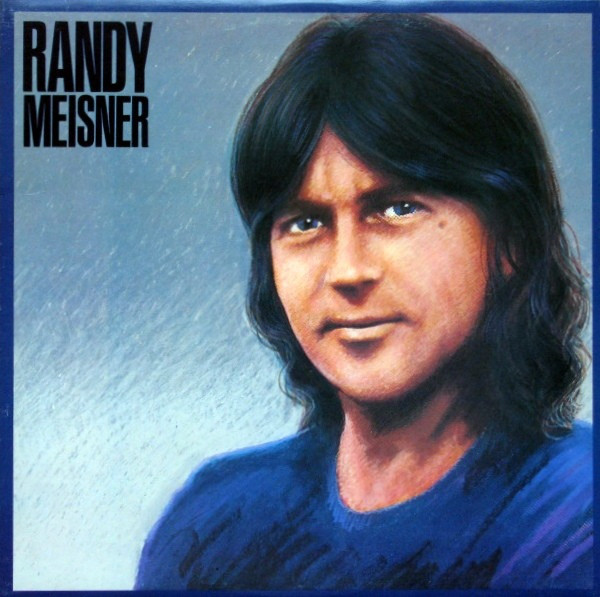
After the release of Randy Meisner, its author left Epic and never again released a solo album that featured new original songs. That was a great shame as Randy Meisner was a talented songwriter who could breathe life, meaning and emotion into the songs that he wrote.
Sadly, Randy Meisner never reached the heights that he should’ve during his solo career, and nowadays is remembered as a member of Poco, but mostly as The Eagles bassist and backing vocalist. That was where he enjoyed the most successful period of his career. However, like many musicians who become part of a hugely successful band, Randy Meisner struggled with his newfound fame.
Throughout his career, Randy Meisner has bravely battled his demons and has struggled with alcohol dependency. That was the case during the six years he was a member of The Eagles, and during his solo career. Maybe his battle with alcohol dependency stopped Randy Meisner fulfilling his potential as a solo artist?
Despite a turbulent life marred by addiction, health problems and tragedy, Randy Meisner has been a member of two successful bands Poco and The Eagles who sold twenty-five million albums while he was a member of the band. After that, Randy Meisner embarked upon a solo career, and in 1982 released one of finest solo albums, the cult classic Randy Meisner.
Cult Classic: Randy Meisner Randy Meisner.
TERRY CALLIER-TURN YOU TO LOVE-VINYL.
Terry Callier-Turn You To Love-Vinyl.
Label: Speaker’s Corner.
Talent alone sadly, is no guarantee of success. If it was, the late, great, Terry Callier would’ve enjoyed a long and successful career. Sadly, for much of his career, he was one of music’s best kept secrets whose music was appreciated more in Britain than it was in own country.
Even by the time his music started to find an audience in Britain, Terry Callier had already released six albums. This included two for Elektra. The second of these albums was g Turn You To Love which was recently reissued by the Speaker’s Corner label on vinyl. It was the latest chapter in the Terry Callier story.
He was born in Cabrini–Green, on the North Side of Chicago, and grew up alongside Curtis Mayfield, Jerry Butler and Major Lance. As a child, Terry Callier learnt to play the piano and later the guitar.This would stand him in good stead for the future.
By the time he was a teenager, Terry Callier was singing in doo wop groups. Little did he realise that this was the start of a long musical career that’s spanned five decades.
In 1962, Terry Callier auditioned at Chicago’s famous Chess Records and this resulted in him recording his debut single. This was Look At Me Now, a minor classic and future favourite on the UK’s Northern Soul scene.
Although he had released his debut single, Terry Callier was attending college in Chicago. It was also around that time that he started playing in folk clubs and coffee houses around the city. By then, he had discovered John Coltrane’s music who would be an important influence on his music.
Two years after releasing Look At Me Now, Terry Callier met Samuel Charters of Prestige Records in 1964. The following year, 1965, The New Folk Sound of Terry Callier was recorded. However, for some reason best known to himself, Samuel Charters took the master tapes with him to the Mexican desert. It was three years later before Terry Callier’s debut album was released in 1968.
That year, psychedelic rockers H. P. Lovecraft covered Spin, Spin, Spin and It’s About Time on their eponymous album. This introduced Terry Callier’s music to a wider audience.
In 1969, H. P. Lovecraft’s George Edwards coproduced several tracks for Terry Callier. By then, he had been part of the Chicago music scene for the best part of a decade. However, he still had only released one album.
As the seventies dawned, Jerry Butler founded the Chicago Songwriters Workshop in 1970. By then, he and his songwriting partner Larry Wade were writing songs for Chess Records and its Cadet imprint which would sign Terry Callier.
Having signed to Cadet, Terry Callier began work on his sophomore album. This became Occasional Rain, which was released in 1972 and was the first of a triumvirate of criticality acclaimed albums Terry Callier released for Cadet. Sadly, Occasional Rain wasn’t a commercial success and it wasn’t until much later, that the album started to find a wider audience.
It was a similar case with What Color Is Love which followed in 1973. What Color Is Love, showcased a truly talented singer-songwriter who was maturing with every album. What Color Is Love was released to widespread critical acclaim, but just like Occasional Rain, failed to find a wider audience. For Terry Callier this was a disaster and must have been disheartening.
Terry Callier returned in 1974 with his third album for Cadet, I Just Can’t Help Myself. It was the fourth album of his career and released to plaudits and praise. However, sadly, the album failed commercially and was not long after this, Terry Callier dropped by Cadet.
Later in his career, the trio of albums Terry Callier released for Cadet were recognised as the finest of his career. However, a lot would happen before that.
Six years after Jerry Butler founded the Chicago Songwriters Workshop in 1970, it closed its doors for the last time in 1976. For Terry Callier who had been a regular at the Chicago Songwriters Workshop since 1970, this was another disappointment. However, his luck changed in 1977.
Three years after the release of his Cadet swansong I Just Can’t Help Myself, Terry Callier was signed by Elektra in 1977 and began work on the fifth album of his career Fire On Ice.
For Fire On Ice, Terry Callier wrote four of the nine songs and cowrote four more with his songwriting partner Larry Wade. He then entered the studio with producer Richard Evans and an all-star band. They played their part in an album that combined elements of soul, jazz and funk on Fire On Ice which won over critics. It was released to critical acclaim, but just likeTerry Callier’s trio of albums for Cadet, failed to find an audience. The followup to Fire On Ice was the already looking like a hugely important album forTerry Callier.
Not long after the release of Fire On Ice, work began on the followup Turn You To Love. Eventually, the Terry Callier and Larry Wade songwriting partnership contributed four of the nine tracks tracks Sign Of The Times, Turn You To Love, A Mother’s Love and You and Me (Will Always Be In Love) with Reginald “Sonny” Burke. Larry Wade wrote Pyramids Of Love and Terry Callier covered two songs from his Cadet years, Ordinary Joe and Occasional Rain. The other two tracks were covers of Steely Dan’s Do It Again and Still Water (Love) co-written by Smokey Robinson and Frank Wilson. Turn You To Love was a mixture of something new, something borrowed and something blue.
Producing Turn You To Love was Reginald “Sonny” Burke, and just like its predecessor, the album saw an all-star band join Terry Callier. This included drummer James Gadson, Keni Burke who played bass and synths, guitarists David T. Walker, Wah-Wah Watson and Larry Wade, saxophonist Ernie Watts and trombonist Fred Wesley. They accompanied Terry Callier on the nine tracks that became Turn You To Love which was released in 1979.
Sadly, when Turn You To Love was released in 1979, it was a familiar story for Terry, Callier the critics loved the album, but it wasn’t a commercial success. At the time, disco was king and albums by singers like Terry Callier were almost unfashionable. Singers like Bobby Womack, O.V. Wright, Syl Johnson and Ann Peebles suffered the same fate and failed to find an audience.
There was one crumb of comfort for Terry with Turn You To Love, when Sign of the Times provided Terry with the biggest hit single of his career. It was released as a single after DJ Frankie Crocker used it as the theme for his radio show. On its release, it reached number seventy-eight in the US R&B Charts. This sadly, was the only success from Turn You To Love.
Not long after this, Terry Callier was dropped by Elektra, and for the second time in three years, he was without a record label. His second and final album for Elektra Turn You To Love, was a hidden gem in his back-catalogue that later, would find a wider audience.
Of the two albums Terry recorded for Elektra, Turn You To Love was quite different from its predecessor Fire On Ice. Terry Callier and his tight and talented all-star band continue to combine soul, jazz, funk and R&B and even elements of rock on the cover of Steely Dan’s Do It Again.
It’s part of a carefully crafted album that is variously beautiful, joyous, thoughtful, moving, understated, spacious and full of emotion. The music veers between jazzy, soulful, funky and rocky as Terry Callier showcases breathes life and meaning into a selection of songs that are best described as something old, new borrowed and blue.
As well as revisiting two of his classics Occasional Rain and Ordinary Joe, Terry Callier delivers a beautiful cover the Smokey Robinson and Frank Wilson track Still Water (Love). Terry Callier breathe new life and meaning into these tracks and they’re welcome additions to Turn You To Love.
The other cover was Steely Dan’s Do It Again, which critics weren’t sure about. Some felt it was the wrong song for Terry Callier. However, he and his multitalented band take the track in a new direction and reinvent it. Do It Again was an unlikely song for Terry Callier to cover but he and his all-star band transform this classic tracks and make it work.
Of the songs that Terry Callier and Larry Wade cowrote, Sign Of The Times and Turn You To Love are the best, and among the album’s highlights. Sadly, very few record buyers heard these tracks as Turn You To Love which was the wrong album at the wrong time.
When Turn You To Love was released in 1979, disco was at the peak of its popularity and Terry Callier’s second album for Elektra failed commercially. Not long after this, he was dropped by Elektra and just like Bobby Womack he was left without a record label. Little did he realise it would be nearly twenty years before he released another album.
Terry Callier continued to tour until 1983, but never made another studio album during this period. By 1983, changes were afoot in his life.
He won custody of his daughter, and started taking evening classes in computer programming. This lead to him taking what would be a prolonged sabbatical from music that lasted fifteen years. During this period, Terry gained a degree in sociology, raised his daughter, and worked at the University of Chicago. Sadly, during this period Terry never recorded any music, and the only album that was released was a live album of a 1982 show in Washington, TC In DC.
This sabbatical from music meant that one of the most talented singer, songwriter and musician of his generation was lost to music for far too long.
In 1991, Terry Callier made his first visit to Britain playing gigs during his vacation from his job at the University of Chicago. It wasn’t until 1998 that he recorded a new album Timepeace which marked a return to form from Terry Callier whose music had been discovered by a new generation of DJs, musicians and record buyers.
The following year, 1999, Terry Callier retrained with his seventh studio album Lifetime. It was released to plaudits and praise and Terry Callier’s comeback continued apace. Of all the albums Terry Callier would release between 1998 and his tragic death on October the ’27th’ 2012, Timepeace and Lifetime are by far the highlight of his comeback years and essential listening.
Of all the albums Terry Callier released during a career that spanned five decades, he never surpassed the trio of albums he released for Cadet. For newcomers to Terry Callier’s music, Occasional Rain, What Color Is Love and I Just Can’t Help Myself are the best place to start. After that, the two albums Terry Callier released for Elektra, Fire On Ice and Turn You To Love are a reminder of one of music’s best kept secrets, and a truly talented singer, songwriter who was at the peak of his creative powers during the seventies.
Terry Callier-Turn You To Love-Vinyl.
CULT CLASSIC: CATFISH-LIVE CATFISH.
Cult Classic: Catfish-Live Catfish.
The story of Detroit-based blues rockers Catfish is a case of what might have been. This talented five piece band was formed in the late-sixties, and over the next few years opened for Black Sabbath, Bob Seger, Black Sabbath and Ted Nugent, and played at the prestigious Fillmore East. It was no surprise when Epic signed Catfish, who were regarded as a band with the potential and talent to become one of the top blues rock bands of the early seventies.
This was evident when Catfish released their debut studio album Get Down on Epic in 1970. Despite receiving plaudits and praise, commercial success eluded Get Down. Despite that, Live Catfish was released later in 1970 and featured a tantalising taste of Catfish’s live sound. Sadly, history repeated itself and Live Catfish failed to find an audience. That was the last album that Catfish released, during a recoding career that lasted less than one year. Their story began just a few years earlier.
That was when singer, songwriter and guitarist Catfish Hodge founded Catfish in his hometown of Detroit. This was something that Catfish Hodge had dreamt about since he was a boy.
Bobby Allen Hodge was born in Detroit in 1944, and growing up, his parents who were originally from Kentucky, introduced their son to blues, country and gospel. This was his introduction to music, which soon became his passion.
Each day, Bob Hodge listened to the various local radio stations. Then at night, when Bob Hodge was meant to be sleeping, he listened to radio stations from as far failed as Chicago and Memphis. That was how the young Bob Hodge first heard Rufus Thomas and bluesmen John Lee Hooker, Muddy Waters and BB King. Bob Hodge absorbed all this new music and then on a Friday, he was able to choose one record which his mother would buy at a local record shop. For the young Bob Hodge this was the highlight of his week and was what he listened to during the weekend.
By the time he was in high school, Bob Hodge’s life was already revolving around music. Much of his spare time was spent listening to the music. However, when he wasn’t listening to music, Bob Hodge was making music.
This came after Terry Kelly one of Bob Hodge’s friends from high him how to play the guitar. This was eureka moment for Bob Hodge, who suddenly, realised that he could follow in the footsteps of John Lee Hooker, Muddy Waters, BB King and Lonnie Mack.
Terry Kelly also introduced Bob Hodge to a variety of new artists, including Lonnie Mack. His music made a big impression on Bob Hodge, and when he founded his first band in high school, a number of Lonnie Mack’s songs found their way onto the band’s setlist. However, Terry Mack wasn’t Bob Hodge’s only musical influence
By the late-sixties, Bob Hodge was absorbing the sounds of Detroit, and was a regular visitor to the Motown soul factory. Along with his friends, Bob Hodge sat in his car listening to the music emanating from the studios. Sometimes, Bob Hodge and his friends managed to sneak past the security guards and were able to watch the recording sessions. Some nights, they saw artists like
Smokey Robinson recording their latest singles or album. Before long, Bob Hodge and his friends were usually discovered by an embarrassed guard and thrown out,…until the next time. This was a regular cat and mouse game for Bob Hodge and his friends. However, having watched the recording seasons at Motown, Bob Hodge became more determined to become a professional musician.
Despite that, when Bob Hodge left high school he started work at a finance company. One of the job’s he was given was collecting money from customers who had missed a payment. This included a forgetful member of the Four Tops. Whenever he was on tour, he forgot to pay his bills and Bob Hodge had to collect the payments.
This would result in Bob Hodge having to take the forgetful Four Top or his wife to Motown, where they picked up some money to pay the bill. Naturally, seeing what was another world close up, made Bob Hodge’s mind up, now was the time to make music his career.
Bob Hodge’s first job in the music industry was as a songwriter and producer. He penned and produced Capreez’s Over You, which was released on the Detroit label Sound. That was Bob’s introduction to the music industry.
Soon, Bob Hodge was working with three up-and-coming local Detroit bands. Having hired an office, Bob Hodge started looking trying to get his clients a recording contract. One label that showed an interest in his client was Vanguard, so Bob Hodge caught the redeye to the Big Apple, and headed to see Maynard Solomon at Vanguard. Bob Hodge played him the tapes and although Maynard Solomon like what he heard, he reckoned that Vanguard weren’t quite ready for rock ’n’ roll. While this a disappointment, Bob Hodge decided to head into Greenwich Village after his meeting.
That night, Bob Hodge saw a still unsigned Jimi Hendrix playing in a Greenwich Village coffee bar. After that, Bob Hodge headed to Bleecker, and as he passed by a club that was closed, he heard music. Curiosity got the better of Bob Hodge who looked into the club, where he saw Van Morrison rehearsing. For Bob Hodge this was a eureka moment, and at last, he knew what he wanted to do with the rest of his life.
Back home in Detroit, Bob Hodge formed a new band Wicked Religion, which eventually evolved into the blues rock band Catfish. It was founded and led by Bob Hodge who was now known as Catfish Hodge who sang and played guitar. He was joined in Catfish by drummer Jimmy Optner, bassist Ron Cooke, guitarist Mark Manko and organist Harry Phillips. With the lineup of band complete, the rise and rise of Catfish began.
Before long, Catfish had established a reputation as one of Detroit’s top live groups and were soon rubbing shoulders with the MC5 and The Stooges. Catfish’s raw blues rock sound was winning friends not just in Detroit, but much further afield. This included in the offices of Epic.
Kenny Hodges who was an executive at Epic, had heard good things about Catfish on the musical grapevine. The word in Detroit was that Catfish were one of the top bands in the city’s live music scene. Their brand of raw, but soulful blues rock was proving popular and music industry insiders in Detroit believed that Catfish had the potential and talent to become one of top blues rock bands of the early seventies. With this in mind, Epic swooped and signed Catfish. They weren’t going to risk anyone beating them to Catfish’s signature. The only problem would be, replicating Catfish’s famous live sound?
Get Down.
By the time Catfish signed to Epic, they were regarded as one of the top live bands in Detroit. They had already started to spread their wings and were famous for their impressive live sound. The problem was going to be harnessing and replicating Catfish’s live sound in the studio. That was why Epic brought onboard Kenny Cooper to produce Catfish’s debut album which became Get Down.
For Get Down, Catfish Hodge had dawned the role of Catfish’s songwriter-in-chief, and penned The Hawk, 300 Pound Fat Mama, Love Lights and Coffee Song. Catfish Hodge and Mark Manko teamed up to write No Place To Hide, Tradition, and Get High, Get Naked, Get Down. The pair also added lyrics to T. Carson’s Catfish which bookended this eclectic album.
When Catfish arrived at the studio, little did anyone know that this was the only time the band would record together. That day, Catfish Hodge took charge of the vocals and played guitar. He was joined by a rhythm section of drummer Jimmy Optner, bassist Ron Cooke and guitarist Mark Manko, who were augmented by organist Harry Phillips. Producing this tight and talented band was Kenny Cooper, who had been brought onboard to help Catfish replicate their live sound. However, Catfish had their own ideas about how Get Down should sound.
The members of Catfish were responsible for the arrangements on the nine tracks on Get Down. It was hard to believe that Catfish had never set foot in a studio, and as Kenny Cooper pressed record, they seamlessly flitted between and sometimes combine elements of blues, country, folk, gospel, hard rock and good time rock ’n’ roll. In doing so, Catfish showed their talent and versatility on their debut album Get Down.
That was no surprise as each member of Catfish was a talented musician who had enjoyed the opportunity to showcase their considerable talents on Get Down. Catfish boogied their way through Get Down with a smile on their face. Unlike many similar bands, Catfish didn’t take themselves to seriously on their genre-melting debut album Get Down.
Critics on hearing Get Down, were won over by the album and believed that Catfish had a big future ahead of them. However, when Get Down was released it failed to trouble the charts. This was a huge disappointment for Catfish and Epic who had backed the band.
Despite the disappointing sales of Get Down in America, Epic decided to release the album in Europe. While it wasn’t a hugely successful album, Get Down found an audience in parts of Europe. Meanwhile, Catfish’s popularity was growing in popularity in Detroit. That was where Epic decided that Catfish should record their sophomore album Live Catfish.

Live Catfish.
Hot on the heels of the release of Get Down, Catfish returned to Detroit, where they recorded what became Live Catfish at the Eastown Theatre. The decisions to record a live album made perfect sense.
The problem that executives at Epic had been faced when they signed Catfish was getting the band to replicate their live sound in the studio. Catfish and producer Kenny Cooper had done their best to replicate Catfish’s live sound on Get Down. Catfish did their best to replicate the rawness, energy and spontaneity of one of one of their live performances and came very close. However, after the release of Get Down, a decision was made that the best way to replicate the rawness, energy and spontaneity of Catfish in concert was on a live album.
It was also a much cheaper than recording a studio album, and if the album flopped, the losses would be significantly less. However, executives at Epic were hoping that Live Catfish would prove a successful album. After all, Catfish’s popularity was on the rise.
By the time Catfish arrived at the Eastown Theatre in Detroit, they had already opened for Black Sabbath, Bob Seger, Edgar Winter’s Band, Mountain and Ted Nugent. This showed just how far Catfish had come in a relatively short space of time. One of their biggest gigs was when they opened for Santana at the Fillmore East, and some say that they upstaged the headliners that night.
That is no surprise, as Catfish were winning over audiences across America with their live show. Especially when they returned home to Detroit.
When Catfish took to the stage Eastown Theatre in Detroit, the lineup of the band was very different to the one that featured on Get Down. A new rhythm section that featured drummer Jimmy Demers, bassist Dennis Cranner and guitarist Dallas Hodge, who were augmented by the original organist Harry Phillips, who was the only original member of the band apart from Catfish Hodge.
An adoring hometown crowd welcome Catfish who launched into an explosive set. It began with Catfish reinventing Holland, Dozier and Holland’s Nowhere To Run, which sets the bar high for the rest of this six song set. Catfish then unleash a raw, but sometimes soulful and high-octane cover of Money (That’s What I Want). This gives way to the blues rock of 300 Pound Fat Mama which was penned by Catfish Hodge. The tempo rises on Mississippi River, which is a blistering slice of blues rock which features Catfish at their best. There’s no stopping Catfish now, as they unleash Letter To Nixon.It’s a mixture of social comment and blues rock that features a vampish vocal from showman and bandleader Catfish Hodge. He then encourages his band to greater heights on a barnstorming cover of Whole Lotta Shakin’ Goin’ On before exiting the stage left.
After recording Live Catfish, executives at Epic realised that they had captured Catfish at their very best. Live Catfish featured a rawness, energy, spontaneity and soulfulness that were the all trademarks of Catfish’s explosive and high-octane performance. This was the album that Epic had been hoping for, and that they hoped would transform the band’s career.
When critics heard Live Catfish they too, were won over by Catfish in full flight during what was a captivating performance. It epitomised everything that was good about Catfish live. Surely, this Live Catfish was the album that transformed Catfish’s career.
Sadly, when Live Catfish was released later in 1970, the album failed commercially. History had repeated itself, when Live Catfish failed to even trouble the lower reaches of the American charts. The only small crumb of comfort was that when Live Catfish was released in Europe, it was embraced by a small but enthusiastic audience who took Catfish to their hearts. That was as good as it for Catfish.
After the release of Live Catfish, several members of Catfish joined forces with Mitch Ryder when he was forming his new band Detroit. They featured on Detroit With Mitch Ryder which was released in 1971.
By then, Catfish Hodge had embarked upon a solo career, and two years later in 1973 he moved to Washington DC. However, Catfish Hodge never forgot the years he spent leading Catfish as they became a successful live band. Sadly, the two albums Catfish released for Epic during 1970, Get Down and Live Catfish failed to find the audience they deserved.
Nowadays, the explosive and high-octane Live Catfish is a cult classic that, and a reminder Catfish at the peak of their powers. Sadly, Catfish who are one of the great lost blues rock bands of the early seventies, never enjoyed the success they deserved and their story is a case of what might have been?
Cult Classic: Catfish-Live Catfish.
CULT CLASSIC: TYLL-SEXPHONIE.
Cult Classic: Tyll-Sexphonie.
During 1975, a number of Krautrock’s most innovative bands released new albums. The year began when Neu! released their third album Neu! 75 in January 1975. This got the ball rolling.
Over the next eleven months, many of the leading lights of the Krautrock scene released new albums. Harmonia released their sophomore album Deluxe, while Cluster released Zuckerzeit and Can Landed. Amon Düül II returned with Made In Germany and Kraftwerk with Radio-Activity. Manuel Göttsching released his landmark album Inventions For Electric Guitar; while Popol Vuh released Das Hohelied Salomos. Many of these albums would eventually be regarded as Krautrock classics. However, another album released during 1975 was a much more low profile release.
This was Tyll’s debut album Sexphonie, which back in 1975, was shrouded in mystery and controversy. Indeed at one point, it looked like Tyll’s debut album Sexphonie would never be released. It was, and proved to the opening and closing chapter in the Tyll story.
The story behind Tyll began back in early 1975. That was when Fred Kersten, the owner of Kerston Records, approached Teflon Fonfara to ask if he would be interested in recording a Krautrock album. For Teflon Fonfara this was interesting proposition.
Especially since his previous group Eulenspygel had been put on hold. They hadn’t released an album since Ausschuß in 1973. Two years later, and there was no sign of the group returning to the studio or heading out on tour. It was beginning to look as if there was little chance of Eulenspygel reuniting. So Teflon Fonfara decided to take Fred Kersten up on his offer of a week’s studio time. After all, man cannot live on bread alone.
As a familiar face on the local music scene, it didn’t take long for Teflon Fonfara to put together a new studio band. One of the earliest recruits was Eulenspygel’s drummer Günter Klinger. Teflon Fonfara thought nothing of this. After all, Eulenspygel had been put on hold; and it wasn’t even clear if the band would reunite. However, the decision to bring onboard Günter Klinger would prove to be a controversial. That was in the future.
With drummer Günter Klinger onboard, Teflon Fonfara concentrated on recruiting the rest of the band. They were all friends of Eulenspygel. This included bassist Achim Bosch and vocalists Michael Scherf, Susanne Schempp and Ulrike Schempp. They were joined by Teflon Fonfara who appeared as Del Fontana. With the lineup finalised, work began on Tyll’s debut album.
For what became Tyll’s debut album Sexphonie, Teflon Fonfara wrote seven of the songs, and penned Siamesische Überraschung and Grammophon with Achim Bosch. His other contribution was Rita. Ulrike Schempp wrote Für Michael Pfadpfinder; while Michael Scherf contributed the album closer Morgenlicht. These twelve songs would recorded at TFE Studios.
On 1st April 1975, Tyll arrived at TFE Studios, Neustadt, Weinstraße. The six members of Tyll were ready to record the twelve new songs. Producing Sexphonie was Fred Kersten, who owned his own record company, Kerston Records. It would release Sexphonie once it was completed. So the members of Tyll got to work.
At TFE Studios, Tyll’s equipment was unpacked and setup. Then Tyll began recording their debut album. Things were happening fast. It was only a couple of months since Teflon Fonfara put together Tyll. Now the rhythm section which featured drummer Günter Klinger and bassist Achim Bosch began laying down the rhythm tracks. Then it was Teflon Fonfara’s turn to lay down the guitar parts. Once this was complete, it left just the vocals to be added. Tyll’s trio of vocalists, Michael Scherf; Susanne Schempp and Ulrike Schempp began laying down the vocals. Once the vocals had been recorded, Tyll had completed their debut album. The six members of Tyll hd spent just twelve days recording their debut album Sexphonie. It was completed on 12th April 1975.
With Sexphonie recorded, now Tyll and producer Fred Kersten were able to reflect on how quickly and smoothly things had gone. It wasn’t long since Fred Kersten first approached Teflon Fonfara about putting together a studio band. Now Tyll had recorded their debut album Sexphonie, and it would soon be released. Or so they thought.
What neither Fred Kersten nor Teflon Fonfara foresaw, was the threat of legal action that loomed over the release of Sexphonie. Eulenspygel weren’t happy that Tyll had poached or stolen their drummer, Günter Klinger. They threatened Tyll with legal action. This could’ve been disastrous, and resulted in a long and expensive legal battle. Luckily, common sense prevailed, and Tyll were allowed to release Sexphonie.
Even the threat of legal action hadn’t unduly delayed the release of Sexphonie. Still, only a matter of months had passed since Fred Kersten approached Teflon Fonfara with the idea of releasing a Krautrock album. Now, the newly formed studio band Tyll were about to release their debut album Sexphonie.
When Sexphonie was released later in 1975 by Kersten Records, the album wasn’t a commercial success. Certainly nobody was going to get rich after the release of Sexphonie. However, those who bought a copy of Sexphonie discovered an album were Tyll fused acid-rock with hard-psych, polit-rock, progressive rock. There were even the occasional excursion into avant-garde, folk, funk and polit-rock. Sometimes, Eastern influences shawn through on Sexphonie a hidden Kraurtrock gem.
Following the release of Sexphonie, Tyll never released a followup album. Sexphonie proved to a one-off musical experiment from Teflon Fonfara’s studio band Tyll. However, nearly a generation later, and Tyll’s debut album Sexphonie began to attract a cult following. By then, copies of this original album were real rarities. Nowadays, very few copies of Sexphonie ever change hands. When they do, the price is beyond most record buyers. This meant that original copies of this cult classic are out of reach of most record buyers. Sexphonie is a captivating album.
Tim opens Sexphonie. Just a Spanish guitar plays firmly and briskly. Flamboyant flourishes punctuate the arrangement, before a searing guitar cuts through the arrangement. It’s joined by the rhythm section. Before long, there’s a mesmeric nature to the drums. Then midway through the arrangement, Tyll throw a curveball. The track meanders, as grating, jarring, dramatic sounds add an experimental sound. That’s until Tyll kick loose, and a blistering rocky track unfolds. Teflon Fonfara’s guitar plays a starring role, as he unleashes a series of searing licks. Matching him every step of the way are the rhythm section. That’s until a myriad of beeps and squeaks signal that this captivating rocky track is almost over. However, it whets the listeners appetite for this hidden gem of an album.
Sexphonie is one of the shorter tracks on the album. However, it doesn’t lack in quality. Quite the opposite. Straight away, the rhythm section and quivering, bristling guitar unite, before an impassioned, powerful male vocal is added. It’s augmented by sweet, punchy pop harmonies. Meanwhile, blistering guitars are unleashed. They add a lysergic sound. Meanwhile a nimble fingered bass line sits atop the drums, as genres melt into one. Acid rock, pop and psychedelic rock combine to create a catchy and memorable track.
A lone guitar plays slowly and thoughtfully on Asiatische Liebeserklärung. Its crystalline sound is joined by Eastern sounds. They create an understated arrangement. That’s until 1.47, when the rhythm section and the guitars join. This fills out the arrangement, and transforms it. Soon, the Eastern influence dissipates, and the track heads in the direction of progressive folk. This allows Tyll to showcase their talent and versatility.
Just a crystalline guitar is strummed and sets the scene for the vocals on Paranoia Eines Verliebten. They’re shared by a male and female vocalist, and range from heartfelt to emotive, to powerful and dramatic. At the moment the vocal changes, so does the arrangement. The rhythm section frame the vocal and add an element of drama. Briefly, Teflon Fonfara adds a funky, chiming guitar. Later, a manic laugh punctuates the arrangement. So do effects that come courtesy of Teflon Fonfara’s tapes. By then, the story is unfolding, and the drama building on this genre-melting track. Elements of psychedelia rock, folk, funk and avant-garde combine to create a song that sounds as if it belongs on an early seventies Krautrock concept album. However, Sexphonie was no concept album.
There was neither a concept nor message on Sexphonie. Instead, Sexphonie was almost a reaction against the concept albums of the first half of the seventies. Teflon Fonfara was no fan of them, and seemed regarded concept albums as overblown. He was unwilling to further romanticise concept albums, never mind record one of his own. Instead, this musical maverick recorded what was an innovative musical adventure.
From the distance, Eastern percussion adds an eerie cinematic sound to Nervenzusammenbruch Einer Gitarre. Soon, a probing bass adds to what’s an unsettling sounding track. It sounds as if it would be perfect for a horror movie. That’s until a blistering guitar cuts through the arrangement. Before long, the unnerving sound is almost gone, and is replaced by a futuristic sound. At the heart of the arrangement is the rhythm section and guitar. The rhythm section drive the arrangement along, while the guitar rings out, and plays a starring role. Effects are added, as the guitar is the last man standing. From there, the arrangement meanders melodically along, before its melancholy sound is just a pleasant memory of what’s been a memorable musical adventure.
Teflon Fonfara delves into his tapes, and adds the sound of animal as Siammesische Überraschung unfolds. Meanwhile, he adds effects and they add an otherworldly sound to the avant-garde soundscape. Midway through the track, a bass joins a jazz-tinged guitar. They’re like yin and yang, and prove a perfect foil for each other. That’s until a curveball is thrown. The guitar and bass are replaced by the sound of a music box, which adds a wistful reminder of another era. It’s another innovative, musical potpourri from Tyll, as they continue to push musical boundaries.
There’s a melancholy, cinematic sound to Kristinas Traum as a crystalline guitar chimes and is joined by a bass. In the background, the wind roars and gusts, while a clock chimes. Together, they create a melancholy, cinematic soundscape.
Delirium Song-Grammophon is a seven minute epic. A rumbling bass leads the way, before scorching guitars, pounding drums and vocals enter. Male and female vocalist share vocal duties. Meanwhile, the arrangement is driven along, with the bass and bristling guitar playing starring roles. The vocals are impassioned and delivered quickly. Adding to the drama, is the rhythm section. They provide the perfect backdrop to vocals that veer between urgent to tender. Later, Teflon Fonfara unleashes another of his blistering guitar solos, before what sounds like the helicopter soars across the arrangement. Not to be outdone, a fleet fingered bass line helps propel the arrangement along. Everyone plays their part in the sound and success of what’s a dramatic, urgent and later futuristic and melodic epic. It shows yet another side to musical chameleons Tyll.
Rita has a much more understated and sedate sound. Just guitars and the bass combine as the arrangement meanders melodically along. There’s a wistfulness to the arrangement, as strummed and crystalline guitars combine with the bass. Later, Teflon Fonfara adds the sound of a thunderstorm to the arrangement. This works and adds the finishing touch to a melancholy, cinematic track.
The tempo increases on Suzie Steno, as a bristling, scorching guitar cuts joins the rhythm section. They’re soon joined by the a male lead vocal, which tells the story of Suzie Steno. Augmenting the vocal are harmonies, which sometimes, soar above the arrangement. Framing the vocal are the crystalline guitar and the rhythm section, which provides the heartbeat. Later, when the vocal drops out, another blistering guitar solo takes centre-stage. Its briefly joined by one of Teflon Fonfara found sounds. From there, the rest of this slick slice of hook-laden pop-rock shows its secrets.
Für Michael Pfadfinder is another ballad from Tyll. Just a guitar is strummed as the rhythm section play slowly. They set the scene for the two female vocalists. One sings lead, while the other augments her vocal. There’s a sense of sadness in their heartfelt, emotive vocals. Then when the vocal drops out, Teflon Fonfara steps up, and delivers a bristling, shimmering guitar solo. He then takes his leave, and the vocalists return as this beautiful, melodic and wistful ballad draws to a close.
Morgenlicht closes Sexphonie. A guitar is strummed slowly and deliberately, before Michael Scherf delivers his vocal. It’s accompanied by harmonies, and is delivered slowly and with a sense of sadness and regret. Teflon Fonfara adds a mini collage of sound, before this rueful sounding track is but a distant memory. However, Sexphonie is not an album to forget in a hurry.
Far from it. Sexphonie is a truly memorable debut from Tyll. It was an innovative album of genre-melting music. Lead by Teflon Fonfara, Tyll set out to create the Krautrock album Fred Kersten wanted. To do that, Tyll combined acid-rock with hard-psych, polit-rock and progressive rock on Sexphonie. There were even occasional excursion into avant-garde, folk, funk jazz, polit-rock and pop. This musical melting pot of genres and influences resulted in Fred Kersten getting the Kraurock album he wanted.
Sexphonie was a captivating album of groundbreaking music, where no two tracks were the same. Tyll were musical chameleons, who could create music that was variously beautiful, cinematic, dramatic, lysergic and melancholy. Other times, the music on Sexphonie was progressive, rocky, melodic and mesmeric. Alas, the album wasn’t a commercial success.
When Sexphonie was released in 1975, that album passed record buyers by. This was a familiar story. Even albums by some of the biggest names in Krautrock failed to find an audience first time round. Neither Harmonia nor Neu! were getting wealthy making music. Sadly, neither were Tyll.
After the commercial failure of Sexphonie, Fred Kersten of Kersten records decided not to release a followup album. It was a case of once bitten, twice shy. That was a great shame. Maybe, Tell would’ve made a breakthrough next time around? However, we’ll never know.
Sexphonie was the only album featuring Tyll, a truly talented and versatile band. They weren’t together long, but left a lasting impression. Tyll were founded in 1975, and by the time the year was over. the band was history. Despite being together less than a year, Tyll left behind a memorable musical legacy. That’s their groundbreaking debut album Sexphonie. If finds Tyll switching seamlessly between musical genres, as they create what’s nowadays regarded as a hidden gem and a lost Krautrock cult classic, Sexphonie.
Cult Classic: Tyll-Sexphonie.
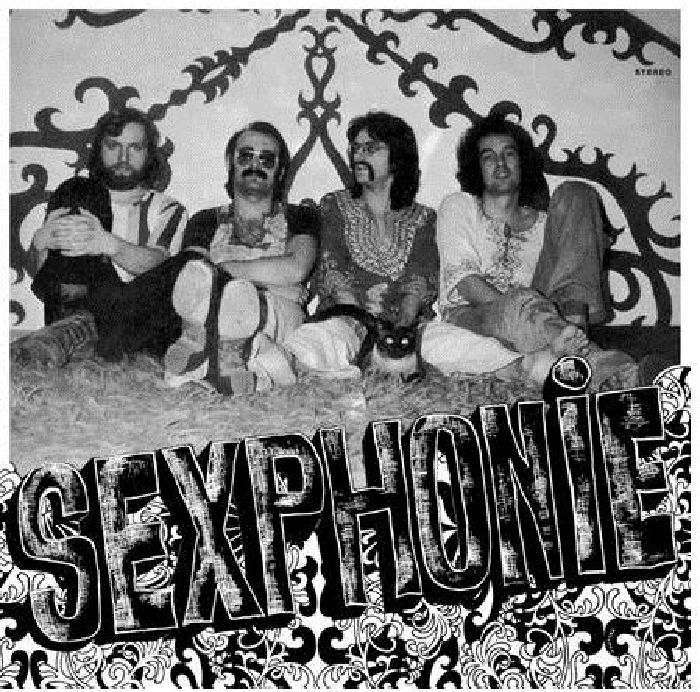
BOB STANLEY AND PETE WIGGS PRESENT THE TEARS OF TECHNOLOGY.
Bob Stanley and Pete Wiggs Present The Tears Of Technology.
Ace Records.
Released Date: ’28th’ February 2020.
For many people, whether critics, cultural commentators or record buyers, the sixties and seventies were golden eras for music that have never been surpassed. Since then, the argument goes, it’s all been downhill for music and especially during the eighties.
So much so, that some critics have called the eighties the decade that taste forgot. They’re not and have never been fans of boogie, hip hop, house or synth pop. It was a far cry from the golden eras when and pop, progressive rock, psychedelia and rock ruled the roost between 1962 and 1979. These were heady days, and the sun set on what was a golden era as the clock struck midnight on the ‘31st’ of December 1979. It was the end of an era.
For some of the critics, this golden era had ended a couple of years earlier with the onslaught of punk. They weren’t conned by what they regarded as groups of yobbish, musical illiterates who weren’t fit to lace the shoes of the titans of rock. Surely, things could only get better?
In the post punk era, many groups started experimenting with synths. Before that, synths had been prohibitively expensive and were only found in top recording studios and were only owned by successful musicians. They had experimented with them and incorporated in their music during the early to mid-seventies.
This included groups like Kraftwerk who pioneered the of synths in their music. They were guests on the British television show Tomorrow’s World in 1975, and their appearance helped change people’s perception of synths and influenced a future generation of musicians.
During the sixties and into the seventies, some musicians and critics saw synths as a novelty and didn’t take the instrument seriously. This changed after Tomorrow’s World issued an ominous warning in the seventies that the soulless synths could make an entire orchestra redundant. It was a worrying thought for musicians up and down Britain who saw synths as a threat to their livelihood.
By the early eighties, synths were much more affordable, and across Britain a new breed of musicians were experimenting with the latest offerings from Korg, Moog and Roland. They were following in the footsteps of the post punk musicians in experimenting with the latest in musical technology.
Suddenly, groups from over Britain, including Glasgow, Sheffield, Liverpool and Manchester were using synths to create emotive and often wistful and melancholy sounding music.This included familiar faces like Simple Minds, China Crisis, The Teardrop Explodes, Orchestral Manoeuvres In The Dark and The Human League who feature on Ace Records’ forthcoming compilation Bob Stanley and Pete Wiggs Present The Tears Of Technology. It was compiled by Saint Etienne’s Bob Stanley and Pete Wiggs, and will be released on the ’28th’ February 2020 and will also feature Turquoise Days, Electronic Circus and Illustration as well as John Foxx and Thomas Leer.
Opening Bob Stanley and Pete Wiggs Present The Tears Of Technology is Jean Walks In Fresh Fields by China Crisis. It was released by Virgin in 1982, and straight away, there’s a melancholy and thoughtful sound to this slow slice of eighties electronica.
Way before Simple Minds found fame as stadium rockers, the Glasgow-based band released their sophomore album Real To Real Cacophony on Zoom Records in 1979. It’s a very different album from their debut Life In A Day. Real To Real which opens the album has a much more experimental and darker sound and finds Simple Minds innovating. Part of the experimental sound is the use of synths on a track that is very different to their eighties anthems like Glittering Prize, Don’t You Forget About Me, Up On The Catwalk and Alive and Kicking.
A welcome addition to the compilation is An Evening In The Ray by Care. Vocalist Paul Simpson and guitarist Ian Broudie formed the group in 1983 and released My Boyish Days as a single. Tucked away on the B-Side was An Evening In The Ray, which features a crooning vocal by Paul Simpson that full sadness and despair.
In 1981, Soft Cell a duo from Blackpool, Lancashire, who met at art college in Leeds, Yorkshire, released the album Non Stop Erotic Cabaret. One of the oft-overlooked tracks is the ballad Youth, where Marc Almond delivers a vocal that’s a mixture of emotion and melancholy against a spartan, moderne arrangement that features synths and a drum machine.
Lights Of April was released as a single by Eyeless In Gaza in 1982, and later that year, featured on their third album Drumming The Beating Heart. It’s regarded as the finest offering from the duo from Nuneaton, and is a captivating fusion of electronica, folk and post punk.
Another of the best known groups on The Tears Of Technology are Orchestral Manoeuvres In The Dark. Their contribution is Sealand, a track from their 1981 album Architecture and Morality. It’s best described a synth pop classic and Sealand one of its highlights.
Electronic Circus were a duo featuring Gary Numan’s keyboard player Chris Payne and vocalist Penny Heathcote. Their only single was Direct Lines, which was released on Scratch Records in 1981. There’s a Germanic sound to the synths which also bubble and shimmer and combine with a vocal full of longing. When this is combined the result is a hidden gem and nowadays changes hands for upwards of £70.
Before changing their name to Shack, The Pale Fountains released Unless just before their debut album Pacific Street in 1984. It’s a quite beautiful, haunting and experimental sounding track by The Pale Fountains that’s a welcome inclusion on Bob Stanley and Pete Wiggs Present The Tears Of Technology.
The Human League released their sophomore album Travelogue on Virgin, in 1980. It featured WXJL Tonight where The Human League look to the future and sympathise with DJs who are about to lose their job when radio stations became automated.
Tiny Children was featured on The Teardrop Explodes’ 1981 album Wilder. It wasn’t well received upon its released, and the following year, 1982, Tiny Children was released as a single. It’s one of the highlights of Wilder thanks to what’s a simple arrangement. Just Korg pads accompany Julian Cope’s vocal on this underrated track.
Closing The Tears Of Technology is Feather Bed by Trevor Bastow. He played Moog on Chicory Tip’s Son Of My Father and enjoyed a successful career making library music. The atmospheric and cinematic Feather Bed is one of the highlights of the compilation and a reminder of a truly talented musician who sadly, passed away in 2000.
These tracks are just a tantalising taste of Bob Stanley and Pete Wiggs Present The Tears Of Technology, which will be released by Ace Records on the ’28th’ February 2020. It features twenty tracks released between 1979 and 1984, and is a reminder of how music was changing during this period. One of the reasons was that synths and drum machines which were much more affordable and at last, within the budget of many young, up-and-coming bands.
This included a number of bands that went on to release critically acclaimed album and went on to enjoy successful careers. Some of these albums are now regarded as genre classics, including some of the bands on Bob Stanley and Pete Wiggs Present The Tears Of Technology.
Some of the tracks on Bob Stanley and Pete Wiggs Present The Tears Of Technology feature bands in their formative years or as they experiment before going on to greater things. Other bands disappeared without trace after releasing just one or two singles. However, all of the bands and artists on Bob Stanley and Pete Wiggs Present The Tears Of Technology released innovative music. This they did with the help of technology and the result was music that was variously beautiful, emotive, melancholy, thoughtful and wistful. That’s the case throughout Bob Stanley and Pete Wiggs Present The Tears Of Technology, which features future track from future household names, hidden gems, album tracks and B-Sides on this lovingly curated compilation.
It’s a reminder of decade of music that divided opinion. Sadly, not everyone was won over by the music made with the new technology, and it was one of the reasons why some critics, cultural commentators or record buyers called the eighties the decade that taste forgot. Ironically, some critics have changed their minds about the music that they were once so vocal about. Others however, are more entrenched in their views. Hopefully, after hearing the innovative music on Bob Stanley and Pete Wiggs Present The Tears Of Technology this will go at least some way to proving that wasn’t the case and mutually, the eighties has a lot to offer.
Bob Stanley and Pete Wiggs Present The Tears Of Technology.
CULT CLASSIC: ERIC GALE-ISLAND BREEZE.
Cult Classic: Eric Gale-Island Breeze.
Eric Gale was born in Brooklyn, New York on September 20th 1938. By the time he was eleven, Eric had discovered music. Fittingly, it was guitarist Les Paul that piqued Eric’s interest in music. He heard Les Paul and his wife Mary Ford on the radio. They were on their way to becoming one of the biggest stars of early fifties. Hearing Les Paul inspired Eric Gale to pickup a guitar for the first time.
At first, Eric Gale had a few guitar lessons. This was just enough to learn the basics. Mostly, though, Eric was self-taught. However, by the time Eric was twelve he briefly turned his back on the guitar.
This came after Eric’s father introduced him to Charlie Parker and Dizzie Gillespie. Bebop captivated the twelve year old. Especially how quickly Bird and Dizzy Gillespie could play. Suddenly, Eric wanted to try the saxophone.
So his father arranged for Eric to take saxophone lessons. However, after a month, Eric decided that the saxophone wasn’t for him. He returned to the guitar, and spent the next few years honing his sound. This would pay off in the long run.
By 1983 Eric Gale was dividing his time between session work and his career as a solo artist. He released Island Breeze in 1983 which is a welcome reminder of a supremely talented guitarist. However, in the early fifties, it seemed Eric Gale was about to embark on a career as a scientist.
Having graduated high school, Eric headed to Niagara University, where he studied chemistry. It was there that Eric realised he didn’t want to pursue a career in science. So Eric left academia behind, and decided to pursue a career as session musician.
By then, Eric was in his early twenties, and was a novice in terms of session work. Despite this, he caught a break. Bobby Lewis was looking for a guitarist for the session when Tossin’ and Turnin’ was recorded. Eric got the job, and played alongside saxophonist King Curtis. He asked Eric to play on his Old Gold album. However, by then, Tossin’ and Turnin’ had reached number one on the US R&B charts in 1961. Eric Gale’s career was underway.
After playing on a number one single and King Curtis’ Old Gold album, Eric Gale became a familiar face in New York Studios. He played on sessions by The Drifters, Maxime Brown, Aretha Franklin, Red Holloway, Clark Terry, Jimmy McGriff and Oliver Nelson. By 1967, Eric was accompanying a young Van Morrison, drummer Bernard “Pretty” Purdie, Bobby Timmons and Herbie Mann. Unlike many session musicians, Eric didn’t specialise in one type of musician. Instead, he would on everything from jazz and soul to rock. That would be the case throughout his career as a session musician.
As the seventies dawned, there was no sating Eric Gale’s insatiable appetite for session work. He would have happily spend day and night in the studio. That had been the case in the sixties, and wasn’t going to change in the early seventies. Eric played on a number of sessions for Creed Taylor’s CTi and Kudu label. This included on albums by Quincy Jones, Johnny Hammond, Stanley Turrnetine, Hank Crawford and Esther Phillips. This gave Creed Taylor the opportunity to see and hear Eric Gale at close quarters. He liked what he heard, and in 1973, Creed Taylor signed Eric Gale to his Kudu imprint.
No longer was Eric Gale “just” a session musician, now he could add solo artist to his already impressive C.V. His debut solo album was Forecast, which was released later in 1973.
Forecast.
Forecast saw Eric joined by some of the Big Apple’s top session players. They step up to the plate on an album where cover versions sit side-by-side with Eric Gale compositions. With his all-star band for company, Eric showcased his versatility, veering between jazz, funk, blues and soul-jazz. Prior to its release, reviews of Forecast were positive. Alas, Forecast only reached twenty-two in the US Jazz charts, and proved to the only album Eric released on Kudu.
Negril.
It was another two years before Eric Gale released his sophomore album, Negril. By then, Eric was living in Jamaica, where he was enjoying a sabbatical. Despite being on sabbatical, Eric decided to record an album. He wrote, arranged and produced Negril at Harry J’s Studio in Kingston, in Jamaica. The album was a homage to the beautiful village of Negril and its unspoilt beaches. Once the album was complete, it was released in 1975.
When Negril was released in 1975, listeners discovered an album of laid-back, instrumental reggae. It was a very different album from Forecast, and one that showcased Eric’s versatility. This would be put to good use over the next couple of years.
After a three year sabbatical, Eric Gale returned to New York. When he arrived home, the money had run dry and he was without a job. Fortunately, a jazz supergroup were looking for a guitarist. Eric fitted the bill, and he joined Stuff.
With a lineup that featured bassist drummers Chris Parker Steve Gadd; bassist Gordon Edwards, guitarist Cornell Dupree and pianist Richard Tee, Stuff was worthy of being called a supergroup. Eric played on Stuff’s 1976 eponymous album, and the 1977 followup More Stuff. Still thought, Eric was working as a session musician, so would divide his time between Stuff and session work.
Still, Eric Gale was happy to work around the clock. Recording studios were like a second home. During 1976, Eric played on albums by Ashford and Simpson, Stanley Turrentine, Blood, Sweat and Tears, Bob James, Grover Washington, Paul Butterfield, Joe Coker, Patti Austin and Randy Crawford. 1977 was just as busy, with Eric accompanying Ashford and Simpson, Tom Scott, Bob James, Esther Phillips, Jun Fukamachi, Idris Muhammad, Yuseef Lateef and Kenny Loggins. However, 1977 was also the year Eric Gale was offered a solo deal by Columbia.
Ginseng Woman.
For Eric Gale, signing to Columbia meant he could rekindle his solo career. When Ginseng Woman which was released in 1977, Eric’s album of smooth jazz was reasonably well received by critics. Eric was already one of the finest practitioners of the genre. So it was no surprise when Ginseng Woman reached 148 in the US Billboard 200, fifty-six in the US R&B charts and number seven in the US Jazz charts. This was a good start to Eric Gale’s career at Columbia. Especially considering disco was at the peak of its popularity.
Multiplication.
Buoyed by the success of Ginseng Woman, Eric returned in 1978 with Multiplication. It wasn’t as well received as Ginseng Woman. As usual, record buyers had the final say, and Multiplication reached just number six in the US Jazz charts. Multiplication failed to trouble the US Billboard 200 and US R&B charts. For Eric Gale, this was disappointing.
Following the release of Multiplication, Eric continued to juggle his various roles. In 1978, he worked with everyone from Carly Simon, to Billy Joel and Thijs van Leer. Eric also worked on albums by Loleatta Holloway, Ashford and Simpson and his old friend Bob James. Still, Eric found time to play and record with Stuff. Then there was the small matter of his third solo album for Columbia.
Part Of You.
Despite the disappointing performance of Multiplication, Eric Gale returned in 1979 with a new album Part Of You. Before it was released, the album of smooth jazz garnered positive reviews from critics. Part Of You was a return to form from Eric Gale. Record buyers agreed, and Part Of You reached 154 in the US Billboard 200 and eleven in the US Jazz charts. Things were looking up for Eric Gale.
Touch Of Silk.
As a new decade dawned, Eric retuned in 1980 with his fourth album for Columbia Touch Of Silk. Despite the commercial success Part Of You enjoyed, Eric decided to change a winning formula on Touch Of Silk. He moved away from the smooth jazz of Part Of You, and Touch Of Silk showcases a sound that veered between funky to dark and bluesy. While Touch Of Silk was well received by critics, record buyers turned their back on the album. The only success Touch Of Silk enjoyed was in the US Jazz charts, where it reached number twelve. For Eric Gale, this was the end of the road at Columbia.
Blue Horizon.
With Eric Gale’s time at Columbia at an end, he signed to Elektra/Musician. For Eric this was a new start. Things were going to be different. He was going to dispense with the big name session players, and bring in an entirely new band. The other change Eric wanted to make, was to produce his albums at Elektra/Musician. First he had to get Bruce Lundvall to agree.
The question arose when Bruce Lundvall,who oversaw Elektra/Musician, asked who Eric wanted to produce Blue Horizon. Immediately, and hopefully, Eric through his name into the hat. To Eric’s delight, Bruce Lundvall agreed. Now Eric could and would explore various different musical genres.
For what became Blue Horizon, Eric Gale wrote Blue Horizon, Mako D’Amour and 97th and Columbus. Wait Until The City Sleeps was penned by Gene Ritchings and Mark Mazur; while When Tokyo? was a Clive Phillips and Nasser Nasser composition. Peter Schott of Kid Creole and The Coconuts wrote Clock-A-Pa and cowrote Call Me At The Same Number with Winston Grennan. These seven songs were recorded by Eric’s new, hand picked band.
Recording of Blue Horizon took place at House Of Music, New Jersey. The new band’s rhythm section featured drummers Freddie Waits and Winston Grennan; bassist Neddy Smith; and rhythm guitarist Mark Mazur. Other members of the band included keyboardist Peter Schott; percussionist Nasser Nasser and Hugh Masakela on flugelhorn. Eric Gale took charge of lead guitar and produced Blue Horizon. Once the recording was complete, Blue Horizon was released in 1982.
Before that, critics had their say on Blue Horizon. They were surprised, but welcomed such an eclectic album. It was as if Eric had been reenergised by the move to Elektra/Musician. Despite this, Blue Horizon only reached twenty-nine on the US Jazz charts. This was a disappointment for Eric and everyone involved.
Record buyers had missed out on an album that featured Eric Gale with a new found musical freedom. He was allowed to explore new musical genres on Blue Horizon, a truly electric album.
That’s apparent from the opening track, where smooth jazz and subtle Caribbean rhythms unite to create a beautiful, melodic and laid-back track. At the heart of the track’s success was Eric’s crystalline guitar. Then stylistically, it’s all change on Wait Until The City Sleeps, a ballad featuring a a vocal by from Mark Mazur. Meanwhile, a piano adds an element of drama, as the rhythm section play a leading role. That’s until Eric’s blues-tinged guitar solo steals the show on this cinematic track. When Tokyo? also has a cinematic sound, and features a masterclass on the piano from Peter Schott. His playing is central to the track’s sound and success. Even when it becomes a tango. Only later, when Eric unleashes a bluesy guitar run, is Peter Schott’s supremacy challenged. A track of this quality was a fitting way to close side one of the original LP.
Mako D’Amour was written by Eric, and allows his crystalline guitar to take centre-stage. It’s a case of less is more, with Eric choosing each note with the utmost care. While his guitar steals the show, the rhythm section create a shuffling, reggae groove. That’s not the end of the reggae influence. There’s a Caribbean influence to the ballad Clock-A-Pa. It features a heartfelt vocal, while the arrangement, while there’s occasional excursions into dub, as Eric’s guitar takes on a bluesy hue
Then on Call Me At The Same Number the reggae influence continues. The rhythm section with its dual drummers play in a 7/4 time signature. Together they create the a pulsating backdrop for the vocal, and Eric’s brisk, searing, bluesy solo. It’s one of Eric’s finest, and shows that seamlessly, he can switch between musical genres. That’s apparent on Blue Horizon’s closing track, 97th and Columbus a pulsating fusion of disco and funk. This reinforces that Blue Horizon was the most eclectic album of Eric Gale’s recording career.
No wonder. Elements of blues, Caribbean, disco, dub, funk, jazz, pop and reggae featured on Blue Horizon. Elektra/Musician had afforded Eric Gale the freedom he longed for. With his new band, Eric Gale explored a verity of disparate new musical genres on Blue Horizon. He sounds as if he’s been reinvigorated, and as a result, delivers a series of almost flawless performances. Sadly, very few people heard Blue Horizon, and it became one of the hidden gems of Eric Gale’s back-catalogue. However, later in 1982, Eric released another solo album.
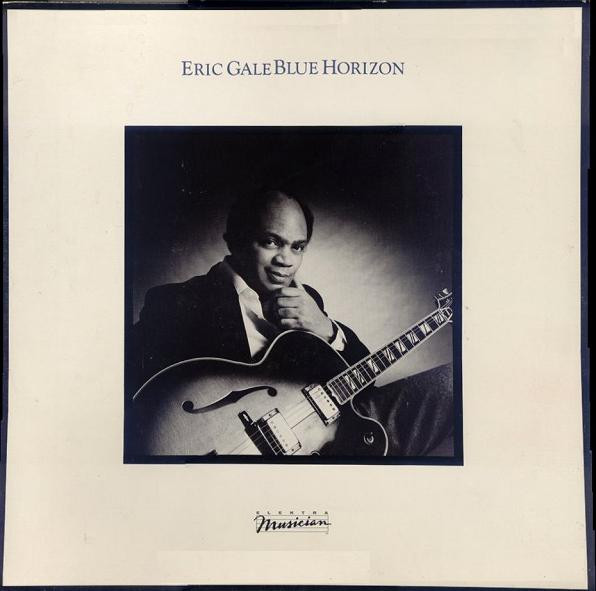
In The Shade Of A Tree
After releasing Blue Horizon, Eric Gale released In The Shade Of A Tree in Japan later in 1982. Stylistically, he album was similar to Blue Horizon, and was well received in Japan. In The Shade Of A Tree sold well in Japan, where Eric was a popular artist. It was ironic that Eric’s music was more popular halfway around the world than in his home country. Maybe his next album for Elektra/Musician would see Eric Gale’s fortunes improve in America?
Island Breeze.
Having released In The Shade Of A Tree, Eric Gale was constantly busy with various projects. He was a member of the NY-LA Dream Band, and had toured Japan with them. Then on his return, he had only a few days before he headed out to Montruex to record a live album. On his return, Eric Gale’s thoughts turned to his next album for Elektra/Musician.
For what became Island Breeze, Eric chose four cover versions. This included Bob James’ Boardwalk and Dark Romance. The other covers were Joe Sample’s My Momma Told Me So and Jeff Medina’s Island Breeze. Eric’s new musical director Jimmy Kachulis penned We’ll Make It, Sooner Or Later and I Know That’s Right. These songs were recorded by a new lien up of Eric’s band.
Since the recording of Blue Horizon, the lineup of Eric’s band had changed quite dramatically. The rhythm section now featured drummers Webb Thomas and Joey DeFrancesco; bassist bassist Neddy Smith; and rhythm guitarists Mark Mazur and Jimmy Kachulis. Keyboardists included Ted Lo and Andy Schwartz. This new lineup recorded at Rosebud Recording Studio, New York. Just like on Blue Horizon, Eric Gale took charge of production and played lead guitar. Once Island Breeze was complete, the album was released in 1983.
Before the release of Island Breeze, critics had their say on the followup to Blue Horizon. The reviews were positive, and this bode well for the rerelease of Island Breeze. However, Island Breeze reached just thirty-five on the US Jazz charts. It was a huge blow for Eric Gale. Especially considering the quality of music on Island Breeze, which brought Eric Gale’s career at Elektra/Musician to an end.
This was the case from the nine minute cover of Bob James’ Boardwalk, that opens Island Breeze. It’s a slice of smooth fusion that’s the perfect showcase for Eric’s considerable skills. He chooses each note with the utmost care, and enjoys the opportunity too stretch his legs on this epic cover. After that, it’s all change. We’ll Make It (Sooner Or Later) is a beautiful ballad. It features a tender, heartfelt and soulful vocal from one of music’s best kept secrets Sandy Barber. Her vocal is at the heart of the song’s success. Similarly, so is Eric’s blues-tinged guitar solo on My Momma Told Me So. It was written by Joe Sample, and featured on The Crusaders’ album Those Southern Knights. Uptempo, funky, with hint of fusion and Eric’s bluesy guitar, it’s another track that showcases Eric’s versatility. That was the case on side two of Island Breeze.
On Island Breeze, Eric, whose parents were from Barbados, revisits his Caribbean roots. As the arrangement breezes along, percussion and a sultry saxophone play supporting roles; as Eric adds a guitar solo whose roots can be traced back to reggae music. Dark Romance is another nine minute cinematic epic. It would be perfect for a soundtrack, as the track veers between wistful to moody, mesmeric, melodic and hopeful. Sometimes, there a degree of tension and mystery. Always, thought, beauty is omnipresent. Closing Island Breeze, is the uber funky and dance-floor friendly I Know That’s Right. It marks the return of Sandy Barber, who delivers a sassy vocal. Meanwhile, Eric’s guitar sounds not unlike Chic’s Niles Rodgers, as he shows another side to his playing. Just like on Blue Horizon, versatility is Eric Gale’s middle name.
As a session musician, Eric Gale played on over 500 albums, accompanying the great and good of music and is regarded as one of the greatest jazz guitarists of his generation.
He also released around a dozen albums. Sadly, as is often the case, Eric Gale’s albums never enjoyed the success they deserved. That’s the case with Island Breeze, which is a hidden gem in Eric Gale’s impressive back-catalogue. They’re both hugely underrated albums, and a reminder of a truly talented and versatile guitarist who died far too young. Eric Gale died in 1994, aged just just fifty-five. Jazz had been robbed of one of its most talented sons. However, Eric Gale left behind a rich musical legacy, including his oft-overlooked cult classic Island Breeze.
Cult Classic: Eric Gale-Island Breeze.
MORE LONG-LOST HONKERS AND TWANGERS.
More Long-Lost Honkers and Twangers.
Label: Ace Records..
Release Date: ’28th’ February 2020.
Back in October 2013, Ace Records released the critically acclaimed compilation Long-Lost Honkers and Twangers which featured twenty-six tracks from the Golden Age of Instrumental Rock ’N’ Roll . Since then, fans of instrumentals have awaited the followup to Long-Lost Honkers and Twangers. Now that wait is almost over, and Ace Records will released More Long-Lost Honkers and Twangers on the ’28th’ February 2020.
It features twenty-four tracks including ten rarities and fourteen unreleased tracks. This includes contributions from The Ventures, The Marksmen, The Velvetones, The Chancellors, The Mus-Twangs, The Road Runners and Cecil Moore and The Notes. Their contributions will take the listener back to a time when instrumentals were King, and commonplace on the charts on both sides of the Atlantic.
The “golden age” of instrumentals began around 1956 and exploded when Duane Eddy released his debut single Movin’ and Groovin’ in March 1958.
After that, instrumentals were commonplace on the British and American charts. Whether it was twangy, jangling guitars or honking saxophones, instrumentals were big sellers for The Ramsey Lewis Trio, Booker T. and The MGs, The Shadows, Don Costa and Spencer Ross all enjoyed huge hits. So did Johnny and The Hurricanes, The Ventures, The Titans and Dick Dale and The Deltones who released a variety of instrumentals that became hits.There were all types of instrumental hits from pop, rock and surf to jazz and R&B. However, the twenty-four tracks on More Long-Lost Honkers and Twangers weren’t huge hits.
Instead, compilers Dave Burke and Alan Taylor of Pipeline Magazine have dug deep and chosen ten rarities and fourteen unreleased tracks for More Long-Lost Honkers and Twangers.
Opening the compilation is Guitare Jet, a track by the Canadian group Les Jaguars. This is a track from their 1965 album Les Jaguars Volume 2. The track is powered along by Jean-Guy Cossette’s lead guitar which is akin to a musical jet engine on this hidden gem of an album track .
The Mus-Twangs were a Chicago-based group whose name was a homage to Duane Eddy. Sadly, this talented band was short-lived, and they only released two singles during 1961 and split-up in 1962 when they failed to make a breakthrough. However, during their time together The Mus-Twangs recorded two other instrumentals during 1961 that were never released. This include the cinematic sounding Wolf Pack and Zanzibar which sounds as if it was influenced by The Shadows before a blazing saxophone adds an elements of drama. Both of these tracks showcase a talented group whose music will belatedly be heard by the audience it deserves.
Mirage was recorded by The Night Caps in 1963, but never released. That was despite this talented quintet sounding like Johnny and The Hurricanes, who back then, were still a popular group.
One of the best known groups on the compilation are The Ventures who feature four times. There’s two unreleased tracks Louisiana from 1963 and a 1971 cover of Van Morrison’s Blue Money which is a real find. Both tracks are recent discoveries. The alternate takes are Blue Tail Fly from 1962 and a cover of Petula Clark’s Downtown from 1970 where the track is transformed and taken in a new direction.
Nokie Edwards is best known as The Ventures’ guitarists and in Japan, he was known as The King Of Guitars. However, away from the Ventures he had a side-project The Marksmen, which featured guitarist Gene Moles and drummer Bill Marshall. The Marksmen contribute three tracks recorded in 1962 Sunny River, Peace Pipe and Nokie’s Fenokey which are a further reminder of how good a guitarist Nokie Edwards was.
Zombie Surfer was recorded by The Ramrods in 1963. They were from Birmingham, Alabama who were a popular surf band who recorded the genre classic Night Ride. At the same session the band recorded Zombie Surfer which with its uber heavy fuzz guitar is a hidden gem that us one of the best of the unreleased tracks.
Although guitarist Billy Strange released a string of solo albums he’s remembered by many people for his work with the Wrecking Crew. He was working on a session for The Blossoms when he recorded Moon Walking for the Era label. Sadly, this mysterious and mystical sounding track was never released until now. It’s a welcome addition to More Long-Lost Honkers and Twangers.
The Velvetones are remembered for the surf instrumentals they recorded during the sixties. However, like a number of bands on the compilation not all the tracks they recorded was released. This includes rhe traditional song Jericho, which was given a surf makeover and totally transformed by The Velvetones from South California.
Russian Roulette by The Zanies closes More Long-Lost Honkers and Twangers. The track is actually a rocky version of the Russian folk song, Song Of The Volga Boatmen. However, The Zanies transform the song the drums powering it along as twangy, jangling guitar and braying saxophone are combined with the sound of a gun chamber being flicked and revolving throughout the track. When all this is combined the result is a memorable track that closes the compilation on a high.
Just like any other compilation, More Long-Lost Honkers and Twangers is a captivating and memorable voyage of discovery. During this journey, there’s ten rarities and fourteen unreleased tracks from familiar faces and what will be new names for many people. However, this loving curated compilation is the perfect way to discover new music that’s sure to lead to many more musical discoveries along the way.
During this journey where honkers and twangers sit side-by-side, there’s many a hidden gem as well as the ten rarities. Compilers Dave Burke and Alan Taylor of Pipeline Magazine have dug deep and discovered a myriad of long lost musical treasure. The result is one of the best compilations of instrumentals of recent years and a fitting followup to Long-Lost Honkers and Twangers.
More Long-Lost Honkers and Twangers, which will be released by Ace Records on the ’28th’ February 2020, is a reminder of the Golden Age of Instrumental Rock ’N’ Roll, when instrumentals were King.
More Long-Lost Honkers and Twangers.

CULT CLASSIC: MANUEL GOTTSCHING-E2-E4
Cult Classic: Manuel Göttsching- E2-E4.
It was late 1981, when Manuel Göttsching returned home after a lengthy tour with Klaus Schulze. The two pioneers of the Berlin School of electronic music had spent much of 1981 touring their latest albums.
Manuel Göttsching’s most recent album was Belle Alliance. This was his fifth solo album, and the fourth to bear the Ashra name. Belle Alliance had been released by Virgin Records in 1980, and was the followup to Correlations, which had been released in 1979. Correlations was another genre classic, and introduced Ashra’s music to a much wider audience.
Many newcomers to Ashra’s music began delving deep into Ashra’s impressive and burgeoning back-catalogue. They discovered not just the delights of the previous Ashra albums, but the albums Manuel Göttsching had recorded with Ash Ra Tempel. In total, there were ten albums that bore either the Ashra or Ash Ra Tempel name. These albums showcased one of the most innovative and influential German musicians of his generation.
The rise and rise of Manuel Göttsching hadn’t happened overnight. It had taken time. Ash Ra Tempel’s early albums didn’t find the wider audience that they so richly deserved. Instead, they won over a small, but discerning group of musical connoisseurs. They were based not just in Germany, but in France and Britain. Soon, Ash Ra Tempel was more popular in Britain and France than in Germany. Gradually, though, Ash Ra’s music began to find a wider audience.
This had taken time. Manuel Göttsching had divided much of the last ten years recording and touring. He recorded an album, and then headed out on tour to promote the album. After a while, touring became second nature to Manuel Göttsching.
He had grown used to the time he had spent travelling and staying in hotels. It was a means to an end,and meant that night after night, he was able to take to the stage and play live. That was what made everything worthwhile. Especially as the audiences grew and his music began to reach a wider audience. By the time 1981 tour was over, it had been one of the most successful of his career.
Buoyed by this success, Manuel Göttsching returned home in late 1981. Despite have spent much of 1981 playing live, he decided to play one more concert. This time, he would play to an audience of one…himself.
So Manuel Göttsching made his way to his home studio, Studio Roma. That was where Manuel Göttsching had kept his vast collection of keyboards, rhythm computers, sequencers and synths since 1975. Since then, Manuel Göttsching had put together an impressive array of cutting edge equipment. It was switched on night and day, just in case Manuel Göttsching felt inspired to make music. That was the case on the 12th of December 1981.
As Manuel Göttsching entered his home studio, his guitar, keyboards, rhythm computers, sequencers and synths were ready to use. For some time, he had been working on a few themes. They were far from finished though. Maybe he could develop them during his concert for one? After he had finished his preparation, Manuel Göttsching was ready to play. For some reason, he reached over and pressed record.
For the next hour, Manuel Göttsching was lost in the music. He played with fluidity, the music flowing through him as he used just two chords. Everything seemed to fall into place. That was the case when Manuel Göttsching switched between instruments. There wasn’t a note out of place. Little did Manuel Göttsching realise that this was a once in a lifetime experience, that most musicians could only dream of. This only became apparent later.
After nearly an hour, Manuel Göttsching’s concert was over. Out of curiosity, he rewound the tape and began sat down to listen to his performance. As Manuel Göttsching listened to this hour long piece of music, musical genres melted into one. Elements of ambient, avant-garde, Balearic, Berlin School, electronica, Krautrock and rock shawn through. The music was variously understated and minimalist, sometimes taking on experimental, Eastern and futuristic sounds. Other times, it was elegiac and ethereal, while, the rhythm computer added a mesmeric, hypnotic quality. Later, Manuel Göttsching added glistening crystalline guitar solos. They combined with washes of synths and a myriad of left-field sounds. It was a captivating journey that featured nine separate phases. Each of these phases had one thing in common,..they were flawless.
Somehow, Manuel Göttsching had managed to play for an hour without making a mistake. This was a once in a lifetime experience. He had managed to write, record and produce an album in one night. This wasn’t how it was meant to happen.
After the release of Belle Alliance, Manuel Göttsching’s thoughts turned to his sixth solo album. He thought it might take a year complete the album. By the time, he pressed play on the 12th of December 1981, Manuel Göttsching had only got as far as few themes that he hoped to expand on. These themes came to fruition that night. This presented a problem though. What should Manuel Göttsching do with the recording?
He had two options, add it to his archives or take it to Virgin Records. However, Manuel Göttsching was unsure where he stood with Virgin Records. His four album deal had expired, and he was unsure if they were going to take up the two album option. Things were up in the air. If he was going take the recording to Virgin Records, Manuel Göttsching needed a title for the album.
The title he came up with was E2-E4. This was the classic opening gambit in a game of chess. E2-E4 was also the title of a computer program that Manuel Göttsching had been using. This he thought would be the perfect title for a piece of electronic music. However, there was a third reason why E2-E4 worked as a title. It was a reference to the guitar tuning Manuel Göttsching used. The lower string was tuned from E2 and the high string from E4. Manuel Göttsching had the title to his sixth album. All he had to do, was convince Virgin Records to release E2-E4.
Not long after completing E2-E4, Manuel Göttsching boarded a flight from Berlin to London. His destination was the headquarters of Virgin Records in London. On his arrival, he discovered a very different record company to the one he had signed to in 1977. No longer was Virgin Records releasing the cerebral music it once had.
Virgin Records were no longer releasing the same type of music that it once had. Gone was much of the folk and progressive rock that the label released during formative years. A few familiar faces remained, including Gillan, Mike Oldfield and fellow Berlin School pioneers Tangerine Dream and Edgar Froese. However, the musical landscape had been transformed. By 1981, Virgin Records was releasing the remnant of punk, plus post punk, synth pop and the vacuous music of the New Romantics. It was a far cry from Virgin Records’ glory days.
Despite this, Manuel Göttsching travelled to meet Virgin Records founder Richard Branson at his houseboat on the Thames. He was no longer played an active role in the day to day running of Virgin Records. Despite this, he wanted to hear E2-E4. The two men listened E2-E4, and the baby Richard Branson was nursing fell asleep. This prompted him to quip: “Manuel you can make a fortune with this music.” However, by the time the meeting was over, Manuel Göttsching had come to a decision.
He had decided not to release E2-E4. It wasn’t the time. E2-E4’s time would come.
Three years later, and E2-E4’s time had come. The album that Manuel Göttsching had recorded on the 12th December 1981, was ready for release. Not by Richard Branson’s Virgin Records though.
They hadn’t picked up the two album option that was included in Manuel Göttsching’s recording contract. This left Manuel Göttsching without a recording contract. Not for long. Soon, he had signed to the German label Inteam GmbH. They were about to release E2-E4.
This was the eleventh album of Manuel Göttsching’s career, and his first since Belle Alliance in 1980. Despite being recorded in late 1981, critics hailed E2-E4 as an album that was another innovative and groundbreaking album. It marked another stylistic departure from a true musical chameleon. However, little did anyone realise the influence that E2-E4 would have.
By the late eighties, E2-E4 was influencing the nascent techno and house scenes. The first generation of house and techno producers were looking to E2-E4 for inspiration. Some, including Sueño Latino sampled E2-E4 for their 1989 track Sueño Latino. Suddenly, E2-E4 was being hailed as one of the most important and influential electronic albums of the eighties.
As the eighties gave way to the nineties, E2-E4 continued to influence and inspire a new generation of producers. Some sampled one of E2-E4 nine phases. However, in 1995, one of the new breed of German production partnerships, Basic Channel remixed E2-E4. It became E2-E4 Basic Reshape as it made its debut on the BCD compilation album. The album that Manuel Göttsching wrote, recorded and produced one night in December 1981 was continuing to influence and inspire a new generation of producers.
That’s still the case today. E2-E4 which is a genre classic, continues to influence and inspire yet another generation of producers. They look to Manuel Göttsching’s E2-E4 for inspiration, hoping that they too, will produce a timeless, cult classic that is one of the most important electronic albums of the eighties.
E2-E4 played a huge part in the development of house music and techno during the late eighties. Since then, several generations of producers have sought inspiration from E2-E4. Alas, none of these producers have followed in Manuel Göttsching’s footsteps and produced a timeless, genre classic. This was just the latest genre classic Manuel Göttsching had released during the first thirteen years of his career.
Nowadays, Manuel Göttsching is regarded as one of the most important German musicians of his generations. He’s a true innovator who influenced and inspired future generations of musicians and producers with a string of critically acclaimed and groundbreaking albums. That was the case throughout his career.
Especially during the period between 1971 and 1983. This was one of the most fruitful and productive periods of Manuel Göttsching’s career. From his early days with Ash Ra Tempel, right through to his solo career as Ashra, Manuel Göttsching could do no wrong. Albums like Ash Ra Tempel, Schwingungen, Join Inn, Inventions For Electric Guitar, New Age Of Earth and Correlations feature a true musical pioneer at his creative zenith. So does E2-E4.
Nearly thirty-nine years after Manuel Göttsching recorded E2-E4 at his Studio Roma, on the 12th of December 1981, this timeless genre classic continues to influence and inspire a new generation of musicians and producers and that will be the case for the foreseeable future.
Cult Classic: Manuel Göttsching- E2-E4.

DJ ANDY SMITH PRESENTS REACH UP DISCO WONDERLAND VOLUME 2.
DJ Andy Smith Presents Reach Up Disco Wonderland Volume 2.
Label: BBE Music.
During the last three decades, Andy Smith has been a familiar face in DJ boxes at home and abroad, and has entertained dancers with his eclectic sets which can feature anything from boogie and disco to funk and hip hop, right through to Motown, Northern Soul and even on occasions, Australian rockers AC/DC. It’s a case of expect the unexpected when DJ Andy Smith steps behind the wheels of steel and digs deep into his trusty record box. Dancers know that the next couple of hours are going to be a musical roller coaster, with surprises a plenty in store.
It’s a similar case with the various compilations that DJ Andy Smith has compiled over the last three decades. Just like many within the DJ-ing fraternity, DJ Andy Smith is a self-confessed and unapologetic crate-digger, who dares to go where others fear to tread. Backstreet record shops, dusty basements and warehouses and thrift stores. That is the natural habitat and has led to DJ Andy Smith collaborating with Portishead and becoming their international tour DJ. He’s also provided samples for the Prodigy, and spent the best part of twenty years releasing mix albums and compiling compilations.
The first mix album that DJ Andy Smith released was The Document in 1998, which showcased a truly talented and creative DJ. After that, DJ Andy Smith released two further instalments in The Document series, and later, released mixes of Northern Soul and reggae. DJ Andy Smith was also asked to compile funk and reggae compilations which was the perfect excuse to embark upon a crate-digging expedition, where he went looking for new music.
By then, DJ Andy Smith was one of Britain’s best DJs, and was spending much of his time DJ-ing, across Britain, Europe and as far away as Australia. Part of his success was down to his mixing skills, which set him apart from the majority of DJs. However, what made DJ Andy Smith stand out from the crowd was the music he played. He had the patience and ability to unearth hidden gems and long-lost musical treasure during his regular crate-digging expeditions. Some of the hidden gems and musical treasures find their way into DJ Andy Smith’s DJ sets or onto the various compilations that DJ Andy Smith has compiled over the last three decades.
This included DJ Andy Smith Presents Reach Up Disco Wonderland, which was released by BBE Music in November 2017. Now, just over two years later and DJ Andy Smith Presents Reach Up Disco Wonderland Volume 2 has just been released as a two-CD set, three-LP set and as a digital download by BBE Music.
Just like the first instalment in the series, disc one of DJ Andy Smith Presents Reach Up Disco Wonderland Volume 2 is a mix CD and features fifteen tracks. Andy Smith’s mixing is seamless and unhurried, as he puts over three decades of experience to good use during what’s a seamless mix. He works his way through fifteen tracks on disc one while the second disc which is unmixed only has thirteen tracks.
The mix opens with Ted Taylor’s Ghetto Disco which was released on Miami based TK Disco in 1977. It’s a funky slice of disco that was arranged and produced by Wendell Qezerque, and sets the bar high for the rest of the compilation.
You’re The Best is six soulful sounding minutes of music from The Emotions which was mixed by John Morales and released in 1984. It’s one of the two tracks that doesn’t make it onto disc two which is unmixed. The other is Chain Reaction’s genre-melting Dance Freak which was penned by Brown and where disco, funk and jazz funk melt into one resulting a memorable dancer and another welcome addition to Andy Smith’s mix.
Another track that was released by TK Disco in 1977 is The Armada Orchestra ’s cover of The O’Jays’ For The Love of Money. They take this Philly Soul favourite in a different direction combining funk, jazz, disco strings and drama to totally transform the track.
New Jersey Connection’s Love Don’t Come Easy was produced by Eddy Saunders and released in 1981. It combines elements of disco, funk and boogie with a soulful vocal to create a track that nearly forty years later will still fill a dancefloor.
Three years after the supposed death of disco, Ronnie Jones released Laser Love as a single on Lollipop Records in 1982. Tucked away on the B-Side was You and I, which is another disco track, albeit with a hint of boogie. You and I is a hidden gem that is proof that disco didn’t die in July 1979.
Cela’s I’m In Love was released by the Best Record Italy in 1979. It’s an oft-overlooked Italo Disco anthem that was popular back in 1979.
Greg Henderson ’s Dreamin’ was released on Sam Records in 1982. It’s a killer dancefloor filler that combined boogie, disco funk and soul to create a track that’s stood the test of time.
Disco Circus’ Get Up and Dance was originally released in 1978 on Columbia. Forty years later, it was edited by Dominic Owen, and his Bad Bikini Re-Edit features on DJ Andy Smith Presents Reach Up Disco Wonderland Volume 2. It’s an edit that’s guaranteed to put a smile on your face and fill a dancefloor.
Quite different from the other tracks is Serious Intention’s You Don’t Know, which was released on Easy Street in 1984. Back then, it was a groundbreaking fusion of disco, electro and garage house from producer Paul Simpson. However, it’s the Crissy Kybosh Remix that features on the compilation.
Claudja Barry released a string of disco singles during the seventies and eighties. Sweet Dynamite was one of her earlier singles and was released on Lollipop Records in 1976. It’s a tough funky, dancefloor filler that features a vocal powerhouse from Claudja Barry, soaring harmonies, stabs of rasping horns and dancing strings. It’s a truly timeless track and one of the highlights of DJ Andy Smith Presents Reach Up Disco Wonderland Volume 2.
Lost Without You is a track by Will Sessions and Amp Fiddler feat. Dame Brown that features on their forthcoming album. The version on the compilation is the DJ Andy Smith Reach up Disco Wonderland Re-Edit. It’s a track that combines the music of the past and the present with elements of house, funk, soul and disco playing their part in the song’s sound and success.
Full Intention and Reach Nick Reach Up feat Jazz Morley contribute the Nu-Disco floorfiller Night Of My Life. It was released in 2018 and since then, has been a favourite of DJs and dancers
In 1978, Gregg Diamond released Star Cruiser, which is another genre-melting track. Elements of funk, disco and jazz-funk melt into one on this hook-laden floorfiller.
Closing DJ Andy Smith Presents Reach Up Disco Wonderland Volume 2 is The Gibson Brothers’ Heaven. This funky slice of disco is a hidden gem that will be familiar to anyone who flipped over to the B-Side of their 1977 UK hit Que Sera Mi Vida.
In what’s an overcrowded market, too many compilations are competing for the pound, dollar and Euro. Sadly, these compilations vary in quality. However, some labels have a reputation for releasing quality compilations and this includes BBE Music. They’ve done it again with DJ Andy Smith Presents Reach Up Disco Wonderland Volume 2 which is another lovingly curated compilation of quality music.
Disc one is a seamless mix of fifteen tracks which showcases Andy Smith’s DJ-ing skills. He puts all his years of experience to good use as he digs deep into his enviable record collection for what’s a stellar selection of tracks.
Then on disc two there’s thirteen full length tracks. They’re mostly disco with the occasional excursion into boogie or a hybrid of the two genres. Other tracks also incorporate elements of electro, funk, soul, jazz and jazz-funk. However, what all the tracks on DJ Andy Smith Presents Reach Up Disco Wonderland Volume 2 are guaranteed to do is fill a dancefloor. That’s the case throughout DJ Andy Smith Presents Reach Up Disco Wonderland Volume 2 which features floorfillers aplenty and is sure to become a favourite of DJs dancers and anyone interested in what’s regarded by many as the golden age of dance music.
DJ Andy Smith Presents Reach Up Disco Wonderland Volume 2.
CULT CLASSIC: ROY BUCHANAN- YOU’RE NOT ALONE.
Cult Classic: Roy Buchanan-You’re Not Alone.
In 1976, guitarist Roy Buchanan signs to Atlantic Records and over the next two years, recorded a trio of albums. This included 1978s You’re Not Alone, proved to be the thirty-nine old’s Atlantic Records’ swan-song. By then, Roy Buchanan was an experienced musician whose career began when he was just fifteen.
That was when he joined Johnny Otis Rhythm and Blues’ review in 1954. For Roy Buchanan, that was the equivalent of a musical apprenticeship, and set him in good stead for the rest of his of career.
Four years after turning professional, Roy Buchanan made his recording debut on Dale Hawkins’ 1958 single My Babe. For the next couple of years, Roy Buchanan was in Dale Hawkins’ band. That was until Dale’s cousin Ronnie Hawkins came calling.
Dale Hawkins was in the Toronto, in middle of a tour when call came through his cousin Ronnie Hawkins. He was looking for a guitarist for his band, and Roy Buchanan fitted the bill. With Dale’s blessing, Roy Buchanan joined the band. Ronnie wanted Roy to take his existing guitarist under his wing. With Roy’s guidance, the young Robbie Robertson came on leaps and bounds. After a spell with Ronnie Hawkins’ band, Roy left and headed home to America. Later, Ronnie Hawkins’ band became The Band, one of the most important and influential bands of the late-sixties and early seventies.
Meanwhile, Roy Buchanan had released his debut single Mule Train Stomp on Swan in 1961. After this, Roy spent the first half of the sixties playing in various bands, including Danny Denver’s band. By then, Roy had put down roots in the Washington DC area, where he had acquired a reputation as one of the great rock guitarists.
This lead to guitarists travelling from far and wide to challenge Roy Buchanan to what he call a “pick-off.” Guitarists came Roy conquered them, with this superior, virtuoso skills. That was until Roy changed direction musically.
In March 1968, John Gossage a photographer who was a friend of Roy’s gave him tickets to see Jimi Hendrix. That night, Roy watched as Jimi Hendrix recreated what he saw as his own unique sound. The difference was that Roy used his hands to create the wah-wah sound, while Jimi Hendrix used a pedal. Despite having carefully crafted his own sound, Roy decided to turn his back on it, and concentrated on a American roots style guitar picking. In doing so, this left the field clear for Jimi Hendrix, who Roy always had the utmost respect for. So much so, that he would later cover some of his songs. Before that, Roy’s decided to change career.
During the second half of the sixties, Roy was dividing his time between playing in various rock bands and working as a session musician. By then, Roy was married with a family. The life of a professional musician wasn’t the most stable, so Roy decided to retrain as a men’s hairdresser. Roy Buchanan was very nearly lost to music forever.
As the seventies dawned, Roy joined the Danny Denver Band, who had a following around the Washington DC, Virginia and Maryland tristate area. However, when he wasn’t playing with the Danny Denver Band, Roy was playing solo gigs. It seemed he hadn’t given up on his dream of making a career out of music.
The dream became reality in 1971, when Public Service Broadcasting filmed and aired a one hour documentary entitled Introducing Roy Buchanan. Someone from Polydor Records saw the documentary, and soon, they had signed Roy Buchanan to a recording contract. Roy would go on to release five albums on Polydor.
A year after signing to Polydor Records, Roy Buchanan released his critically acclaimed eponymous debut album. It was an understated and sparse album of genre-melting music, where Roy switches between blues, country and rock ’n’ roll. Despite its undoubted quality, commercial success eluded the album. However, this was about to change.
When Roy returned with Second Album in 1973, it was the album that almost wasn’t recorded. Roy asked Polydor if for his sophomore album, he could record and release a live album? Polydor didn’t want a live album. However, Roy secretly recorded and self-released a live album using the alias Buch and the Snakestretchers. With the same that band that recorded the live album, Roy went in to the studio and recorded Second Album, which stylistically was similar to his eponymous debut album. However, there was a shift more towards the blues, which is Roy now regarded as a pioneer of.
Second Album was released in 1973, to the same critical acclaim as his eponymous debut album. However, Second Album caught the attention of the record buying public and sold over 500,000 copies. This was enough to earn Roy his first gold disc. By then, John Lennon and Merle Haggard were among Roy’s admirers. So to were the Rolling Stones.
They were so impressed by Roy Buchanan’s guitar playing, that they asked him to join the Rolling Stones. Roy turned the Stones down, and cemented his place in rock history as the man that turned down the Rolling Stones.
Buoyed by the success of Second Album, Roy returned with That’s What I’m Here For, which was produced by Jay Reich, Jr. It was a much heavier, fiery album which featured a blistering version of Hey Joe. It was a showcase for Roy’s lightning fast blues licks, while the album featured moments of spontaneity and genus from one of the finest guitarists of the seventies.
Proof of that was That’s What I’m Here For, which was a mixture of blues, blues rock and Southern Rock. Although it won favour with some critics, others thought it wasn’t an consistent album as Second Album. Granted there were moments of genius, but sometimes Roy failed to reach the same high standards he had set earlier in the album. As a result, That’s What I’m Here For didn’t replicate the success of Second Album. Despite that, Roy returned with his fourth album.
During the first half of 1974, Roy had assembled what he regarded as his finest band. They would accompany him into the studio in the summer of 1974 to record In the Beginning. It was produced by Ed Freeman, and was released later in 1974.
When In the Beginning was released, it critics discovered a much more consistent album. Roy’s playing was fluid and at the heart of everything that was good on In the Beginning. It was a much more laid back album which featured mostly R&B, including Fontella Bass’ Rescue Me, Al Green’s I’m A Ram, CC Rider and Mike Bloomfield’s You’re Killing My Love. There was even a cover of Joe Zawinul’s Country Preacher, on an album that featured the debut of vocalist Billy Sheffield. His addition was seen by some as an attempt by Polydor to shift units. Ironically, this backfired when the album wasn’t the success that Polydor had hoped. For Roy this was a huge disappointment.
Roy owed Polydor just one more album, and looking for a way to discharge his contractual obligations, he decided to record a live album. It was decided to record two shows at New York’s Town Hall on the evening of November ’27th; 1974. The result was Live Stock, which was released by Polydor in 1975. It features seven songs, that prove the perfect showcase for the considerable talents of Roy Buchanan. He unleashes a virtuoso performance on what’s regarded as one of the best live albums by a guitarist. While it wasn’t the most successful album of Roy’s career, it was enough to convince a major label to sign him after his departure from Polydor.
Next stop for Roy was Atlantic Records. He approached Ahmet Ertegun, who had witnessed Roy perform at the Carnegie Hall in 1972. Remembering that performance, and knowing what Roy Buchanan was capable of when he brought his A-Game, Ahmet Ertegun gave Roy a large advance and he signed on the dotted line.
Not long after this, Roy began work on what was a very personal, autobiographical album, A Street Called Straight. It was Roy’s musings on his battle to stay sober and clean. The album was produced by and featured a cover of Jimi Hendrix’s If Six Was Nine, and Good God Have Mercy, which was penned by Billy Roberts who also wrote Hey Joe. There was also an instrumental My Friend, Jeff, which was a homage to Roy’s friend and fellow guitarist Jeff Beck. These tracks became part of Roy’s Atlantic Records’ debut A Street Called Straight.
When A Street Called Straight was released later in 1975, the album wasn’t the success that the Roy and Atlantic Records had hoped. While it received praise and plaudits from some critics, others felt it was a slightly inconsistent album. There were moments of greatness, but a couple songs didn’t reach the same heights. However, Roy was heading in the right direction.
Loading Zone.
For the followup to A Street Called Straight, Roy Buchanan was paired with twenty-six year old Stanley Clarke, the classically trained pioneer of fusion. He would produce what became Loading Zone. This seemed an unlikely partnership, given how different backgrounds the two musicians came from. However, just like Roy, Stanley Clarke was a talented musician, and the pair bonded over their mutual love of music.
Despite his relative youth, Stanley Clarke was already an experienced and successful musician with a proven track record. That was apart from when it came to production. However, Stanley Clarke was also a talented songwriter would also play a small part in writing Loading Zone.
When it came to writing Loading Zone, Stanley Clarke penned Heat Of The Battle. Meanwhile, Roy penned Hidden, Adventures Of Brer Rabbit and Tar Baby Ramon’s Blues and Done Your Daddy Dirty. Roy also wrote The Circle with Ron “Byrd” Foster and Scott Musmanno. The rest of the album consisted of cover versions, Booker T and The MGs’ Green Onions and Michael Narada Walden’s Judy and Your Love. These nine tracks were recorded at Clover Studios in New York and Electric Ladyland in Los Angeles, by Roy and the band.
The recording sessions were quite different to previous Roy Buchanan albums, with different musicians were drafted in to play on different tracks. Producer Stanley Clarke played bass on three tracks and brought onboard several musicians he had worked before. This included guitarist Roy Gomez, drummer Michael Narada Walden and pianist Jam Hammer. They were augmented by various musicians, backing singers and vocalist Scott Musmanno who featured on The Circle. When it came to recording the cover of Booker T and The MGs’ Green Onions, two MGs made a guest appearance, Donald “Duck” Dunn and Steve Cropper, who also featured on The Circle, Ramon’s Blues and Done Your Daddy Dirty. They were part of what was a talent cast of musicians and vocalists, that played their part in the sound and success of Loading Zone.
Once Loading Zone was completed, critics had their say on the album. It was released to critical acclaim in May 1977, and sold in excess of 500,000 copies. This was enough to for Roy’s second gold disc. No wonder, given the quality of music on Loading Zone.
It finds Roy Buchanan and his talented band work their way through nine tracks. They’re the perfect showcase for Roy, who unleashes a blistering, fiery solo on The Heat Of The Battle, which has an unmatched intensity. Hidden is a much more underrated thoughtful track, which shows another side to Roy and his playing. So does The Circle, a mid-tempo soulful song with commercial pop rock sound. After this it’s all change.
Adventures Of Brer Rabbit And Tar Baby feature Roy and Stanley Clarke enjoying a “pick-off,” with the guitar and bass intertwining to create a fusion of country blues and ragtime. Ramon’s Blues is a smouldering blues which features a guitar masterclass from Roy. He reaches new heights. Green Onions is then taken in a new direction, with Roy unleashing a scorching guitar solo that steals the show and transforms this classic. Although Judy is a ruminative track, Roy still enjoys the opportunity to showcase his virtuoso skills. Then on Done Your Daddy Dirty, Roy is encouraged by the band to kick loose as he unleashes blues rock solo. He’s got his mojo working. Your Love is a soul-baring, melodic and radio friendly ballad that closed Loading Zone, which was by far, Roy’s most successful album for Atlantic Records.
They were delighted by their latest signing, who had already released two albums. Soon, two would be three when Roy began work on You’re Not Alone. This time, Stanley Clarke had been replaced as producer by Raymond Silva.

You’re Not Alone.
Given the success of Loading Zone, Roy and Atlantic Records were keen to release a followup sooner, rather than later. So Roy got to work recording what would be the seventh album of his career.
For You’re Not Alone Roy penned Supernova and cowrote Fly… Night Bird and 1841 Shuffle with Andy Newmark, Willie Weeks and Jean Roussel. They also wrote You’re Not Alone. Jean Roussel also penned the album opener, The Opening… Miles From Earth. The two other songs, were covers of Joe Walsh and Terry Trabandt’s Turn To Stone and Neil Young’s Down By The River. These songs would become You’re Not Alone.
Recording took place at Atlantic Studios, in New York, with producer Raymond Silva. This time, Roy’s band featured a rhythm section of drummer Andy Newmark, bassist Willie Weeks and rhythm and acoustic guitarist Ray Gomez. They were joined by keyboardist Jean Roussel and Roy who played lead guitar on what was a very different album from Loading Zone.
You’re Not Alone opened with The Opening… Miles From Earth, beautiful mini symphony which a showcase for keyboardist Jean Roussel. Joe Walsh’s Turn To Stone is reworked, with Roy’s searing guitar sitting atop an arrangement that veers between smooth to funky.Fly…Night Bird is an atmospheric and laid-back sounding track that’s reminiscent of Pink Floyd circa Dark Side Of The Moon. Roy’s guitar playing is understated, but effective on this mellow track. After this, Roy bowls a curveball.
1841 Shuffle starts off as showcase for Roy’s guitar, before he and his band launch into a jam. Still, though, Roy’s guitar plays a starring, despite being surrounded by a truly talented and versatile band. Neil Young’s Down By The River is reinvented, with Roy’s scorching guitar ushering in Gary St Clair’s worldweary lead vocal. Mostly, Roy and the band are staying true to the original, apart from when Roy unleashes another solo. In doing so, they breath new life into what’s a classic song. Supernova is the heaviest song on the album. Roy and band explode out of the traps, and power their way through fiery fluid slice of blues rock. You’re Not Alone is a ruminative ballad, where sci-fi synths accompany a reflective Roy during this eight minute innovative epic. It seems Roy’s kept one of the best until last.
Critics on hearing You’re Not Alone, hailed it a much more ambitious, complex and sophisticated album from Roy Buchanan. However, it received the same critical acclaim as Loading Zone. Sadly, You’re Not Alone didn’t match the sales of Loading Zone. When the cover of Down By The River was released as a single, it failed to trouble the charts. For Roy Buchanan, You’re Not Alone was the one that got away.
Since then, You’re Not Alone is an album that’s for tooling been overlooked by record buyers. That’s a great shame as it shows another side to Roy Buchanan. He was a versatile musician who wasn’t afraid to try new things and that was the case during his Atlantic Records’ years. Stanley Clarke certainly took Roy Buchanan out of his comfort zone on Loading Zone which was one of the most successful albums of his career. He continued to try new things on that followup You’re Not Alone, which sadly, never sold in the same quantities as Loading Zone. You’re Not Alone is a cult classic that shows different sides to Roy Buchanan’s music during what was the final album of his Atlantic Records’ years.
Although Roy Buchanan is remembered as a blues rock guitarist, he was able to seamlessly switch between genres. Roy Buchanan does that with aplomb on You’re Not Alone, where he showcases his considerable skills and versatility and is a reminder of why he’s considered one of the most influential and greatest guitarists of his generation.
Cult Classic: Roy Buchanan-You’re Not Alone.
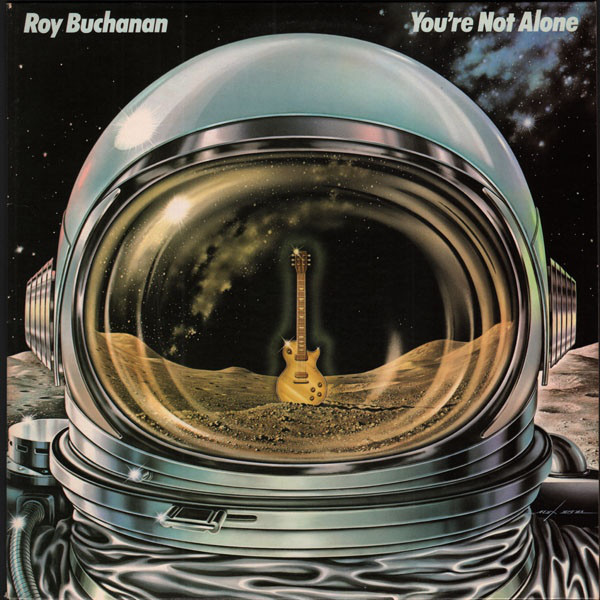
CULT CLASSIC: GANDALF- MAGIC THEATRE.
Cult Classic: Gandalf-Magic Theatre.
Nowadays, Gandalf is regarded as one of Austria’s most accomplished, innovative and successful musicians. Gandalf who is a talented multi-instrumentalist, is also one of Austria’s most prolific artists. He has released over thirty albums between 1981 and 2016. That’s despite not releasing his debut album until he was twenty-nine.
Before that, Gandalf had travelled extensively. His travels took him all over the world, including to India. The constant travelling certainly broadened the mind of Gandalf. He also realised that music was a universal language. It was something that people in different countries and continents shared a love of. Gandalf experienced this firsthand.
As he traversed the globe, Gandalf made a living making music. He was the twenty-first Century equivalent of a travelling minstrel. It was during his travels that Gandalf realised that he wanted to make a living as a musician.
This came as no surprise to many that knew Gandalf. He had grownup in the small town of Pressbaum, in Lower Austria. That was where Heinz Strobl was born on the 4th of December 1952. It would be much later when Heinz adopted the Gandalf moniker. Before that, Heinz proved to be a gifted and natural musician as he grew up.
That was despite having no formal musical education. Heinz could pickup an instrument and soon, was playing along to a song on the radio or a record that was playing. Soon, he could play the piano and guitar. By the time he headed off on his travels, Heinz had mastered a number of different instruments.
On his return from what was the modern equivalent of a Grand Tour, Heinz had mastered a myriad of instruments that he had discovered on his travels. This included a sitar, saz, charango, bouzuki and balaphon. They would play an important part in Heinz’s future musical career.
Initially, Heinz began playing with various rock bands during the seventies. During the seventies, progressive rock was at the peak of its popularity. Heinz was a member of a couple of progressive rock bands. This however, was all part of his musical apprenticeship.
As the seventies gave way to the eighties, Heinz decided to reinvent himself, and adopted the moniker Gandalf. This stemmed from Heinz’s love of J. R. R. Tolkien’s Lord Of The Rings. Little did he realise that his new moniker would feature on over thirty albums. This included the albums Gandalf would release for WEA. Two of these albums were To The Horizon and Magic Theatre, would showcase Gandalf’s unique and inimitable style.
Journey To An Imaginary Land.
It began to take shape on Gandalf’s debut album Journey To An Imaginary Land. It was released on WEA in 1981, and marked the debut of Gandalf who later described himself as a “painter of musical landscapes.”
This is quite fitting, Having written the six tracks that became Journey To An Imaginary Land, Gandalf began painting these “musical landscapes” using his has extensive musical palette. It included everything from acoustic and electric instruments to the traditional, ethnic instruments that Gandalf had discovered and collected on his travels. Included in Gandalf’s palette, were various synths and samplers. They would play an important part in not just Journey To An Imaginary Land, but Gandalf’s future albums.
With his impressive array of instruments, Gandalf began recording and Journey To An Imaginary Land at Beginning Soundstudio. He arranged, recorded and produced the album. Gandalf played each and every instrument, including the synths that play such an important part in Journey To An Imaginary Land. Once the album was recorded, Gandalf mixed his debut album. It was then delivered to WEA, who Gandalf was signed to.
WEA scheduled the release of Journey To An Imaginary Land later in 1981. Before that, critics received a copy of Gandalf’s debut album.
Journey To An Imaginary Land was well received by critics, who were won over by what was hailed an innovative and progressive album. It was a fusion of eclectic musical instruments, influences and genres. When they’re combined by Gandalf, the result is a groundbreaking and genre-melting album, Journey To An Imaginary Land. It features elements of ambient, avant-garde, Berlin School, electronica and folk. When they are combined, they become part of what’s a captivating, mythical and symphonic musical journey that gradually unfolds over forty-five minutes. It’s an ambitious and accomplished album. Especially considering it was Gandalf’s debut album.
Buoyed by the reviews of Journey To An Imaginary Land, Gandalf eagerly awaited the release of his debut album. When Journey To An Imaginary Land was released later in 1981, the album failed to find an audience. Suddenly, Gandalf’s dream of making a living as a professional musician were dashed. However, after the initial disappointment, Gandalf was determined that his sophomore album would be his breakthrough album.
Visions.
Following the commercial failure of Journey To An Imaginary Land, it was a case of back to the drawing board for Gandalf. He wrote fifteen new tracks that would eventually become Visions. They would be recorded at Beginning Soundstudio, later in 1981.
As recording began, Gandalf again showcased his versatility. He played six and twelve string acoustic guitar, bass, mandolin, organ, percussion, six and twelve string electric guitar, sitar and played synths. Gandalf also deployed a vocoder and sequenced Visions. The only instruments he didn’t play, were the flute and tabla. So he drafted in flautist Robert Julian Horky and Jatinder Thakur to play the tabla. Meanwhile, Gandalf took charge of arranging and producing Visions. When the album was complete, Gandalf mixed Visions, which would be released later in 1982.
Before that, the critics had their say on Gandalf’s much anticipated sophomore album. Visions met with their approval. It was another progressive album where the music had mystical and mythical sound. There was also a cinematic sound, with Visions sounding like the soundtrack to a movie. Just like on Journey To An Imaginary Land, musical genres melted into one on Visions.
Especially, elements of ambient and acoustic music which were combined with electronica. Other influences included The Berlin School of electronic music and the music Gandalf discovered during his travels continued to influenced him. On Visions, this included the music he heard in India. So much so, that Gandalf used traditional Indian instruments, including a sitar and tabla. They became part of what was another ambitious album from Gandalf.
Later in 1982, WEA released Visions. It marked a change in fortune for Gandalf. Visions was a commercial success and transformed the fortunes and career of Gandalf. No longer was he struggling to make a living out of music. Instead, Gandalf’s star was in the ascendancy as his thoughts turned to his third album, To Another Horizon.
To Another Horizon.
Despite having just enjoyed a successful album, Gandalf wasn’t about to rest on his laurels. He headed back into Beginning Soundstudio to record seven tracks that would become his third album, To Another Horizon. It was a cerebral concept album.
On To Another Horizon, Gandalf who was the father of three young children, looked at the threat posed to the world by nuclear weapons. Gandalf looked at how who the planet was being slowly eroded. The other things subject that inspired Gandalf on To Another Planet was science fiction. These three subjects were part of what was a very different album from Gandalf.
Although Visions had been a commercial success, Gandalf decided to change direction musically. On To Another Horizon, Gandalf’s music headed in the direction of progressive rock and space rock. This was a stylistic departure for Gandalf as he began work on To Another Horizon.
Another departure was that Gandalf brought onboard additional musicians. Drummer Egon Gröger and bassist Heinz Hummer became Gandalf’s rhythm section. They were joined by pianist and organist Peter Aschenbrenner, flautist Robert Julian Horky and vocalist Helmut Kappel a.k.a. N.A.O. Meanwhile, Gandalf played guitar, mellotron, organ, percussion, synths and wind chimes. He also programmed the drum machine, arranged, recorded, produced and later, mixed To Another Horizon. This marked a new chapter in Gandalf’s career.
It would’ve been easy for Gandalf to stick to a winning formula, and record Visions II. However, that wasn’t the way Gandalf operated. He was a pioneer, who recorded ambitious and innovative music. This had been the case since he recorded Journey To An Imaginary Land, and continued on Visions. To Another Horizon was no different.
Prior to the release of To Another Horizon, WEA sent critics copies of the album. Although some critics were surprised by Gandalf’s stylistic departure, they welcomed his decision to reinvent his music. That was a brave and bold move. There was no chance that Gandalf’s music would become stale. Not when he had produced an ambitious concept album that straddled various themes and genres.
While To Another Horizon marked a move towards progressive rock and space rock, Gandalf also incorporated elements of Krautrock and classical music and folk. Just like his first two albums, Gandalf combined elements of ambient, Berlin School, eighties electronica and experimental music were combined on To Another Horizon. It was a cerebral concept album featuring progressive music that thematically, was captivating.
That was no surprise. The music on To Another Horizon featured some of the best of Gandalf’s carer. It ranged from dramatic and cinematic to progressive on March Of No Reason. Then as Natural Forces Getting Out Of Control glides along, the music becomes futuristic urgent and dramatic. It’s as if Gandalf is desperate to get his message across and plays with urgency and passion. However, Requiem For A Planet has a pastoral, wistful sound. It’s as if Gandalf is mourning for a world troubled by conflict and that’s being eroded and polluted. Flight Of The Crystal Ships showcases Gandalf’s new progressive rock sound. He unleashes scorching, crystalline guitars before the track takes a sci-fi sound and the Flight Of The Crystal Ships continues on its journey. So does Gandalf, as he prepares to deliver a message.
To Another Horizon: The Divine Message has an understated, thoughtful sound, before a futuristic vocoded vocal delivers Gandalf’s message. This gives way To Another Horizon: Change Of Consciousness. It features an understated, Eastern sound that’s mesmeric and later, rocky. This continues on To Another Horizon: Creation Of A New World. As it ebbs and flows, synths and guitars play leading roles. Cosmic Balance has an dreamy, ethereal quality. It’s best described as a progressive fusion of ambient and electronica. Peace Without End closes To Another Horizon and has a pastoral quality before a guitar is added and the track takes on a progressive rock sound. Just like on previous tracks, Gandalf combines different musical genres during what’s without doubt, the most progressive and eclectic album of his career.
It won over critics, who called To Another Horizon Gandalf’s finest hour. His decision to change direction could’ve backfired. This wasn’t the case. Instead, To Another Horizon more progressive sound introduce Gandalf’s music to a much wider audience. This resulted in the most successful album of Gandalf’s three album career. However, he was about the ring the changes again on Magic Theatre
 .
.
Magic Theatre.
Buoyed by the success of To Another Horizon, Gandalf began work on his fourth album, Magic Theatre. Gandalf composed the nine tracks that eventually became Magic Theatre. It saw Gandalf’s music head further in the direction of progressive rock and take and showcased a symphonic rock sound.
Just like on To Another Horizon, Gandalf brought onboard sone session musicians. Drummer Egon Gröger joined bassist and flautist Robert Julian Horky in the rhythm section. Pianist and saxophonist Peter Aschenbrenner was also drafted in as work began at Beginning Soundstudio during July 1983.
As usual, Gandalf juggled a variety of roles. He arranged, recorded and produced Magic Theatre, and played bass, guitar, keyboards and synths. Gandalf also added a variety of effects to Magic Theatre. The sessions lasted two months, and by August 1983, Gandalf’s fourth album Magic Theatre was complete.
It wasn’t until 1984 that Gandalf’s concept album Magic Theatre would be released. Magic Theatre had been inspired by Hermann Hesse’s 1927 novel Steppenwolf. It featured a Magic Theatre.
Within the Magic Theatre, there’s a corridor that features several doors. They all lead to different chambers of the subconscious. Each of these seven chambers are represented by a track on Magic Theatre. The book’s protagonist, Harry Haller visits five of these chambers seeking redemption. In each chamber, he has to conquer his concerns and fears. This Gandalf sets out to do between the opening track Entrance-The Corridor Of The Seven Doors and the closing track exit. Just like previous Gandalf albums, it’s an ambitious, cerebral album where he combines disparate musical genres.
On Magic Theatre, Gandalf moves further down the road marked progressive rock. There’s also a symphonic rock sound on several tracks. Elsewhere, Gandalf combines elements of acoustic and ambient music with classical, Eastern and electronica combining. Meanwhile, the book’s protagonist confronts fears and concerns. His emotional responses are replicated on Magic Theatre. It’s akin to an emotional roller coaster.
Having made his way down The Corridor Of The Seven Doors in the Magic Theatre, Harry Haller enters Door 1-Reflections From Childhood. Once through the door, the music veers between elegiac, ethereal and pastoral. After this, Harry passes through Door 2 to the Castles Of Sand and the music becomes rueful and ruminative, and later, melancholy and wistful. However, when Harry makes his way through Door 3 he suffers from a Loss Of Identity In The Labyrinth Of Delusions. As a result, there’s an element of darkness and drama. Suddenly, it sounds as if Harry is struggling to overcome his fears and concerns. Meanwhile, elements of free jazz, progressive rock and experimental music combine to replicate Harry’s state of mind on this powerful track.
Things change though, as Harry heads through Door Four and encounters The Magic Mirror. Suddenly, the darkness and drama of the previous track disappears, and is replaced by a much more melodic progressive rock track. It glides along, with synths and guitars playing leading roles. Now there’s hope, where previously there was none. Suddenly, as Harry heads through Door Five, he’s Beyond The Wall Of Ignorance. The music ebbs and flow, beatifically and blissfully showcases ethereal and Eastern sounds. That is not the end of the story.
Beyond The Wall If Ignorance is the sixth door. Behind it, is what Harry’s come in search of, Peace Of Mind. He achieves this, and it’s reflected in what’s without doubt, the most beautiful track on Magic Theatre. Flourishes of piano, a flute and Spanish guitar reflect Harry’s newfound Peace Of Mind. Then when Harry makes his way through the seventh door, he drinks deep from The Fountain Of Real Joy. It’s genre-melting tracks where ambient, acoustic, jazz, progressive rock and fusion combine. To this, Gandalf adds samples and effects. Soon, with his Peace Of Mind restored, Harry heads for the Exit. This is another genre-melting track that gradually builds, and reaches a crescendo. By then, Exit takes on a joyous, celebratory sound, as if Harry has been reborn and is ready to begin his life again.
For Gandalf, Magic Theatre was a powerful, poignant and realistic portrayal of Hermann Hesse’s 1927 novel Steppenwolf. Through the medium of music, Gandalf hoped to introduce the book to a new audience.
Critics hailed the Magic Theatre a musical triumph. It was an ambitious album that was full of pitfalls. However, Gandalf brought Steppenwolf over just forty-five minutes. During that period, the chameleon like Gandalf continued to reinvent his music.
That had been the case throughout his career. Magic Theatre was no different. It was as if Gandalf was scared that if he stood still musically, his music would cease to be relevant. There was no chance of that happening. He was musical pioneer, who combined a disparate selection of musical genres, instruments and influences. Gandalf also drew inspiration from many sources, including his travels and literature. Both played their part the sound and success of Magic Theatre.
Upon the release of Magic Theatre, the Gandalf success story continued apace. The album sold well, and found an audience not just in Austria, Italy and Germany, but across Europe and into Britain. Gandalf was making up for lost time.
He was twenty-nine when he released Journey To An Imaginary Land. It was the only album that failed to find an audience. Since then, Visions, To Another Horizon and Magic Theatre all brought success to Gandalf’s door. This was just the start of a long and successful career for a true musical pioneer, who would release over thirty albums. However, many music fans regard Gandalf’s early as some of the best of his forty-five year recording career. This includes To The Magic Theatre, a cult classic which is the perfect introduction to Gandalf, a music pioneer and “painter of musical landscapes.”
Cult Classic: Gandalf-Magic Theatre.
CULT CLASSIC: ANTONIO CARLOS JOBIM-STONE FLOWER.
Cult Classic: Antonio Carlos Jobim-Stone Flower.
Nowadays, Brazilian pianist, singer and songwriter Antonio Carlos Jobim is regarded as one of the founding fathers of the Bossa Nova in fifties, which he internationalised in the sixties with the help of some American jazz musicians. They fused Bossa Nova and jazz to create a new and successful sound which featured on the groundbreaking and award-winning 1965 album Getz/Gilberto which won three Grammy Awards including Best Album Of The Year and Best Jazz Instrumental Album. This was a game-changer for Antonio Carlos Jobim who had enjoyed a meteoric rise since the early sixties. There was no stopping Antonio Carlos Jobim.
By 1970, Antonio Carlos Jobim was already regarded as one of the finest purveyors of Brazilian music and was signed to Creed Taylor’s CTi Records which was an imprint of A&M Records. This was fitting as Creed Taylor had produced the award-winning Getz/Gilberto, and whenever they worked together seemed to bring out the best out of Antonio Carlos Jobim and managed to do so on Tide and Stone Flower.
Tide.
When Antonio Carlos Jobim began work on Tide, over two years had passed since he released his previous solo album, Wave in October 1967. It had reached 114 on the US Billboard 200 and number five in the US Jazz charts making Wave his most successful album. While this was a lot to live up to, music had changed since October 1967 and it was a very different musical landscape as he began work on Tide.
For Tide, Antonio Carlos Jobim wrote seven new tracks and covered The Girl from Ipanema which he had written with Vinicius de Moraes and Norman Gimbel. The other song Antonio Carlos Jobim decided to record for Tide was Pedro Berrios, João de Barro and Pixinguinha’s Carinhoso. These nine tracks became Tide, which were arranged by Deodato and produced by Creed Taylor, at Van Gelder Studio, Englewood Cliffs, New Jersey during May 1970.
Joining producer Creed Taylor and Antonio Carlos Jobim who played guitar, electric piano, piano and added vocals were some of the top session players of the early seventies. The rhythm section featured drummer João Palma, double bassist Ron Carter and pianist Deodato. They were joined by percussionist Airto Moreira, conga player, Joseph DeAngelis, Ray Alonge on French horn and flautists Everaldo Ferreira, flautists Hubert Laws, Romeo Penque, Hermeto Pascoal and Joe Farrell who also played soprano saxophone. He was joined in the horn section by alto saxophonist Jerry Dodgion, trumpeters Marvin Stamm and Burt Collins plus trombonists Garnett Brown and Urbie Green. Sweetening the sound of Tide was a string section which added the final piece of the jigsaw.
Six months passed before Tide was released by A&M Records in November 1970. By then, Antonio Carlos Jobim had returned to the studio in June 1970 to record his next album Stone Flower. It had a lot to live up to.
When Tide was released, it was to plaudits and praise with critics hailing Antonio Carlos Jobim’s latest album of jazz-tinged Bossa Nova as a fitting followup to Wave, which had been released three years earlier in October 1967. Sadly, Tide didn’t replicate the success of Wave which was Antonio Carlos Jobim’s most successful solo album upon its release on November 1970. By then, music had changed and maybe Antonio Carlos Jobim’s fans had moved onto other types of music. They missed out on what’s an underrated album from Antonio Carlos Jobim, Tide.
Tide opens with the familiar strains of the classic The Girl from Ipanema which was revisited and reinvented by Antonio Carlos Jobim and takes on a much more dramatic sound thanks to Deodato’s structured arrangement. This sets the bar high for the rest of Tide, which includes an understated but graceful cover of Carinhoso, which gives way to the brisk and breezy Tema Jazz which is one of Tide’s highlights, partly thanks to the contribution of maverick flautist Hermeto Pascoal. The tempo drops on the memorable ballad Sue Ann, before Antonio Carlos Jobim switches between piano and Fender Rhodes on Remember where the track veers between an irresistible Bossa Nova to a samba beat.
Melodic, orchestrated and full of contrasts describes Tide where Antonio Carlos Jobim plays piano and acoustic guitar on a song that owes much to the title-track to his previous album Wave. There’s a return to Bossa Nova on Takatanga where Urbie Green’s rasping trombone plays a leading role in the sound and success of the track. The tempo drops on the romantic sounding Caribe, where Urbie Green and flautist Joe Farrell join forces and play starring roles. Later, the meandering melody becomes fragmented as Antonio Carlos Jobim’s piano punctuates Deodato’s arrangement on another masterful addition to Tide. Closing Tide is Rockanalia, which is built around Ron Carter’s standup bass line while Antonio Carlos Jobim’s plays as a starring role before horns add the final piece of this musical jigsaw. In doing so, they ensure Tide ends on a high.

Stone Flower.
While Antonio Carlos Jobim wrote and recorded Tide during the first half of 1970, he was also working on his next album Stone Flower. He had written eight new songs and decided to cover Ary Barroso’s Brasil for Stone Flower. Just like Tide, Stone Flower was arranged by Deodato and produced by Creed Taylor, at Van Gelder Studio, Englewood Cliffs, New Jersey during June 1970.
This time around, it was a much smaller band that accompanied Antonio Carlos Jobim who played guitar, electric piano, piano and added vocals. The rhythm section included drummer João Palma, double bassist Ron Carter and guitarist Deodato. They were joined by percussionist Airto Moreira and Everaldo Ferreira, flautist Hubert Laws, soprano saxophone, trombonist Urbie Green and violinist Harry Lookofsky. Antonio Carlos Jobim and his band spent much of June 1970 recording Stone Flower which was released by CTi Records in July 1971.
When Antonio Carlos Jobim’s sixth album Stone Flower was released in July 1970, the album stalled at a disappointing 196 in the US Billboard 200. However, when Stone Flower reached eighteen in the US Jazz albums chart this pleased Antonio Carlos Jobim and producer Creed Taylor.
Stone Flower opens with Tereza My Love which was a paean to Antonio Carlos Jobim’s wife, that initially is intimate but as the arrangement floats and meanders along, but ultimately becomes sensuous. Initially, the enchanting Children’s Games is airy and intricate as the arrangement waltzes along as Antonio Carlos Jobim’s piano locks into a groove with the guitar before becoming intense and almost dramatic. Against a backdrop of syncopated rhythms, Antonio Carlos Jobim’s piano take centre-stage on Choro where his fingers fly across the keyboard. He then turns his attention to Brasil which is the unofficial Brazilian anthem. The arrangement’s drive along by a samba beat while Antonio Carlos Jobim delivers a lived-in, worldweary vocal.
Very different is the progressive sounding Stone Flower, which opened the second side of the original album and veers between dramatic, rueful and urgent, but later, becomes intense and cinematic. It’s a similar case on Amparo, which sometimes sounds as if it’s been influenced by classical music, before veering between dark, dramatic and romantic as Antonio Carlos Jobim toys with the listener’s emissions during an emotive, cinematic track full of tension. The ballad Andorinha soon takes on a late-night sound as Antonio Carlos Jobim plays Fender Rhodes and delivers a tender vocal against an understated arrangement that gradually builds and provides the perfect accompaniment to the founding father of Bossa Nova. God And The Devil In The Land Of The Sun lasts just over two minutes, and is an innovative track where Antonio Carlos Jobim turns his back on Bossa Nova with the help of Joe Farrell’s blazing jazz saxophone and pulsating rhythm section as the arrangement dances joyously along. Closing Stone Flower is Sabia which is captivating, laid-back but also hypnotic and sometimes is otherworldly and allegorical that is one of the album’s highlights.
Sadly, Stone Flower was the last album that Antonio Carlos Jobim ever released on Creed Taylor’s CTi Records and he recorded one album for MCA Records before resigning with Warner Bros. However, during his short spell with CTi Records Antonio Carlos Jobim released two albums, including Stone Flower which is one of the finest albums that Antonio Carlos Jobim released during the late-sixties and seventies.
When Stone Flower was released on Creed Taylor’s CTi Records imprint it marked the new chapter in Antonio Carlos Jobim’s career. Some of the music had been influenced by new his life in America, and saw him move away from his trademark jazz-tinged Bossa Nova sound. Especially on God And The Devil In The Land Of The Sun which was far removed from the Bossa Nova that made Antonio Carlos Jobim one of the most successful Brazilian musicians of his generation. However, for much of Stone Flower Antonio Carlos Jobim stays true to his jazz-tinged Bossa Nova sound, adding samba and worldweary vocals that have a soulful quality. This was a potent and memorable combination that resulted in critics calling Antonio Carlos Jobim’s Stone Flower one of his finest albums.
Stone Flower finds Antonio Carlos Jobim continuing in his mission to introduce his unique brand of jazz-tinged Bossa Nova to an international audience. This he had been doing since the fifties, and nowadays he’s regarded as one of the founding fathers of the Bossa Nova.
By 1971, Antonio Carlos Jobim was at the peak of his powers and one of finest exponents of Brazilian music. Proof of this is, Antonio Carlos Jobim’s oft-overlooked cult classic Stone Flower, which deserved to find a much wider audience than it did. Nowadays, Stone Flower is regarded as one of the hidden gems in Antonio Carlos Jobim’s’s discography and a reminder of a truly talented composer, pianist, songwriter, arranger and singer who was an innovator and without doubt, one of the legends in Brazilian music.
Cult Classic: Antonio Carlos Jobim-Stone Flower.
SPRING NYC SOUL.
Spring NYC Soul.
Label: Kent Soul.
Spring Records was founded in New York by Bill Spitalsky, Roy Rifkind and Julie Rifkind and based at 161 West ‘54th’ Street. This was also home to two new imprints, Event and Posse Records which became part of the city’s thriving and vibrant music scene. The three labels released everything from soul, funk, disco and gospel to harmony and show tunes, and much later, electro and rap. For three decades Spring Records and the Event and Posse imprints recorded and released a variety of music. This includes the music on Spring NYC Soul, a new compilation that was recently released by Kent Soul, a subsidiary of Ace Records.
There’s a total of twenty-four tracks on Spring NYC Soul, including six previously unreleased tracks.There’s contributions by Garland Green, Ronnie Walker, Fatback Band, Joe Simon, Clare Bathé, Jackie Verdell, Phillip Mitchell, Leroy Randolph, The Equations and The Internationals. Then there’s unreleased tracks from The Determinations, Maxine Weldon, Garland Green, Victor Tavares and Little Ava Harris. These tracks are part of another lovingly curated compilation from the Kent Soul crew.
Opening Spring NYC Soul is Save The Best For Me by The Determinations. This is an edited version of a track that first appeared on their 1976 album One Step At A Time. The track is arranged by Andrew Smith and produced by Ray Godfrey. He plays his part in what’s a catchy slice of swinging soul.
I Love You More Than Anything by Ray Godfrey was recorded in 1970, and lay unreleased for fifty years. It was arranged by Bert DeCoteaux and produced by John Richbourg and Joe Simon. Ray Godfrey’s vocal is heartfelt, emotive and soulful as harmonies and sweeping strings accompany him on this hidden gem that’s a welcome addition to the compilation. So is Hold On an unreleased track from 1979. It’s a soulful and funky disco track from Ray Godfrey.
Since You’ve Been Gone was recorded by Garland Green in 1975, and produced by Ray Godfrey. However, this wistful mid-tempo dancer lay unreleased in the Spring Records vaults for forty-five years. Thankfully, this hidden gem has been unearthed albeit somewhat belatedly.
By 1975, The Fatback Band were signed to Event Records and about to released their album Yum Yum. It features If You Could Turn Into Me where they drop the tempo on this beautiful soulful ballad.
When Joe Simon recorded Your Time To Cry it was arranged by Bert DeCoteaux. It released as a single by Joe Simon in 1970, and reached number three in the US R&B charts. Following the success of the single, Spring Records released the album The Sounds Of Simon. One of the highlights was the soul-baring Your Time To Cry, which showcases Joe Simon’s ability to breath life and meaning into a song.
I’m The Other Half Of You was written and produced by Raeford Gerald aka Ray Godfrey for Maxine Weldon in 1973. Sadly, the song was never released and her emotive rendition of I’m The Other Half Of You makes a welcome debut on Spring NYC Soul.
When Jackie Verdell signed to Spring Records in 1982, she and began work on a modern gospel album. A year later, in 1983, she released Lay My Burden Down which featured The Storm Is Passing Over which showcases a truly talented and versatile singer who also worked as a backing vocalist for various soul and R&B singers.
If We Get Caught, I Don’t Know You was the B-Side to Phillip Mitchell’s 1975 single Jody. It was released on Event, and finds Phillip Mitchell combining humour and soulfulness on this little known track.
Upon leaving the soul group Tavares, Victor Tavares embarked upon a solo career and recorded Falling In Love in 1975. It was never released and the version that features on Spring NYC Soul is the Rob Keyloch Mix. It’s a beautiful quiet storm ballad and one of the best of the unreleased tracks.
When Spring Records was founded in 1967, New York based singer-songwriter Richard Barbar was signed to the label. He released the uptempo and soulful Get Right on Spring Records later in 1967. This was the only single Richard Barbar released for the label, before moving to A&M.
Closing Spring NYC Soul is I Ride Alone by The Internationals. This was the B-Side to I Ride Alone, which was released on Spring Records in 1972. It’s the only secular side The Internationals released during their short spell on the label. Memorable and soulful it’s the perfect way to close the compilation.
Spring NYC Soul is another lovingly curated compilation from the Kent Soul that was compiled by Ady Croasdell. He’s dug deep into the Spring Records’ vaults, and chosen twenty-four tracks from familiar faces and old friends as well some singers and groups that many people won’t have heard of. That doesn’t matter as Ady Croasdell has impeccable taste and has chosen tracks that ooze quality.
This includes the unreleased tracks on Spring NYC Soul. Some of these tracks have lain unreleased for fifty years. and belatedly make a debut on Spring NYC Soul. These unreleased tracks join B-Sides, album tracks, hidden gems and hit singles on Spring NYC Soul. It’s a lovingly curated and eclectic compilation of quality soulful music that will be of interest to anyone with even a passing interest in soul music.
Spring NYC Soul.
 dereksmusicblog
 dereksmusicblog