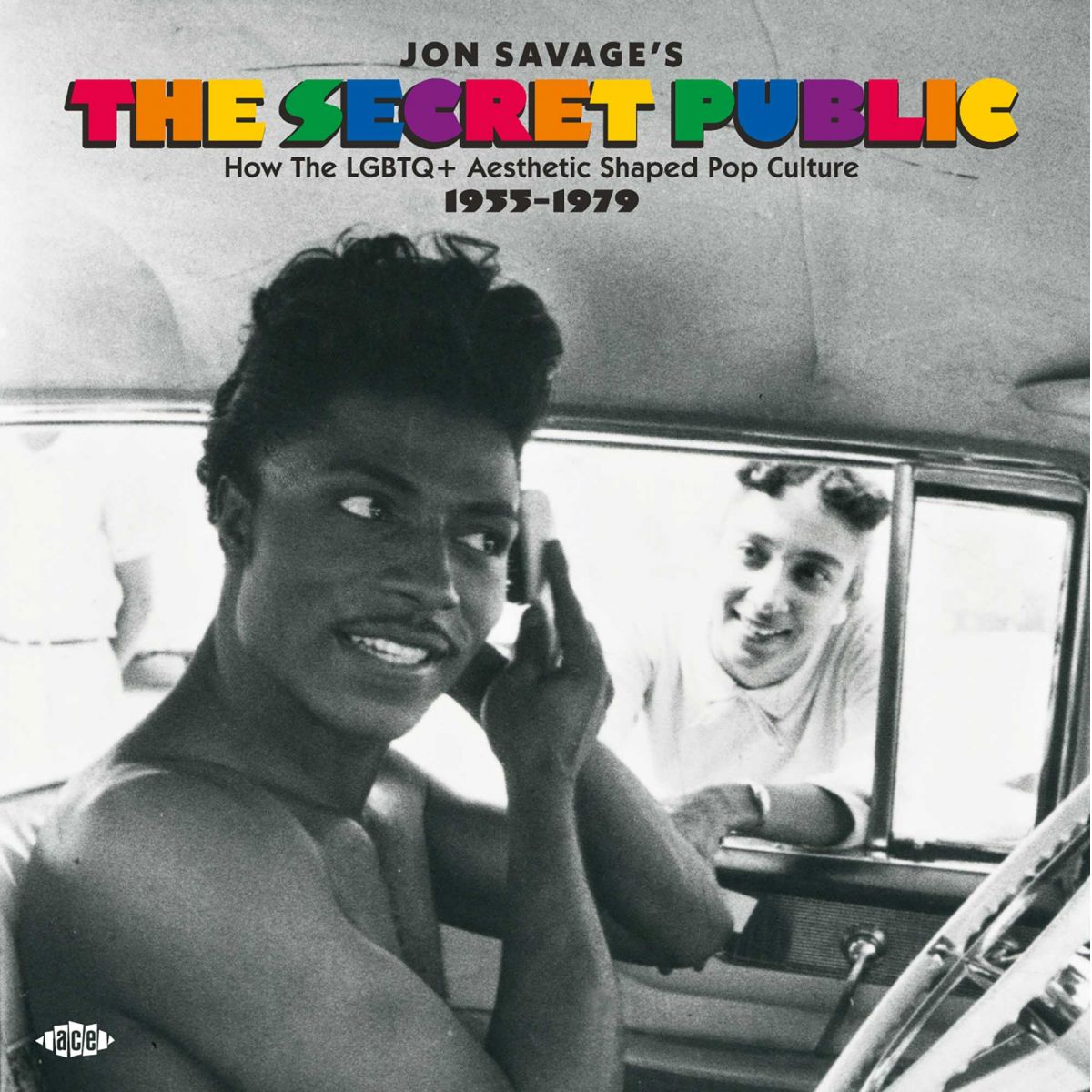
JOHN SAVAGE’S SECRET PUBLIC-HOW THE LGBTQ+ AESTHETIC SHAPED POP CULTURE 1955-1979.
Jon Savage’s The Secret Public-How The LGBTQ+ Aesthetic Shaped Pop Culture 1955-1979.
Label: Ace.
Format: CD.
Release Date: 31st May 2024.
Ever since the birth of rock ’n’ roll, homosexuality has been part of popular music. However, in the fifties, it wasn’t talked about openly. That was the case right through to the sixties, where many within the gay community felt like outcasts.
In the UK, gay men were harassed by the police, and risked prosecution and imprisonment. Things started to change when the Sexual Offences Act 1967 was passed. It decriminalised private homosexual acts in England between men aged over twenty-one, but imposed heavier penalties on street offences.
However, the law wasn’t changed in Scotland until 1980, and in Northern Ireland until 1982.
Then the Criminal Justice and Public Order Act 1994 lowered the age of consent for gay men from twenty-one to eighteen. Three years later, it was lowered again, this time to sixteen. That was all in the future.
By the early seventies, attitudes had started to change. There was more openness within the gay community. That was also the case within the music industry. No longer did artists and bands have to hide their sexuality. Far from it. During the seventies, bands and artists celebrated their sexuality in song.
Some of these songs feature on ‘Jon Savage’s The Secret Public-How The LGBTQ+ Aesthetic Shaped Pop Culture 1955-1979.’ It will be released by Ace on ’31st’ May 2024. It’s a two CD set that features forty-one tracks.
Disc One.
Opening disc one is ‘I Hear A New World,’ the title-track to Joe Meek and The Blue Men’s pioneering space project. It was meant to be released by the Triumph label in 1960. However, by then, the label had encountered financial problems and only an EP was released later that year.
The earliest track on the compilation is ‘Tutti-Frutti’ by Little Richard and His Band. It was released by Speciality in 1955 and nowadays, is regarded as an R&B classic.
‘You Don’t Own Me’ is a track from Lesley Gore’s 1963 album ‘Mixed-Up Hearts.’ It’s very different from her hit singles ‘It’s My Party and ‘Judy’s Turn To Cry.’ The tracks features a self-assured vocal from Gore as she sings about female independence.
‘I’ll Be Your Mirror’ was the B-Side to The Velvet Underground’s debut single ‘All Tomorrow’s Parties.’ It was released in 1966 on Verve, and was taken from the album ‘The Velvet Underground and Nico.’ This tender paean shows a different side to the group. There’s a mixture of vulnerability and darkness in Lou Reed’s lyrics. The result is one of the compilation’s highlights.
Northern Soul favourite ‘Heaven Must Have Sent You’ by The Elgins was released on the V.I.P. label in 1966. It was penned by Holland-Dozier-Holland and reached number three in the UK in 1971.
In 1967, Al Stewart released his debut album ‘Bed Sitter Images.’ This album of folk and baroque folk marked the start of long and illustrious career. The album was produced by Roy Guest and featured ‘Pretty Golden Hair.’ It’s a song about youth, beauty, homosexuality and growing old.
‘David Watts’ featured on The Kinks 1967 EP and their fifth album ‘Something Else By The Kinks.’ It was released on Pye, and this Ray Davies composition and on first listen, the track sounds like a song about class envy. However, listen carefully to the lyrics and there’s a gay subtext to the song.
Sly and The Family Stone released their classic album ‘Stand!’ on Epic, in 1969. It’s a stunning fusion of funk, soul and psychedelia, and one of the highlights of the compilation.
For The Supremes there was life after Diana Ross. Proof of that is’ Nathan Jones.’ It featured on the Motown album ‘Touch,’ which was produced by Frank Wilson and released by Motown in 1971.
‘Walk On The Wild Side’ is a track from Lou Reed’s 1972 debut album ‘Transformer.’ It was produced by Reed, David Bowie and Mick Ronson and released on RCA Victor. When this tale of bohemian life was released as a single, it reached number sixteen in the US Billboard 100 and ten in the UK. This was the most successful single of Reed’s long career.
Disc Two.
Labelle released their classic single ‘Lady Marmalade’ in 1974. It’s a track from their 1974 album ‘Nightbirds’ which was released by Epic.
‘Nobody’s Gonna Change Me’ is a gospel-tinged track from The Dynamic Superiors’ 1974 album ‘Pure Pleasure.’ The track was written and produced by Ashford and Simpson, and is one of the highlights of the album.
‘I Need A Man’ was originally released by Grace Jones in 1975. Two years later, it featured on her 1977 album ‘Portfolio.’ That year, the 12” Disco Mix was produced by Tom Moulton. It features dancing strings arranged and conducted by Vince Montana Jr and backing vocals from the Sweethearts of Sigma. The result is an anthemic track that’s one of the highlights of Jones career.
The 12” Mega Mix of Michele’s Disco Dance features on the compilation. It was released on West End Records in 1978. The track was produced by Pierre Jaubert and Tom Moulton. However, the Mega Mix is by Patrick Cowley, and is another anthem from the disco era that’s stood the test of time.
These fourteen tracks are among the highlights of what is a truly eclectic compilation. There’s everything from soul, punk, funk and disco to folk, pop, psychedelia, R&B and rock. The compilation features a mixture of familiar faces and what will be new names to be many music fans. They contribute a mixture of classic tracks and hidden gems on Jon Savage’s The Secret Public-How The LGBTQ+ Aesthetic Shaped Pop Culture 1955-1979, which will be released by Ace, on ‘31st’ May 2024.
Jon Savage’s The Secret Public-How The LGBTQ+ Aesthetic Shaped Pop Culture 1955-1979.


TOMORROW’S FASHIONS – LIBRARY ELECTRONICA 1972-1987.
Tomorrow’s Fashions – Library Electronica 1972-1987.
Label: Ace.
Format: CD.
Release Date: 28th June 2024.
Over the last few years, there’s been a resurgence of interest in library music, with British and European record labels releasing lovingly curated compilations that are welcomed by a coterie of musical connoisseurs who have a passion for library music. This includes DJs, producers and record collectors who are willing to pay large sums of money to add original copies of rare releases to their collections of library music.
However, not everyone can afford to buy original copies of library music rarities. Instead, they buy reissues and compilations that are released on a regular basis.
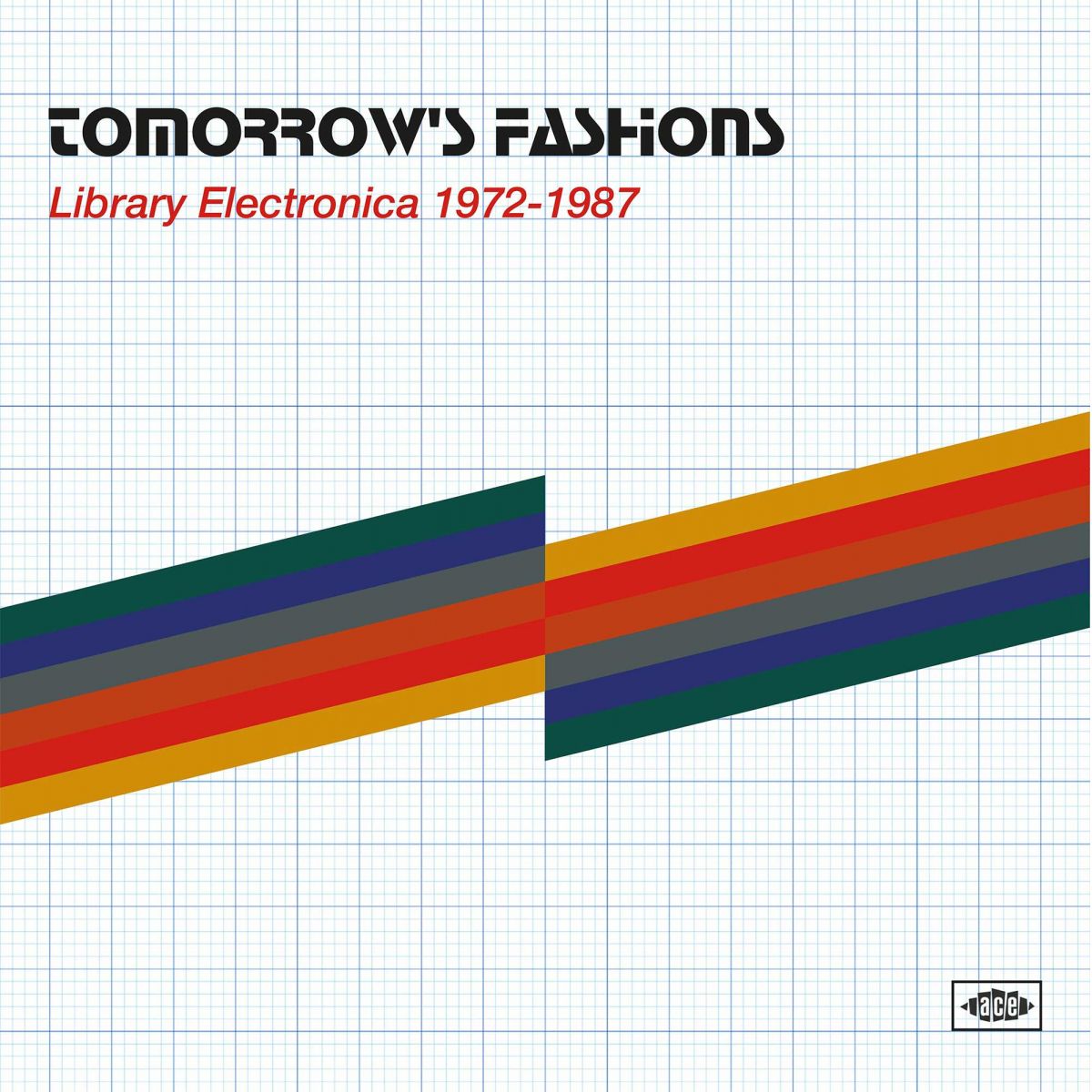
On 28th June 2024, Ace will release a new compilation of library music, ‘Tomorrow’s Fashions – Library Electronica 1972-1987.’ It was compiled by Bob Stanley of Saint Etienne, and has twenty-eight tracks from the Bruton Music, Chappell, De Wolfe, Parry Music and Sylvester music libraries. These tracks were recorded between 1971 and 1987 by some of the giants of library music, including John Cameron, Alan Hawkshaw and Simon Park. They’re responsible for some of the most collectable and rare albums of library music.
Many British collectors of library music started off collecting releases by labels like KPM, De Woife, Amphonic, Bruton Music, Chappell, Conroy and Sonoton from the sixties, seventies and eighties. This is regarded by many collectors as a golden age for library music. However, albums of library music were never meant to fall into the hands of collectors.
Originally, library music was meant to be used by film studios or television and radio stations, and was never meant to be commercially available. The music was recorded on spec by music libraries who often hired young unknown composers, musicians and producers. This ranged from musicians who were known within publishing circles, to up-and-coming musicians who later, went onto greater things, and look back fondly at their time writing, recording and producing library music. This they now regard as part of their musical apprenticeship.
For the musicians hired to record library music, their remit was to supply music libraries with a steady stream of new music, which was originality referred to as production music. During some sessions, the musicians’ remit was write and record music to match themes or moods. This wasn’t easy, but after a while, they were able to this seamlessly. Soon, the musicians were able to enter the audio and write and record a piece of music that matched a theme or mood for a film or television show.
For many young musicians library music was a way to “learn their trade” while making money. It would stand them in good stead. Soon, they became versatile and talented musicians who were capable of switching between genres and moods. This included the musicians hired by KPM Music in the mid-sixties.
When Robin Phillips joined KPM Music in the mid-sixties, he proved to be an astute and visionary businessman. Two decisions he made demonstrated this. His first decision was that KPM Music should switch from the old 78 records to the LP. This made sense as this was what people were buying. They were less prone to breakage, which meant less returns and more profit. LPs could also contain more music, and be released in limited editions of 1,000. The other decision he made was to hire the best young British composers and arrangers.
Among the composers Phillips hired were Keith Mansfield and Johnny Pearson. He spotted their potential, and hired them before they had established a reputation. Many were known within music publishing circles, but not as artists or producers. Later, Phillips hired jazz musician John Cameron, Syd Clark, Alan Hawkshaw and Alan Parker. Their remit was to provide him with new music, which was referred to as production music or library music.
The remit for the new composers and musicians hired by KPM was to write music to match themes or moods. This wasn’t easy, but they were able to do so. Soon, they were creating music that became the themes for TV shows, cartoons and films. For these composers and musicians, they were now part of one of the most lucrative areas of music.
EMI realised that KPM Music had one of the best and most profitable music libraries, and decided to buy the company. While EMI spotted the profitability of KPM Music and the consistency, quality and depth of its back catalogue. However, not everyone approved of library music.
Other songwriters looked down on writers of library music. Nor was the British Musician’s Union a fan of library music. They banned their members from working on recording sessions of library music.
Somewhat shortsightedly, the Musician’s Union thought that eventually, there would come a time when there was no need for any further recordings. Their fear was that the sheer quantity of back-catalogue would mean no new recordings would be made, and their members would be left without work.
To get round the ban, KPM Records flew composers, arrangers and musicians to Holland and Belgium, where local musicians would join them for recording sessions. This meant that often, the same musicians would play on tracks for several composers.
It was only in the late seventies, that the Musician’s Union lifted their ban on new recordings of library music. By then, the golden age of library music was almost at an end. The Musician’s Union ban had cost their members dearly.
Once these tracks were recorded, KPM Music, would release albums of library music. Again, KPM Music were innovators. They’d release limited editions of albums. Often, only 1,000 albums were released. Nowadays, many of these albums are rarities and copies change hands for huge sums of money. That was all in the future.
Once library music was recorded, record libraries sent out demonstration copies of their music to advertising agencies, film studios, production companies, radio stations and television channels. If they liked what they heard, they would license a track or several tracks from the music libraries. That was how it was meant to work.
Sometimes, copies of these albums fell into the hands of record collectors, who realising the quality of music recorded by these unknown musicians, started collecting library music. However, it always wasn’t easy to find copies of the latest albums of library music. That was until the arrival of the CD.
Suddenly, record collectors and companies across Britain were disposing of LPs, and replacing them with CDs. It didn’t matter that the prices of LPs were at all-time low, some record collectors just wanted rid of their collection that they were replacing with CDs.
With people literally dumping LPs, all sorts of musical treasure was available to record collectors. This included everything from rare psych and progressive rock right through to albums of library music. These albums were often found in car boot sales, second hand shops and charity for less than a skinny latte macchiato.
This was the case throughout the period that vinyl fell from grace, and suddenly, it was possible for collectors of British library music to add to their burgeoning collections. Gradually, longtime collectors of library music had huge and enviable collections and were almost running out of new music to collect. Some collectors decided to see what European library music had to offer.
Now these collectors had a whole continent’s worth of library music to discover. Some collectors were like magpies buying albums from all over Europe, while others decided to concentrate on just one country or company. Although it was more expensive to collect European library music, gradually, enviable new collections started to take shape. This included French, German and Italian library music which was recorded during the sixties and seventies.
Later, sample hungry hip hop producers who dug deep into the crates found albums of library music. This was the ‘inspiration’ that they were looking for, and many ‘borrowed’ samples from their newfound musical treasure. Soon, other producers, DJs and collectors went in search of long-overlooked albums of library music.
Some decided to head East. They’ve spent time tracking down library music recorded in Eastern Europe during the sixties and seventies. After the fall of Communism, it was easier to find what for many DJs, producers and collectors was their holy grail.
Since then, library music has become increasingly collectable, with producers continuing to sample them, while DJs incorporate library music into their sets. It’s also big business, with record labels reissuing rare and classic albums of library music and releasing compilations. This includes ‘Tomorrow’s Fashions – Library Electronica 1972-1987.’
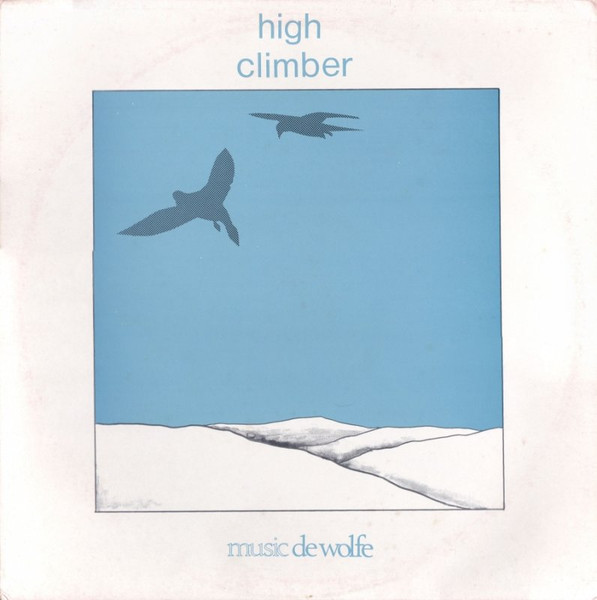
Opening the compilation is ‘Coaster’ from Simon Park’s album ‘High Climber.’ It was released by De Wolfe in 1982. Bubbling synths play their part in a laidback, relaxing, and summery-sounding cinematic track.
‘Rippling Reeds’ featured on Wozo’s 1979 album ‘Power Source.’ It was also released on De Wolfe, and is a spacious and ruminative sounding track. ‘Atomic Station’ a dark, moody and futuristic track also featured on the album.
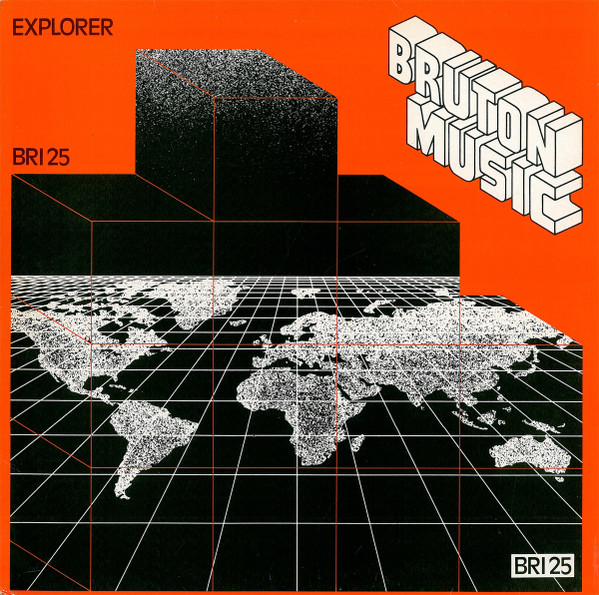
John Cameron’s was one of the doyens of library music. Two albums her recorded for KPM Music, ‘Jazzrock’ and ‘Voices In Harmony’ are now regarded as genre classics. However, in 1985 his Explorer album was released by Bruton Music. It opens with Northern Lights-1, a where cascading and rippling synths are part a celestial symphony. Another of ‘Explorer’s’ highlights was ‘Infinity,’ a slow, dreamy and cinematic slice of library music from one of its finest practitioners.
In 1979, Rubba recorded the album ‘Push Button’ for De Wolfe. The seventeen slices of progressive and futuristic electronic music. This included ‘Space Walk,’ one of the album’s highlights.
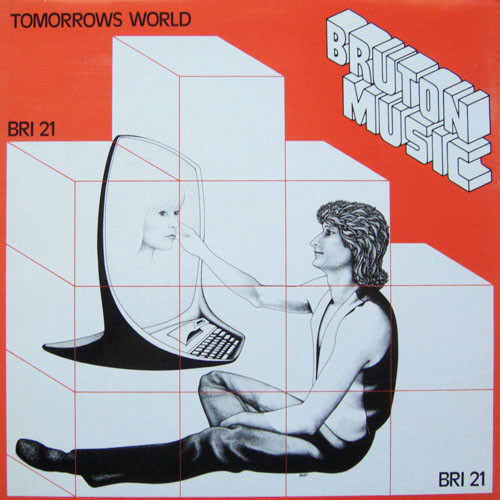
Geoff Bastow’s album ‘Tomorrows World was released on Bruton Music, in 1982. It featured ‘Tomorrow’s Fashion,’ a slow, thoughtful slice of early-eighties library electronica.
Trevor Bastow was session keyboardist who played on Culture Club’s ‘Kissing To Be Clever’ and Paul McCartney’s ‘Give My Regards To Broad Street.’ Later, he wrote the theme to the TV program Keep It In The Family. In 1979, Bastow and Nick Ingham released ‘Life Of Adventure/Video Techniques’ on Bruton Music. ‘Video Techniques’ meanders along gradually, slowly revealing its secrets and showcasing Bastow’s talents.
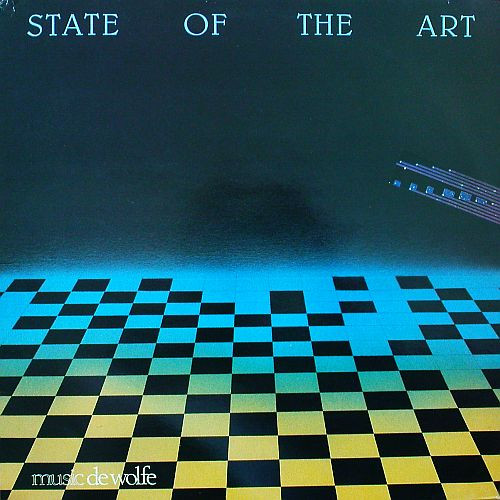
Unit 9 released their ‘State Of The Art’ album on De Wolfe, in 1984. The album saw the group successfully fuse synths and brass. However, ’Optics’ combines elements of eighties synth pop and electronic music to create a dancefloor friendly track.
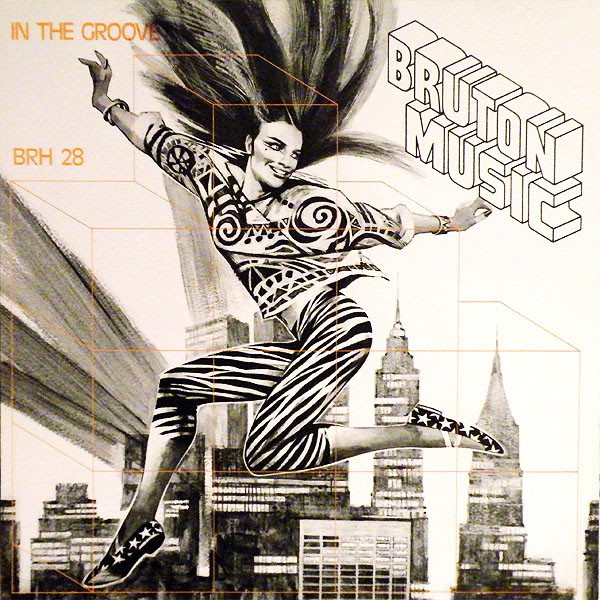
Warren Bennett came from a musical family. His father Brian was the drummer in The Shadows. The Bennetts collaborated on the 1985 album ‘In The Groove,’ which was released by Bruton Music. ‘Planned Production’ is a truly memorable mid-tempo track that’s a fusion of funk, pop and dubby mid-eighties’ electronic music.
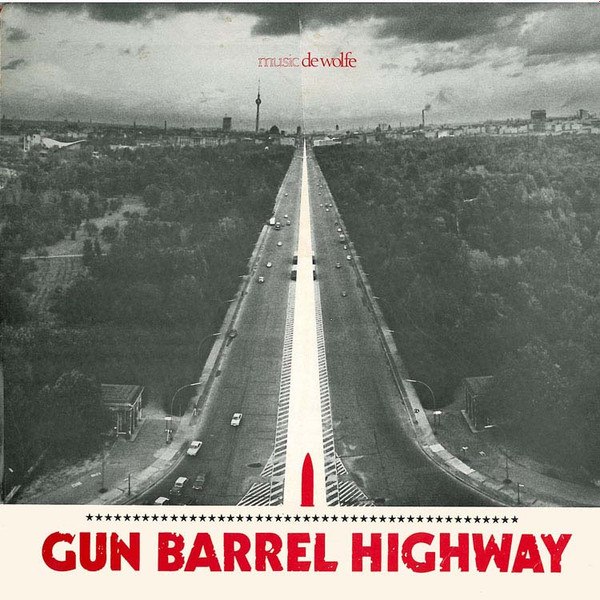
Soul City Orchestra was another of Simon Park’s projects. In 1978 the Orchestra released the album ‘Gun Barrel Highway’ on De Wolfe. It featured the cinematic and elegiac sounding track, ‘Eagle.’
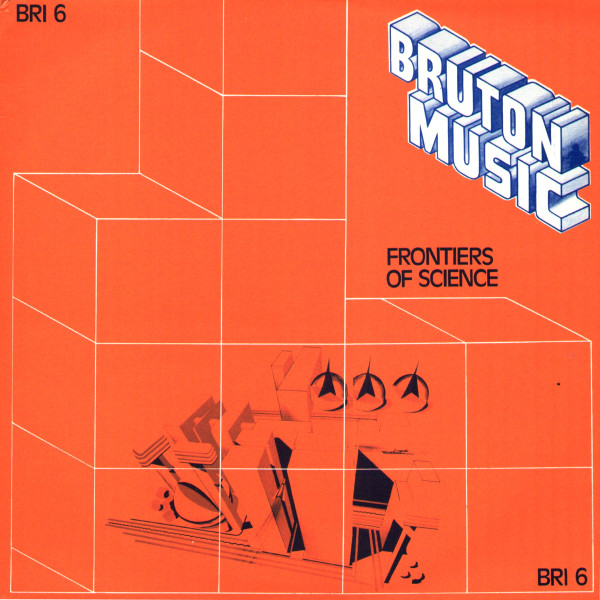
Library music is just part of the Alan Hawkshaw story. He was a pianist, composer and producer who worked with everyone from David Bowie, Olivia Newton-John and Cliff Richard to Donna Summer and Madeline Bell. However, from the late-sixties to the eighties Hawkshaw recorded many albums of library music. This included ‘Frontiers Of Science’ in 1979, which was released by Bruton Music. Two tracks from the album are included. The first is ‘Astral Plain,’ where rippling and cascading synths play their part in the sound and success of this atmospheric and dramatic soundscape. By contrast, ‘Eternity’ is a quite ruminative and timeless sounding track that encourages reflection.
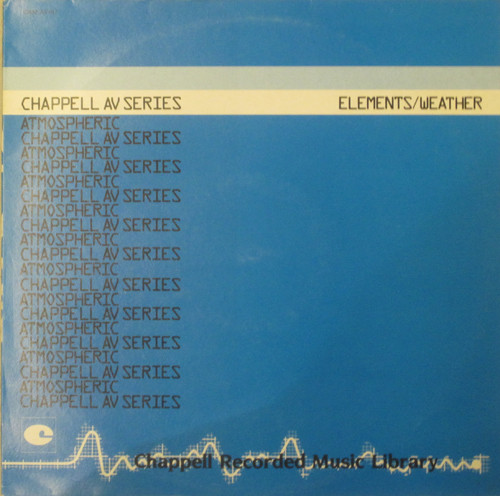
Closing ‘Tomorrow’s Fashions – Library Electronica 1972-1987’ is ‘Morning Dew’ by Andy Grossart and Paul Williams. It’s a track from the 1986 album ‘Elements/Weather’ that was released by Chappell. Elements of ambient and new age music combine to create a quite beautiful pastoral sounding track.
For anyone with even a passing interested in library music, ‘Tomorrow’s Fashions – Library Electronica 1972- 1987’ is going to be of interest to them. Unlike many previous compilations of library music, it focuses on electronic sounding tracks.
By 1972, synths were becoming more commonplace, and were used to produce music that had an experimental, futuristic, space-age and sci-fi sound. The various library music companies wanted composers and musicians to produce music that was groundbreaking, inventive and innovative. If they did, their music would be licensed for use in film, `TV and adverts. That was what the library music companies were aiming for.
So between 1972 and 1987, composers and producer produced everything from electronica and synth pop to ambient and new age. Sometimes, they combined elements of funk, jazz, pop and disco with synth pop and electronic music. The musicians who recorded the albums were versatile and able to seamlessly switch and combine disparate musical genres. Proof of that can be heard on ‘Tomorrow’s Fashions – Library Electronica 1972- 1987.’
For newcomers to library music, ‘Tomorrow’s Fashions – Library Electronica 1972 – 1987’ is the perfect primer. It’s an introduction to electronic sounding library music, and covers part of the golden age of library music.
The golden age of library music began in the late-sixties and lasted until the eighties. During that period, music libraries like KPM, De Woife, Amphonic, Bruton Music, Chappell, Conroy and Sonoton released some of the best library music. Many of these album are now rarities that change hands for large sums of money. However, some are still affordable, it’s still possible to find a rarity at a bargain price. For most music fans, the easiest and cheapest way to discover the delights of library music is via compilations like ‘Tomorrow’s Fashions – Library Electronica 1972 – 1987.’
Tomorrow’s Fashions – Library Electronica 1972-1987.

DJ TONER Q4RTET- OUT SIDE.
DJ Toner Q4rtet-Out Side.
Label: Tangential Music.
Format: Digital.
Release Date: ‘3rd’ May 2024.
Over the last two decades, Spanish musician and producer DJ Toner, has been determined to break the barriers between hip hop, jazz and electronica. This he’s successfully done when collaborating with other artists, when working as a solo artist or with his DJ Toner Q4rtet. Their new solo album Out Side, will be released by Tangential Music on the ‘3rd’ May 2024. This is just the latest chapter in DJ Toner’s long career.
Antonio Herrera, aka DjToner, is based in Granada, in southern Spain’s Andalusia region. However, he’s been familiar face in the Spanish music scene for three decades. His career began in the nineties when Domestic was formed. They were also known as the Domestic Jazz Collective, and had a sound that was unique and innovative.
DJ Toner led the collective of musicians and DJs as the fused live club sounds, jazz, hip hop and flamenco. It was an innovative sound that featured some well known Spanish musician. This included drummer Marc Ayza, bassist Francis Posé, flautist and saxophonist Jorge Pardo and flamenco singer Enrique Morente, They were often joined by various international musicians, including French trumpeter Erik Truffaz. However, the collective only released two albums.
Their debut was Domestic, which was released in 2001 and showcased their inventive genre-melting sound. This was just the start for the collective led by DJ Toner.
Three years later, in 2004, the collective returned with their sophomore album Microscopical. It was a very different album to the collective’s debut. The album was a mixture of hip hop, jazz and electronica, the three genres which DJ Toner believed offered him the creative freedom he wanted to make innovative music.
DJ Toner didn’t want to sacrifice the urban origins of his music. This was one of the building blocks of the music he was making. That was the case in his career after Domestic.
This included when he collaborated with other artists, then when he embarked upon a solo career and later, when he formed the DJ Toner Q4rtet. Always, the three building blocks for the music he made were hip hop, jazz and electronica.
When DJ Toner released his debut album Grandmaster Jazz Vol.1 in April 2016, it featured some top Spanish musicians that were part of Domestic, and French trumpeter Erik Truffaz. This all-star band was led by DJ Toner who seamlessly and successfully combined jazz and hip hop on eight tracks. Critics eagerly awaited the followup.
They would have to be patient. DJ Toner was busy on other projects. In 2017, Martha High and DJ Toner released the funky, soulful single We Are One.
Five years after the release of Grandmaster Jazz Vol.1, DJ Toner was back. This time, it wasn’t a solo album. Instead, the album Blessed Are The Weird People was credited to the DJ Toner Q4rtet. Joining DJ Toner were trumpeter Erik Truffaz, vocalist Lain Faz plus trumpeter and saxophonist Jorge Pardo. The album was a fusion of hip hip, jazz, funk and soul that was released to plaudits and praise captured the imagination of DJ Toner’s fans.
The following year, 2022, DJ Toner returned with a new limited edition single Mimesis. However, his next project was with his Q4rtet.
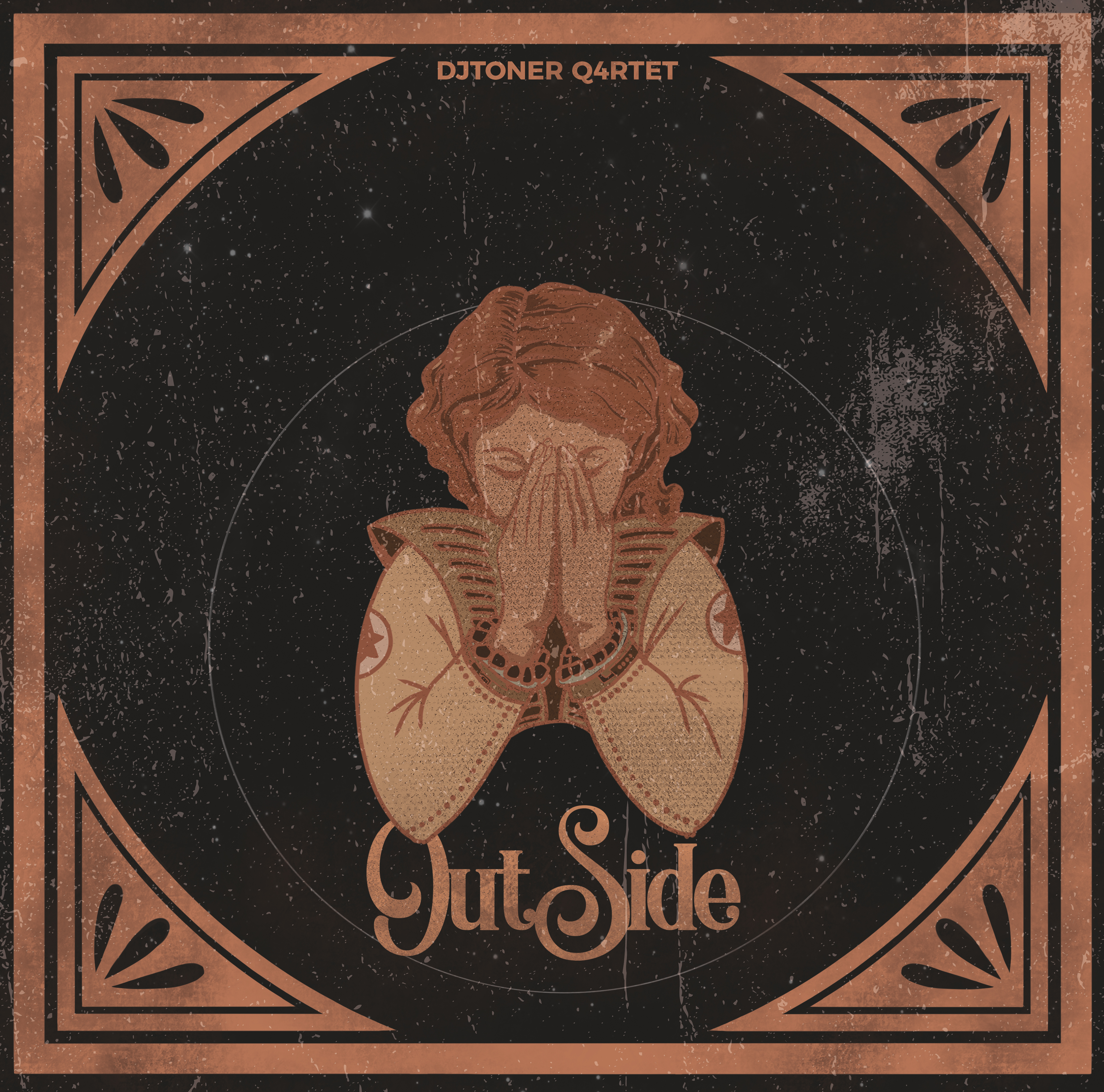
In the studio, the DJ Toner Q4rtet recorded ten new tracks that became their sophomore album, Out Side.
Opening the album is La Rimosa, a slow and dreamy slice of jazz-tinged and smokey, cinematic hip hop. The languid arrangement has a cinematic sound that’s also mesmeric. It’s going to be difficult for the DJ Toner Q4rtet to surpass a track this good.
O´Beat and combines elements of jazz and hip hop with trip hop. Scratches, snippets of vocal and crisps combine on this cinematic soundscape.
Flama is a reminder of the music DJ Toner made with Domestic. It’s a captivating fusion of flamenco, hip hop, electronica and cinematic sounds.
Straight away, Camina has a dramatic and moody sound. That’s the case throughout the track as the Q4rtet combine everything from hip hop, jazz, electronica and library music. In doing so, they create an element of drama, mystery and suspense that sounds as if it belongs on the soundtrack to a movie.
Sweetband opens with a combination of samples, suspense, scratches and crispy beats combining with a dark piano and moody horns. The result is an atmospheric and dramatic fusion of hip hop, jazz and electronica.
The introduction the The Day has a dreamy, wistful jazzy sound. Soon, though, DJ Toner is combining hip hop and electronica with jazz. In doing so, he create a truly memorable genre-meting track that’s one of the album’s highlights.
Beeps and squeaks open Out Side creating a futuristic, sci-fi sound. They’re joined by a myriad of samples which combine with beats and the Q4rtet. Together they play their part in a dramatic, moody fusion of jazz-tinged hip hop, electronica and trip hop.
Esperanza has a wistful and melancholy sound as jazz, smokey hip hop and electronica is combined by DJ Toner. However, it’s trumpeter Erik Truffaz that plays a starring role in what’s another of the highlights of Out Side.
DJ Toner’s love of hip hop is to the fore on Under Beat, a dark, dramatic and moody track. Scratches, samples and strings are combine with crunchy beats as the track builds and reveals it cinematic secrets.
Closing Out Side is Surprise. Just like other tracks on the album, this is a carefully crafted fusion of hip hop, jazz and electronica. The result is a dramatic and cinematic sound that closes the album on a high.
Three years after the release of the DJ Toner Q4rtet’s debut album Blessed Are The Weird People, they return with the followup Out Side. It features ten new tracks where the Q4rtet combine jazz, hip hop and electronica. To this, they add elements of flamenco, trip hop, dub and even library music. The result is a genre-melting album, a carefully crafted sonic stew with samples, scratches and crispy beats galore. However, there’s also some truly talented musicians who play a hugely important part in the album’s sound.
Jazz-tinged hip hop is one way of describing parts of the album. It’s also cinematic and sometimes atmospheric and dreamy. Other times the music is wistful and melancholy. Sometimes, though, it’s dark and dramatic or moody and broody. It’s an album that’s never boring, as the DJ Toner Q4rtet constantly spring surprises throughout the ten tracks on Out Side. It’s their finest outing, Out Side is an album which anyone with even a passing interest in hip hop has to hear.
DJ Toner Q4rtet-Out Side.
GRACE CUMMINGS-RAMONA.
Grace Cummings-Ramona.
Label: Ato Records.
Format: CD.
Melbourne-born singer-songwriter and multi-instrumentalist released her self-produced debut album ‘Refuge Cove’ in 2019. A lot has happened since then, and now she’s been hailed as one of the rising stars of Australia’s thriving music scene.
Three years after the release of ‘Refuge Cove,’ Cummings returned with her much-anticipated sophomore album ‘Storm Queen’ in 2022. Just like her debut album, it was self-produced, and showcased a truly talented singer, songwriter and musician.
‘Storm Queen’ was funded by a relief program funded by the city of Melbourne-Covid relief program. When the album was released to widespread critical acclaim it was nominated for the Australian music prize in 2022. This resulted in Cummings’ music reaching a wider audience.
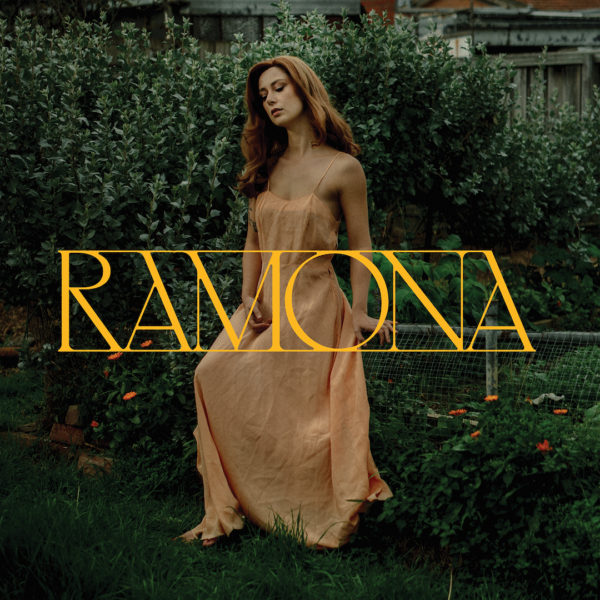
Just two years later, and Cummings returns with her eagerly-awaited third album ‘Ramona,’ which was released by Ato Records. Unlike her first two albums, this career-defining album was produced by Jonathan Wilson who previously, has worked with Angel Olsen and Margo Price. To record this lavishly orchestrated album, Cummings left Melbourne behind and flew to LA.
The album was recorded at Fivestar Studios in Topanga Canyon with a crack band of session musicians, who it seemed, were channeling then spirit of the legendary Wrecking Crew. They play their part in a stunning, soul-baring and very personal album from Grace Cummings.
She said prior to the release of ‘Ramona’: “In the past I’ve been caught up in worrying about whether I’m being too emotional or over-the-top, but this time around I decided not to filter any of that out… My only intention was to be myself, which meant being extremely vulnerable in my writing and my vocal performance, without going back and editing myself later on. It reaffirmed for me that being completely yourself is really the only way to offer the world something that it doesn’t already have.” That’s definitely the case here.
Producer Jonathan Wilson heaped praise on Cummings saying: “She is one of the most powerful singers I have ever recorded. Her emotional delivery of music is just stunning, a once in a lifetime thing. I remember first hearing her music and being completely blown away, which hasn’t happened in a long lonely time.”
Angel Olsen who Wilson also produced, said when she heard Cummings: “It felt like the wind of a hurricane entered the room. I remember feeling so activated and surprised by Grace’s vocal capacity that I actually felt my body brace itself against the wall.” That power and emotion is put to good use on Ramona.
It’s an album where Cummings explores what’s she capable of doing as a vocalist. Deep down she’s always known what she’s capable of. However, she seemed to hold back and didn’t unleash a vocal that’s powerful, emotive, soulful and theatrical. It’s an album that’s capable of breathing life and meaning into lyrics and seamlessly switching between different genres.
Cummings explains how things changed on ‘Ramona’: “I was able to explore a lot of things I’ve always known I could do with my voice but held back in the past, because I was trying to fit into a particular genre or sound…There are moments of prettiness on this album, but also some soul and some parts that are almost operatic—I just tried to match the feeling of the song, and didn’t think about anything else.” This has worked really well on an accomplished and flawless album that should introduce the Melbourne-born singer-songwriter and multi-instrumentalist to the wider audience her music deserves.
It’s no surprise that Cummings is a talented actress as there’s elements of theatricality throughout the album. This includes on the title-track. Cummings explains: “I wrote that at a time when I wasn’t doing well and had the sense that other people saw me as a weak little bird.” The singer drew inspiration from Bob Dylan’s 1964 song ‘To Ramona.’ She explains: “I didn’t want to be myself so I decided to be Ramona instead, full of intensity and melodrama. For me there’s a lot of safety in putting on a costume or a mask; sometimes it feels like the only way to express any true honesty and vulnerability.”
The eleven tracks on ‘Ramona’ are akin to an emotional roller coaster, as Cummings unleashes a series of soul-baring vocals on this highly personal album. It features impassioned performances that showcase Cummings’ versatility as a vocalist. Providing the perfect backdrop are Jonathan Wilson’s arrangements.
That’s the case on the opening track ‘Something Going ‘Round’ where Wilson combines the lushest of strings with dramatic drums, piano, organ, horns, tubular bells and soaring harmonies. Meanwhile, Cummings lays bare her soul delivering a vocal that’s a mixture of power, passion and emotion.
The tempo increases on ‘On and On,’ a piano led track. There’s a story behind the song. Cummings explains “I wrote that about watching a friend of mine play with their little boy and thinking how beautiful it was, and questioning any other part of life that isn’t as good as that.” It’s a beautiful, ethereal sounding track with a vocal bristling with emotion. Hooks haven’t been rationed on what’s a truly memorable and anthemic track.
It’s all change on ‘I’m Getting Married To The War.’ The arrangement starts off understated and spacious. This is the perfect accompaniment to Cummings’ heartfelt vocal. Soon, it starts to grow in power and is tinged with frustration and even anger. Meanwhile the arrangement is rockier with searing guitars and a swirling organ joining forces with the driving rhythm section and harmonies. When all this is combined it shows another side to the musical chameleon Grace Cummings.
‘Love and The Canyon’ is a piano led ballad. Wilson’s slow and understand arrangement combines elements of country and folk. It’s the perfect backdrop for another heart-wrenching and soul-baring vocal from Cummings. The result is a beautiful and moving ballad.
Strings sweep in during the introduction to ‘Work Today (And Tomorrow)’ before Cummings delivers a heartfelt, impassioned and theatrical vocal. It’s as if she’s playing a part in a play as she lives the lyrics, delivering them from somewhere deep inside and drawing upon personal experience.
‘Everybody’s Somebody’ is a relationship song where Cummings seems to criticises a former partner. Her bluesy vocal is powerful full of anger and frustration. No wonder. She sings: “Smoke in your room till the sun rises, And tell yourself that you’re number one, And maybe write a letter to your son, If you miss him so much?” Meanwhile horns, piano, guitars and drums play an important part in the arrangement as Cummings delivers one of her finest and most dramatic and moving performances on ‘Ramona.’
Prior to the release of the album, Cummings told the story behind the song ‘Common Man.’ She said: “A person I once knew wrote a song about wanting to be a common man: work 9 to 5, come home and have a cup of tea, and be so tired he wouldn’t worry about anything and go right to sleep. That sounds like my worst nightmare…So I wrote about wanting to be a cowboy instead, which to me represents complete freedom and detachment from this mundane world.” That’s the case on this carefully crafted feelgood song from Grace Cummings. Her vocal is veers between tender to a much more powerful and tougher sound. In doing so, she continues to showcase her versatility as a vocalist.
Just an acoustic guitar sets the scene on the ballad ‘Without You.’ It finds a reflective Cummings singing of love lost, while around her the world stays the same. It’s as if nobody is aware of her hurt and heartache, and the sadness she experiences every hour of every day. It sounds like a deeply personal song from Cummings and is without doubt one of the highlights of ‘Ramona.’
From the heartfelt vocal of ‘Without You,’ Cummings is transformed on ‘A Precious Thing.’ Her vocal veers from being devastated to anger, frustration and fury. The devastation is omnipresent in the lyrics to a song Cummings said: “I wrote that song on Christmas Eve, feeling exactly the way you’d assume from listening to it….It’s just an everyday tragedy that I tried to sculpt into something beautiful.” That’s apparent when listening to the lyrics: “Love is just a thing, That I’m trying to live without, And oh, what a precious thing, But it’s nothing I care about.” It’s a heart-wrenching song where Cummings sings about having her heart broken. Hopefully writing and recording the song was a powerful and cathartic experience for her.
Closing Ramona is “Help Is On Its Way.” It’s a melancholy sounding song that Cummings sings tenderly. She said that: “I think that’s the most meaningful song for me on this album…I wasn’t in a good way when I wrote it, but there’s a tiny glimmer of hope at the end that let me know what the whole record was supposed to be: a way of finding some beauty and profundity in painful times.” Let’s hope that’s the case for Grace Cummings an truly talented singer, songwriter and multi-instrumentalist who closes this deeply personal album with a song that’s full of meaning and hope.
‘Ramona’ is without doubt the finest album of Grace Cummings’ three album career. It’s a career-defining album where she comes of age musically as a singer and songwriter. She showcases her versatility and ability to breathe life, meaning and emotion into the eleven carefully crafted and lavishly orchestrated songs on the album. Sometimes Cummings’ voice is soulful, other times bluesy, while other times, elements of country, folk and rock can be heard. Cummings is a musical chameleon who flits seamlessly between disparate musical genres. The result is ‘Ramona,’ a beautiful, moving and deeply personal and stunning soul-baring and hopefully, cathartic album from Australian songstress Grace Cummings who has a big future ahead of her.
Grace Cummings-Ramona.
ALINA BZHEZHINSKA AND TONY KOFI-ALTERA VITA.
Alina Bzhezhinska and Tony Kofi-Altera Vita.
Label: BBE Music.
Format: CD.
Release Date: 5th April 2024.
In 2023, harpist Alina Bzhezhinska and tenor saxophonist Tony Kofi released ‘Altera Vita’ as a single. This was the first collaboration by the pair, and was greeted by widespread critical acclaim. Then when Downbeat released their list of the best jazz albums of 2023 Altera Vita’ was included. This was almost unheard of for a single.
However, by then, the two award winning artists had already recorded their debut album as a duo. Recording of ‘Altera Vita’ took place during two days in the summer of 2023, at Fish Factory Studios, London. During the session Bzhezhinska’s harp and Kofi’s tenor saxophone were in perfect harmony as they recorded six tracks. This was no surprise as they had previously played together.
They first time the duo took to the stage was during the 2017 EFG London Jazz Festival, which was held at the Barbican, in a concert honouring Alice and John Coltrane. That evening, critics were quick to spot the influence of pioneering jazz saxophonist Pharoah Sanders.
He was a member of John Coltrane’s groups in the sixties, and often collaborated with Alice Coltrane. Sanders was a pioneer of the free and spiritual jazz movements. The legendary saxophonist was known for his use of overblowing as well as harmonic and multiphonic techniques as well as his trademark “sheets of sound.” He had influenced and inspired both Bzhezhinska and Kofi.
As the two musicians paid homage to the Coltranes, the influence of Sanders was omnipresent that night at the Barbican. Six years later, the two musicians from very different backgrounds were reunited and would pay homage to Sanders.
Kofi is a British jazz multi-instrumentalist, born to Ghanaian parents. He’s a versatile musician whose career began in the early nineties. Seamlessly he can switch from alto, baritone and tenor saxophone to flute. The bandleader, musician, teacher and composer started out with the Jazz Warriors and since then, has played alongside some familiar faces. This includes Donald Byrd, Eddie Henderson, Abdullah Ibrahim and Macy Gray. He’s also a member of Cymande when they play live.
Nowadays, Bzhezhinska is regarded as one of the world’s leading harpists. She studied classical harp at the F. Chopin Academy of Music in Warsaw where she obtained a Masters degree. After this, she studied jazz at the University of Arizona. Then in 2002, she relocated to the UK, and became the resident harp tutor Royal Conservatory of Scotland until 2009. By then, her star was in the ascendancy.
In November 2017, Bzhezhinska’s quartet gave a barnstorming performance at the EFG London Jazz Festival. Bzhezhinska was rubbing shoulders with Pharoah Sanders and Denys Baptiste when she announced her arrival the London scene. Critics were won over by her unique and inimitable style.
The following year, 2018, Bzhezhinska released her critically acclaimed debut album Inspiration which featured Tony Kofi. This was just the start.
Bzhezhinska and her quartet represented the UKat the WOMADelaide Festival in Australia. There were also live performances for BBC Radio 3, on Worldwide FM then appearances at the Edinburgh International Festival, the North Sea Jazz Festival, the Royal Albert Hall and Shakespeare’s Globe Theatre. Then in 2021, there was a return to EFG London Jazz Festival which was held at Cadogan Hall. By now a familiar face on the live scene, Bzhezhinska and her quartet played at Jazz Cafe London, Jazz Connective and Periscope Musciques Innovates. However, this was just part of the story.
By now, Bzhezhinska was being heralded as a virtuoso and master of the jazz harp. She had opened for Gregory Porter and Omar, and collaborated with everyone from Ursula Rucker to The Third Orchestra and Shabaka Hutchings. However, Bzhezhinska who had been heralded as the “New Sound of Europe,” was keen to embark on a new project.
In 2022, she formed HipHarpCollective, and later that year, released their debut album album – ‘Reflections.’ It was influenced by everything from Alice Coltrane and Dorothy Ashby’s ‘Afro-harping’ to Joel Henderson’s free form jazz experimentation as well as Afrobeat and nineties triphop. The album was released to plaudits and praise, and the following year, the HipHarpCollective embarked on a series of live dates.
During 2023, HipHarpCollective headlined Paris Jazz Festival and Smida Jazz Festival in Romania. They showcased their groundbreaking and genre-melting sound at Tampere Jazz Festival in Finland and EFG London Jazz Festival. They played live on BBC Radio 3 and played live on BBC Radio 3, and later that year, curated and performed a charity concert in Odesa, Ukraine with an Estonian band lead by guitarist Jaak Sooaar. It was another busy year for Bzhezhinska.
She had also written recorded the album Altera Vita, with Tony Kofi. The collaboration is dedicated Pharoah Sanders, a groundbreaking jazz musician, who Bzhezhinska and Kofi regard as a lynchpin in their creative and personal lives.
The death of Sanders resulted in Bzhezhinska and Kofi wanting to pay homage to one of the legendary jazz musicians of his generation. Kofi gives thanks to Sanders on ‘Altera Vita. His is an impassioned performance Bzhezhinska harp in perfect harmony as it provides the counterpoint. There’s a serenity and beauty to the track which was start of a potent and powerful musical partnership.
‘Altera Vita’ is meant to mirror the human experience, from its conception right through to the inevitable end or a new beginning. Which will depend on your religious beliefs, if any. Throughout this music journey, the appreciation of our environments is of the greatest importance. The music guides the listener through an intensified refocusing on their senses via the medium of sound.
The album is meant to be spontaneous response to a world that’s badly in need of a reset. The reality for many billions worldwide is that they feel as if they’re being held hostage to a daily ‘doom-scroll.’ Each day, news outlets tend to focus primarily on topics that zone in on the darker shades of human existence, and where any attempt to foster connection end up yielding even deeper factionalism. However, ‘Altera Vita’ offers an escape from the darker side of life.
‘Altera Vita’ is best described as a musical oasis, six soundscapes that personify tranquility, spirituality and peace. For many, these may be seen as abstract concepts. However, they’re absolutely essential to the restructuring of our collective consciousness. The album was structured and programmed by Bzhezhinska and Kofi in such a way that the listener will take time to sit still and be away. This is something that very few people ever do in the hurly burly of modern life. Now ‘Altera Vita’ offers that opportunity.
Those that do, will enjoy the magical music that ebbs and flows as it washes over them transporting them to another place. Kofi’s improvises on saxophone and it dances high above the arrangement, combining and mingling with the beauty and brilliance of Bzhezhinska’s harp. They’re joined by the inimitable Muriel Grossmann who contributed tanpura from her Ibiza base. This is the finishing touch a spellbinding and breathtaking album where West African and Eastern European sonic traditions are combined with elements of spiritual and even free jazz.
The result is ‘Altera Vita,’ a truly powerful, moving and though-provoking album that should act as an important reminder that the commonalities we humans share surpass our differences.
Alina Bzhezhinska and Tony Kofi-Altera Vita.

RODION-LADISLAU ROSCA AND RODION G.A.
Rodion-Ladislau Rosca and Rodion G.A.
Who Was Rodion-Ladislau Rosca?
The words enigmatic, innovator, pioneer and maverick describe the late, great Rodion-Ladislau Rosca. He was, without doubt, one of the most talented, inventive and influential European musicians of his generation. He was also an inventor, philosopher, poet and a man who dared to dream.
Rosca spent a lifetime creating music that was ambitious, groundbreaking and innovative. He was a pioneering composer, talented multi-instrumentalist and producer. Continually the maverick musician pushed musical boundaries to their limits, and sometimes, way beyond. This he did firstly as a solo artist, and then with Rodion G.A, the group that he cofounded.
Rodion G.A. were, and still are, undoubtably, one of Romania’s biggest and most important bands. They were also one of the most influential and innovative. It’s no surprise that the band’s music has influenced several generations of musicians. The same can be said of all the music that Rosca made throughout what was a long and illustrious career.
Nowadays, he is remembered as “the Godfather of Romanian electronic music.” During a career of two parts, Rosca was a prolific composer and musician, constantly recording new music. That music was his legacy.
As legacies go, the music of Rodion G.A. is something that the world can continue to enjoy even after his death on 26th, March 2021, aged just sixty-seven. The man behind some of the most progressive and pioneering music ever to come out of Romania had lost his brave battle with liver cancer and Hepatitis B and C.
He left behind a daughter Isabella and two grandchildren, Beatrice and Dennis. To them he was their father and grandfather, but to his legion of fans he was a musical giant, and “the Godfather of Romanian electronic music.”
The Early Years.
Rosca was born in Cluj, the main city in Transylvania, on 4th, April 1953. He was half-Romanian and half-Hungarian. His mother Rozalia, was Hungarian and brought Rosca up.
From an early age, it was apparent that he was an intelligent child. He was also inquisitive and thoughtful. The only problem was that in school Rosca used to sit and daydream, letting his mind wander and imagination run riot. This: “frustrated his teachers and mother.”
Looking back on his formative years Rosca remembered: “ I was dreaming all the time, sailing somewhere on another planet, thinking about life and death, girls and music.” By then, music was already playing an important part of his life.
Rosca grew up in Romania during the open period between 1965 and 1972. During this period, there was a sense of hope for the new generation of young Romanians. This came about when Nicolae Ceaușescu came to power after the death of Gheorghe Gheorghiu-Dej, the first Communist leader of Romania. The former electrician turned politician passed away on 19th, March 1965.
A Changing Of The Guard In Romania.
In the beginning, Ceaușescu was a popular leader. He ensured that Romania had a free press. The new President also challenged the authority of the USSR, ensuring that Romania’s foreign policy had a greater degree of independence.
In 1967, Romania was the only Communist country to maintain diplomatic relations with Israel following the Six Day War.
Then in 1968, Romania was the only Warsaw Pact country which refused to participate in the Soviet-led invasion of Czechoslovakia. In a speech in Bucharest on 21st, August 1968, Ceaușescu denounced the invasion as a: “grave error.” The Romanian President was making a stand, and it looked like country was changing.
For young Romanians like Rosca, the open period in between 1965 and 1972, was a good time to grow-up. During this period, he was exposed to an eclectic selection of musical influences. Each night, he listened to the music that filled the airwaves. Rosca was like a sponge, absorbing an eclectic selection of music. This included everything from rock, pop, psychedelia and blues to jazz. The music he heard on the radio was primarily English and American. Some of these artists headed to Romania during the open period. This came about after Ceaușescu was invited to the USA. At that time, he was seen as a friend of the USA.
With his easing of the censorship laws, some of the biggest names in music headed to Romania. Among the luminaries of music to tour Romania were Blood, Sweat and Tears, plus jazz legends Lionel Hampton and Louis Armstrong. They were greeted by appreciative audiences, who until then, had only heard these artists on the radio. This included Rosca, who was about to immerse himself into Cluj’s music scene.
Becoming The “King of Records.”
Cluj sits in the middle of Transylvania. Between 1965 and 1972, it had a healthy musical scene. Rosca remembered the city: “as having a thriving and vibrant musical scene,” and he was about to dive headlong into it.
Among Cluj’s lead bands were progressive rock groups like Cromatic and the Experimental Quartet. Soon, Rosca had immersed himself in the local music scene and had established a reputation as a prolific and voracious collector of vinyl. As his reputation grew, Rosca became known as “the King of Records”.
Cluj’s very own “King of Records” would go to any length to add to his vinyl collection. Rosca made cross-border trips to Hungary, where he stocked up on hard-to-find albums. Before long, he had a record collection that was unrivalled. It included the classic rock of Led Zeppelin, The Beatles, Jimi Hendrix and The Who. However, Rosca didn’t just restrict himself to classic rock.
He was also interested in the more progressive, electronic bands of the era, including groups from Eastern and Western Europe. This included Jethro Tull, Emerson, Lake and Palmer and Yes. Other favourites included West Germany’s Kraftwerk, East Germany’s Karat, Romania’s Sfinx, Czechoslovakia’s Matador and Hungary’s Skorpio. These eclectic and esoteric influences would influence Rosca’s future musical career.
How It All Began.
From the late sixties, it became apparent that Rosca was going to make a career out of music. To do this, he had to forge his own unique sound. Rock music dominated Romanian music during this period. However, the music Rosca started to create in 1967 was very different from rock music.
Aged just fourteen, Rosca started experimenting musically, during what was an eight year musical journey. “My mother bought me a Tesla Sonet Duo reel-to-reel tape recorder, and I borrowed another from a friend. They had two tracks and three speeds 2, 4.5 and 9 cm per second. Soon, I was making music.”
Before long, Rosca was building soundscapes that featured just his vocal and guitars. “I used the multitrack recording method, because I had no group at that time and I was eager to record all my ideas and background voices at the same time. I discovered the flanger effect by using two different reel-to-reel recorders, and in some tracks used echo and delay.”
The music Rosca made over the next few years was understated, sparse, spartan, spacious and simple. It was a less-is-more approach to music making. This music could be described as improvisational and experimental and sometimes, headed in the direction of avant-garde. It was innovative music that was cerebral, cinematic, sometimes haunting and way ahead of its time. Rosca was a prodigious talent, and this was the start of his musical adventure, and a lifelong love affair with music.
A New Beginning.
A year later, Rosca’s life was transformed when he changed schools. Given her son’s passion for music, his mother Rozalia, sent him to Cluj High School of Music. No longer did he spend his days daydreaming. Instead, he was inspired by the new teachers. He studied clarinet and guitar. Meanwhile, the teachers attempted to quench his intellectual thirst. Suddenly, he was keen to learn, constantly questioning and displaying a keen intellect. It was a transformation that pleased both teachers and Rosca’s mother.
By then, music wasn’t his only interest. Aged fifteen he started flying gliders, and for the next two years was a regular at a local aero club. Then his life was turned upside down.
Disaster Strikes.
A large tumour was discovered under Rosca’s right arm. It was a hugely worrying time for Rosca and his mother. After six months in hospital he was cured.
When Rosca returned home later in 1970, he continued to study clarinet and guitar, and graduated from Cluj High School of Music. Meanwhile, he continued making music in his makeshift home studio.
Rodion’s Musical Journey Continues.
Two years later, in 1972, Rosca was nineteen, and like many young Romanians, had grown his hair. This didn’t go down well. “I was hunted by the Militia, treated like a criminal just because I had long hair”. Longhairs as they became known, were viewed with suspicion by the authority.
Meanwhile, Rosca remembers people were constantly complaining about everything he did: “The noise of my motorbike, and when I worked with my tools. They complained about the noise made by my guitar, when I recorded music onto my reel-to-reel tape machine.” However, his mother always remained supportive of her son’s love of music, and encouraged him to follow his dream of become a musician.
Soon, Rosca made tentative steps into Cluj’s burgeoning local music scene. Before long, he became a familiar face in the city’s clubs before the next chapter in his career unfolded.
Between 1972 and 1975, Rosca continued to make music in his bedroom. By 1975, he had recorded around 100 solo tracks. He was still a familiar face in the Cluj music scene. However, by then, the political landscape had changed drastically in Romania.
Darkness Descends In Romania As The Political Landscape Changes.
On his return from these visits, Ceaușescu was inspired to change direction politically. He was now an admirer of the political and economic ideology of China and North Korea. Worryingly, he admired the cult-like figure of Kim Il Sung. Ceaușescu wanted to implement the North Korean policy of Juche Idea. For aspiring musicians like Rosca, this wasn’t good news.
Suddenly, the role of the Communist Party grew within Romania. This would continue until the fall of Communism in 1989. Meanwhile, it was as if darkness had descended in Romania, and the country was transported back in time due to Ceaușescu’s volte-face. Censorship returned, books were banned and burnt, and a list of banned authors was circulated.
It was also a dangerous time to be a musician in Romania. Just like artists and writers, they were persecuted by the government. The brutal, Communist regime didn’t like free thinkers, or those who were creative or had a rebellious streak. With Ceaușescu ruling Romania with an iron fist, it wasn’t a good time to form a new band. However, that’s what Rosca did in 1977.
There’s A New Band In Cluj.
This was the genesis of the band that became Rodion G.A. For the first year, the nascent band played gigs around Cluj. During that time, the lineup continued to evolve. Then in 1978, a fortuitous meeting resulted in a new lineup of the band and a new name.
At the time, Rosca was working in a factory in Cluj. So was Gicu Fărcaș, a bassist who was also a talented drummer. The two men didn’t know each other, but quickly, bonded over their shared love of music.
Rosca let Fărcaș hear some of the songs he had recorded on his reel-to-reel tape recorders a few years earlier. He was amazed to hear that his new friend and future bandmate had played all the instruments and added the three vocals. They decided to join form a band together. Then, two became three.
The pair were joined by guitarist Adrian Căpraru in the as yet, unnamed band. With the lineup complete, all that was needed was a name.
Rodion G.A. Is Born.
It was Farcas who suggested that Rodion should be the band’s name. Then Rosca came up with the idea of adding G.A. as the other two members of the band were Gicu and Adrian. A new band was born, and became one of the most popular in Romania.
Before that, the newly named Rodion G.A. started honing their sound. Over the years, Rosca had amassed a myriad of musical equipment. When the new band was formed, he brought along his trusty to reel-to-reel tape recorders, drum machines, phasers and flangers. He even had a few secret weapons within his music arsenal. This included a toy Casio VL Tone, an East German Vermona drum machine and a Soviet made Faemi organ. It was an eclectic and leftfield collection of instruments and equipment. They played a hugely important part in the band’s unique and inimitable sound over the next few years.
On The Road.
Soon, the band were honing their sound playing live. Quickly they became a popular draw on the local musical scene. However, before long Rodion G.A. were playing further afield.
When the band embarked upon tours they played through a custom-made P.A. Amps and speaker cabinets proudly bore the Rodion G.A. logo. By then, Rosca had already established a reputation for building speakers. This included the ones the band used when they toured.
Through the handmade speakers and custom-made P.A. Rodion G.A. played their unique, genre-melting sound. It was totally different from the music other Romanian groups were playing. Sometimes, the band’s music was dense, multilayered, complicated and complex. Other times it was raw and experimental, but always innovative. Seamlessly, the group switched between and combined disparate musical genres. Rosca’s love of rock music influenced the group. Their music incorporated everything from hard and progressive rock to psychedelia, Kosmische Musik as well as experimental and electronic music. This was unheard of in Romania, and before long, the band’s star was in the ascendancy.
TV Stars.
By 1980, Rodion G.A. were a popular draw on the live circuit, and had fans all over Romania. However, as the year drew to a close, they were about to play to their largest audience.
Rodion G.A. had been invited to play live on Romanian television on New Year’s Eve. They were seen by a huge audience all over the country. It was the first, and sadly, only time the band appeared on television.
The following year, 1981, was another first for the band. They entered the studio for the first time. There was a problem though.
Electrecord.
When Rodion G.A. weren’t touring Rosca continued to write new music. However, there was a problem. The band hadn’t recorded any music.
To further complicate matters, in Romania, like other Communist countries, the only record label was owned and controlled by the state. If Rodion G.A. were going to release any music, it would have be on the state-owned Electrecord label.
Recording Studio Debut.
In 1981, Rodion G.A. headed to Radio Cluj Studio. It was the first time they had been in a recording studio. That day, the band recorded two tracks written by Rosca, ‘Acolo Unde E Mister’ and ‘Amintiri.’ Both tracks featured on the ‘Formații Rock (5)’ compilation which was released later in 1981. It was only released within Romania by the Electrecord label, and nowadays, copies are a rarity.
A Return To The Radio Cluj Studio.
At a second session at the Radio Cluj Studio, five other tracks were recorded by Rodion G.A. Sadly, they were never released. However, during the session, the recording engineer allowed Rosca to record the five tracks onto his own tape machine from the studio’s main mixing desk. This allowed the band to use these tracks to build new tracks. Some of these new tracks were played on Romanian radio stations and reached the top of the Romanian charts.
For Rosca’s mother, Rozalia, this was a proud moment. She had always been supportive of her son’s musical career, always encouraging him, knowing that one day, he and Rodion G.A. would enjoy success. She was proud of the music they recorded, telling her friends and neighbours that her son’s band had been on the radio and was topping the charts. Rodion G.A.’s second recording session had proved fruitful.
Sadly, the original lineup of Rodion G.A. didn’t record any more music. However, Rosca continued to record new music in using his impressive array of equipment in his home studio. This included a film score.
Mondo Umano.
In 1981, Rosca wrote the score to ‘Mondo Umano’ which was directed by Ioan Grigorescu. As the film opens, ‘In Linistea Noptii’ plays and the inimitable sound of Rodion G.A. can be heard. However, neither Gicu nor Adrian played on the score. It was essentially a solo project by Rosca. The film proved popular in Romania. 1.8 million cinema-goers watched the movie between its release in 1981 and 2014. This introduced Rosca’s music to a new and wider audience.
Rodion G.A.’s Success Continues.
Meanwhile, in the early eighties the band continued to play live, and its popularity grew. That was despite not releasing any further recordings. This would’ve resulted in more more publicity and exposure for the Cluj-based triumvirate.
Despite this, their popularity grew and they achieved a higher profile. This they did the hard way, by embarking upon a series of extensive tours.
During this period, Rodion G.A. played everywhere from festivals to clubs and restaurants. They were a firm favourite among Romanian music fans. However, all the time the band played live they had to be on their guard
Bands never knew when the state censors would arrive at concerts. Luckily, Rodion G.A. became expert at avoiding the state censors. They were known to chastise a group for singing: “yeah, yeah, yeah.” This was hugely frustrating and stifled musical creativity. It was very different to when Rodion started making music as a fourteen year old in 1967. Back then, there was a sense of hope within Romania. Not any more.
For Romanian bands like Rodion G.A., trying to make a commercial breakthrough during the Communist era was almost impossible. If they released singles and albums it had to be on the state-owned Electrecord label. This wasn’t going to make them rich. Touring was the band’s only income stream, and the only way to lift their profile. However, by the early eighties, other opportunities and success were coming Rosca’s way.
Other Opportunities For Rodion.
In 1983, Rosca lost his job in the factory he worked in. This meant he was able to devote himself to music full-time.
Still he continued to tour with Rodion G.A. However, he was dividing his time between touring and a variety of different projects.
He was asked to write and record the score to an animated film, ‘Delta Space Mission.’ It was written and directed by Calin Cazan and Mircea Toia.
Rosca retreated to his home studio where he wrote and recorded his score. Unfortunately, the groundbreaking music he wrote and recorded was turned down. When the film was released in 1984, it featured a score by Romanian electronic-pop producer Adrian Enescu. Sadly, it would be another thirty years before Rodion G.A.’s score for ‘Delta Space Mission’ was released.
Meanwhile, Rosca was kept busy. When the band wasn’t playing live, he was writing and recording new music. Some of this music was recorded using instruments he rescued and modified. His genius extended to transforming everyday devices into musical instruments. They featured on the music he made. By then, Rosca was a versatile composer who was able to record music for different occasions.
He was writing library music that was was used on television programs and documentaries that were shown on Romanian TV. This was just part of this chapter in his varied career.
Those who attended the theatre, concerts, festivals and even gymnastic contests heard the music Rosca wrote and recorded. He wrote several tracks that were used for gymnastic contests. This included ‘Diagonala,’ which in 2013, featured on ‘The Lost Tapes’ compilation.
However, Rosca continued to showcase his versatility as a composer and musician. He wrote the music for a play and a ballet. Both were performed by the Romanian National Opera in Cluj. This was one of the most successful periods of Rosca’s career. His music was being heard by a new and different audience to those that saw Rodion G.A. play live.
The Band Plays On.
Meanwhile, Rodion G.A. continued to play live and were a popular draw. In the summer they played the festival circuit, and clubs and restaurants in seaside towns. By then, the band was one of the most popular in Romania. They were also an award-winning band.
“And The Winner Is…”
One of of the awards Rodion G.A. won was the Special jury Prize at the Top T Buzau festival. Then in 1987 they won the Gold Anchor Prize at the Mangalia Music Festival. However, was it a Pyrrhic victory?
Three Becomes One.
In 280 BC, King Pyrrhus of Epirus’ army suffered what proved to be devastating and irreplaceable casualties when they defeated the Romans at the Battle of Heraclea in 280 BC. This was also the case at the Battle of Asculum in 279 BC, during the Pyrrhic War. In 1987, comparisons were drawn with Rodion G.A.’s award-winning performance at the Mangalia Music Festival.
Straight after winning the Gold Anchor Prize at the Mangalia Music Festival, Fărcaș and Căpraru left Rodion G.A. For their fans this came as a shock. The band had been together nine years, and quickly, had become one of the most popular in Romania. Some fans speculated that the departure of Fărcaș and Căpraru was a devastating loss, one that weakened Rodion G.A. so badly that surely, this spelt the end of the road for the band? However, despite Rosca being the last man standing, this wasn’t the case.
The Last Man Standing Continues His Musical Journey.
Following the departure of Fărcaș and Căpraru, Rosca continued to record new music and play live. He was now Rodion G.A. It was essentially a vehicle for Rosca’s music.
When Rodion G.A. played live, mostly it was just Rosca. Sometimes, new musicians were brought onboard. There were changes in the lineup which was fluid. However, the band was still a popular draw when they played live over the next couple of years.
During that period, Rosca continued to write, record and produce new music. He was still a prolific artist, and one who constantly sought perfection. That had been the case throughout his career. When he recorded a new track he would often record numerous versions, seeking to record the definitive version. It had to be how he “heard” and “imagined” the music sounding. Sometimes, he returned to a track recording a new version, making the smallest of changes. Only then was he happy with the track and it was finished. This continued until April 1989, when Rosca’s life was turned upside down.
Loss, Devastation and No More Music.
Just five days after his thirty-fifth birthday, Rosca’s beloved mother Rozalia, passed away on April 9th, 1989. She was 72. He was absolutely devastated. For much of his life he and his mother were inseparable.
Rozalia had always been there for Rosca. She had always been supportive of son’s dream of becoming a musician, and had encouraged him to follow his dream. He wanted to make his mother proud, and did.
Later, when Rodion G.A. were successful, she was so proud. He had been making music since he was fourteen, and now, his band’s music was being played on radio stations across Romania. She would tell her friends and neighbours about the success they enjoyed. This made all Rosca’s hard work worthwhile.
However, after Rozalia’s death he was bereft and heartbroken, mourning the loss of his mother. Suddenly, music no longer seemed important to Rosca. He turned his back on music.
No longer would Rodion G.A. play live, Rosca stopped recording new music. It would be a while before he made a comeback.
What Next For Rodion?
Having turned his back on music after the death of his mother, Rosca had to find a way to earn a living. One thing he had always excelled at was building and repairing speakers. He had built and repaired the speakers that Rodion G.A. used when they played live. Other people needed their speakers repaired. This presented an opportunity for the now, former musician.
Rosca started repairing other people’s speakers. He took pride in being to be able to repair any type of speaker. Nothing was beyond him. People brought their broken speakers to him. Some thought that he would be unable to repair them. When they returned, their speakers were as good as new. Soon, word had spread about Rosca’s ability to repair and build speakers.
As Rosca tried to rebuild his life, change was afoot in Romania. Things would come to a head In December 1989. Romania would become a very different country.
Revolution In Romania.
Change came about as a result of the Christmas Revolution in 1989. It began on 16th, December and ended on Christmas Day. It was an important day for another reason.
That was the day that the trial of Nicolae Ceaușescu and his wife Elena was held by an Exceptional Military Tribunal. The newly formed National Salvation Front had requested a drumhead court-martial. This is a military court-martial, which is usually held in the field, and renders summary justice.
The main charge the former President and his wife faced was genocide. It was alleged on Romania television that they were responsible for the death of 60,000 people. However, the outcome of the trial was predetermined, and Ceaușescu and his wife were found guilty. Both received death sentences and were executed at 4pm, at a military base just outside of Bucharest.
Although the violence continued in some parts of Romania until 30th, December, the execution of Ceaușescu and his wife five days earlier, marked the end of an era for Romania and Romanians. The Christmas Revolution resulted in the end of forty-two years of Communist rule. Communism was consigned to the dustbin of history in Romania. 1990 marked a new beginning for the country, and also for Rosca.
Love Is In The Air.
By 1990, Rosca was still mourning the loss of his mother. It had been a devastating blow to him. Then during a trip to the Someșeni Baths, a health resort in Cluj, he dropped some money. He didn’t realise until two women told him. To thank them, he invited them to join him for juice on the spa’s terrace. Little did he realise that one of the women would become his wife.
After enjoying a juice with the two women, Rosca started dating one of them. This was Cristina. The pair fell in love, and before long, were engaged to be married.
Later in 1990, Rosca and Cristina were married. By then, Rosca who was thirty-seven, wanted to settle down and start a family.
His dream came true the following year, 1991, when their only child Isabella Rozalia Rosca was born. Still mourning the loss of his mother, he decided that his newly-born daughter’s middle name should be Rozalia. It was Rosca’s way of honouring his mother, who had been so supportive of him, and encouraged him to follow his dream. Rosca never forgot his mother, and today her name lives on.
“The King Of Speakers.”
Now a married man with a young daughter, he had to earn a living. Fortunately, business was booming. People came from far and wide to have their speakers repaired.
In 1992, Rosca designed and copyrighted his own logo. This he would use when he was repairing speakers and later, with Rodion G.A.
Over the years, Rosca’s reputation grew, and people travelled from afar to have their speakers repaired. Some brought other electrical items which he quickly repaired. Others commissioned Rosca to build new speakers. This was no surprise. By then, he was known as “The King Of Speakers.”
Eventually, Rosca needed more space to store his vast collection of instruments, musical equipment, amplifiers and speakers he had accumulated over the years. With business booming, he needed more space to repair speakers and build new ones. It was time to move to the country.
Rosca moved to a house in rural Transylvania, where he was able to store all his musical equipment, and continued to repair and build loudspeakers. That’s what he was doing in 2008, when he was rediscovered.
Rodion G.A. Rediscovered.
It had been nineteen years since Rosca turned his back on music. Sadly, by 2008, some music fans had forgotten about Rodion G.A. Not musician, producer and label owner Mihai Antonescu. He was a fan of the band, and had a proposition for one of his musical heroes.
Antonescu and Alexandru Catrina owned and ran Roadrunner Music. They were going to release a compilation and wanted it to feature a track by Rodion G.A. He went in search of Rosca, and found him living in rural Transylvania. The pair spoke, and eventually, he asked if the compilation could feature a track by Rodion G.A. The answer was “yes.”
Rosca went in search of a track that could feature on the compilation. The one he chose was a previously unreleased track, ‘Isabella,’ which begins with a recording of his daughter crying when she was a baby. The track closed the Roadrunner Music compilation ‘The Next Dog Desert Island Selection,’ when it was released later in 2008. Little did Rosca realise that this was the start of a new chapter in his musical career.
Enter Sorin Luca.
By 2012, blogger and filmmaker Sorln Luca was fascinated by the mythology that surrounded Rosca. So much so, that he decided to try to track the reclusive musician down.
Eventually he discovered Rosca. By then, the man who was once one of Romania’s most successful musicians was an almost mythical figure. The filmmaker found him living in Așchileu, in rural Transylvania.
Before long, the pair become friends, and Luca decided to film a documentary about Rosca. Before that, the filmmaker posted a handful of Rodion G.A. tracks online, and footage of the band’s 1980 New Year’s Eve concert on Romanian TV. He had no idea what would happen next.
Soon, Rodion G.A’s music was reaching a new audience worldwide. Meanwhile, Romanian music fans were either discovering or rediscovering the band’s music. This included a collective of young musicians and producers living in Bucharest.
The Comeback.
This was the Future Nuggets collective. They spent their their time unearthing music from Romania’s musical past. When they heard the Rodion G.A. tracks that Luca had posted online, they went in search of the man behind the music.
Having met Rosca, he eventually, agreed to make a comeback later in 2012. It was twenty-three years since he turned his back on music. Now he was about to take to the stage once again, and make a much-anticipated comeback.
When Rodion G.A. took to the stage, Rosca, the comeback back King, received a rapturous applause. He was back doing what he loved, and was good at, making music. A year later, the comeback was complete.
The Lost Tapes.
There was still one thing that Rodion G.A. had never done, release an album. This was about to change.
In May 2013, Strut released ‘The Lost Tapes.’ It was a compilation of ten tracks written by Rosca and recorded between 1978 and 1983. Belatedly Rodion G.A.’s music could be heard by a wider audience.
The album was released to widespread critical acclaim. Critics were won over by Rodion G.A.’s groundbreaking and genre-defying music. It featured elements of lo-fi electronics, Kosmische Musik, spacey psychedelia and progressive rock. There were elements of classic rock, experimental music, traditional Romanian folk music and even Middle Eastern influences. This mind-blowing sonic stew introduced a new generation to one of Romania’s greatest bands. Some would get the chance to see the band play live.
On The Road Again.
Rodion G.A. played a series of concerts and workshops in Romania. Then the group headed further afield.
Rodion G.A. were played as far afield as Berlin and Moscow. In April 2014, Rosca was invited to do a workshop at the Red Bull Musical Academy. Later that month, the soundtrack he recorded thirty years previously was belatedly released, ‘Delta Space Mission.’
Delta Space Mission.
In 1984, Rosca had been asked to write and record the soundtrack for Calin Cazan and Mircea Toia’s animated film, ‘Delta Space Mission.’
However, the film featured Adrian Enescu’s score when it was released in 1984. Since then, Rosca’s score lay unreleased in his archives. That was until Record Day 2014.
The seventh Record Store Day took place in the UK on Saturday April 19th, 2014. One of the releases was Rodion G.A.’s previously unreleased soundtrack to ‘Delta Space Mission.’ It was released as a limited edition of 1,000 by Strut.
At last, collectors were able to buy and hear the mythical lost soundtrack Rosca had written and recorded thirty years earlier. They weren’t disappointed. It was another tantalising taste of the mercurial musical genius at the peak of his powers. So was an album released six months later, ‘Behind The Curtain-The Lost Album.’
Behind The Curtain-The Lost Album.
By then, Rosca had made a remarkable discovery. Between 1978 and 1984 he wrote and recorded ‘Behind The Curtain-The Lost Album’ in his basement studio. Safe from prying eyes, especially the state censor, he laboured long and hard to complete the album. However, once he finished the album he had no means of releasing his magnum opus.
Then disaster struck. The tapes containing ‘Behind The Curtain-The Lost Album’ went missing. Rosca had no idea where they were.
By then, fellow musicians and fans of Rodion G.A. had heard that Rosca had spent years recording an album. Rumours surrounded the tapes whereabouts. Had they fallen into the hands of the state censor, or had they been stolen by a jealous, rival musician who had burnt the tapes? There was even a rumour that the tapes had been smuggled out of Romania. Over the years, rumours grew about the whereabouts of the mythical album. Then one day in 2013, the tapes were found.
Between 1967 and 1989 Rosca was prolific, constantly writing and recording new music. Tapes were stored in packing cases and boxes which he kept in the basement of his home in rural Transylvania. He started looking through the boxes. Days turned into weeks. Then one day, in a box, he found some photos and tapes. He had no idea what was on them.
It turned out to be ‘Behind The Curtain-The Lost Album.’ There were also eight other tracks on the tapes. They were recorded during the same period, and featured on the vinyl version of the album when it was released on October 20th, 2014.
Sadly, by then, Rosca was seriously ill. He was bravely battling liver cancer and Hepatitis B and C.
Thirty years after completing ‘Behind The Curtain-The Lost Album’ was released to widespread critical acclaim. It was a career-defining, genre-melting album from the enigmatic musical maverick, and helped introduce his music to a new and wider audience.
The Band Plays On.
Despite Rosca’s failing health, he continued to play live. Following the release of ‘Behind The Curtain-The Lost Album,’ he played concerts in Romania and in London, Utrecht and Berlin. 2014 had been one of the busiest and most important of his career.
He had released two albums, ‘Delta Space Mission’ and ‘Behind The Curtain-The Lost Album,’ and played workshops and concerts at home and abroad.
Over the next few years, Rodion G.A. continued to play live in clubs, and at festivals. There were appearances at workshops and even a film festival.
In 2015, the band travelled to the Danish capital Copenhagen. Then in July 2016, they played at the prestigious Electric Castle festival, at Banffy Castle, in Cluj. By then, Rosca was working on a new project, ‘The Last Album.’
The Last Album.
Since the comeback of Rodion G.A., the band had been playing in clubs at home and across Europe. Often, Rosca was exposed to dance music which interested him, and when he began recording his new album, this influenced him. Rosca decided to mix the old with the new.
By then, Rosca had updated his studio. The new technology presented him with endless opportunities to record a groundbreaking album where he combined his own genre-melting sound with elements of dance music.
Despite his poor health, he laboured long and hard in his basement studio recording a new album. The months turned into years as Rosca recorded eleven new tracks. In the midst of recording what would eventually become ‘The Last Album,’ Rosca released another album, ‘Rozalia,’ in 2018.
Rozalia.
Rozalia was the name of Rosca’s late mother. He wanted to pay tribute to her with the new album. She had been so supportive of him and encouraged him to follow his dream. Now this dream was a reality and his music had found an audience worldwide.
In 2018, Rodion G.A. released a new album, Rozalia,’ on the Inversions’ label. It was the first album the band had released in four years, and was eagerly-awaited.
It featured nine previously unreleased tracks. The instrumental tracks for what eventually became ‘Nu Tu Vei Fi,’ ‘Ore,’ ‘Bătrânul Cais’ and ‘Moment’ were recorded at the Radio Cluj Studio in 1981, with Rosca then adding vocals at his home studio. ‘Tamburași,’ ‘Satul De Roua’ and ‘Tic Tac’ were all recorded at a session in 1983. ‘Singur Pe Drum’ was written by Rosca when he was a teenager, and recorded at his home studio in 2010. The newest track brought the album to a close.
Unlike previous albums, ‘Rozalia’ had a rougher, rawer sound with Rodion G.A. fusing garage and psychedelic rock. In doing so, it showcased the band’s versatility and Rosca’s ability and determination to reinvent their music. Critics were won over by ‘Rozalia’ which was released to plaudits and praise on 2nd, March 2018. Little did anyone realise that this would be the last album Rodion G.A. would release during Rosca’s lifetime.
Rodion’s Final Years.
Following the release of ‘Rozalia,’ Rosca’s health was deteriorating. Despite that, he continued to work on ‘The Last Album’ and played live when he could.
In 2019, Rodion G.A. played live in Romania, and in December travelled to London and Brussels. Then in February 2020, Rosca travelled to Lyon for a workshop. Sadly, it was one of the last times he played live. A month later, the global pandemic began and countries across the globe went into lockdown.
Rodion’s Death.
By March 2021, Rosca was seriously ill. He had bravely battled liver cancer and Hepatitis B and C since May 2012. His daughter Isabella had been told that her father wouldn’t recover, and it was only a matter of time. She was devastated and heartbroken. Especially since her mother had died on May 9th, 2017, aged just fifty-one.
On 26th, March 2021, Rodion-Ladislau Rosca, “the Godfather of Romanian electronic music,” passed away, aged sixty-seven. He left behind a daughter Isabella, and two grandchildren Beatrice and Dennis.
Farewell.
Rosca’s funeral took place on March 31st, 2021. Two tracks from ‘The Last Album,’ ‘Bells’ and ‘Don’t Cry If I Die’ were played at the memorial service which celebrated the life and music of “the Godfather of Romanian electronic music.” Rosca was then buried at the Central Hajongard Cemetery, in Cluj, the city where he was born and first found fame.
Meanwhile, fans of Rodion G.A. were in mourning after the announcement of Rosca’s death. Since his comeback, the band had played all over Europe and their groundbreaking music was discovered by a new, and much wider audience worldwide. That’s the case today, with fans of Rodion G.A. enjoying the four albums released between 2013 and 2018. They’re part of the rich musical legacy Rosca left behind.
The group he cofounded, Rodion G.A., was a truly versatile and chameleon-like one. Their music was ambitious, groundbreaking, innovative and influential. Led by Rosca, a musical maverick and pioneer, who pushed musical boundaries to their limits and sometimes, way beyond. Seamlessly, the band switches between musical genres and sometimes, fuse disparate genres and influences within a track.
It’s no surprise that nowadays, Rosca is regarded as one of the most talented, inventive and influential European musicians of his generation, nowadays. “The Godfather of Romanian electronic music” is much-missed by his family, friends and fans. However, Rosca left behind a rich musical legacy for future generations of music fans to enjoy. For that, we should be grateful.
Rodion-Ladislau Rosca and Rodion G.A.
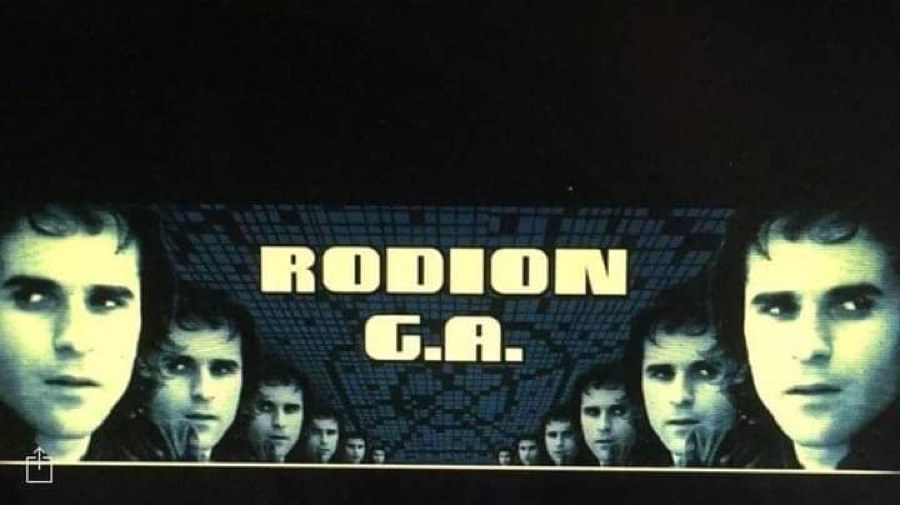
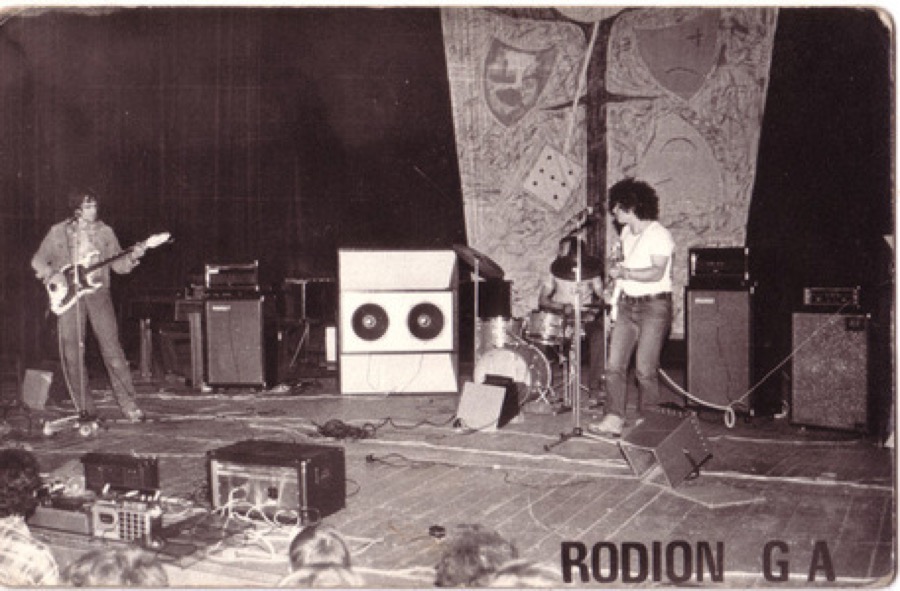
DAVID AXELROD-SONGS OF INNOCENCE.
David Axelrod-Songs Of Innocence.
Label: Oldays Japan.
Format: CD.
Release Date: 22nd March 2024.
By the time David Axelrod began work on his debut album Songs Of Innocence in 1968, the thirty-seven year arranger, composer, drummer and producer old had enjoyed a chequered career. He had started off as a boxer, before changing direction and finding work in film and television. However, in 1959 Axelrod embarked upon a musical career when he produced Harold Land’s album The Fox. This launched his nascent musical career.
Four years later, Axelrod was hired by Capitol Records as a producer and A&R man. Initially, he worked with R&B artists, including Lou Rawls who was signed to Capitol Records. Axelrod produced a string of hit singles for Lou Rawls, his Live album and several albums that were certified gold. David Axelrod was the man with the Midas Touch.
Soon, Axelrod was working with jazz saxophonist Julian “Cannonball” Adderley, and produced his 1966 Grammy Award winning album Mercy, Mercy, Mercy! Live at “The Club.” The album also featured the hot single Mercy, Mercy, Mercy which reached number eleven in the US Billboard 100. By then, Axelrod’s star was in the ascendancy at Capitol Records.
It was around this time, Axelrod began working with some top session musicians including drummer Earl Palmer, bassist Carol Kaye and guitarist Howard Roberts. This band would play an important part in his future.
Axelrod wrote and arranged Mass in F Minor and Release of an Oath for the psychedelic rock band The Electric Prunes. The only problem was that both songs were complex pieces of music. Mass in F Minor consists of a mass sung in Latin and Greek and performed in a psychedelic style. However, there was a problem, it was too complex a piece for The Electric Prunes to record and it was recorded by Axelrod’s band. This lead to The Electric Prunes disbanding and Axelrod’s band completed the albums.
Executives at Capitol Records were grateful that Axelrod had rescued what was a particularly tricky situation, and wanted to reward him for his recent success. This resulted in him being allowed to record his debut solo album Songs Of Innocence .
Axelrod had been watching trends in popular music and realised that there was a new breed of record buyer with much more sophisticated taste than the three chord pop of the early Beatles’ record. They were willing to embrace and buy much more experimental sounding albums, including two of the best known, The Beach Boys’ Pet Sounds and The Beatles’ Sgt Peppers Lonely Hearts Club Band. Both of these experimental albums had been hugely successful, and proved to Axelrod that there was a demand for this type of music.
Buoyed by the experimental climate of popular music Axelrod decided to write and record his what was akin to a suite-like tone poem, which was based on Songs Of Innocence which was an illustrated collection of poems written in 1789 by William Blake. The poet had inspired many composers and musicians during the twentieth century. Many composers had set his poems to music, and Blake’s music had been used in theatre and inspired everyone from folk musicians Axelrod who was a self-confessed “Blake freak.”
Over the space of a week, Axelrod wrote seven compositions and borrowed titles from William Blake’s poems. The compositions death with a variety of themes, ranging from visions, religious iniquity, rite of passage and life experience after a person’s birth and innocence.
After just a week, Axelrod had completed Songs Of Innocence, which was his homage to William Blake. Axelrod had been captivated by Blake’s poetry since he was a teenager and seemed to relate to the poet. Neither Blake nor David were regarded as sociable men, and this could’ve hindered the producer’s career. However, he had a successful track record when he began recording Songs Of Innocence in 1968.
Having written Songs Of Innocence in just one week, Axelrod arranged the seven tracks which he intended to produce and add the vocals to. Now he was ready to record his debut album, and work was scheduled to start in mid-1968 at Capitol Studios, in Los Angeles.
Axelrod decided to use many of the musicians that he worked with on a regular basis. This included drummer Earl Palmer, bassist Carol Kaye and guitarist Al Casey. They were joined by percussionist Gene Estes and organist and pianist Don Randi who would conduct the string and horn section that Axelrod planned to use on Songs Of Innocence. They would allow to create his musical vision.
Songs Of Innocence was essentially an instrumental album of jazz-fusion, but incorporated elements of baroque pop, blues, classical music, funk, jazz, liturgical music, pop, psychedelia, R&B, rock and theatre music. During Songs Of Innocence, Axelrod used contrasts extensively during the orchestral compositions which were peppered with euphoric psychedelic soul and dramatic, sometimes, distressing arrangements to reflect the supernatural themes that are found within Blake’s poems. So does the music’s almost reverential psychedelic undercurrent which brings to mind the themes of innocence and spirituality that is a feature Blake’s poems which inspired Axelrod to write such an ambitious album as Songs Of Innocence.
His arrangements on Songs Of Innocence accentuated the pounding drums played in 4/4 time, complex baselines, searing and gritty guitars, sweeping melodramatic and progressive strings, organ parts designed to disorientate and blazing, dramatic horns. Axelrod who had written Songs Of Innocence in the rock idiom, but used a mixture of jazz, rock and classical musicians to record his debut album.
They were all comfortable when Axelrod asked them to improvise during this psycheliturgical opus. He had been influenced by György Ligeti’s 1961 piece Atmosphères, and Lukas Foss’ concept of starting a piece with a sustained chord and improvising for over 100 bars, and ending on a different chord. However, it wasn’t joust improvisation that Axelrod embraced.
He encouraged musicians to use various sound effects, including reverb and echo during the recording sessions. This included adding echo to breakbeats to reflect the spiritual nature of Blake’s poetry. For much of the album, Axelrod’s rock orchestra painted pictures with music which veered between spartan, dramatic and harrowing to liturgical, ruminative and celebratory. As the music changed, so did the rock orchestra.
Seamlessly Axelrod’s rock orchestra changed direction and were transformed into a vampish big band. Other times, they played bluesy bop or locked into a jazzy groove and on occasions started to swing. Meanwhile, producer David Axelrod was constantly encouraging his band to experiment, and not be afraid to improvise. Towards the end of recording sessions, David Axelrod’s rock orchestra had fully embraced psychedelia deploying organ licks that seemed to be designed to disorientate joined gritty guitars. Then as The Mental Traveler was recorded, Axelrod was keen to embrace and experiment with atonality. However, he felt that music that lacks a tonal centre of key was a step too far even on such an ambitions and innovative album as Songs Of Innocence.
When Axelrod completed recording his suite-like tone poem, everyone who had worked on the concept album realised that it was an impressive, innovative and immersive album, that was ambitious, cerebral. However, the big question was what would the critics who make of Songs Of Innocence?
Not only was Songs Of Innocence David Axelrod’s debut album, but it was ambitious concept album inspired by William Blake’s poetry. This was too much for many critics, and the album regarded as something of a curio when it was released in October 1968 by Capitol Records. Many critics failed to understand what was essentially a mixture of genre-melting music, mysticism and philosophy that was cerebral, creative and showed just how much music had changed over the last few years.
David Axelrod’s suite-like tone poem Songs Of Innocence was a long way from Love Me Do in 1962. Music was changing, and record buyers were embracing much more experimental and sophisticated music. This augured well for the release of Songs Of Innocence.
Sadly, when Songs Of Innocence was released in October 1968, AM and FM radio stations started playing the title-track and Holy Thursday, and it became the best known track on the album. However, despite being played on radio, Songs Of Innocence wasn’t the commercial success that Axelrod or executives at Capitol Records had hoped. By October 1969, Songs Of Innocence had only sold 75,000 copies in America.
It was the best part of twenty-five years before critics reassessed the oft-overlooked Songs Of Innocence, and realised that it was a groundbreaking and timeless release that was unlike nothing else that had been released in the late-sixties. Maybe the problem was that Songs Of Innocence was way ahead of its time? If that was the case, a new audience was discovering Songs Of Innocence.
This soon included many DJs and producers who realised that David Axelrod’s Songs Of Innocence was a rich source of samples. One of the producers who sampled Songs Of Innocence was DJ Shadow who sampled the album for his debut album Endtroducing. Soon, the DJs and producers who were sampling Songs Of Innocence were championing Axelrod’s music and especially his debut album, which was soon well on its way to becoming a cult classic.
Sadly, David Axelrod didn’t live to see this latest resurgence of interest in his solo career. One of music’s pioneers passed away on February the ‘5th’ 2017, aged eighty-six. However, David Axelrod left behind a rich musical legacy, including the trio of albums he recorded for Capitol Records.
This included his debut album Songs Of Innocence, which is an ambitious, cerebral and innovative album that for far too long was overlooked by critics and record buyers. That is no longer the case. Somewhat belatedly, this genre-melting cult classic, which is a mixture of music, mysticism and philosophy is finally starting to find the wider audience who understand and appreciate David Axelrod’s timeless, psycheliturgical opus Songs of Experience, which was inspired by his hero, the poet William Blake.
David Axelrod-Songs Of Innocence.


CULT CLASSIC: DEXTER GORDON-ONE FLIGHT UP
Cult Classic: Dexter Gordon-One Flight Up.
Label: Blue Note Records.
Format: LP.
Not long after Dexter Gordon recorded ‘A Swinging Affair’ on August the ’29th’ 1962, the thirty-nine year old jazz saxophonist decided to leave New York where he had been living, and moved to Europe. He settled first in the Danish capital Copenhagen, but by May 1963 was living in Paris, France.
Our Man In Paris.
That was where Gordon recorded his next two albums for Blue Note Records. The first was ‘Our Man In Paris,’ a quartet recording which took place at CBS Studios, on May the ‘23rd’ 1963. That day, the quartet recorded five standards.
This included Charlie Parker’s ‘Scrapple From The Apple,’ Ann Ronell’s ‘Willow Weep For Me,’ Billy Bird, Teddy McRae and Henri Woode’s ‘Broadway,’ Matty Malneck, Mitchell Parish and Frank Signorelli’s ‘Stairway To The Stars’ plus Dizzy Gillespie and Frank Paparelli’s ‘A Night In Tunisia.’ These standards were recorded by a quartet that featured three American expats who had made Paris their home.
The quartet featured drummer Kenny Clarke, Paris-born bassist Pierre Michelot, pianist Bud Powell and tenor saxophonist Gordon. They recorded five standards during the one day session which was produced by Francis Wolff. These tracks would eventually become ‘Our Man In Paris.’
Seven months later, in December 1963, ‘Our Man In Paris’ was released by Blue Note Records to widespread critical acclaim and hailed as one of Gordon’s finest albums. The highlight was ‘A Night In Tunisia’ which features one of his finest performances. Fifty-eight years later and ‘Our Man In Paris’ is now regarded as a hard bop classic and an essential part of a jazz collection.

One Flight Up.
Six months after the release of ‘Our Man In Paris,’ Gordon returned to CBS Studios on the ‘2nd’ of June 1964 to record the followup. By then, he was dividing his time between playing live and working as a sideman. He was enjoying life in Paris but was ready to return to the studio.
This time, only three tracks would be recorded. This includes Donald Byrd’s ‘Tanya,’ Kenny Drew’s ‘Coppin’ The Haven’ and Eddie DeLange and Jimmy Van Heusen’s ‘Darn That Dream.’ They were recorded by a quintet led by Gordon and produced by Francis Wolff.
For the ‘One Flight Up’ sessions, the band featured drummer Art Taylor, eighteen year old Danish bassist Niels-Henning Ørsted Pedersen, pianist Kenny Drew, trumpeter Donald Byrd and tenor saxophonist Gordon. This talented quintet recorded the three tracks which became ‘One Flight Up’ which was released in mid-September 1965.
By then, Gordon had returned to the studio and recorded two more albums for Blue Note Records at Van Gelder Studios, Englewood Cliffs, New Jersey during three days in May 1965. The first was ‘Clubhouse’ which was recorded on May the ‘27th’ 1965 and then ‘Gettin’ Around’ which was recorded on May the ’28th’ and ’29th’ 1965. Sadly, it was another fourteen years before the albums were released.
Meanwhile, Gordon must have known that it wasn’t going to be easy to followup an album as good as ‘Our Man In Paris.’ However, when Blue Note Records released ‘One Flight Up’ in mid-September 1965 to plaudits and praise.
By then, Gordon was an experienced bandleader who was able to spot up-and-coming musicians which he added to his band. This was the case with Danish bassist Niels-Henning Ørsted Pedersen who joined drummer Art Taylor and Kenny Drew in the rhythm section. The front line featured Gordon and trumpeter Donald Byrd who wrote the album opener.
This was ‘Tanya,’ an eighteen minute epic that takes up the first side of ‘One Flight Up.’ Simplicity is the key on this post bop jam where the quintet enjoy the opportunity to stretch their legs. Soon the arrangement starts to swing and later it features some of the best solos on the album. They come courtesy of the front line. Trumpeter Donald Byrd and Dexter Gordon’s bluesy tenor saxophone steal the show and play a starring role. Meanwhile, drummer Art Taylor and pianist Kenny Drew plays a supporting roles in what’s nowadays regarded as a jazz classic.
Opening the second side is the Kenny Drew composition ‘Coppin’ The Haven.’ It’s eleven magnificent minutes of modal minor key modern jazz where Donald Byrd plays a leading role. His trumpet carries the glistening, shimmering melody as the arrangement gently swings as the drums interject. Later, bandleader Gordon unleashes a spellbinding solo before the baton posses to Kenny Drew. His fingers dance across the piano keyboard as Niels-Henning Ørsted Pedersen’s bass propels the arrangement along. Soon, the band unite and play as one as they bring this majestic example of modern jazz to a close.
The ballad ‘Darn That Dream’ closes ‘One Flight Up.’ As the tenor saxophone and piano combine with an understated rhythm section. Together they create a late-night smokey sound that’s like a like jazz club late at night. The music may wistful and ruminative but it’s also beautiful and encourages the listener to reflect.
‘One Flight Up’ was the second album that Gordon recorded for Blue Note Records after moving to Paris in 1963. The first was ‘Our Man In Paris’ which was released to critical acclaim in December 1964. Nine months later Gordon returned with ‘One Flight Up.’ It’s sometimes underrated and often overlooked in favour of other albums including ‘Doin’ Allright,’ ‘Dexter Calling…,’ ‘Go,’ ‘A Swingin’ Affair’ and ‘Our Man In Paris.’ They’re some of the best albums that Gordon recorded for Blue Note Records and feature one of the great tenor saxophonists of his generation. So does ‘One Flight Up.’
‘One Flight Up’ is an almost flawless album where Dexter Gordon reinvents his music and combines post bop, modal minor key modern jazz and balladry on what was the second chapter in Our Man In Paris’ European adventure.
Cult Classic: Dexter Gordon-One Flight Up.
MOLLY LEWIS-ON THE LIPS.
Molly Lewis-On The Lips.
Label: Jagjaguwar.
Format: CD.
In November 2017, Sydney-born singer and musician Molly Lewis was one of the artists who featured on Kirin J Callinan’s single ‘Big Enough.’ A lot has happened since then.
By 2021, she had signed to US-based label Jagjaguwar, and released her much-anticipated debut EP, ‘The Forgotten Edge.’ Its exotica stylings showcased a truly talented artist with a big future ahead of her.
Then in 2022, Lewis returned with her sophomore EP ‘Mirage.’ It was a bewitching mixture exotica, tropicalia, easy listening and even Balearic music. Haunting, atmospheric, dreamy and beautiful it was music from another era, a reminder of what music once sounded like. Part of the success of ‘Mirage’ was Lewis’ trademark whistle.
This is something Lewis has been doing since she was a teenager. She might not have learnt to whistle if she hadn’t seen the 2005 documentary Pucker Up, about International Whistling Competition. Seven years later, in 2012, she entered the competition. Now whistling is part of her own unique sound. That was in the future.
Lewis moved to Berlin, Germany, in her early twenties. However, she retuned home to compete in the 2015 International Whistling Competition and picked up the first prize. Next stop for Lewis was LA.
She moved to LA to work in the film industry. However, one evening Lewis took to the stage at an open mic night at the Kibitz Room, a tiny late-night bar inside the historic LA deli, Canter’s. Little did she know that this was the start of a new chapter in her career.
Following her she was singing at art happenings across LA. Then she came to the attention of independent record label Jagjaguwar, who signed Lewis.
She released two EPs, her 2021 debut ‘The Forgotten Edge,’ then ‘Mirage’ in 2022. However, that’s just part of the Molly Lewis story.
She’s worked with some of the biggest names in music. This includes none other than legendary folk rocker Jackson Browne, and alongside Mark Ronson on the Barbie soundtrack. Lewis has also worked with Dr Dre, Karen O, actor John C Reilly, Mac De Marco and with fashion houses Chanel, Gucci and Hermes.
However, music was heard by a wider audience after a duet at a Café Molly evening at LA’s Zebulon. She sang Burt Bacharach and Hal David’s classic ‘The Look of Love’ with her friend Weyes Blood. She then supported the singer on a US tour. This was the break that she had been waiting for. Suddenly, a new audience heard her music and unique sound. She remembers: “I forget sometimes that what I do has that factor of surprise and uniqueness – it is something that most people have never seen before.” That’s very true.
Lewis unique and inimitable sound features on her highly-anticipated debut album ‘On The Lips,’ which was recently released on the Jagjaguwar label. It finds the Sydney-born and LA-based singer heading in a different direction.
‘On The Lips’ in an invitation from Lewis to Café Molly. It’s a lounge from another era. The busboys park cars as LA come out to play. Inside, the lights are dimmed, bartenders serve ice cold martinis and Scotch on the rocks. Seated in the velvet banquettes are Hollywood starlets, singers on their way up, some on their way down. There’s talent scouts, the dream makers and dream breakers of the film industry. Then there’s the hangers on, wannabes and the men that nobody cross. All walks of life are in Café Molly to hear the LA’s latest and newest star who has recently released her debut album, ‘On The Lips.’
The album was recorded at Recorded at Diamond West Studios in Pasadena, California. Lewis took charge of vocals, played guitar and added her inimitable, trademark whistle. She was joined by drummer Eric Hagstrom who also played clave; drummer and flautist Joe Harrison and organist Thomas Brenneck who produced the album. It was engineered and Mixed by Simón Guzmán. Then ‘On The Lips’ was mastered by JJ Golden at Golden Mastering.
The results was a tantalising taste of the multitalented Molly Lewis. Although she’s known by many for her whistling, she’s also a guitarist and vocalist who breathes life and meaning into songs. She’s been doing this at her Café Molly nights, and now, on her much-anticipated debut album ‘On The Lips.’
It’s an album where the music transports the listener back to another era, that of the classic Hollywood jazz clubs. It’s easy to imagine Lewis taking to the stage and the audience being spellbound. Cocktail jazz, easy listening and the influence of Italian cinema soundtracks. Lewis and producer Brenneck share a love of Italian soundtrack composers Alessandro Alessandroni and Piero Piccioni. There’s also elements of Bossa nova and sixties pop on ‘On The Lips.’ It’s mood music that’s usually heard in LA but wouldn’t sound out of place on the runways at fashion shows in London and Paris and in dancehalls in Mexico City.
‘On The Lips’ opens with the atmospheric and cinematic title track. The track wouldn’t sound out of place on a Wim Wenders or David Lynch film. It features a soliloquy and Lewis’ trademark whistle. So does the beautiful but melancholy ‘Lounge Lizard.’ It’s music from another era, and brings back memories of LA jazz clubs from the fifties.
Then Sal Samano and Alex Garcia of Chicano soul group Thee Sacred Souls feature on the wistful sounding ‘Crushed Velvet.’
Another cinematic sounding track is ‘Slinky.’ It’s jazzy mood music, an instrumental that could be used as a scene setter in a movie. Cinematic also describes ‘Moon Tan’ is a wistful and reflective sounding track. Lewis’ trademark whistle is joined by piano, bass, a standup bass and Roger Joseph Manning Jr. plays organ. They play leading roles in the sound and success of a track that conjures up late night and lost love in LA.
It’s all change on ‘Silhouette.’ It features experimental jazz pianist Marco Benevento and El Michels Affair’s Leon Michels. both crop up on the effervescent and ebullient sounding ‘Silhouette’.
There’ three of covers on ‘On The Lips.’ This includes Jeanette’s upbeat and breezy ‘Porqué Te Vas’, which Lewis first heard on the soundtrack of Carlos Saura’s critically acclaimed 1976 drama Cría Cuervos. Lewis with the help of her band pays homage to one of her favourite tracks, and one she’s always wanted to cover.
‘Cocosette’ is a a haunting and wistful track that encourages reflection. It paints pictures in the mind’s eye. Again it’s music from a bygone age, when music and indeed life was very different.
Lewis celebrates the poet Kenneth ‘Sonny’ Donato, who was a former friend and drinking companion of Charles Bukowski, on swooning and sultry cover of ‘Sonny’. She says: “he’s a total LA character with a great voice and great style, as well as a champion of me and my music. The pair met when he was tending bar at Hollywood’s iconic Musso and Frank. “He would MC my Café Molly shows and introduce the night with a poem about LA.” Her cover of ‘Sonny’ is a fitting homage to him.
‘On The Lips’ closes with a haunting cover of Dave Berry’s pop classic ‘The Crying Game.’ It showcases Lewis’ versatility and is a beautiful way to close the album.
After releasing two EP is 2021 and 2022, Molly Lewis has released her highly anticipated debut album. The music on ‘On The Lips’ is from a different era, music that conjures up memories the classic Hollywood jazz clubs. Lewis would’ve had audiences spellbound with her bewitching fusion of cocktail jazz and easy listening. There’s elements of Bossa nova, sixties pop and the influence of Italian cinema soundtracks. Some of the tracks are cinematic, atmospheric, haunting, wistful and encourage reflection. Others are beautiful and dreamy. Essentially ‘On The Lips’ is mood music that although usually it’s heard in LA wouldn’t sound out of place on the runways at fashion shows in London and Paris and in dancehalls in Mexico City.
‘On The Lips’ is also an album that anyone who loves good music will enjoy and must buy, and is the perfect introduction to the truly talented Molly Lewis who has a big future in front of her.
Molly Lewis-On The Lips.
LARAAJI: VISION SONGS VOLUME 1.
Laraaji: Vision Songs Volume 1.
Label: Numero Group.
Format: LP.
During a career that has spanned five decades, American multi-instrumentalist Laraaji has released around thirty albums and countless collaborations. Many of these albums were self released by Laraaji on cassettes, and feature his unique and inimitable genre-melting sound. This best described as a fusion of ambient, avant-garde, experimental and psychedelia which is hypnotic, mesmeric and meditative which features the zither, Mbira and piano. However, Laraaji is best known as a zither player, and as the man who transformed and reinvented this traditional instrument.
Having bought a zither in a local pawn shop in the early seventies, Laraaji set about converting it into an electronic instrument. This he succeeded in doing, to the bemusement of traditionalists who saw the zither as an acoustic instrument. Soon, that was no longer the case, as Laraaji began experimenting and playing his newly adapted zither like a piano. Nobody had ever seen this before, not even Brian Eno.
He and Bill Laswell were walking through Washington Square Park, when they came across Laraaji sitting cross-legged on top of a blanket with his eyes closed, played his zither using the open tunings he favoured. Eno watched for a while and realising he was watching a talented musician wrote a message, which he left for Laraaji.
The next day, Eno and Laraaji met and discussed ambient music and electronics. Three weeks later, Laraaji, recorded ‘Ambient 3 (Day Of Radiance)’ at Apple Studios, in Green Street, New York. Once the album was recorded, Ambient 3 (Day Of Radiance) was released later in 1980. This album it was hoped would launch Laraaji’s career, and transform the busker’s fortunes.
While ‘Ambient 3 (Day Of Radiance)’ was released to critical acclaim, and is nowadays, considered a cult classic, it didn’t change Laraaji’s life. Four years after Eno ‘discovered’ Laraaji, the zither player back self-releasing albums. This includes ‘Vision Songs Volume 1,’ which has just been reissued by Numero on vinyl. It’s a reminder of truly talented and innovative musician. His story began in 1943.
Laraaji was born Edward Larry Gordon in Philadelphia in 1943, and at early age, moved with his family to New Jersey. That was where the future Laraaji studied violin, piano, trombone and took singing lessons. At high school, he played in the school band and orchestra. Music was part of his life, and he was exposed to an eclectic range of music.
His family attended the local Baptist church, where Gordon heard choral and gospel music, as well as negro spirituals. At home though, he heard very different music.
Gor sat and absorbed everything from jazz to R&B and rock ’n’ roll. However, it was the great piano players that especially inspired Gordon, including Oscar Peterson, Fats Domino and Ahmad Jamal. Over the next months and years, he spent much of his time listening to music. Still, though, he continued to play the violin, piano, trombone and sang. Music was his passion and it was no surprise that having graduated from high school this talented multi-instrumentalist decided to study music.
Having won a scholarship to study piano and composition, Gordon headed to one of the most prestigious universities in America, Howard University, in Washington DC. During the next few years, Gordon totally immersed in music, and where he first discovered marijuana in his second year and also psychedelic drugs. They would play a part in opening his consciousness during his spiritual awakening. Later he used marijuana which he claimed aided his creative process. Before that, his friend and family were sure that Gordon was destined to pursue a career in music. However, that wasn’t the case.
After graduating from Howard University, Gordon decided not to pursue a career in music, which was a huge surprise to his friends, including this he had studied alongside. Instead, he decided to pursue a career as a standup comic. His love of comedy began in college, and when he left University, Gordon and his comedy partner decided to head to New York to audition at the Bitter End, who regularly held talent shows.
This was where Bill Cosby’s comedy career began. For an aspiring comedian, the Bitter End seemed the perfect place to launch their new career. However, the night Gordon and his comedy partner were meant to make their debut, his partner never turned up. After being left in the lurch, Gordon had not option to make his debut as a solo artist. He was well received, and this was the start of his new comedy career. Soon he became a regular on New York’s thriving comedy circuit. However, comedy wasn’t the only career Gordon had.
Through his exploits as a comedian, Gordon came to the attention of Ernestine McClendon, who was a respected theatrical agent. She took him under her wing and guided his nascent career. Soon, she was sending Gordon to auditions, and before long, he found himself appearing on television commercials, theatre and even films.
One of these films that Gordon appeared in was Putney Swope, which was a comedy directed by Robert Downey which examined the of role race and advertising in America. Putney Swope was very different to anything he had appeared in before, as much of the film was improvised. This which was new to Gordon, but was something he coped with admirably in the film.
In Putney Swope, the chairman of an advertising company dies, and the firm’s executive board must elect someone to fill the vacant position. However, each member, is unable to vote for himself, and Swope who was the token African-American on the board is unexpectedly elected chairman. He decides to do things his way, and fires all the staff, apart from a lone white employee. Swope then renames the company Truth and Soul, Inc. and decides that he will no longer accept represents companies selling tobacco, alcohol and war toys. The film must have made a big impression Gordon. When Putney Swope was released, it inspired him to look at the role of the mass media. Looking for answers, Gordon read books and learnt to meditate.
To help him, he turned to teachers who taught Gordon how to meditate properly He soon was practising meditation and calisthenics. Gordon was also using piano exercises as an outlet which was how he discovered spontaneous music. Everything was improvised, off-the-cuff and experimental. Straight away, he realised the possibilities were endless. However, meditation was key to this. Soon, Gordon was starting to realise just what he could do with music and art now that he had discovered meditation. Discovering meditation was akin to the first part of Gordon’s spiritual awakening. Before long, the next part of his spiritual awakening took place.
Around 1974 or 1975, Gordon found himself was living not far from JFK airport, and decided to go out for a walk in the evening. On his return home, he started hearing what he describes as: “the music of the spheres.” This was akin to a cosmic symphony where the music was joyous and celebratory. Gordon became part of the music and was at one with the music. The whole experience had a lasting effect and was his spiritual and cosmic awakening.
Suddenly, he understood things that had previously puzzled him. Things now started to make sense after what Gordon refers to as: “a trigger for a cosmic memory.” It was as if Gordon had been enlightened. However, he wanted to know more about what had happened, and decided to embarked on a course of study.
To further understand what had happened to him, Gordon embarked upon a study of Vedic teachings. Part of the Vedic teachings is that the yogis hear music in layers. When Gordon heard this, he realised this what he had experienced and was why he was able to describe the music so vividly. His teachers told him that he had reached such a high level of consciousness that he was now able to see things differently from most people. It seemed his spiritual and cosmic awakening was almost complete. Now he decided that he wanted to recreate the music that he heard that night near JFK Airport.
At last, Gordon was able to put his musical education to good use. He had always played music, even when he was working as a comedian and actor. Latterly, he had been playing the Fender Rhodes, but was fed up having to transport such a heavy instrument. One night as he was preparing to go onstage, he told his “cosmic ear” that he would: “like a lighter instrument to share his musical consciousness with the world.”
A few days later, Gordon found himself in a pawn shop where he was ready to pawn his guitar when suddenly, out of nowhere, a voice told him to swap his guitar for a stringed instrument in the shop window. This he realised was an autoharp, which he was unable to play. However, Gordon decided to swap his guitar for the autoharp, and he after that, he headed home, where he was determined to master this new instrument.
When Gordon took the instrument home, he tuned it to his favourite piano chords and open guitar tunings. The effect this had, was to return it to what was essentially a zither, whose roots can be traced back the ancient, traditional instrument the kithara. Gradually, through a process of experimentation, Gordon discovered what the autoharp was capable of. Then when he added an electric pickup, this was a game-changer, and he discovered that the possibilities were endless. He was able to begin creating the music that he had heard that fateful night, albeit with a little help from a friend.
Not long after Gordon began playing the autoharp, he was strumming and plucking it like a guitar which seemed to him the way to play the autoharp. That was until he met Dorothy Carter who was a hammered dulcimer artist and encouraged him to play his autoharp with hammers. The other thing Carter did was invite Gordon to the Boston Globe Music Fest where he met another innovator.
At the Boston Globe Music Fest, Gordon met Steven Halpern who is one of the pioneers of New Age music. Meeting Halpern exposed him to music that he never knew existed, and changed Gordon’s way of thinking. He realised that music didn’t need to follow the structures that he had been taught as a child and at university. Music didn’t need to have a beginning, end or even a melody. Instead, it could be a freeform stream of consciousness. Gordon also learnt that there was always room for experimentation and improvisation within music. For Gordon this changed his approach to music. Inspired and confident in his ability to play the autoharp, he was ready to make his debut.
The old saying that the world is a stage proved to be the case for Gordon, who made his debut as a busker on the streets of New York in 1978. He had released his first album ‘Celestial Vibration’ in 1978, which he hoped would introduce his music to a wider audience.
A year later, Gordon was still busking and had self-released his sophomore album ‘Lotus-Collage’ in 1979. However, he was busking abet in a different location. This proved fortuitous, while other said it was fate.
Gordon was now busking in Washington Square Park and on that fateful day, he sat on top of a blanket, cross-legged and with his eyes closed, played his zither using the open tunings he favoured. As a result, he never saw Brian Eno standing watching him play. The man who many called The Godfather of ambient music was transfixed as he watched Gordon play. Little did Eno realise when he walked through the park with Bill Laswell that he would come across a fellow innovator. Recognising the potential that Gordon had, Eno wrote a message on a piece of paper which Laraaji as he was now calling himself found later.
The next day Eno met with Laraaji and the two men spoke about ambient music and electronics. Straight away, they got on and three weeks Laraaji, was heading to Apple Studios, in Green Street, New York where he recorded ‘Ambient 3 (Day Of Radiance).’
When Laraaji arrived at Apple Studios, he brought with him his zither and dulcimer, and five tracks that he had composed. With Brian Eno taking charge of production the five tracks that became ‘Ambient 3 (Day Of Radiance)’ were recorded, which was the latest instalment in this groundbreaking series.
Later in 1980, Laraaji was preparing to release ‘Ambient 3 (Day Of Radiance),’ which it was hoped would launch his career and transform him from an underground artist to a successful experimental musicians. The only worry was in the post punk days, the snarling angry young gunslingers in the music press weren’t exactly accommodating to music that didn’t fit their particular agenda. However, some critics gave ‘Ambient 3 (Day Of Radiance’) a chance, and realised that this was a groundbreaking album where elements of ambient, avant-garde, dub, electronica, experimental, folk, New Age and world music were combined by Laraaji on this future cult classic.
Despite the critically acclaimed reviews of ‘Ambient 3 (Day Of Radiance),’ the album wasn’t a huge success and didn’t transform Laraaji’s career. It was disappointing for Laraaji who over the next few years, continued to record new music, often late at night in his flat not far from Columbus University which was where a young man called Barrack Obama was studying.
In 1981 Laraaji returned with his new album, ‘I Am Ocean’ which was released on the Celestial Vibration label, and was the much-anticipated followup to ‘Ambient 3 (Day Of Radiance).’ However, it failed to make much of an impression upon its release.
Later in 1981, Laraaji was back to self-releasing his next album ‘Unicorns in Paradise.’ This was something he would do regularly throughout his five decade career.
A year later, when Laraaji released ‘Rhythm N’ Bliss’ in 1982, it was on the Third Ear label. This was the start of a period when Laraaji was a prolific artist, who often self-released his own music on cassettes which are now sought after.
1984 was one of the most prolific years of Laraaji’s career. He released a triumvirate of albums including ‘Om Namah Shivaya’ on the Celestial Vibration label and self-released ‘Sun Zither.’ However, one of the most important albums he released at this period was his epic album ‘Vision Songs Volume 1.’
Unlike previous albums, which featured freeform songs where Laraaji enjoyed the opportunity to improvise, ‘Vision Songs Volume 1’ featured eighteen gospel inspired songs where he wrote and sang the vocals. This was a stylistic departure from Laraaji, who had released his debut album Celestial Vibration six years previously in 1978. By 1984, Laraaji who was a talented and versatile multi-instrumentalist who wasn’t afraid to innovate.
Laraaji who already had an array of instruments including a zither, dulcimer and Mbira, was keen to try out the new musical technology including a Casio MT-70 synth which was meant to replicate the sound of a Hammond organ. It also came with equipped with a drum machine which Laraaji knew he could put to good use on ‘Vision Songs Volume 1.’
Just like previous albums, Laraaji played all of the instruments on ‘Vision Songs Volume 1,’ and was recordist and producer. Although it was just five years since he had recorded ‘Ambient 3 (Day Of Radiance)’ with Eno.
By then he was used to recording on his own, and often transformed his flat into a makeshift studio. That was where he setup his zither, dulcimer, Mbira and the latest addition to his musical arsenal the Casio MT-70 synth. These instruments he recorded onto a multitrack recorder. When it came time to record the vocals, Laraaji laid them down without using a vocal booth that were a feature of all the studios in New York. Eventually, the eighteen tracks on ‘Vision Songs Volume 1’ were complete.
Now Laraaji set about having cassette tapes of ‘Vision Songs Volume 1’ produced, which came complete with the track listing. Laraaji had even included details of how to contact him at PO Box 227 Cathedral Station New York, NY 10025. The forty-one year old musician was also trying to promote his career and what was later hailed as his Magnus Opus, ‘Vision Songs Volume 1.’
Laraaji had surpassed himself with ‘Vision Songs Volume 1,’ which what was an album of otherworldly devotional synth pop which had been recorded spontaneously. Just like previous albums, everything was off-the-cuff and Laraaji did’t record countless takes in a search for sonic perfection. That wasn’t his way as he sought inspiration during endless late-night recording sessions that sometimes lasted into the following morning.
During these sessions, Laraaji deployed his zither which were use to create the melodies. Other times, he used drum machine on Casio MT-70 synth, which click, clips and cracks. However, there was a limit to the drums patterns available within the Casio MT-70 synth, so when Laraaji found the right one, he decided to stick to it. The drums are part of an arrangement which feature Laraaji’s zither, hammered dulcimer and the Casio MT-70 synth which was meant to replicate a Hammond organ. It comes close on the beautiful, cerebral and spiritual sounding ‘I Can Only Bliss Out (F’Days)’ which showcased Laraaji’s skills as a lyricist.
That is the case from the mystical mantra ‘Hare Jaya Jaya Rama I’ which opens ‘Vision Songs Volume 1’ where Laraaji sings about awareness and enlightenment on what was his first ever gospel inspired lyrical album. That Laraaji decided to record such an album was no surprise after spiritual awakening a few years earlier. Unlike many musicians, he wasn’t about to hide his spiritual side, and it features throughout the album.
‘Vision Songs Volume 1’ was the first Laraaji album that didn’t feature lengthy instrumentals, and it turned out that Laraaji was a talented lyricist who was capable of writing cerebral, spiritual and thought-provoking lyrics. These songs were properly structured which was to be expected from someone who had graduated with a degree in music. The lyrics were delivered by Laraaji’s secret weapon…his voice.
It was a surprise to many people that Laraaji was also a talented vocalist, as they hadn’t heard him sing until ‘Vision Songs Volume 1.’ He had the ability to breathe life, meaning, emotion and a spiritual quality to the songs as his vocals veered between emotive, heartfelt, hopeful, impassioned and soulful. There was a spiritual quality to songs like ‘Hare Jaya Jaya Rama II,’ ‘We Shall Be Lifted, Allah.’ It’s a similar case with ‘Om Namah Shivaya’ which is uplifting and rousing. Then the addition of the Casio MT-70 synth on ‘Today Is This Magic Quality’ manages to replicate the sound of a church organ on another spiritual sounding song. Often, Laraaji’s vocals were spirited, impassioned and sung with a clarity and lucidity that would’ve been the envy of many more experienced vocalists. So were some of the catchy songs on ‘Vision Songs Volume 1’ which weren’t short of a hook. Laraaji seemed to be a natural when it came to songwriting.
He was also a natural singer and storyteller whose performances were captivating. Sometimes, there’s a tender to his vocals, while other times there’s a warmth and hope in his voice on ‘All Of A Sudden,’ which is an eight-minute epic about the birth of what he Laraaji believed to be a new era of awareness. However, Laraaji the future laughter meditation guru reveals not just a playfulness, but his sense of humour earlier in his career he used to great effect. This humour is apparent on ‘Cosmic Joe,’ and later, on the final part of a trilogy ‘Is This Clear? III’ which closes ‘Vision Songs Volume 1.’
Having released ‘Vision Songs Volume 1’ n 1984, Laraaji was back selling cassettes of the album wherever he played live. Those who bought ‘Vision Songs Volume 1’ had no idea of the importance of this groundbreaking gospel-inspired lyrical album. Vision Songs Volume 1 marked the debut of Laraaji as a lyricist and vocalist, and showcase a new side to this talented and versatile multi-instrumentalist.
On ‘Vision Songs Volume 1,’ Laraaji combines avant-garde, gospel, synth pop and new age plus elements of ambient, experimental and even occasional hints of dub, psychedelia and rock. Laraaji had eschewed lengthy freeform instrumentals for a much more focused album which featured traditional songs, albeit songs that featured a degree of spontaneity. This was one of Laraaji’s trademarks during the early years of his long career which seemed to have stalled.
Sadly, due to Laraaji’s decision to self-release ‘Vision Songs Volume 1’ it was another album that slipped under the musical radar. The majority of record buyers never got the opportunity to discover an album that was variously beautiful, cerebral, dreamy, ethereal, hypnotic, meditative, melancholy, mesmeric, mystical, soulful, spiritual, thought-provoking and uplifting. However, only a lucky few who bought Laraaji’s tapes of ‘Vision Songs Volume 1 when he self-released the album in 1984 discovered this hidden gem. It was a case of what might have been?
Sadly, forty years later and Laraaji is still one of music’s best kept secrets. However, over the last few years, Laraaji’s music is gradually starting to find a wider audience. This includes Vision Songs Volume 1, which is regarded by many as Laraaji’s Magnus Opus, and an album that will make music fans wonder why he’s still one of music’s best kept secrets?
Laraaji: Vision Songs Volume 1.
A CRUDE MECHANICAL-DISCOURSE.
A Crude Mechanical-Discourse.
Format: LP and Digital.
Once in a while, a debut album comes along that features groundbreaking, genre-melting music that stands head and shoulders above other albums that have just been released. That was the case with A Crude Mechanical’s much-anticipated debut album, ‘Discourse.’ It was based on a speech made by American theoretical physicist J. Robert Oppenheimer,
‘Discourse’ is an album of instrumentals that stops you in your tracks and forces you to listen. It’s an album that demands your full attention, and takes the listener on a magical musical journey across disparate genres as the music paints pictures in the mind’s eye. Some of the instrumentals on ‘Discourse’ are cinematic, others are experimental soundscapes and many combine a variety of genes. All of the tracks are ambitious and innovative. Quite simply, Discourse is a stunning debut album from A Crude Mechanical, the new project from Shane Warbrooke, a familiar face in Auckland’s music scene.
For the past two deceases Warbrooke member of Auckland’s undergoing Tāmaki Makaurau musical scene, and was a member of The Bemsha Swing, 1000 and Climate Change. That was in his past. A Crude Mechanical is a new chapter in his musical journey.
It began in 2023 when Warbrooke wrote and recorded A Crude Mechanical’s debut album ‘Discourse.’ He then mixed and mastered the eight tracks on the album. This included the first single from Warbrooke’s latest project.
On Friday ‘6th’ of October 2023, A Crude Mechanical released their debut single. ‘A Decoration Of Moments’ was a video-only release that’s dark, dramatic, moody and broody. `Disparate music genres were combined by A Crude Mechanical on a synch friendly cinematic track that later, heads in the direction of post rock, snd was a tantalising taste of an album of groundbreaking music genre-melting music.
The followup single was ‘And We Bleed Metrics.’ It’s best described as cinematic, mesmeric and dramatic as the arrangement builds and reveals its secrets and subtleties. Soon, it would be time for the main event, the release of ‘Discourse.’
It’s an instrumental project. Warbrooke explains: “there’s no point in having lyrics anymore. Far-right fascists play Rage Against The Machine at their rallies. People will spend twenty minutes explaining how Green Day are actually pro-American aggression after playing songs off American Idiot.” Lyrics can be hijacked.”
Warbrooke didn’t want this happening to his music, and went away and wrote and recorded an album that featured eight instrumentals. They’ve been inspired by a variety of artists and musical genres.
Prior to the release of ‘Discourse,’ Warbrooke said of his musical style: “To me it feels fairly trip hop, with more trip and more hop, some shoegaze, and I’ve started listening to the unpopular Sonic Youth albums instead of the popular ones.” These are just some of Warbrooke’s musical influences.
Many other of Warbrooke’s influences shine through on ‘Discourse.’ His guitar playing has been inspired by Lee Ranaldo of Sonic Youth and Dave Knudsen of Minus The Bear. When it comes to composition Warbrooke definitely been influenced by modern classical composers including Phillip Glass, Hania Rani and Eydis Evenson. Other influences that shine through are Mogwai, Radiohead, Mars Volta and Daughters. That’s not all.
Listen carefully to the guitar playing, and the cinematic sound of some tracks is similar to some of Ry Cooder’s soundtracks. Especially Paris, Texas. Sometimes, there’s similarities to the Beta Band. There’s also similarities to various Nordic Wave groups and artists and bands. This includes Luman Drones, Skydive Trio, Skadedyr and even elements of Erland Dahlen’s music. The result is a genre-melting album from A Crude Mechanical
Everything from art rock and post rock to experimental and electronic music as well as elements of alt-rock, avant-garde, indie rock, modern classical, shoegaze, trip hop, and even ambient, modern library music and Nordic Wave. Add to the mix fat crispy, crunchy beats, pulsating synths. They feature on ‘Another Destroyer Of Words’ along with haunting strings, a moody piano and some stunning guitar playing from Warbrooke. He’s inspired through this seven minute epic that eventually heads in the direction of post rock.
Throughout ‘Discourse’ is inspired as he seamlessly fuses genres and influences. There’s drama and a cinematic sound from the opening bars of ‘And Now The Artifice Is The Art.’ Later, waves of rocky guitars combine with the crispy beats and myriad of exotic sounds. Rocky, anthem and truly memorable it’s another highlight of the album.
‘Discourse’ is a stunning debut album from A Crude Mechanical. It’s an album to sit down and immerse yourself, and listen as Warbrooke seamlessly combines disparate musical genres and influences on eight tracks. He’s like a sonic sorcerer working his magic on an album of groundbreaking and genre-melting music which he wrote, performed, produced and mastered. Warbrooke is multitalented and his new musical vehicle A Crude Mechanical has a bright future ahead. ‘Discourse’ is one of the best debut albums I’ve heard recently and deserves to be heard by a much wider audience. It’s a no brainer to add ‘Discourse’ to your collection and discover the magical music of Auckland’s very own A Crude Mechanical.
https://acrudemechanical.bandcamp.com/album/discourse
A Crude Mechanical-Discourse.
REET HENDRIKSON-REET.
Reet Hendrikson-Reet.
Label: Moved-By-Sound.
Format: CD.
Sadly, Estonian folksinger Reet Hendrikson only ever released one album during her carer. This was ‘Reet,’ which was released in 1969, on the Estonian-Canadian label Reindeer Records. However, this stunning album of folk and psych-folk failed to find the wider audience it deserved.
Nowadays, though, Hendrikson’s music is starting to reach a new generation of music fans. However, the problem they had was finding a copy of the album. Copies of ‘Reet’ are now much-prized rarities. Fortunately, British-based label Moved-By-Sound has recently reissued ‘Reet.’ It’s a welcome reissue by a truly talented singer-songwriter, whose music has been compared to Bridget St. John, Linda Perhacs, Sibylle Baier and Vashti Bunyan.
Hendrikson was born in Estonia a few months before the “great escape” into exile in 1944. This resulted in her family moving to Sweden, where she was brought up and educated. However, because of the high standard of Estonian schools in Sweden Hendrikson spoke perfect Estonian. Growing up, she also received a formal musical education. She would put both to good use when she embarked upon a musical career.
In 1967, Hendrikson received a Fulbright scholarship and studied in the US. Then in 1968, she headed to Canada, where her musical career began in earnest.
It wasn’t long before Hendrikson was making her mark as a folk singer. Her arrangements of Estonian folk songs were stripped down, with just her guitar accompanying her beautiful, heartfelt, impassioned and tender vocal. There was a simplicity to her delivery, and a purity and ethereal quality to her voice as she breathed life and meaning into the traditional Estonian folk songs. They were a reminder of Estonia’s past, and Hendrikson’s delivery sounded authentic, as if she was from another time and place. It was almost otherworldly.
For Estonians living in exile in Canada, who heard Hendrikson sing her music spoke to them, and for them. She was singing at an Estonian summer seminar when Andres Raudsepp of the Estonian-Canadian label Reindeer Records heard her sing. This fortuitous meeting resulted in Hendrikson recording her one and only album.
Not long after hearing Hendrikson sing under the Muskoka pines, she entered the studio to record the twelve songs that would become Reet. It was just Hendrikson and her guitar. Raudsepp took charge of production, and was joined in the control room by engineer Mel Crosby. The producer captured the beauty, purity and ethereal quality of Hendrikson’s vocal on an album that was a mixture of folk and psych-folk. When the album was recorded it would the Reindeer Records’ second release.
‘Reet,’ which was Subtitled “Estonian Folksongs”/”Folklore d’Estonie en chansons” on the back cover and label was released in 1969, by Reindeer Records. Because The Ontario-based label was small, and they didn’t press huge quantities of the album. Their audience was mainly Estonian expats, mostly those living in Canada, as well as fans of folk music. After all, Hendrikson’s music epitomised the late-sixties folk sound where female singer-songwriters were hugely popular.
However, when ‘Reet’ was released, although it found an audience within the Estonian expat community, sadly, it never found the wider audience it deserved. Maybe if the album had been released on a bigger label who had a worldwide distribution network, ‘Reet’ would’ve been a commercial success and received the critical acclaim it deserved. And maybe Hendrikson would’ve gone on to release further albums. Sadly, she didn’t.
Following the release of ‘Reet,’ Hendrikson decided to stay in Canada for a while. During that time, she devoted herself to music. However, during this period, she travelled to Austria to attend summer courses at the Orff Institute. That’s where her friendship with Karen Schumacher began. Later, she would champion her friend’s music and in 2014, was part of a tribute to Hendrikson that took place at on ‘1st’ July, 2014 at the Museum of Occupations in Tallinn.
After leaving Canada, Hendrikson settled in Boston. She was a talented multi-instrumentalist and joined forces with a group of folk musicians. However, Boston was only a temporary home for Hendrikson.
By the eighties, she had returned to Sweden where she grew up. Hendrikson was invited to join a scholarly society of Estonian young women, and lead them during musical sessions. She enjoyed those sessions and being with women from home country. One day, she hoped to return to the country of her birth.
Russia recognised Estonian independence on ‘6th’ September 1991. Hendrikson was able to travel to her homeland and was supportive of Estonian musicians. She brought with her much-needed sheet music. The other thing she donated was repertoire from the Swedish National Radio Archives, where she had worked for some time. The repertoire was used and appreciated by both the Radio Symphony and the Philharmonic Chamber Choir, plus a variety of groups including Heinavanker and Linnamuusikud. This was Hendrikson’s way of helping Estonian’s musicians and its musical institutions who had suffered under Soviet rule.
Sadly, Reet Hendrikson died on ’21st’ October, 2000, in Stockholm, Sweden. She was only fifty-six. Hendrikson was a hugely talented singer and multi-instrumentalist who only recorded one album ‘Reet.
However, ‘Reet’ is oft-overlooked hidden gem that’s a magical mixture of folk and psych-folk. It’s a breatkakingly beautiful album that showcases Hendrikson’s beautiful, heartfelt, impassioned and tender vocal. There’s a simplicity and purity to her voice on the twelve songs on the album. Other times, her vocal is ethereal and otherworldly as she breathes life and meaning into the traditional Estonian folk songs. They’re a reminder of Estonia’s past, and Reet Hendrikson, a truly talented singer-songwriter and multi-instrumentalist who should’ve enjoyed a long and successful recording career. Sadly, that didn’t happen. Now, though, her music is starting to find a wider audience thanks to the recent reissue of ‘Reet’ which is a welcome reissue of this cult classic from Reet Hendrikson.
Reet Hendrikson-Reet.
LITTLE GIRLS-VALLEY SONGS.
Little Girls-Valley Songs.
Label: Playback Records.
Format: CD
When sisters Caron and Michelle Maso grew up in Colorado, they were complete opposites, and had a love-hate relationship. Michelle was a cheerleader, while Caron enjoyed partying and hanging out with her friends. However, the pair became firm friends when they decided to move to Los Angeles in the late-seventies.
Having made the move from Colorado to LA, the pair bonded over their their shared love of comedy and music. They loved to “ham,” and wrote sketches that were inspired by their love and appreciation of Monty Python. The sisters also penned parody songs in a similar vein to Weird Al Yankovic. By then, Caron was playing guitar and listening to bands like The Beatles, The Rolling Stones and The Who. All of this was a good apprenticeship for when the Maso sisters formed a band.
Caron’s boyfriend at that time was Mick Walker, who put on big parties where musicians got on stage and jammed. Walker invited the Maso sisters to perform a comedy skit for the party. They went away and rewrote the lyrics to The Sex Pistols’ ‘Anarchy In The UK.’ It became ‘I Wanna Kill My Mommy.’
After the Maso sisters’ performance at the party, people started to take notice of them. The pair fronted a girl group and their setlist included songs like ‘My Boyfriends Back.’ The next step for Caron was to start writing her own songs.
Before long, the group had a manager who was getting them gigs in LA. That was when the group started calling themselves the Little Girls. The reason was simple, the sister were just five feet tall. However, their music packed a punch and is celebrated on a new compilation ‘Valley Songs,’ which was recently released by Australian label, Playback Records.
By 1980, the Caron sisters were regulars at The Troubadour, the legendary club in LA. That was where they met guitarist Kip Brown.
He had just left LA punk band Shock, who are best known for ‘This Generation’s On Vacation,’ a track from their 1978 EP. The guitarist was looking for a new band, and got on well with the sisters. He liked their sense of humour, their music and their harmonies. Before long, he was rehearsing with the Little Girls and became the band’s lead guitarist.
When the band graduated from the rehearsal room to the live circuit there were some early teething problems. The band’s first gig was in the San Fernando Valley suburb of Sherman Oaks. That night they were booed off the stage. However, that didn’t put the Little Girls off and they continued to play live around LA, and were already building a fanbase. Then the band had a fortuitous meeting.
The members of Little Girls went into Denny’s in LA for lunch. Sitting at a table eating lunch was the famous LA and music industry impresario DJ Rodney Bingenheimer. He was the host of Rodney On The ROQ, a radio program on the LA rock station KROQ-FM, and when he arrived in the city in the sixties, actor Sal Mineo called him “The Mayor of the Sunset Strip.” By 1980, he was a hugely influential player in the LA music scene.
It made sense for the Little Girls to give the DJ a copy of a tape of ‘The Earthquake Song.’ Bingenheimer like the song so much that he put it on the Rodney On The ROQ – Volume 2 compilation. This gave the band a huge boost, and nowadays, Caron credits the DJ with discovering the band.
Soon, ‘The Earthquake Song’ was a local hit, receiving radio play on KROQ-FM. Caron was inspired to write it after an earthquake struck LA and scared her. Her boyfriend Mick Walker suggested she write something funny about the incident so she wouldn’t be as scared. She wrote most of the lyrics, but admits that Walker contributed some of the best lines to the band’s debut hit single. Three versions of the single were recorded, and it’s the version on the ‘Thank Heaven!’ EP that opens the compilation. The version on the Rodney On The ROQ – Volume 2 is also included. This is a welcome inclusion as it’s the version of the song that introduced the band to the American record buyers.
Following the success of ‘The Earthquake Song’ people within the music industry started taking notice of the band who it seemed were going places. Toby Mamis became their manager. This was a coup, as he previously, he had worked with Blondie, Joan Jett and The Runaways.
Then in 1982, the band received some unexpected national exposure when part of ‘The Earthquake Song’ was used on American Bandstand’s dance contest for ten weeks. Suddenly, Little Girls’ music was being heard by a new and wider audience. This what they needed.
By then, the band had been in the studio a number of times. The Kitchen Sync Sessions took place in LA, in February 1982. That was when the first version of ‘Second Thoughts’ and the original of ‘Left Without A Real Kiss’ was recorded. They showed a band maturing. Three months later, Little Girls returned to the studio.
Sessions took place in May and June 1982, at American Recording, with producer Richard Polodor and recording the Michael Cooper. Three tracks were recorded for what became known as the Polodor-Cooper Sessions. They were demos of ‘Mr. Clean Teen,’ ‘Love Song’ and ‘Crush On You.’ These three tracks are hidden gems form the Little Girls’ archives and welcome additions to the ‘Valley Songs’ compilation.
Then on ‘27th,’ October 1982, the band headed to the Scotti Brothers’ studio and recorded three tracks. The demos of ‘Valley Song,’ ‘Sorry For Yourself’ and ‘My Love’ are included on the compilation. The finest of the triumvirate is the timeless ‘Valley Song.’ It tells the story a woman who never escapes from life in San Fernando Valley, and even today, some women will be able to relate to the lyrics.
Little Girls had one further session before the end of 1982. During December they recorded the six songs for the mini album ‘Thank Heavens!’ It was coproduced by Liam Sternberg and Ed Stasium at One Step Up Recording Studios in LA. Once the six songs were recorded the release was scheduled for the spring of 1983.
In March 1983, Little Girls released a the song mini album, ‘Thank Heavens!’ It opened with their debut hit single ‘The Earthquake Song.’ The EP also includes ‘Left Without A Real Kiss,’ a catchy, stomper of a song full of nervous energy. It’s part of an EP that showcases a truly talented band. They were inspired by everything from girl groups to Simon and Garfunkel and surf music, as well as The Beatles, The Dave Clark Five and The Rolling Stones. Elements of their music shine through on Thank Heavens! which featured a band that looked as if it had a big future ahead of them.
Buoyed by the success of their debut single, Little Girls recorded ‘How To Pick Up Girls’ which Caron cowrote with bassist Jeffrey E. Fair. She wrote the lyrics from a woman’s perspective. Then when the song was recorded, the band shot their first video. It was played on MTV when the single was released later in 1983.
By then, the band were recording some of their best songs. This includes the anthem ‘Bandana,’ the power pop of ‘Rich Girl’ and ‘No Time To Say Goodbye’ a raw sounding track that Caron wanted to sound like The Beatles meets U2. They succeed in doing this.
Little Girls rock ’n’ roll roller coaster ride continued later in 1983, when they opened for Bow Wow Wow. This was the first of a number of big names they opened for. Over the next few years they opened for The Pretenders, Billy Idol and Del Shannon as well as Dream Syndicate. Other times, the band played at The Troubadour and The Palomino.
In November 1983, The Clear Album Sessions began. Little Girls recorded the basic tracks for ‘Any Way You Want It,’ a cover The Dave Clark Five’s ‘I Really Want To Be With You’ and Not A Perfect World at Paramount Pictures in Hollywood. Further sessions took place the same studio in March and May 1984, then at the Record Plant in July of the same year. These songs were meant to feature on an EP released in 1985.
However, the ‘Clear Vinyl EP’ was only released as a promo. Their fans never got to hear the new recordings. It must have been a bitter blow for the band.
Despite having recorded a number of radio friendly songs, being a popular live draw in and around LA and being well managed, Little Girls were unable to secure a deal with a major label. That remained tantalisingly out of reach. Rather unkindly, some within the music saw the band as a “novelty act.” That wasn’t the case.
In 1985, frustrated at their inability to interest a major label, and get their music heard by a wider audience, Little Girls spilt-up. It didn’t help that they were having to deal with some internal band drama.
At the time, the members of Little Girls planned to form an acoustic trio. Kip Brown wasn’t keen and this left just Caron and Michelle.
They started talking to Geffen Records’ A&R man John David Kalodner about a possible deal. However, Michelle realised that she didn’t want to be in a band anymore.
After this, Caron formed CM3P with her friend John Baker. This was more what she wanted to do, and the band played all over LA. However, commercial success eluded the band.
Then in 2004, Little Girls were reunited for a sold-out show in Santa Monica Playhouse, California. The show was a fundraiser for the theatre where Caron’s daughter, who is a comedian was involved. Caron and Michelle were joined by Kip Brown, former Little Girls’ guitarist John Nelson and various other musicians. After the show sold-out, Caron got excited and started thinking about reforming the band.
The newly reformed group started playing live and writing new songs. Then in 2006, they returned to the studio. Furthers sessions took place over the next few years.
At a sessions in 2008, Little Girls covered Jonathan Richman’s ’The Beach.’ It was produced by Kip Brown and Chas Ferry who was working on a Jonathan Richman tribute album. He felt the track would be perfect. Sadly, the album hasn’t, as yet, materialised and this version of the track was remixed in 2021.
However, three songs recorded in 2009 at the Studio Zero Reunion Sessions feature on the ‘Valley Girls’ compilation. They’re ‘Come Back To Me,’ ‘Can’t Get Rid Of You’ and ‘Upswing.’ These three tracks are a reminder of a group who should’ve enjoyed much more commercial success than they did. Little Girls’ music should’ve been heard by a much wider audience.
There’s four other tracks on the compilation. This includes two from The Holyberries. Their lineup features Caron, Michelle and Kip Brown. He produced ‘I Wanna Go Surfin’ With Santa,’ which was recorded at Studio Zero, in California, during 2008 and 2009. It finds the producer drawing inspiration from Phil Spector and Roy Wood and Wizard, as Caron and Michelle add backing vocals.
Two years later, in 2011, The Holyberries recorded ‘Boards And Bikinis Rule (Down At Malibu).’ It’s akin to a tribute to the South California sound and is a fusion of The Beach Boys and The Ramones. This is another welcome addition to ‘Valley Girls.’
In 1982, Rudy and The Valentinos, which was essentially Kip Brown and the Maso sisters recorded ‘Swamp Stomp,’ at the famous Rockfield Studios, in Wales. The single was produced by Alan Jones and Richard Digby Jones, and featured guitarist Andy Fairweather Low. Sadly, when this dance track was released as a single later in 1982, it failed commercially.
The other track on the compilation is Michelle Maso’s cover of Goffin and King’s He’s A Bad Boy. It was recorded at Grabby Road Studios, in Venice, California and is a reminder that Michelle Maso is a truly talented vocalist who can breath meaning and emotion into the lyrics of a song.
The story of Little Girls is one of what might have been. They certainly weren’t lacking talent, could write catchy, hook-laden songs that were a mixture of power pop, new wave, rock and pop. Little Girls were also a band who were popular in and around the LA area, and opened for a number of top artists and bands. However, despite all this, a contract with a major label eluded Little Girls. This was hugely frustrating, and the band called time on their career in 1985. That’s a great shame.
Little Girls were a truly talented and versatile band whose memorable music packed a punch. A reminder of this talented band is Valley Girls, which was recently released by the Australian label Playback Records. It’s a loving curated compilation, and is a reminder of one the great lost girl groups of the eighties, Little Girls, whose music deserves to be heard by a much wider audience. Hopefully, the Valley Girls’ compilation will introduce Little Girls to a new generation of music lovers.
Little Girls-Valley Songs.

FREDDIE SCOTT-THE VERY BEST OF FREDDIE SCOTT.
Freddie Scott-The Very Best Of Freddy Scott.
Label: Playback Records.
Format: CD.
Freddie Scott was born on April ’24th,’ 1933, in Providence, Rhode Island. Music was part of his life from an early age. He sang around the house, at school, at church and by the time he was twelve, he was touring England with his grandmother’s gospel group, Sally Jones and The Gospel Keyes.
By the time he was sixteen, Scott had his own television show in Augusta, Georgia, The Sound Of Gospel. It seemed as if Scott was destined to pursue a musical career. However, that wasn’t the case.
Scott decided to study medicine firstly at the University of Rhode Island, and then Paine College in Augusta, Georgia. However, around this time he started singing again with the Swanee Quintet Juniors. He decided to give up his career in music and pursue a musical career.
In 1956, Scott released his debut single ‘Running Home’ on the J&S label. He wrote Johnnie and Joe’s top ten hit ‘I’ll Be Spinning.’ Ricky Nelson then recorded his song ‘Baby I’m Sorry’ for his 1957 debut album ‘Ricky.’ By then, he was maturing as a songwriter. That was no surprise, as he had been writing songs since he was eleven.
Meanwhile, Scott had recorded singles for various small labels, and had enjoyed little success. This was disappointing for him. Soon, his career would be interrupted when he was conscripted.
In 1959, Scott had signed to the New York-based Enrica label. Billed as Freddie Scott and The Symphonics, the group released ‘Come On Honey’ as a single. Soon, it was being played on radio and was popular amongst DJs and music fans. This resulted in major labels taking an interest in the group.
However, by 1960 Scott’s seemed more interested in pursuing a careers a songwriter. He worked in the legendary Brill Building, in New York, and forged a partnership with Helen Miller. Over the next few years he spent a lot of time writing songs that were recorded by everyone from Ann-Margret and Gene Chandler to Jackie Wilson, Paul Anka and Tommy Hunt. He even produced Erma Franklin for Epic in 1963. Before that, he returned to his career as a singer.
Scott signed to the Joy label, which was owned by Eddie Joy. He released two singles on the label in 1961, ‘Lost The Right’ and ‘When The Wind Changes.’ Although neither single charted, they showcased a talented and charismatic soul man. Both singles feature on -The Very Best Of Freddy Scott, a new career-spanning compilation released by Playback Records. This retrospective features some of his biggest hits, hidden gems and everything from Uptown Soul to Deep Soul and R&B. It’s a lovingly curated compilation.
By 1963, Scott had singed to the Colpix label. His first release was a cover of Goffin and King’s ‘Hey Girl.’ It reached number ten in the US Billboard 100 and US R&B charts. This was Scott’s first hit single and transformed his career. After this, he was travelling the world playing live. However, he wanted to build on the success of his first hit single.
Scott’s second single for Colpix was a cover of Ray Charles’ ‘I Got A Woman,’ with ‘Brand New World’ on the B-Side. This oft-covered track was transformed becoming a beat ballad with a choral tinged arrangement. It reached forty-eight in the US Billboard 100 chart in 1963. Scott’s decision to sign to Colpix was paying off as he enjoyed his second hit single. It also featured on his debut album ‘Everything I Have Is Yours.’
Later in 1963, Scott released ‘Where Does Love Go’ as a single. It was another Goffin and King composition. Although it stalled at eighty-two in the US Billboard 100 chart, it was Scott’s third consecutive hit single on Colpix.
His final single for the label was a cover of ‘On Broadway’ which previously, gave The Drifters a hit single. It was penned by Barry Mann and Cynthia Weill with Leiber and Stoller. However, the single failed to chart and was a disappointing way for Scott to end his spell at Colpix.
After this, Scott signed to Columbia. Three of the singles he released for the label feature on the compilation. This includes Mr Heartache’ which was released in 1964. It failed to trouble the charts. Neither did Lonely Man’ when it was release later in 1964. It featured the hidden gem ‘I’ll Try Again’ on the B-Side. 1964 hadn’t been a good year for Scott.
Two years later, in 1966, Scott was still signed to Columbia. He released Forget Me If You Can’ as single. It featured a vocal full of sadness and emotion. Despite the quality of the single it failed to chart.
By 1967, Scott was on the move and had signed to Bert Berns’ Shout label. His debut for the label was an impassioned version of the beat ballad ‘Are You Lonely For Me.’ It reached number thirty-nine in the US Billboard 100 and topped the US R&B charts. This was Scott’s biggest hit single.
‘Cry To Me,’ which featured ‘No One Could Ever Love You’ on the B-side was released as the followup later in 1967. Scott’s cover was slower and has an intensity as he breathes life and meaning into the lyrics. The single reached number seventy in the US Billboard 100 and forty in the US R&B charts.
Scott’s success continued with his third single of 1967, ‘Am I Grooving You.’ It had a tougher sound than the two previous singles he released on Shout. Despite that, it reached number seventy-one in the US Billboard 100 and twenty-five in the US R&B charts. This was Scott’s third hit single for Shout.
However, this run came to an end when he released ‘I’ll Be Gone’ later in 1967. It failed to trouble the charts. However, normal service was resumed with Scott’s next single.
This was the Van Morrison penned He Ain’t Give You None.’ It reached number 100 in the US Billboard 100 and twenty-four in the US R&B charts. However, Scott released just one more single on Shout. By then, disaster had struck.
Bert Bangs died suddenly of a heart attack on ‘31st,’ December 1967. His wife Ilene took over the running of the label. ‘(You) Got What I Need’ was Scott’s final release on the label. It reached twenty-seven in the US R&B charts. However, not long after this the label became inactive. It was revived four years later in 1971.
After leaving Shout, Scott released two singles on the newly-formed Elephant V label. By then, he was working as a songwriter and producer. His first release for the nascent label was Sugar On Sunday.’ The single was released in 1969 but failed to chart.
Scott’s second single for the label was a defiant reading of Bob Dylan’s ‘I Shall Be Released.’ When it was released in 1970, it reached number forty in the US R&B charts. It t was the last single he released on Elephant V.
Later in 1970, Scott signed to the Probe label. He released an impassioned and emotive version of Girl, I Love You.’ However, it wasn’t a commercial success, and nowadays, is regarded as a hidden gem in Freddie Scott’s discography.
Two years later, and Scott was now signed to the P.I.P. Records. He released ‘The Great “If”’ as a single with ‘Deep In The Night’ on the B-Side. Despite the quality of the vocal and Gene Redd Jr’s arrangement the single didn’t trouble the charts. Two years had passed since his last hit single.
In 1974, Scott released his one and only single on Mainstream Records, ‘You’re So Hard To Forget.’ It featured a vocal full of hurt and heartache, and it was as if Scott had lived snd survived the lyrics. However, again, despite the quality of the single it wasn’t a commercial success.
From the mid-seventies until 1997 very little was heard of Scott. He recorded ‘Watermelon Man’ and a promo version was produced in 1997. However, the single was never released. It features on The Very Best Of Freddy Scott. So does the previously unreleased demo ‘Why Did I LoseYou?’ These two tracks, plus the others on the compilation are a reminder of truly talented and versatile singer, who was also a songwriter and producer.
Scott made a comeback at the start of the new millennia, and released ‘Brand New Man,’ an album of blues rock in 2001. This was the last album he released.
Sadly, on June ‘4th,’ 2007, Freddie Scott passed away aged just seventy-four. The singer, songwriter and producer had enjoyed a long career, and nine hit singles between 1963. He was a talented and versatile singer who started out singing gospel, but when he crossed-over was capable of singing everything from Deep Soul, Uptown Soul to R&B and funk. Seamlessly he could switch between genres, and had the ability to breath life, meaning and emotion into a song’s lyrics.
Although Scott was one of the most talented soul men of his generation, sadly, he didn’t enjoy the success that his talent warranted. Between the mid-seventies and 2000 he didn’t release any singles.
However, a new generation discovered Scott’s music when ‘You Got What I Need’ was sampled on the 1989 Biz Markie hit, ‘Just a Friend. ’Fifteen years later, in 2004, it was also sampled on Ghostface Killah’s ‘Save Me Dear.’ By then, Scott was a regular on the oldies circuit until his death in 2007.
Some sixteen years after Scott’s death, his music continues to find a new audience. For anyone yet to discover his music ‘The Very Best Of Freddy Scott,’ which is a loving curated compilation, is the perfect place to start. It features hit singles and hidden gems from Freddie Scott, the truly talented and much-missed soul man.
Freddie Scott-The Very Best Of Freddy Scott.

JOHNNY ADAMS-RELEASE ME.
Johnny Adams-Release Me.
Label: Playback Records.
Format: CD.
Johnny Adams’ recording career lasted exactly forty years. His career began in early 1958, when he released his first single ‘I Won’t Cry’ on Ric. It was a hit single in New Orleans and the Southern states. For the twenty-six year old soul man this was the start of a recording career that would span five decades.
Right through to Adams’ death, on ‘14th,’ September, 1998, he was still working. He had just completed his ninth album for Rounder Records, ‘Man Of My Word.’ By then, Adams was a much-loved and popular artist whose career began forty years earlier.
However, it was at Ric and Ron where Adams’ career began. By then, he was nearly twenty-six.
Adams was born in New Orleans, on ‘5th,’ January 1932. He was the eldest of ten children. Just like many future R&B and soul singers, his introduction to music was through the church. That’s where he discovered his powerful baritone voice with a wide vocal range. However, music was nothing more than a hobby to Adams. He certainly didn’t want to sing what he thought of as the devil’s music.
That’s how R&B and rock ’n’ roll music was viewed, when Adams was growing up. R&B and rock ’n’ roll singers were doing satan’s work. So, Adams, a deeply religious young man, stuck to singing gospel music.
Initially, he was a member of The Soul Consolators. They were mentored by Bessie Griffin, who would later, become one of the biggest names in gospel music.
After leaving The Soul Consolators, Adams joined The Soul Revivers, who featured the Reverend Clay Evans, another future gospel star. However, Adams had no ambition to take music any further. It was just a hobby. That was until one night someone knocked on his door.
As was his habit, Adams often sung when he was at home. He loved music, so it seemed natural. That night, New Orleans’ songwriter, Dorothy La Bostrie was passing his door when she heard him singing. Although the pair had never met, she decided to speak to Adams as she had just written some new songs. She knocked on his door and asked if he would like to sing her songs?
Previously, Adams had only sung gospel music. He had never sung secular music. This was going against everything he believed in. However, after a while, he had a change of heart. Johnny Adams was about to crossover.
La Bostrie decided that she would record Adams singing her two new songs, ‘I Won’t Cry’ and ‘Who You Are.’ He was accompanied by just a lone acoustic guitar. Once she had coaxed an emotive performance out of Adams she took the tape to Joe Ruffino, who owned the Ric label.
When Ruffino heard the two songs, he was won over. However, it wasn’t just the songs that impressed him. It was the singer. Ruffino decided to sign Adams to Ric, his first single would be ‘I Won’t Cry.’
Given the version of ‘I Won’t Cry,’ La Bostrie had recorded was just a demo, Ruffino decided that a new recording be made. He brought onboard his A&R man and guitarist Edgar Blanchard who would work with Adams. The A&R man took a band to Cosimo Matassa’s studio, where new versions of ‘I Won’t Cry’ and ‘Who You Are’ were recorded. They were released in early 1958.
After the two songs were recorded, Ruffino decided that ‘I Won’t Cry’ would be Johnny Adams’ debut single. When it was released in early 1958, Adams’ career got of to a dream start.
Before long, New Orleans’ premier R&B radio station picked up on ‘I Won’t Cry.’ The tale of hurt and betrayal seemed to strike a chord with people. Soon, it was a hit in New Orleans, then became popular across the Southern states. Despite not becoming a hit nationally, Ruffino realised that Adams had potential. So, he signed him to Ric, and a few months later, would release his sophomore single.
This was ‘Come On,’ which was penned by Seth David and Mac Rebennack, who later, reinvented himself as Dr. John. The B-Side was ‘Nowhere To Go.’ Adams’ sophomore single was very different to his debut.
‘Come On’ was an uptempo dance track with a poppy sheen. It seemed that Ruffino was trying to sell Adams to the youth market. This worked, and he enjoyed another local hit.
Things got even better when in September 1959, British label Top Rank licensed ‘Come On.’ However, the single failed to chart in Britain. Never again would any of Adams’ songs be released in Britain. Instead, he was left to try and break the lucrative American market.
At the end of 1959, Ruffino’s trusted lieutenant Edgar Blanchard left Ric. However, Ruffino had a readymade replacement in Mac Rebennack. He became Ruffino’s new A&R man, and also cowrote Adams’ third single ‘The Bells Are Ringing’ with William Allen and Ruffino. The new A&R man produced produced the single with a new studio band.
The A.F.O. Combo, short for All For One, had been put together by Harold Battiste, the head of A&R for both the Ric and Ron labels. His new band, epitomised the then New Orleans sound, had been honing their sound. everything seemed to come together for The A.F.O. Combo on ‘The Bells Are Ringing.’ Would it give Adams his first nationwide hit single?
It was a case of the same old, same old. Just like his first two singles, when ‘The Bells Are Ringing,’ was released in 1960, it sold well locally, but didn’t make a breakthrough nationwide. This would be the case with Adams’ next four singles.
Between 1960 and 1961, he released a quartet of singles that failed to chart. They were all local hits and fared well in the Southern states. The first was ‘Someone For Me’ and ‘You Can Make It If You Try’ which were released in 1960. This was also the case with ‘Wedding Day’ and ‘Life Was A Struggle’ when they were released in 1961. After seven singles, Adams still hadn’t had enjoyed widespread commercial success.
By then, Mac Rebennack had realised that Adams had what many referred to as “star quality.” His singles sold well locally, and he was a popular and charismatic live performer. All he needed was a record company willing to back him. That meant money to promote his singles. So far, Ruffino had been reluctant to do so. Maybe, he was in his comfort zone?
Although Adams’ singles were selling well in the South, it would take a lot of money to break him nationwide. For Ruffino, this would be risky. It would be like betting the bank. However, when he found the right song, he was willing to do this.
‘A Losing Battle’ was an unlikely song for Adams. The former gospel singer was being asked to sing a song that more than hints at adultery. Surely, he would baulk at recording this track? He didn’t and recorded the recorded the John Dauenhauer and Mac Rebennack composition, bringing their lyrics to life as if he had lived them. When Ruffino heard the single, he decided that this was the track that would break Adams nationally.
That proved to be the case. ‘A Losing Battle’ entered the US R&B charts on ‘30th,’ June 1962, and reached number twenty-seven. Somewhat belatedly, Adams was enjoying his first nationwide hit. It was also the label’s first hit since October 1960. This must have been a satisfying day for Ruffino. Having backed Adams, Ric been rewarded by a hit. However, for everyone at Ric, the happiness turned to sadness in August 1962.
Ever since Ruffino founded Ric, he had worked tirelessly. He died suddenly of a heart attack. His family and the wider New Orleans’ music community were shocked.
With Ruffino gone, his two sons were left to run the Ric and Ron labels. They tried to follow in their father’s footsteps. That, however, proved impossible. Eventually, his brother-in-law Joe Assunto took over the running of Ric and Ron. By then, the Ron label was on its last legs. It released its final single in August 1962. Ric however, continued, for the time being.
‘Showdown’ was the last single Adams released on the Ric label. It was another Mac Rebennack composition. Adams gave the song a bluesy hue. Despite being well received by Cashbox magazine, the single failed to chart. However, it was a regional hit in Louisiana and Texas. It was a disappointment for Adams. He would rather have ended his time on Ric with a hit.
After leaving Ric, Adams signed to Assunto’s new label, Watch Records. That was home for Adams for the next couple of years. During that period, he released three singles. However, ‘I Believe I’ll Find Happiness,’ ‘Some Day’ and ‘Got To Get Back To You’ didn’t result in an upturn in Adams’ fortunes. So when Ron reopened his doors in 1964, he returned to the label that was once his musical home.
However, he only released two singles on the newly resurrected Ron label. Both were released during 1964. The first was ‘Lonely Drifter.’ It failed to chart. So did the followup ‘Coming Around The Mountain.’ It was the final single that Adams released on Ron.
Later in 1964, Adams released ‘I’m Grateful’ as a single on Gone Records. However, if failed to chart and was his only release on the label.
Next stop for Adams was Pacemaker Records. His time at Pacemaker Records and SSE International between 1966 and 1973 is documented on ‘Release Me,’ which was recently released by Playback Records.
The three singles Adams released on Pacemaker Records were recorded in Houston, not New Orleans. The first was the captivating Alton Valier composition ‘A Place Called Home.’ On the B-Side was the call to dance, ‘Spunky Onions.’ Both tracks were produced by Huey Meaux. However, despite the quality of the single it failed to trouble the charts on its release in 1966.
That was the case when the followup was released later in 1966. Both sides were penned by Meaux. The single was ‘Sometimes) A Man Will Shed A Few Tears Too,’ was chosen as the single, and featured an emotive vocal from Adams. Tucked away on the flip-side was the hidden gem ‘When I’ll Stop Loving You.’ The failure of the single was another disappointment for Adams.
He only released one more single on Pacemaker Records. This was a cover of Willie John’s ‘Let Them Talk,’ which featured ‘Operator’ on the flip-side. Again, the single failed commercially, and Adams left the label.
At the time, he was singing in local clubs and on the “Sugarcane Circuit.” It wasn’t a glamorous life travelling to gigs on the Greyhound bus. Nor was it particularly profitable. It paid the bills and put money in his pocket. However, there was no money for luxuries. So Adams took a job in the One Stop Record Shop, which was situated on South Rampart Street, in New Orleans. That was where he had a fortuitous meeting.
The One Stop Record Shop was owned by Joe Assunto. He knew Adams from their days at Ric and Ron, and decided to help him find a new label. Soon, Adams was signing another deal with Watch Records. The label paired him with arranger Wardell Quezergue.
Adams’ first single for Watch Records was the country song ‘Release Me.’ On the B-Side was ‘You Make A New Man Out Of Me.’ When this slice of country soul was released in 1968, it climbed to the upper reaches of the local charts and was a hit across the South. That was when Nashville-based Shelby Singleton bought the master, and released it on his SSS International label. It reached eighty-two on the US Billboard 100 and thirty-four on the US R&B charts. While this was the break Adams had been waiting for, little did he know that Singleton had also bought his contract.
Two singles were released on SSS International during 1969. The first was the Margaret Lewis and Myra Smith composition ‘Reconsider Me,’ which featured ‘If I Could See You One More Time’ on the B-Side. This heartachingly beautiful country-tinged song gave Adams the biggest hit of his career, when it reached number twenty-eight on the US Billboard 100 and eight on the US R&B charts.
Another Lewis and Smith composition ‘I Can’t Be All Bad,’ was chosen as the followup. On the B-Side was ‘In A Moment Of Weakness.’ The single was released later in 1969, and featured a needy, pleading vocal. It was, without doubt, one of Adams’ finest singles, and unsurprisingly reached number eighty-nine on the US Billboard 100 and forty-five on the US R&B charts.
In 1970 Adams release his debut album ‘Heart and Soul.’ It featured the four singles he had released on SSS International. Three other tracks from the album feature on the Release Me compilation. They’re ‘Lonely Man,’ ‘Living On Your Love’ and ‘A Losing Battle.’ They showcase a truly talented and versatile soul man who breathes life, meaning and emotion into a song. That was always the case
‘Real Life Livin’ Hurtin’ Man’ was penned by the Lewis and Smith songwriting team, and chosen for Adams next single. The pair also contributed the B-Side, ‘Georgia Morning Dew.’ Sadly, when the single was released in 1970 it failed to chart. This powerful, dramatic ballad was the one that got away for Johnny Adams.
Later in 1970, SSS International released ‘Proud Woman’ as a single. It was another Shelby Singleton production where brassy horns accompanied Adams’ vocal as he combined power, passion and emotion. Sadly, despite the quality of the single, it failed to trouble the charts.
A new version of ‘I Won’t Cry,’ which Adams had originally released as a single on Ric, featured on ‘Heart and Soul.’ It was released as a single later in 1970, with ‘I Want To Walk Through This Life With You’ on the B-Side. The single reached number forty-one in the US R&B charts. It was Adams first hit since ‘I Can’t Be All Bad’ in 1969.
In 1971, Adams recorded two singles for Atlantic Records. However, he also released the funky, soulful and hook-laden ‘South Side Of Soul Street’ on SSS International in 1971. It featured the cheating ballad ‘Something Worth Leaving For’ on the B-Side. It’s one of the hidden gems in Adams’ back-catalogue.
Two years passed before he released another single on SSS International. This was ‘I Don’t Worry Myself,’ which featured ‘Too Much Pride’ on the flip-side. The single was another fusion of funk and soul that featured an impassioned vocal from Adams. Despite the quality of the single, it failed commercially.
Later in 1973, Adams released his final single on SSS International. This was ‘Kiss The Hurt Away,’ which was produced by Singleton. Just like his previous single if failed commercially. It was another disappointment for the New Orleans-born soul man. There was more disappointment the following year.
Quezergue decided that SSS International had no future, and the label closed its doors in 1974. This came as a surprise to Adams who was hugely disappointed when he learnt that he was about to be dropped. It was the end of an era.
Twelve years later in 1986, P-Vine Records released the Johnny Adams’ compilation ‘I’ve Got Too Much To Lose.’ This oft-overlooked hidden gem returns for an encore on ‘Release Me,’ the new compilation released by Playback Records.
The twenty-six tracks on ‘Release Me’ are s reminder of a truly talented and versatile singer, who could bring lyrics to life. Adams’ vocals were heartfelt and full of emotion, sometimes hurt and heartache. Other times, they were soul-baring as he breathed life and meaning into the lyrics of the songs he recorded for Pacemaker Records, and then SSS International.
Sadly, Johnny Adams never reached the heights of his contemporaries, like Sam Cooke and Bobby Womack. However, he enjoyed a career that spanned forty years and five decades. During that period, Adams proved a versatile and talent performer, who was loved and respected in equal measures. While he never enjoyed fame and fortune, he enjoyed an enviable longevity, and during his long career, he continued to reinvent himself. That was the case between 1966 and 1973, the period that ‘Release Me’ covers. It’s a lovingly curated compilation of Johnny Adams’ music that will appeal to his old fans, and is the perfect introduction to one of New Orleans’ great soul men.
Johnny Adams-Release Me.
CANDI STATON-I’M JUST A PRISONER.
Candi Staton-I’m Just A Prisoner.
Label: Ace Records.
Format: CD.
By 1968, Candi Staton was twenty-eight, and still hadn’t embarked upon a solo career. However, that would soon change when Clarence Carter introduced her to Rick Hall. He would transform the former gospel singer’s fortunes.
Sixteen R&B hit singles were recorded at Rick Hall’s Fame Studios, in Muscle Shoals, including covers of Stand By Your Man and In The Ghetto. This led to Candi Staton being crowned the First Lady of Southern Soul. By then, she had come a long way.
Canzetta Maria Staton was born in Hanceville, Alabama, on March ‘13th’, 1940. Growing up, things weren’t easy for the Staton sisters. Their father was an alcoholic and gambler, and things got so bad that her mother left him. By then, their brother had moved to Cleveland and sent for his sisters. This was where they got their big break.
Having moved to Cleveland, Canzetta and her younger sister Maggie, met Bishop Jewell. He was amazed by the elder sister’s vocal talents and soon, the two sisters were paired with Naomi Harrison in the Jewell Gospel Trio. That was when Canzetta became Candi Staton.
Soon, the Jewell Gospel Trio were performing on the traditional gospel circuit during the mid-fifties, accompanying some of the biggest names. With Candi Staton as lead singer they accompanied everyone from CL Franklin to Mahalia Jackson and The Soul Stirrers. This however, was just part of the story.
Between 1953 and 1963, the Jewell Gospel Trio recorded for various labels, including Nashbro, Apollo and Savoy Records. However, when Candi Staton was seventeen, she left the Trio after five years as lead singer.
After leaving the Trio, Candi Staton returned home. That was where she met her first husband. Sadly, he was abusive and the pair parted.
Candi Staton was singing in Birmingham, Alabama, when one of the city’s top DJs heard her. He introduced her to someone from the Unity label who was looking for a female vocalist. The label released the single Upper Hand, which was the future First Lady of Southern Soul’s debut single.
After releasing Upper Hand, Candi Staton’s brother took her to a club which Clarence Carter frequented. The pair met in the club. It was a fortuitous meeting.
Clarence Carter bought Candi Staton out of her contract with Unity. He then introduced her to Rick Hall, the owner of the Fame label and legendary Fame Studios. Soon, the Fame label had a new addition to its roster.
This was Candi Staton, who in a few short years would be crowned the First Lady of Southern Soul. The day she signed for Fame, Rick Hall agreed a distribution deal with Capitol Records. Lady Luck was smiling on Candi Staton, and would continue to do so.
George Jackson had cowritten I’d Rather Be An Old Man’s Sweetheart (Than A Young Man’s Fool) with Clarence Carter and Raymond Moore. Originally, he had hoped Aretha Franklin would record the song. However, when he was unable to make contact with her, he gave the song to Candi Staton.
She had walked into the Fame Studios in Muscle Shoals and George presented her with the song. That night, Candi Staton recorded I’d Rather Be An Old Man’s Sweetheart (Than A Young Man’s Fool), Never In Public and For You with Rick Hall taking charge of production. One of the songs would become her debut single for Fame.
I’d Rather Be An Old Man’s Sweetheart (Than A Young Man’s Fool) was chosen, with For You on the B-Side. When it was released in 1969, the single reached number forty-six in the US Billboard 100 and nine in the US R&B charts. Across the border in Canada, the single reached number fifty-one. This was just the start of the rise and rise of Candi Staton.
For the followup, I’m Just a Prisoner (Of Your Good Lovin’) a George Jackson and Edward Harris composition was chosen. On the flip side was Heart On A String. The single was released later in 1969, and reached number fifty-six in the US Billboard 100 and thirteen in the US R&B charts. In Canada, the single stalled at seventy-four. However, in America, Candi Staton’s star was in the ascendancy.
Never In Public was released later in 1969, and became Candi Staton’s third single. It didn’t replicate the success of her previous singles. Despite this, a decision was made to record what would become her debut album I’m Just A Prisoner. It’s just been reissued by Ace Records.
Recording of I’m Just A Prisoner took place at Fame Studios, in Muscle Shoals. Accompanying Candi Staton were the Fame Gang, while Rick Hall produced the album. Five new tracks were recorded and added to I’m Just a Prisoner (Of Your Good Lovin’), I’d Rather Be An Old Man’s Sweetheart (Than A Young Man’s Fool), Evidence, You Don’t Love Me No More and Sweet Feeling which had been released as singles and B-Sides. With the new tracks recorded, the release was scheduled for later in 1970.
I’m Just A Prisoner was released to plaudits and praise in 1970. Despite this, the album failed to chart. Three further singles were released. Sweet Feeling was the most successful, reaching number sixty in the US Billboard 100 and five in the US R&B charts. This was Candi Staton’s most successful R&B single in America. However, in Canada, the single only reached number seventy-eight.
Later in 1970, Evidence, which was Candi Staton’s fifth single for Fame gave her another R&B hit in America. She had come a long way since signing to Rick Hall’s Fame Records.
Fifty-three years after Candi Staton released I’m Just A Prisoner, her debut album remains a timeless classic. She breathes life, meaning and emotion into the lyrics into songs like Someone You Use, I’d Rather Be An Old Man’s Sweetheart (Than A Young Man’s Fool), You Don’t Love Me No More, That’s How Strong My Love Is and I’m Just a Prisoner (Of Your Good Lovin’). It sounds as if she’s lived and experienced the lyrics on songs about love and betrayal. In others, it’s as if Candi Staton has survived the hurt, has been treated badly and been used by men who didn’t deserve her love. She’s a strong woman, a survivor, who bares her soul on I’m Just A Prisoner, a powerful, poignant, beautiful and moving album from the future First Lady of Southern Soul, Candi Staton.
Candi Staton-I’m Just A Prisoner.

LAGOS THUGS-CHAOS.
Lagos Thugs-Chaos.
Label: Immensum Music.
Format: Digital Album.
Three years ago, Lagos Thugs, a twelve piece Afrobeat band, was formed in Lagos, the capital of Nigeria. That was the start of three year journey that has resulted in the recent release of their debut album Chaos, on Immensum Music. It’s a tantalising taste of a truly talented band with a big future ahead of them.
The Lagos-based Afrobeat band is led by vocalist and saxophonist Adetunji Adeyemi, a young and talented multi-instrumentalist. He and the rest of the band are responsible for Afrobeat with a difference. They incorporate elements of dub and jazz as well as traditional drumming from both Cuba and West Africa. The result is a potent, genre-melting sound that from the early days of the group proved popular.
It wasn’t until the ’29th’ of January 2021 that the band made their debut at Lagos’ Bature Brewery Vi. The event was organised by Nigerian trumpeter Etuk Ubong, and allowed the group to showcase their unique and inimitable take on Afrobeat. However, soon changes were afoot within the band.
Just a few weeks later, there were fifteen members of the group, who by then, had written new material. This they showcased when they secured their first residency.
In March 2021, just two months after making their live debut, the Lagos Thugs started a Friday night residency where it all began for them, the Bature Brewery. Each Friday night, the up-and-coming Afrobeat band were the headliners. Soon, though, they were playing further afield, and reaching a new and wider audience.
This happened after the band played a concert on the Sofar Sounds website in June 2021. Suddenly, Lagos Thugs’ music was being heard worldwide.
Meanwhile, the band continued to play clubs and were regulars at Nigerian jazz festivals. Lagos Thugs were also chosen to open for Seun Kuti. This introduced their music to a wider audience. The group had a come a long way in a relatively short space of time. However, there was one thing that they still had to do, record a single.
This was something they wanted to do. So in late-2021, the band contacted DJ Ness, of Ness Radio, and the result was their debut single Innocent Blood (Let It Be Known). So happy were they with the single that soon, plans were afoot to record an album.
2022 was a busy year for Lagos Thugs. The band began work on their highly anticipated debut album.
That year, Lagos Thugs won the Movement Of The People Award. The award was named after the political party formed by Fela Kuti in 1979, and revived by his son Seun in November 2021. When the band went to collect their award at the Felabration festival they had a fortuitous meeting.
That night, Lagos Thugs met Duke Amayo of the Brooklyn-based Afrobeat band Antibalas. He was so impressed with the award-winner’s music that he decided to feature their music in a Netflix documentary about Antibalas. This was a huge boost for Lagos Thugs, who were planning to release their debut album in 2023.
That album is Chaos, which was co-produced by DJ Ness and the Lagos Thugs. They showcase their unique and innovative take on Afrobeat on four genre-melting tracks that lasts thirty-six magical minutes.
Opening Chaos is Kalakuta President, an impassioned, uplifting and sometimes mesmeric tribute to the founding father of Afrobeat, Felt Kuti.
The band’s sophomore single is New Improved Elephant (N.I.E). Straight away, the brass section and bass are to the fore as Afrobeat and jazz combine as the arrangement meanders melodically along. Soon, beautiful, soulful, heartfelt vocals are sung in a call and response style are added to this joyous genre-melting track as it sashays along showcasing Lagos Thugs’ unique sound.
Wetin I See features Congolese singer, guitarist, composer and Afrobeat master Kiala Nzavotunga. Again, Lagos Thugs fuse Afrobeat as blazing, scorching and soaring horns combine with the rhythm section and percussion. They set the scene for a vocal masterclass which is is accompanied by female backing vocalists. They combine soulfulness and emotion with a sense of urgency before this powerful and moving track reaches a crescendo and leaves a lasting impression.
However, Lagos Thugs have kept the best until last. Innocent Blood (Let It Be Known) was their debut single, and initially, is understated as elements of Afrobeat and jazz melt melodically into one. Blazing horns kick in as the journey continues and the band stretch their legs, and showcase their considerable skills. When the vocal enters it’s emotive and heartfelt as it delivers powerful lyrics that are full of social comment. Just like previous tracks, the female backing vocalists play a huge part in the sound and success of twelve minute Magnus Opus that closes Chaos on a resounding high.
For anyone who has even a passing interest in Afrobeat, Lagos Thugs’ much-anticipated debut album Chaos is an album they must hear. It showcases a truly talented and versatile band who honed their sound playing live in Nigeria. This has paid off.
Lagos Thugs are a multitalented band have recorded an album that’s variously powerful, poignant, uplifting, emotive, joyous and melodic. During the four genre-melting tracks on Chaos the band take the listener on a musical journey that lasts thirty-six magical minutes.
Chaos is a tantalising taste of the multitalented Lagos Thugs as they seamlessly fuse disparate genres to create their own unique, inimitable and irresistible take on Afrobeat. Hopefully, it won’t be long before Lagos Thugs return with the followup to Chaos.
Lagos Thugs-Chaos.

IN THE LIGHT OF TIME-UK POST-ROCK AND LEFTFIELD POP 1992-1998.
In The Light Of Time-UK Post-Rock and Leftfield Pop 1992-1998.
Label: Ace Records.
Format: CD.
Release Date: ‘29th’ September 2023.
Back in the early nineties, a number of British bands decided it was time to explore a different side to pop and rock music. They were going to push musical boundaries and create innovative music. It was a case of daring to be different.
Some succeeded, creating groundbreaking music fusing elements of seventies art rock, post-punk and minimalist music with the new and burgeoning electronic scene. This found favour with some of the established indie labels including 4AD and Rough Trade, as well as newcomers Domino and Too Pure. A new as yet unnamed scene was about to be born.
Early releases were well received by the music press. Then in an article in The Wire in 1994, music scribe Simon Reynolds used the term “post-rock” to describe this new sub-genre.
Among the British exponents of the new genre were Bark Psychosis, Disco Inferno, Main, Moonshake, Pram and Seefeel. That was despite their music not sounding similar.
Instead, the bands all believed in deconstructing music, and using the studio to manipulate the music they were making. This wasn’t new and everyone from The Beatles and Beach Boys to the pioneers of dub had used a recording studio to manipulate the new music they made.
Some bands rejected the role of lead vocalist. That was in rock music’s past they decided. Other groups still had a vocalist, but their lyrics were quiet, minimalist, simplistic, dreamy or almost silent. For some groups, the vocal was akin to a new instruments. Much of what the first wave of post-rock groups were doing was very different from what had gone before. Despite that, these new groups were happy to refer to their new music as post-rock as it had a link to the rock music of the past.
By 1994, Britpop took centrestage in the British music press and the charts. It harked back to the past, and there was a sense of nostalgia and even familiarity to Britpop. As it dominated the headlines, post-rock’s exposure shrunk. However, in other parts of the world some of the groups found an audience.
During the second half of the nineties, a new wave of post-rock bands were formed. They relied more on technology which by then, was much cheaper. The new bands were much more willing to embrace different genres and influences when they created their music. Sometimes, the music sounded emotive and introspective. Other times, there was a complexity to the music that made it almost impossible to replicate live. Especially given the reliance on technology, and that some of the proponents of post-rock weren’t exactly talented musicians.
However, to release the music being released by the latest post-rock bands bedroom labels were founded. They embraced the DIY culture of punk and released the second wave of post-rock.
By the late-nineties, post-rock was evolving. It was no longer the broad musical church it once was. Instead, post-rock was mostly instrumental guitar-based music. Gone was the much more complex music of the early nineties.
Many fans of the sub-genre preferred the original post-rock sound. It features on In The Light Of Time-UK Post-Rock and Leftfield Pop 1992-1998, which will be released by Ace Records, on the ‘29th’ September 2023. It features seventeen tracks that nowadays, would be categorised as art rock, leftfield pop or post punk rather than post-rock. However, in the nineties that’s how many of the tracks on the compilation were described.
Opening the compilation is Disco Inferno, a trio formed in Essex in 1989. Five years later in 1994, they released their second EP on Rough Trade. The lead track was Second Language. It’s a slice of post-pop which was the highlight of an EP that failed to find a wider audience.
Moonshake was an Anglo-American group that fused experimental music with post-rock. City Poison is a track from their 1992 album Eva, which was released on the Too Pure label. The vocal is fuelled by anger, emotion and emotions on this powerful track as disparate genres are combined by the rest of the group.
Prior to forming Main, Robert Hampson had been a member of psychedelic drone band, Loop. In 1994, his new band released their debut album Motion Pool. It featured Spectra Delay, which was an ambitious fusion of post-rock and psychedelia with electronic and abstract music.
In the early days, Pram deployed everything from children’s toys and instruments to records found in charity to make music. By 1995, they had released their album Saragossa Sea on the Too Pure label. It features Loose Threads. The vocal is ethereal and delivered against an understated arrangement where perfect pop and jazz are combined, to create one of the highlights of the compilation.
Glaswegian post-rock pioneers Mogwai are, by far, the best know group on the compilation. They released their debut album Young Team, in 1997. It features A Cheery Wave From Stranded Youngsters which is a tantalising taste of what was to come from this groundbreaking group.
Appliance were formed in Exeter and were obviously influenced by seventies Krautrock. That’s apparent on their 1998 single In The Event Of Just Looking. It has a dark, hypnotic and mesmeric sound where elements of Krautrock, post-rock and electronic music melt into one.
Dreamy, ethereal, lysergic, mesmeric beautiful describes I Am The Sub-Librarian by Piano Magic. It’s a track taken from their 1998 album Rocket Girl.
Closing the compilation is Through You by Seefeel. it’s taken from their 1993 genre-melting album Quique. Elements of Intelligent Dance Music and ambient are combined to create a dramatic and cinematic soundscape.
For anyone interested in post-rock or leftfield pop released in Britain during the nineties, this seventeen track compilation may be of interest to them. There’s a few familiar faces on In The Light Of Time-UK Post-Rock and Leftfield Pop 1992-1998. This includes Mogwai. They’re the nearest to a household name on the compilation.
Other bands on the compilation aren’t as well know. They’re not even household names in their household. However, back in the nineties some of them were pioneers British post-rock and leftfield pop scenes. Some released singles, EPs and albums that failed to find a wider audience and nowadays, are regarded as hidden gems or sub-genre classics. A selection of those can be found on In The Light Of Time-UK Post-Rock and Leftfield Pop 1992-1998.
In The Light Of Time-UK Post-Rock and Leftfield Pop 1992-1998.
BOB STANLEY PRESENTS LONDON A TO Z 1962 TO 1973.
Bob Stanley Presents London A To Z 1962 To 1973.
Label: Ace Records.
Format: CD.
Release Date: ‘29th’ September 2023.
During a discussion on the ‘20th’ September, 1777, Samuel Johnson said: “Why, Sir, you find no man, at all intellectual, who is willing to leave London. No, Sir, when a man is tired of London, he is tired of life; for there is in London all that life can afford.”
Since then, countless artists, poets, writers and musicians have headed to London in search of fame and fortune. They arrived from all over Britain, and the lucky few went on to become household names.
Others despite their prodigious talent weren’t so lucky. Sadly, they didn’t get the break they deserved and they returned home to the drudgery of life in a small town. It was a far cry from London, where on arriving in the city the first thing many newcomers bought was an A To Z.
This is the same A To Z that every London cabbie uses to navigate their way across the city. All the familiar landmarks can be found as well as parts of the city that tourists won’t be so familiar with. This includes Alperton, Childs Hill, Honor Oak, Ladywell, Tooting Graveney and the somewhat sinister sounding Shooters Hill. These and other parts of city were also home to many musicians.
In the decades that followed, many music lovers visiting London knew what part of the city different singers and bands lived. Folk singer Sandy Denny lived in Wimbledon before moving to Muswell Hill, which was also home to The Kinks. Then there was Archway Road which was home to a young Rod Stewart and Holloway Road where producer Joe Meek lived. All across the sprawling city singers and bands who had moved to London based themselves in their quest for fame and fortune.
Some of these singers and bands London landmarks and parts of the city in song. This includes the twenty-four tracks on Bob Stanley Presents London A To Z 1962 To 1973. An imaginary cockney cabbie who knows the streets of London like the back of his hand will review this new compilation.
Where to guv? Cor blimey you’ll never guess who I had in the back of my cab? Than that Bob Stanley geezer from the group Saint Etienne. Seemed like a nice bloke. From up north he is. He was telling me he had a new compilation out. It looks pretty good. I said I remember all this music. I’ll tell you about it on the journey. Stick your belt on chief and I’ll start the meter.
The John Barry Seven and Orchestra open the compilation with Cutty Sark. Unlucky chief that’s south of the river, and is going to cost you extra. This beautiful, cinematic track was released as a single on Columbia in 1962, and sixty-one years still paints pictures in the mind eye.
So does Sunny Goodge Street which was written by Sunshine Superman Donovan, and was covered by Marianne Faithfull on her 1966 album North Country Maid. This track is one of the highlights of an oft-overlooked hidden gem where East meets West as disparate genres melt seamlessly into one.
Jeffrey Goes To Leicester Square now I remember that track. It’s from Jethro Tull’s sophomore album Stand Up, released in 1969 on Island. This is the second in a triumvirate of tracks written by Blackpool-born Ian Anderson about Jeffrey. The first was A Song For Jeffrey on their bluesy debut This Was. However, by the followup, they’re fusing progressive and folk rock as their trademark sound starts to take shape. The album topped the UK charts and was certified silver, and gold in the US.
Sorry guy couldn’t slow down there as the lights were about to turn red. So you’re saying Goodbye Post Office Tower Goodbye. That was a track from Cressida’s 1971 sophomore album Asylum, which was released on Vertigo. Sadly, by then the group had spilt-up. They showcase their considerable talents on this symphonic progressive rock opus that tells the story of a sad and angry man who was interviewed for a job that he never got. It’s sure to strike a nerve with many people. I’ve had many in the back of my cab.
Primrose Rose Hill now you say guv. Are you sure? That’s a fair old trek, and a track from John and Beverley Martyn’s album Road To Ruin. It’s a track from their sophomore alum which was released in 1970 on Island. Sadly, this was the last album the couple released. Moving, poignant and cinematic with Beverley Martyn taking charge of the vocal on a stunning track where elements of folk, jazz and blues melt into one.
Do you like Nick Drake boss? You do. You should check out the 1986 album of unreleased songs, Time Of No Reply. One of the highlights is Mayfair. That’s where we’re heading you say. No problem, mind you the rush hour traffic might be a bit tricky though. He wrote this upbeat song before signing to Island, and releasing a trio of stunning albums that sadly, never enjoyed the commercial success they deserved.
Hampstead Way guv, sure we’re crisscrossing the city. That was a song by the late Linda Lewis. It’s taken from her 1971 album Say No More, released on the Reprise label. A talented singer with a wide vocal range, she sadly, never enjoyed the commercial success she deserved. This understated and slightly funky album track is a reminder of a much missed and truly talented singer.
So is Dana Gillespie, who released her Foolish Seasons album on London in 1968. It featured the lysergic sounding London Social Degree which was written by Billy Nicholls and produced by Wayne Bickerton. That’s a trip you don’t want to take guv. Stick to my cab.
We’re all over the Streets Of London. I could take you to Kew Gardens. I remember the song well. It was written and produced by Croydon-born folk singer Ralph McTell, and featured on his 1967 My Side Of The Window. The song features a beautiful almost pastoral arrangement by Tony Visconti.
Parliament Hill that’s at the bottom right hand corner of Hampstead Heath. It’s also a track from the third album by Magna Carta, Songs From Wasties Orchard, which was released on Vertigo, in 1971. It’s one of the highlights of this a gorgeous collections of tracks from the folk rockers who take the listener on a trip across Britain.
Swiss Cottage Manoeuvres reminds me of my driving test guv. And of course Al Stewart’s 1967 debut album Bedsitter Images. The Greenock-born singer-songwriter was just twenty-three when he released the album, which was produced by Roy Guest. Initially the track is understated before strings sweep in and accompany the vocal which paints pictures of life in late-sixties London.
Where do you want heading now? Vauxhall To Lambeth Bridge, that was a track by Julie Driscoll, Brian Auger and The Trinity. It featured on their 1969 album Streetnoise and is evocative and cinematic as Julie Driscoll’s take centrestage as she delivers the lyrics against an understated arrangement. It’s a quite beautiful and poignant way to close Bob Stanley Presents London A To Z 1962 To 1973.
You want out here guv. No problem, but we better settle up first. Cor blimey never had a fare like this before. We’ve crisscrossed the city and I’ve been south of the river several time. I make that £2,145, and a tip is optional. Cash if possible guv. Don’t like cards and cheques in my experience tend to bounce. I’m sure that yours don’t you seem like a nice bloke. And you’ve good taste in music.
You’ll enjoy Bob Stanley Presents London A To Z 1962 To 1973, another carefully curated collection of tracks from one of the most important periods in British music. There’s elements of blues, jazz, pop and rock as well as everything from folk and folk rock to progressive rock on this compilation.
Many of the artists are at the start of their career, and the likes of Al Steward and John Martyn went on to enjoy long and successful careers. Sadly, commercial success and critical acclaim eluded many of the artists on the compilation. This includes Nick Drake, and sadly, his music never found the wider audience it deserves until after his death.
The career of other artists and groups on the compilation was short-lived, and despite their undoubtable talent the albums they released weren’t successful. Like many others before them, it was a case of what might have been? Bob Stanley Presents London A To Z 1962 To 1973 features tracks from some of these artists, as well as some familiar faces on this latest lovingly curated compilation.
The Imaginary Cabbie hopes that everyone could understand and enjoys his cheeky cockney chat. He may return if Bob Stanley completes a second instalment. Until then, it’s been a pleasure people.
Bob Stanley Presents London A To Z 1962 To 1973.
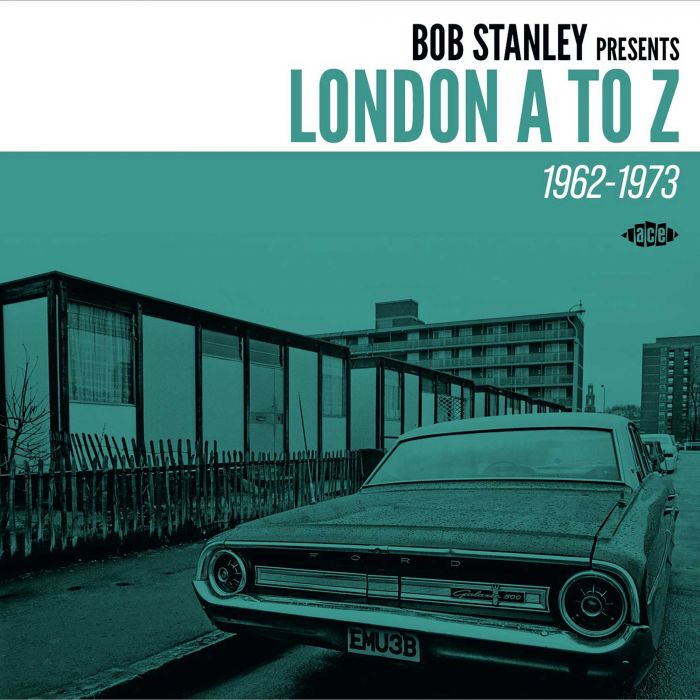
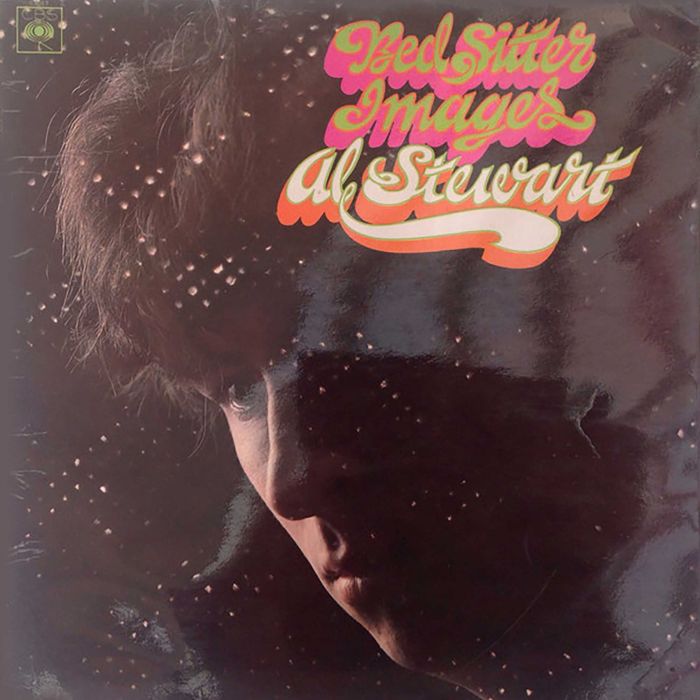

CULT CLASSIC: THE COUNT BISHOPS-THE COUNT BISHOPS.
Cult Classic: The Count Bishops-The Count Bishops.
During 1977, a genre that has continued to divide opinion was at the peak of its popularity, punk. This anti music was championed by critics and cultural commentators who were willing to overlook that many of the musical charlatans within punk bands could barely play their instruments and were musically illiterate. Music had changed the critics said, and many thought not for the better.
Despite this, DJs championed the latest punk singles on their late-night radio shows and waxed lyrical about the new genre. This was, they said the future of music.
Punk, its champions explained, was about rejecting the supposed excesses of seventies mainstream music and embracing and adopting a DIY ethos. Many punk singles were released on newly founded independent labels that sprung up across the country.
The singles were fast, edgy and featured arrangements that were pared back with lyrics were full of anger, angst and frustration. Thankfully, many of the singles were also short as these chippy class warriors ran out of things to say after a couple of minutes.
Many of these singles turned out to be one-offs and the bands sank without trace. Some punk bands enjoyed a degree of success and went on to enjoy a degree of longevity.
Meanwhile, in 1977, an eclectic selection of talented bands were playing live and releasing albums that deserved to find a much wider audience. This included The Count Bishops, who released their eponymous album on the Chiswick label in 1977. However, the story began two years earlier.
It was London, in the spring of 1975, when The Count Bishops were formed when members of the group Chrome joined forces with American vocalist Mike Spenser. The group combined elements of blues, R&B and rock. They were also influenced by sixties garage rock and the seventies pub rock scene. These influences would feature when the group played live.
By July 1977, the line of The Count Bishops had changed. The group were in Paris when Mike Spenser place the first in a series of transatlantic calls to Johnny Guitar. After some persuading, the American guitarist packed two Les Pauls and flew to Britain.
That was where Johnny Guitar was reunited with Mike Spenser who introduced him to guitarist Zenon DeFleur. He had been given the name after being discovered passed out on the floor during the group’s first recording session.
It took a few weeks for the three members of the band to recruit a new rhythm section. Drummer Paul Balbi and bassist Steve Lewins joined The Count Bishops and the following month, the new lineup made entered the studio for the first time.
The group were joined at Pathway Studios by engineer Barry Farmer. They recorded a total of thirteen tracks and four were chosen to feature on the group’s debut EP.
Route 66, I Ain’t Got You, Beautiful Delilah and Teenage Letter featured on The Count Bishops’ Speedball EP. It was released by Chiswick Records in 1975, and featured elements of garage rock, pub rock, R&B and rock ’n’ roll. Sadly, the EP wasn’t a commercial success and it was another year before the group released a single.
This was Train, Train which was released in 1976 by Chiswick Records. However, just before the release of the single Mike Spenser left the band. It’s alleged that this was because of incident involving a glass door and the singer’s boot.
Having lost their vocalist, Johnny Guitar and Zenon DeFleur shared lead vocal duties during part of 1977. This arrangement was only temporary.
Before the group recorded their eponymous album, The Count Bishops, they decided to recruit a new vocalist. This was Australian Dave Tice who previously, had been a member of Buffalo. He would feature on most of the songs on the album.
Twelve tracks were chosen, and were a mixture of covers and new songs. Zenon De Fleur penned Stay Free and Baby You’re Wrong while Steve Lewins contributed Talk To You, Someone’s Got My Number and You’re In My Way. Covers included the Ray Davies’ composition I Need You, Willie Dixon’s Down In The Bottom, Elmore James’ Shake Your Moneymaker, Don Raye’s Down The Road Apiece, Ed Cobb’s Good Guys Don’t Wear White and Taste and Try which was written by British blues rock singer Chris Youlden. The other track on the album was a cover of the blues Don’t Start Crying Now which was written by Slim Harpo with producer JD Miller.
The Count Bishops were once again a five piece band and headed to Jackson Studios to record their eponymous album. It featured a rhythm section of drummer Paul Balbi and bassist Steve Lewins. Zenon DeFleur switched between guitar and slide guitar. Johnny Guitar was the group’s lead guitarist and took charge of the vocal on Don’t Start Crying Now. Meanwhile, new recruit David Tice made his debut as vocalist. Making a guest appearance on Down The Road Apiece was pianist Julian Holland. Just like the single Train, Train, the group produced the album which was engineered by Vic Maile.
The result was The Count Bishops which featured the London-based band at their tightest on an album that’s a mixture of original material as well as covers of blues and tracks from the sixties that also inspired the band. They were fans of sixties beat music so it was fitting that a cover of The Kinks’ I Need You opened the album. This set the bar high.
Over the next eleven tracks, the group never miss a beat as they combine elements of blues, pub rock, R&B and rock ’n’ roll during a series of driving, energetic and sometime raucous, riotous and rollicking, fist pumping, good time music that was honed in the bars and clubs of London. The Count Bishops was an album that should’ve introduced the group’s music to a much wider audience.
Sadly, that wasn’t the case, and The Count Bishops wasn’t a commercial success when it was released in 1977. Nor was the single Baby You’re Wrong when it was released later that year. It was a huge disappointment for a truly talented group.
Despite the disappointment, The Count Bishops returned in 1978 with the album Live. It was a tantalising taste of the band when they played live.
During 1978, The Count Bishops also released two singles, I Take What I Want and I Want Candy. This led to an appearance on the British television show Top Of The Pops. It looked as if the London-based band were about to make a breakthrough.
Meanwhile, the group were recording their next studio album studio album Cross Cuts. By then, bassist Steve Lewins had been replaced by Pat McMullan and Ruan O’Lochlainn was drafted in to add horns. The album took eighteen months to complete and was meant to be band’s breakthrough album. It was eventually released in March 1979. Just a few days later tragedy struck for The Count Bishops.
On the ‘18th’ March 1979, Zenon DeFleur died when he crashed his Aston Martin which he had lovingly restored. It was a devastating blow for his family, friends and The Count Bishops.
Sadly, the anticipated breakthrough never happened Zenon DeFleur’s death.
Despite that, The Count Bishops headed out on tour with Blitz Krieg of Blast Furnace deputising on guitar.
Not long after this, the group were looking for a new drummer when Paul Balbi was deported back to Spain.
The Count Bishops recruited Charlie Morgan who had played with Elton John and the Tom Robinson Band on drums. This was only temporary arrangement but the group continued to tour and even toured Australia.
This meant that former drummer Paul Balbi was able to rejoin the group albeit only for their Australian tour.
In 1980, The Count Bishops split-up having never reached the heights that they should’ve. It was a case of what might have been for the London-based band. who were at the peak of their powers on their 1977 eponymous album which is now considered to be their finest hour and is belatedly is now finding the wider audience it so richly deserves.
Cult Classic: The Count Bishops-The Count Bishops.
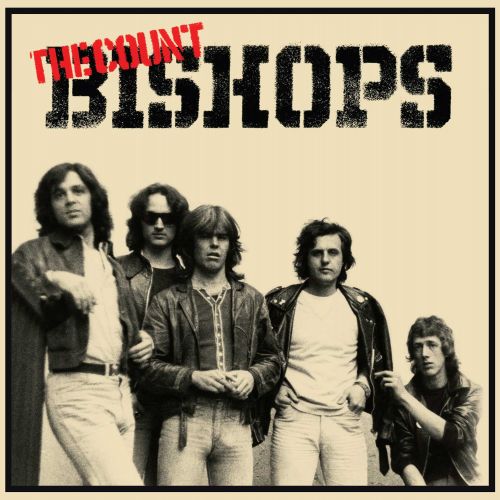
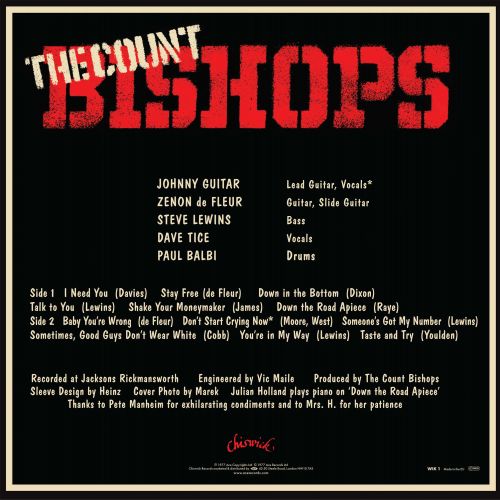
 dereksmusicblog

