THE RISE AND DEMISE OF A MUSICAL EMPIRE.
The Rise and Demise Of A Musical Empire.
Musical history is littered with examples of entrepreneurs who thought they could make money out of running a record company. The only problem was, they lacked the specialised skills that were required. There was a way round this, by surrounding themselves with music industry professionals. Then they were in with a fighting change of running a profitable record company. However, some entrepreneurs have an ulterior motive when they a founded record company. This included Michael Thevis.
The story began in the early seventies, when Michael Thevis was looking for a legitimate way to get his substantial fortune into the financial system. By then, Michael Thevis was heavily involved in pornography. So much so, that he would later admit to a Louisville jury that he was: “the General Motors of pornography.” That was still to come.
In the early seventies, Michael Thevis had a problem. He discovered that he was under investigation from the FBI. Not wanting to follow in the footsteps of Al Capone and Dutch Schultz, who were brought down by federal investigations, Michael Thevis began looking for legitimate enterprises.
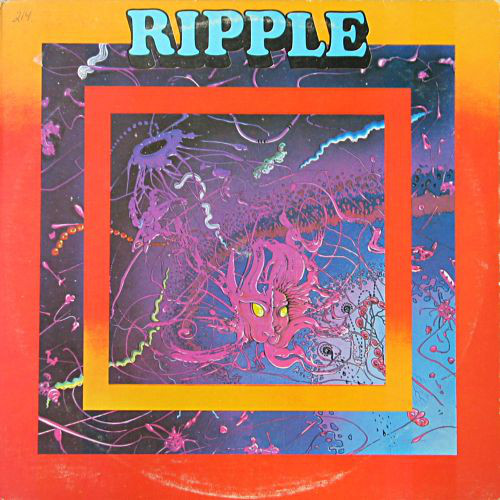
Casting around looking for a legitimate business, Michael Thevis hit upon the idea of forming not one, but three record labels. This included GRC (General Recording Corporation), Aware and Hotlanta Records. These labels would become part of Michael Thevis’ nascent musical empire.
Soon, there was a new addition to Michael Thevis’ musical empire, the Sound Pit Studio in Atlanta. It boasted some of the best equipment money could buy. Building the studio made financial sense. It saved hiring other studios, and meant artists signed to GRC, Aware and Hotlanta Records could record at the impressive Sound Pit Studio. When the studio wasn’t in use by Michael Thevis’ artists, it could be hired out, and bring in much needed income. However, as all this empire building continued, tongues began wagging, including Michael Thevis.
Veterans of the Atlanta music scene watched, as the state-of-the-art studio took shape. This was the most advanced studio in Atlanta. It was a similar case with the rest of Michael Thevis’ musical empire.
No expense was spared as Michael Thevis expanded his musical emprire. He added to his record labels and Act One publishing company, the Jason Management booking agency and a film company. They became part of Michael Thevis’ musical empire. He was proud of his empire, and wasn’t shy about telling people about it.
Rather than keep a low profile, Michael Thevis ran his musical empire from a lavish suite of offices in Atlanta. They were featured in Billboard in May 1974, when the magazine ran a feature on the Atlanta music industry. A bullish Michael Thevis told Billboard of his latest takeover, and his expansion plans.
Michael Thevis’ most recently acquisition was the Moonsong publishing company, which he had purchased from Bill Brandon. This became part of the GRC’s publishing division, alongside Act One, Michael Thevis’ own publishing company. To run the newly expanded publishing division, Bill Brandon joined GRC, and became the publishing manager of GRC’s R&B division. However, the acquisition of Moonsong was just part of Michael Thevis’ grand plan.
Michael Thevis told Billboard of his plans to build a brand new twenty-eight story skyscraper in Atlanta. This would be where he ran his musical empire. It would have outposts in Nashville, Houston, Los Angles, New York and London. What made Michael Thevis’ seem all the more convincing, was when he booked eight pages of advertising in Billboard’s Atlanta special.
To most people, Michael Thevis came across as a legitimate businessman, who had big plans for the future, and for Atlanta. By then, everyone seemed to buy into Michael Thevis’ grand plan. He was the local boy who had made good. It was a case of hail the conquering hero.
Incredibly, though, nobody seemed to be paying close attention to the numbers. None of Michael Thevis’ record companies were particularly successful. They were neither consistently releasing hit singles, nor successful albums. So where was all the income coming from? Was it the publishing company, recording studio, booking company or film company? Nobody it seemed, was in a hurry to find out. Given Michael Thevis past and his reputation for violence, maybe that wasn’t surprising?
Originally, Michael Thevis’ film company financed legitimate films. This included the Zhui Ming Qiang in 1973, and Seizure, one of Oliver Stone’s earliest films. It was released in 1974. A year later, Michael Thevis had gone up in the world, and released Poor Pretty Eddy 1975. Every film was bringing greater riches Michael Thevis’ way. However, although Michael Thevis was trying to build a legitimate business empire, he had reverted to type.
The film company he had acquired began producing pornographic films. If any journalist had even looked into activities of Michael Thevis’ empire, it could’ve come tumbling down. This looked unlikely in early 1975.
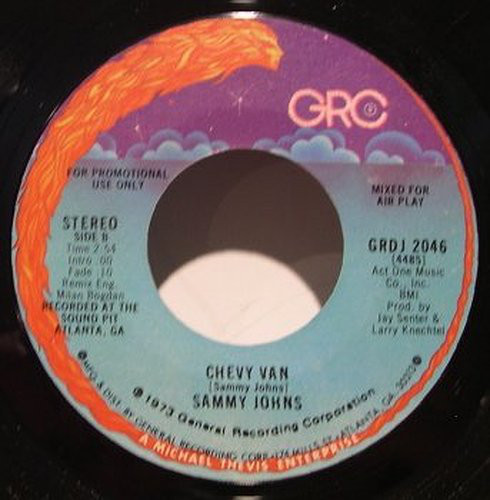
Country singer Sammy Johns had been signed to GRC for a couple of years. In early 1973, Sammy Johns released Chevvy Van as a single. It was reported to have sold over three million copies. Given that a GRC artist had just enjoyed such a successful single, surely the label’s finances would be on a sound footing as 1975 progressed?
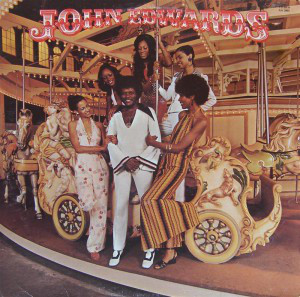
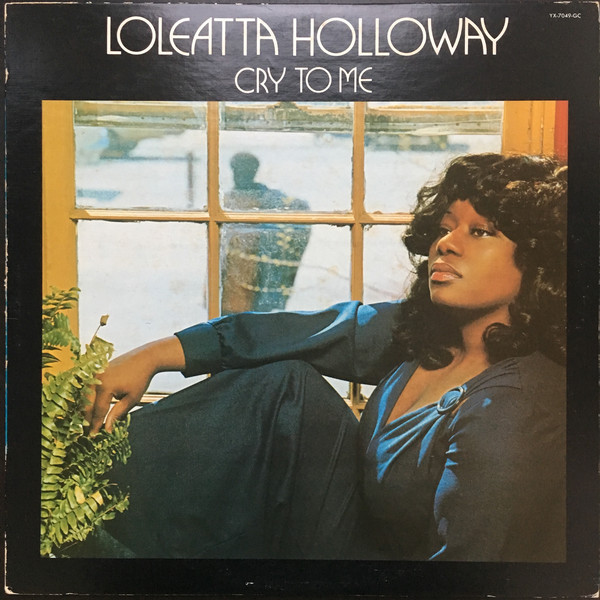
While most people would’ve thought so, the truth was that many of GRC, Aware and Hotlanta Records’ releases weren’t particularly successful, and hadn’t sold in vast quantities. That was despite the labels having impressive roster an impressive roster of artists. This included Dorothy Norwood, John Edwards, Judy Green, Joe Hinton, Jimmy Lewis, Jean Battle, Bill Brandon, Floyd Smith, Sam Dees and Loleatta Holloway. The roster was like a who’s who of Southern Soul, and GRC, Aware and Hotlanta Records should’ve been among the most successful labels in the South. Instead, the losses were mounting up. Michael Thevis’ record companies weren’t particularly successful. However, they had their uses though.
Running a regional record companies offered Michael Thevis an opportunity and facility to launder dirty money. He could’ve used dirty money to buy his own companies’ releases. These phantom record sales would only exist on paper, and would have the effect of laundering the dirty money through the company’s accounts. Once the money was in the record company’s accounts, tax could be paid on the profit that had been made. This would further legitimise any dirty money the company was making. Especially, as the FBI were still watching Michael Thevis.
GRC and the rest of Michael Thevis’ musical empire all came crashing down in late 1975. Michael Thevis’ attempt to build a legitimate business empire had failed. Soon, it emerged that Michael Thevis’ musical empire was always doomed to failure. It had been for three years, ever since the FBI starting investigating his business activities.
That was when Roger Dean Underhill was involved in a routine traffic stop. An eagle-eyed traffic officer noticed a small cache of stolen guns under the passenger seat. This resulted in Roger Dean Underhill being arrested. Rather than face the consequences, Roger Dean Underhill decided to inform upon his business partner, Michael Thevis.
This lead to the start of a three year investigation that resulted, in the arrest and subsequent conviction of Michael Thevis. For all the artists signed to GRC, Aware and Hotlanta Records, this was the beginning of the end.
All the artists signed to GRC, Aware and Hotlanta Records were left high and dry. It was disaster for all the artists affected by the collapse. They were left without a label and some of the artists were also owed royalties, which in some cases, was a significant sum of money. For the artists signed to GRC, Aware and Hotlanta Records they had no idea what the future held for them.
It was a similar case for Michael Thevis’ whose grand plans were left in tatters. It looked like the beginning of the end for GRC, the company he had spent three years building.
It wasn’t the end of GRC. Michael Thevis’ wife Veld and son Michael Jr, took over the running of GRC. For a while, it was business as usual for GRC. However, for Michael Thevis things were about to get much worse.
He was convicted of conspiracy to commit arson, and distribution of obscene materials. The man who sparked the three year investigation into Michael Thevis, even testified in court. Roger Dean Underhill took to the stand, and the FBI’s informant testified against his former business partner. He thought this was the right thing to do.
I was a decision Roger Dean Underhill would later live to regret. In 1978, Michael Thevis managed to escape from prison. Straight away, he was placed on the FBI’s top ten most wanted list. By then, Michael Thevis and some of his ‘associates’ had placed an open contract on Roger Dean Underhill.
When the hit came, the shooter was none other than Michael Thevis. He shot and killed Roger Dean Underhill and one of his associates. Not long after the murders, Michael Thevis was arrested and taken to a high security facility. The Scarface of Porn was the convicted of the two murders. Over thirty years later, and Michael Thevis is still serving his sentence, and parole looks unlikely for the man who founded the GRC, Aware and Hotlanta Records.
The Rise and Demise Of A Musical Empire.

THE BLUE NILE-CONTRARIAN YET PERFECTION PERSONIFIED.
The Blue Nile-Contrarian Yet Perfection Personified.
Enigmatic, reluctant and contrarian are words that best of describe The Blue Nile. They’re the complete opposite of most bands. The Blue Nile have been described as publicity shy. That’ is an understatement. Ever since Paul Buchanan, Robert Bell and Paul Joseph Moore formed the Blue Nile, they’ve been one of the most low-profile bands in musical history. It seems that when they were formed thirty-five years ago, The Blue Nile ticked the “no publicity” box. This has proved a double-edged sword, and resulted in The Blue Nile becoming one of the most enigmatic groups ever. Their story began thirty-five years ago.
The Blue Nile were formed in 1981, when two friends Paul Buchanan and Robert Bell, met Paul Joseph Moore, all of whom met at Glasgow University. Before forming The Blue Nile, Buchanan and Bell were previously members of a band called Night By Night. Try as they may, a recording contract eluded them. Night By Night’s music wasn’t deemed commercial enough. So Paul, Robert and P.J. decided to form a new band, The Blue Nile.
Once The Blue Nile were formed, they set up their own record label Peppermint Records. It was on Peppermint Records that The Blue Nile released their debut single, I Love This Life. This single was then picked up and rereleased on the RSO label. Unfortunately for the Blue Nile, RSO became part of the Polygram label and I Love This Life disappeared without trace. Despite this setback, Blue Nile persisted.
Still, The Blue Nile kept writing and recording material after the merger of RSO with Polygram. Some of that material would later be found on A Walk Across the Rooftops. That was in the future.
Recording of The Blue Nile’s demos took place at Castlesound studio near Edinburgh. That’s home to the man whose often referred to as the fourth member of The Blue Nile, recording engineer Calum Malcolm. He was listening to recently recorded demos through the studio’s Linn Electronics system. It had recently had a new set of speakers fitted. So the company founder, Ivor Tiefenbrun, decided to visit Calum Malcolm to hear his thoughts on the speakers. That’s when Ivor Tiefenbrun first heard The Blue Nile.
Calum Malcolm played Ivor Tiefenbrun a demo of Tinseltown In The Rain. Straight away, the founder of Linn was hooked. He decided to offer The Blue Nile a record contract to the label he was in the process of founding. Most bands would’ve jumped at the opportunity. Not The Blue Nile.
It took The Blue Nile nine months before they replied to Ivor Tiefenbrun’s offer. When they did, the answer was yes. The Blue Nile’s debut album A Walk Across The Rooftops would be released on Ivor Tiefenbrun’s new label Linn Reords.
A Walk Across the Rooftops.
Linn Records and The Blue Nile seemed a marriage made in musical heaven. Linn Records weren’t like a major label, pressurising The Blue Nile into making a decision and delivering an album within a certain timeframe. Instead, Linn Records allowed The Blue Nile to do what they did best, make music. From the outside, this looked as if it was working, and working well.
Years later, Paul Buchanan commented that during Linn Records didn’t operate like a record label. Mind you, he conceded that, during this period, The Blue Nile didn’t operate as a band. However, eventually, in May 1984 The Blue Nile’s debut album was released on Linn Records.
On the release of A Walk Across the Rooftops, it was released to critical acclaim. Critics described the album as a minor classic. A Walk Across the Rooftops was described as atmospheric, ethereal, evocative, soulful and soul-baring. It also featured the vocals of troubled troubadour Paul Buchanan. Despite the critical acclaim A Walk Across the Rooftops enjoyed, it wasn’t a huge commercial success, reaching just number eighty in the UK. However, since the A Walk Across the Rooftops has been recognised as a classic album. So has the followup Hats.

Hats.
Unlike most bands, The Blue Nile weren’t in any rush to release their sophomore album Hats. There was a five year gap between A Walk Across the Rooftops and Hats. It was worth the wait. The Blue Nile had done it again. Hats was a classic.
Featuring seven tracks, written by Paul Buchanan, Glasgow’s answer to Frank Sinatra He’s a tortured troubadour, whose voice sounds as if he’s lived a thousand lives. Producing Hats was a group effort, with Paul, Robert and P.J. taking charge of production duties. Guiding them, was Callum Malcolm. On the release of Hats, British and American audiences proved more discerning and appreciative of the Blue Nile’s sophomore album Hats.
On the release of Hats in the UK in 1989, it was critically acclaimed and commercial success, reaching number twelve in the UK. Then when it was released in America in 1990, audiences seemed to “get” Hats. Not only did it reach number 108 in the US Billboard 200 Charts, but The Downtown Lights reached number ten in the US Modern Rock Tracks charts. It seemed that The Blue Nile were more popular in America, than in Britain. Gradually, The Blue Nile’s music was beginning to find a wider and more appreciative album. Especially when The Blue Nile decided to embark upon their debut tour later in 1989.

Although The Blue Nile were formed in 1981, and Hats was The Blue Nile’s sophomore album, the band had never toured. Partly, The Blue Nile seemed worried about replicating the sound of their first two albums. They needn’t have worried, with The Blue Nile seamlessly replicating the sonic perfection of A Walk Across The Rooftops and Hats on the sold out tour. The Blue Nile’s star was in the ascendancy.
Their first ever tour had been a huge success. The Blue Nile had conquered Britain. However, The Blue Nile had also made a breakthrough in America. Hats had sold well, and their American tour had been successful. Most bands would’ve been keen to build on this and released another album before long. Not The Blue Nile.
Seven long years passed, where Blue Nile fans wondered what had become of Glasgow’s most enigmatic trio. However, they’d been busy. After Hats found its way onto American radio stations, The Blue Nile, who previously, had been one of music’s best kept secrets, were heard by a number of prestigious musicians. Among them were Robbie Robertson and Annie Lennox, Michael McDonald. After a decade struggling to get their music heard, The Blue Nile were big news. During this period, America would become like a second home to The Blue Nile, especially Paul.
Paul took to life in America, and in 1991, decided to make it his home. This just so happened to coincide with Paul’s relationship with actress Rosanna Arquette between 1991 and 1993. Hollywood starlets and Sunset Boulevard was a long way from Glasgow’s West End. In the midst of Paul’s relationship, disaster struck for The Blue Nile, they were dropped by their label.
Linn Records and Virgin decided to drop The Blue Nile. For some groups this would’ve been a disaster. Not for The Blue Nile.
They signed a million Dollar deal with Warner Bros. While this sounded like the ideal solution for The Blue Nile, Paul made the deal without telling P.J and Robert. He later explained that “none of the others were in town at the time.” With a new contract signed, The Blue Nile began thinking about their third album, Peace At Last.
Peace At Last.
So the band started looking for the perfect location to record their third album. They travelled across Europe looking for the right location. This location had to be private and suit their portable recording studio. Cities were suggested, considered and rejected. Among them, were Amsterdam, Copenhagen and Venice. Being The Blue Nile, things were never simple. Eventually, after much contemplation The Blue Nile ended up recording what became Peace At Last in three locations, Paris, Dublin and Los Angeles. For the first time, The Blue Nile recorded an album outside of their native Scotland.
For their first album for a major label, things began to change for The Blue Nile. They brought onboard drummer Nigel Thomas, a string section and a gospel choir. Peace At Last was going to be a quite different album to A Walk Across The Rooftops and Hats. However, one things stayed the same, The Blue Nile continued to work with Calum Malcolm. With his help, Peace At Last was ready for release in June 1996. Before that, critics had their say.
Critics remarked upon the change of sound on Peace At Last. It had a much more understated, restrained sound. Acoustic guitars and piano play important parts. Still, The Blue Nile’s beloved synths remain. Occasionally, The Blue Nile add strings. There’s even a gospel choir on Happiness. Gone was the sound of A Walk Across the Rooftops and Hats. Peace At Last showed a different side to The Blue Nile and their music, one that divided the opinion of critics and fans. Paul, Robert and P.J. were back, but it was a different sound. One constant was Paul’s worldweary vocal. Glasgow’s very own Frank Sinatra, Paul Buchanan plays the role of the troubled troubadour, to a tee on songs about love, love lost, betrayal, heartbreak, growing up and growling old. Paul was still the tortured soul, who wore his heart on his sleeve on Peace At Last.
On the release of Peace At Last, in June 1996, it reached just number thirteen and sold poorly. For The Blue Nile this was disappointing, given it was their major label debut. Worse was to come when the lead single Happiness failed to chart. The Blue Nile’s major label debut hadn’t gone to plan. Alas, Peace At Last was the only album The Blue Nile released on a major label.

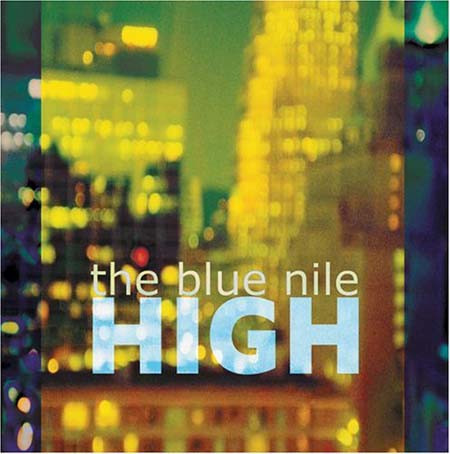
High.
Following Peace At Last, it was eight years before The Blue Nile released another album. High was released in 2004. During the last eight years, the three members of The Blue Nile had been leading separate lives. While P.J. and Robert were content with their lives in the West End of Glasgow, while Paul had been spending his time between Glasgow and Hollywood. Now they were back and ready to record their fourth album, High.
Once High was recorded, all that was left was for The Blue Nile to find a label to release the album. The Blue Nile had been dropped by Warner Bros. So with the completed album, The Blue Nile shopped High to various labels. Eventually, they settled on Sanctuary, which would release High in August 2004. However, before that, critics welcomed back The Blue Nille.
Eight years after the release of Peace At Last, critics remarked that High was a much more grownup album. Songs of family life and heartbreak sat side-by-side. Paul who had been suffering with illness and fatigue, seemed to have found a new lease of life. His lyrics are emotional, observational, cinematic and rich in imagery. They’re also poignant, and full hope, hurt and anguish. Meanwhile, Paul’s vocals were worldweary and knowing, while the music is emotive, ethereal and evocative. Critics love High. So did music lovers.
When High in August 2004, the album reached number ten in the UK. High proved to be The Blue Nile most successful album. This proved to be fitting.
High was The Blue Nile’s swan-song. Nobody realised this when the album was released. It was only as years passed without a followup to High, that the reality sunk. There would be no more music from The Blue Nile. One of the greatest bands of their generation were now part of musical history.
Following High, critics thought that The Blue Nile would return, possibly after another lengthy break. Sadly, that wasn’t to be. The Blue Nile were no more. At least they did things their way. Right up until the release of High, The Blue Nile were enigmatic, almost reclusive and publicity shy. Mind you, The Blue Nile weren’t exactly your normal band.
The rock ’n’ roll lifestyle favoured by other bands wasn’t for The Blue Nile. Their music was much more cerebral, and had a substance that much of the music recorded between 1984 and 2004 lacked. During that twenty year period, The Blue Nile only recorded four albums. These albums are unique. Musical fashions and fads didn’t affect The Blue Nile. Their attitude was almost contrarian. Albums were recorded slowly and methodically as the Blue Nile strived for musical perfection.
Many have tried to achieve perfection. However, very few have come as close as The Blue Nile. Their debut album A Walk Across The Rooftops and the followup Hats, are nowadays both regarded as classic albums. Peace At Last and High show another side to The Blue Nile. There’s a much more grownup sound, to the albums. However, just like A Walk Across The Rooftops and Hats, both albums showcase one of the most talented bands in Scottish musical history, The Blue Nile.
While The Blue Nile never enjoyed the commercial success their music deserved, they stayed true to themselves. They never jumped onto a musical bandwagon in pursuit of fame, fortune or starlets. Quite the opposite. For The Blue Nile it was their way or no way. If an album took years to record, so be it. It was always worth the wait. After all, not many bands pursue perfection, and achieve that perfection four times. The Blue Nile did, and ended their career on a High.
The Blue Nile-Contrarian Yet Perfection Personified.
JOHN MILES-MUSIC AND BEYOND.
John Miles-Music and Beyond.
Forty years ago in 1976, John Miles released his most successful single Music. Since then, every time John Miles’ name comes up in conversation, Music is mentioned. That must be frustrating for the English singer-songwriter who released ten albums between 1976 and 1999. This is a reminder that there’s much more to John Miles than Music. That’s what he’s spent over forty years making.
John Miles was born in Jarrow, in County Durham, England on 23rd April 1949. Growing up, music played a big part in John Miles’ life. While still at Jarrow Grammar School, John joined a local band, The Influence.
Three of the members of The Influence were keyboardist John Miles, drummer Paul Thompson and guitarist Vic Malcolm. Incredibly, they all went on to become successful musicians. Paul Thompson became Roxy Music drummer, while Vic Malcolm became Geordie’s lead guitarist. That was still to come.
In 1969, The Influence released a single on Orange Records, I Want To Live. This was just the start of what would be a long, and eventually successful recording career. Not with The Influence though.They disbanded not long after the release of I Want To Live.
Following his spell with The Influence, John Miles founded The John Miles Set, which featured bassist Bob Marshall. He and John would later form a successful songwriting partnership. That was in the future. Before that, The John Miles Set began to play the club circuit. However, in 1970, John decided to combine a solo career with playing with The John Miles Set.
This was a big step for John Miles. He was still only twenty-one. Already though, people were taking notice of John Miles. This included the owners of Orange Records who had released The Influence’s single. They released Why Don’t You Love Me?, John’s debut solo single in September 1970. While it failed commercially, John was attracting the attention of Decca Records.
They offered John Miles a recording deal for one single. It was akin to an audition, and also allowed Decca Records to test the waters. Josie was released on 7th July 1971. Alas, the single failed to trouble the charts and John was soon looking for a new record company.
Fortunately, Orange Records had just changed hands, and new owner Cliff Cooper was looking to add new artists to his roster. John Miles fitted the bill. Orange Records sent John into the studio, and he recorded Come Away Melinda. It was released as a single in February 1972. Just over a month later, Yesterday (Was Just The Beginning) was released in March 1972. Despite neither single sold in vast quantities, Orange Records kept their faith in John Miles.
Meanwhile, The John Miles Set featured on the British talent show Opportunity Knocks. They won their heat, and found themselves in the All Winner’s Show. For John Miles, this was a boost to his solo carer.
An even bigger boost to John Miles solo career during 1972, was getting the opportunity to support Roy Orbison at the Royal Albert Hall, in London. Gradually, people were beginning to know the name John Miles.
Orange Records continued to keep faith in John Miles. He released a trio of singles during 2013. This included Hard Road in March 1973, Jacqueline in May 1973 and One Minute Every Hour in August 1973. Still, though, commercial success eluded John Miles.
It was a similar story in 1974. Fright Of My Life was released in January 1974, but failed commercially. That was all that was heard of John Miles until he released What’s On Your Mind in November 1974. While it didn’t trouble the charts, John was improving as a singer and songwriter. His songwriting partnership with Bob Marshall was beginning to bear fruit. Similarly, over the last three years John’s band, which featured bassist Bob Marshall and drummer Barry Black, John Miles had matured and evolved into a tight, talented band. Maybe John’s luck would begin to change?
That was the case in 1975. As the year progressed, record companies began to take an interest in John Miles. Both EMI and Decca Records were vying for John’s signature. This was a huge decision for the twenty-six year old. Eventually, though, John decided that Decca Records who were looking to add to their contemporary pop roster, offered more of an opportunity.
By then, Decca Records’ pop roster had become stale, with Tom Jones and Englebert Humpererdinck looking like yesterday’s men. Decca Records was desperately seeking a transfusion of new talent. That was where John Miles came in. He was seen as part of Decca Records’ future. So, after opening for The Ohio Players at the Hammersmith Odeon, John and representative of Decca Records signed a recording contract.
Rebel.
With John Miles signed to Decca Records, the label decided to pair their latest signing, with one of Britain’s top producers, Alan Parsons. He had worked with Pink Floyd on their Magnus Opus, Dark Side Of The Moon in 1973. Since then, he had worked with some of the biggest names in music. So it was a something of a coup that he agreed to produce John Miles new single.
The song they chose Highfly, which in Alan Parsons’ hands, took on an art rock sound. It was released on September 1975, and eventually, reached seventeen in the UK charts and sixty-eight in the US Billboard 200. Exactly five years after he released his debut solo single, John Miles had his first hit single.
After the success of Highfly, John Miles would complete recording of his debut album. It featured nine songs, including six penned by John and Bob Marshall. The exceptions were Music, Lady of My Life and Music (Reprise) which John wrote. They were recorded at Abbey Road Studios.
During November and December John Miles and his band headed to Abbey Road Studios in November 1975. Drummer and percussionist Barry Black and bassist Bob Marshall accompanied John. He added lead vocals, and played keyboards, guitar and synths. Andrew Powell took charge of the orchestral arrangements and Alan Parsons produced, what would become Rebel.
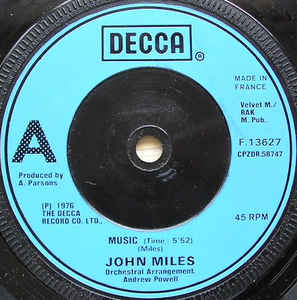
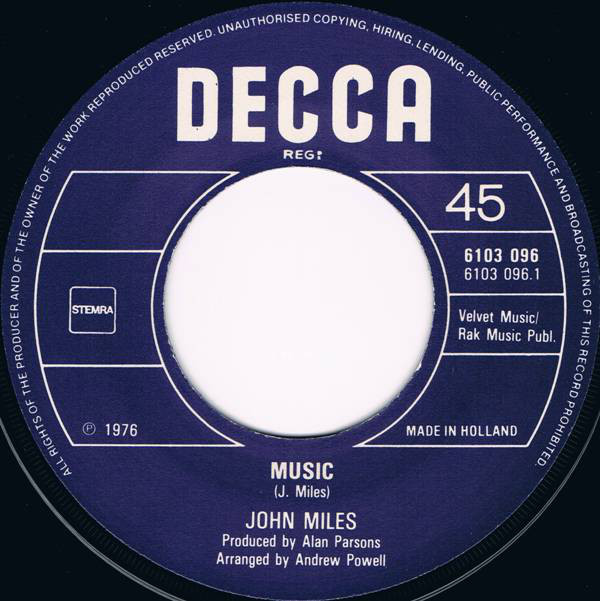
As 1975 gave way to 1976, Decca Records began to think about what should be the lead single from Rebel. The song they chose was Music, a near six minute epic. It was released in March 1976 and reached the upper reaches of the charts across Europe. Music reached number three in the UK; number four in Holland; number number one in Switzerland and eighty-eight in the US Billboard 100. Later, Music won John Miles an Ivor Novello award for Best Middle-Of-The-Road Song. Before that, Rebel was released.
Critical acclaim accompanied the release of Rebel, which was hailed as an album of carefully crafted pop songs. Music may have been the standout track, but there was much more to the album, including the John Miles and Bob Marshall penned You Have it All, When You Lose Someone So Young and Lady Of My. They had matured into a talented songwriting team, while John brought each of the songs to life. It was no surprise that when Rebel was released later in March 1976, it reached number nine in the UK and 171 in the US Billboard 200. Elsewhere, Rebel reached the top twenty in Holland and Germany, and the top thirty in Sweden. For John this the perfect way to begin The Decca Years.
After the release of Rebel, John Miles embarked upon a lengthy tour. It marked the debut of Australian keyboardist Gary Moberley. John had brought him onboard to augment the band’s sound. He would make his recording debut in the summer of 1976, when Stranger In The City was recorded.

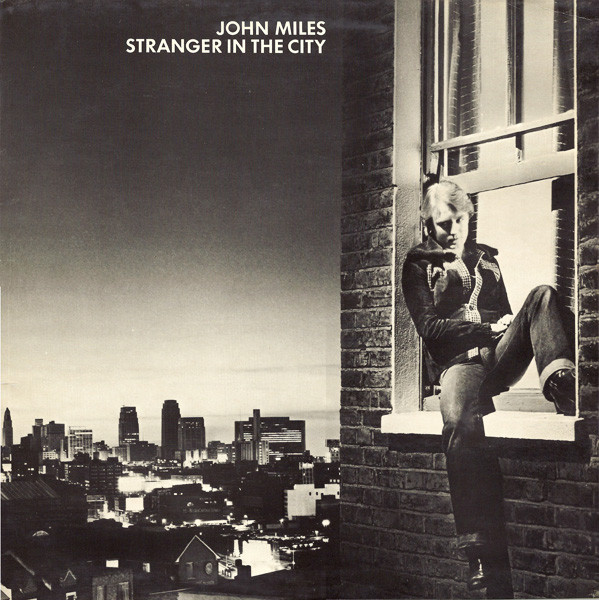
Stranger In The City.
During the summer of 1976, John Miles was touring, supporting both Jethro Tull and the Rolling Stones. Despite what was a gruelling touring schedule, John Miles still found time to begin work on his sophomore album, Stranger In The City.
This time around, the eight of the nine songs on Stranger In The City were penned by John Miles and and Bob Marshall. The exception was Barry Black penned Do It Anyway. Recording of Stranger In The City began in the summer of 1976.
Despite the success of Rebel, Alan Parsons didn’t return to produce Stranger In The City. Instead, singer-songwriter Rupert Holmes took charge of producing John Miles’ newly expanded band. Recording took place at Mediasound in New York and Utopia Studios in London. That was where the newly expanded lineup of the band got to work.
Drummer Barry Black and bassist Bob Marshall were joined by keyboardist Gary Moberley. John added lead vocals, and played piano and guitar. However, the album wasn’t completed during the summer of 1976. So John and his band returned in October 1976, before heading off on their European tour.
In January 1977, Manhattan Skyline was released as the lead single from Stranger In The City. It failed to chart on either side of the Atlantic. For John Miles and everyone at Decca Records, this was a worrying time. However, in February 1977, Stranger In The City was released.
Reviews of Stranger In The City had been mostly positive. The occasional critic wasn’t convinced that Stranger In The City was as cohesive an album as Rebel. It was a much more eclectic album, with everything from pop to blue eyed soul, funk, rock and soul. Slow Down even married rock and funk with disco. Now that critics had cast their vote on Stranger In The City, the album was released.
When Stranger In The City in February 1977, the album reached just thirty-seven in the UK. However, in America, Stranger In The City proved much more popular, reaching ninety-three in the US Billboard 200. Elsewhere, the album reached the top twenty in Norway and Sweden. That, however, wasn’t the end of the commercial success.
Slow Down was released as a single in May 1977. It reached number ten in the UK and thirty-four in the US Billboard 200. Given its dance-floor friendly sound, Slow Down gave John Miles a hit in the US Dance Music charts, when it reached number two. The John Miles’ success story continued apace.
Clive Davis at Arista Records was watching events unfold. He had an unrivalled reputation as a talent spotter, and wanted John Miles on Arista Records’ roster. This he soon discovered, would come at a price. That price was in the region of $500,000. Undeterred, Clive Davis wrote the cheque, and John Miles was now signed to Arista Records in America. Back home in Britain, The Decca Years continued.
Zaragon.
Following the release of Stranger In The City, John Miles spent much 1977 touring the album. Then in October 1977, John began to record his much-anticipated third album, Zaragon.
For Zaragon, the John Miles and Bob Marshall songwriting team wrote seven new songs. This included the eight minute epic Plain Jane, and the three part suite Nice Man Jack. These seven songs were recorded by John’s original band with Rupert Holmes again taking charge of production.
When recording began in October 1977, there was no sign of keyboardist Gary Moberley. He had left the band. This left just drummer Barry Black and bassist Bob Marshall. John added lead vocals, and played keyboards, synths and guitar. This time, it was decided that there should be no orchestral arrangements.
John Miles wanted to be able to replicate the songs live. Just like many progressive rock groups, including Emerson, Lake and Palmer, John had discovered the more complicated the arrangement, the harder it is to replicate live. It seemed John had learned his lesson after two years of trying to replicate the arrangements on Rebel and Stranger In The City. That may not have been the only reason.
Music was changing, with punk, post punk and disco among the most popular musical genres So were people’s opinions on orchestral arrangements. Many critics and record industry insiders thought that albums with orchestral arrangements were yesterday’s sound. For John Miles, he was moving towards rock epics, like Overture, which lasted nine minutes. Keyboards and synths were to the fore, and replaced the lush, orchestral arrangements of previous albums. Over the course of three months, John Miles had reinvented himself. The reinvention of John Miles was complete in December 1977, when Zaragon was handed over to Decca Records.
With Zaragon complete, John Miles was preparing for his next tour. He felt he needed another keyboardist to augment the band. The man he turned to was Brian Chatton, who would head out on tour with John Miles in March 1978. Before that, the lead single from Zaragon was released.
No Hard Feelings, a beautiful piano based was chosen. It was released in late February 1978, but failed to chart. This didn’t bode well for the release of Zaragon.
At least Zaragon was well received by most critics. This mixture of the occasional ballad and rock epics proved to be a popular and potent combination. Especially songs like Overture, I Have Never Been in Love Before, No Hard Feelings and Zaragon. They were among the highlights of Zaragon, which was released in March 1978.
Zaragon was released in UK on Decca Records, and reached forty-three. This was regarded as a success given how music had changed over the last year or so. Elsewhere, Zaragon reached number three in Norway and Sweden. John had built up a loyal following after years of constantly touring Europe. One place where John wanted his commercial success to continue was America.
In America, Zaragon was John Miles’ debut for Arista Records. John was hoping that Zaragon would get his career with Arista Records to a successful start. Especially since Clive Davis had spent $500,000 it took to buy John Miles out of his American recording contract. The pressure was on and John wanted to justify the $500,000 price tag.
Alas, John was out of luck, and Zaragon reached just 210 in the US Billboard 200. It was John’s first album not to chart in America. For John this was a bitter blow. All was not lost though.
Maybe though, a performance on British television and radio would help sales of Zaragon?

BBC In Concert (March 1978).
Back home in Britain, one of the BBC’s most popular music shows on television and radio was Sight and Sound In Concert. It allowed an artist to be heard by a vast audience. Many of them had a voracious appetite when it came to buying albums. A good performance on Sight and Sound In Concert, would given Zaragon and the rest of John Miles’ back-catalogue.
So on 11th March 1978, John Miles and his band headed to Queen Margaret’s College, London. Drummer Barry Black and bassist Bob Marshall were joined by keyboardist Brian Chatton. Lead by John, they worked their way through a ten song set.
Opening with Nice Man Jack from Zaragon, John Miles returned to Stranger In The City, for Music Man. Then it was a return to Zaragon, for Plain Jane, Overture, Zaragon and No Hard Feelings. Having showcased Zaragon, John returned to his sophomore album Stranger In The City. Stand Up (and Give Me A Reason gave way to Stranger In The City. With just two songs to go, John returned to Zaragon and played Borderline, before closing the show with Slow Down from Stranger In The City. One song was missing, from what had been another accomplished and polished performance from John…Music. What John would given for another song like Music, for his fourth album for Decca Records, MMPH-More Miles Per Hour.
MMPH-More Miles Per Hour.
John Miles’ decision to eschew orchestral arrangements on Zaragon had backfired. It was time to rethink his future musical direction. Maybe it was time for John to return to what had become his trademark sound. That wasn’t the other decision that he would have to make; did Rupert Holmes have a future as John’s producer.
Rupert Holmes had neither built on, nor replicated the success of the Alan Parsons’ produced Rebel. Maybe he should’ve cautioned John Miles about changing direction on Zaragon? What was clear, that neither Stranger In The City nor Zaragon, replicated the quality nor commercial success of Rebel. So a decision was made to bring Alan Parsons back to produce MMPH-More Miles Per Hour.
With Alan Parson back onboard, Andrew Powell returned to take charge of the orchestral arrangements on MMPH-More Miles Per Hour. It comprised eight songs penned by John Miles and Bob Marshall. Recording began in November 1978, at Super Bear Studios, near Nice, in France. That was where John Miles and his band began work. It featured drummer Barry Black and bassist Bob Marshall were joined by keyboardist Brian Chatton. The recording of MMPH-More Miles Per Hour was completed at Union Studios, in Munich, Germany. January 1979. Now John’s thought’s turned to the release of his fourth album.
Just three months later, MMPH-More Miles Per Hour was released in April 1979. Mostly, it was to critical acclaim. MMPH-More Miles Per Hour was a much more cohesive and focused album, which featured carefully crafted songs. They had been sweetened by Andrew Powell’s orchestral arrangements, and definitely benefited from Alan Parsons’ guiding hand. He seemed to able to get the best out of John Miles. Maybe this would result in a change in fortune for John?
Can’t Keep a Good Man Down was released as the lead single from More Miles Per Hour, but failed to chart. When MMPH-More Miles Per Hour was released, it stalled at forty-six in the UK, and failed to enter the US Billboard 200. A small crumb of comfort was that MMPH-More Miles Per Hour reached number six in Norway and ten in Sweden. That was as good as it got.
Neither of the other two singles from MMPH-More Miles Per Hour, Oh Dear, nor (Don’t Give me Your) Sympathy charted. For John Miles, it must have been a frustrating way to end The Decca Years. MMPH-More Miles Per Hour. like all of John’s Decca Records’ albums, deserved to fare better.

After More Miles Per Hour, John Miles parted company with Decca Records. After just four years and four albums, The Decca Years were over. Little did John Miles realise that they would be the most successful and productive period of John Miles’ career. Never again did he reach the same heights. That’s despite releasing another six studio albums.
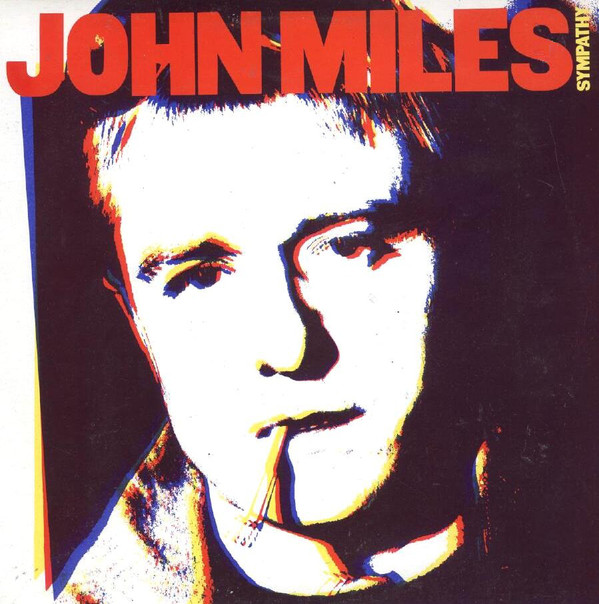
Sympathy.
The first of these albums was Sympathy in 1980. By then, John Miles was still under contract to Arista in North America. Clive Davis the founder of Arista, had spent $500,000 buying out John’s contract from Decca Records 1977. Zaragon in 1978, was the first of John Miles’ albums to be released by Arista in North America. However, the followup to Zaragon, MMPH-More Miles Per Hour hadn’t been released in North America. Instead, Sympathy became the followup.
For John Miles’ new North American album, eight songs were chosen. This included five songs from MMPH-More Miles Per Hour, including It’s Not Called Angel, We All Fall Down, C’est La Vie, Can’t Keep A Good Man Down and Fella In The Cellar. They were joined by three new songs penned by John Miles and Bob Marshall, Where Would I Be Without You, Sympathy and Do It All Again. These three new songs were recorded by John’s band, and a new producer.
When MMPH-More Miles Per Hour had been recorded, it was produced by Alan Parsons. His services were constantly in demand as a producer. So with Alan Parsons unavailable, producer Gary Lyons was drafted in. He and John Miles began work with his band began.
The band featured drummer Barry Black and bassist Bob Marshall were joined by keyboardist Brian Chatton. John Miles played keyboards, guitar and added vocals. Once the session was complete, Sympathy was scheduled for release later in 1980.
Before that, critics had their say on Sympathy. Mostly, the reviews were positive. Despite this, Sympathy failed to chart in America. It was a case of so near, yet so far, when Sympathy reached just 202 in the US Billboard 200. This hastened John Miles’ departure from Arista.
After the end of Arista years, the next few years found John Miles move from label to label, in search of commercial success and critical acclaim. This began at EMI, where John Miles released Miles High.
Miles High.
For John Miles, signing to EMI was a fresh start. He hadn’t released an album in Britain since MMPH-More Miles Per Hour in 1979. 1980 had been spent fulfilling his contractual obligations to Arista. This meant John hadn’t released an album in Britain and Europe since MMPH-More Miles Per Hour in 1979. Now that John had fulfilled his contractual obligations to Arista, he could begin work on his fifth solo album.
John Miles and Bob Marhshall began writing what would become Miles High. They wrote eleven new songs. These song were recorded at Pye Studios, London, during May 1981.
When the recording session began, John Miles’s band featured drummer Barry Black, bassist Bob Marshall and keyboardist Brian Chatton. John Miles played keyboards, guitar and added vocals. He also took on a new role, that of producer. Miles High was the first album John would produce. Some may have seen this as a gamble. However, John had worked with some top producers, including Alan Parsons, so must have felt qualified to produce Miles High. Critics and record buyers would have the final say.
Reviews of Miles High were mixed. What most critics recognised, was that John Miles was a talented singer-songwriter. Some critics praised Miles High, where pop, R&B and rock were combined with jazz and reggae. Seamlessly, John Miles and his band switched between genres. They came into their own on the ballads Foolin’ and Peaceful Waters. However, other critics weren’t won over by Miles High, feeling the album was “bland” and unfocussed. What however, would record buyers think?
When Miles High was released in August 1981, John Miles was sent on a thirteen date UK tour. Alas, this didn’t help sales of Miles High, It stalled at just ninety-six in the UK. This was the last John Miles album that charted in the UK and twenty-eight in Sweden. Two singles were released from John Miles, but neither Turn Yourself Loose, nor Reggae Man charted. For John Miles this was a huge disappointment. EMI kept faith with their latest signing.

Play On.
So much so, that EMI promised John Miles that a top producer would be employed to produce Play On. Eventually, EMI settled on Gus Dudgeon, who had been working with Chris Rea, Elton John and Elkie Brooks. However, the addition of Gus Dudgeon wasn’t the only change that was made during the recording of Play On in 1983.
While Bob Marshall cowrote the ten songs on Play On with John Miles, that was his only role in the album. John’s usual band were replaced by session musicians. This must have been a huge blow for musicians who had spent the best part of ten years working with John.
Recording of Play On began at Maison Rouge studios, in London. John Miles’ ‘band’ featured John Miles included drummer Graham Jarvie, bassist Paul Westwood and guitarist Martin Jenner. Producer Gus Dudgeon ‘played’ the tambourine, while John’s role was reduced to taking charge of the vocals. This was just the latest example of EMI seeming to call the shots on Play.
EMI had chosen the producer, and were even dictating the direction that John Miles’ career would head in. This was ironic, as one of the songs John and Bob Marshall had written for Play On, was The Right to Sing. It was about record companies wanting to decide which songs artists recorded and released. The Right to Sing become the lead single from Play On, but reached just eighty-eight in the UK charts. It was John’s last single that charted. This didn’t augur well for Play On.
Just like Miles High, reviews of Play On were mixed. Some critics felt the album was an improvement on Miles High, and Gus Dudgeon’s experience resulted in a polished and accomplished album. Meanwhile, Bruce Baxter’s orchestral arrangements were the perfect backdrop for John’s vocals, as breathed life and meaning into the lyrics. However, others critics weren’t convinced, feeling that the album was too polished. Again, record buyers had a the final say.
When Play On was released in 1983, it failed to chart in the UK. The only place Play On charted, was Sweden where it stalled at twenty-eight. It was a huge disappointment for John Miles. Things didn’t improve when Song for You was then released as a single, but failed to chart. However, things were to get even worse for John Miles when after touring Play On he was dropped by EMI. The EMI years were over for John Miles.
Transition.
Despite being without a record label, John Miles and Bob Marshall began to write the nine songs that would feature on Transition. Meanwhile, John’s manager began looking for a new label.
With his manager looking for a new label, John Miles and his began concentrated on playing live. They had been booked to play a show on the island of Ibiza. After the show, John met, and began taking to Phil Carson. Little did John realise that Phil Carson was an executive at Atlantic Records. When he heard than John was without a recording contract, Phil Carson signed John Miles to a new record label, Valentino. John was back and was ready to record a new album.
Having used session musicians on Play On, John Miles wanted his own band to accompany him on Transition. Alas, the only member of John’s old band that featured on Transition, was bassist Bob Marshall. He was joined by former Jethro Tull drummer and percussionist Barriemore Barlow. John Miles played guitar, keyboards and lead vocals. To produce the album, John had settled on Trevor Bradin, That had been the plan.
It turned out that Trevor Bradin had too many commitments to produce Transition. He produced two songs, Blinded and I Need Your Love before realising that he hadn’t the time to produce Transition. Not wanting to delay the album until Trevor Bradin was free, John Miles decided the recording with engineer Pat Moran should produce Transition. He produced six tracks, with Beau Hill producing the closing track Watching On Me. With the album complete, Transition was scheduled for release later in 1985.
Before that, critics had their say on Transition. It received mostly positive reviews. There were the a few dissenting voices, but mostly, critics felt John Miles was heading in the right direction.
That proved not to be case. When Transition was released in 1985, it failed to chart. The singles faired no better, with neither Blinded nor Need Your Love coming close to troubling the charts. John Miles never released another album for Valentino, Indeed, it would be another eight years before he retuned with a new album.

Upfront.
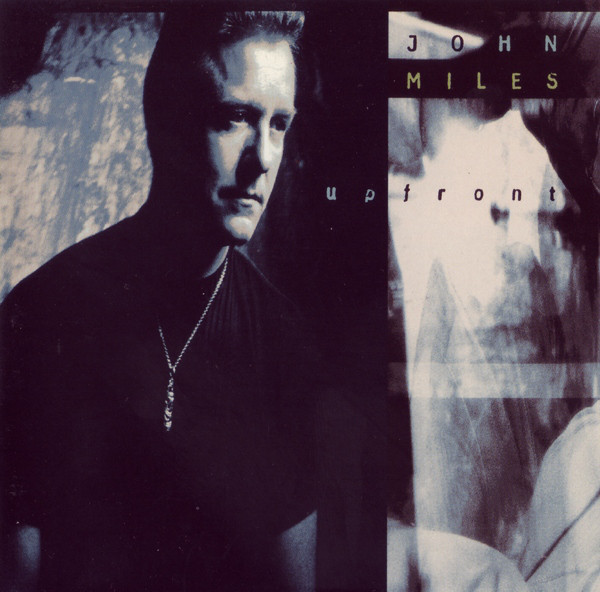
John Miles never released an album for eight years. After the release of Transition in 1985, John Miles didn’t release another album until Upfront in 1993. However, John was kept busy and worked on albums with Joe Cocker and Jimmy Page. John became one of the guest vocalists on several albums by The Alan Parsons Project. Then when Tina Turner headed out on tour, she asked John to accompany her. However, eventually, John decided to record a new album.
When John Miles began work on what became Upfront, there was no sign of Bob Marshall. They cowrote seven albums, but on Upfront, John decided to write the thirteen songs himself. Then he put together a small band that would record the album what was his first album in eight year.
For the Upfront, John Miles would play guitar and add the vocals. His small band included a rhythm section of Jack Bruno and bassist Neil Stubenhaus. They were joined by keyboardist Ollie Marland. Producing the album was American mix engineer Chris Lord-Alge. Once Upfront was recorded it was released later in 1993.
After an eight year absence, John Miles returned with Upfront. It received mixed reviews from critics. Some were won over by the album, while others felt it was one of John’s weaker albums. This didn’t bode well for the release of Upfront.
When Upfront was released in 1993, it failed to chart in the UK. The only place Upfront charted, was in Switzerland, where it reached twenty-six. Two singles were released from Upfront during 1993, but neither One More Day Without Love, nor What Goes Around charted. Oh How The Years Go By was then released in 1994, but it too failed to chart. This was the last that was heard of John Miles until 1999.
Tom and Catherine.
When John Miles returned in 1999, it wasn’t with a studio album. Instead, it was with the soundtrack to a musical about the life of novelists Catherine and Tom Cookson. It had been written by playwright Tom Kelly, who had worked with John on Machine Gunners. John Miles agreed to write the soundtrack, and enlisted the help of Sara Murray.
John Miles and Sara Murray wrote a total of sixteen songs. They then went into the studio, where Sara and John shared the lead vocals. Meanwhile, John laid down all the guitar and keyboard parts. Once the sixteen songs were recorded, they became the soundtrack to Tom and Catherine.
The soundtrack to Tom and Catherine was released in 1999, by Orange Records. This proved to be the last studio album that John Miles released.
Over a twenty-three year period, John Miles had released just nine studio albums. His first four albums, including his 1976 debut album Rebel, 1977s Stranger In The City, 1978s Zaragon and 1979s MMPH-More Miles Per Hour were the best albums of John Miles’ career. They were recorded when John Miles was signed to Decca Records. That was the most productive and successful period of his career.
After his departure from Decca Records, John Miles never reached the same heights. Nor did John Miles enjoy the same commercial success. While his two albums for EMI, Miles High and Play On divided opinion, several songs showcase a truly talented singer-sonngwriter. The problem was, John Miles two EMI album lacked the cohesion of earlier albums. That wasn’t John’s fault. Especially on Play On, where EMI seemed to be calling the shots, and even paired him with session musicians. As a result, John Miles never again recorded with the tight, talented band that had served him so well for five albums. This included the quartet of albums John Miles recorded during the Decca Records’ years.
It’s hard to believe that The Decca Records years began forty years ago in 1976. Since then, John Miles has recorded nine studio albums and continues to play live. He’s also regular at the Proms Concerts across Europe, where he will regularly play his classic single, Music. That’s the song that’s become synonymous with John Miles. However, his career has spanned six decades and lasted over forty years. This is a reminder that there’s much more to John Miles than Music.
John Miles-Music and Beyond.


THE LIFE AND MUSIC OF VASHTI BUNYAN.
The Life and Music Of Vashti Bunyan.
Vashti Bunyan was just twenty when she was “discovered” by Andrew Loog Oldham. This wasn’t the direction Vashti envisaged her career heading when she left her London home and headed to the Ruskin School of Drawing and Fine Art, the art school at Oxford University.
Alas, the dreaming spires of Oxford University weren’t for Vashti Bunyan. It was a familiar story. Vashti failed to turn up for classes and eventually, was expelled from the Ruskin School of Drawing and Fine Art. For Vashti Bunyan, this proved to be the start of a new chapter in her career.
With the folk boom well underway Vashti who was just eighteen, headed to New York in 1963. This was just after Bob Dylan had just released his classic album, The Freewheelin’ Bob Dylan. In New York, Vashti discovered Bob Dylan’s music. The gateway to Bob Dylan’s music was his opus, The Freewheelin’ Bob Dylan. Having immersed herself in Bob Dylan’s music, Vashti realised what she wanted to do with the rest of her life. She wanted to be a musician.
So Vashti headed home to London. It was there that she encountered Andrew Loog Oldham, The Rolling Stones’ manager. He spotted Vashti’s potential and became her manager. In June 1965, Vashti Bunyan released her debut single as Vashti.
This was no ordinary single. It was a single penned by Mick Jagger and Keith Richards. Some Things Just Stick in Your Mind had originally been released by The Rolling Stones on 13th February 1964. Just sixteen months later, the Jagger-Richards’ penned Some Things Just Stick in Your Mind was released in June 1965 on Decca. For Vashti, this was an inauspicious debut. It failed to chart. Maybe her sophomore single would fare better?
It wasn’t until May 1966, that Vashti Bunyan released her sophomore single. This was Train Song. Produced by Peter Snell, Train Song was released on Columbia. Lightning struck twice. Train Song disappeared without trace. For Vashti, her nascent musical career seemed to have stalled.
For the next two years, very little was heard of Vashti. Her only appearance was on The Coldest Night of the Year, a track from Twice as Much’s sophomore album That’s All. That proved to be an ironic title, as that’s all that was heard from Vashti during that period of her career.
Although Vashti records other songs for Andrew Loog Oldham’s Immediate Records during this period, they were never released. Instead, the languished in the Immediate Records’ vaults, For Vashti, this must have been disappointing and disheartening. Maybe that’s why Vashti and her then partner, Robert Lewis, decided to head off on a road trip.
This was very different to Jack Kerouac’s legendary road trip in On The Road. Vashti and Robert headed off to the Hebridean Islands by horse and cart. That was where singer- songwriter Donavan, a friend of Vashti, had planned to established a commune. This trip proved to be inspirational for Vashti.
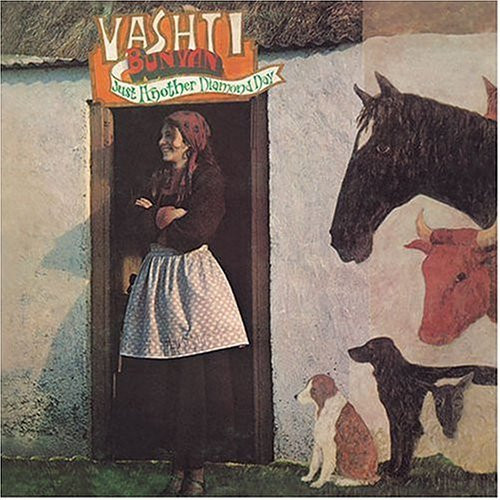
During the road trip to the Hebridean Islands, Vashti wrote the songs that featured on her 1970 debut album Just Another Diamond Day. It would be produced by Joe Boyd, who Joe met at Christmas, 1968.
It was through a mutual friend that Vashti and Joe Boyd met. When Joe saw the songs, he immediately offered Vashti the chance to record an album of her travelling songs for his Witchseason Productions. However, this didn’t happen immediately.
Just Another Diamond Day.
A year later, in 1969, Vashti returned to London to record her debut album Just Another Diamond Day, with Joe Boyd. Vashti had no band, but this didn’t matter. An all-star folk band would join Vashti in the studio to record on Another Diamond Day.
This included Dave Swarbrick and Simon Nicol from Fairport Convention. They were joined by the Incredible String Band’s Robin Williamson. The final piece of the jigsaw was string arranger, Robert Kirby. Just like Joe Boyd, Robert Kirby would go on to work with Nick Drake. Before that, they worked on Just Another Diamond Day, which was recorded at Sound Techniques Studios, in London. Just Another Diamond Day was then released in December 1970.
When Just Another Diamond Day was released in December 1970, it was well received by critics. They appreciated Vashti Bunyan’s new sound. She was now a fully fledged folk singer. This suited Vashti. Just Another Diamond Day veered between pastoral, ethereal, lush, understated, rural, melancholy, cerebral and cinematic. Sadly, when Just Another Diamond Day was released, it failed commercially. Vashti took this badly.
She retired from music after the commercial failure of Just Another Diamond Day. At first, Vashti stayed in one of The Incredible String Band’s Glen Row cottages. After that, Vashti moved to Ireland, and then settled in to Scotland. For the next thirty years, Vashti settled into family life. She had three children. As her children grew up, little did Vashti realise that somewhat belatedly, Just Another Diamond Day found the audience it so richly deserved.
Since her retirement in 1970, gradually, Another Diamond Day found the audience it deserved. It was reappraised by a new generation of music lovers and critics. Among Just Another Diamond Day’s fans, were a new generation of musicians who had been influenced by Vashti Bunyan. They realised that Just Another Diamond Day, which was reissued in 2000, was a long-lost classic. Eventually, Vashti Bunyan decided to make a welcome return to music in 2002.
This started with Vashti making guest appearances on Piano Magic’s 2002 single Writers Without Homes. Two years later, Piano Magic and Vashti collaborated on the Saint Marie E.P. This was just the start of a string of guest appearances and collaborations that Vashti made.
Vashti’s next collaboration was on Devendra Banhart’s 2004 album Rejoicing In The Hands. This was quite fitting as nowadays, Vashti is credited as the the Queen of Psych Folk and Devendra Banhart is one of her disciples. It was a case of two generations of psych folk singers collaborating. This wasn’t the last of Vashti’s collaborations.
A year later, Vashti worked with another band who were influenced by her music. This was Animal Collective. Vashti appeared on their 2005 E.P. Prospect Hunter. However, the most important release for Vashti in 2005 was her sophomore album Lookaftering.
Lookaftering.
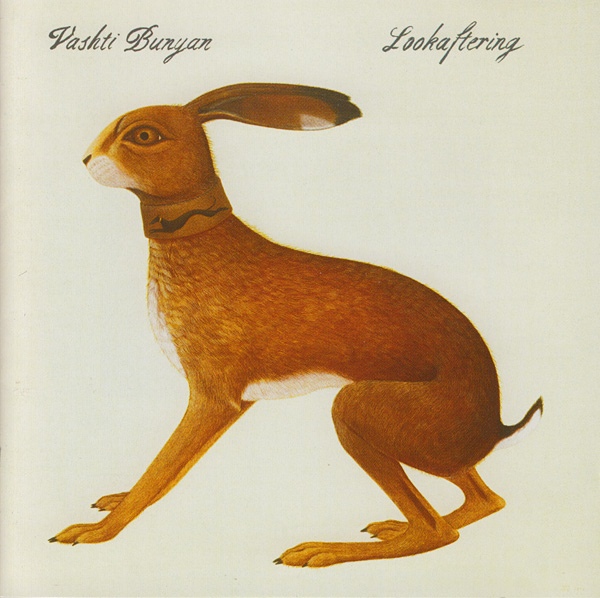
It had been a long time coming. Thirty-five years to be precise. However, eventually, Vashti made a very welcome return to the studio. The result was her sophomore album Lookaftering.
On Lookaftering, Vashti was joined by some of the artists she had influenced. This included Devendra Banhart and Joanna Newsom. A familiar face was Robert Kirby, who played such an important part in Vashti’s 1970 debut album Just Another Diamond Day. He played trumpet and French horn on Lookaftering, which was released in October 2005.
Just like when Just Another Diamond Day was released December 1970, Lookaftering was released to critical acclaim. Lookaftering was released to an appreciative audience. Understated, ethereal, cerebral, beautiful and ruminative, Lookaftering was a return to form from a reflective, philosophical Vashti. Older and wiser, Vashti Bunyan had matured with age. Surely, it wouldn’t be long before Vashti released her third album?
That’s proved not to be the case. Nine years have passed since Vashti released Lookaftering, Valerie released her third album Heartleap in October 2014.
Heartleap.
Heartleap features nine songs written by Vashti. She plays acoustic guitar and is accompanied by a small, talented band. This includes strings courtesy of Fiona Bruce, Ian Burdge and Gillian Cameron. Guitarists Garth Dickson and Andy Cabic are joined by Jo Mango on kalimba and dulcimer. Saxophonist Ian Wilson also plays recorder. Devendra Banhart, who featured on Lookaftering, makes a welcome return, adding backing vocals. These musicians played their part in the recording of Heartleap.
When Heartleap was released, critics hailed the album as a return to form from Vashti Bunyan. Thirty-five years after turning her back on music, and twelve years since she stepped back into the limelight, the Queen of Psych Folk was back, and better than ever.
Across The Water opened Heartleap, and is a mixture of ethereal beauty and melancholia. This set the scene for the pastoral beauty of Holy Smoke. Mother then features a reflective Vashti, as remembers her mother sitting playing her piano and smiling. Sadness and melancholia fill Vashti’s voice on this beautiful autobiographical song. Very different is Jellyfish, a dreamy, lysergic song. It gives way to Shell, a captivating song, where Vashti veers between storyteller and philosopher. Imagery and metaphors are omnipresent as a worldweary Vashti delivers cerebral lyrics. The Boy features moving lyrics that have a cinematic quality. So do the lyrics to Gunpowder, another reflective song, where a rueful Vashti sings of love and love lost. Blue Shed finds Vashti accompanied by a lone piano who longs to be alone. There’s a change of mood on Here, a beautiful, joyous paean, which features a whispery vocal from Vashti. Heartleap closes with the title-track, where Vashti’s breathy vocal, delivers beautiful lyrics that are akin to a stream of consciousness. This crowned Vashti Bunyan’s comeback album Heartleap, an album that could’ve and should’ve transformed her career.
Sadly, when Heartleap was released in October 2014, the album passed most people by despite its undeniable quality. Heartleap failed to find the wider audience it deserved. For Vashti who was then sixty-nine, this must have been hugely disappointing and frustrating. Especially considering the quality of music on Heartleap
Heartleap was an album that oozes quality and ethereal beauty. That’s the case from the opening bars of Across The Water, to the closing notes of Heartleap. It’s best described as dreamy, melancholy, beautiful, ethereal, haunting, cerebral and wistful. Elements of ambient, folk, jazz, freak folk and psychedelia can be heard during the ten songs on Heartleap. It’s a potent and heady brew, that features thirty-four flawless minutes of music, as Vashti Bunyan showcases her considerable talents during a career defining opus.
Incredibly, Heartleap is only Vashti Bunyan’s third album, despite her career beginning back in 1965. After the commercial failure of her debut 1970 debut album Just Another Diamond Day, Vashti turned her back on music. It was thirty-five years until we heard from Vashti Bunyan. She released Lookaftering in 2005. Many thought Vashti was back for good. However, since then, she flitted out of our lives for another nine years. Although she dabbled in music, she never released another album until Heartleap in 2014. Sadly, that looks like being Vashti Bunyan’s swan-song.
Three years after the release of Heartleap, Vashti Bunyan is now seventy-two. Her legion of loyal fans would love Vashti to return with her fourth album. However, it must be incredibly frustrating releasing albums of the quality of Just Another Diamond Day, Lookaftering and her career defining album Heartleap and watch them fail to find the audience they so richly deserve. That’s a great shame, as Vashti Bunyan has always a been hugely talented singer and songwriter.
That was the case in 1970, when she released Just Another Diamond Day, an album which was ahead of the musical curve. It was only much later that the Queen of Psych Folk’s debut album was discovered by a new generation of music lovers, critics and musicians. They flew the flag for Vashti Bunyan when she released Lookaftering and Heartleap. At last, the Queen of Psych Folk was back and was still a musical pioneer. Sadly, though, outside her loyal coterie of fans, Vashti Bunyan is largely unknown. Most people are still unaware of the trio of albums Vashti released between 1970 and 2014. Just Another Diamond Day, Lookaftering and Heartleap are best described as true hidden gems, that have yet to be discovered by the wider record buying public. Maybe, one day soon, a much wider audience will discover the musical delights of Vashti Bunyan, and no longer will the Queen of Psych Folk be referred to as one of music’s best kept secrets?
The Life and Music Of Vashti Bunyan.

LINDA PERHACS: THE NEWLY CROWNED QUEEN OF PSYCHEDELIC FOLK.
Linda Perhacs-The Newly Crowned Queen Of Psychedelic Folk.
The Linda Perhacs story is a case of what might have been, for the seventy-four year singer who nowadays, is regarded as the true Queen of psychedelic folk. Linda Perhacs career began in 1970, when she released her debut album Parallelograms on Kapp Records. Sadly, Parallelograms which nowadays, is regarded as a psychedelic folk classic, failed to find the audience it deserved and Linda Perhacs turned her back on music. Nothing more was heard of her until 2014.
That was when Linda Perhacs returned with her much-anticipated sophomore album The Soul Of All Natural Things in March 2014. By then, Linda Perhacs music had started to find a wider audience amongst a new generation of musicians and record buyers. This audience grew over the next three years when Linda Perhacs returned with I’m A Harmony in September 2017. Linda Perhacs it seemed, was making up for lost time as her comeback continued.This was the latest chapter to a fascinating story which began in 1943.
Linda Long was born in Mill Valley, which lies just north of San Francisco’s Golden Gate Bridge in 1943. By the time she was six or seven, Linda was able to write quite complicated compositions. She was a gifted and prodigious child. However, as is often the case with gifted children, her teachers didn’t maybe realise this. This didn’t stop Linda enrolling in the University of Southern California.
At University of Southern California, Linda majored in dental hygiene. This allowed her to work and study. Her course also allowed Linda to explore what was unfolding around her. Remember, this was the start of the counterculture explosion. San Francisco was central to this. Being around this meant Linda was exposed to a many different cultures. It was the same with art and music. For Linda, this was creatively stimulating and would change the course of her life.
Having graduated from University of Southern California, Linda began working with periodontist. During this period, Linda immersed herself in the various philosophies that were popular. Essentially, she taught her to mediate and rid herself of negative energy. This helped her and her patients. It may also have helped Linda develop as songwriter.
Away from work, Linda and her sculptor husband used to enjoy walking in the city’s public parks. It was during these walks that Linda was first inspired to write songs. This was something Linda hadn’t done since she and her husband moved to Topanga Canyon.
Indeed, Linda hadn’t written songs for a while. Throughout her University days, Linda hadn’t been involved in making music. However, she loved music. Topanga Canyon was full of artists and musicians. So, it was the perfect place for an aspiring singer-songwriter. With an environment that inspired her, and the sense of hope that was prevalent during the second half of the sixties, this marked the cultural blossoming of Linda Perhacs.
What also inspired Linda was her travels. She spent time travelling up the Big Sur coastline, right through Mendocino, the Pacific Northwest and to Alaska. This was her road rip. So was a trip to Chimacum, on the Olympic Peninsula. These journeys were what inspired Linda to write songs. Linda stresses her journeys inspired her. Drugs played no part in stimulating her creativity. Her songs come from her experiences in life.
This includes the colours, patterns and shapes that she’s seen since she was a child. Again, they’re not the result of recreational drugs. No. They’re a phenomenon that many people experience. These colours, patters and shapes inspired Linda, who soon, would be one step nearer releasing her first album.
Linda was, by now, working in the office of Beverley Hills’ periodontist. That’s where Linda met film soundtrack composer Leonard Rosenman and his wife Kay. Linda would ask them about their forthcoming projects. Then one day Leonard said to Linda “I can’t believe that clinical work is all you do?” So, Linda told them about her music and played a tape of one of her songs. These were songs she’d recorded during her travels. Leonard took the songs home to listen to them. The next day, Linda was offered a record contract.
When Linda handed Leonard the tape, she thought that Leonard was wanting to hear a glimpse of the type of music younger people were making. After all, Leonard had a lot of projects on the go. However, that didn’t stop him offering to produce Linda’s debut album. The song that made him make that offer was the Parallelograms, which would be the title-track of Linda’s debut album. Leonard referred to this track as “visual music composition.”
Leonard who’d been a composer all his life, had never been able to achieve this. Linda had. He explained that Parallelograms was different from the other tracks. Each of the component parts were interactive to the composer as three-dimensional sound. It’s akin to sculpting with ice, where the result is essentially a type of light and dance. For Linda, this was the way she’d always written. However, now Linda was going to take this one step further and record what became Parallelograms.
Parallelograms.
Parallelograms featured eleven tracks. Linda wrote ten of them. The exception was Hey, Who Really Cares? which Linda cowrote with Oliver Nelson wrote. For the recording of Parallelograms producer Leonard Rosenman brought in an all-star cast of musicians.
When recording of Parallelograms began, Leonard Rosenman and Linda were aiming to sculpt a series of soundscapes full of textures, colours and shapes. The music Linda hoped, would be “softer and ethereal.” Accompanying her were some legendary musicians. This included Shelley Mann and Milt Jackson on percussion. The rhythm section included Reinie Press on electric bass and Fender guitar and Steve Cohn on lead and 12-string guitar. John Neufield played flute and saxophone, Leonard Rosenman electronic effects and Tommy harmonica. Brian Ingoldsby was tasked with using an electrified shower hose for horn effects. Parallelograms was no ordinary album. Instead, it proved to be a truly groundbreaking album.
Before its release in 1970, critics received an advance copy of Parallelograms. The resultant reviews realised the importance of Linda Perhacs’ debut. Here was a truly talented singer, songwriter and musician. She had discovered her musical soul-mate in producer Leonard Rosenman. He was an ambitious, innovator who wanted to push musical boundaries to their limits on album that Leonard Rosenman described as “visual music composition.” Intrigued, critics investigated Parallelograms.
They discovered a beautiful, understated and enchanting album. From the opening bars of Chimacum Rain, right through to the closing notes of Delicious, Linda Perhacs breathed life, meaning, beauty and emotion into Parallelograms. It was an absolutely captivating listen; and an album where the listener was spellbound. That’s not surprising, as Parallelograms featured hopeful, captivating, ethereal and dreamy music. Parallelograms was also an ambitious and innovative album of genre-melting music.
Parallelograms was a flawless fusion of Americana, country, folk, pop, psychedelia and rock. There’s even a twist of ambient, drone pop, experimental and jazz. It was potent and heady brew; and one that should’ve launched Linda Perhacs’ career.
Sadly, when Parallelograms was released, Linda Perhacs’ psychedelic folk classic wasn’t the huge commercial success it should’ve been. This wasn’t helped by the record company’s failure to promote Parallelograms. As a result, Linda, like so many other hugely talented artists, failed to enjoy the commercial success and critical acclaim her undoubted talent deserved. So Linda returned to her job as a periodontist.
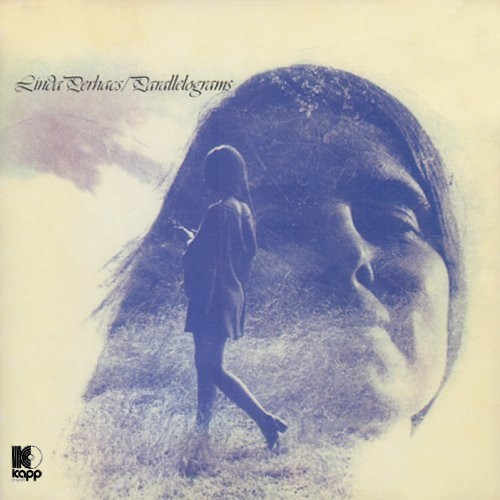
Meanwhile, music industry insiders and the those that had bought Parallelograms awaited Linda Perhacs’ sophomore album. A year passed, and there was no sign of the followup to Parallelograms. Linda was still working as a dental nurse, and had settled back into her life pre-Parallelograms. Two and three years passed, and still, there was no sign of another album from Linda. Three years became five, and five became ten. Linda had settled back into her life pre-Parallelograms. By then, fans of Linda Perhacs had all but given up hope that she would release another album.
Nothing was heard of Parallelograms until the nineties. By then, Parallelograms had become a cult classic which a new generation of record buyers had discovered. Interest in Parallelograms grew with each year. Somewhat belatedly, did people realise that Parallelograms was a seminal, lost classic and Linda Perhacs should’ve enjoyed a long and successful career. It was only later that Linda Perhacs realised what might have been.
It was only later in life that Linda Perhacs admitted that much as she loved music, she didn’t seem to have the drive required to make a career as a musician. She did, however, have the talent. Linda was blessed with an abundance of talent. That had been apparent on Parallelograms, and Linda’s long-awaited comeback album.
Having spent her career working as a dental hygienist, Linda decided to make her musical comeback. She’d spent a lifetime observing people and the world. This meant she’d a wealth of material for her not just her sophomore album, but a series of albums. However, first things first, Linda had to get round to releasing the follow to Parallelograms. This would become The Soul Of All Natural Things.
The Soul Of All Natural Things.
For The Soul Of All Natural Things, Linda wrote four tracks and cowrote the other six tracks. She penned The Soul Of All Natural Things, Intensity, Prisms of Glass and Song of the Planets. Linda and Chris Price wrote Children. They also cowrote River of God, Freely, Immunity and Song of the Planets with Fernando Perdomo. Fernando and Linda collaborated on Daybreak. These ten tracks became The Soul Of All Natural Things, which was recorded between September 2012 and April 2013.
Recording of The Soul Of All Natural Things took place at Reseda Ranch Studios, Reseda in California. The sessions took place between September 2012 and April 2013. Linda core band included Chris Price on backing vocals, guitars, bass, keyboards, percussion, programming and effects. Fernando Perdomo contributed bass, guitars, keyboards and percussion. Julia Holter and Ramona Gonzales added vocals and keyboards. Other artists featured on one or some of the tracks on The Soul Of All Natural Things. It was produced byChris Price, Fernando Perdomo and Linda. Once The Soul Of All Natural Things was completed, Linda’s long-awaited sophomore album was released in March 2014. After a forty-four year absence, Linda Perhacs was back.
By then, a new generation of critics were already familiar with the story of Linda Perhacs ‘ debut album Parallelograms. These critics penned critically acclaimed reviews, and hailed Linda Perhacs the comeback Queen.
Although forty-four years have passed since Linda Perhacs released her debut album Parallelograms, she’s picked up where she left off on The Soul of All Natural Things. Accompanied by some of the best young musicians Los Angeles has to offer, they’ve played their part in a flawless fusion of classic rock, folk, pop and psychedelia. There’s even diversions via ambient, experimental, jazz and drone pop during what’s another captivating and innovative album.
Just like on Parallelograms, Linda Perhacs proves to be a versatile vocalist. Her vocal veers between tender and breathy to elegiac, ethereal and emotive. Sometimes, there’s a fragility and sense of confusion, frustration and melancholia in Linda’s voice. Other times, her vocal becomes impassioned, hopeful and hurt-filled. The on Immunity, Linda’s vocal is louder, stronger and full of sincerity. Just like on other tracks this allows her to breathe meaning into the lyrics. Meanwhile, Linda’s accompanied by a choir of lysergic angels who add cascading harmonies, while crystalline guitars and lush strings join with the rest of Linda’s band. They play their part in the sound and success of The Soul Of All Natural Things.
The music on The Soul Of All Natural Things veers from bewitching to beautiful, to cinematic and cerebral. Other times, the music is powerful and spacious, but has an intensity. However, for much of The Soul Of All Natural Things the music is dreamy, ethereal and lysergic. That’s not unlike the album that started Linda Perhacs’ career, Parallelograms.
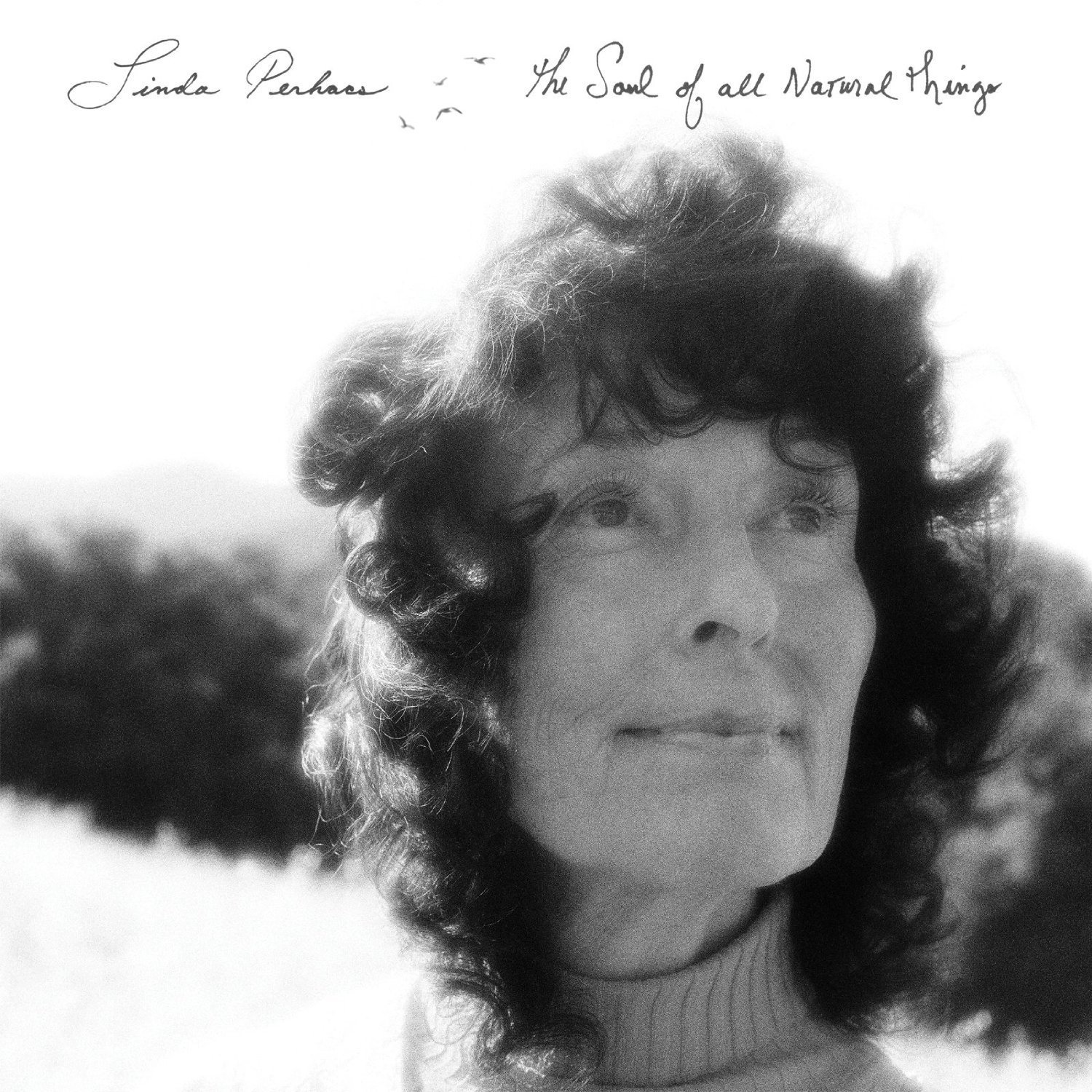
After the release of The Soul Of All Natural Things critics and record buyers wondered what the future held for Linda Perhacs? Would she return with a third album, and if so, when would it be ready for released? All would soon become clear this time, as Linda Perhacs kept her fans informed about the progress of her third album. The album that became I’m A Harmony was eagerly awaited by critics and fans.
I’m A Harmony.
Three-and-half years after the release of long-awaited and comeback album The Soul Of All Natural Things, Linda Perhacs was on the comeback trail again when she released album I’m A Harmony in September 2017. Recording of I’m A Harmony had been slow going, and some of Linda Perhacs’ were wondering when she and even if she was going to return with a new album?
What many of her fans didn’t realise, was that seventy-four year old Linda was still working as a dental hygienist and in her spare time, writing and recording I’m A Harmony. This was the reality of life as a musician in 2017.
When Linda began work on I’m A Harmony, she was joined by some familiar faces and also, a number of new names. Among the familiar faces were a number of well known songwriters, vocalists and producers including Fernando Perdomo, Julia Holter and Chris Price. They were joined by Pat Sansone of Wilco and The Autumn Defense who would co-produce I’m A Harmony with Fernando Perdomo and Linda Perhacs. They were joined by other songwriters, vocalists and producers who were all new names.
Among the new names who joined Linda Perhacs when work began on I’m A Harmony were Pat Sansone and John Stirratt of The Autumn Defense and Wilco; Nels Cline and Glenn Kotche of Wilco and Devendra Banhart who adds a soliloquy on We Will Live. They’re joined by John Pirrucello, James Haggerty, Leddie Garcia, Greg Wiezorek and vocalists Michelle Vidal and Durga McBroom. This all-star band would record the eleven songs that became I’m A Harmony.
Unlike her two previous albums, where Linda Perhacs wrote most or many of the songs on her own, she cowrote the eleven songs with various songwriting partners. This included Crazy Love with Pat Sansone and Wash My Soul In Sound with Mark Pritchard. Linda Perhacs wrote I’m A Harmony, Take Your Love To A Higher Level and One Full Circle Around The Sun with Fernando Perdomo, and the pair cowrote Winds Of The Sky, We Will Live and Eclipse Of All Love with Chris Price. He and Linda penned The Dancer with Julia Holter who cowrote Beautiful Play and Visions with Linda. These eleven songs would form the basis for I’m A Harmony.
Recording took place at Reseda Ranch Studios, Reseda in California and Tiny Door Studios in Nashville, with additional recording taking place at Julia Holter’s studio and The Session Rooms. This was where Linda Perhacs was joined by her band and guest artists as they began recording I’m A Harmony. It was co-produced by Linda Perhacs, Fernando Perdomo and Chris Price. They were augmented by Julia Holter on Beautiful Play, and she was joined on I’m A Harmony by was Chris Price who also does additional production work on Eclipse Of All Love. Mark Pritchard was drafted in and did additional production on You Wash My Soul In Sound. Each of these producers played their part on I’m A Harmony, which was eventually completed and scheduled for release in autumn 2017.
When I’m A Harmony was released, it received the same critical acclaim the greeted the release of The Soul of All Natural Things in March 2014. I’m A Harmony which received plaudits and praise from critics on both sides of the Atlantic saw the comeback Queen of psychedelic folk make a welcome comeback.
Three years after the release of her long-awaited and much-anticipated sophomore album The Soul of All Natural Things in March 2014, Linda Perhacs picked up where she left off on I’m A Harmony. It finds the Queen of psychedelic folk joined by a talented band who play their part in what can only be described as flawless genre-melting album where Linda Perhacs and her band combine elements of folk, pop and psychedelia. There’s also elements of ambient, avant-garde, experimental, free jazz and jazz on I’m A Harmony which Linda Perhacs co-produced with Chris Price and Fernando Perdomo.
They played their part in Linda Perhacs’ latest opus I’m A Harmony veers between ambient and atmospheric to bewitching to beautiful, to cinematic and cerebral, right through to elegiac and ethereal. Other times, the music on I’m A Harmony is melodic and memorable and other times, poignant and powerful. I’m A Harmony marks the return of the Queen of psychedelic folk with a genre classic in-waiting I’m A Harmony, which is a fitting follow to Linda Perhacs’ two previous flawless cult classics, Parallelogram and The Soul Of All Natural Things.
The three albums that Linda Perhacs has released showcase a truly prodigious singer, songwriter and musician, Linda Perhacs. She could and should’ve enjoyed a long and successful career. Alas, fate conspired against Linda Perhacs, when her debut album Parallelograms wasn’t promoted didn’t received sufficient promotion. As a result, Parallelograms failed commercially and Linda returned to her work as a dental nurse. The dream it seemed was over.
It was later in her career that Linda Perhacs reflected that maybe, she hadn’t been the most driven musician. That was a great shame, as Linda Perhacs was a hugely talented singer-songwriter. That was apparent on her debut album Parallelograms and the long-awaited and much-anticipated followup The Soul Of All Natural Things, which was released forty-four years after Parallelograms, in 2014. Three years later, and the Queen of psychedelic folk returned with her third album I’m A Harmony.
By then, a lot of water had passed under the bridge since 1970 and the release of Parallelograms, but Linda hadn’t lost her mojo. That was far from the case. Just like Parallelograms, The Soul of All Natural Things and I’m A Harmony are albums of flawless, timeless music from Linda Perhacs. They’re a reminder, if any was needed that Linda Perhacs had the talent to become one of the leading lights of the Laurel Canyon scene. Especially if Parallelograms had been released on a major label. Maybe then Linda Perhacs’ career might have been very different. However, Linda Perhacs seems to be content with her life, and it’s a case of no regrets for the Queen of psychedelic folk.
Linda Perhacs whose now seventy-four still continues to combine her life as a dental hygienist with her music career. This is very different to the life that many of her contemporaries live. They may have enjoyed long and successful careers, but Linda Perhacs has managed to release a triumvirate flawless, cult classics during what was a truncated career. These albums showcase the talents of Linda Perhacs, who is still one of music’s best kept musical secrets, who could’ve, and should’ve, enjoyed a long and successful career.
Linda Perhacs-The Newly Crowned Queen Of Psychedelic Folk.
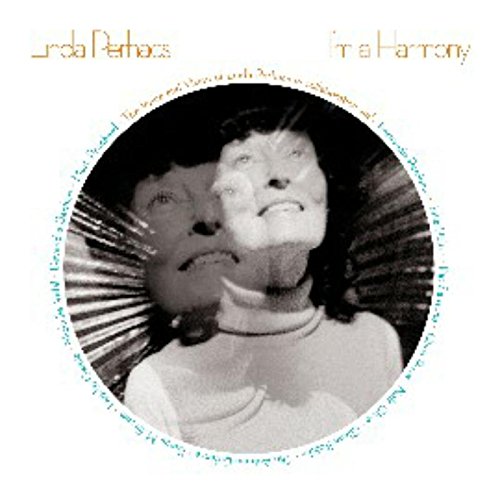
LINDA JONES-THE TRAGIC STORY OF THE LOST SOUL QUEEN.
Linda Jones-The Tragic Story Of The Lost Soul Queen.
As 1972 dawned, twenty-seven year old Linda Jones was a successful soul singer. She had already enjoyed five hit singles and her debut album had sold well. This looked like it was just the start of a long and successful career for a singer who had the potential to rival Aretha Franklin, Gladys Knight and Irma Thomas for the title Queen of Soul. Sadly, that wasn’t to be.
On March the 13th 1972, Linda Jones was resting at her mother’s home between a matinee and evening show at the Harlem Apollo. She took unwell and an ambulance was called. The following day, Linda slipped into a diabetic coma. Later that day, Linda Jones was pronounced dead on the 14th February 1972. Linda Jones was just twenty-seven. Tragedy had robbed soul music of his its talented and promising singers, Linda Jones.
Linda Jones was born, in New Jersey, on December 14th 1944, By the age of six, Linda Jones had joined the family gospel group The Jones Singers. They sang in churches in the New Jersey area. This was Linda’s introduction to music. However, as Linda became a teenager, she discovered another type of music…R&B.
Discovering R&B transformed Linda Jones’ life. This was a revelation. Suddenly, Linda knew what she wanted to do with her life…sing soul. So when she left high school, Linda had a plan. By days, she worked a series of dead end jobs. Then at night, she became Linda sang in local clubs in Newark, New Jersey. That was where she came to the attention of an A&R scout for MGM Records.
He spotted the potential in the nineteen year old Linda Jones. Soon, Linda was signed on a short term deal, and was net into the studio to record her debut single. The song that was chosen was a cover of Lonely Teardrops, which had given Jackie Wilson a hit single. When it was released, MGM billed Linda Jones as Linda Lane. Despite the change in name, Lonely Tears failed to make an impression on the charts. Linda’s time at MGM was over before it had even begun.
Despite the disappointment, Linda Jones remained stoic and returned to working dead end jobs by day, and singing in clubs at night. That was where she met Jerry Harris, a staff songwriter at Jobete Music, Motown’s publishing company.
Straight away, Jerry Harris realised that Linda Jones was a cut above most of the singers he came across. He promised Linda that he would do all he could to help her. Jerry Harris was as good as his word.
He introduced Linda Jones to producer George Kerr. Little did Linda realise, that this was the start of a six year partnership.
Not long after their initial meeting, George Kerr booked a session at a New York recording studio in October 1964. For the session, Jerry Harris had recorded some top session players. The rhythm section included drummer Bernard “Pretty” Purdie, bassist Cornell Dupree and guitarist Eric Gale. They were joined by pianist Richard Tee. This was the band that would be by Linda’s side for the next six years. However, during that first session, Linda recorded the two songs that featured on her next single, Take The Boy Out Of The Country, I’m Taking Back My Love.
After the recording sessions, George Kerr shopped the tracks to various record companies. When executives at Atco, a subsidiary of Atlantic Records, heard the two songs, they were keen to sign Linda Jones. When the contract was signed, Linda Jones’ Take The Boy Out Of The Country, was released in March 1965 as Linda Jones’ sophomore single. Tucked away on the B-Side was I’m Taking Back My Love. Despite the quality of both sides, Linda’s sophomore single failed commercially. This marked the end of her time at Atco.
George Kerr wasn’t about to give up on Linda Jones. After leaving Atco, Linda returned to the club circuit. This was the equivalent of serving a musical apprenticeship. It helped Linda hone her style. Eventually, George took Linda back into the studio, and they recorded Fugitive From Love and You Hit Me Like T.N.T. These two tracks George took to Blue Bird Records.
Again, executives at Blue Bird Records liked the two tracks, and agreed to release them as Linda Jones’ third single. Linda was maturing as a vocalist, and combined power and emotion on Fugitive From Love. It became her next single when it was released on Blue Cat Records in July 1966. On the flip-side was You Hit Me Like T.N.T. Sadly, Blue Cat Records lacked the funds to promote Fugitive From Love properly. Unsurprisingly, it failed to find an audience, and Linda Jones was once again, looking for a new label.
Still though, George Kerr continued to believe in Linda Jones. Undaunted he managed to find the funds to finance another session. One of the songs he planned to record was Hypnotised. George Kerr took Linda and her band into the studio and they cut the two tracks. Then Jerry went looking for a label to release Linda’s fourth single.
First stop for George Kerr was Brunswick. However, they weren’t in the market for any more female singers. They already had Barbara Acklin, who they were promoting heavily. However, a Brunswick staffer suggested that George head over to Warner Bros, and meet Ron Moseley. He was working for Warner Bros’ R&B imprint Loma. That’s what George decided to do.
At Warner Bros, George Kerr met with Ron Moseley. He took out a copy of Hypnotised and began to play it to Ron. At that moment, Jerry Ragovoy walked past. The song stopped the songwriter and producer in his tracks. He thought it had hit potential. Within a matter of minutes, a deal had been struck. After that, George headed home to Florida.
On his return to New York, Jerry Ragovoy and staffers from Loma had been looking for Linda Jones. They wanted her to play some shows to support Hypnotised. This she did, and when Hypnotised was released in May 1967, the single began to climb the charts. Eventually, it reached twenty-one in the US Billboard 100 and number four in the US Billboard R&B charts in 1967. After four years and four singles, Linda Jones had made her breakthrough. This was just the start of the journey for Linda.
Four months later, and Linda Jones released the followup to Hypnotised was released in September 1967. The song that was chosen was the soul-baring ballad What’ve I Done (To Make You Mad). Again, the single climbed the charts, and eventually, reached sixty-one in the US Billboard 100 and number eight in the US Billboard R&B. This gave Linda Jones back-to-back top ten single in the US R&B charts.
Buoyed by this success, Loma decided to send Linda into the studio to record her debut album. Hypnotised was released later in 1967. It featured the singles Hypnotised and What’ve I Done (To Make You Mad). Other songs included the rueful If Only (We Had Met Sooner), A Last Minute Miracle reached twenty-six in the US R&B charts. By then, great things were being forecast for Linda Jones.
As 1967 drew to a close, Linda Jones released her third single of the year. This was the hopeful power ballad Give My Love A Try. It was released in December 1967. Despite its quality, Give My Love A Try failed to make an impression on the charts. However, 1967 had still been the most successful year of Linda Jones’ career.
Just two months after the released of Give My Love A Try, Linda Jones returned with her first single of 1968, My Heart Needs A Break. This Sammy Turner composition was produced by George Kerr. When it was released in February 1968, the single charted but stalled at ninety-four in the US Billboard 100. In the US R&B charts, Give My Love A Try fared better, reaching thirty-four. It seemed that Give My Love A Try’s failure to chart had been a minor blip. Or was it?
In June 1968, Linda Jones returned with a new single, What Can I Do (Without You). When it was released, it failed to trouble the chart. This Lind hoped was another minor blip and the hits would soon resume.
Three months later, and Linda Jones returned with her new single It Won’t Take Much (To Bring Me Back). When it was released in September 1968, it too, failed to chart. This was a further disappointment for Linda Jones. Worse was to come.
By 1969, Warner Bros. had realised that there was more money to made in rock than soul. Warner Bros. called time on their Loma imprint. It wasn’t part of their future plans. Nor it seemed was Linda Jones. She only released one more single for Warner Bros.
This was My Heart (Will Understand), which was released the main Warner Bros. label in April 1969. When the single failed commercially, this must have made Warner Bros’ mind up. Linda Jones left Warner Bros not long after this.
Later in 1969, George Kerr took Linda Jones back into the studio with her usual band. They recorded a cover of The O’Jays’ I’ll Be Sweeter Tomorrow and That’s When I’ll Stop Loving You. These songs, George Kerr shopped to various labels.
Eventually, George Kerr agreed to lease the songs to Gamble and Huff’s Neptune Records. For Linda, this in a step down in career terms. She had previously, been signed to a major label, that was one of the most famous labels in music. Now she was about to release her next single small independent label.
The only saving grace was that Neptune Records had signed a distribution deal with Chicago based Chess Records. This should’ve helped get Neptune Records’ releases into more shops than other independent labels. One of these releases was Linda Jones’ single I’ll Be Sweeter Tomorrow.
It was released in October 1969, with That’s When I’ll Stop Loving You on the B-Side. Upon its release, I’ll Be Sweeter Tomorrow entered the US R&B charts, and eventually, reached forty-five. Meanwhile, some DJs took to playing the B-Side That’s When I’ll Stop Loving You on the radio. The song became so popular, that it too charted, reaching number forty in the US R&B charts. Linda had enjoyed two hit singles. Maybe Linda’s luck was changing?
She was certainly busy with live work when I’ll Be Sweeter Tomorrow and That’s When I’ll Stop Loving You charted in January 1970. Linda Jones was part of package shows that toured America. At each show, Linda appeared three times, singing between three and five songs. This introduced her to a much wider audience. However, this must have been taking its toll on Linda.
She had been diagnosed with diabetes at an early age. Like all diabetics, Linda had to take medication and be careful with her diet. Linda had to eat regularly and watch her blood sugar level. Out on tour, this wasn’t always easy, and sometimes, Linda suffered from diabetes attacks. Gradually, they began to happen more often. For Linda and her mother, this must have been a worry. Despite this, the twenty-five year old continued her career.
In May 1970, Linda Jones recorded a cover of Ooh Baby You Move Me. It had previously been recorded by Ben Aitken in 1968. On the B-Side, was Can You Blame Me? Again, producer George Kerr decided to lease Ooh Baby You Move Me to Neptune Records. This wasn’t his best decision.
At the time, Gamble and Huff were planning on launching a a new label, Philadelphia International Records. Neptune Records was being wound down, so the pair could focus their attention on the new label. Maybe George Kerr wasn’t aware of these plans? As a result, Ooh Baby You Move Me wasn’t promoted properly on its release in May 1970. This proved to be the last Linda Jones record leased to Gamble and Huff.
That wasn’t the only change in the offing. Linda Jones moved to Turbo Records, which was a subsidiary of All Platinum Group, a New Jersey funk, R&B, and soul label. This was the start of a new chapter in the career of Linda Jones. However, changes were afoot.
For Linda Jones Turbo Records’ debut, Stay With Me Forever was chosen. It was penned by George Kerr with Sharon Seiger and Nate Edmonds. He would co-produce Stay With Me Forever with George Kerr. On the B-Side was I’ve Given You The Best Years Of My Life, which Linda cowrote with Gerald Harris. He co-produced the song with Toby Henry. What was Linda’s thirteenth single was released in May 1971
This was Stay With Me Forever, Linda Jones’ first single for her new label, Turbo Records. It was released in May 1971 and featured a vocal tour de force from Linda. She showcased every vocal trick in the book during what was a musical masterclass. The record buying public agreed, and the single reached forty-seven in the US R&B charts. Given the success of Stay With Me Forever work began on the followup.
The song chosen was a cover of the Goffin and King composition, I Can’t Make It Alone. It was ‘produced’ by a veteran of the New York music scene, Sylvia Robinson. She would go on to found and become the CEO of Sugar Hill Records. Meanwhile, Al Goodman and Nate Edmonds co-produced the B-Side, Don’t Go (I Can’t Bear To Be Alone). The single was released in November 1971. However, the single failed to replicate the success of Stay With Me Forever.
As 1971 gave way to 1972, Linda Jones entered the studio to record her next single, Your Precious Love. It was released in February 1972. Soon, it had entered the charts and began to climb. Then tragedy struck and suddenly music no longer mattered.
On the afternoon of March the 13th 1972, Linda Jones performed at a matinee at the Harlem Apollo. She returned to mother’s home, where she lived to rest between shows. That was where tragedy struck.
Later that afternoon, Linda Jones became unwell. An ambulance was called and she was taken to hospital. The following day, George Kerr visited the Jones’ household. He was told by a neighbour of Linda becoming unwell and an ambulance taking her to the hospital. By the time George made his way to the hospital, Linda had slipped into a diabetic coma. Later, that day, 14th February 1972 Linda Jones was pronounced dead. She was just twenty-seven.
Meanwhile, Your Precious Love continued to climb the charts, reaching number seventy-four in the US Billboard 100 and fifteen in the US R&B charts. Ironically, this was Linda Jones most successful single since What’ve I Done (To Make You Mad) in 1967. However, Your Precious Love was Linda’s final hit single.
Despite her death, Turbo Records continued to release singles bearing Linda Jones’ name. This included Linda Jones And Whatnauts’ collaboration I’m So Glad I Found You. It was released in June 1972, but failed to chart. That wasn’t the last Linda Jones single Turbo Records would release.
Let It Be Me was then released in September 1972. It also features on an album released by the All Platinum Group, Your Precious Love.
It featured number of tracks had been stockpiled during various recording sessions. These tracks were somewhat hastily released as a Linda Jones’ sophomore studio album. Among the tracks that featured on Your Precious Love, were Your Precious Love, Behold, Stay With Me Forever, Not On The Outside and I Can’t Make It Alone. When it was released later in 1972, Your Precious Love didn’t replicate the success of the single. Despite this, Turbo Records released another posthumous album of Linda Jones’ music.
The second Turbo Records’ album was Let It Be Me. One of the highlights was a beautiful, soulful ballad I Do. It allows Linda Jones to use her full vocal range. It’s a poignant reminder of a truly talented singer. Meanwhile, however, Turbo Records continued to release singles bearing Linda Jones’ name.
This included a new versions of Fugitive From Love. It was released in 1973, with Things I’ve Been Through on the B-Side. However, the single failed to trouble the charts. Later in 1973, the single was flipped over and Things I’ve Been Through was released as a single. Still success eluded the single which marked the end of the Turbo Records years.
By then, the first anniversary of Linda Jones death was approaching. However, her music lived on. That’s still the case today.
Nowadays, her music is growing in popularity, and she is reaching a wider audience. No wonder. Linda Jones is now remembered for possessing one of the finest and most versatile voices in soul music. If she had lived, Linda Jones had the potential to rival Aretha Franklin, Gladys Knight and Irma Thomas for the title Queen of Soul. Sadly, Linda Jones passed away on 14th of December 1972 and Tragedy had robbed soul music of his its talented singers who could’ve gone on to become the Queen of Soul.
Linda Jones-The Tragic Story Of The Lost Soul Queen.



THE MONKEES: FROM FOLK AND ROLL TO THE PSYCHEDELIC YEARS AND BEYOND.
The Monkees: From Folk & Roll To The Psychedelic Years and Beyond.
On September the ‘8th’ 1965, the Daily Variety contained an advert that said: “Folk & Roll Musicians-Singers for acting roles in new TV series.” This was a new sitcom that had been written by Bob Rafelson and Bert Schneider about a struggling rock band from Los Angeles. The new sitcom would follow the adventures of Micky, Davy, Michael, and Peter as they searched for their big break. 437 musicians looking for their big break responded to the advert.
Eventually, Bob Rafelson and Bert Schneider whittled their way through the hopeful applicants, and settled on three Americans Micky Dolenz, Michael Nesmith, Peter Tork and British actor and singer Davy Jones. They became The Monkees, which Mickey Dolenz later described as: “a TV show about an imaginary band … that wanted to be The Beatles, [but] that was never successful.”
While The Monkees never replicated the success of The Beatles, Bob Rafelson and Bert Schneider’s television show proved popular in America and further afield. It ran for three series’ between 1966 and 1968, with Americans tuning in to fifty-eight episodes that followed the adventures of Micky, Davy, Michael, and Peter. During this period, The Monkees were one of the biggest selling bands in America.
The Monkees recording career began in October 1966 with their eponymous debut album, and lasted four years. Less than four years later, The Monkees released their swan-song Changes, in June 1970. Within a year, The Monkees has split-up after releasing nine album in less than four years.
These albums divided the opinion of critics, cultural commentators and record buyers, and continue to do so, forty-six years after The Monkees originally split-up. Some critics and record buyers regard The Monkees’ music as perfect pop, while others claim it as nothing more than bubblegum pop or manufactured pop. Both sides are firmly entrenched in their views about the merits or otherwise of The Monkees’ music. However, an oft-overlooked side of The Monkees’ career is their psychedelic era between 1966 and 1968. This was when The Monkees released some of the most memorable music of their career. Before that, The Monkees released their debut single.
When The Monkees released Last Train To Clarksville as their debut single on ‘18th’ August, the single started climb the charts, and reached number one in Canada and on the US Billboard 100. This was enough to give The Monkees their first gold disc in America. However, tucked away on the B-Side of the single was a taste of the psychedelic side of The Monkees, Take A Giant Step. It would feature on The Monkees’ eponymous debut album.
The Monkees.
Just a month after The Monkees released their debut single, they released their debut album The Monkees in September 1966. Reviews of the album were mixed, with some critics still not convinced that The Monkees were a serious band. However, the positive reviews outnumbered the negative reviews of The Monkees. It started climbing the charts, and reached number one in Britain, Canada and on the US Billboard 200. The Monkees sold five million copies in America alone, and was certified platinum five times. Micky, Davy, Michael, and Peter’s debut album had proven popular and appealed to a wide range of record buyers.
It wasn’t just fans of pop and rock that were won over by The Monkees. So were fans of psychedelic music. The Monkees’ psychedelic side first emerged on their eponymous debut album. Goffin and King’s Take A Giant Step and David Gates’ Saturday’s Child showcased the psychedelic sound of The Monkees, which was very different to other songs on the album. Maybe The Monkees had designs on becoming a serious band?
More Of The Monkees.
Just four months after the release of The Monkees, America’s version of the Fab Four returned with their sophomore album More Of The Monkees in January 1967. By then, what had been dubbed Monkeemania was in full swing. As a result, More Of The Monkees was rushed out to capitalise on the band’s popularity. This showed, and More Of The Monkees proved not to be the band’s finest hour.
Critics weren’t won over by More Of The Monkees, and their reviews reflected this. They weren’t alone. The Monkees weren’t happy with their contribution to More Of The Monkees. It consisted of adding the vocals, and very occasionally playing the instruments that they were meant to be playing. Mostly, though, the interments were played by members of the Wrecking Crew who stood in for The Monkees. They weren’t happy about this and wanted full artistic control.
Three weeks after the release of More Of The Monkees, Michael Nesmith began lobbying the creators of The Monkees to play their instruments on future records. Don Kirshner who had been brought onboard to secure music for The Monkees was against the idea of The Monkees playing their instruments on future records.Things came to a head a heated meeting between The Monkees, Don Kirshner and Colgems lawyer Herb Moelis. At one point, Michael Nesmith threatened to leave The Monkees. Given the album sales, there was only going to be one winner.
From their third album, The Monkees, not members of the Wrecking Crew would play their instruments. Executives at the Colgems label were scared of upsetting the cash cow that was The Monkees. While More Of The Monkees wasn’t the band’s finest hour, it reached number one in Britain, Norway, Canada and America. More Of The Monkees sold five million copies and was certified platinum five times over. This was pretty good for an album that many considered to be rushed out to cash in on the popularity of Monkeemania.
One of the finest songs on More Of The Monkees is She, which was penned by Tommy Boyce and Bobby Hart. Micky Dolenz adds a vocal on She, which featured The Monkees at their most lysergic. The psychedelic sound of The Monkees would return on their third album, Headquarters.
Headquarters.
Four months after the release of More Of The Monkees, came the release of The Monkees’ third album Headquarters in May 1967. Headquarters which was produced by Chip Douglas, was the first album where The Monkees enjoyed full artistic control over their music. This came at a price.
After the dismissal of Don Kirshner, the songs that he had supervised were discarded. They wouldn’t feature on the album. Instead, it would only feature tracks where The Monkees enjoyed full artistic control. Still, though, session musicians were occasionally used, but they seemed to be a thing of the past.
Another difference was that much of the albums was written by members of The Monkees. This included the Micky Dolenz penned Randy Scouse Git and For Pete’s Sake which was written by Peter Tork and Joey Richards. Both songs were sung by Micky Dolenz and featured the psychedelic side of The Monkees. The strongest of the two tracks was For Pete’s Sake, which marked the start of a new era for The Monkees.
While most of the reviews of Headquarters were positive, some critics weren’t impressed by the first album where The Monkees enjoyed full artistic control. They felt some of the songs penned by members of The Monkees shouldn’t have made the cut. They wouldn’t if Don Kirshner had been around,and already it was apparent that his loss cost The Monkees dearly.
When Headquarters was released in May 1967 the album reached number two in Britain and Norway. In North America, Headquarters reached number one in Canada and in the US Billboard 100. However, the album sales were way down, with Headquarters selling ‘just’ two million copies. While this resulted in Headquarters being certified double platinum, the album had sold three million copies less than More Of The Monkees. To make matters worse, when Randy Scouse Git was released as a single, it never came close to troubling the charts. The Monkees had learnt an expensive lesson from Headquarters, that full artistic control came at a cost.

Two months after the release of Headquarters, The Monkees released a cover of Goffin and King’s Pleasant Valley Sunday as a single in July 1967. This example of perfect pop was one of the finest songs of The Monkees’ psychedelic era. It reached number three and was the fourth Monkees single to be certified gold. Maybe The Monkees’ luck was starting to change?
Pisces, Aquarius, Capricorn and Jones Ltd.
There was no let up for The Monkees, who returned with another album in November 1967, Pisces, Aquarius, Capricorn and Jones Ltd. It was a quite different album from Headquarters.
Unlike Headquarters, where seven out of the twelve songs were written by members of The Monkees, only three of thirteen songs were written by the band. The remainder was cover versions, including songs written by successful songwriters and songwriting partnerships. This included Tommy Boyce and Bobby Hart’s Words, Barry Mann and Cynthia Weil’s Love Is Only Sleeping and Goffin and King’s Star Collector. They were joined by Goffin and King’s Pleasant Valley Sunday. These songs would showcase the psychedelic side of The Monkees.
When they came to record Pisces, Aquarius, Capricorn and Jones Ltd, session musicians were drafted in. They had featured to some extent on Headquarters, but played a bigger part in the recording of Pisces, Aquarius, Capricorn and Jones Ltd. This made sense, as they weren’t accomplished enough musicians to record an entire album. The Monkees played their instruments on some of the songs, but elsewhere on the album, session musicians took their place. However, as the years went by, The Monkees improved as musicians.
The Chip Douglas produced Pisces, Aquarius, Capricorn and Jones Ltd was released in November 1967, and was well received by most of the critics. However, The Monkees had their critics, who saw the them as nothing more than a made for television band. That was unfair, as The Monkees had just released one of the best albums, and an album that pioneered the use of the Moog synth.
While Pisces, Aquarius, Capricorn and Jones Ltd was released, it reached number five in Britain, four in Norway and three in Canada. In America, it became The Monkees’ fourth album to reach number one. However, Pisces, Aquarius, Capricorn and Jones Ltd ‘only’ sold two million copies in America, and was certified double platinum. Maybe The Monkees’ popularity had peaked?

The Birds, The Bees and The Monkees.
Five months after the release of Pisces, Aquarius, Capricorn and Jones Ltd, The Monkees returned with their fifth album The Birds, The Bees and The Monkees. It marked the start of a new era for The Monkees, who had rung the changes in their pursuit of full artistic control. The Monkees had dispensed with the services of producer Chip Douglas, who had produced The Monkees first four albums. This was a huge risk.
By the time The Birds, The Bees and The Monkees was released, The Monkees television show had been cancelled. As a result, The Monkees were concentrating all their efforts on their music. Deep down, they wanted to be seen as a serious band. However, still, many critics and record buyers saw The Monkees as a manufactured, made for television band. They hoped that The Birds, The Bees and The Monkees would convince their critics that there was much more to them than that.
For their fifth album, members of The Monkees wrote six of the twelve tracks. This included Tapioca Tundra which was penned by Michael Nesmith. When it was recorded, The Monkees fused psychedelia and country. During the sessions, The Monkees continued to employ session musicians, who added backing vocals on some tracks. This was playing into the hands of The Monkees’ critics, who continued to accuse them of not being a ‘proper’ band. Their fans pointed The Monkees were a successful band, whose first four albums had sold in excess of fourteen million albums.
Before the release of The Birds, The Bees and The Monkees, critics had their say. The reviews were mixed, and again, there was no consensus amongst the critics. Some of the reviews were positive, while other were critical of The Monkees’ fifth album and the first they had produced themselves. With no consensus amongst the critics,record buyers had the casting vote.
The perfect pop of Daydream Believer was chosen as the lead single, and released in October 1967, It reached number one on the US Billboard 100 and was certified gold. Alas, Daydream Believer was the last of The Monkees’ nineteen singles to top the charts. However, the success of Daydream Believer augured well for the release of When The Birds, The Bees and The Monkees.
When The Birds, The Bees and The Monkees was released in April 1968, it failed to replicate the success of previous albums. The album failed to trouble the charts in Britain, where The Monkees had always been popular. It was a similar case in Canada, where The Birds, The Bees and The Monkees stalled at number six. In America, The Monkees was hoping that The Birds, The Bees and The Monkees would give them their fifth consecutive number one album. It was a case of close but no cigar, when The Birds, The Bees and The Monkees reached number three in the US Billboard 200. For The Monkees this was another disappointment. Especially when they heard that the album had sold just over a million copies. While this was enough for a platinum disc, it was a far cry from when both The Monkees and More Of The Monkees sold five million copies. Monkeemania it seemed, was now a thing of the past.
Maybe not? In February 1968, The Monkees released Valleri as the second single from The Birds, The Bees and The Monkees. The followup to Daydream Believer reached number three in the US Billboard 100 and was certified gold. Little did The Monkees realise that Valleri was their last single to be certified gold.
The followup to Valleri was D. W. Washburn, which was released in June 1968. However, it stalled at number nineteen in the US Billboard 100. This was a sign of what was to come
Head.
Four months later, and The Monkees returned with a new single in October 1968. The song that had been chosen was Goffin and King’s Porpoise Song, which featured on the soundtrack to Head. The Monkees had been asked to provide the soundtrack, and with a few friends created a soundtrack that mixed satire and darkness. Porpoise Song was a taste of what The Monkees had in store for their fans. However, the single stalled at a lowly sixty-two in the US Billboard 100, and became the second least successful single when it stalled at a lowly sixty-two in the US Billboard 100. This was worrying as Head was due to be released in late 1968.
Just like their previous albums, reviews of Head were mixed and there was no consensus among critics. While some critics loved the albums, others loathed it. This was nothing new. However, Head was the first soundtrack album The Monkees had recorded, and it featured six songs, including the lysergic Porpoise Song. It’s one of the best songs on Head. These six songs were joined by Ken Thorne’s incidental music, dialogue fragments, and sound effects from the film. As a result, it was very different to previous albums and it was unfair to compare Head to The Monkees’ studio albums. That was what the critics had done.
On the release of Head in December 1968, the album stalled a lowly forty-five in the US Billboard and twenty-four in Canada. This was the lowest chart placing in either country. Across the Atlantic in Britain, Head was the second album that failed to trouble the charts. This was a worrying time for The Monkees.
Not long after the release of Head, Peter Tork left The Monkees, citing exhaustion. The Monkees had recorded six albums in less than three years. They also filmed three series of the television series The Monkees and toured extensively. It was no wonder Peter Tork was exhausted. However, leaving The Monkees proved costly, as he had four years remaining on his contract. After paying a large, six figure sum of money, Peter Tork was no longer a monkey. However, he would feature on The Monkees’ swan-song Good Times!

Instant Replay.
Just four months after the release of Head in 1968, The Monkees returned with their seventh studio album Instant Replay in February 1969. Instant Replay was the first album The Monkees released after the departure of Peter Tork, and was the only one of the nine original studio albums that hadn’t featured in the original TV series.
By the tine work began on Instant Replay, Brendan Cahill had been appointed The Monkees’ new musical supervisor. He was tasked with transforming the group’s fortunes. Brendan Cahill decided to look into The Monkees’ vaults for songs that had been recorded when they were in the musical prime. This Brendan Cahill hoped would restore the group to the top of the US Billboard 200.
Eventually, Brendan Cahill settled on twelve songs that would become Instant Replay. These songs included Tommy Boyce and Bobby Hart’s Through the Looking Glass, Don’t Listen To Linda, Me Without You and Tear Drop City. Two Goffin and King songs Won’t Be the Same Without Her and A Man Without a Dream joined Carol Bayer Sager and Neil Sedaka’s The Girl I Left Behind Me. The three remaining original members of the Monkees penned the rest of the album, Micky Dolenz wrote Just a Game and Shorty Blackwell, while Michael Nesmith contributed Don’t Wait For Me and While I Cry. Davy Jones wrote You and I with Bill Chadwick. This mixture of cover songs and original material had been recorded over a period of thirty-one months.
Brendan Cahill chose some songs recorded in the summer of 1966 by the original lineup of The Monkees. They joined new songs recorded in 1968 and 1969, including A Man Without a Dream and Someday Man were produced by Bones Howe and recorded at Wally Heider’s studio. Bones Howe brought onboard some of the Wrecking Crew to accompany The Monkees. Eventually, Instant Replay was completed, it featured of twelve songs recorded between July 1960 and January 1969.
When Instant Replay was released in February 1969, reviews of the album were mixed. Its mixture of pop, psychedelia and rock didn’t receive the same reception as previous albums. This was a disappointment for The Monkees.
When it came to releasing a lead single from Instant Replay, Brendan Cahill chose Tear Drop City, which was one of the songs from The Monkees’ vaults. Brendan Cahill decided to increase the tempo nine percent changing the song’s key from G to A-flat. Alas, that didn’t help Tear Drop City which stalled at fifty-six in the US Billboard 1o0 and forty-seven in the UK. For The Monkees this was another disappointment. Things didn’t get much better when Instant Replay was released, and reached just thirty-two in the US Billboard 200, forty-five in Canada and twenty-six in Japan. This was another disappointment for The Monkees, who were no longer as popular as they had once been. Proof of this was the followup single to Tear Drop City was Someday Man, which reached eighty-one in the US Billboard 1o0 and forty-four in the UK. It was beginning to look as if The Monkees’ career was at a crossroads.
The Monkees Present.
By the time The Monkees began work on their eighth album The Monkees Present, which is sometimes known as The Monkees Present Micky, David, Michael, their popularity had peaked. As a result, Screen Gems were no longer as interested in The Monkees, who were no longer the cash cow they had once been. This resulted in The Monkees being left to their own devices when it came to producing the The Monkees Present.
Originally, The Monkees Present was meant to be a double album, which devoted one side to the album to each member of The Monkees. That was until Peter Tork left The Monkees. To make matters worse, by the time it came to record the album, Michael Nesmith, Micky Dolenz and Davy Jones had all embarked upon solo careers. As a result, a decision was made that The Monkees Present would be a single album.
For The Monkees Present, Tommy Boyce and Bobby Hart only contributed Looking For The Good Time and Ladies Aid Society. They joined Michael Martin Murphey’s Oklahoma Backroom Dancer and Janelle Scott and Matt Willis’ Pillow Time. The rest of the album was penned by The Monkees, with Michael Nesmith contributing Good Clean Fun, Never Tell A Woman Yes and Listen To The Band. Micky Dolenz wrote Mommy and Daddy and cowrote Bye Bye Baby Bye Bye with Ric Klein. Davy Jones wrote If I Knew with Bill Chadwick who penned French Song. These songs became The Monkees Present.
Just like Instant Replay, some of the songs had been recorded between August and October 1966, when The Monkees were in their prime. The rest of the album was recorded between June 1968 and August 1969. The result was an album that combined it was hoped combined classic Monkees with their new music. Surely this would be a winning formula?
Sadly, that wasn’t the case when The Monkees Present was released in October 1969. Critics weren’t impressed by what was one of The Monkees’ weakest album. They had eschewed their psychedelic sound and switched between country rock, folk rock, pop and rock. The Monkees Present wasn’t the most cohesive album The Monkees had released, and was slightly disjointed. This didn’t bode well for the release of The Monkees Present.
Things didn’t get any better when the lead single Listen To The Band stalled at sixty-three in the US Billboard 100. Then when The Monkees Present was released in early October 1969 it stalled at a lowly 100 in the US Billboard 200, and became The Monkees’ least successful album. Adding to The Monkees’ woes was the single Good Clean Fun struggling to eighty-three in the US Billboard 100. For The Monkees this was a worrying time.
Just when The Monkees thought things couldn’t get any worse, Michael Nesmith left the band. This left just Davy Jones and Micky Dolenz to fulfil The Monkees’ recording contract.
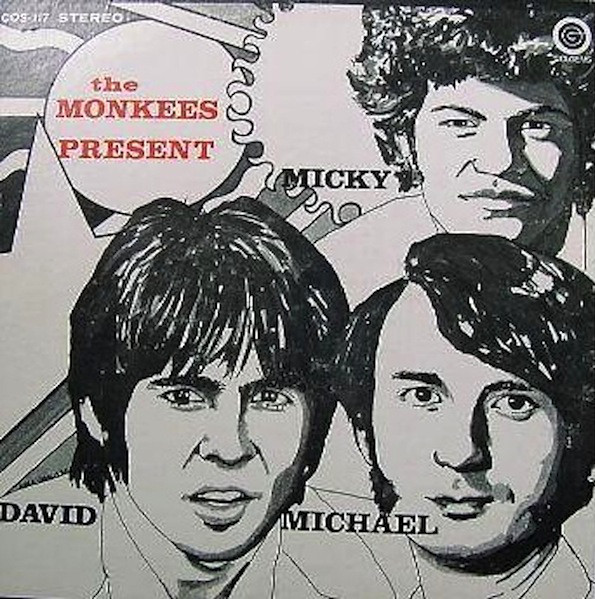
Changes.
With just Davy Jones and Micky Dolenz remaining, recording The Monkees ninth studio album wasn’t going to be easy. However, the two remaining Monkees were reunited with producer Jeff Barry who cowrote much of the material on Changes.
Of the twelve songs on Changes, Jeff Barry wrote or cowrote six of them. He penned 99 Pounds and Tell Me Love and cowrote On My My, Do You Feel It Too and I Love You Better with Canadian singer-songwriter wrote Andy Kim. Jeff Barry and Bobby Bloom wrote Ticket on a Ferry Ride and You’re So Good to Me. The Tommy Boyce and Bobby Hart songwriting partnership contributed I Never Thought It Peculiar while Ned Albright and Steven Soles wrote Acapulco Sun and All Alone In The Dark. They joined Neil Goldberg’s It’s Got To Be Love and Micky Dolenz’s Midnight Sun on Changes.
Just like The Monkees two previous albums, Changes was a mixture of old and new songs. Some songs were recorded during sessions that place in October 1966 with others recorded in January and February 1967. The Monkees had recorded other songs between July and September 1969 and then returned to the studio between February and April 1970. This allowed Colgems Records, a division of Columbia Records to put out an album as cheaply as possible. The only problem was the risk that it wouldn’t sound like a cohesive album when it was released in June 1970.
When critics heard Changes, they weren’t overly impressed with what was an essentially an album of bubblegum pop. Just like The Monkees two previous albums, Changes wash’t a cohesive album, and sounded like an assortment of tracks from the past four years. Even two remaining Monkees weren’t fans of Changes. Davy Jones called it his: “least favourite Monkees album” and said he had: “terrible memories of making Changes.” By then, The Monkees was over as a group, and Davy Jones and Micky Dolenz were merely fulfilling contractual obligations,
The Monkees went out with a whimper when Oh My My struggled into the lower reaches of the US Billboard 100 at ninety-eight. Then when Changes was released in June 1970, it stalled at 152 in the US Billboard 200. This was a new low for The Monkees.
On September ‘22nd’ 1970, Davy Jones and Micky Dolenz recorded what was their swan-song as The Monkees. That day, they recorded Do It In The Name of Love and Lady Jane. However, Do It in the Name Of Love wasn’t mixed until February ‘ 9th’ 1971, and was released as a single later in 1971. However, Do It in the Name Of Love failed to chart and this was an inauspicious ending to The Monkees’ story.
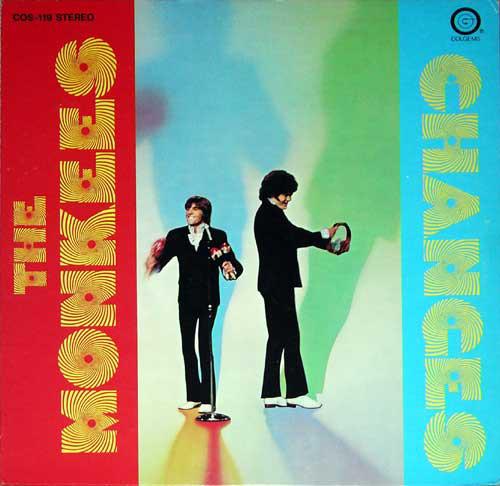
The Monkees split-up in late 1971, and everyone thought that this was the end of a group who for five years, had divided the opinion of critics, cultural commentators and even music fans. However, in 1976, Davy Jones and Micky Dolenz reformed the band and brought onboard Tommy Boyce and Bobby Hart to makeup America’s once fab four. This was the first of several Monkees reunions and revivals that have taken place over the past forty years.
During their comebacks, The Monkees have recorded three new albums, including 1987s Pool It! ,1996s Justus and Good Times! in 2016. It was the album that saw The Monkees revisit their psychedelic sound,
Good Times!
After the commercial failure of Head, The Monkees didn’t revisit their psychedelic side until 2016, when they were celebrating the fiftieth anniversary of their eponymous debut album. To celebrate the anniversary, a new album was commissioned, which became Good Times!
This was the twelfth album of The Monkees career, and the first album since the death of Peter Tork. He appears posthumously on Little Girl, alongside the remaining Monkees Micky Dolenz, Michael Nesmith and Peter on Good Times! It’s one of thirteen songs on Good Times!, which reached number twelve in the US Billboard 200.
The songs on Good Times! are a mixture of old new and old. Some of the songs are penned by giants of music including the late, great Harry Nilsson and Neil Diamond. Others were written by successful songwriting partnerships like Tommy Boyce and Bobby Hart and the legendary Goffin and King. One of the new songs, Birth Of An Accidental Hipster, was written by Noel Gallagher and Paul Weller and finds The Monkees revisiting their psychedelic side one last time.

The Monkees psychedelic years began in 1966 and lasted until 1969. However, it was between 1966 and 1968 that The Monkees released the best psychedelic music of their career. That coincides with what was the most successful period of The Monkees career.
Some of the psychedelic music The Monkees made between 1966 and 1968 wasn’t overtly psychedelic. Instead, they find The Monkees moving in the direction of psychedelia. Maybe this was The Monkees seeking credibility in the eyes of critics and record buyers?
Despite their dalliances with psychedelia, The Monkees never fully embraced the genre like other sixties bands. Maybe it was a relationship that lacked commitment? The Monkees certainly never released a psychedelic masterpiece. However, during their occasional dalliances with psychedelia, The Monkees created several memorable moments, including Pleasant Valley Sunday, and underrated songs like Take A Giant Step, She, Love Is Only, Star Collector and Tapioca Tundra. These songs are a reminder of some of the finest moments of The Monkees’ dalliance with psychedelia.
While The Monkees may have never fully embraced psychedelia like many other sixties bands, ironically, this worked in their favour. The music on their first five albums, including the psychedelic side of The Monkees was accessible and was hugely popular, selling fifteen million copies in America alone. However, by December 1968, The Monkees had already enjoyed the most successful years of their career.
In America six of The Monkees singles had been certified gold, while one album of their albums had been certified platinum, two double platinum and The Monkees and More Of The Monkees had been certified platinum five times over. Never again would The Monkees reach these heights again.
The Monkees split-up in 1971, and later, made several comebacks. They even recorded three albums, including their swan-song Good Times! in 2016. By then, The Monkees had released nineteen singles, twelve studio albums and six live albums between 1966 and 2016. However, still, the most successful period of The Monkees career was between 1966 and 1968.
For just over two years, The Monkees were one of the biggest bands in America. They had found a winning formula, with albums that featured pop, rock and sometimes psychedelia. The psychedelic side of The Monkees is oft-overlooked and makes a welcome appearance on Summer Of Love which documents what were the Good Times! for America’s very own Fab Four.
The Monkees: From Folk & Roll To The Psychedelic Years and Beyond.
THE LIFE AND MUSIC OF FUZZY HASKINS
The Life and Music Of Fuzzy Haskins.
Between 1970 and 1977, Fuzzy Haskins was a member of not one, but two of the most prolific and successful funk bands of the seventies,..Parliament and Funkadelic. They released a total of fourteen albums, which sold in excess of 2.5 million copies. Still, though, Fuzzy Haskins found time to embark upon a solo career.
Fuzzy Haskins released his debut album, A Whole Nother Thang on Westbound Records in 1976. Two years later, and Fuzzy Haskins returned with his sophomore album Radio Active in 1978. However, these two solo albums are just part of the story of Fuzzy Haskins time at Westbound Records. Making music it seems, was what Fuzzy Haskins was born to do.
Clarence Eugene “Fuzzy” Haskins was born on June ‘8th’ 1941, in Elkins, West Virginia. That was where the future Fuzzy Haskins became interested in music. Just like many future singers, the church influenced Fuzzy Haskins. Some nights, the Haskins family would join together and they would sing hymns. They would harmonise together, which would stand Fuzzy Haskins in good stead for the future. So would the music he heard on local radio.
At first, it was country music that Fuzzy Haskins heard on the local radio station. Later in the evening, there would sometimes be an hour of R&B and blues music. So much so, that Fuzzy Haskins was inspired to go out and buy a three-stringed guitar for $3, which he taught himself how to play. This would stand him in good stead when the Haskins family moved to New Jersey in 1956.
By then, Fuzzy Haskins was fifteen and still at high school. When he arrived in New Jersey, Fuzzy Haskins joined a high school band The Bel-Airs. He would be a Bel-Air for four years, until he met George Clinton 1960.
George Clinton was nineteen, and working in a New Jersey barbershop when Fuzzy Haskins first met him. They both shared a love of music and were members of vocal groups. While Fuzzy Haskins was a Bel-Air, George Clinton lead his own group The Parliaments, who had already released their debut single Poor Willie, a year earlier, on the Apt label in 1959. Soon, Fuzzy Haskins would be joining The Parliaments.
The Parliaments.
When one of The Parliaments left the group, Fuzzy Haskins was chosen as his replacement. Little did Fuzzy Haskins realise when this was the first step on a journey that would see him joined The Parliaments that would see him inaugurated into the Rock and Roll Hall of Fame in 1997.
Having joined The Parliaments, Fuzzy Haskins was soon singing lead vocal. He was also regularly travelling to Detroit. The first time was to audition for Motown. While The Parliaments weren’t signed to Motown, they were soon a familiar face on the Detroit music scene
Not only were The Parliaments a familiar face on Detroit’s live circuit, they also released singles on several local labels during the sixties. This included on Jobette and then Revilot Records, which released The Parliaments’ breakthrough single (I Wanna) Testify. It reached number three on the US R&B charts and twenty on the US Billboard 100. However, for four of The Parliaments, (I Wanna) Testify was a Pyrrhic victory.
At the time The Parliaments recorded (I Wanna) Testify, the band were experiencing cash-flow problems. They didn’t have enough money for the bus fare from New Jersey to Detroit. After a group meeting, it was decided that only George Clinton would travel to Detroit to record (I Wanna) Testify. Ironically, when (I Wanna) Testify was released in May 1967, it gave The Parliaments’ the biggest hit single of their career. As a result, The Parliaments embarked upon a promotional tour.
After touring (I Wanna) Testify, The Parliaments returned to the studio to record a followup single All Your Goodies Are Gone (The Loser’s Seat). When it was released in September 1967, The Parliaments embarked upon another tour. Despite this, All Your Goodies Are Gone (The Loser’s Seat) failed to replicate the success of (I Wanna) Testify. This was the start of what was a familiar pattern.
Never again did The Parliaments come close to replicating the success of (I Wanna) Testify. However, it was during this period that things started to change for The Parliaments.
Not only did The Parliaments’ sound begin to evolve, and move towards a psychedelic soul style, the lineup changed. Joining George Clinton, Fuzzy Haskins, Calvin Simon, Grady Thomas and Ray Davies were the backing band of Eddie Hazel, Billy Nelson and Tiki Fulwood. They became known as Funkadelic, as The Parliaments were locked in a lengthy legal dispute.
This resulted in The Parliaments being unable to release any recordings for the next few years. However, George Clinton decided to transform The Parliaments’ backing band into the main event, Funkadelic.
Funkadelic.
The nascent band set about honing the P-Funk sound, which was a fusion of blues, funk and rock. This would make its debut on Funkadelic’s eponymous debut album, which featured the Fuzzy Haskins composition I Got a Thing, You Got a Thing, Everybody’s Got a Thing. Later in 1970, it was released as a single, reaching eighty in the US Billboard 100 and thirty in the US R&B charts. By then, Funkadelic had released their eponymous debut album.
Funkadelic.
When Funkadelic was released by Westbound Records on February ’24th’ 1970, what was a groundbreaking album where psychedelic soul, funk and acid rock melted into one. While Funkadelic was well received by critics at the time, it would only be much later, that critics realised and recognised the importance of the album. By then, Funkadelic had reached 126 in the US Billboard 200 and eight in the US R&B charts upon its release. For Fuzzy Haskins, Funkadelic was a game-changer.
In 1967, The Imperials couldn’t afford to pay the bus fare from New Jersey to Detroit to record a single. Three years later, and Funkadelic were basking in the success of their eponymous debut album, which had reached the top ten in the US R&B charts. Now Fuzzy Haskins knew that Funkadelic had do it all again.
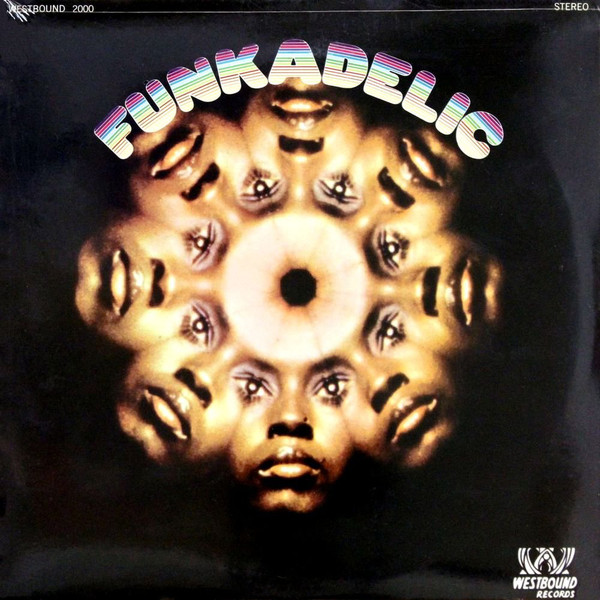
Free Your Mind… and Your Ass Will Follow.
Fuzzy Haskins, George Clinton and the rest of Funkadelic entered the studio in Detroit to record their sophomore album Free Your Mind… and Your Ass Will Follow. George Clinton later described the album Funkadelic trying to: ”see if we can cut a whole album while we’re all tripping on acid.” What Funkadelic had achieved, was a critically acclaimed, genre-melting album.
When Free Your Mind… and Your Ass Will Follow was released in July 1970, reaching ninety-two in the US Billboard 200 and eleven in the US R&B charts. Five decades later, and Free Your Mind… and Your Ass Will Follow is regarded a classic. So is the followup, Maggot Brain. However, before its release, Parliament would make release their debut album.
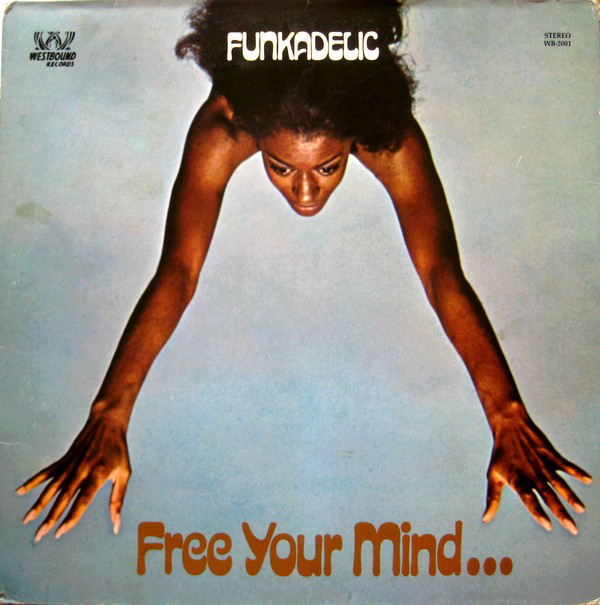
Parliament-Osmium.
September 1970 marked the release of Parliament’s debut album Osmium. It featured the five members of The Parliaments and the three members of Funkadelic. They had created an ambitious, experimental and genre-melting album where funk, psychedelic soul and psychedelic rock melt into one. The result was an ambitious and innovative album, but alas, was one that failed to find an audience. This was a huge disappointment, and things were about to get worse.
Contractual difficulties meant that Parliament were unable to record under the name Parliament, until 1974. This meant that George Clinton, Fuzzy Haskins and Co. concentrated their efforts on Funkadelic.
Funkadelic-Maggot Brain.
A year after the release of Free Your Mind… and Your Ass Will Follow, Funkadelic released their third album Maggot Brain in July 1971. By then, Eddie Hazel, Billy Nelson, Tawl Ross and Tiki Fulwood had left Funkadelic for a variety of reasons. Funkadelic were a band divided.
They weren’t alone. Maggot Brain divided the opinion of critics. Some critics hailed the album bland and boring, others hailed it a masterful funk rock album. Nowadays, Maggot Brian is regarded as a classic album, and a truly influential psychedelic rock album that’s dance-floor friendly. Record buyers were also won over by Maggot Brian, which reached 108 in the US Billboard 200 and fourteen in the US R&B charts. While this wasn’t quite as successful as their previous album, Funkadelic’s star was still in the ascendancy.
America Eats Its Young.
Ten months after the release of Maggot Brian, Funakdelic returned in May 1972 with America Eats Its Young. It was Funkadelic’s first double album, and featured a very different lineup of the Funkadelic that had joined George Clinton and Fuzzy Haskins.
While America Eats Its Young featured contributions from Eddie Hazel, Billy Nelson, Tawl Ross and Tiki Fulwood, Funkadelic were joined by members of two other bands. This included United Soul and the funk group The House Guests They were a five piece band which had been founded in 1971 by brothers Bootsy Collins and Catfish Collins after they left The JBs. These two bands augmented Funkadelic on America Eats Its Young.
Just like Maggot Brain, America Eats Its Young divided the opinion of critics. Although it received praise and plaudits from some critics, other critics weren’t won over by what was a sprawling album. That was part of America Eats Its Young. Just like many double albums, there was more than enough material for a single album, but in truth, not enough for a double album. As a result, America Eats Its Young stalled at 123 in the US Billboard 200 and twenty-two in the US R&B charts. This was the least successful album of Funkadelic’s career. For Fuzzy Haskins, this was a disappointment. However, it was the least of his worries.
Cosmic Slop.
When it came time for Funkadelic to record their fifth album Cosmic Slop, there was no sign of Bootsy Collins nor Fuzzy Haskins. He had been a mainstay of Funkadelic on their first four albums. Not any more though, as his role in Funkadelic started to change post 1972. He would add the occasional vocal on an album or play guitar. Sometimes, he would even head out on tour with Funkadelic. However, no longer was he one of the mainstays of the group.
Upon the release of Cosmic Slop in July 1973, most of the reviews were positive. There were still a few dissenting voice who weren’t convinced by P-Funk. This included Cosmic Slop, which later, was hailed as one of Funkadelic’s most important albums. However, in July 1973, Fuzzy Haskins watched as Cosmic Slop reached 112 in the US Billboard 200 and twenty-one in the US R&B charts. Commercially the album hadn’t fared much better than America Eats Its Young.
Standing on the Verge of Getting It On.
Fuzzy Haskins returned for Standing on the Verge of Getting It On, which was released in April 1974. It was a very different album from Cosmic Slop, with the music and jamming playing a more important role than the lyrics on the album. Especially, Eddie Hazel’s guitar, which plays a starring role on Standing on the Verge of Getting It On. With a guitar masterclass from Eddie Hazel and the return of Fuzzy Haskins, would this result in a change of fortune for Funkadelic?
Despite favourable reviews, Standing on the Verge of Getting It On failed to match even the success of Cosmic Slop. It stalled at 163 in the US Billboard 200, but reached thirteen in the US R&B charts. While this was disappointment, at least Parliament were free to record a new album.
Parliament-Up For The Down Stroke.
After a four-year absence, Parliament returned with their sophomore album Up For The Down Stroke. It was the first album since 1972s America Eats Its Young to feature Bootsy Collins, who cowrote two tracks on the album. Fuzzy Haskins also cowrote two tracks, Up For The Down Stroke and All Your Goodies Are Gone. This was the first time that Fuzzy Haskins’ had contributed a song for an album since Funkadelic in 1970. The members of Parliament hoped that Up For The Down Stroke would prove as successful as Funkadelic.
When Up For The Down Stroke was released in July 1974, it featured a reworking of The Parliaments’ hit (I Wanna) Testify, which became Testify. However, Up For The Down Stroke was released as the lead single, reaching sixty-three in the US Billboard 100 and ten in the US R&B charts. Testify was chosen as the followup, but stalled at just seventy-seven on the US R&B charts. By then, Up For The Down Stroke had reached seventeen on the US R&B charts. It looked as if Parliament’s was changing. Fuzzy Haskins had played his part in the success of Up For The Down Stroke.
Chocolate City.
April 1975 marked the return of Parliament with their third album. This time around, Fuzzy Haskins cowrote I Misjudged You and Bigfootin’, and was one of the vocalists used on Chocolate City. It was Parliament’s tribute to Washington DC, where the band had a large following. This became apparent when Chocolate City was released.
Most of the reviews of Chocolate City were positive. However, there were a few dissenting voices who weren’t won over by Chocolate City. They felt it wasn’t as cohesive an album as its predecessor. Despite that, Chocolate City reached ninety-one in the US Billboard 200 and twenty-two in the US R&B charts. 150,000 copies of Chocolate City were sold in Washington DC alone. This was the start of period when Parliament could do no wrong. It looked as if Fuzzy Haskins would play an important part in the Parliament story.
Funkadelic-Let’s Take It to the Stage.
Just a couple of weeks after Parliament released Chocolate City, Funkadelic returned with their seventh album Let’s Take It to the Stage in late April 1975. It featured ten tracks, including Good to Your Earhole which Fuzzy Haskins cowrote. He was one of the vocalists that featured on Let’s Take It to the Stage.
Let’s Take It to the Stage found Funkadelic at their tightest, as they lived up to their early promise. This time, there were no dissenting voices among the critics and it was critical acclaim that accompanied Let’s Take It to the Stage. It reached 102 in the US Billboard 200 and fourteen in the US R&B charts. This meant that Let’s Take It to the Stage was Funkadelic’s most successful album since Free Your Mind… and Your Ass Will Follow in July 1970. Soon, that would pale into comparison when Parliament released their next album.
Parliament-Mothership Connection.
When the latest lineup of Parliament returned with their fourth album Mothership Connection in December 1975, it featured two new additions…Fred Wesley and Maceo Parker. They joined what was fast becoming an all-star band that featured the great and good of funk. It already featured George Clinton, Bootsy Collins, Bernie Worrell and Fuzzy Haskins. The addition of Fred Wesley and Maceo Parker resulted in what critics hailed as the best album of Parliament’s career.
Mothership Connection was an innovative and influential funk rock concept album based on P-Funk mythology. It reached number thirteen in the US Billboard 200 and four in the US R&B charts. Soon, Mothership Connection had sold over 500,000 copies and was certified gold. Eventually, Mothership Connection sold a million copies and gave Parliament their first gold disc. For Parliament it was a career defining album.
Fuzzy Haskins-A Whole Nother Thang.
Despite the success of Mothership Connection, Fuzzy Haskins was growing frustrated that his songs were no longer featuring on albums by Funkadelic and Parliament. He also watched as Bootsy Collins, a relative newcomer to the Funkadelic and Parliament family, embarked upon a solo career. This added to Fuzzy Haskins’ frustration.
Fuzzy Haskins and George Clinton went back a long way together. He had joined George Clinton in The Parliaments in 1960, fifteen years ago. Since then, Calvin Simon, Grady Thomas and Fuzzy Haskins had shared good times and had bad with George Clinton. Maybe though, Fuzzy Haskins had to think about the future. So he decided to record a solo album during the time Funkadelic and Parliament weren’t recording or touring.
For his debut solo album A Whole Nother Thang, Fuzzy Haskins wrote eight of the nine songs. He also wrote Fuz and da Boog with Funkadelic and Parliament bassist Cordell Mosson. He was one of the members of the Funkadelic and Parliament family who joined Fuzzy Haskins when he recorded A Whole Nother Thang.
Recording took place at three studios in Detroit, Artie Fields Studios, Pac Three Studios and United Sound Studios. Joining Fuzzy Haskins was rhythm section that featured drummers Tiki Fulwood; bassist Bootsy Collins and Cordell Mosson who also played drums; and guitarists Donald Austin and Ron Bykowski. Keyboardist Bernie Worrell also arranged strings and horns. Fuzzy Haskins played drums, added the lead vocals and produced A Whole Nother Thang. It was released in the first half of 1976.
When A Whole Nother Thang was released in 1976, it was released to critical acclaim. That was no surprise, as A Whole Nother Thang featured some of the backlog of songs that had built up over the last few years. At last, Fuzzy Haskins got the opportunity to showcase these songs when he entered the studio with creme de la creme of P-Funk. The result was album that oozed quality. Despite the quality of music on A Whole Nother Thang, the album didn’t sell in vast quantities, and didn’t find the audience it deserved.
After the release of A Whole Nother Thang, Fuzzy Haskins returned to the Parliament and Funkadelic family. He had to rejoin the P-Funk Live Earth Tour in late 1976. By then, Parliament and Funkadelic had both been busy.
Parliament-The Clones Of Dr. Funkenstein.
Nine months after the release of Mothership Connection, came The Clones of Dr. Funkenstein in September 1976. Parliament were keen to build upon the success of their million selling album. By then, George Clinton, Bootsy Collins and Bernie Worrell had established a successful songwriting partnership. Still, Fuzzy Haskins remained one of the vocalists on what was a critically and commercially successful album of P-Funk.
Just like Mothership Connection, The Clones Of Dr. Funkenstein was hailed as one of Parliament’s finest albums. Although it didn’t quite match Mothership Connection, The Clones Of Dr. Funkenstein sold well, reaching twenty on the US Billboard 200 and three in the US R&B charts. Fuzzy Haskins was now a member of one of the biggest selling funk bands of the seventies.
Funkadelic-Tales Of Kidd Funkadelic.
Not long after Parliament released of The Clones Of Dr. Funkenstein, Funkadelic released their eighth album Tales Of Kidd Funkadelic. It was the last album that Funkadelic were contractually obliged to release for Westbound. Already, Funkadelic had recorded their Warner Bros’ debut Hardcore Jollies. Tales Of Kidd Funkadelic was essentially an album of outtakes and unused recordings from the Hardcore Jollies. It was rushed out to cash-in on the success of Parliament’s album The Clones Of Dr. Funkenstein.
This was a risky move, and one that could’ve backfired on Funkadelic. Especially if the album didn’t find favour with critics or failed to sell. Fortunately, the album was well received by critics and upon its release in September reached 103 in the US Billboard 200 and fourteen in the US R&B charts. Now Funkadelic signed to Warner Bros and a month later, released their major label debut.
Hardcore Jollies.
In October 1976, Funkadelic released their ninth album Hardcore Jollies. It featured the best of the tracks recorded during a recording session that took place earlier in 1976. Funkadelic were at their inventive best on an album that featured inventive and genre-melting funky music.
Critics hailed Hardcore Jollies as one of Funkadelic’s best and strongest albums of recent years. It reached ninety-six in the US Billboard 200 and twelve in the US R&B charts. This was the most successful album Funkadelic had released since Free Your Mind… and Your Ass Will Follow in 1970.
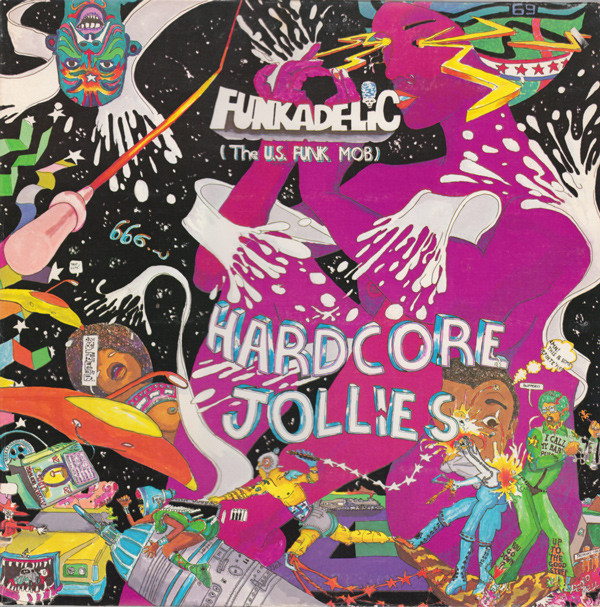
Live: P-Funk Earth Tour.
After the success of Hardcore Jollies, Fuzzy Haskins joined true rest of the Parliament and Funkadelic family on the P-Funk Live Earth Tour in October 1976. The tour continued into 1977, when the Live: P-Funk Earth Tour arrived Los Angeles. At the show at the Los Angeles Forum on the ‘19th’ January the tapes were running for a live album. That was the case at the Oakland Coliseum on the ‘21st’ January 1977. Recordings from these two shows would feature on Parliament’s live double album Live: P-Funk Earth Tour, upon its release in May 1977.
By then, three of the original members of The Parliaments, Fuzzy Haskins, Calvin Simon, and Grady Thomas had left the band. Not long after the three former Parliaments left the band, Glen Goins parted company with Funkadelic. This was no surprise.
The P-Funk Live Earth Tour was a hugely expensive tour to take on the road. Given the expenses, it was imperative that the show sold out, each night. That wasn’t the case, and as throughout the tour, it lost money. By the end of the P-Funk Live Earth Tour had lost so much money, that the musicians weren’t getting paid. When they received the news, Fuzzy Haskins, Calvin Simon, and Grady Thomas left the P-Funk family.
The only small crumb of comfort came when Live: P-Funk Earth Tour was certified gold upon its release in May 1977. By then Fuzzy Haskins was looking towards the future, and his sophomore album, Radio Active.
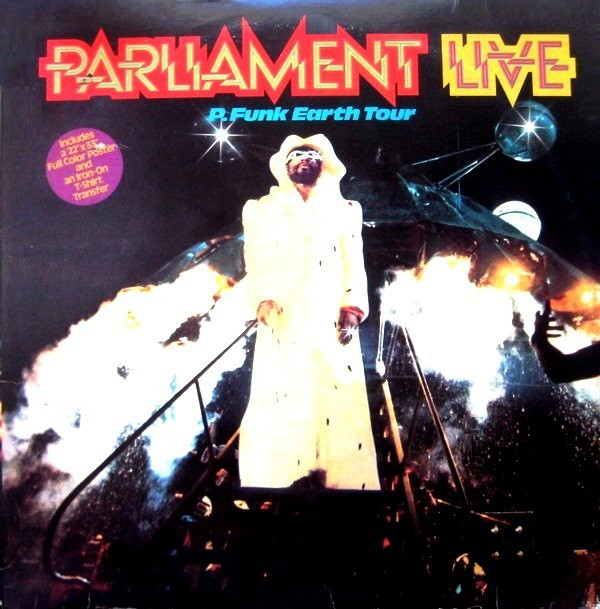
Radio Active.
Having left the P-Funk family, Fuzzy Haskins began work on his sophomore album Radio Active. He penned six of the songs and cowrote Silent Day with Cordell Mosson. The other song on Radio Active was the Glenn Goins composition This Situation Called Love. These eight tracks were recorded with some top musicians, including some of the P-Funk family and members of the Funk Mob.
When it came to recording Radio Active, Fuzzy Haskins and his band headed into one of Detroit’s many studios. That was where he and his multitalented band laid down the eight songs. Accompanying him was drummer Jerome Brailey, bassist Cordell Mosson and guitarists Garry Shider and Michael Hampton. They were joined by keyboardist Bernie Worrell, percussionist Jerome Podgajski and Glen Goins who played drums, guitar and piano. Meanwhile, Gary Schunk played synths and piano and Bruce Nazarian played bass synth. Fuzzy Haskins switched between drums and guitar, while taking charge of the lead vocals and production. Once Radio Active was complete, it was released later in 1978.
Recording Radio Active hadn’t been easy for Fuzzy Haskins, who was finding it hard to reconcile his life as a musician to his newfound spirituality. Throughout the recording of Radio Active, Fuzzy Haskins was conflicted, and was constantly questioning what he had done and was doing. Considering he was producing the album, other musicians were looking to Fuzzy Haskins for guidance, it can’t have been an easy album to record. Fortunately, most of the musicians were experienced and were able to overcome any problems arose. However, by the time Radio Active was released Fuzzy Haskins seemed detached from the project.
So much so, that he never even embarked upon the tour Westbound Records financed to promote Radio Active. Given his detachment from the Radio Active project, it was no surprise when the album failed commercially. That was shame given the quality of some of the songs on Radio Active.
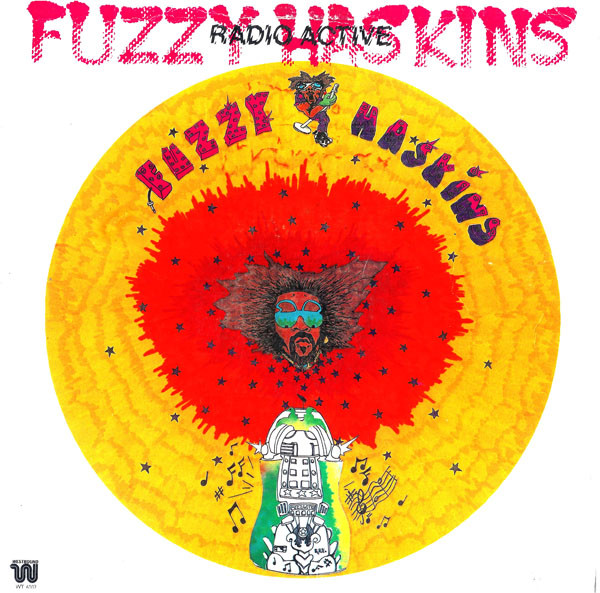
After the release of Radio Active, Fuzzy Haskins, who was a truly talented and versatile singer, songwriter and musician, never released any further solo albums.
Instead, Fuzzy Haskins turned his back on the music industry and became a preacher. It was only after a chance meeting with Armen Boladian that Fuzzy Haskins recorded a gospel album. This resulted in Fuzzy Haskins working with Calvin Simon, Ray Davis and Grady Davis of The Parliaments. They were reunited as the Original P, but never recorded together. It was just four old friends making music together, like it had once been. That was how The Parliaments started out in 1960.
As a result, the final secular songs that Fuzzy Haskins recorded were those that featured on Radio Active when it was released in 1978. They marked the secular swan-song of the truly talented Fuzzy Haskins, before he embarked upon a career as a preacher and are a reminder of his solo career.
The Life and Music Of Fuzzy Haskins.

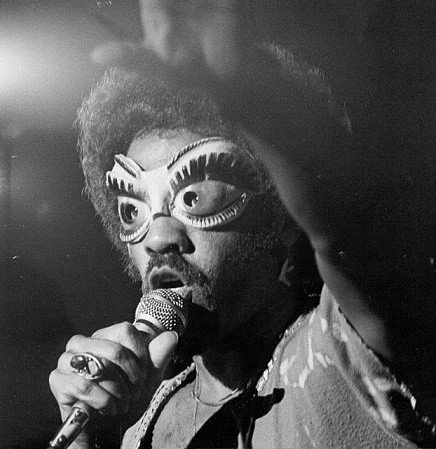
HARMONIA-A SUPERGROUP AND “THE MOST IMPORTANT BAND IN THE WORLD.”
Harmonia-A Supergroup and “The Most Important Band In The World.”
Throughout musical history, innovative music has often failed to find an audience upon its release. It’s only much later, that the music’s importance and innovation is recognised. Musical history is littered with examples. This includes the group that Brian Eno once called : “the most important band in the world,” Harmonia.
Despite such high praise, Harmonia’s albums failed to find the audience that they deserved, and the band struggled make a living. For Germany’s first ever supergroup, this was an inauspicious start to their career.
Just over twenty years later, and somewhat belatedly, Harmonia’s music was beginning to find a much wider audience, and receiving the recognition it deserved. At last, Harmonia had taken their place at the top table of Krautrock, alongside Can, Kraftwerk, Cluster, and Neu! This was somewhat belated, given The Harmonia story began back in 1973.
Harmonia featured members of Neu! and Cluster. They decided to form Back in 1973, Neu! had just released their sophomore album Neu! 2. It failed to match commercial success and critical acclaim of their eponymous debut album. Neu! had sold 30,000 copies in Germany alone. This was good for an underground album. However, Neu! 2 was a different matter.
Neu! 2
The problems started when Neu! went into the studio to record Neu! 2. They had booked ten days to record their second album. This should’ve been plenty of time. Neu! had recorded their debut album in four days. However, Michael Rother and Klaus Dinger spent too long recording side one of the album. With only three days left, the pair panicked. Desperation set in. Then they remembered a single Neu! had released, Neuschnee which featured Super on the flip-side. This was the solution to their problems.
So for side two of Neu! 2, Michael and Klaus recorded versions of Neuschnee and Super. Michael remembers “We did all sorts of things. I played the single on a turntable, and Klaus kicked it as it played. We than played the songs in a cassette player, slowing and speeding up the sound, and mangling the sound in the process.” Just like their debut album, Neu! 2 was completed just in time. It was another: “close shave.”
With Neu! 2 complete, it was scheduled for release later in 1973. When the album was released, critics were won over by side one. Neu! were refining the sound of their debut album. Für immer was Neu! 2’s masterpiece. However, critics weren’t impressed by side two.
Many critics saw the music as gimmicky, and accused Neu! trying to fool and rip off record buyers. Indignant critics took the moral high-ground. Some record buyers agreed. “They felt that we were trying to rip them off. That was not the case.” Side two was Neu! at their most experimental, deconstructing ready-made music only to reconstruct or manipulate it. However, neither critics nor record buyers realised this, and Neu! 2 failed commercially. This left Michael Rother and Klause Dinger with a problem.
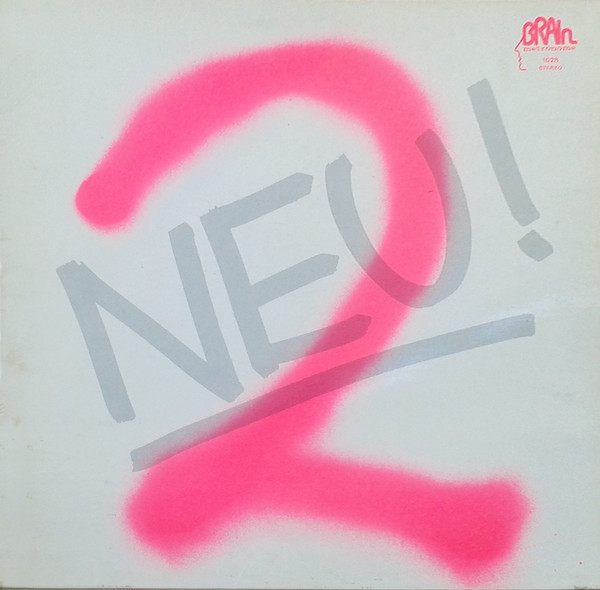
Both men decided to look for a solution to the problem. Klaus headed to London, where he tried to drum up interest in Neu! Meanwhile, Michael found the solution to his problem in a song.
After hearing “Im Süden, a track from Cluster’s sophomore album Cluster II,” Michael Rother decided to turn Neu! into the first German supergroup. So Michael embarked upon a journey to the Forst Commune, where his he had a proposal for two of his friends, Dieter Moebius and Hans-Joachim Roedelius of Cluster.
As Michael made his way to the Forst Commune, he wondered if Dieter Moebius and Hans-Joachim Roedelius would be interested in joining an extended lineup of Neu!? Then Michael began to consider another possibility, a German supergroup consisting of Neu! and Cluster? This would be a first. Nobody had ever tried this before. It was the opportunity of a lifetime.
Soon, it became apparent that Michael’s idea of a supergroup was about to take shape, just not in the way Michael had originally envisaged. That initial jam later became Ohrwurm, a track from Harmonia’s 1974 debut album Musik von Harmonia. Following their initial jam session, Michael stayed at the Forst Commune to prepare for the recording of Harmonia’s debut album. Germany’s first supergroup had just been born. It wasn’t an extended version of Neu! Instead, it was a new band Harmonia.
Musik von Harmonia.
Soon, Michael Rother, Dieter Moebius and Hans-Joachim Roedelius started recording what became Musik von Harmonia in June 1973. It was meeting of musical minds. Over the next five months, Harmonia recorded eight songs. The two members of Cluster were receptive to Michael Rother’s way of working. Hans-Joachim Roedelius explained recently: “there were no problems, we wanted to learn. Previously, we improvised, which made playing live problematic. A song was merely the starting point, it could go anywhere. Michael however, taught us about structure. We influenced him. It was a two-way thing.”
That’s definitely the case. Michael Rother believes: “that working with Dieter Moebius and Hans-Joachim Roedelius made him a more complete musician.” Over his time working with the two members of Cluster; “I learnt so much.”
This became apparent when Musik von Harmonia was completed in November 1974. Harmonia’s 1974 debut album, Musik von Harmonia, was a move towards ambient rock. Both Michael Rother and the two members of Cluster’s influences can be heard on the nascent supergroup’s debut album. It was released in January 1974.
When Musik von Harmonia was released, many critics realised the importance of what’s a groundbreaking classic. It saw this nascent supergroup seamlessly embrace and incorporate disparate musical genres. In the process, Harmonia set the bar high for future ambient rock albums. Critical acclaim the release of Musik von Harmonia Brian Eno on hearing the album, called Harmonia: “the most important band in the world.” Despite the critical acclaim and the endorsement of Brian Eno, Musik von Harmonia wasn’t a commercial success. For Harmonia, this was a huge disappointment.
Michael Rother remember ruefully: “the seventies weren’t a good time for Harmonia. Our music was ignored, it was tough to survive during this period. So towards the end of 1974, Michael and Klaus reunited for Neu!’s third album.
That wasn’t the end of Harmonia though. Neu! spent December 1974 and January of 1975 recording their third album Neu! 75. It was scheduled for release later in 1975. By then, the recording of Harmonia’s sophomore album began in June 1975.
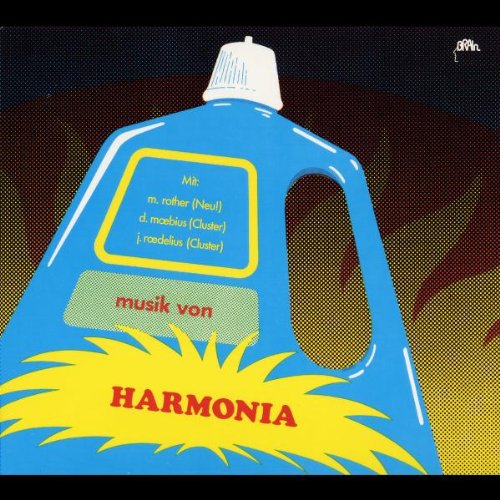
The Return Of Harmonia-Deluxe.
In June 1975, the three members of Harmonia returned to their studio in Forst for the recording of their sophomore album, Deluxe. Joining them, was a new face, Conny Plank, who was co-producing Deluxe. Conny Plank and Michael were good friends, and had worked together on three projects. This included Kraftwerk’s aborted album and Neu!’s two album. The addition of the man who Michael Rother calls: “the genius,” just happened to coincide with Harmonia changing direction musically.
Deluxe saw a move towards Komische musik. Partly, this was down to the addition of Guru-Guru drummer Mani Neumeier. He played on some track, and added a Komische influence. Another change was that Michael Rother’s guitar played a more prominent role. That wasn’t Michael’s only influence.
The music on Deluxe was more song oriented. This was Michael Rother’s influence. He had taught the two members of Cluster the importance of structure. However, still Harmonia were experimenting, pushing musical boundaries. This was Cluster’s influence. Other parts of Deluxe had been influenced by Michael Rother. Hans-Joachim Roedelius agrees. “Michael Rother’s influence can be heard on Deluxe, more so than on Musik von Harmonia.” What was also noticeable, was that Deluxe had a more commercial sound.
“This wasn’t a conscious decision. The music morphed and evolved, and the result was Deluxe,” Hans-Joachim Roedelius reflects. Michael Rother agrees. “Every album I’ve made I set out for it to be commercial. Sometimes, though, it doesn’t work out that way.” Sadly, that proved to be the case.
When Deluxe was released in 1975, to the same critical acclaim as Musik von Harmonia. The noticeable shift to what was a more commercial sound, surely would lead to a change in Harmonia’s fortunes?
That wasn’t to be. Deluxe was released on 20th August 1975, and sales of the album were slow. They never picked up, and history it seemed, was repeating itself. Michael reflects: “Still our music was being ignored. It was a difficult time for us. So much so, that Michael decided to record his debut solo album.
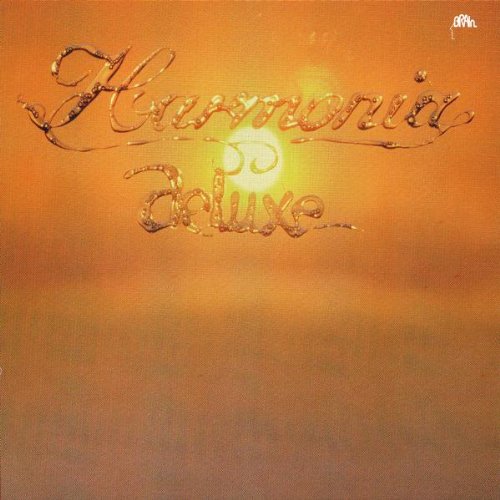
By then, it looked as if Harmonia had run its course. So Michael Rother decided to embark upon a solo career. That would take up the majority of his time. Michael’s first solo album was “Flammende Herzen which I recorded at Conny’s Studio,” during June 1976. Then later in the summer, Harmonia recorded their third and final studio album.
Tracks and Traces.
Little did the three members of Harmonia realise, that Deluxe was the last album they would release for thirty-two years. For what was their swan-song, Harmonia were joined by another legend, Brian Eno.
At the studio in Forst, Hans-Joachim Roedelius, Dieter Moebius, Michael Rother and Brian Eno spent eleven summer days recording what was meant to be their third album. The working title was Harmonia ’76. However, by then, “Michael Rother was wanting to concentrate on his solo career. Once the album was completed, it became apparent Harmonia had run its course. It was evolution.” So, Harmonia ’76 was never released until 1997.
During the next thirty-one years, it was thought that the master tapes had gone missing. “That was a rumour. Harmonia ’76 was released as Tracks and Traces in 1997.” Then ten years later, in 2007, Harmonia reunited.
Live ’74.
The reunion was for the release of their Live 1974 album. It featured a a recording of Harmonia’s concert on the 23rd March 1974, at Penny Station Club in Griessem, Germany.
Live ’74 features just five lengthy tracks. As Harmonia open the show with a near eleven minute version of Schaumburg instantly, the listener is transported back to that night on 23rd March 1974. Harmonia then work their way through Veteranissimo, which becomes a seventeen minute epic, Arabesque and the Magnus Opus that’s Holta-Polta. Then Harmonia close the set with Ueber Ottenstein. These five tracks are a snapshot of Harmonia at the peak of their powers. They were one of the greatest German bands, but very few people had realised this. By 2007, when Live ’74 was released, it was common knowledge that Harmonia were Komische royalty.
To celebrate the release of Live 1974, Harmonia played live for the first time since 1976. This landmark concert took place at the Haus der Kulturen der Welt in Berlin, on November 27th 2007. Sadly, it was the last time Harmonia played together.
After a brave and lengthy battle against cancer, Dieter Moebius died on 20th July 2015. By then, Harmonia were receiving the recognition that their music so richly deserved. Dieter Moebius with Hans-Joachim Roedelius and Michael Rother had been part of one of the most innovative groups in the history Krautrock. They’re now regarded as one of the finest purveyors of Krautrock. That’s why Harmonia sit proudly alongside Can, Cluster, Kraftwerk and Neu! at Krautrock’s top table.
Sadly, the recognition that Harmonia received, came long after they released their two classic albums, Musik Von Harmonia and Deluxe. Nowadays, Harmonia are regarded as one of the most important, influential and innovative Krautrock bands of the seventies. Forty years after the release of Musik Von Harmonia and Deluxe, Harmonia is more popular than ever. For Michael Rother, that’s ironic. He remembers how: “the seventies weren’t a good time for Harmonia. Our music was ignored, it was tough to survive during this period.” Now things are very different for Harmonia. They’re quite rightly regarded as one the giants Komische music. Harmonia are regarded as just as important, influential and innovative as Can, Kraftwerk and Neu! That’s why Brian Eno once called Harmonia: “the most important band in the world.”
Harmonia-A Supergroup and “The Most Important Band In The World.”

FOUR DECADES OF MAKING MUSIC: THE CLUSTER STORY.
Four Decades Of Making Music: The Cluster Story.
The Cluster story began in the Zodiak Free Arts Lab in West Berlin when Hans-Joachim Roedelius first met Dieter Moebius. Little did they know that they were about to embark upon a musical journey that would last five decades.
During that period, Hans-Joachim Roedelius and Dieter Moebius were part of three of the most important, influential, and innovative bands of the Kominische era. This includes Kluster, Cluster and Harmonia. Each of these groups have inspired several generations of musicians. That’s still the case today. However, the Cluster story, Hans-Joachim Roedelius told me, began in the late sixties.
It was in 1968, at the height of the psychedelic era, that Hans-Joachim Roedelius “cofounded music commune Human Being. I also co-founded Zodiak Free Arts Lab in West Berlin with conceptual artist Conrad Schnitzler. At that period, I was a member of the group Human Being, a forerunner of Kluster.” For Hans-Joachim Roedelius: “this was an exciting time, where there was a sense that anything was possible. It was like a revolution. We were happy to have found this place to work. All the freelance musicians in the city found their way to Zodiak Free Arts Lab. There were members of Can, Tangerine Dream, Ash Ra, Neu! at Zodiak. They were great times.” The Zodiak Free Arts Lab was also where Hans-Joachim Roedelius met someone who would play a huge part in his career, Dieter Moebius.
“About the end of 1969, Dieter Moebius visited The Zodiak Free Arts Lab. He wasn’t a member. No. He just visiting, and we got talking.” The two men found they had a lot in common, including the way they believed music should be made. It was almost inevitable that Hans-Joachim Roedelius and Dieter Moebius would form a group.
Kluster.
“It was later, in 1970 that we founded Kluster.” Hans-Joachim Roedelius and Dieter Moebius joined with Conrad Schnitzler to form Kluster. However, Kluster was no ordinary band.
Initially, Cluster played an eclectic instruments and utensils. “Everything was spontaneous. Improvisation was key.” Kluster’s music was described in The Crack In The Cosmic Egg magazine as “unlike anything heard before.” Hans-Joachim Roedelius admits: “that was what Kluster set out to do. Kluster was about musical activism.” Soon, the musical activists would record their debut album.
Kluster’s debut album came about in the unlikeliest of circumstances. Although band were based in West Berlin; “one night we were playing a concert in Dusseldorf. A priest just happened to be walking past, and heard the music. He liked our music, and came in to the hall. Once the concert was finished, he asked if we would like to record an album of new church music? The answer was yes!” So Kluster made the journey to the Rhenus-Studio in Gordor.
When Kluster arrived at the Rhenus-Studio, “we met Conny Plank and producer Oskar Gottlieb Blarr. We went into the studio and recorded an hour of music in one take. Religious text was added to this, and became the ‘new church music.’ The music became our first two albums Klopfzeichen and Zwei-Osterei.
Only 300 copies of both albums were pressed. Klopfzeichen was released in 1970, with Zwei-Osterei following in 1971. Critics realised the importance of Kluster’s music. It was described as quite extraordinary, bleak, stark, unnerving and full of electricity. Despite the reviews, the sales of Klopfzeichen and Zwei-Osterei were small. However, later, Kluster would be recognised as one of the most influential groups of the early seventies. This influential and innovative group would only release one further album.
This was Eruption, which was recorded by Kluster during 1971. It featured an hour of experimental music, which was recorded by Klaus Freudigmann. Eruption is quite different from Kluster’s first two albums. There is no religious text, just Kluster at their innovative best. For many, Eruption is Kluster’s finest hour. However, 1971 marked the end of an era for Kluster. One group became two.
Kluster To Cluster.
In the middle of 1971, Conrad Schnitzler left Kluster, and briefly, worked with another band, Eruption. This was the beginning of the end for Kluster.
After the original lineup of Kluster split-up, “Dieter Moebius and I anglicised the band’s name, and Kluster became Cluster.” Between 1971 and 2009, Cluster would release twelve studio albums and four live album. Cluster’s debut was released later in 1971.
Cluster.
When Cluster recorded their eponymous debut album, they were joined in the studio by another legend of German music, Conny Plank. He featured on Cluster, which marked a change in sound. Gone was the almost industrial, discordant sound, which was replaced by an electronic sound. “Dieter and I played all the instruments and Conny added all sorts of effects. For us this was the start of a new era.”
Cluster was released later in 1971 on Phillips. “This was Cluster’s major label debut. It found Cluster at a crossroads.” They were ready to turn their back on the avant-garde, almost discordant and industrial sound of Kluster, and begin the shift towards the ambient and rock-tinged sound of the late seventies. That was the future.
Before that, Cluster began work on their eponymous debut album. In the studio, Cluster set about honing and sculpting a trio of soundscapes. Hans-Joachim Roedelius remembers: Cluster which had very little melody, is a series of improvised and atmospheric soundscapes.” They’re best described as futuristic, moody, dramatic and truly captivating. Heavy rhythms, beeps, squeak and drones drenched in effects assail the listener. It’s as if Cluster have been inspired by avant-garde, free jazz, early electronica, industrial, free jazz and even rock. This fusion of influences became Cluster.
Once Cluster was completed, the album was released on Philips. Little did anyone, even Cluster themselves, realise the effect album bearing the serial number Philips 6305074 would have. Nowadays, Cluster is regarded as an innovative classic, and in a sense, this was the start of Cluster’s career in earnest.
Cluster II.
“For the followup to Cluster, Conny Plank was no longer a member of Cluster. We were now a duo, consisting of Dieter and I. Conny had other projects he wanted to concentrate on.” With three becoming two, the two remaining members took a different approach to recording.
Cluster had added to their impressive arsenal of equipment. As Conny Plank watched on, two organs, analog synths, a Hawaiian guitar, a bass and an electronically treated cello were brought into the studio. Cluster weren’t finished yet. The two members of Cluster started setting up array of effects. This included audio-generators which usually, was found in an electrician’s toolbox. They became part of Cluster’s alternative orchestra. With everything setup, Cluster got to work.
“To some extent, it was trial and error. We tried different things. Some worked, others didn’t,” Hans Hans-Joachim Roedelius explains. The end result, Cluster II “saw a further shift towards a more electronic sound.”
The music veered between futuristic and dramatic to hypnotic, dreamy, lysergic and otherworldly. Sometimes the music becomes pastoral; other times understated and occasionally, explodes into life. However, for much of the time, Cluster II is melodic and mesmeric. Again, Cluster had produced an album that was way ahead of its time.
When Cluster II was released, it was on Germany premier label when it came to ambitious and innovative music, Brain. Cluster II was assigned the serial number Brain 1006, and when in was released in 1972, it was well on its way to becoming a groundbreaking genre classic.
Ironically, many German critics and record buyers overlooked groups like Cluster. Instead, they were more interested in the music coming out of America and Britain. Incredibly, they never realised that some of the most innovative music was being made in their own backyard. This includes that made by musical chameleons, Cluster whose music would continue to evolve.
Zuckerzeit.
Zuckerzeit, Cluster’s third album, was released in 1974, and was co-produced by Michael Rother of Neu! “Michael first met Dieter and I in 1971. By 1973, Michael was on a break from Neu! We decided to head into the countryside to Forst, to build our own recording studio.” This could’ve been fraught with problems? “No. We knew what we were doing and trying to achieve. All of us had experience in studios, so knew what was required.” The result was a studio “where Michael, Dieter and I recorded the two Harmonia albums, Musik Von Harmonia and Deluxe.” However, before that, Zuckerzeit was released.
On the release of Zuckerzeit, in 1974 Michael Rother’s influence is noticeable. He placed more emphasis on melody, rhythm and the motorik beat.” Hans-Joachim Roedelius explains that previously, Cluster didn’t place the same importance on melody or structure. Michael introduced structure and discipline.” The result was a very different album.
That’s apparent from the opening bars of Hollywood. A crisp Motorik beat provides the backdrop for Cluster’s synths. They create music that’s variously melodic, ethereal, evocative, haunting and cinematic. Especially on tracks like Hollywood, Rosa, Fotschi Tong and Marzipan. Then on Rote Riki, the music becomes futuristic, with the man machine adding sci-fi sounds that sound as if they’re from a distant planet. Meanwhile, Caramel would influence future generations of dance music producers. Although Caramba has futuristic sound, it’s melodic and contemporary. It sounds as if it belongs on the dance-floors of Berlin’s clubs. This is incredible, given Zuckerzeit was released later in 1972.
Cluster had released two albums on Brain during 1972. Both would become future genre classics, and both would show a different side to Cluster. Zuckerzeit with its mixture of electronic pop, art rock and avant-garde, was an album way ahead of its time. It’s a truly innovative and timeless album, where Cluster continue to reinvent themselves. The decision to bring Michael Rother onboard as producer was a masterstroke; and also resulted in the birth of a new band, Harmonia.
The Birth Of Harmonia.
After completing their recording studio in Forst, it seemed only natural that the three friends record an album. So Harmonia was born. It was meeting of musical minds. The two members of Cluster were receptive to Michael Rother’s way of working. Hans-Joachim Roedelius explains: “there were no problems, we wanted to learn. Previously, we improvised, which made playing live problematic. A song was merely the starting point, it could go anywhere. Michael however, taught us about structure. We influenced him. It was a two-way thing.”
Musik von Harmonia.
That proved to be the case. “Harmonia’s 1974 debut album, Musik von Harmonia, was a move towards ambient rock.” While Michael Rother influence can be heard, so can the two members of Cluster. Their influence is more prominent. They adds an ambient influence to what’s a groundbreaking classic. It saw this nascent supergroup seamlessly embrace and incorporate disparate musical genres. In the process, Harmonia set the bar high for future ambient rock albums. However, Harmonia changed tack on the followup to Musik von Harmonia.
The three members of Harmonia reconvened in their studio in Forst for the recording of Deluxe. Co-producing Deluxe was Conny Plank. This just happened to coincide with Harmonia changing direction musically.
Deluxe.
Deluxe saw a move towards Krautrock or Kominische music. The music was more song oriented. However, still Harmonia were experimenting, pushing musical boundaries. This was Cluster’s influence. Other parts of Deluxe had been influenced by Michael Rother. Hans-Joachim Roedelius agrees. “Michael Rother’s influence can be heard on Deluxe, more so than on Musik von Harmonia.” What was also noticeable, was that Deluxe had a more commercial sound. “This wasn’t a conscious decision. The music morphed and evolved, and the result was Deluxe.” It was released in 1975, to the same critical acclaim as Musik von Harmonia. However, the end was nigh for Harmonia.
Tracks and Traces.
Little did the three members of Harmonia realise, that Deluxe was the last album they would release for thirty-two years. For what was their swan-song, Harmonia were joined by another legend, Brian Eno.
At the studio in Forst, Hans-Joachim Roedelius, Dieter Moebius, Michael Rother and Brian Eno spent eleven summer days recording what was meant to be their third album. The working title was Harmonia ’76. However, by then, “Michael Rother was wanting to concentrate on his solo career. Once the album was completed, it became apparent Harmonia had run its course. It was evolution.” So Cluster returned to the studio to record their fourth album,
A New Cluster Album-Sowiesoso.
After “Harmonia ran its course, we returned to Cluster. We had never stopped being Cluster. We played live, but didn’t release a new album until Sowiesoso, in 1976, which we recorded in just two days.”
Despite being recorded in just two days, Sowiesoso found Cluster at their creative zenith. They had recorded an album of understated, beautiful, poignant and melancholy melodies, including Umleitung, Zum Wohl and Es War Einma. The arrangements are often minimalist, but always, cinematic. Sometimes, the music is evocative and atmospheric. Occasionally, there’s an air of mystery. Especially, Halwa, with its cinematic sound. Just like the rest of Sowiesoso, the music paints pictures. That was the case in 1976, and is the case in 2016.
When Sowiesoso was released in 1976, it was on Günter Körber’s Sky Records. It had been formed in 1975, and by 1976, was already regarded as a label that released ambitious, influential and innovative music. This described Cluster’s first album in four years. However, Sowiesoso was a very different album to Zuckerzeit.
That was no surprise to those familiar with Cluster’s music. They were like musical chameleons, constantly reinventing their music. The musical chameleons were about to enter a three year period where Cluster could do no wrong.
Enter Brian Eno.
In June 1977, the two members of Cluster were joined by three old friends. The first was Holger Czukay of Can. “Dieter and I knew Holger from way back, back to Zodiak Free Arts Lab. We hung around with members of Can. Back then, there was a great sense of community. Everyone helped and influenced each other. We even went on to tour together.” Another of the guest artists on Cluster’s 1977 album first met Dieter and Hans at a Cluster concert.
That was Brian Eno: “who Cluster jammed with in 1974. Brian joined us on stage, and we spent the second half of the concert jamming. That was how we first met Brian. Then in 1977, he joined as for the recording of Cluster and Eno. We learnt a lot from Brian. Similarly, I like to think we influenced him. That was the case when we recorded After The Heat.” Before that, Cluster and Eno was recorded.
Cluster and Eno.
The four great innovators got to work. They spent part of June 1977 recording enough for two albums. Conny Plank laid down bass lines, while Dieter and Hans-Joachim Roedelius played synths and keyboards. So did Brian Eno who added bass and vocals. Once the recording session was complete, the first collaboration between Cluster and Brian Eno was released later in 1977.
When Cluster and Eno was released later in 1977, the album was a meeting of minds. Elements of both Cluster and Brian Eno’s music melted into one. Cluster supplied elements of avant-garde, while Brian Eno’s supplied the ambient influence. When this was combined with drone and world music, the result was another classic album.
Widespread critical acclaim accompanied the release of Cluster and Eno. It was hailed a groundbreaking album, one that was way ahead of its time. Cluster and Eno is an album that Hans-Joachim Roedelius: “is proud of.” He remembers the recording sessions fondly, and sees both Cluster and Eno, and its followup After The Heat, as an equally “influential album.”
After The Heat.
Just a year after the release of Cluster and Eno, the second collaboration between Cluster and Brian Eno was released. It too, was released to critical acclaim. This fusion of ambient, art rock, avant-garde, experimental and Krautrock were combined by Cluster and Brian Eno. Again, both Cluster and Brian Eno were influencing each other.
“This was not one way. We both influenced each other. On After The Heat, I believe we influenced Brian’s production style. If you listen to David Bowie’s Low and Lodger albums which Brian Eno produced, Cluster and Harmonia’s influence can be heard. So while Brian influenced Cluster, we certainly influenced him.” After two albums with Brian Eno, Cluster’s next album saw them return to a duo.
The Return Of The Cluster.
Grosses Wasser.
Following two albums with Brian Eno, Cluster returned to the studio in 1979. This time, Cluster were joined by Peter Baumann of Tangerine Dream. He would produce Grosses Wasser, Cluster’s seventh album.
It was an album where Cluster drew inspiration from ambient, art rock and avant-garde to electronica and free jazz. The result was music that’s ambitious, challenging and experimental. Other times, the music becomes ethereal, elegiac, melancholy and cinematic. Sometimes, though, Cluster throw a curveball like on Breitengrad 20, and a track changes direction. This adds to avant-garde sound of Grosses Wasser.
When Cluster released Grosses Wasser later in 1979, it proved to be Cluster’s most avant-garde album. “This wasn’t a conscious decision. Instead, it was just a case of evolution. That was the way that the Cluster worked. It was the same live.” That became apparent on Cluster’s first live album.
Live In Vienna.
Despite releasing seven studio albums, Cluster had never released a live album. That changed when Cluster took to the stage at the Wiener Festwochen Alternativ, on June 12th, 1980. It was the only time that Cluster took to the stage with Joshi Farnbauer. The result was one of Cluster’s most experimental albums.
Sometimes, the music veered towards discordant, and was reminiscent of early performances by Kluster. Hans-Joachim Roedelius remembers: “a song was just the starting point. We never knew what direction it would take. It was improvisation at its purest. Partly, it was because we couldn’t replicate our music live.” That was the case on, Live In Vienna, which featured Cluster at their most ambitious and inventive. However, just like Harmonia four years earlier, the end was nigh for Cluster.
Curiosum.
Cluster recorded their ninth album Curiosum in 1981. Recording took place at Hamet Hof, in Vienna, which was now Hans-Joachim Roedelius adopted home.
At Hamet Hof, Cluster recorded seven tracks. Some were relatively short by Cluster standards. Given the title, the seven tracks on Curiosum were somewhat unorthodox. However, they were unusually melodic. It was a fitting way to end chapter one of the Cluster story.
Just like Harmonia, “Cluster had run its course. We decided to concentrate on other projects. There was no fall-out, Cluster just came to a natural end. After eight studio albums, Cluster was over. Or was it?
Apropos Cluster.
Cluster was put on hold until 1991, when Apropos Cluster was released. As the Hans-Joachim Roedelius and Dieter Moebius partnership entered its third decade, Cluster released their ninth album Apropos Cluster.
Recording of Apropos Cluster had taken place between 1989 and 1990. with Cluster seeming to pick up where they left off on Curiosum. The music was similar structurally, stylistically and sonically. The only difference was the rhythm nature of Curiosum was absent. Instead, the music was understated, as ambient, avant-garde and Berlin School combined on the five tracks. This includes four short tracks and the title-track, Apropos Cluster a twenty-two minute epic. It was a fitting swan-song to what was a very welcome addition to Cluster’s discography.
One Hour.
Four years after the release of Apropos Cluster, One Hour was released in 1995, and became Cluster’s tenth album. Hans-Joachim Roedelius and Dieter Moebius. It was one of the most ambitious albums of the second part of Cluster’s career.
To record One Hour, Hans-Joachim Roedelius and Dieter Moebius had returned to their experimental roots. They headed into the studio and for four hours, improvised. When the recording session was over, the two members of Cluster began to edit the music in one flowing piece of music that lasts One Hour. This was the longest album of Cluster’s career.
When One Hour was released, the album was presented as one continuous piece of music. For the CD version, the album became eleven tracks. They’re a mixture of avant-garde, Berlin School, classical, electronica and experimental music. The way the tracks are presented, they flow, meander and build, their eclecticism continuing to captivate. One Hour found favour with Cluster critics and fans old and new. Thirty-four years after making their recording debut, Cluster were still relevant. That would continue to be the case.
Cluster Live.
Japan 1996
Two years after the release of One Hour, Cluster returned in 1997 with their second live album, Japan 1996. It had been recorded during June 1996
By then, Cluster’s music was belatedly finding the wider audience it so richly deserved. Especially among a new generation of music fans. They realised how innovative and influential Cluster’s music had been. Many electronic musicians who came to prominence during the nineties, cited Cluster as an influence. So when Cluster toured, they were greeted by a new generation of fans. They joined their loyal fans during Cluster’s 1996 Japanese tour.
Among the venues Cluster would player, were On Air West Tokyo and at Muse Hall and Club Quattro in Osaka. These concerts were recorded, and later, would become Japan 1996.
Cluster’s second live album apan 1996 was released in 1997. It featured ten tracks that showcased Cluster at their most inventive and innovative. So would their third live album.
First Encounter Tour 1996.
Two live albums became three when First Encounter Tour 1996 followed later in 1997. This time, the genre-hopping First Encounter Tour 1996 featured recordings from Cluster’s 1996 North American tour.
During that tour, Cluster moved seamlessly between musical genres during each performance. Each night, Cluster switched between ambient or avant-garde to electronic or experimental music and even Krautrock. They veered from ambient and melodic to atmospheric as Cluster improvised. The resultant music owed more to Cluster’s later music. It seemed that Cluster took Grosses Wasser as a starting point and the result was the thirteen tracks that became First Encounter Tour 1996.
They’re named after the city where they were recorded in. An example was the thirty-three minute epic New York City. It was part of Cluster’s first double album which just like Cluster’s 1996, flowed seamlessly and took the listener on a journey that ebbed and flowed. However, after two albums in less than a year, it would be the next millennia before Cluster returned.
Berlin 07.
It wasn’t until 2008, when Cluster returned with the fourth live album of their career, Berlin 07. By then, Cluster had been making music for forty-six years. They had enjoyed unrivalled longevity. Their career began in 1969 when Kiluster were formed. That same time, Kraftwerk were formed. However, by 2008, Kraftwerk were reduced to an occasional touring band, who neither recorded nor released albums. That was unlike Cluster.
They were still touring and were even contemplating recording a new album. This sudden burst of activity began after Cluster played at the Kosmische Club, in Camden, London, earlier in 2007. It was the first time Cluster played had live since 1997.
Since then, Dieter Moebius and Michael Rother had toured extensively as Harmonia, Meanwhile, Hans-Joachim Roedelius concentrated on his solo career. However, taking to the stage with his old friend Dieter Moebius as Cluster, had whetted the two friends’ appetite to play future concerts.
This included a concert in the city where the Cluster story began, Berlin. The concert was scheduled for November 2007. This would the first time Cluster had played in Berlin since 1969. Kluster and then Cluster had recorded a lot of music since then. However, as Cluster rolled back the years, they drew inspiration from their most recent solo work. Elements of avant-garde, electronic, experimental and techno were combined by Cluster, as continued to push musical boundaries. This had been the story of their career, and was the story of their Berlin comeback concert. It was released the following year as Berlin 07.
When Berlin 07 was released in 2008, it was on Conrad Schnitzler’s Important Records. This was fitting, as Conrad Schnitzler had been a member of Kluster, which was the first chapter in the Cluster story. It had come full circle. Buoyed by the success of their comeback, the two members of Cluster decided to record a new album. The cluster story continued.
Cluster-A Return To The Studio.
Qua.
In 2009, Cluster returned with their twelfth album, Qua. This was the first studio album Cluster had released since One Hour in 1995. During that period, music might have changed, but Cluster remained relevant. They continued to innovate and release timeless music.
Qua was released in 2009 , some forty years after Kluster were founded. It was released to widespread critical acclaim, and featured fifteen understated, spartan soundscapes. They were atmospheric, cinematic and elegiac, and also dreamy, ethereal and pastoral, as Cluster combined elements of ambient, avant-garde, Berlin School, electronica and experimental music. The genre-melting Qua was a welcome return from Cluster. Sadly, it also proved to be their swan-song.
Six years later and after a brave and lengthy battle against cancer, Dieter Moebius died on 20th July 2015. The man who had collaborated with Hans-Joachim Roedelius on some of his greatest and most ambitious musical triumphs had passed away. “After a lifelong friendship, losing Dieter has left a void. We were friends since 1969, and spent a lifetime making music. Many a month we spent on the road, talking, and enjoying friendship as the kilometres passed by. We travelled the world together, and enjoyed every minute. So losing Dieter has come as a shock, albeit it was expected. However, I have great memories of a great man, and a great friend, who I’ll never forget.” Nor will anyone who loves Krautrock . They too, mourned Dieter Moebius’ death, but forever his memory will live on through his music.
This includes the music Hans-Joachim Roedelius and Dieter Moebius recorded as Cluster. They were one of the most important, influential, and innovative bands of the Krautrock era. That’s why nowadays, Cluster sit at the top table of Kominische alongside Can, Neu! Harmonia and Kraftwerk. Just like each of these groups, Cluster were musical pioneers, who created music that was innovative and influential. However, like many musical pioneers, Cluster’s music was ahead of its time. As a result, Cluster never received the commercial success and critical acclaim in their own country. Instead, Cluster were more popular abroad. Nowadays, as a man once said, the time they are a changing.
Somewhat belatedly, Cluster are being recognised for being musical pioneers, who released ambitious, groundbreaking and timeless music. It has gone on to influence several generation of musicians. They cite Cluster as one of the bands who influence and inspired them. That will continue to the case as the music Cluster made was timeless.
There’s a reason for this. Cluster weren’t afraid to push musical boundaries to their limits, and sometimes, way beyond. Musically, Cluster were willing to go, where others musicians feared to tread, This paid off, and Cluster released twelve studio albums and four live albums between 1971 and 2009. These albums of groundbreaking and genre-melting music document the Cluster story,
Four Decades Of Making Music: The Cluster Story.
EMERSON, LAKE AND PALMER SEVENTIES HEYDAY.
Emerson, Lake and Palmer’s Seventies Heyday.
The seventies were a golden age for rock music. Especially progressive rock. One of the giants of British progressive rock were Emerson, Lake and Palmer. They were formed in 1970, and went on to enjoy commercial success and critical acclaim on both sides of the Atlantic. That was the case right up until Emerson, Lake and Palmer split-up in 1979
By then, Emerson, Lake and Palmer had amassed nine consecutive gold discs in America. Just like Led Zeppelin and Jethro Tull, Emerson, Lake and Palmer were more popular in America, than they were in Britain.<
In Britain, two of Emerson, Lake and Palmer’s albums were certified gold, while another was certified silver. Emerson, Lake and Palmer were just the latest band to be under appreciated in their home country. That was a great shame.
Emerson, Lake and Palmer were without doubt, one of the most ambitious and innovative of the British progressive rock bands. They released seven groundbreaking studio albums, where they pushed musical boundaries to their limits. That’s not forgetting the two live albums, Pictures At An Exhibition and Welcome Back My Friends to the Show That Never Ends… Ladies and Gentlemen. However, the Emerson, Lake and Palmer story began as the sixties gave way to the seventies.
The Emerson, Lake and Palmer story began back in in 1970. That was when Keith Emerson and Greg Lake first met at the Filimore West, in San Francisco. Both of them were at a musical crossroads. Keith was a member of The Nice, while Greg Lake was a member of King Crimson. Nether Keith nor Greg felt fulfilled musically. So, the decided to form a new band.
This new band would feature Keith on keyboards, Greg on bass and a drummer. Their first choice for a drummer was Mitch Mitchell, who was without a band, after The Jimi Hendrix Experience split-up. They agreed to jam together. Then the music press heard about this jam session.
Rumours started doing the rounds that Jimi Hendrix was going to join this new supergroup. That put an end to the jam session. It never took place. Jimi Hendrix had never been asked to join the supergroup. Mitch Mitchell meanwhile, lost interest in the project. This presented a problem. Keith and Greg still didn’t have a drummer. Then Robert Stigwood, who was then the manager of Cream, suggested Carl Palmer’s name.
Carl Palmer was another experienced musician. He’d previously been a member of The Crazy World Of Arthur Brown. At that time, he was a member of Atomic Rooster. So Carl was approached. He was, at first, reluctant to leave Atomic Rooster, which he’d cofounded. However, when he spoke to Keith and Greg he realised that he could be part of something special.
Having left Atomic Rooster, he became the third member of the newly formed supergroup Emerson, Lake and Palmer. They made their debut at The Guildhall, Plymouth, on 23rd August 1970. Then on 26th August 1970, Emerson, Lake and Palmer stole the show at the Isle Of Wight Festival. This resulted in Emerson, Lake and Palmer being offered a recording contract by Atlantic Records.
Ahmet Ertegün the President of Atlantic Records realised the potential in Emerson, Lake and Palmer. Here was a band who wouldn’t just sell a huge amount of records, but could fill huge venues. So, not long after signing Emerson, Lake and Palmer, Ahmet Ertegün sent them into Advision Studios, London, where they recorded their eponymous debut album.
Emerson, Lake and Palmer.
At Advision Studios, Emerson, Lake and Palmer recorded ten tracks. They became Emerson, Lake and Palmer. Although this was meant to be the birth of a supergroup, the ten tracks on Emerson, Lake and Palmer came across as a series of solo pieces. However, Emerson, Lake and Palmer were a new band, who’d just recorded an eclectic and innovative album.
Although many people refer to Emerson, Lake and Palmer as prog rock band, they’re much more than that. Their music is eclectic. They draw inspiration from a variety of sources on Emerson, Lake and Palmer. This includes folk rock, jazz, psychedelia, rock and classical music. The classical influence is apparent on the opening track, The Barbarian and Knife Edge. Elsewhere, Take A Pebble finds Emerson, Lake and Palmer heading in the direction of jazz, with folk guitar and improvisation playing a part in this band workout. The Three Fates was the first three part suite Emerson, Lake and Palmer wrote and recorded. However, Lucky Man, a folk rock ballad was one of the album’s highlights, and kept until last. It found Emerson, Lake and Palmer experimenting.
This determination to experiment, is one of the reasons some of the music on Emerson, Lake and Palmer sounds futuristic. That’s in part to Keith Emerson’s use of the Moog synth. The result was a pioneering, innovative album that would launch Emerson, Lake and Palmer’s career.
When critics heard Emerson, Lake and Palmer, they hailed the album as innovative and influential. On its release in the UK in October 1970, Emerson, Lake and Palmer reached number four. Three months later, on New Year’s Day 1970, Emerson, Lake and Palmer was released in the US. It reached number eighteen in the US Billboard 200 and was certified gold. Ahmet Ertegün, the President of Atlantic Records had been vindicated. Emerson, Lake and Palmer were on their way to becoming rock royalty.

Tarkus.
It was a case of striking when the iron was hot for Emerson, Lake and Palmer. They returned to Advision Studios, in London to record what became their sophomore album Tarkus. It was much more of a “band” album. Emerson, Lake and Palmer were now a tight, musical unit. This was very different from Emerson, Lake and Palmer, which was more like an album of solo pieces. Tarkus saw the birth of Emerson, Lake and Palmer as one of the giants of prog rock.
Tarkus was released in June 1971. That wasn’t originally the plan. Instead, Pictures At An Exhibition was meant to be Emerson, Lake and Palmer’s sophomore album. This was a live album which was recorded in March 1971. It saw Emerson, Lake and Palmer interpret Modest Mussorgsky’s opus Pictures At An Exhibition. it was a groundbreaking album. There was a problem though. Emerson, Lake and Palmer’s management didn’t agree. They weren’t sure that what essentially an interpretation of a classical suite was the direction Emerson, Lake and Palmer should be heading. So, Tarkus became the followup to Emerson, Lake and Palmer.
On its release in June 1971, critics realised that Tarkus marked a much more united Emerson, Lake and Palmer. They were well on the way to finding their trademark sound. Gone were ballads and jazz-tinged tracks. Instead, it was prog rock all the way. Record buyers loved Tarkus. It reached number one in the UK. Over the Atlantic, Tarkus reached number nine in the US Billboard 200 and was certified gold. Emerson, Lake and Palmer had released the best, and most successful album of their career.
ing the commercial success of Tarkus, Emerson, Lake and Palmer’s were keen to release Pictures At An Exhibition later in 1971.

Pictures At An Exhibition.
Three months before the release of Tarkus, Emerson, Lake and Palmer arrived at Newcastle City Hall, in Newcastle, England on the 26th March 1971. They were about to record their first live album, Pictures At An Exhibition. This was no ordinary live album.
Instead, Emerson, Lake and Palmer had decided to adapt Russian classical composer Modest Mussorgsky’s Pictures At An Exhibition. This was one of the first times classical music had been adapted by a rock band. That night in Newcastle, just four of the original ten pieces in Mussorgsky’s suite, along with the linking Promenade were recorded, They were performed live as one continuous piece, with new parts written by Emerson, Lake and Palmer. These new parts linked Mussorgsky’s original themes, which Emerson, Lake and Palmer’s played with enthusiasm and energy. Despite this, Pictures At An Exhibition was nearly never released.
It seemed that Pictures At An Exhibition was fated. Problems with their management meant that Pictures At An Exhibition’s release was delayed. It wouldn’t be until November 1971 the album was released. However, at one point it looked as if Pictures At An Exhibition wouldn’t be released. Atlantic Records were reluctant to release what was essentially a classical suite as an album. This they feared, wouldn’t sell well. So the project was put on the back burner, Suddenly, it looked unlikely that Pictures At An Exhibition would be released. That was until Tarkus was certified gold in America. All of a sudden, Atlantic had a change of heart,
Rather than release Pictures At An Exhibition on the main Atlantic label, a decision was made to release the album as a budget priced album. Atlantic Records it seemed were hedging their bets. That seemed a wise move when the reviews were mixed. Rolling Stone magazine was far from impressed with Pictures At An Exhibition. Neither was the self styled Dean of American Rock Critics, Robert Christgau, Despite this, Pictures At An Exhibition sold well.
When Pictures At An Exhibition was released in November 1971, it reached number three in the UK. In America, Pictures At An Exhibition reached number ten in the US Billboard 200. This resulted in Emerson, Lake and Palmer’s third consecutive gold album. It was recently reissued as a two disc set, and features two live albums for the the price of one.
The first disc features the 2012 remaster of Pictures At An Exhibition, plus bonus tracks. This includes The Pictures At An Exhibition Medley, which was recorded The Mar Y Sol Festival Puerto Rico on 4th December 1972. Then on disc two which was remastered in 2o12, there’s another chance to hear Emerson, Lake and Palmer live. Five nights after they played in Puerto Rico, Emerson, Lake and Palmer recorded Live At The Lyceum Theatre, London on 9th December 1972. That night, Emerson, Lake and Palmer work their way through fifteen tracks. and in the process, show that live, they were becoming of the top progressive rock bands. Emerson, Lake and Palme were also one of the biggest selling progressive rock bands, and were about to enjoy release another successful album, Trilogy.
Trilogy.
Just like previous albums, Emerson, Lake and Palmer were determined to push musical boundaries on Trilogy, their third studio album. Just like their two previous albums, Trilogy was recorded at Advision Studios, London. Emerson, Lake and Palmer were at their innovative best, recording progressive rock, but with a twist.
An example of this was the inclusion of Abaddon’s Bolero on Trilogy. Rather than the usual 3/4 rhythm a Bolero would have, it was turned into a march by using a 4/4 rhythm. Emerson, Lake and Palmer also pioneered the beating heart sound on Trilogy. Pink Floyd would use it to such good effect on Dark Side Of The Moon. So would Jethro Tull on A Passion Play and Queen on Queen II. This sound was first heard on Endless Enigma Part One. It came courtesy of Carl Palmer’s Ludwig Speed King bass drum pedal. Once again, Emerson, Lake and Palmer were demonstrating that they were one of the most innovative progressive rock bands. Their efforts were rewarded.
On its release in July 1972, Trilogy reached number two in the US. As usual, Emerson, Lake and Palmer enjoyed more success in the US. Trilogy reached number five in the US Billboard 200. This resulted in another gold disc for Emerson, Lake and Palmer. In the space of just two years Emerson, Lake and Palmer were one of the most successful progressive rock bands, and were had released what was their most ambitious album, Trilogy.
Trilogy features a band in the middle of the hottest streak of their careers. Incredibly, though things were about to get better for Emerson, Lake and Palmer though.
Of the three previous studio albums Emerson, Lake and Palmer had recorded, they complex, innovative, genre-melting affairs. Emerson, Lake and Palmer embraced the latest technology in what seemed like their quest for musical perfection. They also made use of overdubbing. This made their music difficult to replicate live. The band always felt they came up short live. So Emerson, Lake and Palmer set about recording an album they could replicate accurately live. This was Brain Surgery Salad.
Brian Surgery Salad.
Recording of Brian Surgery Salad took place between June and September 1973. Brain Salad Surgery was a fusion of prog rock and classical music. This is obvious straight away.
Emerson, Lake and Palmer adapted William Blake and Hubert Parry’s hymn Jerusalem and then Alberto Ginastera’s Toccata. Greg Lake wrote Still…You Turn Me On and then cowrote Benny The Bouncer and Karn Evil 9: 3rd Impression with Keith Emerson and Peter Sinfield, one of the founding members of King Crimson. Keith Emerson penned Karn Evil 9: 2nd Impression and cowrote Karn Evil 9: 1st Impression, Part 1 with Greg Lake also penned Karn Evil 9: 1st Impression, Part 1. These tracks were brought to life by Emerson, Lake and Palmer at their inventive best.
On Brain Salad Surgery, Keith Emerson played Hammond organ, piano, accordion and a myriad of synths. Greg Lake took charge of vocals, acoustic, electric, and twelve-string guitars. He also played bass guitar. Carl Palmer played drums, percussion, percussion synthesizers, gongs and timpani. Greg Lake produced Brian Surgery Salad, which was released in November 1973. Before that, critics had their say on Brian Surgery Salad,
Mostly, the reviews of Brain Salad Surgery were positive. However, the usual contrarian critics were’t as impressed. They seemed unwilling to recognise that Brain Salad Surgery was the finest hour of Emerson, Lake and Palmer’s four album career. Brian Surgery Salad featured Emerson, Lake and Palmer at their tightest and loudest. Here was a tight, visionary band fusing prog rock, jazz and classical music. It was an ambitious, powerhouse of an album. Emerson, Lake and Palmer were at the peak of their creative powers, and record buyers on both sides of the Atlantic realised this.
When Brain Salad Surgery, was released in November 1973, it became Emerson, Lake and Palmer most successful album. It reached number two in the UK and number eleven in the US Billboard 200. This resulted in two more gold discs to add to Emerson, Lake and Palmer’s collection. They were well deserved though as Brain Salad Surgery was one of Emerson, Lake and Palmer’s finest hours. This they followed up with another live album.
Welcome Back My Friends To The Show That Never Ends-Ladies and Gentlemen.
After the release of Brain Salad Surgery, Emerson, Lake and Palmer embarked upon a lengthy and gruelling world tour. It began in November 1973, continued into the first half of September 1974. Night after night, Emerson, Lake and Palmer took to the stage and played a selection of songs from their first four studio albums. Some nights, the tapes were running and the concert was recorded. Emerson, Lake and Palmer were considering releasing another live album. It would be very different from Pictures At An Exhibition, which featured a selection of Modest Mussorgsky’s classic pieces.
This time around, Emerson, Lake and Palmer would get the opportunity to showcase their talents as songwriters. That hadn’t been the case on Pictures At An Exhibition. It would also allow record buyers to hear that live, Emerson, Lake and Palmer were versatile and accomplished musicians. They were equally comfortable playing live, and capable of replicating what was complex music live. That music Emerson, Lake and Palmer had recorded between 1970 and 1973. Some of this music would find its way onto Welcome Back My Friends To The Show That Never Ends-Ladies and Gentlemen.
Each night of what seemed to be the tour that never seemed to end, Emerson, Lake and Palmer were improving as musicians. Review after review remarked upon this. Welcome Back My Friends To The Show That Never Ends-Ladies and Gentlemen would document this.
Rather than record one or two shows, Emerson, Lake and Palmer ensured that tapes were running on a number of nights. This allowed them to cherry pick nine tracks, which included four suites. This included Tarkus, Take A Pebble. Piano Improvisations and Karn Evil. There was also the medley of Jeremy Bender and The Sheriff. Along with Hoedown, Jerusalem, Toccata and Take A Pebble (Conclusion), Welcome Back My Friends to the Show That Never Ends-Ladies and Gentlemen was representative of the first three years of Emerson, Lake and Palmer’s career. However, having chosen such lengthy tracks, Welcome Back My Friends To The Show That Never Ends-Ladies and Gentlemen was going to be unlike most live albums.
Instead, Welcome Back My Friends To The Show That Never Ends-Ladies and Gentlemen was a triple album. The nine tracks were spread across three LPs, and in the 2016 Remaster across two CDs. Welcome Back My Friends To The Show That Never Ends-Ladies and Gentlemen which had been produced by Greg Lake, and scheduled for release in August 1974.
Before that, critics had their say on Welcome Back My Friends To The Show That Never Ends-Ladies and Gentlemen. Critics were won over by Welcome Back My Friends to the Show That Never Ends-Ladies and Gentlemen. Many critics expressed surprise that Emerson, Lake and Palmer were so accomplished live. So much so, that there was Emerson, Lake and Palmer eschewed overdubbing on Welcome Back My Friends To The Show That Never Ends-Ladies and Gentlemen. It was live and uncut, and a true musical document of Emerson, Lake and Palmer live.
When Welcome Back My Friends To The Show That Never Ends-Ladies and Gentlemen was released on 19th of August 1974, it reached number nineteen in Britain, and ten in the US Billboard 200. This resulted in Emerson, Lake and Palmer’s sixth consecutive gold disc in America. Elsewhere, Welcome Back My Friends To The Show That Never Ends-Ladies and Gentlemen reached the top ten in the Canadian, German, Finnish and Dutch album charts. The Emerson, Lake and Palmer success story continued. Or so it seemed.
Following the release of Welcome Back My Friends To The Show That Never Ends-Ladies and Gentlemen, Emerson, Lake and Palmer decided to take a break to work on side projects and solo albums. Nothing was heard of Emerson, Lake and Palmer until 1976.
That’s when they reunited in Mountain Studios, Montreux, Switzerland to record Works Volume 1, which was released on the 17th of March 1977. It was certified gold in America, Canada and Britain. The followup Works Volume 2, was released on 1st November 1977. Although it was certified gold in America, Emerson, Lake and Palmer’s were no longer as popular. Sadly, that was the case with many progressive rock bands.
That had been the case since the birth of punk. The punks saw progressive rock as musical dinosaurs. They were the antithesis of everything that punk stood for. As punk and then post punk’s popularity grew, progressive rock’s popularity declined.
On 18th November 1978, Emerson, Lake and Palmer released Love Beach. This allowed Emerson, Lake and Palmer to discharge their contractual obligations to Atlantic Records. Although it wasn’t well received by critics, it was still certified silver in Britain and gold in America. However, Love Beach failed to reach the upper reaches of the charts. Love Beach proved to be Emerson, Lake and Palmer’s swan-song, and the band split-up shortly thereafter.
Nearly fourteen years later Emerson, Lake and Palmer returned on 27th June 1992 with Black Moon. Sadly, the album failed to reach the heights of their previous albums. It was a similar case with In The Hot Seat, which was released on 27th September 1994. In The Hot Seat failed to make an impression on the charts, and it was a disappointing way to end Emerson, Lake and Palmer’s recording career. It had spanned nine studio albums which were released between 1970 and 1994.
For many people, Emerson, Lake and Palmer released some of their finest music during the early years of their career. This includes their first four studio albums, 1970s Emerson, Lake and Palmer, 1971s Tarkus, 1972s Trilogy and 1973s Brain Salad Surgery. That’s not forgetting Emerson, Lake and Palmer’s first two live albums, 1971s Pictures At An Exhibition and 1974s Welcome Back My Friends to the Show That Never Ends… Ladies and Gentlemen. These six albums feature Emerson, Lake and Palmer at their innovative and groundbreaking best.
That wasn’t surprising, given Emerson, Lake and Palmer were three of the most gifted and visionally musicians of their generation. They were able to seamlessly combine musical genres, and had been since their eponymous debut album.
On their first four studio albums, Emerson, Lake and Palmer flitted between prog rock, jazz and classical music, creating genre-melting music. This music was ambitious, complex and innovative. That was no surprise. Emerson, Lake and Palmer had always embraced the latest technology in what seemed like their quest for musical perfection.
To achieve musical perfection, Emerson, Lake and Palmer made use of overdubbing extensively. They added layer upon layer of instruments. The result were complex, multilayered, orchestral arrangements. The only problem was replicating the songs live.
This Emerson, Lake and Palmer soon realised was impossible. After several attempts to play these songs live, Emerson, Lake and Palmer realised there was no way they could play these songs live. Eventually, they gave up, and cut these songs from their set, as they embarked on extensive tours.
This included their eleven month 1973-1974 tour, which is documented on Welcome Back My Friends To The Show That Never Ends-Ladies and Gentlemen. It found Emerson, Lake and Palmer at their most accomplished, as they toured North America and Europe. Several of these shows were recorded, and parts of these concerts found their way onto Welcome Back My Friends To The Show That Never Ends-Ladies and Gentlemen. It’s a reminder of just how good a live band Emerson, Lake and Palme were.
After the release of Welcome Back My Friends To The Show That Never Ends-Ladies and Gentlemen, Emerson, Lake and Palmer took a prolonged break. Sadly, Emerson, Lake and Palmer never reached the same heights.
By 1974, Emerson, Lake and Palmer had released the best music of their career. This included four cohesive studio albums and two live albums. Each of these albums were certified gold in America. However, it wasn’t just in America where Emerson, Lake and Palmer enjoyed commercial success and critical acclaim.
Between 1970 and 1974, Emerson, Lake and Palmer were one of the most successful bands on both sides of the Atlantic. They also were popular in Canada, Europe and Australia. Emerson, Lake and Palmer were titans of progressive rock, who were already festival favourites and stadium fillers. Emerson, Lake and Palmer were well on their way to becoming one of the most successful progressive rock bands.
From 1970s Emerson, Lake and Palmer, 1971 Tarkus and Pictures At An Exhibition, 1972s Trilogy and 1973s Brain Salad, Surgery and 1974s Welcome Back My Friends To The Show That Never Ends-Ladies and Gentlemen it seemed that Emerson, Lake and Palmer could do no wrong. They were one of the most successful bands of the progressive rock era. Their music was innovative, inventive and influential.
Even today, Emerson, Lake and Palmer’s music continues to influence a new generation of musicians. Especially, the music Emerson, Lake and Palmer released between 1970 and 1974. During that period, Emerson, Lake and Palmer were a visionary band, who created what was without doubt, the best music of their career. The albums Emerson, Lake and Palmer recorded during that four year period, aren’t inventive, innovative and influential, but timeless, epic and ambitious that feature a group at the peak of their creative powers.
Emerson, Lake and Palmer’s Seventies Heyday.
THE LIFE AND CAREER OF KAREN DALTON.
The Life and Career Of Karen Dalton.
Karen Dalton could’ve, and should’ve, been one of the most successful singers of her generation. She certainly had the talent. Her peers agreed. Bob Dylan described Karen Dalton as his favourite singer in his autobiography. He compared Karen’s voice to Billie Holliday, and her guitar playing to Jimmy Reed’s. Sadly, all this potential and talent never materialised into commercial success. Instead, the Karen Dalton story is a case of what might have been.
Karen Dalton was born Karen J. Cariker in July 1937, in Enid Oklahoma. Growing up, she learnt to play both the twelve string guitar and long neck banjo. She wasn’t just a talented musician, she was also blessed with a fantastic voice. By the early 1960s’ she had moved to New York.
Now living in New York, Karen Dalton was soon a mainstay of the Greenwich Village folk scene. Her friends included Fred Neil, whose songs she would later cover. Karen was also associated with various bands, including the Holy Modal Rounders. However, in 1961, Karen met one of the biggest names in folk music, Bob Dylan.
Bob Dylan first encountered Karen Dalton in 1961. The pair would sing together a few time. Karen must have made a huge impression on Bob Dylan, considering his later compliments about her. However, it wasn’t just Bob Dylan Karen Dalton made a big impression on.
During the sixties, Robbie Robertson and Richard Manuel of The Band also met Karen Dalton. She must have made an impression on the two men. Karen is thought to the inspiration for Katie’s Been Gone, a track on The Basement Tapes by The Band and Bob Dylan. Karen it seemed, was making an impression on some of the biggest names in music. Surely, it wouldn’t be long before Karen Dalton was recording her debut album?
It took until 1969, before Karen Dalton before Karen signed to a record company. It was worth the wait. She signed to Capitol Records, who would release her debut album later that year. By then, Karen had been a stalwart of the New York folk scene for eight years. She was more than ready to release her debut album. Karen was an experienced and talented singer.
It’s Hard To Tell Who’s Going To Love You The Best.
Later in 1969, Karen Dalton released her debut album It’s Hard To Tell Who’s Going To Love You The Best on Capitol Records in 1969. Many within Capitol Records had high hopes for Karen Dalton. When work began on It’s Hard To Tell Who’s Going To Love You The Best Karen had chosen an eclectic selection of songs by a number of artists.
Two are written by Karen’s friend Fred Neil, Little Bit of Rain and Blues On the Ceiling. Another, How Did the Feeling Feel to You, is written by folk singer Tim Hardin. Two others, were blues songs. Sweet Substitute was written by Jelly Roll Morton and Down On the Street (Don’t You Follow Me Down) by Leadbelly. With such a diverse range of material, this allowed Karen to demonstrate how versatile her voice was.
Sadly, although It’s Hard To Tell Who’s Going To Love You the Best was well received by critics, the album wasn’t commercially successful. For Karen Dalton this was a huge blow.
To make matters worse, Karen was dropped by Capitol Records. Without a label, the future wasn’t looking bright for Karen Dalton. Her recording career had stalled after just one album. However, as the sixties became the seventies, Karen Dalton’s luck changed.
Michael Lang, the promoter of Woodstock, was also the owner of a record label, Just Sunshine Records. He realised and recognised Karen’s talent, and signed her to Just Sunshine Records. Work began on Karen Dalton’s sophomore album later in 1970.
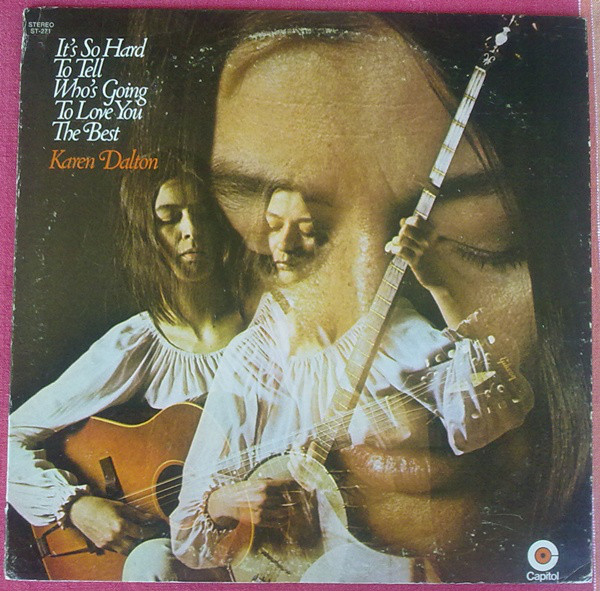
In My Own Time,
For the recording of what became In My Own Time, no expense was spared One of the top studios of the time was chosen. This was the famous Bearsville Studios, near Woodstock, in upstate New York. It had been used by some of the biggest names in music, including Tim Buckley, The Band, Van Morrison and The Rolling Stones. With her band in tow, Karen headed to Bearsville Studios, where they met producer Harvey Brooks. He had previously played bass on Miles Davis’ Bitches Brew, and Bob Dylan’s Highway 61 Revisited would produce In My Own Time.
At the famous studios, Karen cut ten tracks. This album of cover versions and traditional songs became In My Own Time. It included covers of When A Man Loves A Woman and How Sweet It Is (To Be Loved By You). Among the highlights were covers of Karen’s arrangement of Katie Cruel, Dino Valenti’s Something On Your Mind and Are You Leaving For The Country, penned by Karen’s husband Richard Tucker. These songs became part of In My Own Time, which was released later in 1971.
Just like It’s Hard To Tell Who’s Going To Love You the Best, In My Own Time was well received by critics, but failed commercially. Lightning had struck twice for Karen Dalton. However, most people thought she would return with another album. Sadly, it never worked out like that.
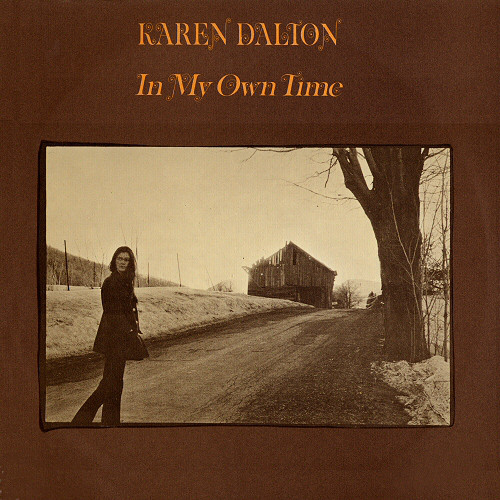
After releasing just two albums, Karen Dalton’s musical career was all but over. She never entered the recording studio agin. There would be no followup to In My Own Time. Karen was lost to music and became a troubled soul. She became addicted to drugs and alcohol, and bravely and valiantly, fought her addictions.
Her life spiralled out of control, with Karen becoming increasingly dependent on drink and drugs. It was Karen’s way of taking the pain away. On at least one occasion, Karen overdosed. There was an inevitability that the Karen Dalton story wasn’t going to end well.
By then, Karen was in self-destruct mode. She was taking heroin, and at one point, it has been alleged that Karen and her boyfriend resorted to dealing to feed her habit. Karen had fallen a long way. Old friends who met her, almost didn’t recognise her. She was a very different person. Her lifestyle was taking its toll. When it seemed things couldn’t get any worse, they did.
In 1985, Karen was diagnosed with AIDS. Still she continued on a path to self-destruction. That’s despite the best efforts of her remaining friends, including country singer Lacy J Dalton.
Lacy first met Karen when she and her boyfriend were looking for a room to rent in New York. They were lifelong friends, with Lacy standing by Karen when things got tough. In 1992, in attempt to help her old friend, Lacy arranged to get her into rehabilitation in Texas. Before that, Karen wanted her cat to be brought from Pennsylvania. Lacy saw to this, and as an incentive for Karen to get clean, setup a recording session at the end of the rehab. It was all for nothing. Just a day later, Karen wanted to return to New York, where she was addicted to Codeine, which was prescribed by a dentist. For Karen, this latest addiction proved too much for her system.
Less than a year later, on March 19th 1993, Karen Dalton died. She was just fifty-five. At the time, it was rumoured that Karen had died on the streets of New York. That wasn’t the case. Instead, Karen Dalton died in the care of her old friend Peter Walker. She was only fifty-five, and had the potential to become one of the most talented singers of her generation.
As music mourned the loss of Karen Dalton, the obituaries referred to Karen as a singer. They never referred to Karen as a songwriter. Both of her albums, It’s Hard To Tell Who’s Going To Love You the Best, and In My Own Time featured a mixture of cover versions and traditional songs. Not once did Karen include one of her own songs. This lead people to believe that Karen Dalton wasn’t a songwriter.
After Karen Dalton’s death, two further albums were released. Cotton Eyed Joe was released by Delmore in 2007. It was a double album featuring live recordings from 1962. Then in 2008, Green Rocky Road, an album of songs Karen had recorded was released. Neither of these albums featured a song written by Karen Dalton. Critics concluded that Karen Dalton wasn’t a songwriter.
Four years after the release of Green Rocky Road, and Delmore discovered a collection of songs featuring Karen Dalton and her husband Richard Tucker. These songs were released by Delmore as 1966. Again, none of the songs on 1966 were penned by Karen Dalton. Critics felt this was irrefutable evidence that Karen Dalton wasn’t a songwriter.
That seemed a safe conclusion to draw. Twenty-nine years had passed since Karen’s death, and nobody was able to find evidence of a song she had written. This however, was all about to change.
Fellow musician, Peter Walker had been one of Karen’s best, and most loyal friends during her lifetime. He was there when she needed him most. After Karen’s death, Peter was given the job of administering her estate. It didn’t amount to much. Peter realised that, as he sorted through the various papers and files. This wasn’t, he thought, a lot to show for fifty-five years. Despite that, Peter was determined to do the best for his late friend.
Carefully and methodically, Peter Walker sorted through Karen Dalton’s estate. Much of his time was spent bringing order to the various papers and files. Within one of these files, were everything from appointments, right through to folk songs that Karen had previously transcribed. However, what caught Peter’s attention were poems and handwritten lyrics. It seemed that Karen Dalton was a songwriter after all. Everyone was wrong.
Secretly, Karen had been writing lyrics. She had even got as far as adding chords to the lyrics. Given that there had been an upsurge in interest in Karen Dalton’s music, this was a discovery that Peter and Karen’s estate wanted to share with the world.
In October 2012, Peter Walker published a book called Karen Dalton: Songs, Poems and Writings. It was published by Ark Press, and was irrefutable proof that Karen Dalton wasn’t just a singer, but a singer-songwriter. Sadly, Karen had never got round to recording these songs. A rueful Peter thought that these songs would just become part of the Karen Dalton archive. They deserved to be heard Peter thought. That wasn’t possible though. The thought that Karen’s songs might never be heard, saddened Peter Walker.
Then one day when Peter was talking to his friend Josh Rosenthal of Tompkins Square Records. The pair had been friends for some time. They had often spoke about Karen Dalton and her music. Josh was already interested in the enigmatic singer. His interest had grown when he read Peter Walker’s book. So one day, Peter showed Josh Karen’s handwritten lyrics.
This was the holy grail of Karen Dalton’s estate. Although people had read the lyrics in the book, very few had seen the original. Josh was one of the privileged few. After seeing the original lyrics, Josh realised that the songs had to be sung from a woman’s perspective. So he sent a file featuring copies of the original lyrics to some of his favourite female artists, including Sharon Van Ette, Patty Griffin, Lucinda Williams and Isobel Campbell. Josh and Peter knew this was a long shot. With the letters sent out, it was just a matter of waiting and hoping.
Eventually, Josh received replies from the artists. They had all been influenced by Karen Dalton’s music, and agreed to cover a song. So eleven artist entered the studio, and recorded the songs that became Remembering Mountains: Unheard Songs By Karen Dalton. When the compilation was released, here was the proof that Karen Dalton wasn’t just a singer, but a songwriter too.
This was ironic, because from the release of her 1969 debut album It’s Hard To Tell Who’s Going To Love You The Best, critics and cultural commentators had always commented on how Karen Dalton wasn’t a songwriter. The same comments were made when Karen Dalton released her 1971 sophomore album In My Own Time. These comments were still being made even when there was a resurgence in interest in Karen Dalton’s music. It was as if that by not writing her own songs, this made her less of a singer. Little did the critics and cultural commentators realise, that Karen Dalton had been writing her own songs all along.
Sadly, Karen Dalton never got the opportunity to record them. Instead, circumstances intervened, and Karen Dalton’s life began to unravel. After the release of In My Own Time in 1971, turned her back on music. She never again entered a recording studio.
There was chance of that. Karen Dalton was in the vice-like grip of addiction. Drugs and alcohol were the only way that Karen Dalton could dull the pain, and keep her demons at bay. Surely, things couldn’t get worse for Karen Dalton? Sadly, they did.
In 1985, Karen Dalton contracted AIDS. She was just forty-eight. This was a huge blow for Karen Dalton. Still, though, she bravely battled on. By then, most of her friends had drifted away. A few loyal friends remained, and were they were determined to help her. This included country singer Lacy J Dalton. She arranged for Karen Dalton to enter rehab in 1992. Alas, that wasn’t to be, and at the last moment, Karen Dalton had a change of mind. She returned to New York, where she had an appointment with a dentist. This proved to be the last straw for Karen Dalton.
When Karen Dalton visited the dentist, she was prescribed codeine by. It’s a powerful, and can be a highly addictive drug. Sadly, Karen Dalton quickly became addicted to codeine. This was just the latest substance that Karen Dalton had become addicted to. This was one addiction too many.
Less than a year later, on March 19th 1993, Karen Dalton died in the care of her friend Peter. She was just fifty-five, and could’ve, and should’ve, been one of the most successful singers of her generation. She certainly had the talent.
Despite her undoubted talent, Karen Dalton neither enjoyed the commercial success nor critical acclaim her music deserved. Maybe if Karen Dalton had been signed to a different label things might have different? Elektra Records which for a while, seemed to specialise in singer-songwriters, would’ve been the perfect label for Karen Dalton. She would’ve thrived, fulfilled her potential and had her music heard by a much wider audience. Sadly, that didn’t happen until later.
The resurgence of interest began just before Karen Dalton’s death in 1993. Before that, just a discerning group of musicians and music lovers flew the flag for Karen Dalton’s music. However, since Karen Dalton’s death, there’s been a huge upsurge in interest in her music. Both of her albums, It’s Hard To Tell Who’s Going To Love You The Best and In My Own Time have been reissued. Somewhat belatedly, Karen Dalton’s music is receiving the recognition it so richly deserves,
That is no surprise. The music on Karen Dalton’s two albums, It’s Hard To Tell Who’s Going To Love You The Best and In My Own Time is breathtaking in its beauty and truly captivating. Both albums feature a singer who was blessed with the ability to breath life, meaning and emotion into songs. This Karen Dalton seemed to do effortlessly on It’s Hard To Tell Who’s Going To Love You The Best and In My Own Time. Sadly, these were the only albums Karen Dalton released during her all to brief recording career. This means It’s Hard To Tell Who’s Going To Love You The Best and In My Own Time are Karen Dalton’s musical legacy, and a remainder of an artist who could’ve, and should’ve, become one of the most successful singers of her generation.
The Life and Career Of Karen Dalton.
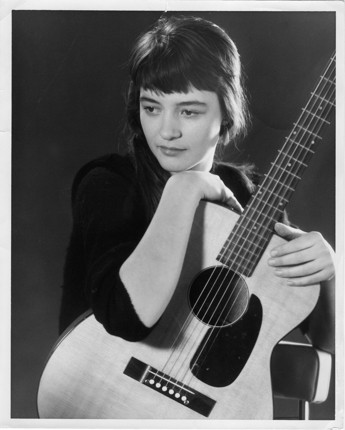
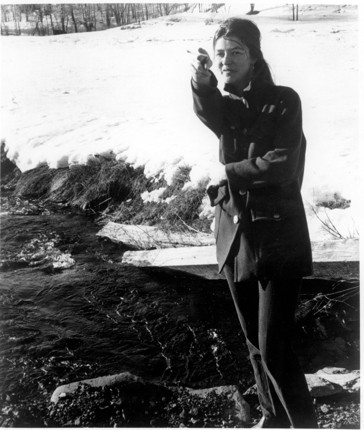
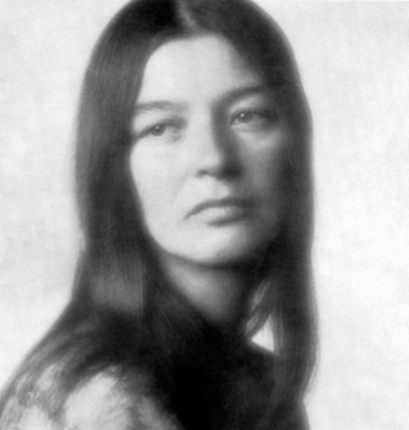
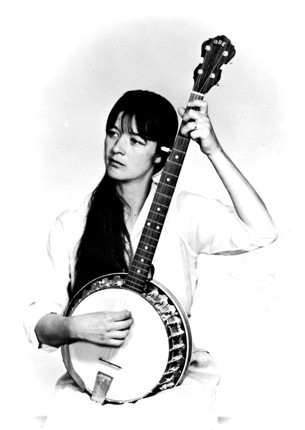
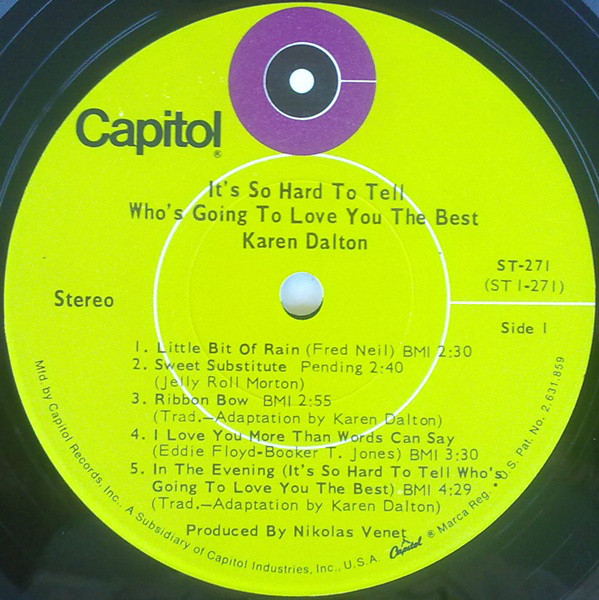
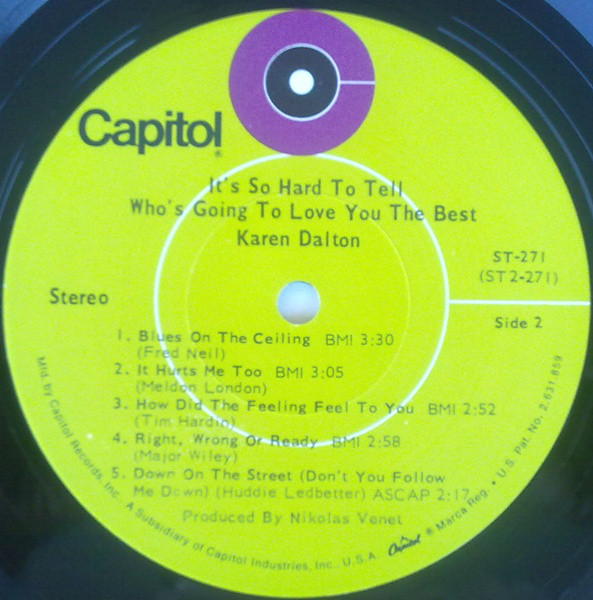
THE RISE AND DEMISE OF THE ANIMALS.
The Rise and Demise Of The Animals.
A lot can happen to a band in just five year, and The Animals were proof of this. They released their eponymous debut album in September 1964, and over the next few years, became one of the biggest British Invasion bands. However, by 1969, The Animals’ story was over. By then, the seven separate lineups of The Animals had released ten albums since the group had had been formed in 1962.
That was when The Animals were formed in Newcastle, England. However, The Animals roots can be traced to a band that that had been formed four years earlier, in 1958, The Alan Price Rhythm and Blues Combo.
They were popular within the Newcastle area, in the late-fifties and early sixties. However, by 1962, music was changing, and changing fast. The Beatles had burst onto the scene, and this was a game-changer. So in 1963, The Alan Price Rhythm and Blues Combo decided to add a vocalist to their lineup.
The man they chose was Eric Burdon. He joined a rhythm section of drummer John Steel, bassist Bryan “Chas” Chandler and guitarist Hilton Valentine. Completing the lineup, was organist and the man who lent his name to the Combo, Alan Price. However, not for long.
Not long after Eric Burdon joined the band, The Alan Price Rhythm and Blues Combo decided to change their name to something more rock ’n’ roll, The Animals. They set about making their presence felt in the Newcastle music scene.
Soon, The Animals were one of the most popular local bands. Their fiery sets of saw The Animals fusing electric blues and rock. This proved popular, and won over audiences night after night. Each night, The Animals’ sets were combination ran through covers of songs recorded by blues greats like Muddy Waters, Howlin’ Wolf, John Lee Hooker and Jimmy Reed. This struck a nerve with audiences in their home city. However, The Animals had set their sights higher than being a big fish in a small pond.
In 1964, The Animals made the decision to move to London. By then, The Animals had struck up a relationship with music impresario Giorgio Gomelsky. He owned the Crawdaddy Club, and for a time managed the Rolling Stones, who were the club’s house band. However, by 1964, the Rolling Stones had gone on to bigger things. Soon, so would The Animals.
Not long after The Animals moved to London, they were signed by Columbia Records. Quickly, The Animals repaid Columbia Records’ faith in them. Their debut single Baby Let Me Take You Home was produced by producer and pop impresario Mickie Most. When the single was released in March 1964, it reached twenty-one on the UK singles charts. Success had come quickly for The Animals in Britain. America was a different proposition though.
Five months later, and Baby Let Me Take You Home was released in America, but stalled at 102 in the US Billboard 100. Soon, though, The Animals would be one of the biggest British Invasion bands.
Three months later, in June 1964, The Animals released The House Of The Rising Sun as a single. This traditional song transformed The Animals’ career it when it reached number one in Britain, America, Canada, Australia and Sweden. Elsewhere, including Germany and Holland, The House Of The Rising Sun gave The Animals a top ten single. They were well on their way to becoming one of the biggest bands on both sides of the Atlantic.
The Animals.
Given the success of The House Of The Rising Sun, The Animals were sent into the studio to record an album with producer Mickie Most. Columbia wanted an album quickly, to build on the success of The House Of The Rising Sun.
Twelve songs were chosen and would become The Animals. The songs included old blues and R&B numbers, and was a reminder of The Animals’ musical roots. Among the songs that were chosen were Ray Charles’ Talkin’ About You Baby, John Lee Hooker’s Mad Again, Fats Domino’s I’ve Been Around. It was joined I’m in Love Again which Fats Domino wrote with Dave Bartholomew. Two Chuck Berry’ songs were chosen, Around and Around and Memphis, Tennessee. They joined The Animals first two singles Baby Let Me Take You Home and The House Of The Rising Sun. These songs became The Animals eponymous debut album. It was released later in 1964.
Before that, critics reviewed The Animals debut album. It was mostly well received, and showcased what The Animals as a band were about. The Animals was then released in Britain and America in September 1964.
On both sides of the Atlantic, The Animals built on the success of The House Of The Rising Sun. The Animals reached number six in the UK and seven in the US Billboard 200. This was the start of rise and rise of The Animals to become one of the most successful British Invasion groups.
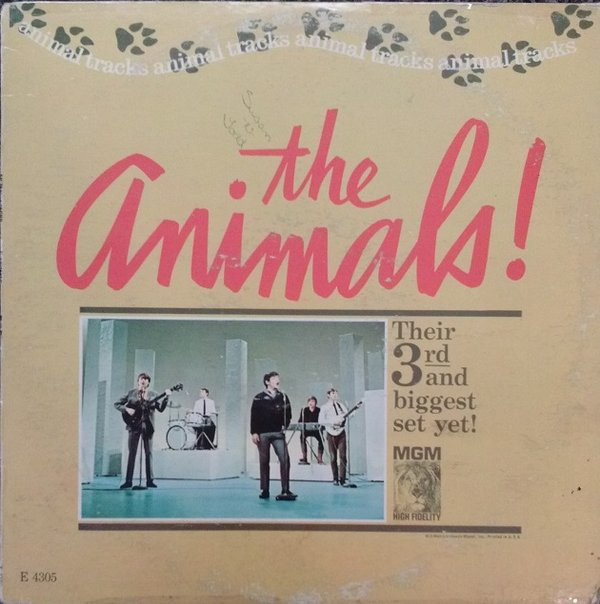
Animal Tracks.
Just eight months later, The Animals released their sophomore album Animal Tracks. It had been recorded during 1964 and 1965, and mostly, followed in the footsteps of The Animals’ eponymous debut album.
Mainly, Animal Tracks was another album of covers of R&B and blues. This included Chuck Berry’s How You’ve Changed, Ray Charles’ Hallelujah I Love Her So, Big Maceo Merriweather’s Worried Life Blues, Clarence Carter’s I Ain’t Got You, Jimmy Reed’s Bright Lights, Big City and Bo Diddley’s Roadrunner. There was also a cover of Shirley Goodman and Leonard Lee’s Let The Good Times Roll, which Ray Charles made famous. However, tucked away on side two of Animal Tracks, was the first song penned by a member of The Animals.
It was Eric Burdon who was the first member of The Animals to write a song for an Animals’ album. His contribution was For Miss Caulker. This was just the start of Eric Burdon’s songwriting career, which blossomed over the new few years. Before that, Animal Tracks was recorded with producer Mickie Most. Once the album was complete, it was released in Britain in May 1965.
Unlike the reviews of their eponymous debut album, Animal Tracks wasn’t as well received by critics. Some of the songs were as strong as those on The Animals. They lacked the quality and energy. However, this didn’t bother record buyers.
When Animal Tracks was released in May 1965, it reached number six in the UK. However, Animal Tracks wasn’t released in America until September 1965, but reached just fifty-seven in the US Billboard 200. Before Animal Tracks was released in America, The Animals released their American sophomore album The Animals On Tour.
The Animals On Tour.
After the released of their eponymous debut on both sides of the Atlantic, The Animals ‘ popularity soared stateside. They quickly became one of the most popular and successful British Invasion groups. So a decision was made to record an album that would only be released in America, The Animals On Tour.
This was the start of confusing time for fans of The Animals. Albums were released in Britain and America at different times. Some albums, including The Animals On Tour weren’t officially released in Britain. The first album that wasn’t officially released in Britain, was The Animals On Tour.
Given the title, many record buyers thought The Animals On Tour was a live album. It wasn’t. Instead, it was another album of cover versions. Some of the tracks had featured on Animal Tracks, including Chuck Berry’s How You’ve Changed, Ray Charles’ Hallelujah I Love Her So, Big Maceo Merriweather’s Worried Life Blues, Calvin Carter’s I Ain’t Got You, Jimmy Reed’s Bright Lights, Big City and Bo Diddley’s Roadrunner. There was also a cover of Shirley Goodman and Leonard Lee’s Let The Good Times Roll. They rubbed shoulders with John Lee Hooker’s Boom Boom and Dimples, which he wrote with James Bracken. The only new track on The Animals On Tour was an Eric Burdon and Alan Price composition I’m Crying. These twelve tracks were recorded in 1964 and produced by Mickie Most.
The Animals On Tour was released in March 1964, the same times as Animal Tracks was released in Britain. Doubtless copies of Animal Tracks made their way across the Atlantic, where fans of The Animals were in for a surprise. Both albums featured a number of similar tracks. So it was no surprise that The Animals On Tour stalled at a lowly ninety-nine in the US Billboard 200. This was a disappointing outcome for The Animals.
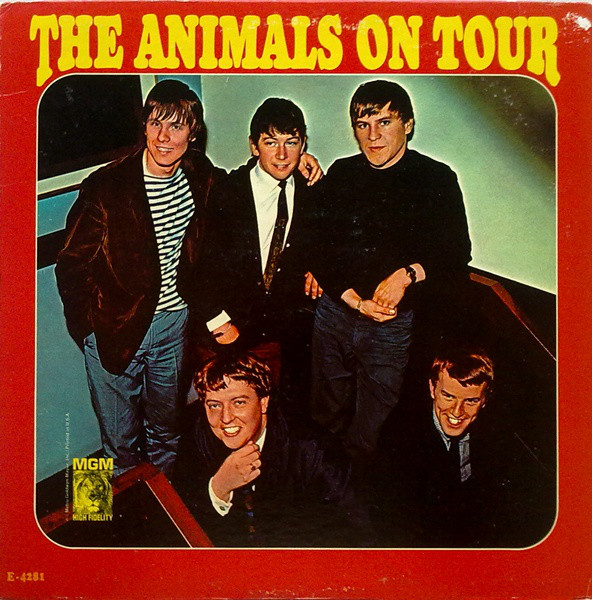
What was a bigger disappointment was when of organist Alan Price quit The Animals in May 1965. Tension had been building within the band for some time. They had also been touring almost non stop. The constant touring made things worse, as Alan Price had a a fear of flying. So when he left The Animals, reasons cited were personal and musical differences, plus Alan Price’s fear of flying. This was a huge blow for The Animals.
Mick Gallagher stepped into the fray, and replaced Alan Price on a temporary. This was only until Dave Rowberry joined The Animals and became their keyboardist. This was the start of a new era for The Animals.
Things improved for The Animals when Animal Tracks was released in America in September 1965. It reached fifty-seven in the US Billboard 200. That was despite many of the tracks on Animal Tracks having already featured on The Animals On Tour. It seemed that The Animals were still one of the most popular and prolific British Invasion bands.
The Animals had released three albums in America in the space of a year. Each album had sold well, and by late 1965, The Animals were one of the most popular British Invasion bands. They were rubbing shoulders withThe Kinks and The Who, and had set their sights on The Beatles and Rolling Stones. If all went well, The Animals could be one of the biggest British bands of the sixties. However, the pressure continued to build as The Animals began to work on their new American album, Animalization.
Animalization.
When work began on Animalization, the lineup of The Animals featured a rhythm section of drummer John Steel, bassist Bryan “Chas” Chandler and guitarist Hilton Valentine. Completing the lineup, were vocalist Eric Burdon and keyboardist Dave Rowberry. They chosen twelve songs that became Animalization.
Just like previous albums, the majority of Animalisms featured cover versions. This included covers of soul, blues and R&B songs. Among them, were Joe Tex’s One Monkey Don’t Stop No Show, John Lee Hooker’s Maudie, Chuck Berry’s Sweet Little Sixteen, Screamin’ Jay Hawkins’ I Put a Spell on You and Alonzo Tucker and Jackie Wilson’s Squeeze Her, Tease Her. Joining the nine cover versions were a trio songs penned by members of The Animals.
Eric Burdon and new keyboardist Dave Rowberry formed a new songwriting partnership, penning You’re On My Mind and She’ll Return It. Dave Rowberry also wrote Clappin’. The Animals’ newest member was making his presence felt. Soon, though Dave Rowberry was no longer the new member of The Animals.
When recording of Animalization began, work began on laying down twelve tracks with producer Mickie Most. Dave Rowberry made his Animals’ debut, adding keyboards. However, with eight tracks recorded, drummer John Steel quit. He was replaced by Barry Jenkins, who featured on Don’t Bring Me Down, Cheating, See See Rider and She’ll Return It. Once the album was complete, Animalization was released in June 1966.
Prior to the release of Animalization, reviews of the album were published. They were mostly positive, with some of the reviews calling Animalisms one of The Animals’ best albums. Elements of blues, rock, R&B and soul were combined by The Animals. The only problem was, The Animals were still too reliant on cover versions. Maybe the Eric Burdon and Dave Rowberry songwriting partnership would flourish? That was in the future.
When Animalization was released in America, the album reached number twenty in the US Billboard 200, and became The Animals’ second biggest selling American album. Now they had to build on the success of Animalization.

Animalisms (US Version).
Just four months later, The Animals released an American version of Animalisms. It featured an alternative track listing, which featured twelve cover versions. They were an eclectic selection of songs.
Frank Zappa’s All Night Long sat side by side with Sam Cooke’s Shake, Fred Neil’s The Other Side of This Life, Howlin’ Wolf’s Smokestack Lightnin’, Percy Mayfield’s Hit The Road Jack, Muddy Water’s Louisiana Blues and Donovan’s Hey Gyp. These songs were recorded during July 1966.
The recording session took place at Lansdowne Recording Studio, in London, England and T.T.G, Hollywood, in California. Tom Wilson took charge of production. He gave The Animals more freedom to express themselves artistically. They embraced this opportunity on what was the last session that featured drummer Barry Jenkins. He played on ten tracks, with John Steel playing on Outcast and That’s All I Am to You. When the sessions were complete, Animalisms was released on 21st November 1966.
When critics heard Animalisms they were impressed with the album, which found The Animals relishing their new found artistic freedom. They flit seamlessly between musical genres on Animalisms. Sadly, when Animalisms was release, it failed to chart. This was a huge disappointment. However, the times they were a changing for The Animals.

When a cover of the blues classic See See Rider was released, the group were now billed as Eric Burdon and The Animals. This lineup was short-lived and split-up in September 1966. The Animals’ career was over after just two years.
Eric Burdon and The Animals.
A new chapter in The Animals’ story began shortly thereafter. Eric Burdon began putting together a new band. Drummer Barry Jenkins was the first person recruited by Eric Burdon for his new band.
This new band became Eric Burdon and The Animals, who musically had undergone a Damascene conversion musically. Previously, Eric Burdon had a been a disciple of hard driving blues. Not any longer. He decided to incorporate his take on psychedelic rock into Eric Burdon and The Animals’ music. This began on their debut album Eric Is Here.
While Eric Burdon and The Animals was a new band, not all members of the band featured on the band’s debut album Eric Is Here. It comprised entirely of twelve cover versions. This time around, Eric Burdon was relying on many Brill Building songwriters. This included Goffin and King’s On this Side of Goodbye, Barry Mann, Cynthia Weil’s It’s Not Easy and Tommy Boyce and Bobby Hart’s In The Night. Three Randy Newman songs were also chosen, including Mama Told Me Not To Come, I Think It’s Going To Rain Today and Wait Till Next Year. These songs were quite unlike what The Animals had previously covered. However, this was a new beginning for Eric Burdon and The Animals.
What didn’t change was that Tom Johnson produced Eric Is Here. He brought onboard an orchestra, who accompanied Eric Burdon and The Animals. They combined blues rock, R&B psychedelic rock and rock on Eric Is Here. Alas, it was neither a potent nor heady brew.
When Eric Is Here was released, only Eric Band and Barry Jenkins were credited as having played on the album. It proved to be an inauspicious start to Eric Burdon and The Animals’ career. Neither critics nor record buyers were won over by Eric Is Here. The reviews of Eric Is Here included some of the worst that any Animals album had received. Things got were when Eric Is Here was released in March 1967. The album stalled at a lowly 121 in the US Billboard 200. Across the Atlantic, Eric Is Here failed to chart in Britain. All that Eric Burdon could hope, that things would improve when Eric Burdon and The Animals released their sophomore album, Winds Of Change.

Winds Of Change.
Following the disappointment of Eric Is Here, Eric Burdon began putting together Eric Burdon and The Animals. Joining drummer Barry Jenkins in the rhythm section was bassist Danny McCulloch and guitarist Vic Briggs. The final piece of the jigsaw was John Weider, who played electric violin. Now Eric Burdon and The Animals could begin to move towards psychedelic rock on their sophomore album Winds Of Change.
On their previous album Eric Is Here, Eric Burdon and The Animals had just toyed with psychedelic rock. Not this time. psychedelic rock. Eric Burdon and The Animals wrote ten new tracks, and covered Mick Jagger and Keith Richards’ Paint It Black. Producing Winds Of Change was Tom Johnson.
Recording of Winds Of Change took place over a two week period in March 1967, at TTG Studios in Los Angeles. That was where Eric Burdon and The Animals recorded their hard rocking cover of Paint It Black. The rest of Winds Of Change was the most psychedelic album Eric Burdon and The Animals recorded and released.
Winds Of Change was released in September 1967, but before that, critics lavished the album with critical acclaim. It was Eric Burdon and The Animals at their most psychedelic, on what was one of their best albums. Among the highlights were Winds Of Change and Yes I Am Experienced which was Eric Burdon and The Animals’ answer to the Jimi Hendrix Experience. The quality continued on San Franciscan Nights, Good Times and the album closer, It’s All Meat. It found Eric Burdon and The Animals at their most psychedelic. After a false start, Eric Burdon and The Animals had returned with a career defining album.
When Winds Of Change was released in September 1967, it reached forty-two in the US Billboard 200, but failed to chart in Britain. Despite that, it looked as if Eric Burdon and The Animals might go on to reach the heights that The Animals reached between 1964 and 1966. The new group certainly had the talent, and had something that The Animals lacked. Eric Burdon and The Animals featured five talented songwriters. They would put their songwriting skills to good use on The Twain Shall Meet.

The Twain Shall Meet.
For the very first time in the history of The Animals and Eric Burdon and The Animals, an entire album was written by members of the band. This was a first. No longer were Eric Burdon and The Animals reliant on old blues or R&B songs. Gone also, were the days when Eric Burdon and The Animals relied upon songs by Brill Building songwriters. The Twain Shall Meet was written by the five members of Eric Burdon and The Animals.
Among the songs they wrote for The Twain Shall Meet was Monterey, a celebration of 1967 Monterey Pop Festival. Sky Pilot Parts 1 & 2) was an anti Vietnam War song, which would give Eric Burdon and The Animals a number fourteen hit single in the US Billboard 200. It tapped into the mood of the American nation. These songs were recorded in December 1967.
When the recording began, Tom Wilson returned to produce The Twain Shall Meet. This time though, two vocalist were used on The Twain Shall Meet. Eric Burdon took charge of the vocals on five songs, while bassist Danny McCulloch added the vocals on Just the Thought and Orange and Red Beam. These seven songs were completed later in December 1967, and released in April 1968.
Unlike Winds Of Change which was released to critical acclaim, The Twain Shall Meet received mixed reviews. One of the fiercest critics of The Twain Shall Meet was Rolling Stone magazine. This was disappointing for Eric Burdon and The Animals.
So was the performance of The Twain Shall Meet. It was only released. When it was released in March 1967, Eric Burdon and The Animals’ third album stalled at just seventy-nine in the US Billboard 200, but failed to chart in Britain. The only small crumb of comfort was the performance of the singles.
Monterey was the lead single, and fifteen in the US Billboard 100. The followup Anything, reached just a lowly eighty in the US Billboard 100. However, Sky Pilot then reached number fifteen in the US Billboard 100 and forty in the Britain. Two top twenty singles almost made-up for The Twain Shall Meet stalling a seventy-nine in the US Billboard 200. Maybe Eric Burdon and The Animals’ next album, Every One of Us, would be bigger success?
Every One of Us.
1968 was without doubt, the busiest year of Eric Burdon and The Animals’ career. They released a trio of albums. The second album in the trio was Every One of Us, which was recently reissued by BGO Records. It’s a welcome reissue, because when Eric Burdon and The Animals released Every One of Us, it was never released in Britain.
Eric Burdon and The Animals were never as popular as The Animals in Britain. None of their albums had charted in Britain. It was very different to when The Animals enjoyed three top ten albums. That was the past, and the past was another country for Eric Burdon and The Animals.
When work began on Every One of Us, Eric Burdon and The Animals were now a sextet. Zoot Money, a British vocalist and keyboardist had joined the band. The addition of a new band member was risky. There was always the potential that it would upset the equilibrium of the band. Especially since the band had been working well together, and had written two albums. This changed on Every One of Us.
For Every One of Us, which featured seven tracks, Eric Burdon wrote much of the album He penned White Houses, Uppers and Downers, The Immigrant Lad, The Year Of The Guru and cowrote New York 1963-America 1968 with Zoot Money. Eric Burdon also arranged the traditional song St. James Infirmary Blues. The only song that Eric Burdon didn’t play a part in was Serenade To A Sweet Lady. It was written by John Weider. These seven songs would become Every One of Us.
When recording of Every One of Us began, there was no sign of producer Tom Wilson. Instead, Eric Burdon and The Animals produced For Every One of Us. By then, the rhythm section consisted of drummer Barry Jenkins, bassist and 12-string guitarist Danny McCulloch and guitarist and bassist Vic Briggs. John Weider switched between guitar and celeste and Zoots Money played Hammond organ and piano. This time round, Eric Burdon took charge of all the vocals. Once Every One of Us was complete, it was scheduled for release later in 1968.
When Every One of Us was released in August 1968, this accomplished album of psychedelic blues stalled at just 152 in the US Billboard 200. This was a huge disappointment, considering the quality of the music and musicianship. The critics had thought that Every One of Us would fare much better. Things didn’t improve when White House was released as a single. It reached just sixty-seven in the US Billboard 100. For Eric Burdon and The Animals this just rubbed salt into their wounds.
Especially since Eric Burdon and The Animals had released what was without doubt, one of their finest albums since the release of Eric Is Here in March 1967. The only album that surpasses Every One of Us, is Winds Of Change which was released in September 1967. Given the quality of music on Every One of Us, it was a frustrating time for Eric Burdon and The Animals. However, soon, they began work on their third album of 1968. Love Is.
Love Is.
For Love Is, the lineup of Eric Burdon and The Animals and changed yet again. Vic Briggs and Danny McCulloch had left the band, and former Police guitarist joined Eric Burdon and The Animals. They were no longer a sextet to a quintet, as work began on their tenth album, which would be Eric Burdon and The Animals’ first double album.
Unlike recent albums, Love Is featured mostly cover versions. This included Phil Spector, Jeff Barry and Ellie Greenwich’s River Deep-Mountain High; Sly Stone’s I’m an Animal; June Carter and Merle Kilgore’s Ring Of Fire and Steve Winwood, Jim Capaldi and Chris Wood’s Colored Rain. They were joined by Barry and Robin Gibb’s To Love Somebody plus Don Deadric Robey’s As the Years Go Passing By. Eric Burdon contributed just the one song, I’m Dying (Or Am I?). Completing Love Is was an eighteen minute epic where Steve Hammond’s Gemini gave way Zoot Money and Andy Summers’ Madman Running Through the Fields. These eight tracks would become Love Is.
Recording of Love Is took place at TTG and Sunset Sound Studios, in Hollywood, California during October 1968, with The Animals producing Love Is. It featured the recording debut of the new lineup. Its rhythm section featured drummer Barry Jenkins; bassist pianist and organist Zoot Money o plus guitarist and violinist John Weider. This time around, the vocals were shared, with Zoot Money featuring on I’m Dying (Or Am I?) and on Gemini, while Eric Burdon took charge of the rest of the vocals. Once recording of Love Is was completed in October 1968, the album was released in December 1968.
Before that, critics had their say on Love Is, which was a very different album from recent albums. Love Is featured mainly cover versions. These cover versions were totally transformed by Eric Burdon and The Animals. The songs featured extended arrangements, and sometimes, new lyrics and sections. Among the highlights were Ring Of Fire and Traffic’s Coloured Rain, which featured a guitar masterclass from Andy Summers. His guitar solo lasts an incredible four minutes and fifteen singles. Eric Burdon and The Animals bowed in style with Gemini and Madman Running Through The Fields, an eighteen minute epic that took up the final side of Love Is. Whole most of the reviews proved positive, there were a few dissenting voice among the critics.
Despite that, Love Is recached 123 in the US Billboard 200, which surpassed the commercial success of Every One Of Us. An edited version of Ring Of Fire was then released as a single. It reached thirty-five in the UK and entered the top forty in Australia, Germany and Holland. Things it seemed, were looking up for Eric Burdon and The Animals.

Sadly, that wasn’t the case. Love Is proved to be Eric Burdon and The Animals’ swan-song. In 1969, Eric Burdon and The Animals disbanded for the second time. This time, it looked as if it was the end of the road for one of the most successful of the British Invasion groups. They had enjoyed four successful years together.
Between them, The Animals and then Eric Burdon and The Animals released nine studio albums and one live album between 1964 and 1968. These albums proved more successful in America than they were in Britain. The Animals and then Eric Burdon and The Animals enjoyed ten top twenty singles in the UK and America. Their most successful single was The House Of The Rising Sun in 1964, which reached number one on both sides of the Atlantic and sold five million copies worldwide. Nowadays, The House Of The Rising Sun is synonymous with The Animals and Eric Burdon and The Animals.
That’s somewhat ironic, as there’s much more to their career than just one song. Proof of that is the ten albums that The Animals and later, Eric Burdon and The Animals released during their four year recording career. These albums are a reminder of a truly talented band, that constantly reinvented their music to ensure their music music remained relevant. That was the case right up to Eric Burdon and The Animals released heir swan-song Love So in December 1968. Not long after the release of Love So, Eric Burdon and The Animals disbanded in 1969. That was the end of the road for Eric Burdon and The Animals.
Sadly, there was no pot of gold waiting for Eric Burdon and The Animals. Just like many bands, they had been mismanaged over the years. So it was no surprise that eight years later, the original lineup of The Animals announced they were about to reunite.
The Animals released their first reunion album, Before We Were So Rudely Interrupted was released to critical acclaim in August 1977. It reached number seventy in the US Billboard 200, and was the most successful album since the release of Winds Of Change in September, 1967. Despite the success of Before We Were So Rudely Interrupted, The Animals comeback was brief and consisted of just the one album.
Another six years passed The Animals made their second comeback, when they released Ark in August 1983. Although the album was well received, there were a few dissenting voices. Despite that, Ark reached sixty-six in the US Billboard 200. Ark proved to be last album the reunited line-up of The Animals released. This time there would be no more comebacks.
Never again, would The Animals reunite. This time, it really was the end of the road for one of the most successful and influential of the British Invasion bands. While their two comeback albums were a reminder of what The Animals were capable of, The Animals released the finest music of their career during their sixties heyday.
The Rise and Demise Of The Animals.

PAT THOMAS- “THE GOLDEN VOICE OF AFRICA AND “GHANIAN HIGHLIFE MASTER.”
Pat Thomas- “The Golden Voice Of Africa” and Ghanaian Highlife Master.
All Pat Thomas ever wanted to do was sing highlife, and he’s been doing that since his career began in 1966. Since then, Pat Thomas has reinvented himself musically several times. He’s recorded everything from big band highlife in the late sixties, right through to the burger highlife of the early eighties. Since then, Pat Thomas’ has continued to reinvent himself musically during a long and illustrious career that has spanned six decades.
Nowadays, Pat Thomas is a Ghanaian highlife master Pat Thomas, who is known as the “the golden voice of Africa.” Now aged sixty-six, and one of the veterans of African music, Pat Thomas continues to make music. That’s no surprise. That is all he ever wanted to do.
The Pat Thomas story began in 1940, when he was born in Agona, in the Ashanti region of Ghana in 1951. Music was in Pat’s blood. His father taught music theory, his mother was a bandleader and Pat’s uncle was the legendary Ghanian guitarist King Onyina. Given his background, it wasn’t surprising Pat Thomas would later make a career out of music.
Especially since Pat Thomas was surrounded by music. Growing up, he listened to all types of music. However, it was highlife that struck a nerve with Pat. By the time he was in high school, Pat Thomas dreamt of singing highlife. However, he was too young.
This wasn’t going to stop Pat Thomas embarking upon a musical career. So while he was at high school, Pat Thomas started singing covers of songs by Stevie Wonder, Nat King Cole, Miriam Makeba and Jimmy Cliff. While this wasn’t ideal, it was a start. He knew everyone had to start somewhere.
The next chapter in Pat Thomas’ career began in 1966. Pat was only fiteen, but something of a musical prodigy. This was in part, thanks to his uncle. He took Pat under his wing. Soon, he was able to write music, and play guitar and drums. However, it was as a singer that Pat Thomas excelled. Already he was a familiar face in local clubs, and was perceived as one of the rising stars of the local music scene. That’s why he was hired as an arranger by one of the biggest names in Ghanian music, Ebo Taylor.
Ebo Taylor had just returned from London, when he hired Pat Thomas as an arranger. He and Fela Kuti had been studying music in London. Now Pat was home, he was determined to put what he had learnt into practice. This included modernising highlife.
With Pat Thomas onboard, Ebo Taylor embarked upon a journey that eventually, would see the transformation of highlife. It was a meeting of minds. They gave highlife a Western twist. Horns were added. So were guitars and vocals. This once traditional form of African music was about to be transformed by two of Ghana’s most progressive musicians.
Over the next few years, Pat Thomas and Ebo Taylor played together in various bands. This included the Stargazer’s Dance Band and the Broadway Dance Band. Pat was the arranger and vocalist, while Ebo played the guitar. They were a formidable duo. That’s apparent on the Pat Thomas penned Go Modern, which the Broadway Dance Band released as a single on the Ambassador label. It wasn’t just Pat’s recording debut as bandleader, but his first recording with Ebo Taylor. However, despite their close friendship, Pat Thomas made the decision to journey to Britain.
He wasn’t the first African musician to make this journey. Nor would he be the last. Pat made the Journey to London in 1970. During the time he spent in London, he toured with the Uhuru Dance Band. Then in 1971, Pat returned home and moved to Accra.
That’s where Pat Thomas and Ebo Taylor renewed their musical partnership in 1971. That’s when Pat joined the Blue Monks. Again, Pat was the vocalist and Ebo the guitarist. They were resident at the Tip Toe Nite Club, where the Blue Monks would make their mark on Ghanian musical history. They’re now remembered as one of most important and influential Ghanian bands of the early seventies. Just like before, Pat and Ebo went their separate ways, but would later reunite.
Before that, Pat Thomas and The Big 7 released a couple of singles, including Eye Colo in 1972. It features on the Coming Home-Original Ghanian Highlife and Afrobeat Classics compilation, and is a reminder of what was a memorable collaboration. They reunited in 1973 to record and release Okomfo Bone as a single. However, the collaboration between Pat Thomas and The Big 7” wasn’t particularly successful, and they parted. Not long after this, Pat was on the move.
This time, Pat Thomas moved to the Ivory Coast. After a while, Pat decided to return home, and once more, reunited with Ebo Taylor. In 1974, they joined Sweet Beans, a group sponsored by the Ghana Cocoa Board.
Later in 1974, Pat Thomas had recorded an album with The Sweet Bean. They were billed as Pat Thomas and The Sweet Beans, and their album False Lover was released on Gapophone Records later in 1974. Three of the songs Pat had written for the album, were Merebre, Revolution and Set Me Free. Sadly, Pat Thomas and The Sweet Beans only released onealbum. However, for Pat Thomas, this was just the start of his recording career.
Around this time, Pat Thomas recording career was blossoming. However, details of exactly where and the recordings took place is unclear. Even debates surrounds the exact release date. It’s thought that The Ogyatanaa Show Band (Super) Yaa Amponsah and Pat Thomas and The Black Berets Obra E Yebo Yi were released in 1974. Similarly, it’s thought that Pat Thomas cut and released Awurade Mpaebo in 1975. Alas, over forty years later, details are somewhat sketchy. The main thing is that the music has survived, and shows Pat Thomas maturing and evolving musically.
Pat Thomas’ career blossomed during 1976, which was one of the busiest and most important years of his career. Pat released a trio of albums. This included his debut solo album Stay There, which was released on Gapophone Records in 1976. So was the followup Stage Two. Already, it was apparent why Pat Thomas would later be called “the golden voice of Africa.”
Having released two solo albums during 1976, Pat Thomas released his live album Wednesday At Tip Toe. That night his performancewas recorded for posterity, and released on Gapophone Records. This was fitting, as Pat had often took to the stage at Tip Toe, when The Blue Monks had a residency. The other album Pat worked on during 1976, was his first collaboration with Marijata.
This was Pat Thomas Introduces Marijata, which was released on Gapophone Records, in 1977. The followup was Pat Thomas and Marijata, which was released in 1978. After that, Pat decided to concentrate on his solo career.
That was the plan 1978. However, Pat Thomas was reunited with Ebo Taylor in 1978. Soon, they embarked on a collaboration with another legend of African music, Fela Kuti’s former drummer, Tony Allen.
At the time, Pat Thomas, Ebo Taylor and Tony Allen were at the peak of their powers. They were like an African supergroup. The collaboration came about when Tony Allen was rerecording the soundtrack to Black President in Accra. When Tony had some downtime, he headed to Kumsai to record with Pat and Ebo. Sadly, the sessions never saw the light of day, after they were destroyed in a fire. Sadly it would be, four decades later, before Pat Thomas would collaborate with his old friends.
Later in 1978, Pat Thomas returned with the first in a trilogy of albums, In Action Volume 1-I Am Born Again. The followup, In Action Volume 2-Asante Kotoko was released a year later. in 1979. So was the final instalment in the trilogy, In Action Volume 3-I Wanna Know. By then, Ghana was a troubled country.
Ghana was in the throes of a coup d’état lead by Flight Lieutenant Jerry Rawlings. Many Ghanians fearing their safety, fled the country. Those that remained, their lives were in danger. Nothing was sacred. To make matters worse the military junta set about destroying the Ghanian music industry. They went as far as destroying the master tapes in Gapophone Records’ vaults. Musicians like Pat Thomas looked on helplessly. They were determined not to be silenced. However, they were realists, and knew that it they stayed in Ghana, their loves were in danger. So later in 1979, Pat Thomas left Ghana, and headed for London.
London was only a temporary home for Pat Thomas. He moved to Berlin, where he hooked up with other Ghanian musicians. Augmented by some local musicians, they recorded the album 1980. It featured an eclectic mixture of Afrrobeat, disco and reggae. 1980 became one of the early records of burger highlife scene. This came about, after Ghanians living in Germany became to call themselves burgers. In doing so, a new musical scene was born, and Pat was at the centre of it.
Things were improving for Pat Thomas, after the move to Berlin. He released Asawo Do was released as a single, and it gave Pat a hit in Germany and Ghana. Belatedly, Pat’s music was finding a wider audience. This made it the perfect time to for Pat to release his collaboration with his old friend Ebo Taylor.
Pat Thomas and Ebo Taylor had recorded a truly eclectic album, Sweeter Than Honey Calypso ‘Mahuno” And High Lifes Celebration. With a hugely talented band, they fused elements of Afrobeat, calypso funk, highlife, reggae and soul. Alas, the album didn’t sell in huge quantities. Although was disappointing, Pat soon, began work with a new band, Super Sounds Namba.
Pat Thomas joined another band comprising Ghanian musicians, Super Sounds Namba. They headed to Otodi Studio, in Togo to record their one and only album Super Sounds. It was released in 1981, and nowadays a collectors item. One track that proved poignant was Who’s Free, given the political situation in Ghana.
The people who hadn’t fled Ghana certainly weren’t free. They lived under military rule. Musicians who were seen as subversives, who spoke against the government and now military rulers, couldn’t live safely in Ghana. Pat Thomas realised that in 1979, and fled to London. Since then, he had moved to Berlin, but his life was in a state of flux. He couldn’t return home to the political situation changed. For Pat, this was a worrying time. Still, though, he continued to make music.
In 1982, Ebo Taylor, Pat Thomas and Uhuru Yenzu collaborated on the album Hitsville Re-Visited. Accompanied by an all-star band, this Ghanian supergroup won friends and influenced people when the album was released in 1982. The following year, Pat released another solo album.
Pat Thomas released In His Style From London-Hot and Cool Highlife in 1983. This was the second live album of Pat’s career. It had been recorded while Pat was touring in 1983. A year later, Pat released an album with one of his oldest friends, Ebo Taylor.
1984 saw the release of Pat Thomas and Ebo Taylor released another collaboration. This was their eponymous debut album. It was released on Dannytone Records and featured two of Ghanian music’s most influential musicians. They had been working together on and of for eighteen years. So it was no surprise that they produced an album that was released to critical acclaim. However, the last few years hadn’t been easy. Both men were exiles. Despite this, Pat was about to enter the most productive period of his career.
Between 1985 and 1988, Pat released four studio albums and a collaboration. The first of the studio albums was Asanteman, which was released in 1985. Highlife Greats Mbrepa followed in 1986. By then, Pat Thomas’ star was in the ascendancy. He was a star of the hamburger highlife scene. Everything was going well for Pat Thomas. Despite this, pat made the decision to leave London behind. He moved to Canada, which was home for Pat Thomas for the next ten years.
Now living in Canada, this productive period continued. In 1987, Pat released Pat Thomas and Friends and his solo album Santrofi. The following year, 1988, Pat released a new solo album Me Do Wiase. It was around this time Pat released his Mpaebo album. This was the last album Pat released during the eighties.
Three years later, and Pat Thomas returned with a new album, Sika Ye Mogya in 1991. This was the last album Pat released for five years. No longer was Pat as productive as he had once been. However, in 1996 Pat returned with Nkae, which was his Canadian swan-song. Soon, he would be returning home.
Pat Thomas returned to Ghana in 1997. Soon, Pat Thomas was back where he belonged, at the top of the Ghanaian music scene. His comeback was complete in 2008, when he starred at the Made In Germany burger highlife festival. However, since then, Pat Thomas has stayed and played in Ghana.
While his old friend Ebo Taylor has travelled overseas, and had reinvented himself, becoming an international star, Pat Thomas was happy to remain in Ghana. He had spent eighteen years living overseas. Now he was home. Although he wasn’t playing live as much as he once had, he was still in demand for gala dinners and corporate functions. Nor had Pat recorded an album for a long time. However, in 2013, he got the chance to return to the studio.
Tony Allen got in touch with Pat Thomas and Ebo Taylor. He wanted to record an album with them. Pat and Ebo were just as keen. So in January 2014, the three men headed to a studio in Accra. They were joined by what can only be described as an all-star band.
Among the all star band was drummer Tony Allen, bassist Emmanuel Ofori and guitarist Ebo Taylor. They were joined by percussionist Eric Owusu and saxophonist Abaranel-Wolff. He co-produced the album with multi-instrumentalist Kwame Yeboh.. They provided the backdrop for Pat Thomas’ vocals. The resulting album became Pat Thomas and Kwashibu Area Band’s eponymous debut album. This was just the latest album Pat Thomas’ long and illustrious career.
Pat Thomas career has spanned six decades. He’s enjoyed a lengthy solo career, has been a member of several groups and collaborated with numerous other artists. This includes some of the biggest names in African music. However, not many African artist have reached the heights that Pat Thomas has. After all, Pat Thomas is regarded as a Ghanaian highlife master and “the golden voice of Africa.”
Pat Thomas- “The Golden Voice Of Africa” and Ghanaian Highlife Master.
LINK WRAY-1958-1973:THE FIFTEEN YEARS BETWEEN RUMBLE AND THE 3-TRACK SHACK
Link Wray-1958-1973: The Fifteen Years Between Rumble and The 3-Track Shack.
It’s no exaggeration to say that Link Wray was one of the most important, innovative and influential guitarist in the history of modern music. Link Wray influenced Jimmy Page, Neil Young, Iggy Pop, Phil Everly, Bob Dylan, The Beatles, The Kinks, The Who and the Rolling Stones, while his 1958 instrumental hit Rumble, popularised the power chord. As a result, several generations of guitarists owe a debt of gratitude to Link Wray. Despite his contribution to music and his considerable talent, sadly, Link Wray never received the recognition he deserved, and died in Copenhagen, Denmark, on November’5th’ 2005. That day, music lost a true legend. His story began on May 2nd 1929.
That’s when Link Wray was born in Dunn, North Carolina, to Fred Lincoln Wray, Sr. and his wife, Lillian M. Wray. Link Wray’s mother was a Shawnee Indian, and later, Link Wray was proud of his heritage. This caused problems for Link Wray when he was growing up.
North Carolina in the thirties was Klu Klux Klan country. Life was tough for the Wray family. At nights, the Klan came calling, wearing their white capes and carrying burning crosses. In the local community, African-Americans like Link Wray’s mother feared for their life. They had no option but to hide under their bed, until the Klan left. It was a tough upbringing for Link Wray. To make matters worse, the family were dirt poor.
Link Wray’s father had been pensioned out the US Army. His disability cheque allowed the family to survive the depression…just. The house had dirt floors, and didn’t even have electricity. Somehow, though. Link Wray’s mother and father found the money to buy his elder brother Vernon an acoustic guitar.
When Vernon showed little interest in his guitar, fourteen year old Link Wray picked up the guitar. Link tried to teach himself, and used to sit in the porch strumming and picking his guitar. Then one day, a member of a passing circus saw Link Wray playing his guitar.
Realising the young man was struggling, the stranger, who called himself Hambone, showed him how to tune and then play the blues guitar. He showed Link Wray open chords, and how to play the guitar with his fingers and even a knife. Link Wray watched what was the equivalent of a musical masterclass from Hambone, who was just as comfortable playing drums and horns. Having showed Link Wray how it was meant to be played, Hambone left him playing his guitar. However, every time the circus passed through town, Hambone stopped by, to see how his pupil was progressing.
By the time Link Wray was sixteen, he was more than proficient guitarist. He spent a lot of his spare time listening to the blues. Some of the Wray’s neighbours enjoyed the blues, and when they threw open their windows, the music spilled out. As Link sat there, he listened and learnt. For Link, it was part of his musical education, which was going pretty well. He had mastered the guitar, which was just as well, as Link was about to leave school.
After a teacher threatened to whip Link Wray, there was a fracas, and the outcome was that he had to leave school. Initially, he got a job delivering groceries and picking cotton and tobacco. This brought some much-needed money into the household. Then in 1947, when Link Wray was eighteen, the his family were on the move.
Their destination was Portsmouth, Virginia, where Link Wray’s father and elder brother Vernon got job as pipe fitters at a dockyard. Things were looking up for the Wray family. Especially when long after this, Link got a job as a messenger in the same dockyard.
After two years working at the dockyard, and scrimping and saving, Link Wray had enough money to buy his first electric guitar in 1949. He chose a Vega electric guitar, which he purchased from a Sears and Roebuck catalogue. From the moment he bought the guitar, Link Wray practised non-stop. He was determined to improve his technique and playing. However, by 1950, things were looking up for the Wray family.
Vernon Wray, Link’s elder brother, had founded his own taxi firm in 1950. He employed his two brothers, Link and Fred as drivers. Not long after he started work as a taxi driver, Link Wray began playing bass in country bands. This made him some extra income until in 1951, he was called up by Uncle Sam.
In 1951, Link Wray was called up to serve in the US Army during the Korean War. This almost wrecked Link Wray’s career. Whilst serving in the US Army, Link Wray contracted T.B. Somehow, nobody realised this and it didn’t become apparent until well after Link Wray left the US Army.
On leaving the US Army in 1953, Link Wray’s thoughts turned to music. He was even more determined to make a career out of music, and on his return home, Link Wray bought a new Les Paul guitar and amplifier. It was then his brother Vernon, suggested they form their own band, The Lazy Pine Wranglers.
The nascent group featured Vernon on vocals and rhythm guitar, Link on lead guitar, steel guitarist Dixie Neal and Brantley “Shorty” Horton on stand-up bass. Soon, what was Link Wray’s first group, was a popular draw in the nearby city of Norfolk.
While The Lazy Pine Wranglers were the Wray brothers first group, it wasn’t their last. Link’s brother Doug got a job playing drums and guitar for the Phelps Brothers. They had been really successful on the country circuit, and featured in westerns alongside Roy Rogers. The Phelps Brothers also owned the nearby Palomino Dude Ranch. Somehow, Doug managed to swing a regular gig for the Wray brothers there. As Link Wray and The Palomino Ranch Gang, they provided a country tinged soundtrack at the Phelp Brothers’ ranch. This gave the Wray’s career a boost.
Soon, they were backing Tex Ritter, Lash La Rue, Sunset Carson and Wild Bill Elliot. Link Wray and The Palomino Ranch Gang even found their way onto WCMS’ radio’s Hillbilly Concert Hall. This lead to a spot on WMAL-TV’s late night country program Town and Country. With WMAL-TV based in Washington, the Wray brothers moved their permanently, hoping that this would further their career.
It did, and in 1956, Link Wray released his debut single. By then, he was billed as Lucky Wray, and released It’s Music She Says on the Texan independent label Saturday. The followup was Whatcha Say Honey. Both singles showcased a talented singer. However, just as it looked liked Link Wray’s star seemed to be in the ascendancy, tragedy struck.
Link Wray became ill. Initially, the doctors diagnosed pneumonia, and he spent a year in hospital. During this period, Link Wray had to have a lung removed. The doctors that treated him thought that Link Wray would never sing again. A determined Link Wray proved them wrong.
Early on in 1957, Lucky Wray released another single, Teenage Cutie, which was the last single Link released as Lucky. His next release marked the debut of Link Wray.
This came on an E.P. featuring Bob Dean and Cindy With The Kountry Kings. Both acts featured two tracks. Link Wray supplied two of the four tracks on an E.P., I Sez Baby and Johnny Bom Bonny. They saw Link combine country and rockabilly. There’s more than a nod to early Elvis Presley recordings on the songs that launched Link Wray’s solo career.
By then, two the Wray brothers were trying to forge a career as singers. Vernon was signed to Cameo, and released a couple of unsuccessful singles. During one of Vernon’s recording sessions, Link was watching proceedings and when the session finished early, Bernie Lowe allowed Link to record two tracks he had written, Oddball and Swag. When Link heard the playback of Oddball, he knew in his heart, that the song was special. He smiled inwardly, knowing that the session at Broad and Locust, in Philly, cost just $75. For that, Bernie Lowe worked as tape-op.
Little did anyone know how much of a bargain it had been. However, Link struggled to get anyone interested in the song. He played it on Milt Jackson’s show. Wanting to help his friend, Milt even took a copy to Archie Blayer at the Cadence label.
Archie Blayer didn’t like the raucous sounding track, so gave his copy to his teenage step-daughter Jackie Ertel. She however, loved Oddball, and encouraged her father to release the track. The only thing that Jackie didn’t like, was the name. She suggested that Oddball be renamed as Rumble. History was about to be made.
In April 1958, Link Wray and His Ray Men released what would become Link Wray’s most successful single, the classic instrumental Rumble. It saw Link Wray deploy distortion and feedback. This was a first, in more ways than one. Link Wray also became one of the first guitarists to use the power chord on Rumble. He wouldn’t be the last, and since then, it’s been part and parcel of many a guitarists arsenal.
When Rumble was released as a single, immediately it was banned by the authorities. Link Wray had just made history, as Rumble became one of the first instrumentals to be banned. The problem was the title. Rumble was the slang term for a gang fight, and the authorities feared that the single would lead to disorder. Ironically, banning Rumble made the song even more popular.
Some nights, Link Wray and His Ray Men played several encores of Rumble. Rumble was popular on both sides of the Atlantic. It reached number sixteen in the US Billboard 100 charts. Across the Atlantic, future members of The Kinks and The Who heard this classic instrumental. Other musicians were won over by it. From Bob Dylan to Phil Everly, Rumble was a favourite of musicians everywhere. After the success of Rumble, many thought that Link Wray would become one of the biggest stars of the late-fifties and sixties.
That proved not to be the case. Things looked good at first. Archie Blayer sent Link Wray and His Ray Men to record the followup. He suggested a track called Dixie Doodle, which was Duane Eddy-esque. However, Link preferred the other track they cut Raw Hide.
Link Wray released Raw-Hide as a single in January 1959. It reached number twenty-four in the US Billboard 100 charts. After that, Comanche a song Link Wray named after his North American Indian roots’ failed to chart. Neither did Slinky nor Vendetta. The rest of 1959 was a right-off. Sadly, so was 1960.
Neither Trail of the Lonesome Pine, nor the Jimmy Reed penned Ain’t That Lovin’ You, Baby charted. Things weren’t looking good for Link Wray. To make matters worse, he was about to release released his debut album Link Wray and The Wraymen later in 1960. When it was released, it too, failed commercially. Link Wray’s career had stalled. Luckily, Vernon Wray realised the importance of looking after his brother’s finances.
Having secured funding from Milt Jackson, the Wray brothers setup a two room studio opposite WTTG, where Milt’s show was broadcast. From that studio, Vernon looked after Milt’s publishing and composing rights. The company that took care of the publishing, was Vernon’s Florentine Music. This proved a shrewd move. When the hits dried up for Link Wray, he had a nest egg to fall back on. However, in the summer of 1961, it looked as if things were starting to improve for Link Wray.
In July 1961, Link Wray released Jack The Ripper as a single, and it reached number sixty-four in the US Billboard 100 charts. This just a minor hit single, and was a long way from 1958, when Link Wray launched his career with Rumble.
Over the next few years, Link Wray continued to release singles and a few albums. Link Wray released his sophomore album Great Guitar Hits by Link Wray, in 1962 and then Jack The Ripper in 1963. By then, Link Wray was struggling. Money was tight, and he was living in a small flat in Washington. He paid for this out of the small wage his brother paid him. Meanwhile, Vernon was making plans.
Vernon bought a house situated in five acres of Land in Livingston Road, Accoceek. After this, he started to buy good quality recording equipment that was being sold cheaply. The equipment took pride of place in the recording studio in Vernon’s basement. This was where Ronnie Dove recorded all his hits. Soon, the word was out that Vernon Wray’s studio was the best studio in town It was also where the Wray family gravitated, and in few years, this included Link, whose career was about to stall.
Link’s final album of the sixties was Link Wray Sings and Plays Guitar, which was released in 1964, just as the British Invasion hit America. Suddenly, Link Wray fell out of fashion.
After that, Link Wray sporadically released singles right up until 1966. However, still he continued to tour. Mostly, though, the tours took Link Wray into the North Eastern states. During this period, Link Wray and His Wraymen’s lineup is best described as fluid. Despite the changes in the lineup Link Wray and His Wraymen were still a reasonably popular draw. However, Link Wray was no longer selling records.
Eventually, though, Link Wray tired of touring. All the months and years he spent touring had taken its toll on Link Wray, and in 1970, the forty-one year old decided to stop touring.
Having stopped touring, Link Wray made his way to Vernon’s farm, which became his home. However, Link hadn’t stopped making music. He played in local bars, and practised at home. That was until his wife Evelyn tired of the music coming from the basement. Link Wray decided to move his recording studio from the basement to 3-Track Shack, where his next three albums were recorded.
Link Wray.
Initially, Link Wray believed that the first of in this trio of albums, Link Wray, was going to be released on The Beatles’ Apple label. Certainly, Apple’s New York representative sent someone down to Vernon’s farm to meet Link Wray. They told Link Wray that The Beatles it seemed were big fans of his music. With the Fab Four on his side, things were looking good for Link Wray.
As the talks commenced, it quickly became apparent that if Link Wray was released on Apple, it was going to be a lucrative deal. For Link Wray, who had found the past few years difficult financially, his looked like being a godsend. Buoyed by this news,Link Wray got to work.
A total of eleven tracks were chosen for what became Link Wray. His drummer Steve Verroca wrote five of the track, while another five came from the pen of Link Wray. The track that closed Link Wray, was a cover of Willie Dixon’s Tail Dragger. These eleven tracks were recorded by Link and his band in the old chicken shack.
The band featured drummers and percussionists Steve Verroca and Doug Wray. Pianist Bill Hodges also played organ, while Bobby Howard switched between piano and mandolin. Along with the rest of the band, Gene Johnson added backing vocals. Link Wray sung lead vocals and played bass, guitars and dobro. As the recordings took shape, all Link Wray could think about was that he was about to sign to The Beatles’ label.
That didn’t happen. After a meeting in New York, Vernon Wray came back with bad news. Link Wray was going to be released on Polydor. This was a huge disappointment for Link Wray. However, at least, he had a recording contract, which was the main thing.
Before the release of Link Wray in June 1971, the critics had their say. Many used to his earlier work, weren’t impressed by Link Wray’s new sound. It was a mixture of Americana, blues, country rock and folk rock. However, what impressed many critics, were the songs Link had written. They were autobiographical, and had an honesty. Since then, Link Wray has been reappraised by critics, who appreciate the lo-fi, honesty of this genre-hopping albums. However, Link’s fans didn’t.
On the release of Link Wray, his fans weren’t impressed by the album. They were shocked by the change of style. Link Wray remarked at this: “in a way I couldn’t care less if the album didn’t sell a single copy. We’re happy with it and we’ve done it our way.” His fans seemed not to noticed music had changed since Rumble, Raw-Hide and Jack The Ripper. As a result, Link Wray stalled at number 186 in US Billboard 200. Although this was disappointing Link was back, back at the Shack recording his next album, Mordicai Jones.
Mordicai Jones.
Just like Link Wray, Link and Steve Verroca wrote most of the album. This time however, they cowrote seven of the tracks. They also cowrote The Coca Cola Sign Blinds My Eye and On the Run with Bobby Howard, who used the alias Mordicai Jones.The other track was a cover Roy Acuff, The King of Country Music’s Precious Jewel. These tracks were recorded at the 3-Track Shack.
This time around, Steve Verroca took charge of production. The lineup of the band was similar to the one that recorded Link Wray. Drummers and percussionist Steve Verroca joined bassist Norman Sue and joined rhythm guitarists Doug Wray and John Grummere in the rhythm section. They were joined by organist and pianist Bill Hodges. Pianist and mandril player Bobby However, adopted the alias Mordicai Jones and a lead vocals. Ned Levitt added backing vocals, hand-claps and foot-stomps. Meanwhile, Link played bass, guitars and dobro on Mordicai Jones. It was released later in 1971.
Stylistically, critics noted, that Mordicai Jones was similar to Link Wray. It comprised the same musical elements. Mordicai Jones was a mixture of Americana, blues, country rock and folk rock. The music has a laid back, pastoral vibe. Other times, there’s a tougher edge. However, critics felt what made a difference were the vocals.
TB had long ago ravaged Link Wray’s voice and given it the rough, tough, some would say guttural sound. Unlike the mysterious Mordicai Jones. Bobby Howard’s vocals were heartfelt and impassioned. He sung about “going back to the land,” and what many people see as a simpler way of life. One critic went as far as to describe the music on Mordicai Jones as sounding as if it were made “by folks who actually worked the farm they lived on.” Critics still hadn’t forgiven Link Wray for changing direction musically. Comments like that didn’t do Mordicai Jones album justice. They certainly didn’t help sales of Mordicai Jones.
On the release of Mordicai Jones, the album failed to chart. After the commercial failure of Mordicai Jones, Link Wray was in for a shock.
In 1972, Link’s brother Vernon decided to move to Tucson. He packed up his belongings, and took the back wall of the 3-Track Shack for good luck. As the three brothers said their farewells, Doug asked for his share of the money. Vernon explained there was no money. All the money had been put into the studio. This was the end of Wray brothers partnership. The three brothers never worked again.
Later, when Link Wray decided to ask Vernon about the money, Vernon replied that he received all the glory. There was an uneasy silence. By then, Vernon had a new eight-track studio up and running in Tucson, Doug opened a barbershop and Link Wray recorded Beans and Fatback.
Beans and Fatback.
Beans and Fatback was the last album in the 3-Track Shack trilogy. Just like the two previous albums, Link Wray and Steve Verroca wrote most of the tracks. They cowrote eight of the eleven tracks. The other three tracks, Georgia Pines, In The Pines and Take My Hand, Precious Lord were traditional songs. In The Pines was reworked, courtesy of a new arrangement by Link Wray and Steve, who produced Beans and Fatback.
The band had recorded Beans and Fatback in the 3-Track Shack in 1971. Back then, the rhythm section featured drummer and percussionist Steve Verroca, rhythm guitarist Doug Wray and Link Wray played bass, acoustic, electric, steel and 12-string guitar. Link Wray also played dobro and took charge of the vocals. Pianist Bill Hodges played organ while pianist and mandolin player Bobby Howard revived his alter ego Mordicai Jones. Together, they played harder and faster than on the first two albums on the 3-Track Shack trilogy.
Once Beans and Fatback was complete, the search began for a record company who were willing to release the album. Eventually, Virgin Records agreed to release Beans and Fatback. By then, producer Steve Verroca was working for Virgin Records, and was producing Kevin Coyne’s album Marjory Razorblade. Steve it seemed, had championed Link Wray’s cause. He knew what the album sounded like, having played and produced the album in 1971. Unlike anyone else he knew that Link Wray had changed direction again.
As copies of Beans and Fatback landed on the desks of critics, they were in for a surprise. The album had a tougher, rougher edge. A hard rocking, sometimes almost raucous, rowdy band worked their way through the eleven tracks combining rock ’n’ roll, Americana, blues and country rock. There was more than a nod to the instrumentals that launched Link Wray’s career. Link Wray was back, and better than ever. Sadly, nobody realised this.
When Beans and Fatback was released in 1973, the album failed to chart. The last instalment in the 3-Track Shack had failed to find the audience it so richly deserved. It would only be later that the 3-Track Shack trilogy found an audience.
As the years passed by, there was an upsurge in interest in Link Wray’s music. Especially, the trio of albums recorded by Link Wray at the 3-Track Shack. Link Wray, Mordicai Jones and Beans and Fatback were hidden gems in Link Wray’s discography, and thankfully, the three albums have been reappraised, and have being championed by a new generation of musicians. Just like The Beatles, The Kinks, The Who and Rolling Stones, this new generation of musicians are flying the flag for Link Wray and the 3-Track Shack trilogy. These albums show two sides of Link Wray.
The first two albums, Link Wray and Mordicai Jones, have a much more laid-back sound, and showcase a fusion of Americana, blues, country rock and folk rock.By contrast, Beans and Fatback, the final instalment in the 3-Track Shack trilogy, has partly been inspired by Rumble. It finds Link Wray and his band kick loose, and unleash a much more rowdy, raucous, rock ’n’ roll sound. There’s still diversions via blues and country rock, but mostly, the old Link Wray shines through. While this should’ve pleased his fans, they turned their back on Beans and Fatback when it was released in 1973. They didn’t realise what they were missing.
While Link Wray’s music is starting to find a wider audience, it’s also starting to receive the recognition it deserves. Somewhat belatedly, Link Wray is receiving the recognition as a musical pioneer, and one of the most influential guitarists in the history of popular music. He popularised the power chord, and inspired everyone from Jimmy Page, Neil Young and Iggy Pop to Bob Dylan, The Beatles, The Kinks, The Who and Rolling Stones to Phil Everly. They were all influenced by Link Wray whose career spanned six decades.
Sadly, Link Wray passed away in Copenhagen, Denmark, on November 5th 2005 aged seventy-six. By then, his music was starting to find a wider audience and receiving the recognition it so richly deserves. Especially the music that Link Wray recorded and released between 1958 and 1973. This was one of the most important period in Link Wray’s long and illustrious career. It started with the biggest hit single of his career, Rumble, and ended with the release of the trilogy Link Wray recorded at 3-Track Shack trilogy. These three albums recorded at the 3-Track Shack feature some of the best music of Link Wray and are a reminder of one of the most important and influential guitarists in the history of popular music.
Link Wray-1958-1973: The Fifteen Years Between Rumble and The 3-Track Shack.
THE LIFE AND TIMES OF RADKA TONEFF.
The Life and Times Of Radka Toneff,
One of the most overused word in tRadka Tonefhe English language is classic, with critics often hailing the latest book, play or album a “classic.” More often than not, this is hyperbole, and it’s only much later, that the same critics realise that they were rather fulsome in their praise and too quick to call the album a classic. However, when Norwegian singer Radka Toneff and American Steve Dobrogosz released Fairytales in the autumn of 1982, it was to critical acclaim with the album quite rightly being called a future classiske.
Straight away, this future classic was a hugely popular album, with Fairytales winning the hearts and minds of Norwegian music lovers. Sadly, just two weeks after the release of Fairytales, tragedy struck when thirty-year old Radka Toneff was found dead in the woods of Bygdøy after taking an overdose of sleeping pills. Norwegian music lovers were in mourning as they had lost one of their greatest jazz singers, just five years after winning a Spellemannprisen in 1977 for her debut album Winter Poem.
Twenty-nine years after Radka Toneff’s tragic death, Norwegian musicians were asked to vote for Norway’s best album of all time in 2011. By then, Fairytales was Norway’s best selling jazz album. Once the votes were counted, Radka Toneff and Steve Dobrogosz’s 1982 album Fairytales was crowed Norway’s best album of all time. That was no surprise, as it’s a classic album, and one that has inspired and influenced two generations of musicians.
Radka Toneff.
Ellen Radka Toneff was born in Oslo on the ‘25th’ of June 1952, to a Norwegian mother and Bulgarian father who was a pilot and radio technician. The Toneff family lived first in Lambertseter and then Kolbotn, and by then Radka Toneff had already discovered music. This came as no surprise, as her mother had been a folk singer. Over the next few years, it soon became apparent that Radka Toneff hadn’t just inherited her mother’s love of music, but also her talent.
In 1971, Radka Toneff enrolled in a music course at the Oslo Musikkonservatorium, where she began a four-year course. During this period, Radka Toneff was also a member of the fusion band Unis throughout her time at the Oslo Musikkonservatorium. By 1975, Radka Toneff graduated and decided to form her own band.
Winter Poem.
This was the Radka Toneff Quintet which was she founded in 1975, and featured on her debut album Winter Poem. When Winter Poem was released by Zarepta Records in 1977, it was to widespread critical acclaim. Critics realised that Winter Poem marked the debut a truly talented vocalist who had the ability to breath emotion, life and meaning into lyrics which she lived rather than delivered. Sometimes, there was an intensity to the twenty-three old’s vocals and she seem older than her years. Some critics believed that Radka Toneff was destined for greatness.
This proved prescient when later in 1977, Radka Toneff won what should’ve been the first of many Spellemannprisen Awards when she won the best vocal for her album Winter Poem. Already, Radka Toneff had come a long way in a short space of time.
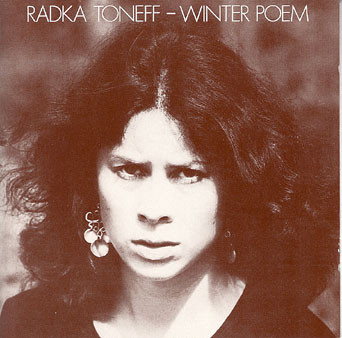
It Don’t Come Easy.
Just under years later, the Radka Toneff Quintet arrived at the Talent Studio, in Oslo in January 1979. Only drummer bassist Arild Andersen, guitarist Jon Eberson and keyboardist Lars Jansson had played on Winter Poem. Despite the changes to the Quintet’s lineup, this multitalented band was the perfect foil for Radka Toneff on It Don’t Come Easy which was released later in 1979.
When critics heard It Don’t Come Easy, they agreed that Radka Toneff had matured and grown as a vocalist, and her sophomore album was released to the same critical acclaim as Winter Poem in 1979. However, soon, Radka Toneff was about to meet the musician who would become her musical muse.
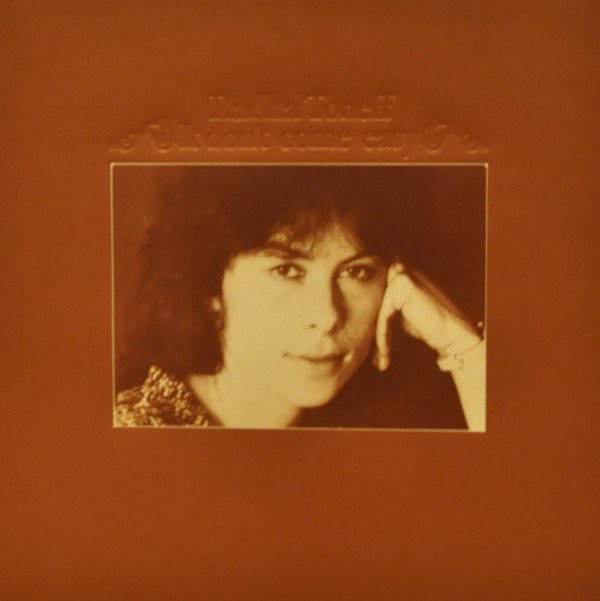
Steve Dobrogosz.
This was Steve Dobrogosz a twenty-three year old composer and pianist, who was born on the ’28th’ of January 1956 in Bellefonte, Pennsylvania. However, his parents moved Raleigh, North Carolina, where he went to school and discovered his love of music. This led to Steve Dobrogosz heading to the Berklee College of Music, after he had graduated from high school. After he graduated, he decide to move to Stockholm, Sweden in 1978.
Having arrived in Stockholm, Steve Dobrogosz began playing live and recording. This was all good experience Steve Dobrogosz, who a year later, met Radka Toneff in 1979 and a new chapter in his career began.
Radka Toneff and Steve Dobrogosz.
Although Radka Toneff was still leading the Radka Toneff Quintet by 1979, she had also formed the Radka Toneff Quartet. However, by then, the Quartet was looking for a new pianist, and Steve Dobrogosz who was still living in Stockholm heard about the vacancy and applied. Not long after this, Radka Toneff met Steve Dobrogosz, and she knew that she had found the new pianist for the Radka Toneff Quintet. Little did Radka Toneff realise that was the start of a three-year working relationship.
A year after Steve Dobrogosz joined the Radka Toneff Quintet, it was the end of the road for the Radka Toneff Quintet. It had been together since 1975, and although the lineup was fluid, the Radka Toneff Quintet stayed together. After that, Radka Toneff decided to concentrate her efforts on the Quartet.
By then, the Radka Toneff Quintet’s lineup featured Danish drummer Alex Riel, bassist Arild Andersen, pianist Steve Dobrogosz and Radka Toneff. Some nights when the Quartet played live, the drums and bass would drop out leaving just Radka Toneff and Steve Dobrogosz, and the pair would play a couple of songs together. This proved popular they worked well together, with the Radka Toneff’s voice and Steve Dobrogosz’s piano in perfect harmony. This lead to the pair recording a duet for Norwegian Broadcasting Corporation.
This was an improvised version My Funny Valentine, which was produced by Erling Wicklund at the end of a radio recording session for the Norwegian Broadcasting Corporation, in November of 1979. That recording sowed the seeds for Fairytales, and featured on the album when it was recorded in February 1982.
Fairytales.
Just over two years had passed since Radka Toneff had released her sophomore album It Don’t Come Easy in 1979 and she was wondering about recording an orchestral album for the followup? Radka Toneff wasn’t sure that this was the way forward her. Neither did Steve Dobrogosz, who suggested the he and Radka Toneff should record an album together as a duo. Straight away, Radka Toneff liked the idea of recording an album featuring just Steve Dobrogosz’s piano accompanying her vocal. However, there was a problem though, Zarepta Records who had released Radka Toneff’s first two albums had been dissolved, and she had no label backing her.
In a way, this was a fresh start, as this new chapter in Radka Toneff and Steve Dobrogosz’s careers began.The pair started trying to interest Norwegian and Swedish labels in the project, but nobody was interested in the album. Then Radka Toneff and Steve Dobrogosz caught a break.
Fortunately, the Norwegian Jazz Federation which was headed by Rolf Grundesen, had just launched their own record label, Odin. When Rolf Grundesen heard about the project, he was hugely supportive and even suggested that Radka Toneff and Steve Dobrogosz record the album at the Grieg Hall in Bergen. It was featured some of the earliest digital recording equipment and also a good quality grand piano which Steve Dobrogosz would play as he accompanied Radka Toneff.
Having secured the backing of the Odin label, Radka Toneff and Steve Dobrogosz chose the songs that would join their cover of Rogers and Hart’s My Funny Valentine on Fairytales. It had been recorded in late 1979, and that meant only nine songs would be recorded.
This included covers of Jimmy Webb’s The Moon Is A Harsh Mistress; Bernie Taupin and Elton John’s Come Down In Time; Kurt Weil and Maxwell Anderson’s Lost In The Stars; Eden Ahbez’s Nature Boy; Blossom Dearie and Dave Frishberg’s Long Daddy Green; Fran Landesman and Dudley Moore’s Before Love Went Out Of Style. The other three tracks saw Radka Toneff and Steve Dobrogosz put poetry to music.
Both Radka Toneff and Steve Dobrogosz shared a love of Fran Landesman’s poetry, and they decided to set two poems to music. Steve Dobrogosz wrote music to Mystery Man, while Radka Toneff penned the music to Wasted. The other poem that was set to music by Steve Dobrogosz was Emily Dickinson’s I Read My Sentence. It would eventually close Fairytales, which was recorded at Bergen Digital Studios between the ‘15th’ and ‘17th’ of February 1982.
Odin Records scheduled the release of Fairytales for the autumn on 1982, but before that, the critics had their say on Radka Toneff and Steve Dobrogosz’s first collaboration. Critics on receiving the album saw Fairytales’ distinctive album cover, which had been drawn and designed by Anne Toneff. This was the perfect accompaniment to the music within the magical world of Fairytales. Critics were won over by Fairytales and hailed the album masterpiece and an instant classic.
Record buyers agreed, and for the two weeks after the release of Fairytales, the album was hugely popular and won the hearts and minds not just of jazz fans, but music lovers. They sought out Fairytales, which was selling well proving that Rolf Grundesen the head of the Norwegian Jazz Federation was right to back the pair. With a critically acclaimed and commercially successful album on their hands, this should’ve been a time to celebrate.
Sadly, two weeks after the release of Fairytales, tragedy struck when Radka Toneff’s body was found on the ‘21st’ of October 1982. The thirty year old had died after taking an overdose of sleeping pills. Norwegian music lovers were in mourning as they knew that they had lost one of their greatest ever jazz singers.
After Radka Toneff’s death, pianist Steve Dobrogosz rejected any suggestions that she sounded lonely or depressed on Fairytales. Instead, Steve Dobrogosz believes that Fairytales features Radka Toneff: “at her best” as she interprets the ten songs on Fairytales which is the best selling Norwegian jazz album of all time.
That is definitely the case throughout Fairytales, where Radka Toneff is like an actress as she plays a different character on each of the songs. No two songs are the same, and Radka Toneff experiences array of emotions, ranging from hope and happiness to melancholy and sadness. Other times, she’s in a reflective mood thinking about the good times, and also about what she had and lost. Always there’s a sensitivity in Radka Toneff voice throughout Fairytales, where she breaths life, meaning and emotion into each every song, living them and trying to make them her own.
Despite being a hugely talented singer, who brought songs to life and often reinvented them on Fairytales, Radka Toneff didn’t write any of the songs on the album. The closest she came was writing the music that accompanied Emily Dickinson’s poem I Read My Sentence. Maybe if Radka Toneff had written some of the songs on Fairytales, it would’ve given some insight into how she was feeling she recorded the album? However, like all singers, Radka Toneff was in character and wearing her musical mask as she recorded her future classic album. As a result, it’s almost impossible to separate Radka Toneff from the characters she was playing. Instead, it’s better to enjoy, embrace and appreciate the last part of Radka Toneff’s musical legacy, Fairytales.
After Radka Toneff’s death in October 1982, her pianist and musical muse Steve Dobrogosz was determined that nobody would forget one of the greatest Norwegian jazz singers. Steve Dobrogosz who was yin to Radka Toneff’s yang on Fairytales, has spent the last thirty-six years ensuring that Fairytales wouldn’t be forgotten by future generations of musicians. “It’s not just the sound itself, but it’s also about how Radka sings, about the sensitivity in her voice.”
It’s a voice that went on to influence and inspire two generations of Norwegian singers, ranging from Sidsel Endresen to singers embarking upon musical careers. However, it’s not just Norwegian singers that have been influenced and inspired by Radka Toneff but artists all over the world. Radka Toneff’s music won the hearts and minds of music lovers worldwide, who will ensure that her music will never be forgotten, including her award-winning debut album Winter Poem and the followup It Don’t Come Easy. However, Radka Toneff’s finest hour was her collaboration with Steve Dobrogosz on their timeless classiske Fairytales, which was released just two before her death and became the swan-song of one Norway’s greatest jazz singers.
The Life and Times Of Radka Toneff,
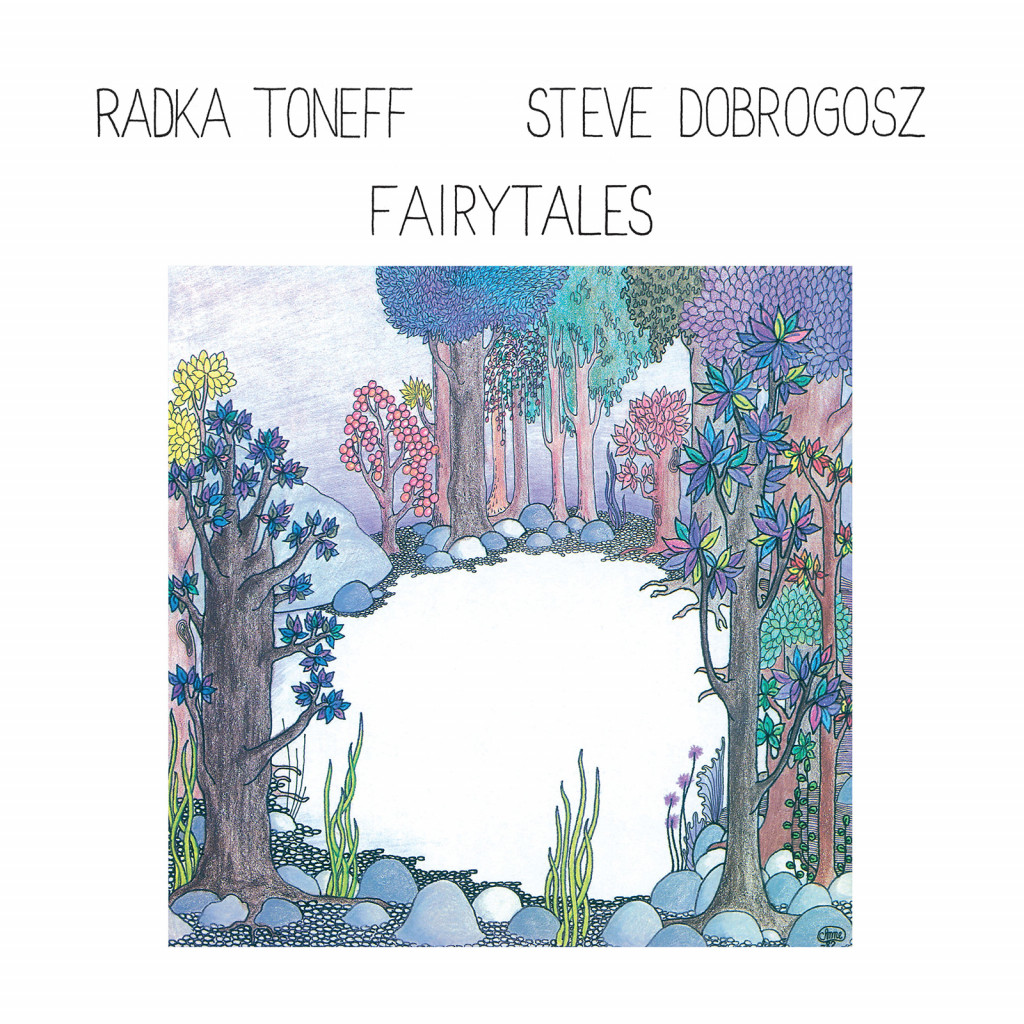
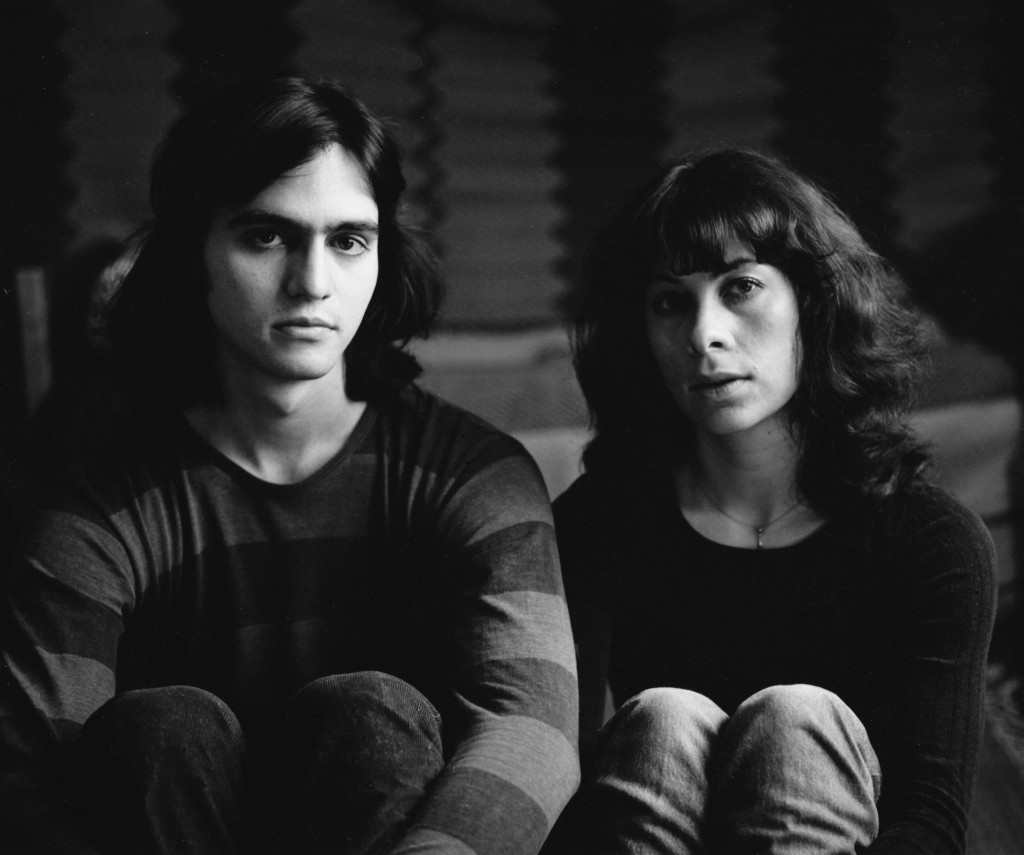
THE MUSIC OF MICHAEL ROTHER KOMISCHE PIONEER.
The Music Of Michael Rother Kosmische Pioneer.
During the early seventies, the German music scene was thriving, and was one of the most vibrant in Europe. Some of the most influential and innovative music was being recorded and released by German bands. This included the holy trinity of Can, Kraftwerk and Neu!. Along with Amon Düül II, Ashra, Cluster, Popol Vuh and Tangerine Dream, these groups were at the forefront of a new musical movement.
In Germany, this new musical movement was called Kosmische musik. Its roots can be traced to the late-sixties, and in a way, were a reaction against the rigidity and rules of traditional music. No longer were musicians willing to be constrained by the rules of modern music. They wanted to free themselves from the shackles of rules and rigidity, and in the process, create new and groundbreaking music.
To do this, musicians fused a disparate and eclectic selection of musical genres, including everything from avant-garde, electronica, experimental rock, free jazz and progressive rock. All this influenced and inspired Kosmische musik. This included the holy trinity of Can, Kraftwerk and Neu!.
They went on to create music that at the time, was ambitious, groundbreaking and innovative. Musical boundaries were pushed to their limits, and musical norms challenged. The holy trinity are remembered as bands that featured fearless visionaries. This includes Michael Rother, who was a member of three of the biggest bands in German musical history Kraftwerk, Neu! and Harmonia, whose career spans over fifty years.
Michael Rother was born on 2nd September 1950 in Hamburg. That was home for the early years of his life. Then the Rother family moved from Hamburg to Wilmslow in Cheshire “because my father was a pilot. This was just the first in a series of moves.”
“Next we moved to Karachi, in Pakistan, where I was: captivated by the street musicians. The sounds, scales, rhythm and constant repetition mesmerised me. They would later influence as a musician.” That wasn’t Michael’s first musical influence.
“Originally, my earliest musical influence, was classical music. I remember my mother, who was a pianist, playing Chopin’s concertos. Then it was rock ’n’ roll. My brother who was ten years older than me, had rock ’n’ parties. Little Richard was my favourite, I loved the energy. Later, after the British explosion, The Beatles, Rolling Stones and The Kinks were the groups I listened to. Much later, the guitarists Eric Clapton, Jeff Beck and Jimi Hendrix when he descended down, were my influences.” However, the mention of Jimi Hendrix’s name and almost in an instant, Michael Rother is a teenager again.
“I was lucky, I once saw Jimi Hendrix live, it was an incredible experience.” As Michael speaks, he’s almost awe-struck. Then he reflects on the subject of influences: “later, when I became a musician, I came to regard those that I worked with, and collaborated with, as my influences and inspirations.” It’s then that Michael turns to the clock back to 1965, when his career began.
Spirits Of Sounds.
“My career began in 1965, when I joined a covers band at school. I had watched them play, so went away and spent the next year practising my guitar. Once I was ready, I asked if I could join and I became a member of Spirits Of Sounds. They said yes and this was the start” This cover’s band featured two other musicians who would enjoy successful processional careers.
Wolfgang Flür went on to form Kraftwerk and Wolfgang Riechman formed Wunderbar. Spirit Of Sounds must have been the only cover’s band to feature three musicians who would later transform German music. That was still to come.
“Spirits Of Sound played just covers, including songs by The Beatles, Rolling Stones and The Who.” For Michael Rother, this was his akin to a musical apprenticeship. Playing with Spirits Of Sound allowed him to learn his trade and hone his sound. All the time, he was listening to music which changed throughout the sixties.
“Later guitarists like Eric Clapton, Jeff Beck and Jimi Hendrix that were influencing me.” By then, Michael Rother was happy being part of a band, and seeing what life in a group was like. He was also well on his way to refining his guitar playing. However, then in 1969, Michael Rother got the call all young people must have dreaded.
Back in 1969, every German citizen had to spend six months in the army. Those who refused, or suffered from ill-health, could spend six months as a civilian volunteer. That’s how in 1969, Michael Rother found himself working at St. Alexius hospital, Neuss. He had no option.
By the time his six month as a civilian volunteer was over, Michael Rother “was beginning to become frustrated with playing in a cover’s band. It had its limitations, and wanted to move away from traditional music.” Fortunately, Michael Rother got the opportunity to jam with a new band in late 1969…Kraftwerk .
Kraftwerk.
At first, Michael was just jamming with Kraftwerk. He enjoyed the freedom that their approach to music had. “When I began playing with Kraftwerk, they improvised, playing melodies without the blue notes.” For Michael this opened his eyes to the possibilities that were in the process of unfolding. Kosmische musik had just been born, and Kraftwerk were one of its pioneers. “After I had jammed with Kraftwerk, Florian Schneider and I exchanged phone numbers.”
After his session with Kraftwerk, Michael returned to Spirits Of Sound. Musically, his eyes had been opened. A new musical movement had been born in West Germany. However, for the time being, Michael was back in his covers band.
Then in 1971, Michael received a call from Florian Schneider. “Ralf Hütter had quit Kraftwerk unexpectedly, and returned to university to complete a course.” Meanwhile “the first Kraftwerk album had been a hit, and they wanted to build on the momentum.” Florian wanted Michael to join Kraftwerk on a permanent basis.
It didn’t take Michael long to agree. After six years with Spirits Of Sound, a new chapter in Michael Rother’s career was about to begin. He was going to be part of Kraftwerk, who were now a trio.
When joined Kraftwerk, the group’s lineup was very different to the one that had recorded their 1970 eponymous debut album. Just Florian Schneider and Klaus Dinger remained. The edition of Michael Rother on guitar filled out the sound. However, very quickly, Michael discovered that all wasn’t well within Kraftwerk.
Michael’s role in Kraftwerk was twofold. “I would play live and play on what was to be their second album.” Straight away, Michael discovered that life with Kraftwerk was eventful. “It was exciting, never boring. When we played live, it could become chaotic, fights broke out between Klaus and Florian. They were both spiky characters.” That was only half the story.
“Sometimes, the audience didn’t understand what they heard. They came to hear what they heard on Kraftwerk. That was just a starting point. We took things from there. For members of an audience who expected to hear Kraftwerk replicated live, this what frustrating. Other members of the audience were excited by the possibilities. It was an exciting time for everyone” However, it was also a frustrating one.
After the success of Kraftwerk, Florian and Klaus were keen to record their sophomore album with producer Conny Plank. Tension was in the air. The recording sessions were fraught with difficulties. Although songs were recorded, the album was never completed. “Eventually, we hit a dead-end and the recordings have never been released. It was then that Klaus and I decided to form a new band, Neu!”
The Birth Of Neu!
By then, Michael and Klaus realised that: “we had a similar musical vision.”The nascent band were formed later in 1971, and was based in Düsseldorf. After the disagreements and frustration of Kraftwerk towards the end, the new band was a breath of fresh air. It was sure to revitalise the two musicians. The only thing they couldn’t agree on, was the band’s name
Michael though the band should have an organic name. Klaus however, had hit on the name Neu! This made sense, as they were a new band, who were part of the new musical Kosmische musik movement.
So, the new band became Neu! To go with the new name, a pop art logo was designed and copyrighted. This new logo was seen as a comment and protest against the modern consumer society. Just like contemporaries Can, Neu weren’t afraid to combine social comment and art. Having settled on a name, Neu!’s thoughts turned to recording their debut album. There was a problem though.
Neu!
Michael explains “we were poor musicians,’ All we could afford were four nights at Windrose-Dumont-Time Studios in December 1971. The reason we chose to record at nights, is it was cheaper. However; “it was a close shave, I get the shivers thinking about it. However, with the help of the genius Conny Plank, we got our message across.”
Over the four days, Neu! recorded a total of six tracks. They were written by Michael and Klaus. The two members of Neu! laid down all the parts onto an eight-track recorder. Michael played guitars and bass, while Klaus played drums and a Koto. “At first the recording was slow, then we found the positive energy to move forward. The songs were stripped down to the bare essentials, they had to be we only had eight tracks to record onto.” Five of the six songs Neu! recorded were lengthy tracks. This included Hallogallo and Negativland.
Both feature Klaus’ innovative and mesmeric Motorik beat. He played a 4/4 constantly, with only an occasional interruptions. Its hypnotic sound would soon become famous.
As Klaus and Michael listened to the playback of Hallogallo and Negativland, they had no idea that this drumbeat would become synonymous with Kosmische musik. Even once Conny Plank had mixed Neu! at Star Musik Studio, in Hamburg, the two members of Neu! had no idea how influential the album would become.
“Once the album was mixed, Conny Plank gave me a copy of the cassette to listen to. I was proud, and played it to my girlfriend, family and friends. I’d no idea the effect the album would have. I was just pleased to have recorded my album. It had been a close shave.” Michael had no inclination that he had recorded a classic album.
Neu! was scheduled for release in early 1972. At the time, critic’s opinions were divided. Some critics realised Neu! was a truly groundbreaking album, and appreciated what was a genre-melting album. Elements of ambient, electronica, experimental, free jazz, industrial, music concrete and rock can be heard. These critics identified the album as a Kosmische classic. Other critics didn’t seem to understated Neu!, or Kosmische musik, which by then, had been renamed.
In London, a critic at Melody Maker had coined the term Krautrock. This came after Amon Düül released their 1969 album Psychedelic Underground. It featured a track titled Mama Düül und Ihre Sauerkrautband Spielt Auf, which in English, translates as Mama Düül and her Sauerkrautband Strike Up. At first, many people were reticent about using the name of this new genre.
By the time Neu! was released in 1972, that was no longer the case. Other critics and record buyers were using Krautrock rather than Kosmische musik. This was how they described the music of Can and Kraftwerk, and then Neu!, who had just released their eponymous debut album.
When Neu! was released on Brain in 1972, the album sold 30,000 copies in Germany. For an underground album, that was seen as a success. However, outside of Germany, Neu! didn’t sell in vast quantities. Despite only selling well in Germany, Neu! began work on their sophomore album, Neu! 2.

Neu! 2.
In January 1973, Neu! found themselves back in the studio with producer Conny Plank. “We weren’t signed to a record label, so Klaus, Conny and I had saved our money, and when we went to the studio, handed over enough to record for ten days.”
With Conny Plank producing what became Neu! 2, Michael and Klaus began work. “This time, we had sixteen tracks to work with, so could layer instruments. I played my guitar, it was played backwards, the tempo was sped up and effects were added.” Neu! it seemed, had taken experimenting to a new level, and were pushing musical boundaries to their limits, and sometimes way beyond. Everything seemed to be going so well. Then a problem arose.
“By then we had spent a week exploring, adding layers. I stacked five six guitars, added effects like distortion. This had taken a week, and we only had half an album recorded. We panicked. Then we thought of a solution. We had released recently Neuschnee and Super as a single. For some reason, the record company hadn’t promoted it. They seemed not to value singles. So we began to experiment.”
This Michael explains was: “a result of desperation. Side two of Neu! 2 is made different versions of Neuschnee and Super. We did all sorts of things. I played the single on a turntable, and Klaus kicked it as it played. We than played the songs in a cassette player, slowing and speeding up the sound, and mangling the sound in the process.” Just like their debut album, Neu! 2 was completed just in time. It was another: “close shave.”
With Neu! 2 complete, it was scheduled for release later in 1973. When the album was released, critics heard than Neu! had refined their trademark sound, and taken it even further. “Für immer an eleven minute epic was the best example.” It features Klaus and Michael becoming one. As Klaus’ drums propel the arrangement along, Michael delivers a virtuoso performance. Critics were won over by “Für immer, which was regarded as the highlight of Neu! 2. However, side two proved controversial.
Many critics weren’t impressed by side two of Neu! 2. They saw the music as gimmicky, and accused Neu! trying to fool and rip off record buyers. As indignant critics took the moral high-ground, again, it was a case that they didn’t understated music.
“What we had done, was take ready-made music and deconstruct it. Then we could either reconstruct or manipulate the deconstructed music.” Critics either couldn’t or didn’t want to understand this. Neither did record buyers.
Just like critics, those who bought Neu! 2 were won over by side one. Für immer was Neu! 2 masterpiece, and most people realised this. However, when record buyers turned over to side two, they quickly became alienated. “They felt that we were trying to rip them off. That was not the case. Side two was Neu! at their most experimental, deconstructing only to reconstruct or manipulate. People didn’t understand this. It’s only recently that the music on side two has began to find favour with people. That wasn’t the case in 1973.”
On its release, Neu! 2 didn’t sell well. Even in Germany, Neu! 2 failed commercially. Brian who released Neu! 2, had expected the band to tour the album. However, there was very little interest in Neu!
Klaus Dinger and his brother Thomas even headed to London, to see if he could organise a Neu! tour of Britain. There, he met DJ John Peel, and Karen Townsend, the wife of The Who’s guitarist Pete. Although John Peel played tracks from Neu! 2 on his radio show, and tried to champion the band, there was no appetite for a Neu! tour of Britain. When Klaus returned home, he and Michael put Neu! on hold.
Both Klaus and Michael were keen to make it clear that this wasn’t the end of Neu! They merely, wanted to take some time out, to pursue other interests and projects. Klaus’ new project was La Düsseldorf. Meanwhile, Michael decided to embark on a journey to the Forst Commune.
The Birth Of Harmonia.
That was where he would meet Dieter Moebius and Hans-Joachim Roedelius of Cluster. Michael had heard Im Süden, a track from Cluster’s sophomore album Cluster II. The track struck a nerve with Michael, who wondered if Dieter Moebius and Hans-Joachim Roedelius would be interested in joining an extended lineup of Neu!? Then Michael began to consider a German supergroup consisting of Neu! and Cluster.
That proved to be the case. At the Forst Commune, Michael jammed with Dieter Moebius and Hans-Joachim Roedelius. That initial jam later became Ohrwurm, a track from Harmonia’s 1974 debut album Musik von Harmonia. Following their initial jam session, Michael stayed at the Forst Commune to prepare for the recording of Harmonia’s debut album.
Meanwhile, Klaus and Thomas Dinger had returned from London. They came, they thought, baring gifts. One of the gifts was studio engineer Hans Lampe, who for much of 1972, had been Conny Plank’s engineer. The other was Klaus’ brother Thomas. They Klaus proposed, would join an extended lineup of Neu! In preparation, they played a series of concerts as La Düsseldorf. Michael however, was busy with Harmonia. Not only were they planning to record their debut album, but build a recording studio.
Building a recording can be fraught with difficulties. However, for Michael, Dieter Moebius and Hans-Joachim Roedelius the building of their studio in Forst went smoothly. This new studio would play a hugely important part in Michael Rother’s future career. Not only would it be where Harmon recorded their debut album, but where Michael worked on future projects with Neu! and later, recorded his solo albums. That was still to come. Before that, Harmonia began to record their debut album Musik von Harmonia.
Musik Von Harmonia.
Having built their new studio, Michael Rother, Dieter Moebius and Hans-Joachim Roedelius started recording what became Musik von Harmonia in June 1973. Over the next five months, Harmonia recorded eight songs. The two members of Cluster were receptive to Michael Rother’s way of working. Hans-Joachim Roedelius explained recently: “there were no problems, we wanted to learn. Previously, we improvised, which made playing live problematic. A song was merely the starting point, it could go anywhere. Michael however, taught us about structure. We influenced him. It was a two-way thing.”
That’s definitely the case. Michael Rother believes: “that working with Dieter Moebius and Hans-Joachim Roedelius made him a more complete musician.” Over his time working with the two members of Cluster; “I learnt so much.”
This became apparent when Musik von Harmonia was completed in November 1973. Harmonia’s 1974 debut album, Musik von Harmonia, was a move towards ambient rock. Both Michael Rother and the two members of Cluster’s influences can be heard on the nascent supergroup’s debut album. It was released in January 1974.
When Musik Von Harmonia was released, many critics realised the importance of what’s a groundbreaking classic. It saw this nascent supergroup seamlessly embrace and incorporate disparate musical genres. In the process, Harmonia set the bar high for future ambient rock albums. Despite the critical acclaim that accompanied Musik von Harmonia, the album wasn’t a commercial success.
Michael Rother remember ruefully: “the seventies weren’t a good time for Harmonia. Our music was ignored, it was tough to survive during this period. So towards the end of 1974, Michael and Klaus reunited for Neu!’s third album.
The Return Of Neu!-Neu! ’75.
For Neu!! ’75, Michael Rother and Klaus Dinger reunited in December 1974 at Conny Plank’s studio. By then, Conny’s Studio was the go-to recording studio for German groups. They wanted: “the genius” to sprinkle his magic on their albums. This would be the case for Neu! ’75.
The two members of Neu! had changed. Klaus was heavily into rock music, while Michael’s interest in ambient music was growing. As Michael explains: “After two years apart, we were different people. To complicate matters, Klaus wanted to move from behind the drum kit. He felt he was hidden away. I can understand this. But it was what Klaus did so well. However, he wanted to become an entertainer, playing the guitar and singing. He wanted to bring in two new musicians to replace him.” This included Klaus’ brother Thomas and Conny Plank’s former engineer Hans Lampe. These new musicians would allow Neu! to make a very different album.
Michael realised this was problematic. “By then Klaus could be difficult to work with. I realised we had to compromise, so ended making an album with two very different sides. Side one was old Neu! and side two was new Neu!” On side two Klaus come out from behind his drum kit and played guitar and sang. He became the entertainer on what proved to be an album of two sides. It was completed in January 1975, and released later that year.
When critics were sent copies of Neu! ’75, they were struck by side one’s subtle, ambient, melodic sound. Michael remembers: “we used keyboards and phasing a lot on both sides. While Michael Rother’s name was written large all over side one; side two was very different, and quite unconventional. Reviews were mixed, partly because of side two. Some critics felt that if Neu! ’75 had the same sound throughout, it would’ve been hailed a classic. However, later Neu! ’75 and Neu!’s earlier albums would be reevaluated. Before that Neu! ’75 was released.
Just like Neu! 2, Neu! ’75 didn’t sell well. The problem was, many people didn’t understand what was essentially parts of two disparate albums joined together. The proto-punk of side two was so different from the ambient sound of side one. Record buyers were confused, and didn’t understand what Neu! stood for? It seemed that Neu! were just the latest groundbreaking group whose music was misunderstood and overlooked.
Michael looking back at Neu! ’75 reflects: “It was a time. Klaus wasn’t the easiest person to work with. He was involved with different people, and being pulled in different ways. We were also very different musically. Then there were the new drummers on side two. They weren’t particularly good. Certainly neither were as good as Klaus,” a rueful Michael remembers. “It was a difficult project. By then Klaus was different to the man I’d met a few years earlier.” Michael wouldn’t work with Klaus for another decade. By then, Neu!’s music had inspired a new musical movement, punk.
Things started to change in 1976. Michael explains: “many punks claim that Neu! ’75 inspired them. Especially, side two.” That wasn’t the only Neu! album that inspired the punk ideal. Side two of Neu! 2 was a favourite of punks. It was: “a result of desperation,” which struck a nerve with the nascent punk movement, and its D.I.Y. approach. That’s when the revaluation of Neu! began. However, “it was a long time before our music was accepted and recognised, and began to sell in the quantities it does now”. That is also the case with Harmonia, who began recording their sophomore album in June 1975.

The Return Of Harmonia-Deluxe.
In June 1975, the three members of Harmonia returned to their studio in Forst for the recording of their sophomore album, Deluxe. Joining them, was a new face, Conny Plank, who was co-producing Deluxe. Conny Plank and Michael were good friends, and had worked together on four projects. This included Kraftwerk’s aborted album and Neu!’s two albums. The addition of the man who Michael Rother calls: “the genius,” just happened to coincide with Harmonia changing direction musically.
Deluxe saw a move towards Kominische musik. Partly, this was down to the addition of Guru-Guru drummer Mani Neumeier. He played on some tracks, and added a Kominische influence. Another change was that Michael Rother’s guitar played a more prominent role. That wasn’t Michael’s only influence.
The music on Deluxe was more song oriented. This was Michael Rother’s influence. He had taught the two members of Cluster the importance of structure. However, still Harmonia were experimenting, pushing musical boundaries. This was Cluster’s influence. Other parts of Deluxe had been influenced by Michael Rother. Hans-Joachim Roedelius agrees. “Michael Rother’s influence can be heard on Deluxe, more so than on Musik Von Harmonia.” What was also noticeable, was that Deluxe had a more commercial sound.
“This wasn’t a conscious decision. The music morphed and evolved, and the result was Deluxe,” Hans-Joachim Roedelius reflects.
Michael Rother agrees. “Every album I’ve made I set out for it to be commercial. Sometimes, though, it doesn’t work out that way.” Sadly, that proved to be the case.
When Deluxe was released in 1975, to the same critical acclaim as Musik von Harmonia. The noticeable shift to what was a more commercial sound, surely would lead to a change in Harmonia’s fortunes?
That wasn’t to be. Deluxe was released on 20th August 1975, and sales of the album were slow. They never picked up, and history it seemed, was repeating itself. Michael reflects: “Still our music was being ignored. It was a difficult time for us. So much so, that Michael decided to record his debut solo album.
Michael Rother-The Solo Years-Part One.
With Harmonia having just about run its course, Michael Rother embarked upon his solo career. That would take up the majority of his time. Michael’s first solo album was “Flammende Herzen which I recorded at Conny’s Studio.” Michael had entrusted his solo career to the man he refers to as “the genius.”
Flammende Herzen.
Recording of Flammende Herzen began at Conny’s Studio in June 1976. Michael had penned five tracks, and planned to play most of the instruments himself. The only instrument he couldn’t play were the drums, so Jaki Liebezeit of Can came onboard, and this was the start of a long-lasting collaboration. That was the case with Conny Plank, who co-produced Michael’s debut solo album.
At Conny’s Studio, five instrumentals which were based around Michael’s guitar were recorded. These tracks became Flammende Herzen, which was completed in September 1976. Michael’s debut album scheduled for release in March 1977.
Before the release of Flammende Herzen, critics had their say on Michael Rother’s solo album. Most of the reviews were positive, and it seemed that Michael’s fortunes were about to change.
When Flammende Herzen was released in March 1977, the album wasn’t a commercial success. Despite releasing album after album of innovative and influential music, they failed to sell. It seemed that the music Michael Rother was too innovative and record buyers didn’t understand the music. The only small crumb of comfort for Michael, was that: “Flammende Herzen, which, was released as a single, was later used in the soundtrack to Flaming Hearts.”
Nowadays, Flammende Herzen is regarded as one of Michael’s finest solo albums. It’s as if this was the album he had been longing to make. Sadly, in 1977, as punk was making its presence felt, Flammende Herzen passed record buyers by. By then, Michael had been back in the studio with Harmonia, and a special guest, Brian Eno.
The Return Of Harmonia With Brian Eno-Tracks and Traces.
After the release of Musik von Harmonia, Brian Eno had called Harmonia was: “the world’s most important rock band” at the time. It was no surprise that when Harmonia reunited to record their third album, it was a collaboration with Brian Eno. However, it was also the end of an era.
Little did the three members of Harmonia realise, that Deluxe was the last album they would release for thirty-two years. For what was their swan-song, Harmonia were joined by another legend, Brian Eno.
Michael remembers the sessions well. “Brian Eno was a very intelligent man. He seemed to know what music was on the way up. By then, he was making ambient music and was working as a producer. He was about to produce David Bowie’s Heroes’ album.” However, for the next eleven days, Brian Eno joined the band he had been championing since their debut album.
At the studio in Forst, Hans-Joachim Roedelius, Dieter Moebius, Michael Rother and Brian Eno spent eleven summer days recording what was meant to be their third album. The working title was Harmonia ’76. However, by then, Hans-Joachim Roedelius remembers “Michael Rother was wanting to concentrate on his solo career. Once the album was completed, it became apparent Harmonia had run its course. It was evolution.”
This wasn’t surprising. Harmonia weren’t selling many records. Michael Rother remembers: “it was a tough time for us. Our music seemed to be ignored.” Neu! also seemed to have run its course. “Neu ‘75 hadn’t sold well. Klaus wasn’t an easy person to work with. So, I decided to return to my solo career after the release of Harmonia ’76.” That never happened.
Incredibly, the master-tapes for Harmonia ’76 went missing. “We feared they were lost forever. Then twenty years later, they were found.” What was meant to be Harmonia ’76 was released Tracks and Traces in 1997.” That wasn’t the end of the Harmonia story. However, before the next chapter in the Harmonia story unfolded, Michael Rother’s solo career continued apace.
Michael Rother’s Solo Career-Part Two-Sterntaler.
After the drama and disappointment of the loss of the master tapes for Harmonia ’76, the three members of Harmonia went their separate ways. By September 1977, Michael was ready to record his sophomore album Sterntaler.
It was recorded between September and November 1977 at two studios. This included Conny’s Studio, and Michael’s studio in Forst. By then, Michael was a true multi-instrumentalist, and was playing guitar, bass guitar, piano, synths, electronic percussion Hawaiian slide guitar and synth strings. Augmented by Jaki Liebezeit’s drums, Sterntaler took shape.
Unlike his debut album, the synths were playing an important part in Sterntaler’s sound, and were responsible for the melody. Then on the ambient sounding Blauer Regen, Jaki Liebezeit’s weren’t needed. This was another signal that Michael’s music was changing. Michael and co-producer Conny Plank finished work on Sterntaler in November 1977. Maybe the stylistic shift would result in a change in Michael’s fortunes?
Sadly, it was a familiar story. The reviews of Sterntaler were generally positive, and Michael was regarded as one of the most innovative musicians of his generation. However, when Sterntaler was released, the album didn’t sell well . Michael remembers; “my music seemed to be out of fashion.” However, he continued to make music, music that continued to evolve.
Katzenmusik.
Recording of Michael Rother’s third album Katzenmusik took place between March and July 1979. Just like his previous album, the album was recorded in Forst and Conny’s Studio. Michael used mainly electronic instruments. They were augmented by guitars and Jaki Liebezeit’s drums.
It seemed that if Michael Rother was a painter, he was reducing his pallet. That would be the case for most musicians. However, Michael Rother wasn’t most musicians. Along with his co-producer Conny Plank, they recorded two suite of songs which featured twelve tracks. Essentially, they were variations layered around four different five-note melodies. They then recur in a variety of ways. Although stylistically, the music was similar to his two previous albums, the instruments used had changed. However, this didn’t stop Michael Rother recording another album of groundbreaking music. It was released later in 1979.
On Katzenmusik’s release, some critics hailed the album Michael Rother’s finest hour. He had come of age as a solo artist. This should’ve been a cause for celebration. However, it was, and it wasn’t.
Katzenmusik was the last album Michael recorded with Conny Plank. “It was no reflection on Conny. The man was a genius. However, I wanted to go my own way, and explore other options.” Sadly, Michael Rother and Conny Plank’s swan-song wasn’t a commercial success. It would be another three years before Michael released a new album.
Fernwärme.
It was 1981 when Michael Rother began work on his fourth album. The recording took place at Michael’s own Flammende Herzen Studio in Forst. It was just Michael and drummer Jaki Liebezeit. Unlike his first three albums, Conny Plank was absent. “We remained friends, and I owe Conny a lot, but it was the time to move on.”
This couldn’t have been easy. The pair had worked on nearly every project Michael had been involved with. Fernwärme was a first. It was just Michael, Jaki and the latest electronic instruments. They were used extensively on Fernwärme. This included drum machines. For Jaki Liebezeit the writing was on wall. Fernwärme was his swan-song with Michael Rother.
Michael explains: “Fernwärme was the last project Jaki worked on. Again, it was nothing personal. It was similar to the situation with Conny Plank. I wanted to move in a different direction, and already had began to use drum machines. Jaki was a fantastic drummer. The man is a machine, and will be drumming the rest of his life. However, Fernwärme was the last time we worked together.”
As Michael Rother prepared for the release of Fernwärme in 1982, it must have been with a degree of trepidation. It was the first album he had produced himself. However, he needn’t have worried, as Fernwärme was well received upon its release. Michael’s first album in three years, and the first he had produced himself was hailed a success. Sadly, the wider record buying public still hadn’t discovered Michael Rother’s music. “It was a really frustrating time for me.”
Lust.
After the release of Fernwärme in 1982, Michael didn’t return to his Sterntaler Studio, Forst until 1983. When he did, he was on his own. “Lust was the first album I wrote, recorded and produced on my own. Because I had my own studio, I found myself spending more time thinking things over. Sometimes, when I went to bed, all I could think of was what I had been working on. That is the downside of having a home studio. However, the advantages outweigh disadvantages. I had also bought a Fairlight, and was just getting use to it. Its sounds divides people. Some people like it, others love it. Lust was the first album where I used the Fairlight.” That was another reason Michael spent as long as he wanted perfecting Lust. Only then, was he ready to release the album.
Lust was released in 1983, and was Michael Rother’s fifth album. It was all his own work. No other musician had played a part in recording the album, which showcased a new sound. At the heart of the sound was the Fairlight. Although the Fairlight divided people’s opinion, the majority of critics gave Lust positive reviews. The latest reinvention of Michael had been a critical success. However, when Lust wasn’t the commercial success many critics forecast, it was another two years before Michael returned with his sixth solo album.
Süßherz und Tiefenschärfe.
November 1984 saw Michael Rother return to his Katzenmusik Studio, in Forst to record what would become Süßherz und Tiefenschärfe. Just like his previous album Lust, he wrote, recorded and produced Süßherz und Tiefenschärfe. It was just Michael Rother, his trusty guitar and the electronic instruments that he now favoured. For three months he honed what became his sixth solo album. It was completed in February 1985, and became Süßherz und Tiefenschärfe.
Later in 1985, Polydor released Süßherz und Tiefenschärfe. Before that, critics had their say on Michael Rother’s sixth solo album. Again the reviews were positive. Some critics went as far as to say that üßherz und Tiefenschärfe was one of the best albums Michael had recorded. It was released later in 1985. By then, Michael Rother and Klaus Dinger had been reunited.
Neu! Reunite Again.
Little did Michael Rother realise what he was letting himself in for. When Michael met Klaus; “I realised that Klaus wasn’t in a good place. He had surrounded himself with people who were pulling him in all directions. Klaus was also needing money, and recording a new Neu! album offered him the opportunity to make some money. So we entered a small studio in Düsseldorf. It wasn’t like the professional studio we had worked in before. Instead, it was more like a semi-professional studio.” That was where recording of Neu!’s most controversial album began.
Recording began in October 1985. The members of Neu! then moved between Grundfunk Studio and Dinerland-Lilienthal Studio. The sessions were problematic. A decade had passed since the pair had worked together. Michael remembers: “Klaus seemed different. He was argumentative, and there was no longer the same chemistry between us. It wasn’t an easy time. Despite that, we managed to record tracks which I took to my own studio in Forst.”
The group’s sound was very different. Synths were added to Neu!’s old sound. It was Neu! with a new wave twist. However, this didn’t work. By then, Klaus and Michael were very different as musicians. Michael had moved towards the electronics and technology. Klaus it seemed, hadn’t moved at the same pace.
By April 1986, work on the album stopped, and the project was cancelled. “Klaus and I met in Düsseldorf and agreed to abandon the project. We even went as far as sealing the tapes. This seal wasn’t to be broken without the other’s permission. The album was certainly not going to be released. That was why we sealed the master tapes. I never thought the would be released. Certainly not in the way that was released in late 1995.” By then, Michael Rother was concentrating on his solo career.
Michael Rother The Solo Years Part 3-Traumreisen.
After the abandoned Neu! project, Michael Rother didn’t return to the studio until January 1987. He spent the next six months in his home studio. “That was the benefit of having your own studio. I could record when I wanted. Sometimes, it a lonely life, and I felt as if I was going slightly mad.” Eventually, though, Traumreisen was completed in July 1987.
Just like his previous album, Traumreisen featured just guitars and Michael Rother’s various electronic instruments. Critics were won over by Traumreisen, which was released later in 1987. It was a case of deja vu, when Traumreisen failed to reach the wider audience it deserved. After seven solo albums, he was still to make a commercial breakthrough. Michael Rother’s music it seemed, was only appreciated by connoisseurs of Kosmische musik. This lack of commercial success resulted in Michael Rother: “beginning to lose interest in recording albums.” It would be another nine years before he released another album. By then, Michael had founded his own record company.
Random Records was founded in 1993. This coincided with Michael managing to secure the rights to his back catalogue. However, the new label’s first release was a compilation, Radio-Musik Von Michael Rother-Singles 1977-93. It was released in 1993, with reissues of Michael’s solo albums being released over the next few years. Each album was remastered and released with bonus tracks on Michael’s Random Records. Michael was in control of his musical destiny. At least for his solo career. Neu! was a completely different matter.
Neu! 4.
By the time Michael founded Random Records, Neu!’s first three albums had been released on CD by Germanofon Records, a Luxembourg based label. However, there was a problem.
Michael explains: “the deal to release Neu!’s first three albums was entered into, without his permission. These bootlegs were available in every record shop I entered into.” There’s frustration and anger in his voice. It’s not about money though. Instead; “I was frustrated that people were buying an inferior product. It wasn’t of the quality I expected.” If Michael was frustrated about the release of Neu!’s first three albums, he was in for a shock on the morning of 17th October 1995.
“That day, I was sitting at home, when I received a fax from Klaus congratulating on the release of Neu! 4. I was shocked, as I hadn’t given my permission or consent to release the album. Soon, the picture became clear.
“By then, Klaus was really frustrated and angry about the bootleg releases of our first three albums. They were selling well, and neither of us were making anything from them. To make matters worse, Klaus was short of money, and desperate, so entered into a deal with the Japanese label Captain Trip Records. The owner was a huge fan of Neu! and was impressed by Klaus. He gave Klaus cash which he was meant to share with me. In the sleeve-notes to what was billed as Neu! 4, Klaus railed against the bootleggers.” Ironically, this was something that both Michael Rother and Klaus agreed about. However, the release of Neu! 4 drove a wedge between the two old friends.
With the benefit of hindsight, Michael reflects: “looking back, I wish I’d jumped on the train to Düsseldorf and punched Klaus on the nose. I’m not that kind of person though. But I might have felt better. Then we could’ve moved on. However, we never did.”
After the release of Neu! 4, Klaus and Michael were continually at loggerheads. This was ironic. “By then, Neu! were at last, a popular band. People wanted to buy our albums. All that was available were the bootlegs, and Neu! 4 which to me, wasn’t a legally released or genuine album.”
Eventually, though, Michael and Klaus reached an agreement in 2000, and Astralwerks in America and Grönland Records in Europe released Neu!’s first three albums. They also recalled copies of Neu! 4, which has been out of print ever since. Michael however, stresses: “I’ve no problem people buying a second-hand copy of Neu! 4, I just don’t want the album rereleased. After the problems with Neu! 4, Michael released his eighth solo album in 1996.

Esperanza.
Unlike his last couple of albums, Michael Rother didn’t work alone on Esperanza. This time, he was joined by Jens Harke, who wrote the lyrics and added vocals to Weil Schnee und Eis. This was a first. Apart from the occasional vocal sample, Michael’s album had been vocal free zones. That wasn’t the only change.
The other contributor to Esperanza was Joachim Rudolph. He took charge of Pro Tools programming. Things had changed since Michael’s last album. It was the digital age, and now, DAWs had found their way into recording studios. As befitting the digital age; “I used only electronic instruments on Esperanza. There were no guitars on the album. This wasn’t a first. I’d already gone on a tour of America without a guitar. I was tired of the guitar and wanted to experiment.” That is what Michael Rother did between January 1995 and January 1996 at three studios. Once the album was completed, it was released two months later.
Esperanza was released on the 11th March 1996, on Michael Rother’s Random Records. Most of the reviews of Esperanza were positive. Michael Rother, was continuing to innovate and push musical boundaries. However, when Esperanza wasn’t a commercial success, “I began to lose interest in recording, and decided to concentrate on playing live.” As a result, it was a new millennia when Michael released his next album.
Remember (The Great Adventure).
April the 25th 2004 proved to be a significant date in Michael Rother’s career. It was the day he released his most recent solo album, Remember (The Great Adventure). It had been recorded over a period of seven years and was a collaboration with various electronic musicians. This includes Thomas Beckmann, Andi Toma and Jake Mandell, who all programmed beats for the rhythm tracks. Sophie Williams and Herbert Grönemeyer added vocals on Remember (The Great Adventure). This was only Michael’s second album to feature vocalists. Ironically, it proved to be his last.
Michael Rother’s collaboration with a new generation of musicians was well received by critics. Just like his previous albums, Michael didn’t shy away from innovating. Instead, he embraced new ideas and was determined to look forwards, rather than backwards. That had been the case throughout his solo career.
Following Remember (The Great Adventure), Michael Rother “decided to concentrate on playing live. It’s allowed me to travel the world and play all over Europe, America and in 2014, in China. My albums were not selling well, and after a while, I lost interest in recording music.” However, it wasn’t just Michael that was playing live. One of his old groups reunited and took to the stage one more time, Harmonia.
Harmonia Reunited and Live.
The reunion was for the release of Harmonia’s Live 1974 album. It featured a recording of Harmonia’s concert on the 23rd March 1974, at Penny Station Club in Griessem, Germany. To celebrate the release of Live 1974, Harmonia played live for the first time since 1976. This landmark concert took place at the Haus der Kulturen der Welt in Berlin, on November 27th 2007. Sadly, it would be the last time the three members of Harmonia played live. Belatedly, they had found the critical acclaim and commercial success they so richly deserved. It had taken thirty years, but Harmonia were regarded as one of the most innovative and influential groups in Kosmische musik. So were Neu!
Neu! The Comeback-Neu! ’86.
As the years passed by, Neu! 4 was still a sore point for Michael Rother. It had driven a wedge between Michael and Klaus. “Sadly, Klaus died in 2008. I was deeply saddened. We had been great friends once.” Kosmische musik had lost one of its pioneers.
Two years later, Michael got the opportunity to right a wrong. He explains: “in early 2010, I came to an agreement with Klaus’ widow. It allowed me work on what had been Neu! 4. Using the master tapes, I remixed the whole album.” That wasn’t the only change.
The running order changed. Some of the tracks were given new names. Only twelve of the fourteen tracks on Neu! 86 found their way onto Neu! 86. A new song, “Drive (Grundfunken) was added to what became Neu! 86 which was released as part of the Neu! box set on May 10th 2010. Then on August 16th 2010, a CD version of Neu! 86 was released.
Mostly, reviews of Neu! 86 were positive. The only criticism was that the album was overproduced. Michael disagrees but agree: “it’s all matter of taste and opinion. I feel I did the best I could with what I had. Now Neu! 86 is much nearer to the album we had tried to make in 1985.” A quarter of a century later, and Michael Rother was happy at with release of Neu! 86 in 2010. That wouldn’t be the last project from the past that Michael would undertake.


Harmonia-Complete Works,
In October 2105, a project that Michael Rother has been working on for some time came to fruition, the Harmonia-Complete Works box set. Michael Rother had overseen the remastering of Harmonia-Complete Works which included Musik Von Harmonia, Deluxe, Tracks and Traces, Live ’74 and an album of unreleased material. One of the unreleased tracks was nearly lost forevermore.
Michael Rother explains what happened. “Harmonia recorded all our shows and rehearsals. However, we were a poor band, and had to reuse each tape. Luckily, one night, a friend asked if we could record a rehearsal? Hans-Joachim Rodelius recorded the show, and at the end of the night, handed him the tape. That tape features what I consider to be the ultimate version of Tiki. Having given the tape away, I feared we would never see it again. Fortunately, our friend has kept that tape and the version of Tiki features on the fifth album of Complete Works.” However, for Michael Rother the release of Complete Works is tinged with sadness.
After a brave and lengthy battle against cancer, Dieter Moebius died on 20th July 2015. Michael Rother was saddened by the passing of his old friend. Along with Hans-Joachim Roedelius and Michael Rother, Dieter Moebius was part of one of the most innovative groups in the history of Kosmische musik. They’re now regarded as one of the finest purveyors of Kosmische musik. Harmonia deserve to sit alongside the holy trinity at Kosmische musik’s top table. At the head of the table is Michael Rother.
There’s a reason for this. Michael Rother has been part of three of the biggest bands in the history of Kosmische musik; Kraftwerk, Neu! and Harmonia. He then released nine solo albums and more recently, two soundtrack albums. “That was a new experience. However, now I concentrate my time on performing live.” Michael explains.
“I’ve been fortunate it’s taken me all over the work. One of the highlights was playing in China in 2014.” This is just one of the many countries that Michael Rother has played over the last few years. He’s now sixty-seven and busier than ever. Michael Rother and his band have even been playing at some of the biggest festivals on the circuit. Just like Neu! and Harmonia, Michael Rother’s popularity has never been higher.
What does the future hold for Michael Rother? He’s unsure what it holds. “Maybe, I’ll go back into the studio? I don’t know. That’s the future.”
Michael Rother continues to tour, and his music still continues to find a new audience. This includes his solo albums and the albums the three pioneering groups Michael Rother was a member of, Kraftwerk, Neu! and Harmonia.
Michael Rother, the one-time Kraftwerk guitarist went on to cofound Neu! and then later, Harmonia. Both of the groups that Michael Rother cofounded, went on to play an important part in the history of Kosmische musik, and even today, continues to influence and inspire a new generations of musicians.
The Music Of Michael Rother Kosmische Pioneer.

THE SEVENTIES: THE HEYDAY OF THE ELECTRIC LIGHT ORCHESTRA.
The Seventies: The Heyday of The Electric Light Orchestra.
In 1970, Birmingham based songwriters and multi-instrumentalists Jeff Lynne and Roy Wood decided to form a new band with drummer Bev Bevan. This new group they christened the Electric Light Orchestra.
At first, the Electric Light Orchestra was regarded as an offshoot of The Move, which Jeff Lynne, Roy Wood and Bev Bevan were all members of. However, over the years The Move’s lineup had been fluent.
By the time The Move recorded Message From The Country during 1970 and 1971, this was the fourth lineup of the band. When Message From The Country was released on 8th October 1971, there had been another change to the lineup. Bassist Rick Price deported and was replaced by Richard Tandy. This was his second spell with The Move. The other new addition Bill Hunt, who played horns and woodwind. His addition was a strategic move.
Message From The Country proved to be The Move’s swan-song. It was their way of saying goodbye to their fans after five years. By 1972, The Move were no more.
Electric Light Orchestra.
Seamlessly, the fifth and final lineup of The Move became the Electric Light Orchestra. They were joined by violinist Steve Woolam. The first lineup of the Electric Light Orchestra recorded an album that had ben written by Roy Wood and Jeff Lynne.
He wrote 10538 Overture, Nellie Takes Her, Mr. Radio, Manhattan Rumble (49th Street Massacre) and Queen Of The Hours. Roy Wood penned Look At Me Now, The Battle Of Marston Moor (July 2nd 1644), First Movement (Jumping Biz) and Whisper In The Night. These tracks would eventually become Electric Light Orchestra.
Recording of Electric Light Orchestra began in July 1970 at Philips Studios, London, and was completed in June 1971. During that eleven month period, Electric Light Orchestra fused pop, rock, progressive rock, and classical music. Woodwind, strings and horns were favoured instead of guitars. This resulted in a very different,and much more experimental symphonic sounding album from what other bands were doing. Critics remarked upon this.
With Electric Light Orchestra, complete the album was scheduled for release in December 1970. Before that, critics had their say on Electric Light Orchestra. With its experimental and symphonic fusion of pop, rock and classical music, Electric Light Orchestra’s innovative Baroque-and-roll sound won the approval of critics.
When Electric Light Orchestra was released on Harvest in December 1971, it reached thirty-two in the UK. 10538 Overture was released as the lead single and reached number nine in the UK. Meanwhile, Electric Light Orchestra reached fifty-four in Australia. However, Electric Light Orchestra wasn’t in America until early 1972.
Three months later, Electric Light Orchestra was released in March 1972 America as No Answer. This supposedly came about after someone from United Artists tried to contact Electric Light Orchestra about the album. When they couldn’t contact the person, they wrote down “no answer.” This was mistaken as the album the title. However, No Answer just reached 196 in the US Billboard 200. While this wasn’t a huge success, it was something to build on.
ELO 2.
Just two months after the release of No Answer, work began on Electric Light Orchestra’s sophomore album ELO 2. However, during the early recording sessions, Roy Wood announced he was leaving Electric Light Orchestra to join Wizard.
This meant that Jeff Lynne became Electric Light Orchestra’s leader and songwriter-in-chief. He wrote four of the five tracks. The other track was a cover of Chuck Berry’s Roll Over Beethoven. These songs were recorded at AIR Studios, in London.
For the recording sessions, the original members of Electric Light Orchestra, multi-instrumentalist Jeff Lynne, drummer and percussionist Bev Bevan and keyboardist and guitarist Richard Tandy were joined by some new faces. This included bassist Mike de Albuquerque, violinist Wilfred Gibson and cellists Mike Edwards and Colin Walker. Roy Wood had played bass and cello on In Old England Town (Boogie No. 2) and From the Sun to the World (Boogie No. 1). Taking sold charge of production on ELO 2was Jeff Lynne. He oversaw the recording of ELO 2 from May 1972 until late 1972.
Once ELO 2 was complete, Harvest decided to release the album in UK in January 1973. The album would be released in February 1973 as Electric Light Orchestra II. This would be the final time an Electric Light Orchestra would be given a different title on both sides of the Atlantic.
Before the release of ELO 2, critics had their say on the album. Once again, they were won over by the slick, polished progressive and symphonic sound of the Electric Light Orchestra in full flight. They continued to combine elements of rock and pop with progressive rock and classical music. To this, they added the what was being described as symphonic rock. ELO 2 seemed to catch the imagination of critics. Especially, the Electric Light Orchestra’s cover of Chuck Berry’s Roll Over Beethoven. It was totally transformed and become something Chuck Berry could never have envisaged. Critics too marvelled at Roll Over Beethoven, which part of truly ambitious album.
When ELO 2 was released in January 1973, it reached just thirty-five in the UK. A month later, ELO 2 was released in February 1973 and eventually reached number sixty-two. Just like many British bands in the early seventies, it looked as if the Electric Light Orchestra were going to be more popular in the US than UK
That was until Roll Over Beethoven was released as the lead single. It reached number six in the UK, fifty-three in Australia and forty-two in the US Billboard 100. Things were looking up for the Electric Light Orchestra in UK.
So much so, that after the Electric Light Orchestra’s two album deal with Harvest ran out, they signed to Warner Bros. This was the start of a new chapter in the Electric Light Orchestra story. Part of this story is documented on a recently released box set Electric Light Orchestra The Studio Albums 1973-1977 released by Sony Music Group. It features five albums On the Third Day, Eldorado, Face The Music, A New World Record and Out Of The Blue. However, this new chapter in the Electric Light Orchestra story began with On the Third Day.
On the Third Day.
Having signed to Warner Bros, the Electric Light Orchestra wanted no time getting to work on their third album On The Third Day. This was the first album that Roy Wood would play no part in. He had played a minor part on ELO 2. However, this time, it was Jeff Lynne who took charge of the Electric Light Orchestra.
Jeff Lynne wrote seven of the eight tracks on On The Third Day. The exception was a cover of Edvard Grieg’s In The Hall Of The Mountain King. It was reinvented by Jeff Lynne and became a memorable example of symphonic rock.
Recording of On The Third took place during April and May of 1973 at De Lane Lea Studios, London and AIR Studios, London. Never before had the Electric Light Orchestra recorded an album so quickly. Their first two albums had taken much longer to record.
This time, the Electric Light Orchestra worked quickly. Multi-instrumentalist Jeff Lynne produced On the Third Day. He was joined by a rhythm section drummer and percussionist Bev Bevan, bassist Mike de Albuquerque and guitarist and keyboardist Richard Tandy. They were augmented by cellists Mike Edwards and Colin Walker plus violinists Wilfred Gibson and Mik Kaminski, who was the latest new recruit. Marc Bolan added guitar on Dreaming of 4000 and In The Hall Of The Mountain King. After two months of recording at two separate studios, On The Third Day was complete.
Warner Bros. scheduled the release for November 1973. This left plenty of time to promote On The Third Day. Later, critics received their copies of On The Third Day. Again, the music was a fusion of rock and pop with progressive rock and symphonic rock. What was different, was who the album was structured.
The four songs on side one of On The Third Day became a continuous suite. However, side two featured shorter songs. They had been recorded not long after the ELO 2 sessions. On The Third Day was the original album of two sides. It found the Electric Light Orchestra’s music evolving On The Third Day.
Alas, On The Third Day didn’t find favour with all the critics. The reviews were mixed. One publication took a real dislike to On The Third Day…the contrarian Rolling Stone magazine. The
Electric Light Orchestra were just the latest group British group that Rolling Stone disliked. Mostly,the reviews were mixed. That was despite tracks of the quality of Bluebird Is Dead, Oh No Not Susan, Ma-Ma-Ma Belle and In The Hall Of The Mountain King. For the Electric Light Orchestra the reviews of On The Third Day were disappointing.
Six months after the completion of On The Third Day, the album was released in the UK in November 1973. Incredibly, the album failed to chart. Eventually though, On The Third Day sold enough copies to be certified silver in the UK. Before that, Ma-Ma-Ma Belle was released as a single, it reached number twenty-two in the UK. However, Daybreaker failed to chart. For the Electric Light Orchestra, the performance of On The Third Day had been disappointing.
Meanwhile, On The Third Day reached number ten in Australia. Across the Atlantic, On The Third Day reached fifty-two in the US Billboard and became the Electric Light Orchestra’s most successful album. Things were looking good for the Electric Light Orchestra stateside.
Eldorado.
Work began on the Electric Light Orchestra’s fourth album, Eldorado in February 1974. Eldorado was the first complete concept album that Electric Light Orchestra would release.
Eldorado was a project that Jeff Lynne had been working on for some time. He came up with the storyline first. It documents a Walter Mitty character whose disillusioned, so travels into fantasy worlds in his daydreams. This allows him to escape from his mundane and boring life. Having come up with the storyline, Jeff Lynne penned ten tracks. They would become Eldorado.
Recording of Eldorado took place at De Lane Lea Studios, in London. Unlike On The Third Day which was recorded in two months, the Electric Light Orchestra took their time recording the album. The recording began in February 1974, with multi-instrumentalist Jeff Lynne producing Eldorado.
Jeff Lynne was joined by a rhythm section of drummer and percussionist Bev Bevan, bassist Mike de Albuquerque and guitarist and keyboardist Richard Tandy. He had just been made a permanent member of the Electric Light Orchestra. However, he had additional responsibilities on Eldorado. This included arranging the backing vocals, orchestral and choral arrangements. Meanwhile, the other members of the band were playing an increasingly important role.
The strings were more prominent on Eldorado. Some of the strings were provided by the Electric Light Orchestra’s string players: cellists Mike Edwards and Colin Walker plus violinists Wilfred Gibson and Mik Kaminski. They were augmented by an orchestra.
This came about after Jeff Lynne’s father remarked that the Electric Light Orchestra’s back-catalogue were tuneless. So rather that over-dubbing strings, Jeff Lynne brought onboard an orchestra to sweeten Eldorado. The strings were arranged by Jeff Lynne and Richard Tandy with Louis Clark. Eventually, after seven months of recording, Eldorado was completed in August 1974.
Just over a month later, Eldorado was released. Before that, critics had their say on Eldorado. It found the Electric Light Orchestra companioning art rock and pop with progressive rock and symphonic rock on what was the band’s most melodic album. What many critics were quick to notice, was The Beatles’ influence on Eldorado. Especially on Mister Kingdom, which seems to owe a debt of gratitude Across The Universe. Critics hailed Eldorado the Electric Light Orchestra’s album. Even the usually contrarian Rolling Stone gave Eldorado a favourable. That was progress.
When Eldorado was released in September 1974, the album failed to chart in the UK. Neither Can’t Get It Out of My Head nor Boy Blue charted when released as a single. However, Eldorado fared better elsewhere.
Eldorado reached number four in Holland and thirty in New Zealand. In America, Eldorado reached number sixteen in the US Billboard 200, and was certified gold not long after the album’s release. Across the border in Canada Eldorado was certified platinum. However, when Can’t Get It Out of My Head was released as a single, it reached number nine in the US Billboard 100. The rise and rise of the Electric Light Orchestra continued in America.
Face The Music.
Buoyed by the success of Eldorado in North America, the Electric Light Orchestra headed out to tour the album. It was a lengthy tour, and featured the debut of bassist and cellist Kelly Groucutt. He replaced Mike de Albuquerque who left during the recording of Eldorado. Once the tour was over, the Electric Light Orchestra’s thoughts turned to their fifth album.
This would eventually become Face The Music. Just like previous albums, Jeff Lynne penned the eight tracks. He would also produce Face The Music, which found the Electric Light Orchestra heading to Munich, in Germany.
The Electric Light Orchestra’s destination was Musicland Studios, which was owned by the Italian musician, songwriter and producer Giorgio Moroder. Musicland Studios was where Deep Purple, Led Zeppelin, the Rolling Stones and Marc Bolan and T Rex had recorded albums. Now the Electric Light Orchestra were about to make the journey to Musicland Studios.
When the Electric Light Orchestra arrived at Musicland Studios, in May 1975, there had been a couple of changes in the band’s lineup. Joining multi-instrumentalist and producer Jeff Lynne was a rhythm section of drummer and percussionist Bev Bevan and new bassist and cellist Kelly Groucutt. They were joined by keyboardist Richard Tandy, violinist Mik Kaminski and new cellists Hugh McDowell and Melvyn Gale. The three new additions joined the backing vocals and orchestra which was conducted by Louis Clark. He arranged the orchestral and choral arrangements with Jeff Lynne and Richard Tandy. By June 1975, Face The Music was complete. For the second time in their career, the Electric Light Orchestra had recorded an album in just two months.
They were hoping that Face The Music would fare better than On The Third Day. It had received mixed reviews from critics. However, Face The Music was a very different album. The Electric Light Orchestra’s classic sound was starting to take shape. It was slick, polished and melodic. Two songs stood out,
Evil Woman and Strange Magic, as they had a commercial, radio friendly sound. Art rock combined with pop and symphonic rock on Face The Music. Evil Woman even a disco influence. This was a first. However, Face The Music won the approval of critics who regarded it as a worthy successor to Eldorado. It surely would enjoy the same success?
Alas, not in the UK, where Face The Music failed to trouble the charts on its release in September 1975. This was disappointing, as Face The Music was the Electric Light Orchestra’s debut album for Don Arden’s Jet Records. However, the lead single Evil Woman reached number ten in the UK. The followup Nightrider failed to chart, while Strange Magic stalled at a lowly thirty-eight. Elsewhere, Face The Music proved popular.
Face The Music reached thirty in Australia, eleven in Holland and forty-one in Sweden. However, it was in Australia where Face The Music was most popular. It reached number eight in the US Billboard 200. This resulted in Electric Light Orchestra’s second gold disc in America and a gold disc in Canada. That however, wasn’t the end of the success in America.
Evil Woman reached number ten in the US Billboard 100. The followup Nightrider failed to chart, while Strange Magic reached fourteen in the US Billboard 100. The Electric Light Orchestra’s new sound looked as if it was a game-changer.
A New World Record.
After the release of Face The Music, the Electric Light Orchestra headed out on another lengthy tour. They had now settled into the routine of recording an album, and then touring it. However, the Face The Music tour was one of the Electric Light Orchestra most important tours.
They had changed direction on Face The Music, and were moving towards what would become known as their classic sound. When Face The Music was released, the new sound had proved popular in three continents. So the Electric Light Orchestra headed out on tour to showcased their new sound. When they returned they were determined to build on the success of Face The Music.
Jeff Lynne, who had settled into the role of songwriter-in-chief and producer wrote the eight tracks that would become A New World Record. Just like Face The Music, A New World Record was recorded at Musicland Studios in Munich.
The Electric Light Orchestra arrived at Musicland Studios in July 1976 to record A New World Record. It was the same lineup that had recorded Face The Music. Multi-instrumentalist and producer Jeff Lynne was joined by a rhythm section of drummer and percussionist Bev Bevan and bassist and cellist Kelly Groucutt. They were joined by keyboardist Richard Tandy, violinist Mik Kaminski and cellists Hugh McDowell and Melvyn Gale. Backing vocals and an orchestra which was arranged and conducted by Louis Clark augmented the Electric Light Orchestra
By late July 1976, A New World Record was complete. Having recorded A New World Record in the space of a month, the album was scheduled for release in September 1976. This was exactly a year after Face The Music. That was what the Electric Light Orchestra were about to do.
Critics had received their promotional copy of A New World Record, and were about to have their say. On A New World Record, the Electric Light Orchestra continued to combine art rock with pop, progressive rock and symphonic rock. Again, the album was slick, polished and melodic. Many of the songs were shorter and sweeter, and didn’t lack hooks. Just like Face The Music, they had a much more commercial and radio friendly sound. Especially songs like Telephone Line, Rockaria and Livin’ Thing. They had single written all over them. Jeff Lynne was coming into his own as songwriter. He had also produced what many critics called Electric Light Orchestra’s finest hour.
Even the forever contrarian and hard to please Rolling Stone magazine gave A New World Record a positive review. So did Robert Christgau, the self-styled dean of American rock critics. This was high praise indeed. Mostly, it was critical acclaim that accompanied the release of A New World Record.
When A New World Record was released in September 1976, it reached number six in the UK and was certified platinum. Belatedly, the Electric Light Orchestra had made a breakthrough in their home country. Elsewhere, A New World Record reached number one in Australia and Sweden. A New World Record reached number nine in Austria and Norway; seven in Germany; two in Holland and four in New Zealand. Across the Atlantic, A New World Record reached number five and was certified platinum. Meanwhile, A New World Record was certified double platinum in Canada and gold in Holland. For the Electric Light Orchestra, A New World Record had transformed their fortunes. However, the success continued.
In October 1976 Livin’ Thing was released as a single, reaching four in the UK and thirteen in the US Billboard 100. Rockaria! was released as the followup in February 1977, and released number nine in the UK. Meanwhile, Do Ya was released as a single in America, and reached number thirteen in the US Billboard 100. The final single from A New World Record was Telephone Line. It reached number eight in the UK and seven in the US Billboard 100. For the Electric Light Orchestra, A New World Record had been a game-changer. Their music found an audience in Britain, Europe, Australia, New Zealand and North America. How were they going to surpass A New World Record, which has sold over five-million copies?
Out Of The Blue.
The answer to that, was with their seventh studio album Out Of The Blue. This was the most ambitious album of the Electric Light Orchestra’s career. It was a seventeen song double album penned by Jeff Lynne. This Jeff Lynne wrote over a three-and-a-half week period he spent in the Swiss Alps. Recording Out Of The Blue took slightly longer.
To record Out Of The Blue, the Electric Light Orchestra returned to Musicland Studios, in Munich for a third time. Between May and August 1977, Electric Light Orchestra recorded the seventeen songs. By then, the band’s lineup had changed.
Multi-instrumentalist and producer Jeff Lynne was joined by a rhythm section of drummer and percussionist Bev Bevan and bassist and cellist Kelly Groucutt. They were joined by keyboardist and guitar Richard Tandy and violinist Mik Kaminski.
Cellist Hugh McDowell is credited but didn’t appear. Melvyn Gale is also credited, but his only role was a playing the jangling, tack piano on Wild West Hero. Augmenting the Electric Light Orchestra, were an orchestra conducted by Louis Clark. He joined with Jeff Lynne and Richard Tandy to arranged the orchestral and choral arrangements. After two months, Out Of The Blue was completed in August 1977.
When critics heard Out Of The Blue, they hailed the album the Electric Light Orchestra’s Magnus Opus. It was a glorious fusion of art rock, pop, progressive rock and symphonic rock. Just like the Electric Light Orchestra two previous albums, the music was slick, polished, melodic and hook-laden. The Electric Light Orchestra seemed to have been inspired by The Beatles and Beach Boys on this critically acclaimed and almost flawless album. Somehow, the Electric Light Orchestra had managed to fill four sides with a major musical faux pas. Songs like Turn Ti Stone, It’s Over, Sweet Talkin’ Woman, Steppin’ Out and Sweet Is The Night were among Out Of The Blue’s finest moments. So was side three.
For many critics, side three was captivating. It was subtitled Concerto For A Rainy Day, and was a four track musical suite based on the weather and how it affects people’s mood. Jeff Lynne deployed recordings of rain and thunder as the suite moved melodically along from Standin’ In The Rain to Big Wheel and Summer and Lightning. However, Electric Light Orchestra’s had saved the best to last, the joyous and hook-laden Mr. Blue Sky, which was a single-in-waiting.
Out Of The Blue was released on October 3rd 1977. By then, four million copies had been ordered before the release. When Out Of The Blue was released, it reached number four in the UK and was certified platinum. Elsewhere, Out Of The Blue reached number three in Australia, six in Germany and New Zealand; three in Holland and Norway and two in Sweden. Across the Atlantic, Out Of The Blue reached number five in the US Billboard 200 and was certified gold. Meanwhile, Out Of The Blue was certified platinum in Canada and gold in Germany and Holland. This wasn’t the end of the success.
Five singles were released from Out Of The Blue. Turn To Stone was released in October 1977, reaching eighteen in the UK and thirteen in the US Billboard 100. Mr. Blue Sky followed in January 1978, reaching number six in the UK and thirty-five in the US Billboard 100. Sweet Talkin’ Woman was then released in February 1978. It reached number six in the UK and seventeen in the US Billboard 100. Wild West Hero followed in May 1978, and also, reached number six. The final single fittingly, was It’s Over in October 1978. Alas, it only reached thirty-four in the UK. However, Out Of The Blue had been a the most successful album of Electric Light Orchestra’s career.
Eventually, when all the sales were counted, Out Of The Blue had sold over ten million albums worldwide. For the Electric Light Orchestra, Out Of The Blue was by far, their most successful album. Now they were preparing to tour Out Of The Blue.
After the releases Out Of The Blue, the Electric Light Orchestra embarked upon a gruelling ninety-two date world tour. This was very different to previous tours. Electric Light Orchestra’s Out Of The Blue tour featured an enormous and spectacular set. It featured lasers, fog machines and a giant replica of the spaceship that featured on the gatefold cover of Out Of The Blue. In the arena shows, it would hover above the stage. Although spectacular is a hugely expensive set. However, it impressed concert goers and industry insiders.
In August 1977, veteran American DJ, Casey Kassem had christened the Electric Light Orchestra: the “World’s first touring rock ’n’ roll chamber group.” The Out Of The Blue tour was hugely successful. Especially when it reached America for The Big Night Tour in 1978.
During The Big Night tour, the Electric Light Orchestra played some of the biggest arenas. This resulted in The Big Night tour becoming the highest-grossing live concert tour in music history. That was no surprise, as American concert goers had witnessed the Electric Light Orchestra at the peak of their powers.
On their return to Britain, the Electric Light Orchestra played eight consecutive sold-out nights at Wembley Stadium. This was another record for The Electric Light Orchestra. However, once the Out Of The Blue tour was over, the Electric Light Orchestra’s thoughts could turn to their next album, Discovery.
Discovery.
Following the Out Of The Blue tour, the Electric Light Orchestra’s songwriter-in-chief Jeff Lynne, began writing what became Discovery. He wrote eight of the nine tracks. The exception was Little Town Flirt which was written by Maron McKenzie and Den Shannon. These nine tracks would become Discovery, which featured a different lineup of the Electric Light Orchestra.
When the Electric Light Orchestra arrived at Musicland Studios, in Munich, in March 1979, there had been changes to the lineup. The string section of Mik Kaminski, Hugh McDowell and Melvyn Gale didn’t feature on Discovery. The Electric Light Orchestra were now a quartet.
Multi-instrumentalist and producer Jeff Lynne was joined by a rhythm section of drummer and percussionist Bev Bevan and bassist and cellist Kelly Groucutt. They were joined by keyboardist and guitar Richard Tandy and bassist Kelly Groucutt. The orchestra was conducted by Louis Clark, who arranged the orchestral parts with Jeff Lynne and Richard Tandy. After two months of recording, Discovery was competed. Critics were in for a surprise.
While Discovery still featured the Electric Light Orchestra’s symphonic rock sound, the band moved towards a disco inspired sound. It seemed that the Electric Light Orchestra were keen to cash-in on the popularity of disco. That was ironic, as the disco bubble would burst in July 1979. By then, Discovery had been released to critical acclaim, and was hailed to perfect way to followup their classic album Out Of The Blue.
The Electric Light Orchestra released Discovery in the UK on 31st May 1970. It became the Electric Light Orchestra’s first number one album and was certified platinum. In America, Discovery was released in America on 8th, and reached number five. Having sold over two million copies, Discovery was certified double-platinum. Elsewhere, Discovery reached number one in Australia and Norway, and reached the top ten in Austria, Canada, France, Holland, New Zealand, Sweden and West Germany. This resulted in an array of gold and platinum discs. In France, Germany and Holland, Discovery was certified gold. However, in Australia, Discovery was certified double-platinum and triple-platinum in Canada. Incredibly, Discovery had outsold Out Of The Blue. That wasn’t the end of the success though.
A total of five singles were released from Discovery. Shine A Little Love reached number six in the UK and number eight in the US Billboard 100. The Diary Of Horace Wimp the reached number eight in the UK. When Don’t Bring Me Down then reached number three in the UK and number four in the US Billboard 100, this was their biggest hit in Britain and America. Confusion reached number eight in UK and thirty-seven in the US Billboard 100. The final single from Discovery was Last Train To London, which reached number eight in UK and thirty-nine in the US Billboard 100. This brought to an end what was the most successful period in the Electric Light Orchestra’s career.
This lineup of the Electric Light Orchestra released three more albums together, Time in 1981, 1983s Secret Messages and 1986s Balance Of Power. While each album enjoyed some success, they never came close to reaching the same commercial success of the Electric Light Orchestra’s Magnus Opus Out Of The Blue nor its followup Discovery.
Only two further albums were released bearing the Electric Light Orchestra name. However, Zoom in 2001 was an Electric Light Orchestra album in name only. Only Richard Tandy joined what was essentially Jeff Lynne and friends. Commercial success eluded the album which was for completists only.
By the time Alone In The Universe was released in 2015, the Electric Light Orchestra were now know as Jeff Lynne’s ELO. No other members of the original of Electric Light Orchestra featured on the album. It was essentially a Jeff Lynne solo album that sounded similar to the Electric Light Orchestra. Still, Alone In The Universe managed to sell over 300,000 copes and was certified platinum. This was a far cry from the Electric Light Orchestra in their seventies heyday, when their albums sold by the million.
The seventies were the Electric Light Orchestra’s most productive, prolific and successful years. Especially between 1973 and 1979, when everything the Electric Light Orchestra released turned to silver, gold or platinum. This resulted in the Electric Light Orchestra becoming one of true most successful bands in the world.
This success began in November 1973, when the Electric Light Orchestra released Face The Music. From Face The Music through A New World Record to Out Of The Blue, Electric Light Orchestra’s classic sound emerged. It was slick, polished, melodic and hook-laden. This was quite different to the first two albums that Electric Light Orchestra released.
Electric Light Orchestra and ELO 2 featured a very different band, whose roots were in progressive rock. This soon changed.The Electric Light Orchestra their next five albums saw their trademark symphonic rock sound developing. It headed in the direction of disco with the release of Discovery in May 1979. This alienated many of their loyal fans, but introduced the Electric Light Orchestra’s to a new audience. As the seventies ended, the Electric Light Orchestra were one of the biggest bands in the world.
Four decades later, and the Electric Light Orchestra are belatedly receiving the recognition their music deserves. They were belatedly inducted into the Rock ’N’ Roll Hall Of Fame. This honour has been bestowed on Electric Light Orchestra as a group, not just one individual.
The success of the Electric Light Orchestra was a collective effort, where a group of multitalented musicians came together and became one of greatest and most successful British bands of the seventies. That was The Electric Light Orchestra’s heyday, and when they were at their creative zenith. Especially between Face The Music in 1973 and 1977s Out Of The Blue which was the Electric Light Orchestra’s Magnus Opus.
The Seventies: The Heyday of The Electric Light Orchestra.
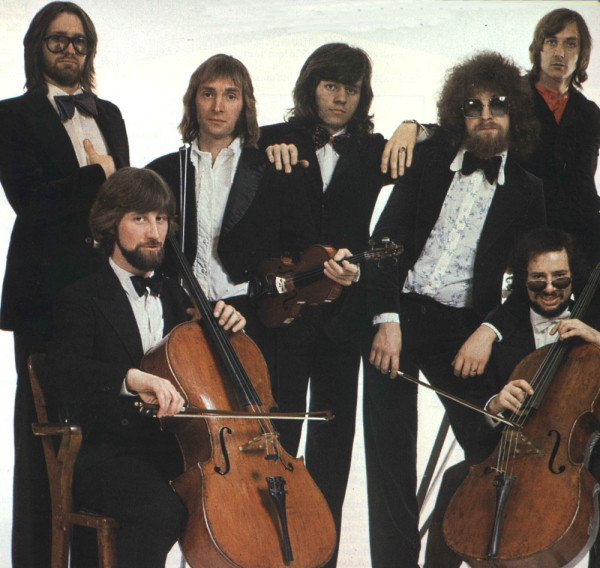
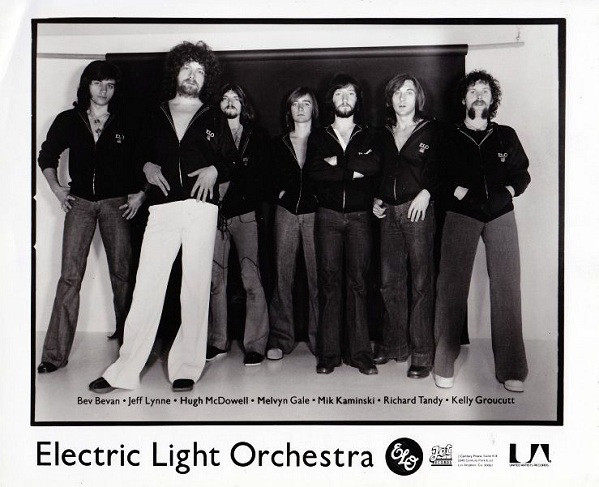
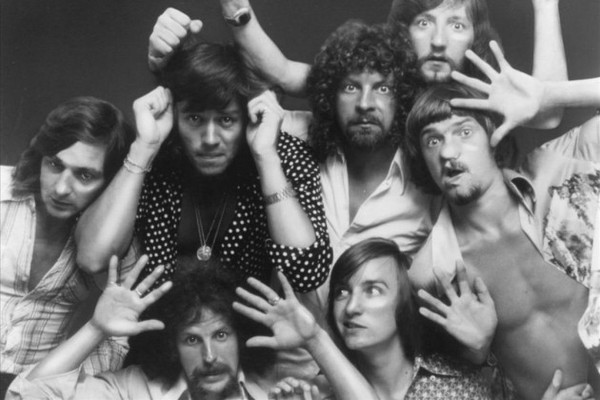
BIG STAR-PIONEERS OF POWER POP.
Big Star-Pioneers Of Power Pop.
Sadly, in music, talent doesn’t guarantee commercial success. If it did, Big Star would’ve been one of the biggest bands in musical history. Alas, that wasn’t the case. Lady luck failed to smile on Big Star when they released a trio of albums between 1972 and 1978. Despite this, Big Star are nowadays regarded as one of the most important and influential bands in musical history. That is why Big Star have gone to influence several generations of bands. Their story began in 1971, in Memphis, Tennessee.
Memphis was twenty-one year old Alex Chilton’s hometown. It’s where his career began five years earlier in 1966, when he recorded his debut solo album. Just a year later, seventeen year old Alex Chilton became the lead singer with The Box Tops.
Alex Chilton was The Box Top’s lead singer between 1967 and 1970. During that period, The Box Tops enjoyed a number one single with The Letter. However, by 1970, Alex’s time with The Box Tops was over. Soon, though the twenty year old was offered the chance to join one of the biggest bands of that time.
This was none other than Blood, Sweat and Tears. They approached Alex, asking if he would consider joining as their lead singer. That wasn’t going to happen. Incredibly Alex rejected the idea out of hand, saying Blood, Sweat and Tears were “too commercial.” Not long after this, Alex Chilton met Chris Bell.
Alex Chilton and Chris Bell had known each other for a while. Both men spent time at Ardent Recording Studios, Memphis. That was where Alex Chilton first asked Chris Bell to collaborate with him. Originally, Alex Chilton’s idea was that he and Chris Bell would become a duo like Simon and Garfunkel. Chris Bell however, rejected the idea out of hand, and instead, asked Alex Chilton to join his band IceWater.
IceWater’s lineup featured guitarist Chris Bell, drummer Jody Stephens and bassist Andy Hummel. Alex having heard the group’s music, liked it. However, he felt he that ge could improve IceWater’s music. When Alex arrived at the next Icewater session, he brought along a new song that he had written, Watch The Sunrise. The other members of IceWater liked what they heard, and soon, IceWater had a new addition, Alex Chilton.
Compared to the rest of the members of Icewater, Alex seemed a musical veteran. He already had a wealth of previous musical experience, and before long, Alex was making his presence felt. This included suggesting that Icewater changed their name to Big Star.
This came about during a recording session, when Alex headed out to the local Big Star Markets for some food. He ended up in the Big Star Markets were a chain of stores across Memphis. Their logo was a five-pointed star. Within the five-pointed star was Big Star Markets. Seeing this logo was a eureka moment for Alex Chilton.
Once in the store, he realised that Big Star was a name that matched his ambitions for his new band. The five-pointed star would make the perfect logo for the band. That was, as long as he didn’t infringe the copyright. They wouldn’t, as long as they didn’t put Big Star within the five pointed star. With these ideas flying around his head, Alex returned to the studio to convince the rest of IceWater to change their name to Big Star.
Not long after this, IceWater changed their name to Big Star. By then, the band had already written several new songs, including Thirteen and Watch The Sunrise, would appear on their debut album, Number One Record.
Number One Record.
By April 1972, Big Star were ready to release their debut album, Number One Record. Big Star had signed a recording contract with Ardent Records, and the company founder John Fry was keen record the band’s debut album Number One Record.
Initially, all four band members of Big Star were going to contribute songs for Number One Record. It didn’t pan out that way, and instead, Alex and Chris wrote eleven of the twelve tracks. The exception was The India Song, penned by Andy Hummel. These twelve tracks would become Number One Record.
Recording of Number One Record took place at Ardent Studios Memphis. The rhythm section of drummer Jody Stephens and bassist Andy Hummel were joined by the twin guitars of Alex and Chris. Augmented by Terry Manning’s piano, Number One Record, which was produced by Jon Fry began to take shape.
During the Number One Record sessions at Ardent Studios, Big Star became one of the first groups to use a sixteen track tape recorder. This allowed Big Star to experiment and learn how best to best use the new technology to their advantage. The result was a polished album of power pop, featuring elegiac harmonies.
By the time Number One Record was due for release in June 1972, critics already loved Big Star’s music. The release of Number One Record further cemented critics love affair with Big Star. Released to critical acclaim, many, critics including Billboard and Cash Box thought that Big Star were on their way to becoming music’s next big thing. Record World Magazine went as far to say that Number One Record “was one of the albums of 1972.” Surely, Big Star were on the verge of greatness when they released Number One Record?
Sadly, when Number One Record was released in June 1972, there were problems with distribution. Stax Records couldn’t get copies of Number One Record into record shops. For Big Star, this was hugely frustrating. Especially, after such critically acclaimed reviews. This resulted in plenty of demand for Number One Record. Big Star watched on feeling helpless, as Number One Record sold less than ten thousand copies. For Big Star, this was a disaster. Things would get even worse.
Eventually, Stax signed a deal with Columbia Records to distribute their whole catalogue. However, Columbia didn’t seem interested is using the independent distributors previously used by Stax. This resulted in Number One Record being removed from the stores who previously sold Stax releases. After this tensions arose within Big Star.
Following the problems regarding the distribution of Number One Record, tensions arose within the band. Fights erupted between band members, instruments were destroyed and Chris Bell left the group, to record his own solo album. Not long after this, Big Star split-up, for the first time.
After a few months, Big Star decided that it was time to reform the band. However, all wasn’t well within Big Star. Onlookers watched on as a myriad of problems threatened to destroy Big Star. There was drug abuse, instruments destroyed, band members became ill and even a master tape went missing. Again the band spilt up.
Radio City.
Eventually, Big Star reconvened and Alex Chilton, Jody Stephens and Andy Hummel decided to record an album as a three-piece band. This would become Radio City.
For Radio City, Alex Chilton wrote six tracks and cowrote four others, including three with Andy Hummel, who contributed Way Out West. Alex and Andy wrote Daisy Glaze with Jody Stephens. One name was missing though, Chris Bell. It later emerged that Chris Bell did help write some songs on Radio City, but wasn’t credited. This includes O My Soul, and the Big Star classic Back of a Car. Chris’ omission would prove an expensive one. However, during the period Radio City was written and recorded, Chris was no longer a member of Big Star.
Recording of Radio City took place at Ardent Studios, Memphis in the autumn of 1973. John Fry and Big Star co-producer Radio City, which was Big Star’s first album as a trio. This being Big Star, things didn’t go to plan.
Alex, Jody and Andy only recorded part of Radio City. With nine tracks completed, Alex was left without a rhythm section. So, to complete Radio City, Alex brought in the rhythm section of drummer Richard Rosebrough and occasionally, bassist Danny Jones. Together, they finished recording Mod Lang, She’s A Mover and What’s Going Ahn. Eventually, Radio City was released in February 1974.
Just like Number One Record, Radio City was released to widespread critical acclaim. Radio City was seen as Big Star’s breakthrough album. It was described as commercial, polished and even brilliant and addictive. Surely, Big Star were about to make a breakthrough with Radio City?
Sadly, not. History repeated itself when Stax Records failed to get Radio City into record shops. Stax Records’ disagreement with Columbia Records made a bad situation worse. What many regarded as a future classic, and the definitive power pop album was stuck in a distributor’s warehouse. Eventually, when Stax Records counted sales of Radio City, the sales amounted to just twenty thousand. For Alex Chilton and Co. this was a huge body blow.

Third/Sister Lovers.
When Big Star returned to the recording studios in September 1974 to record what would eventually become Third/Sister Lovers, Big Star’s numbers were reduced. Andy Hummel had left the band. It was a case of and then there were two.
For Third/Sister Lovers, Alex contributed twelve of the fourteen tracks. Jody Stephens penned For You, and the other track was a cover of The Velvet Underground classic Femme Fatale, penned by Lou Reed. These tracks would become Third/Sister Lovers, which was produced by Jim Dickinson.
With just Alex Chilton and Jody Stephens remaining, Big Star entered the recording studio for what would proved to be the last time. Given their numbers were reduced, the two members of Big Star had to bring onboard various session musicians and a few friends.
This included drummer Richard Rosebrough, Alex’s girlfriend, vocalist Lesa Aldridge and guitarist Steve Cropper. With Jim Dickinson producing Third/Sister Lovers, Big Star proceeded to produce music that was variously beautiful, ethereal, experimental, haunting and innovative. That’s not surprising. Many of the songs were Alex had written were deeply personal. Many onlookers thought that Third/Sister Lovers wasn’t going to be a Big Star album.
At the time, Third/Sister Lovers looked more like an Alex Chilton solo album. Other onlookers remember seeing the session sheets naming the band as Sister Lovers. However, this was a reference to Alex and Jody dating sisters Lesa and Holliday Aldridge. Eventually, however, Third/Sister Lovers was completed on 13th February 1975, when Larry Nix completed the mastering. However, it would be another three years before Third/Sister Lovers was released.
Following the completion of Third/Sister Lovers, producer Jim Dickinson and John Fry headed to New York looking for a record label willing to release Big Star’s third album. By then, Big Star were history. Despite this, 250 copies had been pressed for promotional purpose. Sadly, nobody expressed an interest in releasing Third/Sister Lovers. Record company executives didn’t understand Third/Sister Lovers. The music seemed too stark, emotive and occasionally, disturbing. In a way, that’s not surprising.
Alex Chilton wasn’t in a good place during the recording of Third/Sister Lovers. Third/Sister Lovers was a cathartic album, where he unburdened himself. This made Third/Sister Lovers a very personal album. However, within Third/Sister Lovers there was beauty. It wasn’t until 1978, that Third/Sister Lovers’ beauty was heard.
Eventually, three years after Third/Sister Lovers was completed, the album was released. Previously, Third/Sister Lovers was perceived as uncommercial by record companies. Neither Alex nor Jody had shown any interest in releasing Third/Sister Lovers. Then there were the continuing financial problems. That’s why three years passed before the release of Third/Sister Lovers.
Prior to the release of Third/Sister Lovers, the critics had their say. Critics recognised the Third/Sister Lovers’ potential when the group were promoting it. Many wrote paeans exalting the Third/Sister Lovers’ beauty. However, it was only in later years that many critics realised the importance of Third/Sister Lovers. By then, it was being hailed as a minor classic. So were Number One Record and Radio City. Big Star were by then, one of the most influential bands in musical history. Not in 1978.
On the release of Third/Sister Lovers commercial success eluded what became Big Star’s third album. While many saw this a disaster for Big Star, much worse was around the corner.

Not long after Third/Sister Lovers was eventually released, tragedy struck, and Chris Bell died in a car crash. It was a tragedy for music and Big Star. They lost one of their creative forces and music lost one of its most talented sons. Sadly, after the tragic death of Chris Bell, that was the last anyone heard of them for fifteen years.
Over the next fifteen years, interest in Big Star started to grow. A new generation had discovered their trio of albums, including many young musicians. Suddenly, bands were citing Big Star as a major influence on their music. Somewhat belatedly, Big Star’s music was finding the audience it so richly deserved. Given the recent resurgence in interest in Big Star’s music, it was no surprise that the group reformed in 1993.
Two of Big Star’s original members, Alex Chilton and Jody Stephens, were joined by guitarist Jon Auer and bassist Ken Stringfellow. Big Star made a welcome comeback at the University of Missouri Music Festival. To celebrate the return of the comeback Kings, Big Star, the tapes were running and the concert was recorded. It was released later in 1993 as Columbia: Live At Missouri.
After their initial comeback, the new line up began to tour extensively. Big Star were back and were more popular than ever. It was tragic that Chris Bell wasn’t alive to see the group that he had cofounded receive the recognition they were receiving. However, for Big Star life went on and they returned with a new album in 2005.
In Space.
In Space consisted mostly of new songs, songs written by Alex Chilton, Jody Stephens, Jon Auer and Ken Stringfellow. When In Space was released, critics awaited an album of power pop perfection. However, critics were expecting too much. While the first album since the death of Chris Bell was well received by critics, who welcomed the return of Big Star it didn’t quite match their expectations. At least Big Star were back and making music.

Sadly after over ten years of belated success and recognition, Alex Chilton died of a heart attack on 19 July 2010. That day, music lost one of its most creative and greatest musicians. His genius can be heard on Big Star’s first three albums Number One Record, Radio City and Third/Sister Lovers.
Seven years after the death of Alex Chilton, the rresurgence in interest in Big Star continues. Nowadays, Big Star’s trio of albums were considered minor classics, which feature in Rolling Stone magazine’s list of the 500 greatest albums of all time. Meanwhile, Big Star were being hailed as one of the most influential, innovative and inventive bands in musical history.
Belatedly Big Star’s trio of albums have been recognised as the classics they were. One listen to Number One Record, Radio City and Third/Sister Lovers and it’s apparent that they’re classic albums from power pop pioneers Big Star at the peak of their powers.
Big Star-Pioneers Of Power Pop.


THE LIFE AND TIME OF BRITISH BLUESMAN MICK CLARKE.
The Life and Time Of British Bluesman Mick Clarke.
Mick Clarke can remember the day that his life was changed was forevermore. He was fifteen years old, and living in London, England. That was when he heard Eric Clapton for the first time. It was a life changing experience for Mick Clarke. Since that day, he has dedicated himself to the blues, and nowadays, Mick Clarke is, without doubt, one of Britain’s top blues guitarists. His career began back in the late sixties.
Killing Floor.
That was when Mick Clarke first came to prominence as part of the British blues explosion. Mick Clarke was a member of the blues rock band, Killing Floor, who were formed in 1968. Before long, the band were a familiar face on the London music scene.
So much so, that by 1969, Killing Floor had released their eponymous debut album. It was well received by the music press. By then, Killing Floor were rubbing shoulders with some of the great and good of the blues.
This included blues guitarists Freddie King, Howlin’ Wolf and piano player Otis Spann. Although they were no longer as popular as they had once been in their home country, they were still popular draws in Britain. So opening for these artists was a prized booking. Killing Floor were chosen to open for Freddie King, Howlin’ Wolf and Otis Spann when they toured Britain. This boosted their profile as the British blues explosion continued.
In 1970, Killing Floor returned with their sophomore album Out Of Uranus. It proved to the last album Killing Floor released for thirty-four years. The band split-up in the early seventies.
2004 marked the return of Killing Floor with a new album Zero Tolerance. Then in 2012, the four original members of the band get back together and released a new album Rock’n’Roll Gone Mad. Killing Floor also returned to playing live when they played at the Sweden Rock Festival 2012. However, much had happened to Mick Clarke in the intervening years.
Salt.
By the mid-seventies, Mick Clarke had cofounded a new band, Salt. Just like Killing Floor, Salt was an impressive and powerful blues rock band. They quickly became popular on the London music scene. Soon, Salt were familiar faces at some of the city’s top venues. This included the Marquee, where some of the biggest bands of seventies took to stage. Salt looked like they were one of the rising stars of the London music scene.
Especially when Salt played at the Reading Festival. They also opened for Muddy Waters when the veteran bluesman played at two major London concerts. Sadly, Salt never got round to recording an album, and by the late-seventies went their separate ways.
Since then, Salt there’s been several reunions, with the band heading out on tour. To celebrate their reunion in 2011, Salt released The Cobra’s Melody And Other Refrains as a limited edition CD. Sadly, that was the only album Salt released. However, it wasn’t long until the Mick Clark Band was born.
Mick Clarke Band.
His career continued apace in the early eighties, when Mick Clark decided to form a new band. This time, he was would lend his name to the band that he would lead, the Mick Clarke Band. It featured Mick Clarke, Ian Ellis and Ron Berg. Soon, the blues rockers were ready to release their debut album.
This was Looking For Trouble, which was released in 1984. It was well received by critics and marked the start of a new chapter in Mick Clarke’s career.
A year later, the Mick Clarke Band returned with their sophomore album Rock Me in 1985. Mick Clarke seemed to be enjoying the new trio. They were a popular live draw and transferred their live sound onto their first two albums. This continued with All These Blues in 1987, a blistering album of electric blues that received praise and plaudits. It seemed that the Mick Clarke Band could do no wrong. The Mick Clarke Band were on a roll.
This continued with the release of Steel And Fire in 1989. Twenty years after Mick Clarke made recording debut on Killing Floor’s eponymous debut album, he was one of the elder statesman of the British blues. He was still playing the music that changed his life as a nine-year old. That would never change. It was Mick Clarke’s raison d’être.
Two years later, the Mick Clarke Band returned with their fifth album Tell The Truth in 1991. Connoisseurs of British blues considered Tell The Truth one of the Mick Clarke Band’s finest hours. The band was maturing like a fine wine.
Another two years passed and the Mick Clarke Band returned with No Compromise in 1993. By now, the Mick Clarke Band were regarded as one of the finest purveyors of blues rock. The Mick Clarke Band’s albums sold well and they were still a popular draw on the live circuit. Life was good for the members of The Mick Clarke Band.
In 1997, the Mick Clarke Band returned with their seventh album Roll Again. Despite winning over critics and music fans, the Mick Clarke Band didn’t Roll Again. The album proved to be their swan-song.
Mick Clarke and Lou Martin.
Later in 1997, Mick Clarke and Lou Martin released an album they had been collaborating on, Happy Home. The two musicians were lifelong friends, and first played together in Killing Floor. After the demise of Killing Floor, Lou Martin hooked up with legendary Irish guitarist Rory Gallagher.
Through the seventies, eighties and into the early nineties, Lou Martin was part of Rory Gallagher’s band. He played on some of Rory Gallagher’s greatest album including Tattoo, Blue Print and Calling Card. However, when the Mick Clarke Band were looking for a pianist, Lou Martin was the go-to-guy. If his schedule permitted, he joined his old friend in the studio. Lou Martin played on Looking For Trouble, Rock Me, Tell The Truth and Roll Again. However, the two friends had never recorded an album as a duo.
That was until Mick Clarke and Lou Martin recorded Happy Hours. It was released in 1997 and saw the two friends showcase their considerable skills on twelve tracks. Alas, it was a one-off collaboration. However, the two men would later be reunited when Killing Floor returned to the studio in 2004.
Killing Floor released a new album Zero Tolerance in 2004. Then in 2012, the four original members of the band got back together and released a new album Rock’n’Roll Gone Mad. Sadly, Lou Martin passed away on 17th of August 2012 in Bournemouth, England. Mick Clarke had known Lou Martin over forty years. He lost an old and dear friend, while music lost a truly talented musician.
Mick Clarke-The Solo Years.
By the time of Lou Martin’s death in 2012, Mick Clarke was also enjoying a solo career. He had recorded Solid Ground at The Moat, in London during 2007. During the sessions, Mick Clarke lead a tight, talented quartet as they recorded an album of blistering blues rock. It was released later in 2007 as Solid Ground. Six years later, Mick Clarke returned with Ramdango.
Ramdango.
Unlike Solid Ground, Mick Clarke wasn’t accompanied by a band on Ramdango. Having written the thirteen songs on Ramdango, Mick Clarke headed into his Fabulous Rockford Studio, deep in the leafy Surrey countryside.
As he walked through the door to the Fabulous Rockford Studio, Mick Clarke was transformed. It was akin to Clark Kent becoming Superman. In the studio, Mick Clarke revealed his hidden talents. He wasn’t just one of Britain’s top blues’ guitarists. Instead, Mick Clarke was a talented multi-instrumentalist, who was about to engineer and produce Ramdango.
Mick Clark was determined to use real instruments. He wasn’t going to resort to programming drum parts. Nor was he willing to use pre-recorded sounds. Instead, Mick Clarke became a one man rhythm section, playing bass and drums, plus guitars, keyboards and percussion. Gradually, the album began to take shape. Eventually, had succeeded in his mission to record Ramdango using real instruments. Only very occasionally did Mick Clarke have to trigger a snare drum or cymbal crash. It was a remarkable achievement.
Mind you, Mick Clarke was a vastly experienced musician. He made his recording debut in 1969, so had forty-four years experience behind him. This critics said he had put to good use on Ramdango, which is a Scottish word for a party. Mick Clarke’s soundtrack to Ramdango was released to critical acclaim.
Mick Clarke set the bar high on Ramdango with the hard rocking instrumental Baked Potatoes. What followed was an album where blues rock, boogie and rock rubbed shoulders. There were highlights aplenty on the album. This included Who’s Educating Who, which was a favourite of XM Satellite Radio. However, there’s much more on Ramdango. Especially, the bluesy sounding Helping Hand, Curry Night, Behave Christine Behave, False Information, The Snarl, Talk and the wistful What I, which closes Ramdango. It found Mick Clarke rolling back the years on an album one critics called: “the album of the year.”
Crazy Blues.
A year later, and Mick Clarke was back with the followup to Ramdango, Crazy Blues. Just like his previous album, it was all his own work. Mick Clarke had written ten of the twelve tracks, and recorded Crazy Blues at his Fabulous Rockfold Studio, in Surrey, England.
Carrying his newly purchased Epiphone 335 guitar, Mick Clarke returned to his Fabulous Rockfold Studio. That was where the twelve tracks that became Crazy Blues were recorded. Despite the credits showing the album as being recorded by Mick Clarke and the Rockfold Rhythm Section, that isn’t the case. Again, Mick Clarke plays all the instruments on the album. The only other musician who played on Crazy Blues was Linda Cooper, who played maracas. Apart from that, Crazy Blues was the work of just Mick Clarke.
Again, critical acclaim accompanied the release of Crazy Blues. It was another album of blues rock where Mick Clarke makes presence felt from the get-go on what’s a memorable album of blues rock. Just like on Ramdango, one Britain’s greatest bluesman Mick Clarke, he continues to roll back the years.
Crazy Blues was the second critically acclaimed album Mick Clarke had released in two years. Both won over critics and blues aficionados. However, for the third album in this trilogy of Mick Clarke’s recent self-produced solo albums, he decides to stray from the road marked blues rock.
Shake It Up!
Just like his two previous albums, Mick Clarke wrote the thirteen songs on Shake It Up! He would take charge of engineering and production when he returned to his Fabulous Rockfold Studio.
Multi-instrumentalist Mick Clarke played all the instruments on Shake It Up! Essentially, the album picked up where left off on Crazy Blues. However, Mick Clarke decided to change direction on a couple of tracks, and even paid homage to two veteran American bluesmen. Shake It Up! was Mick Clarke’s most eclectic album.
That was apparent throughout Shake It Up! When it was released in 2015, critics hailed the album as one of the best albums Mick Clarke had recorded in recent years. It was also critics agreed, Mick’s most eclectic album. He heads in the direction of funk rock and draws inspiration from Robert Cray and Albert King as he seeks to reinvent his music. However, for much of Shake It Up! it’s akin to listening to a musical master craftsman at work. Mick Clarke, whose one of the best British blues guitarist of his generation, puts all of his years of experience to good use on Shake It Up! In doing so, he creates his own inimitable brand of blues rock which Mick Clarke has spent a lifetime perfecting.

After six decades, Mick Clarke was the musical equivalent of a master craftsman. He had dedicated himself to the blues. This had paid off, and by the time Shake It Up! was released in 2015, Mick Clarke was without doubt, one of the greatest blues guitarists of his generation. He’s also a talented multi-instrumentalist, who engineered and produced Ramdango, Crazy Blues and Shake It Up! This trilogy of albums is the perfect introduction to Mick Clarke’s solo years, and showcases one of the most talented British bluesmen of his generation. However, Mick Clarke is also one of the most underrated British bluesmen.
Sadly, Mick Clarke has never enjoyed the high-profile that many of his contemporaries. He and his music have gone under the radar of many music fans. Just like JJ Cale was, Mick Clarke is a musician’s musician. That is why may high-profile artists, including Doris Troy, Jeff Beck, Deep Purple’s Jon Lord and Jon Entwistle have brought Mick Clarke onboard to work on projects. However, it’s not just musicians who appreciate Mick Clarke’s music.
Mick Clarke has also a loyal fan-base in Britain, Europe and America. His albums sell well and he’s a popular live draw wherever he’s played. Recently, Mick Clarke had played live in India and Bosnia where a new audience discovered the British bluesman’s music.
Still, though, there many people who haven’t discovered Mick Clarke’s music. He’s still one of British blues’ best kept secret but maybe for not longer if he continues to release albums of the quality Ramdango, Crazy Blues, Shake It Up! and his latest album Diggin’ Down.
The Life and Time Of British Bluesman Mick Clarke.
 dereksmusicblog
 dereksmusicblog