JON SAVAGE’S 1968-THE YEAR THE WORLD BURNED.
Jon Savage’s 1968-The Year The World Burned.
Label: Ace Records.
When the Rolling Stones released Street Fighting Man as a single in America in August 1968, it was called their most political song to date. The song started life as Did Everyone Pay Their Dues, but it’s alleged became Street Fighting Man after Mick Jagger heard and watched events unfold across the globe.
This began when his friend Tariq Ali attended an anti-war rally at the US embassy in London, and mounted police tried to control a crowd of 25,000. Mick Jagger also found inspiration in events unfolding across the English Channel, where the student riots on Paris’ Left Bank were a precursor to the ciivl unrest that took place in May 1968. Paris was just the latest city where social unrest was taking place.
Across the Atlantic, The Civil Rights Act of 1968 had been filibustered as the year dawned. This had happened several times before, and most likely, would’ve happened again. However, when The National Advisory Commission On Civil Disorders in 1967 published its report on the ‘1st’ March 1968, it recommended that: “a comprehensive and enforceable federal open housing law” was a possible remedy to the civil disturbances. It looked as if there was a solution to what had been a long running problem.
Ironically, as The Senate debated The Civil Rights Act of 1968 Dr. Martin Luther King Jr was assassinated in Memphis, on April the ‘4th’ 1968. This lead to the worst ever wave of civil unrest in more than 120 cities. This resulted in thirty-nine deaths, in excess of 2,600 injured and many African-American communities ravaged, left with residents and business left reeling from millions of dollars in damages and losses.Suddenly, filibustering was a thing of the past.
The House passed The Civil Rights Act of 1968 on April ’10th’ and President Johnson signed it a day later on the ‘11th’. Although this was a important day for African-Americans, the death of Martin Luther King Jr, who had been an inspirational figure for many within the Civil Rights’ Movement.
Meanwhile, many Americans realised just how brutal and pointless the Vietnam War was and protests were organised across America. However, some of the peaceful protests turned to riots. Surely things couldn’t get any worse in America?
Sadly, it did. On June the ‘5th’ 1968, Senator Robert F Kennedy was assassinated by a twenty-four year old by a Palestinian man. This sparked disorder and incidents across America.
One of the worst riots took place in Chicago, as law-enforcement officers beat what was a gathering of mostly nonviolent youths. This led to the actions of law-enforcement officers being described as a: “police riot.
Across America, riots spread to other American cities, and police brutally evicted student protesters from buildings on Columbia University Morningside Heights campus, This was a blow to students who believed that the universities were a place where dissent was tolerated and wouldn’t be crushed.
Meanwhile, in Paris, Berlin and Mexico City, students and workers took to the streets to protest, but the police were quickly crack down on the protests as blood continued to flow in the streets.
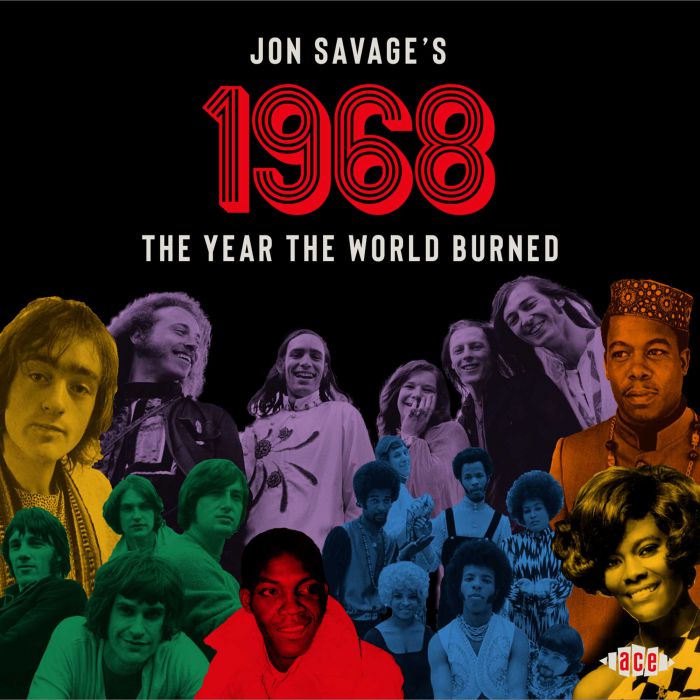
1968 was a bloody year married by violence, riots and the assassinations. It was a year many people wanted to forget as the clock struck midnight on the ‘31st’ of December 1968. However, 1968 was also an important year musically, and is documented on Jon Savage’s 1968-The Year The World Burned, which has just been released by Ace Records as a two CD set.
Disc One.
Opening disc one of Jon Savage’s 1968-The Year The World Burned is Honey Chile by Martha Reeves and The Vandellas. It finds an almost defiant Martha Reeves singing: one day I’m gonna get stronger, and I won’t need you no longer” on a song the reflects the rise of feminism.
Very different is the psychedelic rock of Sunshine Help Me from Spooky Tooth’s debut album It’s All About. Lysergic describes the mod-psych sound of The Creation’s How Does It Feel To Feel, while the pop psych sound of Grapefruit’sDear Delilah has still relevant and popular in 1968.
Big Bird was Eddie Floyd’s tribute to his friend and Otis Redding, who had died in a plane crash. It’s a fitting homage to the legendary soul man. Meanwhile, Tighten Up a fusion of funk and soul proved to be one of the finest songs of Archie Bell and The Drells’ long career.
Continuing with what’s already an eclectic compilation, Everydays is a laid back, jazz-tinged track from The Buffalo Springfield, while Talkin’ About The Good Times is a slice of pop psych from The Pretty Things. The psychedelic sound continues on Dave Mason’s Just For You, and The Kinks contribute one of their hook laden single Wonderboy.
Dionne Warwick’s contribution is the soul classic Do You Know The Way To San Jose. It’s one of her finest singles of her career, and has stood the test of time.
So has the Love’s Your Mind and We Belong Together which signals an end of the psychedelic era. Suddenly paranoia and withdrawal were the order of the day as the psychedelic dream became a nightmare. Other welcome additions to disc one are Canned Heat’s World In A Jug from their sophomore album, and The Beau Brummels’ folk rock single Lift Me. Closing disc one of Jon Savage’s 1968-The Year The World Burned is Al Wilson’s The Snake, which was a favourite of dancers in 1968.
Disc Two.
Given the situation in parts of Europe, South America and throughout America, it’s ironic that Fire! by The Crazy World Of Arthur Brown opens disc two of Jon Savage’s 1968-The Year The World Burned. After that, Hard To Handle by Otis Redding and People Got To Be Free by The Rascals are followed by two classics. The first is I Say A Little Prayer by Aretha Franklin which is followed by Piece Of My Heart by Big Brother and The Holding Company which features a vocal powerhouse from Janis Joplin.
Soul and funk was popular throughout 1968. The For Tops released I’m In A Different Worlds, while the Godfather of Funk James Brown enjoyed a hit with Say It Loud!-I’m Black And I’m Proud (Pt 1). One of the most underrated soul songs from 1968 was Freedom Train by James Carr.
The West Coast Pop Art Experimental Band released what was their finest moment Smell Of Incense. Fifty years later and it’s a truly timeless tracks.
Another of Motown’s biggest names, The Temptations, released their psychedelic soul album Cloud Nine. The title track was one of Cloud Nine’s highlights, while Sly and The Family Stone released call their for harmony with Everyday People.
Away from soul and funk, Throwaway Street Puzzle was a tantalising taste of what folk rockers Fairport Convention were capable of. However, one of the rarest tracks on Jon Savage’s 1968-The Year The World Burned has been kept until last. That is a preview pressing of MC5’s Kick Out The Jams, which closes this lovingly curated compilation in style.
1968 was, and always will, be remembered as a tumultuous year in history, marred by violence, riots and assassinations. It was a year many people wanted to forget as the clock struck midnight on the ‘31st’ of December 1968. The cost in human and financial terms was huge in America, as well as parts of Europe and South America during the year the world burned.
Providing a soundtrack to that year was the music on Jon Savage’s 1968-The Year The World Burned, which is a truly eclectic compilation and one of the best of 2018.
Jon Savage’s 1968-The Year The World Burned.
PHIL ALVIN-UN “SUNG” STORIES.
Phil Alvin-Un “Sung” Stories.
Label: Big Beat.
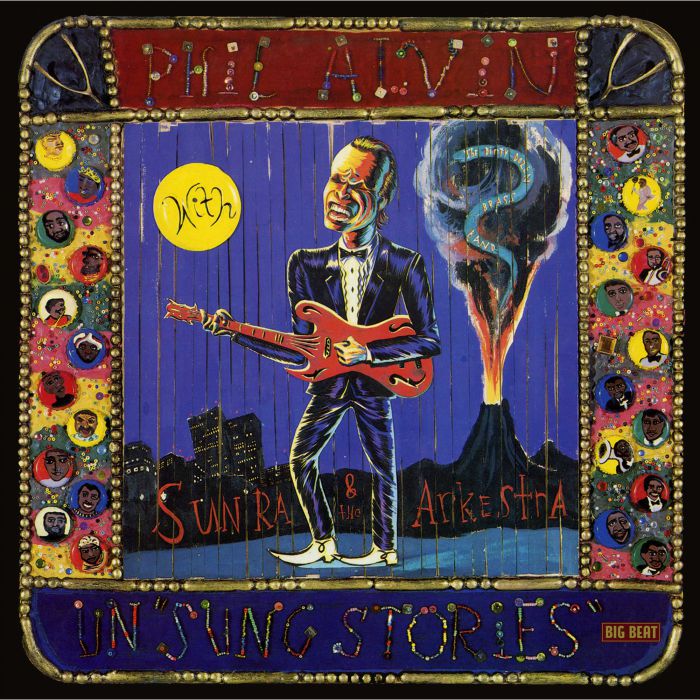
After the demise of The Blasters in 1985, founder member, lead singer and guitarist Phil Alvin wondered what the future held for him? He knew he could join another group, or even form another band. However, eventually Phil Alvin decided to embark upon a solo career and record an album that featured music of by some of his earliest musical influences and memories. That album was Un “Sung” Stories, which was released in 1986 and has just been reissued by Ace Records’ imprint Big Beat.
Having made the decision to record an album that reflected his earliest musical influences and memories, Phil Alvin began thinking of the music his parents played California town of Downey in the late fifties and early sixties. Eventually, Phil Alvin settled on the material he would record for his debut solo album Un “Sung” Stories. This included Someone Stole Gabriel’s Horn which gave a young Bing Crosby a hit, Otis Blackwell’s Daddy Rollin’ Stone and songs like The Ballad Of Smokey Joe, The Old Man Of The Mountain Brother Can You Spare A Dime? These, and the rest of the ten tracks were recorded with some special guests.
Joining Phil Alvin were former members of The Blasters, Sun Ra and The Arkestra and the New Orleans’ based Dirty Dozen Brass Band and The Jubilee Train Singers. They all accompanied Phil Alvin as he recorded the ten songs on Un “Sung” Stories.
When Un “Sung” Stories was released in 1986, it was to plaudits and praise. However, the Slash label only released it only on vinyl and cassette, having not yet fully embraced the new CD format. This didn’t help sales of Un “Sung” Stories, which didn’t reach the audience it deserved.
Many music fans missed out on Un “Sung” Stories which nowadays, is regarded by many critics as a hidden gem. However, back in 1986 some critics were struggling to describe the music on Un “Sung” Stories. It’s best described as Americana, which was still in its infancy in 1986.
Thirty-two years later, and Americana is thriving and Un “Sung” Stories is regarded as Phil Alvin’s finest solo album. It opens with a breezy cover of Someone Stole Gabriel’s Horn which gives way to New Week Sometime, a two-part mixture of music, drama and humour.
The Ballad Of Smokey Joe finds Phil Alvin paying homage to Cab Calloway, with Minnie The Moocher, Kicking The Gong Around and The Ghost Of Smokey Joe. However, the highlight of this triumvirate of tracks is Minnie The Moocher, which features Sun Ra and The Arkestra. They return on The Old Man Of The Mountain and a rueful rendition of Brother Can You Spare A Dime? Their unique and inimitable sound gives the songs a new twist.
Bringing the sound of the Big Easy is New Orleans’ based Dirty Dozen Brass Band on Un “Sung” Stories. However, on Death In The Morning The Jubilee Train Singers add backing vocals and again, are joined by former Blasters’ drummer David Carroll.
He returns on a moody, broody cover of bluesman Otis Blackwell’s Daddy Rollin’ Stone. That isn’t the end of the blues. It continues on Titanic Blues, while Collins Cave is a mixture of hillbilly and blues. Closing Un “Sung” Stories is Gangster Blues, which brought to a close Phil Alvin’s captivating and energetic debut album.
For anyone with even a passing interest in Americana, Phil Alvin’s Un “Sung” Stories will be of interest to them. It marked the start of a new chapter for the, founder member, lead singer and guitarist of The Blasters. However, despite being released to plaudits and praise, Phil Alvin was in no hurry to release the followup to Un “Sung” Stories.
Eight years later, Phil Alvin returned with his sophomore album County Fair 2000. Since then, Phil Alvin has recorded two albums with Dave Alvin and has reformed The Blasters who are still playing live in 2018. However, as far as his solo career is concerned, Phil Alvin’s finest hour was, without doubt, his debut album Un “Sung” Stories.
Phil Alvin-Un “Sung” Stories.
C. J. & CO-AIN’T IT AMAZING THE UNRELEASED WESTBOUND MASTERS.
C.J. & Co-Ain’t It Amazing-The Unreleased Westbound Masters.
Label: Westbound.
The C. J. & Co story began in Detroit, Michigan, in the mid-sixties when they were known as The Strides. By the early seventies, The Strides featured Curtis Durden and his wife Connie, Cornelius Brown Jr and Joni Tolbert. This was the lineup that signed to the Sussex record label, where they were they first encountered the production team of Mike Theodore and Dennis Coffey who produced them as C.C. & Co. However, by then, all wasn’t well at Sussex, and the label was soon no more. Fortunately, Westbound boughtC.C. & Co’s recording contract.
In their early days at Westbound, C.C. & Co worked on soulful songs with Mike Theodore and Dennis Coffey including the club hit Let Them Talk. However, with the arrival of disco C.C. & Co decided to change direction.
One of C.C. & Co’s earliest disco singles was Devil’s Gun which was written by the British songwriting team of Barry Green, Ronald Roker and Gerry Shury. It was the single that changed C.C. & Co’s fortunes when it reached number thirty-six on the US Billboard 100 and two in the US R&B charts. Meanwhile, across the Atlantic in the UK, Devil’s Gun reached forty-three and gave C.C. & Co their first British hit single.
Despite the success of Devil’s Gun, this wasn’t the original version of the song. It only came to light a couple of years ago, when Mike Theodore told Ace Records about the existence of some unreleased tapes by C.J. & Co which he had recorded when they were signed to Westbound. His next question was would Ace Records be interested?
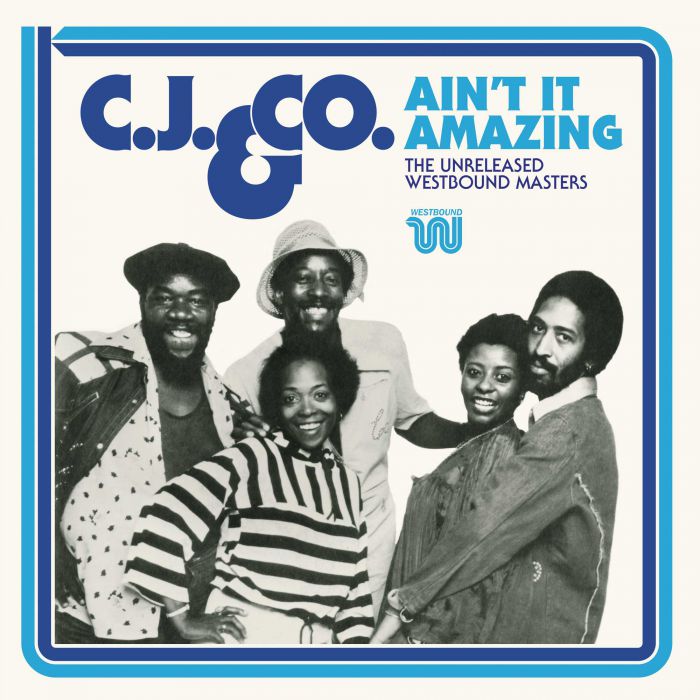
They already had some unissued tracks by C.J. & Co ut not enough for a new compilation. Maybe the unreleased tracks were the answer to their problems? That turned out to be the case, and the previously unreleased tracks became part of Ain’t It Amazing-The Unreleased Westbound Masters, which has just been released via Ace Records’ Westbound imprint. It’s a reminder of C.J. & Co who were active between 1977 and 1978.
Buoyed by the success of Devil’s Gun, C.J. & Co released We Got Our Own Thing which reached number ninety-three in the US R&B charts and number one in the US Dance charts in 1977. This led to C.J. & Co recording their first album with Mike Theodore and Dennis Coffey.
This was Devil’s Gun, which was released to plaudits and praise in 1977, and reached number sixty in the US Billboard 200 and number twelve in the US R&B charts. Surely the C.J. & Co success story would continue?
When C.J. & Co released their third single Sure Can’t Go To The Moon in 1977. It failed to trouble the charts.
Neither did C.J. & Co’s sophomore album Deadeye Dick, which made no impression on the charts. It was a similar case with the singles Big City Sidewalk and Deadeye Dick. After just two hit singles and hit album C.J. & Co’s popularity dwindled and they released no more music. However, there was still unreleased tracks in the Westbound vaults. They feature on Ain’t It Amazing-The Unreleased Westbound Masters.
This includes some of the earliest recordings C.J. & Co made for Westbound, including Ain’t It Amazing sure fire dancefloor filler with mesmeric vocal interplay. Rainbow Music and The Golden Touch were both quality dance tracks that had the potential to entice even the most reluctant dancers onto the floor. Quite different is Get Lucky, where the addition of an electronic bass line make it sound like Giorgio Moroder production when he was working with Donna Summer. However,the previously unheard original mix of their biggest hit Devil’s Gun is the highlight of Ain’t It Amazing-The Unreleased Westbound Masters and sounds as if its been influenced by Norman Whitfield’s productions for Undisputed Truth.
Ain’t It Amazing-The Unreleased Westbound Masters features a dozen soulful disco tracks that were never released by Westbound. The demise of disco meant that further albums by C.J. & Co were released by Westbound. Now forty years after C.J. & Co released their swan-sing Ain’t It Amazing-The Unreleased Westbound Masters has just been released and is a welcome reminder of their vocal prowess and the production skills of Mike Theodore and Dennis Coffey.
C.J. & Co-Ain’t It Amazing-The Unreleased Westbound Masters.
THE BETA BAND-HEROES TO ZEROES.
The Beta Band-Heroes To Zeros.
Label: Because Music.
The Beta Band was formed in Edinburgh in 1996, and a year later, in July 1997 released their Champion Versions EP, which was the first of a trio of innovative EP’s the folktronica pioneers released.
In March 1998 The Beta Band released their sophomore EP The Patty Patty Sound, with Los Amigos del Beta Bandidos following in July 1997. By then, critics were starting to take notice of The Beta Band whose popularity was growing.
Nearly two years later, The Beta Band was released to widespread critical acclaim in June 1999, and everyone at Regal Records celebrated as The Beta Band reached number nineteen in the UK, However, not everyone was happy with the album.
Despite their eponymous debut album giving them a hit in the UK, Steve Mason of The Beta Band called the album: “fucking awful” and “it’s definitely the worst record we’ve ever made and it’s probably one of the worst records that’ll come out this year.” Steve Mason then said in an interview with NME that the album had: some terrible songs,” and they weren’t e “fully realised or fully even written. Half-written songs with jams in the middle” The Beta Band seemed determined to sabotage their career at Regal Records.
To make matters worse, The Beta Band seemed in no hurry to record their sophomore album. Steve Mason recorded and released the No Style EP under his King Biscuit Time EP moniker. After this, Steve Mason and the rest of The Beta Band’s thoughts turned to their sophomore album Hot Shots II, which has just been reissued by Because Music.
Eventually, The Beta Band decided it was time to return to the studio, and this time brought onboard British producer Colin Emmanuel, aka C-Swing, who oversaw production of what eventually became Hot Shots II.
During the Hot Shots II sessions, The Beta Band recorded ten new tracks with C-Swing. The tracks were very different to those on The Beta Band. Some of the songs were much quieter and a less is more approach to production was the order of the day. This allowed the songs to breath, with less ‘obstacles’ obscuring the key parts of the songs. Some of the songs were slow and dark and featured descending chords as The Beta Band continued to innovate. To do this, they took their own unique and inimitable approach
On the album opener Squares, just drumbeats and bass lines accompany Stephen Mason’s chanted vocal. It’s only during a chorus where gorgeous string-drenched trip hop chorus does the song reveal its secrets. Then on Gone, it’s just bass, piano, and backing vocals that play their part in the sound and success of the song. However, on other tracks The Beta Band deploy everything from samples of stunting acoustic guitar melodica and grandiose horns. They’re part of a rich and vibrant musical tapestry. Sometimes, The Beta Band kick loose, and find their inner rocker and become a very different band to that on their eponymous debut album. They’re also a much more focused band and less prone to bouts of eccentricity like The Beta Band Rap. It was as if The Beta Band had come of age on Hot Shots II.
Critics were won over by Hot Shots II, and hailed The Beta Band’s sophomore album as one of the albums of 2001. Hot Shots II was hailed as The Beta Band’s finest hour.
Buoyed by the critical acclaim, Hot Shots II was released in July 2001. Hot Shots II reached number thirteen in the UK and sneaked into the US Billboard 200 at 200. It also reached fourteen in the US Heatseekers chart and eleven in the Independent album charts. The Beta Band looked on the verge of breaking into the lucrative American market. Sadly, they only produced one more album.
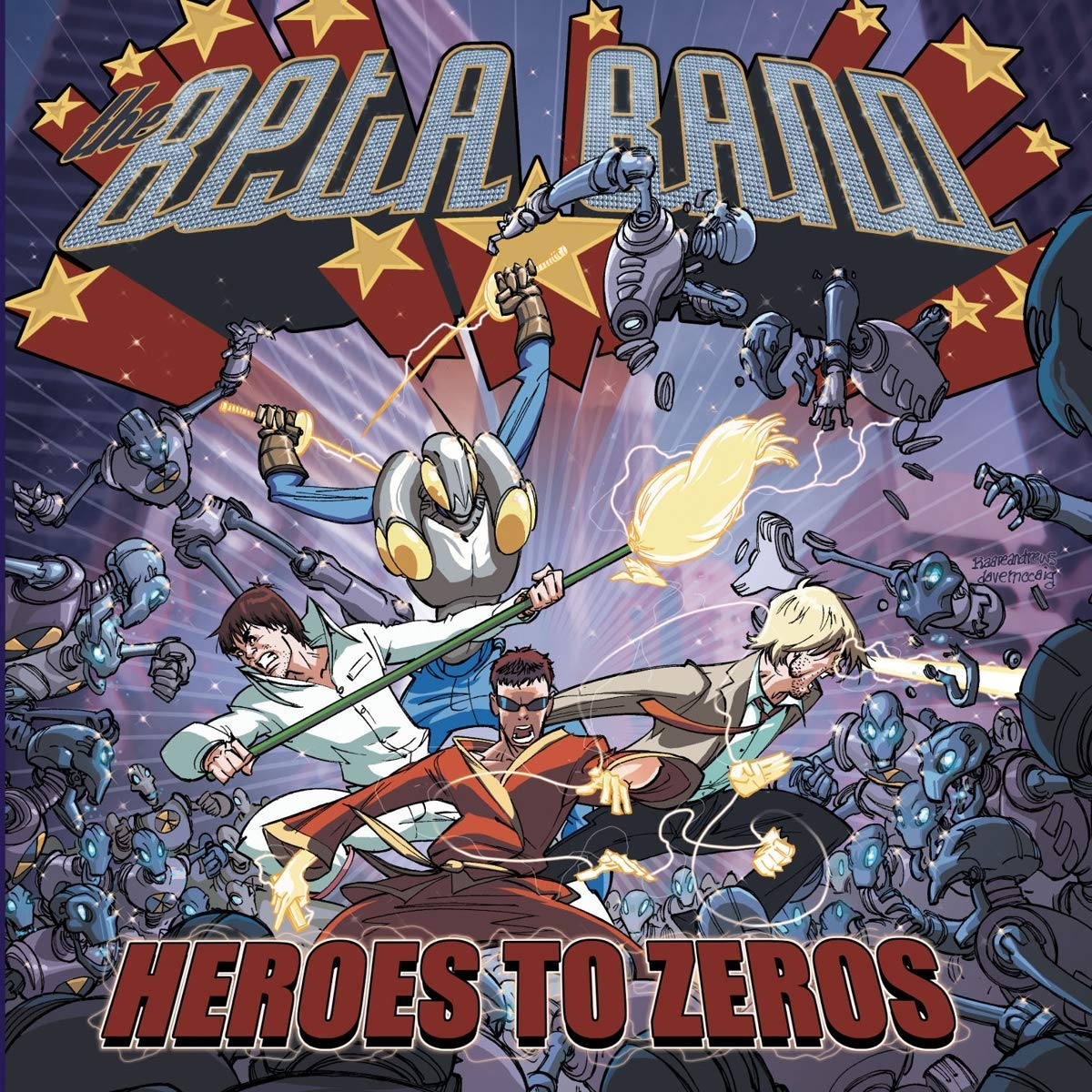
This was Heroes To Zeros which has just been rereleased by Because Music. It was The Beta Band’s swan-song. The Beta Band began demo sessions for what later became Heroes To Zeroes in September 2002. They then entered the studio with producer Tom Rothrock in 2003 and completed a number of tracks. There was a problem though.
Neither The Beta Band nor executives at Regal Records were happy with the recordings and producer Nigel Godrich was brought in to mix the album, which was finally finished in early 2004.
The lead single, Assessment, was released on the ’12th’ of April 2004 and reached number thirty-one in the UK. Two weeks later, the album Heroes To Zeros was released on the ‘26th’ of April 2004 and reached number eighteen in the UK. This would normally be something to celebrate.
Heroes To Zeros featured music that had a much more dense and direct sound but strikes a balance between The Beta Band’s more traditional sound and music that was way ahead of the musical curve. However, some of the music on Heroes To Zeros saw The Beta Band turn their attention to creating pop music.
This being The Beta Band wasn’t ordinary pop music, but pop music with a twist. Heroes To Zeros opened with Assessment which is a slow burner that occasionally hints at U2 before The Beta Band accompanied by horns, sprint for the finish line. Wonderful, which is a love song could only have been written by The Beta Band, while Troubles features a worldweary vocal. By then, there were Troubles afoot within The Beta Band Maybe this is a hint of what was about to happen in August 2004?
Very different was Out-Side, a jagged pop freakout which opens with sampled dog barks, while Space Beatle veers between sparse with eerie verses to a much fuller and viscous sound. Space Beatle and other tracks on Heroes To Zeros sounded as if had been influenced by one man.
It was obvious that Brian Wilson of The Beach Boys was still a huge influence on The Beta Band and especially tracks like Good Vibrations and Heroes and Villain. So were albums like 20/20 and Friends. However, The Beta Band were also forging ahead with their own sound, which was intricate and multilayered. They were best qualified to produce the album and bring their new ideas to life.
To do this, The Beta Band adopted a variety of production techniques to bring out the best in what was an idiosyncratic band. No other producer would’ve been able to achieve what The Beta Band did on Heroes To Zeros.
Many of the songs on Heroes To Zeros ended up very different from the initial ideas recorded by The Beta Band. They honed the songs on Heroes To Zeros which open with Assessment and closed with Pure For. Heroes To Zeros featured The Beta Band at the peak of their creative powers on their self-produced swan-song.
By the time The Beta Band released Liquid Bird, as their second single from Heroes To Zeros, many critics had realised that the song was based on a sample of the Siouxsie and The Banshees’ song Painted Bird. This could’ve been an expensive mistake for The Beta Band.
Despite this mistake, The Beta Band released Out-Side, their second from Heroes To Zeroes in July 2004. When it stalled at fifty-four in the UK charts, little did critics or record buyers realise that the end was neigh for The Beta Band.
They announced their breakup on their website on the ‘2nd’ of August 2004. Despite that, The Beta Band performed at the Summer Sundae festival and embarked upon a farewell tour which drew to close in Edinburg, at the Liquid Rooms on the ‘5th’ of December 2004. This was the end of the story for The Beta Band.
Their swan-song Heroes To Zeros was the only album that The Beta Band produced themselves, since signing to an imprint of a major label. They hadn’t been happy with their first two albums and often made their views known in the music press.
Usually, this was before the album was even released. As they made these comments, members of The Beta Band seemed to forget that they still had help promote their latest release. Executives at Regal Records must have been left shaking their heads in exasperation. Despite the comments of the members of The Beta Band, their three albums were all commercially successful. However, the big question is how successful could The Beta Band have been if they had played the PR game, and reigned in their outspokenness, maverick tendencies and tendency to self sabotage.
Looking back, The Beta Band weren’t suited to being signed to a big label, and would’ve been better suited to a smaller indie label or even self-releasing their albums through their own label. Maybe they would’ve enjoyed a longer career and released more that three albums, including their critically acclaimed,self-produced swan-song Heroes To Zeros?
It features the inimitable genre-melting sound of folktronica pioneers The Beta Band at the peak of their creative powers on Heroes To Zeros their self-produced swan-song where the musical mavericks realise their potential.
The Beta Band-Heroes To Zeros.
SHE’S A DOLL! WARNER BROS’ FEMININE SIDE.
She’s A Doll!-Warner Bros’ Feminine Side.
Label: Ace Records.
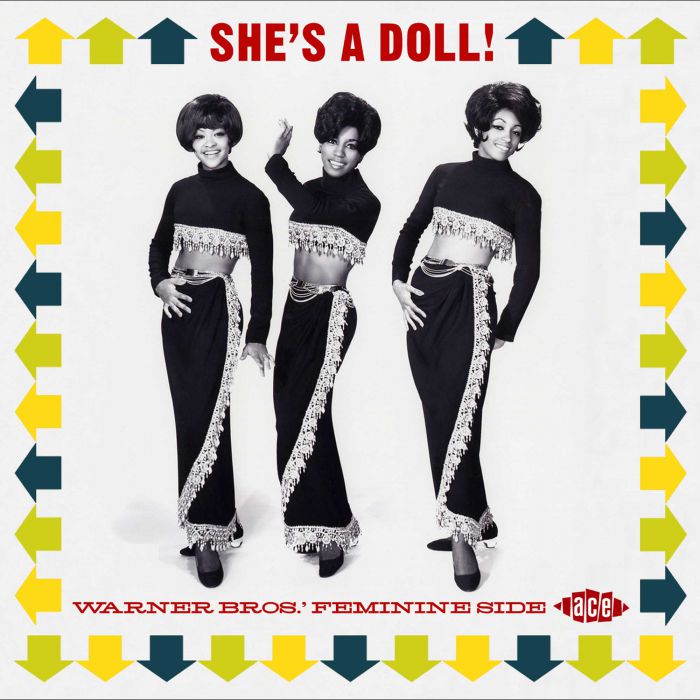
One of Ace Records’ most popular compilation series’ over the past few years has been Where The Girls Are. There’s already been nine volumes of the critically acclaimed Where The Girls Are, with another due for release in 2019. This hasn’t stopped Ace Records compiling and releasing another new compilation of girl pop, but one with a difference.
This is She’s A Doll!-Warner Bros’ Feminine Side, which has just been released by Ace Records. It features twenty-four tracks which were released by Warner Bros and its various imprints between 1962 and 1968. These tracks feature She’s A Doll!-Warner Bros’ Feminine Side, which could well be first instalment in a series of label-centric compilations of girl-pop.
If so, what better label to start than Warner Bros, which was home to everyone from The Three Degrees, Vickie Baines, Barbara Jackson, Ramona King, The Dolls, Bonnie, Connie Stevens, The Honeys, Brenda Hall, Barbara English and Joyce Alexander to Lorraine Ellison. With a mixture of familiar faces and new names, She’s A Doll!-Warner Bros’ Feminine Side has something for everyone.
This includes Contact which The Three Degrees, who open She’s A Doll!-Warner Bros’ Feminine Side with Contact, a smooth slice of Philly Soul released as a single on Warner Bros Seven Arts in 1968. Sadly, this was The Three Degrees one and only single for Warner Bros Seven Arts, and it wasn’t until they signed to Gamble and Huff’s Philadelphia International Records in the seventies that they enjoyed commercial success on both sides of the Atlantic.
Philly born Vickie Baines recorded and released two singles on Parkway in 1965, and two years later released Sweeter Than Sweet Things in 1967 on the Symbol label. Tucked away on the B-Side was the hidden gem We Can Find That Love. It was pickled up by Loma, an imprint of Warner Bros who released We Can Find That Love as a single. Sadly, this hidden soulful gem failed to find the audience it deserved, and fifty-one years is a welcome addition to She’s A Doll!-Warner Bros’ Feminine Side.
Barbara Jackson only released two singles during a recording career which began in 1963 and was over by 1965. Her finest hour came at Warner Bros where she recorded and released He’s Good in 1965. Alas, commercial success eluded She’s Good and that marked the end of Barbara Jackson’s short recording career. Her story is a case of what might have been.
Ramona King recorded for various labels during her career, and between 1964 to 1965 was signed to Warner Bros and recorded Chico’s Girl. However, it was never released and makes a belated debut on She’s A Doll!-Warner Bros’ Feminine Side.
With the rise of popularity in girl groups The Socialites were formed in 1960, and released a trio of singles. This included their swan-song You’re Losing Your Touch which was released in 1964. It featured Jive Jimmy on the B-Side, which is a reminder of the early sixties girl group sound. Sadly, the single failed commercially and The Socialites called time on their career not long after releasing You’re Losing Your Touch. Maybe things would’ve been different if Jive Jimmy had been released as a single?
Movie and television star Connie Stevens embarked upon a musical career in the early sixties and in 1963, released the double A side Little Miss Understood and There Goes Your Guy. While the single failed to chart,There Goes Your Guy is regarded as one of Connie Stevens’ finest sides.
He’s A Doll was The Honeys sophomore single and was released on Warner Bros in 1964. By then, one of The Honeys, Marilyn Rowell, and Beach Boy Brian Wilson were engaged and married shortly after the release of He’s A Doll. However, commercial success eluded He’s A Doll and The Honeys began working as backing vocalists, and only released one further single in 1969. However, their finest single was He’s A Doll.
Sugar N’ Spice’s single Come Go With Me was the Loma label’s first venture into the girl group market. It wasn’t a successful one, although the B-Side Playboy is something of a hidden gem.
Nashville born Brenda Hall only ever released one single during her career. This came in 1965, when she released Soldier Boy Of Mine on Loma. On the B-Side was Oh Eddy, My Baby which was a death song inspired by The Shangri-Las. It’s another oft-overlooked song from the Warner Bros’ vaults.
Prior to founding Sly and The Family Stone, Sly and Rose stone were members of The Tonettes. In 1964,Gloria Scott and The Tonettes released I Taught Him (Pt 1) as a single which failed to chart. The following year, Gloria Scott was hired by Ike Turner which spelt the end of the group, which was part of the story of Sly and The Family Stone.
Joyce Alexander’s one and single Here I Come was released on Warner Bros in 1963. Sadly, there was no followup from this truly talented singer. That was a great shame.
Closing She’s A Doll!-Warner Bros’ Feminine Side is In My Tomorrow by Philly born Lorraine Ellison. It was released as a single on Loma in 1968, and is a soulful reminder of the talented Lorraine Ellison.
After the success of the critically acclaimed Where The Girls Are compilation series, Ace Records have just released another new compilation of girl pop,She’s A Doll!-Warner Bros’ Feminine Side. It features twenty-four tracks which were released by Warner Bros and its various imprints between 1962 and 1968 by familiar faces and new names. They all have one thing in common their quality.
Given the quality of the tracks on She’s A Doll!-Warner Bros’ Feminine Side, this could well be first instalment in a series of label-centric compilations of girl-pop and another success story for Ace Records.
She’s A Doll!-Warner Bros’ Feminine Side.
HOLGER CZUKAY, JAH WOBBLE, JAKI LIEBEZEIT-FULL CIRCLE-VINYL.
Holger Czukay, Jah Wobble, Jaki Liebezeit-Full Circle-Vinyl.
Label: Gronland Records.
Having released eleven albums in eleven years, Can called time on their career in 1979. By then, Can were rightly regarded by critics as one of the most important, influential and innovative bands of the Krautrock era. However, like many of the Krautrock bands, Can hadn’t enjoyed the commercial success that their music had deserved. While their music found an a small, but discerning audience in Britain and France, Can, like many of the other Krautrock bands had failed to find audience in Germany. This was disappointing, just like the demise of Can the group that Holger Czukay cofounded.
After the demise of Can, Holger Czukay dusted himself down after two years where he was marginalised in the group he cofounded.“During the recording of Out Of Reach, I felt an outsider in my own group. I was on the outside looking in. I was on the margins. All I was doing was adding sound-effects.” Holger Czuaky felt his group had been hijacked by Rosko Gee and Rebop Kwaku Baah and things got so bad, that Holger quit Can.
Sadly, Rosko Gee and Rebop Kwaku Baah dominated Out Of Reach. Gone was the loose, free-flowing style of previous Can albums. Even Jaki Liebezeit’s play second fiddle to Baah’s overpowering percussive sounds. The only positive thing was a guitar masterclass from Michael Karoli. Apart from this, things weren’t looking good for Can. It was about to get worse though.
The critics rounded on Out Of Reach. They found very little merit in Out Of Reach. Gee and Baah were rightly blamed for the album’s failure. Even Can disliked Out Of Reach. They later disowned Out Of Reach. Despite this, Rosko Gee and Rebop Kwaku Baah remained members of Can.
Unable to play with the necessary freedom Can were famed for, the two ex-members of Traffic stifled Can. Rebop’s percussion overpowers Jaki’s drums, which have always been part of Can’s trademark sound. At least Michael’s virtuoso guitar solos are a reminder of classic Can. A nod towards Carlos Santana, they showed Can were still capable of moments of genius. Sadly, there wouldn’t be many more of these.
Some time after the release of Out Of Reach, Can decided to release a new single. It wasn’t one of the songs on Out Of Reach. Instead, it was reworked version of Jacques Offenbach’s Can Can. This was somewhat surreal, and far removed from classic Can. They had moved far away from the music that featured on their golden quartet. Can’s loyal fans wondered what the future held for Can. Sadly, Can would breakup after their next album.
Can.
Following the commercial failure of Out Of Reach, the members of Can began recording what became their tenth album, Can. Remarkably, Rosko Gee and Rebop Kwaku Baah were still part of Can. Sadly, Holger was not longer a member of Can. He had left during the making of Out Of Reach. His only involvement was editing Can which was a travesty.
Allowing Rosko Gee and Rebop Kwaku Baah to remain members of Can while Holger left the band he cofounded was a massive mistake. Faced with the choice or losing Holger or keeping Rosko Gee and Rebop Kwaku Baah in Can, should’ve been a no-brainer. Incredibly, Holger was marginalised further.
Neither Rosko Gee nor Rebop Kwaku Baah were suited to a band like Can. Both came from a very different musical background, and as a result the decision to hire them initially was flawed and questionable. Their playing on Out Of Reach was odds with the way Can played. They had spent their career playing with freedom that resulted in inventive and innovative music. The much more rigid style of Rosko Gee and Rebop Kwaku Baah stifled the other members of Can. To make matters worse, their playing overpowered the rest of Can, and was one of the reason’s for the album’s failure. Yet when recording of Can began, Rosko Gee and Rebop Kwaku Baah remained.
Can, which is sometimes referred to as Inner Space, was released in July 1979. Again, critics weren’t impressed by Can, and the album received mixed reviews. No longer was Can the critic’s darlings.
The music on Can was a fusion of avant-garde, electronica, experimental, psychedelia and rock. Add to that, a myriad of effects including distortion and feedback, and here was an album that divided the opinion of critics. While the critics agreed, it was better than Out Of Reach. They also agreed that Holger was sadly missed.
Even Holger’s renowned editing skills couldn’t save Can. Try as he may, he could only work with what he was given. He did his best with Can, which the eleventh album from the group he co-founded. By the time Can was released, Holger: “had come to a realisation, that it was time to go his own way.” Holger describes this as “necessary.”
Can had split-up after the release of Can. That was their swan-song. However, even before that, Holger: “felt marginalised, this had been the case since Rosko Gee and Rebop Kwaku Baah became part of Can. They had hijacked Can,” and ultimately, this lead to the death of a great and innovative band.
With Can now part of musical history, Irmin Schmidt, Holger Czukay, Michael Karoli and Jaki Liebezeit set about reinventing themselves. Music critics wondered whether they would form new bands or embark upon solo careers? Irmin Schmidt, Holger Czukay and Michael Karoli all embarked upon solo careers.
Movies!
Holger Czukay hadn’t really been making music since 1976, and had edited the last two Can albums. This meant that Holger Czukay had to find “his own sound again.” He had “been through this with Can,” Now he’d have to do so again. It would be worth it though, when he released his first solo album since 1969s Canaxis 5, Movies!
When Holger Czukay released his much-anticipated sophomore album Movies! to widespread critical acclaim and was hailed as one of the best albums of 1979. It was an eclectic album described as variously psychedelic, cinematic, melodic, moody, understated and progressive, here was the next chapter in Holger’s musical career. The one track that everyone agreed was a minor masterpiece was Cool In The Pool. It was Movies’ Magnus Opus. Holger’s decision to embark upon a solo career had been vindicated. He was back doing what he did best, creating ambitious, groundbreaking and pioneering music. That would continue in 1981, when Holger released On The Way To The Peak Of Normal.
On The Way To The Peak Of Normal.
For Holger, 1981s’ On The Way To The Peak Of Normal was “one of the albums I’m most proud of. It was also Holger’s first collaboration with Conny Plank
Working with Conny Plank Holger remembers, was a revelation. Holger felt Conny was a consummate professional. “Here was someone who understood what I was trying to achieve.” He ensured that I never made music people neither understood, nor wanted to buy. The sessions were organised and disciplined, very difference from the indiscipline of late Can albums.”
Recording took place in the familiar surroundings of Inner Space Studios, Cologne. The only member of Can were present was Jaki Liebezeit. Other members of the band included Conny Plank and Jah Wobble, who Holger and would collaborate with on 1982s Full Circle and the 1983 Snake Charmer E.P.
Before that, Holger released On The Way To The Peak Of Normal in 1981. Just like the early days of Can, Holger was once again, the critic’s darling.
Critics were won over by On The Way To The Peak Of Normal. The album was a fusion of ambient, avant-garde, electronic, experimental, funk, industrial, jazz, psychedelia and rock. Genre-melting describes an album of bold, challenging, innovative, inventive and influential music. It was a case of expect the unexpected on On The Way To The Peak Of Normal, which saw Holger continue to create groundbreaking music. Here, was one of the most inventive albums Holger had recorded.
Although Holger had been making music for three decades, he still had plenty to say musically. This included when Holger Czukay collaborated with Jah Wobble, Jaki Liebezeit on the album Full Circle which was recently reissued by Gronland Records.
Full Circle.
Holger Czukay had collaborated with Public Image Limited’s bassist Jah Wobble and former Can drummer Jaki Liebezeit on his third album On The Way To The Peak Of Normal. They had enjoyed working together and decided to record an album which reflected their respective musical backgrounds and influences.
Holger Czukay and Jah Wobble wrote How Much Are They?, Where’s the Money, Trench Warfare and Twilight World. They also joined forces with Jaki Liebezeit to write Full Circle RPS (No 7) and Full Circle RPS (No 8). These six tracks were recorded at Can’s Inner Space Studio, Cologne,
During the recording of Full Circle, Holger Czukay switched between guitar, piano, organ, French horn, added vocals on Full Circle RPS (No 7) and drum machine on How Much Are They? Jaki Liebezeit played drums, percussion, trumpet and added backing vocals on Full Circle RPS (No 7). Jah Wobble added bass, vocals and synths on Full Circle RPS (No 7). The three pioneering musicians had soon recorded the six tracks that became Fill Circle which was mixed by Holger Czukay.
When Full Circle was released in 1982, it was hailed a groundbreaking album of innovative music by critics as dub and Krautrock melted into one. Scratch below the surface and elements of avant-garde, electronica, experimental and rock can be heard on Full Circle. It features multilayered soundscapes that are dreamy,dubby, filmic,futuristic, lysergic, otherworldly and was full of subtleties and surprises. Full Circle was a truly groundbreaking album.
Sadly Full Circle wasn’t the commercial success that it deserved to be, and this crucially critically acclaimed collaboration between Holger Czukay, Jah Wobble and Jaki Liebezeit hasn’t found the audience it deserved. It’s shades of Can, before their music started to receive the recognition it deserved.
As for Full Circle, it’s always been an underground album, appreciated by a small coterie of music lovers who understand and appreciate the combined talents of the three musical innovators of Holger Czukay, Jah Wobble, Jaki Liebezeit who were responsible for an early eighties cult classic.
Holger Czukay, Jah Wobble, Jaki Liebezeit-Full Circle-Vinyl.

VENEZUELA 70 VOLUME 2: COSMIC VISONS OF A LATIN AMERICAN EARTH: VENEZUELAN EXPERIMENTAL ROCK IN THE 1970S AND BEYOND-VINYL.
Venezuela 70 Volume 2: Cosmic Visions Of A Latin American Earth: Venezuelan Experimental Rock In The 1970s and Beyond-Vinyl.
Label: Soul Jazz Records.
During the seventies, Venezuela was one of the most prosperous countries in South America after oil was discovered in the North West of the country in 1914. Soon, there was the equivalent of gold rush in the Maracaibo basin. However, it was liquid gold prospectors came in search of, oil.
Before long, most of the biggest oil companies were beating a path to the Maracaibo basin and were soon shooting fish in a barrel. There was oil, and plenty of it. As a result, people came from all over the world in search of work and wealth. This was no surprise, as Venezuela was ideally situated.
Venezuela was the gateway to the Caribbean, so people from Cuba, Guyana, Haiti, Jamaica, Puerto Rico and Trinidad and Tobago arrived in Venezuela. So did immigrants from neighbouring South American countries including Bolivia, Brazil and Columbia. However, by then, Venezuelans were used to people settling in their country
That had been the case for over 200 years. People had emigrated fro Germany, Italy and Portugal, and so had Arabs and Africans. Venezuela had always been a multicultural country, and it was no different in 1928.
By 1928, Venezuela was the largest exporter of oil in the world and had become home to many of the world’s biggest oil companies. They came in search of black gold, and found a plentiful supply. This they exported to across the globe. However, by 1943 the Venezuelan government were tired of watching their oil heading out of the country, and decided to take action.
In 1943, the Venezuelan government passed laws that resulted in a 50/50 split in profits between the government and the oil companies. This was a huge blow to oil companies, but the Venezuelan government were resolute. They weren’t going to change their mind. Especially when the money raised from the oil tax transformed Venezuela into one of the most prosperous countries in the world.
That was the case through the remainder of the forties and fifties. By 1960, Venezuela’s new, democratically elected government played a leading role in founding OPEC, whose aim was to ‘support’ the price of oil. Things were changing in Venezuela.
The country continued to prosper in more ways than one during the sixties. By then, Venezuela had a rich cultural capital. The kinetic arts scene was thriving, and so was music. Traditional forms of Venezuelan music continued to prosper in some parts of Venezuela. However, many Venezuelans began to look outside of the country for musical inspiration.
They looked to Cuba, Puerto Rico and Latin America. Some Venezuelans had travelled to New York, and heard the Nu Yorican which was popular within the Latino community. This music soon began to influence Venezuelans. So too did British rock music. However, other types of music from within Venezuela began to influence the music scene.
With so many immigrants settling in Venezuela, they brought with them their own musical influences. These different genres all played an important part in Venezuela’s musical future.
Meanwhile, the prosperity continued, and there was an air of positivity during the sixties. Venezuela was a very different country and was now run by democratically elected government, who looked like they were about to play an important part on the world stage, given their role in OPEC. However, as the sixties gave way to the seventies, Venezuela changed, and the wider world were in for a surprise.
In 1973, Venezuelans voted to nationalize the oil industry. For all the companies who had invested heavily in Venezuela, this was a massive blow. The only small crumb of comfort was that the new law didn’t take force until the 1st of January 1976. After that, Petróleos de Venezuela would take over exploration, production, refining and exporting oil. This meant all the money made out of oil, stayed in Venezuela, and made the country even more prosperous. That was the theory.
The only problem was, that by the seventies corruption was rife within Venezuela. Still the country continued to prosper, pre and post the ‘1st’ of January 1976 and Venezuela remained a wealthy and prosperous country financially and culturally.
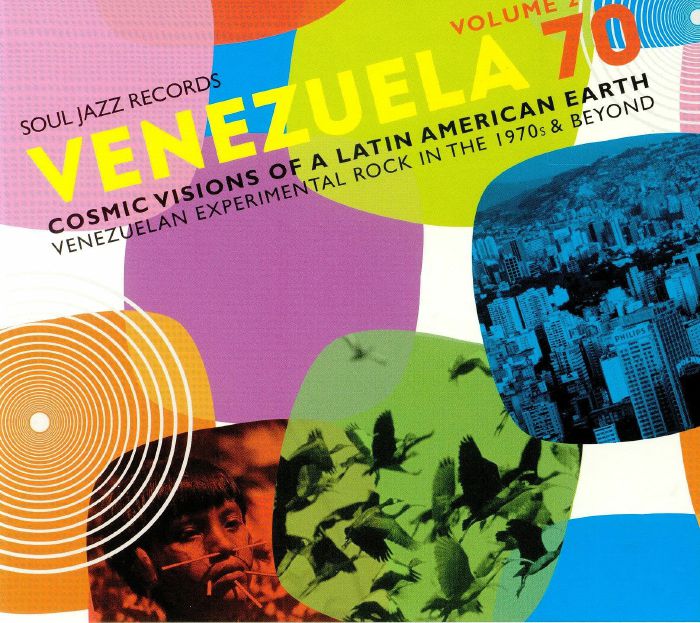
Part of Venezuela’s rich cultural capital during the seventies was its music scene. Venezuelan musicians were creating ambitious and innovative music. However, that music has never been heard outside of Venezuela, which is a great shame, given the quality of music produced by Venezuelan musicians during the seventies. However, Soul Jazz Records have just released Venezuela 70 Volume 2: Cosmic Visions Of A Latin American Earth: Venezuelan Experimental Rock In The 1970s and Beyond which is another selection of groundbreaking music.
That music was made by pioneering musicians whose raison d’être to create album of groundbreaking and innovative music. Most of these artists and bands were part of the Venezuelan underground music scene and were relative unknowns. Sadly, that remains the case even today, and it’s only the release of compilations like Venezuela 70 Volume 2: Cosmic Visions Of A Latin American Earth: Venezuelan Experimental Rock In The 1970s and Beyond that may introduce these artists and bands to the wider audience that their music so richly deserves.
Back then, artists and bands fused elements of disparate and sometimes unlikely musical genres with everything from progressive rock and jazz, electronica, experimental music and even disco during the seventies. This was very different from much of the music that was popular in Latin America during the seventies.
This included salsa which filled dancefloors across Latin America. Meanwhile, many Venezuelan rock bands were heavily influenced by British and American bands. However, this changed in the seventies when there was a revolution in Venezuelan music.
Suddenly, a new generation of Venezuelan artists and bands began releasing groundbreaking music from the seventies onwards. Eighteen of these artists feature on Venezuela 70 Volume 2: Cosmic Visions Of A Latin American Earth: Venezuelan Experimental Rock In The 1970s and Beyond which was recently released as a two LP set by Soul Jazz Records. This includes Vytas Brenner who contributes the folk rock of Agua Clara. He returns later with La Sabana and Tragavenado which are a reminder of a truly talented singer and songwriter.
Straight away, Daniel Grau’s cosmic disco experiment Dejando Volar El Pensamiento which in parts brings to mind Giorgio Moroder who has obviously been an influence, Daniel Grau’s other contributions include Delirio En Fa Menor and Voy which are both a remainder of a pioneering musicians.
The driving disco-tinged funk of Orchestra Julian ’s Do It With Class is a real hidden gem. So is the psychedelic rock of Vytas Brenner’s Gavilan with its blistering guitar licks and funky backdrop. Vytas Brenner also contributes Mandingo, La Sabana and Morrocoy which are a reminder of one of one of Venezuelan music’s pioneers who sadly, is one of the country’s best kept musical secrets.
Machu Picchu Dos (El Nino Anciano) is best described as a slice of tropical funk from Un Dos Tres Y Fuera. They only feature once and so does Johnny Lamas whose Noches En Caracas is one of the compilation’s finest moments. Closing Venezuela 70 Volume 2: Cosmic Visions Of A Latin American Earth: Venezuelan Experimental Rock In The 1970s and Beyond is Aldemaro Romero Y Su Onda Nuevo’s joyous sounding Una Por Una with its feel-good sound.
The various artists and bands on Venezuela 70 Volume 2: Cosmic Visions Of A Latin American Earth: Venezuelan Experimental Rock In The 1970s and Beyond were all pioneers determined to push musical boundaries to their limits as they created groundbreaking and innovative music.
To do that, the artists and bands fused elements of electronica, funk, jazz, and Latin rhythms with progressive rock, psychedelia and rock. Some added Venezuelan roots music to the mix which created a new and unique sound which combined elements of the music of the past and present. This music was all part of a new musical era which is celebrated on Venezuela 70 Volume 2: Cosmic Visions Of A Latin American Earth: Venezuelan Experimental Rock In The 1970s and Beyond and is a further reminder of the groundbreaking and innovative music being released in Venezuela during what was a golden age for underground music.
Venezuela 70 Volume 2: Cosmic Visions Of A Latin American Earth: Venezuelan Experimental Rock In The 1970s and Beyond-Vinyl
BUILDING INSTRUMENT-MANGELEN MIN.
Building Instrument-Mangelen Min.
Label: Hubro Music
Ten years ago, Building Instrument was formed in 2008, by Mari Kvien Brunvoll, Øyvind Hegg-Lunde and Åsmund Weltzien in Bergen, Norway, with a view to making electronic music. It wasn’t long before Building Instrument decided to change direction.
After a musical rethink, Building Instrument settled on a very different sound. This time, they decided to make acoustic music, which would allow Building Instrument to improvise and innovate. Having made the decision to change direction, Building Instrument began to practise, honing and shaping their new sound. Gradually, their own unique genre-melting sound began to take shape.
It’s best described as genre-melting, with Building Instrument drawing inspiration from various musical genres and influences. Once they had honed their unique sound, Building Instrument began to play live
Each night Building Instrument took to the stage, they took the audience on a magical, musical, mystery tour. One minute Building Instrument’s music is understated, then the next it’s playful as Building Instrument throw a curveball, and change direction. The next track is totally different, with Building Instrument losing their earlier self restraint, becoming bold as they kick out the jams. As a result, Building Instrument’s music is always innovative, inventive and interesting. Other times, glorious rhythms and melodic music assailed the audience, who were enthralled by veered between emotive and ethereal to compelling and dramatic. Other times, the music was adventurous, bold and always, innovative. However, that wasn’t surprising given Building Instrument’s multi-talented lineup.
Building Instrument’s vocalist is Mari Kvien Brunvoll, who also takes charge of an eclectic and interesting selection of instruments. This includes the zither, percussion, kazoo and sampler. Mari Kvien Brunvoll released her eponymous debut album in 2012. She has also worked with many artists during her carer. This includes her collaboration with Stein Urheim on their 2013 album Daydream Twin. It was nominated for a Spellemannprisen in the Open Category in 2013. However, Mari Kvien Brunvoll isn’t the only experienced musician in Building Instrument.
So is drummer and percussionist Øyvind Hegg-Lunde. He has been a member of several groups, i, including Crab Is Crap, the Erlend Apneseth Trio, Glow, Klangkameratane, Strings and Timpani and The Sweetest Trill. The final member of Building Instrument is Åsmund Weltzien, who plays synths, melodica and adds electronics and melodica. Together, the three multitalented members of Building Instrument proved a formidable force.
Having laboured long and hard to establish a reputation as a live band, Building Instrument was now familiar faces on Norway’s thriving and vibrant music scene. By then, Building Instrument’s concerts were receiving rave reviews. In the increasingly competitive Norwegian music scene, Building Instrument were regarded as rising stars. Their music was adventurous, inventive, innovative and totally unique. They had forged and honed their own style over the last few years. During this period, they’d worked away, quietly recording their eponymous debut albu
Building Instrument.
In March 2014, Building Instrument was released to critical acclaim. The music was beautiful, cinematic, ethereal, innovative and inventive album of genre-melting music, where Building Instrument push musical boundaries to their limits, and sometimes, beyond It was a captivating album, and one that sonically and stylistically, defied description.
Building Instrument combined elements of ambient, avant-garde, electronica, experimental, folk, free jazz, pop, and rock. There’s even a nod to sixties soundtracks and jazz. At the heart of Building Instrument’s sound, was the ethereal beauty of Mari Kvien Brunvoll’s vocal. The result was an album where Building Instrument certainly fulfilled their potential, and in doing so, whetted the listener’s appetite for the followup.
Given it had taken Building Instrument six years to release their eponymous debut album, the question was how long would it take them to release their sophomore album? Building Instrument it turned out, took just over two years to record Kem Som Kan Å Leve, which by todays, standards, isn’t long. Kem Som Kan Å Leve is one of the most anticipated albums of 2016, and finds Building Instrument heading out on another magical musical mystery tour.
Kem Som Kan Å Leve.
Having released their eponymous debut album, Building Instrument’s thoughts turned to the followup. It took the best part of two years to complete what became Kem Som Kan Å Leve. The music was composed by Building Instrument, while vocalist Mari Kvien Brunvoll wrote the lyrics and is responsible for the melodies. However, the inspiration for some of Kem Som Kan Å Leve came from the artwork of Kurt Schwitters on yheoir .
Just like on their eponymous debut album, Building Instrument combine disparate musical genres. Elements of ambient, avant-garde, electronic, experimental, folk, indie pop, improv, industrial and jazz. It’s a captivating fusion of musical genres and influences. These influences include Kurt Schwitter a painter, but a collage artist, sound poet and installation artist.
On Kem Som Kan Å Leve, Building Instrument followed in the footsteps of Kurt Schwitter. Building Instrument: “go further in the direction of expanding or erasing the meaning of language, just as Schwitters did with his sound poetry.” This was an ambitious project, but the results were fascinating and captivating and features sonic explorers Building Instrument at their inventive and innovative best. Kem Som Kan Å Leve was Building Instrument’s musical Magnus Opus, and was an ambitious and adventurous, but also beautiful, dreamy, ethereal, hypnotic and melodic. This set the bar high for their third album Mangelen Min which will soon be released by Hubro Music.
Mangelen Min.
Having released two critically acclaimed albums, critics, cultural commentators and a coterie of music fans with a discerning musical taste wondered what direction Building Instrument’s music would head in? The answer was Mangelen Min, an album of truly groundbreaking music that is way ahead of the musical curve.
The three members of Building Instrument have spent ten years improvising and experimenting together as they pushed musical boundaries to the limit and sometimes beyond Building Instrument are also well aware of the current trends and taste in modern music. Despite their interest in contemporary music, Building Instrument’s appeal ranges from serious music fans to those who preference is for popular music. Both types of listener are drawn to, and strikes a chord with the new and innovative music that Building Instrument have been making for ten years. This includes on their new album Mangelen Min.
This time around, Building Instrument were joined by sound engineer and musician Anders Bjelland of Great News, Electric Eye, Jørgen Træen of The National Bank, Susanne Sundfør, Jaga Jazzist and Lars Horntveth. They all play their part in what’s an exquisite fusion of musical and influences.
Listen carefully to Mangelen Min and there’s elements Balkan music, classical baroque, electronica and Mari Kvien Brunvoll’s vocals which range from ethereal and celestial to assured and powerful. Add to the mix drums that have a melodic sound and deep spacey synth sounds. They sound as if they belong on the soundtrack to a feature film by Nicolas Winding Refn. All this is part of a truly captivating albums full of subtleties, and surprises and also nuances and changes aplenty. Mangelen Min finds Building Instrument lock down the groove on a very danceable album with an intriguing title.
For those wondering what the album title Mangelen Min means, singer, co-composer and lyricist Mari Kvien Brunvoll explains that it translates into English as: “the thing missing in my life” or “my lack” Essentially Mangelen Min is the presence of something that is missing or no longer there, and is a akin to a body of sorrow that follows someone around. It’s also a bit like a companion creature that is made up of all the longing inside a person. Those separated by distance and lovers-in-waiting will understand this feeling of longing. Mari Kvien Brunvoll describes Mangelen Min as: “your alien-like shadow friend.” It watched on as Building Instrument recorded their third album.
Mangelen Min found Building Instrument embark upon a musical adventure, but one where there wasn’t a pre-defined destination in sight. Øyvind Hegg-Lunde remembers: “We were starting to get confident about what we’ve created as a band, and during the ten years we’ve been working together we’ve become close friends.“ his time, we went into the studio knowing that we had a team of talented people around us, who would all be working on the creative chaos together. Plus we were surrounded by a lot of equipment and a pretty big set-up.”
Despite Building Instrument’s expanded lineup, they stick to the same successful formula that worked so well on their first two albums. This means fusing real-time playing on an eclectic selection of instruments, live sampling and electronic processing. All this is combined and becomes part of a musical mosaic that has been painstaking put together by Building Instrument. Mangelen Min is an ambitious and imaginative album made by groundbreaking musicians who create music that is innovative and inventive. In doing so, sonic explorers Building Instrument combine the past and present on Mangelen Min.
While many bands prefer to work in the digital domain, Building Instrument used analogue technology more than digital on Mangelen Min. It’s a combination of Man Machine. There’s also DIY ethos on parts of Mangelen Min, although state of the art technology is used elsewhere on an album where layer upon layer of instruments are combined and intertwine. Mari Kvien Brunvoll remembers: “We employed everything from Hardanger fiddle samples, vibraphone, sampled wind instruments and whistles in addition to our customary resources of song, drums and synthesisers.” The final piece of the jigsaw was Mari Kvien Brunvoll’s versatile vocal which spans several octavse. It’s part of a genre-melting album from sonic explorers Building Instrument who return with a fitting followup to Kem Som Kan Å Leve.
Mangelen Min is another ambitious project from Building Instrument, and the results are both fascinating and captivating. The Norwegian sonic explorers are at their inventive and innovative best on Mangelen Min as they push musical boundaries to their limit and sometimes beyond. This resulted in Mangelen Min, an album of truly groundbreaking music that is way ahead of the musical curve, which is what critics and cultural commentators have come to expect of Building Instrument during the last ten years.
Building Instrument-Mangelen Min.

JOHN COLTRANE-1963: NEW DIRECTIONS-VINYL.
John Coltrane-1963: New Directions-Vinyl.
Label: Impulse!
As 1963 dawned, John Coltrane was at the peak of his powers and was already regarded as one of the greatest tenor saxophonists of his generation. However, the previous year 1962, had been somewhat disappointing by his high standards. Neither of the two albums he released in 1962, Ballads nor Duke Ellington and John Coltrane were his finest or most innovative albums. Instead, they were a reminder that Impulse! the label hat John Coltrane was signed to, saw him as a mainstream jazz musician. John Coltrane had other ideas.
In 1962, John Coltrane had joined forces with Eric Dolphy and released the album Live At The Village Vanguard. This was much more representative of where John Coltrane was musically at the time. By then, he was leading what later became knowns as his classic Quartet.
The lineup featured drummer Elvin Jones, double bassist Jimmy Garrison and pianist McCoy Tyner who all feature on a new five LP box set 1963: New Directions that has just been released by Impulse! It features John Coltrane at the peak of his creative powers on what was a pivotal year of his career.
This was very different from 1962, which musically wasn’t a vintage year for John Coltrane. He had also struggled with the mouthpiece of his tenor saxophone and rather than persevere, had some work done on it. This ruined what was a perfectly good mouthpiece. To make matters even worse John Coltrane was also experiencing marital problems, and watched as his marriage broke down. It was no surprise that John Coltrane was pleased when 1962 gave way to 1963.
It offered a new start for him, and on the ‘5th’ of March 1963, John Coltrane and has classic Quartet played a barnstorming set at Birdland, and was one of their best sets since they started out in 1962. Buoyed by this, the Quartet was ready to record a new album.
John Coltrane and his classic quartet arrived at the Van Gelder studios in Englewood Cliffs, on the ‘6th’ of March 1963, and the band were in good spirits after their barnstorming set at Birdland the night before. It was without doubt one of their finest sets and this set them up nicely to record a new album with Rudy Van Gelder, which would be released by Impulse later in 1963.
Bandleader John Coltrane planned to record an entire album during the session, which was something he had done many times before, and so had the other members of the quartet.This time, John Coltrane planned to record an album that featured mostly his own compositions. He had written Slow Blues, One Up, One Down and Villa which was based on Franz Lehár’s Vilja Song from The Merry Widow. John Coltrane planned to revisit another of his compositions Impressions, and had decided to cover Nature Boy. However, John Coltrane knew from experience that anything could happen when he was recording an album.
That proved to be the case, and John Coltrane and his classic Quartet recorded several takes of each track, including those that feature on 1963: New Directions. The classic Quartet deliver a series of restrained and stunning performances on Takes 3 and 5 of Villa, Nature Boy and on the four takes of Impressions. These four tracks are a reminder of just how versatile and talented the four members of the classic Quartet were. They had an almost telepathic understanding as Takes 1 and 6 of One Up, One Down show.
Twenty-one tracks were recorded on the ‘6th’ of March 1963. This includes an eleven minute epic version of Slow Blues, the beautiful After the Rain and tracks of the quality of Autumn Serenade and After The Rain. However, not every track features the classic quartet.
In April 1963 drummer Elvin Jones had to enter rehab to deal with his drugs problem. Roy Hayes seas brought in to deputize for him and can be heard on Dear Old Stockholm and a cover of Billy Eckstine’s I Want to Talk About You which was recorded live at the Newport Jazz Festival in July 1963. However, many jazz aficionados familiar with the two drummers’ work will be able to spot the difference in styles between Elvin Jones and Roy Haynes.
There’s two more live tracks from the Newport Jazz Festival, including a fiery and inventive seventeen minute version My Favorite Things where John Coltrane switches to soprano saxophone. There’s also a fifteen minute version of Impressions where John Coltrane explores this familiar tracks as he returns to tenor saxophone and plays with an inventiveness and aggressiveness. Elvin Jones returns on The Promise, a lengthy and laid-back eight minute exploration of I Want To Talk About You and Mongo Santamaria’s classic Afro Blue featured on the original Live at Birdland. So do Your Lady which references John Coltrane’s future wife Alice, and make the start of his spiritual side. However, the most poignant and thought-provoking track is Alabama, which was written for the four African-American girls killed in the despicable bombing of a church in Birmingham, the previous September. This proves a ruminative way to close disc three 1963: New Directions, at the thought of barbarian racists murdering four innocent girls in a place of worship.
For anyone with even a passing interest in John Coltrane’s music 1963: New Directions is an important musical documents and acts as a roadmap for what was still to come. The classic Quartet were known for their versatility as their music continued to evolve.
This included on his two spiritual masterpieces Crescent and A Love Supreme. They were followed by explorative Ascension and Meditations, which saw John Coltrane continue to push and stretch the boundaries of what was the regarded as jazz. However, by 1965 John Coltrane music had moved on the direction of avant-garde period which was the direction his music headed until his tragic death on July the ’17th’ 1967 aged just forty.
That day, jazz music lost one of its greatest saxophonists who left behind a rich musical legacy including the music which features on 1963: New Directions which documents a landmark year for John Coltrane and his classic Quartet as they continued to write their way into jazz history.
John Coltrane-1963: New Directions-Vinyl.

COVER ME-THE EDDIE HINTON SONGBOOK.
Cover Me-The Eddie Hinton Songbook.
Label: Ace Records.
When Atlantic Records’ Jerry Wexler saw Eddie Hinton playing in Muscle Shoals he called him “the next big thing.” By then, Eddie Hinton was a talented songwriter who regularly collaborated with Marlin Greene, Donnie Fritts and Dan Penn, and played guitar on nearly every session held at Quinvy and Muscle Shoals Sound studios between 1967 and 1972. However, Eddie Hinton wasn’t content to be a session musician and songwriter all is career.
Eddie Hinton wanted to embark upon a solo career, but his career was hampered after a drugs charge in the early seventies saw him forced to leave his home Muscle Shoals. Despite that, Eddie Hinton wasn’t about to give up on his dream.
In 1977, Eddie Hinton had signed to Capricorn Record and released his debut album Very Extremely Dangerous. Many record industry insiders and critics believed that Very Extremely Dangerous would launch the Muscle Shoals based soul man’s career.
It would’ve done if Capricorn Records hadn’t entered bankruptcy a few weeks later. This was a disaster for Eddie Hinton.
By then, Eddie Hinton’s life had already started to spiral out of control and soon, he was battling with mental illness plus drugs and alcohol addiction. The man dubbed: “the next big” by Jerry Wexler was in danger of becoming the forgotten man of soul.
In 1986, Eddie Hinton released his long-awaited sophomore album Letters From Mississippi. Then five years later, he followed this up with Cry and Moan in 1991. Sadly, though, his fourth album Very Blue Highway was the last album Eddie Hinton released during his lifetime.
Tragedy struck on the ’28th’ of July 1995 when Eddie Hinton died after suffering a heart attack. the fifty-one year old soul man was at home in Birmingham, Alabama with his mother Deanie Perkins and stepfather Paul Perkins. It was the end of era.
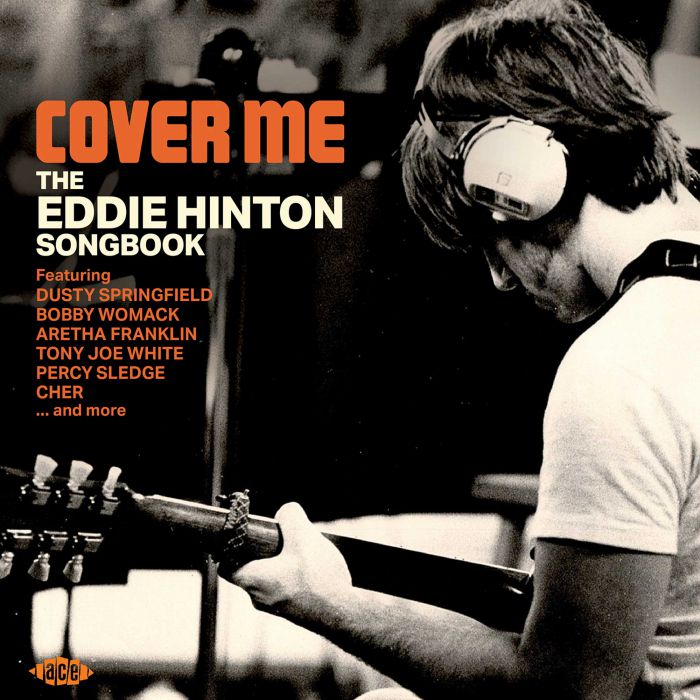
Looking back, the story of Eddie Hinton is one of a truly talented singer who never fulfilled his potential. However, during the first decade of his career Eddie Hinton the songwriter enjoyed a rich vein of form and more than fulfilled his potential. Cover Me-The Eddie Hinton Songbook which is the lasts instalment in Ace Records’ songwriter series features twenty-four songs he penned between 1967 and 1977. Some of these songs were written with Marlin Greene, Donnie Fritts and Dan Penn and were recorded by everyone from Dusty Springfield, Bobby Womack, Candi Staton, The Sweet Inspirations, Mink Deville, Cher, Aretha Franklin, Percy Sledge, The Amazing Rhythm Aces, Gwen McCrae and Bonnie Bramlett. Cover Me-The Eddie Hinton Songbook is a reminder of a truly talented songwriter.
Opening Cover Me-The Eddie Hinton Songbook is his best known song Breakfast in Bed which was recorded by Dusty Springfield for her classic album Dusty In Memphis which was released by Atlantic in 1969. This oft-covered song has since become synonymous with Eddie Hinton. However, it’s just one chapter in the story.
Jackie Moore recorded Cover Me, which lends its name to this compilation, for Atlantic in 1971. It was perfect suited for the twenty-five year old soul singer from Jacksonville, Florida.
So was A Little Bit Salty which soul survivor Bobby Womack recorded for his 1976 album Home Is Where The Heart Is. It was released on Columbia, but passed many record buyers by as disco was by then flavour of the month. That was a great shame given the quality of songs like A Little Bit Salty.
In 1972, Candy Staton was signed to Fame and working with Rick Hall who produced her single In The Ghetto. Tucked away on the flip side was Sure As Sin which is a hidden gem from one of the greatest female soul singers of her generation.
Although many people remember The Sweet Inspirations for adding backing vocals on songs by the great and good of music, they released a number of albums. This included Sweets For My Sweets in 1969 which featured Always David. It’s one of the highlights of the album and a reminder of a talented and soulful trio.
It’s All Wrong But It’s Alright was recorded by Eddie Hinton in 1967, but wasn’t released until 2000 when it featured on the album Dear Y’all. It’s a poignant reminder of one of Eddie Hinton who had the talent and potential but never made the breakthrough and for too long, remained one of soul music’s best kept secrets.
Cher covered Save The Children and her heartfelt version featured on her 1968 Atco album Jackson Highway.
Six years later, the Queen of Soul Aretha Franklin covered Every Natural Thing on her 1974 album for Atlantic Let Me Into Your Life. This uptempo song features a vocal masterclass from Aretha Franklin who was at the peak of her powers.
Judy White released a cover of the Eddie Hinton and Marlin Greene composition Satisfaction Guaranteed as a single on Buddah in 1969. It’s an underrated single and welcome addition to Cover Me-The Eddie Hinton Songbook.
Percy Sledge recorded Standing On The Mountain for the B-Side of 1972 single for Atlantic Rainbow Road. It’s another Eddie Hinton and Marlin Greene composition that Percy Sledge breathes life and meaning into.
It’s a similar case with Lou Johnson People In Love which featured on his debut album Sweet Southern Soul. It was released on Atlantic Records’ imprint Cotillion in 1968 an showcases the talents of the soul singer from Brooklyn, New York.
Closing Cover Me-The Eddie Hinton Songbook is fittingly Lulu’s cover of Where’s Eddie. This Eddie Hinton and Donnie Fritts composition was tucked away on the B-Side of her 1970 single. It’s wistful sounding song with a lovely horn chart that compliments Lulu’s vocal and ensures Cover Me-The Eddie Hinton Songbook closes on a high.
Cover Me-The Eddie Hinton Songbook is a welcome addition to Ace Records’ celebrated Songwriter Series. This lovingly curated compilation is a reminder of the first ten years of Eddie Hinton’s career, which was the most fruitful period of his career. During that period, the great and good of music covered Eddie Hinton’s songs.
Despite being a talented singer and songwriter Eddie Hinton never reached the heights he should’ve. He bravely battled mental health problems and was addicted to drink and drugs. Still he continued to write and record, but the first ten years of singer Eddie Hinton’s career was the most fruitful.
Sadly, Eddie Hinton never made the commercial breakthrough many record industry insiders and critics believe, and his career was cut tragically short when he passed away just aged fifty-one after suffering a heart attack. Soul music was in mourning after the death of a a talented singer and songwriter who left behind a rich musical legacy including the songs on Cover Me-The Eddie Hinton Songbook.
Cover Me-The Eddie Hinton Songbook.
ALAN HAKWSHAW/BRIAN BENNETT-FULL CIRCLE.
Alan Hawkshaw/Brian Bennett-Full Circle.
Label: Be With Records.
Ever since the dawn of hip hop, library music has proved a source of inspiration for sample-hungry hip hop producers and crate-digging DJs alike. Library music has also proven popular with a coterie of music lovers with discerning musical tastes over the last few years. This was something that the founders of Chappell, Bosworth and KPM Music could never have envisaged.
They had no idea the lasting effects the music of mainly anonymous, young composers would have on several generation of musicians and music fans. This includes children growing up in the seventies, weaned on cartoons like Dangermouse, viewers of TV quizzes or current affair programs. Library music also influenced hip hop producers like Jay-Z, Doom and Guilty Simpson, film producers including Quentin Tarantino or cutting-edge DJs. The influenced of library music can played an important part in the development of many musical genres. Despite that, library music has been, until relatively recent still one of music’s best kept secrets.
Thankfully, over the last few years, interest in library music has started to grow as reissue labels release compilations and albums. This includes Be With Records who have been digging deep into the vaults of KPM Records to reissue ten albums from across the KPM 1000 Series and the Themes International Music catalogue. They’re joined by Full Circle the new album by Alan Hawkshaw and Brian Bennett, who nowadays are regarded as among leading lights of the British library music scene. They were responsible for some of the best library music that KPM Records released during its golden era. However, the KPM Records story began nearly two hundred years earlier.
The Rise of KPM
Robert Keith founded a comp[any in 1780, to make of musical instruments, and fifty years later, in 1830, entered into a partnership with William Prowse, a music publisher. The newly formed partnership was named Keith Prowse Music (KPM), and over the next hundred years, the company grew and expanded into other areas,
By the early twentieth century, Keith Prowse Music was selling sheet music and concert tickets, but it was the invention of the gramophone proved to be a game-changer. Demand for sheet music and concert tickets grew, and in 1955, Keith Prowse Music was decided to diversify, into one of the most profitable areas of music, music publishing.
One of the reasons behind the decision to diversify into music publishing, was to feed the demand for soundtracks for radio, television and film. Previously, music libraries supplied classical music, which was what was required. By the mid-fifties, and the birth of television, the world and music were changing, and changing fast.
Four years later, in 1959, Associated Rediffusion bought another music publisher Peter Maurice and merged it with Keith Prowse Music. The newly merged company became Keith Prowse Maurice, which became known as KPM Music. The newly named KPM Music was a much bigger player in the world music publishing. However, in the mid-sixties, a new name took the helm at KPM Music, and transformed the company into one of the biggest names in library music.
When Robin Phillips joined KPM Music in the mid-sixties, he proved to be an astute and visionary businessman. Two decisions Robin Phillips made demonstrate why. His first decision was that KPM Music should switch from the old 78 records to the LP, which made sense, as LPs were what people were buying. They were less prone to breakage, which meant less returns and more profit. LPs could contain more music, and could be released in limited editions of 1,000. The other decision he made was to hire the best young British composers and arrangers.
Among the composers Robin Phillips hired were Keith Mansfield and Johnny Pearson, whose talent and potential as composers he recognised. Robin Phillips managed to hired them before they’ had established a reputation, although they were known within music publishing circles.
Later, Robin Phillips managed to hire some of jazz musicians of the calibre of John Cameron, Syd Clark, Alan Hawkshaw and Alan Parker. Their remit was to provide him with new music, which was referred to as production music. Many of their remits was to write music which matched themes or moods, which initially, wasn’t isn’t easy, but soon, the composers were able to do so. Almost seamlessly, the composers created themes for many well known television shows and films.
For the composers and musicians involved in writing and recording library music, they were part of what was one of the most lucrative areas of music. When EMI realised that KPM Music had one of the best and most profitable music libraries and decided to buy the company. Executives at EMI had spotted the profitability of library music and the consistency, quality and depth of KPM Music’s back catalogue. However, not everyone within the music industry approved of library music.
Other songwriters looked down on writers of library music, and the British Musician’s Union wasn’t fan of library music. They banned their members from working on recording sessions of library music. Somewhat shortsightedly, the Musician’s Union thought that eventually, there would come a time when there was no need for any further recordings. Their fear was that the sheer quantity of back-catalogue would mean no new recordings would be made, and their members would be without work. Fortunately, KPM Records thought of a way to subvert the ban.
KPM Records would fly out composers, arrangers and musicians to Holland and Belgium, where local musicians would join them for recording sessions. This meant that often, the same musicians would play on tracks that were penned by several composers. For the musicians involved, this proved lucrative and some were reluctant to turn their back on session work for companies like KPM Records.
Still the Musician’s Union’s ban continued, and it wasn’t until the late seventies that the Musician’s Union lifted their ban on new recordings of library music. By then, the Musician’s Union realised that they were fighting a losing battle and had no option but to concede defeat.
Meanwhile, the music that was being recorded in Europe and once the ban was lifted in Britain, found its way onto albums of library music released by KPM Music. Again, KPM Music were innovators, and released limited editions of library music. Sometimes, only 1,000 albums were released, and they were sent out to film studios, television and radio stations and advertising agencies. However, by then, interest in library music had grown.
Although the albums of library music were never meant to be commercially available, a coterie of musical connoisseurs had discovered KPM Music’s albums of library music and were determined to add each release to their collection. They weren’t alone.
Later, DJs and sample hungry hip hop and house producers discovered the world of library music. This was a boon for many of these producers who were musically illiterate, and could neither read music nor play an instrument. However, with some lots of practise the musically challenged ‘producers’ were eventually able to sample albums of library music for their latest ‘production’ and very occasionally, this resulted in a hit single for the musical pirates. However, most of the credit should’ve gone to those who made the music that had been sampled.
This included pianist and Hammond organist Alan Hawkshaw and former Shadows drummer Brian Bennett. When Brian Hawkshaw and Brian Bennett teamed up they laid down some of the slickest and funkiest library music was ever recorded in the UK. Especially the music they recorded for KPM which ‘inspired’ several generations of ‘musicians.’
Brian Hawkshaw and Brian Bennett’s KPM recordings have been sampled by artists like Dilla, Nas, Kanye West and Drake. That is no surprise as Brian Hawkshaw and Brian Bennett’s beat driven tracks are among the best library music tracks recorded during the seventies. Forty years later,the two library music veterans are back with their new album Full Circle.
Full Circle comes housed in the authentic and iconic KPM cover which was designed Richard Robinson. It houses a slab of 180 gram vinyl which was pressed by Record Industry in Holland. They’ve done a wonderful job and are to be commended. If only all new vinyl that is released sounded this good.
When Full Circle starts to play, the listener is transported back to the seventies, as laid-back jazz-funk is emitted through the speakers. Full Circle opens with the dreamy and summery Flying which hints at smooth jazz as it meanders along. From the smooth sound of Flying, the Hammond organ driven Hole In One and Reignited are uber funky. Straight Up grooves as the rhythm section and horns unite as bursts of Hammond organ punctate the arrangement. Quite different is the beautiful and ruminative sounding Strengeti. It’s all change on the moderne sounding Open Road where jazz funk and electronica unite successfully as the horns ensure the track swings and then some.
The tempo drops on the floaty and cinematic In The Clouds. Then Brian Hawkshaw and Brian Bennett up the tempo on Corcovado, which is another highlight of Full Circle and showcases their considerable skills. On The Nile sees the quality continue on a track that where smooth jazz horns combine with elements of jazz funk, fusion and electronica.
Marrakech with its cinematic sound paints pictures and encourages the listener to let their imagination run riot. So does the genre-melting Oasis, where rocky guitars and jazzy horns combine. Closing Full Circle is the smokey late night sound of Midnight Jazz which hints at another musical era.
For anyone with even a passing interest in library music, or anyone who likes good music, Brian Hawkshaw and Brian Bennett’s new album Full Circle is essential listening. It features twelve slick, polished tracks from two veterans of British library music. Key to the music are Brian Hawkshaw’s arrangements.
To the rhythm section, Brian Hawkshaw adds the Hammond organ, flute plus horn and string sections. Each instrument is part of a rich musical tapestry which was woven by Brian Hawkshaw and Brian Bennett, and becomes part of their new album Full Circle. It finds two legends of British library music Brian Hawkshaw and Brian Bennett coming Full Circle as they scale the same heights they reached forty years ago in their pomp seventies at KPM.
Alan Hawkshaw/Brian Bennett-Full Circle.
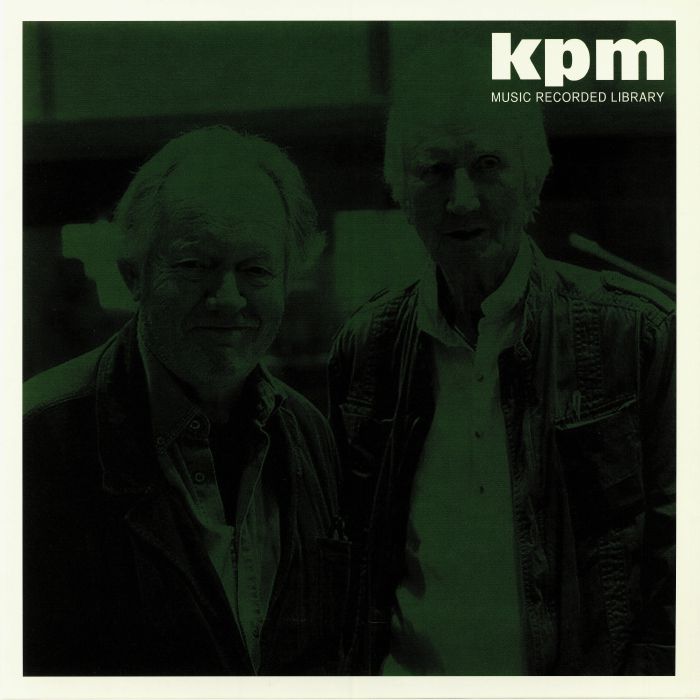
BOB DYLAN-THE BOOTLEG SERIES VOLUME 14:MORE BLOOD, MORE TRACKS-VINYL.
Bob Dylan-The Bootleg Series Volume 14: More Blood, More Tracks-Vinyl.
Label: Legacy Records.
On January the ’20th’ 1975, Bob Dylan released his fifteenth album Blood On The Tracks, to mixed reviews. Despite that, Blood On The Tracks, which was recorded in New York and Minneapolis during September and December 1974 topped the US Billboard 200 and sold over two million copies and was certified double-platinum. Not for the first time were critics were proved wrong.
Bob Dylan’s fans were totally won over by a deeply personal and confessional album, where many of the songs are about his estrangement from his then-wife Sara. This is something Bob Dylan later denied in a number of interviews. However, Bob Dylan’s son Jacob later called Blood On The Tracks was later described by Jacob Dylan as: “his parents talking” on an album that is number sixteen on Rolling Stone’s list of the 500 greatest albums of all time and in 2015 was inducted into the Grammy Hall Of Fame.
Now some forty-three years later, The Bootleg Series Volume 14: More Blood, More Tracks which was recently released on a 2 LP set by Legacy Records and revisits Blood On The Tracks. This comes twenty-seven years after Bob Dylan released The Bootleg Series Volumes 1–3 (Rare and Unreleased) 1961–1991.
The Bootleg Series Volume 14: More Blood, More Tracks is akin to musical time travel, and takes the listener back to 1974, when Bob Dylan spent time recording Blood On The Tracks between the ’16th’ to the ’19th’ ofSeptember 16–19, 1974, at A & R Recording in New York. By then, there were changes afoot in Bob Dylan’s personal life.
Having just completed his 1974 tour with the band, Bob Dylan was in New York for a few weeks while he attended art classes with the painter Norman Rae, who the singer later credited with changing his understanding of time. This resulted in Bob Dylan starting to write a series of songs in a red notebook with his newly acquired knowledge.
It was during this time that Bob Dylan first met Columbia Records employee, Ellen Bernstein. Soon, the pair began a relationship which was to spell the end of Bob Dylan’s marriage to his then-wife Sara.
Later, Bob Dylan took Ellen Bernstein to his farm in Minnesota, where he completed the seventeen songs from which Blood On The Tracks was formed. Little did Bob Dylan realise as he wrote this soul-baring album that later, it would be regarded by many critics as one of the finest collections of love songs of the last century.
Blood On The Tracks is an emotional roller coaster, and features songs that bring to life the hurt and heartache of a marriage where the final curtain was about to fall. Here was an album many record buyers could relate to.
Ironically, before Bob Dylan entered the recording studio he decided to give some of his musician friends a sneak preview of his new songs. David Crosby, Graham Nash, Stephen Stills, Tim Drummond and Peter Rowan listened intently as Bob Dylan ran through the songs. When he left the room Stephen Still hadn’t been won over and said: “He’s a good songwriter…but he’s no musician.” This was an ironic comment from a singer-songwriter who never came close to replicating the success Bob Dylan enjoyed.
Prior to recording Bob Dylan thought about using an electric backing band with Mike Bloomfield playing lead guitar. This made sense as the guitarist had played on 1966s Highway 61 Revisited. However, when Bob Dylan played Mike Bloomfield the songs he planned to record, he played them too quickly for the guitarist to learn. Bob Dylan then moved to plan B.
This was recording stripped-back acoustic arrangements of the songs on Blood On The Tracks during sessions in September and December 1974. Not long after the album was completed, Bob Dylan signed to Columbia Records in the hope that their commercial marketing muscle would help result in Blood On The Tracks would be a commercial and critical success.
Alas, the reviews of Blood On The Tracks were mixed, but sold well across the world and was certified gold in Britain, platinum in Canada and double platinum in America after selling two million copies. This was the perfect start to Bob Dylan’s second spell at Columbia Records.
Forty-three years after the release of Blood On The Tracks, the standard edition of The Bootleg Series Volume 14: More Blood, More Tracks turns features eleven songs which ooze emotion, hurt and heartache as Bob Dylan lays bare his soul. Among the highlights of this stripped back collection of songs are Tangled Up In Blue, Shelter From The Storm, You’re A Big Girl Now, If You See Her, Say Hello and You’re Gonna Make Me Lonesome When You Go. The less is more approach works and understated acoustic arrangements are the perfect foil for Bob Dylan’s soul-baring vocals on The Bootleg Series Volume 14: More Blood, More Tracks.
Often albums consisting of outtakes lack quality, and it’s soon apparent why the material has lain unreleased for so long. That isn’t the case on the single disc edition of The Bootleg Series Volume 14: More Blood, More Tracks. For some Bob Dylan fans, this will be a tantalising taste of the delights that await the listener on the six CD set. Many other Bob Dylan fans will be content with the single disc edition of The Bootleg Series Volume 14: More Blood, More Tracks.
Personally, single disc edition of The Bootleg Series Volume 14: More Blood, More Tracks the perfect companion to Blood On The Tracks, which features a truly beautiful and heart-wrenching collection of love songs from Bob Dylan as he lays bare his soul as his marriage to his then wife Sara teeters on the brink, as the hurt and heartache shows in the eleven songs shows.
Bob Dylan-The Bootleg Series Volume 14: More Blood, More Tracks-Vinyl.
THE LIGHTMEN-FREE AS YOU WANNA BE-VINYL.
The Lightmen-Free As You Wanna Be-Vinyl.
Label: Now Again Records.
Before founding The Lightmen, drummer, bandleader and political activist Bubbha Thomas had toured the length and breadth of America playing in R&B revues. The rest of his career had been spent working alongside the legends of jazz and playing on sessions for Peacock and Back Beat Records. However, Bubbha Thomas’ career took a different path in the late-sixties, after witnessing the political and social upheaval that was tearing America apart.
Bubbha Thomas formed a new jazz group The Lightmen, who released four albums of spiritual jazz during the seventies. This includes The Lightmen’s debut album Free As You Wanna Be, which was recently reissued by Now Again Records. It finds The Lightmen following in the footsteps of the late John Coltrane on Free As You Wanna Be, on what was a powerful album of spiritual jazz from Bubbha Thomas’ new band.
He was born and grew up in the Houston’s Fourth Ward, where Bubbha Thomas’ father was a preacher and his mother a musician. Sadly, Bubbha Thomas’ mother passed away before he started school, and he was brought up by his maternal grandmother. Growing up, Bubbha Thomas was a talented basketball player, but it was music that he grew to love.
All around the Fourth Ward, the young Bubbha Thomas heard music playing, especially the blues. He could walk down the streets and hear Big Mama Thornton, Clarence “Gatemouth” Brown and Lightnin’ Hopkins. Bubbha Thomas heard the music as he made his way through the Fourth Ward. This made an impression on Bubbha Thomas, and so do did what was happening within the Fourth Ward.
Many of the black residents who had moved to the Fourth Ward in the post-war years, were becoming upwardly mobile socially and economically. Some were keen to become active politically, while others had joined the police force and were determined to change the force from within. This included by opposing the enforcement of the Jim Crow laws from within the police force. It looked like Houston and the South was changing.
Meanwhile, as Bubbha Thomas headed to school each morning, he always met a professional drummer called Fats. By the time Bubbha Thomas returned home at night, he could hear Fats practising. He had spent most of the day honing his skills and was a talented drummer who made a big impressions on Bubbha Thomas.
By then, Bubbha Thomas was attending Booker T. Washington High School, and was playing basketball. However, his first love was music, and he was the drummer in the intermediate and senior bands. Later, he was taught by Conrad O. Johnson who would later enjoy a successful career in jazz music. Prof as he was affectionately known, would influence many young musicians, including Bubbha Thomas.
Via what was called the orchestra Booker T. Washington High School, Prof introduced his pupils to jazz music. This wasn’t meant to happen, but Prof saw this as part of his pupil’s musical education. The curriculum at the school had been drawn up by white people for primarily white children. Those that were responsible for the curriculum referred to the “orchestra,” which under Prof’s tutelage became a jazz band and Bubbha Thomas’ its drummer.
Between the influence of Prof and Fats, Bubbha Thomas’ people were soon taking attention of the young drummer. He was still playing basketball, but that was more of a hobby. Bubbha Thomas was more interested in music. Meanwhile, he was about to discover the other side of Houston.
When Bubbha Thomas boarded a bus in Houston, he was still forced to sit at the back of the bus, away from his white friends. It’s hard to believe that any civilised society was treating its citizens like this in the fifties. Bubbha Thomas who was still in high school new this was wrong.
Gradually it started to eat away at him, being treated like a second class citizen. Things came to a head when he boarded a bus with his elderly grandmother who was exhausted and needed a seat. The only remaining seat was on the white part of the bus, and Bubbha Thomas encouraged his grandmother to sit down. She wasn’t sure but, was so tired that she eventually sat down. When a white woman got on the bus, she wouldn’t sit down in the empty seat next to Bubbha Thomas’ grandmother. The bus driver was watching what was happening, and stopped the bus and told Bubbha Thomas’ grandmother to get out of her seat and give it the white lady. Bubbha Thomas got upset with the driver, and this resulted in them being thrown off the bus. This was the first time Bubbha Thomas had been a victim of racism, and this would shape his future and eventually he would rail against political and social injustice.
Before that, Bubbha Thomas was hoping to head Wiley College, in East Texas, on a basketball scholarship. He was told that there were no scholarships available until the following year, but he was offered a musical scholarship. Bubbha Thomas and one his neighbours in the Fourth Ward spent the next four years drumming in East Texas.
When Bubbha Thomas returned the his grandmother had died, and the house that he lived in the Fourth Ward had been sold. Meanwhile, the Fourth Ward was now seen as part of the Gregory-Lincoln campus. It wasn’t the place Bubbha Thomas knew and he left the Fourth Ward for good, and moved in with his father in another part of Houston.
That was until Bubbha Thomas received his call up papers, and soon, he was en route to Korea. The irony was he Bubbha Thomas was being asked to fight for a country where he was regularly discriminated against, and couldn’t even sit next to a white person on a bus.
After a few days doing mundane chores in Korea, Bubbha Thomas told a superior officer that he was a musician, and soon doing what he did best playing music. He spent his time in the army playing jazz rather than as a regular soldier. By the time Bubbha Thomas left the army, he was a much better musician than the one that arrived in Korea.
Back home in Houston in 1961, Bubbha Thomas put together his own band and hit the road. Each night, Bubbha Thomas played his own music, but other nights, he was asked to accompany other artists. He and his band backed R&B singer Chuck Jackson, bluesman Lightnin’ Hopkins and jazz musicians like Leon Spencer and Melvin Sparks. Before long, Bubbha Thomas and his band were capable of playing every style of music.
It was around this time that Bubbha Thomas met Frederick Tillis who would influence him as a musician. So would Don Wilkerson, who released his debut album The Texas Twister in 1960, and then released a trio of well-regarded albums on Blue Note Records. Soon, Bubbha Thomas and Don Wilkerson were part of a quartet together and played all over Texas.
By the mid-sixties, Bubbha Thomas was a talented and versatile musician who had played all over America. He played from small venues and taken to the stage in some of the most prestigious concert halls America had to offer. However, by then, jazz’s popularity was in the decline in America, and other musical genres were growing in popularity.
Fortunately, Bubbha Thomas was asked to join Chuck Jackson’s band in the mid-sixties, and after that, led a trio in Houston that featured Leon Spencer. Later, Bubbha Thomas founded The Jazz Merchants, who despite their name, weren’t influenced by Houston’s very own The Jazz Crusaders. The Jazz Merchants were determined to head in a different direction and make music that was unique. This they managed to do as the world around them started to change.
By the late-sixties, the civil rights movement had brought about change in America, and the country was changing. Bubbha Thomas had been part of the civil right’s movement and played his part in the changes that were taking place around him. Now he turned his attention to the musicians with the Houston music scene.
While Houston had many talented musicians, Bubbha Thomas realised that they had an image problem. People’s perception of the local musicians wasn’t good. They were seen as people who slept all day, lived on fast food and after gigs drank too much and smoked reefer. Many people were looking down their noses at musicians, and they were starting to receive bad PR. This Bubbha Thomas knew was wrong and ironic as he was university educated, and many of his musician friends were well-educated. Others were studying at college and music was a way of paying the bills. This was very different to the articles that were being write about local musicians in Houston.
Bubbha Thomas started to spend more time with groups of musicians, and got to know them. His next step was to try to get them some much-needed publicity. This was how drummer Bubbha Thomas found himself working for the local anti-poverty, grassroots newspaper Voice Of Hope.
Soon, Bubbha Thomas had a regular column and wrote about a variety of local issues. This resulted in the local police targeting Bubbha Thomas, who was regularly followed and stopped for no apparent reason. The musician and part-time community and cultural activist was once again being discriminated against. Just when it looked as if things were changing in the land of the free.
Meanwhile, Bubbha Thomas was collaborating with playwright, poet and professor at Texas Southern University Thomas Melecon. He was combined the philosophy of the Black Panthers with the style of early Bob Dylan. It was a potent and powerful combination and one that impressed Bubbha Thomas.
So much so, that Bubbha Thomas produced the two singles that Thomas Melecon released on Judnell Records. Not long after this, Bubbha Thomas asked the poet to join him when he played live, and bring a new angle to his music. Bubbha Thomas was already an innovator when it came to art and music.
He was also someone who wanted equality, and when he noticed that there were no black television presenters, wrote to local stations. This resulted in Bubbha Thomas being given his own television show, which sadly, was short-lived. It featured the only live footage of the Kashmere Stage Band, and spiritual jazz combos the Fifth Ward Express and The Lightmen Plus One led by Bubbha Thomas. It was part of his plan for the future.
As 1969 dawned, Bubbha Thomas was leading The Lightmen and The Jazz Merchants. They accompanied some of the high-profile local jazz musicians including Annette Cobb. However, Bubbha Thomas was thinking beyond live gigs and wanted to release music that was very different to what his peers were releasing. The music would be ambitious, innovative and revolutionary, and released on record labels that were co-ops. This was way before Strata in Detroit and Strata Records in New York thought of the concept.
Soon, Bubbha Thomas and his band The Lightmen were rehearsing and writing material for a new album. During the rehearsals before the recording of Free As You Wanna Be, the members of The Lightmen had been discussing the concept of freedom from the perspective of the African-American people. By then, many had started to question the United States’ constitution regarding their rights as American citizens. Ed Rose who knew that Bubbha Thomas had been active within the civil right’s movement asked Bubbha Thomas: “how free are black people in America?”
It took some time before Bubbha Thomas responded: “free as they wanna be.” This inspired Ed Rose to write new track.
He remembers: “with the answer to the question came the name to a tune i had written, the title tune of this album. After the head of tune, there should be no sense of time; each musician has the freedom to be free musically, as he can imagine himself.”
By the time The Lightmen were ready to record their debut album Free As You Wanna Be, members of the band had penned seven tracks. Bandleader Bubbha Thomas had written May ’67, which referred to a clash between student protesters in the Third Ward and the Houston Police Department. During the clashes twenty-four year old rookie policemen Louis Kuba was shot, and 500 people were arrested. These events insured Bubbha Thomas to write May ’67.
Meanwhile, Ed Rose who had written Free As You Wanna Be had also written Luke 23:32-49 which deals with Jesus’ forgiving two criminals just before his crucifixion. These two songs by Ed Rose were joined by Joe Singleton’s High Pockets, Kenny Abair’s Talk Visit, Doug Harris’ #109 Psychosomatic and Creative Music which was a Carl Adams and George Nelson composition. These tracks were recorded by The Lightmen.
Bubbha Thomas’ band featured a rhythm section of drummers Bubbha Thomas and William Jefferies, bassist Ed Rose and guitarist Kenny Abair. They were joined by conga player Mike O’Connor and a horn section that featured trumpeter Carl Adams, trombonist Joe Singleton, tenor saxophonist Doug Harris and flautist Ronnie Laws who played alto and soprano saxophone. The Lightmen’s debut album was produced by George Nelson.
When the Houston underground jazz collective had completed its debut, The Lightmen released Free As You Wanna Be on Judnell Records in 1970. Sadly, The Lightmen’s debut album never found the wider audience it deserved. However, Free As You Wanna Be found a small, but appreciative audience in Houston.
It was only much later that a new generation of record buyers discovered The Lightmen’s debut album Free As You Wanna Be. By then, it was regarded as a hidden gem and an oft-overlooked album that featured music that was ambitious, cerebral, innovative album, powerful and thought-provoking album of spiritual jazz.
Especially tracks like Free As You Wanna Be, May ’67 and the album closer Luke 23:32-49. These are especially thought-provoking and have a strong narrative. However, the album opener Creative Music, High Pockets, Talk Visit and #109 Psychosomatic feature a group of like-minded innovative musicians pushing musical boundaries to their limits and sometimes beyond.
Album opener Creative Music finds spiritual jazz almost heading in the direction of free jazz, before The Lightmen play with speed, power and freedom on Free As You Wanna Be. It gives way to the melodic shuffling High Pockets and then Talk Visit where the tempo increases and The Lightmen keep things melodic. That is despite playing with the utmost urgency, power and accuracy. May ’67 is cinematic and thought-provoking and is without doubt one of Free As You Wanna Be’s highlights. So is #109 Psychosomatic where sharp bursts of squealing horns play their part in the sound and success of the track. Closing Free As You Wanna Be is Luke 23:32-49 which is another slower cinematic and cerebral track from spiritual jazz pioneers The Lightmen.
Forty-eight years after The Lightmen released Free As You Wanna Be, it was recently reissued on vinyl by Now Again Records. This is the perfect opportunity to discover an oft-overlooked spiritual jazz hidden gem that nowadays, has achieved cult status.
It features Bubbha Thomas’ band The Lightmen as they embark on the start of a four album musical journey with Free As You Wanna Be. It’s an album of spiritual jazz that is ambitious and innovative and finds The Lightmen pushing musical boundaries to their limits Free As You Wanna Be as they play with freedom. In doing so, The Lightmen created music that is cerebral, cinematic, melodic and thought-provoking as they broach subjects like freedom, religion and one of the darkest days in Houston’s recent history in May ’67. All this makes Free As You Wanna Be as a compelling and groundbreaking album of spiritual jazz from Houston-based musical mavericks The Lightmen.
The Lightmen-Free As You Wanna Be-Vinyl.
MADELEINE PEYTROUX ANTHEM-VINYL.
Madeleine Petytroux-Anthem-Vinyl.
Label: Decca.
Twenty-two years after singer-songwriter Madeleine Petytroux released her debut album Dreamland in 1996, she recently returned with her eighth album Anthem. It’s the much-anticipated followup to her 2016 album Secular Hymns which was released to plaudits and praise. Just like Secular Hymns, Anthem finds Madeleine Petytroux breathing life, meaning and emotion into twelve new songs. This is nothing new for Madeleine Petytroux during a three decade career.
Madeleine Peyroux was born in Athens, Georgia, on the ‘18th’ of April 1974, but began her musical career as a teenager singing jazz and blues on the streets of Paris. This was Madeleine Peyroux’s musical apprenticeship, and in 1996 the American jazz singer and songwriter released her debut album Dreamland. It was a tantalising taste of what as to come from twenty-two year old Madeleine Peyroux.
Eight long years passed before Madeleine Peyroux returned with her eagerly awaited sophomore album. When Careless Love was released in 2004 Madeleine Peyroux realised the potential that was apparent on Dreamland and sold in excess of 500,000 albums. Careless Love launched Madeleine Peyroux’s career;
Just two years later Madeleine Peyroux returned with Half The Perfect World in 2006, which featured covers of songs by Tom Waits, Fred Neil and Leonard Cohen. Critics were won over by Half The Perfect World, and the followup Bare Bones in 2009. It featured eleven songs which Madeleine Peyroux wrote with various songwriting partners. Madeleine Peyroux was already being hailed as one of the most talented singer-songwriters of her generation.
This was confirmed by the release of Standing On The Rooftop which was Madeleine Peyroux’s 2011 debut for Decca. Madeleine Peyroux had written the majority of songs on Standing On The Rooftop as she pushed musical boundaries and tried to change people’s perception of her music.
Two years later in 2013 Madeleine Peyroux released The Blue Room to widespread critical acclaim. Her followup to Standing On The Rooftop was hailed as one of her finest albums.
The following year, 2014, Keep Me In Your Heart For A While-The Best Of Madeleine Peyroux was released by the Rounder Records. It was the perfect introduction to Madeleine Peyroux who returned in 2016 with her seventh studio album Secular Hymns. It was a vibrant and soulful album that featured everything from funk, blues and jazz as Madeleine Peyroux showcased her talent and versatility. Critical acclaim accompanied Madeleine Peyroux who was celebrating twenty years as a recording artist.
Just two years later Madeleine Peyroux returned with her eight studio album Anthem, which features twelve new songs with strong narratives that are poignant, ironic, full of pathos and social comment. The songs on Anthem found Madeleine Peyroux collaborating with various songwriters and musicians.
This included Patrick Warren who previously has worked with everyone from Bob Dylan, Bruce Springsteen, Bonnie Raitt, JD Souther, Bob Dylan, Bruce Springsteen and The Red Hot Chilli Peppers. Madeleine Peyroux also joined forces with Brian MacLeod who has worked with Leonard Cohen and Tina Turner. David Baerwald who has worked with Joni Mitchell and Sheryl Crow was Madeleine Peyroux’s other songwriting partner and when it came time to record Anthem, her three songwriting partners became her rhythm section. This talented trio provided the perfect foil to Madeleine Peyroux.
Recording of Anthem began during what proved to be the crucial period of the 2016 US elections. Madeleine Peyroux and Larry Klein who cowrote and produced Anthem watched as events unfolded before their very eyes. They knew if they were going to comment on what had happened that didn’t want to come across as preaching to the listener.
Instead, Madeleine Peyroux and her collaborators penned twelve songs which looked at subjects including the then political landscape and the singer’s personal life. Other songs combine what’s going on in the outside world with their personal lives, and this resulted in songs tinged with humour and empathy. The result was Anthem an album that was a sobering, philosophical and poetic assessment of the world today as seen through Madeleine Peyroux’s eyes.
Part of the success of the album was Madeleine Peyroux and fellow songwriters sitting together in one room, as they considered idea for Anthem. This proved to be a masterstroke as each member of the team came up with ideas for Anthem.
This included the sadness felt by David Baerwald’s after the passing of poet John Ashbery. The loss resulted in thoughts of hugely admired figures lost over recent years and resulted in the song All My Heroes which pays tribute to pioneers and innovators who although they: “light fires in the shadows,” have a degree of vulnerability that makes them human.
Opening Anthem is the jazzy and wistful sounding On My Own, which is the strongest track on the album and features Madeleine Peyroux at her best. There’s a poignancy to Down On Me which deals with the financial problems that many people are currently experiencing. The rueful bluesy Ghosts of Tomorrow is a tale of dreams unfulfilled, while The Brand New Deal full of powerful and scornful social commentary. There’s also two cover versions on the album, including a soulful rendition of Anthem penned by Madeleine Peyroux’s hero the late, great Leonard Cohen. Closing Anthem is Paul Eluard’s World War II poem Liberté, which is a sobering and thought-provoking way to close Madeleine Peyroux’s eighth album.
Anthem which is primarily a jazz album which sometimes heads in the direction of blues is without doubt one of the finest albums of forty-four year old Madeleine Peyroux’s twenty-two year recording career. It’s a carefully crafted album, which was honed by a small but talented band and together, they have created the finest album of Madeleine Peyroux’s Decca years.
Quite simply, Anthem is a truly ambitious album and sets the bar for future albums from Madeleine Peyroux. The twelve tracks are variously beautiful, cerebral, sobering and full of social comment while others reflect on loss and love and are thought-provoking and wistful. Anthem features Madeleine Peyroux back to her very best on what’s without the finest album of her Decca years, and quite possibly her finest album since her 2004 breakthrough album Careless Love.
Madeleine Petytroux-Anthem-Vinyl.

FAME NORTHERN SOUL.
Fame Northern Soul .
Label: Kent.
Mention Southern Soul, and there are certain record labels that spring to mind, including Stax, Hi Records and Fame Records. It’s no exaggeration to say that these three labels are synonymous with Southern Soul. Together they released some of the greatest music in the history of Southern Soul.
Indeed, the artists who walked through the doors of Stax, Hi and Fame Records reads like a who’s who of Southern Soul. However, for far too long, Southern Soul has been overlooked, and instead, record labels have focused on labels like Philadelphia International Records and Motown. Thankfully, that is no longer the case as reissue labels like Kent Soul, a subsidiary of Ace Records, are releasing a series of lovingly compiled compilations of music released by Fame Records. The most recent compilation is Fame Northern Soul.
The story starts during late fifties when Rick Hall, Tom Stafford and Billy Sherill founded a record label, and built their first studio above the City Drug Store in Florence, Alabama. However, by the early sixties, this nascent partnership would split-up, resulting in Tom Stafford and Rick Hall needing a new studio. They decided to move to what had been a tobacco warehouse in Muscle Shoals, Alabama. As if by magic, Rick Hall soon recorded what would be his first hit single, Arthur Alexander’s You Better Move On. Wisely, he decided to invest the profit in a better studio, and moved to their current location Avalon Avenue in Muscle Shoals, Alabama. The first hit single Rick Hall recorded in his new studio was Jimmy Hughes’ Steal Away. Little did Rick Hall know it back then, but soon his new studio would see artists coming from far and wide to record at Fame.
After Rick’ Halls success with Jimmy Hughes, word got out that Fame was the place to go to record a new single or album. Quickly, everyone from Tommy Roe to The Tams, and from Joe Tex, Joe Simon, George Jackson and Clyde McPhatter right through to Irma Thomas, Etta James and Mitty Collier. Even Aretha Franklin recorded at Muscle Shoals. Indeed, it was at Muscle Shoals that Jerry Wexler brought Aretha Franklin, to record her 1967 album I Never Loved A Man the Way I Loved You. However, why did all these artists choose to head to Muscle Shoals to Fame?
Part of the reason was the session musicians that worked with Rick Hall. This included the legendary Muscle Shoals Rhythm Section and Muscle Shoals Horns. They were some of the hottest and tightest musicians of that era. This included drummer Rodger Hawkins, bassist David Hood, guitarist Jimmy Johnson and keyboardist Barry Beckett. When they recorded together, they were one of the finest backing bands ever. Between 1961 and 1969, when they departed from Fame to found the rival studio Muscle Shoals Sound Studio. However, for eight years, they graced numerous hit singles and album. This includes some of the tracks on Fame Northern Soul.
The twenty-four tracks on Fame Northern Soul showcases just how versatile the songwriters and musicians at Fame were. While their speciality was Southern Soul, part of their recipe for success was being able to play all types of music at the Muscle Shoals studios. They also were able to follow and replicate the soul trends of Motown soul factory and the innovative sounds of Stax. Fame Northern Soul is a showcase for the versatility of the musicians and producers at Fame Records.
Opening Fame Northern Soul opens with James Barnett’s Keep On Talking which is the first of series gritty uptempo Southern Soul club classics. It’s joined by Clarence Carter’s Looking For A Fox, Arthur Conley’s ‘I Can’t Stop (No, No, No) and Linda Carr’s Everytime. It’s four to the floor all the way on this quartet of dancefloor fillers that proved popular on the UK Northern Soul scene.
The Muscle Shoals Rhythm Section were also able to replicate the big city soul sounds of New York and Los Angeles. Examples of this include Jimmy Hughes’ I’m Getting Better’ and June Conquest’s Almost Persuaded which are welcome additions to Fame Northern Soul.
As the sixties gave way to the seventies, the success continued at Fame, and the productions took on a much more polished sound. Proof of that is George Soulé’s Midnight Affair’ and Spencer Wiggins’ I’m At The Breaking Point which was another dancefloor filler and favourite of DJs and dancers.
Then there’s the pulsating rhythms on Billy and Clyde on A World Of My Own and George Jackson’s It’s Not Safe To Mess On Me. Another standout track is Ben and Spence’s atmospheric and broody Stone Loser. It’s joined by Baby Come Back’ a welcome contribution by sixties soul group Bobby Moore and The Rhythm Aces. However, two other highlights include I Can’t Stop (No, No, No) by Arthur Conley and Otis Clay’s remake of Jimmy Hughes’ I’m Qualified. Ralph “Soul” Jackson’s covered Jimmy Hughes You Really Know How To Hurt A Guy, and does so beautifully. Very different is Dan Brantley’s stomper The Door To My Heart while Marjorie Ingram who contributes In The Heat Of Love. Closing Fame Northern Soul is Prince Phillip’s Love Is A Wonderful Thing which epitomises everything that is good about Southern Soul.
The twenty-four tracks on Fame Northern Soul are sure to appeal to fans of both Southern and Northern Soul. It’s quality all the way on Fame Northern Soul, which is a lovingly compiled compilation and a reminder of one of the great Southern Soul labels at the peak of its considerable powers. It released some of the greatest music in the history of Southern Soul, but some of the music recorded at Avalon Avenue in Muscle Shoals, later became popular on the UK’s Northern Soul scene and is documented on Kent’s new compilation Fame Northern Soul.
Fame Northern Soul.

BITTESCHON PHILOPON! VOLUME 1.
Bitteschon Philophon! Volume 1.
Label: Philophon.
Release Date: ‘7th’ December 2018.
The Berlin based Philophon label will release their first ever label compilation Bitteschon Philophon!Volume 1 on the ‘7th’ December 2018. Bitteschon Philophon!Volume 1 is essentially a best of compilation, that features ten tracks from the first fifteen seven-inch singles released on Philophon. These fifteen tracks feature some well known names.
This includes Jimi Tenor, Alemayehu Eshete and Hailu Mergia. They’re joined by new names like Guy One, Alogte Oho and Y-Bayani and His Band Of Enlightenment Reason and Love on Bitteschon Philophon! Volume 1 which is a perfect introduction to one of the most eclectic labels in Germany.
One of the new names on Guy One, who contributes the soulful, funky Estre the B-Side to his 2017 single Everything You Do, You Do For Yourself. Both sides showcase a talented rising star of music.
Alemayehu Eshete is an Ethiopian soul and Ethio jazz singer, who is nicknamed “Ethiopian Elvis.” He’s one of the biggest names on Bitteschon Philophon! Volume 1. His contribution is Alteleyeshegnem which he released as a single in 2017.
The teen party edit of Jimi Tenor’s My Mind Will Travel was found on the B-side of is 2018 single Quantum Connection. It’s a potpourri of jazz, funk and soul from a true musical pioneer.
Y-Bayani and His Band Of Enlightenment Reason and Love contributes two slices of quality reggae to Bitteschon Philophon! Volume 1, This includes their 2018 single Rhewe Mie Enyim and Asembi Ara Amba.
Invisible Joy is the B-Side of Bajka’s 2016 single The World. It’s a fusion of avant-garde jazz, funk and pop which is truly memorable. Equally memorable is Lee Dodou and The Polyversal Souls’ highlife track Basa Basa. So is Alogte Oho and His Sounds Of Joy Frafra-Gospel single Mam Yinne Wa which was released in 2016.
Hailu Mergia will still be a new name to many music fans, but the Ethiopian organist and synth player is held in the highest regard by a coterie of discerning musical connoisseurs. His 2015 single Yegle Nesh is a tantalising taste of one of Ethiopia’s most talented musicians.
Closing Bitteschon Philophon! Volume 1 is The Polyversal Souls’ Portrait Of Alemayehu (Daytime). It’s a haunting track that meanders along, revealing its secrets as this genre-melting track unfolds. As is often the case on completions, it’s a case of keeping the best until last.
For anyone with eclectic musical tastes then Bitteschon Philophon! Volume 1 is a compilation to look out. It features ten tracks that were released on singles between 2015 and 2018 on the Berlin-based Philophon label. It’s quality all the way on Bitteschon Philophon! Volume 1, which is truly eclectic compilation that is a cut above the compilations released at this time of the year.
Bitteschon Philophon! Volume 1.

STAX 68: A MEMPHIS STORY.
Stax 68: A Memphis Story.
Label: UMC.
Nowadays, many historians regard 1963 as the height of the Civil Rights movement in America, which many African-Americans had devoted themselves to, and had been working towards the day when America would be fully integrated. That was the day that they had long dreamt about. Sometimes, it seemed tantalisingly close, other times, it looked as if their dream of integration and equality was out of reach. However, the members of the Civil Rights movement were never going to give up on that dream. Their American Dream was integration and equality.
Things started to change after The Civil Rights Act 1964 was enacted. It banned discrimination based on race, colour, religion, sex, or national origin in employment practices. The Civil Rights Act 1964 also ended unequal application of voter registration requirements, and prohibited racial segregation in schools, the workplace and in public accommodation. This was a huge step forward towards for the African-Americans population.
So was the implementation of The Voting Rights Act of 1965, which restored and protected voting rights for minorities. This was a hugely important piece of legislation. Another important piece of legislation was The Immigration and Nationality Act of 1965 which removed racial and national barriers to immigration, and expanded opportunities for immigrants from regions other than Europe. The third piece of important piece if legislation was The Fair Housing Act 1968, which banned discrimination in the sale or rental of housing. It looked as if progress was being made in America.
Especially as many African Americans made a conscious decision to re-enter politics, even in the deep South. Other young African Americans became involved in the Civil Rights’ movement. It looked as if this was a new beginning in America.
While America was changing, there was widespread rioting in many of America’s inner cities. This began in the African-American communities in 1964, and lasted right through to 1970. By then, the nascent Black Power movement’s influence was growing.
The Black Power movement’s roots can be traced back to the mid-sixties. By 1966, different groups within the Civil Rights movement had embraced the slogan Black Power. This included SNCC and CORE during the nineteen day March Against Fear in June 1966. Both organisations embraced the slogan Black Power, using it as way to describe trends towards militancy and self-reliance. Elsewhere, the Black Power movement started to gain and promote more of a sense in black pride and identity as well.
Among the most public faces of the Black Power movement were the Black Panther Party, which had been founded by Huey P. Newton and Bobby Seale in 1966. They adopted their own dress code, created a ten point plan, openly displayed firearms, used the clenched fist as a symbol of solidarity and used the slogan: “power to the people.” However, the Black Panther Party adopted the ideology of Malcolm X, the former member of the Nation of Islam, and used a: “by-any-means necessary” approach to stop inequality.
By 1968, the militant calls for Black Power were growing louder. It was a frustrating and worrying time for all African-Americans, not just those involved in the Civil Rights’ Movement.
The Civil Rights Act of 1968 had been filibustered as the year dawned. This had happened several times before, and most likely, would’ve happened again. However, when The National Advisory Commission On Civil Disorders in 1967 published its report on the ‘1st’ March 1968, it recommended that: “a comprehensive and enforceable federal open housing law” was a possible remedy to the civil disturbances. It looked as if there was a solution to what had been a long running problem.
Ironically, as The Senate debated The Civil Rights Act of 1968 Dr. Martin Luther King Jr was assassinated in Memphis, on April the ‘4th’ 1968. This lead to the worst ever wave of civil unrest. Suddenly, filibustering was a thing of the past. The House passed The Civil Rights Act of 1968 on April ’10th’ and President Johnson signed it a day later on the ‘11th’. Although this was a important day for African-Americans, the death of Martin Luther King Jr, who had been an inspirational figure for many within the Civil Rights’ Movement.
This included in Memphis, the city where thirty-nine year old Dr. Martin Luther King Jr lost his life. Many African-Americans were left reeling at the loss of such a brave and inspirational figure who had touched their lives. So had another man who died the previous year, 1967, Otis Redding.
The legendary soul singer was just twenty-six when his plane crashed trying to make an emergence landing at Madison, Wisconsin on December the ’10th’ 1967. That day, soul music lost a true great, and one of seven who lost their lives that day. This included four members of the Bar-Kays, who like Otis Redding were signed to Stax Records.
This was just the latest disaster for Stax Records during 1967. Earlier in 1967, a deal with Atlantic Records was dissolved and gave the label perpetual rights to Stax’s back catalogue. To make matters worse, after the end of the Atlantic Records’ deal, Sam and Dave left Stax. Rubbing salt into the wound, the two soul men signed to Atlantic, but still released their music on Stax. This was the latest chapter in what was an eventful and traumatic year for everyone at Stax.
As 1968 dawned, Stax had no option but to reinvent one of soul music’s premier labels. Stax released real soul, not the sanitised brand version that was churned out of the Motown assembly line. However, as the reinvention of Stax began, the death of Dr. Martin Luther King Jr had a massive impact on the label’s direction. The resulting social, political, and cultural catastrophe’s would affect the way Stax was run, and the music it released during 1968.
That music is found on Stax 68: A Memphis Story, which is a five disc box set released by UMC. Stax 68: A Memphis Story features 134 tracks, which consists of the sixty-seven singles released by the label during 1968.
Disc One.
Opening disc one of Stax 68: A Memphis Story is Otis Redding’s classic posthumous single (Sittin’ On) The Dock of the Bay, which was Stax’s first single of 1968. This was followed by Sam and Dave’s I Thank You, which was their swan-song for Stax.
Other highlights on disc one include Shirley Walton’s I Was Born To Love You, plus Eddie Floyd’s Big Bird which documents his story of flying to Otis Redding’s funeral. These tracks are joined by Johnnie Taylor’s Next Time, William Bell’s Every Man Oughta Have A Woman and Jeanne and The Darlings’ What Will Later On Be Like. They’re a tantalising taste of the music being released by Stax during 1968.
Disc Two.
There’s no shortage of highlights on disc two of Stax 68: A Memphis Story, including of Lynda Lyndell’s Bring Your Love Back To Me and Carla Thomas’ I Want You Back. Two of the most influential figures in the history of Stax contribute standout tracks including Isaac Hayes’ Precious Precious and Otis Redding’s B-Side Open The Door. Albert King’s You’re Gonna Need Me, Johnnie Taylor’s emotional reading of Where There’s Smoke There’s Fire and Shirley Walton’s The One You Can’t Have All By Yourself are all welcome additions to Stax 68: A Memphis Story.
Disc Three.
There’s twenty-nine tracks on disc three of Stax 68: A Memphis Story, and it’s highlights aplenty. This includes Booker T. and The MG’s’ classic instrumental Soul Limbo, Eddie Floyd’s I Never Found a Girl (To Love Me Like You Do) and Delaney and Bonnie’s powerful rendition of It’s Been A Long Time Coming.
Quite different, and very beautiful and emotional are Johnny Daye’s pleading Stay Baby Stay, Bobby Whitlock’s cover of And I Love You and Judy Clay and William Bell’s classic duet Private Number. Then there’s Jimmy Hughes’ I Like Everything About You, Lindell Hill’ rueful reading of Used to Be Love.
Judy Clay’s Remove These Clouds and The Staple Singers’ Long Walk To D.C are both powerful songs and perfect to close disc three of Stax 68: A Memphis Story.
Disc Four.
Disc four of Stax 68: A Memphis Story opens with The Staple Singers’ Stay With Us and includes highlights like The Soul Children’s Give ‘Em Love and Carla Thomas’ I’ve Fallen in Love. They’re joined by Jeanne and The Darlings: “I Like What You’re Doing To Me, Eddie Floyd’s Bring It On Home To Me and Booker T. and The MG’s’ Hang ‘Em High. Closing disc four is Bar-Kays’ In the Hole, which is something of a hidden gem.
Disc Five.
The fifth and final disc on Stax 68: A Memphis Story features contributions from familiar faces and some of the lesser known names that caked Stax home, even briefly. Among the highlights are William Bell’s rueful I Forgot to Be Your Lover, The Soul Children’s I’ll Understand and The Staple Singers’ The Ghetto. Bluesman Albert King’s Night Stomp and Rufus Thomas’ I Want to Hold You are both welcome additions and so is Johnnie Taylor’s Hold On This Time which closes disc five of Stax 68: A Memphis Story.
For fans of soul music, the lovingly curated five disc box set Stax 68: A Memphis Story, which was recently released by UMC, is one of the box sets of 2018. It documents what was one of the most important years in the history of Stax.
Sadly, it was also the year that Dr. Martin Luther King Jr was assassinated in Memphis. This changed the music that was being recorded at Stax, and there were social, political, and cultural changes that are reflected in the music on Stax 68: A Memphis Story.
Stax 68: A Memphis Story is the latest lovingly curated box set which is a reminder of one of soul’s great labels as it rebuilt and reinvented itself after a truly turbulent year.
Stax 68: A Memphis Story

KEITH MANSFIELD AND JOHN CAMERON-VOICES IN HARMONY.
Keith Mansfield and John Cameron-Voices In Harmony.
Label: Be With Records.
Over the last year or so, Be With Records have been working with KPM to reissue ten albums from across the KPM 1000 Series and the Themes International Music catalogue. This includes Voices In Harmony, which features two of the leading lights of the British library music, Keith Mansfield and John Cameron. They were responsible for some of the best library music that KPM released during the sixties, seventies and eighties.
This was a golden period for library music, and KPM Music was one of the giants. KPM Music was old-established company whose history can be traced back over two centuries.
KPM Music.
Robert Keith founded a comp[any in 1780, to make of musical instruments, and fifty years later, in 1830, entered into a partnership with William Prowse, a music publisher. The newly formed partnership was named Keith Prowse Music (KPM), and over the next hundred years, the company grew and expanded into other areas,
By the early twentieth century, Keith Prowse Music was selling sheet music and concert tickets, but it was the invention of the gramophone proved to be a game-changer. Demand for sheet music and concert tickets grew, and in 1955, Keith Prowse Music was decided to diversify, into one of the most profitable areas of music, music publishing.
One of the reasons behind the decision to diversify into music publishing, was to feed the demand for soundtracks for radio, television and film. Previously, music libraries supplied classical music, which was what was required. By the mid-fifties, and the birth of television, the world and music were changing, and changing fast.
Four years later, in 1959, Associated Rediffusion bought another music publisher Peter Maurice and merged it with Keith Prowse Music. The newly merged company became Keith Prowse Maurice, which became known as KPM Music. The newly named KPM Music was a much bigger player in the world music publishing. However, in the mid-sixties, a new name took the helm at KPM Music, and transformed the company into one of the biggest names in library music.
When Robin Phillips joined KPM Music in the mid-sixties, he proved to be an astute and visionary businessman. Two decisions Robin Phillips made demonstrate why. His first decision was that KPM Music should switch from the old 78 records to the LP, which made sense, as LPs were what people were buying. They were less prone to breakage, which meant less returns and more profit. LPs could contain more music, and could be released in limited editions of 1,000. The other decision he made was to hire the best young British composers and arrangers.
Among the composers Robin Phillips hired were Keith Mansfield and Johnny Pearson, whose talent and potential as composers he recognised. Robin Phillips managed to hired them before they’ had established a reputation, although they were known within music publishing circles.
Later, Robin Phillips managed to hire some of jazz musicians of the calibre of John Cameron, Syd Clark, Alan Hawkshaw and Alan Parker. Their remit was to provide him with new music, which was referred to as production music. Many of their remits was to write music which matched themes or moods, which initially, wasn’t isn’t easy, but soon, the composers were able to do so. Almost seamlessly, the composers created themes for many well known television shows and films.
For the composers and musicians involved in writing and recording library music, they were part of what was one of the most lucrative areas of music. When EMI realised that KPM Music had one of the best and most profitable music libraries and decided to buy the company. Executives at EMI had spotted the profitability of library music and the consistency, quality and depth of KPM Music’s back catalogue. However, not everyone within the music industry approved of library music.
Other songwriters looked down on writers of library music, and the British Musician’s Union wasn’t fan of library music. They banned their members from working on recording sessions of library music. Somewhat shortsightedly, the Musician’s Union thought that eventually, there would come a time when there was no need for any further recordings. Their fear was that the sheer quantity of back-catalogue would mean no new recordings would be made, and their members would be without work. Fortunately, KPM Records thought of a way to subvert the ban.
KPM Records would fly out composers, arrangers and musicians to Holland and Belgium, where local musicians would join them for recording sessions. This meant that often, the same musicians would play on tracks that were penned by several composers. For the musicians involved, this proved lucrative and some were reluctant to turn their back on session work for companies like KPM Records.
Still the Musician’s Union’s ban continued, and it wasn’t until the late seventies that the Musician’s Union lifted their ban on new recordings of library music. By then, the Musician’s Union realised that they were fighting a losing battle and had no option but to concede defeat.
Meanwhile, the music that was being recorded in Europe and once the ban was lifted in Britain, found its way onto albums of library music released by KPM Music. Again, KPM Music were innovators, and released limited editions of library music. Sometimes, only 1,000 albums were released, and they were sent out to film studios, television and radio stations and advertising agencies. However, by then, interest in library music had grown.
Although the albums of library music were never meant to be commercially available, a coterie of musical connoisseurs had discovered KPM Music’s albums of library music and were determined to add each release to their collection. They weren’t alone.
Later, DJs and sample hungry hip hop and house producers discovered the world of library music. This was a boon for many of these producers who were musically illiterate, and could neither read music nor play an instrument. However, with some lots of practise the musically challenged ‘producers’ were eventually able to sample albums of library music for their latest ‘production’ and very occasionally, this resulted in a hit single for the musical pirates. However, most of the credit should’ve gone to those who made the music that had been sampled.
This included the musicians who made the library music which was a favourite of the pirate producers. At KPM Music, Keith Mansfield and John Cameron issued Voices In Harmony in 1973.
It was featured what was marketed as: ”a selection of contemporary pop titles featuring voices, brass and rhythm.” The fifteen tracks can also be described as string drenched, smooth, sentimental, soulful and upbeat with beautiful, bubbly, dreamy, exuberant, light, soft and smooth vocals. They play an important part in the sound and success of the is the case throughout Voices In Harmony.
Opening Voices In Harmony is The Joys Of Spring, which seems a long way away, especially for those counting the days to a rendezvous in a faraway land. This upbeat and bubbly tracks features strings and horns on this Keith Mansfield composition. Other highlights include Keith Mansfield’s Loving Touch and Gentle Persuasion where flutes are used effectively and help conjure up warm soulful music that conjures up idyllic dreamy days in the spring sunshine. Another highlight from Keith Mansfield is the smooth sounding Husky Birdsong with its unyielding and irresistible Bossa Nova bass line and warm keyboards.
John Cameron’s Half Forgotten Daydreams features a beautiful wordless groove. Closing Voices In Harmony is Liquid Sunshine, with its gently rhythmic harmonies. It’s the perfect way to close Voices In Harmony which is welcome reissue from Be With Record
Just like all ten reissues, the music for Voices In Harmony comes from the original analog tapes and has been remastered for vinyl by Simon Francis. The sleeve for Voices In Harmony was reproduced by Richard Robinson and houses a quality pressing of 180 gram vinyl.
Given the recent resurgence in interest in library music there’s been a number of compilations of library music released over the last few years. However, the reissue of Voices In Harmony from the KPM 100 series is a welcome reissue from Be With Records. Voices In Harmony is also a reminder of Keith Mansfield and John Cameron, who were two giants of British library music at the peak of their powers in 1973.
Keith Mansfield and John Cameron-Voices In Harmony.
ART VAN DAMME ECSTASY.
Art Van Damme-Ecstasy.
Label: MPS Records.
During a long and distinguished career, American jazz accordionist Art Van Damme was called: “the hippest cat ever to Swing an accordion,” and revolutionised the way that the accordion was played. Suddenly, the accordion was no longer regarded as an instrument that just played polka music. Now the accordion was regarded as a serious instrument that played jazz, and their was no finer practitioner than Art Van Damme.
He enjoyed a long and illustrious career, and enjoyed a recording career that spanned four decades. One of Art Van Damme’s finest albums was Ecstasy, which has just been reissued by MPS Records. It’s a reminder of: “the hippest cat ever to Swing an accordion.”
Art Van Damme was born in Norway, Michigan, on the ‘9th’ of April 1920, and started playing the accordion as a nine-year old. In 1934, Art Van Damme’s family moved to the Windy City of Chicago where he started to receive a classical training. However, when he was twenty-one, Art Van Damme turned his back on his classical training.
In 1941, Art Van Damme joined Ben Bernie’s band and the accordionist played alongside the American jazz violinist, bandleader, and radio personality. Soon, Art Van Damme was adapting Benny Goodman’s music for the accordion. This was the start of Art Van Damme reinventing the way the way the accordion was played.
By 1945, Art Van Damme found himself working for NBC TV and performing on programmes like The Dinah Shore Show, Tonight and The Dave Garroway Show. He also played on various radio and TV shows, often with Dave Garroway. There was also the small matter of 130 episodes fifteen minute episodes of The Art Van Damme Show for NBC Radio. During this period, Art Van Damme’s popularity soared and he was playing non stop. So much so, that Art Van Damme had no need for practise.
As the fifties dawned, Art Van Damme released his debut album Cocktail Capers on Capitol in 1950. Two years later, in 1952 More Cocktail Capers followed with Martini Time next in 1953. Over the next six years, Art Van Damme released eight more albums, taking his total to eleven between 1950 and 1959.
Accordion à la Mode followed two years in 1961 as the Columbia years continued. Art Van Damme Swings Sweetly followed in 1962, with Perfect Match following in 1963, which featured jazz guitarist Johnny Smith. However, the release of Septet: The New Sound Of Art Van Damme in 1964 marked the end of the Columbia years.
After releasing the Lover Man compilation on Pickwick in 1965, Art Van Damme signed for MPS Records in 1966.
By then, Art Van Damme was a familiar face on the Europe, and eventually toured the continent forty times. The European audiences were won over by Art Van Damme’s inimitable sound which featured guitar, vibes and accordion. This sound proved popular when Art Van Damme signed to MPS Records.
His MPS Records’ years began the release of With Art Van Damme In San Francisco in 1966. This was the start of a period when Art Van Damme recorded some of the best music of his career. Part of the reason for this was he had carte blanche to do what he wanted.
Now he was signed to a label that was willing to give him a free hand, Art Van Damme began work on three of his finest albums Ecstasy, The Gentle Art of Art, and Lullaby In Rhythm which were recorded during 1967 and 1968 with the MPS Records’ rhythm section of Swiss drummer Charly Antolini and German bassist Peter White. Bandleader Van Damme brought along his Chicago-based guitarist Freddy Rundquist and German vibes player Herbert Thusek. They ensured that the guitar, vibes and accordion sound was to the fore on the three albums.
On Ecstasy, Art Van Damme opened the album with the classic Satin Doll and followed this with Autumn In New York and later, Blue Light and Shadows, Love Walked In and It Could Happen To You where the group showcase their unique sound. Meanwhile, Art Van Damme gives a virtuoso fleet fingered performance as he plays with speed, accuracy and a light touch, sometimes emphasising the lyric and melody and other times adding flamboyant flourishes. This continues on Since I Fell For You, Easy Swing and Nancy which closes Ecstasy.
For Art Van Damme, Ecstasy was one of his finest albums not just of the MPS Records years, but his long and distinguished career. Ecstasy is a reminder of Art Van Damme “the hippest cat ever to swing an accordion,” at the peak of his considerable powers in 1967.
Art Van Damme-Ecstasy.

THELONIOUS MONK-MONK-VINYL.
Thelonious Monk-Monk-Vinyl.
Label: Gearbox Records.
Over the last few years, the fashion has been for a minimalism within the hipper home, and it has been fashionable to declutter and adopt a less is more look. Some people have been so keen to declutter that they don’t seem to care about what they thrown away. However, it’s not just the hipper home where scant regard is pad to what’s being discarded.
The same thing happened twenty years ago when someone was on a decluttering mission at the Danish Broadcasting Corporation in Copenhagen, and threw away a Scotch Broadcast Tape that featured recording of Thelonious Monk from 1963. Fortunately, when the master tape was lying in a skip it was spotted by a producer who realising the importance of the tape, rescued it. Now twenty years later, that tape, which features Thelonious Monk’s classic quartet has been released by Gearbox Records as Monk. This newly released recording of Monk features the pianist at the peak of his powers.
Although Thelonious Monk is now regarded as one of the great jazz pianists, he wasn’t without his critics with poet and jazz critic Phillip Larkin dismissing him as: “the elephant on the keyboard.” Sadly, it seemed not everyone appreciated Thelonious Monk’s innovative approach to jazz music.
That is despite Thelonious Monk as now being the second-most covered jazz composer of all time. That is pretty good going as Thelonious Monk composed only seventy pieces. These compositions and improvisations featured dissonances and what are best described as angular melodic twists, which are an accurate representation of his unique approach to the piano. Initially, it was described as hard swinging, but evolved over the next twenty years.
Those that had followed Thelonious Monk career watched his style evolve, and his extremely percussive attack which featured abrupt and dramatic use of switched key releases, silences, pauses and hesitations, which divided the opinion of jazz critics and fans. What they forgot, was that Thelonious Monk was a relative latecomer to jazz, and had started his career accompanying a touring evangelist on an old church organ. In some ways, Thelonious Monk was making up for lost time, as he was already twenty-four before he first started playing jazz.
Despite arriving to the party late, Thelonious Monk was soon making up for lost time, and from the early fifties, was working as bandleader, sideman and collaborating with other future giants of jazz. He had started off at Blue Note Records between 1948 and 1952, before moving to Prestige Records where he spent two years between 1952 and 1954. After that, Thelonious Monk moved to Riverside Records which was his home between 1955 and 1961, and by then, his star was in the ascendancy.
This was quite remarkable given everything that Thelonious Monk had been through since the early fifties. He had his New York cabaret card revoked in 1951, when he became the latest victim of a trumped narcotics charge. This meant that Thelonious Monk was unable to play in New York’s club’s for six long years. During that time, Thelonious Monk signed to Riverside Records in 1955, which was his home until 1961.
Although Thelonious Monk was held in high regard by critics and commentators, sadly, for someone so talented, his records weren’t selling well. In 1955, he agreed to release an albums of jazz standards, Thelonious Monk Plays Duke Ellington in the hope that this would increase his profile and record sales. However, later in 1955 tragedy struck for Thelonious Monk.
Towards the end of 1955, Thelonious Monk’s mother passed away, and the following year, 1956, a fire destroyed the pianist’s apartment in West ‘63rd’ Street, New York. Thelonious Monk and family were left destitute, and his family of five had no option but to stay with friends for several months, with fifteen people shoehorned into a three room apartment. Meanwhile, Thelonious Monk continued to live with an undiagnosed bipolar disorder, which nobody was aware at the time. Despite this, he released Brilliant Corners an album of hard bop in late 1956, which was one of the finest albums he released for Riverside Records.
In 1957, Thelonious Monk’s run of bad luck continued when he was involved in a car accident, and when the police discovered him unresponsive, took him to Bellevue Psychiatric Hospital, where he spent three weeks. By then, Thelonious Monk was unaware that his father had been living in a psychiatric hospital for the past fifteen years
Things got worse for Thelonious Monk in May 1957, when his wife Nellie became ill, and required a thyroidectomy. After the operation, she became frail and depressed, which affected Thelonious Monk’s wellbeing. The last two years had been hard on the couple, but at least Thelonious Monk was about to get his New York cabaret card back, and could start playing live in the Big Apple.
By then, Thelonious Monk had a manager, and started a six-month residency at the Five Spot Café, and had formed a friendship with John Coltrane. This was a coincidence as many of John Coltrane’s band had served their music apprenticeship Five Spot.
During Thelonious Monk’s residency at the Five Spot Café during 1957 and 1958, the sharp dressed and sartorially elegant pianist took to the stage with his carefully cultivated look. Thelonious Monk wore suits, hats and had taken to wearing sunglasses which hid the window to his troubled and weary soul. Still, he dazzled patrons with his unique playing style as he switched between standards and his own compositions. Thelonious Monk was back in the Big Apple, after a six-year absence.
With Thelonious Monk’s albums still not selling well by 1958, he was asked to release a second album of jazz standards. It was hoped that The Unique Thelonious Monk would increase his profile and record sales. Ironically, later, in 1958, Thelonious Monk’s face was all over American newspapers, after his latest brush with the law.
Thelonious Monk had been hired to play for a week at the Comedy Club, in Maryland, and on his way to the gig, he and Nica De Koenigswarter were stopped by the police in Wilmington, Delaware. When Thelonious Monk refused to answer or cooperate with the police officer, who beat him with a blackjack. During an authorised search the car drugs were found, and suddenly Thelonious Monk was looking at some serious jail time. Fortunately, Judge Christie of the Delaware Superior Court ruled that the pair had been unlawfully detained, and that the beating of Thelonious Monk meant that the consent to the search void as given under duress. Forty-one year old Thelonious Monk survived to fight another day.
As the fifties gave way to the sixties, Thelonious Monk’s relationship with Riverside Records had gone south, after a disagreement over royalty payments. While Riverside Records released two live albums recorded in Europe, Thelonious Monk hadn’t recorded a studio album since 5 By Monk By 5 in June 1959. Fortunately, Columbia Records one of the four major labels were keen to sign Thelonious Monk.
The negations between Thelonious Monk and Columbia Records, were protracted, and it wasn’t until 1962 that a contract was signed. At last, Thelonious Monk could get back into the studio and do what he did best…make music
In 1963, Thelonious Monk released Monk’s Dream, which was his Columbia Records debut. Critical acclaim greeted the release of Monk’s Dream, and it was a similar case with the classic Criss-Cross. By then, Thelonious Monk was on a roll, and recorded Monk In Tokyo which was released in 1973. Miles and Monk At Newport, Big Band. Quartet In Concert and the critically acclaimed Monk’s Time were all released in 1964. However, another recording from 1963 wasn’t released for fifty-five years.
Monk.
This is Monk, which features a live recording of Thelonious Monk’s classic quartet that took place in Copenhagen, Denmark,on March the ‘5th 1963 during a European tour. That night in Copenhagen. pianist Thelonious Monk was joined by tenor saxophonist Charlie Rouse, drummer Frank Dunlop and bassist John Ore as they took the stage.
Opening the set is Thelonious Monk’s composition Bye Ya, where drummer Frank Dunlop plays an energetic solo, before the classic quartet play with enthusiasm as they innovate and unleash a myriad of musical ideas. Nutty is another Monk composition, and at one point the bandleader having built-up the momentum descends the piano keyboard leaving the stage set for Charlie Rouse’s baying tenor saxophone to soar and take centre-stage. Very different is beautiful is the tender reading of I’m Getting Sentimental Over You. It gives way to a heart-achingly beautiful and moving version of Body and Soul where the loneliness seems very real. Closing the set is the swinging Monk’s Dream which careers along, and closes Monk on a high,
Thelonious Monk recorded the music that features on Monk at the Danish Broadcasting Corporation in Copenhagen on the ‘5th’ of March 1963 and four days later, the concert was broadcast on the ‘9th’ of March 1963. Fifty-five years later, Gearbox Records released Monk, which is hidden gem that features Thelonious Monk’s classic quartet at the peak of their considerable powers.
Crucial to the success of the classic quartet was the interaction between Thelonious Monk and Charlie Rouse, with the two men constantly on the same wavelength, and anticipating their every move. That was the case throughout Monk, which is welcome and almost flawless reminder of Thelonious Monk’s classic quartet live in concert.
Thelonious Monk-Monk-Vinyl.
 dereksmusicblog
 dereksmusicblog