KEN BOOTHE-INNA DE YARD.
Ken Boothe-Inna de Yard.
Label: Chapter Two/Wagram.
On the ‘26th’ of October 1974, twenty-six year old reggae singer Ken Boothe was celebrating his first number one in Britain, with a cover of the David Gates’ composition Everything I Own, which two years earlier, gave Bread a worldwide hit in January 1972. Now it was Ken Boothe’s turn to celebrate after the title-track to his third album for Trojan Records gave him his biggest hit in Britain. The chart-topping single was being played on radio stations across Britain, and this he hoped would give his seventh album Everything I Own a boost. It was times like this that made the last eleven years worthwhile for the singer known as Mr Rocksteady, who was born in Kingston, Jamaica, in 1948.
Little did Ken Boothe realise in 1974, that forty-three years later, in 2017, his career would still be going strong, and that the sixty-nine year old singer would be preparing to release his first international album in twenty-five years. That new album is Inna de Yard, which is the latest instalment in Chapter Two’s unplugged reggae series and finds Mr. Rocksteady work his way through eleven of his best known songs from the sixties, seventies and eighties. Inna de Yard which will be released by Chapter Two/Wagram on the ‘24th’ November 2017, marks the welcome return of Ken Boothe, whose career began as a fifteen year old in 1963.
That was when Stranger Cole, a singer and neighbour of Ken Boothe heard the young man sing and arranged an audition at Duke Reid’s studio, in 1963. This was a dream come true for Ken Boothe, who had developed an interested in music while he was a pupil at Denham Primary Elementary School. Before long, Ken Boothe was spending much of his free time listening to music, and was inspired and influenced by vocalist Owen Gray. By then, Ken Boothe had started singing, and was encouraged by his eldest sister Hyacinth Clover, who was already an established vocalist. Soon, there would be two singers in the Boothe family,
Stranger Cole took Ken Boothe to his audition at Duke Reid’s in Kingston, and when the time came, the pair sang Unos Dos Tres for the producer. After hearing, the pair sing Duke Reid offered the duo a recording contract. They decided to form a duo, and by 1965 had released several singles. However, after two years, the partnership ran its course and Stranger Cole and Ken Boothe moved on.
The following year, 1966, Ken Boothe and Roy Shirley formed the duo Roy and Ken, and released a single Paradise. Ken Boothe’s second partnership was short-lived, as later in 1966, he embarked upon a solo career when he signed to Clement “Sir Coxsone” Dodd’s Studio One label.
Within the first year of his career, Ken Boothe had already recorded for three different producers, Duke Reid, Phil Pratt and Sonia Pottinger. Ken Boothe had also enjoyed his first hit single with The Train Is Coming, where he was backed by The Wailers. This he followed with the first ska version of You’re No Good which featured The Soulettes, and then a cover of Lonely Teardrops. By the end of 1966, eighteen year old Ken Boothe had already come a long way.
By 1967, producer Clement “Sir Coxsone” Dodd started promoting Ken Boothe as Mr. Rocksteady. This moniker stuck, and fifty years later, Ken Boothe is still known as Mr. Rocksteady. Later, in 1967, Ken Booth released his debut album Mr. Rock Steady on Studio One. When Ken Boothe returned with his sophomore album More Of Ken Boothe in 1969, he had already released the much sampled rocksteady classic Moving Away. It would become one of Ken Boothe’s most popular singles.
As the sixties gave way to the seventies, Ken Boothe signed to Leslie Kong’s Beverley’s Records. However, due to the producer’s death, his time at Beverley’s Records’ was short-lived. Still, Ken Boothe managed to release his third album Freedom Street in 1970 and enjoyed hits with Freedom Street and Why Baby Why?
After the death of Leslie Kong, Ken Boothe released Boothe Unlimited on Federal Records in 1972. However, Ken Booth was just passing through, and in 1973, signed Trojan Records.
Having signed to Trojan Records, Ken Boothe released a trio of albums, including his fourth album Black Gold and Green in 1973. It featured seven tracks from Boothe Unlimited and some tracks taken from The Great Ken Boothe Meets B.B. Seaton and The Gaylads. Ken Boothe followed Black Gold and Green up with Let’s Get It On in 1974, which featured a much lighter reggae sound.
So did Everything I Own, which was released later in 1974. The title-track, Everything I Own topped the charts on the ‘26th’ of October 1974, and spent three weeks at number one single in Britain. Crying Over You was released as a followup, and reached number eleven in Britain. Ken Boothe’s new sound had reached a much wider audience and it looked as if he was about to enjoy a successful career in Britain.
Despite the success of Everything I Own, Ken Boothe left Trojan Records, and two years later, returned in 1976 with Blood Brothers, which was released on LTD. After this, Ken Boothe released albums on various labels, including 1978s Showcase on Sonic Sounds; 1979s I’m Just A Man on B. Lee and Reggae For Lovers on Tuff Gong. The third album Ken Boothe released in 1979 was Who Gets Your Love? which was released on Trojan Records. This triumvirate of albums were the last albums Ken Boothe would release for seven years.
When Ken Boothe returned in 1986 with his new album Imagine, he was thirty-eight and well into his third decade as a recording artist. This he followed up with Don’t You Know in 1987 and Call Me in 1989. It was only Ken Boothe’s only third album of the eighties.
Little did anyone know that Ken Boothe would only release four albums during the nineties. The first was Talk To Me in 1990, with Power of Love following in 1992. After that, releases became more sporadic, and the albums that followed weren’t released internationally.
For Ken Boothe’s fan’s this was hugely disappointing, as Mr. Rocksteady continued to release albums. This included Natural Feeling 1995 and Acclaimed in 1996. However, after that albums were released much more sporadically.
Over the past twenty-one years, several Ken Boothe compilations have been released, and Live In Paris in 2010. The same year,Ken Boothe released his gospel album Door 2 Door in 2010. However, since then, very little has been heard of Mr. Rocksteady’s fans and what his legion of fans have been waiting for is a new album. Soon, the wait will be over
Inna de Yard which is the latest instalment in Chapter Two’s unplugged reggae series, is Ken Boothe’s first international release in twenty-five long years. It finds Mr. Rocksteady reinterpret eleven of his best known songs from the sixties, seventies and eighties. This includes Let the Water Run Dry, which featured on the The Soul of Jamaica compilation earlier in 2017. Just like the rest of songs on Inna de Yard, they’re a reminder of one of Jamaica’s great singer and songwriters, whose enjoyed a fifty-one year solo career, and in 2018, celebrates his seventieth birthday.
After participating in the Soul of Jamaica compilation, a newly reinvigorated Ken Boothe decided that the time had come to record a new album, and teamed up with producer Romain Germa to record what become Inna De Yard, the second instalment in Chapter Two’s unplugged reggae series.
Ken Boothe had never recorded an unplugged album during his six decade career, and was excited about the prospect which would allow him reinterpret eleven of his favourite songs that he had released during the sixties, seventies and eighties.
Choosing just eleven tracks from what had been the most successful and prolific period of Ken Boothe’s career wasn’t going to be easy. Eventually, after some consideration he had decided upon Speak Softly Love, I Am A Fool, Black, Gold and Green, Artibella, I Don’t Want To See You Cry, African Lady, Let The Water Run Dry, When I’ll Fall In Love, You Keep Me Hangin’ On, Just Another Girl and Rastaman Chant. These tracks would be recorded far from the busy streets of Kingston, in a unique recording studio,
To get to producer Kiddus I’s makeshift studio, Ken Boothe had to head high into the hills above Kingston. His eventual destination was Kiddus I’s studio, which sits high above the vast forests that decorate the hills on the outskirts of Kingston. It’s an unlikely site for a recording studio.
Eventually, Ken Boothe arrived at the studio, and was greeted by some of the great and good Jamaican music. They all wanted to accompany Mr. Rocksteady, and had made their way Kiddus I’s studio.
In the studio, copies of the records recorded in the studio hang on the wall. So do photos of the artists who have recorded at Kiddus I’s studio. Soon, Ken Boothe’s photo will join this roll of honour. As they enter the main studio, Rastafarian paintings hang proudly on the wall. Among the familiar faces and old friends that greeted Ken Boothe were bassist Delroy Nevin, guitarist Winston ‘Bo-Pee’ Bowen, organist Robbie Lynn, French accordionist François “Fixi” Bossard, saxophonists Guillaume Briard and Nicolas Laroque. There’s also a myriad of percussionists, including those who will play the Nyabinghi drums, the sacred percussion played at Rastafarian ceremonies. With Ken Booth in the studio, this vast cast of musicians prepare to accompany him.
Many of the musicians had spent the early part of their career at the Inna De Yard studio. However, Ken Boothe was a relative newcomer to the studio and producer Romain Germa remembers:“when we brought Ken to this house in the mountains to record he said: “Where is the studio?”. We replied: “This is the studio–the musicians play outside on the terrace, everyone together”. When he started to record he had a kind of shock – it is very different to what he has done before, mostly recording on his own over rhythm tracks.”
Ken Boothe recalls the time spent recording at Inna De Yard: “when I was there it was like I could touch the mountain and it made me express myself in another way. Inna de yard was where I started, where we all started, everyone recording at the same time and this album is like a fulfilment of this”.
To help Ken Boothe do this, producer Romain Germa looked to reggae’s past and an instrument that had been lost to reggae for three decades. “Nyabinghi drums virtually disappeared in reggae’s digital era (1980s onwards). Here it provides a spiritual and cultural element for the musicians…it’s like a family playing together…whilst creating more space and air for the music.”
This was important given reggae’s history and tradition. Romain Germa explains how: “we wanted to reignite a musical tradition that we feel has been lost in contemporary Jamaican music” They also had “to try and bring a different perspective to Ken’s music and really bring out the emotion in his voice.”
This they have succeeded in doing on what’s a very personal album where once again, Ken Boothe connects to his Rastafarian roots on album that contains some of his favourite songs. “Slavery has done so much wickedness to people. My grandmother was American-she came to Jamaica because of slavery. My voice comes from my mother and when I sing I feel my ancestors-it’s like memory. When a person truly expresses themselves that’s what I call soul.”
Although a rocksteady and reggae singer, Ken Boothe voice is imbued with a soulfulness that he puts to good use throughout Inna De Yard. It finds the veteran singer flit between reggae and rocksteady, on an album that features ballads and uptempo songs. They’re a mixture of familiar songs and old favourites, which Ken Boothe’s old and new fans will embrace and enjoy.
The best way to describe Inna De Yard is a polished and enchanting album of unplugged reggae. Especially with tracks of the quality of the confessional roots reggae ballad Speak Softly Love, which was written by Larry Kusik and Nino Rotta for The Godfather soundtrack. In Ken Boothe’s hand it becomes a beautiful, heartfelt ballad that opens the album, and sets the bar high the remainder of the album. It gives way to I’m A Fool, which combines elements of jazz with reggae, as Ken Boothe delivers a soul-baring, hurt-filled vocal.
Very different is the righteous roots reggae of Black, Gold and Green where emotion and pride oozes out of Ken Boothe’s vocal during what sounds a very personal song.
Artibella was a song that Ken Boothe originally recorded with Stranger Cole when the pair were a duo between 1963 and 1965. Over fifty years later, he reinterprets the song, which becomes a rolling reggae ballad, where Ken Boothe delivers a hopeful vocal, and at one point almost pleads as asks the errant Artibella: “who took all my money…to please come with me.” In doing so, he breathes new meaning into this familiar song.
I Don’t Want To See You Cry is another relationship song, with Ken Boothe having to leave his partner behind: “just for a time though.” He promises: “I will return…I will be back I’m in love with you baby” as Mr. Rocksteady delivers a vocal that’s a mixture of emotion, sincerity and soulfulness.
Bob Marley’s African Lady is a familiar song which Ken Boothe totally transforms. It takes on a bluesy hue as elements of gospel and R&B are combined, while Ken Boothe delivers an impassioned vocal with backing vocals accompanying every step of the way.
Let The Water Run Dry finds Ken Boothe telling the story of a former lover wanting him back. He’s been hurt by her before, and be hurt again and almost defiantly sings: “now you’re on your own and have no-one to call, picking up your telephone wanting me to come home.” The defiance returns as Ken Boothe sings: “let the teardrops fall from your eyes,” as his partner experiences the hurt he once felt.
Many artist have covered When I fall In Love, including everyone from Nat King Cole to Ken Boothe. When he revisits the song, the tempo increases as he delivers a heartfelt and hopeful vocal against a mid-tempo reggae arrangement. It gives way to You Keep Me Hangin’ On where the tempo drops, and Ken Boothe reinvents the song. What could’ve been delivered as a hurt-filled ballad becomes where he almost demands: “set me free why don’t you babe?”
Just Another Girl finds Ken Boothe climb on the roller coaster of love. At first, it sounds like he’s found true love as he tenderly sings: “this love is really true,” until later he adds “but there’s one thing you should know you’re Just Another Girl.” This gives way to the spiritual sounding Rastaman Chant, where Ken Boothe testifies as he delivers an impassioned vocal against one of the best arrangements. It ensures Ken Boothe’s comeback album ends on a high.
Twenty-five years after Ken Boothe released his last international album, the veteran singer returns with Inna de Yard, which is the latest instalment in Chapter Two’s unplugged reggae series and finds Mr. Rocksteady working his way through eleven of his best known songs from the sixties, seventies and eighties. Inna de Yard which will be released by Chapter Two/Wagram on the ‘24th’ November 2017, marks the welcome return of sixty-nine year old Ken Boothe, who like a fine wine, seems to mature with age.
Inna de Yard is an album that’s sure to appeal to Ken Boothe’s old fans, and will introduce the veteran reggae and rocksteady singer to a new audience. It’s an album that oozes quality, and often finds Ken Boothe’s voice full of emotion, passion, hope and hurt as he switches between ballads and uptempo tracks. Sometimes, uptempo tracks are reinvented as ballads, while ballads become uptempo tracks as Mr. Rocksteady works his musical magic. In doing so, Inna De Yard becomes Ken Boothe’s best album in twenty-five years, which is fitting, as that was the last time one his albums was released internationally.
Ken Boothe will release Inna De Yard internationally, which marks the welcome return of Mr. Rocksteady, with his first ever unplugged album, where he reinvents eleven familiar songs, and in doing so, breathes new life, meaning and emotion into them, to create his best album in three decades.
Ken Boothe-Inna de Yard.
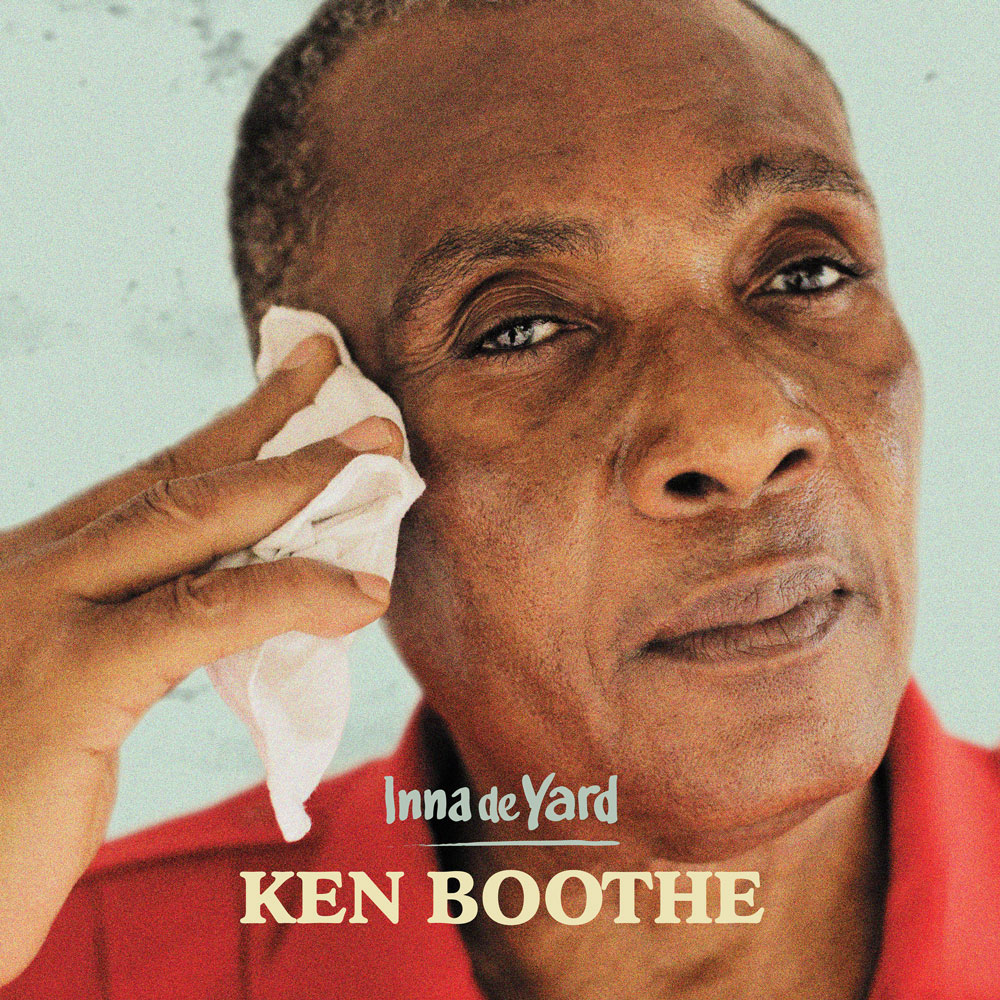
THE ZODIAC-COSMIC SOUNDS-LP.
The Zodiac-Cosmic Sounds-LP.
Label: Elektra Records.
By 1967, many critics and record buyers regarded Elektra Records as a folk rock label, that had released albums by some of the genre’s finest exponents including Judy Collins, Love, Tom Rush and Tim Buckley. Many of these albums would later become important and influential albums, and some are nowadays regarded as genre classics. However, some people’s perception of Elektra Records was about to change in May 1967 with the release of The Zodiac’s album Cosmic Sounds, which became a cult classic. That is the still the case in 2017 when Elektra Records reissued the fiftieth anniversary version of Cosmic Sounds on luminous vinyl.
The Zodiac’s Cosmic Sounds was a groundbreaking concept album which featured twelve tracks that were described as psychedelic mood music. It featured a myriad of exotic and electronic instruments and spoken prose that came courtesy of Cyrus Faryar. Cosmic Sounds was no ordinary album, and The Zodiac was no ordinary band.
That was certainly the case. The Zodiac didn’t even exist before the recording of Cosmic Sounds. Jac Holzman the head of Elektra Records came up with the concept for Cosmic Sounds after the success of The Doors’ eponymous debut album which had been released in January 1967. He then set about making The Zodiac and their debut album Cosmic Sounds reality.
To do that, Jac Holzman hired Alex Hassilev, formerly a member of The Limeliters, to produce the album. Alex Hassilev brought onboard Mort Garson who he had recently formed a production company with, to write the music for Cosmic Sounds.
With producer Alex Hassilev and composer and musician Mort Garson onboard, the Cosmic Sounds’ concept quickly grew legs, and the pair were planning to record and release a series of similar concept albums. Before that, Mort Garson began work on Cosmic Sounds.
Eventually, composer, arranger, orchestrator, conductor and pianist Mort Garson had written twelve tracks, with one for each astrological sign. This included Aries-The Fire-Fighter, Taurus-The Voluptuary, Gemini-The Cool Eye, Cancer-The Moon Child, Leo-The Lord of Lights, Virgo-The Perpetual Perfectionist, Libra-The Flower Child, Scorpio-The Passionate Hero, Sagittarius-The Versatile Daredevil, Capricorn-The Uncapricious Climber, Aquarius The Lover Of Life and Pisces-The Peace Piper. These tracks would become Jac Holzman’s album of psychedelic mood music-Cosmic Sounds.
By then, producer Alex Hassilev had returned from producing The Dusk ‘Till Dawn Orchestra’s Sea Drift album. One of the tracks incorporated a piece of music that was meant to feature on a followup album, The Sea. However, it had been scrapped, after Rod McKuen, who was meant to feature on the project, left and worked on his own version with Anita Kerr. This had been a disappointment, but Alex Hassilev was fully focused on producing Cosmic Sounds.
To record Cosmic Sounds, and capture the sounds that producer Alex Hassilev required wasn’t going to be easy. It would require a variety of exotic and electronic instruments. Fortunately, Alex Hassilev knew a couple of musicians who could help create the sound that he was looking for.
This included Paul Beaver, who back in 1967, was known as someone who provided sound effects for the film industry. He was also passionate about the new electronic instruments and had amassed an enviable collection, including a Moog synth. He would play the Moog and other electronic instruments on The Zodiac.
In 1967, the Moog synth was a new instrument, which its inventor Robert Moog and Paul Beaver had just demonstrated at the California Audio Engineering Society convention in early 1967. This was the assembled audience got the opportunity to see and hear the Moog on the West Coast. They realised it was a gamechanger, as did Jac Holzman the head of Elektra Records. The Moog he knew would play an important part on Cosmic Sounds.
Jac Holzman was keen to bring Paul Beaver onboard for The Zodiac project, as he was one of just a handful of people on the West Coast who knew how to setup and use the Moog synth. Paul Beaver agreed to join The Zodiac project and was keen to showcase the instrument’s vast capabilities on Cosmic Sounds,
With Paul Beaver onboard, producer Alex Hassilev was keen to enlist percussionist Emil Richards, who had played with great and good of music, and on over 1,700 movies. Emil Richards was also a collector percussion instruments, and had already amassed a collection of 700 instruments from all over the world. He would put some of the strange and exotic percussion to good use on The Zodiac.
The day of the recording sessions, electronics guru Paul Beaver setup his Moog synth, and an array of electronic instruments. When percussionist Emil Richards arrived at the studio, it was in a truck. As members of the band looked out, they were amazed to see that half of the truck was filled with myriad of exotic percussion instruments including water chimes and angklungs, bamboo rattles from Southeast Asia. They were unloaded from the truck, along with a sitar and harpsichord. These instruments were taken into the studio, where producer Alex Hassilev introduced Emil Richards to the rest of the band.
It featured some of L.A’s top session musicians, including members of the legendary Wrecking Crew were waiting. This included drummer Hal Blaine, who was joined in the rhythm section to bassist Carol Kaye. They were joined by keyboardist Mike Melvoin and Bud Shank on bass flute. Other members of this experienced group of musicians that recorded Cosmic Sounds weren’t credited on the album.
With The Zodiac in the studio, they began recording the twelve tracks that became Cosmic Sounds. Mostly, the recording sessions ran smoothly. The only problem the band encountered was that the Moog’s oscillators were somewhat unstable and this meant that Paul Beaver had switch the machine on way before the sessions began, to allow them to warm up. Occasionally, the Moog failed to stay in frequency and the tuning was out. Apart from that, there were very few problems. What many members of the band remembered, was percussionist Emil Richards dashing round the studio playing anything up to five or six instruments live. Somehow, he managed this and after four recording sessions, the twelve backing tracks were recorded.
With Cosmic Sounds complete, The Zodiac listened to the playback, and listened intently to the twelve tracks that featured a spacey but tight groove. Cosmic Sounds sounded like an instrumental psychsploitation soundtrack. However, that would soon change.
With the backing tracks completed, folk singer Cyrus Faryar was brought onboard to narrate Cosmic Sounds. He was the final member or The Zodiac, and added the twelve vocals against a futuristic, moody, haunting and lysergic backdrop that combined the debut of a Moog synth with a sitar, flute, Hammond organ, haunting harpsichord and even searing, mid-sixties rocky guitar riffs as Cyrus Faryar’s voice veered between ruminative to dramatic and ironic. This was the final piece of the musical jigsaw that was Cosmic Sounds.
Once Cosmic Sounds was completed, Jac Holzman decided to release The Zodiac’s debut album in May 1967. William S. Harvey was hired to take charge of the artwork on Cosmic Sounds, and must have surpassed even Jac Holzman’s expectations. The elaborate sleeve was a patchwork of bright, bold and gaudy colours, and was almost luminous. It also featured wavy undulating lettering and pictures that were lysergic and had been influenced by classical mythology. This was a perfect cover for The Zodiac’s album of psychedelic mood music, Cosmic Sounds.
Not for the first time, Jac Holzman’s timing was perfect, with the release of The Zodiac’s debut album in May 1967 coinciding with a resurgence of interest in astrology, while psychedelia had also become hugely popular. Surely, this was the perfect time for The Zodiac to release their groundbreaking and innovative concept album Cosmic Sounds? It was sure to appeal to those who were about to turn on, tune in, drop out.
Unfortunately, Cosmic Sounds divided the opinion of critics, many of whom failed to understand this groundbreaking and imaginative album of psychedelic mood music, which came with instructions that the album “must be played in the dark.” Some critics embraced and understood the album, and were won over by its mixture of exotic and electronic instruments and spoken prose.
It was essentially a fusion of psychedelia, rock and astrology played by some the of L.A’s top musicians and narrated by Cyrus Faryar. This Jac Holzman hoped would tap into the burgeoning market for all things psychedelic.
Unfortunately, there was a degree of confusion amongst critics and soon, record buyers who were unsure about who the album was by. Some thought that the album was The Zodiac by Cosmic Sounds, while others were of the opinion that the album was Cosmic Sounds by The Zodiac. Even after looking at the sleeve and the insert critics and record buyers remained confused. This wasn’t good news for Jac Holzman who had masterminded Cosmic Sounds.
It was his concept, and one that he hoped would cash-in in the recent resurgence of interest in astrology and psychedelia’s popularity. Sadly, The Zodiac’s debut album Cosmic Sounds didn’t sell in vast quantities, but still found a small but appreciative audience. Soon, Cosmic Sounds was a cult classic, and for many, who aficionados of psychedelia, the album was part of the soundtrack to the psychedelic era. Some record buyers played the record so often that they got through several copies. Especially as they sat cross-legged on bean bags ingesting tetrahydrocannabinol as lava lamps flickered in the background.
Despite the popularity of Cosmic Sounds within some parts of the psychedelic community, the album failed to crossover and find audience within mainstream music fans. By then, Cosmic Sounds was a psychedelic cult classic, and over the next fifty years would be discovered by several new generations of record buyers.
That is the still the case in 2017 when Elektra Records reissued the fiftieth anniversary version of Cosmic Sounds on luminous vinyl. It’s the only way to discover The Zodiac’s groundbreaking concept album Cosmic Sounds, which is a cult classics that features psychedelic mood music that: “must be played in the dark.”
The Zodiac-Cosmic Sounds.
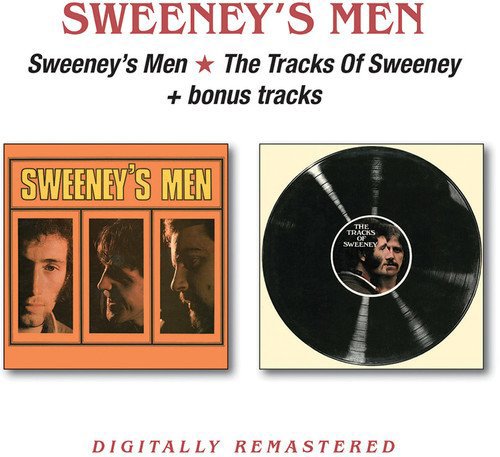
SWEENEY’S MEN-SWEENEY’S MEN AND THE TRACKS OF SWEENEY.
Sweeney’s Men-Sweeney’s Men and The Tracks Of Sweeney.
Label: BGO Records.
One of the bands that emerged from the mid-sixties Irish roots revival was Sweeney’s Men, who were formed in Dublin in May 1966, by Andy Irvine, “Galway Joe” Dolan and Johnny Moynihan. They would be together for just three years, and released two albums, Sweeney’s Men and The Tracks Of Sweeney which were recently remastered and reissued by BGO Records as a two CD set. These two albums feature one of the most important and groundbreaking Irish folk bands who went on to influence a generation of electric folk groups, including Planxty, Moving Hearts, Steeleye Span, and later, groups like The Pogues and Moonshine. By then, Sweeney’s Men story was over.
Four years before Sweeney’s Men was formed, O’Donoghue’s Pub in Dublin was where many Irish folk musicians gravitated and played in the evenings. Those that drank in the pub saw The Dubliners, The Fureys, Seamus Ennis and Irvine who was born in London in 1942 to Scottish and Irish parents.
Andy Irvine was a former child actor, who as an eight year old, had featured in the film A Tale Of Two Cities. He also took to the stage in London and Dublin, which was how he first discovered the city. Later, Andy Irvine became fascinated by American folk and blues music, after discovering Woody Guthrie and Ramblin’ Jack Elliot. However, when the twenty year old moved to Dublin, and discovered O’Donoghue’s Pub he became interested in Irish folk music.
As his interest in folk music blossomed, Andy Irvine met Johnny Moynihan one night in O’Donoghue’s Pub, and the pair started traveling the length and breadth of Ireland to music festivals.
It wasn’t long before the pair began performing at various folk venues in Dublin. Sometimes, they were joined by Johnny Moynihan’s girlfriend Anne Briggs, who was also a folk singer. Regardless of whether they performed as a duo or a trio, the audience’s reaction was inconsistent. Sometimes, they were wildly enthusiastic, other times, the response bordered on indifferent. On these nights, they left the stage feeling deflated and wondering if there was something missing? Maybe they needed to change their lineup?
While Andy Irvine enjoyed playing the gigs with Johnny Moynihan, he decided to busk around Europe and play some gigs with another friend Eamon O’Doherty. Andy Irvine’s musical partner
Johnny Moynihan stayed at home, and continued to work as a draftsman in Roscommon. Music was something he did in his spare time. Meanwhile, Andy Irvine had got as far as Denmark, where he Eamon O’Doherty were playing some club gigs. That was when he received a message from another musician “Galway Joe” Dolan.
He was a former member of Irish showband Premier Aces, who had embarked upon a career as a folk musician. Galway Joe” Dolan had secured a booking for the entire summer at the Enda Hotel in Galway, and wanted Andy Irvine to join him. When Andy Irvine heard the news, he returned home and headed to Galway where they were to stay in a cottage behind the hotel.
At the weekend, Johnny Moynihan would head to Galway and stay at Andy Irvine and Galway Joe” Dolan’s rural idyll, and join them when they played live. Everything was going well for two or three weeks, until Galway Joe” Dolan had a fight with hotel owner. That was the end of their summer season at the Enda Hotel.
Despite not having any bookings, the three friends decided to travel around Ireland, playing wherever they could land a gig. The three men decided to name their group after the pagan king Suibhne, who was cursed for throwing a cleric’s bell into a lake. However, when Suibhne is anglicised it became Sweeney which lead to the trio becoming Sweeney’s Men.
The newly named Sweeney’s Men spent their first summer touring Ireland in an old red Volkswagen van. Little did the trio know that the summer the spent touring the Emerald Isle was akin to a musical apprenticeship and when they return home to Dublin in the autumn, the three members of Sweeney’s Men were well on their way to becoming professional musicians.
With the arrival of autumn, Sweeney’s Men returned to Dublin and lived in a house in North Strand Street. Not long after this, they met Des Kelly, a member of the Capitol Showband who became their manager.
By then, Sweeney’s Men had turned their back on popular, sentimental ballads that peppered the sets of the older Irish bands. Replacing these songs, were a very different type of ballad, that came from America, England, Ireland and Scotland. They featured incredibly complex arrangements that Sweeney’s Men played on a guitar, mandolin and bazouki. They provided the backdrop as the trio of unique voices complimented each other and became part of Sweeney’s Men’s trademark sound that they continued to hone in Dublin’s clubs. However, Sweeney’s Men knew they were more than ready to record their debut single.
Sweeney’s Men went into the studio and recorded several songs, including Pecker Dunne’s Sullivan’s John which was, released on Transatlantic Records in 1968. Before that, Sweeney’s Men would sign to Pye Records, and released Old Maid In The Garret as their debut single during first half of 1967. However, much would happen before then.
This included a change in Sweeney’s Men’s lineup when “Galway Joe” Dolan left the group, and later, journeyed to Israel. Fortunately, Paul Brady was able to replace “Galway Joe” Dolan and probed a more than adequate replacement when he joined Sweeney’s Men for a gig in Limerick. Unfortunately, Sweeney’s Men were unable to secure Paul Brady’s services long-term, and he joined The Johnstons.
Finding a replacement for “Galway Joe” Dolan, and someone of the calibre of Paul Brady proved problematic, and it took time for Sweeney’s Men to settle on Terry Woods. He was a tenor vocalist who played guitar, 5-string banjo and accordion. Terry Woods had grownup listening to folk, blues and country music, and was already a fan of Sweeney’s Men’s music.
With a new lineup of Andy Irvine, Johnny Moynihan and Terry Woods, Sweeney’s Men recorded their second single for Pye International, Waxie’s Dargle. It was also the final single that Sweeney’s Men released on Pye Records.
By then, Sweeney’s Men had changed managers, and were now managed by Roddy Hickson, John Mahon and Gerry McDonagh, also managed The Johnston. Changing managers was a good move for Sweeney’s Men as they were able to get bookings at some of Dublin’s top folk clubs. Their new managers also managed to get Sweeney’s Men onto the ballroom circuit, where they earned £50 a night for a thirty-minute set. Sweeney’s Men’s new management team secured a recording deal with Transatlantic Records in early 1968. This was the break Sweeney’s Men had been waiting for.
Sweeney’s Men.
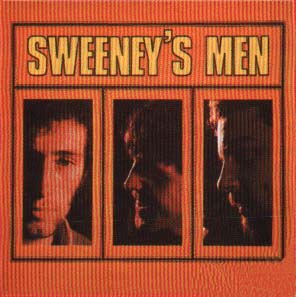
Now signed to Transatlantic Records, the three members of Sweeney’s Men began working on their eponymous debut album.
They chose thirteen songs, including Pecker Dunne’s Sullivan’s John, Peggy Seeger and Terry Woods’ My Dearest Dear, Dominic Behan’s Dicey Riley and Frank Warner’s Tom Dooley. They were joined by nine traditional songs, including Sally Brown, Exile’s Jig, The Handsome Cabin Boy, Willy O’Winsbury, Dance To Your Daddy, The House Carpenter, Johnstone, Reynard The Fox and Rattlin’ Roarin’ Willy which is believed to have been written by Scottish poet Robert Burns. Most of the traditional songs were arranged by Sweeney’s Men, except Willy O’Winsbury which Andy Irvine arranged. These songs were then recorded during a memorable session.
With the material chosen, Sweeney’s Men entered the studio with their unique mixture of disparate instruments. They all added vocals and harmonies, while Andy Irvine played guitar, mandolin, bazouki and harmonica. Johnny Moynihan played tin whistle and bazouki, and nowadays, is regarded as the first musician to incorporate the bazouki into Irish music. Terry woods played guitar, 12-string guitar, banjo and accordion. Taking charge of production was Bill Leader, who oversaw a thirty-six hour marathon recording session that was fuelled by countless pints of Guinness and a steady supply of Dexedrine. Eventually, after the marathon recording session Sweeney’s Men was completed in time.
This was fortunate, as Terry Woods was about to marry Gay Concaron in Dublin, on the ‘18th’ of May 1968. Terry Woods had asked Andy Irvine to be the best man, and the wedding was a double celebration given Sweeney’s Men had just completed their eponymous debut album.
When Sweeney’s Men was released later in 1968, critics discovered an album which featured a carefully chosen selection of American, English, Irish and Scottish folk songs. Unlike most folk bands, Sweeney’s Men didn’t have just the one, or even two vocalists. Instead, they the vocals were shared between the three musicians, with great care taken to find the right vocal for the song. They were accompanied by harmonies and a unique blend of musical instruments quite different from many Irish folk bands were using. Especially the bazouki which Sweeney’s Men pioneered, on an album where the unique and inimitable choice of instruments was imaginative and inventive as they work their way through thirteen songs.
Johnny Moynihan opens Sweeney’s Men with a cover of Robert Burns’ Rattlin’ Roarin’ Willy which is set to slip jig rhythm and played in 9/8 time. Among the other songs that Johnny Moynihan sings are Sullivan John, Dicey Riley, The Handsome Cabin Boy and murder ballad Johnston. These were songs he knew and sang before joining Sweeney’s Men, and he was best qualified to take charge of the lead vocal. These songs he brings to life and sings passion and emotion.
It’s a similar case on The Exile’s Jig, another slip jig, where the two remaining original members of Sweeney’s Men duet. Johnny Moynihan and Andy Irvine are responsible for one of the highlights of Sweeney’s Men.
Not to be outdone, the newest member Sweeney’s Men, Terry Woods, wrote new music to Peggy Seeger’s My Dearest Dear and sang the lyrics. He also takes charge of the vocal on the ballad The House Carpenter and on the American ballad Tom Dooley. By then, it’s apparent that Terry Woods is already playing an important part in the sound and success of Sweeney’s Men.
It’s a similar case with Andy Irvine, as he sings the sea shanty Sally Brown, the ballad Willie O’ Winsbury and the English folk song Dance to Your Daddy. For many, Andy Irvine’s finest moment on Sweeney’s Men was his vocal on the traditional Irish song Reynard The Fox which closed the album.
Sweeney’s Men was an album that divided the opinion of critics, and the reviews were mixed. It was only later that critics and musical historians would realise how important and influential a Sweeney’s Men and their debut album was.
One member of Sweeney’s Men took the mixed reviews of their eponymous debut album badly. It was the final straw for Andy Irvine, who hadn’t been happy playing the ballroom circuit, even though they were earning £50 a night. The audience didn’t sit and listen to the bands like they did in folk clubs, and Andy Irvine saw this as a disrespectful. By then, he was ready to try something different, and when he left Sweeney’s Men travelled to Eastern Europe to discover the indigenous music.
After Andy Irvine’s departure from Sweeney’s Men, the search for a replacement began. Eventually, the two remaining members settled on Henry McCullough, the Eire Apparent guitarist from Portstewart, Northern Ireland was recruited.
With Henry McCullough onboard, a new era began for what was Sweeney’s Men Mk III. Henry McCullough was part of the band when they played on the RTE television series Twenty Minutes With, and by then, there were elements of African and Eastern music to Sweeney’s Men’s sound. There was also a shift towards a more psychedelic sound.
This became apparent when Sweeney’s Men played at Liberty Hall, in Dublin. For the first half, Andy Irvine joined Johnny Moynihan and Terry Woods. Then after the break, Henry McCullough joined Sweeney’s Men as they showcased their new contemporary sound which sometimes, incorporated elements of psychedelia. Little did Sweeney’s Men realise that this was their swan-song at Liberty Hall.
Later in 1968, Sweeney’s Men played at the Cambridge Folk Festival, where they once again, showcased their new contemporary sound. By then, Henry McCullough who had introduced the electric guitar to Sweeney’s Men had started writing some new songs. Two of these would feature on Sweeney’s Men sophomore album The Tracks Of Sweeney. Much would happen before that.
Not long after their appearance at the Cambridge Folk Festival, Henry McCullough left Sweeney’s Men. He had been won over by the John Mayall’s set of electric blues at the Woodstock Festival. This he thought was the future. For the third time, Sweeney’s Men was reduced to a duo.
The two remaining members of Sweeney’s Men started looking for a replacement. Eventually, the settled on singer, guitarist and 5-string banjo player Al O’Donnell. He became third member of Sweeney’s Men Mk IV. However, Al O’Donnell left Sweeney’s Men by the winter of 1968.
This left Sweeney’s Men to tour Britain as a duo. However, when Sweeney’s Men arrived in London they met Andy Irvine and talks began about him rejoining the band. However, too much water had passed under the bridge.
Not long after this, Sweeney’s Men spilt-up for the first time. Johnny Moynihan played tin whistle on Skid Row’s debut single New Faces Old Places. Meanwhile, Terry Woods had met and started working with Phil Lynott who had founded his new band Orphanage. With the two remaining members of Sweeney’s Men working with other musicians, this looked like the of the band.
That was until early 1969, when Johnny Moynihan and Terry Woods agreed to reform Sweeney’s Men. Soon, they were working on their sophomore album The Tracks Of Sweeney.
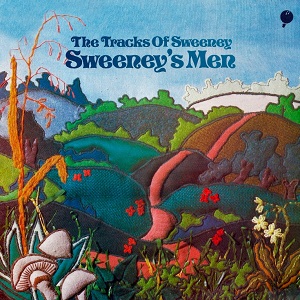
The Tracks Of Sweeney.
Rather than try to bring onboard a third member of Sweeney’s Men, Johnny Moynihan and Terry Woods decided to record The Tracks Of Sweeney as a duo.
Eleven tracks were chosen for The Tracks Of Sweeney, including four penned by Terry Woods. He wrote Dreams For Me, Brain Jam, When You Don’t Cry and Afterthoughts, and previously had written A Mistake No Doubt Henry McCullough who also contributed Hall Of Mirrors. They were joined by Leonard Cohen’s Go By Brooks and a quartet of traditional songs. This included the instrumental The Pipe On The Hob, plus Pretty Polly, Standing On The Shore and Hiram Hubbard. These songs were recorded in early 1969.
When recording began at Livingston Recording Studios, Barnet, Sweeney’s Men used the two vocalists and a disparate selection of instruments to achieve their new Acid Folk sound on much of the album. Johnny Moynihan played bazouki and tin whistle, while Terry Woods played guitar, 12-string guitar, banjo and accordion. Once the eleven tracks that became The Tracks Of Sweeney were complete, that marked the end of Sweeney’s Men’s recording career.
Sweeney’s Men’s sophomore album was a mixture of styles, and found them embracing the Acid Folk sound on number of songs Tracks Of Sweeney. Especially tracks like Dreams For Me, Brain Jam, A Mistake No Doubt, Go By Brooks, When You Don’t Care For Me. The only Irish jig was The Pipe On The Hob, while Pretty Polly, Standing On The Shore and Hiram Hubbard on looked towards traditional American folk music. Many critics felt that Tracks Of Sweeney was a much better album that its predecessor. Sadly, by the time it was released in late 1969, the Sweeney’s Men story was over.
After three years and what are now regarded as two important and influential albums, Sweeney’s Men split-up. The two remaining members of the group went their separate ways. In some ways, it was a case of what might have been? What direction would Sweeney’s Men have headed in the future, and were they on the cusp of a commercial breakthrough? However, Sweeney’s Men left behind a rich musical legacy that includes their two albums Sweeney’s Men and The Tracks Of Sweeney, which were recently remastered and reissued by BGO Records as a two CD set.
These two albums, Sweeney’s Men and The Tracks Of Sweeney, feature one of the most important and groundbreaking Irish folk bands of the late-sixties. Sweeney’s Men went on to influence a generation of electric folk groups, including Planxty, Moving Hearts, Steeleye Span, and later, groups like The Pogues and Moonshine. Even today, Sweeney’s Men continue to influence a new generation of folk musicians, who look to their two groundbreaking albums, Sweeney’s Men and The Tracks Of Sweeney for inspiration for the music of tomorrow.
Sweeney’s Men-Sweeney’s Men and The Tracks Of Sweeney.
HILARIO DURAN-CONTUMBAO.
Hilario Durán-Contumbao.
Label: Alma Records.
Nowadays, sixty-four year old Hilario Durán is regarded as one of the greatest Cuban pianists of the ‘20th’ Century. His career began in 1973, and twenty-five years later, in 1998, he left Cuba behind and emigrated to Toronto in Canada, which has been his adopted home for the past two decades. However, when Hilario Durán collaborated with some top Cuban musicians on his recently released album Contumbao, he returned home to Cuba. That was where he recorded the twelve tracks that became Contumbao, which was released by Alma Records. It’s another chapter in the story of composer, arranger and jazz pianist Hilario Durán.
The Hilario Durán story began in Havana, Cuba, in 1953, when he was born into a musical family. Every day of his young life, Hilario Durán could hear an eclectic selection of music playing in the area where his family lived. Hilario Durán was drawn to the music of Errol Garner, Roy Eldridge, Harry James, Jachaturian, Tchaikovsky, Gershwin, Ernesto Lecuona, Bola de Nieve, Vicentico Valdés and Adolfo Guzman. Having listened to the music, Hilario Durán tried to imitate and replicate the music he had heard. His parents who watched this unfold, decided to arrange private lessons with some of Cuba’s top music teachers.
It wasn’t long before Hilario Durán’s family realised that he was a prodigious talent. In 1968, fifteen year old Hilario Durán started studying piano part-time at the Amadeo Roldan Conservatory of Music, and taking private piano lessons with Andrea Mesa, a highly respected Havana based piano teacher. By 1969, Hilario Durán moved from being a part-time student, to a full-time student, and was taught by Professor Oscar Lorie. He ensured Hilario Durán received the best musical education possible.
This continued when Hilario Durán arrived home, and spent much of his free time listening to music. By then, Hilario Durán’s favourite type of music was jazz, and he immersed himself in American and European jazz. This was already influencing Hilario Durán, and it seemed almost inevitable that Hilario Durán would eventually embark upon a musical career. However, before that his country came calling.
Seventeen year-old Hilario Durán began his military service, which many young Cubans dreaded. However, Hilario Durán spent much of his time playing clarinet with the military band Estado Mayor del Ejercito, where he played alongside musicians of the calibre of Jorge Reyes, ElpiIdio Chapotin, Carlos del Puerto and Ignacio Berroa, plus musical director Remberto Egües. They played alongside Hilario Durán for the next three years, and in 1973, he completed his military service. Now he could embark upon a career as a professional musician.
Hilario Durán’s career as a professional musician began when the twenty year old joined Los Papa Cun-Cun Ensemble in 1973. He was replacing one of the great Cuban pianists, Freddy Gonzalez de la Maza. This wasn’t going to be easy, but Hilario Durán was soon blossoming under the guidance of musical director Evaristo Aparicio. However, after a few years, Hilario Durán left Los Papa Cun-Cun Ensemble.
Another great pianist, Chucho Valdés, was leaving the Orquesta Cubana de Música Moderna, and asked that Hilario Durán replace him. By then, Hilario Durán was regarded as one of the rising stars of the Cuban music scene. This was too good an opportunity to decline, and Hilario Durán joined the Orquesta Cubana de Música Moderna.
With Hilario Durán’s star was in the ascendancy, he decided to release his debut solo album Habana 9 P.M. in 1976. However, it was over twenty years before Hilario Durán released the followup.
Over the next few years, Hilario Durán worked as a pianist and arranger, and was involved in a variety of different projects. His versatility meant he was able to work with artists that included Omara Portuondo, Miriam Ramos, Amaury Perez Vidal, Donato Poveda, Silvio Rodriguez, and Beatriz Marquez. Other times, Hilario Durán worked as an arranged with German Piferrer and Demetrio Muñiz. However, as the seventies gave way to the eighties, Hilario Durán received an offer he couldn’t turn down.
In 1981, Arturo Sandoval who was one of the great Cuban trumpet players, invited Hilario Durán to join his band. Hilario Durán became Arturo Sandoval’s arranger, musical director and played piano and keyboards. This was how Hilario Durán spent the next nine years.
By 1982, Arturo Sandoval’s new arranger became an award-winning arranger, when he won the Premio EGREM for Best Arranger of the Year 1982-83, which is one of Cuba’s most prestigious music prizes. For Hilario Durán, this was a huge honour far the thirty year old pianist.
Over the next nine-year, Hilario Durán had toured the world several times with Arturo Sandoval, and shared a stage with Michel Legrand and legendary jazz trumpeter Dizzy Gillespie. This resulted in Hilario Durán playing on Dizzy Gillespie Y Gonzalo Rubalcaba album Gillespie En Vivo, which was released in 1985. Hilario Durán had come a long way since making his professional debut in 1973.
For the next five years, Hilario Durán continued to work as Arturo Sandoval’s arranger and musical direction, and played piano and keyboards. This all changed in 1990, when Arturo Sandoval left Cuba to start a new life in the United States. However, he left his band behind in Cuba.
Fortunately, Hilario Durán stepped in to the void and started moulding the remaining band members into a new band, who would head in a different direction from before. This new band he called Grupo Perspectiva, who over the next few years toured Europe and South America, and released two albums, Tiembla Tierra and Buscando Cuerdas in 1994. Despite spending much of his time leading Grupo Perspectiva, Hilario Durán found time to work on other projects.
One of these collaborations came about when Hilario Durán was approached by Chucho Valdés, who was then the bandleader of Irakere. They were one of Cuba’s most influential bands, and Chucho Valdés wanted Hilario Durán to take charge of the arrangements for Irakere’s recording Indestructible. This was all good experience for Hilario Durán.
So was working with Canadian flautist Jane Bunnett. She had invited Hilario Durán to play on her 1992 album Spirits Of Havana. Later in 1992, Spirits Of Havana won a Canadian Juno Award. This resulted in Jane Bunnett inviting Hilario Durán to Toronto to perform with The Spirits Of Havana group. Then when Jane Bunnett recorded her Rendezvous Brazil Cuba in 1994, Hilario Durán was invited to play on the album.
During some downtime, during the recording of the Jane Bunnett’s Rendezvous Brazil Cuba in 1994, Hilario Durán met Canadian bassist Roberto Occhipinti. The pair played a few gigs together, and would later be reunited. Before that, Hilario Durán was offered a new role.
Not long after this, Hilario Durán became Jane Bunnett’s arranger, musical director and pianist, and they spent three years touring North America and Europe. When three years of touring was over, it was time for Hilario Durán to take centre-stage.
Twenty years after releasing his debut album, Hilario Durán released his sophomore album Francisco’s Song in 1996, on the Justin Time label. Joining Hilario Durán was Francisco’s Song flautist Jane Bunnett who produced the album with her husband Larry Cramer a Canadian trumpeter. The pair also produced the followup, Killer Tumbao which was released in 1997. However, by the time Hilario Durán released the third album in the Justin Time trilogy, he had made one of the biggest decisions of his life.
The following year, 1998, Hilario Durán decided that his wife Cristobalina and daughter Yailen would leave Cuba behind, and make a new life in Toronto. This was a huge decision, but one that paid off.
Soon, Hilario Durán was a familiar face in Toronto’s vibrant music scene, and was working not just in Canada, but across the border in America and touring the world. Still, he found time to complete the Justin Time trilogy when he released Habana Nocturna in 1999. This was the first album Hilario Durán had released since moving to Toronto. His recording career would continue in the new millennia.
This included Hilario Durán’s fifth solo album Havana Remembered, which was released in 2002. Later, that year, it was nominated in Canada for the Best Global Album released during 2002. Hilario Durán was also a member of the World Festival Orchestra when they played at the New Jersey Performing Arts Centre in October 2002. That night, they played Hilario Durán’s latest composition Suite Afro-Cubana. For Hilario Durán this was a huge honour.
Two years later, Hilario Durán signed to the Canadian jazz label Alma Records in 2004. Hilario Durán had been introduced to Alma Records by his friend and bassist Roberto Occhipinti who he had met ten years previously in 1994. Roberto Occhipinti knew Alma Records president Peter Cardinali, and introduced him to Hilario Durán. This was the start of a long and fruitful relationship between Hilario Durán and Alma Records.
For his Alma Records’ debut, Hilario Durán went into the studio with drummer Horacio “El Negro” Hernandez and bassist Roberto Occhipinti who produced New Danzon. It was released in 2005, and later that year, won the Canadian Juno Award For 2005.
By the time Hilario Durán won his first Canadian Juno Award, he had returned to Cuba to record an album at EGREM studios in Havana with producer Roberto Occhipinti, where they were joined by some of the former members of Perspectiva. They received equal billing, on Encuentro en La Habana, which marked the return of Hilario Durán and Perspectiva in 2005. The album reminder of how the group played with passion, spontaneity and an inventiveness. It was no surprise when Encuentro en La Habana was nominated for a Canadian Juno Award in 2006. However, in 2007 Hilario Durán founded a new band.
This came about after Hilario Durán told Roberto Occhipinti how since he was a child, he had dreamt of founding a Latin Jazz Big Band. Roberto Occhipinti encouraged Hilario Durán to found the band, and Hilario Durán and His Latin Jazz Big Band was born. It featured some of finest Latin and Cuban musicians, who played at various festivals across Canada. Hilario Durán and His Latin Jazz Big Band proved a popular draw, and in won the Latin Jazz Award of the Year 2006 at the Canadian National Jazz Awards. By then, Hilario Durán and His Latin Jazz Big Band had decided to record an album.
Hilario Durán and His Latin Jazz Big Band’s debut album From The Heart was produced by Roberto Occhipinti and released by Alma Records in 2007. From The Heart went on to win the Canadian Juno Award For Best Contemporary Jazz Album of 2007 and received a Grammy Nomination for Best Solo Performance on the Hilario Durán composition, Paq Man. For the second year consecutive year, Hilario Durán and His Latin Jazz Big Band won the Latin Jazz Award of the Year 2007 at the Canadian National Jazz Awards. That wasn’t the end of the awards, and later in 2007, Hilario Durán travelled to Miami where he received the Chico O’Farrill lifetime achievement award for his outstanding contributions to Afro-Cuban jazz and Latin Jazz. This was the third award Hilario Durán had won during 2007, which was one of the mast successful years of his thirty-four year career.
After the success of Hilario Durán and His Latin Jazz Big Band, its founder embarked on a variety of new projects, including The Hilario Durán Trio and Hilario Durán and Orquesta Havana Remembered. This Hilario Durán combined with his various academic commitments.
While Hilario Durán combined his musical projects and academic work, he received another honour when he returned home to Havana. Hilario Durán won the award for the World Group Artist of the Year 2008. Hilario Durán as Special Guest of Odessa/Havana. It was just the latest award he had won since moving to Toronto.
Three years passed before Hilario Durán released his next album. This was Motion, which was released in 2010, on Alma Records. following year Hilario Durán and Jane Bunnett released their collaboration Cuban Rhapsody in 2011. Another two years passed before Hilario Durán released Christmas Salsa in 2013. Around the time of the album’s release, Hilario Durán was crowned Musician of the Year by the Toronto Musicians Association. This was just the latest award he had won since arriving in Toronto fifteen years earlier.
Since 2013, Hilario Durán hasn’t released another album. However, that changed in June 2016, when Hilario Durán returned to at EGREM studios in Havana to record his recently released album Contumbao.
The album’s title Tumbao is term that came from Africa and the Caribbean, and means “an indescribable African sexiness or swing.” Tumbao rhythm is part and parcel of Afro-Cuban music. For some, it’s an attitude, and an attitude that not all musicians are blessed with. However, the quartet of hugely talented Cuban musicians were capable of providing the Tumbao on Contumbao. That’s no surprise, as they’re all experienced, talented and versatile musicians who are familiar faces in the Toronto music scene.
Joining Hilario Durán in the rhythm section are legendary drummer Horacio “El Negro” Hernández and bassist Roberto Riverón who has twenty-five years experience behind him. The final member of the band was percussionist Jorge Luis Torres “Papiosco” who the late Tata Güines named The Child Prodigy. When it came to record Duo Influenciad, Cuban piano great Chucho Valdes joined Hilario Durán on what’s a meeting of musical minds.
After ten days the twelve tracks that became Contumbao were completed. Hilario Durán’s hand-picked quartet had reached new heights and had the ability and versatility to play a variety of African and Cuban styles. The result was a compelling and captivating album of Afro-Cuban Jazz with elements of Bembé 6X8, Güajira and Son Montuno that was enriched with that unique Tumbao. This typical Cuban ostinato melody can be found in most genres of Cuban music, and features throughout Contumbao.
Hilario Durán’s first new album in four years features eleven new compositions. There’s also a cover of the upbeat rumba El Tahonero, that’s a favourite of Hilario Durán. “I heard this song when I was in Cuba a few years ago and fell in love with it.” No wonder, as El Tahonero and Rumba de Cajon are both irresistible, spirited and sonorous rumbas that were part of Hilario Durán’s of musical concept.
“My musical concept with this album was to try to reach a wider audience. It is an album that can get people dancing, while those who like sophisticated music can enjoy it too.” Hilario Durán certainly succeeds in doing so on Contumbao. Throughout Contumbao, the tempo, tone and mood continues to change, on what’s also a personal album.
Proof of that is Parque 527 a quite beautiful, autobiographical song where Hilario Durán explains: “this is the address of the house in Havana I spent much of my life in. I grew up there and lived with my wife there, so there was a lot of joy in that house. It is like the story of my life in that song.”
Among the highlights of the album is the title-track Contumbao, which bursts into life, as a glorious full-on Latin jazz track unfolds. It’s another irresistible track from the truly talented quartet, and sets the bar high for the rest of album. Very different is Recuerdos a gorgeous piano ballad, where Navarette’s quivering vocal is accompanied by the quartet, including Hilario Durán’s piano playing. Hilario Durán’s piano plays an important role in the sound and success of the piano led Afro-Cuban Guajira. It’s a similar case on Los Muñeco where pianist Hilario Durán delivers a musical masterclass. This encourages the rest of the band to raise their game to even greater heights. Closing Contumbao is Danzon Farewell where Hilario Durán’s quartet combine to create what’s one of the most beautiful tracks on the album. It also showcases this all-star Cuban band’s combined skill on Contumbao a truly captivating album.
After twelve tracks almost flawless tracks Contumbao, the latest album from Hilario Durán is at an end. It’s his first album in four years, and is a welcome return to form from Hilario Durán, who nowadays, is regarded as one of the greatest Cuban pianists of the ‘20th’ Century.
Hilario Durán’s career has lasted forty-four years and five decades, and still the sixty-four year old hasn’t lost any of is appetite for music. Contumbao which features twelve tracks, is the best album that Hilario Durán has released in a decade, and features eleven new compositions. It’s also an album that showcases his talent and versatility as he switches between the tempo, tone, mood and genre. This Hilario Durán does seamlessly on album that he hopes will introduce his music to a much wider audience.
Hopefully, Contumbao is the album that introduces Hilario Durán to a new and wider audience. With its mixture of Afro-Cuban and Latin jazz, Contumbao is a captivating album of irresistible, joyous and upbeat music, while other tracks are beautiful, dreamy and ruminative. Contumbao which is the latest album from legendary Cuban pianist Hilario Durán, where he expresses his creativity and creates music for head and the heart, and others that are akin to a joyous and irresistible call to dance.
Hilario Durán-Contumbao.


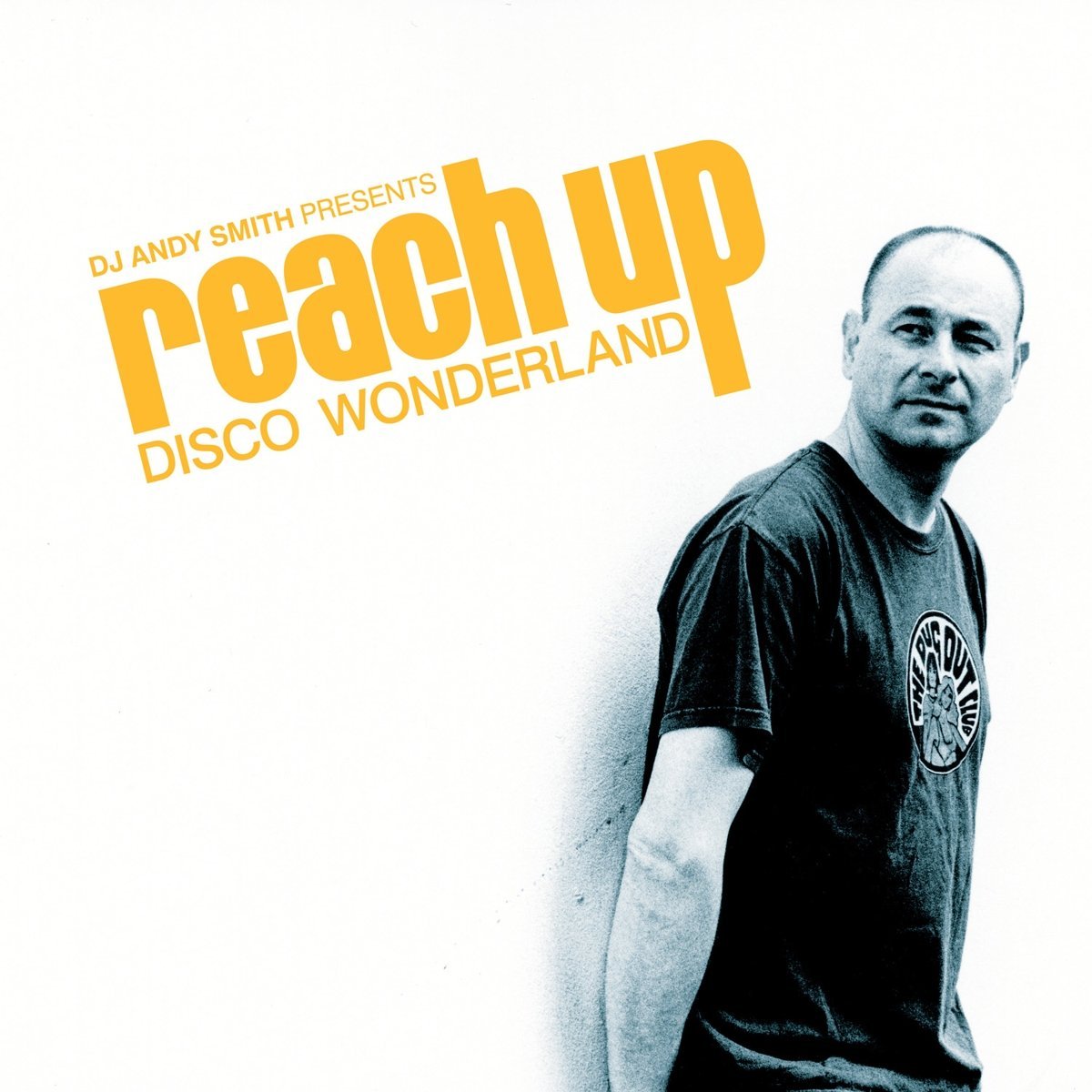
DJ ANDY SMITH PRESENTS REACH UP DISCO WONDERLAND.
DJ Andy Smith Presents Reach Up Disco Wonderland.
Label: BBE.
DJ Andy Smith has spent much of the last three decades DJ-ing in clubs at home and abroad where his eclectic sets can feature anything from boogie and disco to funk and hip hop, right through to Motown, Northern Soul and even on occasions, AC/DC. Audiences never know what to expect when DJ Andy Smith steps behind the wheels of steel and digs deep into his trusty record box. They do know that the next couple of hours are going to be a musical roller coaster, with surprises a plenty in store for dancers.
It’s a similar case with the various compilations that DJ Andy Smith has compiled over the last three decades. Just like many within the DJ-ing fraternity, DJ Andy Smith is a self-confessed and unapologetic crate-digger, who dares to go where others fear to tread. Backstreet record shops, dusty basements and warehouses and thrift stores. That is the natural habitat and has led to DJ Andy Smith collaborating with Portishead and becoming their international tour DJ. He’s also provided samples for the Prodigy, and spent the best part of twenty years releasing mix albums and compiling compilations.
The first mix album that DJ Andy Smith released was The Document in 1998, which showcased a truly talented and creative DJ. After that, DJ Andy Smith released two further instalments in The Document series, and later, released mixes of Northern Soul and reggae. DJ Andy Smith was also asked to compile funk and reggae compilations which was the perfect excuse to embark upon a crate-digging expedition, where he went looking for new music.
By then, DJ Andy Smith was one of Britain’s best DJs, and was spending much of his time DJ-ing, across Britain, Europe and as far away as Australia. Part of his success was down to his mixing skills, which set him apart from the majority of DJs. However, what made DJ Andy Smith stand out from the crowd was the music he played. He had the patience and ability to unearth hidden gems and long-lost musical treasure during his regular crate-digging expeditions. Some of the hidden gems and musical treasures find their way into DJ Andy Smith’s DJ sets or onto the various compilations that DJ Andy Smith has compiled over the last three decades.
This included his forthcoming compilation DJ Andy Smith Presents Reach Up Disco Wonderland, which will be released by BBE as a two CD set or three LP set on the ‘17th’ of November 2017. It’s guaranteed to get any festive party started.
Disc One.
Disc one allows DJ Andy Smith to showcases his DJ-ing skills as he spins a carefully chosen set that features fifteen slices of disco and boogie. Opening his set is World Premiere’s Shake The Night (Intro) which announces the arrival of the DJ’s DJ, and after just over a minute, DJ Andy Smith seamlessly mixes into Cloud One’s Patty Duke. This is the case throughout the sixty-two minute mix on disc one.
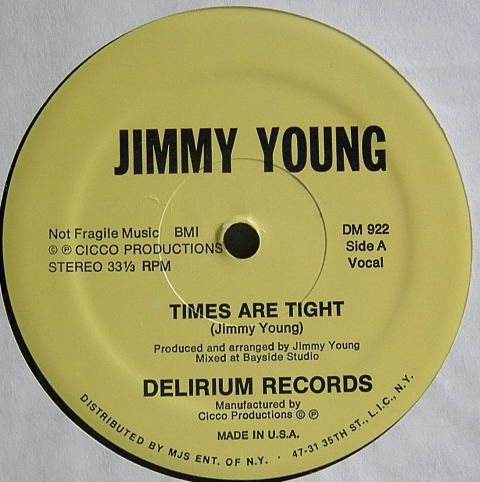
DJ Andy Smith’s mixing is seamless and unhurried, as he puts over three decades of experience to good use. Gradually, the tempo builds as each of the tracks play their part in this seamless mix. This ranges from Tamiko Jones’ Let It Flow to Don Laka’s I Wanna Be Myself and the Disco Dub Band’s For The Love Of Money. It gives way to Joanne Wilson’s Got To Have You, and then Jimmy Young’s Time Is Tight. Sadly, that proves to be the case as Jimmy Ross’ First True Love Affair is the penultimate track in DJ Andy Smith’s mix. He’s saved one of his hidden gems for last, and that’s T-Connection’s B-Side Groove To Get Down, an anthemic, dancefloor filler closes disc one of DJ Andy Smith Presents Reach Up Disco Wonderland.
Disc Two.
Whereas the mix on disc one had fifteen tracks, there’s only thirteen full-length tracks on disc two of DJ Andy Smith Presents Reach Up Disco Wonderland. The two tracks that miss out are World Premiere’s Shake The Night (Intro) and Cloud One’s Patty Duke. Despite these two omissions, it’s quality all the way.
Opening disc two is I Wanna By Myself which was the title-track to Don Laka’s 1984 sophomore album, which was released on the Transistor label. By then, the South African jazz pianist, composer and producer was one of the leading lights of the country’s dance music scene. It’s a funky and soulful slice of boogie that’s a tantalising taste of what’s to come on DJ Andy Smith Presents Reach Up Disco Wonderland.
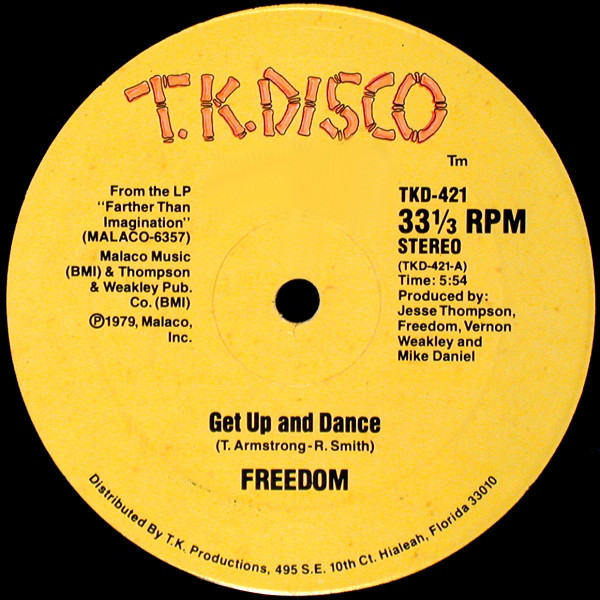
When Freedom released their debut album Farther Than Imagination on Malaco Records, in 1979, it featured Get Up and Dance, which was licensed by T.K. Disco later that year, and became a favourite amongst the hip hop community. With a party atmosphere and a funky, soulful, dance-floor friendly sound, it’s still guaranteed to get a party started.
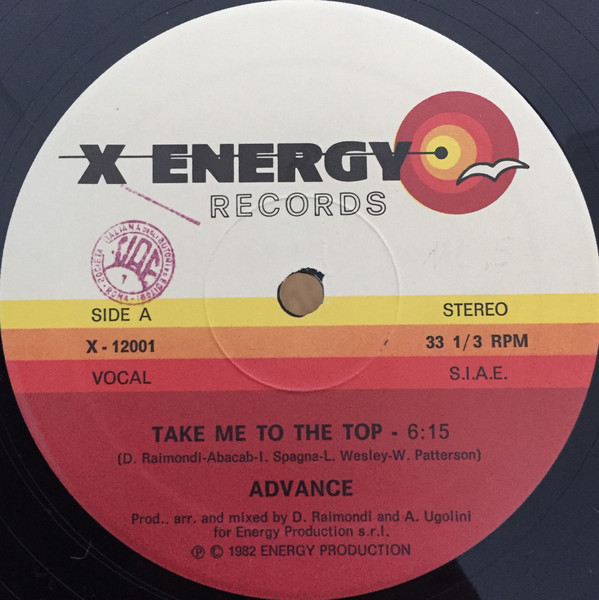
Advance was one of the groups who emerged during the boogie era, and released a trio of singles for the Italian label X-Energy Records. Their finest moment was their debut single Take Me To The Top which was released in Italy in 1982, and in other parts of the world in 1983. Take Me To The Top became a favourite among DJs and dancers, and has stood the test of time thirty-four years later.
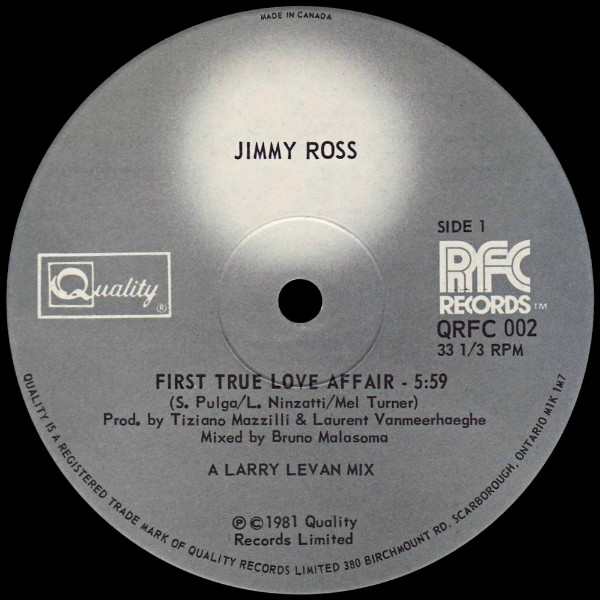
James Albert Ross was born in Trinidad, and as the eighties dawned, formed a partnership with member of the Italo Disco group Kano. The partnership proved fruitful and in 1981, Jimmy Ross signed to Full Time Records and released the single First True Love Affair. It lent its name to Jimmy Ross’ debut album, which features the six-minute version of First True Love Affair. However, it’s the Larry Levan remix of First True Love that features on the compilation, and is a reminder of Jimmy Ross’ fusion of soul, disco and boogie.
By 1976, Tamiko Jones from Kyle, West Virginia, was thirty-one and had made her debut thirteen years earlier with Is It A Sin on Checker? Let It Flow which was released on T.K. Disco in 1976, saw Tamiko Jones reinvent herself as a disco diva. However, the track doesn’t head all the way to 127 Disco Heaven. Instead, it’s slower than most of the disco tracks released around this time, and also has an arrangement that marries disco and proto-boogie. Despite that it was a favourite of many DJs, and is still is, including DJ Andy Smith whose been known to give the track a spin during his eclectic sets.
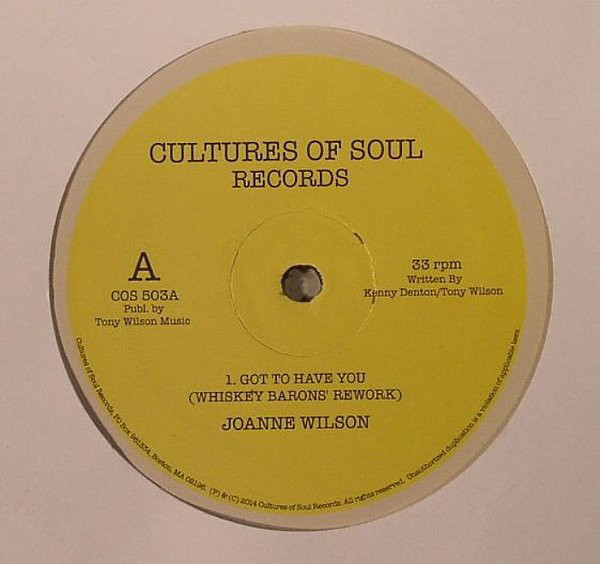
Originally, Joanne Wilson released her cover of the Tony Wilson composition Got To Have You, in 1980, on Kalinda, a label based in Trinidad and Tobago. It’s now an incredibly rare record that when an original copy becomes available, changes hands for in excess of €500. However, in 2014 the (Whiskey Barons’ Rework of Got To Have You was released by Cultures Of Soul Records. The original version has been transformed into a six-minute epic, which is reminder of a truly talented Trinidadian singer Joanne Wilson who only release a trio of singles. Her finest hour was Got To Have You in 1980.
Neddy Smith was born in Jamaica, but emigrated to America and now lives in Norwalk, Connecticut. That was where the singer, songwriter, producer, bassist and bandleader’s career began in 1982 with Give It Up, an incredibly catchy boogie single that was released on the Italian label Delirium Records. Sadly, very little was heard of Neddy Smith until he returned in 2008 with Turnaround, an album of funk and soul. However, many dancers and DJs still remember Neddy Smith for his dancefloor filler Give It Up, that makes a welcome return on DJ Andy Smith Presents Reach Up Disco Wonderland.
Jimmy Young from Mount Vernon, New York released his debut single Times Are Tight on Delirium Records in 1982. It was a song he had written, and then arranged, produced and mixed at Bayside Studio. When Times Are Tight was released, it was popular amongst dancers and DJs on both sides of the Atlantic. Especially in Britain, where this fusion of funk, soulful and disco gave man known as “The Real Jimmy Young” a top twenty dance hit.
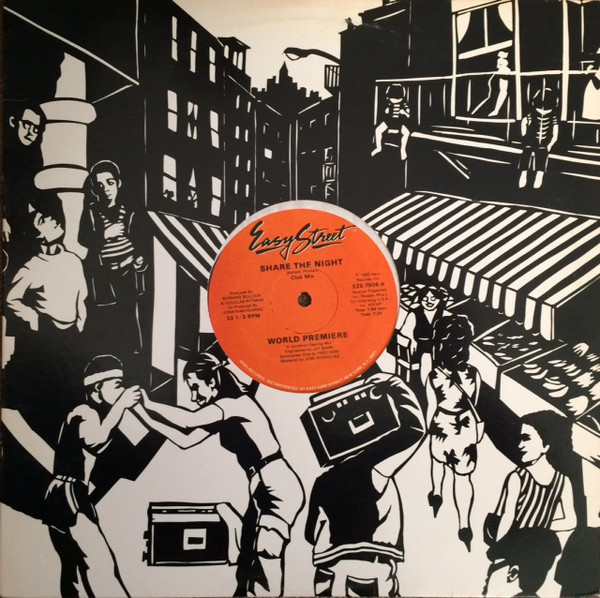
World Premiere’s 1983 single Share The Night is a bit of a slow burner, and it takes just over a minute before it starts to reveal its secrets. Share The Night was released by Easy Street Records in 1983 and finds World Premiere successfully combining elements of funk, disco and boogie to create a dancefloor filler that’s stood the test of time.
The most recent track on the compilation is Sure Thing’s Holding You Tight which was originally released on the Bristol-based Gutterfunk label in 2012. Back then, Sure Thing set out to replicate the sound of 1982, to fill dancefloors in 2012. Two years later, the track was reissued in 2014 by Defected, and it’s that version that features on the compilation.
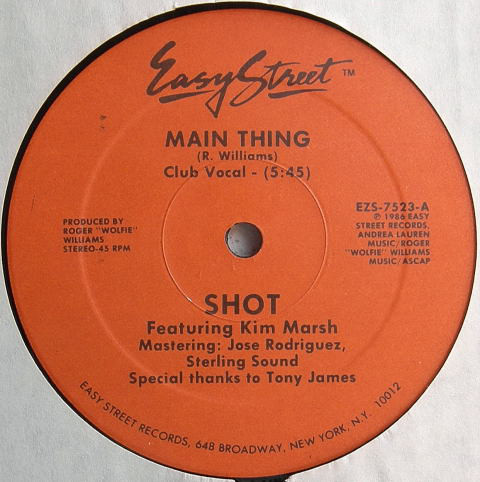
Main Thing was released on Easy Street Records, in 1985, by Shot featuring Kim Marsh. It’s a track that straddles two genres of dance music during this six-minute single. Shot drew inspiration from the disco era, and combined this with boogie, which rose to prominence after disco’s demise on Disco Derby Demolition Day on July the ’12th’ 1979. Since then, DJs had taken to spinning boogie. However, by 1985 some boogie singles incorporated elements of disco, including Main Thing where Kim Marsh is transformed into a disco diva.
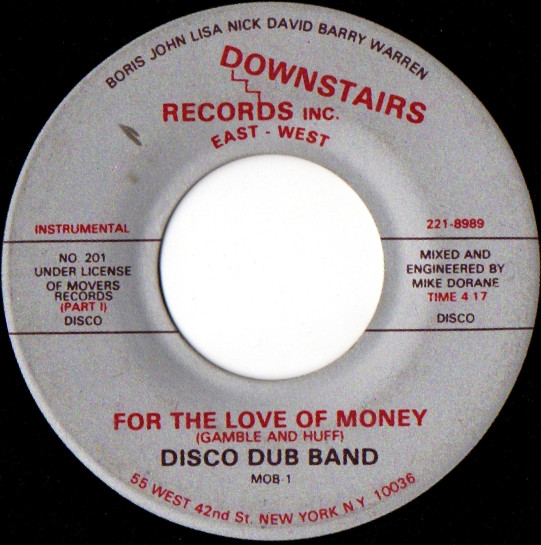
Closing DJ Andy Smith Presents Reach Up Disco Wonderland is the Disco Dub Band’s For The Love Of Money. It was originally released on the British label Movers in 1976. Three years later, Downstairs Records Inc East West released For The Love Of Money in 1979. By then, it was still an innovative single which was über funky, jazz-tinged and thanks to a 4/4 beat dancefloor friendly. Forty-one years after its initial release, For The Love Of Money is still a timeless instrumental.
After thirteen tracks that were released on labels from America, Britain, Italy, South Africa and Trinidad and Tobago, disc two of DJ Andy Smith Presents Reach Up Disco Wonderland is over. These labels released this eclectic selection of tracks that were released between 1976 and 2014. However, the majority of the tracks were released between 1976 and 1986 which straddles the disco and the boogie era.
The twelve tracks on DJ Andy Smith Presents Reach Up Disco Wonderland that were released between 1976 and 1986, ranged from disco, boogie or a hybrid of the two genres. Other tracks incorporate elements of funk, soul, jazz and R&B. Indeed, several of the tracks are best described as funky, soulful and dancefloor friendly. They’ve also stood the test of time.
Sometimes, that isn’t the case with boogie tracks, and the more commercial, bandwagon-jumping disco tracks. DJ Andy Smith eschews such low rent tracks, and concentrates on quality throughout his forthcoming compilation DJ Andy Smith Presents Reach Up Disco Wonderland which will be released on the ‘17th’ November 2017 by BBE as a two CD set and three LP set by BBE. Whichever version of DJ Andy Smith Presents Reach Up Disco Wonderland music fans buy, it’s a compilation that’s guaranteed to get any party started.
DJ Andy Smith Presents Reach Up Disco Wonderland.

THE STORY OF TOM SCOTT’S SHORT-LIVED JAZZ SUPERGROUP L.A. EXPRESS.
The Story Of Tom Scott’s Short-Lived Supergroup L.A. Express.
Musical history is littered with artistes and groups that never enjoyed the commercial success that their music deserved. That was the case with L.A. Express is an oft-0verlooked fusion supergroup who released a quartet of albums between 1973 and 1976. Sadly, these albums never found the audience they deserved and it was only later, that L.A. Express’ music started to be appreciated by jazz and fusion aficionados. By then, the group’s founder Tom Scott had moved onto other things.
This included founding The Blues Brother Band, providing the theme tune to Starsky and Hutch and receiving thirteen nominations for a Grammy Award. By then, Tom Scott had enjoyed a long and illustrious career which began as a fifteen year old, when t featured on Jan and Dean’s 1963 album Surf City And Other Swingin’ Cities. However, the one that got away for the jazz saxophonist, composer and producer, Tom Scott was L.A. Express. His career began in earnest in 1967.
By 1967, seventeen year old Tom Scott, L.A. based jazz saxophonist had already decided to embark upon a career as a professional musician, and became the leader of the jazz ensemble Neoteric Trio. This came as no surprise to those that knew Tom Scott and his family.
Especially his father Nathan Scott, who was a prolific and well-respected composer, conductor and orchestrator, who was well on his becoming one of the most prolific composers in the history of American film and television. He had started out in the music industry in 1939, after graduating from the University of California, Berkeley with a degree in music. Since then, Nathan Scott had lived in L.A. where his son Tom Scott was born on May the ‘19th’ 1948. Now that Tom Scott was making his own way in the musical world and it was a proud day for Nathan Scott.
He had watched as his son made his recording debut on Jan and Dean’s 1963 album Surf City And Other Swingin’ Cities four years previously. Now just years later, in 1965, and Tom Scott was the leader of the Neoteric Trio. This was just the start of the rise and rise of Tom Scott, who soon, would be playing alongside the great and good of jazz.
This included joining the Don Ellis Orchestra when they recorded Live At Monterey! which was released in 1966. The next album Tom Scott played on was Live In 3⅔/4 Time which tested his skills as a musician. However, Tom Scott rose to the challenge and played an important part in the album’s sound and success. Live In 3⅔/4 Time was released in 1967, and was one of number of albums that featured Tom Scott.
He also collaborated with Roger Kellaway on the album Spirit Feel. When it was released on Pacific Jazz, they were billed as Roger Kellaway Featuring Tom Scott on Spirit Feel. Tom Scott also featured on Gábor Szabó’s Light My Fire With Bob Thiele, Oliver Nelson’s Live From Los Angeles and Bob Thiele And His New Happy Times Orchestra’s Light My Fire, which were all released in 1967 on Impulse! This was the label that the nineteen year old Tom Scott had signed to, and was preparing to record his debut alum.
It was Bob Thiele who ran Impulse! for ABC, that had signed Tom Scott to Impulse!, which by 1967, was one of jazz’s top labels. Bob Thiele would also produced many of the albums released by Impulse!, including a number of classic albums. This made Bob Thiele the perfect person to produce Tom Scott’s debut album. It featured nine cover versions and the Tom Scott composition Blues For Hari. Later in 1967, Impulse! released Tom Scott’s debut album The Honeysuckle Breeze where the saxophonist was billed as Tom Scott With The California Dreamers. Despite marketing the album towards a younger generation of jazz fans, The Honeysuckle Breeze wasn’t the commercial success that Impulse had hoped.
By 1968, Tom Scott was already a familiar face in the West Coast session scene, and was always in demand. Partly this was because of his versatility, but mostly because he was already regarded as one of the top young saxophonists. As result, he played on Ravi Shankar’s Charly soundtrack, Sergio Mendes’ Favorite Things, The Mason Williams Phonograph Record, Gábor Szabó’s Macho, Richard “Groove” Holmes’ album Welcome Home, Plummer’s Cosmic Brotherhood, Monk Higgins’ Extra Soul Perception and Oliver Nelson and Steve Allen’s Soulful Brass. Tom Scott was also drafted in to play saxophone on two albums by psychedelic rockers Carnival, Carnival and Gypsy Carnival Caravan. This was all good experience for twenty years old Tom Scott.
1969 saw Tom Scott successfully juggle his career as a sideman with his solo career, and soon, his nascent career as a bandleader. However, Tom Scott’s career as a sideman was flourishing, and in 1969 he found himself playing on a number of albums, including Lalo Schifrin’s soundtrack to Che!, Howard Roberts’ Spinning Wheel, Joe Byrd and The Field Hippies’ The American Metaphysical Circus. Some of the other albums Tom Scott played were produced by Bob Thiele, including Jimmy Gordon And His Jazznpops Band’s Hog Fat, T-Bone Walker’s Every Day I Have The Blues, Otis Spann’s Sweet Giant Of The Blue and Bob Thiele Emergency’s album Head Start. Still, though, Tom Scott found time to record his sophomore album.
This was Rural Still Life which featured three of Tom Scott’s own compositions and marked the twenty-one year old’s production debut. However, just like The Honeysuckle Breeze, Rural Still Life failed commercially and Tom Scott left Impulse!
Fortunately, Bob Thiele had just founded his new label Flying Dutchman Productions, and one of his signings later in 1969 was the Tom Scott Quartet. They released Hair To Jazz in 1969, and followed this up with Paint Your Wagon in 1970. While the albums were well received, they never found a wider audience. This was a disappointment for Tom Scott, who had come a long way in a short space of time.
Five years after making his professional debut, Tom Scott had already released two solo albums and two albums with his new Quartet. By 1970 Tom Scott was also one of Los Angeles’ top session players, and a familiar face on the West Coast music scene and that year, accompanied some of the biggest names in music, including Neil Diamond, Jimmy Webb, Phil Ochs, The 5th Dimension, Dave Antrell, Sergio Mendes and Freddy Robinson.
Over the next two years, Tom Scott continued to work with some of the top names in music. In 1971, albums were released by Nillson, Lalo Schifrin, Sérgio Mendes and Brasil, Jimmy Webb and The Fifth Dimension that featured Tom Scott’s saxophone. So did albums by Joni Mitchell, Albert Hammond, Gerry Mulligan and Claudine Longet in 1972. While Tom Scott was still enjoying session work, he still wanted to release another solo album,
Later in 1972, twenty-four year old Tom Scott had just signed to A&M and was preparing to record his third album Great Scott. When it was released in 1972, it was well received by critics. However, it was three years before Tom Scott returned with his fourth album, as he was about to found a new supergroup L.A. Express.
The Birth Of Tom Scott and The L.A. Express.
By 1973, Tom Scott was looking for a backing band within the West Coast music scene. The contacts that he had established over the last few years served him well, and he was able to secure the services of four talented, versatile and vastly experienced musicians who had worked as session musicians and bandleaders. This included drummer and percussionist John Guerin, bassist Max Bennett, guitarist Larry Carlton and keyboardist Joe Sample. They would become L.A. Express which was formed in 1973.
Tom Scott and The L.A. Express.
Not long after Tom Scott recruited the four members of The L.A. Express, they headed into the studio to record an album together. That album was Tom Scott and L.A. Express, which was an accessible album of fusion which was released by Old in August 1973. By then, fusion was at a crossroads.
The West and East Coast sounds were quite different, and jazz-funk was growing in popularity. All this affected sales of Tom Scott and L.A. Express, which is a vastly underrated album from the all-star band. This was a disappointing start to the partnership between Tom Scott and L.A. Express.
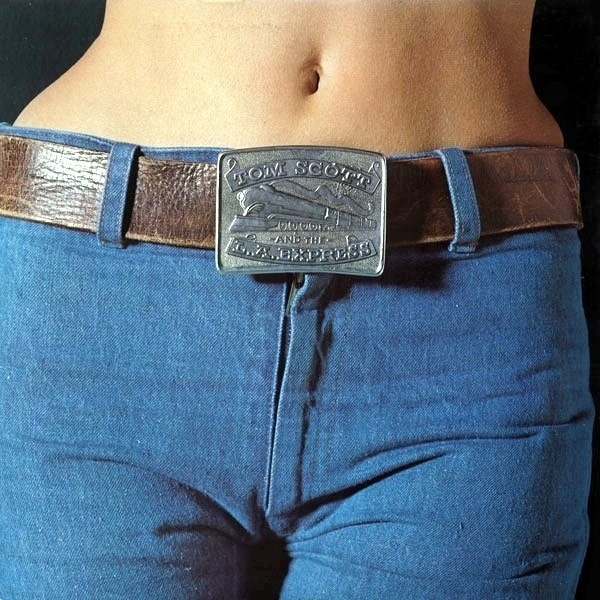
Joni Mitchell -Court and Spark.
The second album that Tom Scott and The L.A. Express worked on together, was Joni Mitchell’s sixth album Court and Spark. Tom Scott and John Guerin featured on all eleven tracks, while Max Bennett and Larry Carlton featured on eight songs. Joe Sample only featured on Raised on Robbery, but in doing so, played his part in what was Joni Mitchell’s most successful album.
When Court and Spark was released in January 1974, it reached number one in Canada, where Joni Mitchell was born. Across the border, Court and Spark reached number two in the US Billboard 200, and was certified gold in America and Britain. Later Court and Spark was nominated for four Grammy Awards in 1975, with Joni Mitchell and Tom Scott winning the Grammy Award for Best Arrangement, Instrumental and Vocals. By then, things had changed for L.A. Express.
Joni Mitchell and The L.A. Express-Miles of Aisles.
Two months after the release of Court and Spark, work began on what would become Joni Mitchell’s seventh album Miles of Aisles. Joni Mitchell decided that The L.A. Express should accompany her on Miles of Aisles. This time, The L.A. Express received equal billing with Joni Mitchell.
Recording took place between the ‘2nd’ and ‘4th’ of March 1974, and was completed between August the ’14th’ and ‘17th’ of 1974. Not long after this, two members of L.A. Express dropped a bombshell.
Larry Carlton and Joe Sample left L.A. Express, and decided to concentrate their efforts on their ‘other’ group The Crusaders. However, the original members of L.A. Express would later be reunited. Before that, Tom Scott and the remaining members of L.A. Express started looking for replacements for Larry Carlton and Joe Sample.
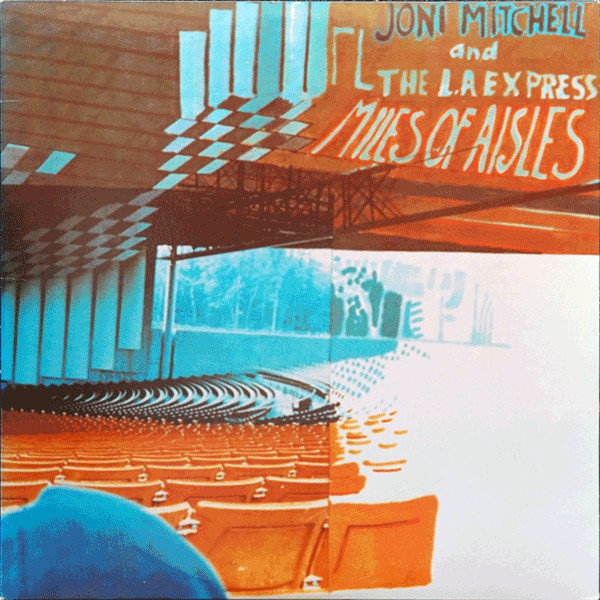
Tom Cat.
This wasn’t easy, given that Larry Carlton and Joe Sample were talented, versatile and vastly experienced musicians. Eventually, though, L.A. Express settled on guitarist Robben Ford and keyboardist Larry Nash. They would make their debut on the Tom Scott and L.A. Express album Tom Cat, which was recorded in late 1974.
Early in 1975, Tom Scott and L.A. Express’ sophomore album Tom Cat was released. Just like their eponymous debut album, it was a carefully crafted and memorable album of fusion. With fusion no longer as popular as it had been in the late-sixties and early seventies, Tom Cat failed to find the audience it deserved. It was only later that Tom Cat which is an underrated album, became popular album amongst fusion and jazz aficionados. However, in 1975 the commercial failure of Tom Cat resulted in Tom Scott parting company with L.A. Express and returned to his solo career.
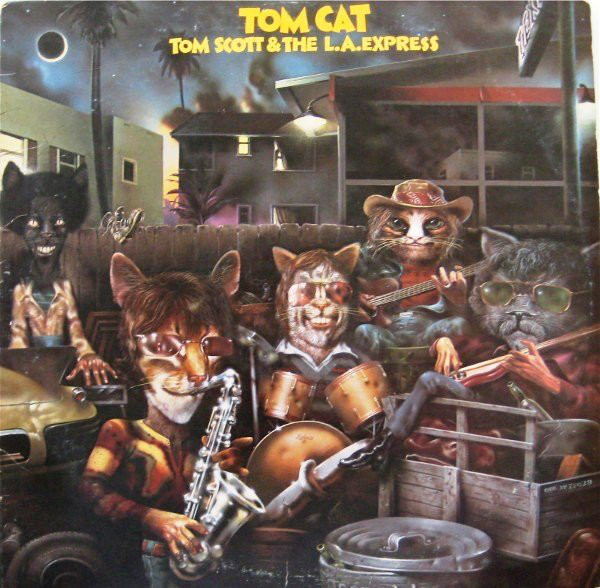
Tom Scott-New York Connection.
Ode Records signed Tom Scott, who soon, began recording his first album in three years, New York Connection. It featured six new compositions from Tom Scott and three cover versions. They were recorded at the Hit Factory, in New York, between the ‘25th’ and ‘29th’ August 1975, and featured a band included some top musicians.
Among the names that joined Tom Scott were Bob James, Steve Gadd, Eric Gale, Hugh McCracken and Ralph MacDonald. When it came to record Appolonia (Foxtrata), a slide guitarist was needed and George Harrison agreed to make a guest appearance. When the album was completed, it was scheduled for release in late 1975.
Four months later, New York Connection was released and found favour with critics, and reached forty-two in the US Billboard 200. This vindicated Tom Scott’s decision to leave L.A. Express who were hard at work recording L.A. Express,

L.A. Express.
After Tom Scott’s departure from the band, the rest of L.A. Express had to think about the future. For the remaining member of L.A. Express the loss of Tom Scott was a huge disappointment. He had founded the band, recruited some of the musicians and been its driving force. However, the loss of Tom Scott was also an opportunity for the remaining members of L.A. Express to strike out on their own. This would mean a few changes though, and before long, there were two changes to the lineup.
The first thing L.A. Express needed to do, was recruit a new saxophonist. They set their sights on securing the services of David Luell, a talented and experienced saxophonist, who was equally comfortable playing baritone, soprano and tenor sax. While David Luell agreed to join L.A. Express, there was still one more change to make, replace the keyboardist Larry Nash.
Replacing Larry Nash, was none other than Victor Feldman. He was born into a musical family in London, England, but was now resident in Los Angeles. Victor Feldman was perfect fit for L.A. Express, given he could play keyboards, synths, percussion and vibes. Now the final piece of the L.A. Express jigsaw was in place.
Now L.A. Express began to think about recording their debut album. However, there was a problem. It was Tom Scott and L.A. Express who were signed to Ode Records. This was essentially a partnership, where Tom Scott was perceived as the senior partner, and it no longer existed. For L.A. Express this was a problem, but also was an opportunity for what was essentially L.A. Express Mk.III.
When L.A. Express got the chance to sign for Caribou Records, which was founded by James William Guercio, who produced Chicago and Blood, Sweat and Tears, Ode Records didn’t stand in their way. It was a new start for third line-up of L.A. Express.
L.A. Express.
Now that L.A. Express were signed to James William Guercio’s Caribou Records, they began work on their eponymous debut album. Bassist Max Bennett penned a trio of tracks, Midnite Flite, Suavemente (Gently) and Cry Of The Eagle and cowrote It’s Happening Right Now with Victor Feldman. He contributed The Shrug and Western Horizon, while John Guerin write Down The Middle. Guitarist Robben Ford chipped in with two songs, Stairs and Transylvania Choo Choo. The nine songs that became L.A. Express had all been written by the band.
Recording of L.A. Express took place at A&M Studios, in Los Angeles during early 1975. By then, L.A. Express’ rhythm section featured drummer and percussionist John Guerin, bassist Max Bennett and guitarist Robben Ford. They were joined by saxophonist David Luell and Victor Feldman, who switched between keyboards, percussion, synths and vibes. Rather than employ a producer, The L.A. Express decided to take charge of production. Once the album was recorded, it was ready for release in 1976. Before that the original members of L.A. Express were reunited their former band mates and some new names.
Joni Mitchell who was then engaged to L.A. Express drummer John Guerin, was about to record her seventh album, The Hissing Of Summer Lawns. L.A. Express were invited to play on the album. This included the two former members of L.A. Express, Larry Carlton and Joe Sample. They would meet L.A. Express’ new guitarist Robben Ford. However, neither David Luell nor Victor Feldman played on The Hissing Of Summer Lawns. It would be released to critical acclaim in November 1975, and become one of Joni Mitchell’s most successful classic albums. The following year, L.A. Express released their eponymous debut album.
When L.A. Express was released early in 1976, it was to critical acclaim. Inevitably, comparisons were drawn with the two albums Tom Scott and L.A. Express had released. While L.A. Express was another fusion album, it was a much more accessible and pop-oriented take on fusion. Still, though, the emphasis was on quality for fusion’s latest supergroup.
When L.A. Express was released in early 1976, the album failed to trouble even the lower reaches of the charts. By then, music was changing, and fusion was no longer as popular as it had been. Record buyers missed out on the critically acclaimed L.A. Express. Its commercial failure was a huge disappointment for fusion’s latest supergroup.
For Tom Scott who must have been watching with interest, this further vindicated his decision to leave L.A. Express to record a solo album and pursue other musical interests. Meanwhile, the band he had founded was about to receive another bitter blow.
Not long after the release of L.A. Express, guitarist Robben Ford left the band. This was a big loss, as he contributed two tracks to L.A. Express and wasn’t just a talented, versatile guitarist, but one who was expressive and inventive. His guitar played an important part in L.A. Express’ sound on their eponymous debut album. Replacing Robben Ford wasn’t going to be easy.
Eventually, the other members of L.A. Express settled on guitarist Peter Maunu as Robben Ford’s replacement. Now work could begin on L.A. Express’ sophomore album, Shadow Play.
Shadow Play.
With Peter Maunu onboard, L.A. Express Mk. IV headed out of Los Angeles to work on their sophomore album Shadow Play. Their destination was James William Guercio’s Caribou Ranch, in Colorado which sat high above the mountains. It was an atmospheric and inspiring place, and perfect for writing and recording an album.
Founder member of L.A. Express, John Guerin, wrote Velvet Lady and Mad Drums And Englishman (Mavro). New recruit Peter Maunu contributed Nordic Winds, Double Your Pleasure and Virtex. Victor Feldman penned Chariot Race, Dance The Night Away and Silhouette. Shadow Play was written by David .Luell and R.Philipe. These songs were recorded by L.A. Express at the Caribou Ranch, with a little help from their friends.
This time around, when recording Shadow Play began, L.A. Express’ rhythm section featured drummer and percussionist John Guerin, bassist Max Bennett and guitarist Peter Maunu. They were joined by saxophonist David Luell and Victor Feldman, who played piano, Fender Rhodes, Arp Odyssey, Hammond organ and congas. Joining L.A. Express were two vocalists Paulette McWilliams and Joni Mitchell, who featured on three tracks. Again rather than employ a producer, The L.A. Express decided to take produce the Shadow Play themselves. It was ready for release during the second half of 1976.
Before that, critics had their say on Shadow Play, which would be the second album L.A. Express had released. Shadow Play was well received by critics, who noticed that L.A. Express had moved from fusion towards a rockier sound on Shadow Play. The addition of the two guest vocalists was welcomed, which showed another side to L.A. Express They were a chameleon-like and versatile band.
While critics were won over by Shadow Play, the album failed to attract the attention of record buyers. Just like L.A. Express, Shadow Play didn’t trouble the charts. For L.A. Express it was the end of the road.
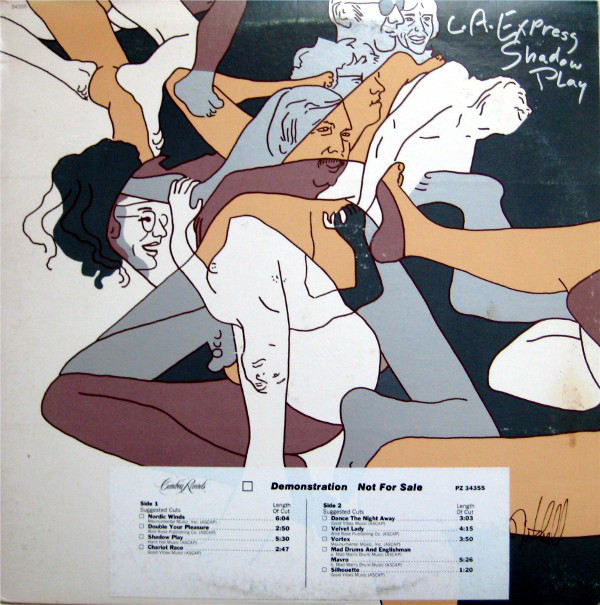
By then, the members of L.A. Express were involved in a number of different projects, which would prove more successful and lucrative. It wasn’t going to be as easy to find time for L.A. Express to record together any more. So a decision was made that Shadow Play would be L.A. Express’ swan-song.
Meanwhile, Tom Scott’s fortunes had improved since his departure from L.A. Express. He continued to work with the great and good of music, and accompanied everyone from Minnie Riperton, Carole King, Aretha Franklin to Merry Clayton to Wings, Melvin Van Peebles, George Harrison, The Carpenters, Glen Campbell, Joni Mitchell to Boz Scaggs and Hall and Oates. Still, millions of viewers heard one of Tom Scott’s most successful compositions when they tuned in to The Streets of San Francisco between 1972 and 1977. However, in 1975, another Tom Scott composition, Gotcha, became the theme to Starsky & Hutch. This would prove lucrative for Tom Scott, who recorded Gotcha for his 1977 a bum Blow It Up. By then, L.A. Express called time on their career, and like Tom Scott had moved on to other projects.
When L.A. Express called time on their career in 1976, they had only been together for just three years, but had accomplished a lot. They had recorded two albums as Tom Scott and L.A. Express, featured on a trio of Joni Mitchell albums and released two albums for Caribou Records, L.A. Express and Shadow Play. The albums they recorded as Tom Scott and L.A. Express and then Tom Scott is a reminder of one fusion’s oft-overlooked, but multitalented and versatile supergroups which was founded by Tom Scott and should’ve reached greater heights.
The Story Of Tom Scott’s Short-Lived Supergroup L.A. Express.
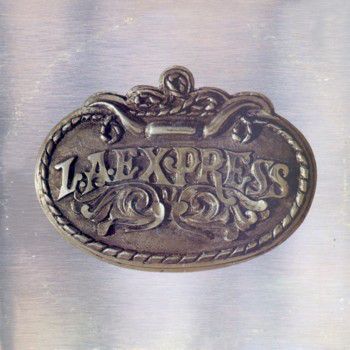
MILES DAVIS-BITCHES BREW.
Miles Davis-Bitches Brew.
Label: Sony Music.
Although Miles Davis’ recording career began in 1951, when he released his debut album The New Sounds, he soon had established a reputation as a prolific, and innovative musician. He released further forty-three albums between 1951 and 1969. This included classics like 1957s Round About Midnight and 1959s Kind Of Blue. While both of these albums would become classic albums, neither sold in huge quantities at the time of their release. Certainly not enough to result in a gold or platinum disc. That was all about change when Miles Davis released his forty-fifth album, Bitches Brew which has just been reissued Sony Music as a two CD set.
Bitches Brew was the third of Miles Davis’ “electric albums,”as he continued to embrace the fusion sound that was growing in popularity, and as was seen by many as jazz’s saviour. This latest period in Miles Davis’ career began with In A Silent Way. It was released in July 1969, and completed the shift that began on Filles De Kilimanjaro in September 1968.
In a Silent Way
For Miles Davis, In a Silent Way marked a stylistic change and indeed, a change his fortunes when the album was released on ‘30th’ July 1969. The forty-two year old had recorded the album at CBS 30th Street Studio, on the on February the ‘18th’ 1969 with a band that featured some of the future greats of fusion. This included twenty-seven year old guitarist, John McLaughlin who was a relative newcomer. However, he would win the trust and respect of his Miles Davis and the rest of the band with his playing on In A Silent Way, where they incorporated elements of the classical sonata form plus elements of jazz, psychedelia and rock. With the session over, Miles Davis left Teo Macero to edit the recordings.
Teo Macero’s part in the success of In A Silent Way can’t be underestimated, as he began editing the album. When it came to the two lengthy tracks, Shhh and In A Silent Way, Teo Macero’s idea was to edit them so that they consisted of three different parts which can be regarded as exposition, development and recapitulation. By the time Teo Macero had finished editing Shhh, the first and last six minutes of the track featured the exact same piece of music. However, this would play its part in the sound and success of album that some critics called ‘space music’ upon its release.
In A Silent Way was an album that divided the opinion of critics. Some critics were shocked at Miles Davis’ decision to incorporate electric instruments on the album, and took this as a betrayal and Miles Davis was seen by some critics as heretic. While some jazz critics sent Miles Davis to Coventry, where he was forced to sit on jazz’s equivalent of the naughty step, other critics welcomed the addition and incorporation of electric albums on In A Silent Way which they called a groundbreaking album from musical chameleon Miles Davis. However, with critic’s opinion split on In A Silent Way, record buyers had the final say on the album.
When In A Silent Way was released, it reached number 134 in the US Billboard 200, and became Miles Davis’ first album to chart since Seven Steps To Heaven in 1963. In A Silent Way also reached number three in the US Jazz charts, which meant it was Miles’ most successful album. It seemed Miles’ new sound had introduced a new generation to Miles Davis. So, it’s no surprise that Miles decided to return to the studio straight away.
Bitches Brew.
Miles Davis booked three days at Columbia Studio B, New York for the sessions that would later become Bitches Brew. They began on August the ‘19th’ 1969, and over the next three days, Miles Davis’ extended band would record six songs that became one of Miles’ most ambitious and innovative albums, Bitches Brew.
Between the ‘19th’ and ‘21st’ August 1969, a huge cast of musicians, that can only be described as the great and good of jazz, made their way Columbia Studio B. This included a rhythm section of drummers Lenny White and Jack DeJohnette, Dave Holland on standup bass, Harvey Brooks on electric bass and guitarist John McLaughlin. They were joined by Joe Zawinul and Chick Corea on electric piano. Adding a percussive backdrop were conga players Don Alias congas and Juma Santos, who also played shakers. Soprano saxophonist Wayne Shorter joined soprano saxophone, Bennie Maupin on bass clarinet and Miles Davis trumpet. With the lineup in place and in situ, the session on the ‘19th’ of August set the tone for the next three days.
‘19th’ of August.
Three songs were recorded on the ‘19th’ of August by producer Teo Macero, Bitches Brew, John McLaughlin and Sanctuary. This was quite a feat as Miles Davis’ band was very different to most bands of that time. He used two drum kits and two electric pianos. Lenny White’s drum kit was situated on the right, and Jack DeJohnette’s on the left. Similarly, Chick Corea electric piano sat on the right, while Joe Zawinul was situated on the left. There were also two bases used. Dave Holland played standup bass and Harvey Brooks electric bass. Some of the musicians had never encountered this setup before, nor had engineer Frank Laico. Nobody it seemed, had encountered Miles Davis’ way of working on Bitches Brew, but were willing to try it.
What’s quite remarkable given what happened over the three-day session, is that Miles Davis had brought the band together without much notice. Looking back, it’s as if he wanted them to arrive without any preconceived ideas. He needed them to work with him and trust him as he pioneered what was an innovative way to record what would be a groundbreaking album.
Very little of the material on Bitches Brew had been rehearsed by the band. That was how Miles Davis had planned it. He wanted everything the band played to be off-the-cut. Briefly, he would give them some hints and guidance about tempo, chord structure, melody, mood or tone, then when the red light came on, Miles Davis stood watching and studying each of the musicians If needed, he would encourage and cajole a performance out some of the musicians who were struggling with this new way of working, and other times would give cues when to change tempo or chord. Often, the only cue a musician had, was when Miles Davis clicked his fingers. With Miles Davis guiding his all-star band, gradually a very different style of music emerged.
The three tracks that were recorded on the ‘19th’ of August, Bitches Brew, John McLaughlin and Sanctuary hinted at the direction Bitches Brew was heading. Miles Davis was turning his back on traditional jazz rhythms and instead, had decided to fully embraced the much looser rock-tinged, improvisational style. This was what Miles Davis had been trying to cajole out of his band. As Miles Davis sat down at the end of the session with producer Teo Macero and played the tapes back, he knew he was on the right road.
Miles Davis had coaxed and cajoled the basis for three tracks out of the band he had hastily put together.Bitches Brew would eventually become a twenty-seven minute epic. John McLaughlin would be trimmed to just over four minutes. Sanctuary, which was penned by Joe Zawinul, would close Bitches Brew. It would eventually clock in at just under eleven minutes. However, there was still half an album to record, plus a lot of editing to do.
‘20th’ of August 1969.
As the ‘20th’ of August 1969 dawned, the same musicians made their way to Columbia Studio B. The only change was Stan Tonkel engineered the rest of the sessions. Everything else stayed the same.
If the previous day had been a shock to their system, the band now they had some idea of what Miles Davis and producer Teo Macero were trying to achieve. The band embraced the concept, and having thought about it, realised that they had the opportunity to be part of musical history, as Bitches Brew potentially, was a truly innovative album in the making. Especially, those in the rhythm section.
For those in the rhythm section, they must have realised the enormity of rhythmic innovations. The use of two bassists, two drummers and two electric pianos was groundbreaking. Especially, as they all played together as one. This was what some rock groups had been doing, and this had influenced Miles Davis. So had the Jimi Hendrix Experience who influenced and inspired Miles Davis to reinvent his music, and head in a new direction.
As part of the reinvention of Miles Davis, he decided that his rhythm section should be allowed off the leash. They enjoyed the opportunity to take centre-stage, as they unleashed lengthy and improvised solos. For musicians of the calibre of John McLaughlin, Dave Holland and Chick Corea, this was music to their ears.
Whereas the previous day, Miles Davis’ band had recorded three tracks, they only recorded the one track on the 20th August, Miles Runs The Voodoo Down. It’s an equally ambitious track, that eventually, was edited down to fourteen minutes. However, that day in August, when the red light went on, Miles Davis again, coaxed, cajoled and encouraged a performance out of his band. He wasn’t interested in a good performance. That wasn’t good enough for a perfectionist like Miles Davis who demanded an outstanding performance befitting a potentially groundbreaking album. His band was capable of this, and as bandleader, it was Miles Davis’ job to coax it out of the band.
Unsurprisingly, Miles Davis managed to do so. He had been a bandleader long enough, and using a mixture of praise and constructive criticism, somehow, encouraged the band to raise their game and reach even greater heights.
Just like on the ‘19th’ of August, the rhythm section was responsible for a truly innovative performances. Similarly, Wayne Shorter’s soprano saxophone, Bernie Maupin’s bass clarinet and Miles’ trumpet played leading roles in another epic track. It would later be edited down to fourteen minutes. That was still to come. There were two more tracks to record.
‘21st’ of August 1969.
The two final tracks that would make up Bitches Brew, were Spanish Key and Joe Zawinul’s Pharaoh’s Dance. They were scheduled to be recorded on the ‘21st’ August 1969, and when the same band reconvened, Miles Davis announced that he had decided to add a third pianist. He knew the very man, Larry Young.
Bringing in a new face so let on in the Bitches Brew session made sense, as Larry Young would have no preconceived ideas about what to play. He would play with an unbridled freedom. That was what Miles Davis and producer Teo Macero wanted from Larry Young, whose piano would sit in the centre of the arrangement. This resulted in yet another layer of music, as Miles Davis and Ted Macero continued to push musical boundaries to their limits, and sometimes, even beyond.
Over the course of the 21st August, Miles encouraged, coaxed and persuaded two final performances out his band. They responded to Miles Davis’ encouragement and delivered two sterling performances. As engineers Frank Laico and producer Teo Macero looked on, little did they know that they were in the process of making history.
Making History.
With the six songs that became Bitches Brew recorded, the band left Columbia Studio B, New York. None of them realised that they had just played their part in an album that would transform jazz music. However, there was a lot of work to do before then.
Much of this entailed the editing process, which was Teo Macero’s area of expertise. He had plenty of material to choose from. This came as no surprise, as Miles Davis had encouraged the band to lay down a series of performances. Now he was left to pick and choose what made its way onto the final tracks. Surrounded by piles of reel-to-reel tapes, Miles Davis and Ted Macero worked their way through the various reels. What followed was like piecing together a musical jigsaw. Sometimes, numerous edits featured in the one track, and on Bitches Brew alone, there were fifteen edits, including the same loop being repeated on three occasions.
Then on Pharaoh’s Dance, the number rose to nineteen. Never before had editing been used so extensively, and later, Bitches Brew was seen as a landmark album in terms of utilising the available studio technology to is full potential This wasn’t the only reason though.
In the studio, all producers had a variety of effects they can use. Like most musicians, Miles Davis was well aware of this and encouraged Teo Macero to deploy them effectively and if he wanted, extensively. Essentially, Miles Davis wanted to transform the studio into another musical instrument. This wasn’t a new concept, and was one the musique concrète composers of the fifties and sixties had used extensively. Now Miles Davis was about to follow in their footsteps, as he and Ted Macero deployed tape delays, reverb and echo. They would play their part in what would be the most ambitious and innovative album of Miles Davis’ career. However, before then, Miles returned to Columbia Studio B, New York, on January 28, 1970.
January ’28th’ 1970.
Many of the same musicians that featured on the other tracks on Bitches Brew returned to Columbia Studio B. This included a rhythm section of drummers Lenny White and Jack DeJohnette, Dave Holland on standup bass and,Harvey Brooks on electric bass and guitarist John McLaughlin. They were joined by Joe Zawinul and Chick Corea who both played electric piano. Percussionist Airto Moreira also played cuíca, and was joined by soprano saxophonist Wayne Shorter, bass clarinetist Bennie Maupin and trumpeter Miles Davis. This was the band that would record Wayne Shorter’s composition Felio.
Over the course of January the ‘28th’ 1970, Miles Davis, producer Teo Macero and engineer Stan Tonkel recorded Felio. Gradually, the song began to take shape. Eventually, by the close of play, Miles Davis had another song in the can. However the big question was would it make its way onto Bitches Brew?
The answer was no. Despite its quality, Felio didn’t make it onto Bitches Brew. It was an ambitious and groundbreaking double album that lasted ninety-four minutes and eleven seconds. Miles Davis and Teo Macero had poured their heart and soul into an album which they believed, could, change the face of jazz music.
There was a stumbling block though. Critics weren’t won over by Bitches Brew. Just like In A Silent Way, the reviews were mixed. Rock critics seemed to “get” Bitches Brew, and most were excited by this melting pot of musical genres. They could understand the marriage of avant-garde, experimental, musique concrète, funk, jazz, psychedelia and rock. It seemed to harness the best of various disparate genres. However, not everyone agreed.
Jazz critics especially, wrote the most disparaging and damaging reviews of Bitches Brew. Some went as far as to say this wasn’t jazz music. The problem was, many of these critics over the past two decades had been fed on diet of “mainstream jazz,” and just didn’t understand this gushing vortex of groundbreaking, genre-melting music. An expanded rhythm section featuring multiple drummers, bassists and pianists wasn’t something they had encountered before. This was something new, imaginative, influential and innovative that was being referred to as fusion. It caught the attention of a several generations of music lovers.
Unlike some music critics, record buyers tuned in and were turned on to the music on Bitches Brew when it was released on March the ‘30th’ 1970, and before long, became Miles Davis’ biggest selling album. Bitches Brew reached number thirty-five in the US Billboard 200 and number one on the US Jazz charts. This resulted in Miles Davis’ first ever gold album in America. Meanwhile, across the Atlantic, in Britain, audiences had embraced Miles Davis’ groundbreaking opus Bitches Brew, which was certified silver.
It was fitting that Bitches Brew had given Miles Davis his biggest selling album on both sides of the Atlantic, as it was the forty-fifth album of the forty-three year old trumpeter’s career. Eventually though, Bitches Brew sold over two million copies in America, and was certified double platinum. By then, people understood Bitches Brew.
Just like so much groundbreaking music, many people didn’t understand Bitches Brew initially and many critics, musicians and record buyers were puzzled. Why had Miles Davis plugged in? What was with the expanded rhythm section and the myriad of effects? They found it hard to comprehend where Miles was coming from. Soon, it all became clear, at least to those who cared to listen.
The Godfather of cool and modal jazz was at the vanguard of a yet another new musical movement, fusion. Where Miles Davis lead, others followed. Soon, it would become one of the biggest musical movements of the seventies. Miles Davis would, eventually, be crowned its founding father. Recognition came a year later.
In February 1971, Miles Davis released The Complete Bitches Brew Sessions. This four album set featured the Bitches Brew Sessions in their entirety. In some ways, this further explained where Miles Davis was coming from musically. The four discs explained the musical journey that became Bitches Brew. Suddenly, many who hadn’t understood Bitches Brew were enlightened. Already enlightened however, were the Grammy Awards’ judges.
From 1961, there had a Grammy Award for the Best Large Jazz Ensemble Album. One of the nominees in 1971, was Miles Davis’ Magnus Opus Bitches Brew. Looking back, it seemed inevitable Miles’ would win a Grammy Award for Bitches Brew. However, it was far from a fait accompli.
On its release, Bitches Brew had divided opinion. While Bitches Brew won the hearts and minds of rock critics, jazz critics weren’t convinced. To them it was strange brew of disparate musical genres and influences; one they either didn’t understand, or want to understand. However, the Grammy Award judges were made of sterner stuff, and understood innovation when they heard it. They were more than happy to reward Miles Davis’ innovative fusion classic Bitches Brew.
At the glittering Grammy Awards’ ceremony in April 1971, Miles Davis was vindicated. His decision to plug-in, and change direction musically on Bitches Brew, was richly rewarded. He won a Grammy Award for the Best Large Jazz Ensemble Album. By then, fusion as it became known, was growing in popularity, and the man who gave birth to fusion was receiving his reward. This has been the case over the last forty-five years.
Ever since the release of Bitches Brew, it has been recognised as a landmark album. This musical tour de force is now perceived as one of the most important albums in the history of jazz. Bitches Brew was a game-changer. Suddenly, jazz’s rhythmic rules were rewritten. Anything was now possible. Rhythm sections grew in size, and suddenly, two drummers, bassists or pianists were acceptable. The use of effects were embraced, transforming the recording studio into an extra instrument. Similarly, editing was used as part of the creative process. Here, Miles Davis drew inspiration from the musique concrète composers of the fifties and sixties. This was just another piece in the musical jigsaw that was Bitches Brew. It rejuvenated interest in jazz.
By 1970, many critics and record buyers regarded jazz as yesterday’s music. It was the music their parents and grandparents listened to. A new generation of record buyers turned their back on jazz. That was until Miles Davis released Bitches Brew.
Suddenly, jazz was back in fashion. It had been reimagined and reinvented by Miles Davis on Bitches Brew. This was a game-changer, and fusion as the genre became known, proved to be happy a marriage between jazz and rock. Before long, fusion was the most popular genre of jazz. A generation of jazz and rock musicians collaborated, resulting in jazz that was commercially successful and critically acclaimed. It’s also music that’s stood the test of time.
That’s why forty-seven years after the release of Bitches Brew, Sony Music have just rereleased Bitches Brew as a two CD set, with second disc also featuring alternate takes, an edit and singles. This is the perfect way to discover or rediscover the delights of Bitches Brew, which should make its way into every self-respecting record collection. It’s not just one of Miles Davis’ best albums, but one of his most ambitious and groundbreaking albums. Yet again, Miles Davis set out to reinvent himself and jazz music, and succeeded in doing so, and in the process, created a pioneering album that transformed, and rejuvenated jazz, Bitches Brew.
Miles Davis-Bitches Brew.
GORAN KAJFES SUBTROPIC ARKESTRA-THE REASON WHY VOLUME 3.
Goran Kajfeš Subtropic Arkestra-The Reason Why Volume 3.
Label: Headspin Recordings.
Just over four-and-a-half years ago, Swedish trumpeter Goran Kajfeš released the first volume in The Reason Why trilogy, on Headspin Recordings the label he had founded with producer David Osterberg in 2004. The Reason Why Volume 1 was hailed by critics as an ambitious and groundbreaking album, and was later nominated for a Grammis, the Swedish equivalent of a Grammy Award. This came as no surprise to those who had heard The Reason Why Volume 1, and felt that Goran Kajfeš would’ve been a fitting beneficiary of such a prestigious award. After all, Goran Kajfeš had been one of the leading lights of Swedish music scene for three decades, and had divided his time between touring and recording albums with various groups he was a member of, and solo albums.
Just under two years later, in March 2015, the Goran Kajfeš Subtropic Arkestra returned with the eagerly awaited The Reason Why Volume 2. The second instalment in this trilogy of albums featured an all-star cast that included some of Goran Kajfes’ musical friends. They all played their part in the sound and success of The Reason Why Volume 2, which received the same critical acclaim as its predecessor. This meant that the Goran Kajfeš Subtropic Arkestra had just one further volume of The Reason Why trilogy to release.
Now after two years and eight months later, the Goran Kajfeš Subtropic Arkestra make a welcome return with the third and final instalment in the trilogy The Reason Why Volume 3 which was recently released by Headspin Recordings. It marks the end of another chapter in the career of bandleader, composer, musician and producer Goran Kajfeš.
He was born in Tyresö, in Stockholm County in east central Sweden on the ’22nd’ of June 1970, into a musical family. Goran Kajfeš father was Davor Kajfeš, the renowned Croatian pianist and composer. His musical talent would rub off on Goran Kajfeš, who growing up, learnt to play the trumpet among a variety of other instruments. Goran Kajfeš was already budding multi-instrumentalist, and would put his versatility to use later in his musical career.
This included in the various bands that Goran Kajfeš founded and joined. One of the earliest groups Goran Kajfeš was a member of was Regis, in the late-nineties. However, as a new decade dawned, Goran Kajfeš became part of several bands.
Among the various groups was the jazz band Oddjob who have released nine albums between 2002 and 2017. Goran Kajfeš found the time to join improv band Nacka Forum who released three albums between 2002 and 2012. It was just one of several groups he joined, who played everything from jazz and reggae to ska and soul.
One of these bands was The Solution, who raison d’être was to replicate the sound of sixties soul. The Solution released two albums, 2004s Communicate and 2007s Will Not Be Televised, and became a popular live draw. During this period, Goran Kajfeš was a member of the Swedish ska and reggae band Club Killers, who released two albums between 2005 and 2008. They were also he house band at the Stockholm club, Club Killers.
A year later, and Goran Kajfeš was a member of the Rocking Babooshkas when they released their album Демоны Любви in 2009. By then, Goran Kajfeš had joined The Moon Ray Quintet who released two albums between 2009 and 2010. After this, Goran Kajfeš was part of the Fire! Orchestra, and improv group Angles 8 when they released their album By Way Of Deception in 2012. However, Angles 8 was short-lived and Angles 9 was born in 2013. They’ve released three albums between ambitious albums of improv between 2013 and 2017.
Remarkably, while working with all these bands, Goran Kajfeš was working with a variety of different artists in the studio and live. This included Magnus Carlson, Fläsk Quartet, Stina Nordenstam, Eagle-Eye Cherry, Håkan Hellström, José González, Eric Gadd, Janet Jackson, Stephen Simmonds, and The Thing XL. Still, though, Goran Kajfeš had found time to embark upon a solo career.
Goran Kajfes’ debut album Solodebuten Home was released to critical acclaim in 2000, and was an innovative fusion of jazz and electronics. Four years later, and Goran Kajfeš returned with his long-awaited sophomore album Headspin. It was released to plaudits and praise in 2004, and won a Grammis, the Swedish equivalent of a Grammy Award. For Goran Kajfeš this was a huge honour, and gave his solo career a boost.
Despite winning his first Grammis, it was six years before Goran Kajfeš returned with his third album X/Y in 2010. Critics sung X/Y’s praise upon its release, and it some critics and the album won the prestigious Nordic Music Prize. For Goran Kajfeš all his hard work was over the past two decades was starting to pay off.
In April 2013, Goran Kajfeš returned with his latest project, the Goran Kajfeš Subtropic Arkestra who released The Reason Why Volume 1. It was the first in a trilogy of albums that the Goran Kajfeš Subtropic Arkestra were about to release. Critics upon hearing The Reason Why Volume 1 called the album ambitious and groundbreaking. It was no surprise when it was later nominated for a Grammis, the Swedish equivalent of a Grammy Award. Sadly, The Reason Why Volume 1 didn’t follow in the footsteps of X/Y.
Just under two years later, in March 2015, and the Goran Kajfeš Subtropic Arkestra returned with The Reason Why Volume 2. The second instalment in this trilogy of albums featured an all-star cast that included some of Goran Kajfes’ musical friends. They all played their part in the sound and success of The Reason Why Volume 2, which received the same critical acclaim as its predecessor. This meant that the Goran Kajfeš Subtropic Arkestra had just one further volume of The Reason Why trilogy to release.
The latest all-star lineup of Goran Kajfeš Subtropic Arkestra released The Reason Why Volume 2 in November 2017, and this brought to an end one the most hotly anticipated trilogies of recent years. As soon as each instalment hit the shelves of record shops, critics and music fans were eagerly awaiting the next volume. The one question on many people’s lips is this really the end of the released The Reason Why series?
Goran Kajfeš has always been clear that The Reason Why was a trilogy, and that there would be no other volumes after that. It’s not a case that the cupboard is bare, and there’s no more music to release. Instead, Goran Kajfeš explains that: “when we came up with idea of performing interpretations of the music that inspires us, we decided to limit the project to three volumes to avoid being pigeonholed as a covers band. It has been an incredibly rewarding experience for the group’s sound and development, but now it’s time to look forward and see what’s next for the Subtropic Arkestra.” At least music lovers can sleep soundly knowing that there’s a future for the Goran Kajfeš Subtropic Arkestra.
What direction the Goran Kajfeš Subtropic Arkestra will head in the future is for their founder to decide. “This is exciting because none of us knows what’s in there,” says Goran Kajfeš as he plots the next musical move in a career that began nearly back in the late-eighties.
Since then, Goran Kajfeš has been one of the hardest working men in Swedish music, playing with various bands, and some of the biggest names in music. This has taken Goran Kajfeš around the world several times, and he’s taken to the stage in North America, South America, Japan, Europe and Britain. Still he finds time to record albums of innovative music, including The Reason Why Volume 3.
For the final instalment in the trilogy, the Goran Kajfeš Subtropic Arkestra have chosen seven tracks that mean something to them. This included Hailu Mergia and The Walias’ Ibakish Tarekigne; Christer Bothén’s Trance Dance; Bernard Fevre’s Le Monde Avait 5 Ans; US 69’s I’m On My Way/Patch Of Blue;he Orchestre Poly-Rythmo de Cotonou’s Ne Rien Voir, Dire, Entendre; Noah Lennox a.k.a. Panda Bear’s You Can Count On Me and Caribou’s Sandy. These seven tracks became The Reason Why Volume 3, which was recorded by the Goran Kajfeš Subtropic Arkestra.
Recording of The Reason Why Volume 3 took place at Svenska Grammofonstudion, in Göteborg, Sweden. The rhythm section featured drummer and percussionist Johan Holmegard, bassist Johan Berthling and electric guitarists Robert Östlund and Reine Fiske who also played mellotron. Jesper Nordenström switched between organ, Fender Rhodes, piano and synths, while percussionist Juan Romero made a guest appearance on Ne Rien Voir, Dire, Entendre. Joining trumpeter Goran Kajfeš in the horn section were saxophonist and flautists Per “Ruskträsk” Johansson and Jonas Kullhammar, while Per “Texas” Johansson played saxophone, clarinet and oboe. This was the lineup of the Goran Kajfeš Subtropic Arkestra that played on The Reason Why Volume 3.
Opening The Reason Why Volume 3 is Ibakish Tarekigne, which was penned by Ethiopian keyboardist Hailu Mergia and The Walias. There’s more than a nod to the original, as guitars chime and combine with the rhythm section. Soon, growling horns enter, before a drum roll signals the chirping and weeping guitars. Later, a rasping, braying horn takes centre-stage as the rest of the Arkestra provide a sweeping, swaying accompaniment. This continues when the horns unite, before a weeping, shimmering guitar and rolls of drums interject. Mostly, it’s the four horns that take centre-stage, whether playing together or when Goran Kajfeš unleashes a blazing solo that plays their part in this beautiful homage to Hailu Mergia and The Walias. It sets the bar high for the rest of The Reason Why Volume 3.
Just subtle keyboard plays as Trance Dance before the volume increases and hissing hi-hats join a glistening guitar and bass, before the braying horns enter. They seem to be playing within themselves, as the track starts to take shape. Meanwhile, the bass prowls as a distant guitar shimmers and chimes, as blistering horn kick loose and join with the mellotron and drums that power the arrangement along. By now, the Arkestra is in full flight and it’s a joy to behold. Their playing is flawless, as horns growl, bray and blaze and the bass continues to prowl as the arrangement surrounds the listener. It’s an immersive experience as an array of sounds assail the listener and the Arkestra play with speed, fluidity and precision. By then, the arrangement has become hypnotic, as stabs of searing horns and effects laden keyboards interject. Later, a blistering guitar solo comes close to stealing the show, as a progressive organ wah-wahs and rolls of thunderous drums power this nine minute epic to its impressive crescendo.
As the drums provide the heartbeat on Le Monde Avait 5 Ans, cascading and glistening keyboards set the scene for the subtle horns that add to this melodic cover of this Bernard Fevre composition. It’s played slowly, thoughtfully and with the utmost care, with each instrument, including the flute, electric piano, glistening guitar, synths, horns and rhythm section playing their part in what’s akin to a beautiful, melodic and melancholy musical tapestry woven by the Goran Kajfeš Subtropic Arkestra. It shows another side to this talented combo.
Drums roll and rumble, horns bray, blaze and howl while a guitar is plucked and the bass is played with speed before a cymbal crashes on I´m On My Way/Patch Of Blue. That is the signal that it’s time for the Arkestra to get down to business. The rhythm section combine with the organ as a guitar rises above the rest of the arrangement and cymbals crash. Horns bray and blaze before the tempo drops, and the arrangement meanders melodically along, with the Arkestra showcasing their considerable skills. Especially a fleet-fingered guitar that weaves it way across the arrangement as horns growl and wail, before taking the track direction of free jazz. Later, a much more understated, mellow sound returns, as the chameleon-like Arkestra complete their ten minute musical adventure par excellence.
Hissing hi-hats and drums are joined by horns on Ne Rien Voir, Dire, Entendre which was originally recorded by the Benin-based Orchestre Poly-Rythmo. Seamlessly, the Arkestra’s homage to the legendary orchestra takes shape. As the rhythm section provide the heartbeat, hypnotic chiming guitars provide a backdrop for the braying, blazing horns that are the Arkestra’s secret weapon. They play with speed, fluidity and invention. Then at the midway point a drum solo is accompanied by a searing, erects-laden guitar before the horns return and the arrangement rebuilds. When they drop out, the blistering guitar remains and washes of cascading mellotron are added while the rhythm section lock down the groove. In doing so, they play their part in what’s without doubt, one of The Reason Why Volume 3’s highlights.
Rueful, rasping horns dominate the arrangement to You Can Count On Me, which the Arkestra play carefully and thoughtfully as an almost spiritual sound emerges. Later, as the horns drop out, a shimmering guitar, drum rolls and washes of glistening mellotron are added. They’re joined by a lone wistful horn, that is played with speed and fluidity as it quivers, while the rest of the horns add a rueful backdrop. By then, the spiritual and hopeful describe this beautiful track. Latterly, though, as the arrangement dissipates, the thoughtful arrangement allows time for reflection
Closing The Reason Why Volume 3 is Sandy, which has a much more experimental sound as the arrangement meanders and drones, as sounds emerge from the arrangement. They’re not quite fully formed but can be identified, as subtle bursts of horns, a shimmering cymbal, a bass and keyboards emerge. However, the Arkestra is merely toying with the listener, and at 2.52 their cover of Sandy starts to take shape. The rhythm section provide a backdrop for the scorching, howling wailing horns while keyboards and percussion play their part as the Goran Kajfeš Subtropic Arkestra freewheel to the finishing line, where they bid their farewell to The Reason Why trilogy. This they do in style with an inventive, genre-melting track with a twist in the tale.
After seven tracks lasting fifty-three minutes, The Reason Why Volume 3 is at an end, and the Goran Kajfeš Subtropic Arkestra have saved the best until last. Goran Kajfeš is of a similar opinion: “The Reason Why Vol. 3 is another album we are extremely proud of and one which we feel leaves the project on a high note. This time the band has been expanded further with horn blower Per “Texas” Johansson and the album was recorded at the Svenska Grammofon studio in Gothenburg and mixed in the Studio Rymden in Stockholm. I hope you enjoy it and will come to see us live on stage somewhere in the universe.”
While they’re traversing the universe, Goran Kajfeš Subtropic Arkestra will surely be looking for inspiration for their next album of genre-melting music. Sadly, it won’t be another instalment in The Reason Why series. Sadly, The Reason Why Volume 3 which was recently released by Headspin Recordings is the last in the trilogy. However, it’s another eclectic genre-melting album.
This time around, the Goran Kajfeš Subtropic Arkestra combined elements of free jazz, fusion, jazz and rock with avant-garde, experimental and even African music on a couple of tracks, Ibakish Tarekigne and Ne Rien Voir, Dire, Entendre. These tracks see the multitalented Goran Kajfeš Subtropic Arkestra pay homage to Hailu Mergia and The Walias and the Orchestre Poly-Rythmo de Cotonou who are two of African music’s best kept secrets. Hopefully, this will encourage music fans to investigate the music of the bands from Ethiopia and Benin. These are just two of the seven tracks on The Reason Why Volume 3, which features a musical masterclass from the Goran Kajfeš Subtropic Arkestra.
They’ve followed in the footsteps of musical luminaries like Tom Waits, David Bowie and Peter Gabriel, in releasing a trilogy of albums. While many trilogies are unintended or accidental, the Goran Kajfeš Subtropic Arkestra set out to release a trilogy of albums and have spent the last four years doing so. With each instalment in this critically acclaimed trilogy, the Goran Kajfeš Subtropic Arkestra have reached new heights and won new friends. However, the Goran Kajfeš Subtropic Arkestra have kept the best until last on The Reason Why Volume 3, which is another ambitious, innovative and flawless genre-melting opus which is a triumphant ending to this memorable trilogy.
Goran Kajfeš Subtropic Arkestra-The Reason Why Volume 3.
ERIK HONORE-UNREST.
Erik Honoré-Unrest.
Label: Hubro Music.
As 2014 dawned, Erik Honoré had just turned forty-seven, and was a vastly experienced composer, musician, producer and vocalist with over twenty-five years of experience and 150 credits to his name. Erik Honoré was also a writer, but since graduating from the Norwegian Institute For Stage and Studio in Oslo, as a sound engineer and producer, seemed to have lived and breathed music.
Previously, Erik Honoré had been a member of Punkt, Velvet Belly and Woodlands, and had worked with the great and good of Norwegian music, including Arve Henriksen, Christian Wallumrød, Eivind Aarset and Jan Bang. Erik Honoré had also worked with David Sylvian on several occasions, and with Jon Hassell, Brian Eno and Peter Schwalm. Still Erik Honoré found time to run the Punkt-festivalen which the two friends had founded in 2005. However, there was still one thing that Erik Honoré had to do…release his debut album.
Nine months later, on the ‘8th’ of September 2014, Erik Honoré’s critically acclaimed, groundbreaking debut album Heliographs was released on Hubro Music. It showcase the considerable talents of Erik Honoré, who was, and is, one of the leading lights of the Norwegian music scene and a pioneering musician who had always been willing to push music boundaries to their limit. Heliographs was, without doubt, one of the best Norwegian albums of 2014, and many critics thought was a possible contender for a Spellemannprisen, the Norwegian equivalent of a Grammy Award. That was testament to Erik Honoré’s talent, imaginative and ability to innovate.
Three years after the release of his critically acclaimed debut album Heliographs, Erik Honoré makes a welcome return with his eagerly awaited sophomore album Unrest, which was recently released by Hubro Music. Unrest was the album that many critics and record buyers have been waiting for, to see what direction musical pioneer Erik Honoré’s music would head on his sophomore album? It’s just the latest high-profile album that Erik Honoré has worked on during the last couple of years.
Ever since the release of Heliographs, time management has been important for Erik Honoré. He is often involved in many projects simultaneously, including running the Punkt-festivalen, which Erik Honoré and Jan Bang founded in Kristiansand 2005.
By then, the pair had been collaborating since they were teenagers, and had been involved in a number of projects. Erik Honoré and Jan Bang’s latest project, Punkt-festivalen, was a groundbreaking concept where concerts that have just taken place were then remixed live. At the heart of the concept was improvising with sampling. Little did Erik Honoré and Jan Bang realise how popular their Punkt-festivalen would become. Now there are spinoff festivals in over thirty cities in Europe and Asia, and the original festival has been curated by the great and good of music, including Brian Eno, John Paul Jones, Laurie Anderson, David Sylvian, and in 2017 Daniel Lanois. However, the Punkt-festivalen has taken up just some of Erik Honoré’s time since he released Heliographs in September 2014.
Erik Honoré has still found time to work with a number of artists, in a variety of roles. This included making a guest appearance on two tracks on Karl Seglem’s 2015 album Lærad=The Tree. Then when Arve Henriksen came to record his latest album Towards Language, in August Erik Honoré played an important role in its success. Erik Honoré cowrote eight of nine tracks, played synths and co-produced Towards Language, which was released to critical acclaim in June 2017.
After spending much of his time working with other artists, it was time for Erik Honoré to concentrate on his own projects. This included recording Tuesday Gods, which was his second collaboration with his partner Greta Aagre. Tuesday Gods was the followup to their critically acclaimed debut album Year Of The Bullet which was released in 2012. When Tuesday Gods was released in August it received the same praise and plaudits as its predecessor, which augured well for the release of Erik Honoré’s eagerly awaited sophomore album Unrest.
It wasn’t going to be easy to followup such an ambitious, important, influential and innovative debut album as Heliographs. However, Erik Honoré was determined to build on his debut album Heliographs and drew inspiration from the what was going on around him. Erik Honoré explains:how: “the album was made during a period of unrest…both the external, social unrest that we have all felt in recent years and more personal experiences of agitation, conflict, turbulence. It became increasingly clear to me that these perceptions influenced the aesthetic choices I made during the process. I have probably chosen sharper edges in these compositions and collages, subconsciously or intuitively in the first, improvisational stage and later extremely consciously in the production and editing processes. ‘Unrest’ was a working title early on, but in the final analysis it was the only title that fit.”
The majority of Erik Honoré’s sophomore album Unrest, was recorded at The Green Room, in Oslo. That was where Erik Honoré and The Musicians composed the eight soundscapes that became Unrest. This included drummer Erland Dahlen, guitarist Eivind Aarset, vocalist Sidsel Endresen, saxophonists Espen Reinertsen, trumpeters Arve Henriksen, violist Ole-Henrik Moe, violinist Kari Rønnekleiv and Jan Bang who took charge of live sampling. Erik Honoré programmed and played the synths, acoustic guitar, piano, percussion, added vocals and produced and mixed Unrest, where Erik Honoré once again used sampling.
This has been a feature of Erik Honoré’s projects, and was used on Heliographs. This time around, Erik Honoré used a variety of vocal and instrument samples that had been recorded at Punkt events in Kristiansand, Molde and Prague. They were then condensed and reworked in Erik Honoré’s home studio at Kampen, Oslo. However, this wasn’t the only example of sampling technology being used on Unrest.
One of the tracks, Procession is Erik Honoré’s live remix Erik Honoré from a Stian Westerhus’ concert at Punkt 2016. It’s yet another reminder that Erik Honoré is pioneering musician who creates groundbreaking music.
Erik Honoré’s described how he uses sampling on Unrest. “The process was very similar: improvisation around live samples of vocalists and instrumentalists, followed by extensive editing and collage work. A quick, intuitive phase, and then a protracted, detail-oriented process. But in my ears the expression is rougher and more confrontational. I hear the album as more direct, and definitely darker. Heliograph’s ‘Dark-Eyed Sister’.” That is a good description of Unrest, where Erik Honoré headed in a different on several songs.
Up until Unrest, Erik Honoré was known for composing and recording instrumental music. However, on Unrest Erik Honoré and Sidsel Endresen add vocals which add to the sheer intensity and emotion of Unrest which is a resonant and captivating album from one of Norwegian music’s pioneers, who paints pictures on eight cinematic soundscapes.
Cinematic certainly describes Surge, which opens Unrest. So does dark, eerie and moody, as the soundscape unfolds and a plink plonk piano plays slowly as the sounds and samples flit in and out, rumbling, crackling and creaking. This includes a distant, otherworldly vocal and brief burst of a braying horn. It signals a change, as the music becomes understated and much more melodic. Pizzicato strings and rasping horns enter and disappear, before percussion and piano replace them as the soundscape becomes ruminative and even dramatic as a drone emerges and accompanies the pizzicato strings as this captivating cinematic soundscape draws to a close.
Abandoned Home is the first of a triumvirate of tracks to feature vocalist Sidsel Endresen. She delivers the tenderest of heartfelt vocals as distant piano plays and an acoustic guitar is strummed. Later, when her vocal drops out, strings swell and are joined by beeps, squeaks and samples that play their part in the understated arrangement. It’s a case of less is more. That is the case when Sidsel returns and delivers a slow, whispery vocal. As it drops out, strings replace it before the piano plays and replicates the ethereal beauty of Sidsel’s vocal. Together, they’re yin to Sidsel’s yang in beautiful, emotive soundscape.
Unrest allows Erik Honoré to use his imagination, as he deploys shrill strings that squeal and squeak before feedback threatens to interject and add to the Unrest. Soon, the sweeping strings become urgent and add to the intensity before samples of dripping water and subtle shimmering drones combine with electronics. Then when a ruminative horn enters, and is joined by a distant cooing sound this beautiful combination is a game-changer and transforms this imaginative and chameleon-like soundscape
Remain is the shortest soundscape on Unrest, and lasts just 1.21. It finds Arve Henriksen’s trumpet taking centre-stage on this beautiful, ruminative soundscape.
Blinded Windows marks the return of Sidsel Endresen’s vocal, which quivers and shivers emotively as the arrangement builds and provided a dramatic backdrop as it ebbs and flows and sometimes surges. Synths, samples and a subtle lone piano which sends out what sounds like a secret code as Sidsel’s vocal is a mixture of emotion, drama and intensity. Later, it becomes ethereal and soul-baring as it plays its part in this powerful and poignant song.
A rumbling sound ushers in a distant piano on Apparition, which is accompanied by an array of samples and strings. They set the scene and add to the tension as Erik Honoré’s vocal is transformed into an instrument as he improvises and injects emotion and drama into his vocal. Maybe he has seen an Apparition, and is trying to convince himself the ghostlike figure doesn’t exist. Behind him, swells of cinematic strings, join beeps and squeaks as Erik Honoré paints pictures on a soundscape that is sure to set the listener’s imagination racing.
Procession is a near eight minute epic, which Erik Honoré remixed live at a Stian Westerhus’ concert at Punkt 2016. Straight away, there’s a hypnotic sound as a sampled vocal is repeated and joins drums to create a captivating and mesmeric backdrop. Meanwhile, percussion and samples are deployed and add to the dreamy, hypnotic sound that is reminiscent of The Orb as Procession floats along, making the world seem a better place.
The Park closes Unrest, with Arve Henriksen’s trumpet ushering in Erik Honoré’s vocal which is accompanied by the distant ethereal sound of a choir and occasional bursts of thunder. Synths are deployed are but used subtly, ensuring they don’t overpower the choir and the vocal as it delivers evocative and powerful lyrics. Later, when Arve Henriksen’s trumpet enters, it adds the finishing touch to one of the highlights of Unrest.
Just over three years after Erik Honoré released his debut album Heliographs September 2014, he returned recently with Unrest which was also released by Hubro Music. Erik Honoré described Unrest as: “Heliograph’s ‘Dark-Eyed Sister.’” That is a good description of Unrest, which is album that has an intensity and an element darkness and drama.
Unrest is also an evocative album that that triggers emotions and forces the listener to think as Erik Honoré and his all-star band paint pictures during the eight cinematic soundscapes. Some of the soundscapes on Unrest are chameleon-like, as Erik Honoré takes the listener on a musical roller coaster. Occasionally, he throws curveballs as darkness and drama give way to beauty. Other soundscapes are ruminative, while others have an ethereal quality as Erik Honoré combines disparate musical genres.
This was the case on his debut album Heliographs, and is the case on Erik Honoré’s eagerly awaited sophomore album Unrest. It finds Erik Honoré combining elements of ambient, avant-garde, electronica, experimental music, improv, jazz and musique concrète. There’s even a hint of Krautrock on Procession, which the multitalented Erik Honoré remixed live at a Stian Westerhus’ concert at Punkt 2016. It’s quite unlike the other soundscapes on Unrest, but shows Erik Honoré’s versatility and ability to innovate.
Innovating is something that fifty year old Erik Honoré has been doing throughout a four decade career. Mostly, he’s worked with other people, been part of a band or most recently, collaborated with his partner Greta Aagre. As a result, Unrest is only Erik Honoré’s sophomore album. However, Unrest is a career defining album from musical pioneer Erik Honoré whose honed and sculpted his own unique and inimitable sound and style which debuted on Heliographs and makes a welcome return on Unrest.
It has been well worth the three-year wait, and Unrest is sure to set the bar high for Erik Honoré’s future. Doubtless, he will rise to challenge once again, and return with another ambitious album of imaginative, innovative and influential music as befits one of the leading lights of the vibrant Norwegian music scene. However, Erik Honoré reaches new heights on Unrest, which is a captivating album which feature a mixture of intensity, darkness, drama, emotion and ethereal beauty, that sometimes, features a ruminative sound that invites reflection as one of Norwegian music’s pioneers, paints pictures on eight cerebral and cinematic soundscapes.
Erik Honoré-Unrest.
ERLAND DAHLEN-CLOCKS.
Erland Dahlen-Clocks.
Label: Hubro Music.
For the last three decades, forty-six year old drummer and percussionist Erland Dahlen has been regarded as one of Norway’s top drummers. He’s the drummer’s drummer, and the man who the great and good of Norwegian music go to when they’re looking for a drummer. As a result, Erland Dahlen is constantly in demand for session work, and has now over 300 credits to his name. Erland Dahlen has been like a musical gunslinger who travels from town to town, playing on album after album. So much so, that studios are like a second home to Erland Dahlen. However, in 2011, there was one was thing missing from Erland Dahlen’s impressive CV…a solo album.
By then, Erland Dahlen has just turned forty, and decided that now was the time to record his debut album. Rolling Bomber was released Hubro Music in February 2012. It was hailed as one of the finest albums of 2012. Erland Dahlen’s solo career was underway.
In August 2015, Erland Dahlen returned with his much-anticipated sophomore album Blossom Bells. Critical acclaim accompanied the release of Blossom Bells, which was nominated for a Spellemannspris, the Norwegian equivalent of a Grammy Award. Erland Dahlen’s solo career was going from strength-to-strength, and the followup to Blossom Bells was eagerly awaited.
Recently, the wait was over when Erland Dahlen released Clocks on Hubro Music. Clocks features six epic cinematic soundscapes, and is without doubt, the most ambitious album of Erland Dahlen’s long and illustrious career.
Erland Dahlen was born in Ulefoss, Norway, on the ’15th’ of May 1971. Growing up, Erland Dahlen discovered music, and started to learn to play the drums. Little did he know that this was when he had first lesson that he would end up one of Norway’s top drummers.
As the new millennia dawned, Erland Dahlen’s career was well underway. He was by then, an established session musician and was had a countless credits to his name. This included playing on albums by some of the biggest names in Norwegian music. However, when he wasn’t working as a session musician, Erland Dahlen was a member of a couple of groups.
This included the jazz group HET, who released their debut album Lost In The Lurch in 2002. Erland Dahlen wrote four of the seven tracks, played and programmed the drums, marimba, added vocals and took charge of the electronics. Alas, there was no followup to Lost In The Lurch, and Erland Dahlen concentrated his efforts on another group, Kiruna.
They released their genre-melting debut Irun in 2002. By the tine Kiruna returned with groundbreaking sophomore album Tarasarus in 2007, Erland Dahlen was a member of two other groups.
Erland Dahlen had joined Madrugada in 2005, and played on their fourth studio album Deep End, and their live album, Live at Tralfamadore. Both of these albums were released to plaudits and praise in 2005. Then in 2007, Erland Dahlen played on Madrugada’s eponymous sixth album. When Madrugada was released in 2008, it proved to be the band’s swan-song. By then, Erland Dahlen was a member of another new band, Boschamaz.
Just like Kiruna, Boschamaz’s music incorporated a variety of disparate influences. That was apparent on their debut album This Is Not Sweden in 2007. It was an ambitious genre-melting album that fused elements of ambient, electronic, experimental, jazz and post rock. However, it would be another four years before Boschamaz returned with the followup to This Is Not Sweden.
Over the next four years, Erland Dahlen continued to work as a session musician, and by 2011 he was recognised as one of Norway’s top drummers. He had spent over a decade as working as a session musician, and had divided his time between playing on other people’s albums and as a member of HET, Kiruna, Madrugada and Boschamaz. They returned with their sophomore album Rød in 2011, a year later. It was the last album the group released. Meanwhile, another group were about to hit the comeback trail, Kiruna.
Kiruna made a welcome return after five years away when they released their third album The River in 2012. While the album was well received by critics, Kiruna like Boschamaz haven’t returned with another album. Since then, Erland Dahlen has had other things on his mind…his solo career.
When Erland Dahlen turned forty, he realised that there was still one glaring omission from his impressive and burgeoning CV, a solo album. He was a veteran of a couple of hundred seasons, and took to the stage with everyone from Stian Westerhus, Eivind Aarset, Hannah Hukkelberg, Anja Garbarek, Nils Petter Molvaer and Xploding Plastix, to John-Paul Jones and Mike Patton. Still, though Erland Dahlen hadn’t released his solo album. He decided that now, the time was right to embark upon a solo career, which he could fit around his session work and his work as a producer.
As 2012 dawned, Erland Dahlen was preparing to release his eagerly awaited debut album Rolling Bomber. It was released by Hubro Music to praise and plaudits in February 2012. When the year drew to close, Rolling Bomber was hailed as one of the finest albums of 2012. Erland Dahlen’s solo career was underway.
Just over three years later, in August 2015, Erland Dahlen returned with his much-anticipated sophomore album Blossom Bells. Critical acclaim accompanied the release of Blossom Bells, which was later, nominated for a Spellemannspris, the Norwegian equivalent of a Grammy Award. Erland Dahlen’s solo career was going from strength-to-strength, and the followup to Blossom Bells was eagerly awaited.
After a two-year wait, the drummer’s drummer Erland Dahlen will make a welcome return when he releases Clocks, which features six epic cinematic soundscapes. They’ve been carefully created by Erland Dahlen and using his newly expanded musical arsenal.
Throughout his career, Erland Dahlen has collected a myriad of disparate musical instruments. Some of these he’s put to good use on his two previous Rolling Bomber and Blossom Bells. However, for Clocks Erland Dahlen has put together an unlikely array of musical instruments. He explains: “before I went into the studio to make this album I bought some Cymbells, a Mellotron, several large sheets of metal and a variety of drum machines and stringed instruments.” That isn’t all.
On Clocks, Erland Dahlen also used antique drums from the thirties, a selection of gongs, xylophones, bells, bowed instruments and strings as well as drone-boxes and electronics. Sometimes, Erland Dahlen has to think outside the box to recreate the sound he wants to create. This resulted in him using the sounds of knives and forks, or even marbles rolling on a plate. Erland Dahlen believed that: “it’s incredibly inspiring to explore new instruments and find new sounds.” They certainly play their part in what’s the most ambitious album.
So did two of Erland Dahlen’s ex-colleagues in Xploding Plastix. Hallvard W. Hagen remixed the track Lizard, while Jens Petter Nilsen mixed Clocks. All that remained was for Helge Sten to master at Audio Virus Lab and Clocks would be ready for release. It’s the album that critics, cultural commentators and music fans have spent two years waiting for.
As the title-track opens Clocks, there’s an element of drama and tension. This comes courtesy of the rhythmic, rounded sound of the drums. They’re panned as an array of disparate sounds flit in and out of the arrangement. This ranges from a scrabbled guitar, synths, drone box, gongs, percussion and a steel drum. Later, eerie, buzzing and jangling sounds join with guitars and soar high above the arrangement as drums power the arrangement along. By now, Erland Dahlen is a one-man band as he unleashes a myriad of instruments. They combine to create a soundscape that is full of drama and tension, as it veers between uplifting to otherworldly. Always, Clocks has a cinematic sound and sets the imagination racing before it reaches a crescendo.
Briefly, there’s an understated, orchestral sound at the start of Glas. Soon, karate drums are unleashed and crack, as flourishes of percussion join washes of shimmering guitar and bells. They create an elegiac backdrop while drums scamper and a myriad of beeps and squeaks join the ominous sound of a bass synth. It taps out a code, as if sending a message to distant land on what could easily be part of the soundtrack for a sci-fi film.
As Ship unfolds, Erland Dahlen’s drums briefly reference Krautrock. Then a drum roll signals it’s all change as drums pound and join with gongs, bells, xylophone, percussion and electronics. By then, there’s an element of drama, as this eight minute epic starts to reveal its secrets. A gong adds a hypnotic siren sound, as if the Ship is distress. Meanwhile, Erland Dahlen powers his way round his drum kit combining drama and urgency, as a variety of sounds flit in and out. This ranges from Eastern sound to jangling and deliberate sound. All of a sudden, a haunting vocal emerges from deep in the mix, and adds the to the drama. So do a variety of stringed instruments, electronics, handclaps, percussion, and bells. They’re all part of a carefully crafted and dramatic soundscape, that documents life and drama aboard the Ship as it sets sail across the ocean.
What better way to follow one eight minute epic than with another, Bear. Straight away, a drone box combines with the drums to create an ominous backdrop. They’re joined by a droning organ as a searing guitar cuts through the arrangement. This adds to the drama. So do the keyboards as the arrangement ebbs and flows, drama almost ever-present. Meanwhile, bells rings and effects are added to the arrangement which briefly distorts. Then eerie, otherworldly and buzzing sounds are added as the soundscape shimmers and shivers, as it marches to the beat of Erland Dahlen’s drum. Latterly, the soundscape is haunting, futuristic, atmospheric and evocative. It’s without doubt, one of the pieces of music Erland Dahlen has ever recorded during his three album solo career.
In the distance the ethereal sound of Lizard can be heard. As it unfolds, beeps and squeals are added and create a mesmeric backdrop. Soon, a drum roll signals that things are about to change. Effects are added, and as the arrangement howls, beeps and buzzes. By now, the soundscape sounds like a man machine, as it slowly comes to life. Meanwhile, bells ring and jangle, while eerie, otherworldly sounds are added as drums pitter patter. When rapid fire beeps emerge from the arrangement, it’s as if the man machine is malfunctioning. Later, quivering, shivering sounds join bells, beeps and squeaks during this captivating cinematic soundscape that features Erland Dahlen at his inventive and innovative.
Closing Clocks is Wood a seven minute epic, where drums play while Erland Dahlen improvises and the sound of a marble rolling across a plate can be heard. So can a drone boxes, keyboards and percussion. They’re joined by bells, gongs and bursts of thunder. Sounds flit in and out, some playing a fleeting visit, while others play a leading role as Erland Dahlen puts his mutual palette to good use. This includes the eerie, otherworldly sound that Erland Dahlen has put to good throughout Clocks. It joins an array of bells and drums, and plays its part in the sound and success of another atmospheric, evocative and thought-provoking cinematic soundscape.
After six tracks lasting thirty-nine minutes, Erland Dahlen’s third album Clocks is over. All that remains is the memory of what’s without doubt the most ambitious and cinematic album from sonic pioneer Erland Dahlen. He wrote, played all the interments and produced the six epic soundscapes on Clocks. It sounds like a soundtrack album, awaiting a film.
Erland Dahlen unleashed his creating and imagination on Clocks, which has been compared to Antonio Sanchez’s percussive score for Birdman. However, given the array of influences and reference points, a much more accurate comparison would be the soundtrack work of Tangerine Dream, Ryuichi Sakamoto or former Stewart Copeland’s music for Rumblefish. They may have been amongst the influences and inspirations for Erland Dahlen. So to some extent was Japanese musician, composer and producer Yasuaki Shimizu, plus American composer, music theorist and creator of bespoke musical instruments Harry Partch. He also successfully transformed an array of everyday items into musical instruments. This Erland Dahlen did when recording his genre-melting, cinematic opus Clocks.
On Clocks Erland Dahlen combines elements of ambient, avant-garde, Berlin School, electronica, experimental, Krautrock, Nordic Wave, post rock, psychedelia and rock. Disparate musical genres melt into one, on an album that’s variously dark and dramatic, to elegiac and ethereal, to eerie, futuristic, haunting and otherworldly. Other times, the music is atmospheric and evocative, before becoming emotive and uplifting and then ruminative, thoughtful and thought-provoking. Always the music on Clocks is inventive, innovative and cinematic as Erland Dahlen creates music that is sure to set the listener’s imagination racing. That’s not all.
Without doubt Clocks is the most ambitious album of forty-six year old Erland Dahlen’s career. Although Clocks is just his third album, Erland Dahlen draws upon a lifetime’s musical experience that comes with playing on over 300 albums. The result is Clocks, a breathtaking, career-defining album of atmospheric epic cinematic soundscapes from sonic pioneer, Erland Dahlen.
Erland Dahlen-Clocks.
THE JOHNSTONS-BITTER GREEN, COLOURS OF THE DAWN AND IF I SANG MY SONG.
The Johnstons-Bitter Green, Colours Of The Dawn and If I Sang My Song.
Label: BGO Records.
During the mid-sixties, folk music on both sides of the Atlantic was growing in popularity, in America and Britain. It was a similar case in Ireland, where a number of folk bands were founded, including The Johnstons in Slane, County Meath, whose original lineup featured Adrienne Johnston, her younger sister Lucy and brother Michael.
When The Johnstons started out in the early sixties, they had a ready-made venue on their doorstep, their father Marty’s pub in Slane. That was where they made their debut, singing Irish ballads and folk songs in their father Marty’s pub in Slane, with Michael Johnston playing a twelve-string guitar as Adrienne and Lucy sang harmonies. This went down well with the customers, and soon, people were coming to the pub to see The Johnstons sing. Before long, The Johnstons were heading further afield.
It wasn’t long before The Johnstons started to get bookings in the Dublin area, and made their to the capital of the Republic Of Ireland. By then, the group had only been together for a short time. This made what happened next a remarkable achievement.
The Johnstons decided to enter the first ever Wexford Ballad Competition in February 1966. At stake was a £100 first prize and more importantly, an appearance on the Irish television programme the Late Late Show. Despite their relative inexperience Adrienne Johnston, her sixteen year old younger sister Lucy, and brother Michael triumphed and won the inaugural Wexford Ballad Competition. They arrived home that night £100 richer and with an appearance on the Late Late Show to look forward to. The Johnstons had come a long way in a short.
Life was about to get even better for The Johnstons, who were offered a recording contract by Pye Records. One of the first songs The Johnstons recorded was a cover of Ewan McColl’s The Travelling People, which topped the Irish charts in 1966. This transformed The Johnstons career and indeed lives.
Suddenly, The Johnstons embarked upon a gruelling touring schedule and were constantly on television. They also had to find time to record a second single. Before that, Michael Johnston left the band that he had founded, and was replaced by Paul Brady who would go on to enjoy a long and successful solo career and become one of the biggest names in Irish music.
When Paul Brady from Strabane, County Donegal, joined The Johnstons, he came from a very different musical background, and had previously played in various R&B and beat groups. He was a talented musician and vocalist who would play an important part in The Johnstons’ success. However, Paul Brady wasn’t the only new name joining The Johnstons.
The other musician joining The Johnstons was Limerick born Mick Moloney, a multi-instrumentalist, who had been a member of The Emmet Folk Group. He had also worked with a number of well known Irish traditional musicians. Mick Moloney and Paul Brady made their debut on The Johnstons’ sophomore single.
For their followup to The Travelling People, The Johnstons recorded and released The Alamo later in 1966. It charted and The Johnstons’ popularity continued to grow. By then, The Johnstons were a popular draw and in Dublin and a familiar face in city’s folk scene. The addition of Paul Brady and Mick Moloney had allowed The Johnstons to expand their repertoire. This ensured that The Johnstons’ popularity continued to grow.
Especially when The Johnstons’ third single I Never Will Marry was released by the Pye Records’ imprint Target in 1967 and charted. This was the group’s third consecutive single, but still, The Johnstons hadn’t released an album. However, this would change when they signed to the London-based Transatlantic Records in early 1968.
Signing to Transatlantic Records was the start of a new chapter for The Johnstons, who many critics though were on the verge of making a breakthrough in Britain and Europe. Their music, which was a mixture of folk songs and traditional music had found an audience in Ireland, and Transatlantic Records hoped would soon, find an audience further afield.
When it came to choosing their debut single. The Johnstons recorded and released They’ll Never Get Their Man on Transatlantic Records in 1968. Just like their three previous singles, it gave The Johnstons a hit single in Ireland. Later in 1968, The Johnstons released their eponymous debut album which featured a mixture of folk songs and traditional music. This proved popular in Ireland and was a commercial success.
Further cementing The Johnstons reputation was one of Ireland’s leading folk groups was the success of the Gaelic language singe Gleanntáin Ghlas Ghaoth Dobhair they released on the Gael Linn Records. By then, The Johnstons’ popularity was at an all-time high in Britain and Ireland and critics on both sides of the Irish Sea were praising the group.
After the success of their eponymous debut album, The Johnstons returned in 1969 with not one, but two albums, Give A Damn and The Barley Corn which they released simultaneously. The two albums showcased a versatile band who were able to interpret, arrange and perform a wide range of different songs that would appeal to do different types people.
The Barley Corn saw The Johnstons return to the sound that featured on their eponymous debut album, and was a mixture of folk songs and traditional Irish and Scottish music. This proved popular, as the music chosen replicated The Johnstons’ live sound. However, The Barley Corn featured a polished performance from The Johnstons, who changed direction on Give A Damn, which was another successful album.
Part of the success of Give A Damn were the songs that were chosen by The Johnstons and the album’s much more contemporary sound. The Johnstons covered Ewan McColl’s, Sweet Thames Flow Softly and Dave Cousins of The Strawbs’ You Keep Going Your Way. Three of the songs on Give A Damn were by two up-and-coming singer-songwriters. One of these was Joni Mitchell, who wrote Urge For Going and Both Sides, while Leonard Cohen penned Hey That’s No Way To Say Goodbye. These songs were joined Julia and Walking Out On Foggy Mornings which were penned by Irish songwriter Jon Ledingham. These songs featured a slick sounding performance from The Johnstons and a contemporary sound that found favour with a wider audience.
After the success of The Barley Corn and Give A Damn, The Johnstons decided that the only way to further their career, was to make the journey across the Irish Sea to London. This was a journey many Irish artists and bands had made over the years. However, Lucy Johnston didn’t want to leave her home in Dublin, where she had married photographer Roy Esmonde. As a result, there was only one original member of The Johnstons left in the band, and even Adrienne Johnston would later come to regret making the journey to London.
Once The Johnstons had settled in London, they would begin work on their fourth album Bitter Green, which is joined by Colours Of The Dawn and If I Sang My Song which feature on a two CD set recently released by BGO Records.
Bitter Green.
By the time The Johnstons started work Bitter Green, they were regularly touring Britain, Ireland and Europe, especially Germany, Holland and Scandinavia where their popularity was growing. The Johnstons’ music often featured on radio and they were making regular appearances on television. The Johnstons had come a long way since they started singing in Marty’s pub in Slane.
For Bitter Green, The Johnstons decided to combine the music that had featured on The Barley Corn and Give A Damn. Covers of Ewan McColl’s Jesus Was A Carpenter, Gordon Lightfoot’s The Gypsy and Bitter Green joined Leonard Cohen’s The Story Of Isaac and Joni Mitchell’s Marcie. These songs were a reminder of the music on Give A Damn, while a selection of traditions songs harked back to The Barley Corn and their eponymous debut album The Johnstons. This included
Lord Thomas and Fair Ellender, The Kilfenora Jig, Fiddler’s Green and The Penny Wager. They were joined by reels a medley of reels which included The Fair Haired Boy, Kiss The Maiden Behind The Barrel and The Dawn which were all arranged by Paul Brady, Adrienne Johnston and Mick Moloney.
The recording of Bitter Green took place at Sound Techniques, in London, where The Johnstons recorded their next single. It was a cover of Ralph McTell’s Streets Of London, which as apt given The Johnstons had just relocated from Dublin to London a year ago.
When Bitter Green was released later in 1969, it found favour amongst critics on both sides of the Irish Sea. Bitter Green was regarded as one the best albums of The Johnstons’ career so far. It was certainly the most eclectic of the four albums that The Johnstons had released on Transatlantic Records.
Bitter Green featured a mixture of traditional Irish music and contemporary soundings songs. The traditional Irish music was represented by a variety of jigs and reels, where The Johnstons replicated their live sound. Then on the five covers of songs by Leonard Cohen, Joni Mitchell, Gordon Lightfoot and a poignant reading Ewan McColl’s Jesus Was A Carpenter, The Johnstons became a very different band as they returned to the contemporary sound that featured on Give A Damn. It was an ambitious and bold album where The Johnstons tried to appeal to as many people as possible.
For some, critics the contemporary sound that The Johnstons revisited on Bitter Green had a much wider appeal than the traditional Irish music. This they believed in the long term, had a limited audience outside of Ireland and the Irish diaspora. Traditional music some critics felt that it would only take The Johnstons so far. However, at that time it seemed unlikely that The Johnstons would turn their back on their musical roots.
After the release of Bitter Green, which sold reasonably well, The Johnstons released their cover of The Streets Of London as a single. in 1970. This was followed by The Johnstons Sampler later in 1970, which featured tracks from their first three albums and their singles. The Johnstons Sampler bought the group time while they recorded their sixth album Colours Of The Dawn.
Colours Of The Dawn.
After a tour of Britain and Ireland, The Johnstons returned to Sound Techniques, in London, where they recorded their next album Colours Of The Dawn. By then, Chris McCloud was part of The Johnstons inner circle after he began a relationship with Adrienne Johnston and the pair would eventually marry. Before that, he produced Colours Of The Dawn which marked the start of a new chapter in The Johnstons’ career.
Unlike previous albums, The Johnstons dispensed with the traditional Irish music that had been a feature of their previous album and moved towards a much more contemporary sound. To do this, Paul Brady wrote Brightness, She Came and penned Colours Of The Dawn and I’ll Be Gone In The Morning with Chris McCloud. He also contributed Crazy Anne and Angela Davies. Cover versions included Gordon Lightfoot’s If I Could, Leonard Cohen’s Seems So Long Ago, Nancy, Ian Campbell’s The Old Man’s Tale and Peggy Seeger’s Hello, Friend. These nine songs would become Colours Of The Dawn which was released in January 1971.
Critics on hearing Colours Of The Dawn, heard a very different album from The Johnstons, whose songs were full of social and political comment to from The Johnstons. They commented on recent political events and even broached the subject of political subversives. The Johnstons also commented on racism and the class struggle on Hello, Friend and The Old Man’s Tale which bookended the album. In between, were the Paul Brady compositions where he ruefully remembers the illusory and fleeting nature of relationships, on Brightness, She Came and on I’ll Be Gone In The Morning. There’s also a cinematic quality to Colours Of The Dawn, where The Johnstons paint pictures with the lyrics. However, two beautiful songs and poignant songs were the covers of Gordon Lightfoot’s If I Could and Leonard Cohen’s ruminative reading of Seems So Long Ago, Nancy which played their part in the sound and success of Colours Of The Dawn, which was The Johnstons’ finest album.
The Johnstons’ decision to release an album without any traditional Irish music had paid off. It was as if they had belatedly realised that traditional Irish music was only going to take them so far. Having realised this, The Johnstons decided to return the contemporary sound of Give A Damn. This paid off, when Colours Of The Dawn sold well and was released by Vanguard in America later in 1971.
Just when things were going well for The Johnstons, Mick Moloney decided to leave the band. For The Johnstons this was a huge blow, but they decided to continue as a duo.
Later in 1971, the two reminding members of The Johnstons toured America for the first time, and opened for Joan Baez in front of an audience of 20,000. They then appeared at Gerde’s Folk City in New York, played at the Philadelphia Folk Festival and opened for Arlo Guthrie and Bonnie Raitt. This was all good experience for The Johnstons, who when they retrained home, would begin work on their next album, If I Sang My Song.
If I Sang My Song.
By the time work began on If I Sang My Song, Adrienne Johnston and Paul Brady had made the decision to relocate, this time to America, where New York became their latest base. However, The Johnstons returned to London to record If I Sang My Song, once the material for the album was completed.
By then, the two remaining members of The Johnstons had chosen the ten songs, that became If I Sang My Song. This included December Windows and Continental Trailways Bus which were penned by Paul Brady. He and Chris McCloud wrote The Wind In My Hands, Won’t You Come With Me, Border Child, If I Sang My Song and You Ought To Know. Adrienne Johnston wrote Bread And Wine and The Morning Of Our Love with Chris McCloud, who also contributed I Get To Thinking. These songs were recorded in the now familiar environs of Sound Techniques, London.
Joining the two remaining members of The Johnstons was a band that featured drummer Phil Chesterton and Steeleye Span bassist Rick Kemp. They were joined by pianist Don Fraser, flautist Frank Nolan, fiddler Joseph Templeton and Keith Bleashv on congas. Peter Abrahamsen and Hallvard Kvale ‘played’ kazoo while Steeleye Span’s Tm Hart joined Royston Wood and Paul Brady in adding backing vocals. Paul Brady sang lead vocals and harmonies, plus played acoustic and electric guitar, electronic pain, harmonium and whistle. Adrienne Johnston sang lead vocals and harmonies, while Chris McCloud took charge of production. When If I Sang My Song was completed, it was released in 1972.
If I Sang My Song saw The Johnstons’ music continue to evolve and sometimes moved towards a folk rock sound on Won’t You Come With Me, If I Sang My Song and You Ought To Know which rubbed shoulders with beautiful orchestrated ballads including The Wind In My Hands, I Get To Thinking and the beautiful, ethereal sounding December Windows which features one of Paul Brady’s best vocals. One of the ballads Border Child, dealt with the perilous political situation in Paul Brady’s home country of Ireland. Then on the cinematic sounding Continental Trailways Bus, Paul Brady remembers the countless journeys he took between New York and Philly. These songs were part of an album that received critical acclaim upon its release.
If I Sang My Song was by far, the finest album of The Johnstons six-year and seven album career. Many critics thought that The Johnstons had found their sound, and the combination of folk rock and orchestrated ballads was the direction they should head in. This critics and music industry insiders though that this was what The Johnstons should’ve done years ago. Their determination not to turn their back on their roots had held them back long enough. Now was their chance to shine, and realise their potential.
As a result, after the release of If I Sang My Song, The Johnstons added lead guitarist and bassist Gavin Spencer to their lineup, and returned to touring as a trio. They even got as far as working on new songs while The Johnstons toured the East Coast of America. However, the end was nigh for The Johnstons.
In 1973, and after seven years and seven studio albums, it was the end of the road for The Johnstons. The band split-up in 1973, and Paul Brady who remained in New York managed to survive by painting houses and playing in Irish folk clubs. However, he left New York behind when he was invited to join Planxty for the second time.
The first time Paul Brady turned down the chance to replace Donal Lunny due to his commitment to The Johnstons. That proved to be a mistake, but when Christy Moore left Planxty came calling again, and Paul Brady joined the group. By then, he was an experience singer-songwriter, who would go on to enjoy a successful solo career.
Sadly, the story of Adrienne Johnston is a tragic one. For the last few years of Adrienne Johnston’s life, even members of her family and her closest friends were unable to contact her. As a result, Adrienne Johnston never knew that her father Marty, whose pub in Slane, she first sang in, had passed away. Adrienne Johnston died in 1981, and the date on her grave states the former lead singer of The Johnstons passed away on the ’27th’ of May. However, even Adrienne Johnston’s death is shrouded in mystery and speculation.
While the coroner’s ruling was that Adrienne Johnston’s death was accidental, many believe that she was murdered. This stems from a conversation that the medical examiner is alleged to have had with a family member, and expressed: “concerns about this case.” Later, there were allegations that Adrienne Johnston was possibly the victim of a domestic abuse, and suffered at the hands of a partner who was controlling, opportunist. These are just allegations, and nothing has been proven beyond reasonable doubt.
Paul Brady and Adrienne Johnston’s lives took very different paths after The Johnstons’ spilt-up, and one can only wonder what would’ve happened if the band had stayed together?
By 1972, The Johnstons had released a trio of albums that had been released to praise and plaudits, including Bitter Green, Colours Of The Dawn and If I Sang My Song which were recently released by released by BGO Records as a two CD set. Bitter Green with its mixture of traditional Irish music and a much more contemporary sound, hinted at what was to come for The Johnstons. They were reborn on Colours Of The Dawn which features the contemporary sound that showed a very different side to the band. The evolution of The Johnstons continued on If I Sang My Song, where The Johnstons combine orchestrated ballads and folk rock on what was their finest hour, and The Johnstons swan-song of a band that could’ve reached even greater heights.
The Johnstons-Bitter Green, Colours Of The Dawn and If I Sang My Song.
THE LIBRARY ARCHIVE-FROM THE VAULTS OF CAVENDISH MUSIC.
The Library Archive-From The Vaults Of Cavendish Music.
Label: BBE Music.
The names Sonoton, De Woife, Amphonic, Conroy and Cavendish Music roll off the tongue of aficionados of library music, which ranges from a small coterie of collectors to sample hungry hip hop producers to DJs and compilers like Mr Thing and Chris Read. The two BBE stalwarts were part of the chosen few who were invited into the inner sanctum that is Cavendish Music’s vast London vaults in 2014 when the pair were participating in WhoSampled’s Samplethon event.This was a competition where producers had to create new tracks using samples of tracks from the Cavendish vaults. There was a catch though, everyone was against the clock.
This must have been hugely frustrating for Mr Thing and Chris Read who at last, had gained access to the Cavendish vaults, which is the largest independent library music publisher in Britain, and also represents many music catalogues from the four corners of the globe. However, with time at a premium, Mr Thing and Chris Read were unable to take time to discover all of the treasure and hidden gems that were hidden within the Cavendish vaults. However, whilst looking through a box of records and tapes, the pair discovered an eclectic selection of timeless library music that they felt deserved to be heard by a wider audience in its original form. Some of that music found its way onto The Library Archive-From The Vaults Of Cavendish Music, which is a two LP set that be released by BBE on the ‘10th’ of November 2017. It’s a captivating and fascinating insight into the little known world of library music.
The origins of Cavendish Music can be traced back to 1930, when two of Britain’s long-established and well-respected musical companies Boosey and Company and Hawkes and Son merged and became Boosey and Hawkes. By the time Leslie Boosey and Ralph Hawkes’ companies became one, the combined company manufactured brass, string and woodwind instruments and was well on the way to becoming the world largest classical musical publisher. Later, Boosey and Hawkes became the largest independent library music publisher in Britain, and represented many different music catalogues from around the world. That was still to come.
For Boosey and Hawkes, and the other British library music companies, the birth of television in the mid-fifties was a game-changer. No longer was the classical music that had long been a staple of their business as popular among their clients. As a result, Boosey and Hawkes decided to diversify into library music publishing. By then, there was already a huge demand for music to provide the soundtrack to radio, television and film.
Originally, library music was meant to be used by film studios or television and radio stations, and was never meant to be commercially available. The music was recorded on spec by music libraries who hired often young unknown composers, musicians and producers. This ranged from musicians who were known within publishing circles, to up-and-coming musicians who later, went onto greater things, and look back fondly at their time writing, recording and producing library music. This they now regard as part of their musical apprenticeship.
For the musicians hired to record library music, their remit was to provide companies like Cavendish Music with a steady stream of new music, which was originality referred to as production music. During some sessions, the musicians’ remit was write and record music to match themes or moods. This wasn’t easy, but after a while they were able to this seamlessly. Soon, the musicians were able to enter the audio and write and record a piece of music that matched a theme or mood for a film or television show.
Once the library music was recorded, record libraries like Boosey and Hawkes, which is now known as Cavendish Music, sent out demonstration copies of their music to production companies. If the production companies liked what they heard, they would license a track or several tracks from the music libraries. That was how it was meant to work.
Often, the music recorded on spec by library companies was never licensed. Since then, many of the tracks have lain unheard in the vaults of music libraries like Cavendish Music. That was no surprise, because during the sixties and seventies, which was the golden age for library music, and indeed Cavendish Music, when a vast quantity of music was recorded in the hope that it would license the tracks and use them in films, television or radio.
Sometimes that proved to be the case; especially during the sixties and seventies, when the music created by these groups of largely anonymous composers, musicians and producers provided the soundtrack to some of the biggest television programmes on British television, ranging from The Sweeney and The Professionals to cartoons like Dangermouse and current affairs to quiz shows. Many of these themes became part of the soundtrack to British life and are fondly remembered by a generation of adults. However, not everyone in Britain was a fan of library music.
This included the Musician’s Union in Britain, who banned their members from working on recording sessions of library music. Somewhat shortsightedly, the Musician’s Union thought that eventually, there would come a time when there was no need for any further recordings of library music. Their fear was that the sheer quantity of back-catalogue would mean no new recordings would be made, and their members would be without work. Soon, the record libraries had worked out a way to circumvent the band, which suited all parties.
Some record libraries would fly out composers, arrangers, musicians and producers to Holland and Belgium, where local musicians would join them for recording sessions. This meant that often, the same musicians would play on tracks for several composers. These were lucrative sessions for the musicians involved, who had the last laugh.
Incredibly, it was only in the late seventies, that the stubborn dinosaurs that ran the Musician’s Union lifted their ban on new recordings of library music. By then, the golden age of library music was at an end, the Musician’s Union ban had cost their members dearly.
Later, sample hungry hip hop producers who dug deep into the crates found albums of library music. This was the ‘inspiration’ that they were looking for, and many ‘borrowed’ samples from their newfound musical treasure. Soon, other producers, DJs and collectors went in search of these long-overlooked albums of library music. Since then, they’ve become increasingly collectable, with producers continuing to sample them, while DJs incorporating library music into their sets. There’s also a number of collectors who spend their time and money looking for, and buying albums of library music. Just like the producers and DJs, these collectors were aficionados of library music and are sure to enjoy the twenty-three tracks that feature on The Library Archive-From The Vaults Of Cavendish Music which is a lovingly compiled double album.
The Library Archive-From The Vaults Of Cavendish Music features an eclectic section of music that was recorded by largely anonymous groups of musicians. They were given a variety of names by the staff at Cavendish Music, which ranged from Sound Studio Orchestra to The Cavendish Orchestra, The New Dance Orchestra and the groovy sounding Sound Studio Set. Other times, the musicians became The New Sounds or the exotic sounding The Latin American Orchestra who contribute Come Cuban! Sometimes, the musicians arrived at the studio to be told that they were going to become The New Concert Orchestra or The New Percussion Octet. It was like a real-life episode of Mr. Benn who was also a beneficiary of library music during his lifetime. These various groups feature on The Library Archive-From The Vaults Of Cavendish Music and seamlessly switch between themes, moods and genres.
That is the case throughout The Library Archive-From The Vaults Of Cavendish Music, where this group of versatile and talented musicians create twenty-three tracks that the executives at Cavendish Music hoped would be used on films, television and radio.
Side A.
Certainly one can imagine the Sound Studio Orchestra’s recording of the Dennis Farnon compositions Southbound and Snowmobile finding their way onto the soundtrack to a British television show in 1974. Snowmobile sounds as if it belongs on an episode of The Sweeney, accompanying a rueful Jack Reagan as the blaggers get away.
Trevor Duncan wrote Funkund which was recorded by The Cavendish Orchestra in 1975, and just like the John Scott 1979 composition Milky Way and Tony Kinsey’s Kaleidoscope from 1979 have a seventies cinematic sound that paints pictures and bring back memories of cop shops where car chases and punch-ups were the order of the day. These tracks are sure to bring back memories to people of a ‘certain’ age.
Side B.
The New Dance Orchestra recorded the Dennis Farnon composition The Trackers in 1972, a stirring, dramatic big band recording that sounds as if it’s been inspired by Lalo Schifrin’s film scores.
Sound Studio Set recorded two of Pete Moore of compositions in 1974, Two Bars and The Scape Goat in 1974. They’re among the jazzy numbers on the compilation. One of the hidden gems on the compilation is the John Cacavas composition, The Big Score, which was recorded by The Cavendish Orchestra. They combine elements of jazz and funk to create a filmic instrumental that in 1973 should’ve provided the backdrop to a script that featured cops and conmen. Closing Side B is The Latin American Orchestra who recorded the Come Cuban! in 1971 which shows just how eclectic library music was.
Side C.
The five tracks on Side C were written by Dennis Farnon, who was a talented composer who could write music for all types of moods and situations. This ranges from The Rally which was recorded by the Sound Studio Orchestra in 1974, and would’ve been the perfect accompaniment to footage of souped-up Hillman Imps, Minis and Ford Escorts racing across the British countryside. So would Night Driver which was one three Dennis Farnon compositions recorded by The New Dance Orchestra in 1972. Just like Border Incident and Lady Killers, Night Driver would’ve been the perfect soundtrack to high-speed car chases in a television shows or films in 1972, as pre-PACE and non-PC PCs chased bad guys and dished out justice in their own Old Testament way. This they do to a soundtrack penned by Dennis Farnon and recorded by The New Dance Orchestra.
Side D.
The New Dance Orchestra return and open Side D with the first of their two versions of Sam Fonteyn’s One Long Trip. The Warm Version was recorded in 1971, while the Cool Version was recorded in 1973. Mr. Thing and Chris Read’s decision to include the two versions offers the opportunity to compare and contrast these two timeless tracks. It’s a similar case with the inclusion of the long and short versions of The New Concert Orchestra’s Night Shade which were recorded in 1973. This allows listeners two opportunities to reflect as they enjoy this beautiful, ruminative and rueful track.
Another orchestrated track from 1973 was Smile Of A Stranger, which was recorded by The New Sounds. It also features some funky guitar which will appeal to sample hungry producers. They’ll enjoy the delights of The New Percussion Octet’s Graphic Pt. 2 which was recorded in 1972 and is a source of myriad of different percussion. It’s the final track on The Library Archive-From The Vaults Of Cavendish Music, which was compiled by DJs, compilers and BBE stalwarts Mr. Thing and Chris Read.
They’ve dug deep into the Cavendish Music vaults for musical delights for delectation of record buyers everywhere and have discovered a myriad of hidden gems and struck musical gold on a number of occasions when compiling The Library Archive-From The Vaults Of Cavendish Music. Many of the tracks are a reminder of the type of music that provided the soundtrack to films and television and radio shows during the seventies. For those of a certain age, the music on The Library Archive-From The Vaults Of Cavendish Music is a reminder of the seventies, which was a golden age for library music and many would say, British television.
That is why so many seventies’ television shows and films are being remade by new a generation of producers and directors with varying degrees of success. The music on The Library Archive-From The Vaults Of Cavendish Music would be perfect for the remakes of these television shows and films as they’re an authentic reminder of the seventies.
The sixties and seventies was the golden age of library music, when companies like Sonoton, De Woife, Amphonic, Conroy and Cavendish Music commissioned a vast amount of music which fifty years later, has found an appreciative audience that includes DJs, sample hungry producers and record collectors. Especially the music recorded and released by Cavendish Music, which was is the largest independent library music publisher in Britain. Very few people outside of the environs of Cavendish Music have gained access to the company’s vaults until relatively recently.
Then in 2014, compilers and DJs Mr Thing and Chris Read, two BBE stalwarts, were among the chosen few who have been invited into the inner sanctum that is Cavendish Music’s vast London vaults. That was when discovered the music that features on The Library Archive-From The Vaults Of Cavendish Music, which is a two LP set that will be released by BBE on the ‘10th’ of November 2017. The Library Archive-From The Vaults Of Cavendish Music is, without doubt, the best album of library music that has been released during the last few years, and features a myriad of musical treasure and hidden gems aplenty.
The Library Archive-From The Vaults Of Cavendish Music.
ANDREAS SPECHTI-THINKING ABOUT TOMORROW, AND HOW TO BUILD IT.
Andreas Spechti-Thinking About Tomorrow, And How To Build It.
Label: Bureau B.
Since the advent of the internet, the world has become a much smaller place, with music lovers suddenly having access to music from each of the seven continents in the world. With one click of a mouse, it’s possible to hear traditional and current music from any one of the 195 countries in the world. That wouldn’t have been possible thirty years ago.
Now that it is, many music lovers have a much more educated musical palate, and an eclectic taste in music. Music lovers are also much more receptive to music from other parts of the world, and curious to hear the similarities and differences to music made elsewhere in the world. That music has one thing in common…it’s made by people just like them. It doesn’t matter where they’re from or how that country has been portrayed by politicians and the press.
This includes Iran, where the population are no different from people elsewhere in the world. They have the same hopes, aspirations and dreams. Despite that, Iran is often portrayed in the West as the ‘Heart of Darkness’ or ‘The Land of Fear’ that was located within the ‘Axis of Evil.’ It seemed that a generation of journalists were paid by how many clichés they could squeeze into one article full of sweeping generalisations.
While the journalists knew the geopolitical history of the region, they had no idea what the twelve million people who live in Tehran thought about what was going on in their country. The journalists overlooked that for many years, twelve million people lived in constant fear, and were forced to dodge bombs that were dropped from on high as they went about their daily business. The majority of journalists writing opinion pieces from the comfort of their homes in London and New York knew very little about this, and certainly knew very little, if anything, about Iran’s culture, cuisine, art and music.
One man who knows all about Iran’s culture, cuisine, art and especially its music is Andreas Spechti, who spent two months in Tehran during the winter of 2016/17 recording his forthcoming album Thinking About Tomorrow, And How To Build It during the winter of 2016/17. Andreas Spechti’s debut album will be released by Bureau B on the ‘17th’ of November 2017, and is a captivating genre-melting album where cultures collide and seamlessly make sense on Thinking About Tomorrow, And How To Build It.
The story behind Thinking About Tomorrow, And How To Build It began in the winter of 2016/17, when Andreas Spechti left behind his adopted home in Berlin, Germany and returned to Tehran, in Iran which was where his home studio was still situated, and where he planned to record his debut album. Many of his friends must have been wondering why Andreas Spechti had to make the journey to Tehran, when he could just as easily have recorded the album in Berlin, where there were many recording studios he could’ve used?
Having left behind his home comforts in Berlin, Andreas Spechti boarded a flight to Tehran. When he arrived in the city that would be his home for the next two months, straight away, Andreas Spechti was struck be the energy within Tehran as twelve million people went about their daily business. The only problem was that Andreas Spechti was unable to understand the language. Through time, the language became like a type of ambient music that provided the backdrop for daily life in a city where so much could be possible. Sadly, much is still forbidden and repression is still part and parcel of daily life.
Despite that, during his two month stay in Tehran, Andreas Spechti put on ten concerts at his home studio. To get to the shows, taxis ferried the concert-goers through the traffic jams that clog up the capital’s roads. Sometimes, they’re gridlocked and the traffic grinds to a halt, as the temperatures to drop and cane reach minus ten, as snow falls. Meanwhile, the passengers who are furtively trying to get from one apartment to another, sit frustrated in the back. Especially if they’ve asked the taxi driver is taking them on a clandestine journey to somewhere where a private space is about to be transformed into a public space and become a Hidden Home.
That was the case in during the ten nights that Andreas Spechti put on the concerts in his home studio. Suddenly, the studio was transformed quickly into what are known as Hidden Homes, that exist across Tehran. In each of these Hidden Homes, music or a cultural event takes place in defiance of the government, who would’ve punished those who put on and attended the shows.
Throughout the rest of his two month stay in Tehran, where auteur Andreas Spechti composed what he calls the ten “diary entries” that became Thinking About Tomorrow, And How To Build It. It’s a deeply personal, multifaceted album where Andreas Spechti invites the listener to look deep into the soul. This harks back to Arthur Rimbaud’s letter to Paul Demeny on May the ’15th” 1871 where he wrote: “Je est un autre” (“I am another”). In doing so, he affirms an original conception of artistic creation, that the poet doesn’t control what is expressed in him, no more than the musician. Instead, the work takes root and Rimbaud continues: “I attend the hatching of my thought: I look at it, I listen to it”. That is what Andreas Spechti spent two months doing in Tehran.
During his time spent in Tehran during the bitterly cold Persian winter, the album Thinking About Tomorrow, And How To Build It gradually started to take shape. It’s mostly an instrumental album, which is something that some people who know Andreas Spechti find strange. After all, he has said in the past “I have always been enchanted by the beauty of language.” However, a mostly instrumental album makes sense if Andreas Spechti was trying to create a musical diary.
In Tehran, like the rest of Iran, free speech is neither allowed nor encouraged. As a result, the ten soundscapes in Andreas Spechti’s musical diary would be based upon the sounds that he heard as he made his way the sprawling and vibrant metropolis that is Tehran. The only time the people Andreas Spechti met could speak freely were in the Hidden Homes. So it makes sense that mostly, Thinking About Tomorrow, And How To Build It is an instrumental album.
While Andreas Spechti was recording Thinking About Tomorrow, And How To Build It in Tehran, tragedy struck in his adopted home city of Berlin, when a terrorist attack took place at the Christmas market on Breitscheidplatz on the ‘19th of December 2016. Andreas Spechti had no idea if any of his friends had been caught up in the carnage and devastation. By then, Thinking About Tomorrow, And How To Build It became an even more poignant album.
As Andreas Spechti continued to work on Thinking About Tomorrow, And How To Build It. The musician was drawing inspiration from those who had influenced him, including Kosmische Musik pioneers Can and sonic sculptor Conrad Schnitzler. They influenced Andreas Spechti as he sampled traditional Persian percussion and stringed instruments which were rearranged and became part of complex, multilayered soundscapes. These also feature a multitude of samples and sounds plus contemporary drumbeats and rhythms. They’re treated by a myriad of effects, including low and high pass filters as Andreas Spechti shapes and sculpts the ten soundscapes that diarise his time in Tehran.
Opening Thinking About Tomorrow, And How To Build It is 2016, an atmospheric soundscape where the sounds of everyday life in Tehran provide the backdrop to li-fi synths. Soon, they shimmer and become futuristic and dramatic as they dominate the soundscape. They also create ruminative backdrop that invites reflection as washes of sound soar powerfully and dramatically above the rest of the arrangement. Latterly, a sprinkling of percussion joins a bass synth as the soundscape reaches a crescendo and sets the bar high for the rest of the album.
Inspiration for Future Memories was the people of Tehran’s optimistic outlook towards the future. Samples stringed of instruments plink plonk and combine with percussion before a stabs of a bass synth provides a contrast to Andreas Spechti’s vocal. He’s a talented lyricist whose lyrics are full of social comment. When he sings of: “Future Memories hunting you” the sound of soldiers marching ominously is replicated and sits amidst squelchy meowing synths and crisp drumbeats. Later, synths soar, squeak, sweep and beep and combine with drumbeats to create a captivating fusion of electronica, avant-dance and social comment.
The same optimism provided the inspiration for TMRRW, as synths meander, drone and reverberate while keyboards play. There’s a much loose, improvised sound as sounds reverberate and echo, before blasts of whistle signal the emergence of a tighter sound. Samples of stringed instruments join droning synths before beeps, speaks and a pulsating bass synth usher in a vocal that sings: “thinking about tomorrow.” By then, dance-floor friendly and irresistible describes the soundscape as an array of samples and sounds accompany the vocal as it sings: “Thinking About Tomorrow, And How To Build It.
Growling, braying jazzy horn feature throughout most Interlude 1 (Of Sound Mind), which allows time to reflect on the album and the subjects its broached so far, and what has to come. This includes a piece of dialogue that says: “there’s nothing to lose” which accompanied by sounds and samples. That is easy for people in Western Europe to say, where there’s such a thing as free speech. Sadly, that isn’t the case in Iran in 2017. Maybe that will change one day soon?
Mesmeric describes the introduction to Things as a short sample is repeated. Soon, drumbeats are added and collide before a bass drum signals that a dance-floor friendly track is about to emerge. Synths, handclaps and drumbeats combine, and soon, are joined an ethereal synth and effects-laden vocal. Effects are used on other synths, samples, sounds and drums as they’re deployed and become part of this carefully crafted dance-floor filler.
A crackling sound opens Africa Blvd, and accompanies samples of percussion before drum rolls and a bass synth become part of the soundtrack. African percussion accompanies the bass synth, and provides the perfect contrast as the soundscape gradually takes shape. Keyboards and later stringed instruments, crisp drumbeats and a sultry saxophone accompany sonic sculptor and adventurer Andreas Spechti’s vocal. Every sample, sound and instrument he adds to mix plays a part in the success of Africa Blvd. So does the sample of dialogue, which closes the track which is one of the album’s highlights.
Interlude 2 (Loops of Wisdom) offers another opportunity for replication as Andreas Spechti mixes samples of sound, sounds and dialogue to create a catchy and memorable genre-melting short soundscape.
Drums reverberate and roll as The Age Of Ghost begins to unfold. They’re combined with distant samples and sounds as effects are deployed. Soon, the music becomes shrill, dramatic and eerie before a futuristic vocal gives way to a growling bass synth, drumbeats and percussion. Later, the futuristic vocal interjects as the soundscape becomes eerie and ominous. The growling bass joins beeps, squeaks and a myriad of percussion are joined by a wistful horn and industrial sounds before the soft, tender vocal offers a contrast. It sounds as if it belongs on an eighties synth pop album as it delivers the thoughtful lyrics, and is the final piece of the musical jigsaw.
A sample of dialogue is repeated before a lone ruminative horn plays on The Institute. Soon, synths unleash big, bold rhythms and drums are combined with an array of samples. Sometimes sounds collide, but make perfect sense. That is the case when the defiant, frustrated vocal merges in with an ominous, sometimes disturbing sounding backdrop, where an array of disparate and leftfield sounds assail the listener during this thought-provoking song
Closing Andreas Spechti’s debut album Thinking About Tomorrow, And How To Build It is Hidden Homes where he played ten concerts in Tehran. Synths meander, ebbing and flowing, before bells ring as samples interject. Soon, Andreas Spechti deliberate vocal is singing of the Hidden Homes and what goes on behind closed doors. This he does against a backdrop of synths that continues to ebb and flow as drums provide the heartbeat. Later, they’re joined by sound and samples that sometimes replicate the sound of Tehran by night. Meanwhile, the vocal is shrouded in effects adding to the drama, before the rest of this truly powerful track unfolds.
Over the ten genre-melting tracks, Andreas Spechti documents on his debut album Thinking About Tomorrow, And How To Build It the two months he spent recording the album in Tehran. He combines elements of disparate genres ranging from electronica and contemporary dance music, to avant-garde, ambient, experimental, improv, industrial, jazz and musique concrète. These genres are part of the carefully crafted and captivating musical tapestry that is Thinking About Tomorrow, And How To Build It, which will be released by the Hamburg-based label Bureau B on the ‘17th’ of November 2017.
Thinking About Tomorrow, And How To Build It documents the two month period that sonic explorer and adventurer Andreas Spechti spent in Tehran, during the winter of 2016/17. During that period he created the ten soundscapes on Thinking About Tomorrow, And How To Build It.
A century ago, someone travelling to a distant land as part of a Grand Tour, would’ve documented their thoughts onto a leather-bound diary. Now all a musician needs is a Digital Audio Workstation and an array of samples and sounds. That was what accompanied Andreas Spechti as he reflected and ruminated, and recorded the ten soundscapes on Thinking About Tomorrow, And How To Build It.
The inspiration for the album was the two months he spent in the sprawling city of Tehran over the Persian winter 2016/17, and the people he met, and made him feel welcome. Sadly, during his stay in Tehran, tragedy struck in his adopted home city Berlin, and his thoughts turned to those he had left behind. However, the remainder of the time Andreas Spechti spent in Tehran was spent making music, and meeting some of the twelve million people that call the city home.
Despite its history, the people of Tehran are looking to the future rather than the past, and proof of this is tracks like TMRRW and Future Memories. It’s as if the people of Tehran know, that the future will be better than the past. They certainly aren’t afraid of the future, and what it brings. The people of Tehran are optimists, and believe that life will improve and that one day they will be able to celebrate, embrace and enjoy the art and music that is made in the Iranian capital. Sadly, they were unable to that with Andreas Spechti during his two month stay in Tehran. However, Andreas Spechti played ten concerts behind closed doors in one of the city’s Hidden Homes, while he was recording his forthcoming album Thinking About Tomorrow, And How To Build It, which is a powerful, dramatic, cerebral and thought-proving album.
Thinking About Tomorrow, And How To Build It.

CREAM-BEFORE AND AFTER DISRAELI GEARS AS IT TURNS 50
Cream-Before and After Disraeli Gears As It Turns 50.
Twenty five years ago, it was mostly classic albums like Sgt. Peppers Lonely Hearts Club Band, The White Album and Pet Sounds that were reissued by record labels to celebrate a landmark anniversary. In the case of the reissue of The White Album, it was faithfully reproduced right down to the photos that accompanied the original album. While some these albums may have been carefully remastered, they weren’t multi-format releases with bonus tracks. That was still to come.
Nowadays, the reissue market is big business and record labels no longer restrict reissues to classic albums. Now anything goes and there seems to be hundred of reissues each week. However, with a weekly deluge of reissues, sometimes, there’s a lack of quality control, and recently there’s been the release of many third-rate albums from the decade that taste forgot, the eighties. The same can be said for parts of the nineties. However, someone somewhere in a record company thinks that they can make a profit on such a release. They certainly could’ve made a profit on one of the classic albums of the late sixties by a group that are arguable the greatest power trio ever.
Sadly, Cream’s classic sophomore album Disraeli Gears, which was released fifty years ago, hasn’t been remastered and reissued as multi-format release complete with bonus tracks. That is a missed opportunity to celebrate a legendary group whose story began in July 1966.
It was in July 1966, when Britain’s first supergroup, Cream was born. Eric Clapton who was regarded as the greatest British blues guitarist of his generation, was looking beyond life with John Mayall and The Bluesbreakers. That was the group Eric Clapton had joined after his departure from The Yarbirds.
By July 1966, Eric Clapton was in his second spell with John Mayall and The Bluesbreakers. He originally joined in April 1965 and was a Bluesbreaker until August 1965. Three months later, Eric Clapton returned to the fold in November 1965. For the next eight months, Eric Clapton was a Bluesbreaker. During this period, John Mayall and The Bluesbreakers recorded their classic album Blues Breakers With Eric Clapton in April 1966.
Three months later, and Blues Breakers With Eric Clapton was released by Decca on the 22nd July 1966. Critical acclaim accompanied what’s regarded as a British blues classic. It reached number six in the UK charts. This should’ve been a reason to celebrate. However, Eric Clapton was neither happy nor feeling fulfilled musically.
Instead, he felt constrained musically. Eric Clapton was unable to stretch his legs within John Mayall and The Bluesbreakers. There was certainly no room for invention and this was frustrating for Eric Clapton. So much so, that he was even considering forming his own band. However, the Blues Breakers With Eric Clapton had just been released and looked like being the band’s most successful album. Despite that, Eric Clapton’s nascent career was at a crossroads.
To take his mind off his problems, Eric Clapton decided to go and see blues guitarist Buddy Guy in concert. That night, Buddy Guy took to the stage with a trio. When Eric Clapton saw the trio live, he was so impressed that he decided to form a new band. They would also be a trio, Cream.
Having made the decision to leave John Mayall and The Bluesbreakers, Eric Clapton began looking for musicians to join his band. He knew drummer Ginger Baker, who was a member The Graham Bond Organisation. Ginger Baker was tiring of Graham Bond’s drug addiction and bouts of instability. So much so, that he was considering his future.
When Eric Clapton approached Ginger Baker about joining his trio, the answer was yes. However, there was a catch. Eric Clapton had to agree to hire The Graham Bond Organisation’s bassist Jack Bruce.
Eric Clapton already knew Jack Bruce and played alongside him on two occasions. The first came in November 1965 when Jack Bruce sat in with John Mayall and The Bluesbreakers during November 1965. More recently, Eric Clapton and Jack Bruce were part of Steve Winwood’s band Powerhouse, which also featured Paul Jones. During the two sessions, Eric Clapton had been impressed by Jack Bruce proficiency and prowess as a bassist. Jack Bruce who had previously enjoyed working with Eric Clapton, agreed to join the band. However, he was surprised that Ginger Baker had recommended him to Eric Clapton.
During their time with The Graham Bond Organisation, Ginger Baker and Jack Bruce had a volatile relationship. The two members of the rhythm section were known to argue onstage. Sometimes, things got so bad that they traded blows. However, that was the past. Ginger Baker and Jack Bruce agreed to put their differences aside. A musical truce was declared. Suddenly, there was peace in our time. All for the good of the new group.
With the lineup complete, the nascent band set about establishing the ground rules. They envisaged that songs would be collaborations, with each member playing a part in writing the lyrics and music. Next on the agenda was a name for the group. It didn’t take long for them to come up with the name Cream. The music press had been describing the new band as the: “cream of the crop” of British musicians. Cream was essentially the first British supergroup. They were about to make what was their unofficial debut.
This took place on the 29th of July 1966, at the Twisted Wheel nightclub in Manchester. That night, it was hosting the Sixth Annual Windsor Jazz & Blues Festival. Cream was a special guest, and in absence of new material, ran through a set of blues covers. Little did those in the audience realise that they had just witnessed history being made.
Just three months later, in October 1966, Cream took to the stage with another legend of sixties music, Jimi Hendrix. He was a fan of Eric Clapton and was keen to jam with his new band on his arrival of London. Little did anyone realise that by the end of the sixties, both Cream and Jimi Hendrix would’ve become two of the biggest names of the late-sixties music scene.
Later in 1966, Cream was still experimenting musically, and had yet to decide who would be the group’s lead vocalist. Eric Clapton’s shyness meant he was reluctant to take charge of the lead vocals. Instead, Jack Bruce became Cream’s lead vocalist. However, during Cream’s lifetime, Eric Clapton would add harmonies and the lead vocal on a number of tracks.This included a track on Cream’s debut album Fresh Cream.
Fresh Cream.
Almost straight away, work began on Cream’s debut album, which later became Fresh Cream. It featured ten songs. They were a mixture of new songs and cover versions.
The new songs included Jack Bruce’s N.S.U. and Dreaming. He cowrote Sleepy Time Time with his first wife and songwriting partner Janet Godfrey. She cowrote Sweet Wine with Ginger Baker, who wrote the instrumental Toad. Other songs included a cover of song Cat’s Squirrel, which was arranged by Cream and a quartet of blues classics.
This included Willie Dixon’s Spoonful. Cream decided to cover Robert Johnson’s From Four Until Late which Eric Clapton arranged. It was joined by Rollin’ and Tumblin’ which Muddy Waters penned using his real name, McKinley Morganfield. The final blues classic was Skip James’ I’m So Glad. These songs were recorded over a three-month period.
Recording of Fresh Cream took place between July and October 1966 at two separate studios in London. Some sessions took at Rayrik Studios, while others took place at Ryemuse Studios. Drummer Ginger Baker joined bassist Jack Bruce in the rhythm section. He also played harmonica, piano and took charge of seven of the eight lead vocals. Guitarist Eric Clapton added the lead vocal on Four Until Late. Meanwhile, Robert Stigwood ‘produced’ what would later became Fresh Cream. It was completed by October 1966.
The release of Fresh Cream was scheduled for the 9th of December 1966. Before that, Cream released their debut single Wrapping Paper in October 1966 . It was penned by Jack Bruce and Pete Brown, but didn’t feature on Fresh Cream. Wrapping Paper showcased a psychedelic pop sound that Cream returned to. This proved popular and reached thirty-four in the UK charts. Things were looking good for Cream.
Nearer the release of Fresh Cream, critics had their say on the nascent supergroup’s debut album. Nearly every critic lavished praise and plaudits on Fresh Cream. They were won over by an album that ranged from blues rock to psychedelia and a much more hard rocking sound. Cream’s debut was an eclectic and accomplished album. Especially the psychedelic sound of N.S.U, the bluesy Sleepy Time and the Jack Bruce penned ballad Dreaming. Four Until Late shakes off his shyness and makes his debut on lead vocal on the cover Robert Johnson’s Four Till Late. However, one of Cream’s finest moments on Fresh Cream was their reinvention of I’m So Glad. It’s transformed into something that Skip James could never have envisaged. Given the critical reaction to Fresh Cream, it seemed that the future looked bright for Cream.
They prepared to release Fresh Cream on the 9th of December 1966 on Robert Stigwood’s new independent record label, Reaction Records. The same day, Cream released their sophomore single, I Feel Free. Just like their debut single, it didn’t feature on Fresh Cream. Despite that, I Feel Free reached number eleven in the UK and fifty-three in Australia. Meanwhile, Fresh Cream reached number six in the UK, ten in Australia and twenty in France. This resulted in Fresh Cream being certified gold in Britain and France. The success continued when Fresh Cream was released in America.
The American version of Fresh Cream was released by Atco. It featured a slightly different track listing. I Feel Free opened the album, with the British version of Fresh Cream following. This proved popular among American record buyers. Fresh Cream eventually reached thirty-nine in the US Billboard 200 and was certified gold. For Cream, this meant that their debut album Fresh Cream had been certified gold in three different continents. Critics wondered how they could they followup such a successful album? Cream returned with a classic album, Disraeli Gears.
Disraeli Gears.
Following the success of Fresh Cream, Cream headed out on tour. In March they landed in America, to play their first American tour. They were part of a package tour, and were booked to play nine dates at the Brooklyn Fox Theater in New York.
Each day, Cream played three times. However, the early concerts weren’t well received. DJ turned promoter Murray the K wasn’t impressed. He placed Cream at the bottom of the bill. Towards the end of the run, they were reduced to playing just one song during each set. The New York part of their American tour had been a disaster. They wouldn’t forget Murray the K in a hurry.
Having returned home from their American tour, Cream’s thoughts turned to their sophomore album. They had been writing what later became Disraeli Gears for some time.
When Cream was formed, the plan had been for the band to collaborate on songs. Alas, none of the eleven tracks on Disraeli Gears were written by the three members of Cream. They arranged the traditional song, Mother’s Lament. Sometimes, the members of Cream wrote alone. Jack Bruce wrote We’re Going Wrong and Ginger Baker penned We’re Going Wrong. Mostly, the members of Cream wrote alone or formed songwriting partnerships with other musicians and songwriters.
Jack Bruce and Eric Clapton cowrote Sunshine Of Your Love with Pete Brown. It would become one of their known songs. So would Strange Brew, which Eric Clapton wrote with Pete Brown. Meanwhile, Jack Bruce wrote Dance the Night Away, SWLABR and Take It Back with Pete Brown. Eric Clapton and Martin Sharp wrote Tales of Brave Ulysses. These songs were joined by a couple of cover versions.
This included Arthur Reynolds’ Outside Woman Blues which was arranged by Eric Clapton. The other cover versions was World Of Pain, which was penned byFelix Pappalardi and Gail Collins songwriting partnership wrote. Just like the rest of Disraeli Gears, it was recorded in New York, during May 1967.
Recording of Disraeli Gears took place at Atlantic Studios, New York. This time around, Cream was joined by a new producer, with Felix Pappalardi replaced ‘musical impresario’ Robert Stigwood. The twenty-seven year old was a classically trained musician who having turned his back on classical music, became a successful singer, songwriter, bassist and producer. However, Disraeli Gears was one of the biggest projects of his career, and was a much more complex album than Fresh Cream.
Ginger Baker played drums and percussionist and joined his cohort, bassist Jack Bruce in the rhythm section. Jack Bruce also played harmonica, piano and took charge of seven of the eight lead vocals. Eric Clapton switched between lead guitar, rhythm guitar and twelve-string guitar. He also added the lead vocal on Strange Brew, World of Pain and Outside Woman Blues. It seemed that Eric Clapton was well on his way to overcoming his shyness, as Cream changed direction musically.
Critics realised this when they received their promotional copies of Disraeli Gears. It took its name from a malapropism which alluded to the former British Prime Minister Benjamin Disraeli. Eric Clapton had been taking about buying a racing bike during a car journey. Mick Turner who was driving the car responded that it should have: “Disraeli Gears” when he meant derailleur gears. That malapropism gave birth to tittle of the album critics were holding. When they listened to Disraeli Gears, they soon realised that Cream was moving away from the blues’ roots.
That was apart from on the cover of Blind Boy Reynolds’ Outside Woman Blues and Take it Back. It had been inspired by American students burning their draft cards. These were the only bluesy tracks on Disraeli Gears. Mostly, Cream moved towards psychedelia on Disraeli Gears. Tracks like Strange Brew, Sunshine Of Your Love, Dance The Night Away, Tales Of Brave Ulysses and We’re Going Wrong found Cream embracing psychedelia on an album that stood head and shoulders above the competition. Critic acclaim accompanied the release of Disraeli Gears.
On 2nd November 1967, Cream released their sophomore album Disraeli Gears. In Britain, Disraeli Gears reached number six and was certified platinum. Meanwhile, Disraeli Gears reached number two in France and twenty in Norway. Halfway round the world, Disraeli Gears reached number one in Australia and was certified platinum. However, Disraeli Gears was a huge success across North America. It reached number ten in Canada and number four in America. By then, Disraeli Gears had sold over a million copies. This resulted in Cream receiving their first platinum disc in America. However, that wasn’t the end of the success for Cream.
They released Sunshine Of Your Love as a single in January 1968. It reached seventeen in the UK, eighteen in Australia, three in Canada and five in the US Billboard 100. This resulted in Sunshine Of Your Love being certified gold in Britain, Australia and America. After just two albums, Cream was one of the biggest bands in the world. They were keen to build on this success, and began work on their third album, Wheels Of Fire.
Wheels Of Fire.
For their third album Wheels Of Fire, Cream decided to release a double album. This was no ordinary album. The first album was recorded in the studio, while the second disc was entitled Live At The Fillmore. Wheels Of Fire was an ambitious project, even for one of the most successful bands in the world.
By then, some of the tracks that became part of Wheels Of Fire had already been recorded. Some of the nine tracks that were eventually chosen were still to be recorded by Cream.
This included White Room, As You Said, Politician and Deserted Cities of the Heart which were penned by the Jack Bruce and Pete Brown songwriting partnership. Ginger Baker formed a songwriting partnership with Mike Taylor, and cowrote Passing The Time, Pressed Rat and Warthog and Those Were The Days. They were joined by two cover versions, Walter Vinson and Lonnie Chatmon’s Sitting on Top of the World and Booker T. Jones and William Bell’s Born Under A Bad Sign. These nine songs were recorded between July 1967 and June 1968.
The Wheels Of Fire sessions took place at a variety of studios. This included the IBC Studios during July and August 1967. From there, Cream headed Atlantic Studios, New York. They spent January and February of 1968 recording at the famous studios. Later in 1968, Cream returned to Atlantic Studios, New York during June 1968. During the various sessions, Cream used a myriad of instruments.
Each member of Cream had expanded their musical arsenal since the recording of Disraeli Gears. Ginger Baker who previously played drums and percussionist, also added bells, glockenspiel, timpani and add the spoken word part on Pressed Rat and Warthog. Bassist Jack Bruce also played acoustic guitar, Calliope, cello, harmonic and recorder. Jack Bruce took charge of the lead vocals. Meanwhile, Eric Clapton laid of down the lead guitar, rhythm guitar, 12-string guitar parts and added backing vocals on the nine tracks When they were recorded, this left just Live At The Fillmore to be recorded.
Despite being entitled Live At The Fillmore, only Toad was recorded at the Filmore in San Francisco on ‘7th March 1968. However, Toad is transformed and becomes a sixteen minute epic where Cream stretch their legs and improvise. At last, Eric Clapton had the freedom he missed so much during his last spell with John Mayall and The Bluesbreakers. After the show at the Filmore, Cream headed to another venue in San Francisco, Winterland.
Just like at the Filmore, Cream were due to play two shows each night. On first show of ‘8th’ of March 1968, Cream’s set included Traintime a Jack Bruce composition. It made it onto Live At The Fillmore. Two nights later, on the ‘10th’ of March 1968 Cream played two more shows at Winterland. During the first show, Cream covered Robert Johnson’s Crossroad and Willie Dixon’s Spoonful. Eric Clapton’s takes charge of the vocal on Crossroads. Later in the set, Cream cover and transform Willie Dixon’s Spoonful. Cream seemed to relish the opportunity to improvise and take the song in new directions over a sixteen minute period. This was a tantalising taste of Cream live.
Critics agreed when they received their copies of Wheels Of Fire. They were won over by what was an ambitious double album of studio and live recordings. Cream seemed to be maturing as a band and continuing to move from their blues roots toward psychedelia. However, Cream hadn’t forgotten their blues roots, as they became one of the most ambitious and innovative bands of the late-sixties. Especially live, where they enjoyed deconstructing and reconstructing songs. That was the case with Spoonful and Toad, which featured Cream at their best live. It was no surprise when critical acclaim preceded the release of Wheels Of Fire
Wheels Of Fire was released during July 1968, and quickly became Cream’s most successful album. It reached number three in the UK, two in France, fifteen in Germany and sixteen in Norway. In Australia, Canada and America, Wheels Of Fire reached number one. This resulted in Wheels Of Fire being certified platinum in Australia, America and British. For Cream this should’ve been a reason to celebrate.
Sadly, all wasn’t well within Cream. It hadn’t been for some time. Musically, the three members of Cream were no longer on the same page. Eric Clapton was now interested in the music that Bob Dylan was producing, and was casting envious glances at Bob Dylan’s former backing band, The Band. He was interested in their music, and the way that it was heading. Meanwhile, the truce Eric Clapton had been brokered between Jack Bruce and Ginger Baker was over. Their arguing was putting pressure on the very future of Cream. It was almost inevitable that the three members of Cream would decide to call it a day.
What had hastened the demise of Cream was when Eric Clapton read a review of Cream in the contrarian publication, Rolling Stone. The reviewer in what was nothing more than a hatchet job of review, resorted to name calling. Cream the reviewer said were a: “master of the blues cliché.” When Eric Clapton read the review, he decided that it was the end of road for Cream.
They embarked upon a Farewell Tour that began in Oakland on 4th October 1968. The tour ended fifteen days later at the Forum, Los Angeles, on the 19th of October 1969. That show was recorded, and became part of Cream’s final album, Goodbye Cream.
Goodbye.
For their fourth and final album, the three members of Cream returned to London to record three tracks at IBC Studios in London. This included Badge, which Eric Clapton wrote with Beatle George Harrison. Doing That Scrapyard Thing was penned by the Jack Bruce and Pete Brown songwriting partnership which had been a source of successful songs during Cream’s lifetime. Ginger Baker contributed What a Bringdown. This meant that each of the members of Cream had written a new song on their swan-song.
Joining Cream at IBC Studios, was producer Felix Pappalardi. When recording Badge, Doing That Scrapyard Thing and What a Bringdown at IBC Studios, keyboards were used extensively. This was a first for Cream, who were innovating right up to the end. Cream also used a Leslie speaker on Badge and Doing That Scrapyard Thing. This added to the psychedelic sound of both tracks. The three tracks that were recorded at IBC Studios became half of Goodbye.
The rest of Cream consisted of a trio of live tracks. They had been recorded at the Forum, in Los Angeles, on the ‘19th’ of October 1969. Skip James’ I’m So Glad, Jack Bruce and Pete Brown’s Politician and Walter Vinson and Lonnie Chatmon’s Sitting on Top of the World featured Cream at their very best.
So much so, that when critics heard Goodbye, they hailed the live tracks as better as those on Wheels Of Fire. This was a glimpse of what Cream were capable of producing live. Similarly, the three songs recorded at IBC Studios were regarded as groundbreaking, and saw Cream reinventing their music. Badge critics said, was the standout track, and without doubt one Cream’s finest hours. It looked as if Cream were about to bow out at the top.
By the time Goodbye was released in March 1969, Cream had been dissolved. They played a farewell concert at the Royal Albert Hall, in London. Despite this, Goodbye reached number one in the UK, three in France, nine in Germany and seven in Norway. In Australia, Goodbye reached number six. Meanwhile, Goodbye reached number five in Canada and number two in America. This resulted in Goodbye being certified platinum in the UK and gold in America and Australia. Cream bowed out at the top, with their fourth albums in just under three years.
Each of these albums were released to critical acclaim and went on to sell in vast quantities. Cream’s four albums were certified gold and platinum on three continents. Britain’s first supergroup became one of the country’s most successful bands. Cream sold over fifteen million copies of Fresh Cream, Disraeli Gears and Wheels Of Fire and Goodbye. That is why nowadays, Cream are regarded as rock royalty.
They were also the first British supergroup. Soon, others followed in Cream’s wake but never came close to replicating the success that Cream enjoyed. Cream achieved more than most in just under three years, and each of their albums found Cream’s music evolving as they continued to create groundbreaking music. This ranged from blues rock to hard rock and psychedelia. The quartet of albums Cream’s released between December 1966 and March 1969 are a reminder of the first, and many say best British supergroup, Cream whose classic and timeless sophomore album Disraeli Gears has just turned fifty.
Cream-Before and After Disraeli Gears As It Turns 50.
MOTORHEAD-A GLITTERING CAREER: THE CLASSIC 1977 TO 1983.
Motörhead-A Glittering Career: The Classic Years 1977-1983.
In My 1975, Hawkwind’s tour bus arrived in Windsor, Ontario, at the Canadian-American border, but before the band could cross over into America, for the next part of their tour, the band were subjected to a routine drugs search. For Hawkwind bassist Ian “Lemmy” Kilmister, this spelt disaster and resulted in his arrest on drug possession charges. For Lemmy it was the end of the road for him, and he was sacked by Hawkwind. This was the always thought, the excuse the other members of Hawkwind had been waiting for, to sack Lemmy from the band.
On his return home to England, Lemmy started putting together a new band, which he initially called Bastard. This was what he planned to call the new band which featured guitarist Larry Wallis, who previously was a member of The Pink Fairies. Steve Took’s Shagrat and UFO. He was joined by drummer Lucas Fox who joined Lemmy on bass in Bastard’s rhythm section. However, the group’s then manager Doug Smith explained that there was no way a group called Bastard would feature on prime time TV, and suggested the name Motörhead.
Not long after this, Motörhead signed to United Artists, which was also home to Lemmy’s former group Hawkwind. With the ink dry on the recording contract, Motörhead headed to Rockfield Studios in Wales to record their debut album.
During late 1975 and early 1976, Motörhead recorded what was meant to be their debut album. However, when United Artists heard the album, they refused to release it. This was a huge blow to Motörhead.
Just over a year later, and Motörhead’s lineup had changed beyond recognition by the ‘1st’ of April 1977. Drummer Phil “Philthy Animal” Taylor had replaced Lucas Fox who didn’t seem committed to the band. Guitarist “Fast” Eddie Clarke had also joined Motörhead as the second guitarist and would join up with Larry Wallis. However, not long after this, Larry Wallis left Motörhead. This was another blow to the band.
So much so, that Motörhead decided to call time on their short but eventful career. However, they were determined to bow out in style with a farewell gig at London’s Marquee Club later in 1977.
Meanwhile, Ted Carroll was running Chiswick Records, the label he formed not long after Lemmy was fired from Hawkwind. Ted Carroll also owned a record shop, where Lemmy was a regular visitor, buying rare singles. When Ted Carroll heard that United Artists weren’t willing to release Motörhead’s debut album, he decided to ride to the rescue.
Motörhead.
After negotiating Motörhead’s release from their contract with United Artists, Ted Carroll signed the bad to his label Chiswick Records. At first, Motörhead wanted to record their farewell gig at the Marquee Club. However, the owners of the Marquee Club wanted £500 to allow the recording to take place. That was out of the question, so Ted Carroll offered Motörhead the chance to record a single over two days at Escape Studios in Kent, England, with producer John “Speedy” Keen. That was the plan.
Between the ‘27th’ and ‘29th’ April 1977, Motörhead aided by some illicit substances recorded eleven tracks. When Ted Carroll heard the tracks, he paid for further studio time to complete Motörhead which features the classic lineup of drummer, Phil “Philthy Animal” Taylor, bassist Ian “Lemmy” Kilmister and guitarist “Fast” Eddie Clarke. They would write their name into musical history.
When Motörhead was released on the ’21st’ of August 1977, it reached forty-three in Britain and was later certified silver. Somewhat belatedly Motörhead’s recording career was underway.
Iron Fist and The Hordes From Hell At The Roundhouse-What’s Worth Words.
Nearly seven months after the release of Motörhead, Lemmy and Co. arrived at The Roundhouse on the ’18th’ February 1978. Parked outside was the Rolling Stones mobile recording studio. It had been hired by Chiswick Records’ owner Ted Carroll to record The Count Bishops next album. Motörhead’s then manager Tony Secunda asked if the band could use the mobile recording studio to record their set. An agreement was reached and two albums were recorded that night at The Roundhouse, which was Wilko Johnson’s fundraiser to preserve William Wordsworth’s manuscripts. However, strictly speaking Motörhead shouldn’t even be at The Roundhouse.
Contractual problems meant that Motörhead wasn’t allow to play at Wilko Johnson’s fundraiser. They had hatched a cunning plan, and decided to dawn the moniker Iron Fist and The Hordes From Hell. The audience was in for a surprise as they took to the stage later that evening.
As Iron Fist and The Hordes From Hell prepared to take to the stage, producer Duncan Cowell took his place in the Rolling Stones mobile recording studio, and prepared to record what would prove be a landmark concert.
As Motörhead took to the stage, they launched into one of Lemmy’s compositions The Watcher. It gave way to Iron Horse and Born To Lose before Motörhead revisited Larry Wallis’ On Parole, which had been a staple of the band’s early shows. By then, Motörhead’s mixture of high adrenaline heavy metal, hard rock, blues rock and rock ’n’ roll was proving a popular combination. There was no stopping Motörhead as they launched into White Line Fever, which took marked the halfway point.
They followed White Line Fever with Keep Us On The Road which was penned by Motörhead and Mick Farren. It gave way the first of four cover versions, including a cover of Holland, Dozier and Holland’s Leaving Here which was given hard rocking makeover. Motörhead then covered John Mayall’s I’m Your Witchdoctor which was a staple of their live sets. So was Train Kept A-Rollin’ had featured on Motörhead. Bringing this barnstorming performance to a close, was a cover of The Pink Fairies’ City Kids. Mick Farren then joined the band for a cover of Lost Johnny, which never made it onto the subsequent album when it was released by Ted Carroll’s record label Big Beat on the ‘5th’ March1983. By then, Motörhead, were enjoying a glittering career and everything the band touched turned to silver or gold.
Overkill,
Following the success of Motörhead, which is now regarded as a genre classic, Motörhead returned on the ‘24th’ of March 1979 with their sophomore album Overkill. It was released on the Bronze label, and reached twenty-four in Britain. Soon, Overkill which is regarded in heavy metal circles as a minor class, became Motörhead’s second album to be certified silver. Soon, two became three.
Bomber.
Seven months later, Motörhead returned on the ’27th’ October 1979 with their third album Bomber. It was a difficult album to record, with producer struggling with heroin addiction. However, the album was completed and found favour with Motörhead’s legion of fans. This included both heavy metal fans and punks who were won over by Motörhead’s hard rocking sound. They were also won over by Bomber, which reached number twelve in Britain and was again, certified silver.
Ace Of Spades.
Having released two albums within the space of seven months, it was thirteen months before Motörhead returned with their fourth album Ace Of Spades. It was produced by Vic “Chairman” Maile, and featured a fusion of heavy metal, hard rock and speed metal. This found favour with critics, who called Ace Of Spades’ one of Motörhead’s finest albums.
Prior to the release of Ace Of Spades, the title-track was released as a single, on October the ’27th’ 1980 and reached number fifteen in Britain. When the album Ace Of Space was released on the ‘8th’ of November 1980, it reached number four in Britain and was certified gold by March 1981. This was the most successful album of Motörhead’s career, and one that later, would be called a classic.
No Sleep ’til Hammersmith,
The same can be said of Motörhead’s first live album No Sleep ’til Hammersmith, which was released on the ‘27th’ of June 1981. It reached number one in Britain, and charted in everywhere from Germany to Norway and Sweden to New Zealand. No Sleep ’til Hammersmith was also the first Motörhead album to be released in America. Alas. the album failed to trouble the US Billboard 200.
Iron Fist.
Buoyed by the success of No Sleep ’til Hammersmith, Motörhead returned ten months later, with their first studio album in nearly two years, Iron Fist. It was the much-anticipated follow-up to Ace Of Spades which was produced by Vic Maile. He started producing Iron Fist, but didn’t return to project after Motörhead played some gigs in November and December 1981 with Tank. Replacing Vic Maile were Will Reid Dick, Eddie Clarke. They played their part in the success of Iron Fist, which was released on the ’17th’ of April 1982, and reached number six on the British album charts, and was certified gold. Across the Atlantic, Iron First reached 174 in the US Billboard 200. Motörhead were making some inroads into the lucrative American market.
What’s Worth Words.
After the release of Iron Fist, Motörhead began work on their next studio album Another Perfect Day. Before it was released, Motörhead would release their second live album, What’s Worth Words. By 1983, Motörhead were no longer managed by Tony Secunda. After some issues, he and Motörhead parted company and Doug Smith once again, became the band’s manager. He helped negotiate the release of What’s Worth Words on Ted Carroll’s Big Beat Records.
What’s Worth Words featured Motörhead’s barnstorming, speed fuelled performance at The Roundhouse on the ’18th’ February 1978. Unlike most live albums, there was no overdubbing, and What’s Worth Words, which was a warts and all performance from Motörhead.
It’s a snapshot in time, and features the material Motörhead played during the late-seventies and early eighties. After that, these songs hardly ever featured in Motörhead’’s sets. They were in the band’s past, a reminder of which is What’s Worth Words. It features the classic lineup of Motörhead at the peak of their powers.
Many critics agreed, and called What’s Worth Words one of the best live albums ever. It was a warts and all performance from Motörhead that was released on the ‘5th’ of March 1983, and reached seventy-one on the British album charts. This was disappointing considering that it’s one of Motörhead’s best live albums, and regarded as one of best live albums ever released.
Another Perfect Day
After the release of What’s Worth Words, Motörhead released Another Perfect Day three months later, on June the ‘4th’ 1983. It reached just twenty in the British album charts, and was the Motörhead’s first studio album not to be certified silver or gold.
Sadly, none of the albums Motörhead released between Bastard in November 1983 and their twenty-second studio album Bad Magic in August 2015 were certified silver or gold. However, Motörhead enjoyed a glittering career between Motörhead in 1977 and Iron Fist in 1982, when they could do no wrong. It was the most successful period of their recording career.
That recording career lasted five decades and saw Motörhead twenty-two studio albums and thirteen live albums. Motörhead’s final live album was Clean Your Clock which was recorded on the ‘20th’ and ‘21st’ November 20 at Zenith, Munich as part of Motörhead’s European 40th Anniversary tour. These two concerts were last professional recordings of Motörhead. Sadly, just over a month later, then, Ian “Lemmy” Kilmister had passed away on the ‘28th’ of December 2015, just four days after his seventieth birthday.
Highlights of the two concerts in Munich were released as Clean Your Clock was released in June 2016, and was band’s first posthumous. For Motörhead who had been one of the great rock bands of the past forty years it was the end of a line. With Lemmy there was no Motörhead, the group he had founded forty years earlier, after his sacking from Hawkwind. However, Lemmy had the last laugh, and enjoyed much more success than Hawkwind between 1975 and 2015, when Motörhead were one of the hardest living and hardest rocking bands on planet rock. They released several classic albums, especially between 1978 and 1983 which was the most successful period of Motörhead’s hard rocking career.
Motörhead-A Glittering Career: The Classic Years 1977-1983.
IF MUSIC PRESENTS YOU NEED THIS! AN INTRODUCTION TO BLACK SAINT AND SOUL NOTE (1975 TO 1985).
IF Music Presents You Need This! An Introduction To Black Saint and Soul Note (1975 To 1985).
Label: BBE.
Two years ago, in November 2015, when BBE released IF Music presents You Need This A Journey Into Deep Jazz which was compiled by Jean Claude, the owner of London’s IF Music the aim of this lovingly curated compilation was to introduce record collectors to a plethora of hidden gems that most likely, had escaped their attention first time round. Critical acclaim accompanied the compilation’s released, and the question on record buyer’s lips was, will their be a second volume? Thankfully, the answer was yes, and You Need This A Journey Into Deep Jazz Volume 2 was released to plaudits and praise in February 2017.
By then, Jean Claude was hard at work on a new compilation series which allowed him to put his encyclopaedic knowledge of jazz to good use. Eight months later, BBE released the fruit’s of Jean Claude’s labours, IF Music Presents You Need This! An Introduction To Black Saint and Soul Note (1975 To 1985) which is a lovingly compiled triple LP set that looks back at two of Italy’s iconic jazz labels.
The Black Saint label was founded in Lombardy, Italy, 1975, by Giacomo Pelliciotti, who had previously produced Enrico Rava’s classic album Katcharpari, which was released in 1973. Two years later, and Giacomo Pelliciotti was now managing his own label, which would provide a home for talented artists who had been overlooked by other levels. Giacomo Pelliciotti was willing to give these artists the break they needed.
This included Billy Harper who had released his debut album Capra Black on the Strata East label in 1973. He was without a label when Giacomo Pelliciotti signed him, and produced his sophomore album Black Saint in 1975. When Black Saint was released it was a commercial success, and the future looked bright for the nascent label.
After its first release Giacomo Pelliciotti’s Black Saint followed in the footsteps of another Italian label Horo, who recorded American artists during their European tours. Soon, the great and good of free jazz were releasing albums on Black Saint including Archie Shepp, Don Cherry, Hamiet Bluiett, Malachi Favours, Muhal Richard Abrams and Oliver Lake, Muhal Richard Abrams, Malachi Favours. Some of the releases that bore the Black Saint label were European releases of albums recorded by American labels. However, this should’ve been a successful formula for Giacomo Pelliciotti’s new label.
After three years of trading, Black Saint was struggling financially and the writing was on the wall for Giacomo Pelliciotti. It was almost inevitable that Giacomo Pelliciotti would have to sell the label he founded and nurtured for three years. Black Saint was purchased in 1978 by Giovanni Bonandrini, who a year later, launched a second imprint, Soul Note, which just like Black Saint, would release many critically acclaimed and seminal albums.
As the seventies gave way to the eighties, Black Saint and Soul Note hit a rich vein of form, and won the Down Beat Jazz Award from 1984 through to 1989. The same year, Sun Ra and His Arkestra released his epic album Hours After. However, while the labels went from strength-to-strength, owners came and went.
None of the owners seemed to make a go of Black Saint and Soul Note lanes. Their finances seemed to be constantly in a perilous state. With the labels changing hands so often, many thought that it was only a matter of time before Black Saint and Soul Note folded.
That never happened and between 1975 and 2008, Italy’s answer to Blue Note, Black Saint and Soul Note released in excess of 500 albums. This includes the albums that the ten tracks on IF Music Presents You Need This! An Introduction To Black Saint and Soul Note (1975 To 1985) are taken from.
Across six sides of vinyl, there’s remastered cuts from Don Pullen featuring Sam Rivers, Enrico Rava, Hamiet Bluiett, John Stubblefield, Henry Threadgill’s Air, Billy Bang Sextet and M’Boom. There are also contributions from George Adams and Dannie Richmond, Rava String Band and Archie Shepp on IF Music Presents You Need This! An Introduction To Black Saint and Soul Note (1975 To 1985).
Side A
In 1976, the nascent Black Saint label released Capricorn album by American avant-garde pianist and organist Don Pullen which featured free jazz multi-instrumentalist Sam Rivers, who played flute, soprano and tenor saxophone. Capricorn Rising was recorded over two days in October 1975 at Generation Sound Studios, New York, and featured Joycie Girl, one of three Don Pullen compositions. It’s also the quartet’s finest moment on Capricorn Rising, as Sam Rivers unleashes sheets of saxophone while Don Pullen’s Latin-tinged piano is the glue that holds this ambitious six-minute epic together.
Enrico Rava was born in Trieste, Italy in 1939, and by the time Black Saint reissued his 1972 debut album Il Giro Del Giorno in 80 Mondi (Around The World In 80 Days)in 1976, many music critics were forecasting great things for the free jazz trumpeter and composer. Some critics went as far as to say that Enrico Rava had the potential to become Italy’s answer to Don Cherry. That wasn’t no far-fetched as Enrico Rava’s 1973 album Katcharpari was regarded as a classic. However, the album that preceded Katcharpari, Il Giro Del Giorno in 80 Mondi more than hinted at what was to come from Enrico Rava. Especially the title-track, which is seven magnificent and melodic minutes, that veer between dramatic to ruminative and uplifting as Enrico Rava unleashes a musical masterclass.
Side B.
American saxophonist, clarinetist, and composer Hamiet Bluiett was thirty-eight when he released Resolution on Black Saint. By the time he returned with the followup Dangerously Suite in 1981, the Soul Note label had been founded in 1979. Hamiet Bluiett’s second release for the Black Saint label, Dangerously Suite was released in 1981 on Soul Note and featured Oasis. It was Hamiet Bluiett composition that first appeared on his 1977 album Orchestra, Duo and Septet, where it was part of a twenty-minute suite. However, on Dangerously Suite, Hamiet Bluiett and his multitalented band transform the track. Playing a leading role is Hamiet Bluiett’s braying, blazing, growling saxophone on the definitive version of Oasis.
John Stubblefield was forty when the saxophonist, flautist, and oboist released his one and only album Confessin’ on Soul Note in 1985. Confessin’ was the fourth album since John Stubblefield released his debut album Prelude in 1977. Since then, he had flitted from label to label, looking for a home. Soul Note should’ve been the perfect label for the talented multi-instrumentalist. He puts his considerable skills to good use the title-track Confessin’, a nine minute opus where John Stubblefield switches to soprano saxophone and showcases his versatility on what’s one of the highlights of the compilation.
Side C.
Air were a free jazz trio that were together during the seventies and eighties. By 1981, when Air released Air Mail, the lineup had changed, and featured drummer Steve McCall, bassist Fred Hopkins and saxophonist and flautist Henry Threadgill, who won the 2016 Pulitzer Prize For Music for his album In For A Penny, In For A Pound. Thirty-five years earlier the trio who were sometimes billed as Henry Threadgill’s Air, eighth album had just been released by Black Saint and opened with BK. It’s a light, airy, example of free jazz where a Spanish influence emerges as BK meanders along, all the time ebbing and flowing. Henry Threadgill’s flute plays a starring role as the rhythm section propel the arrangement along and sometimes add flamboyant flourishes as befits this truly talented trio of free jazz musicians.
In 1984, the Billy Bang Sextet who were led by thirty-seven year old American free jazz violinist and composer released their eagerly awaited sophomore album The Fire From Within on Soul Note. One of the highlights of the album was The Nagual Julian, which featured a guest appearance by Charles Bobo Shaw who played the cowbell and augments an all-star sextet. It adds a mesmeric backdrop on this African influenced track which features the Billy Bang Sextet at the peak of their powers. Especially guitarist Oscar Sanders and bandleader Billy Bang who produces a performance befitting one of the top violinists in the history of jazz.
Side D.
Max Roach’s percussive project M’Boom released a total of five albums during the ensemble’s lifetime. The fourth album was Collage, which was released by Soul Note in 1984 and features Mr Seven an eleven minute epic. It takes up all of Side D and features a myriad of percussion which play their part in what deserves to be called a percussive masterclass.
Side E.
Multi-instrumentalist George Adams and drummer Dannie Richmond first collaborated on the album Hand To Hand, which was released on Soul Note in 1980. They hadn’t planned to record the album, as they were part of Charles Mingus’ quintet which was touring Europe. However, when the opportunity arose, they grabbed it with both hands and recorded four tracks at Barigozzi Studios, Milan during two days in February 1980. This includes the album closer Joobubie, where Charles Mingus’ take centre-stage and show what they’re capable of. Dannie Richmond drums provide the heartbeat as saxophonist George Adams plays with power, passion and control on what’s not just the highlight of Hand To Hand, but one of the highlights of the compilation.
Side F.
By 1984, trumpeter Enrico Rava was one of Italy’s most experienced jazz musicians, and was still being compared to Don Cherry. The two musicians had met in 1965, and it was after this that Enrico Rava started playing free jazz. Since then, he had been involved in a variety of projects, and in 1984 his latest project Rava released the album String Band on Soul Note. It opens with Verde Que Eu Te Quero Ver which is variously understated, ethereal, and lysergic and almost spiritual, but always enchanting.
Closing IF Music Presents You Need This! An Introduction To Black Saint and Soul Note (1975 To 1985) is Archie Shepp’s Down Home New York, which was the title-track to his 1984 album on Soul Note. It’s an eleven minute toe tapper whose roots are in the blues, as musician and social activist Archie Shepp takes the listener on a journey to Down Home New York, where he spent part of career with The New York Contemporary Five. This ensures that Jean Claude’s latest compilation for BBE ends on a high.
For anyone yet to discover the Black Saint and Soul Note labels, then there’s no better place to start than IF Music Presents You Need This! An Introduction To Black Saint and Soul Note (1975 To 1985). It was recently released by BBE, and features ten remastered tracks from the two labels founded by producer turned musical impresario Giacomo Pelliciotti.
Sadly, financial problems meant that he had to sell the company after three years, and Black Saint and Soul Note had several owners between 1975 and 1985. That is the period that IF Music Presents You Need This! An Introduction To Black Saint and Soul Note (1975 To 1985) covers.
During this period, the great and good of free jazz released albums from the award-winning labels. Some of these free jazz greats feature on IF Music Presents You Need This! An Introduction To Black Saint and Soul Note (1975 To 1985), which also features what will be new names to most people. Sadly, only jazz aficionados will know some of the names on IF Music Presents You Need This! An Introduction To Black Saint and Soul Note (1975 To 1985). However, just like the other artists on the compilation, these artists were talented, inventive and innovative, and their music deserves to reach a much winder audience.
Hopefully, after hearing IF Music Presents You Need This! An Introduction To Black Saint and Soul Note (1975 To 1985 record buyers will embark upon a journey through both label’s back-catalogues, searching for the albums these tracks are taken from. After that, they can search further into Black Saint and Soul Note back-catalogues in search of hidden gems and musical treasure. There’s plenty of both awaiting record buyers after discovering the delights of IF Music Presents You Need This! An Introduction To Black Saint and Soul Note (1975 To 1985 which is compilation that you really need in your record collection.
IF Music Presents You Need This! An Introduction To Black Saint and Soul Note (1975 To 1985.
ASTRID KULJANIC TRANSATLANTIC EXPLORATION COMPANY-RIVA.
Astrid Kuljanic Transatlantic Exploration Company-Riva.
Label: One Trick Dog Records.
It was Astrid Kuljanic’s love of jazz that resulted in her leaving her home on the beautiful island of Cres, which is a natural paradise surrounded by the deep blue Adriatic Sea. However, a new life and the opportunity of a lifetime awaited Astrid Kuljanic in the Big Apple. Somewhat reluctantly, she made the journey to New York, to study at the prestigious Manhattan School of Music, where a new life awaited the composer, arranger and vocalist Astrid Kuljanic who since graduating with a Master of Music in Jazz Performance has established a reputation for her versatility, and ability to create complex yet subtle, elegant and eclectic music.
Eclectic certainly describes the music on the Astrid Kuljanic Transatlantic Exploration Company’s debut album Riva, which will be released by One Trick Dog Records on the ‘10th’ of November 2017. It features jazz standards, Brazilian samba, bossa nova and traditional songs from the Island of Cres. Riva is the next part in Astrid Kuljanic’s journey that began back in Yugoslavia.
Astrid Kuljanic was born and grew up in Rijeka, which was then part of the former Yugoslavia. As a child, she listened to her family sing and play music. At first, Astrid Kuljanic was content to watch and listen to the music, until her older sister encouraged her to sing.
By then, the sisters were immersed in music which ranged from Italian pop to American rock and Yugoslav hits of the day. After some encouragement from her sister, Astrid Kuljanic began to sing and soon, was embracing the music that could be heard throughout the deepwater port of Rijeka.
It was the biggest port in Yugoslavia, and sailors from all over the world stopped off in Rijeka, and some brought with them music from their home country. Similarly, some of the local sailors returned from their travels with music from other parts of the world. This was the case the world over, not just in Rijeka. The influx of new music was welcomed by music lovers, including Astrid Kuljanic, who had already embarked upon a lifelong love affair with music.
Astrid Kuljanic explains: “It’s an exploration. I love exploring my roots and I love learning about other music. You can take inspiration from all sorts of places and over time, it becomes part of you.” That was certainly the case with Astrid Kuljanic, and music played a huge part in her life.
Especially when Astrid Kuljanic became an adult and returned to Cres, the island where her parents were born and brought up. This unsurprisingly holds special place in her heart, and Astrid Kuljanic fondly remembers the time she has spent in Cres. Especially a certain sheltered cove that protects a small pier. That is part of Cres that Astrid Kuljanic considers her own: “I have my spot there, at least, I consider it my spot!” she says jokingly.
It’s no surprise as it’s where both Astrid Kuljanic’s parents were born in Cres, the island where the tides of Croatia and Italy unite. While tourists who stand astounded at the abundance of beauty in this Croatian paradise, Astrid Kuljanic is used to thus beautiful, exotic backdrop and refers to the sound of the waves breaking in the background as: “our music.” However, this isn’t the only music that has been heard on Cres.
Not long after Astrid Kuljanic started speeding time on Cres, she decided that she wanted to give something back to the island. Her idea was Cres’ very first jazz festival, which she hoped would help the islanders come together. This proved to be the case, with musicians, artists and artisans on the island coming together at Cres’ inaugural jazz festival. Ten years later, and the Crescendo Music Festival is still going strong. However, one of the artisans Astrid Kuljanic met was Vesna Jakic, would later design the dress she wears on Riva.
The other event that happened during the jazz festival was a family gathering where Astrid Kuljanic and her portents, aunt and cousin sat round the kitchen table and sang. As Astrid Kuljanic listened, she was amazed at the sheer variety of language, scales and types of music. One of the songs that Astrid Kuljanic heard that night was Oj vi mlade which features on Riva, and was arranged with a reggae sway for the album. However, Astrid Kuljanic can remember the night she heard her relatives singing Oj vi mlade: “this is what we used to sing! This is it, this is ours!’ Yet the songs were all so different and so mixed. Their island identity is strong, but they embrace other influences as their own.”
It wasn’t just Cres that had embraced other influences and taken them as their own. So had Astrid Kuljanic who by then, had already spent time in several countries. She had studied to become a chemical engineer in Zagreb, but on leaving college, decided to embark upon a musical career. Astrid Kuljanic started bands with friends in Zagreb, and soon, was a familiar face on the local music scene. One of the bands, Astrid Kuljanic founded was Mildreds, a folk band who released two albums. Despite getting this far, Astrid Kuljanic felt her lack of formal musical education was holding her back musically.
Eventually, Astrid Kuljanic decided to enrol at the Trieste Conservatory, in Italy, which was the nearest music school that offered courses in jazz. This was the start of Astrid Kuljanic’s musical education, which continued at the Manhattan School of Music.
At the Manhattan School of Music, Astrid Kuljanic enrolled in its Jazz Performance course. Later, she graduated with a Master of Music in Jazz Performance. Before that, Astrid Kuljanic studied Brazilian music and percussion with Professor Rogerio Boccato who is a master percussionist. He made a big impression on Astrid Kuljanic: “I finally worked up the nerve to ask him to play with me for my final recital. We had such a great time, we’ve collaborated ever since.” Later, when Astrid Kuljanic began putting together her new band, she asked Rogerio Boccato to become part of the quartet.
Having graduated from the Manhattan School of Music, and living in New York, Astrid Kuljanic continued to embrace jazz which was one of the foundations for her own music. Astrid Kuljanic explains: “One of the things that brought me into jazz is the freedom, the improvisation. Beyond that, it’s hard for me to figure out what my favourite style of music is. I’ve always loved rock and pop. I fell for folk. I love beautiful ballads and crazy fast pieces. You can hear it on this album, which has different energy from song to song.”
Before Astrid Kuljanic could record Riva, she had to put together her own band. It would become the Astrid Kuljanic Transatlantic Exploration Company, which was her unique take on a jazz trio, which usually would feature a drummer, bassist and pianist. However, Astrid Kuljanic had other ideas and set about bringing some of her closest musical friends in the New York music scene onboard the Astrid Kuljanic Transatlantic Exploration Company.
Astrid Kuljanic first port of call was bassist Mat Muntz, who she has worked with on an Ableton Live powered electronic set that later metamorphosed into an acoustic project for the duo. They’re reunited on the captivating conversation this is Charles Mingus’ Portrait plus the cover of Wild is the Wind and the live version of The Very Thought of You which is a bonus track on Riva.
The second member of the Astrid Kuljanic Transatlantic Exploration Company was master percussionist Professor Rogerio Boccato. He plays a starring role on Edu Lobo’s Upa Neguinho, and then helps power the propulsive groove to Divojčice Rožice along. It’s a song from island of Cres, which Astrid Kuljanic hopes to bring to a wider audience.
Helping Astrid Kuljanic to do that, is the third and final member of the trio. Usually, this would be a pianist, but Astrid Kuljanic had decided to break with tradition and after thinking laterally, replaced the pianist with accordionist Benjamin Rosenblum. He was another of Astrid Kuljanic’s friends and someone she had played alongside on a number of occasions. Benjamin Rosenblum became the final member of the Astrid Kuljanic Transatlantic Exploration Company.
With the lineup of the Astrid Kuljanic Transatlantic Exploration Company finalised, the band started playing together live. Sometimes, its leader shuffled the pack, and it was a different lineup that took to the stage. This kept the band on its toes and ensured that there was an energy, immediacy and spontaneity to its organic sound. There was one thing that Astrid Kuljanic didn’t want; “I didn’t want things too polished. These are song we play all the time,” and she didn’t want to lose the immediacy and spontaneity. It didn’t matter to Astrid Kuljanic that there were a few rough edges, as long as she kept the music retained its organic sound.
When the time came to record Riva, which translates as Pier, the four members of the Astrid Kuljanic Transatlantic Exploration Company headed to the Avidon Audio Labs in New York. In the sweltering heat of the Big Apple, the Astrid Kuljanic Transatlantic Exploration Company entered the studio and were about to follow in the footsteps of countless jazz greats, who recorded an album within a day. This was a huge challenge for the Astrid Kuljanic Transatlantic Exploration Company who had eight eclectic tracks to record.
This included two traditional Croatian songs from Cres, including the ballad heart wrenching Oj VI Mlade which sways along opening Riva. Later, Divojčice Rožice which features a percussion masterclass from Rogerio Boccato as bossa nova and samba meets jazz and Croatian traditional music as the trio rework this song from Cres. Meanwhile, Astrid Kuljanic shows her versatility as once again, she breaths life, meaning and emotion into the lyrics. The addition of the accordion is a masterstroke, not only bringing the songs together but adding authenticity. Astrid Kuljanic wrote Show Me which is the perfect showcase for her vocal, as it soars above the arrangement which is propelled along by the accordion.
Quite different is the cover of Charles Mingus’ Portrait, where the tempo drops and a subtle bass accompanies Astrid Kuljanic’s tender, rueful and ruminative vocal on emotive reading of a jazz classic. Another ballad is Kamo Je Fini Ov Dan which Astrid Kuljanic wrote with Nikola Kraljic. She delivers a vocal that veers between tender to powerful and emotive against a backdrop of accordion, percussion and later, bass. When her vocal drops out, the talented trio showcase their skill and versatility, before Astrid Kuljanic returns and plays a starring role.
It’s a similar case on Edu Lobo’s Upa Neguinho, where the tempo rises percussionist Rogerio Boccato plays a starring role alongside Astrid Kuljanic’s vocal. Again the accordion helps power the arrangement along, while propulsive percussion accompanies Astrid Kuljanic’s vocal as it soars elegantly and joyously above the arrangement, adding to the irresistible sunshine sound.
Astrid Kuljanic is without doubt, a versatile singer and proof of that are the last two tracks on the album. This includes her understated cover of Dimitri Tiomkin and Ned Washington’s standard Wild Is The Wind. Straight away, the tempo drops and a lone bass accompanies Astrid Kuljanic’s soul-baring vocal as she showcases her skill as a jazz vocalist. It’s a similar case as she covers Dizzy Gillespie and Frank Paparelli’s A Night In Tunisia which closes Riva. Astrid Kuljanic improvises and scats, as jazz meets bossa nova as the arrangement meanders along closing the album on a high. Incredibly,the eight tracks that became Riva were recorded within the one day.
Although Riva was complete, a decision was made to include a cover of the Ray Noble’s standard The Very Thought Of You as a bonus track. It was recorded by the Astrid Kuljanic Transatlantic Exploration Company at the Scholes Street Studio during September 2016. The trio provided an understated jazzy backdrop for Astrid Kuljanic’s heartfelt, ethereal vocal. It’s a very welcome addition to the album, and the perfect way for the Astrid Kuljanic Transatlantic Exploration Company to take a bow on Riva.
For Astrid Kuljanic, the hope is that Riva will find an audience and cross the boundaries. That should be the case on an album where jazz, bossa nova and samba all feature. However, Astrid Kuljanic is well aware that on three of the tracks she’s trying to introduce Croatian traditional music to a non-Croatian audience. However, this is fitting and symbolic, and is a reminder of Astrid Kuljanic’s journey that began in Rijeka before heading to Cres, Trieste and finally New York. “Everything about this band and album represents the symbolic path I’ve taken from Croatia to New York, to explore the music of the world while staying connected to the place from which I embarked. I know every stone, tree, and shell in that bay. That the destination of this journey will be Carnegie Hall is something I never dreamed possible when I was leaving Croatia. It’s such an honour to get to share Cres’ treasures, Croatian culture, and the many other sounds I’ve made my own along the way.”
During this journey, Astrid Kuljanic has played alongside world-class musicians, including Theo Bleckman, Gretchen Parlato and Kate McGarry, and regularly tours Europe and America, where she’s played at some of the most prestigious venus. Astrid Kuljanic’s travels have also taken her to China, where she played at the JZ Jazz Club in Hangzhou. Just like every time Astrid Kuljanic takes to the stage, the audience witness a truly talented and versatile composer, arranger and vocalist.
Despite Astrid Kuljanic busy schedule, she still returns home each year to curate the Crescendo Jazz Festival on the island of Cres. It’s now into its tenth year, and has gone from strength-to-strength thanks to its founder Astrid Kuljanic, whose life revolves around music.
So much so, that Astrid Kuljanic’s thirst for musical knowledge has seen her study Brazilian percussion and Indian classical music in the past. Astrid Kuljanic has also experimented with electronic music, and played live with Mat Muntz who is now the bassist in the Astrid Kuljanic Transatlantic Exploration Company and played on its debut album Riva.
In a week’s time, the Astrid Kuljanic Transatlantic Exploration Company will release their debut album Riva, on One Trick Dog Records. Riva is an accomplished debut album from the multitalented Astrid Kuljanic Transatlantic Exploration Company. Their music is full of energy and immediacy as the Astrid Kuljanic Transatlantic Exploration Company play with spontaneity that results in its genre-melting organic sound.
Riva is also a truly eclectic album that features eight tracks where the Astrid Kuljanic Transatlantic Exploration Company flit between jazz standards to Brazilian samba and bossa nova, to traditional Croatian songs from island paradise of Cres. Seamlessly, the versatile and talented Astrid Kuljanic Transatlantic Exploration Company switch between Caribbean and Brazilian beats and also soul-baring ballads and joyous uptempo romps. Regardless of whichever genre of music the Astrid Kuljanic Transatlantic Exploration Company is playing on their debut album Riva, they play with energy, immediacy and spontaneity on album where the music is beautiful, joyous, ruminative and uplifting.
Astrid Kuljanic Transatlantic Exploration Company-Riva.



GILLIAN HILLS-ZOU BISOU BISOU: TOUT EN FRANCAIS THE YE-YE YEARS 1960-1965.
Gillian Hills-Zou Bisou Bisou: Tout En Français-The Yé-Yé Years 1960-1965.
Gillian Hills was born in Cairo, Egypt, on the ‘5th’ of June 1944 and was the daughter of teacher, traveller, author and adventurer Denis Hills and Dunia Leśmianowna, daughter of Polish poet Bolesław Leśmian. Much of Gillian Hills’ early life was spent in France which was where the fourteen year old came to the attention of film director Roger Vadim.
From the moment Roger Vadim met Gillian Hills, he thought that he discovered the British equivalent of Brigitte Bardot. Within a year, Roger Vadim cast Gillian Hills in the lead role of Les Liaisons dangereuse in 1959. So controversial was the film, that Gillian Hills had no option but to leave school.
The following year, 1960, Gillian Hills starred alongside Adam Faith in Beat Girl, which featured John Barry’s first ever film score. Two of the films’ stars, Adam Faith and Shirley Ann Field featured on the soundtrack and when Gillian Hills heard it, this was a eureka moment. She realised there and then that she wanted to become a singer.
Not long after that, Gillian Hills signed a deal with agent Jacques Alain, who brokered a deal with record producer Eddie Barclay who had founded and owned the Paris-based Barclay label.Their latest signing was actress turned singer Gillian Hills, who would spend the next five years signed the Barclay label. That period is celebrated on a new compilation Zou Bisou Bisou: Tout En Français-The Yé-Yé Years 1960-1965 which was recently released by Ace International.
Zou Bisou Bisou: Tout En Français-The Yé-Yé Years 1960-1965 features twenty-two tracks from the fifteen EPs that Gillian Hill released for the Barclay label. During the period the compilation covers, French music was changing and moving away from the chanson traditional that had previously provided the soundtrack to life. Between 1960 and 1965, many singers in France embraced the new pop and rock which had grown in popularity. This included Gillian Hills was in the right place at the right time, and was a beneficiary of the change in musical tastes in France.
Having signed to Barclay, Gillian Hills’ recording career began later in 1960. For her Barclay debut, Eddie Barclay decided to pair Gillian Hills with French comedian and singer Henri Salvador on the EP Allo Brigitte? Ne Coupez Pas! It was released in August 1960, and featured Cha Cha Stop which was regarded as the highlight of an EP, that resulted in Gillian Hills being compared with Brigitte Bardot This was a comparison that Gillian Hills was unable to shake off.
Later in 1960, Près De La Cascade was released as a single, with Cha Cha Stop relegated to the B-Side. However, the next time Gillian Hills released a single, she would take star billing.
Three months later, and Gillian Hills returned with a new EP Si tu veux que je te dise. It was joined by the catchy cover of Jo Ann Campbell’s Le Paradis Pour Toi (A Kookie Little Paradise) and Ma Première Cigarette (Smokin’ My First Cigarette) which became a favourite of Gillian Hills. However, the young singer had no say in which songs that she was recorded. Instead, she had to rely on others to choose the right songs for her.
In February 1961, Gillian Hills returned released the Jean Lou EP. Ballads were the older of the day on Gillian Hills’ latest EP. Eddie Barclay had employed Charles Aznavour to write two songs for Gillian Hills. Both Jean Lou and Ne Crois Surtout Pas were jazz pop ballads and suited Gillian Hills, who was already proving a versatile vocalist. Proof of that was Un Petit Baiser (The Kiss) a string drenched ballad where Gillian Hills delivers a heartfelt vocal. It plays its part of what was the strongest EP of Gillian Hills’ short career.
Just a few months later, Gillian Hills returned with the Zou Bisou Bisou EP. The highlight of the EP was Zou Bisou Bisou where Gillian Hills delivers a playful, kittenish cover of a song originality covered by another actress, Sophia Loren for the soundtrack to The Millionaires. Fifty-one years later, and it was Zou Bisou Bisou that sparked a resurgence of interest in Gillian Hills’ music when the song featured in an episode of Mad Men in 2012. That was all in the future.
After the release of the Zou Bisou Bisou EP, the Barclay label was struggling to work out how to market Gillian Hills. Up until then, her music hadn’t been aimed at the teenage market, which seemed her natural audience. As a result, Gillian Hills’ releases hadn’t enjoyed the commercial success that everyone had hoped. It was time for Eddie Barclay to rethink how he was going to market seventeen year old Gillian Hills in the future.
In the autumn of 1961, Gillian Hills joined Johnny Hallyday when he made his debut at the Olympia Theatre in Paris. It was one of the most prestigious venues in the French capital, and was where Johnny Hallyday showcased his new rockier sound. This was a sound that many other artists would embrace in the future, including Gillian Hills.
As the new year dawned, Gillian Hills Accompagnée Par Jean Bouchéty Et Son Orchestre released the En Dansant Le Twist EP in January 1962. It was aimed squarely at the teenage market, who could relate to Gillian Hills and the songs on the EP. Especially the ballad Mon Coeur Est Prêt (Don’t Treat Me Like A Child), where Gillian Hills spoke for generation of teenagers. Another of the highlights of the EP was the uptempo, filmic sounding Les Jolis Coeurs (Kiss’N’ Run). These two tracks showcased two different sides of Gillian Hill as she began a new chapter in her career.
Gillian Hills next EP featured four songs from her latest movie, Les Parisiennes which also starred Johnny Hallyday and Catherine Deneuve. Les Chaussettes Noires Avec Gillian Hills released the Musique Du Film Les Parisiennes in February 1962 and featured the uptempo song C’est Bien Mieux Comme Ça. When it was released as a single in America, it gave Gillian Hills the second hit of her career as she continued to reinvent her sound.
By the time Gillian Hills released her Avec Toi EP in November 1963, she was writing her own songs. Four of her new songs featured on her Avec Toi EP. This included the irresistible uptempo, horn driven Tu Mens, Avec Toi, Ne T’en Fais Pas and Maintenant Il Téléphone an organ driven song that is one of Gillian Hills’ most memorable compositions. These four new songs showcased a burgeoning songwriter who looked as if she had great future ahead of her. After all, Gillian Hills was able to write distinctive and catchy songs that should’ve struck a chord with record buyers. Sadly, the Avec Toi EP failed to find the audience it deserved. For Gillian Hills this was a disappointing start to her songwriting career.
Barclay must have thought that the Avec Toi EP would’ve been a commercial success as Gillian Hills returned to the studio in November 1963. The Qui a Su EP was released in January 1964, and also featured Oublie, C’est Le Garçon and Je Partirai. Just live the Avec Toi EP, Gillian Hills had written the four songs on the Qui a Su EP. She was already maturing as a songwriter, and had come a long way in a short time. Proof of that were Oublie and C’est Le Garçon which featured a much tougher, contemporary sound that should’ve found favour with record buyers. So should the ballad Je Partirai, where horns and harmonies accompany Gillian Hills. Sadly, once again, commercial success eluded Gillian Hills, and at the end of 1964, she was dropped by Barclay.
For Gillian Hills this was a huge blow. She had spent the last four years trying to forge a career as a singer. However, she had only enjoyed two hit singles. Considering she had released fourteen EPs and a couple of singles, this wasn’t good enough for Eddie Barclay. However, Gillian Hills was determined to have one last roll of the dice.
For her next EP, Gillian Hills signed to the Disc’Az label which was owned by the radio station Europe 1. Gillian Hills entered the studio and recorded four songs including her latest composition Rien N’est Changé. It joined cover versions of
The Zombies’ Leave Me Be which became Rentre Sans Moi, while The Lollipops’ Busy Signal became Tut, Tut, Tut, Tut. These songs became the Rien N’est Changé EP, which released in 1965. For Gillian Hills it was a case of now or never.
By the time the Rien N’est Changé EP was released, Gillian Hills’ profile had never been higher. She was a film star and a familiar face in magazines where she modelled the latest fashions and endorsed or advertised various products. With her profile so high, and a carefully orchestrated marketing campaign, the Disc’Az label had high hopes for the Rien N’est Changé EP. Sadly the EP which featured carefully chosen cover versions and Gillian Hills’ latest composition failed commercially. It was the end of Gillian Hills’ recording career in France.
By the end of 1965, Gillian Hills’ recording career was over, and she returned to acting full-time. She had managed to successfully juggle her acting and musical careers between 1960 and 1965. However, during that five-year period, Gillian Hills had only enjoyed two hit singles. Gillian Hills had failed to replicate the success of the other high-profile Yé-Yé singers. However, many of Gillian Hills’ other EPs didn’t enjoy the success that they deserved.
Many times, Gillian Hills’ EPs slipped under the radar, and it was a case of what might have been for this versatile and talented singer and later, songwriter? Maybe Barclay was the wrong label for Gillian Hills, and she would’ve enjoyed more success if she had signed to a major label? Possibly things would’ve been very different for Gillian Hills, and she would’ve gone on to enjoy a long and successful career? Sadly, that wasn’t to be commercial success eluded Gillian Hills for the majority of her career.
That is a great shame, as Gillian Hills’ music certainly deserved to be heard by a wider audience. Now fifty-two years after Gillian Hills retired from music, Ace International, an imprint of Ace Records have released Zou Bisou Bisou: Tout En Français-The Yé-Yé Years 1960-1965, which is the perfect primer to Gillian Hills the actor turned singer-songwriter whose career lasted just five years and was over by the time she was twenty-one.
Gillian Hills-Zou Bisou Bisou: Tout En Français-The Yé-Yé Years 1960-1965.
HANNE HUKKELBERG-TRUST.
Hanne Hukkelberg-Trust.
Label: Propeller Recordings.
From an early age, children are taught that the best way achieve something is to start at the beginning. That is the gospel according to countless generations of teachers and Julie Andrews in the Sound Of Music, who believed it’s: “a very good place to start.” However, that isn’t always the case.
It certainly wasn’t for Hanne Hukkelberg when she began work on her eagerly awaited fifth album Trust, which will be released by Oslo-based Propeller Recordings on the ‘10th’ of November 2017. The impetus and inspiration for Trust was the release of Hanne Hukkelberg’s critically acclaimed fourth album Featherbrain in 2012. This marked the end of a musical cycle for Hanne Hukkelberg, who by then, had realised that it was time for her to change direction musician.
By then, Hanne Hukkelberg was thirty-three and one of Norway’s leading singer-songwriters. She was also an innovative and influential artist who was inspiring a new generation of musicians. She had come a long way since releasing her Cast Anchor EP in 2003. Nine years later, she had just released her fourth album, but was already thinking about the followup. Hanne Hukkelberg explains:“This album really started with the last…I decided that I wanted to make something more than, and something very different to, ‘Featherbrain’ and was writing with [longstanding band member and collaborator] Mai Elise Solberg.” The result was Trust, which is cerebral and thought-provoking album of melodic music that marks the start of a new chapter in Hanne Hukkelberg’s career.
Hanne Hukkelberg was born on the ’17th’ of April 1979, in Kongsberg, Norway, and by the age of three, she started singing and playing various musical instruments. By the time she was a teenager, Hanne Hukkelberg was already a versatile vocalist and was capable of singing everything from jazz and rock to free jazz. Later, Hanne Hukkelberg Hanne Hukkelberg joined the doom metal band Funeral whilst at high school.
By the time Funeral recorded the demo The Passion Play, Hanne Hukkelberg was studying at the Norwegian Academy of Music. In 2002, Hanne Hukkelberg added the vocals on Funeral’s sophomore album In Fields of Pestilent Grief. It was Funeral’s first album in seven years, and the only one to feature Hanne Hukkelberg who had graduated, and was about to embark upon a solo career.
In 2003, Hanne Hukkelberg’s solo career began when she released her Cast Anchor EP, which was the first release on the nascent Proper Recordings’ label. When critics heard the Cast Anchor EP, comparisons were being drawn to Joni Mitchell, Björk and Nina Simone. Hanne Hukkelberg’s debut album was eagerly awaited.
Nearly two years later, Hanne Hukkelberg returned with her debut album Little Things, which showcased a talented singer-songwriter. Critics believed that Hanne Hukkelberg had a big future ahead of her.
This proved prescient, when Hanne Hukkelberg’s critically acclaimed sophomore album Rykestrasse 68 won a Spellemannsprisen, which is the Norwegian equivalent of a Grammy Award in the Open Class category. By then, Hanne Hukkelberg was already receiving praise and plaudits from critics in Europe, Britain and America.
Three years passed before Hanne Hukkelberg returned with her third album Blood From A Stone in May 2009. It was partly inspired by Hanne Hukkelberg’s time as a member of various rock bands, and the music she had listened to growing up. This ranged from the Cocteau Twins, Pixies, Einstüerzende Neubauten, Siouxsie and The Banshees and PJ Harvey. They influenced and inspired an album where Hanne Hukkelberg married rock music with a variety of field recordings. The result was an ambitious and captivating album that found favour with critics.
Just under three years later, and Hanne Hukkelberg returned with her fourth album Featherbrain. It was, without doubt, the most ambitious album of Hanne Hukkelberg’s career so far. Featherbrain featured carefully crafted, genre-melting soundscapes that showcased Hanne Hukkelberg’s vocal prowess on an album that combined elements pf experimental jazz, avant-garde and ambient music. Critical hailed Featherbrain as the finest album of Hanne Hukkelberg’s career.
While most artists would’ve wanted to bask in the glow of critical acclaim, Hanne Hukkelberg was already thinking about the followup to Featherbrain. She had decided that it was going to be a very different album, work would soon begin working with band member and collaborator Mai Elise Solberg.
The pair decided to head in what were new and untried directions for Hanne Hukkelberg. Her music had neither incorporated elements of nineties rave nor club music. None of Hanne Hukkelberg’s four previous albums had featured the hardcore rhythms and big bass melodies of dubstep and trap. Maybe her fifth album wouldn’t either? That was all in the future.
Over the next few years, Hanne Hukkelberg was involved with a variety of different projects. This included touring extensively with Wilco, Andrew Bird and José González. Then in 2014, Hanne Hukkelberg was invited to join Bryan Ferry when he covered Johnny and Mary for his fifteenth studio album Avonmore. Hanne Hukkelberg also collaborated with some of the leading lights of Norwegian music, including Todd Terje, Jaga Jazzist, Bernhoft and Morton Qvenild. Still, Hanne Hukkelberg found time to write the soundtrack to the film It Was Mine, which was based on a short story by Paul Auster. Hanne Hukkelberg also co-produced Racing Heart’s 2016 album What Comes After with Jenny Hval. However, there was still the small matter of Hanne Hukkelberg’s fifth solo album Trust.
By the summer of 2017, Hanne Hukkelberg and her band had written and recorded the nine new songs that became Trust. It was the most cerebral and thought-provoking album of Hanne Hukkelberg’s career. She looks at everything from the digital age, cyber society, virtual reality and the differences between networks and community.
Hanne Hukkelberg explains that: “the album is a combination of personal experience and a wider observation of society and how I feel people are living their lives. It’s strange to think we are the last generation to have experienced the world without Internet. The question of identity has changed from being something you are born with to a task–you have to create your own community. The difference between a community and a network is that you belong to a community, but a network belongs to you. You can add friends if you wish, you can delete them if you wish. You feel in control.” That is one of things that is apparent on Hanne Hukkelberg’s new album.
There is also a thread that runs through the album…Trust. Hanne Hukkelberg states that: “Trust is something that will never expire, it’s a quality that we’ll retain in both real and virtual life.” It’s omnipresent through Hanne Hukkelberg’s new album which features nine new songs.
The nine new songs were written and recorded when Hanne Hukkelberg working on the other projects that had kept her occupied since the release of Featherbrain. Just like previous albums, Hanne Hukkelberg collaborated with Mai Elise Solberg who He has been a member of her band for some time.
One of the first songs that Hanne Hukkelberg and Mai Elise Solberg wrote was A Machine’s Heartbreak, which initially, commissioned by a US music library. When it was recorded, Hanne Hukkelberg and band pushed musical boundaries to their limits as they unleashed an array of synths and samples that replicate human life in the digital age. This set the tone for the what is the most ambitious, album, cerebral and thought-provoking album of Hanne Hukkelberg’s career…Trust.
Trust opens with Europium Heights which is a dystopian, but hopeful; “letter to the future” which was inspired by writers, scientists and philosophers including George Orwell, Noam Chomsky, Zygmunt Bauman, Naomi Klein, Yuval Noah Harari and Simon Sinek. Straight away, what sounds like an array of industrial sounds join wistful horns and a drum machine as they usher in Hanne Hukkelberg’s vocal. Effects are added to her thoughtful as she begins to deliver her hopeful; “letter to the future.” Later, drums pound and combine with synths as they create an arrangement whose roots are in dance music. Meanwhile, Hanne Hukkelberg’s vocal has grown in power as she delivers a vocal filled with hope for the future, as this melodic and memorable song reaches a crescendo.
On IRL which was one of the singles released from Trust,Hanne Hukkelberg no longer feels in control, and explains how: ‘the Internet and social media have such an impact on my life, and I’m often made aware of how addicted I am to this ‘digital beast’. How can something that is not part of our basic nature be so consuming? I experience hollowness, emptiness and overexposure, which is offset by superficial fun and distraction.”
All this becomes apparent on IRL, where field recordings are deployed as the song unfolds. A crackling sound gives way to the eerie sound of an owl, before keyboards, synths and a vocoded vocal play their part in this carefully crafted fusion of dance music, electronica and pop. The arrangement ebbs and flows but is stripped bare when Hanne Hukkelberg’s vocal enters. It’s a mixture of confusion and despair at the effect the “digital beast” is having on her life. From there, hooks haven’t been spared on a track that is anthemic, dancefloor and full of social comment. It’s also one of the highlights of Trust, and showcases Hanne Hukkelberg’s vocal prowess.
Just like IRL, The Whip was released as a single. It features guest artist Ingrid Helene Håvik of Highasakite. She and Hanne Hukkelberg examine the pursuit of perfection and encourages the listener to trust others. Glistening keyboards add an element of drama before Ingrid Helene Håvik adds a tough, feisty vocal. Meanwhile, synths join with a drum machine in creating a slow, almost moody backdrop. Soon, Hanne Hukkelberg enters as the tempo builds before dropping. From there, the genre-melting arrangement ebbs and flows, before growing in power and drama. At the heart of the drama is the array of synths and drums which provide the perfect backdrop for the emotive vocals. With just under thirty-seconds remaining, the arrangement dissipates leaving just the memory of another carefully crafted fusion of music and social comment.
Embroidery was originally written for one of Norway’s leading singer-songwriters Emilie Nicolas. She makes a guest appearance on Embroidery, which deals with trust. Especially trusting oneself. Straight away, waves of music assail the listener. When they drop out, just drums accompany the tender vocal. Soon, the arrangement builds with keyboards, synths and drums creating an arrangement whose roots are in dance music. Hanne Hukkelberg’s vocal veers between tender and emotive, apart from when effects are added. She brings the lyrics to life as synths growl and glisten while drums pound. While they play their part in the sound and success of this carefully crafted track which is one of the highlights of Trust.
Fall is a song that came to Hanne Hukkelberg as the day dawned. She explains: “this song came to me when I was sleeping. Quite literally, it was the alarm tone on my iPhone,…I was slowly waking up, and had the whole song and lyric in my head, ready to record it. It starts with a kiss from Albert, my youngest son, and the lyric is simply about getting up again and again, and to keep hanging on.”
On Fall, Hanne Hukkelberg delivers a tender, hopeful vocal sung against a slow backdrop of synths, percussion and handclaps. Later, Hanne Hukkelberg’s vocal becomes triumphant sound as she sings: “And I fall, but I’ll rise, I’ll rise again” on this melodic and memorable marriage of electronica and pop.
From the opening bars of Raindrops, what can only be described a hook-laden dancefloor friendly anthem unfolds. It’s an irresistible track that is sure to appeal to both dancers and DJs. Banks of synths and drums provide the backdrop for Hanne Hukkelberg as she’s transformed into a dancefloor diva. It’s a role she embraces and seems to relish, on a dancefloor filler where the hooks haven’t been spared.
Silverhaired is another song about trusting oneself. Hanne Hukkelberg explains how: “I actually started writing and recording this song more than ten years ago, and many of those original elements remain on the final recording today. It’s about being young, and how frustrating and painful that can be. Given the chance, I’d travel back in time and just tell myself everything is going to be OK.”
The sound of bells ringing and clocks chiming are just two of the samples used on Silverhaired, before Hanne Hukkelberg hums and her vocal is panned. It gives way to an ruminative vocal while the arrangement scurries along. Bells ring and combine with ethereal harmonies on Hanne Hukkelberg’s letter to her younger self.
Effects have been added to Hanne Hukkelberg’s vocal which opens Alone Together. Soon, it becomes tender as an organ accompanies her. Then it’s all change as drums crack and synths combine to create a backdrop for the vocal as tempo rises. Just as quickly, the tempo drops and Hanne Hukkelberg’s tender vocal sounds like Suzanne Vega. From there, the arrangement is like a roller coaster, with the tempo rising and falling. Suddenly, the understated arrangement is transformed and heads in the direction of the dancefloor. By then, Hanne Hukkelberg is into anthem territory on a track that shows the different sides to one of Norway’s leading singer-songwriters.
Duper which closes Trust, is a beautiful five-minute acepella where Hanne Hukkelberg’s vocal is full of emotion. The song was inspired by the Norwegian liturgical psalms that were part of life for Hanne Hukkelberg growing up. She explains how she recorded Duper: “this is just me and my Roland VT3 Box, sitting in my studio feeling very emotional. I had a fight with my son, and came to work and just wrote this song instantly. It became more about life cycles, and watching others grow while still growing myself.” It’s a beautiful, poignant song that is the highlight of Trust, which was the thread that ran through Hanne Hukkelberg’s eagerly-awaited fifth album.
On the subject of Trust, Hanne Hukkelberg says that: “we have to be human, and we have to stay human. We can’t just replace everything with technology and be immune to life, and joy, and suffering. We need to value, and fight for, these things that make us real.” That is the case in this ever-changing world where technology plays an increasingly important role in everyday life.
The world is even a very different place to it was when Hanne Hukkelberg embarked upon a solo career in 2003. Despite the importance of technology and networks which seem to be replacing traditional communities, Hanne Hukkelberg realises that: “trust is something that will never expire, it’s a quality that we’ll retain in both real and virtual life.”
That is apparent throughout Hanne Hukkelberg’s impassioned plea for society Trust. It’s the most ambitious, cerebral and thought-provoking album of Hanne Hukkelberg’s five album career. Trust is also a very different album to any of Hanne Hukkelberg’s previous albums.
Much of the basis for Trust is dance music and electronica which Hanne Hukkelberg combines with pop, avant-garde and experimental music. Banks of synths, keyboards, drum machines and a myriad of field recordings from the past twelve years were used during the recording of Trust. Some of these field recordings date back to 2005, and are credited on Trust. This ranges from: “an owlish sound from my son’s animal book” to a “didgeridoo synth,” “Brooklyn bathtub,” Hanne Hukkelberg’s grandmother’s piano and an almighty door-slam that closes IRL.” They all play the part in the sound and success of Trust.
So do co-producers Mai Elise Solberg, Martin Langlie, Eivind Helgerød, Thomas Hukkelberg and Kristoffer Bonsaksen. They all played their part in the reinvention of Hanne Hukkelberg on Trust, which is a truly ambitious, cerebral and thought-provoking album that features melodic, memorable, anthemic and hook-laden music. Trust is also a very personal album from Hanne Hukkelberg that features beautiful, poignant music from the one of Norway’s most innovative and influential singer-songwriters who constantly seeks to reinvent her music.
Hanne Hukkelberg-Trust.

 dereksmusicblog
 dereksmusicblog