VENEZUELA 70-COSMIC VISIONS OF A LATIN AMERICAN EARTH-VENEZUELAN EXPERIMENTAL ROCK IN THE 70S.
VENEZUELA 70-COSMIC VISIONS OF A LATIN AMERICAN EARTH-VENEZUELAN EXPERIMENTAL ROCK IN THE 70S.
Over the last twenty years, the compilation market has been totally transformed. Nowadays, the compilation market is bigger, with many more labels regularly releasing compilations.
A turning point was the mid to late nineties, when many small, independent labels began to release compilations. Some specialised in a particular musical genre. Others specialised in music from a particular country or continent. Nearly twenty years later, and that has continued to be the case.
Nowadays, there are labels who specialise in African, Asian, Eastern European, Latin and Jamaican music. These labels have introduced numerous types of music to a much wider record buying public. They have much more eclectic tastes in music, and welcome and embrace music from Brazil, Germany, Kenya, Nigeria, Norway and Romania. Despite seemingly discovering music from four corners of the globe,there’s musical frontiers yet to be conquered.
Compilers everywhere realise this, and are willing to go in search of new and previously unheard music. Some of these compilers are the new war correspondents. They’re seasoned veterans, who have survived several musical tours of duties. This includes trips to countries teetering on the brink of war or revolution.
Other compilers have taken their lives into their own hands, by heading into the wrong side of town. Sometimes, they’ve escaped by the skin of their teeth. However, what makes it all the risks worthwhile is if they’ve found they were looking for…music.
Especially music that most people will never have heard before. That makes the journey all the more worthwhile. Especially when on the journey home, the compiler has in their possession, master tapes and release forms. This is the start of a journey that in six months or a year, results in a new compilation finding its way onto the racks of record shops. That definitely makes all the danger, hard work and late nights worthwhile. Many compilers know this feeling.
This includes Toni Arrelano. He compiled Venezuela 70-Cosmic Visions Of A Latin American Earth-Venezuelan Experimental Rock In The 1970s, which was recently released by Soul Jazz Records. It’s a sixteen track compilation that features contributions by Vytas Brenner, Pablo Schneider, Fernando Yvosky, Vytas Brenner, Angel Rada, Miguel Angel Fuster and Apocalipsis. These artists are largely unknown outside of their home country, where they recorded during what was a golden age for Venezuela.
During the seventies, Venezuela was one of the most prosperous countries in South America. It began to prosper when oil was discovered in north west Venezuela in 1914. Soon, there was a gold rush in the Maracaibo basin. However, it was liquid gold prospectors came in search of, oil.
Before long, most of the biggest oil companies were beating a path to the Maracaibo basin. Soon, they were shooting fish in a barrel. There was oil, and plenty of it. As a result, people came from all over the world in search of work and wealth. This was no surprise, as Venezuela was ideally situated.
Venezuela was the gateway to the Caribbean, so people from Cuba, Guyana, Haiti, Jamaica, Puerto Rico and Trinidad and Tobago arrived in Venezuela. So did immigrants from neighbouring South American countries. This included Bolivia, Brazil and Columbia. However, Venezuelans were used to people settling in their country.
That had been the case for over 200 years. People had emigrated fro Germany, Italy and Portugal. So had Arabs and Africans. Venezuela had always been a multicultural country. This was no different in 1928
By 1928, Venezuela was the largest exporter of oil in the world. Venezuela had become home to many of the world’s biggest oil companies. They came in search of black gold, and found a plentiful supply. This they exported to across the globe. However, by 1943 the Venezuelan government were tired of watching their oil heading out of the country, and decided to take action.
In 1943, the Venezuelan government passed laws that resulted in a 50/50 split in profits between the government and the oil companies. This was a huge blow to oil companies, but the Venezuelan government were resolute. They weren’t going to change their mind. Especially when the money raised from the oil tax transformed Venezuela into one of the most prosperous countries in the world.
That was the case through the remainder of the forties and fifties. By 1960, Venezuela’s new, democratically elected government played a leading role in founding OPEC, whose aim was to ‘support’ the price of oil. Things were changing in Venezuela.
The country continued to prosper in more ways than one. During the sixties, Venezuela had a rich cultural capital. The kinetic arts scene was thriving, and so was music. Traditional forms of Venezuelan music continued to prosper in some parts of Venezuela. However, many Venezuelans began to look outside of the country for musical inspiration.
They looked to Cuba, Puerto Rico and Latin America. Some Venezuelans had travelled to New York, and heard the Nu Yorican which was popular within the Latino community. This music soon began to influence Venezuelans. So too did British rock music. However, other types of music from within Venezuela began to influence the music scene.
With so many immigrants settling in Venezuela, they brought with them their own musical influences. These different musical genres would all play a part in Venezuela’s musical future.
Meanwhile, the prosperity continued, and there was an air of positivity during the sixties. Venezuela was a very different country It was run by democratically elected government, who looked like they were about to play an important part on the world stage, given their role in OPEC. However, as the sixties gave way to the seventies, Venezuela changed, and the wider world were in for a surprise.
In 1973, Venezuelans voted to nationalise the oil industry. For all the companies who had invested heavily in Venezuela, this was a massive blow. The only small crumb of comfort was that the new law didn’t take force until the 1st of January 1976. After that, Petróleos de Venezuela would take over exploration, production, refining and exporting oil. This meant all the money made out of oil, stayed in Venezuela, and made the country even more prosperous. That was the theory.
The only problem was, that by the seventies corruption was rife within Venezuela. Still the country continued to prosper, pre and post the 1st of January 1976. Venezuela was a wealthy and prosperous country financially and culturally.
Part of Venezuela’s rich cultural capital during the seventies was its music scene. Venezuelan musicians were creating ambitious and innovative music. However, that music has never been heard outside of Venezuela. That’s a great shame, given the quality of music produced by Venezuelan musicians during the seventies. It deserves to be heard by a much wider audience. That is now possible, given the release of Venezuela 70-Cosmic Visions Of A Latin American Earth-Venezuelan Experimental Rock In The 1970s by Soul Jazz Records. It’s features sixteen tracks from what many people consider the golden years of Venezuelan music, the seventies.
Opening Venezuela 70-Cosmic Visions Of A Latin American Earth-Venezuelan Experimental Rock In The 1970s is Araguaney by Vytas Brenner. He was born in Tübingen, Germany in 1946, but his family migrated to Venezuela in 1949. Twenty-four years later, in 1973, Vytas Brenner released his debut album La Ofrenda De Vytas on the Yare label. One of the album’s highlights is Araguaney, a genre-melting track where electronica and folk rock meet progressive rock and psychedelia. It’s a potent and heady brew, that captivates and whets the listener’s appetite for this veritable musical feast. The same can be said of Vytas Brenner’s other contributions. That’s not surprising, given
Bang-Going-Gone was released by the B-Side of Vytas Brenner’s 1973 single Ganado. It’s a truly groundbreaking track, where elements of avant-garde combines with Latin and progressive rock. The result is a track that was way ahead of its time.
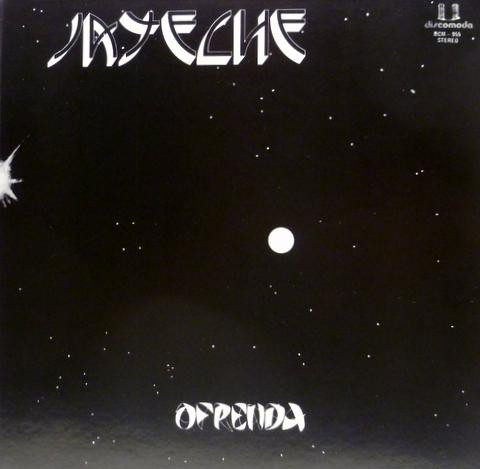
This is the case with Caracas Para Locos which Vytas Brenner recorded with Ofrenda. It’s a track from their 1975 album Jayeche, which was released on Discomoda. Elements of progressive rock, Latin, fusion and space rock are combined by a a truly talented band. Seamlessly they combine musical genres and influences, and show yet another side to Venezuelan music during its golden age, the seventies
Next in this musical feast. They contribute a trio of tracks to Venezuela 70-Cosmic Visions Of A Latin American Earth-Venezuelan Experimental Rock In The 1970s. The Un Dos Tres Y Fuera story began in 1971, when the group were founded. Four years later, they were signed to the Discomoda label and preparing to release their debut album No Hay Que Contar Mucho. The opening track was Machu Picchu. It’s a fusion of disparate musical genres. Traditional Venezuelan music, including mirandero, tuyero and aragueno is combined with jazz, funk and rock. Equally eclectic is the instruments Un Dos Tres Y Fuera deploy. They combine percussion and synths with the rhythm section and horns. Together, they create a truly irresistible potpourri of musical genres. This continues to be case as Un Dos Tres Y Fuera’s career progressed.
Having released their debut album in 1974, Un Dos Tres Y Fuera were releasing an album each year by 1976. Sin Complicacion was their third album for Discomoda. It featured San Juan, Tambor Y Fuera, a slow burner of a track that eventually reveals it delights. Gradually, the tempo quickens, and cumbia is added to this musical melting pot. It’s given a stir, and soon, a memorable and dance-floor friendly blossoms.
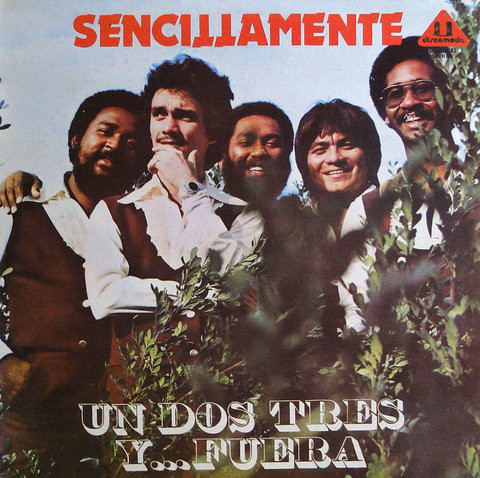
Two years later, in 1978, Un Dos Tres Y Fuera were still signed to the Discomoda label, and preparing to release their fourth album Sencillamente Un, Dos, Tres Y Fuera. Still, Un Dos Tres Y Fuera continued to combine disparate musical genres, influences and instruments to create music that was ambitious and inventive. One of album’s finest moments is Son De Tambor Y San Juan which features Un Dos Tres Y Fuera’s then trademark sound.
Miguel Angel Fuster also features three times on Venezuela 70-Cosmic Visions Of A Latin American Earth-Venezuelan Experimental Rock In The 1970s. He spent much of his career composing music for Venezuelan film and TV. This included the soundtrack to 1973s Cuando Quiero Llorar No Lloro. However, there was more to Miguel Angel Fuster than soundtracks.
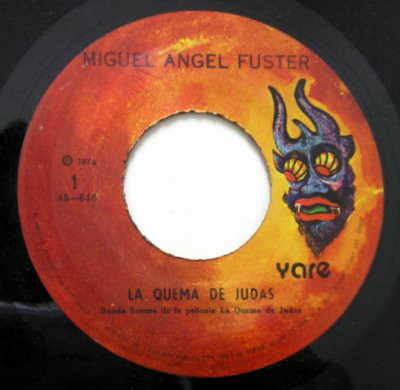
In 1974, he released La Quema De Judas as a single on the Yare label. Miguel Angel Fuster hadn’t left the world of soundtracks behind. Cinematic strings play a leading role and combine with Latin percussion in a track that incorporates elements of electronica, fusion and even a blistering rock guitar. It’s a tantalising taste of a truly talented composer.
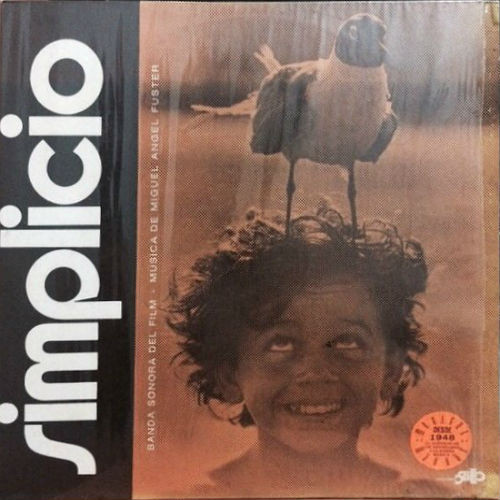
Miguel Angel Fuster career as writing soundtracks contained in 1976. He contributed five tracks for Música De La Película Soy Un Delincuente. This includes Polvo Lunar, an ambitious and innovative track where fusion and free jazz combine with cinematic strings and rock. Just a year later, in 1977 Miguel Angel Fuster wrote the soundtrack to Banda Sonora Del Film Simplicio. It featured Dame De Comer, where Latin, funk, jazz funk and rock combine to create a cinematic track that’s variously moody, mellow and dramatic.
Angel Rada was born in Cuba in 1948, but moved to Venezuela when he was just one. By 1970, Angel Rada had joined the band Gas Light. They released several singles and contributed to a soundtrack album. However, in 1973, Angel Rada moved to Munich to study electronic music. Six years later, in 1979, he released his debut album and moved back to Venezuela. That was where Angel Rada’s career prospered.
He went on to release dozens of albums. So it’s fitting that two of his tracks features on Opening Venezuela 70-Cosmic Visions Of A Latin American Earth-Venezuelan Experimental Rock In The 1970s. This includes Panico A Las 5am, and Basheeba, a track from the album Upadesa. It was released on Uranium Records in 1983. Basheeba, sounds as if it’s been heavily influenced by Berlin School pioneer Klaus Schulze. That’s more than likely; as Klaus Schulze was one of the two people Upadesa was dedicated to. With its fusion of avant-garde, Berlin School and electronica, Upadesa Basheeba is a fitting homage from one musical pioneer to another.
While prospectors struck black gold nearly a century ago, Soul Jazz Records have also been prospecting in Venezuela. They’ve discovered the sixteen tracks on Venezuela 70-Cosmic Visions Of A Latin American Earth-Venezuelan Experimental Rock In The 1970s. They’re a tantalising taste of what was a golden age for Venezuelan music, the seventies.
During the seventies, artists like Vytas Brenner, Pablo Schneider, Fernando Yvosky, Vytas Brenner, Angel Rada, Miguel Angel Fuster, Apocalipsis and Miguel Angel Fuster created groundbreaking and genre-melting music. To do that, they drew inspiration from, and combined disparate musical genres, influences and instruments. Everything from avant-garde to Berlin School, electronica and experimental has been combined with funk and fusion plus Krautrock, Latin, progressive rock, psychedelia, rock and space rock. All these genres can be heard throughout Venezuela 70-Cosmic Visions Of A Latin American Earth-Venezuelan Experimental Rock In The 1970s. They’re combined by artists and groups who pushed musical boundaries and created ambitious and exciting music. Sadly,this music is largely unknown outside of their home country. That’s a great shame.
Especially considering the quality of music that is on Venezuela 70-Cosmic Visions Of A Latin American Earth-Venezuelan Experimental Rock In The 1970s. Thankfully, Soul Jazz Records have produced what’s essentially an introduction to Venezuelan music of the seventies. Hopefully, this isn’t a one-off, and further volumes of Venezuelan music from the seventies will be released. Maybe, Soul Jazz Records would even consider reissuing some of the albums that the tracks are taken from? Especially Vytas Brenner’s debut album La Ofrenda De Vytas. It featured one of the most talented musicians in Venezuela’s thriving music scene during what was a golden age. However, Vytas Brenner was just one of many talented musicians recording and releasing ambitious and innovative music during the seventies.
There were many, many more. This includes the other musical pioneers that feature on Venezuela 70-Cosmic Visions Of A Latin American Earth-Venezuelan Experimental Rock In The 1970s. Their music deserves to be heard by a much wider audience. Hopefully, the recent release of Venezuela 70-Cosmic Visions Of A Latin American Earth-Venezuelan Experimental Rock In The 1970s will result in a resurgence of interest in Venezuelan music from the seventies. If it does, then it will be thanks to Soul Jazz Records. They struck gold when they discovered the music on Venezuela 70-Cosmic Visions Of A Latin American Earth-Venezuelan Experimental Rock In The 1970s, which is, without doubt, one of the best compilations of 2016 so far.
VENEZUELA 70-COSMIC VISIONS OF A LATIN AMERICAN EARTH-VENEZUELAN EXPERIMENTAL ROCK IN THE 70S.







KON AND THE GANG-KON AND THE GANG
KON AND THE GANG-KON AND THE GANG
It’s hard to believe that twenty years have passed since BBE released their very first release, Stop and Listen Volume 1 on the 4th of November 1996. It was compiled by Dr. Bob Jones and was a journey through disparate musical genres. Everything from soul, jazz and funk to disco and house featured on a compilation where Curtis Mayfield rubbed shoulders with Sarah Vaughan, Linda Clifford and Barbara Lynn. This compilation was eclectic with a capital E. Stop and Listen Volume 1 was also a compilation that oozed quality, and BBE were a label to watch.
That proved to be the case. Over the next few years, further volumes in the Stop and Listen series were released. So were a number of other compilations, including Strange Games and Things and Keb Darge’s Legendary Deep Funk. This was just a tantalising taste of what was to come from BBE.
Over the next twenty years, some of BBE’s most successful compilations have been Disco Love, John Morales Presents The M&M Mixes, Private Wax and Keb Darge and Little Edith’s Legendary Wild Rockers. These are just a few of the compilations released by BBE over the past twenty years. However, there’s more to BBE than compilations.
Indeed, there’s many strings to the BBE bow. This includes reissuing many long forgotten, lost and hard to find albums. These albums have been discovered in far flung corners of the globe, and have been reissued by BBE. Belatedly, these albums are now finding favour by an appreciative audience of musical connoisseurs. The same can be said of the many albums of new music that BBE have released since 1996.
Nowadays, BBE have established a reputation as a label that released albums of innovative and influential new music. This includes albums by both established and up-and-coming artists. These artists come from far and wide. Nowhere is off limits to BBE in their search for new and exciting music. One of the many artists who have realised an album on BBE is Kon.
He’s had a long association with BBE. This began in 2007, when Kon and Amir released Off Track Volume One: The Bronx. This was a double album, which featured a truly eclectic selection of music. Each DJ’s selection featured on one of the discs. Kon had edited each of these tracks and then mixed them, which gave the chance to showcase his skills as a DJ. The first volume in Off The Track series was a success, and two further volumes followed.
The next, Off Track Volume Two: Queens was released in 2008 and featured a suitably eclectic selection of songs. This was meant to represent the musical melting pot that’s the borough of Queens. It was a convincing musical representation. So was the third and final volume in the series, Off Track Volume III: Brooklyn. It was released in 2010, and since then, there’s been no further instalments in the series. However, this wasn’t the end of Kon’s association with BBE.
Three years later, in July 2013, Kon released his debut album On My Way, on BBE Music. It contained original music, which featured Kon and some of his musical friends. This included keyboardist Yuki Kanesaka, plus vocalists Amy Douglas, Ben Westbeech, Induce and George Levin. They all played their part in the sound and success of On My Way. Now three years later, some of Kon’s friends have played a port in his Kon and The Gang project.
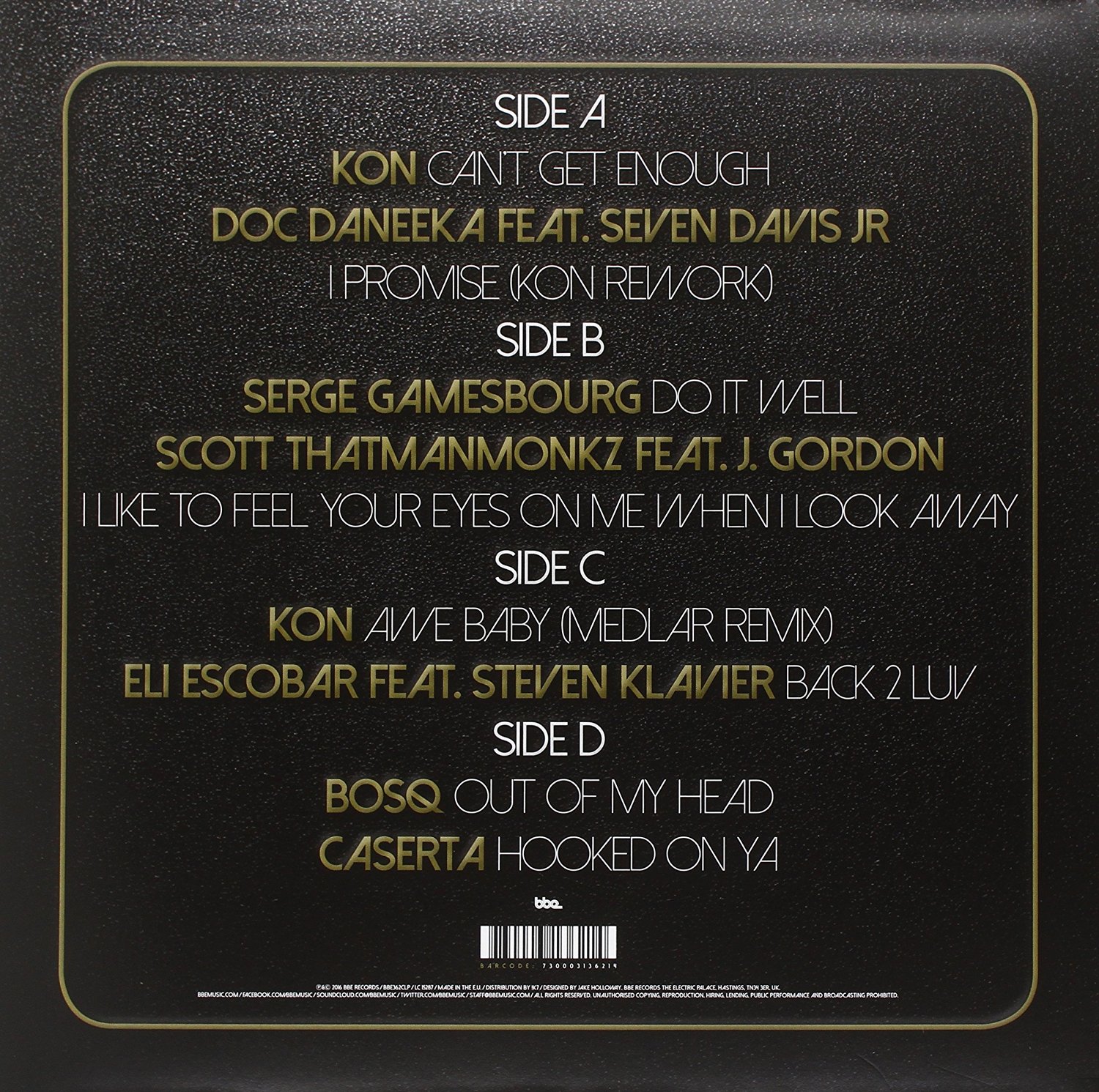
Kon explains the origins of the project. It’s: “a play on words…which became an idea for this compilation” So Kon: “asked a few of my producer and DJ friends to contribute original tracks.” They were happy to contribute tracks which became part of Kon and The Gang. It was recently released by BBE Music on heavyweight vinyl and digital download. Kon and The Gang features eight previously unreleased tracks. This includes two from Kon, plus tracks from Doc Daneeka, Serge Gamesbourg, Scott ThatManMonkz, Eli Escoba, Bosq and Caserta. Each of these tracks are soulful and perfect for the dance-floor. That’s what people have come to expect of Kon, whose love of music began when he was just four.
This life-changing event happened when Christian Taylor, the man that would become Kon, first heard Electric Light Orchestra’s 1974 album Eldorado. The drama and theatre of Eldorado, with its cinematic strings, well crafted songs and poppy hooks captured Kon’s attention. He was hooked, his love of music began. Soon, Kon went in search of more music. Helping fuel this interest in music was his father.
He was a drummer, and was happy and willing to become Kon’s wingman when he went in search of the perfect break. Soon, Kon was a self-confessed crate-digger. Kon’s raison d’etre was the pursuit of music with the perfect beat or break. He was determined to leave no stone unearthed in his search for vinyl.
Kon searched dusty basements, backstreet record shops, flea markets, charity shops and nowadays, online auctions looking for vinyl. They were and still are among his favourite haunts in his pursuit of that elusive slab of vinyl. The one that contains the perfect break and beat. Even better, it might be the perfect song, the one that changes your life and makes you wonder how you lived without it? Especially, if that song was funky.
For Kon, when it came to music, it was a case of the funkier the better. This music would influence the Off Track and On Track compilation series Kon and Amir would go on to compile. That was the future. Before that, Kon decided to embark upon a musical career.
Given Kon’s love of music, this came as no surprise to those that knew him. Kon seemed to live and breath music. There was a degree of inevitability that Kon would eventually make a career out of music. Like many future producers, Kon started life as a DJ,
Starting off as a DJ back in the eighties, Kon started honing his own unique DJ-ing style. The next step for Kon, was making his own edits, which he played during his DJ sets. His edits were his secret weapons, guaranteed to liven up any dance-floor. These edits found their way onto Kon and Amir’s Off The Track compilations.
Three volumes were released between 2007 and the 2010 on BBE. The first was Off Track Volume One: The Bronx in 2007. A year later, ff Track Volume Two: Queens was released in 2008 The third and final volume in the series, Off Track Volume III: Brooklyn was released in 2010. Making edits however, was just a step towards the next part of Kon’s career, when he start working as a remixer.
Making his own edits was good preparation for when Kon started remixing tracks. It was as if everything had been leading towards this. This had included a lifetime listening to, and understanding music. Then there was all the time Kon spent studying John Morales and Walter Gibbons remixes. Having learnt from two of the top remixers, Kon was well prepared to start his remixing career.
His style of remixing involved stripping the track back to just the rhythm section. After allowing them their moment in the spotlight, he started rebuilding the track. Quickly, Kon’s reputation as a remixer grew. However, much as he enjoyed creating edits and remixes, he wanted to create his own music. This was the next chapter in Kon’s career, what everything had been leading to.
So in 2013, Kon released his debut album of original music, On My Way on BBE Music. This added a new string to Kon’s musical bow. He was a DJ who made edits, was a remixer and had just released his first artist album. Then there was his work with Nitetime, Star Blazers, Whiskey Baron and the songs he wrote with Dan Nicklin nd Edward Anderson. Kon was one of the hardest working men in music. However, Kon wasn’t one to rest on his laurels. He was about to embark upon new project, with a little help from his friends.
Ironically, The Kon and The Gang project came about almost by accident. It was a play on words, that proved the genesis for the album. This set Kon thinking.
Soon, he was asking his DJ and producer friends if they had any unreleased tracks that would be willing to contribute to the project? Before long, Kon had been offered the six tracks that would eventually, feature on Kon and The Gang.
This includes Doc Daneeka, Serge Gamesbourg, Scott ThatManMonkz, Eli Escoba, Bosq and Caserta. These artists were perfect additions. They were all up-and-coming artists, who Kon had high hopes for. To these six tracks, Kon added two of his own productions. These eight tracks would be spread across four sides of heavyweight vinyl, and became Kon and The Gang.
The music on Kon and The Gang is representative of the new wave of unique and original music that has recently been influenced by disco. It’s become increasingly popular within the vibrant edit scene. This is sure to be the case with the music on Kon and The Gang. After all, it’s always soulful, and veers between laid back to energetic, as boogie gives way to disco on this compilation of dance-floor delights.
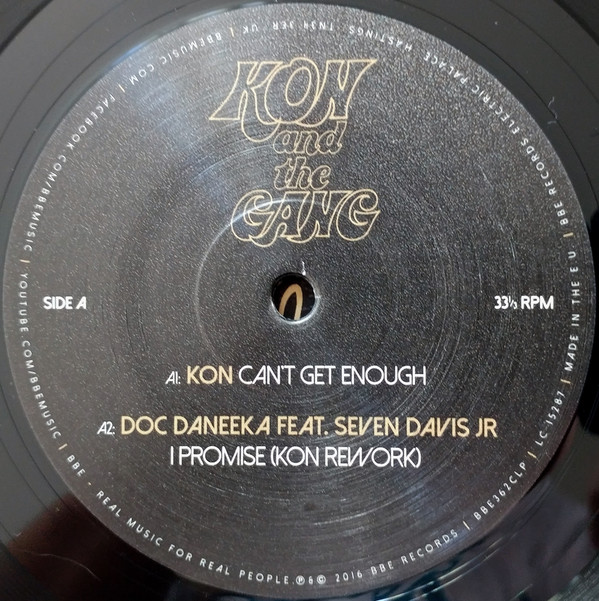
Opening Kon and The Gang, is the first of two Kon productions, Can’t Get Enough. This disco infused slice of soulful, funky house is a reminder of Kon’s production skills. He’s created a joyous sounding dance-floor filler to cherish. It whets the listener’s appetite, for the rest of this compilation.
Kon also has a hand in I Promise. It was produced by Doc Daneeka and features Seven Davis Jr. However, Kon reworks the original. It’s a memorable and mesmeric fusion of boogie and house. Just like Can’t Get Enough, there’s a soulful quality to the vocal on this irresistible track.
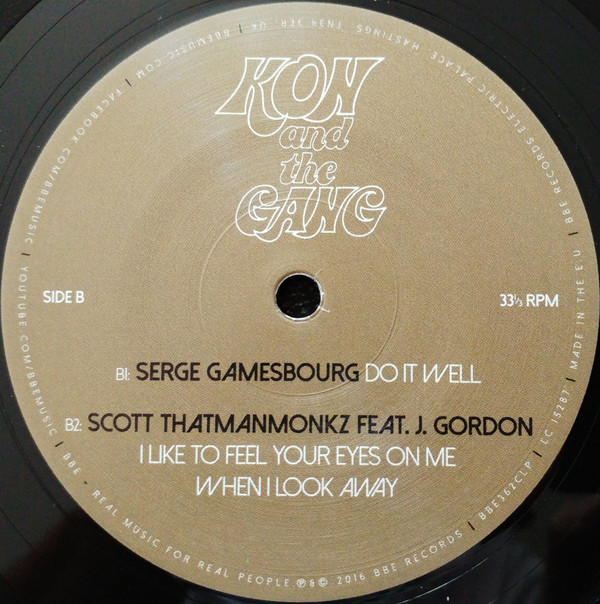
Again, there’s a boogie influence on Serge Gamesbourg’s Do It Well. Gradually, the track shows its summery delights. Key to this is the percussion, which adds a Latin influence. The percussion and keyboard plays leading roles as the Do It Well heads in the direction of deep house. By then, another soulful floor-filler is unfolding. It’s sure to tempt even the most reluctant dancer onto the dance-floor.
It’s a similar story with I Like To Feel Your Eyes On Me When I Look Away. It was produced by That Man Monkz and features J. Gordon. Their combined and considerable talents create a slice of summery sounding, uber soulful Nu Disco.
This Nu Disco sound continues on Awe Baby, which marks the return of Kon. This time, he remixes his original production on the Medlar Remix. It’s a track that’s obviously been influenced by he classic disco of the seventies. There’s also a hint of boogie and even P-Funk in the tough keyboard sound. However, it’s used subtly, and plays its part in a joyous slice of Nu Disco.
New York based DJ and producer Eli Escobar is responsible for Back 2 Luv, which features Steven Klavier. Here, Nu Disco meets house, on another soulful and uplifting track where hooks haven’t been spared.
Bosq’s Out Of My Head is another track that worms its way into the listener’s consciousness. That’s the case from the funky bass line, percussion and piano to the vocal. They combine to create a truly memorable track. It’s funky and soulful, as Bosq fuses Nu Disco and house with disco strings. The result is another dance-floor filler from Kon and The Gang.
Closing Kon and The Gang, is Caserta’s Hooked On Ya. It’s a slow burning slice of deep house which gradually unfolds. When it does, it’s well worth the wait. Mellow, melodic and mesmeric, Kon has kept the best until last on Kon and The Gang.
That is the story of the latest chapter in both the Kon and BBE story. Three years after releasing On My Way, Kon returns to BBE like the conquering hero, with a new and exciting project Kon and The Gang. It’s a double album that was recently released by BBE on vinyl and as a digital download.
Kon and The Gang which features eight previously unreleased tracks. Two of the tracks were produced by Kon, while the rest were produced by Kon’s multitalented gang. They’re responsible for an album of dance-floor filler that oozes quality. These dance-floor fillers all have one thing common, they’re soulful. Some of the tracks are funky, but all are guaranteed to get fill a dance-floor. The tracks range from deep house to Nu Disco and incorporate elements of boogie, classic disco, funk, house and soul. Often, several genres have been combined to create tracks that are veer between energetic, joyous and hook-laden, to mellow, melodic and memorable.
Indeed, memorable is the perfect word to describe the Kon and The Gang compilation. That has been the case with so many compilation BBE have released over their twenty year history. The Strange Games and Things, Disco Love, John Morales Presents The M&M Mixes, Private Wax and Keb Darge and Little Edith’s Legendary Wild Rockers compilation series’ have all stood the test of time. There’s a reason for that; the quality of the music. It’s been truly memorable. The same can be said of the recently Kon and The Gang compilation.
It’s a compilation to cherish, and a celebration of the music that recently, has been making waves within the vibrant edit scene. The music on Kon and The Gang has been transforming dance-floors from a sea of tranquility to a place where good times are guaranteed, and where everybody’s dancin’ all night long. That’s why, for anyone looking to get the party started, then Kon and The Gang, it’s all you need. At the party, Kon and The Gang will be able to tempt even the most reluctant dancer onto the dance-floor and ensure that’s where they stay awhile.
KON AND THE GANG-KON AND THE GANG
JUDY COLLINS-IN MY LIFE, WILDFLOWERS AND WHALES AND NIGHTINGALES.
JUDY COLLINS-IN MY LIFE, WILDFLOWERS AND WHALES AND NIGHTINGALES.
Judy Collins was never meant to become a folk singer. Originally, she had studied classical music and made her public debut when she was just thirteen. That night in Denver, Judy Collins played Mozart’s Concerto For Two Pianos. All Antonia Brico’s tuition and encouragement had been worthwhile. Her pupil she believed, was destined for greatness. There was a problem though.
Lately, Judy Collins had started to show an interest in folk music. This troubled Antonia Brico. She didn’t approve of her pupil’s growing interest in folk music. Antonia Brico didn’t want Judy Collins to stray from her path, which she hoped, could lead her to becoming one of the top classical pianists . After all, she was an outstanding and prodigious pupil. Judy Collins despite her youth and talent, was also determined; determined to pursue her interest in folk music. So she made the toughest decision of her young life, and discontinued her piano lessons with Antonia Brico.
Soon, Judy Collins had switched to guitar and was further embraced folk music. Previously, she had just dipped her toe in water. Now she dived in head-first, and discovered that the water was lovely. Initially, Judy Collins had discovered the music of Woodie Guthrie, Pete Seeger and traditional folk songs . This was just the start of Judy Collins’ love affair with folk music.
At home, music was almost omnipresent. Her father was a singer and disc jockey. He had moved to Denver, Colorado from Seattle, Washington when Judy Collins was ten. She was born on 1st of May 1939, and was the eldest of five children. However, the Collins’ family move to Denver worked in Judy Collins’ favour.
Musicians were always around the Collins’ household. They encouraged Judy Collins’ burgeoning interest in folk music. By the time she graduated high school, Judy was ready to make her debut as a folk singer.
Her debut took place at Michael’s Pub in Boulder, Colorado. Soon, though, Judy Collins was regular on the local folk scene. She played at Exodus folk club Exodus and at the University Of Connecticut. This resulted in Judy playing at campus parties and making appearances on college radio. That was where she met musicians like David Grisman and Tom Azarian. Soon, though, Judy was ready to head make the next step in her, and headed to the capital of American folk music, Greenwich Village.
Now settled in Greenwich Village, Judy Collins began to play in some of the best known folk clubs, including Gerde’s Folk City. Judy’s timing was perfect, the sixties folk boom began.
Suddenly, folk music was de rigueur. Record companies began to sign up some of the leading lights of the Greenwich Village folk scene. This included Judy Collins, who signed to Jac Holzman’s Elektra Records in early 1961.
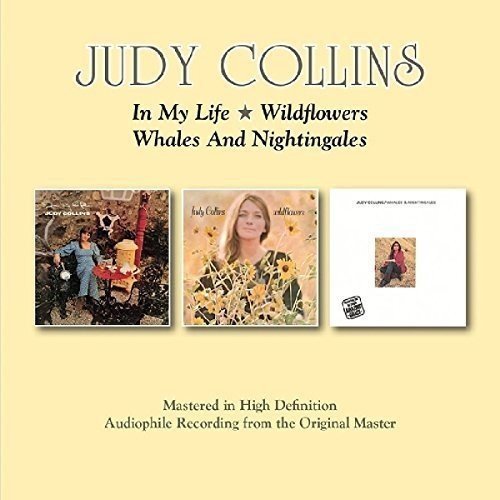
Little did Judy Collins realise that this was the start of a thirty-five year relationship she would have with Elektra. During that period, Judy released In My Life, Wildflowers and Whales and Nightingales. They’ve recently been remastered and reissued by BGO Records as a two disc set. These three albums were released between 1966 and 1970. By then, Judy was an experienced and successful recording artist. Judy’s recording career began later in 1961, when she released her debut album A Maid Of Constant Sorrow.
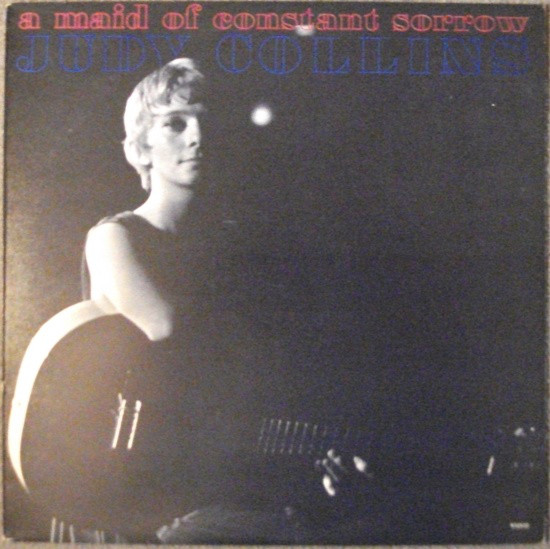
A Maid Of Constant Sorrow.
Having signed to Elektra Records in early 1961, Judy Collins’ thoughts turned to her debut album. Elektra Records’ founder Jac Holzman was keen to record his latest signing’s debut album. So Judy began choosing suiting material for her debut album.
Eventually, Judy Collins had settled on twelve songs. Most were traditional songs, including the Scottish anthem Wild Mountain Thyme, the Irish standard The Prickilie Bush and a remake of Man Of Constant Sorrow, which became A Maid Of Constant Sorrow. They were familiar songs on the folk scene, unlike Wars Of Germany, John Riley and Tim Evans. However, Tim Evans was penned by English folk singer and songwriter Ewan McColl. He was a familiar face on the folk scene, and later, would write one of Judy’s biggest hit singles. That was all in the future.
Before that, Judy Collins entered the studio with Jac Holzman who would produce her debut album. Accompanying Judy, was former Weavers’ guitarist Fred Hellerman and Erik Darling on banjo. They provided a sparse and understated accompaniment to Judy’s vocals on the twelve songs, which became A Maid Of Constant Sorrow.
With A Maid Of Constant Sorrow completed, Elektra Records scheduled the release of Judy Collins’ debut album in November 1961. Before that, critics had their say on A Maid Of Constant Sorrow.
For many critics, Judy Collins was a new name. They immediately drew comparisons with Bob Dylan, given that many of the songs on A Maid Of Constant Sorrow were protest songs. Judy became a storyteller as she painted pictures with her voice. However, Judy was also an educator, introducing critics and record buyers to not just familiar songs and others which were much more obscure. Each of the songs showcased a talented vocalist, especially on A Maid Of Constant Sorrow, Wild Mountain Thyme, Know Where I’m Going and The Rising Of The Moon. Critics were won over by Judy Collins’ debut album, and A Maid Of Constant Sorrow was released to mostly positive reviews.
This augured well for the release of A Maid Of Constant Sorrow in November 1961. Despite winning the approval of critics, A Maid Of Constant Sorrow wasn’t a commercial success. The album failed to trouble the US Billboard 200. However, Judy Collins’ debut album found favour within the burgeoning folk community. Given folk music’s popularity was rising, so should Judy’s. It might take a couple of albums though.
Golden Apples Of The Sun.
Despite the disappointing sales of Judy Collins’ debut album, Jac Holzman wasn’t giving up on his latest signing. He was playing the long game, and sent Judy back into the studio to record her sophomore album, Golden Apples Of The Sun.
It followed a similar pattern to A Maid Of Constant Sorrow. Nine of the twelve songs on Golden Apples Of The Sun were traditional songs. This included Bonnie Ship the Diamond, which Judy arranged. The other songs Judy decided to cover were Reverend Gary Davis’ Twelve Gates to the City, Sydney Carter’s Crow On The Cradle and Mike Settle’s Sing Hallelujah. These twelve tracks were recorded with producer Jac Holzman and a small band.
Just like the sessions for A Maid Of Constant Sorrow, the band of bassist Bill Lee and Walter Raim on guitar and banjo. Judy played guitar and piano and while laying down the vocals. Once the twelve songs were recorded, Golden Apples Of The Sun was scheduled for release in July 1962.
Before that, critics received their advance copies of Golden Apples Of The Sun. By then, folk music’s popularity was rising, and critics were paying more attention to the Greenwich Village folk scene. Already Judy Collins was one of the leading lights of the Greenwich Village folk scene. Most of the critics cast an approving eye over Golden Apples Of The Sun, and its mixture of traditional and new songs. They showcased a talented and versatile singer, who had the uncanny ability to bring a song to life. A great future was forecast for Judy Collins.
Alas, lightning struck twice for Judy Collins. When Golden Apples Of The Sun was released in July 1962, the album failed to chart. A small crumb of comfort was that Golden Apples Of The Sun was a popular album within the folk community. However, gradually, Judy was making inroads into the wider record buying public. It would be a case of third time luckily for Judy Collins.
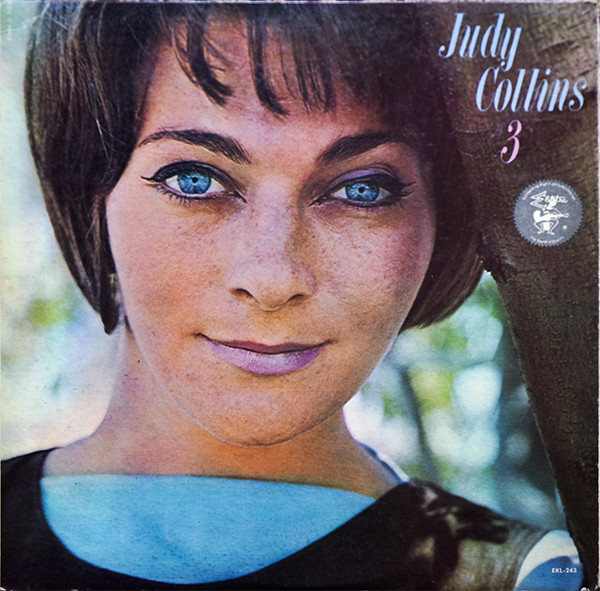
Judy Collins 3.
After two albums which failed to chart, a few changes were made for Judy Collins’ third album. The first change was the type of songs Judy was covering.
She covered two Bob Dylan songs, Farewell and Masters Of War. This was a shrewd move, given the popularity of Bob Dylan. Just like on her debut album, Judy again covered songs by Ewan McColl and Mike Settle. This time round, Judy covered Ewan McColl’s The Dove and Mike Settle’s Settle Down. They joined Pete Seeger’s Turn! Turn! Turn! (To Everything There Is A Season); Jim Friedman and Shel Silverstein’s Hey, Nelly Nelly and Come Away Melinda and covers of two traditional songs, Bullgine Run and Ten O’Clock and All Is Well. These songs would become part of Judy Collins 3, which featured a new face.
When Judy Collins arrived at the studio in March 1963, Mark Abramson had been chosen to produce Judy Collins 3. He would go on to play an important part in the rise and rise of Elektra Records. Another new face was guitarist and banjo player Roger McGuinn. He would go on to enjoy commercial success and critical acclaim with The Byrds. However, in 1963, he was a session player, who joined bassist Bill Takas and Walter Raim. He also played guitar and banjo. Judy laid down guitar parts and played the piano, while adding the vocals on Judy Collins 3. It was completed by April 1963, but wasn’t released until later that year.
By the time that Judy Collins 3 was released later in 1963, Judy Collins’ star was in the ascendancy. She was already regarded as one of the best at interpreting traditional songs. Despite this, Judy had decided to cover many new contemporary songs on Judy Collins 3. She was equally at home covering new and contemporary songs. Critics were won over by Judy Collins 3’s mixture of traditional songs and covers of songs by Bob Dylan, Pete Seeger and Ewan MacColl. Part of the success of Judy Collins 3, was Judy’s decision to stay true to the originals. This pleased critics and record buyers.
When Judy Collins 3 was released, it reached 126 in the US Billboard 200. It was a case of third time lucky for Judy Collins, whose music was belatedly reaching a wider audience. However, it would be another two years before Judy returned with her fourth studio album.
The Judy Collins Concert.
Although Judy Collins didn’t release a studio album during 1964, she released her first live album The Judy Collins Concert. It was recorded on March 21st 1964, at Town Hall in New York City. That night, Judy worked her way through fourteen songs from some of her favourite songwriters.
Judy opened her set with Billy Edd Wheeler’s Winter Sky, and covered several two more of his compositions Red-Winged Blackbird and Coal Tattoo. Tom Paxton’s The Last Thing On My Mind, My Ramblin’ Boy and Bottle Of Wine joined Fred Neil’s Tear Down the Walls, John Phillips’ Me and My Uncle, Bob Dylan’s The Lonesome Death of Hattie Carroll and Ewan McColl’s Cruel Mother. These songs were joined by Jim Friedman and Shel Silverstein’s Hey, Nelly Nelly and covers of traditional songs like Bonnie Boy Is Young and Wild Rippling Water. Accompanying Judy were bassist and cellist Chuck Israel and Steve Mandell on banjo and guitar. Judy switched between piano and guitar as she delivered a captivating set. It was being recorded by Elektra Records, and was produced by Mark Abramson. It became The Judy Collins Concert.
When The Judy Collins Concert was released in July 1964, the reviews of the album were mostly positive. Critics who hadn’t yet heard Judy live, had the opportunity to do so, without even leaving the comfort of their favourite armchair. They praised what was an enchanting set which featured Judy Collins as she breathed life, meaning and emotion into familiar and traditional songs. Surely, The Judy Collins Concert would build on the success of Judy Collins 3?
Sadly, that wasn’t the case. The Judy Collins Concert failed to chart, which was a huge disappointment. After it seemed as if Judy had made a breakthrough with Judy Collins 3. However, it wasn’t just The Judy Collins Concert that didn’t sell well.
For much of the sixties, live albums didn’t sell in vast quantities. That would change in the seventies. By then, music had changed beyond recognition. Even in July 1964, music was changing in America, with the British Invasion bands arriving on American shores. How would Judy Collins react?
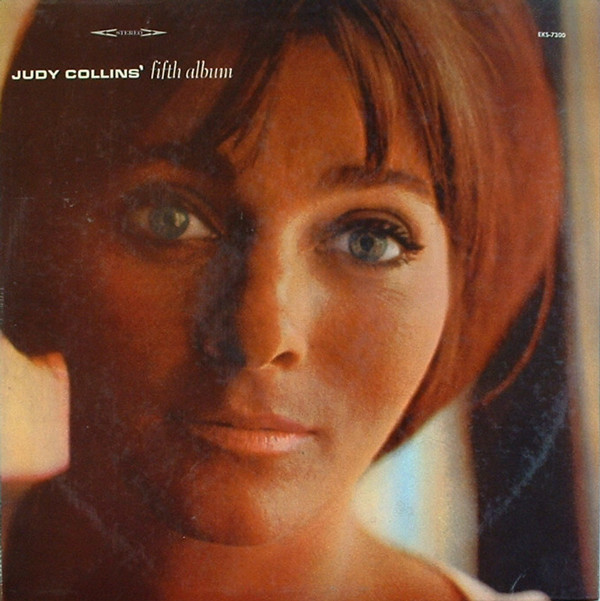
Fifth Album.
Judy Collins didn’t return with her Fifth Album until November 1965. The only difference was that the album featured a bigger band, and a much more eclectic selection of instruments. Strings, a dulcimer and harmonica would augment Judy on Fifth Album.
Just like Judy Collins 3, Fifth Album featured mainly cover versions by some of her favourite songwriters. By 1965, Bob Dylan was still one of Judy’s favourite singer-songwriters. So much so, that she covered three of his songs, Mr. Tambourine Man, Tomorrow Is A Long Time and Mama, You Been on My Mind which became Daddy, You Been on My Mind. They were joined by Phil Ochs’ In the Heat of the Summer, Gordon Lightfoot’s Early Morning Rain, Gil Turner’s Carry It On and a live version of Malvina Reynolds’ It Isn’t Nice. Other songs included Billy Edd Wheeler’s The Coming of the Roads and two traditional songs, So Early, Early In The Spring and Lord Gregory. These songs, and the rest of Fifth Album were recorded with producer Mark Abramson.
When recording began, Judy was joined by a bigger band. Strings were added to some of the tracks. A familiar face was bassist Bill Takas, who had played on previous albums. He was joined by two other bassists, Bill Lee and Chuck Israels, who also played cello.
They were joined by Richard Fariña on dulcimer and Lovin Spoonful founder John Sebastian on harmonica. Two guitarists featured on Fifth Album, Danny Kalb and Eric Weissberg who added harmonies. Judy as usual, accompanied herself on piano and guitar. Once her first studio album in two years was complete, Elektra Records announced its release in November 1965.
A lot had happened since Judy Collins had been away. The British Invasion bands dominated the American charts, the psychedelic era had begun. However, resolutely, Judy Collins stuck to her trademark acoustic sound. Fifth Album won the approval of critics, who complemented Judy on her choice of song and delivery. It was hailed as her finest albums. Fifth Album had the potential to be a career defining album.
When Fifth Album was released in November 1965, it climbed the charts all the way to forty-six in the US Billboard 200. This was by far, the most successful album of Judy Collins’ career. That was until her next album.
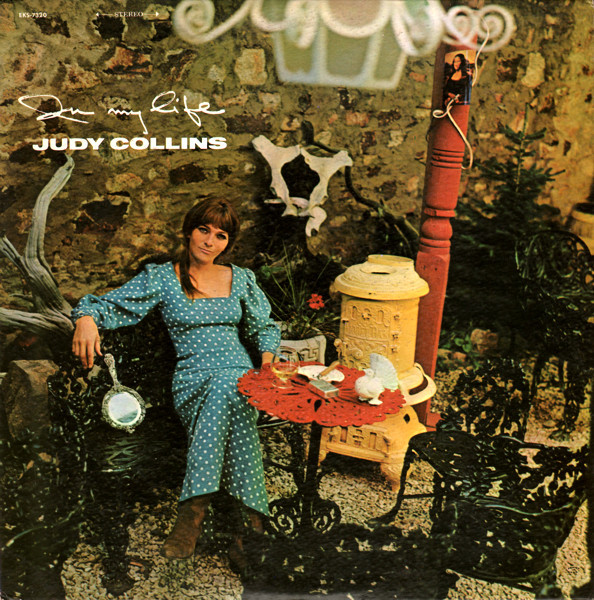
In My Life.
Buoyed by the commercial success of her Fifth Album, Judy Collins’ thoughts soon turned to the followup. This time though, her sixth album, In My Life. It marked a turning point in Judy Collins’ career, in more way than one.
The first was that In My Life was Judy Collins’ first album not to feature any traditional songs. Instead, she covered songs by some of the biggest names in music. This included Lennon and McCartney’s In My Life, Bob Dylan’s Just Like Tom Thumb’s Blues, Randy Newman’s I Think It’s Going To Rain Today, Donavon’s Sunny Goodge Street and Richard Fariña’s Hard Lovin’ Loser. Two Leonard Cohen songs featured on In My Life, Suzanne and Dress Rehearsal Rag. Another first, was the inclusion of a song penned by Jacques Brel. He was another of Judy’s favourite songwriters, and his composition with Alasdair Clayre La Colombe was included. These songs, and the rest of In My Life were recorded in London.
Sound Techniques studio was chosen to record In My Life. Judy Collins’ usual producer Mark Abramson was present, and directing operations. Joshua Rifkin arranged and conducted the orchestra. This was a first, Judy being accompanied by an orchestra who produced dramatic, widescreen backdrops for her vocals. They became In My Life, which was released in November 1967.
By the time that In My Life was released, Suzanne had already been released as a single. It was released in 1966, but failed to chart. Hard Lovin’ Loser didn’t do much better, when it crept into the US Billboard 100 at number ninety-seven. However, by then, the reviews of In My Life had been published.
In My Life received the best reviews of any album Judy Collins had released. Critics were won over by the change in style, and big, dramatic, orchestral arrangements. They framed Judy’s vocal, as she interpreted the twelve songs, and in many cases, brought something new to the songs. This just added to Judy’s reputation as one of the best interpretative singers of her generation. Songs came to life, and took on new meaning. Especially Suzanne, I Think It’s Going To Rain Today, Dress Rehearsal Rag, Sunny Goodge Street and even In My Life. However, throughout In My Life, Judy delivered a series of spellbinding and masterful performances. With critical acclaim accompanying the release of In My Life, this augured well for Judy Collins’ new album.
And so it proved to be. When In My Life was released in November 1966, the album reached forty-six in the US Billboard 200. In My Life surpassed the success of Fifth Album. Less than four years later, and In My Life was certified gold in 1970 after selling over 500,000 copies. However, after basking in the success of In My Life, Judy Collins began work on the followup, Wildflowers.
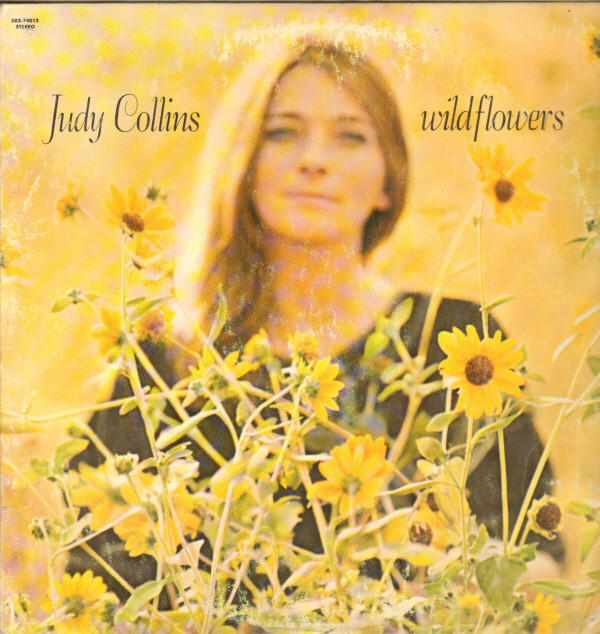
Wildflowers.
Following the commercial success and critical acclaim of In My Life, Judy Collins began work on a new album, Wildflowers. She was determined to build on the success of In My Life. However, Wildflowers was unlike any of Judy’s previous albums.
Wildflowers was a turning point in Judy Collins’ career. It was the first album to feature songs penned by Judy. She wrote three of the ten songs on Wildflowers, including Since You Asked, Sky Fell and Albatross. These three songs were augmented by two covers of Joni Mitchell’s Michael from Mountain and Both Sides Now. Judy also covered a trio of Leonard Cohen songs, Sisters Of Mercy, Priests and Hey, That’s No Way To Say Goodbye. Again, Judy covered a Jaques Brel song, La Chanson Des Vieux Amants (The Song of Old Lovers). The other song on Wildflowers was a cover of the fourteenth century composition, A Ballata Of Francesco Landini. These songs were recorded in New York with producer Mark Abramson.
Just like In My Life, Joshua Rifkin was drafted in, and arranged nine the ten songs. The exception was Priests, which arranged by Robert Silvester and Robert Dennis. However, when it came to conducting Wildflowers, Joshua Rifkin took charge, hoping for a repeat of the commercial success and critical acclaim of In My Life.
Before Wildflowers was released in October 1967, critics had their say on Judy Collins’ new album. Wildflowers featured Judy’s songwriting debut on Since You Asked, Sky Fell and Albatross. She proved to be a talented songwriter and storyteller. Judy brought these songs to life with the aid of Joshua Rifkin’s widescreen arrangements. That was the case as Judy covered songs penned by Leonard Cohen and Joni Mitchell. They were tailor-made for Judy’s interpretative vocal style. Her delivery was heartfelt, impassioned and emotive. Similarly, whether it was drama, hope, heartache or happiness that was required, Judy Collins was capable of providing it on Wildflowers. Critics hailed Wildflowers a fitting followup to In My Life.
They weren’t wrong. When Wildflowers was released in October 1967, it reached number five in the US Billboard 200. This was the highest chart placing of any Judy Collins. What had helped sales of Wildflowers was the success of the single Both Sides Now. It was released in early 1968, and reached number eight in the US Billboard 100, number six in Canada and thirty-seven in the Australian charts. The followup Since You Asked, failed to repeat the success of Both Sides Now when it failed to chart. However, this wasn’t the end of the Wildflowers’ success.
When the Grammy Awards’ nominations were announced in 1969, Both Sides Now was nominated for the Best Folk Performance Or Best Folk Recording. This was a first for Judy Collins, and showed how far she had come in the last two years. Things got even better for Judy Collins, when Both Sides Now won Judy Collins her first Grammy Award. Then in 1969, Wildflowers was certified gold, and became Judy’s second album to sell over 500,000 copies. Life was good for Judy Collins, who was one of the biggest names in folk music. By then, Judy had released a new album, Who Knows Where the Time Goes.
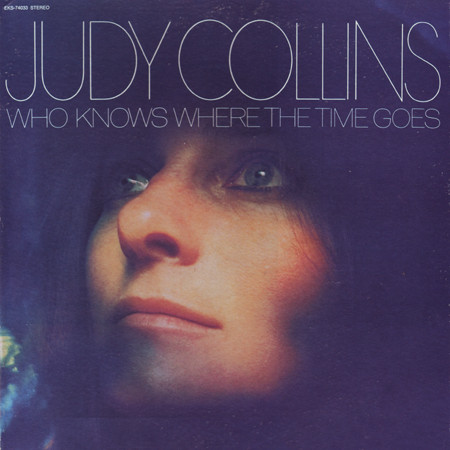
Who Knows Where the Time Goes?
Despite the success of Wildflowers, Judy Collins decided to change direction on Who Knows Where the Time Goes? It featured elements of country rock and folk rock.Who Knows Where the Time Goes? was a much more eclectic album than previous Judy Collins’ albums, and featured covers of songs by some of the great and good of music.
This included Bob Dylan’s I Pity the Poor Immigrant, Leonard Cohen’s Story Of Isaac and Bird On The Wire, Robin Williamson’s First Boy I Loved and Sandy Denny’s Who Knows Where the Time Goes? They joined Ian Tyson’s Someday Soon, Rolf Kempf’s Hello Hooray and the traditional murder ballad, Pretty Ballad. The only Judy Collins’ composition was My Father. These nine songs were recorded with a new band and new producer.
Recording began at Elektra Sound Recorders, Los Angeles, in 1968. This was a first for Judy Collins. She had never recorded an album in L.A. Nor had she worked with David Anderle replaced Judy Collins’ longterm producer Mark Abramson on Who Knows Where the Time Goes? Joining the new producer was a new band. It included a rhythm section of drummer and percussionist Jim Gordon, bassist Chris Ethridge and James Burton on electric guitar and dobro. Augmenting the rhythm section were Buddy Emmons on pedal steel guitar, pianist Mike Melvoin and Van Dyke Parks on piano and electric piano. Michael Sahl switched between organ, piano and harpsichord, keyboard, while Stephen Stills played bass and guitar. This new band plugged in, and took Judy’s music in a totally new direction. For a singer who had just enjoyed the biggest album of her career, this was a huge risk.
Judy Collins needn’t have worried. When critics heard Who Knows Where the Time Goes? they were immediately won over. Critics hailed the album a mini masterpiece. They welcomed an album that showcased a much more eclectic selection of songs. Hello Hooray was headed in the direction of rock, while Poor Immigrant was a move towards country rock. My Father was a masterful example of balladry, something Judy had excelled at throughout her career. However, among the album’s highlights were the Story Of Isaac, which was cinematic and full of imagery. Along with a peerless cover Leonard Cohen’s Bird On A Wire and the wistful, ethereal beauty of the title-track, these three tracks were among the highlights of Who Knows Where the Time Goes? It was described as one of the finest albums of Judy’s career, and was an album that introduced her music to a much wider audience.
The answer to that was yes and no. When Who Knows Where the Time Goes? was released in November 1968, and reached twenty-six in the US Billboard 200. However, by 1969, Who Knows Where the Time Goes? had been certified gold. This gave Judy Collins’ the third gold disc of her career. Her last album of the sixties had been a success. The only disappointment was the performance of the singles.
My Father was released as the lead single in 1968, but failed to chart. Someday Soon fared better, reaching fifty-five in the US Billboard 100 in 1969. This time, around there had been no top ten singles, but still Judy Collins was one of the most successful folk singers of her generation.
Recollections.
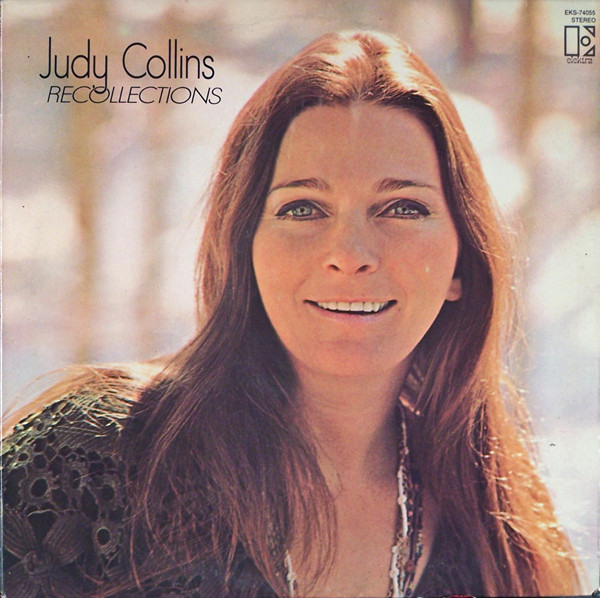
The only album that Judy Collins released during 1969, was the first compilation of her career, Recollections. It featured a selection of songs from Judy’s career so far. This included Tomorrow Is A Long Time, Early Morning Rain, Turn! Turn! Turn! (To Everything There Is A Season), Listen Now! Daddy You’ve Been On My Mind, Mr. Tambourine Man, The Last Thing On My Mind and Farewell. One of these songs was released as a single, and gave Judy a hit single.
Judy Collins’ cover Turn! Turn! Turn! (To Everything There Is A Season) was released as a single in 1969, and reached sixty-nine in the US Billboard 100. Although it wasn’t the biggest hit of Judy’s career, it kept her in the public eye, while she pondered her next move. She wouldn’t release a new album until 1970.
Whales and Nightingales.
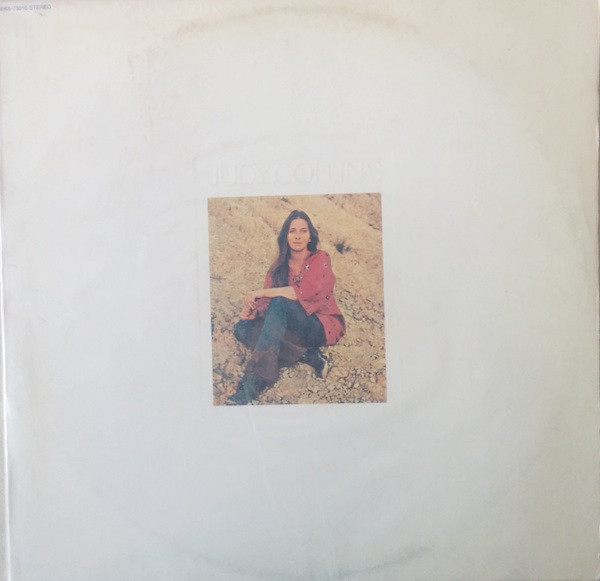
Essentially, the sixties ended for Judy Collins in October 1968, when she released Who Knows Where the Time Goes? Since then, she hadn’t released a studio album. It wasn’t until August 1970 when Judy returned with Whales and Nightingales, album that owed more to Wildflowers than Who Knows Where the Time Goes?
Whales and Nightingales saw a return to shorter songs, and Judy’s tradition folk sound. She had written Nightingale and cowrote Nightingale II with Joshua Rifkin. The rest of Whales and Nightingales comprised cover versions.
Among the cover versions, were songs by some of Judy Collins’ favourite singers and songwriters. This included Bob Dylan’s Time Passes Slowly, Joan Baez’s A Song For David and Pete Seeger’s Oh, Had I A Golden Thread. Other songs included a cover of Dominic Behan’s The Patriot Game, John Newton’s Christian hymn Amazing Grace and Prothalamium which Michael Sahl and Aaron Krame wrote. Judy chose two Jaques Brel compositions, including Marieke which he penned with Gerard Jouannest. The two men also wrote Son Of with Eric Blau and Mort Shuman. Augmenting these covers were a trio of traditional songs, Gene’s Song, Farewell to Tarwathie and Simple Gifts. These thirteen songs were recorded during 1970 with a familiar face.
Given Judy Collins was returning to her familiar folk sound, it made sense to reunite with her former producer, Mark Abramson. He had produced most Judy’s commercially successful and critically acclaimed albums. The exception was Who Knows Where the Time Goes? That was the past. Whales and Nightingales was the future.
Another familiar face was Joshua Rifkin, who arranged and conducted Sons Of, Prothalamium and Marieke. Judy also arranged a trio of tracks, Farewell To Tarwathie, Simple Gifts and Amazing Grace. One of these songs would become one of Judy Collins’ best known songs.
Once Whales and Nightingales was complete, Elektra Records scheduled the release for August 1970. The song that was chosen as the lead single, was a surprising one, Judy Collins’ cover of the Christian hymn Amazing Grace. When it was released in 1970, it reached number fifteen in the US Billboard 100 and number ten in the Australian singles’ charts. This augured well for the release of Whales and Nightingales.
Especially when Whales and Nightingales was well received by critics. Again they complemented Judy Collins on her judicious choice of songs, which she interpreted in her own unique way. This included Bob Dylan’s Time Passes Slowly, Joan Baez’s A Song For David and Pete Seeger’s Oh, Had I A Golden Thread. They were perfect for Judy, and brought out the best in her.
So did Farewell To Tarwathie, which featured one of the most imaginative arrangements on Whales and Nightingales. Judy was accompanied by a chorus of humpback whales, who provided a sparse, but almost haunting arrangement. These understated arrangements had always provided the perfect backdrop for Judy Collins’ vocals.
Whales and Nightingales featured two songs Judy Collins had written. The first was Nightingales, a beautiful song,which delivered against sparse, understated arrangements. So was and Nightingales II, which featured a lush, string-drenched, widescreen arrangement. However, one of the most powerful songs was Judy’s cover of Amazing Grace. It was akin to a soul-baring confessional. Critics agreed that Amazing Grace was one of the finest moments on Whales and Nightingales, which was a return to form from Judy,
When Whales and Nightingales was released in July 1970, the album reached number seventeen in the US Billboard 100. By 1971, the album had sold over 500,000 copies and had been certified gold. Judy Collins’ first album of the seventies, saw her pickup where she left off in 1968.
After eight studio albums and one live album, Judy Collins was one of the most successful folk singers of her generations. Judy Blue Eyes’ last four album had been certified gold. This remarkable run began with 1966s In My Life, and included 1967s Wildflowers, 1968s Who Knows Where the Time Goes? and ended with 1970s Whales and Nightingales. During this period, it seemed Judy Collins could do wrong. She enjoyed several hit singles, including her cover of Joni Mitchell’s Both Sides Now. It won Judy her first Grammy Award in 1969. Judy Collins had come a long way since her debut album A Maid of Constant Sorrow in 1961.
While A Maid Of Constant Sorrow and its followup Golden Apples Of The Sun failed commercially, Jac Holzman and Elektra Records stuck with Judy Collins. They knew it would take two or three albums before Judy made a breakthrough. Their faith in Judy was richly rewarded, and by 1970, she was one of the most successful female singers of her generation.
Judy Collins was also a pioneer of folk music. She had been around from the earliest days of the folk boom, and rode this musical elevator through the sixties. Throughout the decade, Judy flew the flag for folk music. That was despite the onslaught of pop, rock and psychedelia. Still, Judy stood firm. The only time she wavered, was in 1968s when she released Who Knows Where the Time Goes? It saw Judy enjoy a dalliance with country rock and folk rock. However, folk music was her true love, and she returned to the fold for Whales and Nightingales in 1970. Judy’s first album of the seventies was a triumphant returned, for the First Lady of folk.
She had released some of the best music of her career between 1966 and 1970. Three of Judy Collins’ most successful albums were In My Life, Wildflowers and Whales and Nightingales. They’ve recently been remastered and reissued by BGO Records as a two disc set. These three albums were released between 1966 and 1970 and feature Judy Collins’ trademark folk sound. By then, Judy was one of the best interpretative singers of her generation. Seamlessly she brought songs to life, and they took on new meaning. That’s the case on In My Life, Wildflowers and Whales and Nightingales, which are the perfect introduction to Judy Collins, who is, without doubt, one of the greatest singer-songwriters of her generation.
JUDY COLLINS-IN MY LIFE, WILDFLOWERS AND WHALES AND NIGHTINGALES.
TONY BANK-LIFE AFTER GENESIS.
TONY BANK-LIFE AFTER GENESIS.
All too often, Tony Banks has been referred to as “the keyboard player from Genesis.” This is doing the sixty-seven year old a huge disservice. Tony Banks is a multi-instrumentalist, whose just as comfortable playing guitar as his playing piano, Hammond organ, synths or Mellotron. Seamlessly, Tony Banks could switch between musical instruments. That and his ability to innovate, played an important part in Genesis’ success. However, while Genesis dominated a large part of Tony Banks’ career, it’s just part of the story.
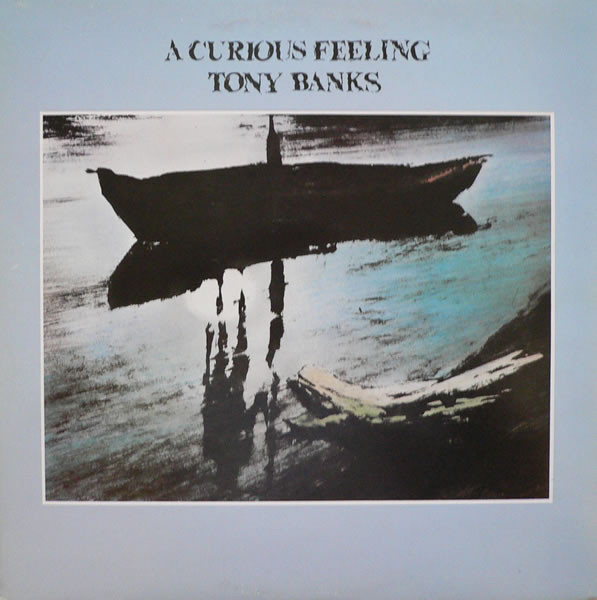
By the Genesis split-up in 1998, after thirty-one years together, Tony Banks was already an established solo artist. He released his debut album A Curious Feeling in 1979. After that, Tony Banks released another nine albums. They showed the different sides to Tony Banks.
As well as solo albums, Tony Banks released soundtracks and orchestral albums. Then there’s the albums Tony recorded with his Bankstatement and Strictly Inc. projects. These albums show Tony Bank’s versatility and ability to innovate over five decades. During this period, Tony Bank’s career has taken a few twists and turns.
A Curious Feeling.
For the past twelve years, Tony Banks had concentrated on making Genesis one of the biggest bands. He had cofounded the band in 1967, and by 1979, the only original members of the band were Tony and Mike Rutherford. The most recent departure was guitarist Steve Hackett, who left in 1977. This left Tony, Mike and Phil Collins, whose first album was a trio was 1978s …And Then There Were Three… The following year, Tony released his first solo album, A Curious Feeling
Before heading off to Polar Music Studios, Stockholm, Sweden, Tony Banks had written eleven tracks. They became A Curious Feeling, a progressive rock concept album. The concept for the album was Daniel Keyes’ short story Flowers for Algernon. Recording of A Curious Feeling took place during the spring and summer of 1979. Accompanying Tony were drummer Chester Thompson and vocalist Kim Beacon, while Tony Banks and David Hentschel produced A Curious Feeling. It was released on 8th October 1979.
When A Curious Feeling was released, the reviews were scathing. This was no surprise. 1979 was the height of the post punk era. Critics slated anything that represented the musical establishment. Tony never stood a chance at the hands of the the new breed of gunslinger critics. They neither to recognised nor were willing to acknowledge the quality of music on A Curious Feeling.
Despite the protestations of the gunslinger critics, A Curious Feeling reached number twenty-one in Britain and number 171 in the US Billboard 200. Tony Banks was vindicated in his decision to release his debut album. However, it would be five years before he released the followup.
The Wicked Lady.
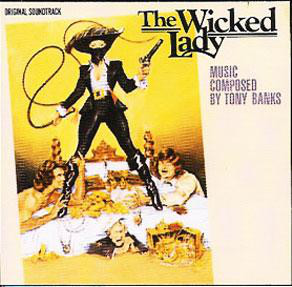
After a gap of five years, Tony Banks released the first of two albums during 1983. The first was a remake of the soundtrack to Wicked Lady. It had originally been released in 1945, and featured Margaret Lockwood. An estimated 18.4 million million people saw The Wicked Lady, which was based on Magdalen King-Hall’s novel The Life and Death of the Wicked Lady Skelton. Thirty-eight years later, and Tony Banks collaborated with the National Philharmonic Orchestra on the remake of The Wicked Lady.
While Tony Banks featured on side one of the remake of The Wicked Lady, the National Philharmonic Orchestra featured on the second side. This unlikely collaboration found favour with critics.
When The Wicked Lady was released in April 1973, critics were impressed by the Tony Banks produced soundtrack. Especially, the second side. Its drama and complexity found favour with critics. Tony’s vision and creativity had been put to good use on The Wicked Lady. However, later in 1983, Tony released the followup to A Curious Feeling, The Fugitive.
The Fugitive.
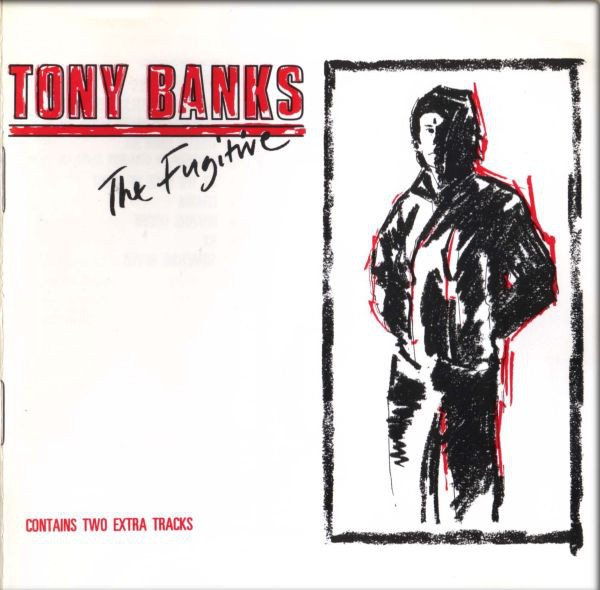
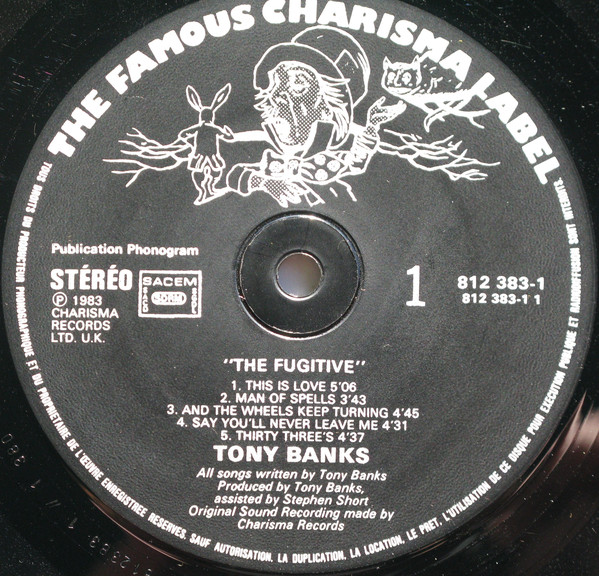
Just like A Curious Feeling, Tony wrote the nine tracks on The Fugitive. This time around, Tony recorded The Fugitive closer to home. The Farm in Surrey, Genesis’ studio, was the venue for the recording of Tony’s sophomore album. To coproduce The Fugitive, Stephen Short was drafted in. Recording began in 1982.
Tony began recording the album at home, on an eight-track studio in 1982. He laid down the basic tracks. Then in 1983, recording began at The Farm. This time around, Tony took charge of the vocals. He was joined by Genesis’ touring guitarist Daryl Stuermer, bassist Mo Foster and drummer Steve Gadd. On Charm, no drummer was used. Instead, Tony used a Linn LM-1 drum machine. Eventually, the nine tracks were complete, and The Fugitive was released in late June 1983. By then, Genesis were preparing release their eponymous album in October 1983.
It was a battle of the albums, one that The Fugitive lost. Reviews of The Fugitive were mixed. Some critics like the sparseness of the arrangements, and were won over by Tony’s vocals. Up until then, they were a well kept secret. That was until The Fugitive was released.
The Fugitive was released in late June 1983, and stalled at number fifty in the British charts. After just two weeks, The Fugitive disappeared from the charts. Since then, The Fugitive has become a rarity. So did Tony Banks solo albums. Genesis were on the cusp of worldwide domination, where commercial success and critical acclaim was omnipresent.
Soundtracks.
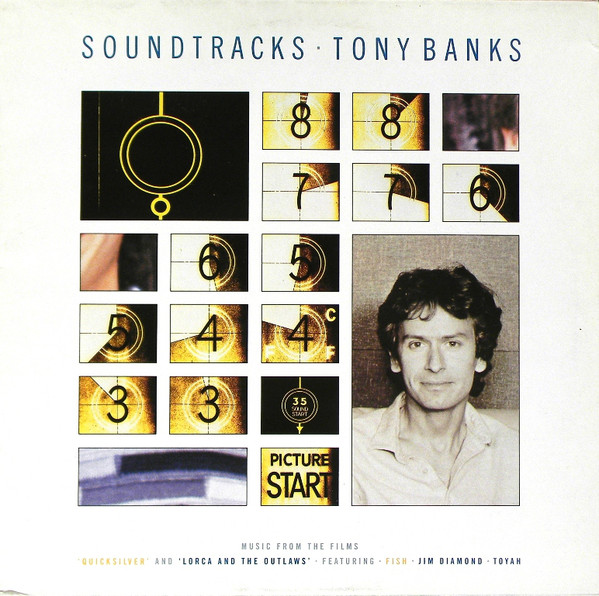
So it wasn’t until 1986 that Tony Banks next released an album. Soundtracks featured tracks from two soundtracks that Tony Banks had been involved with. The first was Starship. It was released in December 1984, and is also known as Lorca and the Outlaws. Quicksilver was the other soundtrack. Tony was just one of a number of artists who contributed tracks to Quicksilver. Tracks from both these albums made their way onto Soundtracks.
When Soundtracks was released in March 1986, reviews were mixed. Critics noted that the quality of music was mixed, with the poppier sounding tracks lacking that all important hook. Given the reviews, it was no surprise when Soundtracks wasn’t a commercial success. Maybe this was why Soundtracks wasTony Banks’ final soundtrack album? For his next album, Tony was inspired by the success his friend Mike Rutherford was enjoying with his “other” band.
Bankstatement.
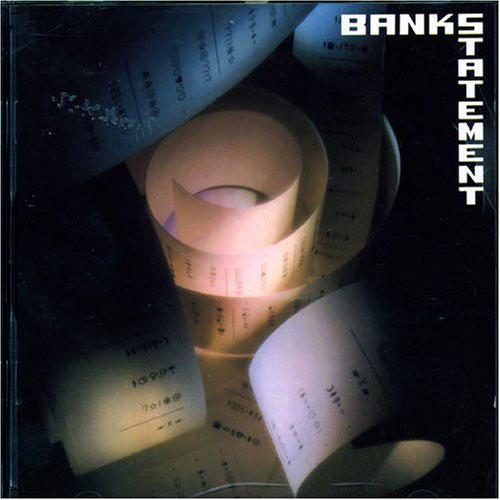
When he wasn’t busy with Genesis, Mike Rutherford was busy with his new group, Mike and The Mechanics. They were enjoying commercial success and critical acclaim. This inspired Tony Banks to form his own band, Bankstatement.
Essentially, Bankstatement were a trio featuring Tony, Alistair Gordon and Australian born singer-songwriter Jayney Klimek. Each of the three vocalists shared vocal duties. They were augmented in the studio by a band that included former Genesis guitarist Steve Hillage. He co-produced Bankstatemen with Tony. Recording took place during 1988 and 1989. A total of eleven songs penned by Tony Banks were recorded. These songs became Bankstatement, which was released in August 1989.
On the release of Bankstatement, the album was well received by critics. They recognised the quality of what was carefully crafted pop songs. Despite the reviews, neither Bankstatement, nor the three singles charted. Following the commercial failure of Bankstatement, the project never released a followup. Instead, Tony’s next album was his third solo album, Still.
Still.
Five years had passed since Tony released The Fugitive, his second solo album. Since then, he had been busy with Genesis and released an album with Bankstatement. A solo album was overdue. So in 1990, Tony Banks began recording what would become Still.
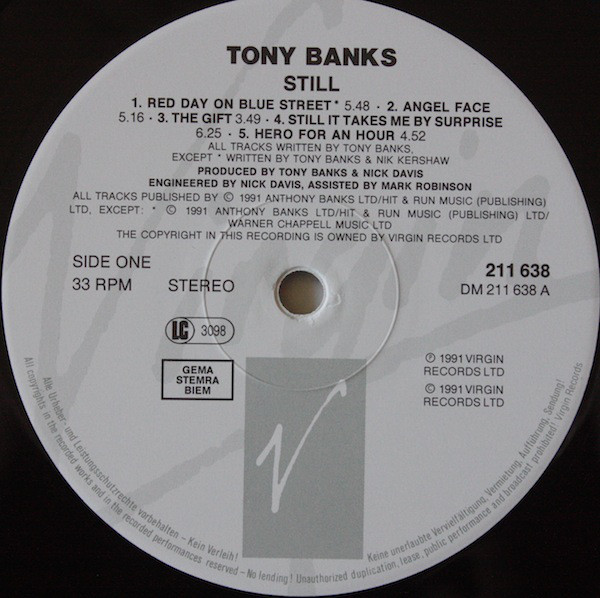
Unlike Tony’s two previous solo albums, Tony didn’t write each of the entire album Instead, Tonye wrote seven and cowrote Red Day On Blue Street and I Wanna Change The Score with Nik Kershaw. Tony cowrote Another Murder of a Day with Fish from progressive rock band Marillion. They were just two of the guest vocalists on Still.
The other two vocalists were Jayney Klimek and Andy Taylor of Duran Duran. Along with Nik Kershaw and Fish, recording of Still got underway in 1990, and was completed in 1991. The album was scheduled to be released later in 1991.
Originally, Still was going to be called Still It Takes Me by Surprise, after one of the tracks on the album. However, it was shortened to Still, and released in April 1991. Reviews of Still were mixed. However, Giant Records had high hopes for Still. They promoted the album heavily. Despite their best efforts, Still didn’t sell well in Britain. That was the case a year later, when Still was released in America in April 1992. Since then, Still is regarded by some as Tony Banks best albums. Following the disappointing sales ofStill, Tony Banks would to reinvent himself.
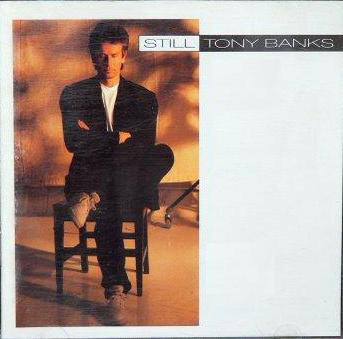
Strictly Inc.
The latest reinvention of Tony Banks came in 1995, when he released Strictly Inc. It was a collaboration between Tony and Jack Hues, the lead singer of Wang Chung. They were joined by a rhythm section of drummer John Robinson, bassist Nathan East and guitarist Daryl Stuermer. Jack Hues played guitar and Tony took charge of keyboards. Ten tracks were recorded between 1994 and 1995, and became Strictly Inc. which was released later in 1995.
Strictly Inc. was released on 11th September 1995. Critics weren’t impressed by Strictly Inc. The highlight of the album critics said, was Tony’s keyboard playing. Layers of keyboards were stacked one on top of another, melting seamlessly into one. They were augmented by Jack’s vocals. However, critics felt that vocals were no match for Tony’s keyboards. Unsurprisingly, when Strictly Inc. was released it failed commercially. That was despite Strictly Inc. bearing the band member’s names.
That was against Tony Bank’s wishes. He wanted Strictly Inc. not to feature the band member’s names. While this would’ve added an air of mystery, it would’ve also meant that cynical critics couldn’t take a swipe at Tony. They weren’t impressed by Strictly Inc. Nor were record buyers. So much so, that Virgin Records never bothered to release Strictly Inc. in America. Given the response of critics to Strictly Inc,Tony decided to reinvent himself yet again.
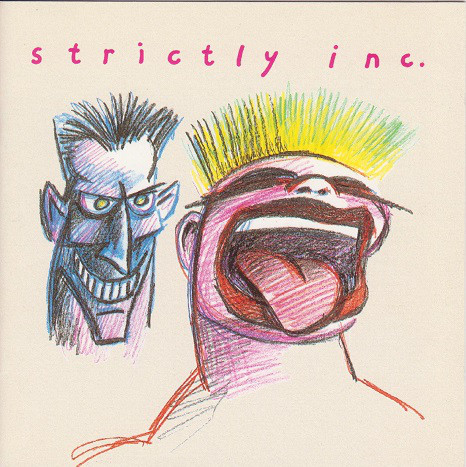
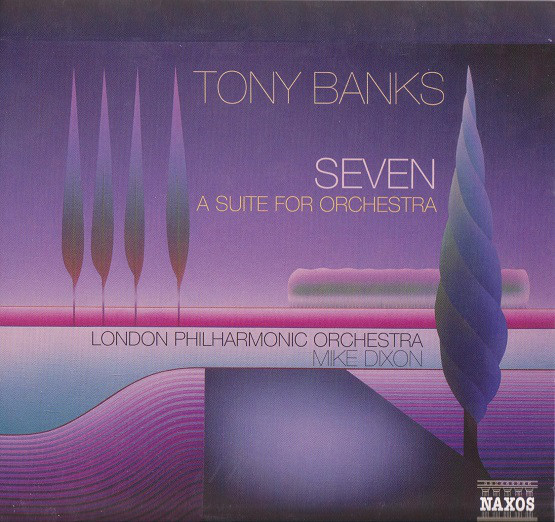
Seven: A Suite For Orchestra.
In the nine years between Tony Banks releasing Strictly Inc. and the release of Seven: A Suite For Orchestra in March 2004, a lot had happened. Genesis had split-up in 1998. After thirty-one years together, the trio went their separate ways. Five years later, Tony began work on Seven: A Suite For Orchestra in 2003.
Seven: A Suite for Orchestra was a first for Tony Banks. He had never released a classical album. Tony penned the seven suites, and played piano on Spring Tide, The Ram and The Spirit of Gravity. Accompanying him were the London Philharmonic Orchestra, conducted by Mike Dixon. Producing Seven: A Suite For Orchestra was Tony and Nick Davis, who Tony knew from his work engineering and producing Genesis. The pair finished Seven: A Suite For Orchestra was completed in 2004, it was released in March 2004.
When Seven: A Suite For Orchestra was released in March 2004, some critics were surprised by this stylistic departure from Tony Banks. However, Tony had written soundtracks and orchestral pieces before. He took this further on Seven: A Suite For Orchestra. Despite this, Seven: A Suite For Orchestra didn’t catch the imagination of record buyers. It was too far removed from what people expected of Tony Banks. Sales were disappointing, and successful continued to elude Tony Banks. It was too far removed from what people expected of Tony Banks. So much so, it would be eight years before Tony returned with the followup to Seven: A Suite For Orchestra.
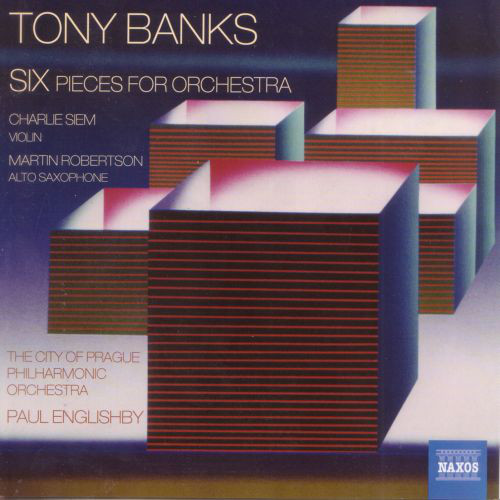
Six: Pieces For Orchestra.
It wasn’t until April 2012 that Tony Banks returned with his second classical album, Six: Pieces For Orchestra. Eight years had passed since the release of Seven: A Suite For Orchestra. However, Tony had been busy.
He wrote the six suites on Six: Pieces For Orchestra. Again, Tony and Nick Davis co-produced Six: Pieces For Orchestra. It features the City Of Prague Philharmonic Orchestra. They’re conducted by Paul Englishby. Two soloists play an important part in this evocative, haunting and bewitching album. It features two of Tony Banks’ finest classical works. This is further proof, if any was needed of Tony Banks versatility and ability to reinvent himself.
This versatility allowed Tony Banks to reinvent himself several times between the release of A Curious Feeling in 1979 and Six: Pieces For Orchestra in 2012. During that period, Tony Banks solo career has taken numbers twists and turns. He’s released three solo albums, two soundtrack albums, two, orchestral albums and formed two bands, Bankstatement and Strictly Inc. In total, Tony Banks has released nine albums between 1979 and 2012. That’s pretty good going, considering Tony Banks was still a member of Genesis until 1998.
This meant that up until 1998, Tony Banks had fit his solo career around Genesis’ recording and touring schedule. They were one of the most successful bands on planet rock. Genesis’ albums sold by the million, so Genesis’ took priority. Solo careers and side projects were when the band had some downtime. During that period, Phil Collins enjoyed a hugely successful solo career, while Mike Rutherford’s band Mike and The Mechanics were also enjoying commercial success. However, Tony Banks never reached the same heights as his bandmates and friends.
While Tony Banks is undoubtably a talented and versatile musician, he never enjoyed the commercial success his talents deserved. Maybe his constant determination to reinvent himself musically worked against him? If he had forged out his own unique sound, then maybe Tony Banks’ would’ve gone on to enjoy commercial success and critical acclaim? This might have taken a couple of albums, but would’ve paid off in the long run. It certainly paid off for his former bandmates in Genesis, Phil Collins and Mike Rutherford. However, this wasn’t for Tony Banks. Instead, he wanted to explore new musical frontiers.
Tony Banks went on to write soundtracks, classical albums and formed two short-lived bands. Each of these projects took Tony Banks’ career in a different direction. Even his three solo albums A Curious Feeling, The Fugitive and Still are quite different stylistically, and show different sides to Tony Banks’ music.
It’s a career where Tony Banks has explored everything from art rock, classical, pop, progressive rock, rock, soft rock and symphonic rock. No two albums were the same, as Tony Banks sought to reinvent himself. He certainly succeeded in doing so during a long and varied career.
Sadly, Tony Banks didn’t come close to enjoying the commercial success that came Phil Collins and Mike Rutherford’s way. However, throughout his solo career, Tony Banks was a musical maverick, who created ambitious and pioneering music. To do this, Tony Banks often flitted between, and combined disparate musical genres. The result was ambitious music that pushed musical boundaries. Sometimes this music failed commercially and divided the opinion or critics and record buyers. Maybe, part of the problem was Tony Banks had the safety net of Genesis?
Given the success Genesis enjoyed, Tony Banks wasn’t relying on his solo career putting food on the table. So he was able to experiment, and sometimes, indulge himself musically? Virgin Records and Atlantic, who released Genesis albums in Britain and America respectively, were willing to indulge a member of one of their most successful signings by releasing albums Bankstatement and Strictly Inc.
Both albums failed commercially and weren’t well received by critics. The cost of these albums would be a drop in the ocean compared to what Genesis were earning for Virgin Records and Atlantic. However, while Strictly Inc. was a low point in Tony Banks’ career, at least he was willing to head in new directions musically, and release ambitious music.
That was the case throughout Tony Banks’ thirty-three year solo carer. Constantly, Tony Banks released ambitious and pioneering music, where he continually pushed musical boundaries, and in the process proved that there was life after Genesis.
TONY BANK-LIFE AFTER GENESIS.

EMERSON. LAKE AND PALMER-THE EARLY YEARS 1970-1973.
EMERSON. LAKE AND PALMER-THE EARLY YEARS 1970-1973.
The Emerson, Lake and Palmer story began back in in 1970. That was when Keith Emerson and Greg Lake first met at the Filimore West, in San Francisco. Both of them were at a musical crossroads. Keith was a member of The Nice, while Greg Lake was a member of King Crimson. Nether Keith nor Greg felt fulfilled musically. So, the decided to form a new band.
This new band would feature Keith on keyboards, Greg on bass and a drummer. Their first choice for a drummer was Mitch Mitchell, who was without a band, after The Jimi Hendrix Experience split-up. They agreed to jam together. Then the music press heard about this jam session.
Rumours started doing the rounds that Jimi Hendrix was going to join this new supergroup. That put an end to the jam session. It never took place. Jimi Hendrix had never been asked to join the supergroup. Mitch Mitchell meanwhile, lost interest in the project. This presented a problem. Keith and Greg still didn’t have a drummer. Then Robert Stigwood, who was then the manager of Cream, suggested Carl Palmer’s name.
Carl Palmer was another experienced musician. He’d previously been a member of The Crazy World Of Arthur Brown. At that time, he was a member of Atomic Rooster. So Carl was approached. He was, at first, reluctant to leave Atomic Rooster, which he’d cofounded. However, when he spoke to Keith and Greg he realised that he could be part of something special.
Having left Atomic Rooster, he became the third member of the newly formed supergroup Emerson, Lake and Palmer. They made their debut at The Guildhall, Plymouth, on 23rd August 1970. Then on 26th August 1970, Emerson, Lake and Palmer stole the show at the Isle Of Wight Festival. This resulted in Emerson, Lake and Palmer being offered a recording contract by Atlantic Records.
Ahmet Ertegün the President of Atlantic Records realised the potential in Emerson, Lake and Palmer. Here was a band who wouldn’t just sell a huge amount of records, but could fill huge venues. So, not long after signing Emerson, Lake and Palmer, Ahmet Ertegün sent them into Advision Studios, London, where they recorded their eponymous debut album.
Emerson, Lake and Palmer.
At Advision Studios, Emerson, Lake and Palmer recorded ten tracks. They became Emerson, Lake and Palmer. Although this was meant to be the birth of a supergroup, the ten tracks on Emerson, Lake and Palmer came across as a series of solo pieces. However, Emerson, Lake and Palmer were a new band, who’d just recorded an eclectic and innovative album.
Although many people refer to Emerson, Lake and Palmer as prog rock band, they’re much more than that. Their music is eclectic. They draw inspiration from a variety of sources. This includes classical, folk rock, jazz, psychedelia and rock. Some of the music is futuristic. That’s in part to Keith Emerson’s use of the Moog synth. The result was a pioneering, innovative album that would launch Emerson, Lake and Palmer’s career.
When critics heard Emerson, Lake and Palmer, they hailed the album as innovative and influential. On its release in the UK in October 1970, i Emerson, Lake and Palmer reached number four. Three months later, on New Year’s Day 1970, Emerson, Lake and Palmer was released in the US. It reached number eighteen in the US Billboard 200 and was certified gold. Ahmet Ertegün, the President of Atlantic Records had been vindicated. Emerson, Lake and Palmer were on their way to becoming rock royalty.

Tarkus.
It was a case of striking when the iron was hot for Emerson, Lake and Palmer. They returned to Advision Studios, in London to record what became their sophomore album Tarkus. It was much more of a “band” album. Emerson, Lake and Palmer were now a tight, musical unit. This was very different from Emerson, Lake and Palmer, which was more like an album of solo pieces. Tarkus saw the birth of Emerson, Lake and Palmer as one of the giants of prog rock.
Tarkus was released in June 1971. That wasn’t originally the plan. Instead, Pictures At An Exhibition was meant to be Emerson, Lake and Palmer’s sophomore album. This was a live album which was recorded in March 1971. It saw Emerson, Lake and Palmer interpret Modest Mussorgsky’s opus Pictures At An Exhibition. it was a groundbreaking album. There was a problem though. Emerson, Lake and Palmer’s management didn’t agree. They weren’t sure that what essentially a interpretation of a classical suite was the direction Emerson, Lake and Palmer should be heading. So, Tarkus became the followup to Emerson, Lake and Palmer.
On its release in June 1971, critics realised that Tarkus marked a much more united Emerson, Lake and Palmer. They were well on the way to finding their trademark sound. Gone were ballads and jazz-tinged tracks. Instead, it was prog rock all the way. Record buyers loved Tarkus. It reached number one in the UK. Over the Atlantic, Tarkus reached number nine in the US Billboard 200 and was certified gold. Following the commercial success of Tarkus, Pictures At An Exhibition was released later in 1971.

Pictures At An Exhibition.
Three months before the release of Tarkus, Emerson, Lake and Palmer arrived at Newcastle City Hall, in Newcastle, England on the 26th March 1971. They were about to record their first live album, Pictures At An Exhibition. This was no ordinary live album.
Instead, Emerson, Lake and Palmer had decided to adapt Russian classical composer Modest Mussorgsky’s Pictures At An Exhibition. This was one of the first times classical music had been adapted by a rock band. That night in Newcastle, just four of the original ten pieces in Mussorgsky’s suite, along with the linking Promenade were recorded, They were performed live as one continuous piece, with new parts written by Emerson, Lake and Palmer. These new parts linked Mussorgsky’s original themes, which Emerson, Lake and Palmer’s played with enthusiasm and energy. Despite this, Pictures At An Exhibition was nearly never released.
It seemed that Pictures At An Exhibition was fated. Problems with their management meant that Pictures At An Exhibition’s release was delayed. It wouldn’t be until November 1971 the album was released. However, at one point it looked as if Pictures At An Exhibition wouldn’t be released. Atlantic Records were reluctant to release what was essentially a classical suite as an album. This they feared, wouldn’t sell well. So the project was put on the back burner, Suddenly, it looked unlikely that Pictures At An Exhibition would be released. That was until Tarkus was certified gold in America. All of a sudden, Atlantic had a change of heart,
Rather than release Pictures At An Exhibition on the main Atlantic label, a decision was made to release the album as a budget priced album. Atlantic Records it seemed were hedging their bets. That seemed a wise move when the reviews were mixed. Rolling Stone magazine was far from impressed with Pictures At An Exhibition. Neither was the self styled Dean of American Rock Critics, Robert Christgau, Despite this, Pictures At An Exhibition sold well.
When Pictures At An Exhibition was released in November 1971, it reached number three in the UK. In America, Pictures At An Exhibition reached number ten in the US Billboard 200. This resulted in Emerson, Lake and Palmer’s third consecutive gold album. A year later, three became four.
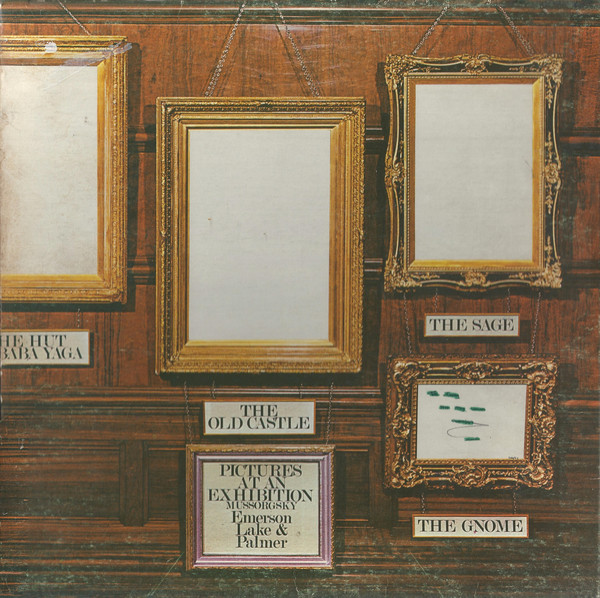
Trilogy.
Just like previous albums, Emerson, Lake and Palmer were determined to push musical boundaries on Trilogy, their third studio album. Just like their two previous albums, Trilogy was recorded at Advision Studios, London. Emerson, Lake and Palmer were at their innovative best, recording progressive rock, but with a twist.
An example of this was the inclusion of Abaddon’s Bolero on Trilogy. Rather than the usual 3/4 rhythm a Bolero would have, it was turned into a march by using a 4/4 rhythm. Emerson, Lake and Palmer also pioneered the beating heart sound on Trilogy. Pink Floyd would use it to such good effect on Dark Side Of The Moon. So would Jethro Tull on A Passion Play and Queen on Queen II. This sound was first heard on Endless Enigma Part One. It came courtesy of Carl Palmer’s Ludwig Speed King bass drum pedal. Once again, Emerson, Lake and Palmer were demonstrating that they were one of the most innovative progressive rock bands. Their efforts were rewarded.
On its release in January 1972, Trilogy reached number two in the US. As usual, Emerson, Lake and Palmer enjoyed more success in the US. Trilogy reached number five in the US Billboard 200. This resulted in another gold disc for Emerson, Lake and Palmer. Things were about to get better for Emerson, Lake and Palmer though.
Of the three previous studio albums Emerson, Lake and Palmer had recorded, they complex, innovative, genre-melting affairs. Emerson, Lake and Palmer embraced the latest technology in what seemed like their quest for musical perfection. They also made use of overdubbing. This made their music difficult to replicate live. The band always felt they came up short live. So Emerson, Lake and Palmer set about recording an album they could replicate accurately live. This was Brain Surgery Salad.
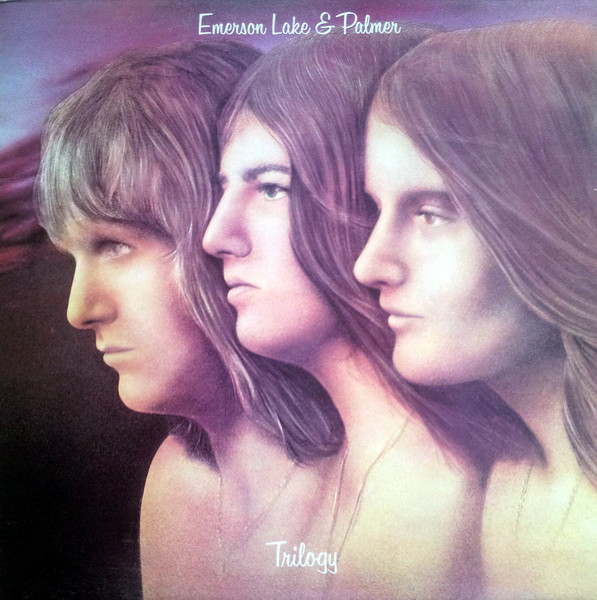
Brian Surgery Salad.
Recording of Brian Surgery Salad took place between June and September 1973. Brain Salad Surgery was a fusion of prog rock and classical music. This is obvious straight away.
Emerson, Lake and Palmer adapted William Blake and Hubert Parry’s hymn Jerusalem and then Alberto Ginastera’s Toccata. Greg Lake wrote Still…You Turn Me On and then cowrote Benny The Bouncer and Karn Evil 9: 3rd Impression with Keith Emerson and Peter Sinfield, one of the founding members of King Crimson. Keith Emerson penned Karn Evil 9: 2nd Impression and cowrote Karn Evil 9: 1st Impression, Part 1 with Greg Lake also penned Karn Evil 9: 1st Impression, Part 1. These tracks were brought to life by Emerson, Lake and Palmer at their inventive best.
On Brain Salad Surgery, Keith Emerson played Hammond organ, piano, accordion and a myriad of synths. Greg Lake took charge of vocals, acoustic, electric, and twelve-string guitars. He also played bass guitar. Carl Palmer played drums, percussion, percussion synthesizers, gongs and timpani. Greg Lake produced Brian Surgery Salad, which was released in November 1973. Before that, critics had their say on Brian Surgery Salad,
Mostly, the reviews of Brain Salad Surgery were positive. However, the usual contrarian critics were’t as impressed. They seemed unwilling to recognise that Brain Salad Surgery was the finest hour of Emerson, Lake and Palmer’s four album career. Brian Surgery Salad featured Emerson, Lake and Palmer at their tightest and loudest. Here was a tight, visionary band fusing prog rock, jazz and classical music. It was an ambitious, powerhouse of an album. Emerson, Lake and Palmer were at the peak of their creative powers, and record buyers on both sides of the Atlantic realised this.
When Brain Salad Surgery, was released in November 1973, it became Emerson, Lake and Palmer most successful album. It reached number two in the UK and number eleven in the US Billboard 200. This resulted in two more gold discs to add to Emerson, Lake and Palmer’s collection. They were well deserved though.
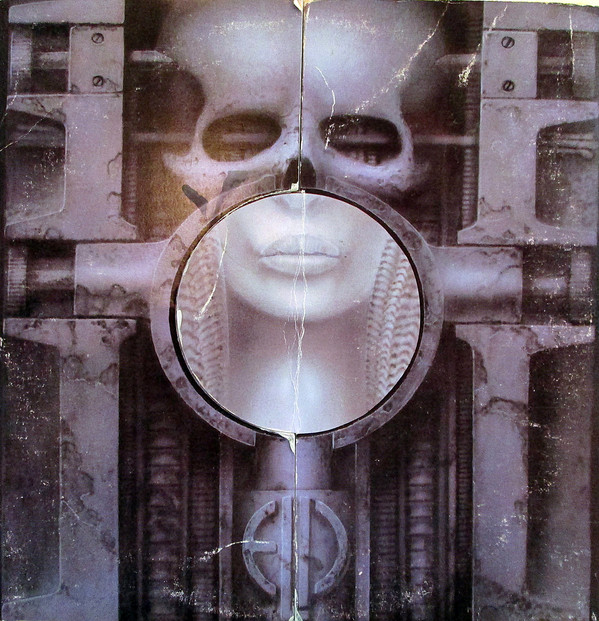
By the time Emerson, Lake and Palmer released Brain Salad Surgery, they were at their innovative and groundbreaking best. That wasn’t surprising given Emerson, Lake and Palmer were three of the most gifted and visionally musicians of their generation. They were able to seamlessly combine musical genres, and had been since their eponymous debut album.
On their first three studio albums, Emerson, Lake and Palmer flitted between prog rock, jazz and classical music, creating genre-meleting music. This music was ambitious, complex and innovative. That was no surprise. Emerson, Lake and Palmer had always embraced the latest technology in what seemed like their quest for musical perfection. They also made use of overdubbing extensively. However, the more complicated and multilayered Emerson, Lake and Palmer’s became, the more difficult it was to replicate live.
Overdubbing had been used extensively by Emerson, Lake and Palme. They added layer upon layer of instruments. The result was a complex orchestral arrangement. The only problem was replicating the songs live, This Emerson, Lake and Palmer was impossible. After several attempts to play these songs live, Emerson, Lake and Palmer realised they couldn’t make it work live. Eventually, they gave up, and cut it from their set as they embarked on extensive tours,
By 1973, Emerson, Lake and Palmer were one of the most successful bands on both sides of the Atlantic. Although they had only released four studio albums and one live album between 1970 and 1973, they were already festival favourites and stadium fillers. Emerson, Lake and Palmer were well on their way to becoming one of the most successful progressive rock bands.
From 1970s Emerson, Lake and Palmer, 1971 Tarkus and Pictures At An Exhibition, 1972s Trilogy and 1973s Brain Salad, Emerson, Lake and Palmer could do no wrong. Each album they released was certified gold in America. By 1973, Emerson, Lake and Palmer were well on their way to becoming one of the most successful bands of the progressive rock era. Their music was innovative, inventive and influential. Especially the music Emerson, Lake and Palmer released during the early years between 1970 and 1973.
EMERSON. LAKE AND PALMER-THE EARLY YEARS 1970-1973.
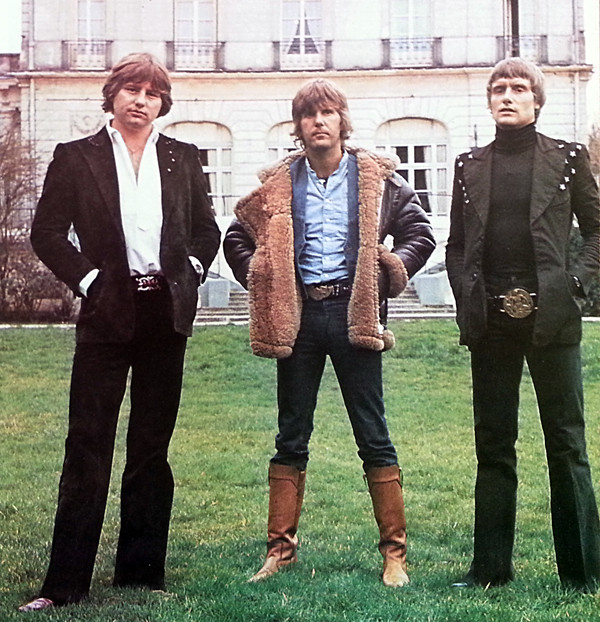
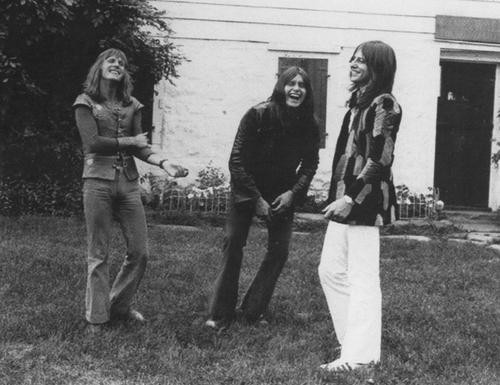
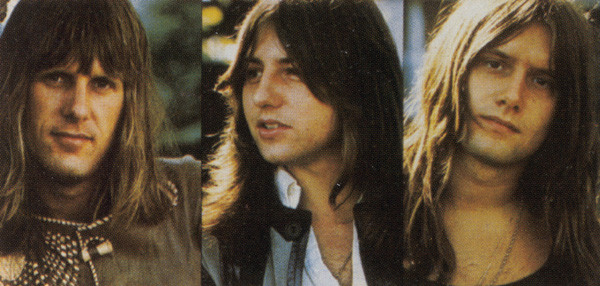
SON-OF-A-GUN AND MORE FROM THE LEE HAZLEWOOD SONGBOOK.
SON-OF-A-GUN AND MORE FROM THE LEE HAZLEWOOD SONGBOOK.
On August the 4th 2007, Lee Hazlewood passed away aged seventy-eight. That day, music lost one its most talented sons. During a career that had spanned six decades, Lee Hazlewood had worked as a singer, songwriter, musician, arranger and producer. Somehow, though, Lee Hazlewood found time to found his own record label LHI Records in 1967. By then, Lee Hazlewood had been involved with music since the the early fifties.
That was when Lee Hazlewood left the army. Prior to serving Uncle Sam, Lee Hazlewood had been pursuing a career in medicine. That was the past though.
When Lee Hazlewood left the US Army, he decided not to pursue his medical degree. Instead, Lee Hazlewood began work as a disc jockey. That he hoped, was only temporary.
What Lee Hazelwood really wanted to do with his life, was write songs. This must have seemed like a pipe dream to his friends and family. However, Lee Hazlewood had the last laugh. His songs were recorded by artists over a fifty a year period. This includes several generations of musicians that feature on Son-Of-A-Gun and More From The Lee Hazlewood Songbook. It’s just been released by Ace Records, and features twenty-two tracks. There’s contributions from Waylon Jennings, Billie Dearborn, Sanford Clark, The Jesus and Mary Chain, Sanford Clark, Mark Morriss, Gold Leaves and Primal Scream With Kate Moss. They’re just a few of the names on Son-Of-A-Gun and More From The Lee Hazlewood Songbook that were recorded during Lee Hazlewood’s long and illustrious career. His story began during one of the darkest periods, American history, the Great Depression.
Lee Hazlewood was born in Mannford, Oklahoma on the 9th July 1929. During his early years, Lee and his family moved between Arkansas, Kansas, Oklahoma and Louisiana. Brought up on a diet of bluegrass and pop, Lee’s tastes broadened when his family moved to Texas. Music it seemed was in his blood. Despite that, Lee didn’t make a career out of music when he left high school.
Not at all; music seemed to be the last thing on Lee Hazlewood’s mind. Making a career out of music only came later. When Lee Hazlewood left high school, he headed to Dallas’ Southern Methodist University. That was where he studied medicine. After university, Lee joined the US Army during the Korean War. When he was discharged from the Army, Lee decided medicine wasn’t for him.
Instead, Lee took a job as a disc jockey. His reason for doing so, was it allowed him to work on his songwriting skills. Lee had decided to pursue a career in music. That didn’t mean spinning records. No. It meant writing them.
The first hit Lee wrote and produced was Sanford Clark’s 1956 rockabilly hit The Fool. That was just the start of Lee’s musical career. He went on to pen two more hits for Sanford Clark, 1956s Usta Be My Baby and 1957s The Man Who Made An Angel Cry. Lee then wrote Leroy Vandyke’s 1957s The Pocket Book Song and Pat Boone’s 1957 single Why Did I Choose You? However, Lee’s career really took off when he met innovative guitarist Duane Eddy.
Best known for his twangy guitar sound, Duane Eddy will always be remembered as a pioneering guitar player. With Lee Hazlewood writing and producing many of his singles, Duane Eddy went onto enjoy a successful career. Lee penned and produced 1958s The Walker, Rebel Rouser, Dixie Part 1 and Peter Gunn. Soon, Lee began writing for other artists, including Sam Horn and His Orchestra, Mark Robinson and Das Hazy Osterwald Sextet. However, just like 1958, most of the hits he wrote were for Dune Eddy.
During 1959, Duane Eddy enjoyed a string of hit singles. Forty Miles of Bad Road, Only Child, The Quiet Three and Shazam. Duane Eddy was now one of the biggest names in music. Although Lee had to keep the hits coming for Duane, he penned singles for Hans Brandel and Sanford Clark. This was no bad thing, as the hits started drying up for Duane Eddy.
1960 saw Duane Eddy release just three singles, one of which Rebel Walk, had been released before. Luckily, Lee was writing for other artists including Paul Rich, Tony Castle and Greg Connors. Another artist who’d release a single during 1960 was Lee Hazlewood.
Lee’s debut single was Words Mean Nothing. which Lee recorded with Duane Eddy and His Orchestra. It wasn’t a commercial success, so Lee went back to songwriting and production. However, Lee had enjoyed a tantalising taste of life as a recording artist. His return to songwriting and production was only going to be temporary.
For the next three years, Lee Hazlewood was busy working as songwriter and producer. During 1961, Lee worked penned songs for Tom and Jerry, Donnie Owens, Tony Gunner and Bud Ashton and His Group. Then in 1962, Duane Eddy enjoyed a string of hit singles. With The Shadows and The Ventures recording songs written by Lee, Lee Hazelwood could’ve continued to enjoy a career as a successful songwriter. He didn’t.
Instead, Lee decided to relaunch his solo career. He signed to Mercury and began work in what was his 1963 debut album, Trouble Is A Lonesome Town. This was first album of Lee Hazelwood’s five decade recording career. However, despite release over twenty solo studio albums, still many people remember Lee Hazlewoodfor the songs he’s written for other people. Twenty-two of them feature on Son-Of-A-Gun and More From The Lee Hazlewood Songbook.
Opening Son-Of-A-Gun and More From The Lee Hazlewood Songbook is Jarvis Cocker and Richard Hawley’s cover of A Cheat, which was originally recorded by Sanford Clark. The Pulp frontman and his onetime band-made Richard Hawley collaborated on A Cheat, for the 2002 tribute album Total Lee!-The Songs Of Lee Hazlewood. One of the highlights, was Jarvis Cocker and Richard Hawley’s cover A Cheat. They totally reinvent the song, as betrayal, anger and frustration combine to create a vocal that’s almost menacing as they accuse A Cheat.
Chiswick born, Mark Morriss and his brother Scott founded The Bluetones in 1993. They went on to enjoy a string of hit singles and commercially successful albums between the late-nineties and early nougties. By 2008, Mark Morriss had released his debut album Memory Muscle, on Fruitcake Music. Memory Muscle featured a cover of My Autumn’s Done Come, which originality featured on Lee Hazlewood’s 1963 debut album Trouble Is A Lonesome Town. My Autumn’s Done Come is celebratory ballad, where Mark Morriss welcomes the onset of middle age, on a song that is sure to resonate with many people.
Lee Hazlewood originally recorded Won’t You Tell Me Your Dreams for his 1971 solo album Requiem For An Almost Lady. Forty-one years later, and Gold Leaves covered Tell Me Your Dreams for a single released by Light In The Attic. Tucked away on the B-Side, was Lee Hazlewood’s original’s version. This allowed record buyers to compare and contrast. Gold Leaves’ country-tinged version is a beautiful, heartfelt version of this ballad, that does justice to this Lee Hazlewood song.
Another song from Lee Hazlewood’s 1971 solo album Requiem For An Almost Lady is I’d Rather Be Your Enemy. This was a song that Lee Hazlewood had written about an ex-girlfriend. There has been speculation that the girlfriend in question was Nancy Sinatra? In 1990, I’d Rather Be Your Enemy. was covered by Boyd Rice and Friends for their 1990 album Music, Martinis and Misanthropy. It was released on New European Recordings and began a new chapter in Boyd Rice’s career.
Joining him in this new beginning, was one half of Strawberry Switchblade, Rose McDowall. She was one of Boyd Rice’s “Friends,” and helped provide the backdrop for his vocal. It’s best described as a mixture of cynicism and scepticism. Boyd Rice it seemed, had obviously to be convinced of how love can transform lives. His interpretation of the lyrics makes this clear.
In 1967, Lee Hazlewood and Suzi Jane Hokom recorded Summer Wine. Forty years later, Ville Valo and Natalia Avelon Summer covered Summer Wine for the soundtrack to Das Wilde (Eight Miles High). Polish-German actress Natalia Avelon was starring in the film, and was joined by Ville Valo the frontman of Finnish heavy rockers HIM. While this seems like an unlikely musical partnership, it was one that worked, and worked well. They prove the perfect foil for each other, as they create a cinematic cover of Summer Wine. It’s one of the best versions of the oft-covered Summer Wine.
Two years after Lee Hazlewood released his Love And Other Crimes album in 1968, Waylon Jennings released his Singer Of Sad Songs album. It was released released by RCA Victor in 1970, and had been produced by Lee Hazlewood. Singer Of Sad Songs stalled at number twenty-three in the US Country charts, and was the least successful album Waylon Jennings had released since Waylon Sings Ol’ Harlan in 1967. However, Singer Of Sad Songs is a hidden gem in Waylon Jennings’ discography, with Singer Of Sad Songs one of the highlights of a truly underrated album.
One of the most successful Scottish bands of the last thirty years, are East Kilbride’s finest, The Jesus and Mary Chain. They were inspired by a disparate selection of artists, including Lee Hazlewood. The Jesus and Mary Chain covered I’m Glad I Never from Lee Hazlewood’s 1971 solo album Requiem For An Almost Lady. It featured on The Jesus and Mary Chain’s 1989 singles’ box set Head On. There’s a darkness to The Jesus and Mary Chain’s cover of I’m Glad I Never, especially when William delivers the line “I’m Glad I Never had a gun.”
By 1967, Lee Hazlewood and Nancy Sinatra had just released their debut album Nancy and Lee. It featured the song Lady Bird. Lee knew that the song would’ve been perfect to record with his then girlfriend Suzi Jane Hokom. There was a problem though. He had given Nancy Sinatra first option on the song. She liked the song, and the pair covered Lady Bird for their album Nancy and Lee. However, a year later, Suzi Jane Hokom got the opportunity to record the song.
The only downside was, that it wasn’t with Lee. Instead, country singer Virgil Warner and Suzi Jane Hokom covered Lady Bird for their eponymous debut album. It was penned and produced by Lee, and released on his LHI label. Virgil Warner is the perfect foil to Suzi Jane Hokom as they make the song their own.
Sixty years ago, in 1956, Sanford Clark enjoyed a rockabilly hit with The Fool. This was the first hit single that Lee Hazlewood had written. Three years later, in 1959, Sanford Clark covered another Lee Hazlewood composition Son-Of-A-Gun single. It was released on the Jamie label, but failed to match the success of The Fool. That is despite the quality of Son-Of-A-Gun. It’s a cinematic song about redemption, that tells the story of a Wild West gunslinger who finds love, and mends his way. Not long after the release of Son-Of-A-Gun, it was the first song Keith Richard learnt to play on guitar, before going on to form the Rolling Stones.
Billie Dearborn covered Friday’s Child, the title-track to Lee Hazlewood’s 1965 album. Three years later, Billie Dearborn released Friday’s Child as a single in 1968 on LHI Records. By then, the song had been covered by three other artists, including Lee Hazlewood and Nancy Sinatra. However, Billie Dearborn version of Friday’s Child can only be described as soul-baring and beautiful, as she combines power and emotion.
My final choice from Son-Of-A-Gun and More From The Lee Hazlewood Songbook, is Sand which was covered by Holly Golightly With Brian Nevill. It was released as a single on Box Theory Records in 1996. This was thirty years after Lee Hazlewood and Suzi Jane Hokom recorded the song for the 1966 album, The Very Special World Of Lee Hazlewood. Holly Golightly and Brian Nevill’s cover stays true to the original, and pays homage to a truly talented songwriter, Lee Hazlewood.
There’s more to Lee Hazlewood than a songwriter through. Son-Of-A-Gun and More From The Lee Hazlewood Songbook which was recently released by Ace Records is proof of that. Lee Hazlewood was also a singer, producer, arranger and founded and ran his own record label LHI Records. Multitalented describes Lee Hazelwood. His career began when the equipment found in most studios was very basic.
That however, isn’t surprising. Lee Hazlewood started out as a producer in the late fifties. Back then, equipment was far from advanced. That hardly seemed to matter to Lee Hazlewood. Still, he was able to create groundbreaking music.
This was the case from his work with Duane Eddy, right through to the music he created during the surf and hot rod crazes. It seemed Lee Hazlewood knew how to make the most of the basic equipment found in studios. What he produced, left other producers scratching their head. They wondered how they could create similar results? Other songwriters were in a similar boat.
They watched as Lee Hazelwood penned hit after hit. Duane Eddy, The Astronauts and The Ventures were all beneficiaries of Lee Hazelwood’s songwriting skills. So were Sanford Clark, Dean Martin, Frank Sinatra and Nancy Sinatra. Later, though, Lee Hazlewood’s songs were covered by several generations of singers.
Everyone from country and folk singers to crooner and indie rockers went on to cover Lee Hazelwood’s songs. Proof of this is Son-Of-A-Gun and More From The Lee Hazlewood Songbook. It’s just been released by Ace Records, and features twenty-two covers of Lee Hazlewood’s songs. They’re an eclectic selection, and include contributions from Waylon Jennings, Billie Dearborn, Sanford Clark, The Jesus and Mary Chain, Sanford Clark, Mark Morriss, Mick Harvey, Gold Leaves, Primal Scream With Kate Moss, Jarvis Cocker and Richard Hawley. These songs were released between 1959 and 2012, which covers Lee Hazlewood’s entire career. Sadly, on August the 4th 2007, Lee Hazlewood passed away aged seventy-eight. Even after his death, artists continue to inspired and influenced by Lee Hazlewood.
Many of the artists that have been influenced and inspired by Lee Hazlewood weren’t even born when he first wrote and recorded some of the songs on Son-Of-A-Gun and More From The Lee Hazlewood Songbook. However, these songs have a timeless quality, and fifty years after they were first released, artists are covering them. Sometimes, they stay true to the original, other times, they reinvent the song. Lee Hazlewood, a musical pioneer would’ve approved of that.
After all, throughout a career that panned six decades, Lee Hazlewood was an innovator, who has influenced and inspired several generations of musicians. This includes many of the artists on Son-Of-A-Gun and More From The Lee Hazlewood Songbook. They pay homage to a musical legend on Son-Of-A-Gun and More From The Lee Hazlewood Songbook who somewhat belatedly, is enjoying the recognition he so richly deserves.
SON-OF-A-GUN AND MORE FROM THE LEE HAZLEWOOD SONGBOOK.


DAN WHITEHOUSE-THAT’S WHERE I BELONG.
DAN WHITEHOUSE-THAT’S WHERE I BELONG.
Earlier this year, Reveal Records revealed their latest singing, Dan Whitehouse. To celebrate the signing of the talented, Birmingham based singer-songwriter, Reveal Records released Introducing on 22nd April 2016. Introducing featured eight tracks, which were a mixture of Dan Whitehouse compositions and cover versions. This was a tantalising taste of what Dan Whitehouse was capable of. However, one song stood head and shoulders above the rest, That’s Where I Belong.
It’s a hook-laden, joyous anthem written by Dan Whitehouse. That’s Where I Belong also lends its name to Dan Whitehouse’s forthcoming album, That’s Where I Belong, which will be released by Reveal Records on 2nd September 2016. That’s Where I Belong is the much anticipated fifth album from Dan Whitehouse, whose career began back in 1998.
That was when nineteen year old Dan Whitehouse joined Naomi, a local band. Dan was a member of the band for two years, but left in 2000 to join the rock band Sonara.
Dan Whitehouse became Sonara’s frontman, and was a member of the band until 2007. During this period, Sonara played at the prestigious Reading Festival. However, by 2007 Dan announced he was leaving Sonara, to embark upon a solo career.
For the first two years of his career, Dan Whitehouse spent time writing songs, honing sound and playing live. This was akin to a musical apprenticeship. After two years, Dan felt confident enough to releases his debut E.P.
When Dan Whitehouse released The Balloon E,P. in early 2009, it featured seven tracks. This Dan explained, was only the first in a trilogy of E.P.s They would examine a variety of themes, including “life, love, loss and happiness.” The second instalment in the trilogy, followed later in 2009.
The Bubble E.P. picked up where The Balloon E,P. left off, examining “life, love, loss and happiness.” One of the most beautiful tracks on The Bubble E.P. was You Can’t Give Me Anymore. Unsurprisingly, it caught the attention of few discerning critics. Suddenly, people were taking notice of the young singer-songwriter. This included veteran pedal steel player B.J. Cole, who made a guest appearance on The Bubble E.P. This was be the start of a long working relationship between the pair that continues today.
Later in 2009, Dan Whitehouse released The Box EP., which was the final instalment in the trilogy. This brought the examination “life, love, loss and happiness” to an eloquent and heartfelt end. Now surely, Dan’s thoughts would turn to his debut album?
Surprisingly, it wasn’t until 2012 that Dan Whitehouse returned with his eponymous debut album. It had been in Dan’s flat, and featured mainly acoustic instruments. This worked though, and allowed Dan’s vocal to take centre-stage. Five years after embarking upon a solo career, Dan Whitehouse had released his debut album. His sophomore album followed the in 2013.
When work began on Reaching For A State of Mind, Dan Whitehouse found himself in a recording studio with a full band. The band featured some familiar faces. This included P.J. Wright from Fairport Convention; Ezio guitarist Booga. percussionist Chip Bailey and Helen Lancaster of The Old Dance School. This all-star band accompanied Dan in the eleven tracks that became Reaching For A State of Mind. It was released in autumn 2013.
Reaching For A State of Mind was a genre sprawling album. Despite several folk musicians in Dan’s band, the album featured everything from Americana, folk, pop, rock and roots. Critics felt that Reaching For A State of Mind was a much more refined and polished album. It was launched in Dan’s adopted hometown of Birmingham, at the city’s Crescent Theatre. However, it wasn’t just Reaching For A State of Mind that was being launched, but Dan Whitehouse’s career.
Over the next year, Dan Whitehouse’s star was in the ascendancy. He spent the year touring and recording. Dan released his third album Raw State in 2013. It was well received by critics, and found Dan maturing as a singer and songwriter.Then later in 2014, Dan released the Reaching Further For A State of Mind E.P. It featured unreleased songs recorded during the Further For A State of Mind sessions. However, by then, Dan was on tour.
This included touring North America with German-American singer-songwriter Anja McCloskey. The pair even released the Still E.P. together. Then in August 2014, Dan played at the Moseley Folk Festival. He took to the stage after a set by The Felice Brothers, but quickly won the audience over. By the end of his set, Dan had the audience eating out of his hands. Watching from the wings was Richard Thompson, who followed Dan. The grand old man of British folk realised that he was watching one of genre’s rising stars. However, Dan was no stranger to working with some of the biggest names in music.
Over the years, Dan Whitehouse has toured with some major names. This includes Peter Green, 10CC, Maria McKee, World Party and Julian Cope. Dan has also opened for Josh Ritter, Caitlin Rose, Joseph Arthur, Willy Mason and Simone Felice since he embarked upon a solo career in 2007. Recently, Dan Whitehouse has toured with Eddi Reader, and opened for Kris Drever on his U.K. tour.
By the time Dan Whitehouse headed out on tour with Kris Drever, he had released his first album for Tom Rose’s Reveal Records. Introducing is a limited edition CD which features eight tracks from Dan Whitehouse. They’re a mixture of cover versions and songs penned by Dan Whitehouse.
Introducing.
Among the songs on Introducing penned by Dan Whitehouse, are That’s When I Belong, The Places We Have Been, Work and CCC. Apart from Work, which is a Radio Edit, the other three tracks are a taster of Dan’s forthcoming album. The other four tracks were recorded live at Kyoti Studios, in Glasgow without any overdubbing. This includes Dan’s duet with Jess Morgan on Close Up, which Boo Hewerdine cowrote. Other tracks include covers of The Cowboy Junkies’ Sun Comes Up, Its Tuesday Morning and Chris Wood’s Two Widows. These track introduce Dan Whitehouse on Introducing.
Dan Whitehouse’s Reveal Records’ debut Introducing, was his fourth album. It was released on 22nd April 2016, and showcased a truly talented singer-songwriter. However, Introducing was just the equivalent of a musical amuse-bouche. The main course now is about to be served, and That’s Where I Belong is a veritable musical feast.
That’s Where I Belong,
Now signed to Reveal Records, Dan Whitehouse began working on his debut album. He has been writing songs for the best part of twenty years, and draws inspiration from various types of music, including Americana and folk music. Many of Dan Whitehouse’s songs have a cinematic quality, as he paints pictures with his lyrics. These stories take shape in the space of three or four minutes, and leave a lasting memory. Other times, Dan Whitehouse’s song are observational.
Dan Whitehouse is a people watcher, who often, tells other people’s stories. On Close Up, Dan tells the story of refugees, displaced from their homeland. CCC and Little Left Unsaid deal with subjects like anxiety and mental health. Other times, Dan Whitehouse’s songs are reflective and poignant. He sings about subjects like family and love, and loss and compassion. It seems that singer, songwriter and storyteller Dan Whitehouse had drawn inspiration from a variety of sources for the nine songs he penned for That’s Where I Belong. These songs were recorded in Glasgow and London.
Recording of That’s Where I Belong took place at Reservoir Studios in London and at Kyoti Studios in Glasgow. Producing the That’s Where I Belong were Danny Wilson and Chris Clarke. Joining Dan Whitehouse when recording began, were veteran pedal and lap steel player B.J.Cole and folk singer Jess Morgan, who duets on Close Up. Once That’s Where I Belong was complete, there was no rest for Dan Whitehouse.
Instead, Dan Whitehouse headed out on tour with Kris Drever, and opened for him on his UK tour. This was perfect publicity for his forthcoming album That’s Where I Belong.
Nothings Gonna Change opens That’s Where I Belong. Just drums and a chiming, crystalline guitar join washes of Hammond organ. They provide the backdrop for Dan on this love song. He delivers a hopeful, joyous vocal. It’s accompanied by gospel inspired harmonies and braying horns. At heart of songs success are the Hammond organ, harmonies and horns. So catchy is the song, that the backing vocalists can’t resist adding handclaps. No wonder; given the song’s joyous, hook-laden, anthemic sound.
On Close Up, Dan Whitehouse is joined by Jess Morgan, and the pair duet. From the opening bars, the arrangement is understated. Just a subtle, chiming guitar plays, while Dan delivers tenderly and sometimes ruefully, delivers the cinematic lyrics. Memories come flooding back to him. First about: “wait for four years till they got the call, I guess my blindness set us free.” Meanwhile, the rhythm section are accompanied by a weeping pedal steel. This is the perfect accompaniment to Dan’s wistful, emotive vocal. Later, as Jess accompanies Dan, her vocal proves the perfect accompaniment. Especially as he sings: “tonight we’ll have our first meal, you’ll sit beside me Close Up, Close Up it’s the only way I can see.” It’s a beautiful, moving ballad from Dan Whitehouse.
That’s Where I Belong is very different track. It’s a much more uptempo, hook-laden song, and features a full band. This includes a Hammond organ, rhythm section and guitars. They accompany Dan who sometimes sound like Michael Stipe. He combines power and emotion, as he delivers a heart-wrenching vocal. Behind him, washes of swirling Hammond organ, and soaring, cooing backing vocals play starring roles. They join the rhythm section and guitar in driving this irresistibly catchy relationship song along. It has single written all over, given its anthemic sound.
On Work, the rhythm section join a with a searing guitar and washes of Hammond organ, before Dan delivers another melodic and catchy track. He’s accompanied by backing vocals, while the rhythm section underpin the arrangement. A blistering guitar cuts through the arrangement as Dan promises: “I’ll do anything for you, I’ll Work for you, do anything you ask me to.” This is the signal for the backing vocalists to step forward, and add the finishing to a track that hopefully, is coming to a radio near you, very soon.
Just a lone piano opens The Little Left Unsaid. It gives way to Dan’s vocal, before the two unite. Soon, Dan is delivering a heartfelt, soul-baring vocal. Memories come flooding back, before a determined Dan assures: ‘we’ll make it through.” He sounds as if he’s lived and survived the lyrics to this poignant and heart wrenching ballad.
You Brought The Sunshine literally explodes joyously into life. The rhythm section propel the arrangement along, while bursts of guitar, piano and cooing harmonies augment Dan’s vocal. It’s a mixture of power and emotion, and is akin to a confessional Again, hooks haven’t been spared, as the songs heads firmly into anthem territory
The arrangement to The Places We Have Been is sparse, with just a subtle washes of weeping guitar accompanying Dan’s soul-baring vocal. Gradually, though, the arrangement builds. The rhythm section, weeping pedal steel and piano joining Dan. He’s joined by backing vocalists as he delivers a needy vocal.It’s akin to an outpouring of emotion. Especially as he assures and promises: “I’ll never leave.” Adding the finishing touches as Dan reminisces are a sultry saxophone, harmonies and pedal steel. They’re the perfect accompaniment to Dan Whitehouse, as he lays bare his soul for all to see.
Cooing harmonies opens CCC while the rhythm section, scorching guitar and swirling washes of Hammond organ unite. They provide a dramatic backdrop for Dan’s vocal, as the song heads into anthem territory. Accompanied by the cooing harmonies, a pounding rhythm section and a jangling guitar, Dan showcases his talent as a singer, songwriter and storyteller. The lyrics come to life, before as the drama builds. Then at the bridge, the band slow things down. This adds to the drama, before pounding drums and Dan’s vocal exits stage left. It’s replaced by cooing harmonies, washes of Hammond organ and searing guitars. They combine with the rhythm section, this allows Dan’s band to showcase their considerable talents.
The Left Handed Way closes That’s Where I Belong. The arrangement is understated, with just a crystalline guitar accompanying Dan’s vocal. It’s heartfelt and impassioned, as his guitar chimes. Memories come flooding back. So do “regrets.” Later, hope returns: “I feel we could have it all, if we could keep it together, I feel that The Left Handed Way up to God is much better for me.” Then when Dan’s vocal drops out, this leaves just the electric guitar. As it’s played slowly, its crystalline, chiming sound adds a wistful sound that allows the listener to ruminate, on a song that shows another side to Dan Whiteside.
Although That’s Where I Belong just features just nine songs from Dan Whitehouse, lasting thirty-four minutes, these songs showcase a truly talented singer, songwriter and storyteller. Dan Whitehouse breathes meaning and emotion into the lyrics. These lyrics tell a series of stories on the nine carefully crafted songs.
Many of these songs have a cinematic quality, as Dan Whitehouse tells a story. Some of these stories aren’t Dan’s own. Instead, he provides a voice for those who have none. This includes on Close Up, where Dan tells the story of refugees, displaced from their homeland. Then on CCC and Little Left Unsaid, Dan deals with subjects like anxiety and mental health. Other times, Dan Whitehouse’s songs are reflective and poignant. He sings about subjects like family and love, and loss and compassion. Dan it seems, has drawn inspiration from a variety of sources for That’s Where I Belong. It’s a similar case with music that has influenced Dan.
Elements of Americana, country, folk, pop, rock and soul can be heard on That’s Where I Belong. So can the influences of artists like Bob Dylan and Ry Cooder. Both artists have influenced That’s Where I Belong, which is the perfect showcase for Dan Whitehouse’s versatility.
That’s Where I Belong features ballads and hook-laden anthems. The ballads include Close Up, The Places We Have Been and You Brought The Sunshine. Hook-laden anthems include Work, That’s Where I Belong, Nothing’s Gonna Change It. They’ve the words single written all over them, and could be coming to a radio near you very soon. Let’s hope so.
Dan Whitehouse has spent a lifetime making music. However, since he embarked upon his solo career in 2007, Dan has been working towards making a commercial breakthrough. Hopefully, his fifth album That’s Where I Belong, which will be released on Reveal Records on 2nd September 2016, will introduce Dan Whitehouse to a much wider audience. That’s Where I Belong, with its mixture of beautiful ballads and hook-laden anthems, is the perfect introduction to the newest troubadour in town, Dan Whitehouse.
DAN WHITEHOUSE-THAT’S WHERE I BELONG.

ERIC BURDON AND THE ANIMALS-EVERY ONE OF US.
ERIC BURDON AND THE ANIMALS-EVERY ONE OF US.
A lot can happen to a band in just four years. In August 1968, Eric Burdon and The Animals were proof of this. They were preparing to release their fouth American album, Every One Of Us, which was recently released by BGO Records. However, a lot had happened since The Animals released their eponymous debut album in September 1964.
By then, The Animals had been around since 1962. That was when The Animals were formed in Newcastle, England. However, The Animals roots can be traced to a band that that had been formed four years earlier, in 1958, The Alan Price Rhythm and Blues Combo.
They were popular within the Newcastle area, in the late-fifties and early sixties. However, by 1962, music was changing, and changing fast. The Beatles had burst onto the scene, and this was a game-changer. So in 1963, The Alan Price Rhythm and Blues Combo decided to add a vocalist to their lineup.
The man they chose was Eric Burdon. He joined a rhythm section of drummer John Steel, bassist Bryan “Chas” Chandler and guitarist Hilton Valentine. Completing the lineup, was organist and the man who lent his name to the Combo, Alan Price. However, not for long.
Not long after Eric Burdon joined the band, The Alan Price Rhythm and Blues Combo decided to change their name to something more rock ’n’ roll, The Animals. They set about making their presence felt in the Newcastle music scene.
Soon, The Animals were one of the most popular local bands. Their fiery sets of saw The Animals fusing electric blues and rock. This proved popular, and won over audiences night after night. Each night, The Animals’ sets were combination ran through covers of songs recorded by blues greats like Muddy Waters, Howlin’ Wolf, John Lee Hooker and Jimmy Reed. This struck a nerve with audiences in their home city. However, The Animals had set their sights higher than being a big fish in a small pond.
In 1964, The Animals made the decision to move to London. By then, The Animals had struck up a relationship with music impresario Giorgio Gomelsky. He owned the Crawdaddy Club, and for a time managed the Rolling Stones, who were the club’s house band. However, by 1964, the Rolling Stones had gone on to bigger things. Soon, so would The Animals.
Not long after The Animals moved to London, they were signed by Columbia Records. Quickly, The Animals repaid Columbia Records’ faith in them. Their debut single Baby Let Me Take You Home was produced by producer and pop impresario Mickie Most. When the single was released in March 1964, it reached twenty-one on the UK singles charts. Success had come quickly for The Animals in Britain. America was a different proposition though.
Five months later, and Baby Let Me Take You Home was released in America, but stalled at 102 in the US Billboard 100. Soon, though, The Animals would be one of the biggest British Invasion bands.
Three months later, in June 1966, The Animals released The House Of The Rising Sun as a single. This traditional song transformed The Animals’ career it when it reached number one in Britain, America, Canada, Australia and Sweden. Elsewhere, including Germany and Holland, The House Of The Rising Sun gave The Animals a top ten single. They were well on their way to becoming one of the biggest bands on both sides of the Atlantic.
The Animals.
Given the success of The House Of The Rising Sun, The Animals were sent into the studio to record an album with producer Mickie Most. Columbia wanted an album quickly, to build on the success of The House Of The Rising Sun.
Twelve songs were chosen and would become The Animals. The songs included old blues and R&B numbers, and was a reminder of The Animals’ musical roots. Among the songs that were chosen were Ray Charles’ Talkin’ About You Baby, John Lee Hooker’s Mad Again, Fats Domino’s I’ve Been Around. It was joined I’m in Love Again which Fats Domino wrote with Dave Bartholomew. Two Chuck Berry’ songs were chosen, Around and Around and Memphis, Tennessee. They joined The Animals first two singles Baby Let Me Take You Home and The House Of The Rising Sun. These songs became The Animals eponymous debut album. It was released later in 1964.
Before that, critics reviewed The Animals debut album. It was mostly well received, and showcased what The Animals as a band were about. The Animals was then released in Britain and America in September 1964.
On both sides of the Atlantic, The Animals built on the success of The House Of The Rising Sun. The Animals reached number six in the UK and seven in the US Billboard 200. This was the start of rise and rise of The Animals to become one of the most successful British Invasion groups.
Animal Tracks.
Just eight months later, The Animals released their sophomore album Animal Tracks. It had been recorded during 1964 and 1965, and mostly, followed in the footsteps of The Animals’ eponymous debut album.
Mainly, Animal Tracks was another album of covers of R&B and blues. This included Chuck Berry’s How You’ve Changed, Ray Charles’ Hallelujah I Love Her So, Big Maceo Merriweather’s Worried Life Blues, Clarence Carter’s I Ain’t Got You, Jimmy Reed’s Bright Lights, Big City and Bo Diddley’s Roadrunner. There was also a cover of Shirley Goodman and Leonard Lee’s Let The Good Times Roll, which Ray Charles made famous. However, tucked away on side two of Animal Tracks, was the first song penned by a member of The Animals.
It was Eric Burdon who was the first member of The Animals to write a song for an Animals’ album. His contribution was For Miss Caulker. This was just the start of Eric Burdon’s songwriting career, which blossomed over the new few years. Before that, Animal Tracks was recorded with producer Mickie Most. Once the album was complete, it was released in Britain in May 1965.
Unlike the reviews of their eponymous debut album, Animal Tracks wasn’t as well received by critics. Some of the songs were as strong as those on The Animals. They lacked the quality and energy. However, this didn’t bother record buyers.
When Animal Tracks was released in May 1965, it reached number six in the UK. However, Animal Tracks wasn’t released in America until September 1965, but reached just fifty-seven in the US Billboard 200. Before Animal Tracks was released in America, The Animals released their American sophomore album The Animals On Tour.
The Animals On Tour.
After the released of their eponymous debut on both sides of the Atlantic, The Animals ‘ popularity soared stateside. They quickly became one of the most popular and successful British Invasion groups. So a decision was made to record an album that would only be released in America, The Animals On Tour.
This was the start of confusing time for fans of The Animals. Albums were released in Britain and America at different times. Some albums, including The Animals On Tour weren’t officially released in Britain. The first album that wasn’t officially released in Britain, was The Animals On Tour.
Given the title, many record buyers thought The Animals On Tour was a live album. It wasn’t. Instead, it was another album of cover versions. Some of the tracks had featured on Animal Tracks, including Chuck Berry’s How You’ve Changed, Ray Charles’ Hallelujah I Love Her So, Big Maceo Merriweather’s Worried Life Blues, Calvin Carter’s I Ain’t Got You, Jimmy Reed’s Bright Lights, Big City and Bo Diddley’s Roadrunner. There was also a cover of Shirley Goodman and Leonard Lee’s Let The Good Times Roll. They rubbed shoulders with John Lee Hooker’s Boom Boom and Dimples, which he wrote with James Bracken. The only new track on The Animals On Tour was an Eric Burdon and Alan Price composition I’m Crying. These twelve tracks were recorded in 1964 and produced by Mickie Most.
The Animals On Tour was released in March 1964, the same times as Animal Tracks was released in Britain. Doubtless copies of Animal Tracks made their way across the Atlantic, where fans of The Animals were in for a surprise. Both albums featured a number of similar tracks. So it was no surprise that The Animals On Tour stalled at a lowly ninety-nine in the US Billboard 200. This was a disappointing outcome for The Animals.
What was a bigger disappointment was when of organist Alan Price quit The Animals in May 1965. Tension had been building within the band for some time. They had also been touring almost non stop. The constant touring made things worse, as Alan Price had a a fear of flying. So when he left The Animals, reasons cited were personal and musical differences, plus Alan Price’s fear of flying. This was a huge blow for The Animals.
Mick Gallagher stepped into the fray, and replaced Alan Price on a temporary. This was only until Dave Rowberry joined The Animals and became their keyboardist. This was the start of a new era for The Animals.
Things improved for The Animals when Animal Tracks was released in America in September 1965. It reached fifty-seven in the US Billboard 200. That was despite many of the tracks on Animal Tracks having already featured on The Animals On Tour. It seemed that The Animals were still one of the most popular and prolific British Invasion bands.
The Animals had released three albums in America in the space of a year. Each album had sold well, and by late 1965, The Animals were one of the most popular British Invasion bands. They were rubbing shoulders withThe Kinks and The Who, and had set their sights on The Beatles and Rolling Stones. If all went well, The Animals could be one of the biggest British bands of the sixties. However, the pressure continued to build as The Animals began to work on their new American album, Animalization.
Animalization.
When work began on Animalization, the lineup of The Animals featured a rhythm section of drummer John Steel, bassist Bryan “Chas” Chandler and guitarist Hilton Valentine. Completing the lineup, were vocalist Eric Burdon and keyboardist Dave Rowberry. They chosen twelve songs that became Animalization.
Just like previous albums, the majority of Animalisms featured cover versions. This included covers of soul, blues and R&B songs. Among them, were Joe Tex’s One Monkey Don’t Stop No Show, John Lee Hooker’s Maudie, Chuck Berry’s Sweet Little Sixteen, Screamin’ Jay Hawkins’ I Put a Spell on You and Alonzo Tucker and Jackie Wilson’s Squeeze Her, Tease Her. Joining the nine cover versions were a trio songs penned by members of The Animals.
Eric Burdon and new keyboardist Dave Rowberry formed a new songwriting partnership, penning You’re On My Mind and She’ll Return It. Dave Rowberry also wrote Clappin’. The Animals’ newest member was making his presence felt. Soon, though Dave Rowberry was no longer the new member of The Animals.
When recording of Animalization began, work began on laying down twelve tracks with producer Mickie Most. Dave Rowberry made his Animals’ debut, adding keyboards. However, with eight tracks recorded, drummer John Steel quit. He was replaced by Barry Jenkins, who featured on Don’t Bring Me Down, Cheating, See See Rider and She’ll Return It. Once the album was complete, Animalization was released in June 1966.
Prior to the release of Animalization, reviews of the album were published. They were mostly positive, with some of the reviews calling Animalisms one of The Animals’ best albums. Elements of blues, rock, R&B and soul were combined by The Animals. The only problem was, The Animals were still too reliant on cover versions. Maybe the Eric Burdon and Dave Rowberry songwriting partnership would flourish? That was in the future.
When Animalization was released in America, the album reached number twenty in the US Billboard 200, and became The Animals’ second biggest selling American album. Now they had to build on the success of Animalization.

Animalisms (US Version).
Just four months later, The Animals released an American version of Animalisms. It featured an alternative track listing, which featured twelve cover versions. They were an eclectic selection of songs.
Frank Zappa’s All Night Long sat side by side with Sam Cooke’s Shake, Fred Neil’s The Other Side of This Life, Howlin’ Wolf’s Smokestack Lightnin’, Percy Mayfield’s Hit The Road Jack, Muddy Water’s Louisiana Blues and Donovan’s Hey Gyp. These songs were recorded during July 1966.
The recording session took place at Lansdowne Recording Studio, in London, England and T.T.G, Hollywood, in California. Tom Wilson took charge of production. He gave The Animals more freedom to express themselves artistically. They embraced this opportunity on what was the last session that featured drummer Barry Jenkins. He played on ten tracks, with John Steel playing on Outcast and That’s All I Am to You. When the sessions were complete, Animalisms was released on 21st November 1966.
When critics heard Animalisms they were impressed with the album, which found The Animals relishing their new found artistic freedom. They flit seamlessly between musical genres on Animalisms. Sadly, when Animalisms was release, it failed to chart. This was a huge disappointment. However, the times they were a changing for The Animals.

When a cover of the blues classic See See Rider was released, the group were now billed as Eric Burdon and The Animals. This lineup was short-lived and split-up in September 1966. The Animals’ career was over after just two years.
Eric Burdon and The Animals.
A new chapter in The Animals’ story began shortly thereafter. Eric Burdon began putting together a new band. Drummer Barry Jenkins was the first person recruited by Eric Burdon for his new band.
This new band became Eric Burdon and The Animals, who musically had undergone a Damascene conversion musically. Previously, Eric Burdon had a been a disciple of hard driving blues. Not any longer. He decided to incorporate his take on psychedelic rock into Eric Burdon and The Animals’ music. This began on their debut album Eric Is Here.
While Eric Burdon and The Animals was a new band, not all members of the band featured on the band’s debut album Eric Is Here. It comprised entirely of twelve cover versions. This time around, Eric Burdon was relying on many Brill Building songwriters. This included Goffin and King’s On this Side of Goodbye, Barry Mann, Cynthia Weil’s It’s Not Easy and Tommy Boyce and Bobby Hart’s In The Night. Three Randy Newman songs were also chosen, including Mama Told Me Not To Come, I Think It’s Going To Rain Today and Wait Till Next Year. These songs were quite unlike what The Animals had previously covered. However, this was a new beginning for Eric Burdon and The Animals.
What didn’t change was that Tom Johnson produced Eric Is Here. He brought onboard an orchestra, who accompanied Eric Burdon and The Animals. They combined blues rock, R&B psychedelic rock and rock on Eric Is Here. Alas, it was neither a potent nor heady brew.
When Eric Is Here was released, only Eric Band and Barry Jenkins were credited as having played on the album. It proved to be an inauspicious start to Eric Burdon and The Animals’ career. Neither critics nor record buyers were won over by Eric Is Here. The reviews of Eric Is Here included some of the worst that any Animals album had received. Things got were when Eric Is Here was released in March 1967. The album stalled at a lowly 121 in the US Billboard 200. Across the Atlantic, Eric Is Here failed to chart in Britain. All that Eric Burdon could hope, that things would improve when Eric Burdon and The Animals released their sophomore album, Winds Of Change.

Winds Of Change.
Following the disappointment of Eric Is Here, Eric Burdon began putting together Eric Burdon and The Animals. Joining drummer Barry Jenkins in the rhythm section was bassist Danny McCulloch and guitarist Vic Briggs. The final piece of the jigsaw was John Weider, who played electric violin. Now Eric Burdon and The Animals could begin to move towards psychedelic rock on their sophomore album Winds Of Change.
On their previous album Eric Is Here, Eric Burdon and The Animals had just toyed with psychedelic rock. Not this time. psychedelic rock. Eric Burdon and The Animals wrote ten new tracks, and covered Mick Jagger and Keith Richards’ Paint It Black. Producing Winds Of Change was Tom Johnson.
Recording of Winds Of Change took place over a two week period in March 1967, at TTG Studios in Los Angeles. That was where Eric Burdon and The Animals recorded their hard rocking cover of Paint It Black. The rest of Winds Of Change was the most psychedelic album Eric Burdon and The Animals recorded and released.
Winds Of Change was released in September 1967, but before that, critics lavished the album with critical acclaim. It was Eric Burdon and The Animals at their most psychedelic, on what was one of their best albums. Among the highlights were Winds Of Change and Yes I Am Experienced which was Eric Burdon and The Animals’ answer to the Jimi Hendrix Experience. The quality continued on San Franciscan Nights, Good Times and the album closer, It’s All Meat. It found Eric Burdon and The Animals at their most psychedelic. After a false start, Eric Burdon and The Animals had returned with a career defining album.
When Winds Of Change was released in September 1967, it reached forty-two in the US Billboard 200, but failed to chart in Britain. Despite that, it looked as if Eric Burdon and The Animals might go on to reach the heights that The Animals reached between 1964 and 1966. The new group certainly had the talent, and had something that The Animals lacked. Eric Burdon and The Animals featured five talented songwriters. They would put their songwriting skills to good use on The Twain Shall Meet.

The Twain Shall Meet.
For the very first time in the history of The Animals and Eric Burdon and The Animals, an entire album was written by members of the band. This was a first. No longer were Eric Burdon and The Animals reliant on old blues or R&B songs. Gone also, were the days when Eric Burdon and The Animals relied upon songs by Brill Building songwriters. The Twain Shall Meet was written by the five members of Eric Burdon and The Animals.
Among the songs they wrote for The Twain Shall Meet was Monterey, a celebration of 1967 Monterey Pop Festival. Sky Pilot Parts 1 & 2) was an anti Vietnam War song, which would give Eric Burdon and The Animals a number fourteen hit single in the US Billboard 200. It tapped into the mood of the American nation. These songs were recorded in December 1967.
When the recording began, Tom Wilson returned to produce The Twain Shall Meet. This time though, two vocalist were used on The Twain Shall Meet. Eric Burdon took charge of the vocals on five songs, while bassist Danny McCulloch added the vocals on Just the Thought and Orange and Red Beam. These seven songs were completed later in December 1967, and released in April 1968.
Unlike Winds Of Change which was released to critical acclaim, The Twain Shall Meet received mixed reviews. One of the fiercest critics of The Twain Shall Meet was Rolling Stone magazine. This was disappointing for Eric Burdon and The Animals.
So was the performance of The Twain Shall Meet. It was only released. When it was released in March 1967, Eric Burdon and The Animals’ third album stalled at just seventy-nine in the US Billboard 200, but failed to chart in Britain. The only small crumb of comfort was the performance of the singles.
Monterey was the lead single, and fifteen in the US Billboard 100. The followup Anything, reached just a lowly eighty in the US Billboard 100. However, Sky Pilot then reached number fifteen in the US Billboard 100 and forty in the Britain. Two top twenty singles almost made-up for The Twain Shall Meet stalling a seventy-nine in the US Billboard 200. Maybe Eric Burdon and The Animals’ next album, Every One of Us, would be bigger success?
Every One of Us.
1968 was without doubt, the busiest year of Eric Burdon and The Animals’ career. They released a trio of albums. The second album in the trio was Every One of Us, which was recently reissued by BGO Records. It’s a welcome reissue, because when Eric Burdon and The Animals released Every One of Us, it was never released in Britain.
Eric Burdon and The Animals were never as popular as The Animals in Britain. None of their albums had charted in Britain. It was very different to when The Animals enjoyed three top ten albums. That was the past, and the past was another country for Eric Burdon and The Animals.
When work began on Every One of Us, Eric Burdon and The Animals were now a sextet. Zoot Money, a British vocalist and keyboardist had joined the band. The addition of a new band member was risky. There was always the potential that it would upset the equilibrium of the band. Especially since the band had been working well together, and had written two albums. This changed on Every One of Us.
For Every One of Us, which featured seven tracks, Eric Burdon wrote much of the album He penned White Houses, Uppers and Downers, The Immigrant Lad, The Year Of The Guru and cowrote New York 1963-America 1968 with Zoot Money. Eric Burdon also arranged the traditional song St. James Infirmary Blues. The only song that Eric Burdon didn’t play a part in was Serenade To A Sweet Lady. It was written by John Weider. These seven songs would become Every One of Us.
When recording of Every One of Us began, there was no sign of producer Tom Wilson. Instead, Eric Burdon and The Animals produced For Every One of Us. By then, the rhythm section consisted of drummer Barry Jenkins, bassist and 12-string guitarist Danny McCulloch and guitarist and bassist Vic Briggs. John Weider switched between guitar and celeste and Zoots Money played Hammond organ and piano. This time round, Eric Burdon took charge of all the vocals. Once Every One of Us was complete, it was scheduled for release later in 1968.
Before that, critics had their say on Every One of Us. They concluded that Every One of Us was a much more accomplished album than its predecessor The Twain Shall Meet. Blues rock and psychedelia melted into one, as Eric Burdon and The Animals hit the ground running on Every One of Us.
White House was full of social commentary about the America’s ills circa 1968. Eric Burdon’s lyrics are some of the best on the album. However, when White House gives way to the twenty-four second Uppers and Downers, it’s a gateway to the John Welder penned Serenade To A Sweet Lady. It’s an understated slice of psychedelic jazz, that meanders along. It proves the perfect showcase for Eric Burdon and The Animals’ considerable musical talents. Especially the guitar playing, which veers between folk to jazz tinged. In terms of musicianship, Serenade To A Sweet Lady has to be the highlight of the album. However, there’s still much more
The Immigrant Lad is a conceptual piece that’s set in an East End bar. It’s a mixture music, dialogue and theatre, that takes on a progressive sound. Although very different from what’s gone before, it’s another ambitious track from the pen of Eric Burdon.
Although St. James Infirmary is a traditional song that Eric Burdon and The Animals give a makeover, it sounds as if it owes a debt of gratitude to House Of The Rising Sun. Especially Eric Burdon’s delivery of the lyrics, and the arrangement where blues, rock and jazz are combined with psychedelia. This leaves just New York 1963-America 1968, a nineteen minute epic. The lyrics are cinematic and full of social comment. Eric Burdon deals with the issues of politics and race, in a track where drama and theatre give way to a full blown jam around the eleven minute mark. After that, Eric Burdon and The Animals kick loose, and once again showcase their inconsiderable talents. It’s an impressive way to close Every One of Us, which was released in August 1968.
When Every One of Us was released in August 1968, this accomplished album of psychedelic blues stalled at just 152 in the US Billboard 200. This was a huge disappointment, considering the quality of the music and musicianship. The critics had thought that Every One of Us would fare much better. Things didn’t improve when White House was released as a single. It reached just sixty-seven in the US Billboard 100. For Eric Burdon and The Animals this just rubbed salt into their wounds.
Eric Burdon and The Animals had released what was without doubt, one of their finest albums since the release of Eric Is Here in March 1967. The only album that surpasses Every One of Us, is Winds Of Change which was released in September 1967. Even Love Is which was released in December 1968 failed to match the quality of Every One of Us. Love Is proved to be Eric Burdon and The Animals’ swan-song, and the third of three albums the band released during 1968.
It was the most prolific and productive year of Eric Burdon and The Animals’ career. However, their finest moment of 1968 was Every One of Us, an oft-overlooked hidden gem that wasn’t released in Britain. That was a great shame, as British record buyers never got the opportunity to hear what was the finest moments of Eric Burdon and The Animals. That is until now.
Recently, BGO Records reissued a remastered version of Every One of Us. This is the perfect opportunity to discover or rediscover Every One of Us, the fourth album from Eric Burdon and The Animals. Every One of Us is a highly accomplished and vastly underrated album of psychedelic blues from Eric Burdon and The Animals, which was one of their finest moments.
ERIC BURDON AND THE ANIMALS-EVERY ONE OF US.
COME BACK STRONG-HOT ATLANTA SOUL 4.
COME BACK STRONG-HOT ATLANTA SOUL 4.
Everyone who founds a record company, has their own reason for doing so. Often, they own a recording studio or manage artists and bands. Founding their own record label is a natural progression for them. That was also the case with three giants of music.
During the golden age of music, a number of bands, including The Beatles, Rolling Stones and Led Zeppelin formed their own record labels. The Beatles’ Apple Records and Led Zeppelin’s Swan Song were more like a traditional label, signing and releasing music by other artists. By contrast, Rolling Stones Records, was just a vehicle for The Rolling Stones’ music. Despite this The Beatles, Rolling Stones and Led Zeppelin were trailblazers, and led the way for a later generation of musicians.
Nowadays, many artists and bands found their own label, purely to release their own music. They may eventually release other people’s music, but initially, only release their own music. However, it’s not just people within the music industry who decide to form record labels.
Musical history is littered with examples of entrepreneurs who thought they could make money out of running a record company. The only problem was, they lacked the specialised skills that were required. There was a way round this, but surrounding themselves with music industry professionals. Then they were in with a fighting change of running a profitable record company. However, some entrepreneurs have an ulterior motive when they a found record company. This includes Michael Thevis.
The story began in the early seventies, when Michael Thevis was looking for a legitimate way to get his substantial fortune into the financial system. By then, Michael Thevis was heavily involved in pornography. So much so, that he would later admit to a Louisville jury that he was: “the General Motors of pornography.” That was still to come.
In the early seventies, Michael Thevis had a problem. He discovered that he was under investigation from the FBI. Not wanting to follow in the footsteps of Al Capone and Dutch Schultz, who were brought down by federal investigations, Michael Thevis began looking for legitimate enterprises.
Casting around looking for a legitimate business, Michael Thevis hit upon the idea of forming not one, but three record labels. This included GRC (General Recording Corporation), Aware and Hot Atlanta. These labels were part of Michael Thevis’ nascent musical empire. The three labels recorded some of the music on Come Back Strong-Hot Atlanta Soul 4, which will be released on Kent Soul, an imprint of Ace Records on 26th August 2016. Many of these songs were recorded at another part of Michael Thevis’ nascent musical empire.
Soon, there was a new addition to Michael Thevis’ musical empire, the Sound Pit Studio in Atlanta. It boasted some of the best equipment money could buy. Building the studio made financial sense. It saved hiring other studios, and meant artists signed to GRC, Aware and Hot Atlanta could record at the impressive Sound Pit Studio. When the studio wasn’t in use by Michael Thevis’ artists, it could be hired out, and bring in much needed income. However, as all this empire building continued, tongues began wagging, including Michael Thevis.
Veterans of the Atlanta music scene watched, as the state-of-the-art studio took shape. This was the most advanced studio in Atlanta. It was a similar case with the rest of Michael Thevis’ musical empire.
No expense was spared as Michael Thevis expanded his musical emprire. He added to his record labels and Act One publishing company, the Jason Management booking agency and a film company. They became part of Michael Thevis’ musical empire. He was proud of his empire, and wasn’t shy about telling people about it.
Rather than keep a low profile, Michael Thevis ran his musical empire from a lavish suite of offices in Atlanta. They were featured in Billboard in May 1974, when the magazine ran a feature on the Atlanta music industry. A bullish Michael Thevis told Billboard of his latest takeover, and his expansion plans.
Recently, Michael Thevis had recently bought the Moonsong publishing company from Bill Brandon. This became part of the GRC’s publishing division, alongside Act One, Michael Thevis’ own publishing company. To run the newly expanded publishing division, Bill Brandon joined GRC, and became the publishing manager of GRC’s R&B division. However, the acquisition of Moonsong was just part of Michael Thevis’ grand plan.
Michael Thevis told Billboard of his plans to build a brand new twenty-eight story skyscraper in Atlanta. This would be where he ran his musical empire. It would have outposts in Nashville, Houston, Los Angles, New York and London. What made Michael Thevis’ seem all the more convincing, was when he booked eight pages of advertising in Billboard’s Atlanta special.
To most people, Michael Thevis came across as a legitimate businessman, who had big plans for the future, and for Atlanta. By then, everyone seemed to buy into Michael Thevis’ grand plan. He was the local boy who had made good. It was a case of hail the conquering hero.
Incredibly, though, nobody seemed to be paying close attention to the numbers. None of Michael Thevis’ record companies were particularly successful. They were nether consistently releasing hit singles, nor successful albums. So where was all the income coming from? Was it the publishing company, recording studio, booking company or film company? Nobody it seemed, was in a hurry to find out. Given Michael Thevis past and his reputation for violence, maybe that wasn’t surprising?
Originally, Michael Thevis’ film company financed legitimate films. This included the Zhui Ming Qiang in 1973, and Seizure, one of Oliver Stone’s earliest films. It was released in 1974. A year later, Michael Thevis had gone up in the world, and released Poor Pretty Eddy 1975. Every film was bringing greater riches Michael Thevis’ way. However, although Michael Thevis was trying to build a legitimate business empire, he had reverted to type.
The film company he had acquired began producing pornographic films. If any journalist had even looked into activities of Michael Thevis’ empire, it could’ve come tumbling down. This looked unlikely in early 1975.
Country singer Sammy Johns had been signed to GRC for a couple of year. In early 1973, Sammy Johns released Chevvy Van as a single. It was reported to have sold over three million copies. Given that a GRC artist had just enjoyed such a successful single, surely the label’s finances would be on a sound footing as 1975 progressed?
One would’ve thought so. However, many of GRC, Aware and Hot Atlanta’s releases weren’t particularly successful, and didn’t sell in vast quantities. These losses were mounting up. Michael Thevis’ record companies weren’t particularly successful. They had their uses though.
Running a regional record companies offered Michael Thevis an opportunity and facility to launder dirty money. He could’ve used dirty money to buy his own companies’ releases. These phantom record sales would only exist on paper, and would have the effect of laundering the dirty money through the company’s accounts. Once the money was in the record company’s accounts, tax could be paid on the profit that had been made. This would further legitimise any dirty money the company was making. Especially, as the FBI were still watching Michael Thevis.
In late 1975, Michael Thevis’ musical empire came crashing down. After nearly three years of investigating Michael Thevis, the FBI swooped, and arrested him. His entire musical empire came crashing down. Artists were left high and dry, and Michael Thevis’ grand plans were left in tatters. It looked like the beginning of the end for GRC and Michael Thevis.
It wasn’t. Michael Thevis’ wife Veld and son Michael Jr, took over the running of GRC. For Michael Thevis worse was to come.
He was convicted of conspiracy to commit arson, and distribution of obscene materials. The man who sparked the three year investigation into Michael Thevis, even testified in court. Roger Dean Underhill took to the stand, and the FBI’s informant testified against his former business partner. He thought this was the right thing to do.
Alas, it was a decision Roger Dean Underhill would live to regret. In 1978, Michael Thevis managed to escape from prison. Straight away, he was placed on the FBI’s top ten most wanted list. By then, Michael Thevis and some of his ‘associates’ had placed an open contract on Roger Dean Underhill.
When the hit came, the shooter was none other than Michael Thevis. He shot and killed Roger Dean Underhill and one of his associates. Not long after the murders, Michael Thevis was arrested and taken to a high security facility. The Scarface of Porn was the convicted of the two murders. Over thirty years later, and Michael Thevis is still serving his sentence. Parole looks unlikely for the man who founded the GRC, Aware and Hot Atlanta record labels.
GRC, Aware and Hot Atlanta were home to some of the most talented artists in the southern states of America. This included Sam Dees, John Edwards, Dee Irwin, Joe Hinton, Loleatta Holloway, Danny Johnson, Jimmy Lewis and Dorothy Norwood. They all feature on Come Back Strong-Hot Atlanta Soul 4, which I’ll pick the highlights of.
Opening Come Back Strong-Hot Atlanta Soul 4 is an unreleased track from Dorothy Norwood. She was born in Atlanta, but moved to Chicago where she joined gospel supergroup The Caravans. After leaving The Caravans, Dorothy Norwood signed to the Savoy label, she released a trio of gospel albums. By 1973, Dorothy Norwood was back in Atlanta and signed to GRC.
She released four singles for GRC between 1973 and 1975. However, Big Boat Ride, which was penned and produced by Deke Richards, and was the one that got away. Dorothy Norwood sings call and response with her backing vocalists, and seamlessly combines gospel and soul on this long lost hidden gem. It’s a welcome discovery, and reminder of what Dorothy Norwood is capable of.
Another song that was recorded for GMC, but never released, was John Edwards’ cover of Sam Dees’ Come Back Strong. Things might have been very different, had the Aware label which John Edwards was signed to, had not closed its doors in such a hurry. Maybe Come Back Strong would’ve given the future member of The Detroit Spinners that elusive hit single, as he brings new meaning to this Sam Dees’ classic?
When Judy Green released Face To Face as a single on the Aware label. Tucked away on the B-Side was I Still Love You So. Both songs were written and produced by Atlanta born Thomas “Tee” Fletcher. When Face To Face was released, it was only the second single that Aware had released. It was the perfect showcase for Judy Green.
She was a talented and versatile singer, who was born and brought up in Rockmart, Georgia. Judy Green delivers a vocal powerhouse on the hook-laden Face To Face. It epitomises everything that’s good about Southern Soul. The flip side I Still Love You So is a beautiful ballad, which shows another side to Judy Green. She seems to live the lyrics, as she delivers a needy, hopeful vocal.
By 1973, Joe Hinton’s recording career was a decade old, when he signed to GRC’s imprint Hot Atlanta. Already, the singer-songwriter had already passed through various labels, and was hoping that Hot Atlanta was the start of something new. It was. He wrote two songs for the 1974 movie Black Scarlet with Dee Irwin. These two songs feature on the Black Starlet promo EP.
This included the beautiful, piano lead soulful ballad Up Is Down. Then on Hollywood Faces Joe Hinton is joined by Dee Irwin. They duet on what is a funky, soulful and cinematic ballad. Joe Hinton’s last contribution, is a cover of Jimmy Lewis’ A Hundred Years From Now. It’s a lovely, understated and enchanting ballad that meanders along, and in the process, showcases the vocal prowess of Joe Hinton.
Prolific. That is probably the best word to describe singer-songwriter Jimmy Lewis. He wrote many songs, which were covered by a variety of artists. Jimmy Lewis also recorded many of the songs he wrote. This includes I Can’t Leave You Alone, a Southern Soul ballad, where Jimmy Lewis delivers a needy vocal. Sadly, this song lay in GRC’s vaults until 2002, when it was released on a compilation Kent Soul compilation. It makes a welcome reappearance on Come Back Strong-Hot Atlanta Soul 4.
Another prolific songwriter was Sam Dees. He penned both sides Jean Battle’s sophomore single. It was released on Red Lite in 1972 as a double-A side. Both sides ooze quality, but When A Woman Loves A Man is the stronger of the two. It features a soul-baring vocal, on another Southern Soul hidden gem.
Lorraine Johnson was born in Alabama in 1949, and like many future soul singers, grew up singing gospel. By the late sixties, Lorraine Johnson had crossed over and was singing in clubs. It was around this time, that Lorraine Johnson met Bill Brandon, who would introduce later, her to Clinton Moon and Jesse Lewis, who owned Moonsong Records.
In 1973, Bill Brandon and Lorraine Johnson released Let’s Make Our New Love Something Special as a single. Both sides were penned by Sam Dees, who became Lorraine Johnson’s vocal coach. Sadly, that was Lorraine Johnson’s only release on Moonsong Records. She did record a number other songs, which have lain unreleased. This includes A Love Like Yours and the Sam Dees and Fredrick Knight composition The Best Of My Years. It features a heartfelt and soulful vocal from Lorraine Johnson, who with Sam Dees’ help and guidance, was blossoming into a talented and versatile singer.
When William Brandon and Sam Dees cowrote Claim Jumpin’ Man, it was meant to be the followup to his 1972 single Stop This Merry-Go-Round. William Brandon recorded the song, and then tried to garner interest from various labels. When they passed on the song, Moonsong decided to keep the song for their own artists. Since then, William Brandon’s version of Claim Jumpin’ Man, has lain unreleased. It features a vocal powerhouse on this memorable slice of Southern Soul.
During the seventies, Sam Dees recorded many demos, including What Good Is Love. It was never released until 2015, when it found its way onto Kent Soul’s compilation It’s Over. What Good Is Love is a tantalising taste of what Sam Dees is capable of, and a reminder of the It’s Over compilation.
Chicago born Floyd Smith was a singer, songwriter and producer. One his compositions was I Want ‘Cha To Let Me Come Home, which Floyd Smith cowrote Ripple. Floyd Smith then recorded I Want ‘Cha To Let Me Come Home. It was hidden away on the flip side of Floyd Smith’s 1974 single for Aware, The Bump. I Want ‘Cha To Let Me Come Home is a much better song, and if released as a single, would surely have fared much better than The Bump, which was ill-judged attempt to cash in on a short-lived dance craze.
Back in the early seventies, Rozetta Johnson was signed to the Clintone label. This meant she benefited from the songwriting skills of Sam Dees. He wrote I’ve Come Too Far Back (To Turn Back Now) with Jesse Lewis). Several versions of the song were recorded, but were never released. That was until 1998, when Kent Soul released a compilation of Rozetta Johnson’s music, I’ve Come Too Far Back (To Turn Back Now). The version Come Back Strong-Hot Atlanta 4 never made it onto the compilation, and is a welcome addition. It’s a beautiful ballad, which features an impassioned vocal from Rozetta Johnson.
My final choice from Come Back Strong-Hot Atlanta 4 is Loleatta Holloway’s So Can I. It’s another Sam Dees composition, which was the flip side of Loleatta Holloway’s single Cry To Me. It was released on Aware in 1974. This was the same year as Loleatta Holloway’s husband Floyd Smith released The Bump. There was no comparison, with Loleatta Holloway wining hands down. Even So Can I which features a vocal powerhouse from Loleatta Holloway stands head and shoulders above The Bump. That’s not surprising, as Loleatta Holloway was one of the crown jewel’s of Aware Records, and Michael Thevis’ musical empire.
GRC and the rest of Michael Thevis’ musical empire all came crashing down in late 1975. Michael Thevis’ attempt to build a legitimate business empire was doomed to failure. It had been for three years, ever since the FBI starting investigating his business activities.
That was when Roger Dean Underhill was involved in a routine traffic stop. An eagle-eyed traffic officer noticed a small cache of stolen guns under the passenger seat. This resulted in Roger Dean Underhill being arrested. Rather than face the consequences, Roger Dean Underhill decided to inform upon his business partner, Michael Thevis. This lead to the start of a three year investigation that resulted, in the arrest and subsequent conviction of Michael Thevis. For all the artists signed to GRC, Aware and Hot Atalanta, this was the beginning of the end.
It was a disaster for all the artists affected by the collapse. They were left without a label. Some of the artists were also owed royalties, which in some cases, was a significant sum of money. For the artists signed to GRC, Aware and Hot Atalanta, they had no idea what the future held for them.
They certainly could never have envisaged that forty-one years later, some of their music would be among the twenty-three tracks on Come Back Strong-Hot Atlanta 4. It will be released by Kent Soul, an imprint of Ace Records on 26th August 2016.
Come Back Strong-Hot Atlanta 4 is one of the finest compilations of Southern Soul that’s been released this year. It features contributions from Sam Dees, John Edwards, Dee Irwin, Joe Hinton, Loleatta Holloway, Danny Johnson, Jimmy Lewis and Dorothy Norwood. That is just part of the story of Come Back Strong-Hot Atlanta 4.
There’s much more music to discover on Come Back Strong-Hot Atlanta 4, which has been lovingly compiled by Ady Croasdell. He’s chosen a mixture of familiar faces, old friends and new names. They feature on the latest instalment in the Hot Atlanta series, Come Back Strong-Hot Atlanta 4. So singles, B-Sides and unreleased tracks. They have one thing in common, their indisputable quality.
Some of the best songwriters, musicians and producers were employed to produce the music on Come Back Strong-Hot Atlanta 4. Many of the artists on Come Back Strong-Hot Atlanta 4 went on to enjoy long and successful careers. Sadly, others never quite enjoyed the commercial success and critical acclaim their music deserved. It was a case of what might have been. Hopefully, Come Back Strong-Hot Atlanta 4 will introduce each of the artists on the compilation to a new, and much wider audience. This music is part of the rich musical legacy that Michael Thevis’ burgeoning musical empire left behind, after its sudden demise in late 1975.
Nearly three years after Michael Thevis’ attempt to buy respectability began, it was foiled by the FBI. This was the end of what was a remarkable escape in Atlanta’s musical history. Part of the story is documented on Come Back Strong-Hot Atlanta 4, which is a tantalising reminder of Atlanta’s rich and vibrant musical scnee during the early seventies.
COME BACK STRONG-HOT ATLANTA SOUL 4.


THE DAMNED-THE BLACK ALBUM.
THE DAMNED-THE BLACK ALBUM.
By 1980, change was afoot for The Damned. This wasn’t new. The last four years had been turbulent for The Damned. Their lineup had been fluid since The Damned were formed in 1976. Members came and went, and after the release of their most disappointing album, Music For Pleasure Rat Scabies quite the band. This was the beginning of the end, and The Damned split-up in 1978.
Within a year, the band were back together. There was a problem though, due to copyright reasons, couldn’t use The Damned name. So for a while, they toured as The Doomed. However, by April 1979, The Doomed were told they were free to call themselves The Damned. It looked like their luck was changing.
That seemed to be the case. The Damned signed to Chiswick Records, and recorded their third album, Machine Gun Etiquette. It was released in November 1979, and hailed a classic album. This lead to some debate whether Machine Gun Etiquette was The Damned’s first second classic album.
Some critics believed that The Damned’s 1977 debut album Damned, Damned, Damned was a classic. Others weren’t so sure and were of the belief that Machine Gun Etiquette was The Damned’s first classic album. However, all critics agreed on one thing, that it was good that The Damned were back with a settled lineup. This critics hoped would soon begin recording the followup to Machine Gun Etiquette. However, the was a problem.
There always seemed to be in the early years of The Damned. In the early part of 1980 Algy Ward The Damned’s bassist left the band. He had only joined in 1978, but played an important part in the sound and success of Machine Gun Etiquette. Algy Ward was going to be sadly missed.
Fortunately, The Damned just happened to have a readymade replacement for Algy Ward, Paul Gray. He was formerly the bassist in Essex pub rockers Eddie and The Hot Rods.
They had released their third album Thriller in March 1979, which stalled at number fifty in the UK album charts. Thriller had failed to replicate the success of 1977s Life On The Line. The album reached twenty-three on the UK album charts, and featured the hit single Do Anything You Wanna Do. It reached number nine in the UK singles charts. This set the bar high for Eddie and The Hot Rods.
Neither of the two singles charted, and Thriller made just a brief visit to the UK album charts. It was the beginning of the end for Eddie and The Hot Rods. By May 1979, Paul Gray was playing bass for The Members, while Brian Masters and Chris Taylor were members of Plus Support. This just added fuel to the rumours that Eddie and The Hot Rods were about to split-up. That didn’t happen though.
Instead, Eddie and The Hot Rods were dropped by Island. The reason given was the disappointing sales of their 1979 album Thriller. Eddie and The Hot Rods night have been down, but they weren’t out.
Tony Cranney was drafted in to replace Tony Gray as Eddie and The Hot Rods’ bassist. The timing was perfect. Eddie and The Hot Rods had signed a new contract with EMI in August 1979. Soon, Tony Gray was on the move too.
After the departure of Algy Ward in early 1980, The Damned were needing a new bassist. Tony Ward fitted the bill, and joined The Damned in time to record the followup to Machine Gun Etiquette, The Black Album. Just like Machine Gun Etiquette, The Black Album was recently reissued on vinyl by Ace Records. It was The Damned’s fourth album, and first double album in their four year history.
The Damned were formed in London in 1976, when members of two existing groups decided to form a new band. This included Dave Lett, Raymond Burns and Chris Millar, who previously, had been members of Masters Of The Backside. They were joined by final Brian Robertson, who had been a member of the London SS. They became The Dammed.
In The Damned, the four musicians dawned new musical identities. Vocalist David Lett was known as Dave Vanian; drummer Chris Millar became Rat Scabies; bassist and future guitarist Raymond Burns sported the moniker Captain Sensible. Guitarist Brian Robertson became known as Brian James. Together as The Damned, they soon began making their presence felt in London’s nascent punk scene.
On the 6th of July 1976, The Damned made their live debut, when they supported the Sex Pistols at 100 Club. This was the start of a rivalry between the two groups, which saw one writing their name into musical history.
Having made their live debut, The Damned’s thoughts eventually turned to releasing a debut single. None of the punk groups had released a single yet. Somebody had to be first, so why not The Damned?
They headed to Pathway Studios, London, with producer Nick Lowe. That was where The Damned recorded their new single, the Brian James’ composition New Rose. On the B-Side, was a cover The Beatles’ Help, which was given a punk makeover. Once the single was recorded, it was released on October 22nd 1976, and made history.
New Rose was released by Stiff Records, and reached eighty-one in the UK single charts. It became the first single to be released by a British punk rock group. The Damned had beaten the Sex Pistols’ Anarchy In The UK to the title by five weeks. This wouldn’t the only time The Damned made musical history.
Damned, Damned, Damned.
After the success of New Rose, The Damned headed out on tour with the Sex Pistols, The Clash and The Heartbreakers. The plan was to tour Britain, taking punk to the provinces. However, by then, the Sex Pistols had released Anarchy In The UK as a single. This resulted in many venues cancelling the concerts, in case anarchy in the provinces broke out. After a shorter tour than The Damned had expected, they returned to London, and completed the recording of their debut album.
Recording of Damned, Damned, Damned took place during three sessions at Pathway Studios, London. The first was in September 1976, with the album being completed in December 1976 and January 1977. In total, it had taken just ten days to record Damned, Damned, Damned. This left just the album to be mixed. It was completed on 15th January 1977, and just a month later, Damned, Damned, Damned was released.
Before that, critics had their say on The Damned’s debut album Damned, Damned, Damned. The reviews were mostly positive, and praised the energy and humour of the songs. Most were penned by Brian James, with Tony James cowriting Fish, and Rat Scabies contributing Stab Yor Back. Closing the album was a cover of The Stooges’ I Feel Alright. It was one of the tracks where critics remarked upon drive and energy of the rhythm section. Rat Scabies’ drums and Brian James’ bass were crucial to the album’s sound and indeed, success.
When Stiff Records released The Damned’s debut album Damned, Damned, Damned, on 18th February 1977, it reached number thirty-one in the UK album charts. Making the success even sweeter, was the thought that The Damned had become the first punk band to release an album. Again, The Damned had beaten their old nemesis’ the Sex Pistols again, and in doing so, had written their way into musical history. This was becoming a habit.
Alas, The Damned’s run of breaking records came to an abrupt end on 18th February 1977. The same day as Damned, Damned, Damned was released, Neat, Neat, Neat was released as a single. It failed to even trouble the charts. There was small crumb of comfort. Neat, Neat, Neat featured a truly memorable bass line from Captain Sensible. So much so, that in 2006 Stylus magazine called Captain Sensible’s one of the thirty-third best bass line of all time. However, back in 1977, The Damned hardly had time to worry about the commercial failure of Neat, Neat, Neat.
Straight after the release of Damned, Damned, Damned, The Damned headed out on tour, to promote their debut album. Then in March 1977, The Damned got the opportunity to open for T-Rex in March 1977. Things were happening quickly for The Damned, and as
Spring turned to summer, they then embarked upon an American tour. The Damned became the first British punk band to tour America. Again, they had beaten the Sex Pistols to the punch. However, by August 1977, changes were afoot.
In August 1977, The Damned brought onboard Lu Edmonds as a second guitarist. Around this time, there was also an ill-conceived and ill-fated attempt to bring Syd Barrett onboard to produce their sophomore album. Sadly, by then the founder of Pink Floyd was living a reclusive lifestyle and had serious health problems. However, his onetime colleague Nick Mason agreed to produce what became Music For Pleasure.

Music For Pleasure.
Now a five piece, The Damned began work on their sophomore album, Music For Pleasure. Again, Brian James wrote much of the album. He penned six songs of the ten songs; cowrote Problem Child and Stretcher Case with Rat Scabies and joined with Dave Varian to write Your Eyes. The remaining song, Idiot Box, came from the pen of Dave Varian and Rat Scabies. However, to onlookers, Brian James was playing a major part when it came to writing The Damned’s first two albums. Without him, where would they be?
When it came to recording Music For Pleasure, The Damned had come up in the world. They headed to Britannia Row Studios, which Pink Floyd had built after recording Wish You Were Here in 1975. It was a cutting edge facility, and very different to most studios that punk bands frequented. WithNick Mason taking care of production, The Damned recorded the ten tracks that became Music For Pleasure. Once it was recorded, Stiff Records scheduled the release for late 1977.
Eventually, Music For Pleasure was scheduled for released on the 18th November 1977. Before that, critics had their say on the album. Critics were far from impressed. Part of the problem was the quality of songs. They failed to match the quality on Damned, Damned, Damned. This isn’t unusual, as often, a band have spent months, even years writing their debut album. So when asked to write an album in a short space of time, this is often a step too far. Among the few highlights were Politics, Alone, Your Eyes and Creep (You Can’t Fool Me). They just about stood up to scrutiny, in an album that some critics felt, lacked focus and musical direction. Even new addition Lu Edmonds came in for criticism, with critics doubting that he brought anything to the table. Did The Damned really need two guitarists? That some critics felt was debatable. However, Lu Edmonds almost got away lightly. Other critics went further, calling the album a disaster and a musical misjudgement. This didn’t augur well for the released of Music For Pleasure.
Especially when Stretcher Case Baby had been released as the lead single, on 3rd July 1977, but never came close to troubling the charts. This must have worried members of The Damned and everyone at Stiff Records. Things got worse when Problem Child was released on the 28th September 1977, and failed to chart. Surely things couldn’t get any worse for The Damned?
By then, they must have been fearing the worst, and preparing for what was to come. However, even The Damned couldn’t have foreseen what would happen. When Music For Pleasure was released on the 18th November 1977, the album failed to chart. Neither did final single released from Music For Pleasure.
When Don’t Cry Wolf which was released in December 1977, it failed to chart. It became The Damned’s fourth consecutive single that failed to chart. Only their debut single New Rose charted, and even then, reached a lowly eighty-one in the UK single charts. These were worrying times for The Damned.
Little did The Damned know that two members of the band were planning to quit. Don’t Cry Wolf would prove to be two members of The Damned’s swan-song. That was in the future. Before that, The Damned were hit by two huge blows.
The first was when Stiff Records dropped The Damned. Suddenly, the band who were at the vanguard of the punk movement were without a label. To make matters worse, one of their most talented musicians walked away from the band.
Rat Scabies was so disappointed with Music For Pleasure, that he quit The Damned. Given the importance of Rat Scabies’ drums in The Damned’s sound, it was a blow the band wouldn’t recover from.
That is despite bringing future Culture Club drummer Jon Moss onboard. He couldn’t replicate the sound of Rat Scabies, and in February 1978, The Damned split-up for the first time.
For the next year, the members of The Damned worked on a variety of projects. However, in late 1978, Rat Scabies had formed a new band, Les Punks for a one off gig. Its lineup featured vocalist Dave Vanian, Captain Sensible and a rhythm section of drummer Rat Scabies and Motorhead’s Lemmy on bass. So successful was the Les Punks’ gig, that they reunited in early 1979.
When Les Punks reunited, they decided to change their name to The Doomed. This as close as they dare to using The Damned name. If they had performed as The Damned, there was the likelihood that they would encounter problems with the use of the band’s trademark. By then, Captain Sensible had switched to guitar and keyboards. This left the band without a bassist. While Lemmy filled in when recording demos and playing a few live dates, he had other commitments.
This left The Doomed searching for a replacement bassist. They thought they had found it in Henry Badowski. He spent part of 1978 playing with The Doomed. Then Henry Badowsk was eventually replaced by The Saints’ former bassist Algy Ward. The Doomed’s problematic bass position had been solved. At last, The Doomed had a settled lineup. The only blip came in December 1978, during The Doomed Scottish tour. Gary Holton had to briefly fill in for Dave Vanian. Apart from that, things were looking up for The Doomed.
By April 1979, The Doomed were now The Damned. The group was now, officially able to play and record as The Damned. It was a big relief to the band, whose career had been on hold. Now The Damned could begin to play live and sign a new record deal.
The Damned made their ‘second’ debut in April 1979. By then, Dave Vanian’s vocal style had changed, and he was no longer just singing in his former high baritone style, but crooning. It came as a shock to those who remembered The Damned’s early days as punk pioneers. Another difference was The Damned had adopted a much more melodic style. It was a mixture of speed and volume, and driven along by Captain Sensible’s keyboards. The times they were a changing.
Later in 1979, The Damned’s good luck continued, when they signed a record deal with Chiswick Records. Not long after signing their new recording contract, The Damned headed to Wessex Studios to record what became Machine Gun Etiquette.
Machine Gun Etiquette.
Before heading to Wessex Studios, The Damned had written ten new tracks and cowrote I Just Can’t Be Happy Today with Giovanni Dadomo. Gone were the days when The Damned were reliant upon one songwriter to write most of an album. Belatedly, The Damned were a democracy as far songwriting went. Machine Gun Etiquette was a much more collaborative album. It was also album where they paid homage to one of their musical heroes, MC5.
On their debut album Damned, Damned, Damned, The Damned covered The Stooges I Feel Alright. This time around, The Damned covered MC5s Looking at You. This was fitting given the new direction The Damned’s music was about to head in on Machine Gun Etiquette.
The Damned would combine elements of sixties garage rock, pop, punk and psychedelic rock. There was also a more experimental sound Machine Gun Etiquette. It seemed as if The Damned were in the process of finding themselves musically. Helping them to do so, was producer Roger Armstrong.
When The Damned arrived at Wessex Studios, London, they immediately encountered another of the punk pioneers, The Clash. They were in the process of recording their classic album, London Calling. The new lineup of The Damned must have been hoping that their comeback album would enjoy some of the success that previous Clash albums had enjoyed. They were now one of the biggest British bands, while the third lineup of The Damned were starting over.
This new lineup of The Damned featured vocalist Dave Vanian; drummer Rat Scabies; bassist Algy Ward and Captain Sensible who was switching between guitar and keyboards. It took two lots of sessions to record Machine Gun Etiquette. The first began in March, and finished in May 1979. After a month which The Damned spent playing live, they returned to the studio in July. They spent the next two months completing their third album Machine Gun Etiquette. By August 1979, The Damned were ready to begin their comeback.
For The Damned’s comeback single, the album opener Love Song was chosen. No wonder; it was undoubtably one of the highlights of Machine Gun Etiquette. It’s memorable and catchy, as The Damned fuse elements of punk with swaggering garage rock and a memorable hook. Playing leading roles, were Rat Scabies’ drums and Captain Sensible’s blistering, searing guitar licks. Atop the arrangement, sits Dave Vernon’s punk infused vocal. This was a potent combination, which when in it was released in April 1979, caught the imagination of the record buying public. Love Song reached number twenty in the UK, and was then released in France, Germany and Holland. The Damned had just enjoyed the biggest hit of their career so far. Soon, The Damned were on a role.
Having enjoyed a hit single with Love Song, The Damned were keen to repeat the experience. The song that was chosen for their second single, was Smash It Up. It’s a song of two parts, where the melodic first half giving way to riotous fusion of pop and punk. It was critique of hippie culture, and a call for political revolution. This the BBC took offence at, fearing it would lead to anarchy in the UK. However, this was the best thing that could happen to the song.
Smash It Up was released on the 28th September 1979, with ironically Burglar on the B-Side. Burglar saw Rat Scabies take charge of the lead vocal. Suddenly, curiosity got the best of record buyers, who bought the single to see what the fuss was about. When this was combined with The Damned fans who bought Smash It Up, it reached thirty-six in the UK. The Damned’s call for political revolution, had been a successful and profitable exercise.
Having released two hit singles from Machine Gun Etiquette, things were looking good for The Damned as November 1979 release date approached. There was only one hurdle left to overcome, the critics. All The Damned had to do, was avoid the slings and arrows of over critical critics.
Unlike their sophomore album Music For Pleasure, Machine Gun Etiquette was hailed a resounding success by critics. Some went as far as to use the c-word, and called Machine Gun Etiquette a classic. This some critics said, was The Damned’s second classic. However, whether Damned, Damned, Damned was a classic is debatable. Machine Gun Etiquette certainly was
Critics enjoyed, embarked and welcome The Damned’s exploration through sixties garage rock, pop, punk and psychedelic rock. They hadn’t turned their back on their punk roots, but The Damned knew that their music had to evolve. What hadn’t changed was The Damned’s ability to create music that is witty and sometimes, full of social comment. Having won over the critics by writing and recording a classic album, all that remained was to release Machine Gun Etiquette.
When Machine Gun Etiquette was released in November 1979, it was to critical acclaim. Ever since their comeback, The Damned’s luck had changed. This continued when Machine Gun Etiquette reached number thirty-one in the UK album charts. Eventually, it was certified silver. The Damned had released the most successful and finest album of their career, Machine Gun Etiquette. Now came the hard bit, recording the followup, which became The Black Album.
Before that, The Damned released a new single, a cover of Jefferson Airplane’s psychedelic rock classic White Rabbit. It was released in early 1980, and reached just eighty-two in the UK single charts. This must have been a disappointment. Hopefully, though, their fourth album The Black Album would more than makeup for the disappointing chart placing of White Rabbit.

The Black Album.
Having just released the most successful album of their career, and one that was hailed a classic, The Damned got to work on their fifth album. Most bands would’ve have decided to pickup where they left on Machine Gun Etiquette. However,The Damned weren’t most bands. Instead, they were about to head off on a musical journey through disparate genres.
For The Black Album, David Vanian, Rat Scabies, Captain Sensible and Paul Gray wrote ten new tracks. The Damned also wrote Wait For The Blackout with Billy Karloff, and Dr Jekyll and Mr Hyde with Giovanni Dadomo. These twelve tracks were recorded at two studios.
One of studios that were used was the famous Rockfield Studios, in Monmouthshire. It had been where many classic albums had been recorded. Now The Damned became the latest group to use its prestigious studios. The rest of The Black Album was recorded at Shepperton Studios, Shepperton, in Surrey These studios became a home from home for The Damned as they recorded The Black Album.
When recording of The Black Album began, The Damned had decided to produce the album themselves using the alias The Kings Of Reverb. The exception was History Of The World (Part One), which Hans Zimmer who played synths, produced. The rest of The Black Album featured just The Damned.
For the second album in a row, drummer Rat Scabies had a new partner in the rhythm section. This time, it was bassist Paul Gray. He joined Captain Sensible who played electric guitar, acoustic guitar and keyboards. As usual, David Vanian took charge of the vocals. As the sessions began, it quickly became apparent that The Black Album wasn’t going to very different to Machine Gun Etiquette, in more ways than one.
Quickly, it became apparent that The Black Album was a much different album from its predecessor. The Damned were veering between, gothic rock, indie rock, new wave, psychedelia, punk and rock. It’s a much more eclectic, expansive album. This made the title The Black Album all the more fitting. So would the album cover. That was still to come.
The other difference between Machine Gun Etiquette that The Black Album was a much longer album. One track, Curtain Call, lasted just over seventeen minutes. There was no way that The Black Album would fit on one album. However, there wasn’t enough music to fit on two albums. Then came the idea to have side four feature live tracks.
Fortunately, The Damned had recorded a concert especially for members of their fan club. It had been recorded at Shepperton Studios, on 26th July 1980. Six songs were chosen from the recording of the concert, and found their way onto side four of The Black Album. This included Damned classics and favourites, including Love Song, Second Time Around, Smash It Up (Parts 1 & 2), New Rose, I Just Can’t Be Happy Today and Plan 9 Channel 7. These six songs were a tantalising taste of what The Damned live sounded like. So was the entire recording of the fan club concert, which was released in 1982 as Live Shepperton 1980. By then, The Black Album had been released.
Before that, The Damned decided that the The Black Album deserved an album cover worth of its title. Against a plain black album cover, Damned was written in gothic script, which holly leaves surrounding the nameplate. However, when The Black Album was reissued in 1982 as a single album, the album cover parodied The Beatles’ White Album. However, even in its present form, the album cover was perfect for The Damned’s ambitious, sprawling and genre-hopping double album, The Black Album. It would be released in October 1980, but before that, the lead single from The Black Album was released.
Just a month prior to the release of The Black Album, The History Of The World (Part 1), was released as single in September 1980. On the flip side was a non album track Sugar and Spite. When The History Of The World (Part 1) was released, it came with the credit ‘credit:’ “overproduced by Hans Zimmer.” Ironically, the synth driven History Of The World (Part 1) was a poppy and polished track, and one that radio stations should’ve picked up on. Alas, it reached just fifty-one in the UK singles’ charts. This was another disappointment.
Meanwhile, critics had received their advance copies of The Black Album. It was an ambitious, sprawling double album, where The Damned experimented, flitting between, and sometimes, combining disparate musical genres. This includes on future Damned classic Wait For The Blackout, a dramatic fusion of punk and psychedelia. There was also The Damned’s first foray into gothic rock, which the album cover more than hinted at. Gothic rock was a genre The Damned would embrace throughout the rest of the eighties. That was still to come. Before that, The Black Album would reveal the rest of its secrets.
Elements of indie rock, new wave and psychedelia, plus punk and a much more traditional rocky sound all shawn through on The Black Album. Critics agreed that The Black Album was a much more ambitious and adventurous album. On 13th Floor Vendetta, The Damned use as inspiration the 1971 film The Abominable Dr. Phibes. It’s atmospheric, cinematic and memorable, one of the highlights of The Black Album. Another of the album’s highlights was Lively Arts, where The Damned romp their way through the track combing drama, social comment and hooks. The Damned also romp their way through Drinking About My Baby, where punk and rock combine head on to create a memorable sing-a-long.Therapy is equally memorable, thanks to its irresistibly catchy chorus. However, when critics and later, record buyers listened to side three, they were in for a surprise.
It contained the most ambitious song on The Black Album. This was Curtain Call, a seventeen minute epic. It’s a journey through musical genres and moods. Hypnotic, joyous, lysergic, moody and thoughtful, this was The Damned as they had never been heard before. It was The Black Album’s Magnus Opus. This wasn’t the end of the surprises.
Side four featured the six live tracks The Damned had recorded for their fan club. For those that had never been to see The Damned live, this was the next best thing. Six classics and old favourites sat side by side. This included Love Song, Second Time Around, Smash It Up (Parts 1 & 2), New Rose, I Just Can’t Be Happy Today and Plan 9 Channel 7. It was, and still is, a tantalising taste of what The Damned live sounded like in 1980.
After four sides of The Black Album, critics drew their conclusions. What was apparent, was that The Damned had come of age musically. No longer could they be described as ‘just’ a punk band. Punk still peppered parts of The Black Album. However, their music was much more sophisticated, as it headed in different directions. This included hints of electronica and a move towards goth rock. There was also a psychedelic sound to The Black Album. Especially on the seventeen minute Magnus Opus Curtain Call, which took up side three. Elsewhere, The Black Album featured diversions via indie rock, new wave, pop, psychedelia and rock. The Damned were musical butterflies, as they flitted between genres. Most critics were won over by The Damned latest and most ambitious and adventurous album. However, what about record buyers?
Eleven months after the release of Machine Gun Etiquette, The Black Album was released by The Damned in October 1980. It reached number twenty-nine in the UK album charts, which was the highest placing of The Damned’s four albums. However, the only slight disappointment was that The Black Album wasn’t certified silver like its predecessor. However, the commercial success of The Black Album was a reason to celebrate. A hit single however, would be the cherry on the cake.
So The Damned released There Ain’t No Sanity Clause in November 1980. It wasn’t a track from The Black Album. Instead, it was hoped that There Ain’t No Sanity Clause might make an impact on the lucrative British Christmas singles market. It wasn’t to be, and the single stalled at ninety-seven in the UK singles charts. Maybe The Damned would have better luck next time?
In February 1981, Dr Jekyll and Mr Hyde was released as the second single from The Black Album. Alas, the single failed to chart. The Damned were out of luck.
The Black Album was the final album The Damned released for Chiswick. However, a year later, in May 1982, Chiswick imprint Big Beat Records, released Wait For The Blackout as a single. Sadly, lightning struck twice, and the single failed to chart. This was a slightly disappointing end to The Damned’s time at Chiswick. However, the two albums that The Damned had released on Big Beat Records, Machine Gun Etiquette and The Black Album were two most successful albums of their career.
Machine Gun Etiquette and The Black Album have recently been reissued by Chiswick, an imprint of Ace Records. They’re welcome reissues. Machine Gun Etiquette is a classic album, while The Black Album finds The Damned’s music evolving.
The Black Album find The Damned moving towards goth rock, which they went on to embrace throughout the eighties. There’s also a psychedelic influence to The Black Album, as The Damned begin to move away from their punk roots. They didn’t cut the ties entirely, for fear of alienating their older fans, who had been around since The Damned released the first punk single and album. That was just four years before the release of The Black Album in 1980. A lot had happened since 1976.
Forty years later, and incredibly, The Damned are still going strong. They’ve had their ups and downs, but still keep making music and playing live. They’ve released over thirty albums since The Black Album. However, The Black Album and its predecessor Machine Gun Etiquette are both reminders of The Damned in their prime, when they swaggered their way through albums, displaying a devil may care, rebellious attitude. This resulted in some of the most memorable music of their forty year career. Thos included the classic album Machine Gun Etiquette, and the album where The Damned came of age musically, The Black Album which featured a much more sophisticated and eclectic style.
THE DAMNED-THE BLACK ALBUM.



IAN GILLAN-THE GILLAN BAND AND GILLAN YEARS.
IAN GILLAN-THE GILLAN BAND AND GILLAN YEARS.
From the late sixties, right through to the seventies, fusion was one of the most popular musical genres. Fusion was popular on both sides of the Atlantic. However, by the late seventies record buyers were tiring of the fusion of jazz and rock. So were some musicians. This included former Deep Purple frontman Ian Gillan.
In July 1978, Ian Gillan called time on The Ian Gillan Band, which he had formed three years earlier in 1975. Since then, The Ian Gillan Band had released a trio of albums. Their debut was 1976s Child in Time. However, The Ian Gillan Band story began two years earlier, in 1973.
That’s when vocalist Ian Gillan left Deep Purple. He played his part in the recording of Deep Purple’s 1974 album Who Do We Think We Are? It was released in America in January 1973, and a month later, in February 1973, in Britain. By then, Ian Gillan was exhausted. He and the band were desperately in need of a rest. That however, wasn’t going to happen.
Deep Purple, one of the unholy trinity of British hard rock, were about to go out on tour. However, Deep Purple desperately needed a rest. Their management wanted Deep Purple to tour Who Do We Think We Are? Reluctantly, they agreed. So they headed out on tour. Before long, tensions arose within Deep Purple.
By the summer of 1973, Deep Purple were in Japan. This was their second Japanese tour. Unlike their first tour, all wasn’t well within the band. Arguments arose between members of the band. Lead vocalist Ian Gillan and Bob Glover clashed with guitarist Richie Blackmore. Whatever had happened or been said, there was no going back. Ian Gillan and Bob Glover quit Deep Purple in June 1973.
On his return home, Ian Gillan announced he had retired from the music business. He wanted to focus on other business ventures, including a business building motorcycle engines, a country hotel ands the Kingsway Recording studio. However, Ian didn’t stay retired for long.
By April 1974, Ian was using the Kingsway Recording studio to begin work on his first solo tracks. He debuted them at Roger Glover’s Butterfly Ball at the Albert Hall, on 16th October 1975. This whet Ian’s appetite. Before long, he was putting a new band together. It eventually became The Ian Gillan Band.
The Ian Gillan Band.
Child in Time.
Originally, Ian called his new band Shand Grenade. This was a combination of Shangri-la and Grenade. The name didn’t go down well with his management. They managed to persuade Ian to change the name to The Ian Gillan Band, which was an Anglo-American band.
The first lineup featured the rhythm section of drummer and percussionist Mark Nauseef, a native of New York. The rest of the band, including bassist John Gustafson and guitarist Ray Fenwick were British. So were keyboardist Mike Moran and Ian, who added vocals and harmonica. They headed to the Musicland Studios in Munich, which was then, one of the most famous European studios.
That’s where The Ian Gillan Band recorded their debut album Child in Time. Recording took place between December 1975 and January 1976. Seven songs were recorded, including six which were penned by members of The Ian Gillan Band. Then once Child in Time was completed, the album was mixed at Mountain Studio, Montreux, February 1976. Five months later, Child in Time which was produced by Roger Glover, was ready for release.
Child in Time was well received by critics. That’s despite the change in style. Ian Gillan was no longer the hard rocking musician of his Deep Purple days. The Ian Gillan Band had turned their back on rock, in favour of fusion and even, funk. This shocked fans of Deep Purple.
Especially when Deep Purple fans realised that Child In Time, a Deep Purple classic, was given a funky makeover. This was perceived as an act of sacrilege. It certainly didn’t help sales of Child Of Mine, which was released on Island.
When Child in Time was released in July 1976, it reached number fifty-five in Britain. Elsewhere, Child in Time reached number thirty-six in Sweden. Little did Ian Gillan and rest of The Ian Gillan Band realise, that that was as good as it got for them.
Clear Air Turbulence.
After the release of Child In Time, The Ian Gillan band returned to the studio in July 1976. Right through to September 1976, they recorded the six tracks that became Clear Air Turbulence which doesn’t feature in The Album Collection. Once the album was completed, The Ian Gillan Band were set to head out on tour.
That never happened. While the concerts were scheduled, and the tour promoted, it was eventually cancelled. Things weren’t going well for The Ian Gillan Band. It was just about to get worse.
Ian Gillan wasn’t happy with Clear Air Turbulence’s sound. So much so, that the album’s release was postponed. This allowed Clear Air Turbulence to be remixed. Once the remixing was completed, the release of Clear Air Turbulence was schedule for April 1977.
On the release of Clear Air Turbulence, reviews were mixed. The Ian Gillan Band experimented on Clear Air Turbulence. Hard rock, prog rock and fusion sat side-by-side. Some critics felt this didn’t work. However, on tracks like Money Lender and the jazz-fusion of Over The Hill and Goodhand Liza, The Ian Gillan Band find form. However, this was too little too late.
When Clear Air Turbulence was released on 15th April 1977, it wasn’t a commercial success. For Ian Gillan this was a huge disappointment. All his efforts had been in vain.
Scarabus.
Sadly, Scarabus proved to be The Gillan Band’s swan-song. The ten tracks had been recorded at Kingsway Recorders, London, between July 1977 and August 1977. Three months later, in November 1977, Scarabus was released.
When the critics heard Scarabus, they were disappointed by what they heard. Ian Gillan seemed ill at ease by Scarabus’ somewhat contrived jazzy sound. Critics longed for Ian to kick loose. He never does. Even when Scarabus heads in the direction of rock, it’s more like faux rock. So, it’s no surprise that Scarabus was the weakest and least successful album by The Ian Gillan Band.
On its release in November 1977, Scarabus wasn’t a commercial success. It didn’t trouble the charts. For The Ian Gillan Band it was a disappointing end to their career. However, before long, Ian Gillan was back to his hard rocking best with a new band, Gillan


Gillan.
Gillan (The Japanese Album).
With The Ian Gillan Band history, Ian Gillan began the next chapter in his musical career, Gillan. It saw Ian return to a much harder, rocky sounding style of music. For Ian Gillian, this was what he did best. His new band Gillan featured a familiar face and some new names.
The only member of The Ian Gillan Band that joined Gillan was Colin Towns. He was joined by guitarist Steve Bryd, bassist John McCoy and drummer Pete Barnacle. However, although Pete featured on Gillan’s eponymous debut album, he was soon replaced by Liam Genockey. This was just one of several changes in Gillan’s lineup over the next four years.
With his new band in tow, Ian headed to what were familiar settings, Kingsway Recorders, in London. That’s where the ten tracks that became Gillan, were recorded between July 1978 and August 1978. Gillan would be released in September 1978.
Straight away, there was a problem. Gillan didn’t have a record deal in Britain. However, Gillan had a record deal for Japan, Australia and New Zealand. So, Gillan was only released in these three countries.
On the release of Gillan it sold well in Japan, Australia and New Zealand. That wasn’t surprising. The reviews of Gillan were positive. So were the reviews in the British music press. However, with Gillan unavailable in Britain, it had to be imported from Japan. This lead to Gillan being referred to as The Japanese Album. When copies of the album arrived, it quickly became apparent that Gillan marked a return to form from Ian Gillan and his hard rocking band. They weren’t going to be long without a recording deal in Britain.
Mr. Universe.
That proved to the case. By the time Gillan returned to Kingsway Recorders in April 1979, Gillan had signed to Acrobat. For the next two months, the classic lineup of Gillan recorded the ten tracks that became Mr. Universe.
By the time of the Mr. Universe sessions, Gillan were already onto their third drummer. Mick Underwood was Gillan’s drummer, having replaced Liam Genockey. Mick was joined in the rhythm section by bassist John McCoy and guitarist Berne Tormé. Colin Towns played keyboards and flute and Ian Gillan played harmonica and added vocals. This is regarded as the classic lineup of Gillan.
The new lineup of Gillan worked hard for the next two months. Eventually, by June 1979, Mr. Universe was completed. Gillan were ready to release what was their first British album.
Prior to the release of Mr. Universe, critics were sent a copy of Gillan’s sophomore album. For Ian, this was a worrying time. Latterly, during his days with The Ian Gullan Band, the critics hadn’t been kind to him. That wasn’t the case with Mr. Universe. The critics were won over by Gillan’s hard rocking sound. They were pleased to hear Ian Gillan back what he did best.
Equally happy were the record buying public. When Mr. Universe was released in October 1979, it reached number eleven in the British charts. Ian Gillan had just announced his return. He wasn’t going anywhere.
Glory Road.
After the success of Mr. Universe, Ian Gillan was keen to strike while the iron was hot. So, having toured Mr. Universe, work began on Gillan’s third album, Glory Road.
Recording of Glory Road began in April 1980. For two months, Gillan were locked away at the studio Ian built, Kingsway Recorders. That’s where he had recorded all The Ian Gillan Band and Gillan albums. It’s where Gillan recorded the ten tracks that became Glory Road, the album they hoped would give them their first transatlantic hit.
After the success of Mr. Universe in Britain, Gillan were determined to crack the lucrative American market. Ian knew, that was where the big money was to be made. His time with Deep Purple showed him the riches that were capable of being made in America. However, in hoping to break America, this presented a problem.
Many bands didn’t release the same version of their album in America. That was the case with Glory Road. The running order was different, and Your Mother Was Right replaced Sleeping on the Job. The release date was scheduled as October 1980.
Before the release of Glory Road, the critics had their say. For any band, this can be a nervous time. A bad review can prove costly. Fortunately, most of the reviews of Glory Road were positive. Granted, there were a few dissenting voices. Mostly, though, Gillan looked as if they were heading down the Glory Road.
When Glory Road was released, in October 1980, Gillan fans made a beeline for the limited edition double album. It contained the free album For Gillan Fans Only. Most fans had to settle for ordinary version of Glory Road.
Plenty did. Glory Road became Gillan’s biggest selling album. Not only did it reach number three in Britain, but was certified solver. This made Glory Road Gillan’s biggest selling album. However, that wasn’t the end of Glory Road’s success.
In America, Glory Road crept into the US Billboard 200, reaching 183. This was the first time a Gillan album had charted in America. Were Gillan about to crack the lucrative American market?
Future Shock.
Buoyed by the success of Glory Road in both Britain and America, Gillan set about recording the followup. The last few months had been among the busiest in Gillan’s career. What with promoting Glory Road in Britain and America, plus a gruelling touring schedule, Gillan had hardly any time to think about their fourth album, until now.
Just like previous albums, Gillan headed to Ian’s studio, Kingsway Recorders, in London, UK. The recording began in December 1980. After breaking for Christmas and New Year, Gillan returned to Kingsway Recorders in January 1981. They finished their fourth album later that month.
Much of what became Future Shock was penned by Ian, John McCoy and Bernie Tormé. This included the title-track. It was was inspired by Alvin Toffler’s book Future Shock. As for Future Shock’s distinctive artwork, it was created by Alan Daniels for Young Artists. With its eye-catching, futuristic image, Future Shock was guaranteed to grab record buyers attention. So was the music.
Before Future Shock was released in March 1981, the critics had their say. They were one over by Future Shock. So much so, that they called Future Shock one of the greatest hard rock albums. This bode well for the release of Future Shock.
When Future Shock hit the shops, it became Gillan’s biggest selling album in Britain. Future Shock reached number two, and was certified silver. However, across the Atlantic, Future Shock failed to chart. This was a disappointment. After all, America was the most lucrative market. Especially, for hard rock. Sadly, it looked like Gillan were never going to be as successful in America, as they were in Britain.
Double Trouble.
Just seven months after the release of Future Shock, Gillan were back with their fifth album Double Trouble. Unlike previous albums, it was a double album. However, this was a double album with a difference.
For their fifth album, Gillan had decided to release a double album. The first album contained studio recordings, while the second album featured Gillan live. Double Trouble had been recorded during 1981, just as Gillan’s lineup was changing.
Gillan had returned to the studio in August 1981. This was the first time since Bernie Tormé had been sacked. Gillan had been asked to play on British pop show Top Of The Pops. Their single No Laughing in Heaven had charted. However, Bernie didn’t want to play on Top Of The Pops. So he was sacked.
Bernie’s replacement was Janick Gers. he featured on the eight tracks recorded at Kingsway Recorders. However, Bernie featured on If You Believe Me, which was recorded at the Rainbow Theatre, London on 4th March 1981. The remainder of the live tracks were recorded at the Reading Festival, on 29th August 1981. These live tracks showcased what Gillan in concert sounded like.
For Gillan, Double Trouble was akin to their calling card. It featured studio recordings and live tracks. This was the perfect introduction to Gillan. However, it was always risky releasing a hybrid album like Double Trouble.
Other groups had tried this. For some groups, it worked, and worked well. However, for other groups it backfired on them. They were accused of throwing together an album. So, were Gillan risking their reputation with Double Trouble?
That proved to be the case. The critics weren’t impressed with Double Trouble. Reviews were mixed. It seemed Gillan’s decision to combine studio recording and live tracks on Double Trouble seemed to have backfired.
When Double Trouble was released in October 1981, it reached number twelve in Britain. After the mixed reviews, the members of Gillan breathed a collective sigh of relief. The Gillan success story continued apace.

Magic.
Nine months after releasing Double Trouble, Gillan returned to the studio in July 1982. At Kingsway Recorders, in London, Gillan began recording what would become Magic. A total of eighteen tracks were recorded between July and August 1982. However, only ten made the cut. They became Magic.
With Magic completed, Gillan’s sixth album was scheduled for release later in 1982. However, before that, the critics had their say.
Just like Double Trouble, Magic failed to excite the critics. They weren’t won over by Magic. The reviews were mixed. This didn’t bode well for Magic.
On its release, Magic reached just number seventeen in Britain. This was Gillan’s least successful album in Britain. It was also their last.
The end was neigh for Gillan. Not long after the release of Magic, Black Sabbath were looking for a new lead singer. This was a huge opportunity for someone. Black Sabbath knew who they wanted. The chosen one, was Ian Gillan.
It was an offer Ian Gillan couldn’t refuse. Still, Black Sabbath were one of the biggest names in rock. So, he disbanded Gillan became the new lead singer of Black Sabbath. Ironically, his new job didn’t last long.
Ian Gillan’s time with Black Sabbath lasted just one album and one tour. Then Ian Gillan returned home. He rejoined Deep Purple, the group where he started his career. Gillan was now history.
Gillan had lasted just four years. During that period, they had managed to release six albums. Five of these albums were released in Britain, and reached the top twenty in the album charts. The two most successful albums were 1980s Glory Road and 1981s Future Shock. Both albums were certified silver. Along with Gillan’s 1978 eponymous debut album and 1979s Mr. Universe, these albums feature Gillan at their hard rocking best. Quite simply, it’s a joy to behold. That describes Gillan on Mr. Universe, Glory Road and Future Shock. They don’t hold back. In full flow, they’re torchbearers for British rock. As rock goes, it doesn’t get much harder or heavier than Gillan. They were one of the last great British rock bands, and were responsible for rebuilding Ian Gillan’s career.
After the disappointment of The Ian Gillan Band’s last two albums, Ian Gillan’s career was at a crossroads. His reputation had taken a bruising, and he had to prove himself all over again. This he did with Gillan. Four years later, a rejuvanted Ian Gillan had reinvented himself, and was the lead singer of another of the unholy trinity of British hard rock, Black Sabbath. While his time with Black Sabbath was sadly short-lived, Ian Gillan was back at the top of the musical tree. His jazz-fusion years were long gone, for four years, Ian Gillan was back to his hard rocking best with Gillan.
IAN GILLAN-THE GILLAN BAND AND GILLAN YEARS.
WEATHER REPORT-THE COLUMBIA YEARS 1971-1975.
WEATHER REPORT-THE COLUMBIA YEARS 1971-1975.
By the late-sixties, jazz was no longer as popular as it had once been. Jazz’s popularity had plummeted over the last few years. Many jazz clubs were closing, or being converted into venues that put on rock bands. Sales of jazz were down. Critics and cultural commentators were drawing comparisons with blues music.
Although there had been a brief resurgence in the blues popularity earlier in the sixties, many of its biggest names were struggling to eek out a living. They played wherever they could get a gig. Some had even turned their back on the blues. For many it was a worrying time. Part of the problem was, the blues hadn’t really evolved. While the same couldn’t be said of jazz, its popularity was declining, and declining rapidly. Something had to change.
Jazz albums were no longer selling in the same quantities as a decade earlier. Some established labels struggled financially. So did the newer labels, who promised a brave new world in jazz. That didn’t happen. Across America, jazz’s decline was noticeable. Many jazz clubs were now putting on pop and rock groups. Jazz was, yesterday’s music. It was a dying genre. However, had jazz’s demise been overstated?
That proved to be the case. Riding to the rescue, like jazz’s very own caped crusader, came fusion. A mixture of jazz, funk and rock, fusion proved to be jazz’s savour. Maybe just, jazz had a future?
That proved to be the case, with many of the biggest names in jazz embracing jazz. This included one of the most innovative and influential supergroups of the jazz-fusion era, Weather Report. The most successful period of their career was between 1971 and 1975, when the signed to Columbia. During this period, Weather Report’s lineup and music were both evolving musically.
The Weather Report story began in New York 1970. That was when Weather Report was founded by Austrian keyboardist and composer Joe Zawinul and saxophonist and composer Wayne Shorter. They were friends and previously, had been members of Miles Davis’ band. Now that they had founded their own group Weather Report, which decided they would lead together. However, before they could lead Weather Report, the needed to complete the lineup.
So Joe Zawinul and Wayne Shorter went in search of a rhythm section. The first musician they brought onboard was Czech bassist Miroslav Vitouš. To complete Weather Report’s lineup, drummer and percussionist Alphonse Mouzon. This quartet were hugely experienced musicians.
Previously, Joe Zawinul had worked with Cannonball Adderley and then Miles Davis, where he met Wayne Shorter. They’d previously been members of Maynard Ferguson’s Big Band. Then Wayne Shorter had worked with Art Blakey. It was after Wayne Shorter and Joe Zawinhul played on Miles Davis’ two fusion albums, 1969s In A Silent Way and 1970s Bitches Brew that they came up with the idea of their own band. Little did they realize that this new band, Weather Report, would go on to record fourteen studio albums and two live albums during their sixteen years together. During Weather Report’s lifetime, the lineup was fluid. However, despite the changes in lineup, Weather Report’s music was always innovative, inventive and influential. That was case from their 1971 debut album Weather Report.
Weather Report.
Start as your mean to go on could and should’ve been Weather Report’s motto. From their 1971 debut album Weather Report, they were innovators, breaking new ground musically. The quartet of keyboardist Joe Zawinhul, saxophonist Wayne Shorter, bassist Miroslav Vitous and drummer and percussionist Alphonse Mouzon were joined by percussionists Don Alias, Barbara Burton and Airto Moreira. Recording took place between 16-22 February and then on 17th March. Eight tracks were recorded, which became Weather Report. This was very different to anything that had gone before.
Abstract, avant garde, abstract and experimental are all words that were used to describe Weather Report. Influenced by Miles Davis’ two fusion albums In A Silent Way and Bitches Brew, Weather Report is variously explosive, intricate, subtle and always, compelling, captivating and innovative. Having said that, Weather Report wasn’t a hugely successful album.
Jazz critics lauded the inventiveness and innovation of Weather Report. Critically acclaimed it was, commercially successful it wasn’t. Weather Report only reached number 191 in the US Billboard 200, but reached number seven in the US Jazz Charts. Often, however, great works of art and music, aren’t recognized straight away. Given how ahead of their time Weather Report were, this was the case here. Their second album I Sing The Body Electric would see a change in fortune for Weather Report.

I Sing The Body Electric.
I Sing The Body Electric, Weather Report’s 1972 sophomore album, saw two new members join the group. They were percussionist Dom Um Romao and drummer Eric Gravatt, who replaced Alphonse Mouzon. Recording took place during sessions in November and December of 1971. I Sing The Body Electric completed in January 1972, when Medley: Vertical Invader, Surucucu and Directions were record live in Tokyo. For the audience attending these concerts, they were able to glimpse the direction Weather Report’s music was heading.
When Weather Report’s sophomore album I Sing The Body Electric was released in 1972, critics and fans heard another side to their music. Weather Report with its new lineup had reinvented themselves and their music. I Sing The Body Electric proved much more popular that their debut album, reaching number 147 in the US Billboard 200. The music appealed to a wider audience, incorporating jazz, rock and electronica.
With five tracks were recorded in the studio, three live and the music was much more complex, eclectic and ethnically diverse. I Sing The Body Electric drew inspiration and influence from a wider range of influences. Music from four corners of the globe, plus electronic instruments and guest artists aplenty, all player their part in I Sing The Body Electric commercial success and critical acclaim. Guest artists included guitarist Ralph Towner and flautist Hubert Law. They played their part in I Sing The Body Electric’s rich tapestry. Intricate, complex, grandiose, forward-thinking, experimental, it was all these things and much more. With two studio albums behind them, Weather Report decided that the next step was the release of the first of two live albums, Live In Tokyo.

Live In Tokyo,
Fans of Weather Report had enjoyed a taster of the group’s live sound on I Sing The Body Electric. The last three tracks on I Sing The Body Electric were recorded in Tokyo. Now, fans had the opportunity to hear what Weather Report live sounded like, when a double-album entitled Live In Tokyo, was released later in 1972. For critics and fans alike, they were at last able to hear a four tantalizing sides of a group featuring some of the most talented, inventive and innovative musicians feeding off each other.
Live In Tokyo allowed Weather Report to showcase their inventiveness and innovativeness. There was everything from free form jazz and fusion, which gave way to explosive, then intricate, complex passages of music. Veering into experimental and avant garde, before taking detours into multicultural music and rock, always, the music returns to jazz. The interplay between the members of Weather Report is stunning. It’s as if each member intuitively knows what the other is about to do. They read and anticipate this, responding to what’s gone before with something equally compelling and captivating. Whether the tempo increases or another layer of music is added to the rich, multi-textured tapestry, second guessing Weather Report ins’t easy. Indeed, over two discs of Live In Tokyo, Weather Report demonstrate and reinforce just why, they were such an important, influential and innovative band, who each time they released an album, would reinvent themselves and their music. This would be the case with their third studio album Streeetnighter.

Streetnighter.
Streetnighter was to prove the final album where bassist Miroslav Vitous would be Weather Report’s sole bassist. On Streetnighter, which was recorded during a five-day period in February 1973, Miroslav shares bass-playing duties with Andrew White. Similarly, Herschel Dwellingham plays drums on four of the six tracks. Like previous albums, Streetnighter found Weather Report’s lineup in a state of constant evolution. Changing too, was their music on Weather Report’s third studio album Streetnighter.
When Streetnighter was released in April 1973, critics and fans hailed the album’s groove oriented sound. As a result, Streetnighter reached number eighty-five in the US Billboard 200, number forty-one in the US R&B Charts and number seven in the US Jazz albums. This was Weather Report’s most successful album. It also marked another change in direction musically for Weather Report.
Andrew White’s electric bass played a much more prominent role on Streetnighter. Miroslav Vitous featured on just two tracks. As usual, for Joe Zawinhul, the groove was key to Streetnighter’s success. So, Andrew White played a huge part. From the opening bars of the thirteen-minute epic Boogie Woogie Waltz, played in 3/4 time and with a glorious Latin sound, Weather Report are in the tightest of grooves, right through to the closing notes of Non-Stop Home. For Joe Zawinhul, Streetnighter was a voyage of discover. He realized he could use his wah-wah pedal with his Fender Rhodes and introduced his ARP synth to add a melodic twist. The other change was in Wayne Shorter’s playing. He’s reined in, his playing much more restrained. It seemed, Streetnighter marked the start of a new era for Weather Report. With another new lineup and having reinvented themselves yet again, what would the future hold for Weather Report on their fourth studio album Mysterious Traveller.

Mysterious Traveller.
While Streetnighter saw Miroslav Vitous share bass duties with Andrew White, on Mysterious Traveller he played on only one track American Tango. The other six tracks marked the Weather Report debut of Philly bassist Alphonso Johnson. Like the bass, two drummers played on Mysterious Traveller. Skip Hadden played on two tracks and Ishmael Wilburn the other five tracks. Along with guest artists and vocalists, Mysterious Traveller saw the birth of what many people regard as Weather Report’s signature sound. Funk, fusion, R&B and rock. Gone was the improvisational nature of Weather Report’s first three studio albums. How would this change in style be received by critics and fans?
When Mysterious Traveller was released in 1974, critics lauded the album as Weather Report’s best album so far. Fans too, loved the new sound. Mysterious Traveller reached number forty-six in the US Billboard 200, number thirty-one in the US R&B Charts and number two in the US Jazz Charts. It was an album that appealed to a much more broader section of listeners. Whether it was fans of funk, jazz, R&B or rock, there was something for them all on Mysterious Traveller. The best way to describe Mysterious Traveller is as fluid, but funky and containing a pulsating heartbeat. Although Wayne Shorter plays a lesser role on Mysterious Traveller, his contribution was crucial. So too was Weather Report’s new member, Alphonso Johnson. For Miroslav Vitous, Mysterious Traveller was his Weather Report swan-song. At least Miroslav had played his part in making Mysterious Traveller Weather Report’s most successful album. What would the future hold for Weather Report next?

Tale Spinnin’
With Miroslav Vitous having left Weather Report, the lineup on Tale Spinnin’ was now Joe Zawinhul, Wayne Shorter and the newest member, bassist Alphonso Johnson. Another new face would feature on Tale Spinnin.’ However, this would just be a walk-on part. It could’ve been much more long term though.
Joe Zawinhul had heard Leon “Ndugu” Chancier playing with Carlos Santana’s band. He’d been hugely impressed with this multitalented drummer and percussionist. Leon was part of Carlos Santana’s band, and was recording in the studio next to Weather Report. He was asked to join Weather Report for a session. This session lasted a week. It resulted in Leon being asked to become a member of Weather Report. He declined the offer, preferring to stay with Carlos Santana. Recording of Tale Spinnin’ took place at Wally Helder Studios in Los Angeles. The sessions started in February 1975 and ended in April 1975. Six tracks were recorded during this two month period, and became Weather Report’s fifth studio album Tale Spinnin.’
Ever since Weather Report released their debut album Weather Report, each of their studio albums had surpassed the success of the previous one. This was the case with Tale Spinnin.’ It proved their most successful album, reaching number thirty-one in the US Billboard 200, number twelve in the US R&B Charts and number three in the US Jazz Charts. Critics and fans alike, took to with Tale Spinnin’s heavier, funkier sound. Key to Tale Spinnin’s success were two new addition’s to Weather report’s lineup.
While Leon filled the drummer’s seat, percussionist Alyrio Lima added an African influence. This replaced the Latin influence of Mysterious Traveller. So, funk, fusion, R&B and rock were joined by African influences. Just like their four previous studio albums, Weather Report continued to reinvent and innovate. Unlike other group’s, Weather Report weren’t content to stand still. Granted, the trademark sound had started to take shape on Mysterious Traveller, but on Tale Spinnin’ evolved. The result was six groundbreaking, innovative and inventive tracks, which became Tale Spinnin,’ Weather Report’s most successful album of their six album career. This was just the start in the Weather Report story, which would see them release another nine studio albums and one more live album.

Between 1971 and 1975, Weather Report’s music continued to evolve. From their debut album Weather Report through I Sing The Body Electric and Streetnighter, Weather Report’s trademark sound evolved. With a constantly evolving lineup, the change constantly evolved as Weather Report reinvented themselves and their music. By Mysterious Traveller, Weather Report’s signature sound had taken shape. Tale Spinnin’ saw this signature sound begin to evolve. Weather Report weren’t the type of group to discover their signature sound then churn out album after album of similar music. Instead, Weather Report continued to innovate and reinvent themselves and their music. This resulted in Weather Report becoming one of the most influential jazz fusion groups.
With Wayne Shorter and Joe Zawinhul at Weather Report’s helm, they fused musical genres and influences, resulting in some of the most groundbreaking, inventive and influential music of the seventies and eighties. Weather Report were together between 1970 and 1986, and released fourteen studio albums and two live albums.However, some of the most innovative, inventive and influential music Weather Report recorded and released was between 1971 and 1975, when the Columbia Years were just beginning.
WEATHER REPORT-THE COLUMBIA YEARS 1971-1975.


HITLIST 2-MORE HOT 100 CHARTBUSTERS OF THE 70S.
HITLIST 2-MORE HOT 100 CHARTBUSTERS OF THE 70S.
For many baby boomers, the early to early to mid-seventies was a golden age for music. They had just graduated from university, and were making their way in the world. Many had well paid jobs, no commitments and often, a high disposable income. By then, the baby boomers had also already established a strong cultural identity.
They had grownup during the sixties, which without doubt had been one of the most important decades in musical history. This just happened to coincide with the first wave of baby boomers entering their teenage years.
The first baby boomers were born in 1946, and by the time The Beatles released Love Me Do in 1962, were teenagers. They were beginning to take an interest in music, art and literature, and were already establishing a cultural identity. This would take shape during what many refer to as the original golden age of music.
1964 proved to an important year culturally. It marked the end of the post–World War II baby boom. However, many baby boomers remember 1964 as the year the British Invasion arrived on American shores. Suddenly, American teenagers preferred The Beatles, Rolling Stones, The Who, The Kinks and The Animals to Bob Dylan and those clean cut all-American boys, The Beach Boys. Soon though, the times were a changing.
In 1965, the psychedelia era began. Over the next few years, music was transformed. Especially by the Grateful Dead, Jefferson Airplane, The Doors, The Byrds, Jimi Hendrix and Pink Floyd. The music was a game-changer, and a long way from Love Me Do. Even Elvis Presley, was neither as popular, nor relevant as he had been. He was sill cavorting in third rate movies, as modern music passed him by. The king it seemed, had lost his crown. Meanwhile, many baby boomers had embraced the cultural changes.
Especially the first wave of baby boomers. Many had become pioneering musicians, including Bob Dylan, The Beatles, the Rolling Stones, Cream and The Doors. Many other baby boomers were at colleges and universities across America. While they embraced and enjoyed the new music, some were unable or unwilling to participate fully.
Some were unable to afford to buy LPs or concert tickets. It was taking them all their time to pay their way through college or university. Then there were other students who didn’t quite ‘get’ the music. They neither understood, enjoyed nor embraced psychedelia. Neither did they agree nor approve of the role drugs, including LSD, mescaline and peyote, played in psychedelic music. As a result, many baby boomers sat out the psychedelic era. This certainly wasn’t the golden age of music. That was still to come.
By the early to mid-seventies, many of the first wave of baby boomers had graduated college or university. They were now making their way in the world. Many had well paid jobs, no commitments and often, a high disposable income. This they enjoyed spending. One thing many baby boomers enjoyed spending money on was music.
Many baby boomers who were brought up on a steady diet of music from Love Me Do onwards, began to seriously collect records. So were many of the baby boomers who sat out the psychedelic era. They discovered music through their local AM radio station, and soon, were enjoying the music of the early to mid-seventies. Before long, they and were also collecting albums. Like the rest of the music-loving baby boomers, they had the disposable income to do so, and voraciously, began hoovering up copious amounts of albums. These they played on their expensive, high end hi-fi systems. Soon, the baby boomers had amassed vast collections of vinyl. They documented what was a golden age of music. The same can be said of Hitlist 2-More Hot 100 Chartbusters Of The 70s, which will released be Ace Records on 26th of August 2016.
Hitlist 2-More Hot 100 Chartbusters Of The 70s is a twenty-four track compilation that features some of the biggest artists of early to mid-seventies. This includes The Doobie Brothers, The Allman Brothers Band, Joe Walsh, The Band, Bread, Elvin Bishop, Dave Loggins, Three Dog Night, Carly Simon, Linda Ronstadt and Alice Cooper. These are just a few of the artists on Hitlist 2-More Hot 100 Chartbusters Of The 70s, which I’ll pick the highlights of.
Opening Hitlist 2-More Hot 100 Chartbusters Of The 70s, is The Doobie Brothers single China Grove. When it was released on Warner Bros, in 1973, it reached fifteen on the US Billboard 100. China Grove is a track from The Captain and Me, which reached number seven on the US Billboard 200, and was certified double platinum. The Captain and Me featured the classic lineup of The Doobie Brothers. His unmistakable, gritty vocal plays an important part in this guitar driven slice of classic rock. It’s a reminder of just how good a band The Doobie Brothers were, during the Tom Johnson years.
By 1973, The Allman Bros. Band’s unique fusion of Southern Rock and blues rock had made them one of the biggest selling American bands. Their last two albums had been certified platinum. When Brothers and Sisters was released in 1973, it reached number one on the US Billboard 200 and was certified gold. One of the singles released from the album was Ramblin’ Man. It reached number two on the US Billboard 100. Sadly, after Brothers and Sisters, The Allman Bros Band never reached the same heights again. However, forty years later, their music, including singles like Rambin’ Man, is timeless and still as popular as ever.
In 1973, former James Gang guitarist and vocalist Joe Walsh, left the band to form the short-lived group Barnstorm. After released one album Barnstorm became Joe Walsh. They released their debut single Rocky Mountain Way on ABC/Dunhill Records. It reached a creditable twenty-three on the US Billboard 100. This rocky track is akin to an outpouring of nervous energy, that showcased the combined talents of Joe Walsh. Their 1973 debut album The Smoker You Drink, The Player You Get on ABC/Dunhill Records reached number six on the US Billboard 200, and launched Joe Walsh’s forty-year solo career.
Canadian roots rockers The Band were founded in 1964, and went on to play a part in defining music in the late-sixties and early seventies. Their third album Stage Fright, was released by Capitol in August 1970, reaching number five in the US Billboard 200. This resulted in The Band’s second gold disc.The lead single from Stage Fright was Rag Mama Rag, which stalled at forty-six in the US Billboard 100. It’s underrated and oft-overlooked song from The Band’s back-catalogue, that’s a reminder of one of the best, and most important bands of the late-sixties and early seventies.
Unlike the majority of bands on More Hot 100 Chartbusters Of The 70s, Ace are a British band which featured Paul Carrack. They released their debut album Five-A-Side on Anchor Records in 1974. It reached number eleven on the US Billboard 200. When Ace released How Long as a single in 1975, it reached number five on the US Billboard 200, but only number twenty in Britain. However, since then, How Long has become a AOR classic, and the song that for most people, is synonymous with Ace.
When Bread released their fourth album Baby I’m-A Want You in 1972, they were one of the most successful AOR groups. Their last two albums had been certified gold. Two became three when Baby I’m-A Want You was released on Elektra. It reached number three on the US Billboard 200, and was Bread’s most successful album. Baby I’m-A Want You also featured one of Bread’s most successful singles, Everything I Own. This beautiful ballad Everything I Own, which reached number five on the US Billboard 100. and is one of the finest singles Bread ever released.
It was in Detroit in 1967, that Frijid Pink were formed. They started life as a blues rock band. By 1969, they were signed to the Parrot label, and label and decided to cover a rock classic. The song they chose was The Animals’ House Of The Rising Sun.It’s given a hard rocking, heavy metal makeover. However, it wasn’t until 1970 that House Of The Rising Sun charted, reaching number seven in the US Billboard 100; five in Britain; four in Germany and number one in Canada. Later in 1970, Frijid Pink released their eponymous debut album, and it reached number eleven in the US Billboard 200. This is one of four albums Frijid Pink released between 1970 and 1975. They’re a reminder of an underrated and talented band, who reinvented a rock classic.
Dave Loggins family comes from a musical family. His brother Kenny would enjoy a long and successful career. However, Dave Loggins recording career began earlier that his cousin, in 1972. That was when Dave Loggins released his debut album Personal Belongings. The followup was 1974s Apprentice (In A Musical Workshop), which was released on Epic, and reached number fifty-three on the US Billboard 200. This was Dave Loggins’ most successful album. Partly, this was because of the beautiful, heartfelt ballad Please Come To Boston. It reached number five in the US Billboard 100, and is the finest song Dave Loggins wrote and recorded.
1971 was a big year for Carly Simon. She had released her eponymous debut album, which reached number thirty on the US Billboard 200. That’s The Way I’ve Always Heard It Should Be was chosen as a single, and reached number ten on the US Billboard 100. Carly Simon it seemed was destined for greatness.
And so it proved to be. Carly Simon’s sophomore album Anticipation was one more step along the road. It had been recorded in London, and was released in November 1971. Just like her eponymous debut album, Anticipation reached number thirty in the US Billboard 200. However, this time around, resulted in Carly Simon’s first gold disc. The lead single Anticipation reached number thirteen on the US Billboard 100. While this didn’t quite match the success of her debut single, Anticipation is beautiful, emotive and carefully crafted song that showcases Carly Simon’s skills as a singer and songwriter. It also typifies the emerging Laurel Canyon sound, and is a foretaste of the quality of music Carly Simon would go on to write and record.
In 1975, Linda Ronstadt was enjoying the most successful period of her career. Her previous album, Don’t Cry Now has been certified double-platinum. The followup Prisoner In Disguise was released in 1975, and reached number four on the US Billboard 200. This resulted in a platinum disc for Linda Ronstadt. When it came to choose the lead single, You’re No Good was chosen, and gave Linda Ronstadt a number one single. For the followup, Phil Everly’s When Will I Be Loved was chosen. It was given a country rock makeover and reached number two in the US Billboard 200. It’s a reminder of of a truly talented singer, Linda Ronstadt at her very best, during the most successful period of her career.
Orleans were formed in Woodstock, New York in 1972. They went on to enjoy five hit singles. Their most successful was Still The One which reached number five on the US Billboard 100. It’s a driving and joyous fusion country rock and soft rock, that’s taken from Orleans’ fourth album Waking And Dreaming. It was released on the Asylum label in 1976, reaching number thirty on the US Billboard 200. Waking And Dreaming was the most successful album Orleans released during a twelve album career that’s spanned two periods, and forty years.
My final choice from Hitlist 2-More Hot 100 Chartbusters Of The 70s is the closing track, which is Reunion’s Life Is A Rock (But The Radio Killed Me). Reunion was a studio band that was the brainchild of Joey Levine, who wrote songs and jingles. However, he didn’t write Life Is A Rock (But The Radio Killed Me). Instead, Paul DiFranco and Norman Dolph wrote the song, while Joey, Paul DiFranco and Marc Bellack took care of the production. Joey also delivers the lead vocal, where he reels of an incredible ninety seemingly random names. Although it’s very different from previous tracks, it’s not lacking in hooks. That is the case throughout Hitlist 2-More Hot 100 Chartbusters Of The 70s.
For baby boomers or just anyone who appreciates enjoys the music of the seventies, then Ace Records forthcoming compilation Hitlist 2-More Hot 100 Chartbusters Of The 70s is a must have. It’ll be released on 26h of August 2016, and is without doubt, one of the best compilations of seventies music released during 2016.
The twelve tracks I’ve chosen only scratch the surface of Hitlist 2-More Hot 100 Chartbusters Of The 70s. There’s tracks from Dobie Gray,The Messengers, The Gentry’s, The Hollies, Elvin Bishop, Three Dog Night, Rick Derringer and Alice Cooper. Hitlist 2-More Hot 100 Chartbusters Of The 70s is a star-studded compilation.
Each of these tracks on Hitlist 2-More Hot 100 Chartbusters Of The 70s have several things in common. They were all favourites of AM radio and made their way into the US Billboard 100. The other thing is, the undoubted quality of music on Hitlist 2-More Hot 100 Chartbusters Of The 70s. They’re a reminder of what was a golden age for music, which the baby boomers were able to experience and enjoy firsthand. That may have been over forty years ago, but now the baby boomers and music lovers of all ages can relive that golden period on Hitlist 2-More Hot 100 Chartbusters Of The 70s.
HITLIST 2-MORE HOT 100 CHARTBUSTERS OF THE 70S.




PAUL McCARTNEY-PURE McCARTNEY-DELUXE BOX SET.
PAUL McCARTNEY-PURE McCARTNEY-DELUXE BOX SET.
It was on the 10th of April 1970, that Paul McCartney announced his departure from The Beatles. A week later, he released his debut studio album McCartney. Since then, Paul McCartney has released another sixteen solo albums and seven albums with Wings. That is not forgetting eight live albums, various collaborations, a remix album and six classical albums. Many of these albums saw Paul McCartney’s music head in new, and unexpected directions.
Paul McCartney’s post-Beatles’ career has been the musical equivalent of magical mystery tour. He has released albums of pop and rock, through to classical music and even a soundtrack album. However, dig deeper into Paul McCartney’s back-catalogue and there’s albums of ambient techno, electronic music and jazz. Some of these albums have been released under aliases like Thrillington, The Fireman and Twin Freaks. These albums often feature ambitious and innovative music.
That isn’t surprising. Paul McCartney was never a musician who would rest on his laurels. He’s an innovator, and a musical chameleon who has always been determined to create ambitious and pioneering music. Sometimes he does this with a variety of collaborators from very different backgrounds. This includes the legionary George Martin and Youth of Killing Joke and The Orb. They have played an important part in ensuring Paul McCartney’s music remains relevant. Alas, not all of Paul McCartney’s projects have won over critics and cultural commentators.
That has been the case as far back as Wing, the group Paul McCartney formed in 1970 with his wife Linda, Denny Seiwell and Denny Laine. The newly formed Wings went on to release seven studio albums between 1971s Wild Life and 1979 Back To The Egg. Wings were always more popular in America, with four of their albums topping the US Billboard 200 and the rest reaching the top ten. This resulted in Wings selling over seven million copies in America alone. However, across the Atlantic in Britain, Wings neither received the credit nor recognition their music deserved.
Partly, that was because of the inevitable comparison with The Beatles. This must have been hugely frustrating for Paul McCartney. Especially when deep down, he must have known that Wings would never come close to replicating the commercial success and critical acclaim The Beatles enjoyed. Nor could Paul McCartney hope that Wings would ,make the same cultural contribution of The Beatles had. Very few groups would ever come close to doing so. However, in 1970, Wings was the start of a new chapter in his life. All he could’ve hoped for was that each new album was judged on its merits.
Alas, that never quite happened, and it’s only relatively recently that some of Wings’ albums have been reappraised and are beginning to receive the recognition they deserve. That is a familiar story with some of Paul McCartney’s other projects. When they were released, they seemed to have been judged by different standards that apply to lesser mortals. Now record buyers have the perfect opportunity to make their minds up about Paul McCartney’s extensive and eclectic back-catalogue. Paul McCartney has spent time carefully compiling a new sixty-four song four disc box set, Pure McCartney. It was recently released by Concord Music Group, and will allow record buyers to reappraise Paul McCartney’s post-Beatles’ career.
It can’t have been easy for Paul McCartney selecting the sixty-six tracks that comprise Pure McCartney. He had a veritable feast of music to choose from. Somehow, though, Paul McCartney has managed to narrow his choices down to just sixty-four. I’m sure he could’ve compiled a six or eight disc such is the amount of music he had to choose from. However, the problem with just limited Pure McCartney to just sixty-four tracks, is Paul McCartney can’t please all the people all the time.
His vast legion of fans have their favourite tracks from his post-Beatles’ career. These favourite tracks his fans hope, and in some cases, expect to be in any compilation of Paul McCartney’s music. The only problem is, that some of these tracks have featured on previous compilations, including 1978s Wings Greatest, 1987s All the Best! and 2001s Wingspan: Hits and History. That has been the case with Band On The Run, Jet, Let ‘Em In, Live and Let Die, Silly Love Songs and With A Little Luck. Leaving them off Pure McCartney, wasn’t in reality an option. Especially given the quality, popularity and importance of the snags in Paul McCartney’s post-Beatles’ career. Their addition reasonable and is to welcomed. They’ll be in good company on Pure McCartney.
There’s quite few more familiar faces on oPure McCartney They’re joined by a smattering of hidden gems from Pure McCartney’s extensive and illustrious back-catalogue. Mostly, though, the songs on Pure McCartney are singles and album tracks, which are interspersed with the occasional edit and remix. They’re a snapshot of a forty-five year period between 1970 and 2015. that are a reminder that there’s more to Paul McCartney’s career than The Beatles.
Disc One.
Often, the first disc of a compilation in box set is front loaded with familiar tracks. Pure McCartney is no different. Fittingly, Maybe I’m Amazed opens disc one of Pure McCartney. It’s a classic from Paul McCartney’s debut solo album McCartney. A year later, Paul McCartney returned with his first collaboration with his wife Linda.
This was Ram, an album that’s sometimes overlooked. It’s only recently it’s been reappraised, That isn’t surprising given the quality of songs of the quality of Heart Of The Country, Dear Boy, Uncle Albert/Admiral Halsey and Too Many People. After the release of Ram, Paul and Linda McCartney released Another Day as a single. Why it didn’t feature on Ram seems strange, given its beauty and quality. However, after the release of Ram., Paul and Linda McCartney decided to concentrate on their new group, Wings.
The first Wings’ album represented, is 1973s Red Rose Speedway, which featured Big Barn Bed. Gradually, Wings were finding their feet, and came of age later in 1973, on their classic album Band On The Run. Two songs from Band On The Run feature on Pure McCartney, the classic Jet and one of the album’s most underrated song’s Let Me Roll It. After a two year gap, Wings returned with a new album.
This was their 1975s album Venus and Mars. It’s an underrated album, that features Listen To What The Man Said. It’s a welcome addition to Pure McCartney. So is Warm and Beautiful n beautiful, ballad from Wings fifth album Wings At The Speed of Sound. It was released in 1976, and featured another one of Wings’ best songs Silly Love Songs. Disc one has featured some of the best music from Wings’ seven album career. However, what of Paul McCartney’s career post-Wings?
Following the demise of Wings, Paul McCartney struggled to release cohesive solo album. Mostly, they were mixed bags, but usually featured reminders of his earlier career. This includes The Songs We Were Singing and Flaming Pie, the title-track of Paul McCartney’s 1997 album. Eight years later, in 2005, Paul McCartney released the album. It featured the folk rock single Jenny Wren. The most recent addition is New, the title-track from Paul McCartney’s 2013 album. Still, he was capable of crafting catchy songs of the highest quality. That is the case throughout disc one of Pure McCartney. However, what about disc two?
Disc Two.
Fans of Wings are well catered for on disc two of Pure McCartney. The earliest track from Wings’ seven studio albums is Bip Bop from the 1971 album Wild Life. It’s quite different from what followed from Wings.
They released Hi, Hi, Hi as a single in 1972. It never featured on an album until the 1976 triple live album Wings Over America. Another song that never found its way onto a Wings’ album was Live and Let Die. Paul McCartney had been asked to write the theme to the James Bond film. This was regarded as an honour for a songwriter back then. He penned Live And Let Die, which was performed by Wings and released as a single in 1973. Just like Hi, Hi, Hi, Live And Let Die never made it onto an album until it featured on Wings Over America in 1976. By then, Wings had been busy.
Wings released two albums during 1973. The first, Red Rose Speedway, featured the beautiful ballad, My Love .It’s another Wings’ classic and shows that even without his old songwriting partner John Lennon, Paul McCartney was capable of crafting songs of the highest quality. Later in 1973, Wings released their classic album Band On The Run. Two oft-overlooked songs are Nineteen Hundred and Eighty-Five and Mrs. Vandebilt. They’re both underrated tracks, and welcome additions to Pure McCartney, a reminder of their classic album Band On The Run. It set the bar high for Wings.
Good as 1975s Venus Mars was, it didn’t quite match the quality of Band On The Run. Neither did 1976s Wings At The Speed Of Sound. However, it featured Let ‘Em In, which became one of Wings most popular songs. A year later Wings released Mull Of Kintyre as a single in 1977. Although it’s one of Wings’ most successful singles, it never featured on an album. It’s Marmite music, and a single that divided and continues to divided the opinion of fans. Sadly, after Mull Of Kintyre, Wings released just two more albums, 1978s London Town and 1979s Back To The Egg. This was a disappointing swan-song, saved only by a couple of songs, including Arrow Through Me. Despite the demise of Wings, Paul McCartney’s career continued.
Paul McCartney’s first post-Wings album was McCartney II, which featured the ballad Waterfalls. Although not quite up to the standard of 1970s McCartney, which featured Every Day, McCartney II was certified gold on both sides of the Atlantic.
Calico Skies is another of the highlights of 1997s Flaming Pie. Although the album wasn’t Paul McCartney’s finest hour, there were still occasional reminders of what the great man was capable of.
English Tea is another song from the 2005 album, Chaos And Creation In The Backyard. It has a much more underrated sound that allows Paul McCartney’s voice to take centre-stage. Paul McCartney’s most recent album is New, which was released in 2013. Two songs from New feature, Save Us and Appreciate. Of the two tracks, the rocky Save Us is the better of the two tracks. Appreciate has a more experimental sound. This will divide opinion. So will the inclusion of a song from The Fireman project.
The Fireman project features Paul McCartney, and Youth of Killing Joke and The Orb. They’ve released three albums between 1993 and 2008. Their third album is Electric Arguments. Sing The Changes was released as a single, and showcases their genre-melting sound where ambient, electronica, rock and psychedelia combine. It’s a track that will divide the opinion of Paul McCartney loyalists. However, it shows that even though he was sixty-six in 2008, he was still determined to innovate. For that, he deserves the utmost credit. That brings us to the end of disc two of Pure McCartney, which has been a case of so far, so good.
There’s been very few controversial inclusions on Pure McCartney. That is apart from Mull Of Kintyre, Appreciate and Sing The Changes on disc two. Mostly, has featured an interesting and eclectic selection of Paul McCartney’s post-Beatles’ career.
Disc Three.
Fans of Wings will be saddened that the group is underrepresented on disc three. Especially in light of some disappointing inclusions. The only contribution from Wings is Girlfriend, from the 1978 album London Town. The rest of the album is given over to tracks from Paul McCartney’s solo album, and a couple of collaborations.
The collaborations included the dreadful Ebony and Ivory which Paul McCartney recorded with Stevie Wonder. Despite the combined talents of two musical giants, and a remix, it’s still, one of the worst songs Paul McCartney recorded. Another remix is the collaboration between Paul McCartney and Michael Jackson, Say, Say, Say. Although it’s a slight improvement on Ebony and Ivory, I could’ve lived without its addition on Pure McCartney. The same can be said of what must take the title of Pure McCartney’s worst songs, We All Stand Together. Just like the other two tracks, these aberrations have no place on Pure McCartney. Thankfully, things get better.
Tug Of War was Paul McCartney’s second album since Wings split-up. Two ballads from Tug Of War feature on Pure McCartney; Wanderlust and the beautiful, string drenched, ballad Here Today. It’s remixed for Pure McCartney, and is a welcome addition. Some people will say the same about Pipes Of Peace, the title track from Paul McCartney’s 1983 album. It struck a nerve with the record buying public, and gave Paul McCartney a Christmas number one. Three years later, Press was released as a single from the 1986 album Press To Play. While it stalled at twenty-five in the UK single charts, Press is something of a hidden gem from Paul McCartney’s back-catalogue. The same can be said about some of the songs from the nineties.
Flaming Pie was released in 1997, and was Paul McCartney’s first album in four years. Among the highlights from an album that was certified gold, were The World Tonight, Souvenir and Beautiful Night. Paul McCartney’s comeback had been successful. Now he was back to stay, and spent much of the next sixteen years making music.
In 2005, Paul McCartney released the album Chaos And Creation In The Backyard. One of the most best and most memorable tracks was, Fine Line, which was released as a single. Two years later, Dance Tonight was a released as a single in 2007. Sadly, it’s distinctly average, and far from Paul McCartney’s finest hour. Despite this, it featured on the 2009 live album, Good Evening New York City. Three years later, and Paul McCartney was back, and revisiting the past.
My Valentine was a track from the 2012 covers album Kisses On The Bottom. It found Paul McCartney covering standards in a variety of styles. Kisses On The Bottom reached the top ten on both sides of the Atlantic, as did the followup, New. It was produced by various young, up-and-coming producers. This included Paul Epworth, who produced Queenie Eye the second single released from New. This was a song from Paul McCartney’s most recent album, and brings disc three of Pure McCartney up to date.
Of the three discs so far, disc three of Pure McCartney in my opinion is, the is weakest. That however, is relative, The inclusion of three tracks take the edge of disc three. Other people will enjoy the saccharine delights of Ebony and Ivory and Say, Say, Say. We All Stand Together even Paul McCartney diehards will despair of. Hopefully, the great man will make up for his minor misdemeanours on disc four of Pure McCartney.
Disc Four.
There’s just fifteen tracks on disc four of Pure McCartney. The earliest track is the wistful sounding ballad Junk, from Paul McCartney’s debut solo album McCartney. It was released in 1970, just a week after announcing his departure from The Beatles. However, within a year, Paul McCartney had formed his second group, Wings.
Venus And Mars/Rock Show is Wings’ first contribution. It’s from their fourth album, Venus and Mars which was released in 1975. It became a live favourite on their US tour, and featured on the 1976 triple live album Wings Over America. Two years after that memorable live album, Wings released London Town.
There’s two tracks from London Town on Pure McCartney; Don’t Let It Bring You Down and a DJ edit of With A Little Luck. These tracks are a reminder of Wings sixth and penultimate album, which was the last cohesive they released. A year later, Wings released Goodnight Tonight in 1979. However, it didn’t feature on Wings’ 1979 swan-song, Back To The Egg. Sadly, it was a disappointing album, but the jazz-tinged ballad is a beautiful reminder of an underrated group.
The Back Seat Of My Car is another of the highlights from Paul and Linda McCartney’s 1971 album Ram. It was the only album credited to the couple. After Ram, they formed Wings, which was together until 1979. The remainder of disc four of Pure McCartney is given over to Paul McCartney’s post-1979 solo albums.
Paul McCartney’s first post-Wings album, was McCartney II, which was released in 1980. The single hook-laden Coming Up and Temporary Secretary. Four years later, Paul McCartney released his most disappointing album of the eighties, Give My Regards To Broad Street. It was released in 1984, to some of the worst reviews a Paul McCartney album had ever received. Despite the dreadful reviews, it still sold enough to reach number one in Britain. The highlight of album was No More Lonely Nights. The followup to Give My Regards To Broad Street, was Press To Play which was released in 1986. Critics were far from impressed by the album, which featured Good Times Coming/Feel The Sun. Alas, it’s a disappointing addition to Pure McCartney, and one most people could live without. However, things do get better.
Flaming Pie which was released in 1997, is album Paul McCartney has dipped into several times for Pure McCartney. He does so again, choosing the ballad Little Willow and Great Day. After a brief excursion into the nineties, Paul McCartney dips into his noughts discography.
Fifty-three years after releasing Love Me Do with The Beatles in 1962, Paul McCartney released Chaos And Creation In The Backyard in 2005. It featured the piano lead ballad Too Much Rain. It’s another hidden gem, where Paul McCartney rolls back the years. Two years later, Paul McCartney released Memory Almost Full. He chooses Only Mama Knows, a classy slice of classic rock. The sixty-three year old hadn’t lost his Midas Touch, as the decades slipped by.
By 2014, Paul McCartney’s recording career had spanned six decades. There was no sign of him putting his feet up, when he released Hope ForThe Future as a single in 2014. One of the legends of music was still going strong, and Pure McCartney is a celebration of Paul McCartney’s post-Beatles career.
Pure McCartney features sixty-six songs from Paul McCartney’s solo career. They’re an eclectic selection of songs that were released between 1970 and 2014. This includes songs from Paul McCartney’s solo career. They’re an interesting selection, which are the perfect introduction to Paul McCartney’s seventeen album solo career. The only disappointing tracks from Paul McCartney’s solo career are Good Times Coming/Feel The Sun, and the dreadful We All Stand Together. It’s the lowest point of Paul McCartney’s solo career.
There are two other tracks that most people could live without. The first is the Paul McCartney and Stevie Wonder collaboration Ebony and Ivory. Then there’s Say, Say, Say, where Michael Jackson joins Paul McCartney. Neither track are worthy of inclusion. Electric Arguments a track from Paul McCartney’s The Fireman project will divide opinion. Personally, I could’ve think of several songs that I would rather had been included. However, it’s all a matter of opinion, and the man that matters is the compiler, and the man that’s responsible for all the music on Pure McCartney, Paul McCartney.
He was the driving force behind Wings, who are well represented on Pure McCartney. These tracks are a reminder of just how good a band Wings were on their day. Sadly, in Britain, Wings neither received the credit nor recognition their music deserved. Partly, that was because of the inevitable comparison with The Beatles. This must have been hugely frustrating for Paul McCartney. Especially when you realise just how good some of Wings’ contributions are.
Especially songs like Band On The Run, Jet, Let ‘Em In, Live and Let Die, Silly Love Songs and With A Little Luck. They’re not just regarded as Wings’ classics, but pop classics. Given their undoable quality, it’s no wonder that Wings’ seven albums sold over seven million albums in America alone. Four of these albums topped the US Billboard 200. This meant that Paul McCartney became one a small and select band of musicians who had been part of two groups who topped the US Billboard 200 with two different bands. It seemed that being in a band brought out the best of Paul McCartney.
That was case with The Beatles, and then with Wings. Paul McCartney seemed to thrive within a group environment. Indeed some of his most memorable songs have been written and recorded as part of a group. In the case of Wings, Paul McCartney wrote the majority of the song, but was joined by talented musicians Denny Seiwell, Denny Laine annd Henry McCullough. Linda McCarney also played her part in the Wings’ success story, and in the success of Ram.
Ram was the only album credited to Paul and Linda McCartney. This 1971 album is oft-overlooked, and well worth rediscovering. After hearing the tracks on Pure McCartney, many record buyers will be seeking out a copy of Ram. That is sure to be the case with many of albums that Paul McCartney has chosen tracks from. He could’ve chosen from thirty-one studio albums, but somehow, managed to narrow this down, so that he could choose ‘just’ the sixty-six tracks that became Pure McCartney.
That can’t have been easy, and must have resulted in some difficult decisions from Paul McCartney. However, nobody knows the music Paul McCartney released in his post-Beatles’ career than Paul McCartney. He’s deeply invested in what has been forty-four years work. So there was nobody better qualified to create a lovingly compiled compilation of Paul McCartney’s post-Beatles carer. Eventually, Paul McCartney came up with what he believes represents the crème de la crème of his post-Beatles carer, Pure McCartney.
PAUL McCARTNEY-PURE McCARTNEY-DELUXE BOX SET.



THE MAGNETIC NORTH-PROSPECT OF SKELMERSDALE.
THE MAGNETIC NORTH-PROSPECT OF SKELMERSDALE.
Four years ago, The Magnetic North announced their arrival when they released their debut album Orkney: Symphony Of The Magnetic North in May 2012. It was released to widespread critical acclaim, and immediately was hailed one of the best albums of 2012. However, the inspiration for the critically acclaimed Orkney: Symphony Of The Magnetic North came from the most unlikely places.
The idea for Orkney: Symphony Of The Magnetic North came to Orcadian, Erland Cooper when she was asleep. That was when she claims to have been visited by the ghost of another Orcadian, Betty Corrigall. After this nocturnal visit was over, Erland’s visitor left her a present, an album’s worth of song titles that eventually became an imagined soundtrack to the island of Orkney. This became Orkney: Symphony Of The Magnetic North, a beautiful, elegiac and melodic album which introduced The Magnetic North to the record buying public. Four years layer, and The Magnetic North recently returned with a new album, that was inspired by another unlikely source, the new town of Skelmersdale, in North West England.
Skelmersdale’s roots can be traced back to the New Towns Act 1946. It made provision for new towns across the Briain. The first wave of new towns began in 1946, and right through to 1950, helped alleviate housing shortages in post war Britain. Eleven years later, and the second wave of new towns began in 1961. This was when Skelmersdale was granted new town status. Just over twenty years later, Skelmersdale became the home of one of the future members of The Magnetic North.
By the early eighties, Skelmersdale was the official UK home of the Transcendental Meditation movement. Skelmersdale situation in the middle of the UK made it the ideal place for the Transcendental Meditation movement to build the country’s first maharishi village. Soon, Skelmersdale was home to families from across Britain, who are looking to live peaceful and peace-promoting lives. This included the Tong family, who moved to Skelmersdale in 1984.
One of the Tong family was Simon, who nowadays, is a member of The Magnetic North alongside Erland Copper and Hannah Peel. That was still to come. Back in 1984, Simon and the rest of the Tong family made the short journey from Bolton, to the spiritual nirvana of Skelmersdale. Simon’s father had embraced the whole Transcendental Meditation movement. However, Simon hadn’t quite embraced Transcendental Meditation. That came later: “when I got to 16 and started practising it for a few years, it worked. I became a lot less miserable and angry.” However, little did Simon realise that his teenage years in Skelmersdale would one day, inspire an album.
Nearly twenty years later Simon Tong, Erland Copper and Hannah Peel were member of The Magnetic North. It was a vehicle for their occasional collaborations. Their debut album was Orkney: Symphony Of The Magnetic North, which was released to critical acclaim in 2013. With time in their respective busy schedules, the three members of The Magnetic North were looking for inspiration for their sophomore album. When Simon began reminiscing about his former life in Skelmersdale, this proved to be a eureka moment. Hannah Peel suggested the band look to Skelmersdale for inspiration. This was the genesis of The Magnetic North’s sophomore album Prospect Of Skelmersdale, which was recently released on Full Time Hobby.
Hannah Peel suggested that the three members of The Magnetic North should head to Skelmersdale, in the hope of finding musical inspiration. By visiting Simon’s home town, they hoped that they would get some sense of what the town was about. So a visit to Skelmersdale was planned, with Simon Peel providing an alternative road map. This is the one the sat-nav providers doesn’t provide. Each place on the map was accompanied by a paragraph of humorous comments. Simon didn’t hold back, and hilarity ensued. Unsurprisingly,the initial attempts to write an album failed. So The Magnetic North tried a new approach.
Having failed to find inspiration in Skelmersdale, The Magnetic North decided to visit a place where Simon spent childhood holidays, Eskdale. This was where The Magnetic North began rewriting their sophomore album. Two key components of the album The Magnetic North were hope and positivity.
To write the album, The Magnetic North left no stone unturned. They studied old news stories, the town’s modern history, relied upon distant memories and even drew inspiration from road signs and graffiti. Gradually, the three members of The Magnetic North carefully crafted eleven new songs. They told the stories of the hope that imbued the new arrivals, and the desperation of those who wanted to leave. This recording The Magnetic North realised, would become a sonic time-capsule, which documented a time and place in a town’s history.
Having written ten new songs, and decided to cover George Harrison’s Run Of The Mill and the traditional song A Death In The Woods, recording of Prospect Of Skelmersdale got underway. Producing the album were the three members of The Magnetic North. Some of the album was recorded in Eskdale, while other sessions took place at Rockwood Studios and Coronet Studio, London. That was where Simon Tong was transformed into a one man rhythm section, playing drums, bass, guitar and even keyboards. Erland Cooper was equally versatile, switching between drums, guitar and keyboards. Vocalist Hannah Peel played keyboards and took charge of the strings and brass. However, one of The Magnetic North’s secret weapons still had to be added, a variety of spoken word samples. They were used on Prospect Of Skelmersdale. So were some guest musicians,
They were brought aboard to augment The Magnetic North. Among the addition musicians were drummer James Field; Alex Card on bass clarinet and clarinet and flautist Daniel Shao who also plays piccolo. Laura Grove played piano and added vocals on the track that closed the album, Run Of The Mill. Once the twelve songs on Prospect Of Skelmersdale were recorded, Erland Cooper mixed the album. All that was left was for Guy Davis to master Prospect Of Skelmersdale. Now The Magnetic North’s sophomore album was ready for release.
After nearly four years, The Magnetic North returned with their much-anticipated sophomore album Prospect Of Skelmersdale. It had been a long wait, but was Prospect Of Skelmersdale worth it?
Opening Prospect Of Skelmersdale is Jai Guru Dev,which was the name of the original guru to the Maharishi. Just melancholy strings usher in Hannah Peel’s tender, hopeful vocal. Soon, an organ drones, providing the perfect counterpoint to the vocal and strings. Then at 1.06, a sample of a speech from the opening of the maharishi village enters. Ethereal harmonies float above the sample. It’s is a reminder of an age when there was hope for the future in Skelmersdale and other new towns. As the sample drops out, the arrangement becomes shrill and dramatic, before an alarm clock rings. It’s a wakeup call, and a reminder that the hopes and dream of bright new future has gone badly wrong. as nowadays, people are desperate to leave Britain’s new towns.
There’s an urgency to the acoustic guitar that opens Pennylands. It’s accompanied by subtle strings, a guitar and harmonies. They drop out, and are replaced by pizzicato and then quivering strings. That’s until the tempo increases and the rhythm section and guitars join the lush, swirling strings. They help propel the arrangement along, as Hannah delivers the lyrics, while The rest of The Magnetic North add harmonies. By now, everything is falling into place, creating a hook-laden song that’s not just melodic and memorable, but truly irresistible
A Death In The Woods is a traditional song, which The Magnetic North give a makeover. The introduction is akin to an eerie musical merry-go-round. It provides the backdrop for Simon’s vocal, as he delivers the dark, cinematic lyrics. Soon, though, harmonies, the rhythm section and strings have been added. They play their part in multilayered arrangement. That’s until the arrangement is stripped bare, adding to the drama. Filters hide the arrangement is it threatens to reappear. When it does, it’s loud, too loud. Having said that the mixture of instruments and harmonies works, and works well. They add an element of drama, to this cinematic song.
What sounds like snap, crackle and pop of worn vinyl opens Sandy Lane. Meanwhile, A piano is played deliberately, strings sweep as a sample of Fyfe Robertson advertising the delights of Skelmersdale is added. When it drops out, all that’s left are Hannah and Simon’s tender, heartfelt vocal. Soon, strings and a flute, piano and weeping guitar are added as this beautiful, melodic song meanders along. When the vocals drop out, the instruments are added to the arrangement, and at 2.54 grows in power. The rhythm section join the strings, woodwind and punchy harmonies. One thing that doesn’t change is the earlier beauty, which is almost omnipresent during this journey down Sandy Lane.
Another sample from Skelmersdale’s past opens Signs, a song that funnily enough, was inspired by road signs. As the sample plays, rueful strings play. However, when the sample drops out, there’s almost a hip hop influence as crispy drums and what sounds like a scratch combine. Thankfully, The Magnetic North continue their unmistakable fusion of folk and indie pop. As drums crack and scamper, vocals join with strings, guitar and keyboards. Gradually, the arrangement builds. The vocals, strings and drums playing leading roles in creating sweet, poppy hooks in this homage to Signs.
The ethereal beauty of Hannah’s vocal opens Little Jerusalem. Accompanying her, are quivering strings, which combine with an organ to create a slow, dramatic backdrop. Later, when the vocal drops out, the arrangement drifts slowly and dreamily along. Just drums, lush strings and percussion combine with chirping guitars. Then when Hannah returns, swathes and swells accompany of her best and most beautiful vocals along.
As Remains Of Elmer unfolds, samples accompany a chiming, crystalline guitar while drums crack, clatter and resonate. Meanwhile, Simon and Hannah deliver the cinematic lyrics. The Magnetic North’s sonic palette is a combination of instruments, effects and vocal. They’re used effectively, painting pictures, and later, adding drama. This comes courtesy of swathes of urgent sweeping strings, harmonies and the rhythm section. They’re a potent combination, that create one of the highlights of Prospect Of Skelmersdale.
Thunderous drums open Cergy-Pontoise, while guitars and keyboards combine. Soon, they’re joined by strings. By then, the drums have been reigned in, and are no longer dominating the mix. Especially when Hannah’s dreamy vocal enters. She’s accompanied by rumbling drums, sweeping strings, a clarinet, a dreamy guitar and harmonies. Then when the vocal drops out, the multilayered arrangement takes centre-stage. Instruments are added, disappear and then reappear. So does Hannah’s vocal, albeit briefly. All too soon, Cergy-Pontoise is over, and all that remains is the memory of The Magnetic North at their melodic and inventive best.
A lone piano plays slowly on Exit, adding a melancholy hue. Soon, though, it’s all change as the piano gives way to an acoustic guitar, sci-fi sound and a sample of sat-nav. Meanwhile, Simon whose driving towards the Exit, delivers a wistful, crestfallen vocal. He’s accompanied by Hannah, synthetic drums, sci-fi sounds and the piano. They’re unlikely bedfellows, but work well and accompany Simon’s soul-baring vocal on another cinematic song rich in imagery.
The arrangement to The Silver Birch literally floats and flutters along. A piano and clarinet combine with a guitar and handclaps. They set the scene for Simon’s vocal. It’s delivered with a degree of urgency, while the instruments dominate the arrangement. Simon’s vocal sits back in the arrangement, which now features strings and harmonies. Soon, the baton passes to Hannah, and she delivers a tender vocal. By then, the arrangement has grown, becoming almost grandiose and symphonic. Later, the arrangement is stripped bare. All that remains are the woodwind, which add a poignancy to one of the best productions on Prospect Of Skelmersdale.
Distant drums combine with percussion and a piano on Northway Southway. They’re joined by strings, before Simon and Hannah share the lead vocal. Their vocals sit well together, while the arrangement builds and grows. Playing leading roles are the piano strings and guitar. They create the perfect foil to the vocals, on this beautiful, emotive ballad. My only quibble is the addition of a sample at the very end of the song, which takes away from the beauty, emotion and drama.
A cover of George Harrison’s Run Of The Mill closes Prospect Of Skelmersdale. This is fitting, as George Harrison was born in Liverpool, just sixteen miles from Skelmersdale. Joining The Magnetic North, is Laura Groves who plays piano and deliver a tender, heartfelt and vocal. She’s accompanied by washes of keyboards, strings and harmonies. They create an understated backdrop that allows Laura Graves to shine, on another of the album’s highlights.
After four long years, The Magnetic North return recently with their eagerly awaited sophomore album Prospect Of Skelmersdale. It finds The Magnetic North picking up where they left off on Orkney: Symphony Of The Magnetic North. They create another album of beautiful, elegiac and melodic music. Hooks certainly aren’t in short supply.The music on Prospect Of Skelmersdaleis also cerebral, cinematic and infused with hope and positivity. They’re the two threads that run through the album.
Prospect Of Skelmersdale wasn’t an easy album to write. After a false start, The Magnetic North retired to Eskdale, where Simon Tong had holidayed as a child. That was the start of a search for musical inspiration. The Magnetic North left no stone unturned. They studied old new stories, the town’s modern history, relied upon distant memories and even drew inspiration from road signs and graffiti. Gradually, the three members of The Magnetic North carefully and lovingly crafted eleven new songs. These songs told the stories of the hope that imbued the new town’s arrivals, and the desperation of those who wanted to leave. That’s the case with Skelmerdale, and all of the other new towns that were created in 1961.
In a way, Prospect Of Skelmersdale tells their story too. It’s a powerful musical document, and one that The Magnetic North realise, will become a sonic time-capsule. It documents a time and place in a town’s history. This musical document, Prospect Of Skelmersdale was created by musicians turned historians, The Magnetic North.
It’s a fitting followup up to Orkney: Symphony Of The Magnetic North, and one that has been worth the four year wait. The Magnetic North have created another carefully crafted of music that’s variously beautiful, elegiac and ethereal as well as cerebral, cinematic and melodic. For those that have yet to discover the delights of The Magnetic North, then Prospect Of Skelmersdale is perfect starting place and is a tantalising taste of what the talented trio are capable of.
THE MAGNETIC NORTH-PROSPECT OF SKELMERSDALE.
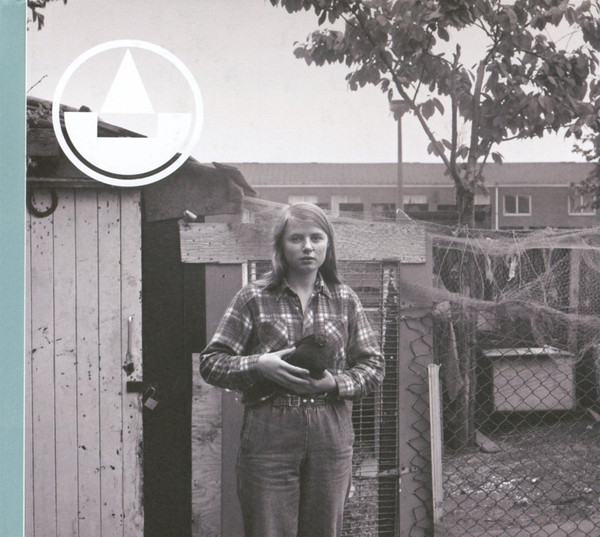


THE DAMNED-MACHINE GUN ETIQUETTE.
THE DAMNED-MACHINE GUN ETIQUETTE.
Not many bands get to celebrate their fortieth anniversary. Especially punk bands. They were mostly short-lived affairs, who released one or two singles, before calling it a day. However, one band are still going strong after forty years, The Damned. Their third album Machine Gun Etiquette has just been reissued on vinyl by Ace Records. It was released in 1979, three years after the story of The Damned began.
The Damned were formed in London in 1976, when members of two existing groups decided to form a new band. This included Dave Lett, Raymond Burns and Chris Millar, who previously, had been members of Masters Of The Backside. They were joined by final Brian Robertson, who had been a member of the London SS. They became The Dammed.
In The Damned, the four musicians sported new musical identities. Vocalist David Lett was known as Dave Vanian; drummer Chris Millar became Rat Scabies; bassist and future guitarist Raymond Burns sported the moniker Captain Sensible. Guitarist Brian Robertson became known as Brian James. Together as The Damned, they soon began making their presence felt in London’s nascent punk scene.
On the 6th of July 1976, The Damned made their live debut, when they supported the Sex Pistols at 100 Club. This was the start of a rivalry between the two groups, which saw one writing their name into musical history.
Having made their live debut, The Damned’s thoughts eventually turned to releasing a debut single. None of the punk groups had released a single yet. Somebody had to be first, so why not The Damned?
They headed to Pathway Studios, London, with producer Nick Lowe. That was where The Damned recorded their new single, the Brian James’ composition New Rose. On the B-Side, was a cover The Beatles’ Help, which was given a punk makeover. Once the single was recorded, it was released on October 22nd 1976, and made history.
New Rose was released by Stiff Records, and reached eighty-one in the UK single charts. It became the first single to be released by a British punk rock group. The Damned had beaten the Sex Pistols’ Anarchy In The UK to the title by five weeks. This wouldn’t the only time The Damned made musical history.
Damned, Damned, Damned.
After the success of New Rose, The Damned headed out on tour with the Sex Pistols, The Clash and The Heartbreakers. The plan was to tour Britain, taking punk to the provinces. However, by then, the Sex Pistols had released Anarchy In The UK as a single. This resulted in many venues cancelling the concerts, in case anarchy in the provinces broke out. After a shorter tour than The Damned had expected, they returned to London, and completed the recording of their debut album.
Recording of Damned, Damned, Damned took place during three sessions at Pathway Studios, London. The first was in September 1976, with the album being completed in December 1976 and January 1977. In total, it had taken just ten days to record Damned, Damned, Damned. This left just the album to be mixed. It was completed on 15th January 1977, and just a month later, Damned, Damned, Damned was released.
Before that, critics had their say on The Damned’s debut album Damned, Damned, Damned. The reviews were mostly positive, and praised the energy and humour of the songs. Most were penned by Brian James, with Tony James cowriting Fish, and Rat Scabies contributing Stab Yor Back. Closing the album was a cover of The Stooges’ I Feel Alright. It was one of the tracks where critics remarked upon drive and energy of the rhythm section. Rat Scabies’ drums and Brian James’ bass were crucial to the album’s sound and indeed, success.
When Stiff Records released The Damned’s debut album Damned, Damned, Damned, on 18th February 1977, it reached number thirty-one in the UK album charts. Making the success even sweeter, was the thought that The Damned had become the first punk band to release an album. Again, The Damned had beaten their old nemesis’ the Sex Pistols again, and in doing so, had written their way into musical history. This was becoming a habit.
Alas, The Damned’s run of breaking records came to an abrupt end on 18th February 1977. The same day as Damned, Damned, Damned was released, Neat, Neat, Neat was released as a single. It failed to even trouble the charts. There was small crumb of comfort. Neat, Neat, Neat featured a truly memorable bass line from Captain Sensible. So much so, that in 2006 Stylus magazine called Captain Sensible’s one of the thirty-third best bass line of all time. However, back in 1977, The Damned hardly had time to worry about the commercial failure of Neat, Neat, Neat.
Straight after the release of Damned, Damned, Damned, The Damned headed out on tour, to promote their debut album. Then in March 1977, The Damned got the opportunity to open for T-Rex in March 1977. Things were happening quickly for The Damned, and as
Spring turned to summer, they then embarked upon an American tour. The Damned became the first British punk band to tour America. Again, they had beaten the Sex Pistols to the punch. However, by August 1977, changes were afoot.
In August 1977, The Damned brought onboard Lu Edmonds as a second guitarist. Around this time, there was also an ill-conceived and ill-fated attempt to bring Syd Barrett onboard to produce their sophomore album. Sadly, by then the founder of Pink Floyd was living a reclusive lifestyle and had serious health problems. However, his onetime colleague Nick Mason agreed to produce what became Music For Pleasure.

Music For Pleasure.
Now a five piece, The Damned began work on their sophomore album, Music For Pleasure. Again, Brian James wrote much of the album. He penned six songs of the ten songs; cowrote Problem Child and Stretcher Case with Rat Scabie and joined with Dave Varian to write Your Eyes. The remaining song, Idiot Box, came from the pen of Dave Varian and Rat Scabies. However, to onlookers, Brian James was playing a major part when it came to writing The Damned’s first two albums. Without him, where would they be?
When it came to recording Music For Pleasure, The Damned had come up in the world. They headed to Britannia Row Studios, which Pink Floyd had built after recording Wish You Were Here in 1975. It was a cutting edge facility, and very different to most studios that punk bands frequented. WithNick Mason taking care of production, The Damned recorded the ten tracks that became Music For Pleasure. Once it was recorded, Stiff Records scheduled the release for late 1977.
Eventually, Music For Pleasure was scheduled for released on the 18th November 1977. Before that, critics had their say on the album. Critics were far from impressed. Part of the problem was the quality of songs. They failed to match the quality on Damned, Damned, Damned. This isn’t unusual, as often, a band have spent months, even years writing their debut album. So when asked to write an album in a short space of time, this is often a step too far. Among the few highlights were Politics, Alone, Your Eyes and Creep (You Can’t Fool Me). They just about stood up to scrutiny, in an album that some critics felt, lacked focus and musical direction. Even new addition Lu Edmonds came in for criticism, with critics doubting that he brought anything to the table. Did The Damned really need two guitarists? That some critics felt was debatable. However, Lu Edmonds almost got away lightly. Other critics went further, calling the album a disaster and a musical misjudgement. This didn’t augur well for the released of Music For Pleasure.
Especially when Stretcher Case Baby had been released as the lead single, on 3rd July 1977, but never came close to troubling the charts. This must have worried members of The Damned and everyone at Stiff Records. Things got worse when Problem Child was released on the 28th September 1977, and failed to chart. Surely things couldn’t get any worse for The Damned?
By then, they must have been fearing the worst, and preparing for what was to come. However, even The Damned couldn’t have foreseen what would happen. When Music For Pleasure was released on the 18th November 1977, the album failed to chart. Neither did final single released from Music For Pleasure.
When Don’t Cry Wolf which was released in December 1977, it failed to chart. It became The Damned’s fourth consecutive single that failed to chart. Only their debut single New Rose charted, and even then, reached a lowly eighty-one in the UK single charts. These were worrying times for The Damned.
Little did The Damned know that two members of the band were planning to quit. Don’t Cry Wolf would prove to be two members of The Damned’s swan-song. That was in the future. Before that, The Damned were hit by two huge blows.
The first was when Stiff Records dropped The Damned. Suddenly, the band who were at the vanguard of the punk movement were without a label. To make matters worse, one of their most talented musicians walked away from the band.
Rat Scabies was so disappointed with Music For Pleasure, that he quit The Damned. Given the importance of Rat Scabies’ drums in The Damned’s sound, it was a blow the band wouldn’t recover from.
That is despite bringing future Culture Club drummer Jon Moss onboard. He couldn’t replicate the sound of Rat Scabies, and in February 1978, The Damned split-up for the first time.
For the next year, the members of The Damned worked on a variety of projects. However, in late 1978, Rat Scabies had formed a new band, Les Punks for a one off gig. Its lineup featured vocalist Dave Vanian, Captain Sensible and a rhythm section of drummer Rat Scabies and Motorhead’s Lemmy on bass. So successful was the Les Punks’ gig, that they reunited in early 1979.
When Les Punks reunited, they decided to change their name to The Doomed. This as close as they dare to using The Damned name. If they had performed as The Damned, there was the likelihood that they would encounter problems with the use of the band’s trademark. By then, Captain Sensible had switched to guitar and keyboards. This left the band without a bassist. While Lemmy filled in when recording demos and playing a few live dates, he had other commitments.
This left The Doomed searching for a replacement bassist. They thought they had found it in Henry Badowski. He spent part of 1978 playing with The Doomed. Then Henry Badowsk was eventually replaced by The Saints’ former bassist Algy Ward. The Doomed’s problematic bass position had been solved. At last, The Doomed had a settled lineup. The only blip came in December 1978, during The Doomed Scottish tour. Gary Holton had to briefly fill in for Dave Vanian. Apart from that, things were looking up for The Doomed.
By April 1979, The Doomed were now The Damned. The group was now, officially able to play and record as The Damned. It was a big relief to the band, whose career had been on hold. Now The Damned could begin to play live and sign a new record deal.
The Damned made their ‘second’ debut in April 1979. By then, Dave Vanian’s vocal style had changed, and he was no longer just singing in his former high baritone style, but crooning. It came as a shock to those who remembered The Damned’s early days as punk pioneers. Another difference was The Damned had adopted a much more melodic style. It was a mixture of speed and volume, and driven along by Captain Sensible’s keyboards. The times they were a changing.
Later in 1979, The Damned’s good luck continued, when they signed a record deal with Chiswick Records. Not long after signing their new recording contract, The Damned headed to Wessex Studios to record what became Machine Gun Etiquette.
Machine Gun Etiquette.
Before heading to Wessex Studios, The Damned had written ten new tracks and cowrote I Just Can’t Be Happy Today with Giovanni Dadomo. Gone were the days when The Damned were reliant upon one songwriter to write most of an album. Belatedly, The Damned were a democracy as far songwriting went. Machine Gun Etiquette was a much more collaborative album. It was also album where they paid homage to one of their musical heroes, MC5.
On their debut album Damned, Damned, Damned, The Damned covered The Stooges I Feel Alright. This time around, The Damned covered MC5s Looking at You. This was fitting given the new direction The Damned’s music was about to head in on Machine Gun Etiquette.
The Damned would combine elements of sixties garage rock, pop, punk and psychedelic rock. There was also a more experimental sound Machine Gun Etiquette. It seemed as if The Damned were in the process of finding themselves musically. Helping them to do so, was producer Roger Armstrong.
When The Damned arrived at Wessex Studios, London, they immediately encountered another of the punk pioneers, The Clash. They were in the process of recording their classic album, London Calling. The new lineup of The Damned must have been hoping that their comeback album would enjoy some of the success that previous Clash albums had enjoyed. They were now one of the biggest British bands, while the third lineup of The Damned were starting over.
This new lineup of The Damned featured vocalist Dave Vanian; drummer Rat Scabies; bassist Algy Ward and Captain Sensible who was switching between guitar and keyboards. It took two lots of sessions to record Machine Gun Etiquette. The first began in March, and finished in May 1979. After a month which The Damned spent playing live, they returned to the studio in July. They spent the next two months completing their third album Machine Gun Etiquette. By August 1979, The Damned were ready to begin their comeback.
For The Damned’s comeback single, the album opener Love Song was chosen. No wonder; it was undoubtably one of the highlights of Machine Gun Etiquette. It’s memorable and catchy, as The Damned fuse elements of punk with swaggering garage rock and a memorable hook. Playing leading roles, were Rat Scabies’ drums and Captain Sensible’s blistering, searing guitar licks. Atop the arrangement, sits Dave Vernon’s punk infused vocal. This was a potent combination, which when in it was released in April 1979, caught the imagination of the record buying public. Love Song reached number twenty in the UK, and was then released in France, Germany and Holland. The Damned had just enjoyed the biggest hit of their career so far. Soon, The Damned were on a role.
Having enjoyed a hit single with Love Song, The Damned were keen to repeat the experience. The song that was chosen for their second single, was Smash It Up. It’s a song of two parts, where the melodic first half giving way to riotous fusion of pop and punk. It was critique of hippie culture, and a call for political revolution. This the BBC took offence at, fearing it would lead to anarchy in the UK. However, this was the best thing that could happen to the song.
Smash It Up was released on the 28th September 1979, with ironically Burglar on the B-Side. Burglar saw Rat Scabies take charge of the lead vocal. Suddenly, curiosity got the best of record buyers, who bought the single to see what the fuss was about. When this was combined with The Damned fans who bought Smash It Up, it reached thirty-six in the UK. The Damned’s call for political revolution, had been a successful and profitable exercise.
Having released two hit singles from Machine Gun Etiquette, things were looking good for The Damned as November 1979 release date approached. There was only one hurdle left to overcome, the critics. All The Damned had to do, was avoid the slings and arrows of over critical critics.
Unlike their sophomore album Music For Pleasure, Machine Gun Etiquette was hailed a resounding success by critics. Some went as far as to use the c-word, and called Machine Gun Etiquette a classic. This some critics said, was The Damned’s second classic. However, whether Damned, Damned, Damned was a classic is debatable. Machine Gun Etiquette certainly was
Critics enjoyed, embarked and welcome The Damned’s exploration through sixties garage rock, pop, punk and psychedelic rock. They hadn’t turned their back on their punk roots, but The Damned knew that their music had to evolve. What hadn’t changed was The Damned’s ability to create music that is witty and sometimes, full of social comment. That humour was evident in the album opener Love Song, where The Damned combine their trademark pun sound with wit and cliches. It’s a similarly story on Noise, Noise, Noise and Liar. This is what people had come to expect from The Damned.
Elsewhere, The Damned swagger their way through Machine Gun Etiquette, as they created riotous, rocky and memorable music. It’s akin to an adrenaline rush as The Damned rock, and rock hard. They kick out the jams, on Machine Gun Etiquette and on Anti Pope, which is a song of two parts. Then on the MC5s Looking At You, The Damned pay homage to Detroit’s finest with a blistering, driving fusion of garage rock and punk. However, one of the highlights is
I Just Can’t Be Happy Today which stylistically and sonically, is reminiscent of the Electric Prunes. Hooks aren’t in short supply on this fusion of pop and rock. However, on other songs, another side to The Damned shines through.
These Hands features one of Dave Vanian’s best vocals, on a tale of supposed merry mayhem. This gives way to Plan 9 Channel 7, a five minute epic, about the life and times of James Dean. However, after Liar, this leaves just Smash It Up Part 1 and 2. The Damned many critics felt, had kept the best until last. Critics hailed Machine Gun Etiquette a stonewall classic.
When Machine Gun Etiquette was released in November 1979, it was to critical acclaim. Ever since their comeback, The Damned’s luck had changed. This continued when Machine Gun Etiquette reached number thirty-one in the UK album charts. Eventually, it was certified silver. The Damned had released the most successful and finest album of their career, Machine Gun Etiquette. It’s just been reissued on vinyl by Ace Records. The sound quality is stunning, and is the perfect way to rediscover this classic album.
Thirty-seven years after the release of Machine Gun Etiquette, The Damned’s third album is nowadays recognised as a classic album. The Damned come of age on Machine Gun Etiquette. No longer were they the punk band that made their debut on Damned, Damned, Damned. While The Damned hadn’t turned their back on their punk roots, they had moved towards a much more rocky sound.
The Damned incorporate elements of sixties garage rock, pop and psychedelia to their punk roots on Machine Gun Etiquette. This resulted in a much more accessible album than their first two albums. Machine Gun Etiquette had a much wider appeal than Damned, Damned, Damned and Music For Pleasure. Partly, this was to do with the new lineup.
With Captain Sensible switching to keyboards and guitar, this left a void. A new bassist was needed, and Algy Ward fitted the bill. He slotted into the rhythm section alongside drummer Rat Scabies, and they formed a formidable partnership. Meanwhile, Captain Sensible proved a talented keyboardist and guitarist. This game of musical chairs had worked. So had the other change since The Damned had reformed.
This final change was that no longer were The Damned reliant upon one songwriter. Suddenly, the band was a democracy as far as songwriting was concerned. Their lyrics were clever, controversial, witty and sometimes, full of social comment. These songs came to life in the Wessex Studios, and gave The Damned the most successful album of their career.
While Machine Gun Etiquette failed to match the success of the other album being recorded at Wessex Studios, The Clash’s London Calling, The Damned are still going strong after forty years. What better way to celebrate such an important anniversary, than with Ace Records vinyl reissue of The Damned’s classic album Machine Gun Etiquette?
THE DAMNED-MACHINE GUN ETIQUETTE.

STEIN URHEIM-STRANDEBARM.
STEIN URHEIM-STRANDEBARM.
Stein Urheim is unlike most musicians. He’s a talented multi-instrumentalist, who refuses to be constrained by musical norms. Instead, his approach to music is that anything is possible. That has been the case on his first two solo albums, where Stein Urheim has pushed boundaries to their limits, and sometimes beyond. This approach has served Stein Urheim well.
Already, Stein Urheim has released two critically acclaimed solo albums for Hubro Music. His debut album Kosmolodi was released in April 2012, and announced Stein Urheim’s arrival. Immediately, he was regarded as a rising star of the vibrant and thriving Norwegian music scene. This proved a prescient forecast.
Less that a year later, in February 2013, Stein Urheim and Mari Kvien Brunvoll released their first collaboration, Daydream Twin. It was so well received, that it was nominated for a Spellemannprisen, the Norwegian equivalent of a Grammy Award. Buoyed by the success and reception of Daydream Twin, Stein Urheim began work on his eponymous sophomore album.
Almost a year to the day, and Stein Urheim returned with his eponymous sophomore album. It was released to widespread critical acclaim in February 2014. Suddenly, Stein Urheim’s music was known internationally, and he was being hailed as one of the most innovative Norwegian artists of his generation. However, Stein Urheim wasn’t one to rest on his laurels.
Instead, Stein Urheim has recorded and released his second collaboration with Mari Kvien Brunvoll, For Individuals Facing The Terror Of Cosmic Loneliness. It was an ambitious and genre-melting album that unsurprisingly, was released to overwhelming critical acclaim in October 2015. However, that wasn’t the only project Stein Urheim had been working on.
Far from it. Stein Urheim had also been recording his much anti pated third album, Strandebarm. It was recently released by Hubro Music, and features a welcome return by thirty-seven year old Stein Urheim. His life seems have revolved around music for much of his life.
Stein Urheim was born, and is still based in the beautiful coastal city Bergen in 1979. That was where he grew up, and first discovered music. Soon, his life seemed to revolve around listening to, and playing music. The first instrument Stein learn to play, was the guitar. Since then he has expanded his musical horizons.
Nowadays, Stein Urheim is best described as a multi-instrumentalist. He owns and plays a wide variety of stringed instruments. Many of these instruments, Stein has picked up as he travels the globe. However, it’s not just instruments that Stein Urheim has collected, but credits.
During a career that’s spanned the best part of two decades, Stein Urheim has worked on a variety of different projects. Since making his recording debut in 2001, Stein Urheim has worked as a musician, vocalist, arranger, producer and recordist.
Stein’s worked with some of the biggest names in Norwegian music. One of his first appearances was on Unge Frustrerte Menn’s 2001 album Dronningen Av Kalde Føtter. Three years later, Stein played on Barabass and The Happy Few’s 2004 album Rali Rei. Then in 2009, Stein accompanied Sergeant Petter on his Sgt. Petter album. Other appearances include on Sigrid Moldestad’s 2010 album Sandkorn and Gabriel Fliflet Åresong. Indeed, Stein was a member Gabriel Fliflet’s band Åresong and HP Gundersen’s drone band The Last Hurrah. As you can see, Stein is an experienced, versatile and talented musician. His talents are highly in demand. It’s a wonder he has the time for a solo career. Somehow, he managed to finds the time to write, record and release his much-anticipated third album Strandebarm.
After a two year absence, Bergen based, multi-instrumentalist Stein Urheim, returns with another album of ambitious and innovative music, Strandebarm. Apart from Fjellbekken a traditional song, and the lyrics to Oh So Nice which Kurt Vonnegut, Stein Urheim wrote the rest of Strandebarm. However, Strandebarm’s tonal point of departure was the music of the past.
Specifically, French music of the early 1900s and American ragtime and standards of the twenties and thirties are a tonal departure point for Stein Urheim on Strandebarm. These he combines with both acoustic instruments and electronic elements. They’re both part of Stein Urheim’s musical arsendal, which he deploys to good effect as he recorded Strandebarm.
The recording of Strandebarm took place at the Strandebarm Church in January 2015. It just happens to be situated not far from Stein Urheim’s home. However, it wasn’t convenience of the Strandebarm Church why is was chosen for the recording of Stein’s third album. Instead, it was the stunning acoustics. This made it the perfect place to record Strandebarm. Joining Stein, were a couple of old friends.
At Strandebarm, Stein Urheim was joined by recordist Audun Strype, plus engineer and producer Jørgen Træen. Both had worked with Stein before. Once everything was in place in the makeshift studio, Stein was ready to put his skills as a multi-instrumentalist to good use.
When the record button was pressed, Stein Urheim became a one man band recording guitars and acoustic instruments. Seamlessly he switched between traditional and exotic instruments. It didn’t seem to matter when Stein was laying down guitars, flutes, harmonica, slide tamboura, fretless bouzouki, mandolin, langeleik, Turkish Tanbur, banjo, pocket-cornet or percussion he was equally comfortable. During the recording, Stein added delay, triggered loops and added vocals. Given Stein’s versatility, there was no need to bring onboard an entire band. Instead, just producer and engineer Jørgen Træen augmented Stein. Jørgen played modular synths, added effects and triggered loops. Once the sessions at Strandebarm were complete, everyone headed to Duper Studio.
That was where some additional recording took place. Once the sessions at Duper Studio were complete, the album complete and ready to be mixed. Now Stein Urheim’s third solo album Strandebarm was nearing completion. The big question was, would Strandebarm enjoy the same critical acclaim as Stein Urheim’s two previous albums Kosmolodi and Stein Urheim?
Water Part 1 opens Strandebarm. A myriad of traditional and exotic instrumentation combine as the soundscape gradually, and slowly, reveals it secrets. By then, Stein has unleashed his musical arsenal, including various stringed instruments. To this, he adds a hint of delay. Soon, nothing is as it seems as washes and swells of meandering music assails the listener. Instruments appear, only to disappear and reappear. They create music that’s variously beautiful, cinematic, exotic, haunting, lysergic and wistful. It’s a fusion of ambient, avant-garde, classical, Eastern and experimental music. That’s until, a slide tamboura signals all change. Drums join with a picked guitar as the tempo rises. From there, the drums provides the heartbeat as Stein switches between guitar and slide tamboura. Together, they create an atmospheric, cinematic soundscape that references Ry Cooder’s soundtrack work, in this captivating opening track.
Straight away, the soundscape quivers and shivers, as synths join with stringed instruments on Strandebarm. They create a ruminative soundscape. Gradually,instruments are added, including lush and wistful strings. Almost midway through the track, a much more experimental, almost weeping, sci-fi sound emerges. Its ethereal beauty washes over the listener, before a flourish of guitar signals a change in direction. The arrangement is stripped bare, and all that remains is Stein’s acoustic guitar. His finger flit up and down the fretboard as he carefully plucks his guitar, producing a quite beautiful, dreamy solo. Then at just the right time, washes of floaty synths are added and prove the perfect counterpoint for the guitar. The synths drop out ,but reappear as Stein produces a musical masterclass on his acoustic guitar.
There’s an Eastern influence to Water Part-2, various stringed instruments are played. They resonate and drone, as percussion is added to the meditative soundscape. Meanwhile, Stein’s vocal has a similar meditative sound. Soon, though, his fingers flit up and down the fretboard of his guitar, as he strums and plucks. Behind him, the Eastern influence is can still be heard, as it resonates and drones. Then it’s all change as Stein sings: “what’s in the water, H20, life;’s in the water.” His vocal is multi tracked, as accompanies himself on guitar. Sometimes, he adds effects, before the Eastern sound returns, on what’s a song of two parts. It’s the perfect showcase for Stein’s versatility as he fuses disparate musical genres, including elements of avant-garde, Eastern, folk, psychedelia and even a hint of pop.
Washes of synths beep and squeak on Fjellbekken, as if sending out a code. They then buzz as if recreating the sound of a biplane. This marks the start of a multi-cultural musical journey. Ethereal synths are joined by washes of langeleik. By then, instruments are being layered, and merge into one as effects and added. Then the arrangement is stripped bare, and the stringed instruments enjoy their moment in the spotlight. Just the slide tamboura and langeleik remain, as the underrated, mellow and dreamy arrangement meanders mesmerically along. In the distance, instruments drift in, adding an exotic hue. Suddenly, Stein is painting pictures of somewhere warm and dusty, as his myriad of instruments paint an atmospheric and sometimes dramatic, cinematic backdrop on this Norwegian fiddle tune.
Washes of weeping slide tamboura resonate and drone on Oh So Nice. They an atmospheric backdrop, before Stein picks and plucks at the strings. They resonate and drone before Stein delivers Kurt Vonnegut’s hopeful lyrics. Behind him, various stringed instruments accompany him. They then take centre-stage as the vocal drops out. This allows Stein to deliver another breathtaking solo, which is full of flourishes and flamboyance from the multitalented multi-instrumentalist.
Understated and dreamy describes the arrangement to Dragene Over Tempelhof. Washes of dreamy synths float across the arrangement, leaving an ethereal trail in their wake. They continue to float and flutter elegantly along, like an ambient soundscape. That’s until Stein decides to throw a curveball. Suddenly, industrial and found sounds interrupt the dreamy, ethereal soundscape. They add a new dimension, and add to, rather than detract from what’s one of the highlights of Strandebarm.
Berlin Blues whch closes Strandebarm, has an almost otherworldly sound as it meanders along. Then when Stein begins to pluck his guitar, soon, he’s rolling back the years to another musical era. His playing is inspired by French music of the early 1900s, blues and then ragtime. Meanwhile, washes of weeping stringed instruments provide a subtle accompaniment. Seamlessly, he switches between styles playing with accuracy and sometimes speed. Later, Stein accompanies himself on various stringed instruments. Remarkably, he seems comfortable playing each of the instruments. Then with less than a minute remaining, Stein spring his latest surprise. The tempo rises, and the soundscape becomes a musical free for all. Briefly, instruments, samples and effects melt into one. That’s until Stein rings the changes, and unleashes a bluesy guitar solo, that once again, showcases his considerable skills.
Throughout Strandebarm, Stein Urheim has showcased his talent, versatility and inventiveness, as he creates another album of innovative music. It’s a real melting pot of musical genres and influences. There’s elements of ambient, avant-garde, blues, electronica, experimental, folk, improv, industrial and psychedelia. However, then there’s the musical genres that were the tonal point of departure for Strandebarm.
This includes French music of the early 1900s; American ragtime and standards of the twenties and thirties. They were what Stein Urheim describes as his “tonal departure” when recording Strandebarm. Their influence can be heard on Strandebarm. So can all the other musical influences that have influenced Stein Urheim’s musical career.
Stein cites Norwegian folk music; the pioneers of electronic music, including Bjørn Torske, Kraftwerk and Jon Hassel; blues guitarist Lightnin’ Hopkins; the free jazz of Ornette Coleman and the music of American composers Lou Harrison and Steve Reich as musical influences. When all these musical genres and influences are combined, it’s a heady, potent and breathtaking brew. That is the perfect description Stein Urheim’s third album Strandebarm, which has recently been released by Hubro Music.
The heady brew that is Strandebarm, is best described as atmospheric, beautiful, ethereal, haunting, melancholy, mesmeric and wistful. Other times, the music is cinematic and dramatic. However, for much of Strandebarm, the music is ruminative and thoughtful. It allows time to reflect and consider, without being subdued or sombre. Far from it.
Instead, Strandebarm is another captivating album from one of the leading lights of Norway’s vibrant music scene, Stein Urheim. The Bergen based musical pioneer continues to innovate and take his music in new and unheralded directions. Other times, Stein Urheim springs a surprise, as he takes the listener on a musical adventure. By then, Stein Urheim is playing the role of a swashbuckling musical pioneer. Helped along by his collection of eclectic and exotic stringed instruments from the four corners of the world, Stein Urheim has created some of the most ambitious, exciting and innovative music of his career on Strandebarm.
STEIN URHEIM-STRANDEBARM.
GEORGE HARRISON-THE APPLE YEARS.
GEORGE HARRISON-THE APPLE YEARS.
On the 10th April 1970, Paul McCartney announced his departure from The Beatles. A week later, he released his debut album McCartney. Meanwhile, The Beatles were in the process of releasing their swan-song, Let It Be.
Just a month later, the Phil Spector produced Let It Be, and the single The Long and Winding Road were released on the 8th May 1970. Let It Be was a disappointing swan-song from The Beatles. It was the only Beatles album not to be accompanied by glowing, critically acclaimed reviews. Worse was to come, later in May 1970, the documentary that accompanied Let It Be was released. Critics weren’t impressed by the documentary. Despite this, Let It Be won the 1970 Academy Award for Best Original Song Score. By then, the four former Beatles were concentrating on their solo careers.
After the breakup of The Beatles in 1970, John, Paul and Ringo embarked upon solo careers. Most of the attention was centred around John and Paul. This suited George Harrison fine.
George Harrison’s solo career began in November 1968, nearly two before the breakup of The Beatles. That’s when George Harrison released the soundtrack to Wonderwall. It became George Harrison’s debut album, and one of the most of the most innovative, yet underrated music released by a former Beatle. This starts with George Harrison’s debut album, Wonderwall.
Wonderwall.
Wonderwall was the soundtrack to Joe Massot’s film. The soundtrack was a fusion of two musical cultures. Indian classical music and rock sat side-by-side on Wonderwall. This isn’t surprising. George Harrison had been interested in Indian music since 1966. Now George had the opportunity experiment with his new musical love.
Recording of Wonderwall took place between November 1967 and February 1968. On Wonderwall, George Harrison collaborated with renowned classical pianist and orchestral arranger John Barham. He played an important part in Wonderwall. So did a number of Indian musicians, including of the other Mahapurush Misra, Shivkumar Sharma and Aashish Khan. However, it wasn’t just classical musicians that featured on Wonderwall.
Eric Clapton, Ringo Starr and Peter Tork featured on Wonderwall. So did Tony Ashton and his band The Remo Four. Once recording of Wonderwall was complete, it was released on The Beatles’ new record label Apple.
Before Wonderwall was released, it failed to catch the attention of critics. Many didn’t even bother to review Wonderwall. They perceived it as just a soundtrack. However, since then, critics have reevaluated Wonderwall. It’s now perceived as a compelling and innovative album. Indeed, Wonderwall is now one of the most underrated solo albums by a former Beatle. Not many people would’ve realised this in 1968.
Wonderwall was released in Britain on 1st November 1968, it failed to chart. A day later, Wonderwall was released on 2nd November 1968. It peaked at number forty-nine in the US Billboard 200. This vindicated George Harrison’s decision to release such a groundbreaking album. The followup to Wonderwall saw George’s music head in a much more avant garde direction.
Electronic Sound.
Just over a year later, George Harrison released his sophomore album, Electronic Sound. It was an album of avant garde music. Electronic Sound was released on The Beatles’ short lived Zapple label in May 1969.
Zapple was an imprint of Apple. Its raison d’être was to release of avant garde music. However, Zapple didn’t last long. When Allen Klein started managing The Beatles, he closed the label down. This was one of his cost cutting measures. One of the few albums it released was Electronic Sound.
Electronic Sound was recorded during November 1968 and February 1969. The album featured just two lengthy pieces played on the Moog snyth. Under the Mersey Wall lasted nearly nineteen minutes and No Time or Space was a twenty-five minute epic. These two songs became Electronic Sound, which was released in May 1969.
Just like Wonderwall, critics weren’t interested in Electronic Sound. Reviews were few and far between. That’s not surprising. Here was an album that ahead of its time. Very few people understood what George was trying to achieve. Later, when critics revisited Electronic Sound, it was deemed as an album for completists only or those interested in pioneering electronic albums. Electronic Sound hadn’t stood the test of time. Neither was it a commercial success.
Electronic Sound was released in Britain on 9th May 1969, and failed to chart. Just over two weeks later, Electronic Sound was released in America on 25th May 1969. History repeated itself and Electronic Sound failed to chart. However, George’s luck was about to change. His third album All Things Must Pass, which was recently released by Commercial Marketing as a double album, would transform George Harrison’s career.
All Things Must Pass.
While his first two album had been adventurous and groundbreaking, George Harrison’s third album All Things Must Pass is much more traditional. All Things Must Pass showcases George’s talent as a songwriter.
For All Things Must Pass headed to the studio with eighteen tracks. Many of the songs were new songs. Some of the tracks on All Things Must Pass were written while George was a member of The Beatles. They turned down tracks like All Things Must Pass and Isn’t It A Pity. So George kept them for his solo career. Now was the time to showcase these songs on All Things Must Pass.
Sixteen of these tracks were written by George. The exceptions were I’d Have You Anytime, which George and Bob Dylan cowrote. If Not For You was the other track on All Things Must Pass. It was a cover of a Bob Dylan song. These eighteen songs were part of what became a triple album. It was recorded in three top studios and featured an all-star cast.
Recording of All Things Must Pass began on 26th May 1970 and finished in late October 1970. Three studios were used. This included Abbey Road Studios, Trident Studios and Apple Studios. During that five month period, the great and good of music played a walk on part on All Things Must Pass.
During the recording sessions for All Things Must Pass, Derek and The Dominos featured. Jim Gordon played drums, Carl Radle bass and Eric Clapton acoustic and electric guitars. Ex-Beatle Ringo Starr played drums. Billy Preston who played with both The Beatles and Rolling Stones played piano and organ. Another Beatles’ confident, Klaus Voormann, played guitar and bass. Ginger Baker of Blind Faith played drums. Dave Mason of Traffic played electric and acoustic guitars and Phil Collins of Genesis percussion. Alan White of Yes added drums. These big names were joined by some top session players.
This included Bobby Whitlock. He was formerly a member of Delaney and Bonnie, and in 1970, session musician to the stars. Bobby played piano, organ, tubular bells and harmonium. Horns came courtesy of saxophonist Bobby Keys and trumpeter and trombonist Jim Price and pedal steel Pete Drake. Playing acoustic guitar were Pete Ham, Tom Evans and Joey Molland. Pianists included Tony Ashton and Gary Brooker. Joining this crack band of session players was Beatles’ roadie Mal Evans, who played percussion. He played a small part in what would become the most successful album of George Harrison’s career, All Things Must Pass.
With All Things Must Pass completed, it was scheduled to be released on 27th October 1970. Before then, the music critics passed judgment on All Things Must Pass. There was not one dissenting voice. Critics hailed All Things Must Pass as a classic. Critical acclaim accompanied All Things Must Pass. It was, without doubt, the greatest album of George’s three album solo career. It was a coming of age for George Harrison.
It was as if George Harrison had been freed from the shackles that were The Beatles. He was being held back by the Lennon-McCartney axis. They dictated what songs featured on albums. George’s songs were rejected out of hand. He was about to have the last laugh though.
The cover of All Things Must Pass saw George Harrison surrounded by four comedic looking gnomes. They were meant to represent The Beatles. Beatles watchers saw this as George commenting on his removal from The Beatles. No longer was he a Beatle. After all these years as a Beatle, George was had his own identity back. Even better, he was about to release a classic album All Things Must Pass.
27th October 1970 was D-Day for George Harrison. That was the day All Things Must Pass was released as a triple album. The first four sides featured the main part of All Things Must Pass. It was produced by George and Phil Spector. On sides five and six, was Apple Jam. It featured five jams. The lavish triple album that was All Things Must Pass, was about to become one of the most successful solo albums by a former Beatle.
The lead single released from All Things Must Pass during 1970 was a double A-Side. This was My Sweet Lord/Isn’t It A Pity. It reached number one in America, Australia, Britain, Canada, Germany, Holland, Norway, Sweden and Switzerland. Having sold one million copies in America, My Sweet Lord was certified gold. It was then nominated for a Grammy Award. There was a problem though.
Anyone familiar with Ronnie Mack’s He’s So Fine, will immediately spot similarities between the two songs. So did Bright Tunes Music. They filed a write against George’s Harrisongs Music on 10th February 1971. Nearly five years later, on 23rd February 1976, the case was settled. It was held that George Harrison “subconsciously copied” He’s So Fine. Damages totalled $1,599,987, which was deemed 75% of the North American royalties. For George, the case caused him huge problems. He became so paranoid about subconsciously copying some else’s work, that he could hardly write. However, back in 1970, that wasn’t the case.
On the release of All Things Must Pass on 27th October 1970, it reached number one in America, Australia, Britain, Canada, Holland, Norway and Sweden. All Things Must Pass also reached number four in Japan and number ten in Germany. Given how successful All Things Must Pass was, it’s no surprise it was certified gold in Britain and Canada. In America, All Things Must Pass was certified platinum six times over. That equates to sales of six million copies of All Things Must Pass. Never again, would George Harrison reach these heights. After all, All Things Must Pass is a stonewall classic.
After the release of All Things Must Pass, no longer was George perceived as a junior partner in The Beatles. That was far from the case. He was a talented and prolific songwriter. The sixteen songs he wrote for were just the tip of a musical iceberg. For years, George had been quietly writing songs. By 1970, he had accumulated a vast body of work. Now was the time to let the record buying public hear what he was capable of on All Things Must Pass.
All Things Must Pass was George’s Magnus Opus. It’s an epic album. Lavish, epic arrangements are the perfect foil for George’s vocal. The music is both melodic and mystical. Especially when George draws inspiration from Indian music. This is part of All Things Must Pass’ spiritual sound.
During All Things Must Pass spirituality and religion play an important part. This is apparent on My Sweet Lord. Just like other tracks on All Things Must Pass, My Sweet Lord is a mixture of rock ’n’ religion. It’s an anthemic modern day hymnal. However, there’s other influences on All Things Must Pass.
This includes The Band, Bob Dylan and of course Phil Spector. His arrangements are part of the albums lavish, grandiose sound. Phil Spector co-produced All Things Must Pass. He was yin to George’s yang. Now that George was freed from the constraints of Lennon and McCartney, Phil helped the genie escape from the bottle.
In doing so, Phil Spector helped George Harrison record an album he’d never better, All Things Must Pass. Cerebral and spiritual, beautiful, thoughtful and spiritual, the music is sometimes wistful and melancholy. Always, you’re compelled during six sides of music. For George Harrison, many thought that following up All Things Must Pass was almost impossible.
Living In The Material World.
After the release of All Things Must Pass, George Harrison put his career on hold. Instead, he spent much of 1971 and 1972 raising money for the refugees in the newly independent Bangladesh. One of George’s biggest, and most ambitious, fundraising projects was The Concert for Bangladesh on the 1st August 1971.
Two concerts took place on the 1st August 1971. At 2.30pm and 8pm, George Harrison and Friends took to the stage. These “friends” included Bob Dylan, Eric Clapton, Ringo Starr, Billy Preston, Ravi Shankar, Leon Russell and Badfinger. These concerts were recorded and released as a triple album.
When The Concert For Bangladesh album and film were released in America on 20th December 1971 and on 10th January 1972 in Britain, it proved to be a huge success. The album topped the charts around the world, and won a Grammy for Album of the Year. Eventually, George’s fundraising efforts raised twelve million dollars, which was sent to Bangladesh. Only after the fundraising was over, would George’s career resume.
For his fourth album, and first since 1970, George penned the eleven new tracks that became Living In The Material World. It was a highly personal album. The songs dealt with George continued struggle for spiritual enlightenment. This wasn’t easy. Especially with George being viewed as a musical “superstar.” Living in the physical world, with all its temptations made it difficult for George to reach his spiritual goals. George a deeply spiritual man, it seemed, was struggling with Living In The Material World.
Recording of Living In The Material World began at George’s Oxfordshire home, Friar Park. In Friar Park’s guest room, George had a recording studio installed. It centred around sixteen-track tape machine. The sessions began during October 1972 and continued through to March 1973. Other sessions took place at the Apple Studios and Abbey Road Studios. This was where George’s band got to work.
When the recording of Living In The Material World, began, George had decided to use a smaller band. This included Gary Wright, Jim Keltner, John Barham, Klaus Voormann, Nicky Hopkins, Zakir Hussain and ex-Beatle Ringo Starr. They recorded the eleven tracks that became Living In The Material World. Later, in February and March 1973, overdubbing took place. Once Living In The Material World was recorded,it was scheduled for release in May and June of 1973.
Before the release of Living In The Material World, it was one of the most highly anticipated albums of 1972. No wonder. George Harrison hadn’t released an album since 1970. A taste of Living In The Material World was the single Give Me Love (Give Me Peace on Earth). On its release it reached number four in Britain and number one in the US Billboard 100. This augured well for Living In The Material World.
When critics heard Living In The Material World, they hailed the album a pop classic. Words like cerebral, profound and spiritual were used to describe the deeply personal Living In The Material World. This critically acclaimed classic was an insight into life as an ex-Beatle. What was obvious, was that George Harrison was obviously finding it difficult reconciling his spiritual needs, with life as a music legend. His legendary status was about to grow.
Living In The Material World was released in America on 30th May 1973, and reached number one in the US Billboard 200 charts. This resulted in a gold disc for George. When Living In The Material World was released in Britain on 22nd June 1973 it reached number two. Elsewhere, Living In The Material World reached number one in Australia and Canada, and reached the top ten in Holland, Japan, Norway and Sweden. George Harrison’s star was still in the ascendancy, having released his second classic album. What next for George Harrison though?
Dark Horse.
The aptly titled Dark Horse was George’s fifth album. After all, George had released the most successful solo album by a former Beatle, All Things Must Pass. He’d followed this up by his second solo album Living In The Material World. So by December 1975, critics and music lovers eagerly awaited the release of Dark Horse. However, the Dark Horse album will forever by mired in controversy, due to the accompanying tour. The story begins in November 1973.
For Dark Horse, George wrote seven of the nine tracks. He also cowrote two other tracks, including Far East Man, which George and Ron Wood wrote. George also cowrote Bye Bye Love with Felice and Boudleaux Bryant. These tracks, like much of of the music on Dark Horse is extremely honest and personal.
This begins with Simply Shady, which opens Dark Horse. A guilt ridden George, examines his pursuit of earthly pleasures, rather than spiritual fulfilment. So Sad addresses the failure of George’s first marriage. It’s a soul-baring, autobiographical song. Maya Love is a song about illusory nature of love. George’s solo success lead to him being called the Dark Horse. After all, most people thought that John or Paul would enjoy the most successful solo career. These people had underestimated George. It Is ‘He’ (Jai Sri Krishna) was penned by George after he visited Vrindavan, in northern India, with his friend Ravi Shankar, who later, would play an important role in the Dark Horse story.
Before that, recording of Dark Horse began in November 1973. Recording began at George’s home studio at Friar Park, Oxfordshire. After a break the sessions resumed in April 1974. Then between August and October 1974, Dark Horse was completed. Some of the sessions took place in Los Angeles, at A&M Studios. Accompanying George was an all-star band.
For the recording of Dark Horse, some of the musicians that played on Living In The Material World returned. Among them, were Gary Wright, Jim Keltner, Klaus Voormann, Nicky Hopkins and Beatle Ringo Starr. They were joined by Ron Wood, saxophonist Tom Scott, Roger Kellaway and Alvin Lee. Just like previous albums, Dark Horse which was released in December 1974, was produced by George.
On the 9th December 1974, Dark Horse was released in America. This coincided with George’s Dark Horse tour of North America. This was a controversial tour for two reasons. The first was, that Ravi Shankar was named as co-headliner. Given that this was the first North American tour by an ex-Beatle since 1966, this didn’t go down well.
Audiences wanted to see George, not what many audience members regarded as a “little known” Indian musician. This was far from the truth. Ravi Shankar was a well known, and highly regarded and respected musician. He was also a good friend of George, who sadly, was struggling with laryngitis during the tour.
Due to the laryngitis, George couldn’t feature as heavily as he wanted. However, he thought this was the perfect opportunity to let audiences hear more of Ravi Shankar. This backfired on George.
Critics, including some of the most influential music critics and cultural commentators rounded on George and his decision to allow Ravi Shankar to feature so heavily. Some of the concert reviews were scathing and the George Harrison-Ravi Shankar tour called a failure. This affected sales of Dark Horse.
Rather than judge Dark Horse on its merits, it was a case of guilt by association. What was a groundbreaking album, showcasing George’s new sound was trashed by some axe grinding, influential critics. Their view of Dark Horse was taken as gospel. Looking back, Dark Horse was an ambitious and innovative album, one that should’ve been a bigger commercial success.
Prior to the release of Dark Horse, the title-track was released as a single in America on 18th November 1974, and reached number fifteen in the US Billboard 100 charts. The second single was Ding Dong, Ding Dong, was released on the 6th of December 1974. It reached number thirty-eight in Britain and thirty-six in the US Billboard 100 charts. However, the album, Dark Horse fared better commercially.
Dark Horse was released on 9th December 1974. It reached number four on the US Billboard 200 charts. This resulted in another gold disc for George. However, in Britain, Dark Horse failed to chart. However, it was later certified silver, having sold over 50,000 copies. After Dark Horse, critics were left wondering if George’s star was no longer in the ascendancy?
Extra Texture (Read All About It).
The criticism of the Dark Horse tour and album had affected George badly. Returning to Friar Park, George became melancholy and wistful. Some went as far as to say he was slightly depressed. This was reflected in some of the ten songs that George wrote for Extra Texture (Read All About It). They find a melancholy George in a reflective state. Unlike other albums, Extra Texture (Read All About It) has no spiritual message. It’s quite different from George’s five previous albums, right down to where it was recorded.
Whilst George had recorded previous albums in Britain, he decided to forsake his home country for Los Angeles. This made sense. After all, most of George’s band were Americans.
While most of Dark Horse was recorded in A&M Studios, Los Angeles, some recording took place at George’s home studio, in his Friar Park mansion. Abbey Road Studios were also used. However, for much of the time A&M Studios, Los Angeles was a home from home for George as he recorded Extra Texture (Read All About It).
LA was where many of George’s band, including Gary Wright, Jim Keltner, Klaus Voormann, Nicky Hopkins and Beatle Ringo Starr lived. They were joined in the studio by Ron Wood, saxophonist Tom Scott, Billy Preston, Ronnie Spector and George’s wife Dhanni Harrison. They recorded Extra Texture (Read All About It), which was George Harrison’s Apple Records’ swan-song.
Ever since George was working on Dark Horse, he’d been working on founding his own record label, Dark Horse. It would release his future albums, and albums by artists George discovered or believed in. Getting a record label up and running, was taking time. However, at least this allowed him the opportunity to fulfil his obligations to Apple Records. Would however, George leave Apple Records on a high with Extra Texture (Read All About It),?
Critics didn’t think so. On its release, Extra Texture (Read All About It) was panned my critics. They called the album a series of sermons from George Harrison. These sermons they called aimless and pointless. Sometimes, there was air of pomposity about Extra Texture (Read All About It). Only Tired Of Midnight Blue and Can’t Stop Thinking About You were up to George’ usual high standards. This resulted in the critics turning on George. Rolling Stone savaged the album. Other critics followed suit. For George, Extra Texture (Read All About It) didn’t look like being the swan-song he’d hoped for.
Extra Texture (Read All About It)’s lead single was You, which was released on 12th September 1975. You reached number thirty-eight in Britain and number twenty in the US Billboard 200. Then when This Guitar (Can’t Keep from Crying) was released in America on 8th December 1975, it failed to chart. Two months later, history repeated itself, when This Guitar (Can’t Keep from Crying) was released in Britain. On its release on 6th February 1976, This Guitar (Can’t Keep from Crying) failed to chart. Had George lost his Midas touch?
Despite the scathing reviews, Extra Texture (Read All About It) was still a commercial success. It reached number sixteen in Britain and number eight in the US Billboard 200 charts. This resulted in another gold disc for George. While Extra Texture (Read All About It) wasn’t his most critically acclaimed album, it was a commercial success. This allowed George Harrison to leave Apple Records with his head held high.
After Extra Texture (Read All About It), a new era began for George Harrison. He released his future albums on his own Dark Horse label. It was distributed by A&M Records. For George, owning his own label made commercial sense, and just as importantly, for a musical innovator, gave him much more artistic freedom.
At Apple Records, George was one of four partners in the label. In the early days of Apple Records, George was allowed the freedom to experiment. This allowed him to record Wonderwall, a groundbreaking album, that for far too long, was underrated by critics. Then when Allen Klein became The Beatles’ manager, he wasn’t keen to release Electronic Sound, George’s sophomore album. It was far too experimental, for Allen Klein’s liking.
He had been brought in to sort out The Beatles and Apple Records’ finances. Allen Klein realised that albums like Electronic Sound, important and innovative they may be, weren’t going to be million sellers. However, Electronic Sound was released and for his third album, George Harrison released the most successful album by a former Beatle, All Things Must Pass.
Of all the albums George Harrison recorded, All Things Must Pass is his Magnus Opus. Featuring his classic single My Sweet Lord, All Things Must Pass was a career defining album. George was on a roll. He followed All Things Must Pass with Living In The Material World.
This was George’s second classic album. Living In The Material World showed, that, the man referred to as the Dark Horse had hidden depths. That was obvious from George’s Beatles’ days.
He had already written If I Needed Someone, Taxman, Within You Without You, While My Guitar Gently Weeps, Something, Here Comes The Sun and I Me Mine. It was obvious to most people that George was a talented songwriter. Except it seemed two of his friends and bandmates.
The only people who it seemed, couldn’t see that George Harrison was indeed a talented songwriter, were Lennon and McCartney. Time after time, they rejected George’s songs. This must have been disheartening. Especially as he watched some of Lennon and McCartney’s worst songs, including Dig A Pony, Sun King, Polythene Pam, Revolution 9, Everybody’s Got Something To Hide Except Me And My Monkey and Don’t Bother Me make their way onto Beatles’ albums. Eventually, George Harrison tired of having his songs rejected by Lennon and McCartney. So he decided to stockpile these songs for his solo career.
By 1974, George was about to release Dark Horse. This was a controversial album. After two albums where seemingly, George could do no wrong, the critics turned on George. Partly, the scathing reviews were down to give Ravi Shankar equal billing. When George was struck down with laryngitis, Ravi Shankar played a bigger role in the tour. This didn’t please some high profile critics. They turned on George, giving both the Dark Horse tour and album scathing reviews. This affected sales of Dark Horse.
Although, Dark Horse was a success in America, back in Britain, the album flopped. No longer was the Dark Horse enjoying the same commercial success as he had. To make matters worse, his sixth album Extra Texture (Read All About It) was also panned by critics. However, the difference was, it was a bigger success in Britain and America. For George Harrison, this was a successful, if not critically acclaimed end to The Apple Years.
After six albums for Apple Records it was the end of an era for George Harrison. The Dark Horse had founded his own label, and was about to embark upon a new chapter in his career. However, the music he had released during the Apple Years, was some of the best, most successful and innovative to be released by a former Beatle.
George Harrison’s career began with his two mist overlooked albums, Wonderwall and Electronic Sound. Both albums are truly groundbreaking, and feature music that was way ahead of its time. They’re two of the reasons why George Harrison was, and will always be remembered as a musical pioneer. However, there’s more to The Apple Years than two albums.
During The Apple Years released George Harrison’s two classic album All Things Must Pass and Living In The Material World. Bothwere career defining albums, that set the bar high for the remainder of George Harrison’s Apple Years.
After this, George Harrison released just two further albums for Apple Records, Dark Horse and Extra Texture (Read All About It). It brought to an end George Harrison’s Apple Years. Now, forty-one years after George Harrison left Apple Records, the six solo albums he released are a reminder of the early part of George Harrison’s illustrious solo career. For many, the six albums George Harrison released for Apple Records represent the former Beatle at his creative zenith.
During that period, George Harrison released some of the most innovative, critically acclaimed and commercially successful solo albums by any of the former Beatles. Alas, after the Apple Years, never again, would George Harrison reach the same heights.
At least George Harrison enjoyed the satisfaction that during much of Apple Years, that he managed to outshine the rest of the Fab Four in terms of innovation, critical acclaim and commercial success. The man the rest of The Beatles called the Dark Horse, had the last laugh during the Apple Years.
GEORGE HARRISON-THE APPLE YEARS.
DONNIE AND JOE EMERSON- STILL DREAMING?
DONNIE AND JOE EMERSON-STILL DREAMING?
All parents want the best for their children. That has been the case since time immemorial. Parents want their children to have what they never had. So when children are young, they lavish them with the best in clothes and toys. As the children get that bit older, they’re given the best bikes, game’s consoles and sport’s equipment. By the time the children enter their teenage years, they’re dressed in designer clothes, have the best in laptops and iPods. Still, the parents are determined that their child should enjoy the finest things in life. However, some parents take this way too far. This was the case with Donnie and Joe Emerson’s parents.
Back in 1979, Donnie and Joe Emerson’s parents spent $100,000 buying equipment for their two son’s home studio. That wasn’t enough. Donnie and Joe weren’t going to settle for second best. Not when it came to the equipment for their nascent studio. The synths, drum machines and eight-track recorders available were good, but not good enough for Donnie and Joe. They had their limitations.
This had been proved a couple of years earlier, when Donnie and Joe Emerson recorded and released their debut single. It was a Donnie Emerson composition Take It. On the flip-side was another song penned by Donnie, Thoughts In My Mind. These two songs weren’t recorded as Donnie and Joe Emerson, but as Don, Joe and Eldon. Once the single was recorded it was ready for release.
Donnie and Joe Emerson had two options. They could shop Take It to various record label, in the hope that one might take a chance on the single. The label would have the budget and expertise the promote Take It. There was another option, release Take It as a private pressing. This is what the happened to Take It.
Take It was released on the family record label Enterprise and Co. When the single was released in 1977, Take It sunk without trace. Surely, the Emerson family had learnt a lesson from the commercial failure of Take It? Or had they?
Two years later, in 1979, Donnie and Joe Emerson realised that their home studio wasn’t without its limitations. They needed better equipment. Especially if they were going to record their debut album.
So, Donnie and Joe’s parents made one of the biggest decisions of their life, and mortgaged the 1,600 acre family farm in Fruitland, Washington. All this was so Donnie and Joe could follow their dreams. They went out and bought the very best musical equipment money could buy. This included was much better than the synths, drum machines and eight-track recorder in their original studio. By comparison, this was state of the art. It was the perfect environment for Donnie and Joe Emerson to record their debut album.
For their debut album, Donnie and Joe had written three tacks together, Good Time, Feels Like The Sun and Don’t Go Lovin’ Nobody Else. The rest of the album was written by Donnie. Similarly, Donnie played a bigger part in the recording of the album.
At the Emerson family’s new, state of the art studio, Joe Emerson played drums and added harmonies. Donnie played bass, acoustic, rhythm and lead guitar, synths and added lead vocals. He also took charge of production and mixing the album. Once the eight tracks were recorded, the album became Dreamin’ Wild. This was almost ironic.
After all, the Emerson brothers had been living the dream. In doing so, they’d spent a fortune, their parent’s fortune. The Emerson’s had spent $100,000 and mortgaged their future. Dreamin’ Wild had to sell well. It had to be a huge hit.
Having released their debut single as a private pressing, surely the Emerson family would try and interest record companies in Dreamin’ Wild? They had the budget and experience to promote the album. This would’ve been in Donnie and Joe Emerson’s best interests. However, the Emerson family decided to release the album privately. This wasn’t unusual.
All across America, private pressings were being released. They varied in quality. Many were little more than vanity releases. Not Dreamin’ Wild.
It showcased two talented singers, songwriters and musicians. Dreamin’ Wild wasn’t just a case of wealthy parents indulging their son’s musical fantasies. No. Far from it. Donnie and Joe’s fusion of soft rock, funk and soul had potential. The Emerson brothers could’ve enjoyed a successful career. Especially, if they’d signed to a major label. They would’ve guided Donnie and Joe’s career. That would’ve made sense. So would bring in an experienced management team to guide Donnie and Joe’s career. Sadly, that didn’t happen.
Instead, Dreamin’ Wild was released on the Emerson family’s Enterprise and Co. label. Its only prior release had been Donnie and Joe’s 1977 single Take It, and it had sunk without trace. Sadly, when Dreamin’ Wild was released in 1979, lighting struck twice. Just like Take It, Dreamin’ Wild it sunk without trace. The Emerson family’s gamble hadn’t paid off.
They had bet the bank on their talented sons. Not only were they $100,000 lighter, but there was a mortgage on their 1,600 acre farm. Dreamin’ Wild must be the most expensive private pressing ever.
The copies of Dreamin’ Wild that had found their way into record record shops, soon found its way into the Dollar bin. They were just the latest of thousands of private pressing that were released each year. Many were vanity releases, that deserved to find their way into the remainder piles and Dollar bins. Not Dreamin’ Wild. It was a cut above most private pressings. Maybe if the Emerson brothers had belatedly shopped the album to a record company, they might have taken a chance on it. However, by then, it was too late.
Following the commercial failure of Dreamin’ Wild, Joe decided to concentrate on the family farm. For Joe the dream was over. Reality seemed to have hit home. Maybe Joe realised that they were never going to enjoy commercial success and critical acclaim by releasing private presses? Things might have been different if they had been signed to a record company. So Joe decided to concentrate on helping run the facility farm, while music would become a hobby, something he did to relax. Donnie wasn’t willing to give up on his dream.
Still, Donnie believed he could make a career out of music. Maybe even with his brother? So while Donnie continued to chase his musical dream, he wrote and recorded with Joe when his brother had some spare time.
Over the next two and a half years, they wrote and recorded seventy songs. Not only were the Emerson brothers prolific, but the quality was consistent. What differed was style. They recorded everything from FM rock, power pop, and new wave. That was part of the problem.
The Emerson brothers continually flitted between musical genres. They couldn’t be marketed as pop, rock or new wave artists. This would’ve made it difficult for a record company to market the Emerson brothers. Their versatility had, in fact backfired. They would’ve been better advised to concentrate on one particular genre. However, that never happened, as the Emerson brothers didn’t seem interested in working with a record company. Instead, it seemed, they wanted to do things on their terms. That was all very well, but had already proved expensive. Despite this, Donnie never gave up his musical dream.
Throughout his life, music has been a constant. It was his passion, and how he once hoped to make his living. Sadly, Donnie Emerson never made the commercial breakthrough, and was never able to make a living out of music. However, at least he had the opportunity to follow his dreams. His parents made sure of that.
They spent $100,000 buying equipment for their two son’s home studio. That wasn’t enough. Donnie and Joe weren’t going to settle for second best. Not when it came to the equipment for their nascent studio. The synths, drum machines and eight-track recorders available were good, but not good enough for Donnie and Joe. They had their limitations. So, their parents mortgaged the 1,600 acre family farm in Fruitland, Washington. All this was so Donnie and Joe could follow their dreams. Sadly, this gamble didn’t pay off.
This wasn’t because Donnie and Joe lacked talent. Far from it. Instead, it was a case of making a series of bad decisions. The first was spending a small fortune on a home studio for two teenage boys. That was indulging two boy’s dreams. In doing so, the Emerson family risked everything. Their second mistake was not trying to get a record company interested in Dreamin’ Wild. Maybe then, Dreamin’ Wild would’ve become a commercial success. By releasing Dreamin’ Wild on their own label, the Emerson family weren’t able to promote the album sufficiently. So, it’s no surprise that Dreamin’ Wild sunk without trace. That’s a great shame.
The Emerson brother’s were both talented singers, songwriters and musicians. Joe cowrote three tracks, played drums and added occasional harmonies. Donnie wrote the rest of Dreamin’ Wild; played most of the instruments and sang the lead vocals. He also mixed and produced the album. Dreamin’ Wild was very much his baby.
It seems that Donnie was the driving force behind the Emerson brothers musical partnership. Maybe music played a different part in the two brothers’ lives? For Joe Emerson, maybe music was a hobby and if anything came of it, that was an added bonus. By comparison, Donnie Emerson’s life seemed to revolve around music. He was determined to make a career out of music, no matter what. This included letting his parents spent $100,000 and mortgage their farm to pay for a new studio. This allowed Donnie and Joe Emerson to record their debut album Dreamin’ Wild. At last, Donnie Emerson was living the dream, and when their debut was released was still dreaming. Alas, it was ultimately all for nothing.
The dream soon became a nightmare when the album Dreamin’ Wild failed commercially. Despite this, Donnie Emerson continued to dream, and who knows, maybe even today, is still dreamin’ of making a career as a music, like he was when he released Dreamin’ Wild.
DONNIE AND JOE EMERSON- STILL DREAMING?

BUILDING INSTRUMENT-KEM SOM KAN Å LEVE.
BUILDING INSTRUMENT-KEM SOM KAN Å LEVE.
Just over two years have passed since Norwegian trio Building Instrument released their eponymous debut album in March 2014. The album was released to widespread critical acclaim, and great things were forecast for Building Instrument. Since then, Building Instrument have been working on their much anticipated sophomore album, Kem Som Kan Å Leve.
After nearly two years, Kem Som Kan Å Leve is completed, and will be released on Hubro Music, on the 2nd of September 2016. Kem Som Kan Å Leve marks a welcome return from the Nordic sonic explorers, Building Instrument. Their story began eight years ago.
It was back in 2008, that Building Instrument was formed by Mari Kvien Brunvoll, Øyvind Hegg-Lunde and Åsmund Weltzien. Originally, the three members of Building Instrument planned to make electronic music. That was their raison d’être…albeit briefly. Before long, Building Instrument decided to turn their back on electronic music.
After a musical rethink, Building Instrument settled on a very different sound. This time, they decided to make acoustic music, which would allow Building Instrument to improvise and innovate. Having made the decision to change direction, Building Instrument began to practise, honing and shaping their new sound. Gradually, their own unique sound began to take shape. It is best described as genre-melting, with Building Instrument drawing inspiration from various musical genres and influences. Once they had honed their unique sound, Building Instrument began to play live.
Each night Building Instrument took to the stage, they took the audience on a magical, musical, mystery tour. One minute Building Instrument’s music is understated, then the next it’s playful. The Building Instrument throw a curveball, and change direction. The next track is totally different, with Building Instrument losing their earlier self restraint, becoming bold as they kick out the jams. As a result, Building Instrument’s music is always innovative, inventive and interesting. Other times, glorious rhythms and melodic music assailed the audience, who were enthralled by veered between emotive and ethereal to compelling and dramatic. Other times, the music was adventurous, bold and always, innovative. However, that wasn’t surprising given Building Instrument’s multi-talented lineup.
Building Instrument’s vocalist is Mari Kvien Brunvoll, who also takes charge of an eclectic and interesting selection of instruments. This includes the zither, percussion, kazoo and sampler. Mari Kvien Brunvoll released her eponymous debut album in 2012. She has also worked with many artists during her carer. This includes her collaboration with Stein Urheim on their 2013 album Daydream Twin. It was nominated for a Spellemannprisen in the Open Category in 2013. However, Mari Kvien Brunvoll isn’t the only experienced musician in Building Instrument.
So is drummer and percussionist Øyvind Hegg-Lunde. He has been a member of several groups, including Crab Is Crap, the Erlend Apneseth Trio, Glow, Klangkameratane, Strings and Timpani and The Sweetest Trill. The final member of Building Instrument is Åsmund Weltzien, who plays synths, melodica and adds electronics and melodica. Together, the three multitalented members of Building Instrument proved a formidable force.
Having laboured long and hard to establish a reputation as a live band, Building Instrument were now familiar faces on Norway’s thriving and vibrant music scene. By then, Building Instrument’s concerts were receiving rave reviews. In the increasingly competitive Norwegian music scene, Building Instrument were regarded as rising stars. Their music was adventurous, inventive, innovative and totally unique. They had forged and honed their own style over the last few years. During this period, they’d worked away, quietly recording their eponymous debut album.
Building Instrument.
In March 2014, Building Instrument was released to critical acclaim. The music was beautiful, cinematic, ethereal, innovative and inventive album of genre-melting music, where Building Instrument push musical boundaries to their limits, and sometimes, beyond It was a captivating album, and one that sonically and stylistically, defied description.
Building Instrument combined elements of ambient, avant-garde, electronica, experimental, folk, free jazz, pop, and rock. There’s even a nod to sixties soundtracks and jazz. At the heart of Building Instrument’s sound, was the ethereal beauty of Mari Kvien Brunvoll’s vocal. The result was an album where Building Instrument certainly fulfilled their potential, and in doing so, whetted the listener’s appetite for the followup.
Given it had taken Building Instrument six years to release their eponymous debut album, the question was, how long would it take them to release their sophomore album? Building Instrument it turned out, took just over two years to record Kem Som Kan Å Leve, which by todays, standards, isn’t long. Kem Som Kan Å Leve is one of the most anticipated albums of 2016, and finds Building Instrument heading out on another magical musical mystery tour.

Kem Som Kan Å Leve.
Having released their eponymous debut album, Building Instrument’s thoughts turned to the followup. It took the best part of two years to complete six tracks that became Kem Som Kan Å Leve. The music to the six tracks was composed by Building Instrument, while vocalist Mari Kvien Brunvoll wrote the lyrics and is responsible for the melodies. However, the inspiration for some of Kem Som Kan Å Leve came from the artwork of Kurt Schwitters.
During the two year period that Building Instrument were writing and recording Kem Som Kan Å Leve, the trio were commissioned to write music that was inspired by Kurt Schwitters’ artwork. There was a reason for this.
In September 2015, a new, and permanent exhibition of Kurt Schwitters’ artwork was being opened at the Henie Onstad Kunstsenter, at Høvikodde, which is on the outskirts of Oslo. To celebrate the opening of the exhibition, a concert had been arranged. This was part of one of the most important events in Oslo arts calendar, the Ultima Oslo Contemporary Music Festival. The week that the exhibition of Kurt Schwitters’ was opened, Building Instrument would record Kem Som Kan Å Leve at the Studio, a hall in the Henie Onstad Kunstsenter. This was fitting.
Kurt Schwitter has obviously influenced Building Instrument. He was a German artist, who was born in 1887. Just like the members of Building Instrument, he was truly multitalented. Not only was Kurt Schwitter a painter, but a collage artist, sound poet and installation artist. However, during the thirties, Kurt Schwitter had to flea from the Nazis, and for a while, lived in exile in Hjertøya, in the municipality of Molde. This was a huge coincidence, as Molde just happened to be where Mari Kvien Brunvoll called home.
Maybe Mari Kvien Brunvoll had visited the Merzbau building that Kurt Schwitter had built in the stone cabin he rented? Whether she has, it certainly seems like Kurt Schwitter’s work has influenced Building Instrument.
On Kem Som Kan Å Leve, Mari Kvien Brunvoll delivers some of the lyrics using the Molde dialect. Other lyrics she sings using
an invented language. This was something she did on Building Instrument’s eponymous debut album. It’s also one of Liz Fraser’s trademarks when she was the Cocteau Twins’ vocalist. However, in the case of Building Instrument, they felt that it brought them closer to Kurt Schwitter.
A member of Building Instrument remarked: “working with this commissioned piece enabled us to go further in the direction of expanding or erasing the meaning of language, just as Schwitters did with his sound poetry.” It also was another example of Building Instrument’s determination to innovate, and push musical boundaries. That was certainly the case when Building Instrument recorded Kem Som Kan Å Leve.
Recording of Kem Som Kan Å Leve took place at The Studio, a hall in the Henie Onstad Kunstsenter. The session began on 11th September, with Jørgen Træen recording and co-producing the album with Building Instrument. Kem Som Kan Å Leve was recorded live. There was no overdubbing. This is unusual, as most groups are repair any ‘mistakes.’ However, when Building Instrument began recording Kem Som Kan Å Leve it was just like one of their live shows, as they improvised and headed in unexpected directions. To do this, Building Instrument deployed an array of eclectic instruments and effects.
Vocalist Mari Kvien Brunvoll played percussion, zither, kazoo and took charge of live sampling and effects. Åsmund Weltzien played synths and added electronics. Drummer and percussionist Øyvind Hegg-Lunde was responsible for the album’s heartbeat. After four days of recording, Kem Som Kan Å Leve was completed on 14th September 2015. Building Instrument had played their part.
Now the album could be mixed and mastered. The process began in January 2016. Four of the tracks were mixed at Grotten Studion by Bergen Kjøtt. He then mixed Like God å Leve and Taket at Broen Studio. However, when Kem Som Kan Å Leve was to be mastered, Bergen Kjøtt returned to Grotten Studion. Once the mastering was completed in February 2016, Building Instrument’s much-anticipated sophomore album was almost ready for release.
Nearly seven months later, and Kem Som Kan Å Leve will be released by Hubro Music on the 2nd of September 2016. Kem Som Kan Å Leve marks the welcome return from Building Instrument, who now are regarded as one of the most exciting and innovative Norwegian bands. They provide you with six compelling reasons why on Kem Som Kan Å Leve.
Opening Kem Som Kan Å Leve is Collage. The introduction is understated, dreamy and melodic. Soon, though, percussion, drums and a spoken word sample are added. There’s almost a hip hop influence. That’s until a church organ meanders in. It replaces the sample, provides a contrast to the mesmeric percussion and drums. Adding another contrast is Mari Kvien Brunvoll’s dreamy vocal. It almost floats across the arrangement, reminiscent of Liz Fraser. Then when the vocal drops out, washes of organ increases in volume and combines with the zither. Again, contrasts abound. Later, when the vocal returns, the volume of the organ decreases leaving space for Mari Kvien Brunvoll. Her ethereal vocal is panned right, while the organ, drums and percussion accompany her. Together, they create a dreamy, ethereal and melodic Collage that’s a tantalising taste of what’s to come from Building Instrument.
Sound effects are panned right on Fall, while keyboards, drums and then the zither are added. They may sound like unlikely bedfellows, but provide interesting contrasts and work well together. Suddenly, the drum drops out and Mari Kvien Brunvoll delivers a heartfelt vocal. She’s just accompanied by the zither, before the drums return. Soon, though, the vocal drops out, and the zither chimes, while the pitter patter of drums are joined by keyboards and percussion. Then when the vocal returns, Mari Kvien Brunvoll’s plaintive cry is full of emotion, before later becoming impassioned and sincere. All the time, instruments are swapped in and out, the arrangement veering between understated to a much fuller sound. This provides the perfect accompaniment to the vocal, on what’s a beautiful and captivating track, full of subtleties, surprises and nuances.
Rett Ned meanders into being, the understated arrangement crackling, reminiscent of old, worn vinyl. Meanwhile, Mari Kvien Brunvoll tenderly, before her vocal grows in power. It’s cocooned in effects, giving it a dreamy quality. Accompanying the vocal are an organ and crisp drums. Still, Mari Kvien Brunvoll’s vocal is bather in effects as it floats across the arrangement. When the vocal drops out, drums, percussion, keyboards and the zither combine. Later, when the vocal returns, it’s dubby, dreamy and lysergic. The arrangement is slow, meandering and multilayered. Contrasts abound, as elements of ambient, avant-garde, dub, electronica, experimental and indie pop are combined. Together they create a lysergic and dreamy modern day chill out track.
There’s almost an industrial influence as Farge Tida Sakte unfolds. There’s also a Faustian influence as washes of synths add an otherworldly sound. Soon, drums crack, scamper and skip across the arrangement. Meanwhile, the zither is added to this genre-melting musical feast. So is Mari Kvien Brunvoll’s vocal. Again, it’s bathed in effects, while effects are added to parts of the arrangement. Only the drums and zither are left untouched. Later, the sing song vocal grows in power and emotion, as it floats across the arrangement. That’s until the arrangement is stripped bare, and begins to rebuild. When it does, the vocal, drums, zither and kazoo combine. This results in an arrangement that’s variously hypnotic, ruminative and spacious as it floats and meanders along. It washes over the listener who bathes in its ethereal beauty.
Washes of synths meander and float across the arrangement to Like God å Leve. Soon, clip clop percussion and a bass join Mari Kvien Brunvoll’s impassioned, powerful vocal. Later, the vocal is swathed in effects becoming dreamy. That is only briefly. The earlier power returns, as synths, percussion, drums and a bass combine. Playing an important part in the arrangement are the synths. They add a cinematic sound, while Mari scats. Then when her vocal drops, out washes and waves of gently cascading synths play an important part in this dreamy, ethereal and hypnotic soundscape.
All too soon, Kem Som Kan Å Leve is over, as Taket closes the album. Synths, keyboards and subtle drums provide a backdrop for Mari Kvien Brunvoll’s cooing, ethereal vocal. It quivers, shivers and shimmers, before the improvised vocal gives way to an impassioned, emotive pleading vocal. By then, the arrangement features just occasional drums. Given its quality, Mari’s vocal deserves to take centre-stage. Later, keyboards synths and drums accompany Mari, as she revisits her earlier cooing, ethereal vocal. When it drops out, the baton passes to the keyboards, and they continue to create an ethereal backdrop, which provides a poignant ending to Taket and indeed, Kem Som Kan Å Leve.
Just over two years after the release of their critically acclaimed, eponymous debut album, Building Instrument return with Kem Som Kan Å Leve. It’s the much anticipated sophomore album from Building Instrument. Not only has Kem Som Kan Å Leve has lived up to the expectation, but surpassed it. Quite simply, Kem Som Kan Å Leve is one of the best albums of 2016.
Building Instrument have used their 2014 eponymous debut album as a building block, and have gone much further on Kem Som Kan Å Leve. They continue create inventive and innovate music, that’s ambitious and adventurous. That music is also beautiful, dreamy, ethereal, hypnotic and melodic. Partly, that is because of Mari Kvien Brunvoll’s vocal. She switches between the Molde dialect, and an invented language that only she can understand. That doesn’t matter.
Mari Kvien Brunvoll’s vocal is similar to Liz Fraser when she was with the Cocteau Twins. It has a similar calming, dreamy and ethereal quality. That ethereal beauty plays a huge part in the sound and success of Kem Som Kan Å Leve. However, Mari’s vocal can’t exist in isolation.
So the rest of Building Instrument, plus Mari Kvien Brunvoll combine to create the perfect accompaniment to the vocals. Synths, crisp drums, a myriad of percussion, the unmistakable sound of the zither and of course, an array of samples and effects. These effects are used effectively throughout Kem Som Kan Å Leve. Sometimes, it’s the vocal that’s bathed in effects; while other times, it’s parts of the arrangement. Each time, it proves hugely effective in this career-defining, genre-melting album.
Just like on their eponymous debut album, Building Instrument combine disparate musical genres. Elements of ambient, avant-garde, electronic, experimental, folk, indie pop, improv, industrial and jazz. It’s a captivating fusion of musical genres and influences. These influences include Kurt Schwitter a painter, but a collage artist, sound poet and installation artist.
On Kem Som Kan Å Leve, Building Instrument followed in the footsteps of Kurt Schwitter. Building Instrument: “go further in the direction of expanding or erasing the meaning of language, just as Schwitters did with his sound poetry.” This was an ambitious project, but the results are fascinating and captivating. They can be heard on Kem Som Kan Å Leve, which finds Norwegian sonic explorers at their inventive and innovative best. Kem Som Kan Å Leve is Building Instrument’s musical Magnus Opus, which features six soundscapes that are ambitious and adventurous, but also beautiful, dreamy, ethereal, hypnotic and melodic.
BUILDING INSTRUMENT-KEM SOM KAN Å LEVE.
 dereksmusicblog
 dereksmusicblog