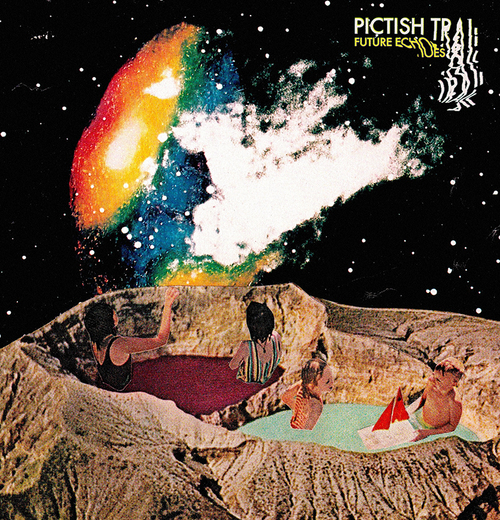
THE PICTISH TRAIL-FUTURE ECHOES.
THE PICTISH TRAIL-FUTURE ECHOES.
In 2002, Johnny Lynch was a student at the prestigious University of St. Andrews. He was approaching the end of his degree course. Most students would’ve been thinking about the life after University. Not Johnny Lynch.Instead, Johnny Lynch began performing as The Pictish Trail in 2002. Later that year, Johnny began work on his debut album.
By 2002, the way music was being recorded had changed beyond recognition. Now it was possible to record an album with just a computer, Digital Audio Workstation and digital interface. This was what Johnny Lynch went on to do. Eventually, The Pictish Trail’s debut album was complete. It would be released in 2003.
Before that, Johnny Lynch graduated from the University of St. Andrews in 2003. Just like other graduates, Johnny had decided to head south. However, he wasn’t heading the well trodden path to London. Instead, Johnny headed to Anstruther in Fife, where he and Kenny Anderson, the soon to be King Creosote cofounded a new record company, Fence Records.
When Fence Records was founded in 2003, it was run by Kenny Anderson and Johnny Lynch. Originally, it’s raison d’être was to record and release mostly folk albums, by its two founders and their friends. This included The Pictish Trail’s debut album Pick @ Pictish. It was well received upon its release in 2003, and caught the attention of record buyers. So were King Creosote’s early albums. Scotland’s newest labels was going places.
A year later, The Pictish Trail released a new album Hot Trail. It was released in 2004. Again, the album was well received and critics called The Pictish Trail was one of the rising stars of the Scottish indie music scene. However, it was another four years before The Pictish Trail released a new album.
Meanwhile, Fence Records was expanding. Its roster expanded, and each year, Fence Record release more singles and albums. Fence Records also began organising events and festivals. In the early days, they were held locally. Overseeing the expansion of the label was Johnny Lynch.
Early on in the partnership, Kenny Anderson seemed to have decided to concentrate on making music. King Creosote became a truly prolific artist, who regularly released three or four albums each year. Then when he wasn’t recording, King Creosote was playing live. His star was very much in the ascendancy. Meanwhile, Johnny Lynch was running Fence Records.
By day, he ran Fence Records and at nights, he dawned The Pictish Trail moniker. Between 2004 and 2008, The Pictish Trail continued to make music. However, most of his time was spent running Fence Records. That was until 2008, when The Pictish Trail returned with a new album.
This was Secret Soundz Volume 1. It was by far, the best album of The Pictish Trail’s career. He had matured as a singer and songwriter. Critics agreed, and critical acclaim accompanied the release of Secret Soundz Volume 1. The album was the finest moment of The Pictish Trail’s career. Everything it seemed, had been leading up to Secret Soundz Volume 1. Surely, The Pictish Trail would return with a followup, so as to build on the momentum created by Secret Soundz Volume 1?
Two years passed before The Pictish Trail returned with a new album, In Rooms. Although technically the followup to Secret Soundz Volume 1, it was more a musical experiment than an album in the traditional sense of the word. The Pictish Trail had been challenged to write a song a day by one of his friends, and managed to write fifty songs. However, each of the fifty songs only lasts thirty seconds. They were released in 2010, as a 45RPM LP as a CDr. For fans of The Pictish Trail, In Rooms was an interesting musical artefact, and a reminder of what the singer-songwriter was capable of. He would return in 2012, with a new album.
By 2012, Fence Records had become a limited company. This made sense, as it was expansion plans continued apace. Its roster had expand, and Fence Records continued to arrange more festivals and events. They had arranged events in Glasgow and at the Edinburgh Fringe Festival. Fence Records was a very different record company to the one King Creosote and The Pictish Trail had cofounded in 2003.
Four years after the release of Secret Soundz Volume 1, The Pictish Trail returned with what was essentially the followup, Secret Soundz Volume 2. Just like its predecessor Secret Soundz Volume 2, was released to widespread critical acclaim. The Pictish Trail’s star was in the ascendancy. However, a year later, his world came crashing down.
In August 2013, the news broke from Fence Records’ Fife headquarters. Fence Records Ltd. was no longer. It had ceased operations in August 2013, after ten years. The reason given was: “differences between Kenny Anderson and The Pictish Trail.” Then in a statement from Kenny Anderson, he said that he “would continue to use the Fence Records name with new projects to be announced in January 2014.” That proved to be the case. However, for The Pictish Trail this was a huge blow.
The Pictish Trail took the breakdown in his friendship with Kenny Anderson badly. They had been friends for long time, and since founding Fence Records in 2003, had released a lot of music and arranged many a festival. Now The Pictish Trail had to start again.
Most of the artists signed to Fence Records signed to The Pictish Trail’s new label Lost Map Records. It was founded in August 2013, and arose like a phoenix from the ashes. Since then, Lost Map Records has released a sampler and albums by Monoganon, Randolph’s Leap, Tuff Love, Kid Canaveral, Seamus Fogarty, Rozi Plain and Insect Heroes. Recently, Lost Map Records released another new album, the long-awaited new album from The Pictish Trail, Future Echoes.
Future Echoes.
For The Pictish Trail, Future Echoes marks the start of a new era. He hadn’t released an album since Secret Soundz Volume 2, in 2012. A lot has happened since then, with the demise of Fence Records and establishing Lost Map Records. Now with his new label up and running, The Pictish Trail’s thoughts turned to his first album for his new label Lost Map Records.
With his new label established, The Pictish Trail began to write a new album in his home in the Isle Of Eigg. Eventually, he had penned seven new songs, and cowrote Dead Connection, Easy With Either and After Life with Adam Illoh of The Werehome. These songs became Future Echoes.
When it came to recording Future Echoes, The Pictish Trail became a one man band. The only other musician that features on Future Echoes is Alex Thomas, who adds drums on Lionhead, Dead Connection, Who’s Comin’ In? and After Life. Production was split between Adam Illoh and Ben Jones of The Laundrette.
Adam Illoh produced eight of the songs on Future Echoes. The other two, Rhombus and Strange Sun, were produced by Ben Jones. Once the album was recorded, Ben Jones mixed Future Echoes. All that was left was for the album to be mastered, and The Pictish Trail was ready to make his comeback with Future Echoes.
For the first time in four long years, The Pictish Trail returned with his much anticipated new album Future Echoes. It was released earlier in September 2016, on Lost Map Records. Johnny Lynch a.k.a. The Pictish Trail is back with Future Echoes.
Opening Future Echoes is Far Gone (Don’t Leave). What sounds like the crackle of worn vinyl gives way to beautiful, melancholy strings. They’re joined by lumbering, crisp drums, that come courtesy of a drum machine. They provide the backdrop to The Pictish Trail’s hurt-filled vocal. Meanwhile the drums, bass synth, harp and strings combine. Soon, the vocal grows in power, as frustration gets the better of The Pictish Trail. “I never want to see your face again, she took the words out.” By then, one gets a sense that this isn’t going to end well. It doesn’t. Before long, there’s a darkness in the cinematic lyrics as The Pictish Trail sings: “oh lord, she wouldn’t stop screaming hello ahhhh.” This twist in the tale, is akin to listening to someone’s life unravel, and makes for uneasy listening.
Percussion and a jangling guitar combine on Lionhead. The rhythm section lock into a groove and with guitars and percussion, provide the backdrop for the vocal. Hooks aren’t in short supply, as this slick slice of indie rock unfolds. Soon, it’s heading into anthem territory. Briefly, there’s a nod to Big Country while The Pictish Trail the cerebral lyrics. They show that The Pictish Trail’s not just a talented singer and musician, but a songwriter whose songs are rich in imagery.
Drums are joined by lo-fi keyboards and synths on Dead Connection. They’re joined by The Pictish Trail’s vocal and harmonies. A vocoder and effects are deployed, on this melodic and catchy fusion of indie rock and dance music.
The Pictish Trail’s vocal on Rhombus is buried in filters, as a myriad of drums, beeps and squeaks punctuate the arrangement. Soon, synth strings and a crystalline guitar are added. The synth strings are reminiscent of The Blue Nile’s first two albums. That’s whre the similarities end though. However, the arrangement to Rhombus has an ethereal beauty, before synths add a funky backdrop and the drama builds. Still, though, vocal is hidden behind filters, which works and works well. It plays its part in a song where indie rock is combined with elements of dance and experimental music.
Half Life is a relationship song, where a droning organ provides a backdrop for The Pictish Trail’s soul-baring vocal. Disbelief fills his vocal as he remembers: “I went over to your house, you tell me I’ve turned into something you didn’t like, another competition you strive, but I’m the same as I’ve always been.” Soon, drums crack, while beeps and squeaks punctuate the arrangement. They join the washes of synths provide a backdrop for what’s one of Johnny’s best vocals. It’s tender, emotive and veers between disbelief to frustration and despair. “I’m terrified, I’m nothing, I’m terrified, I hope I never see you again, with your head in your hands and all these plans.” By then, synths buzz while harmonies accompany The Pictish Trail, and reverberate poignantly into the distance. Without a doubt, this carefully crafted ballad is line of the finest moments on Future Echoes.
A guitar, strings and drums combine with The Pictish Trail’s vocal on Easy With Either. Soon, it’s apparent that this is another slick slice of indie pop. Again, hooks haven’t been rationed, as keyboards, synths and strings join with the drums. Together, they frame The Pictish Trail’s vocal on what’s another memorable and melodic example of indie pop.
Who’s Comin’ In? is a return to the balladry of Half Life. Here, the arrangement is almost minimalist, with drums clicking as subtle keyboards accompany The Pictish Trail’s vocal. It’s tender, as he sings: “I won’t make any promises, curled up in a ball, I’ll pretend you can’t touch me surround me at all.” Soon, filters are added to the arrangement, as it’s panned and swirls around. It soon becomes understated, allowing the vocal to take centre-stage. The Pictish Trail articulates a sense of doubt and insecurity, before becoming edgy as he ad-libs. Later this insecurity reappears as he sings: “there’s always something creeping out of these, deep deep deep deep deep deep. Who’s Comin’ In? now now now,” on what’s another carefully crafted song which The Pictish Trail breathes life, meaning and emotion into.
A choppy strummed guitar opens Until Now. Soon, drums crack before the rhythm section and guitar accompany The Pictish Trail’s vocal. Uncertainty fills his vocal, before cooing harmonies augment the vocal. Sometimes, they add an element of drama, on a song that manages to be melodic, melancholy and joyous. It’s an emotional roller coaster. Especially as The Pictish Trail sings: “I’ve saved it all Until Now, to tell you how I feel, and exactly what is going to happen now that you’ve saved it all Until Now.”
Birdsong and a hesitant acoustic guitar opens Strange Sun. Soon, though, The Pictish Trail accompanied by a guitar delivers the vocal. It sounds as if his vocal has been doubled, with one vocal slightly behind the other. By then, there’s even a psychedelic influence to the song. Later, harmonies augment the arrangement, which features just drums, guitar, percussion and harmonies on this folk-tinged song. It’s something of a slow burner, which eventually reveals its melodic secrets, as it stays towards anthem territory. Belatedly, Strange Sun has fulfilled its early potential.
Closing Future Echoes is After Life. Drums and percussion join an acoustic guitar and synths. They provide the backdrop for The Pictish Trail as he hits the ground running. He delivers the lyrics to what’s another catchy and memorable song where indie pop and dance music are combined by The Pictish Trail. They play their part in a slick, polished and hook laden song. It ensures that Future Echoes on a memorable high.
Four years after the release Secret Soundz Volume 2, in 2012, The Pictish Trail returns with the much anticipated followup, Future Echoes. It was recently released on The Pictish Trail’s Lost Map Records, and is the first album The Pictish Trail has released since the demise of Fence Records. A lot has happened since then.
The Pictish Trail founded a new label Lost Map Records. Only once the new label was established, did The Pictish Trail’s thoughts turn to writing, recording and releasing a new album. That new album, finds The Pictish Trail pickup where he left off on Secret Soundz Volume 2.
Future Echoes features ten tracks lasting forty-six minutes. The Pictish Trail combines elements of disparate genres, and weaves them into a musical tapestry. To do this, The Pictish Trail fuses folk, indie pop, dance music and electronic. Other ingredients include indie rock and even psychedelia. They become Future Echoes, an album where ballads and uptempo side by side. Together, they create a what’s potent and heady musical brew. It’s akin to a journey on an emotional roller coaster.
Some of the tracks on Future Echoes are beautiful, catchy, joyous melodic and memorable. Others are cinematic, dark, dramatic and melancholy. Very occasionally the darkness descends, and on Far Gone (Don’t Leave) the lyrics make for uneasy listening. Sometimes, though, The Pictish Trail heads into anthem territory, and his hook-laden songs prove irresistible. Other times, he showcases his versatility on Future Echoes’ ballads. The Pictish Trail breaths meaning and emotion into the lyrics. These songs are a reminder that The Pictish Trail is a versatile and talented singer. who seems to mature with age.
With every album, The Pictish Trail matures as a singer, songwriter and musician. That’s been the case since The Pictish Trail’s recording career began in 2003. Since then, The Pictish Trail has released a number albums. However, nothing comes close to Future Echoes, where one of Scottish music’s best kept secrets, The Pictish Trail, comes of age musically and produces a career defining album.
THE PICTISH TRAIL-FUTURE ECHOES
TEENAGE FANCLUB-HERE.
TEENAGE FANCLUB-HERE.
After a six year absence, Glasgow’s very own Kings of jangle pop, Teenage Fanclub have just returned with their much anticipated tenth album, Here. It was released on the PeMa label, and is the long awaited followup to Shadows, which was released in May 2010. Since then, the members of Teenage Fanclub have been spending much of their time working on various side projects.
Eventually, though, the call came, and everyone returned to the mothership, Teenage Fanclub. That has been home to the Bellshill boys since 1989. This homecoming was going to be special.
The members of Teenage Fanclub were about to begin writing and recording their tenth album, Here. It was hard to relive that the band that they had formed in Bellshill, in 1989 had lasted four decades. During that period, Teenage Fanclunb had enjoyed hit singles, toured the world and released nine albums. Soon, nine would become ten when Here was released. Here was just another chapter in the Teenage Fanclub story.
It was in Bellshill, Lanarkshire, a small town twelve miles from Glasgow, that Teenage Fanclub were born in 1989. The nascent bandemerged out of Glasgow’s C86 scene. They had been inspired by West Coast bands like The Beach Boys and The Byrds. Another major influence on Teenage Fanclub were Big Star, who Teenage Fanclub would be later be compared to.
Unlike Big Star, Teenage Fanclub were a five piece band. The original lineup featured guitarist Norman Blake, lead guitarist Raymond McGinley, bassist Gerard Love, drummer and Francis MacDonald. Teenage Fanclub’s three principal songwriters shared lead vocal duties. That was the case on their debut album.
A Catholic Education.
Just a year after the band was founded, Teenage Fanclub released their debut album in 1990. A Catholic Education would later be described as a quite un-Teenage Fanclub album. The music was dark, harsh and peppered with cynicism and controversy.
Most of the controversy stemmed from Teenage Fanclub’s decision to turn their sights on Catholic church. For a band from a city divided by religion, that was a controversial move, and one that could alienate people. What made the decision to “attack” the Catholic church, was that Teenage Fanclub prided themselves on being apolitical band. The other surprise for a band who admired The Byrds, The Beach Boys and Big Star was the sound of A Catholic Education.
For much of A Catholic Education, Teenage Fanclub unleashed a mixture of grunge and heavy metal. The only hint of what was to come from Teenage Fanclub was the Norman Blake penned Everything Flows. It was a glorious slice of power pop. This was something that Teenage Fanclub would return to later. Before that, A Catholic Education was released on June 11th 1991.
Before that, critics reviewed A Catholic Education. Reviews of the album were mixed, and very few critics forecast the critical acclaim and commercial success that came Teenage Fanclub’s way. When A Catholic Education was released by Matador, the album failed to even trouble the British or American charts. It was an inauspicious debut from Teenage Fanclub.
The King.
Just two months later, and Teenage Fanclub released their sophomore album, The King. However, in reality, The King was a quickly assembled collection of tracks.
The tracks that became The King had been recorded once Teenage Fanclub had completed what would be their third album, Bandwagonesque. Quickly, Teenage Fanclub recorded nine tracks, including covers of Madonna’s Like A Virgin and Pink Floyd’s Interstellar Overdrive. Once The King was recorded, Teenage Fanclub were hoping this would allow them to escape their contractual liability to Matador. This could have backfired.
Teenage Fanclub owed Matador an album. If they accepted The King, then they had fulfilled their contractual obligations. There was the possibility that the album could be rejected, if Matador didn’t believe the album was of a certain commercial standard.
Fortunately, they didn’t. That’s despite covers of Madonna’s Like A Virgin and Pink Floyd’s Interstellar Overdrive. The King wasn’t exactly Teenage Fanclub’s finest hour. Despite this, Matador released in August 1991.
Reviews of The King hadn’t been favourable. Despite this, The King reached fifty-three in the UK charts. It was almost ironic. Very few critics thought that The King would even trouble the charts. Teenage Fanclub had the last laugh. Free from all encumbrances, the Teenage Fanclub signed to Creation Records.

Bandwagonesque.
Now signed to Alan McGhee’s Creation Records, Teenage Fanclub like a magician pulling a rabbit from a hat, delivered the completed version of Bandwagonesque. It had been recorded at Amazon Studios, Liverpool, between 9th April to 12th May 1991. It featured twelve songs, were Teenage Fanclub came of age musically.
Just like previous albums, songwriting duties were split between the band members. Raymond McGinley wrote I Don’t Know; Norman Blake penned four songs; Gerard Love wrote five and cowrote Sidewinder with Brendan O’Hare. The only track credited to Teenage Fanclub was Satan. Teenage Fanclub were maturing as songwriters and musicians.
When it came to choosing a producer for Bandwagonesque, the partnership of Paul Chisholm, Don Fleming and Teenage Fanclub returned. They were responsible for an album that stood head and shoulders above Teenage Fanclub’s two previous albums, Bandwagonesque.
On Bandwagonesque Teenage Fanclub’s trademark ‘sound’ began to take shape. It had been influenced by The Byrds and Big Star. Byrdsian, jangling guitars were joined by close, cooing, harmonies and a melodic fusion of indie rock and hook-laden power pop. Seamlessly, though, Teenage Fanclub could switch between laid back and melodic to a much more powerful, rocky sound. This would find favour with critics and record buyers.
Before Bandwagonesque was released, critics had their say on the album. For once, critics were in agreement, and there were no dissenting voices. Bandwagonesque critics agreed, was one of the finest albums of 1991. No wonder, with songs of the quality of The Concept, What You Do To Me, Star Sign, Alcoholiday and s This Music? For Teenage Fanclub, Bandwagonesque was a career defining album. Spin Magazine went further, and named Bandwagonesque its best album of 1991. Things were looking good for Teenage Fanclub.
Especially when Star Sign was released in August 1991, and reached number four on the US Modern Rock charts. Meanwhile, Star Sign stalled at just forty-four in the UK. The followup The Concept, a rocky anthem, reached a disappointing fifty-one in the UK, but reached number twelve on the US Modern Rock charts. Teenage Fanclub’s music was finding an audience in America for the first time. Maybe Teenage Fanclub’s third album would find them cracking America for the first time?
That was the case. When Bandwagonesque was released on 19 November 1991, it reached number twenty-two in the UK, and 137 on the US Billboard 200. Teenage Fanclub it seemed, were going places.
Having toured Bandwagonesque, and enjoyed their newfound fame, eventually, Teenage Fanclub’s thoughts turned to their fourth album. This they would name after an album by one of their favourite bands.

Thirteen.
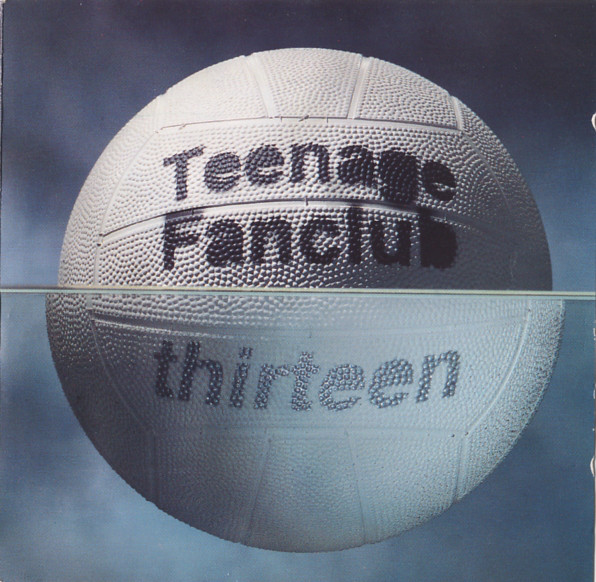
Unlike most bands, Teenage Fanclub wasn’t reliant on one or two songwriters. Everyone contributed songs. That was the case with their fourth album, Thirteen, which was named after a song by Big Star.
The four members of Teenage Fanclub had all contributed songs for Thirteen. Gerard Love had penned five, Norman Blake four, Raymond McGinley two and Brendan O’Hare one. These thirteen songs would be recorded in Glasgow’s CaVa Studios.
When work began in October 1992, Teenage Fanclub had decided to produce Thirteen themselves. They had co-produced their first three albums, so felt ready to make the step up. The only problem was, it took six months to record Thirteen. This was quite unlike Teenage Fanclub. They usually recorded albums quickly. Maybe they were missing a co-producer?
If Teenage Fanclub had employed a co-producer, they would’ve been a sounding board for the band. They would’ve also ensured they didn’t spent too long on tracks, honing, polishing and perfecting them. That’s what seemed to have happened. Eventually, Thirteen was finished by April 1993. This left six months before the album was released.
Prior to the release of Thirteen, critics received their advance copies of the album. They didn’t like the album. That’s an understatement. Critics seemed to loathe the album. Reviews of Thirteen were scathing. That’s despite songs of the quality of Hang On, Norman 3, Radio and Song to the Cynic. For Teenage Fanclub this was a huge blow.
At least when the lead single from Thirteen, Radio was released in August 1993, it reached number thirty-one in UK. The followup Norman 3, was released in September 1993, but stalled at just fifty in the UK single’s charts. This was another disappointment for Teenage Fanclub.
Despite the disappointing reviews and failure of the single Norman 3, Teenage Fanclub’s fortunes were set to improve. When Thirteen was released in October 1993, it reached number number fourteen in Britain. This meant Thirteen was Teenage Fanclub’s most successful British album. The only disappointment was that Thirteen failed to trouble the US Billboard 200. This wasn’t the only disappointment for Teenage Fanclub.
After the release of Thirteen, drummer Brendan O’Hare announced he was leaving Teenage Fanclub. The usual “musical differences” were cited, and Paul Quinn, the former Soup Dragons’ drummer was drafted in to replace Brendan O’Hare. For Teenage Fanclub, this was a worrying time. There was one small crumb of comfort though.
In February 1994, Hang On was released as the third and final single from Thirteen. It reached number nineteen on the US Modern Rock charts. Little did Teenage Fanclub realise that it was the last hit single they would enjoy in America.
Grand Prix.
Although Thirteen had been the most successful album of Teenage Fanclub’s career, the scathing reviews hurt. They had spent six months recording, honing and perfecting Thirteen. To make matters worse, Brendan O’Hare had left the band. This was a testing time for Teenage Fanclub, as they began work on their fifth album.
For the new album, thirteen songs were written. Norman Blake wrote five songs, while Gerard Love and Raymond McGinley penned four each. These songs would become Grand Prix.
Recording of Grand Prix began on 5th September 1994. By then, Teenage Fanclub had decided to employ a co-producer, David Bianco. He became their sounding board over the next month spent recording at The Manor, Shipton-On-Cherwell. Just over a month later, on the 9th October 1994, Grand Prix was complete. Little did they realise they had recorded one of their finest albums.
When critics heard Grand Prix, they were in no doubt, the album was a minor classic. It veered between melodic and melancholy, became ruminative and rocky. Grand Prix literally oozed quality, with About You, Sparky’s Dream, Don’t Look Back, Neil Jung and I’ll Make It Clear showcasing Teenage Fanclub’s considerable musical skills. They seemed to have been stung by the criticism of Thirteen, and returned with the best album of their career.
When Grand Prix was released on May 29th 1995, it was a hit on three continents. In the UK Grand Prix reached number seven, becoming the most successful album of their career. Elsewhere Grand Prix reached sixty-eight in Japan and fifty-seven in Australia. Teenage Fanclub were now one of the biggest indie bands in Britain.

Songs From Northern Britain.
What made the rise and rise of Teenage Fanclub all the more incredible was that they had only been formed in 1989. Since then, they had released five albums, and were popular across the globe. By 1996 Teenage Fanclub were ready to record a new album.
Just like previous albums, the band’s songwriters got to work. Norman Blake wrote three songs and cowrote Planets with former band member Francis MacDonald. Gerard Love and Raymond McGinley both wrote four songs. These songs were recorded at some of London’s top studios with co-producer David Bianco.
Some of Songs From Northern Britain was recorded at Abbey Road Studios, while other sessions took place at AIR Studios. Other sessions saw Teenage Fanclub head to leafy Surrey, and Rich Farm Studios. Eventually, Teenage Fanclub had recorded their sixth album, which was released in summer 1997.
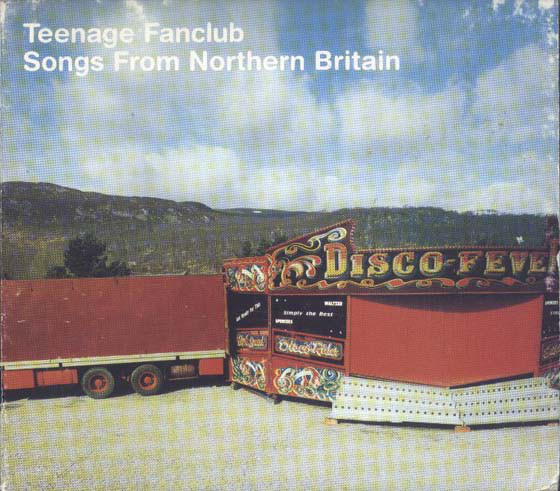
Songs From Northern Britain which was a tongue-in-cheek reference to the Britpop movement, saw Teenage Fanclub pickup where they left off on Grand Prix. It was another album of carefully crafted songs, including Start Again, Can’t Feel My Soul, Don’t Want Control of You and I Don’t Care. Despite an album that was variously cerebral, defiant, hook-laden, joyous, melodic, mellow, playful and reflective critics were undecided. Some loved the album, other loathed it. Rolling Stone which had been supportive of Teenage Fanclub, set their sights on the band. Not for the first time, were Rolling Stone left with egg on their face.
On 29th July 1997, Songs From Northern Britain was released. It reached number three in Britain, and became Teenage Fanclub’s most successful album. In Australia, Songs From Northern Britain reached number seventy. Elsewhere, including America, Teenage Fanclub continued to be a popular live draw. However, they sold more albums in Britain, than anywhere else.
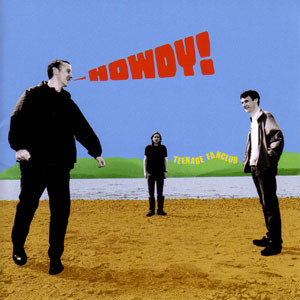
Howdy!
Buoyed by the success of Songs From Northern Britain, Teenage Fanclub were keen to begin work on the followup, Howdy! It was the first album of Teenage Fanclub’s post Creation years.
After Songs From Northern Britain, Teenage Fanclub signed to Columbia, which was owned by Sony. At last, Teenage Fanclub were signed to a major label. They would’ve had the financial muscle and expertise to help Teenage Fanclub make a breakthrough in new musical markets. This included America, which had embraced Bandwagonesque. Since then, commercial success eluded Teenage Fanclub stateside. Howdy! was a new beginning for Teenage Fanclub.
For their Columbia debut,Gerard Love, Norman Blake and Raymond McGinley had written four tracks each. They became Howdy! which was produced by Teenage Fanclub.
After two albums co-produced by David Bianco, Teenage Fanclub decided to produce the album themselves. They were now an experienced group, who were about to record their seventh album. Howdy! was recorded at Rockfield Studios between November 1998 and March 1999. In the midst of the Rockfield sessions, Teenage Fanclub adjourned to the London Astoria for some overdubbing. Once that was completed, Teenage Fanclub returned to Wales, to complete Howdy! After five months Howdy! was ready for release.
Now Columbia’s marketing machine sprung into action, preparing for an October 2000 release date. Before that, reviews of Howdy! were published. The reviews were mixed, with some critics writing scathing reviews, while others praised Howdy! Especially, songs like I Need Direction, I Can’t Find My Way Home, Near You and The Town and The City. On the back of the mixed reviews, Teenage Fanclub made their major label debut.
Howdy! was released in October 2000, but disappointingly, stalled at a lowly thirty-three in Britain. Elsewhere, things weren’t much better. Teenage Fanclub failed to make an impact in America, where they were still popular. However, Howdy! failed to make any impression in America. Things hadn’t gone to plan for Teenage Fanclub.
Following the commercial failure of Howdy!, it came as no surprise when Columbia and Teenage Fanclub parted company. Teenage Fanclub were without a record label. However, it would five years before they released the followup to Howdy! Before that, they released a collaboration with Jad Fair.
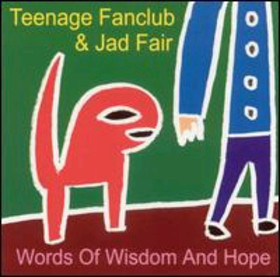
Words Of Wisdom and Hope.
Following the release of Howdy!, Teenage Fanclub began work on a collaboration with Jad Fair, the former Half Japanese lead singer. They cowrote twelve songs which became Words Of Wisdom and Hope.
Most of Words Of Wisdom and Hope were recorded at Riverside Studios, Glasgow. Three songs were recorded in Finnieston, in Glasgow. By then, Teenage Fanclub and Jad Fair decided to co-produce the album. This could prove to be a case of too many cooks. The proof would be in the eating…by the critics.
Reviews of Words Of Wisdom and Hope were mixed. Some critics really disliked the album, and penned scathing reviews. Other reviews were mixed, with there seemingly no middle ground. Words Of Wisdom and Hope seemed to be an album critics loved or loathed. Record buyers had the casting vote.
Geographic Records release Words Of Wisdom and Hope in March 2002. The album wasn’t a commercial success, and both parties came away licking their wounds. It was unlikely that the project would be repeated. There was no appetite for a followup. A new Teenage Fanclub album was a whole new ball game.
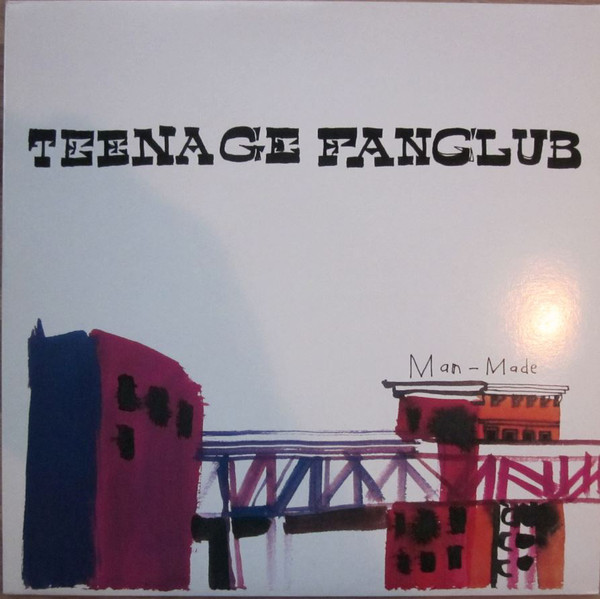
Man-Made.
It wasn’t until 2004 that Teenage Fanclub began work on their eighth album, Man-Made. Again, the album featured twelve songs with Norman Blake, Gerard Love and Raymond McGinley contributing three songs each. Teenage Fanclub it seemed, was a bastion of musical democracy where each of the band’s songwriters got the opportunity to showcase their songwriting skills. With each album, Norman, Gerard and Raymond matured as songwriters. Given it had been four years since Howdy!, they had plenty of time to work on new songs. These new songs became Man-Made, which featured a new band member.
Ever since drummer Brendan O’Hare left after the release of Thirteen, Paul Quinn had been his replacement. However, Paul Quinn had left Teenage Fanclub, and was replaced by Francis MacDonald. He made his recording debut on Man-Made.
Recording of Man-Made took place at Soma Electronic Music Studios, Raymond’s House and Riverside Studios. This time around, Teenage Fanclub decided to draft in Portland based producer John McEntire. For the first time in eight albums,
Teenage Fanclub played no part in the production. Maybe this would result in a change of fortune for Teenage Fanclub?
Man-Made was well received by most critics. They were impressed by the quality of songs like It’s All in My Mind, Nowhere, Only With You and Born Under A Good Sign. Still, there were a few critics that weren’t convinced by Teenage Fanclub’s comeback album. However, things were looking good for Teenage Fanclub, who had decided to found their own label.
Rather than look for a new label in Britain, Teenage Fanclub decided to found their own label, PeMa. It would released Man-Made in Britain, while Merge Records would release the album in North America. Teenage Fanclub’s eighth album Man-Made, was released in Britain in May 2005, and reached number thirty-three in Britain. This was a slight improvement on Howdy! The only downside was the album’s failure to make an impression in America. Maybe things would be different next time around?
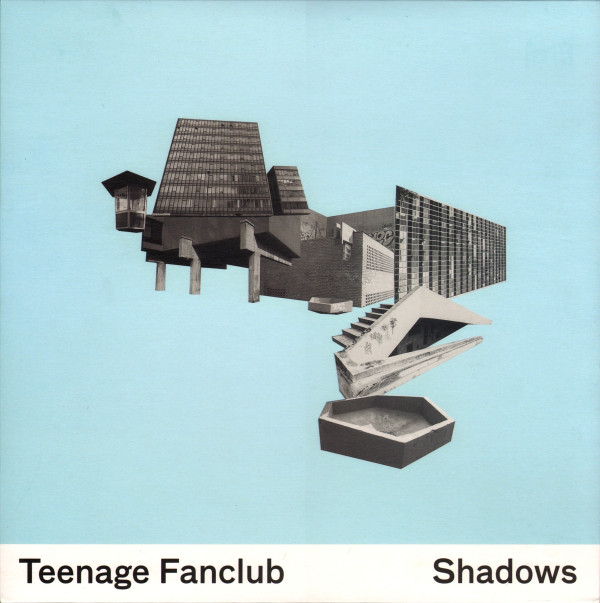
Shadows.
Five years passed before Teenage Fanclub returned with the followup to Man-Made. Gone were the days when Teenage Fanclub released an album every two years. These days were long gone. Albums no longer were selling in the same quantities. Teenage Fanclub had discovered that when they released Man-Made. Despite that, Teenage Fanclub headed back into the studio in August 2008.
When Teenage Fanclub entered the studio, they had a new member. David McGowan who had played on several Teenage Fanclub albums, was promoted, and became a full member of the band. Teenage Fanclub were now five.
The five members of Teenage Fanclub entered the studio to record twelve songs. For Shadows, Norman Blake, Gerard Love and Raymond McGinley had written three songs each. Recording took place at Leeders Farm, Norfolk. Raymond’s Place, Glasgow and Rockfield Studios, Monmouthshire. With Shadows complete, it would be another two years before the album was released.
It was announced by PeMa that Shadows would released on 31st May 2010. Before that, critics had their say on Teenage Fanclub’s ninth album. The reviews of the album were mixed, ranging from favourable to critically acclaimed. Mostly, critics agreed that Shadows was a return to form from Teenage Fanclub. They had released an album that was variously beautiful, melodic and timeless.
On the release of Shadows, it reached number thirty in Britain. This meant that Shadows was the most successful album Teenage Fanclub had released since 1997s Songs From Northern Britain. Maybe Teenage Fanclub’s luck was changing?
Here.
It seemed that Teenage Fanclub were in hurry to record their tenth album. The five members of the band went away and worked on various side projects. However, they knew that eventually, they would reunite to record Teenage Fanclub’s tenth album.
When the call came, Norman Blake, Gerard Love and Raymond McGinley had written three songs each. They became Here, which was recorded at Vega Studio, near Carpentras, Provence and at Raymond’s place in Pollokshields, Glasgow. That was where Teenage Fanclub and friends recorded Here.
As recording began, Teenage Fanclub’s rhythm section included drummer Francis MacDonald, bassist Gerard Love and guitarists David McGowan and Norman Blake. Raymond McGinley took charge of lead guitar. Teenage Fanclub’s friends included harpist Helen Thompson and trumpeters Nigel Baillie and Robert Henderson. Strings came courtesy of cellist Elspeth Mackay and violinist and violist John McCusker. Producing Here, were Teenage Fanclub. Gradually, Here began to take shape. Songs were honed and eventually, Teenage Fanclub’s much anticipated tenth album was completed.
With Here completed, PeMa Records announced the release of Teenage Fanclub’s tenth album. It was due to be released in September 2016. Critics hailed the album Teenage Fanclub’s best album since Songs From Northern Britain 1997. So it was no surprise when the album reached number ten in Britain. Teenage Fanclub were back, with their most successful album in nineteen years. Here’s why:
I’m In Love opens Here, and is three minutes of joyous, jangle pop perfection. The arrangement is akin to a musical vortex, where the pounding rhythm section and jangling, chiming guitars accompany Norman’s heartfelt vocal. It’s augmented by close harmonies, as Teenage Fanclub roll back the years. What follows is a joyous, feel-good anthem, where there’s no stopping Teenage Fanclub. Later, at the bridge, drums rolls accompany a blistering guitar. Soon, Teenage Fanclub reunite as this joyous paean heads towards a crescendo.
Rocky guitar licks and drums rolls signal that Teenage Fanclub are about to kick loose on Thin Air. They’ve turned the volume up, and play with power and passion. Meanwhile, Gerard Love takes charge of the vocal, while harmonies accompany him. Joyously, he declares: ”Wake Up, I’m alive, one more day, yeah, I’m alive, think of the what they want and what they need.” Meanwhile, the rest of the band create a glorious, rocky wall of sound. So much so, that the arrangement almost distorts. It doesn’t quite, as Teenage Fanclub roll back the years on this rocky anthem.
The tempo drops slightly on Hold On. Still the rhythm section anchor the arrangement, as guitars jangle. They frame Raymond McGinley’s tender, heartfelt vocal as he advises: “Hold On to your dreams.” Occasionally, a guitar feedbacks. Despite this, there’s a much more mellower sound as Raymond sings: “I don’t hear much fanfare for the common man, we got lost in the mirror, but the mirror looks both ways.” Mostly, though, the message is: “Hold On to your dreams,” as Teenage Fanclub combine hooks and social comment to create sunshine pop.
Guitars jangle before the rhythm section create the heartbeat to The Darkest Part Of The Night. It features Norman on lead vocal, with the rest of the band adding harmonies. They’re augmented by strings, which fill out the feel-good arrangement. Later, when the vocal drops out, a shimmering, reverberating guitar solo is added at 1.54. It’s the perfect replacement. When the vocal returns, the guitar drops out, and this beautiful song continues to reveal its melodic secrets.
The tempo drops on I Have Nothing More To Say, where the arrangement meanders and flows dreamily along. Just the rhythm section and chiming, crystalline guitars accompany Gerard’s tender, thoughtful vocal. It’s a very different type of song to previous ones. Gerard is tired and troubled, and has of been worn down by modern life: “been awake to long, my head is overloaded, rust in bones, doubt in my veins.” His vocal is akin to a cathartic confession, as he unburdens himself of the troubles that torment him. Although very different to what’s gone before, it’s still a beautiful, carefully crafted song.
Still, there’s no sign of the tempo rising on I Was Beautiful When I Was Alive. As guitars jangle and chime, the rhythms section play slowly and deliberately. Raymond takes charge of the vocal, and delivers it tenderly. His vocal seems to float above the arrangement, while the bass bubbles, a guitar jangles and keyboards create a multilayered arrangement. Meanwhile, Raymond’s vocal dreamily sings: “I Was Beautiful When I Was Alive.”
A lone chiming guitar teases the listener as The First Sight unfolds. They’re left wondering what direction the song is heading? The rhythm section join with crystalline guitar in creating a jaunty backdrop for Gerard’s vocal. Teenage Fanclub seem to be heading into anthem territory again. This is definitely the case. At 1.04 horns are added and augment Teenage Fanclub. Gerard’s vocal is replaced by a blistering, scorching guitar, before the arrangement takes on a much more understated sound. Chiming guitars and the rhythm section accompany Gerard, before Teenage Fanclub return to their rocky side. They unleash one of their finest moments in many an album. So good is The First Sight, that this glorious slice of anthemic, feel good, pop is comparable with Teenage Fanclub in their prime.
Guitars jangle and shimmer, while the rhythm section create the heartbeat on Live In The Moment. Meanwhile, Norman dawns the role of agony uncle and advises “Live In The Moment.” Stabs of horn augment Teenage Fanclub, adding to the joyous sound. Later,an effects laden guitar cuts through the arrangement, before Norman suggests: “Live In The Moment, nothing this good can last forever.” Sadly neither can melodic slice of perfect pop which features Teenage Fanclub back to their best.
Just a distant harp is plucked on Steady State. It moves towards the front of the arrangement, as it meanders along. Drums are caressed, as a bass is plucked carefully and what sounds like a wind blowing can be heard. Raymond’s vocal is also understated and tender, in keeping with the rest of the arrangement. He sings: “wake my love, we’ve dreamt enough, so wake my love, the Steady State of life is calling.” Behind him, the mesmeric arrangement provides the perfect backdrop, to Raymond’s dreamy, hopeful vocal. Together, they show a very different side to Teenage Fanclub, on this gorgeous ballad.
As the rhythm section anchor It’s A Sign’s arrangement, jangling guitars and harmonies accompany Gerard’s vocal. Soon, a searing guitar cuts through the arrangement. It’s driven along by the rhythm section and guitars. By then, Teenage Fanclub are in full flight, and it’s a joy to behold. Byrdsian harmonies are joined by a crunch guitar, as the melodic arrangement flows along. Teenage Fanclub trade harmonies, while a bristling guitar adds a contrast, to a song where song there’s West Coast sound to the arrangement. It finds Teenage Fanclub continuing to roll back the years.
The bass plays a prominent role on With You, while hypnotic drums and a chiming guitar accompany Raymond’s vocal. He delivers another beautiful ballad. Midway through the song, a Hammond organ replaces the vocal. It might seem like an unlikely replacement, but it works and works well. Soon, though, Raymond’s tender, dreamy vocal returns. He’s accompanied by harmonies, before a meandering, chiming guitar replaces his vocal. All too soon, this heartfelt ballad is over, and all that remains is the memory.
Connected To Life closes Here. Just a guitar ushers in the rhythm section, and they play slowly and deliberately. Norman delivers the vocal on a ballad where country meets pop. He sings: “I just want to see you Connected To Life.” Behind him, the guitar feeds back, but is tamed and is sculpted into part of the arrangement. Meanwhile, Norman delivers a heartfelt vocal, promising: “I will not deceive you, I only want to please you.” As the arrangement meanders along, two things stays the same, the quality of the song and Teenage Fanclub’s ability to create memorable, melodic perfect pop.
Six years after the release of their previous album Shadows, Teenage Fanclub return with what’s without doubt, there best album since 1997s Songs From Northern Britain. Now officially a five piece, Teenage Fanbclub return with a carefully crafted album where rocky anthems sit side-by-side with beautiful ballads. These two sides to Teenage Fanclub, combine to create with an album that stands head and shoulders above Shadows, Man-Made and Howdy! Teenage Fanclub are back, and back to their best.
This is fitting. Here is the tenth album of Teenage Fanclub’s career. 2016 is also the twenty-fifth album of Bandwagonesque, Teenage Fanclub’s genre classic. It was reissued earlier this year. So it’s fitting that just a few months later, Teenage Fanclub make a welcome return to form with their long-awaited and much-anticipated tenth album, Here. It’s an album that oozes quality.
From the opening bars of I’m In Love, right through to the closing notes of Connected To Life, Teenage Fanclub never put a foot wrong. The songs are anthemic, beautiful, joyous, melodic and sometimes, even have a melancholy quality. Other times, the songs on Here, are dreamy, rocky and ruminative. Always, though, the songs on Here are memorable as Teenage Fanclub roll back the years.
So good is the music on Here, that it’s akin to a return to Teenage Fanclub’s golden years. These glory years were between 1991 and 1997. Back then, Teenage Fanclub could do no wrong. That’s the case on Here, which was released on Teenage Fanclub’s own PeMa label. It’s a welcome return to form, from are Teenage Fanclub who enjoying an Indian Summer in their twenty-seven year career.
Here finds Teenage Fanclub combining balladry, perfect pop and jangle pop with rock and even a hint of country. This flawless fusion finds Teenage Fanclub combining anthems and beautiful ballads on Here, where they roll back the years on what’s their best album in nearly twenty years.
TEENAGE FANCLUB-HERE.

EMERSON, LAKE AND PALMER-BRAIN SALAD SURGERY.
EMERSON, LAKE AND PALMER-BRAIN SALAD SURGERY.
When the time came for Emerson, Lake and Palmer to record their fourth album, Brain Salad Surgery, the trio were determined to record an album that they could replicate live. That hadn’t been the case with their their three previous albums. Something had to change, they realised. So, Brain Salad Surgery, which will be released by BMG as a two CD set on 30th September 2016, marked the start of a new era for Emerson, Lake and Palmer, whose career career began in 1970.
The Emerson, Lake and Palmer story begins in 1970. That was the year Emerson, Lake and Palmer was founded and they released their eponymous debut album.
Keith Emerson and Greg Lake first met at the Filimore West, in San Francisco. Both of them were at a musical crossroads. Keith was a member of The Nice, while Greg Lake was a member of King Crimson. Nether Keith nor Greg felt fulfilled musically. So, the decided to form a new band.
This new band would feature Keith on keyboards, Greg on bass and a drummer. Their first choice for a drummer was Mitch Mitchell, who was without a band, after The Jimi Hendrix Experience split-up. They agreed to jam together. Then the music press heard about this jam session.
Rumours started doing the rounds that Jimi Hendrix was going to join this new supergroup. That put an end to the jam session. It never took place. Jimi Hendrix had never been asked to join the supergroup. Mitch Mitchell meanwhile, lost interest in the project. This presented a problem. Keith and Greg still didn’t have a drummer. Then Robert Stigwood, who was then the manager of Cream, suggested Carl Palmer’s name.
Carl Palmer was another experienced musician. He’d previously been a member of The Crazy World Of Arthur Brown. At that time, he was a member of Atomic Rooster. So Carl was approached. He was, at first, reluctant to leave Atomic Rooster, which he’d cofounded. However, when he spoke to Keith and Greg he realised that he could be part of something special.
Having left Atomic Rooster, he became the third member of the newly formed supergroup Emerson, Lake and Palmer. They made their debut at The Guildhall, Plymouth, on 23rd August 1970. Then on 26th August 1970, Emerson, Lake and Palmer stole the show at the Isle Of Wight Festival. This resulted in Emerson, Lake and Palmer being offered a recording contract by Atlantic Records.
Ahmet Ertegün the President of Atlantic Records realised the potential in Emerson, Lake and Palmer. Here was a band who wouldn’t just sell a huge amount of records, but could fill huge venues. So, not long after signing Emerson, Lake and Palmer, Ahmet Ertegün sent them into Advision Studios, London.
Emerson, Lake and Palmer.
At Advision Studios, Emerson, Lake and Palmer recorded ten tracks. They became Emerson, Lake and Palmer. Although this was meant to be the birth of a supergroup, the ten tracks on Emerson, Lake and Palmer came across as a series of solo pieces. However, Emerson, Lake and Palmer were a new band, who’d just recorded an eclectic and innovative album.
Although many people refer to Emerson, Lake and Palmer as prog rock band, they’re much more than that. Their music is eclectic. They draw inspiration from a variety of sources. This includes classical, folk rock, jazz, psychedelia and rock. Some of the music is futuristic. That’s in part to Keith Emerson’s use of the Moog synth. The result was a pioneering, innovative album that would launch Emerson, Lake and Palmer’s career.
When critics heard Emerson, Lake and Palmer, they hailed the album as innovative and influential. On its release in the UK in October 1970, i Emerson, Lake and Palmer reached number four. Three months later, on New Year’s Day 1970, Emerson, Lake and Palmer was released in the US. It reached number eighteen in the US Billboard 200 and was certified gold. Ahmet Ertegün, the President of Atlantic Records had been vindicated. Emerson, Lake and Palmer were on their way to becoming rock royalty.

Tarkus.
It was a case of striking when the iron was hot for Emerson, Lake and Palmer. They returned to Advision Studios, in London to record what became their sophomore album Tarkus. It was much more of a “band” album. Emerson, Lake and Palmer were now a tight, musical unit. This was very different from Emerson, Lake and Palmer, which was more like an album of solo pieces. Tarkus saw the birth of Emerson, Lake and Palmer as one of the giants of prog rock.
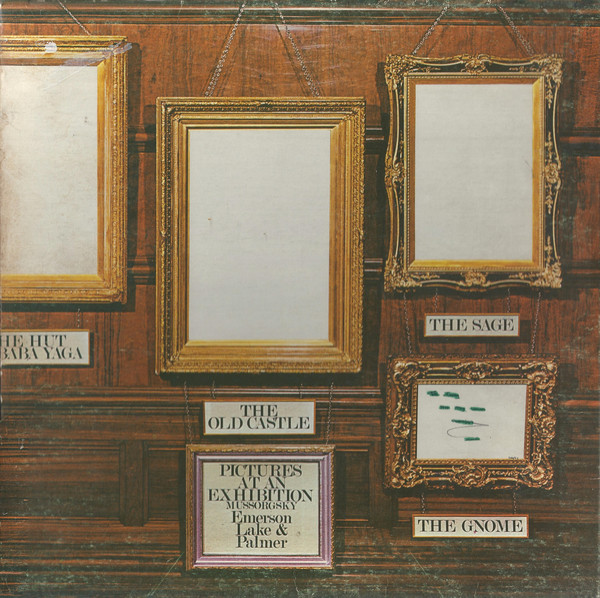
Tarkus was released in June 1971. That wasn’t originally the plan. Instead, Pictures At An Exhibition was meant to be Emerson, Lake and Palmer’s sophomore album. This was a live album which was recorded in March 1971. It saw Emerson, Lake and Palmer interpret Modest Mussorgsky’s opus Pictures At An Exhibition. it was a groundbreaking album. There was a problem though. Emerson, Lake and Palmer’s management didn’t agree. They weren’t sure that what essentially a interpretation of a classical suite was the direction Emerson, Lake and Palmer should be heading. So, Tarkus became the followup to Emerson, Lake and Palmer.
On its release in June 1971, critics realised that Tarkus marked a much more united Emerson, Lake and Palmer. They were well on the way to finding their trademark sound. Gone were ballads and jazz-tinged tracks. Instead, it was prog rock all the way. Record buyers loved Tarkus. It reached number one in the UK. Over the Atlantic, Tarkus reached number nine in the US Billboard 200 and was certified gold. Following the commercial success of Tarkus, Pictures At An Exhibition was released later in 1971.

Pictures At An Exhibition.
Three months before the release of Tarkus, Emerson, Lake and Palmer arrived at Newcastle City Hall, in Newcastle, England on the 26th March 1971. They were about to record their first live album, Pictures At An Exhibition. This was no ordinary live album.
Instead, Emerson, Lake and Palmer had decided to adapt Russian classical composer Modest Mussorgsky’s Pictures At An Exhibition. This was one of the first times classical music had been adapted by a rock band. That night in Newcastle, just four of the original ten pieces in Mussorgsky’s suite, along with the linking Promenade were recorded, They were performed live as one continuous piece, with new parts written by Emerson, Lake and Palmer. These new parts linked Mussorgsky’s original themes, which Emerson, Lake and Palmer’s played with enthusiasm and energy. Despite this, Pictures At An Exhibition was nearly never released.
It seemed that Pictures At An Exhibition was fated. Problems with their management meant that Pictures At An Exhibition’s release was delayed. It wouldn’t be until November 1971 the album was released. However, at one point it looked as if Pictures At An Exhibition wouldn’t be released. Atlantic Records were reluctant to release what was essentially a classical suite as an album. This they feared, wouldn’t sell well. So the project was put on the back burner, Suddenly, it looked unlikely that Pictures At An Exhibition would be released. That was until Tarkus was certified gold in America. All of a sudden, Atlantic had a change of heart,
Rather than release Pictures At An Exhibition on the main Atlantic label, a decision was made to release the album as a budget priced album. Atlantic Records it seemed were hedging their bets. That seemed a wise move when the reviews were mixed. Rolling Stone magazine was far from impressed with Pictures At An Exhibition. Neither was the self styled Dean of American Rock Critics, Robert Christgau, Despite this, Pictures At An Exhibition sold well.
When Pictures At An Exhibition was released in November 1971, it reached number three in the UK. In America, Pictures At An Exhibition reached number ten in the US Billboard 200. This resulted in Emerson, Lake and Palmer’s third consecutive gold album. A year later, three became four.
Pictures At An Exhibition was released as a budget priced album in November 1971. It reached number three in the UK. In America, Pictures At An Exhibition reached number ten in the US Billboard 200. This resulted in Emerson, Lake and Palmer’s third consecutive gold album. A year later, three became four.
Trilogy.
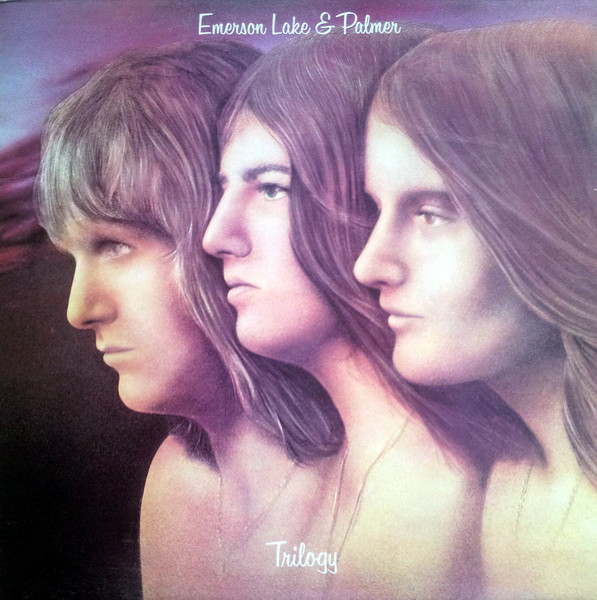
Just like previous albums, Emerson, Lake and Palmer were determined to push musical boundaries on Trilogy, their third studio album. Just like their two previous albums, Trilogy was recorded at Advision Studios, London. Emerson, Lake and Palmer were at their innovative best, recording progressive rock, but with a twist.
An example of this was the inclusion of Abaddon’s Bolero on Trilogy. Rather than the usual 3/4 rhythm a Bolero would have, it was turned into a march by using a 4/4 rhythm. Emerson, Lake and Palmer also pioneered the beating heart sound on Trilogy. Pink Floyd would use it to such good effect on Dark Side Of The Moon. So would Jethro Tull on A Passion Play and Queen on Queen II. This sound was first heard on Endless Enigma Part One. It came courtesy of Carl Palmer’s Ludwig Speed King bass drum pedal. Once again, Emerson, Lake and Palmer were demonstrating that they were one of the most innovative progressive rock bands. Their efforts were rewarded.
On its release in January 1972, Trilogy reached number two in the US. As usual, Emerson, Lake and Palmer enjoyed more success in the US. Trilogy reached number five in the US Billboard 200. This resulted in another gold disc for Emerson, Lake and Palmer. Things were about to get better for Emerson, Lake and Palmer though.
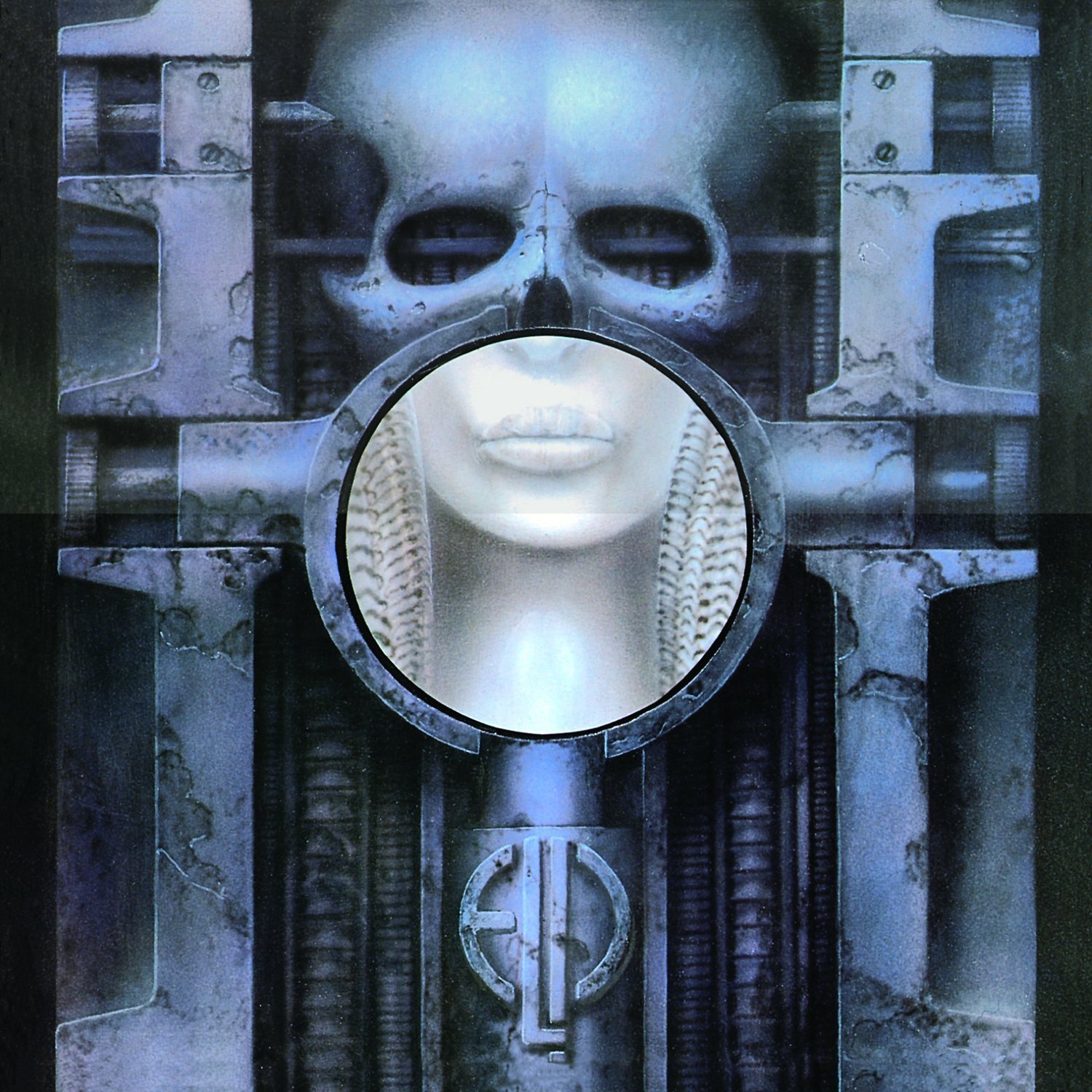
Of the three previous studio albums Emerson, Lake and Palmer had recorded, they complex, innovative, genre-melting affairs. Emerson, Lake and Palmer embraced the latest technology in what seemed like their quest for musical perfection. They also made use of overdubbing. This made their music difficult to replicate live. The band always felt they came up short live. So Emerson, Lake and Palmer set about recording an album they could replicate accurately live. This was Brain Surgery Salad
Brian Surgery Salad.
Recording of Brian Surgery Salad took place between June and September 1973. Brain Salad Surgery was a fusion of prog rock and classical music. This is obvious straight away.
Emerson, Lake and Palmer adapted William Blake and Hubert Parry’s hymn Jerusalem and then Alberto Ginastera’s Toccata. Greg Lake wrote Still…You Turn Me On and then cowrote Benny The Bouncer and Karn Evil 9: 3rd Impression with Keith Emerson and Peter Sinfield, one of the founding members of King Crimson. Keith Emerson penned Karn Evil 9: 2nd Impression and cowrote Karn Evil 9: 1st Impression, Part 1 with Greg Lake also penned Karn Evil 9: 1st Impression, Part 1. These tracks were brought to life by Emerson, Lake and Palmer at their inventive best.
On Brain Salad Surgery, Keith Emerson played Hammond organ, piano, accordion and a myriad of synths. Greg Lake took charge of vocals, acoustic, electric, and twelve-string guitars. He also played bass guitar. Carl Palmer played drums, percussion, percussion synthesizers, gongs and timpani. Greg Lake produced Brian Surgery Salad, which was released in November 1973.
When Brain Salad Surgery, was released in November 1973, it became Emerson, Lake and Palmer most successful album. It reached number two in the UK and number eleven in the US Billboard 200. This resulted in two more gold discs to add to Emerson, Lake and Palmer’s collection. They were well deserved though.
There’s no doubt that Brain Salad Surgery was the finest hour of Emerson, Lake and Palmer’s four album career. Brian Surgery Salad featured Emerson, Lake and Palmer at their tightest and loudest. Here was a tight, visionary band fusing prog rock, jazz and classical music. It was an ambitious, powerhouse of an album. Emerson, Lake and Palmer were at the peak of their creative powers.
This was obvious from the get-go. Brian Surgery Salad begins with the reinvention of Jerusalem and Toccata. Jerusalem becomes a dramatic marriage of electronics and rock, before heading back to its religious roots. However, Emerson, Lake and Palmer can’t resist the theatre and the track becomes almost wonderfully overblown. This continues on Toccata, another dramatic fusion of rock and electronics. It’s grandiose, futuristic, dramatic and features prog rock royalty at their visionary best. How many groups would have had the vision and bravery to open an album with a take on a hymn and then a classical piece? After that, Emerson, Lake and Palmer change tack.
Still You Turn Me On is a beautiful, heartfelt, soul-baring ballad. It’s reminiscent of Pink Floyd and shows another side to Emerson, Lake and Palmer. This was absent on Trilogy and makes a welcome return on Brain Salad Surgery.
Very different is Benny The Bouncer. It shows that Emerson, Lake and Palmer have a sense of humour. A fusion of vaudeville, pomp rock and pub rock, it teaches you to expect the unexpected as far as Emerson, Lake and Palmer are concerned.
The centrepiece of Brain Salad Surgery is Karn Evil. It’s four separate pieces that make up an prog rock epic. Originally, Karn Evil 9: 1st Impression, Part 1 and 2 were meant to be one song. The time limits of vinyl put paid to that. So, the song became two parts.
Emerson, Lake and Palmer kick loose from the get-go. They produce a virtuoso permanence, combining drama with flamboyance to create a prog rock powerhouse. Crucial to the song’s success are the bleak lyrics and Greg’s vocal. It’s that’s an outpouring of despair and disbelief. Then there’s a series of musical masterclasses. Keith pounds at his Hammond organ as if in frustration, while Greg Lake seems to have tapped into the spirit of Hendrix. His performance is otherworldly. So is the music. It’s sometimes futuristic, with a dramatic 21st Century sound. As for Carl Palmer, he won’t be outdone and adds a thunderous heartbeat. The result is a thirteen minute epic, that showcases Emerson, Lake and Palmer at their inventive, innovative best.
There’s another change in style on Karn Evil 9: 2nd Impression. It sees Emerson, Lake and Palmer turn their back on the progressive, sci-fi rocky sound. It’s replaced by a seven minute jazz instrumental. Emerson, Lake and Palmer manage to make this work. They’re versatile and talented musicians who are just as happy playing jazz as rock. Later, they take a detour via Latin and rock music, as they showcase their versatility and undeniable talent.
Gone is the jazz of the previous track on Karn Evil 9: 2nd Impression, which loses Brain Salad Surgery. It sees a return to Emerson, Lake and Palmer’s usual prog rock sound. It’s as if everything was building up to this track. Banks of synths and the distorted bass play important parts. Their raison d’être us providing a backdrop for Greg’s powerhouse of a vocal. Again, the lyrics are bleak. He’s like a seer, whose seen the future and doesn’t like it. Dread and despair fills his vocal, at what the future holds. Effects are added to the vocal, as if someone is trying to silence Greg during a track that’s a potent mixture of drama, emotion, music and theatre.
Having said that Karn Evil 9: 2nd Impression marks an end to Brain Salad Surgery, that’s not quite correct. Not if you’re holding the BMG two disc set ofBrain Surgery Salad which will be released by BMG on 30th September 2016.
Disc two of Brain Salad Surger features thirteen bonus tracks. They’ll be of particular interest to completists. This includes alternate versions of Toccata and the various parts Karn Evil 9. There’s also a instrumental of Brian Salad Surgery and first mixes Jerusalem and Still… You Turn Me On. Welcome additions are the original backing track to Karn Evil 9 3rd Impressio and When the Apple Blossoms Bloom in the Windmills of Your Mind I’ll Be Your Valentine. An interesting addition is the excerpts of Brain Salad Surgery which featured on a flexi-disc given away free with NME. However, there’s one thing that must be pointed out.
All of the bonus tracks been released before, and featured on the 2014 three CD box set. The only difference is the 2016 reissues have been overseen by Greg Lake and Carl Palmer. They’ve lavished great care and attention on this reissue program, including Brain Salad Surgery.
It’s a window into the inventive and innovative world of Emerson, Lake and Palmer. DuringtBrain Salad Surgery., Emerson, Lake and Palmer take the tracks in a variety of directions. Sometimes, Emerson, Lake and Palmer bowl a series of curveballs. You never foresaw what follows. Mind you, that’s what you expect from one of the most groundbreaking groups of the seventies, Emerson, Lake and Palmer. That’s apparent throughout Brain Salad Surgery two CD set. It was the end of an era.
Although Emerson, Lake and Palmer’s career continued after Brain Salad Surgery. they never released as successful an album. They released five further albums. 1977s Works Volume 1 were certified gold in the UK, Canada and US. Later in 1977, Works Volume 2, was certified gold in the US. Then 1978s Love Beach was certified gold in the US and silver in the UK. Neither 1992s Black Moon nor In The Hot Seat. However, Brain Salad Surgery. remains Emerson, Lake and Palmer enjoy biggest selling album. No wonder.
Brain Salad Surgery demonstrates Emerson, Lake and Palmer at their innovative and groundbreaking best. Here were Emerson, Lake and Palmer at their tightest and loudest. It was as if everything had been building up to Brain Salad Surgery. So when Emerson, Lake and Palmer released Brain Salad Surgery they were a tight, visionary band. Their fusion of prog rock, jazz and classical music resulted in an ambitious, powerhouse of an album, Brain Salad Surgery which features Emerson, Lake and Palmer were at the peak of their creative powers.
EMERSON, LAKE AND PALMER-BRAIN SALAD SURGERY.
KING CREOSOTE-ASTRONAUT MEETS APPLEMAN-LIMITED EDITION DELUXE VINYL VERSION
KING CREOSOTE-ASTRONAUT MEETS APPLEMAN-LIMITED EDITION DELUXE VINYL VERSION.
Since 1995, Kenny Anderson has been a one man music making machine. He has released over forty albums under a number of aliases, including the Skuobhie Dubh Orchestra, Khartoum Heroes, Kwaing Creasite and Jokes. That however, is just part of the Kenny Anderson story.
Kenny Anderson is also a member of Kid Canaveral, and the Scottish-Canadian folk band The Burns Unit. However, most people know Kenny Anderson as King Creosote, who have just released a new album, Astronaut Meets Appleman on Domino Records. It’s available in a variety of formats.
As well as a the usual CD and digital download versions of Astronaut Meets Appleman, it has also been rereleased on heavyweight vinyl. There’s two versions, the ordinary version, and the Deluxe Version. It comes complete with a single sided 10″ LP which features the song The Long Fade. However, also included in the Deluxe Version, is a signed art print. There’s no doubt album it that the Deluxe Version of Astronaut Meets Appleman is a quality release. Astronaut Meets Appleman is the much-anticipated followup to 2015s Småvulgär, and a welcome addition to King Creosote’s burgeoning back-catalogue.
Quite simply, the King Creosote back-catalogue is a veritable musical feast, fit for a king. There’s plenty of tasty treats awaiting discovery within King Creosote’s back-catalogue. Most of these albums were released on Fence Records, which King Creosote founded in 1995.
By 1995, singer-songwriter Kenny Anderson was twenty-eight, and living in Anstruther, a small fishing village in the East Neuk of Fife. He was a familiar face within the Scottish music scene. For some time, Kenny Anderson had been contemplating founding his own record label. However, this was a big step and not one to be taken lightly.
Eventually, though, Kenny Anderson and Johnny Lynch of The Pictish Tail decided to take the plunge, and founded Fence Records. Most new labels would’ve been based in Glasgow or Edinburgh, where much of Scotland’s music industry was based. However, city life wasn’t for Kenny Anderson. Instead, he decided to base Fence Records in the place he called home Anstruther. Over the next twenty years, Anstruther would become synonymous with its most favourite resident, King Creosote.
By the time Fence Records had been founded, Kenny Anderson had adopted another moniker, King Creosote. Little did Kenny realise that King Creosote would become one of the most profile artists in the history of Scottish music.
Just three years after dawning the King Creosote moniker, Fence Records released its first album, Queen Of Brush Country in 1998. This was the debut album from King Creosote. It was released on CDR, and nowadays, is a much prized collector’s item. So are many of King Creosote’s albums.
This includes the rest of the albums King Creosote released during 1998. This includes Rain Weekend, Inner Crail To Outer Space, Or Is It? and Gink Scootere. By the time 1998 drew to a close, King Creosote had released five albums. He was a truly prolific and inimitable singer-songwriter.
As 1999 dawned, King Creosote continued to release albums with regularity. 1999: An Endless Round Of Balls (Parties and Social Events) was King Creosote first album of 1999. It was followed by Wednesday, Jacques De Fence and I Am 9, Fence Records’ ninth album. Soon, though, nine became ten when King Creosote released Planet Eggz. Just like all the other albums, it showcased King Creosote’s unique and often quirky songs, which were tinged with humour, hooks and social comment. King Creosote had come a long way in just a couple of years.
With the new millennia dawning, King Creosote seemed determined to steal James Brown’s crown as the hardest working man in music. Or Was It? was King Creosote’s first album of 2000. Soon, though, 12 O’Clock On The Dot and Stinks followed. This meant King Creosote had released thirteen albums in just three years. By then, King Creosote was maturing as a singer, songwriter and storyteller. His carefully crafted songs were beginning to find a wider audience.
G was the first album King Creosote released during 2001. It was one of the best albums the Fife-based singer-songwriter had released. King Creosote seemed to draw inspiration from a variety of sources, on what was a captivating album. Soon, though, King Creosote was back with a very different album, Radge Weekend Starts Here. This was followed by King Creosote Says “Buy The Bazouki Hair Oil.” However, King Creosote’s fourth album of 2001, was Disclaimer, which was another of his finest albums. 2001 had been a busy and successful year for King Creosote, having released five album and been busy playing live.
2002 would be just as busy. King Creosote released a limited edition, five disc box, Squeezebox Set. It featured Fair Dubhs, Favourite Girl, Whelk Of Arse, More Afraid Of Plastic and Losing It on the Gyles. These five albums meant that Fence Records had released twenty-two albums since 1998. They had all been released on CDR, but from 2003, things began to change at Fence Records.
For some time, record companies were watching the progress of King Creosote with interest. They were keen to add the singer-songwriter to their roster. Despite this, King Creosote wasn’t willing to turn his back on Fence Records. So Domino Records came up with a solution.
King Creosote’s albums would be released via Fence Records and Domino Records. It was a deal that gave King Creosote the best of both worlds. He was still signed to an independent label, while Domino Records had the financial muscle and expertise to promote and release King Creosote albums in different territories. Soon, King Creosote would be going global.
King Creosote’s albums would be released on CD, LP and as digital downloads in 2003 when Fence Records joined forces with Domino Records. In the short term, Fence Records continued to release albums on CDR.
During 2003, King Creosote released Now (Nearly 36), Psalm Clerk and Ideal Rumpus Room Guide on CDR. However, King Creosote also released Kenny and Beth’s Musakal Boat Rides in 2003. It was the first album to be released by Fence Records and Domino Records. Kenny and Beth’s Musakal Boat Rides was the album that also introduced King Creosote to a much wider audience. This was the start of the rise and rise of King Creosote.
While many artists would’ve concentrated on albums that could be released worldwide, King Creosote released several albums on CDR during 2004. This included Sea Glass, Red On Green, Three Nuns and Kompanion Çet +1 in September 2004. King Creosote also released Loose Tea On His Wynd, a limited edition LP. There was no sign of King Creosote slowing down. It was if he was making up for lost time.
King Creosote had released his debut album in 1998, when he was thirty-one. Since then, he had been averaging four and five albums each year. 2005 was no different. Balloons was released on CDR, and marked the end of an era. No further CDR albums were released. However, King Creosote was just as busy as ever.
Rocket D.I.Y was released on April 4th 2005, and immediately hailed one of King Creosote’s best albums. When Vintage Quays was released later in 2005, it was the thirty-fourth album that Vintage Quays King Creosote had released. That number soon rose to thirty-five when KC Rules OK was released on September 19th 2005. It featured songs penned between 1999 and 2003. These songs captured the hearts and minds of critic and record buyers, and would soon be regarded as one of the finest albums in King Creosote’s back-catalogue.
2011 was another busy year for King Creosote. He released his solo album Thrawn, and then collaborated with Jon Hopkins on the album Diamond Mine . It was released in 2011, and was later nominated for the Mercury Prize. This played a part in King Creosote’s music reaching a much wider audience.
This just happened to coincide with King Creosote hitting a rich vein of form. On April the 21st 2013 King Creosote returned with a rerecorded version of one of the hidden gems in his back-catalogue, That Might Well Be It, Darling, It was originally an acoustic album, but King Creosote decided to rerecord the album with a full band.
King Creosote spent six months working with producer Paul Savage at the Chem 19 studio, in Blantyre. Critics believed that this was time well spent. The newly rerecorded version of That Might Well Be It, Darling ,many critics felt, was the best album of King Creosote’s fifteen year recording career. However, wasn’t the only album King Creosote released during 2013.
Later in 2013, King Creosote released the album Sure and Steadfast. It was album that King Creosote had released to raise funds for the Scottish Fisheries Museum, in his home village of Anstruther. Despite being one of Scotland’s top recording artists, King Creosote hadn’t forgotten his roots.
From Scotland With Love.
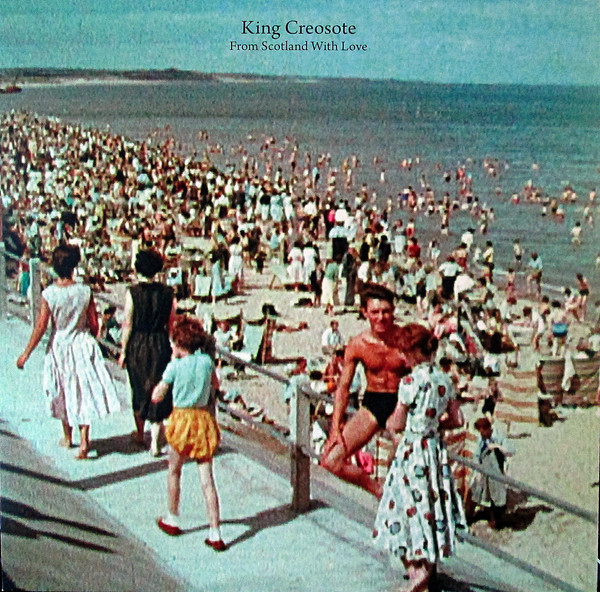
Further proof of this came in 2014, when King Creosote released From Scotland With Love, which was the soundtrack to a documentary feature film directed by Virginia Heath. The film was commissioned as part of the Cultural Festival, which accompanied the 2014 Commonwealth Games in Glasgow. King Creosote seemed to have embraced the From Scotland With Love project, and had written and recorded some of the best songs of his career. Critical acclaim accompanied the release of From Scotland With Love, which was heard by a global audience during the 2014 Commonwealth Games.
During the Commonwealth Games, a screening of From Scotland With Love took place on Glasgow Green, with King Creosote playing live. That night, an audience from the four corners of the globe were captivated and spellbound by King Creosote’s music. It was a far cry from the days when he was Scottish music’s best kept secret.
Despite releasing the most successful album of their career, King Creosote returned with another limited edition, vinyl release on Fence Records. 3 On This Island was released later in 2014, It may not have been as high profile a release as From Scotland With Love, but it featured nine carefully crafted songs. So did the followup, Småvulgär.
It was released in 2015, on Fence Records. Just like 3 On This Island, Småvulgär featured carefully crafted song which showcased the considerable talents of the truly talented trio. However, their next album, Astronaut Meets Appleman would see King Creosote return to the global stage.
Astronaut Meets Appleman.
Having just released one album, it wasn’t long before King Creosote began work on his next album. For the new album, King Creosote wrote ten new songs. They would become Astronaut Meets Appleman, the forty-sixth album from the uber prolific King Creosote. Recording of Astronaut Meets Appleman, King Creosote took place at various studios across Scotland.
Recording of the latest addition to the King Creosote songbook, Astronaut Meets Appleman took place between July 2015 and February. The sessions began at Analogue Catalogue in July 2015. Then the band headed to Gordon McLean’s at An Tobar, where recording took place between September and October 2015. To complete Astronaut Meets Appleman, King Creosote hooked up with an old friend, at Paul Savage at Chem 19 studios.
Paul Savage was no stranger to King Creosote, and had worked with them several times at Chem 19, on some of their best and most successful albums. This was no surprise. The producer and former Delgado drummer, was now one of the most experienced Scottish producers. He was sure to bring out the best in King Creosote, who made their way to the Blantyre studios.
When King Creosote arrived at At Chem 19, Kenny Anderson brought with him his trusty acoustic guitar, accordion, xylophone and synths. He would also play piano and add vocals. Joining Kenny Anderson, were the other members of King Creosote, drummer Andy Robinson and keyboardist, pianist and bassist Derek O’Neill. They were joined by some of their musical friends.
This included Sorren McLean who played electric guitar, snare drum and vocals. Gordon McLean switched between electric bass, double bass, acoustic guitar and tambourine. Hannah Fisher played violin and added vocals and Mairearad Green on bagpipes vocals. They were joined by cellist Pete Harvey, harpist Catriona McKay and vocalist Amy McDougall. Producer Paul Savage added drums and the sound of a ‘wind turbine; on Melin Wynt. Eventually, after seven months of recording at three different locations, Astronaut Meets Appleman was complete. Now it was ready for release.
Astronaut Meets Appleman was one of the most-anticipated albums of King Creosote’s twenty-one year career. Especially, as it became known that Astronaut Meets Appleman was one of the most eclectic albums of King Creosote’s career. The release of Astronaut Meets Appleman was eagerly awaited, as critics and record buyers awaited discovery of the delights within King Creosote’s latest musical feast.
You Just Want opens Astronaut Meets Appleman. Just a guitar is played softly, before the arrangement builds. Drums join a chiming guitar, tender harmonies and strings. They provide the backdrop for Kenny Anderson’s inimitable vocal. It’s needy and hopeful, as if he’s lived the lyrics. Especially as he sings: “when you need someone you cry on, in the depths of despair.”Meanwhile, the rhythm section provide the heartbeat to this widescreen arrangement. Instruments are dropped in at just the right time. This includes the swathes of lush cascading strings. They’re joined by a crystalline guitar and drums which never miss a beat. Later, a searing guitar solo, breathy harmonies and harp are added. Musical contrasts abound, on this multilayered seven minute epic which features a musical masterclass from King Creosote and friends.
Briefly, a hesitant cello plays on Melin Wynt. It gives way to bagpipes that dominate the arrangement. Meanwhile, the rhythm section underpin the arrangement as an acoustic guitar is picked. They set the scene for Kenny’s vocal; “don’t be the one to slam the door, for I won’t let you back in.” That’s obviously out of character: “with my track record, jaws will hit the floor, all that has to change.” Soon, Kenny’s vocal is pulled back in the mix, and reverb is added, as if he’s reflecting on the situation he finds himself in. As the vocal drops out, the bagpipes return, before Kenny’s reflective vocal is accompanied by the piano, rhythm section and his guitar. Later, the bagpipes accompany a maudlin Kenny, as the song heads to its conclusion, he sings: “we’re all set to die.”
Briefly, a hesitant cello plays on Melin Wynt. It gives way to bagpipes that dominate the arrangement. Meanwhile, the rhythm section underpin the arrangement as an acoustic guitar is picked. They set the scene for Kenny’s vocal; “don’t be the one to slam the door, for I won’t let you back in.” That’s obviously out of character: “with my track record, jaws will hit the floor, all that has to change.” Soon, Kenny’s vocal is pulled back in the mix, and reverb is added, as if he’s reflecting on the situation he finds himself in. As the vocal drops out, the bagpipes return, before Kenny’s reflective vocal is accompanied by the piano, rhythm section and his guitar. Later, the bagpipes accompany a maudlin Kenny, as the song heads to its conclusion, he sings: “we’re all set to die.”
Wake Up To This bursts almost joyously into life, with the rhythm section joining the strings. Soon, a joyous Kenny celebrates “he’s away for all of ten days…the girl from France dances on the tip of your tongue.” Behind him, the band join in this joyous, celebratory song. An accordion joins keyboards and guitars. As usual, the drums anchors the arrangement, while Kenny delivers one of his best vocals. Especially when he’s joined by harmonies and strings, as this anthemic track reaches a joyous ending.
The tempo drops on Faux Call, with the wistful sound of strings while Paul Savage’s drums provides a maudlin heartbeat. When Kenny’s vocal enters, it’s tinged with sadness and regret. Soon, he’s delivering a tender, soul-baring vocal. Meanwhile the rhythm section have been joined by acoustic guitar, banjo and strings. They’re the perfect accompaniment to Kenny’s vocal, which literally oozes emotion. Later, when his vocal drops out, a harp is added. It’s a masterstroke, and plays its part in what’s a truly beautiful, soul-baring ballad.
Kenny’s vocal on Betelgeuse sound distant, as a djembe and cello add a melancholy backdrop. Soon, though, Kenny’s vocal is moved forward in the mix and grows in power. Still though, his vocal is tender and tinged with emotion, as a chiming guitar rings out. It accompanies the strings and djembe as the rhythm section anchors the arrangement. Again, everything is added at the right time, including the keyboards. They help frame Kenny’s heartfelt vocal, before it drops out, When it does, King Creosote and friends get the opportunity to showcase their considerable skills. This they do before Kenny returns, and as a guitar chimes, has the final word on this slice of perfect folk-pop balladry.
Accompanied by his trusty acoustic guitar, Kenny steps forward and delivers the vocal on Love Life. Straight away, there’s a spring in his step as he reminisces about a femme fatale of his acquaintance. Meanwhile, the rhythm section underpin the arrangement as strings and harmonies accompany Kenny’s vocal. They create the perfect backdrop for a vocal that veers between joyous to cautious. Later, when his vocal briefly drops out, a chiming guitar makes a fleeting appearance. Then when Kenny returns, he and the rest of King Creosote seamlessly combine to create a joyous hook laden paean.
Peter Rabbit Tea is very different to the previous tracks, but finds King Creosote at their most inventive. They combine dark, almost sinister strings with a recording of a baby constantly saying: “Peter Rabbit Tea.” This is only part of the story. King Creosote deploy the rhythm section, keyboards, a harp and an accordion. Together they combine to create a track that’s variously cinematic, eerie but sometimes, joyful.
An lone acoustic guitar is joined by a chiming, reverberating guitar and piano on Surface. They provide the backdrop for Kenny’s urgent vocal, as the arrangement takes on a rocky sound. The rhythm section power the arrangement along, as guitar cut through the arrangement. It features keyboards, synths and harmonies that accompany the vocal as the song heads into anthem territory. When the song reaches the bridge, guitars are to the fore before there’s an unexpected twist. That’s the addition of bagpipes, which sit well in the mix. They might seem a strange choice, but they’re used sparingly, before King Creosote and their “invisible friend” kick loose, as they return to anthem territory.
Closing Astronaut Meets Appleman is Rules Of Engagement. It finds the tempo dropping, as a harp and strings combine to create a wistful backdrop for Kenny’s vocal. It’s almost maudlin, while he sounds almost defeated, as he lays bare his soul. Then at 1.46 the song almost grinds to a halt, before what sounds like a radio playing in the distant is accompanied by the harp. At 3.07 the harp drops out, and all that remains is a myriad of subtle sounds that meander along. Soon, all that remains of Rules Of Engagement, and indeed Astronaut Meets Appleman are the memories of what’s one of King Creosote’s finest albums.
That’s no exaggeration. Astronaut Meets Appleman which is King Creosote’s forty-sixth album, is without doubt, one of the best albums of a twenty-one year career. During that period, the chameleon-like King Creosote have become one Scotland’s top bands. Anyone wondering why, just need listen to Astronaut Meets Appleman.
It’s one of the most eclectic albums of King Creosote’s long and illustrious career. They combine elements of folk, indie rock, perfect pop and psychedelia on Astronaut Meets Appleman. It features balladry, paeans, rockers and hook-laden anthems. King Creosote are equally happy delivering ballads, as they’re heading into anthem territory. That’s no surprise. Kenny Anderson’s worldweary voice is perfect for the ballads on Astronaut Meets Appleman. Then in an instant, Kenny’s transformed, and is delivering hook-laden and rocky anthems. He’s Mr. Versatile. However, King Creosote isn’t a one man band.
Far from it. Drummer Andy Robinson and Derek O’Neill who played keyboards, piano and bass both play vital roles on Astronaut Meets Appleman. Their contributions can’t be underestimated. Nor can the contribution of King Creosote’s musical friends.
Especially the strings, harmonies and drummer and co-producer Paul Savage. He co-produced Astronaut Meets Appleman with King Creosote, and has obviously played an important part in the widescreen, multilayered arrangements. Each arrangement builds gradually, with instruments being dropped in at just the right moment. Paul Savage helps to ensure that each piece of this musical jigsaw is put into the right place. This is definitely the case, with each of the nine songs on Astronaut Meets Appleman making perfect musical sense. Sometimes, an unlikely instrument is deployed, including a harp or bagpipes, but they’re addition compliments the arrangement, and in some cases, adds the finishing touch. However, Paul Savage’s other contribution came at the mixing stage.
Rather than send the completed album to a mix engineer in London or New York, Paul Savage was asked to mix Astronaut Meets Appleman. That made sense, as he had played an important part in the Astronaut Meets Appleman project. Having placed their faith in Paul, he rewarded King Creosote with a masterful mix where the music on Astronaut Meets Appleman comes to life.
The result is an album that’s a fitting followup to From Scotland To Love, which was King Creosote’s previous release on Domino Records. Småvulgär which although was King Creosote’s previous album, was only released on Fence Records. Astronaut Meets Appleman was released by Fence Records in conduction with Domino Records. It’s a welcome addition to King Creosote’s burgeoning back-catalogue.
It now numbers forty-six albums. However, for a newcomer whose yet to discover the delights of King Creosote, where do they start in this glorious, veritable musical feast? A good starting point is From Scotland To Love and Astronaut Meets Appleman, which are a tantalising taste of the inimitable King Creosote, who after twenty-one years and over forty albums, are belatedly receiving the critical acclaim and recognition that their music so richly deserves.
KING CREOSOTE-ASTRONAUT MEETS APPLEMAN-VINYL EDITION.

ARBEIT SCHICKERT SCHNEIDER-A S S.
ARBEIT SCHICKERT SCHNEIDER-A S S.
For the best part of fifty years, Berlin has produced many truly innovative musicians. This includes Can, Tangerine Dream, Ash Ra and Cluster. They consistently produced groundbreaking music which even today, is influencing a new generation of musicians. Since then, Berlin has consistently produced many more talented and inventive musicians.
Among them, are three talented, versatile and inventive guitarists, Günter Schickert, Jochen Arbeit and Dirk Dresselhaus. The three guitarists represent and celebrate three generations of making experimental music in Berlin. So it’s fitting that they recently decided to collaborate on a new album.
As Arbeit Schickert Schneider they recorded eight soundscapes which became their recently released album A S S. It was released by Hamburg based Bureau B, and finds the three guitarists incorporating and combining disparate musical genres, influences and instruments. The result is a fascinating and captivating album, where Günter Schickert, Jochen Arbeit and Dirk Dresselhaus put all their years of experience to good use on A S S.
Günter Schickert.
The elder statesmen of the trio is Günter Schickert. He’s been active participant in Berlin’s thriving and vibrant music scene since 1964.
Originally, Günter Schickert started off playing the trumpeter in 1962. However, soon, he decided to switch to guitar and by 1967, Günter Schickert was known as a guitarist. By the seventies, he was part of the Krautrock scene.
In 1974, Günter Schickert self-released his debut album Samtvogel. Within a year, it was picked up by Germany’s leading label, Krautrock. However, five years later when Günter Schickert released his sophomore album Überfällig, it was on Brian’s rival Sky Records. By then, the Krautrock era was almost over.
Since then, Günter Schickert has released several solo albums, including 1983s Kinder In Der Wildnis; 1995s Somnambul; 2009s Mauerharfe 1989-2009 and 2012s HaHeHiHo. Günter Schickert has also collaborated with Klaus Schulze on the 2013 album The Schulze-Schickert Session, and then with Pharoah Chromium on OXTLR which was released in 2014. However, that is only part of the Günter Schickert story.
He’s also been a member of several important German bands. This includes Ziguri, GAM, No Zen Orchestra, Arumaruma and Feedbackorchester. Günter Schickert has worked with many artists and bands, and recorded a lot of important music during his long career. So has Jochen Arbeit.
Jochen Arbeit.
That’s despite not being born in Berlin. Instead, Jochen Arbeit, who was born in 1961, moved to Berlin in 1980. That was when he joined joined the Geniale Dilletanten art group, who fused punk rock and Dada. However, by 1983 it was all change for Jochen Arbeit.
That was when Jochen Arbeit began touring the world with his instrumental rock band Die Haut. They went on to release eight albums and a mini album between 1982 and 1998. By the time Die Haut released their final album Springer, Jochen Arbeit had moved on to pastures new.
Jochen Arbeit had joined Einstürzende Neubauten in 1997. That wasn’t the only band he would join. In 2012, Jochen Arbeit joined Automat. This was just the latest in a long line of bands Jochen Arbeit had been a member of.
Still, though, Jochen Arbeit has found time to enjoy a solo career. He released his debut solo album in 2008. Fittingly, it was entitled Solo and showcased Jochen Arbeit’s talents. Since then, he’s been involved with various collaborations, including with Schneider TM. His collaboration with Günter Schickert and Dirk Dresselhaus on A S S is lust the latest.
Dirk Dresselhaus.
Dirk Dresselhaus is the youngest member of the trio. He was born in 1970, and his career began in the late eighties. Between 1989 and 1997, Dirk was a member of various indie rock and noise bands, including the Locust Fudge and Hip Young Things. However, in 1997, Dirk’s music changed direction.
Like a lot musicians, Dirk Dresselhaus had discovered electronic music. So he founded a new musical vehicle, in Schneider TM. It allowed Dirk Dresselhaus to explore of the world of electronic music. Two years later, in 1999, and Dirk Dresselhaus formed the duo Angel with with Ilpo Väisänen. They’ve recorded five albums and collaborated on two other albums between 2002 and 2014. Since then, Dirk Dresselhaus has been busy.
He collaborated with Reinhold Friedl on the triple album Real Time. It was released in June 2014. However, the latest project that Dirk Dresselhaus has been involved with is Arbeit Schickert Schneider’s new album A S S.
A S S.
Having decided to record an album together, Günter Schickert, Jochen Arbeit and Dirk Dresselhaus, began work on what would eventually become A S S in Berlin, in February 2015. They would record eight soundscapes which have been influenced by each musician’s past.
In the case of Günter Schickert this is Krautrock; while Jochen Arbeit was part of the punk generation. Dirk Dresselhaus has flitted between indie rock, noise and nu-electronica. These musical genres, plus a myriad of different instruments would be deployed by each musician.
Recording of A S S began in Berlin in February 2015, the three musicians had composed eight soundscapes. They were recorded over a four month period, with each musicians bringing something different to the project. Günter Schickert played guitar and trumpet, conch and effects. Jochen Arbeit added guitar, balafon plus various ‘objects’ and effects. Dirk Dresselhaus who is credited as Schneider TM on the album, plays guitar, bass, mbira, drum pads and effects. These instruments are put to good use on what became A S S which was completed in June 2015. The result was a genre-melting album.
Elements of avant-garde, free jazz, industrial, Krautrock, psychedelic, punk and techno are combined with minimalist music throughout A S S. It’s an ambitious and innovative genre-melting album, where three generations of music combine their
Opening A S S is 37°C., the first part in a five part movement Fieber. Washes of guitars feedback, shimmer and drone. A buzzing sound cuts through the arrangement, before the drama builds, and a futuristic sound begins to unfold. Still, though, the drama is present as the elements of avant-garde, nu-electronica, experimental and post rock combine. Sometimes nothing is as it seems, as instruments courtesy of a myriad of effects. The arrangement roars, rumbles, feedback and drones. Sometimes, there’s an industrial sound as the drama builds. Later, the arrangement becomes otherworldly and futuristic, before it dissipates, leaving but a memory of a captivating and cinematic soundscape.
Seamlessly, 38°C picks up where 37°C left off. Guitars, objects, found sounds and effects are deployed, as the arrangement whirs, grinds and clicks. A droning sound emerges, as machine like sounds are to the fore. They’ve a mesmeric quality. So do the the slow, hypnotic drum. They come courtesy of a drum machine, and sit back in the mix, while a myriad of eerie, droning, whirring, grinding and clicking sounds provide a rhythmic accompaniment. It’s moody, dark and hypnotic, as the arrangement draws inspiration from the avant-garde, Berlin School, experimental, industrial, Krautrock and nu-electronica. Less is more, as the understated and hypnotic arrangement meanders moodily along, continuing to captivate.
Again, 39°C has an eerie, otherworldly sound. Soon, the machine awakens, and churns out a myriad of whirring, grinding, droning, buzzing and beeping sounds. Sometimes, a few crystalline sounds add a contrast, as the man machine stirs. Meanwhile, there’s moody sound and a sense of foreboding. Especially as the arrangement lumbers along, elongated industrial sounds grinding, whirring and buzzing. Later, there’s a futuristic sound, as sounds spew forth, before taking on a melodic hue as the temperature rises.
By now, it’s 40°C, as a dramatic soundscape unfolds. Sounds swirl; and a vortex of howling, chiming, jangling and crystalline sounds join with whirs, click, ratting and grinding sounds. They create an unlikely symphony, as a trotting, galloping sound appears and soon, disappears. Meanwhile, there’s an Eastern influence to the melodic and joyous arrangement, before the temperature rises one more time.
41°C is the fifth and final part in Fieber. Still, the chiming, jangling sounds are still present. However, the arrangement pulsates, grinds and whirs. There’s a nod to Kraftwerk’s Trans Europe Express as this musical journey unfolds. Drums occasionally click, crack and roll, while guitars chime, chirp and provide crystalline sounds. Meanwhile, the rest of the soundscape is hypnotic and mesmeric. Subtle bursts of a braying trumpet are added, while effects transform the dry sound of instruments. They’re sculpted into something new and different, that become part of a what’s akin to a moderne symphony.
As Acetyl begins to reveal its secrets, just a balafon is joined by a trumpet on Acetyl. The balafon which is from West Africa, creates a minimalist backdrop, while brief bursts of the trumpet are joined by a dark droning sound combine. It has an ominous sound, as the conch is added to the mix. Mostly, though, it’s the balafon and trumpet that play leading roles. They’re helped along by the nbira, which drones and resonates. Together, they create a soundscape that veers between dark and dramatic, to atmospheric and exotic, to moody and mysterious. It’s also hypnotic and cinematic. Acetyl is without doubt, one of the highlights of A S S.
Sounds chirp and repeat on Salicyl, before a guitar and drums join the fray. By then, Salicyl is heading in the direction of the dance-floor. The guitars are funky, but reminiscent of Michael Rother’s first couple of albums. The drum machine cracks and pounds, while a bass buzzes. Effects are added, while the guitar steals the show. At 3.33 the arrangement is stripped bare, and just a variety of beeps and squeaks remain. That’s the case right up to 4.00 when the sense of anticipation begins to grow. Soon, the arrangement explodes and man and machine are imperfect harmony, as they create a dance-floor anthem in waiting.
Säure closes A S S. Waves and washes of music flow in and out. It veers between dramatic, understated, broody and ethereal. Just like so many previous tracks, it’s truly captivating. The music shimmers, glistens, drones and pulsates. Sometimes, the music is cinematic, other times dramatic, shrill and futuristic. Always, it’s inventive and innovative, which has been the story of A S S.
That’s not surprising, given three groundbreaking musicians have collaborated on A S S. It’s work of Günter Schickert, Jochen Arbeit and Dirk Dresselhaus. They recorded the eight soundscapes and are billed on A S S, which was released by Bureau B, as Arbeit Schickert Schneider. The three guitarists are responsible for an album that’s captivating.
A S S is also an album where the more one listens to it, the more of the album’s secrets, subtleties, surprises and nuances are revealed. Nobody will hear everything during the first listen. That would be almost impossible. It’s an album that takes several listens to truly appreciate. Having said that, from the first listen to A S S, it’s obviously a very special album from a trio of multitalented musicians. Together, they’ve over 100 years of musical experience, and put it to good use.
Arbeit Schickert Schneider used an interesting and eclectic selection of instruments. They combined traditional instruments with electronic instruments and much more exotic and unusual instruments like a nbira, conch and balafon. This they combine with various everyday objects and a myriad of effects. These effects are put to good use throughout the recording of A S S. Often, effects have been used, and they transform the original dry sound. It’s then sculpted into something new, which becomes part of these multilayered soundscapes. They’ve been influenced not just by Arbeit Schickert Schneider’s musical past, but a variety of musical genres.
Elements of disparate musical genres shine through on A S S. Everything from avant-garde, Berlin School, experimental, free jazz, funk, industrial, nu-electronica, psychedelia and rock can be heard. So can Eastern sounds and a nod to Ash Ra, Kraftwerk and even Cluster. The result is music that veers between dark and dramatic, to atmospheric and ethereal, to exotic, to cinematic, moody and mysterious. Sometimes, the music can be melodic and occasionally joyous. Often, there’s a hypnotic quality to some of the soundscapes. Always, Arbeit Schickert Schneider’s soundscapes on A S S are captivating, inventive and innovative, as three generations of master musicians pool their considerable experience, to create a groundbreaking, genre-melting album that celebrates Berlin’s rich musical past.
ARBEIT SCHICKERT SCHNEIDER-A S S.

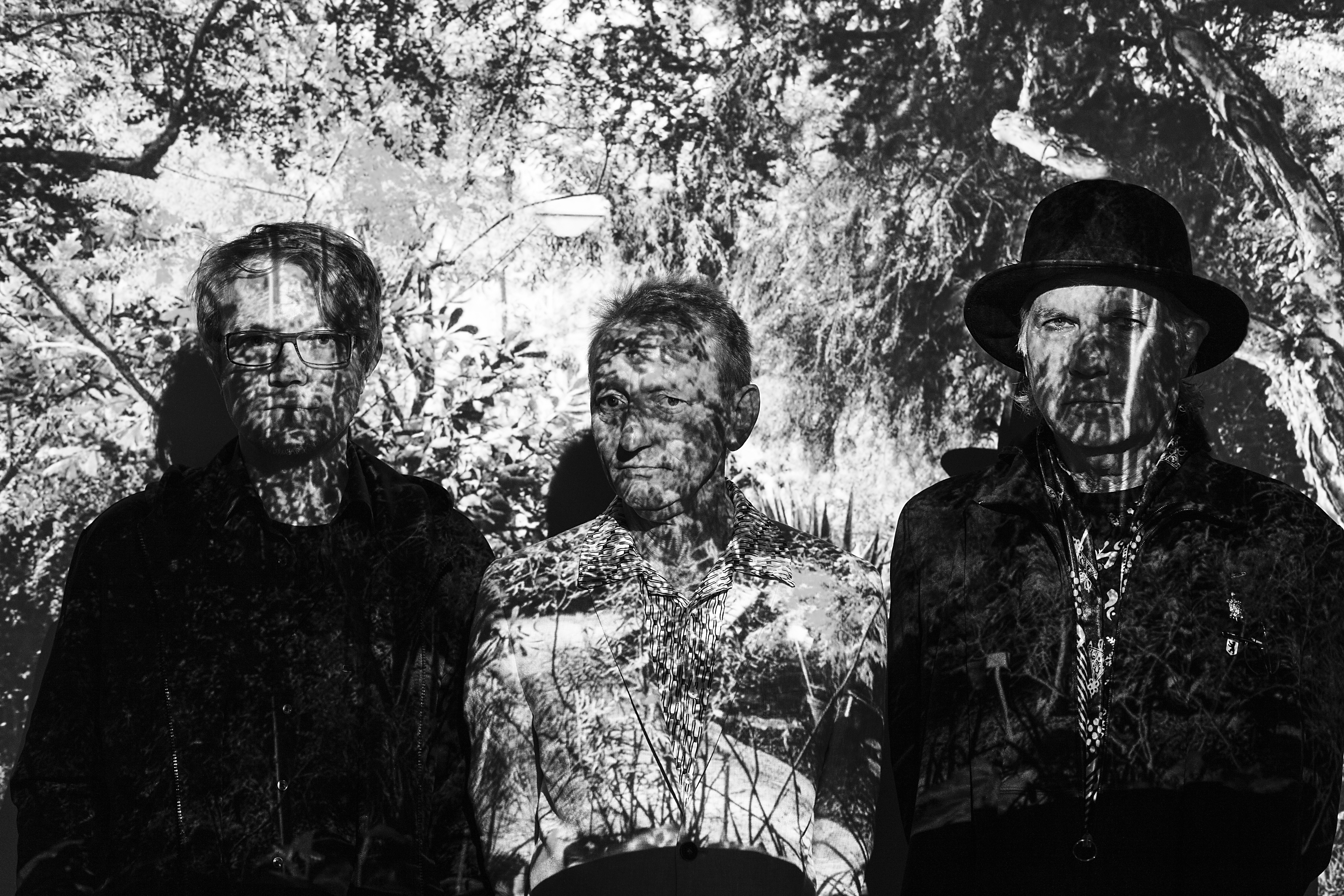
DJ AMIR PRESENTS BUENA MUSICA Y CULTURA-VINYL EDITION.
DJ AMIR PRESENTS BUENA MUSICA Y CULTURA-VINYL EDITION.
As BBE continue to celebrate their twentieth anniversary, they’ve been welcoming back some of old friends from the label’s past. This includes DJ, crate digger and compiler DJ Amir. His association with BBE began in 2007, when as one half of Kon and Amir, he released the first of three compilations on BBE.
The first was Off Track Volume One: The Bronx in 2007. It was a double album, which featured a truly eclectic selection of music. Each DJ’s selection featured on one of the discs. They then mixed their selection of tracks. This was perfect showcase for DJ Amir’s skills as a DJ. When Off Track Volume One: The Bronx in 2007 was released, it was a successful compilation, and two further volumes followed.
A year later in 2008, Off Track Volume Two: Queens was released. Just like its predecessor, itfeatured a suitably eclectic selection of songs that was meant to represent the musical melting pot that’s the borough of Queens. It was a convincing musical representation. So was the third and final volume in the series, Off Track Volume III: Brooklyn. It was released in 2010, and since then, there’s been no further instalments in this much missed series. Since then, DJ Amir has been kept busy.
Many record companies and DJs have been keep to tap into DJ Amir’s almost knowledge of dance music and hip hop. This includes Capitol Records, Shady Records and Pete Rock. However, much of DJ Amir’s time is spent DJ-ing and crate digging.
Just like most DJs, DJ Amir is always on the lookout for that elusive slice of uber rare vinyl. Many of these songs have provided inspiration for the various compilations DJ Amir has curated. This includes his latest compilation, which sees DJ Amir return to the BBE fold.
DJ Amir will make a welcome return to BBE on the 16th of September 2106, when his latest compilation DJ Amir Presents Buena Música Y Cultura will be released. It’s available on vinyl as a double album, CD or as a digital download. Unsurprisingly, given the title, there’s a distinctively Latin flavour to DJ Amir Presents Buena Música Y Culture. It features fourteen tracks from the sixties and seventies. The majority of these tracks will be unfamiliar to most record buyers.
Rather than choose familiar tracks for DJ Amir Presents Buena Música Y Cultura, the Boston based DJ has dug that little bit deeper and discovered obscurities, hidden gems and even a couple of unreleased tracks from Fito Foster. They’re a welcome discovery and addition to DJ Amir Presents Buena Música Y Cultura.
Most of these tracks on DJ Amir Presents Buena Música Y Cultura were recorded in New York. That’s despite many of the artists being from the Dominican Republic and Detroit. Some had settled in the Big Apple, while others were just passing through. Some of these artists went on to become big names with the Latin communities in New York.
This includes Joey Pastrana and Louie Colon, who were regarded as superstars within the environs of the Bronx and East Harlem. For the Latin communities living in the two borough’s brownstone’s this was their music, and the music they lived, loved and danced to.
For many who remember the heyday of Joey Pastrana and His New Orchestra and Louie Colon and His Combo, then DJ Amir Presents Buena Música Y Cultura would be guaranteed to bring back memories. They would revel in what’s a truly eclectic compilation.
Among the other names on DJ Amir Presents Buena Música Y Cultura, are Wayne Gorbea Y Su Conjunto Salsa, Chino Y Su Conjunto Melao Featuring Everybody, Dax Pacem Orchestra, Johnny Sedes and His Orchestra and Mike Hernandez Y Su Sonora Casino. These artists take the listener on a journey through Latin music. Having said that, two styles of music, Salsa and Guaguancó play a leading role on DJ Amir Presents Buena Música Y Cultura.
Side A.
Two unreleased tracks from Fito Foster, Salsa Pt. 1 and Salsa Pt. 2 DJ Amir Presents Buena Música Y Cultura. Both tracks were written by Fito Foster, and are a tantalising taste of an artist that very few people will have heard of. That’s until now. These two irresistible slices of salsa New York style, are guaranteed to get the party started.
Joey Pastrana And His Orchestra’s recording career began in 1967, and lasted until the late seventies. During this period, Joey Pastrana And His Orchestra released nine albums. This included their fifth album A Comer, which was released on Parnosa label in 1972. Opening an album which veered between salsa, bolero and cha cha, was El Pulpo. It’s a dramatic and horn heavy salsa, where piano and percussion play leading role. Together, they’re responsible for a memorable reminder why Joey Pastrana And His Orchestra were one of the so popular in New York during the late-sixties and early seventies.
Side B.
Louie Colon Y Su Combo released a couple of albums during the seventies, including their eponymous sophomore album. It was released on the Delta label and saw Louie Colon Y Su Combo switching between various genres of Latin music. When it came to Tembleque, which was released as a single, the music headed in the direction of salsa. Quite simply, Tembleque is a joyous call to dance, that’s truly irresistible.
In 1970, The Orchestra Soledad released what was their one and only album Vamonos/ Let’s Go! It was released on Futuro Records. Opening the album was the Hector Ramos and William Corridor composition El Ritmo Soleda. It’s funky, soulful and dance-floor friendly, as elements of Latin and Cuban music are combined by The Orchestra Soledad, They create an urgent, mesmeric and memorable genre-melting track.
Back in 1972, the Orquesta La Moderna De New York released what was their eponymous debut album. It was released on the Amaral label, which only released two albums. This included Orquesta La Moderna’s debut. Their star was in the ascendancy, and the Orquesta La Moderna De New York were seen as one of the leading lights of New York’s Latin scene. Alas, when the album was released, it only found an audience within the Latin music scene. As a result, there was no followup to what was a hugely underrated album. One of its highlights was Picadillo.
Straight away, it’s apparent something special is unfolding on Picadillo. Soon, the multitalented Orquesta La Moderna De New York are showcasing their considerable skills. Elements of funk and jazz are combined on another joyous and sometimes hypnotic slice of salsa. Picadillo is without doubt, one of the highlights of the compilation It’s also a reminder of Orquesta La Moderna De New York, who sadly. never fulfilled their potential. However, even forty-four years after the release of their only album, their remembered fondly in New York’s Latin music scene.
Johnny Sedes was born in Venezuela 1937. That was where he served his musical apprenticeship. By 1969, the thirty-two year old was leading his own Orchestra in New York, Johnny Sedes And His Orchestra. That same year, 1969, Johnny Sedes And His Orchestra released their debut album Mama Calunga. It was released on the Fonseca Record, and allowed Johnny Sedes And His Orchestra to showcase his versatility and skill. They switched between descarga, mambo and salsa. One of the songs that stood head and shoulders above the rest was Mama Calunga.
Here was a song that had been inspired by the great Venezuelan orchestras that Johnny Sedes heard growing up. This had inspired the young bandleader, to forge a career in music. He played saxophone in his Orchestra, which delivers a musical masterclass on Mama Calunga, which is a reminder of everything that’s good about Latin music.
Side C.
Another versatile orchestra were Joey Aponte and His Orchestra. They showcased their musical versatility on two albums they released during the seventies. Joey Aponte And His Orchestra’s debut album was Vamos A Gozar. It was released on All-Art Records, and featured Vete De Aqui. It’s another Salsa, that’s regarded as one of the finest moments in the career of Joey Aponte and His Orchestra.
Mike Hernandez Y Su Sonora Casino’s back-catalogue amounts to just a couple of albums and singles. This includes the 1972 album Dime Tu and its followup La Sonora Casino De Mike Hernandez. One track that doesn’t feature on either album, is Asi-asi Desarga. It was released as single on Fonseca Records. This Descarga single is something of a rarity. Copies are few and far between. So the addition of Asi-asi Desarga to DJ Amir Presents Buena Música Y Cultura is to be welcomed. This is the opportunity to hear an obscure hidden gem that thankfully, has been unearthed by DJ Amir.
Ritmos Y Cantos Callejeros was released in 1970 by Cortijo Y Kako Y Sus Tambores. This was no ordinary collaboration. Instead, it was collaboration between two of Puerto Rica’s finest musicians, percussionist Cortijo, and timbale player, band leader and composer Kako Y Sus Tambores. The album was released on the Ansonia label and featured Yo No Bailo Con Juana. It also featured on the B-Side to the single Chiviriquiton. However, Yo No Bailo Con Juana a coloration between two of the Puerto Rica’s finest and most talented musicians, deserved better than that. It’s glorious and irresistible example of Plena, a musical genre unique to Puerto Rica.
Dax Pacem Orchestra feature twice on DJ Amir Presents Buena Música Y Cultura. Both tracks are taken from the album Amaral Records Presents. It’s an album of salsa, which was the Dax Pacem Orchestra speciality. One of the highlights of Amaral Records Presents was Bomba which closes Side C of DJ Amir Presents Buena Música Y Cultura on a high.
Side D.
Then the Dax Pacem Orchestra pickup where they left on Side C, with an vainglorious salsa, Oiga El Comentario. It’s another tantalising taste of what the Dax Pacem Orchestra were capable of. Alas, they never found mainstream success, and today, are only appreciated by a small group of musical connoisseurs.
By 1978, Wayne Gorbea Y Su Conjunto Salsa were ready to released their third album, La Salsa Y Charanga Con Wayne Gorbea Y Su Conjunto Salsa. It was released on the Disco International label. The album had a slick, polished and soulful sound where salsa was to the fore. One of the album’s highlights was Paranoia, which was penned by flugelhorn player Adnaldo Rivera. This soulful salsa was his only contribution on the album. Given how good a track this salsa was, Adnaldo Rivera it seemed, was concentrating on quality not quantity.
Closing DJ Amir Presents Buena Música Y Cultura was Rogelio Tiene La Salsa a song from Chino Y Su Conjunto Melao’s third album En Mi Casa Latina. It was released on Latina Records in 1979 and proved to be Chino Y Su Conjunto Melao’s swan-song.Their recording career lasted four years and produced three albums. Rogelio Tiene La Salsa, which closes DJ Amir Presents Buena Música Y Cultura, finds DJ Amir keeping the best until last on the vinyl edition.
After an absence of six years, Boston based DJ Amir returns to the BBE fold with a new and lovingly curated compilation DJ Amir Presents Buena Música Y Cultura. It will be released by BBE on the 26th September 2016. There’s three versions available, the vinyl album which is a double album, the CD version and digital download. They’re the perfect introduction into the world of Latin rarities.
The majority of tracks on DJ Amir Presents Buena Música Y Cultura will be unfamiliar to most people. DJ Amir has eschewed the familiar for rarities, obscurities, unreleased tracks and hidden gems. He’s struck vinyl gold, several times on a compilation where Salsa and Guaguancó is to the fore. There’s even Plena and Descarga on DJ Amir Presents Buena Música Y Cultura. It’s a compilation where the quality never drops, and is a reminder that the sixties and seventies was something of a golden era for Latin music.
Some of the music on DJ Amir Presents Buena Música Y Cultura is funky, while others is jazz-tinged and soulful. Always, the music on DJ Amir Presents Buena Música Y Cultura is dance-floor friendly, and is guaranteed to get any party started.
DJ AMIR PRESENTS BUENA MUSICA Y CULTURA-VINYL EDITION.

SANDY DENNY-5 CLASSIC ALBUMS.
SANDY DENNY-5 CLASSIC ALBUMS.
Sandy Denny was one of the finest British folk singers of her generation. There is no doubt about that. Sadly, her career was cut tragically short, on the 21st of April 1978, when Sandy Denny died aged just thirty-one. That day, music lost a hugely talented singer and songwriter.
Music was in mourning at the loss of Sandy Denny. She had achieved so much, in a short space of time. This included a brief spell with The Strawbs, before becoming the lead singer of Fairport Convention. However, Sandy left Fairport Convention in December 1969 to hone her songwriting skills. That was the plan.
Not long after her departure from Fairport Convention, Sandy decided to form a new band, Fotheringay. So in the early 1970, Sandy began putting together a new band. One of the first musicians she brought onboard was guitarist Trveor Lucas.
He had been born in Australia, but was now based in Britain. Trevor was now a familiar face in the British folk scene. Previously, Trevor was a member of Eclection. That’s when Trevor met Sandy Denny. The pair started dating in May 1969, and eventually, married in 1973. However, Trevor’s career began back in Australia, in the early sixties.
Back then, Trevor Lucas was a solo artist. He released his debut solo album See That My Grave Is Kept Clean in 1964. Then on New Year’s Eve Trevor boarded a ship and made the journey from Australia to Britain. That’s when he became a member of Eclection, and met drummer Gerry Conway.
Eclection were a folk-rock band, who were formed in 1967, and broke up two years later in 1969. However, by then, Trevor Lucas and Gerry Conway were firm friends. They renewed their musical partnership in Fotheringay.
Gradually, Sandy’s new band was taking shape. The final pieces in the musical jigsaw were two former members of The Poet and The One Man Band. Guitarist Jerry Donahue had moved from Manhattan to Britain, where he quickly became stalwart of the folk scene. This wasn’t surprising. Jerry’s father was big band saxophonist Sam Donohue. However, Jerry wasn’t inspired by his father. Instead, Gerry McGee, Earl Scruggs, Chet Atkins and Duane Eddy inspired Jerry, who in 1970, joined Fotheringay with Edinburgh born bassist Pat Donaldson.
By 1970, Pat Donaldson was a familiar face in the London music scene. He had moved to London in the early sixties. Since then, he had been a member of Bob Xavier and the Jury, Zoot Money’s Big Roll Band and the reformed Dantalian’s Chariot. Fotheringay was just the latest group the twenty-seven year old bassist work with.
With the lineup of her new band finalised, all Sandy Denny needed was a name for the band. She decided on Fotheringay, after Fotheringay Castle where Mary Queen Of Scots was imprisoned. With its lineup complete and a name in place, Sandy Denny’s new band could begin work on their debut album.
Fotheringay.
Sandy Denny didn’t waste any time recording Fotheringay’s debut album. She wrote four tracks and cowrote Peace in the End with Trevor Lucas. He also penned The Ballad of Ned Kelly. Other tracks included covers of Gordon Lightfoot’s The Way I Feel, Bob Dylan’s Too Much Of Nothing and Banks of the Nile. These ten tracks were recorded between February and April, 1970 at Sound Techniques, in London with Joe Boyd producing what became Fotheringay.
Once Fotheringay was completed, the album was released in June 1970. It was one of the most eagerly awaited albums of the year. Critics and record buyers eagerly anticipated the release of Fotheringay.
They weren’t disappointed. Critics hailed the album a masterful debut. Sandy Denny was back, and better than ever. Her enchanting, ethereal vocal was complimented by a tight, talented band. They won not just the critics, but record buyers.
Fotheringay sold well upon its release in June 1970, and reached number eighteen in Britain. Good as this was, it wasn’t good enough for Island Records. Their expectations and Fotheringay’s differed. Island Records hoped the album would be one of the label’s biggest selling albums. That wasn’t the case. This resulted in Island Records’ pressurising Sandy to embark upon a solo career.
Sandy Denny dug her heels in. She was determined to continue with Fotheringay. So work began on what was meant to be Fotheringay’s sophomore album.

Fotheringay 2.
A total of eleven tracks were meant to feature on Fotheringay’s sophomore album. This time, Sandy Denny only wrote two songs. Trevor Lucas and Pete Roach penned Knights of the Road and Restless.Among the other tracks were traditional songs, a cover of Bob Dylan’s I Don’t Believe You and the Dave Cousins’ composition Two Weeks Last Summer. These eleven tracks were recorded by an expanded lineup of Fotheringay.
Joining the usual lineup of Fotheringay was Linda Thompson. She was going to add backing vocals when the sessions began in November 1970. The sessions continued into December 1970. Everyone thought that things were going to plan. Sadly, that wasn’t the case.
In January 1971, it was announced that Fotheringay were no more. The band split-up and what would eventually become Fotheringay 2 was shelved. It wasn’t released until 2008. With Fortheringay now consigned to musical history, Sandy Denny embarked upon a solo career.
Sandy Denny signed to Island records, and went on to release four studio albums, The North Star Grassman and The Ravens, Sandy, Like An Old Fashioned Waltz and Rendezvous. They feature on 5 Classic Albums. Completing this box set, is Gold Dust Live At The Royalty (The Final Concert). 5 Classic Albums, which was released by UMC, documents Sandy Denny’s solo career. It began in 1971 with The North Star Grassman and The Ravens.
The North Star Grassman and The Ravens.
After Fotheringay split-up, Island Records were keen for the latest signing to enter the studio. Sandy Denny, Island Records believed, could become one of the company’s biggest selling artists. So Sandy entered the studios in March 1971.
By then, Sandy Denny was maturing as a songwriter. That was what she set out to do, when she left Fairport Convention. For The North Star Grassman and The Ravens, Sandy wrote eight of the eleven songs, including Late November and John The Gun which had been recorded for the Fortheringay 2 sessions. Among Sandy’s other compositions, were The Sea Captain, The Optimist, Next Time Around, Wretched Wilbur, The North Star Grassman and The Ravens and Crazy Lady Blues. They joined a rework of the traditional song Blackwaterside, Bob Dylan’s Down In The Flood and Charles Robins’ Let’s Jump The Broomstick. These songs were recorded over a three month period, with some familiar faces.
The recording sessions began in March 1971, at Sound Techniques, with Sandy Denny, John Wood and Fairport Convention’s Richard Thompson tanking charge of production. Just two songs were recorded there Blackwaterside and Let’s Jump The Broomstick. Then things were moved in-house and the rest of the sessions took place at Island Studios, in London.
At Island Studios, Sandy was accompanied on some of the tracks, by the rest of Fotheringay. Other musicians were drafted in when needed. This included Buddy Emmons on pedal steel guitar; drummer Roger Powell; bassist Tony Reeves; violinist Barry Dransfield and Ian Whiteman on piano and flute organ. Royston Wood and Robin Dransfield added backing vocals on John The Gun. Richard Thompson played accordion, bass, electric and acoustic guitar. His vocal featured on Down In The Flood. Harry Robertson arranged the strings on Next Time Around and Wretched Wilbur. By May 1971, The North Star Grassman and The Ravens was complete. It would be released four months later.
Before the release of The North Star Grassman and The Ravens, critics had their say on Sandy Denny’s debut solo album. With its mixture of Sandy Denny compositions, and cover versions, it was a truly captivating album. Sandy’s vocals were compelling, as she breathed meaning and emotion into lyrics. Among the highlights were John The Gun, Late November, the wonderfully wistful Next Time Around and The North Star Grassman and The Ravens. That’s not forgetting Down In The Flood, where the interplay between Richard Thompson’s guitar and Sandy’s vocal is masterful. The only song some critics felt let the album down slightly, was Let’s Jump The Broomstick and Down In The Flood. Still, though, The North Star Grassman and The Ravens was a hailed a musical masterpiece and minor folk rock classic. Sandy Denny it seemed, could do no wrong.
When The North Star Grassman and The Ravens was released in September 1971, the album didn’t sell in the huge quantities that Island Records had hoped. They seemed to envisage Sandy Denny enjoying the commercial success that Joni Mitchell was enjoying. That wasn’t to be. However, Sandy Denny enjoyed the same critical acclaim that her American counterpart was enjoying.

Sandy.
There was no rest for Sandy Denny, after she returned from a tour to promote the release of her debut album, The North Star Grassman and The Ravens. Two weeks later, in November 1971, Sandy began recording his sophomore album Sandy at Sound Techniques and Island Studios.
Sandy had been busy, and written eight new songs. This included It’ll Take a Long Time, Sweet Rosemary, For Nobody to Hear, Listen, Listen, The Lady, Bushes and Briars, It Suits Me Well and The Music Weaver. These songs joined covers of Bob Dylan’s Tomorrow Is A Long Time, and the traditional song The Quiet Joys Of Brotherhood, which Richard Fariña had written lyrics for. These songs were recorded by a familiar faces and new names.
The first change was that Trveor Lucas had been hired to produce Sandy. John Wood who had played such an important part in the sound and success of The North Star Grassman and The Ravens was relegated to engineer. Similarly, Richard Thompson’s only part in Sandy was playing on five songs. However, one thing hadn’t changed, where the studios that were used.
Just like with Sandy Denny’s debut album, recording took place at Sound Techniques and Island Studios. The first sessions took place in November 1971 Sandy was joined by British folk royalty, including Fotheringay bassist Pat Donaldson. He was joined by four members of Fairport Convention, Richard Thompson on mandolin, acoustic and electric guitar, vocalist Linda Thomson, violinist Dave Swarbrick and Trevor Lucas on acoustic guitar. They were joined by some new names.
This included The Flying Burrito Brothers’ pedal steel player Sneaky Pete Kleinow. He was joined by organist and pianist John Bundrick. Both men played on It’ll Take A Long Time and Tomorrow Is A Long Time. The final member of Sandy’s band was John Kirkpatrick who played concertina on It Suits Me Well. Now the recording could get underway.
With her all-star band for company, Sandy recorded the ten songs over five sessions help during November 1971 and then in April and May 1972. Once the ten songs were recorded, the strings and horns were added.
Harry Robertson was brought in to arrange the strings on Listen, Listen, The Lady and The Music Weave. One change was the addition of on one of the tracks on Sandy. So, Allen Toussaint was drafted in to arrange the horns on For Nobody to Hear. Rather than travel to Britain, Allen Toussaint recorded the horn section at the Deep South Studio in Baton Rouge, Louisiana. Once the strings and horns were added, and Sandy was mixed and mastered, the album was ready for release.
Before that, critics received their advance copy of Sandy. The promotion of Trevor Lucas to the position of producer had paid off. He managed to combine the two sides of Sandy Denny’s music. This was the traditional folk sound, and the more modern folk rock sound. Part of this was in the choice of instruments. Traditional instruments like a mandolin and acoustic guitar harked back to folk music’s past; while the pedal steel and Hammond organ were its future. However, key to the success of Sandy were Sandy’s skills as a singer and songwriter.
Some of Sandy’s finest moments were on Listen, Listen, where strings and a mandolin accompany her vocals, and on The Lady, where Sandy delivers a heartfelt vocal. Then on Quiet Joys Of Brotherhood, the lushest of strings provide the perfect backdrop for Sandy. It was a similar case with the horns on For Nobody to Hear. Bob Dylan’s oft-covered Tomorrow Is A Long Time takes on new meaning thanks on Sandy. Critics were calling Sandy a minor classic. Surely the album would bring commercial success Sandy Denny’s way?
Sadly, it wasn’t to be. When Sandy was released in September 1972, history repeated itself. Sandy was the commercial success that Island Records were hoping for. Again, Sandy Denny had failed to find mainstream success. It was a huge disappointment for Sandy, and it would nearly two years before she returned with her third album Like An Old Fashioned Waltz.
Like An Old Fashioned Waltz.
After returning from a tour where she was promoting her sophomore album Sandy, Island Records wanted Sandy Denny to head back into the studio. The recording then touring schedule was relentless. However, the tour gave Sandy time to think.
She decided that she wanted to make her impression musically. Sandy Denny had been rubbing shoulders with two Britain’s biggest musical exports, Led Zeppelin and The Who. She had performed with both bands, and seeing how the other half lived, decided that she wanted to enjoy a taste of the commercial success both bands were enjoying. This was music to executives at Island Records’ ears. However, Sandy was disappointed by the commercial failure of her first two albums. It seemed folk rock wasn’t going to make Sandy rich. So Sandy had decided to broaden her appeal.
In her heart of hearts, Sandy Denny knew her music had to change if it was to appeal to a much wider audience. So for her third album Like An Old Fashioned Waltz, Sandy decided to make some changes. Elements of pop and jazz would join her usual folk rock sound on her next album, Like An Old Fashioned Waltz. Despite deciding to change direction musically, Sandy decided to stick with Trevor Lucas who had produced Sandy.
It would’ve been awkward if Sandy Denny decided to change producer, as Trevor Lucas and Sandy were married during 1973. The only change Sandy made, was to bring John Wood back as co-producer. They would co-produce Like An Old Fashioned Waltz in London and Los Angeles.
For Like An Old Fashioned Waltz, Sandy Denny had written eight new sings. The only cover versions were Doris and Fred Fisher’s Whispering Grass and Until The Real Thing Comes Along Sammy Cahn, Saul Chaplin and L.E. Freeman. Sandy remembered them from her father’s record collection, and gave them a jazzy makeover. These songs were recorded in Sound Techniques and A&M Studios, Los Angeles, between May and August 1973. Again, the great and good folk were present. Sandy Denny was joined by former Fotheringay bassist Pat Donaldson, and six
members of her former group Fairport Convention. This included Richard Thompson on mandolin, acoustic and electric guitar, guitarist Jerry Donahue, bassist Dave Pegg, drummer Dave Mattacks, violinist Dave Swarbrick and Trevor Lucas on acoustic guitar. They were joined by some old faces and new names.
The old face was John Bundrick, who played on Sandy. This time around, he played organ, piano and clavinet. New names included bassist Danny Thompson, who had previously worked with Nick Drake and John Martyn. Joining Danny Thompson was drummer Gerry Conway and saxophonist Alan Skidmore. Sandy’s band was shaping up nicely. Other new names included Diz Disley on acoustic guitar; organist Jean Roussel and pianist Ian Armit. They were part of a band that spent three months recording Like An Old Fashioned Waltz in L.A. and London. The album was completed in August 1973. This meant that Like An Old Fashioned Waltz would be released in late 1973. Or it should have been.
That was if Sandy Denny hadn’t dropped a bombshell. She was rejoining Fairport Convention. From Autumn 1973 to June 1974, Sandy toured with Fairport Convention. Eventually, Island Records scheduled the release of An Old Fashioned Waltz for June 1974.
When critics heard An Old Fashioned Waltz, they were struck by what was a very personal album. Many of the songs dealt with things that preoccupied and worried Sandy Denny. This included everything from loss and loneliness, the changing of the season, a fear of the dark and ironically, the passing of time. Like An Old Fashioned Waltz was a very different album from her two previous albums. Jazz and pop stylings featured on an album where the lushest of strings joined a subtle piano in creating a ruminative and wistful album. Highlights included the album opener Solo, Friends, Dark The Night, At the End Of The Day and No End, which gave some insight into who Sandy Denny was as a person. However, Like An Old Fashioned Waltz divided the opinion of critics.
While some reviews were positive, the usual suspects like self-styled Dean of American Rock Critics wasn’t impressed. In his Village Voice review he called Like An Old Fashioned Waltz a “slugging album.” Other critics took a more favourable view of Like An Old Fashioned Waltz. Some felt this was the album that would change Sandy Denny’s fortunes.
It wasn’t to be. When Like An Old Fashioned Waltz was released in June 1974, commercial success eluded the album. Whispering Grass was chosen as the lead single, and was released in 1973. This was a strange choice, as it wasn’t one of the stronger songs on the album. Unsurprisingly, it failed to catch the attention of record buyers. Worse was to come when the release of Like an Old Fashioned Waltz as a single was cancelled. For Sandy Denny, her dreams of becoming one of the biggest names in music had come to nothing. So, Sandy rejoined Fairport Convention for the third and final time.

Sandy embarked upon a world tour with Fairport Convention. Trevor Lucas, Sandy’s husband had also rejoined Fairport Convention. For the time being, her solo career was on hold. Then as 1975 drew to a close, Sandy’s thoughts turned to her solo career, and her fourth album Rendezvous.
Rendezvous.
As 1975 gave way to 1976, Sandy began writing Rendezvous. She penned Gold Dust, Take Me Away, One Way Donkey Ride, I’m A Dreamer, All Our Days and No More Sad Refrains. The other three songs on Rendezvous were cover versions. This included Richard Thompson’s I Wish I Was a Fool For You (For Shame of Doing Wrong); Elton John and Bernie Taupin’s Candle In The Wind and Jack Rhodes and Dick Reynolds’ Silver Threads and Golden Needles. Recording of these songs began in April 1976.
By then, Sandy Denny and Trevor Lucas had decided to try one more time, to move Sandy’s music towards the mainstream. This would mean Rendezvous would feature a contemporary rock sound. Rendezvous was recorded between April and June 1976 at Island Studios Basing Street and Hammersmith; CBS Studios in London; Strawberry Studios in Stockport and Sound Techniques in Chelsea, London. Accompanying Sandy was a band the featured over thirty musicians and backing vocalists.
This included Sandy Denny’s former colleagues in Fairport Convention, guitarist Jerry Donahue and Richard Thompson, bassist Dave Pegg, drummer Dave Mattacks and Trevor Lucas on acoustic guitar. They were joined reggae guitarist Junior Murvin, John Bundrick on synths and piano; Steve Winwood on organ, piano and clarinet and former Fotheringay bassist Pat Donaldson. Adding backing vocals were Benny Gallagher and Graham Lyle; Kay Garner and Clare Torry; Sue Glover and Sunny Leslie. Even The Silver Band made a guest appearance on Silver Threads and Golden Needles. Much of Rendezvous had been recorded between 23rd of April and 7th of June 1976 at Basing Street and Island Studios.
When the everyone arrived at the studio, Harry Robertson had arranged the strings on Candle In The Wind, I’m a Dreamer and All Our Days. Steve Gregory had arranged the horns on Take Me Away. Even The Silver Band’s appearance on Silver Threads and Golden Needles required the Robert Kirby to be brought onboard. John Wood again, returned to the role of engineer as Trevor Lucas produced Rendezvous. Now the sessions began. Straight away, there was a problem.
During these sessions, Sandy Denny’s voice no longer had neither the same purity nor ethereal quality. During the Fairport Convention tour, she had been drinking and smoking heavily. Eventually, this took its toll. However, still Sandy could still unleash a powerful vocal whilst always in control, and could breath life, meaning and emotion into lyrics. Sandy was still a great singer and storyteller. She recorded her parts, and took her leave. Little did Sandy know she would never enter a studio again.
Despite Sandy Denny having recorded her vocals, Rendezvous was still not complete. Another session took place between the 9th and 18th of June 1976. By then,Trveor Lucas was at the overdubbing stage. He added layers of string, and also overdubbed layer after layer of backing vocals and instruments. This would prove controversial.
With the album completed in July 1976, the original album title was Gold Dust. The release date was scheduled for October 1976. However, the release date kept being postponed. When the album was eventually released in May 1977, the album was called Rendezvous. It was an album that didn’t win over critics.
Many critics felt Rendezvous had been overproduced. This was a result of Trevor Lucas overdubbing of layers of strings, backing vocals and instruments. There were too many strings, backing vocalist and the lead guitars threatened to overpower Sandy’s vocals. That was a great shame, given the quality of Sandy’s songwriting, and vocals. If Trevor Lucas had taken a less is more approach, Rendezvous would’ve been a much better album. However, it was not without some fine moments.
Among them, where Gold Dust took on a Caribbean influence. Take Me Away and I’m A Dreamer became soulful torch songs. All Our Days was a seven minute pastoral epic, which seemed to draw inspiration from Vaughan Williams. I’m A Dreamer, All Our Days and No More Sad Refrains all showcased Sandy Denny’s talents as a singer and songwriter. However, when Rendezvous was released in May 1977, it was to mixed reviews.
When Rendezvous was belatedly released, the album passed record buyers by. It became Sandy Denny’s least successful album. The dream was almost over.

Gold Dust.
Not long after the release of Rendezvous, Island Records quietly dropped Sandy Denny. Despite being without a record label, she went ahead with plans to record a live album, Gold Dust.
After the release of Rendezvous, Sandy Denny headed out on tour to promote the album. The last date on the tour was at the Royalty Theatre in London on 27th November 1977. That night the tapes rolled.
Sandy Denny accompanied by her band, worked their way through the seventeen songs. Closing the set was a spine-tingling version of one of Sandy’s best songs Who Knows Where the Time Goes? That proved to a poignant way to end what was Sandy’s last public performance was on Gold Dust, which was released until 1998. It features on 5 Classic Albums, which was recently released by UMC and documents Sandy Denny’s solo career.

After Rendezvous failed commercially, Island Records dropped Sandy. She was already drinking heavily, smoking and snorting cocaine. Her behaviour became erratic. Sandy was also suffering from severe headaches. So a doctor prescribed a distalgesic. However, Sandy continued to drink. Whether this played a part in a fall she had in late March 1978 is unknown. What we know, is that tragedy struck on 17th April 1978.
That night, Sandy Denny was admitted to the Atkinson Morley Hospital in Wimbledon. She fell into a coma, and four days later, on 21st April 1978, Sandy Denny died. The cause of Sandy’s death was a brain haemorrhage and blunt force trauma. It’s likely that when Sandy Denny fell, this played a contributory factor in her death. Tragically, Sandy Denny was only thirty-one. That day, British folk music lost its greatest ever folk singer, Sandy Denny,
SANDY DENNY-5 CLASSIC ALBUMS.

RAY PRICE-ANOTHER BRIDGE TO BURN, TOUCH MY HEART, DANNY BOY AND TAKE ME AS I AM.
RAY PRICE-ANOTHER BRIDGE TO BURN, TOUCH MY HEART, DANNY BOY AND TAKE ME AS I AM.
It was never Ray Price’s intention to become a country singer. If his mother and step-father had their way, Ray Price would’ve followed in their footsteps and become a fashion designer. However, the world of couture didn’t appeal to Ray Price. Instead, he decided to head to college, to study to become a veterinary surgeon. Alas, Ray’s plans didn’t come to fruition.
Eighteen year old Ray Price was drafted in 1944, and served in the United States Marine Corp in the Pacific Theatre. After the end of World War II, Ray returned to college to finish his studies. There was a problem though.
Ray was only of slight build, and people wondered if he was really suited to the life of a vet in the Lone Star State? Much of their time was spent dealing with horses and cattle. Given his slight build, could Ray Price cope with this? This resulted in Ray Price having to rethink his career options.
So Ray Price headed back to his father’s ranch in Wood County. That was where Ray was born on January 12th 1926. Sadly, his parents divorced when he was three, and for the rest of his childhood, Ray divided his time between his father’s ranch, and his mother and step-father’s home.
By the time Ray Price was a teenager, he had discovered the guitar, and had learnt to play it. This would serve him well when he left veterinarian college, and was considering his future. Ray began singing at various functions in Abilene, in west-central Texas. Eventually, this lead to Ray to singing on the Hillbilly Circus broadcast on Abilene’s KRBC radio station. Little did Ray Price realise, that this would lead to him becoming one of the biggest names in country music. His wide ranging baritone voice features 116 singles and fifty-one albums. This includes Another Bridge To Burn, Touch My Heart, Danny Boy and Take Me As I Am, which were released between July 1966 and March 1968. These four albums have been reissued and remastered as a two disc set by BGO Records. However, in 1946 Ray Price was just making his way in the world of country music.
Three years after making his debut on Abilene’s KRBC radio station, Ray Price joined the Big D Jamboree in 1949. It aired on the Dallas radio station KRLD-AM. Ray was going up in the world. Not long after joining the Big D Jamboree, CBS began to broadcast the show nationwide. For the first time, Ray Price was being heard by a national audience. It was also around this time that Ray met Lefty Frizzell.
The two singers first met at the Beck Recording Studio, in Dallas. Ray Price was at the Studio to record some demos. However, he also ended up penning Give Me More, More, More Of Your Kisses for Lefty Frizzell. While the song didn’t give Lefty Frizzell a hit single, Ray’s demos caught the attention of Bullet Records, in Nashville.
Soon, Ray Price was signed to Bullet Records, and sent into the studio to cut his debut single, Jealous Lies. When Jealous Lies was released in 1950, it wasn’t a commercial success. Despite this, Ray decided to move to the home of country music, Nashville.
Having made the decision to move to Nashville, Lady Luck was smiling on Ray Price. When he arrived in Nashville, he ended up sharing a room with country music legend, Hank Williams. He became Ray’s mentor.
This was despite Hank Williams being just three years Ray Price’s senior. By then, Hank Williams had over a dozen top ten country singles, including three number ones. Ray couldn’t have asked for a better teacher, and was a willing pupil. Although their time together was brief, Ray Price learnt a lot from Hank Williams, and was better prepared to make his way in the world of country music.
By 1952, Ray Price was signed to Columbia Records, and released Talk to Your Heart as a single. It reached number three in the US Country charts. The followup, Don’t Let the Stars Get In Your Eyes the reached number four later in 1952. This was the last hit single Ray enjoyed for two years.
1953 didn’t start well for Ray Price. On the 1st of January, Hank Williams was found dead. He was only twenty-nine. It was a huge blow for his friends, which included Ray Price. After Hank Williams’ death, Ray Price managed his old friend’s band, The Drifting Cowboys. During this period, the band enjoyed some success. However, this wasn’t the only band Ray Price worked with during 1953.
In 1953, Ray Price formed his own band The Cherokee Cowboys. Its lineup would change over the years, and during the late fifties and early sixties, included Willie Nelson, Roger Miller, Buddy Emmons, Johnny Bush, Van Howard, Darrell McCall and Johnny Paycheck. By then, Ray Price would be one of the biggest names in country music.
It wasn’t until 1954 that Ray Price returned to the US Country charts. I’ll Be There (If You Ever Want Me). It reached number two, and was the biggest single of Ray’s career. For the followup, I’m Much too Young to Die was released later in 1954, but stalled at number thirteen in the US Country charts. However, it was another two years before Ray enjoyed another hit single.
1956 was a big year for Ray Price. Run Boy reached number five in the US Country charts. Then Ray’s cover of Crazy Arms gave Ray his first number one in the US Country charts. The followup, I’ve Got A New Heartache stopped just short of the top spot, reaching number two in the US Country charts. By then, Ray Price was well on the way to becoming one of the biggest names in country music.
In 1957, the success kept on coming for Ray Price. I’ll Be There (When You Get Lonely) reached number twelve in the US Country charts. Then My Shoes Keep Walking Back To You gave Ray his second number one in the US Country charts. This was the perfect time for Ray to release his debut album.
This was Ray Price Sings Heart Songs. It featured a selection of cover versions, including two penned by his late friend Hank Williams. When the album was released in July 1957, it failed to chart. This was a huge blow for Ray. However, he wasn’t alone. Other country artists, including Johnny Cash and George Jones were experiencing the same problem. The country album era had yet to arrive.
After the disappointing performance of his debut album, Ray Price released his sophomore album, Talk to Your Heart in April 1964. It was a familiar story, when the album failed to trouble the charts. Two months later, Ray released City Lights as a single in June 1958. It gave Ray his third number one single in the US Country charts. Later in 1958, That’s What it’s Like To Be Lonesome reached number seven in the US Country charts. 1958 had been a year of mixed fortunes for Ray. His luck improved in 1959.
In the singles charts, it was business as usual for Ray Price during 1959. Heartaches By The Number reached number two in the US Country charts. Then the Fuzzy Owen penned The Same Old Me, gave Ray his fourth number one single in the US Country charts. 1959 had been one of the most successful years of Ray Price’s career. However, he must have wondered what the new decade had in store?
With a new decade dawning, Ray Price chose One More Time as his first single of the sixties. When it was released in 1960, it reached number five in the US Country charts. This was a good start to the year, as Ray began work on his first album in two years. Faith was released in September 1960, but despite the quality of music, failed to chart. However, when Ray released a cover of the Harlan Howard penned I Wish I Could Fall In Love Today, it reached number five in the US Country charts. Ray Price was enjoying more luck with singles, than albums.
This record continued in 1961, when Ray Price released Soft Rain as a single. It became Ray’s third consecutive single to reach number five in the US Country charts. Soft Rain had stopped just short of the US Billboard 100, when it reached 115. The followup, I’ve Just Destroyed the World (I’m Living in) reached just number twelve in the US Country charts. Despite this, Ray Price popularity continued to grow. He was one of the most popular country singers, and was a popular live draw when he played with his band The Cherokee Cowboys.
This continued to be the case as 1961 gave way to 1962. Pride was released as a single, and reached number five in the US Country charts. Then in May 1962, Ray released his fourth album, Ray Price Sings San Antonio Rose. Just like its predecessors, it failed to trouble the charts. However, at least Walk Me to the Door reached number seven in the US Country charts later in 1962. This was Ray Price’s twenty-first hit single. He had an enviable record, which he would add to during 1963.
The times they were a changing in 1963. While country music had its own singles charts for many years, 1963 saw the introduction of the US Country album charts. Despite the introduction of the new chart, it took Billboard until 1964 before they first published the charts. By then, a familiar face had topped the US Country charts.
Night Life.
This was none other than Ray Price. He had recorded his sixth album, Night Life, with usual backing band, The Cherokee Cowboys. This all-star band featured Willie Nelson, Johnny Paycheck, Buddy Emmons and Floyd Cramer. They recorded twelve songs, including the Ray Price composition The Twenty-Fourth Hour. Night Life was a stylistic departure for Ray.
With The Cherokee Cowboys, Ray Price took the old honky tonk sound, and incorporate it into what was a much more mainstream, Nashville Sound album. Night Life, which was released to critical acclaim in April 1963, was country music’s first concept album. It also gave Ray his first number one album on what was only the second week of the US Country Album charts. However, this wasn’t the end of the success Ray enjoyed during 1963.
Ray Price released a cover of Hank Cochran’s Make the World Go Away as a single later in 1963. Not only did it reach number two in the US Country charts, but 100 in the US Billboard 100. Ray Price’s music, it seemed, was reaching a much wider audience.
Buoyed by the success he had enjoyed during 1963, Ray Price was determined to hit the ground running in 1964. He released Burning Memories as a single, which reached number two in the US Country charts. The followup, Please Talk To My Heart, was released in July 1964, and reached number seven the US Country charts. It also gave Ray his first number one country single in Canada. A month later, Ray released his seventh album Love Life, which reached number three on the US Country Album charts. 1964 was proving to be another successful year for The Cherokee Cowboy. The only minor disappointment was that A Thing Called Sadness, stalled at number thirty-eight in the US Country charts. Apart from that, 1964 was another good year for Ray Price.
1965 was without doubt, the busiest year of Ray Price’s career. He released three albums, and enjoyed two hit singles.
The year started with The Other Woman (In My Life) reaching number two in the US Country charts. Ray then released his latest and seventh album, Burning Memories in March 1965. It reached number eight in the US Country Album charts. Don’t You Ever Get Tired (Of Hurting Me) was chosen as the single from Burning Memories, and reached number eleven on the US Country charts. Later in 1965, Ray returned with Western Strings his eighth album. However, it only reached eighteen in the US Country Album charts. Normal service was resumed when Ray released The Other Woman in September 1965. His third album of the year reached number three on the US Country Album charts. After the success Ray had enjoyed during 1965, surely things couldn’t get any better for him?
Another Bridge To Burn.
Given the success Ray Price had enjoyed during 1965, he was determined to build upon it. So he began work on his ninth studio album, Another Bridge To Burn.
For Another Bridge To Burn, again, Ray Price chose eleven songs by some of his favourite songwriters. This included a trio of Willie Nelson songs, Healing Hands Of Time, Go Away and It Should Be Easier Now. Hank Cochran was another of Ray’s favourite songwriters. He wrote Don’t Touch Me and cowrote I’d Fight The World with Joe Allison. Ray decided to record another Harlan Howard song, Another Bridge To Burn, which lent its name to the album. It was joined Fred Rose and Hy Heath’s Take These Chains From My Heart. Other songs included Nat Stuckey’s Don’t You Believe Her; Fred Carter, Jr’s I Want To Hear It From You; Don Gibson’s (I’d Be) A Legend In My Time and Jimmy Wakely’s Too Late. These songs were recorded in Nashville.
Producing Another Bridge To Burn, were Don Law and Frank Jones. They had decided to use strings on the album. The strings and The Cherokee Cowboys provided the accompaniment to Ray Price on the eleven songs.
With The Cherokee Cowboys providing a musical backdrop, Ray Price breathed meaning and emotion into songs. He was by then, a talented storyteller, and could bring heartache, hope or hurt to song. Other times, his voice was worldweary, and sometimes defiant and full of frustration. He sung of betrayal; the neighbours who gossiped behind his back and having to tell her to “Go Away.”
Always there was a tenderness in his delivery. The impressive baritone voice that captivated listeners across America for over a decade, was on form during the Another Bridge to Burn sessions. Once the album was complete, Columbia scheduled the release for the summer of 1966.
When Another Bridge to Burn was released in July 1966, it was to widespread approval and critical acclaim. The album featured Ray Price at his best, mixing country with a hint of pop stylings. It was no surprise that Another Bridge to Burn reached number one on the US Country Album charts. This was Ray’s second number one album. However, this wasn’t the end of the success Ray enjoyed during 1966.
Later in 1966, Ray Price released A Way To Survive as a single. It reached number seven on the US Country charts. The followup, Touch My Heart reached number three on the US Country charts. Both songs would feature on Ray’s next album, Touch My Heart.
Touch My Heart.
Having enjoyed a second number one album on the US Country Album charts, Columbia were keen that Ray Price released another album quickly. So he was sent back into the studio to record his twelfth album, Touch My Heart.
Just like previous albums, Ray Price dipped into the Willie Nelson and Hank Cochran songbooks. They had served Ray well in the past, and would do so again. Among the songs Ray chose songs about love, love lost, heartbreak and hurt. This included Touch My Heart, There Goes My Everything, It’s Only Love, I Lie A Lot and You Took My Happy Away. They took their place alongside A Way To Survive, Jeannie Seely’s Enough To Lie; Marty Robbins’ The Same Two Lips and Am I That Easy To Forget. Completing Touch My Heart were Swinging Doors and For The Record. These songs were recorded in the country music capital, Nashville.
As usual, The Cherokee Cowboys accompanied Ray Price, while Don Law and Frank Jones took care of production. This time round, the producers eschewed the swathes of strings that had featured on A Bridge To Burn. Instead, they favoured a much more organic sound on album which features country and pop . One thing didn’t change, Ray Price’s mastery of balladry. It was to the fore throughout Touch My Heart, where Ray laid bare his soul and hurt for all to hear. Little did anyone realise as the recording progressed, that they were witnessing history being made. Touch My Heart which was a country classic.
Critics agreed before the release of Touch My Heart, in January 1967. Touch My Heart was hailed a classic, and one of the highlights of Ray Price’s two decade recording career. It was no surprise when Touch My Heart topped the US Country Album charts, giving Ray Price the third number one album of his career. Touch My Heart became Ray’s first album to enter the US Billboard 200, when it reached 129. At last Ray Price’s music had crossed over and found a much wider audience.
This continued when Danny Boy was released as a single in early 1967. It reached number nine in the US Country charts, and gave Ray Price his first hit in the US Billboard 100, when it reached number sixty. The followup, a cover Willie Nelson’s Crazy, stalled at number seventy-three in the US Country charts. This was disappointing, as it would feature on Ray’s next album Danny Boy.
Danny Boy.
Given Ray Price had enjoyed two consecutive number one albums in the US Country Album charts, Columbia were keen he released another another quickly. So in April 1967, Danny Boy was released.
For Danny Boy, Ray Price decided to cover old favourites like Greensleeves, Danny Boy, Spanish Eyes and Willie Nelson’s Crazy. They were joined by Frankie Brown and Ted Daffan’s Born To Lose; Billy and Dottie West’s What’s Come Over My Baby and Ervin Drake and Jimmy Shirl’s Across The Wide Missouri. Ray also decided to cover Lew Douglas, Frank LaVere and Cliff Parman’s Pretend and Inez James, Buddy Pepper and Larry Russell’s Vaya Con Dios (May God Be with You). The other song on Danny Boy, was Soft Rain, a Ray Price composition. These songs had been recorded in Nashville, with The Cherokee Cowboys.
Just like previous albums, Don Law and Frank Jones produced Danny Boy. Grady Martin was drafted in to conduct the orchestra, as Ray Price headed in direction pop and easy listening. However, Ray hadn’t turned his back on country music. Instead, he was trying to broaden his appeal. If ray could again, crossover into the lucrative pop market, the rewards were potentially huge.
Danny Boy was released April 1967, and ‘only’ reached number three in the US Country Album charts. The album also reached 106 in the
US Billboard 200. Ray Price’s music was reaching a much wider audience. No longer was he only popular with country music circles. His music had a much broader appeal. For Ray this was had been what he had been working towards since he dropped out of veterinary college.
After the success of Danny Boy, Ray Price released I’m Still Not Over You as a single. It reached number six on the US Country charts, and number sixteen in the Canadian Country charts. The followup, Take Me As I Am (Or Let Me Go) reached number eight in the US Country charts, and number three in the Canadian Country charts. Both singles would feature on Ray’s next album Take Me As I Am.
Take Me As I Am.
Buoyed by the success of his crossover album Danny Boy, Ray Price’s thoughts turned to the followup, Take Me As I Am. It was another eclectic album, where Ray combined country with easy listening and pop. Sometimes, Ray dawned the role of a Las Vegas lounge singer, as he became a musical chameleon. By then, Ray was trying to appeal to as many people as possible. No longer did he regard himself as ‘just’ a country singer. However, Take Me As I Am featured songs penned by some of the biggest names in country music.
This included Ray Price’s old friend, Hank Williams. Ray delved deep into the Hank Williams songbook again, and covered I Can’t Help It (If I’m Still in Love With You). Willie Nelson had long been a favourite songwriter of Ray, and he covered I’m Still Not I n Love With You; and Night Life which Willie Nelson wrote with Walt Breeland and Paul Buskirk. They were joined by Charlie Rich’s Sittin’ and Thinkin’; Nat Stuckey’s Don’t You Believe Her and Hazel Houser’s My Baby’s Gone. Other songs included V.F. Stewart’s Just Out Of Reach; Lan O’Kun’s In The Summer Of My Life; Boudleaux Bryant’s Take Me As I Am (Or Let Me Go); Kaye Savage and Sandra Seamons’ Talk Through This World With Me and Lennon and McCartney’s. Yesterday. These songs became Take Me As I Am.
When recording got underway in Nashville, there had a change in personnel. Don Law was producing the album on his own. Ray Ellis took charge of the arrangements, and conducted the orchestra. The one thing that didn’t change was Ray Price’s backing band, The Cherokee Cowboys. They provided the backdrop as Ray became a musical chameleon.
Ray Price combined country and pop with easy listening, and even, ventured into the territory of the Las Vegas lounge singers. However, Ray was at his best on the ballads and love songs. He comes into his own, with heartfelt and emotive vocals. On Sitting’ and Thinkin’ Ray’s in a reflective mood, while his hurt and heartbreak shines through on I’m Not Over You and My Baby’s Gone. Then on Just Out Of Reach, Ray’s vocal is rueful, while Yesterday is bittersweet and wistful. Always, though, there’s a soulful quality to Ray’s voice. Ray was putting his twenty years of experience to good use on Take Me As I Am. It was an album that was meant to appeal to a wide range of record buyers.
Before Take Me As I Am was released, critics had their say on the album. The reviews reviews praised Ray Price’s determination to reinvent himself, and take his music in new directions. Critics forecast another successful album from Ray.
When Take Me As I Am was released in March 1967, it reached number five in the US Country Album charts. This was another success for Ray Price. However, the album never troubled the US Billboard 200. Maybe, Take Me As I Am was the wrong album at the wrong time?
1967 was the Summer Of Love, and albums of country, pop and easy listening maybe weren’t going to attract the audiences they once had? Psychedelic music was growing in popularity. So was country rock. At least, there was no decline in country music’s music’s popularity.
In the country music community, Ray Price was one of the most successful artists of the sixties. By the time Take Me As I Am was released in March 1967, Ray had released thirteen albums. Eight of the albums Ray had released since the inception of the US Country Album charts, had reached the top ten. Three of these albums had reached number one. Ironically, Ray’s least successful album, Danny Boy, which only reached eighteen in the US Country Album charts, reached 106 in the US Billboard 200. This gave Ray his biggest crossover album of his career so far. Then there was the small matter of thirty-one hit singles, including twenty-three top ten hits and three number one singles. Ray Price had come a long way since he released his debut single Jealous Lies.
Ray Price was a giant of country music, and already, his career had spanned three decades. Eventually, Ray’s career lasted eight decades. During that period, Ray released fifty-one albums, and was even recording and performing into his eighties. Sadly, Ray Price, a true legend of country music died on December 16th 2013, aged eighty seven. During his long and illustrious career, Ray Price sung everything from country, easy listening pop and swing right through to gospel. His distinctive baritone brought life and meaning into literally hundreds of songs. This includes the four albums which were recently reissued and remastered as a two disc set by BGO Records.
Another Bridge To Burn, Touch My Heart, Danny Boy and Take Me As I Am feature on BGO Records’ two disc set. They were released between July 1966 and March 1968, which was one of the most successful periods of Ray Price’s career. It was also a period where Ray Price decided to reinvent himself, so that his music appealed to a much wider audience. This Ray Price succeeded in doing, and in doing so, showed different sides to much missed, country music legend The Cherokee Cowboy.
RAY PRICE-ANOTHER BRIDGE TO BURN, TOUCH MY HEART, DANNY BOY AND TAKE ME AS I AM.
BUSHMAN’S REVENGE-JAZZ, FRITT ETTER HUKOMMELSEN.
BUSHMAN’S REVENGE-JAZZ, FRITT ETTER HUKOMMELSEN.
After spending twelve years touring and recording, the three members of Bushman’s Revenge decided to take a much needed break. The gruelling and relentless schedule of the last few years had taken its toll. All that was needed was some time off, and a newly refreshed and revitalised Bushman’s Revenge would be good to go again.
By then, Bushman’s Revenge had come a long way since the band was formed in Oslo 2003. Since then, Bushman’s Revenge’s star has been in the ascendancy. Their albums have been released to critical acclaim, while Bushman’s Revenge were described as “the missing link between Albert Ayler and Black Sabbath.” That was a fitting description of a trailblazing band.
During the rise and rise of Bushman’s Revenge, they’ve become one of the most inventive, innovative and influential Norwegian bands of their generation. Bushman’s Revenge have released seven albums between 2007 and 2015. These albums find Bushman’s Revenge fusing free jazz, power rock and progressive rock. It’s a potent, heady and irresistible brew, that’s devoured greedily by music fans. Despite this, after their well deserved rest, Bushman’s Revenge decided to change direction on their eighth album.
Having enjoyed some needed downtime, the three members of Bushmen’s Revenge were raring to go. By then, Bushman’s Revenge had made the decision to change direction musically. They felt that for the time being, they had taken their fusion of “jazz, progressive and rock as far as they can.” However, this change of direction offered all sorts of new and exciting possibilities to Bushmen’s Revenge. This included making what Bushman’s Revenge describe as their “first proper jazz album,” Jazz, Fritt Etter Hukommelsen, which will be released by Rune Grammofon on the 16th of September 2016.
Jazz, Fritt Etter Hukommelsen which translates as “Jazz From Memory,” is a return to the music the members of Bushman’s Revenge played in their “music school days when jazz was on the agenda and Coltrane was God.” However, times have changed since them.
Nowadays, the three members of Bushman’s Revenge are talented, versatile and confident musicians who can played with speed, accuracy and power. The members of Bushman’s Revenge are also elder statesman of the Norwegian music scene. Each member of Bushman’s Revenge has a life away from the band. They’re members of other bands; collaborate with other artists and works as session musicians, arrangers, producers and songwriters. Always, though, the three members of Bushman’s Revenge, return to the mothership. That has been the case since the earliest days of Bushman’s Revenge.
It was back in 2003, that drummer Gard Nilssen, bassist Rune Nergaard and guitarist Even Helte Hermansen decided to form a new band. They shared a love for, and appreciation of, free jazz and progressive rock. The three musicians bonded while listening to un Ra, Cream, Alice Coltrane, Ornette Coleman, Cream, Black Sabbath, The Pixies and Sonny Sharrock. This was the music that would go on to influence their new band when it made its live debut.
This came not long after the three friends returned from a holiday in South Africa. That was when they discovered that they had a concert booked. There was a problem though. The band had no name. So, remembering a brand of hot sauce they had encountered in South Africa, Bushman’s Revenge was born in 2003.
Having made their live debut in 2003, Bushman’s Revenge spent the next four years honing their sound. They become a familiar face on Norway’s vibrant live music scene. Night after night, week after week, month after month, Bushman’s Revenge played pubs and clubs. After four years, Bushman’s Revenge had served their musical apprenticeship, and in the process, established a loyal fan-base. This would serve them well, as Bushman’s Revenge were about to release their debut album.
Later in 2007, Bushman’s Revenge released their debut album Cowboy Music n the Jazzaway label. It received praise and plaudits from critics. Soon, Bushman’s Revenge were on the move.
Before long, Bushman’s Revenge had signed to Rune Grammofon, one of Norway’s most prestigious labels. By February 2009, Bushman’s Revenge were ready released their sophomore album. This was You Lost Me At Hello, which was released to widespread critical acclaim. Buoyed by the success of You Lost Me At Hello, Bushman’s Revenge released Jitterbug in April 2010. It further cemented Bushman’s Revenge’s reputation as one of the rising stars of Norwegian music.
Despite this, it was nearly two years before Bushman’s Revenge returned with a new album. However, Bushman’s Revenge had been busy, and planned to release two albums during 2012. This included the critically acclaimed Never Mind The Botox in January 2012. It got 2012 off to a good start for Bushman’s Revenge.
They returned later in 2012, with another innovative album of genre-melting music, A Little Bit Of A Big Bonanza. It was another album of ambitious and inventive music from the Oslo based trio. Bushman’s Revenge’s fusion of free jazz and progressive rock had caught the attention of critics and record buyers. Having released six studio albums in five years, Bushman’s Revenge noticed something was missing from their back-catalogue…a live album. So they set about rectifying this.
In April 2013, Electric Komle-Live was released. It showcased what Bushman’s Revenge live sounded like. It was an impressive sound, and one that won the approval of critics. So would Bushman’s Revenge’s seventh album.
This was Thou Shalt Boogie!, which was released in January 2014. It was another album where musical genres and influences melted into one, and became part of a heady and irresistible brew. Thou Shalt Boogie! was hailed as a career defining album. Bushman’s Revenge had reached new musical heights. There was only one problem, how would Bushman’s Revenge match Thou Shalt Boogie!?
Since the release of Thou Shalt Boogie!, the Bushman’s Revenge story took an unexpected twist. Having spent twelve years touring and recording, the three members of Bushman’s Revenge decided to take a much needed break. The gruelling and relentless schedule of the last few years had taken its toll.
The break allowed Bushman’s Revenge to consider the future direction of the group. This resulted in Bushman’s Revenge deciding to change direction. They felt that for the time being, they had taken their fusion of “jazz, progressive and rock as far as they can.” However, this allowed Bushmen’s Revenge to record their “first proper jazz album,” Jazz, Fritt Etter Hukommelsen, which translates as “Jazz From Memory.” This is a fitting title.
It’s a long time since the members of Bushman’s Revenge have played what they describe as traditional jazz. That was back when they were music students. Since then, the members of Bushman’s Revenge are much more experienced, talented and versatile musicians. They’re also able to play with speed, accuracy and power, while seamlessly switching between, and combining disparate musical genres. However, for Jazz, Fritt Etter Hukommelsen Bushman’s Revenge have decided to take a different approach.
When it came to record Jazz, Fritt Etter Hukommelsen, Bushman’s Revenge were aiming to capture a much more organic, natural and joyous sound. This wasn’t all. Guitarist Even Helte Hermansen describes how Bushman’s Revenge wanted “to explore the link between the Shorter-Coltrane world on one side and electric blues-Hendrix on the other, but without having to turn it all up to eleven.” To do this, Bushman’s Revenge went away and began work on what became Jazz, Fritt Etter Hukommelsen.
For Jazz, Fritt Etter Hukommelsen, Bushman’s Revenge wrote four new compositions, 0500, Bo Marius, Gamle Plata Til Arne and Lola Mit Dem Gorgonzola. The other two tracks were cover versions – McCoy Tyner’s Contemplation and Albert Ayler’s Angels. This Bushman’s Revenge hoped would result in an album of the most heartfelt and spiritual music of their career. So the Bushman’s Revenge booked two days at Athletic Sound, in Halden.
At Athletic Sound, drummer Gard Nilssen, bassist Rune Nergaard and guitarist Even Helte Hermansen were joined by recordists Kai Andersen and Dag Erik Johansen. The sessions began on the 2nd of May, and by the 3rd of May 2016, the six songs had been recorded. It had taken just two days to record Bushman’s Revenge’s comeback album.
With Jazz, Fritt Etter Hukommelsen recorded, Johnny Skalleberg mixed the album at Amper Tone, in Oslo. All that was left was for Helge Sten to master the album at Audio Virus Lab. Once the mastering was complete, Bushman’s Revenge’s eighth album was ready for release.
Less than four months later, Jazz, Fritt Etter Hukommelsen is about to be released. It’s a very different album from Bushman’s Revenge. Jazz, Fritt Etter Hukommelsen is also an ambitious album, where Bushman’s Revenge come out of their comfort zone to record their “first proper jazz album.”
Opening Jazz, Fritt Etter Hukommelsen is Bushman’s Revenge’s cover of McCoy Tyner’s Contemplation. It’s slow, spacious and meanders thoughtfully along. Space is left in the understated arrangement by the rhythm section. They eschew power for a much more restrained approach. Here, less is more, as the bass and drums provide the backdrop for the guitar. It takes centre-stage, as it bristles, shimmers and glistens. Reverb is used, but not over used. Again, less is more, as the crystalline, chiming arrangement cuts through the arrangement. Occasionally, Gard Nilssen adds some drum fills and rolls. Mostly, though, Gard and bassist Rune Nergaard anchor the arrangement. Meanwhile, guitarist Even Helte Hermansen is unleashing a virtuoso performance. He plays with speed and accuracy, his fingers flying up and down the fretboard, as he deploys a myriad of effects. Behind him, the rest of Bushman’s Revenge get in on the act, and step out of the shadows. Later, as the tempo drops, the arrangement meanders slowly and ruminatively along, inviting Contemplation on what’s a spiritual sounding track.
Just Rune Nergaard’s bass plays, as 0500 unfolds. Rune plucks and probes, continuing the ruminative sound of the previous track. By 1.54 the understated sound of a chiming guitar and pitter patter of drums enters. They play briskly, as Even Helte Hermansen guitar moves to the front of the mix. Behind him, the rhythm section play with urgency, as the searing. bristling guitar combines electric blues and rock. It’s played with urgency, speed and accuracy. Soon, though, Bushman’s Revenge lock into a groove, and are playing as one. Later, the tempo drops, and the arrangement becomes understated and thoughtful. However, everyone has played their part in this eight minute epic, where Bushman’s Revenge fused electric blues, jazz and rock with urgency, emotion, drama and power. It’s a potent and heady brew, and one top drink deep from.
Cinematic and mesmeric describes the introduction to Bo Marius. A wandering, prowling bass combines with the guitar. It’s played inventively, with Even Helte Hermansen’s fingers way down the fretboard, cajoling a series of chirping and bristling sound out of his trusty guitar. Soon, though, he’s producing chiming, crystalline and shimmering sounds. Meanwhile, the bass produces a hypnotic backdrop, while the drums play a supporting role. Sometimes, flamboyant. jazzy drums rolls are added. Still, the bass contributes the unwavering, mesmeric backdrop. It doesn’t miss a beat; while the guitar adds chiming, chirping and crystalline sounds. By then, the guitar is played with urgency, combining electric blues and rock. Reverb is added, as Even Helte Hermansen unleashes another virtuoso performance where he channels the spirit of Hendrix. Later, the time comes to slow things down, and the arrangement becomes understated as it gradually dissipates, leaving just the memory of seven mesmeric minutes.
Gamle Plata Til Arne isn’t a new track. Its roots are in the band’s first ever jam session. The title is a reference to Arne Nordheim’s old plate reverb, which nowadays, resides in the Amper Tone studio where the album was mixed. A drum fill gives way to a bluesy jam. The bass prowls, while a searing, blistering blues rock guitar solo is unleashed. It slices through the arrangement. Effects are used, but not overused. A couple of times, the guitar feeds back, howling and shrieking, but the tiger is tamed, and soon, Even Helte Hermansen is working his magic. Meanwhile, at 5.14 the rhythm section create a jazzy backdrop. By then, Even Helte Hermansen is creating an ecstatic blues-rock solo. It’s played with speed, accuracy and power, as effects transforming this majestic solo. Meanwhile, the rhythm section seamlessly switch between jazz and rock. Later, as the track reaches a crescendo, Even Helte Hermansen is the last man standing. This is fitting, as he’s stolen the show with one of his best performances, which can only be described as sonic sorcery.
Anyone familiar with Albert Ayler’s music will be familiar with Angels, a track from the 1965 Quintet album Spirits Rejoice. It’s reinterpreted by Bushman’s Revenge. After a brief burst of sonic trickery, the chiming, crystalline guitar almost dances across the arrangement. It’s matched every step of the way the bass, while cymbals shimmer. Soon, the guitar is being played at breakneck speed, but with accuracy, as it heads in the direction marked rock. Effects are used, as another guitar masterclass unfolds. Meanwhile, the rhythm section provide the heartbeat. They provide the backdrop for Even Helte Hermanse’s scorching and spellbinding solo. Buried deep in the solo, is what sounds like a brief nod to the guitar solo in Wings’ My Love. By then, Even Helte Hermanse has pulled out all the stops and has reached new heights. He combines speed, power and accuracy, and plays with a similar energy and enthusiasm as Albert Ayler, on what’s a beautiful track with a spiritual sound.
Lola which closes Jazz, Fritt Etter Hukommelsen is very different to what’s gone before. It’s a track whose roots can be traced to the mid-sixties, and the music of Swedish jazz pianist Jan Johanson. Here, though, there’s a melancholy sound as the arrangement meanders along. The bass is played subtly, while the cymbals are caressed with brushes. Taking centre-stage is Even Helte Hermanse’s jazzy guitar. It’s chirping, chiming and crystalline sound is at the heart of the sound and success of this beautiful, wistful track. This ensures that this new chapter in Bushman’s Revenge’s career ends on a resounding high.
After two years away, where the three members of Bushman’s Revenge took a well deserved break, they’ve returned revitalised and rejuvenated, with an ambitious album, Jazz, Fritt Etter Hukommelsen. Bushman’s Revenge wanted: “to explore the link between the Shorter-Coltrane world on one side and electric blues-Hendrix on the other, but without having to turn it all up to eleven.” This project wasn’t going to be easy. However, the multitalented Bushman’s Revenge managed to do so.
The hardest part of the Jazz, Fritt Etter Hukommelsen project, was reworking McCoy Tyner’s Contemplation and Albert Ayler’s Angels. After all, look at the personnel that played on the original versions.
When McCoy Tyner recorded the original version on his 1967 haps bop classic The Real McCoy, the lineup featured four of the finest jazz musicians of their generation. Joining the rhythm section of drummer Elvin Jones and bassist Ron Carter, were pianist McCoy Tyner and tenor saxophonist Joe Henderson. With neither a piano nor tenor saxophone, Bushman’s Revenge had to reinvent the track. This they succeeded in doing, using just the bass, drums and guitar. Using a less is more approach, Contemplation became a became a beautiful, reflective and indeed, spiritual track. It was a familiar story Albert Ayler’s Angels.
Originally, Angels, featured on the 1965 album by the Albert Ayler Quintet album Spirits Rejoice. Again, the album features an all-star lineup, including alto saxophone, Albert Ayler’s tenor saxophone and trumpet. This placed Bushman’s Revenge at a disadvantage. However, what Bushman’s Revenge decided to to do, was use Even Helte Hermanse’s guitar to replicate the energy and enthusiasm of Albert Ayler’s tenor saxophone. Even Helte Harmonise rose to the challenge, as he loses himself in what becomes an epic track where beauty and a spiritual sound are omnipresent throughout. Just like Contemplation, Angels had been reinvented, and became something that Albert Ayler could never have expected, but he would most likely have enjoyed. That would’ve been the case throughout Jazz, Fritt Etter Hukommelsen.
Throughout Fritt Etter Hukommelsen., Bushman’s Revenge were at their most ambitious, inventive and innovative. They wrote Lola, a languid and wistful slice of late summer Scandinavian jazz. In an instant, Bushman’s Revenge are transported back in time to the sixties, where they become a jazz trio. Seamlessly, they adopt to the change of style. That’s the case as the album heads in the direction of electric blues.
There was a reason for this, Bushman’s Revenge wanted to explore the effect that electric blues had on Jimi Hendrix. The effect of the blues on Jimi Hendrix’s music can’t be underestimated. Jimi Hendrix incorporated blues into his music, and often, used the blues as a starting point for a song. He then took the song in new and unexpected directions. That’s similar to what Bushman’s Revenge do on 0500, Bo Marius and Gamle Plata Til Arne. They combine electric blues with rock, psychedelia and jazz. There’s even diversions into avant-garde, blues rock and free jazz. Just like on previous albums, Bushman’s Revenge fuse disparate musical genres, as they create music that’s ambitious, inventive and innovative.
That’s been the case throughout Bushman’s Revenge’s thirteen year, and eight album career. However, Fritt Etter Hukommelsen is a new start for Bushman’s Revenge. They showcase their versatility as they move away from their previous fusion of jazz and progressive rock.
In its place, is a sound where electric blues, jazz and rock are to the fore. That’s the case throughout Fritt Etter Hukommelsen where Bushman’s Revenge create ambitious and innovative music that veers between dramatic, mesmeric and wistful to emotive and ruminative. Other times, Bushman’s Revenge create music that’s beautiful, impassioned and has a spiritual quality. That’s what Bushman’s Revenge set out do on Fritt Etter Hukommelsen, which they describe as their “first proper jazz album.” Maybe this will be the start of a new chapter in the career of musical pioneers Bushman’s Revenge? Only time will tell.
BUSHMAN’S REVENGE-JAZZ, FRITT ETTER HUKOMMELSEN.

THE LIFE AND TIMES OF KAREN DALTON.
THE LIFE AND TIMES OF KAREN DALTON.
Karen Dalton could’ve, and should’ve, been one of the most successful singers of her generation. She certainly had the talent. Her peers agreed. Bob Dylan described Karen Dalton as his favourite singer in his autobiography. He compared Karen’s voice to Billie Holliday, and her guitar playing to Jimmy Reed’s. Sadly, all this potential and talent never materialised into commercial success. Instead, the Karen Dalton story is a case of what might have been.
Karen Dalton was born Karen J. Cariker in July 1937, in Enid Oklahoma. Growing up, she learnt to play both the twelve string guitar and long neck banjo. She wasn’t just a talented musician, she was also blessed with a fantastic voice. By the early 1960s’ she had moved to New York.
Now living in New York, Karen Dalton was soon a mainstay of the Greenwich Village folk scene. Her friends included Fred Neil, whose songs she would later cover. Karen was also associated with various bands, including the Holy Modal Rounders. However, in 1961, Karen met one of the biggest names in folk music, Bob Dylan.
Bob Dylan first encountered Karen Dalton in 1961. The pair would sing together a few time. Karen must have made a huge impression on Bob Dylan, considering his later compliments about her. However, it wasn’t just Bob Dylan Karen Dalton made a big impression on.
During the sixties, Robbie Robertson and Richard Manuel of The Band also met Karen Dalton. She must have made an impression on the two men. Karen is thought to the inspiration for Katie’s Been Gone, a track on The Basement Tapes by The Band and Bob Dylan. Karen it seemed, was making an impression on some of the biggest names in music. Surely, it wouldn’t be long before Karen Dalton was recording her debut album?
It took until 1969, before Karen Dalton before Karen signed to a record company. It was worth the wait. She signed to Capitol Records, who would release her debut album later that year. By then, Karen had been a stalwart of the New York folk scene for eight years. She was more than ready to release her debut album. Karen was an experienced and talented singer.
It’s Hard To Tell Who’s Going To Love You The Best.
Later in 1969, Karen Dalton released her debut album It’s Hard To Tell Who’s Going To Love You The Best on Capitol Records in 1969. Many within Capitol Records had high hopes for Karen Dalton. When work began on It’s Hard To Tell Who’s Going To Love You The Best Karen had chosen an eclectic selection of songs by a number of artists.
Two are written by Karen’s friend Fred Neil, Little Bit of Rain and Blues On the Ceiling. Another, How Did the Feeling Feel to You, is written by folk singer Tim Hardin. Two others, were blues songs. Sweet Substitute was written by Jelly Roll Morton and Down On the Street (Don’t You Follow Me Down) by Leadbelly. With such a diverse range of material, this allowed Karen to demonstrate how versatile her voice was.
Sadly, although It’s Hard To Tell Who’s Going To Love You the Best was well received by critics, the album wasn’t commercially successful. For Karen Dalton this was a huge blow.
To make matters worse, Karen was dropped by Capitol Records. Without a label, the future wasn’t looking bright for Karen Dalton. Her recording career had stalled after just one album. However, as the sixties became the seventies, Karen Dalton’s luck changed.
Michael Lang, the promoter of Woodstock, was also the owner of a record label, Just Sunshine Records. He realised and recognised Karen’s talent, and signed her to Just Sunshine Records. Work began on Karen Dalton’s sophomore album later in 1970.
In My Own Time,
For the recording of what became In My Own Time, no expense was spared One of the top studios of the time was chosen. This was the famous Bearsville Studios, near Woodstock, in upstate New York. It had been used by some of the biggest names in music, including Tim Buckley, The Band, Van Morrison and The Rolling Stones. With her band in tow, Karen headed to Bearsville Studios, where they met producer Harvey Brooks. He had previously played bass on Miles Davis’ Bitches Brew, and Bob Dylan’s Highway 61 Revisited would produce In My Own Time.
At the famous studios, Karen cut ten tracks. This album of cover versions and traditional songs became In My Own Time. It included covers of When A Man Loves A Woman and How Sweet It Is (To Be Loved By You). Among the highlights were covers of Karen’s arrangement of Katie Cruel, Dino Valenti’s Something On Your Mind and Are You Leaving For The Country, penned by Karen’s husband Richard Tucker. These songs became part of In My Own Time, which was released later in 1971.
Just like It’s Hard To Tell Who’s Going To Love You the Best, In My Own Time was well received by critics, but failed commercially. Lightning had struck twice for Karen Dalton. However, most people thought she would return with another album. Sadly, it never worked out like that.
After releasing just two albums, Karen Dalton’s musical career was all but over. She never entered the recording studio agin. There would be no followup to In My Own Time. Karen was lost to music and became a troubled soul. She became addicted to drugs and alcohol, and bravely and valiantly, fought her addictions.
Her life spiralled out of control, with Karen becoming increasingly dependent on drink and drugs. It was Karen’s way of taking the pain away. On at least one occasion, Karen overdosed. There was an inevitability that the Karen Dalton story wasn’t going to end well.
By then, Karen was in self-destruct mode. She was taking heroin, and at one point, it has been alleged that Karen and her boyfriend resorted to dealing to feed her habit. Karen had fallen a long way. Old friends who met her, almost didn’t recognise her. She was a very different person. Her lifestyle was taking its toll. When it seemed things couldn’t get any worse, they did.
In 1985, Karen was diagnosed with AIDS. Still she continued on a path to self-destruction. That’s despite the best efforts of her remaining friends, including country singer Lacy J Dalton.
Lacy first met Karen when she and her boyfriend were looking for a room to rent in New York. They were lifelong friends, with Lacy standing by Karen when things got tough. In 1992, in attempt to help her old friend, Lacy arranged to get her into rehabilitation in Texas. Before that, Karen wanted her cat to be brought from Pennsylvania. Lacy saw to this, and as an incentive for Karen to get clean, setup a recording session at the end of the rehab. It was all for nothing. Just a day later, Karen wanted to return to New York, where she was addicted to Codeine, which was prescribed by a dentist. For Karen, this latest addiction proved too much for her system.
Less than a year later, on March 19th 1993, Karen Dalton died. She was just fifty-five. At the time, it was rumoured that Karen had died on the streets of New York. That wasn’t the case. Instead, Karen Dalton died in the care of her old friend Peter Walker. She was only fifty-five, and had the potential to become one of the most talented singers of her generation.
As music mourned the loss of Karen Dalton, the obituaries referred to Karen as a singer. They never referred to Karen as a songwriter. Both of her albums, It’s Hard To Tell Who’s Going To Love You the Best, and In My Own Time featured a mixture of cover versions and traditional songs. Not once did Karen include one of her own songs. This lead people to believe that Karen Dalton wasn’t a songwriter.
After Karen Dalton’s death, two further albums were released. Cotton Eyed Joe was released by Delmore in 2007. It was a double album featuring live recordings from 1962. Then in 2008, Green Rocky Road, an album of songs Karen had recorded was released. Neither of these albums featured a song written by Karen Dalton. Critics concluded that Karen Dalton wasn’t a songwriter.
Four years after the release of Green Rocky Road, and Delmore discovered a collection of songs featuring Karen Dalton and her husband Richard Tucker. These songs were released by Delmore as 1966. Again, none of the songs on 1966 were penned by Karen Dalton. Critics felt this was irrefutable evidence that Karen Dalton wasn’t a songwriter.
That seemed a safe conclusion to draw. Twenty-nine years had passed since Karen’s death, and nobody was able to find evidence of a song she had written. This however, was all about to change.
Fellow musician, Peter Walker had been one of Karen’s best, and most loyal friends during her lifetime. He was there when she needed him most. After Karen’s death, Peter was given the job of administering her estate. It didn’t amount to much. Peter realised that, as he sorted through the various papers and files. This wasn’t, he thought, a lot to show for fifty-five years. Despite that, Peter was determined to do the best for his late friend.
Carefully and methodically, Peter Walker sorted through Karen Dalton’s estate. Much of his time was spent bringing order to the various papers and files. Within one of these files, were everything from appointments, right through to folk songs that Karen had previously transcribed. However, what caught Peter’s attention were poems and handwritten lyrics. It seemed that Karen Dalton was a songwriter after all. Everyone was wrong.
Secretly, Karen had been writing lyrics. She had even got as far as adding chords to the lyrics. Given that there had been an upsurge in interest in Karen Dalton’s music, this was a discovery that Peter and Karen’s estate wanted to share with the world.
In October 2012, Peter Walker published a book called Karen Dalton: Songs, Poems and Writings. It was published by Ark Press, and was irrefutable proof that Karen Dalton wasn’t just a singer, but a singer-songwriter. Sadly, Karen had never got round to recording these songs. A rueful Peter thought that these songs would just become part of the Karen Dalton archive. They deserved to be heard Peter thought. That wasn’t possible though. The thought that Karen’s songs might never be heard, saddened Peter Walker.
Then one day when Peter was talking to his friend Josh Rosenthal of Tompkins Square Records. The pair had been friends for some time. They had often spoke about Karen Dalton and her music. Josh was already interested in the enigmatic singer. His interest had grown when he read Peter Walker’s book. So one day, Peter showed Josh Karen’s handwritten lyrics.
This was the holy grail of Karen Dalton’s estate. Although people had read the lyrics in the book, very few had seen the original. Josh was one of the privileged few. After seeing the original lyrics, Josh realised that the songs had to be sung from a woman’s perspective. So he sent a file featuring copies of the original lyrics to some of his favourite female artists, including Sharon Van Ette, Patty Griffin, Lucinda Williams and Isobel Campbell. Josh and Peter knew this was a long shot. With the letters sent out, it was just a matter of waiting and hoping.
Eventually, Josh received replies from the artists. They had all been influenced by Karen Dalton’s music, and agreed to cover a song. So eleven artist entered the studio, and recorded the songs that became Remembering Mountains: Unheard Songs By Karen Dalton. When the compilation was released, here was the proof that Karen Dalton wasn’t just a singer, but a songwriter too.
This was ironic, because from the release of her 1969 debut album It’s Hard To Tell Who’s Going To Love You The Best, critics and cultural commentators had always commented on how Karen Dalton wasn’t a songwriter. The same comments were made when Karen Dalton released her 1971 sophomore album In My Own Time. These comments were still being made even when there was a resurgence in interest in Karen Dalton’s music. It was as if that by not writing her own songs, this made her less of a singer. Little did the critics and cultural commentators realise, that Karen Dalton had been writing her own songs all along.
Sadly, Karen Dalton never got the opportunity to record them. Instead, circumstances intervened, and Karen Dalton’s life began to unravel. After the release of In My Own Time in 1971, turned her back on music. She never again entered a recording studio.
There was chance of that. Karen Dalton was in the vice-like grip of addiction. Drugs and alcohol were the only way that Karen Dalton could dull the pain, and keep her demons at bay. Surely, things couldn’t get worse for Karen Dalton? Sadly, they did.
In 1985, Karen Dalton contracted AIDS. She was just forty-eight. This was a huge blow for Karen Dalton. Still, though, she bravely battled on. By then, most of her friends had drifted away. A few loyal friends remained, and were they were determined to help her. This included country singer Lacy J Dalton. She arranged for Karen Dalton to enter rehab in 1992. Alas, that wasn’t to be, and at the last moment, Karen Dalton had a change of mind. She returned to New York, where she had an appointment with a dentist. This proved to be the last straw for Karen Dalton.
When Karen Dalton visited the dentist, she was prescribed codeine by. It’s a powerful, and can be a highly addictive drug. Sadly, Karen Dalton quickly became addicted to codeine. This was just the latest substance that Karen Dalton had become addicted to. This was one addiction too many.
Less than a year later, on March 19th 1993, Karen Dalton died in the care of her friend Peter. She was just fifty-five, and could’ve, and should’ve, been one of the most successful singers of her generation. She certainly had the talent.
Despite her undoubted talent, Karen Dalton neither enjoyed the commercial success nor critical acclaim her music deserved. Maybe if Karen Dalton had been signed to a different label things might have different? Elektra Records which for a while, seemed to specialise in singer-songwriters, would’ve been the perfect label for Karen Dalton. She would’ve thrived, fulfilled her potential and had her music heard by a much wider audience. Sadly, that didn’t happen until later.
The resurgence of interest began just before Karen Dalton’s death in 1993. Before that, just a discerning group of musicians and music lovers flew the flag for Karen Dalton’s music. However, since Karen Dalton’s death, there’s been a huge upsurge in interest in her music. Both of her albums, It’s Hard To Tell Who’s Going To Love You The Best and In My Own Time have been reissued. Somewhat belatedly, Karen Dalton’s music is receiving the recognition it so richly deserves,
That is no surprise. The music on Karen Dalton’s two albums, It’s Hard To Tell Who’s Going To Love You The Best and In My Own Time is breathtaking in its beauty and truly captivating. Both albums feature a singer who was blessed with the ability to breath life, meaning and emotion into songs. This Karen Dalton seemed to do effortlessly on It’s Hard To Tell Who’s Going To Love You The Best and In My Own Time. Sadly, these were the only albums Karen Dalton released during her all to brief recording career. This means It’s Hard To Tell Who’s Going To Love You The Best and In My Own Time are Karen Dalton’s musical legacy, and a remainder of an artist who could’ve, and should’ve, become one of the most successful singers of her generation.
THE LIFE AND TIMES OF KAREN DALTON.
LONNIE LISTON SMITH AND THE COSMIC ECHOES-THE FLYING DUTCHMAN YEARS.
LONNIE LISTON SMITH AND THE COSMIC ECHOES-THE FLYING DUTCHMAN YEARS.
Innovative, influential and way ahead of the musical curve, describes the music of Lonnie Liston Smith. Especially the music the perfect description of Lonnie Liston Smith recorded with The Cosmic Echoes at Bob Thiele’s Flying Dutchman Productions. It would be home to some of the most innovative jazz musicians of the late-sixties and seventies.
For Lonnie Liston Smith and The Cosmic Echoes, Flying Dutchman Productions was home between 1973 and 1976. During that three year period, Lonnie Liston Smith and The Cosmic Echoes recorded five groundbreaking albums.
This started with Astral Travelling in 1973. Cosmic Funk followed in 1974, before Lonnie Liston Smith and The Cosmic Echoes released Expansions in early 1975. Later in 1975, Lonnie Liston Smith and The Cosmic Echoes released Visions Of A New World. Lonnie Liston and The Cosmic Echoes’ swan-song for Flying Dutchman Productions was Reflections Of A Golden Dream. Just like the four previous albums, Visions Of A New World, found musical visionary Lonnie Liston Smith pushing musical boundaries to their limits, and sometimes, beyond. That’s had been the story of Lonnie Liston Smith’s musical career. It began a decade earlier. Since then, Lonnie Liston Smith a man who had been born to make music had been establishing himself as a musician.
For Lonnie Liston Smith, it was almost written in the stars that he’d become a musicians. Lonnie was born in 1940, into a musical family. His father was a member of Richmond Gospel music group the Harmonising Four. Growing up, members of gospel groups The Soul Stirrers and Swan Silvertones were regular visitors to the Smith household. With all this music surrounding him, Lonnie learned piano, tuba and trumpet in High School and college. After college, he headed to Morgan State University.
Inspired by Trane, Bird and Miles Davis, Lonnie embarked upon a degree in musical education. Throughout his time at University, Lonnie continued playing the pianist in local clubs and singing backing vocals. He played with alto saxophonist Gary Bartz and trombonist Graham Moncur. This was all part of Lonnie’s musical eduction. Having completed his BSc in musical education at Morgan State University, Lonnie walked straight into a job.
On leaving Morgan State University, Lonnie got a job with the Royal Theatre’s house band. For a young musician, this was would help turn them into a musical all-rounder. After all, they had to be able to accompany a wide range of artists. For Lonnie, this was the next stage in his musical education. The next part of his musical education took place in New York.
Having moved to New York, Lonnie was luck enough to get a gig playing piano in Betty Carter’s band. This helped Lonnie get his name known in the Big Apple. Then in early 1965, Lonnie caught a break. He joined Roland Kirk’s band and made his recording debut on March 14th 1965. That was when Here Comes The Whistleman was recorded live in New York Lonnie only played on the title-track, Making Love After Hours, Yesterdays and Step Right Up. Then Lonnie featured on Roland andAl Hibbler’s 1965 live album A Meeting Of The Times. After this Lonnie, joined one of jazz’s top bands.
Over the last few years, The Jazz Messengers had established a reputation for young musicians looking to make a name for themselves. Lonnie joined in 1965. He shared the role with Mick Nock and Keith Jarrett. However, with The Jazz Messengers ever evolving lineup, Lonnie only played three in concerts. These three concerts just so happened to be at the legendary Village Vanguard. For Lonnie, despite the prestigious venue, this must have been a disappointing time. Luckily, he was rehired by Roland Kirk.
Lonnie rejoined Roland Kirk’s band in time to play on his 1968 album Now Please Don’t You Cry, Beautiful Edith. This established Lonnie’s reputation as the go-to-guy for a pianist. It was the start of period where Lonnie worked with some of the most innovative and inventive jazz players. Musical boundaries were about to be pushed to their limits as Lonnie joined Pharaoh Saunders’ legendary free jazz band.
Pharaoh Saunders had worked closely with John Coltrane right up to his death in 1967. The following year, Pharaoh formed a new band. Their music is best described as free jazz. Musical boundaries were pushed to their limits and beyond. Recognising a fellow believer in free jazz, Pharaoh asked Lonnie to join his band. Lonnie went on to play on three of Pharaoh’s best albums. The first of this trio was 1969s Karma. It was followed in 1970 with Jewels of Thought and 1971s Thembi. The other Pharaoh Saunders album Lonnie played on was 1970s Summun Bukmun Umyun. which was released on Impulse. Just like the three albums Pharaoh recorded for Flying Dutchman Productions, it was a groundbreaking album.
During this period, Pharaoh and his band were constantly pushing boundaries and rewriting the musical rulebook. Their music was truly groundbreaking. Even Lonnie was challenged. On Thembi, Pharaoh asked Lonnie to play the Fender Rhodes. This was the first time that Lonnie came across an electric piano. However, he rose to challenge and wrote Thembi’s opening track Astral Travelling. Later, Astral Travelling would become synonymous with Lonnie Liston Smith and The Echoes. Before that, Lonnie would play with some of jazz’s maverick.
One of these mavericks was Gato Barbieri. He’d just signed to Bob Thiele’s nascent label Flying Dutchman Productions. It was establishing a reputation for providing musicians with an environment where innovative and creative musicians could thrive. Bob believed musical mavericks didn’t thrive within such an orthodox environment. Their creativity is restricted, meaning they’re unable to experiment and innovate like they’d like. So, Bob signed Gato to Flying Dutchman. Lonnie played on his 1969 debut album The Third World. Bob’s next signing was Leon Thomas and played on his debut album Spirits Known and Unknown. Soon, Lonnie was a regular at Flying Dutchman sessions.
When the time came for Gato to record his 1971 sophomore album Fenix, Lonnie was called upon. He played on Fenix and joined Gato’s band. Lonnie played on Gato’s 1972 album El Pampero. He also toured throughout Europe with Gato. Then came the opportunity of a lifetime. After El Pampero, Lonnie got the chance to work with another jazz legend.
Lonnie was a member of Gato Barbieri’s band when Miles Davis got in touch. He wanted Lonnie to join his band. At this time, Miles’ music was changing direction. The direction it was heading in was funk. Electronic instruments were the flavour of the month for Miles and he was exploring their possibilities. However, Miles was doing this outside the studio environment. That’s why there are very few recordings of Lonnie playing alongside Miles at that time. That came later, when Lonnie would later work with Miles. Meanwhile, Lonnie decided to move on with his solo career and his debut album Astral Travelling.
Astral Travelling.
When recording of Astral Travelling began, Lonnie had put together some of the most talented and innovative musicians. The Cosmic Echoes’ rhythm section included bassist Cecil McBee, drummer David Lee and guitarist Joe Beck. Sonrily Morgan and James Mtume played percussion and conga, Gee Vashi tamboura and Badal Roy tabla. George Barron played tenor and soprano saxophone and Lonnie played piano and electric piano on Astral Travelling. Bob Theile produced Astral Travelling, which was released in 1973.
On its release in 1973, Astral Travelling was critically acclaimed. Critics were won over by Astral Travelling’s fusion of avant garde, experimental, free jazz and orthodox jazz. The music was variously beautiful, dramatic, explosive, ethereal, flamboyant languid, mellow, serene spiritual and urgent. It was as if Lonnie had drawn upon all his experience working as a sideman. He had worked with Pharaoh Saunders, Gato Barbieri, The Jazz Messengers, Leon Thomas, Stanley Turrentine and Miles Davis.
The result was Lonnie Liston Smith’s unique brand of cosmic jazz. It went on to influence several generations of musicians and music lovers, and show that Lonnie Liston Smith was no ordinary musician. Instead, he was an innovator, who was determined to push musical boundaries to their limits and beyond. This was apparent on Astral Travelling, and its followup Cosmic Funk.

Cosmic Funk.
Cosmic Funk featured six tracks, three of which Lonnie wrote. They were the title-track Cosmic Funk, Beautiful Woman and Peaceful Ones. The other tracks were Wayne Shorter’s Footprints, James Mtume’s and John Coltrane’s Naima. These six tracks were recorded by an all-star band.
For the recording of Cosmic Funk, Lonnie had put together some of the most talented and innovative musicians. The Cosmic Echoes’ rhythm section included bassist Al Anderson, drummer Art Gore. Lawrence Killian played percussion and conga, while Doug Hammond, Ron Bridgewater and Andrew Cyrille played percussion. George Barron soprano saxophone, flute and percussion, while Donald Smith played piano, flute and added vocals. Lonnie played acoustic and electric piano plus persuasion on Cosmic Funk. Bob Theile produced Cosmic Funk, which was released in 1974.
Cosmic Funk was released in 1974. Critics heard a different side to Lonnie Liston Smith on Cosmic Funk. It was a much more orthodox album. One thing remained the same, the reaction of critics. Just like Astral Travelling, plaudits and critical acclaim followed the release of Cosmic Funk. It turned out to be a a transitionary album Lonnie Liston Smith, which sadly, wasn’t a huge commercial success.
Cosmic Funk proved to be a much more orthodox jazz album from Lonnie Liston Smith and The Cosmic Echoes. Elements of jazz, funk, Latin and soul were combined on Cosmic Funk. The music veered between anthemic, beautiful, ethereal, experimental, flamboyant, funky, futuristic and wistful. Lonnie Liston Smith and The Cosmic Echoes was a stepping stone for Lonnie Liston Smith.
Despite its much more orthodox jazz sound, Cosmic Funk found Lonnie Liston Smith and and The Cosmic Echoes one step nearer finding his trademark sound. They found his trademark sound on his third album, Expansions, which was released in 1975. For Lonnie, the first two albums of his career were part of a musical voyage of discovery.
Expansions.
By the time Lonnie Liston Smith and The Cosmic Echoes released Expansions in early 1975, Bob Thiele had take Flying Dutchman Productions’ releases to RCA. While this safeguarded Flying Dutchman Productions’ future, RCA weren’t a charity. They wanted sales. Sales was what they got. Expansions reached eight-five in the US Billboard 200, twenty-seven in the US R&B charts and number two in the US Jazz charts. This made Expansions one of Flying Dutchman Productions’ most successful albums.
Meanwhile, club and radio DJs were spinning tracks from Expansions. Belatedly, Lonnie Liston Smith and The Cosmic Echoes were the flavour of the month among DJs, dancers and discerning record buyers. So, it’s no surprise that Bob Thiele sent Lonnie Liston Smith and The Cosmic Echoes into the studio again, where they recorded Visions Of A New World.

Visions Of A New World.
For Lonnie Liston Smith and The Cosmic Echoes’ fourth album, Visions Of A New World, Lonnie penned seven tracks, including Lonnie’s hopeful anthem, A Chance For Peace. The other track, Devika (Goddess) was written by Dave Hubbard and Sarina Grant. These eight tracks were recorded at Electric Ladyland Studios, New York.
At Electric Ladyland Studios, Bob Thiele and Lonnie Liston produced the eight tracks that eventually became Visions Of A New World. Accompanying Lonnie were The Cosmic Echoes. Their rhythm section featured bassist Greg Maker, drummer Art Gore and Wilby Fletcher and guitarist Reggie Lucas. Percussionists included Michael Carvin, Ray Armando, Angel Allende who added bongos and Lawrence Killian who also played congas. Flautist Donald Smith also added vocals on three tracks. The horn section included soprano saxophonist Dave Hubert, trombonist Clifford Adams and trumpeter Cecil Bridgewater. This was a very different lineup of The Cosmic Echoes that featured on Astral Travelling. Lonnie Liston Smith on keyboards was the only constant. This constantly evolving lineup didn’t affect the reception of Visions Of A New World.
Just like previous albums, critics hailed Visions Of A New World was hailed an album of ambitious and groundbreaking music. Lonnie Liston Smith was seen as a musical pioneer, capable of creating music that was dreamy, elegiac funky, hopeful, ruminative, sensual, smooth and sultry. It was also ambitious and innovative, and soon, was hailed a minor classic where elements of free jazz, funk, fusion, rock, smooth jazz and soul. The result was another album that was way ahead of the musical curve. Visions Of A New World was also Lonnie Liston Smith and The Cosmic Echoes’ most successful album.
When Visions Of A New World was released in the summer of 1975, it reached number seventy-four in the US Billboard 200, fourteen in the US R&B charts and number four in the US Jazz charts. Visions Of A New World was Lonnie Liston and The Cosmic Echoes’ most successful album. After four albums, Lonnie Liston and The Cosmic Echoes’ music was reaching a much wider audience. Now Lonnie Liston and The Cosmic Echoes had to do it all again on Visions Of A New World.

Reflections Of A Golden Dream.
For his fifth solo album, Reflections Of A Golden Dream, Lonnie Liston Smith penned nine tracks, and cowrote Peace and Love with Leopoldo Fleming. The ten tracks were recorded by Lonnie Liston Smith and The Cosmic Echoes, which featured some top musicians.
Just like with previous albums, the lineup of The Cosmic Echoes seemed in a constant state of flux. The Cosmic Echoes’ rhythm section featured bassist Al Anderson and drummer Art Gore and Wilby Fletcher. Percussionists included Guilherme Franco and Leopoldo Fleming who also added congas and guaitar. Flautist Donald Smith also added vocals on three tracks; while Dave Hubert switched between flute and soprano saxophonist. The horn section also included tenor saxophonist George Opalisky; plus Joe Shepley and Jon Faddis who played trumpet and flugelhorn. Backing vocalists included Maeretha Stewart, Patti Austin and Vivian Cherry. They augmented this latest version of The Cosmic Echoes on Visions Of A New World Astral Travelling.
Lonnie Liston Smith, played keyboards, piano and added vocals. He also co-produced Reflections Of A Golden Dream with Bob Thiele. However, it later became apparent that Lonnie Liston Smith more or less took charge of production on Reflections Of A Golden Dream. Bob Thiele’s role, was more of an executive producer. That didn’t seem to affect the reviews of Reflections Of A Golden Dream.
Critics, when they received their advance copies of Reflections Of A Golden Dream, found Lonnie Liston Smith and The Cosmic Echoes combining dance-floor friendly music with social comment on Get Down Everybody (It’s Time For World Peace) and Peace and Love. Meditations featured a much more pensive, spiritual sound; while Journey Into Space saw Lonnie Liston Smith became a musical voyager. Just like previous albums, Reflections Of A Golden Dream received plaudits and critical acclaim. That was all very well. However, would Reflections Of A Golden Dream ensure that Lonnie Liston Smith and The Cosmic Echoes run of commercial success continued?
When Reflections Of A Golden Dream was released in 1976, the album sold well, but didn’t match the commercial success of Visions Of A New World. It remained the most successful album of Lonnie Liston Smith and The Cosmic Echoes’ time at Flying Dutchman Productions. Reflections Of A Golden Dream closed the door on that chapter of Lonnie Liston Smith and The Cosmic Echoes career. It was a fitting swan-song for Lonnie Liston Smith and The Cosmic Echoes.

After five albums released between 1973 and 1976, Reflections Of A Golden Dream was the last album Lonnie Liston Smith and The Cosmic Echoes released for Bob Thiele’s Flying Dutchman Productions. It proved the perfect label for Lonnie Liston Smith and The Cosmic Echoes.
Flying Dutchman Productions was no ordinary label though. It was a company where innovators, pioneers and mavericks were welcome. Bob Thiele knew, that within the right environment, innovative and maverick musicians could thrive, creating music that’s influential and forward-thinking. So, Bob Thiele went in search of innovators, pioneers and mavericks. This included Lonnie Liston Smith and The Cosmic Echoes.
From 1973 to 1976, cosmic jazz visionary, Lonnie Liston Smith, embarked upon what was a three year journey of discovery. During that period, Lonnie Liston Smith flitted between, and combined disparate musical genres. This allowed Lonnie Liston Smith’s to explore new musical possibilities.
Lonnie Liston Smith and The Cosmic Echoes combined elements of avant-garde, experimental, free jazz, funk, fusion, jazz, rock and soul. These albums feature music that was innovative and guaranteed to influence other musicians. Lonnie Liston Smith was a leader, not a follower. The five albums Lonnie Liston Smith and The Cosmic Echoes released on Bob Thiele’s Flying Dutchman Productions are proof of theism and feature a musical visionary at the peak of his creative powers.
LONNIE LISTON SMITH AND THE COSMIC ECHOES-THE FLYING DUTCHMAN YEARS.
MARY AFI USUA-AFRICAN WOMAN.
MARY AFI USUA-AFRICAN WOMAN.
When Mary Afi Usuah released her sophomore album African Woman on Clover Music in 1978, very few people outside of Nigeria heard the album. That was despite Mary Afi Usuah having performed in front of hundreds of thousands of music fans.
Mary Afi Usuah had spent thirteen years touring Europe with some of the biggest names in music. Night after night, Mary Afi Usuah opened for musical luminaries like Deep Purple, Duke Ellington and Led Zeppelin. Sometimes, Mary Afi Usuah took to the stage with Led Zeppelin, and matched Robert Plant every step of the way. This allowed Mary Afi Usuah to showcase her considerable talents and versatility.
By then, Mary Afi Usuah was a truly versatile artist. Seamlessly, she could switch between disparate musical genres. Jazz gave way to rock, soul and even opera. That was no surprise.
Growing up in Nigeria, music had played an important part in Mary Afi Usuah’s life. She played guitar from an early age, and growing up, began to write her own songs. These songs Mary Afi Usuah would record. However, the life of a singer-songwriter wasn’t for Mary Afi Usuah.
Instead, Mary Afi Usuah harboured dreams of being an opera singer. So having left high school, Mary Afi Usuah dared to dream and left her her home in Nigeria to train as an a opera singer. Over the next few years, Mary Afi Usuah studied in London, Naples and at the prestigious St. Cecilia Academy in Rome. Despite her dedication, and the time she spent studying to become an opera singer, Mary Afi Usuah’s future lay elsewhere.
That was how Mary Afi Usuah came to spend thirteen years touring with the great and good of music. During that period, Mary Afi Usuah’s embarked upon a career as a recording artist.
Her recording career began in 1969, when Mary Afi Usuah released her debut single Molto Di Più on the Italian label, Cinemox. The single wasn’t a commercial success, so Mary Afi Usuah continued to concentrate on live work.
Two years later, in March 1971, Mary Afi Usuah released another single on Cinemox, Kiss Me. It was a familiar story, when the single failed commercially. By then, Mary Afi Usuah’s star was in the ascendancy, and she was touring with some of the biggest names in music.
For the next few years, Mary Afi Usuah spent much of her time on what was a never ending tour. It would eventually last thirteen years. Still, though, she would find time to return to her native Nigeria, where she played live and recorded her debut album Ekpenyong Abasi.
Accompanying Mary Afi Usuah on Ekpenyong Abasi, were The South Eastern State Cultural Band. They recorded what was an eclectic album, which features Afrobeat, jazz, folk, funk and rock. Ekpenyong Abasi was released on the SESCULT label in 1975, and was credited to Ekpenyong Abasi with The SES Cultural Band. Belatedly, one of Nigerian music’s most tainted vocalists, Mary Afi Usuah had released her debut album. Surely she would soon, return with the followup.
African Woman.
After a gap of three years, Mary Afi Usuah began work on a new album, African Woman. For her new album, Mary Afi Usua had written eight now songs, and would be accompanied by Akwassa, who were a talented and versatile band.
Akwassa were one of many Nigerian bands who were making a living in the country’s nightclubs. However, Akwassa, who sometimes performed as Heads Funk Band, were a cut above the competition. Their lineup featured Awassa Eddy Offeyi, Felix Odey, Joe Castro, Kevin “Coburn” Njoku and Ricky West. They were joined by a very special guest artist, lead guitarist Charles “Effiom” Duke. His addition was the finishing touch to a truly talented band. They joined Mary Afi Usuah in the studio.
Recording took place at Phonogram Studios, Ikeja, Lagos. When work began on African Woman, Felix Odey, Joe Castro and Sylvester Akaiso had arranged the eight songs. They were co-produced by Sylvester Akaiso. He watched as Mary Afi Usuah and her multitalented band recorded the eight tracks. Seamlessly they switched between and sometimes combined, disparate musical genres. This included Afrobeat, disco, folk, funk, jazz, rock and soul. African Woman was even more eclectic than Mary Afi Usuah’s debut album. When it was completed, it was released later in 1978.
African Woman, which was recently released by PMG, was released in 1978 on Clover Sound. Alas, African Woman failed to find an audience, and the album disappeared without trace. This was a huge blow to Mary Afi Usuah. Maybe then, she knew her dream was over? It shouldn’t have been, given the quality of music on African Woman.
The title-track opens African Woman. A chiming guitar dances across the arrangement, before a roll of drums signals the arrival of the rhythm section and Mary Afi Usuah’s powerhouse of a vocal. She’s accompanied by backing singers, who accompany Mary every step of the way. Behind her, Akwassa lay down a tight groove, fusing elements of funk and rock. Later, Mary’s vocal grows in power and becomes celebratory and full of pride. There’s even a nod to the Queen of Soul, Aretha Franklin, as this proud African Woman, Mary Afi Usuah, sets the bar high for the rest of the album.
As Kam Fat Owo (Mbata) unfolds, drums crack and roll, while the bass and chiming guitar usher in Mary’s vocal. She has eschewed power, for a much more soulful vocal. Soon, washes of Hammond organ join percussion, the rhythm section and guitar. By then, Mary isn’t holding back, and is combining power with soulfulness. That’s until a rasping horns makes a brief and welcome appearance. It reappears, and is played subtly as it accompanies Mary as she combines soul and jazz, on a track where Afrobeat, funk and jazz are combined by Akwassa. They again, showcase their versatility and prove the perfect foil for Mary Afi Usuah.
Chirping, funky guitar licks open What’s A Woman To Do, before the rhythm section and Hammond organ create the backdrop for Mary’s vocal. It’s a mixture of power, frustration and anger, as she seems to draw inspiration from Tina Turner. There’s even a nod to James Brown as she briefly vamps, before her band up the funk factor. A funky bass plays a leading role in the sound and success of the arrangement. So do braying, blazing horns as Mary’s soul-baring vocal literally oozes emotion and frustration.
Crystalline guitars open Tell Me Now and are joined by a funky rhythm section and percussion. They combine with Mary’s sassy, joyous vocal on this celebratory sounding backdrop. By then, a whistle punctuates the arrangement, and keyboards have locked into a groove with the rhythm section and horns. Later, Mary’s vocal becomes a jazzy vamp, as she moves away from her soulful stylings. She ad-libs as her vocal becomes needy and hopeful as the arrangement meanders along towards a crescendo. That’s when Mary asks: “tell me now do you love me?,” on this joyous, funky, soulful and jazz-tinged song.
On Sweet Elijah, the tempo drops, and Mary is joined by cooing harmonies as she mixes soul and gospel. Meanwhile, the arrangement is understated, with the rhythm section, a chiming guitar and percussion combining. Mary’s vocal is a mixture of power and passion, as she testifies. Matching her every step of the way, are the backing vocalists. They add the finishing track to what’s a quite beautiful song.
The rhythm section are at the heart of the action on Spread More Love. Especially the bass. They’re joined by keyboards as Mary delivers a heartfelt vocal, on what’s a song with a message. A horn responds to her call, while the rhythm section and keyboards anchor the arrangement. Later, as Mary delivers her ‘message’ it’s Akwassa respond to her call. By then, her vocal has grown in power. Then when it drops out, a sultry saxophone proves the perfect replacement. Then the saxophone takes its leave, Mary scats, before unleashing another vocal powerhouse. She sing: “Spread More Love,” while Akwassa respond: “spread it now,” on what’s a soulful, jazz-tinged ballad.
.The rhythm section have joined with keyboards and percussion to provide the backdrop for Mary on Our Generation (Ode To Our Nation). Soon, she is combining power and passion, as backing vocalists respond to her call. Then when her vocal drops out, Akwassa get the opportunity to shine. They show that they’re a talented and versatile band, as they Afrobeat and funk. By the time, Mary returns, Akwassa have locked into the tightest of grooves. She delivers an impassioned vocal, as if desperate to get her message across.
Tenkim Kpoho closes African Woman, where the rhythm section, keyboards and guitar combine as Mary’s vocal is akin to a vamp. Soon, though her vocal veers between sassy and soulful, while backing vocalists accompany her. Behind her, Akwassa produce one of their best performances. They seem to have more chance to showcase their considerable talents. Washes of Hammond organ, keyboards and a chiming, searing guitar play leading roles as the rhythm section anchor the arrangement. By then, Mary is combining soul, sass and jazz as this African Woman takes her leave.
After eight tracks lasting thirty-seven minutes, African Woman is over. It features a truly underrated singer-songwriter Mary Afi Usuah. She was one of the most talented female singers in the history of Nigerian music. Some believe there was none better, and indeed, one of the finest singers the African continent ever produced. Despite Mary Afi Usuah’s undoubtable talent, her recording career was all too brief.
It amounted to just a couple of singles and two solo albums. This includes African Woman, which when it was released in 1978, passed record buyers by. It was no wonder that with just a few years, Mary Afi Usuah had turned her back on music, and decided to work for the Nigerian Ministry of Culture. Never again, did Mary Afi Usuah return to the recording studio.
Sadly, in 2013, Mary Afi Usuah passed away. By then, there had been a resurgence in interest in her music. The only problem was, original copies of the album are almost impossible to find. When a copy becomes available, the prices are usually beyond the pocket of most music fans. So it made sense to reissue African Woman.
For anyone who has even a passing interest in African music, then the reissue of Mary Afi Usuah’s African Woman should be a cause for celebration. The reissue of African Woman is an opportunity to discover one of the greatest female vocalists in the history of African music, Mary Afi Usuah. She is accompanied by Akwassa, who provide the backdrop for Mary Afi Usuah, as she showcases her talent and versatility on African Woman, a true hidden gem of Nigerian music.
MARY AFI USUA-AFRICAN WOMAN.


KING CREOSOTE-ASTRONAUT MEETS APPLEMAN.
KING CREOSOTE-ASTRONAUT MEETS APPLEMAN.
Since 1995, Kenny Anderson has been a one man music making machine. He has released over forty albums under a number of aliases, including the Skuobhie Dubh Orchestra, Khartoum Heroes, Kwaing Creasite and Jokes. That however, is just part of the Kenny Anderson story.
Kenny Anderson is also a member of Kid Canaveral, and the Scottish-Canadian folk band The Burns Unit. However, most people know Kenny Anderson as King Creosote, who have just released a new album, Astronaut Meets Appleman on Domino Records. It’s the much-anticipated followup to 2015s Småvulgär, and a welcome addition to King Creosote’s burgeoning back-catalogue.
Quite simply, the King Creosote back-catalogue is a veritable musical feast, fit for a king. There’s plenty of tasty treats awaiting discovery within King Creosote’s back-catalogue. Most of these albums were released on Fence Records, which King Creosote founded in 1995.
By 1995, singer-songwriter Kenny Anderson was twenty-eight, and living in Anstruther, a small fishing village in the East Neuk of Fife. He was a familiar face within the Scottish music scene. For some time, Kenny Anderson had been contemplating founding his own record label. However, this was a big step and not one to be taken lightly.
Eventually, though, Kenny Anderson and Johnny Lynch of The Pictish Tail decided to take the plunge, and founded Fence Records. Most new labels would’ve been based in Glasgow or Edinburgh, where much of Scotland’s music industry was based. However, city life wasn’t for Kenny Anderson. Instead, he decided to base Fence Records in the place he called home Anstruther. Over the next twenty years, Anstruther would become synonymous with its most favourite resident, King Creosote.
By the time Fence Records had been founded, Kenny Anderson had adopted another moniker, King Creosote. Little did Kenny realise that King Creosote would become one of the most profile artists in the history of Scottish music.
Just three years after dawning the King Creosote moniker, Fence Records released its first album, Queen Of Brush Country in 1998. This was the debut album from King Creosote. It was released on CDR, and nowadays, is a much prized collector’s item. So are many of King Creosote’s albums.
This includes the rest of the albums King Creosote released during 1998. This includes Rain Weekend, Inner Crail To Outer Space, Or Is It? and Gink Scootere. By the time 1998 drew to a close, King Creosote had released five albums. He was a truly prolific and inimitable singer-songwriter.
As 1999 dawned, King Creosote continued to release albums with regularity. 1999: An Endless Round Of Balls (Parties and Social Events) was King Creosote first album of 1999. It was followed by Wednesday, Jacques De Fence and I Am 9, Fence Records’ ninth album. Soon, though, nine became ten when King Creosote released Planet Eggz. Just like all the other albums, it showcased King Creosote’s unique and often quirky songs, which were tinged with humour, hooks and social comment. King Creosote had come a long way in just a couple of years.
With the new millennia dawning, King Creosote seemed determined to steal James Brown’s crown as the hardest working man in music. Or Was It? was King Creosote’s first album of 2000. Soon, though, 12 O’Clock On The Dot and Stinks followed. This meant King Creosote had released thirteen albums in just three years. By then, King Creosote was maturing as a singer, songwriter and storyteller. His carefully crafted songs were beginning to find a wider audience.
G was the first album King Creosote released during 2001. It was one of the best albums the Fife-based singer-songwriter had released. King Creosote seemed to draw inspiration from a variety of sources, on what was a captivating album. Soon, though, King Creosote was back with a very different album, Radge Weekend Starts Here. This was followed by King Creosote Says “Buy The Bazouki Hair Oil.” However, King Creosote’s fourth album of 2001, was Disclaimer, which was another of his finest albums. 2001 had been a busy and successful year for King Creosote, having released five album and been busy playing live.
2002 would be just as busy. King Creosote released a limited edition, five disc box, Squeezebox Set. It featured Fair Dubhs, Favourite Girl, Whelk Of Arse, More Afraid Of Plastic and Losing It on the Gyles. These five albums meant that Fence Records had released twenty-two albums since 1998. They had all been released on CDR, but from 2003, things began to change at Fence Records.
For some time, record companies were watching the progress of King Creosote with interest. They were keen to add the singer-songwriter to their roster. Despite this, King Creosote wasn’t willing to turn his back on Fence Records. So Domino Records came up with a solution.
King Creosote’s albums would be released via Fence Records and Domino Records. It was a deal that gave King Creosote the best of both worlds. He was still signed to an independent label, while Domino Records had the financial muscle and expertise to promote and release King Creosote albums in different territories. Soon, King Creosote would be going global.
King Creosote’s albums would be released on CD, LP and as digital downloads in 2003 when Fence Records joined forces with Domino Records. In the short term, Fence Records continued to release albums on CDR.
During 2003, King Creosote released Now (Nearly 36), Psalm Clerk and Ideal Rumpus Room Guide on CDR. However, King Creosote also released Kenny and Beth’s Musakal Boat Rides in 2003. It was the first album to be released by Fence Records and Domino Records. Kenny and Beth’s Musakal Boat Rides was the album that also introduced King Creosote to a much wider audience. This was the start of the rise and rise of King Creosote.
While many artists would’ve concentrated on albums that could be released worldwide, King Creosote released several albums on CDR during 2004. This included Sea Glass, Red On Green, Three Nuns and Kompanion Çet +1 in September 2004. King Creosote also released Loose Tea On His Wynd, a limited edition LP. There was no sign of King Creosote slowing down. It was if he was making up for lost time.
King Creosote had released his debut album in 1998, when he was thirty-one. Since then, he had been averaging four and five albums each year. 2005 was no different. Balloons was released on CDR, and marked the end of an era. No further CDR albums were released. However, King Creosote was just as busy as ever.
Rocket D.I.Y was released on April 4th 2005, and immediately hailed one of King Creosote’s best albums. When Vintage Quays was released later in 2005, it was the thirty-fourth album that Vintage Quays King Creosote had released. That number soon rose to thirty-five when KC Rules OK was released on September 19th 2005. It featured songs penned between 1999 and 2003. These songs captured the hearts and minds of critic and record buyers, and would soon be regarded as one of the finest albums in King Creosote’s back-catalogue.
2011 was another busy year for King Creosote. He released his solo album Thrawn, and then collaborated with Jon Hopkins on the album Diamond Mine . It was released in 2011, and was later nominated for the Mercury Prize. This played a part in King Creosote’s music reaching a much wider audience.
This just happened to coincide with King Creosote hitting a rich vein of form. On April the 21st 2013 King Creosote returned with a rerecorded version of one of the hidden gems in his back-catalogue, That Might Well Be It, Darling, It was originally an acoustic album, but King Creosote decided to rerecord the album with a full band.
King Creosote spent six months working with producer Paul Savage at the Chem 19 studio, in Blantyre. Critics believed that this was time well spent. The newly rerecorded version of That Might Well Be It, Darling ,many critics felt, was the best album of King Creosote’s fifteen year recording career. However, wasn’t the only album King Creosote released during 2013.
Later in 2013, King Creosote released the album Sure and Steadfast. It was album that King Creosote had released to raise funds for the Scottish Fisheries Museum, in his home village of Anstruther. Despite being one of Scotland’s top recording artists, King Creosote hadn’t forgotten his roots.
From Scotland With Love.
Further proof of this came in 2014, when King Creosote released From Scotland With Love, which was the soundtrack to a documentary feature film directed by Virginia Heath. The film was commissioned as part of the Cultural Festival, which accompanied the 2014 Commonwealth Games in Glasgow. King Creosote seemed to have embraced the From Scotland With Love project, and had written and recorded some of the best songs of his career. Critical acclaim accompanied the release of From Scotland With Love, which was heard by a global audience during the 2014 Commonwealth Games.
During the Commonwealth Games, a screening of From Scotland With Love took place on Glasgow Green, with King Creosote playing live. That night, an audience from the four corners of the globe were captivated and spellbound by King Creosote’s music. It was a far cry from the days when he was Scottish music’s best kept secret.
Despite releasing the most successful album of their career, King Creosote returned with another limited edition, vinyl release on Fence Records. 3 On This Island was released later in 2014, It may not have been as high profile a release as From Scotland With Love, but it featured nine carefully crafted songs. So did the followup, Småvulgär.
It was released in 2015, on Fence Records. Just like 3 On This Island, Småvulgär featured carefully crafted song which showcased the considerable talents of the truly talented trio. However, their next album, Astronaut Meets Appleman would see King Creosote return to the global stage.
Astronaut Meets Appleman.
Having just released one album, it wasn’t long before King Creosote began work on his next album. For the new album, King Creosote wrote ten new songs. They would become Astronaut Meets Appleman, the forty-sixth album from the uber prolific King Creosote. Recording of Astronaut Meets Appleman, King Creosote took place at various studios across Scotland.
Recording of the latest addition to the King Creosote songbook, Astronaut Meets Appleman took place between July 2015 and February. The sessions began at Analogue Catalogue in July 2015. Then the band headed to Gordon McLean’s at An Tobar, where recording took place between September and October 2015. To complete Astronaut Meets Appleman, King Creosote hooked up with an old friend, at Paul Savage at Chem 19 studios.
Paul Savage was no stranger to King Creosote, and had worked with them several times at Chem 19, on some of their best and most successful albums. This was no surprise. The producer and former Delgado drummer, was now one of the most experienced Scottish producers. He was sure to bring out the best in King Creosote, who made their way to the Blantyre studios.
When King Creosote arrived at At Chem 19, Kenny Anderson brought with him his trusty acoustic guitar, accordion, xylophone and synths. He would also play piano and add vocals. Joining Kenny Anderson, were the other members of King Creosote, drummer Andy Robinson and keyboardist, pianist and bassist Derek O’Neill. They were joined by some of their musical friends.
This included Sorren McLean who played electric guitar, snare drum and vocals. Gordon McLean switched between electric bass, double bass, acoustic guitar and tambourine. Hannah Fisher played violin and added vocals and Mairearad Green on bagpipes vocals. They were joined by cellist Pete Harvey, harpist Catriona McKay and vocalist Amy McDougall. Producer Paul Savage added drums and the sound of a ‘wind turbine; on Melin Wynt. Eventually, after seven months of recording at three different locations, Astronaut Meets Appleman was complete. Now it was ready for release.
Astronaut Meets Appleman was one of the most-anticipated albums of King Creosote’s twenty-one year career. Especially, as it became known that Astronaut Meets Appleman was one of the most eclectic albums of King Creosote’s career. The release of Astronaut Meets Appleman was eagerly awaited, as critics and record buyers awaited discovery of the delights within King Creosote’s latest musical feast.
You Just Want opens Astronaut Meets Appleman. Just a guitar is played softly, before the arrangement builds. Drums join a chiming guitar, tender harmonies and strings. They provide the backdrop for Kenny Anderson’s inimitable vocal. It’s needy and hopeful, as if he’s lived the lyrics. Especially as he sings: “when you need someone you cry on, in the depths of despair.”Meanwhile, the rhythm section provide the heartbeat to this widescreen arrangement. Instruments are dropped in at just the right time. This includes the swathes of lush cascading strings. They’re joined by a crystalline guitar and drums which never miss a beat. Later, a searing guitar solo, breathy harmonies and harp are added. Musical contrasts abound, on this multilayered seven minute epic which features a musical masterclass from King Creosote and friends.
Briefly, a hesitant cello plays on Melin Wynt. It gives way to bagpipes that dominate the arrangement. Meanwhile, the rhythm section underpin the arrangement as an acoustic guitar is picked. They set the scene for Kenny’s vocal; “don’t be the one to slam the door, for I won’t let you back in.” That’s obviously out of character: “with my track record, jaws will hit the floor, all that has to change.” Soon, Kenny’s vocal is pulled back in the mix, and reverb is added, as if he’s reflecting on the situation he finds himself in. As the vocal drops out, the bagpipes return, before Kenny’s reflective vocal is accompanied by the piano, rhythm section and his guitar. Later, the bagpipes accompany a maudlin Kenny, as the song heads to its conclusion, he sings: “we’re all set to die.”
Briefly, a hesitant cello plays on Melin Wynt. It gives way to bagpipes that dominate the arrangement. Meanwhile, the rhythm section underpin the arrangement as an acoustic guitar is picked. They set the scene for Kenny’s vocal; “don’t be the one to slam the door, for I won’t let you back in.” That’s obviously out of character: “with my track record, jaws will hit the floor, all that has to change.” Soon, Kenny’s vocal is pulled back in the mix, and reverb is added, as if he’s reflecting on the situation he finds himself in. As the vocal drops out, the bagpipes return, before Kenny’s reflective vocal is accompanied by the piano, rhythm section and his guitar. Later, the bagpipes accompany a maudlin Kenny, as the song heads to its conclusion, he sings: “we’re all set to die.”
Wake Up To This bursts almost joyously into life, with the rhythm section joining the strings. Soon, a joyous Kenny celebrates “he’s away for all of ten days…the girl from France dances on the tip of your tongue.” Behind him, the band join in this joyous, celebratory song. An accordion joins keyboards and guitars. As usual, the drums anchors the arrangement, while Kenny delivers one of his best vocals. Especially when he’s joined by harmonies and strings, as this anthemic track reaches a joyous ending.
The tempo drops on Faux Call, with the wistful sound of strings while Paul Savage’s drums provides a maudlin heartbeat. When Kenny’s vocal enters, it’s tinged with sadness and regret. Soon, he’s delivering a tender, soul-baring vocal. Meanwhile the rhythm section have been joined by acoustic guitar, banjo and strings. They’re the perfect accompaniment to Kenny’s vocal, which literally oozes emotion. Later, when his vocal drops out, a harp is added. It’s a masterstroke, and plays its part in what’s a truly beautiful, soul-baring ballad.
Kenny’s vocal on Betelgeuse sound distant, as a djembe and cello add a melancholy backdrop. Soon, though, Kenny’s vocal is moved forward in the mix and grows in power. Still though, his vocal is tender and tinged with emotion, as a chiming guitar rings out. It accompanies the strings and djembe as the rhythm section anchors the arrangement. Again, everything is added at the right time, including the keyboards. They help frame Kenny’s heartfelt vocal, before it drops out, When it does, King Creosote and friends get the opportunity to showcase their considerable skills. This they do before Kenny returns, and as a guitar chimes, has the final word on this slice of perfect folk-pop balladry.
Accompanied by his trusty acoustic guitar, Kenny steps forward and delivers the vocal on Love Life. Straight away, there’s a spring in his step as he reminisces about a femme fatale of his acquaintance. Meanwhile, the rhythm section underpin the arrangement as strings and harmonies accompany Kenny’s vocal. They create the perfect backdrop for a vocal that veers between joyous to cautious. Later, when his vocal briefly drops out, a chiming guitar makes a fleeting appearance. Then when Kenny returns, he and the rest of King Creosote seamlessly combine to create a joyous hook laden paean.
Peter Rabbit Tea is very different to the previous tracks, but finds King Creosote at their most inventive. They combine dark, almost sinister strings with a recording of a baby constantly saying: “Peter Rabbit Tea.” This is only part of the story. King Creosote deploy the rhythm section, keyboards, a harp and an accordion. Together they combine to create a track that’s variously cinematic, eerie but sometimes, joyful.
An lone acoustic guitar is joined by a chiming, reverberating guitar and piano on Surface. They provide the backdrop for Kenny’s urgent vocal, as the arrangement takes on a rocky sound. The rhythm section power the arrangement along, as guitar cut through the arrangement. It features keyboards, synths and harmonies that accompany the vocal as the song heads into anthem territory. When the song reaches the bridge, guitars are to the fore before there’s an unexpected twist. That’s the addition of bagpipes, which sit well in the mix. They might seem a strange choice, but they’re used sparingly, before King Creosote and their “invisible friend” kick loose, as they return to anthem territory.
Closing Astronaut Meets Appleman is Rules Of Engagement. It finds the tempo dropping, as a harp and strings combine to create a wistful backdrop for Kenny’s vocal. It’s almost maudlin, while he sounds almost defeated, as he lays bare his soul. Then at 1.46 the song almost grinds to a halt, before what sounds like a radio playing in the distant is accompanied by the harp. At 3.07 the harp drops out, and all that remains is a myriad of subtle sounds that meander along. Soon, all that remains of Rules Of Engagement, and indeed Astronaut Meets Appleman are the memories of what’s one of King Creosote’s finest albums.
That’s no exaggeration. Astronaut Meets Appleman which is King Creosote’s forty-sixth album, is without doubt, one of the best albums of a twenty-one year career. During that period, the chameleon-like King Creosote have become one Scotland’s top bands. Anyone wondering why, just need listen to Astronaut Meets Appleman.
It’s one of the most eclectic albums of King Creosote’s long and illustrious career. They combine elements of folk, indie rock, perfect pop and psychedelia on Astronaut Meets Appleman. It features balladry, paeans, rockers and hook-laden anthems. King Creosote are equally happy delivering ballads, as they’re heading into anthem territory. That’s no surprise. Kenny Anderson’s worldweary voice is perfect for the ballads on Astronaut Meets Appleman. Then in an instant, Kenny’s transformed, and is delivering hook-laden and rocky anthems. He’s Mr. Versatile. However, King Creosote isn’t a one man band.
Far from it. Drummer Andy Robinson and Derek O’Neill who played keyboards, piano and bass both play vital roles on Astronaut Meets Appleman. Their contributions can’t be underestimated. Nor can the contribution of King Creosote’s musical friends.
Especially the strings, harmonies and drummer and co-producer Paul Savage. He co-produced Astronaut Meets Appleman with King Creosote, and has obviously played an important part in the widescreen, multilayered arrangements. Each arrangement builds gradually, with instruments being dropped in at just the right moment. Paul Savage helps to ensure that each piece of this musical jigsaw is put into the right place. This is definitely the case, with each of the nine songs on Astronaut Meets Appleman making perfect musical sense. Sometimes, an unlikely instrument is deployed, including a harp or bagpipes, but they’re addition compliments the arrangement, and in some cases, adds the finishing touch. However, Paul Savage’s other contribution came at the mixing stage.
Rather than send the completed album to a mix engineer in London or New York, Paul Savage was asked to mix Astronaut Meets Appleman. That made sense, as he had played an important part in the Astronaut Meets Appleman project. Having placed their faith in Paul, he rewarded King Creosote with a masterful mix where the music on Astronaut Meets Appleman comes to life.
The result is an album that’s a fitting followup to From Scotland To Love, which was King Creosote’s previous release on Domino Records. Småvulgär which although was King Creosote’s previous album, was only released on Fence Records. Astronaut Meets Appleman was released by Fence Records in conduction with Domino Records. It’s a welcome addition to King Creosote’s burgeoning back-catalogue.
It now numbers forty-six albums. However, for a newcomer whose yet to discover the delights of King Creosote, where do they start in this glorious, veritable musical feast? A good starting point is From Scotland To Love and Astronaut Meets Appleman, which are a tantalising taste of the inimitable King Creosote, who after twenty-one years and over forty albums, are belatedly receiving the critical acclaim and recognition that their music so richly deserves.
KING CREOSOTE-ASTRONAUT MEETS APPLEMAN.
META META-MM3.
META META-MM3.
Ever since Metá Metá were formed in 2008, they’ve been at the centre of Sao Paulo’s new, vibrant and exciting music scene. It finds artists constantly collaborating on a variety of new and different projects. This includes the three members of Metá Metá.
When Jucara Marcal, Thiago Franca and Kiko Dinucci are neither recording nor touring with Metá Metá, they’re often to be found collaborating with other musicians on new albums and projects. Then when the time came for the members of Metá Metá to record their solo albums, the musicians they had collaborated with, were more than happy to return the favour. It was a similar story when the time came for Metá Metá to record their third album MM3, which was recently released on the Jazz Village label.
Joining vocalist Jucara Marcal, guitarists Kiko Dinucci and saxophonist Thiago Franca for the recording of MM3, were a few of Metá Metá’s musical friends. This included Siba and Rodrigo Campos who cowrote a trio of tracks. However, when it came to recording MM3, Metá Metá were joined by drummer Sergio Machado and bassist and producer Marcelo Cabral. They’re both active participants in the Sao Paulo music scene. So have Metá Metá, since they were formed back in 2008.
That was when Jucara Marcal, Kiko Dinucci and Thiago Franca made the decision to form a group together in Sao Paulo. It’s the biggest city in Brazil, and has a thriving and eclectic music scene. The three members of Metá Metá were all experienced musicians.
This includes the multitalented Kiko Dinucci. He was born in Sao Paulo, and is a composer, guitarist and visual artist. Kiko Dinucci released his debut solo album Na Boca Dos Outros in 2009, the year after he founded Metá Metá. Two years later, Kiko Dinucci’s other group Passo Torto released their debut album.
Passo Torto released their debut album Passo Torto in 2011. Since then, Passo Torto has released Passo Elétrico in 2013, and in 2015, a collaboration with Ná Ozzetti, Thiago Fraça. This is just part of Kiko Dinucci’s recording career.
In total, Kiko Dinucci has released around fifteen albums. They range from samba and free jazz, right through to noise. He has also worked with some high profile Brazilian artists, including Elza Soares and Tom ZÈ. Kiko Dinucci has also collaborated with many of the leading lights of Sao Paulo independent music scene, including Criolo, Lucas Santtanna, Ava Rocha and Ogi. Despite such an impressive musical CV, music is only part of Kiko Dinucci’s life.
He designs artwork and album covers, including for Meta Meta, Passo Torto, Sambanzo and Charanga do Franca. Then there’s also Kiko Dinucci’s career as a filmmaker. So far, he has two films to his name, Danca das Cabacas and the fictional documentary Breve em Nenhum Cinema. The Metá Metá guitarist it seems, has many talents. Equally talented are the other band members.
Thiago Franca was born in Belo Horizonte, in 1980. Thirty-six years later he somewhat modestly describes himself as a musician, composer, arranger and producer. That is something of an understatement.
It was back in 2009 that Thiago Franca released his debut solo album Na Gafieira. This was something Thiago Franca had been working towards for many years. He had long been a student of samba and chora. During that period, he had played, practised and honed his skills as a musician. These years of practise and studying paid off when Na Gafieira was released in 2009. Five years passed before Thiago Franca released his sophomore album
Malagueta, Perus E Bacanaço was released in 2014, with Space Charanga: R.A.N. following in August 2015. By then, Thiago Franca was dividing his time between Metá Metá, his solo career and countless other projects. This included the groups and projects he was involved with.
Among the other groups Thiago Franca has founded, are Sambanzo and MarginalS. These groups play and sometimes, combine disparate musical genres and influences. This includes Afrobeat, Ethiopian jazz, free jazz, noise and traditional Brazilian music. So is the music Thiago Franca has recorded, produced and collaborated on.
When Thiago Franca isn’t working with Metá Metá, on solo albums or with the other groups he has founded, he can be found working with other artists. This is part of the ethos of the Sao Paulo’s new music scene, artists constantly collaborating. Thiago Franca is no different, and records and produces other groups. Sometimes he even plays live with them. Among the artists Thiago Franca was worked with are Criolo, Emicida, Rodrigo Campos, Lucas Santtanna, CÈu,Otto and Tulipa Ruiz. Thiago Franca has also featured on Dinucci¥s and JuÁara¥s solo albums. It seems that Thiago Franca is just as hard working as Kiko Dinucci. So is the third member of Metá Metá, is Jucara Marcal.
She is Metá Metá’s lead singer, and is a member of Vesper and A Barca. This keeps Jucara Marcal busy. Still, though, she found time to release her debut solo album Encarnado in 2014. It featured songs by Kiko Dinucci and Rodrigo Campos. These songs were part of an award winning album.
Encarnado went on to win the APCA award and the Governor of Sao Paulo’s award for the best album of 2014. Buoyed by the success of Encarnado, Jucara Marcal collaborated with experimental musician Cadu Tenorio on the album Anganga. It was released in 2015, and introduced her music to a new audience. However, this was just Jucara Marcal’s latest collaboration.
Previously, Jucara Marcal has worked with Rodrigo Campos, Luiz Tatit, Ava Rocha, Gui Amabis, Ogi and Criolo. Nowadays though, much of Jucara Marcal’s time is spent working with Metá Metá, which is the mothership that the three members seem to gravitate back to.
Metá Metá was founded in 2008, and since then, has released two Eps and a trio of albums. Each album is different from its predecessor, as Metá Metá take a new approach to Brazilian music. They draw inspiration from different musical genres and influences, including jazz, rock and African music. Especially candomblé, which is the music of the yoruba, fon and bantu groups. This is combined with Brazilian music, and results in music that’s innovative, exciting, and devoid of musical and cultural cliches. That has been the case since Metá Metá’s debut album.
Metá Metá.
Three years after Metá Metá were formed, the released their eponymous debut album in 2011. The album showcased a minimalist sound. It was a case of less is more on Metá Metá, where the trio fused polyphony and silence. This proved an effective combination, and one that caught the imagination of discerning record buyers. However, it was Metá Metá’s sophomore album Metal Metal, that introduced their music to a wider audience.
Metal Metal.
When Metal Metal was released in 2012, gone was the minimalist sound of Metá Metá. It was replaced by a genre-melting, multilayered sound. Elements of African, Brazilian and Latin music were combined with avant-garde, free jazz and even punk. The result was an album that was released to widespread critical acclaim.
Suddenly, Metá Metá’s music was finding an audience much further afield than their native Brazil. Music fans in America, Britain and Europe were won over by Metá Metá. They soon became festival favourites, as they toured the world showcasing their unique, genre-melting sound. Before long, Metá Metá were popular at home and abroad. That popularity will doubtless continue to grown when Metá Metá released their long-awaited and much anticipated third album MM3.
MM3.
With time in their respective schedules, the three members of Metá Metá began work upon their third album MM3. Together, they wrote three songs, Angoulême, Angolana and Corpo vão. Meanwhile, Metá Metá guitarist Kiko Dinucco had written Osanyin; and cowrote Mano Légua with vocalist Jucara Marcal. The band had also decided to cover the traditional song Obá Kosô. It would be given a makeover by Metá Metá and would close MM3. Elsewhere, songwriting partnerships were blossoming.
Especially, between members of Metá Metá and their musical friends. This was how the Sao Paulo music scene worked. Kiko Dinucco wrote Toque Certeiro with Siba. Thiago Franca wrote Três Amigos with Sergio Machado and Rodrigo Campos. He wrote Imagem do Amor with Kiko Dinucco. Gradually, the songs that became MM3 took shape. When they were finished, they were recorded by Metá Metá with a little help from their friends.
As the recording began, vocalist Jucara Marcal, guitarist Kiko Dinucci and saxophonist Thiago Franca were joined by two of Metá Metá’s musical friends. This included drummer Sergio Machado and bassist Marcelo Cabral. They slotted into the rhythm section beside guitarist Kiko Dinucci, and gradually, Metá Metá’s most eclectic album to date, MM3 took shape over the course of just two days.
MM3 found MM3 Metá Metá combining disparate musical genres and influences. This included African music, and specifically, music from, Ethiopia, and Mali, Morocco and Niger MM3. It was combined with avant-garde, jazz and rock. Metá Metá also improvised as they recorded MM3, and this took the music in unexpected directions. Another feature of MM3 was the use of minor scales and harmonies. They feature on MM3, where Metá Metá try to replicate their live sound on MM3. It’s also an album that reflects Brazil in 2016.
The three members of Metá Metá explain: “our music is directly influenced by the present political crisis.” Among the major problems, are poverty, discrimination and civil rights. These aren’t the only problems that affects Brazil. It’s a country divided, especially by wealth. Much of the wealth within the Brazil belongs to a small group of people. They own much of the media, newspapers and magazines. While that may be no different to many other countries, Brazil seems to be teetering on the brink of a major political crisis. However, very few people outside of Brazil are aware of these problems. So Metá Metá use the music on MM3 to publicise the problems faced everyday by the Brazilian people. This Metá Metá hope, will give people a: “glimpse at the possibility of a better, more tolerant place.”
Opening MM3 is Três Amigos. Just a bass combines with the pitter patter of drums and a sultry saxophone. A guitar chimes, as a moody, jazz-tinged cinematic backdrop unfolds. Soon, though, it’s all change and the smouldering backdrop is joined by Jucara Marcal’s vocal. It’s a mixture of power and passion, while searing guitars cut through the arrangement where rock and jazz combine. By then, Metá Metá are improvising, as the braying free jazz saxophone competes with the rhythm section, blistering guitar and a defiant, impassioned vocal. After four minutes, this potent and heady brew reaches a crescendo, and has whetted the appetite for the rest of what could well be a veritable musical feast.
A lone growling saxophone soars high above the arrangement to Angoulême. Before long, the arrangement explodes, as musical genres combine. Elements of avant-garde, punk, rock and free jazz combine with Latin. The punk inspired vocal is joined by a rhythm section that charges across the arrangement. Drums pound, while the saxophone references avant-garde and free jazz. A myriad of whirring, grinding sounds punctuate the arrangement. They remain when the vocal drops out, and combine with the free jazz saxophone. That’s until the urgent, emotive vocal returns as Metá Metá continue combine the spirit of ’76 with avant-garde, free jazz and indie rock. In doing so, Metá Metá showcase their versatility and inventiveness.
Just a probing guitar is played as Imagem Do Amor slowly begins to reveal its secrets. It’s join by a rasping saxophone and a tender vocal. Soon, it’s a mixture of power, passion and defiance, as the rest of Metá Metá kick loose. They create a rocky backdrop, before quivering saxophone signals a change. The tempo drops and Metá Metá return to the earlier understated sound. Not for long, as they soon kick out the jams as a blistering rocky track briefly unfolds. However, Metá Metá are chameleons, and return to a jazz-tinged sound and even balladry, before combining a raucous fission of punk, free jazz and rock. They might seem like strange bedfellows, but work, and work well.
Straight away, Metá Metá kick loose, and embark upon a magical musical mystery tour on Mano Légua. Early on, they incorporate elements of jazz, rock and folk. Again, Metá Metá combine power and volume as they play at breakneck speed. Soon, though, they drop the tempo, and a braying, rasping saxophone joins the chiming guitar. The vocal veers between tender and thoughtful, to a fusion of power and passion. Metá Metá take their lead from the vocal, and when the tempo drops, saxophonist Thiago Franca improvises, and heads in the direction of free jazz. This allows them to showcase their skills. Mostly, Metá Metá play with power, passion and urgency, as if desperate to get their message across on another glorious genre-melting track.
Scampering percussion and drums combines with the bass and chiming guitar on Angolana. A subtle, sultry saxophone proves the perfect accompaniment to what’s one of Jucara Marcal’s best vocals. She sings within herself, eschewing power for tenderness and emotion. The rest of the band take care not to overpower the heartfelt vocal. This results in a beautiful and cinematic track where folk, jazz, Latin and rock combine seamlessly to create one of MM3’s highlights.
Stabs of growling horns join the rhythm section in setting the scene for the vocal on Corpo Vão. It’s soulful, heartfelt and impassioned, while the rest of Metá Metá combine jazz, rock and percussion to create an urgent, dramatic arrangement. A guitar joins the blistering saxophone solo, while drum rolls punctuate the arrangement. Jucara Marcal’s combines power and urgency, before vamping and scatting, as if conjuring up the spirit of Janis Joplin. She inspires the rest of Metá Metá, as they reach new heights, before this memorable and urgent song reaches its crescendo
As Osanyin unfolds, the arrangement is almost understated. Just the guitar, percussion and rhythm section combine with a braying saxophone. Elements of blues and rock combine, while Jucara Marcal’s vocal is tender and sometimes, jazz-tinged. So is the saxophone. It heads in the direction of free jazz, groaning, growling and rasping. Meanwhile, Metá Metá improvise, while Jucara Marcal’s vocal is heartfelt and soulful. Again, she eschews power and sings within herself, while the saxophone is played with power. Especially as Metá Metá improvise, before Jucara Marcal’s vocal returns. All the time, the rhythm section drive the arrangement along, as machine gun licks are unleashed on the guitar. They play their part in what’s a captivating combination of free jazz, rock and jazz.
Straight away, there’s an African influence to Toque Certeiro. This comes courtesy of the rhythm section and chiming, crystalline guitar. Meanwhile, Jucara Marcal scats, before delivers a joyous vocal. Later, bursts of braying saxophone punctuate the arrangement, before growing in power. When the saxophone drops out, Jucara Marcal’s vocal takes centre-stage. It’s soulful and joyous, as the rhythm power the arrangement along. They’re joined by a chiming guitar and the growling guitar. Together, they create a fitting homage to Metá Metá’s love of African music.
Obá Kosô which closes MM3, has a jazz-tinged cinematic sound. The arrangement meanders along African drums and a firmly strummed guitar providing the backdrop to the sultry saxophone. Soon, a bass adds a dark, moody sound, as it prowls along. Late r, a rocky guitar shimmers, and joins the rasping, braying guitar. By now, Metá Metá are enjoying the opportunity to jam, and showcase their musical prowess. Just when it seems things can’t get any better, a soulful, spiritual vocal is added. Harmonies augment the vocal, adding the perfect foil to the vocal. As Metá Metá fuse elements of rock, jazz, soul, Afrobeat and avant-garde, they’ve never sounded better. The Três Amigos have kept the best until last, as they come of age musically.
Although Metá Metá have been together since 2008, and have released two previous albums, MM3 is the best album of their career. Metá Metá and their musical friends have created what is without doubt, the best and most eclectic album of their career. They combine everything from Afrobeat and avant-garde, to folk, free jazz and funk through to jazz, Latin and rock. Seamlessly, Metá Metá switch between musical genres, and sometimes, even combine several different genres on the one track. The result is MM3, a potent and heady brew from one of the leading light’s of Sao Paulo’s new, vibrant and exciting music scene, Metá Metá.
That is no surprise, as Metá Metá feature three truly talented and versatile musicians. They’ve spent the last eight years making music together, and nowadays, are popular throughout America, Britain, Europe and South America. However, MM3 which was recently on the Jazz Village label is the album which should introduce Metá Metá to a new and wider audience.
No wonder. MM3 is a career defining album from Metá Metá. They come of age musically on MM3, an album of genre-melting music with an important social message. It finds the Três Amigos, Metá Metá reach new and untold musical heights on their latest and greatest album, MM3.
META META-MM3.
LITTLE RICHARD-THE RILL THING, THE KING OF ROCK ’N’ ROLL AND THE SECOND COMING.
LITTLE RICHARD-THE RILL THING, THE KING OF ROCK ’N’ ROLL AND THE SECOND COMING.
After a three years absence, Little Richard hit the comeback trail on the 11th March 1970. That was when he began work on his new album The Rill Thing. This would be the first album the thirty-five year old rock ’n’ roller had released since Little Richard’s Greatest Hits: Recorded Live! in July 1967.
It was his second and final album for Okeh. Ironically, Little Richard’s Greatest Hits: Recorded Live! was his first album to chart in ten years. The album reached 184 in the US Billboard 200 and twenty-eight in the US R&B charts. However, this was a far cry from Little Richard’s debut album.
Here’s Little Richard was released in March 1957, on Speciality, and reached thirteen on the US Billboard 200. Since then, album after album failed to chart. It had also been a long time since Little Richard enjoyed a hit single.
Twelve long years had passed since Little Richard enjoyed a top thirty single. Good Golly, Miss Molly had been released in January 1958, and reached number ten in the US Billboard 100.
The followup Ooh! My Soul was released in May 1958, but reached just thirty-one on the US Billboard 100. After that, Little Richard’s singles never came close to troubling the top thirty.
By the time Little Richard’s Greatest Hits: Recorded Live! was released in July 1967, music had changed beyond recognition. Despite this, Little Richard hadn’t changed. Some critics thought he was a relic of music’s past, and of little relevance to modern music. Given how important a part Little Richard had played in the birth of rock ’n’ roll, this must have been hard to take. Some saw it as tough love, After all, the psychedelic era was in full swing, and still, Little Richard kept playing the same songs he had played five and ten years previously. Something had to give.
What nobody expected was for three years to pass without a new Little Richard album. That’s what happened. However, maybe that’s no surprise.
By the mid-sixties, tongues were wagging about Little Richard There were allegations that he was drinking and smoking heavily. This was just the latest indiscretion in a controversial life.
Little Richard’s had been arrested in 1962 for an act of voyeurism in Long Beach, California. This wasn’t the first time he had been arrested for a similar offence. The first time was when he was in his early twenties. That was before he became a he found fame and fortune as a rock ’n’ roll singer. His latest arrest must have caused untold damage to his reputation.
Especially in America’s bible belt, where Little Richard would’ve hoped to sell copies of his new gospel album The King Of The Gospel Singers. It was released in March 1962, and was his third gospel album. The King Of The Gospel Singers proved to be Little Richard’s dalliance with gospel for some time. Little Richard returned to singing what had been called the devil’s music, rock ’n’ roll.
That was the case until 1967. However, Little Richard was out of luck, and after his contract with Okeh expired, didn’t record and release an album for three years. Little Richard’s comeback album was The Rill Thing, which was released on Reprise in August 1970. The Rill Thing, The King Of Rock ’N’ Roll and The Second Coming were recently remastered and reissued as a two CD set by BGO Records. These three albums cover the period between 1970 and 1972, when Little Richard hit the comeback trail.
The Rill Thing.
Three years after recording Little Richard’s Greatest Hits: Recorded Live!, Little Richard began work on his comeback album. He had signed to Reprise Records, and they decided to send Little Richard to Rick Hall’s Fame Studios, in Muscle Shoals.
Strangely, Little Richard had decided not hire Rick Hall to produce his comeback album. This seemed a strange move. After all, if anyone could get Little Richard’s career back on track, it was Rick Hall. He had worked with some of the biggest names in music, and had rejuvenated and transformed careers. However, Little Richard was confident in his own abilities, and was going to arrange and produce his comeback album, The Rill Thing. It was an album of cover versions and songs from the pen of Little Richard.
Nine songs had been chosen for what became The Rill Thing. Little Richard had written Somebody Saw You and Rill Thing, using his real name Richard Wayne Penniman. He also wrote Freedom Blues with Esquerita. The pair then penned Dew Drop Inn with Keith Winslow. Spreadin’ Natta, What’s The Matter? was the final song Little Richard cowrote, this time, with Robert “Bumps” Blackwell and Maybelle Jackson. These Little Richard compositions were joined by four cover versions.
This included Hank Williams’ Lovesick Blues and Lennon and McCartney’s I Saw Her Standing There. They joined Larry Lee’s Two-Time Loser and Travis Wammack and Albert Lowe Jr’s Greenwood, Mississippi. These songs, and the rest of the album, would be recorded in Fame Studios.
When recording began at Fame Studios, Little Richard accompanied himself on piano on Freedom Blues, Dew Drop Inn and Rill Thing. Then for the rest of The Rill Thing, the band joined him.
The band included a mixture of the Muscle Shoals Rhythm Section, and Little Richard’s band. Proving the heartbeat, was Muscle Shoals Rhythm Section drummer Roger Hawkins. He was joined in the rhythm section by Jesse Boyce on electric bass; plus bassists Jerry Masters and Eddie Fletcher and guitarists Albert Lowe and Travis Womack. They were augmented by pianist Clayton Ivey and a horn section. It featured trumpeter Harrison Callay, trombonist Charles Rose, baritone saxophonist Ronnie Eader and tenor saxophonists Wade Jackson and Harry Thompson. They accompanied Little Richard who not only played piano and added vocals, but took charge of arranging and production. After nearly three months of recording, Little Richard and his band completed The Rill Thing on the 2nd of June 1970. Now his comeback could begin in earnest.
With Little Richard having recorded The Rill Thing, Reprise Records scheduled the release of the album for August 1970. This left just two months to promote Little Richard’s comeback album.
By then, Freedom Blues had been released as a single in April 1970. It reached number forty-seven in the US Billboard 100 and twenty-eight in the US R&B charts. This made Freedom Blues Little Richard’s most successful single for twelve years. Critics and record butters awaited the release of Little Richard’s comeback album with interest.
The only albums that had been released while Little Richard had been away, were repackaged compilations of songs. What critics, and indeed record buyers wanted, was a new album from Little Richard. Especially if it offered something new. The Rill Thing certainly did.
On The Rill Thing, Little Richard’s music heads in a new direction, swamp rock. With this multitalented band for company, Little Richard set about reinventing himself. To do this, they combine elements of blues, funk, jazz, R&B and rock. The result was a much more contemporary sounding album. This was what he should’ve done years ago. It was a case of better late than never.
Freedom Blues was a taste of what was to come as a reinvigorated Little Richard hit the comeback trail. He strutted his way through Greenwood, Mississippi and Two-Time Loser. Then on Dew Drop Inn and Somebody Saw You, Little Richard accompanied by blazing horns, rolls back the years. All the time though, Roger Hawkins metronomic drums never miss a beat. It’s an impressive sound.
The same can be said, when Little Richard kicks loose on Spreadin’ Natta, What’s The Matter? He pounds and punishes the piano, and delivers a powerhouse of a vocal. The Rill Thing finds Little Richard and his band jamming, combing funk, jazz and rock on a languid, laid back jam. Lovesick Blues finds Little Richard and his piano taking centre-stage, on a track that’s a tantalising taste of what he was still capable of. He then closes The Rill Thing with his inimitable cover of I Saw Her Standing There. Horns play a leading role, on a barnstorming cover, before Little Richard bids his audience farewell.
Critics and record buyers who had longed for Little Richard to reinvent himself were richly rewarded. The music was full of energy and excitement, and was a reminder why Little Richard was once vied for the title of The King Of Rock ’N’ Roll. With a multitalented band for company, Little Richard had recorded his best album in many a long year. Many critics thought this was a new beginning for Little Richard?
Despite the positive reviews, when The Rill Thing was released in August 1970, it failed to chart. That’s despite selling over 200,00 copies. However, Little Richard enjoyed a minor hit single.
When Greenwood, Mississippi was released, it stalled at just number eighty-five in the US Billboard 100 in 1970. However, with an album that sold over 200,000 copies and two hit singles, The Rill Thing had launched Little Richard’s comeback. Now he had to build upon The Rill Thing. Maybe, The Rill Thing was the Second Coming Of The King Of Rock ’N’ Roll?
The King Of Rock ’N’ Roll.
After Little Richard’s comeback album, The Rill Thing, the man who once vied for the title The King Of Rock ’N’ Roll, began to think about the followup. Surely, Little Richard would make the return journey to Fame Studios, and hookup with the same band?
He didn’t. Instead, Little Richard hooked up with producer H. B. Barnum, to record what was an eclectic album. Despite selling 200,000 copies of The Rill Thing, Little Richard turned his back on swamp rock. This was a disappointment for his fans who liked the swamp rock sound of The Rill Thing. However, this wasn’t the only change Little Richard made.
Whereas he wrote much of The Rill Thing, Little Richard only wrote In The Name and arranged the traditional song Midnight Special. These songs were joined by nine cover versions.
Among them, were two which producer H. B. Barnum cowrote. He penned King Of Rock ‘N’ Roll with Bradford Craig and Green Power with John Anderson. They were joined by Hoyt Axton’s Joy To The World; Keith Richards and Mick Jagger’s Brown Sugar; Hank Williams’ I’m So Lonesome I Could Cry; Ed G. Nelson and Fred Rose’s Settin’ The Woods On Fire and John Fogerty’s Born On The Bayou. The other two songs came from the Motown songbook, including Marvin Gaye and William “Mickey” Stevenson’s Dancing In The Street. It was joined by Robert Rodgers and William “Smokey” Robinson’s The Way You Do the Things You Do. This eclectic collection of songs would become the followup to The Rill Thing.
Recording of The King Of Rock ‘N’ Roll began at the Record Plant, Los Angeles, on 25th of May 1971. Little Richard played electric piano and added his vocals. Behind him, the band covered songs by Hank Williams, The Temptations, Martha and the Vandellas, Three Dog Night and The Rolling Stones. Many of these songs seemed a strange choice for Little Richard. However, he and producer H. B. Barnum reworked the songs, and sometimes, took them in unexpected directions.
The jump blues of of the title-track opens The King Of Rock ‘N’ Roll, and finds Little Richard referencing everyone from Elvis Presley to Sly Stone and even Tom Jones. It’s a dramatic and explosive taste of what Little Richard has in store. Was this the Second Coming of The King Of Rock ‘N’ Roll?
Joy To The World is a slow burner, where Little Richard transforms the song with the help of gospel-tinged backing vocalists. They return and play an important part on Brown Sugar, which in Little Richard’s hands, is reinvented, becoming a driving fusion of rock and R&B. In The Name marks a change in direction, as Little Richard heads in the direction of gospel rock. Then on Dancing In The Street, Little Richard kicks loose, vamping and testifying his way through a joyous take on this familiar song. Midnight Special appears to be slow burner, as Little Richard delivers a soulful vocal. Soon, he’s whooping and hollering, as he launches into driving fusion of R&B, rock and soul. Backing vocalists and horns play their part in the song’s sound and success. They return on The Way You Do The Things You Do, as the song is reworked by Little Richard. Soon, though, it’s all change.
One of the finest cover versions, is a soulful cover of Hank Williams’ I’m So Lonesome I Could Cry. Then Little Richard rings the changes.
He delivers a driving and energetic version of Settin’ The Woods On Fire. It’s a return to his old, familiar sound. Born On The Bayou, the album closer, finds Little Richard vamping, before he unleashes a vocal powerhouse. He sings call and response with the backing vocalists, while horns rasp on song that sounds as of it was Born On The Bayou. It’s part of a truly eclectic album, The King Of Rock ‘N’ Roll.
Despite The King Of Rock ‘N’ Roll’s eclecticism, not all critics were won over by the album. Reviews were mixed. Some critics liked the album, and felt that Little Richard was on the right road. Other critics, including the ever contrarian Rolling Stone magazine weren’t impressed by The King Of Rock ‘N’ Roll. They were the biggest critics of the album. Their criticisms included the way the album had been mixed; the album was under produced; the music was too commercial and Little Richard’s decision to eschew his trusty acoustic piano. However, the times they were a changing, and so was Little Richard. He was determined to return to the album charts.
And so he did. When The King Of Rock ‘N’ Roll was released in October 1971, the album sneaked into the US Billboard at 193. That was as good as it got. Neither of the singles, Green Power which was released in October 1971, nor Dancing in the Streets, which was released in December 1971 charted. However, at least The King Of Rock ‘N’ Roll had charted. This gave Little Richard something to build on. Maybe Little Richard’s luck was changing?
It wasn’t. Around the time Little Richard recorded The King Of Rock ‘N’ Roll, it’s thought that he began taking cocaine. This would eventually cost Little Richard $1,000 a day. Before that, Little Richard had another album to record, Second Coming.

The Second Coming.
By the time Little Richard’s thoughts turned to his new album, his profile was higher than it had been for years. He was a familiar face on American television. Little Richard was also collaborating with a new generation of artists.
Over the last couple of years, Little Richard had recorded Miss Ann with Bonnie and Delaney, for their fourth album To Bonnie From Delaney. It was released in September 1970. Joey Covington of The Jefferson Airplane and Hot Tuna was keen to record with Little Richard, and the pair cut a Bludgeon Of A Bluecoat (The Man). Alas, the song was never released. Little Richard’s duet with Mylon LeFevre on He’s Not Just A Soldier. It found his way onto his 1972 album Over The Influence. The calls kept coming Little Richard’s way.
He was asked to record But I Try with The James Gang. Just like the song Little Richard cut with Joey Covington, the collaboration with The James Gang was never released. Another group that recorded with Little Richard, were Canned Heat. They recorded Rockin’ With The King in late 1971. Little Richard was busier, than ever, and even recorded two songs for a soundtrack. However, as 1972 dawned, Little Richard’s thoughts turned to his new album.
For his third album for Reprise Records, Little Richard was reunited Robert “Bumps” Blackwell. He wrote song for, and produced Little Richard during the time he was signed to Speciality. These were Little Richard’s glory days, and Robert “Bumps” Blackwell had played an important part in the rise and rise of Little Richard. However, could Robert “Bumps” Blackwell do so again, and lead Little Richard into the promised land of commercial success and critical acclaim?
Unlike The King Of Rock ‘N’ Roll, Little Richard wrote most of the songs on The Second Coming. This was an apt title, given it was The Second Coming of the Robert “Bumps” Blackwell and Little Richard partnership. Little Richard wrote Mockingbird Sally, The Saints, Prophet of Peace and Sanctified, Satisfied Toe-Tapper. He cowrote Second Line with Robert “Bumps” Blackwell; It Ain’t What You Do, It’s The Way How You Do It with Pete Kleinman; Rockin’ Rockin’ Boogie with Seabrun Hunter and Thomasine with Maybelle Jackson. The only song Little Richard played no part in, was Nuki Suki with Bill Hemmons wrote. He was part of Little Richard’s band when recording of The Second Coming began.
For the recording of Second Coming, Little Richard and Robert “Bumps” Blackwell who co-produced the album, had put together a band featuring some two generations of top session players. Some were from the fifties, while others would make their name during the seventies. They headed to the Record Plant, Los Angeles, where The King Of Rock ‘N’ Roll had been recorded.
When recording began on the 27th March 1972, the rhythm section featured drummer Earl Palmer, bassist Chuck Rainey and guitarists Mike Deasey, George Davis, Adolph Jacobs and David T. Walker. They were joined by Sneaky Pete Kleinow on pedal steel guitar, baritone saxophonist Bill Horn and tenor saxophonistsLee Allen and Bill Hemmons. Little Richards played piano, added vocals and lead the band. By the 12th of April 1972, Second Coming was complete. The album had been recorded in just sixteen days. Second Coming was scheduled for release in September 1972.
With Little Richard and Robert “Bumps” Blackwell reuniting for Second Coming, it was an exciting prospect for critics and fans alike. Eventually, critics received their advance copy of Second Coming, and at last were able to decide whether the album was the Second Coming of The King Of Rock ‘N’ Roll.
Mockingbird Sally explodes into life, and open Second Coming. It’s powered along by the piano and rhythm section while horns augment, a vampish, powerhouse of a vocal. It’s a reminder of Little Richard’s glory days. Second Line finds Little Richard vamping, while his band combine R&B, funk and jazz. There’s no letup on It Ain’t What You Do, It’s The Way How You Do It. Again, Little Richard combines power and soul, before he and his band showcase their considerable skills. Seamlessly, two generations of musicians unite.
It’s a similar case on The Saints. Although it’s credited to Little Richard, the song has been inspired by When The Saints Go Marching In. It’s given a makeover, as jazz, funk and R&B are combined by this Little Richard and his tight, talented band. Nuki Suki is a similar to The Saints, and features another musical masterclass by the band. Again, they fuse jazz, funk and R&B as Little Richard, ever the showman vamps his way through this Bill Hemmon composition. Then on Rockin’ Rockin’ Boogie, Little Richard unleashes some boogie woogie piano, and a vocal that’s a mixture of raw power and enthusiasm. He’s always in control though, as he pounds his piano, that drives the arrangement along. Soon though, Little Richard rings the changes.
Prophet Of Peace has a much more contemporary sound. Funky describes the introduction, before Little Richard’s band combine blues and rock. Meanwhile eschews power for a soliloquy, on one of Second Coming’s highlights. On Thomasine, Little Richard’s hurt-filled vocal sits atop the rhythm section and horns. They drive the funky arrangement along, while Little Richard lays bare his hurt for all to hear. Sanctified, Satisfied Toe-Tapper closes Second Coming. and is a truly irresistible track where funk and R&B combine with soul jazz and boogie woogie on this epic jam. It seems Little Richard has kept the best until last. Critics agreed.
The Second Coming won the approval of most critics, and it looked as if the renewal of the Little Richard and Robert “Bumps” Blackwell had worked. Critics were won over by Second Coming, which mixed elements of Little Richard’s old sound with a new, funkier, contemporary sound. However, how would record buyers respond when Little Richard released The Second Coming?
Sadly, when The Second Coming was released in September 1972, the album never troubled the charts. By then, Little Richard felt that his three Reprise Records’ albums hadn’t been promoted sufficiently. It was a frustrating time for him. Adding to Little Richard’s frustrations, was the commercial failure of Mockingbird Sally. It was released in November 1972, but failed to chart. For Little Richard, this marked the beginning of the end of his time at Reprise Records.
Although Little Richard recorded one further album for Reprise Records, Southern Child was shelved and never released until 2005. The Second Coming proved to be the last album Little Richard released for Reprise Records. At least Little Richard’s Reprise Records’ swan-song was an album to be proud of.
The renewal of the Little Richard and Robert “Bumps” Blackwell partnership resulted in an album that found Little Richard at his enthusiastic and energetic best. If more time and money had been spent promoting the album, maybe just maybe, Little Richard would’ve returned to the US Billboard 200 and surpassed the success of The King Of Rock ‘N’ Roll? Second Coming was an album that deserved to fare better than it did. Alas, it failed commercially, and to all intents and purposes ended Little Richard’s time at Reprise Records. Sadly, this period of his career is often overlooked.
That’s a great shame, as The Rill Thing marked a welcome return to form from Little Richard as he headed in the direction of swamp rock. Record buyers recognised that the man who was once regarded as The King Of Rock ‘N’ Roll was back, with one of his finest albums in many a year. Over 200,000 copies of The Rill Thing were sold. This wasn’t enough to trouble the charts.
A year later, The King Of Rock ‘N’ Roll managed to sell enough copies to sneak into the lower reaches of the charts. The King Of Rock ‘N’ Roll had been produced by H.B. Barnum, and is an underrated album, that features some memorable moments from Little Richards. He revisited his musical past, and combined this with the music of the early seventies. Little Richard was catering to old and new fans alike on The King Of Rock ‘N’ Roll. However, on The Second Coming he bowed out in style.
Little Richard and Robert “Bumps” Blackwell combined to create an album that rivals The Rill Thing. It’s a close run thing, with The Rill Thing proving a slightly stronger album. These albums are the best that Little Richard had released in a long time. Sadly, The Rill Thing, The King Of Rock ‘N’ Roll and Second Coming never found the audience they deserve. Now BGO Records have remastered and reissued The Rill Thing, The King Of Rock ‘N’ Roll and Second Coming as a two CD set. This is a very welcome reissue, and one that’s a reminder of The Second Coming Of Little Richard who was The Rill Thing, and many thought, was The King Of Rock ‘N’ Roll.
LITTLE RICHARD-THE RILL THING, THE KING OF ROCK ’N’ ROLL AND THE SECOND COMING.

PASCAL PINON-SUNDUR.
PASCAL PINON-SUNDUR.
It used to be that fourteen year olds dreamt about forming a band, and releasing an album. This they hoped, was the start of a career in music, and the road to fame and fortune. They dreamt of touring the world and releasing a string of critically acclaimed and commercially successful albums. Alas, things don’t quite pan out that way.
In reality, very few fourteen years olds ever get round to forming a band. Especially nowadays.
Nowadays, rock ’n’ roll doesn’t seem to be the career path of most fourteen year olds. They seem more concerned with schooling and exams, than the more important things in life, like rock ’n’ roll. The few fourteen years old who do decide form a band, often never even get as far as playing live. Their nascent career has hit the buffers and their dreams are their left in tatters, without playing note in anger. These are changed times.
During the sixtes and seventies, many fourteen year olds dreamt of making a career out of music. It was a way to escape poverty. So they decided to try and follow in the footsteps of The Beatles, Rolling Stones, The Kinks, Genesis and Yes.
By then, many fourteen year olds had learnt to play an instrument, so with a few friends, formed a band. Practise sessions were held in bedrooms or garages. The next step was to play live. Usually, this meant playing at youth clubs. Those bands that managed to survive the experience unscathed, went on to repeat the experience until they were old enough to play in pubs and clubs. Then maybe, the band would be spotted by an A&R rep from one of the record labels? Sometimes, thugh, further education, relationships and work intervened and the dream was over. Very few bands made were picked up record companies, and a tiny percentage of those got as far as releasing an album. At least they dared to dream.
Nowadays, it seems, most fourteen year olds don’t seem to place the same importance on music. They certainly don’t live and breath it like previous generations. The times they are a changing. Things have even changed since twin sisters Jófríður and Ásthildur Ákadóttir were fourteen.
That was less than ten years ago. Back then, Jófríður and Ásthildur Ákadóttir were growing up in Reykjavík, Iceland. They loved, and literally lived and breathed music. So much so, that they decided to form a band with two friends. This band they named Pascal Pinon, which recently, released its third album Sundur on Morr Music
Having made a decision to form a band Jófríður and Ásthildur Ákadóttir gathered together every musical instrument they had. This they doled out to their two friends had joined the band. The nascent band began to practise in the twin’s bedroom. Gradually, they began to hone their sound, and within a couple of months, were able to plan their first concert.
This concert Pascal Pinon billed as The Friendly Concert. It was a success, and was a stepping stone to greater things. Soon, Pascal Pinon were playing at various local venues, and were already a popular draw. Already, Pascal Pinon were thinking of the next step in their musical career…recording an album.
Pascal Pinon.
To record what became their debut album Pascal Pinon, the band borrowed a house in the nearby town of Voga. They made the short journey from Reykjavík, and transformed the house into a makeshift recording studio. That was where the eleven new songs that became Pascal Pinon were recorded.
For Pascal Pinon, cofounder Jófríður Ákadóttir had written nine new songs. Bassist Halla Kristjánsdóttir wrote Moi with Kristín Ylfa Hólmgrimsdóttir and Pascal Pinon. Closing Pascal Pinon, was a cover of Davíð Stefánsson’s En Pú Varst Aevintýr. These eleven tracks were recorded by the four members of Pascal Pinon.
When the recording of Pascal Pinon began, Jófríður Ákadóttir played guitar and added vocals. Her sister Ásthildur Ákadóttir played accordion, bass, keyboards and added vocals. Augmenting the sisters, were bassist Halla Kristjánsdóttir and Kristín Ylfa Hólmgrimsdóttir, who switched between guitar, glockenspiel, flute and recorder. At first Jófríður Ákadóttir’s shyness meant she had some difficulties laying down her vocal parts. Soon, though, she had overcome her shyness and the recording began to take shape. With everything going to plan, the eleven songs were soon recorded. Pascal Pinon left their makeshift studio behind and began to make plans.
With their eponymous album recorded, Pascal Pinon’s thoughts turned to releasing the album. At first, Pascal Pinon decided to self release Pascal Pinon. So Pascal Pinon was initially released in 2009. There was a tweeness and innocence to Pascal Pinon’s mixture of acoustic Neofolk and lo-fi pop. It was no surprise that the album soon found an audience. This lead to Morr Music signing Pascal Pinon.
Now signed to Berlin-based Morr Music, Pascal Pinon was rereleased in December 2010, complete with a new album cover. This resulted in Pascal Pinon’s music reaching a wider audience. The band that had been formed in a Reykjavík bedroom by twin sisters was already making its presence felt. They were well on their way to living the dream.
Twosomeness,
Buoyed by the reception and success of their eponymous debut album, Pascal Pinon soon began work on their sophomore album. By then, the Reykjavík based duo had their own home studio. This they named Jónsi and Alex’s Home Studio, which was a home from home for the twins. This would be the perfect place to record their sophomore album Twosomeness, which they were in the process of writing.
Eventually, twelve new songs were written, and would become Twosomeness. Again, Jófríður Ákadóttir had played a huge part in the writing process. She wrote eight of the songs, and cowrote the other four. This included Ekki Vanmeta, which Ásthildur Ákadóttir cowrote the lyrics to; while Davíð Stefánsson contributed the lyrics to Sumarmál. Rósa Þórisdóttir cowrote the lyrics to Þerney (One Thing) and wrote the lyrics to Fernando. These songs were recorded in Jónsi and Alex’s Home Studio.
By then, Pascal Pinon were now duo. There had been neither a fallout, nor any bad feeling. Jófríður and Ásthildur had founded the band, and had always been Pascal Pinon’s senior partners. They wrote the songs, played the majority of the instruments and dictated musical direction. So the other two members left the band, but would occasionally return to lend a hand. Not this time around though.
Instead, Jófríður and Ásthildur played most of the instruments. Jófríður Ákadóttir played clarinet, guitar, keyboards and added vocals. Ásthildur Ákadóttir showcased her versatility, playing bassoon, dulcitone, glockenspiel, harmonium, keyboards, piano and contributed vocals. Given the sisters’ versatility, only Róbert Reynisson was drafted in, and played electric guitar. Producing Twosomeness. was Alex Somers who played bass and a variety of toy instruments. This would be part of the sound of what was a very personal album, Twosomeness.
When recording of Twosomeness began, Jófríður and Ásthildur were closer than ever. This was very different to what happens in many families and bands. Often, young people begin to drift apart. Not Jófríður and Ásthildur, Instead, their friendship was blossoming, and were growing even closer. Musically, the sisters had become one, united in a common purpose, making music. They celebrated their togetherness and unity on Twosomeness which was recorded in their new studio.
Gradually, the twelve song begin to take shape at Jónsi and Alex’s Home Studio. It housed a myriad of musical instruments, including a selection of keyboards and guitars. These were put to good use on Twosomeness, which had a different sound to their eponymous debut album. That became apparent when Twosomeness was complete.
Morr Music scheduled the release of Twosomeness for 2012. When critics heard the album, they realised that Twosomeness was a move away from the understated, sparse sound of their eponymous debut album. Replacing this, was a much more eclectic album. It featured arrangements that were much fuller. They incorporated elements of pop and folk. Another difference was, that this time around, some of the lyrics were sung in English, while the rest are delivered in their native tongue. The lyrics were celebratory and had a strong narrative, while the music veered between ethereal and ambient to otherworldly and joyous. Twosomeness was a celebration of the sisters growing closer, at an age when many siblings and band members would be growing apart.This was something to celebrate. So were the reviews of Twosomeness.
Critics were won over by the quality of music Twosomeness. It was a truly captivating album that won the hearts and minds of critics. Critical acclaim accompanied the release of Twosomeness in January 2013. Pascal Pinon were hailed one of the rising stars of European music, and their next album was awaited with interest.
Sundur.
Over three years would pass before Pascal Pinon returned with their third album, Sundur. A lot had happened since then.
Pascal Pinon had headed out on tour to promote Twosomeness. This took up much of 2013. By then, the two sisters had come to one of the toughest decisions of their young lives, they had to spend some time apart.
This came when Asthildur got the opportunity to sturdy classical piano and composition in Amsterdam. It was the opportunity of a lifetime, and one most musicians would’ve grasped with both hands. However, this meant the two sisters would be apart for the best part of two years. The course was due to begin in early 2014, and would last until late 2015. For Asthildur, it was a tough decision, and one she didn’t take lightly. Eventually, she decided to head to Amsterdam. Meanwhile, an opportunity arose for Jofriur.
When Jofriur isn’t recording and touring with Pascal Pinon, she has another band Samaris. They got the opportunity to tour the world during part of the time Asthildur was in Amsterdam. This for Jofriur was an opportunity of a lifetime, and would fill the void left by her sister’s decision to head to Amsterdam.
During the time Jofriur toured the world with Samaris, she lead a nomadic lifestyle. She travelled from city to city, playing a gig, before heading off to the next venue. This was the routine night after night, week after week. Eventually, the tour was over and the sisters were reunited.
Jofriur travelled from Reykjavík in Iceland to see Asthildur, in Amsterdam. Some times, Asthildur made the return journey, and travelled from Amsterdam to see Jofriur in Reykjavík. The sisters bond and friendship was stronger than ever. So is their determination to make music.
They had sent eighteen months writing and recording Pascal Pinon’s third album Sundur. The title was taken from an Icelandic proverb sundur go saman, which translates as apart and together. This describes the sister’s relationship during the time that Asthildur spent in Amsterdam.
The time the twins spent apart, has provided the inspiration for
Sundur. The time they spent apart is the thread that runs through the album.Given how close the sisters had been all their lives, being geographically separated for the best part of two years, must have been a traumatic time. It’s documented throughout Sundur. However, with the two sisters geographically separated, writing Sundur was problematic.
Usually, the sisters wrote together. That wasn’t as easy, even though they continued to visit each other. During these visits, songs began to take shape. However, it wasn’t until late 2015 that the songs were completed. With the songs written, the finishing line was soon in sight for Pascal Pinon, as Sundiur neared completion.
Sundur had been written and produced over an eighteen month period, quickly came together. The majority of Sundur was recorded within a two day period. By late 2015, Pascal Pinon’s much-anticipated third album was competed. The question was, what awaited listeners.
On Sundur, Pascal Pinon showcased music where they revisited their eponymous debut, but also headed in a totally new different. The music on Sundur was folk-tinged and minimalist. It was also lo-fi, with experimental leanings. There was a rawness to the music, while arrangements are understated and sparsely orchestrated. They feature mesmeric rhythms and a driving piano. Sometimes, they’re augmented by the occasional synths. Adding a percussive sound, was composer and engineer Aki Asgeirsson. He’s also the proud father of Jofriur and Asthildur. He transforms scrap metal into a percussion instruments, which he plays. All this helps to frame Pascal Pinon’s inimitable vocals. Just like on their two previous albums, the vocals are at the heart of the sound and success of Sundur.
Opening Sundur is Jósa and Lotta. A piano plays, and at first, is distant, and hidden behind filters. Gradually, it moves to the front of the arrangement and accompanies Pascal Pinon’s heartfelt, urgent vocals deliver the carefully crafted lyrics. Pascal Pinon sing in unison. Meanwhile, an organ sits below the piano, as Pascal Pinon sing: “two birds both that fly high, two stars on each side, try to push and to carry on, in a desperate measure to belong.” Later, the vocals drop out leaving just the piano and organ. It drops out, and is replaced by furistic keyboards, in what’s a beautiful, ruminative song.
Just acoustic guitars play as 53 unfolds. They’re played slowly and deliberately, ushering in the vocal. It is full of sadness and hurt, singing: “his mother would have been 53, her misery took her away, what a view out the window, she followed it down and closer her eyes for eternity.” Soothing, cooing harmonies and guitars accompany the vocal. The lyrics are dark, powerful and cinematic, while the understated arrangement frames the vocal perfectly. This is an arrangement where less is more, and allows the vocal to take centre-stage.
A droning synth and drum machine are joined by Aki Asgeirsson’s metallic percussion on Forest. Soon, horns signals the arrival of a tender, almost nervous and urgent vocal. The vocal breathes life and meaning into the cinematic lyrics. “I’ve been listening for the weather report,hoping that I’ll hear some news of recovery.” By then, it’s possible to imagine someone trapped within a Forest desperately waiting to be rescued, as thoughts racing through their mind. Especially here, where two people have been separated and long to be reunited. “If I could cross the ocean in my head, I’d be there in your arms again.” Meanwhile, the arrangement features the pitter patter of metallic percussion, a myriad of beeps and squeaks, lumbering beats and even horns. Later, strings add the finishing touch. They’re used sparingly and prove an effective addition to this moving, cinematic song.
It’s just a crystalline acoustic guitar that opens Skammdegi. It’s joined seesaw keyboards before the vocal enters. This time, Pascal Pinon revert to their native tongue. Their delivery is tender and deliberate. Sometimes, they harmonise, as synths wah-wah in the background. They’re used sparingly, allowing the vocal to take centre-stage, as the guitars play a supporting role. Later, the tempo slows, and the arrangement meanders, melodically along, in what’s a beautiful example of Neofolk.
An accordion plays and reverberates on Fuglar. It’s joined by an ethereal vocal. A bass is played carefully and slowly, adding a heartbeat as vocals and harmonies intertwine. Sometimes, it sounds as if Fuglar has been inspired by John Martyn’s One World. There’s similarities in the way the accordion, reverberates and creates a wash that provides the backdrop for the vocal. They combine to create a track where folk’s part and present combine. Together they create a captivating and mesmeric song whose ethereal beauty is omnipresent.
Synths and a piano combine as a drum machine scampers on Spider Light. They’re soon joined by an organ, as layers of music combine and become part of something that’s greater than the sun of its parts. Synth strings are added, and provide the perfect counterpoint to the piano on a track where lo-fi and experimental combine with electronica to create a multilayered and genre-melting soundscape that shows another side to Pascal Pinon.
Orange is a relationship song and about how nothing ever stays the same. “I had a lover, one I found flying for overseas, and soon it was over, it was bittersweet, he sent me a letter and soon, all my tears had been shed.” Soon, heartbreak and hurt give way to anger and frustration, and the realisation: “that nothing ever stays the same.” All the time, just a lone piano accompanies the vocal. Later: “now I have a lover, who lives close to me on the same sea, sometimes he’s bitter, but mostly, he’s sweet.” Still though, in the back of Jófríður’s mind is the realisation: “that nothing ever stays the same.”
From the distance, a droning sound draws nearer on Twax. Soon, percussion tinkles and chimes on this minimalist, lo-fi sound. Again, this less is more approach works, and works well. It’s captivating and has the listener spellbound, as instruments and found sounds appear, disappear and reappear on this understated, ambient track. Maybe Pascal Pinon should record an album of this type of music?
Percussion jangles, before a harmonium plays on Babies. Meanwhile, Pascal Pinon add soft, thoughtful vocal as a distant drums plays ominously. This provides the perfect accompaniment to the lyrics. They sing of: “lift ourselves from the ground, let wings grown from our backs, as if we’re angels.” Maybe this is a relocation of someone struggling to come to terms with adulthood? Especially when later, Pascal Pinon sing: “lower ourselves from the skies, and onto the earth, let arms grown out of our bodies, as if we’re babies.” Their ethereal vocals give way the wavering harmonium and the ominous beat of drums. This allows the listener to reflect and ruminate on the lyrics.
Ast is another piano lead song. It features Jófríður’s tender, ethereal vocal. Sometimes, though, the piano is played firmly and briskly. This provides a contrast to the tender, soul-baring vocal that oozes emotion.
Weeks which closes Sundur, opens with siren like synths providing the backdrop for an emotive vocal. Jófríður sings: “weeks pass so fast that it amazes me, I don’t know how to keep track of time, with every day memories of the golden days, they disappear and turn into black.” There’s a sadness and a longing for these days, as the sirens continue to ring out. It’s as if they send out a warning that time is passing, and passing quickly, so best make the best of that time. Suddenly, this realisation seems to hit home, as emotion and sadness fill Jófríður’s vocal on what’s a truly poignant, wistful and thoughtful song. Pascal Pinon have kept one of their best songs until last on Sundur.
After three years away, Pascal Pinon return with Sundur, which is a career defining album. Sundur is without doubt, the best album of Pascal Pinon’s career. It’s certainly their most eclectic album.
Sometimes, Pascal Pinon sound as if they’ve been inspired by Astrid Williamson’s early albums, John Martyn and Kate Bush. There’s even a nod to Sandy Denny, on what’s a thoroughly modern album of folk music.
Sundur finds Pascal Pinon combining disparate genres. There’s elements of ambient and avant-garde, plus electronica and experimental, right though to folk, Neofolk and pop. Sometimes, several genres melt into one on the one multilayered song. Other times, the songs are minimalistic, with sparse, spartan arrangements. They often feature just guitars or a piano, which proves the perfect accompaniment to the vocal. There, less is more. Then on the two soundscapes, Pascal Pinon let their imagination run riot, and create captivating instrumentals. However, captivating is a word that perfectly describes Sundur, which was recently released on the Berlin-based Morr Music.
The music on Sundur can also be described as beautiful, cinematic, emotive and ethereal, but also dark, ruminative and wistful. Always though, the music on Sundur is captivating on what is without doubt, a career-defining album where Pascal Pinon come of age musically.
PASCAL PINON-SUNDUR.
DEEP PURPLE-THE JOURNEY TO ROCK TITANS.
DEEP PURPLE-THE JOURNEY TO ROCK TITANS.
Little did record buyers realise it,that the seventies was the golden era for rock music. That was when rock music came of age. So did true titans of rocks, like Led Zed Zeppelin, Black Sabbath and Deep Purple. As the seventies dawned, they become three of biggest bands in the world.
For the four members of Led Zeppelin, their lives were transformed when their debut album became one of the biggest selling albums of 1969. This was the start of the rise and rise of Led Zeppelin. They had released three albums that had sold over twenty-five million by the time Deep Purple made a commercial breakthrough.
It had taken four albums before 1970s Deep Purple In Rock transformed the fortunes of Deep Purple. For the next five years, commercial success and critical acclaim would be constant companions of Deep Purple. Between 1970 and 1975 Deep Purple enjoyed worldwide success. Deep Purple would also become one of hardest rocking groups of the seventies.
Vying with Deep Purple for the title of Kings of seventies rock were Led Zeppelin and Black Sabbath. Just like Deep Purple, they were hugely successful and hard rocking bands. They were also the hardest living living rock groups. This lead to them being known as the “unholy trinity of British hard rock and heavy metal.” The three groups seemed proud of their infamy, and wore it like a badge.
The “unholy trinity’s” penchant for the rock ’n’ roll lifestyle was legendary. Excess and extravagance was an everyday occurrence. Similarly, chaos and carnage was omnipresent as the “unholy trinity” toured the world. Each group seemed to determined to outdo the other. Hotel rooms were wrecked, televisions thrown out of windows and copious amounts of drink and drugs consumed. This would ultimately come at a human cost later in the seventies with the death of Led Zeppelin’s John Bonham. Until then, the party continued; and the “unholy trinity” continued to make what would be remembered as some of the best, and most memorable music of the seventies. They were living the dream. Especially Deep Purple, who had only been formed in 1968.
Deep Purple were formed in 1968 in Hertford. However, the story begins in 1967. That was when ex-Searchers drummer, Chris Curtis, contacted London based businessman, Tony Edwards, with a business proposition. Chris wanted to create a supergroup which he would name Roundabout. The idea behind the name was that the lineup was fluid. Members would come and go, on what was akin to a musical roundabout. Tony Edwards liked the idea and brought onboard Jon Coletta and Ron Hire. They named their new venture Hire-Edwards-Coletta (HEC) Enterprises. Now with financial backing, Chris Curtis started putting together Roundabout.
The first member of Roundabout was Jon Lord, a classically trained organist. He’d previously played with The Artwoods. Guitarist Richie Blackmore, who recently, had been working as a session musician is Hamburg auditioned. He too joined Roundabout. So did bassist Nick Simper, whose most recent band was The Flower Pot Men. Nick was a friend of Richie Blackmore. The two other members of Roundabout were also friends. Rod Evans was recruited as the lead vocalists. Previously, he was a member The Maze. Their drummer was Ian Paice. Nick became the final piece in the jigsaw. However, he was not the first choice drummer.
Originally, Bobby Woodman was meant to be Roundabout’s drummer. He was drummer when Rod Evans auditioned as vocalist. Richie Blackmore had seen Nick Paice playing before. Although just eighteen, Richie knew Ian Paice was a good drummer. So when Bobby headed out to buy cigarettes, Ian Paice was auctioned. Instantly, everyone realised Nick Paice was a better drummer. When Bobby returned with his cigarettes, he was no longer Roundabout’s drummer. However, at least Roundabout’s lineup was settled. Or so people thought.
Roundabout were kitted out with the finest equipment and lived at Deeves House in South Mimms, Hertfordshire. This was their home during March 1968. That was, until they headed out on a short tour of Denmark and Sweden. It was during this tour that Roundabout became Deep Purple.
It was Richie Blackmore that came up with the name Deep Purple. This was the name of his grandmother’s favourite song. That was the name he wrote on the blackboard, when everyone was asked to choose a new name for the nascent band. Deep Purple wasn’t the favourite though. That was Concrete God. However, the members of Roundabout decided against it. They felt the name was too harsh. So Roundabout became Deep Purple and began recording their debut album in May 1968.
Shades Of Deep Purple.
When Deep Purple entered Pye Studios, in Marble Arch, London Deep Purple in May 1968, they’d chosen ten songs for their debut album Shades Of Deep Purple. Seven songs were written by members of Deep Purple. The other three songs were cover versions. This included Joe South’s Hush, Lennon and McCartney’s Help! and Joe Roberts’ Hey Joe which is synonymous with Jimi Hendrix. These ten songs were recorded by the original version of Deep Purple. This included vocalist Rod Evans, drummer Ian Paice, bassists Nick Simper, organist Jon Lord and guitarist Richie Blackmore. Producing Shades Of Deep Purple was a friend of Richie’s, Derek Lawrence. Once Shades Of Deep Purple was recorded, it was released later in 1969
When critics heard Shades Of Deep Purple they weren’t impressed. Reviews were mostly negative. Since then, critics have rewritten history and most reviews of Shades Of Deep Purple are positive. Back in 1968, things were very different. Shades Of Deep Purple was perceived as unfocused. It was a mix of psychedelia, progressive rock, pop rock and thanks to Richie’s guitar riffs, hard rock. That was why many critics disliked Shades Of Deep Purple. Record buyers had different ideas about Shades Of Deep Purple,
Shades Of Deep Purple was released in July 1968 in America. It reached number twenty-four in the US Billboard 200 charts. This was no doubt helped by Hush reaching number four in the US Billboard 100 charts. Two months later, Shades Of Deep Purple reached number fourteen in Britain. For Deep Purple their debut album had been a commercial success and their lives transformed.
After the commercial success of the single Hush and Shades Of Deep Purple, Deep Purple were booked into a gruelling tour of America. Their American record company, Tetragrammaton, decided that Deep Purple should record another album. So Deep Purple headed into the recording studio in September 1968 to record The Book of Taliesyn.
The Book of Taliesyn.
Time was against Deep Purple. There wasn’t long before their American tour began. Deep Purple only had five new songs written. They had to rely upon cover versions to complete The Book of Taliesyn. Neil Diamond’s Kentucky Woman, Lennon and McCartney’s We Can Work It Out and River Deep, Mountain High completed The Book of Taliesyn. It was released in America in December 1968,
Just like Shades Of Deep Purple, The Book of Taliesyn was a mixture of psychedelia and progressive rock. The only difference was it had a harder edge. Deep Purple’s trademark sound was evolving. Critics seemed to prefer The Book of Taliesyn. It received a much more favourable reception from critics. This was also the case upon the release of The Book of Taliesyn.
Released in December 1968, The Book of Taliesyn reached number fifty-four in the US Billboard 200. Two singles were released in America. Kentucky Woman reached number thirty eight in the US Billboard 100 charts. Then River Deep, Mountain High stalled at number fifty-three in the US Billboard 100 charts. The Book of Taliesyn charted in Canada and Japan. It seemed word was spreading about Deep Purple. However, in Britain, The Book of Taliesyn failed to chart. That wasn’t the only problem Deep Purple would have.
Deep Purple.
By 1969, Deep Purple were becoming a tight, talented band. Onstage and in the studio, they were growing and evolving. This included as songwriters. Although they’d only been together just over a year, they were a much better band. They’d released two albums and toured constantly. There was a problem though. Which direction should their music take?
Some members of Deep Purple wanted their music to take on a rawer, harder sound. This didn’t please everyone. Lead vocalist Rod Evans and bassist Nick Simper were in the minority. Organist Jon Lord, guitarist Richie Blackmore and drummer Nick Paice wanted the band to change direction. With the band split, this wasn’t the best way to prepare for the recording of their third album Deep Purple.
For Deep Purple, the band were keen to turn their back on cover versions. Deep Purple only featured one cover version, Donavon’s Lalena. The eight tracks were all written by members of Deep Purple. Just like their first two albums, Deep Purple would be produced by Derek Lawrence.
Recording of Deep Purple took place during a two-month tour. Deep Purple had ensured they had some free days where they could record their third album during January and March 1969. Recording took place at the De Lane Lea Studio, London. They were familiar with the De Lane Lea Studio. Previously, Deep Purple had rerecorded The Bird Has Flown there. So, they were familiar with the room. This allowed Deep Purple to work quickly. With their reputation in America growing, Deep Purple wanted their eponymous album released as soon as possible.
As soon as Deep Purple was recorded, Deep Purple jumped on a plane and headed back to America. They rejoined the tour of the country that had claimed them as their own. There was a problem though. Tetragrammaton, Deep Purple’s American label hadn’t pressed the album. Worse than that, the label had financial problems. Within a year, they would be insolvent and filing for bankruptcy. Already, this was affecting Deep Purple. Their manager John Colleta headed home. He decided that this would save on a hotel room. Things it seemed, couldn’t get any worse for Deep Purple.
On the release of Deep Purple in June 1969, the album had a harder sound. Elements of blues, progressive rock and heavy metal combined on seven tracks. The exception was The Bird Has Flown. It veered off in the direction of classical music. Mostly, though, Deep Purple’s trademark sound was evolving. How would critics and fans respond to Deep Purple?
Given the problems with Tetragrammaton, it’s no surprise that Deep Purple wasn’t a commercial success. Tetragrammaton couldn’t afford to promote Deep Purple properly. Despite generally positive reviews from critics, Deep Purple stalled at 162 in the US Billboard 200 charts. It failed to chart in the UK on its release in November 1969. At least Deep Purple charted in Japan. Things looked up when Deep Purple was certified gold in Germany. That was the only good news Deep Purple enjoyed.
The tension that was within Deep Purple bubbled over after the release of their third album. This lead to vocalist Rod Evans and bassist Nick Simper being replaced. In came vocalist Ian Gillan and bassist Roger Glover. Little did anyone realise that this would later, be perceived as the classic lineup of Deep Purple. It was also the lineup that recorded the album that saw Deep Purple make a commercial breakthrough in Britain, Deep Purple In Rock.
Deep Purple In Rock.
With their new lineup, Deep Purple Mk II entered the studio for the second time. They made their recording debut on Concerto for Group and Orchestra which was a collaboration between Deep Purple and The Royal Philharmonic Orchestra. However, Deep Purple In Rock was the start of a new era in Deep Purple’s history.
Recording of Deep Purple In Rock took place at IBC, De Lane Lea and Abbey Road Studios. A total of seven songs were recorded. They were written by Deep Purple. These seven songs showcased the new Deep Purple. The music was heavier and more like what would be seen as their classic sound. This was essentially hard rock or heavy metal. It was after the success of Deep Purple In Rock that lead to Deep Purple being referred to as the third member of the “unholy trinity of British hard rock and heavy metal.
Deep Purple released Deep Purple In Rock on 3rd June 1970. This was Deep Purple’s first album to be released to widespread critical acclaim and commercial success. It was the first Deep Purple album to reach the top ten in Britain. Deep Purple In Rock reached number four in Britain. In America, Deep Purple In Rock only reached number 143 in the US Billboard 200 charts. Elsewhere, Deep Purple In Rock was a huge commercial success worldwide.
From Europe to Argentina, America and Japan, Deep Purple In Rock was a huge success. This resulted in gold discs for Deep Purple in America, Argentina, Britain, France and Holland. For Deep Purple, Deep Purple In Rock was a game-changer. Their decision to change direction musically was vindicated. Now, Deep Purple were one of the biggest bands in rock music. Little did Deep Purple realise that they were entering the most successful period of their career.

Fireball.
Fireball was the first of three number one albums Deep Purple would have in Britain. Belatedly, Britain had “got” Deep Purple. They were their own, and were proud of that. The hard rocking quintet’s unique brand of hard rock was winning friends and influencing people. Having toured extensively, at last Deep Purple were now part of British rock royalty. This continued with Fireball.
Given Deep Purple extensive touring schedule, albums were recorded whenever the band had downtime. Fireball was recorded during various sessions that took place between September 1970 and June 1971. Recording took place at De Lane Lea Studios and Olympic Studios, London. Other sessions took place at The Hermitage, Welcombe, North Devon. During these sessions, seven tracks were recorded. Each of the tracks were credited to the five members of Deep Purple. Unlike other bands, everyone in Deep Purple played their part in the songwriting process. That had been the case since the first album Deep Purple Mk. II had recorded, Deep Purple In Rock. Just like Deep Purple In Rock, Fireball would be a commercial success.
Most critics gave Fireball favourable reviews. There were very few dissenting voices. Apart from later, members of Deep Purple. They felt Fireball wasn’t their best album. Record buyers disagreed.
Across the world, Fireball was a huge commercial success. Fireball was released in Britain in July 1971. Record buyers in America and Europe had to wait until September 1971. By then, Fireball had reached number one in Britain and was certified gold. Two singles were released in Britain. Strange Kind of Woman reached number eight and Fireball number fifteen. This was just the start of Fireball’s success.
When Fireball was released in America it reached number thirty-two in the US Billboard 200 charts and was certified gold. In Canada Fireball reached number twenty-four. Fireball proved one of Deep Purple’s most successful albums in Japan, reaching number sixty-six. Australians were won over by Fireball, when it reached number four. Deep Purple proved popular in Israel, where they enjoyed a top ten album. However, it was in Europe that Fireball burnt brightest.
On Fireball’s release in September 1971, it reached number one in Belgium, Denmark, Germany and Sweden. Fireball reached the top ten in Finland, France, Holland, Italy Norway. Despite the widespread commercial success and critical acclaim Fireball enjoyed in Europe, the only gold disc awarded was in Holland. However, Deep Purple would make up for this with their sixth album, Machine Head.
Machine Head.
By 1972, Deep Purple had established themselves as one of the hardest working bands in music. They seemed to be constantly touring. When they weren’t touring, they were recording. As a result, Deep Purple were about release their sixth album in less than four years, Machine Head.
Unlike their five previous albums, Deep Purple didn’t head into the recording studio. Instead, they brought the recording studio to them. They were booked to stay at the Grand Hotel, in Montreux Casino, Switzerland. So that’s where they brought the Rolling Stone’s sixteen track mobile recording studio to. Between the 6th and 21st December 1971, Deep Purple were meant to record their sixth album, Machine Head. However, there was a problem.
Lead vocalist Ian Gillan had contracted hepatitis. His doctors advised him to rest. For Deep Purple, this was a disaster. The hotel rooms and mobile recording studio was booked. They’d already had to cancel their forthcoming American tour. Cancelling the recording of their sixth album would be an utter disaster. No doubt realising the gravity of the situation, and buoyed by the excitement of starting recording a new album, Deep Purple decided to head to Switzerland.
Deep Purple landed in Switzerland on 3rd December 1971. Only one further concert had to take place at Montreux Casino. That was Frank Zappa’s now infamous concert. It took place on the 4th December 1971. During Frank Zappa’s set, an over enthusiastic member of the audience fired a flare. It hit the roof, causing the Montreux Casino to go on fire. Fortunately, nobody was hurt. Unfortunately, the Montreux Casino was in no fit state to double as a makeshift studio. Luckily, the Montreux Casino’s owner Claude Nobs new a theatre nearby that could be transformed into a makeshift studio. So Deep Purple headed to the Pavilion, where they’d record a song based on the somewhat surreal experience at the Montreux Casino. This song would become a classic, Smoke On The Water.
For what became Machine Head, Deep Purple had six songs completed. They were all credited to the five members of Deep Purple. So would the unfinished song. It was provisionally titled “Title No. 1.” However, as the five members of Deep Purple spoke about the events at the Montreux Casino, bass player Roger Glover uttered the immortal words “Smoke On The Water.” A classic had been born.
During a sixteen day period between the 6th and 21st December 1971, Deep Purple recorded their sixth album, Machine Head. The conditions weren’t ideal. The mobile recording studio was parked outside and cables run through the Pavilion. They ran along corridors and under doors. It was far from the ideal conditions to record an album. Coupled with Ian Gillan’s medical condition, it’s a wonder Deep Purple were able to even record an album, never mind a career defining album.
Machine Head was released on 25th March 1972. Reviews varied between favourable to glowing. Although reviews mattered, what counted was sales. There was no problem there. On its release, Machine Head reached number one in eight countries. This included Argentina, Australia, Austria, Britain, Canada, Denmark, France and Yugoslavia. In Holland, Italy, Japan, Norway andSweden, Machine Head reached the top ten. Across the Atlantic, Machine Head became Deep Purple’s most successful album, when it reached number seven in the US Billboard 200 charts. Given the commercial success of Machine Head, it received a plethora of gold and platinum discs.
Having reached number one in their home country, Machine Head was certified gold in Britain. Across the English Channel, Machine Head was certified gold twice. In Argentina, Machine Head was certified platinum. However, Machine Head was most successful in America, where it was certified double-platinum. However, this wasn’t the end of the commercial success. Machine Head featured two singles.
Never Before was chosen as the lead single in Britain. Although it reached number twelve, this seemed a strange choice. After all, Smoke In The Water was a classic in waiting. It reached number four in the US Billboard 100 charts. It wasn’t until 1977 that belatedly, Smoke In The Water was released as a single, where it reached number twenty-one. How it wasn’t released as a single in 1972, remains a musical mystery. However, having released a career defining album, Machine Head, Deep Purple headed out on their Machine Head World Tour.
Made In Japan.
The Machine Head World Tour would be one of the most gruelling tours Deep Purple had embarked upon. It was scheduled to last the rest of 1972 and into 1973. Deep Purple were a hugely successful band. That’s why music lovers in the four corners of the globe wanted to see and hear Deep Purple. That included in Japan.
By August 1972 Deep Purple had arrived in Japan. They’d been popular in Japan for most of their career. However, Machine Head transformed Deep Purple’s fortunes. This included in Japan. On the 15th and 16th of August 1972, Deep Purple took to the stage in Osaka. Then on 17th August 1972, Deep Purple landed in Tokyo. These three concerts were recorded and became Made In Japan, which was akin to a a heavy rock masterclass from Deep Purple.
For anyone who couldn’t make the Machine Head World Tour, Made In Japan was the perfect reminder of a legendary tour. Especially the Japanese leg. Between the 15th and 17th August 1972, Deep Purple were at their hard rocking best.
This continued wherever they went. However, there were a lot of people who wanted a reminder of this legendary tour. For others, who for whatever reason, couldn’t get to see Deep Purple, a double album entitled Made In Japan was almost as good. So Made In Japan was released in Britain in December 1972 and in America in April 1973.
When critics heard Made In Japan, even the most cynical and hardbitten rock critic had to compliment Deep Purple. They were no one of the three best heavy rock bands in the word. Led Zeppelin were the best and Deep Purple and Black Sabbath fought it out for second place. So well received was Made In Japan, that it was heralded as one of the finest live albums ever. Made In Japan further reinforced Deep Purple’s reputation as one of the greatest heavy metal bands.
On its release in December 1972, Made In Japan reached number fifteen in Britain and was certified gold. Made In Japan reached number one in Austria, Germany and Canada. In Norway, Made In Japan reached number seven. Then in April 1973, Made In Japan reached number six in the US Billboard 200. For Deep Purple, this resulted in even more gold and platinum discs.
Across the word, Made In Japan was a commercial success. After being certified gold in Britain, it was then certified gold in France. Made In Japan was then certified platinum in America, Austria, Germany and Italy. In Argentina, Made In Japan was certified double platinum. Just four years after they first formed, Deep Purple were one of the most successful rock bands in the world. Their 1972 legendary live album, Made In Japan, is a reminder of Deep Purple at their very best.
Following Made In Japan, commercial success and critical acclaim continued for Deep Purple. There would also be changes in lineup, breakups and reunions. However, the classic lineup of Deep Purple features on Made In Japan. The classic line up of Deep Purple bid a farewell on 1973s Who Do We Think We Are.

When Who Do We Think We Are.
Following the critical acclaim and commercial success of Made In Japan, Deep Purple were keen to build on the momentum created by their live opus. Fortunately, Deep Purple had already recorded a new studio album. It had been recorded in Europe, during summer and autumn 1972.
The five members of Deep Purple had penned seven new songs, and they were recorded during using the Rolling Stones Mobile Studio. It made its war to Rome, Italy in July and part of When Who Do We Think We Are was recorded there. Then in October 1972, When Who Do We Think We Are was completed in Frankfurt in Germany. With their new studio album completed, this should’ve been a time for celebration. It wasn’t though.
Far from it. The group was slowly being ripped apart by disagreements within Deep Purple. Tensions had been high when When Who Do We Think We Are was being recorded. Things got so bad, that members of the Deep Purple weren’t speaking to each other. This resulted in a schedule having to be drawn up, so that warring band members could record their parts separately. Somehow, though, the five members managed to record the followup to Made In Japan. The big question was, would the internal strife affect quality of music on When Who Do We Think We Are?
When critics heard When Who Do We Think We Are, there was no consensus. Critics felt the quality of music was inconsistent. That was why reviews ranged from mixed to negative. Some critics accused Deep Purple of merely “going through the motions of making an album.” This was a far cry from previous albums.
When Who Do We Think We Are was released in January 1973, it reached number four in Britain. Across the Atlantic, the album proved successful, selling 500,000 copies within the first three months. This helped When Who Do We Think We Are reach number fifteen in the US Billboard 200. This resulted in gold discs in America and France. Compared with Deep Purple’s recent success this was seemed slightly disappointing. To make matters worse, vocalist Ian Gillan and bassist Roger Glover left the band after Who Do We Think We Are. Deep Purple’s career looked like it was at a crossroads.
With Ian Gillan and Roger Glover having left Deep Purple, this left a huge void. marked the end of an era for Deep Purple. Ian Gillan and Roger Glover were almost irreplaceable. They had played a huge part in Deep Purple’s rise to titans of rock.
From Deep Purple In Rock, right through to Made In Japan, Deep Purple enjoyed critical acclaim and commercial success. Deep Purple, and its classic lineup of Ritchie Blackmore, Ian Gillan, Jon Lord, Ian Paice and Roger Glover were one of the biggest bands in the free world. However, the departure of Ian Gillan and Roger Glover looked as if this spelt the end of Deep Purple. Maybe it would be best if Deep Purple called it a day, while they were at the top. The last thing they wanted to do was besmirch their illustrious musical legacy. However, the three remaining members of Deep Purple weren’t ready to call it a day.
Instead, the two departing members of Deep Purple were soon replaced. A then unknown David Coverdale became Deep Purple’s vocalist, while Glen Hughes of Trapeze took over as bassist. They had big shoes to fill. However, with the help of the remaining members of Deep Purple, managed to do so during 1974. It was one of the busiest years of Deep Purple’s career.
Burn.
With the two new members of Deep Purple onboard, work began on the first album of Deep Purple Mk. III’s career. When work began on what became Burn the five members of the band were involved. There was a problem though. Glenn Hughes had unexpired contractual obligations. This meant he couldn’t be credited on the album. Despite this, Glenn Hughes and the rest of Deep Purple cowrote five songs. The exceptions were Sail Away and Mistreated, which Richie Blackmore and David Coverdale cowrote. A200 which closed Burn, was written by Richie Blackmore, Jon Lord and Ian Paice. These songs were recorded in Montreux, in Switzerland.
Recording of Burn took place during November 1973. The Rolling Stones Mobile Studio had been hired, and made its way to Montreux. This was where the new lineup of Deep Purple made its debut. Deep Purple Mk. III featured a rhythm section of drummer Ian Paice, bassist Glenn Hughes and guitarist Richie Blackmore. Augmenting the rhythm section, was keyboardist Jon Lord. They provided the backdrop for new vocalist David Coverdale. He was part of a group that moved Deep Purple’s traditional sound forward. There was more of a boogie influence on Burn, which even featured elements of funk and soul. Once Burn was completed, Deep Purple would shortly showcase their new sound.
With Burn recorded, and the release scheduled for 15th February 1974. Before that, critics had their say on Deep Purple’s eighth studio album. Most of the critics were impressed with Deep Purple Mk. III’s ‘debut’ album. The hard rocking Burn set the bar high, as a hard rocking Deep Purple kicked loose. There was no stopping them, as they incorporated elements of boogie, blues, funk and soul. Burn was an album where Deep Purple’s music began to evolve. However, how would their fans respond?
On the release of Burn on 15th February 1974, it reached number three in Britain and number nine in the US Billboard 200. This resulted in gold discs in America, Argentina, Britain, France, Germany and Sweden. Richie Blackmore, Jon Lord and Ian Paice’s decision to continue continue with Deep Purple had been vindicated. Now their thoughts turned to Deep Purple’s second album of 1974, Stormbringer.
Stormbringer.
Following the success of Burn, Deep Purple began work on a new album, Stormbringer. It was a case of building on the momentum of Burn. So Deep Purple began work, writing and recording Stormbringer.
Soon, though, it became apparent that Stormbringer was quite different from Deep Purple’s previous albums. The first difference was that only Love Don’t Mean a Thing, High Ball Shooter and The Gypsy were credited to Deep Purple. Previously, entire albums were written by, and credited to, the entire band. This had worked well. However, things had changed on Burn. Maybe by then, musicians were realising who lucrative songwriting was, and why various songwriting partnerships sprung up within Deep Purple?
For Burn, the new members played a part in writing Stormbringer. Richie Blackmore wrote Stormbringer, Lady Double Dealer and Soldier Of Fortune with David Coverdale. He and Richie Blackmore cowrote You Can’t Do It Right with Glenn Hughes. Hold On was written by David Coverdale, Jon Lord and Ian Paice. These nine songs were recorded in Germany,
Deep Purple returned to the studio in August 1974. This time though, they made the trip to Giorgio Moroder’s Musicland Studios, in Munich. It was becoming a popular recording studio, and would continue to be throughout the seventies. Many rock bands, including Led Zeppelin and Queen would record albums at Musicland Studios. Deep Purple were just the latest band to make the journey to Munich. That was where they recorded a rock album with a difference. Before that, David Coverdale had made a discovery.
One of the songs Deep Purple cowrote, was the title-track Stormbringer. When David Coverdale cowrote the song, he claimed that he had no knowledge that Stormbringer was the name of a magical sword in Michael Moorcock’s books. This was a somewhat embarrassing discovery. For Michael Moorcock, this was neither the first, nor last time Stormbringer would inspirer a musician. Hawkwind had been inspired, and later, so would Blue Öyster Cult, That was in the future. Before that, critics received advance copies Stormbringer.
Critics were in for a surprise when they received a copy of Deep Purple’s ninth studio album, Stormbringer. When they played the album, they discovered that the funk and soul influences that had been glimpsed on Burn, were now much more prominent on Stormbringer. This came as a shock to critics. They had never envisaged one of the hardest rocking bands on planet rock, incorporating funk and soul into their music? Deep Purple’s stylistic change was about to backfire on them.
None of the critics were impressed by Stormbringer. Reviews of Stormbringer called the album Deep Purple’s most disappointing album. There were few saving graces apart from Lady Double Dealer, which became goth metal favourite; the uber rocky High Ball Shooter and wistful balladry of Soldier of Fortune. Deep Purple had failed to reach their usual high standards…by a long chalk. How would their faithful fans react?
When Stormbringer was released in November 1974, it reached number six in Britain and number twenty in the US Billboard 200. Stormbringer was certified gold in America, Britain, France and Sweden. Record buyers continued to buy Deep Purple’s albums, albeit not in the same quantities as during their classic era. Despite this, the two albums Deep Purple had released during 1074, meant it was one of the most successful years of band’s career. Sadly, 1975 was the beginning of the end.
Come Taste The Band.
After releasing two albums that were certified gold on both sides of the Atlantic during 1974, successes gave way to uncertainty in early 1975. Guitarist Richie Blackmore decided to leave Deep Purple. Another member of the classic lineup had left. With just two remaining, and Deep Purple having just released the worst album of their career, surely now was the time for one of the titans of rock to call time on their career? If they didn’t, they risked harming their reputation even further. Despite this risk, Deep Purple Mk. III soon became Deep Purple IV.
David Coverdale, one of the new recruits had approached Jon Lord to ask him to keep Deep Purple together. Jon Lord agree, and the search for a new guitarist began. It just so happened that David Coverdale new someone who suited the bill, Tommy Bolin. He was drafted in and work began on Come Taste The Band which was written in Los Angeles.
For the first time ever, not one song on a Deep Purple album was written by the band. Come Taste The Band. Indeed, only two of the nine songs were was written by the two remaining members of the classic lineup of Deep Purple. Ian Paice cowrote the album opener Comin’ Home with David Coverdale and Tommy Bollin. Jon Lord cowrote This Time Around/Owed to ‘G’ with Glenn Hughes and Tommy Bollin. The rest of the album, was the work of thew new members of Deep Purple.
Tommy Bollin and David Coverdale penned Dealer, I Need Love, Drifter and Love Child. David Coverdale and Glenn Hughes closed the album closer You Keep On Moving. The other song on Come Taste The Band, was Lady Luck, which was written by David Coverdale and Jeff Cook, who was Tommy Bollin’s usual songwriting partner. Just like at least one other track, this wasn’t a new song.
At least two songs on Come Taste The Band weren’t new songs. Jon Lord later said that he thought that You Keep on Moving had been written in 1973 by David Coverdale and Glenn Hughes, and had been rejected for the Burn album. Lady Luck was another old song. It was going to make its debut on Come Taste The Band. However, there was a major problem. Incredibly, Tommy Bolin couldn’t remember the lyrics, and couldn’t get in touch with Jeff Cook. So David Coverdale rewrote some of the lyrics and Deep Purple recorded. the song. Fortunately, Jeff Cook approved the new lyrics and the pair shared the songwriting credits on Come Taste The Band.
With Come Taste The Band written, Deep Purple began to rehearse the album at Robert Simon’s Pirate Sound Studios. Robert Simon was meant to be engineering Come Taste The Band. That was the plan. After problems about scheduling, Deep Purple left Pirate Sound Studios, and headed to Musicland Studios.
No longer was Robert Simon going to engineer Come Taste The Band. Co-producing Come Taste The Band with Deep Purple was Martin Birch. Recording began on the 3rd of August 1975, and continued right through to the 1st of September 1975. By then, Deep Purple’s tenth album was complete.
With Come Taste The Band recorded, EMI and Warner Bros, decided to release the album on Deep Purple’s Purple Records on 10th October 1975. Purple Records had released every Deep Purple album since 1971. Back then, though, Deep Purple were a musical goliath. Things were very different four years later.
Although Come Taste The Band saw Deep Purple return to a much more traditional hard rocking sound, the album was much more commercial sounding. However, Come Taste The Band lacked one thing that most Deep Purple albums had, consistency and quality. Critics described Come Taste The Band as a weak album. Given the reviews of Come Taste The Band, this didn’t auger well for Deep Purple.
And so it proved to be. In Britain, Come Taste The Band reached number nineteen and was certified silver. This equated to just 60,000 sales. Meanwhile, Come Taste The Band stalled at forty-three in the the US Billboard 200. There was no glittering prize this time around. This was disappointing. However, things got worse when two members of Deep Purple spent time in jail.
After the release of Come Taste The Band, Deep Purple headed out on tour, to support their tenth studio album. All was going well until the band reached Jakarta, in Indonesia. Patsy Collins who was one of the team who looked security for Deep Purple was found dead. An inquiry found that Patsy Collins that there were “suspicious circumstances” surrounding the death. The Indonesian police arrested Glenn Hughes and two others. They were taken to a local jail. To the rest of the band as if the four men were being framed. However, the promoter was determined that show must go on.
Meanwhile, the Indonesian promoter had arranged a second concert. There was a problem though; he was only willing to pay for one night. The Indonesian police seemed only to willing to ensure the show went ahead. They brought Glenn Hughes to the venue at gunpoint. The show went ahead, and then Glenn Hughes was returned to jail. Meanwhile, Tommy Bolin was given some morphine by the promoter. This would have consequences on the Japanese leg of the tour.
By then, a satisfactory solution had been found to the problem of the “charges.” Deep Purple’s management had to not only forego their fee, but pay add a further sum of money to the pot. This it was alleged was given the Indonesian police and army, who made sure Glenn Hughes was able to leave Indonesia. A relieved Deep Purple left Indonesia, en route to Japan.
On the flight to Japan, Tommy Bolin took the morphine the Indonesian promoter had given him. He promptly fell asleep for over eight hours. Unfortunately, he had fallen asleep on his arm, and when he woke up was unable to play guitar properly. With Tommy Bolin indisposed, Jon Lord had to play many of the guitar parts on his keyboards and organ. This was just the latest problem that had beset Deep Purple. They seemed to be fated. So it was no surprise that when the tour ended, Deep Purple split-up until 1984.
Deep Purple Mk. IV called time on their career in the spring of 1976. Only Jon Lord and Ian Paice remained from the lineup of Deep Purple that released Shades Of Deep Purple in 1968. Two years later, Deep Purple In Rock transformed the fortunes of Deep Purple.
For the next five years, commercial success and critical acclaim would be constant companions of Deep Purple. Between 1970 and 1975 Deep Purple enjoyed worldwide success. Deep Purple would also become one of hardest rocking groups of the seventies.
Vying with Deep Purple for the title of Kings of seventies rock were Led Zeppelin and Black Sabbath. Just like Deep Purple, they were hugely successful and hard rocking bands. They were also the hardest living living rock groups. This lead to them being known as the “unholy trinity of British hard rock and heavy metal.” The three groups seemed proud of their infamy, and wore it like a badge.
The “unholy trinity’s” penchant for the rock ’n’ roll lifestyle was legendary. Excess and extravagance was an everyday occurrence. Similarly, chaos and carnage was omnipresent as the “unholy trinity” toured the world. Each group seemed to determined to outdo the other. Hotel rooms were wrecked, televisions thrown out of windows and copious amounts of drink and drugs consumed. They were living the dream. That dream appeared to continue until Who Do We Think We Are.
By the time Deep Purple began work on Who Do We Think We Are, all wasn’t well within the band. Things had gotten so bad, that a schedule was drawn up that allowed band members to record on their own. Somehow, Deep Purple managed to complete Who Do We Think We Are, which was well received by critics and a commercial success. After that, Ian Gillan and Roger Glover left Deep Purple.
The departure of Ian Gillan and Roger Glover looked as if this spelt the end of Deep Purple. Maybe it would be best if Deep Purple called it a day, while they were at the top. Instead, Deep Purple continued but were never quite the same band.
Deep Purple released three albums after Ian Gillan and Roger Glover left. Burn was the best of the trio, but still didn’t come close to matching the quality of the albums Deep Purple released during their classic era. The other two albums, Stormbringer and Come Taste The Band were disappointing albums. By Come Taste The Band, Deep Purple knew their time was up, and called it a day in the spring of 1976. It was the end of era, but not the end of Deep Purple.
Eight years later, the original lineup of Deep Purple eventually made a comeback, and released Perfect Strangers in 1984. During the eight year period Deep Purple were away, Led Zeppelin called it a day after the death of drummer John Bonham. This left a huge void. When Deep Purple returned in 1984, this went some way to filling it. Good as the reunited Deep Purple were, they never released albums of the quality that they released between Deep Purple In Rock and Who Do We Think We Are. These albums were classics, and featured Deep Purple at their hard rocking best. These albums have stood the test of time.
Over forty years later, and many of Deep Purple Mk.II’s are now regarded as classic albums; while Deep Purple are now regraded as rock royalty. The same can be said of Led Zeppelin and Black Sabbath, the other members of the “unholy trinity of British hard rock and heavy metal.” Their music is a reminder of the golden age of rock. Especially the music Deep Purple released between Deep Purple In Rock Who Do We Think We Are.
These albums feature the finest music of Deep Purple’s long career. During the period Deep Purple recorded these classic albums, their penchant for the rock ’n’ roll lifestyle was legendary. It came with the territory. This was after all, rock ’n’ roll. Chaos and carnage was omnipresent and expected as Deep Purple toured the world. This never seemed to affect Deep Purple’s music. Just like Led Zeppelin and Black Sabbath, Deep Purple were the hard rocking, hard living, good time band, for whom commercial success and crucial acclaim were constant companions.
DEEP PURPLE-THE JOURNEY TO ROCK TITANS.
THIRTY YEARS OF THE TRASHCAN SINATRAS.
THIRTY YEARS OF THE TRASHCAN SINATRAS.
Nowadays, very few bands get to celebrate their tenth anniversary, never mind their twentieth or thirtieth. Especially bands formed in the eighties.
Many were short-lived affairs, who released a couple of albums, before calling it a day. Some crashed and burned amidst rancour and anger. Often, money was at the heart of the problems. Others bands retired, after lifestyle problems intervened. However, there was another problem with eighties bands.
During the eighties, many bands became reliant upon a ‘sound.’ At the heart of it, were drum machines and synths. This sound, didn’t have the longevity that guitar bands would enjoy. Many of them, are still going strong, including two Scottish bands who have returned with new albums during 2016, Teenage Fanclub and Trashcan Sinatras. Both celebrate important anniversaries during 2016.
This year, Teenage Fanclub celebrate their twenty-five years making music. However, the Trashcan Sinatras are the big brothers. They were formed five years earlier, in 1986, and this year are celebrating thirty years making music. However, these thirty years have had more than a few ups and downs.
That was when in Irvine, in Ayrshire The Trash Can Sinatras were born. The original lineup featured a rhythm section of drummer Paul Forde, bassist Frank Reader and guitarist George McDaid. Completing the lineup was guitarist and vocalist Davy Hughes. With the lineup in place, the band started thinking of a name for the nascent band. It was then the band’s thoughts turned to memories of a music class at school.
Memories came flooding back of the students improvising on a myriad of makeshift instruments. This included some trash cans. It was then that someone mentioned Frank Sinatra. Suddenly, The Trash Can Sinatras were born. The newly named band then began to hone their sound. However, by late 1986, early 1987 a few changed in The Trash Can Sinatras’ lineup.
Among the newcomers were lead guitarist Paul Livingston and rhythm guitarist John Douglas. They were joined by drummer Stephen Douglas. That wasn’t the of the changes. Davy Hughes switched to bass and Frank Reader switched to acoustic guitar and became The Trash Can Sinatras’ vocalist. This would the lineup of the band until 1998. However, with a settled lineup in place, The Trash Can Sinatras began playing live.
Initially, The Trash Can Sinatras were a covers band, who played on the Ayrshire pub and club circuit. This was where The Trash Can Sinatras honed and tightened their sound. It was akin to a musical apprenticeship, and one that stood them in good stead. Especially one night in Kilmarnock, where the Trash Can Sinatras’ lives were changed forever.
For The Trash Can Sinatras, the gig in Kilmarnock started off as just another booking. Little did they realise that Simon Dine was in the audience. He watched with interest, as The Trash Can Sinatras worked their way through their set. By then, The Trash Can Sinatras were regarded as a band with potential, who were destined for greater things. Soon, A&R executives would be catching the shuttle from London. So Simon Dine decided to steal a march on the competition.
Before long, The Trash Can Sinatras s were signing with Go! Discs. After signing on the dotted line, The Trash Can Sinatras decided to invest their advance wisely. They bought their own recording studio in Kilmarnock, which they called Shabby Road. This made sense, and would pay off in the long run.
Especially since The Trash Can Sinatras were about to head into the studio to begin recording their debut single and album. This would take time, but eventually, was worth it.
Cake.
The benefit of owning their own recording studio, meant that The Trash Can Sinatras weren’t watching the clock, and knowing that every hour was costing the band money. Instead, the Trash Can Sinatras could spend as long as they wanted working on the ten songs that they had written for their debut album, Cake.
At Shabby Road studios, The Trash Can Sinatras were joined by serval session musicians. They augmented the Trash Can Sinatras, adding strings, keyboards, piano and percussion. The two other people who joined The Trash Can Sinatras, were producers Roger Bechirian and John Leckie.
Roger Bechirian produced Obscurity Knocks, Thrupenny Tears, The Best Man’s Fall and Funny. John Leckie who mixed Cake produced Even The Odd and Circling The Circumference. The Trash Can Sinatras produced Maybe I Should Drive, Only Tongue Can Tell, You Made Me Feel and January’s Little Joke. Once the ten tracks were completed, Cake was released in 1990.
It had taken the best part of three years to complete Cake. However, it was well worth it. Critical acclaim accompanied the release of Cake. The Trash Can Sinatras’ lyrics were cerebral and witty; while their tight, Byrdsian harmonies were the perfect foil for Frank Reader’s vocals. The result was pop perfection from Irvine’s soon to be famous five. A great future was forecast for The Trash Can Sinatras, who were regarded as Scottish music’s next big thing.
When Cake was released on June 25th 1990, the album reached seventy-four in the UK, and 131 in the US Billboard 200. This was helped by the success of the lead single Obscurity Knock. It reached number eighty-six in the UK, and number twelve in the US Modern Rock charts. The followup Only Tongue Can Tell reached number seventy-seven in UK, and number eight in the US Modern Rock charts. Later, in 1990, the only disappointment came when Circling The Circumference failed to chart. However, Cake had been a successful debut album for The Trash Can Sinatras.
After the release of Cake, The Trash Can Sinatras embarked upon their first tour of the UK and North America. With Cake spending three months on the US Billboard 200, The Trash Can Sinatras’ spent much of their time touring America. It was a far cry from playing cover versions in a Kilmarnock pub. However, the story was only beginning.

I’ve Seen Everything.
Three years passed before The Trash Can Sinatras returned in 1993, with their sophomore album I’ve Seen Everything. By then, bassist George McDaid had left, and was replaced by Davy Hughes. He and the rest of The Trash Can Sinatras penned the fourteen songs new songs that became I’ve Seen Everything. They were recorded at the band’s Shabby Road studio, in Kilmarnock.
Joining The Trash Can Sinatras at Shabby Road, was a new producer, Ray Shulman. He seemed an unlikely choice to produce The Trash Can Sinatras. Ray Shulman was the former bassist of pioneering progressive rockers Gentle Giant. Their music was very different to The Trash Can Sinatras. Despite this, it proved a successful partnership.
When I’ve Seen Everything was released in 1993, plaudits and praise accompanied the release of this masterclass in perfect pop. The Trash Can Sinatras had matured as a band since their 1990 debut album Cake. Their witty wordplay and harmonies were still trademarks of the band’s sound on what was an eclectic album, I’ve Seen Everything. It was released in 1993.
I’ve Seen Everything reached number fifty, but failed to chart in America. This was disappointing for The Trash Can Sinatras. However, Hayfever reached number eleven in the US Modern Rock charts and sixty-one in the UK. The followup single was I’ve Seen Everything. Despite its undoubtable quality, it failed to chart. For The Trash Can Sinatras this was another disappointment. However, headed out on tour, determined to win fiends and influence people.

A Happy Pocket.
After another three years, The Trash Can Sinatras returned with their third album, A Happy Pocket in 1996. It featured another fourteen songs from the pen of The Trash Can Sinatras. They had recorded and produced the album at Shabby Road, where they were joined by some of their musical friends. This included former Love and Money keyboardist Paul McGeechan and violinist David Crichton. However, one difference was that this time round, several mixers were used on A Happy Pocket.
Rather than employ one person to mix A Happy Pocket, different mixers were used. This included Larry Primrose who mixed six song and engineered two. Hugh Jones and Helen Woodward mixed four of songs; while Vincenzo Townsend engineered and mixed I Must Fly and Steve Whitfield mixed Make Yourself At Home. Using so many different mixers was something that critics commented on.
While A Happy Pocket was well received by critics, they felt that it didn’t quite match the quality of their first two albums. They were now regarded as cult pop classics. Part of the problem was the overuse of overdubbing and the mandolin. The other problem was using so many different mixers. This some critics felt, resulted in A Happy Pocket sounding like a compilation, rather than an album. Some critics felt some of the tracks had an unfinished sound, and were almost like demos.
However, A Happy Pocket featured several tracks that featured The Trash Can Sinatras at their very best. Especially, The Safecracker, Twisted and Bent, How Can I Apply…? and The Therapist. These tracks featured musical masterclasses from The Trash Can Sinatras, and featured hooks aplenty. It was against this backdrop that A Happy Pocket released.
When A Happy Pocket was released in 1996, the album failed to chart. Neither did any of the singles. The lead single was The Main Attraction, which was followed up by Twisted And Bent and How Can I Apply…? To Sir, With Love was the final single released from A Happy Pocket, and not only did it fail to chart. This was just the start of a period where nothing seemed to go right for The Trash Can Sinatras.
After the release of A Happy Pocket, The Trash Can Sinatras decided not to tour North America. Instead, they toured the UK and Japan, where they were a popular band. However, on their return, The Trash Can Sinatras were in for a surprise, and not a pleasant one.
In 1996, Go! Discs was acquired by Universal Music. One of the first things that happens after the takeover, is a record company’s roster is examined with a fine tooth comb. There are always casualties. Sadly, one of the casualties were The Trash Can Sinatras. They were dropped by Universal. This was a huge blow for the band.
So was the loss of bassist Davy Hughes. He departed in 1996, and returned in 2001. Before that, things would get a lot worse for The Trash Can Sinatras.
Especially when The Trash Can Sinatras realised that they would have to sell their beloved Shabby Road studios. Now they had lost the studio where they had recorded their first three albums. This could prove expensive in the long run. However, worse was to follow.
So perilous was The Trash Can Sinatras’ finances, that they had no option but to declare bankruptcy. It was a huge blow, and one that many bands wouldn’t recover from. However, The Trash Can Sinatras weren’t most bands.
For the next three years, The Trash Can Sinatras decided to keep a relatively low profile. They didn’t play live until 1999, when they toured the UK and Ireland. The Trash Can Sinatras then released their first live album, Chewing A Brick. Later in 1999, The Trash Can Sinatras embarked upon a tour of Japan. During that tour, they released a cover of Randy Newman’s Snow on Sony Japan. Not long after this, a new era began for The Trash Can Sinatras.
After all that had happened during the last few years, The Trash Can Sinatras decided to head to Hartford, Connecticut where they would record their fourth album, and then play a series of live dates. The recording sessions took place between March and June 2000. During that period, around twelve songs were recorded. This was more than enough for an album. However, when The Trash Can Sinatras returned home and listened to the ‘album’, the band realised that it was much too dark and subdued an album. This wasn’t what they wanted. So a decision was made to scrap the album, and start again.
Weightlifting.
2001 was when The Trash Can Sinatras began work on what became Weightlifting. During that year, they wrote new songs and recorded demos at Riverside Studios, in Glasgow. This was a new experience. Previously, The Trash Can Sinatras had recorded at their Shabby Road studio. Now the meter was running as The Trash Can Sinatras recorded their demos. Over the next year, twelve songs were recorded. This was the start of the comeback.
In 2003, The Trash Can Sinatras decided to return to the live circuit in earnest. They started playing concerts and festivals across Scotland. By then, The Trash Can Sinatras’ fourth album was well on its way to completion.
What became Weightlifting, featured twelve songs which were written by the band. These songs were produced by The Trash Can Sinatras and Simon Dine. Once the album was recorded, it was ready to mix,
Andy Chase of The Ivy, who was also a respected producer, was hired to mix Weightlifting. When he had finished mixing Weightlifting, the album was scheduled for release in August 2004.
Before that, The Trash Can Sinatras headed out on tour. They played in Spain, London and then headed to America in March 2004. The Trash Can Sinatras played a sellout show at the Troubadour in Los Angeles, and then headed to Austin, Texas to play at the South By Southwest festival. Again, The Trash Can Sinatras played a barnstorming set, and the comeback continued. However, there was a surprise in store.
When critics received copies of Weightlifting, they realised that the band had changed their name. Weightlifting was the first album from the newly renamed Trashcan Sinatras. It was also a carefully crafted album of joyous jangle pop. Fittingly Welcome Back opened the album, and set the tone for what was a return to form from the Trashcan Sinatras. They stuck to what they knew, and refrained from gimmicks in their latest pursuit of hook-laden perfect pop. Among the highlights, were string drenched, soulful ballads like Got Carried Away, What Woman Do To Men and A Coda.There’s brief excursions into heavy metal, stoner and a pastor sound. Mostly, it’s the Trashcan Sinatras doing what they do so well, jangle pop. With critical acclaim accompanying Weightlifting, things were looking good for the Trashcan Sinatras.
After a summer spent touring and promoting their fourth album Weightlifting, the Trashcan Sinatras were almost ready to release their first album in eight years. When Weightlifting was released on 31st August 2004, the album failed to chart in the UK and America. To add the Trashcan Sinatras’ woes, neither of the singles, All The Dark Horses nor Wild Mountainside charted. It was a disappointing result for an album that oozed quality. However, weren’t beaten. Not by a long shot.

In The Music.
Following the release of Weightlifting, there were a couple of changes in the Trashcan Sinatras’ lineup. Bassists Davy Hughes had left the band in 2005. His replacement was Grant Wilson joined in 2006, but departed in 2008. Replacing Grant Hughes on bass was Frank DiVanna. However, with a settled lineup, the Trashcan Sinatras returned in 2009, with their long-awaited fifth album In The Music.
The Trashcan Sinatras had written ten new songs for In The Music. They had been recorded with producer Andy Chase, who had mixed Weightlifting .Recording of In The Music took place at Stratosphere Sound, New York between November 2007 and February 2008. Further sessions took place in Martha’s Vineyard in July 2008. That was when Carly Simon added backing vocals to Should I Pray? Once the album was complete, the release was scheduled for 2009.
Before that, critics had their say on In The Music. It was well received by even the hardest nosed critics. They were won over by the album’s much more understated, grownup sound. The songs were carefully crafted and the music was lush, polished and soulful. Some critics regarded the album as almost flawless, and a mature and magnificent album of pop perfection. Surely this would get the Trashcan Sinatras back onto the charts?
The Trashcan Sinatras were taking no chances, and embarked upon a tour that began in July 2009 and lasted four months. By November 2009, the tour was over and In The Music had been released on 14th September 2009. Lightning struck twice, and In The Music failed to chart. For the Trashcan Sinatras, it was another in a long line of disappointments. As a result, seven years passed before the Trashcan Sinatras returned with Wild Pendulum,
Wild Pendulum.
In October 2014, The Trashcan Sinatras announced that they were about to begin recording their sixth album. Wild Pendulum would be a thoroughly modern album, which the band announced, fans could pre-order via PledgeMusic. Fans could buy various packages, and would received updates of the project. It was written and recorded during 2015.
As usual, the twelve songs that became Wild Pendulum, were written by the Trashcan Sinatras. The album was then recorded at ARC Studios, in Omaha, Nebraska. That was where the Trashcan Sinatras got to work.
The rhythm section featured drummer and percussionist Stephen Douglas, bassist Frank DiVanna and rhythm guitarist John Douglas. Paul Livingston played lead and acoustic guitar, Stevie Mulhearn added keyboards and Francis Reader took charge of vocals. Augmenting the Trashcan Sinatras’ core band were Nathaniel Walcott on piano, organ and clarinet and guitarist Simon Dine who also adds “sonic scenery. Producer Mike Mogis played guitars, pedal steel and percussion. However, there were still pieces of the jigsaw missing.
So series of guest artists were drafted in. Pianist Ben Brodin played on All Night; harmonica player Dustin Arbuckle plays on Ain’t That Something and vocalist Susan Sanchez who features on I’m Not The Fella and What’s In The Box? Just like previous Trashcan Sinatras albums, strings play an important part. So a string section were brought onboard. Wild Pendulum was nearly complete. Christopher Thorn then took care of some addition recording at Fireside Sound in L.A. Now Mike Mogis could mix the album and Howie Weinberg mastered Wild Pendulum in Laurel Canyon. Once this was complete, the Trashcan Sinatras could make an important announcement.
The Trashcan Sinatras announced that Wild Pendulum was complete, and ready for release in January 2016. That was the plan.
Unfortunately, the release of Wild Pendulum was delayed until March 2016. However, the Trashcan Sinatras were out of luck. There was yet another delay, and the release was put back again. For the Trashcan Sinatras it was a frustrating time. Especially, as they were about to embark upon some sonic experimentation on their long-awaited, and much anticipated sixth album, Wild Pendulum.
When Wild Pendulum was released, it was quite unlike previous Trashcan Sinatras’ albums. Their last couple of albums were a reminder that the Trashcan Sinatras were one of the finest indie pop bands of their generation. Their unique and enchanting brand of jangle pop had flitted in and out of their fan’s lives for the past thirty years. During that period, The Trashcan Sinatras had steadfastly refused to change direction. Why should they? They were, without doubt, one of the finest purveyors of jangle pop. Despite this, the Trashcan Sinatras’ last three albums hadn’t matched the commercial success of their first two alums. So they decided to change direction.
For Wild Pendulum, Simon Dine of Adventures In Stereo, a longtime confidant of the group was drafted in to add some ‘sonic scenery.’ This was a stylistic departure from the Trashcan Sinatras. So was Simon Dine’s use of samples, loops, found sounds and horns. Combined with Mike Mogis’ much richer and fuller arrangements, Wild Pendulum was step into the unknown for the Trashcan Sinatras. It may have been one short step for mankind, but a giant leap for the Trashcan Sinatras.
Some things hadn’t changed though. Still the Trashcan Sinatras were capable of carefully crafting hook-laden, perfect pop. Let Me Inside (Or Let Me Out) which opened Wild Pendulum, was a statement of intent. The Trashcan Sinatras old and new sounds combined. From there, Best Days On Earth is a beautiful and joyous anthem. The hooks haven’t been spared on Ain’t That Something, which features Trashcan Sinatras’ trademark harmonies play. This results in a melodic and memorable anthem. Equally memorable is Autumn, a musical epic, where swathes of the lushest strings sweep above Francis Reader’s vocal. Variety it seems is the spice of life for the Trashcan Sinatras.
All Night finds the Trashcan Sinatras heading for the dance-floor. This is a first. Who would’ve ever believed The Trashcan Sinatras would ever make a dance track? They have; but do it their way. Normal service is resumed on Family Way wheres pizzicato strings accompany Francis, as he combines clever wordplay, hooks and harmonies. It’s a potent combination, and is a reminder of everything that’s good about the Trashcan Sinatras. After this, its all change.
The tempo drops on I’m Not The Fella. It’s reminiscent of Prefab Sprout in their prime, as the Trashcan Sinatras roll back the years. Cinematic describes Waves (Sweep Away My Melancholy), where Francis Reader paints pictures with the lyrics against a much fuller arrangement. All too soon, Wild Pendulum is almost over. I See The Moon closeshas a much more understated sound. This allows Francis Reader tender, thoughtful vocal to take centre-stage as he reflects, and delivers a needy, hopeful vocal on this pensive ballad. The Trashcan Sinatras have kept one of the best until last, on what’s their best album since Cake in 1990.
Despite Wild Pendulum being the best album the Trashcan Sinatras have released in twenty-six years, it passed record buyer by. On both sides of the Atlantic, Wild Pendulum failed to chart. This was the Trashcan Sinatras’ fourth consecutive album to fail to chart. Twenty-three years had passed since the Trashcan Sinatras’ 1993 sophomore album I’ve Seen Everything charted. Given the quality of Wild Pendulum, this must have been a massive disappointment for the Trashcan Sinatras.
Especially since tweaked their sound, and given it a moderne makeover. To some extent, the Trashcan Sinatras had reinvented themselves on Wild Pendulum. Sonic scenery, samples, loops, horns and found sounds have been combined on Wild Pendulum. There’s even a dance-track on Wild Pendulum. That was a first. It sits side-by-side with anthems, beautiful ballads and perfect pop. Still, the Trashcan Sinatras were one of the finest purveyors of perfect pop extraordinaire. This thee Trashcan Sinatras have been doing since 1986.
As the Trashcan Sinatras celebrate their thirtieth anniversary, sadly, the wider record buying public have yet to discover the delights of the Trashcan Sinatras. They’re still one of music’s best kept secrets. That’s a great shame, as the Trashcan Sinatras are one of the most talented Scottish bands of the last thirty years.
They seemed destined f0r greatness, but sadly, their career has taken a few twists and turns. The Trashcan Sinatras were dropped by their record company; had to sell their recording studio; were declared bankrupt; had to change their name and even abandoned an album. That’s not forgetting several changes in lineup. Still though, the Trashcan Sinatras come back for more, and recently, have come back stronger.
What better way for the Trashcan Sinatras to celebrate their thirtieth anniversary, than with a new album, Wild Pendulum. It features Irvine’s finest purveyors of jangle pop at their pioneering best, as they reinvent themselves. To do that, the Trashcan Sinatras combined hooks and harmonies with samples and sonic scenery. One thing that hadn’t changed, was the Trashcan Sinatras’ use of clever wordplay. It’s been a trademark of the Trashcan Sinatras’ music for thirty years. Hopefully that will continue to be the case in the future, as the Trashcan Sinatras continue to do what they do best, make music.
That’s what the Trashcan Sinatras have been doing for the past thirty years. During that period, Irvine’s most famous sons, the Trashcan Sinatras, have been one of the finest purveyors of flawless jangle pop. Long may that continue to be the case.
THIRTY YEARS OF THE TRASHCAN SINATRAS.
CLASSICAL GASSERS-POP GEMS INSPIRED BY THE GREAT COMPOSERS.
CLASSICAL GASSERS-POP GEMS INSPIRED BY THE GREAT COMPOSERS.
Ever since the birth of rock ’n’ roll, songwriters have drawn inspiration from many sources. This includes everything from politics and poetry, to tragedy and triumph, even hurt, heartbreak and hope to controversy and current affairs, through to culture and classical composers. They’ve all provided food for thought for songwriters over the past sixty years.
Especially the music composed by the great classical composers. Many a time, the melody of a pop or rock song has been inspired by a classical composition. So much so, that nowadays. all the great classical composers have written their way into the musical history books.
The music of Bach, Debussy, Grieg and Mozart, Prokofiev, Rossini, Schubert and Tchaikovsky has influenced, and often, provided inspiration for a songwriter. Especially when they’re struggling with that all important melody. Suddenly, they find the solution in classical music. Often, these songs were recorded by some of the biggest names in music.
Among them, were Roy Orbison and Lesley Gore plus Harpers Bizarre, Jay and The Americans, Julie Rogers, Lesley Miller, Shorty Long, Sounds Incorporated, The Second City Sound and The Toys. They’re among the twenty-four artists that feature on Ace Records’ recently released compilation, Classical Gassers-Pop Gems Inspired By The Great Composers. These songs were all recorded during the sixties. However, even today songwriters are finding inspiration in classical music.
Opening Classical Gassers-Pop Gems Inspired By The Great Composers is Piltdown Rides Again, the 1960 single by The Piltdown Men. They were no ordinary group. Instead, they were an instrumental studio group, created by songwriter and musicians Ed Cobb and Lincoln Mayorga.
They wrote Piltdown Rides Again with Howard Adelman. However, they were obviously inspired by Gioachino Rossini’s William Tell Overture. Its influence is apparent from the opening bars, before a horn lead, rocking instrumental unfolds. When Piltdown Rides Again was released in Britain, it found favour with record buyers, and reached number fourteen. This was just the latest of a string of successful instrumental singles for The Piltdown Men on both sides of the Atlantic.
Jay and The Americans were founded in Belle Harbor, Queens, New York in 1960. Success came quickly for them, and by 1961 they were signed to United Artists. A year later, and Jay and The Americans’ star was in the ascendancy.
Not only did they released She Cried as a single in 1962, but it lent its name Jay and The Americans’ debut album. Dawning, which featured on the flip side of She Cried, featured on the album. Just like She Cried, Dawning was produced by Leiber and Stollr. They transform this Mark Barkan and Tony Powers composition, which had been inspired by Grieg’s Morning from the Peer Gynt Suite No. 1.The result was a delicious slice of perfect pop.
My Clair De Lune was the B-Side to Jay and The Americans’ 1963 single Only In America. It was penned and produced by Leiber and Stoller. They drew inspiration from Debussy’s 3rd Movement from Suite Bergmanasque. When the considerable talents of Leiber and Stoller, Debussy and Jay and The Americans were combined, the result was a tender, heartfelt ballad.
In August 1965, The Toys released A Lover’s Concerto as a single on Dynovoice Records. A Lover’s Concerto was a originally written and produced by Sandy Linzer and Denny Randell. However, they had been inspired by J.S. Bach’s Minuet In G, so the great composer received a writing credit. That is only fair, as without this ‘contribution’, it wouldn’t be the same song. By that I mean, beautiful, memorable, melodic and truly timeless.
Sandy Linzer and Denny Randell also cowrote Attack which The Toys released as a single December 1965. Again, they’ve drawn inspiration from classical music. This time, it’s the March from Tchaikovsky’s Nutcracker Suite. Just like A Lover’s Concerto, Attack is a memorable and urgent slice of sixties pop.
Fifty years ago, in 1966, Lesley Miller released Mountain Of Our Love on RCA Victor. It was penned by Malou René and inspired by Grieg’s Peer Gynt Suite No. 1. No expense was spared it seems. An orchestra and backing singers accompany Lesley Miller, while a pounding, driving beat adds to the drama. Much of this drama comes courtesy of a vocal that’s a mixture of emotion and power. Alas, Mountain Of Our Love wasn’t a commercial success. However, it’s a welcome addition to Classical Gassers-Pop Gems Inspired By The Great Composers.
1962 saw Roy Orbison release his Crying album in many parts of the world. The album was released in North America, Europe, Scandinavia, Japan and Australia. In America, Crying was released in America. One of the songs on the album was She Wears My Ring. Originally, it was penned by Boudleaux and Felice Bryant. They had been inspired by Serradell’s La Golondrina. Nowadays, they receive a co-credit on She Wears My Ring. It was released as a single in South Africa and Australia. However, She Wears My Ring was never released as a single in America, despite being an impassioned and emotive ballad from the Big O.
Sounds Incorporated arranged and recorded Hall Of The Mountain King in 1965. It was based Grieg’s Morning from the Peer Gynt Suite No. 1. Later in 1965, Hall Of The Mountain King was released as a single. However, they weren’t the only group to record Hall Of The Mountain King. Eight years later, Electric Light Orchestra recorded Hall Of The Mountain King for their 1973 On The Third Day.
My Hero was based upon Oscar Strauss’ operetta The Chocolate Soldier. It had been originally recorded Deanna Durbin. Then in November 1967, Renee St Clair released My Hero as a single on the Jubilee label. Renee St Clair’s version was very different to what had gone before. The tempo was quicker, and a pounding beat drove the arrangement along. Meanwhile, Renee St Clair through herself into this irresistible slice of pop.
Back in 1967, Gary Brooker and Keith Reed had penned a new song, A Whiter Shade Of Pale. The song had been inspired by Bach’s Air from Orchestra Suite in D, and became Procol Harum’s debut single. When it was released on 12th May 1967 , Gary Brooker and Keith Reed’s lives were transformed. A Whiter Shade Of Pale sold ten million copies; reached number one in eleven countries, and even today, is a favourite of radio stations. For Gary Brooker and Keith Reed, A Whiter Shade Of Pale has provided them with a pension plan. Especially, as many artists have covered, and continue to cover the song.
This includes Shorty Long in August 1969. His version was released on the Soul label, and is the best cover of A Whiter Shade Of Pale. It’s soulful, with a heartfelt vocal. Shorty Long even briefly vamps, adding the soulfulness and beauty of a classic song.
For their debut single, The Mindbenders chose Carole Bayer and Toni Wine’s Groovy Kind Of Love, which had been inspired by Clementi’s Rondo from Sonatina In G. When Groovy Kind Of Love was recorded by The Mindbenders it became a beautiful, hopeful ballad. It was released on on Fontana in 1965, and reached number two in Britain and America. Not only was Groovy Kind Of Love The Mindbenders’ finest hour, but it’s a song that became a pop classic.
Closing Classical Gassers-Pop Gems Inspired By The Great Composers is Sabre Dance by Love Sculpture. They were a Welsh rock band who featured Dave Edmunds. Love Sculpture’s roots were in blues and rockabilly. By 1968, they were a hard rocking trio who had signed to Parlophone.
One of the singles Love Sculpture released during 1968 was Sabre Dance. It’s from Khachaturion’s Gayaneh Ballet, and was arranged by Dave Edmunds. In his hands, Sabre Dance is totally transformed. Urgency and energy are injected into the track, as the rhythm section power the arrangement along, Meanwhile, Dave Edmunds delivers a masterclass on guitar. When Love Sculpture released their sophomore album Blues and Feelings in 1969, Sabre Dance close the album. It also closes Classical Gassers-Pop Gems Inspired By The Great Composers, and is a case of keeping the best until last.
Love Sculpture’s 1968 single Sabre Dance was a truly memorable way to close Classical Gassers-Pop Gems Inspired By The Great Composers. It’s one of twenty-four tracks on this new Ace Records compilation. They’re a reminder of just how important a part classical composers have had in pop and rock music.
The great classical composers, including Bach, Debussy, Grieg and Mozart, Prokofiev, Rossini, Schubert and Tchaikovsky have provided inspiration for many an aspiring or established songwriter. Sometimes, they aren’t consciously inspired by a classical composer. That only becomes apparent later, and can prove an expensive mistake.
There’s been several cases where songwriters have been forced to give a credit to a classical composer. This can prove an expensive. Especially if the song has been a million seller that’s topped the charts. Suddenly, the songwriter or songwriters can be losing a large part of their income. However, their song wouldn’t have been as successful without the influence of Bach or Debussy. That is apparent throughout Classical Gassers-Pop Gems Inspired By The Great Composers.
It’s an interesting and eclectic selection songs. Familiar faces and new names site side-by-side. So do singles, B-Sides and album tracks. Some of these songs are pop classics, while many are heard regularly on the radio. Others fall into the category of hidden gems. However, each and every song on Classical Gassers-Pop Gems Inspired By The Great Composers is a reminder of the influence classical composers have had in modern music; and is also a reminder of one of the most important decades in the history of music, the sixties.
CLASSICAL GASSERS-POP GEMS INSPIRED BY THE GREAT COMPOSERS.

SPACE ECHO-THE MYSTERY BEHIND THE COSMIC SOUND OF CABO VERDE FINALLY REVEALED!
SPACE ECHO-THE MYSTERY BEHIND THE COSMIC SOUND OF CABO VERDE FINALLY REVEALED!
In the spring of 1968, dockers in Baltimore, loaded cargo onto a ship bound for Rio De Janeiro, in Brazil. For the dockers, it was just another day at the “office.” This was what they did, day in, day out. No longer did the dockers even wonder what the ship was carrying. The only dockers who might have worked out what was heading onto the ship, were those that were interested in music.
They would’ve recognised brands like Farfisa, Hammond, Korg, Moog and Rhodes. These companies manufactured equipment for making electronic music. This included electronic pianos, organs, synths and a myriad of effects units. Their destination was the ESME Exhibition in Rio De Janeiro.
The ESME Exhibition would be the perfect showcase for all the manufacturers’ latest musical wares. There were many musicians in Brazil, including a number who would want to try, and hopefully buy the latest equipment. So would many of the shops selling musical equipment not just in Brazil, but across South America.
This included in Columbia, which along with Brazil, the various manufacturers had earmarked as one of the most potentially lucrative countries in South America. However, the manufactures had set their sights high, and were aiming to win orders from across South America. It was a vast, and potentially lucrative market for their products. That was why, it was of vital importance that the ship set sail on time.
It looked as if Lady Luck was on the side of the manufactures whose equipment was heading to Rio De Janeiro. The sea was calm, which was perfect as the ship set sail for Rio De Janeiro on 20th March 1968. As the ship headed out of the port, the manufacturers breathed a sigh of relief.
If all went to play, there would be plenty of time for the ship to make its way to Rio De Janeiro. There had been enough time for the manufactures to setup, test and familiarise themselves with what was complicated equipment. This they hoped would sell in vast quantities. That was the plan anyway.
Alas, it didn’t quite go to plan. Later on the 20th March 1968, the cargo ship carrying the musical equipment disappeared from the radar. This was strange, given it had been a calm, clear day? Maybe this was just a minor blip?
Sadly, it wasn’t. The ship carrying the precious musical cargo seemed to have vanished from the face of the earth. Everyone from the shipping company to the coastguard and the manufacturers whose cargo was en route to Rio De Janeiro couldn’t fathom out what had happened? Had the ship sank or had it been plundered by modern day pirates? Nobody knew.
All became clear, a couple of months later, when villagers of Cachaco, a village on the Sao Nicola Island of Cabo Verde looked out, and discovered the missing ship. However, it hadn’t washed up onto the beach. Instead, it had come to rest in a field. Not any field though. This was field that was eight kilometres from the coast.
Given this was far from an everyday occurrence in Cabo Verde, nobody had any idea how to deal with the situation. So a decision was made to consult the village elders. The wise men’s solution was to open the ship, and see what was inside. Fortunately, by then, the colonial police had arrived and taken charge of the situation.
The first thing the police did, was to secure the scene. After this, Portuguese scientists were asked to investigate. They took several weeks to investigate how the ship had found its way into a field eight kilometres from the coast. None of the conclusions were even remotely possible, including that ship might have fallen from the sky. Equally implausible was a fact that was kept from villagers.
Scientific reports claimed that traces of ‘cosmic dust’ had been found onboard the ship. The bow of the ship, the report claimed, looked as if it had been exposed to extreme heat. This it was claimed, was similar to traces left by meteors. The situation was getting stranger by the minute. However, suddenly, things weren’t adding up.
If theoretically, the ship had reentered the atmosphere at such high speed, the ship would’ve been totally destroyed. Rather than a ship sitting in the middle of a field in Cabo Verde, all the would’ve remained would have been a few particles. The mystery deepened.
At least, a decision had been made to open the ship. So a team of welders were drafted in, and given the job of opening the various containers. As the welders worked, tension and excitement filled the air. Everyone wondered what was inside of the containers? Eventually, the welders had cracked open the first container, and discovered the musical equipment that had been destined for the ESME Exhibition in Rio De Janeiro. When the locals heard what was inside the ship, suddenly the anticipation and excitement turned to disappointment.
The villagers had no use for electronic musical equipment. Even if they did, there was no electricity in that part of the island. So a decision was made to store the equipment in a local church. This was only a temporary solution, as the equipment would’ve to be moved from the church for mass on Sunday. Somehow, a solution had to be found within a few days.
During that period, Amilcar Cabral, the anti-colonial leader made a decision as the future of the electronic musical equipment. It wasn’t his place to do so, but this didn’t stop him. He wanted given out in places where there was electricity. Other instruments should be given to children with a sense of rhythm, or those that had shown an aptitude for music. These children were given complex and expensive pieces of electronic musical equipment. They were being thrown in at the deep end, and it was a case of sink or swim.
Some of the children swam, and went on to play an important part in the Island’s musical future. They’re regarded as having played a part in modernising local rhythms, including coladeras, funana and mornas. That came later, as these rhythms were said to be banned by the Island’s colonial runners until 1975. By then, some of the beneficiaries of the musical equipment were making good use of their unexpected gifts. This included Paulino Viera who became one of the most innovative musicians in the history of Cabo Verde.
Paulino Viera features on a recently released compilation. This is Analog Africa’s Space Echo-The Mystery Behind The Cosmic Sound Of Cabo Verde Finally Revealed! It features fifteen tracks, including Bana, whose guitarist was Paulino Viera. Other contributors include António Sanches, Dionisio Maio, Fany Harvest, Pedrinho, Tchiss Lopes, Abel Lima and Américo Brito. They’re among the most important musicians in the history of Cabo Verde, so it’s fitting that they feature on Space Echo-The Mystery Behind The Cosmic Sound Of Cabo Verde Finally Revealed! It’s an eclectic compilation.
Opening Space Echo-The Mystery Behind The Cosmic Sound Of Cabo Verde Finally Revealed! is Pinta Manta by António Sanches. He’s a purveyor of funana music. This was a risky business until 1975, when Cabo Verde gained its independence. Before that, funana musicians risked arrest by the PIDE, the Portuguese security services. However, by the late seventies, Cabo Verde was a very different country, and one where making music was a much safer occupation.
One of the musicians whose career began around this time was António Sanches. He recorded the album Buli Povo, which he self-released in the early eighties. The closing track is Pinta Manta. It’s urgent and gallops along on a track that’s raw but features an impassioned vocal. Adding a moderne sound, is a synth that beeps, buzzes and squeaks. It provides an unusual counterpoint on a track where two coutures collide successfully and joyously.
In 1984, Dionisio Maio released his eponymous sophomore album. It was recorded at Estúdio Musicorde, and featured Dia Ja Manche, which was written by Paulino Vieira of Bana. He arranged and played piano, percussion and guitar. Adding synths, was another member of Bana, Toi Vieira. They play their part in the sound and success of Dia Ja Manche. It begins as a jazzy, piano lead track, and quickly is transformed. Soon, it becomes melodic, celebratory and soulful as elements of Cabo Verde’s past is combined with the music of the present. Together, they create the music that thirty years later, has a timeless quality.
No compilation of music from Cabo Verde would be complete with a contribution from Bana. This is the stage name of Adriano Gonçalves. He was one Cabo Verde’s most successful artists. Bana were also a prolific, and recorded over twenty albums. This means that compiler Sammy Redjeb of albums to choose from. Eventually, he settled on Pontin Pontin, from the 1979 album Disco. It was released on the French label Capriccio.
Despite the album’s title, there’s no way that Pontin Pontin can be described as disco track. Instead, it’s a morna track, which features the Brazilian halftone. This beat is quite different to what’s used on many Bana songs, and adds a Latin influence. It certainly ensures the song stands out. So does the piano, percussion and stabs of horns. The finishing touch is a heartfelt and soulful vocal. When this is all combined, the result is a memorable, soulful and dance-floor friendly song from the late, great troubadour.
That Day is a track from Fany Harvest and The Children Of The Ghetto’s album Funky Ghetto. It was self-released in 1984.From the opening bars of That Day, it’s obvious something special is unfolding. It’s slow and moody with a late-night, smoky sound. However, before long, the tempo is rising and the band play with a degree of urgency. Searing and chiming guitar licks are at the heart of the arrangement, and accompany the vocal every step of the way. The is soulful, needy and impassioned, and is reminiscent of James Brown. Meanwhile the arrangement marries Afrobeat and funk. This is a potent and heady brew that results in one of the highlights of Space Echo-The Mystery Behind The Cosmic Sound Of Cabo Verde Finally Revealed!
João Cirilo was a musical pioneer. He helped to modernise batuku, when he took to the stage with a synth. This was unheard of. That day, João Cirilo wrote is name into Cape Verdean musical history. He also released several albums, including Pó D’terra-Raízes on the Edição Táki-Talá label. It featured Po D’Terra and friends combining musical genres and influences. Zé António unleashes and sprays a blistering guitar solo, while the rhythm section and Paulino Vieira’s percussion underpin the arrangement. Soon, synths are added and the arrangement scuttles along. Sitting proudly atop the arrangement is João Cirilo’s vocal on a genre-melting track where João Cirilo and friends combine elements of rock, Latin, funk and soul.
Abel Lima features twice on Space Echo-The Mystery Behind The Cosmic Sound Of Cabo Verde Finally Revealed! The earliest song from Abel Lima, was Stebo Cu Anabela from the 1980 album Africa Boum. It was released by Production Abel Lima. Stebo Cu Anabela is an irresistible fusion of Afrobeat, funk, rock and soul. Adding the soulfulness is Abel Lima’s vocal, while the rest of the band add a joyous, celebratory backdrop. He’s back later, to close the compilation.
Os Apolos released a quartet of albums, including their eponymous album, It was released on the La Do Si Discos label and featured Ilyne. It’s best described as a fusion of Afrobeat, cumbia and jazz that’s urgent, irresistible and a call to dance.
Djal Bai Si Camin is a seven minute epic from António Dos Santos’ 1983 self-released album, Bom Dia Nha Cretcheu. This is another rarity. When a copy change hands recently, it was for £110, €130 or $165. If the whole album is as good as Djal Bai Si Camin, then someone will consider that money well spent. It’s soulful, funky, jazz-tinged and full of hooks.
Closing Space Echo-The Mystery Behind The Cosmic Sound Of Cabo Verde Finally Revealed! is Corre Riba, Corre Baxo which featured on Abel Lima E Les Sofas’ 1977 album Nos Bida. It was released on the Afrika New label, and nowadays is a real collector’s item. Copies don’t change hands often, but when they do, it’s for ever increasing sums of money. No wonder, if all the songs are of the quality of the joyous and celebratory Corre Riba, Corre Baxo.
That quality is present through Space Echo-The Mystery Behind The Cosmic Sound Of Cabo Verde. It’s a perfect introduction to the Cabo Verdean music scene after it gained its independence from Portugal in 1975. After that, the Cabo Verdean music scene flourished, with artists and bands combining musical genres and influences to create new and exciting music. Often, the basis for this music is the of Cabo Verde’s past. Other times, the instruments are similar to those that were supposedly found on that mysterious boat in a field in mid 1968.
I say supposedly, as there’s very little to substantiate the claims. If such a thing had happened, articles and books would’ve been written about it, and films and documentaries made. Conspiracy theorists would’ve had a field day. That has never happened, and is unlikely to happen soon. There’s a good reason for that, and that the shipwreck didn’t happen the way that folklore describes.
Instead, the Cabo Santa Maria wasn’t found in a field, but in the Praia Boa Esperanca (Boa Esperanca Beach) in 1968. That’s where the Caba Santa Maria sits now. It’s now a rusting wreck, which was become a tourist attraction in the Boa Esperanca Beach. What’s unclear, is whether the Cabo Santa Maria was the ship that set sail from Baltimore en route to the ESME Exhibition in Rio De Janeiro? If it was, this begs several questions?
Did the colonial police to report the discovery of the ship to the relevant maritime authorities and Lloyds of London? If they did, they should’ve been able to trace the owner of the ship. Similarly, the owners of the cargo, including the musical equipment could’ve been traced. However, despite having survived a shipwreck, the musical equipment was lost a second time.
Just days after the cargo was removed from the ship to the church, the frantic search for somewhere to store the musical equipment continued. It had to be moved before Sunday mass. Amilcar Cabral the Marxist leader of anti colonial party had a solution, and one that would paint him in a good light. Like a Marxist Robin Hood, Amilcar Cabral, decided to give the musical equipment away. Schools and children were the beneficiaries of his benevolence. For the second time, the musical equipment was lost. This time though, it was lost for good.
For Cabo Verdean’s Amilcar Cabral’s act of generosity meant that the story had a happy ending. However, this story is one that has been exaggerated and grown legs over the years. Most likely, the musical equipment was rescued from the ship, and was given to schools and children. That part of the story may be true. Apart from that, the rest of the story is akin to a modern day fairy tale.The rest of the story, about a flying ship and cosmic dust is somewhat far fetched, to say the least. Doubtless though, this tale will continue to be spun. That’s a great shame.
There’s much more to Cabo Verde than fairy tales about a flying ship and cosmic dust. This includes Cabo Verde’s music scene, It’s documented on Analog Africa’s latest compilation Space Echo-The Mystery Behind The Cosmic Sound Of Cabo Verde. The music on Space Echo-The Mystery Behind The Cosmic Sound Of Cabo Verde is of the standard one would expect from a compilation baring the Analog Africa name. It’s a label that concentrates on quality, rather than quantity.
That quality is apparent throughout the compilation, which is the perfect introduction to the thriving, eclectic and vibrant Cabo Verde music scene after independence in 1975. During that period, Cabo Verde cultural capital blossomed as a new generation of musicians got the opportunity to showcase their considerable talents. A reminder of their music can be found on Space Echo-The Mystery Behind The Cosmic Sound Of Cabo Verde, which hopefully, is the first in a series compilations documenting Cabo Verde’s rich musical past.
SPACE ECHO-THE MYSTERY BEHIND THE COSMIC SOUND OF CABO VERDE FINALLY REVEALED!






 dereksmusicblog
 dereksmusicblog