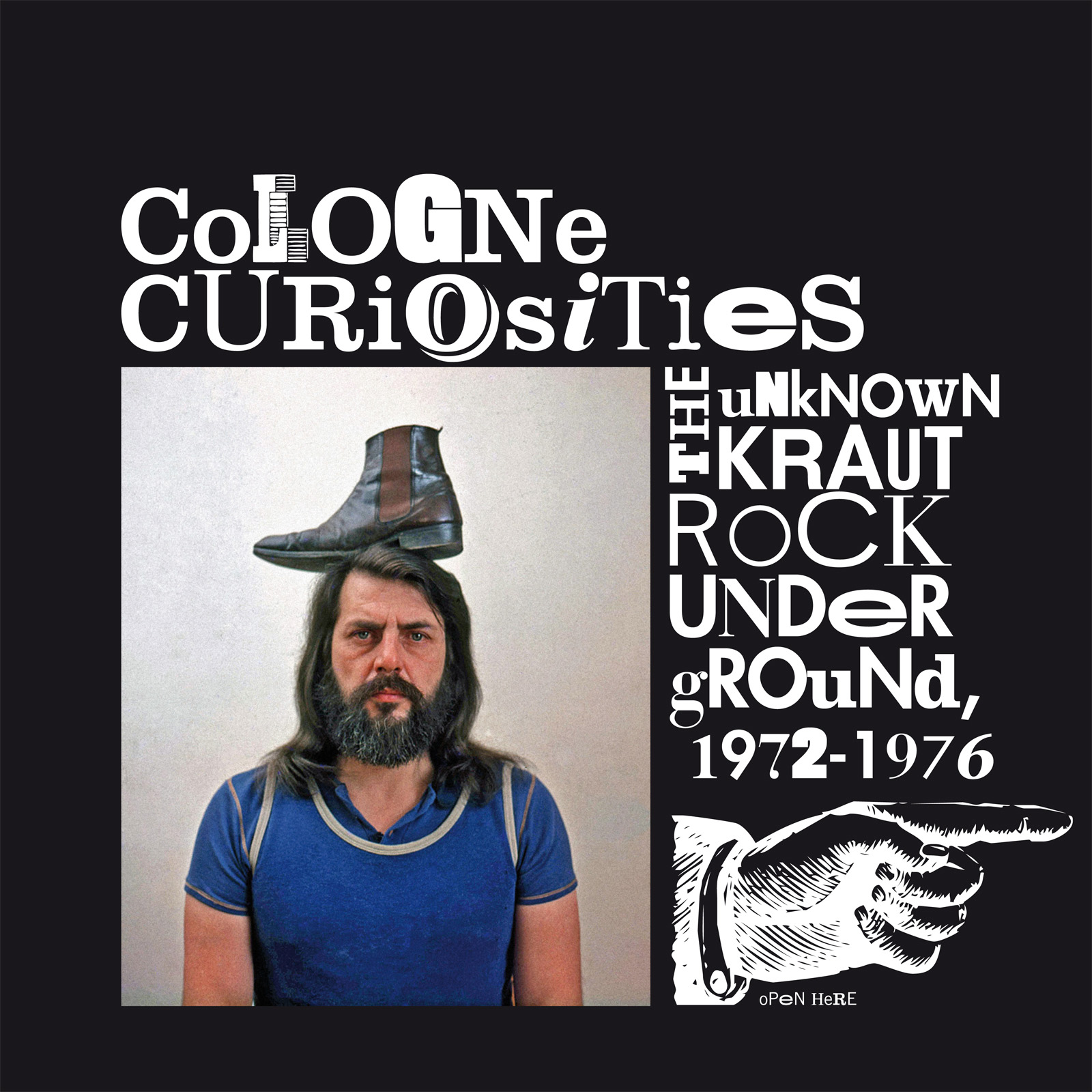
COLOGNE CURIOSITIES-THE UNKNOWN KRAUTROCK UNDERGROUND 1972-1976.
COLOGNE CURIOSITIES-THE UNKNOWN KRAUTROCK UNDERGROUND 1972-1976.
Within Krautrock circles, the words “Pyramid Records” are guaranteed to provoke debate. Especially since the rediscovery of the Pyramid Records’ tapes just over twenty years ago. This should’ve been an exciting discovery.
After all, it wasn’t every day that a hitherto small, unknown private record label’s back-catalogue was discovered? This was what Cologne based Pyramid Records had been. It was founded by British expat Robin Page, around 1972 and was in existence until just 1976. During that period, Pyramid Records only ever released fifteen albums. No more than 50-100 copies of each album was released. These releases were either given away to friends, with the remainder sold in clubs or art galleries. Never were Pyramid Records’ releases sold in Cologne’s many record shops. Maybe that explain why nobody seemed to have heard of Pyramid Records?
Meanwhile, debate and speculation surrounded the Pyramid Records’ story. Nobody seemed to know anything about the label. They soon would though, when Virgin decided to release three compilations from the Pyramid Records’ tapes.
Unknown Deutschland-The Krautrock Archive Volume 1 was released in 1996. Later that year, two further volumes were released. The release of the compilations only fuelled debate and speculation. The genie was out of the bottle.
Since then, every aspect of Pyramid Records has been pored over and debated ad infinitum. This includes who recorded and produced the music, when and where. Some sceptics have even questioned the very authenticity of the music, believing the discovery of the Pyramid Records’ tapes was a hoax, and the work of a studio band? Other sceptics have even questioned the existence of the label itself, believing it was nothing more than a vanity label?
Certainly, Pyramid Records was never going to rivalled Brain Records nor Ohr. It was never meant to. Instead, Pyramid Records was a small, obscure and private label that released music its founder Robin Page believed in and championed. That’s why hardly nobody had heard of Pyramid Records when the Pyramid Records were rediscovered. This was the start of twenty years of controversy, conspiracy theories and speculation.
Adding fuel to the fire, will be the release of Cologne Curiosities-The Unknown Krautrock Underground 1972-1976. It was released by Mental Experience, an imprint of Guerssen Records and features seven tracks from the Pyramid Records’ vaults. This includes seven tracks from the Unknown Deutschland series. They make a welcome return, forty-four years after the first Pyramid Records album was released.
The story began in 1969, when Robin Page, a thirty-seven year old artist and leading light in the Fluxus movement, decided to move from England to Cologne, in Germany. He wasn’t the only expat in the city.
Tony Robinson was a South African, who had travelled from Cape Town, to Germany where he would first work with Karlheinz Stockhausen, the Godfather of modern German electronic music at WDR Studio. This was akin to serving an engineering apprenticeship, and would serve Tony Robinson well. When he left Karlheinz Stockhausen’s employ, Tony Robinson went to work at Dierks Studio in Cologne. That was where the future Genius P. Orridge would meet Robin Page.
By then, Robin Page was a successful and established artist. He was a leading light of the Fluxus movement, and was regarded as a groundbreaking artist. Robin Page used humour within his work, which sought to challenge what was regarded as good taste within the art establishment. Before long, Robin Page’s painting found an audience, and became sought after. This had been what Robin Page had dreamt and worked towards since ‘leaving’ art college in Vancouver under something of a cloud. That seemed a long time ago. His new found success and financial security, allowed Robin Page to work towards fulfilling another of his dreams, making music.
Robin Page was serious about making music, and had a studio in the basement to what looked like to anyone passing by, a derelict building. Deep within its bowels, was Robin Page’s studio, and where Pyramid Records first album was recorded. It was then pressed by a Turkish entrepreneur, who just happened to keep his cutting lathe within the same building. Although was more used to producing bootlegs, but was able to cut what became PYR 001, Pyramid Records’ first ever release. It came wrapped in a cover designed by a local art student. History had just been made.
One person presented with a copy of PYR 001, was Toby Robinson who by 1972, had become friends with Robin Page. He was persuaded to provide the material for PYR 002. Essentially, this comprised a recording of sounds bounced from one tape recorder to another. Again, a master was cut, between 50-100 copies were either given away to Robin Page’s friends, or sold in Cologne’s art galleries and clubs. No copies of PYR 001 nor PYR 002 seem to have survived. It’s a similar story with the label’s next two releases.
Neither the master tapes nor copies of PYR 003 and PYR 004 seem to have survived the passage of time. Instead, the first Pyramid Records release to survive is believed to PYR 005. It’s one of just eleven recordings that remain. These recordings were made between 1974 and 1976.
The Pyramid Records’ recordings are said to have been recorded at Dierks Studio, in Stommenin between 1974 and 1976. During this period, Tony Robinson was variously, an assistant, second engineer and technician. Mostly, he worked nightshifts, when many bands came into the studio to practise and record demo tapes. Sometimes, though, when things were quiet, various musicians arrive and take part in impromptu jam sessions. Tony Robinson would press play, and would not just record these sessions, but take part in them. Some of these jam session featured members of various well known German groups, who would morph into a supergroup. They would play through the night, with Tony Robinson taping the sessions. There was a problem though. Each of these musicians were contracted to record companies. It seemed impossible to release the recordings. That was unless each of musicians adopted an nom de plume.
Each musician who played on the jam sessions was given an alias. When the albums were released, there was no clue to some of the musician’s true identity. Some of the aliases were wholly unconvincing, with a myriad of anglicised names featuring on the releases. Considering the sessions had been recorded in Germany, this would’ve been far from convincing. Fortunately, the albums were released in small quantities.
Still Pyramid Records’ continued to release just 50-100 copies of each album. They were pressed by a friend of Robin Page’s who owned a pressing machine. While some of the releases still came wrapped in a hand made cover, others came complete with mass produced cover. The Pyramid Records’ album covers were never regarded as works of art. They were purely functional. What mattered was the music. This seems strange considering Robin Page’s artistic background?
Usually, an artist would’ve realised the importance of an album cover. That doesn’t seemed to have been the case with Robin Page. He could’ve quite easily designed his own album cover. Instead, Robin Page used utilitarian album covers. Their function was merely to protect the album. They were neither memorable, nor design classics like so many Krautrock albums. However, Pyramid Records wasn’t really in business to make money.
Many of the 50-100 copies of each albums were given away, with the remainder being sold in art galleries and clubs. Hence the later accusations of Pyramid Records being a vanity label. That was still to come. Before that, Robin Page called time on his dalliance with the music industry in 1976.
For four years, Robin Page had fulfilled his other dream of making music. He had taken this further by releasing other people’s music. This he only did on a very small scale. Robin Page didn’t see music as a way to make money. Instead, his actions could be construed as a mixture of benevolence and small scale philanthropy. Maybe Robin Page wanted to highlight and champion new and exciting music, including music that other labels wouldn’t release. However, in 1976 Pyramid Records closed its metaphorical doors for the last time.
Later, Robin Page would emigrate to Canada. With him, he took Pyramid Records’ master tapes and the remaining albums. Almost nothing was left of Pyramid Records. It was as if they had never existed.
That was until nearly twenty years later, when Tony Robinson approached Virgin Records with some of Pyramid Records’ master tapes. This resulted in the release of Unknown Deutschland-The Krautrock Archive Volume 1 in 1996. Later that year, two further volumes followed. This further fuelled the mythology and speculation that built up around Pyramid Records.
Since then, the Pyramid Records’ story has been debated ad infinitum. It’s been the source of much speculation by connoisseurs of Krautrock. Sometimes, though they become too caught up in the Pyramid Record’ backstory, and forget about the music that Pyramid Records released between 1972 and 1976. This includes the music on Cologne Curiosities-The Unknown Krautrock Underground 1972-1976. It features seven tracks from The Astral Army, Spirulina, Chrónos, Neil Andersen, Baal, Ten To Zen and Fuerrote. They’re an eclectic selection of genre-melting tracks that showcase the music Pyramid Records released between 1972 and 1976.
Opening Cologne Curiosities-The Unknown Krautrock Underground 1972-1976, is Interstellar Shortwave by The Astral Army. Their lineup is listed as Gunther Dorn, Herbert Metzger, Otto Bretnacher and Wolfgang Willhauk. They’re obviously aliases, and also talented musicians, who were capable of recording what was a commercial sounding track. It originally featured on Unknown Deutschland-The Krautrock Archive Volume 1. On Interstellar Shortwave, the sound of a shortwave radio, gives way to a glorious slice of hard rocking music. Add to this a hint of punk, electronica and experimental music, and the result is a potent and heady brew. It’s sure to whet the listener’s appetite to the rest of this veritable musical feast.
Originally, Spirulina’s The Message Unknown Deutschland-The Krautrock Archive Volume 2. Straight away, the words spacey, lysergic, dreamy and mesmeric come to find. Pink Floyd seem to have been the reference point for this ten minute epic jam. Spirulina’s rhythm section lock into a groove, and are augmented by washes of organ, keyboards and guitars. Effects are used effectively, in what’s a truly timeless, psychedelic, space rock jam. It features a truly talented band, whose real identities sadly, are unknown.
Amongst the various pseudonyms on Chrónos’ Schaudernacht, one is instantly recognisable. That’s The Mad Twiddler, one of the many aliases of Tony Robinson. He plays guitar, synths and cowrote the track. Tony Robinson’s synths pulsate and bubbles, as his guitar drives the arrangement along. Meanwhile, the drums provide the heartbeat, as the rhythm section lock into a groove. The drums are something of a conundrum. Sometimes, there’s a seventies sound, while other times they’ve a later, post rock sound. Similarly, sometimes, the synths don’t have an authentic seventies sound. Maybe, Schaudernacht was an unfinished track, which was completed at a later date? However, if that was the case, why not fix the several mistakes in the drum parts. Despite this, it’s a captivating, genre-melting track that brings to mind Krautrock’s glory days.
Accompanying Neil Andersen on Feuerwerk is Tony Robinson, who plays guitars and synths. They’re the only musicians credited on the track. Despite that, there’s much more happening, in what’s a complex, multilayered mix. Effects are used, as instruments intertwine and effects are deployed. Sometimes, instruments make a brief appearance, only to disappear and reappear. They combine elements of avant-garde, Berlin School, electronica, experimental and improv, to create an innovative and urgent track that mesmerises and is strangely melodic.
Baal’s No God/Astaroth is a collaboration between three members of The Astral Army and Spirulina’s drummer. This is akin to the Pyramid Records’ all-stars. They create what not just the heaviest track on the compilation, but one that’s dark, haunting and otherworldly. At the heart of the arrangement is a kerosene soaked, and drug fuelled, dramatic vocal. It’s delivered above an improvised arrangement, where the rest of the Baal, combine blues, rock and psychedelia with jazz. This results in a heavy, cinematic, otherworldly and unforgettable sounding track.
There haven’t been many groups that feature a trio of synth players. Especially one whose music is improvised. That’s apart from the wonderfully named Ten To Zen. Their contribution to Cologne Curiosities-The Unknown Krautrock Underground 1972-1976 is Innerst. It features a myriad of futuristic and sci-fi sounds. This includes beeps, squeaks, whirrs and buzzes aplenty. They carefully crafted into a cinematic sounding track that would provide the perfect backdrop to a sci-fi short.
Closing Cologne Curiosities-The Unknown Krautrock Underground 1972-1976 is Ganz Wie Du Willst by Fuerrote. Their lineup features some familiar faces, including Neil Andersen and Toby Robinson. The third member of the trio is guitarist Hans Lorenzen, who helps sculpt an epic fourteen minute soundscape. Straight away, Fuerrote’s reference points seem to be Amon Düül II and Popol Vuh. There’s even hints of early Klaus Schukze and Manuel Göttsching as Fuerrote deploy three guitars and two synths. Soon, a multilayered, improvised jam is unfolding. Buzzes and feedback combine with percussion, crashing cymbals and searing guitars. Occasionally, eastern sounds emerge from a soundscape where avant-garde, Berlin School and electronica combine with experimental, psychedelia and rock. Together, they create a Magnus Opus, which is a tantalising taste of further instalments from the Pyramid Records’ vaults.
Cologne Curiosities-The Unknown Krautrock Underground 1972-1976 was recently released by Mental Experience, an imprint of Guerssen Records. It features seven tracks from the Pyramid Records’ vaults. They’re designed to whet the listener’s appetite for future reissues of albums released by Pyramid Records. These will be very welcome reissues, as the original albums are now extremely rare, and almost impossible to find. Anyone who happens to come across an original Pyramid Records’ release is one of the lucky ones, given how few copies were released.
Between 50-100 copies of each Pyramid Records’ album was released. Only PYR 005 to PYR 015 remain. The first four albums are lost in the mists of time. However, at least the remainder of one of what’s one of the smallest Krautrock labels remains in tact. Much of that music is innovative and way ahead of its time. That was the case with so many of the Krautrock and Berlin School albums released. It was only much later that they find an audience and are receive the recognition they deserve. That should be the case with the music on Cologne Curiosities-The Unknown Krautrock Underground 1972-1976.
Alas, far too many people have become bogged down by the controversy and speculation that surrounds the Pyramid Records’ story. It’s as if they’re determined to disprove that the music was recorded between 1972 and 1976. In doing so, all they’re doing is adding fuel to the fire, and fuelled debate and speculation. That’s a great shame, because for too long, people have become caught up in the Pyramid Records’ mythology. In doing so, they loose sight of the important thing, the music, including that on Cologne Curiosities-The Unknown Krautrock Underground 1972-1976. That’s a great shame.
Maybe now is the time to concentrate on what matters, and that’s the music that Pyramid Records’ released? It’s unlikely that the truth will out. Only two people knew the whole truth. Sadly, Robin Page passed away in 2015. This means the only person that knows the Pyramid Records’ story, is Tony Robinson. Alas, he admits that heavy LSD usage has blurred his memories of Pyramid Records’ years. It seems that the true story of Pyramid Records will never be known. As a result, there will always be doubt in some people’s minds about the Pyramid Records.
Still the sceptics will continue to doubt some aspects of the Pyramid Records’ story. Some of the biggest sceptics will continue to question the very authenticity of the music. They will argue that some, or all of the music was recorded at a later date, by session musicians as some part of elaborate hoax. However, what would these Cosmic Jokers get out of this? That the Pyramid Records’ story is part of some elaborate hoax seems too farfetched.
It seems more likely that the music on Cologne Curiosities-The Unknown Krautrock Underground 1972-1976 was recorded between 1972 and 1976. However, it may well be that the once the Pyramid Records were rediscovered, occasionally some work was carried out to complete or sweeten a track. This sweetening maybe transformed an unfinished track into a more cohesive and complete track. An example of where some work may have been carried out a later date, appears to be Chrónos’ Schaudernacht. Some of the drums and synths sounds have a seventies sound, while others have a later sound. That’s the only example on Cologne Curiosities-The Unknown Krautrock Underground 1972-1976.
The rest of the music on Cologne Curiosities-The Unknown Krautrock Underground 1972-1976 has been untouched. It’s how it was recorded for Pyramid Records between 1972 and 1976. There’s been no overdubbing, with the music no different to the day when it was recorded by at Dierks Studi by Tony Robinson. He’s the last man standing in the Pyramid Records’ story, which released fifteen albums of mostly innovative, inventive and influential music between 1972 and 1976. Sadly, Pyramid Records doesn’t receive the credit it deserves.
That’s purely because of mythology that surrounds the label. What also doesn’t help, is that all the musicians that played on the various releases used an alias. Maybe the music would receive the credit it deserved if the real identity of some of the musicians involved was known? There’s every chance that some well known musicians played on Pyramid Records’ releases, including those on Cologne Curiosities-The Unknown Krautrock Underground 1972-1976. Regardless of whether that’s the case or not, the music on Cologne Curiosities-The Unknown Krautrock Underground 1972-1976 is still innovative, inventive and timeless, and even today, has the potential to influence and inspire another generation of musicians
COLOGNE CURIOSITIES-THE UNKNOWN KRAUTROCK UNDERGROUND 1972-1976.
WHATEVER HAPPENED TO ALICE CLARK?
WHATEVER HAPPENED TO ALICE CLARK?
Far too often, hype and image has triumphed over talent. Meanwhile, commercial success and critical acclaim eludes truly talented artists. Chastened by the experience, many of these artists turn their back on the music industry. They’re content to return to civvy street, free from a world populated by A&R executives, PR companies and radio pluggers. At least the artist knows that they gave it their best shot. Alas, it wasn’t to be. Now they begin the first day of the rest of their life.
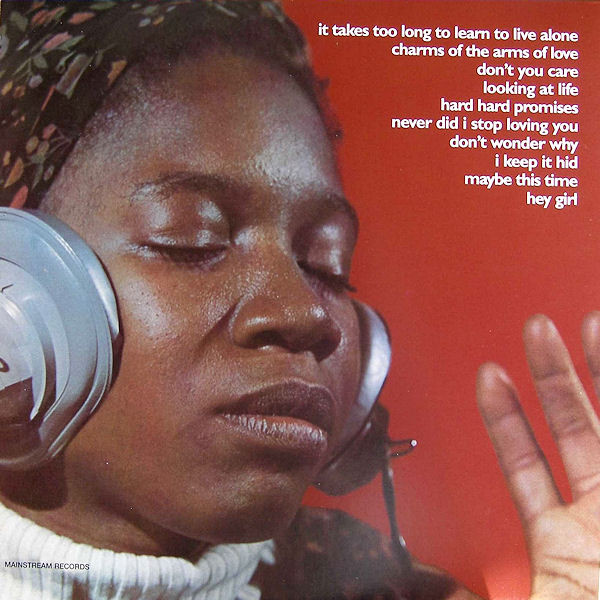
This is what happened to Brooklyn born soul singer Alice Clark. Her career began in 1968, and was over by 1972. During that four year period, Alice Clark recorded just fifteen songs during three recording session. This includes two singles and her 1972 album Alice Clark. After commercial success eluded her, Alice Clark career turned her back on music. Since then, Alice Clark has remained one of the soul music’s best kept secrets. She’s also one of music’s music enigmatic figures.
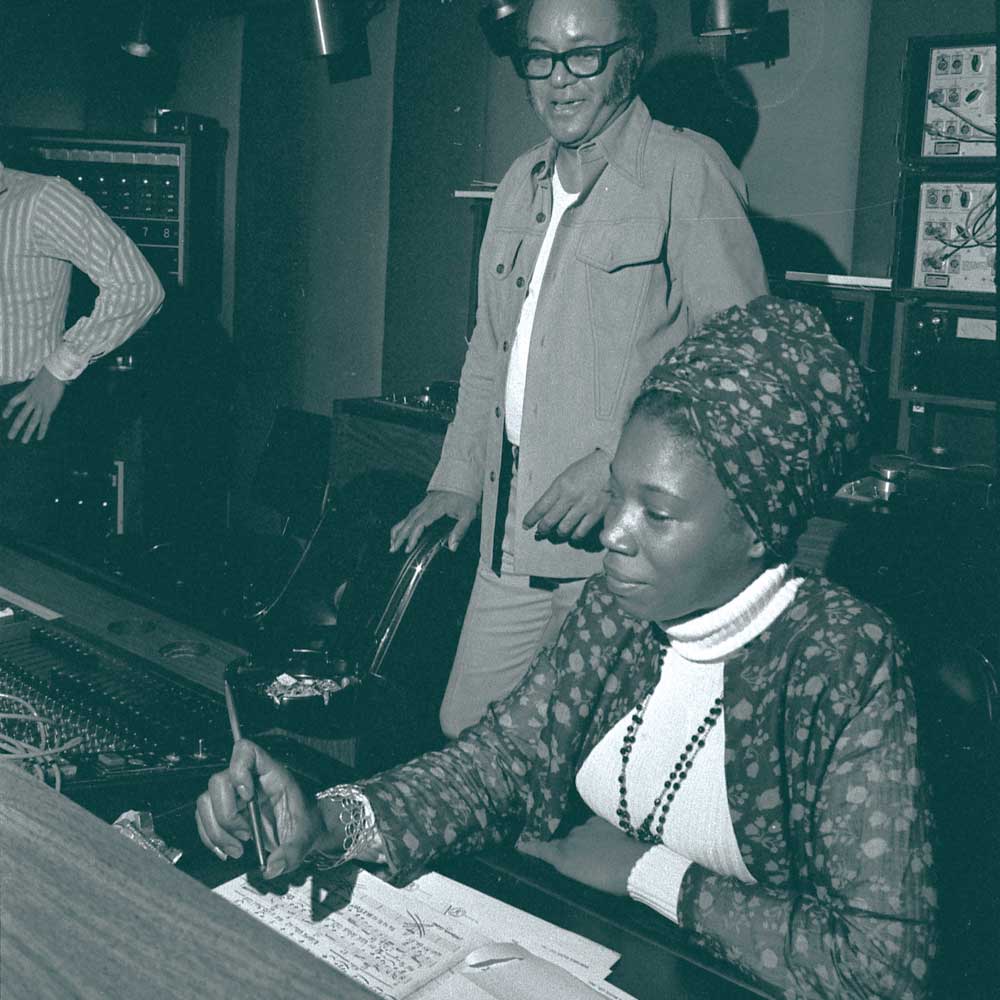
Very little is known about Alice Clark. Indeed, her story is almost shrouded in mystery. All that’s known, is that Alice Clark was born in Brooklyn, and shared the same manger as The Crystals. It was her manager that introduced Alice to singer-songwriter Billy Vera.
The meeting took place at April-Blackwood Music, who at the time, were Billy Vera’s publishers. That afternoon, Billy spent time teaching her some songs that he had written. These songs would be recorded in 1969.
By the time the recording session took place, Alice Clark had taken to occasionally phoning Billy Vera. However, Alice who seems to have been a private person, only ever made small talk. Despite this, Billy remembers: “I got the impression her home life wasn’t that great.” He remembers that Alice: “had kids and belonged to a religious order.” These are the only thing Billy can remember about Alice. However, what nobody who heard Alice as she made her recording debut will forget is…her voice.
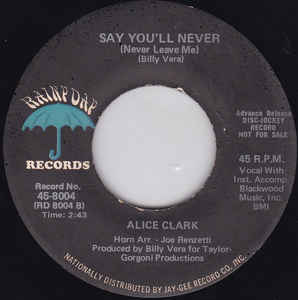
For the 1969 session, Jubliee’s studio was chosen. Billy Vera who wrote and would produce the three tracks put together a tight and talented band. The rhythm section featured drummer Earl Williams, bassist Tyrell and guitarists Butch Mann and Billy Vera. They were augmented by trumpeter Money Johnson and backing vocalist Tasha Thomas. This was the band that accompanied Alice Clark on You Got A Deal, Say You’ll Never Leave Me and Before Her Time. Alice Clark delivered confident and assured performances. Two of these songs became Alice’s debut single.
With the three songs recorded, the Rainy Day label decided to release You Got A Deal in January 1968. It was a driving slice of soul, with a feisty, vocal from Alice. Horns and harmonies accompany Alice as she’s transformed into self-assured soul singer. The flip side was Say You’ll Never, a quite beautiful ballad. A number of radio stations began playing the song. Despite this, Alice Clark’s first single wasn’t a commercial success. It was an inauspicious start to Alice’s career.
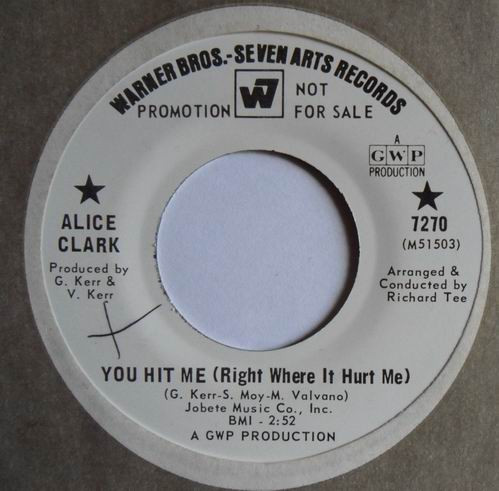
Nothing was heard off Alice Clark until March 1969. By then, Alice had recorded her sophomore single. This was the George Kerr, Michael Valvano and Sylvia Moy penned You Hit Me (Right Where It Hurt Me). On the flip-side was Arthur Mitchell and Eddie Jones’ Heaven’s Will (Must Be Obeyed). The two songs were produced by George and Napoleon Kerr. This GWP Production was released on Warner Bros. Alice Clark was going up in the world.
Alas commercial success continued to elude Alice Clark. You Hit Me (Right Where It Hurt Me), which became a favourite on the Northern Soul scene, features an impassioned, hurt-filled vocal. Just like Alice’s debut single, the B-Side was a ballad Heaven’s Will (Must Be Obeyed). It features a heartfelt vocal where the secular and spiritual collide. Just like You Hit Me (Right Where It Hurt Me), Heaven’s Will (Must Be Obeyed) Heaven’s Will (Must Be Obeyed) showcased a truly talented singer. Sadly, very few people realised this. Alice Clark was one of music’s best kept secrets.
For the next couple of years, Alice Clark was cast out into the musical wilderness. Then Bob Shad at Mainstream Records decided to take a chance on Alice Clark. Mainstream Records were moving into the soul market, are were signing artists. He decided that Alice Clark fitted the bill, and signed her to Mainstream Records.
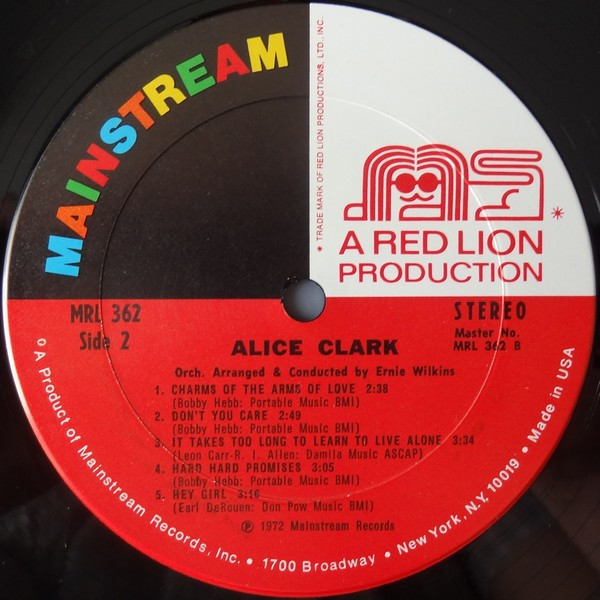
Soon, work began on Alice Clark’s debut album. A total of ten tracks were chosen. This included a trio of Bobby Hebb songs, Charms Of The Arms Of Love, Don’t You Care and Hard Hard Promises. Among the other songs were Jimmy Webb’s I Keep It Hid; Petula Clark and John Bromley’s Looking At Life; Leonard Caston’s Don’t Wonder Why; Juanita Fleming’s Never Did I Stop Loving You and Earl DeRouen’s Hey Girl. The other songs chosen were John Kander and Fred Ebb’s Maybe This Time and Leon Carr and Robert Allen’s It Takes Too Long To Learn To Live Alone. These songs became Alice Clark.
With the material chosen, producer Bob Shad set about putting a band together. Apart from guitarist Ted Dubar, the identity of the rest of the band are unknown. However, Ernie Wilkins was drafted in to arrange the songs on Alice Clark. When it was recorded, the release was scheduled for later in 1972.
By then, three years had passed since a record bearing Alice Clark’s name had been released. You Hit Me (Right Where It Hurt Me) had disappeared without trace upon its release in March 1969. Everyone must have been hoping that history wouldn’t repeat itself. Alas, it did.
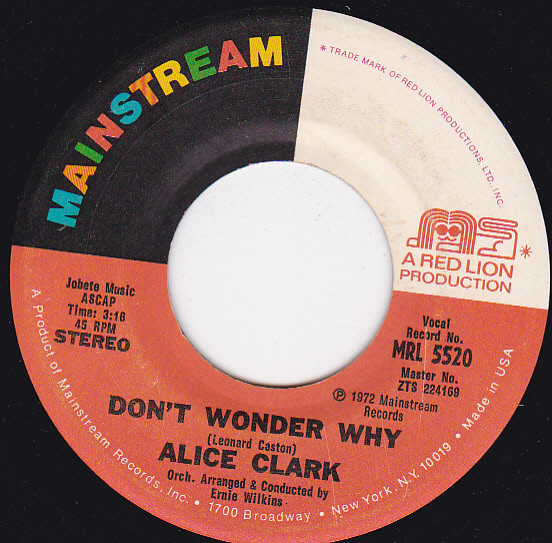
I Keep It Hid was chosen as the lead single, with Don’t Wonder Why featuring on the B-Side. On its release, I Keep It Hid sunk without trace. Worse was to come. When Alice Clark was released, the album failed to find the audience it deserved. Very few copies of Alice Clark sold. That was a great shame.
During the three years that Alice Clark had been away, she grown and matured as a singer. Despite this, there was to be no followup album. After Alice Clark failed commercially, Alice turned her back on music. Never again did this talented and versatile vocalist return to the studio. Alice Clark was lost to music.
During her four year career, Alice Clark had recorded just fifteen tracks. They’re a mixture of beautiful ballads and uptempo songs. On each and every song, Alice breathes life and meaning into the lyrics. Her delivers veers between heartfelt, impassioned and soul-baring, to assured, hopeful and joyous. It seems when Alice Clark stepped into a recording studio, she was transformed.
No longer was Alice Clark the quietly spoken young mother that Billy Vera remembers. Suddenly, the God-fearing Alice Clark disappeared, and was replaced by one that wore her heart on her sleeve. She was comfortable sings songs about love and love lost, and could breath life and meaning into songs about hope, hurt, heartbreak and betrayal. Despite her ability and versatility, Alice Clark commercial success and critical acclaim eluded Alice Clark.
Chastened by the experience, Alice Clark turned her back on the music industry. Nobody seems to know what happened to Alice Clark? Mystery surrounds this hugely talented singer, who should’ve gone on to enjoy a long and successful career. Sadly, that wasn’t to be.
By 1973, You Hit Me (Right Where It Hurt Me) became a favourite on the UK Northern Soul scene. Apart from that, very few people had heard of Alice Clark or her music. It would be a while before this changed.
As the years passed by, a few copies of Alice Clark found their way into bargain bins. Curious record collectors who chanced upon a copy of Alice Clark decided to take a chance on this little known album. Having paid their money, they discovered one of soul music’s best kept secrets,..Alice Clark. They were the lucky ones.
Since then, Alice Clark has become a real rarity. Anyone wanting an original 1972 copy of Alice Clark on Mainstream, will need to search long and hard. If they can find a copy, it will take at least $500 to prise it out of the hands of its owner. It feature a truly talented singer who could’ve and should’ve enjoyed widespread commercial success and critical acclaim. Sadly, for Alice Clark that wasn’t to be.
Instead, commercial success eluded Alice Clark, and in 1972, she turned her back on music. Since then, nothing has been heard of Alice Clark. Mystery surrounds Alice Clark’s life after she turned her back on music. She seems almost to have vanished into thin air. That’s a great shame. Especially given the resurgence in interest in her music and Ace Records recent release of The Complete Studio Recordings 1968-1972. Belatedly, Alice Clark’s music is finding the wider audience that it so richly deserves. What her newfound fans would like to know is whatever happened to Alice Clark?
WHATEVER HAPPENED TO ALICE CLARK?





SAM DEES-SOUL MUSIC’S BEST KEPT SECRET.
SAM DEES-SOUL MUSIC’S BEST KEPT SECRET.
For many artists their career is a case of what might have been. That’s the case with Sam Dees. He had the talent and potential to become one of the biggest names in soul music. Sadly, Sam Dees didn’t enjoy the commercial success and critical acclaim they deserve. Instead, his music is only enjoyed a discerning circle of music lovers. They cherish each of the three albums Sam Dees has released. That’s why Sam Dees is described as: “a prolific songwriter and occasional performer.”
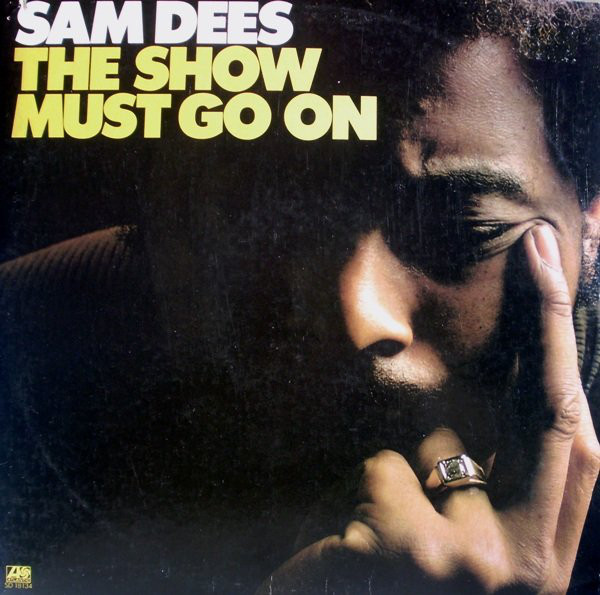
That’s true. While Sam has written nearly four-hundred songs, he’s only released three albums. Sam’s debut album was 1975s The Show Must Go On. After a gap of fourteen years, Sam returned in 1989 with Secret Admirer which was released on his own label, Pen Pad Records. Another nine years passed, before Sam released 1998s Lovers Do. Since then, nothing has been heard of Sam Dees. As a result, it looks as if Sam Dees will never fulfil his potential. Sam Dees career, it seems is a case of what might have been. Things looked very different when Sam Dees was growing up.
Sam Dees was born in Birmingham, Alabama, in December 1945. He was born into a large family. Sam stood out though. The reason for that was his voice. From an early age, it was obvious that Sam was a talented singer. When he was just nine, Sam was a veteran of talent contests. He’d won numerous talent shows, so decided to form his own group The Bossanovians. By the time Sam was ten, it became apparent Sam had a way with words.
Unlike most ten year olds, Sam was writing poetry and songs. Looking back, Sam Dees was something of a musical prodigy. So, it’s no surprise that he would make a career as a songwriter. Before that, he had dreams of becoming a singer.
Although Sam was a still teenager, he was already travelling from his Birmingham home to perform. This was the equivalent of Sam serving his musical apprenticeship. Then in 1968, Sam caught a break, He got the chance to record his debut single.
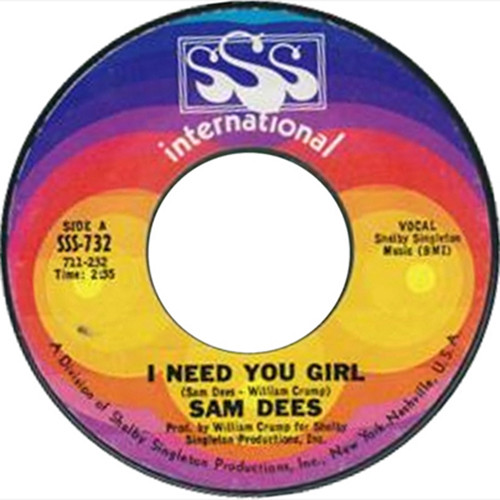
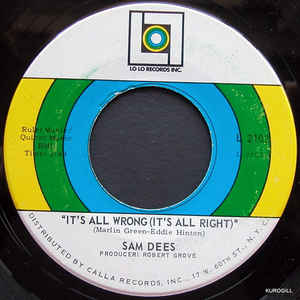
Given Sam was an aspiring soul singer, it sees strange that he made his recording debut in Nashville. I Need You Girl was released on SSS International. Sadly, it wasn’t a commercial success. Neither were Easier To Say Than Do nor It’s All Right (It’s All Right), which sam released on Lo Lo Records in 1969. Then as a new decade dawned, Sam’s luck changed.
Since 1968, Clarence Carter had been signed to Atlantic Records. He’d released a trio of albums, to varying degrees of success. His fourth album, Patches, was released in 1970. Produced by Rick Hall, and featuring some of Memphis’ top musicians and backing vocalists, including Chalmers, Rhodes, Chalmers, Patches featured songs from some top songwriters. This included Sam Dees.
He wrote Changes, a heartbreakingly beautiful slice of Southern Soul. For Sam Dees, an up-and-coming singer and songwriter, writing a song for Clarence Carter was something of a coup. He was, after all, signed to Atlantic Records, one of the biggest soul labels. Little did Sam realise that in a few years, he’d be signed to Atlantic Records. Before that, Sam signed to another famous label, Chess Records.
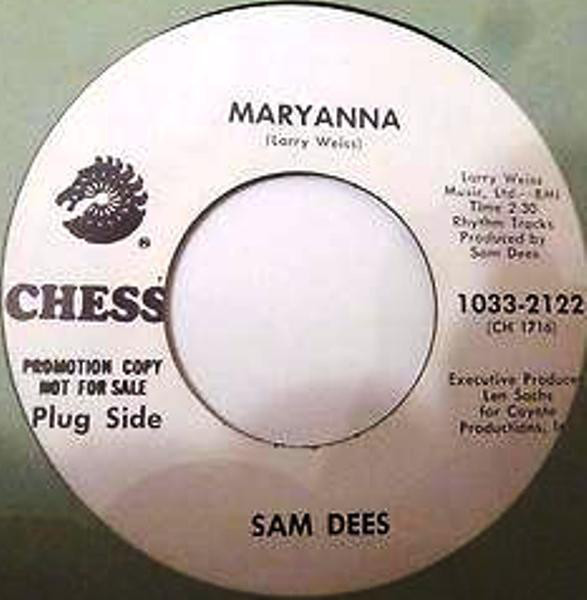
1971 proved to be an important year for Sam Dees. He signed to Chess Records, releasing two singles, the Larry Weiss penned Maryanna and Can You Be A One Man Woman. Despite the quality of music, Sam wasn’t making that important commercial breakthrough. At least other artists were covering his songs.
Rozetta Johnson covered A Woman’s Way. It was the B-Side to her single Mine Was Real. Sam wrote both songs with his wife Lillian Dees. He co-produced the songs with Clinton Moon. Released on Clintone Records, it reached number ninety-four in the US Billboard 100 and thirty-nine in the US R&B Charts. This was the first hit single Sam had written. Despite this, Sam saw himself as a singer first, and then a songwriter.
Having written and produced his first hit single, Sam hadn’t given up hope of forging a successful career as a songwriter. After leaving Chess, Sam signed to Clintone Records as a solo artist in 1972.
By then, Sam was no stranger to Clintone Records. Using the alias Black Haze Express, he had released Won’t Nobody Listen as a single in 1971. A year later, Sam’s solo career began at Clintone Records.
Just like his time time at SSS International, Lo Lo Records and Chess Records, Sam Dees wasn’t exactly prolific at Clintone Records. Far from it. He only released one single on Clintone Records. This was Claim Jumping Man, which was released in 1972. Sadly, Claim Jumping Man didn’t replicate the commercial success of Rozetta Johnson’s Mine Was Real. Despite this, Sam’s career was on the up.
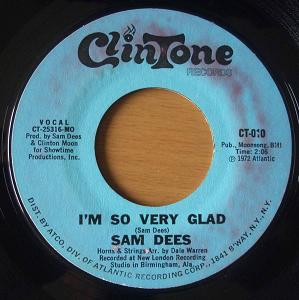
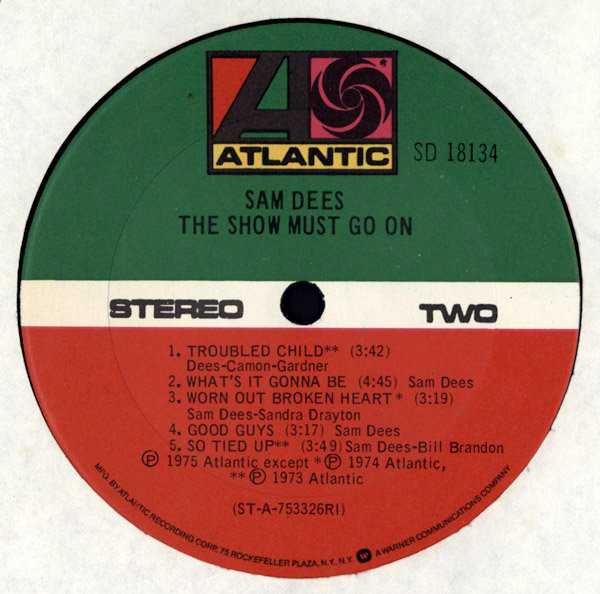
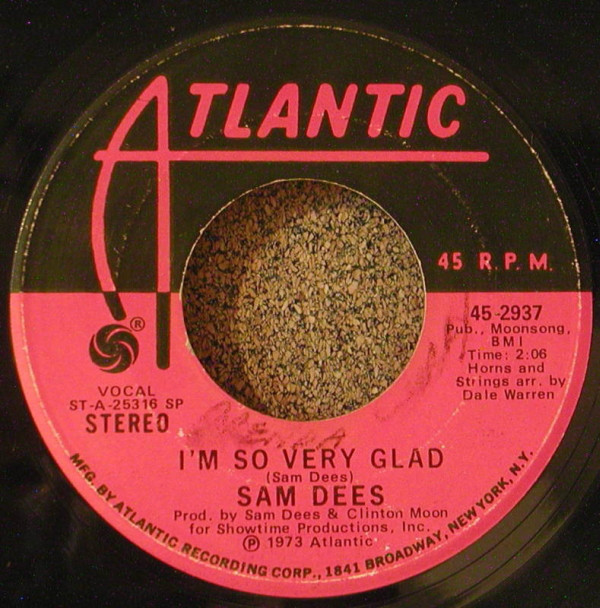
After his brief spell at Clintone Records, Sam Dees signed to Atlantic Records later in 1973. Sam Dees released just two singles for Atlantic Records, So Tied Up and I’m So Very Glad. Despite their undoubted quality, they weren’t the commercial success they deserved to be. At least a song Sam cowrote proved much more successful.
Stop This Merry-Go-Round was was a song Sam, Albert Gardner and Clinton Moon had written. Originally, Bill Brandon took the song to number thirty-three in the US R&B Charts. Now, John Edwards a future Detroit Spinner would record the track. His Johnny Taylor styled cover was released on Aware in 1973, reaching number forty-five in the US R&B Charts. Again, Sam was enjoying more success writing songs than singing them. He wasn’t for turning his back on his solo career,
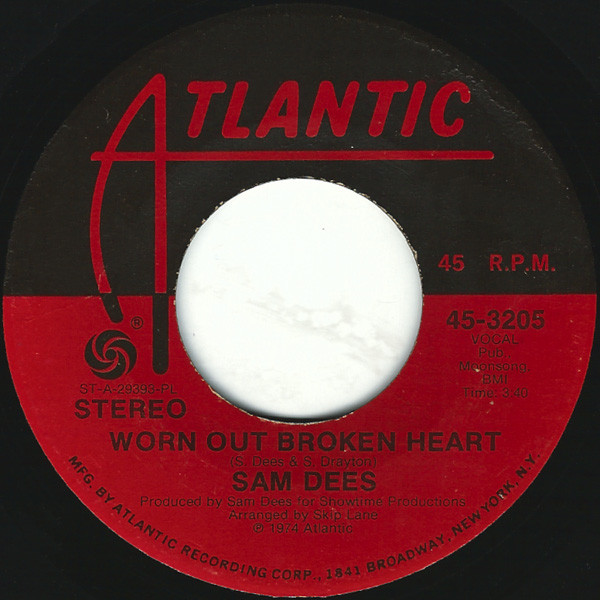
Sam returned to his solo career in 1974. He released two singles, Worn Out Broken Heart and Come Back Strong. Neither were a commercial success, but Come Back Strong proved to be prophetic.
With the last couple of years proving unsuccessful for Sam Dees, 1975 was a big year for him. Sam was about to release his debut album The Show Must Go On. It featured ten tracks. Four were penned by Sam, including The Show Must Go On, Come Back Strong, What’s It Gonna Be and Good Guys. Sam cowrote Claim Jumpin’ and So Tied Up with William Brandon. He also cowrote Just Out Of Reach with James Lewis and Worn Out Broken Heart with Sandra Drayton. Child Of The Streets was a collaboration between Sam and David Cammon. The pair cowrote Troubled Child with Al Gardner. These ten tracks became The Show Must Go On, and were recorded at two studios in Birmingham, Alabama.
To record his debut album The Show Must Go On, Sam headed to home to Birmingham, Alabama. He recorded The Show Must Go On at two studios, New London Studios and Sound Of Birmingham. For the recording sessions, Sam drafted in a small, tight band. The rhythm section featured drummer Sherman “Fats” Carson. bassist David Camon and guitarist Glen Woods. Arrangers included Randy Richards, Ronnie Harris, Skip Lane and Sam. Aaron Varnell arranged the horns on Claim Jumpin.’ Sam played piano and produced The Show Must Go On, which was released in 1975.
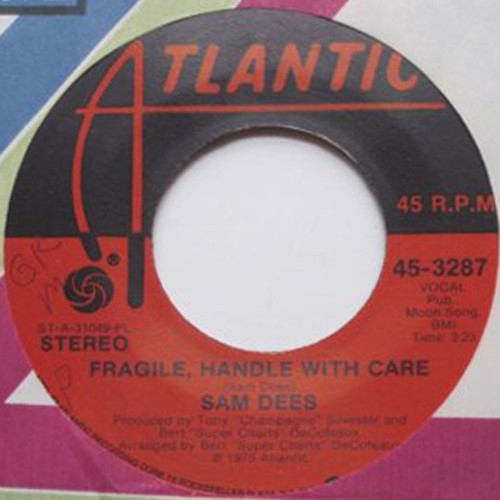
Sadly, when The Show Must Go On was released, musical tastes had changed. Disco was now King. Soul albums weren’t selling well. The Show Must Go On wasn’t a commercial success. Neither were the singles The Show Must Go On, nor Fragile, Handle With Care. For Sam Dees, this must have been a huge disappointment. Here he was signed to one of soul’s most prestigious labels, but at the wrong time. Belatedly, however, The Show Must Go On has come to be regarded as a Southern Soul classic, and was the last time we heard from Sam until 1989.
After a gap of fourteen years, Sam returned in 1989 with Secret Admirer which was released on his own label, Pen Pad Records. Another nine years passed, before Sam released 1998s Lovers Do. Since then, nothing has been hear of Sam Dees. As a result, it looks as if Sam Dees will the commercial success and critical acclaim he deserved.
This wasn’t down to a lack of talent. Far from it. Sam Dees is, without doubt, one of the most talented soul singers of his generation. Especially when it came to ballads. Sam Dees breathes life, meaning and emotion into ballads. Other times the betrayal, hurt and loneliness come to life. Sam Dees sings the lyrics as if he’s lived, loved and survived the lyrics. Other times, he sounds as if he’s experienced the hope and joy that love brings. However, other times, it looked like Sam Dees was going to be seventies soul social conscience. Sadly, commercial success and critical acclaim eluded him. That’s why nowadays, Sam Dees is better known as a songwriter.
Realising he was never going to become one of soul’s superstars, Sam Dees decided to concentrate on writing songs. He’s enjoyed a long and successful career, writing songs for the great and good of soul music. That’s why nowadays, Sam Dees is described as: “a prolific songwriter and occasional performer.”” However, a better of description of Sam Dees is a man who could’ve and should’ve been King of seventies soul.
SAM DEES-SOUL MUSIC’S BEST KEPT SECRET.





JOHN MILES-THE DECCA ALBUMS.
JOHN MILES-THE DECCA ALBUMS.
Every artist dreams of a hit single. Especially one that tops the charts, and goes on to feature on radio playlists for the next forty years. The only problem with this, is that sometimes, the artist becomes synonymous with that one hit single. That’s the case with John Miles.
Forty years ago in 1976, John Miles released his most successful single Music. Since then, every time John Miles’ name comes up in conversation, Music is mentioned. That must be frustrating for the English singer-songwriter. After all, John Miles released ten albums between 1976 and 1999. This includes the four albums for Decca Records. They can be found on the recently released five disc John Miles box set, The Decca Albums. It was released by Decca Records and also includes a BBC Live In Concert recording from March 1978. The Decca Albums box set is a reminder that there’s much more to John Miles than one single.
John Miles was born in Jarrow, in County Durham, England on 23rd April 1949. Growing up, music played a big part in John Miles’ life. While still at Jarrow Grammar School, John joined a local band, The Influence.
Three of the members of The Influence were keyboardist John Miles, drummer Paul Thompson and guitarist Vic Malcolm. Incredibly, they all went on to become successful musicians. Paul Thompson became Roxy Music drummer, while Vic Malcolm became Geordie’s lead guitarist. That was still to come.
In 1969, The Influence released a single on Orange Records, I Want To Live. This was just the start of what would be a long, and eventually successful recording career. Not with The Influence though.They disbanded not long after the release of I Want To Live.
Following his spell with The Influence, John Miles founded The John Miles Set, which featured bassist Bob Marshall. He and John would later form a successful songwriting partnership. That was in the future. Before that, The John Miles Set began to play the club circuit. However, in 1970, John decided to combine a solo career with playing with The John Miles Set.
This was a big step for John Miles. He was still only twenty-one. Already though, people were taking notice of John Miles. This included the owners of Orange Records who had released The Influence’s single. They released Why Don’t You Love Me?, John’s debut solo single in September 1970. While it failed commercially, John was attracting the attention of Decca Records.
They offered John Miles a recording deal for one single. It was akin to an audition, and also allowed Decca Records to test the waters. Josie was released on 7th July 1971. Alas, the single failed to trouble the charts and John was soon looking for a new record company.
Fortunately, Orange Records had just changed hands, and new owner Cliff Cooper was looking to add new artists to his roster. John Miles fitted the bill. Orange Records sent John into the studio, and he recorded Come Away Melinda. It was released as a single in February 1972. Just over a month later, Yesterday (Was Just The Beginning) was released in March 1972. Despite neither single sold in vast quantities, Orange Records kept their faith in John Miles.
Meanwhile, The John Miles Set featured on the British talent show Opportunity Knocks. They won their heat, and found themselves in the All Winner’s Show. For John Miles, this was a boost to his solo carer.
An even bigger boost to John Miles solo career during 1972, was getting the opportunity to support Roy Orbison at the Royal Albert Hall, in London. Gradually, people were beginning to know the name John Miles.
Orange Records continued to keep faith in John Miles. He released a trio of singles during 2013. This included Hard Road in March 1973, Jacqueline in May 1973 and One Minute Every Hour in August 1973. Still, though, commercial success eluded John Miles.
It was a similar story in 1974. Fright Of My Life was released in January 1974, but failed commercially. That was all that was heard of John Miles until he released What’s On Your Mind in November 1974. While it didn’t trouble the charts, John was improving as a singer and songwriter. His songwriting partnership with Bob Marshall was beginning to bear fruit. Similarly, over the last three years John’s band, which featured bassist Bob Marshall and drummer Barry Black, John Miles had matured and evolved into a tight, talented band. Maybe John’s luck would begin to change?
That was the case in 1975. As the year progressed, record companies began to take an interest in John Miles. Both EMI and Decca Records were vying for John’s signature. This was a huge decision for the twenty-six year old. Eventually, though, John decided that Decca Records who were looking to add to their contemporary pop roster, offered more of an opportunity.
By then, Decca Records’ pop roster had become stale, with Tom Jones and Englebert Humpererdinck looking like yesterday’s men. Decca Records was desperately seeking a transfusion of new talent. That was where John Miles came in. He was seen as part of Decca Records’ future. So, after opening for The Ohio Players at the Hammersmith Odeon, John and representative of Decca Records signed a recording contract.
Rebel.
With John Miles signed to Decca Records, the label decided to pair their latest signing, with one of Britain’s top producers, Alan Parsons. He had worked with Pink Floyd on their Magnus Opus, Dark Side Of The Moon in 1973. Since then, he had worked with some of the biggest names in music. So it was a something of a coup that he agreed to produce John Miles new single.
The song they chose Highfly, which in Alan Parsons’ hands, took on an art rock sound. It was released on September 1975, and eventually, reached seventeen in the UK charts and sixty-eight in the US Billboard 200. Exactly five years after he released his debut solo single, John Miles had his first hit single.
After the success of Highfly, John Miles would complete recording of his debut album. It featured nine songs, including six penned by John and Bob Marshall. The exceptions were Music, Lady of My Life and Music (Reprise) which John wrote. They were recorded at Abbey Road Studios.
During November and December John Miles and his band headed to Abbey Road Studios in November 1975. Drummer and percussionist Barry Black and bassist Bob Marshall accompanied John. He added lead vocals, and played keyboards, guitar and synths. Andrew Powell took charge of the orchestral arrangements and Alan Parsons produced, what would become Rebel.
As 1975 gave way to 1976, Decca Records began to think about what should be the lead single from Rebel. The song they chose was Music, a near six minute epic. It was released in March 1976 and reached the upper reaches of the charts across Europe. Music reached number three in the UK; number four in Holland; number number one in Switzerland and eighty-eight in the US Billboard 100. Later, Music won John Miles an Ivor Novello award for Best Middle-Of-The-Road Song. Before that, Rebel was released.
Critical acclaim accompanied the release of Rebel, which was hailed as an album of carefully crafted pop songs. Music may have been the standout track, but there was much more to the album, including the John Miles and Bob Marshall penned You Have it All, When You Lose Someone So Young and Lady Of My. They had matured into a talented songwriting team, while John brought each of the songs to life. It was no surprise that when Rebel was released later in March 1976, it reached number nine in the UK and 171 in the US Billboard 200. Elsewhere, Rebel reached the top twenty in Holland and Germany, and the top thirty in Sweden. For John this the perfect way to begin The Decca Years.
After the release of Rebel, John Miles embarked upon a lengthy tour. It marked the debut of Australian keyboardist Gary Moberley. John had brought him onboard to augment the band’s sound. He would make his recording debut in the summer of 1976, when Stranger In The City was recorded.

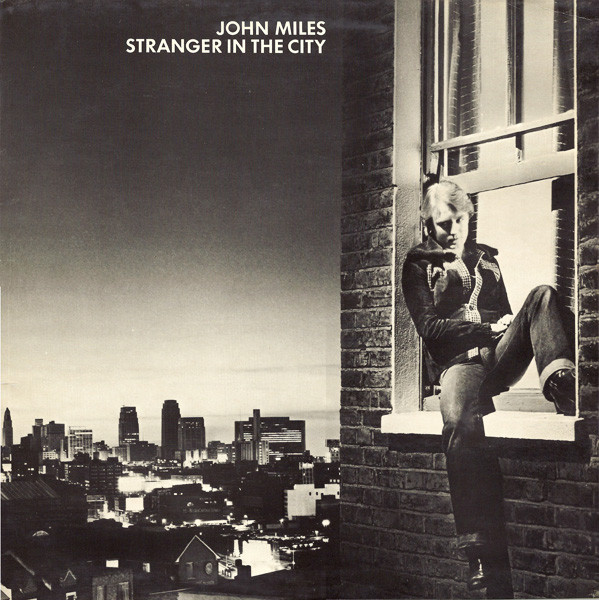
Stranger In The City.
During the summer of 1976, John Miles was touring, supporting both Jethro Tull and the Rolling Stones. Despite what was a gruelling touring schedule, John Miles still found time to begin work on his sophomore album, Stranger In The City.
This time around, the eight of the nine songs on Stranger In The City were penned by John Miles and and Bob Marshall. The exception was Barry Black penned Do It Anyway. Recording of Stranger In The City began in the summer of 1976.
Despite the success of Rebel, Alan Parsons didn’t return to produce Stranger In The City. Instead, singer-songwriter Rupert Holmes took charge of producing John Miles’ newly expanded band. Recording took place at Mediasound in New York and Utopia Studios in London. That was where the newly expanded lineup of the band got to work.
Drummer Barry Black and bassist Bob Marshall were joined by keyboardist Gary Moberley. John added lead vocals, and played piano and guitar. However, the album wasn’t completed during the summer of 1976. So John and his band returned in October 1976, before heading off on their European tour.
In January 1977, Manhattan Skyline was released as the lead single from Stranger In The City. It failed to chart on either side of the Atlantic. For John Miles and everyone at Decca Records, this was a worrying time. However, in February 1977, Stranger In The City was released.
Reviews of Stranger In The City had been mostly positive. The occasional critic wasn’t convinced that Stranger In The City was as cohesive an album as Rebel. It was a much more eclectic album, with everything from pop to blue eyed soul, funk, rock and soul. Slow Down even married rock and funk with disco. Now that critics had cast their vote on Stranger In The City, the album was released.
When Stranger In The City in February 1977, the album reached just thirty-seven in the UK. However, in America, Stranger In The City proved much more popular, reaching ninety-three in the US Billboard 200. Elsewhere, the album reached the top twenty in Norway and Sweden. That, however, wasn’t the end of the commercial success.
Slow Down was released as a single in May 1977. It reached number ten in the UK and thirty-four in the US Billboard 200. Given its dance-floor friendly sound, Slow Down gave John Miles a hit in the US Dance Music charts, when it reached number two. The John Miles’ success story continued apace.
Clive Davis at Arista Records was watching events unfold. He had an unrivalled reputation as a talent spotter, and wanted John Miles on Arista Records’ roster. This he soon discovered, would come at a price. That price was in the region of $500,000. Undeterred, Clive Davis wrote the cheque, and John Miles was now signed to Arista Records in America. Back home in Britain, The Decca Years continued.
Zaragon.
Following the release of Stranger In The City, John Miles spent much 1977 touring the album. Then in October 1977, John began to record his much-anticipated third album, Zaragon.
For Zaragon, the John Miles and Bob Marshall songwriting team wrote seven new songs. This included the eight minute epic Plain Jane, and the three part suite Nice Man Jack. These seven songs were recorded by John’s original band with Rupert Holmes again taking charge of production.
When recording began in October 1977, there was no sign of keyboardist Gary Moberley. He had left the band. This left just drummer Barry Black and bassist Bob Marshall. John added lead vocals, and played keyboards, synths and guitar. This time, it was decided that there should be no orchestral arrangements.
John Miles wanted to be able to replicate the songs live. Just like many progressive rock groups, including Emerson, Lake and Palmer, John had discovered the more complicated the arrangement, the harder it is to replicate live. It seemed John had learned his lesson after two years of trying to replicate the arrangements on Rebel and Stranger In The City. That may not have been the only reason.
Music was changing, with punk, post punk and disco among the most popular musical genres So were people’s opinions on orchestral arrangements. Many critics and record industry insiders thought that albums with orchestral arrangements were yesterday’s sound. For John Miles, he was moving towards rock epics, like Overture, which lasted nine minutes. Keyboards and synths were to the fore, and replaced the lush, orchestral arrangements of previous albums. Over the course of three months, John Miles had reinvented himself. The reinvention of John Miles was complete in December 1977, when Zaragon was handed over to Decca Records.
With Zaragon complete, John Miles was preparing for his next tour. He felt he needed another keyboardist to augment the band. The man he turned to was Brian Chatton, who would head out on tour with John Miles in March 1978. Before that, the lead single from Zaragon was released.
No Hard Feelings, a beautiful piano based was chosen. It was released in late February 1978, but failed to chart. This didn’t bode well for the release of Zaragon.
At least Zaragon was well received by most critics. This mixture of the occasional ballad and rock epics proved to be a popular and potent combination. Especially songs like Overture, I Have Never Been in Love Before, No Hard Feelings and Zaragon. They were among the highlights of Zaragon, which was released in March 1978.
Zaragon was released in UK on Decca Records, and reached forty-three. This was regarded as a success given how music had changed over the last year or so. Elsewhere, Zaragon reached number three in Norway and Sweden. John had built up a loyal following after years of constantly touring Europe. One place where John wanted his commercial success to continue was America.
In America, Zaragon was John Miles’ debut for Arista Records. John was hoping that Zaragon would get his career with Arista Records to a successful start. Especially since Clive Davis had spent $500,000 it took to buy John Miles out of his American recording contract. The pressure was on and John wanted to justify the $500,000 price tag.
Alas, John was out of luck, and Zaragon reached just 210 in the US Billboard 200. It was John’s first album not to chart in America. For John this was a bitter blow. All was not lost though.
Maybe though, a performance on British television and radio would help sales of Zaragon?

BBC In Concert (March 1978).
Back home in Britain, one of the BBC’s most popular music shows on television and radio was Sight and Sound In Concert. It allowed an artist to be heard by a vast audience. Many of them had a voracious appetite when it came to buying albums. A good performance on Sight and Sound In Concert, would given Zaragon and the rest of John Miles’ back-catalogue.
So on 11th March 1978, John Miles and his band headed to Queen Margaret’s College, London. Drummer Barry Black and bassist Bob Marshall were joined by keyboardist Brian Chatton. Lead by John, they worked their way through a ten song set.
Opening with Nice Man Jack from Zaragon, John Miles returned to Stranger In The City, for Music Man. Then it was a return to Zaragon, for Plain Jane, Overture, Zaragon and No Hard Feelings. Having showcased Zaragon, John returned to his sophomore album Stranger In The City. Stand Up (and Give Me A Reason gave way to Stranger In The City. With just two songs to go, John returned to Zaragon and played Borderline, before closing the show with Slow Down from Stranger In The City. One song was missing, from what had been another accomplished and polished performance from John…Music. What John would given for another song like Music, for his fourth album for Decca Records, MMPH-More Miles Per Hour.
MMPH-More Miles Per Hour.
John Miles’ decision to eschew orchestral arrangements on Zaragon had backfired. It was time to rethink his future musical direction. Maybe it was time for John to return to what had become his trademark sound. That wasn’t the other decision that he would have to make; did Rupert Holmes have a future as John’s producer.
Rupert Holmes had neither built on, nor replicated the success of the Alan Parsons’ produced Rebel. Maybe he should’ve cautioned John Miles about changing direction on Zaragon? What was clear, that neither Stranger In The City nor Zaragon, replicated the quality nor commercial success of Rebel. So a decision was made to bring Alan Parsons back to produce MMPH-More Miles Per Hour.
With Alan Parson back onboard, Andrew Powell returned to take charge of the orchestral arrangements on MMPH-More Miles Per Hour. It comprised eight songs penned by John Miles and Bob Marshall. Recording began in November 1978, at Super Bear Studios, near Nice, in France. That was where John Miles and his band began work. It featured drummer Barry Black and bassist Bob Marshall were joined by keyboardist Brian Chatton. The recording of MMPH-More Miles Per Hour was completed at Union Studios, in Munich, Germany. January 1979. Now John’s thought’s turned to the release of his fourth album.
Just three months later, MMPH-More Miles Per Hour was released in April 1979. Mostly, it was to critical acclaim. MMPH-More Miles Per Hour was a much more cohesive and focused album, which featured carefully crafted songs. They had been sweetened by Andrew Powell’s orchestral arrangements, and definitely benefited from Alan Parsons’ guiding hand. He seemed to able to get the best out of John Miles. Maybe this would result in a change in fortune for John?
Can’t Keep a Good Man Down was released as the lead single from More Miles Per Hour, but failed to chart. When MMPH-More Miles Per Hour was released, it stalled at forty-six in the UK, and failed to enter the US Billboard 200. A small crumb of comfort was that MMPH-More Miles Per Hour reached number six in Norway and ten in Sweden. That was as good as it got.
Neither of the other two singles from MMPH-More Miles Per Hour, Oh Dear, nor (Don’t Give me Your) Sympathy charted. For John Miles, it must have been a frustrating way to end The Decca Years. MMPH-More Miles Per Hour. like all of John’s Decca Records’ albums, deserved to fare better.

After More Miles Per Hour, John Miles parted company with Decca Records. After just four years and four albums, The Decca Years were over. They feature on the recently released five disc box set, The Decca Years. It was released by Decca Records, and includes the four albums John Miles released for Decca Records. The fifth disc features the BBC Live In Concert recording from March 1978. It’s a tantalising taste of John Miles and his tight, talented band at their best. The live disc is a welcome addition, to The Decca Years. So are the bonus tracks that feature on each disc. That’s why The Decca Years is without doubt, a truly comprehensive retrospective of John Miles’ early career.
The Decca Years were also the most productive period of John Miles’ career. Not only was John averaging an album a year, but these albums featured what’s without doubt the best material of a recording career that spanned four decades. Incredibly, the four studio albums that feature in The Decca Years box set, were the most successful of John Miles’ career. Never again did he reach the same heights. That’s despite releasing another six studio albums.
Despite not releasing a studio album since Tom and Catherine in 1999, John continues to play live. He’s also regular at the Proms Concerts across Europe, where he will regularly play his classic single. That’s the song that’s become synonymous with John Miles. However, Music is only part of the John Miles’ story, which is documented on The Decca Years and what’s without doubt, some of the best music of his long and illustrious career.
JOHN MILES-THE DECCA ALBUMS.


PAT THOMAS-COMING HOME-ORIGINAL GHANAIAN HIGHLIFE AND AFROBEAT CLASSICS.
PAT THOMAS-COMING HOME-ORIGINAL GHANAIAN HIGHLIFE AND AFROBEAT CLASSICS.
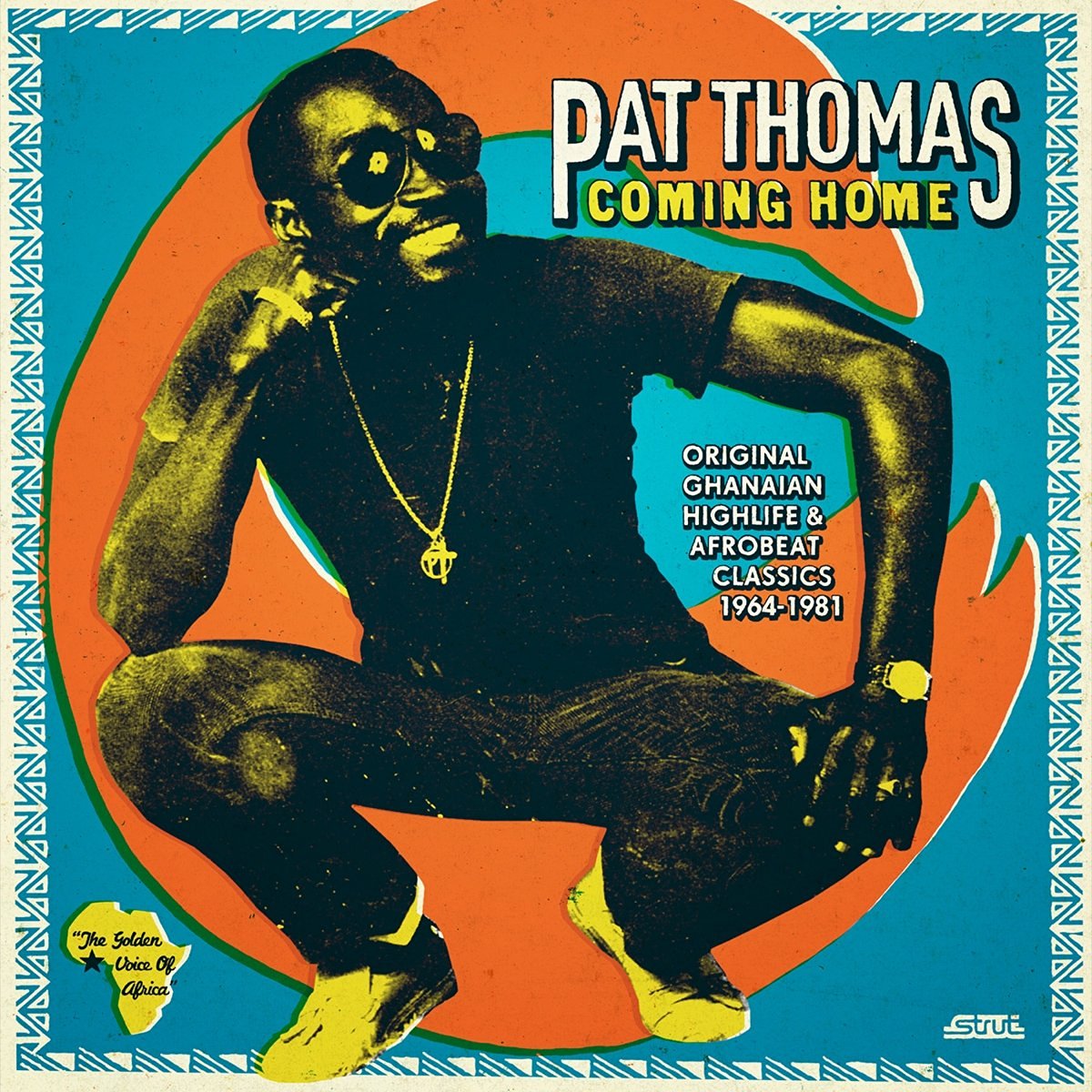
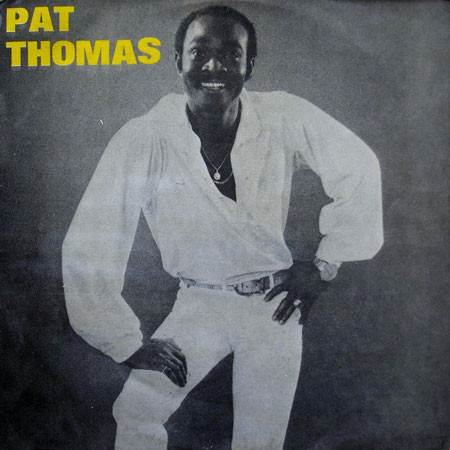
During a long and illustrious career that has spanned six decades, Ghanaian highlife master Pat Thomas, became known as the “the golden voice of Africa.” Now aged sixty-five, and one of the veterans of African music, Pat Thomas continues to make music. That’s no surprise.
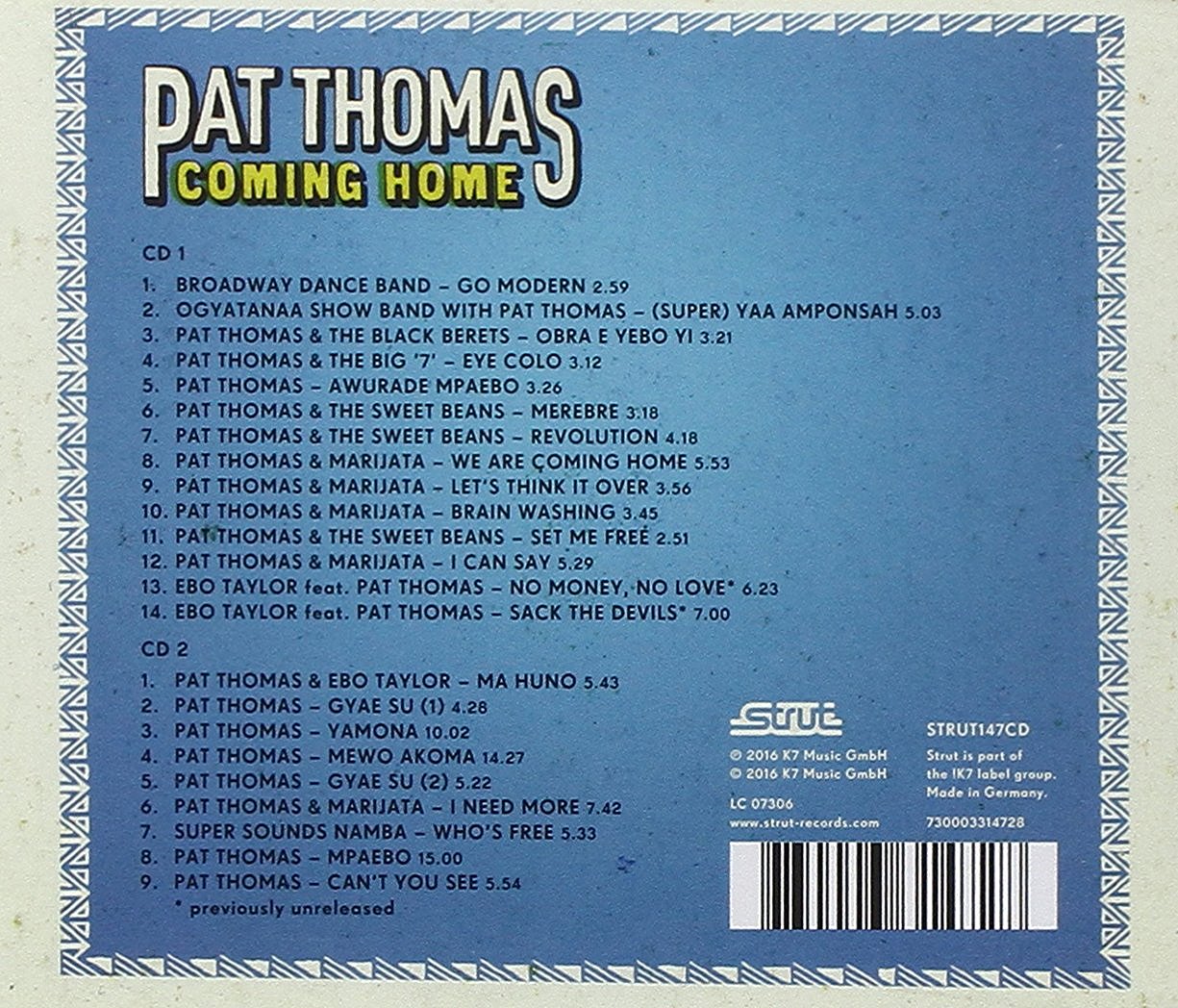
All Pat Thomas ever wanted to do was sing highlife. He’s been doing since his career began in 1966. Since then, Pat Thomas has reinvented himself musically several times. He’s recorded everything from big band highlife in the late sixties, right through to the burger highlife of the early eighties. After this, the reinvention of Pat Thomas continued. It’s documented on Strut Records new two disc Pat Thomas retrospective, Coming Home-Original Ghanian Highlife and Afrobeat Classics-Original Ghanian Highlife and Afrobeat Classics. It features twenty-three tracks, including two previously unreleased tracks from “the golden voice of Africa.” His story began in 1940.
Pat Thomas was born in Agona, in the Ashanti region of Ghana in 1951. Music was in Pat’s blood. His father taught music theory, his mother was a bandleader and Pat’s uncle was the legendary Ghanian guitarist King Onyina. Given his background, it wasn’t surprising Pat Thomas would later make a career out of music.
Especially since Pat Thomas was surrounded by music. Growing up, he listened to all types of music. However, it was highlife that struck a nerve with Pat. By the time he was in high school, Pat Thomas dreamt of singing highlife. However, he was too young.
This wasn’t going to stop Pat Thomas embarking upon a musical career. So while he was at high school, Pat Thomas started singing covers of songs by Stevie Wonder, Nat King Cole, Miriam Makeba and Jimmy Cliff. While this wasn’t ideal, it was a start. He knew everyone had to start somewhere.
The next chapter in Pat Thomas’ career began in 1966. Pat was only fiteen, but something of a musical prodigy. This was in part, thanks to his uncle. He took Pat under his wing. Soon, he was able to write music, and play guitar and drums. However, it was as a singer that Pat Thomas excelled. Already he was a familiar face in local clubs, and was perceived as one of the rising stars of the local music scene. That’s why he was hired as an arranger by one of the biggest names in Ghanian music, Ebo Taylor.
Ebo Taylor had just returned from London, when he hired Pat Thomas as an arranger. He and Fela Kuti had been studying music in London. Now Pat was home, he was determined to put what he had learnt into practice. This included modernising highlife.
With Pat Thomas onboard, Ebo Taylor embarked upon a journey that eventually, would see the transformation of highlife. It was a meeting of minds. They gave highlife a Western twist. Horns were added. So were guitars and vocals. This once traditional form of African music was about to be transformed by two of Ghana’s most progressive musicians.
Over the next few years, Pat Thomas and Ebo Taylor played together in various bands. This included the Stargazer’s Dance Band and the Broadway Dance Band. Pat was the arranger and vocalist, while Ebo played the guitar. They were a formidable duo. That’s apparent on the Pat Thomas penned Go Modern, which the Broadway Dance Band released as a single on the Ambassador label. It opens the Coming Home-Original Ghanian Highlife and Afrobeat Classics-Original Ghanian Highlife and Afrobeat Classics compilation, and featured not just Pat’s recording debut as bandleader, but his first recording with Ebo Taylor. However, despite their close friendship, Pat Thomas made the decision to journey to Britain.
He wasn’t the first African musician to make this journey. Nor would he be the last. Pat made the Journey to London in 1970. During the time he spent in London, he toured with the Uhuru Dance Band. Then in 1971, Pat returned home and moved to Accra.
That’s where Pat Thomas and Ebo Taylor renewed their musical partnership in 1971. That’s when Pat joined the Blue Monks. Again, Pat was the vocalist and Ebo the guitarist. They were resident at the Tip Toe Nite Club, where the Blue Monks would make their mark on Ghanian musical history. They’re now remembered as one of most important and influential Ghanian bands of the early seventies. Just like before, Pat and Ebo went their separate ways, but would later reunite.
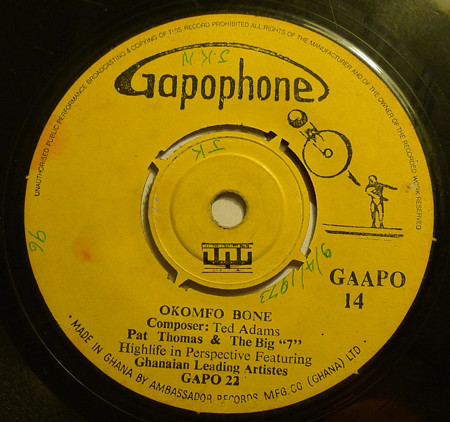
Before that, Pat Thomas and The Big 7” released a couple of singles, including Eye Colo in 1972. It features on the Coming Home-Original Ghanian Highlife and Afrobeat Classics compilation, and is a reminder of what was a memorable collaboration. They reunited in 1973 to record and release Okomfo Bone as a single. However, the collaboration between Pat Thomas and The Big 7” wasn’t particularly successful, and they parted. Not long after this, Pat was on the move.
This time, Pat Thomas moved to the Ivory Coast. After a while, Pat decided to return home, and once more, reunited with Ebo Taylor. In 1974, they joined Sweet Beans, a group sponsored by the Ghana Cocoa Board.
Later in 1974, Pat Thomas had recorded an album with The Sweet Bean. They were billed as Pat Thomas and The Sweet Beans, and their album False Lover was released on Gapophone Records later in 1974. Three of the songs Pat had written for the album, were Merebre, Revolution and Set Me Free. They feature on the Coming Home-Original Ghanian Highlife and Afrobeat Classics retrospective, and are a tantalising taste of what was Pat Thomas and The Sweet Beans’ one and only album. However, for Pat Thomas, this was just the start of his recording career.
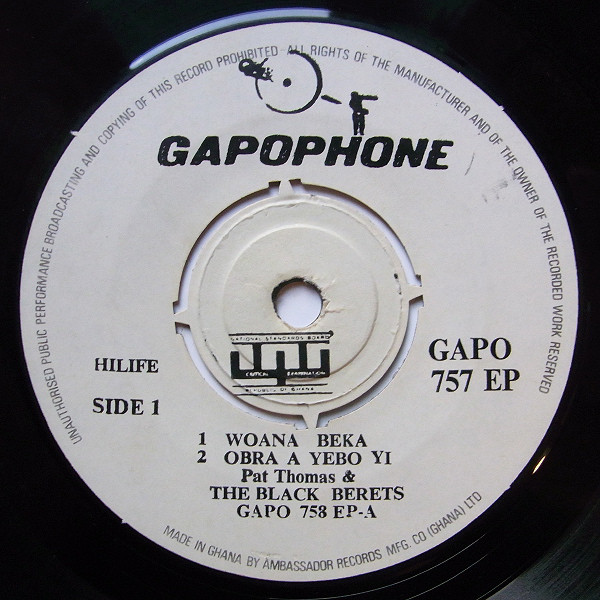
Around this time, Pat Thomas recorded three other songs from the Coming Home-Original Ghanian Highlife and Afrobeat Classics retrospective. Details of exactly where and the recordings took place is unclear. Even debates surrounds the exact release date. It’s thought that The Ogyatanaa Show Band (Super) Yaa Amponsah and Pat Thomas and The Black Berets Obra E Yebo Yi were released in 1974. Similarly, it’s thought that Pat Thomas cut and released Awurade Mpaebo in 1975. Alas, over forty years later, details are somewhat sketchy. The main thing is that the music has survived, and shows Pat Thomas maturing and evolving musically.
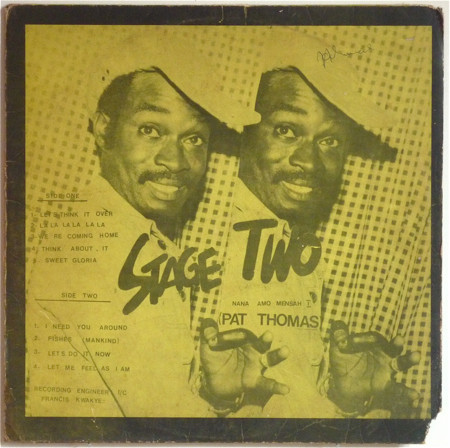
Pat Thomas’ career blossomed during 1976, which was one of the busiest and most important years of his career. Pat released a trio of albums. This included his debut solo album Stay There, which was released on Gapophone Records in 1976. So was the followup Stage Two, which featured We Are Coming Home-Original Ghanian Highlife and Afrobeat Classics and Let’s Think It Over. They feature on the Coming Home-Original Ghanian Highlife and Afrobeat Classics compilation, and already, it’s apparent why Pat Thomas would later be called “the golden voice of Africa.”
Having released two solo albums during 1976, Pat Thomas released his live album Wednesday At Tip Toe. That night his performancewas recorded for posterity, and released on Gapophone Records. This was fitting, as Pat had often took to the stage at Tip Toe, when The Blue Monks had a residency. The other album Pat worked on during 1976, was his first collaboration with Marijata.
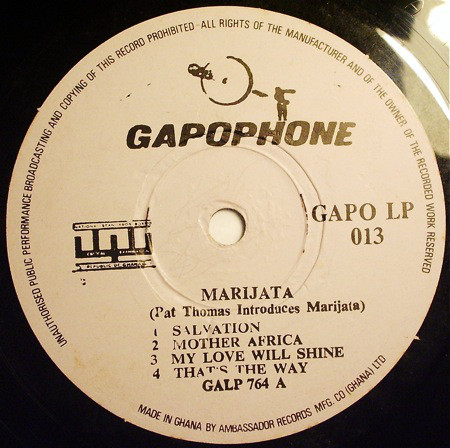
This was Pat Thomas Introduces Marijata, which was released on Gapophone Records, in 1977. Two of its highlights, Brain Washing and Can Say feature on the Coming Home-Original Ghanian Highlife and Afrobeat Classics compilation. A year later, Pat Thomas Introduces Marijata.
This was the first of two albums Pat released with Marijata. The followup was Pat Thomas and Marijata, which was released in 1978. After that, Pat decided to concentrate on his solo career.
That was the plan 1978. However, Pat Thomas was reunited with Ebo Taylor in 1978. Soon, they embarked on a collaboration with another legend of African music, Fela Kuti’s former drummer, Tony Allen.
At the time, Pat Thomas, Ebo Taylor and Tony Allen were at the peak of their powers. They were like an African supergroup. The collaboration came about when Tony Allen was rerecording the soundtrack to Black President in Accra. When Tony had some downtime, he headed to Kumsai to record with Pat and Ebo. Sadly, the sessions never saw the light of day, after they were destroyed in a fire. Sadly it would be, four decades later, before Pat Thomas would collaborate with his old friends.
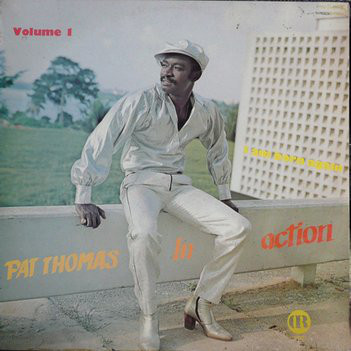
Later in 1978, Pat Thomas returned with the first in a trilogy of albums, In Action Volume 1-I Am Born Again. Without doubt, the album’s highlight was the beautiful, soulful ballad I Can’t See. It’s a very welcome addition to the Coming Home-Original Ghanian Highlife and Afrobeat Classics compilation. The same can be said of Mewo Akoma, a near fifteen minute epic that takes up side two of In Action Volume 2-Asante Kotoko. It was released in 1979. So was the final instalment in the trilogy, In Action Volume 3-I Wanna Know. By then, Ghana was a troubled country.
Ghana was in the throes of a coup d’état lead by Flight Lieutenant Jerry Rawlings. Many Ghanians fearing their safety, fled the country. Those that remained, their lives were in danger. Nothing was sacred. To make matters worse the military junta set about destroying the Ghanian music industry. They went as far as destroying the master tapes in Gapophone Records’ vaults. Musicians like Pat Thomas looked on helplessly. They were determined not to be silenced. However, they were realists, and knew that it they stayed in Ghana, their loves were in danger. So later in 1979, Pat Thomas left Ghana, and headed for London.
London was only a temporary home for Pat Thomas. He moved to Berlin, where he hooked up with other Ghanian musicians. Augmented by some local musicians, they recorded the album 1980. It featured an eclectic mixture of Afrrobeat, disco and reggae. Proof of that, is Yamona: Disco Hi-Life, which features on the Coming Home-Original Ghanian Highlife and Afrobeat Classics retrospective. 1980 became one of the early records of burger highlife scene. This came about, after Ghanians living in Germany became to call themselves burgers. In doing so, a new musical scene was born, and Pat was at the centre of it.
Things were improving for Pat Thomas, after the move to Berlin. He released Asawo Do was released as a single, and it gave Pat a hit in Germany and Ghana. Belatedly, Pat’s music was finding a wider audience. This made it the perfect time to for Pat to release his collaboration with his old friend Ebo Taylor.
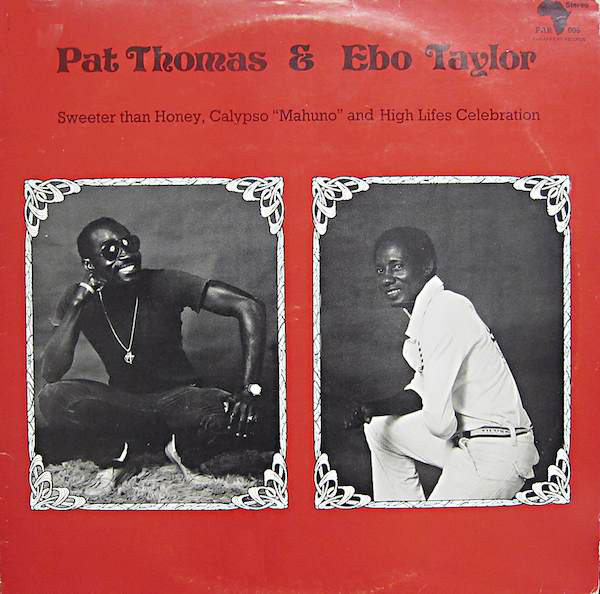
Pat Thomas and Ebo Taylor had recorded a truly eclectic album, Sweeter Than Honey Calypso ‘Mahuno” And High Lifes Celebration. With a hugely talented band, they fused elements of Afrobeat, calypso funk, highlife, reggae and soul. On of the highlights of this extremely rare and valuable album is Ma Huno. It features on Strut Records’ Coming Home-Original Ghanian Highlife and Afrobeat Classics compilation, and is a reminder of a groundbreaking album. Alas, it didn’t sell in huge quantities. Although was disappointing, Pat soon, began work with a new band, Super Sounds Namba.
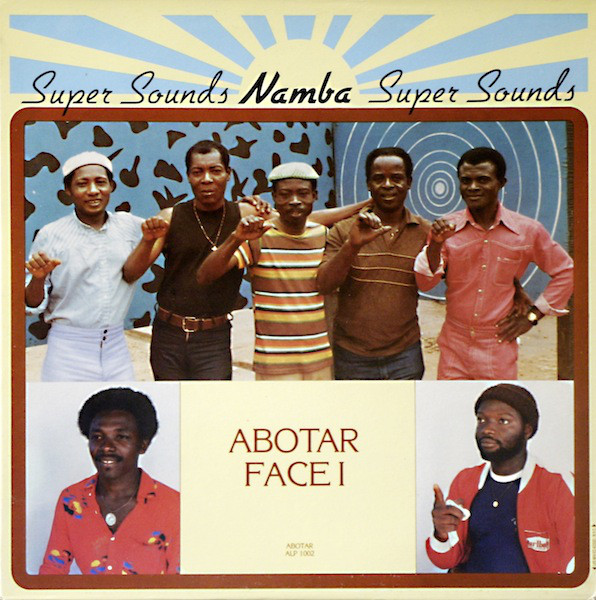
Pat Thomas joined another band comprising Ghanian musicians, Super Sounds Namba. They headed to Otodi Studio, in Togo to record their one and only album Super Sounds. It was released in 1981, and nowadays a collectors item. One track stands out, the closing track Who’s Free, which is features on the Coming Home-Original Ghanian Highlife and Afrobeat Classics compilation. It’s a truly poignant track, in light of the political situation in Ghana.
The people who hadn’t fled Ghana certainly weren’t free. They lived under military rule. Musicians who were seen as subversives, who spoke against the government and now military rulers, couldn’t live safely in Ghana. Pat Thomas realised that in 1979, and fled to London. Since then, he had moved to Berlin, but his life was in a state of flux. He couldn’t return home to the political situation changed. For Pat, this was a worrying time. Still, though, he continued to make music.
In 1982, Ebo Taylor, Pat Thomas and Uhuru Yenzu collaborated on the album Hitsville Re-Visited. Accompanied by an all-star band, this Ghanian supergroup won friends and influenced people when the album was released in 1982. The following year, Pat released another solo album.
Pat Thomas released In His Style From London-Hot and Cool Highlife in 1983. This was the second live album of Pat’s career. It had been recorded while Pat was touring in 1983. A year later, Pat released an album with one of his oldest friends, Ebo Taylor.
1984 saw the release of Pat Thomas and Ebo Taylor released another collaboration. This was their eponymous debut album. It was released on Dannytone Records and featured two of Ghanian music’s most influential musicians. They had been working together on and of for eighteen years. So it was no surprise that they produced an album that was released to critical acclaim. However, the last few years hadn’t been easy. Both men were exiles. Despite this, Pat was about to enter the most productive period of his career.
Between 1985 and 1988, Pat released four studio albums and a collaboration. The first of the studio albums was Asanteman, which was released in 1985. Highlife Greats Mbrepa followed in 1986. By then, Pat Thomas’ star was in the ascendancy. He was a star of the hamburger highlife scene. Everything was going well for Pat Thomas. Despite this, pat made the decision to leave London behind. He moved to Canada, which was home for Pat Thomas for the next ten years.
Now living in Canada, this productive period continued. In 1987, Pat released Pat Thomas and Friends and his solo album Santrofi. The following year, 1988, Pat released a new solo album Me Do Wiase. It was around this time Pat released his Mpaebo album. This was the last album Pat released during the eighties.
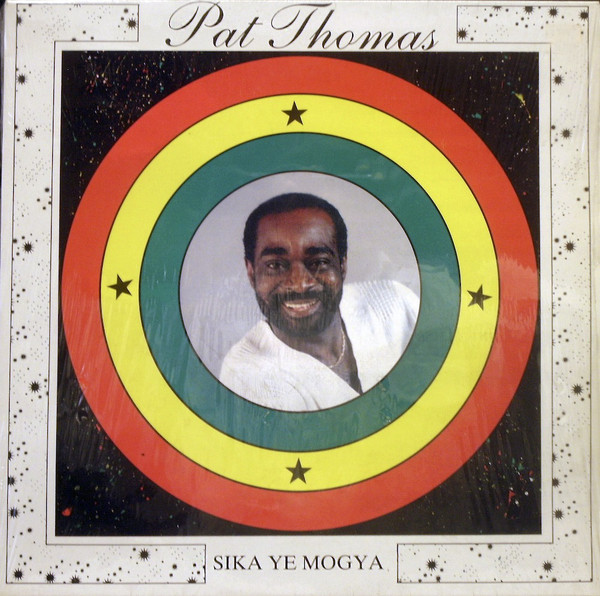
Three years later, and Pat Thomas returned with a new album, Sika Ye Mogya in 1991. This was the last album Pat released for five years. No longer was Pat as productive as he had once been. However, in 1996 Pat returned with Nkae, which was his Canadian swan-song. Soon, he would be returning home.
Pat Thomas returned to Ghana in 1997. Soon, Pat Thomas was back where he belonged, at the top of the Ghanaian music scene. His comeback was complete in 2008, when he starred at the Made In Germany burger highlife festival. However, since then, Pat Thomas has stayed and played in Ghana.
While his old friend Ebo Taylor has travelled overseas, and had reinvented himself, becoming an international star, Pat Thomas was happy to remain in Ghana. He had spent eighteen years living overseas. Now he was home. Although he wasn’t playing live as much as he once had, he was still in demand for gala dinners and corporate functions. Nor had Pat recorded an album for a long time. However, in 2013, he got the chance to return to the studio.
Tony Allen got in touch with Pat Thomas and Ebo Taylor. He wanted to record an album with them. Pat and Ebo were just as keen. So in January 2014, the three men headed to a studio in Accra. They were joined by what can only be described as an all-star band.
Among the all star band was drummer Tony Allen, bassist Emmanuel Ofori and guitarist Ebo Taylor. They were joined by percussionist Eric Owusu and saxophonist Abaranel-Wolff. He co-produced the album with multi-instrumentalist Kwame Yeboh.. They provided the backdrop for Pat Thomas’ vocals. The resulting album became Pat Thomas and Kwashibu Area Band’s eponymous debut album. It was released by Strut Records in 2015. Now a year later, in 2016, Strut Records have just released the most comprehensive retrospective of Pat Thomas’ long and illustrious career.
Coming Home-Original Ghanian Highlife and Afrobeat Classics-Original Ghanian Highlife and Afrobeat Classics documents the career of Pat Thomas, “the golden voice of Africa.” To document such a lengthy career, takes not one, but two CD. They feature a total twenty-four tracks, including two previously unreleased tracks from Ebo Taylor featuring Pat Thomas, No Money. No Love and Sack The Devils. That’s just one part of the story.
There’s also song from Pat Thomas’ time with the Broadway Dance Band, and his collaborations with The Ogyatanaa Show Band, The Black Berets, The Big 7”, The Sweet Beans and Marijata. That takes care of disc one of Coming Home-Original Ghanian Highlife and Afrobeat Classics-Original Ghanian Highlife and Afrobeat Classics. Then on disc two, there’s further collaborations with Ebo Taylor, Marijata and a track from Super Sounds Namba’s album Super Sounds. This must make Coming Home-Original Ghanian Highlife and Afrobeat Classics the definitive overview of Pat Thomas’ career. Especially for newcomers to Pat Thomas’ music.
Having said that, it couldn’t have been easy narrowing Coming Home-Original Ghanian Highlife and Afrobeat Classics down to just twenty-four tracks. I’m sure Strut Records could’ve picked any number of other tracks. That’s not surprising. Pat Thomas has enjoyed a lengthy solo career, has been a member of several groups and collaborated with many other artists. There’s definitely enough for Coming Home-Original Ghanian Highlife and Afrobeat Classics Volume 2. Let’s hope so.
Meanwhile, Coming Home-Original Ghanian Highlife and Afrobeat Classics is a welcome release, and a reminder of Ghanaian highlife master Pat Thomas, “the golden voice of Africa,” in his musical prime.
PAT THOMAS-COMING HOME-ORIGINAL GHANAIAN HIGHLIFE AND AFROBEAT CLASSICS.

EMERSON, LAKE AND PALMER 2016 REISSUES.
EMERSON, LAKE AND PALMER 2016 REISSUES.
The seventies was a golden age for rock music. Especially progressive rock. One of the giants of British progressive rock were Emerson, Lake and Palmer. They were formed in 1970, and went on to enjoy commercial success and critical acclaim on both sides of the Atlantic. That was the case right up until Emerson, Lake and Palmer split-up in 1979.
By then, Emerson, Lake and Palmer had amassed nine consecutive gold discs in America. Just like Led Zeppelin and Jethro Tull, Emerson, Lake and Palmer were more popular in America, than they were in Britain.
In Britain, two of Emerson, Lake and Palmer’s albums were certified gold, while another were certified silver. Emerson, Lake and Palmer were just the latest band to be under appreciated in their home country. That was a great shame.
Emerson, Lake and Palmer were without doubt, one of the most ambitious and innovative of the British progressive rock bands. They released seven groundbreaking studio albums, where they pushed musical boundaries to their limits. That’s not forgetting the two live albums, Pictures At An Exhibition and Welcome Back My Friends to the Show That Never Ends… Ladies and Gentlemen. They’re among the six Emerson, Lake and Palmer albums that have been recently reissued by BMG.
These six albums are Emerson, Lake and Palmer’s first four studio albums. This began with Emerson, Lake and Palmer in 1970, and then 1971s Tarkus, 1972s Trilogy and 1973s Brain Salad Surgery. They’re joined by Pictures At An Exhibition and Welcome Back My Friends to the Show That Never Ends… Ladies and Gentlemen. Each of the six albums have been reissued as double albums, with the second disc featuring bonus tracks galore. This reissue program has been overseen by the two remaining members of Emerson, Lake and Palmer, Greg Lake and Carl Palmer. They’re responsible for what is a lovingly curated reissue program, that does justice to Emerson, Lake and Palmer’s back-catalogue. Their story began as the sixties gave way to the seventies.
The Emerson, Lake and Palmer story began back in in 1970. That was when Keith Emerson and Greg Lake first met at the Filimore West, in San Francisco. Both of them were at a musical crossroads. Keith was a member of The Nice, while Greg Lake was a member of King Crimson. Nether Keith nor Greg felt fulfilled musically. So, the decided to form a new band.
This new band would feature Keith on keyboards, Greg on bass and a drummer. Their first choice for a drummer was Mitch Mitchell, who was without a band, after The Jimi Hendrix Experience split-up. They agreed to jam together. Then the music press heard about this jam session.
Rumours started doing the rounds that Jimi Hendrix was going to join this new supergroup. That put an end to the jam session. It never took place. Jimi Hendrix had never been asked to join the supergroup. Mitch Mitchell meanwhile, lost interest in the project. This presented a problem. Keith and Greg still didn’t have a drummer. Then Robert Stigwood, who was then the manager of Cream, suggested Carl Palmer’s name.
Carl Palmer was another experienced musician. He’d previously been a member of The Crazy World Of Arthur Brown. At that time, he was a member of Atomic Rooster. So Carl was approached. He was, at first, reluctant to leave Atomic Rooster, which he’d cofounded. However, when he spoke to Keith and Greg he realised that he could be part of something special.
Having left Atomic Rooster, he became the third member of the newly formed supergroup Emerson, Lake and Palmer. They made their debut at The Guildhall, Plymouth, on 23rd August 1970. Then on 26th August 1970, Emerson, Lake and Palmer stole the show at the Isle Of Wight Festival. This resulted in Emerson, Lake and Palmer being offered a recording contract by Atlantic Records.
Ahmet Ertegün the President of Atlantic Records realised the potential in Emerson, Lake and Palmer. Here was a band who wouldn’t just sell a huge amount of records, but could fill huge venues. So, not long after signing Emerson, Lake and Palmer, Ahmet Ertegün sent them into Advision Studios, London, where they recorded their eponymous debut album.
Emerson, Lake and Palmer.
At Advision Studios, Emerson, Lake and Palmer recorded ten tracks. They became Emerson, Lake and Palmer. Although this was meant to be the birth of a supergroup, the ten tracks on Emerson, Lake and Palmer came across as a series of solo pieces. However, Emerson, Lake and Palmer were a new band, who’d just recorded an eclectic and innovative album.
Although many people refer to Emerson, Lake and Palmer as prog rock band, they’re much more than that. Their music is eclectic. They draw inspiration from a variety of sources on Emerson, Lake and Palmer. This includes folk rock, jazz, psychedelia, rock and classical music. The classical influence is apparent on the opening track, The Barbarian and Knife Edge. Elsewhere, Take A Pebble finds Emerson, Lake and Palmer heading in the direction of jazz, with folk guitar and improvisation playing a part in this band workout. The Three Fates was the first three part suite Emerson, Lake and Palmer wrote and recorded. However, Lucky Man, a folk rock ballad was one of the album’s highlights, and kept until last. It found Emerson, Lake and Palmer experimenting.
This determination to experiment, is one of the reasons some of the music on Emerson, Lake and Palmer sounds futuristic. That’s in part to Keith Emerson’s use of the Moog synth. The result was a pioneering, innovative album that would launch Emerson, Lake and Palmer’s career.
When critics heard Emerson, Lake and Palmer, they hailed the album as innovative and influential. On its release in the UK in October 1970, Emerson, Lake and Palmer reached number four. Three months later, on New Year’s Day 1970, Emerson, Lake and Palmer was released in the US. It reached number eighteen in the US Billboard 200 and was certified gold. Ahmet Ertegün, the President of Atlantic Records had been vindicated. Emerson, Lake and Palmer were on their way to becoming rock royalty.
Even with Emerson, Lake and Palmer well on their way to becoming rock royalty, they couldn’t have imagined that in 2016, their eponymous debut album would be reissued forty-six years later in 2016. That’s the case though.
The reissue of Emerson, Lake and Palmer features the 2012 remaster of the album on disc one. Then on disc two, is The Alternate Album, which features Steven Wilson’s 2012 Mix. There’s also four bonus tracks, including Take A Pebble, Knife Edge and two different takes of Lucky Man. This is no different to the 2012 Sony reissue. The only difference between the 2012 and 2016 versions, is that 2012 version came with a DVD, which included various mixes. Ultimately, though, it’s up to music fans to choose which version they prefer. It’s a similar case with Tarkus.

Tarkus.
It was a case of striking when the iron was hot for Emerson, Lake and Palmer. They returned to Advision Studios, in London to record what became their sophomore album Tarkus. It was much more of a “band” album. Emerson, Lake and Palmer were now a tight, musical unit. This was very different from Emerson, Lake and Palmer, which was more like an album of solo pieces. Tarkus saw the birth of Emerson, Lake and Palmer as one of the giants of prog rock.
Tarkus was released in June 1971. That wasn’t originally the plan. Instead, Pictures At An Exhibition was meant to be Emerson, Lake and Palmer’s sophomore album. This was a live album which was recorded in March 1971. It saw Emerson, Lake and Palmer interpret Modest Mussorgsky’s opus Pictures At An Exhibition. it was a groundbreaking album. There was a problem though. Emerson, Lake and Palmer’s management didn’t agree. They weren’t sure that what essentially a interpretation of a classical suite was the direction Emerson, Lake and Palmer should be heading. So, Tarkus became the followup to Emerson, Lake and Palmer.
On its release in June 1971, critics realised that Tarkus marked a much more united Emerson, Lake and Palmer. They were well on the way to finding their trademark sound. Gone were ballads and jazz-tinged tracks. Instead, it was prog rock all the way. Record buyers loved Tarkus. It reached number one in the UK. Over the Atlantic, Tarkus reached number nine in the US Billboard 200 and was certified gold. Emerson, Lake and Palmer had released the best, and most successful album of their career.
So it’s no surprise that Tarkus has been reissued as a two disc set. The first disc features the 2012 remaster of Taurkus. Disc two features The Alternate Album, which comprises Steven Wilson’s 2012 Mix. There’s also a trio of bonus tracks, including Oh, My Father, Unknown Ballad and an alternate tale of mass. Again, the track listing is no different to the 2012 Sony reissue. The only thing missing from the 2016 reissue, is the DVD. Despite the similarities between the 2012 and 2016 versions of Tarkus, was one of Emerson, Lake and Palmer’s finest albums. That was why, following the commercial success of Tarkus, Emerson, Lake and Palmer’s were keen to release Pictures At An Exhibition later in 1971.

Pictures At An Exhibition.
Three months before the release of Tarkus, Emerson, Lake and Palmer arrived at Newcastle City Hall, in Newcastle, England on the 26th March 1971. They were about to record their first live album, Pictures At An Exhibition. This was no ordinary live album.
Instead, Emerson, Lake and Palmer had decided to adapt Russian classical composer Modest Mussorgsky’s Pictures At An Exhibition. This was one of the first times classical music had been adapted by a rock band. That night in Newcastle, just four of the original ten pieces in Mussorgsky’s suite, along with the linking Promenade were recorded, They were performed live as one continuous piece, with new parts written by Emerson, Lake and Palmer. These new parts linked Mussorgsky’s original themes, which Emerson, Lake and Palmer’s played with enthusiasm and energy. Despite this, Pictures At An Exhibition was nearly never released.
It seemed that Pictures At An Exhibition was fated. Problems with their management meant that Pictures At An Exhibition’s release was delayed. It wouldn’t be until November 1971 the album was released. However, at one point it looked as if Pictures At An Exhibition wouldn’t be released. Atlantic Records were reluctant to release what was essentially a classical suite as an album. This they feared, wouldn’t sell well. So the project was put on the back burner, Suddenly, it looked unlikely that Pictures At An Exhibition would be released. That was until Tarkus was certified gold in America. All of a sudden, Atlantic had a change of heart,
Rather than release Pictures At An Exhibition on the main Atlantic label, a decision was made to release the album as a budget priced album. Atlantic Records it seemed were hedging their bets. That seemed a wise move when the reviews were mixed. Rolling Stone magazine was far from impressed with Pictures At An Exhibition. Neither was the self styled Dean of American Rock Critics, Robert Christgau, Despite this, Pictures At An Exhibition sold well.
When Pictures At An Exhibition was released in November 1971, it reached number three in the UK. In America, Pictures At An Exhibition reached number ten in the US Billboard 200. This resulted in Emerson, Lake and Palmer’s third consecutive gold album. It was recently reissued as a two disc set, and features two live albums for the the price of one.
The first disc features the 2012 remaster of Pictures At An Exhibition, plus bonus tracks. This includes The Pictures At An Exhibition Medley, which was recorded The Mar Y Sol Festival Puerto Rico on 4th December 1972. Then on disc two which was remastered in 2o12, there’s another chance to hear Emerson, Lake and Palmer live. Five nights after they played in Puerto Rico, Emerson, Lake and Palmer recorded Live At The Lyceum Theatre, London on 9th December 1972. That night, Emerson, Lake and Palmer work their way through fifteen tracks. and in the process, show that live, they were becoming of the top progressive rock bands. Emerson, Lake and Palme were also one of the biggest selling progressive rock bands, and were about to enjoy release another successful album, Trilogy.
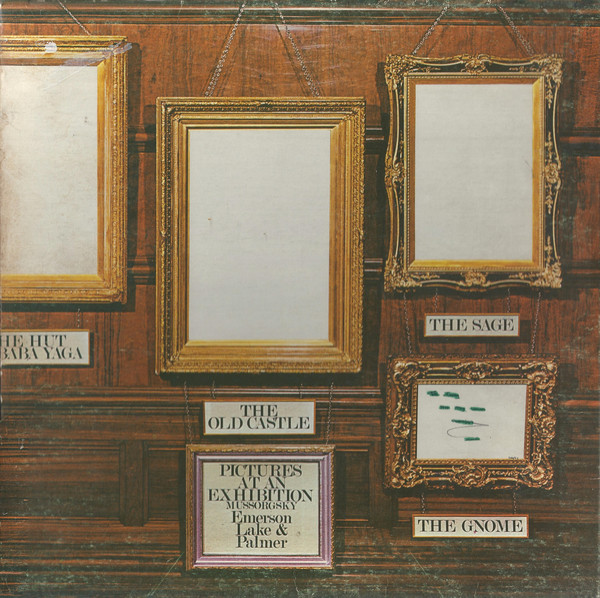
Trilogy.
Just like previous albums, Emerson, Lake and Palmer were determined to push musical boundaries on Trilogy, their third studio album. Just like their two previous albums, Trilogy was recorded at Advision Studios, London. Emerson, Lake and Palmer were at their innovative best, recording progressive rock, but with a twist.
An example of this was the inclusion of Abaddon’s Bolero on Trilogy. Rather than the usual 3/4 rhythm a Bolero would have, it was turned into a march by using a 4/4 rhythm. Emerson, Lake and Palmer also pioneered the beating heart sound on Trilogy. Pink Floyd would use it to such good effect on Dark Side Of The Moon. So would Jethro Tull on A Passion Play and Queen on Queen II. This sound was first heard on Endless Enigma Part One. It came courtesy of Carl Palmer’s Ludwig Speed King bass drum pedal. Once again, Emerson, Lake and Palmer were demonstrating that they were one of the most innovative progressive rock bands. Their efforts were rewarded.
On its release in July 1972, Trilogy reached number two in the US. As usual, Emerson, Lake and Palmer enjoyed more success in the US. Trilogy reached number five in the US Billboard 200. This resulted in another gold disc for Emerson, Lake and Palmer. In the space of just two years Emerson, Lake and Palmer were one of the most successful progressive rock bands, and were had released what was their most ambitious album, Trilogy.
Trilogy was also recently reissued. Disc one of Trilogy features the 2015 remaster. This time around, there’s no bonus tracks on disc one. However, there is on disc two.
It’s billed as The Alternate Album, that comprises the Jakko M Jakszyk 2015 Stereo Mixes. There’s a total of eleven tracks on disc two. This includes two bonus tracks. An alternate version of From The Beginning opens disc two, while a live version of Hoedown bookends the disc. For both long-term fans and newcomers to Emerson, Lake and Palmer, the addition of The Alternate Album offers the opportunity to compare and contrast the two versions. Although it’s an interesting exercise, the original version always wins out. That was how Emerson, Lake and Palmer intended Trilogy to be heard. They were in the middle of the hottest streak of their careers. Incredibly, though things were about to get better for Emerson, Lake and Palmer though.
Of the three previous studio albums Emerson, Lake and Palmer had recorded, they complex, innovative, genre-melting affairs. Emerson, Lake and Palmer embraced the latest technology in what seemed like their quest for musical perfection. They also made use of overdubbing. This made their music difficult to replicate live. The band always felt they came up short live. So Emerson, Lake and Palmer set about recording an album they could replicate accurately live. This was Brain Surgery Salad.
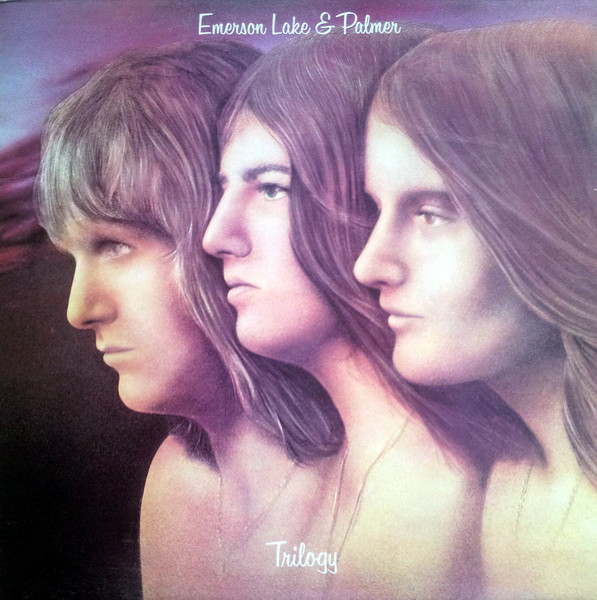
Brian Surgery Salad.
Recording of Brian Surgery Salad took place between June and September 1973. Brain Salad Surgery was a fusion of prog rock and classical music. This is obvious straight away.
Emerson, Lake and Palmer adapted William Blake and Hubert Parry’s hymn Jerusalem and then Alberto Ginastera’s Toccata. Greg Lake wrote Still…You Turn Me On and then cowrote Benny The Bouncer and Karn Evil 9: 3rd Impression with Keith Emerson and Peter Sinfield, one of the founding members of King Crimson. Keith Emerson penned Karn Evil 9: 2nd Impression and cowrote Karn Evil 9: 1st Impression, Part 1 with Greg Lake also penned Karn Evil 9: 1st Impression, Part 1. These tracks were brought to life by Emerson, Lake and Palmer at their inventive best.
On Brain Salad Surgery, Keith Emerson played Hammond organ, piano, accordion and a myriad of synths. Greg Lake took charge of vocals, acoustic, electric, and twelve-string guitars. He also played bass guitar. Carl Palmer played drums, percussion, percussion synthesizers, gongs and timpani. Greg Lake produced Brian Surgery Salad, which was released in November 1973. Before that, critics had their say on Brian Surgery Salad,
Mostly, the reviews of Brain Salad Surgery were positive. However, the usual contrarian critics were’t as impressed. They seemed unwilling to recognise that Brain Salad Surgery was the finest hour of Emerson, Lake and Palmer’s four album career. Brian Surgery Salad featured Emerson, Lake and Palmer at their tightest and loudest. Here was a tight, visionary band fusing prog rock, jazz and classical music. It was an ambitious, powerhouse of an album. Emerson, Lake and Palmer were at the peak of their creative powers, and record buyers on both sides of the Atlantic realised this.
When Brain Salad Surgery, was released in November 1973, it became Emerson, Lake and Palmer most successful album. It reached number two in the UK and number eleven in the US Billboard 200. This resulted in two more gold discs to add to Emerson, Lake and Palmer’s collection. They were well deserved though.
Given Brain Salad Surgery was one of Emerson, Lake and Palmer’s finest hours, it’s fitting that the album was reissued as a two disc set. Disc one features the 2014 remaster of the album. There’s no bonus tracks on disc one. Then on disc two, is The Alternate Album. It features thirteen bonus tracks. They’ll be of particular interest to completists. This includes alternate versions of Toccata and the various parts Karn Evil 9. There’s also a instrumental of Brian Salad Surgery and first mixes Jerusalem and Still… You Turn Me On. Welcome additions are the original backing track to Karn Evil 9 3rd Impressio and When the Apple Blossoms Bloom in the Windmills of Your Mind I’ll Be Your Valentine. An interesting addition is the excerpts of Brain Salad Surgery which featured on a flexi-disc given away free with NME. However, there’s one thing that must be pointed out. All of the bonus tracks been released before, and featured on the 2014 three CD box set. Essentially, the only different between the 2014 and 2016 reissues, is the DVD that featured on the 2014 remaster is missing. Again, it’s a case of choosing which version of Brain Salad Surgery you prefer. It’s a similar case with Emerson, Lake and Palmer’s second live album, Welcome Back My Friends to the Show That Never Ends-Ladies and Gentlemen.
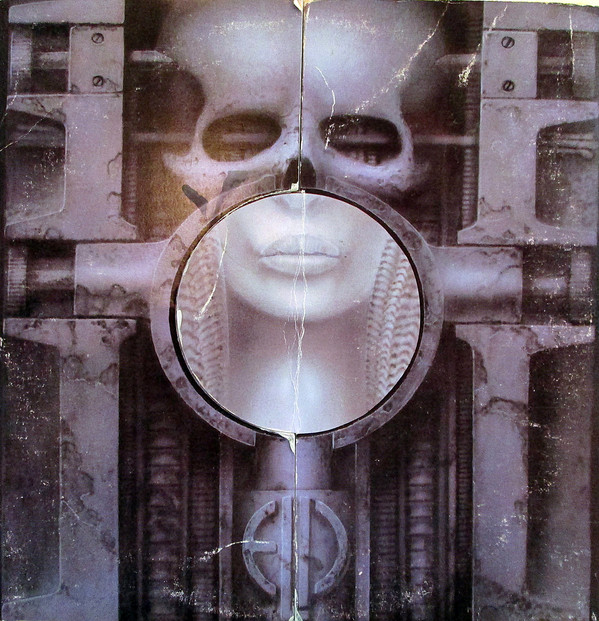
Welcome Back My Friends To The Show That Never Ends-Ladies and Gentlemen.
After the release of Brain Salad Surgery, Emerson, Lake and Palmer embarked upon a lengthy and gruelling world tour. It began in November 1973, continued into the first half of September 1974. Night after night, Emerson, Lake and Palmer took to the stage and played a selection of songs from their first four studio albums. Some nights, the tapes were running and the concert was recorded. Emerson, Lake and Palmer were considering releasing another live album. It would be very different from Pictures At An Exhibition, which featured a selection of Modest Mussorgsky’s classic pieces.
This time around, Emerson, Lake and Palmer would get the opportunity to showcase their talents as songwriters. That hadn’t been the case on Pictures At An Exhibition. It would also allow record buyers to hear that live, Emerson, Lake and Palmer were versatile and accomplished musicians. They were equally comfortable playing live, and capable of replicating what was complex music live. That music Emerson, Lake and Palmer had recorded between 1970 and 1973. Some of this music would find its way onto Welcome Back My Friends To The Show That Never Ends-Ladies and Gentlemen.
Each night of what seemed to be the tour that never seemed to end, Emerson, Lake and Palmer were improving as musicians. Review after review remarked upon this. Welcome Back My Friends To The Show That Never Ends-Ladies and Gentlemen would document this.
Rather than record one or two shows, Emerson, Lake and Palmer ensured that tapes were running on a number of nights. This allowed them to cherry pick nine tracks, which included four suites. This included Tarkus, Take A Pebble. Piano Improvisations and Karn Evil. There was also the medley of Jeremy Bender and The Sheriff. Along with Hoedown, Jerusalem, Toccata and Take A Pebble (Conclusion), Welcome Back My Friends to the Show That Never Ends-Ladies and Gentlemen was representative of the first three years of Emerson, Lake and Palmer’s career. However, having chosen such lengthy tracks, Welcome Back My Friends To The Show That Never Ends-Ladies and Gentlemen was going to be unlike most live albums.
Instead, Welcome Back My Friends To The Show That Never Ends-Ladies and Gentlemen was a triple album. The nine tracks were spread across three LPs, and in the 2016 Remaster across two CDs. Welcome Back My Friends To The Show That Never Ends-Ladies and Gentlemen which had been produced by Greg Lake, and scheduled for release in August 1974.
Before that, critics had their say on Welcome Back My Friends To The Show That Never Ends-Ladies and Gentlemen. Critics were won over by Welcome Back My Friends to the Show That Never Ends-Ladies and Gentlemen. Many critics expressed surprise that Emerson, Lake and Palmer were so accomplished live. So much so, that there was Emerson, Lake and Palmer eschewed overdubbing on Welcome Back My Friends To The Show That Never Ends-Ladies and Gentlemen. It was live and uncut, and a true musical document of Emerson, Lake and Palmer live.
When Welcome Back My Friends To The Show That Never Ends-Ladies and Gentlemen was released on 19th of August 1974, it reached number nineteen in Britain, and ten in the US Billboard 200. This resulted in Emerson, Lake and Palmer’s sixth consecutive gold disc in America. Elsewhere, Welcome Back My Friends To The Show That Never Ends-Ladies and Gentlemen reached the top ten in the Canadian, German, Finnish and Dutch album charts. The Emerson, Lake and Palmer success story continued. Or so it seemed.
Following the release of Welcome Back My Friends To The Show That Never Ends-Ladies and Gentlemen, Emerson, Lake and Palmer decided to take a break to work on side projects and solo albums. Nothing was heard of Emerson, Lake and Palmer until 1976.
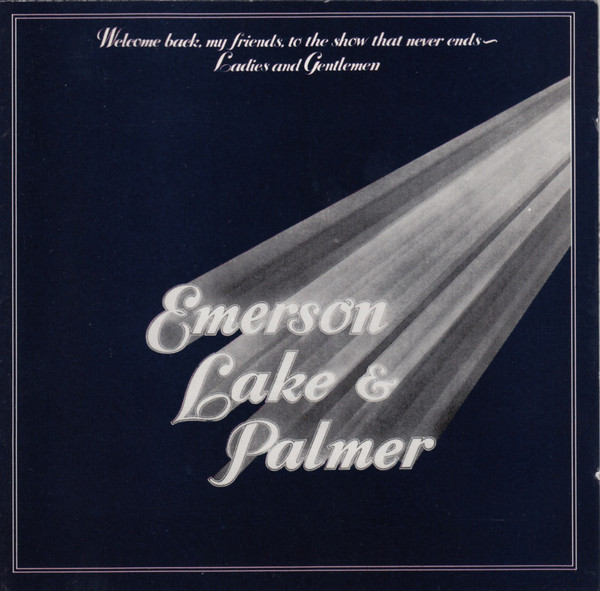
That’s when they reunited in Mountain Studios, Montreux, Switzerland to record Works Volume 1, which was released on the 17th of March 1977. It was certified gold in America, Canada and Britain. The followup Works Volume 2, was released on 1st November 1977. Although it was certified gold in America, Emerson, Lake and Palmer’s were no longer as popular. Sadly, that was the case with many progressive rock bands.
That had been the case since the birth of punk. The punks saw progressive rock as musical dinosaurs. They were the antithesis of everything that punk stood for. As punk and then post punk’s popularity grew, progressive rock’s popularity declined.
On 18th November 1978, Emerson, Lake and Palmer released Love Beach. This allowed Emerson, Lake and Palmer to discharge their contractual obligations to Atlantic Records. Although it wasn’t well received by critics, it was still certified silver in Britain and gold in America. However, Love Beach failed to reach the upper reaches of the charts. Love Beach proved to be Emerson, Lake and Palmer’s swan-song, and the band split-up shortly thereafter.
Nearly fourteen years later Emerson, Lake and Palmer returned on 27th June 1992 with Black Moon. Sadly, the album failed to reach the heights of their previous albums. It was a similar case with In The Hot Seat, which was released on 27th September 1994. In The Hot Seat failed to make an impression on the charts, and it was a disappointing way to end Emerson, Lake and Palmer’s recording career. It had spanned nine studio albums which were released between 1970 and 1994.
For many people, Emerson, Lake and Palmer released some of their finest music during the early years of their career. This includes their first four studio albums, 1970s Emerson, Lake and Palmer, 1971s Tarkus, 1972s Trilogy and 1973s Brain Salad Surgery. That’s not forgetting Emerson, Lake and Palmer’s first two live albums, 1971s Pictures At An Exhibition and 1974s Welcome Back My Friends to the Show That Never Ends… Ladies and Gentlemen. Each of the six albums have been reissued as double albums by BMG. These six albums feature Emerson, Lake and Palmer at their innovative and groundbreaking best.
That wasn’t surprising, given Emerson, Lake and Palmer were three of the most gifted and visionally musicians of their generation. They were able to seamlessly combine musical genres, and had been since their eponymous debut album.
On their first four studio albums, Emerson, Lake and Palmer flitted between prog rock, jazz and classical music, creating genre-melting music. This music was ambitious, complex and innovative. That was no surprise. Emerson, Lake and Palmer had always embraced the latest technology in what seemed like their quest for musical perfection.
To achieve musical perfection, Emerson, Lake and Palmer made use of overdubbing extensively. They added layer upon layer of instruments. The result were complex, multilayered, orchestral arrangements. The only problem was replicating the songs live.
This Emerson, Lake and Palmer soon realised was impossible. After several attempts to play these songs live, Emerson, Lake and Palmer realised there was no way they could play these songs live. Eventually, they gave up, and cut these songs from their set, as they embarked on extensive tours.
This included their eleven month 1973-1974 tour, which is documented on Welcome Back My Friends To The Show That Never Ends-Ladies and Gentlemen. It found Emerson, Lake and Palmer at their most accomplished, as they toured North America and Europe. Several of these shows were recorded, and parts of these concerts found their way onto Welcome Back My Friends To The Show That Never Ends-Ladies and Gentlemen. It’s a reminder of just how good a live band Emerson, Lake and Palme were.
After the release of Welcome Back My Friends To The Show That Never Ends-Ladies and Gentlemen, Emerson, Lake and Palmer took a prolonged break. Sadly, Emerson, Lake and Palmer never reached the same heights.
By 1974, Emerson, Lake and Palmer had released the best music of their career. This included four cohesive studio albums and two live albums. Each of these albums were certified gold in America. However, it wasn’t just in America where Emerson, Lake and Palmer enjoyed commercial success and critical acclaim.
Between 1970 and 1974, Emerson, Lake and Palmer were one of the most successful bands on both sides of the Atlantic. They also were popular in Canada, Europe and Australia. Emerson, Lake and Palmer were titans of progressive rock, who were already festival favourites and stadium fillers. Emerson, Lake and Palmer were well on their way to becoming one of the most successful progressive rock bands.
From 1970s Emerson, Lake and Palmer, 1971 Tarkus and Pictures At An Exhibition, 1972s Trilogy and 1973s Brain Salad, Surgery and 1974s Welcome Back My Friends To The Show That Never Ends-Ladies and Gentlemen it seemed that Emerson, Lake and Palmer could do no wrong. They were one of the most successful bands of the progressive rock era. Their music was innovative, inventive and influential.
Even today, Emerson, Lake and Palmer’s music continues to influence a new generation of musicians. Especially, the music Emerson, Lake and Palmer released between 1970 and 1974. During that period, Emerson, Lake and Palmer were a visionary band, who created what was without doubt, the best music of their career. The albums Emerson, Lake and Palmer recorded during that four year period, aren’t inventive, innovative and influential, but timeless, epic and ambitious that feature a group at the peak of their creative powers.
EMERSON, LAKE AND PALMER 2016 REISSUES.
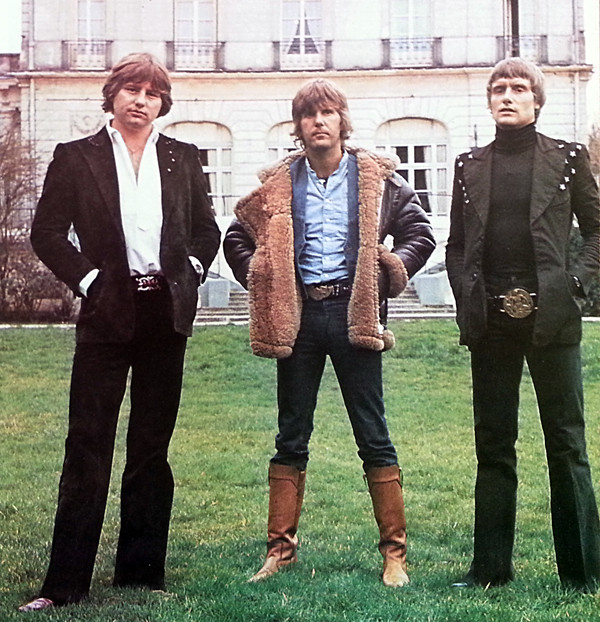
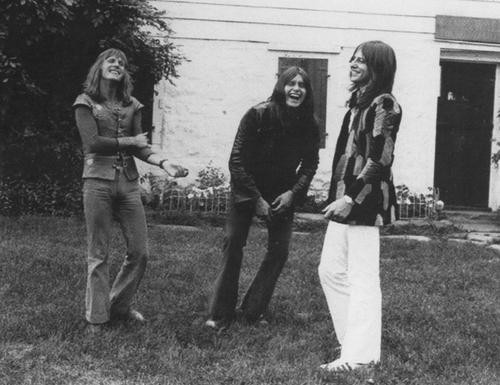
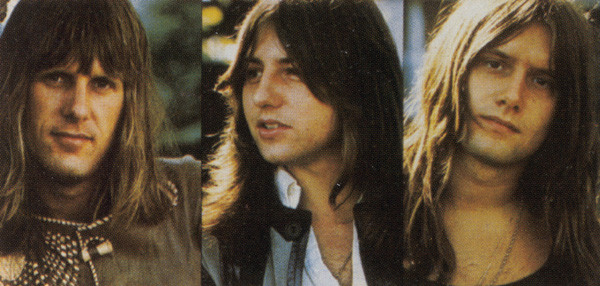
TIM MAIA 1971.
TIM MAIA 1971.
Larger than life, charismatic and hugely talented describes Brazilian singer Tim Maia. He was also someone who lived life on the edge, and was determined to do things his way. Tim Maia also lived life to the full.
Especially, after the success of his groundbreaking eponymous debut album. It was the first Brazilian album to fuse soul, funk, samba and Baião. This proved hugely popular, and Tim Maia spent twenty-four weeks in the upper reaches Brazilian charts. Belatedly, Tim Maia’s debut album had launched his career.
Following the success of his debut album, Tim Maia returned in 1971 with his sophomore album. It too was entitled Tim Maia.
That was the case with Tim Maia’s first four albums. Nowadays, though, these albums are known as Tim Maia 1970, Tim Maia 1971, Tim Maia 1972 and Tim Maia 1973. These albums have been reissued, by Oficial Arquivos, including Tim Maia 1971. It’s a reminder of a truly talented singer and songwriter, Tim Maia.
He was born in Rio De Janeiro, on September 28th 1942. Tim Maia was the eighteenth of nineteen children. Aged just six, Tim earned a living delivering homemade food, which his mother cooked. This would be the nearest Tim got to an ordinary job. From then on, Tim devoted himself to music.
At the age of eight, Tim Maia had already written his first song. By the time he was fourteen, Tim had learnt to play the drums and formed his first group Os Tijucanos do Ritmo. They were only together for a year. During that period, Tim took guitar lessons. He was soon a proficient guitarist, and was able to teach his friends. With some of his friends, Tim formed a new group in 1957.
This time, it was vocal harmony group, The Sputniks. It was formed in 1957, and made a television appearance on Carlos Eduardo Imperial’s Clube do Rock. Alas, the group was a short-lived affair, which resulted in Tim embarking upon a solo career. This lasted until 1959, when seventeen year old Tim made the decision to emigrate.
Tim Maia decided to head to America, which he believed he was heading for the land of opportunity. With just twelve dollars in his pocket and unable to speak English, Tim arrived in America. He called himself Jimmy at customs, and bluffed his way into the country, saying he was a student. Living with extended family in Tarrytown, New York Tim worked various casual jobs and augmented his meagre earnings by allegedly, committing petty crimes. Soon, he learnt to speak and sing English. This lead to him forming a vocal group The Ideals.
During his time with The Ideals, they recorded a demo of New Love, which Tim Maia had written the lyrics to. Making a guest appearance on the demo, was percussionist Milton Banana. Nothing came of the demo, and Tim later resurrected the song for his album Tim Maia 1973. However, by the time Tim recorded New Love with The Ideals, he planned on never returning home to Brazil. America was now his home. That was until things went awry for Tim.
Confusion surrounds why Tim Maia left Brazil. There’s two conflicting accounts. The first and more rock ’n’ roll version is that Tim was arrested on possession of cannabis in 1963, and deported shortly thereafter. That seems unlikely. There were punitive penalties for possession of even a small quantity of cannabis in the sixties. This meant it was unlikely Tim would’ve been just deported, without serving a jail sentence. So this lends credence to the allegation that Tim was caught in a stolen car in Daytona, Florida. After serving six months in prison, Tim was deported back to Brazil in 1964.
Now back home in Brazil, Tim Maia’s life seemed to be going nowhere. He got and lost several jobs, and was arrested several times. So Tim decided to move to São Paulo, where he hoped maybe, he could get his career back on track.
Having moved to São Paulo, Tim Maia, hoped he would be reunited with one of The Sputniks. Ironically, it was Carlos, who Tim had insulted before he left The Sputniks. However, Carlos proved inaccessible, and Tim had to make his own way in the São Paulo music scene. Tim made an appearance on Wilson Simonal’s radio show, and then appeared with Os Mutantes on local television. Still, though, Tim was determined to contact Carlos, and sent a homemade demo. Eventually, Tim’s persistence paid off.
Carlos on hearing the demo, recommended Tim Maia to CBS. They offered him a recording deal for a single, and an appearance on the Jovem Guarda television program. Tim’s first single was Meu País in 1968. It failed commercially. So did the followup These Are the Songs, which Tim recorded in English. Things weren’t looking good for Tim Maia.
His luck changed when Tim wrote These Are the Songs for Carlos. It gave his friend a hit single. At last, things were looking up for Tim Maia.
Things continued to improve when Elis Regina became entranced by Tim’s song These Are the Songs. Elis Regina asked Tim to duet with her on the song. They recorded the song in English and Portuguese, and the song featured on Elis’ 1970 album Em Pieno Veroa. This gave Tim’s career a huge boost. Recording with such a famous Brazilian singer lead to Tim signing a recording contract with Polydor.
1970.
Having signed to Polydor, Tim Maia somewhat belatedly began to work on his eponymous debut album. Tim Maia was fast approaching his twenty-eighth birthday, and musically, had a lot of catching up to do.
For Tim Maia 1970, he chose twelve songs. This included three Tim had penned himself, Jurema, Flamengo and Azul Da Cor Do Mar. Tim also cowrote Cristina and Cristina Nº 2 with Carlos Imperial. His other collaboration was Padre Cícero, which Tim cowrote with Cassiano. The rest of Tim Maia 1970 comprised cover versions. They were recorded with producer Arnaldo Saccomani and Jairo Pires.
Accompanying Tim Maia, was a relatively small, but tight and talented band. The rhythm section provided the heartbeat, and were augmented by keyboards, piano percussion and vibes. Meanwhile, Tim laid down his vocals, and added acoustic guitar. Later, strings were overdubbed on six tracks. Only then was Tim Maia 1970 complete. Little did any of the musicians realise that they w know that they were about to make musical history.
When Tim Maia 1970 was released later in 1970, the album was hailed a groundbreaking release. Tim Maia had married soul and funk with samba and Baião. This was unheard of, and musically, was a first. It also proved popular amongst record buyers.
Tim Maia was released in 1970, and spent twenty-four weeks in the upper reaches of the Brazilian charts. It had been a long, hard struggle. Ever since he was deported from America, Tim Maia had been struggling to make a breakthrough. Now as he approached his twenty-eighth birthday, Tim Maia’s star was in the ascendancy. Now it was a case of doing it all again, and recording his sophomore album.

1971.
Following the commercial success and critical acclaim of Tim Maia 1971, work began on the followup album. Again, Tim chose twelve songs. This included seven Tim had penned himself. Tim also cowrote I Don’t Know What To Do With Myself with Hyldon, and É Por Você Que Vivo with Rosa Maria. while six of Tim’s compositions were written in Portuguese, three were written in English. Already, Tim was hoping that his music would gain popularity within English speaking countries. That wasn’t surprising.
Already Tim Maia was looking beyond Brazil, and towards America, Britain and Europe. They were lucrative markets, which recently, had started to embrace Latin music. Santana’s first two albums had sold seven million copies in America alone, and were enjoying popularity across North America, Europe and Britain. It was these markets that Tim Maia was looking towards, as he began recording Tim Maia 1971.
When recording began, there were several changes in the band’s lineup. Its rhythm section featured drummer Paulinho Braga, bassist Capacete and rhythm guitarist Hyldon. They were joined by lead guitarist Paulo; organist and accordionist Peter;percussionist Chacal and vibraphonist Pinduca. Augmenting the core band, were strings, horns and backing vocalists. Over thirty musicians were drafted in to record Tim Maia 1970. It was produced by Tim who played acoustic guitar and added his vocals. Unbeknown to everyone working on Tim Maia 1971, they were once again making musical history.
Just like its predecessor, Tim Maia 1971 was hailed as another groundbreaking album. Elements of soul and funk were combined with samba and Baião. There were even hints of jazz, psychedelia and rock, during what was an ambitious and innovative album of genre-melting music. That was the case throughout Tim Maia 1971.
From the opening bars of A Festa Do Santo Reis, Tim Maia picks up where he left off on Tim Maia 1970. He’s equally comfortable delivering tender ballads as he is kicking loose, and strutting his way through uptempo tracks. Whichever type of track it is, Tim breathes meaning and emotion into the lyrics. Helping him all the way, are his multitalented band. They ensure that Tim hits the ground running.
A Festa Do Santo Reis which opens Tim Maia 1971, is the first of two accordion driven tracks. It features a soul-baring vocal, as horns, rocky guitars and later, strings accompany Tim. He combines power and emotion, and in the process, sets the bar high. Having done so, Tim unleashes a vocal tour de force on Nao Quero Dinheiro (So Quero Amar). Meanwhile, strings dance, horn blaze and the rhythm section provide the heartbeat to what’s an irresistible and hook-laden song.
Salve Nossa Senhora is similar to A Festa Do Santo Reis, with the accordion driving the arrangement along as Tim delivers a heartfelt vocal. Soon, though, Tim is delivering another vocal powerhouse on Um Dia Eu Chego La. Again, the rhythm section provide the heartbeat, while horns bray and a blistering rocky guitar is unleashed. By then, string dance and Tim and his band reaches new heights. There’s no stopping them, as they continue to fuse musical genres on Nao Vou Fica. Funky wah-wah guitars are sprayed across the arrangement, as deliberate drums accompany Tim. Soon, the now customary strings are added, and sweep as Tim delivers an impassioned, powerful vocal, that hints at the balladry that’s to come.
It’s all change on Voce, which is the first of the ballads. Seamlessly, Tim Maia reinvents himself as a balladeer par excellence. That’s the case on Preciso Aprender A Ser So. The tempo rises slightly on I Don’t Know What To Do With Myself, as a heartbroken and desperate Tim seems to live the lyrics. That’s no surprise, as Tim married five times, and doubtless new all about hurt and heartbreak. Soon, though, Tim returns with an understated, tender and beautiful ballad, E Por Voce Que Vivo. After this, Tim and his band change things around.
Gone is the understated arrangement, with Tim unleashing a powerhouse of a vocal on Meu Pais. Stabs of horns are to the fore, as dramatic, mesmeric drums punctate the arrangement, while a funky guitar and vibes combine to accompany another vocal masterclass from Tim. This gives way to I Don’t Care, which closes Tim Maia 1971. Tim combines power, hurt and despair, sometimes vamping as his band create another big, bold arrangement. It’s as if they’re determined to close the album on a high. This they certainly do, and in the process, play their part in what was another successful album for Tim Maia.
Later in 1971, Tim Mai released his much anticipated sophomore album, Tim Maia 1971. Just like its predecessor, Tim Maia 1971 was hailed as another groundbreaking album. Critics were won over by Tim Maia 1971’s imaginative fusion of soul and funk with samba and Baião. There were even hints of jazz, psychedelia and rock, during what was hailed as an ambitious and innovative album of genre-melting music. Having won over critics, Tim Maia 1971 was released to critical acclaim.
On its release, Tim Maia 1971 entered the Brazilian charts, and gave Tim another hit album. It also featured two hit singles, Não Quero Dinheiro (Só Quero Amar) and Preciso Aprender a Ser Só. Tim Maia’s star was still in the ascendancy, and at this rate, it looked as if he was well on his way to becoming one of the biggest stars in Brazilian music. That should’ve been the case, given the quality of music on Tim Maia 1971.
After the success of Tim Maia 1971, Tim headed to London to celebrate. He had just enjoyed two successful albums, after six years of struggling to make a breakthrough. Tim wanted to celebrate, and enjoy the fruits of his labour. It was during this trip to London, that Tim first discovered his love of the rock ’n’ roll lifestyle.
Realising that he was only here for a visit, Tim Maia embraced the rock ‘n’ roll lifestyle. Almost defiantly, Tim Maia lived each day as if it was his last. He hungrily devoured copious amounts of drugs and alcohol. They became part of Tim Maia’s daily diet. Fortunately, his new found lifestyle didn’t seem to affect Tim’s ability to make music. That was until Tim discovered a new drug that would prove to be his undoing.
In London, Tim discovered L.S.D. He became an advocate of its supposed mind opening qualities. He took two-hundred tabs of L.S.D. home to Brazil, giving it to friend and people at his record label. Little did Tim know, but this was like pressing the self-destruct button.
Over the next two years, Tim Maia’s released two further albums, Tim Maia 1972 and Tim Maia 1973. Both albums were released to critical and enjoyed commercial success in Brazil. The only problem was after Tim Maia 1973, Tim became unhappy at the royalty rate he was receiving from his publisher. So Tim founded his own publishing company Seroma. This coincided with Tim signing to RCA Victor.
They offered Tim Maia the opportunity to record a double album for his fifth album. Tim excited by this opportunity, agreed to sign to RCA Victor, and began work on his fifth album. Somehow, Tim was still seemed able to function normally on his daily diet of drink and drugs. He had already recorded the instrumental parts. All that was left was for Tim to write the lyrics.
Seeking inspiration for the lyrics, Tim Maia decided to visit Tibério Gaspar. They had previously written together. That was where Tim found a book that would change his life, and sadly, not for the better. That book was the Universo em Desencanto (Universe in Disenchantment), which revolved around the cult of Rational Culture. They didn’t believe in eating red meat or using drugs. Considering Tim had a voracious appetite for drink and drugs, it seemed unlikely that he would join the cult. However, he did.
Straight away, the cult’s beliefs affected Tim Maia and his music. Ever since he joined cult of Rational Energy, who fixated on UFOs, Tim was now clean-shaved, dressed in white and no longer drank, ate red meat, smoked or took drugs. Always in his hand was a mysterious book. Even his music changed.
The lyrics for his fifth album, and RCA Victor debut, were supposedly about his newly acquired knowledge. This came courtesy of Universo em Desencanto. With the ‘lyrics’ complete, Tim’s vocals were overdubbed onto what became Tim Maia Racional, Volumes 1 and 2. With the album completed, Tim took it to RCA Victor. They who promptly rejected the album.
Tim Maia Racional, Volumes 1 and 2 it appears, wasn’t of a commercial standard. To make matters worse, the lyrics made absolutely no sense. The only small crumb of comfort was that Tim’s voice was improving. That hardly mattered for RCA Victor, who weren’t going to release the album. For RCA Victor, it was huge disappointment.
They thought they had signed an artists who would become one of the biggest names in Brazilian music. Instead, their star signing had joined a cult, and handed over the worst album of his career. Tim and RCA Victor at an impasse. There seemed to be no way forward.
That was until decided to buy the master tapes from RCA Victor. Tim then released the album independently. However, it failed to match the commercial success of his four previous albums. For his many fans, Tim Maia was no longer the artist he once was. Then in 1976, Tim quit the cult.
When Tim quit the cult, after Racional Volume 2, he’d fallen out with its leader. He felt duped and wanted Tim Maia Racional, Volumes 1 and 2 destroyed. That was the past. Now Tim wanted to move forward.
Tim Maia’s music changed after Tim Maia Racional, Volumes 1 and 2. He released a new album in 1976, entitled Tim Maia, released in 1976. This was the start of the most prolific period of Tim’s career.
From 1976 right through to 1998, Tim Maia continued to release albums. He released another twenty-five albums between 1977 and 1998. By then, Tim had released around thirty-four albums.
Just like his live shows, the albums were hit and miss affairs. Sometimes Tim would turn up, play an outstanding set. Other times he would play a mediocre or shambling set. On many occasions, he’d fail to turn up. He returned to is rock and roll lifestyle, living life to the fullest.
The last album Tim released was Nova Era Glacial in 1995. Other albums were released bearing Tim’s name right up until 1998. However, Nova Era Glacial is regarded as Tim Maia’s swan-song He passed away on March 15th 1998, aged just fifty-five. Sadly, by then Tim’s shows and behaviour had become predictable. That had been the case since his 1976 post-Racional comeback. Tim Maia was never the same man or musician after his dalliance with the cult of Rational Culture.
It’s fair to say that the four album Tim Maia released prior to joining the cult were the highlights of a career that spanned three decades and thirty-four albums. Tim Maia 1970 introduced Brazilian record buyer to one of their most talented sons. He returned a year later in 1971, with his classic album Tim Maia 1971. This genre-melting album was the highlight of Tim Maia’s career. It found Tim fusing soul and funk with samba and Baião. There were even hints of jazz, psychedelia and rock on Tim Maia 1970, which was the highpoint of Tim’s career. He followed this up with Tim Maia 1972 and Tim Maia 1973. They complete a quartet of albums that feature Tim Maia at his very best. Between 1970 and 1973, his star shawn the brightest.
Sadly, since his death in 1998, Tim Maia’s music has been a well-kept secret outside of his native Brazil. Even within Brazil, many record buyers haven’t heard Tim Maia’s music. Those that have, speak about his music with reverence and in hushed tones.
Like many maverick musicians, Tim Maia’s story sees myth and reality become intertwined. Truth and reality become one, just like his music was fusion of influences and musical genres. However, over the past few years, Tim Maia’s music has started to find a wider audience. They will embrace the reissue of Tim Maia 1970, which offers further insight into his music.
Just like many maverick singer-songwriters, Tim Maia was touched by genius but fundamentally flawed. He could’ve, and should’ve, been a huge star. Sadly, something held him back, and stopped him from enjoying the widespread commercial success and critical acclaim his music richly deserved. This was music shaped by a multiplicity of musical influences, genres and of course, his lifestyle. His music is a compelling, captivating fusion influences and musical genres.
Everything from soul, funk, jazz, rock, bossa nova and baiao thrown into Tim Maia’s mystical and psychedelic musical melting pot. Similarly, Tim’s lifestyle including drink, drugs, multiple-marriages and imprisonment all shaped and influenced Tim Maia’s music. It’s then given a stir by one of music’s true maverick’s, who on the verge of critical acclaim and commercial success, made a couple of decisions he would later come to regret.
The first of these was Tim’s dalliance with L.S.D. in 1971. If that was his first mistake, his second was definitely, his decision to join a cult derailed his career. Maybe if Tim had never celebrated his success in London, then things might have been very different? Somewhat ironically, given the amount of music Tim Maia recorded and released, the two albums he recorded during his time with cult, have gained cult status. These two albums, however, were just a snapshot of his career, but one that affected his future.
After leaving the cult, Tim continued releasing music, but his live shows became unpredictable. They were either outstanding, mediocre or didn’t happen. All this fuelled the mythology that surrounds Tim Maia.
In a cruel and tragic twist of fate, Tim Maia died young, like many maverick musicians. He was just fifty-five when he died in 1998. Since then, the mythology and rumours surrounding Tim have increased, as has his popularity.
Now belatedly, there’s a resurgence in interest in Tim Maia’s music. However, the only problem is where to start. After all, Tim Maia released over thirty albums. For those yet to discover the delights of Tim Maia’s music, there’s no better place to start than his classic sophomore album Tim Maia 1971. It’s the perfect primer and introduction to a Tim Maia, who lived life on the edge, exuberantly revelling and embracing the excesses of the rock and roll lifestyle. Maybe without living his life in this way, Tim Maia’s music wouldn’t have been as memorable, magical, eclectic and timeless? Tim Maia 1971 is all these things and more. It’s a classic album that could only have been made by a singer-songwriter like Tim Maia was both touched by genius and fundamentally flawed.
TIM MAIA 1971.
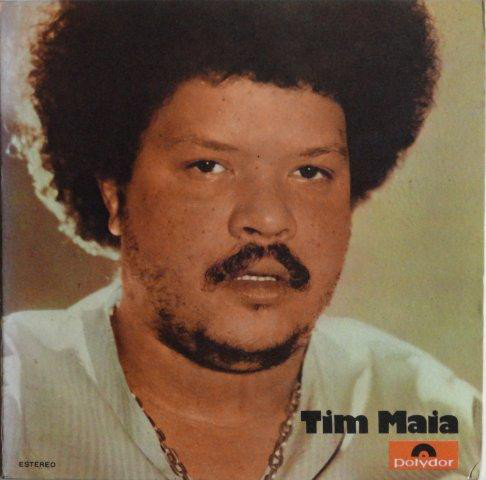


JIMI HENDRIX-MACHINE GUN JIMI HENDRIX THE FILLMORE EAST 12/31/1969 (FIRST SHOW).
JIMI HENDRIX MACHINE GUN JIMI HENDRIX THE FILLMORE EAST 12/31/1969 (FIRST SHOW).
By the time Barry Fey was booking acts for the first Denver Pop Festival in 1969, The Jimi Hendrix Experience were regarded as one of the most exciting and innovative bands of the late sixties. This made them the perfect band to close the three day festival. There was only one problem. The Jimi Hendrix Experience were one of the highest paid bands in rock.
Despite this, Barry Fey wanted one of the biggest names in music as the headline act for what was being billed as the First Annual Denver Pop Festival. It featured a star-studded bill. However, The Jimi Hendrix Experience would be the biggest name on the bill. So, Bill Fey booked The Jimi Hendrix Experience to appear on June 29th 1969. They were the headline act, and would close the three day festival. What Barry Fey didn’t realise was that, all wasn’t well within The Jimi Hendrix Experience.
That had been the case for since early 1969, the relationship between Jimi Hendrix and the rest of the Experience. However, Jimi Hendrix’s relationship with Noel Redding had become particularly strained. Noel Redding felt frustrated by what he saw as Jimi Hendrix’s lack of work ethic. This had first cone to light in February 1969. Over the next four months, Jimi Hendrix’s relationship with Noel Redding would worsen.
Ironically, things came to a head at the Denver Pop Festival. Noel Redding arrived at Mile High Stadium, where the Festival was taking place. That was when he was asked by a journalist why he was there? A shocked and dismayed Noel Redding listened as the journalist told him that he had been told two weeks previously, that Billy Cox would replace him. It looked like the Denver Pop Festival would be Noel Redding’s swan-song with The Jimi Hendrix Experience.
Noel Redding took to the stage with the Jimi Hendrix Experience, knowing it was the end of an era. As the Experience produced another majestic performance, events turned ugly offstage. The free concert descended into a near riot. This marred what had been one of The Jimi Hendrix Experience’s finest performances of 1969. As the Festival had descended into chaos the band were spirited from Denver Pop Festival in the back of a van. It was an ignominious end to The Jimi Hendrix Experience’s career.
The next day, Noel Redding headed home to London. That was when he announced that he had left The Jimi Hendrix Experience. Noel Redding said he wanted to pursues a solo career, but blamed Jimi Hendrix’s plans to expand the Experience without consulting him. Meanwhile, Jimi had moved into the eight-bedroom Ashokan House, in Boiceville near Woodstock.
That was where Jimi Hendrix spent much of mid-1969. He had downed tools, much to the chagrin of his manager Michael Jeffery. He tried to convince Jimi to begin work on a new album. It was to no avail. However, Jimi agreed to appear on two talk shows.
The first was The Dick Cavett Show, where Jimi Hendrix was backed by the studio orchestra. When it came for Jimi to appear on The Tonight Show, he was accompanied by bassist Billy Cox and session drummer Ed Shaughnessy. However, by August 1969, Jimi’s new band had been born.
They had been booked to headline The Woodstock Music and Art Fair. It was due to take place between August 15th to 17th 1969. Jimi Hendrix’s new band were booked to close this new three day festival. There was only one problem, MC Chip Monck didn’t seem to know that Jimi had founded a new band.
It should’ve taken the stage late in the evening of 29th August 1969. That was the plan. However, rain delayed the entrance of Jimi Hendrix’s new band. They took to the stage at 8.30am on 30th August 1969. MC Chip Monck intruded the band as The Jimi Hendrix Experience. Quickly, Jimi clarified, telling the 200,000 audience that: we decided to change the whole thing around and call it Gypsy Sun and Rainbows. For short, it’s nothin’ but a Band of Gypsys.” With that, the Band Of Gypsy’s launched into a mythical, mesmeric and electrifying two hour set, where Jimi Hendrix wrote his name into musical history.
The Band Of Gypsy’s was a new chapter in Jimi Hendrix’s life. It began in April 1969, when Jimi Hendrix began to jam with drummer Buddy Miles and bassist Billy Cox. They spent the next four months jamming, writing and rehearsing new material. They then made their triumphant appearance at Woodstock. Following Woodstock, the big question was, when would the Band Of Gypsy’s record an album?
Soon, there were plans in place to record a new Band Of Gypsy’s album. It would feature entirely new material from Jimi Hendrix. The distribution rights to this new album would be granted to producer Ed Chalpin, who spent two years locked in litigation with Jimi Hendrix.
This stemmed from a record contract Jimi Hendrix had signed in 1965. A year later, a legal dispute began into the record contract. Little did Jimi Hendrix realise he would spend two years trying to resolve this situation.
Eventually, and after two years, the two parties arrived at a resolution. The agreement was that Jimi Hendrix should release an album of entirely new material, which Ed Chalpin would be granted the distribution rights to. That album would become Band Of Gypsy’s.
Jimi Hendrix and the rest of Band Of Gypsy’s planned to record four concerts at the Fillmore East. The first two took place on the 31st December 1969 and the other two on the 1st January 1970. Eight tracks from these concerts would eventually make their way onto the classic album Band Of Gypsy’s. However, recently, a new album from the four Fillmore East concerts has been released, Machine Gun Jimi Hendrix The Fillmore East 12/31/1969 (First Show). It’s just been released by Sony Music, and is a further reminder of Jimi Hendrix’s “other” group, the Band Of Gypsy’s.
After the Band Of Gypsy’s barnstorming performance at Woodstock, where they stole the show, Jimi’s new band experimented with the expanded lineup. Larry Lee was second guitarist, while Juma Sultan and Gerardo “Jerry” Velez added percussion. This expanded lineup lasted only until September the 8th 1969, when the Band Of Gypsy’s played on The Dick Cavett Show. That night, the Band Of Gypsy’s was reduced to its core trio. The expanded lineup was no more.
Now that the Band Of Gypsy’s was reduced to a trio, it began to hone new songs, and record some demos. By then, the Band Of Gypsy’s were booked to record four shows at the Fillmore East. The first two would take place on the 31st December 1969, with the other two taking place on the 1st January 1970. Jimi Hendrix’s manager Michael Jeffery saw the potential to record a live album. Michael Jeffery approached Jimi with the idea; and he began discussing recording a new live album with Buddy Miles and Billy Cox.
They agreed to do the idea, and straight away, the Band Of Gypsy’s began three months of rehearsals. Suddenly, the old Jimi Hendrix was back. He was more disciplined and had discovered his famed work ethic. Day after day, he drilled the Band Of Gypsy’s, who weren’t just preparing for the Fillmore East concerts, but a new album. This meant familiarising themselves with not just new songs.
Already Power Jimi Hendrix had penned Power Of Soul and Message To Love, which had started life as Power To Love. Jimi had also been stockpiling songs from his days with The Jimi Hendrix Experience. Like a magician pulling a rabbit from his hat, Jimi produced songs like Lover Man, Here My Train A Comin’, Izabella, Machine Gun, Bleeding Heart and Stepping Stone. Meanwhile, Buddy Miles had written Changes and We Gotta Live. These songs the Band Of Gypsy’s would spend hour after hour playing and honing. They even added the Jerry Ragovoy and Mort Shuman penned R&B song Stop, to their repertoire. It had given Howard Tate a hit in 1968. It was totally transformed by the Band Of Gypsy’s. They combined disparate musical genres during their rehearsals.
Initially, the rehearsals took place at Juggy Sound Studios in New York. Jimi Hendrix, Buddy Miles and Billy Cox launched into lengthy, genre-melting jams. During these jams, the Band Of Gypsy’s fused elements of blues, funk, jazz, R&B and rock. There were even diversions via fusion, psychedelia and soul. No musical genre was off limit, as they switched between and combined a myriad of genres and influences. Gradually, new songs took shape, and old ones were reinvented. Onlookers felt that new rhythm section had the ability and discipline to anchor the arrangements, allowing Jimi free reign to experiment. The Band Of Gypsy’s rhythm section had a tightness that was lacking in The Jimi Hendrix Experience. With the start of what was a new chapter in Jimi’s career, the Band Of Gypsy’s moved to the Record Plant recording studios in New York.
At the Record Plant, demos recorded by the Band Of Gypsy’s. The days, weeks and months of rehearsals had paid off. They were a tight and talented band, who had a great future in front of them. However, a shadow hung over the Band Of Gypsy’s.
On 3rd May 1969, Jimi Hendrix was travelling to Toronto, Canada, to play a concert. As he passed through customs at Toronto International Airport, a decision was made to search Jimi. Customs officials found Jimi to be in possession of what they believed to be small amounts of hashish and heroin in his luggage. The drugs were sent to be analysed, and after a four hour wait, the results came back positive. Jimi Hendrix was charged with drug possession, and released on $10,000 bail until the 5th May 1969.
Just over a month later, Jimi Hendrix returned to Toronto for a preliminary hearing on 8th June 1969. That day, a trial date was set for December 8th 1969, when Jimi would be tried on two charges of illegal possession of narcotics. If found guilty, the maximum penalty was twenty years imprisonment. It was no wonder there was a shadow hanging over Jimi.
To prove Jimi Hendrix guilty of illegal possession of narcotics, the crown had to prove that he knew the drugs were in his possession. This the crown were unable to do. This resulted in a not guilty verdict being reached on the 10th December 1969. Jimi left Toronto a free man. He flew to New York, and continued preparing with the rest of the Band Of Gypsy’s at the Record Plant.
For the next three weeks, the Band Of Gypsy’s concentrated on honing their sound. They were already an exciting, inventive and innovative trio, who onlookers felt were about to take the rock world by storm. What better place to start than Bill Graham’s Fillmore East, as the sixties gave way to the seventies.
Meanwhile, promoter Bill Graham was promoting the four concerts as Jimi Hendrix: A Band of Gypsy’s. Concert goers who were fortunate to get a ticket, wondered what direction Jimi’s new band would head in? Many thought that Jimi would pickup where he left off with The Jimi Hendrix Experience. All would become clear.
Eventually, after three months of rehearsals, the Band Of Gypsy’s found themselves at the Fillmore East on 31st of December 1969. That night they were due to play two shows, then two shows the next night. Over the four shows, the Band Of Gypsy’s would play forty-seven songs, which were recorded by Wally Helder, who owned a recording studio and was an experienced and talented recordist. He would oversee the recording on what would become Machine Gun: The Fillmore East First Show 12/31/69.
That night, Jimi’s new band, the Band Of Gypsy’s took his music in a totally new direction. For the Band Of Gypsy’s this must have been a nerves racking experience, as they had no idea how the audience would react. What if they didn’t like this new genre-melting style, where experimentation and improvisation were key?
As the Band Of Gypsy’s took to the stage, they hadn’t prepared a setlist. It was a journey into the unknown, with Jimi Hendrix calling out the songs. That night, neither Buddy Miles nor Billy Cox knew what songs Jimi would call out. Over the course of the set, Jimi chose eleven new songs. The original version was only a starting point, as the Band Of Gypsy’s improvised and toyed with a song. Even a familiar song like Stop, would be taken in new and unexpected directions. That was still to come.
The first song Jimi called out was Power Of Soul. As the Band Of Gypsy’s began playing, there were some problems with the microphones. They recurred during Lover Man. To add to the problems, Jimi was experiencing some problems with his guitar, which kept going out of tune. This was caused by Jimi’s heavy use of his Stratocaster’s vibrato arm. Despite this, the Band Of Gypsy’s continued determinedly. Sometimes, Jimi nodded to signal a change in tempo and time. Seamlessly, the music would slow down or speed up, or the Band Of Gypsy’s would switch from 4/4. All the time, the Band Of Gypsy’s switched between and combined disparate musical genres.
Everything from blues, funk, jazz, psychedelia, R&B, rock and soul were combined by the Band Of Gypsy’s. They even pioneered funk rock, and took diversions into fusion, as the Band Of Gypsy’s showcased their versatility and talent. Especially, now the microphone problems were solved. The Band Of Gypsy’s worked their way through Hear My Train A Comin’, before the Buddy Miles penned Changes and Izabella. With the rhythm section providing a tight backdrop for Jimi, he unleashing a virtuoso performance and during the show.
His finest moment came mid-set, on Machine Gun. The crowd watched spellbound as Jimi’s guitar unleashed a myriad of sounds. It was akin to being caught in a battlefield, as bullets flew overhead and bombs exploded. From there, the Band Of Gypsy’s returned to Stop, which had given Howard Tate a hit single. Not this way though. With Jimi at the helm, and Buddy Miles on lead vocal, the Band Of Gypsy’s reinvented Stop. This gave way to Ezy Ryder and a cover of Elmore James Bleeding Heart. By now the audience awaited and revelled in each twist and turn in this masterful performance.
After nine songs, the audience had been won over by the Band Of Gypsy’s. There was no room for complacency as a six minute version of Earth Blues, gave way to a near ten minute epic version of Burning Desire. That closed what was the first in four shows at the Fillmore East, where the Band Of Gypsy’s showcased their new sound.
Forty-seven years later, and the first in the four shows at the Fillmore East, is regarded by some as a warmup show. That’s hard to believe, as that night, the Band Of Gypsy’s played as if their very lives depended upon it. Jimi Hendrix embracing his role as the Band Of Gypsy’s bandleader, leads from the front, playing with flair and flamboyance, and urgency, invention and imagination. He unleashes a masterful, virtuoso and spellbinding performance. Incredibly, none of the eleven tracks made their way onto the Band Of Gypsy’s album.
Instead, Band Of Gypsy’s featured two tracks from the third show, and four from the fourth show. Sadly, the first show was overlooked. Not any more. It has been recently released by Sony Music as Machine Gun: The Fillmore East First Show 12/31/69. This is first time this legendary show has been released in its entirety. It’s a welcome release, and reminder of Jimi Hendrix’s short-lived “other” group.
By the time Band Of Gypsy’s was released on March 25th 1970, Jimi Hendrix’s “other” group had split-up. The last show the Band Of Gypsy’s played was at Madison Square Garden on January 28th 1970. Band Of Gypsy’s never got the opportunity to record a studio album.
The Band Of Gypsy’s story was a case of what if? One can only speculate about what heights the Band Of Gypsy’s might have reached. Machine Gun: The Fillmore East First Show 12/31/69 is a tantalising taste of what the Band Of Gypsy’s are capable of. Three talented and versatile musicians joined together to create an album of innovative and genre-melting music. This marked the next step in the Jimi Hendrix story. Sadly, it was almost over.
Six months after the release of Band Of Gypsy’s, music was in mourning. On 18th September 1970, Jimi Hendrix, it was announced, was dead. Jimi Hendrix had been found around 11a.m. on the 18th September 1970, that Jimi Hendrix was found unresponsive at an apartment in the Samarkand Hotel, in Notting Hill, London. He was rushed to the St. Mary’s Abbot’s Hospital, but pronounced dead at 12.45p.m. Jimi Hendrix was just twenty-seven. However, music had lost one of the most influential and innovative guitarists of his generation.
Machine Gun: The Fillmore East First Show 12/31/69 is another reminder of Jimi Hendrix at the peak of his powers. With the rest of the Band Of Gypsy’s, Jimi Hendrix combines flair and flamboyance, with urgency, invention and imagination throughout Machine Gun: The Fillmore East First Show 12/31/69, as he delivers a virtuoso performance.
JIMI HENDRIX MACHINE GUN JIMI HENDRIX THE FILLMORE EAST 12/31/1969 (FIRST SHOW).

FRIGHTENED RABBIT-PAINTING OF A PANIC ATTACK-LIMITED EDITION VINYL VERSION.
FRIGHTENED RABBIT-PAINTING OF A PANIC ATTACK-LIMITED EDITION VINYL VERSION.
In a space of thirteen years, Frightened Rabbit have come a long way. Back in 2003, Scott Hutchison dawned the Frightened Rabbit moniker, and started playing small shows in his home town of Selkirk, in Scotland. Thirteen years later, and Frightened Rabbit are now signed to a major label, Atlantic Records. It released Frightened Rabbit’s recently released fifth album Painting Of A Panic Attack on various formats, including vinyl. There’s also a very limited that’s comes complete with a signed print. It’s a collectors item for fans of Frightened Rabbit. Their story began in Selkirk, Scotland.
Frightened Rabbit’s roots can be traced back to Scott Hutchison’s teenage years in Selkirk, Scotland. Back then, Scott Hutchison was chronically shy. So much so, that his mother christening her son Frightened Rabbit. This moniker Scott would later resurrect, when he began to play some live shows.
Before that, Scott Hutchison had spent the previous six months making recordings on a four-track recorder. By then, Scott was beginning to overcome his shyness. So much so, that he was thinking about playing a few live shows as a solo artist. This was when Scott decided to dust down the Frightened Rabbit moniker.
Having adopted the Frightened Rabbit moniker, Scott Hutchison made his first tentative steps into the local music scene in 2003. For the first year, Frightened Rabbit was just Scott and his guitar. After a year, Frightened Rabbit’s lineup expanded.
Frightened Rabbit’s latest addition was Grant Hutchison, Scott’s brother. He joined in 2004 and became the band’s drummer. A year later in 2005, bassist Billy Kennedy joined Frightened Rabbit. Already, word was spreading about Frightened Rabbit. This was no surprise.
For the first couple of years, Frightened Rabbit were a familiar face on Scotland’s live scene. They knew the only way to build a following was by plating live. There were no short cuts. It also allowed the indie rockers to hone their sound. At their early shows, Frightened Rabbit gave out their email address, promising to send anyone who wanted one, a demo and even biscuits.
Soon, demos were being sent not just to the four corners of Scotland, but rest of Britain, and even America. Frightened Rabbit knew the value of self-promotion. These demos would introduce Frightened Rabbit’s music to a much wider audience. So when Frightened Rabbit released their debut album, hopefully, they would have a ready made audience for their music.
Before long, Frightened Rabbit were attracting the attention of record companies. It was obvious that they weren’t going to remain an unsigned band for much longer. Frightened Rabbit signed to the Hits The Fan label, and began working on their debut album, Sing The Greys.
Sing The Greys.
For their debut album, Sing The Greys Frightened Rabbit had penned ten songs. They were recorded at The Diving Bell Lounge, in Glasgow. Co-producing Sing The Greys, was Marcus MacKay. Once the album was complete, Hits The Fan scheduled the release for the summer of 2006.
Before that, critics had their say on Sing The Greys. Frightened Rabbit’s debut album was well received by critics. Several critics thought that Frightened Rabbit were rising stars of the indie scene.
Despite this, the Hits The Fan label had only 1,000 copies of Sing The Greys pressed. Given the band already had built up a loyal following, this seemed a strange decision. When Sing The Greys was released on June 5th 2006, the album sold well, and is now something of a collectable. Frightened Rabbit were on their way.
Having released their debut album, Frightened Rabbit continued to play live, and spread their musical message. Sing The Greys had introduced Frightened Rabbit’s music to a new audience. This included some record companies who were watching the progress of Frightened Rabbit.
This included the Brighton based FatCat Records. They saw the potential in Frightened Rabbit, and signed the band in 2007. Straight away, FatCat Records decided to reissue Sing The Greys. Before that, some parts of the album had to be recorded, while the album was remixed and remastered. The reissue of Sing The Greys on FatCat Records took the pressure off Frightened Rabbit. Now they could spend time writing and recording their sophomore album, The Midnight Organ Fight.
The Midnight Organ Fight,
Just like their debut album Sing The Greys, Frightened Rabbit wrote the fourteen songs that became The Midnight Organ Fight. The main difference was that the album was recorded not just in Glasgow, but America.
While some of the recording of The Midnight Organ Fight took place at The Diving Bell Lounge, in Glasgow, much of the recording took place at Tarquin Studios, Bridgeport, Connecticut. That was home to producer, engineer, mixer and musician Peter Katis. After a month where Frightened Rabbit spent long hours recording The Midnight Organ Fight, the album was complete. Now Frightened Rabbit headed home to Glasgow, which was now home to the band.
With The Midnight Organ Fight recorded, Scott Hutchison was back in Glasgow for New Year. That was where Scott bumped into guitarist and keyboardist Andy Monaghan of Piano Bar Fight on New Year’s Eve. They had supported Frightened Rabbit, and knew each other quite well. However, Andy wasn’t prepared for Scott asking him if he would like to play a few shows with Frightened Rabbit. This wasn’t supporting the band, but as part of the band. Soon, Frightened Rabbit became a quartet.
They would make their debut supporting The Midnight Organ Fight, which was scheduled to be released in Spring of 2008. It would soon become apparent that all Frightened Rabbit’s hard work had been worthwhile.
When critics heard The Midnight Organ Fight, they spoke as one praising what was a highly accomplished and carefully crafted album. The lyrics met with the approval of critics, who were won over by the honesty. They played in album that was released to overwhelming critical acclaim. This bode well for release of The Midnight Organ Fight.
It was released on 15th April 2008. Alas, The Midnight Organ Fight reached just seventy-two in the Scottish album charts. This was a disappointment for Frightened Rabbit. The Midnight Organ Fight looked like it was set to be the band’s breakthrough album. However, Frightened Rabbit returned later in 2008 with their first live album, Quietly Now!
Quietly Now!
Recording Frightened Rabbit’s first live album took place in adopted hometown of Glasgow. Frightened Rabbit had chosen fourteen songs, that they would play at The Captain’s Rest, on 30th July 2008. That night Frightened Rabbit showed another side to their music,
When Frightened Rabbit took to the stage at The Captain’s Rest, the proceeded to play what was mostly, an acoustic set. The fourteen songs were mostly taken from The Midnight Organ Fight. Joining Frightened Rabbit, were James Graham from The Twilight Sad. He features on Keep Yourself Warm, while Ross Clark joins Frightened Rabbit on Old Old Fashioned. After fourteen songs, Frightened Rabbit left the stage to rapturous applause.
When Quietly Now! was released on October 21st 2008, the album only featured twelve songs. Two songs, the instrumental interludes Bright Pink Bookmark and Extrasupervery were omitted. However, that didn’t matter. They wrote glowing reviews of Quietly Now!, praising Frightened Rabbit’s mostly acoustic performance. Things however, were about to improve for Frightened Rabbit.
As 2008 drew to a close, The Midnight Organ Fight found its way onto the lists of best albums of 2008. It seemed that hardly a day passed without a magazine, broadsheet or website listing The Midnight Organ Fight as one of the albums of 2008. At least Frightened Rabbit knew they were on the right road. They were determined to come back stronger, with their third album, The Winter of Mixed Drinks.
The Winter of Mixed Drinks.
Now a quartet, the new lineup of Frightened Rabbit began work on The Winter of Mixed Drinks. This time though, Scott Hutchison headed to the Fife fishing village Crail.
Scott needed to unwind after a gruelling touring schedule. However, during his break in Fife, Scott mixed business and pleasure. He wrote the lyrics to The Winter of Mixed Drinks, in Crail. His surrounding influence the music on The Winter of Mixed Drinks, which has a nautical theme. During his stay in Crail, Scott even recorded some demos. The music would be written by Frightened Rabbit.
With The Winter of Mixed Drinks taking shape, Frightened Rabbit headed into the studio. Again, recording was split between Scotland and America. Castle Sound Studios, in Pencaitland, where The Blue Nile had recorded, was used to record much of The Winter of Mixed Drinks. Additional recording took place at Peter Katis’ Tarquin Studios, Bridgeport, Connecticut. By the middle of 2010, the album was complete.
Chris Hutchison was keen that there shouldn’t be large gaps between album. However, it wasn’t until March 2010 that FatCat Records released The Winter of Mixed Drinks. However, promotion of the album began in 2009. For the next six months, Frightened Rabbit were involved in a whirlwind of promotional activities and playing live. Then just before the release of The Winter of Mixed Drinks, critics had their say.
Just like their previous album The Midnight Organ Fight, The Winter of Mixed Drinks received praise, plaudits and critical acclaim. Critics were won over by the themes of escape, freedom and reinvention. They also welcomed what was a much more focused, polished and optimistic album. The Winter of Mixed Drinks looked as if it was going to be Frightened Rabbit’s breakthrough album.
And so it proved to be. When The Winter of Mixed Drinks was released on March 1st 2010, the album reached number ten in Scotland; sixty-one in the UK and eighty-four in the US Billboard 200. That wasn’t the end of the success for Frightened Rabbit.
They released four singles between 2009 and 2010 from The Winter of Mixed Drinks. The first was Swim Until You Can’t See Land, which reached number three on the US Sales charts in 2009. The followup Nothing Like You then reached number ten on the US Sales charts in 2010. By then, Frightened Rabbit had featured on American television. Their star was in the ascendancy.
Later in 2010, Frightened Rabbit’s luck looked as if it had run out, when Nothing Like You failed to chart. It was then business as normal, when The Loneliness and The Scream number eleven on the US Sales charts. Frightened Rabbit were determined to build on the success they enjoyed in America.
Before that, the announcement came that Frightened Rabbit had just signed to Atlantic Records. Frightened Rabbit were ready to make their major label debut, and came bearing gifts.
On 28th July 2011, Frightened Rabbit released the State Hospital E.P, which was produced by Leo Abrahams. This was three month’s before Frightened Rabbit’s US tour began. Subscribers to Frightened Rabbit’s newsletter were in for a pleasant surprise, as they could download the State Hospital E.P. free. For a band looking to grow their fan-base in America, this was a minor masterstroke.
By 6th December 2011, Frightened Rabbit announced that they were about to be begin pre-production of their major label debut album, Pedestrian Verse.
Pedestrian Verse.
Even by the time pre-production began, Frightened Rabbit were familiar with the songs that became Pedestrian Verse. They had been practising them on their US Tour. Just like The Winter of Mixed Drinks, Scott Hutchison had penned the lyrics and Frightened Rabbit wrote the music to Pedestrian Verse. It was recorded with Leo Abrahams, who co-produced the album with Frightened Rabbit.
Previously, Leo Abrahams had produced Frightened Rabbit’s State Hospital E.P. The vastly experienced musician and producer returned to co-produce Pedestrian Verse. Leo Abrahams brought with a huge amount of experience. He had released seven solo albums; worked on numerous collaborations and soundtracks; worked as a session musician and co-produced and produced a variety of artist. It seemed like Leo Abrahams was perfectly qualified to co-produce Pedestrian Verse.
Recording of Pedestrian Verse took place at Monnow Valley Studios, in Rockfield; The Distillery in Costa Mesa, California; Strongroom Music Studios, London; Brier Grove and The Flat. Once the album was completed, Craig Silvey mixed Pedestrian Verse. Then one of Britain’s top mastering engineers, Mandy Parnell. took charge of mastering Pedestrian Verse. Only then was the album complete.
With Pedestrian Verse ready for release, Atlantic Records began promoting Frightened Rabbit’s major label debut. While FatCat Records had spent the best part of six months promoting, The Winter of Mixed Drinks, this was a whole new ball game. Atlantic Records’ promotional campaign was much more extensive than anything Frightened Rabbit had been part of it. It paid off though.
When critics heard Pedestrian Verse, they were impressed by a much more eclectic selection of songs. They dealt with a variety of subjects. Critcis also felt Pedestrian Verse was a much more polished and cohesive album. Again, critics were won over by Frightened Rabbit and the reviews were mostly positive.
So with critical acclaim ringing in their ears, Pedestrian Verse was released on 4th February 2013. The album reached number two in Scotland; number nine in the UK; forty-nine in Ireland and sixty-three in the US Billboard 200. Pedestrian Verse was without doubt, the most successful album of Frightened Rabbit’s career. However, things got even better.
The Woodpile was released as a single in 2013, and reached seventy-four in Scotland and forty-two in the Mexico Ingles Airplay chart. Backyard Skulls then reached ninety-five in Scotland and forty-five in the Mexico Ingles Airplay chart. Although the singles were just minor singles, never before had Frightened Rabbit enjoyed a hit in Scotland or Mexico. The Atlantic Records’ years had started well for Frightened Rabbit.
After the release of Pedestrian Verse, Frightened Rabbit headed out on the longest and most gruelling tour of their career. Once the seemingly never ending tour was over, Frightened Rabbit decided to take “a break from all band related activities.” This left fans wondering what was happening Frightened Rabbit?
Especially when Scott Hutchison and his girlfriend decided to forego the delights of Glasgow for Los Angeles. The story took a twist when Scott decided to record an album as Owl John. Joining him in this new band were Andy Monaghan and Simon Liddell. Owl John was released on 4th of August 2014, and was well received by critics. By then, Gordon Skene had left Frightened Rabbit.
At the time, Gordon Skene released a statement on the 25th March 2014 that said: “there is no more to tell other than sometimes things just don’t work out and when people have differing opinions often the best option is to simply part ways and get on with life separately.” Scott Hutchison then had his say.
“Without going too far into it, Gordon’s personality didn’t fit with the band.” While that may well be the case, it had taken the other members of Frightened Rabbit the best part of six years to realise this. What wasn’t clear was whether, or when Frightened Rabbit would release another album?
Painting Of A Panic Attack.
Eventually, the situation became clear earlier in 2016. Frightened Rabbit released a statement via various social media outlets that their fifth album Painting Of A Panic Attack would be released later that year.
Frightened Rabbit had written ten of the twelve tracks on Painting of a Panic Attack. The other two, Little Drum and Break were written by producer Aaron Dessner. The twelve tracks that became Painting Of A Panic Attack were recorded in seven studios.
Recording of Painting Of A Panic Attack took place at 312, Glasgow; Audio Lounge, Glasgow; Bryn Derwen, Bethesda; Monnow Valley, Monmouth; Dreamland Recording Studios, in New York; Aaron’s Garage; 312, Glasgow; The Audio Lounge, Glasgow and Toast Studios, London. That was where Frightened Rabbit and a new face laid down the twelve songs.
As recording began Scott Hutchison took charge of lead vocals and played rhythm guitar. His brother Grant, played drums, percussion and added backing vocals. Billy Kennedy’s mostly played bass, but could play guitar, keyboards and aded backing vocals. Andy Monaghan was another multi-instrumentalist, who played guitar, keyboards and bass. The new face was Simon Liddell who toured with Frightened Rabbit during 2013 and 2014. He played guitar and keyboards, and replaced Gordon Skene. This latest lineup of Frightened Rabbit recorded Painting Of A Panic Attack. Once it was completed, it was ready for release.
Before that, Painting Of A Panic Attack was released to mostly critical acclaim. There was the occasional critic that wasn’t won over by Frightened Rabbit’s latest offering. Mostly, though, Frightened Rabbit’s fifth album Painting Of A Panic Attack was a return to form.
Death Dream opens Painting Of A Panic Attack, Straight away, there’s a wistful, melancholy sound as the piano plays. It’s joined by Chris’ vocal as he delivers the dark lyrics. They’re captivating, cinematic and rich in imagery. Listening to the lyrics, akin eavesdropping on someone reveals dreams, deepest fears or phobias, like, in this case, a panic attack. Strings and percussion augment the stark piano lead arrangement. Harmonies are added, as Chris sings call and response, delivering an emotive, soul-baring vocal. They result in a poignant and powerful song.
Drums are joined by guitars on Get Out, as the track takes on an indie sound. At first, Chris’ vocal and the rest of the arrangement is understated. Then suddenly, it bursts into life. The volume increases and Frightened Rabbit head into anthem territory. Keyboards join the rhythm section and burst of searing, machine guitars. Together, they create a rocky anthem, that’s sure to become a favourite of Frightened Rabbit’s live shows.
A crystalline guitar opens I Wish I Was Sober, before a piano plays. When Chris’ vocal enters, he sings of someone addicted to alcohol. Soon, the arrangement takes on a rocky sound, with the rhythm section, burst of scorching guitars and ethereal harmonies providing a backdrop for a vocal that’s akin to a confessional. Emotion and desperation fill his vocal as he sings, “I Wish I Was Sober.”
Drums crack as washes of synths play their part in Woke Up Hurting’s understated arrangement. Chris’ vocal has a similar understated sound. However, Frightened Rabbit pull a rabbit from their musical hat, as again, the arrangement explodes into life. This is similar to Get Out. Another similarity is that Frightened Rabbit are heading into sing-a-long anthem territory. There’s even a nod to Big Country. Meanwhile, the rhythm section provide the heartbeat, while the guitar is played with speed and accuracy, and helps drive the arrangement along. As a hurt-filled Chris delivers the lyrics, harmonies accompany him on a memorable and melodic song.
Cinematic describes the introduction to Little Drum. Distant synths, drums and horns combine, creating an almost industrial sound. Chris’ vocal is impassioned and heartfelt, while drums crack, horns bray and percussion clicks are joined by pizzicato strings. They play their part in what’s a much more experimental sounding arrangement. It’s as if Frightened Rabbit want to move in a new direction, and in doing so, showcase their versatility and creativity.
Washes of synths play their part in Still Want To Be Here’s understated arrangement. By then, elements of electronica and folk have been combined. That’s until it literally explodes into life. An acoustic guitar, keyboards and rhythm section accompanying Chris’ tender vocal. From there, Frightened Rabbit veer between an underrated to rocky arrangement, on what’s a memorable and genre-melting song where poppy hooks are plentiful.
It’s a strummed guitar and piano that open An Otherwise Disappointing Life. The piano drops out, as Chris’ is accompanied by the rhythm section, guitars and harmonies. Despair and disappointment fills Chris’ vocal, as the song heads into anthem territory. Chris’ vocal is carried above the rhythm section, searing guitars, as he reflects on what might have been.
There’s no let up on Break. The rhythm section and scorching guitars accompany a powerhouse of a vocal. Just like many of the songs, emotive and soul-searching describes the vocal. Then when the tempo drops, chords are picked out on the piano. Soon, though Frightened Rabbit are back into anthem territory. They’ve an uncanny knack of writing memorable and catchy pop songs.
Keyboards wheeze as drums thud on Blood Under The Bridge. Chris’ vocal is slow, deliberate as a bass bubbles. At any moment, one expects Frightened Rabbit to up the tempo. It does, still Frightened Rabbit are in ballad territory. This means that one focus on the Chris’ cerebral lyrics. With every album he seems to be maturing as a songwriter. Later, the vocal drops outm and the arrangement becomes slow and dreamy. When it returns, harmonies augment Chris’ vocal on what’s one of the highlights of Painting Of Panic Attack.
400 Bones starts life an understated piano lead ballad. Later, strings are added. That was all that was needed to create a beautiful song. However, Frightened Rabbit decided to add to the arrangement. Drums are added as the arrangement grows in power and drama. Guitars join the rhythm section as Frightened Rabbit transform this tender ballad into, what becomes a folk rock power ballad.
Synths are to the fore on Lump Street, buzzing and droning as drums play. They add an atmospheric hue, as Chris delivers the vocal. He’s joined by the piano, rhythm section, guitars and ethereal harmonies. Constantly, Chris paints pictures about Lump Street. All the time drums pound, and create the heartbeat to this driving, cinematic anthem.
Closing Painting Of A Panic Attack is Die Like A Rich Boy. Just an acoustic guitar and piano accompanies Chris’ cinematic lyrics. He sings of turning his life around and eventually, he can: “Die Like A Rich Boy.” Later strings are added, before the arrangement builds. It’s a mixture of power and drama, something that Frightened Rabbit have used several times on the album. Frightened Rabbit unite and sing as the dark piano and guitars combine to create a poignant backdrop for the vocals. They give way to Chris, as he tenderly and wistfully delivers the lyrics to what’s another of Painting Of A Panic Attack’s highlights. rightened Rabbit have kept one of the best until last.
Three years after they released their previous album Pedestrian Verse, Glasgow based Frightened Rabbit returned recently with their fifth album Painting Of A Panic Attack on Atlantic Records. It’s available on CD, digital download and also vinyl. The mastering on the vinyl version ensures that the listener is able to hear the entire dynamic range. That’s not all, it’s a quite pressing, without the snap, crackle and pop that spoils some LPs. Not though, Painting Of A Panic Attack; where Frightened Rabbit combine anthems and ballads. Mostly, though, anthems are to the fore on Painting Of A Panic Attack.
Just like the ballads on Painting Of A Panic Attack, they feature lyrics that are variously cerebral, cinematic, dark, insightful and wistful. Lead singer and songwriter Chris Hutchison, brings these lyrics to life. He’s a storyteller who breathes emotion and meaning into the lyrics. That’s the case whether it’s on the ballads or anthems. There’s hooks aplenty on the anthems, which will be favourites when Frightened Rabbit play live.
They’ve been doing a lot of that recently. That will continue to be the case. After all, Frightened Rabbit are well on their way to becoming one of the most successful current Scottish bands. That’s no wonder. While other bands spend years navel gazing, and bemoaning their lack of luck, Frightened Rabbit have not only made their own luck, but one of the best albums of their thirteen year career. That album is Painting Of A Panic Attack, which is an assured and accomplished album from Frightened Rabbit who are equally comfortable delivering ballads as they are hook-laden anthems.
FRIGHTENED RABBIT-PAINTING OF A PANIC ATTACK-LIMITED EDITION VINYL VERSION.

THE PICTISH TRAIL-FUTURE ECHOES-LIMITED EDITION VINYL VERSION.
THE PICTISH TRAIL-FUTURE ECHOES-LIMITED EDITION VINYL VERSION.
In 2002, Johnny Lynch was a student at the prestigious University of St. Andrews. He was approaching the end of his degree course. Most students would’ve been thinking about the life after University. Not Johnny Lynch.Instead, Johnny Lynch began performing as The Pictish Trail in 2002. Later that year, Johnny began work on his debut album.
By 2002, the way music was being recorded had changed beyond recognition. Now it was possible to record an album with just a computer, Digital Audio Workstation and digital interface. This was what Johnny Lynch went on to do. Eventually, The Pictish Trail’s debut album was complete. It would be released in 2003.
Before that, Johnny Lynch graduated from the University of St. Andrews in 2003. Just like other graduates, Johnny had decided to head south. However, he wasn’t heading the well trodden path to London. Instead, Johnny headed to Anstruther in Fife, where he and Kenny Anderson, the soon to be King Creosote cofounded a new record company, Fence Records.
When Fence Records was founded in 2003, it was run by Kenny Anderson and Johnny Lynch. Originally, it’s raison d’être was to record and release mostly folk albums, by its two founders and their friends. This included The Pictish Trail’s debut album Pick @ Pictish. It was well received upon its release in 2003, and caught the attention of record buyers. So were King Creosote’s early albums. Scotland’s newest labels was going places.
A year later, The Pictish Trail released a new album Hot Trail. It was released in 2004. Again, the album was well received and critics called The Pictish Trail was one of the rising stars of the Scottish indie music scene. However, it was another four years before The Pictish Trail released a new album.
Meanwhile, Fence Records was expanding. Its roster expanded, and each year, Fence Record release more singles and albums. Fence Records also began organising events and festivals. In the early days, they were held locally. Overseeing the expansion of the label was Johnny Lynch.
Early on in the partnership, Kenny Anderson seemed to have decided to concentrate on making music. King Creosote became a truly prolific artist, who regularly released three or four albums each year. Then when he wasn’t recording, King Creosote was playing live. His star was very much in the ascendancy. Meanwhile, Johnny Lynch was running Fence Records.
By day, he ran Fence Records and at nights, he dawned The Pictish Trail moniker. Between 2004 and 2008, The Pictish Trail continued to make music. However, most of his time was spent running Fence Records. That was until 2008, when The Pictish Trail returned with a new album.
This was Secret Soundz Volume 1. It was by far, the best album of The Pictish Trail’s career. He had matured as a singer and songwriter. Critics agreed, and critical acclaim accompanied the release of Secret Soundz Volume 1. The album was the finest moment of The Pictish Trail’s career. Everything it seemed, had been leading up to Secret Soundz Volume 1. Surely, The Pictish Trail would return with a followup, so as to build on the momentum created by Secret Soundz Volume 1?
Two years passed before The Pictish Trail returned with a new album, In Rooms. Although technically the followup to Secret Soundz Volume 1, it was more a musical experiment than an album in the traditional sense of the word. The Pictish Trail had been challenged to write a song a day by one of his friends, and managed to write fifty songs. However, each of the fifty songs only lasts thirty seconds. They were released in 2010, as a 45RPM LP as a CDr. For fans of The Pictish Trail, In Rooms was an interesting musical artefact, and a reminder of what the singer-songwriter was capable of. He would return in 2012, with a new album.
By 2012, Fence Records had become a limited company. This made sense, as it was expansion plans continued apace. Its roster had expand, and Fence Records continued to arrange more festivals and events. They had arranged events in Glasgow and at the Edinburgh Fringe Festival. Fence Records was a very different record company to the one King Creosote and The Pictish Trail had cofounded in 2003.
Four years after the release of Secret Soundz Volume 1, The Pictish Trail returned with what was essentially the followup, Secret Soundz Volume 2. Just like its predecessor Secret Soundz Volume 2, was released to widespread critical acclaim. The Pictish Trail’s star was in the ascendancy. However, a year later, his world came crashing down.
In August 2013, the news broke from Fence Records’ Fife headquarters. Fence Records Ltd. was no longer. It had ceased operations in August 2013, after ten years. The reason given was: “differences between Kenny Anderson and The Pictish Trail.” Then in a statement from Kenny Anderson, he said that he “would continue to use the Fence Records name with new projects to be announced in January 2014.” That proved to be the case. However, for The Pictish Trail this was a huge blow.
The Pictish Trail took the breakdown in his friendship with Kenny Anderson badly. They had been friends for long time, and since founding Fence Records in 2003, had released a lot of music and arranged many a festival. Now The Pictish Trail had to start again.
Most of the artists signed to Fence Records signed to The Pictish Trail’s new label Lost Map Records. It was founded in August 2013, and arose like a phoenix from the ashes. Since then, Lost Map Records has released a sampler and albums by Monoganon, Randolph’s Leap, Tuff Love, Kid Canaveral, Seamus Fogarty, Rozi Plain and Insect Heroes. Recently, Lost Map Records released another new album, the long-awaited new album from The Pictish Trail, Future Echoes, which was released on CD, digital download and on vinyl. A lucky few received the limited edition clear vinyl version of Future Echoes, The Pictish Trail’s much-anticapted comeback album.
Future Echoes.
For The Pictish Trail, Future Echoes marks the start of a new era. He hadn’t released an album since Secret Soundz Volume 2, in 2012. A lot has happened since then, with the demise of Fence Records and establishing Lost Map Records. Now with his new label up and running, The Pictish Trail’s thoughts turned to his first album for his new label Lost Map Records.
With his new label established, The Pictish Trail began to write a new album in his home in the Isle Of Eigg. Eventually, he had penned seven new songs, and cowrote Dead Connection, Easy With Either and After Life with Adam Illoh of The Werehome. These songs became Future Echoes.
When it came to recording Future Echoes, The Pictish Trail became a one man band. The only other musician that features on Future Echoes is Alex Thomas, who adds drums on Lionhead, Dead Connection, Who’s Comin’ In? and After Life. Production was split between Adam Illoh and Ben Jones of The Laundrette.
Adam Illoh produced eight of the songs on Future Echoes. The other two, Rhombus and Strange Sun, were produced by Ben Jones. Once the album was recorded, Ben Jones mixed Future Echoes. All that was left was for the album to be mastered, and The Pictish Trail was ready to make his comeback with Future Echoes.
For the first time in four long years, The Pictish Trail returned with his much anticipated new album Future Echoes. It was released earlier in September 2016, on Lost Map Records. Johnny Lynch a.k.a. The Pictish Trail is back with Future Echoes.
Opening Future Echoes is Far Gone (Don’t Leave). What sounds like the crackle of worn vinyl gives way to beautiful, melancholy strings. They’re joined by lumbering, crisp drums, that come courtesy of a drum machine. They provide the backdrop to The Pictish Trail’s hurt-filled vocal. Meanwhile the drums, bass synth, harp and strings combine. Soon, the vocal grows in power, as frustration gets the better of The Pictish Trail. “I never want to see your face again, she took the words out.” By then, one gets a sense that this isn’t going to end well. It doesn’t. Before long, there’s a darkness in the cinematic lyrics as The Pictish Trail sings: “oh lord, she wouldn’t stop screaming hello ahhhh.” This twist in the tale, is akin to listening to someone’s life unravel, and makes for uneasy listening.
Percussion and a jangling guitar combine on Lionhead. The rhythm section lock into a groove and with guitars and percussion, provide the backdrop for the vocal. Hooks aren’t in short supply, as this slick slice of indie rock unfolds. Soon, it’s heading into anthem territory. Briefly, there’s a nod to Big Country while The Pictish Trail the cerebral lyrics. They show that The Pictish Trail’s not just a talented singer and musician, but a songwriter whose songs are rich in imagery.
Drums are joined by lo-fi keyboards and synths on Dead Connection. They’re joined by The Pictish Trail’s vocal and harmonies. A vocoder and effects are deployed, on this melodic and catchy fusion of indie rock and dance music.
The Pictish Trail’s vocal on Rhombus is buried in filters, as a myriad of drums, beeps and squeaks punctuate the arrangement. Soon, synth strings and a crystalline guitar are added. The synth strings are reminiscent of The Blue Nile’s first two albums. That’s whre the similarities end though. However, the arrangement to Rhombus has an ethereal beauty, before synths add a funky backdrop and the drama builds. Still, though, vocal is hidden behind filters, which works and works well. It plays its part in a song where indie rock is combined with elements of dance and experimental music.
Half Life is a relationship song, where a droning organ provides a backdrop for The Pictish Trail’s soul-baring vocal. Disbelief fills his vocal as he remembers: “I went over to your house, you tell me I’ve turned into something you didn’t like, another competition you strive, but I’m the same as I’ve always been.” Soon, drums crack, while beeps and squeaks punctuate the arrangement. They join the washes of synths provide a backdrop for what’s one of Johnny’s best vocals. It’s tender, emotive and veers between disbelief to frustration and despair. “I’m terrified, I’m nothing, I’m terrified, I hope I never see you again, with your head in your hands and all these plans.” By then, synths buzz while harmonies accompany The Pictish Trail, and reverberate poignantly into the distance. Without a doubt, this carefully crafted ballad is line of the finest moments on Future Echoes.
A guitar, strings and drums combine with The Pictish Trail’s vocal on Easy With Either. Soon, it’s apparent that this is another slick slice of indie pop. Again, hooks haven’t been rationed, as keyboards, synths and strings join with the drums. Together, they frame The Pictish Trail’s vocal on what’s another memorable and melodic example of indie pop.
Who’s Comin’ In? is a return to the balladry of Half Life. Here, the arrangement is almost minimalist, with drums clicking as subtle keyboards accompany The Pictish Trail’s vocal. It’s tender, as he sings: “I won’t make any promises, curled up in a ball, I’ll pretend you can’t touch me surround me at all.” Soon, filters are added to the arrangement, as it’s panned and swirls around. It soon becomes understated, allowing the vocal to take centre-stage. The Pictish Trail articulates a sense of doubt and insecurity, before becoming edgy as he ad-libs. Later this insecurity reappears as he sings: “there’s always something creeping out of these, deep deep deep deep deep deep. Who’s Comin’ In? now now now,” on what’s another carefully crafted song which The Pictish Trail breathes life, meaning and emotion into.
A choppy strummed guitar opens Until Now. Soon, drums crack before the rhythm section and guitar accompany The Pictish Trail’s vocal. Uncertainty fills his vocal, before cooing harmonies augment the vocal. Sometimes, they add an element of drama, on a song that manages to be melodic, melancholy and joyous. It’s an emotional roller coaster. Especially as The Pictish Trail sings: “I’ve saved it all Until Now, to tell you how I feel, and exactly what is going to happen now that you’ve saved it all Until Now.”
Birdsong and a hesitant acoustic guitar opens Strange Sun. Soon, though, The Pictish Trail accompanied by a guitar delivers the vocal. It sounds as if his vocal has been doubled, with one vocal slightly behind the other. By then, there’s even a psychedelic influence to the song. Later, harmonies augment the arrangement, which features just drums, guitar, percussion and harmonies on this folk-tinged song. It’s something of a slow burner, which eventually reveals its melodic secrets, as it stays towards anthem territory. Belatedly, Strange Sun has fulfilled its early potential.
Closing Future Echoes is After Life. Drums and percussion join an acoustic guitar and synths. They provide the backdrop for The Pictish Trail as he hits the ground running. He delivers the lyrics to what’s another catchy and memorable song where indie pop and dance music are combined by The Pictish Trail. They play their part in a slick, polished and hook laden song. It ensures that Future Echoes on a memorable high.
Four years after the release Secret Soundz Volume 2, in 2012, The Pictish Trail returns with the much anticipated followup, Future Echoes. It was recently released on The Pictish Trail’s Lost Map Records, and is the first album The Pictish Trail has released since the demise of Fence Records. A lot has happened since then.
The Pictish Trail founded a new label Lost Map Records. Only once the new label was established, did The Pictish Trail’s thoughts turn to writing, recording and releasing a new album. That new album, finds The Pictish Trail pickup where he left off on Secret Soundz Volume 2.
Future Echoes features ten tracks lasting forty-six minutes. They’re spread across two sides of heavyweight clear vinyl. Unlike some albums released on clear vinyl, there’s no background noise. This allows The Pictish Trail to take centre-stage, as he combines elements of disparate genres, and weaves them into a musical tapestry. To do this, The Pictish Trail fuses folk, indie pop, dance music and electronic. Other ingredients include indie rock and even psychedelia. They become Future Echoes, an album where ballads and uptempo side by side. Together, they create a what’s potent and heady musical brew. It’s akin to a journey on an emotional roller coaster.
Some of the tracks on Future Echoes are beautiful, catchy, joyous melodic and memorable. Others are cinematic, dark, dramatic and melancholy. Very occasionally the darkness descends, and on Far Gone (Don’t Leave) the lyrics make for uneasy listening. Sometimes, though, The Pictish Trail heads into anthem territory, and his hook-laden songs prove irresistible. Other times, he showcases his versatility on Future Echoes’ ballads. The Pictish Trail breaths meaning and emotion into the lyrics. These songs are a reminder that The Pictish Trail is a versatile and talented singer. who seems to mature with age.
With every album, The Pictish Trail matures as a singer, songwriter and musician. That’s been the case since The Pictish Trail’s recording career began in 2003. Since then, The Pictish Trail has released a number albums. However, nothing comes close to Future Echoes, where one of Scottish music’s best kept secrets, The Pictish Trail, comes of age musically and produces a career defining album.
THE PICTISH TRAIL-FUTURE ECHOES-LIMITED EDITION VINYL VERSION.

TEENAGE FANCLUB-HERE-LIMITED EDITION VINYL EDITION.
TEENAGE FANCLUB-HERE-LIMITED EDITION VINYL EDITION.
Recently, Teenage Fanclub returned with their much anticipated tenth album, Here. It was the followup to Shadows, which was released in May 2010. A lot has changed in the last six years.
This includes the resurgence in interest in vinyl. Suddenly, a new generation are discovering the delights of vinyl. It’s a hipster’s new best friend. So it’s no surprise that that record labels are also releasing new releases on vinyl. Teenage Fanclub’s PeMa label are no different.
When it came for Glasgow’s very own Kings of jangle pop to release their new album Here, it was released on CD, as a digital download and on vinyl. However, Here wasn’t just released on black vinyl. No. A clear vinyl version of Here was released as a limited edition. It was pressed and came with a poster. This was akin to a return to vinyl’s glory days, when an LP came with all sorts of goodies. It was the perfect way to celebrate Teenage Fanclub’s comeback.
After a six year absence, Teenage Fanclub recently returned with their much anticipated tenth album, Here. It’s the long awaited followup to Shadows, which was released in May 2010. Since then, the members of Teenage Fanclub have been spending much of their time working on various side projects.
Eventually, though, the call came, and everyone returned to the mothership, Teenage Fanclub. That has been home to the Bellshill boys since 1989. This homecoming was going to be special.
The members of Teenage Fanclub were about to begin writing and recording their tenth album, Here. It was hard to relive that the band that they had formed in Bellshill, in 1989 had lasted four decades. During that period, Teenage Fanclub had enjoyed hit singles, toured the world and released nine albums. Soon, nine would become ten when Here was released. Here was just another chapter in the Teenage Fanclub story.
It was in Bellshill, Lanarkshire, a small town twelve miles from Glasgow, that Teenage Fanclub were born in 1989. The nascent bandemerged out of Glasgow’s C86 scene. They had been inspired by West Coast bands like The Beach Boys and The Byrds. Another major influence on Teenage Fanclub were Big Star, who Teenage Fanclub would be later be compared to.
Unlike Big Star, Teenage Fanclub were a five piece band. The original lineup featured guitarist Norman Blake, lead guitarist Raymond McGinley, bassist Gerard Love, drummer and Francis MacDonald. Teenage Fanclub’s three principal songwriters shared lead vocal duties. That was the case on their debut album.
A Catholic Education.
Just a year after the band was founded, Teenage Fanclub released their debut album in 1990. A Catholic Education would later be described as a quite un-Teenage Fanclub album. The music was dark, harsh and peppered with cynicism and controversy.
Most of the controversy stemmed from Teenage Fanclub’s decision to turn their sights on Catholic church. For a band from a city divided by religion, that was a controversial move, and one that could alienate people. What made the decision to “attack” the Catholic church, was that Teenage Fanclub prided themselves on being apolitical band. The other surprise for a band who admired The Byrds, The Beach Boys and Big Star was the sound of A Catholic Education.
For much of A Catholic Education, Teenage Fanclub unleashed a mixture of grunge and heavy metal. The only hint of what was to come from Teenage Fanclub was the Norman Blake penned Everything Flows. It was a glorious slice of power pop. This was something that Teenage Fanclub would return to later. Before that, A Catholic Education was released on June 11th 1991.
Before that, critics reviewed A Catholic Education. Reviews of the album were mixed, and very few critics forecast the critical acclaim and commercial success that came Teenage Fanclub’s way. When A Catholic Education was released by Matador, the album failed to even trouble the British or American charts. It was an inauspicious debut from Teenage Fanclub.
The King.
Just two months later, and Teenage Fanclub released their sophomore album, The King. However, in reality, The King was a quickly assembled collection of tracks.
The tracks that became The King had been recorded once Teenage Fanclub had completed what would be their third album, Bandwagonesque. Quickly, Teenage Fanclub recorded nine tracks, including covers of Madonna’s Like A Virgin and Pink Floyd’s Interstellar Overdrive. Once The King was recorded, Teenage Fanclub were hoping this would allow them to escape their contractual liability to Matador. This could have backfired.
Teenage Fanclub owed Matador an album. If they accepted The King, then they had fulfilled their contractual obligations. There was the possibility that the album could be rejected, if Matador didn’t believe the album was of a certain commercial standard.
Fortunately, they didn’t. That’s despite covers of Madonna’s Like A Virgin and Pink Floyd’s Interstellar Overdrive. The King wasn’t exactly Teenage Fanclub’s finest hour. Despite this, Matador released in August 1991.
Reviews of The King hadn’t been favourable. Despite this, The King reached fifty-three in the UK charts. It was almost ironic. Very few critics thought that The King would even trouble the charts. Teenage Fanclub had the last laugh. Free from all encumbrances, the Teenage Fanclub signed to Creation Records.

Bandwagonesque.
Now signed to Alan McGhee’s Creation Records, Teenage Fanclub like a magician pulling a rabbit from a hat, delivered the completed version of Bandwagonesque. It had been recorded at Amazon Studios, Liverpool, between 9th April to 12th May 1991. It featured twelve songs, were Teenage Fanclub came of age musically.
Just like previous albums, songwriting duties were split between the band members. Raymond McGinley wrote I Don’t Know; Norman Blake penned four songs; Gerard Love wrote five and cowrote Sidewinder with Brendan O’Hare. The only track credited to Teenage Fanclub was Satan. Teenage Fanclub were maturing as songwriters and musicians.
When it came to choosing a producer for Bandwagonesque, the partnership of Paul Chisholm, Don Fleming and Teenage Fanclub returned. They were responsible for an album that stood head and shoulders above Teenage Fanclub’s two previous albums, Bandwagonesque.
On Bandwagonesque Teenage Fanclub’s trademark ‘sound’ began to take shape. It had been influenced by The Byrds and Big Star. Byrdsian, jangling guitars were joined by close, cooing, harmonies and a melodic fusion of indie rock and hook-laden power pop. Seamlessly, though, Teenage Fanclub could switch between laid back and melodic to a much more powerful, rocky sound. This would find favour with critics and record buyers.
Before Bandwagonesque was released, critics had their say on the album. For once, critics were in agreement, and there were no dissenting voices. Bandwagonesque critics agreed, was one of the finest albums of 1991. No wonder, with songs of the quality of The Concept, What You Do To Me, Star Sign, Alcoholiday and s This Music? For Teenage Fanclub, Bandwagonesque was a career defining album. Spin Magazine went further, and named Bandwagonesque its best album of 1991. Things were looking good for Teenage Fanclub.
Especially when Star Sign was released in August 1991, and reached number four on the US Modern Rock charts. Meanwhile, Star Sign stalled at just forty-four in the UK. The followup The Concept, a rocky anthem, reached a disappointing fifty-one in the UK, but reached number twelve on the US Modern Rock charts. Teenage Fanclub’s music was finding an audience in America for the first time. Maybe Teenage Fanclub’s third album would find them cracking America for the first time?
That was the case. When Bandwagonesque was released on 19 November 1991, it reached number twenty-two in the UK, and 137 on the US Billboard 200. Teenage Fanclub it seemed, were going places.
Having toured Bandwagonesque, and enjoyed their newfound fame, eventually, Teenage Fanclub’s thoughts turned to their fourth album. This they would name after an album by one of their favourite bands.
Thirteen.
Unlike most bands, Teenage Fanclub wasn’t reliant on one or two songwriters. Everyone contributed songs. That was the case with their fourth album, Thirteen, which was named after a song by Big Star.
The four members of Teenage Fanclub had all contributed songs for Thirteen. Gerard Love had penned five, Norman Blake four, Raymond McGinley two and Brendan O’Hare one. These thirteen songs would be recorded in Glasgow’s CaVa Studios.
When work began in October 1992, Teenage Fanclub had decided to produce Thirteen themselves. They had co-produced their first three albums, so felt ready to make the step up. The only problem was, it took six months to record Thirteen. This was quite unlike Teenage Fanclub. They usually recorded albums quickly. Maybe they were missing a co-producer?
If Teenage Fanclub had employed a co-producer, they would’ve been a sounding board for the band. They would’ve also ensured they didn’t spent too long on tracks, honing, polishing and perfecting them. That’s what seemed to have happened. Eventually, Thirteen was finished by April 1993. This left six months before the album was released.
Prior to the release of Thirteen, critics received their advance copies of the album. They didn’t like the album. That’s an understatement. Critics seemed to loathe the album. Reviews of Thirteen were scathing. That’s despite songs of the quality of Hang On, Norman 3, Radio and Song to the Cynic. For Teenage Fanclub this was a huge blow.
At least when the lead single from Thirteen, Radio was released in August 1993, it reached number thirty-one in UK. The followup Norman 3, was released in September 1993, but stalled at just fifty in the UK single’s charts. This was another disappointment for Teenage Fanclub.
Despite the disappointing reviews and failure of the single Norman 3, Teenage Fanclub’s fortunes were set to improve. When Thirteen was released in October 1993, it reached number number fourteen in Britain. This meant Thirteen was Teenage Fanclub’s most successful British album. The only disappointment was that Thirteen failed to trouble the US Billboard 200. This wasn’t the only disappointment for Teenage Fanclub.
After the release of Thirteen, drummer Brendan O’Hare announced he was leaving Teenage Fanclub. The usual “musical differences” were cited, and Paul Quinn, the former Soup Dragons’ drummer was drafted in to replace Brendan O’Hare. For Teenage Fanclub, this was a worrying time. There was one small crumb of comfort though.
In February 1994, Hang On was released as the third and final single from Thirteen. It reached number nineteen on the US Modern Rock charts. Little did Teenage Fanclub realise that it was the last hit single they would enjoy in America.
Grand Prix.
Although Thirteen had been the most successful album of Teenage Fanclub’s career, the scathing reviews hurt. They had spent six months recording, honing and perfecting Thirteen. To make matters worse, Brendan O’Hare had left the band. This was a testing time for Teenage Fanclub, as they began work on their fifth album.
For the new album, thirteen songs were written. Norman Blake wrote five songs, while Gerard Love and Raymond McGinley penned four each. These songs would become Grand Prix.
Recording of Grand Prix began on 5th September 1994. By then, Teenage Fanclub had decided to employ a co-producer, David Bianco. He became their sounding board over the next month spent recording at The Manor, Shipton-On-Cherwell. Just over a month later, on the 9th October 1994, Grand Prix was complete. Little did they realise they had recorded one of their finest albums.
When critics heard Grand Prix, they were in no doubt, the album was a minor classic. It veered between melodic and melancholy, became ruminative and rocky. Grand Prix literally oozed quality, with About You, Sparky’s Dream, Don’t Look Back, Neil Jung and I’ll Make It Clear showcasing Teenage Fanclub’s considerable musical skills. They seemed to have been stung by the criticism of Thirteen, and returned with the best album of their career.
When Grand Prix was released on May 29th 1995, it was a hit on three continents. In the UK Grand Prix reached number seven, becoming the most successful album of their career. Elsewhere Grand Prix reached sixty-eight in Japan and fifty-seven in Australia. Teenage Fanclub were now one of the biggest indie bands in Britain.
Songs From Northern Britain.
What made the rise and rise of Teenage Fanclub all the more incredible was that they had only been formed in 1989. Since then, they had released five albums, and were popular across the globe. By 1996 Teenage Fanclub were ready to record a new album.
Just like previous albums, the band’s songwriters got to work. Norman Blake wrote three songs and cowrote Planets with former band member Francis MacDonald. Gerard Love and Raymond McGinley both wrote four songs. These songs were recorded at some of London’s top studios with co-producer David Bianco.
Some of Songs From Northern Britain was recorded at Abbey Road Studios, while other sessions took place at AIR Studios. Other sessions saw Teenage Fanclub head to leafy Surrey, and Rich Farm Studios. Eventually, Teenage Fanclub had recorded their sixth album, which was released in summer 1997.
Songs From Northern Britain which was a tongue-in-cheek reference to the Britpop movement, saw Teenage Fanclub pickup where they left off on Grand Prix. It was another album of carefully crafted songs, including Start Again, Can’t Feel My Soul, Don’t Want Control of You and I Don’t Care. Despite an album that was variously cerebral, defiant, hook-laden, joyous, melodic, mellow, playful and reflective critics were undecided. Some loved the album, other loathed it. Rolling Stone which had been supportive of Teenage Fanclub, set their sights on the band. Not for the first time, were Rolling Stone left with egg on their face.
On 29th July 1997, Songs From Northern Britain was released. It reached number three in Britain, and became Teenage Fanclub’s most successful album. In Australia, Songs From Northern Britain reached number seventy. Elsewhere, including America, Teenage Fanclub continued to be a popular live draw. However, they sold more albums in Britain, than anywhere else.
Howdy!
Buoyed by the success of Songs From Northern Britain, Teenage Fanclub were keen to begin work on the followup, Howdy! It was the first album of Teenage Fanclub’s post Creation years.
After Songs From Northern Britain, Teenage Fanclub signed to Columbia, which was owned by Sony. At last, Teenage Fanclub were signed to a major label. They would’ve had the financial muscle and expertise to help Teenage Fanclub make a breakthrough in new musical markets. This included America, which had embraced Bandwagonesque. Since then, commercial success eluded Teenage Fanclub stateside. Howdy! was a new beginning for Teenage Fanclub.
For their Columbia debut,Gerard Love, Norman Blake and Raymond McGinley had written four tracks each. They became Howdy! which was produced by Teenage Fanclub.
After two albums co-produced by David Bianco, Teenage Fanclub decided to produce the album themselves. They were now an experienced group, who were about to record their seventh album. Howdy! was recorded at Rockfield Studios between November 1998 and March 1999. In the midst of the Rockfield sessions, Teenage Fanclub adjourned to the London Astoria for some overdubbing. Once that was completed, Teenage Fanclub returned to Wales, to complete Howdy! After five months Howdy! was ready for release.
Now Columbia’s marketing machine sprung into action, preparing for an October 2000 release date. Before that, reviews of Howdy! were published. The reviews were mixed, with some critics writing scathing reviews, while others praised Howdy! Especially, songs like I Need Direction, I Can’t Find My Way Home, Near You and The Town and The City. On the back of the mixed reviews, Teenage Fanclub made their major label debut.
Howdy! was released in October 2000, but disappointingly, stalled at a lowly thirty-three in Britain. Elsewhere, things weren’t much better. Teenage Fanclub failed to make an impact in America, where they were still popular. However, Howdy! failed to make any impression in America. Things hadn’t gone to plan for Teenage Fanclub.
Following the commercial failure of Howdy!, it came as no surprise when Columbia and Teenage Fanclub parted company. Teenage Fanclub were without a record label. However, it would five years before they released the followup to Howdy! Before that, they released a collaboration with Jad Fair.
Words Of Wisdom and Hope.
Following the release of Howdy!, Teenage Fanclub began work on a collaboration with Jad Fair, the former Half Japanese lead singer. They cowrote twelve songs which became Words Of Wisdom and Hope.
Most of Words Of Wisdom and Hope were recorded at Riverside Studios, Glasgow. Three songs were recorded in Finnieston, in Glasgow. By then, Teenage Fanclub and Jad Fair decided to co-produce the album. This could prove to be a case of too many cooks. The proof would be in the eating…by the critics.
Reviews of Words Of Wisdom and Hope were mixed. Some critics really disliked the album, and penned scathing reviews. Other reviews were mixed, with there seemingly no middle ground. Words Of Wisdom and Hope seemed to be an album critics loved or loathed. Record buyers had the casting vote.
Geographic Records release Words Of Wisdom and Hope in March 2002. The album wasn’t a commercial success, and both parties came away licking their wounds. It was unlikely that the project would be repeated. There was no appetite for a followup. A new Teenage Fanclub album was a whole new ball game.
Man-Made.
It wasn’t until 2004 that Teenage Fanclub began work on their eighth album, Man-Made. Again, the album featured twelve songs with Norman Blake, Gerard Love and Raymond McGinley contributing three songs each. Teenage Fanclub it seemed, was a bastion of musical democracy where each of the band’s songwriters got the opportunity to showcase their songwriting skills. With each album, Norman, Gerard and Raymond matured as songwriters. Given it had been four years since Howdy!, they had plenty of time to work on new songs. These new songs became Man-Made, which featured a new band member.
Ever since drummer Brendan O’Hare left after the release of Thirteen, Paul Quinn had been his replacement. However, Paul Quinn had left Teenage Fanclub, and was replaced by Francis MacDonald. He made his recording debut on Man-Made.
Recording of Man-Made took place at Soma Electronic Music Studios, Raymond’s House and Riverside Studios. This time around, Teenage Fanclub decided to draft in Portland based producer John McEntire. For the first time in eight albums,
Teenage Fanclub played no part in the production. Maybe this would result in a change of fortune for Teenage Fanclub?
Man-Made was well received by most critics. They were impressed by the quality of songs like It’s All in My Mind, Nowhere, Only With You and Born Under A Good Sign. Still, there were a few critics that weren’t convinced by Teenage Fanclub’s comeback album. However, things were looking good for Teenage Fanclub, who had decided to found their own label.
Rather than look for a new label in Britain, Teenage Fanclub decided to found their own label, PeMa. It would released Man-Made in Britain, while Merge Records would release the album in North America. Teenage Fanclub’s eighth album Man-Made, was released in Britain in May 2005, and reached number thirty-three in Britain. This was a slight improvement on Howdy! The only downside was the album’s failure to make an impression in America. Maybe things would be different next time around?
Shadows.
Five years passed before Teenage Fanclub returned with the followup to Man-Made. Gone were the days when Teenage Fanclub released an album every two years. These days were long gone. Albums no longer were selling in the same quantities. Teenage Fanclub had discovered that when they released Man-Made. Despite that, Teenage Fanclub headed back into the studio in August 2008.
When Teenage Fanclub entered the studio, they had a new member. David McGowan who had played on several Teenage Fanclub albums, was promoted, and became a full member of the band. Teenage Fanclub were now five.
The five members of Teenage Fanclub entered the studio to record twelve songs. For Shadows, Norman Blake, Gerard Love and Raymond McGinley had written three songs each. Recording took place at Leeders Farm, Norfolk. Raymond’s Place, Glasgow and Rockfield Studios, Monmouthshire. With Shadows complete, it would be another two years before the album was released.
It was announced by PeMa that Shadows would released on 31st May 2010. Before that, critics had their say on Teenage Fanclub’s ninth album. The reviews of the album were mixed, ranging from favourable to critically acclaimed. Mostly, critics agreed that Shadows was a return to form from Teenage Fanclub. They had released an album that was variously beautiful, melodic and timeless.
On the release of Shadows, it reached number thirty in Britain. This meant that Shadows was the most successful album Teenage Fanclub had released since 1997s Songs From Northern Britain. Maybe Teenage Fanclub’s luck was changing?
Here.
It seemed that Teenage Fanclub were in hurry to record their tenth album. The five members of the band went away and worked on various side projects. However, they knew that eventually, they would reunite to record Teenage Fanclub’s tenth album.
When the call came, Norman Blake, Gerard Love and Raymond McGinley had written three songs each. They became Here, which was recorded at Vega Studio, near Carpentras, Provence and at Raymond’s place in Pollokshields, Glasgow. That was where Teenage Fanclub and friends recorded Here.
As recording began, Teenage Fanclub’s rhythm section included drummer Francis MacDonald, bassist Gerard Love and guitarists David McGowan and Norman Blake. Raymond McGinley took charge of lead guitar. Teenage Fanclub’s friends included harpist Helen Thompson and trumpeters Nigel Baillie and Robert Henderson. Strings came courtesy of cellist Elspeth Mackay and violinist and violist John McCusker. Producing Here, were Teenage Fanclub. Gradually, Here began to take shape. Songs were honed and eventually, Teenage Fanclub’s much anticipated tenth album was completed.
With Here completed, PeMa Records announced the release of Teenage Fanclub’s tenth album. It was due to be released in September 2016. Critics hailed the album Teenage Fanclub’s best album since Songs From Northern Britain 1997. So it was no surprise when the album reached number ten in Britain. Teenage Fanclub were back, with their most successful album in nineteen years. Here’s why:
I’m In Love opens Here, and is three minutes of joyous, jangle pop perfection. The arrangement is akin to a musical vortex, where the pounding rhythm section and jangling, chiming guitars accompany Norman’s heartfelt vocal. It’s augmented by close harmonies, as Teenage Fanclub roll back the years. What follows is a joyous, feel-good anthem, where there’s no stopping Teenage Fanclub. Later, at the bridge, drums rolls accompany a blistering guitar. Soon, Teenage Fanclub reunite as this joyous paean heads towards a crescendo.
Rocky guitar licks and drums rolls signal that Teenage Fanclub are about to kick loose on Thin Air. They’ve turned the volume up, and play with power and passion. Meanwhile, Gerard Love takes charge of the vocal, while harmonies accompany him. Joyously, he declares: ”Wake Up, I’m alive, one more day, yeah, I’m alive, think of the what they want and what they need.” Meanwhile, the rest of the band create a glorious, rocky wall of sound. So much so, that the arrangement almost distorts. It doesn’t quite, as Teenage Fanclub roll back the years on this rocky anthem.
The tempo drops slightly on Hold On. Still the rhythm section anchor the arrangement, as guitars jangle. They frame Raymond McGinley’s tender, heartfelt vocal as he advises: “Hold On to your dreams.” Occasionally, a guitar feedbacks. Despite this, there’s a much more mellower sound as Raymond sings: “I don’t hear much fanfare for the common man, we got lost in the mirror, but the mirror looks both ways.” Mostly, though, the message is: “Hold On to your dreams,” as Teenage Fanclub combine hooks and social comment to create sunshine pop.
Guitars jangle before the rhythm section create the heartbeat to The Darkest Part Of The Night. It features Norman on lead vocal, with the rest of the band adding harmonies. They’re augmented by strings, which fill out the feel-good arrangement. Later, when the vocal drops out, a shimmering, reverberating guitar solo is added at 1.54. It’s the perfect replacement. When the vocal returns, the guitar drops out, and this beautiful song continues to reveal its melodic secrets.
The tempo drops on I Have Nothing More To Say, where the arrangement meanders and flows dreamily along. Just the rhythm section and chiming, crystalline guitars accompany Gerard’s tender, thoughtful vocal. It’s a very different type of song to previous ones. Gerard is tired and troubled, and has of been worn down by modern life: “been awake to long, my head is overloaded, rust in bones, doubt in my veins.” His vocal is akin to a cathartic confession, as he unburdens himself of the troubles that torment him. Although very different to what’s gone before, it’s still a beautiful, carefully crafted song.
Still, there’s no sign of the tempo rising on I Was Beautiful When I Was Alive. As guitars jangle and chime, the rhythms section play slowly and deliberately. Raymond takes charge of the vocal, and delivers it tenderly. His vocal seems to float above the arrangement, while the bass bubbles, a guitar jangles and keyboards create a multilayered arrangement. Meanwhile, Raymond’s vocal dreamily sings: “I Was Beautiful When I Was Alive.”
A lone chiming guitar teases the listener as The First Sight unfolds. They’re left wondering what direction the song is heading? The rhythm section join with crystalline guitar in creating a jaunty backdrop for Gerard’s vocal. Teenage Fanclub seem to be heading into anthem territory again. This is definitely the case. At 1.04 horns are added and augment Teenage Fanclub. Gerard’s vocal is replaced by a blistering, scorching guitar, before the arrangement takes on a much more understated sound. Chiming guitars and the rhythm section accompany Gerard, before Teenage Fanclub return to their rocky side. They unleash one of their finest moments in many an album. So good is The First Sight, that this glorious slice of anthemic, feel good, pop is comparable with Teenage Fanclub in their prime.
Guitars jangle and shimmer, while the rhythm section create the heartbeat on Live In The Moment. Meanwhile, Norman dawns the role of agony uncle and advises “Live In The Moment.” Stabs of horn augment Teenage Fanclub, adding to the joyous sound. Later,an effects laden guitar cuts through the arrangement, before Norman suggests: “Live In The Moment, nothing this good can last forever.” Sadly neither can melodic slice of perfect pop which features Teenage Fanclub back to their best.
Just a distant harp is plucked on Steady State. It moves towards the front of the arrangement, as it meanders along. Drums are caressed, as a bass is plucked carefully and what sounds like a wind blowing can be heard. Raymond’s vocal is also understated and tender, in keeping with the rest of the arrangement. He sings: “wake my love, we’ve dreamt enough, so wake my love, the Steady State of life is calling.” Behind him, the mesmeric arrangement provides the perfect backdrop, to Raymond’s dreamy, hopeful vocal. Together, they show a very different side to Teenage Fanclub, on this gorgeous ballad.
As the rhythm section anchor It’s A Sign’s arrangement, jangling guitars and harmonies accompany Gerard’s vocal. Soon, a searing guitar cuts through the arrangement. It’s driven along by the rhythm section and guitars. By then, Teenage Fanclub are in full flight, and it’s a joy to behold. Byrdsian harmonies are joined by a crunch guitar, as the melodic arrangement flows along. Teenage Fanclub trade harmonies, while a bristling guitar adds a contrast, to a song where song there’s West Coast sound to the arrangement. It finds Teenage Fanclub continuing to roll back the years.
The bass plays a prominent role on With You, while hypnotic drums and a chiming guitar accompany Raymond’s vocal. He delivers another beautiful ballad. Midway through the song, a Hammond organ replaces the vocal. It might seem like an unlikely replacement, but it works and works well. Soon, though, Raymond’s tender, dreamy vocal returns. He’s accompanied by harmonies, before a meandering, chiming guitar replaces his vocal. All too soon, this heartfelt ballad is over, and all that remains is the memory.
Connected To Life closes Here. Just a guitar ushers in the rhythm section, and they play slowly and deliberately. Norman delivers the vocal on a ballad where country meets pop. He sings: “I just want to see you Connected To Life.” Behind him, the guitar feeds back, but is tamed and is sculpted into part of the arrangement. Meanwhile, Norman delivers a heartfelt vocal, promising: “I will not deceive you, I only want to please you.” As the arrangement meanders along, two things stays the same, the quality of the song and Teenage Fanclub’s ability to create memorable, melodic perfect pop.
Six years after the release of their previous album Shadows, Teenage Fanclub return with what’s without doubt, there best album since 1997s Songs From Northern Britain. Now officially a five piece, Teenage Fanbclub return with a carefully crafted album where rocky anthems sit side-by-side with beautiful ballads. These two sides to Teenage Fanclub, combine to create with an album that stands head and shoulders above Shadows, Man-Made and Howdy! Teenage Fanclub are back, and back to their best.
This is fitting. Here is the tenth album of Teenage Fanclub’s career. 2016 is also the twenty-fifth album of Bandwagonesque, Teenage Fanclub’s genre classic. It was reissued earlier this year. So it’s fitting that just a few months later, Teenage Fanclub make a welcome return to form with their long-awaited and much-anticipated tenth album, Here. It’s an album that oozes quality.
From the opening bars of I’m In Love, right through to the closing notes of Connected To Life, Teenage Fanclub never put a foot wrong. The songs are anthemic, beautiful, joyous, melodic and sometimes, even have a melancholy quality. Other times, the songs on Here, are dreamy, rocky and ruminative.Always, though, the songs on Here are memorable. That’s the case whether you listen to Here on CD, as a digital download or on vinyl.
The heavyweight clear vinyl edition is remarkably, quiet. All too often, new albums that are pressed on clear vinyl suffer from a myriad of snap, crackle and pops. Not Here. The only thing that one hears on the clear vinyl version of Here, is Teenage Fanclub roll back the years.
So good is the music on Here, that it’s akin to a return to Teenage Fanclub’s golden years. These glory years were between 1991 and 1997. Back then, Teenage Fanclub could do no wrong. That’s the case on Here, which was released on Teenage Fanclub’s own PeMa label. It’s a welcome return to form, from are Teenage Fanclub who enjoying an Indian Summer in their twenty-seven year career.
Here finds Teenage Fanclub combining balladry, perfect pop and jangle pop with rock and even a hint of country. This flawless fusion finds Teenage Fanclub combining anthems and beautiful ballads on Here, where they roll back the years on what’s their best album in nearly twenty years.
TEENAGE FANCLUB-HERE-LIMITED EDITION VINYL EDITION.

JAMES LUTHER DICKINSON-DIXIE FRIED.
JAMES LUTHER DICKINSON-DIXIE FRIED.
All too often, artists spend days, weeks and sometimes even months recording their debut album. Eventually, the album is complete, and it’s delivered to the record company. Nervously and expectantly the artist awaits as the record company plan a marketing campaign.
If the artist is signed to a major label, it will have the financial muscle and expertise to organise an effective marketing campaign. That should be the case.
Sadly, that wasn’t the case when James Luther Dickinson delivered his debut album Dixie Fried to Atlantic Records. By then, his relationship with Atlantic Record had become difficult. This was because James Luther Dickinson had been indiscreet in an interview with a Memphis’ newspaper. When word got back to Jerry Wexler, he was far from happy. From there, things went rapidly downhill.
As a result, Dixie Fried lay unreleased for over a year. When Dixie Fried was eventually released, the album passed record buyers by. All the hard work had been for nothing. It was a missed opportunity.
By then, James Luther Dickinson was better known as Jim Dickinson, and was forging a career as a producer. He was producing Ry Cooder when Dixie Fried was released Dixie Fried flopped. Jim Dickinson as became known as, went on to produce a wide range of artists. This included Big Star, Ry Cooder, Willy DeVille, Toots and The Maytals, Screamin’ Jay Hawkins and in 1997 Bob Dylan. That same year, James Luther Dickinson released a new album.
After twenty-five years, James Luther Dickinson released the followup to Dixie Fried. This was his 1997 live album A Thousand Footprints in the Sand. By then, a new audience were discovering James Luther Dickinson’s music. He went on to release another five albums right up until his death in 2009.
Even today, a new generation of record buyers are discovering the James Luther Dickinson’s solo career. They’re familiar with his production work Ry Cooder, Big Star andToots and The Mayals, and want to discover the other side of James Luther Dickinson..his solo career.
Sadly, for far too long, James Luther Dickinson’s debut album Dixie Fried was unavailable on CD. This was recently rectified with a reissue of Dixie Fried by Future Days Recordings. Dixie Fried was released in 1972, when James Luther Dickinson. He had come a long way since his early years in Little Rock, Arkansas.
That was where James Luther Dickinson was on November 15th 1941. Growing up, his family moved from Little Rock, and spent time in two of America’s musical capitals, Chicago and Memphis. By then, James had discovered music, and was playing piano and guitar. Despite his love of music, when James graduated high school, he didn’t study music.
Instead, James Luther Dickinson headed to Baylor University, Waco in Texas as a drama major. However, it was at the University of Memphis that James graduated. That was also where he met one of his closest friends, music journalist Stanley Booth. The two men would enjoy a lifelong friendship. Both men would embark upon a career in music when they graduated, albeit on different sides of the fence.
Whilst Stanley Booth. became a music journalist, James Luther Dickinson embraced upon a career as a musician. By then, he was a veteran of many bands, that had played many different musical genres. Unlike many musicians, James could seamlessly switch between genres. This would stand him in good stead, as he worked first at Ardent Sound and then at Chips Moman’s American Sound Studio, in Memphis. That was where James’ career as session player began in earnest. He would hone his chops by playing on countless sessions. One of James most memorable sessions was in 1966.
The Jesters were booked to record their single Cadillac Man, and the flip side My Babe. Usually, James Luther Dickinson would play piano on the session. This time was different. He became a ghost singer, and laid down the lead vocal on both sides. That was despite not being a member of the group. Ironically, Cadillac Man which was released on Sun Records, is now regarded as the last great single released by that famous label. It seemed that James was already making a name for himself in Memphis.
By the late sixties, James Luther Dickinson’s time at American Sound Studio was over. He was working at the Sound Of Memphis studio, which was run by Stan Kesler, a music industry veteran. That was where James and some Memphis based musicians decided to form a new band, The Dixie Flyers.
Their lineup featured a rhythm section of drummer Sammy Greason, bassist Tommy McGlure and guitarist Charlie Freeman. They were joined by organist Michael Utley and James on piano. The Dixie Flyers would work with everyone from James Carr, Hank Ballard and Japanese pop band, The Tempters. One of the most important sessions for The Dixie Flyers was recording Albert Collins’ debut album Trash Talkin’ in 1969. It was being produced by Atlantic Records’ Jerry Wexler. This would prove a crucial moment in The Dixie Flyers’ career.
Having heard The Dixie Flyers play, Jerry Wexler said: “I wish I could have a band like that to use in Miami.” Over the next few days, a deal was hatched that would see Jerry Wexler take The Dixie Flyers to Miami to become Atlantic Records’ house band.
Before the move to Miami, James Luther Dickinson was working with the Rolling Stones on a secret recording session at Memphis. This included playing the piano on Wild Horses, which featured on the Rolling Stones 1971 album Stick Fingers. This session proved to one of the last sessions James played on before heading to Miami, as part of Atlantic South’s studio band, The Dixie Flyers.
The Dixie Flyers left Sound Of Memphis, and headed to Miami. The early sessions took place in 1970 at Criteria Studio. That was where Tony Joe White was producing an Eric Quincy Tate album. His backing band were The Dixie Flyers. Things didn’t quite go to plan. Soon, though, things improved. By the time, The Dixie Flyers recorded with Jerry Jeff Walker for his Bein’ Free album and with Taj Mahal, they were in the groove. Everything was falling into place for The Dixie Flyers.
This was just as well. Their next session was for Aretha Franklin’s Spirit In The Dark album. Hot on the heels of working with the Queen Of Soul, The Dixie Flyers accompanied Carmen McCrae and then Lulu. They were already establishing a career as a top studio band. However, internal politics at Atlantic Records were causing problems.
Atlantic South was very much Jerry Wexler’s baby. Ahmet Ertegun thought Atlantic South was doomed to failure from the start. With the two top men at Atlantic Records divided over Atlantic South’s future, it was a worrying time for The Dixie Flyers. Especially, when their paycheques were late. When this happened, James became the band’s spokesman. Soon, everything that was going wrong, James was given the job of sorting it out. Fortunately, James had become friendly with Jerry Wexler during the Rolling Stones’ sessions. Unfortunately, James’ relationship with Tom Dowd was no longer what it had been. It seemed that factions were forming at Atlantic South.
Despite this, The Dixie Flyers were still working with some big names, including Brook Benton and then, Delaney and Bonnie and Dion. There was even talk that The Dixie Flyers would be working with Bob Dylan. The Dixie Flyers it seemed, were going up in the world.
That was when Jerry Wexler began pushing The Dixie Flyers to record an album. Other studio bands had done so, so why not The Dixie Flyers? Unlike Booker T and The MGs, The Dixie Flyers weren’t going to be an instrumental band. The big question was, who would be the vocalist? Sammy Creason wanted to become The Dixie Flyers’ vocalist, but James was chosen. This was the start of the problems.
Having already written some new songs written, The Dixie Flyers went into the studio, while Tom Dowd took charge of production. Things started well and rapidly went downhill after the recording of Old Time Used To Be. Having recorded the song, overdubbed parts were punched in by James and Charlie Freeman. This didn’t quite go to plan. The song was punched in at the wrong time, and resulted in an accidental psychedelic sound. As the band listened to the playback, Sammy McClure commented that if his friends back home heard the song, they would think: “I had started taking drugs.” Quick as a flash, James replied: “you did.” Sammy McClure didn’t talk to James and Charlie for several days. After this, The Dixie Flyers were a band divided.
Although The Dixie Flyers continued to work on sessions for Dave Crawford, Dee Warwick and Esther Phillips, they were no longer the same band. A wedge had been driven between the band. To make matters worse, Tom Dowd seemed to be encouraging James unorthodox approach to making music. This didn’t please the other band members. Something had to give.
So James took some time off, and headed to his house in the country to think. Over the next few days, he contemplated what the future held for him. On his return to Miami, it became apparent that other members of the rhythm section saw James as the problem. What made the situation doubly difficult, that allegedly Tom Dowd “hated” James. There was no way that James could continue as a member of The Dixie Flyers.
With a heavy heart, James phoned Jerry Wexler, to arrange a meeting. The situation had to be sorted out. James’ next phone call was to Tom Dowd, who was asked to band meeting. He said that: “I owe you that.” Now that the meeting was arranged, maybe the situation could be resolved.
Gradually, the whole story took shape. Soon, James said “if I am the problem, then let me offer you the solution. I am out.” With that, James was no longer a member of The Dixie Flyers. There was still a problem though.
James was still contracted to Atlantic Records. He proposed a solution, that the remanding six months of his recording contract be converted into a solo deal. The Dixie Flyers could then make the instrumental album that they wanted. Atlantic Records could the release or reject the albums. If James album was rejected, then Atlantic Records would pay for the recording sessions. Atlantic Records agreed, the former Dixie Flyer embarked upon his solo career.
Dixie Fried.
Suddenly, it was as if a great weight had been lifted from his shoulders. The problem that had been gnawing away at James’ was gone. Now he could get to work on his debut solo album. It was a new chapter in James’ career.
Eventually, James chose nine song for his debut solo album. He only cowrote the one song, The Judgement with Michael Utley. The rest of the album featured cover versions and traditional song.
Among the cover versions, were The Night Caps’ Wine; Paul Siebel’s Louise; Bob Dylan’s John Brown; Bob Frank’s Wild Bill Jones and Furry Lewis’ Casey Jones (On The Road Again). They joined a cover of John Hurley and Ronnie Wilkins’ The Strength Of Love and Carl Perkins and Howard Griffin’s Dixie Fried. The other song was a cover of the traditional song O How She Dances. These nine songs were recorded at four studios.
Given the situation with The Dixie Flyers, Jerry Wexler suggested that James might want to record his debut solo album in Muscle Shoals. He said no, that he would rather record it in Miami with The Dixie Flyers backing him. James also wanted Tom Dowd to produce the album. It was a big call, given James’ tattered relationship between The Dixie Flyers and Tom Dowd. Deep down, he hoped that The Dixie Flyers would produce a barnstorming performance for their swan-song with James.
Alas, the recording sessions didn’t go as smooth as James had hoped. Recording took place at three studios, Criteria Studios, Miami Beach, Ardent Recordings, Memphis and Sun Recording, Memphis. A huge cast of musicians worked on the album. This included The Dixie Flyers. Their lineup featured drummer Sammy Greason, bassist Tommy McGlure, guitarist Charlie Freeman and organist Michael Utley. Other musicians would be drafted in to play at the various sessions.
This included a rhythm section that featured drummer Tarp Tarrant, bassist Joe Gaston and guitarists Mike Ladd, Lee Baker. Teddy Paige, Gimmer Nicholson and Sid Selvidge. They were joined by organist Ken Wodley, pianist Abhy Galuten, percussionist Jimmy Crosthwait, saxophonist Charles Lawing and Terry Manning played the Moog. Jeff Newman added steel guitar, Jack Pennington fiddle and Dr. John played guitar and piano. Backing vocalists included Brenda Kay Patterson, Jeanie Greene, Mary Lindsay Dickinson, Mary Unobsky and Ginger Holiday. Tom Dowd co-produced the sessions with James, who played piano, guitar and lead vocals.
Some early sessions took place at Ardent Recordings, in Memphis.Then James returned to Criteria Studios, Miami, where he recorded several songs. Then James decided to return to Ardent Recordings in Memphis to do some overdubbing. Tom Dowd wasn’t sure about this, but eventually agreed. Eventually, James was allied to take the master tapes to Memphis, where the overdubbing took place. After this, James returned to Miami, where the album was completed in January 1971. A total of fifteen songs had been recorded. Some of these songs would feature on James’ debut album.
Usually, a few months would pass and then James’ debut album would be released. Unfortunately, James made a minor faux pax.
He was being interviewed in Memphis when he told a reporter a previously unheard story about Aretha Franklin. The story made it into the Memphis paper. What James couldn’t have expected, was someone to send a copy to Jerry Wexler.
He was furious. When James spoke to Jerry Wexler, he was screaming down the phone that the Queen of Soul would be upset. James thought that the matter would blow over. However, Aretha Franklin was one of Atlantic Records’ biggest names. Soon, James was persona non gratis at Atlantic Records.
Realising the gravity of the situation, James headed to New York to try and smooth things out. Things were too far gone. By then, James was now the most hated artist on Atlantic Records. The situation had snowballed out of control. Trying to dig his way out of the hole, James was advised by Danny Fields to spend more money on album. Maybe, this would give the album a bigger chance of success.
So he headed to Sun Recording in Memphis, and recorded Dixie Fried with Brenda Patterson. When James billed Atlantic Records for the studio time, they refused to pick up the tab. It was a similar case when James asked for Atlantic Records to pay for a photo shoot for the album cover. Atlantic Records refused. So James enlisted the help of a friend, Jere Cunningham, who just happened to be Stax Records’ official photographer. He shot the photo for the cover of the album, which was no entitled Dixie Fried. Now, the album, was ready for release.
Atlantic Records were in no hurry to record Dixie Fried. It lay unreleased for over a year. Then Lady Luck intervened. One night, Sam and Knox Phillips accompanied Jerry Wexler to Stanley Booth’s house. He was listening to a reel-to-reel tape of Dixie Fried. Sam Phillips liked the album, and encouraged Jerry Wexler to release Dixie Fried. Coming from such a well respected figure as Sam Phillips, this set Jerry Wexler thinking.
Eventually, Jerry Wexler decided that Atlantic Records should release Dixie Fried. The album was released in April 1972. By then, James Luther Dickinson had become producer Jim Dickinson. He was working with Ry Cooder when the album was released.
Sadly, James Luther Dickinson’s debut album Dixie Fried, was a low profile release. There wasn’t much of a promotional campaign. James gave a few interviews, but never played any concerts. To make matters worse there were some distribution problems, with record buyers struggling to find a copy of Dixie Fried. As a result, the album never came close to troubling the charts. For James Luther Dickinson, it was a disappointing time. All his hard work had been for nothing. Things could’ve been very different.
It seemed as if the release of Dixie Fried was somewhat half-hearted. Atlantic Records didn’t seem willing to spend money promoting Dixie Fried. If they had maybe the album would’ve found the audience it deserved. However, James Luther Dickinson was out of favour Atlantic Records. They still hadn’t forgiven James for upsetting the ‘Queen of Soul.’
Ironically, after Young, Gifted and Black was certified gold in 1972, Aretha Franklin’s career hit the buffers. Only Sparkle in 1976, was certified gold. Her career was in the decline for the rest of the seventies. The Queen had lost her crown. Meanwhile, Jim Dickinson was forging a successful career as a producer, producing a dozen albums for Ry Cooder and Big Star’s 1973 album Third.
Just like Big Star’s Third, James Luther Dickinson’s debut album Dixie Fried would later find the audience it so richly deserved. Nowadays, Dixie Fried is something of a cult album, showcasing the considerable skills of the multitalented singer, songwriter, musician and producer James Luther Dickinson.
Wine opens Dixie Fried, and literally explodes into life. The rhythm accompany James’ powerhouse of vocal. It’s accompanied all the way by soaring gospel-tinged harmonies and a pounding piano. There’s no stopping James and his band. They lock into a groove and play as if their lives depend upon it. Rock ’n’ roll is to the fore on this hard rocking cover of The Nightcaps’ song. Especially, as a blistering guitar solo is unleashed. It’s joined by a weeping guitar that’s straight out of Nashville. Still, James is combining power and passion, while his band drive and power the arrangement along. Meanwhile, James draws inspiration from Little Richard, Jerry Lee Lewis and Screamin’ Jay Hawkins, to create a truly irresistible song.
Understated describes the introduction to The Strength Of Love. As a piano plays, rolls of drums accompany James delivers a heartfelt vocal. Gospel-tinged harmonies accompany him, growing in power and emotion. Behind James, a weeping steel guitar joins the rhythm section. Together, they add to the drama as James and his backing vocalists play leading roles. The result is a beautiful, moving song where Southern Soul, gospel and country is combined by James and his band.
Straight away, the country influence shines through on Louise. It sounds as if it’s been recorded in Nashville. James’ vocal sounds not dissimilar to Jerry Lee Lewis. The mid-tempo arrangement is anchored by the rhythm section. Meanwhile, a piano, organ and duelling, weeping guitar accompany James lived-in. Later, a rocky guitar and fiddle are added as this tragic tale unfolds. James brings the lyrics to life, with his drawling vocal
John Brown is an anti-war song written by Bob Dylan. The bass is plucked, before the drums, percussion and guitars enter. They set the scene for James vocal. Again, it’s a drawl, as it grows in power. Behind him, a fiddle weaves in and out, as guitar licks punctuate the arrangement. Still, the percussion plays, and is almost omnipresent. James has dawned the role of storyteller, and delivers the lyrics with power, passion and emotion. As the guitars weep and the fiddle plays, it’s obvious the story isn’t going to have a happy ending. Sadly, it doesn’t, and the soldier’s mother finds her son disabled and disfigured asks: “oh son what have they done?” By then, the song has been reinvented James and his band. It’s truly moving, especially as James sings: “before they turned to go, he called his mother close, and dropped a medal into her band.”
Dixie Fried the Carl Perkins rockabilly standard was cut by James at Sun Recordings. He was joined by Brenda Patterson, who added backing vocals. James and Lee Baker play all the instruments. Straight away, there’s a New Orleans’ sound to the song, as the piano, rhythm section and guitar combine. As the bass powers the arrangement along, the piano is pounded and a scorching guitar is unleaded. Brenda Patterson’s backing vocal soars above the arrangement, as James delivers a fast talking jive on Dixie Fried. With its fusion of R&B, rock, soul and gospel, it’s a song that’s worthy of lending its name to the album.
From the opening bars, it’s obvious something special is unfolding on The Judgement. It’s reminiscent of Dr John’s jazzier albums. James delivers a world weary vocal and plays the piano. Behind him, a subtle sultry saxophone plays, as the bass plays and the drummer marks time. A jazzy guitar, bass and the saxophone augment the piano as James delivers a lived-in vocal. They play their part in this late night, smokey sounding song, where R&B meets jazz.
O How She Dances finds James dawning the role of circus barker. Behind him, the arrangement is understated but mesmeric. Soon, the arrangement grows in power as James delivers a growling vocal. Drums are panned left, while a myriad of guitars and percussion are panned right. This leaves the middle of the arrangement clear for James, what’s one part soliloquy, to one part growling vocal. His fast talking, vocal that’s tinged with humour, reinvents this traditional song. Having said that, it’s the weakest song on the Dixie Fried.
Wild Bill Jones is a piano lead ballad, where a weeping a guitar and fiddle accompany James slow, wistful vocal. A chirping guitar sits at the front of the arrangement, as James plays piano and delivers a vocal that again, is reminiscent of Jerry Lee Lewis. Later, this country ballad becomes a singalong, as James and the backing vocalists unite. Together, they create another memorable song that’s a reminder of James Luther Dickinson’s skills a singer, musician and producer.
Casey Jones (On The Road Again) closes Dixie Fried. The piano locks into a groove with the rhythm section. Atop the arrangement, James delivers a languid, rueful vocal. By then, a mesmeric piano has been panned left and pushed back in the mix. It drifts in and out. Meanwhile, James’ vocal takes centre-stage as his vocal almost becomes a vamps. Soon, the rhythm section, guitar and piano enjoy their moment in the sun. When the vocal drops out, they showcase their considerable talents, during the rest of the track. That’s no surprise, given James had chosen some top session players to accompany him on Dixie Fried.
Released in 1972, Dixie Fried failed to find the audience it deserved. It wasn’t James Luther Dickinson’s fault. Instead, Atlantic Records failed to promote the album properly, and the album failed to sell. Dixie Fried never came close to troubling the charts. By then, James Luther Dickinson had become Jim Dickinson, and was forging a career as a successful producer and was going up in the world.
Jim Dickinson was producing a Ry Cooder album when Dixie Fried was released in April 1972. He would go on to produce twelve albums with Ry Cooder. A year earlier in 1971, The Rolling Stones had released their new album Sticky Finger. It featured James Luther Dickinson’s piano playing on Wild Horses. Suddenly, with his production work and playing with the Rolling Stones, Jim Dickinson’s star was in the ascendancy.
Despite his production work, and working as a songwriter and musician, still James Luther Dickinson hadn’t given up his dream of enjoying a successful solo career. Twenty-five years after the release of Dixie Fried, James Luther Dickinson released his 1997 live album A Thousand Footprints in the Sand. Five years later, in 2002, he released his sophomore studio album Free Beer Tomorrow.
By then, a new audience were discovering James Luther Dickinson’s music. He went on to release another four albums right up until his death in 2009. However, his finest album is Dixie Fried, a melting pot of musical genres and influences.
Americana, country, jazz, gospel, jazz, rock and soul shine through on Dixie Fried. So do the influence of Little Richard, Jerry Lee Lewis, Screamin’ Jay Hawkins and Dr John. Each of these artists influence James Luther Dickinson, as with the help of a multitalented band and backing vocalists, he records what’s a potent and heady brew, Dixie Fried, which is a true hidden gem of an album.
Sadly, for far too long, James Luther Dickinson’s debut album Dixie Fried was unavailable on CD. This was recently rectified with a reissue of Dixie Fried by Future Days Recordings. The reissue of Dixie Fried complete with seven bonus tracks, is a welcome and lovingly curated reissue. Maybe somewhat belatedly, Dixie Fried, a musical potpourri of genres and influences will find the audience James Luther Dickinson’s debut album so richly deserves, and should’ve enjoyed in 1972.
JAMES LUTHER DICKINSON-DIXIE FRIED.
LED ZEPPELIN-THE COMPLETE BBC SESSIONS.
LED ZEPPELIN-THE COMPLETE BBC SESSIONS.
Between 2014 and 2015, Led Zeppelin’s back-catalogue was remastered and reissued. It was without doubt, one of the most extensive reissue program of recent years.
Led Zeppelin’s extensive and lovingly curated reissue program began in 2014, with albums being released in chronological order. This began with Led Zeppelin which released in January 1969, and included every album released during the band’s career. This included the 1976 live album The Song Remains The Same, and 1979s In Through The Out Door, which was the Led Zeppelin’s final album of original material. The final reissue was Coda, which was released in November 1982, two years after the tragic death of drummer John Bonham. His death spelt the end of Led Zeppelin. However, the ten albums that had been reissued were a reminder of one of the greatest rock bands ever, Led Zeppelin.
Their albums were reissued over the course of a two year period. During that period, every album released during Led Zeppelin’s career was remastered, and was released in multiple formats. This included everything from heavyweight vinyl and CD to luxurious multi-format box sets and even digital downloads. There was something for everyone, including a veritable feast of bonus tracks on the second disc in the Deluxe CD editions.
Many of these track had never been released before. Many record buyers are only interested in the album, and may only listen to the bonus tracks once. After all, many of the bonus tracks were alternate takes band demos. However, for collectors and completists, the bonus tracks meant they had to have the new reissues. It didn’t matter that they multiple copies of the album. They didn’t have these particular track. So they dug deep and bought the new reissues. Now they’re going to have to dig deep one more time, and buy The Complete BBC Sessions, which were recently released by Atlantic Records as a three disc box set.
There will be many people who are thinking that The Complete BBC Sessions rings a bell? Almost, but not quite. Back in 1997, Atlantic Records released a two CD compilation BBC Sessions. It was a two CD set that featured twenty-four songs. They were recorded in London between 1969 and 1971. However, these songs weren’t The Complete BBC Sessions.
Not at all. The Complete BBC Sessions which was recently released by Atlantic Records, has been expanded to a three CD set that now, features thirty-three songs. The previously unreleased songs feature on the third disc. Hence the change of title to The Complete BBC Sessions. It’s a welcome, if belated addition to Led Zeppelin’s back-catalogue.
Forty-five years after Led Zeppelin’s final recording for the BBC, The Complete BBC Sessions have been released. Jimmy Page produced The Complete BBC Sessions and oversaw the remastering. The Complete BBC Sessions was then reissued in various formats. It’s a reminder of the early years of Led Zeppelin’s career, as they went from debutantes to rock royalty.
Like many new up-and-coming rock bands in the late sixties and early seventies, Led Zeppelin were asked to record sessions for the BBC, the national television and radio company, This was a signal that a band’s star was in the ascendancy.That was the case with Led Zeppelin.
Between 1969 and 1971, the recording engineers used by the BBC to record live sessions like those on The Complete BBC Sessions, were some of the best trained in Britain. They were trained to be able to record everything from an orchestra to a a jazz trio or a rock band like Led Zeppelin. The engineers were
also determined to capture the best performance by a band. This they regularly managed to do. In the case of Led Zeppelin, six sessions were recorded at various venues in London and Paris. These six recording sessions that took place between 1969 and 1971.
Sadly, after 1971 Led Zeppelin’s relationship with the BBC became strained, and no further sessions were recorded. By then, Led Zeppelin were one of the biggest bands on planet rock, and were locked into a gruelling schedule of recording and touring. However, in the early days, thing were very different. In 1969, Led Zeppelin’s career was in its infancy. Soon, they were enjoying commercial success on both sides of the Atlantic. Still, they recorded six sessions for the BBC, where they honed their live sound. The Complete BBC Sessions is a reminder of Zeppelin early days.
Disc One.
There’s a total of fourteen songs on disc one of The Complete BBC Sessions. Unfortunately, the songs aren’t in chronological order, which would’ve allowed the listener to hear how Led Zeppelin developed and matured as a band. That’s just a minor gripe. What matters is the music, which on disc one, was released during 1969
The earliest recordings took place on 3rd March 1969, just two months after the release of Led Zeppelin in January 1969, At
the Playhouse Theatre, Led Zeppelin recorded four songs, including You Shook Me, I Can’t Quit You Baby and Dazed and Confused for the Top Gear radio show. This was the perfect showcase for Led Zeppelin, who were more popular in America, than Britain. Having their music played on the BBC allowed Led Zeppelin’s music to be heard by a huge audience. So Led Zeppelin returned throughout 1969 to recorded further sessions for the BBC.
This included a session at The Aeollian Theatre, on 16th June 1969 for the Tasty Pop Sundae radio show. That night, Led Zeppelin recorded another four more tracks, including The Girl I Love She Got Long Black Wavy Hair. Communication Breakdown and a cover of Eddie Cochran’s Somethin’ Else. It’s reinvented by Somethin’ Else Led Zeppelin during two magical minutes. Already, Led Zeppelin were a tight, talented and inventive band. They had the ability to think on their feet, and reinvent a song. This would be the case throughout their career.
Later in June, on the 24th, Led Zeppelin made their way Maida Vale Studio 4, where they were scheduled to record a session for Top Gear. That night, Led Zeppelin hit the ground running, opening their set with Whole Lotta Love, before moving onto Communication Breakdown. After back to back classics, Led Zeppelin dropped the tempo on the Page and Plant penned What Is and What Should Never Be. The final track was Page and Plant’s rework of Robert Johnson’s Travelling Riverside Blues. It was a masterful performance for what was a relatively new band. They were booked to record another sessions just four days layer.
Led Zeppelin made a return to the Playhouse Theatre, in London on 27th June 1969. They took to the state at 7.00pm and rehearsed their set. Then at 8.45pm, Led Zeppelin took to the stage and ran through a six song set. It opened with Communication Breakdown, which set the bar high. From there, Led Zeppelin moved onto I Can’t Quit You Baby and later, You Shook Me. Closing their set was How Many More Times. At 10.15pm, Led Zeppelin closed what was the finest and final session they recorded for the BBC during 1969.
Disc Two.
Just over two years after making their debut for the BBC, Led Zeppelin were one of the biggest rock bands in the world. In America, where they were most popular, Led Zeppelin were playing to 20,000 sellout shows. Despite this, Led Zeppelin agreed to record a show for the BBC.
It was recorded not in at the Paris Cinema, in Regent Street, London, on the 1st of April 1971. This was a hugely important gig for Led Zeppelin. Although they were popular in Britain, Led Zeppelin were much more popular in America. This irked. It seemed that British audience hadn’t embraced the band’s music as much as the same way as in America. The show at the Paris Cinema was a chance for Led Zeppelin to showcase their considerable skills.
Determined to win over a new audience, Led Zeppelin headed to the Paris Cinema at 3pm to rehearse. Six hours later, Led Zeppelin returned and delivered a barnstorming performance between 9pm and 10.45pm.
Having opened the show with Immigrant Song, they moved onto Heartbreaker and Since I’ve Been Loving You. From there, Led Zeppelin then moved on to a trio of stonewall classics, Black Dog, Dazed and Confused and Stairway To Heaven. Led Zeppelin had matured as a band during the last two years. They unleashed a masterful performance, as Going To California gave way to That’s The Way and later, Thank You. Just two songs later, Led Zeppelin bid their farewell.
Three nights later, a huge audience would hear Led Zeppelin live in concert. It was aired between 7pm and 8pm on BBC Radio 1’s In Concert program. Little did anyone realise that never again, would Led Zeppelin record another session for the BBC. It was the end of an era
Disc Three.
Disc there features tracks from the various sessions recorded between 1969 and 1971. The earliest recording took place on March 1969 at the Playhouse Theatre, London. That night, Led Zeppelin recorded four tracks for the Top Gear radio show. This included a barnstorming version of their future classic, Communication Breakdown. Less than two weeks later, Led Zeppelin were back at the BBC.
This time, they were at the BBC’s own studios in Maida Vale. In Studio 4, Led Zeppelin would record three songs that would feature on a show for BBC World Service, Blues Is Where You Hear It. Given the importance blues music played in Led Zeppelin’s music, they were the perfect guest on the show. Their love of the blues shines through. Having opened their set with one of their own songs, Sunshine Woman, Led Zeppelin followed this with a cover of Willie Dixon’s blues Can’t Quit You Baby. Closing their three song set was a cover Willie Dixon and J.B. Lenoir’s You Shook Me, which Led Zeppelin reinvented. When Blues Is Where You Hear It was eventually, broadcast, Led Zeppelin were heard in the four corners of the globe. It was good publicity for them, as their career blossomed.
Led Zeppelin headed The Aeollian Theatre, on 16th June 1969 where they recorded four songs for the Tasty Pop Sundae radio show. This included the Page and Plant composition What Is and What Should Never Be. This is one of their early songs. However, it was a partnership that would flourish over the next seven years.
On 27th June 1969, Led Zeppelin returned to the Playhouse Theatre, in London. Rehearsals began at 7.00pm, with the show beginning at 8.45pm. That night, Led Zeppelin ran through a six song set, which included Dazed and Confused and White Summer. Led Zeppelin were firing on all cylinders, and left the stage at 10.15pm. They came and conquered during what had been one of their finest sets for the BBC.
Two years later, Led Zeppelin returned to the Paris Cinema, in Regent Street, London, on the 1st of April 1971. By then, Led Zeppelin were one of the biggest rock bands in the world. Still, though, they agreed to record a concert for BBC Radio 1’s In Concert series.
For Led Zeppelin, the day started at 3pm at the Paris Cinema, when they rehearsed their set. Six hours later, Led Zeppelin returned and between 9pm and 10.45pm, worked their way through twelve songs. This included What Is and What Should Never Be and Communication Breakdown.That night, Led Zeppelin won over the audience with a barnstorming performance. It was Led Zeppelin’s BBC swan-song.
Sadly, the Paris Cinema concert was the last session Led Zeppelin record another session for the BBC. The relationship between the Led Zeppelin and the BBC became strained. That’s why Led Zeppelin never recorded another sessions for the BBC.
By the Paris Cinema sessions, Led Zeppelin had only recorded thirty-twoThe Complete BBC Sessions
The only sessions Led Zeppelin recorded for the BBC, feature on The Complete BBC Sessions. It’s a three CD set, which was recently reissued by Atlantic Records. It features Led Zeppelin between 1969 and 1971, when they made the step from rock debutantes to superstars.
This journey only took two years. During that period, Led Zeppelin’s first three album sold in vast quantities. Eventually, the three albums sold twenty-six million copies. Led Zeppelin II and Led Zeppelin III both topped the charts in Britain and America. That was the case across Europe, Canada and Australia. Across the globe, Led Zeppelin’s first three albums reached the upper reaches of the charts. Commercial success and critical acclaim came Led Zeppelin’s way from their eponymous debut album. It was a similar case when they played live.
During lengthy and gruelling tours, Led Zeppelin proved a popular draw. By then, they were a tight, talented band who each night, could reinvent a song. Often, Led Zeppelin never played the same song two nights running. Instead, they reinvented the song, taking it in new and unexpected directions. That’s the case on The Complete BBC Sessions where some songs feature two or three times. This allows listeners to compare and contrast songs, as Led Zeppelin improvise and reinvent familiar songs. This they continued to do throughout their career. Sadly, only the first three years of Led Zeppelin’s career was documented by the BBC.
It’s just shame that relations between Led Zeppelin and the BBC became strained, as it would’ve been interesting if they had documented the band’s career. Alas, that wasn’t the case. At least, the BBC documented Led Zeppelin’s formative years between 1969 and 1971.
The rise and rise of Led Zeppelin came almost overnight. Suddenly, they were one of the most successful bands of the late sixties and early seventies. Led Zeppelin’s brand of blues and rock had transformed the lives of Jimmy Page, Robert Plant, John Bonham and John Paul Jones. In the space of just two years, Led Zeppelin became one of the biggest bands in planet rock. The rise and rise of Led Zeppelin is documented on The Complete BBC Sessions.
LED ZEPPELIN-THE COMPLETE BBC SESSIONS.
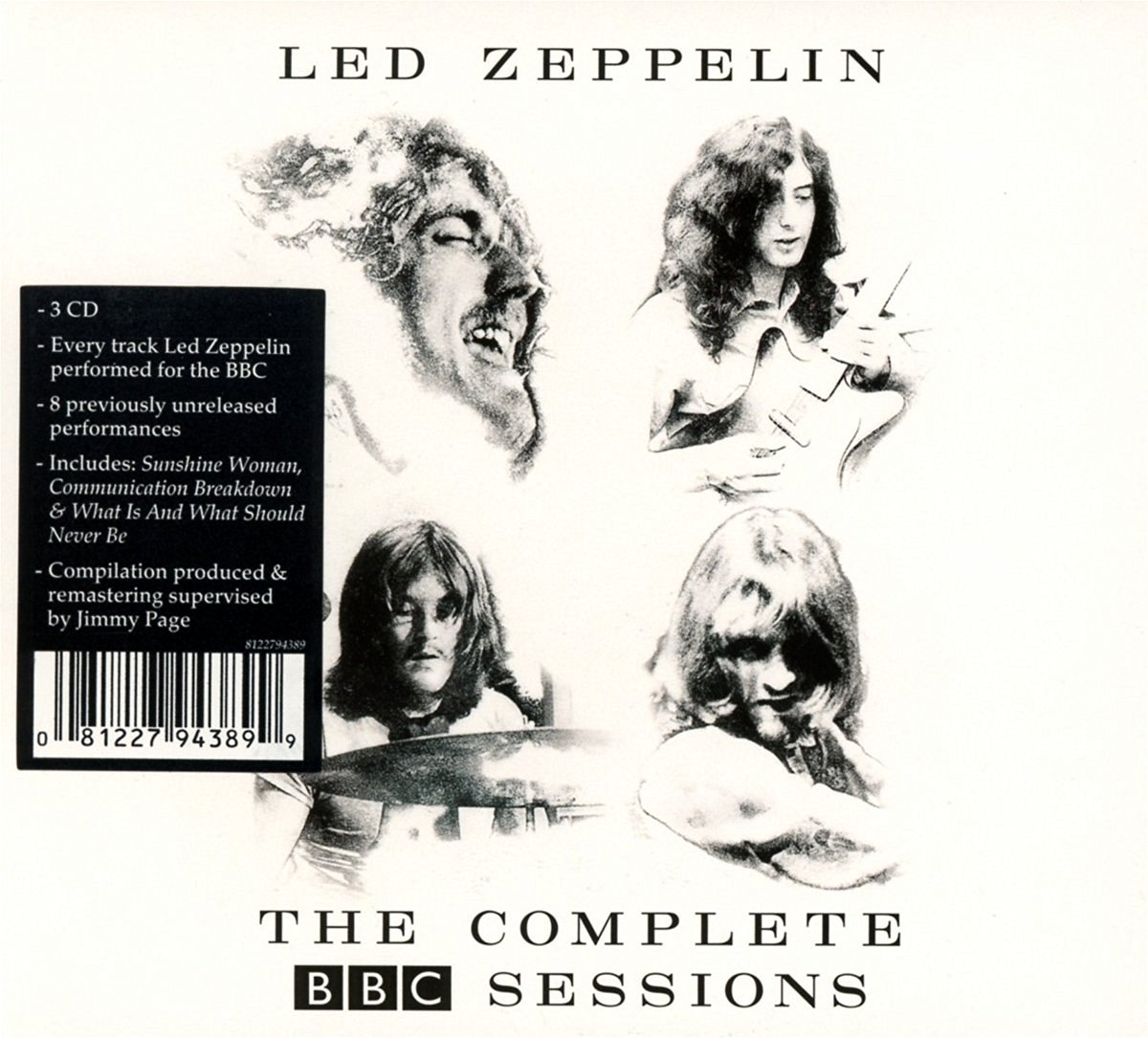
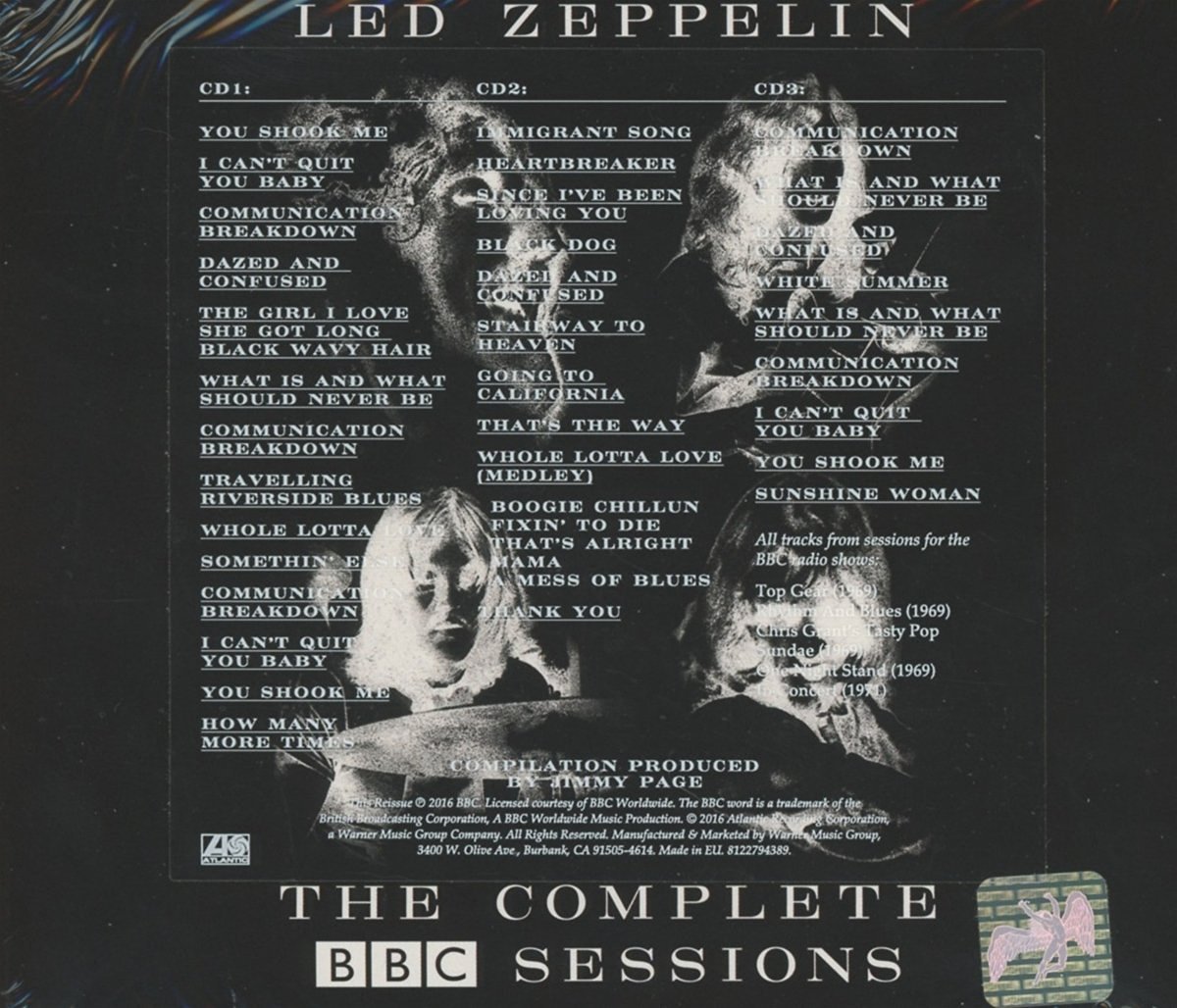
MANUEL GOTTSCHING-INVENTIONS FOR ELECTRIC GUITAR.
MANUEL GOTTSCHING-INVENTIONS FOR ELECTRIC GUITAR.
When Manuel Göttsching released Inventions For Electric Guitar in 1975, it was regarded as a new chapter in his career. Inventions For Electric Guitar was Manuel Göttsching’s debut solo album, and first album post Ash Ra Tempel album. Or was it?
Eagle eyed record buyers having bought Inventions For Electric Guitar saw atop the album cover the words Ash Ra Tempel VI in small print. This muddied the waters somewhat. What was Inventions For Electric Guitar? Was it Ash Ra Tempel’s swan-song, or Manuel Göttsching’s debut album? Record buyers were confused.
They were under the impression that Ash Ra Tempel Starring Rosi, was the band’s fifth and final album. It had been released in 1973, and by then, Ash Ra Tempel comprised just Manuel Göttsching. He was the last man last standing.
Nearly two years had passed before Inventions For Electric Guitar was released. Manuel Göttsching composed, played all the instruments and produced Inventions For Electric Guitar. It seemed undeniable that Inventions For Electric Guitar was a solo album. What good reason could the record company have for adding Ash Ra Tempel VI to the album cover?
Manuel Göttsching was signed to Rolf-Ulrich Kaiser and Gille Lettmann’s Ohr Records. They realised that Inventions For Electric Guitar was the start of a new chapter in Manuel Göttsching’s career. He was keen to embark upon a solo career. What worried Ohr Records, was that many record buyers wouldn’t recognise Manuel Göttsching. That was despite playing a huge part in five albums Ash Ra Tempel’s released between 1971 and 1973. So Ohr Records had two options.
They could release Inventions For Electric Guitar as a solo album. That seems to be the case, given the prominence of Manuel Göttsching’s name. The addition of Ash Ra Tempel VI was part of Ohr Records’ marketing campaign. Ash Ra Tempel was already a relatively well known ‘brand name’ within German music. So if record buyers didn’t recognise Manuel Göttsching’s name, there was every chance they would recognise Ash Ra Tempel, and buy the album. That was one theory.
The other was to bill Inventions For Electric Guitar as an Ash Ra Tempel album. Hence the subtitle, Ash Ra Tempel VI. By adding Manuel Göttsching name to the album cover, Ohr Records were to all intents and purposes, paving the way for Manuel Göttsching’s solo career. That was the other theory put forward when Inventions For Electric Guitar was released in 1975. Nowadays, though, it seems that theory has been disproved.
Recently, Inventions For Electric Guitar has been reissued by MG Art. On Inventions For Electric Guitar’s album cover, there is no sign of the words that caused all that debate “Ash Ra Tempel VI.” They’ve been removed it seems, in accordance with Manuel Göttsching’s wishes. He always saw Inventions For Electric Guitar as his debut solo album. Ash Ra Tempel was in the past. Inventions For Electric Guitar was start of a new and exciting chapter for Manuel Göttsching, the solo years.
The solo years began with Inventions For Electric Guitar. Manuel Göttsching decided to return to the lengthy jams that had been a feature of Ash Ra Tempel’s first four albums. From 1971s Ash Ra Tempel through 1972s Schwingungen, Seven Up and 1973s Join Inn, lengthy jams were the order of the day. This changed on Ash Ra Tempel fifth album, Ash Ra Tempel Starring Rosi. It found Ash Ra Tempel dispense with the lengthy jams and adopt a tighter, more traditional song structure. For his debut solo album, Inventions For Electric Guitar, Manuel Göttsching decided to combine the two approaches.
When Manuel Göttsching began work on his debut solo album, Inventions For Electric Guitar he decided that composition would play a much more important role than on Ash Ra Tempel’s first four albums. Using this new approach, he wrote three pieces, Echo Waves, Quasarsphere and Pluralis. They lengthy soundscapes became Inventions For Electric Guitar. When it came to record Inventions For Electric Guitars, Manuel Göttsching deployed his ‘secret weapons’ to create his new sound.
Having decided on how to approach his debut solo album, Manuel Göttsching headed to Studio Roma, in Berlin in July 1974. That was where Manuel Göttsching would record Inventions For Electric Guitar. He took with him his electric guitar, a Hawaiian steel bar and some of his secret weapons. These were Manuel’s various effects pedals, which included a Revox A77 for echoes, a WahWah pedal, volume pedal and a Schaller Rotosound effects pedal. To record Inventions For Electric Guitar, Manuel used a four track TEAC A3340. Recording of his debut album brought out the perfectionist in Manuel Göttsching.
Throughout July and August of 1974, Manuel Göttsching recorded three lengthy improvised tracks, Echo Waves, Quasarsphere and Pluralis. Gradually, they began to take shape. However, Manuel Göttsching wasn’t willing to accept second best, so constantly honed the three soundscapes. Eventually, after the best part of two months, Inventions For Electric Guitar was complete. Manuel Göttsching had composed, played all the instruments and produced Inventions For Electric Guitar. All that remained was for the album to be mixed.
With Inventions For Electric Guitar recorded, Studio Roma’s recording engineer Heiner Friesz and Manuel Göttsching began mixing the album. Ohr Records didn’t just want the album mixed in stereo. Instead, they also wanted a quadraphonic mix. This invoked a journey to Dierks Studios in Cologne, where the quadro-mixing took place. Ironically, despite the time, effort and expense, quadraphonic sound never took off. That was a great shame, as Inventions For Electric Guitar was an album perfectly suited to quadraphonic sound. Inventions For Electric Guitar is also a truly timeless debut album from Manuel Göttsching.
Echo Waves opens Inventions For Electric Guitar and is a near eighteen minute epic. Straight away, Manuel Göttsching fingers fly up and down the fretboard as he plucks notes and deploys his trusty effects pedals. Waves of choppy, crystalline guitars assail and surround the listener. Meanwhile, a myriad of beeps and squeaks are panned hard left. They come courtesy of the effects laden guitars. There’s no let up. Neither is there space within the music. Its relentless, as the arrangement is powered along. That’s despite the absence of the drums.
When most people will expect the drums to enter, they don’t. That doesn’t matter. Some of the guitars are played with power and precision, and provide a perfect, if unlikely replacement. By then, the lysergic arrangement is being panned and it surrounds the listener. It must have sounded glorious in quadraphonic sound. Still a vortex of guitars continue to assail and surround the listener. Effects transform their sound, thickening the guitars and adding depth. Other times, they cheep and beep, as if auditioning for an Acid House single. Throughout Echo Waves, repetition is key. Patterns appear, only to disappear and reappear. Later, though, it’s all change, with the arrangement taking on a thicker, darker sound. The wah wah and echo pedals are put to good use, as waves of music echo and reverberate as Manuel Göttsching showcases his considerable skills. In musical terms, he’s a master craftsmen as he unleashes a virtuoso performance. This includes latterly, a much more rocky sound, where blistering, searing and screaming guitars drive the arrangement to it’s memorable and majestic crescendo
Quasarsphere has a much more understated, melancholy and ambient sound. Guitars almost weep, as the ethereal soundscape meanders along. This allows the listener to ruminate in the minimalist backdrop. Here, less is more, as a drone accompanies the weeping guitars. By then, there’s a classical influence to a soundscape where elements of ambient and Berlin School combine to create a beautiful, melancholy and ruminative soundscape, that showcases another side to Manuel Göttsching.
Pluralis is a twenty-two minute Magnus Opus that closes Inventions For Electric Guitar. Straight away, chirpy, choppy guitars creates a repetitive pattern. It’s repeated, and takes on a mesmeric, hypnotic sound. Meanwhile, washes and vortexes of ethereal music escape from the arrangement, adding a contrast. These ethereal and celestial washes of music are joined by crystalline, chiming guitars. Still, the hypnotic backdrop provides the heartbeat. Again, repetition is key, but familiarity doesn’t breed contempt. Far from it. The ethereal, celestial sounds dance atop the arrangement, while chiming, crystalline guitars add another layer of music. There’s very little change in tempo increases slightly, apart from when the music becomes slightly choppy. By then, what many people would mistake for lush strings have been added. It’s not. Instead, it’s the guitars, as things start to change.
At 11.03 flamboyant flourishes of guitar take centre-stage. The hypnotic backdrop is reigned in, and plays softly in the distance. Meanwhile, the guitar is caressed as the dreamy arrangement meanders along. Manuel Göttsching plays with speed and a flamboyance, adding flourishes of guitar. In the background, washes of guitar float along as the tempo drops and panning is used effectively. One minute the arrangement is panned hard right, the next it’s sneaked behind the listener and is panned right. Still the hypnotic backdrop plays an crucial part in the soundscape, as space invader sounds are unleashed. Gradually though, a rocky sound emerges from the soundscape. A blistering guitar solo is unleashed, and is played with speed, precision and power. Filters mask the guitar, while panning is used heavily, as Manuel Göttsching delivers another effects laden virtuoso solo. When the guitar solo drops out, the soundscape chugs and skips hypnotically along, as Manuel Göttsching reaches new heights of inventiveness on Inventions For Electric Guitar.
After three soundscapes lasting just forty-seven minutes, Manuel Göttsching’s 1975 debut solo album Inventions For Electric Guitar draws to a close. It was an album that was way ahead of its time, and nowadays, is regarded as a timeless, genre-melting classic.
Manuel Göttsching combined elements of ambient, avant-garde, Berlin School, electronica, Krautrock, psychedelia and rock on Inventions For Electric Guitar. The result was an inventive and innovative album. Inventions For Electric Guitar features music that’s variously beautiful, ethereal, hypnotic, lysergic melancholy, mesmeric and rocky. What’s remarkable about Inventions For Electric Guitar, is that it was recorded by just one man, Manuel Göttsching.
He became a one man band, deploying his guitars and a myriad of effects to record multilayered soundscapes. They sounded as if they had been recorded by a number of musicians and instruments. That wasn’t the case. Instead, it was the work of Manuel Göttsching, one of the most inventive and innovative musicians of his generation. Inventions For Electric Guitar might have been his debut solo album, but Manuel Göttsching had been releasing innovative music since 1971.
That was when Ash Ra Tempel released their eponymous debut album. The five albums they released between 1971 Join Inn feature groundbreaking music. For anyone interested in Krautrock, these five albums deserve a place in any self respecting music collection. So does Inventions For Electric Guitar, which marks the start of a new era for musical pioneer Manuel Göttsching. He was well on his way to becoming one of the most innovative, inventive and influential German musicians of his generation. Continually, Manuel Göttsching reinvented himself and his music.
A year later, Manuel Göttsching released a new album under the Ashra moniker. New Age Of Earth showed that Manuel Göttsching was determined not to stand still. This determination to reinvent himself musically, ensured that Manuel Göttsching’s music continued to be relevant and ahead of the musical curve.
That was the case in 1975, when Manuel Göttsching embarked upon his solo career. After two months in the studio, he released Inventions For Electric Guitar, which is a timeless classic from the virtuoso guitarist and musical magician, Manuel Göttsching.
MANUEL GOTTSCHING-INVENTIONS FOR ELECTRIC GUITAR.
MARTIN GREEN-FLIT.
MARTIN GREEN-FLIT.
Lau are, without doubt, one of the most exciting and ambitious folk bands of their generation. They’ve been described as “modern folk’s most innovative band,” and have been winning awards, praise and plaudits since the release of their debut album Lightweights and Gentlemen in 2007. Since then, Lau have released four further albums, including their most recent album The Bell That Never Rang in 2015. However, when Kris Drever, Martin Green and Aidan O’Rourke are neither touring nor recording, they work on other projects.
That’s been the case since the early days of Lau. In their downtime, the three members have worked on other projects. Despite these other projects, they’ve always returned to Lau, which the three members fondly describe as “the mothership.” The latest band member to leave “the mothership” was accordionist and electronics guru, Martin Green.
He was a man on a mission. Martin Green was about to record his much anticipated sophomore album, Flit. It will be released on Reveal Records, and is the followup to Martin’s critically acclaimed debut album Crow’s Bones, which was released in April 2014.
Crow’s Bones found Martin Green accompanied by an all-star cast of musicians. This included Becky Unthank, Inge Thomson Niklas Roswall and Portishead’s Adrian Utley. They played a part in the sound and and success of Crow’s Bones. Now just over two years later, and Martin Green returns with the much anticipated followup album to Crow’s Bones.
After the release of Crow’s Bones in April 2014, Martin Green returned to “the mothership.” Now, Lau could begin working on their fifth album, which eventually, became The Bell That Never Rang.
The three members of Lau began writing their fifth album. Once the album was written, Lau headed to their studio of choice, Castlesound Studios, in Edinburgh. That was where Lau were joined by Joan Wasser, who had been brought onboard to produce the album. When the album was complete, it became The Bell That Never Rang, which was released in early summer of 2015.
Critical acclaim accompanied the release of The Bell That Never Rang, in May 2015. There was no doubt that Lau were “modern folk’s most innovative band.” They had released the best album of their career. All that was left, was for Lau to tour The Bell That Never Rang. Then the band could enjoy some much needed downtime.
After a gruelling tour, many musicians would head off and enjoy a much needed a lengthy break. Not Martin Green. His thoughts soon turned to his sophomore solo album. Martin had had released his debut in Crow’s Bones in April 2014. With some free time, this was the perfect opportunity to record his sophomore album.
So, Martin Green began planning what would eventually become Flit. Gradually, the album began to take shape. Martin wanted to record an album the documented stories of “human movement around the world.” To write, record and tell these stories, Martin enlisted the help of some of his many musical friends.
This includes some of the biggest names in Scottish music. Mogwai’s Dominic Aitchison joined the inimitable Aidan Moffat of Arab Strap; Fife based folksinger Karine Polwart and singer songwriter Adam Holmes . They’re joined by American singer-songwriter Anaïs Mitchell; Betty Unthanks of The Unthanks and Portishead’s Adrian Utley. Together, this multitalented, all-star cast of singers, songwriter and musicians joined Martin Green to write and record his much anticipated sophomore album, Flit.
Having explained the the concept of Flit, which was “human movement around the world,” Martin Green and Friends began work on the album. Eventually, a total of nine songs were written some talented songwriters. Martin wrote Clang Song and Smallest Plant. He cowrote Strange Sky, Wrackline, The Suitcase and Laws Of Motion with Karine Polwart. Martin wrote the lyrics to the other three songs, while Aidan Moffat penned the lyrics to The Living Wind; Anaïs Mitchell added the lyrics Roll Away and Sandy Wright was responsible for the lyrics to The Singing Sands. With the songs complete, recording began.
Recording took place at 245 Studios, in Bristol, where Martin Green and Adrian Utley took charge of production while T.J. Allen was the enginner. During the sessions, Martin Green played accordion, mellotron, synths and was involved with sampling. Meanwhile, Mogwai’s Dominic Aitchison laid down the bass lines. Adrian Utley switched between acoustic and electric guitar to bass, percussion and synths. Corrina Hewat was drafted in to add harp. This left just the vocals to be recorded by Adam Holmes, Betty Unthanks, Aidan Moffat and John Smith. Gradually, the album began to shape. Later, addition recording sessions took place at Chapel Studios. Eventually, the recording sessions were over. This left just mixing and mastering.
Flit was mixed by Martin Green, T.J. Allen and Adrian Utley. With the album mixed, Flit was mastered at Optimum Mastering. Now that the album was recorded, Martin Green sophomore solo album was ready for release.
Before that, Flit with its theme of “human movement around the world,” was premiered at the Edinburgh International Festival. Flit was well received by critics. Buoyed by the critical acclaim Flit had received at its Edinburgh premiere, Reveal Records scheduled the release of Flit for the 7th of October 2016. Martin Green’s much anticipated sophomore album Flit, you’ll soon realise, is a powerful musical document.
The Living Wind opens Flit. The arrangement squeaks and chirps before the buzzing bass synth enters. It dominates the arrangement until Aidan Moffat delivers an emotive soliloquy. He remembers and reflects upon what happened. “They fled in fear when we flew into town…our legion crew silenced them, drowned out their prayers, eventually we passed, they didn’t understand we didn’t speak their language.” Soon, though, he’s trying to justify his actions: “we were hungry, they were hungrier.” Later, when the vocal drops out, the arrangement takes on a cinematic sound, as mesmeric, chirping guitars combine with synths.” When the vocal returns, Aidan remembers when those who fled from him, came seeking revenge and retribution. “They brought fury and fire.” Suddenly, the hunter is the hunted. Those that survive, are forced to flea for their lives, and become displaced and traumatised. It’s a chilling and powerful soliloquy, where Aidan brings the lyrics to life against a slow, atmospheric and cinematic arrangement.
Atmospheric, dark and moody describes the introduction to Strange Sky. The arrangement reverberates, as a wash of synths combines with understated, metallic drums and what sounds like the sound of traffic. They provide a hypnotic backdrop to Becky’ Unthank’s vocal. Her vocal sounds bereft of emotion, as if she’s tired of being displaced and finding herself: “under a Strange Sky.” Meanwhile, the arrangement sounds as if it’s portraying a journey. Is she being smuggled across a border? A bass, guitars and drums combine. Later, the drama combines as the arrangement roars, buzzes and beeps, heading in the direction of post rock. By then, the vocal grows in power and emotion. When it drops out, strings sweep wistfully, adding to the sense of sadness and desperation.
Becky returns in Wrackline, where just percussion, piano and bass combine with her melancholy vocal. Effects are added to her vocal, giving it a lysergic hue as she sings: “washed up on the shore.” Soon, though, the effects disappear, as Becky’s vocal becomes crystal clear. She reminisces about what’s: “washed up on the shore.” Before long, effects are added to the vocal, and a blistering, choppy guitar and bass cuts through the arrangement. It’s joined by a piano and percussion which add to the drama, as the arrangement begins to meander moodily along. That’s until the arrangement explodes and Becky’s vocal becomes ethereal. Later, it becomes understated and almost a lament, as she stands by the Wrackline and promises to: “cherish the child of the sailor whose not coming home.” It’s a truly moving song that’s tinged with sadness.
Notes are picked out on a piano on Roll Away, before a guitar accompanied Adam Holmes’ tender vocal. Against this understated backdrop, he paints pictures with his heartfelt vocal. It grows in power and emotion as he sings of: “railway lines and ocean liners, it never will be a home to any, sail away, Roll Away.” There’s a sadness in Adam’s voice as he realises this. Later, when after “seven years I left you lonely, railway lines and ocean lines, if I come back home would you even know me?” Sadness fills his voice as he realises he’s far from home, lonely and lost his true love, for the “jaunt” he took seven years ago. Roll Away is a truly beautiful song, and without doubt, the best on Flit.
The Suitcase marks the return of Aidan Moffat, who delivers another soliloquy on this song of two parts. During the first part, Aidan remembers: “my dad always kept a packed suitcase in the hall.” Suddenly, Aidan is remembering a proud, quiet, fair, hard working and complex man. He was: “driven to protect and survive…he strove to prepare us all for the future, long signed, very aware you can only really rely on yourself.” Behind him, the arrangement is almost incidental. Just shakers and subtle keyboards provide a backdrop. That’s until 1.59 when Becky’s vocal enters.
By then, the arrangement has taken on a dark, ominous sound. Soon, Becky sings: “The Suitcase in the lobby is always packed and ready…the only thing you need to know is when it’s time to go. The train leaves in the station, each coach is lined with silver and gold, and in his dream, everyone grows old.” Later Becky is joined by Adam and they share the vocal duties. Sometimes, a chiming guitar is added and Karine adds ethereal harmonies. Always, the song is cinematic, right up to the closing line, when Becky sings: “The Suitcase in the lobby is always packed and ready.” It’s a memorable, cinematic song that’s rich in imagery, thanks to Becky’s vocal and Karine Polwart’s carefully crafted lyrics.
Layers of synths meander, producing an otherworldly backdrop on Laws of Motion. Providing a contrast are the guitar which accompanies Adam’s vocal. He becomes a storyteller, and paints pictures with the lyrics. They come to life. So much so, that the scenes become very real. Still, synths provide a backdrop. They provide an atmospheric backdrop when his vocal drops out. Later, when his vocal returns Becky accompanies him. His vocal grows in power, as synths buzz and reverberate. Together, they play their part in what’s a powerful and poignant song.
Clang Song is akin to a post rock soundscape. Synths are to the fore, as they buzz, beep and squeak. Sometimes, they fire off a round of scratchy sounds. Then they grind, beep, squeak and buzz, as if sending out a code. Other times, it’s like some industrial symphony, where the music is dark, ominous and moody. Later, the arrangement is transformed, and becomes melodic, hopeful and dreamy. These are two sides of a captivating soundscape.
Martin Green’s accordion plays slowly on Smallest Plant, creating a melancholy sounding arrangement. Soon, though, it’s all change. As a beat is tapped out, the a bass anchors the arrangement. Meanwhile, a crystalline guitar plays. Effects are deployed, adding a choppy backdrop. This doesn’t affect Adam and Becky’s vocals, as they become one. Still, the arrangement grinds, as just the bass and guitar remain. They briefly replace the heartfelt vocals. When they return, they’re joined by a guitar. This allows the vocals to take centre-stage, on this moving ballad.
Closing Flit, is The Singing Sands. As is often the case, it’s a case of keeping one of the best until last. Against an understated arrangement, where a chiming, chirping guitar accompanies Adam delivers a soul-baring vocal. This impassioned and hurt filled vocal, is reminiscent of Sting on his early solo albums. That’s how good Adam Holmes’ vocal is. Let’s hope we hear more from Adam Holmes and Martin Green very soon.
Thirty months after the release of his debut solo album Crow’s Bones, Martin Green will returned with his sophomore album Flit. It will be released on Reveal Records on the 7th October 2016, and is without doubt, well worth the wait.
To record Flit, Martin Green brought onboard some of his musical friends. This included Karine Polwart who cowrote four of the nine songs. Among the other collaborators were the inimitable Aidan Moffat, who wrote the lyrics to The Living Wind and contributes soliloquies on two songs. Then there’s Mogwai bassist Dominic Aitchison, who plays a part in the post rock sound of a couple of tracks. Adrian Utley of Portishead played on, co-produced and helped mix Flit. He helps craft arrangements that are atmospheric, dark, moody and sometimes, ominous. They prove the perfect backdrop for the vocals.
On Flit, most of the vocals come courtesy of Adam Holmes and Betty Unthanks. They breath meaning and emotion into the lyrics. These songs document “human movement around the world.” Some of the songs on Flit are tinged with sadness, despair and disappointment. Others document suffering and tragedy. Adam Holmes and Betty Unthanks. bring these songs to life. Sometimes, they sound as if they’ve lived and survived the lyrics. Other times, it’s as if Adam and Betty are determined to highlight other people’s plight and suffering. These vocals play an important part in the sound and success of Flit, a genre-melting album.
During Flit, Martin Green and his friends combine elements of traditional folk, with folk rock, electronica and rock. To this, elements of avant-garde, post rock and psychedelia. Sometimes, one genre is to the fore. Mostly, though, several genres melt into one musical genres on Flit, Martin Green’s much-anticipated sophomore album.
Flit was recorded during Martin Green’s recent departure from “the mothership.” It’s something that the three members of Lau having been doing since the early days of the band. This time around, Martin Green with a little help from his friends, has recorded Flit, which is a career defining album, that will set the bar high for future solo albums.
MARTIN GREEN-FLIT.
THE WELCOME RETURN OF BOB LIND.
THE WELCOME RETURN OF BOB LIND.
Bob Lind, it’s fair to say, is a many of many talents. He started life as a singer-songwriter in 1965, and helped define the folk rock genre. His debut single Elusive Butterfly gave Bob a hit single on both sides of the Atlantic in 1966. Five years and four albums later, Bob Lind turned his back on music.
By then, Bob Lind had gained a reputation as difficult to work with. That wasn’t all. Bob was battling drug and alcohol addiction. Things weren’t looking good for Bob. It looked as if Bob’s life was spiralling out of control. However, Bob Lind was a survivor.
Through sheer strength of character and sheer determination, Bob Lind overcame his addictions. He rebuilt his life and reinvented himself as a journalist and author. Bob Lind was back. Then in 2004, a friend encouraged Bob to make play live. Since then, Bob has been playing live and earlier in 2016, recorded a new album Magellan Was Wrong. The welcome return of Bob Lind was complete. For the seventy-three year old, this was just the latest chapter in the Bob Lind story.
It began in Baltimore, Maryland on November 25th 1942. That was where Bob Lind was born and developed a love of music. Soon, he began to play guitar. Later, Bob embarked upon a career as musician.
Don’t Be Concerned.
By 1965, Bob Lind was twenty-three and had just signed to World Pacific Records, an imprint of Liberty Records. It was an exciting time for him. He had just signed his first recording contracted and was about to record his debut album, Don’t Be Concerned.
For some time, Bob Lind had been writing songs, which featured in his live sets. These songs showcased a truly talented songwriter. Already, Bob had a way with words. Elusive Butterfly, You Should Have Seen It, Drifter’s Sunrise, The World Is Just A “B” Movie and It Wasn’t Just The Morning were proof of this. They were among the twelve songs that would feature on Don’t Be Concerned.
When it came to record Don’t Be Concerned, Bob Lind was paired with Jack Nitzsche. He was already an experienced producer, who had worked with a wide range of artists. Jack Nitzsche arrange and produce Don’t Be Concerned, which when it was completed, was scheduled for release in early 1966.
Before the release of Don’t Be Concerned, Elusive Butterfly was released as a single. It reached number five in the US Billboard 200 and the UK charts. For Bob Lind, this was a dream start to his career. Things however, would get even better.
Don’t Be Concerned was released to widespread critical acclaim. Critics were impressed by an album of carefully crafted songs, from a singer who they regarded as a rising star of folk. Bob Lind critics believed, would play an important part in folk music’s future. These were wise words, with Bob Lind playing an important part in defining folk rock. With critically acclaimed reviews and a hit single to his name, Bob Lind’s star was in the ascendancy.
When Don’t Be Concerned was released in 1966, it reached 148 in the US Billboard 200. This was regarded as a success. For a new artist, in the folk rock genre, where most albums didn’t sell in the same quantities as those by pop and rock artists, this was regarded as a success. So World Pacific Records decided to build upon this success and sent Bob back into the studio.
Photographs Of Feeling.
It was decided that Bob Lind should return to the recording studio, and record his sophomore album Photographs Of Feeling. World Pacific Records realised the importance of momentum, and wanted another album from Bob. So he began work on his sophomore album, Photographs Of Feeling.
For Photographs Of Feeling, Bob Lind wrote the ten songs. Jack Nitzsche returned to arrange and produce Don’t Be Concerned. It would released in April 1966.
Before that, critics had their say on Photographs Of Feelings. Just like Don’t Be Concerned, critics were won over by Photographs Of Feelings. It received plaudits and praise, who saw Bob Lind as an artist who was reinventing folk music, with the new folk rock sound. This was beginning to grow in popularity.
Despite this, when Remember The Rain was released as a single, but reached just number forty-six in the US Billboard 100 and sixty-four in the UK. Compared to the transatlantic top ten hit Elusive Butterfly, this was have disappointing. So must have been Photographs Of Feeling failing to chart. Despite the positive reviews, of Photographs Of Feeling it never came close to troubling the charts. Despite this, a third Bob Lind album was released in 1966.

The Elusive Bob Lind,
After releasing two albums for World Pacific Records, Bob Lind released his third album on the Verve Folkways label. It had been founded in 1965, as a partnership between Verve Records and Moses Asch’s Folkways Records. Signing Bob Lind, a pioneer and rising star of the folk rock scene, was something of a coup. So was releasing his third album, The Elusive Bob Lind.
For The Elusive Bob Lind, eleven songs were chosen. They were mostly Bob Lind compositions, which were augmented by cover versions. This included Bob Dylan’s The Times They Are A Changing and the traditional song Hey Nellie Nellie. These songs were recorded with a new producer and became The Elusive Bob Lind.
This time around, there was no sign of Jack Nitzsche, who had arranged and produced Bob’s first two album. Verve Folkways brought Pete Spargo onboard. He was a relatively new producer. His production career began in the early sixties, and since then, he had produced Willie Bobo, The Guitar Kings and Hugo Montenegro and His Orchestra. Bob Lind was the latest addition to what would eventually be a lengthy list of production credits. With Pete Spargo manning the board, Bob soon had his third album recorded.
Now Verve Folkways began preparing for the release of The Elusive Bob Lind. Copies were sent to critics. They were fulsome in their praise of the album. Especially, Bob Lind’s songwriting skills, his unique vocal and how he could breath life, meaning and emotion into a song. Bob who had been one of the pioneers of folk rock, critics remarked, was continuing to redefine the genre with another album of influential music. It was released later in 1966.
Despite the praise, The Elusive Bob Lind received, the album failed to chart. With two albums consecutive albums failing to chart, it was a worrying time for Bob Lind. Maybe, his single would get his ailing career back on track?
There was a problem though. With Bob Lind’s last two albums had been released on different labels, they were essentially competing against each other. Five singles were released between April and October 1966.
World Pacific Record released I Just Let It Take Me as second single from, Photographs Of Feeling later in June 1966. It stalled at 123 in the US Billboard 100. For Bob Lind, it was a case of close but no cigar. Especially when San Francisco Woman, was released as the third and final single from Photographs Of Feeling. However, when it was released in August 1966, it reached just 135 in the US Billboard 100. Bob Lind it seemed, was out of luck.
Despite this, Verve Folkways Records decided to release White Snow from The Elusive Bob Lind. This was just the second single released from the album. It was released in October 1966, but failed to trouble the charts. After four consecutive singles failing to chart in the US Billboard 100. Bob Lind must have been wondering about his immediate future?
After the roller coaster year that was 1966, Bob Lind continued to play live. He was still a popular draw, and had been since the earliest days of his career.Then in the spring of 1967, Bob Lind returned to the studio. This time, he only recorded two singles. Maybe World Pacific Records were being cautious, and wanted to gauge the success these singles? The first single, It’s Just My Love was released in April 1967, but failed to chart. Eight months later, Goodbye Neon Lies was released in 1967, but failed to chart. Little did anyone realise that Goodbye Neon Lies was Bob Lind’s World Pacific Records’ swan-song?
By 1969, Bob Lind, like many singers and musicians had developed a taste for the rock ’n’ roll lifestyle. He battled drug and alcohol addiction. To make matters worse, Bob Lind was regarded as difficult to work with. That was the case with many artists. However, if they delivered the goods, then record companies saw as the cost of doing business with an artist. Sadly, by 1969, Bob Lind had neither released a single for two years, nor an album for three. There was no sign of any music on the horizon. Despite this, very few people would’ve forecast that Bob Lind would decided to walk away from his contract with World Pacific Records in 1969.
Having severed his ties from World Pacific Records, very little was heard of Bob Lind. While he still played live, he never released any music between 1967 and 1971. That was when Bob Lind resurfaced, and signed a contract with Capitol Records.
Since There Were Circles.
Not long after this, Bob Lind entered the studio for the first time in four years. He had written eleven new songs which would become Since There Were Circles. They would be recorded in Los Angeles.
Capitol Records had booked the Record Plant in L.A. for Bob Lind. Producing Since There Were Circles was Doug Weston. He was joined by a tight, talented and experienced band that included ex Byrd Gene Clark. They accompanied Bob as he worked his way through an electric album. It veered between folk rock, Americana, country and even a hint of pop. Since There Were Circles was an album that should’ve appealed to a wide range of record buyers.
With Since There Were Circles complete, Capitol Records scheduled the release of Bob Lind’s comeback album for later in 1971. Capitol Records sprang into action, and began promoting the album. The only concern was, that it had been five years since Bob Lind had released an album. That was a long time in music, where record buyers often, have short memories. At least, though, Bob Lind had been playing live during that period. So he wasn’t quite The Elusive Bob Lind.
Critics certainly hadn’t forgotten Bob Lind. They welcomed the return of Bob Lind, and hailed Since There Were Circles a welcome return to form. Accompanied by some of the top session musicians of the early seventies, critics were impressed by one of Bob Lind’s finest albums. Would record buyers agree?
Capitol Records released She Can Get Along in 1971. It was Bob Lind’s first single in four years single. Alas, She Can Get Along failed to chart. This didn’t augur well for the release of Since There Were Circles. It also failed to chart, and this marked the end of Bob Lind’s time at Capitol Records.
Not long after leaving Capitol Records, Bob Lind turned his back on music. Bob Lind wasn’t the first, and certainly wouldn’t the last to walk away from music.
During the wilderness years, Bob Lind befriended writer Charles Bukowski. They struck up a close friendship. So much so, that Charles Bukowski immortalised the singer-songwriter in his 1978 book Women. Bob Lind was the inspiration for the character Dinky Summers, who would regularly reappear in Charles Bukowski’s work. Ten years after Women was published, Bob Lind became a writer.
Bob Lind decided in 1988 to follow the sun, and headed to Florida. That was where he embarked upon a new career, as a writer. The move to Florida, and career change proved successful. Not only did Bob Lind write five novels, but a stage play and the award winning screenplay Refuge. It went on to win the prestigious Florida Screenwriters’ Competition in 1991. This must have been the pinnacle of Bob Lind’s career as a writer.
Later in his writing career, Bob Lind spent eight years as a staff writer at the supermarket tabloids Weekly World News and The Sun. This was very different from writing novels, screenplays or a stage play. The content was marketed as satirical and sensationalist, but often fell foul of the privacy laws. For Bob Lind, this must have seemed like a far cry from his days as a musician? Maybe Bob Lind would even consider a comeback?
Thirty-three years after turning his back on music in 1971, Bob Lind had a change of heart in 2004. He was persuaded folk singer Arlo Guthrie, the son of Woody Guthrie, to make a comeback. The venue that was chosen was the Guthrie Center in Becket, Massachusetts.
That night, Bob Lind’s love of playing live was rekindled. Soon, the sixty-two year old and Arlo Guthrie were heading out on tour. Since then, they’ve continued to tour. Bob Lind was back.
Later in 2006, Bob Lind self-released his first live album Live At The Luna Star Cafe It featured the first new material Bob Lind had released since 1971. This was just the start of Bob Lind’s comeback.
In 2007, a compilation of Bob Lind’s World Pacific Records’ recording was released. This was Elusive Butterfly: The Complete 1966 Jack Nitzsche Session. Suddenly, a whole new audience were discovering Bob Lind’s music.
Over the next few years, interest in Bob Lind’s music began to grow. However, within the music industry, many artists and groups were familiar with Bob Lind’s songs, and had covered them. This included luminaries like Eric Clapton, Glen Campbell, Dolly Parton, Aretha Franklin and The Four Tops. They’re just a few of the artists who have covered Bob Lind’s music, and helped spread the word about one of music’s best kept secrets.
With Bob Lind’s profile rising, cinematographer Paul Surratt finished a DVD about Bob Lind. It was a documentary, which also featured Bob Lind in concert. Bob Lind: Perspective was released in 2009, and introduced the singer-songwriter to a wider audience. However, there was still one thing Bob Lind hadn’t done since his comeback, release a new album.
Finding You Again.
Bob Lind decided to rectify this in 2012. He returned to the studio with The Spongetones’ guitarist Jamie Hoover, and recorded thirteen Bob Lind compositions. Jamie Hoover produced what would become Bob Lind’s first album since 1971s Since There Were Circles.
Forty-one years later, Finding You Again was released on Big Beat Records, a subsidiary of Ace Records. Finding You Again was released to critical acclaim, and marked a welcome return to form from the seventy year old folk-rock pioneer. Now that Bob Lind had found his audience again, the big question was, when would there be followup to Finding You Again?
Magellan Was Wrong.
Four years later, and Bob Lind returned with the much anticipated followup to Finding You Again,Magellan Was Wrong. It featured Bob Lind eleven new Bob Lind songs and a cover Tom Paxton’s Bottle Of Wine. These songs were arranged and produced by Jamie Hoover.
When it came to record Magellan Was Wrong, Jamie Hoover played many of the instruments on Magellan Was Wrong. Bob Lind played acoustic guitar, electric guitar, 12-string guitar and adds synth horns and vocals. Augmenting Jamie Hoover and Bob Lind, were a few musicians who added overdubs in two studios in Fort Worth, Miami. Once album, were complete, the welcome return of Bob Lind was one step nearer.
Magellan Was Wrong was released earlier in 2016, and overwhelming critical acclaim. Bob Lind was the comeback King, having released the best album since he returned to music in 2004, Magellan Was Wrong. It’s a tantalising taste of what Bob Lind’s capable of.
On Magellan Was Wrong, Bob Lind’s lyrics were beautiful, celebratory, cerebral, poignant, reflective, rueful, thought-proving and wistful. Songs about love, love lost, returning heroes and the sands of time running dry, sit side-by-side with a cover Tom Paxton’s Bottle Of Wine. Often, the lyrics are also cinematic, vivid and rich in imagery, as Bob Lind unmistakable voice switches between musical genres. Bob Lind it seems, is just as comfortable singing folk and folk-rock as he is country, jazz or pop rock. Magellan Was Wrong is a welcome return to form from Bob Lind.
Belatedly, Bob Lind is making up for lost time. He turned his back on music 1971, and never to playing live until 2004. Despite that, Bob Lind wasn’t a forgotten man.
During that period, many artists and bands continued to cover Bob Lind’s songs. Over 200 artists, including some of the biggest names in music covered his songs. This includes everyone from Eric Clapton to Glen Campbell and Dolly Parton to The Four Tops and Petula Clark. These cover versions introduced many record buyers to Bob Lind’s music.
This was one way a whole new audience discovered Bob Lind. Other record buyers discovered one of Bob’s first four albums in second hand record shops. This was the start of a voyage of discovery.
Having discovered Bob Lind, soon the journey was complete. It was frustrating, as record collectors soon owned Bob’s entire discography. Many record collectors wanted to here more from one of music’s best kept secrets. If only, Bob Lind would hit the comeback trail.
Bob Lind was encouraged to make a comeback in 2004. Since then, Bob Lind’s career is enjoying an Indian Summer. This resulted in Bob getting a taste for playing live. He’s continued to play live since then, and this has resulted in a further resurgence in interest in Bob Lind’s music.
As a result, there’s been compilations of his music released, and some of Bob Lind’s albums have been reissued. Bob even released a live album. However, the one thing that had been missing from Bob Lind’s comeback was a studio album. He rectified this with Finding You Again in 2012. Four years later, and Bob Lind released one of the finest albums of his career, Magellan Is Wrong, earlier this year. By then, Bob Lind’s comeback was complete.
He had come a long way since he signed to Pacific World Records in 1965. He’s matured as a singer, songwriter and musician, and belatedly, is enjoying the commercial success and critical acclaim his talents deserved. However, one can’t help but wonder what would’ve happened if Bob Lind hadn’t turned his back on music in 1971?
At least, this allowed Bob Lind to overcome his addiction to alcohol and drugs. This wasn’t easy, and took strength of character and sheer determination. Eventually, Bob Lind managed to overcame his addictions.
He went on to rebuild his life and reinvented himself as a journalist and award winning author. Eventually, though, Bob Lind returned to his first love music in 2004. Since then, a newly revitalised Bib Lind has been making up for lost time. Twelve years later, and seventy-three year old Bob Lind is still making music, and is receiving the critical acclaim his considerable talents so richly deserve. Long may the welcome return of Bob Lind continue.
THE WELCOME RETURN OF BOB LIND.
THE LLOYD COLE AND THE COMMOTIONS STORY, 1983-1989.
THE LLOYD COLE AND THE COMMOTIONS STORY, 1983-1989.
With Lloyd Cole about to hit these shores on the latest leg of his 2016 tour, this seems a perfect time to look back at the band he made his name with, Lloyd Cole and The Commotions. They were one of the finest purveyors of perfect pop during the eighties. Lloyd Cole and The Commotions released a trio of albums during a six year period, and became one of the most successful Scottish bands of the eighties. The Lloyd Cole and The Commotions story began in 1982, in Glasgow’s musical capita,l Glashow.
In 1982, Derby born Lloyd Cole was studying at the University of Glasgow. Twenty-one year old Lloyd Cole had moved to Glasgow to study philosophy and English. Previously, Lloyd had studied a year of law at University College London. Law wasn’t for Lloyd Cole, so he decided to head to Glasgow to restart his educational career. That’s where Lloyd Cole met The Commotions.
By 1982, Glasgow was like a second home to Lloyd Cole. He had embraced the city’s vibrant musical scene. However, in 1982, he decided to make the move from onlooker to participant. So, Lloyd decided to form his own band. That band became Lloyd Cole and The Commotions.
Having made the decision to form his own band, gradually, Lloyd Cole and The Commotions’ lineup took shape. Lloyd who would sing lead vocals and play guitar, brought onboard four musicians. They became his Commotions. This included the rhythm section of drummer Stephen Irvine, bassist Lawrence Donegan and guitarist Neil Clark. They were joined by keyboardist Blair Cowan. At last the lineup of Lloyd Cole and The Commotions was compete.
With the lineup complete, Lloyd Cole and The Commotions embarked upon their musical journey. This began when Lloyd Cole and The Commotions signed to Polydor Records, and began work on their debut single.
The Lloyd Cole and The Commotions’ story started in earnest when the band released their debut single Perfect Skin in the spring of 1984. The single sold well, reaching number twenty-six in the UK charts. The follow up, Forest Fire, didn’t fare so well, only reaching a disappointing forty-one in the UK charts. That was only a minor blip. When Lloyd Cole and The Commotions released their debut album Rattlesnakes later in 1984, it was a huge success.
Rattlesnakes.
When Rattlesnakes was released later on 12th October 1984, it was to widespread critical acclaim and commercial success. Rattlesnakes reached number thirteen in the UK album charts, selling in over one-hundred thousand copies. For Lloyd Cole and The Commotions, this meant the first gold disc of their career. No wonder. Lloyd Cole and The Commotions were unique and caught the attention of critics and cerebral record buyers.
Critics and discerning music lovers were quick to release that Lloyd Cole and The Commotions were very different from most bands. Similarly, the songs on Rattlesnakes were unlike much of the music released in 1984. Lloyd Cole’s lyrics were influenced by Bob Dylan and his studies of English and philosophy. So it was no surprise that Lloyd Cole and The Commotions’ songs referenced
Renata Adler, Simone de Beauvoir and Norman Mailer in their lyrics. This was articulate, catchy and cerebral pop. Not only did it win over critics and cultural commentators, but provided the soundtrack to thousands of student bedsits.
A generation of students eavesdropped on Lloyd’s anguished, quirky and cinematic lyrics. He brought songs like Perfect Skin, Rattlesnakes, Forest Fire, 2cv, Patience and Are You Ready To Be Heartbroken to life. With vocals that were a mixture of anguish, emotion and passion, Lloyd Cole lived the songs on Rattlesnakes. Behind him, The Commotions’ trademark jangling, perfect pop caught the imagination of generation of music lovers. Lloyd Cole and The Commotions’ star was in the ascendancy.
After the commercial success and critical acclaim of Rattlesnakes, Lloyd Cole and The Commotions headed out on tour. Basking in the success of Rattlesnakes, Lloyd Cole and The Commotions played to sold out audiences. They were flavour of the month with critics and cultural commentators. Lloyd Cole and The Commotions had a reputation for producing music for the “thinking” music lover. It was the polar opposite of vacuous new romantic movement. At least, here was a group of substance, capable of making compelling cinematic songs. This would be the case with their sophomore album Easy Pieces.
Easy Pieces.
When Lloyd Cole and The Commotions began work on Easy Pieces, they wanted the album to be much more “accessible.” Rattlesnakes had passed many people by. It was, onlookers, remarked too cerebral. Lloyd also wanted Easy Pieces’ “sound to be warmer, more luscious.” With this in mind, Lloyd Cole and The Commotions began work on Easy Pieces.
Just like Rattlesnakes, Lloyd penned five of Easy Pieces ten tracks. He cowrote the other tracks with other members of The Commotions. The title had been inspired by the film Five Easy Pieces. Lloyd later said that five of the tracks were inspired by Five Easy Pieces. When the songs were completed, Lloyd Cole and The Commotions eschewed Glasgow for London.
Westside Studios, Shepherds Bush, London were where Easy Pieces was recorded. This wasn’t exactly the most glamorous setting to record an album. However, that was the studio that was chosen. When the sessions began, gone was the laid-back sessions of Rattlesnakes. The pressure was on Lloyd Cole and The Commotions to replicate the success of Rattlesnakes. Polydor didn’t exactly help things when they dismissed producer Paul Hardiman. He hadn’t been given a chance. Maybe Polydor were just waiting to parachute their producer of choice in?
Replacing Paul Hardiman was the production team of Clive Langer and Alan Winstanley. Considering the sound and success of Rattlesnakes this was a risky move. If Polydor had just been patient, Paul Hardiman would’ve got the sessions back on track. However, that wasn’t to be. Now Lloyd Cole and The Commotions were working with a producer they hadn’t chosen. Especially as the new production team had their own sound; and weren’t shy about voicing their opinions and suggestions. The new production team even tried to tell Lloyd how to sing. This had the effect of making Lloyd self-conscious when he sang. So much for producers putting bands at ease. However, stuck with a production team they hadn’t chosen, Lloyd Cole and The Commotions had to make the best of what was a bad situation. Eventually, Easy Pieces was completed and ready for release. However, the band weren’t happy.
For Lloyd Cole and The Commotions the Easy Pieces wasn’t a satisfactory experience. They felt they were forced to record Easy Pieces too soon. Lloyd also felt two songs on Easy Pieces shouldn’t have made the cut. He felt neither Grace nor Minor Character were good enough to make the album. The production team should’ve spotted this. However, they had been hired by the record company, with the job of getting the album finished and ready for release. Time was of the essence. Maybe this meant that there wasn’t time to write and record two more tracks? However, if this was the case, it could come back to bite them. The critics would spot two weak tracks.
Whilst Rattlesnakes was released to critical acclaim, Easy Pieces wasn’t as well received. The reviews were mixed. Critics felt some of the lyrics fell short of the quality of those on Rattlesnakes. The production didn’t impress some critics. They felt Easy Pieces was over produced. Another criticism was that there was no space for the music to breath. The major criticism was that the new production team took Lloyd Cole and The Commotions in the wrong direction. Easy Pieces was, some critics felt, a lengthy detour into country pop. That wasn’t what made Lloyd Cole and The Commotions such a special and unique band. With this criticism ringing in their ears, Lloyd Cole and The Commotions awaited the release of Easy Pieces with baited breath.
On 22nd November 1985, Easy Pieces was released, and reached number five in Britain. While Easy Pieces had a better chart position that Rattlesnakes, it sold less copies. There was no gold disc this time around. At least the singles faired reasonably well.
Three singles were released from Easy Pieces. Brand New Friend reached number nineteen in Britain. Then Lost Weekend surpassed Brand New Friend, reaching number seventeen in Britain. The only disappointment was Cut Me Down, which stalled at number thirty-eight in Britain. For Lloyd Cole and The Commotions this was a disappointment. That was the case with Easy Pieces.
Easy Pieces wasn’t the album they wanted to make. If they hadn’t been rushed into the studio to record Easy Pieces maybe, just maybe, Lloyd Cole and The Commotions would’ve been able to record an album that they would’ve been proud of. Lloyd Cole certainly wasn’t. He disowned some of the songs on Easy Pieces. That was the fault of Lloyd Cole and The Commotions. The blame lay at the door of Polydor, who had sacked Paul Hardiman and parachuted a production team who tried to transform Lloyd Cole and The Commotions into something they weren’t. Next time round would get it right…eventually. And there would be no sign of Clive Langer and Alan Winstanley.
Mainstream.
Work began on Lloyd Cole and The Commotions’ third album not long after the release of Easy Pieces. This time, Lloyd wrote eight of the ten tracks, and cowrote the other two. That was the easy bit. The hard bit was recording Mainstream.
Recording of Mainstream took the best part of two years. Lloyd Cole and The Commotions’ first choice for producer was Chris Thomas. The sessions began, but after a while the band realised that things weren’t working out. Remembering what happened with Easy Pieces, Lloyd Cole and The Commotions decided to bring onboard a new producer.
The replacement for Chris Thomas, was Stewart Copeland, the former Police drummer. Things started out well, when Hey Rusty was recorded. That however, was as good as it got. It was downhill after that. Lloyd Cole and The Commotions knew that they needed to replace Stewart Copeland.
Lloyd Cole and The Commotions wanted to make amends for Easy Pieces. They felt they had failed to make the pop album they set out to make. That wasn’t the case. Easy Pieces to the band sounded rushed and not the album they wanted to make. There was no way they were going to let history repeat itself. So out went Stewart Copeland and in came Ian Stanley. Maybe, it was a case of third time lucky?
With Ian Stanley onboard, Mainstream began to take shape. Eventually, nearly two years since recording of Mainstream began, the album was completed. Lloyd Cole and The Commotions spent five months in the studio with Ian Stanley. This came at a cost. Not only did Mainstream cost £300,000, ten times that Rattlesnakes cost, but cost the band their keyboard player.
By the time Mainstream was released on 26th October 1987, keyboardist Blair Cowan had left Lloyd Cole and The Commotions. The cracks were beginning to show. That’s not surprising given the difficulties surrounding the recording of Easy Pieces and Mainstream. However, hopefully, the time and money spent on Mainstream would be worthwhile.
Critics felt that wasn’t the case. Reviews of Mainstream were mixed. Some critics loved Mainstream, calling it intelligent pop music and the band’s most accomplished album. This wasn’t surprising, given the quality of songs like From The Hip, My Bag, Jennifer She Said and Mr. Malcontent. Other critics however, felt that Lloyd Cole and The Commotions hadn’t fulfilled their potential on Mainstream. The casting vote went to the record buying public.
On the release of Mainstream, it reached number nine in Britain. In America, Mainstream didn’t sell as well as Rattlesnakes and Easy Pieces. Both albums had sold over 100,000 copies. Not Mainstream. American critics weren’t as impressed with Mainstream. For Lloyd Cole and The Commotions, this was disappointing. However, some solace was the success of the singles.
Again, three singles were released from Mainstream. My Bag reached a lowly forty-six in Britain. In America, My Bag reached number thirteen in the Billboard Modern Rock chart and number forty-eight in the Billboard Dance chart. Jennifer She Said the reached number thirty-one in Britain. The final single from Mainstrea, was From The Hip. It reached a disappointing number fifty-nine in Britain. Little did anyone realise that From The Hip would be Lloyd Cole and The Commotions’ final single, from their final album.
1948-1989.
Already the cracks were showing when keyboardist Blair Cowan left. Nearly two years later, Lloyd Cole and The Commotions and were no more. They split-up in 1989. The last album Lloyd Cole and The Commotions released was a greatest hits album, entitled 1948-1989. Lloyd Cole and The Commotions had been together for seven years and enjoyed a recording career that lasted six years.
It’s twenty-six years since the four remaining members of Lloyd Cole and The Commotions went their separate ways. Looking back, Lloyd Cole and The Commotions’ debut album, Rattlesnakes, was the finest album of their career. They set the bar high, and never came close to surpassing the quality of Rattlesnakes.
Good as Easy Pieces and Mainstream are, neither are regarded as one of classic Scottish albums. Rattlesnakes was recorded when Lloyd Cole and The Commotions were unknown, and only cost £30,000. It’s not known how much Easy Pieces cost. However, Mainstream cost £300,000 and doesn’t come close to Rattlesnakes. Much of the reaspn for this, is the various problems with producers.
This problem began when Polydor sent Lloyd Cole and The Commotions into the studio too quickly. They then compounded this by sacking Paul Hardiman. If Paul had been given more time, he could’ve turned the situation around. Instead, Polydor brought in their own producers, Clive Langer and Alan Winstanley. For Lloyd Cole and The Commotions, working with a producer they hadn’t chosen wasn’t going to work. They took Lloyd Cole and The Commotions’ music in the wrong direction. As a result, Easy Pieces was nothing like the album Lloyd Cole and The Commotions had wanted to release. With these producer problems in mind, Lloyd Cole and The Commotions had to act decisively when recording Mainstream.
Having initially hired Chris Thomas, when this working relationship didn’t work out, he was replaced by Stewart Copeland. After only one song, Lloyd Cole and The Commotions realised that Stewart Copeland was the wrong producer. It was only when Ian Stanley came onboard that Mainstream was completed. However, by then, Lloyd Cole and The Commotions had lost sight of the album they wanted to make. Just like Easy Pieces, Mainstream wasn’t the album Lloyd Cole and The Commotions set out to make.
It seemed that after the potential Lloyd Cole and The Commotions showed on Rattlesnakes, they never truly fulfilled it on neither Easy Pieces nor Mainstream. Lloyd Cole and The Commotions had the potential to be one of the biggest and best groups of the eighties and beyond. However, looking back, some critics feel that Lloyd Cole and The Commotions never quite fulfilled their potential. Maybe that’s being hard on Lloyd Cole and The Commotions?
Instead, Lloyd Cole and The Commotions are another group whose debut album was a pop classic. Surpassing it was never going to be easy. Lloyd Cole and The Commotions set the bar high, and were forever chasing pop perfection. They came close on many occasions, That’s apparent on the three studio albums Lloyd Cole and The Commotions released. They’re a reminder of one of the greatest Scottish bands of their generation, Lloyd Cole and The Commotions and their all too brief recording career.
THE LLOYD COLE AND THE COMMOTIONS STORY, 1983-1989.

TERRY REID-THE OTHER SIDE OF THE RIVER.
TERRY REID-THE OTHER SIDE OF THE RIVER.
For many people, Terry Reid is music’s nearly man. He could’ve been the lead vocalist of two of the biggest rock bands in musical history. Sadly, that wasn’t to be, instead,Terry Reid decided to concentrate on his solo career.
He released six studio albums between 1968s Bang, Bang You’re Terry Reid and 1991s The Driver. Each of these albums were well received by critics. Despite this, none of these albums enjoyed the commercial success that Terry Reid’s considerable talents deserve. So in 1981, Terry Reid called time on his solo career. He was only thirty-seven. By then, he had released just five solo albums.
Without doubt, one of Terry Reid’s finest albums is River, which was released on Atlantic Records in 1973. River had been recorded by Terry and his band during lengthy sessions in London and Los Angeles. Seven tracks found their way on to River. That was only part of the story.
Ever since the release of River in 1973, rumours began to do the rounds about other tracks that had been recorded during the River sessions. Since then, these rumours have grown legs.
Some people however, weren’t convinced. Surely, if Terry Reid had recorded more songs during the River sessions they would’ve been released? Recently, the sceptics were proved wrong, when Light In The Attic Records released The Other Side Of The River, which features eleven track. They’re a mixture of new songs and alternate takes, and a reminder of one of British music’s most underrated singer, songwriter and musicians, Terry Reid, whose affectionately known as superlungs. His career began in 1965.
By then, Terry Reid was just sixteen. He had been born in Huntingdon, on 13th November 1949. Growing up, Terry attended St. Ivo School, St.Ives, Cambridgeshire. That was where he joined a local band, The Redbeats.
It was when platting with The Redbeats, that Peter Jay, the drummer from a rival group, Peter and The Jaywalkers first spotted Terry Reid in action. Straight away, he realised Terry would be the perfect addition to Peter and The Jaywalkers. Peter convinced Terry to join his band, and soon, Terry was a Jaywalker.
Soon, Peter and The Jaywalkers’ star was in the ascendancy, when they were named as the support act for the Rolling Stones, when they played at the Royal Albert Hall. This was where Graham Nash of The Hollies first met Terry Reid.
The two musicians soon became firm friends, and Graham Nash suggested that Peter and The Jaywalkers should sign to the UK division of Columbia Records. Peter and The Jaywalkers didn’t have to think twice, and soon, were signing on the dotted line.
At Columbia Records, Peter and The Jaywalkers worked with producer John Burgess on their debut single, The Hand Don’t Fit the Glove. It was released by Columbia in 1967, and gave the band a minor hit. Unfortunately, by then, Peter and The Jaywalkers had split-up. After this, Terry decided to pursue a solo career.
Fortunately, Terry Reid had come to the attention of producer and music impresario, Mickie Most. He produced Terry’s debut single Better By Far. On its release in 1968, it found favour among DJs, who soon, began to play the single on their radio shows. So Mickie Most took Terry into the studio to record his debut album, Bang Bang, You’re Terry Reid. When it was released later in 1968, it was to critical acclaim. Unfortunately, Bang Bang, You’re Terry Reid passed record buyer by. Soon, so did the opportunity of a lifetime.
Terry Reid had come to the attention of Jimmy Page, who had just disbanded The Yarbirds. He was in the process of putting together a new band, The New Yarbirds, and was looking for a vocalist. Jimmy Page had set his sights on Terry Reid, and decided to recruit him for his new band. There was a problem though.
It turned out that Terry Reid had agreed to tour America with Cream. Terry was the opening act, and as part of the tour, would play the prestigious Miami Pop Festival. Everything was agreed, and Terry was a man of his word. There was no way he could back out at the this late moment. So Terry recommended Robert Plant, a Birmingham based vocalist, as The New Yarbirds to Jimmy Page. Terry’s recommendation, changed musical history. He could’ve been part of one of the most successful rock bands ever, Led Zeppelin. Incredibly, lightning struck twice for Terry Reid.
1969 found Terry Reid’s star in the ascendancy. The American tour and his appearance at the Miami Pop Festival resulted in him becoming popular in America. Terry was also a familiar face in Britain during 1969. He opened for Fleetwood Mac and Jethro Tull, and released his sophomore eponymous album Terry Reid. Although it received positive reviews from critics, the album failed to find an audience. So later in 1969, Terry headed stateside where he opened for the Rolling Stones on their American tour.
By then, Terry Reid a familiar face in America, and already built up a loyal fan-base. So touring America with the Rolling Stones allowed Terry Reid’s music to be heard by a much wider audience. Night after night, Terry opened for the Rolling Stones as they played sold-out shows coast to coast. The only Rolling Stones Terry Reid didn’t play at, was their biggest and most controversial, Altamont Music Festival.
Fortunately, Terry Reid wasn’t booked to appear on the bill of the hastily organised Altamont Music Festival. This meant Terry avoid the bloodshed, chaos and violence. Terry had had a lucky escape. However, Terry might not have been on the Rolling Stones’ tour if things had turned out differently with Deep Purple.
During their 1969 American tour, Deep Purple decided to change direction, and move towards a heavier, rockier sound. Vocalist Rod Evans the other members of Deep Purple though, wasn’t suited to this style. It was decided that Rod Evans would be replaced. He was already contemplating an alternative career as an actor. So Deep Purple went looking for a replacement. The man Richie Blackmore set his sights on was Terry Reid.
Unfortunately, Terry Reid was still contracted to Mickie Most. He had signed Terry to an “exclusive recording contract.” Mickie Most had two options. He could let Terry join Deep Purple, or hold him to his contract. Rather than let Terry join Deep Purple, Mickie Most held him to his contract. After all, Mickie Most had plans for Terry.
Musical impresario Mickie Most decided to reinvent Terry Reid, the man who would be known as superlungs as a balladeer. This didn’t go down well with Terry, who fell out with Mickie Most in December 1969. Again, Mickie Most reached for the “exclusive recording contract.”
The “exclusive recording contract” that Terry Reid had signed with Mickie Most didn’t expire until 1973. Things had deteriorated to such an extent, that Terry was unwilling to record with Mickie Most. So Terry headed to California, and took some time out.
Over the next few years, Terry Reid only played a few live shows. This included the Isle of Wight Festival 1970 and later that year, the second Atlanta Pop Festival. Then in 1971, Terry returned to play at the Glastonbury Fayre. Apart from that performance, Terry Reid kept a low profile as he ran down Mickie Most’s “exclusive recording contract.” By 1973, Terry Reid was free at last.
River.
This left Terry Reid free to sign to Atlantic Records. Soon, he began work on what became River.
For River, Terry had penned Dean, Things To Try, River and Dream. He cowrote Avenue with John Abercrombie; Live Life with Ray Davies and put lyrics to Miles Davis’ Milestones. These tracks would be recorded with Terry’s band.
Recording began at Advision Studios, in London, with Eddy Offord producing the River sessions. Eddy Offord who went on to produce Yes and Emerson, Lake and Palmer, was regarded as a perfect fit for Terry Reid. He was no stranger to electric blues, and had produced two albums for Taste, a trio which featured Rory Gallagher. The two albums 1969s Taste and On The Boards had turned out well. So given his track record, surely, the partnership of Eddy Offord and Terry Reid would work out well?
That should’ve been the case. So, with Eddy Offord booked to produce the River sessions, Terry Reid and his band arrived at Advision Studios. Terry added vocals and guitar during what were long, drawn-out and frustrating sessions at Advision Studios.
For whatever reason, Terry Reid and his band didn’t hit the ground running. Usually, recording sessions ran smoothly, and weren’t long, drawn-out affairs. The River sessions was a frustrating time, with recording of what was meant to be the River a time-consuming and ultimately fruitless. There was a problem, but nobody seemed to know what? Maybe Eddy Offord was the wrong producer? That’s never became clear. What became clear, is that Terry wasn’t happy with River. He decided to scrap the album, and head to Los Angeles to rerecord River.
Terry Reid and his band arrived at Wally Helders, in Los Angeles. This time around, the band featured drummer Conrad Isidore, bassist Leo Miles and David Lindley on electric guitar, slide guitar and steel guitar. Willie Bobo added percussion on just the one track, River. Engineer Ed Barton acted as a de facto producer. Despite that, Tom Dowd was credited as producing five tracks that made it onto River. Once the sessions were completed at Wally Helders in L.A, Terry headed over to Miami, clutching the master tapes.
At Criteria Studios, the final master tapes were assembled. Only two songs produced by Eddy Offord, Dream and Milestones made it onto River. Five Tom Dowd productions made it onto the River, including Dean, Avenue, Things To Try, Live Life and River. These seven tracks became River.
Once River was complete, Terry Reid delivered the completed album to his new label Atlantic Records. They scheduled the release of River for later in 1973. Maybe after two false starts during the Mickie Most years, it would third time lucky for Terry Reid?
That looked like the case when critics heard River. They were hugely impressed by Terry Reid’s comeback album. After four long years, Superlungs was back, with album that married elements of blues rock, folk rock, Latin and rock. It was impressive fusion of styles, with Terry picking up where he left off on Terry.
Just like previous albums, Terry Reid eschewed the tightness many musicians preferred. Instead, Terry style was looser, and prone to improvisation on what was essentially an album of jams. They found Terry thinking on his feet musically, as he switched between and combined musical genres. Four of the songs found Terry and his band lock into languid, laid back, blues rock grooves. Then it’s all change, as River takes on a Latin sound. Dream and Milestone the find Terry trade his electric guitar for an acoustic, as he dawns the role of troubadour on two beautiful, but wistful songs.
Critics were won over by what was, without doubt, Terry Reid’s finest hour. As a result, critical acclaim accompanied the release of River. This bode well for River.
Alas, commercial success eluded River, and Terry Reid continued to be one of music’s best kept secrets. Following the commercial failure of River, Atlantic Records cut their losses, and Terry Reid left the label.
Terry Reid continued to search for a winning formula which would bring him both commercial success and critical acclaim. While he often enjoyed critical acclaim, commercial success seemed to elude him. That was the case with the Graham Nash produced Seed Of Memory. It found Terry backed by an all-star band. Seed Of Memory was released by ABC Records in 1976. Although critics were won over by Seed Of Memory, commercial success eluded Terry Reid. This became a familiar story.
Two years later, and Terry Reid returned with Rogue Waves. It was released on Capitol Records. Terry combined hard rocking numbers with soulful songs. Maybe this would be that elusive winning formula that Terry had been seeking for a decade? Sadly, that wasn’t the case. While the album was well received by critics, Rogue Waves passed record buyers by. For Terry, this was almost the end of the road.
Three years later, in 1981, Terry Reid called time on his solo career. He retired aged just thirty-seven. By then, he had released just five solo albums. Terry decided to concentrate on working as a session musician.
For the next ten years, Terry Reid made a living as a session musician, accompanying some of the biggest names in music. Then in 1991, Terry, like many retired musicians, decided to make a comeback. He signed to Warner Bros. and released The Driver in 1991. Many critics welcomed the return of Superlungs. Other critics felt The Driver wasn’t Terry’s best album. With no consensus, record buyers had the casting vote.
It was a familiar story, with The Driver failing to find an audience. For Terry Reid, this was a huge blow. Never again would Terry return to the studio.
Instead, the only album Terry Reid released was Alive! in 2004. It featured a concert recorded a decade earlier in live in California in 1994. Alive! was a reminder that Terry Red was a truly talented singer, songwriter and musician. So was another live album released during 2004.
Later in 2004, another live album was released, Silver White Light-Live At The Isle Of Wight 1970. This was recorded during the three year standoff between Terry and Mickie Most. It’s a tantalising taste of what should’ve been the formative years of Terry Reid’s career. He was only twenty-six and could’ve and should’ve been enjoying successful albums and playing sellout shows. Instead, he was running his contract with Mickie Most down. These were three wasted years for Terry, which must have been hugely frustrating for him. The three years out of the musical spotlight most likely, damaged Terry’s career. When he returned in 1973, it was almost like starting over.
By 31st August 2010, Terry Reid was back in London, where his career began forty-five years earlier. He was due to play at Ronnie Scott’s. That concert was recorded, and two years later, was released as a double album, Live In London. It showed that although Terry was sixty-six, he still was a hugely talented singer and musician. That night, Terry’s set featured fourteen songs. This included eleven songs penned by Terry, and covers of John David Souther’s Leaving and Gone; Brian Wilson’s Don’t Worry Baby and Bob Hillard and David Mann’s Wee Small Hours. They were part of a captivating show from Terry Reid, and were a welcome addition to his back-catalogue. So is The Other Side Of The River.
The Other Side Of The River.
After forty-three years of rumour and speculation, an album consisting of songs recorded during the River sessions were released. These eleven songs were billed as The Other Side Of The River.
At last, here was confirmation that the rumour and speculation was true. Eleven songs recorded during the River sessions feature, and show The Other Side Of The River. This includes Let’s Go Down, a jam which opens the album. Terry Reid and his band play with a looseness and spontaneity. That’s the case on an alternative version of Avenue (F# Boogie), where Terry and his band head in the direction of blues rock. Avenue isn’t the only alternate take on The Other Side Of The River.
Things To Try and River are both alternate tacks. Terry remembers Things To Try as a song the band couldn’t quite nail. It took several takes, and this is one of them. Just like the alternate take of River, it shows another side to the song, and it’s interesting to compare and contrast. Both songs would be worthy of featuring on any album.
Country Brazilian Funk shows another side to Terry Reid. They play with speed, accuracy and passion, combining country, Latin, funk and even a hint of blues. It’s all change on Listen With Eyes, a beautiful, tender and understated sounding ballad. Anyway is another alternate track, is a piano lead track where Terry’s scats softly on a dreamy and beautiful track. There’s a hesitancy as the guitar opens Celtic Melody, as if the band are looking for an in. Eventually, Terry scats his vocal growing in power and passion. Alas, after just two minutes, the song is but a memory. Soon, though, Terry changes direction.
Funny which is another of the alternate takes, is a eight minute meandering jam, that gradually reveals its secrets, subtleties and beauty. After six minutes, Terry Reid unleashes one of his most soulful, impassioned vocals. Late Night Idea was recorded late one night, at Wally Helder’s Studio and features Terry playing piano and scatting. With neither an audience in the gallery, nor studio, Terry plays with freedom. It’s a poignant moment. Closing The Other Side Of The River, is Sabyla another instrumental. After a hesitant start, Terry and his band hit their stride. The rhythm section and piano provide the backdrop for Terry, as he unleashes a blistering guitar solo on this instrumental. It’s one of the finest moments on The Other Side Of The River.
After forty-three years of rumour and speculation, now further songs recorded during the River session are available. This includes new songs and alternate takes. Among the new songs, are instrumentals, including Sabyla. Listen With Eyes and Anyway are beautiful, understated ballads. A couple of songs are work in progress, and it would’ve been interesting to see what they might have become if Terry Reid had developed them further. They’ve bags of potential. Then on other tracks, including Let’s Go Down and Avenue (F# Boogie), Terry plays with his trademark looseness and spontaneity. When Terry plays like this, it’s as if at any given time, he could lead the band on a musical detour where they improvise, switching between and combining disparate musical genres. That’s what Terry does on Country Brazilian Funk, where he and his band showcase their considerable talents. They continue to do this throughout The Other Side Of The River.
This much anticipated album is the perfect companion to Terry Reid’s 1973 album. The Other Side Of The River shows what Terry and his band were doing throughout other parts of the sessions. Doubtless, there’s still much still to be released. Who knows though, maybe the music on The Other Side Of The River is the best of the River sessions?
What I do know, is that for anyone who enjoyed Terry Reid’s finest hour, River then The Other Side Of The River will be a welcome addition to their music collection. For newcomers to Terry Reid, then I would suggest buying both River and The Other Side Of The River. First familiarise with the delights of River, and then let Terry Reid take you to The Other Side Of The River and enjoy this mixture of new songs, familiar faces and hidden gems.
TERRY REID-THE OTHER SIDE OF THE RIVER.
EDWIN SANZ-OVERFLOW.
EDWIN SANZ-OVERFLOW.
There aren’t many six year olds that leave home to become a dancer. That’s apart from Edwin Sanz. He was only six when he joined the Grupo Madera dance group, which promotes Afro-Caribbean and Afro-Venezuelan culture through dance and music. For the next twelve years, Edwin Sanz toured Venezuela and traversed South America and Europe. During that period, he lived and breathed dance and music. It was also during this period that Edwin Sanz learnt to play percussion.
Little did anyone realise that through practise, persistence and determination, Edwin Sanz would become one of the most talented Venezuelan percussionists of his generation. He’s made a career as a percussionist, and worked with some of the biggest names in music. However, over the last couple of years, Edwin Sanz has been forging a solo career. He released his debut album San Agustin to critical acclaim in 2014. Two years later, and Edwin Sanz returns with Overflow, which will be released on the 23rd September 2016, on Alex Wilson Records. Overflow features Edwin Sanz showcasing his considerable and remarkable skills. These skills Edwin Sanz has spent a lifetime honing.
The Edwin Sanz story begins in Caracas, Venezuela, in the working class district of San Augustin del Sur. That was where Edwin Sanz was born into a large, but loving family. Money was tight, with all the children sharing the one bedroom. However, one thing played an important part in family life, Afro-Venezuelan culture.
This had played a big part in his family’s life. They weren’t from Caracas, Instead, they had moved from Barlovento, where Afro-Venezuelan culture is particularly strong. Music and dance play an important part in everyday life. That was certainly the case with Edwin Sanz’s uncle.
Growing up in Barlovento, dance played an important part in Reinaldo Mijares’ life. However, Reinaldo Mijares was a talented dancer. So much so, that eventually, he became a professional dancer and choreographer. That was what Reinaldo Mijares was doing when Edwin Sanz was born.
By the time Edwin Sanz was six, he followed in his uncle’s footsteps. Reinaldo Mijares introduced Edwin, his young nephew to the Grupo Madera. They wanted Edwin to join the Grupo Madera as a dancer. His family encouraged Edwin to join the Grupo Madera as a dancer. This was not just a way to escape poverty, but an opportunity to see the world. So the six year old seized the opportunity, and left his family home in Caracas.
For the next twelve years, Edwin was totally immersed in Afro-Caribbean and Afro-Venezuelan culture. By the age of fourteen, Edwin was a “fully-fledged” member of Grupo Madera. By then, Edwin began to show an interest in making music. This was a game-changer.
WIthin Grupo Madera, Edwin Sanz was regarded as a talented dancer, who was an important part of the troupe. Surely, he could’t be contemplating turning his back on music? Not yet. However, Edwin was interested the percussion, which played such an important part in the music Grupo Madera’s danced to. So Edwin began to learn and practise percussion as the group travelled far and wide.
The Grupo Madera toured Venezuela and traversed South America. Sometimes, they travelled to Europe. Throughout these tours, the Grupo Madera were familiar faces on television shows. During that period, dance and music was central to his life. Edwin Sanz literally lived and breathed music. Meanwhile, he had a dream.
Edwin Sanz dreamt of embarking upon a career as a musician. So, when he wasn’t dancing, Edwin was practising and perfecting his skills as a percussionist. Already, Edwin was beginning to look beyond life as a dancer. Eventually, after twelve years touring with the Grupo Madera, Edwin decided to leave the group. This was a huge step for him.
By then, Edwin Sanz was eighteen, but had spent the best part of his life with the Grupo Madera. For twelve years he had toured and performed with them. He grew up on the road, in what Edwin describes as the “school of life.” It was also where Edwin served his musical apprenticeship. Now he wanted to put into practise what he had learnt.
So as a new millennia dawned, Edwin Sanz headed to Europe to develop his skills as a percussionist. First stop for Edwin was Paris, France. That became Edwin’s home for a few years. After that, Edwin decided to move on, and eventually, settled down in the beautiful city of Geneva, in Switzerland. The Swiss city became his adopted home. Since then, Edwin has kept busy. Not only does he teach music, but has played with many bands and artists.
This includes a number of years as conguero with the European based band Mercadonegro. It’s a role he continues to fulfil. Similarly, Edwin Sanz continues to take to the stage, as they traverse the globe with Rodrigo and Gabriella’s Cuban Area 52 project. That however, is just part of the story of Edwin Sanz’s musical career.
He’s gone from session player to sideman, working with the likes of Adalberto Santiago, Africando, Gypsy Kings, Jose Alberto Canario, Cruz. They’ve all featured the percussive skills of Edwin Sanz. So have Isaac Delgado, Malia, Richie Ray and Bobby. Edwin Sanz it seems, the hardest working man in Latin music. However, one man that’s worked with Edwin, is Alex Wilson whose played an important part in his new album Overflow.
Overflow.
Alex Wilson co-produced Overflow, the much anticipated followup to Edwin Sanz’s debut album San Agustin. Overflow features nine tracks where a talented, all-star cast accompany Edwin. Together, they fuse salsa, Latin grooves and gospel-tinged vocals combine to create a delicious and heady brew.
To record Overflow, Edwin Sanz and his multinational band headed to Chamonix, and the studio of French pianist Andre Manoukian. That was where percussionist Edwin Sanz was joined by his countryman, trumpeter Oscar “Chucky” Cordero. He’s one of the leading lights of Venezuela’s nu-salsa scene. Among the other band members are British saxophonist Paul Booth, who is joined Greek bassist Dimitris Christopoulous. Co-producing Overflow with Alex Wilson, is Nicky Brown, vocalist with the London Community Gospel Choir. He plays an important part in Overflow. It’s a magical musical mystery tour, where familiar songs are reinvented and transformed into something totally different. Never before has Screaming Jay Hawkins’ I Put A Spell On You and Level 42’s Something About You. That’s just part of what’s a captivating musical story, Overflow.
We’re Blessed opens Overflow. Just the sound of a radio changing channel greets the listener, until harmonies usher in Nicky Brown’s vampish male vocal. It’s accompanied by the bass, a myriad of Latin percussion, keyboards and stabs of blazing horns. Meanwhile, Nicky’s soulful, impassioned vocal is accompanied by gospel-tinged and cooing female harmonies. They feed off each other, encouraging each other to greater heights of soulfulness, drama and emotion. Later, Edwin’s percussion is joined by a bass that soon becomes uber funky, while bursts of horns soar above the arrangement. Still Nicky’s vocal and harmonies continue to reach new heights of soulfulness. Together with the multitalented band, they create a joyous and irresistible sounding fusion of soul, funk, gospel and Latin music, which whets the appetite for the rest of the Overflow.
Ella is a piano lead track, where synths and percussion provide the backdrop for a heartfelt vocal. It’s delivered with emotion, as horns bray and blaze, as the bass joins a twinkling Fender Rhodes and futuristic synths. Soon, though, musical cultures combine to create a delicious slice of dance-floor friendly music. Jazz, soul and salsa are the vital ingredients, as horns, percussion and the bass accompany the vocal, while joyous harmonies add the finishing touch. By then, it’s almost impossible to keep still on what’s a joyous and glorious call to dance, that’s guaranteed to get any party started.
Anyone who knows and loves the blues, will be familiar with Screaming Jay Hawkins’ I Put A Spell On You. Here, it’s reinvented, and heads in a totally new and unexpected direction as a female vocalist delivers a vocal powerhouse. It’s soulful and spellbinding, as she delivers and lives the lyrics. Meanwhile, scratches add a hip hop influence; while a myriad of effects, join stabs of synths and occasional whoops and hollers. They’re joined by Latin percussion, mesmeric keyboards and growling horns. They’re raison d’être is to accompany the vocal as soul and jazz combines. Still, futuristic sounds punctuate the arrangement, but gradually, though, the Latin influence grows. So does the hip hop influence, as a soulful rap is unleashed. By then, the genre-melting describes the arrangement. So does dramatic and captivating, as the vocal become a vamp where, blues, soul and jazz combine. As the song reaches a crescendo, one can’t help but press play again, and revel in this mini musical masterpiece.
Something About You was originally recorded by Level 42. For Edwin’s cover, Mike Lindup of Level 42 makes a guest appearance. The arrangement is very different. Latin percussion is to the fore, and is augmented by a piano, keyboards, bass and braying horns. Later, the arrangement becomes jaunty, as harmonies accompany Mike’s soulful, heartfelt vocal. When it drops out, piano pick up the baton. On its return, Mike’s vocal is accompanied by piano, cooing harmonies and blazing horns. They combine to reinvent an eighties classic.
Eres Tu`meanders into life, with the synths joining with a bass, Latin percussion and a Spanish guitar. They provide the perfect backdrop for a tender, but souful vocal. Soon, though, the piano is adding a jaunty backdrop as horns bray and blaze while a cowbell rings out. By then the tempo is rising, as another delicious slice of salsa unfolds. Although the lyrics are romantic, there’s a sense of melancholia. There’s also a sense of soulfulness, while the Latin percussion, piano and braying horns combine. Harmonies augment the vocal, on what’s a beautiful, melodic and captivating slice of musical sunshine.
Everybody Dance With Edwin Sanz literally explodes into life, combining funk and salsa with Nicky’s soulful, joyous vocal. It’s accompanied by Edwin’s percussion, a piano, probing bass, crystalline guitar and the blazing, growling horns. The vocal is one of the best on the album, and it’s as if the band realise this. They provide the perfect backdrop. Stabs of horns, a jaunty piano, a searing, scorching guitar solo and a percussive masterclass from Edwin. He showcases his not inconsiderable skills. Meanwhile, Nicky encourages: “Everybody Dance With Edwin Sanz.” This they’re bound to do, given this is a truly irresistible, joyous salsa
A roll of drums ushers in the band on Còmo Olvidar. Horns join with the bass, piano and percussion in creating a backdrop for the vocal on this emotive ballad. Meanwhile, the band create a glorious backdrop where the piano joins with the bass and percussion, while stabs of horns punctuate the arrangement. Harmonies are added, before the vocal drops out. Briefly, the band get the opportunity to showcase their skills. They play with flair and flamboyance, before the vocal and then harmonies return. From there, they become one with the band, combining musical genres and influences to create what can only be described as alluring and inviting feel-good music. Alas, all too soon, the song reaches a crescendo. leaving just the memory of four magical minutes.
Rasping horns and keyboards join the and percussion on De Mujer A Mujer. Horns reach blaze, and the arrangement almost grinds to a halt. This signals the entrance of a beautiful, heartfelt female vocal. It grows in power and emotion, while the keyboards, growling horns and percussion provide the perfect backdrop. Harmonies augment the vocal, as it veers between soulful to jazz-tinged. Meanwhile, the bass prowls, as piano, percussion and rasping horns match the vocal every step of the way. They combine elements of jazz, Latin and soul which is combined with a healthy dose of salsa. The result is a dreamy, slice of summery music whose beauty captivates and compels.
Yo Vengo De Venezuela closes Overflow. Percussion rings out, and combines with joyous vocals and a piano. Soon, they’re joined by stabs and braying, blazing horns. Meanwhile, the vocal sings call and response with backing vocalists, as percussion, piano and horns power the arrangement along. Later, when the vocal drops out, keyboards take centre-stage, before horns enjoy their moment in the spotlight. When the vocal and harmonies return, this irresistible slice of hook-laden salsa ensures that Overflow closes on a high.
That’s certainly the case with Overflow, Edwin Sanz’s much anticipated sophomore album. It will be released on the 23rd September 2016, on Alex Wilson Records. Overflow, quite simply is one of the best Latin albums of recent years.
Although Overflow features just nine slices of glorious salsa lasting forty minutes, every one is a winner. They feature Edwin Sanz and his multitalented, international band reinventing old songs and introducing the audience to new ones. To do that, they combine elements of Afro-Venezuelan, funk, gospel, hip hop, jazz, Latin, rock and soul. However, Edwin Sanz’s speciality is salsa, and Overflow is a modern salsa album. It’s salsa for the twenty-first century.
Edwin Sanz doesn’t just deploy the instruments that one expects to feature on a salsa album, but adds a myriad of sounds, effects, scratches, and even a rap. Then there’s the various guest artists who feature on Overflow.
This includes Nicky Brown of the London’s Community Gospel Choir, who adds the vocal on We’re Blessed. Mike Lindup of Level 42 delivers the vocal on Level 42’s eighties classic, Something About You. Both tracks are reinvented and takes on new meaning. However, there’s more to Overflow than two songs.
From the opening bars of We’re Blessed, right through to the closing notes of Yo Vengo De Venezuela, Overflow is an album that oozes quality. The music is variously beautiful, captivating, joyous and melodic. Edwin Sanz also creates music that’s dance-floor friendly and truly irresistible. Quite simply, it’s a magical musical mystery tour through genres and influences, with Edwin Sanz as the tour guide.
He’s one of the finest percussionists of his generation, and one of the rising stars of music. That’s apparent throughout Overflow, where We’re Blessed to hear Edwin Sanz’s beautiful, joyous and uplifting, genre-melting music. It’s guaranteed to get any party started, where everybody dances with Edwin Sanz. So take my advice, and grab a copy of Overflow, and let Edwin Sanz put a spell on you.
EDWIN SANZ-OVERFLOW.
FRIGHTENED RABBIT-PAINTING OF A PANIC ATTACK.
FRIGHTENED RABBIT-PAINTING OF A PANIC ATTACK.
Frightened Rabbit’s roots can be traced back to Scott Hutchison’s teenage years in Selkirk, Scotland. Back then, Scott Hutchison was chronically shy. So much so, that his mother christening her son Frightened Rabbit. This moniker Scott would later resurrect, when he began to play some live shows.
Before that, Scott Hutchison had spent the previous six months making recordings on a four-track recorder. By then, Scott was beginning to overcome his shyness. So much so, that he was thinking about playing a few live shows as a solo artist. This was when Scott decided to dust down the Frightened Rabbit moniker.
Having adopted the Frightened Rabbit moniker, Scott Hutchison made his first tentative steps into the local music scene in 2003. For the first year, Frightened Rabbit was just Scott and his guitar. After a year, Frightened Rabbit’s lineup expanded.
Frightened Rabbit’s latest addition was Grant Hutchison, Scott’s brother. He joined in 2004 and became the band’s drummer. A year later in 2005, bassist Billy Kennedy joined Frightened Rabbit. Already, word was spreading about Frightened Rabbit. This was no surprise.
For the first couple of years, Frightened Rabbit were a familiar face on Scotland’s live scene. They knew the only way to build a following was by plating live. There were no short cuts. It also allowed the indie rockers to hone their sound. At their early shows, Frightened Rabbit gave out their email address, promising to send anyone who wanted one , a demo and even biscuits.
Soon, demos were being sent not just to the four corners of Scotland, but rest of Britain, and even America. Frightened Rabbit knew the value of self-promotion. These demos would introduce Frightened Rabbit’s music to a much wider audience. So when Frightened Rabbit released their debut album, hopefully, they would have a ready made audience for their music.
Before long, Frightened Rabbit were attracting the attention of record companies. It was obvious that they weren’t going to remain an unsigned band for much longer. Frightened Rabbit signed to the Hits The Fan label, and began working on their debut album, Sing The Greys.
Sing The Greys.
For their debut album, Sing The Greys Frightened Rabbit had penned ten songs. They were recorded at The Diving Bell Lounge, in Glasgow. Co-producing Sing The Greys, was Marcus MacKay. Once the album was complete, Hits The Fan scheduled the release for the summer of 2006.
Before that, critics had their say on Sing The Greys. Frightened Rabbit’s debut album was well received by critics. Several critics thought that Frightened Rabbit were rising stars of the indie scene.
Despite this, the Hits The Fan label had only 1,000 copies of Sing The Greys pressed. Given the band already had built up a loyal following, this seemed a strange decision. When Sing The Greys was released on June 5th 2006, the album sold well, and is now something of a collectable. Frightened Rabbit were on their way.
Having released their debut album, Frightened Rabbit continued to play live, and spread their musical message. Sing The Greys had introduced Frightened Rabbit’s music to a new audience. This included some record companies who were watching the progress of Frightened Rabbit.
This included the Brighton based FatCat Records. They saw the potential in Frightened Rabbit, and signed the band in 2007. Straight away, FatCat Records decided to reissue Sing The Greys. Before that, some parts of the album had to be recorded, while the album was remixed and remastered. The reissue of Sing The Greys on FatCat Records took the pressure off Frightened Rabbit. Now they could spend time writing and recording their sophomore album, The Midnight Organ Fight.
The Midnight Organ Fight,
Just like their debut album Sing The Greys, Frightened Rabbit wrote the fourteen songs that became The Midnight Organ Fight. The main difference was that the album was recorded not just in Glasgow, but America.
While some of the recording of The Midnight Organ Fight took place at The Diving Bell Lounge, in Glasgow, much of the recording took place at Tarquin Studios, Bridgeport, Connecticut. That was home to producer, engineer, mixer and musician Peter Katis. After a month where Frightened Rabbit spent long hours recording The Midnight Organ Fight, the album was complete. Now Frightened Rabbit headed home to Glasgow, which was now home to the band.
With The Midnight Organ Fight recorded, Scott Hutchison was back in Glasgow for New Year. That was where Scott bumped into guitarist and keyboardist Andy Monaghan of Piano Bar Fight on New Year’s Eve. They had supported Frightened Rabbit, and knew each other quite well. However, Andy wasn’t prepared for Scott asking him if he would like to play a few shows with Frightened Rabbit. This wasn’t supporting the band, but as part of the band. Soon, Frightened Rabbit became a quartet.
They would make their debut supporting The Midnight Organ Fight, which was scheduled to be released in Spring of 2008. It would soon become apparent that all Frightened Rabbit’s hard work had been worthwhile.
When critics heard The Midnight Organ Fight, they spoke as one praising what was a highly accomplished and carefully crafted album. The lyrics met with the approval of critics, who were won over by the honesty. They played in album that was released to overwhelming critical acclaim. This bode well for release of The Midnight Organ Fight.
It was released on 15th April 2008. Alas, The Midnight Organ Fight reached just seventy-two in the Scottish album charts. This was a disappointment for Frightened Rabbit. The Midnight Organ Fight looked like it was set to be the band’s breakthrough album. However, Frightened Rabbit returned later in 2008 with their first live album, Quietly Now!
Quietly Now!
Recording Frightened Rabbit’s first live album took place in adopted hometown of Glasgow. Frightened Rabbit had chosen fourteen songs, that they would play at The Captain’s Rest, on 30th July 2008. That night Frightened Rabbit showed another side to their music,
When Frightened Rabbit took to the stage at The Captain’s Rest, the proceeded to play what was mostly, an acoustic set. The fourteen songs were mostly taken from The Midnight Organ Fight. Joining Frightened Rabbit, were James Graham from The Twilight Sad. He features on Keep Yourself Warm, while Ross Clark joins Frightened Rabbit on Old Old Fashioned. After fourteen songs, Frightened Rabbit left the stage to rapturous applause.
When Quietly Now! was released on October 21st 2008, the album only featured twelve songs. Two songs, the instrumental interludes Bright Pink Bookmark and Extrasupervery were omitted. However, that didn’t matter. They wrote glowing reviews of Quietly Now!, praising Frightened Rabbit’s mostly acoustic performance. Things however, were about to improve for Frightened Rabbit.
As 2008 drew to a close, The Midnight Organ Fight found its way onto the lists of best albums of 2008. It seemed that hardly a day passed without a magazine, broadsheet or website listing The Midnight Organ Fight as one of the albums of 2008. At least Frightened Rabbit knew they were on the right road. They were determined to come back stronger, with their third album, The Winter of Mixed Drinks.
The Winter of Mixed Drinks.
Now a quartet, the new lineup of Frightened Rabbit began work on The Winter of Mixed Drinks. This time though, Scott Hutchison headed to the Fife fishing village Crail.
Scott needed to unwind after a gruelling touring schedule. However, during his break in Fife, Scott mixed business and pleasure. He wrote the lyrics to The Winter of Mixed Drinks, in Crail. His surrounding influence the music on The Winter of Mixed Drinks, which has a nautical theme. During his stay in Crail, Scott even recorded some demos. The music would be written by Frightened Rabbit.
With The Winter of Mixed Drinks taking shape, Frightened Rabbit headed into the studio. Again, recording was split between Scotland and America. Castle Sound Studios, in Pencaitland, where The Blue Nile had recorded, was used to record much of The Winter of Mixed Drinks. Additional recording took place at Peter Katis’ Tarquin Studios, Bridgeport, Connecticut. By the middle of 2010, the album was complete.
Chris Hutchison was keen that there shouldn’t be large gaps between album. However, it wasn’t until March 2010 that FatCat Records released The Winter of Mixed Drinks. However, promotion of the album began in 2009. For the next six months, Frightened Rabbit were involved in a whirlwind of promotional activities and playing live. Then just before the release of The Winter of Mixed Drinks, critics had their say.
Just like their previous album The Midnight Organ Fight, The Winter of Mixed Drinks received praise, plaudits and critical acclaim. Critics were won over by the themes of escape, freedom and reinvention. They also welcomed what was a much more focused, polished and optimistic album. The Winter of Mixed Drinks looked as if it was going to be Frightened Rabbit’s breakthrough album.
And so it proved to be. When The Winter of Mixed Drinks was released on March 1st 2010, the album reached number ten in Scotland; sixty-one in the UK and eighty-four in the US Billboard 200. That wasn’t the end of the success for Frightened Rabbit.
They released four singles between 2009 and 2010 from The Winter of Mixed Drinks. The first was Swim Until You Can’t See Land, which reached number three on the US Sales charts in 2009. The followup Nothing Like You then reached number ten on the US Sales charts in 2010. By then, Frightened Rabbit had featured on American television. Their star was in the ascendancy.
Later in 2010, Frightened Rabbit’s luck looked as if it had run out, when Nothing Like You failed to chart. It was then business as normal, when The Loneliness and The Scream number eleven on the US Sales charts. Frightened Rabbit were determined to build on the success they enjoyed in America.
Before that, the announcement came that Frightened Rabbit had just signed to Atlantic Records. Frightened Rabbit were ready to make their major label debut, and came bearing gifts.
On 28th July 2011, Frightened Rabbit released the State Hospital E.P, which was produced by Leo Abrahams. This was three month’s before Frightened Rabbit’s US tour began. Subscribers to Frightened Rabbit’s newsletter were in for a pleasant surprise, as they could download the State Hospital E.P. free. For a band looking to grow their fan-base in America, this was a minor masterstroke.
By 6th December 2011, Frightened Rabbit announced that they were about to be begin pre-production of their major label debut album, Pedestrian Verse.
Pedestrian Verse.
Even by the time pre-production began, Frightened Rabbit were familiar with the songs that became Pedestrian Verse. They had been practising them on their US Tour. Just like The Winter of Mixed Drinks, Scott Hutchison had penned the lyrics and Frightened Rabbit wrote the music to Pedestrian Verse. It was recorded with Leo Abrahams, who co-produced the album with Frightened Rabbit.
Previously, Leo Abrahams had produced Frightened Rabbit’s State Hospital E.P. The vastly experienced musician and producer returned to co-produce Pedestrian Verse. Leo Abrahams brought with a huge amount of experience. He had released seven solo albums; worked on numerous collaborations and soundtracks; worked as a session musician and co-produced and produced a variety of artist. It seemed like Leo Abrahams was perfectly qualified to co-produce Pedestrian Verse.
Recording of Pedestrian Verse took place at Monnow Valley Studios, in Rockfield; The Distillery in Costa Mesa, California; Strongroom Music Studios, London; Brier Grove and The Flat. Once the album was completed, Craig Silvey mixed Pedestrian Verse. Then one of Britain’s top mastering engineers, Mandy Parnell. took charge of mastering Pedestrian Verse. Only then was the album complete.
With Pedestrian Verse ready for release, Atlantic Records began promoting Frightened Rabbit’s major label debut. While FatCat Records had spent the best part of six months promoting, The Winter of Mixed Drinks, this was a whole new ball game. Atlantic Records’ promotional campaign was much more extensive than anything Frightened Rabbit had been part of it. It paid off though.
When critics heard Pedestrian Verse, they were impressed by a much more eclectic selection of songs. They dealt with a variety of subjects. Critcis also felt Pedestrian Verse was a much more polished and cohesive album. Again, critics were won over by Frightened Rabbit and the reviews were mostly positive.
So with critical acclaim ringing in their ears, Pedestrian Verse was released on 4th February 2013. The album reached number two in Scotland; number nine in the UK; forty-nine in Ireland and sixty-three in the US Billboard 200. Pedestrian Verse was without doubt, the most successful album of Frightened Rabbit’s career. However, things got even better.
The Woodpile was released as a single in 2013, and reached seventy-four in Scotland and forty-two in the Mexico Ingles Airplay chart. Backyard Skulls then reached ninety-five in Scotland and forty-five in the Mexico Ingles Airplay chart. Although the singles were just minor singles, never before had Frightened Rabbit enjoyed a hit in Scotland or Mexico. The Atlantic Records’ years had started well for Frightened Rabbit.
After the release of Pedestrian Verse, Frightened Rabbit headed out on the longest and most gruelling tour of their career. Once the seemingly never ending tour was over, Frightened Rabbit decided to take “a break from all band related activities.” This left fans wondering what was happening Frightened Rabbit?
Especially when Scott Hutchison and his girlfriend decided to forego the delights of Glasgow for Los Angeles. The story took a twist when Scott decided to record an album as Owl John. Joining him in this new band were Andy Monaghan and Simon Liddell. Owl John was released on 4th of August 2014, and was well received by critics. By then, Gordon Skene had left Frightened Rabbit.
At the time, Gordon Skene released a statement on the 25th March 2014 that said: “there is no more to tell other than sometimes things just don’t work out and when people have differing opinions often the best option is to simply part ways and get on with life separately.” Scott Hutchison then had his say.
“Without going too far into it, Gordon’s personality didn’t fit with the band.” While that may well be the case, it had taken the other members of Frightened Rabbit the best part of six years to realise this. What wasn’t clear was whether, or when Frightened Rabbit would release another album?
Painting Of A Panic Attack.
Eventually, the situation became clear earlier in 2016. Frightened Rabbit released a statement via various social media outlets that their fifth album Painting Of A Panic Attack would be released later that year.
Frightened Rabbit had written ten of the twelve tracks on Painting of a Panic Attack. The other two, Little Drum and Break were written by producer Aaron Dessner. The twelve tracks that became Painting Of A Panic Attack were recorded in seven studios.
Recording of Painting Of A Panic Attack took place at 312, Glasgow; Audio Lounge, Glasgow; Bryn Derwen, Bethesda; Monnow Valley, Monmouth; Dreamland Recording Studios, in New York; Aaron’s Garage; 312, Glasgow; The Audio Lounge, Glasgow and Toast Studios, London. That was where Frightened Rabbit and a new face laid down the twelve songs.
As recording began Scott Hutchison took charge of lead vocals and played rhythm guitar. His brother Grant, played drums, percussion and added backing vocals. Billy Kennedy’s mostly played bass, but could play guitar, keyboards and aded backing vocals. Andy Monaghan was another multi-instrumentalist, who played guitar, keyboards and bass. The new face was Simon Liddell who toured with Frightened Rabbit during 2013 and 2014. He played guitar and keyboards, and replaced Gordon Skene. This latest lineup of Frightened Rabbit recorded Painting Of A Panic Attack. Once it was completed, it was ready for release.
Before that, Painting Of A Panic Attack was released to mostly critical acclaim. There was the occasional critic that wasn’t won over by Frightened Rabbit’s latest offering. Mostly, though, Frightened Rabbit’s fifth album Painting Of A Panic Attack was a return to form.
Death Dream opens Painting Of A Panic Attack, Straight away, there’s a wistful, melancholy sound as the piano plays. It’s joined by Chris’ vocal as he delivers the dark lyrics. They’re captivating, cinematic and rich in imagery. Listening to the lyrics, akin eavesdropping on someone reveals dreams, deepest fears or phobias, like, in this case, a panic attack. Strings and percussion augment the stark piano lead arrangement. Harmonies are added, as Chris sings call and response, delivering an emotive, soul-baring vocal. They result in a poignant and powerful song.
Drums are joined by guitars on Get Out, as the track takes on an indie sound. At first, Chris’ vocal and the rest of the arrangement is understated. Then suddenly, it bursts into life. The volume increases and Frightened Rabbit head into anthem territory. Keyboards join the rhythm section and burst of searing, machine guitars. Together, they create a rocky anthem, that’s sure to become a favourite of Frightened Rabbit’s live shows.
A crystalline guitar opens I Wish I Was Sober, before a piano plays. When Chris’ vocal enters, he sings of someone addicted to alcohol. Soon, the arrangement takes on a rocky sound, with the rhythm section, burst of scorching guitars and ethereal harmonies providing a backdrop for a vocal that’s akin to a confessional. Emotion and desperation fill his vocal as he sings, “I Wish I Was Sober.”
Drums crack as washes of synths play their part in Woke Up Hurting’s understated arrangement. Chris’ vocal has a similar understated sound. However, Frightened Rabbit pull a rabbit from their musical hat, as again, the arrangement explodes into life. This is similar to Get Out. Another similarity is that Frightened Rabbit are heading into sing-a-long anthem territory. There’s even a nod to Big Country. Meanwhile, the rhythm section provide the heartbeat, while the guitar is played with speed and accuracy, and helps drive the arrangement along. As a hurt-filled Chris delivers the lyrics, harmonies accompany him on a memorable and melodic song.
Cinematic describes the introduction to Little Drum. Distant synths, drums and horns combine, creating an almost industrial sound. Chris’ vocal is impassioned and heartfelt, while drums crack, horns bray and percussion clicks are joined by pizzicato strings. They play their part in what’s a much more experimental sounding arrangement. It’s as if Frightened Rabbit want to move in a new direction, and in doing so, showcase their versatility and creativity.
Washes of synths play their part in Still Want To Be Here’s understated arrangement. By then, elements of electronica and folk have been combined. That’s until it literally explodes into life. An acoustic guitar, keyboards and rhythm section accompanying Chris’ tender vocal. From there, Frightened Rabbit veer between an underrated to rocky arrangement, on what’s a memorable and genre-melting song where poppy hooks are plentiful.
It’s a strummed guitar and piano that open An Otherwise Disappointing Life. The piano drops out, as Chris’ is accompanied by the rhythm section, guitars and harmonies. Despair and disappointment fills Chris’ vocal, as the song heads into anthem territory. Chris’ vocal is carried above the rhythm section, searing guitars, as he reflects on what might have been.
There’s no let up on Break. The rhythm section and scorching guitars accompany a powerhouse of a vocal. Just like many of the songs, emotive and soul-searching describes the vocal. Then when the tempo drops, chords are picked out on the piano. Soon, though Frightened Rabbit are back into anthem territory. They’ve an uncanny knack of writing memorable and catchy pop songs.
Keyboards wheeze as drums thud on Blood Under The Bridge. Chris’ vocal is slow, deliberate as a bass bubbles. At any moment, one expects Frightened Rabbit to up the tempo. It does, still Frightened Rabbit are in ballad territory. This means that one focus on the Chris’ cerebral lyrics. With every album he seems to be maturing as a songwriter. Later, the vocal drops outm and the arrangement becomes slow and dreamy. When it returns, harmonies augment Chris’ vocal on what’s one of the highlights of Painting Of Panic Attack.
400 Bones starts life an understated piano lead ballad. Later, strings are added. That was all that was needed to create a beautiful song. However, Frightened Rabbit decided to add to the arrangement. Drums are added as the arrangement grows in power and drama. Guitars join the rhythm section as Frightened Rabbit transform this tender ballad into, what becomes a folk rock power ballad.
Synths are to the fore on Lump Street, buzzing and droning as drums play. They add an atmospheric hue, as Chris delivers the vocal. He’s joined by the piano, rhythm section, guitars and ethereal harmonies. Constantly, Chris paints pictures about Lump Street. All the time drums pound, and create the heartbeat to this driving, cinematic anthem.
Closing Painting Of A Panic Attack is Die Like A Rich Boy. Just an acoustic guitar and piano accompanies Chris’ cinematic lyrics. He sings of turning his life around and eventually, he can: “Die Like A Rich Boy.” Later strings are added, before the arrangement builds. It’s a mixture of power and drama, something that Frightened Rabbit have used several times on the album. Frightened Rabbit unite and sing as the dark piano and guitars combine to create a poignant backdrop for the vocals. They give way to Chris, as he tenderly and wistfully delivers the lyrics to what’s another of Painting Of A Panic Attack’s highlights. rightened Rabbit have kept one of the best until last.
Three years after they released their previous album Pedestrian Verse, Glasgow based Frightened Rabbit returned recently with their fifth album Painting Of A Panic Attack. It was released on Atlantic Records, is a mixture of anthems and ballads. Mostly, though, anthems are to the fore on Painting Of A Panic Attack.
Just like the ballads on Painting Of A Panic Attack, they feature lyrics that are variously cerebral, cinematic, dark, insightful and wistful. Lead singer and songwriter Chris Hutchison, brings these lyrics to life. He’s a storyteller who breathes emotion and meaning into the lyrics. That’s the case whether it’s on the ballads or anthems. There’s hooks aplenty on the anthems, which will be favourites when Frightened Rabbit play live.
They’ve been doing a lot of that recently. That will continue to be the case. After all, Frightened Rabbit are well on their way to becoming one of the most successful current Scottish bands. That’s no wonder. While other bands spend years navel gazing, and bemoaning their lack of luck, Frightened Rabbit have not only made their own luck, but one of the best albums of their thirteen year career. That album is Painting Of A Panic Attack, which is an assured and accomplished album from Frightened Rabbit who are equally comfortable delivering ballads as they are hook-laden anthems.
FRIGHTENED RABBIT-PAINTING OF A PANIC ATTACK.
 dereksmusicblog
 dereksmusicblog