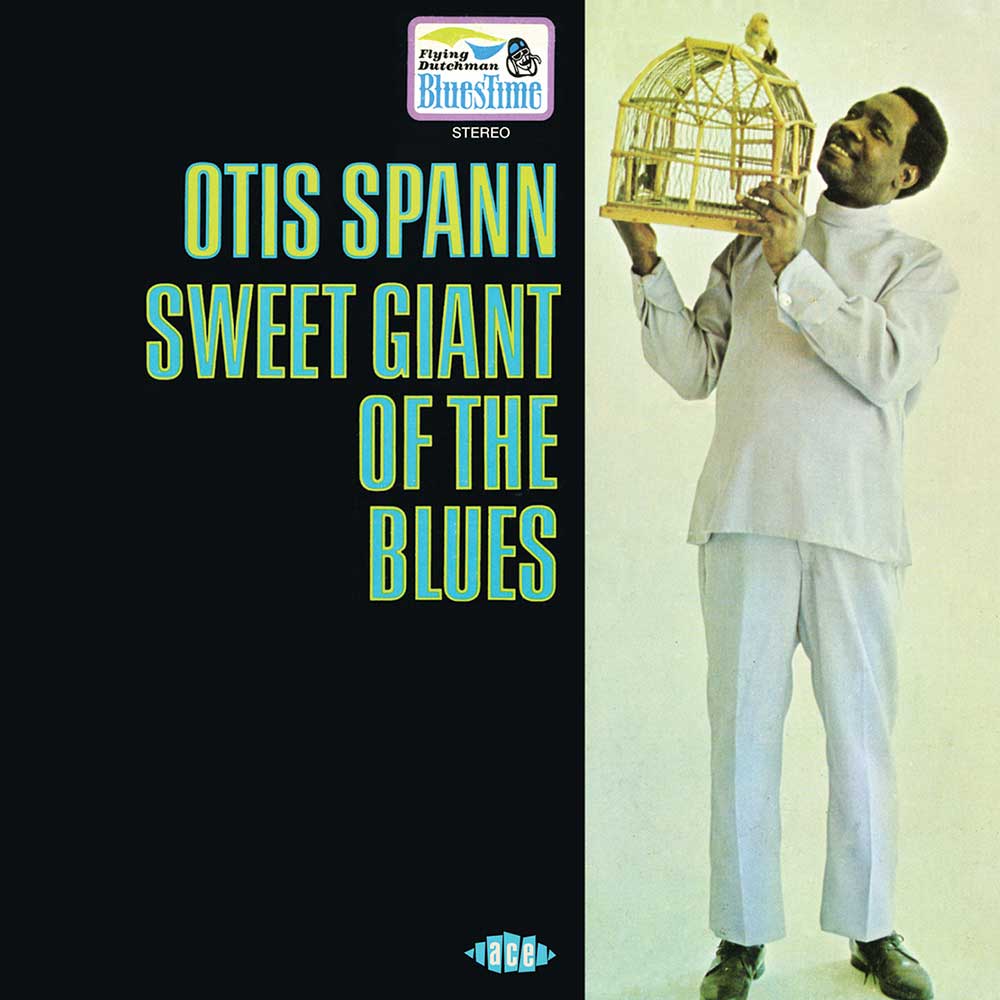
OTIS SPANN-SWEET GIANT OF THE BLUES.
OTIS SPANN-SWEET GIANT OF THE BLUES.
For many people, Otis Spann will always be remembered as Muddy Waters’ pianist. Granted Otis spent fifteen years as a member of Muddy Waters’ band. However, there’s much more to Otis Spann’s career that that. Much more. No wonder. Otis Spann was without doubt, one of the greatest postwar Chicago blues pianists. That’s what when some of the top blues players were looking for a pianist, they gave Otis a call.
Otis Spann was also one of the most top session musicians. He played with everyone from Eddie “Cleanhead” Vinson, Buddy Guy, B.B. King, T-Bone Walker, Big Joe Turner, Junior Wells, Eric Clapton and Fleetwood Mac. Then there’s Otis’ solo career.
It was in 1954 that Otis released his debut single, It Must Have Been The Devil. Released on Checker, a subsidiary of Chess Records, it announced the arrival of a future blues’ legend. By then, Otis was thirty and had been making a living playing the blues since he was fourteen. The blues was Otis’ life. He’d released his debut album Otis Spann Is The Blues in 1960. Right through to 1968, Otis was averaging an album a year. Considering all his other commitments, this is quite remarkable. Then in 1968, Otis Spann made the hardest decision of his life.
Recently, Otis had married Lucille. She felt Otis should be taking centre-stage. Looking back, Lucille had a point. Otis was one of the top postwar Chicago blues pianists. So, with Lucille’s encouragement, Otis left Muddy Waters’ band, and embarked upon the most productive period of his twenty year career. This included collaborating with Fleetwood Mac and Chicken Shack. Then there was the album Otis recorded for Bob Thiele’s Flying Dutchman Productions, Sweet Giant Of The Blues, which was recently released by Ace Records. Sweet Giant Of The Blues was recorded in August 1969. Tragedy struck nine months later. Otis Spann died in April 1970, aged just forty-six. Blues music had lost one of its legends whose career began back in Jackson, Tennessee.
March 1924. That’s when Otis Spann was born. His mother was Josephine Erby, a former blues guitarist, who played alongside Memphis Minnie. Josephine played on one of Memphis Minnie’s recordings. Otis’ father was a preacher, and part-time piano player. With this background, it’s no surprise Otis became a musician. However, Otis family life was turned upside down in the mid-forties, when his mother died.
He was sent to Chicago to stay with his father and aunt. Otis settled in Chi-Town and found work as a plasterer. At night, Otis enjoyed two things dear to his heart, drinking and playing the piano.
Since arriving in Chicago, Otis had been mentored by Big Maceo Merriweather, who played piano in Muddy Waters’ band. This is how Otis heard Muddy Waters, already a blues legend was looking for a pianist. So Otis went looking for Muddy.
All Otis knew was that Muddy hung out on the South Side of Chicago. So he went looking for him. When he eventually found Muddy, Muddy wasn’t quite convinced that Otis was good enough. Otis went away and worked hard. Only then, did Muddy hire him. Otis would play alongside what would become Muddy Waters’ greatest band. The lineup included guitarist Jimmy Rogers, drummer Elga Edmonds, Little Walter on harmonica and Otis on piano. For fifteen years, they were the equivalent of a blues dream team.
This was the band that played on all of Muddy Waters’ critically acclaimed and most successful records. Despite the indisputable quality of the band, Leonard Chess was unsure about the new lineup. Having joined the band in late 1952, it wasn’t until September 1953 that Otis played on a recording session. After that, the band struck gold, recording some of Muddy Waters biggest hits.
Among the hit singles Little Walter recorded, three were stonewall classics. They were I’m Your Hoochie Coochie Man, Got My Mojo Working and Just Make Love To Me. These three tracks not only became Muddy Waters classics, but blues classics. For the next fifteen years, Otis was a member of what’s regarded as Muddy Waters’ greatest band. Throughout this period, Otis continued to work as a session musician.
Being a member of Muddy Waters’ band, meant many other blues’ players heard Otis play regularly. So, when he wasn’t playing with Muddy, he could easily get a gig as a session player. He accompanied everyone from Lonnie Johnson, Eddie “Cleanhead” Vinson, Buddy Guy, B.B. King, T-Bone Walker, Big Joe Turner, Junior Wells and Eric Clapton. Otis was a musical hired gun, whose services were always in demand. Whether it was playing live, or recording sessions, Otis was the go-to-guy for anyone looking for a pianist. Throughout this period, Otis enjoyed a successful solo career.
In 1954 Otis released his debut single, It Must Have Been The Devil. It was released on Checker, a subsidiary of Chess Records. Six years later, in 1960, Otis released his debut album Otis Spann Is The Blues. Four years later, The Blues Of Otis Span was released. The man producing The Blues Of Otis Span was Mike Vernon. It’s one of the finest albums Otis recorded. Mike and Otis would work together later in Otis career. Before that, Otis averaged just over an album a year.
Despite regularly releasing albums, Otis flitted between labels. Otis Spann’s Chicago Blues was released in 1965, on Testament Records, while The Blues Never Die was released on Prestige. Among the other albums Otis released, were 1966s The Blues Is Where It’s At, 1967s Nobody Knows My Troubles and 1968s Portraits In Blues. All of these labels were recorded on different labels. Whilst this isn’t unusual, it meant Otis was always looking for a record deal. What he needed was someone who could manage his career.
1968 found Otis newly managed to Lucille. She felt Otis should be taking centre-stage. Looking back, Lucille had a point. By 1968, Otis was one of the top postwar Chicago blues pianists. With Lucille’s encouragement, Otis left Muddy Waters’ band. He’d enjoyed fifteen years with Muddy Waters’ band. Now was his time to take the centre-stage.
It was around this time that Otis and Mike Vernon met again. Mike’s career had been transformed. He was now producing Fleetwood Mac and Chicken Shack. Mike also owned the Blue Horizon record label. He suggested that Otis and Fleetwood Mac should collaborate. It would be beneficial to both their careers.
So, Otis and Fleetwood Mac entered the studio and recorded The Greatest Thing Since Colossus. It was released in 1969 as Otis Spann with Fleetwood Mac. The Greatest Thing Since Colossus introduced a new generation to Otis Spann’s music.
Otis and Fleetwood Mac also featured on the Blues Jam In Chicago albums. Two volumes of Blues Jam In Chicago were released. That wasn’t the end of what was a prolific period in Otis’ career.
No. He recorded an album for Vanguard, Vanguard Sessions: The Best Of Otis Spann. Then there was a reunion with Muddy Waters on his 1969 album Fathers and Sons. The last recording Otis made during this period was for Bob Thiele’s newly founded Flying Dutchman Productions, Sweet Giant Of The Blues. This would prove to be the last time Otis set foot in a recording studio.
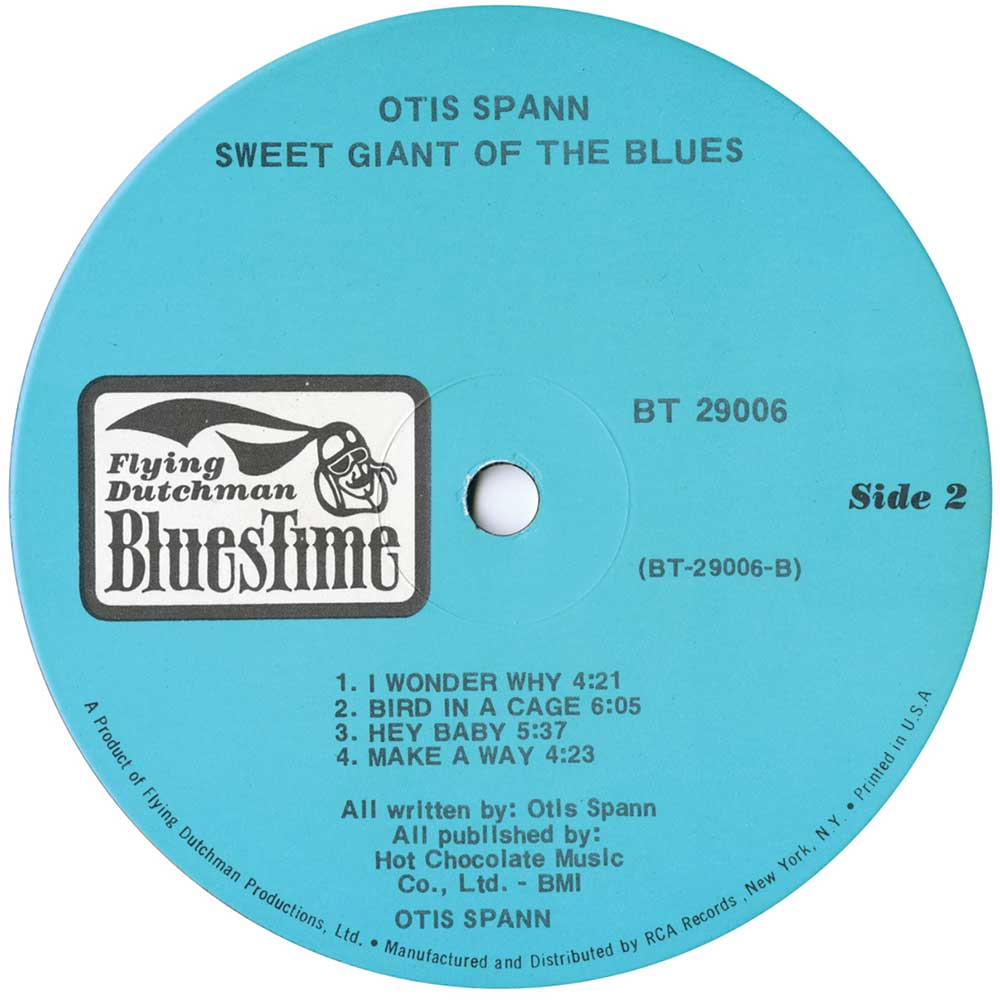
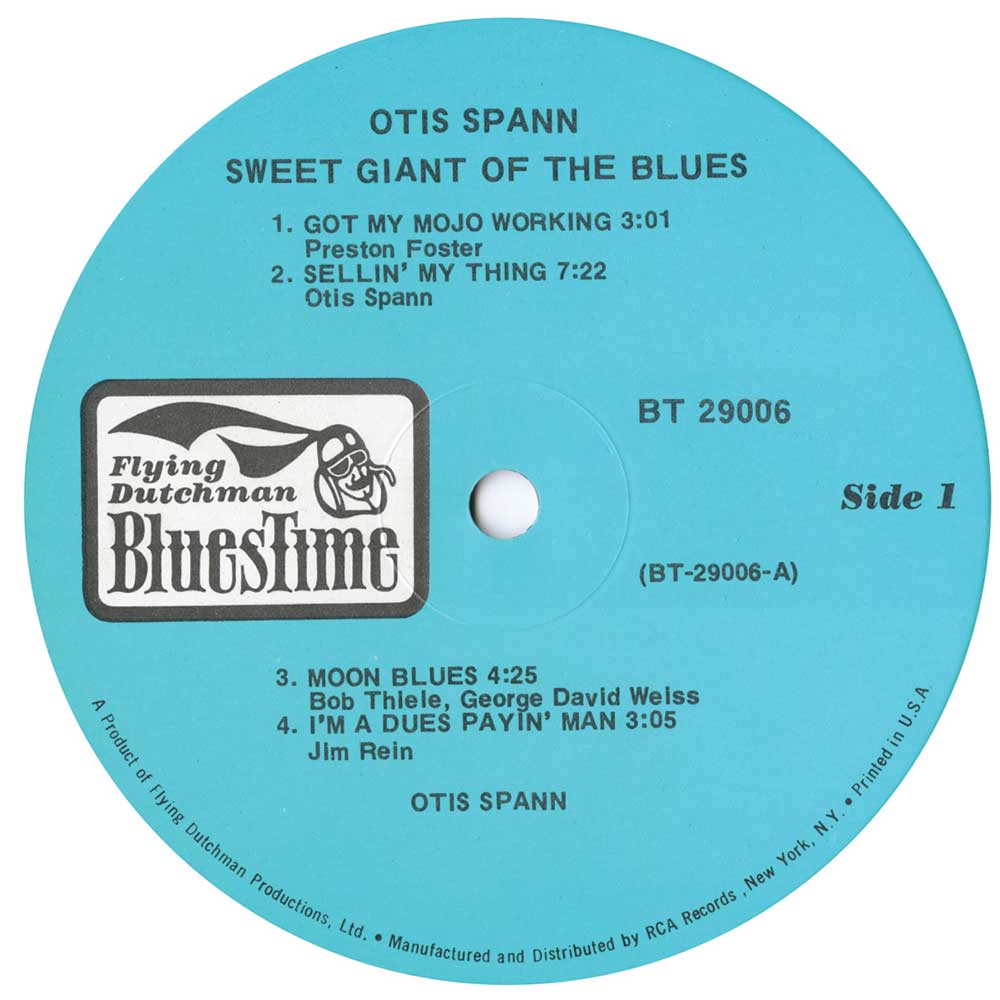
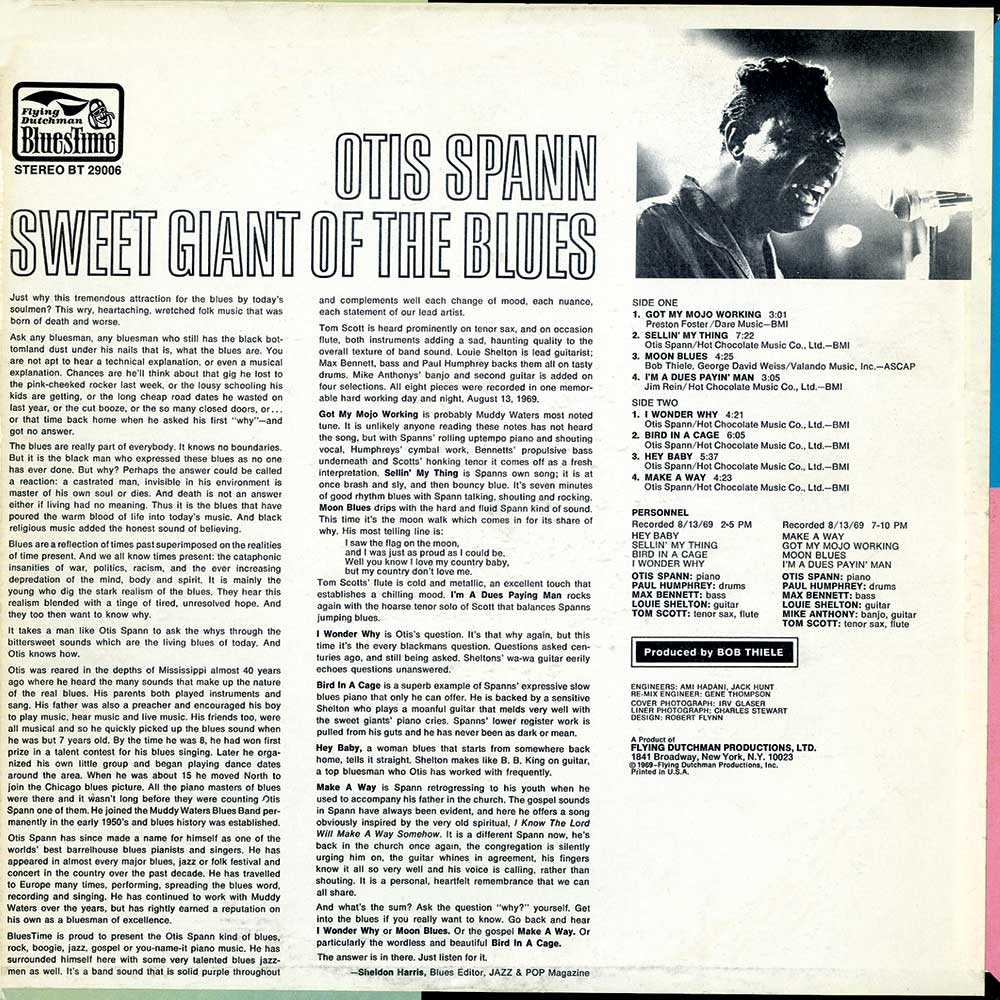
For Sweet Giant Of The Blues, Otis penned six tracks Sellin’ My Thing, I’m A Dues Payin’ Man, I Wonder Why, Bird In A Cage, Hey Baby and Make A Way. There was also a cover of Preston Foster’s Got My Mojo Working and the Bob Thiele and David Weiss song Moon Blues. These eight tracks were recorded by some top blues players.
Recording took place on 13th August 1969, with Bob Thiele producing Sweet Giant Of The Blues.The band featured a rhythms section of bassist Max Bennett, drummer Paul Humphrey and guitarist Louis Shelton and Max Shelton, who also played banjo. Tom Scott played tenor saxophone and flute, while Otis did what he did best and played piano and sang. Once Sweet Giant Of The Blues was completed the album was ready for release in 1969.
On its release in 1969, Sweet Giant Of The Blues found Otis on fine form. He produces a series of barnstorming performances, switching between blues, R&B, blues and funk. Despite this Sweet Giant Of The Blues wasn’t a commercial success. Worse was to come. Otis was diagnosed as having liver cancer. This was a result of years of hard living. Sadly, Sweet Giant Of The Blues proved to be his swan-song. He’d never again set foot in a recording studio. Did Sweet Giant Of The Blues see Otis Spann bow out on a high?
Opening Sweet Giant Of The Blues is the blues classic Got My Mojo Working. Otis reworks the track. The tempo increases and flamboyant flourishes of his piano drive the arrangement along. His piano is panned left, while the rhythm section are panned right. They create a snuffling arrangement. It unfolds at breakneck speed. Taking centre-stage is Otis gravelly, sassy vocal. It’s joined by bursts of grizzling horns and searing guitars. They respond to Otis’ call as he transforms a blues classic in his own inimitable style. This reinforces what Lucille knew, that Otis belonged centre-stage.
Just a probing bass and Otis jangling, bluesy piano join forces as Sellin’ My Thing unfolds. Hurt and heartache fill Otis vocal at the thought of his partner with another man. While the bass propels the arrangement along, Otis is transformed. Power and pain fill his vocal. His vocal is like a cathartic outpouring of hurt. All the time, he’s pounding his piano, showing why he’s one of the finest post-war Chicago blues pianists. His playing is spellbinding. It’s taken years to be able to play like this. Similarly, it’s taken a lifetime of carousing to hone his lived-in voice, that brings the heartbreak and regret in the lyrics to life.
Frenzied flourishes of Otis’ left hand result in the dramatic and evocative sound that opens Moon Blues. Soon, guitars and a blues-tinged harmonica soar above the arrangement. They accompany Otis’ despairing vocal. A sombre bass and hypnotic drums lock into a groove. Together, they provide the arrangement’s heartbeat. Meanwhile, a despairing and despondent Otis realises “I love my country, but my country doesn’t love me.” Powerful, moving and with more than a grain of truth in the lyrics, this song says a lot about America during the late sixties.
I’m A Dues Payin’ Man sees the tempo increase. From the get-go, Otis encourages the band along. He claps his hand while the rhythm section get the ball rolling. Soon, Otis ensures the song swings. Horns blaze and he his hands fly up and down the keyboard. By now, the band have become a tight unit. Playing starring roles are Otis’ piano and Tom Scott’s tenor saxophone. Despite the despair in his vocal, Otis is determined to make this slice of good time blues swing. It does and then some.
I Wonder Why sees Otis pick up where he left off on the previous track. This is electric blues at his best. Why? Well, Otis the charismatic frontman makes the song swing, accompanied by an all-star band. They combine electric blues, R&B and even, thanks to the rhythm section, a pinch of funk. It’s a potent and heady brew. Especially with Otis delivering a barnstorming performance on piano and vocal. Add to that an uber funky guitar solo from Louis Shelton, and the growling horn and this is one funky blues.
Bird In A Cage is late night music. It’s the type of music you’d listen to late at night, a cigarette in one hand, a whiskey in the other. Then it’s just a case of sitting back and enjoying a masterclass in blues music. Otis takes charge, laying down some of his best licks. Flamboyant flourishes of his piano accompany Louis Shelton’s guitar. When it drops out Tom Scott’s tenor saxophone takes charge. Meanwhile, glueing everything together is the rhythm section. They provide a slow moody heartbeat to this glorious blues jam which demonstrates why Otis Spann is considered a blues legend.
Hey Baby is another tale of love gone wrong. Otis vocal is full of sadness and regret, when he sings “you don’t love me like you did…tell me what’s on your worried mind.” As he delivers the lyrics, the pain seems almost real. Bob Thiele’s arrangement is perfect for Otis’ vocal. Dramatic, it literally oozes emotion and heartbreak. That’s down to flourishes of piano, a sultry saxophone and crystalline guitar solo. They play their part in an emotive tour de force.
Make A Way closes Sweet Giant Of The Blues. It’s a poignant way to close the album. Especially, when “Otis sings: “my Lord will Make A Way for you.” Little did Otis know, nine months later, he’d be dead. His vocal is an emotive, heartfelt roar. It’s as if he means and believes every words, as he fuses blues and gospel. His band play thoughtfully. They take care never to overpower Otis’ vocal. It’s full of emotion and sincerity. As for his piano playing, it’s some of the best on Sweet Giant Of The Blues. It seems, Otis has kept one of his best and moving tracks until last.
There’s a certain poignancy to Sweet Giant Of The Blues. It was the last album released before the death of Otis Spann. Nine months after Otis recored Sweet Giant Of The Blues on 13th September 1969, Otis Spann was dead. He’d been diagnosed with liver cancer in 1970. By April 1970, Otis Spann was dead. Blues music had lost a legend. The man referred to as the greatest postwar Chicago blues pianists was dead. Years of hard living had caught up with Otis. Now he was gone. However, belatedly, and with the help of his new wife Lucille had taken centre-stage, albeit for a brief spell.
For fifteen years, Otis had spent his time playing piano in Muddy Waters’ band. Then there was his work as a session musician. This meant Otis’ solo career sometimes took a back seat. Who knows what heights Otis Spann might have reached if he’d concentrated on his solo career? Maybe, Otis would’ve enjoyed the commercial success and critical acclaim his talent deserved? Sadly, that wasn’t to be.
Despite the quality of the albums Otis released, many weren’t commercially successful. This includes Sweet Giant Of The Blues, which was recently released by Ace Records. Sweet Giant Of The Blues features Otis Spann at his swashbuckling best. He swaggers his ways through the eight tracks. Blistering blues sits next to tales of heartbreak. All of the tracks feature Otis Spann’s unique piano playing style. Sweet Giant Of The Blues features a legendary blues’ pianist’s swan song and is a reminder of Otis Spann at the peak of his powers.
OTIS SPANN-SWEET GIANT OF THE BLUES.
- Posted in: Blues ♦ Funk ♦ R&B ♦ Rock
- Tagged: Bob Thiele, Fleetwood Mac, Flying Dutchman Productions, It Must Have Been The Devil, Muddy Waters, Nobody Knows My Troubles, Otis Spann, Otis Spann Is The Blues, Otis Spann's Chicago Blues, Portraits In Blues, Sweet Giant Of The Blues, The Blues Is Where It’s At, The Blues Never Die, The Blues Of Otis Span
 dereksmusicblog
