VELVET REVOLUTIONS PSYCHEDELIC ROCK FROM THE EASTERN BLOC VOLUME TWO 1968-1971.
VELVET REVOLUTIONS PSYCHEDELIC ROCK FROM THE EASTERN BLOC VOLUME TWO 1968-1971.
One of the last sources of undiscovered music has to be what was the former Eastern Bloc. Especially the music released during the psychedelic era. As a result, music lovers in the West never got to discover the psychedelic rock music that was popular within the Czechoslovakia, Yugoslavia, Poland and Hungary. Each of these countries had a thriving psychedelic scene between 1968 and 1971. However, many music lovers are still unaware of this. It’s only very recently that Eastern European psychedelia is starting to be heard by a wider audience.
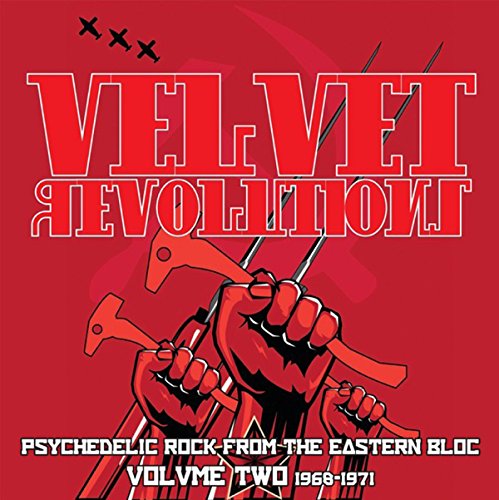
One of the labels flying the flag for Eastern European psychedelia are Particles. They recently released Velvet Revolutions Psychedelic Rock From The Eastern Bloc Volume Two 1968-1971. It’s the followup to Velvet Revolutions-Psychedelic Rock From The Eastern Bloc 1969-1973. Released in 2013, this for many people, was their introduction to Eastern European psychedelia. This was just the tip of a musical iceberg.
The seventeen tracks on Velvet Revolutions-Psychedelic Rock From The Eastern Bloc 1969-1973 were just a taste of what Eastern European psychedelia had to offer. As with all things psychedelic, there is always an audience for newly discovered psychedelia. However, since the release of Velvet Revolutions-Psychedelic Rock From The Eastern Bloc 1969-1973, most record labels seem to have been reluctant to release further compilations or albums of Eastern European psychedelia. Maybe, that may be about to change?
Eastern European psychedelia deserves to be heard by a much wider audience. Hopefully, the release of Velvet Revolutions Psychedelic Rock From The Eastern Bloc Volume Two 1968-1971 marks the coming of age of Eastern European psychedelia. It has, for too long, been the poor relations in the psychedelic family. That is quite ironic, given the plethora of hidden musical gems awaiting discovery. Many of them feature on the recently released Velvet Revolutions Psychedelic Rock From The Eastern Bloc Volume Two 1968-1971.
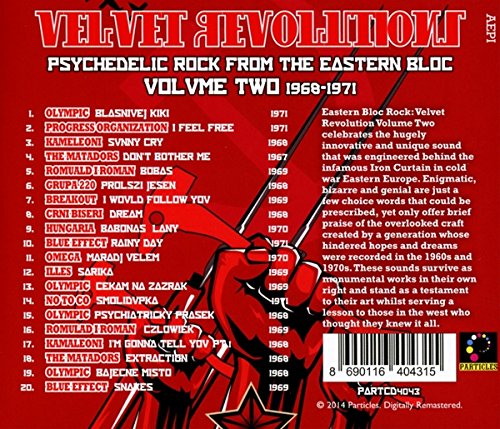
Among the twenty tracks on Velvet Revolutions Psychedelic Rock From The Eastern Bloc Volume Two 1968-1971, are contributions from some of the biggest names in Eastern European psychedelia. This includes Olympic, Progress Organisation, Kameloni, The Matadors, Romauld I Roman, Crupa 220, Breakout, Blue Effect, Omega and No To Co. These bands are one of the reasons why Eastern European psychedelia is one of the most underrated musical genres. That is apparent when you listen to Velvet Revolutions Psychedelic Rock From The Eastern Bloc Volume Two 1968-1971. You want to hear much more than the twenty tracks on Velvet Revolutions Psychedelic Rock From The Eastern Bloc Volume Two 1968-1971. They’re just a tantalising taste of Eastern European psychedelia.
Olympic feature four times on Velvet Revolutions Psychedelic Rock From The Eastern Bloc Volume Two 1968-1971. They played an important part in the Czech music scene. So much so, that they’re credited with being the founding fathers of Eastern Bloc Rock. Formed in Prague in 1963, Olympic released their debut album Želva in 1968. This was the very first Czechoslovakian psychedelic album.
Želva which was released on the Suphraphon label, features Psychiatrický Prášek one of the four tracks Olympic contribute to Velvet Revolutions Psychedelic Rock From The Eastern Bloc Volume Two 1968-1971. It’s a fusion of blues, pop, rock and psychedelia. This is very different to Báječné Místo and Čekám Na Zázrak from Olympic’s 1969, sophomore album Pták Rosomák. Báječné Místo veers between understated, jazz-tinged and urgent. Čekám Na Zázrak incorporates elements of folk and sunshine pop as Olympic’s psychedelic sound evolves.
By 1971, Olympic released their album Jedeme Jedeme 3. It’s apparent from Bláznivej Kiki that Olympic were coming of age musically. They had much more tighter, focused rocky sound. It’s no surprise that they would become one of the most successful and important bands in the history of Czech music. However, who knows what heights they might have reached if politics hadn’t gotten in the way of music?
Progress Organisation are another band from Czechoslovakia. Their 1971 album The Barnodaj features a cover of I Feel Free. Washes of Hammond organ give way to a driving, stomping, hysteric take on a rock classic.
Kameloni were formed in Koper, Yugoslavia in 1965. They made their debut later that year. Before long, they became a successful touring band, playing in Italy and Austria. By 1968, Kameloni were nearly history. Out of money and luck, they were ready to call it a day. Then Yugoslavian film director Bostjan Hladnik asked Kameloni to provide the soundtrack to his new film Soncni Cri (Sunny Cry). This saved their career. The blistering, explosive psychedelic Svnny Day and I’m Gonna Tell You Part 1, are a reminder of one of Yugoslavian music’s best kept psychedelic secrets.
The Matadors were formed in Czechoslovakia in 1965. Their music ranged from psychedelia, R&B and garage. It was in East Germany that The Matadors were most popular. They spent three years honing their sound. Mostly, The Matadors played covers of The Kinks, The Who and Motown songs. Then in 1968, The Matadors released their eponymous debut album. Released in 1968 on the Suphraphon label, The Matadors became the second Czechoslovakian psychedelic album. One of the album’s highlights was Extraction. Don’t Bother Me is another psychedelic reminder of why The Matadors were so highly regarded for three years. Sadly, in 1968, The Matadors were no more. Members of The Matadors left and formed Blue Effect.
Romauld I Roman are a Polish group, who were formed in Warsaw in 1968. Their speciality was producing left-field, avant-garde psychedelic sounds. Much of their music was experimental, including Człowiek, their debut single. It was released in 1969. Later in 1969, Bobas featured on a Polish compilation album. Bobas would become synonymous with Romauld I Roman, whose career lasted until 1976
Grupa 220 were one of the most innovative Yugoslavian bands of the mid-to-late sixties. They were formed in Zagreb in 1965. Three years later, Grupa 220 released their debut album Naši Dani. It was unlike most Yugoslavian music being released in 1968 on the Jugoton label. Instead, Naši Dani was an album of Western influenced music. However, Prolazi Jesen Grupa 220’s third single didn’t feature on Naši Dani. Written by Drago Mlinarec, it’s an innovative, moody and trippy slice of psychedelia.
Originally, Breakout were called Blackout when they formed in 1968. They changed their name when they signed to the Pronit record label. It was on Pronit, that Breakout released their critically acclaimed debut album Na Drugim Brzegu Tęczy. This was the first step on a journey where Breakout became one of the most successful bands in the Polish underground music scene. That’s no surprise when you hear the fusion of blues, rock, folk and psychedelia that’s I Would Follow You.
Crni Bisert were formed in 1963. Back then, they were called The Black Pearls. A change of name to Crni Biseri resulted in a change of fortune. By 1968, were about to release their sophomore E.P. Nisam Više Taj. It featured Dreams the B-Side to Cupid’s Inspiration single Yesterday Has Gone. In Crni Biseri’s hands, Dreams is transformed into a glorious fusion of rock and psychedelia that’s best described as a hidden lysergic gem.
Tamas Barta formed Hungaria in 1969, He had just completed national service in the Hungarian army. A year later, in 1970, Hungaria released their debut album Koncert A Marson on Qualiton, the Hungarian state record company. Koncert A Marson showcases a talented band. One of the highlights is A Barbanos Lady. From the get-go, the driving, rocky sound has you hooked. Rocky, anthemic and full of hooks, what more do you want?
Blue Effect were formed when members of The Matadors decided to form a new band. The five members of Blue Effect were dedicated to the psychedelic cause. They wanted to keep the psychedelic flag flying in Communist Poland. Formed in 1968, Blue Effect had an eye for the Western psychedelic market. Rather than sing in Polish, they sung in English. This worked well. They became a popular psychedelic band. So well regarded were Blue Effect, that they’re ranked alongside Eastern European psychedelic royalty. Their debut album was 1970s Meditace, which features Rainy Day (Deštivý Den). That year, 1970, Blue Effect released their Snakes E.P. It showcases Blue Effect at their very best, fusing rock and psychedelia. One track stands out, the title-track, Snakes which shows just how good a band Blue Effect were. It’s no wonder they enjoyed such a long career.
In 1968, Omega Red Star became Omega and set about transferring their sound. Originally, their music ranged from pop to rock. From their third studio album 10000 Lépés, released in 1969, Omega’s music moved in the direction of psychedelic rock. This continued on their fourth album Éjszakai Országút. Released in 1970 on the Qualiton label, It featured Maradj Velem, a track that also featured on their 1972 eponymous album. A fusion of folk, and psychedelic rock, there’s even a nod to Led Zeppelin as seamlessly, Omega combine musical genres and influences.
Illes’ roots can be traced as far back as 1960. By 1969, they were perceived as a progressive, pioneering band. They were sometimes referred to as The Hungarian Beatles. No wonder. One listen to Sárika (Sally), a track from their 1969 album Illések És Pofonok…(№ 3) and you’ll realise why. This is the type of music The Beatles would’ve made if they’d been born in Hungary.
Not To Co were one of the most popular Polish bands of the early seventies. So much so, that they were briefly signed to UK CBS. As So What, Not To Co recorded two songs for UK CBS. Sadly, nothing became of this single. By 1971, Not To Co were back home and signed to the Pronit label. Back home in Poland, their star was in the ascendancy. Their 1970 album was an album of folk tunes given a makeover by Not To Co. This includes Smolidvpka, which is total transformed by Not To Co and given a psychedelic twist.
That’s the story of Velvet Revolutions Psychedelic Rock From The Eastern Bloc Volume Two 1968-1971. It was recently released by the Particles reissue label. This is their second venture into the Eastern European psychedelia. Particles have chosen twenty tracks from some of the biggest names in Eastern European psychedelia.
There’s music from Czechoslovakia, Yugoslavia, Poland and Hungary. This includes Olympic, Progress Organisation, Kameloni, The Matadors, Romauld I Roman, Crupa 220, Breakout, Blue Effect, Omega and No To Co. The music is groundbreaking and genre-melting. Everything from avant garde, blues, folk, pop, psychedelia, prog rock and rock can be heard on Velvet Revolutions Psychedelic Rock From The Eastern Bloc Volume Two 1968-1971. Most of the music is timeless.
Just like the best in American, African, British and Western European psychedelia, the music on Velvet Revolutions Psychedelic Rock From The Eastern Bloc Volume Two 1968-1971 has stood the test of time. The music doesn’t sound dated. For from it. It sounds ahead of its time. So much so, that it’s hard to believe that the music on Velvet Revolutions Psychedelic Rock From The Eastern Bloc Volume Two 1968-1971 was recorded when it was. That’s the case though. These twenty tracks were recorded between 1968 and 1971. Sadly, for most people, they’ll never have heard the music on Velvet Revolutions Psychedelic Rock From The Eastern Bloc Volume Two 1968-1971.
When the music on Velvet Revolutions Psychedelic Rock From The Eastern Bloc Volume Two 1968-1971 was released, it was at the height of the Cold War. Music fans on the West were unable to hear the music coming out of the Eastern Bloc. Sadly, that’s still the case. Very little of the music recorded in the Eastern Bloc has been rereleased. Recently, however, that’s beginning to change.
A few small, independent labels are proving to be trailblazers. They’re trying to introduce the music of the Eastern Bloc to a much wider audience. This includes Eastern European psychedelia. Hopefully, Velvet Revolutions Psychedelic Rock From The Eastern Bloc Volume Two 1968-1971 is just the start of a comprehensive reissue program of Eastern European psychedelia.
VELVET REVOLUTIONS PSYCHEDELIC ROCK FROM THE EASTERN BLOC VOLUME TWO 1968-1971.
 dereksmusicblog
