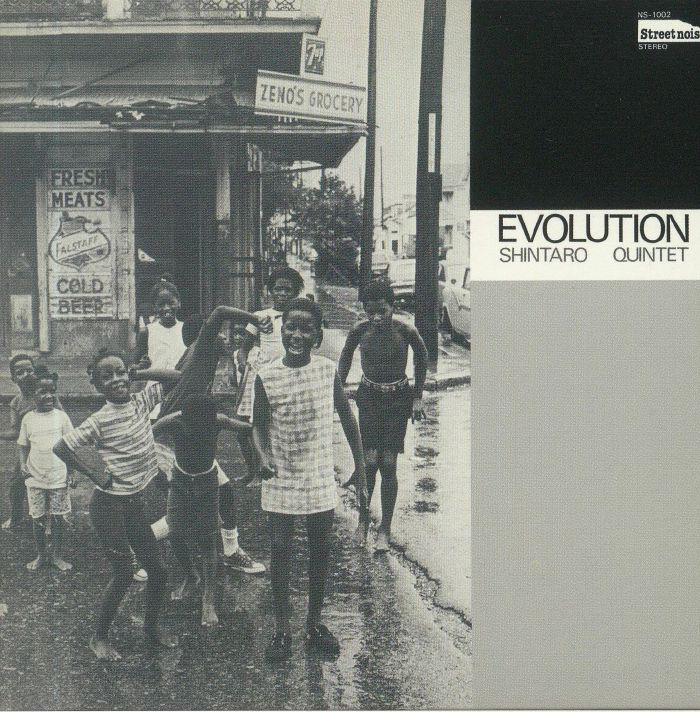
CULT CLASSIC: SHINTARO QUINTET-EVOLUTION.
Cult Classic: Shintaro Quintet-Evolution.
Ever since the mid-fifties, many American jazz musicians journeyed to Japan where they toured and recorded albums. They were respected and treated as series musicians, and when they recorded an album the budget was much more generous and the working conditions far better than they were used to.
It was no surprise that between the late-sixties and early seventies, Art Blakey, Bob James, Gary Peacock, Herbie Hancock and Oliver Nelson either spent lengthy periods living in Japan or decided to live there permanently.
During this period, other American jazz musicians journey to Europe and Scandinavia which became their home-from-home. It was the start of a new chapter in their career as jazz was evolving.
Meanwhile, many Japanese jazz musicians decided to head to the home of jazz. This was where the music that they played and were passionate about was born, evolved and became popular. It was akin to a pilgrimage for musicians like young Japanese jazz musicians like Shintaro Nakamura who arrived in America in the mid-sixties. By 1984, the bassist had founded the Shintaro Quintet who recorded Evolution for Streetnoise Records. By then, he had worked with the great and good of jazz.
Shintaro Nakamura was born in Kobe, in 1956, and discovered jazz music in high school. This came about when one of his classmates brought in a jazz album. For Shintaro Nakamura this was a gamechanger.
Jazz became the soundtrack to daily life for Shintaro Nakamura. For the next three years he played the same records each day. Ella and Louis, Relaxin’ With The Miles Davis Quintet and Cookin’ With The Miles Davis Quintet were the records that started a lifelong love affair with jazz, and especially the bass.
In the early days, Shintaro Nakamura was captivated by Paul Chambers’ bass lines and Red Mitchell’s melodic playing. These two bassists would later influence him as he embarked upon a career as a professional jazz musician.
Having discovered in high school, Shintaro Nakamura was soon hanging out in the jazz kissa, a network of jazz coffeehouses and bars. This was akin to a musical education as he was able to hear an eclectic selection of jazz which was often played on high end stereo systems. Sometimes, he was lucky enough to hear local jazz musicians and occasionally, visiting jazzers from overseas.
After high school, Shintaro Nakamura headed to Kinki University, where he joined the Jazz Studies Group and also learned to play the bass. By 1982, he was too busy with music and dropped out of University.
By then, Shintaro Nakamura had realised there was a limit to the music that he could hear in Japan. He realised that to further his musical education he was going to have to travel to the home of jazz, America.
Shintaro Nakamura decided to study jazz in New York, and while he was there, he decided to write some new compositions. Having played in some jazz sessions he decided that he wanted to record the new tracks.
To do this, he needed to put together a band. By then, Shintaro Nakamura had already played alongside some well known names. This included Larry Carlton, Marcus Miller, Steve Gadd and Woody Shaw a couple of times. However, to record his debut album he handpicked a band.
The first recruit was pianist Jeff Jenkins who sounded as if he had been influenced by McCoy Tyner’s percussive blues. He was joined by American-born saxophonist Robert Kenmotsu who previously had been a member of Jack McDuff’s band. He was joined in the front line by thirty-four year old trumpeter Shunzo Ohno. Drummer Fukushi Tainaka was joined in the rhythm section by bandleader and bassist Shintaro Nakamura who engineered and produced Evolution at Hi-Five Studio, New York, on the ‘10th’ and ‘13th’ January 1984.
Before the recording sessions, the Shintaro Quintet spent just a day practising. That was all they needed. They were ready to record Evolution at Hi-Five Studio. Evolution took just two days for the Shintaro Quintet to record.
Evolution was an album that had been influenced by the jazz music of the late-fifties and early sixties. This was the music that Shintaro Nakamura heard growing up and had influenced him. He recorded Evolution live and there was no overdubs. Instead, the Shintaro Quintet played together and recorded straight to tape. It was an album of modal jazz that sometimes heads in the direction of hard bop, post bop and avant-garde.
Once the recording of Evolution was complete, Shintaro Nakamura returned home to Japan where he met his friend Hedeki Kawamura who had just founded Streetnoise Records. He was looking for albums that had been recorded in New York to release on his nascent label. Shintaro Nakamura agreed to let his friend release Evolution and the Shintaro Quintet’s debut album became Streetnoise Records’ second release.
Streetnoise Records had 1,000 copies of Evolution pressed. It featured a distinctive diagonal OBI strip across the top left hand corner of the sleeve. The album was sold in local record shops and at concerts.
When jazz fans heard Evolution they discovered and were impressed by an album of original music that was played by the Shintaro Quintet. They were tight, talented and versatile and showcased their considerable talents during the five tracks written by bandleader and bassist Shintaro Nakamura. This included Blind Man which closed the album and was a tribute to Woody Shaw who he had played with just before recording Evolution. Sadly, he was almost blind by then and Shintaro Nakamura wrote the track as a tribute to the jazz great. It brought to a close Evolution, the Shintaro Quintet’s J Jazz cult classic which thirty-seven years after its original release is belatedly starting to find a wide audience.
Cult Classic: Shintaro Quintet-Evolution.
DOUG CARN-INFANT EYES
Doug Carn-Infant Eyes.
Label: Real Gone Music.
Format: CD.
Although Gene Russell and Dick Schory founded Black Jazz Records in 1969, two years passed before the nascent label released its first album. This was Gene Russell’s sophomore album New Direction which was released in 1971. It was the first of twenty albums by a label that was very different from other new indie jazz labels that were being founded across the America.
Gene Russell and Dick Schory wanted their new label: “to promote the talents of young African American jazz musicians and singers.” That was only part of the story.
Black Jazz Records’ cofounders were determined that their nascent label would released an alternative to what they saw as the old school jazz that was popular at the time. This included albums that featured political and spiritually influenced music. However, spiritual jazz was just part of the Black Jazz Records’ story.
Between 1971 and 1975 the label released twenty albums that included everything from spiritual jazz and soul-jazz to free jazz and funk. Eclectic described the music that the label released.
That described the albums that Black Jazz Records released during 1971. Its second released was Walter Bishop Jr’s cult classic Coral Keys.
Later in 1971, Doug Carn released Infant Eyes which was the first of three albums he released for Black Jazz Records. It features vocals from his wife Jean Carn who features on each album and played an important part in the sound and success of 1971s Infant Eyes, 1972s Spirit Of The New Land, 1973s Revelation and 1974s Adam’s Apple. That was still to come.
Doug Carn who was just twenty-three when he signed to Black Jazz Records. He was born on July the ’14th’ 1948, in St. Augustine, Florida, and growing up music was all around him and was part of the culture around him at home. His mother was a musician, while his uncle was a bebop DJ who could scat the Dexter Gordon solos. It was no surprise that growing up, Doug Carn started listening to jazz and later, decided to learn an instrument.
Initially, Doug Carn took piano lessons and proved to be a quick learner and was soon able to play Bach Two-Part Inventions. That was when it was discovered that he wasn’t reading music and playing by ear. This resulted in Doug Carn being given an alto saxophone which he also mastered was able to play well. Already he was well on his way to becoming a multi-instrumentalist and it was no surprise when Doug Carn decided to study music at university.
He enrolled at Jacksonville University in 1965, and for the next two years studied oboe and composition. When Doug Carn graduated in 1967 he headed to Georgia State University where he completed his musical education in 1969. Later that year he made his recording debut as bandleader.
The twenty-one year old multi-instrumentalist was still living in Georgia and had founded the Doug Carn Trio. However, the new combo needed gigs and the young bandleader decided to visit a friend who ran a booking agency. When he entered the office he was greeted by the receptionist and secretary who was also a singer. This was Jean Carn who later become his wife. Before that, she started singing with the Doug Carn Trio who were about to make their recording debut.
Through the owner of the booking agency, Doug Carn was introduced to Herman Lubinsky the founder and owner of Savoy Records. This introduction turned out to be a gamechanger for the bandleader.
It turned out that the label had a session booked in Atlanta which was going to be produced by Fred Mendelsohn, the President of Savoy. He explained that there was every chance that there might be some spare time after he had recorded the gospel album, and if there was, they would use the time to record the Doug Carn Trio. That turned out to be the case.
That day in 1969, the Doug Carn Trio recorded what became their eponymous debut album. It was released later in 1969 on Savoy Records but wasn’t a commercial success. However, for Doug Carn recording the album was an invaluable experience as he prepared to move to LA as the sixties gave way to the seventies.
When he arrived in LA, Doug Carn started spending time with the members of Earth, Wind and Fire and this resulted in him playing on their first two albums. He played Hammond organ on Earth, Wind and Fire which was released on February 1971 and was certified gold. Doug Carn also played on The Need Of Love which was released in November 1971. By then, his solo career was well underway.
Earlier in 1971, Doug Carn had signed to Black Jazz Records. Not long after this, he began work on his debut album Infant Eyes which has just been reissued on CD by Real Gone Music.
For his debut album, Doug Carn wrote Moon Child, recorded John Coltrane’s Welcome and McCoy Tyner’s Passion Dance. The twenty-three year old bandleader added lyrics to Bobby Hutcherson’s Little B’s Poem, Wayne Shorter’s Infant Eyes, John Coltrane’s Acknowledgement and Horace Silver’s Peace. Doug Carn put together a band and spent the best part of a year practising and then when he signed to Black Jazz Records recorded the album.
The rhythm section featured drummer Michael Carvin, bassist Henry Franklin and bandleader Doug Carn who switched between electric piano, organ and piano. Meanwhile his wife Jean added her unmistakable vocals. George Harper played tenor saxophone and flute and was joined in he front line by trombonist Al Hall Jr and Bob Frazier who played trumpet and flugelhorn. This talented and versatile band worked their way through the seven tracks which became Infant Eyes. The session was engineered and produced by label owner Gene Russell and the album was scheduled for later in 1971.
When Infant Eyes was released in 1971, Doug Carn still regarded the album as a demo. It wasn’t the polished album that he had envisaged. Despite that, it was well received by critics and hailed as a groundbreaking album.
On its release in 1971, Infant Eyes became Black Jazz Records’ most successful album. It was a similar case with the other two albums Doug Carn released for the label. He was the label’s biggest selling artist. That was no surprise given the quality of the three albums he released. The first was Infant Eyes.
Opening Infant Eyes is Doug Carn’s interpretation of John Coltrane’s Welcome. It lasts just 1:15 and features what are best described as big and beautiful washes of sound where the flute and cymbals combine with Jean Carn’s vocal during this homage to a jazz legend.
Doug Carn added lyrics to Bobby Hutcherson’s Little B’s Poem and they’re delivered by his wife Jean who scats. Initially the arrangement is intense and almost frenetic before the band lock into a groove. By then, the scat disappears as unleashes an impassioned vocal. Later, a stunning saxophone solo from George Harper plays a leading role and the organ weaves in and out of the arrangement as cymbals hiss and ring out during this captivating reinvention of wha’s a familiar track for many jazz fans.
On Moon Child Doug Carn switches to piano, and his playing is moody and melancholy. Meanwhile, the horns add an atmospheric backdrop during this eight minute epic which is an emotional roller coaster.
Having added lyrics to Wayne Shorter’s Infant Eyes,Doug Carn’s adds a dramatic introduction before the keyboards become understated. They’re effective and combines with subtle cymbals and Jean’s vocals which soars high above the arrangement as the Carn’s play a starring role on the track that closes side one.
Side two opens with a cover of McCoy Tyner’s Passion Dance. It made its debut on The Real McCoy Tyner which was released by Blue Note Records in April 1967. It’s as if Doug Carn is paying homage to the great Blue Note Records’ releases of the mid to late sixties on this vigorous instrumental workout. Horns are to the fore as the organ sweeps and swirls and join with the cymbals in playing a crucial role in the sound and success of the track.
Acknowledgement featured on John Coltrane’s 1965 classic album A Love Supreme. However, six years later Doug Carn added lyrics and his wife Jean takes charge of the vocal. Backed by this multitalented and versatile band they remake Trane’s spiritual jazz classic.
Horace Silver originally recorded Peace for his 1959 album Blowin’ The Blues Away, and then in 1970 it featured on his That Healin’ Feelin’ album where Andy Bey takes charge of the vocal. Doug Carn added new lyrics full of social comment which are delivered by Jean. She plays a leading role in the success of breathtaking, powerful and poignant take on a familiar track from the late, great jazz pianist.
When Infant Eyes was released in 1971, it was Doug Carn’s debut solo album. Despite that, it was the most successful album that Black Jazz Records released that year. So was the followup Spirit Of The New Land when it was released in 1972, 1973s Revelation and 1974s Adam’s Apple. Although the four albums didn’t sell tens of thousands of copies they were successful for a small independent label like Black Jazz Records was. It was also a label that had a vision.
Black Jazz Records that wanted “to promote the talents of young African American jazz musicians and singers.” Doug Carn was only twenty-four when he released Spirit Of The New Land and his was Jean Carn was twenty-five. They had created an album that was an alternative to what Gene Russell and Dick Schory referred to as old school jazz.
Infant Eyes was very different to old school jazz and was new type of jazz album. It featured everything from avant-garde and even elements of free jazz, funk, fusion, soul, soul-jazz and spiritual jazz. These genres were combined by Doug Carn and Jean Carn who unleashed her five octave vocal on Infant Eyes which introduced the pair to the record buying public across America. This was just the first chapter in the Doug and Jean Carn story.
Infant Eyes was the first of four critically acclaimed albums that Doug Carn released between 1971 and 1974. These albums are now regarded as cult classics, and amongst the best that Black Jazz Records released during the five years it was in business.
Doug Carn-Infant Eyes.

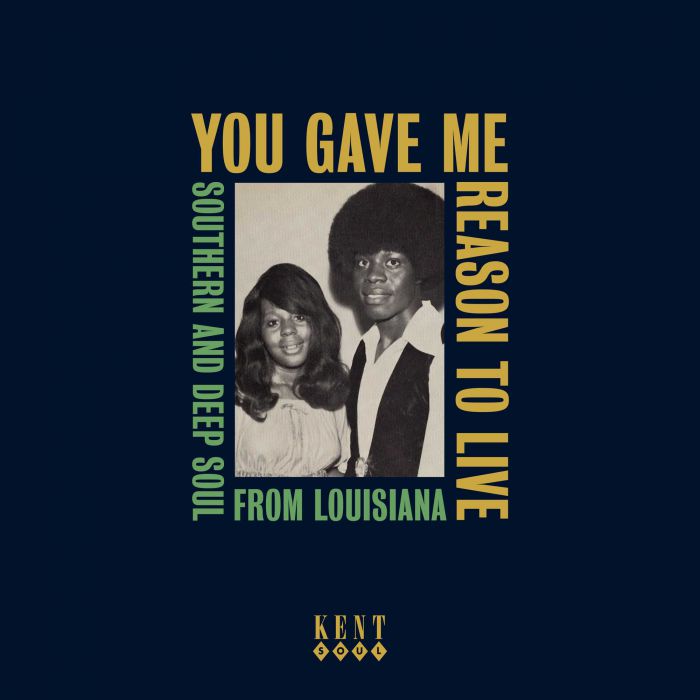
YOU GAVE ME A REASON TO LIVE-SOUTHERN AND DEEP SOUL FROM LOUISIANA.
You Gave Me Reason To Live-Southern And Deep Soul From Louisiana.
Label: Kent Soul.
Format: CD.
During the sixties and seventies, South-West Louisiana was famous for its vibrant and music industry which was soon expanding and thriving. Initially, the region was famous for the Cajun sound and Zydeco, but soon, artists and producers started recording other genres of music.
The region’s music industry was situated between New Orleans and Houston which meant it was exposed to an eclectic selection of music. Soon, artists began recording everything from country and pop to blues, funk and soul.
Amongst the soul sides recorded in South-West Louisiana were many fine examples of Deep and Southern Soul. Sadly, many of these recordings were overlooked and this includes the twenty-two on You Gave Me Reason To Live-Southern And Deep Soul From Louisiana which was recently released by Kent Soul.
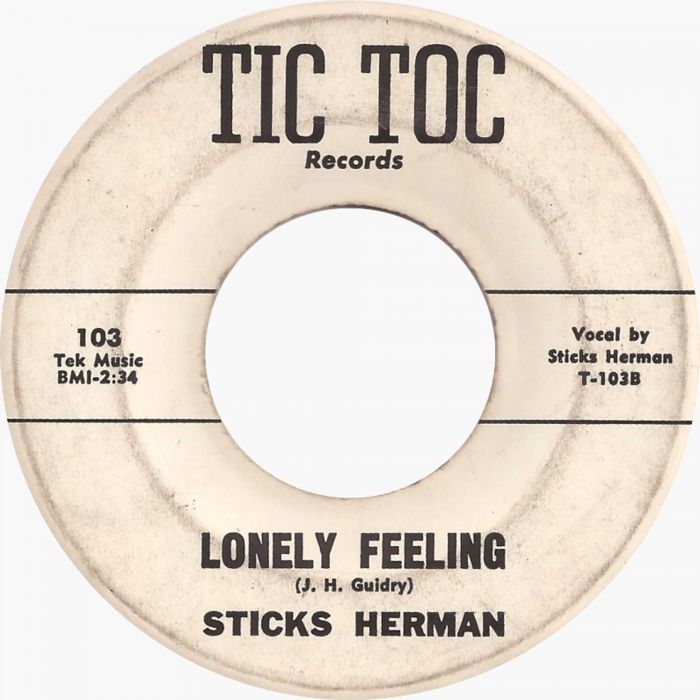
The earliest tracks on You Gave Me Reason To Live-Southern And Deep Soul From Louisiana were recorded during the early sixties and include the proto-soul of Sticks Herman. By the early seventies, the Memphis Soul sound could be heard in tracks by Johnny Truitt and Moody Scott. They were recorded by some of the top local producers and label owners including Eddie Shuler, Carol Rachou and J.D. Miller. They doubled as talent scouts and signed local artists and those that were just passing through, then took them into the studio and recorded singles for their labels.
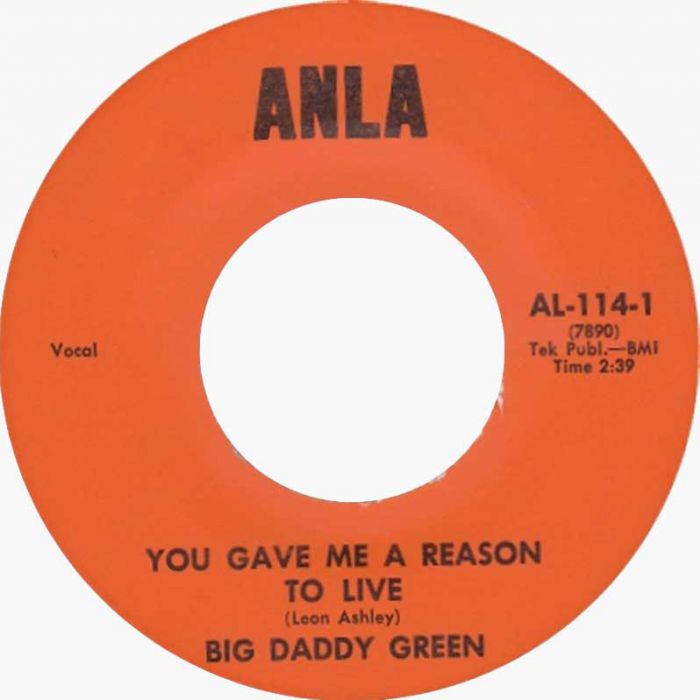
This included Eddie Shuler’s Shuler’s ANLA label which provides many of the tracks on You Gave Me Reason To Live-Southern And Deep Soul From Louisiana. This included Terrie and Joy La Roy, Soul Shouting Tommy and Big Daddy Green who released stunning singles which failed to find an audience. Sadly, the artists’ recording career had stalled or was over before it started and was a case of what might have been?
Meanwhile, Camille “Lil” Bob enjoyed a career that spanned several decades Bobby Charles enjoyed a pop hit Later Alligator before releasing Big Boys Cry a heartwrenching and emotive slice of mid-sixties soul in 1965 and his eponymous debut album in 1972 which is now regarded as a cult classic.
Among the other artists, Clifton White and Chester Randle both became successful local band leaders, while Rockin’ Sidney began his career as bluesman before reinventing himself as the leading light of Zydeco. These are just some of the artists that feature on You Gave Me Reason To Live-Southern And Deep Soul From Louisiana.
Opening the compilation is Baby Oh Baby (How Far You Are From Me) by Charles Greene, which was released by ANLA in 1969. It features a needy vocal powerhouse that’s full of emotion and sincerity. It’s the perfect way to open You Gave Me Reason To Live-Southern And Deep Soul From Louisiana and sets the bar high.
Without Love What Would Life Be was the B-Side to Terrie and Joy La Roy with The Bill Parker Show Band’s 1971 single Why I Shed So Many Tears. This hidden soulful gem was produced by Johnny Shuler for the ANLA label. The vocal is heartfelt and emotive as they ponder life alone and without love.
Camille “Lil” Bob released Stop as a single on the La Louisianne label in 1969. Tucked away on the B-side was Soul Woman a vastly underrated and timeless slice of Southern Soul.
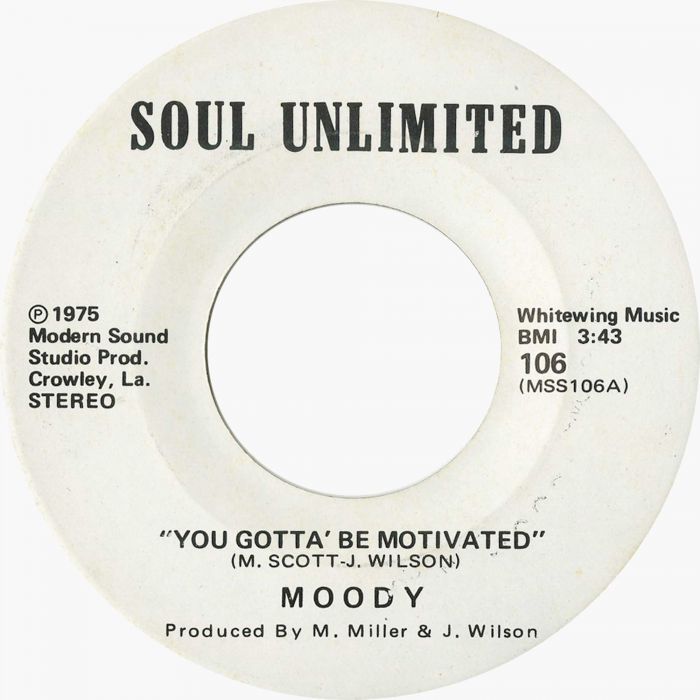
In 1975, Moody released You Gotta’ Be Motivated as a single on the Soul Unlimited label. Hidden away on the B-Side was One Man’s Happiness which is a soul-baring Southern Soul ballad. It’s another underrated song that was good enough to be have been released as a single. No wonder as it features a heartfelt and ruminative vocal that’s bristling with emotion as Moody remembers the first time he met the woman he fell in love with and still loves
When Phil Phillips released Sea Of Love in 1959 it reached number two in the US Billboard 100. Eleven years later in 1970, Eddie Shuler produced Freddie Love’s cover version which was released by his ANLA label. It’s a soul-baring ballad that’s akin to a confessional where Southern Soul and gospel become one.
Eddie Shuler also produced Lee Bernard’s single Our Love Will Always Be for which was released on the Goldband label in 1969. It’s another ballad where drums provide the heartbeat and horns add to the emotion of the vocal on this heartachingly beautiful paean.
Big Daddy Green’s vocal is full of sadness and regret on You Gave Me Reason To Live which was released by the ANLA label in 1970. Sadly, the single failed commercially and was his swansong for the label.
Soul Shouting Tommy released I’m The Man as a single on the ANLA label in 1969. Hidden away on the B-Side was To Be Loved By You which is another hidden gem of a Southern Soul ballad. It features a vocal that’s heartfelt and emotive as he gives thanks to the love he’s found.
The ballad Big Boys Cry was released by Bobby Charles on the La Louisianne label in 1965. This is seven years before he released his eponymous debut album which nowadays is considered a cult classic and one of the great lost albums. However, Big Boys Cry shows another side to Bobby Charles who is a talented songwriter and versatile vocalist.
Dynamic Adam released Forgive Me as a single on the ANLA label in 1969. On the B-Side is She’s Gone where he’s accompanied by backing vocalists as he delivers a hurt-filled vocal full of sadness and regret on this powerful and poignant track.
King Carl closes You Gave Me Reason To Live-Southern And Deep Soul From Louisiana with the bluesy piano-led Blues For Men. It was released in 1965 on the La Louisianne label and tantalising taste of one of the pioneers of swamp pop.
For anyone with even a passing interest in either Southern or Deep Soul, Kent Soul’s new compilation You Gave Me Reason To Live-Southern And Deep Soul From Louisiana will be of interest to them. This lovingly curated compilation features twenty-two tracks which ooze quality. There’s singles and B-Sides from a variety of Louisiana-based labels.
Many of the singles are vastly underrated and should’ve been heard by a wider audience. Then there’s B-Sides that were good enough to be singles. Add to this countless hidden gems and the result is a compilation that’s a musical treasure trove that crate diggers, DJs and dancers will all enjoy and should add to their collection.
You Gave Me Reason To Live-Southern And Deep Soul From Louisiana.


STOP THE WAR.
Stop The War.
Label: Kent Soul.
Format: CD.
When the Vietnam War began on the ‘1st’ November 1955, Americans never realised that this bloody and brutal war would last nineteen years, five months, four weeks and one day. By the time the War ended on the ’30th’ April 1975 America was a nation divided.
Those in favour of military intervention saw themselves as patriots, while those in the peace corps were often labeled “pinkos,” “commies” and “traitors” by their critics. Often, families were divided with generations disagreeing on America’s involvement in the Vietnam War, especially during late-sixties when the peace movement was thriving.
The peace movement’s numbers grew as the casualties in Vietnam increased, and young American soldiers died fighting for their country in what was a brutal war, that deep down, many officers within the US military knew that they couldn’t win. So did many back home who joined the peace corps on a daily basis. They regularly clashed with those who were pro war and the two sides provided inspiration for authors, poets, songwriters and musicians during the fifties, sixties and seventies.
Many songs were written about the Vietnam War and this includes the twenty-three tracks on Stop The War, which is the third and final instalment in Kent Soul’s lovingly curated trilogy that documents America’s role in the Vietnam War. It features tracks by Michael Lizzmore, Dionne Warwick, William Bell, The Shirelles, The Emotions, The Pace Setters, Chairmen Of The Board, The Impressions, Stu Gardner, The Sensational Saints, The Staple Singers and R.B. Greaves.
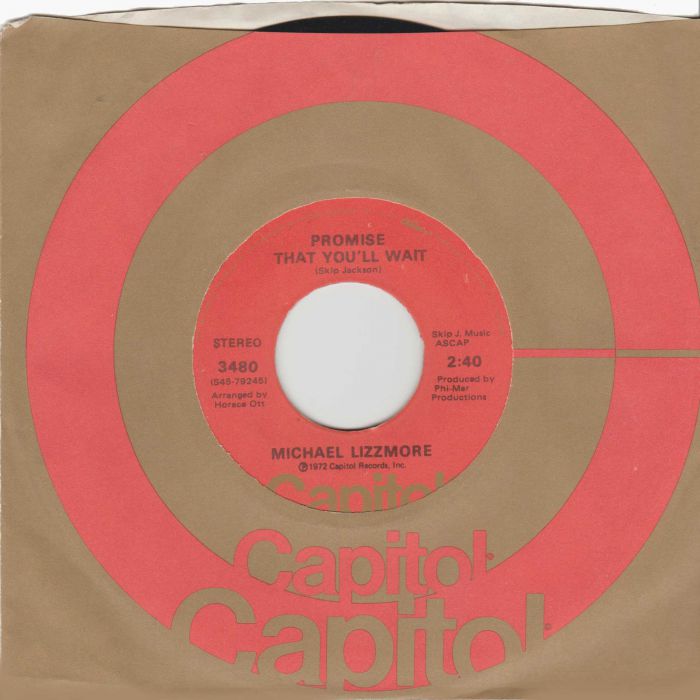
Opening Stop The War is Promise That You’ll Wait by Michael Lizzmore which was released as a single by Capitol in 1972. This Skip Jackson composition was arranged by Horace Ott and produced by Phillip and Marian Colbert. It features an impassioned vocal that’s akin to a confessional full of hurt as he sings of the things he’s seen, how they’ve changed him and the woman he left behind who has found someone else. The result is a powerful, poignant and deeply soulful song that sets the bar high for the rest of the compilation.
Bacharach and David wrote and produced I Say A Little Prayer for Dionne Warwick. It was released by Scepter in 1967 and reached number four in the US Billboard 100. This resulted in a gold disc for this beautiful love song and future pop soul classic which struck a nerve with a generation of women whose boyfriends and husbands were fighting in the Vietnam War.
By 1962 William Bell was an up-and-coming soul singer when he received his call up papers and spent the next three years in the US Army. However, it took several years for him to reestablish his career and in 1970 covered Calvin Carter’s Lonely Soldier which he produced with BT Jones. It was released as a single on Stax and features a rueful vocal full of emotion where William Bell relies on his personal experience as he brings the poignant lyrics to life.
In 1962, The Shirelles enjoyed a hit single when Soldier Boy reached number one on the US Billboard 100 and three on the US R&B charts. Three years later in 1965, the released what was essentially the followup to the single,(Mama) My Soldier Boy Is Coming Home The Shirelles. Sadly, the single failed to chart despite a heartfelt but joyous vocal that’s delivered against a string-drenched arrangement.
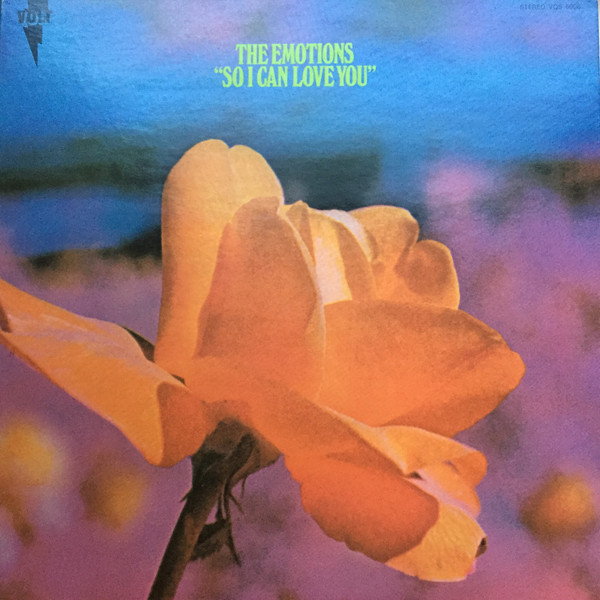
Isaac Hayes and David Porter penned and produced Going On Strike which featured on The Emotions 1969 debut for Volt, So I Can Love You. Soul and funk are combined by the Stax house band as the trio sing of their commitment to fidelity and monogamy until their partners return home. The result is one of the strongest tracks on the album and a reminder of an oft-overlooked group.
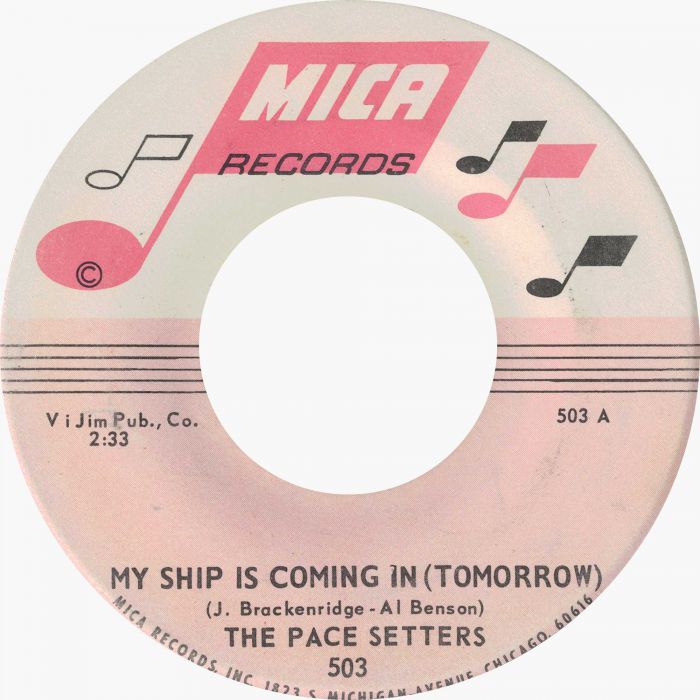
The Pace Setters released My Ship Is Coming In (Tomorrow) as a single on the Chicago-based Mica Records in 1968. It’s an upbeat and joyous soulful hidden gem from the Windy where the group celebrate their homecoming after their tour of duty.
In 1971, Chairmen Of The Board’s released their third 1971 album for Invictus, Bittersweet. It featured the Greg Perry and General Johnson composition Men Are Getting Scarce which the pair also produced. Funk, soul and drama are combined during this powerful anti-war song that encouraged American women to use their collective voice to ask the American government to bring the troops home.
By 1972, The Impressions were about to release their third album on the Curtom label, Times Have Changed. It stalled at a lowly 192 on the US Billboard 200 chars. The group were no longer as popular as they had once been. However, one of the highlights of this oft-overlooked offering is the Curtis Mayfield song Stop The War which lent its name to this compilation. It’s a six minutes of thought provoking, poignant and powerful music.
When Stu Gardner released his sophomore album And The Sanctified Sound on Volt, in 1974, it featured his composition Leave Him Alone. He was providing a voice for all the American parents who watched on helplessly as their sons received their call up papers and were shipped off to fight in what many realised was a war they couldn’t win. Sadly, the album wasn’t a commercial success as Stax was struggling financially and hadn’t the resources to promote this underrated album.
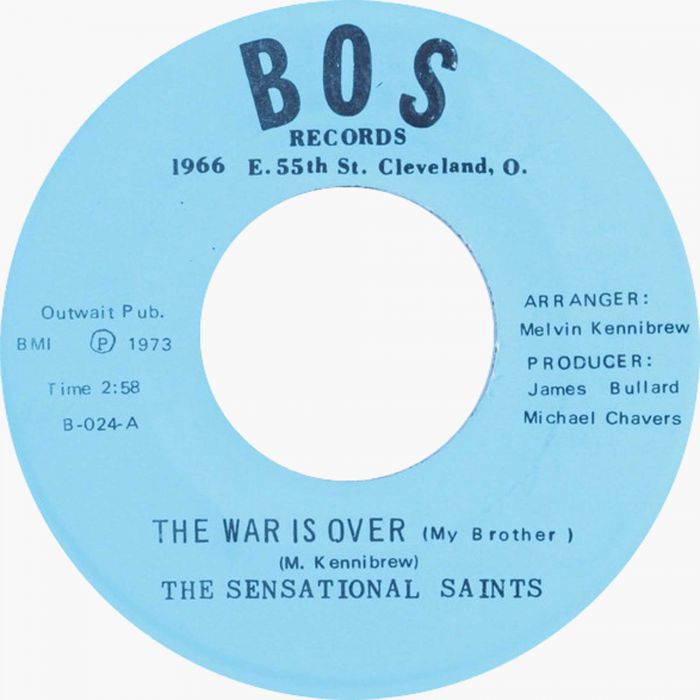
The Sensational Saints were a gospel group who released The War Is Over (My Brother) on Cleveland’s BOS label in 1973. It features an impassioned soliloquy that’s delivered against James Bullard and Michael Chavers’ carefully crafted production as soul meets gospel.
The Staple Singers covered Bob Dylan’s John Brown for their Pray On album which was released by Epic in 1967. Pervis Staples takes charge of the lead vocal and recalls the horrors he’s witnessed during his tour of duty during this harrowing and chilling tale of man’s inhumanity to man.
Closing Stop The War is R.B. Greaves’ Home To Stay which was released as a single on Atlantic in 1969. His vocal is full of relief at being home safely after three years away from his friends and family as he delivers a soul-baring vocal.
Stop The War eschews the familiar and finds the compilers digging deeper for hidden gems that have passed previous crate diggers and curators by. Having said that, there’s still songs by familiar faces and tracks that many soul music fans will know and love.
The twenty-three songs deal with all aspects of the twenty year conflict ranging from the soldiers being shipped out to Vietnam to those returning home from the bloody and brutal war that was impossible for America to win. During these songs there’s a sense of anger, frustration and sadness that’s tangible. They’re part of Stop The War, which is the third and final instalment in Kent Soul’s lovingly curated trilogy that documents America’s role in the Vietnam War which was an important period in American history which divided a nation.
Stop The War.

CULT CLASSIC: ANDREW WASYLCYK-FUGITIVE LIGHT AND THEMES OF CONSOLATION.
Cult Classic: Andrew Wasylyk-Fugitive Light and Themes Of Consolation.
When Dundee-based writer, producer and multi-instrumentalist Andrew Wasylyk released his fourth album Fugitive Light and Themes Of Consolation this brought to an end a journey that began back in 2017. That was when he released Themes For Buildings and Spaces, which was the first instalment in a trilogy of albums that were journeys through the architecture and landscape of Eastern Scotland. This was followed in 2019 by The Paralian, which was shortlisted for the Scottish Album Of The Year Award. Bringing the trilogy to a close is Fugitive Light and Themes Of Consolation. It’s the latest chapter in the Andrew Wasylyk story.
For anyone unfamiliar with Andrew Wasylyk, this is the alias of Scottish writer, producer and multi-instrumentalist Andrew Mitchell. He was born in Dundee in 1982, and by the age of eight was learning to play the violin and cello. Neither instrument was for him, and he turned his back on music. Instead, he decided that he wanted to follow in his elder brother’s footsteps and become a footballer. Andrew Mitchell’s priorities changed when his uncle gave him an eighties Fender Stratocaster when he was sixteen.
Up until then, he was happy to listen to music and spent his spare time listening to cassettes of everything from Crystal Gayle and The Beatles to Carl Cox. However, by the time Andrew Mitchell left school in 1999, his musical tastes were expanding and becoming even more eclectic. Soon, he and his friends had discovered Cannonball Adderley, Fairport Convention and The Salsoul Orchestra as well as Gang Starr, Pavement and Olivia Tremor Control. This search for new music continued as Andrew Mitchell decided to form a band.
He and his friend Matthew Marra formed the indie pop group The Hazey Janes which also featured Alice Marra and Liam Brennan. They signed to Measured Records and in 2004, released their eponymous debut album. This was the first of five albums the group released over the next thirteen years. During this period, the toured the UK several times, opened for Wilco across Europe and appeared at the South By Southwest Festival with Andrew Mitchell playing guitar and keyboards. All the recording sessions and tours were a learning experienced and shaped him as a musician for life beyond and after The Hazey Janes.
Andrew Mitchell went on to work with Art Of The Memory Palace, Electric Soft Parade, School Of Language, Deacon Blue, Idlewild and Roddy Woomble. However, he had also embarked upon a solo career. That was when Andrew Wasylyk was born.
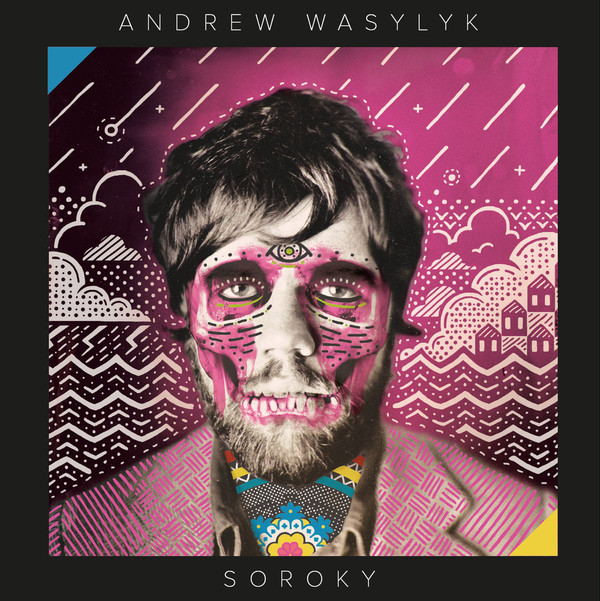
Soroky.
On November the ‘6th’ 2015, Andrew Wasylyk released his debut album Soroky. This was the name of the village in West Ukraine that his grandfather Iwan Wasylyk was from.
Soroky was a cinematic, cerebral and sometimes uneasy sounding album that was recorded in just five days on the island of Mull. It found Andrew Wasylyk drawing inspiration from baroque pop, modern classical and seventies Laurel Canyon singer-songwriters and his fragile and emotive vocal sounding as if he had been influenced sonically and stylistically by The Blue Nile’s Paul Buchanan, The Bathers’ Chris Thompson, former Associate Billy McKenzie as well as Scott Walker and Randy Newman. These influences shine through on an album which deals with a variety of themes. This ranges from the sense of disillusionment and anxiousness on Last Of The Loved right through to the playful retort of Mr White, It’s No Trouble At All. The result was a powerful and poignant debut solo album that borrowed from music’s glorious past and showcased a talented singer-songwriter who it seemed had bright future ahead of him.
Themes For Buildings and Spaces.
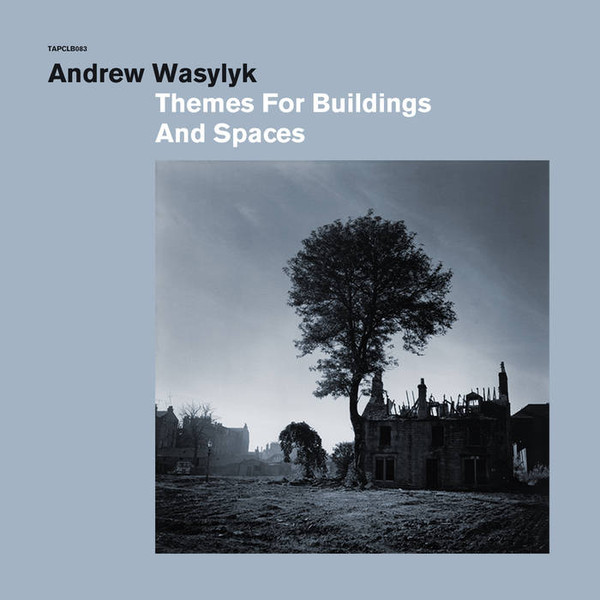
Andrew Wasylyk returned on the ‘28th’ of April 2017 with his sophomore album Themes For Buildings and Spaces. It was also the first instalment in the trilogy of albums that were journeys through the architecture and landscape of Eastern Scotland. The album had been inspired by his home city of Dundee, famed for jam, jute and journalism. However, it was the city’s architecture and open spaces that inspired the instrumental soundscapes on Themes For Buildings and Spaces. They reflect the materials which are in everyday use in the city as it’s evolved in the postwar years.
This includes Under High Blue Skies which pays homage to the Brutalist architecture in Dundee while Drift and Lower Dens Works reflects the city’s industrial past and especially the jute mills. Heavy industry is no longer part of Dundee and The Howff with its understated sound is reminder of a city that was once an industrial powerhouse. Sadly that’s no longer the case and sadness and wistfulness permeates an album which is a nostalgic look back at Dundee’s glory days. However, there’s also optimism and hope for the future on Themes For Buildings and Spaces.
The Paralian.
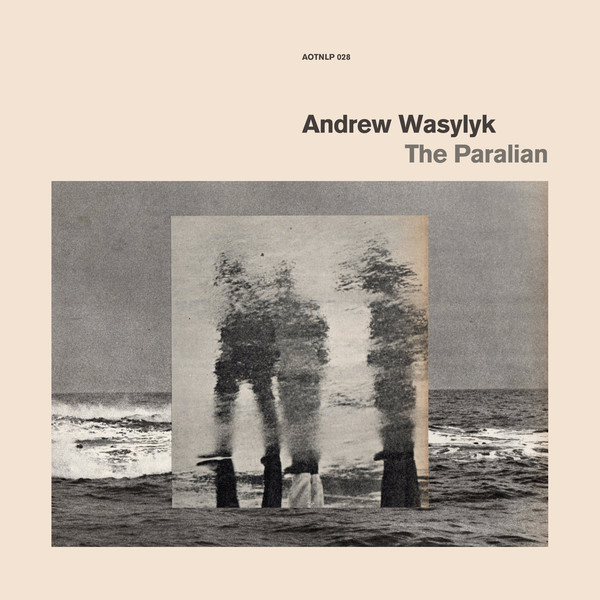
In 2019, Andrew Wasylyk released The Paralian which was the second instalment in the trilogy. The album came about after he received what was a once in a lifetime opportunity.
The previous year, 2018, Andrew Wasylyk was offered a residency invite by the arts centre and historic house, Hospitalfield, in Arbroath. He spent the next five month composing and creating new music on their recently restored nineteenth Century Erard Grecian harp and the house’s original grand piano. This music was inspired by the Angus landscape and incorporated field recordings made during trips to Seaton Cliffs and Bell Rock Lighthouse and formed the basis for The Paralian.
Then as winter gave way to spring, all that was left was for Andrew Wasylyk to augment the harp, piano and field recordings with synths, drones, an upright piano, flugelhorn, euphonium, oboe and a string trio. The result was The Paralian, which drew inspiration from disparate musical genres including ambient music, British folk, classic British jazz from the sixties, experimental music, fusion, modern classical, soundtracks and the golden era of library music. All these influences were part of Andrew Wasylyk’s atmospheric and cinematic album where he painted pictures and takes the listener on a journey where he explores the exchanges between sea and shore. The result was the finest album of his career and one whose filmic sound brought back memories for many people.
Fugitive Light and Themes Of Consolation.
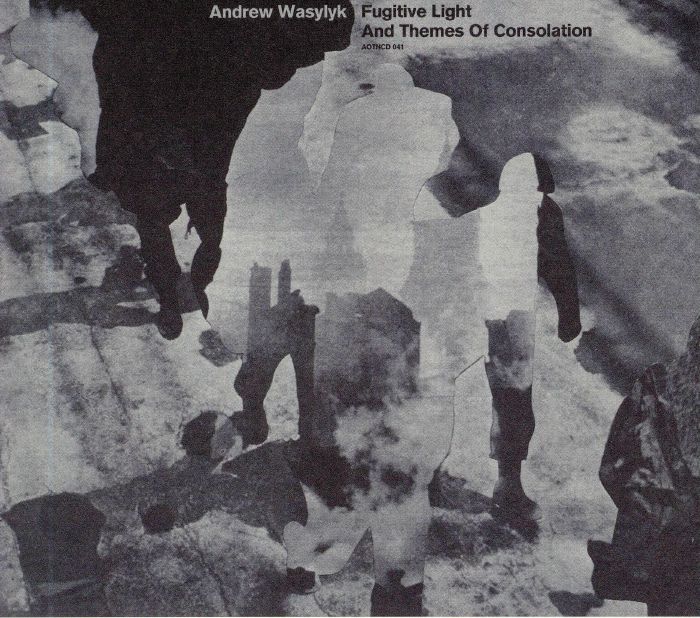
The final instalment in the trilogy was Fugitive Light and Themes Of Consolation which was recorded between the summer of 2019 and January 2020. The album was written by Andrew Wasylyk who is a talented multi-instrumentalist who plays all of the instruments on the album as he returns to where the journey began…Dundee,
On Fugitive Light and Themes Of Consolation, Andrew Wasylyk returns to his home city. He retraces his steps on this journey upriver as sets sail and heads upriver, inland and home as he navigates his way to the city famous for jam, jute and journalism. This means sailing across the River Tay’s inner estuary and watching as the pale moon shines on the barren winter fields as the watery winter light casts a shadow on the empty city streets at dawn. They sit proudly upon what once was a quarry that was excavated to build the Dundee that Andrew Wasylyk’s journeys across. That journey is documented on and the city celebrated on the ten tracks on Fugitive Light and Themes Of Consolation.
Side One.
The music Fugitive Light and Themes Of Consolation is understated, subtle and cinematic. This filmic album from Andrew Wasylyk is also atmospheric and evocative. However, the album opener A Further Look At Loss is tinged darkness, sadness and melancholy. There’s a change of mood on Last Sunbeams Of Childhood as Andrew Wasylyk reflects on what’s the best days of our lives. Fugitive Light Restless Water then meanders along veering between a ruminative and hopeful sound as ambient, modern classical and jazz combine to create a beautiful soundscape. The Violet Hour is a piano-led cinematic track with a pastoral sound as birds sing, horns play and strings add a haunting sound. It paints a picture of a city awakening from its slumbers where sadness and hope could be near neighbours as dreams are dashed and come true. After the mechanical opening to Everywhere Something Sublime suddenly it’s all change and beauty is omnipresent as Andrew Wasylyk picks the perfect combination of instruments especially the piano, percussion and muted horns. He’s like a painter picking the perfect selection of colours as a masterpiece takes shape.
Side Two.
There’s an almost moody, haunting sound to In Balgay Silhouettes which sounds as if it belongs on the soundtrack to a French film from the sixties. Then Awoke In The Early Days Of A Better World offers hope, hope for the future. That’s apart from in Sturgeon’s Scotland where the nasty Nat’s peddle their divisive policies. Meanwhile, the genre-melting arrangement meanders melodically and floats dreamily along fusing elements of ambient, fusion, library music and modern classical music with industrial sounds and clicking kick drums. It’s a quite beautiful and memorable combination.
Even the title (Half-light Of) The Cadmium Moon paints pictures as the journey continues. That’s the case from the opening bars as the piano plays before instruments drop in and out playing a supporting role as the music becomes ethereal, elegiac and sometimes dramatic. It’s always cinematic and so much so, that one can imagine the city appearing in the (Half-light Of) The Cadmium Moon. There’s then a sense of melancholy in Black Bay Dream Minor as if the journey nears its ends that the city is no longer the proud industrial powerhouse it once was. On Lost, Aglow which closes the album there’s a sense of sadness as a Fender Rhodes is joined by drums and wistful horns as the arrangement almost reluctantly unfolds. Later, the shimmering Fender Rhodes shimmers and horn give way to the unmistakable sound of the sea. One is left to wonder how the journey ended and did the traveller reach dry land and home on this cinematic epic?
Fugitive Light and Themes Of Consolation is without doubt the finest album of Andrew Wasylyk’s career. It’s also the final instalment in a trilogy of albums that were journeys through the architecture and landscape of Eastern Scotland. Fittingly, the singer, songwriter, multi-instrumentalist and producer journeys back to Dundee the city of his birth, which has also inspired him as a musician.
On Fugitive Light and Themes Of Consolation Andrew Wasylyk seems draws inspiration from Alice Coltrane, Brian Eno, David Axelrod, John Barry, Mark Hollis and Virginia Astley and during the album fuses everything from ambient music, avant-garde, jazz, library music, modern classical, soundtracks and spiritual jazz. All this plays their part in the breathtaking cinematic journey where Andrew Wasylyk paints pictures with music on Fugitive Light and Themes Of Consolation which is a career defining album from the thirty-eight year old Dundonian.
Cult Classic: Andrew Wasylyk-Fugitive Light and Themes Of Consolation.
THE CLARK SISTERS-THE SOUND OF GOSPEL RECORDS’ YEARS 1976-1981.
The Clark Sisters-The Sound Of Gospel Records’ Years 1976-1981.
By the late-sixties, both jazz and blues were no longer as popular as they once had been. That was when it dawned on some mucicians that unless the music they loved evolved, is risked becoming irrelevant. Both jazz and blues evolved and over fifty years later, both genres are thriving and the music is still influencing a new generation of musicians.
A decade later, gospel music was in a similar situation and needed to change. It hadn’t changed and had been left behind. That was until 1976, when The Clark Sisters from Detroit, became part of a new generation of gospel groups who were determined to reinvent the music they loved.
Playing their part in the story was Elbernita “Twinkie” Clark, a naturally talented and gifted composer who wrote gospel music that not opt addressed what were important spiritual matters but modernised the music. Despite doing so, they felt they were staying true their ministry while reaching a much wider audience than many of their predecessors. However, this didn’t go down well with everyone.
Especially when DJs started playing You Brought The Sunshine (Into My Life) in discos and the track crossed over. Traditionalists within the gospel community were horrified at what was happening.
By then, Jacky, Denise, Dorinda, Karen and Elbernita Clark who collectively were known as The Clark Sisters, were already one of the biggest names in gospel music. They had signed to The Sound Of Gospel Records which was their home between 1976 and 1981, and doing that five year period they released seven albums. However, The Clark Sisters recording career began in the early seventies.
In 1973, The Clark Sisters released their debut album Jesus Has A Lot To Give. It was produced by Bill Moss and released on his own Detroit-based Biless label. Most of the album was traditional gospel music apart from the title-track where Elbernita “Twinkie” Clark had rewritten a Pepsi Cola jingle. This was just the start.
A year later, in 1974, Mattie Moss Clark Presents The Clark Sisters was released and was once again produced by Bill Moss . It was released on the Biless label and was another album of traditional gospel music. However, their music changed when they signed to the Sound Of Gospel Records, a subsidiary of Westbound Records.
Two years later, The Clark Sisters retuned in 1976, with their third album and debut for the Sound Of Gospel Records. This was Unworthy which showcased the talents of Elbernita “Twinkie” Clark as she began to incorporate elements of blues, jazz ad R&B on an album whose highlights include Keep On Looking Up, I’m Going To Have Just What I Want and My Mind Is Made Up which features Elbernita “Twinkie” Clark on lead vocal. These tracks show thatThe Clark Sisters were playing an important part in the modernisation of gospel music.
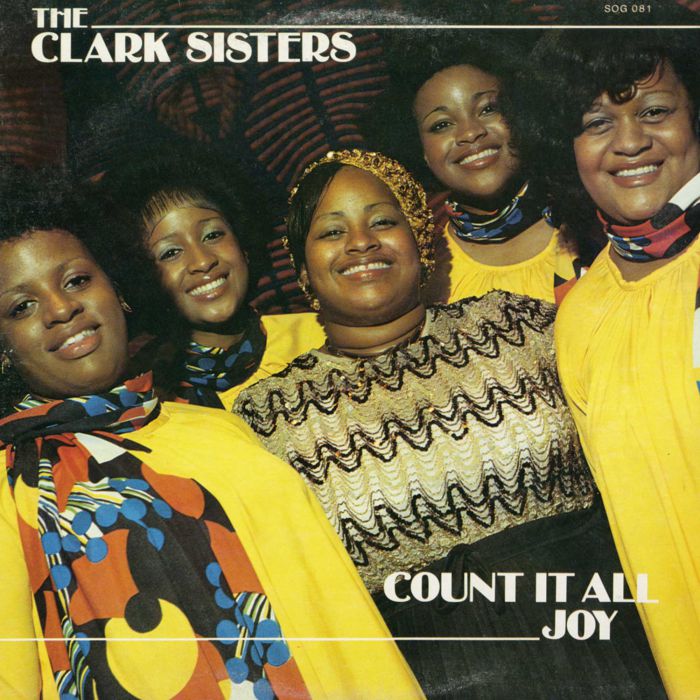
By 1978, it was the height of the disco era, and Count It All Joy became The Clark Sisters fourth album. It saw Elbernita “Twinkie” Clark given a co-producer’s credit on an album which features elements of jazz and R&B. Patience almost heads in the direction of disco, while No Other Name is jazz-tinged thanks to the Hammond organ and the swaying gospel of I Found What I’m Looking For benefits from the addition of a jazz guitar. These three tracks were among the highlights of the album of their second album for The Sound Of Gospel.
A year later in 1979, The Clark Sisters released the album Praise Belongs To God. It featured Jesus I’ll Never Forget and the uplifting and catchy God You Got The Glory which were both penned by Elbernita “Twinkie” Clark. However, this wasn’t the only album The Clark Sisters released during 1979.
They also released He Gave Me Nothing To Lose in 1979, which was the biggest crossover album of their career. Three of the highlights were Everything’s Gonna Be Alright where disco meets gospel in a Chic-tinged track, while My Cup Runneth Over showcases The Clark Sisters’ at the peak of their powers and Nothing To Lose, All To Gain was perfect for quiet storm stations and showed another side to the group.
So does He Keeps Me Money, the joyous Overdose Of The Holy Ghost and You Brought The Sunshine which another of The Clark Sisters’ tracks to crossover and become a dancefloor filler. You Brought The Sunshine was the title-track to their 1981 album and was played in many clubs, including Studio 54. However, gospel traditionalists weren’t happy and as The Clark Sisters played their part in reinventing the genre.
The last album The Clark Sisters released during the five year period signed to The Sound Of Gospel was Ye Shall Receive Power which was released in 1981. Sadly, the album failed commercially and it’s now an oft-overlooked hidden gem. Two of the albums highlights are Awake O Zion and Power.
The albums that The Clark Sisters recorded and released. They played their part in reinventing gospel music and ensuring the music stayed relevant.
Playing an important part in the reinvention of gospel music was Elbernita “Twinkie” Clark, who was a truly talented and gifted composer. She drew inspiration from disparate genres including blues, disco, funk, jazz and R&B which were incorporated into the albums The Clark Sisters released by 1976 and 1981n and saw them reinventing gospel music and ensuring it stayed relevant
The Clark Sisters-The Sound Of Gospel Records’ Years 1976-1981.
CULT CLASIC: CALVIN KEYS-SHAWN-NEEQ.
Cult Classic: Calvin Keys-Shawn-Neeq.
Having founded Black Jazz Records in 1969, Gene Russell and Dick Schory’s new label released six albums during 1971. This included Calvin Keys’ debut album Shawn-Neeq which was the fifth album that the new label released during 1971. This was the most productive year of the label’s five year existence.
In 1971, pianist Gene Russell and percussionist Dick Schory founded Black Jazz Records in Oakland, California. It was no ordinary jazz label. Instead, they wanted their new label: “to promote the talents of young African American jazz musicians and singers.” That was only part of the story.
Black Jazz Records’ cofounders were determined that their nascent label would released an alternative to what they saw as the old school jazz that was popular at the time. This included albums that featured political and spiritually influenced music. However, spiritual jazz was just part of the Black Jazz Records’ story.
Between 1971 and 1975 the label released twenty albums that included everything from spiritual jazz and soul-jazz to free jazz and funk. Eclectic described the music that the label released
Black Jazz Records’ first release was Gene Russell’s sophomore album New Direction which was released in 1971. This was just the start of a prolific year for the label.
Later in 1971, Black Jazz Records released Walter Bishop Jr’s Coral Keys and then Doug Carn’s Infant Eyes. Other labels looked on enviously at the new label and artists were keen to sign to Black Jazz Records. That was no surprise.
Cofounder Dick Schory had founded Chicago-based Ovation Records which was a successful country and western label. It was providing funding for Black Jazz Records and was also distributing its releases. This gave the new label a much needed helping hand and meant it had an edge on its competitors.
The fourth album released by the label was Spring Rain which was the debut album from Columbus-born tenor saxophonist Rudolph Johnson.
This was followed in late 1971 by Calvin Keys’ debut album Shawn-Neeq. By then, the Bay Area guitarist was twenty-eight and was regarded as a rising star in the local jazz scene.
Calvin Keys was born in Omaha, Nebraska, on the ‘6th’ of February 1943. Growing up, he learned to play guitar and it was soon apparent that he was a prodigiously talented musician.
By the time he was fourteen, he was playing he was playing with Eddie ‘Cleanhead’ Vinson’s band. After this, he toured with saxophonist Little Walkin’ Willie and decided to relocate to Kansas City.
His decision to move was vindicated when he was playing alongside Preston Love who had been part of the Count Basie Orchestra. After this, he joined the Frank Edwards Organ Trio which was good practice when he headed out on our with some of the soul-jazz organ greats.
Calvin Keys heads out on tour with the legendary Jimmy Smith, Richard ‘Groove’ Holmes and Jack McDuff. The young guitarist spent much of the sixties touring with some of the soul-jazz greats. This was good experience for him and was akin to serving a musical apprenticeship.
In 1969, Calvin Keys decided to move to LA to further his career. That was where he met bassist Larry Gales who had just left Thelonious Monk’s band and was running an after-hours coffee shop. This was where the local musicians hung out and sometimes jammed. It was also where Calvin Keys met Gene Russell who said he wanted to start a record label.
By then, Calvin Keys was working with Doug and Jean Carn and also pursing a solo career. Gene Russell knew this and asked the twenty-six year old guitarist if he would be interested in signing to the label he was about to found? It didn’t take Calvin Keys long to agree and he would soon become one of Black Jazz Records’ first signings. The reason he had moved to LA was to record a solo album and now the dream was about to become a reality.
Having signed to the nascent Black Jazz Records, Calvin Keys began work on his debut album. He wrote three of the five tracks Shawn-Neeq, Gee-Gee and BK. The other two, B.E. was written by Owen Marshall and Criss Cross was penned by Art Hillery and Red Holloway. These five tracks were recorded by Calvin Keys’ band.
When recording of Shawn-Neeq began, the rhythm section featured drummer Bob Braye and bassist Lawrence Evens. They were augmented by Larry Nash on electric piano, flautist Owen Marshall and bandleader and guitarist Calvin Keys who arranged the album. Black Jazz Records’ cofounder Gene Russell took charge of production of Shawn-Neeq which was scheduled for release later in 1971.
Prior to the release of Shawn-Neeq, Calvin Keys’ debut album was well received by critics. Just like Black Jazz Records’ previous releases it was an album that saw jazz move in a new and different direction. This was what jazz needed. It need to constantly reinvent itself if it was going to stay relevant.
Shawn-Neeq was an example of this. The album opens with B.E. a breezy slice of fusion which is the perfect showcase for Calvin Keys’ skills as a guitarist. Behind him, the rhythm section provide the heartbeat as Larry Nash’s shimmering and glistening electric piano proves the perfect accompaniment. Later, a braying flute is played with power and freedom on this innovative and melodic example of early seventies fusion.
During Calvin Keys cover of Criss Cross he unleashes a breathtaking performance as he takes centrestage and plays his guitar with speed and fluidity. So does Larry Nash on electric piano when the baton is based to him. He enjoys his moment in the sun and matches drummer Bob Braye and Calvin Keys every step of the way. Later, the bandleader unleashes another virtuoso performance as he continues to reinvent the track and take it in a new direction.
Shawn-Neeq is a quite beautiful, laidback and summery sounding track. Sometimes, it’s got a ruminative sound and other times it becomes dreamy. Beauty is everpresent on what’s the highlight of the album.
The tempo rises on Gee-Gee which breezes along as the band play as one. However, it’s not long before Calvin Keys steps forward and delivers another spellbinding performance. This seems to result in the rest of the band raising their game during an eight minute track where elements of funk, fusion and jazz-funk are combined by this talented combo. However, the twenty-eight year old bandleader and guitar hero plays a starring role on a track he named after his pet poodle.
B.K. closes Shawn-Neeq and is quite different from previous tracks. The drums are insistent and power the arrangement along with flamboyant flourishes added along the way. Meanwhile Calvin Keys showcases his versatility and considerable skills. Just like other tracks there’s a fusion influence but his playing also rocky and funky as his guitar wah-wahs. Other times he plays with speed and fluidity as his fingers fly up and down the fretboard. Calvin Keys has saved one of his best performances until last on this genre-melting epic.
When Calvin Keys recorded his debut album Shawn-Neeq he was twenty-eight and had been working as a professional musician since he was fourteen. He had a lot more experience than many of his contemporaries and sounded like a seasoned and versatile musician. Seamlessly, he and his band switch between and combined disparate musical genres on Shawn-Neeq.
This includes everything from funk and fusion to jazz and jazz-funk to rock. However, it’s Calvin Keys that steals the show on Shawn-Neeq. It was the first of two albums that he recored for Black Jazz Records.
Three years later, in 1974, Calvin Keys returned with Proceed With Caution! However, Shawn-Neeq was the best album he released for Black Jazz Records. This was just the start of a long career.
Calvin Keys released thirteen albums during a career that’s spanned six decades, but his finest moment is Shawn-Neeq which was also the most accessible album that Black Jazz Records released in 1971.
Cult Classic: Calvin Keys-Shawn-Neeq.

CULT CLASSIC: COCTEAU TWINS-VICTORIALAND.
Cult Classic: Cocteau Twins-Victorialand.
In 1979, guitarist Robin Guthrie and bassist Will Heggie formed a new band in their hometown of Grangemouth, in Scotland. The new band they called the Cocteau Twins after a song by Johnny and The Self-Abusers, who later changed their name to Simple Minds.
Not long after forming the Cocteau Twins band its founders were in a local disco Nash, where they met Liz Fraser who became the nascent group’s vocalist.
Her inimitable and ethereal vocals would play an important in the rise and rise of the Cocteau Twins between 1979 and 1997. During that period, they became one of Scotland’s most successful bands releasing eight studio albums. This included their 1982 debut Garlands and their fourth album Victorialand which was released in 1986, and were recently reissued by 4AD on vinyl.
Having met Liz Fraser, the first lineup of the Cocteau Twins was complete, and they began honing their sound. It was almost inevitable that record companies would show an interest in the band including 4AD.
At the time, one of the Cocteau Twins’ influences included Sex Pistols, Kate Bush, Siouxsie and The Banshees and The Birthday Party. It was their drummer, Phill Calvert, that encouraged the Cocteau Twins to sign to 4AD, and they released their debut album Garlands in 1982.
Garlands.
For what eventually became Garlands, the three members of the Cocteau Twins had written eight tracks, which they recorded at Blackwing Studios, in London during 1981 and 1982. Vocalist Liz Fraser was joined by bassist Will Heggie and guitarist Robin Heggie and his drum machine which he put to good use on the album. Augmenting the band was Cindy Sharp of Cindytalk who added backing vocals on Dear Heart, Hearsay Please and Hazel. The three members of the Cocteau Twins coproduced Garlands with Ivo Watts-Russell the co-founder of 4AD. When the album was completed, Garlands was scheduled for release in the autumn of 1982.
When Garlands was released on the ‘1st’ of September 1982, the album was mostly received plaudits and praise. However, there were some barbed comments with Spin saying that the album sounded like “Siouxsie and The Banshees with echo.”
Some critics tried to dismiss the Cocteau Twins as merely copying Siouxsie and The Banshees. Another critic felt the album was too repetitive. However, other critics embraced and recognised the quality of music on Garlands.
It was an ambitious and innovative fusion of post punk, gothic rock and dream pop, that sounds as if it’s been influenced by The Cure’s third album Faith and the followup Pornography; PIL’s classic Metal Box and even a nod to Joy Division. During Garlands, the music veers between visceral to dark, heavy and moody as it throbs and pulsates. Sometimes the music is edgy and has an unsettling effect. Then when Robin Heggie unleashes his guitar it screeches, sears, soars and sometimes shimmers and glistens. Occasionally, the music becomes atmospheric and hints at what was to come from the Cocteau Twins. However, for much the time they stick to the same formula which they believed was a winning one.
And so it proved to be. When Garlands was released, the album reached number four in the UK Indie chats and was eventually certified silver after selling 60,000 copies. This resulted in the Cocteau Twins being called an overnight success despite having been founded three years earlier.

Buoyed by the success if Garlands, the Cocteau Twins returned on the ‘1st’ of October 1982 with the Lullabies EP. It found their music evolving, and the EP showcasing a louder, driving fusion of post punk and gothic rock. This proved popular and reached number eleven in the UK Indie charts.
Six months later, the Cocteau Twins released their Peppermint Pig EP on the ‘4th’ of April 1983. This time, Alan Rankin of The Associates took charge of production. Stylistically, the music on the Peppermint Pig EP was similar to that on their Lullabies EP. However, the Cocteau Twins weren’t happy with the release. Despite that, it reached number two in the UK Indie charts. While the success continued for the Cocteau Twins, things were about to change for them.
Head Over Heels.
By the time work began on Head Over Heels, the Cocteau Twins were now a duo. Bassist Will Heggie had left the group leaving just Liz Fraser and Robin Guthrie who wrote the ten tracks that became their sophomore album Head Over Heels.
Recording of Head Over Heels took place at Palladium Studios, in Edinburgh during 1983. The two remaining members of the Cocteau Twins co-produced the album with John Fryer of This Mortal Coil. Head Over Heels found the Cocteau Twins changing direction as their trademark sound made its debut.
When Head Over Heels was released on the ‘31st’ of October 1983, it was to widespread critical acclaim. The music was very different, with a much more ethereal sound that the Cocteau Twins would become known for.
This was thanks to Liz Fraser’s wordless sounding vocals where it sounded as if she was singing some lost Tolkienesque language. Meanwhile, the multilayered arrangements featured chiming, glistening, shimmering and sweeping guitars often, Robin Guthrie makes good use of reverb. Occasionally, there’s a nod to Siouxsie and The Banshees, especially on In Our Angelhood. However, on most of Head Over Heels the Cocteau Twins were well on their way to forging their own inimitable sound.
When Head Over Heels was released, the Cocteau Twins’ sophomore album reached fifty-one in the UK charts and topped the UK Indie Charts. Just like Garlands, Head Over Heels was later certified silver as the Cocteau Twins’ success story continued apace.

That was the case when the Cocteau Twins released their Sunburst and Snowblind EP on the ‘7th’ of November 1983 and it reached eighty-six in the UK charts and number two in the UK Indie Charts. It was the perfect way to end what had been a difficult year for the Cocteau Twins.
Their first releases of 1984 were the single Pearly Dewdrops’ Drops and The Spangle Maker EP. When they were released on the ‘2nd’ of April 1984 they reached number twenty-nine on the UK charts and number one the the UK Indie Charts. This augured well for the release of their next album, Treasure.
Treasure.
By the time the Cocteau Twins began recording their third album Treasure, there had been another change in the group’s line. The addition of bassist Simon Raymonde was the final piece in the jigsaw, and this was the start of a new era for the classic lineup of the Cocteau Twins.
They wrote and produced the ten tracks which later, became Treasure. Recording sessions took place at Palladium Studios, in Edinburgh, and Rooster Studios, in West London, between August and September 1984. Less than two months later the album was released, and it proved to be musical Treasure.
When critics heard the Cocteau Twins’ third album Treasure, it was immediately hailed as their finest album. It showcases their trademark ethereal dream pop sound which was now fully formed. The music was inventive, imaginative, beautiful and sometimes, was cinematic and wistful. This musical Treasure trove was the Cocteau Twins’ most melodic offering and nowadays, is regarded as a dream pop classic and one of the group’s finest hours.
Record buyers agreed, and when the album was released on the ‘1st’ of November 1984 it reached twenty-nine in the UK charts and two in the UK Indie charts. Elsewhere, Treasure reached thirty-four in New Zealand and thirty-two in Sweden. Later, the Cocteau Twins received another silver disc in the UK for Treasure. It seemed that they could do no wrong.

During 1985, the Cocteau Twins released three more EPs. The first was the Aikea-Guinea EP which was released on the ‘4th’ of March 1985 and reached forty-one on the UK charts and topped the UK Indie charts. It also reached the thirty-eight in New Zealand, where the Cocteau Twins were becoming popular. By then, the Cocteau Twins’ popularity was growing and their music was finding favour with record buyers in other parts of the world.
November 1985 was a busy time for the Cocteau Twins who released two EPs within the space of a fortnight. Tiny Dynamine was released on the ‘15th’ of November and reached fifty-two in the UK charts and again, topped the UK Indie charts. It was two in a row for the Cocteau Twins.
Two weeks later, Echoes In A Shallow Bay was released on the ‘29th’ of November, reaching sixty-five in the UK charts and became the Cocteau Twins’ third consecutive EP to top the UK Indie charts. Meanwhile, the EP reached forty-eight in New Zealand. 1985 had been a successful year for the new lineup of the Cocteau Twins.
The Pink Opaque.
As 1986 dawned, the Cocteau Twins prepared to release the first compilation of their career,The Pink Opaque. By then, they were growing in popularity in America, partly because they had been played on college radio. However, the Cocteau Twins didn’t have a distribution deal in America, which made reissuing their back-catalogue or new albums problematic.
A way round this was to have the American label Relativity Records distribute the Cocteau Twins’ albums under license. This started with the compilation The Pink Opaque, which was essentially a sampler of the Cocteau Twins’ music up until 1985. The Pink Opaque compilation was released on the ‘13th’ of January 1986 and was the first time many Americans were able to find a Cocteau Twins’ album in their local record shop. Another would follow later in 1986.

Victorialand.
This was Victorialand, which found the Cocteau Twins once again recording as a duo. The newest member of the group Simon Raymonde, had been asked by This Mortal Coil to collaborate with them on their album Filigree and Shadow. For the second time, it was a case of and then there were two.
For their fourth album Victorialand, Liz Fraser and Robin Guthrie wrote nine tracks. Some of the track titles were were borrowed from passages on the Arctic and Antarctic that feature in David Attenborough’s The Living Planet: A Portrait Of The Earth, a book that accompanied his 1984 BBC documentary series The Living Planet. The album title was a reference to the part of Antarctica known as Victoria Land, which was named after Queen Victoria.
When recording of Victorialand began, it was a very different album to everything that preceded it. The album featured just Robin Guthrie’s guitar and Liz Fraser’s vocals with Richard Thomas of Dif Juz playing saxophone and tabla. There were neither drums nor percussion on Victorialand just acoustic guitars which were drenched with reverb to create space for Liz Fraser’s vocals inimitable ethereal vocals. They played an important part in the sound and success of Victorialand.
The only problem arose during the mastering of Victorialand. It wasn’t easy to replicate the Cocteau Twins minimalist soundscapes on vinyl. A solution was to press an album that played 45 rpm rather 33⅓ rpm. This worked and the Cocteau Twin’ fourth album Victorialand was ready to be released.
When Victorialand was released on the ‘14th’ of April 1986, it was to widespread critical acclaim, and reached number ten in the UK charts and became their second album to top the UK Indie charts. For the Cocteau Twins, Victorialand was the most successful album of their career and for many critics their best.
Victorialand which featured nine carefully crafted soundscapes where the Cocteau Twins take as a starting point their trademark dream pop sound and add elements of ambient, ethereal wave and even hints of psychedelia. It’s a genre-melting opus from the Cocteau Twins.
The nine soundscapes on Victorialand were variously understated, atmospheric, crystalline, dreamy, ethereal, elegiac and cinematic as the Cocteau Twins paint pictures with music that cocoons the listener and transports them to another time, place or even planet. It’s a case of listeners relaxing and allowing themselves to drift away and let their imagination run riot. That’s easy to do as you immerse yourself in these multilayered and nuanced soundscape which also have a psychedelic side. This comes courtesy of the the guitars drenched in reverb and Liz’s ethereal, cooing vocal. When all this is combined it results in a truly beautiful album of relaxing music that allows the listener to drift away and forget their troubles. It’s music to soothe the weariest of souls and when it was released in April 1986 was the finest album of the Cocteau Twins career .
Eventually, the Cocteau Twins went on to release eight studio albums before splitting up in 1997. Nowadays, Victorialand is regarded as one of their finest albums and a genre classic. It’s also a reminder of the Cocteau Twins during a period when it seemed like they could do wrong. From Treasure onwards, the Cocteau Twins enjoyed commercial success and critical acclaim. That was the case right through to their 1996 swansong Milk and Kisses. During that periodm, the Cocteau Twins always released music which was ambitious and innovative. This was the case with Victorialand where the Cocteau Twins scaled new heights on what was regarded upon its release as a career-defining album.
Cult Classic: Cocteau Twins-Victorialand.

CLASSIC ALBUM: DR JOHN-DR JOHN’S GUMBO.
Classic Album: Dr John-Dr John’s Gumbo.
Success didn’t come overnight for the late, great Dr John. His first three albums failed to chart and his fourth album The Sun, Moon and Herbs stalled at 184 in the US Billboard 200 in August 1971. This was progress for one of music’s great survivors. He was on his way and returned in April 1972 with his breakthrough album Dr John’s Gumbo. By then, Dr John was thirty-one and was into his third decade as a musician.
The future Dr John was born Malcolm John “Mac” Rebennack Jr, on November the ‘20th’ 1940, in New Orleans, Louisiana. He grew up in the Third Ward of New Orleans, and music was always around him.
His father Malcolm John Rebennack ran an appliance shop in the East End of New Orleans, where he repaired radio and televisions and sold records. He introduced his son to the music of King Oliver and Louis Armstrong. However, one of the people who inspired Mac Rebennack was his grandfather who he heard singing minstrel songs. So did hearing his aunts, uncles, cousins and sister playing the piano. Despite this, Mac Rebennack wasn’t inspired to take music lessons.
This only came later when he was a teenager. He also joined a choir, but was soon asked to leave. However, over the next few years Mac Rebennack learnt to play the guitar and later piano, and through his father’s contacts in the local music scene was soon playing alongside some well known names including Guitar Slim and Little Richard. This was just the start for Mac Rebennack.
When he was thirteen, he met Professor Longhair and he was instantly impressed by the flamboyant showman. Mac Rebennack was soon playing alongside his new hero, and this was the start of his professional career.
Around 1955 or 1956, Mac Rebennack made his debut in the recording studio when he was signed as a singer and songwriter by Eddie Mesner at Aladdin Records. The future Dr John’s career was underway and towards the end of 1957 with the help of Danny Kessler, he joined the musician’s union. That was when he considered himself to be a professional musician.
By the time he was sixteen, Mac Rebennack had been hired by Johnny Vincent at Ace Records as a producer. This led to him working with Earl King, James Booker and Jimmy Clayton. This was all good experience for the young, up-and-coming musician
Despite his new career, Mac Rebennack was still a student at Jesuit High School. This didn’t stop him playing in night clubs and forming his first band The Dominoes. The Jesuit fathers weren’t happy with Mac Rebennack’s lifestyle and issued him with an ultimatum. He was to either stop playing in nightclubs or leave the school. Not long after this, he was expelled from the school. It turned out to be the best thing that happened to him as he was able to concentrate on music full time.
By the late-fifties, Mac Rebennack was playing with various bands in and around New Orleans. This included his own band Mac Rebennack and The Skyliners. However, the young bandleader had also embarked upon a career as a songwriter.
In 1957 Mac Rebennack cowrote his first ever rock ’n’ roll song Lights Out. It was recorded by New Orleans based singer Jerry Byrne, and released on Specialty Records later in 1957 and give him a regional hit.
Two years later, in 1959, Mac Rebennack also enjoyed a regional hit single when he released Storm Warning, a Bo Diddley insprired instrumental, on Rex Records. This was the first hit he enjoyed in a long, illustrious and eventful career.
After Storm Warning, Mac Rebennack and Charlie Miller joined forces and recorded singles for various local labels. This included Ace, Ron, and Ric. They continued to release singles until Charlie Miller decided to move to New York to study music. Mac Rebennack stayed in the Big Easy and continued his career.
Around 1960, Mac Rebennack was playing a gig in Jacksonville, Florida, when his career was changed forevermore. That night, his ring finger on his left hand was injured by a gun shot during an incident. This was a disaster for a right handed guitarist and when he recovered he made the switch to bass guitar. However, after a while Mac Rebennack switched to the instrument he made his name playing, the piano.
Soon, Mac Rebennack had developed a style that was influenced by Professor Longhair who he had met when he was thirteen. It looked as if this was a new chapter in Mac Rebennack’s musical career.
That wasn’t the case and Mac Rebennack ended up getting involved in the dark underbelly of The Big Easy. He was using and selling illegal drugs and at one point, running a brothel. It was almost inevitable that Mac Rebennack was going to have a brush with the law.
He did. In 1963, when Mac Rebennack was arrested on drug charges and sentenced to two years in the Federal Correctional Institution, in Fort Worth, Dallas. By the time his sentence ended and he was released in 1965, New Orleans was a different place.
There had been a campaign to rid the city of its clubs, which meant that musicians like Mac Rebennack found it hard to find work. That was why he decided to move to LA where he knew he could find work as a session musician.
It turned out to be a good decision, and it wasn’t long before Mac Rebennack was one of the first call session musicians in LA. That was the case for the rest of sixties and the seventies. He was also a member of the legendary Wrecking Crew and worked with some of the biggest names in music. This was the new start Mac Rebennack had been looking for when he left New Orleans.
Growing up Mac Rebennack had developed an interest in New Orleans voodoo. This was something he revisited during his early years in LA when he began to develop the concept of Dr John, which initially he thought could be a persona for his friend Ronnie Barron. The concept was based on the life of Dr John, a Senegalese prince, a witch doctor, herbalist and spiritual healer who travelled to New Orleans from Haiti. He was a free man of colour who lived on Bayou Road, and claimed to have fifteen wives and over fifty children. It was believed Dr John also kept a variety of lizards, snakes, embalmed scorpions as well as animal and human skulls, and sold gris-gris, voodoo amulets which were meant to protect the wearer from harm. This Mac Rebennack incorporated into the project he was working on for Ronnie Barron.
Soon, Mac Rebennack had decided to write, produce and play on an album and stage show based on his concept with Dr John emblematic of New Orleans’ heritage. It was meant to feature Ronnie Barron. However, when he dropped out of the project Man Rebennack took over the role and adopted the identity of Dr John. This was a turning point in the life and career of the man born Mac Rebennack.
Dr John became the name that he found fame as and won five Grammy Awards. However, that was still to come.
Having adopted the moniker Dr John,The Night Tripper he was signed by Atco Records and recorded his debut album Gris Gris. It was his his own “voodoo medicine” and marked the start of what’s now regarded as a golden era for Dr John.
Gris Gris.
When a copy of Dr John’s debut album Gris Gris, which was sent to Atlantic Records’ founder Ahmet Ertegun he disliked the album so much, that he was reluctant to even release the album and said: “how can we market this boogaloo crap?” This wasn’t the response that Dr John had been hoping when he recorded Gris Gris which was a combination of psychedelia, blues, free jazz, R&B, soul, funk, jazz. Add to this psychedelic stew the authentic music of the melting pot that is New Orleans and the voodoo image that Dr John had carefully cultivated and Gris Gris was like no other album that Atlantic Records had released. That presented the label with a huge problem.
Atlantic Records’ PR department had idea to promote an album like Gris Gris, as they had no cultural reference points, nothing to compare the album to. Despite the best efforts of Atlantic Records PR department, when Gris Gris was released on January the ’22nd’ 1968 and introduced the world to Dr John The Night Tripper, it failed to trouble the charts and neither critics nor record buyers understood Dr John’s groundbreaking debut album. However, like so many albums that fail to find an album on their release, Gris Gris was later reappraised and belatedly, was recognised as a seminal album that was the start of a rich vein of form from Dr John.
Gris Gris was the start of a six-year period when Dr John could no wrong, and released seven innovative albums that are among the his finest work.

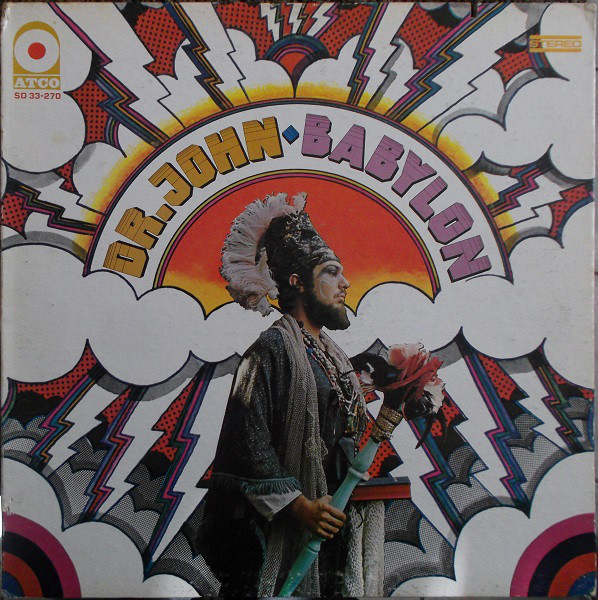
Babylon.
This included his sophomore album Babylon on January the ’17th’ 1969. It was a powerful, cerebral and innovative genre-melting album which socially had much in common with Dr John’s debut album Gris Gris.
Sadly, critics didn’t ‘get’ Babylon and the album which failed commercially. However, just like Gris Gris, Babylon was later reappraised by critics and nowadays is regarded as one of his finest albums and a minor classic.
Remedies.
Following the commercial failure of Babylon, things went from bad to worse for Dr John, before he could begin work on his third album Remedies. This started when a deal went south, and he was arrested by the police and ended up in jail. It was a worrying time for Dr John who was parole, and if he ended up with a parole violation, he knew he might end up in the infamous Angola jail. That didn’t bare thinking about, and already Dr John was desperate to get out of the local jail. However, he needed someone to post bail, so contacted his managers who he remembers: “were very bad people.” This proved to be an understatement.
Not long after this, Dr John’s managers had him committed to a psychiatric ward, where he spent some time. By then, it was obvious to Dr John that his managers were no longer playing by the rules. All he wanted to do was make music, and everything that had happened recently were nothing to do with music. Instead, it was all connected to Dr John’s increasingly chaotic lifestyle, which made it all the more frustrating for those that realised just how talented the Gris Gris Man was.
Eventually, having managed to put his problems behind him, Dr John wrote the six tracks that became Remedies using his real name Mac Rebennack. Among the tracks Dr John had written was What Goes Around Comes Around which later became a favourite during his live shows and Mardi Gras Day which paints pictures of New Orleans when it comes out to play. Very different was Angola Anthem which was inspired by a friend of Dr John’s who had just been released from Angola, the Louisiana State Penitentiary after forty years. Dr John paid tribute to his friend with an eighteen minute epic that took up all of side two of Remedies. It was produced by one of the most successful producers of the day.
Although Harold Battiste had produced Gris Gris and Babylon, he was replaced by Tom Dowd and Charles Greene who were tasked with transforming Dr John’s career. However, although Tom Dowd was enjoying the most successful period of his career, he had never worked with anyone like Dr John.
When Remedies which was released in the spring of 1970, just like his two previous albums, critics didn’t seem to understand Remedies, which was credited to Dr John The Night Tripper. Remedies was another ambitious album of genre-melting, voodoo-influenced album where Dr John The Night Tripper through everything from psychedelia, blues, R&B, soul, funk and jazz into the musical melting pot and gave it a stir to create an album where the music was mysterious, otherworldly and haunting.
By the time Remedies was released on April ‘9th’ 1970, some FM radio stations had picked up on the album, and were playing it on their late shows. Despite the radio play Remedies had received, the album never troubled the charts, and it was only much later that record buyers realised that they had missed out on another important and innovative album from Dr John.
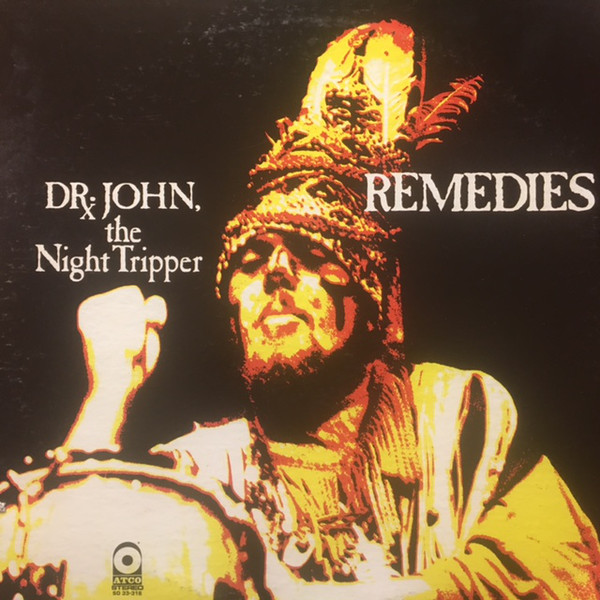
The Sun, Moon and Herbs.
Despite Dr John’s first three albums failing to find an audience, many of his fellow musicians were fans of his music, and were only too happy to feature on his fourth album The Sun, Moon and Herbs. This included Eric Clapton, Mick Jagger, Bobby Whitlock, Graham Bond, Carl Radle, Jim Gordon and Doris Troy. They were joined by The Memphis Horns as Dr John and Charles Greene took charge of production.
They were responsible for a dark and swampy sounding album that is rich in imagery and paints of New Orleans on a hot, sticky night as thunder crackles and rumbles in the distance like the drums on The Sun, Moon and Herbs. When it was released on August the ’31st’ 1971, still critics struggled to understand Dr John’s music, but this time, The Sun, Moon and Herbs which featured an all-star cast, spent five weeks in US Billboard 200 and peaked at 184. At last, Dr John’s music was starting to find a wider audience.
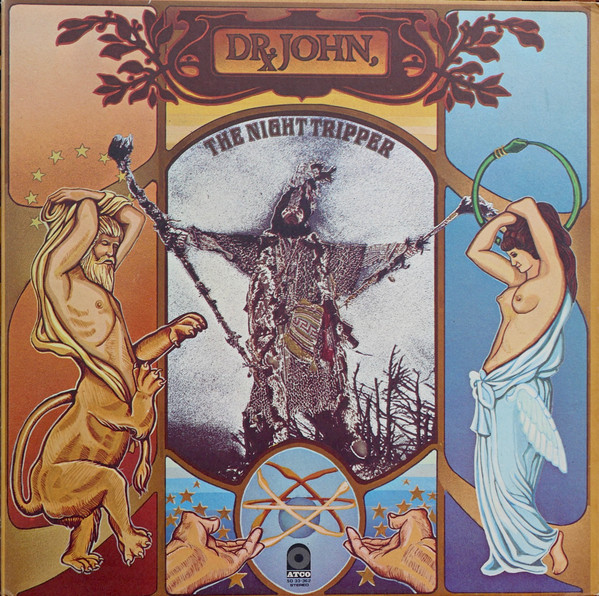
Dr John’s Gumbo.
Buoyed by the success of The Sun, Moon and Herbs, Dr John decided to record an album of cover versions for his fifth album. These weren’t just any cover versions. Instead , they were billed as an album of covers of New Orleans’ classics. These tracks became Dr John’s Gumbo which was produced by Harold Battiste and Jerry Wexler and ironically, was recorded in Los Angeles.
For his fifth album, Mac Rebennack aka Dr John wrote Somebody Changed The Lock which joined eleven other New Orleans classics. This included the traditional song Stack-A-Lee; Professor Longhair’s Tipitina; James “Sugar Boy” Crawford’s Iko Iko; Earl Gaines’ Big Chief; Bob Shad’s Junko Partner; Ahmet Ertegun’s Mess Around; Huey “Piano” Smith and Izzy Cougarden’s Blow Wind Blow and Earl King wrote Let the Good Times Roll and cowrote Those Lonely Lonely Nights with Johnny Vincent. He cowrote Little Liza Jane with Huey Piano Smith and the medley of High Blood Pressure, Don’t You Just Know It and Well I’ll Be John Brown. These tracks became were recorded in LA and became Dr John’s Gumbo.
The recording took place at Sound City Studios, in LA with Dr John playing guitar, piano, cornet and taking charge of the vocals. He was joined by drummer and percussionist Fred Staehle, bassist Jimmy Calhoun and guitarist Ken Klimak. They were joined by percussionist Richard Washington, a horn section plus backing vocalists Shirley Goodman, Tammy Lann, Robbie Montgomery and Jessica Smith. Producing Dr John’s Gumbo were Harold Battiste and Jerry Wexler.
They produced what was Dr John’s tribute to the music of the city of his birth. It was a very different album to his four previous releases. Dr John’s Gumbo marked a move away from what his persona Dr John The Night Tripper. Some critics didn’t understand Dr John’s musical alter ego and certainly didn’t “get” the voodoo references. Despite that, he had a cult following. That was about to change.
When Dr John’s Gumbo was released critics called it one of Dr John’s finest albums. They preferred and understood the music on the album which was much more straightforward, accessible and steeped in New Orleans’ R&B traditions. Especially, tracks like Iko Iko, Somebody Changed The Lock, Mess Around, Let The Good Times Roll, Junko Partner, Those Lonely Lonely Nights and the Huey Smith Medley. These songs were part of what was akin to a homage to the Big Easy that showcased Dr John’s considerable talents. It was also Dr John’s most accessible album.
Dr John’s Gumbo was released on April the ‘20th’ 1972, it spent and spent seven weeks in the US Billboard 200. On June the ‘24th’ 1972 it reached 112 in the US Billboard 200 and became Dr John’s most successful album.
Dr John’s Gumbo was the fifth of seven albums that Dr John released for Atco Records between 1968 and 1974. While these albums weren’t always appreciated or understood by critics, they’re now regarded as part of what was a golden era for Dr John.
He was at his creative zenith during his Atco Records years and was often misunderstood even by the supposed experts who ran the label. It was only much later that critics reappraised the albums that Dr John released for Atco Records and realised that he was recording and releasing ambitious, imaginative and innovative albums of genre-melting music. Ironically when he returned to what was a much more traditional R&B sound on Dr John’s Gumbo he enjoyed the most successful album of his career. It’s also one of the finest albums of not just Dr John’s Atco Records’ years but a career that spanned six decades.
During what was a long and illustrious career, Dr John had released thirty studio albums and nine live albums. He won six Grammy Awards and was inducted into the Rock and Roll Hall of Fame in 2011. However, it wasn’t always been smooth sailing for Dr John who battled heroin addiction but eventually he conquered his demons and continued to released albums and tour.
Sadly, Dr John passed away on June the ‘6th’ 2019 aged just seventy-seven. Dr John a truly talented and maverick musician left behind a rich musical legacy which includes the seven albums he recorded during his Atco Records years including one of his finest and most accessible, Dr John’s Gumbo, which is ranked at number 404 on Rolling Stone magazine’s list of the 500 greatest albums of all time, and is the perfect introduction to a musical legend.
Classic Album: Dr John-Dr John’s Gumbo.
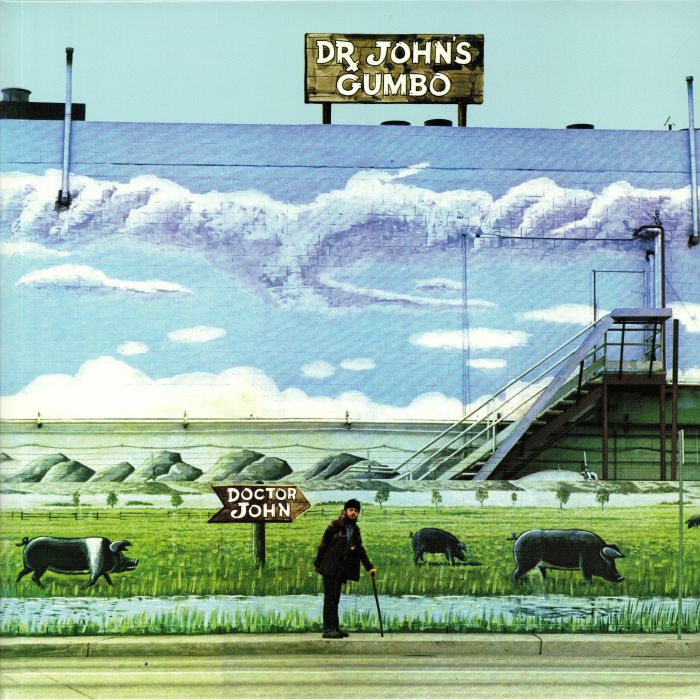
.
CULT CLASSICS: VICTOR CHUKWU-AKALAKA-/UNCLE VICTOR CHUKS AND THE BLACK IROKOS-THE POWER.
Cult Classics: Victor Chukwu–Akalaka /Uncle Victor Chuks and The Black Irokos–The Power.
By 1977, Victor Chukwu was regarded as one of masters of Igbo highlife and over the next two years recorded two of his most important and rarest albums. The first was a solo album Akalaka, and the second was The Power which was credited to Uncle Victor Chuks and The Black Irokos. These albums are a reminder of Victor Chukwu’s unique brand of Igbo highlife. It’s feelgood music that is uplifting, dignified and spiritual that played and continues to play an important part in Igbo culture.
The roots of Igbo highlife can be traced to the late-fifties, and Onitsha, a city which was located on the banks of the Niger River in Nigeria’s Anambra State. That was where Igbo highlife was born.
Igbo highlife grew in popularity during the early sixties, especially just after Nigeria gained independence. However, all wasn’t well in Nigeria. There was poverty, wages were low and housing was overcrowded and dangerous. This resulted in strikes and by June 1964 the Nigerian people had enough and there was a general strike. Although this resulted in wage increases, there was tension between the army and civilians who believed the government was corrupt. It went to the polls at the end of 1964.
On the ‘30th’ of December 1964, there was meant to be an election in Nigeria. However, in some parts of the country the election didn’t take place until the ‘18th’ of March 1965. The Northern People’s Alliance won the election, but the result was marred by violence accusations that the result had been manipulated. Sadly, things were about to get worse for the people of Nigeria.
Ten month later there was a military coup on the ’15th’ of January 1966. Just four months later, the 1966 anti-Igbo pogrom began in May and lasted until September. By then, an estimated 80,000 to 100,000 Igbos and people of southern Nigerian origin had been murdered. Another million Igbos fearing for their lives fled from the Northern Region to eastern Nigeria.
This led to the secession of the eastern Nigeria region and the declaration of the Republic of Biafra. Sadly, those that had sought sanctuary were now caught up in the Nigeria-Biafra war which began on the ‘6th’ of July 1967, and lasted until the ’13th’ of January 1970. After a war lasting two years, six months, one week and two days there had been 100,000 military casualties, while between 500,000 and three million Biafran civilians died of starvation and Biafra rejoined Nigeria.
During what was a bloody period in Nigerian history, Igbo highlife’s popularity grew. It was primarily guitar-based music, which also included a combination of horns and vocal rhythms. They’re sung in a call and-response style in Igbo or pidgin English. The music takes its 6/8 time signature from the Ogene bell that take a prominent place at the front of Igbo gatherings.
The Igbo bell can also be heard on Victor Chukwu’s solo release Akalaka and on Uncle Victor Chuks and The Black Irokos’ album The Power. They’re two of the albums that Victor Chuku recorded and released for the Tabansi label between the late-seventies and early eighties.
Before signing to Tabansi, Victor Chukwu and The Black Irokos had released Vol. 1-Nwanne Bu Nwanne on the Jet Sound Studio label in 1975. The bandleader wrote the six tracks on this album of Igbo highlife which was recorded at the Jet Sound Studio. It’s one of the earliest recordings of Victor Chukwu and nowadays, is an extremely rare album with copies changing hands for upwards of $375.
Next stop for Victor Chukwu was Tabansi Records, which by the late-seventies was Nigeria’s biggest and most important record company. It was founded by Chief Tabansi in Nigeria in 1952, and filled a void when major labels like Decca and later, Philips closed the doors on their Nigerian operations.
In the early days, Chief Tabansi recorded artists in the towns and villages in parts of Nigeria, and then pressed the records at The United African Company’s pressing plant. After that, record vans promoted the latest releases in Nigerian villages. This was just the start for Tabansi Records.
In the sixties, The United African Company decided to concentrate on importing American and European music. With very little competition, Tabansi Records was able to concentrate on local music, which The United African Company had turned its back on. This was a big mistake
During the seventies, Tabansi Records was the most successful Nigerian label, and its founder Chief Tabansi was one of the leading light’s of country’s thriving and vibrant music scene. He had invested in the company which was based in Onitsha, Lagos, and by the seventies, it had its own studios and pressing plant. Tabansi Records was going from strength-to-strength. This was the perfect time for Victor Chukwu to sign to Tabansi Records.
Akalaka.
Very little is known about the time Victor Chukwu spent signed to Tabansi Records. He released three albums for the label, including his solo album, Akalaka. It’s thought that it was recorded around 1977, at the Tabansi Studios in Onitsha.
Victor Chukwu wrote and arranged the four tracks that became Akalaka. He was joined in the studio by a drummer, bassist and some horns. To augment this small but tight and talented band Victor Chukwu doubled his tenor saxophone and adds guitar. Taking charge of production was Chief Tabansi who also mixed and mastered Akalaka.
It’s thought that Tabansi Records released Akalaka later in 1977. However, like so many of the Tabansi Records’ releases the exact dates of the recordings and release dates are unknown. It requires a degree of detective work and sometimes, an element of guesswork to work out a release date. That was the case with Victor Chukwu’s Tabansi Records’ debut Akalaka.
Ogbu Mmadu (Murderer) was recorded in 6/8 time and opens Akalaka. It combines a Igbo highlife groove with calypso influenced horns and Victor Chukwu’s Hawaiian-tinged guitar which weaves and winds its way across the arrangement. He’s accompanied by backing vocalists as he delivers an impassioned vocal and narrates the story about the Murderer.
Although Nwanne Bu Nwanne was recorded in 6/8 time it’s quite different from the album opener. The tempo increases and the music is joyous and uplifting as the arrangement trots along. It features a myriad of percussion, stabs of horns and woodwind which join forces with the crystalline, chiming guitar. They create an almost mesmeric backdrop for the vocal which veers between a vamp to jazz-tinged and soulful on one of the album’s highlights.
Born Throwaway is another example of major key Igbo highlife. However, this time, the vocal and backing vocals are delivered in pidgin rather than the regular Igbo language. Meanwhile, the arrangement has an almost mesmeric quality as the percussion and guitar melt into one and stabs of blazing horns punctuate the arrangement which later becomes funky. When all this is combined it’s a spellbinding and potent combination.
Closing the album is Akalaka (Mind Your Business). It’s delivered in a similar storytelling style to Chief Stephen Osita Osadebe. Horns and woodwind play a leading role in the arrangement as Victor Chukwu delivers a warning to the listener to Mind Your Business.
When Akalaka was released in 1977, Victor Chukwu’s debut for Tabansi Records the album wasn’t a commercial success. Very few copies and sold and nowadays, Akalaka is one of Igbo highlife rarity.
Despite the commercial failure of Akalaka, the music was of the highest quality. Victor Chukwu took Igbo highlife as a starting point and with the help of a tight and talented band combined elements of funk, jazz and soul. The result was music joyous, uplifting and akin to a call to dance and sometimes thought-provoking and cerebral. Other times, there was a spiritual quality to the music which sometimes, was like a mini moral tale. This made Akalaka an intriguing album. Given the quality of music on the album it deserved to find a wider audience. Sadly, that wasn’t the case and very few people bought or heard Akalaka. Despite that, Victor Chukwu’s career at Tabansi Records continued.
The Power.
The next album he recorded was The Power, where he was billed as Uncle Victor Chuks and The Black Irokos. Just like Akalaka, it’s not known when the album was recorded and released. It could be 1979 or as late as 1984 as there are a few copies of the album that are dated 1984. However, going by the catalogue number it seems more likely that The Power was released in 1979.
For The Power, Victor Chukwu had written three new tracks which he arranged. He also played tenor saxophone and guitar on the album. It was recorded at the Tabansi Studios in Onitsha, and produced, mixed and mastered by Chief Tabansi.
When The Power was released it also failed to find an audience. That was despite being an ambitious album that tried to take Igbo highlife in a new direction. Proof of that was the album opener.
Onwu Uwa (Famine) which is played in 6/8 time opens The Power and sounds almost psychedelic. That’s because of the way the electric guitar is played. The strings are dampened and plucked pizzicato style as effects are added from the mixing desk. Soon, blazing horns are added and combine with percussion and an impassioned and heartfelt vocal delivers lyrics full of social comment on this powerful, genre-melting track that in parts is experimental.
Just like the previous track, Anya Ukwu (Envy) is played in 6/8 time and features a pizzicato guitar which combines with an impressive ogene drumming combo. At one point, the track seems to have been influenced by Ghanian sikyi minor key highlife. Meanwhile, Victor Chukwu delivers the lyrics to this genre-melting moral tale.
Oge Chukwu(Time For God) closes The Power and it’s a case of saving the best until last. Victor Chukwu’s guitar weaves and lopes its way across the arrangement and just like the horns and woodwind plays a starring role. Together they play their part in this uplifting, joyous and spiritual opus.
Despite the undeniable quality of the music on The Power it also failed to find an audience. That was despite being an ambitious and innovative album of Igbo highlife where Uncle Victor Chuks and The Black Irokos weren’t afraid to experiment on this genre-melting album. They added funk, gospel, jazz, psychedelic and soul to Igbo highlife on the three tracks. One was full of social comment, another was a moral tale and the album closer was spiritual. The Power was a joyful, powerful and thought-provoking album that just like Akalaka, failed to find the audience it deserved.
Since then, a new audience has discovered the delight of Victor Chukwu’s album Akalaka and Uncle Victor Chuks and The Black Irokos’ The Power. The starting point on both albums is Igbo highlife which is combined with funk, Ghanian highlife, gospel, jazz and soul. The result is music that’s joyful, uplifting, catchy, soulful and dancefloor friendly as also thought-provoking and spiritual. It’s a powerful combination and these two cult classics will be of interest to anyone with a passing interest in African music.
Cult Classics: Victor Chukwu–Akalaka /Uncle Victor Chuks and The Black Irokos–The Power.
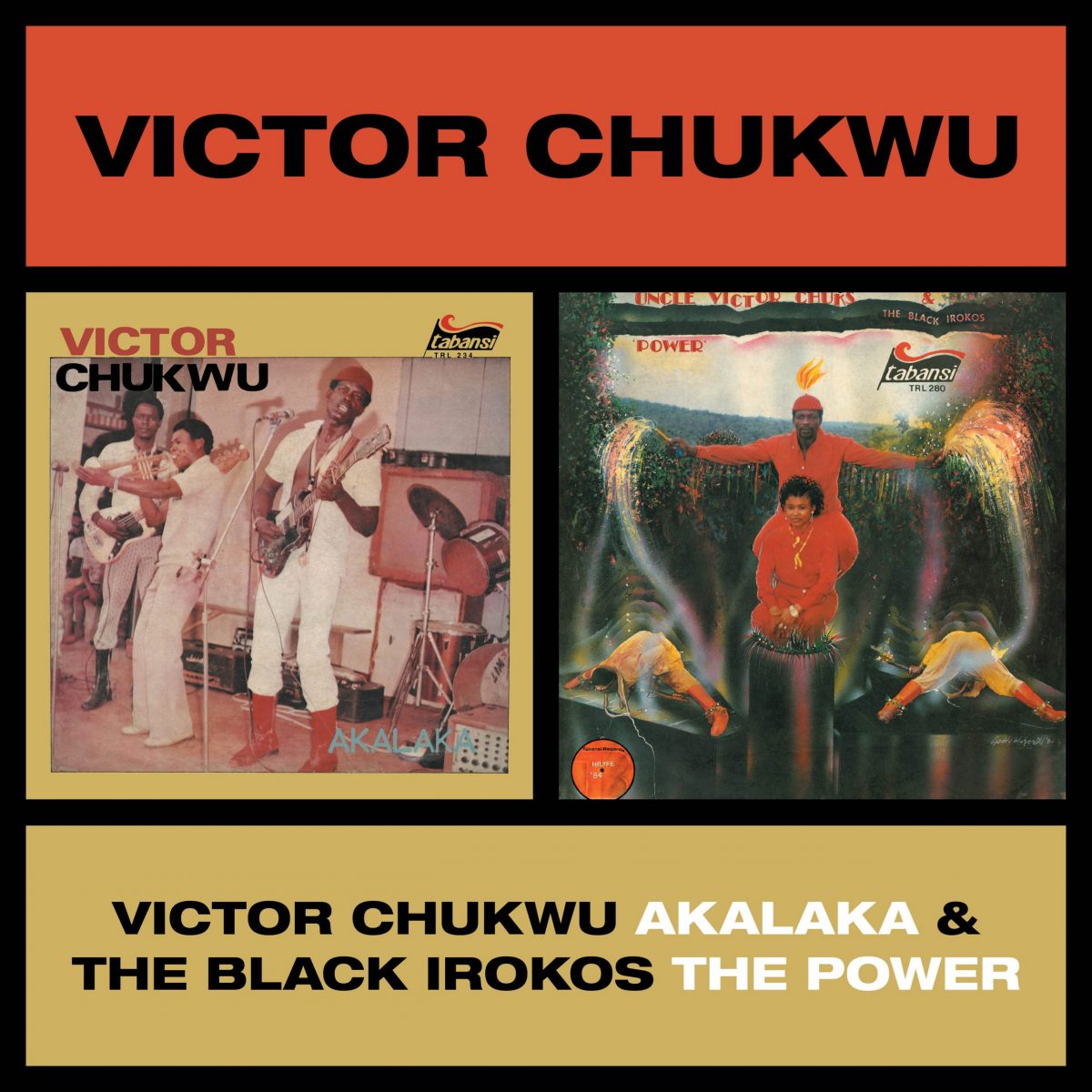
DEXTER GORDON-ONE FLIGHT UP
Dexter Gordon-One Flight Up.
Label: Blue Note Records.
Format: LP.
Not long after Dexter Gordon recorded A Swinging Affair on August the ’29th’ 1962, the thirty-nine year old jazz saxophonist decided to leave New York where he had been living, and moved to Europe. He settled first in the Danish capital Copenhagen, but by May 1963 was living in Paris, France.
Our Man In Paris.
That was where Dexter Gordon recorded his next two albums for Blue Note Records. The first was Our Man In Paris, a quartet recording which took place at CBS Studios, on May the ‘23rd’ 1963. That day, the quartet recorded five standards.
This included Charlie Parker’s Scrapple From The Apple, Ann Ronell’s Willow Weep For Me, Billy Bird, Teddy McRae and Henri Woode’s Broadway, Matty Malneck, Mitchell Parish and Frank Signorelli’s Stairway To The Stars plus Dizzy Gillespie and Frank Paparelli’s A Night In Tunisia. These standards were recorded by a quartet that featured three American expats who had made Paris their home.
The quartet featured drummer Kenny Clarke, Paris-born bassist Pierre Michelot, pianist Bud Powell and tenor saxophonist Dexter Gordon. They recorded five standards during the one day session which was produced by Francis Wolff. These tracks would eventually become Our Man In Paris.
Seven months later, in December 1963, Our Man In Paris was released by Blue Note Records to widespread critical acclaim and hailed as one of Dexter Gordon’s finest albums. The highlight was A Night In Tunisia which features one of his finest performances. Fifty-eight years later and Our Man In Paris is now regarded as a hard bop classic and an essential part of a jazz collection.

One Flight Up.
Six months after the release of Our Man In Paris, Dexter Gordon returned to CBS Studios on the ‘2nd’ of June 1964 to record the followup. By then, he was dividing his time between playing live and working as a sideman. He was enjoying life in Paris but was ready to return to the studio.
This time, only three tracks would be recorded. This includes Donald Byrd’s Tanya, Kenny Drew’s Coppin’ The Haven and Eddie DeLange and Jimmy Van Heusen’s Darn That Dream. They were recorded by a quintet led by Dexter Gordon and produced by Francis Wolff.
For the One Flight Up sessions, the band featured drummer Art Taylor, eighteen year old Danish bassist Niels-Henning Ørsted Pedersen, pianist Kenny Drew, trumpeter Donald Byrd and tenor saxophonist Dexter Gordon. This talented quintet recorded the three tracks which became One Flight Up which was released in mid-September 1965.
By then, Dexter Gordon had returned to the studio and recorded two more albums for Blue Note Records at Van Gelder Studios, Englewood Cliffs, New Jersey during three days in May 1965. The first was Clubhouse which was recorded on May the ‘27th’ 1965 and then Gettin’ Around which was recorded on May the ’28th’ and ’29th’ 1965. Sadly, it was another fourteen years before the albums were released.
Meanwhile, Dexter Gordon must have known that it wasn’t going to be easy to followup an album as good as Our Man In Paris. However, when Blue Note Records released One Flight Up in mid-September 1965 to plaudits and praise.
By then, Dexter Gordon was an experienced bandleader who was able to spot up-and-coming musicians which he added to his band. This was the case with Danish bassist Niels-Henning Ørsted Pedersen who joined drummer Art Taylor and Kenny Drew in the rhythm section. The front line featured Dexter Gordon and trumpeter Donald Byrd who wrote the album opener.
This was Tanya, an eighteen minute epic that takes up the first side of One Flight Up. Simplicity is the key on this post bop jam where the quintet enjoy the opportunity to stretch their legs. Soon the arrangement starts to swing and later it features some of the best solos on the album. They come courtesy of the front line. Trumpeter Donald Byrd and Dexter Gordon’s bluesy tenor saxophone steal the show and play a starring role. Meanwhile, drummer Art Taylor and pianist Kenny Drew plays a supporting roles in what’s nowadays regarded as a jazz classic.
Opening the second side is the Kenny Drew composition Coppin’ The Haven. It’s eleven magnificent minutes of modal minor key modern jazz where Donald Byrd plays a leading role. His trumpet carries the glistening, shimmering melody as the arrangement gently swings as the drums interject. Later, bandleader Dexter Gordon unleashes a spellbinding solo before the baton posses to Kenny Drew. His fingers dance across the piano keyboard as Niels-Henning Ørsted Pedersen’s bass propels the arrangement along. Soon, the band unite and play as one as they bring this majestic example of modern jazz to a close.
The ballad Darn That Dream closes One Flight Up. As the tenor saxophone and piano combine with an understated rhythm section. Together they create a late-night smokey sound that’s like a like jazz club late at night. The music may wistful and ruminative but it’s also beautiful and encourages the listener to reflect.
One Flight Up was the second album that Dexter Gordon recorded for Blue Note Records after moving to Paris in 1963. The first was Our Man In Paris which was released to critical acclaim in December 1964. Nine months later Dexter Gordon returned with One Flight Up which was recently reissued by Blue Note Records as part of their Tone Poet series.
It’s a welcome reissue of an album that’s nowadays, is sometimes underrated and often overlooked in favour of some of including Doin’ Allright, Dexter Calling…, Go, A Swingin’ Affair and Our Man In Paris. They’re some of the best albums that Dexter Gordon recorded for Blue Note Records and feature one of the great tenor saxophonists of his generation. So does One Flight Up.
One Flight Up is an almost flawless album where Dexter Gordon reinvents his music and combines post bop, modal minor key modern jazz and balladry on what was the second chapter in Our Man In Paris’ European adventure.
Dexter Gordon-One Flight Up.
HURDY GURDY SONGS-WORDS AND MUSIC BY DONOVAN 1965-1971.
Hurdy Gurdy Songs-Words and Music By Donovan 1965-1971.
Label: Ace Records.
Format: CD.
Having signed to Pye Records in 1965, nineteen year old singer-songwriter Donovan began working with the producers Terry Kennedy, Peter Eden and Geoff Stephens on his debut single Catch The Wind. When the single was released on the ‘12th’ of March 1965, it reached number four in the UK and twenty-three in the US Billboard 100. This was the start of the rise and rise of one most influential singer-songwriters of his generation.
Donovan’s music played an important part in the soundtrack to the second half of the sixties on both sides of the Atlantic. By then, many artists and bands were keen to cover his songs. This includes those on Hurdy Gurdy Songs-Words and Music By Donovan 1965-1971 which was recently released by Ace Records and is part of their long-running and successful Songwriter Series.
The compilation features twenty-four tracks and includes contributions from Herman’s Hermits, Terry Reid, Bridget St John, Marianne Faithfull, Paul Jones, Big Jim Sullivan, Dana Gillespie, Sandie Shaw, The Gosdin Brothers and Deep Purple. They’re just some of the artists on Hurdy Gurdy Songs-Words and Music By Donovan 1965-1971 who cover songs written by the Sunshine Superman and psychedelic minstrel from Maryhill.
Opening Hurdy Gurdy Songs-Words and Music By Donovan 1965-1971 is Museum which is psych-tinged track from Herman’s Hermits’ album Blaze which was released on Columbia in 1967. The album was produced by Mickie Most who was Donovan’s producer and at the time, was the man with the Midas touch who also produced The Animals. It’s fitting that a track produced by the man who transformed Donovan’s career opens the compilation.
In 1969, Mickie Most produced Terry Reid’s eponymous sophomore album which was released by Columbia. The highlight of the album was the of Superlungs which was released as the lead single. This slice of psychedelic rock features a vocal powerhouse from the man who Jimmy Page wanted to become the lead vocalist of The New Yarbirds which later became Led Zeppelin.
The Pebble And The Man was covered by English singer-songwriter Bridget St John for her 1971 sophomore album Songs For The Gentle Man. Her tender, heartfelt vocal is accompanied by a complicated choral arrangement on this beautiful baroque folk track which was produced by Ron Geesin. It’s one of my favourite tracks on the compilation.
Sunshine Superman was covered by LA-based garage rockers The Standells on their album The Hot Ones, which was released by Tower in 1967. It’s very different to the original and is best described as a slice of lysergic 12-bar-folk-blues that certainly leaves a lasting impression.
By 1967, Marianne Faithfull’s time at Decca was almost at an end. Her swansong for the label was her fourth album Love In A Mist which featured a cover of Young Girl Blues. It features a soul-baring vocal as Marianne Faithfull lives the lyrics which are delivered against cascading stings that are part of an understated arrangement. Sadly, the album wasn’t a commercial success and nowadays is regarded as an oft-overlooked hidden gem. One of the many highlights is Young Girl Blues which is much more powerful and poignant than Donavan’s version which was released later in 1967.
Paul Jones covered Celeste for his album Come Into My Music Box which was released by Columbia in 1969. The song was arranged and directed by John Cameron with Paul Burgess taking charge of production. The song features a melody full of longing and an eclectic selection of modern and traditional instruments that provide a backdrop for a heartfelt and emotive vocal.
British session guitarist Big Jim Sullivan recorded Translove Airways (Fat Angel) for his album Sitar A Gogo. It was released in 1967 on the Mercury label. The track combines blues, jazz, psychedelic rock and Eastern sounds on this timeless genre-melting jam.
Dana Gillespie started off as a folk singer, but by the time she released her debut album Foolish Seasons on London Records in 1968, her music was evolving. The album featured elements of folk, pop and psychedelic rock. One of the highlights is a hook-laden and poppy cover of Donovan’s You Just Gotta Know My Mind.
Oh Gosh originally featured on Donovan’s double album A Gift From A Flower To A Garden which was released in 1967. Two years later, in 1969, Sandie Shaw covered Oh Gosh on her album The Situation which was released by Pye. By then, she wanted to release an album that featured her taste in music. This was the case with this quite beautiful dreamy and lysergic cover which shows another side to Sandie Shaw.
Try And Catch The Wind was the song that launched Donovan’s career in 1965. It was then covered by many other artists including The Gosdin Brothers on their Sounds Of Goodbye album which was released by Capitol in 1968. It’s a beautiful cover with heartfelt vocals that are accompanied by a spartan folk rock arrangement.
Vocal trio The Sandpipers covered Jennifer Juniper and gave the song an AOR makeover for their fourth album, Softly, which was released by A&M Records in 1968. One of the highlights of the album was their reinvention of a Donovan classic.
Closing Hurdy Gurdy Songs-Words and Music By Donovan 1965-1971 is Deep Purple’s cover of the ballad Laleña which featured on their 1969 eponymous album. It features a spartan but atmospheric arrangement and a heartfelt and soul-baring and is a a quite beautiful way to close the compilation.
On the ‘10th’ of May 2021 Donovan celebrated his seventy-fifth birthday, but still he’s no intention of retiring. He’s been a professional musician since 1964, and a year later in 1965 he signed to Pye Records.
Later that year, he began working with producer Mickie Most who was the man with the Midas touch and produced a string of hit singles for Donovan. Soon, he was enjoying hits in Britain, America, Australia and countless other countries. These hits were written by the Sunshine Superman and psychedelic minstrel who became one of the most important and influential singer-songwriters of his generation.
That’s why so many artists and bands on both sides of the Atlantic wanted to work cover songs written by Donovan. Some songs that Donovan wrote were better suited to other artists, and they recorded the definitive version. Sometimes, he wrote a song and allowed another artist to record it before he did. This includes Marianne Faithfull’s version of Young Girl Blues which she made her own. It’s one of the many highlights of Hurdy Gurdy Songs-Words and Music By Donovan 1965-1971.
This lovingly curated compilation also includes covers of Donovan classics including Sunshine Superman, Mellow Yellow, Hurdy Gurdy Man and Jennifer Juniper which are joined by Catch The Wind, Colours and Atlantis. The twenty-four covers on Hurdy Gurdy Songs-Words and Music By Donovan 1965-1971 are a reminder of the Sunshine Superman and psychedelic minstrel from Maryhill who became one of the most important and influential singer-songwriters of his generation and who went on to inspire several generations of musicians including those on the latest instalment in Ace Records’ long-running and successful Songwriter Series.
Hurdy Gurdy Songs-Words and Music By Donovan 1965-1971.
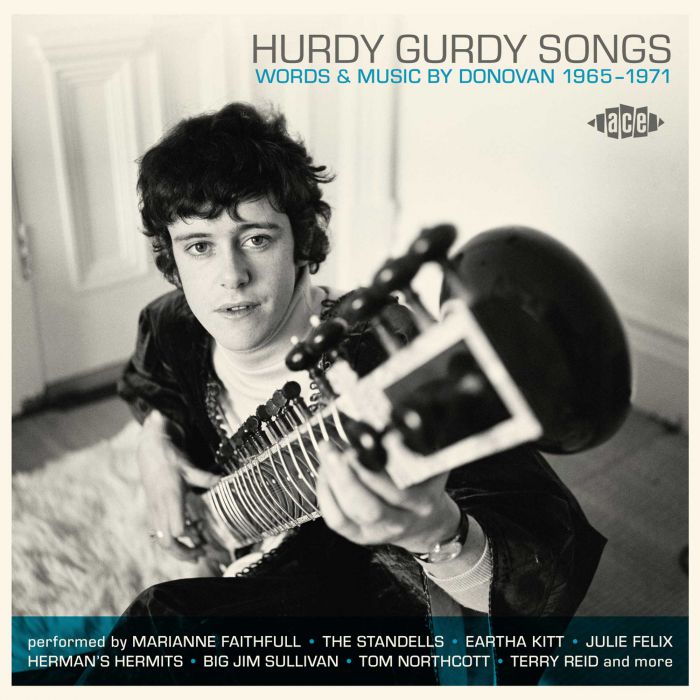

WHAT GOES ON-THE SONGS OF LOU REED.
What Goes On-The Songs Of Lou Reed.
Label: Ace Records.
Format: CD.
After leaving The Velvet Underground, Lou Reed embarked upon a solo career that spanned five decades and saw him release twenty albums. His final album was Hudson River Wind Meditations which was released on April the ‘24th’ 2007. By then, the former Velvet Underground frontman was one of the biggest names in rock music and his music had influenced several generations of musicians. That’s still the case nearly eight years after Lou Reed’s death on October the ‘27th’ 2013 aged seventy-one.
Given the influence he’s had on songwriters and musicians since his days with the Velvet Underground it’s fitting that Lou Reed is the latest induction into Ace Records’ Songwriter Series. Twenty-four cover of his songs feature on What Goes On-The Songs Of Lou Reed which was recently released by Ace Records. There’s songs from his solo career and his time with The Velvet Underground. They’re a reminder of a truly talented and influential songwriter.
Opening What Goes On-The Songs Of Lou Reed is alt-rocker Beck’s cover I’m Waiting For The Man which was released as part of the Spotify Original Series in 2018. Beck stays true to the original as he pays homage to the author of a classic song.
Bryan Ferry covered What Goes On for his album The Bride Stripped Bare in 1978. This melodic cover was one of the highlights of one the former Roxy Music frontman’s fifth solo album as he takes this familiar song in a new direction.
Perfect Day originally featured on Lou Reed’s 1972 album Transformer. In 1995, Kirsty MacColl and Evan Dando covered the song and the single was released by Virgin. It’s transformed into an orchestrated ballad with The Lemonheads’ frontman crooning his way through the track proving the perfect foil for the late and much-missed Kirsty MacColl who tragically died in 2000.
Following the release of The Velvet Underground and Nico in 1967, Nico left the group and embarked upon a solo career. Wrap Your Troubles In Dreams is taken from her Chelsea Girl album and finds her delivering an emotive and orotund vocal against a chamber folk arrangement that was produced by Tom Wilson.
On the ‘25th’ April 1985 Echo and The Bunnymen were in Karen, Gothenburg, where they recorded several tracks for The Bommen Show. This includes an anthemic and driving cover of Run, Run, Run. It’s a welcome inclusion to the compilation and is a reminder of a group at the peak of their powers.
Psychedelic folk rockers The Soft Boys were formed in Cambridge, England, by Robin Hitchcock in 1976. By the time they played at The Hope and Anchor in Islington, London, in March 1980 they had acquired a cult following. That night, the tapes were running and the concert was recorded. On the setlist was a cover of a cover Train Round The Bend where the group fuse rock and blues during a breathtaking cover. Sadly, this hidden gem of a track lay unreleased until 1993 when it belatedly made its debut on the Rykodisc compilation 1976-81.
Canadian quartet Cowboy Junkies covered The Velvet Underground classic Loaded which features that timeless guitar riff. This haunting cover originally featured on The Trinity Sessions album which was released in 1988 by Latent Recordings and finds the group taking the track in a new direction.
Tracey Thorn from Everything But The Girl recorded The Velvet Underground’s Femme Fatale for her album A Distant Shore which was released by Cherry Red in 1983. This cover features an understated arrangement that’s the perfect backdrop for the heartfelt and emotive vocal. It’s a welcome addition to the compilation as many people may not have heard this timeless cover.
Rock ’N’ Roll originally featured on The Velvet Underground’s fourth album Loaded, which was released in 1970. A year later, in 1971, the track was covered by Detroit featuring Mitch Ryder. It’s regarded by many as one of the best covers of the track. Hard rocking and fervid with blistering guitar licks the former Detroit Wheels’ frontman struts his way through this classic track.
Iggy Pop closes What Goes On-The Songs Of Lou Reed with a cover of We Are The People which featured on his album Free, which was released in 2019. The cover features a soliloquy from the legendary rocker that’s delivered against a wistful, spacious and ruminative sounding arrangement that features just trumpet and keyboards. It’s a beautiful way to close the compilation.
The twenty tracks on What Goes On-The Songs Of Lou Reed are a reminder of one of the most influential musicians of his generation. This lovingly curated compilation features a cover of one of his earliest songs Why Don’t You Smile Now which was before he cofounded The Velvet Underground. There’s also a selections of songs from the legendary art rockers and a triumvirate of tracks from his 1972 classic solo album Transformer. This was one of twenty solo albums Lou Reed released during a five decade solo career.
During that period, he influenced and inspired many artists and groups who went on to cover his compositions and some of them pay homage to a musical legend on What Goes On-The Songs Of Lou Reed. Hopefully, Ace Records will release a followup to this latest instalment in their long-running and successful Songwriter Series as many artists have covered songs written by Lou Reed over the last six decades and will continue to do so.
What Goes On-The Songs Of Lou Reed.

THE LIFE AND TIMES OF THE DOORS.
The Life and Times Of The Doors.
By 1972, The Doors had decided to call the upon their career after the tragic death of their charismatic frontman Jim Morrison, who had died on the 3rd July 1971. The Lizard King became the latest entrant into the twenty-seven club, where he joined Brian Jones, Janis Joplin, Alan Wilson and Jimi Hendrix. This meant that The Doors’ career ended at the top and their fans memories of them were never tarnished.
The Doors were never going to grow old together and they would forever be the band that featured on their final album L.A. Woman. Never would they age and nor would they make a series of ill-advised comebacks or reunions that resulted in the release of third-rate albums. That would never happen as The Doors career ended whilst they were at the top and had just released another classic album. What saddened their fans is that The Doors’ career ended in tragic circumstances. However, their many fans still have their musical memories and can enjoy the group’s rich musical legacy.
These memories included a sextet of critically acclaimed and commercially successful albums. Between 1967s The Doors and 1971s L.A. Woman, The Doors only ever released six albums. Their debut album, The Doors was certified platinum five times over. After that, four of the next five albums were certified platinum and one double platinum. That wasn’t all.
1970 saw The Doors’ release Absolutely Live which was certified gold. The same year, they released their first compilation, 13 in January 1970, and it was certified platinum. Then six months of the tragic loss of Jim Morrison, a second Doors’ compilation was released, Weird Scenes From Inside The Gold Mine. It was a fitting tribute to one of rock’s greatest ever groups, The Doors. Their career began in LA in late-1965.
The Doors were formed in Los Angeles in 1965 and took their name from Aldous Huxley’s seminal book The Doors Of Perception. The nascent quartet was led by the charismatic vocalist Jim Morrison.
Jim Morrison was more than a singer and was also a lyricist and poet. He was a free spirit, charismatic, enigmatic and wildly unpredictable. Life was for living and Jim Morrison lived a thousand lives in twenty-seven years. However, The Doors weren’t a one man band.
The Doors’ success was down to the four band members and this included drummer John Densmore, guitarist Robby Krieger and keyboardist Ray Manzarek. Together, they were about to enjoy the kind of commercial success and critical acclaim that they could only have dreamed of.
The Doors got their break in 1966 when they signed to Elektra Records. It was the first label to spot the potential in psychedelic rock and before long it started signing up a whole host of psychedelic rock bands. Among the most successful were Love and The Doors who recorded their debut album in the summer and autumn of 1966.
The Doors.
By then, classic lineup of The Doors had been together since late-1965 and Bobby Krieger had only been playing the guitar for six months. During that time, they were a familiar face on the LA live scene where they honed their sound and the songs the group had written.
By the time The Doors arrived at Sunset Sound Recorders, in Hollywood, Los Angeles, they had already written eight of the ten tracks that would eventually feature on the album. This included Break On Through (To The Other Side), Soul Kitchen, The Crystal Ship and The End. They were joined by covers of Alabama Song (Whisky Bar) and Back Door Man on The Doors. It was recorded between the August the ‘29th’ to September the ‘23rd’ 1966 and was produced by Paul A. Rothchild.
Six months later, on 4th January 1967, The Doors was released to mostly positive reviews. It opened with Break On Through (To The Other Side) which invited listeners to expand their consciousness and was bookended with The End an example of Jim Morrison’s rock poetry. The Doors was hailed by some critics as a future classic and would become one of the group’s most influential album.
Break On Through (To the Other Side) was released as the lead single in January 1967 but stalled at 126 in the US Billboard 100. This was an inauspicious result for The Doors’ debut single.
Gradually, The Doors reached number two in the US Billboard 200 and was certified platinum five times over. Meanwhile the album was was certified platinum in Germany, certified platinum twice in the UK; three times platinum in France and four times platinum in Canada. This was helped by the commercial success of Light My Fire.
Light My Fire was released in April 1967 and reached number one on the US Billboard 100 charts. It became a Doors’ classic and so would several songs from the group’s sophomore album, Strange Days.

Strange Days.
The Doors returned to Sunset Sound Recorders, in Hollywood, LA, in May 1967 and during breaks in their touring schedule recorded what become their sophomore album Strange Days. It featured ten tracks written by The Doors which were produced by Paul A. Rothchild and completed in August 1956.
Eight months later, on the The Doors released their sophomore album Strange Days on the on the ‘25th’ of September 1967. It was released to the same widespread critical acclaim as The Doors and hailed a heavy, psychedelic classic. Strange Days featured some of the most psychedelic songs The Doors ever released. Among them were Strange Days, Love Me Two Times, When The Music’s Over and the moody, haunting People Are Strange.
When Strange Days was released it reached number three in the US Billboard 200. This resulted in another platinum disc for The Doors. The lead single People Are Strange reached twelve in the US Billboard 100 whole the followup Love Me Two Times reached just twenty-five. This was just part of the story.
Elsewhere, Strange Days was certified gold in Germany and Britain; two times gold in France and platinum in Canada. Eventually, nine million copies of The Doors’ sophomore album were sold worldwide. That’s no surprise given the psychedelic delights of Strange Days which later became The Doors’ second classic album.
However, by the time The Doors released Strange Days they were already one of the heaviest, psychedelic rock bands of the sixties. The chameleon-like band were led by the charismatic Lizard King and critics wondered what direction their music would head?

Waiting For The Sun.
In January 1968 The Doors headed to TTG studio to record their third album with producer Paul A. Rothchild. Just like Strange Days, many of the songs had been written before The Doors signed their recording contract with Elektra. The Doors had matured early as songwriters and had enough material for several albums of material. This included Waiting For The Sun. However, the album which was completed in May 1968 and would be released two months later has almost exhausted the band’s stock of songs.
On the ‘3rd’ of July 1968 The Doors release their much-anticipated third album Waiting For The Sun. Although it was generally well received many critics believed the album lacked the quality of The Doors and Strange Days.
Despite that, Waiting For The Sun became The Doors’ first number one album. The album also gave the The Doors’ their second platinum album. Just like their two previous albums, Waiting For The Sun was a huge success worldwide and eventually sold seven million copies worldwide.
When it was released, Waiting For The Sun was certified gold in Britain and Germany; double gold in France and platinum in Canada. Whether it was Britain, Europe or North America,The Doors were providing the soundtrack to a generation’s life
This included the two singles which were released from Waiting For The Sun. The lead single was The Unknown Soldier which stalled at thirty-nine in the US Billboard 100. It was Jim Morrison’s reaction to the Vietnam War and was a poignant, dramatic anti-war song that gave voice to the frustration and anger a generation felt. Instantly, The Doors became the voice of a generation and this showed another side to their music.
Very different was the second single from Waiting For The Sun, Hello I Love You which is a two minute, timeless pop anthem that topped the US Billboard 100. On the B-Side was Love Street which started life as a poem and became a baroque pop song. It’s another example of Jim Morrison’s talents as a poet and lyricist.
Despite some disappointing reviews, The Doors were celebrating they first number one album and their first number one single. The big question was how would The Doors top Waiting For The Sun?
The Soft Parade.
After the commercial success of Waiting For The Sun The Doors were being offered vast sums of money to play live. They embarked upon a gruelling touring schedule and it was a case of fitting recording sessions in when they could. This wasn’t ideal and there was very little time to write and develop new songs.
To complicate matters, Jim Morrison the “acid-evangelist of rock,” was behaving erratically, drinking heavily and suffering from anxiety. At one point he thought that he was about to have a nervous breakdown. Things were becoming increasingly difficult for The Doors’ charismatic frontman who was struggling to cope with his newfound fame. So much so, that he considered leaving the band but Ray Manzarek convinced him to complete the album.
Jim Morrison was also spending more time writing poetry and was less involved with the songwriting process. This meant that the Lizard King and Robby Krieger had to divide songwriting duties. They each wrote four songs each and joined forces to write Do It. The nine new songs were recorded at Elektra Sound West with Paul A. Rothchild who encouraged the band to change and develop their sound.
On The Soft Parade The Doors dispensed with the stripped down, understated sound of their first three albums. Instead, Paul Harris who was an arranger for the Los Angeles Philharmonic was brought onboard to arrange the strings and horns which were played by local jazz musicians. They were joined by session musicians Doug Lubahn and Harvey Brooks who were both bassists and were drafted in by producer Paul A. Rothschild who was also going through a difficult time.
By then, Paul A. Rothschild was addicted to cocaine and took control of the sessions. The Doors hadn’t any readymade songs and what they had was work in progress. This resulted in numerous takes of each song being recorded. It didn’t help that the Lizard King lacked enthusiasm during the sessions. Engineer Bruce Botnick later remarked that: “It was like pulling teeth to get Jim into it.” The Soft Machine wasn’t an easy album to record and it took until early 1969 to complete and cost $80,000 to record.
The Doors flitted between art rock, blues rock, fusion and psychedelic rock on The Soft Parade where producer Paul A. Rothschild tried to get the band to reinvent their original sound. Music was evolving and he knew that The Doors music had to evolve.
This genre-melting The Soft Parade had the potential to become the most ambitious release of their career. It was a good idea in theory but with the Lizard King seemingly uninterested in writing and recording the album it wasn’t up to the standards of their first two albums.
The Soft Parade was released on the ‘21st’ of July 1969. Never before had a year passed before The Doors’ released an album. That was until they released The Soft Parade which showcased their new sound. However, some fans and critics didn’t welcome this change of sound and also had a problem with the lyrics.
Some critics and fans felt that The Soft Parade was the group’s weakest album. They also felt that the lyrics on the album were formulaic. The accusation was that the group were now following a formula when it came to writing lyrics. This was disappointing given that when The Doors released Waiting For The Sun they were regarded as the voice of a generation. Something had to change if The Doors were to make up the ground that they had lost. Despite this, The Soft Parade and the singles were a commercial success.
In December 1968, The Doors released Who Scared You as a single. Although it didn’t feature on The Soft Parade it reached number three in the US Billboard 100. This augured well for the release of The Doors’ fourth album.
When The Soft Parade was released it reached number six in the US Billboard 200 charts and was The Doors’ least successful album. Despite that, it still was certified platinum in America and across the border in Canada. Elsewhere, The Soft Parade didn’t sell in the same quantities as their three previous albums and it was only certified silver in Britain. This was disappointment and so was the performance of the singles.
Wishful Sinful reached forty-four in the US Billboard 100 while Tell All The People stalled at fifty-seven. Then Runnin’ Blue reached a lowly sixty-four in the US Billboard 100. The commercial failure of the three singles released from The Soft Parade was a disappointment for The Doors. By then, critics were wondering what was next for The Doors?
Especially after the events of the ‘1st’ of March 1969 when a drunken Jim Morrison took to the stage in front of an audience of 12,000 at the Dinner Key Auditorium in Coconut Grove, Florida. That night, it’s alleged that he exposed himself during the concert. This resulted in him being charged with indecent exposure on the ‘4th’ of April 1969 and resulted in a March For Decency” at the Miami Orange Bowl.
The rest of The Doors’ tour was cancelled and their records were blacklisted by radio stations. To add to their woes, twenty-five concerts on their next tour were cancelled. Drummer John Densmore estimated that the cancellation of the concerts cost the band one million dollars. It was a disaster for The Doors.
Morrison Hotel.
Eight months after that fateful night in Florida that proved so controversial and costly for The Doors started recording their fifth album. By then, Jim Morrison was trying to shed his Lizard King image and had got rid of his stage leathers and had grown a beard. Worryingly his weight had ballooned, his alcoholism was worsening and he was becoming increasingly unpredictable.
Having just stared recording the new album, Jim Morrison decided to fly to Phoenix to see the Rolling Stones in concert. During the flight the drunken Lizard King caused a disturbance and was charged under a recently introduced skyjacking law. He could be sentenced to ten years in jail or fined up to $10,000. The Doors could’ve been looking for a new frontman.
The Doors entered Elektra Sound Recorders in November 1969. This time around, Jim Morrison had written four new songs, cowrote five with Robby Krieger and two with the rest of The Doors. These songs would become Morrison Hotel.
Joining The Doors in the studio was John Sebastian of The Lovin’ Spoonful who played harmonica on Roadhouse Blues. Just like on The Soft Parade two bassists were used. This included session musician Ray Neapolitan and blues rock pioneer Lonnie Mack. His addition made sense as The Doors flitted between psychedelic rock and blues rock on Morrison Hotel. It was completed in January 1970.
Just a month later, Morrison Hotel was released on the ‘9th’ of February 1970. The first side was entitled Hard Rock Cafe and featured classic tracks like Roadhouse Blues, Waiting For The Sun and Peace Frog. Amongst highlights of the second side which is entitled Morrison Hotel are The Spy and Indian summer.
When Morrison Hotel was released it was billed as The Doors’ comeback album. Critical acclaim accompanied an album that an album of blues rock, hard rock and psychedelic rock which reached number four in the US Billboard 200 and was certified platinum. The Doors were back with their best album since Strange Days. However, the only disappointment was when the single You Make Me Real stalled at fifty in the US Billboard 100..
Elsewhere, Morrison Hotel was certified gold in Austria, Britain and Switzerland. In Canada, France, Poland and Spain The Doors’ comeback album was certified platinum and became their most successful album since Strange Days. The Doors were back with one of their finest albums and a future classic.

Absolutely Live.
Just five months after the release of Morrison Hotel, The Doors released their first live album, Absolutely Live. It was a double album that had been compiled from concerts that took place between July the ‘21st’ 1969 to May the ‘8th’. 1970. Producer Paul A. Rothchild claimed that he had edited different versions of songs to create: “the ultimate concert…I couldn’t get complete takes of a lot of songs, so sometimes I’d cut from Detroit to Philadelphia in mid-song. There must be 2,000 edits on that album”
When Absolutely Live was released on the ‘20th’ of July 1970 the reviews were mixed. Some critics, including Robert Christgau of The Village Voice wrote favourable reviews, while other were highly critical of the Lizard King’s performances. This included Gloria Vanjak in Rolling Stone magazine. It seemed that even 2,000 edits couldn’t salvage Absolutely Live.
On its release Absolutely Live sold just 225,000 copes and reached number eight in the US Billboard 200. Eventually The Doors’ first live album was certified gold. The same year, they released their first compilation, 13 and the commercial success kept on coming.
13.
Released in November 1970, 13 featured some of greatest music The Doors released between 1967 and 1967. So, it’s no surprise that it reached number twenty-five in the US Billboard 200. This resulted in 13 being certified platinum. It seemed The Doors could do no wrong.
L.A. Woman.
L.A. Woman was recorded between December 1970 and January 1971 at The Doors’ Workshop, Los Angeles. This time there was no sign of longtime Doors’ producer Paul A. Rothchild. He had been replaced by Bruce Botnick who coproduced L.A. Woman with The Doors.
L.A. Woman featured nine songs penned by The Doors and a cover of John Lee Hooker’s Crawling King Snake. At this point in his life, Jim Morrison was heavily Influenced by legendary blues singers like Howlin’ Wolf, Muddy Waters and John Lee Hooker. This influence began on Morrison Hotel, and continued on L.A. Woman. Little did The Doors know when they completed what was their sixth studio album that it wold be the last to be released during Jim Morrison’s lifetime.
When L.A. Woman was released on 19th April 1971 it was to mostly positive reviews. Just like Morrison Hotel, L.A. Woman saw The Doors combine blues rock and psychedelic rock. This had been a successful formula for The Doors over the last few years.
Prior to the release of L.A. Woman Love Her Madly was released as a single and reached twenty in the US Billboard 100. Then when L.A. Woman was released it reached number eight in the US Billboard 200 and was certified double platinum. When Riders On The Storm was released it reached fourteen in the US Billboard 100 and gave The Doors another hit single.
Meanwhile, across the world, L.A. Woman was selling in vast quantities. In Australia, L.A. Woman was certified four times platinum; three times platinum in Canada; two times platinum in France and platinum in Spain. L.A. Woman was also certified gold in Austria, Britain, Germany and Switzerland. It was the most successful album of The Doors’ career. Their decision to return to their blues rock roots had worked.
Just three months after the release of L.A. Woman The Doors’ charismatic frontman Jim Morrison died on the ‘3rd’ of July 1971. Music was in mourning at the death of the man they called The Lizard King. He was only twenty-seven and had achieved a lot in the six years The Doors were together. However, who knows what they might have gone on to achieve?
Other Voices.
One can only speculate the direction that The Doors’ music might have headed? They did release one further album, Other Voices. It was released in October 1971 and reached just number thirty-one in the US Billboard 200. Without the charismatic Lizard King’s vocals The Doors weren’t the same band. Despite that, they continued their career.

Weird Scenes From Inside The Gold Mine.
In January 1972, the second compilation of The Doors music was released. This was Weird Scenes From Inside The Gold Mine which reached number fifty-five in the US Billboard 200. It was certified gold and is a captivating compilation of one of the greatest bands in musical history. One of the reasons for this, is the choice of music on Weird Scenes From Inside The Gold Mine, which was a double album.
Rather than just make Weird Scenes From Inside The Gold Mine a greatest hits album it features B-Sides, rarities and album tracks. The result is a fascinating overview of one of the most innovative and pioneering bands in musical history. It’s also a fitting tribute to The Lizard King who had played a huge part in the rise of The Doors.
Full Circle.
On August the ‘15th’ 1972, the three remaining members of The Doors returned with their second album as a trio, Full Circle. Bruce Botnick who produced L.A. Woman and their previous album declined to produce Full Circle. Instead, The Doors produced the nine tracks they recorded at A&M Studio. Joining them were some top session players which allowed the group to take their music in new and different directions.
The result was an album where The Doors flitted between funk-rock, fusion and rock. Critics weren’t won over by the album which wasn’t the group’s finest hour. It was an unremarkable and unfocused album that very occasionally hinted at The Doors’ past glories.
When Full Circle was released it reached sixty-eight in the US Billboard 200. Just like Other Voices there was no gold or platinum disc. The Doors without their charismatic frontman just weren’t the same band. Critics and the band’s fans wondered what the future held for The Doors?
In January 1973 The Doors disbanded. There was no point limping on as a trio and releasing mediocre albums. It was best to call time on their career rather than damage the band’s reputation. This looked like the end of the road for The Doors.
An American Prayer.
Five years later, The Doors released An American Prayer on November the ‘17th’ 1978. This was an album of Jim Morrison’s poetry and also featured pieces of music and spoken word during the audio collage. Excerpts from the short film HWY: An American Pastoral, snippets from jam sessions and a composite version of Roadhouse Blues recorded in New York and Detroit were included on An American Prayer.
When An American Prayer the reviews were mixed. It was an album that divided the opinion of critics. Despite that, it reached fifty-four in the US Billboard 200 and was certified platinum. An album that divided the opinion of critics and continues to do so had sold over a million copies.

The classic lineup of The Doors was formed in late-1965 and they released their eponymous debut album on the ‘4th’ of January 1967. They were at the peak of their powers between the release of The Doors in January 1967 and the release of L.A. Woman in April 1971. By then, they had released six studio albums, one live album and a compilation and in America alone, The Doors had sold over 12.5 million albums.
Across the world, The Doors were one of the biggest selling bands of the late-sixties and early seventies. That’s no surprise as The Doors’ music was ambitious and innovative and led by the charismatic Lizard King they released a quartet of classic albums during a four year period.
This began with their 1967 debut album The Doors which they followed with Strange Days later that year. The Doors’ fifth album Morrison Hotel marked a return to form and their swansong L.A. Woman is regarded as one of their finest albums. However, their most underrated album is The Soft Parade which is the most experimental and ambitious album of their career. Just like their quartet of classics it’s a reminder of one of the greatest groups of the late-sixties and early seventies.
Sadly, The Doors’ career was tragically short after releasing just six studio albums. L.A. Woman was the original lineup’s swansong and never again would they set foot in a recording studio. The original lineup of The Doors’ final album L.A. Woman was a classic and one of their most successful albums.
After the death of Jim Morrison the three remaining members of The Doors decided to continue and released two more albums, 1971s Other Voices and 1972s Full Circle.. Without the charismatic Lizard King at the helm The Doors were a pale shadow of the group they once were and it was no surprise when they disbanded in 1973. Many of the group’s fans thought that they should’ve called time on their career after the death of Jim Morrison rather than limping on as a trio.
The Doors briefly reunited in 1978 to release their ninth album An American Prayer. It was another album divided the opinion and the group soon disbanded. It was the last album the band released. By then, seven years had passed since the death of Jim Morrison.
Despite the three remaining members releasing three decidedly average albums this hadn’t tarnished memories of The Doors. Instead, their legion of fans remembered the group in their prime. In their eyes, The Doors were forever young and would always remember the band that featured on their swansong L.A. Woman.
It brought to an end of what had be a roller coaster ride that lasted four years. During that period, The Doors had enjoyed commercial success and critical acclaim but controversy was never far away. Despite that, The Doors will forever remain one of the most important, innovative, influential and successful groups in musical history whose contribution to musical history is the is six albums they released between 1967 and 1971 including a quartet of classics.
The Life and Times Of The Doors.
CULT CLASSIC: AL STEWART-24 CARROTS.
Cult Classic: Al Stewart-24 Carrots.
In May 1980, thirty-four year old Glasgow-born folk rocker Al Stewart entered Davlen Studios in Los Angeles to begin work on his ninth album 24 Carrots. It was the first album to feature his new band Shot In The Dark. They were augmented by members of Toto, the Incredible String Band, Steeleye Span and some top session musicians. However, also playing an important part in the sessions was guitarist and keyboardist Peter White who had been part of the Al Stewart success story.
Year Of The Cat.
Peter White had made his debut on Al Stewart’s seventh studio album, Year Of The Cat. It was produced by Alan Parsons and was a carefully crafted and cerebral and cinematic album that was a mixture of folk rock, progressive pop and rock. The album featured songs about historical figures, a mysterious woman and what were akin to mini spy novels set to music. With an album cover designed by Hipgnosis, Year Of The Cat had the potential to transform Al Stewart’s career.
When the lead single Year Of The Cat was released in Britain it stalled at thirty-one, while the album reached thirty-eight and was certified gold. Year Of The Cat was Al Stewart’s most successful album in Britain and was regarded as his finest hour.
Three months later in October 1976 Year Of The Cat was released to widespread critical acclaim. The single reached number eight in the US Billboard 100 and the album number five in the US Billboard 200. By March 1977, Year Of The Cat had been certified platinum in America after selling over one million copies.
Elsewhere, Year Of The Cat gave Al Stewart the biggest single of his career. It reached number thirteen in Australia, fifteen in New Zealand, three in Canada, nine in Belgium and six in Holland. Year Of The Cat reached number ten in Australia and the album transformed Al Stewart’s fortunes. It’s now regarded as a classic album and one of the highlights of a long and illustrious musical career.
Time Passages.
Buoyed by the success of Year Of The Cat, AL Stewart began work on the followup album, Time Passages. He wrote seven of the songs on the album and cowrote Time Passages and End of The Day with Peter White. He was part of the band that recorded Al Stewart’s eighth album at Davlen Studios in Los Angeles in June 1978.
Joining Al Stewart for the Time Passages’ sessions were twenty musicians and backing vocalists plus producer Alan Parsons. This was the third consecutive Al Stewart album he had produced. Alan Parson played his part on an album that flitted between folk rock, soft rock and a more traditional rocky sound.
In September 1978, Time Passages was released to plaudits and praise in America. It received the same critical acclaim as Year Of The Cat. Al Stewart was hoping it would enjoy the same success.
When the title-track was released as a single, Time Passages reached number seven in the US Billboard 100. It also topped the Billboard Adult Contemporary charts and stayed there for ten weeks. Just like Year Of The Cat, Time Passages sold over a million copies in America and was certified platinum.
Time Passages was released in Britain in November 1978 and reached thirty-nine. This resulted in a silver disc for Al Stewart. The only disappointment was when the title-track was released as a single but failed to chart. Apart from that, the success continued for the thirty-three year old folk rocker.
Meanwhile, when Time Passages was released in Australia it reached fifteen. Al Stewart was enjoying the most successful period of his career. Would this continue with 24 Carrots?

24 Carrots.
As the seventies drew to a close and music continued to change, Al Stewart began work on his ninth studio album. This would eventually become 24 Carrots.
He wrote Mondo Sinistro, Murmansk Run/Ellis Island, Rocks In The Ocean, Paint By Numbers and Optical Illusion. Al Stewart and Peter White joined forces to write Running Man, Midnight Rocks, Constantinople and Merlin’s Time. These songs and the rest of 24 Carrots were recorded by Al Stewart and his new band, Shot In The Dark.
Peter White who had played keyboards, acoustic and electric guitars on Year Of The Cat and Time Passages became a member of Shot In The Dark. He was joined by Robin Lamble on bass, percussion, acoustic guitar and backing vocals; flautist and alto saxophonist Bryan Savage; backing vocalist Krysia Kristianne and Adam Yurman who played electric guitar and added backing vocals. This was Al Stewart’s new band Shot In The Dark, who were augmented by some familiar faces.
Augmenting Shot In The Dark were drummers Russ Kunkel, Steve Chapman, Mark Sanders, Beau Segal and Toto’s Jeff Porcaro. They were joined by keyboardist Bob Marlette, violinist Jerry McMillan, the Incredible String Band’s Robin Williamson on mandocello, conga player Lenny Castro and Sylvia Woods on Celtic Harp. Adding additional backing vocals were Steeleye Span’s Ken Nicol and Harry Stinson. In total, seventeen musicians and backing vocalists worked on 24 Carrots during the sessions that took place during May 1980. However, one man who had played an important part in transforming Al Stewart’s career was missing.
This was producer Alan Parsons who had produced Modern Times, Year Of The Cat and Time Passages. Al Stewart felt that having recorded three albums with Alan Parsons it was time to move on and work with a different producer. Given Al Stewart had just enjoyed the most successful period of his career when working with Alan Parsons this was a huge gamble. However, he felt the need to change things around and brought in Chris Desmond to co-produce 24 Carrots at Davlen Studios in LA.
Incredibly, while Al Stewart was co-producing 24 Carrots he was also the co-producer of Shot In The Dark’s eponymous debut album. It was released on Robert Stogwood’s RSO Records in 1981. By then, 24 Carrots had been released by Al Stewart.
Instead of a split release date 24 Carrots was released worldwide on the ’20th’ of August 1980. The lead single Midnight Rocks reached twenty-four on the US Billboard 100 and fifty in Australia. After this, Mondo Sinistro and Paint By Numbers were released as singles but neither charted. Meanwhile, 24 Carrots was released to plaudits and praise and reached thirty-seven in the US Billboard 200, fifty-five in Britain and fifty-one in Australia. There were no glittering prizes for the first album of the post Alan Parsons’ era.
24 Carrots featured future Al Stewart classics including Running Man and Merlin’s Time as well fans’ favourites like the hit single Midnight Rocks and Murmansk Run/Ellis Island. While the album featured Al Stewart’s much-loved cerebral and cinematic folk rock sound, some tracks showcased a new, harder, rockier sound. This was quite different to what featured on previous albums and led some critics to speculate if someone had been offering an artist who had just released two million selling albums in America some unwanted advice?
One theory was that Arista and Clive Davis wanted more commercial sounding songs that could be released as a single. This wouldn’t have been the first time the veteran music executive had offered his advice to a successful artist.
By then, Al Stewart was playing to larger audiences and some nights 2,500 to 3,000 came to hear hits like Year Of The Cats and Time Passages. However, that was just part of the story and veterans of his music came to expect tracks from the early part of his career including albums like 1967s Bed-Sitter Images, 1969s Love Chronicles, 1970s Zero She Flies, 1972s Orange and 1973s Past, Present and Future. These were the albums that Al Stewart released before teaming up with producer Alan Parsons. Anyone expecting to hear song after song like Year Of The Cats and Time Passages was in for a surprise. However, if they gave the older material a chance they were in for a pleasant surprise as Al Stewart was one of Britain’s finest folk singers and a talented songwriter who painted pictures with his lyrics.
Arista, which was founded by Clive Davis in 1974, weren’t happy with Al Stewart and wanted him to release more commercial material. That was despite him being a successful artist who had enjoyed a string of hit singles. Al Stewart was in for an unpleasant surprise when Arista sent him songs written by other people and suggested he recorded them. This was an insult to a gifted and experienced songwriter who had just released his ninth studio album. Quite rightly, Al Stewart didn’t record the songs, and by then must have known something had to change.
After the release of 24 Carrots he embarked on a gruelling touring schedule and played two sold-out shows in December of 1980. By then, Al Stewart had made up his mind to do two things.
He decided to leave Arista as soon as possible. Unfortunately he still owed the label two albums and it would take time to be free of Arista. The other decision Al Stewart made was to split with his manager Luke O’Reilly. This was a new chapter for him,
Live/Indian Summer.
In October 1981 Al Stewart released the double album Live/Indian Summer. Again, he was backed by Shot In The Dark and the first side featured five new songs. The other three sides were recorded at The Roxy Theatre, Los Angeles in April 1981. Live/Indian Summer was produced by Chris Desmond and Al Stewart and scheduled for release in the autumn of 1981
Six months later, in October 1981 Live/Indian Summer was released and featured a mixture of folk rock and a rockier sound. Sadly, Al Stewart’s first live album stalled at 110 in the US Billboard 200 and reached just fifty in Australia. However, at least Al Stewart would soon be able to leave Arista.

Russians and Americans.
Al Stewart recorded his tenth album Russians and Americans with some of the members of Shot In The Dark and session musicians at four studios in Britain and America. He recorded nine songs that resulted in one of the most powerful albums of his three decade career. The songs were inspired by the political events of 1983 and the tension between Russia and America, the so called home of the free.
This was ironic because when Russians and Americans was released in May 1984, two albums that featured on the British version had been replaced on the American album. Censorship was alive and well at Arista’s headquarters.
When Russians and Americans was released it failed to chart in America but reached a lowly eighty-three in Britain. After this, Al Stewart was dropped by Arista. However, he was now free to sign to a label that understood and respected him and his music.
Next stop for Al Stewart was Enigma Records who released his eleventh studio album Last Days Of The Century on the ‘24th’ of August 1988. Sadly, it failed to trouble the charts on either side of the Atlantic. It was a far cry from Al Stewart’s Arista years.
Al Stewart’s time at Arista was the most successful of his long and illustrious career. His breakthrough came in 1975 when he released Modern Times on the Janus label and his sixth studio album reached number thirty in the US Billboard 200. However, disaster strict when after releasing Year Of The Cat Janus folded. Al Stewart signed to RCA who reissued Year Of The Cat and it was the million selling album that transformed his career in America.
From Year Of The Cat through Time Passages to 24 Carrots Al Stewart enjoyed the most successful period of his career. 24 Carrots had a lot to live up to as the Glasgow-born folk rocker had just enjoyed two million selling albums stateside. It’s an oft-overlooked album that features Al Stewart classics and crowd favourites as he mixes folk rock with a harder, rockier sound. What it lacked was a hook-laden radio friendly single like Year Of The Cat or Time Passages.
Despite that, 24 Carrots is an album that’s a favourite of many Al Stewart’s fans. He’s released sixteen studio and albums and three live albums over a forty-two year period. Despite that, still many people have yet discover Al Stewart’s music or only know his two biggest singles Year Of The Cat and Time Passages.
For anyone yet to discover Al Stewart’s music, the best place to start is with Modern Times then his two million-selling classic albums Year Of The Cat and Time Passages. After that, 24 Carrots and Russians and Americans are feature the inimitable Al Stewart’s folk rock sound. Then it’s time to explore Al Stewart’s early albums which are part of a veritable nineteen course musical feast which includes 24 Carrots,
Cult Classic: Al Stewart-24 Carrots.
WARREN HAMPSHIRE-LANGUAGE OF THE BIRDS.
Warren Hampshire-Language Of The Birds.
Label: Athens Of The North.
Format: LP
Many people will remember Warren Hampshire as the guitarist in The Bees, who were formed in Ventnor on the Isle of Wight in 2001 and went on to release four albums between 2002 and 2010. However, he wasn’t an original lineup of the band and joined in time to their sophomore album Free the Bees which was released in 2002.
Just a year after The Bees’ were founded they released their debut album Sunshine Hit Me on the ‘25th’ March 2002. The four piece band had produced an eclectic and summery sounding album which was well received by critics. This resulted in The Bees being signed to Virgin and was nominated for the Mercury Prize.
There was only one problem and that was playing the songs live. That was going to require a larger band.
That was how Warren Hampshire came to join The Bees. He became part of the expanded lineup of the band who embarked on several tours and recording the band’s sophomore album.
This was Free the Bees which was released by Virgin on the ‘17th’ of August 2004. It had been recorded at Abbey Road Studio with Warren Hampshire playing guitar, Hammond organ, piano and percussion. He played his part in what was a much more uptempo album that featured a slicker sound. This appeared to critics and the album was released to plaudits and praise. The single Chicken Payback reached twenty-eight in the UK charts and already The Bees were one of the rising stars of British music.
Nearly three years later on the ’26th’ March 2007 The Bees returned with their third album Octopus. It was their second album for Virgin, and many critics said it was the group’s finest and also their most complex album. The Bees a group of talented multi-instrumentalists were improving with every album.
For their fourth album Every Step’s A Yes, which was released by Fiction Records on the ’11th’ of October 2010. The album found the group maturing and their music evolving. Critics were impressed with the album which received mostly positive reviews. It looked like this was the next chapter in The Bees’ story.
Especially when they supported Fleet Foxes on their 2011 UK tour. After this, many critics thought the group would return to their studio and begin work on their fifth album.
Sadly,The Bees never released another album and in 2018 Aaron Fletcher and Tim Parkin formed a new band 77:78. By then, Warren Hampshire had embarked upon a new chapter in his career.
A year earlier, in 2017, he had released his collaboration with Greg Foat, Galaxies Like Grains Of Sand on the Athens Of The North label. This was the first of a series of critically acclaimed albums by Hampshire and Foat.
The pair released two albums in 2018. The Honey Bear and Nightshade showcased a talented partnership. So did Saint Lawrence which was released in 2019. This was the fourth album the pair had recorded and released which was released to widespread critical acclaim. Despite that, Warren Hampshire’s next album was his solo album Language Of The Birds which was recently released on LP by Athens Of The North.
Language Of The Birds was recorded not long after completing recording the Hampshire and Foat albums Galaxies Like Grains Of Sand and The Honey Bear with Greg Foat. The music on the album is influenced by the Isle Of Wight where Warren Hampshire’s lives and enjoys walking in the beautiful countryside and in the woodlands. These walks were part of the inspiration for the music.
So was his interest in catastrophism and extinction events. Then there’s the use of symbolism that was employed in the art, architecture and writings of previous civilisations. Language Of The Birds is an album of cerebral music and musings from Warren Hampshire.
On Language Of The Birds he combines elements of ambient music. avant-garde, library music, modern classical and sixties psychedelic folk. The music is underrated, spacious, ethereal and cinematic while the album cover seems to have been inspired by vintage children’s books and the fairy tales and folklore that was found within their pages and captivated generations of children.
Warren Hampshire’s music on Language Of The Birds would be the perfect soundtrack to an animated version of an old or modern fairytale.
As a standalone album, Warren Hampshire’s filmic music on Language Of The Birds paints pictures and transports the listener taking them on a journey into the past, stops in the present before heading into the future and visiting places that are real and imaginary that’s akin to a musical odyssey.
Warren Hampshire-Language Of The Birds.
JAZZ CLASSIC: LEE MORGAN-THE SIDEWINDER.
Jazz Classic: Lee Morgan-The Sidewinder.
On the 21st’ December 1963, Lee Morgan and his quintet travelled to the Van Gelder Studio in Englewood Cliffs, New Jersey, to record what was the fourteenth album of his career. He had signed to Blue Note Records in 1956 and in the Spring of 1957 had released his debut album Lee Morgan Indeed!
Since then, he had released albums on Savoy, Speciality, Vee-Jay and Jazzland. However, he had released seven albums on Blue Note Records and the album he was about to record would take the total to eight. That album was The Sidewinder, which became a jazz classic and at the time was the most important album that Blue Note Records released.
Very few artists signed to Blue Note Records were aware of the label’s perilous financial situation. Things were so bad that the label was almost insolvent and teetering on the brink of bankruptcy. What it needed was a successful album, and even better one that featured a successful single that would be used in adverts and as the theme for television shows. This was a long shot, and even Alfred Lion who co-owned Blue Note Records and was about to produce The Sidewinder knew that. It was beyond his wildest dreams.
When Lee Morgan and his quintet arrived at the studio, he had written five new compositions. This included The Sidewinder, Totem Pole, Gary’s Notebook, Boy, What A Night and Hocus Pocus. They would be recorded by a talented and versatile quintet.
This included drummer Billy Higgins, double bassist Bob Cranshaw and pianist Barry Harris. Tenor saxophonist Joe Henderson joined bandleader and trumpeter Lee Morgan in the quintet’s front line. Taking charge of engineering duties was Rudy Van Gelder while Alfred Lion produced The Sidewinder. Just like so many Blue Note Records’ sessions, the album was recorded in a day which saved the label money. And given the label’s perilous financial state, it needed to save money.
With The Sidewinder recorded, Lee Morgan and his band could enjoy the festive season and then concentrate on playing live. That was where jazz musicians made most of their income. For some, including Lee Morgan, session work was lucrative. Especially when they weren’t selling huge amounts of albums.
When staff at Blue Note Records were preparing for the release of The Sidewinder they only ordered 4,000 LPs. Going by previous releases, this they thought would be plenty.
Blue Note Records scheduled the release of The Sidewinder for July 1964. Just a few days earlier, on the ‘10th’ of July, Lee Morgan turned twenty-six. When The Sidewinder was released he would be celebrating again.
When The Sidewinder was released to widespread critical acclaim it was hailed as the finest of Lee Morgan’s career. The album opened with the unmistakable title-track and future classic, The Sidewinder. Lee Morgan had written a soul-jazz boogaloo inspired track which also tried to capture a hard bop style which was an instant classic. This was quite different from Lee Morgan’s previous work and the rest of the album. The rest of The Sidewinder was heavily blues-based but revealed what was Lee Morgan’s more traditional hard bop sound.
Playing a leading role in the sound and success of The Sidewinder was tenor saxophonist Joe Henderson who Lee Morgan was mentoring. He unleashes a series of stunning solos throughout the album. However, each and every member of the band plays their part in tis future classic album that is alive and bristling with energy. It’s a snapshot in time that showcases as this talented and versatile quintet on an almost flawless album that transformed Lee Morgan’s career.
Having shipped the 4,000 copies of The Sidewinder the album sold out within three or four days. More copies were ordered and pressed and shipped out to shops by the label’s distributor. By January 1965, the album reached number twenty-five in the US Billboard 200 and became Blue Note Records biggest selling album. The label hadn’t expected this and The Sidewinder was an unexpected success.
This wasn’t the end of the success for Lee Morgan and Blue Note Records. They decided to release The Sidewinder as a single and it gave the twenty-six year old trumpeter a hit single when it entered the upper reaches of the US Billboard 100. It was an instantly recognisable track and one that the caught the imagination of the public.
During the 1965 World Series, which took place between the ‘6th’ and ‘14th’ of October, Chrysler were running a new advert and decided to use The Sidewinder. However, there was a problem, they hadn’t asked Lee Morgan.
The first he knew was when he was sitting at home watching the World Series and he saw the advert and heard his now famous composition. Lee Morgan wasn’t happy with the unauthorised use of The Sidewinder and threatened to sue Chrysler. They agreed not to show the advert again and settled the case.
For Lee Morgan, The Sidewinder was the most successful and lucrative album of his career. It was also the most successful album that Blue Note Records had released and saved the company. The Sidewinder would play an important part in the company’s history.
Having saved Blue Note Records from near bankruptcy, label executives wanted Lee Morgan to record Sidewinder II. Jazz’s premier label was now taking the Motown approach. This wasn’t the way that Lee Morgan worked. However, to focus his mind label executives postponed some of his future releases. Others were shelved entirely. All they wanted was Sidewinder II.
Lee Morgan recorded three albums where he tried to replicate The Sidewinder sound. This included The Rumproller which was released in January 1966. Sadly, the album failed to build upon the success of The Sidewinder. For Lee Morgan and executives at Blue Note Records this was a disappointment.
Things improved when Lee Morgan released his Cornbread album in January 1967. The title-track was released as a single and brought further commercial success his way.
More success followed in June 1968 when The Gigolo album was released by Blue Note Records. They decided to release Yes I Can, No You Can’t as a single and it gave Lee Morgan another hit single. However, it must have been frustrating trying to replicate the success of The Sidewinder rather than trying to move forward musically and ensure that his music evolved.
After the release of The Sidewinder, every album that Lee Morgan released was compared to his career-defining classic. It was the proudest moment of his musical career but in a way, was also one of the worst things that happened to him. He spent the rest of his career trying to scale the same heights but sadly, always came up short.
That might not have been the case if Lee Morgan’s carer hadn’t been cut tragically short. On February the ‘19th’ 1972 he was booked to play two sets at a jazz club in New York’s East Village. There was an altercation between the sets at Slug’s Saloon and Lee Morgan’s common law wife Helen Moore him. Initially, Lady Luck was smiling on him as it wasn’t a fatal shot. However, that night, it was snowing heavily and the driving conditions were treacherous and the ambulance took so long to arrive that one of jazz’s great trumpeters bled to death. Lee Morgan was just thirty-eight.
Lee Morgan was a prodigiously talented trumpeter whose star shines the brightest on his career-defining album and hard bop classic The Sidewinder, which is a reminder of one the greatest trumpeters in the history of jazz.
Jazz Classic: Lee Morgan-The Sidewinder.
MICHAEL ROTHER-FROM SPIRIT OF SOUNDS TO THE SOLO YEARS
Michael Rother-From The Sprit Of Sounds To The Solo Years.
By the early seventies, the German music scene was thriving, and was one of the most vibrant in Europe. Some of the most influential and innovative music was being recorded and released by German bands who were part of a new musical movement and were making Kosmische musik.
Its roots can be traced to the late-sixties, and in a way, were a reaction against the rigidity and rules of traditional music. No longer were musicians willing to be constrained by the rules of modern music. They wanted to free themselves from the shackles of rules and rigidity, and in the process, create new and groundbreaking music.
To do this, musicians fused a disparate and eclectic selection of musical genres, including everything from avant-garde, electronica, experimental rock, free jazz and progressive rock. All this influenced and inspired the Kosmische bands.
They went on to create music that was ambitious, groundbreaking and innovative. Musical boundaries were pushed to their limits and musical norms were challenge. The members of the early Kosmische bands were fearless visionaries whose groundbreaking music would influence several generations of musicians.
This includes Michael Rother, who was a member of three of the biggest bands in German musical history Kraftwerk, Neu! and Harmonia and in 1977 released his debut solo album Flammende Herzen. Forty-three years later and earlier this year the seventy year old guitarist released his Solo II box set which includes his tenth solo album Dreaming. It has just been released by Gronland Records and is the latest chapter in the Michael Rother story.
Michael Rother was born on 2nd September 1950 in Hamburg which was home for the early years of his life. Then the Rother family moved from Hamburg to Wilmslow in Cheshire “because my father was a pilot. This was just the first in a series of moves.”
“Next we moved to Karachi, in Pakistan, where I was: captivated by the street musicians. The sounds, scales, rhythm and constant repetition mesmerised me. They would later influence as a musician.” That wasn’t Michael Rother’s first musical influence.
“Originally, my earliest musical influence, was classical music. I remember my mother, who was a pianist, playing Chopin’s concertos. Then it was rock ’n’ roll. My brother who was ten years older than me, had rock ’n’ parties. Little Richard was my favourite, I loved the energy. Later, after the British explosion, The Beatles, Rolling Stones and The Kinks were the groups I listened to. Much later, the guitarists Eric Clapton, Jeff Beck and Jimi Hendrix when he descended down, were my influences.” However, the mention of Jimi Hendrix’s name and almost in an instant, Michael Rother is a teenager again.
“I was lucky, I once saw Jimi Hendrix live, it was an incredible experience.” As Michael Rother speaks, he’s almost awe-struck. Then he reflects on the subject of influences: “later, when I became a musician, I came to regard those that I worked with, and collaborated with, as my influences and inspirations.” It’s then that he turns to the clock back to 1965, when his career began.
Spirits Of Sounds.
“My career began in 1965, when I joined a covers band at school. I had watched them play, so went away and spent the next year practising my guitar. Once I was ready, I asked if I could join and I became a member of Spirits Of Sounds. They said yes and this was the start” This cover’s band featured two other musicians who would enjoy successful processional careers.
Wolfgang Flür went on to form Kraftwerk and Wolfgang Riechman formed Wunderbar. Spirit Of Sounds must have been the only cover’s band to feature three musicians who would later transform German music. That was still to come.
“Spirits Of Sound played just covers, including songs by The Beatles, Rolling Stones and The Who.” For Michael Rother, this was his akin to a musical apprenticeship. Playing with Spirits Of Sound allowed him to learn his trade and hone his sound. All the time, he was listening to music which changed throughout the sixties.
“Later guitarists like Eric Clapton, Jeff Beck and Jimi Hendrix that were influencing me.” By then, Michael Rother was happy being part of a band, and seeing what life in a group was like. He was also well on his way to refining his guitar playing. However, then in 1969, Michael Rother got the call all young people must have dreaded.
Back in 1969, every German citizen had to spend six months in the army. Those who refused, or suffered from ill-health, could spend six months as a civilian volunteer. That’s how in 1969, Michael Rother found himself working at St. Alexius hospital, Neuss. He had no option.
By the time his six month as a civilian volunteer was over, Michael Rother “was beginning to become frustrated with playing in a cover’s band. It had its limitations, and wanted to move away from traditional music.” Fortunately, Michael Rother got the opportunity to jam with a new band in late 1969…Kraftwerk .
Kraftwerk.
At first, Michael Rother was just jamming with Kraftwerk. He enjoyed the freedom that their approach to music had. “When I began playing with Kraftwerk, they improvised, playing melodies without the blue notes.” This opened his eyes to the possibilities that were in the process of unfolding. Kosmische musik had just been born, and Kraftwerk were one of its pioneers. “After I had jammed with Kraftwerk, Florian Schneider and I exchanged phone numbers.”
After his session with Kraftwerk, Michael Rother returned to Spirits Of Sound. Musically, his eyes had been opened. A new musical movement had been born in West Germany. However, for the time being, he was back in his covers band.
Then in 1971, Michael Rother received a call from Florian Schneider. “Ralf Hütter had quit Kraftwerk unexpectedly, and returned to university to complete a course.” Meanwhile “the first Kraftwerk album had been a hit, and they wanted to build on the momentum.” Florian wanted him to join Kraftwerk on a permanent basis.
It didn’t take Michael Rother long to agree. After six years with Spirits Of Sound, a new chapter in his career was about to begin. He was going to be part of Kraftwerk, who were now a trio.
When joined Kraftwerk, the group’s lineup was very different to the one that had recorded their 1970 eponymous debut album. Just Florian Schneider and Klaus Dinger remained. The edition of Michael Rother on guitar filled out the sound. However, very quickly he discovered that all wasn’t well within Kraftwerk.
His role in Kraftwerk was twofold. “I would play live and play on what was to be their second album.” Straight away, Michael Rother discovered that life with Kraftwerk was eventful. “It was exciting, never boring. When we played live, it could become chaotic, fights broke out between Klaus and Florian. They were both spiky characters.” That was only half the story.
“Sometimes, the audience didn’t understand what they heard. They came to hear what they heard on Kraftwerk. That was just a starting point. We took things from there. For members of an audience who expected to hear Kraftwerk replicated live, this what frustrating. Other members of the audience were excited by the possibilities. It was an exciting time for everyone” However, it was also a frustrating one.
After the success of Kraftwerk, Florian and Klaus were keen to record their sophomore album with producer Conny Plank. Tension was in the air. The recording sessions were fraught with difficulties. Although songs were recorded, the album was never completed. “Eventually, we hit a dead-end and the recordings have never been released. It was then that Klaus and I decided to form a new band, Neu!”
The Birth Of Neu!
By then, Michael Rother and Klaus Dinger realised that: “we had a similar musical vision.”The nascent band were formed later in 1971, and was based in Düsseldorf. After the disagreements and frustration of Kraftwerk towards the end, the new band was a breath of fresh air. It was sure to revitalise the two musicians. The only thing they couldn’t agree on, was the band’s name
Michael though the band should have an organic name. Klaus however, had hit on the name Neu! This made sense, as they were a new band, who were part of the new musical Kosmische musik movement.
So, the new band became Neu! To go with the new name, a pop art logo was designed and copyrighted. This new logo was seen as a comment and protest against the modern consumer society. Just like contemporaries Can, Neu weren’t afraid to combine social comment and art. Having settled on a name, Neu!’s thoughts turned to recording their debut album. There was a problem though.
Neu!
Michael Rother explains “we were poor musicians,’ All we could afford were four nights at Windrose-Dumont-Time Studios in December 1971. The reason we chose to record at nights, is it was cheaper. However; “it was a close shave, I get the shivers thinking about it. However, with the help of the genius Conny Plank, we got our message across.”
Over the four days, Neu! recorded a total of six tracks. They were written by Michael and Klaus. The two members of Neu! laid down all the parts onto an eight-track recorder. Michael Rother played guitars and bass, while Klaus Dinger played drums and a Koto. “At first the recording was slow, then we found the positive energy to move forward. The songs were stripped down to the bare essentials, they had to be we only had eight tracks to record onto.” Five of the six songs Neu! recorded were lengthy tracks. This included Hallogallo and Negativland.
Both feature Klaus Dinger’s innovative and mesmeric Motorik beat. He played a 4/4 constantly, with only an occasional interruptions. Its hypnotic sound would soon become famous.
As the two members of Neu! listened to the playback of Hallogallo and Negativland, they had no idea that this drumbeat would become synonymous with Kosmische musik. Even once Conny Plank had mixed Neu! at Star Musik Studio, in Hamburg, the two members of Neu! had no idea how influential the album would become.
“Once the album was mixed, Conny Plank gave me a copy of the cassette to listen to. I was proud, and played it to my girlfriend, family and friends. I’d no idea the effect the album would have. I was just pleased to have recorded my album. It had been a close shave.” Michael Rother had no inclination that he had recorded a classic album.
Neu! was scheduled for release in early 1972. At the time, critic’s opinions were divided. Some critics realised Neu! was a truly groundbreaking album, and appreciated what was a genre-melting album. Elements of ambient, electronica, experimental, free jazz, industrial, music concrete and rock can be heard. These critics identified the album as a Kosmische classic. Other critics didn’t seem to understated Neu!, or Kosmische musik, which by then, had been renamed.
In London, a critic at Melody Maker had coined the term Krautrock. This came after Amon Düül released their 1969 album Psychedelic Underground. It featured a track titled Mama Düül und Ihre Sauerkrautband Spielt Auf, which in English, translates as Mama Düül and her Sauerkrautband Strike Up. At first, many people were reticent about using the name of this new genre.
By the time Neu! was released in 1972, that was no longer the case. Other critics and record buyers were using Krautrock rather than Kosmische musik. This was how they described the music of Can and Kraftwerk, and then Neu!, who had just released their eponymous debut album.
When Neu! was released on Brain in 1972, the album sold 30,000 copies in Germany. For an underground album, that was seen as a success. However, outside of Germany, Neu! didn’t sell in vast quantities. Despite only selling well in Germany, Neu! began work on their sophomore album, Neu! 2.

Neu! 2.
In January 1973, Neu! found themselves back in the studio with producer Conny Plank. “We weren’t signed to a record label, so Klaus, Conny and I had saved our money, and when we went to the studio, handed over enough to record for ten days.”
With Conny Plank producing what became Neu! 2, Michael Rother and Klaus Dinger began work. “This time, we had sixteen tracks to work with, so could layer instruments. I played my guitar, it was played backwards, the tempo was sped up and effects were added.” Neu! it seemed, had taken experimenting to a new level, and were pushing musical boundaries to their limits, and sometimes way beyond. Everything seemed to be going so well. Then a problem arose.
“By then we had spent a week exploring, adding layers. I stacked five six guitars, added effects like distortion. This had taken a week, and we only had half an album recorded. We panicked. Then we thought of a solution. We had released recently Neuschnee and Super as a single. For some reason, the record company hadn’t promoted it. They seemed not to value singles. So we began to experiment.”
This was: “a result of desperation. Side two of Neu! 2 is made different versions of Neuschnee and Super. We did all sorts of things. I played the single on a turntable, and Klaus kicked it as it played. We than played the songs in a cassette player, slowing and speeding up the sound, and mangling the sound in the process.” Just like their debut album, Neu! 2 was completed just in time. It was another: “close shave.”
With Neu! 2 complete, it was scheduled for release later in 1973. When the album was released, critics heard than Neu! had refined their trademark sound, and taken it even further. “Für immer an eleven minute epic was the best example.” It features the two members of Neu! becoming one. As the drums propel the arrangement along, Michael Rother delivers a virtuoso performance. Critics were won over by “Für immer, which was regarded as the highlight of Neu! 2. However, side two proved controversial.
Many critics weren’t impressed by side two of Neu! 2. They saw the music as gimmicky, and accused Neu! trying to fool and rip off record buyers. As indignant critics took the moral high-ground, again, it was a case that they didn’t understated music.
“What we had done, was take ready-made music and deconstruct it. Then we could either reconstruct or manipulate the deconstructed music.” Critics either couldn’t or didn’t want to understand this. Neither did record buyers.
Just like critics, those who bought Neu! 2 were won over by side one. Für immer was Neu! 2 masterpiece, and most people realised this. However, when record buyers turned over to side two, they quickly became alienated. “They felt that we were trying to rip them off. That was not the case. Side two was Neu! at their most experimental, deconstructing only to reconstruct or manipulate. People didn’t understand this. It’s only recently that the music on side two has began to find favour with people. That wasn’t the case in 1973.”
On its release, Neu! 2 didn’t sell well. Even in Germany, Neu! 2 failed commercially. Brian who released Neu! 2, had expected the band to tour the album. However, there was very little interest in Neu!
Klaus Dinger and his brother Thomas even headed to London, to see if he could organise a Neu! tour of Britain. There, he met DJ John Peel, and Karen Townsend, the wife of The Who’s guitarist Pete. Although John Peel played tracks from Neu! 2 on his radio show, and tried to champion the band, there was no appetite for a Neu! tour of Britain. When Klaus returned home, he and Michael Rother put Neu! on hold.
Both Klaus and Michael were keen to make it clear that this wasn’t the end of Neu! They merely, wanted to take some time out, to pursue other interests and projects. Klaus Dinger’s new project was La Düsseldorf. Meanwhile, Michael Rother decided to embark on a journey to the Forst Commune.
The Birth Of Harmonia.
That was where he would meet Dieter Moebius and Hans-Joachim Roedelius of Cluster. Michael Rother had heard Im Süden, a track from Cluster’s sophomore album Cluster II. The track struck a nerve with him and he who wondered if Dieter Moebius and Hans-Joachim Roedelius would be interested in joining an extended lineup of Neu!? Then he began to consider a German supergroup consisting of Neu! and Cluster.
That proved to be the case. At the Forst Commune, he jammed with Dieter Moebius and Hans-Joachim Roedelius. That initial jam later became Ohrwurm, a track from Harmonia’s 1974 debut album Musik von Harmonia. Following their initial jam session, Michael Rother stayed at the Forst Commune to prepare for the recording of Harmonia’s debut album.
Meanwhile, Klaus and Thomas Dinger had returned from London. They came, they thought, baring gifts. One of the gifts was studio engineer Hans Lampe, who for much of 1972, had been Conny Plank’s engineer. The other was Klaus’ brother Thomas. They Klaus proposed, would join an extended lineup of Neu! In preparation, they played a series of concerts as La Düsseldorf. However, by then, Michael Rother was busy with Harmonia and they were planning to record their debut album, and build a recording studio.
Building a recording can be fraught with difficulties. However, for the three members of Harmonia the building of their studio in Forst went smoothly. This new studio would play a hugely important part in Michael Rother’s future career. Not only would it be where Harmonia recorded their debut album, but where Michael Rother worked on future projects with Neu! and later, recorded his solo albums. That was still to come. Before that, Harmonia began to record their debut album Musik von Harmonia.
Musik Von Harmonia.
Having built their new studio, Michael Rother, Dieter Moebius and Hans-Joachim Roedelius started recording what became Musik von Harmonia in June 1973. Over the next five months, Harmonia recorded eight songs. The two members of Cluster were receptive to Michael Rother’s way of working. Hans-Joachim Roedelius explained: “there were no problems, we wanted to learn. Previously, we improvised, which made playing live problematic. A song was merely the starting point, it could go anywhere. Michael however, taught us about structure. We influenced him. It was a two-way thing.”
That’s definitely the case. Michael Rother believes: “that working with Dieter Moebius and Hans-Joachim Roedelius made him a more complete musician.” Over his time working with the two members of Cluster; “I learnt so much.”
This became apparent when Musik von Harmonia was completed in November 1973. Harmonia’s 1974 debut album, Musik von Harmonia, was a move towards ambient rock. Both Michael Rother and the two members of Cluster’s influences can be heard on the nascent supergroup’s debut album. It was released in January 1974.
When Musik Von Harmonia was released, many critics realised the importance of what’s a groundbreaking classic. It saw this nascent supergroup seamlessly embrace and incorporate disparate musical genres. In the process, Harmonia set the bar high for future ambient rock albums. Despite the critical acclaim that accompanied Musik von Harmonia, the album wasn’t a commercial success.
Michael Rother remember ruefully: “the seventies weren’t a good time for Harmonia. Our music was ignored, it was tough to survive during this period. So towards the end of 1974, Michael and Klaus reunited for Neu!’s third album.
The Return Of Neu!-Neu! ’75.
For Neu!! ’75, Michael Rother and Klaus Dinger reunited in December 1974 at Conny Plank’s studio. By then, Conny’s Studio was the go-to recording studio for German groups. They wanted: “the genius” to sprinkle his magic on their albums. This would be the case for Neu! ’75.
The two members of Neu! had changed. Klaus Dinger was heavily into rock music, while Michael Rother’s interest in ambient music was growing. He explains: “After two years apart, we were different people. To complicate matters, Klaus wanted to move from behind the drum kit. He felt he was hidden away. I can understand this. But it was what Klaus did so well. However, he wanted to become an entertainer, playing the guitar and singing. He wanted to bring in two new musicians to replace him.” This included Klaus’ brother Thomas and Conny Plank’s former engineer Hans Lampe. These new musicians would allow Neu! to make a very different album.
Michael Rother realised this was problematic. “By then Klaus could be difficult to work with. I realised we had to compromise, so ended making an album with two very different sides. Side one was old Neu! and side two was new Neu!” On side two Klaus come out from behind his drum kit and played guitar and sang. He became the entertainer on what proved to be an album of two sides. It was completed in January 1975, and released later that year.
When critics were sent copies of Neu! ’75, they were struck by side one’s subtle, ambient, melodic sound. Michael remembers: “we used keyboards and phasing a lot on both sides. While Michael Rother’s name was written large all over side one; side two was very different, and quite unconventional. Reviews were mixed, partly because of side two. Some critics felt that if Neu! ’75 had the same sound throughout, it would’ve been hailed a classic. However, later Neu! ’75 and Neu!’s earlier albums would be reevaluated. Before that Neu! ’75 was released.
Just like Neu! 2, Neu! ’75 didn’t sell well. The problem was, many people didn’t understand what was essentially parts of two disparate albums joined together. The proto-punk of side two was so different from the ambient sound of side one. Record buyers were confused, and didn’t understand what Neu! stood for? It seemed that Neu! were just the latest groundbreaking group whose music was misunderstood and overlooked.
Michael Rother looking back at Neu! ’75 reflects: “It was a time. Klaus wasn’t the easiest person to work with. He was involved with different people, and being pulled in different ways. We were also very different musically. Then there were the new drummers on side two. They weren’t particularly good. Certainly neither were as good as Klaus,” a rueful Michael Rother remembers. “It was a difficult project. By then Klaus was different to the man I’d met a few years earlier.” He wouldn’t work with Klaus for another decade. By then, Neu!’s music had inspired a new musical movement, punk.
Things started to change in 1976. Michael explains: “many punks claim that Neu! ’75 inspired them. Especially, side two.” That wasn’t the only Neu! album that inspired the punk ideal. Side two of Neu! 2 was a favourite of punks. It was: “a result of desperation,” which struck a nerve with the nascent punk movement, and its D.I.Y. approach. That’s when the revaluation of Neu! began. However, “it was a long time before our music was accepted and recognised, and began to sell in the quantities it does now”. That is also the case with Harmonia, who began recording their sophomore album in June 1975.

The Return Of Harmonia-Deluxe.
In June 1975, the three members of Harmonia returned to their studio in Forst for the recording of their sophomore album, Deluxe. Joining them, was a new face, Conny Plank, who was co-producing Deluxe. Conny Plank and Michael Rother were good friends, and had worked together on four projects. This included Kraftwerk’s aborted album and Neu!’s two albums. The addition of the man who Michael Rother calls: “the genius,” just happened to coincide with Harmonia changing direction musically.
Deluxe saw a move towards Kominische musik. Partly, this was down to the addition of Guru-Guru drummer Mani Neumeier. He played on some tracks, and added a Kominische influence. Another change was that Michael Rother’s guitar played a more prominent role. That wasn’t Michael’s only influence.
The music on Deluxe was more song oriented. This was Michael Rother’s influence. He had taught the two members of Cluster the importance of structure. However, still Harmonia were experimenting, pushing musical boundaries. This was Cluster’s influence. Other parts of Deluxe had been influenced by Michael Rother. Hans-Joachim Roedelius agrees. “Michael Rother’s influence can be heard on Deluxe, more so than on Musik Von Harmonia.” What was also noticeable, was that Deluxe had a more commercial sound.
“This wasn’t a conscious decision. The music morphed and evolved, and the result was Deluxe,” Hans-Joachim Roedelius reflects.
Michael Rother agrees. “Every album I’ve made I set out for it to be commercial. Sometimes, though, it doesn’t work out that way.” Sadly, that proved to be the case.
When Deluxe was released in 1975, to the same critical acclaim as Musik von Harmonia. The noticeable shift to what was a more commercial sound, surely would lead to a change in Harmonia’s fortunes?
That wasn’t to be. Deluxe was released on 20th August 1975, and sales of the album were slow. They never picked up, and history it seemed, was repeating itself. Michael reflects: “Still our music was being ignored. It was a difficult time for us. So much so, that Michael decided to record his debut solo album.
Michael Rother-The Solo Years-Part One.
With Harmonia having just about run its course, Michael Rother embarked upon his solo career. That would take up the majority of his time. His first solo album was “Flammende Herzen which I recorded at Conny’s Studio.” Michael Rother had entrusted his solo career to the man he refers to as “the genius.”
Flammende Herzen.
Recording of Flammende Herzen began at Conny’s Studio in June 1976. Michael had penned five tracks, and planned to play most of the instruments himself. The only instrument he couldn’t play were the drums, so Jaki Liebezeit of Can came onboard, and this was the start of a long-lasting collaboration. That was the case with Conny Plank, who co-produced Michael Rother’s debut solo album.
At Conny’s Studio, five instrumentals which were based around Michael Rother’s guitar were recorded. These tracks became Flammende Herzen, which was completed in September 1976 and was scheduled for release in March 1977.
Before the release of Flammende Herzen, critics had their say on Michael Rother’s solo album. Most of the reviews were positive, and it seemed that Michael’s fortunes were about to change.
When Flammende Herzen was released in March 1977, the album wasn’t a commercial success. Despite releasing album after album of innovative and influential music, they failed to sell. It seemed that the music Michael Rother was too innovative and record buyers didn’t understand the music. The only small crumb of comfort for Michael, was that: “Flammende Herzen, which, was released as a single, was later used in the soundtrack to Flaming Hearts.”
Nowadays, Flammende Herzen is regarded as one of Michael Rother’s finest solo albums. It’s as if this was the album he had been longing to make. Sadly, in 1977, as punk was making its presence felt, Flammende Herzen passed record buyers by. By then, he had been back in the studio with Harmonia, and a special guest, Brian Eno.
The Return Of Harmonia With Brian Eno-Tracks and Traces.
After the release of Musik von Harmonia, Brian Eno had called Harmonia was: “the world’s most important rock band” at the time. It was no surprise that when Harmonia reunited to record their third album, it was a collaboration with Brian Eno. However, it was also the end of an era.
Little did the three members of Harmonia realise, that Deluxe was the last album they would release for thirty-two years. For what was their swan-song, Harmonia were joined by another legend, Brian Eno.
Michael Rother remembers the sessions well. “Brian Eno was a very intelligent man. He seemed to know what music was on the way up. By then, he was making ambient music and was working as a producer. He was about to produce David Bowie’s Heroes’ album.” However, for the next eleven days, Brian Eno joined the band he had been championing since their debut album.
At the studio in Forst, Hans-Joachim Roedelius, Dieter Moebius, Michael Rother and Brian Eno spent eleven summer days recording what was meant to be their third album. The working title was Harmonia ’76. However, by then, Hans-Joachim Roedelius remembers “Michael Rother was wanting to concentrate on his solo career. Once the album was completed, it became apparent Harmonia had run its course. It was evolution.”
This wasn’t surprising. Harmonia weren’t selling many records. Michael Rother remembers: “it was a tough time for us. Our music seemed to be ignored.” Neu! also seemed to have run its course. “Neu ‘75 hadn’t sold well. Klaus wasn’t an easy person to work with. So, I decided to return to my solo career after the release of Harmonia ’76.” That never happened.
Incredibly, the master-tapes for Harmonia ’76 went missing. “We feared they were lost forever. Then twenty years later, they were found.” What was meant to be Harmonia ’76 was released Tracks and Traces in 1997.” That wasn’t the end of the Harmonia story. However, before the next chapter in the Harmonia story unfolded, Michael Rother’s solo career continued apace.
Michael Rother’s Solo Career-Part Two-Sterntaler.
After the drama and disappointment of the loss of the master tapes for Harmonia ’76, the three members of Harmonia went their separate ways. By September 1977, Michael was ready to record his sophomore album Sterntaler.
It was recorded between September and November 1977 at two studios. This included Conny’s Studio, and Michael Rother’s studio in Forst. By then, Michael Rother was a true multi-instrumentalist, and was playing guitar, bass guitar, piano, synths, electronic percussion Hawaiian slide guitar and synth strings. Augmented by Jaki Liebezeit’s drums, Sterntaler took shape.
Unlike his debut album, the synths were playing an important part in Sterntaler’s sound, and were responsible for the melody. Then on the ambient sounding Blauer Regen, Jaki Liebezeit’s weren’t needed. This was another signal that Michael Rother’s music was changing. He and co-producer Conny Plank finished work on Sterntaler in November 1977. Maybe the stylistic shift would result in a change in his fortune?
Sadly, it was a familiar story. The reviews of Sterntaler were generally positive, and Michael Rother was regarded as one of the most innovative musicians of his generation. However, when Sterntaler was released, the album didn’t sell well. He remembers; “my music seemed to be out of fashion.” However, he continued to make music, music that continued to evolve.
Katzenmusik.
Recording of Michael Rother’s third album Katzenmusik took place between March and July 1979. Just like his previous album, the album was recorded in Forst and Conny’s Studio. This time, he used mainly electronic instruments which were augmented by guitars and Jaki Liebezeit’s drums.
It seemed that if Michael Rother was a painter,he was reducing his pallet. That would be the case for most musicians. However, Michael Rother wasn’t most musicians and along with his co-producer Conny Plank, they recorded two suite of songs which featured twelve tracks. Essentially, they were variations layered around four different five-note melodies. They then recur in a variety of ways. Although stylistically, the music was similar to his two previous albums, the instruments used had changed. However, this didn’t stop Michael Rother recording another album of groundbreaking music. It was released later in 1979.
On Katzenmusik’s release, some critics hailed the album Michael Rother’s finest hour. He had come of age as a solo artist. This should’ve been a cause for celebration. However, it was, and it wasn’t.
Katzenmusik was the last album he recorded with Conny Plank. “It was no reflection on Conny. The man was a genius. However, I wanted to go my own way, and explore other options.” Sadly, Michael Rother and Conny Plank’s swan-song wasn’t a commercial success. It would be another three years before Michael Rother released a new album.
Fernwärme.
It was 1981 when Michael Rother began work on his fourth album. The recording took place at his own Flammende Herzen Studio in Forst. It was just Michael Rother and drummer Jaki Liebezeit. Unlike his first three albums, Conny Plank was absent. “We remained friends, and I owe Conny a lot, but it was the time to move on.”
This couldn’t have been easy as he had worked on nearly every project Michael Rother had been involved with. Fernwärme was a first. It was just the two musicians and the latest electronic instruments which were used extensively. This included drum machines. For Jaki Liebezeit the writing was on wall and Fernwärme was thd last album that he recorded with Michael Rother.
He explains: “Fernwärme was the last project Jaki worked on. Again, it was nothing personal. It was similar to the situation with Conny Plank. I wanted to move in a different direction, and already had began to use drum machines. Jaki was a fantastic drummer. The man is a machine, and will be drumming the rest of his life. However, Fernwärme was the last time we worked together.”
As Michael Rother prepared for the release of Fernwärme in 1982, it must have been with a degree of trepidation. It was the first album he had produced himself. However, he needn’t have worried, as Fernwärme was well received upon its release. Critically his first album in three years was regarded as a success. Sadly, the wider record buying public still hadn’t discovered Michael Rother’s music. “It was a really frustrating time for me.”
Lust.
After the release of Fernwärme in 1982, Michael Rother didn’t return to his Sterntaler Studio, Forst until 1983. When he did, he was on his own. “Lust was the first album I wrote, recorded and produced on my own. Because I had my own studio, I found myself spending more time thinking things over. Sometimes, when I went to bed, all I could think of was what I had been working on. That is the downside of having a home studio. However, the advantages outweigh disadvantages. I had also bought a Fairlight, and was just getting use to it. Its sounds divides people. Some people like it, others love it. Lust was the first album where I used the Fairlight.” That was another reason he spent as long as he wanted perfecting Lust. Only then, was he ready to release the album.
Lust was released in 1983, and was Michael Rother’s fifth album. It was all his own work. No other musician had played a part in recording the album, which showcased a new sound. At the heart of the sound was the Fairlight. Although the Fairlight divided people’s opinion, the majority of critics gave Lust positive reviews. The latest reinvention of Michael Rother had been a critical success. However, when Lust wasn’t the commercial success many critics forecast, it was another two years before he returned with his sixth solo album.
Süßherz und Tiefenschärfe.
November 1984 saw Michael Rother return to his Katzenmusik Studio, in Forst to record what would become Süßherz und Tiefenschärfe. Just like his previous album Lust, he wrote, recorded and produced Süßherz und Tiefenschärfe. It was just Michael Rother his trusty guitar and the electronic instruments that he now favoured. For three months he honed what became his sixth solo album. It was completed in February 1985, and became Süßherz und Tiefenschärfe.
Later in 1985, Polydor released Süßherz und Tiefenschärfe. Before that, critics had their say on Michael Rother’s sixth solo album. Again the reviews were positive. Some critics went as far as to say that üßherz und Tiefenschärfe was one of the best albums he had recorded. It was released later in 1985. By then, Michael Rother and Klaus Dinger had been reunited.
Neu! Reunite Again.
Little did Michael Rother realise what he was letting himself in for. When he met Klaus Dinger: “I realised that Klaus wasn’t in a good place. He had surrounded himself with people who were pulling him in all directions. Klaus was also needing money, and recording a new Neu! album offered him the opportunity to make some money. So we entered a small studio in Düsseldorf. It wasn’t like the professional studio we had worked in before. Instead, it was more like a semi-professional studio.” That was where recording of Neu!’s most controversial album began.
Recording began in October 1985. The members of Neu! then moved between Grundfunk Studio and Dinerland-Lilienthal Studio. The sessions were problematic. A decade had passed since the pair had worked together. Michael Rother remembers: “Klaus seemed different. He was argumentative, and there was no longer the same chemistry between us. It wasn’t an easy time. Despite that, we managed to record tracks which I took to my own studio in Forst.”
The group’s sound was very different. Synths were added to Neu!’s old sound. It was Neu! with a new wave twist. However, this didn’t work. By then, Klaus Dinger and Michael Rother were very different as musicians. Michael Rother had moved towards the electronics and technology and Klaus Dinger it seemed, hadn’t moved at the same pace.
By April 1986, work on the album stopped, and the project was cancelled. “Klaus and I met in Düsseldorf and agreed to abandon the project. We even went as far as sealing the tapes. This seal wasn’t to be broken without the other’s permission. The album was certainly not going to be released. That was why we sealed the master tapes. I never thought the would be released. Certainly not in the way that was released in late 1995.” By then, Michael Rother was concentrating on his solo career.
Michael Rother The Solo Years Part 3-Traumreisen.
After the abandoned Neu! project, Michael Rother didn’t return to the studio until January 1987. He spent the next six months in his home studio. “That was the benefit of having your own studio. I could record when I wanted. Sometimes, it a lonely life, and I felt as if I was going slightly mad.” Eventually, though, Traumreisen was completed in July 1987.
Just like his previous album, Traumreisen featured just guitars and Michael Rother’s various electronic instruments. Critics were won over by Traumreisen, which was released later in 1987. It was a case of deja vu, when Traumreisen failed to reach the wider audience it deserved. After seven solo albums, he was still to make a commercial breakthrough. Michael Rother’s music it seemed, was only appreciated by connoisseurs of Kosmische musik. This lack of commercial success resulted in Michael: “beginning to lose interest in recording albums.” It would be another nine years before he released another album. By then, he had founded his own record company.
Random Records was founded in 1993. This coincided with Michael managing to secure the rights to his back catalogue. However, the new label’s first release was a compilation, Radio-Musik Von Michael Rother-Singles 1977-93. It was released in 1993, with reissues of Michael’s solo albums being released over the next few years. Each album was remastered and released with bonus tracks on Michael’s Random Records. Michael was in control of his musical destiny. At least for his solo career. Neu! was a completely different matter.
Neu! 4.
By the time Michael founded Random Records, Neu!’s first three albums had been released on CD by Germanofon Records, a Luxembourg based label. However, there was a problem.
Michael Rother explains: “the deal to release Neu!’s first three albums was entered into, without his permission. These bootlegs were available in every record shop I entered into.” There’s frustration and anger in his voice. It’s not about money though. Instead; “I was frustrated that people were buying an inferior product. It wasn’t of the quality I expected.” If he was frustrated about the release of Neu!’s first three albums, he was in for a shock on the morning of 17th October 1995.
“That day, I was sitting at home, when I received a fax from Klaus congratulating on the release of Neu! 4. I was shocked, as I hadn’t given my permission or consent to release the album. Soon, the picture became clear.
“By then, Klaus was really frustrated and angry about the bootleg releases of our first three albums. They were selling well, and neither of us were making anything from them. To make matters worse, Klaus was short of money, and desperate, so entered into a deal with the Japanese label Captain Trip Records. The owner was a huge fan of Neu! and was impressed by Klaus. He gave Klaus cash which he was meant to share with me. In the sleeve-notes to what was billed as Neu! 4, Klaus railed against the bootleggers.” Ironically, this was something that both Michael Rother and Klaus agreed about. However, the release of Neu! 4 drove a wedge between the two old friends.
With the benefit of hindsight, Michael Rother reflects: “looking back, I wish I’d jumped on the train to Düsseldorf and punched Klaus on the nose. I’m not that kind of person though. But I might have felt better. Then we could’ve moved on. However, we never did.”
After the release of Neu! 4, Klaus and Michael were continually at loggerheads. This was ironic. “By then, Neu! were at last, a popular band. People wanted to buy our albums. All that was available were the bootlegs, and Neu! 4 which to me, wasn’t a legally released or genuine album.”
Eventually, though, Michael Rother and Klaus Dinger reached an agreement in 2000, and Astralwerks in America and Grönland Records in Europe released Neu!’s first three albums. They also recalled copies of Neu! 4, which has been out of print ever since. However, Michael Rother stresses: “I’ve no problem people buying a second-hand copy of Neu! 4, I just don’t want the album rereleased. After the problems with Neu! 4, he released his eighth solo album in 1996.

Esperanza.
Unlike his last couple of albums, Michael Rother didn’t work alone on Esperanza. This time, he was joined by Jens Harke, who wrote the lyrics and added vocals to Weil Schnee und Eis. This was a first. Apart from the occasional vocal sample, Michael Rother’s album had been vocal free zones. That wasn’t the only change.
The other contributor to Esperanza was Joachim Rudolph who took charge of Pro Tools programming. Things had changed since Michael Rother’s last album. It was the digital age and now, DAWs had found their way into recording studios. As befitting the digital age; “I used only electronic instruments on Esperanza. There were no guitars on the album. This wasn’t a first. I’d already gone on a tour of America without a guitar. I was tired of the guitar and wanted to experiment.” That is what Michael Rother did between January 1995 and January 1996 at three studios. Once the album was completed, it was released two months later.
Esperanza was released on the 11th March 1996, on Michael Rother’s Random Records. Most of the reviews of Esperanza were positive. Michael Rother, was continuing to innovate and push musical boundaries. However, when Esperanza wasn’t a commercial success, “I began to lose interest in recording, and decided to concentrate on playing live.” As a result, it was a new millennia when Michael released his next album.
Remember (The Great Adventure).
On April the 25th 2004 Michael Rother released his ninth solo album, Remember (The Great Adventure). It had been recorded over a period of seven years and was a collaboration with various electronic musicians. This includes Thomas Beckmann, Andi Toma and Jake Mandell, who all programmed beats for the rhythm tracks. Sophie Williams and Herbert Grönemeyer added vocals on Remember (The Great Adventure). This was only his second album to feature vocalists.
Michael Rother’s collaboration with a new generation of musicians was well received by critics. Just like his previous albums, he didn’t shy away from innovating and embraced new ideas. Always he was determined to look forwards rather than backwards. That had been the case throughout his solo career.
Following Remember (The Great Adventure), Michael Rother “decided to concentrate on playing live. It’s allowed me to travel the world and play all over Europe, America and in 2014, in China. My albums were not selling well, and after a while, I lost interest in recording music.” However, it wasn’t just Michael that was playing live. One of his old groups reunited and took to the stage one more time, Harmonia.
Harmonia Reunited and Live.
The reunion was for the release of Harmonia’s Live 1974 album. It featured a recording of Harmonia’s concert on the 23rd March 1974, at Penny Station Club in Griessem, Germany. To celebrate the release of Live 1974, Harmonia played live for the first time since 1976. This landmark concert took place at the Haus der Kulturen der Welt in Berlin, on November 27th 2007. Sadly, it would be the last time the three members of Harmonia played live. Belatedly, they had found the critical acclaim and commercial success they so richly deserved. It had taken thirty years, but Harmonia were regarded as one of the most innovative and influential groups in Kosmische musik. So were Neu!
Neu! The Comeback-Neu! ’86.
As the years passed by, Neu! 4 was still a sore point for Michael Rother. It had driven a wedge between the two friends. “Sadly, Klaus died in 2008. I was deeply saddened. We had been great friends once.” Kosmische musik had lost one of its pioneers.
Two years later, Michael Rother got the opportunity to right a wrong. He explains: “in early 2010, I came to an agreement with Klaus’ widow. It allowed me work on what had been Neu! 4. Using the master tapes, I remixed the whole album.” That wasn’t the only change.
The running order changed. Some of the tracks were given new names. Only twelve of the fourteen tracks on Neu! 86 found their way onto Neu! 86. A new song, “Drive (Grundfunken) was added to what became Neu! 86 which was released as part of the Neu! box set on May 10th 2010. Then on August 16th 2010, a CD version of Neu! 86 was released.
Mostly, reviews of Neu! 86 were positive. The only criticism was that the album was overproduced. Michael Rother disagrees but agree: “it’s all matter of taste and opinion. I feel I did the best I could with what I had. Now Neu! 86 is much nearer to the album we had tried to make in 1985.” A quarter of a century later, and Michael Rother was happy at with release of Neu! 86 in 2010. That wouldn’t be the last project from the past that he would undertake.
 Harmonia-Complete Works,
In October 2105, a project that Michael Rother has been working on for some time came to fruition, the Harmonia-Complete Works box set. Michael Rother had overseen the remastering of Harmonia-Complete Works which included Musik Von Harmonia, Deluxe, Tracks and Traces, Live ’74 and an album of unreleased material. One of the unreleased tracks was nearly lost forevermore.
Michael Rother explains what happened. “Harmonia recorded all our shows and rehearsals. However, we were a poor band, and had to reuse each tape. Luckily, one night, a friend asked if we could record a rehearsal? Hans-Joachim Rodelius recorded the show, and at the end of the night, handed him the tape. That tape features what I consider to be the ultimate version of Tiki. Having given the tape away, I feared we would never see it again. Fortunately, our friend has kept that tape and the version of Tiki features on the fifth album of Complete Works.” However, for Michael Rother the release of Complete Works is tinged with sadness.
After a brave and lengthy battle against cancer, Dieter Moebius died on 20th July 2015. Michael Rother was saddened by the passing of his old friend. Along with Hans-Joachim Roedelius and Michael Rother, Dieter Moebius was part of one of the most innovative groups in the history of Kosmische musik. They’re now regarded as one of the finest purveyors of Kosmische musik. Harmonia deserve to sit alongside the holy trinity at Kosmische musik’s top table. At the head of the table is Michael Rother.

There’s a reason for this. Michael Rother has been part of three of the biggest bands in the history of Kosmische musik; Kraftwerk, Neu! and Harmonia. He then released nine solo albums and more recently, two soundtrack albums. “That was a new experience. However, now I concentrate my time on performing live” he explains.
“I’ve been fortunate it’s taken me all over the work. One of the highlights was playing in China in 2014.” This is just one of the many countries that Michael Rother has played over the last few years. He’s now sixty-seven and busier than ever. Michael Rother and his band have even been playing at some of the biggest festivals on the circuit. Just like Neu! and Harmonia, Michael Rother’s popularity has never been higher.
What does the future hold for Michael Rother? He’s unsure what it holds. “Maybe, I’ll go back into the studio? I don’t know. That’s the future.”
Dreaming.
As the years passed by, many critics wondered if Michael Rother would ever return with his tenth solo album? His last album was Remember (The Great Adventure) which was released in May 2004. Since then, he had recorded two soundtracks and spent much of his time touring the world and playing live. However, while Michael Rother had never real a new studio album between he had never stopped recording.
By 2020, he had spent forty-five years living in Forst. In his home, was the studio that he built with the other two members of Harmonia. It may have changed over the years, especially since the birth of the digital age, but it was still the place Michael Rother went to make music. Some of the recordings weren’t fully formed songs, just sketches that would inspire his tenth solo album Dreaming, which earlier this year featured on his Solo II box set.
When Germany entered lockdown, the concerts Michael Rother was due to play were cancelled. That was when he decided to record his long-awaited tenth solo album and decided to look at the songs and musical sketches he had recorded since 1995. He discovered seventy-five musical sketches that he had recorded between 1995 and 2020. As he listened to the harmonies, rhythms, and sounds he realised that there were some hidden gems that he could develop for his new album.
Having struck musical gold, Michael Rother began developing these musical sketches. Over the weeks and months, he was able to devote all his energy and time into writing and recording the nine tracks on Dreaming. Seven of these tracks feature vocals by British musician Sophie Joiner who Michael Rother met in 1997.
He had been out for a Turkish meal with his friend Thomas Beckmann who has collaborated with on projects. Michael Rother told him how he was looking for a vocalist for the album that became Remember (The Great Adventure).
Later that night, the pair decided to head to a bar for a drink where they heard a young woman singing and playing the cello. This was Sophie Joiner. Straight away, Michael Rother realised he had found the vocalist he was looking for.
He introduced himself and this led to a recording session. Michael Rother took along the seventy-five sketches and would ask Sophie Joiner to call out a number. He would then play a snippet of the sketch and then she would sing. Six or seven of these ideas were used on Remember (The Great Adventure) and the rest lay unused. That was until the recording of Dreaming.
Sophie Joiner’s vocal features on seven of the nine tracks on Dreaming. She’s absent only on Wopp-Wopp and Gravitas and plays an important part in the sound and success of the album.
Dreaming finds Michael Rother reflecting on the global pandemic and how life has changed beyond recognition. He was separated from his partner during the lockdown and missed spending time with his friends. Gone were the time they spent together and the things they did together. Then there was the fear as he watched the death toll rise in Germany and other parts of the world. Lockdown was a scary time for Michael Rother. However, he used the time to create his first album in sixteen years, Dreaming.
Dreaming marks the welcome return of Michael Rother after a fourteen year absence. It finds him combining ambient music and Kosmische musik with elements of avant-garde, Berlin School, electronic, industrial, synth pop and trip hop. He deploys synths, drum machines and his trusty guitar and is joined Sophie Joiner whose ethereal vocal adds the finishing touch to Dreaming which is best described as a modern ambient album. It was originally released in early 2020 as part of the Solo II box set. However, Dreaming also marks the return of Michael Rother who is one of the founding fathers and giants of Kosmische musik.
Fifty-six years after his career began, Michael Rother’s music continues to find a new audience. This includes the albums he recorded with Kraftwerk, Neu! and Harmonia and his ten solo albums. Nowadays, his music is more popular than it’s ever been and is starting to find the wider audience it deserves. That includes within the wider musical community.
Even today, a new generation of musicians say that Michael Rother has influenced and inspired them. He’s been the inspiring and influencing musicians since the eighties and will continue to do so. That’s no surprise as Michael Rother has consistently recorded and released albums of ambitious, innovative and is timeless music as is befitting one of the founding fathers of Kosmische music.
Michael Rother-From The Sprit Of Sounds To The Solo Years.

CLASSIC ALBUM: THE KINKS-LOLA VERSUS POWERMAN AND THE MONEYGOROUND AND PERCY.
Classic Album: The Kinks-Lola Versus The Powerman and The Moneygoround.
By 1970, The Kinks had been through the ringer and everything that could’ve gone wrong had gone wrong. They had lost of bassist Pete Quaife in 1969 after they released their sixth album The Kinks Are the Village Green Preservation Society. It was released in November 1968 and failed to chart in Britain and American. For The Kinks this was a disaster as this was the first time one of their albums failed to chart. This was a first. Surely this was a mere blip as they were one Britain’s most popular musical exports?
Arthur (Or the Decline and Fall of the British Empire).
Down but not out, Ray Davies returned with Arthur (Or the Decline and Fall of the British Empire). This was a concept album which was meant to be the soundtrack to a television play based around a story written by novelist Julian Mitchell.
The album was recorded between May and July 1969 with new bassist John Alton making his Kinks debut. It was a lavish album and horns and strings adorned Arthur (Or the Decline and Fall of the British Empire). It was as if The Kinks were determined to get their career back on track and what better way than providing the soundtrack to television play? After all, The Kinks’ music would be heard by a large part of the British population.
Sadly, that wasn’t to be as the television play was cancelled. This presented The Kinks with a problem as they has just written the soundtrack to a play that would never be made, never mind seen. Despite this, they released Arthur (Or the Decline and Fall of the British Empire) in October 1969.
On its release, the album failed to chart in the UK and stalled at number 105 in the US Billboard 200 charts. For The Kinks, this was an improvement in their previous album. The two singles also gave the group minor hits.
Plastic Man was the lead single and reached number twenty-eight in Britain. Then neither Drivin’ nor Shangri-La failed to chart. The final single Victoria then reached number thirty in Britain and number sixty-two in the US Billboard 100. Maybe The Kinks luck was changing?
It wasn’t and 1970 proved to be one of the most turbulent years in The Kinks’ career. Drummer Mick Avoy’s illness meant The Kinks had to cancel all booking for ten weeks. This resulted in The Kinks American tour being cancelled. Sadly, that wasn’t the end of their problems.
In the background, The Kinks were experiencing problems with their manager and bureaucrats. It would take time to free themselves of the contractual problems and the problems with bureaucrats really hampered the groups’s career.
The Kinks had been banned from entering and touring America and were unable to build on the early success they enjoyed. That had been the case since 1965. and for four years they hadn’t played live in America. Longterm, this cost The Kinks dearly and they never quite reached the heights they should’ve.
Belatedly, the ban on The Kinks from playing in America had been lifted in 1969. For the first time in four years, The Kinks were able play live in America. Sadly, the concerts weren’t as successful as The Kinks and promoters had hoped. To make matters worse, illness meant the remaining concerts were cancelled and The Kinks lost the chance to make up for lost time.
As a new decade dawned, The Kinks hoped that their luck would change. Sadly, it proved to be one of the most turbulent years of their career
Lola Versus The Powerman and The Moneygoround.
After the disappointment of 1968s The Kinks Are the Village Green Preservation Society and 1969s Arthur (Or the Decline and Fall of the British Empire), The Kinks hoped that a new decade would bring about a change in fortune. For their eight album, Lola Versus The Powerman and The Moneygoround, Ray Davies decided to write another concept album. This was a concept album with a difference though, it was about the music industry.
For Lola Versus The Powerman and The Moneygoround, Ray Davies wrote eleven of the thirteen tracks. Dave Davies penned Strangers and Rats. The Kinks concept album is best described as a satirical, tongue-in-cheek concept examination of the various aspects of the music industry.
During the thirteen tracks, The Kinks look at the various facets of the music industry. Everyone, from music publishers, the music press, accountants, managers and The Kinks’ bette noire, music unions. The American musician’s union had stopped The Kinks playing in America for five long years and now was The Kinks opportunity for payback.
Recording of Lola Versus The Powerman and The Moneygoround, took place took place between at Morgan Studios, Willesden, London. The sessions began in April and lasted until May 1970. The Kinks Mk.II then took a break until August 1970. They then worked through to September 1970.
The latest lineup of The Kinks featured drummer and percussionist Mike Avory, bassist and guitarist John Dalton, Dave Davies on lead guitar, slide guitar and banjo. He also took charge of lead vocal on the two tracks he wrote, Rats and Strangers. John Gosling played piano and organ, while Ray Davies sang lead vocals, played guitar, harmonica, keyboards and resonator guitar. After four months in the studio Lola Versus The Powerman and The Moneygoround was complete.
Before the release of Lola Versus The Powerman and The Moneygoround, two singles were released. The lead single was Lola, which was released in Britain on the ’12th’ of June 197 and it reached number two in Britain, Germany and Canada, four in Australia and topped the charts in Holland and New Zealand. In America, Lola reached number nine in the US Billboard 100 and gave The Kinks one of their biggest hit singles.
Then Apeman was released as a single and just like Lola, gave the group another hit single. It reached number five in Britain, Germany, Australia and New Zealand, nine in Holland and nineteen in Canada. In America, the single stalled at forty-five in the US Billboard 100. However, with two hit singles worldwide it looked as if Lola Versus The Powerman and The Moneygoround, would revive The Kinks’ fortunes.
When Lola Versus The Powerman and The Moneygoround was released in November 1970 it was well received by the British music press. The majority of other reviews were positive and Rolling Stone called it: “the best Kinks album yet.” This includes contrarian critic Robert Christgau. He was one of few dissenting voices. That isn’t the case now.
Since 1970, some critics have changed their opinion of Lola Versus The Powerman and The Moneygoround. Mostly, the album has been well received by critics. However, some recent reviews have been mixed. In the main, Lola Versus The Powerman and The Moneygoround is perceived as one of The Kinks’ finest album and it certainly revived their fortunes.
Just like their previous album Arthur (Or the Decline and Fall of the British Empire), Lola Versus The Powerman and The Moneygoround fared better in American than Britain. It reached number thirty-five in the US Billboard 200 charts and failed to chart in Britain. It seemed that The Kinks were more popular in America than their home country. Maybe, America got better understood the group’s latest concept album which also reached twenty-four in Australia?
Just like so many of their previous albums, Lola Versus The Powerman and The Moneygoround was eclectic off. It veered between pop, power pop, hard rock and folk. There was even a homage to the British music hall which Ray Davies was a devotee of. The Kinks combined acerbic comment, wit, nostalgia, frustration and anger. After all, The Kinks hadn’t had an easy ride at the hand of the music industry. This was apparent when Lola Versus The Powerman and The Moneygoround.
Opening Lola Versus The Powerman and The Moneygoround, is Contenders, a song about bands who dream about making it big. That’s until they have to negotiate with the music publishers in Denmark Street or the unions that feature in the ballad Get Back In Line. Then there’s Lola, the best known song on the album.
Whilst not directly about the music industry, Lola is a song about the type of people who populate the fringes of the music industry. The song is about brief romantic encounter between a young man and a transvestite. Ray Davis’ voice gets across the confusion, panic and bewilderment the narrator encounters when he sings the lyric: “walked like a woman and talked like a man.” Although Lola is the best known track on Lola Versus The Powerman and The Underground, there’s much to the album than one track.
Ray Davis then directs his ire to the television show Top Of The Pops. It was merely an arbiter of popularity, not quality. This must have frustrated him as the music he wrote was much more cerebral and incisive than most of the music that appeared on Top Of The Pops. After Top Of The Pops, business managers and accountants incur the wrath of Ray on The Moneygoround. It’s as if he’s been waiting a while to unleash his ire.
Business managers and accountants incur the wrath of Ray Davis on The Moneygoround which is a homage to the English music hall. It’s as if he’s been waiting a while to unleash the anger and frustration that has been building up.
This Time Tomorrow and the ballad A Long Way Home finds Ray Davis reflecting on the life on the road. Gruelling, tiring and boring, he admits that he misses his family and home.
Dave Davis then tajes charge the lead vocal on the hard rocking song Rats. It features some of the best guitar playing on the album. It’s also reminder of his talent as a singer and songwriter. The hard rocking sound continues on Powerman where The Kinks cut loose on this impressive sounding song.
Closing Lola Versus The Powerman and The Moneygoround, is the poignant, wistful Got to Be Free. It’s a mixture of country and bluegrass and the way Ray Davis delivers the lyrics, it’s as if Ray feels enslaved by the contract he’s tied to. It’s as if all he longs for is to be free of the recording contract.
Never before had anyone written a concept album about the music industry until The Kinks released their eighth album Lola Versus The Powerman and The Moneygoround in 1970. It found the Davies brothers unleashing their acerbic comment, wit, nostalgia, frustration and anger. They turn their guns on the music industry which they felt had treated them badly.
The only way they had of telling people about this was through their music. It proved an eye opener for music fans. Many of them had no idea how the music industry worked. Ironically, having exposed the inner workings of the music industry this proved profitable for The Kinks.
After the commercial success of Lola, The Kinks were offered a new contract by RCA Records. The Kinks negotiated hard. As a result, they were able to build their own recording studio. This made life much easier and cheaper for The Kinks. Now whenever they wanted to record new music, they could head to their own studio. All this was the result of The Kinks best known singles, Lola.
The last few years had been tough for The Kinks in Britain as neither Arthur (Or The Decline and Fall of The British Empire) nor Lola Versus The Powerman and The Underground had charted in Britain. At least the single Lola had given The Kinks a top ten hit single. However, mostly, times had been tough for The Kinks.
There had been illness, managerial problems and tours cancelled. They’ had lost their original bassist Pete Quaife and been banned from playing in America for four years. Despite that, The Kinks returned with one of their biggest hit singles and Lola, and their most successful American album since The Kinks in 1969. Maybe the Davis’ brothers’ luck was changing.
Sadly, that wasn’t the case and their next seven albums failed to match the success of Lola Versus The Powerman and Moneygoround. Then their sixteenth album Sleepwalker became their most successful American album when it reached twenty-one in the US Billboard 100. It surpassed the success of their Lola Versus The Powerman and Moneygoround and became their most successful album.
Fifty years ago in 1970, The Kinks released Lola Versus The Powerman and Moneygoround, which was a concept album about the music industry that explored and exposed its practices and allowed the Davis brothers to vent their frustration and tell the record buying public how badly they had been treated and how difficult it was for them to make a living. Nowadays, Lola Versus The Powerman and Moneygoround is regarded as a minor classic and was one of the finest The Kinks released during the late-sixties and early seventies.
Classic Album: The Kinks-Lola Versus The Powerman and The Moneygoround.
LONNIE MACK-SA-BA HOOLA! TWO SIDES OF LONNIE MACK.
Lonnie Mack-Sa-Ba Hola! Two Sides Of Lonnie Mack.
Label: Ace Records.
Format: LP.
On the ‘8th’ of June 1963 Lonnie Mack’s instrumental version of Chuck Berry’s Memphis entered the US Billboard 100 and eventually reached number five and four on the US R&B chart during the thirteen weeks it spent on the charts. This was the twenty-two year old guitarist’s first hit single.
By then, he was already an experienced musician and had been making a living as a musician since he was thirteen. That was when Lonnie Macintosh quit school after getting involved in an argument with a teacher. However, this allowed him to follow his dream and make a career out of music.
That’s what Lonnie Macintosh went on to do. He recorded thirteen albums during a career a career that spanned six decades. By then, Lonnie Mack was being hailed a musical pioneer who had changed music. However, when he embarked upon a musical career aged thirteen this must have seemed a pipe dream to his parents, Robert and Sarah Sizemore McIntosh.
They were living in West Harrison, Indiana when the future Lonnie Mack was born on July ‘18th’ 1941. He grew up in a series of farms along the Ohio River. However, by the time he was seven, he had already developed an interest in music. The young Lonnie Macintosh swapped his bicycle for an acoustic guitar. It would soon prove to a wise move.
It was Lonnie Macintosh’s mother that showed him a few rudimentary chords on his new guitar. After this he practised long and hard, in an attempt to master the guitar. Then when his finders were sore with practising he would listen to The Grand Ole Opry on a battered old radio. It was powered by a truck battery as there was no electricity in the McIntosh house. Listening to the stars of The Grand Ole Opry made him all the more determined to master his guitar.
Before long, Lonnie Macintosh had mastered the acoustic guitar, and would sit outside the family home and playing country music. Passers-by would throw him spare change. Soon, he was braving the nearby hobo jungle where he would play for spare change. Little did he know, that he was serving what was akin to the first part of his musical apprenticeship.
Lonnie Macintosh’s musical apprenticeship ended somewhat suddenly, when he was thirteen. He got involved in an argument with one of his teachers. When he came off second best he vowed never to return. He was as good as his word, and that proved to be the end of his formal education. The next chapter in his life began when he decided to embark upon a career as a musician.
There was a problem though. Lonnie Macintosh was only thirteen, and too young to play in Cincinnati’s bars and roadhouses. Luckily, he looked older, and with the help of a fake ID, he was able to play in Cincinnati’s bars and roadhouses. They were a tough and uncompromising audience, but this never phased him. Nothing seemed to.
Not even the thought of forming his own band or making an appearance on television. This came after he heard Elvis Presley and Carl Perkins. This inspired him to form his own rockabilly trio. They were invited to appear on a local television show, and covered Blue Suede Shoes. For fifteen year old, Lonnie Macintosh this was his first, but wouldn’t be his last television appearance. Not long after this, he played on his first recording session.
This came when Lonnie Macintosh played on a session by Al Dexter. He was recording Pistol Packin’ Mama. Later, he played on two single by his cousins Aubrey Holt and Harley Gabbard. Already, it seemed, he was comfortable within the environs of a recording studio. However, before long, he would make a change to his sound.
Up until then, Lonnie Macintosh’s musical weapon of choice had been a Gibson Kalamazoo. However, in 1958 he decided to buy a Gibson Flying V. This was an expensive and desirable guitar. He knew this and was willing to pay $300 to order the new guitar. Maybe he secretly knew it would be a musical investment? Especially when he a few years later he added what would be the final piece of the musical jigsaw. Then his trademark sound would be complete.
In 1960, Lonnie Macintosh heard Robert Ward play and realised what was missing from his sound..,a tube driven amplifier. This was what gave Robert Ward’s guitar the rich vibrato sound.
When he asked about the amplifier, Robert Ward explained it was a tube driven Magnatone 460 amplifier. However, it had been modified, and included an inbuilt electronic vibrato. Instantly, Lonnie Macintosh knew that this amplifier could transform his guitar sound. He went out and bought one of the amplifiers, and his trademark sound was complete.
With the new amplifier Lonnie Macintosh showcased his new sound. This involved fitting the thickest strings available to his guitar. However, the Magnatone 460 amplifier was crucial to what he called a “watery” sound. Later, he added a Magnatone 440 amplifier, and ran it through a Fender Twin guitar amplifier. Gradually, he began to experiment and changed amplifiers to suit venues. At one point, he used an organ amplifier which resulted in what he described as a “rotating, fluttery sound.” That was still to come.
Having spent several years playing in clubs and roadhouses all over Ohio, one night in the early sixties the band were booked to play at the Twilight Inn. As they took to the stage, the owner Frog Childs christened the band. After that, they became known as Lonnie Mack and The Twiliters.
All the years touring was part of Lonnie Mack’s musical apprenticeship. This stood him in good stead when he bang working as a session musician at Fraternity Records, based in Cincinnati, Ohio
After working at Fraternity Records for a few years, Lonnie Mack’s solo career began on the ‘12th’ March 1963. The sessions took place at King Records’ studio, where he and his band were backing The Charmaines who were also signed to Fraternity Records.
At the end of the sessions, there was just enough time for Lonnie Mack and his band to lay down an instrumental version of Chuck Berry’s Memphis.The with literally minutes to spare. They also recorded one of the guitarist’s own composition Down, In The Dumps. When producer Carl Edmondson heard the recordings he thought they had potential.
Carl Edmondson went to see Harry Carlson, who owned Fraternity Records. Harry Carlson agreed, and decided to release Memphis as a single with Dow In The Dumps on the B-Side.
By the time Memphis was released, Lonnie Mack was out on tour working with the Troy Seals Band. The two men had met in the late-fifties and since then, Troy Seals had been a member of Lonnie Mack’s band. However, this time the roles were reversed.
When news came through that Memphis reached number five in the US Billboard 100 and four on the US R&B chart it was a cause for celebration.
The release of instrumental version of Memphis saw Lonnie Mack hailed a musical pioneer by critics. The electric guitar took centre-stage on his cover of Memphis. Breathtaking and blistering solos were played with speed, accuracy and aggression. Other guitarists could only look on enviously. It was obvious to them that Memphis was a gamechanger.
Meanwhile, Lonnie Mack’s thoughts had turned to the followup to Memphis. He decided to record one of his own compositions, Wham. On the B-Side, he added a cover of Dale Hawkins, Stanley Lewis and Eleanor Broadwater’s Suzy-Q. Everyone thought that Wham would repeat the success of Memphis.
However, when Wham was released single stalled at twenty-four on the US R&B charts. That was despite featuring another series of breathtaking performances and scorching solos from Lonnie Mack who must have felt like he had been short-changed as the single ran out of steam.
Meanwhile, his rivals were awestruck as he drew inspiration from the blues and R&B to create his own unique blues-rock sound. It influenced everyone from Eric Clapton and Jeff Beck to Duane Allman and Stevie Ray Vaughan and even Ted Nugent and Bootsy Collins. However, in 1963, Lonnie Mack was thinking no further than his next single.
The song chosen, was Jimmy Reed’s Baby, What’s Wrong. On the flip-side, was Lou William’s Where There’s A Will (There’s A Way). On its release later in 1963, the single entered the US Billboard 100 and usually, this would’ve been a cause for celebration. However, not this time as the single stalled at a lowly ninety-three on the US Billboard 100.
For Lonnie Mack, this was a bitter blow. It had been downhill since the release of his debut single. Despite this, Fraternity Records’ owner Harry Carlson agreed to release Lonnie’s debut album The Wham Of That Memphis Man! in October 1963.
In many ways, Harry Carlson had little to lose. The Wham Of That Memphis Man! featured Lonnie Mack’s first three singles and their B-Sides. These six songs were joined by a mixture of new songs and cover versions.
Lonnie Mack wrote two new songs, the ironically titled Down and Out and Why. They were joined by covers versions of Hank Ballard’s I’ll Keep You Happy, Martha Carson’s Satisfied and Charlie Fizer, Eddie Lewis and Walter Ward’s The Bounce.
These songs were recorded at King Records’ studio and produced by Carl Edmondson. The band featured a rhythm section of drummer Ron Grayson and bassist Wayne Bullock. Pianist Fred Stemmerding was joined by a horn section of Irv Russotto, Marv Lieberman and tenor saxophonist Donald Henry, who also added maracas. He and the rest of the band provide the backdrop for Lonnie Mack who unleashed a series of breathtaking, virtuoso performances.
Once the tracks were recorded, Fraternity Records began work on promoting Lonnie Mack’s debut album. His career had stalled and badly needed a boost.
When The Wham Of That Memphis Man! was released in October 1963, and was hailed a groundbreaking album. Critics admitted that they had never heard an album like this. Lonnie Mack and his band had reached new heights and it looked like the album would kickstart his career.
Despite the undeniable quality of The Wham Of That Memphis Man!, the album reached just 103 in the US Billboard 200 when it was released in October 1963. Those that bought a copy of The Wham Of That Memphis Man! heard a musical pioneer who changed the future direction of music.
Five of the tracks from that groundbreaking album feature on a new Lonnie Mack compilation that was recently released by Ace Records, Sa-Ba Hola! Two Sides Of Lonnie Mack. The first side features seven instrumentals, while the second side features seven slices of blue eyed soul.
The five tracks from The Wham Of That Memphis Man! include Memphis; Wham and its B-Side Suzie Q; the blue-eyed soul tracks Baby, What’s Wrong and Where There’s A Will (There’s A Way) which was on the flip side. These are just five of the fourteen tracks on Sa-Ba Hola! Two Sides Of Lonnie Mack.
In February 1964, Lonnie On The Move was released as a single. Several takes of this instrumental track were recorded including Take 2, which originally made its debut on the Ace Records compilation Still On The Move-The Fraternity Years 1963-68 when it was released in 1999. However, when the single was released it failed to trouble the charts and the search for a hit single continued.
Just two months later, I’ve Had It was released as a single in April 1964. This was one of Lonnie Mack’s blue eyed soul singles and it was hoped that this change of style would result in a change of fortune. Sadly the single failed commercially.
Lonnie Mack released two more singles during 1964. The first was the instrumental Sa-Ba-Hoola which was released in July 1964 and is regarded as one of the finest tracks that he recorded for Fraternity during his early years with the label. It’s so good that it’s lent its name to the new Ace Records’ compilation
When Don’t Make My Baby Blue was released in October 1964 Lonnie Mack’s latest single failed to trouble the charts. This brought to an end a disappointing year for the twenty-three year old guitarist who was still trying to replicate the success of his debut single Memphis.
Having released Crying Over You in March 1965, another six months passed before Lonnie Mack returned with Honky Tonk ’65 in September. It’s another instrumental that showcased the virtuoso guitarist’s breathtaking skills and is a welcome addition to the new compilation. Despite the quality of the track the single wasn’t a commercial success. Staff at Fraternity Records wondered why?
The problem was music that music had changed since the release of Memphis in 1963. In America, the British Invasion had arrived in 1964 and the psychedelic revolution was about to begin. Music had changed a lot since Lonnie Mack enjoyed a hit with Memphis in June 1963.
The search for a hit continued into 1966 and Tension (Part 1) was one of the singles that Lonnie Mack released. It was another instrumental which showcased the spellbinding skills of a musician who would go on to inspire several generations of musicians.
During 1967, Lonnie Mack released two singles. The first was a cover of I Left My Heart In San Francisco which featured the instrumental Omaha on the B-Side. Despite releasing a cover of a familiar song, it failed commercially and so did the followup
Save Your Money which was a slice of blue eyed soul released in May 1967. For Lonnie Mack, his time at Fraternity Records was almost over.
He left the label in 1968 having never replicated the success of his 1963 debut single Memphis. By then, he had recorded more music than the label would ever release.
This includes two more examples of blue eyed soul. The first is Oh, I Apologize which originally featured on the Lonnie Mack compilation Memphis Wham! which was released by Ace in 1999. Then there’s No More Pain that featured on From Nashville To Memphis which was a Lonnie Mack compilation released by Ace in 2001. Both return for an encore on Sa-Ba Hola! Two Sides Of Lonnie Mack and are welcome additions to this lovingly curated compilation that pay homage to a musical pioneer.
When Lonnie Mack released Memphis in 1963 suddenly, the electric guitar was playing a starring role in a track. It was no longer just playing a supporting role. Nobody had tried this before he released Memphis and Wham as singles. They were gamechangers which would influence several generations of musicians.
Everyone from Eric Clapton and Jeff Beck to Duane Allman, Stevie Ray Vaughan and Ted Nugent were inspired by Lonnie Mack and owe him a debt of gratitude.
Without Lonnie Mack, the musical landscape would be very different. Many musical historian credit him for laying the foundations for Southern Rock. Lonnie Mack was also a pioneer of blues rock, but was equally comfortable playing rock ’n’ roll, rockabilly and singing soul. Indeed, Lonnie Mack is regarded as one of the greatest blue eyed soul singers in musical history. He shows his considerable skills as a vocalist and guitarist on the Sa-Ba Hola! Two Sides Of Lonnie Mack.
It’s a reminder of a multitalented and versatile musician whose recording career began in 1963 and continued until 1990. During that period, Lonnie Mack released thirteen solo albums. Sadly, in 1990, he called time on his recording career.
That wasn’t the end of Lonnie Mack’s career. He continued to play live up until the early years of the new millennia.
Sadly, on April the ‘21st’ 2016, Lonnie Mack passed away in Smithville, Tennessee. Lonnie Mack was only seventy-five. That day, music lost a true pioneer, whose had a huge influence in modern music. Even today, he continues to influence a new generation of guitarists and the fourteen tracks on Sa-Ba Hola! Two Sides Of Lonnie Mack is a fitting reminder of a truly versatile and talented musician who is sadly missed but will always be remembered as a musical pioneer who changed music forevermore.
Lonnie Mack-Sa-Ba Hola! Two Sides Of Lonnie Mack.



 dereksmusicblog
 dereksmusicblog