RM HUBBERT- TELLING THE TREES.
RM HUBBERT- TELLING THE TREES.
Twenty-five years ago, in 1991, RM Hubbert made his first tentative steps into Glasgow’s vibrant musical scene when he joined Me, Hubby and Thom. Since then, the man that’s known to all as Hubby, has become a stalwart of the Scottish music scene. He’s been a club promoter, and a member of The Blisters, Glue and El Hombre Trajeado. Then when El Hombre Trajeado disbanded in 2005, RM Hubbert embarked upon a solo career.
Six years later, in 2011, and RM Hubbert released his debut album First and Last. By then, tragedy had entered Hubby’s life. Both of his parents had recently passed away, and a grief-stricken Hubby needed something to distract himself from the loss of his parents. It was suggested that writing and recording an album might prove therapeutic. So Hubby began work on what became First and Last. It was a cathartic unburdening that was released by Chemikal Underground in 2011. Five years later, and RM Hubbert recently released his fifth album Telling The Trees on Chemikal Underground. It’s another album of collaborations.
Telling The Trees finds RM Hubbert joined by a stellar cast of guest artists. This includes Anneliese Mackintosh, Anneke Kampman, Rachel Grimes, Kathryn Williams, Marnie, Martha Ffion, Sarah J. Stanley, Aby Vulliamy, Karine Palwart and Eleanor Friedberger. These multitalented songwriters, musicians and vocalists join RM Hubbert in creating another album of collaborations. Hubby’s first album of collaborations, Thirteen Lost and Found, won Hubby the Scottish Album Of The Year Award. It was his finest hour in career that began in 1991.
Unlike many musicians, Hubby didn’t fully embrace Glasgow’s thriving musical scene. Instead, he made tentative steps into its vibrant midst. This was in 1991, when he formed Me, Hubby and Thom with Thom Falls. Thom was also drummer for The Blisters, who featured a young Alex Kapranos.
Through Thom, Hubby and Alex Kapranos became friends. Soon, they were running a club night and were bandmates. Hubby and Alex took over the running of the long lamented Kazoo Club. It was held at The 13th Note in Glasgow. When the original promoter suddenly left, the very future of the Kazoo Club was at risk. Enter Alex and Hubby. Saving the day, they took over promoting The 13th Note. Further cementing their friendship, Hubby joined The Blisters as second guitarist. This didn’t last long. Hubby left The Blisters in 1992, to join another Glasgow band Glue, Having spent three years as a member of Glue, Hubby joined the band where he made his name.
El Hombre Trajeado were formed in 1995. Consisting of Hubby, Stevie Jones, Ben Jones and Stef Sinclair, El Hombre Trajeado released three albums over the next ten years. Their debut album was Skipafone, released in 1998. Three years later, they released Saccade in 1998. Shlap was their final album. It was released in 2004, the year before the band split. During the ten years El Hombre Trajeado were together, they built a large, loyal following. This resulted in them being chosen to support Nick Cave and The Delgodos.
Following the breakup of El Hombre Trajeado, it was another four years before we Hubby released any more music. He was constantly touring, supporting Franz Ferdinand, The Delgados, Mogwai, Emma Pollock and The Twilight Sad. Then tragedy struck for Hubby when his parents died. This inadvertently lead to Hubby’s debut album.
First and Last.
Trying to rid his mind of the tragedy he’d experienced, Hubby wrote and recorded nine solo guitar tracks. They were his way of taking his mind of what had happened. Life hadn’t been easy for Hubby. Both his parents had passed away, and he had bravely battled depression. Hubby used these experiences for what became First and Last.
Contending with the loss of both of his parents and Hubby’s battle with depression became the threads that run through First and Last, and the Ampersand trilogy. The first instalment was First and Last, an intensely personal album. For Hubby, the songs were like a cathartic unburdening for Hubby, as he showcased his unique way of playing the guitar.
While First and Last featured Hubby playing guitar, he used a flamenco style and structure. To do this, Hubby had built a custom built Spanish guitar. It was made by Anders Ellasson in South-West Spain. It’s perfect for Hubby’s distinctive flamenco style.
To give the music a more modern sound, Hubby took a different approach to melody. Once First and Last was finished, Hubby released it himself. Critically acclaimed, this lead to Glasgow’s premier label, Chemikal Underground signing Hubby in 2010. Now he was among his kith and kin, First and Last was reissued in early 2011. With his debut album released, and signed to a new label, Hubby looked to the past for his future.
Hubby had first thought about what became Thirteen Lost and Found back in 2009. Now with friends old and new, Hubby set about bring his idea to fruition. Alex Kapranos of Franz Ferdinand was chosen to produce Thirteen Lost and Found. Indeed, some of the recording took place at his studio in Glasgow. At three studios, ten tracks were recorded with some of Scotland’s top musicians. Aidan Moffat, Emma Pollock, Alex Kapranos, Marion Kenny, Paul Savage, Stevie Jones, Alistair Roberts, Rafe Fitzpatrick, Shane Connolly, John Ferguson and Luke Sutherland all passed through the studio doors playing starring roles in Thirteen Lost and Found, Hubby’s sophomore album.
Thirteen Lost and Found.
Thirteen Lost and Found was released on Chemikal Underground Records in January 2012. It was the second instalment in the Ampersand trilogy, and continued the theme of contending with the loss of both of his parents and his five year battle with depression. Just like First and Last, Thirteen Lost and Found was a very personal and emotional album.
Joining Hubby for the recording of Thirteen Lost and Found, were a few of his friend. This included Alasdair Roberts, Aidan Moffat, Alex Kapranos and Emma Pollock. They would all feature on Thirteen Lost and Found, which again, was produced by Paul Savage. Thirteen Lost and Found was released in January 2012.
Critics were won over by Thirteen Lost and Found. They hailed it as a Magnus Opus of a collaboration, one that was innovative and imaginative. It was all that and more.
When the long-list for 2012s Scottish Album of The Year Award was released, Thirteen Lost and Found featured on the long-list. The competition was fierce. Some of Scotland’s best artists were in contention for this prestigious award. Among them were everyone from Paul Buchanan, Lau, Calvin Harris and Emile Sandy. Then when the long-list became the shortlist, gone were Calvin Harris and Emile Sandy. Hubby was on the shortlist of ten.
On 20th June 2013, the great and good of Scottish music arrived at the glittering prize giving. There was only one topic of conversation…who would win? Some commentators and critics saw Hubby as an outsider. Others knew better, and were richly rewarded when Thirteen Lost and Found won the 2012 Scottish Album of The Year Award. Hubby had won Scotland’s most prestigious music award. Next for Hubby, was completing the recording of what was the last in the Ampersand trilogy of albums.
Breaks and Bone.
Breaks and Bone was the final album in a trilogy. The threads that run through the three albums are contending with the loss of both of his parents and a five year battle with depression. Hubby had hoped this would help to do this. He says it had, although not to the extent he had hoped. The trilogy was an attempt to reach out to friends he’d lost touch with. That’s worked much better.
On Breaks and Bone, Stevie Jones, Aidan Moffat, Emma Pollock, Andrew Savage and Paul Savage all make guest appearances at Chem 19. Producing Breaks and Bone, was Paul Savage. Breaks and Bone was then released on Chemikal Underground on 30th September 2013. Released to critical acclaim, Breaks and Bone built on his first two albums in the Ampersand trilogy and completed the story. The Ampersand trilogy it seemed, was over. Or was it?
Ampersand Extras.
In October 2014, somewhat unexpectedly, Hubby released Ampersand Extras. It featured material that for a variety of “creative reasons” never found its way on the Ampersand trilogy. However, these tracks were too good to remain in Chemikal Underground’s vaults. Especially Song For Jenny which featured Alan Bissett, True Love Will Find You In The End and Mo Ve’lla Bella Mia De La Muntagna which featured Alastair Roberts and Emma Pollock. These three tracks became part of Chem217, Ampersand Extras, which was released on 13th October 2014.
Critics agreed that the songs on Ampersand Extras were far too good to go unheard. There was more of the soul-searching and cathartic unburdening that took place on the Ampersand trilogy. Just like previous albums, it was moving, emotive, intense and personal album. However, Ampersand Extras closed the chapter in what had obviously been a traumatic time in Hubby’s life. Hopefully, he could now begin to move on.
Telling The Trees.
After eighteen months away, Hubby returned with his much anticipated fifth album Telling The Trees. It is the followup to Ampersand Extras, and will be the first album that’s outside of the Ampersand family of albums. For Hubby this is a step into the unknown. However, helping Hubby take a step into the unknown are a ‘few’ friends.
For Telling The Trees, Hubby decided to collaborate with some of his musical friends. He was joined by a total of ten guest artists who featured on eleven songs. Each of the guest artists played their part in the writing and recording of Telling The Trees.
Each of these guest artists aren’t ‘just’ singers and musicians. Far from it. Anneliese Mackintosh, Anneke Kampman, Rachel Grimes, Kathryn Williams, Marnie, Martha Ffion, Sarah J. Stanley, Aby Vulliamy, Karine Palwart and Eleanor Friedberger are also songwriters. Every song was written by Hubby and the artist he’s collaborating with. Mostly, it’s just Hubby and the two artists that feature on each song or instrumental. That’s apart from Chelsea Midnight which features Barry Burns and Jim Eno. These songs were recorded various studios.
This includes the familiar environs of Chem 19, in Blantyre, Lanarkshire. The studios are part of the Chemikal Underground empire, and where Paul Savage produced Telling The Trees. Parts of Telling The Trees was recorded by Paul and Jamie Savage at Chem 19. Other songs were recorded by Jim Eno at Public Hi-Fi and Sarah J Stanley at Stan’s Studio. Further recordings took place in a variety of studios, and were recorded by Rachel Grimes, Anneke Kampman, Anneliese Mackintosh and Barry Burns. However, Chem 19 was where Paul Savage produced, mixed and mastered Telling The Trees. Once Paul had finished working his magic, work began on the release of Telling The Trees.
Just over eighteen months since the release of Ampersand Extras, and RM Hubbert returned recently, with his long-awaited fifth album Telling The Trees. It was recently released by Chemikal Underground, and marks a new chapter in RM Hubbert’s career.
Opening Telling The Trees is The Dinosaur Where We Fell In Love, which features Anneliese Mackintosh. The title conjures up images of two lonely people finding love beside an oversized model of Barney The Dinosaur. That’s quite not the case.
Instead, Hubby plucks his guitar slowly, before playing with a degree of urgency. This sets the scene for Anneliese’s theatrical introduction: “the man and woman in this story are also a bear and wolf, a wicker basket and blackberry bush.” Quickly, it becomes apparent that this is a song about reincarnation. There’s a twist though. Sometimes, when reincarnation occurs, it’s not as a human. “Once she came back as a cracked bottle, he returned as a chest of drawers.” Later, Anneliese dramatically says: “lets go to the dinosaur he said,” and the two reincarnates embark upon an adventure. It’s one where they experience wonderment, longing and ultimately love, during what’s a dramatic mixture of music and theatre.
A series of distant beeps can be heard as Hubby confidently plucks and strums his guitar on Self Portrait in a Convex Mirror. Scatted and sometimes elegiac harmonies accompany Anneke Kampman’s indie pop vocal. Meanwhile, Hubby plays with urgency, his fingers flitting up and down the freeboard. Sometimes, he drums on his guitar, as he provides the backdrop for Anneke’s vocal. Together, they create a catchy and memorable slice of lo-fi indie pop.
Rachel Grimes joins Hubby on In Accordia. Straight away, there’s a degree of melancholia as the deliberate arrangement unfolds. It features just a piano and guitar. They play leading roles in a track that’s wistful, ruminative and beautiful.
I Can Hold You Back features Kathryn Williams, who won the Scottish Album Of The Year Award in 2015. Slowly and deliberately, Hubby plays guitar, while Kathryn delivers a tender, fragile and thoughtful vocal. Soon, though, frustration and even anger fills Kathryn’s vocal as she sings: “don’t you say it’s all right.” By then, the arrangement is a mixture of power and drama, as Kathryn chastises. Later, Kathryn’s vocal is rueful and tinged with sadness as she wonders: “why did I ask too soon?” Adding to the melancholy nature of the song is Hubby’s guitar playing. He adds crystalline licks as Kathryn adds harmonies, and then a whispery, needy vocal. Especially as she sings: “I want you back, I Can Hold You Back.” Pounding drums add the finishing touch to what’s without doubt one of the highlights of Telling The Trees.
Drums pound urgently on Sweet Dreams, providing a backdrop for Marnie’s vocal. Meanwhile, Hubby adds his trademark guitar sound, before a Euro pop synth makes it presence felt. By now, it seems Hubby and Marnie are heading for the dance-floor. Ethereal harmonies are added, before the arrangement is stripped bare. Just the pounding, mesmeric drums and Hubby’s guitar remain. Later, as the arrangement begins to rebuild, Marnie’s vocal is joined by ethereal, cooing harmonies, piano and the buzzing, beeping synth. The arrangement grows and builds to a crescendo, as Hubby plays his part in this dance-floors friendly track. It shows another side of Hubby, and one he’s kept well hidden…until now.
Kathryn Joseph returns on The Dog, a song she cowrote with Hubby. Hubby’s guitar accompanies Kathryn’s heartfelt, quivering vocal. It’s a captivating, stark song about heartbreak, where Kathryn’s vocal quite rightly takes centre-stage. Augmenting the arrangement, are a myriad of creaks, squeaks and strangely percussive found sounds. They provide the perfect backdrop to Kathryn’s vocal on a song that’s best described as atmospheric, cinematic, poignant and moving.
Although Martha Ffion was born in Ireland, Glasgow has become her adopted home. She joins Hubby on The Unravelling, and plays a starring role in the song, As Hubby plays his guitar, Martha reminisces of the past. Her vocal veers between dreamy and hopeful, to tinged with sadness and regret when her life began to unravel. Cooing, elegiac harmonies accompany her as she sings of people: “doing anything to save their own skin.” When Martha ruefully delivers the lyrics, it’s with sadness and disdain. She continues to breathe life, meaning and emotion into the lyrics.
Slowly and deliberately Hubby strums the guitar on Probably Will/Probably Do. Soon, it’s all change when Sarah J. Stanley’s vocal enters. Sarah is a Glasgow based singer, songwriter and musician, and embraces this opportunity to showcase her considerable skills. Reverb is added to her pensive vocal as a drum machine joins synths and Hubby’s firmly strummed guitar. Emotion fills Sarah’s vocal as Hubby adds flourishes of guitar. Sometimes, Sarah sounds like Suzanne Vega, as her vocal veers between tender, thoughtful and emotive. It’s one of the best vocals on Telling The Trees, and features one of Scotland’s best kept musical secrets…Sarah J. Stanley.
Kas is an instrumental where Hubby’s joined by Aby Vulliamy. From the get-go, Hubby’s guitar is to the fore. That’s until flourishes of guitar combine with melancholy, ruminative, heart-tugging strings. They quiver, shiver and glide across the arrangement, creating a cinematic instrumental that invites the listener to let their imagination run riot.
Karine Polwart is another stalwart of the Scottish music scene. She’s an underrated singer and songwriter, who possesses a quite beautiful voice. It features on Yew Tree, where Karine delivers an impassioned vocal. She cautions: “slow down and breath easy, lean your back to the Yew Tree, let the heart begin a new story, where the bow rings hear.” Later, when Karine’s joined by harmonies, they prove a potent and meldic combination. Especially as she sings: “I won’t take it, but I’ll receive.” Later, Karine wistfully sings: “it’s in our hands the whole thing now.” Then when the vocal drops out, Hubby delivers a mesmeric and melodic solo. Soon, it’s joined by Karine, who we hear a different side of on Yew Tree. Maybe Karine should record her next album with producer Paul Savage? His production style seems to transform Karine’s vocal on Yew Tree and she takes on a much more commercial sound.
Chelsea Midnight closes Telling The Trees. It features Eleanor Friedberger’s vocal, plus Barry Burns and Jim Eno. As Hubby’s guitar plays, it’s joined by a piano and Eleanor’s vocal. Memories come flooding back, as ruefully she remembers: “she kicked me out in the street.” Soon, emotion fills Eleanor’s vocal as she remembers: “Chelsea morning, Chelsea Midnight, my tears mixed with pouring rain.” Hurt, heartbreak and anguish come pouring out, as the song becomes a cinematic confessional. “Up here in the fifteenth floor, I’ve the best view inside, I never saw past your eyes, you never spent the night.” By then, the arrangement builds, slowing and becoming dramatic as it reaches a poignant crescendo.
Eighteen months after the release of Ampersand Extras, RM Hubbert recently returned with his fifth album Telling The Trees. It was released by Glasgow’s premier label Chemikal Underground, which has been home to RM Hubbert since his debut album in 2011. Five years later, and RM Hubbert was joined by ten guest artists on Telling The Trees.
These guest artists are a mixture of established and up-and-coming artists. They’re responsible for a captivating album of genre-melting music…Telling The Trees. It features everything from folk, country, flamenco, indie pop and America. Telling The Trees features music that’s atmospheric, beautiful, cinematic, ethereal, hook-laden, melancholy, pensive, poignant and ruminative. The result is an enthralling album that hopefully, marks the start in a new chapter in RM Hubbert’s career.
Telling The Trees is the first album of the post Ampersand years. The threads that run through the Ampersand quartet were Hubby contending with the loss of both of his parents and a five year battle with depression. Hopefully, Hubby is coming to terms with the loss of his parents, and has won his brave battle with depressions. If he has, then Telling The Trees will be the start of a new chapter in the career of RM Hubbert. That would be fitting. Twenty-five years ago, in 1991, RM Hubbert took his first tentative steps into Glasgow’s vibrant musical scene. Nowadays, RM Hubbert is regarded as a veteran of the Scottish music scene, whose just released his much-anticipated and critically acclaimed fifth album Telling The Trees.
RM HUBBERT- TELLING THE TREES.
EMMA POLLOCK-IN SEARCH OF HARPERFIELD-S.A.Y.A. NOMINEE.
EMMA POLLOCK-IN SEARCH OF HARPERFIELD-S.A.Y.A. NOMINEE.
Most people haven’t heard of Castle Douglas. Why should they? It’s a small market town in Dumfries and Galloway, in south-west Scotland. However, Castle Douglas has been home to some famous faces over the last 224 years. This includes a potter, politician, footballer and two rugby players. However, they’ve been usurped as Castle Douglas’ most famous former resident. Nowadays, former Delgado and singer-songwriter Emma Pollock is regarded as CD’s most famous former resident.
Emma Pollock released her much anticipated third solo album, In Search Of Harperfield on Chemikal Underground earlier this year. When I reviewed In Search Of Harperfield, I remarked that it was an early contender for the 2016 Scottish Album Of The Year Award. I wash’t wrong.
Recently, the long list of twenty albums that had been nominated for Scottish Album Of The Year Award was published. As I forecast, In Search Of Harperfield was one of the twenty albums on the long-list. It richly deserved its place on the long-list and would be a worthy winner of the £20,o00 first prize and the Scottish Album Of The Year Award. In Search Of Harperfield is Emma Pollock’s first solo album since The Law of Large Numbers in 2010. Since then, Emma has been busy, not just making music, but running Chemikal Underground, which in 2015, celebrated its twentieth anniversary. Businesswoman is just another addition to Emma Pollock’s impressive CV.
Her story began back in 1994, when The Delgados were formed. Emma’s partner Paul Savage had been a member of the band Bubblegum. That was until a coup d’état. Suddenly, Paul, Alun Woodward and Stewart Henderson found themselves out in the cold. Their only option was to form a new band.
The Delgados.
That’s when The Delgados were born. The three former members of Bubblegum asked Emma to join the nascent band. She became The Delgados vocalist and guitarist. Little did Emma or the rest of the band realise that this was the start of an eleven year journey.
During that journey, The Delgados released a string of singles and E.P.s; not forgetting five albums. However, the first anyone heard of The Delgados was when Liquidation Girl featured on a compilation Skookum Chief Powered Teenage Zit Rock Angst. Those that heard Liquidation Girl realised that The Delgados were rising stars of the Scottish music scene. Surely, record companies would soon be chasing their signature?
That’s not how it worked out. Rather than sign to a record company, The Delgados decided to form their own record label, Chemikal Underground. Two of the new label’s first signings were Mogwai and Arab Strap. Just like The Delgados, they eventually became Scottish music royalty.
Chemikal Underground’s first release came in 1995, when The Delgados debut single Veronica Webster was released. This was the first of a string of singles and E.P.s that Mogwai would release over a ten year period. They would also release five albums. Their debut album was released in 1996.
Domestiques.
Just over years after The Delgados were formed, they released their debut album Domestiques in November 1996. By then, The Delgados were combining running a record label with touring and recording. It was like spinning plates. However, The Delgados made it seem easy.
When Domestiques was released. it was to almost overwhelming critical acclaim. Indie rock met pop and even a punk aesthetic on Domestiques, which was hook-laden and melodic. The Delgados hadn’t yet been shorn of their rough edges, had won over even the mist hard bitten gonzo music critic. So was DJ John Peel.
He began championing The Delgados music in 1996. Soon, his The Delgados were a favourite of his listeners. So much so, that when the votes were counted for John Peel’s Festive Fifty, The Delgados Under Canvas, Under Wraps was number three. This was an unexpected Christmas present, as the adventure continued for The Delgados.
Peloton.
In June 1998, The Delgados returned with their sophomore album, Peloton. Just like Domestiques, its title was another reference to cycling. Another similarity was that the critical acclaim accompanied the release of Peloton.
Critics pointed at a more polished album, which showcased The Delgados unique brand of indie rock. Gone were The Delgados rough edges. It was a very different band to the one that featured on Domestiques, and one that were about to enjoy their first hit single.
Pull the Wires From the Wall was released as a single, and reached number sixty-nine in the UK charts. For The Delgados this was definitely another step in the right direction.
The Great Eastern.
As the new millennia dawned, The Delgados returned with what was their Magnus Opus, The Great Eastern. It was produced by American producer Dave Fridmann, who previously, had worked with Mercury Rev and The Flaming Lips. Now he turned his attention to The Delgados, and played his part in a career-defining album.
Released in 2000, the title referenced a famous Glasgow landmark, a one-time textile mill that in 2000, was home to the city’s homeless. However, for a generation of music lovers, The Great Western meant The Delgados’ third, and best album. Critics agreed.
When the critics had their say, they hailed The Great Western The Delgado’s finest hour. Elements of folk and indie rock combined on The Great Western, a dreamy, sometimes elegiac, minimalist and thoughtful opus. Everything it seemed, had been leading up to The Great Western. The Delgados were hot property. However, things got even better for The Delgados.
American Trilogy reached sixty-one on the UK charts. Then when the end of year awards were announced, The Great Western won prizes galore. The Spirit Of Scotland Award, the Nordoff-Robbins Best Newcomer Award and Jockrock Tartan Cleft Award. Then The Great Western was nominated for the Mercury Music Prize. For Emma Polock and the rest of The Delgados, 2000 had been the most successful year of their six year career.
Hate.
Following up a career-defining album is never easy for a band. That’s been the case throughout musical history. That was the case for The Delgados. The Great Western was their finest hour, and nowadays, is regarded as one of the greatest Scottish albums. However, The Delgados were determined to produce another award winning album.
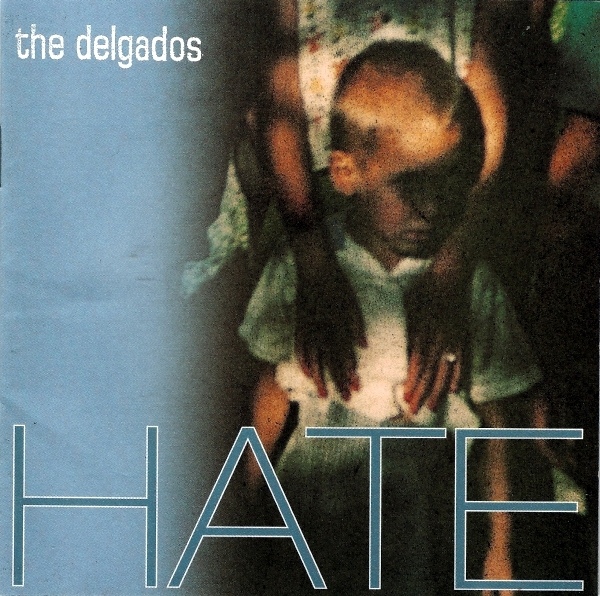
The four Delgados returned to the studio with producer Dave Fridmann. Over the next few months, they recorded what became Hate. This time around, Dave Fridmann who had worked with the Flaming Lips, seems to use them as a template. This was noticed by critics.
Unlike previous Delgados albums, Hate was released on the Mantra label in October 2002. Reviews of Hate were mostly positive. A few critics even compared Hate to The Flaming Lips 1999 album The Soft Bulletin. That wasn’t surprising.
Both albums had been produced by Dave Fridmann. His star was in the ascendancy. Despite that, Hate didn’t quite receive the same critical acclaim as The Great Western had. Normally, this would’ve been disappointing. However, that was almost expected. The Great Western had been The Delgados’ Magnus Opus. Most groups never reach the same heights as The Great Western, never mind releasing a quartet of successful albums. Soon, four would become five.
Universal Audio.
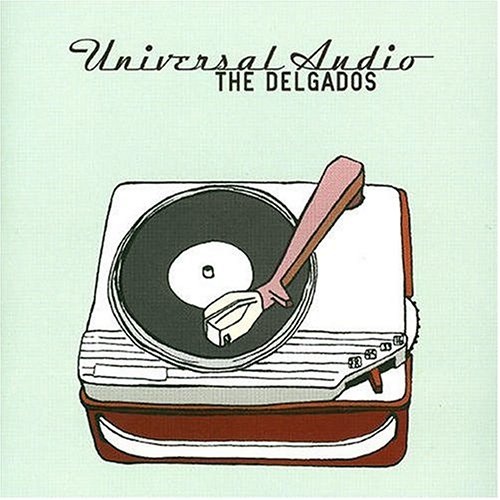
For The Delgados’ fifth album, they decided to change direction. Dave Fridmann didn’t return for a third time. Instead, Tony Doogan, who had worked with Mogwai, co-produced what became Universal Audio with The Delgados.
It was recorded at Chem 19, Chemikal Underground’s own recording studio. Universal Audio was a much more understated album. Gone was the orchestral sound of previous albums. The Delgados seemed to be reinventing their music. The did this with the help of Belle and Sebastian’s Stevie Jackson and Mother and The Addicts. Once Universal Audio was complete, it was released in September 2004.
Reviews of Universal Audio ranged from positive to critically acclaimed. Mostly, critics embraced the new Delagados. So did record buyers, when the album was released. When they bought Universal Audio, little did they realise it would be The Delgados swan-song.
Eight months after the release of Universal Audio, came the shock news that The Delgados were splitting up. Alan Henderson had announced that he was leaving the band. Rather than seek a replacement, The Delgados called time on their career, but continued to run Chemikal Underground. However, two former members of The Delgados embarked on solo careers, Alun Woodward and Emma Pollock.
The Solo Years.
Later in 2005, Emma Pollock signed a record contract with London based independent label 4AD. She was going to combine a solo career with running Chemikal Underground. It was by then, the most successful Scottish record label. Still, Emma was spinning plates. This was no problem for someone with a degree in physics from Strathclyde University.
Two years later, and Emma Pollock returned with her debut solo album, Watch The Fireworks.
Watch The Fireworks.
Watch The Fireworks featured eleven new songs written by Emma Pollock. She had recorded Watch the Fireworks with Australian producer, Victor Van Vugt. He had an impressive track record; and previously, had worked with everyone from Nick Cave and The Bad Seeds to Beth Orton, Depeche Mode and Einstürzende Neubauten. With a CV like that, he seemed the ideal person to produce Emma’s debut album, Watch The Fireworks. When it was complete, it was scheduled for release in September 2007.
Before then, Adrenaline was released as the lead single from Watch the Fireworks in May 2007. It was paired with A Glorious Day, a poem by Irish poet Brendan Cleary set to music. Adrenaline was a tantalising taste of what Emma Pollock had in store on Watch The Fireworks.
In the lead up the release of Watch The Fireworks, critics had their say on Emma Pollock’s debut album. For any artist, this is a nerve-wracking moment. It doesn’t matter if it’s their first or tenth album. Emma needn’t have worried. Watch The Fireworks was well received by critics. Most of the reviews were positive. They were won over by an eclectic album from a hugely talented, versatile vocalist.
There was everything from waltz, ballads, indie pop and indie rock on Watch The Fireworks. Some critics drew comparisons with The Degados. That wasn’t surprising. Paul Savage played on Watch The Fireworks, and watched as Emma made the transition from band member to solo artist seem ridiculously easy. Effortlessly, Emma changed direction on Watch The Firework as the music veered between atmospheric, emotive, melodic, mesmeric, playful, urgent and wistful. The result was a triumphant debut album from the former Delgado. Now all Emma Pollock had to do, was do it all again.

The Law Of Large Numbers.
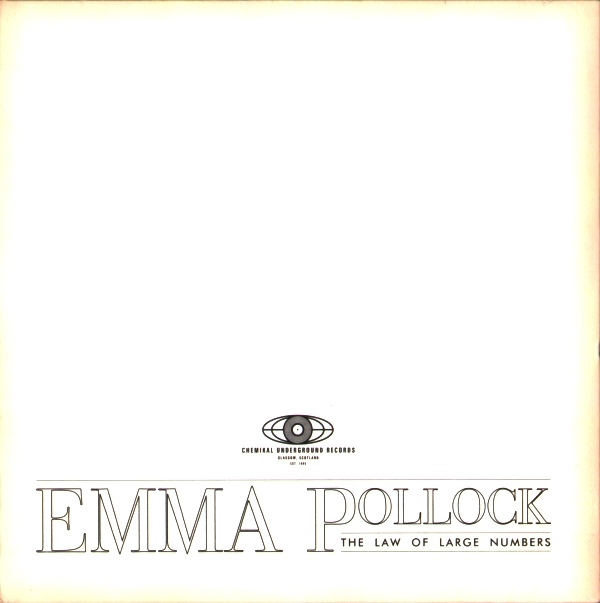
And so she did. Three years later, and Emma Pollock returned with her sophomore album The Law Of Large Numbers in 2010. Emma had written twelve new tracks, and recorded them with a tight, talented band of Scottish musicians. This included her partner Paul Savage, who by then, had established a reputation as one of the top Scottish producers. He replaced Victor Van Vugt, and produced The Law Of Large Numbers. It was more than a fitting followup to Watch The Fireworks.
Critics agreed. Critical acclaim accompanied the release of The Law Of Large Numbers. Just like Watch The Firework, The Law Of Large Numbers showcased a talented songwriter. Emma Pollock was a skilled wordsmith, capable of writing clever, catchy songs that didn’t lack in hooks. She was also able to adapt her delivery to suit the song.
Seamlessly, Emma could deliver a vocal with emotion, anger, frustration, joy or even with a weariness. On Chemistry Will Find Me and The Loop, Emma’s thoughtful and introspective. The Child in Me and House on the Hill finds Emma transformed into a folk singer. She handles the role with aplomb, before changing direction again. Then on Hug the Harbour and Confessions are delicious slices of perfect pop. By the end of The Law Of Large Numbers, Emma Pollock had come of age as a solo artist. Surely a third album would follow soon?
In Search Of Harperfield.
That proved not to be the same. Nearly six years have passed since Emma released The Law Of Large Numbers. Since then, a lot has happened.
Chemikal Underground, the label Emma Pollock cofounded, has grown into the most successful Scottish record label. Nowadays, it has an enviable roster. Helping run Chemikal Underground understandably, takes up a lot of Emma’s time. Sadly, for a while, so did family matters.
At one point, both of Emma’s parents were ill at the same time. Her father who still lived in Castle Douglas, was in hospital there. Emma’s mother, who lived in Glasgow, was in one of the city’s hospitals. So Emma, who is an only child, found herself journeying up and down the motorway, visiting her parents in different hospitals. Sadly, things took a turn for the worst in February 2015, when Emma’s mother passed away. This must have been devastating for Emma. Part of the grieving process for Emma was writing what became her third album, In Search Of Harperfield.
It’s an incredibly personal and powerful album. Harperfield Lodge was the first home Emma’s parents, Guy and Kathleen Pollock bought. They eventually bought and sold thirty houses during their marriage. This includes the five Emma lived in, in Castle Douglas alone. However, it’s Harperfield Lodge that has a special place in Emma’s heart. She remembers it vividly. So much so, that she can remember how the light shawn, the sense of space and being surrounded by nature. Harperfield Lodge sounds like a rural idyll that will forever, be imprinted on Emma’s memory. So will her parents.
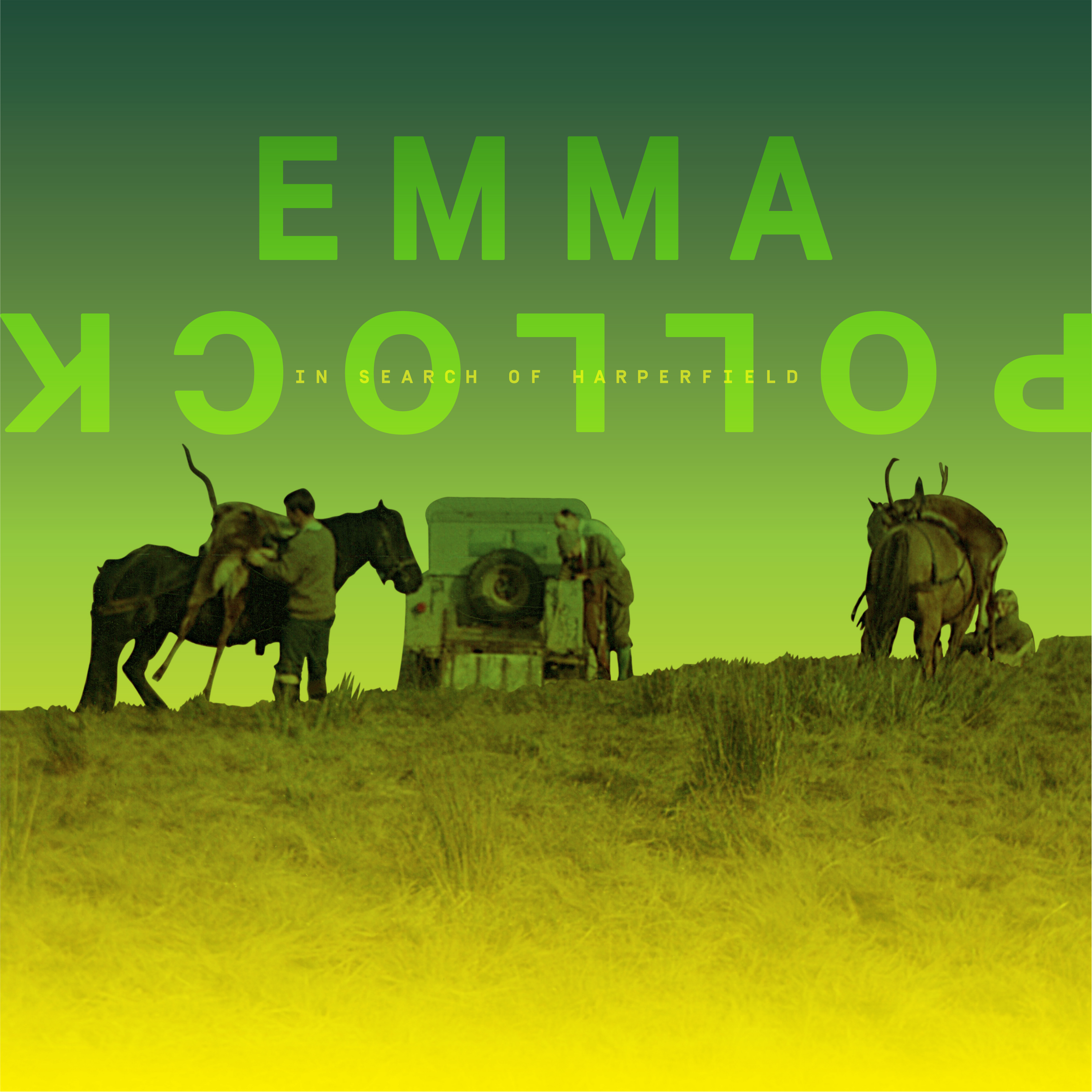
Maybe that’s why a photograph of a young Guy Pollock dawns the album cover of In Search Of Harperfield? He’s pictured tending his animals on the hillside, on his land at Blair Atholl. That’s not the only time Guy or Kathleen Pollock feature on In Search Of Harperfield. They’re forever in the shadows on what’s the most personal and intense album of Emma Pollock’s career, In Search Of Harperfield.
It’s almost an autobiographical album. Emma looks back at her youth, which was spent growing up in the beautiful Galloway countryside. Other times, Emma introduces a series of characters. They play walk-on parts as Emma deals with a variety of subjects, including some many people would’ve chosen to forget. This includes bullying on Parks and Recreation. It’s one of the eleven songs on In Search Of Harperfield. The making of the album was a family affair.
Producing In Search Of Harperfield, was Emma’s husband, Paul Savage. He’s aided and abetted by Malcolm Lindsay. They provide the perfect backdrops to Emma’s vocals. They frame her vocals beautifully, and are like yin to Emma’s yang. on her much anticipated third album In Search Of Harperfield.
Cannot Keep A Secret opens In Search Of Harperfield. It deals with what Emma describes as “patriarchal machinations of Irish gender politics.” From the opening bars the listener is captivated, and the story unfolds. A distant piano plays, before pensive cooing harmonies usher in Emma’s heartfelt, thoughtful vocal. It’s accompanied by just the bass and harmonies before the piano and drums enter. They augmented by occasional finger clicks, and later as what’s an enchanting and beautiful song literally waltzes along, clicking hi-hats. Later, the arrangement becomes dramatic, elegiac and cinematic. By then the listener is spellbound, as they wonder what every happened to the characters in the song? Did: “they eddy and they flow and bring your sisters home?”
Pizzicato strings and a strident muted guitar combine on Don’t Make Me Wait. As the strings sweep, Emma is transformed into a sixties siren, as she delivers a slice of perfect pop. The hooks haven’t been spared, as Emma accompanied by choppy guitars, lush strings and a tinkling piano. She delivers a needy, but frustrated vocal. Soon, she’s delivering an ultimatum, “Don’t Make Me Wait.” She then rubs salt into wound when she tells her errant love he’ll: “never make it on your own.” What a way to round off a gorgeous slice of perfect pop, with the perfect pay off.
Alabaster opens with the sound of a Tube announcement. “The next stop is Strawberry Hill” signals an arrangement that slowly, plods, lysergically along. Meanwhile, Emma’s vocal is rueful and tinged with sadness and regret. She remembers better days, when: “like king and queen we ruled it all.” Not any more. As the arrangement and drama builds, this tale of betrayal unfolds. Soon, dramatic becomes melancholy, as Emma’s sings: “these little secrets do betray you see.” It’s a four minute soap opera with a pay off that packs a punch.
Quivering, shivering strings join a piano and guitar on Clemency. They set the scene for Emma’s folk-tinged vocal, on what’s another song about betrayal and an errant partner. Anger and frustration are omnipresent. She won’t forgive him in a hurry. He’s looking for clemency. However, hell hath no fury like a woman scorned. “If you confess all, you really think you still won’t face the fire?” Emma is determined to make him suffer, and has revenge on her mind. No ordinary revenge. Instead, it’s Old Testament revenge. As shimmering strings and piano, combines Emma’s mind turns to revenge: “pushed down, fell down..,from every point of view you’ve tumbled.” The woman scorned has been avenged.
Intermission is a truly powerful song. It’s impossible not to be moved by a Intermission. A violin plays, and is joined by a cello. Soon, they’re reaching a dramatic crescendo. It’s then that Emma’s vocal enters. It’s a mixture a sadness, despair and panic. She’s having to watch her parents grow old, and become ill. Suddenly, she’s caring for the people who cared for her. They’re “the man I know best” and ‘“the woman who made me.” Now they’re dependant on Emma. Accompanied by swells of strings, Emma delivers what’s a heart-wrenching song, that many people will be able to relate to, and find solace in, knowing someone else has travelled the road they’re on.
As Parks and Recreation unfolds, there’s a rocky, sometimes post punk sound. Emma sounds like one time Pretender Chriss Hynde. As drums pound and guitars are sprayed across the arrangement, By then, memories come flooding back for Emma. She remembers the bullies who tormented her growing up. “I came down for a game of basketball, but you threw me a punch instead.” By then, the arrangement is rocky, rowdy and features call and response vocals. Mostly, Emma’s vocal is rueful. However, she’s had the last laugh. What are the bullies doing now? They’re certainly not making records, touring the world and running a record company.
Background chatter gives way to a motorbike, percussion and machine gun guitars on Vacant Stare. Soon, Emma’s delivering a questioning, rueful vocal. “How can I dive from over 15 metres high, when I can’t even swim?” Behind her, Paul is responsible for a stomping, rocky arrangement. It’s complete with chiming guitar, bubbling bass and harmonies. Emma’s vocal has been multi-tracked and they fit hand in glove with her vocal. It delivers what are clever, witty vocals. They become part of another hook laden song from Galloway’s finest singer-songwriter.
As In The Company Of The Damned unfolds, it sounds as it’s been recorded by a sixties girl group. The rhythm section and chumming guitars accompany Emma and her younger self. The older and wiser Emma, asks “do you really want to stay here, In the company of the damned, as they prepare to take your hanshd, torment with true ambition?” Like a seer, Emma can see if she had, there wouldn’t be a happy ending. Luckily, she had the courage and foresight to get out, and should be a shining light to a new generation, not just in CD, but small towns across Scotland.
Emma is accompanied by an acoustic guitar and the lushest of strings on Dark Skies. She’s in a thoughtful mood. Meanwhile occasional rolls of timpani and pizzicato strings punctuate the arrangement. All the time, Emma strums her guitar as she delivers a tender, pensive vocal, as the arrangement grows, becoming dramatic. Still there’s a sense of wonderment in Emma’s vocal as she delivers lyrics that are poetic and cerebral.
Monster In The Pack is another guitar lead track. Emma plays the guitar, before scrubbing at in. This adds an element of drama, before dark strings sweep in adding the perfect accompaniment to the cinematic lyrics. Desperation and loneliness in Emma’s voice. She’s also lost her faith. That’s apparent as she sings: “and I only go to church cause my friends are out today.” When Emma sings: “my head is full of noise, won’t you listen it’s so loud in here, my heart and my silence break,” despair and loneliness become a cry for help. That becomes apparent as she sings of the “Monster In The Pack,” in this emotive, cinematic, folk-tinged track.
Closing In Search Of Harperfield is Old Ghosts. What sounds like an eighties drum machine rings out. It’s joined by a poignant sounding piano. As the drum machine shuffles along, Emma who sounds like Karen Carpenter, is having a conversation with her mother. She’s older and wiser, and is speaking with the benefit of maturity. “I’m not sorry that you’re gone, the hell we raised was always fun, but I’m not sorry that you’re gone” is an acknowledgement that the pain and suffering is over, but the love Emma has for her mother isn’t. Soon, Emma is walking through her parents house, reminiscing, talking to them. Like so many adult Emma who’ve argued with their parents, she struggles to understand: “why so reasonable now?” As the song draws to a close, Emma realises she’s alone; and how am I supposed to speak to, those I ridiculed but still looked up to?” Poignant and moving describes what’s a truly beautiful way to end In Search Of Harperfield.
It’s the long-awaited, and much-anticipated, followup to Emma Pollock’s sophomore album In Search Of Large Numbers. It was released in 2010. Since then, a lot has happened in Emma Pollock’s life. At one point, both her parents were ill, and in hospital. Suddenly, Emma was no longer singer, songwriter or businesswoman. Instead, she was a loving and dutiful daughter, who was caring for “the man I know best” and ‘“the woman who made me.” Then in February 2015, Emma’s mother passed away. This must have left a massive void, and been a lot for Emma to cope with. She began to grieve, and part of the grieving process was writing and recording.
Hopefully, writing and recording Search Of Harperfield was cathartic. It’s certainly an album that many people will be able to relate to. Many of the songs are beautiful, moving and poignant. Especially Intermission and Old Ghosts, which is one of the most moving, emotive and beautiful songs I’ve heard in a long time. That’s testament to Emma Pollock’s skills as a singer and songwriter.
From the opening bars of Cannot Keep A Secret, right through to the closing notes of Old Ghosts, Emma Pollock tells a series of stories. Often, her lyrics are cinematic. That’s the case on Cannot Keep A Secret, where harmonies and an orchestral arrangement accompany and augment Emma’s vocal. The arrangement comes courtesy of Paul Savage. He provides a backdrop for Emma, as she sings of betrayal and revenge on Alabaster and Clemency. Very different is Don’t Make Me Wait, a delicious hook-laden slice of perfect pop. Hooks certainly have’t been rationed on In Search Of Harperfield. That’s the case on Cannot Keep A Secret, and Parks and Recreation where Emma remembers the bullies who tormented her younger self. Emma however, has the last laugh. Later, on In The Company Of The Damned an older, wiser Emma advises her younger self on her future. It has a happy ending, with Emma fulfilling her early potential.
That’s almost an understatement. Emma Pollock is the small town girl who headed to the city, and graduated with a degree in physics. She joined a band, they toured the world and released five albums. Then when the band broke up, Emma Pollock embarked on a solo career, and somewhere along the way, married the drummer. Now Emma has just released her third and best solo album, In Search Of Harperfield, on Chemikal Underground.
In Search Of Harperfield is a career defining, autobiographical album from Emma Pollock. Hopefully, writing and recording In Search Of Harperfield has been cathartic for Emma Pollock. The last few years have been tough for her. However, the future looks bright for Castle Douglas’ most famous famous former resident. Especially if she continues to release albums of the quality of In Search Of Harperfield. It would be a worthy winner of the 2016 Scottish Album Of The Year Award. So when the time comes to vote for the winner of 2016 Scottish Album Of The Year Award, Emma Pollock’s career defining album In Search Of Harperfield is worthy of your vote.
EMMA POLLOCK-IN SEARCH OF HARPERFIELD-S.A.Y.A. NOMINEE.
ADMIRAL FALLOW-TINY REWARDS-S.A.Y.A. NOMINEE.
ADMIRAL FALLOW-TINY REWARDS-S.A.Y.A. NOMINEE.
Often, the hardest thing about forming a new band is coming up with a name. It can be a long and tortuous process. Especially, in the internet age. A new band have to ensure the dot com address hasn’t been taken. If it has, it’s a case of starting the process all over again. Either that, or negotiating with the owner of the dot com to buy the address. That can be an expensive and time consuming process. So for most bands, it’s case of starting again.
That’s been the case since the birth of rock ’n’ roll. Even the biggest band of all changed their name. The Beatles started life as The Blackjacks, before briefly becoming The Quarrymen and then The Silver Beatles. It wasn’t until July 1959 that The Silver Beatles became The Beatles. Since then, countless other bands have had a similar struggle to come up with a suitable name.
In 2007, Glasgow based singer-songwriter Louis Abbott decided to formed a new band with Kevin Brolly, Philip Hauge, Sarah Hayes and Joe Rattray. They settled on the name Brother Louis Collective. Two years later, and the Brother Louis Collective changed its name to Admiral Fallow. The rest as they say, is history.
Since then, Admiral Fallow have toured the world, and played at some of the biggest and most prestigious venues and festivals. Admiral Fallow have also released a trio of albums. Their most recent album Tiny Rewards, was released on Nettwork in May 2015. At the end of the year, Tiny Rewards found its way onto many of the best of 2015 lists. Recently, however, Tiny Rewards found its way onto another list.
This time, it was the long list of twenty albums that have been nominated for Scottish Album Of The Year Award. Tiny Rewards is hoping to reap not so tiny reward of £20,o00 which is the first prize for the Scottish Album Of The Year Award. However, before that, Tiny Rewards will have to make it onto the shortlist of ten. If and when it does, then Admiral Fallow are already in the money. Even the nine runners-up win £1,000 and a Graduate Design Commission valued at £2,500. However, Admiral Fallow have been nominated for the Scottish Album Of The Year Award before Alas, it was a case of close but no cigar. Maybe this time it will be different? After all, Tiny Rewards was one of the best Scottish albums of 2015, and is the latest chapter in the Admiral Fallow story. It began in 2007.
That’s when Glasgow based singer, songwriter and Louis Abbott decided to formed a new band. This wasn’t going to a traditional indie band. Instead, Brother Louis Collective were going to fuse orchestral and indie pop. To bring this about, Louis was joined by four other Glasgow based musicians. This included the rhythm section of drummer and percussionist Philip Hauge and bassist Joe Rattray. They were joined by a two musicians who would help create the orchestral sound. Sarah Hayes played flute, piano and accordion, while Kevin Brolly added clarinet, keyboards and percussion. Along with Louis Abbot, they became Brother Louis Collective.
With a lineup in place, the Brother Louis Collective set about honing their sound. The five friends quickly began to define their sound. Through the rest of 2007 and throughout 2008, the Brother Louis Collective were gaining a reputation as a popular live act. So in early 2009, Brother Louis Collective decided to record their debut single.
For Brother Louis Collective’s debut single, These Barren Years was chosen. The B-Side was Gypsy Woman. These Barren Years was well received upon its release in March 2009. The single brought the Brother Louis Collective’s music to a wider audience. With the Brother Louis Collective’s recording career up and running, the band decided to change their name.
Usually, bands change their name early on in their career. However, after nearly two years, the band realised something wasn’t quite right. That was the name. This resulted in a rethink, and Brother Louis Collective became Admiral Fallow.
Given that the Brother Louis Collective already were a popular live band, and were attracting the attention of critics, a change of name could’v backfired on Admiral Fallow. All the time they had spent during the last two years could’ve been in vain.
Fortunately, that wasn’t the case. Instead, the last two years had been time well spent. The newly named Admiral Fallow had spent much of the last two years playing live. This allowed them to hone and tighten their sound. It also allowed the band to grow their fan-base. Already they were a popular draw wherever they played. So, it made sense for Admiral Fallow to record their debut album.
Boots Met My Face.
In June 2009, Admiral Fallow made the short journey from Glasgow to Blantyre, in Lanarkshire. That’s where former Delgados Paul Savage and Emma Pollock’s studio is situated. Admiral Fallow were following in the footsteps of many successful Scottish bands.
At Chem 19 Studios, Admiral Fallow met former Delgados’ drummer Paul Savage. By 2009, he had established a reputation as a successful and talented producer. Paul was the go-to-guy producer for many Scottish bands, including up-and-coming bands. This made him the perfect person to produce Admiral Fallow’s debut album.
While Admiral Fallow were an experienced live band, they had only recored one single. Recording an album was very different. So, producer Paul Savage guided Admiral Fallow through the recording process. In total, ten tracks were recorded at Chem 19 Studios.
The ten tracks were written by Louis Abbott. He describes the songs as autobiographical, and document his childhood and youth. Each song is based upon a person or event. This includes Subbuteo, where Louis remembers being beaten up in Edinburgh, where he grew up. A lyric from Subbuteo also provided the album title, Boots Met My Face.
With Boots Met My Face recorded, Admiral Fallow started looking for a record label to release their debut album. However, that search was put on hold briefly, as Admiral Fallow played a band-storming set at Scotland’s biggest music festival.
Although Admiral Fallow had only been together two years, they were chosen to headline the Sunday night T Break stage at T In The Park. For a Scottish group, this was a huge honour, one they must have hoped would help in Admiral Fallow’s search for a record label.
That took a while. In March 2010, Admiral Fallow opened for fellow Scot King Creosote at the Fence Collective’s Homegame Festival. Then in April 2010, Admiral Fallow supported The Futureheads in Glasgow, This was perfect timing.
In April 2010, Admiral Fallow released their debut single Squealing Pig on Lo-Five Records. That however, was a mere aperitif.
Later in April 2010, came the release of Boots Met My Face. It was released to critical acclaim. A great future was forecast for Admiral Fallow, who were about to head out on the festival circuit.
Admiral Fallow renewed their acquaintance with King Creosote at the Glasgow West End Festival. They then played the Wee Chill, Rockness and Insider festivals. However, it was at T In The Park that Admiral Fallow made a triumphant return. This time, Admiral Fallow were playing the prestigious BBC Entroducing stage. A lot had happened to Admiral Fallow since they took T In The Park by storm a year earlier. There seemed to be no stopping Admiral Fallow.
They had played their first Scottish tour in August 2010. Then later in 2010, Admiral Fallow opened for another Scottish band, Frightened Rabbit. Then in October 2010, Admiral Fallow released the second single from Boots Met My Face, Subbuteo. This was the perfect way to round off 2010. 2011, looked like being a big year for Admiral Fallow.
In February and March of 2011,Admiral Fallow hit the road, and completed their first tour of Britain. This was to coincide with the reissue of Boots Me My Face. Then on 13th March the band flew to Austin, Texas for SxSW 2011. Given this is one of the most prestigious American festivals, this was a huge boost for Admiral Fallow. During their time in America, Admiral Fallow were embraced by American critics. The critics forecast a great future for Admiral Fallow. They weren’t wrong.
Tree Bursts In Snow.
Just like Boots Met My Face, Tree Bursts In Snow was recorded at Chem 19 Studios. This time however, some guest artists would join Admiral Fallow. Among them were former Frightened Rabbit vocalist Gordon Skene, Jo Mango, Kenny Reid, Tom Gibbs and Tom Stearn. These guest artists featured on three of the ten tracks that became Tree Bursts In Snow.
Before the release of Tree Bursts In Snow on 21st May 2012, Louis Abbot explained what the title meant. Tree Bursts In Snow Louis explained is: “the sound and the image of an artillery shell exploding into a cluster of snow-drenched trees.” It was a poignant picture that Louis Abbot was painting. Especially as he went on to speak about gun crime in America and: ”the effect that losing friends through violence, in particular during times of war or conflict has on young men and women.” Louis had thought deeply about this, and on Tree Bursts In Snow combined social comment and poppy hooks.
When Tree Bursts In Snow was released, critics were won over by Admiral Fallow’s sophomore album. Superlatives were exhausted praising the Glasgow’s band’s unique brand of orchestral and indie pop. Admiral Fallow’s star was in the ascendancy, and would be during the rest of 2012.
During the 2012 festival season, Admiral Fallow played The Great Escape, Glastonbury Festival, Latitude, Cambridge Folk Festival, Green Man and the End of The Road festival. There were also appearances at Sligo Live and Crossing Border. Later in 2012, Admiral Fallow were asked to open for Scottish indie pop royalty Belle and Sebastian. Admiral Fallow also opened for Paul Heaton and The Low Anthem. All this was good experience for Admiral Fallow, who were quickly becoming one of Scotland’s most successful musical exports.
That’s been the case in the last three years. Admiral Fallow have gone from strength to strength. They’ve continued to play live, and are now recognised as one of the best Scottish live bands. However, in late 2013, Admiral Fallow cut back on the live shows they were playing. They had an album to record. That album would become Tiny Rewards, which was released on 25th May 2015.
Tiny Rewards.
Admiral Fallow’s weren’t going to rush their third album. Work began in late 2013. Admiral Fallow wrote the music and Louis Abbott wrote the lyrics for Tiny Rewards. This was Admiral Fallow’s third album, and second album for Canadian label Nettwerk.
Unlike previous albums, Tiny Rewards wasn’t recorded at just one studio. Three studios, Angelic, Red Kite and Voltaire Road Studios were used. So were the familiar surroundings of Chem 19 Studios. That’s where Paul Savage took charge of “additional production.” However, Paul Savage wasn’t in charge of production. This time around, Admiral Fallow and Cameron Blackwood produced the twelve tracks that became Tiny Rewards.
At the three studios, Tiny Rewards’ twelve tracks were recorded by Admiral Fallow and friends. The rhythm section featured guitarist and vocalist Louis Abbott, drummer and percussionist Philip Hauge and bassist Joe Rattray. They were joined by a two musicians who would help create the orchestral sound. Sarah Hayes played flute, piano and accordion, while Kevin Brolly added clarinet, keyboards and percussion. They’re joined by cellist Jackie Baxter, violinist Kristian Harvey and guitarist Stu Goodall. Once Tiny Rewards was recorded, it was mixed by Paul Savage and mastered by in London by Mandy Parnell.
Only then was Tiny Rewards ready for release. The big day was 25th May 2015. That’s when Tiny Rewards was released to widespread critical acclaim. Tiny Rewards was hailed as Admiral Fallow’s finest hours. Here’s why.
Opening Tiny Rewards is Easy as Breathing. A pounding rhythm section, stabs of keyboards and searing guitars create a dramatic wall of sound. In the midst of the arrangement, a piano carries the melody. It’s present when Louis Abbott delivers a soul-baring vocal. He doesn’t so much deliver lyrics, but lives them. Behind him, the thunderous, mesmeric arrangement has an anthemic sound. During the break, the arrangement is stripped bare. Just wistful harmonies, and piano accompany Louis before Admiral Fallow kick loose. By then, it’s easy to imagine East As Breathing becoming a festival favourite.
A drum machine and synths are deployed on Evangeline, as Louis delivers a slow, melancholy vocal. Soon, chiming, crystalline guitars, bass and keyboards are added. They fill out the arrangement, as slowly and dramatically Louis delivers the lyrics. By then, Admiral Fallow sound like a 21st Century version of The Smiths. Later, Sarah Hayes’ backing vocals are the perfect foil for Louis. They’re reminiscent of Lorraine MacIntosh of Deacon Blue. As the arrangement continues to grow, electronica and indie pop combine head-on. It’s a potent partnership, one that’s not short of poppy hooks.
Beeps courtesy of a synth and drums combine with a myriad of disparate sounds on Happened in the Fall. They create a lo-fi, left-field and almost robotic arrangement. Very different, is Louis’ despairing vocal. As his vocal drops out, a guitar rings out, and cuts through the arrangement. Then Louis, accompanied by Sarah Hayes, delivers a tender, hurt filled vocal as he sings: “ it Happened in the Fall” When Louis poignant vocal drops, a blistering guitar gives way to a wistful piano and strings. They frame Louis’ vocal as accompanied by harmonies, memories come flooding back.
From the opening bars of Good Luck, it’s obvious something special is unfolding. A piano and drums combine, before a scorching guitar is unleashed. Then a roll of drums signals the arrival of Louis’ vocal. Slowly and deliberately he delivers the lyrics. Harmonies augment his vocal, as the arrangement grows in power and drama. Admiral Fallow aren’t afraid the unleash their inner rocker. Similarly, they’re not afraid to vary the tempo. This grabs the listener’s attention, and forces them to listen. A pleasant surprise comes when Sarah takes charge of the vocal. She’s a talented and versatile vocalist. Later, though, the baton passes to Louis. He takes charge of the vocal. Aided and abetted by harmonies, a storming, hook heavy anthem unfolds.
Against the chatter of a radio playing, a piano plays and Holding The Strings begins. Drums provide the heartbeat as Louis delivers an emotive vocal. Ethereal harmonies, keyboards, a crystalline guitar and the rhythm section combine. Soon, the tempo is rising and the arrangement takes on a rocky hue. Dramatic flourishes and variations in tempo are used, before the rhythm section and guitar drive the arrangement along. Louis seems to have reserved one of his best vocals. With Sarah encouraging him every step of the way, he breathes life, meaning and emotion into the lyrics, delivering the lyric “we are old” poignantly.
As a piano and drums combine on Sunday, the track takes on an almost hypnotic sound. Then when Louis’ vocal enters, it’s obvious he’s singing about being at a festival. “Far from being alone, surrounded by tents and future friends.” Soon, the track takes a dark twist. Especially, lyrics like; ”take those pills, you bought to take the guilt.” This leaves the listener to wonder what caused the guilt? Was it one night stand? From there, the arrangement becomes a lysergic merry-go-round. It also takes on rocky and sometimes dramatic sound. Meanwhile, Louis and Sarah combine, bringing to life the guilt on the day after the night before, as they leave the festival behind, and return to their respective lives.
On the count of “5,6” a drum and crystalline guitar combine on Building As Foreign. They’re joined by Louis’ vocal and a prowling bass. Like so many of Admiral Fallow’s songs, the lyrics are based upon Louis childhood. That becomes apparent straight away:“how we ended up here, with the start we had is amazing.” He goes on to remembers “measuring his height by the door,” his first football strip, and “first kiss.” Accompanied by ethereal harmonies, pounding rhythm section and searing guitar, memories come flooding back for a wistful, grateful Louis.
A lone guitar opens Salt. It’s just two minutes long, but is a quite beautiful song. The arrangement is understated. Just a chirping, mesmeric guitar accompanies Louis. He’s accompanied by Sarah. She’s a perfect foil for Louis. They’re like yin and yang. They compliment each other, on what’s a beautiful ballad. It shows another side to Admiral Fallow.
Drums pound and crack, while washes of keyboards sweep in on Some Kind of Life. Slowly, the arrangement unfolds. Admiral Fallow don’t rush. They drop in a piano and bass. After a minute, Louis’ heartfelt vocal enters. As he sings: “I left the house and started the next chapter,” confusion and uncertainty fills his voice. Has, and is, he doing the right thing? Behind him, the rest of Admiral Fallow create one of the best arrangement. It unfolds in waves, as Louis delivers an emotive, soul-searching vocal. He describes this as a “never ending tussle with the mind.” By then, the arrangement has grown in drama and power. When Louis’ vocal is added, Some Kind of Life takes on anthemic sound. It’s also one of the highlights of Tiny Rewards.
The drums that open Liquor and Milk are similar to those on Building As Foreign. However, this time, it’s mesmeric, deliberate stabs of piano that accompany the drums. They frame Louis’ vocal as he reminisces. Accompanying him is Sarah, her vocal equally impassioned and emotive. Their vocal take centre-stage, as the drums and piano provide the accompaniment. Later, strings and percussion are added, as the arrangement reaches a crescendo.
Carousel see the tempo rise slightly. Admiral Fallow jump on the merry-go-round. It’s has a much more upbeat sound. Driving along the arrangement along are the piano and drums. They accompany Louis. However, Sarah steals the show, combining power and emotion. Meanwhile, a bass, keyboards and drums power the arrangement along. Louis and Sarah combine, hopefully singing: “get yourself out from under the weather, stick another pin in that map you drew, get yourself out from under the weather, and I long for this to be the pin you want to do.”
Melancholy. That describes the slow, deliberate introduction to Seeds, which closes Tiny Rewards. Louis, accompanied by the piano, delivers a wistful, deliberate vocal. Drums rumble, while keyboards and piano combine with a clarinet. They set the scene for Louis and Sarah. As they sing: “we sow seeds wherever we go,” there’s an element of hope amidst the melancholia. It grows, as the arrangement builds, and Tiny Rewards draws to a close.
Three years after the release of their sophomore album Tree Bursts In Snow, Admiral Fallow returned recently with Tiny Rewards. It was released on the Canadian label Nettwerk. Tiny Rewards was well worth the three year wait.
With its mixture of anthems, future festival favourites, heart wrenching ballads and cinematic tracks, Tiny Rewards is a captivating album. Lyricist and vocalist Louis Abbott is aided and abetted by Sarah Hayes. Together, they bring the lyrics to life, breathing life, meaning, emotion and sometimes, melancholy into the twelve tracks. Other times, there’s a hopeful, sound on Tiny Rewards, which is a career defining album from Admiral Fallow.
Six years after the Brother Louis Collective became Admiral Fallow, the Glasgow based band are now one of Scottish music’s most successful exports. No wonder, given the quality of music on Tiny Rewards. It manages to surpass the quality of Tree Bursts In Snow. Many people thought Tree Bursts In Snow was an album Admiral Fallow would struggle to surpass. However, after three years hard work and the a little from help from their friends, Admiral Fallow return with Tiny Rewards, the eclectic album of their career.
Tiny Rewards sees Admiral Fallow jump onboard the Carousel and combine disparate musical genres. Everything from electronica, folk, indie pop, indie rock, orchestral, pop, psychedelia and rock is combined by Admiral Fallow. The result is Tiny Rewards, the finest, and most captivating and eclectic album ofAdmiral Fallow’s career.
ADMIRAL FALLOW-TINY REWARDS-S.A.Y.A. NOMINEE.
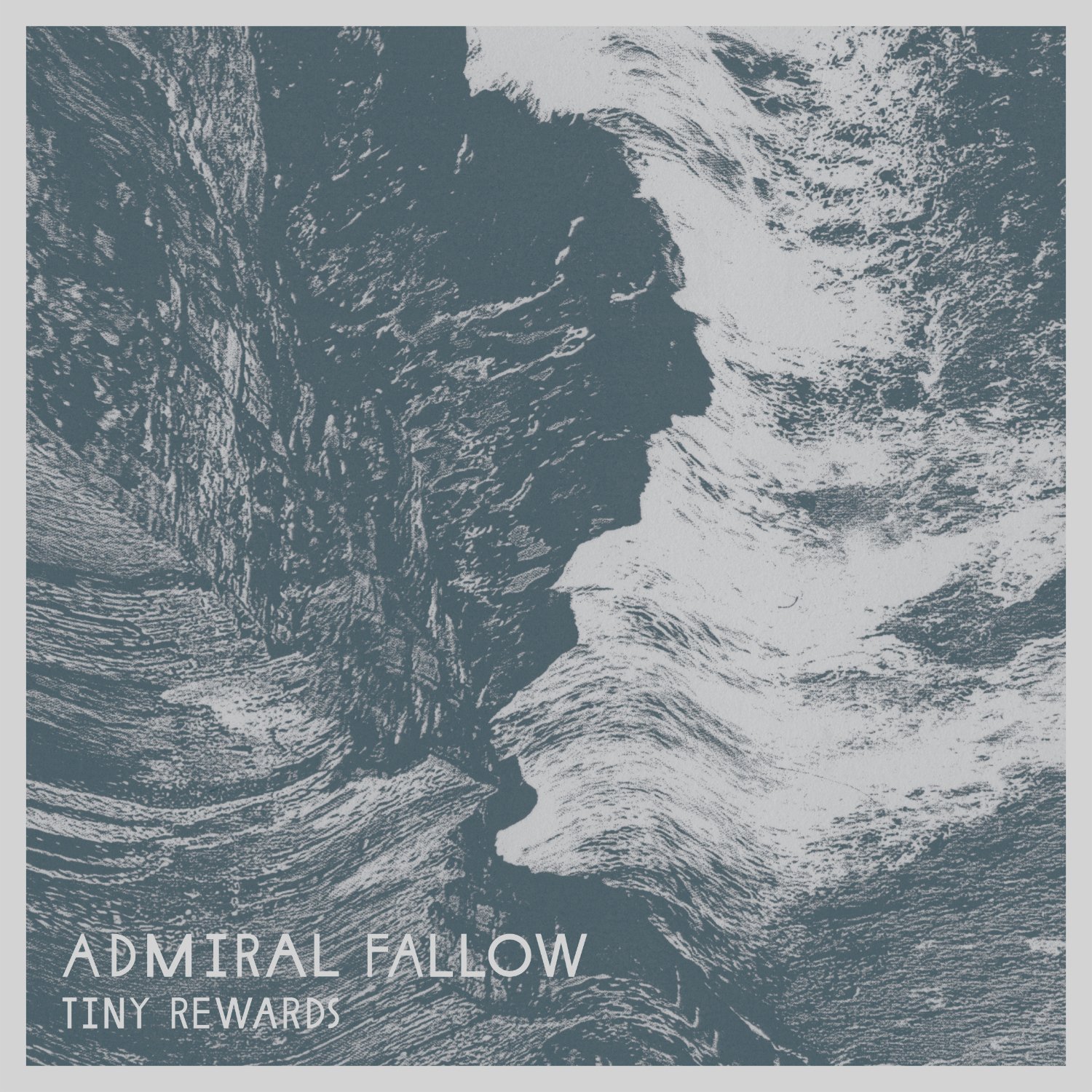
GET ME HOME FOR TEA-RARE PSYCHEDELIC ROCK FROM THE UK.
GET ME HOME FOR TEA-RARE PSYCHEDELIC ROCK FROM THE UK.
This year, more than any other, Record Store Day seemed to divide the opinion of record buyers. There were a number of reasons for this.
Partly, it was because many veteran record buyers felt Record Store Day was being hijacked by the major labels. Their releases seemed to dominate the list of releases. This many record collectors felt, was against the spirit of Record Store Day. However, those that took a more pragmatic view, realised that the releases from the majors were amongst the richest pickings of Record Store Day 2016. That was if you could find them.
Every Record Store Day record buyers arrive at their local record store clutching a wish list. This year, many record buyers were left feeling disappointed. The releases they wanted were ‘unavailable’. One of the stock answers record buyers were given was “we didn’t get that one in.” That may be the case for some releases.
The truth is, all too often, many records didn’t even make it onto the shelves of record stores. Some record stores put Record Store Day releases onto well known auction sites way before the 16th April 2016. Lots of new accounts sprung up on this auction site, and all they sold were Record Store Day releases. The prices of limited edition releases were sometimes twice or three times the original price. Despite this, the records sold. Other record shops sold copies of Record Store Day releases to favoured customers. These releases also made their way onto certain auction sites, and were sold well above the original price. These records sold, often to real music fans who had been fans of an artist or band for decades. However, not every Record Store Day release has proved profitable for the racketeers.
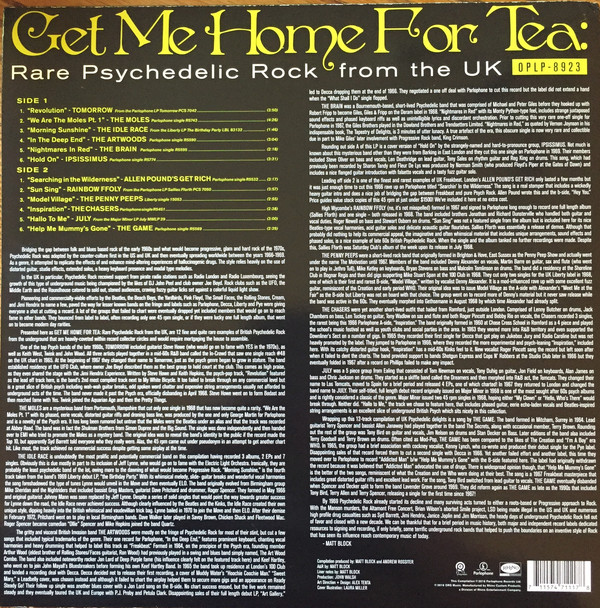
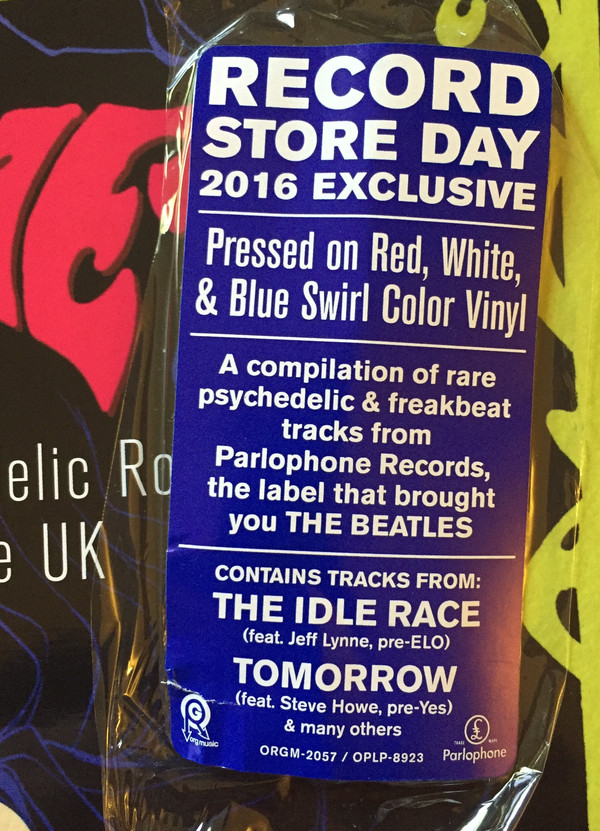
Many releases are selling for less than the original price on Record Store Day. The racketeers it seemed have had their fingers burnt. Especially since these sellers are being forced to cut their prices to move unwanted stock. Maybe next year the racketeers will think twice before hoovering up huge amounts of stock on Record Store Day 2017? Alas, that is highly unlikely. It will be a repeat of Record Store Day 2016, with record buyers struggling to find copies of certain releases. One of the most elusive release was Get Me Home For Tea-Rare Psychedelic Rock From The UK, which was released as a limited edition of 2,000 by ORG Music on Record Store Day 2016.
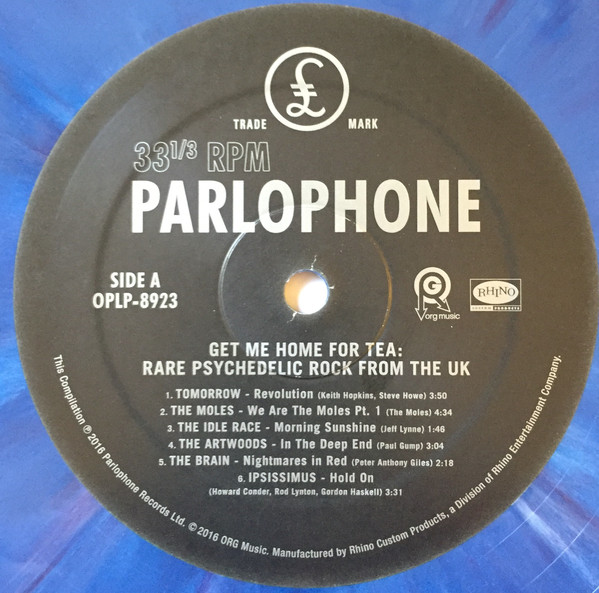
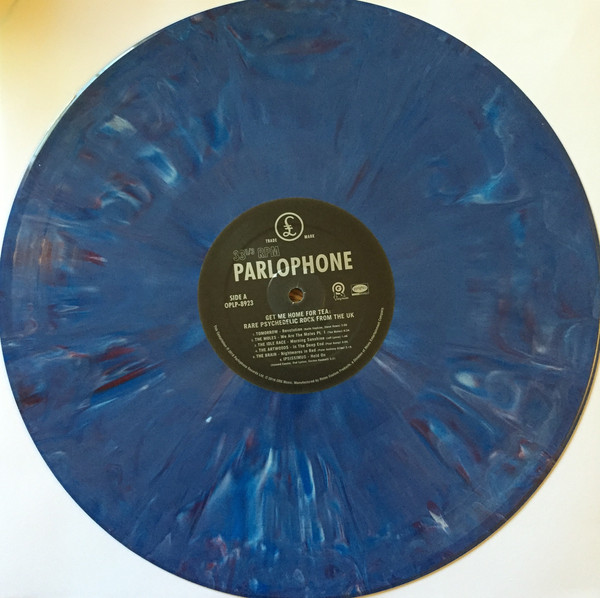
Get Me Home For Tea: Rare Psychedelic Rock From The U.K. features twelve psychedelic and freakbeat tracks from the vaults of Parlophone. This includes Tomorrow, The Moles, The Idle Race, The Artwoods, The Brain, The Penny Peeps and The Game. These artists are just some of the artists that feature on Get Me Home For Tea-Rare Psychedelic Rock From The UK. It you’ll realise, is a reminder of Britain’s psychedelic past.
Opening Get Me Home For Tea-Rare Psychedelic Rock From The UK is Tomorrow’s 1967 single Revolution. Just like many British psychedelic bands, Tomorrow’s recording career was short-lived. It lasted just two years and amounted to a couple of singles and an album. Revolution, which was penned by Keith Hopkins, epitomises the psychedelic sound of 1967. It’s also a reaction to the political turmoil affecting the world during 1967. Tomorrow’s lysergic sounding single is a musical precursor to change, that’s been inspired by The Beatles and The Byrds. Alas the Revolution passed Britain by, and commercial success eluded Tomorrow.
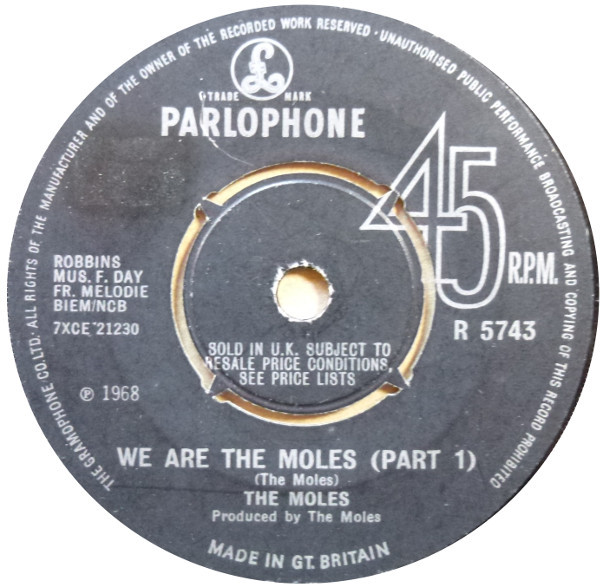
The Moles will be a new name to all but the most knowledgeable fans of psychedelia. Their lineup featured Derek, Philip and Ray Shulman. However, The Moles played just a walk-on part in British psychedelia. They only ever released one single, We Are The Mole (Part 1). It was released in 1968, and was penned by The Moles. It’s melodic, rocky and trippy. There’s also a nod to The Beatles’ I Am The Walrus, in this lost psychedelic gem.
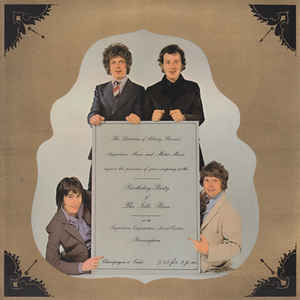
While many of the bands on Get Me Home For Tea: Rare Psychedelic Rock From The UK only ever released one or two singles,The Idle Race released three albums and nearly a dozen singles. This included The End Of The Road, which was released in 1968. On the flip-side was The Morning Sunshine which features on Get Me Home For Tea: Rare Psychedelic Rock From The UK. Both tracks were penned by former ELO frontman, Jeff Lynne and featured on The Idle Race’s 1968 debut album The Birthday Party. Already Jeff Lynne was a talented singer, songwriter and musician, who played an important part in the sound and success of The Birthday Party and songs like The Morning Sunshine.
By the time The Artwoods released In The Deep End as a single in 1967, they had been releasing singles on Decca since 1964. Signing to Parlophone was a new start for The Artwood. Their only release on Parlophone was In The Deep End, which was written by Paul Gump. Alas this slice of freakbeat psych passed record buyers by upon its release. Since then, it’s become a collector’s item and copies change hands for anything up to £400.
Although The Brain only ever released one single, Kick The Donkey which featured Nightmares in Red on the B-Side, the group played an important part in rock history. The Brain featured brothers Peter and Michael Giles, and Robert Fripp. They would go on to found King Crimson, one of the greatest progressive rock bands. Nightmares In Red finds The Brain fusing free jazz and psychedelia. The result is a truly groundbreaking track, that’s a cut above much of the psychedelia being released in 1967.
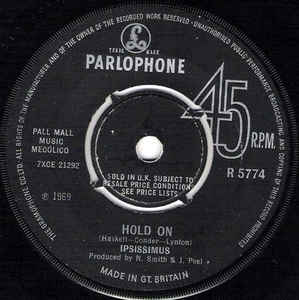
Ipsissimus were a four piece band from Barnet, in North London. They only every released the one single, Hold On, which had previously been recorded by Sharon Tand. Hold On was penned by future King Crimson bassist Gordon Haskell, Howard Conder and Rod Lynton; while Jonathan Peel and Norman Smith took charge of production. The result was a slick, driving and sometimes funky slice of psychedelia. Sometimes, Ipsissimus bring to mind Cream, as they power their way through Hold On, which is one of the highlights of Get Me Home For Tea: Rare Psychedelic Rock From The UK.
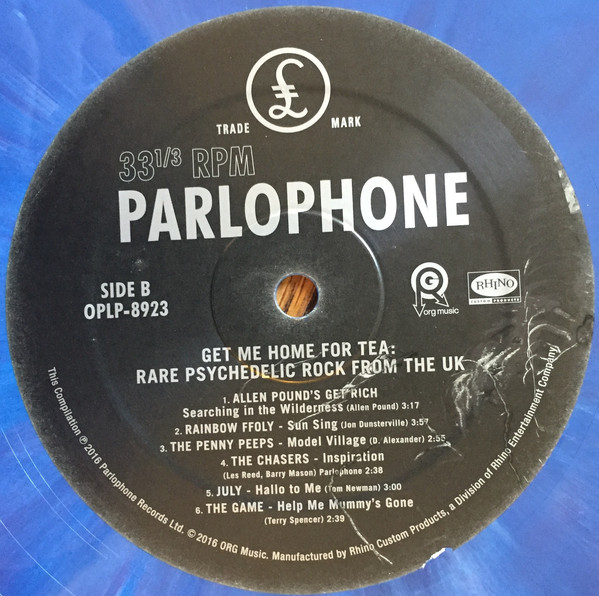
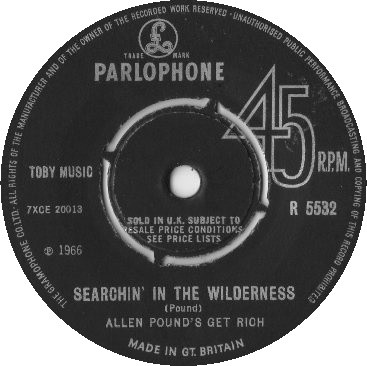
Allen Pound’s Get Rich only ever released the one single, Searching In The Wilderness. It was written by Allen Pound, and was released in 1966. Searching In The Wilderness was a psychedelic ballad, that references The Who. Just like many of The Who’s singles, Searching In The Wilderness became a favourite amongst mods. Despite this, the single flopped and Allen Pound didn’t get rich.
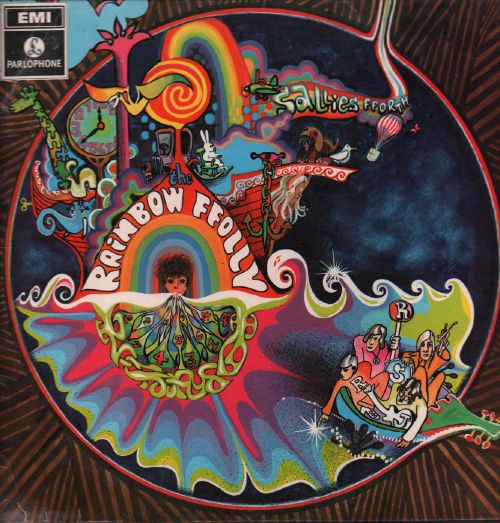
Rainbow Ffolly’s discography amounts to just one single and one album. The album was Sallies Fforth, which was released in 1968, and featured Sun Sing. Its dreamy, lysergic sound seems to have been inspired by The Beatles, The Kinks and The Byrds. Sadly, Rainbow Ffolly didn’t enjoy a fraction of the success these bands enjoyed, and not long after the release of Sallies Fforth disbanded.
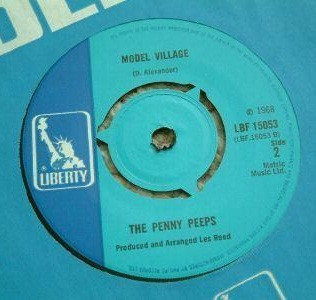
The Penny Peeps were formed by Denny Alexander, Malcolm Tomlinson and guitarist Martin Barre, who went on to join Jethro Tull. That was in the future. In 1968, The Penny Peeps released two singles on Liberty. Little Man with a stick was The Penny Peeps’ debut. On the flip-side was the Denny Alexander composition Model Village. It’s a blistering slice if melodic psychedelia.
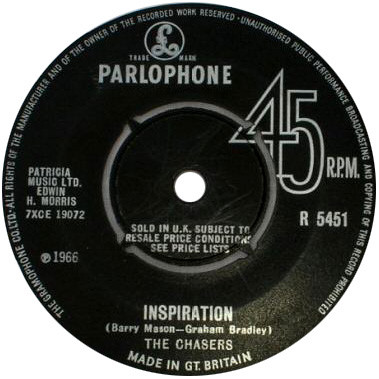
Between 1965 and 1967, The Chasers released singles for Decca, Parlophone and Phillips. By 1966, when The Chasers signed to Parlophone, they had been around since 1960. Still, they struggled to make a breakthrough. Signing to Parlophone was a new beginning. Or so it should have been. Alas,The Chasers’ only Parlophone single was Inspiration, a Barry Mason and Graham Bradley composition, which was released in 1966. Despite being an accomplished, rocky and stomping slice of psychedelia, Inspiration failed commercially. Nowadays, Inspiration is something of a rarity, and is much in demand among record collectors.
In 1968, July released their eponymous debut album on the Major Minor label. It featured two of their best known songs, My Clown and Dandelion Seeds. However, one of the songs that’s often overlooked is Hallo To Me. It’s one of the trippiest tracks on Get Me Home For Tea: Rare Psychedelic Rock From The UK, and is welcome addition to the compilation.
Closing Get Me Home For Tea: Rare Psychedelic Rock From The UK, is The Game’s Help Me Mummy’s Gone. It’s the B-Side to their 1967 single The Addicted Man. Help Me Mummy’s Gone is another slice of freakbeat, that became a favourite among mods in the late sixties. Nearly fifty years later, and it’s a track that’s stood the test of time, and shows that British groups were just capable of recording psychedelia as their American counterparts.
So that’s the story of Get Me Home For Tea: Rare Psychedelic Rock From The UK, which was and is, one of the most in-demand releases of Record Store Day 2016. Copies were and still are, like hen’s teeth. That’s no surprise. Get Me Home For Tea: Rare Psychedelic Rock From The UK was released as a limited edition of 2,000 by ORG Music on Record Store Day 2016. Each copy has been pressed on heavyweight blue swirl vinyl. This just adds to what is a quality compilation. It’s been carefully curated, and features twelve hidden gems from the vaults of Parlophone. Sadly, many fans of psychedelia and freakbeat weren’t able to find a copy of Get Me Home For Tea: Rare Psychedelic Rock From The UK.
Instead, copies have been hoovered up by people who listed them on auction sites at twice the price. That sadly, is nothing new. Every Record Store Day, records are secreted away by people within record shops and their favoured customers. These releases find their way onto auction sites, way before Records Store. Sadly, hat was the case this year, and will be the case in 2017. This won’t change, unless those tasked with the running of Record Store Day.
The should try and find the record shops that are selling releases before the release day, and disqualify them from future Record Store Days. While that would be difficult to do, it’s not impossible, Similarly, can the organisers of Record Store Day not ask auction sites not to allow listings of releases before Record Store Day? Alas it’s unlikely that auction sites would agree to this. Apart from random stock checks just before the doors open for Record Store Day, there’s no punishment for record shops who sell items early. There has to be.
After all, Record Store Day is the great cash cow that provides a much needed cash injection for record shops. Record Store Day has become the musical cash cow that keeps on giving. Maybe not for much longer? Many record buyers are fast losing interest in Record Store Day. They’re tired of third rate releases by independent labels, and releases by majors that are seen as nothing more than a hastily conceived cash-in. The best example is the David Bowie picture disc of The Man Who Fell To Earth. For many people, it epitomises everything that is wrong with Record Store Day. However, for those that are willing to dig deep, Record Store Day there’s still some lovingly curated releases, including Get Me Home For Tea: Rare Psychedelic Rock From The UK.
GET ME HOME FOR TEA-RARE PSYCHEDELIC ROCK FROM THE UK.


BRIAN ENO-THE SHIP-COLLECTOR’S EDITION.
BRIAN ENO-THE SHIP-COLLECTOR’S EDITION.
Back in the early seventies, having recorded and released an album, bands headed out on tour. These tours could be gruelling, and last over a year. Some bands embraced touring, and the rock ’n’ roll lifestyle that came with it.
Bands partied through the night, consuming copious amounts of drinks and drugs. Hijinks was also par for the course, with groups taking great delight in wrecking hotel rooms. This included throwing televisions out of windows. It didn’t matter that they were ten stories above the sidewalk. On another occasion a motor bike was driven through the corridors of a hotel. Hell raising was commonplace when rock bands toured during the early seventies. Bands were like a gang, and it was a case of what happens on tour, stays on tour being. This was regardless of whether it was drink, drugs or debauchery. However, not all musicians embraced and enjoyed the gang mentality and rock ’n’ roll lifestyle. This included Brian Eno.
For Brian Eno, 1973 was the year the second chapter in his career began. Brian had just left Roxy Music after touring their sophomore album For Your Pleasure. By the end of the tour, Brian had realised the life of a rock star wasn’t for him. He found the life of a rock star tedious. The constant touring, and spending half his life either on stage or in an anonymous hotel room wasn’t for Brian Eno. Then there were the disagreements with Roxy Music’s flamboyant frontman, Bryan Ferry. All this meant that Brian’s time with Roxy Music was at an end. This however, was a huge decision.
Leaving Roxy Music was a brave and controversial decision for Brian Eno. Roxy Music were one of the most successful British bands of the early seventies. However, Brian Eno’s creativity was being stifled. He felt that he had much more to offer music. Having toured For Your Pleasure, a frustrated and restless Brian Eno left Roxy Music, and embarked on a solo career.
Having left Roxy Music, straight away, Brian Eno began work on his debut album Here Come The Warm Jets. It was released to critical acclaim in 1973. Since then, Brian Eno has enjoyed a long successful career, and recently released over twenty solo albums. Brian Eno’s most recent album is The Ship, which was recently released by Warp. It’s Brian Eno’s first album since the Grammy Award winning Lux, which was released in 2012. By then. Brian Eno was one of the veterans of British music.
After releasing Here Come The Warm Jets in 1973, Brian Eno has enjoyed several careers. There’s his career as a solo artist, which includes his role as one of the founding fathers of modern ambient music.
Brian Eno’s first ambient album was Ambient 1: Music For Airports, which was released in 1978. It was hailed a classic, and was the first of four volumes in the groundbreaking Ambient series. However, by the time the Ambient series drew to a close in 1983, Brian Eno not only had released other ambient classics. Music For Films and Ambient 4: On Land were two of Brian Eno’s finest ambient albums. However, he by 1983 he released several high profile collaborations and worked as a producer.
Having collaborated with John Cale, Robert Fripp and Kevin Ayers between 1973 and 1975, other artists and groups were keen to work with Brian Eno. He worked with Cluster, Harmonia, Jon Hassell, Peter Sinfield and David Byre. Brian Eno had also worked with Harold Budd and Laraaji on two volumes of the Ambient series. Brian Eno was always in demand for collaborations, and that would be the case throughout his career. It was the same with production.
Ever since leaving Roxy Music, Brian Eno had been in constant demand as a producer. Everyone from John Cale and Penguin Cafe Orchestra to Ultravox, Talking Heads and Devo worked with Brian Eno between 1974 and 1983. Since then, he’s worked an eclectic selection of artists. This includes Toto, U2, Laurie Anderson, John Cale, James, David Bowie, Baaba Maal, Grace Jones and even Coldplay. In a production career that’s spanned forty-two years, Brian Eno has produced nearly fifty albums, including many that have been certified gold and platinum. Still, though, Brian Eno finds time to record and release solo albums.
Brian Eno’s most recent solo album is The Ship, which he produced with Peter Chilvers. The album title The Ship, is a reference to the sinking of the Titanic. It’s a subject that has long fascinated Brian Eno. He refers to it as: “the apex of human technical power, set to be Man’s greatest triumph over nature.” Given Brian Eno’s fascination with the Titanic, it’s no surprise that the subject would provide inspiration for an album.
Originally, though, The Ship was going to be a sound installation. However, then Brian Eno’s thoughts turned to a new album. His last album was released back in 2012. A new album would allow Brian Eno to explore the sinking of the Titanic, and showcase his new voice.
Now aged sixty-eight, Brian Eno is discovering that time waits for no man. He’s also discovering that the human voice changes with age. In Brian’s case, he can now sing in low C (C4). That’s very different to early in his career. However, it allowed him to sing a song that he describes as one “you could walk around inside.” It seems, for Brian Eno, growing old has its advantages. So Brian Eno began work on the recording of The Ship.
For The Ship, Brian Eno had written The Ship, Fickle Sun (i) and Fickle Sun (ii) The Hour Is Thin. The other tracks was Fickle Sun (iii) I’m Set Free. It had originally been penned by John Cale and Brian Eno as I’m Set Free, and featured on The Velvet Underground’s 1968 eponymous album. These songs would become The Ship.
When recording of The Ship began, Brian Eno had brought together some of his most trusted musical lieutenants. Peter Chilvers co-produced, recorded and took charge of programming on The Ship. He also added keyboards and vocoder. Nuria Homs’ voice features on The Ship. So do Members of The Elgin Marvels. Peter Serafinowicz’s voice features on Fickle Sun (ii) The Hour Is Thin. Guitarist Leo Abrahams, keyboardist Jon Hopkins and Nell Catchpole on viola and violin feature on Fickle Sun (iii) I’m Set Free. Once the four tracks were recorded, the release of The Ship was scheduled for 29th April 2016.
This was one ship that wasn’t going to sink. Far from it. When The Ship was released, it reached number 175 in the US Billboard 200 and twenty-eight in the UK. For Brian Eno, this was a cause for celebration. The Ship became his most successful album in the UK since 1981s My Life in the Bush of Ghosts. Elsewhere, The Ship charted in Belgium and Ireland. Brian Eno was enjoying a commercial Indian Summer to a career that’s lasted forty-six years. Still, Brian Eno is determined to innovate and push musical boundaries, on The Ship.
The Ship opens with the title-track, which is a twenty-one minute epic. A drone is panned, left as if sending out a warning sound. Maybe The Ship is heading towards an iceberg? Soon, it’s joined by a wash of slow, melancholy synths. When they drop out, the drone returns. When they combine, the sense of melancholy and sadness increases. This adds to the cinematic sound. So do the crystalline and lush synths. They’re part of a rueful, dramatic and wistful ambient soundscape. It washes over the listener. Especially the synth strings. Later, futuristic, bubbling sounds emerge from the arrangement. It seems The Ship is sinking.
By then, Brian Eno’s vocal has entered; and it’s delivered via a vocoder, as a myriad of futuristic, sci-fi, elegiac, jagged, clanging, buzzing and bubbling sounds accompany him. It’s as of Brian Eno is trying to replicate the sound of a ship that’s been ripped in half. As beeps and bubbling sounds emerge from the arrangement, the sound of radio news can be heard. As the drama builds, sounds assail the listener. Nuria Homs’ delivers her part in Catalan, while Brian Eno’s vocal is slow and deliberate, constantly adding to the drama. Still, shrieks and beeps escape from the arrangement. So does the sound of the bell ringing. The bell has tolled, but for whom? It’s tolled for Brian Eno, as he carefully says: ”wave after wave after wave.” It’s a moving and thoughtful ending to this twenty-one minute Magnus Opus, that finds Brian Eno at his innovative best.
Fickle Sun (i) is another lengthy track, and lasts around eighteen minutes. The arrangement is understated and spacious. Less is more, as percussion sets the scene for the synths. They’re best described as ethereal, industrial and futuristic. Sometimes, it as if they’re trying to create an industrial backdrop. Briefly, the arrangement heads in the direction of free jazz, with horns howling but in a strangely melodic way. Then Brian’s vocal enters.
As he sings: “another day and the work is done, we toll away the fickle, another day the wire is done, so the dismal work is done.” There’s no emotion in Brian’s voice. Instead, it’s as if he’s been worn down by the drudgery of repetitive, boring work. It’s as all this has been building up, and ridding himself of all this frustration is cathartic. Then when his vocal drops out, the drama grows and builds. Horns bray combines with shrill synths strings and create a dark, dramatic backdrop. Later, a church organ is added there’s a disbelief in Brian’s voice as he sings: “all the boys are falling down, unto ashes everyone.” The song has become a lament at the needless loss of life during war. Much later, the sound of a life support is replicated, as Brian reflects: “when I was a young soldier.” His vocal is accompanied by a vocoded vocal and cinematic sounds. It’s a poignant combination. Especially as the drama builds, and this cinematic track reaches a crescendo.
Just a wistful piano accompanies actor Peter Serafinowicz’s reading of the Fickle Sun (ii) The Hour Is Thin. It picks up where the previous track left off, and deals with the subject of war. Anger and frustration fill Peter Serafinowicz’s voice. His reading is impassioned, and he treats Brian Eno’s words like a script. He highlights words, adding drama and theatre. It’s a captivating performance that’s designed to make listeners think about the folly of war.
Closing The Ship is Fickle Sun (iii) I’m Set Free, which was originally covered by The Velvet Underground in 1968. Brian Eno stays true to the original, using some of his most trusted musical lieutenants to accompany him. With just a piano, drums, guitar and keyboards combine with Brian’s vocal to create an anthemic track with a feel good sound. Later, strings are added, and they’re just the finishing touch what’s a beautiful and hopeful sounding track. It’s very different to the rest of The Ship, and is guaranteed to leave the listener wanting more.
Forty-two years after releasing his groundbreaking debut album Here Come The Warm Jets in 1974, Brian Eno is still making music that’s innovative, imaginative and relevant. The same can’t be said of many of his contemporaries. However, Brian Eno is different.
Brian Eno has always been determined to reinvent his music, in an attempt to ensure that the music stays relevant. That is the case with The Ship, Brian Eno’s first album since Lux in 2012. The Ship is a return to form from one of the elder statesman and Godfather of electronic music. He continues to embrace new technology to make The Ship. This includes Ableton Live, one of the leading digital audio workstations. Along with a variety of keyboards plus traditional instruments like a piano, guitar and strings Brian Eno and his band have recorded a truly captivating, cinematic and cerebral album.
The Ship and The Fickle Sun (i) are both cinematic epics that are guaranteed to make the listener to think. On The Ship, Brian Eno revisits the sinking of the Titanic, and replicates the disaster in a twenty-one minute Magnus Opus. Then on The Fickle Sun (i), Brian Eno begins with the frustrated worker toiling under the hot sun, to the battlefield, where he discuses the folly of war. This continues on The Fickle Sun (ii) The Hour Is Thin, which is a poignant and moving track. However, Fickle Sun (iii) I’m Set Free which closes The Ship is a mixture of hope and beauty. It’s a remake of a track from The Velvet Underground’s 1968 eponymous album. Brian Eno stays true to the original, and shows another side to his music. However, mostly The Ship is album that’s guaranteed to make the listener think and toy with your emotions.
During The Ship, Brian Eno takes the listener on a journey. For four tracks lasting forty-seven minutes, he paints pictures in your mind’s. Sometimes he takes you places you neither expected nor wanted to go. This includes the battlefield, where people are hardened to the needless loss of life. However, The Ship is captivating piece, which the listener should embrace and let wash over them. As they do, it’s a case of letting their imagination run riot. if they do, they’ll be richly rewarded.
No wonder; The Ship is a musical journey that’s variously melancholy, wistful, challenging, beautiful, elegant and always, innovative. While many of Brian Eno’s counterparts cease to be relevant musically, Brian Eno is forever the innovator, and forever inventive, creative and open to experimentation musically. That’s been the case throughout a solo career that’s lasted forty-two years and over twenty albums. Brian Eno’s latest album, The Ship which is available as a collector’s edition and comes complete with a cloth bound cover and art cards. The Ship is a welcome addition to Brian Eno’s discography and is an album that’s a truly innovative, captivating, cinematic and cerebral album.
BRIAN ENO-THE SHIP-COLLECTOR’S EDITION.
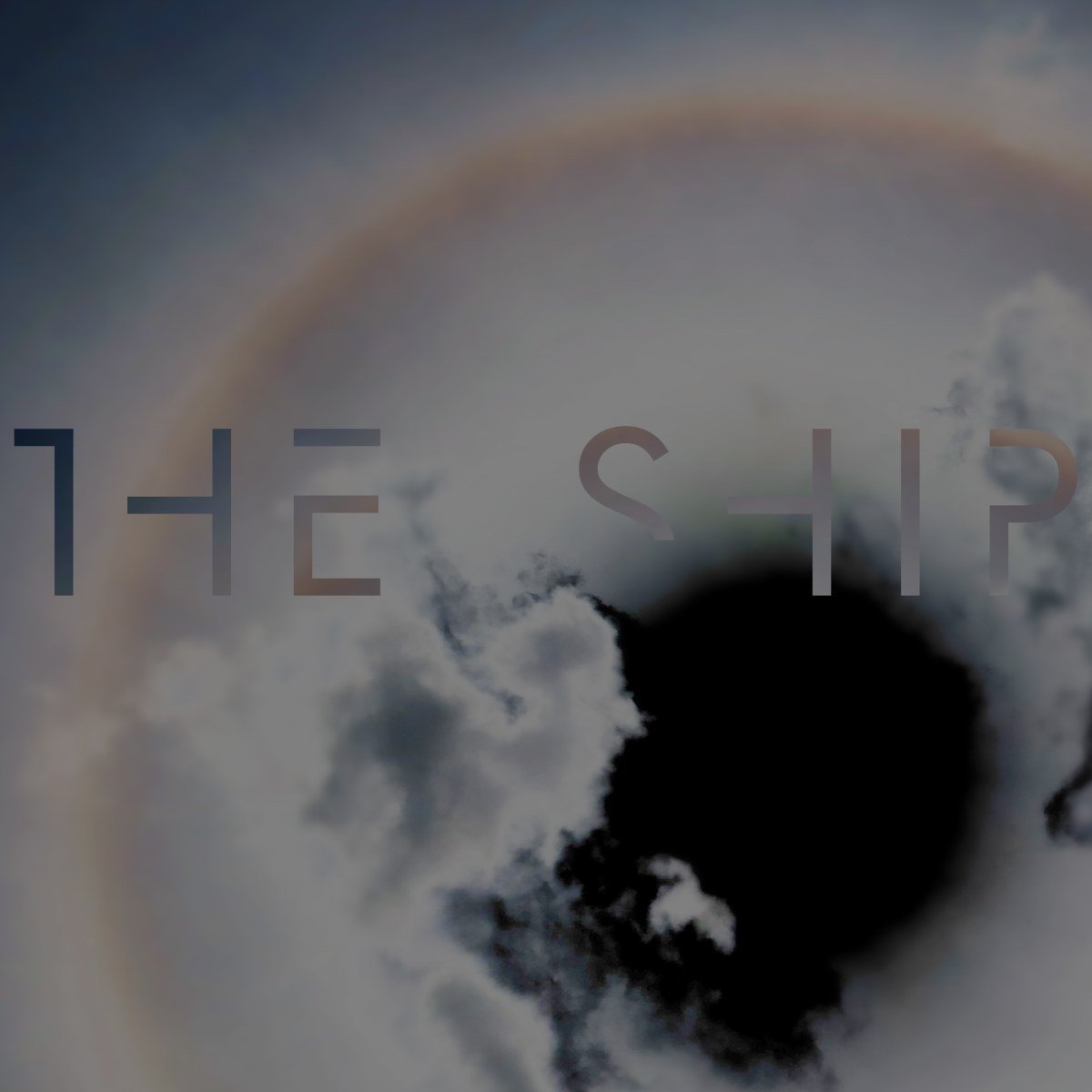
THE INDEPENDENTS-JUST AS LONG-THE COMPLETE WAND RECORDINGS 1972-74.
THE INDEPENDENTS-JUST AS LONG-THE COMPLETE WAND RECORDINGS 1972-74.
When Charles Jackson first met Marvin Yancy at Chicago’s Black Writer’s Workshop in 1971, he was already twenty-six, and had been working as an art director for Playboy magazine. That was why Charles Jackson had moved to the Windy City in the late sixties. However, Charles had ambitions beyond working as an art director.
In his spare time, Charles Jackson wrote songs. This wasn’t new. Charles had been writing songs for years. He had always been regarded as an artistic child, as he grew up in Greenville, Carolina. However, by 1971 Charles was beginning to realise he had so much he wanted to say via his music. It was his true passion. So Charles went in search of likeminded people.
That was how Charles Jackson found himself at Chicago’s Black Writer’s Workshop, and met with Jerry Butler. He was in the process of choosing songs for his new album, and had decided to record an album of songs penned by members of Chicago’s Black Writer’s Workshop. When Jerry Butler came to choose the songs for his album Jerry Butler Sings Assorted Sounds With The Aid Of Assorted Friends And Relatives, three of Charles Jackson’s songs were chosen. This included It’s Real What I Feel, a duet with Brenda Lee Eager. It reached number sixty-nine in the US Billboard 100 and eight in the US R&B charts. So pleased was Jerry Butler with Charles’ songs, that Walk Easy Me Son was chosen for The Sagittarius Movement. Already, it looked as if Charles was about to embark upon a successful songwriting career. However, what about if he became part of a songwriting team?
Around this time, a twenty-one year old Marvin Yancy attended the Chicago’s Black Writer’s Workshop. He had played the organ in a local church, but was an aspiring songwriter. Marvin Yancy had written songs under the alias of Maurice Barge, and would soon meet his future songwriting partner.
When Charles Jackson and Marvin Yancy began talking, and realised they had much in common. It was only a matter of time before Charles Jackson and Marvin Yancy began to write songs together. When they began to write together, they proved a potent partnership, encouraging each other to even greater heights. Two heads were definitely better than one. Little did Charles and Marvin know that some of these songs would hit potential.
Having penned some songs, Charles hit on the idea of forming a group. Secretly, he had dreamed of becoming a singer. So Charles approached Marvin about forming a group. Marvin Yancy agreed, and the pair began the search for the rest of the nascent group.
It didn’t take long, before the search was over. Benjamin and Company, had been stalwarts of Chicago’s soul scene. However, the band that Ben Hernandez had founded had split-up. Two former members of Benjamin and Company, Helen Curry and Maurice Jackson were singing together in a local club when Charles Jackson saw them. Straight away, he realised that here were the missing pieces in his musical jigsaw.
Charles Jackson approached and asked Helen Curry and Maurice Jackson about joining his nascent band. They were interested, and agreed to join Charles and Marvin’s new band, which they called The Independents. Their music is documented on Just As Long-The Complete Wand Recordings 1972-74. It was recently released by Kent Soul, an imprint of Ace Records.
When Maurice Jackson joined The Independents in 1972, he was already twenty-eight. He was born in Chicago in 1944, and embarked upon a musical career in the early sixties. In 1963, Maurice made his recording debut. Since then, he had moved between labels but never enjoyed any major success. So Maurice decided to put his solo career on hold, and joined The Independents with Helen Curry.
Just like Maurice, commercial success eluded Helen Curry. She had released a quartet of singles between 1968 and 1969, but they all failed commercially. So when she joined Benjamin and Company it was a new start. Sadly, the band split-up, and Helen and Maurice found themselves treading water. That was until they met Charles and Marvin, and joined their new group, The Independents.
Soon, the newly formed Independents were soon signed to Wand Records, which would be home to them for the next two years. The record contract came about through a contact at the Chicago’s Black Writer’s Workshop. However, before long, The Independents were replaying Wand’s faith in them.
In April 1972, The Independents were preparing to release their debut single for Wand. The song that chosen, was Just As Long As You Need Me, which opens the Just As Long-The Complete Wand Recordings 1972-74 compilation. Just As Long As You Need Me was penned by Maurice Barge and Jimmie Jiles. It’s a beautiful ballad with lush strings and harmonies accompanying the lead vocal. When Just As Long As You Need Me was released, it reached number eighty-four in the US Billboard 100 and number eight in the US R&B charts. Following the success of their debut single, The Independents began work on their debut album.
Just As Long As You Need Me featured on The Independents’ debut album, The First Time We Met. It was a highly accomplished and polished album, that was released later in 1972, and came complete with an endorsement from Jerry Butler. The First Time We Met reached number 127 in the US Billboard 200 and sixteen in the US R&B charts. However, The First Time We Met also featured another hit single.
Seven months after the release of Just As Long As You Need Me, The Independents released I Just Want to Be There as a single. It was a heart wrenching ballad, with a lush arrangement that featured strings, horns and harmonies. There was almost a Philly Soul sound to I Just Want to Be There. On the flip-side was Can’t Understand It. Both songs were penned by Charles Jackson and Marvin Yancy. When I Just Want to Be There was released in November 1972, the single reached just thirty-eight in the US R&B charts. This was slightly disappointing. However, it was just a blip.
The Independents hit a musical home run with their third single Leaving Me. Just like their first two singles, Leaving Me was another ballad, which The Independents seemed to specialise in. On the flip-side of Leaving Me was Baby I’ve Been Missing You a glorious stomper. With both sides oozing quality, surely The Independents couldn’t fail?
When Leaving Me was released in 1973, it reached twenty-one in the US Billboard 100 and one in the US R&B charts. Leaving Me which was penned and produced by Charles Jackson and Marvin Yancy sold over 500,000 copies and was certified gold. With Leaving Me having crossed over, it should’ve been skies the limits for The Independents.
For their fourth single from the album from The First Time We Met, the ballad Baby I’ve Been Missing You was released as a single later in 1973. It was penned by Charles Jackson and Marvin Yancy. The B-Side Couldn’t Hear Nobody Say (I Love You Like I Do) was a Maurice Barge and Jimmie Jilies song. When Baby I’ve Been Missing You was released, it reached forty-one on the US Billboard 100 and four in the US R&B charts. The Independents had found a winning formula and were sticking to it.
Later in 1973, The Independents had finished their sophomore album Chuck, Helen, Eric, Maurice. It featured songs like The Same Old Way, the wistful ballad In The Valley Of My World, One Woman Do Right Man and Lucky Fellow. They showcased a truly talented band who looked like they had the world at their feet. There was a problem though.
Maurice Yancy didn’t want to tour the album. There was only one option, bring onboard a singer to replicate Maurice. The man who was given the job, was another Chicago born singer Eric Thomas. Having learnt The Independents’ songs, he headed out on tour. Then when he returned home, The Independents became a five piece.
By then, the soul-baring ballad It’s All Over had been released as a single. Just like the B-Side Sara Lee, it was penned by Charles Jackson and Maurice Yancy. When It’s All Over was released, it reached number sixty-five in the US Billboard 100 and twelve in the US R&B charts. 1973 had been another successful year for The Independents.
For their first single of 1974, The First Time We Met was chosen. This was guaranteed to confuse record buyers. The First Time We Met was the title of The Independents’ debut album. However, no such track featured on the 1972 album. Two years later, and The First Time We Met was released as a single, with Show Me How on the B-Side. Both songs were penned by Charles Jackson and Maurice Yancy songwriting team. However, The First Time We Met stalled at just number twenty on the US R&B charts, and never troubled the US Billboard 100. This was no reflection on the quality of the single. Instead, the title was blamed, as leading record buyers to think they already owned the song. As a result, they missed out on a really classy ballad which featured The Independents at their emotive best. Despite the disappointing performance of The First Time We Met, the future still looked bright for The Independents.
Later in 1974, The Independents toured Europe, but only played US military bases. This was disappointed their fans. However, The Independents were keen to begin work on their third album, which would see them jump onboard the disco bandwagon.
Arise and Shine (Let’s Get In On), a Charles Jackson and Maurice Yancy song was chosen as The Independents’ next single. It was an excursion into soulful disco. This was quite different from the heartfelt, emotive ballads The Independents specialised in. However, the new five piece Independents suited the new sound. I Found Love On A Rainy Day was another dance-floor friendly track from the pen Charles Jackson and Maurice Yancy. However, their first disco single Arise and Shine (Let’s Get In On), reached just number nineteen on the US R&B charts. It failed to trouble the US Billboard 100. Although Arise and Shine (Let’s Get In On) was slightly more successful than The First Time We Met, The Independents were no longer enjoying the same success they’d enjoyed earlier in their career.
When The Independents released Let This Be A Lesson To You later in 1974, this impassioned ballad proved to be their swan-song. Just like the flip-side No Wind, No Rain, Let This Be A Lesson To You was penned by Charles Jackson and Maurice Yancy. When the single was released it reached eighty-eight in the US Billboard 100 and seven on the US R&B charts. At least The Independents bowed out with a top ten single.
With The Independents story at end, Charles Jackson and Maurice Yancy continued to work as producers. Their time with The Independents had established their careers as songwriters and producers. Over the next few years, they wrote and produced for everyone from The Notations to Natalie Cole. However, despite the commercial success and critical acclaim they enjoyed, Charles Jackson and Maurice Yancy must have wondered what heights The Independents could’ve reached?
The Independents enjoyed eight hit singles in the US R&B charts, and five in the US R&B charts. This included four top ten singles, including the number one single Leaving Me. It was one of The Independents’ trademark ballads, which was certified gold after selling over 500,000 copies. However, Leaving Me is just one of twenty-two tracks that feature on Just As Long-The Complete Wand Recordings 1972-74. It was recently released by Kent Soul, an imprint of Ace Records and includes singles, B-Sides, album tracks and a remix. The twenty-two tracks on Just As Long-The Complete Wand Recordings 1972-74 include the best and most beautiful music in the three year career of Chicago’s very own The Independents.
THE INDEPENDENTS-JUST AS LONG-THE COMPLETE WAND RECORDINGS 1972-74.


COMMANDER CODY AND HIS LOST PLANET AIRMEN-COMMANDER CODY AND HIS LOST PLANET AIRMEN/TALES FROM THE OZONE/WE’VE GOT A LIVE ONE HERE.
COMMANDER CODY AND HIS LOST PLANET AIRMEN-COMMANDER CODY AND HIS LOST PLANET AIRMEN/TALES FROM THE OZONE/WE’VE GOT A LIVE ONE HERE.
By 1975, it was all change for Commander Cody and His Lost Planet Airmen. After releasing four albums for Paramount, Commander Cody and His Lost Planet Airmen moved to Warner Bros. They were hoping this would mark a change in Commander Cody and His Lost Planet Airmen fortunes. Their story began in 1967 Ann Arbor, Michigan.
That was when George Frayne and John Tichy decided to form a new band. This was nothing new. The pair had been in bands since 1964. However, by 1967, they wanted to form a band that reflected their shared interest in the different sub-genres of country music. Their new band they called Commander Cody and His Lost Planet Airmen, after the character in a 1952 Flash Gordon film. With a name for their new band, all George Frayne and John Tichy needed were some musicians.
Soon, they were joined by a rhythm section of drummer John Copley; double bassist John Farlow and rhythm guitarist Steve Schwartz. They were joined by Steve Davis on pedal steel guitar; Andy Stein on fiddle; Billy C. Farlow on harmonica and lead guitarist and vocalist Bill Kirchen. This was the first lineup of Commander Cody and His Lost Planet Airmen, and lasted until 1968.
The first lineup of Commander Cody and His Lost Planet Airmen proved a popular live band, and played mostly around the Ann Arbor area. However, soon, the band’s future was in jeopardy, when George Frayne accepted a job as assistant professor or art at Wisconsin State University.
Wisconsin was seven hours away from Ann Arbor, Michigan, where the rest of the band lived. Despite this, George Frayne made a fourteen hour round trip to play live with Commander Cody and His Lost Planet Airmen. However, when Bill Kirchen moved to San Francisco in 1968, the band’s future was at stake.
After Bill Kirchen moved to San Francisco, it looked like the Commander Cody and His Lost Planet Airmen story was over. Then after a summer living in San Francisco, Bill Kirchen convinced George Frayne, Steve Davis and Billy C. Farlow to join him. The three friends resigned from their jobs and moved to San Francisco, where they discovered country and folk was enjoying a resurgence in popularity.
It looked as if Lady Luck was smiling on the four friends, and before long, they began putting together the second line-up of Commander Cody and His Lost Planet Airmen. New members were recruited, including drummer Lance Dickerson and bassist Paul “Buffalo” Bruce Barlow. With a new rhythm section in tow, the second lineup of Commander Cody and His Lost Planet Airmen began to establish a reputation in San Francisco.
For the next two years, Commander Cody and His Lost Planet Airmen played all over San Francisco. It was then that Commander Cody and His Lost Planet Airmen began to use country rock as a starting point for their ‘sound’. To that, they added jump blues, rockabilly, rock ’n’ roll, Western swing and combine them with boogie woogie piano. This genre-melting sound proved popular, as Commander Cody and His Lost Planet Airmen met some of the leading lights of city’s music scene.
This included Janis Joplin, Linda Ronstadt and promoter Bill Graham, who asked Commander Cody and His Lost Planet Airmen to audition for him. That was where The Grateful Dead saw Commander Cody and His Lost Planet Airmen, and asked them to open for them in August 1969. After a year in the city, Commander Cody and His Lost Planet Airmen were already rising stars of San Francisco’s thriving and vibrant music scene.
As the sixties gave way to the seventies, January 1970 found Commander Cody and His Lost Planet Airmen in Detroit, playing a benefit show for the John Sinclair Defence Fund. The venue was the Eastown Ballroom, in Detroit. That was where Commander Cody and His Lost Planet Airmen, MC5, Mitch Ryder and The Rationals all played their part in raising $8,000 for the John Sinclair Defence Fund. However, this wasn’t the last benefit show Commander Cody and His Lost Planet Airmen would appear at for the John Sinclair Defence Fund. They returned in December 1971. By then, Commander Cody and His Lost Planet Airmen had signed to Paramount and released their debut album.
When Commander Cody and His Lost Planet Airmen signed to Paramount in 1971, they were a popular draw in San Francisco’s live scene. Paramount must have been hoping that the band’s popularity would translate into record sales.
Lost In The Ozone.
Commander Cody and His Lost Planet Airmen’s debut album from Paramount was Lost In The Ozone, which was released in November 1971. Most of the reviews of Lost In The Ozone were positive, and this augured well for the release of Commander Cody and His Lost Planet Airmen’s debut album.
On the release of Lost In The Ozone, Commander Cody and His Lost Planet Airmen’s genre-melting album reached number eighty-two in the US Billboard 200 and seventy-five in Canada. The album also featured two hit singles.
When Lost In The Ozone was released as the lead single, it failed to chart. The followup, Hot Rod reached number nine in the US Billboard 100. Then Beat Me Daddy, Eight to the Bar reached eighty-one on the US Billboard 100. For Commander Cody and His Lost Planet Airmen, the success of Lost In The Ozone was regarded as a starting point and something they could build upon.
Hot Licks, Cold Steel and Truckers Favourites.
Six months after the release of their debut album, Commander Cody and His Lost Planet Airmen returned with their sophomore album Hot Licks, Cold Steel and Truckers Favourites. It was described “as an ode to truckers.” Each of twelve tracks were either about trucking, or perceived by Commander Cody and His Lost Planet Airmen as favourites of truckers. However, how would Hot Licks, Cold Steel and Truckers Favourites be received by non-truckers?
On its release in May 1972, the reviews of Hot Licks, Cold Steel and Truckers Favourites were mostly favourable. A few critics felt that Hot Licks, Cold Steel and Truckers Favourites didn’t match the quality of music on Lost In The Ozone. Record buyers had the casting vote.
Hot Licks, Cold Steel and Truckers Favourites reached just ninety-four in the US Billboard 200 charts, and never troubled the Canadian charts. Commander Cody and His Lost Planet Airmen’s sophomore album hadn’t matched the success of his debut album. Their third album looked like being an important album in Commander Cody and His Lost Planet Airmen’s nascent recording career.
Country Casanova.
A year passed before Commander Cody and His Lost Planet Airmen returned with their third album Country Casanova. It was released in May 1973, and proved a controversial album.
The controversy surrounded Commander Cody and His Lost Planet Airmen’s cover version of Everybody’s Doin’ It. It transpired that Commander Cody and His Lost Planet Airmen dropped the F-Bomb several times during the song. Later, George Frayne claimed that the Modern Mountaineers’ original version verbatim. By then, Everybody’s Doin’ It had been banned by several country stations. This meant a large part of Commander Cody and His Lost Planet Airmen’s target audience weren’t hearing their music. For Commander Cody and His Lost Planet Airmen this was a minor disaster.
When Country Casanova was released in May 1973, the reviews were mostly favourable. Just like with Cold Steel and Truckers Favourites a year earlier, there were a few dissenting voices among critics. They felt Commander Cody and His Lost Planet Airmen had failed to reach the heights of their debut album. Record buyers agreed.
When Commander Cody and His Lost Planet Airmen released Country Casanova, it was their least successful album. It reached 104 in the US Billboard 200. One small crumb of comfort was that Country Casanova reached forty-seven in the US Country charts. Then when Smoke! Smoke! Smoke! (That Cigarette) was released as a single, it stalled at ninety-four in the US Billboard 100 charts. It must have been a frustrating time for Commander Cody and His Lost Planet Airmen and executives at Paramount. Country rock was a popular genre, but Commander Cody and His Lost Planet Airmen who were regarded as one of its finest exponents, were still struggling to make a breakthrough after three albums. Little did Commander Cody and His Lost Planet Airmen time was running out for them at Paramount.
Live From Deep In The Heart Of Texas.
Although Commander Cody and His Lost Planet Airmen’s albums weren’t selling in huge quantities, the band was still a popular draw live. That was apart from the time Commander Cody and His Lost Planet Airmen played in country music’s spiritual home, Nashville.
Commander Cody and His Lost Planet Airmen were perceived by the audience as a bunch of long-haired, dope-smoking hippies. They were booed off the stage, with the denizens of Nashville calling Commander Cody and His Lost Planet Airmen “freaks” and telling them to “get a haircut.” Their visit to Nashville hadn’t gone to plan. Fortunately, the Nashville concert wasn’t being recorded for a live album. Instead, a concert recorded in the Lone Star State became Live From Deep In The Heart Of Texas.
Recording of Live From Deep In The Heart Of Texas took place in November 1973. Just five months later, and Live From Deep In The Heart Of Texas was released in March 1973. Reviews were mainly positive, with Live From Deep In The Heart Of Texas regarded as a one of Commander Cody and His Lost Planet Airmen’s best albums.
Despite this, when Live From Deep In The Heart Of Texas was released in March 1973, the album stalled at just 105 in the US Billboard 200. This was the least successful album of Commander Cody and His Lost Planet Airmen’s Paramount years. Live From Deep In The Heart Of Texas was also the final album Commander Cody and His Lost Planet Airmen released for Paramount. Their next album would be released on Warner Bros.
Commander Cody and His Lost Planet Airmen.
Having left Paramount, Commander Cody and His Lost Planet Airmen signed to Warner Bros, where they released just three albums. These three albums are Commander Cody and His Lost Planet Airmen, Tales From The Ozone and We’ve Got A Live One Here! They all feature on a double CD which was recently released by BGO Records. It documents Commander Cody and His Lost Planet Airmen’s Warner Bros. years.
Now signed to Warner Bros, work began on what became Commander Cody and His Lost Planet Airmen. It would feature a mixture of cover versions and new songs. The cover versions included Southbound, Don’t Let Go, California Okie, Lowell George’s Willin’, House Of Blue Lights, Four or Five Times and That’s What I Like About the South. Four news songs were penned by members of Commander Cody and His Lost Planet Airmen. Billy C. Farlow, George Frayne, Michael J. Richards, Andy Stein and John Tichy cowrote The Boogie Man Boogie; Billy C. Farlow, Ernie Hagar, Michael J. Richards and Andy Stein penned Hawaii Blues; Billy C. Farlow, John Tichy wrote Keep on Lovin’ Her and George Frayne, John Tichy cowrote Devil and Me. These eleven songs became Commander Cody and His Lost Planet Airmen.
Recording of Commander Cody and His Lost Planet Airmen was recorded at the Record Plant, Sausalito, California, between September and October 1974. By then, Commander Cody and His Lost Planet Airmen’s lineup numbered eight. The rhythm section featured drummer Lance Dickerson; bassist Bruce Barlow; rhythm guitarist John Tichy and guitarist Bill Kirchen. They were joined by Ernie Haga on pedal steel guitar; Andy Stein on fiddle and saxophone; Billy C. Farlow on harmonica and lead vocal. George Frayne who had dawned the role of Commander Cody played piano and added vocals. Tower Of Power added horns. Producing Commander Cody and His Lost Planet Airmen was John Boylan. Once the album was recorded, it was mixed at the Record Plant, in Los Angeles. It became Commander Cody and His Lost Planet Airmen, which was released in 1975.
As Warner Bros. prepared for the release of Commander Cody and His Lost Planet Airmen in 1975, review copies were sent to critics. When they received Commander Cody and His Lost Planet Airmen’s Warner Bros. debut, it came complete with a futuristic cover that looked like it belong in the cartoon that lent the band its name. However, there was nothing futuristic about the album.
Commander Cody and His Lost Planet Airmen was an album where everything from country rock and Americana, rubbed shoulders with jump blues, Western swing and rock ’n’ roll. So did traditional folk and country songs, plus songs from the pen of pioneers of country rock like Lowell George and members of Commander Cody and His Lost Planet Airmen. Essentially, Commander Cody and His Lost Planet Airmen was an album that took the music of the past, and combined it with the music of the present.
Highlights of Commander Cody and His Lost Planet Airmen included the jump blues Don’t Let Go and Lowell George’s country ballad Willin’. It was transformed by Commander Cody and His Lost Planet Airmen, and takes on new meaning. Then The Boogie Man Boogie and House Of Blue Light allowed Commander Cody and His Lost Planet Airmen to stretch their legs, and showcase their brand of good time music. Keep On Lovin’ Her and That’s What I Like About The South, which closes Commander Cody and His Lost Planet Airmen, both have their roots in country music’s distant past. However, they were both brought up to date by Commander Cody and His Lost Planet Airmen and feature a newly reborn band.
It seemed Commander Cody and His Lost Planet Airmen’s move from Paramount to Warner Bros. had reenergised the band. There was a spring in their step on their genre-melting Warner Bros. debut. It was well received by critics, who regarded Commander Cody and His Lost Planet Airmen as one of the band’s finest albums. Record buyers agreed.
Commander Cody and His Lost Planet Airmen reached number fifty-six on the US Billboard 200, upon its release in 1975. The album also reached ninety-five in Canada. Then when Don’t Let Go was released as a single, it reached number fifty-six on the US Billboard 100. For Commander Cody and His Lost Planet Airmen, it was a promising start to their time at Warner Bros.
Tales From The Ozone.
Commander Cody and His Lost Planet Airmen were keen to build on the success of their eponymous album, so later in 1975, returned with Tales From The Ozone. It followed a similar formula, featuring ten cover versions and just two songs written by members of Commander Cody and His Lost Planet Airmen. These songs became Tales From The Ozone.
Among the cover versions on Tales From The Ozone were: Minnie The Moocher, Connie, I Been To Georgia On A Fast Train, Honky Tonk Music, Tina Louise. Other tracks included Hoyt Axon’s Lightnin’ Bar Blues and Paid In Advance. Cajun Baby had been written by Hank Williams and Hank Williams Jr; while Leiber and Stoller wrote The Shadow Knows and Mel McDaniel penned Roll Your Own. The two songs written by members of Commander Cody and His Lost Planet Airmen were It’s Gonna Be One Of Those Nights which Bill Kirchen, Billy C. Farlow and George Frayne cowrote; and Andrew Stein’s Gypsy Fiddle. These tracks were recorded at Kendun Recorders, Burbank, California.
At Kendun Recorders, Commander Cody and His Lost Planet Airmen were joined by Tower Of Power. Again, they provided the horn section. There was one difference though. Hoyt Axton was drafted in to produce Tales From The Ozone. When it was recorded, it was released in late 1975.
When Tales From The Ozone was released most of the reviews were positive. Some critics remarked that the songs were tailor made for Commander Cody and His Lost Planet Airmen. The consensus amongst the majority of critics was that Tales From The Ozone was one of Commander Cody and His Lost Planet Airmen’s finest albums.
Tales From The Ozone picked up where Commander Cody and His Lost Planet Airmen left off. It was another genre-defying album where Commander Cody and His Lost Planet Airmen switch seamlessly between country rock, jazz, jump blues, Western swing and rock ’n’ roll, on an album that oozed quality.
That proved to be the case from the opening bars of Commander Cody and His Lost Planet Airmen’s cover of Minnie The Moocher. It opens Tales From The Ozone, and is one of the best versions of an oft-covered song, and gives way to It’s Gonna Be One Of Those Nights. Already Commander Cody and His Lost Planet Airmen are at their best, and are putting all their years of experience to good use. They continue to do so throughout Tales From The Ozone.
Among the album’s highlights are I Been To Georgia On A Fast Train and Lightnin’ Bar Blues and Paid In Advance. It comes complete with soaring, gospel-inspired harmonies, and shows another side of Commander Cody and His Lost Planet Airmen. So does their cover of Connie, which is an authentic country ballad full of heartache. Later, Cajun Baby is reworked and Commander Cody and His Lost Planet Airmen pay homage to Hank Williams and Hank Williams Jr. However, one of the best tracks on Tales From The Ozone is Roll Your Own, where Commander Cody and His Lost Planet Airmen combine blues and country, to create an irresistible cover of the Mel McDaniel’s song. Closing Tales From The Ozone was the haunting and beautiful Gypsy Fiddle. It’s very different to the rest of Tales From The Ozone, but showcases Commander Cody and His Lost Planet Airmen’s versatility on what was one of their finest albums, Tales From The Ozone.
Sadly, record buyers didn’t agree and Tales From The Ozone reached a lowly 168 in the US Billboard 200. This was Commander Cody and His Lost Planet Airmen’s least successful album. To rub salt into wound, the single It’s Gonna Be One of Those Night failed to chart. For Commander Cody and His Lost Planet Airmen their career at Warner Bros. was at a crossroads.
We’ve Got A Live One Here!
Never again, did Commander Cody and His Lost Planet Airmen record another studio album for Warner Bros. Their swan-song was the 1976 the live double album We’ve Got A Live One Here! Commander Cody and His Lost Planet Airmen were determined to bow out of Warner Bros. in style.
Recording of We’ve Got A Live One Here! took place and during a tour of Britain in winter 1976. Three shows were recorded. The first took place on January 24th 1976 at the Town Hall, Aylesbury. Then the following night, January 24th 1976, the show at London’s Hammersmith Odeon was also recorded. A week later, when Commander Cody and His Lost Planet Airmen played at the Oxford Polytechnic, on February 2nd 1976 the tapes were running. These three shows became We’ve Got A Live One Here!
A total of eighteen songs found their way onto the live double album We’ve Got A Live One Here! Most of the songs had featured on Commander Cody and His Lost Planet Airmen’s five studio albums. However, live in concert, Cody and His Lost Planet Airmen were a totally different band. The original song was merely the starting point. That was the case from One Of Those Nights right through to Lost In The Ozone. Commander Cody and His Lost Planet Airmen were at their genre-melting best, as they worked their way through eighteen cover versions and new songs. During these songs, Commander Cody and His Lost Planet Airmen put their nine years of experience to good use and win over the English audiences. By the time, We’ve Got A Live One Here! is over, the audience realise they’ve witnessed one of the great country rock bands at the top of their game. Sadly, when We’ve Got A Live One Here! was released, the album wasn’t a commercial success.
That’s despite receiving plaudits and praise from critics. Alas, We’ve Got A Live One Here! struggled to just 170 in the US Billboard 200 charts. Sadly, We’ve Got A Live One Here! was the end of an era.
We’ve Got A Live One Here! was the last album Commander Cody and His Lost Planet Airmen released for Warner Bros. They arrived at Warner Bros. in 1974, and left in 1976. During that period, they released some of the best music of their career. It can be heard on Commander Cody and His Lost Planet Airmen, Tales From The Ozone and We’ve Got A Live One Here! They all feature on a double CD which was recently released by BGO Records. It documents Commander Cody and His Lost Planet Airmen’s Warner Bros.
The Warner Bros’. years were when Commander Cody and His Lost Planet Airmen came of age musically. They were tight, talented band, who seamlessly could switch between musical genres. Other times, they combined disparate musical genres to make something new. Often familiar songs were reimagined, and took on new meaning. Especially when Commander Cody and His Lost Planet Airmen played live. The original song was merely the starting point, before Commander Cody and His Lost Planet Airmen reinvented oft-covered songs. However, Commander Cody and His Lost Planet Airmen also featured some gifted songwriters. Sadly, though, Commander Cody and His Lost Planet Airmen never enjoyed the commercial success and critical acclaim their music deserved.
In 1977, Commander Cody and His Lost Planet Airmen signed to Arista, and released Rock ‘N Roll Again (Midnight Man). It reached just number 163 in the US Billboard 200. After this, none of Commander Cody and His Lost Planet Airmen’s thirteen albums charted, and they became the nearly men of country rock. However, Commander Cody and His Lost Planet Airmen could’ve and should’ve enjoyed commercial success and critical acclaim. One listen to ommander Cody and His Lost Planet Airmen, Tales From The Ozone and We’ve Got A Live One Here! and you’ll realise why.
COMMANDER CODY AND HIS LOST PLANET AIRMEN-COMMANDER CODY AND HIS LOST PLANET AIRMEN/TALES FROM THE OZONE/WE’VE GOT A LIVE ONE HERE.

MOP MOP-LUNAR LOVE.
MOP MOP-LUNAR LOVE.
Growing up, music was always a huge part of Andrea Benini’s life. He started to play the guitar when he was ten. By the time he was fourteen, Andrea Benini had switched to drums. This would stand him in good stead later in life.
Towards the end of 1999, twenty-two year old Andrea Benini moved to Bologna where he studied African-American and contemporary music. Then in 2000, Andrea took a job as a journalist, working for the Italian magazine Percussioni. This was how he spent the next three years. However, deep down Andrea wanted to embark upon a career in music.
It wasn’t until 2005, before Andrea Benini decided to form his current musical vehicle Mop Mop. By then Andrea was already twenty-eight. So with bassist Bruno Briscik, pianist Alex Trebo, percussionist Danilo Mineo, saxophonist Guglielmo Pagnozzi and Pasquale Mirra on vibes, Andrea began making up for lost time.
Later in 2005, Mop Mop their debut album The 11th Pill. It was released firstly in Europe, and then in Japan. Quickly, the album found an audience, and tracks from The 11th Pill found their way on several compilations. This augured well for Mop Mop’s sophomore album.
It looked as of Mop Mop were in no hurry to release their sophomore album. Three long years passed before Mop Mop were ready to release Kiss Of Kali in 2008. It featured Italian jazz trombonist Gianluca Petrella and vocalist Alan Farrington. They played their part in album that was well received by critics; and introduced Mop Mop’s music to a wider audience.
Buoyed by the success of Kiss Of Kali, Mop Mop returned with their third album Ritual Of The Savage in April 2010. It was Mop Mop’s most ambitious album to date. Ritual Of The Savage featured not just a string and horn section, but an appearance by vocalist Baby Sol and Alan Farrington. The result was an album that received plaudits and praise from critics. Mop Mop’s star was in the ascendancy.
So much so, that Mop Mop’s music was about to make its debut on a film soundtrack. In June 2012, Woody Allen was preparing for the release of To Rome With Love. He had written, directed and featured in To Rome With Love. The soundtrack to the film featured Mop Mop’s Three Times Bossa. When To Rome With Love was released in July 2012, critics agreed that it was far from a classic Woody Allen movie. Some went as far as to say that the soundtrack out-shawn the film. While To Rome With Love was a disappointing movie, Mop Mop had at least entered into the world of soundtracks. After this, his thoughts turned to his next album.
For Mop Mop’s fourth album, Isle Of Magic he was joined by a high profile guest…funk trombonist Fred Wesley. The other special guest was British poet Anthony Joseph who added vocals. Once Isle Of Magic was complete, it was released in 2013. Isle Of Magic was hailed as the best album of Mop Mop’s eight year and four album career. Surely it wouldn’t be long before Mop Mop returned with the followup?
Since then, all has been quiet on the Mop Mop front. Three years after the release of their fourth album Isle Of Magic, Mop Moop recently returned with the long-awaited followup Lunar Love. It was recently released by Agogo Records, and features a cast of ten guest artists and an eclectic array of instruments.
For Mop Mop’s fifth album Lunar Love, Andrea penned twelve tracks. They would be recorded by Andrea Benini and his extended band. The core band featured pianist and synth player Alex Trebo; percussionist Danilo Mineo; saxophonist Guglielmo Pagnozzi and Pasquale Mirra on vibes, marimba, glockenspiel and balafo. They’re joined by bassist Salvatore Lauriola; guitarist Davide Angelica; Max Castlunger on steel drums and kalimba; Telonio on ARP; Nicola Peruch adds electronics and synths and Christoph Matenaers on idiophone. Completing this cast of guest artists are vocalists Anthony Joseph, Wayne Snow and Annabel Ellis. Andrea Benini plays drums, drum machine, percussion and adds vocals. He also arranges and produces Lunar Love, which you’ll soon realise, is a genre-melting album.
Lunar Love is an album in four parts. The first part, which features Alfa, Adhara and Totem is entitled The Journey. Straight away, there’s a wistful sound to the slow, spacious arrangement. It features just steel drums and percussion, while water drips. This adds to the ruminative cinematic sound.
So do the sci-fi sounds that open Adhara. Then it’s all change. Shuffling drums join keyboards, percussion and guitars. Suddenly, elements of jazz, Latin and Caribbean music combine. Guitar runs escape from the arrangement, as an electric piano plays. However, drums and percussion lock into a groove to create the shuffling arrangement. Stealing the show, are the guitar solo. Still, cinematic describes the arrangement, as if a story is about to unfold. That’s until a melancholy piano closes Adhara.
Totem is the final part in The Journey, and features vocalist Anthony Joseph. Stabs of crackling synths and a myriad of percussion combine with drums to create the backdrop for Anthony’s soliloquy. It tips its hat to Robbie Robertson in Somewhere Down That Crazy River. Flourishes and stabs of dramatic synths join the exotic array of percussion. Pasquale Mirra has an equally exotic musical arsenal, and can draw upon vibes, marimba, glockenspiel and balafon. Playing the starring role is Anthony’s whispery vocal, as his leaves the listener with his final words: “to be born again.
Spaceship: Earth is the first part in The Awakening. Straight away, jangling percussion is panned left and trickles from the arrangement. Meanwhile, a chiming guitar, funky bass and vibes combine. They set the scene for Anthony Joseph’s vocal. It’s rueful, and tinged with frustration, but always soulful. He sings of past mistakes and the future in anther world. Still the arrangement is slow, spacious and almost mesmeric. Later, his vocal is almost impassioned as he sings: “let me land this ship” and with a buzzing bass synth and washes of synths for company, sings: ”space will be my home.”
Dramatic and futuristic describes Omega. There’s almost progressive rock sound to the synths and organ. Cinematic describes the arrangement, and it’s early to imagine a spaceship gliding in search of distant galaxies. Later, washes of synths
play their part in this space symphony where Mop Mop go in search of Omega, the twenty-fourth star in the galaxy.
Lunar Love is the final part in The Awakening trilogy. Steel drums play, while an acid bass synth and stabs of piano combine. They create a reggae-tinged backdrop. That is despite the piano playing the starring role. Brief bursts of sinister, whispery vocals are added. They make only the briefest of appearances. However, the acid synth joins the piano, and although they’re musical polar opposites work well together with the drums. This triumvirate combine to create a beautiful and elegiac track.
The Barber opens part three, The Experience trilogy. Just percussion, vibes and rumbling drums create a dramatic backdrop for Anthony Joseph’s slow, deliberate vocal. As he delivers the cinematic lyrics, they add to the drama. Together, they create a moody backdrop that’s reminiscent of Dr. John’s early albums. Thats’s apart from the synths that sweep in and out. They’re joined by shimmering and chirping guitars, rolls of vibes and rumbling drums. However, it’s Anthony’s vocal that has the listener captivated, and adds to the theatre and drama of this cinematic track.
The tempo rises, as Mop Mop take the listener on a journey on Habibi. Percussion and the rhythm section combine to drive the arrangement along. Atop the arrangement, vibes play, and send out a warning. Again, there’s a cinematic sound that allows the listener let their imagination run riot. As the vibes sends out a warning, it is like being in a train in the Wild West as is careers out of control. All the signalman can do is ring the bell. Other times, the track sounds as if it belongs in a modern day Spaghetti Western. By then, elements of jazz, Latin and Lounge combine, before the arrangement slows and is stripped bare. Just a subtle, but mesmeric backdrop is left before the arrangement briefly heads in the direction of avant-garde before taking on a thoughtful sound.
Atmospheric; describes the introduction to Plato, which opens the final movement Close Encounters. Soon, the rumbling rhythm section join with percussion and piano. They lock into a genre-melting groove. Funk, jazz, Latin and Afro-beat play their part in the track. So do a searing guitar, jazz-tinged piano and marimba. Midway through the track, it becomes piano lead jazzy jam. That is despite the exotic, funky and tribal backdrop. Then when the jazz influence drops out, exotic describes the arrangement. Later, Pasquale Mirra unleashes a marimba solo as bursts of funky guitar play a supporting role in this genre-melting epic.
Straight away, The Serpent takes on a dark, dramatic sound. Deliberate chords are played on the piano, as percussion reverberate and drums combine. They set the scene for Anthony Joseph’s whispery, dramatic vocal. Meanwhile, washes of synths replicate a howling gale, while the piano plays the same chords. This adds to drama and hypnotic nature of the track. Later, it briefly becomes jazz-tinged, as the howling gale and lyrics add to the cinematic nature of The Serpent. It features Mop Mop at their inventive best.
Supreme features another of the guest vocalists, Wayne Snow. he scats, before steel drums play. They’re joined by a buzzing synth, drum machine and marimba. By then, genres are melting into one. Electronica, Nu Soul and reggae combine seamlessly, and create a quite beautiful summery sounding ballad.
Foreign Correspondents closes Lunar Love, and features Annabel. A slow, shimmering guitar ushers in Annabel’s thoughtful, rueful vocal. She’s joined by vibes, percussion and shimmering guitar. It adds a cinematic sound to the arrangement, as Annabel’s vocal becomes wistful, and tinged with sadness.
Forty years ago, bands would never have waited three years before releasing another album. Often, bands were contracted to release two albums per year. Sadly, things have changed, and a three years between albums isn’t unusual. This can backfire.
People can forget about a band, and move on to new artists and bands. Then there’s always the possibility that music will change, and a band’s music will no longer be relevant. However, that’s not happened to Mop Mop.
Three years have passed since Mop Mop released their fourth album Isle Of Magic. However, Mop Moop recently returned with the long-awaited fifth album Lunar Love. It was released by Agogo Records, and finds Mop Mop joined by a cast of ten guest artists and an eclectic array of instruments. They’re responsible for Lunar Love’s genre-melting sound on Lunar Love.
Everything from dub, electronica and funk, to avant-garde, jazz and progressive rock rubs shoulders with Afro-beat, Caribbean, Latin, Lounge and soul on Lunar Love. Over the four parts of Lunar Love, Mop Mop take the listener on a musical journey. It’s variously beautiful, dark, dramatic, elegiac, hypnotic, melodic, mesmeric, moody and wistful. However, for much of Lunar Love the music is cinematic. Especially on the instrumentals, where the listener can let their imagination run riot. Other times, there’s an element of drama and theatre to the music on Lunar Love. The vocalists add to this drama and theatre. That’s no surprise.
Mop Mop were joined by a multitalented cast of guest artists. They add an exotic array of instruments to Lunar Love. From the myriad of percussion, to the vibes, marimba, glockenspiel balafo, steel drums and kalimba. This potpourri of disparate and eclectic instruments play their part in Lunar Love, which is without doubt the most accomplished and cohesive album of Mop Mop’s five album.
MOP MOP-LUNAR LOVE
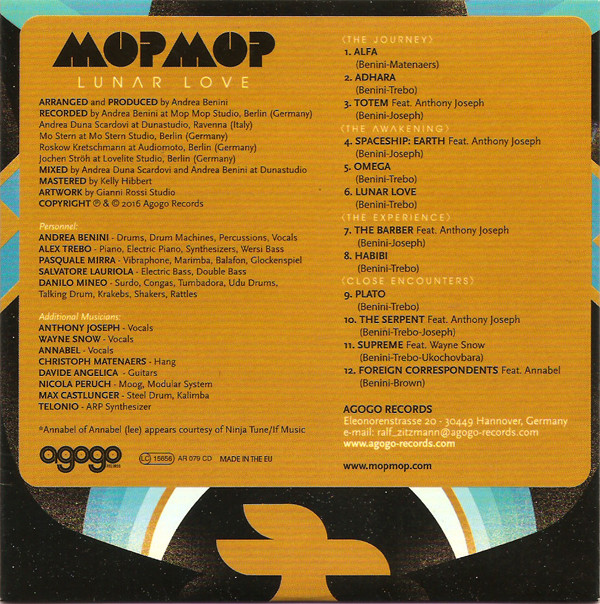
MIAOUX MIAOUX-SCHOOL OF VELOCITY-S.A.Y.A. NOMINEE.
MIAOUX MIAOUX-SCHOOL OF VELOCITY-S.A.Y.A. NOMINEE.
Following up a critically acclaimed debut album is never easy. It never has been, and never will be. That’s why many artists labour long and hard over their sophomore album. In some cases, three years pass by. During this creative struggle, an artist is said to be suffering from second album syndrome. It’s like a musical equivalent of writer’s block. Eventually though, it passes, and the long awaited sophomore album is ready for release.
Often though, by the time the album is completed, music has moved on. That genre of music is yesterday’s sound. In the pursuit of perfection, the artist has become irrelevant. They failed to notice that music was changing, while they were standing still. As a result, their career is over before it’s started; and they became a footnote in musical history, remembered for one critically acclaimed album. While that’s happened numerous times, it certainly didn’t happened to Glasgow based Miaoux Miaoux. Far from it.
Although it’s been three years since Miaoux Miaoux released their debut album Light Of The North in June 2012, it’s just that the man behind Miaoux Miaoux, Julian Corrie has been one of the hardest working men in Scottish music. He’s been playing live and much in demand as a remixer. So, three years passed before Miaoux Miaoux released their much anticipated sophomore album School Of Velocity. Just like Light Of The North, it was released on Glasgow’s premier label Chemikal Underground to widespread critical acclaim. ,
Fast forward to May 2016, and School Of Velocity is in the running for Scotland’s premier music prize, the Scottish Album Of The Year Award. The shortlist of twenty was announced just a few days ago. There were some strange and controversial choices on the shortlist, that left many shaking commentators shaking their head. Only the supposed ‘great and good of Scottish music who picked the shortlist will know why some of the albums made their way onto list. However, School Of Velocity a welcome and worthy addition to the shortlist, and is the latest chapter in Miaoux Miaoux story, which began in 2012.
That’s when Miaoux Miaoux released their much anticipated, debut album Light Of The North. It was released in June 2012, to widespread critical acclaim. Miaoux Miaoux seemed to have found the missing link between Mogwai and New Order. So it’s no surprise, that critics hailed Light Of The North as one of the finest debut albums of 2012. Critics also forecast a great future for Light Of The North. They were seen as one of Scotland’s rising stars.
Record buyers agreed. They too, were also won over by Miaoux Miaoux’s debut album. Light Of The North was a spellbinding, genre hopping musical journey. Seamlessly, Miaoux Miaoux married dance music and indie pop. The finishing touch to this captivating and glossy musical concoction, was a healthy supply of hooks. This ensured that Light Of The North was an irresistible soundtrack to the summer of 2012. Soon, word was spreading about Miaoux Miaoux.
Miaoux Miaoux head out on tour to promote Light Of The North. With his myriad of instruments and effects, Miaoux Miaoux hit the road. Before long, Miaoux Miaoux’s reputation was on the rise. This was helped by some high profile appearances, plus the fact that some high profile DJs were championing Miaoux Miaoux’s music. Meanwhile, other artists were aware of Miaoux Miaoux’s music and Julian Corrie’s skills as a remixer.
Light Of The North opened doors for the man behind Miaoux Miaoux, Julian Corrie. It was like his calling card, and showed just what he was capable of musically.Suddenly, the Glasgow based singer, songwriter, multi-instrumentalist, producer and remixer was being asked to remix other artists.
The first was one of Scottish music’s rising stars, Chvrches. They were just about to release their debut single The Mother We Share in 2012. It was given a Miaoux Miaoux makeover in 2012. Then in 2013, Miaoux Miaoux was asked to remix another Glasgow band.
This time, it was one of Scotland’s biggest bands, Belle and Sebastian. They asked Miaoux Miaoux to remix Your Cover’s Blown. It too, was given a dance-floor friendly sheen. After that, Miaoux Miaoux proved that he was an equal opportunities remixer.
Miaoux Miaoux headed off on a road trip down the M8. His destination was Edinburgh, where Miaoux Miaoux was going to remix a track by the acousto-electronic quartet,Discopolis. The track in question, was their single Zenithobia. It too, was remixed by Miaoux Miaoux. Having worked his magic, yet again, Miaoux Miaoux’s thoughts eventually turned to his sophomore album.
School Of Velocity, Miaoux Miaoux’s sophomore album was, as the man said, a long time coming. Almost three years after the release of Light Of The North, School Of Velocity was released on Glasgow’s premier label, Chemikal Underground. That’s not surprising.
Recording an album like School Of Velocity is, without doubt, a complex affair. Especially considering Miaoux Miaoux a “one man band.” This means Julian Corrie, the man behind Miaoux Miaoux, had to juggle numerous roles. He’s a songwriter, singer, musician, mixer and producer.
Having written the ten tracks, Julian add vocals, played a variety of instruments on School Of Velocity. Luckily, Julian plays a variety of instruments. He’s a talented multi-instrumentalist whose equally at home playing guitar or keyboards. Then there’s the vintage analogue equipment Julian deployed on School Of Velocity. Vintage keyboards, synths, drum machines and effects have been used effectively. They’ve played their part in an album where genres melt into one. The music is melodic, poppy and hook-laden. School Of Velocity is, as you’ll see, is the perfect soundtrack to the summer of 2015.
Launch Loop opens School Of Velocity. Sci-fi sounds provide an understated backdrop before the song explodes into life. There’s a brief nod to Simple Minds’ Up On The Catwalk. It’s a big, bold, gallus Glasgow sound. That’s until the tempo drops and the vocal enters. It’s tender and accompanied by crispy drums and synths that beep and squeak. By then, comparison can be drawn to Scritti Politti. From there, the arrangement veers between a floaty, dreamy and anthemic. It’s a vintage slice of pop perfection from Miaoux Miaoux.
Choppy synths open A Flutter Echo. Soon, thunderous 4/4 beats are added. They’re joined by a vocal that sounds as of it’s been inspired by Paddy McAloon. It’s like Prefab Sprout transported to 2015. As synths bubble and squeak, drums pound and Julian delivers a heartfelt, needy vocal. Later, steel drums and sci-fi synths are added. They’re a welcome addition to this irresistible hands in the air anthem, where indie pop and dance music become one.
Synths set the scene for Julian’s wistful vocal on Star Sickness. As a bass synth and drums interject, a bank of synths add an element of drama. They reflect the pain and hurt in Julian’s vocal. It’s rueful, as he thinks about what he’s lost. Meanwhile, this tale of love lost heads to the dance-floor. Guitars chime, while a bass adds some funky licks. Filters are added, while the arrangement is driven along by the synths and drums. They’re responsible for a trance influence. However, Julian’s vocal is indie pop all the way. Together, they prove a delicious and joyous combination.
Washes of shimmering synths are scene setters as Luxury Discovery unfolds. Soon, drums are added. When Julian’s vocal enters, again, it’s too a roll of drums. Again, there’s a Paddy McAloon influence as Julain delivers a slow, heartfelt, joyful and dramatic vocal. Harmonies augment his vocal, while glistening, elegiac synths and crispy drums frame the vocal. At the breakdown, one wonders if Julian’s taken a wrong turning? He hasn’t. After this clever twist, he continues to combine a combination of drama and joyousness, as arrangement builds to a beautiful, breathtaking crescendo.
School of Velocity sounds like a lost Prefab Sprout track given a makeover by Miaoux Miaoux. Washes of almost hypnotic, glimmering synths are joined by Julian’s tender, hopeful vocal. A rolling bass line sits atop the synths. Its ominous sound provides a contrast to the of the arrangement. Then a journeys round the drum kit adds an element of drama. Ethereal harmonies provide another contrast, before the arrangement explodes into life. Everything has been building up this, and what’s sure to be a crowd pleaser and festival favourite reaches a dramatic ending.
A wash of synths and slow, plodding drums are joined by Julian’s Prince like vocal on Giga Shrug. It’s obvious that Julian is a fan of the Minneapolis born singer. As the arrangement grinds along, banks of synths and drum machines provide an electronic backdrop, as Julian delivers a slow, sultry, vampish vocal.
It’s The Quick sees Julian deploy a vocoder. As he delivers the vocal, a moody, broody, vocoded vocal responds. Meanwhile, 4/4 pounding dance-floor beats and a bass synth combine with futuristic sounding synths. They beep and squeak as they deliver a futuristic language. They’re the perfect accompaniment to Julian’s vocal, on this 21st Century dance track.
Peaks Beyond Peaks sees a complete change of style. There’s almost a Bacharach and David influence. Nearer to home, it’s as if David Scott of The Pearlfishers has influenced Julian’s vocal. As he delivers the tenderest of heartfelt vocals, the arrangement is akin to musical merry-go-round. Indie pop and dance combine before Julian toys with the arrangement. A brief reggae influence can be heard, while sci-fi synths, bounding bass and filtered drums combine. It’s akin to a magical, musical merry-go-round.
There’s a Kraftwerk influence on Unbeatable Slow Machine. Think Man Machine. Industrial and futuristic synths accompany Julian’s defiant monotone vocal. Effects are deployed as the arrangement whirrs and grinds along. Ominously, Julian warns: “you will never win, you will never win, but you keep fighting against the machine.”
Mostly Love, Now closes School of Velocity. Banks of understated synths meander along, setting the scene for Julian’s vocal. Its entrance is accompanied by slow drums and ethereal harmonies. They sit well together, and prove a perfect combination. Later, Julian unleashes his inner rock star, and adds an element of drama to this quite beautiful ballad.
It might have taken Miaoux Miaoux three years to release School of Velocity, the followup to Light Of The North. However, Miaoux Miaoux pickup where they left off on Light Of The North, seamlessly combining indie pop and dance music. To that, elements of eighties pop, electronica, funk, rock and trance are added. There’s also a nod to Kraftwerk, Prefab Sprout and Prince. Nearer, to home, Glasgow’s very own Chvrches, Simple Minds and The Pearlfishers have all influenced Miaoux Miaoux on School of Velocity. Their influence can be heard on this genre hopping musical adventure.
I say adventure, because no two tracks are the same. Granted several tracks cane be described as ballads or dance tracks. However, not all ballads and dance tracks are created equally. Far from it. Each arrangement is different. The building blocks vary from track to track. As a result, when a track unfolds, you never know where it’s heading. Sometimes, School of Velocity is like Forest Gump’s box of chocolates, “you never know what you’re gonna get.” Especially when Miaoux Miaoux throws a curve-ball, and the arrangement heads off in a totally unexpected direction. Very occasionally, one thinks that Miaoux Miaoux has blown it. That’s not the case though. It’s a case of “take a good thing and make it better.” That’s the case on Flutter Echo and School of Velocity. A brief musical detour transforms the tracks and result in two of of Miaoux Miaoux’s finest moments on School of Velocity. They’re not alone though.
School of Velocity oozes quality. Miaoux Miaoux’s long awaited sophomore album, which was recently issued by Chemikal Records, is bound to be part of the soundtrack to the sumner of 2015. Especially the hook-laden anthems. They’re plentiful, and are sure to go down a storm with DJs. Similarly, these anthems will be festival favourites when Miaoux Miaoux plays live. The ballads show another side to Miaoux Miaoux. A reflective, rueful and sometimes hopeful and needy Julian Corrie lays bare his soul. This means there’s something for everything on School of Velocity. Whether it’s indie pop or dance music that’s your bag, then there’s something for everyone on School of Velocity, Miaoux Miaoux’s magical, musical merry-go-round that you won’t want to get off.
MIAOUX MIAOUX-SCHOOL OF VELOCITY–S.A.Y.A. NOMINEE.
RACHEL SERMANNI-TIED TO THE MOON-S.A.Y.A. NOMINEE.
RACHEL SERMANNI-TIED TO THE MOON-S.A.Y.A. NOMINEE.
At this time of year, Scottish musician’s thoughts turn to the most prestigious prize in music, the Scottish Album Of The Year Award. Albums released between April 2015 and March 2016 were eligible for the 2016 Scottish Album Of The Year. However, now only twenty albums remain. The ‘great and good’ of Scottish music have sat in judgement and produced what they believe to be a short-list of the twenty best albums. These twenty albums will be reduced to a shortlist of ten.
The winner will receive the trophy and a cheque for £20,000. The other nine artists on the shortlist, are described as ‘runner-ups’. They received runners-up prizes of £1,000 and a Graduate Design Commission valued at £2,500. This years winner will be announced at the glittering Scottish Album Of The Year Award. There’s only one problem; this year’s event takes place in Paisley. The Grammy’s take place in Los Angeles, but the Scottish Album Of The Year Award takes place in Paisley. One artist who will surely be at the Scottish Album Of The Year Award is Rachel Sermanni, who last year released sophomore her album Tied To The Moon in July 2015.
Rachel Sermanni can’t remember life without music. It has always been there, and has been a constant in her life. This was certainly the case as long as Rachel can remember. Growing up, music provided the soundtrack for Rachel and her siblings. Music also provided Rachel with one of her earliest memories.
Even today, Rachel can vividly remember her father teaching her how to play Twinkle Twinkle Little Star on a penny whistle. Little did Rachel’s father realise, that his younger daughter would embark upon a musical career.
He certainly never realised that on the 7th November 1991. That’s when Rachel Sermanni was born, in Carrbridge, a tiny village in the highlands of Scotland, with a population of 708. Rachel’s mother worked for the N.H.S. and her father was a dog handler for the police. Carrbridge’s newest resident would one day, become its most famous. That was still to come.
As Rachel grew up, music surrounded her. At an early age, her taught her to play the penny whistle. Soon, Rachel and her siblings were singing and even making up songs. Later, Rachel would learn to play the guitar. By then, Rachel was immersing herself into music.
Especially, traditional Scottish music. At school, Rachel heard and performed traditional Scottish music. She enjoying singing in front of an audience, and was a natural performer. It seemed even at an early age the world was Rachel Sermanni’s stage.
Back home, Rachel listened to an eclectic selection of music. Everything from Bob Dylan, Tom Waits and Van Morrison, right through to Eva Cassidy, Joni Mitchell, Bjork and P.J. Harvey. Along with her love of traditional Scottish music, this would shape Rachel as a singer and songwriter.
By the time Rachel was sixteen, she was already writing her own songs. She was already drawing experience from her childhood, the landscape and the vivid dreams she was already having. All this played their part in Rachel’s early songs, one of which made its way onto her debut album, Under Mountains, which was released in 2012. That was five years away. Rachel still had musical apprenticeship to serve.
This resulted in Rachel playing in local pubs. Later, Rachel moved to Glasgow, where she was a familiar face at traditional music nights throughout the city. Rachel was one of many hopefuls who turned up, clutching a guitar. However, Rachel stood out from the rest. All she needed was a break.
It came in 2009. Rachel went to see Mumford and Sons at Ullapool’s Loopallu festival. After they played their set, Rachel discovered them in a local pub. She asked them if they wanted to jam. Later, Rachel and Mumford and Sons were jamming on Ullapool’s beach. This lead Mumford and Sons to invite Rachel to open for them at Dingwalls, in London in 2011. Before that, Rachel headed off on her travels.
A year after her encounter with Mumford and Sons, Rachel travelled to the Middle East in 2010. However, she wasn’t alone. Accompanying her were other Scottish musicians. They were going work on a project where traditional Scottish music and musicians collaborated with their counterparts from Jordan. For Rachel, this was a fascinating insight into another culture, and what happened when two cultures were combined. This experiment was repeated in 2011.
This time, Rachel headed to India, where she embarked upon another collaboration. Her collaboraties were a mixture of tradition Indian musicians and some of the biggest names in Bollywood. Among them, were Bikram Ghosh and Papon Angaraag Mahanta. They toured India with Rachel, and began work on an E.P. which has still to be completed. While this journey to India was one of the highlights of 2011 for Rachel, the biggest highlight had still to come.
It came when Rachel opened for Mumford and Sons at Dingwalls, in London in 2011. This was a far cry from a jam session on Ullapool beach. However, won friends and influenced people that night at Dingwalls, including many within the music industry. Later in 2011, Rachel was touring with Fink. By the end of 2011, Rachel Sermanni was a name on many people’s lips. She was one of the hardest working musicians of 2011.
If 2011 had been a big year for Rachel Sermanni, 2012 surpassed it. Rachel released her debut album Under Mountains in 2012. It reached number twenty-six in Scotland, and number twenty-three on the British Indie charts. Considering Rachel wasn’t signed to one of the bigger indie labels, this was a successful debut album. Her debut album was heard far and wide.
In 2012, Rachel Sermanni made her debut at the Celtic Connection festival in Glasgow. This was just the first of a number of high profile appearances she would make.
Between 2012 and 2015, Rachel Sermanni has toured far and wide. From America and Canada, to Europe and Australia, Rachel has been a familiar face. She has opened for Rumer and Elvis Costello, and played some of the biggest festivals. This includes the Greenman Festival, Cambridge Folk Festival, Orkney Folk Festival, T In the Park, Wickerman, Deershed, Loopallu, Calgary Folk Festival, CMW, Dawson City Music Festival, Interstellar Rodeo, Vancouver Folk Festival, Woodford Folk Festival and Iceland Airwave. It’s no wonder Rachel Sermanni has the reputation as one of the hardest working musicians.
Apart from touring extensively, Rachel Sermanni has also released numerous singles and E.P.s, including The Bothy Sessions, Black Currents, Eggshells, Waltz, The Boatshed Sessions and Everything Changes. Then there’s Rachel’s 2012 debut album Under Mountains, and a live album recorded at the Dawson City Music Festival. However, it’s three long years since Rachel Sermanni last released an album. Back then, she was only twenty-one and had just embarked upon her career as Nu Folk singer.
Three years later, and Rachel Sermanni is back with her sophomore album Tied To The Moon. Considering how busy Rachel has been, it’s amazing she has found time to write ten new tracks. They were inspired by Rachel’s childhood, her experiences as woman, instinct and inhibition. The ten songs are much more poetic and rhythmic. They were recorded by Rachel’s talented band, who made a journey across the water.
With her talented band in tow, Rachel made her way to the beautiful, picturesque Island Of Lewis. What better place could there be to record an album? Especially, with one of the veterans of Scottish music producing Tied To The Moon.
Happily ensconced on the Island Of Lewis, Rachel set about recording ten tracks at Further North Studios. Producing Tied To The Moon was none other than Colin MacLeod, the man behind the Mull Historical Society. He also played guitars and pedal steel. Colin was joined in the rhythm section by Louis Linklater Abbott on drums and percussion, while Gordon Skene played bass and cello. Jane Hepburn played fiddle, while Jennifer Austin played piano, organ, fiddle and added backing vocals. Nicola and Fiona MacLeod aded backing vocals on In This Love. Rachel added backing vocals and played guitar. These ten tracks became Tied To The Moon, which was recently released by Middle Of Nowhere. This long-awaited and much-anticipated album marks a welcome return from Rachel Sermanni, Scotland’s Queen of Nu Folk.
Opening Tied To The Moon is Run. From the opening bars, it’s best described as dramatic. That’s the case from the moment the a guitar shrieks and the rhythm section lock into a tight, moody groove. Rachel meanwhile, delivers a vocal full of disbelief. She can’t quite comprehend what happened the night before: “I have made a mess I know, there is nothing you can throw, last night I was one shadow, trying to kill another.” Soon, there’s a sense of acceptance and later, melancholy in Rachel’s voice that her relationship is over. By then, the rhythm section and atmospheric washes of Hammond organ combine with Rachel’s ethereal vocal. Complimenting her vocal are ethereal, cooing harmonies. So does the hypnotic, moody, broody groove. When combined, they more than whet the listener’s appetite for the rest of Tied To The Moon.
Wine Sweet Wine has a quite different sounds. There’s a much more country tinged sound. It’s almost a case of spright outta Nashville. As a guitar is strummed, the piano is played deliberately and the drums provide the heartbeat. Rachel’s vocal is weary and wistful. She’s just realised that: “I just can’t be with someone, who wants just anyone.” So she has to leave. “I cannot sit on the shelf, while you play with someone else.” As Rachel delivers the lyrics, sadness, frustration and anger well up. Behind her a country tinged arrangement replaces Rachel’s vocal. When Rachel’s vocal returns, the lyrics are still cinematic. Pictures unfold before your eyes, and you find yourself taking sides, and feeling sorry for the woman who has been wronged. It’s portrayed realistically by Rachel, and is like a short story set to music.
A guitar is carefully plucked as Old Ladies Lament unfolds. The arrangement is understated and allows Rachel’s tender, melancholy vocal to take centre-stage. She sings about a child growing old and leaving home for the first time. There’s a sense of sadness in Rachel’s voice. Partly, because the character in the song’s child is leaving home. However, she also realises she’s growing old, and is alone. Later a telling and beautiful line is: “I would do it all again, I’d have my heart be broken.”
Slowly, and deliberately Rachel delivers the introduction to I’ve Got a Girl. Soon, the arrangement grows in power and drama. An electric guitar dominates the arrangement. It’s joined by the rhythm section and organ. At one point the arrangement almost waltzes along. However, the one constant is the drama. Rachel’s vocal is equally dramatic and deliberate. By then, there’s a brief nod to Cabaret. Mostly, though, I’ve Got a Girl sounds as if it belongs on the soundtrack to the new series of Twin Peaks as slowly, deliberately and dramatically, Rachel articulates the lyrics, bringing them to life.
Just like Old Ladies Lament, the arrangement to Don’t Fade has a much more understated sound. It’s obviously been influenced by the folk and traditional music Rachel listened to growing up. As Rachel tenderly and thoughtfully delivers the lyrics, she’s accompanied by a piano and guitar. That’s all that’s needed to frame Rachel’s lyrics. They take pride of place, allowing you to hear truly beautiful lyrics. This includes: “don’t fade before, you reach the shore, I want to see your face.” As Rachel delivers the lyrics, her vocal is truly heartfelt, hopeful and needy.
Tractor has a much more “poppy” sound, and shows another side to Rachel Sermanni. She’s a truly versatile artist, one that’s capable of writing cerebral lyrics. That’s the case here. Rachel’s part poet, poet philosopher. As she delivers an impassioned vocal, behind her, the rhythm section provide a tight groove.
Producer Colin MacLeod unleashes washes of pedal steel. They add an atmospheric hue. Especially, as Rachel delivers lines like: “if you choose, you can paint your own truth,” and “all this living, just to lie down and love.” Poet, philosopher, singer and songwriter, Rachel Sermanni is a truly talented artist, one whose capable of combining social comment and subtle hooks.
Ferryman has a much more traditional sound. It’s obviously been inspired by traditional Scottish music. Accompanied by just a guitar Rachel tenderly paints pictures. Imagery is ever-present. It’s possible to picture the Ferryman, the journey across the water and the lovestruck lovers. However, there’s a twist in the tale. “They knocked hard on the door, boots hard on the floor, and took us down to the shore, told us no more, we could be.” As Rachel’s wistful, heartbroken vocal drops out, it’s replaced by strings. They replicate the melancholy and sadness, before setting the scene for Rachel’s as ponderously she sings: “I asked the old man about crossing the river?”
Briefly, Rachel sounds like Suzanne Vega on Banks Are Broken. Then she slowly she delivers a needy, heartfelt vocal. With just a guitar for company, her vocal becomes wistful, as she sings: “tonight is the last time, I get to hold you fast and fast go the hours.” Then there’s a twist in the tale. The arrangement takes on a country sound, and Colin MacLeod’s vocal enters. In an instant, he becomes Lee Hazlewood to Rachel’s Nancy Sinatra, or more likely, Mark Lanegan to Rachel’s Isobel Campbell. Washes of pedal steel, piano and hypnotic drums joins with the guitar. Occasional bursts of cooing harmonies are added. So is a cello. Everything is added at just the right time by producer Colin MacLeod. He’s also the perfect foil for Rachel, they’re like yin and yang on Banks Are Broken.
Begin is an acoustic ballad. Rachel’s wistful is accompanied by a guitar. Her vocal is heartfelt. Especially as she sings: “do you trust, give you all that I can, if you let me.” Before long there’s a sense of uncertainty in Rachel’s vocal. “I think we’re thinking the same, what are you thinking.” Does he feel what she feels? She’s no longer sure. By then, she’s racked with insecurity and uncertainty. That becomes apparent when Rachel sings: “swim in the lake, we’ll be sinking, diving diving, how to we begin?” As a guitar is played firmly and deliberately and joined by a mandolin. They provide the backdrop for Rachel’s ethereal, cooing, scat on this tale of love, insecurity and uncertainty.
This Love closes Tied To The Moon. It’s a tale of love and betrayal. At first, there’s a sense of hope. Especially as Rachel sings lyrics like: “this love is a blue sky, this love is a sweet tooth.” As Rachel delivers the lyrics, there’s no sense of hope or joy in her vocal. Far from it. She’s been cheated upon. She has betrayal and revenge on her mind. “Revenge is making a comeback,” sings Rachel, “self pity searches for a rope.” However, despite her “making a comeback,” Rachel realises that “This Love is no love at all.” This proves a sobering end to Tied To The Moon, Rachel Sermanni’s long-awaited sophomore album.
Three years have passed since Rachel Sermanni released her debut album Under Mountains in 2012. Since then, Rachel has toured almost non-stop. She’s one of the hardest working singer-songwriters. Rachel Sermanni is also one of the most talented. Her new album Tied To The Moon, which was released on Middle Of Nowhere, is proof of this.
Tied To The Moon is what I would describe as an old school album. It features just ten tracks, and lasts thirty-nine minutes. That’s what albums used to be like, way before the compact disc. Back then, space on a vinyl album was at premium, so an album featured what was an artist’s best work. That’s the case with Tied To The Moon. The ten tracks are variously beautiful, cerebral, cinematic and dramatic. However, cinematic is the perfect description of Tied To The Moon.
On Tied To The Moon, Rachel Sermanni paints pictures with her lyrics. Scenes and scenarios unfold before the listener’s eyes. Characters come to life. Listeners share their sadness, pain and joy. They empathise at their uncertainty and insecurity. Especially, when Rachel sings of heartbreak and betrayal. Her voice breathes life, meaning and emotion into the lyrics. As a result, the characters in Rachel’s songs become real. So does their flaws, and the pain, hope and sadness they experience. Not many singers-songwriters have the ability to do so. Especially an artist who previously, has only released one studio album.
However, Rachel Sermanni is unlike most artists. Although she’s just twenty-four, Rachel is already a talented and accomplished artist. The last four years she’s spent touring, has been time well spent. Rachel has used that time to hone her songs and sound. As a result, she was more than ready to record her sophomore album, Tied To The Moon.
When recording began, Rachel Sermanni brought onboard Colin MacLeod as producer. He brings out the best in Rachel, framing her vocals with arrangements that veer between country, folk, pop and rock. Often, there’s a twist in the tale or a surprise in store. None more so, than on Tractor, which has single written all over it. Other times, Rachel seems to have been inspired by everyone from Bob Dylan, Tom Waits and Van Morrison, right through to Eva Cassidy, Joni Mitchell, Suzanne Vega, Bjork and P.J. Harvey. Their influence can be heard throughout Tied To The Moon. So can the traditional Scottish music Rachel Sermanni grew up listening to. It has influenced and shaped Rachel Sermanni as a singer and songwriter, as she makes the next step on what will surely be the road to stardom.
There’s no doubt about that. Rachel Sermanni is one of the brightest prospects in Scottish music. A great future awaits The Queen of Scottish Nu Folk. Her new album Tied To The Moon showcases a talented and versatile singer-songwriter. Tied To The Mood will introduce Rachel Sermanni to a much wider audience, and will take Rachel Sermanni one more step along the road to stardom.
RACHEL SERMANNI-TIED TO THE MOON-S.A.Y.A. NOMINEE.
SCRATCH MY BACK! PYE BEAT GIRLS 1963-1968.
SCRATCH MY BACK! PYE BEAT GIRLS 1963-1968.
During the swinging sixties, Pye Records and its sister label Piccadilly Records were housed in London’s West End. Both labels had an enviable roster of artists. This included some of the top British female pop singers. Two of the biggest names were Petula Clark and Sandie Shaw. They were enjoying commercial success at home and abroad. However, they were just two of many British female pop singers signed to Pye Records and Piccadilly Records.
Among their other signings were Billie Davis, Sandra Barry, Dana Gillespie, Barbara Ruskin and Sharon Tandy. Then there were groups like The Breakaways, The Satin Bells, The Baker Twins, Jeannie and The Big Guys and Pat Harris and The Blackjacks. All these artists and groups were signed to the Pye Records and Piccadilly labels, and were among the finest purveyors of pop in Britain. They all feature on the Ace Records’ new compilation Scratch My Back! Pye Records Beat Girls 1963-1968.
The twenty-four tracks on Scratch My Back! Pye Records Beat Girls 1963-1968 are walk down memory lane, during the swinging sixties. Listeners are introduced to eclectic selection of pop from familiar faces and new names that were part of the soundtrack to the sixties. They make a welcome return on Scratch My Back! Pye Records Beat Girls 1963-1968, which I’ll pick the highlights of.
Opening Scratch My Back! Pye Records Beat Girls 1963-1968 is Jan Panter’s Scratch My Back. It was released on Pye Records in 1966, just as the psychedelic era was dawning in Britain. Although Scratch My Back was written by Len Vandyke, his lyrics incorporates parts of the children’s nursery rhythm Jack and Jill. They’ve been rewritten, are delivered with a mixture of sass and attitude by Jan Panter. Along with harmonies and horns, they player their part in this glorious slice of fuzz guitar driven freakbeat.
Val McKenna’s career began in 1965 when she was just sixteen. By July 1965, the Whitley Bay born singer was signed to the Piccadilly label and about to release Mixed-Up Shook-Up Girl as a single. On the B-Side was one of Val’s compositions Now That You’ve Made Up Your Mind. It’s something of a hidden gem, and shows that Val was a talented singer and songwriter. Sadly, commercial success eluded Val McKenna and she ended up working as a session singer.
In 1965, Petula Clark was still basking in glow of the success of her worldwide hit Downtown. TheTony Hatch penned single had transformed the fortunes of Petula Clark in 1964. She was already a successful singer when Downtown became a hit across the world. However, Downtown took her career to another level. By 1965, Petula Clark had released several other singles.
This included You’d Better Come Home in 1965 which was released on the Pye Records label. It reached just forty-four in the UK charts. Hidden away on the flip side was Heart, which Petula and Georges Aber cowrote with Tony Hatch. He arranged and conducted this heartfelt ballad, which allows Petula’s vocal to shine, as she combines power and emotion. It’s a reminder of why in the sixties, Petula Clark was regarded as one of Britain’s finest female vocalists.
Another of the great British female vocalists of the sixtes was Sandie Shaw. She released the Chris Andrews penned Run as a single on Pye Records in 1966. Run reached just thirty-two on its release in August 1966. This was disappointing considering the quality of the single. It’s like a kitchen sink drama, with Sandie delivering the lyrics as if she’s experienced them. Her vocal is best described as an outpouring of memories and emotions.
While many of the artists on Scratch My Back! Pye Records Beat Girls 1963-1968 enjoyed long and successful recording careers, Nina Rossi’s career was all too brief. Her career began in her hometown of Bournemouth, where she sang in clubs and hotels. Nita was also a regular in the town’s talent shows. With no sign of a record contract, Nita decided to send a demo to Tom Jones’ manager Gordon Mills.
He realised that Nita had talent, and contacted Piccadilly Records. They signed Nita and she went on to release four singles for Piccadilly Records. This includes the Gordon Mills penned Here I Go Again. On the B-Side was another Gordon Mills’ composition Something To Give. When Here I Go Again was released in 1966, the single flopped. Maybe things would’ve been different if Something To Give had been chosen as a single? It comes complete with a big, orchestrated arrangement which accompanies Nita, as she showcases a heartfelt, hopeful and sometimes needy vocal. Together, they play their part in what’s a hidden pop gem that’s since become a collector’s item.
Before embarking upon a musical career, Sandra Barry had been a star of stage and screen. Her stage debut came when she was four, when she appeared alongside Bud Flanagan of Flanagan and Allen. By the time Sandra was ten, she was offered the chance to head to Hollywood. However, her mother decided that it would be best if she stayed in Britain. Despite this, Sandra went on to appear in film, radio and television. Then in the sixties, Sandra embarked upon a career in music.
Sandra signed to Pye Records, and in 1966, released We Were Lovers (When The Party Began) as a single. This was a cover of Lloyd Price’s oft-covered song. Again, a big, orchestrated arrangement and also harmonies from The Breakaway accompany Sandra’s rueful, hurt-filled vocal. This proves a potent and hook-laden combination, as Sandra Barry gives a familiar song a makeover. Fifty years later, and it’s stood the test of time.
Not many denizens of Essex would christen their daughter after a member of the French royal family. That’s what the Daly’s did, when christened their newly-born daughter Marie-Antoinette. By 1964, Marie-Antoinette was thirteen and had embarked upon a musical career, her name had been shortened to Antoinette. However, Antoinette’s career was short-lived, and lasted just three years and five singles for Piccadilly. Her swan-song was a cover of Tami Lynn’s Why Don’t I Run Away From You? It was released on Piccadilly Records in 1966. Unfortunately, Kiki Dee released a cover of Why Don’t I Run Away From You? the same week. In the battle of the cover versions, Antoinette came second. That’s despite keeping her best single until last.
Dana Gillespie was only sixteen when she signed to Pye Records Records in 1965. Two years later, Dana was preparing to release her third single. The song that had been chosen was a cover of The Hollies’ Pay You Back With Interest. Despite The Hollies setting the bar high, Dana rises to the challenge, and released an irresistibly catchy and melodic cover of Pay You Back With Interest. Since then, Dana Gillespie’s career has blossomed, and she’s released in excess of sixty albums.
The name Dee King might not mean anything to most people. Diane Keen is another thing. She’s been a star of British television since the seventies. However, before that, Dee had a brief musical career.
On her return home from Kenya, Dee got a job with The Ivy League fan club. This resulted in Dee getting the chance to record her one and only single Sally Go Round The Roses. On its release on Piccadilly Records in 1966, the single failed commercially. Those who bought the single, and flipped over to the B-Side It’s So Fine were richly rewarded. It’s So Fine which was written by John Carter and Ken Lewis, is a quite beautiful, tender ballad. It shows another side to the future star of the The Cuckoo Waltz and Rings On Their Fingers.
Before embarking upon a career in music, Glo Macari was a student of the Aida Foster Stage School. By 1965, Gio was signed to Piccadilly Records, and was about to release a cover of Goffin and King’s He Knows I Love Him Too Much. It was arranged by Ivor Raymonde, who was responsible for an arrangement that references Phil Spector’s early sixties sound. Gio’s vocal even sounds as if it belongs on one of the girl groups that Phil Spector produced. Despite the Spector-esque sound, Gio’s cover of He Knows I Love Him Too Much wasn’t a commercial success. However, she went to enjoy a successful career as a songwriter in the seventies, when Gio worked closely with musical impresario Mickey Most.
Julie Grant released fifteen singles for Pye Records. Her tenth single was Up On The Roof, which was released in 1964. By then, Julie was only seventeen. Despite that, Julie was had long been appearing on the stage and screen. Music was a natural progression. Sadly, only two of the singles Julie released charted. This includes Up On The Roof. On the B-Side I Only Care About You which would’ve made a good single. It’s uptempo track with a good hook and a commercial sound. Alas, Up On The Roof was chosen as the single, and only gave Julie a minor hit. It was another case of what might have been.
My final choice from Scratch My Back! Pye Records Beat Girls 1963-1968 is Pat Harris And The Blackjacks’ original version of the Hippy Hippy Shake. It was released on Pye in 1963, but never caught record buyer’s attention. That’s despite having a rawer, more energetic sound than The Swinging Blue Jeans’ cover.
Their cover was released later in 1963, with an almost Beatles-esque arrangement. That’s no surprise. The Swinging Blue Jeans were just one of a number of Merseybeat groups who hoped to follow in the Fab Four’s footsteps. Hippy Hippy Shake went on to give The Swinging Blue Jeans the biggest hit of their career. Very few of the people that bought the single, were even aware of Pat Harris And The Blackjacks’ original version. That’s until the recent release of Scratch My Back! Pye Records Beat Girls 1963-1968 by Ace Records.
Scratch My Back! Pye Records Beat Girls 1963-1968 is a reminder of the quality of music the Pye and Piccadilly Records were releasing during the swinging sixties. Both labels had an enviable roster of artists. This included some of the top British female pop singers. Two of the biggest names were Petula Clark and Sandie Shaw. They were enjoying commercial success at home and abroad. However, there were many more talented female pop singers signed to Pye Records and Piccadilly Records.
Among their other signings were Billie Davis, Sandra Barry, Dana Gillespie, Barbara Ruskin and Sharon Tandy. That’s not forgetting groups like The Breakaways, The Satin Bells, The Baker Twins, Jeannie and The Big Guys and Pat Harris and The Blackjacks. Just like Petula Clark and Sandie Show, they all feature on Scratch My Back! Pye Records Beat Girls 1963-1968.
Sadly, not all these artists and groups enjoyed the commercial success their talent deserved. Sometimes, commercial success was fleeting for artists. Other times, commercial success eluded artists. This lead to careers that’s were all too brief. The songs on Scratch My Back! Pye Records Beat Girls 1963-1968 are mixture of hits, near misses and B-Sides. Each of these songs have one thing in common…quality. Even the B-Sides ooze quality, and rival and surpass the quality of the single. These hidden gems are just among the twenty-four reasons to add Ace Records’ new compilation Scratch My Back! Pye Records Beat Girls 1963-1968 to your collection.
SCRATCH MY BACK! PYE BEAT GIRLS 1963-1968.
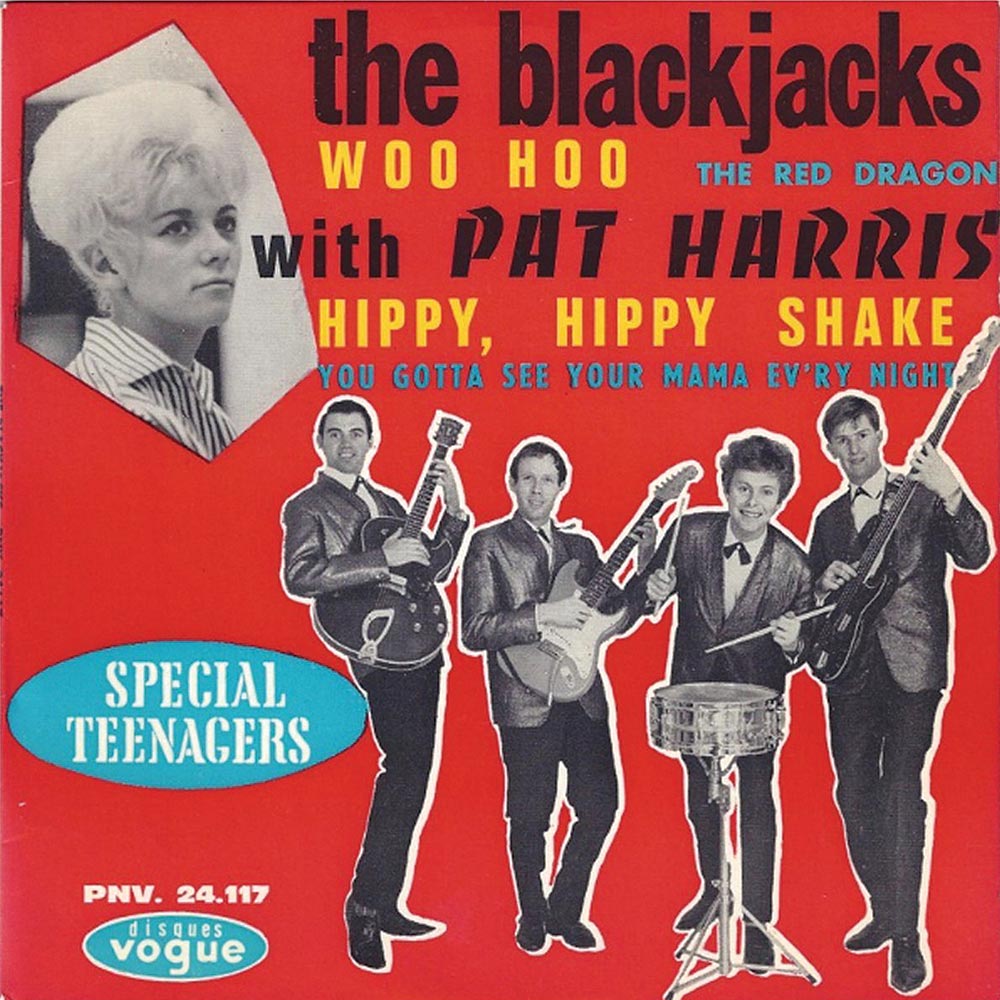


LANIAKEA-A POT OF POWDERED NETTLES.
LANIAKEA-A POT OF POWDERED NETTLES.
It was Charlie Rich who once famously sang: “who knows what goes on behind closed doors?” Everyone has probably thought that, as they make their way across an unfamiliar city. Often though, the weary traveller won’t even see the doors. Instead, doors are hidden away by privet hedges. Privacy in suburbia is valued. Especially it seems, in cities like London. However, what many people forget, is the behind ever door there’s a story that’s waiting to be told.
That was the case behind the door of 147 Tower Gardens Road, London. At first glance it looked like an ordinary suburban house. It was hidden away behind a privet hedge, while the back garden was an exotic wilderness where a riot of wildflowers were allowed to run free. However, 147 Tower Gardens Road was home to artist, illustrator, musician and beekeeper Ian Johnstone, until his death in the spring of 2015. It was a home that he was happy to share with others.
This included many people who had never met Ian Johnstone before. They had arrived in London, with hopes and dreams. Often these hopes and dreams hadn’t just been dashed, but left in tatters. For these people 147 Tower Gardens Road was akin to a sanctuary. Some of the people who passed through the doors of 147 Tower Gardens had been in relationships that hadn’t worked out. Other times, it was people who were priced out of the city’s property market. Sometimes, the people who arrived at 147 Tower Gardens Road were musicians.
Among the musicians who arrived at 147 Tower Gardens Road were Daniel O’Sullivan and Alexander Tucker. Daniel O’Sullivan recorded many of the sounds that found their way onto albums by Æthenor, Mothlite and Ulver. Their 2011 album The Norwegian National Opera, which featured an appearance by Ian Johnstone, was mixed at “Johnstone House.” Ian Johnstone was also responsible for the artwork on Mothlite’s 2012 album Dark Age. By then, Alexander Tucker had called 147 Tower Gardens home, as he and Daniel O’Sullivan began to record as Grumbling Fur. 147 Tower Gardens Road was a cultural hive of activity, and Ian Johnstone is remembered as a generous, witty and welcoming host.
Sadly, in the spring of 2015, Ian Johnstone passed away. For all his friends and former residents of 147 Tower Gardens Road, it was a sad day. They had so many pleasant memories of a place that was a welcome refuge from the slings and arrows of outrageous fortunes of London. 147 Tower Gardens Road had been an oasis of calm.
Gradually, though, the contents of this oasis of calm were gradually packed in cardboard boxes and packing cases. It took several attempts, before the myriad of curios and object d’art were safely packed away. It was around this time that Daniel O’Sullivan was visited by an old friend, Massimo Pupillo.
The pair had been friends for several years. They first met when Massimo Pupillo’s group Zu shared the bill with Guapo, another project that Daniel O’Sullivan had been involved with. Straight away, the pair realised they had much in common. They both had a shared passion for the creative process. So when Massimo wasn’t busy with Zu, he joined Daniel in another group The Ex.
Since joining The Ex, Daniel and Massimo have been fortunate to collaborate with an eclectic selection of artists. They’ve improvised with artists of the calibre of Peter Brötzmann, Oren Ambarchi and FM Einheit. That’s despite spending six months of each year at his home in Peru. However, the rest of the year, Massimo spends making music.
This includes the music that can be found on Laniakea’s recently released album A Pot Of Powdered Nettles. It was recently released the House Of Mythology label, and is essentially a homage to, and celebration of the life of the late Ian Johnstone.
Before the death of Ian Johnstone, Daniel O’Sullivan and François Testory had planned to work on a piece of choreography that had the working title The Black Egg. However, following the death of Ian Johnstone grief gave way to thoughts of music, and a way to celebrate life and work of Ian Johnstone. What better people to create this music, than two of Ian Johnstone’s friends, Daniel O’Sullivan and Massimo Pupillo?
So work began on what became Laniakea’s debut album A Pot Of Powdered Nettles. It’s described as an album featuring a quartet of four cosmic hymns. They were written by Daniel O’Sullivan and Massimo Pupillo. However, the inspiration for these cosmic hymns came from a variety of sources.
Among the music that’s influenced Laniakea on A Pot Of Powdered Nettles, is the music of Hildegard von Bingen and jazz pianist Alice Coltrane. That’s not forgetting the monolithic bass sounds of Godflesh. This ensures that Laniakea are able to evoke and replicate the sense of an eternal vibration that signifies the living spirit in perpetuity. Laniakea do this on the four cosmic hymns on A Pot Of Powdered Nettle. They were recorded using a myriad of instruments.
As recording began, the two multi-instrumentalists began to set out their array of traditional instruments and technology. A bamboo flute, bass, cello, chimes, finger bells, viola and violin represented the traditional instruments. They were joined by an Elka Crescendo 303 organ, an M-Tron and a Jen Electronics SX1000. Even a dictaphone and an Uber 4400 portable tape recorder were used to capture some of the sounds that found their way onto A Pot Of Powdered Nettles. They’re part of Laniakea’s attempt to capture the sounds, life and energy of 147 Tower Gardens Road. It was a quiet, forgotten backwater of the dog eat dog city that is London. Sadly, it’s no more.
Gone will be Ian Johnstone’s collection of curios and rest of his worldly possessions from 147 Tower Gardens Road. His old house will most likely receive a makeover, and be stripped of its character and down at heel charm. Even order will be restored to a back garden that was once was home to riot of wildflowers. That will likely please the rest of little people who live in this anonymous corner of London. They’ll no longer be able to complain of the overgrown back garden, or the cast of colourful characters who made Tower Gardens Road a more interesting place to live. Sadly, order will be restored to Tower Gardens Road. However, the many people who once called 147 Tower Gardens Road home will never forget Ian Johnstone, who is remember on A Pot Of Powdered Nettles.
The Contagious Magick Of The Superabundance opens A Pot Of Powdered Nettles. Waves of braying synths sound, and are joined by drones, while an ethereal vocal adds a contrast. There’s a spiritual quality to the vocal. By now, the arrangement is variously mesmeric, melodic and cinematic. What sounds like sirens and rainfall can heard. This adds to the cinematic sound. Meanwhile, a rumbling bass makes its presence felt. Later, synths quiver and shimmer, before dark, dramatic strings sweep in. Still, a siren sounds and the cinematic sound builds. This coincides with a slight increase in tempo and ergo drama. Distant otherworldly sounds can be heard, as the drama builds. All the time, the cinematic music paints pictures. This is fitting, given Ian Johnston was an artist. He would’ve enjoyed illustrating the music that he heard. As an organ adds a gothic sound, washes of dark, dramatic music slowly unfold. They’ve been inspired by classical, avant-garde and industrial music. However, the music is still melodic, mesmeric, elegiac, cinematic and captivating.
The sound of an aeroplane and wind blowing opens The Sky Is An Egg. Soon, sci-fi sounds and distant drones can be heard as the arrangement builds. Just like the previous track, there’s a cinematic sound to the arrangement. As the wind continues to gust, an organ plays and the arrangement builds and the drama grows. Especially when humanoid vocals delivers the cerebral and thoughtful lyrics. Sonically, there’s more than a nod to Kraftwerk with the vocoded vocal. When it drops out, the arrangement lumbers along, sci-fi and otherworldly sounds taking centre-stage. Sometimes, there’s a Pink Floyd influence. Other times, the Berlin School influences Laniakea. They become sonic adventurers, in this ruminative space symphony.
Cooing, elegiac and ethereal vocals soar above the arrangement to Zone In Parallel Rose. Meanwhile, an engine splutters into life, and what sounds like a boat slowly makes its escape. Still the voices soar, as jagged, icy synths play slowly and deliberately. They add to the cinematic sound. Later, ghostly humanoid vocals join the cinematic sounding arrangement. Again, the vocals are best described as Kraftwerk-esque. Still, the boat continues to beat a hasty retreat as the drama builds. As a deliberate gothic organ drones, the vocals are tinged with emotion as the track heads towards its crescendo. All that’s left is the memory of a captivating mixture of music and theatre.
Calcite, a sixteen minute epic closes A Pot Of Powdered Nettles. From the distance, the melancholy arrangement drones, bubbles, jingles and jangles. It’s as if Laniakea are taking the listener on a journey to some distant land. During this journey, a myriad of disparate sounds play their part in an arrangement that’s variously wistful, ethereal and mesmeric. Listen carefully, and strings, chimes, finger bells and what sounds like a brass band playing can be heard. There’s even an industrial sound to the arrangement. Ethereal and otherworldly sounds can be heard as the arrangement builds. So can a recording of a child’s voice on an answer phone. Meanwhile, washes of synths drone and as the child says “goodbye” the arrangement buzzes and quakes, before taking on ethereal and industrial sounds. From there, the arrangement soars, an organ, synths and ethereal vocals unite. They become an alternative choir, who pay homage to the memory of Ian Johnstone. Then with just over a minute, the arrangement dissipates. All that’s left are a series of interrelated sounds. They’re meant to portray death and rebirth. It’s a poignant and thoughtful sounding way to end an album that celebrates the life of Ian Johnstone, and his life at 147 Tower Gardens Road.
For many people, Ian Johnstone’s home at 147 Tower Gardens Road became their home. It was a place where people could go when relationships came to an end, or people were no longer able to keep paying the exorbitant London rents. 147 Tower Gardens Road was the polar opposite. Although slightly down at heel, it was a place where people were safe, made friends and sometimes, made music.
Daniel O’Sullivan made music at 147 Tower Gardens Road. It became a makeshift recording studio. Ian Johnstone even featured on Ulver’s 2011 album The Norwegian National Opera; and was also responsible for the artwork on Mothlite’s 2012 album Dark Age. Even up until his death, Ian Johnstone was planning to make music. Sadly, he never got the opportunity to make that one final album. Instead, Daniel O’Sullivan and Massimo Pupillo recorded an album that celebrated the life of Ian Johnstone.
This was Laniakea’s debut album A Pot Of Powdered Nettles, which was recently released by the House Of Mythology label. It features four cosmic hymns, that are best described as cerebral, cinematic, dramatic, ethereal, melodic and mesmeric. To do that, Laniakea combined elements of ambient, avant-garde, Berlin School, electronica, experimental, Krautrock and psychedelia. These genres, plus the influence of Alice Coltrane, Godflesh, Kraftwerk, Pink Floyd and Hildegard von Bingen have all played their part in the sound and success of A Pot Of Powdered Nettles. This can’t have been easy.
Laniakea set out to create, evoke and replicate the sense of an eternal vibration that signifies the living spirit in perpetuity. They’ve managed to do so. This is the thread that runs through the album. Then as Calcite, which closes A Pot Of Powdered Nettles, draws to a close, the arrangement becomes understated. What to many people will sound like a series of disparate sounds. They’re not though. Instead, they signify both death and rebirth, and the sprit continuing to live on. This is how A Pot Of Powdered Nettles, Laniakea’s album of four cosmic hymns closes. It’s a powerful and thought-provoking way to end Laniakea’s debut album. However, it’s one that will provoke debate.
The subject of religion, and specifically life after death is one that has always divided the opinion of scholars. That is still the case. Even in Tower Gardens Road, some of the residents will have their doubts about reincarnation. I certainly do. However, I’ve no doubt that Laniakea’s debut album A Pot Of Powdered Nettles is a fitting celebration of the life of artist and musician Ian Johnstone. A Pot Of Powdered Nettles is cerebral and thought-provoking album from Laniakea.
LANIAKEA-A POT OF POWDERED NETTLES.
BLUESIN’ BY THE BAYOU-I’M NOT JIVIN’.
BLUESIN’ BY THE BAYOU-I’M NOT JIVIN’.
It’s no exaggeration to describe Louisiana as a musical hotbed. For over a century, it has given the world blues, cajun, creole, Dixieland, swamp pop and zydeco. That’s not all. Many blues, country, jazz and rock artists were born and bred in Louisiana. Despite its enviable musical pedigree, for too long, Louisiana was overlooked by compilers.
Instead, compilers headed to Chicago, Detroit, Nashville, New York and Philly. They became favourite destinations for compilers of blues, country, R&B and soul compilations. Gradually, though, compilers realised that across America, there was a treasure trove of musical awaiting discovery.
Soon, compilers were searching from states and cities across America. However, still, Louisiana was being overlooked by compilers. That’s despite having a treasure trove of musical delights awaiting discovery. Fortunately, Ian Saddler was about introduce the wider world to the Louisiana’s musical heritage.
Over the last few years, Ian Saddler has compiled thirteen volumes of his By The Bayou series for Ace Records. His latest compilation is Bluesin’ By The Bayou-I’m Not Jivin’. It’s the third compilation of Louisiana blues, and comes complete with side serving of zydeco. There’s contributions from Henry Gray, Lightnin’ Slim, Slim Harpo, Lazy Lester, Lonesome Sundown, Boozoo Chavis, Blue Charlie Morris, Jimmy Anderson, Chris Kenner and Johnny Sonnier. Many of these artists will be familiar to veterans of the By The Bayou series. However, there’s also a few surprises in store, with rarities and unreleased tracks featuring on Bluesin’ By The Bayou-I’m Not Jivin’. So without further ado, let’s see what Bluesin’ By The Bayou-I’m Not Jivin’ has in store?
Blues man Henry Gray opens Bluesin’ By The Bayou-I’m Not Jivin’ with I’m A Lucky Man. This was a track that was recorded in 1970 at JD Miller’s studio. By then, Henry Grey was forty-five, and a part-time musician. It hadn’t always been like this.
After leaving the US Army in the early fifties, Henry Grey settled in Chicago, which was then the blues capital of America. That was where he met Big Maceo Merriweather, who introduced Henry to other blues musicians. By 1956, Henry became Howlin’ Wolf’s pianist, accompanied the legendary blues man for the next twelve years. However, when Henry’s father died he had to return home to Alsen, to help run the family business. So during the week, Henry worked as a roofer, and played the blues at the weekend. Occasionally, Henry recorded a few tracks, including I’m A Lucky Man and Cold Chills, which made its debut on the 1985 compilation Louisiana Swamp Blues Volume 2. Both tracks showcase a hugely talented pianist and singer, whose one of the blues’ best kept secrets.
Otis Hicks was christened Otis Hicks. However, when JD Miller heard him play guitar, Lightnin’ Slim was born. He went on to become one of the best blues guitarists of his generation. That’s why he’s featured on several volumes of the Bluesin’ By The Bayou series. This time around, his contribution is a previously unreleased alternate take of Miss Fannie Brown. It’s a reminder of one the great blues guitarists in his prime, while he delivers a vocal that’s laden in innuendo. Adding the finishing touch to the track is a harmonica that’s probably played by his brother-in-law Slim Harpo. They often worked together, and formed a potent partnership.
When blues aficionados talk about harmonica players, Slim Harpo’s name is sure to come up. He’s regarded as one of the best. So it’s fitting that he features twice times on Bluesin’ By The Bayou-I’m Not Jivin’. His first contribution is Things Gonna Change, a slow, moody blues which features a hurt filled vocal and a masterclass on harmonica. Things Gonna Change made its debut on Flyright Records’ 1976 compilation Slim Harpo Knew The Blues.
Slim Harpo’s second contribution is his 1972 single Wild About My Baby. It was released on JD Miller’s Blues Unlimited label, and is the perfect showcase for Slim’s harmonica. As the song bursts into life, Slim’s harmonica drives the arrangement along. That’s until a lovestruck Slim confesses I’m “Wild About My Baby.” It’s another reminder of one of the great blues harmonica players.
Another great harmonica player is Lazy Lester, who also contributes two tracks to Bluesin’ By The Bayou-I’m Not Jivin’. His first contribution is an unreleased take of I Told My Little Woman, which Lazy Lester recorded for Excello. It’s a tale of heartbreak where Lazy Lester sounds as if he’s lived and survived the lyrics. The same can be said of Patrol Wagon, which originally, featured on Poor Boy Blues, a compilation of Lazy Lester’s music released in 1979, by Flyright Records.
Guitarist Lonesome Sundown is another veteran of the By The Bayou series. His recording career began in the mid-fifties, but by 1969 Lonesome Sundown was signed to Excello and working with legendary Louisiana producer JD Miller. They cut I’m A Mojo Man, which originally, featured on his 1969 eponymous debut album. Seven years later, in 1976, Flyright Records released Bought Me A Ticket, a compilation of tracks that Lonesome Sundown recorded with JD Miller. Another of the tracks on Bought Me A Ticket was No Use To Worry. This is another tale of betrayal. With a slow, moody arrangement it’s a song that epitomises everything that’s good about the blues.
Nowadays, Boozoo Chavis is regarded as one of the founding fathers of zydeco.This was a genre of music created by French speaking Creoles in South-West Louisiana. Boozoo Chavis’ career began in 1954, when he sang and played his accordion. Right up until his death in 2001, aged seventy-six, Boozoo Chavis was playing live. He also enjoyed a successful recording career.
In 1955, Boozoo Chavis released Forty-One Days as a single on the Folk-Star label. Tucked away on the B-Side, was the ballad Bye Bye Catin. It features Boozoo Chavis as his career is about to blossom. The other track, Oh Yeah She’s Gone, is from much later in Boozoo Chavis career. Originally, it was recorded for Flyright Records, but was never released. That’s a great shame, as it showcases a charismatic and confident performer who thoroughly enjoys making music,
When Wayne Shuler first heard Elton Anderson play in 1958, he was a member of the Sid Lawrence band. Wayne arranged for Elton Anderson to record at his father’s studio. Wayne’s father was none other than producer Eddie Shuler, a legendary figure in the Louisiana music scene.
At Eddie Shuler’s studio, guitarist Elton Anderson recorded Shed So Many Tears and Roll On Train. They were leased to the Vin label, and marked the start of Elton Anderson’s career. He went on to release a string of singles. Sadly, none of them were particularly successful. However, not everything Elton Anderson recorded were released. Neither, I Want To Talk To You (Baby) nor Prove Me Guilty were released, and make a welcome debut on Bluesin’ By The Bayou-I’m Not Jivin’. They’re the perfect introduction to another artist who never enjoyed the success his talent deserved…Elton Anderson.
Music was in the Garlow family’s blood. Clarence Garlow’s father had been a musician. So it was no surprise when Clarence Garlow followed in his father’s footsteps. By 1955, Clarence Garlow was about to release I Feel Like Calling You on the Folk-Star label. It’s slow and sultry with a needy vocal. Sadly, I Feel Like Calling You wasn’t a commercial success, and by 1956 Clarence called time on his recording career. He continued to play live, and divided his time between playing live and DJ-ing. By the early sixties, Clarence decided to concentrate on DJ-ing, and turned his back on playing live. However, I Feel Like Calling You is a reminder of another charismatic and talented artist, Clarence Garlow.
Clifton Chenier is another artist who pioneered zydeco. Just like Boozoo Chavis, Clifton Chenier played accordion and sang. His first contribution is Everybody Calls Me Crazy, a previously unreleased track. Night And Day My Love featured on Zydeco Blues, a compilation released in 1976 by Fylright Records. It’s a track where the blues influence in zydeco shines through. As a result, it’s a track could’ve only been recorded in one state..Louisiana.
The artist that closes Bluesin’ By The Bayou-I’m Not Jivin’, is harmonica player Jimmy Anderson. He worked extensively with producer JD Miller, and produced Baby Let’s Burn and Frankie And Johnny. Both tracks featured on Flyright Records’ 1988 Baton Rouge Harmonica compilation. For many people, this compilation introduced them to Jimmy Anderson. Hopefully, Bluesin’ By The Bayou-I’m Not Jivin’ introduces a new generation to Jimmy Anderson, and all the artists on the compilation.
The twenty-eight tracks on Bluesin’ By The Bayou-I’m Not Jivin’ are a tantalising taste of Louisiana’s rich musical heritage. Just like previous volumes in By The Bayou series, familiar faces from previous volumes of the By The Bayou series sit next to newcomers. Similarly, singles, album tracks, unreleased tracks and hidden gems rub shoulders on Bluesin’ By The Bayou-I’m Not Jivin’. They’ve all one thing in common, their quality.
From the first volume in the By The Bayou series, Ian Saddler has dug deeper than previous compilers. This has paid off. Now the By The Bayou series is one of Ace Records’ longest running and most successful series. When Bluesin’ By The Bayou-I’m Not Jivin’ was recently released by Ace Records, it became the thirteenth instalment in the series. Given the quality of music on Bluesin’ By The Bayou-I’m Not Jivin’, that’s not surprising. It’s one of the best instalments in this long running and successful series. If Ian Saddler continues to find music of the quality of that on Bluesin’ By The Bayou-I’m Not Jivin’, then the By The Bayou series looks like it’ll run and run. Let’s hope so
BLUESIN’ BY THE BAYOU-I’M NOTJIVIN’.
NICOLETTE LARSON-NICOLETTE/IN THE NICK OF TIME/RADIOLAND.
NICOLETTE LARSON-NICOLETTE/IN THE NICK OF TIME/RADIOLAND.
Although Nicolette Larson was born in Helena, Montana in 1952, growing up, she led something of a nomadic existence. This couldn’t be helped. Her father worked for the US Treasury, and was often transferred to other towns and cities. By the time Nicolette graduated high school, the Larson family were living in Kansas City, Missouri. Next stop for Nicolette was the University Of Missouri.
Nicolette time at the University Of Missouri was short. She spent only three semesters at University before deciding academia wasn’t for her. Instead, Nicolette and took a variety of dead end jobs. She waited tables and experienced the nine to five drudgery of working in an office. Eventually, Nicolette Larson decided to follow her dream, and pursue a career in music.
This took time, determination and persistence and dogged determination. However, in 1978 Nicolette Larson released her debut album Nicolette on Warner Bros. Along with 1979s In The Nick Of Time and 1980s Radioland, these three albums have been reissued by BGO Records as a newly remastered double album. They’re a fitting reminder of a truly talented artist, Nicolette Larson.
Having decided to embark upon a career in music, Nicolette Larson moved from Missouri. Eventually, she settled in San Francisco, which had a thriving music scene. That had been the case since the birth of rock ’n’ roll. Nicolette’s first job in San Francisco, was in one of the city’s many record stores. In her spare time, Nicolette volunteered at the Golden Gate Country Bluegrass Festival.
As she watched the artists perform at the Golden Gate Country Bluegrass Festival, Nicolette became even more determined to become a singer. So much so, that she was willing to travel to Canada to make her debut opening for vocalist Eric Anderson in Vancouver, British Columbia. Buoyed by having made her professional debut as a singer, Nicolette returned home, and began looking for work as a singer.
Fortunately, Hoyt Axton was looking for backing singers to join his band, Hoyt Axton and The Bananna Band. They were due to open for Joan Baez on her 1975 Diamonds and Rust tour. Nicolette passed the audition, and joined the tour. However, in 1975, Hoyt Axton was also producing country rock band Commander Cody and His Lost Planet Airmen’s album Tales From The Ozone. He was looking for singers to add backing vocals.
Nicolette and Guthrie Thomas fitted the bill, and they both made her debut on Tales From The Ozone. It was released in 1975, and was just the first of a number of artists Nicolette Larson worked with. Often Nicolette worked with Guthrie Thomas, other times she worked alone.
Having worked with Hoyt Axton and Guy Clark in 1976, soon word was spreading about this new backing vocalist Nicolette Larson. She worked with Billy Joe Shaver, Gary Stewart, Jesse Colin Young, Jesse Winchester Mary Kay Place and Rodney Crowell. Nicolette recorded another album with Commander Cody and His Lost Planet Airmen. However, in 1977 Nicolette got the opportunity to work with two of the biggest names in music.
The first was Grammy Award winning singer-songwriter Emmylou Harris. She was about to record her 1977 album Luxury Liner, and brought Nicolette onboard to sing backing vocals. Her finest moment on the album was Hello Stranger, where Nicolette features prominently and plays a starring role. During the recording sessions for Luxury Liner, Nicolette met Linda Ronstadt and the two women became firm friends. This resulted in Nicolette getting the opportunity of a lifetime.
One day, Neil Young phoned Linda Ronstadt to ask if she could recommend a female vocalist to sing on what became his American Stars ’N’ Bars album. Little did Linda Ronstadt know, that she was the third person Neil Young had asked that question. Just like the first two, Linda Ronstadt replied “Nicolette Larson.” That made Neil Young’s mind up, and Nicolette Larson got the call to head to his ranch and cut vocals for American Stars ’N’ Bars.
Joining Nicolette Larson for the American Stars ’N’ Bars’ sessions, was Linda Ronstadt. They harmonised, while Neil Young laid down the vocals and played guitar. However, when Stars ’N’ Bars was released, Nicolette and Linda Ronstadt were billed as The Bullets. Only one of The Bullets would feature on Neil Young’s next album.
In November 1977, Neil Young was recording Comes A Time in Nashville. Nicolette was asked to join what was an all-star cast. She contributed harmonies on eight of the ten tracks. Comes A Time was released in October 1978, and would play an important part in Nicolette’s future.
Before that, Nicolette continued to work as a backing vocalist. 1978 started well for Nicolette, when Emmylou Harris’ Quarter Moon in a Ten Cent Town album reached number three in the US Billboard 100, and was certified gold. Nicolette also added harmonies to albums by Marcia Ball, Norton Buffalo and Rodney Crowell. Neil Young’s Comes A Time was released in October 1978. However, the most successful album Nicolette worked on was The Doobie Brothers’ Minute By Minute. She had added harmonies on two tracks. These tracks were part of a number one album that was certified triple platinum and won four Grammy Awards. However, by the time Minute By Minute was released on 1st December 1978, Nicolette Larson’s career had begun.
By then, Nicolette Larson had signed to the country division of Warner Bros. Nicolette only came to the attention of the executives at Warner Bros. after she had worked with Commander Cody and His Lost Planet Airmen and Neil Young. However, once they realised that Nicolette Larson was a talented artist with huge potential, Warner Bros. wasted no time in signing her to their country division. They then paired Nicolette Larson with a top producer Ted Templeman.
Nicolette Larson had worked with Ted Templeman before, on The Doobie Brothers’ album Little By Little. He was already one of the most successful producers of the late-sixties and seventies. He had worked with Van Morrison, Little Feat, The Doobie Brothers, Captain Beefheart, Montrose, The Beau Brummels and Carly Simon. Ted Templeman next assignment was producing Nicolette Larson’s debut album Nicolette.
Nicolette.
Having signed to Warner Bros, work began on Nicolette Larson’s debut album Nicolette. The ten tracks that were chosen for the album, were all cover versions. Nicolette Larson wasn’t known as a songwriter. So it was a case of choosing songs that would suit Nicolette’s voice.
This included Neil Young’s Lotta Love; Jesse Winchester’s Rhumba Girl; Sam Cooke’s You Send Me; Lauren Wood’s Can’t Get Away From You; Bill Payne’s Give a Little; Adam Mitchell’s French Waltz and Bob McDill’s Come Early Mornin’. Other tracks included Bob Hillard and Burt Bacharach; Holland, Dozier, Holland’s Baby Don’t You Do It and Ira and Adam Louvin’s Angels Rejoiced. Closing Nicolette would be a cover of Last in Love penned by Gren Frey and J.D. Souther. These tracks were recorded with an all-star band.
When it came to recording Nicolette, a huge cast of musicians and backing vocalists were involved in the recording. This included musicians who Nicolette had previously worked with. Both Linda Rondstadt and Michael McDonald added backing vocals on Nicolette. Meanwhile, members of two the most successful bands of the seventies made guest appearances.
Little Feat had been one of the biggest names in Southern Rock during the seventies. Despite this, their guitarists Paul Barrere and Fred Tackett plus keyboardist Bill Payne found time to play on Nicolette. So did The Doobie Brothers’ guitarist Patrick Simmons was joined by their live drummer Bobby LaKind. Eddie Van Halen even laid down a guitar solo on Can’t Get Away From You. Other musicians included bassist Klaus Voormann; guitarists Herb Pedersen and Memphis Horns’ saxophonist Andrew Love. He was part of the horn section, while Jimmie Haskell arranged the strings. Ted Templeman took charge of production, and Nicolette was completed in plenty of time to be released in the autumn of 1978.
The release of Nicolette was scheduled for September 29th 1978. Before that, critics had their say on Nicolette. The reviews of Nicolette were all positive, with Nicolette Larson’s blend of pop, rock, soul, country and folk proving popular amongst critics. Critical acclaim accompanied the release of Nicolette.
It reached number fifteen in the US Billboard 200 and number one in the Canadian charts. This resulted in gold discs in America and Canada. That wasn’t the end of the commercial success.
Lotta Love reached number eight on the US Billboard 100 and number one on the US Billboard’s Adult Contemporary chart. Across the border in Canada, Lotta Love reached number four, and number one in the Adult Contemporary chart. The followup to Lotta Love, Rhumba Girl reached forty-seven in the US Billboard 100 and thirty-eight on the US Billboard’s Adult Contemporary chart. In Canada, Rhumba Girl reached fifteen and number four in the Adult Contemporary charts. The final single from Nicolette, Give A Little reached number nineteen in the US Billboard’s Adult Contemporary charts, For Nicolette Larson, a gold certified album and three hit singles proved the perfect start to her solo career. Looking back, that’s no surprise.
Nicolette featured a carefully considered selection of songs. This was the case from Nicolette’s folk rock take on Lotta Love, via her country-tinged cover of Rhumba Girl to the needy, soulful version of You Send Me. Can’t Get Away From You with its gospel tinged harmonies allows Nicolette to cut loose, and showcase her versatility. Mexican Divorce then becomes a wistful country ballad. Holland, Dozier, Holland’s Baby, Don’t You Do It is totally transformed, and takes on a much more grownup, sultry sound. After this, it’s all change.
One of the most beautiful songs is Give A Little, which us A.O.R. ballad. This reinforces Nicolette’s versatility. She seems equally comfortable singing A.O.R. as she does country, folk, pop and rock. Not many artists were as versatile. Proof of this is Angels Rejoiced, with its authentic country sound, where Nicolette’s vocal takes centre-stage. French Waltz is another tender ballad, which just like Angels Rejoiced, has a slow, understated arrangement. Nicolette seamlessly switches between English and French as she delivers the lyrics. The final song on Nicolette was Last In Love, another heart-wrenching ballad. Nicolette’s vocal is akin to a confessional, as strings and a piano accompany her. It’s a beautiful and moving song, that whets the listener’s appetite for her sophomore album.

In The Nick Of Time.
For In The Nick Of Time, Ted Templeman returned to produce the album. Ten tracks were chosen, including Just in the Nick of Time which Nicolette cowrote with Ted Templeman and Lauren Wood. She had contributed Can’t Get Away from You to Nicolette. This time around, two more of her compositions, Breaking Too Many Hearts and Fallen featured on In The Nick Of Time. Making a reappearance were Holland, Dozier, Holland, with Back in My Arms. The rest of the tracks were also from talented songwriters.
Lieber and Stoller cowrote Dancin’ Jones with John Sembello and Ralph Dino.. Michael McDonald and B.J. Cook Foster cowrote Let Me Go, Love; while Richard Torrance, John Haeny penned Rio de Janeiro Blue. Other tracks Bobby Troup’s Daddy; Karla Bonoff’s Isn’t It Always Love and Lowell George’s Trouble. Just like Nicolette, In The Nick Of Time featured a band featuring some top musicians.
At the core of Nicolette’s band for the recording of In The Nick Of Time, were Little Feat’s guitarist Paul Barrere and keyboardist Bill Payne. They were joined by The Doobie Brothers’ live drummer Bobby LaKind, who added percussion. Making guest appearances were The Memphis Horns; guitarist Ronnie Montrose; keyboardist Van Dyke Parks and Michael McDonald who duetted with Nicolette on Let Me Go, Love. This glittering array of musical talent joined Nicolette and producer Ted Templeman in recording In The Nick Of Time. However, could and would it match the commercial success and critical acclaim of Nicolette?
That was never going to be easy. Nicolette had received critically acclaimed reviews, and was certified gold. Throughout Nicolette, her enthusiasm is infectious. It was as if she was determined to grasp this opportunity with both hands. That was the case, as she brought each song to life, breathing meaning into the lyrics. However, the reviews of In The Nick Of Time weren’t as positive.
Partly, this was because music was changing, and so were the critics. A new breed of cynical, gunslinger critics turned their guns on any type of music that was remotely establishment sounding. This included progressive rock, classic rock and even singer-songwriters like Nicolette Larson. Many albums didn’t stand a chance, and weren’t judged on their merits. Instead, the critic’s prejudice affected their judgement. However, the reviews didn’t bode well for the release of In The Nick Of Time.
On the release of In The Nick Of Time, the album stalled at forty-seven in the US Billboard 200, and seventy-one in Canada. There were no gold discs this time around. Neither the lead single Dancin’ Jones nor Back in My Arms charted. It was a disappointing time for Nicolette. However, was In The Nick Of Time was an album that deserved to fare much better?
Dancin’ Jones opens In The Nick Of Time, is an uptempo dance track, that comes complete with rasping horns. Despite being very different from the music on her debut album, Nicolette embraces this stylistic change and does so with aplomb. She does so on Just In The Nick Of Time, another dance track where Nicolette becomes a strutting diva. That however, isn’t the end of the dance tracks. Breaking Too Many Hearts and Back In My Arms are both soulful dance tracks. With gospel tinged harmonies for company, Nicolette continues to embrace this new dance-floor friendly sound. However, this new sound tells only part of the story of In The Nick Of Time.
Michael McDonald joins Nicolette on the ballad Let Me Go, Love. The pair duet on what’s a smooth slice of soulful music. It’s followed by Rio De Janeiro Blue which has been covered by a number of artists. Here, Ted Templeman is responsible for the jazz-tinged arrangement; while Nicolette’s vocal is heartfelt and soulful. The same can be said of the hopeful ballads Fallen and Isn’t It Always Love? Daddy which was penned by Bobby Troup, takes on a jazzy, theatrical sound, and we hear another side of Nicolette Larsson. Closing In The Nick Of Time was Lowell George’s Trouble, which becomes a quite beautiful, reflective ballad. Nicolette had kept one of the best until last.
Looking back at In The Nick Of Time, one can’t help but wonder if someone at Warner Bros. decided that Nicolette should widen her musical horizons? It’s a very different album from Nicolette. Especially with the addition of four dance-floor friendly tracks. This isn’t surprising. Disco was still popular when the album was recorded. However, by July 1979, disco was a musical pariah. Stylistically, the other six tracks were much more like the music on Nicolette.
Some of the best tracks on In The Nick Of Time were the ballads, soulful songs and jazz-tinged tracks. Having said that, the more uptempo dance tracks are well produced and performed. They’ve the same quality as the other songs on In The Nick Of Time. The only problem was, this wasn’t what people who bought Nicolette expected. They wanted another album of A.O.R, country, folk, pop and rock. When record buyers realised that In The Nick Of Time was a quite different album from Nicolette, it was a case of walk on by. After just two albums, Nicolette’s career was at a crossroads.
Radioland.
Following the disappointing performance of In The Nick Of Time, work began on Radioland. Ted Templeman was retained to produce Radioland. It featured nine songs, including the Andrew Kastner penned How Can We Go On and Straight From The Heart. Andrew Kastner also wrote When You Come Around with Larry John McNally and Nicolette. Lauren Wood, who contributed to Nicolette’s two previous albums, wrote Been Gone Too Long. Other songwriters who had contributed songs to Nicolette’s two previous albums included Adam Mitchell who wrote Fool For Love and the late Lowell George who penned Long Distance Love. The other songs included Allen Toussaint’s Tears, Tears And More Tears; Sumner Merings’ Radioland and Annie McLoone’s Ooo-Eee. These songs became the album that could make or break Nicolette Larson’s career…Radioland.
When work began on Radioland, many of the same musicians that worked on Nicolette Larson’s first two albums were present. Little Feat’s guitarist Paul Barrere and Bill Payne who this time around, played synths. They were joined by The Doobie Brothers’ guitarist Patrick Simmons and their live drummer Bobby LaKind, who added percussion. Making a guest appearance was Linda Ronstad who added backing vocals. A rhythm section of drummer Rick Shlosser and bassist Tiran Porter, who were top session musicians, provided Radioland’s heartbeat. Just like Nicolette’s two previous albums, Ted Templeman took charge of production. Little did he know it would be for the last time.
Reviews of Radioland were mainly positive, with critics much more impressed by the change in sound. Stylistically, it was closer to Nicolette Larson’s debut album. Despite this, when Radioland was released in 1980, the album stalled at sixty-two in the US Billboard 200, and failed to chart in Canada. It was a familiar story with the singles Ooo-Eee, When You Come Around and Radioland. None of the singles troubled the charts. This was hugely disappointing for Nicolette and Ted Templeman. Indeed, for Ted Templeman it was the last time he worked with Nicolette Larson. His swan-song was Radioland.
The title-track opens Radioland, and is an uptempo track that comes complete with eighties synths. There’s even a brief nod to Teena Marie. However, on Ooo-Eee it’s all change. A blistering guitar ushers in Nicolette’s vocal. Accompanied by harmonies, Nicolette delivers a vocal that’s a mixture of power, emotion and soulfulness. How Can We Go On? is a wistful mid-tempo ballad that’s much more like the music on Nicolette. The quality continues on When You Come Around, another tender, hopeful and dreamy ballad. After this, it’s all change.
Nicolette’s cover of Allen Toussaint Tears, Tears And More Tears is a fusion of jazz, funk and soul. It features a vocal powerhouse from Nicolette, who continues to showcase her versatility. This continues on Straight From The Heart, where Nicolette delivers a tender, but impassioned and rueful vocal. Equally rueful, but hopeful is Nicolette’s vocal on Been Gone Too Long. Just like on In The Nick Of Time, Nicolette finishes with a Lowell George song, Long Distance Love. She’s kept the best until last, as she breathes new life and aided and abetted by Billy Payne on keyboards, breathes meaning into the what’s a beautiful paean.

Sadly, despite the quality of music on Radioland, the album wasn’t a commercial success. Music was continuing to change, and albums by singer-songwriters were no longer as popular. Even when they were as versatile and talented as Nicolette Larson. She could seamlessly switch between musical genres, and did so on Radioland. That had been the case since her career began in 1978 with the release of Nicolette.
Since then, she had showcased her versatility on In The Nick Of Time in 1979 and then 1980s Radioland. Whether it was A.O.R, country, folk, pop or rock, Nicolette Larson was equally comfortable. She wasn’t averse to delivering dance tracks. It seemed that Nicolette Larson was a truly versatile singer. Despite this, only her debut album Nicolette found a wider audience.
Maybe Nicolette Larson would’ve enjoyed prolonged success if those who were advising her hadn’t encouraged her to change tack. It seems In The Nick Of Time, with its excursions into dance music alienated her audience. When this happens, it was difficult to win her former fans back.
And so it proved. Although Nicolette Larson released another four albums, she never reached the heights of her debut album Nicolette. In wasn’t just the most successful album of Nicolette Larson’s career, but the best album of her seven album and ten year recording career. Indeed, the best albums of Nicolette Larson’s career are Nicolette, In The Nick Of Time and Radioland. These three albums have been reissued by BGO Records as a newly remastered double album. The sound quality is stunning, and is a fitting reminder of a truly talented artist, Nicolette Larson. Sadly, her career was cut tragically sort.
Nicolette Larson died on December 16th 1997, aged just forty-five. That day, music lost a truly talented singer who could’ve and should’ve a long and successful career. Sadly, that wasn’t to be. However, Nicolette, In The Nick Of Time and Radioland are a reminder of Nicolette Larson, a talented and versatile vocalist who could breath life, meaning and emotion into a song.
NICOLETTE LARSON-NICOLETTE/IN THE NICK OF TIME/RADIOLAND.

MAJA S.K. RATKJE-CREPUSCULAR HOUR.
MAJA S.K. RATKJE-CREPUSCULAR HOUR.
By the time Maja S. K. Ratkje graduated from the Norwegian Academy of Music in 2000, the twenty-seven year old had already won one of the most prestigious awards in Norwegian music, an Edvardprisen. This came in 1999, when Waves 11b won an Edvardprisen in the contemporary music minor work category. This was the perfect start to her nascent career.
Maja’s recording career had begun in 1999, when improv quartet Spunk released their debut album Det Eneste Jeg Vet Er At Det Ikke Er En Støvsuger in 1999. Back then, Maja was still studying for her diploma in composition at the Norwegian Academy of Music in Oslo. However, by the time Maja graduated, she was already thinking of her musical future.
A year later in 2001, Spunk released their next album Filtered Through Friends. Just like their debut album, Filtered Through Friends was heralded a groundbreaking album. Later in 2001, Maja won another prestigious award, the Arne Nordheims Composer Prize. Maja’s star was in the ascendancy.
And so it proved. 2002 was an important year in Maja’s career. Not only did Spunk release their third album Den Øverste Toppen På En Blåmalt Flaggstang, but Maja released her debut solo album Voice. It was released on Rune Grammofon, who recently released Maja S. K. Ratkje new album Crepuscular Hour. It’s one of the most ambitious albums of Maja’s long and illustrious career.
Later in 2002, formed noise duo Fe-Mail with Hild Sofie Tafjord. Fe-mail and eleased their debut album Syklubb Fra Hælvete. It was a low profile release, with just 500 vinyl copies of the album pressed. However, by 2004 Syklubb Fra Hælvete was released on CD in America by Important Records.
2004 would prove to be another important year in Maja’s career. Fe-Mail returned with their sophomore album All Men Are Pigs. It featured another leading light of the Norwegian experimental music scene, Lasse Marhaug. The result was a captivating collaboration. The same cane be said of another album Maja released in 2004.
Already, Maja was collaborating with other artists. She had featured on the album Sinus Seduction, which was released in 2002. Two years later, in 2004, Maja released Majaap, which was her first collaboration with Dutch composer and sound poet Jaap Blonk. By then, Maja had won the second Edvardprisen of her career, when No Title Performance and Sparkling Water won the open category. For Maja, was further recognition that she was one of Norwegian music’s most innovative composers, musicians and performers.
Buoyed by having won her second Edvardprisen in 2004, Maja’s career continued apace. She released Post-Human Identities, her second collaboration with Jaap Blonk in 2005. Then in November 2005, Spunk returned after a three year break with their fourth album En Aldeles Forferdelig Sykdom. It was a welcome return from the improv quartet. En Aldeles Forferdelig Sykdom was a reminder of an exciting and innovative group. Equally innovative was Maja’s sophomore solo album, which was released in 2006.
For Maja, 2006 proved to be one of the busiest years of her career. Fe-Mail, who released their third album Bixter Toad. Then later in 2006, Maja released Ballads, her collaboration with John Hegre. However, one of the most anticipated albums of 2006 was Maja’s sophomore albium Adventura Anatomica. It was a cerebral, challenging and groundbreaking fusion of abstract, avant-garde, experimental and noise. Adventura Anatomica proved to be worth the four year wait.
There was no four year wait for Maja’s third album. Instead, Telp was released in 2007, and was the start of a four year period where Maja released an album each year. River Mouth Echo was released in 2008, with Cyborgic following in 2009 and Danse Macabre in 2010. During this period, the only side project Maja was involved with, was Kantarell, Spunk’s fifth album. It would be another four years before Spunk returned.
Over the next few years, Maja collaborated with a variety of artists. She collaborated with the ensemble Poing on the 2011 album Watch Auf. Then as 2012 dawned, the album Treasure Hunt was released in January. It was a collaboration between Ikue Mori, Simon Balestrazzi, Sylvie Courvoisier, Alessandro Olla and Maja. However, in 2013 a project that began in 2008 came to fruition.
This was the album Janus, which Joachim Montessuis and Maja had been collaborating on since 2008. It wasn’t until 2013 that the album was complete, and released. Janus was one of the most ambitious albums Maja had been involved in. Experimental mouth music, sonic poetry and improvised electronics were combined on Janus. However, it wasn’t the only collaboration Maja released during 2013.
Her other collaboration was Scrumptious Sabotage. It was a collaboration between Maja and Ikue Mori. They had collaborated as part of a collective on the album Treasure Hunt in 2012. Following the Treasure Hunt project, Ikue Mori and Maja began work on Scrumptious Sabotage. It was released to critical acclaim in 2013. The following year, featured another collaboration, and a comeback.
Maja’s next collaboration came in 2014, when she released Maja S. K. Ratkje In Dialogue With Eugeniusz Rudnik. This album of Musique Concrète was released to critical acclaim, and further reinforced Maja’s reputation as a musical pioneer. That included the music she released with Spunk.
Five years after Spunk released their last album, they returned in 2014 with not one, but two albums. The first was their studio album Adventura Botanica. It was followed by Live In Molde, where Spunk were joined by French double bassist, vocalist, and composer Joëlle Léandre. She had involved in the European improv scene since for over thirty years, and released her debut album Taxi in 1982. Since then, Joëlle Léandre had released over one hundred albums, including countless collaboration. Live In Molde was just the latest. Maja had a long way to go before she caught up with Joëlle Léandre.
Maja made a start in July 2015, when Celadon was released. It was another collaboration. This time, Maja was joined by Jon Wesseltoft, Camille Norment and Per Gisle Galåen. Celadon was an album of avant-garde music where a quartet of sonic pioneers pushed musical boundaries to their limits. The resultant album was released to critical acclaim, and hailed as a truly ambitious album. So would an album Maja released in 2016.
As Maja prepared to release her first solo album for six years, a collaboration she had recorded in 2013 with Saka was released. Rasaka was released in February 2016, and was billed as Saka with Maja S. K. Ratkje. However, the next album Maja S. K. Ratkje released, saw her take the star billing.
That’s no surprise. Crepuscular Hour is one of the most ambitious projects that Maja S. K. Ratkje has been involved with. It was inspired by the phenomena of crepuscular rays, where rays of sunlight stream through gaps in clouds or any number of other obstacles. Having discovered and investigated the phenomena of crepuscular rays, Maja S. K. Ratkje set about writing Crepuscular Hour, which would be performed by a rather unorthodox lineup of three choirs, three pairs of noise musicians and a church organ.
Crepuscular Hour was performed at the concert at the Huddersfield Town Hall. The performance featured RNCM Chamber Choir, the University Of Huddersfield Chamber Choir and The 24 Choir. They were joined by Antoine Chessex, Hild Sofie Tafjord, Lasse Marhaug, Mark Durgan, Nils Henrik Asheim, Phil Julian and Stian Westerhus and The 24. While this one hour performance took place, Aideen Malone took charge of an impressive light installation. However, there was one major difference in the way Crepuscular Hour was performed.
When Crepuscular Hour is performed, the noise musicians and choir surround the audience. They’re accompanied by the unmistakable sound of a church organ. It adds to the drama and plays an important part in Crepuscular Hour’s impressive sound.
Along with the noise musicians and choir, the organ produces a sound that’s variously impressive, dramatic and intense to ruminative, mesmeric and hypnotic. The listener is drawn in, and soon, is spellbound at music that becomes dramatic and intense. Sometimes, the best way to describe the music is ethereal and elegiac. Other times the music takes on a spiritual quality. That’s not surprising.
The texts that are used in the recording of Crepuscular Hour, have been taken from the Nag Hammadi Library. This was discovered in Egypt in 1945. and is a collection that comprises thirteen ancient books which feature in excess of fifty texts. These texts proved hugely important, and resulted in scholars reexamining early Christian history. However, nearly seventy years later, these texts would play an important part in Crepuscular Hour.
As the performance of Crepuscular Hour takes place, the listener reflects on music that’s thoughtful, cerebral and occasionally, challenging. However, for much of the time, Crepuscular Hour has an inherent beauty. There’s a serenity to music that’s ethereal, elegiac and has a spiritual quality. Always though, the music on Crepuscular Hour is captivating, ambitious and innovative as the choirs combine with the noise musicians who push musical boundaries. The result is an album that’s a sonic and visual feast.
Earlier, I said that Rune Grammofon’s recent release of Crepuscular Hour was a double album. The first disc is a CD, while the second disc is a DVD, which features a recording of Crepuscular Hour. It was recorded on 20th November 2012, at the Huddersfield Musical Festival. This was only the second time The Crepuscular Hour was performed. The premiere took place at the prestigious Ultima Festival in Oslo in 2010. However, when Crepuscular Hour was premiered, the performance wasn’t being recorded, with a view to releasing it as a double album.
Everything had to go to plan when Crepuscular Hour was performed at the concert at the Huddersfield Town Hall. The performance began at 10pm, and fortunately, everything went to plan. This sonic and visual feast features on the DVD.
As Crepuscular Hour plays, the audience were encouraged to walk around and experience the light being filtered between the various obstacles and musicians in Huddersfield Town Hall. This meant that the audience were able to experience firsthand the phenomena of crepuscular rays. The result is an impressive, captivating and mesmeric experience. It’s truly memorable, and one that hopefully Maja S. K. Ratkje will decide to revisit.
Crepuscular Hour is a project that deserves to be heard and seen by a much wider audience. However, putting on such an event is expensive and complex. Even finding musicians and choirs capable of performing Crepuscular Hour isn’t easy. Everyone involved in Crepuscular Hour was hugely talented, and determined to make the project work. However, taking Crepuscular Hour to a wider audience would be expensive and logistical nightmare.
Fortunately, Crepuscular Hour was recorded and filmed at the Huddersfield Music Festival in 2012. Four years later, and Crepuscular Hour can be enjoyed by a much wider audience. That’s thanks to Rune Grammofon, who released this lovingly curated double album. It’s a welcome reminder of Maja S. K. Ratkje’s truly ambitious and innovative multi media project Crepuscular Hour.
MAJA S.K. RATKJE-CREPUSCULAR HOUR.
MAINSTREAM MODERN SOUL 1969-1976.
MAINSTREAM MODERN SOUL 1969-1976.
By 1970, Bob Shad was a veteran of the New York music scene. His career began in the forties, when he was a session musician. Bob made it his business to know everyone within the New York music scene. He knew everyone that mattered. Whether it was Dizzy Gillespie, Charlie Parker or Coleman Hawkins, Bob knew them. There was a reason for this. Bob Shad was looking to the future.
Bob Shad didn’t want to remain a session player. The role of musical hired gun wasn’t for Bob. He had ambition and saw the bigger picture. Soon, Bob Shad was working as a producer in post-war New York. Mostly, Bob was producing R&B. This was just the next step in Bob’s game-plan.
In 1948, Bob founded his first label Sittin’ In With. He was inspired to do this because of his love of jazz. This resulted in Bob discovering the blues. With his portable tape recorder, Bob Shad headed South and taped some of the greatest names in blues music. Lightnin’ Hopkins, Memphis Slim, Big Bill Broonzy and Smokey Hogg. Having recorded one blues player, they would tell Bob about another. So he crisscrossed the South taping blues players. Mostly, these singles appeared on his own labels.
Somehow, Bob still found time to freelance. Some of the artists he discovered were released on other labels. This includes Eddie “Cleanhead” Vinson and Savannah Churchill. While these records sold in vast volumes, Bob didn’t make much money. It taught him an important lesson. That was only to release music on his own labels.
Despite founding a series of labels during the early fifties, Bob agreed to work full-time for Mercury Records. Still, Bob founded a series of labels. This included the Castle, Harlem, Jackson, Jade, Jax and Spirituals’ labels. He realised the importance of having separate labels for separate genres of music. Bob realised that when record buyers saw a label, they had to know what type of music it would release. This was the case throughout his career.
By 1958 had tired of being a company man, and decided to focus entirely on his own labels. Bob Shad founded further labels, including Shad, Time and Warner. Then in 1959, Bob founded Brent Records which for eight years, was Bob Shad’s soul label. Between April 1959 and October 1967, Brent released seventy-five singles. However, midway through this, in 1964, Bob Shad released a new label Mainstream Records.
When Bob founded Mainstream Records in 1964, it was originally a jazz label, which mainly released albums and a few singles. However, by 1965, rock was king and Bob Shad decided that Mainstream Records should release a wider range of music. This included rock. For the next five years, Mainstream Records’ new roster proved popular and profitable. That was until 1970, that was no longer the case. So Bob decided to relaunch Mainstream Records.
The newly relaunched Mainstream Records would feature a newly designed label and would release just jazz. Mostly, Bob intended to return to releasing mostly albums, with the occasional single. However, Bob had a criteria for the albums he was willing to release. He was going to only release what he saw as traditional jazz albums. Bob didn’t want to release albums where synths and electronics featured. This was unrealistic given that fusion’s popularity was on the rise. So it wasn’t surprising that this new policy didn’t last long, and Mainstream Records began to release soul and jazz.
This was no surprise. By then, the there had been a blurring of the lines between what was soul and jazz. Even critics and record buyers were confused. However, this blurring of the lines resulted in Mainstream Records’ musical policy changing, and the label releasing a much wider selection of music. Suddenly, Mainstream Records were releasing singles and albums by Linda Perry, Randolph Brown, The Dramatics, Words Of Wisdom, Calvin Arnold, J.G. Lewis, McArthur, Alice Clark, The Steptones, Randolph Brown and Sarah Vaughan. They all feature on Mainstream Modern Soul 1969-1976, which was recently released by Kent Dance, an imprint of Ace Records. Mainstream Modern Soul 1969-1976 features a mixture of old friends, new faces and hidden gems. These hidden gems include the trio of newly unreleased tracks. Indeed, it’s an unreleased track that opens Mainstream Modern Soul 1969-1976.
Originally, Linda Perry started off singing Southern Soul. By 1973, Linda had signed to Mainstream Records. She features three times on Mainstream Modern Soul 1969-1976. Her first contribution is I Cant Give You Up, the first of two previously unreleased tracks. It was penned by Rose Marie McCoy and Linda Miller, and features a defiant vocal powerhouse from Linda. Soulful and funky, it seems a missed opportunity that Why I Cant Give You Up wasn’t released as a single. The same can be said of Aint Nobody Gonna Make Me (Turn My Back On My Baby). It’s another unreleased track, that was penned by Rose Marie McCoy and Linda Miller with Bobby Williams. Again, Linda’s vocal is mixture of defiance, power, emotion and soulfulness.
Linda’s third and final contribution is It’s All In The Back Of Me Now. Rose Marie McCoy and Linda Miller cowrote the song with Linda, and in 1974, was the flip-side to the single It’s All In The Back Of Me Now. This was the followup to I Need Somebody, which gave Linda a minor R&B hit, when it reached fifty-four in the US R&B charts. Stylistically, Everyone Has Someone is very different. Uptempo, joyous and dance-floor friendly it’s a three minutes of musical magic.
When Randolph Brown was signed to Stax imprint Volt Records, he was known as Randy Brown. He was a member of The Newcomers, but left in 1971. Three years later, in 1974, Randolph recorded for Truth, another imprint of Stax. However, by the time Randolph met the songwriting and production partnership of Carl Smith and David Weatherspoon in 1975, Stax was no more. It had filed for bankruptcy. This was how Randy Brown found himself signed to Mainstream Records.
His first single was It Ain’t Like It Used To Be, which was was written, arranged and produced by Carl Smith and David Weatherspoon. It was then released in 1975 on the IX Chains label. Randy’s wistful vocal that harks back to the America of his youth, and plays its part in a dance-floor friendly anthem. So do lush strings, stabs of horns and harmonies. Randy’s other contribution, is I’m On Sick Leave, the B-Side Take A Few More Steps, which was released on IX Chains in 1976. I’m On Sick Leave features a return to Randy’s Southern roots, as he delivers a vocal that’s full of hurt and heartbreak.
Another group who had made the switch from Stax to Mainstream Records were The Dramatics. They had enjoyed critical acclaim and commercial success at Stax. This includes a number one single, In The Rain in 1972. Three years later, in 1975, the lineup of The Dramatics that signed to Mainstream Records was much changed. Only two of the original members remained. Despite this, No Rebate On Love gave The Dramatics’ a hit single on Mainstream Records. It was penned by Jimmie Abston and Stella Petty, while Leonard Jones took charge of production. He’s responsible for a Philly inspired dance track which gave The Dramatics a single that reached twenty-six in the US R&B charts.
Forty years ago, in 1976, Words Of Wisdom released their one and only single You’re A Friend Of Mine on IX Chains. It was written by Charles Amos and Richie Clark, who are responsible for lyrics that are full of social comment. Richie Clark takes charge of production, and is responsible for a delicious and timeless slice of the sweetest soul
Pittsburgh born Johnny Louis Gilliam had been around since he released his first single for Bo-Mar in 1965, and since then, had never stayed anywhere long. He moved between labels in the search of that elusive hit. After ten years of trying, Johnny decided to take drastic action, and changed his name to J.G. Lewis. Incredibly, this worked, when J.G. Lewis released Let The Music Play on IX Chains in 1975. It gave J.G. Lewis a minor hit. Now he began to work on the followup.
For the followup, What Am I Gonna Do was chosen. It was penned by J.G. Lewis under his ‘real’ name and released in 1976. The production style is similar Barry White’s, as J.G. Lewis delivers a vocal that’s full of hurt and despair. Despite the quality of the single, it wasn’t a commercial success, and J.G. Lewis was dropped by IX Chains. Although What Am I Gonna Do was J.G. Lewis’ last single for IX Chains, an unreleased track, I’m The One Who Loves You was found in the vaults. It has a much more Southern Soul influence. Especially when gospel tinged harmonies accompany J.G. Lewis. He delivers a heartfelt vocal that’s reminiscent of James Carr, and reminds you just how talented J.G. Lewis was.
Charles Beverly’s recording career began in 1975, when he released Stop And Think A Minute for IX Chains. It was penned by Charles Johnson, Carlos Munro and Willie Schofield; while T. Johnson produced Stop And Think A Minute. It’s a Philly style ballad, complete with flourishes of strings. They’re reminiscent of those found on Bettye Swann’s When The Game Is Played On You. Sadly, Stop And Think A Minute never enjoyed the same success as When The Game Is Played On You, and nowadays, is something of a hidden gem.
In 1972, Brooklyn born Alice Clark released her eponymous debut album on Mainstream Records. It featured the Bobby Hebb penned Don’t You Care, which was produced by Bob Shad. Ernie Wilkins arranged and conducts the orchestra on Don’t You Care, which features a powerhouse of a vocal that’s a mixture frustration and despair. It’s a tantalising taste of Alice Clark eponymous debut album, which sadly, was the only album she released.
Jimmie Abston and Stella Petty wrote Let The People Talk for The Steptones. It was released on IX Chains Records in 1976. Let The People Talk was arranged by Jimmy Roach and produced by Leonard Jones. They add swathes of lush strings and flourishes of harp to the Philly inspired arrangement. Meanwhile, The Steptones sound as if they should’ve been signed to Philadelphia International Records, as they showcase their considerable skills. Sadly, it was all for nothing, as the single flopped and The Steptones’ search for a hit single continued.
In 1976, Willie Lester and Rodney Brown wrote and produced You Are The Spice Of My Life for Nia Johnson. It was released on Mainstream Records in 1976, but failed commercially. Tucked away on the B-Side was Plain Out of Luck. It’s funky, soulful and dance-floor friendly.
Sarah Vaughan’s I Need You More (Than Ever Now) closes Mainstream Modern Soul 1969-1976. It was penned by Gregory Holley, Rose Marie McCoy and Linda Miller and arranged by Gene Page. When I Need You More (Than Ever Now) was released on Mainstream Records in 1974, it reached forty-five on the US R&B charts. This was totally unexpected. Given the quality of a vocal that’s heartfelt, needy and soulful; plus Gene Page’s arrangement where strings and harmonies play leading roles, it’s a surprising that I Need You More (Than Ever Now) wasn’t more successful. It’s one of the highlights of Mainstream Modern Soul 1969-1976, and is welcome reminder of Bob Shad’s Mainstream Records released.
Indeed, Mainstream Modern Soul 1969-1976, which was recently released by Kent Dance, an imprint of Ace Records, is a tantalising taste of the music that Mainstream Records released during a seven year period. Much of that music is timeless, and has stood the test of time. It’s soulful, funky and would still fill a dance-floor. Beautiful ballads full of hurt and heartache sit side-by-side with joyous, irresistible dance tracks. That is not surprising.
Bob Shad didn’t hesitate to employ top quality songwriters, musicians, arrangers and producers. Especially when he believed in an artist. In such cases, he brought onboard arrangers like Wade Marcus and Gene Page. Sadly, often the singles and albums Mainstream Records released, didn’t enjoy the commercial success they deserved. Part of the problem was, that Mainstream Records was a small fish in a big pond.
Major labels, and independent labels funded by majors had much bigger budgets, to promote and distribute their releases. Bob Shad was fighting a losing battle. Still, he continued his search for talented artists that might bring Mainstream Records that elusive hit single, during a period that soul music was enjoying a resurgence in popularity.
Since the early seventies, Hi and Stax in Memphis, and Philadelphia International Records were enjoying commercial success and critical acclaim. Sadly, Mainstream Records didn’t make the leap and join them at soul’s top table. That’s despite releasing music that’s timeless, and has stood the test of time. Sadly, that music never found the winder audience it deserved. Unlike Hi, Stax and Philadelphia International Records there were neither number ones nor million sellers. Instead, the Mainstream Records’ story is a case of what might have been. The label that had been relaunched in 1970 closed its doors in 1978.
By the time Tamara Shad relaunched Mainstream Records in the early nineties, Bob Shad had passed away on March 13th 1985. Bob Shad was just sixty-five, but had enjoyed a long and successful career. He had founded numerous labels, including Mainstream Records in 1964.
The second chapter in the Mainstream Records’ story is told on Mainstream Modern Soul 1969-1976. There’s twenty-four timeless tracks on Mainstream Modern Soul 1969-1976, which documents the most soulful period in Mainstream Records’ history.
MAINSTREAM MODERN SOUL 1969-1976.






CAUSA SUI-RETURN TO SKY-VINYL EDITON.
CAUSA SUI-RETURN TO SKY-VINYL EDITON.
Nowadays, not many groups manage to release eleven albums in eleven years. Instead, they spend two or three years ‘perfecting’ their future Magnus Opus. It’s changed days indeed.
Back in the early seventies, bands were often contracted to release two album each year. Groups like Yes rose to the challenge, and released The Yes Album and Fragile in 1971. The same year, Emerson, Lake and Palmer released Tarkus and Pictures At An Exhibition. Meanwhile The Faces released Long Player and A Nod’s As Good As A Wink…To A Blind Horse. Sadly, the days of releasing two albums a year are long gone. Or are they?
Danish rockers Causa Sui have released eleven albums between 2005 and 2016. Eight albums in eleven years is a pretty good average. Causa Sui’s latest album is Return To Sky, which was recently released vinyl on El Paraiso Records. It’s the latest chapter in story that began in twelve years ago.
The Causa Sui began in 2004, when five friends decided to form a band in Odense, in Southern Denmark. Originally, the lineup featured drummer Jakob Skøtt, bassist Jess Kahr, guitarist Jonas Munk and vocalist Kaspar Markus. This was the lineup that featured on Causa Sui’s debut album.
Causa Sui.
Just a year after forming Causa Sui, the band released their eponymous debut album on Nasoni Records, in December 2005. Causa Sui was an album of heavy psychedelia and stoner rock. It won over both critics, and then, record buyers. They quickly bought up the 500 LPs that had been pressed. Nowadays, they’re collectors items, and a reminder of the dawning of Causa Sui’s career. Their second coming came in 2007
Free Ride.
Causa Sui returned in April 2007, with their sophomore album Free Ride. It was another album of heavy psychedelia, with elements of stoner rock. This was fitting, as the album was released by Elektrohasch Schallplatten a label specialising in stoner rock. Just like its predecessor, Free Ride was well received by critics and found favour amongst their ever growing fan-base. Things were looking up for Causa Sui. However, changes were just around the corner.
Summer Sessions Volume 1.
When Causa Sui returned in August 2008 with the first instalment in their Summer Seasons’ trilogy, both their lineup and music had changed. Vocalist Kaspar Markus had left the group, leaving just a core trio of drums, bass and guitar. This new lineup, would be responsible for the change in Causa Sui’s sound.
This became apparent when Summer Sessions Volume 1 was released in 2008. It featured a much more abstract, instrumental sound. Their influences were eclectic, and included everything from Can to Miles Davis’ electric period, plus psychedelia and stoner rock. The new sound was welcomed, and seemed that ensured that Causa Sui’s music continues to be innovative and relevant.
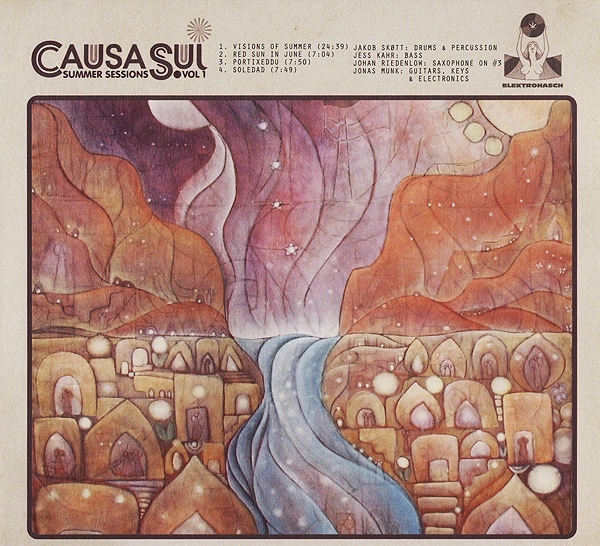
Summer Sessions Volume 2.
In June 2009, Causa Sui returned with Summer Sessions Volume 2. By then, Causa Sui were now a quartet again. Keyboardist Rasmus Rasmussen had joined the band. The third lineup were again, augmented by saxophonist Johan Riedenlow. The new lineup of Causa Sui didn’t just pickup where they left off on Volume 1 though.
Although Causa Sui started with the same ingredients, including psychedelia, stoner rock, fusion, Krautrock, they were determined not to remake Volume 1. So they moved the music in new and different directions. Musical boundaries were pushed to their limits, as Causa Sui combined disparate genres. It was another groundbreaking, genre-melting album from the sonic adventurers.
Summer Sessions Volume 3.
Not content with releasing one album during June 2009, Causa Sui released Summer Sessions Volume 3 simulataoursly. This was shades of Bruce Springsteen with Human Touch and . Again, Causa Sui were aided and abetted by saxophonist Johan Riedenlow, they recorded five new tracks. This included Manifestations Of Summer, a trilogy that fills side two of the album. It was like a mini concept album, from musical adventurers Causa Sui.
Hailed as ambitious and innovative, Summer Sessions Volume 3 completed the musical journey that Causa Sui began a year earlier. Now it was over, and so was another chapter in the Causa Sui story. However, a new adventure was about to begin.
The Pewt’r Sessions Volume 1.
By April 2011, Causa Sui were ready to release the first instalment in a new trilogy. It was obvious that Causa Sui were a band who had been weaned on the classic rock of the sixties and seventies. That was a period when trilogies and concept albums were de rigueur. Causa Sui it seemed were musical trendsetters in more way than one.
By the time Causa Sui were ready to release The Pewt’r Sessions Volume 1, they had formed their own label, El Paraiso Records. It was run by Jonas Munk and Jakob Skøtt. One of the new labels first release was The Pewt’r Sessions Volume 1.
Just like previous albums, The Pewt’r Sessions Volume 1 was a musical melting pot of influences. Everything from space rock, psychedelia and progressive rock shine through on The Pewt’r Sessions Volume 1, as Causa Sui continue to reinvent themselves.
The Pewt’r Sessions Volume 2.
Just four months later, Causa Sui return with The Pewt’r Sessions Volume 2 in August 2011. Again, the album had been produced by Jonas Munk who was finding Causa Sui’s producer’s chair comfortable. He had produced another inventive and ambitious album where Causa Sui fuse space rock, psychedelia and progressive rock.
The Pewt’r Sessions Volume 2 was the seventh album from Causa Sui. Every album was different. Causa Sui weren’t the type of band who would remake an album. They left that to lesser groups. While Causa Sui might have used the similar ingredients on the first two volumes of The Pewt’r Sessions, the results were very different. One thing stayed the same, and that the first two volumes of The Pewt’r Sessions would sell out.
An economist would’ve been impressed by what Causa Sui were achieving. From the Summer Sessions to The Pewt’r Sessions Volume 2, demand equaled supplied. Causa Sui had 500 LPs pressed, and quickly they sold out. Eventually, demand would be so great, that some of Causa Sui’s albums would be reissued. By then, Causa Sui would’ve released further albums.
Euporie Tide.
Having released two albums in a year, two years passed before Causa Sui returned in August 2013 with their eighth studio album Euporie Tide. This meant that Causa Sui were averaging an album a year. They were putting many musical heavyweights to shame.
Unlike their five previous albums, Euporie Tide wasn’t part of a trilogy. Instead, it was a standalone album. Euporie Tide was also the first Causa Sui album to be released on CD. However, Causa Sui didn’t forget their fans who had been there since day one, and Euporie Tide was released on limited edition vinyl. There was something for everyone.
Especially, if psychedelia and progressive rock were your bag. They were two of the most noticeable influences. There was still elements of stoner rock and space rock. Mostly, though, psychedelia and progressive rock were to the fore as Causa Sui powered their way through this ten track powder keg of an album. For many critics and record buyers, Euporie Tide was Causa Sui’s finest hour. It was also the album that saw Causa Sui’s music finding a much wider audience. No longer were they one of Danish music’s best kept secrets.
Live At Freak Valley.
Buoyed by the success of Euporie Tide, Causa Sui released two albums during 2014. The first came on 7th April 2014, when Causa Sui released their first live album, Live At Freak Valley.
The album had been recorded at the Freak Valley Festival, in Netphen, Germany. It had been founded in 2012, and Causa Sui had unleashed a barnstorming set. Rocky and pyschelic, the lysergic warriors took the Freak Valley Festival by storm. That’s apparent on Live At Freak Valley, which was released a CD and double LP. It’s a tantalising taster of Causa Sui live and unleashed. However, after their debut live album, Causa Sui had unfinished business to attend to.
The Pewt’r Sessions Volume 3.
There was still the small matter of the last instalment in The Pewt’r Sessions. So four months later, on 19th August 2014, Causa Sui returned with The Pewt’r Sessions Volume 3. Unlike previous volumes in the series, The Pewt’r Sessions was released on LP and CD.
Fittingly, The Pewt’r Sessions Volume 3 featured just a trio of tracks from Causa Sui. However, the psychedelic rockers had kept the best until last. Incipiency Suite was a twenty-six minute epic that showcased Causa Sui at their very best. Now those that had just discovered Causa Sui knew what the fuss was about. With Causa Sui’s fan-base increasing, their next album would be one of the most important of their career.
Return To Sky.
Since the release of The Pewt’r Sessions Volume 3, Causa Sui’s fans have patiently awaited their tenth studio album. However, with Causa Sui’s star in the ascendancy, they’re having to combine touring with recording. So nineteen months have passed before Causa Sui returned with Return To Sky in February 2016. It features another five new tracks from the Danish musical chameleons.
For Return To Sky, the four members of wrote and recorded five new tracks. These tracks were recorded by what’s now regarded as the classic lineup of Causa Sui. This included the original rhythm section of drummer and percussionist Jakob Skøtt, bassist Jess Kahr and guitarist Jonas Munk. They’re joined by keyboardist and electronics virtuoso Rasmus Rasmussen. Jonas Munk recorded, mixed, mastered and produced Return To Sky, which features the welcome return of Causa Sui as they celebrate releasing eleven albums in eleven years.
Opening Return To Sky is Dust Meridian, a ten min track that literally explodes into life. At the heart of the arrangement are the pounding drums. They provide the heartbeat, before a bass synth enters. Soon, it’s playing a leading role. When it drops out, a bass and subtle wash of synths are added. They’re the perfect replacement. Soon though, a guitar rings out, wah-wahing and adding a gloriously rocky rue. It’s aided and abetted by the bass, and progressive rock synths. By then, psychedelia, progressive rock, classic and rock and space rock are melting into one. However, at 3.37 a jazz-tinged guitar signals it’s all change. The arrangement meanders melodically along, with Causa Sui playing within themselves. Before long, they’re straining at the leash as the arrangement builds, and the band jam. Together, they create an impressive and dramatic sound that has its roots in seventies rock. Later, there’s one more curveball left to throw, as the tempo drops and the arrangement meanders melodically and dreamily along.
There’s almost a nod to Led Zeppelin on The Source. The introduction sounds as if it’s a homage to one of Unholy Trinity. The arrangement literally prowls along, the rhythm section jamming, as if looking for an in. When they find it, Causa Sui kick loose, and a track right out of the seventies classic rock songbook unfolds. At the heart of the arrangement are the strutting, rocky rhythm section. However, midway through the track there’s a series of brief pauses, before Causa Sui are off and running. They add an element of drama, as Causa Sui unleash a dark, dramatic, hands in the air anthem. That’s until two minutes to go, when the arrangement slows down and meanders melodically along. It’s similar to the opening track, with a dreamy, almost ethereal sound proving a contrast to Causa Sui’s earlier adventure in hard rock.
Mondo Buzzo has a much more understated sound. Just a lone guitar plays, before the rhythm section plays. They play with a degree of subtlety. So do the keyboards as a mesmeric, melodic track unfolds. Then Causa Sui stir things up. They move through the gears, and suddenly, the rhythm section and guitars are delivering a hard rocking track. Again, it’s roots are in the seventies, a decade which has obviously influenced Causa Sui. Pounding drums, a driving bass and machine gun guitars combine as the band deliver a musical masterclass. Later, a familiar pattern returns, when the tempo changes and the arrangement becomes spacious and lysergic. Washes of Michael Rother-esque, guitars are added as the arrangement floats lazily along. By then, there’s a nod to Pink Floyd from Causa Sui on what’s one of the highlights of Return To Sky.
An urgent strummed, chiming guitar opens Dawn Passage. Meanwhile, the bass walks the arrangement along. Washes of ethereal synths are added, as the tempo increases. Still, the arrangement is floating along. Again, there’s a dreamy, lysergic sound. That’s until the driving guitars are unleashed. Suddenly, it’s all change. A blistering, searing, rocky guitar is at the heart of the arrangement as the rest of the rhythm section drive it along. After that sudden burst of energy, Causa Sui return to the earlier dreamy melodic sound. However, they’ve one last surprise, and kick loose one more time as if driving the arrangement to the finishing line.
Return To Sky closes with the title-tracks. After the band are counted in, they play slowly and thoughtfully. Washes of crystalline guitars add wistful sound, while the rhythm section play within themselves. This could change at any moment. When it does, it’s the guitar that provides the clue. They’re the last man standing, and play gently. Soon, something is stirring, and Causa Sui’s driving, pounding rhythm section can’t resist the temptation to kick loose. A buzzing bass, thunderous drums and blistering guitars combine seamlessly. Then after five minutes, the arrangement is stripped bare, leaving just the chiming guitars and washes of synths. This leaves time for the listener to ruminate, as the track heads in the direction of an ambient soundscape. Gradually, though, one gets a sense that Causa Sui are going to end on a rocky high. Although the rhythm section unite, it’s Jonas Munk Hendrix-esque guitar that steals the show. Then after a few sci-fi sounds, Return To Sky is over and Causa Sui are gone, leaving just a memory of what’s a career defining album.
Although Return To Sky is Causa Sui tenth studio album, and eleventh overall, it’s without doubt the best album of their career. Return To Sky features elements of Causa Sui’s musical past, music and much more. This included four decades of rock music. That’s why there’s elements of classic rock, Krautrock, psychedelia, progressive rock, stoner rock and space rock. Ambient and avant-garde have also influenced Causa Sui. So have Can, Jimi Hendrix, Led Zeppelin, Michael Rother and Pink Floyd. The result is a heady brew and musical genres and influences, Return To Sky, which was recently released on vinyl by El Paraiso Records. It’s been beautifully mastered by Casua Sui’s guitarist Jonas Munk. He’s mastered a number of Casua Sui’s albums, and just like with previous albums, Return To Sky album is well balanced, not too loud and crystal clear. This allows the listener to revel in Casua Sui at their best on Return To Sky.
It’s an album that veers between dark and dramatic and hard rocking to lysergic, dreamy and wistful to mesmeric and melodic. Return To Sky is all these things and more. It also features four hugely talented musicians as they reinvent their music yet again. This is a constant process that ensures that Causa Sui are one step ahead of the musical crowd.
That’s not all. Causa Sui are always one step ahead of the listener. They’ve always got a surprise in-store for the unwary listener. At any given moment, Causa Sui could throw a curveball that transforms the track. Suddenly, hard rock becomes lysergic and wistful. It’s case of expect the unexpected throughout Return To Sky, where musical chameleons Causa Sui keep the listener on their toes during what’s a career defining album.
CAUSA SUI-RETURN TO SKY-VINYL EDITON.
HERE TODAY!-THE SONGS OF BRIAN WILSON VINYL EDITION.
HERE TODAY!-THE SONGS OF BRIAN WILSON VINYL EDITION.
One of Ace Records’ longest running and most successful compilation series is their Songwriters’ series. It looks back at the careers of some of the most successful songwriters in the history of modern music. This includes Bacharach and David, Goffin and King, Serge Gainsbourg, Dan Penn, Laura Nyro, Randy Newman and Jackie DeShannon. These songwriters have literally written their name into the history books. So has an artist who in June 2015, became the latest inductee into Ace Records’ Songwriters’ series…Brian Wilson.
Twenty-five cover versions were chosen for Here Today!-The Songs Of Brian Wilson. It was released on CD in June 2015, and was the latest instalment in Ace Records Songwriters’ series. Brian Wilson was a popular addition to the Songwriters’ series, and by the end of the year, Here Today!-The Songs Of Brian Wilson became Ace Records biggest selling release of 2015. This was something to celebrate.
So to celebrate the success of Here Today!-The Songs Of Brian Wilson, Ace Records decided to release a vinyl edition of the compilation. This however, was no ordinary vinyl edition. Instead, the vinyl edition of Here Today!-The Songs Of Brian Wilson was pressed on 180 gram snowy white vinyl, and features a dozen of the compilation’s highlights. This includes Darian Sahanaja, Bobby Vee, Betty Everett, Carmen Mcrae, Nick Decaro and Kirsty MacColl. They all pay homage to Brian Wilson, one of music’s greats.
Brian Wilson is seen by some, as the closest thing music has had to a genius. Proponents of this argument cite the Beach Boys 1966 progressive, psychedelic Magnus Opus, Pet Sounds. By then, Brian Wilson was one of the most successful singer, songwriter, and producers of his generation. Already, Brian Wilson had masterminded twenty-four hit singles, including two number one singles for the Beach Boys. It looked like Brian Wilson could do no wrong.
Sadly, Smile, the followup to Pet Sounds was cancelled. Brian Wilson had suffered the first of several nervous breakdowns. As a result of Brian Wilson’s health problems, his influence on the Beach Boys diminished. This just happened to coincide with a decrease in sales of the Beach Boys’ albums.
Following Pet Sounds, the Beach Boys albums were produced by the group. No longer was Brian Wilson the sole producer. Then in 1975, Brian Wilson produced 15 Big Ones, which was released in 1976. When it was released in July 1976, 15 Big Ones reached number eight in the US Billboard 200, and was certified gold. For many, onlookers, it looked as if Brian Wilson was back. However, that wasn’t the case.
By 1975, Brian Wilson had substance abuse problems and his health was failing. His wife Marilyn realised he needed enlisted the help of psychologist and psychotherapist Eugene Landy. He was best known for an unconventional twenty-four hour treatment program. At first, Brian was resistant to the demanding program. However, with the only alternative being admitted to a psychiatric hospital, Brian came round to Euege Landy’s program. Then in 1976, when Euegene Landy tried to double his fees, he was sacked by the Beach Boys manager.
Six years later, with Brian’s health failing, and the Beach Boys not having released an album for two years, Eugene Landy was hired again. For the next ten years, Brian was treated by Eugene Landy. This didn’t end well.
Part of Eugene Landy’s treatment, was micromanaging his client’s lives. Usually, he did this with team of counsellors, nurses and doctors. However, in Brian’s case, Eugene Landy took a more hands on approach. Not only was he Brian’s therapist, but gradually, became his business adviser and cowrote songs with Brian. Then when Brain released his eponymous debut album Brian Wilson in 1988, Eugene Landy was credited as executive producer. Later, in 1991, Eugene Landy cowrote a memoir about Brian Wilson, Wouldn’t It Be Nice: My Own Story. However, by then people were questioning Eugene Landy’s relationship with Brian.
A year later, and the relationship was over. A restraining order was issued by the court barring Eugene Landy from contacting Brian Wilson ever again. This wasn’t the end of the story. In 1994, the state of California revoked Eugene Landy’s license to practise. There had been accusations of ethical violations and patient misconduct during his years with Brian Wilson. While the relationship ended badly, Brian Wilson was on the comeback trail.
Sadly, Brian Wilson never ever reached the heights of Pet Sounds. He released another ten solo albums, some of which, were released to critical acclaim. However, compared to Pet Sounds, they never came close. Pet Sounds was Brian Wilson’s finest hour. Incredibly, he was only twenty-four, with his whole life in front of him. Sadly, ill-health, substance abuse and the internal politics of the Beach Boys curtailed Brian Wilson’s career. He was the man who could’ve been King.
While Brian Wilson is still remembered as one of the most important successful singer, songwriter, musician and producers of his generation, to some extent, his critics say that Brian Wilson never fulfilled his early potential. That however, is an accusation that could be levelled at many musicians. However, in Brian Wilson’s case, that’s a bit harsh. If illness hadn’t interrupted his career, he would probably have fulfilled his potential.
Certainly, Brian Wilson’s music has influenced two generations of music. They’ve continued to cover his songs over the past fifty years. This includes the twelve artists on Here Today!-The Songs Of Brian Wilson.
Here Today!-The Songs Of Brian Wilson features twelve cover versions of Brian Wilson songs. These songs have been covered by Darian Sahanaja, Bobby Vee, The Tokens, The Castells, Jan and Dean, The Tymes, Keith Green, Peggy March, Betty Everett, Carmen McRae and Kirsty MacColl. Among the twelve tracks are six cover versions of songs from Pet Sounds. That’s fitting as Pet Sounds was Brian Wilson’s Magnus Opus. However, there’s much more to Brian Wilson’s music, as you’ll discover when I tell you about Here Today!-The Songs Of Brian Wilson.
Side One.
There’s no better way to open Do You Have Any Regrets? opens Here Today!-The Songs Of Brian Wilson than with Darian Sahanaja’s of The Wondermints cover of Do You Have Any Regrets? This is a song from Brian’s 1990 album Sweet Insanity. Darian rolls back the years, and gives Do You Have Any Regrets? a sixties makeover. As a result, the song sounds uncannily like the Beach Boys at the peak of their power. That’s no surprise as Darian has worked with Brian Wilson during his comeback, and played an important part in his solo career.
The Castells’ recording career spanned the best part of two decades. It began at Era in 1961, and by 1964 The Castells had signed to Warner Bros. Their Warner Bros’ debut was I Do, which was Brian cowrote with Roger Christian. Brian also arranged and produced I Do, which epitomises everything that’s good about the surf sound.
By 1966, Bobby Vee was no longer enjoying the same commercial success he once had. His single stalled in the lower reaches of the charts. This was disappointing for a singer who had once been one of the biggest names in music. Bobby Vee began to cast his net for songs he might releases as a single. When The Beach Boys’ Magnus Opus Pet Sounds, Bobby Vee decided to cover Here Today. It was released as a single on Liberty Records, and finds Bobby Vee never straying far from the original. It’s a case of not trying to reinvent the wheel as he pays homage to one of the highlights of Pet Sounds, Here Today.
Brian Wilson and Russ Teitlemann penned Guess I’m Dumb during the recording of The Beach Boys ninth album Summer Days (And Summer Nights). The song was recorded but never completed, and never made it onto the 1965 album. Later in 1965, Guess I’m Dumb was released as a single by Glen Campbell, but it failed to chart. Soon, other artists were covering Guess I’m Dumb. This included Johnny Wells in 1967.
His cover was produced by Mike Berry and Peter Raymond. They stay true to Brian Wilson’s production on Glen Campbell’s original version. It seems to have been inspired by Phil Spector. When Johnny Wells cover of Guess I’m Dumb was released in Britain in 1967, it was on the Parlophone label. Guess I’m Dumb becomes heart-wrenching ballads where emotion, hurt and drama are omnipresent.
Don’t Worry Baby is, without doubt, a Beach Boys’ classic. So anyone who decides to cover Don’t Worry Baby will have their version compared to the original. The Tokens’ cover is akin to a homage to the Beach Boys. Sonically and stylistically, The Tokens’ 1970 cover of Don’t Worry Baby is one of the best, and stays true to the original.
Aren’t You Glad was written by Brian Wilson and his future nemesis Mike Love, and featured on The Beach Boys’ 1967 album Wild Honey. A year later, Peggy March Aren’t You Glad featured on the B-Side of Peggy March’s 1968 single I’ve Been Here Before. It was produced by Hal David, whose influence is apparent throughout the track. Giveaways are the horns and strings, that are reminiscent of his work with Burt Bacharach. They’re the perfect accompaniment for Peggy’s vocal on whats a quite beautiful, dreamy sounding track.
Side Two.
Soul singer Betty Everett is one of many people to cover what’s one of the Brian Wilson’s classic songs, God Only Knows. It originally featured on Pet Sounds, in 1966. Incredibly, Gold Only Knows stalled at number thirty-nine in the US Billboard 100. Nine years later, and Betty Everett covered God Only Knows on her 1975 album Happy Endings. Accompanied by gospel tinged backing vocals, God Only Knows is given soulful makeover that’s quite beautiful.
Just a year after releasing Pet Sounds in 1966, and already artists were queuing up to cover songs from Pet Sounds. This included Carmen McRae, who in 1967 covered I Just Wasn’t Made For These Times and Don’t Talk (Put Your Head On My Shoulders) on her 1967 album For Once In My Life. Don’t Talk (Put Your Head On My Shoulders) features on Here Today!-The Songs Of Brian Wilson. It was written by Brian and Tony Asher. However, Carmen McRae gives the song a jazz-tinged sound, that shows a new side to a classic song.
Good Vibrations, which featured on the Beach Boys 1967 album Smiley Smile, gave the Beach Boys a number one single in 1968. Not only was Good Vibrations by far the highlight of the Smiley Smile album, but one of the greatest songs Brian and Mike Love cowrote. Since 1968, Good Vibrations is perceived as one of the greatest singles ever released. Despite the original being a musical masterpiece, Hugo Montenegro covered Good Vibrations in 1969. The song lent its name to his 1969 album Good Vibrations. Without doubt. one of the highlights of the album is Good Vibrations, where Hugh pays homage to what many believe is Brian Wilson’s finest moment.
Nick DeCaro’s 1968 debut single was a cover of Caroline, No. It’s an wistful, piano lead cover of this Brian Wilson and Tony Asher composition. The addition of a sultry saxophone is a masterstroke, and is very different from the Beach Boys’ original on Pet Sounds. Here, Nick brings new life and meaning to another Beach Boys classic.
I Just Wasn’t Made For These Times was another song that Brian and Tony Asher cowrote for Pet Sounds. It’s been covered by many artists over the last fifty years. This includes Louis Philippe with Dean Brodrick. They recorded I Just Wasn’t Made For These Times for their 1991album Rainfall. It’s a moving and heartfelt cover, where the vocal is rueful and wistful, as Dean accepts: “I Just Wasn’t Made For These Times.” The result is one of the best covers of this song.
Closing Here Today!-The Songs Of Brian Wilson, is Kirsty MacColl’s cover of You Still Believe In Me, another track from Pet Sounds. Kirsty MacColl, the daughter of folk singer Ewan MacColl, had only released a quartet of singles when she released You Still Believe In Me in 1981. However, You Still Believe In Me was a game-changer. It was the finest single of her nascent career. The best way to describe Kirsty’s cover of You Still Believe In Me is understated and ethereal. This was the perfect tribute to one of Kirsty’s musical heroes.
The twelve songs on the vinyl edition of Here Today!-The Songs Of Brian Wilson, which was recently released by Ace Records, is a reminder of the quality of songs Brian Wilson wrote in his heyday. He was, without doubt one of the most talented songwriters of his generation. That is indisputable. However, Brian Wilson was much more than a songwriter.
Some people have gone as far as to describe Brian Wilson as the closest thing music has had to a genius. That is taking things to far. In the post Smile’ years, Brian Wilson’s health suffered, and he never reached the same heights. However, Brian Wison was certainly one of the the most talented and successful singer, songwriters, and producers of his generation. Proof, if any is needed, are the twenty-four hit singles, including two number one singles for masterminded the Beach Boys. However, Brian’s finest hour was Pet Sounds, and of course, Good Vibrations, which was recorded at the same time.
Pet Sound, which was released in 1966 was the Beach Boys’ progressive, psychedelic Magnus Opus. They never bettered Pet Sounds. The Smile project, which was abandoned in 1967, as Brian had the first of several nervous breakdowns, onlookers believe, could’ve come close. Sadly, that wasn’t to be. Smile, the followup to Pet Sounds was cancelled.
Brian Wilson had suffered the first of several nervous breakdowns. As a result of Brian Wilson’s health problems, his influence on the Beach Boys began to diminish. This just happened to coincide with a decrease in sales of the Beach Boys’ albums.
Over the next twenty-six years, Brian Wilson’s suffered from mental health problems. During that period, he was constantly described as a troubled genius. Sadly, Brian never reached the heights he scaled between 1961 and the release of Pet Sounds in 1966.
With Brian no longer playing such an important part in the Beach Boys, their studio albums never came close to matching the Beach Boys of the sixties. The exceptions were 1976s15 Big Ones which Brian produced, and 1979s L.A. (Light Album). Bother were a return to form from the Beach Boys.
Right through to 1992, when Brian ended his association with Eugene Landy, his health problems meant he curtailed his musical career. Since then, Brian Wilson has released ten further solo albums. Some were released to critical acclaim; while others feature a fleeting glimpse of Brian Wilson’s talents. However, much of the greatest music of Brian Wilson’s career, was the music he released with the Beach Boys, between 1961 and the release of Pet Sounds in 1966. To that, I would add the musical masterpiece that is Good Vibrations, which is the work of a musical visionary.
That visionary is Brian Wilson, who has influenced two generations of musicians, including the artists who pay tribute to him on Here Today!-The Songs Of Brian Wilson. Here Today!-The Songs Of Brian Wilson is a fitting addition to Ace Recods’ Songwriters’ series, and is a fitting and poignant reminder of Brian Wilson at the peak of his powers.
HERE TODAY!-THE SONGS OF BRIAN WILSON VINYL EDITION.

TUXEDOMOON-HALF-MUTE.
TUXEDOMOON-HALF-MUTE.
Success came quickly for Tuxedomoon. They were formed in 1977, and released their debut single in 1978. A year later, Tuxedomoon’s sophomore single No Tears was hailed a post punk classic. Tuxedomoon were one of music’s rising stars.
So it was no surprise that in 1980, Ralph’s Records signed Tuxedomoon and they released their debut album Half-Mute later that year. It was released to critical acclaim, and introduced Tuxedomoon’s music to a wider audience. Now thirty-six years later, and Crammed Discs have reissued Half-Mute.
The reissue of Half-Mute is no ordinary reissue. Instead, it’s a lovingly curated and remastered double album, which comes complete with new packaging. Disc one features new Half-Mute; while disc two, which is entitled Give Me New Noise-Half-Mute Reflected,thirteen artists cover Half-Mute in its entirely. Among the artists on Give Me New Noise are Aksak Maboul, Simon Fisher Turner and Cult With No Name. They pay homage to Tuxedomoon’s debut album Half-Mute, which was released in 1980. However, the Tuxedomoon story began in 1977.
Their roots can be traced to 1977, and the Angels of Light, a musical collective and commune in San Francisco that Steven Brown was a member of. He was also at student at San Francisco City College. That was where Steven Brown met Blaine Reininger and Tommy Tadlock. They were all taking the same electronic music class at San Francisco City College, and quickly became friends.
As the electronic music course neared completion, Steven Brown and Tommy Tadlock decided to combine their talents for their final project. Little did the pair realise, that Tommy would end up managing Tuxedomoon. That was in the future.
Tuxedomoon had only been born in 1977, and were still to find their sound. So in the evenings, Steven Brown and Blaine Reininger would head over to Tommy Tadlock’s to make music. This was unlike the majority of the music being released. Especially with Blaine Reininger playing electronic violin and guitar. Tommy Tadlock however, was content to take a backseat, working on the sound. He also made tools to fix the nascent band’s equipment, and even created “Treatment Mountain,” a plywood pyramid structure that housed Blaine’s myriad of effects. This became important as the band started to play live
By then, punk rock was on its way to moving from the underground to mainstream. However, as the band began to make their tentative steps in San Francisco’s live scene, punk was still an underground scene. Punk had certainly influenced Tuxedomoon.
When Tuxedomoon took to the stage, they were determined to sound different to everyone else. As a result, their vocals were inspired by punk and were a mixture of power, frustration, anger and angst. Augmenting the core band of Steven Brown and Blaine Reininger were bassist Peter Principle, filmmaker Bruce Geduldig and performance artist Winston Tong. Some members of the band didn’t play a particular instrument. Instead, they arrived with whatever instrument that they could find and ‘played’ it. This was similar things to the happenings in the psychedelic sixties. However, for a new generation who watched Tuxedomoon fuse elements of punk and electronics it was a new experience. This new sound was quickly christened cabaret no-wave.
It wasn’t until 1978, that Tuxedomoon’s cabaret no-wave sound first found its way onto a single. Tuxedomoon’s debut single was Pinheads On The Move. Then later in 1978, came Tuxedomoon’s sophomore single No Tears. It was the song that made critics and record buyers sit up and take notice. Soon, No Tears was regarded as a a post punk classic, and had introduced Tuxedomoon’s to a wider audience. Already Tuxedomoon were making waves in the post punk era.
Having made a breakthrough with No Tears in 1978, Tuxedomoon released two further singles in 1979. By then, bassist Peter Principle was a permanent member of the band, and played on The Stranger. This was Tuxedomoon’s first single of 1979, but their second and final release on Time Release Records.
Later in 1979, Scream With A View was released on the short-lived Tuxedomoon Records. Soon, the band’s new label had outlived its usefulness, as they signed to a new label.
After signing to Ralph Records later in 1979, Tuxedomoon returned in 1980 with not just a new single, but a new album. The single was What Use? and the album was Half-Mute, which was released in 1980.
Half-Mute featured ten tracks. Nine were penned by Steven Brown, Blaine Reininger and Peter Principle. The exception was Crash, which was written by Blaine Reininger and Michael Belfer. These tracks were recorded at San Amigos Studios, San Francisco.
At San Amigos Studios, Tuxedomoon began setting up an array of instruments. Steven Brown would play keyboards, synths, saxophones, electronic percussion and add vocals. Blaine Reininger who had learnt to play violin and guitar, also played bass, keyboards, synths, electronic percussion, root toms, C.B. interference and vocals. Peter Principle played bass, guitar, piano, synths and electronic percussion. Producing Half-Mute were the three members of Tuxedomoon. Once the album was complete, Half-Mute was released later in 1980.
By then, word had spread about Tuxedomoon. They had already released five singles and were the toast of the underground music press not just in America, but in Britain. This bode well for Half-Mute.
When reviews were published, critics lavished praise on Half-Mute. They were won over by Tuxedomoon’s unique fusion of punk and electronics. Many critics remarked on the lyrics. They weren’t just dark and maudlin, but tinged with humour and often incisive. Some critics called Half-Mute a genre-classic. This proved to be the case, and was the springboard for Tuxedomoon to become one of leading avant-garde pop bands. However, things were about to get even better for Tuxedomoon.
Buoyed by critically acclaimed reviews, Half-Mute reached number ten in the UK Indie Chart. Suddenly, Tuxedomoon’s star was in the ascendancy, after releasing what many regard as their finest album, Half-Mute.
Opening Half-Mute is Nazca, an instrumental. Washes of moody synths sweep in and out, while a pulsating beat is accompanied by a chiming guitar. By then, there’s a hypnotic quality to the arrangement. Then when a sultry saxophone enters. It’s dreamy and floats above rest of the arrangement, adding to the melodic quality. Sometimes, it threatens to head in the direction of free jazz. This never happens, as the saxophone proves the perfect foil for the washes of synths. Together, they create a soundscape that’s not just cinematic and beautiful, melodic, hypnotic and timeless.
From the opening bars, it’s obvious that 59 To 1 is a song about time. A ticking sound is joined by a funky bass and synthetic sounding drums. The urgent vocal is sounds almost Kraftwerk-esque. When the vocal drops out, a wailing saxophone soars above the hypnotic, funky arrangement. By then, the vocal is urgent, impassioned and despairing, at being unable to beat time. Snippets of C.B. radio interject, as the scorching, blazing saxophone soars and flutters, joining a mesmeric vocal and walking bass. Hypnotic, funky and innovative it’s a timeless genre-melting track.
Straight away, Fifth Column takes on a cinematic sound. Synths and a saxophone join a dark bass and crisp drums. It’s the synths and braying saxophone that paint pictures. They add to the cinematic quality, as the bass provides the heartbeat to a track where beauty and mystery are omnipresent. The beauty comes courtesy of saxophone, while synths add mystery.
Drums scamper along as otherworldly synths, beep and squeak on Tritone (Musica Diablo). They add a darkness as an urgent scratchy violin plays. As the tempo increases, the track becomes robotic, rocky and urgent. A myriad beeps, buzzes, squeaks and whirs join the scampering, scratchy violin and synthetic drums to create a short otherworldly symphony.
A darkness descends on Loneliness, which owes a debt of gratitude to Kraftwerk and even Cluster. Bursts of drums and bass set the scene for a dark, fuzz-tone organ and a monotone vocal that’s tips its hat to Kraftwerk. The final piece of the jigsaw are repetitive elegiac sounds that add a mesmeric sound. This adds to the almost robotic sound of the arrangement, which marches to the beat of the drum. The result is captivating emotionless track, that’s a fusion of avant-garde, electronica, funk and Krautrock.
Bells chime, as variety of crackles, rumbling, galloping and ghostly sounds combine on James Whale. Sometimes, the tape speed varies, as Tuxedomoon pay their tribute to the late Hollywood director James Whale. Later, the track takes on a haunting sound, as an otherworldly being gallops towards the listener. This adds to the spine tingling cinematic sound, and is fitting, given James Whale directed a classic horror film The Bride Of Frankenstein.
In the distance, a walling sound encircles, before gradually moving closer on What Use? That’s a curveball, as a thunderous beat joins cinematic synths and bass on a track that sounds as if it’s been inspired by Kraftwerk and Giorgio Moroder. Even by the time the deliberate vocal has entered, the listener has been swept along by what’s an irresistible sounding dance track. At one point, Tuxedomoon replicate the sound of a high speed train. By then, there’s a Euro Disco influence, as the track heads into anthem territory and showcases Tuxedomoon’s versatility.
Volo Vivace provides the perfect showcase for Blaine Reininger’s violin skills. Buzzing synths are joined by a bass, before the elegiac sound of the violin enters. It provides a contrast to the rest of arrangement.Especially when its played with speed and precision. Meanwhile, the rest of the arrangement is spacious, hypnotic and sometimes futuristic. However, the violin adds beauty and elegance. By then, music’s past and present sit side-by-side, and unite to make the music of the future.
As 7 Years unfolds, straight away, washes of synths add an element of darkness and drama, as drums rattle and crack. Atop the arrangement, the vocal is deliberate and lacking in emotion as it sings of: “seven years in one night.” Who knows what horrors take place during this “psychedelic melodrama.” It sounds as if it’s been influenced by Kraftwerk and Gary Numan. Later, Blaine Reininger’s violin adds a myriad of spine-chilling sounds, adding a cinematic sound to what was in 1980, a modern day “psychedelic melodrama.”
Km-Seeding The Clouds closes Half-Mute, and is an eleven minute epic. As the sound of traffic, goes by a wistful saxophone solo plays. It’s joined by a plucked bass, as the sounds of the city pass by. However, it’s the hauntingly beautiful, but mournful saxophone that’s the focus of the listener’s attention. They’re oblivious to the sound of traffic, birdsong, cinematic synth strings and bold keyboards chords. Even the sound of horns beeping, doesn’t stop the listener revelling in the mournful beauty of Steven Brown’s saxophone. It takes centre-stage, and closes Tuxedomoon’s avant-garde pop classic. However, not Crammed Discs’ recent reissue of Half-Mute.
Instead, it’s only half-time. There’s still Give Me New NoiseHalf-Mute Reflected, a tribute album where thirteen artists pay homage to Tuxedomoon on twelve tracks.This includes the ten tracks on Half-Mute and Non Finito Orchestra’s cover of Crash, which was the B-Side to the single What Use? Another of the three bonus tracks is Tiger Comics Group’s cover of Dark Companion. It’s a captivating track, just like the Give Me New NoiseHalf-Mute Reflected tribute album.
It opens with Simon Fisher Turner’s cover of Nazca comes complete with bristling, jagged synths, a wailing saxophone and an undercurrent of drama. This sets the bar high, for those that follow in his footsteps.
Zero Gravity Thinkers pickup the band on 59 To 1, and reinvent the track, giving it a modern makeover. This comes complete with hip hop scratches and snippets of dialogue. Fifth Column is covered by The Man From Managra, and features a guest appearance by Blaine Reininge. His violin plays a leading role in the track’s beauty and almost haunting cinematic sound. Then Cult With No Name’s piano lead reinvention of Loneliness oozes sadness and emotion. It’s a quite beautiful track. From there, it’s all change.
DopplAr’s cover of James Whale retains the cinematic sound of the original, but takes on a 21st Century sound. As a result, the remake sounds as if it belongs on the soundtrack to a Hollywood thriller, rather than a homage to one of the great film directors of the thirties. Volo Vivace was remade by Palo Alto, but features Steven Brown. Again, the track takes on a contemporary sound, but still remains true to the original. The same can be said of 2kilos and Moreand Julius Gabriel’s cover of the closing track KM/Seeding The Clouds. As it heads in a new direction, it tips its hat to Tuxedomoon’s original epic track. However, thirty-six years later, it’s interesting to hear how a new generation of artists reimagine and reinvent Tuxedomoon’s avant-garde pop classic Half-Mute.
It was never going to be easy covering the ten tracks on Half-Mute. This is a classic album, which launched the career of avant-garde pop pioneers Tuxedomoon. They combined elements of electronica, funk, Krautrock, pop, post punk and rock. The results was a groundbreaking album of music that was variously cinematic, dark, dramatic, hypnotic, melodic, mesmeric, mysterious, Then on What Use? the music heads into anthem territory, Tuxedomoon don’t spare the hooks, as they showcase their versatility on an album that’s also captivating and timeless. Thirty-six years after the release of Half-Mute, it sounds just as good the day it was released. That’s why this innovative album continues to influence a new generation of artists.
That’s why artists of the quality of Aksak Maboul, Simon Fisher Turner, DopplAr and Cult With No Name were so keen to take part in the recording of Give Me New Noise-Half-Mute Reflected. They wanted to pay homage to a band and an album that have influenced several generations of musicians. That will continue to be case for many to come.
Especially as another generation of music lovers discover Crammed Discs lovingly curated, remastered version of Half-Mute. It was recently released as a double album, with Half-Mute on disc one, and Give Me New Noise-Half-Mute Reflected on disc two. Many of the bands on Give Me New Noise-Half-Mute Reflected were influenced by Tuxedomoon’s avant-garde pop classic Half-Mute. Hopefully, so will a new generation of music lovers who after hearing Half-Mute, will be inspired to go out and form bands groundbreaking bands like Tuxedomoon.
TUXEDOMOON-HALF-MUTE.

THE TRONDHEIM JAZZ ORCHESTRA, KIM MYHR AND JENNY HVAL-IN THE END HIS VOICE WILL BE THE SOUND OF PAPER.
THE TRONDHEIM JAZZ ORCHESTRA, KIM MYHR AND JENNY HVAL-IN THE END HIS VOICE WILL BE THE SOUND OF PAPER.
Back in 2012, Kim Myhr got the opportunity to collaborate with The Trondheim Jazz Orchestra again. This was an exciting opportunity for composer, guitarist and improviser Kim Myhr. He had already collaborated with The Trondheim Jazz Orchestra on their 2010 album Stems and Cages. It also featured one of Norway’s top vocalist Sidsel Endresen. With such an array of talent on display, it was no surprise when Stems and Cages was released to critical acclaim. So Kim Myhr was keen to repeat the experience.
Having agreed to collaborate with The Trondheim Jazz Orchestra again, Kim Myhr realised that here was the perfect opportunity to work with another of Norway’s top vocalists, Jenny Hval. Kim had known Jenny for many years, but had never worked with her. He was keen to rectify this, and his forthcoming collaboration with The Trondheim Jazz Orchestra offered Kim the opportunity to work with Jenny. She agreed and soon, work would begin on what was collaboration between some of Norway’s top musicians.
When Kim Myhr and Jenny Hval began to write together, it quickly became apparent that they had similar a approach to music. They both like to work quickly, getting their ideas down on paper. The ability to improvise was also important. This was what Kim had been doing for much of his career. So had Jenny. With so much in common, it was no surprise that the music came together quickly. Jenny explains: “Kim gave me a lot of sketches and music, I wrote the melody and lyrics, and we improvised.” Quickly, Kim and Jenny’s collaboration took shape. All that it needed was a title.
Kim and Jenny arrived at a title at the least unexpected time. They were having a break, and discussing Bob Dylan’s ageing vocal. That was when the words: “In the End His Voice Will Be The Sound Of Paper” were first uttered. With a title to their collaboration, Kim and Jenny were ready to practise with The Trondheim Jazz Orchestra, in preparation for the premiere of In The End His Voice Will Be The Sound Of Paper.
For the collaboration between The Trondheim Jazz Orchestra, Kim Myhr and Jenny Hval, the lineup of The Trondheim Jazz Orchestra had been carefully selected by Kim. He had chosen each of the eleven members of The Trondheim Jazz Orchestra. Their backgrounds were in improvisational music, jazz and contemporary music. Many of the musicians had featured on Kim’s previous collaboration with The Trondheim Orchestra, Stems and Cage. This time though, the musicians were playing an array of acoustic instruments. With some of the most talented musicians from Norway, Wales and Australia, the music that made up In The End His Voice Will Be the Sound Of Paper soon take shape. Now The Trondheim Jazz Orchestra, Kim Myhr and Jenny Hval were ready for the premiere.
The collaboration between The Trondheim Jazz Orchestra, Kim Myhr and Jenny Hval was premiered at the Ultima Oslo Contemporary Music Festival in 2012. That night, critics lauded In The End His Voice Will Be The Sound Of Paper. It was hailed as an ambitious, captivating and innovative fusion of improvisation, contemporary Feldmanian music, pop and the spoken word. Kim’s second collaboration with The Trondheim Jazz Orchestra, and first with Jenny Hval had been a resounding success. However, one question remained. Would an album follow?
This would take time. Everyone involved in the project was busy with other projects. So it was a case of everyone finding time in their busy schedules.
After The Trondheim Orchestra’s appearance at the Ultima Oslo Contemporary Music Festival in 2012, they were busier than ever. The recorded two further collaborations, including Lion with Marius Neset; and completed Ekko their collaboration with Elin Rosseland. The Trondheim Orchestra also recorded the live album Tree House with Albatrosh at the Molde Jazz Festival on the 15th of July 2013. Meanwhile, Jenny Hval was just as busy.
She had recorded released her sophomore album Innocence Is Kinky in 2013. Jenny Hval had also worked on several collaborations. The most successful was her collaboration with Susanna Wallumrød, Meshes of a Voice. It was released to widespread critical acclaim, and went on to win a Spellemannspris, which is Norwegian Grammy, in 2015. While Jenny juggled projects, it was a similar story with Kim Myhr.
As one of the leading lights of the experimental music scene, Kim Myhr is constantly busy writing, recording and touring. Kim’s also composes for chamber ensembles, electroacoustic settings and previously, for a variety theatrical projects. Somehow, Kim had found time to released his solo album All Your Limbs Singing in March 2014. Critical acclaim accompanied its release, and Kim headed out on tour. However, in August 2014, Kim, Jenny and The Trondheim Orchestra found the time to record an album.
In The End His Voice Will Be The Sound Of Paper which will be released by Hubro Music, on the 13th of May 2016, was recorded at Rainbow Studio, in Oslo. Recording began on the 26th August 2014, with recordist Jan Erik Kongshaug working alongside producer Kim Myhr. This wasn’t an easy project, given thirteen musicians and vocalists were involved.
As the recording session began, the lineup of The Trondheim Orchestra included a rhythm section of drummer Tor Haugerud and bassist Michael Duch. The horn section featured tenor saxophonist Espen Reinertsen; trumpeter Eivind Lønning; tubaist Martin Taxt and Jim Denley on alto saxophone and flute. Violinist Kari Rønnekleiv was joined by clarinetist Klaus Ellerhusen Holm; harpist Rhodri Davis; percussionist Morten J. Olsen and pianist Christian Wallumrød who also played harmonium. Jenny Hval added vocals; while Kim Myhr played twelve-string guitar, added vocals on Mass. By the 27th of August 2016, recording of In The End His Voice Will Be The Sound Of Paper was complete. That just left mixing and mastering.
Nearly a year later, recordist Jan Erik Kongshaug was asked to mix In The End His Voice Will Be The Sound Of Paper. He mixed the album at Amper Tone Studio between the 10th and12th of August 2015. All that was left was Helge Sten to master In The End His Voice Will Be The Sound Of Paper. This took place between the 13th and 14th August 2015. Nearly three years after In The End His Voice Will Be The Sound Of Paper was premiered, The Trondheim Jazz Orchestra, Kim Myhr and Jenny Hval’s collaboration was ready to be released.
This will take place on the 13th of May 2016, when Hubro Music will release one of the most anticipated albums of recent years, In The End His Voice Will Be The Sound Of Paper. It features the considerable combined talents of The Trondheim Jazz Orchestra, Kim Myhr and Jenny Hval. As you’ll soon discover, it’s a captivating collaboration.
Seed opens In The End His Voice Will Be The Sound Of Paper. Its introduction is understated. Fingers flit tenderly across a harp, while subtle bursts of piano and briefly, percussion interjects. Soon, an alternative array of sounds make their debut. A squeaking sound follows in the footsteps of shakers and woodblocks. Then as a violin protests, Jenny tenderly scats, before whispering: “the voice.” It’s tender, dreamy and spacious. There’s no sense of urgency as, Jenny reaches for the lyrics. Her vocal is breathy as fingers scamper across the harp, the violin adds sense of melancholia and a drone sends out a warning. Meanwhile there’s an urgency in Christian’s piano playing. Especially when Jenny’s vocal drops out. That’s when a myriad of alternative sounds flit in and out. Still the arrangement is spacious, and The Trondheim Jazz Orchestra pickup the baton and continue to improvise. The result is quite beautiful and captivating track that’s guarantee to whet the listener’s appetite.
A harmonium wheezes, starting and stopping as Something New unfolds. Again, space is left within the arrangement. Even when the braying horns join the harmonium, and make a brief appearance. They bow out when Kim’s crystalline guitar and Jenny’s ethereal vocal enter. However, the vocal drops out when the harmonium returns. This makes sense, as the harmonium dominates the arrangement. From there, the heartfelt and emotive, vocal floats in and out. Sometimes, when it returns, it’s joined by either percussion, drums or the guitar. They all add contrasting sounds, and become layers in a musical cake. Occasionally, the harmonium sweeps in, but doesn’t overpower the vocal. Then when it later takes centre-stage, it wheezes in and out, as horns join a plink plonk piano, guitar and flourishes of harp. Later, a horn sounds, as Jenny’s elegiac, whispery vocal floats in, adding yet another contrast. There’s one last surprise, as what sounds like a horn sounds. By then, you’ve realised to expect the unexpected from this multitalented lineup. Their capacity to innovate knows no bounds.
Just a harp is plucked with a degree of urgency on Me, You, Me, You. Soon, it’s joined by an array of left-field sounds. They come courtesy of The Trondheim Orchestra who pluck, scrabble, scratch and blow their instruments. Using a less is more approach, these sounds captivate as they assail the listener. Soon though, the a plucked guitar is joined by the harmonium. It’s played subtly, as an array of alternative sounds join the guitar, as this alternative symphony becomes urgent and dramatic. Soon, a sense of calm is restored and the arrangement meanders along. Flourishes of harp and guitar runs unite before Jenny’s vocal soars above the vocal. Soon, it’s breathy and understated as she combines power and emotion. Briefly, she sounds like Suzanne Vega. Later, the guitar plays urgently, a drum sounds and Jenny’s vocal is multi-tracked, before free jazz horns wail and a series of growls provide an unlikely ending to compelling genre-melting soundscape, where improvisation, avant-garde and Feldmanian music combine.
Dramatic and spacious describes the introduction to The Beak. After buzzing sound dissipates, there’s near silence. This is broken by a crashing cymbal and a shrill burst of flute. By then, a drum sounds and a piano is pounded. Despite this melodic describes the mesmeric backdrop. Especially as a guitar plays, and Jenny delivers a vocal that’s inspired by folk and pop. When her vocal drops out, a drum marches the arrangement along, as a piano is pounded.It’s constant, dramatic and mesmeric, even when flourishes of harp, a harmonium are added. Still, dramatic and hypnotic describes a track that earlier, thanks in part to Jenny, was beautiful and melodic.
As Kim purposefully strums his guitar on Mass, Jenny is soon delivering a tender, wistful vocal. Behind, her an array of otherworldly sounds can be heard. Growls and snarls suggest an exorcism rather than a Mass would be preferable. These otherworldly sounds remain as Jenny’s vocal drops out, and percussion combines with the guitar. Later, Kim duets with Jenny, and their voices prove a perfect fit. They’re like yin and yang, as they unite, and harmonise. Behind them, a series of clunking, whirring, shrieking sounds compete for the listener’s attention. When the vocal drops out, the arrangement takes on a hypnotic industrial sound. This is reminiscent of the dark satanic mills of the Industrial Revolution. They take on a strangely melodic and mesmeric sound that proves almost reassuring.
Subtle bursts of harmonium open Even The Vowels. They wheeze before Jenny’s vocal enters. It’s like a soliloquy, as she wistfully sings then speaks. As she speaks, it’s like eavesdropping on someone’s private thoughts. Emotion and drama fills her voice, Meanwhile, the harmonium plays a leading role in the arrangement. Joining it, are a guitar, piano, whispering flute and gently rasping horns. They play softly, as if realising Jenny is the leading lady, as she delivers a heartfelt and emotive soliloquy.
A scrabbled guitar plays urgently and is joined by percussion on Soft As Tongues. The harmonium wheezes, as a myriad of sounds escape from the improvised and urgent arrangement. It splutters, flutters, rattles and echoes. Then all of a sudden, flourishes of harp join and gusts of wind are joined by Jenny’s Feldmanian vocal. It grows in power, and at one point is reminiscent of Kate Bush. By then, Kim’s guitar joins the harp in adding to the beauty and urgency. Later, Jenny’s vocal sounds as if it’s been influenced by folk, pop and even improvisational music. Especially, as her vocal becomes like an instrument, soaring above the arrangement where it joins a shrill flute, dark piano and drum. Jenny controls and elongates notes, until she can do no more. That’s the signal for braying horns to pickup the baton, on another genre-melting track that showcases a union of musical innovators.
Closing In The End His Voice Will Be The Sound Of Paper is Silence A Beat. Just a slow, thoughtful and crystalline guitar solo sets the scene for Jenny’s wistful, elegiac vocal. Despair fills her vocal as she tenderly delivers the lyrics. Soon, her ethereal vocal gracefully soars above the arrangement, as a piano and percussion enter. By then, Kim’s guitar is played with more urgency. Meanwhile, The Trondheim Orchestra are improvising. Rattling percussion, a wailing harmonium and a harp add contrasting layers of sound. Suddenly, they drop out, and briefly, there’s silence. Then just the piano, Kim’s guitar, drum and a myriad of percussive sounds unite, to bring the album to a poignant and beautiful close.
Nearly, Four years have passed since The Trondheim Jazz Orchestra, Kim Myhr and Jenny Hval premiered In The End His Voice Will Be The Sound Of Paper at Ultima Oslo Contemporary Music Festival in 2012. Those that witnessed the premiere were hugely impressed. Especially critics, who aren’t easily impressed. However, they were impressed by the premiere of In The End His Voice Will Be The Sound Of Paper. Critically acclaimed reviews were published, with critics liberally using works like “compelling” and “groundbreaking.” Music lovers who hadn’t witnessed the premiere of In The End His Voice Will Be The Sound Of Paper enviously pored over the reviews. If only they had been in Oslo to witness this triumphant performance. At least, readers reflected, there will be an album of In The End His Voice Will Be The Sound Of Paper out soon. Or so they thought.
What everyone forgot was how busy the schedules of The Trondheim Jazz Orchestra, Kim Myhr and Jenny Hval were. It wasn’t going to be easy getting the thirteen musicians in the same studio, at the same time. This eventually happened over two days in August 2014. Record byers thought that In The End His Voice Will Be The Sound Of Paper would be released in the not too distant future. However, often record buyers have to be patient.
This was the case with In The End His Voice Will Be The Sound Of Paper, which will be released on 13th May 2016, on Hubro Music. However, In The End His Voice Will Be The Sound Of Paper has been well worth the wait. Not only is the music beautiful, ethereal, melodic and mesmeric, but also captivating, dramatic, melancholy and otherworldly. Always, the music is innovative, with surprises in store for the listener. They sit spellbound, as The Trondheim Jazz Orchestra, Kim Myhr and Jenny Hval flit between, and fuse musical genres.
Almost seamlessly, avant-garde, Feldmanian music, folk, free jazz, improvisational music and even elements of pop shine through. The Feldmanian, folk and pop influences come courtesy of one of Norway’s finest vocalists, Jenny Hval. Her voice is variously beautiful, despairing, elegiac, emotive, heartfelt and wistful on In The End His Voice Will Be The Sound Of Paper. Sometimes, her vocal is transformed into what’s akin to a musical instrument. When this happens, Jenny joins The Trondheim Jazz Orchestra and Kim Myhr in creating a truly captivating album.
In The End His Voice Will Be The Sound Of Paper is an album that’s full of surprises. The more you listen to In The End His Voice Will Be The Sound Of Paper, the more of its subtleties and nuances it reveals. That’s one reason why In The End His Voice Will Be The Sound Of Paper is an album that one will never tire of. Another is the music is innovative. The Trondheim Jazz Orchestra, Kim Myhr and Jenny Hval push musical boundaries to their limits, and continually combine musical genres in the pursuit of musical excellence on In The End His Voice Will Be The Sound Of Paper. They succeed in doing so, and for that, they deserve our thanks and congratulations.
THE TRONDHEIM JAZZ ORCHESTRA, KIM MYHR AND JENNY HVAL-IN THE END HIS VOICE WILL BE THE SOUND OF PAPER.
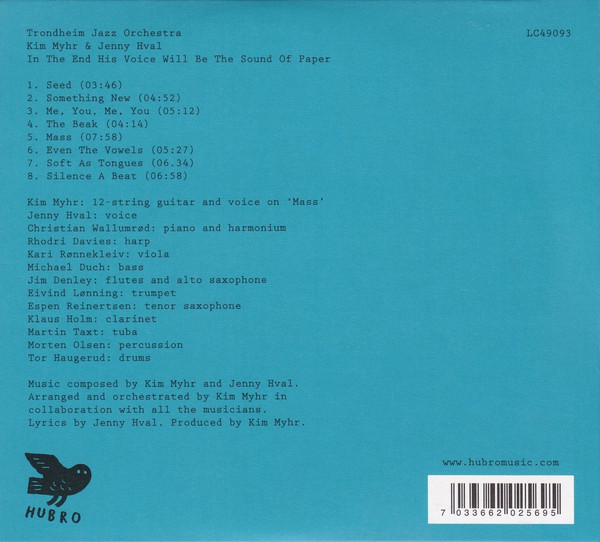
 dereksmusicblog
 dereksmusicblog