CAUSA SUI-RETURN TO SKY.
CAUSA SUI-RETURN TO SKY.
Nowadays, not many groups manage to release eleven albums in eleven years. Instead, they spend two or three years ‘perfecting’ their future Magnus Opus. It’s changed days indeed.
Back in the early seventies, bands were often contracted to release two album each year. Groups like Yes rose to the challenge, and released The Yes Album and Fragile in 1971. The same year, Emerson, Lake and Palmer released Tarkus and Pictures At An Exhibition. Meanwhile The Faces released Long Player and A Nod’s As Good As A Wink…To A Blind Horse. Sadly, the days of releasing two albums a year are long gone. Or are they?
Danish rockers Causa Sui have released eleven albums between 2005 and 2016. Eight albums in eleven years is a pretty good average. Causa Sui’s latest album is Return To Sky, which was recently released on El Paraiso Records. It’s the latest chapter in story that began in twelve years ago.
The Causa Sui began in 2004, when five friends decided to form a band in Odense, in Southern Denmark. Originally, the lineup featured drummer Jakob Skøtt, bassist Jess Kahr, guitarist Jonas Munk and vocalist Kaspar Markus. This was the lineup that featured on Causa Sui’s debut album.
Causa Sui.
Just a year after forming Causa Sui, the band released their eponymous debut album on Nasoni Records, in December 2005. Causa Sui was an album of heavy psychedelia and stoner rock. It won over both critics, and then, record buyers. They quickly bought up the 500 LPs that had been pressed. Nowadays, they’re collectors items, and a reminder of the dawning of Causa Sui’s career. Their second coming came in 2007
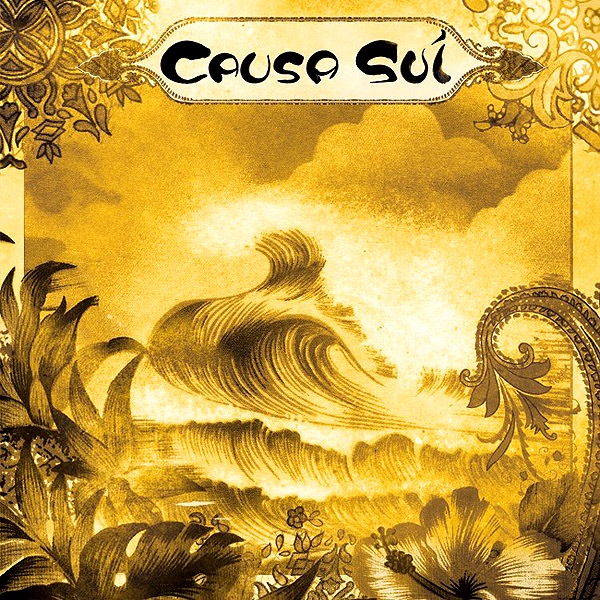
Free Ride.
Causa Sui returned in April 2007, with their sophomore album Free Ride. It was another album of heavy psychedelia, with elements of stoner rock. This was fitting, as the album was released by Elektrohasch Schallplatten a label specialising in stoner rock. Just like its predecessor, Free Ride was well received by critics and found favour amongst their ever growing fan-base. Things were looking up for Causa Sui. However, changes were just around the corner.
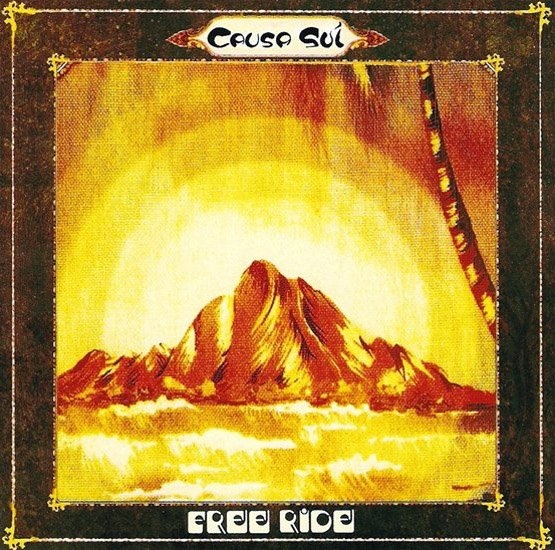
Summer Sessions Volume 1.
When Causa Sui returned in August 2008 with the first instalment in their Summer Seasons’ trilogy, both their lineup and music had changed. Vocalist Kaspar Markus had left the group, leaving just a core trio of drums, bass and guitar. This new lineup, would be responsible for the change in Causa Sui’s sound.
This became apparent when Summer Sessions Volume 1 was released in 2008. It featured a much more abstract, instrumental sound. Their influences were eclectic, and included everything from Can to Miles Davis’ electric period, plus psychedelia and stoner rock. The new sound was welcomed, and seemed that ensured that Causa Sui’s music continues to be innovative and relevant.
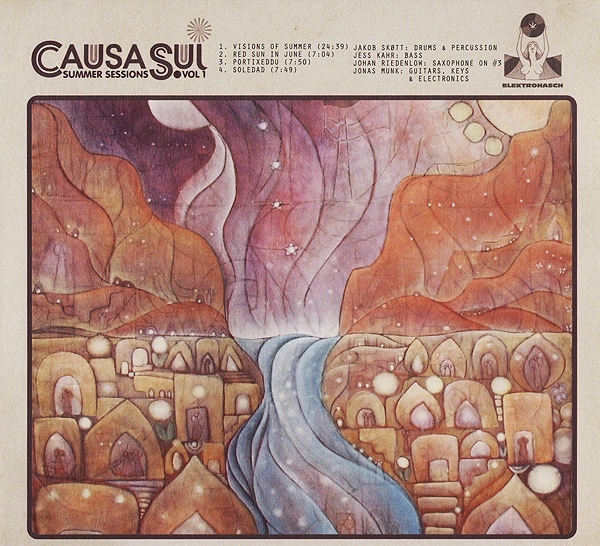
Summer Sessions Volume 2.
In June 2009, Causa Sui returned with Summer Sessions Volume 2. By then, Causa Sui were now a quartet again. Keyboardist Rasmus Rasmussen had joined the band. The third lineup were again, augmented by saxophonist Johan Riedenlow. The new lineup of Causa Sui didn’t just pickup where they left off on Volume 1 though.
Although Causa Sui started with the same ingredients, including psychedelia, stoner rock, fusion, Krautrock, they were determined not to remake Volume 1. So they moved the music in new and different directions. Musical boundaries were pushed to their limits, as Causa Sui combined disparate genres. It was another groundbreaking, genre-melting album from the sonic adventurers.
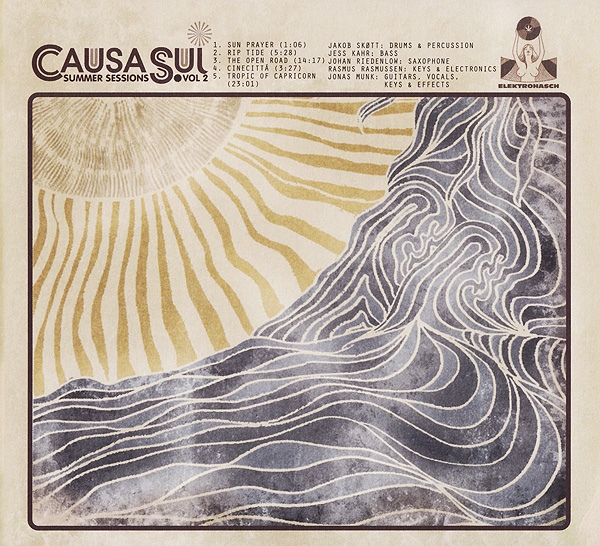
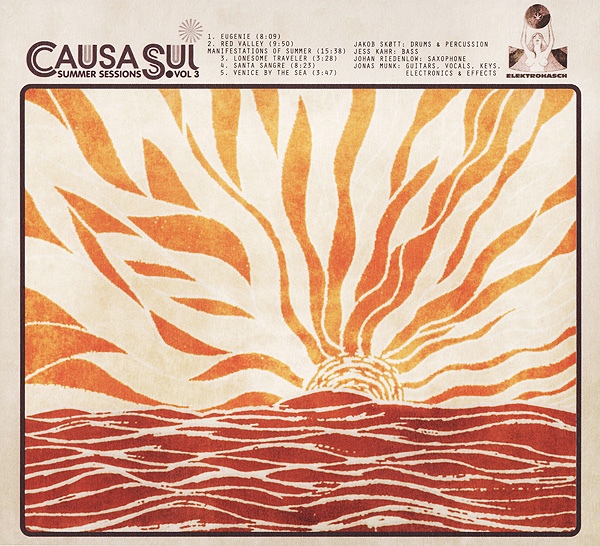
Summer Sessions Volume 3.
Not content with releasing one album during June 2009, Causa Sui released Summer Sessions Volume 3 simulataoursly. This was shades of Bruce Springsteen with Human Touch and . Again, Causa Sui were aided and abetted by saxophonist Johan Riedenlow, they recorded five new tracks. This included Manifestations Of Summer, a trilogy that fills side two of the album. It was like a mini concept album, from musical adventurers Causa Sui.
Hailed as ambitious and innovative, Summer Sessions Volume 3 completed the musical journey that Causa Sui began a year earlier. Now it was over, and so was another chapter in the Causa Sui story. However, a new adventure was about to begin.
The Pewt’r Sessions Volume 1.
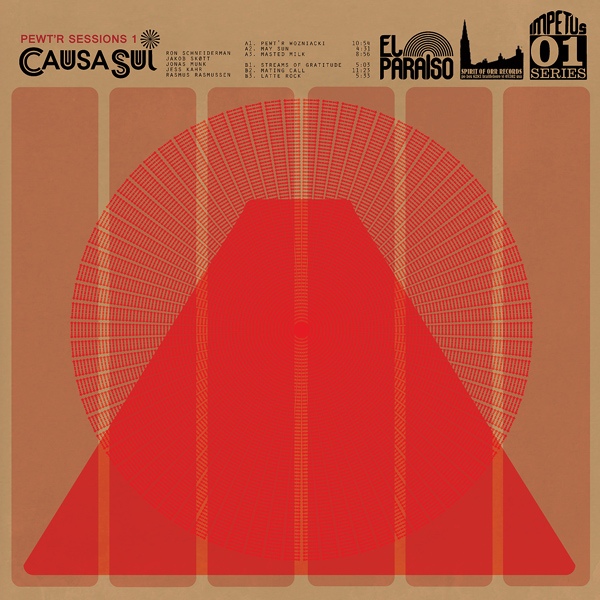
By April 2011, Causa Sui were ready to release the first instalment in a new trilogy. It was obvious that Causa Sui were a band who had been weaned on the classic rock of the sixties and seventies. That was a period when trilogies and concept albums were de rigueur. Causa Sui it seemed were musical trendsetters in more way than one.
By the time Causa Sui were ready to release The Pewt’r Sessions Volume 1, they had formed their own label, El Paraiso Records. It was run by Jonas Munk and Jakob Skøtt. One of the new labels first release was The Pewt’r Sessions Volume 1.
Just like previous albums, The Pewt’r Sessions Volume 1 was a musical melting pot of influences. Everything from space rock, psychedelia and progressive rock shine through on The Pewt’r Sessions Volume 1, as Causa Sui continue to reinvent themselves.
The Pewt’r Sessions Volume 2.
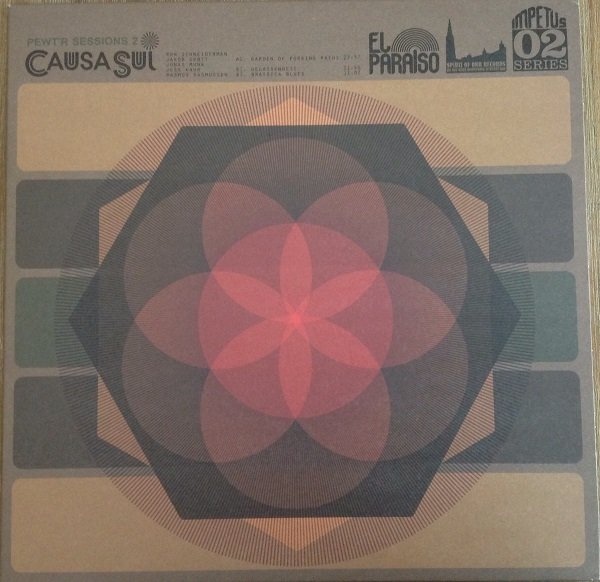
Just four months later, Causa Sui return with The Pewt’r Sessions Volume 2 in August 2011. Again, the album had been produced by Jonas Munk who was finding Causa Sui’s producer’s chair comfortable. He had produced another inventive and ambitious album where Causa Sui fuse space rock, psychedelia and progressive rock.
The Pewt’r Sessions Volume 2 was the seventh album from Causa Sui. Every album was different. Causa Sui weren’t the type of band who would remake an album. They left that to lesser groups. While Causa Sui might have used the similar ingredients on the first two volumes of The Pewt’r Sessions, the results were very different. One thing stayed the same, and that the first two volumes of The Pewt’r Sessions would sell out.
An economist would’ve been impressed by what Causa Sui were achieving. From the Summer Sessions to The Pewt’r Sessions Volume 2, demand equaled supplied. Causa Sui had 500 LPs pressed, and quickly they sold out. Eventually, demand would be so great, that some of Causa Sui’s albums would be reissued. By then, Causa Sui would’ve released further albums.
Euporie Tide.
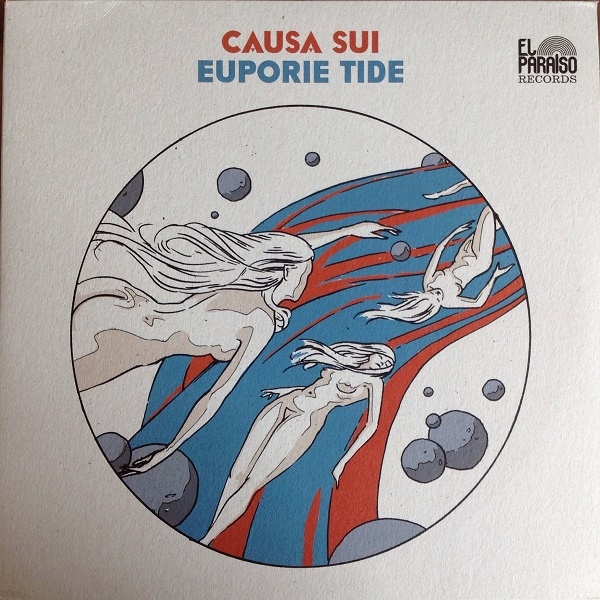
Having released two albums in a year, two years passed before Causa Sui returned in August 2013 with their eighth studio album Euporie Tide. This meant that Causa Sui were averaging an album a year. They were putting many musical heavyweights to shame.
Unlike their five previous albums, Euporie Tide wasn’t part of a trilogy. Instead, it was a standalone album. Euporie Tide was also the first Causa Sui album to be released on CD. However, Causa Sui didn’t forget their fans who had been there since day one, and Euporie Tide was released on limited edition vinyl. There was something for everyone.
Especially, if psychedelia and progressive rock were your bag. They were two of the most noticeable influences. There was still elements of stoner rock and space rock. Mostly, though, psychedelia and progressive rock were to the fore as Causa Sui powered their way through this ten track powder keg of an album. For many critics and record buyers, Euporie Tide was Causa Sui’s finest hour. It was also the album that saw Causa Sui’s music finding a much wider audience. No longer were they one of Danish music’s best kept secrets.
Live At Freak Valley.
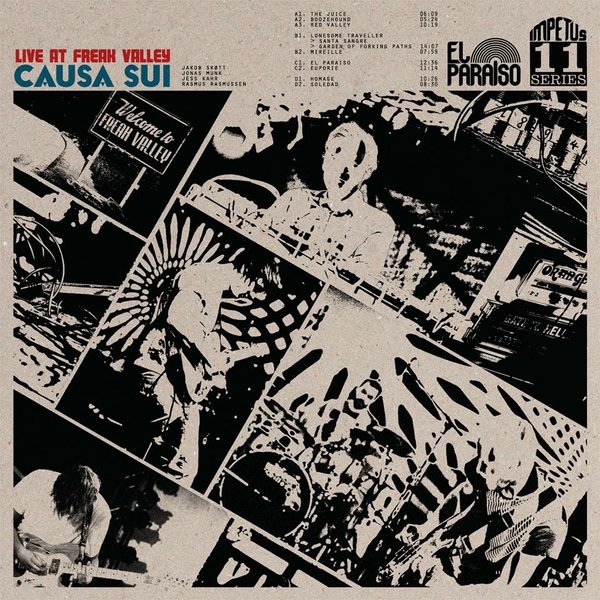
Buoyed by the success of Euporie Tide, Causa Sui released two albums during 2014. The first came on 7th April 2014, when Causa Sui released their first live album, Live At Freak Valley.
The album had been recorded at the Freak Valley Festival, in Netphen, Germany. It had been founded in 2012, and Causa Sui had unleashed a barnstorming set. Rocky and pyschelic, the lysergic warriors took the Freak Valley Festival by storm. That’s apparent on Live At Freak Valley, which was released a CD and double LP. It’s a tantalising taster of Causa Sui live and unleashed. However, after their debut live album, Causa Sui had unfinished business to attend to.
The Pewt’r Sessions Volume 3.
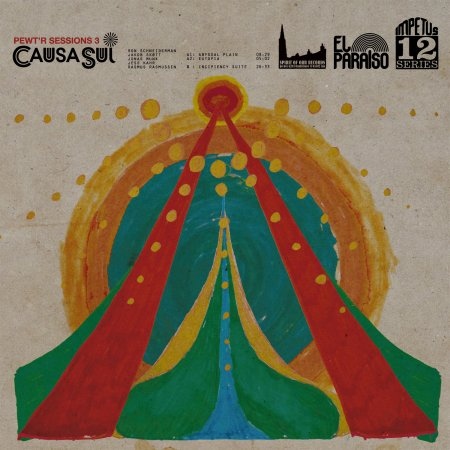
There was still the small matter of the last instalment in The Pewt’r Sessions. So four months later, on 19th August 2014, Causa Sui returned with The Pewt’r Sessions Volume 3. Unlike previous volumes in the series, The Pewt’r Sessions was released on LP and CD.
Fittingly, The Pewt’r Sessions Volume 3 featured just a trio of tracks from Causa Sui. However, the psychedelic rockers had kept the best until last. Incipiency Suite was a twenty-six minute epic that showcased Causa Sui at their very best. Now those that had just discovered Causa Sui knew what the fuss was about. With Causa Sui’s fan-base increasing, their next album would be one of the most important of their career.
Return To Sky.
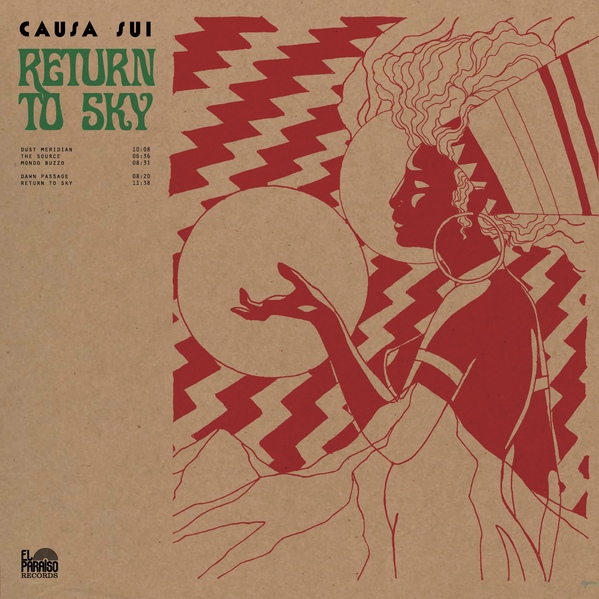
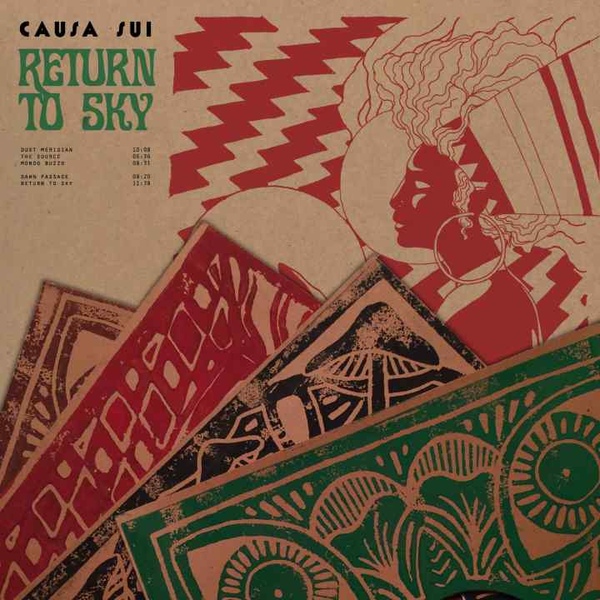
Since the release of The Pewt’r Sessions Volume 3, Causa Sui’s fans have patiently awaited their tenth studio album. However, with Causa Sui’s star in the ascendancy, they’re having to combine touring with recording. So nineteen months have passed before Causa Sui returned with Return To Sky in February 2016. It features another five new tracks from the Danish musical chameleons.
For Return To Sky, the four members of wrote and recorded five new tracks. These tracks were recorded by what’s now regarded as the classic lineup of Causa Sui. This included the original rhythm section of drummer and percussionist Jakob Skøtt, bassist Jess Kahr and guitarist Jonas Munk. They’re joined by keyboardist and electronics virtuoso Rasmus Rasmussen. Jonas Munk recorded, mixed, mastered and produced Return To Sky, which features the welcome return of Causa Sui as they celebrate releasing eleven albums in eleven years.
Opening Return To Sky is Dust Meridian, a ten min track that literally explodes into life. At the heart of the arrangement are the pounding drums. They provide the heartbeat, before a bass synth enters. Soon, it’s playing a leading role. When it drops out, a bass and subtle wash of synths are added. They’re the perfect replacement. Soon though, a guitar rings out, wah-wahing and adding a gloriously rocky rue. It’s aided and abetted by the bass, and progressive rock synths. By then, psychedelia, progressive rock, classic and rock and space rock are melting into one. However, at 3.37 a jazz-tinged guitar signals it’s all change. The arrangement meanders melodically along, with Causa Sui playing within themselves. Before long, they’re straining at the leash as the arrangement builds, and the band jam. Together, they create an impressive and dramatic sound that has its roots in seventies rock. Later, there’s one more curveball left to throw, as the tempo drops and the arrangement meanders melodically and dreamily along.
There’s almost a nod to Led Zeppelin on The Source. The introduction sounds as if it’s a homage to one of Unholy Trinity. The arrangement literally prowls along, the rhythm section jamming, as if looking for an in. When they find it, Causa Sui kick loose, and a track right out of the seventies classic rock songbook unfolds. At the heart of the arrangement are the strutting, rocky rhythm section. However, midway through the track there’s a series of brief pauses, before Causa Sui are off and running. They add an element of drama, as Causa Sui unleash a dark, dramatic, hands in the air anthem. That’s until two minutes to go, when the arrangement slows down and meanders melodically along. It’s similar to the opening track, with a dreamy, almost ethereal sound proving a contrast to Causa Sui’s earlier adventure in hard rock.
Mondo Buzzo has a much more understated sound. Just a lone guitar plays, before the rhythm section plays. They play with a degree of subtlety. So do the keyboards as a mesmeric, melodic track unfolds. Then Causa Sui stir things up. They move through the gears, and suddenly, the rhythm section and guitars are delivering a hard rocking track. Again, it’s roots are in the seventies, a decade which has obviously influenced Causa Sui. Pounding drums, a driving bass and machine gun guitars combine as the band deliver a musical masterclass. Later, a familiar pattern returns, when the tempo changes and the arrangement becomes spacious and lysergic. Washes of Michael Rother-esque, guitars are added as the arrangement floats lazily along. By then, there’s a nod to Pink Floyd from Causa Sui on what’s one of the highlights of Return To Sky.
An urgent strummed, chiming guitar opens Dawn Passage. Meanwhile, the bass walks the arrangement along. Washes of ethereal synths are added, as the tempo increases. Still, the arrangement is floating along. Again, there’s a dreamy, lysergic sound. That’s until the driving guitars are unleashed. Suddenly, it’s all change. A blistering, searing, rocky guitar is at the heart of the arrangement as the rest of the rhythm section drive it along. After that sudden burst of energy, Causa Sui return to the earlier dreamy melodic sound. However, they’ve one last surprise, and kick loose one more time as if driving the arrangement to the finishing line.
Return To Sky closes with the title-tracks. After the band are counted in, they play slowly and thoughtfully. Washes of crystalline guitars add wistful sound, while the rhythm section play within themselves. This could change at any moment. When it does, it’s the guitar that provides the clue. They’re the last man standing, and play gently. Soon, something is stirring, and Causa Sui’s driving, pounding rhythm section can’t resist the temptation to kick loose. A buzzing bass, thunderous drums and blistering guitars combine seamlessly. Then after five minutes, the arrangement is stripped bare, leaving just the chiming guitars and washes of synths. This leaves time for the listener to ruminate, as the track heads in the direction of an ambient soundscape. Gradually, though, one gets a sense that Causa Sui are going to end on a rocky high. Although the rhythm section unite, it’s Jonas Munk Hendrix-esque guitar that steals the show. Then after a few sci-fi sounds, Return To Sky is over and Causa Sui are gone, leaving just a memory of what’s a career defining album.
Although Return To Sky is Causa Sui tenth studio album, and eleventh overall, it’s without doubt the best album of their career. Return To Sky features elements of Causa Sui’s musical past, music and much more. This included four decades of rock music. That’s why there’s elements of classic rock, Krautrock, psychedelia, progressive rock, stoner rock and space rock. Ambient and avant-garde have also influenced Causa Sui. So have Can, Jimi Hendrix, Led Zeppelin, Michael Rother and Pink Floyd. The result is a heady brew and musical genres and influences, Return To Sky.
It’s an album that veers between dark and dramatic and hard rocking to lysergic, dreamy and wistful to mesmeric and melodic. Return To Sky is all these things and more. It also features four hugely talented musicians as they reinvent their music yet again. This is a constant process that ensures that Causa Sui are one step ahead of the musical crowd.
That’s not all. Causa Sui are always one step ahead of the listener. They’ve always got a surprise in-store for the unwary listener. At any given moment, Causa Sui could throw a curveball that transforms the track. Suddenly, hard rock becomes lysergic and wistful. It’s case of expect the unexpected throughout Return To Sky, where musical chameleons Causa Sui keep the listener on their toes during what’s a career defining album.
CAUSA SUI-RETURN TO SKY.
WHOLEWHEAT-SONGS FROM MY PARENT’S BASEMENT.
WHOLEWHEAT-SONGS FROM MY PARENT’S BASEMENT.
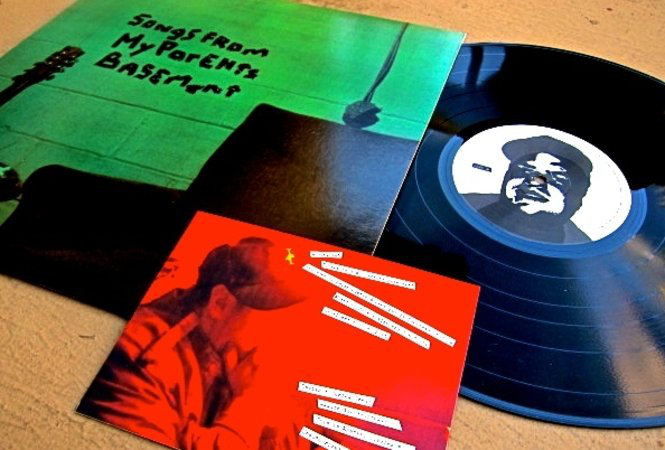
A degree of mystery surrounds New Jersey based singer-songwriter, Wholewheat. Musically, Brian Austin a.k.a. Wholewheat is something an enigma. Very little is known of him. However, in September 2014, Wholewheat released his debut album Songs From My Parent’s Basement. It features songs that Wholewheat recorded between 1995 and 2003. Songs From My Parent’s Basement however, was very nearly never released.
Wholewheat had grown up listening to an eclectic selection of artists. In high school, he listened to The Ventures, The Animals and The Left Banke. Another influence was sixties soul music. Especially Curtis Mayfield and The Four Tops. However, as his musical career began, Wholewheat was listening to Beck, Daniel Johnston and Sebadoh. Each of these artists would shape Wholewheat as a musician.
It was around 1995, when Wholewheat set his sights on forging a career as a musician. By then, he was living in Toms River, Jersey Shore, New Jersey. That was where Wholewheat would enjoy his ‘glory days’.
These came when Wholewheat was playing around the New Jersey area. When he played lived, his gigs proved reasonably popular. However, Wholewheat didn’t play live as often as most artists. Instead, Wholewheat was content to concentrate on recording,
By then, Wholewheat had transformed the basement of home into a makeshift studio. At the heart of the studio, was a four-track cassette recorder, which Wholewheat recorded his lo-fi songs onto. These songs most people thought Wholewheat would release as an album. Little did they know, that Wholewheat never meant to release these songs.
Instead, recording the songs was almost like an act of confession for Wholewheat. Entering the recording studio, was akin to entering the confessional. It was as if there was a cathartic quality to recording, and that it allowed Wholewheat to cleanse his soul. For onlookers. it must have been frustrating knowing nobody was going to hear these songs.
After all, locally Wholewheat was a described as a talented singer-songwriter. When he played live, he was a popular draw. However, despite enjoying a following locally, Wholewheat was reluctant to release his music. Still, though, Wholewheat continued to record new songs.
Every month, the pile of four-track cassettes grew. Wholewheat was a truly prolific songwriter. Songwriting seemed to come easy for him. He continued to record songs in his basement studio. For eight years, Wholewheat disappeared into his studio, and recorded new songs. Then in 2003, everything changed.
Almost overnight, Wholewheat turned his back on music. No longer was he playing live. He didn’t even go down to his basement studio anymore. It was as if Wholewheat had drawn a line in the sand.
This his fans felt was disappointing. Wholewheat’s lyrics they felt, were perceptive and cerebral. He seemed to live the lyrics to a song. That he had turned his back on music was regarded a tragedy.
Over the next few years, Wholewheat made occasional sojourns into his basement studio. However, it wasn’t like it once been. No longer was Wholewheat in love with music.
Months would go by before Wholewheat returned to the studio. Meanwhile, the pile of four-track cassettes lay unloved. Some of these recordings went as far back as 1995. These tapes were stored in the basement of Wholewheat’s New Jersey home. Then in early 2014, some of Wholewheat’s music was put on the internet.
Soon, Wholewheat’s music found an audience on the internet. The next step was to take things further, and release an album. So the thirteen tracks that became Songs From My Parent’s Basemen were chosen from the cassettes in Wholewheat’s basement.
While most albums were being released digitally 500 copies of Songs From My Parent’s Basement pressed on vinyl. The reason for this was Wholewheat has always been more comfortable outside the digital world. Indeed, Wholewheat’s basement studio is a world away from the the DAWs, digital interfaces and Melodyne that could be found in many basement studios. However, Wholewheat wouldn’t be comfortable in such that environment.
What Wholewheat’s recordings lack in fidelity, he tries to is make up with clever songwriting and feel. Emotion and honesty is said to pervade the lo-fi recordings on Songs From My Parent’s Basement, which I’ll tell you about.
Tragic Death opens Songs From My Parent’s Basement. Just a slow, hypnotic drum machine gives way to synths. Together, they create a nineties lo-fi sound. Plenty of space is left in the arrangement. Some of it’s filled by Wholewheat’s emotionless vocal. Straight away, there’s a darkness to his lyrics: “I want a Tragic Death, some rookie cop to see my last breath.” Wholewheat’s vocal has been multi-tracked, so that he adds backing vocals to this melodic track. His lyrics are dark, nihilist and later, full of youthful angst: “I’m done with this world, all because of a girl.”
The guitar that opens Can You Divide Me Into You? sounds as if it’s been inspired by Nirvana unplugged. Again, Wholewheat’s urgent, emotive vocal has been multi-tracked. Behind him, a big bold, droning, see-saw keyboards play. They provide the backdrop to a heartfelt plea that’s reminiscent of Nirvana.
Just like the two previous tracks, Give You My All has a lo-fi sound. This adds an atmospheric backdrop, as percussion, drums and keyboards add an understated backdrop. At the front of the arrangement, is Wholewheat’s vocal. It delivers what’s alternative, but catchy and memorable paean. When the vocal drops out, beeping, squeaking synths add to the hook quotient to this catchy slice of pop.
He Knew How To Smile is another guitar lead track. Soon, it’s joined by Wholewheat’s vocal. By then, memories of Wilco circa Summerteeth come flooding back. Especially, when the keyboards are added. There’s also a nod to The Beatles post 1967. By then, memories come flooding back and Wholewheat’s delivers a rueful vocal full of sadness and regret.
As Wholewheat plays a crystalline guitar on It’s Alright, urgency and emotion fills his vocal. He’s been transformed into a guitar toting troubadour on what’s a quite beautiful ballad.
Anyhow Anyway Anyday is another song that’s brings back memories of Wilco. That’s despite it featuring just featuring Wholewheat’s vocal, firmly strummed guitar and droning keyboards. Again, Wholewheat’s thoughtful vocal has been multi-tracked, and he adds ethereal harmonies. They’re the perfect finishing touch to one of Wholewheat’s finest hours, which sonically is one of the best recorded songs on Songs From My Parent’s Basement.
Spread Eagle’s has a really lo-fi sound. It’s far removed from music recorded in the digital age. This for many people is part of Songs From My Parent’s Basement’s charm. Wholewheat plays his trusty guitar and also keyboards. His vocal however, sounds as if it’s been influenced by John Lennon’s Double Fantasy and Milk and Honey. Meanwhile, the arrangement has a dreamy, lysergic sound that envelops and captivates the listener.
From the opening bars of We Can Be So Happy, Wholewheat’s vocal is heartfelt and hopeful. Again, his influences seems to be John Lennon and The Beatles on this tender, ruminative ballad.
The clicking drum machine returns on Fields Of Loneliness. Sonically, it’s a track that’s reminiscent of the opening track Tragic Death. It sounds as if it was written and recorded at the same time. There’s a coldness to the vocal, which has been multi-tracked so that Wholewheat accompanies himself. Slowly, and sometimes with a degree of cynicism as Wholewheat delivers the lyrics. This however, is just bravado, as he sounds if he’s experienced the loneliness he’s singing about. Just like Tragic Death, Fields Of Loneliness has a strangely melodic sound.
Jaunty describes the arrangement to Seaworthy. It bobs along, while lo-fi keyboards accompany Wholewheat. He delivers lyrics full that that are like stream of consciousness. Other times, they’re reminiscent of Tom Waite’s early albums. The major difference is Wholewheat’s vocal. It’s almost bereft of emotion, as slowly and deliberately he delivers his cerebral lyrics.
It’s just a guitar that accompany Wholewheat on Cavity. His vocal has been multi-tracked, allowing him to accompany himself and harmonise. Again, there’s a darkness and also irony in the lyrics. “I went for a jog, got hit by a car, guess I’m just lucky.” Despite the irony and darkness, Cavity is still melodic, memorable, and showcases a talented singer-songwriter.
Depression Days sounds as if was recorded in the eighties, when synth pop was at the peak of its popularity. The synths that accompany Wholewheat on Depression Days are all that’s needed. They frame his pained vocal as he lays bare his soul for all he hear.
Closing Songs From My Parent’s Basement is I’ll Be Fine. It opens with dialogue between a child and its father asking “what happens when we die?” This gives way to a picked guitar, keyboards and Wholewheat’s vocal. It’s tender, heartfelt and accompanied by strummed and picked guitar. Washes of keyboards flit in and out, adding the final touch to a track that’s almost Beatles-esque, and oozes quality. It seems Wholewheat has kept the best until last.
That’s the story of Songs From My Parent’s Basement, the album that nearly never was. The master tapes was founding covered in mildew and rainwater. Songs From My Parent’s Basement was nearly over before the project had began.
Somehow, the tapes were rescued, and the songs converted to digital. Now there was no chance of the elements destroying Wholewheat’s debut album. It was safely backed up, and ready for release. However, Songs From My Parent’s Basement wasn’t like most albums released in September 2014.
Songs From My Parent’s Basement has a real lo-fi sound. Crackles and hiss can be heard on the album. That’s not surprising. Wholewheat recorded the album using a cheap four-track recorder. He didn’t have access to expensive equipment, and had to make do and mend. However, to some extent, the quality of the songs and Wholewheat’s delivery of them, makes up for the lo-fi sound. So do the mostly understated arrangements. The result is a compelling album, that’s variously dreamy, ethereal, lysergic, melodic and memorable. Other times, Wholewheat’s music is rueful, and full of hurt, sadness, cynicism and bravado. Mostly, though, Songs From My Parent’s Basement is an exploration of Wholewheat’s emotions and psyche.
One only needs to look at the song titles and listen to the lyrics to realise this. It seems songwriting and recording was therapeutic for Wholewheat. He poured so much of himself into the songs on Songs From My Parent’s Basement, which is a really personal album. Especially song like the nihilistic Tragic Death; the heartfelt and hopeful Give Me Your All; It’s Alright; the reassuring We Can Be So Happy; the darkness of Depression Days and the album closer I’ll Be Fine. Across thirteen tracks lasting forty minutes, Wholewheat lets you into his world. However, all we known about him, is his name Brian Austin. The man that’s better known as Wholewheat is a somewhat mysterious figure. Indeed, Wholewheat is best described as a musical riddle, wrapped in a mystery, inside an enigma.
WHOLEWHEAT-SONGS FROM MY PARENT’S BASEMENT.
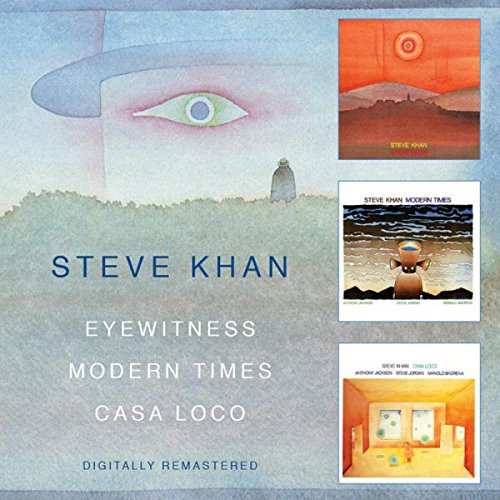
STEVE KHAN-EYEWITNESS, MODERN TIMES AND CASA LOCO.
STEVE KHAN-EYEWITNESS, MODERN TIMES AND CASA LOCO.
During the seventies, Steve Khan was one of the top session musicians in New York. He seemed to work non-stop, and was the go to guy for anyone looking for a guitarist. Steve Khan had worked with some of the biggest names in music; including Steely Dan, Blood Sweat and Tears, Billy Joel and Thijs Van Leer. Mostly, though, it was soul, funk and jazz musicians that Steve Khan worked with.
From Esther Phillips and George Benson to Ashford and Simpson, The Brecker Brothers, Bob James, Larry Coryell and Hubert Laws, Steve Khan had worked with them all. However, this was just part of the Steve Khan story.
Part of the Steve Khan story is documented on BGO Records’ recent release. It’s a double album featuring three albums, Eyewitness, Modern Times and Casa Loco. They were released between 1981 and 1983. However, Steve Kahn’s career had started at the end of sixties.
The former drummer and pianist turned guitarist, had moved to L.A. in 1969. Since then, the youngest son of lyricist Sammy Cahn had been forging a career as a musician.
For eight years, Steve Khan was content to play on other people’s albums. However, eventually, Steve Khan decided to embark upon a solo career in 1977.
Despite making the decision to embark upon a solo career, Steve Khan continued to work as a session player. He also toured Japan with the CBS Jazz All Stars. Then later in 1977, he released his debut album Tightrope
When Steve Khan released his debut album in 1977, he was already thirty-seven. He had signed to Columbia, and his debut album Tightrope. It featured some of the top session musicians, including The Brecker Brothers and Bob James, who produced Tightrope. Bob James was forging a career as a producer, and gave the album his his trademark sound. Tightrope was well received and launched the career of Steve Kahn. He would return a year later with his sophomore album.
Just a year later, and Steve Khan returned with The Blue Man. This time around, Steve Khan decided to arrange and produce the album himself. What didn’t change, was that some of the top session musicians accompany Steve Kahn on The Blue Man.
Among them were The Brecker Brothers, David Sandborn, Ralph McDonald and Steve Gadd. With such an illustrious band accompanying Steve Khan, it was no surprise that The Blue Man well received by critics and was a success in the jazz charts. After just two albums, it looked like Steve Khan was about to enjoy a successful solo career.
In 1979, Steve Khan returned with his third solo album. Arrows. Again, Steve Kahn was joined by some of the top session musicians. Many had played on Steve Khan’s first two albums, and returned for Arrows with musicians like Errol “Crusher” Bennett, Will Lee and Jeff Mironov. Together, they played on what some critics regarded as the best album of Steve Khan’s three album solo career. However, when Arrows was released in 1979, music was in a state of flux.
1979 was a game-changer for music. Disco died at Comiskey Park, Chicago on 12th July 1979. Suddenly, record shops couldn’t even give disco records away. Meanwhile, major labels started dropping disco artists. Financially, this was a disaster, as disco had been a cash cow which everyone had milked. To make matters worse, other popular genres were struggling.
This included fusion, which was no longer as popular. Some of its biggest selling artists including Weather Report, Herbie Hancock and John McLaughlin were only selling a fraction of the albums they used to. These were worrying times as the seventies gave way to the eighties.
Luckily for Steve Khan, he still had plenty of session work. There was be no shortage of work for a top class guitarist. However, by 1981, Steve Khan’s thoughts turned to his next solo album, which would become Eyewitness.
Eyewitness.
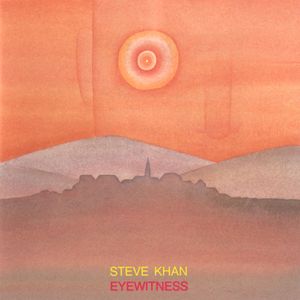
For Eyewitness, Steve Khan’s usual band spent the weekend of the 7th-8th November 1981, recording five songs. Steve Khan had written Dr. Slump, Guy Lafleur and Eyewitness. The other two tracks Where’s Mumphrey? and Auxiliary Police were recorded by four friends who had jammed and recorded for years.
They had been doing so since drummer drummer Steve Jordan, bassist Anthony Jackson, percussionist Manolo Badrena and guitarist Steve Khan had been working on Steely Dan’s Gaucho album. Since then, the four musicians had worked together, and met at Steve Jordan’s Chelsea loft where they jammed. After a while, everything fell into place and the quartet were making music together. At first, it was recorded on a cheap tape recorder. However, when they listened back to the tapes, they realised that the music they were making deserved to recorded and released.
While the four friends had recorded fusion, it was a bit more innovative than much of the fusion being released. The music was intricate, complex and accessible. It was fusion with a twist. No wonder. Look at the equipment the band used.
Bassist Anthony Jackson preferred a six string bass. Steve Jordan’s drum kit featured timbales, a cowbell, two hi-hats, two snare drums and even a broken splash cymbal. Percussionist Manolo Badrena’s equipment was constantly evolving. As he went into the Eyewitness’ sessions, he deployed timbales, congas and even a turtle shell. Steve Khan’s band were it seemed, no ordinary fusion band.
When they went into the studio on 10th November 1981, everything clicked over the weekend at Mediasound studios. Steve Kahn and Doug Epstein co-produced the album, which was recorded over two days. Eyewitness was complete by the 11th of November 1981. Little did Steve Kahn realise, that he had recorded the best album of his solo career.
Eyewitness was released to widespread critical acclaim. Although described as an innovative album of fusion, Latin and blues can be heard on Eyewitness.
The Latin influence is most prominent on Eyewitness, a slow burner, which begins as a ballad and breaks out into a Latin groove. Guy Lafleur is another track with a Latin influence. It’s played in 6/8 time and features the band at their very best. At the heart of the action is the rhythm section, who power along the arrangement while percussion Steve Khan’s guitar intertwine. It’s a musical masterclass.
So is the tonal jam Auxiliary Police, where the band improvise seamlessly and showcase their versatility and undoubtable talent. However, one of Steve Khan’s finest moments comes on Dr. Slump. He delivers an almost Hendrix inspired performance on a memorable, bluesy track. For Steve Khan, Eyewitness had been a career defining album, and one that had proved popular in Japan.
When Eyewitness was released, the Japanese music market was one of the most lucrative in the Western world. It was in Japan that Eyewitness received some of the best reviews. Eyewitness received critically acclaimed reviews and this resulted in Steve Khan and his group being booked to play four nights in Tokyo.
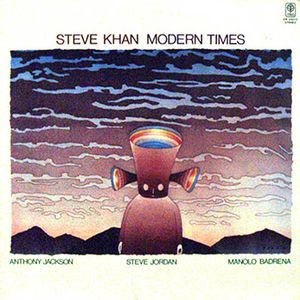
Modern Times.
The venue for the four nights in Tokyo, was the Pitt Inn.That’s where Steve Khan’s band would take to the stage during four days in May. There was a problem though. The band had no named. So when it came to signing the contract, the other three members of the band were reluctant to sign it. So Steve Khan signed the contract, and when the band arrived at the show later that day, they were billed as Steve Khan and Eyewitness.
Over the next four days, Steve Khan and Eyewitness were booked to play four shows. Two of these shows, at the Pit Inn were to be recorded for a live album, Modern Times. The two dates that had been chosen, were May 3rd and 4th.
Choosing two days made sense. If there were any problems on the first night, they had a chance to make amends the following night. Each night, the whole set was recorded. This allowed the band to choose the best tracks when they returned home, and began working on their first live album, Modern Times.
Back home, Steve Khan and Eyewitness listened to the two nights that had been recorded. Eventually, they settled on four lengthy tracks lasting nearly forty-five minutes. This included Blades (For Wayne Gretzky), The Blue Shadow (For Folon), Penguin Village and Modern Times. However, what would become Modern Times wasn’t released in America.
Instead, Modern Times was only released in Japan. When it was released in 1982, it was to unequivocal critical acclaim. Japanese jazz critics were won over by Steve Khan and Eyewitness’ first live album Modern Times. It was a reminder of the groundbreaking quartet’s performance earlier that year.
Blades which opened Modern Times, is an explosive mixture of rock and Latin, with contrasts aplenty. From quiet sections, the arrangement explodes and the quartet are off and running; improvising and pushing musical boundaries to their very limits. Sometimes, futuristic sound effects are combined with an impressive array of urgent percussion. Then at the heart of The Blue Shadow’s success is the interplay between the rhythm section. They play as one, while Steve Khan unleashes a stellar solo. He’s joined by Steve Jackson, and he matches him every step of the way, as they play in double time. It’s a peerless performance, before they head into Penguin Valley.
Here, Steve Khan and Eyewitness improvise, and percussionist Manolo Badrena relies heavily on his arsenal of special effects. They’re used effectively, on both the percussion and vocal. All the time, the rhythmic powerhouse of Anthony Jackson and Steve Jordan drive the arrangement along, adding a Latin flavour to this genre-melting track. Then Modern Times closes with the title-track. Penned by the band, Anthony Jackson switches to his six string bass, which makes its debut. Soon, he’s pushing it to its limits, as the sonic adventurer discovers what it’s capable of. All the time, the band are improvising and taking the listener on a groundbreaking voyage of musical discovery which they’ll want to repeat. Sadly, only those in Japan were able to enjoy the musical journey that was Modern Times.
The album was only ever released in Japan, until 1985 when Modern Times received a release in America and Europe. By then, Steve Khan and the band had released another solo album, Casa Loco.
Casa Loco.
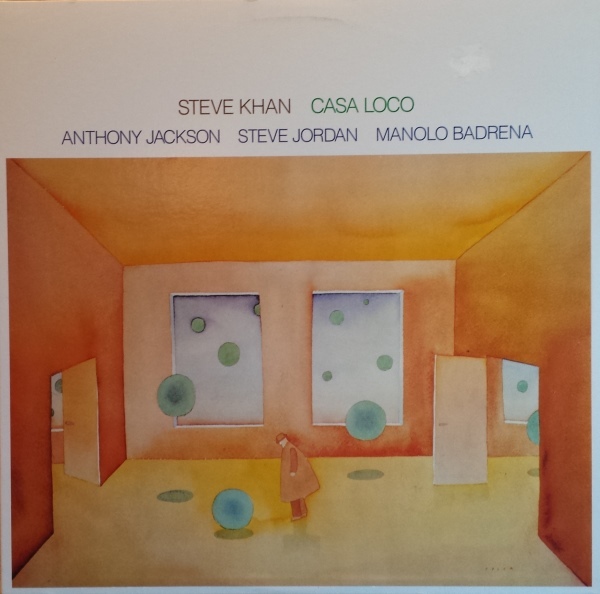
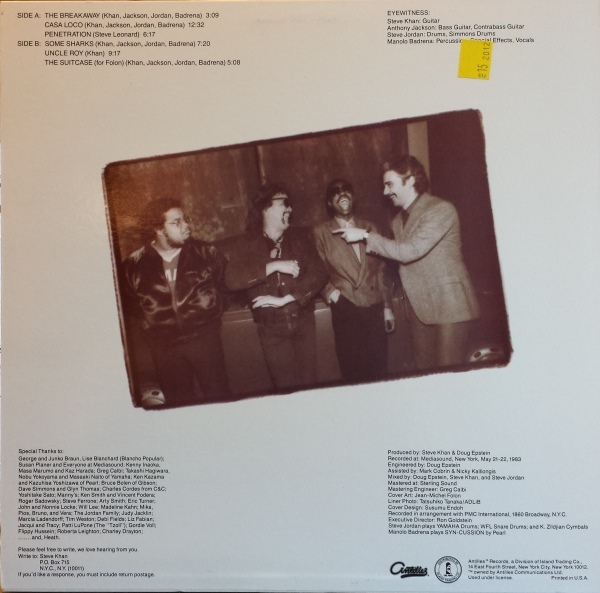
Just like Eyewitness, Casa Loco was recorded at Mediasound studios, in New York. However, originally the recording sessions were a bit more informal.
They began at Steve Jordan’s Chelsea loft. It was turned into a makeshift recording studio, where Steve Khan and Eyewitness would jam their way through the six tracks that became Casa Loco.
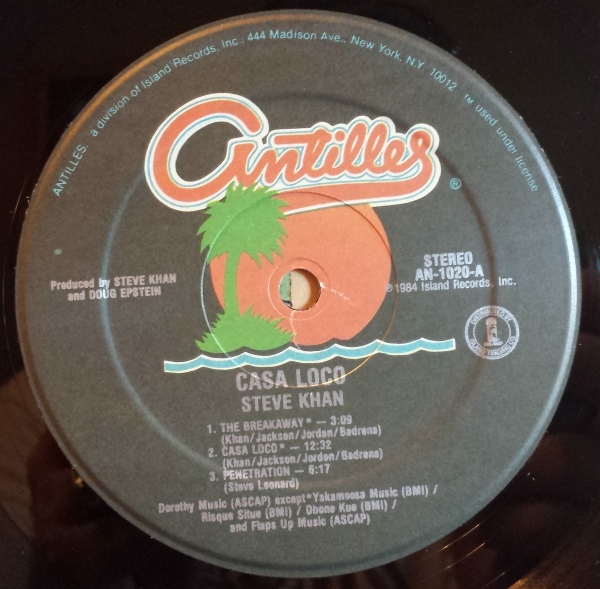
Four of the tracks, including The Breakaway, Casa Loco, Some Sharks and The Suitcame were penned by the band. Steve Khan wrote Uncle Roy; while Penetration was a cover of a surf rock classic. However, surf rock wasn’t the only genre that influenced Steve Khan and Eyewitness on Casa Loco.
Everything from surf rock to jazz, Latin, R&B, rock and world music shine through on Casa Loco. So does the influence of The Police, complete with Sting inspired vocals. These influences would result in the most eclectic album of Steve Khan’s career.
Critics were quick to point this out in their reviews. Most of the reviews of Casa Loco were positive, and remarked that Steve Khan and Eyewitness had reinvented their music since Eyewitness. Casa Loco was a much more eclectic album, that allowed the band to showcase their versatility.
That was the case from Casa Loco’s opening track. When engineer Doug Epstein asked the band to play at Mediasound, Steve Jordan started laying down an almost manic, propulsive beat. Next to the party was bassist Anthony Jackson. Suddenly, the rest of the band climbed onboard, and quickly launched into a three minute jam that was unlike anything they had recorded before. From there, they embark on the twelve minute genre-melting title-track. Everything from jazz, Latin, R&B, rock and world music is combined during this all conquering epic. It gives way to Penetration, a cover of The Pyramids surf rock classic. It’s given a makeover, where harmonies and a myriad of effects are added to what’s akin to a wall of sound, as Steve Khan and Eyewitness reinvent this familiar track. After this, it’s all change.
After some interplay between the rhythm section, Some Sharks becomes a moody, broody, meandering track. It’s played in 4/4 time, with the rhythm section and percussion playing leading roles. The vocal although delivered in Spanish, stylistically, has been influenced by Sting. Meanwhile, the band are enjoying the opportunity to improvise, as they showcase their individual and collective talents. Then on the final two tracks, one individual steals the show, Steve Khan.
On Uncle Roy, Steve Khan takes centre-stage, and unleashes some of his finest guitar solos. The rest of the group play a subtle supporting role. Atop the arrangement sits Steve Khan’s over-dubbed Stratocaster. Its addition adds the finishing touch to one of the album’s highlights. Closing Casa Loco was The Suitcase, which features another guitar masterclass from Steve Khan. This time, he’s playing high up the register, and his clean crystalline guitar at the heart of everything that’s good about this blistering, explosive track. It certainly leaves the listener wanting more.
Sadly, Casa Loco was the end of the road for Steve Khan and Eyewitness. They split-up in 1985. However, four years later, in 1989, they reunited to complete four unfinished tracks. These tracks became the album Public Access, which was one of their most successful albums. That would the last time the four members of Steve Khan and Eyewitness recorded together.
The best albums Steve Khan recorded with Eyewitness were Eyewitness, the live album Modern Times and Casa Loco. They were recently reissued by BGO Records, and celebrate the best years of fusion pioneers’ short career. Given the ambitious and groundbreaking music Steve Khan and Eyewitness released, they should’ve enjoyed much more success than they did.
The problem was, Steve Khan and Eyewitness came to the party too late. If they had released Eyewitness, Modern Times and Casa Loco a decade earlier, they would’ve enjoyed much more commercial success. Back then, fusion was at the peak of its popularity, and pioneers like Steve Khan and Eyewitness would’ve been rubbing shoulders with fusion royalty. However, between 1981 and 1983, when Steve Khan and Eyewitness released their trio of albums, fusion was no longer as popular. This affected sales of Eyewitness and Casa Loco. So it was almost inevitable that the band split-up in 1985.
Now, thirty-three years after the release of Casa Loco, Steve Khan and Eyewitness are receiving the recognition they so richly deserve. Eyewitness, Modern Times and Casa Loco have been remastered and reissued by BGO Records. Now a new generation of fusion fans have the chance to discover three albums of ambitious and innovative fusion from Steve Khan and Eyewitness.
STEVE KHAN-EYEWITNESS, MODERN TIMES AND CASA LOCO.
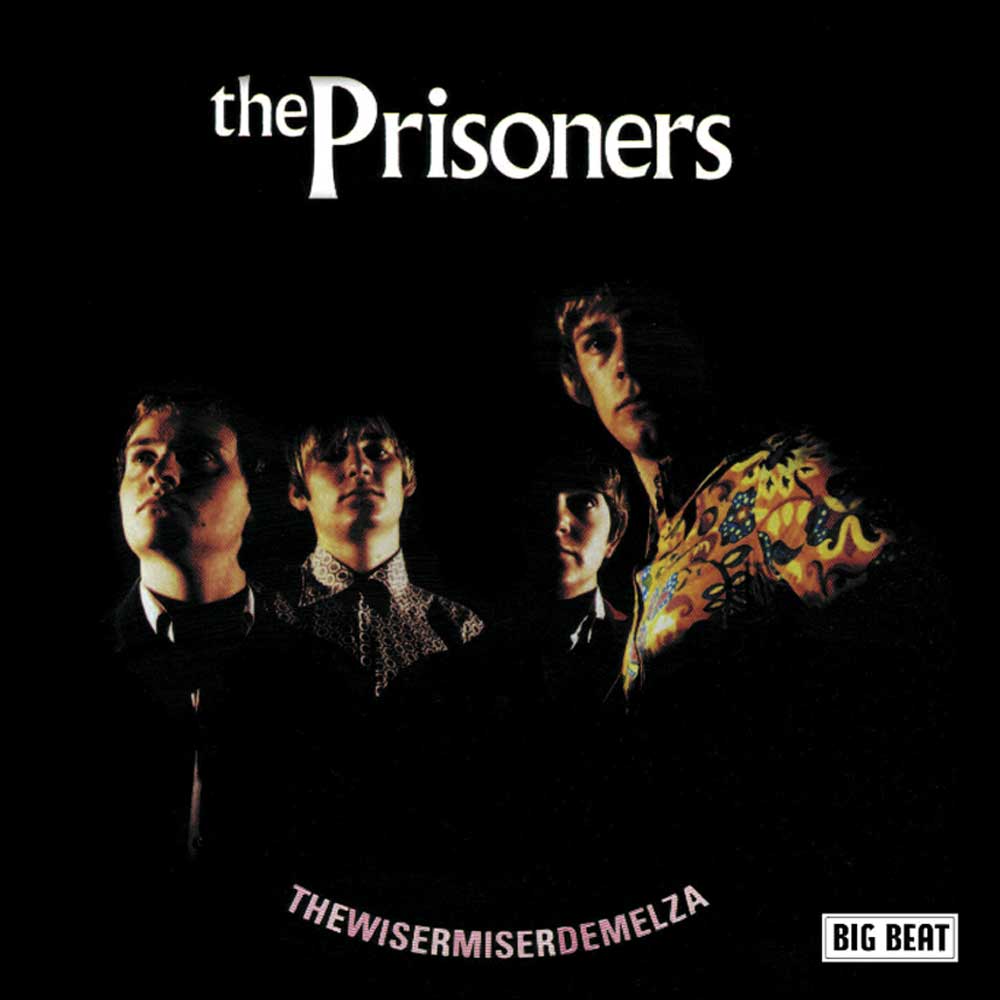
THE PRISONERS-THE WISEMISERDEMELZA.
THE PRISONERS-THE WISEMISERDEMELZA.
Musical history is littered with groups whose report card said could have done better. This includes The Prisoners, who were formed in Rochester, Kent in 1980, and released four albums, before splitting up in 1986. However, things could’ve been very different for The Prisoners.
That’s if The Prisoners hadn’t been determined to do their way. For some reason, The Prisoners weren’t willing to listen to advice. Even from music industry veterans. It didn’t seem to matter that these people had spent a lifetime in the music industry, and could’ve helped them make a commercial breakthrough. Instead, The Prisoners continued to continue on their contrarian way.
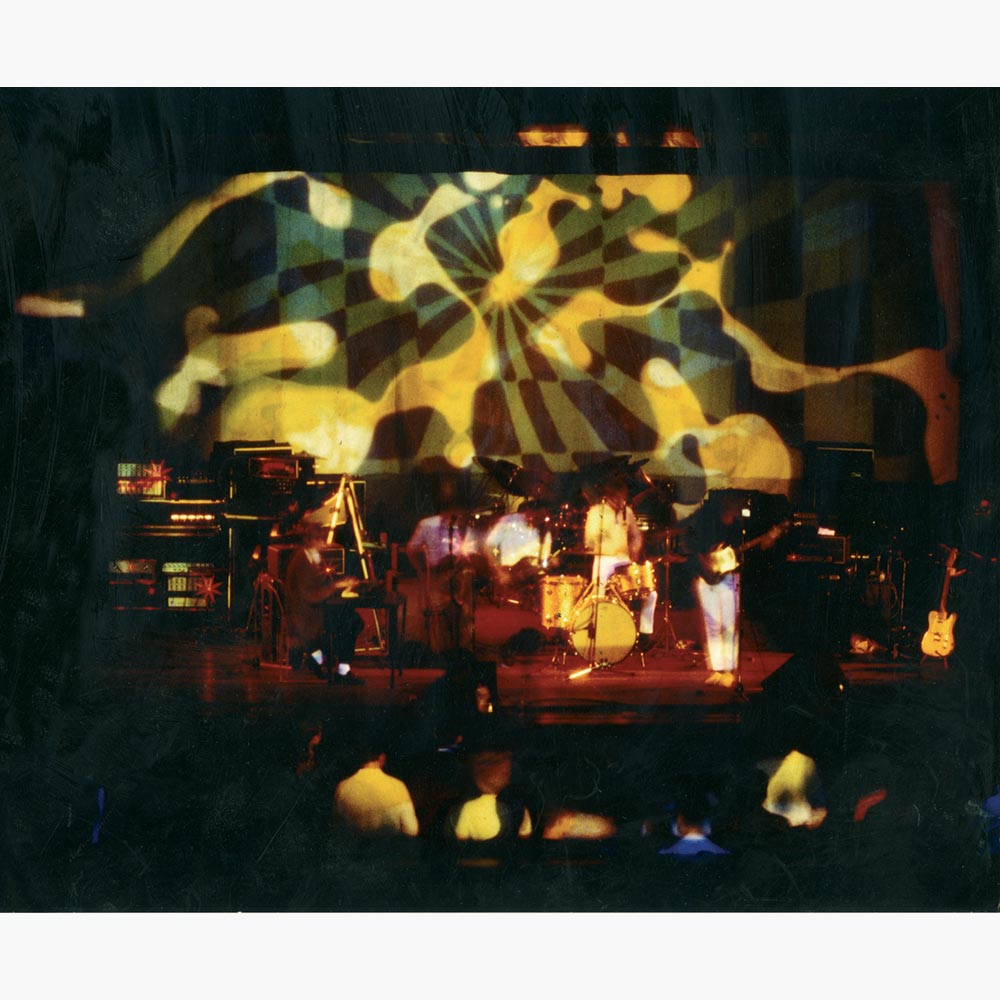
This meant The Prisoners never graduated from playing in smaller venues, in London’s now thriving underground psychedelic and mod scenes. Nor would The Prisoners’ albums sell in vast quantities. However, things looked promising in the early days.
The Prisoners were formed in 1980, at Rochester High School. Initially, the band was a trio featuring vocalist and guitarist
Graham Day, bassist Allan Crockford and drummer Johnny Symons. By the time organist James Taylor joined, The Prisoners seemed to be spending more time rehearsing than playing live. However, after the addition of James Taylor, the nascent band took its tentative steps onto the competitive Medway scene.
One of the leading lights of the Medway scene, was Billy Childish. Although some remember him as charismatic, others remember his strong, unyielding views on how a band should sound. Incredibly, rather than form their own opinions, The Prisoners became a prisoner to this worldview. However, by then, The Prisoners were only seventeen or eighteen. They were also newcomers to the scene, and would easily be impressed by someone who was in their eyes, was the kingpin in the local scene.
The Prisoners were soon familiar faces on the local Medway scene. Their influences ranged from R&B, garage, rock, psychedelia, plus The Kinks and The Pretty Things. These influences resulted in a band whose roots may have been in the past, but were capable of creating catch, melodic and memorable music.
At the heart of The Prisoners’ sound, was Graham Day’s lyrics; James Taylor’s Vox Continental organ; and choppy, punk inspired guitar licks. This was what the audience heard when The Prisoners began to share bills with Billy Childish’s The Milkshakes.
By then, The Milkshakes were regarded as the top band in the Medway scene. Soon, though, it became apparent that they had a rival in The Prisoners. The Milkshakes it seemed, had competition. However, that was until James Taylor announced he was heading to Newcastle University.
Given the importance of James Taylor’s Vox Continental organ in The Prisoners’ sound, this the other band members thought would spell the end of road for the group. So they decided to record an album A Taste Of Pink to document their short musical journey.
For A Taste Of Pink, The Prisoners had written eleven tracks. They were recorded at Oakwood Studios on the 12th September 1982, and were produced The Prisoners. Not long after this, James Taylor headed to Newcastle University.
When A Taste Of Pink was self-released by The Prisoners, on their Own Up label, only 500 copies had been pressed. They quickly sold out, and another 500 were pressed. By then, James Taylor was having second thoughts about life in academia, and returned home.
As James Taylor returned home, another 500 copies of A Taste Of Pink was pressed. Nobody, apart from The Prisoners know how many albums were sold. All that’s known, is that several times they returned for more stock. By then, The Prisoners were travelling further afield, leaving Billy Childish to remain the kingpin of the Medway scene.
Now The Prisoners were playing all over London. Sometimes, they ventured as far as St. Albans. That’s where Ace Records’ Roger Armstrong and Ted Carroll first saw The Prisoners. They saw The Prisoners again in the Hope and Anchor, in Islington, London. That night, The Prisoners were the support band. However, it was the headliner Roger Armstrong and Ted Carroll were there to see. By the end of the night though, it was The Prisoners that signed to Big Beat Records.
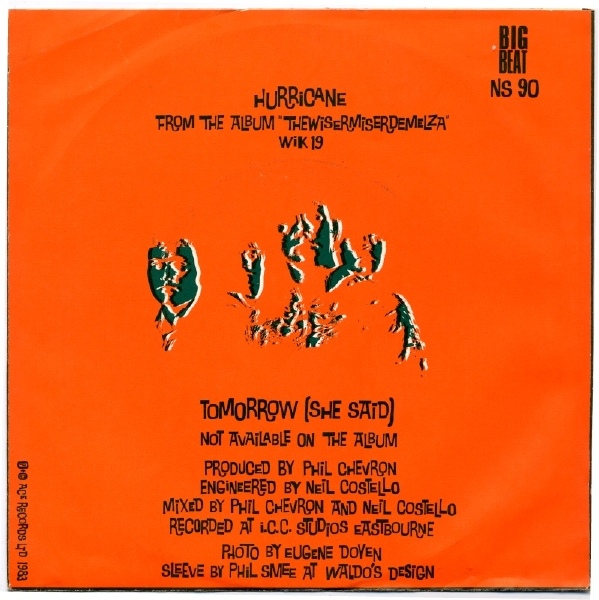
Originally, the plan was to get The Prisoners’ music heard by a much wider audience. To do this, Roger Armstrong and Ted Carrol decided to bring on Phillip Chevron to produce The Prisoners’ sophomore album The Wisermiserdemelza. It was recently reissued by Big Beat Records, an imprint of Ace Records together with eleven other tracks. These tracks comprise The Prisoners’ Big Beat Records’ years.
With The Prisoners signed to Bog Beat Records, the label began formulating a plan for their latest signing. From the start, this included Phillip Chevron producing The Prisoners’ sophomore album. He was a member of The Radiators, and later, would join The Pogues. However, in 1983, his main concern was getting The Prisoners’ music heard by a much wider audience. This began with recording their sophomore album, The Wisermiserdemelza.
The Wisermiserdemelza.
For The Wisermiserdemelza, Graham Day penned eleven of the twelve tracks. He also cowrote Tonight with James Taylor. These tracks would be recorded at ICC Studios, in Eastbourne, Sussex.
Before the recording sessions began, producer Roger Chevron made his way to Chatham to hear The Prisoners rehearse. The Prisoners ran through the songs they planned to record. As he listened to The Prisoners, he realised that here was a group it would be best to record live. There should be no overdubbing. For this to be possible, Roger had coax and cajole performances out of The Prisoners. This can’t have been easy.
By then, The Prisoners were regarded as talented, confident and assured group. However, The Prisoners achilles heel was that they didn’t like to take other people’s advice. This could make recording an album interesting.
Fortunately, choosing Roger Chevron to produce the album proved to be a mini masterstroke. He wasn’t a producer first and foremost. Instead, he was a musician who just happened to have produced a few albums. So The Prisoners could relate to Roger. Conversely, he could see where The Prisoners were coming from. This meant when the record session began, things would go relatively smoothly.
At ICC Studios, vocalist and guitarist Graham Day, was joined by organist James Taylor joined. Providing the album’s heartbeat was a rhythm section of bassist Allan Crockford and drummer Johnny Symons. Producing The Wisermiserdemelza was Phillip Chevron, who coaxed, cajoled and encouraged the twelve tracks were recorded out of The Prisoners. After six days, the album was recorded, and ready for release later in 1983.
Now the hard work began for Big Beat Records. They had to get The Prisoners’ music heard by a wider audience. Usually, bands are willing to do what it needs to get their album into the hands of record buyers. However, The Prisoners were different.
They were determined to do things on their terms. Whether it was their sound, image or advise about the music industry worked, The Prisoners dug their heels in. It was frustrating for those that were advising them. They had been around the music industry all their working lives; while The Prisoners were a young, inexperienced band, that never been been signed to a record label before. However, The Prisoners were also a talented band.
This became apparent when The Prisoners and producer Roger Chevron listened to The Wisermiserdemelza. Their sophomore album featured The Prisoners at their most psychedelic. Roger Chevron’s decision to record the band live had been vindicated. Here was an album that captured the energy of The Prisoners’ live shows.
From the opening bars of the album opener Go Go, right through to the closing notes of Go Go The Prisoners are firing on all cylinders on The Wisermiserdemelza. In between, they reference groups like The Pretty Things and The Kinks, while fusing elements of garage rock, pop, R&B and rock to their psychedelic sound. Among the highlights of The Wisermiserdemelza were Hurricane, Love Me Lies and Tonight. Then on Come the Misunderstood and The Dream Is Gone, the darkness descends, and The Prisoners showcase their trademark psychedelic sound that had proved popular on the live circuit. However, would their sophomore album The Wisermiserdemelza prove as popular?
The answer to that was no. When The Wisermiserdemelza was released, very few copies of the album sold. It didn’t even come close to replicating the success of their self-released debut album A Taste of Pink! For Big Beat Records who had place their faith in The Prisoners, it was a disappointing outcome. However, they weren’t giving up…yet.
Later in 1983, Hurricane was released as the lead single from The Wisermiserdemelza. On the flip-side was Tomorrow She Said. It’s one of the eleven bonus tracks on The Wisermiserdemelza. However, lightning struck twice and Tomorrow She Said failed commercially. Still, Big Beat Records weren’t giving up on The Prisoners.
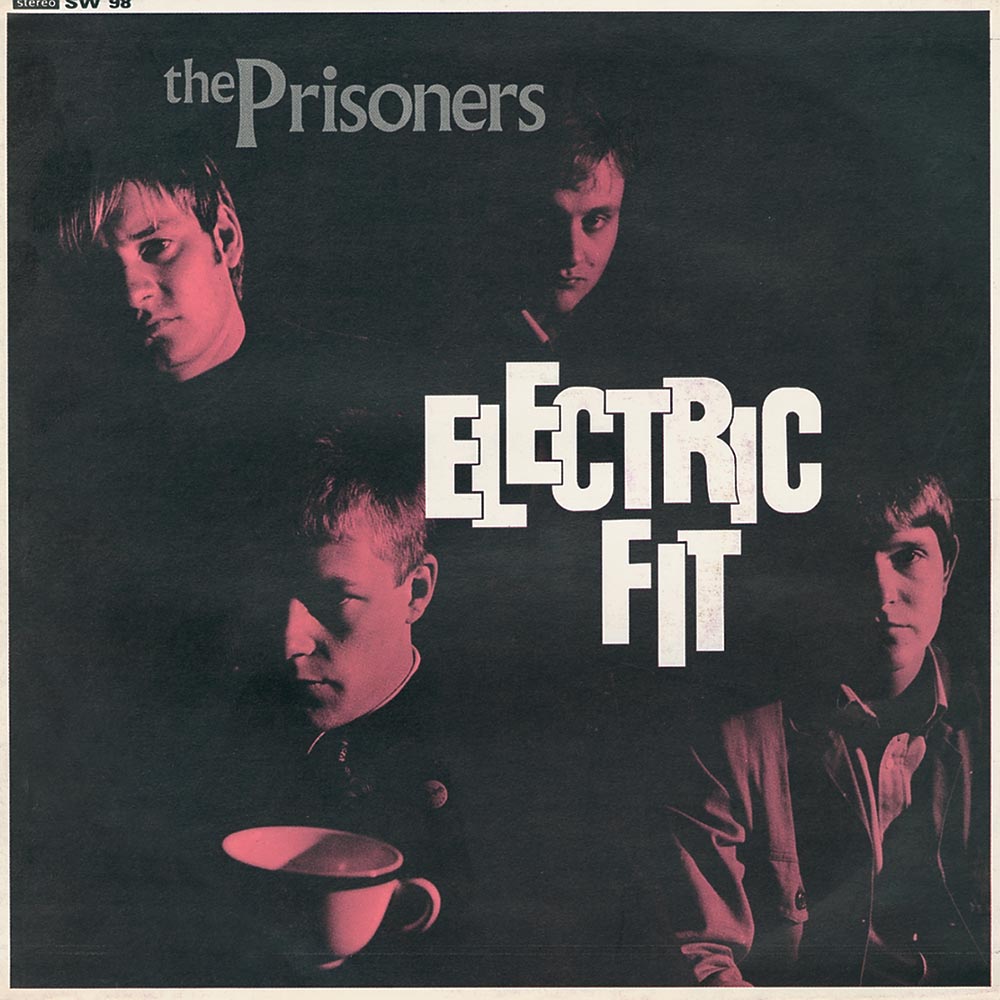
In 1984, The Prisoners returned to the studio. This time, there was no sign of Roger Chevron. Instead, Russell Wilkins produced the four songs penned by Graham Day. They became The Electric Fit E.P. which featured Melanie, What I Want, The Last Thing On Your Mind and Revenge Of The Cybermen. They’re among the bonus tracks on The Wisermiserdemelza compilation. It’ll be the first time most people have heard these songs.
It wasn’t third time lucky for The Prisoners when they released The Electric Fit E.P. Again, it failed commercially. For The Prisoners this was a huge blow. Melanie was an stomping garage rock anthem, while Last Thing On Your Mind brings back memories of The Small Faces. Despite the undoubted quality of these tracks, The Electric Fit E.P. passed people by. Despite this, Big Beat Records were going to have one more roll of the dice.
Later in 1984, The Prisoners released the Love Changes E.P. It had been produced by Russell Wilkins and featured songs written by Graham Day. The title-track features on The Wisermiserdemelza. However, when the Love Changes E.P. was released, it failed commercially. This was the end of an era for The Prisoners and Big Beat Records.
After The Love Changes E.P. The Prisoners’ left Big Beat Records. No label could continue to release singles, E.P.s or albums which weren’t selling. It seemed that the plan to have The Prisoners’ music heard by a wider audience hadn’t worked. However, it wasn’t the end of the line for The Prisoners.
Following their departure from Big Beat Records, The Prisoners released another two albums. They self-released The Last Fourfathers in 1985. By 1986, The Prisoners had signed to a Countdown, an imprint of Stiff Records.
The Prisoners’ one and only album for Countdown was In From The Cold. It saw The Prisoner’ attempt to crossover. However, after the release of In From The Cold, The Prisoners’ split-up. This was no surprise.
Throughout their recording career, many people remarked that The Prisoners weren’t the easiest group to work with. The Prisoners were determined to do things their way. Ploughing their own furrow proved costly for The Prisoners.
By not listening to the advice of others, especially those that had been around the musical block a few times, The Prisoners recording career lasted just three years. During that period, they released four albums. These albums showcase a talented and assured band; and one who should’ve reached greater heights. Probably, The Prisoners’ best album is The Wisermiserdemelza which was recently reissued by Big Beat Records, along with eleven bonus tracks.
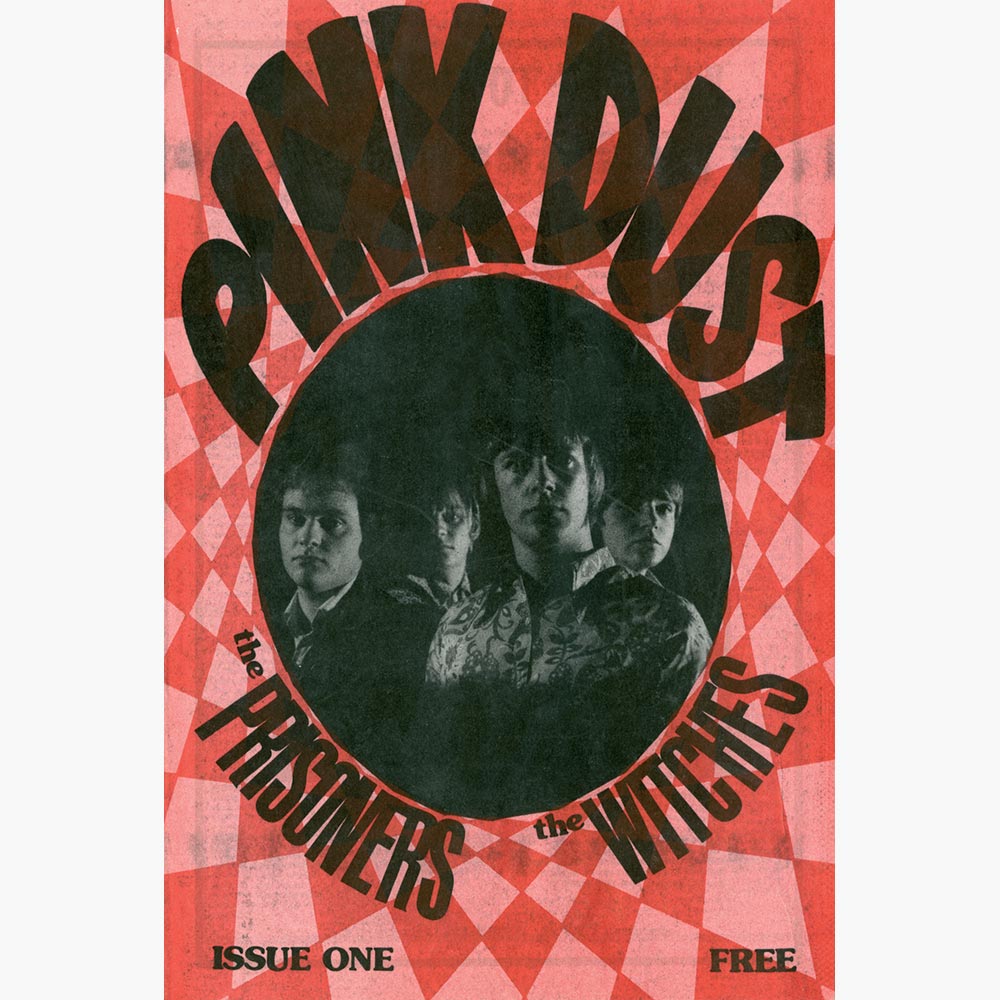
Among the bonus track include singles on The Wisermiserdemelza, are songs that featured on B-Sides and E.P.s. That’s not forgetting Coming Home, Reaching My Head and a second version of Revenge Of The Cybermen, which featured on the Revenge Of The Prisoners compilation. It was released by the American label Pink Dust in 1984. Back then, everything in The Prisoners’ garden looked rosy.
By 1986, two of The Prisoners’ songs described the situation the band found themselves in perfectly. A Dream Is Gone For Now And Forever. These were prophetic words and describe The Prisoners’ story perfectly. They were the band who had the talent to enjoy a long and successful career. However, in some ways, they were their own enemy. Their determination to do things their way, cut short their career. However, for six years, The Prisoners were one of the exciting bands on London’s live circuit, and in 1983, released the best album of their career, The Wisermiserdemelza.
THE PRISONERS-THE WISEMISERDEMELZA.

LAU-THE BELL THAT NEVER RANG-VINYL EDITION.
LAU-THE BELL THAT NEVER RANG-VINYL EDITION.
Ever since the release of their 2007 debut album. Lightweights and Gentlemen, Lau have been variously described as “adventurous,” and “modern folk’s most innovative band.” That’s no exaggeration. Lau are, without doubt, one of the most exciting and ambitious folk bands of their generation. That’s why Kris Drever, Martin Green and Aidan O’Rourke have been winning awards, praise and plaudits ever since. This includes, winning the BBC Folk Award for the best group four times in six years. That takes some doing. However, Lau are no ordinary band.
Far from it. Lau are a groundbreaking group who release pioneering music. They’re also perfectionists. They always have been.
Ever the perfectionists, Lau freely admit to spending up to three weeks on a song. That’s been the case since Lau’s early days. They spent a year honing their songs and sound before releasing their debut album, Lightweights and Gentlemen. There was no way that Lau were going to release Lightweights and Gentlemen until they, and the album was ready. Their patience paid off, and ever since the release of Lightweights and Gentlemen, Lau’s star has been in the ascendancy.
Over the next eight years, Lau have released four further albums. Their most recent album is The Bell That Never Rang. It was recently repackaged and rereleased on vinyl as a double album by Diverse Records. The original version of The Bell That Never Rang features on the first LP; while eleven bonus tracks feature on the second LP. Then as an added bonus, there’s a CD version of The Bell That Never Rang. This will be a welcome bonus for many people. So will the bonus tracks on the second LP. They show a different side to Lau, and will be a welcome release while the members of Lau work on other projects.
That’s not unusual though. Ever since the early days of Lau, the three members have worked on other projects. Despite these other projects, they’ve always returned to Lau, which the three members fondly describe as “the mothership.”
On their return to the “the mothership,” Kris Drever, Martin Green and Aidan O’Rourke hit the live circuit with Lau. Soon, Lau had established a reputation as one of Scotland’s best live bands. Whether it was festivals or small intimate venues, Lau lifted the roof with their unique brand of folk music. Proof of this came on their second album Live. Combining electronic and traditional instruments Lau soon garnered a large, loyal following, who waiting Lau’s next studio album with baited breath.
Two years after their debut album Lightweights and Gentlemen, Lau released their sophomore studio album Arc Light, in 2009. Released to critical acclaim, critics hailed Arc Light as further proof that Lau were the future of folk music. Soon, other artist were wanting to collaborate with Lau.
First to collaborate with Lau was Karine Polwart. Five new songs were recorded. When Lau Vs. Karine Polwart released Evergreen, this reinforced and enhanced both Lau and Karine’s reputation as two of modern folk’s most best artists. Then in 2010, acoustic and electronic artist and producer Adem collaborated with Lau. Together, they recorded seven new tracks, which were released as Lau Vs. Adem’s Ghosts. The second in the Vs. Lau series proved just as successful as the first. As if this wasn’t encouraging enough, Lau’s reputation as a live band was still growing at home and abroad. All that was needed was another studio album from Lau.
Back in Castlesound Studios, Pencaitland, Lau recorded the nine tracks that became Race The Loser in May 2012. Lead vocalist Kres Drever played guitars and harmonica, Martin Green played accordion, Wurlitzer organ and electronics, while Aidan O’Rourke played the fiddle. Producing Race The Loser was Grammy Award nominated producer Tucker Martine. With a C.V. that included working with Sufjan Stevens, Camera Obscura, R.E.M. and Laura Veirs, having Tucker produce Race The Loser was quite a coup. However, would it pay off?
When Race The Loser was released in 2012. Praise, plaudits and critical acclaim came Lau’s way. Race The Loser was no ordinary folk album. It was much more than that. While folk was the most predominant influence, but were elements of jazz, rock, electronica and soul. The soul comes in the shape of Kris’ world-weary, all-knowing vocal. His vocal played a part in what was a folk album for the 21st Century. Race The Loser was a career defining album from Lau. However, would Lau followup an album like Race The Loser?
Lau’s loyal fans have been waiting three years to find out the answer to that question. Now the wait is over. Lau released recently The Bell That Never Rang. This six track album is the next chapter in the Lau story.
For The Bell That Never Rang, Kris Drever penned the lyrics to the six songs. These six songs were recorded at Lau’s studio of choice, Castlesound Studios. Producing The Bell That Never Rang, was Joan Wasser, a.k.a. Joan As Police Woman. Adam Sachs and Stuart Hamilton took charge of engineering duties. This allowed Lau to do what they did best, make music.
As The Bell That Never Rang sessions got underway, vocalist Kres Drever played guitars, Martin Green played accordion and “electronics,” while Aidan O’Rourke played the fiddle. They were joined by the Elysian Quartet. Its lineup features violinists Emma Smith and Jennymay Logan, Vince Sipprell on viola and Laura Moody on cello. Joan Wasser added vocals on The Bell That Never Rang. Once the recording of The Bell That Never Rang was completed, it was mastered in New York by Fred Kevorkian. All that was left was for The Bell That Never Rang to be released.
Just like previous albums, The Bell That Never Rang was released to widespread critical acclaim. Lau were back, and back to their innovative best. The Bell That Never Rang was triumphant return from Lau. So, when The Bell That Never Rang was released it should’ve been a joyous occasion. It was. However, there was a sense of sadness. When recording The Bell That Never Rang, Lau brought onboard a string quartet, the Elysian Quartet. They player their part in The Bell That Never Rang’s sound and success. Sadly, their viola player, Vince Sipprell, had died on 30th January 2015. By then, The Bell That Never Rang recording session were completed. So, Lau dedicated The Bell That Never Rang to Vince Sipprell, a talented and dedicated musician. He played his part in the success of Lau’s new album The Bell That Never Rang.
Opening The Bell That Never Rang is First Homecoming. It’s a track that showcases Lau’s unique brand of innovative folk. A rumbling sound in joined by a plink plonk guitar and wistful strings. Soon, thunderous drums signal the arrival of Kris’ vocal and a chirping guitar. There’s a sense of hope and joy in Kris’ vocal as he delivers the cinematic lyrics. He’s a changed man. No longer is he alone, now that he’s found someone to love: “in this new place I call my home.” Previously, this seemed out of reach, but: “I’ve lost the urge to be by myself.” By the time Kris delivers that line, seamlessly, the arrangement has come together. As the strings dance, drums pound and the guitar chimes, as Kris experiences hope, happiness and joy.
Martin Green’s accordion and Kris Drever’s chirping guitar unite on the irresistible The Death of the Dining Car. Soon, the Elysian Quartet add dancing strings. Lau it seems are returning to their traditional Scottish roots. However, being Lau, there’s always expect a twist. It comes when pounding, mesmeric drums accompany Kris’ vocal. He dawns the role of a storyteller. Meanwhile the drums inject a sense of urgency and drama. It’s with a sense of sadness that Kris delivers the lyrics. They too have a cinematic quality, as the rest of Lau fuse musical genres. Everything from electronica, folk, indie rock and Scottish traditional music are combined seamlessly, on his stomping anthem.
Back in Love Again has a much more understated sound. Kris strums his trusty acoustic guitar. Soon, lush strings sweep in from the distance. They flit in and out of the arrangement, playing yin to Kris’ yan. That’s until gradually, things begin to change. From the distance, a wash of sound enters. Gradually, it grabs your attention. That was its raison d’être. Now you’re paying attention, Kris delivers another hopeful vocal. Or is should it be cautious optimism, given he’s: “falling Back in Love Again?” As he delivers his hopeful vocal, the accordion and guitar propel the arrangement along. Augmenting Kris’ vocal are tender harmonies, they add to the beauty and soulfulness of this captivating, ethereal ballad.
A Lau album is not unlike Forest Gump’s box of chocolates, you never know what you’re gonna get.” Tiger Hill (Armoured Man) marks another change of direction. With its plink plonk guitars and myriad of disparate sounds, it’s as if Lau have been inspired by Fridge. Soon, a wash of moody, broody music sees a change of tack, before briefly, Lau pay homage to firstly Cream and then C.S.N.&Y. It’s the harmonies that leads to the C.S.N.&Y comparison. Later, washes of strings and a quivering, shivering guitar are added. They play their part what’s beginning to sound like another a cinematic sounding track. That’s until later, when Lau are transformed into an innovative power trio. Stabs of mellow keyboard accompany harmonies, as musical chameleons Lau, bring this magical, musical mystery tour on a melodic high.
The one way to describe The Bell That Never Rang is a seventeen minute epic. Slowly, and gradually, the arrangement begins to take shape. At the heart of its sound and success are the Elysian Quartet. Their elegiac and balletic strings, meander and skip across the arrangement, adding an ethereal, and sometimes wistful beauty. Later, they add an element of drama, as they’re played firmly and with a sense of purpose. As they reach a crescendo, the arrangement briefly bubbles dramatically. It then returns to its wistful, ethereal sound. Especially with Kris adding guitar, Martin accordion and Aidan his fiddle. Seamlessly, Lau the Elysian Quartet feed off each other, inspiring each other to greater heights. Sometimes, the music becomes cinematic, other times the Celtic influence is unmistakable. The Celtic influence is the signal for Kris to deliver his vocal. With just Lau accompanying him, he delivers a pensive, wistful and emotive vocal. Sadness is omnipresent as he sings: “nobody knows when you’ll go and no-one thinks to tell you.” While Kris delivers a thoughtful vocal, the rest of Lau add harmonies adding to the ethereal beauty and wistfulness of this seventeen minute Magnus Opus.
Ghosts closes The Bell That Never Rang. It’s another understated ballad. This is something Lau do so well. As Kris plays his acoustic guitar, he hums. It’s as if he’s just sitting at home playing his guitar. Instead, the red light is shining, and the tape is running. He delivers an inspired performance, singing of the “Ghosts” of his past. They surround him, and are everywhere. He realises that as he wonders where he would go to escape them. His lyrics, and his delivery of them are both beautiful and haunting. Especially with washes of accordion and a pulsating drums that plays in the background. They prove the perfect accompaniment to Kris on this hauntingly beautiful ballad.
Although it’s three years since we last heard from Lau, the three year wait for The Bell That Never Rang has been well worth the wait. The Bell That Never Rang oozes quality and beauty. From the opening bars of First Homecoming, right through to the closing notes of Ghosts, The Bell That Never Rang is a captivating album. The music is beautiful, dramatic, elegiac, ethereal, haunting and wistful. Other times it’s anthemic, hopeful and joyous. Quite simply, it’s an album that’s designed to toy with your emotions.
Throughout The Bell That Never Rang, Lau toy with your emotions on what’s akin to a magical, musical mystery tour. As mystery tours go, Lau spring surprises aplenty. No two tracks are the same. Indeed, often during the same track, Lau throw a curveball. The song heads in a totally different direction. It’s as if Lau are determined to keep the listener on their toes during The Bell That Never Rang. They succeed in doing so, on this old school album.
There’s a reason I refer to The Bell That Never Rang as an old school album. It features just six songs and lasts forty-four minutes. This means that The Bell That Never Rang would fit perfectly onto a vinyl album. That’s what bands used to do. However, that’s until the CD.
Since then, bands release sprawling, fifteen track albums. It’s as if they feel obliged to fill the CD. Ironically, they’re doing themselves a huge disservice. Usually, by the tenth track, the quality is starting to suffer. By the fifteenth and final track, the track should’ve stayed on the cutting room floor. Quality control, it seems, is sadly lacking. That, however, isn’t case with Lau.
Far from it. Only the creme de la creme makes it onto a Lau album. Remember, Lau are the archetypal perfectionists. They home and shape song until they’re totally satisfied with it. Only then, will they make it onto an album. That was the case with The Bell That Never Rang.
Each of the six of songs that made it onto The Bell That Never Rang, feature the Edinburgh based musical alchemists at their innovative best. The Bell That Never Rang sees Lau seamlessly combine disparate musical genres. Everything from Celtic, electronica, electro, folk, indie rock and rock is thrown into Lau’s melting pot. Producer Joan Wasser sprinkles some sonic magic and then gives this musical melting pot a stir. Only then is this musical treat ready to serve.
And what a dish it is. It’s fit for a king or queen. Lau have surpassed their previous efforts. The Bell That Never Rang marks a triumphant return from Lau. After three years away, Edinburgh based musical mavericks Lau, made a welcome return with their genre defying Magnus Opus, The Bell That Never Rang. However, it’s just part of the story of Diverse Records’ newly released and repackaged The Bell That Never Tolls.
The second LP features eleven bonus tracks. This includes a radio mix of The Bell That Never Rang. Lau’s original seventeen minute epic is transformed into a radio friendly song. Sadly, the days of radio stations playing seventeen minute songs is long gone. So radio mix of The Bell That Never Rang will be perfect for radio DJs wanting to introduce their audience to Lau. Other tracks however, are remixed.
Among the remixes are Far From Portland, from from Race The Loser are reworked. So are Tiger Hill and Death Of The Dining Car from The Bell That Never Rang. These three tracks show another side to the original song, and indeed, Lau’s music. However, there’s still a lot more to discover on the album of bonus tracks.
There’s previously unreleased tracks on the second LP. For longtime fans of Lau, this will be a definitely be a welcome bonus. Tracks like Sunken Waltz (Calexico), One Hour In Hungary (Väsen), Armoured Man Interlude. Lucky Old Sun and Back To The Fens (Horizontigo Revisited) are tantalising reminder of why Lau have been described as “adventurous,” and “modern folk’s most innovative band.”. However, The Bell That Never Tolls isn’t over. Lau leave the listener with Elysian Table Synth and Elysian Mellotron. Just like the rest of the bonus tracks on The Bell That Never Tolls, they’re sure will keep fans of Lau happy until they return to “mothership” and begin work on the followup to The Bell That Never Rang. Meanwhile, they can enjoy The Bell That Never Tolls.
Recently, Diverse Records’ repackaged The Bell That Never Rang as The Bell That Never Tolls. It was repackaged and rereleased on heavyweight vinyl as a double album . The original version of The Bell That Never Rang features on the first LP; while eleven bonus tracks feature on the second LP. The two LPs have been mastered with care, and sound great. So has the CD version of The Bell That Never Rang that’s been included. What more could a Lau fan want? Given that there’s no sign of Lau recording the followup to their Magnus Opus The Bell That Never Rang, then a copy of The Bell That Never Tolls and Kris Drever’s new album If Wishes Were Horses are the next best things.
LAU-THE BELL THAT NEVER RANG-VINYL EDITION.

THE O’JAYS SHIP AHOY-VINYL EDITION.
THE O’JAYS SHIP AHOY-VINYL EDITION.
In August 1972, when The O’Jays’ released Back Stabbers, little did they realize how important an album it would become. Back Stabbers was certified gold, and fourteen years after The O’Jays were formed, were on their way to becoming one of the most critically acclaimed and commercially successful groups in the history of Philly Soul. Between 1972s Back Stabbers and 1979s Identify Yourself, The O’Jays released eight studio albums. Three were certified gold and five platinum.
Back Stabbers helped launch Gamble and Huff and their newly founded label, Philadelphia International Records as one of soul music’s premier labels. In the process, it established Gamble and Huff’s reputation as one of the most innovative, influential and pioneering production and songwriting teams. Indeed, The O’Jays followup to Back Stabbers, Ship Ahoy, released in October 1973, cemented Gamble and Huff’s reputation not just innovators and pioneers, but with a social conscience.
Ship Ahoy featured songs about slavery, racism, greed and pollution. Side-by-side on Ship Ahoy, sat love songs and songs with a social conscience. While The O’Jays may have sung sweetly about love, but they weren’t afraid to become the conscience of a nation, using their music to shame those who they thought were bringing their country to its knees, by their actions. Through the medium of music, politicians, corporate America and race, were all subjects that they dealt with in the music on Ship Ahoy, which will be rereleased on vinyl by Music On Vinyl on 26th January 2015. Before I tell you about some of the most powerful, potent and moving songs The O’Jays recorded, I’ll tell you about the background to Ship Ahoy.
By 1973, Philadelphia International Records had established its reputation as a pioneering label, who’d released critically acclaimed and commercially successful albums. During 1972, Philadelphia International Records had released Billy Paul’s 360 Degrees of Billy Paul, Harold Melvin and The Blue Notes’ I Miss You and The O’Jays’ Back Stabbers. Further success had come Philadelphia International Records’ way with Harold Melvin and The Blue Notes’ Black and Blue M.F.S.B’s sophomore album Love Is The Message and The Three Degrees’ eponymous album The Three Degrees. Gamble and Huff and Philadelphia International Records were on a roll by the time The O’Jays released Ship Ahoy.
Ship Ahoy featured four tracks penned by Gamble and Huff. They wrote Put Your Hands Together, Ship Ahoy and Now That We Found Love, while they cowrote the seven minute epic For The Love Of Money With Anthony Jackson. Kenny Gamble cowrote The Air That I Breathe and Don’t Call Me Brother with Bunny Sigler, who also contributed You Got Your Hooks Into Me. The songwriting team of Gene McFadden, John Whitehead and Victor Castarphen cowrote People Who Keep Tellin’ Me, which closes Ship Ahoy. Recording of Ship Ahoy took place at the familiar surroundings of Joe Tarsia’s Sigma Sound Studios.
At Philly’s Sigma Sound Studios, Gamble and Huff were joined by the classic lineup of M.F.S.B, Philadelphia International Records’ legendary house-band. This included the Baker, Harris, Young rhythm section, plus bassist Anthony Jackson and guitarist Bobby “Electronic” Eli. They were joined by organist Lenny Pakula, percussionist Larry Washington, vibes virtuoso Vince Montana Jr and violinist Don Renaldo, who was part of the trademark string and horn sound that featured on many Philadelphia International Records’ recordings. Arrangers who worked on Ship Ahoy included Norman Harris, Dennis Williams, Lenny Pakula and Bobby Martin. Producing Ship Ahoy at Sigma Sound Studios were Gamble and Huff. Once Ship Ahoy was recorded, it was released in October 1973. Would Ship Ahoy match the success of 1972s Back Stabbers?
On the release of Ship Ahoy in October 1973, it surpassed the success of Back Stabbers, reaching number eleven in the US Billboard 200 and number one in the US R&B Charts, resulting in The O’Jays first platinum disc. Put Your Hands Together was the lead single, released in November 1973. It reached number ten in the US Billboard 100 and number two in the US R&B Charts. For The Love Of Money was released in March 1974, reaching number nine in the US Billboard 100 and number three in the US R&B Charts. In the UK, three singles were released, Put Your Hands in November 1973, For The Love Of Money in March 1974 and Now That We Found Love in August 1974. Unbelievably, they all failed to chart. However, Ship Ahoy had surpassed the success of Back Stabbers, and in the process, transformed The O’Jays’ career. Why was that? That’s what I’ll tell you, when I tell you about the music on Ship Ahoy.
Put Your Hands Together opens Ship Ahoy. It’s a paean to cooperation and optimism in the face of hard times. Forty years later, The O’Jays message is just as relevant. When the track reveals its secrets, the sound is dramatic, moody and funky. The Baker, Harris, Young the rhythm section, guitars and keyboards combine drive the arrangement along. Having set the scene, Eddie Levert’s growling, vampish vocal enters. It soars passionately and emotively. Urgent harmonies sweep, sweetly and soulfully in. Meanwhile, strings dance and growl, while Earl Young’s drums and stabs of keyboards and percussion add to the drama. A funky bass and wah-wah guitar accompany The O’Jays, as they spread their message of optimism, in the face of adversity. Emotive and impassioned, filled hope and optimism The O’Jays, helped no end by M.F.S.B. create an uptempo, hook-laden track with a social message.
The title track, Ship Ahoy deals with a shameful subject, slavery. It tells the story African people being taken captive, transported on a ship as part of the slave trade. Originally, Gamble and Huff had hoped the track would be part of the soundtrack for the film Shaft In Africa, but this never happened. Complete with the sound of crashing waves and whips cracking this powerful track unfolds. They’re joined by keyboards, a slow plodding bass and a guitar, before deliberate strings enter. When Eddie’s emotive vocal enters, The O’Jays sing tight harmonies. Their voices are tinged in anger, as the drama builds and grows. Stirring, dramatic and pounding drums join strings that sweep in loud and grand. Blazing horns add to the drama and emotion. Later, guitars soar, screaming and screeching, as if empathising with the pain suffered. It’s impossible not to be moved by the lyrics, and their delivery. Like Norman Harris’ arrangement, they bring the lyrics to life. Such is the power of the music, that by the end, you feel moved, angry and upset. To be able to achieve these emotions through the power of soul music, is testament to the talent of The O’Jays and Gamble and Huff.
The Air That I Breathe has a slightly Latin sound and feel. Norman Harris’ chiming guitar, percussion, piano and rasping horns uniting. The Baker, Harris, Young rhythm section provide the heartbeat, as this anthemic, hooky song with a message unfolds. When Eddie’s vocal enters, it’s laden with emotion. Almost with disbelief he powerfully rages at the pollution around him. Still there’s a joyous sound, as M.F.S.B. and The O’Jays kick loose. His vocal soars heavenwards, his vocal tinged anger and resentment. As if spurred on, the harmonies are tighter, sweeter and more soulful. M.F.S.B. are similarly spurred on. Braying horns, Baker, Harris, Young, percussion and piano provide the backdrop for Eddie’s moving, emotive and soulful masterclass. Like Put Your Hands Together, their message is one of optimism, hoping things will improve. By the end of the track, you can only salute The O’Jays for managing to get their message across in such a deeply soulful and melodic way.
Bunny Sigler and Kenny Gamble cowrote You Got the Hooks In Me, which Bobby Martin arranged. A piano slowly and subtly plays, before Eddie’s vocal enters. It’s accompanied by Earl Young’s drums and short sharp bursts of organ. The tempo is slow, the playing subtle. Soon, the arrangement reveals is soulful secrets. Eddie’s heartfelt, heartbroken vocal soars, and soothing, soulful harmonies sweep in. They’re enveloped by melancholy horns, lush strings and Lenny Pakula’s Hammond organ. By now, The O’Jays are at their soulful best, delivering a track that’s heartbreakingly sad, where Eddie lays bare his soul, hurt and heartbreak to hear.
For the Love Of Money is another protest song, this time against materialism, that was and is, contributing to the world’s problems. During the track, Anthony Jackson contributes one of the most famous bass lines in popular music. It was played through a phaser, then bathed in echo. Since then, it’s been sampled by many hip hop artists. Originally, the track was written around the bass line. Straight away, that bass line pounds, weaving its way across the arrangement. It’s fast and funky, surrounded by crisp crashing cymbals, pounding drums, angry horns and harmonies. They yell “money” over and over. When Eddie’s vocal enters, it’s strong, angry and filled with frustration. His ire is directed at people’s “Love Of Money. Bobby Martin’s arrangement mixes elements of soul and funk masterfully. A combination of searing, soaring guitars solos, loud, angry, drums, percussion and grizzled horns accompany a vocal that’s angry, frustrated and impassioned. Like other tracks on Ship Ahoy, the lyrics, are still relevant today. Oh and that bass line sounds just as good, forty years on.
Now That We’ve Found Love is a beautiful, heartfelt love song, arranged by Norman Harris. This is what many people think of when The O’Jays are mentioned, beautiful love songs. They aren’t aware of their socially aware protest songs. Keyboards, percussion and the Baker, Harris, Young rhythm section unite, before tight, tender harmonies enter. Eddie’s vocal takes centre-stage, with a heartfelt delivery of the lyrics, which preach forgiveness. His vocal is swathed in lush strings and rasping horns. Like other tracks, the arrangement veers between lush and dramatic, as The O’Jays deliver another beautiful, heartfelt and impassioned love song. Indeed, it’s one of the most beautiful love songs The O’Jays ever recorded.
Don’t Call Me Brother is a protest song, and finds The O’Jays at their angriest and fieriest. A jazz-tinged backdrop, complete with Norman Harris’ chiming, jazz guitar, wistful horns and the lushest of strings cascades along. Dramatic bursts of Earl Young’s drums signal The O’Jays to unleash their anger. They do this is style that’s part Philly Soul, part doo wop. Close, impassioned and angry harmonies sing about the false claims of racial harmony from people who would just as soon stab you in the back. Eddie’s angry vocal rails against the hypocrisy and lies of politicians and leaders. Bobby Martin’s arrangement, like the anger and frustration, builds up, reaching a dramatic musical crescendo. Thunderous drums, blazing horns, strings and guitars unite. Then as if spent, returns to a much more gentle and melodic sound. For nearly nine minutes, The O’Jays vent their anger and frustration, passionately and peerlessly. By the end of the track, it’s impossible to not be touched and moved by their powerful, deeply moving message, where doo-wop, Philly Soul, jazz and gospel unite.
People Keep Tellin’ Me closes Ship Ahoy is People Keep Tellin’ Me. It’s an upbeat and uplifting track, arranged by Norman Harris. Strings sweep and swirl, horns rasp and growl and Baker, Harris, Young provide the track’s heartbeat. Harmonies sweep in soaring soulfully and joyously. Even the, you sense something special is unfolding. Washes of Hammond organ and Vince Montana Jr’s vibes join forces, before Eddie’s heartfelt, impassioned vocal enters. He and the other O’Jays drive each other to greater heights. M.F.S.B. are enjoying the opportunity to kick loose. Something very special has unfolded. Joyous and emotive describes this irresistible slice of Philly Soul. It features The O’Jays and M.F.S.B. at their very best, as they bookend Ship Ahoy perfectly. As the song closes, you can’t help but Put Your Hands Together for The O’Jays, as they close Ship Ahoy in a way that’s not just sweet and soulful, but uplifting, melodic and memorable.
Following up an album as critically acclaimed and commercially successful as Back Stabbers, wasn’t going to be easy for The O’Jays. However, they were no ordinary group. Even by their second album for Philadelphia International Records, The O’Jays had earned a reputation as one of Philly Soul’s great groups. By 1973, The O’Jays were seasoned performers, the group having been formed in 1957. Over the previous fifteen years, they’d refined their sound. A combination of Eddie Levert’s lead vocal and sweet, tight vocal harmonies becoming huge polished and deeply soulful. It was as if all these years of experience were coming to fruition on Back Stabbers and then Ship Ahoy. While Back Stabbers was critically acclaimed and commercially successful, Ship Ahoy surpassed its success.
During the eight tracks on Ship Ahoy, The O’Jays mixed beautiful love songs with songs filled with social comment. Ship Ahoy featured songs about slavery, racism, greed, materialism and pollution. Social comment and protest songs stood side by side, and the emotion, anger and frustration wells up in The O’Jays’ voices. They were also preaching a message of optimism and togetherness on Ship Ahoy. Many of the songs on Ship Ahoy, their messages are just as relevant forty years after the album’s release in 2013. Still people are seduced by materialism, greedy for money and willing to do anything to gain even more. Sadly, racial discrimination, like many other forms of discrimination is prevalent, and the backstabbers mentioned in Don’t Call Me Brother, are still around, still causing trouble, when they claim to be a force for good and harmony. Ship Ahoy features The O’Jays sing emotionally and passionately. Just below the surface, tension, frustration and anger is palpable, at the various problems that faced society. Then when The O’Jays sing the love songs on Ship Ahoy, we hear the side of their music most people are aware of. Their delivery of these gorgeous love songs feature the peerless combination of Eddie Levert’s vocal, laden with emotion and passion and tight, sweet and soulful harmonies. These two sides of The O’Jays’ music come to the fore on Ship Ahoy, which was recently reissued on vinyl by Real Gone Music. This is the best way to buy Ship Ahoy. Forget inferior sounding CD versions that were released a couple of years ago. This is the version to choose. It’s been well mastered, isn’t too loud and sounds stunning. Quite simply, this is the version of Ship Ahoy to choose.
Forty-three years after the release of The O’Jays sophomore album for Philadelphia International Records, the music Ship Ahoy is just as relevant in 2016, as it was in 1973. Indeed, Ship Ahoy with its mixture of social comment and beautiful love songs is one of The O’Jays finest albums. Ship Ahoy is also a Philly Soul classic, which is a reminder of the golden era of Philly Soul between 1972 and 1975.
THE O’JAYS SHIP AHOY-VINYL EDITION.


THE CHARLATANS-THE LIMIT OF THE MARVELLOUS-VINYL EDITION.
THE CHARLATANS-THE LIMIT OF THE MARVELLOUS-VINYL EDITION.
Between 1964 and 1969, The Charlatans’ star shawn bright. However, The Charlatans were larger than life mavericks. They dressed like 19th Century outlaws, and embraced the rock ’n’ roll lifestyle. L.S.D. and pot were part of The Charlatans’ diet. It fuelled The Charlatans as they took San Francisco by storm. Commercial success and critical acclaim looked a formality. It wasn’t to be.
By 1969, The Charlatans were no more. They were just the latest band that should’ve enjoyed widespread critical acclaim and commercial success. However, for whatever reason, commercial success passes these bands by. That was the case with The Charlatans whose music is celebrated on The Limit Of The Marvellous. It was recently reissued by Big Beat Records, an imprint of Ace Records on red vinyl. It looks and sounds great. This beautifully mastered and aesthetically pleasing release is a fitting reminder of The Charlatans’ finest songs.
The Limit Of The Marvellous features fifteen of The Charlatans’ greatest songs. They originally featured on a CD compilation The Amazing Charlatans, which was released by Big Beat Records twenty years ago, in 1996. Fifteen of the twenty-three tracks on The Amazing Charlatans feature on The Limit Of The Marvellous. These songs were recorded between 1966 and 1969. However, The Charlatans story begins in the summer 1964.
That’s when The Charlatans were formed in San Francisco, by autoharp player George Hunter, and bassist Richard Olsen. Soon, they were joined by lead guitarist Mike Wilhelm; keyboardist Mike Ferguson and drummer Sam Linde. With the lineup complete, The Charlatans began to practice. Before long the the band realised they had a problem.
The Charlatans had an achilles heel. This was drummer Sam Linde. He just wasn’t good enough for the band moving forward. So a decision was made to replace Sam Linde. His replacement was none other that Dan Hicks. With a new, improved lineup in place, The Charlatans moved forward.
When The Charlatans began to play live, they looked like a cross between 19th Century, wild west outlaws and Victorian dandies. This image wasn’t just thrown together. It was carefully cultivated. Despite this, it soon began to prove popular with the audience at their gigs. They arrived dressed in similar attire. Little did The Charlatans realise that their stage clothes would influence the a generation.
With the hippie counter culture about to blossom, The Charlatans image would go on to influence a generation. They would dress like dandies and outlaws. By then, The Charlatans a familiar face in the San Francisco music scene.
In June 1965, The Charlatans had secured a six week residency at at the Red Dog Saloon in Virginia City, Nevada.. For this residency, two members of The Charlatans had to produce a concert poster. What Mike Ferguson and George Hunter came up with, is regarded as the first psychedelic rock poster. Since
then, ordinal copies of The Seed have become prized items among collectors of psychedelia. However, the Red Dog Saloon residency marked a first for The Charlatans.
During the residency, the five members of The Charlatans took L.S.D. for the first time. It wouldn’t be the last. Soon, The Charlatans had a penchant for acid, and were tripping whenever they could. Despite their penchant for acid, The Charlatans weren’t an acid rock band. They were much more than that.
Instead, The Charlatans’ music would veer between folk rock, country rock and psychedelia over the next four years. Their recording career should’ve began in September 1965.
Fresh from their residency at the Red Dog Saloon, The Charlatans had an audition Autumn Records September 1965. They didn’t sign to Tom “Big Daddy” Donahue’s label. He was a local DJ, promoter and producer. However, The Charlatans didn’t sign to Autumn. There were disputes between Tom “Big Daddy” Donahue and The Charlatans over what they would record and money. Soon, though, it became apparent that The Charlatans had had a close escape.
Autumn Records was teetering on the edge of insolvency. Financially, the cupboards were bare. Eventually, Warner Bros. bailed Autumn Records out, and The Charlatans lived to fight another day.
As 1966 dawned, The Charlatans signed to Kama Sutra Records. The Charlatans wasted no time in recording a number of songs. Once the recording sessions were complete, The Charlatans had decided that they wanted to release Codine as their lead single. That executives at Kama Sutra Records said wasn’t going to happen.
They obviously hadn’t listened to Buffy Sainte-Marie’s song about the dangers of drugs. Mistakenly, executives at Kama Sutra Records thought that Codine glorified or encouraged drug taking. So Codine wasn’t releases as a single. It features on he Limit Of The Marvellous. So does The Shadow Knows and 30-20 as The Shadow Knows E.P.
Instead of Codine, The Shadow Knows was chosen as the lead single. On the B-Side was 32-20. When The Shadow Knows was released by Kapp Records in October 1966, the label failed to adequately promote The Charlatans’ debut. Unsurprisingly, The Charlatans debut single failed. This was The Charlatans’ one and only release on Kama Sutra Records. The remainder of the songs weren’t released until 1996, when they resurfaced on the Amazing Charlatans’ album.
Following their departure from Kama Sutra Records, The Charlatans’ lineup changed. Mike Ferguson was sacked in 1967, and replaced by Patrick Gogerty. Not long after this, Dan Hicks vacated The Charlatans’ drum stool. He moved to rhythm guitar and became the lead vocalist, singing many of his own compositions. It was a time of transition for The Charlatans.
During this period, The Charlatans were mostly playing live. They didn’t have a record contract, and watched as many of their contemporaries signed with record companies and enjoyed successful careers. This was galling as The Charlatans had played at the Fillmore Auditorium, California Hall, Avalon Ballroom and Longshoreman’s Hall. They were a popular live draw, and had been since their live debut in 1965. By 1968, The Charlatans must have wondered if a record contract would elude them?
By then, The Charlatans had embraced the rock ’n’ roll lifestyle fully. Their dropped L.S.D. and smoked pot regularly. Many who enjoyed the same diet of drugs would become acid casualties. Not The Charlatans. They were still one of San Francisco’s top live bands. Then in 1968, one of The Charlatans called it a day.
In 1968, Dan Hicks decided to form his own band, Dan Hicks and The Hot Licks. This was always going to happen. It was almost written in the stars. Dan Hicks was a talented singer, songwriter and musician. He seemed destined for greater things. However, this left a huge void in The Charlatans. Filling it wouldn’t be easy.
Worse was to come. Throughout 1968, arguments were commonplace within The Charlatans’ camp. Gradually, the escalated, and reached a breaking point. However, Mike Wilhelm, Richard Olsen and Terry Wilson had a cunning plan.
To all intents and purposes, it looked as if they had decided to disband The Charlatans. However, the cunning plan was that shortly afterwards, they would reform The Charlatans without George Hunter. It was a musical coup d’état. This would ultimately backfire on The Charlatans.
At first, things looked up for The Charlatans. They drafted in a new keyboardist and vocalist, Darrell DeVor. Not long after this, The Charlatans secured a deal with Phillips, and began recording their debut album.
Recording of what became The Charlatans took place at Pacific High Recorders, San Francisco. Dan Healy co-produced what became The Charlatans with the band. Eleven songs were recorded. Five were cover versions and six were written by members of The Charlatans Mike Wilhelm penned Ain’t Got the Time and The Blues Ain’t Nothin’; while Richard Olsen contributed When I Go Sailin’ By. New recruit Darrell DeVore wrote Easy When I’m Dead, Time to Get Straight, Doubtful Waltz and When the Movies Are Over. However, when the album was released, The Charlatans luck changed.
By then, music had changed, and the music on The Charlatans was beginning to sound dated. As a result, The Charlatans failed commercially. So did the the Van Dyke Parks’ penned lead single High Coin. To make matters worse, one of The Charlatans had been busted on a drugs charge.
Drummer Terry Wilson had been caught in possession of marijuana. In 1969, this was a serious offence in America, where the drug laws were quite strict. So when Terry Wilson received a prison sentence he had to leave The Charlatans. This resulted in a u-turn from two members of The Charlatans.
Mike Wilhelm and Richard Olsen agreed to join a reunited lineup of The Charlatans. Mike Ferguson who had previously been sacked returned. So did George Hunter who had been ‘misled’ into thinking that The Charlatans had disbanded in 1968, even was willing to let bygones be bygones. Even Dan Hicks returned to the fold.
While The Charlatans continued as a quintet until the end of 1969, the writing was on the wall. The Charlatans’ music was regarded as outdated, and yesterday’s sound. It was almost inevitable that The Charlatans would split-up at the end of 1969. This was the end of the road for The Charlatans.
Four years earlier, the future looked bright for The Charlatans when they enjoyed their six week residency at Red Dog Saloon. When they returned to San Francisco, The Charlatans looked as if they were going to join the elite of city’s music scene. They had the talent, and their music which veered between country rock to folk rock and psychedelic rock should’ve found a wider audience.
Sadly, The Charlatans struggled to get a record deal. The time they spent at Kama Sutra Records resulted in The Charlatans recording the best music of their five year career. That’s apparent on the songs that feature on The Limit Of The Marvellous.
It features fifteen of The Charlatans’ greatest songs. They originally featured on a CD compilation The Amazing Charlatans, which was released by Big Beat Records twenty years ago, in 1996. Fifteen of the twenty-three tracks on The Amazing Charlatans feature on The Limit Of The Marvellous.
This includes a covers of Alabama Bound and a folk rock take on Buffy Sainte-Marie’s Codine Blues. They’re two of the band’s finest moments, and welcome additions to The Limit Of The Marvellous. So are a trio of songs penned by Dan Hicks, We’re Not On The Same Trip, How Can I Miss You When You Won’t Go Away and By Hook Or By Crook. The George Hunter and Richard Olsen songwriting team were also capable of some moments of musical magic like I Always Wanted a Girl Like You and Walkin’. However, several familiar songs are reworked The Charlatans.
Among them, are Skip James Devil Got My Man; Robert Johnson’s 30-20 and Lieber and Stoller’s The Shadow Knows. Each of these songs take on new meaning in The Charlatans’ hands. The same can be said of the traditional song Jack Of Diamonds. These songs show the different sides to The Charlatans’ music, and feature the band at their very best. Sadly, Kama Sutra Records didn’t released more of The Charlatans’ music in 1966.
Little did Kama Sutra Records realise that, they had captured The Charlatans at the peak of their powers. At that moment in time, their music was bang on trend. That was the time to release an album, not 1969.
When The Charlatans released their eponymous debut album for Phillips in 1969, their music hadn’t evolved. Instead, it sound outdated to record buyers who had moved on musically. Sadly, The Charlatans hadn’t. They came late to the party with an album that would’ve fared better if released in 1967. However, by then, the end was neigh for The Charlatans.
Despite getting the classic quintet together, The Charlatans’ story was over by late 1969. Their musical legacy amounted to one album, two singles and material they had recorded for Kama Sutra Records. It features on The Limit Of The Marvellous, which was recently reissued by Big Beat Records, an imprint of Ace Records on red vinyl. The Limit Of The Marvellous is the perfect introduction to musical mavericks The Charlatans, who having taken San Francisco by storm, should’ve found fame and fortune. Sadly, it wasn’t to be. After several breakups, makeups and changes in lineup, The Charlatans, called time on a career that promised much, but ultimately, through bad luck and misfortune, came to little.
THE CHARLATANS-THE LIMIT OF THE MARVELLOUS-VINYL EDITION.
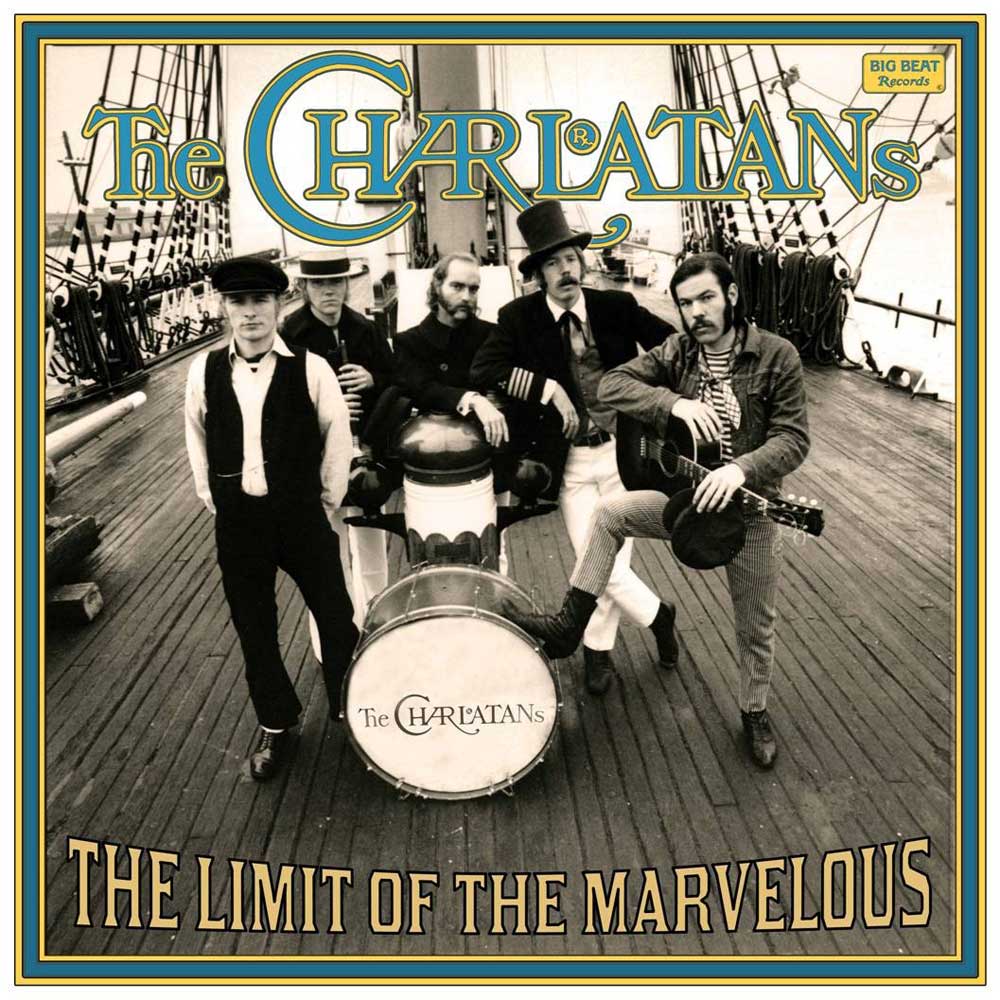

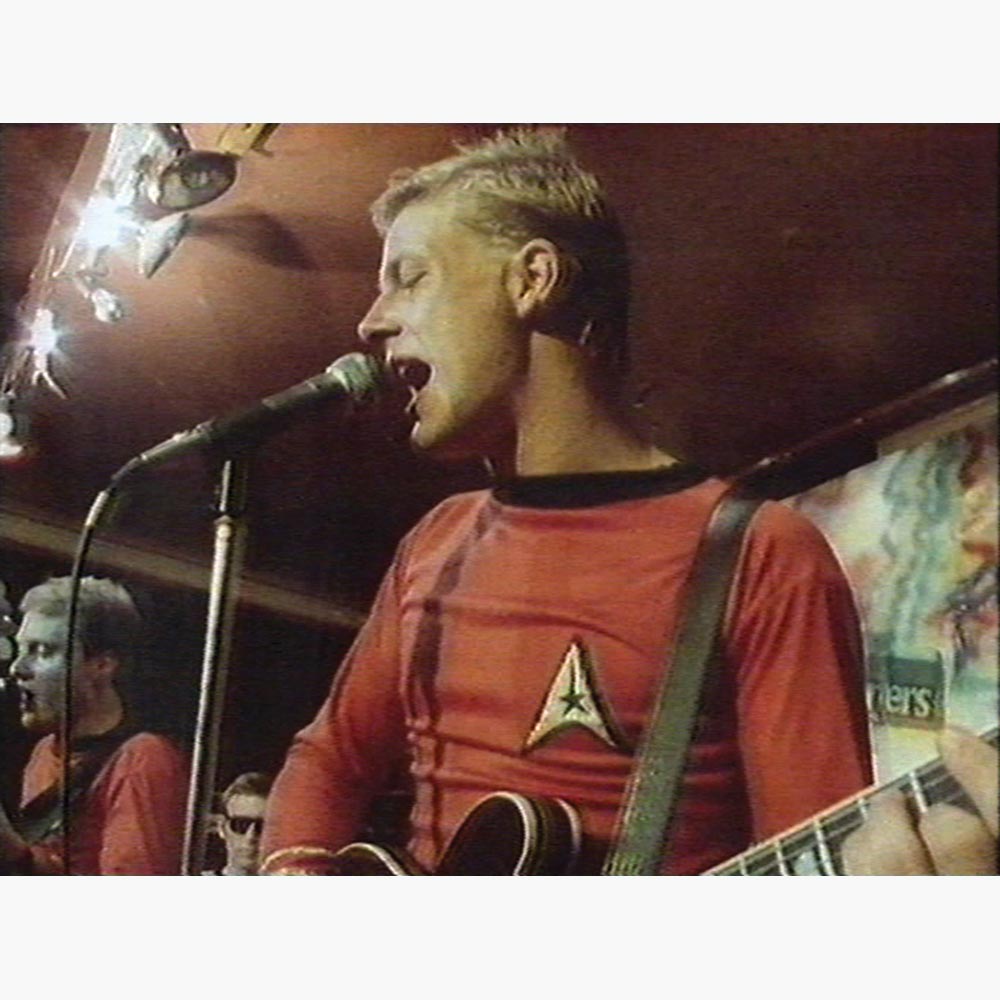

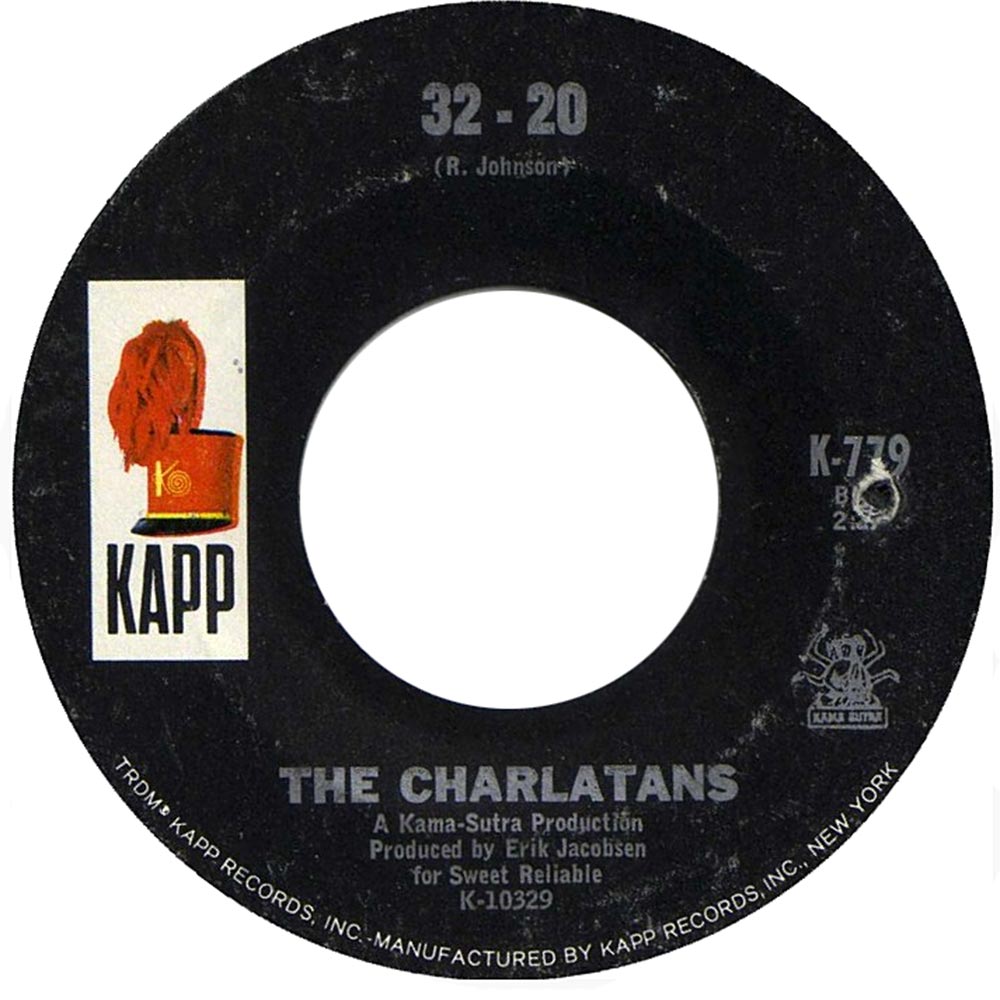
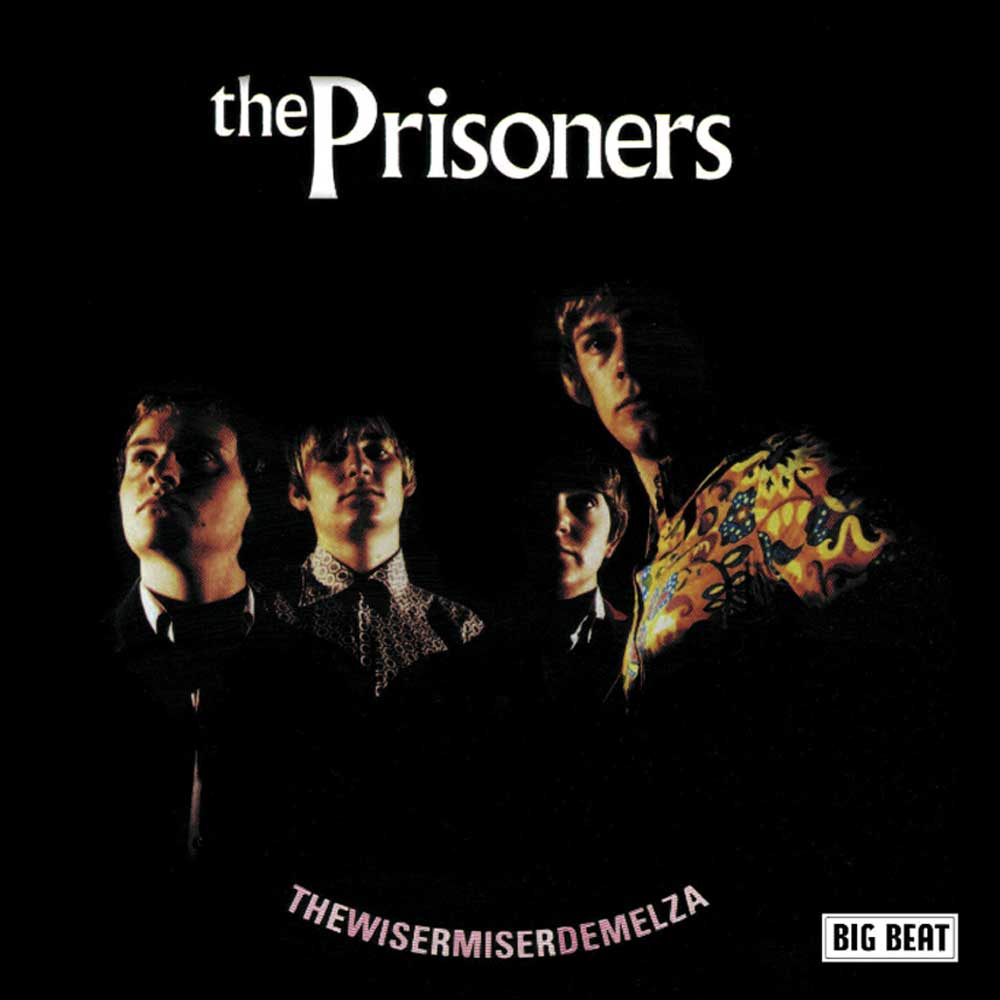
SUN-WANNA MAKE LOVE (COME FLICK MY BIC)/SUN-POWER AND SUNBURN.
SUN-WANNA MAKE LOVE (COME FLICK MY BIC)/SUN-POWER AND SUNBURN.
During the seventies, Dayton, Ohio was the funk capital of America. The region produced some of the greatest and most successful funk bands of the era. This included Funkadelic, Parliament, The Gap Band, The Ohio Players, Lakeside, Zapp, Slave and Platypus. However, they weren’t alone. Sun were another of Ohio’s most successful and prolific funk bands.
Between 1976 and 1984, Sun released eight albums. Sun’s most successful albums, were their first three albums; 1976s Wanna Make Love (Come Flick My Bic), 1977s Sun-Power and 1978s Sunburn. These three albums were recently rereleased on BGO Records on two discs. This is the perfect introduction to Sun, who in 1976, whose story began at Roosevelt High School in Dayton in the mid-sixties.
That’s when Byron Byrd who would go on to found Sun, started playing alto saxophone. Having mastered the alto-saxophone, Byron Byrd had founded his first group The Ohio Majestics. Soon though, The Ohio Majestics became the Overnight Low Band.
Quickly, the Overnight Low Band gained the reputation as one of Ohio’s top live bands. This lead to the Overnight Low Band recording singles for James Brown’s King label and Chicago’s Chess Records.
Having been encouraged to record a session for King by label vice-president Henry Glover, The Witch Doctor was released on the Deluxe label in 1972, but didn’t chart. The following year 1973, Chess released Get To Your Soul, but like The Witch Doctor, failed to chart. Having learned from the experience, the following year Byron Byrd and the rest of the Overnight Low Band’s luck changed.
1974 saw the Overnight Low Band embark on a national tour, playing mostly colleges and universities. This was the Overnight Low Band’s chance to join Ohio’s funk elite. However, even then, there was a disappointment in store, when three members decided to jump ship and join an early lineup of The Ohio Players. However, the Overnight Low Band was about to change.
The Overnight Low Band had been booked to open for Mandrill, in the Ohio Theatre Columbus. That night, producer Beau Ray Fleming was backstage. He had produced Mandrill and Jon Lucien’s 1970 album I Am Now. However, Beau Ray Fleming had decided to stay backstage, rather than watch the opening act. That was until he heard the reception the the Overnight Low Band received.
Beau Ray Fleming decided to see what the fuss was about. The audience were in raptures, and the Overnight Low Band hadn’t played a note. This wasn’t the usual reception a support band received. So as the Overnight Low Band started their set, Beau rushed from Mandrill’s dressing room into theatre and watched their show. By the time he took his seat, the Overnight Low Band had won the audience over with their uber funky music. Straight away Beau Ray Fleming was hooked. Instantly, he realised that they were a talented band. He knew had to speak to them later opn.
At a party after the show, Beau introduced himself and the following year 1975, signed the Overnight Low Band to a production deal. Before that, Beau and the Overnight Low Band began looking at an alternative name for the group.
By late 1975, the Overnight Low Band’s search for a new name was still ongoing. Then, totally out of the blue, someone suggested Celestial Sun. Beau liked part of the name, so when trumpeter and trombone player John Wagner suggested dropping the Celestial part, Sun was born, and the Overnight Low Band became a footnote in Ohio funk history. With a new name, Beau started looking for a record deal for the newly named Sun. Then Beau met one of his music industry contacts Larkin Arnold, who had a new job at Capitol Records.
Larkin Arnold was something of a music industry veteran, who had just been installed as head of Capitol Records newly formed music department. Together, Beau, Larkin and Sun concluded a deal which saw Sun at last, signed to a major label. With their luck changing, another DJ and Drayton native Shad O’Shea entered their lives, offering Sun a deal which meant they could record their debut album on a budget.
Shad O’Shea, or to use his real name Howard Lovdal had formed his Counterpart record label in 1963 and since then, Ohio bands had recorded there. So, rather than record at a bigger studio, the decision was made to record their debut album at Counterpart Creative Studios in Cincinnati, Ohio. The seven piece Sun, comprising Byron Byrd, John Wagner, bassist Hollis Melson, drummer Kym Yancey, guitarist Shawn Sandridge, percussionist Chris Jones, and Dean Hummons on keyboards set about recording their debut album in early 1976. Nine songs were recorded and they would become their debut album Live On, Dream On. However, there would be further changes to the album after its release.
For their debut single, the title-track Live On, Dream On was chosen as Sun’s debut single from Live On, Dream On. When the single was released it failed to chart and the album their debut album Live On, Dream On wasn’t making much of an impact. Things changed, and so would the album title, after the release of the second single.
Wanna Make Love (Come Flick My Bic) was chosen as the second single from Live On, Dream On. The single started climbing the US charts, reaching number seventy-six in the US Billboard 100, number thirty-one in the US R&B Charts and number fifteen in the US Dance Charts. This successful run was helped along by a promotional campaign by the makers of Bic pens. With Live On, Dream On also climbing the US charts, Capitol decided to reissue the album as Wanna Make Love (Flick My Bic).
Wanna Make Love (Flick My Bic).
This and the unorthodox promotional campaign gave the album the boost it needed. After this, Wanna Make Love (Flick My Bic) climbed all the way to number fifty-four in the US R&B Charts. This wasn’t surprising.
Wanna Make Love (Flick My Bic) oozed quality, and was a really polished and accomplished album. This wasn’t surprising, as Sun were a tight, talented and experienced band. No wonder. They had spent several years serving their musical apprenticeship. Now it was about to pay off.
Sun were also a versatile band. There were two sides to their music, one funky and the other soulful. Sun demonstrate their funky side as Wanna Make Love opens. The album almost explodes into life with the funk drenched Live On, Dream On. Given its title, this is apt. It could just as easily by Sun’s theme song. The tempo might drop on Tell the People, but it’s another course in this nine course veritable funky feast. They’re Calling For Me sees Sun’s rhythm and horn sections driving the track along while Byron pleas for fans to “buy your ticket, get your seat.” Once listeners are sitting comfortably, Sun show another side to their music.
My Women is is a slow, soulful and very beautiful ballad. It shows another side to Sun, and is a paean to the many roles women fill in life. It’s one of the best tracks Byron Byrd wrote on Wanna Make Love. However, the best known songs on Wanna Make Love (Flick My Bic) was anthemic title-track. It’s now regarded as a funk classic, and one of Sun’s finest hour. Having said that, there’s much more to Sun than one track .
Love Is Never Sure is another slow ballad, which has a gloriously dramatic introduction and one of the most heartfelt vocals on Wanna Make Love. It’s accompanied by horns that rasp gently add to the emotive, beautiful sound. The Show Is Over has a similar sound and feel to Love Is Never Sure. Byron’s weary vocal is accompanied by tender harmonies, keyboards and subtly, braying horns. They provide a gorgeous accompaniment to Byron’s vocal and play their part in what is one of the most emotive, soulful songs on Sun’s debut album. Similarly soulful It’s Killing Me, where Sun seem to have been inspired by Stevie Wonder. Even the chord progressions are similar to some of those on Stevie Wonder’s early seventies album. After this, the show is nearly over.
Give Your Love To Me closes Wanna Make Love and is and is a slower, but still funky track. A piano and Sun’s horn section play important parts in the arrangement. Byron’s vocal is punchy, with tight sweeping harmonies accompanying him as Sun close their debut album Wanna Make Love on an uber-funky high.
It’s somewhat ironic that it took what was almost a guerilla marketing campaign changed Sun’s fortunes. Sun had talent, and shouldn’t have had to rely in gimmicks. Sadly, talent alone, it seemed, wasn’t enough for a band to make a commercial breakthrough in 1977. However, thanks to the guerilla marketing campaign, Sun’s career was off and running.
Without it, Sun could’ve easily resulted joining the ranks of bands who release just one album. However, Wanna Make Love (Come Flick My Bic), which was a game-changer.
Somewhat belatedly, record buyers discovered Sun’s debut album , Wanna Make Love (Come Flick My Bic). It was an accomplished debut from Sun, where a tight, talented and experienced band, showcase the two sides to their music. One side was the good time funk sound, the other deeply soulful. This proved popular among record buyers. So Capitol Records believing that their Sun would shine bright, got Sun to begin work on their second album Sun-Power.
Sun-Powder.
After the success of Wanna Make Love (Flick My Bic), Sun were keen to record their sophomore album Sun-Power. By the time, eight new songs had been written, Sun’s lineup had changed.
For Sun’s sophomore album Sun-Power, an expanded lineup of the band entered the recording studio. Sun’s number had swelled from seven to ten. The new recruits included trumpeter, saxophonist and percussionist Ernie Kinsley; percussionist and trombonist Gary King percussionist; and guitarist Bruce Hastell. These new recruits joined Sun in time for the group to enter Counterpart Recording Studios with producer Beau Ray Fleming.
For their second album Sun-Power, Sun recorded eight songs. Beau Ray Fleming and Byron Byrd produced Sun-Power, which featured the new, expanded lineup of Sun. Once Sun-Power was completed, Capitol Records gave the album priority, believing Sun were a group who had a big future.
Prior to the release of Sun-Power in 1977, the album was well received by critics. Many critics were forecasting that Sun were about to join the ranks of Dayton funk royalty. They certainly had the talent. However, could they sell enough albums?
When Sun-Power was released, it fared better than Wanna Make Love, reaching number thirty-nine in the US R&B Charts. The lead single Boogie Bopper was the only single to chart, reaching number fifty in the US R&B Charts. We’re So Hot and Just A Minute of Your Time both failed to chart. At least, Sun were making progress, in their journey to joining Ohio’s funk elite. However, was Sun-Power a similar combination of funk and soul as Sun’s debut album Wanna Make Love?
Opening Sun-Power is the playful Light Me Up, with Sun’s expanded horn section punctuating this mid-tempo funky track. There’s a different sound to Wanna Make Love, with Sun sounding even tighter and more polished. The horns are punchier, the rhythm section funkier and the harmonies that accompany Byron’s vocal sweeter. Boogie Bopper sees Sun at their funkiest best, with the rhythm and blazing horns driving this slice of good time funk along. If you were to cross elements of Kool and The Gang with Earth, Wind and Fire this is what you’d get. There’s a change on We’re So Hot, with Sun delivering their very first instrumental. With the guitars and rhythm section driving the arrangement along, ferocious stabs of growling horns join the mix, and a driving, slab of funk unfolds at breakneck speed. Sometimes, the track heads in the direction of jazz-funk, but mostly, this track has made in Ohio stamped all over it. Conscience sees the funk of the previous tracks continue, but some delicious harmonies added to the equation. This is reminiscent of several tracks from Wanna Make Love and is an opportunity for Sun to showcase their harmonic skills. After four funky tracks, Sun decide to change things around, returning to their more soulful side on the next two tracks.
Time Is Passing is a slower dramatic track where Sun revisit their soulful side. The track features some of the best lyrics on Sun-Power. It offers another, alternative perspective on the subject of time and absence in relationships. Rather than absence making the heart grow fonder, Byron Byrd wonders whether absence can make the heart restless? Here, Sun get another opportunity to deliver some stunning harmonies, while Byron delivers a vocal full of confusion, guilt and regret. Strings add to the emotion, while the harmonies add to the song’s beauty. The result is one of the highlights of Sun-Power. Just A Minute of Your Time has a Philly Soul sound from the initial bursts of growling, rasping horns. Byron’s vocal and the sweeping harmonies add the Philly Sound. Add in the Hammond organ and the rhythm section, complete with its dramatic, crashing cymbals and you begin to wonder if this is a hidden Philly Soul gem?
After two soulful tracks, Sun return to the funky side of their music, with Organ Grinder is a mid-tempo funk-laden track that’s also laden with double entendres, and introduces a tougher, edgier side to Sun’s music Closing Sun-Power is another “relationship song,” sung from the point of view of a man whose partner took his love for granted. Byron’s vocal is full of anger, bitterness and resentment, as his relationship lies in tatters. Reinforcing his emotions are growling, angry horns, stabs of Hammond organ and soaring harmonies that accompany Byron’s embittered vocal. Given that this track fuses the two sides of Sun’s music and is one of the best tracks on Sun-Power, it’s the perfect way to close Sun-Power.
By Sun-Power, Sun were evolving as a group. Although Sun-Power was just the second album in Sun’s eight album musical adventure, Sun had already joined Ohio’s funk elite. They were ready to rub shoulders with the great and good of Ohio funk. Sun were no one hit wonder.
Not only did Sun pickup where they left off on Wanna Make Love (Come Flick My Bic), they surpassed its quality on Sun-Power. The newly expanded lineup of Sun was a masterstroke, and filled out the band’s already impressive sound as they switched between funk and soul. The future was looking bright for Sun as their thoughts turned to their third album, Sunburn.
Sunburn.
After two successful albums, Capitol Records must have been happy with the progress of Sun. Everything seemed to be going to plan. That was until 1978.
By then, there was dissent within Sun’s ranks. Some of the members of Sun began expressing their displeasure about the future of the group. It became increasingly likely that there was going to be a casualty. Or six.
Sun it seems wasn’t a democracy. Producer Beau Ray Fleming, not founder Byron Byrd. promptly dismissed six members of the band. This included Chris Jones, John Hampton Wagner, Dean Hummons, Shawn Sandbridge and Hollis Melson. However, two of those who left Sun decided to form a new band.
Chris Jones and Shaun Sandbridge went on to form Dayton, a rival funk band. While it didn’t scale the heights as some of Dayton funk bands, Dayton enjoyed a degree of success. Sun however, were about to begin a new era.
There was no way Sun would limp on as a quartet. Instead, new names joined the band. This included guitarist and vocalist Keith Cheatham; bassist, saxophonist and vocalist Curtis Hooks and keyboardist Sonnie Talbert. Joining the horn section were Robert Arnold and Nigel Boulton. With the new lineup in place, Sun began work on their third album Sunburn.
This time around, Sun headed to Cyberteknics Recording Studio, Dayton. This was another change. Sun’s first two albums had been recorded at Counterpart Creative Studios in Cincinnati, Ohio. Not this time though.
It was if it was out with the old, and in with the new for Sunburn. Eight songs were recorded, and produced by Beau Ray Fleming and Byron Byrd. Sunburn showcased Sun’s new slick, polished sound. This new sound, it seemed, marked the start of a new era for Sun.
The new era started with the most successful album of Sun’s career. Sunburn reached twenty-one in the US R&B chart, and became Sun’s first album to enter the US Billboard 200. It reached number sixty-nine, and in the process, sold over 500,000 copies. This meant Sunburn was certified gold. For the six former members of Sun sacked by producer Beau Ray Fleming, it must have been a bittersweet moment.
Especially, when Sun enjoyed two hit singles from Sunburn. The first was Dance (Do What You Wanna Do), which stalled at number ninety-two in the US R&B chart. While Dance (Do What You Wanna Do) was a minor hit single; Sun Is Here reached eighteen in the US R&B chart. Meanwhile, the new lineup of Sun were enjoying the fruits of the most successful album of their career.
Sunburn began with a cover of You Are My Sunshine, before Sun launched into the single Sun Is Here. It was followed by another single, Dance (Do What You Wanna Do) a deliciously smooth fusion of soul and funk. Harmonies and horns augment the pulsating rhythm section as some of the best vocals on Sunburn add the finishing touch. Then Sun change things around.
When You Put Your Hand In Mine finds Sun at their soulful best on this beautiful ballad. It features one of Byron Byrd’s best vocals on Sunburn. The quality continues on the Byron Byrd penned You’re The One. Aided and abetted by a sultry saxophone and pulsating backdrop, a truly irresistible paean unfolds. From there, Sun change tack.
Genre-melting describes Long Drawn Out Thang. It finds Sun fusing elements of soul, funk and even a hint of disco. The result is a track that’s funky, soulful and dance-floor friendly, and reminiscent of Earth, Wind and Fire. The quality continues on You Don’t Have To Hurry. It’s another ballad, and features Sun at their best. Elements of funk and jazz play their part in a song that’s smooth and soulful. So is I Had A Choice a wistful ballad full of sadness and regret. Byron Byrd delivers the lyrics as he’s lived them. Soon, though, Sun prepare to take their leave.
Sun Of A Gun closes Sunburn. It’s another song that showcases Sun Mk III. They shine brightly on Sun Of A Gun. Funky and soulful, Sun’s music is much more polished. Any remaining rough edges have been smoothed away, as they showcase their soulful side. At the heart of the song’s success are the tight, soulful harmonies and an intricate arrangement that heads in the direction of funk. By then, Sun aren’t sparing the hooks. They’re determined to leave listeners wanting more, and succeed in doing so.
By 1978, Sun were on a roll. Every album surpassed the qualiyut of the previous one. While Wanna Make Love (Come Flick My Bic) was an accomplished and polished debut, Sun came back even stronger on Sun-Power. This showcased Sun Mk. II.
Sun lineup had expanded from seven to ten. This filled out their already impressive sound, and resulted in the best album of their career, Sun-Power. That was until Sunburn.
Incredibly, Sun rebuilt after produced Beau Ray Fleming sacked six members of the band. Despite this, Sun came back stronger, and recorded a career defining album, Sunburn. Not only was it Sun’s most successful album selling over 500,000 copies in America alone; but was Sun’s best album.
Sunburn showcases the two sides of Sun. They were equally comfortable switching between soul and funk. While Sun were happy to kick loose on a funky workout; they were equally at home on a ballad. Indeed, some of the finest songs on Sunburn are ballads like You Put Your Hand In Mine, You’re The One and You Don’t Need To Hurry. Given Sun’s versatility, it was no surprise that they proved such a popular band. They appealed to both soul and funk fans. That had been the case since Wanna Make Love (Come Flick My Bic). However, by Sunburn things had changed.
Any remaining rough edges had been smoothed away on Sunburn. Slick, smooth and polished described Sunburn. They were now one of the biggest funk bands from Dayton. Surely, their star was in the ascendancy now?
That seemed to be the case when Sun released Destination Sun in 1970. It reached number eighty-five in the US Billboard 200 and number seventeen in the US R&B charts. While Destination Sun became Sun’s most successful album, after that the sun went down on their career.
Although Sun released another four albums, they didn’t enjoy the same commercial success. What probably didn’t help, was the constant changes in lineup. By the time Sun released their final album Eclipse in 1984, Byron Byrd was the last man standing. The other original members of Sun had moved on. Even Beau Ray Fleming had left after Sun’s penultimate album Let There Be Sun. It was a far cry from Sun’s first three albums.
Sun’s most successful albums, were their first three albums; 1976s Wanna Make Love (Come Flick My Bic), 1977s Sun-Power and 1978s Sunburn. These three albums were recently rereleased on BGO Records on two discs. This trio of albums are the perfect introduction to Sun, and feature the best, and most successful albums of their eight year and eight album career.
SUN-WANNA MAKE LOVE (COME FLICK MY BIC)/SUN-POWER AND SUNBURN.

KEV BEADLE PRESENTS THE BEST OF INNER CITY RECORDS.
KEV BEADLE PRESENTS THE BEST OF INNER CITY RECORDS.
When Irv Kratka and Eric Kriss decided to found a new jazz label, Inner City Records in 1976, they seemed the perfect partnership. Irv Kratka was music industry veteran, who was the CEO of MMO Music Group. What he didn’t know about the music industry, wasn’t worth knowing. Similarly, producer Eric Kriss had a wealth of experience to draw upon. Inner City Records looked like a musical marriage made in heaven.
And so it proved. By 1979, Inner City Records was voted Record Label Of The Year by International Jazz Critics Poll. Inner City Records’ star was in the ascendancy.
Since 1976, Inner City Records had established a reputation for releasing not just jazz, but much more avant-garde releases. This set Inner City Records apart from other labels.
Not many labels who were releasing albums by The Art Ensemble Of Chicago and Sun Ra, alongside releases by Heldon, The Jeff Lorber Fusion, Jean Luc Ponty, François Jeanneau, Spheroe and bluesmen Memphis Slim and Roosevelt Sykes. Inner City Records seemed to take pride on the eclecticism of its roster. They were releasing the music of the past and present, alongside the music of the future. This made them a popular label by 1979.
Given the eclecticism of its roster, record buyers of all ages and backgrounds bought Inner City Records’ releases. The label appealed to every type of jazzer. From those who preferred the classic jazz sound; to those who favoured new fusion sound; and the more adventurous record buyers who enjoyed the avant-garde and experimental releases, Inner City Records had something for everyone. It looked like Irv Kratka and Eric Kriss had a success story on their hands.
Just two years after winning the Record Label Of The Year award, the Inner City Records was over by 1981. The label had released around sixty labels between 1976 and 1981. Thirty-five years after Inner City Records shut its doors for the last time, these albums are highly prized among record collectors.
Especially in London, where DJs in the underground dance clubs of Soho and Covent Garden pepper their sets with tracks from Inner City Records’ back-catalogue. This includes London based DJ Kev Beadle, a stalwart of the capital’s underground music scene.
Recently, the veteran DJ compiled Kev Beadle Presents The Best Of Inner City Records for BBE Music. This sixteen track compilation will be released on the 18h March 2016. Kev Beadle Presents The Best Of Inner City Records is an eclectic compilation fearing contributions from Judy Roberts, Janet Lawson Quintet, Tom Lellis, The Jeff Lorber Fusion, Eddie Jefferson, Kellis Ethridge and Charlie Mariano. As you’ll realise, it’s a truly eclectic collection of tracks.
Opening Kev Beadle Presents The Best Of Inner City Records, is Hunt Up Wind, the title-track from Hiroshi Fukumura’s 1978 collaboration with Sadao Watanabe. Hunt Up Wind was recorded in Tokyo in June 1978, and features an all-star band. Its rhythm section featured drummer Harvey Mason, bassist Chuck Rainey and guitarist Cornell Dupree. Combined with for Hiroshi Fukumura’s keyboards and Sadao Watanabe’s saxophone, a sultry slice of jazz-funk unfolds.
In 1979, The Judy Roberts Band released their eponymous debut album. By 1980, Judy Roberts was about to release her debut solo album The Other World on Inner City Records. One of the album’s highlights was the title-track, where soul meets fusion. It’s the perfect showcase for Judy’s vocal and keyboard skills. Adding the finishing touch, is a guitar masterclass from Neal Seroka.
A year later, Judy Roberts released her sophomore album, Nights In Brazil in 1981. It featured the beautiful ballad Never Was Love, where fusion, Latin jazz and soul combine. It’s an irresistible combination that shows Judy Roberts’ versatility.
For three years, Japanese jazz trumpeter Terumaso Hino called Inner City Records home. In 1979, he released released what many regard as his finest album for Inner City Records, City Connection. Among the album’s highlights were Send Me Your Feelings, a soulful slice of jazz-funk. Quite different is Samba De-La Cruz. It’s an ambitious fusion of Latin jazz and jazz funk. It features a blistering, almost free jazz trumpet solo from Terumaso Hino. These two tracks show two very different sides to one of Japan’s finest jazz trumpeters, Terumaso Hino.
When Inner City Records signed the Janet Lawson Quintet, they saw a group who were capable of helping transform jazz’s ailing fortunes. The reason for this was Janet Lawson. She sounded as if she was descended from Ella Fitzgerald and Sarah Vaughan. Others compared Janet to Anita O’Day. The reason for this was her diction and interpretation. Janet didn’t just sing songs, she lived them. That’s apparent on the Janet Lawson Quintet’s eponymous debut album. It was released in 1981, but failed commercially. That’s despite songs of the quality of So High, which feature the Janet Lawson Quintet in full flight. It’s an impressive sound, and the perfect introduction the multitalented and versatile Janet Lawson Quintet.
Having released their eponymous debut album in 1977, Having released The Jeff Lorber Fusion returned a year later with their sophomore album Soft Space. It marked the coming of age of The Jeff Lorber Fusion. That was the case from the opening track The Samba, which features Chick Corea on Minimoog. Stealing the show, is Terry Layne’s saxophone as fusion meets Latin jazz. Curtains with its sultry, summery sound is another track that epitomises everything that’s good about fusion circa 1978.
Just like the Janet Lawson Quintet, Tom Lellis was billed as the future of jazz when he released his eponymous debut album in 1981.This was no surprise. Tom Lellis a talented singer, songwriter and pianist who had produced his eponymous debut album. It featured four songs penned by Tom Lellis and six cover versions. One of the cover versions was Lucky Southern, one of two songs on the album written by Keith Jarrett. Lucky Southern was the perfect showcase for Tom Lellis skills as a pianist and vocalist. Sadly, when the album was released, Tom’s fusion of contemporary jazz and post bop failed commercially. As a result, there was no followup to Tom Lellis, which is another hidden gem in the Inner City Records’ back-catalogue.
By the time Helen Merrill released Something Special in 1978, she had been releasing albums since 1954. Helen Merrill had released her eponymous debut album in 1954. Twenty-four years later, and she had lost none of her enthusiasm for music. Something Special had been recorded by a small band of jazz veterans, including Ron Carter and Thad Jones. They provided the backdrop for Helen Merrill’s vocal jazz. One of the album’s highlights was Vera Cruz which is Something Special from Helen Merrill.
Joe Lee Wilson was thirty-nine when he released his debut album Livin’ High Off Nickels And Dimes in 1974. Before that, Joe Lee Wilson had featured on several Archie Shepp albums. In 1976, Joe Lee Wilson was about to release his third album, Hey Look At You on Inner City Records. It wasn’t a new album. Far from it.
The songs that became Hey Look At You were recorded during two days in November 1969. For seven years, this modal jazz album had lain unreleased. That’s until Inner City Records took a chance on Hey Look At You. One of the tracks that was perfect for Joe Lee Wilson’s gospel roots and three octave baritone vocal, was Return Of The Prodigal Son. Joe Lee Wilson delivers an impassioned soulful vocal that’ll make you want to hear from of his impressive three octave baritone vocal.
In 1977, Eddie Jefferson released his second album for The Main Man, his second album for Inner City Records. By then, Eddie Jefferson was fifty-nine, and a vastly experienced vocalist. He had invented vocalese, where lyrics are added to an instrumental. However, Jeannine where Eddie Jefferson delivers a vocal masterclass. His timing and diction are perfect, before he seamlessly switches to a scat on what’s one of the highlights of The Main Man.
Kellis Ethridge released his one and only album Tomorrow Sky, in 1981. Tomorrow Sky featured Quickie Nirvana, a genre-melting track. From jazz-funk, the track heads in the direction of smooth jazz and later fusion. It’s a magical musical journey from Kellis Ethridge.
Polish jazz vocalist Urszula Dudziak’s career begin in the fifties, but in 1973, she moved to America. Within two years, Urszula Dudziak was signed to Arista where she released two albums. By 1979 Inner City Records was home to Urszula Dudziak. Her debut for Inner City Records was Future Talk, which featured Shenkansen. It’s an innovative marriage of free jazz and fusion, which is the best track on Kev Beadle Presents The Best Of Inner City Records.
Continuing the cosmopolitan nature of the compilation, is Pandora, a track from Argentine keyboardist and vocalist Carlos Franzetti. Pandora featured on Carlos Franzetti’s 1981 sophomore album Galaxy Dust. Elements of jazz-funk and fusion combine on Pandora, where Carlos Franzetti cut loose, and enjoy the opportunity to showcase their versatility and considerable talents.
Closing Kev Beadle Presents The Best Of Inner City Records is Charlie Mariano’s To An Elfin Princess. This is a track from the album October. Although October was released in 1978, the album had been released a year earlier in 1977, on the German label Contemp Records. October was produced by German producer Kurt Renker; while a band of German, American and Indian musicians featured the Charlie Mariano. The American jazz saxophonist is at his most innovative and inventive on To An Elfin Princess, an eight minute fusion epic. Kev Beadle it seems, has decided to close this sixteen track compilation on a high.
The sixteen tracks Kev Beadle Presents The Best Of Inner City Records are a suitably eclectic selection of tracks. That’s fitting, as the music Inner City Records’ released was eclectic. They weren’t a label who stuck to one genre. Instead, Inner City Records released everything from avant-garde and contemporary jazz to free jazz, fusion and jazz-funk right through to modal jazz, soul-jazz and vocal jazz. Each of these genres are represented on Kev Beadle Presents The Best Of Inner City Records, which will be released on BBE Music on 18th March 2016. It’s the perfect primer for anyone who wants an introduction to Inner City Records. However, this could be the start of an expensive journey.
Having heard Kev Beadle Presents The Best Of Inner City Records, most people will want to hear more from the artists on the compilation. While albums like the Janet Lawson Quintet and The Jeff Lorber Fusion have recently been reissued, many of the other albums have yet to be rereleased. Original vinyl copies of some of the albums don’t come cheap. So anyone looking to collect every album released by Inner City Records better have deep pockets. That’s a great shame.
During its lifetime, Inner City Records released many groundbreaking albums. Especially among the avant-garde releases. Sadly, they’re prized items among collectors, so the nearest most people will come to these rarities is on Kev Beadle Presents The Best Of Inner City Records. That’s until another label decides to release some of those groundbreaking releases. Until then, Kev Beadle Presents The Best Of Inner City Records is the perfect introduction into Inner City Records.
KEV BEADLE PRESENTS THE BEST OF INNER CITY RECORDS.


EDDI READER-THE BEST OF EDDI READER.
EDDI READER-THE BEST OF EDDI READER.
Eddi Reader was twenty-eight when Fairground Attraction signed to RCA. The next three years were a roller coaster for Fairground Attraction.
Their debut single Perfect was released in April 1988, and reached number one in the British singles charts. Fairground Attraction slice of pop perfection whetted record buyer’s attention for Fairground Attraction’s debut album.
Just a month later, the genre-melting The First Of A Million Kisses was released in May 1988. This captivating album of pop, folk, jazz and cajun began climbing the charts. Eventually, it reached number two, and was certified platinum in Britain. Meanwhile, Fairground Attraction’s music was finding an audience much further afield.
In Australia, Perfect had topped the singles charts, and in New Zealand it reached number four. Then The First Of A Million Kisses reached number nine in the Australian album charts. For Eddi Reader, Mark E. Nevin, Simon Edwards and Roy Dodds they were living the dream.
A year earlier, Fairground Attraction had just signed to RCA. By July 1988, their sophomore single Find My Love reached number seven in Britain. Then in November 1988, A Smile In A Whisper became the third single to be released from The First Of A Million Kisses. It reached just eighty-eight in the British charts. While this was disappointing, 1988 had been the stuff of dreams. Surely 1989 couldn’t get any better?
As 1989 dawned, Fairground Attraction released their fourth and final single from The First Of A Million Kisses. The song that was chosen, was Clare. However, it peaked at just forty-nine. Again, this was slightly disappointing. However, Fairground Attraction were in for a pleasant surprise.
On the 13th February 1989, the great and good of British music gathered together at the Royal Albert Hall. When the winners were announced, Fairground Attraction swept the board. Not only did Perfect win the award for best single; but The First Of A Million Kisses won award for the best album. For Eddi Reader, all the years she had spent serving her musical apprenticeship was worthwhile.
Following their triumph at the Brit Award, Fairground Attraction released a cover of Alan Block and Donn Hecht’s Walkin’ After Midnight. It was originally covered by Patsy Cline, and now, Fairground Attraction gave the song a makeover. However, the single reached just ninety-seven in the British charts. By then, Fairground Attraction were on tour.
Fairground Attraction had headed stateside, and toured America. Next stop was Japan, as Fairground Attraction continued to win friends and influence people. For the girl who had grown up in Glasgow and Irvine, in Scotland, Eddi Reader couldn’t believe how her life had been transformed. It was like a fairy tale.
Sadly, there was handsome Prince and no happy ending. By the time Fairground Attraction began recording their sophomore album in September 1989, rumours suggested that all wasn’t well within Fairground Attraction. Sources close to the band reported arguments in the studio. Sadly, this turned out to be true, and in January 1990, the announcement came that Fairground Attraction had split-up.
Incredibly, just eleven months after winning two Brit Awards, Fairground Attraction were no more. Despite this, Fairground Attraction released their sophomore album in July 1990. Ay Fond Kiss featured unreleased songs, B-Sides and cover versions. The misspelt Ay Fond Kiss still managed to reach fifty-five in Britain. By then, Eddi Reader had returned home to Scotland.
Although Eddi Reader had decided to embark upon a solo career, she was dipping her toe into the world of acting. Eddi Reader had been cast as Jolene Jowett, a singer and accordionist in Joh Byrne’s comedy drama Your Cheatin’ Heart. Acting would be something that Eddi Reader would return to. However, from now on, Eddi Reader would be concentrating on her solo career.
Eddi Reader’s solo career and her career with Fairground Attraction is documented and celebrated on The Best Of Eddi Reader. This thirty track double album was recently released by Reveal Records. Fittingly, The Best Of Eddi Reader starts with The Fairground Attraction years.
From the Fairground Attraction years, just a trio of songs have been chosen. This includes Fairground Attraction’s first two singles, Perfect and Find My Love. However, the other track Whispers, from The First Of A Million Kisses. It’s a beautiful ballad, which is the perfect showcase for Eddi Reader’s heartfelt, tender vocal. Even then, it was obvious that if push came to shove, that Eddi Reader could survive without the rest of Fairground Attraction.
After the recording of John Byrne’s comedy drama Your Cheatin’ Heart, Eddi Reader was ready to think about her solo career. It must have been a daunting prospect. Up until then, she had part of a band. That had been the case since she was a backing singer with the Gang Of Four, right through to her time with Fairground Attraction. Being a solo artist was a totally different prospect. Now Eddie Reader was the star of the show. It was her, and her alone that people came along to see. For most artists in a similar situation, this took some getting used to. Eddie Reader seemed to embrace her new role as a solo artist.
Mirmama.
Having moved home to Scotland, Eddi Reader returned to London to record her debut solo album. In London, Eddi began working with her new backing band, The Patron Saints of Imperfection. Roy Dodds, Neill and Calum MacColl would accompany Eddi on what became her debut album, Mirmama.
For Mirmama, Eddi recorded eleven songs. They were mixture of cover versions and new songs. Among the cover versions were Fred Neil’s Dolphins and Craig Wiseman and Steve McEwan’s My Old Friend The Blues. They feature on The Best Of Eddi Reader. So does What You Do With What You’ve Got, which Eddie cowrote. This trio of tracks were among the highlights of Mirmama.
Eddi reinvents Dolphins, where she briefly paying homage to Tim Buckely who also covered the song. Then Eddi delivers an understated country-tinged take of My Old Friend The Blues. They were just two of the highlights of Mirmama.
When critics received a copy of Mirmama, the album was credited to Eddi Reader With The Patron Saints Of Imperfection. The reviews of Mirmama were positive, and critics agreed that Eddi Reader had seamlessly made the transition to solo artist.
This became apparent when Mirmama reached number thirty-four in the British charts. Eddi Reader’s solo career was underway.
Eddi Reader.
By 1993, Eddi Reader was signed to ready to begin work on her sophomore album. She had enjoyed a spell as presenter of BBC Scotland’s short-lived music program No Stilettos. However, after that, it was a return to the “day job.”
This time, there was no sign of The Patron Saints Of Imperfection on her sophomore album. However, a familiar face made a return and Eddi worked with a new songwriting partner for the first time
Eddi’s new songwriting partner was Boo Hewerdine. He wrote two tracks, and cowrote three with Eddi. A familiar face from Eddi’s past contributed another four tracks, Mark E. Nevin. The former Fairground Attraction guitarist contributed three tracks; and Dear John which he had previously written with Kirsty MacColl. She decided not release the song, and offered it to Eddi. Her heart wrenching version of Dear John and Patience Of Angels features on The Best Of Eddie Reader, would become one of the highlights of Eddi’s sophomore album.
To record what became Eddi Reader, Eddi headed to El Mirador, California, where she worked with producer Greg Penny. He had previously produced K.D. Lang’s album Ingenue. With such an impressive track record, Eddi knew that Greg Penny would bring out the best in her.
That proved to be the case. When Eddi Reader was released in Britain in June 1994, it was to widespread critical acclaim. Critics hailed Eddi Reader’s sophomore album as a mini-masterpiece. Record buyers agreed.
When Eddie Reader was released, it was Eddi’s first release for Blanco y Negro Records, a subsidiary of Warner Bros. The major label machine got behind Eddi Reader, as her eponymous album was released in Britain, America and Japan. In Britain, Eddi Reader reached number four. Eddi had repaid Blanco y Negro Records’ faith in her.
Things got even better for Eddi Reader in February 1995, when Eddi Reader won her third Brit Award. This time, it was for the Best Female Singer. While this was Eddi’s first as a solo artist, it was the third Brit Award of her career. Eddi Reader’s glittering career continued.
Candyfloss and Medicine.
Just over a year after winning another Brit Award, Eddi Reader returned in July 1996 with her third album, Candyfloss and Medicine. This time, Eddi hadn’t journeyed to California to record Candyfloss and Medicine. Instead, she recorded the album in London.
By then, Eddi was maturing as a songwriter. She had penned eight of the ten tracks on the album with various songwriting partners. This included her half-brothers Neil and Calum MacColl and co-producer Teddy Borowiecki. However, Eddi’s most successful songwriting partnership was with Boo Hewerdine. They cowrote five of the songs on Candyfloss and Medicine. This included Semi Precious which they cowrote with co-producer Teddy Borowieck.
Recording of Candyfloss and Medicine took place at two studios in London. At The Snake Ranch and Eden Studios, Eddi and her band were joined by special guests Boo Hewerdine and Bernard Butler. Along with strings and horn sections, Candyfloss and Medicine took shape. One of its highlights was the beautiful, country-tinged ballad, Semi Precious, which features on The Best Of Eddi Reader. It was, critics said one of the album’s highlights.
Prior to the release of Candyfloss and Medicine in July 1996, critics penned reviews of Eddi Reader’s third album. Again, critical acclaim, praise and plaudits accompanied the release of Eddi’s third album. Eddi Reader critics felt, was maturing as a singer and songwriter with every album; and Candyfloss and Medicine was a truly captivating album.
When Candyfloss and Medicine was released, the album stalled at number twenty-four in Britain. This was slightly disappointing considering that Eddi Reader had reached number four. However, by 1996, Eddi was enjoying commercial success much further afield. Her albums were released in America and Japan, where she was a popular draw.
Angels and Electricity.
It was nearly another two years, before Eddi returned with the followup to Candyfloss and Medicine, Angels and Electricity. For Angels and Electricity, Eddi had reunited with some familiar musical faces.
This included Mark E. Nevin, who contributed the album opener Kiteflyer’s Hill. Eddi’s regular songwriting partner Boo Hewerdine penned four of the thirteen tracks on Angels and Electricity. This included Wings on My Heels and Hummingbird. Boo and Eddi also cowrote Follow My Tears. These four tracks were among the highlights of Angels and Electricity, and would become staples of Eddi’s live sets. So it’s fitting that they feature on The Best Of Eddi Reader. They’re a reminder of one of Eddi’s best albums which was recorded at various studios.
As work began on Angels and Electricity, Eddi’s band had a familiar look to it. Keyboardist Teddy Borowiecki, drummer Roy Dodds and guitarists Calum and Neill MacColl had played on previous albums, and played a crucial part in the sound and success of Angels and Electricity.
Before the release of Angels and Electricity in May 1998, critics had their say on Eddi’s fourth studio album. The reviews were positive, with songs like Kiteflyer’s Hil, Please Don’t Ask Me To Dance and a cover Ron Sexsmith’s On A Whim receiving praise from critics. Buoyed by the reviews of Angels and Electricity, Eddi eagerly awaited the release of the album.
Sadly, when Angels and Electricity was released, it peaked at forty-nine in the British charts. For Eddi this was a huge blow. Given the quality of the songs on Angels and Electricity, everyone expected the album to fare much better. However, things were about to get worse for Eddi.
Following the release of Angels and Electricity, Blanco y Negro Records didn’t renew Eddi’s contract. When her next album was released, she would no longer be signed to a major label.
Simple Soul.
Three years after the release of Angels and Electricity, Eddi returned with her new album Simple Soul. It would be released on Rough Trade Records. However, Simple Soul was an album that very nearly wasn’t released.
Eddi had bought a some new recording equipment, and wanted to try it out. So with Roy Dodds, her drummer, who she had known since they were in Fairground Attraction, they decided to record some demos of new songs.
Together, Eddi and Roy recorded twenty-seven songs. When Eddi listened to the song’s understated, sparse sound she liked what she heard. Suddenly, she begin to think about releasing some of the songs. Eventually, she had picked eleven songs, which became Simple Soul. It would be released in January 2001.
Simple Soul was an album divided the opinion of critics. The majority were won over by the more intimate, understated sound. It showed another side to Eddi Reader. However, a few critics weren’t convinced. So record buyers had the casting vote.
When Simple Soul was released in January 2001, it was Eddi Reader’s first release for Rough Trade Records. The album sold well, and proved popular among her fans. However, Simple Soul failed to chart. This was a first for Eddi Reader and an inauspicious start to life at Rough Trade Records.
Driftwood.
Given the popularity of Simple Soul amongst her fans, Eddi decided to release a followup album. She was in an unusual position of releasing a second album of what were essentially demos and outtakes. Despite this, there was an appetite for the new songs.
With another sixteen songs to choose from, she had plenty material to choose from. Eventually, Eddi decided on twelve tracks which became Driftwood.
Rather than release Driftwood via a record company, Eddi decided to self-release her sixth studio album. Copies of Driftwood were sold on her Simple Soul tour. Again, Driftwood’s much more intimate, understated sound found favour among Eddi’s fanbase. So would her next album.
Eddi Reader Sings The Songs Of Robert Burns.
Eddi’s next album was a very personal one. As a child, Eddi had moved from Glasgow to Irvine, Ayrshire. It was in Ayrshire, that Eddi discovered the work of Scotland’s bard Robert Burns. Suddenly, Eddi was introduced to what she called: “an alternative Scottish beauty and language.” She was captivated by Burns’ work; and this was the start of a lifelong love affair.
In 2003, Eddi decided to record an album of Robert Burns’ work set to music. So set about arranging and recording some of Robert Burns’ best known and best loved work.
With her regular band, plus Boo Hewerdine and folk artists like Phil Cunningham, Kate Rusby and John McCusker, Eddi headed to CaVa Studios in Glasgow. That’s where Eddi Reader recorded her tribute to Scotland’s bard.
When Eddi Reader Sings The Songs Of Robert Burns was complete, it featured eleven of the bard’s finest works. This included Ae Fond Kiss, Wild Mountainside, Willie Stewart and My Love Is Like A Red Red Rose, which feature on The Best Of Eddi Reader. These songs take on new meaning, as Eddi’s breathes new life and meaning into the familiar words. Critics agreed.
Eddi Reader Sings The Songs Of Robert Burns received critical acclaim. It received some of the best reviews of Eddi’s solo career, and is now regarded as one of her finest solo albums. That’s despite what a third rate politician said recently in the House Of Lords. Back in January 2003, Eddi Reader Sings The Songs Of Robert Burns was released to overwhelming critical acclaim.
After the release of Eddi Reader Sings The Songs Of Robert Burns, it became apparent that Eddi’s music was finding a much wider audience. Burns aficionados had discovered Eddi Reader’s music. They regarded the album as a fitting tribute to their hero. With praise, plaudits and critical acclaim ringing in her ears, it was a proud moment for Eddi Reader. She was a proud nationalist, who had sung one of the bard’s songs at the opening of the Scottish Parliament. Six years later, she would revisit Robert Burns’ work. By then Eddi would’ve released another album.
Peacetime.
Four years after the success of Eddi Reader Sings The Songs Of Robert Burns, the First Lady of Scottish music returned with another album, Peacetime. It would feature an all-star cast.
To play on Peacetime, Eddi had recruited some of the best British traditional folk musicians. They were joined by what Eddi believed were some of top contemporary musicians. This included some of the best players in their chosen genre. With such an experienced band, this was an exciting time for Eddi.
For Peacetime, Eddi chose a mixture of traditional and new songs. This included Robert Burns’ Leezie Lindsay, Boo Hewerdine’s Muddy Water and Declan O’Rourke’s Galileo (Someone Like You. They all feature on The Best Of Eddi Reader, and were regarded as highlights of Peacetime.
It had been recorded at Pure Records Studio, Yorkshire. Joining Eddi, were her regular band, Boo Hewerdine, John McCusker, Ian Carr, Ewen Vernal and Michael McGoldrick. They accompanied Eddi on the eleven songs that became Peacetime.
Just before the release of Peacetime in January 2007, reviews of Eddi’s eighth album were published. While most were positive, there was the odd dissenting voice. Mostly, though, critics were impressed with what was a genre-melting album. Everything from folk and jazz to a much more contemporary sound were showcased on Peacetime, which marked the return of Eddi Reader on Rough Trade Records.
It had been six years since Eddi released her last album on Rough Trade Records. A lot had happened since then. Her star was in the ascendancy, and she seemed as popular as ever. Especially in her native Scotland.
Eddi Reader Sings The Songs Of Robert Burns.
With Scotland about to celebrate the 250th anniversary of Robert Burns birth in 2009, Eddi decided to record another seven of the bard’s poems. They had been arranged and recorded, and would be released as part of a Deluxe Edition of Eddi Reader Sings The Songs Of Robert Burns.
The album was released on 12th January 2009, just in advance of the birth of 250th anniversary of Robert Burns birth, on 25th January 1759. Eddi Reader Sings The Songs Of Robert Burns was the perfect soundtrack as a nation celebrated the 250th anniversary of Robert Burns birth. For Eddi Reader it was another of her finest hours. However, before long, Eddi was back with a new album.
Love Is The Way.
Just four months after the release of Eddi’s second homage to Robert Burns, she was back with her ninth studio album, Love Is The Way. It was released on Rough Trade Records, in May 2009.
Love Is The Way featured thirteen songs from Eddi Reader. They were an interesting selection of song. This included cover versions of songs by Brian Wilson and Fleetwood Mac, plus new songs from Jack Maher and Sandy Wright. Among the other songs were Boo Hewerdine’s Dragonflies; Declan O’Rourke’s Love Is The Way; and John Douglas’ New York City. John Douglas also cowrote Roses with Eddi Reader. These songs were among Love Is The Way’s highlights; so it’s fitting that they feature on The Best Of Eddi Reader.
As the release of Love Is The Way approached, critics began to pen their reviews of Eddi’s ninth studio album. It was the first album that Eddi had produced herself. Mostly, the reviews were positive, but there were a few agnostics who hadn’t been won over by Love Is The Way. However, Eddi’s loyal fanbase begged to differ.
When Love Is The Way was released, the album reached number 109 in the British album charts. As Eddi Reader approached her fiftieth birthday, she was still a hugely popular artist. Still Eddi’s albums sold well, and her tours always sold out.
Vagabond.
There was a gap of five years before Eddi Reader returned with her tenth, and most recent album. Vagabond was released in February 2014, by Reveal Records. A lot had changed in the past five years.
Eddi had written the fourteen tracks on Vagabond. It was the first album where Eddi had written every track. She also produced Vagabond, which was recorded in Eddi’s native Scotland with some familiar faces.
Just like previous albums, Eddi was accompanied by some familiar faces. Boo Hewerdine, Ray Dodds, Ian Carr, John McCusker and Ewan Vernal all returned for Eddi’s tenth album. Along with Karen Matheson and Phil Cunningham, Vagabond took shape. Once Vagabond was complete, the release was scheduled for February 2014.
When critics and fans heard Vagabond, they realised that the five year wait had been worthwhile. Especially given the quality of songs like Vagabond, Snowflakes In The Sun and Baby’s Boat. They were among the highlights of Vagabond, and feature some of Eddi’s best lyrics and most impassioned and emotive vocal. So it’s fitting that these songs feature on The Best Of Eddi Reader. This thirty track compilation is the the most comprehensive retrospective of Eddi Reader’s career so far.
The Best Of Eddi Reader, which was recently released by Reveal Records, and encompasses a recording career that’s lasted twenty-nine eight years. From the Fairground Attraction years, right through to Eddi’s most recent solo album, Vagabond, it’s the most comprehensive overview of the career of the First Lady of Scottish music, Eddi Reader.
Now fifty-six, The Best Of Eddi Reader is a reminder, if any was needed of one of the most talented Scottish singer-songwriters of her generation. Proof of that are a number one single; platinum album and three Brit Awards. They’re just a few of the reasons why Eddi Reader is the First Lady of Scottish music. Thirty more can be found on The Best Of Eddi Reader.
EDDI READER-THE BEST OF EDDI READER.
CIRCLES-CIRCLES AND MORE CIRCLES.
CIRCLES-CIRCLES AND MORE CIRCLES.
Between 1969 and 1977, German music was thriving. In towns and cities, new groups were being formed. Many of these bands eschewed the Anglo-American, jazz-blues tradition, and decided to plough their own musical furrow. What followed, was a musical revolution…Krautrock.
The Krautrock era lasted for eight years, and nowadays, is regarded as a golden age for German music. No wonder. From 1969 to 1977, German bands were releasing some of the most innovative, influential and important music in Europe.
In the early days of Krautrock, groups like Amon Düül, Kluster, Kraftwerk, Tangerine Dream, and Can lead the way. They were pioneers who paved the way for groups like Amon Düül II, Ashra Tempel, Cluster, Neu!, Harmonia and Popol Vuh. These groups were just the tip of what was a musical iceberg.
A whole host of other groups were releasing groundbreaking music. From Sunbirds, Ikarus and Kollektiv, to Embryo, Guru Guru, Jane and Lava. Each and every one of these groups were musical pioneers. Sadly, like all good things, the Krautrock era came to an end.
Incredibly, many Krautrock groups didn’t enjoy the commercial success that their music deserved. Even groups like Harmonia struggled financially during the mid-seventies. The problem was, many German music lovers still preferred British and American music. Ironically, they were missing out on a musical revolution that by the early eighties, many critics and cultural commentators felt, would never be repeated.
By then, Krautrock had influenced a new generation of European musicians. Across Europe, a new generation of musicians were about to form bands. Many of them had grownup listening to Krautrock. It was now regarded as some of the most innovative, influential and important music of the late-sixties and early-seventies. This music was revolutionary and would go on to influence several generations of musicians. This included two musicians in Frankfurt, Dierk Leitert and Mike Bohrmann.
The pair were part of the post Krautrock underground scene. Its roots could be traced back to the end of the Krautrock era in the late seventies. By 1983, the post Krautrock underground scene was vibrant underground movement throughout Germany. This included Frankfurt, where Dierk Leitert and Mike Bohrmann were making music as Circles, and in 1983, were about to release their eponymous debut album.
Circles and the followup More Circles, have just reissued for the first time on the Mental Experience label, which is an imprint of Guerssen Records. These two albums take the listener back to an exciting time in German music.
In many ways, the “post Krautrock underground” scene brought back memories of the Krautrock era just a decade earlier. It was an exciting time, with a sense that anything was possible. Once again, a new generation of new bands were making new and innovative music. Many of these bands were releasing their music independently.
This had happened during the Krautrock era. Many bands had recorded albums, and then released them on small, independent labels. Other bands, even founded their own record label. Meanwhile, groups like Neu!, hired a recording studio to record an album. Only once they had recorded an album, they took it to a record company. This meant they were making music on their own terms. However, things had changed since then.
Imbued by the D.I.Y. spirit of punk, now bands had the confidence and nous to record, release and distribute their own albums. No longer did groups view record companies as a vital cog in the musical machine. Instead, they were determined to do things their way. This included Circles.
Circles.
By 1983, music and the way music was made had changed drastically. It was very different to how Can, Cluster and Neu! made music just a decade earlier. No longer were synths, sequencers and drum machines prohibitively expensive. Now they were within the budget of musicians like Dierk Leitert and Mike Bohrmann. For aspiring musicians about to record their debut album, suddenly, there was a level playing field.
So when Dierk Leitert and Mike Bohrmann began recording Circles’ eponymous debut album, they had access to technology that a decade earlier, would’ve been way beyond their budget. With a mixture of technology and traditional instruments Circles wanted to record an album that picked up where Cluster and Harmonia left off.
For their eponymous debut album, the two members of Circles Dierk Leitert and Mike Bormann cowrote six tracks. Dierk Leitert wrote Chant, Tropflut and Intermezzo. These nine tracks would become Circles, which was recorded in Eppstein, Frankfurt.
To do this, the two multi-instrumentalists deployed an impressive musical arsenal in a studio in the Frankfurt suburbs. Both musicians were versatile, and seamlessly, could switch between instruments. Dierk Leitert was a one man rhythm section, playing drums, bass and guitar. He also played saxophone, flute and vocals. However, Dierk Leitert was equally comfortable with technology had access to a wide selection of synths and sequencer. Mike Bohrmann was equally versatile, playing guitars, bass and synths. Along with a few musical friends, an arsenal of effects and an eight track Tascam recorder, the nine tracks that became Circles.’ eponymous debut album took shape.
Once Circles was recorded, the album’s distinctive and memorable album cover was designed. This was the finishing touch to Circles, which was released on Dierk Leitert and Mike Bohrmann’s own label, Einhorn Music.
Rather than trying to interest a record label in Circles, Dierk Leitert and Mike Bohrmann decided to form their own label, Einhorn Music. This was what a lot of groups within the post Krautrock underground scene were doing. It meant that Circles were recording and releasing music on their own terms.
When Dierk Leitert and Mike Bohrmann were preparing to release Circles’ eponymous debut album, many of their contemporaries were aware of the post Krautrock underground scene. Just like Krautrock and the Berlin School, the post Krautrock underground scene was another of Germany’s best kept musical secrets. As Circles was released in 1983, still, many German record buyers seemed to prefer British and American music. History was about to repeat itself all over again.
When Circles was released, it was well received by critics. They recognised that this was a groundbreaking band from one of the most talented groups in the post Krautrock underground scene. Despite the reviews, Circles didn’t sell well. Circles sold well within the post Krautrock underground scene. However, the album remained an underground album. It didn’t crossover into the mainstream. This meant that Circles were now rubbing shoulders with everyone from Amon Düül and Kluster, to Can, Cluster, Neu! and Harmonia. Each of these groups had watched as their debut album passed German record buyers by. They missed what was groundbreaking album of genre-melting music.
Those that discovered a copy of Circles in the record store, and took a chance on the album wrapped in the mysterious album cover, were in for a veritable musical feast. Over nine genre-melting tracks lasting forty minutes, Circles set out to pick up where Cluster and Harmonia left off. What followed was a musical journey where musical genres and influences melt into one.
Straight away, Circles roots be traced back to the Krautrock era. That’s apparent on the opening track Einblicke. It seems to reference Kluster and Amon Düül II. From there, Circles draw inspiration from numerous members of Kraftwerk royalty. Everyone from Can, Cluster, Harmonia and Neu! seem to have influenced Circles. The Neu! influence is apparent on Rockcola and 10º Unter Null, which feature Rother-esque guitar solos.
Throughout Circles, there’s also brief nods to a whole host of Krautrock pioneers. Anima, Embryo, Cosmic Jokers, Dueter and Irmin Schmidt have influenced and inspired Circles. Sometimes, the influence is brief, other times it’s more it’s noticeable as a captivating and innovative album unfolds. What becomes apparent, is it’s not just Krautrock that’s influenced Circles
On what’s a magical mystery tour, Circles take the listener on a journey through musical genres. Listeners will discover elements of ambient, avant-garde, electronica, free jazz, psychedelia and rock. There’s also hints of Eastern music as a series of captivating soundscapes share their secrets.
Listen carefully, and Circles pay homage Fripp and Eno on Reibend. Circles’ contemporaries Throbbing Gristle have been another influence for the Frankfurt based pioneers. They’re determined to push musical boundaries to their limits, and sometimes, way beyond.
This is apparent on Viele Wege. It’s starting point is a Faustian collage, before elements of rock, psychedelia, avant-garde and Krautrock are added. Soon, these musical ingredients are competing for your attention on Viele Wege. Hot on its heels comes Chant, a lysergic and mesmeric mixture of musical genres. From there, the journey continues with Circles as your musical tour guide.
Before long, Circles is almost over. The brief, but futuristic, sci-fi sound of Intermezzo sounds like the Cosmic Jokers at their lysergic best. However, Circles have kept the best until last. Woistich-Umgedreht is a twelve minute epic. Hypnotic and dreamy, it’s a Magnus Opus, and the highlight of Circles.
Once Circles is over, one can’t help but wonder why the album wasn’t a bigger success? It was a truly groundbreaking album, that picked up where the Krautrock pioneers left off. Their influence could be heard throughout Circles. It’s as if Circles are paying homage to Krautrock royalty, by taking their music as a starting point and adding elements of other musical genres. The result is an album that featured groundbreaking, innovative and influential music. Circles stood head and shoulders above the musical competition.
Apart from a few discerning musical connoisseurs, it was mainly those within the post Krautrock underground scene that were aware of Circles. They realised that here was an album that deserved to be heard by a much wider audience. That wouldn’t happen until much later. By then Circles would’ve released their sophomore album More Circles.
More Circles.
Just a year after the release of their eponymous debut album, Circles returned in 1984 with their sophomore album, More Circles. It featured ten new songs from Circles. They were penned by Dierk Leitert and Mike Bohrmann, and recorded in their studio in Eppstein, in the Frankfurt suburbs. Again, Circles had put their impressive of array of technology and traditional instruments to good use.
Synths again played an important part when Circles were recording More Circles. Circles had an access to impressive selection of synths, and they helped sculpt the nine soundscapes on More Circles. Aided and abetted by melodic, Rother-esque guitars and drums bathed in echo and an arsenal of effects, More Circles began to take shape. Eventually, with a little help from their friends, Circles sophomore album More Circles was completed.
For Dierk Leitert and Mike Bohrmann, they had been before. It was a case of deja vu, right down to mysterious, album cover. However, Circles were hoping that there would be a happier ending to the story when More Circles was released later in 1984.
When critics heard More Circles, they were won over by what was another ambitious, adventurous and innovative album. Circles hadn’t stood still. Their music had evolved, and metamorphosed. They knew that any group who stood still, risked their music becoming irrelevant. That wasn’t going to happen to Circles.
Despite continuing to create music that was ambitious and innovative, it failed to find an audience outwith the “post Krautrock underground” scene. For the members of Circles, this was a devastating blow. The only small crumb of comfort was that they had made music on their own terms, and music that they believed in. This music would stand the test of time, and eventually, found the audience it deserved.
Back in 1984, those that bought a copy of More Circles had struck musical gold. Minimal Instant found a free jazz saxophone accompanying synths and a motorik beat. They may sound like unlikely bedfellows, but proved a potent combination. Sadly, all too briefly and Minimal Instant is over, and Several Steps Leading Through Different Rooms-Escapades begins to unfold. It’s a dark, moody, meandering epic lasting twelve minutes. Circles seem to enjoy the opportunity to stretch their legs, while referencing Cluster’s Zuckerzeit and washes of guitar that’s reminiscent of Robert Fripp. This leads to the cinematic Escapades, complete with fuzz guitars, as it heads in the direction of avant-garde. Then it’s all change.
Tripletwin, which features drummer Gerde Poppe. His drums add a Faustian sound to the myriad of synths. Paris Cut is best described as a futuristic symphony, where nothing is as it seems. Circles’ array of effects are responsible for this. That’s is the case on Mental Dart, where a vocoded vocal has been added. It’s akin to Dadaist poetry that’s the perfect addition to an array of haunting, sci-fi sounds. By then, Circles it seems, at their most inventive and innovative.
This continues on Trio Atonale, where everything from avant-garde, free jazz, electronica and experimental music. Briefly, there’s a hint of Pharaoh Sanders and his sheets of sound. Words like eerie, haunting and cinematic described parts of Tranquilo Gonzales. It finds Circles drawing inspiration from Cluster and Harmonia. That’s their starting point, on this pulsating, spine-tingling, cinematic track.
The eerie cinematic sound continues on Sequences, which picks up where Paris Cut left off. Again, Cluster’s Zuckerzeit has obviously influenced Circles, who on More Circles seem to enjoy creating cinematic soundscapes. They provide the soundtrack, while the listener is left to come up with the script. Whether the listener dares to come up with a script to Consequences is another thing? Is that the sound of digging? What about the futuristic sounds? Do they come courtesy of bubbling synths; or is it something more sinister? By the end of track this space age soundscape, one can’t help but think of murderous aliens beating a hasty retreat to the planet Zogg. Having conjured up that image, Circles close More Circles with Spiral Dance. With its motorik beat, it’s a reminder of Krautrock, the music that inspired and influenced Circles to embark on a career as music. For that we should be grateful.
After releasing More Circles, Circles only released one further album, The 3rd Cycle. However, that wasn’t the end of the partnership between Dierk Leitert and Mike Bohrmann. They had to much too offer musically; and continued to release albums as D.O.C. and Leitert and Bohrmann. Even today, Dierk Leitert and Mike Bohrmann are still collaborating, and releasing music together as Circles. It’s a partnership that’s lasted over thirty years.
The albums that started the Circles’ story off were Circles and More Circles, which have been reissued for the first time on the Mental Experience label, which is an imprint of Guerssen Records. These two are classics of the post Krautrock underground era.
Both Circles and More Circles feature groundbreaking, genre-melting music. Circles combine everything from ambient and avant-garde to electronica, experimental and free jazz to Krautrock, psychedelia and rock. There’s even hints of Eastern music as Circles take the listener on a musical adventure. During that adventure, Circles draw inspiration from, and pay homage to Krautrock royalty. This includes everyone from Amon Düül II, Can, Cluster, Kluster, Neu! and Harmonia. Other influences include Michael Rother, Irmin Schmidt and Holger Czukay. They all seem to inspire Circles. So do do Fripp and Eno and Throbbing Gristle. The result are two genre classics that sadly, when they released, failed to find the audience they deserved.
For Circles, it was a case of everything comes to he who waits. Belatedly, a new generation of record buyers discovered Circles and More Circles. Suddenly, the two albums recorded in the Frankfurt suburbs now had a cult following. Copies of the albums became collector’s items, and were prized amongst collectors. So it’s no surprise that Mental Experience have reissued Circles and More Circles.
Both Circles and More Circles feature music groundbreaking music from two musical pioneers, Circles. This was the start of a lifetime making music together. Circles started as they meant to go on, creating music that was ambitious, innovative, inventive and went on to influence further generation of musicians. Circles and More Circles also show that there was life after Krautrock.
While the Kruatrock era was a golden age for German music, music continued to evolve over the next four decades. Circles played a part in the reinvention of German music in the post Krautrock era. Their first two albums Circles and More Circles were timeless genre classics, where Circles show that there was definitely life after Krautrock.
CIRCLES-CIRCLES AND MORE CIRCLES.
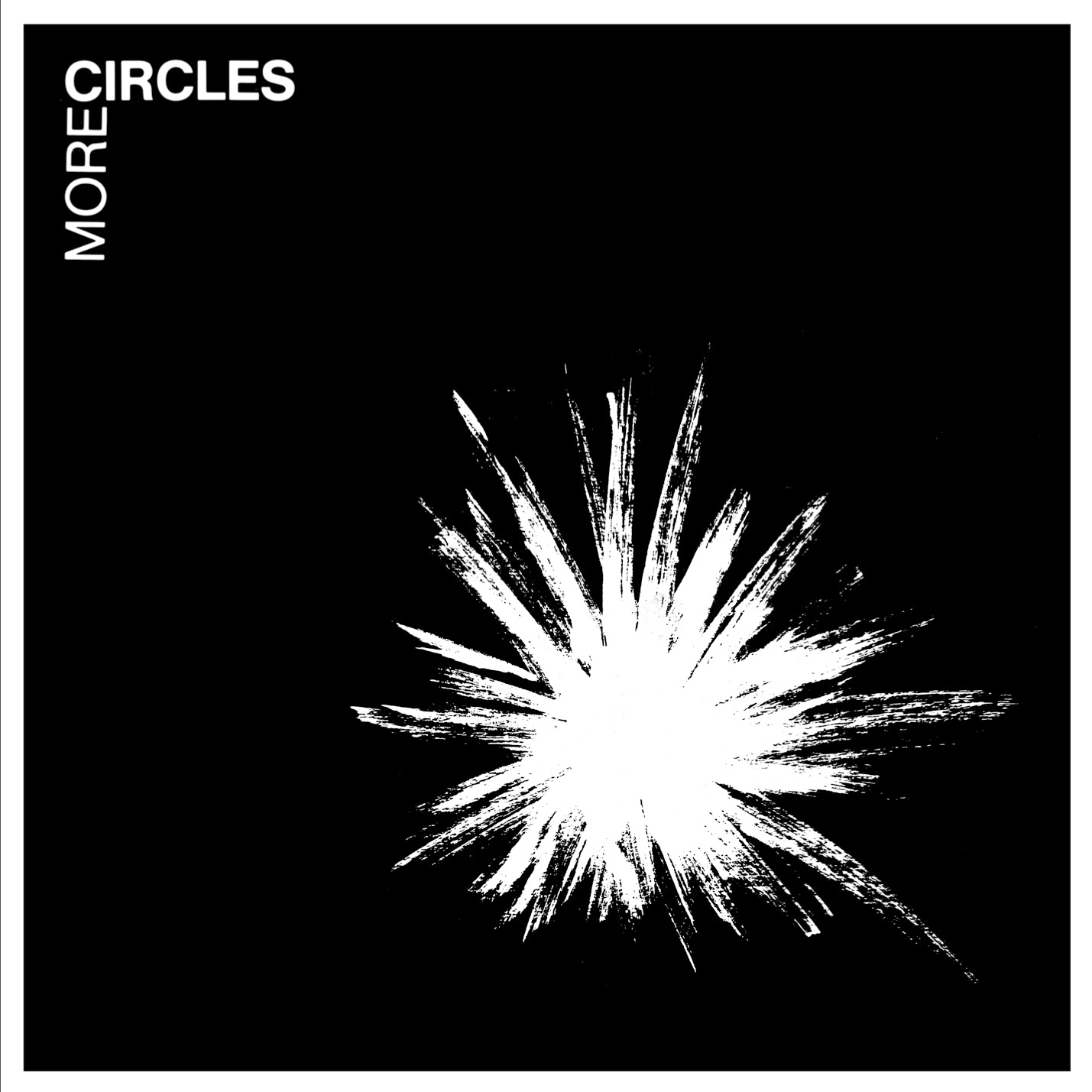
ALOHA GOT SOUL.
ALOHA GOT SOUL.
The 21st of August 1959 was the day the Hawaiian history was changed forever. That day, Hawaii became the fiftieth and most recent American state. This changed Hawaii forevermore; including its cultural identity.
From that day onwards, Hawaiian music changed. The next generation of Hawaiian musicians would be influenced the British Invasion that swept America in 1964. Soon, the influence of American music began to permeate Hawaiian music. By the the end of the sixties, Hawaiian music was very different from it had been just a decade earlier.
No longer was traditional Hawaiian music the most popular type of music on the island. Far from it. By the seventies, everything from rock, funk, soul, disco and R&B existed side-by-side with traditional Hawaiian folk music. It was the start of exciting times for the Hawaiian music industry.
During the seventies and eighties, the Hawaiian music scene was thriving. Many new bands had been formed, and had graduated to playing in the island’s pubs and clubs. So had a new generation of singers, who were among the first to eschew the traditional Hawaiian folk music. They sung A.O.R., R&B and soul, and were becoming a popular draw. The next logical step, was to record an album. This resulted in a mini boom in the Hawaiian music industry.
Everyone benefited from this mini boom, not just songwriters, session musicians, arrangers and producers. So did anyone who owned a record studio or practise room. Soon, the Hawaiian music industry grew, and new studios and practice rooms were needed. This helped a local industry that was almost reliant on the tourist industry. However, unlike most booms the Hawaiian music boom lasted longer than most.
It lasted not just through the seventies, but into the eighties. For nearly two decades, the Hawaiian music industry was thriving. This period is documented on Strut Records’ forthcoming compilation, Aloha Got Soul, which will be released on CD, LP and download on 18th March 2016. Aloha Got Soul features sixteen tracks, including contributions from Tender Leaf. Aura, Aina, Hal Bradbury, Mike Lundy, Nova, Brother Noland and Rockwell Fukino. Familiar faces and rarities sit side-by-side on Aloha Got Soul, which I’ll tell you about.
Opening Aloha Got Soul is Tender Leaf’s Countryside Beauty. It was penned by Darryl Valdez, featured on Tender Leaf’s 1982 eponymous album. It’s best described as a soulful slice of musical sunshine with a hint of funk.
1979 was a year of debuts for Aura, By then, they were one of the top bands on the Hawaiian music scene. On 1979, Aura they released their eponymous debut album. It was released on Fusion Music. The lead single was I’ll Remember You. Tucked away on the B-Side was a real hidden gem, Yesterday’s Love which was penned by Aura. Soulful and funky, the irresistibly catchy Yesterday’s Love deserved a better fate than a B-Side.
Back in 1980, Aina released their one and only album, Lead Me To The Garden on Kumanu Music. It showcased a talented band, who seamlessly married musical genres together. Psychedelia, rock folk, and jazz shine through on Lead Me To Your Garden. One of the album’s highlights is the jazzy On Your Light, which features a guitar masterclass from Michael Joao.
By 1978, Lemuria were one of Hawaii’s top band. This was the perfect time to release their eponymous debut album. It featured Get That Happy Feeling a delicious slice of jazz funk. Key to the song’s success is a virtuoso performance from guitarist John Rapoza. Despite the quality of Get That Happy Feeling, it was overlooked as a single. However, it’s a welcome addition Aloha Got Soul.
Ed Roy and David “Roe” Rorick worked together in Audio Media, one Hawaii’s recording studios. In their downtime, they became Roy and Roe, who spent between eight and ten months recording their eponymous debut album. Once the album was recorded, it was released on Bluewater Records. One of the highlights of the album was Just Don’t Come Back, a glorious fusion blue eyed soul, jazz and funk.
Although Hawaii are remembered as a Hawaiian surf rock band, they’re much more than that. Hawaii were a versatile and talented band, who in 1980, released their debut album Out Of The Dark. One of several highlights was Lady Of My Heart, which shows another side to Hawaii. It’s a tender ballad featuring one of Brian Hamilton’s best vocals.
One of Hawaiian’s music’s best kept secrets is Hal Bradbury. He released his debut single Call Me, on Fan Records in 1980. It’s a beautiful ballad where A.O.R. meets soul. A year later, in 1981, Fan Records would release Hal Bradbury’s debut This Is Love. It’s best described as a fusion of A.O.R. and soul. Call Me was one without doubt, the standout track on the album.
When Mike Lundy released his debut album Rhythm Of Life in 1980, on Secor, he was one of the biggest names in Hawaiian music. Rhythm Of Life was well received, and even today, the album is something of a collector’s items. Surprisingly, when the singles were being chosen, the anthem Love One Another was overlooked. It’s another slice of aural sunshine.
Nova were a Honolulu disco funk band led by Checo Tohomoso. He seems to have been ‘inspired’ by Marvin Gaye’s Got To Give It Up when he penned I Feel Like Getting Down. It featured on Nava’s eponymous debut album, and proved to be a popular song among DJs. They watched as the dance-floor filled when they dropped I Feel Like Getting Down.
After winning a talent show, Nohelan Cypriano released Lihue as a single. It gave her, her first hit single in 1978. Nohelan Cypriano’s debut album Nohelani followed in 1978. Four years later, and Nohelan Cypriano was back with the followup, In The Evening in 1982. However, O’Kailua wasn’t on either of Nohelan Cypriano albums. Maybe it was deemed too controversial?
The lyrics to O’Kailua criticise the continued development of Hawaii. Nohelan Cypriano sings: “Kailua needs no high-rise with her blue skies, not for our eyes. Can you realise?” Meanwhile, elements of soul, funk, boogie and traditional Hawaiian music are combined to create a memorable and catchy track with an important message.
Brother Noland’s Kawaihae is a funky jam from the 1980 album Speaking Brown. It was released on Solbrea Records, which it seems, was a vehicle for releases. Only Speaking Brown and Brother Noland and Solbrea’s 1981 album Paint The Island were released on Solbrea Records. Both are collector’s items, which isn’t surprising, given the quality of Kawaihae, an uber funky jam.
Marvin Franklin With Kimo and The Guys will be a new name to most people. That’s unless they’r the proud owner of Homegrown III, a compilation of Hawaiian music released in 1978, by KKUA Records. One of the featured tracks was Kona Winds, a surfer jam from Marvin Franklin With Kimo and The Guys.
During the seventies, Greenwood were a popular draw in Hawaiian clubs. Locals and tourists flocked to see Greenwood, as they covered hits of the day. Despite their popularity, Greenwood never recorded an album until 1985, when they recorded Lost In Paradise. It was reissued on CD on 2014 by Lost In Leaf Records. One of the many highlights was the opening track, Sparkle. With its carefree, feel good summery sound, it’s guaranteed to brighten up even the dullest day.
In Hawaiian music, Chucky Boy Chock and Mike Kaawa are familiar faces. So it made sense to collaborate. Chucky Boy Chock and Mike Kaawa with Brown Co. went into the studio and recorded Papa’A Tita. It’s a dreamy fusion of funk, soul, A.O.R. and traditional Hawaiian music.
Twenty-nine years after becoming the fiftieth American state, Hawaiian was made the official state language in 1978. Suddenly, many Hawaiian gathered together, in an effort to to revive hula and traditional music. Two musicians who longed for Hawaii’s musical past were Steve and Teresa.
In 1983, Steve and Teresa got the opportunity to record their debut album. They were invited back to a studio after a concert, and in three hours recorded their debut album Catching A Wave. It was released on Kealohi Productions, which was a vehicle for Steve and Teresa’s music. One of the songs on Catching A Wave, Kaho’Olawe Song looked longingly and wistfully back at the culture that Hawaii had lost.
Closing Aloha Got Soul is Rockwell Fukino Coast To Coast. It was released on Ivory Coast Records, in the late seventies. Coast To Coast is best described as Hawaiian yacht rock. It’s also the perfect way to close Aloha Got Soul, as it whets the listener’s appetite for Volume 2.
Hopefully, there will be a followup to Aloha Got Soul, which will be released by Strut Records on CD, LP and download on 18th March 2016. The Hawaiian music industry was thriving up until the mid-eighties. However, sadly, by then musical climate had changed drastically.
By the mid-eighties, DJ culture was born. Suddenly, DJs replaced live music. Incredibly, ‘music lovers’ preferred what was essentially a human jukebox to live music played by real musicians. This, some people believed, was musical evolution. Obviously, they hadn’t read Hans Christian Andersen’s The Emperor’s New Clothes. However, the effect of DJ culture proved catastrophic.
Given there was no longer the same appetite for live music, many clubs closed their doors for the last time. No longer had up-and-coming artists and bands a place to showcase their talents. It was the same for the bigger names in Hawaiian music. Venues they had previously played, sometimes for years, were no more. For artists who used clubs to showcase their albums and singles, this was disastrous.
Without a showcase for their music, suddenly, record sales began to fall. For some smaller labels this was the end of the road. The shockwaves were felt throughout the music industry. There was no longer the same business for recording studios and pressing plants. Even to arrangers, producers and songwriters suffered. So did the industries who relied upon the music industry, everyone suffered when the boom ended. The knock-on effect took its toll, not just in the music industry, but the wider Hawaiian economy. While the boom had lasted longer than most people expected, its after effects were felt throughout the island.
Thirty years after the boom in the Hawaiian music industry ended, interest in Hawaiian music continues to grow. For newcomers to Hawaiian of the seventies and eighties, Aloha Got Soul is the perfect primer. It’s a truly eclectic and lovingly compiled compilation, from Aloha Got Soul’s Roger Bong. He’s picked sixteen tracks that feature everything from disco, funk, rock, soul and traditional Hawaiian music. Aloha Got Soul is a tantalising taste of Hawaiian during its golden era.
ALOHA GOT SOUL.
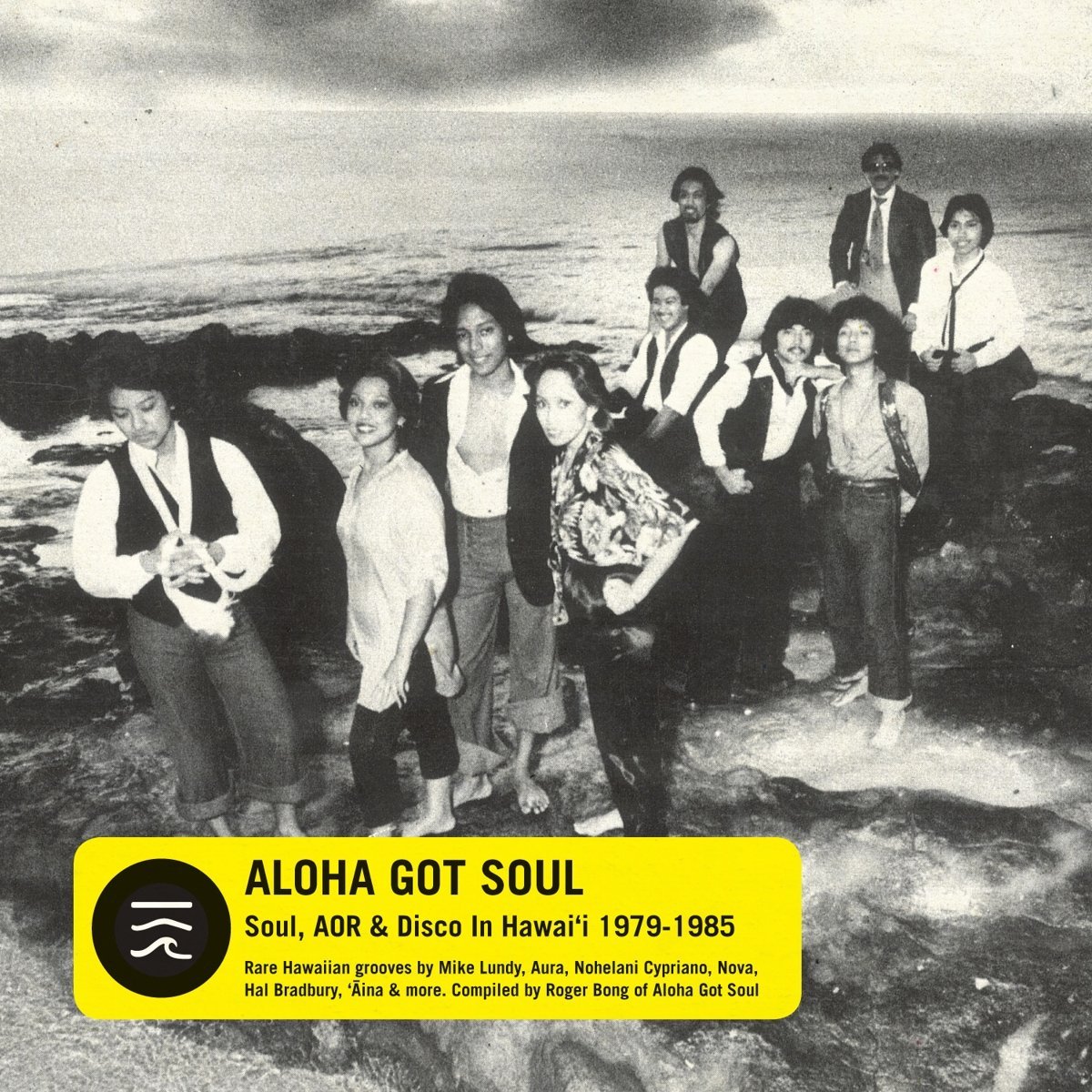
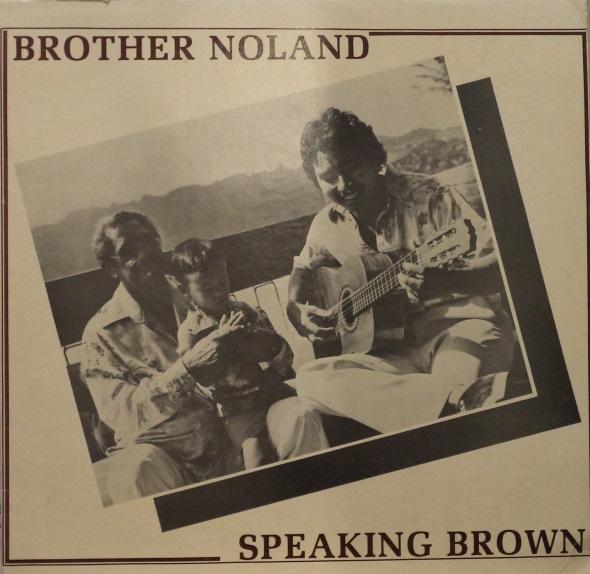

BOY-WE WERE HERE.
BOY-WE WERE HERE.
Valeska Steiner and Sonja Glass first met in 2005, at the Hochschule für Musik und Theater Hamburg. They were both students on a pop music course.
Singer Valeska Steiner had travelled from Zurich in Switzerland, to join the course. Bassist Sonja Glass was local. She had been born in Hamburg, and lived in the city all her life. Soon, Valeska and Sonja became close friends. By 2007, they decided to form a band, and put what they had spent the last two years learning into practise.
Their nascent band was called BOY. Initially, BOY concentrated on playing live. This allowed them to hone their sound. It was a case of BOY were putting into practise what they had just learnt at Hochschule für Musik und Theater Hamburg into practise.
Given that BOY had just completed a course in pop music, this gave them an advantage over other bands. They knew the perils and pitfalls of the music industry. The two members of BOY knew how important it was to play live. Not only did it allow BOY find their voice and hone their sound, but it allowed the nascent band to build a following. So that’s what BOY spent the next three years doing.
It took time. BOY were no overnight success story. That never happens. Just like so many bands before then, BOY discovered it’s not easy for a new and inexperienced band to get gigs. So, they played wherever they could get a booking. During this period, Sonja Glass’ mother drove BOY to concerts. She believed in BOY, who after three years hard work and perseverance, were beginning to make a breakthrough.
By 2010, BOY’s popularity had grown. Their star was in the ascendancy. So the two members of BOY, decided to record their debut E.P.
Hungry Beast.
For their Hungry Beast E.P., five tracks were chosen. This included three penned by the two members of BOY. Drive Darling, July and Skin showcased Valeska Steiner and Sonja Glass’ songwriting skills. Valeska Steiner also cowrote Zapping with Adrian Stern. The final track on the Hungry Beast was a cover of Ben Folds Fred Jones, Pt. 2. These five tracks were recorded in Berlin in June 2010, and released later that year.
The Hungry Beast E.P. was well received by both critics and music fans. BOY’s music was beginning to find a wider audience. Surely, it was only a matter of time before BOY came to the attention of a record company?
And so it proved to be. In 2011, Berlin based Grönland Records swooped, and signed BOY. For BOY this was a coup. Grönland Records were one of Germany’s leading independent labels. Their career was in good hands.

Mutual Friends.
Before long, Grönland Records sent BOY into the studio. By then, the two members of BOY had penned twelve tracks. This included Drive Darling, July and Skin from BOY’s Hungry Beast E.P. A further nine new tracks would make their debut on what became Mutual Friends. It was produced by Philipp Steinke.
This made sense. Philipp Steinke had produced BOY’s debut E.P. The Hungry Beast. He was an experienced singer and musician, who was just beginning his production career. However, the advantage Philipp Steinke had, was he knew BOY, and had worked with them before. This stood him in good stead, as BOY recorded the twelve tracks that became their debut album Mutual Friends. Once the album was complete, it was scheduled for release in the autumn of 2011.
Before the release of Mutual Friends, critics had their say on BOY’s debut album. Rolling Stone, The New York Times and Filter were all won over by BOY’s debut album. So were record buyers.
Soon, Mutual Friends was selling well in Germany. This was helped by the success of four singles. The lead single was Little Numbers, with Waitress, Drive Darling and This Is The Beginning all proving popular. So popular, that Mutual Friends was released in 2013 in Britain, North America and Japan.
By then, Mutual Friends had won the 2012 European Border Breakers Award. This was just the start of a roller coaster year for BOY. Soon, they were playing at Hamburg’s prestigious Stadtpark, in front of a 4,000 audience. After that, BOY headed out on tour.
Across the world, BOY continued to wow audiences. They had enjoyed a number four single in Japan’s Hot 100 chart. By then, Mutual Friends was a hugely successful album. Tens of thousands of copies of Mutual Friends had been sold, and BOY had won a glittering array of awards. BOY had come a long way since they signed to Grönland Records.
This roller coaster journey has continued apace. For four years, BOY have become a musical phenomenon. They criss-cross the globe, winning friends and influencing people with their award winning sound. However, there’s been no sign of a followup to Mutual Friends. Until now.
We Were Here.
Ten years after Valeska Steiner’s and Sonja Glass’ first met, they rereleased their sophomore album, We Were Here on MVKA. It’s the latest chapter in BOY’s roller coaster career.
For We Were Here the two members of BOY penned nine new tracks. These nine tracks were recorded and produced by Philipp Steinke. The recording of We Were Here took place at various studios, where BOY were augmented by some of Germany’s best session musicians.
Just like on Mutual Friends, producer Philipp Steinke put his years of experience to practise. He played keyboards, Juno, percussion, guitars and took charge of programming. Both members of BOY, Valeska Steiner and Sonja Glass added vocals. That wasn’t their only part in the recording of We Were Here.
When recording began, some musicians played on several tracks, other featured just once. So at the various studios, the band kept evolving. This included the rhythm section, which featured drummers Marcello Romero, Thomas Hedlund and Marco Moeller; guitarist Denis Erarslan; and Sonja Glass who played bass, guitars and Juno. Valeska Steiner added percussion. Other musicians were brought onboard to play on just one track.
A horn section was needed for We Were Here. So trombonist Michael Flury and Gregor Lentjes were drafted in. Then when Hit My Heart was being recorded, the strings came courtesy of cellist Matthias Bartolomey and Klemens Bittman on viola and violin; while Eden Boucher and David Turley added choral vocals. Gradually, We Were Here began to take shape, and eventually, recording of BOY’s much-anticipated sophomore album was completed.
All that was left was for We Were Here to be mixed and mastered. Michael Ilbert mixed We Were Here at the Hansa Mix Room in Berlin. However, Tom Coyne at Sterling Sound was chosen to master We Were Here. Now BOY could prepare for the release of their long-awaited sophomore album, We Were Here.
A lot had happened in the four years since Mutual Friends was released in the autumn of 2011. BOY’s star had been in the ascendancy ever since, and their music was popular all over the world. Since then, they had sold tens of thousands of albums, won numerous awards and enjoyed hit singles around the world. Now they were ready to release their new album.
After four years away, BOY must have been nervous about how We Were Here would be received. They needn’t have worried. BOY were back with a bang. Critics called We Were Here a BOY fitting followup to Mutual Friends. The music was variously melodic, melancholy and mischievous. Other times, it was anthemic and hook-laden. It was impossible not to be captivated by BOY, as they continue to win friends and influence people. That’s the case from the start of We Were Here.
Opening We Were Here was the title-track. Just slow, deliberate chord changes on the keyboards accompany Valeska’s pensive vocal. Soon, memories come flooding back. Sadness is omnipresent as Valeska sings: “We Were Here.” By then, the rhythm section, keyboards and percussion accompany her vocal. Later, sci-fi synths are added. They become more prominent as the vocal begins to drop out. The arrangement becomes understated before the trombone and flugelhorn are added. Neither overpower the arrangement. Just like the rest of the instruments they complement the vocal on his carefully crafted slice of heartfelt, perfect pop.
From the opening bars, Fear reminds me of the Scottish band Chvrches. Stylistically and sonically there’s similarities. That’s down to the instruments used. A pulsating synth joins the rhythm section and chiming guitar. They provide a backdrop for Valeska’s vocal, and propel the arrangement along. By then, the Fear in Valeska’s vocal seems very real. It’s as if she’s lived with it. Frustration turns to anger as she sings: “I wish I could blow it off.” There’s sadness in her voice as she realises: “it won’t let you get away.” By then, Fear is a fully fledged anthem, that’s bound to be a favourite when BOY play live.
Subtle, bubbling pizzicato strings open Hit My Heart. Soon, drums join the keyboards, percussion and harmonies are accompanying Valeska’s jaunty vocal. She almost skips through the arrangement of this carefully crafted song. As she sings: “and we’ll fast forward to the chorus, join the choir, spread the word,” this signals the entrance of harmonies. This is a masterstroke. So is the addition of the subtle bursts of strings. Everything seems to fall into place, and another irresistible slice of classy pop unfolds.
Hotel marks a stylistic change from BOY. Just a lone guitar accompanies Valeska’s wistful vocal and the track takes on
a folk-tinged sound. Sometimes, Valeska sounds like Suzanne Vega as she sings the cinematic lyrics. Later, she reminds me of Karen Carpenter. Valeska brings the lyrics about an affair to life. She describes the clandestine meetings in a Hotel: “362 do not disturb, if no one knows no one gets hurt, if he turns off his mobile phone, he’s never been this far from home.” As Sonja’s bass underpins the arrangement, keyboards and percussion frame the vocal. The tempo quickens, and the vocals full of sadness and regret. It’s a wistful and cinematic song from BOY, who showcase another side to their music.
Just like Hotel, No Sleep For The Dreamer has an understated arrangement. That’s not the end of the similarities. The lyrics have a cinematic quality. They’re also some of the best on We Were Here. That soon becomes apparent. A lone guitar takes centre-stage, before drums usher in the vocal. The tempo is slow, as Valeska delivers a hopeful, joyous vocal. “And now I’m driving home from your house, something big’s about to begin.” Throughout the song, pictures are painted. “Of morning radio, and people leaving bars.” All this is going on around Valeska. She’s found love: there’s something in the wind, there’s something big about to start, no sleep no sleep for the dreamer.”
A guitar is strummed deliberately and subtly on Flames. It almost fades away as the two members of BOY sing in unison. They compliment each other perfectly, and bring the lyrics to life. That’s the case from: “an empty house, the roof’s on fire, you’re fighting with the flames.” From there, the listener is spellbound, as the story unfolds. BOY sound not unlike Wilson Phillips. Partly, that’s because of the way their vocals interact and compliment each other. Meanwhile, the arrangement of a
chiming guitar, pounding drums, percussion and jangling keyboards augments the vocals perfectly. It doesn’t overpower the arrangement. Instead, if frames the vocals, as the story to unfold. There’s a poignancy to the closing lines: “oh if only I could find, a way to ease your troubled mind.”
Galloping percussion and the rhythm section join a crystalline guitar on New York. Taking centre-stage is Valeska’s tender vocal. She’s misty-eyed, as she remembers her first visit to New York. Memories come flooding back. Valeska shares them, and is accompanied by occasional ethereal harmonies. They add to the beauty of this cinematic ballad.
Distant percussion, bass and drums combine as Rivers Or Oceans unfolds. A chiming guitar signals the arrival of Valeska’s vocal. Bravado, confidence and relief combine as she sings: “a pale blue rising, as I’m sailing away from the scene of the crime.” As a muted bass, keyboards and drums combine, Valeska adds: “no traces behind me, yeah the water will sweep away the blood and the gold.” This is described as: “such a shimmering misfortune, such a dark kind of bliss, I’ll cry Rivers Or Oceans, ’til I get over it.” It’s the perfect crime, courtesy of BOY. They use drama, humour and irony to cover their tracks.
Into The Wild closes We Were There. A droning sound grabs the listener’s attention, before percussion, drums and a guitar combine. They provide a slow, mesmeric backdrop to Valeska’s heartfelt, hopeful and impassioned vocal. That becomes apparent as she sings: “or I could follow you, into the wild…we’d live with the animals, play by the fire.” As Valeska delivers the lyrics, a crystalline guitar adds a wistful accompaniment. It plays a supporting role to Valeska as her vocal takes centre-stage, on this heartachingly beautiful vocal. It’s the perfect way to close We Were There.
Unlike so many modern albums, We Were There is a gloriously old school album from BOY. It features just nine songs, that last only thirty-five minutes. That’s how long albums used to last. It meant record buyers were hearing a band’s best work. Nowadays, albums are padded out, and feature fifteen tracks or more. This results in the quality suffering. After all, no artist or band can write fifteen flawless tracks. However, BOY wrote have written and recorded an album that’s almost flawless.
That’s no exaggeration. Rather than write and record a sprawling album, BOY have only committed their best songs to tape. From the opening bars of We Were Here, right through to the closing notes of Into The Wild, BOY continue to captivate with music that’s cinematic, beautiful, heartfelt and hook-laden. Other times, the music on We Were Here is melodic, melancholy, joyous, ironic, poignant, dreamy and dramatic. Quite simply, We Were Here is an emotional roller coaster, that anyone who enjoys good music will enjoy.
No wonder. The two members of BOY, Valeska Steiner and Sonja Glass are talented singer, songwriters and musicians. They write, craft and record music that’s cerebral and cinematic. There’s everything from tales of love and love lost, to hurt and heartache, to drama and tragedy on We Were Here. There’s also delicious anthems and carefully crafted perfect pop. Aided and abetted by producer Philipp Steinke, Valeska Steiner and Sonja Glass create a critically acclaimed followup to Mutual Friends.
BOY have come of age musically with We Were Here, which was recently rereleased by MVKA. We Were Here is a career defining album from BOY. The former pop music students have graduated summa cum laude with We Were Here, a carefully crafted album of hook-laden, perfect pop from BOY.
BOY-WE WERE HERE.

RAY STEVENS-FACE THE MUSIC-THE COMPLETE MONUMENT SINGLES 1965-1970.
RAY STEVENS-FACE THE MUSIC-THE COMPLETE MONUMENT SINGLES 1965-1970.
In a career that’s lasted the best part of sixty years, Ray Stevens has been a singer, songwriter, session musician, arranger and producer. He’s a member of various Halls Of Fame and has won two Grammy Awards. Ray Stevens is also a truly prolific, and has released over thirty albums and 100 singles.
Some of the the best of these 100 singles, are the ones Ray Stevens released for Monument between 1965 and 1970. They’re documented on Face The Music-The Complete Monument Singles 1965-1970, which was recently released by Ace Records. Most of these tracks have never featured on CD before, and feature the “new” Ray Stevens.
His career began in 1957, when former DJ turned music publisher Bill Lowery, introduced eighteen year old Ray Stevens to one of his contacts at Capitol Records. They signed him to their Prep imprint.
For the first few years of his career, Ray Stevens combined his solo career with working as an arranger and session musician. Ray Stevens was happy to work with other artists at NRC, and played piano on many sessions. This paid the bills, as his first few singles flopped. Rang Tang Ding Dong and Silver Bracelet never troubled the charts in 1957. Nor did the novelty single The Clown. So it was no surprise that Capitol cut loose when his contract expired. However, Bill Lowery would get his protege’s career back on track.
Bill Lowery had an in at NRC, which soon, became Ray Stevens’ new home. That was where Ray Stevens released another novelty record, Sgt. Preston Of The Yukon. It had been inspired by a popular television series, and featured an array of voices from Ray Steven. While the single only reached 108 in the US Billboard 100, the single caught the attention of Mercury Records’ A&R man, Shelby Singleton.
The A&R man realised that Ray Stevens was something of an all-rounder. He was a singer, songwriter, session musician and arranger. Ray Stevens was a also something of a hit maker.
Between 1961 and 1963, Ray Stevens enjoyed seven hit singles. Some of the most successful singles were novelty songs. While this paid the bills, Ray Stevens was in danger of being pigeon holed as someone who released just novelty singles. Ray Stevens knew he had more to offer than that, and began to lose interest in his solo career.
By 1963, Ray Stevens had turned his back on his solo career. Instead, he was working as a session musician, arranger and conductor. However, Mercury Records had recorded so much music, that they were able to continue to release music right through to early 1965. When his final single for Mercury Records failed commercially, the label that had been his home for five years, cut him loose. For Ray Stevens it was almost a relief.
Ray Steven didn’t want to continue releasing novelty singles for Mercury Records. Nobody was interested, and it could, potentially, hamper his chances of enjoying a career as a “serious” artists.
Maybe that’s why it wasn’t until late 1965 that Ray Stevens signed to Monument. Fred Foster, who ran the label, had high hopes for his latest signing. He saw him as the successor to Roy Orbison. Considering Ray Stevens had spent the last five years releasing mostly novelty singles, this was a brave call.
Fred Foster was willing to backup his belief. For his Monument debut, Ray Stevens recorded Joe South’s Party People, with A-B-C as the B-Side. When the single was released in late 1965, Monument took out a full page advert in Billboard magazine announcing Ray Stevens’ Monument debut. Despite this, the wistful sounding Party People stalled at just 130 in the US Billboard 100. While this may have seemed a disappointing result, Ray Stevens was having to rebuild his solo career. He had spent the best part of his career releasing novelty records. Party People was the start of Ray Stevens’ career as a serious artist.
For the followup to Party People, another Joe South composition was chosen, Devil May Care. Joe South also wrote the B-Side Make A Few Memories. Monument had hight hopes for Devil May Care, which was the perfect vehicle for the “new” Ray Stevens. It sounded like a homage to Bo Diddley, and featured a vocal powerhouse from Ray Stevens. Despite this, when the single was released in March 1966, it never troubled the charts. With two singles failing to chart, Ray Stevens had to hope there wasn’t a three strikes rule.
After his first two singles failed to chart, Ray Stevens reverted to type, and released Freddie Feelgood (And His Funky Little Five Piece Band) in June 1966. It was a return to his novelty sound. This it seemed was what the record buying public expected of Ray Stevens. Ironically, the B-Side There’s One In Every Crowd, was the better of the two tracks. Both were penned by Ray Stevens, but There’s One In Every Crowd won hands down. It was an impassioned ballad that played to Ray Stevens’ strengths. However, with Monument looking for that elusive hit single, Freddie Feelgood (And His Funky Little Five Piece Band) was chosen, and reached ninety-one on the US Billboard 100. For Ray Stevens, it was a Pyrrhic victory.
Another nine months passed before Ray Stevens returned with a new single. This time, it was a cover of Answer Me, My Love, which gave Frankie Laine a hit single. On the B-Side was one of Ray Stevens’ compositions Mary My Secretary. Sadly, when Answer Me, My Love was released as a single in March 1967, the single failed commercially. This was a huge blow, as Answer Me, My Love was Ray Stevens’ strongest single for Monument. It was also the only single Ray Stevens’ released during 1967.
During the rest of 1967, Ray Stevens combined working as Monument’s in-house arranger with recording his first album for Monument, Even Stevens. It was released eventually released in September 1968, and was the first Ray Stevens’ album for five years. While Even Stevens wasn’t a commercial success, it featured three hit singles.
Even Stevens featured a reflective Ray Stevens, as he reflected on the travails of life. It was as if he was trying to prove to the record buying public that he was a serious artist.
That became apparent when record buyers hard Unwind. It was was chosen as the lead single from Even Stevens. On the flip-side was the For He’s A Jolly Good Fellow. Both were penned by Ray Stevens, who had matured into talented songwriter and storyteller. When Unwind was released in January 1968, it reached number fifty-two on the US Billboard 100, and twenty-nine in Canada. This went some way to repaying Monument’s faith in Ray Stevens.
Six months after the release of Unwind, Mr. Businessman was released as a single in July 1968. It was a song full of stinging social comment. Tucked away on the B-Side was one of Even Stevens’ hidden gems, Face The Music a heart-wrenching ballad with a big, bold and impressive arrangement. Face The Music could easily have been released as a single. However, Monument’s decision to chase Mr. Businessman was vindicated when it reached twenty-eight on the US Billboard 100, and seven in Canada. This made it two consecutive singles for Ray Stevens during 1968. Would two become three?
Yes and no. For the third single from Even Stevens, Monument chose the another soul-baring ballad Isn’t It Lonely Together. It’s a tale of a relationship that’s on its last legs. Ray Stevens breathes life and meaning into the lyrics. The single should’ve been a single. However, Robert Knight had released a cover of the Ray Stevens’ song at the same time. As a result, neither charted. A small crumb of comfort, was that B-Side The Great Escape reached 114 on the US Billboard 100, and forty-three in Canada. With two hits in America, and three in Canada, 1968 had been a good year for Ray Stevens.
Apart from the hit singles, Ray Stevens was working on his second album for Monument. He was also asked to appear on Andy Williams television show. This was how by March 1969, Ray Stevens was about to make a return to novelty records.
Things had been going so well for Ray Stevens. He had worked hard to convince the record buying public he was a serious artist, and over the last two years had changed people’s perception of Ray Stevens. That was until Ray Stevens released Gitarzan.
The inspiration from Gitarzan, came from the Tarzan television series. Ray Stevens penned the song, and the B-Side was Bagpipes-That’s My Bag. Ironically, when Gitarzan was released in March 1969, the single reached number eight on US Billboard 100, and ten in Canada. Both songs would later feature on the Gitarzan album released later in 1969. By then, was Ray Stevens paying for his return to the novelty record.
The success of Gitarzan could be viewed as a short term gain, that in the medium and long-term, backfired on Monument and Ray Stevens. Suddenly, after releasing some of the best music of his career, he had returned the world of novelty single. This could be the way that Ray Stevens was perceived in the post-Gitarzan Monument era?
Especially, after Along Came Jones was chosen as Ray Stevens’ next single. On the flip-side was a cover of Yakety Yak. When Along Came Jones was released in July 1969, it reached just twenty-seven on US Billboard 100, and twenty-eight in Canada. Was Ray Stevens’ return to the world of the novelty song proving costly?
Ray Stevens hoped not. He was determined to forge a career as a serious artist. So when he began work on his third Monument album Have A Little Talk With Myself, which was released later in 1969, Ray Stevens was careful to choose the correct songs. There were several covers, including The Beatles’ Fool On The Hill, Help and Hey Jude. Other songs came from the pen of Bob Dylan, Joe South and Kris Kristofferson. He had penned Sunday Morning Comin’ Down. This should’ve been the perfect song for Ray Stevens’ worldweary voice.
Or so most people thought at Majority though. Sunday Morning Comin’ Down was chosen as Ray Stevens next single. On the B-Side was Minority, another Ray Stevens’ composition. When Sunday Morning Comin’ Down was released as a single in September 1969, the song reached just eighty-one on the US Billboard 100, and fifty=nine in Canada. For Ray Stevens this must have been a huge blow
Sunday Morning Comin’ Down was one of the best singles Ray Stevens had released in recent years. The song seemed tailor made for Ray Stevens’ voice. Despite this, the record buying public it seemed, preferred novelty songs about a gorilla. Maybe Ray Stevens’ decision to return to novelty songs was starting to cost him dearly?
Possibly, when record buyers saw Ray Stevens’ name, they remembered a string of novelty songs. That’s despite the reinvention of Ray Stevens, where he became a “serious” artist. Meanwhile, Monument were beginning to think they had come as far as possible with Ray Stevens.
So Monument didn’t waste time in releasing Ray Stevens’ next single. Have A Little Talk With Myself was the title-track from Ray Stevens third album. On the flip-side was Little Woman. Both were penned by Ray Stevens, who unleashes an impassioned vocal Have A Little Talk With Myself. Accompanied by gospel-tinged harmonies, it shows what Ray Stevens was capable of. However, when the single was released in November 1969, it stalled 123 on the US Billboard 200. That was the end of the road for Ray Stevens.
His contract expired in November 1969, and Monument chose not to renew it. They decided to release I’ll Be Your Baby Tonight,as a single in February 1970. On flip-side was a cover of The Beatles’ The Fool On The Hill. However, when I’ll Be Your Baby Tonight didn’t make inroads into the charts, it looked like Monument had made the right decision not to renew Ray Stevens’ contract.
Meanwhile, Ray Stevens had signed to Andy Williams’ Barnaby Records. For his first single, the gospel-tinged Everything Is Beautiful was chosen. It gave Ray Stevens his first number one single, and won him a Grammy Award for Best Contemporary Vocalist. This was the start of the rise and rise of Ray Stevens.
By the time he released Misty as a single in 1976, Ray Stevens was still releasing the occasional novelty record. However, Ray Stevens was at his best playing it straight, and releasing pop and country singles. Proof of this was Misty which won him his second Grammy Award. Novelty songs and parodies may have proved popular with some people, but resulted in many more people turning their back on Ray Stevens. This must have proved costly over the years.
Especially in the sixties, when Ray Stevens came close to becoming pigeon holed as someone who only released novelty singles. However, when he signed to Monument, the reinvention of Ray Stevens began.
Between 1965 and 1970, which is documented on the Ace Records’ completion Face The Music-The Complete Monument Singles 1965-1970, Ray Stevens reinvented himself as a “serious” artist. Occasionally, Ray Stevens lapsed, and released a novelty single. Mostly though, he released what was some of the best most of his career. It showed there was much more to Ray Stevens than third rate novelty songs and parodies. Far more.
Ray Stevens was a talented singer, songwriter and storyteller. However, he hadn’t found the right label. Fred Foster’s Monument was the perfect label for Ray Stevens to reinvent himself, and mature as a singer and songwriter. The Monument years, which are documented on Face The Music-The Complete Monument Singles 1965-1970 played an important part in the rise and rise of Ray Stevens.
RAY STEVENS-FACE THE MUSIC-THE COMPLETE MONUMENT SINGLES 1965-1970.
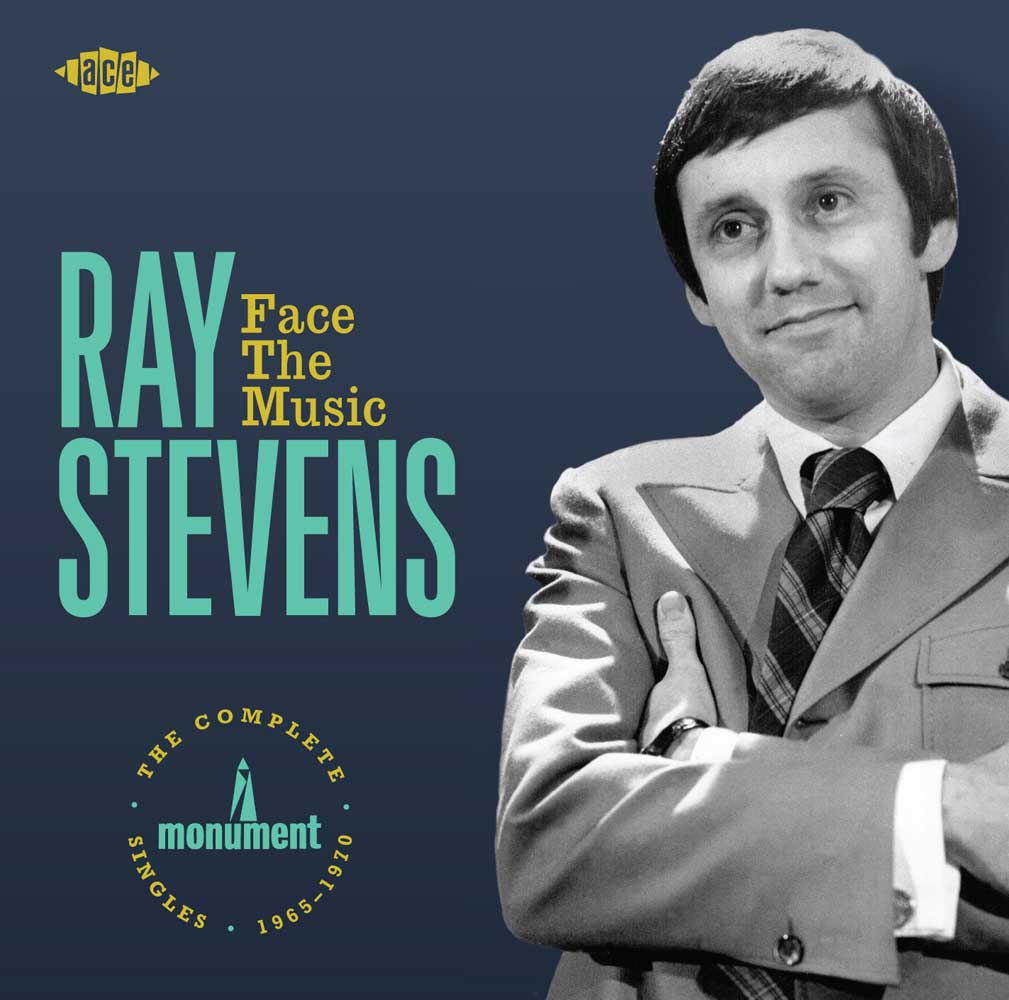
CHARLEY PRIDE-THE HAPPINESS OF HAVING YOU/SUNDAY MORNING WITH CHARLEY PRIDE/SHE’S JUST AN OLD LOVE TURNED MEMORY/SOMEONE LOVES YOU HONEY.
CHARLEY PRIDE-THE HAPPINESS OF HAVING YOU/SUNDAY MORNING WITH CHARLEY PRIDE/SHE’S JUST AN OLD LOVE TURNED MEMORY/SOMEONE LOVES YOU HONEY.
When Charley Pride released his debut album Country in April 1966, it reached number sixteen in the US Billboard Country charts, and was certified gold. This was the start of a six year period when Charley Pride was one of the most successful successful country artists.
Between 1966 and 1972, Charley Pride released a total of eighteen albums. Fifteen reached the top ten in the US Billboard Country charts; ten reached number one; and eleven were certified gold. Charley Pride it seemed could do no wrong.
And so it seemed. When Charley Pride released Sweet Country in April 1973, it reached number three in the US Billboard Country charts and 166 in the US Billboard 200. Sweet Country became Charley Pride’s least successful album in the US Billboard 200 since Songs of Pride…Charley That Is in September 1968. It had failed to chart. However, after that, Charley Pride’s album were entered the US Billboard 200 and found an audience outside of country music. Maybe Sweet Country was a blip?
When Amazing Love was released in October 1973, the album gave Charley Pride another number one on US Billboard Country charts. This was twelfth number one of Charley Pride’s career. However, the album failed to chart in the US Billboard 200. This was hugely disappointing. So was that Charley Pride had released another album, and still there was no sign of another gold disc.
The last gold disc Charley Pride received for a studio album came for Charley Pride Sings Heart Songs, which had been released in October 1971. Since then, only The Best of Charley Pride Volume 2, which was released in 1972, had been certified gold. While that was only two years ago, Charley Pride must have been worried. After all, he was no longer selling the same amount of albums. The problem was, nowadays, most of Charley Pride’s audience were country music fans. Previously, his music had crossed-over, and found an audience within mainstream music. Maybe this would change?
When Charley Pride returned with a new album in May 1974, Country Feelin’ stalled at number fifteen in the US Billboard Country charts. This was Charley Pride’s least successful album since The Pride of Country Music in June 1967. To make matters worse, Country Feelin’ became Charley Pride’s second consecutive album not to trouble the US Billboard 200. However, the Charley Pride bubble hadn’t burst.
We Could was chosen as a single from Country Feelin’. It reached number three in the US Billboard Country charts, and reached number one in the Canadian Country charts. This was a small crumb of comfort for Charley Pride and everyone at RCA Victor.
Six months later, Charley Pride bounced back with Pride Of America. It was released in November 1974, and reached number five on the US Billboard Country charts. This was an improvement on Country Feelin’. However, Pride Of America was the consecutive Charley Pride album that failed to enter the US Billboard 200. The frustrating thing for Charley Pride was, that the quality of his music deserved a much wider audience.
Charley Pride’s next album, Charley, was released in May 1975. It reached number five in the US Billboard Country charts. For Charley Pride it was one step forward, and one step back. Charley hadn’t quite matched the success of its predecessor Pride Of America. Still Charley Pride was no closer to reconquering the US Billboard 200. However, still Charley Pride was one of the biggest names in country music, and for the last nine years, a stalwart of US Billboard Country charts. Nineteen of Charley Pride’s twenty-three albums had reached the top ten. Charley Pride was country music royalty. He had come a long way from when he worked in the smelter. This drove Charley Pride on, and he was determined to stay at the top of the country music tree.
This wasn’t easy. By 1975, the competition in was fierce, and new artists were beginning to make their presence felt. Artists like Charley Pride were having to raise their game over the next few years. During the period 1975 and 1978, Charley Pride released three country albums and a gospel album. They’re being reissued by BGO Records on two discs on 18th March 2016. This quartet of albums are: The Happiness Of Having You, Sunday Morning With Charley Pride, She’s Just An Old Love Turned Memory and Someone Loves You Honey. They find Charley Pride as he try to recapture the commercial success he enjoyed between 1966 and 1972.
The Happiness of Having You.
Just six months would pass between the release of Charley in May 1975, and The Happiness Of Having You in November 1975. This wasn’t unusual, as Charley Pride averaged at just over two albums a year. By the time Charley Pride began to begin work on what became The Happiness of Having You, he was working with one of country music’s most successful producers, Jerry Bradley. Charley Pride was just one of the artists Jerry Bradley worked with. They would record ten songs that became The Happiness of Having You.
Charley Pride and producer Jerry Bradley had cherry picked some quality songs for The Happiness of Having You. The title-track and album opener was written by Ted Harris; while The songwriting team of Mack Vickery and Bobby Borchers cowrote I Can’t Keep My Hands Of You. Other tracks included Kenny O’Deil’s Everything I Am and Jimmy Payne and Naomi Martin’s My Eyes Can Only See As Far As You. Kris Kristofferson’s classic Help Me Make It Through The Night; Jim Owen’s I’ve Got A Woman To Lean On and Johnny Duncan’s Right Back Missing You Again. Along with Shirley Ann Worth’s Everything She Touches Turns To Love and Ben Peters’ Signs Of Love. Shirley Ann Worth, on paper, The Happiness of Having You looked an album that should ooze quality.
As usual, at RCA’s Nashville Sound Studio was chosen for the recording of The Happiness of Having You. Some of Nashville’s top musicians accompanied Charley Pride, and the recording went smoothly. So six months after the release of Charley, RCA Victor were getting ready to release The Happiness of Having You.
Reviews of The Happiness of Having You were mostly positive. Critics complimented Charley Pride on the quality and diversity of the material. The songs were well produced by Jerry Bradley, who was now one of Nashville’s top producers. He was no longer standing in his father’s shadow. Jerry Bradley had earned his stripes, and was determined to help Charley Pride to get back to the days when number one albums and gold discs were commonplace.
When The Happiness of Having You was released in November 1975, the album reached number two on the US Billboard Country charts. This made The Happiness of Having You Charley Pride’s most successful album since Amazing Love in October 1973. Was Charley Pride on the way back.
He certainly was. When The Happiness Of Having You was released as a single, it reached number three in the US Billboard Country charts, and number one on the Canadian Country charts. My Eyes Can Only See As Far As You was chosen as the followup, and reached number one in American and Canadian country charts. It looked like Charley Pride was back?
Charley Pride’s judicious choice of songs for The Happiness Of Having You had paid off. The Happiness Of Having You, an uptempo, joyous paean whetted listener’s appetite; before I Can’t Keep My Hands Off Of You is a tale of hurt, betrayal and unrequited love. Ballads like My Eyes Can Only See As Far As You epitomises the mid-seventies country, and come to life in Charley Pride’s hands. So does Kris Kristofferson’s oft-covered Help Me Make It Through The Night and Everything She Touches Turns To Love. They’re two of the highlights of The Happiness Of Having You. By the time the wistful Signs Of Love closes The Happiness Of Having You, it’s obvious that it’s one of the best albums Charley Pride has released in recent years. It’s no wonder Charley Pride was riding high in the charts, and had just enjoyed two hit singles. However, could Charley Pride build on The Happiness Of Having You.
Sunday Morning With Charley Pride.
Most people would’ve had expected Charley Pride to followup The Happiness Of Having You with a similar album. Charley Pride had a different idea, and decided to release another gospel album, Sunday Morning With Charley Pride. This was a risky strategy, and was an easy way to alienate record buyers. However, it was something Charley Pride believed in, and was determined to do.
At RCA Victor, executives must have had mixed feelings. They must have wondered why Charley Pride had decided to release his second gospel album after his most successful album in two years? However, Charley Pride’s last gospel album, Did You Think To Pray had reached number one on the US Billboard Country charts and seventy-six on the US Billboard 200. So maybe, Sunday Morning With Charley Pride would see the success Charley Pride was enjoying continue?
Unlike The Happiness Of Having You, Sunday Morning With Charley Pride didn’t feature songs by the creme de la creme of songwriting. Instead, Charley Pride chose songs by some lesser known names. After all, many of the songwriters whose songs featured on The Happiness Of Having You, were secular, not gospel or religious songwriters. So with ten songs by some lesser known names, Charley Pride headed to RCA’s Nashville Sound Studio.
At Nashville Sound Studio, some of Nashville’s top session players and producer Jerry Bradley awaited Charley Pride. As Charley Pride delivers a series heartfelt, impassioned vocals, his band provide a backdrop to songs that are moving, spiritual and often, beautiful. He’s The Man, Without Mama Here, Next Year Finally Came and He Took My Place were without doubt, the standout tracks as Charley Pride showcased his versatility on Sunday Morning With Charley Pride. However, what would critics think?
In America, critics were used to country artists releasing gospel albums. Sunday Morning With Charley Pride received a fair hearing, and garnered mainly, positive reviews. It was a moving, heartfelt album, and a project that Charley Pride believed in, and wanted to do. The problem was, who many people would buy Sunday Morning With Charley Pride?
When Sunday Morning With Charley Pride was released later in 1975, the album stalled at just fourteen in the US Billboard Country charts. Again, it was one step forward, one step back for Charley Pride. His next album was going be hugely important.

She’s Just An Old Love Turned Memory.
After the release of Sunday Morning With Charley Pride, it was over a year before Charley Pride released a studio album. His only solo album released during 1976 was The Best Of Charley Pride Volume 3. It reached number three in the US Billboard Country charts, and 188 in the US Billboard 200. Meanwhile, the album was certified four times platinum in Canada. For Charley Pride, this was a huge boost to his confidence.
After the success of The Best Of Charley Pride Volume 3, Charley Pride’s thought’s turned to his next studio album. For She’s Just An Old Love Turned Memory, Charley Pride would rely on some of the top songwriters.
This included John Schweers, who contributed She’s Just An Old Love Turned Memory and The Rose Is For Today. Singer-song-writer George Weiss had written Rhinestone Cowboy, which featured on his 1974 album Black and Blue Suite. Charley Pride spotted the potential in the song. It would feature on She’s Just An Old Love Turned Memory. So would Elijah Lee Fry’s The Hunger; Ben Peters’ A Whole Lotta Things To Sing About an Mac Davis I Feel The Country Callin’ Me. I’ll Be Leaving Alone was written by Dickie Lee and Waylard Holyfield; while the David-Dussia songwriting partnership contributed We Need Lovin’ and Get Up Off Your Good Intentions. Along with a cover of Country Music, these songs would become She’s Just An Old Love Turned Memory.
Recording of She’s Just An Old Love Turned Memory took place atRCA’s Nashville Sound Studio. Some of Nashville’s top musicians accompanied Charley Pride, who co-produced the album with Jerry Bradley. Charley Pride it seemed, was keen to add a new string to his bow. Unlike other country artists, he wasn’t known as a songwriter, and up until then, didn’t produce his own albums. In Jerry Bradley, Charley Pride had the perfect teacher. Their first lesson took place on She’s Just An Old Love Turned Memory.
The release of She’s Just An Old Love Turned Memory was schedule for March 1977. By then, critics had given the album positive reviews. Again, they remarked upon what was a judicious choice of songs. Charley Pride it seemed had picked songs that were tailor made for him. This included Rhinestone Cowboy, where Charley Pride seems to live the lyrics. Along song that drew praise from critics was I Feel The Country Callin’ Me. These two tracks, critics thought, were among the highlights of She’s Just An Old Love Turned Memory.
On its release, She’s Just An Old Love Turned Memory reached number six in the US Billboard Country charts. While this was an improvement on Sunday Morning With Charley Pride, the album didn’t match the success of The Happiness Of Having You. However, the singles more than made up for this.
A Whole Lotta Things to Sing About was released in 1976, as the lead single from She’s Just An Old Love Turned Memory. It reached number two in the US Billboard Country charts, and number one on the Canadian Country charts. She’s Just An Old Love Turned Memory then topped the American and Canadian Country charts. So did I’ll Be Leaving Alone in early 1977. For Charley Pride, She’s Just An Old Love Turned Memory was one of the most successful albums of recent years. Partly, because of his judicious choice of songs and his ability to bring lyrics to life.
Charley Pride does this throughout She’s Just An Old Love Turned Memory. That was the case from the opening bars of She’s Just An Old Love Turned Memory, right through to the closing notes of Get Up Off Your Good Intentions. The album is full of quality country cuts.
This includes the trio of singles A Whole Lotta Things To Sing About; She’s Just An Old Love Turned Memory and She’s Just An Old Love Turned Memory, where Charley Pride’s vocal is full of hurt and heartbreak. He rolls back the years. Especially on Rhinestone Cowboy and The Hunger where his voice is full of sadness. Then I Feel The Country Callin’ Me proves to be one of the most beautiful songs on She’s Just An Old Love Turned Memory. It’s if memories come flooding back for Charley Pride. He doesn’t deliver lyrics, but seems to have lived them. That’s the case on Country Music, a truly captivating ballad where the listener literally holds their breath, wondering where the song is heading? A more uptempo track is the album closer Get Up Off Your Good Intentions. It shows another side to Charley Pride and whets the listener’s appetite for his next album.

Someone Loves You Honey.
After the success of She’s Just An Old Love Turned Memory, Charley Pride returned with a a new album eleven months later, in February 1978. This was Someone Loves You Honey, which featured eleven new songs which Charley Pride hoped, would build on the success of She’s Just An Old Love Turned Memory.
Just like previous albums, Charley Pride chose songs by some of his favourite songwriters for Someone Loves You Honey. Among them, were Don Devaney who contributed the title-track. John Schweers wrote I Live You and Daydreams About Night Thing and cowrote Another I Love You Kind Of Day. Ben Peters penned More To Me and I’m Never Leaving You. Other songs included Conway Twitty’s Play, Guitar, Play and Marty Robbins wrote Days Of Our Lives. The Grindelle, Gibbons and Hatch songwriting partnership returned with Heaven Watches Over Fools Like Me; while Doyle Marsh and George Renau contributed The Days Of Sand and Shovels. These songs would be recorded in the familiar surroundings of RCA Nashville Sound Studio.
At RCA Nashville Sound Studio, Charley Pride and some f Nashville’s top session players prepared to record Someone Loves You Honey. Again, Jerry Bradley and Charley Pride co-produced the album. Charley Pride’s production debut featured three number one singles. How would Someone Loves You Honey fair?
As critics received their review copies of Someone Loves You Honey, Charley Pride held his breath. Reviews could make on album. After the success of She’s Just An Old Love Turned Memory, Charley Pride wanted to build on that success. To do that, he needed positive reviews of Turned Memory Someone Loves You Honey. That’s what he got.
Critics were won over be the almost laid-back, understated mellow sound of Someone Loves You Honey, Georgia Keeps Pulling On My Ring, I Live You and Play, Guitar, Play. With an understated sound, these songs epitomised everything that was good about country music. Another I Love You Kind Of Day and More To Me seemed to owe a debt of gratitude to country music’s past. Side one of Someone Loves You Honey seemed to pick up where She’s Just An Old Love Turned Memory, left off.
Side two didn’t disappoint either. Days Of Our Lives and Daydreams About Night Things are the perfect showcase for Charley Pride’s vocal. They ease the listener into the second side. Heaven Watches Over Fools Like Me feature a rueful vocal where hurt and heartbreak are omnipresent. The Days Of Sand And Shovels finds Charley Pride’s in a reflective mood; before a heartfelt rendition of I’m Never Leaving You proves the perfect way to close Someone Loves You Honey. It was released in February 1978.
When Someone Loves You Honey was released, it reached number four on the US Billboard Country charts, and just failed to enter the US Billboard 200, when it reached 207. In Canada, Someone Loves You Honey was certified gold. Then More To Me and When Someone You Loves You Honey were released as a single, both reached number one in America and Canada. This was meant that Charley Pride had enjoyed eighteen number one single in America; and twenty-two in Canada. Twelve years after his 1966 debut album Country, Charley Pride was one of the biggest names in country music.
While gold discs and number one albums seemed to be a thing of the past, Charley Pride was still one of the biggest selling American country artists. By 1975, the competition in was fierce, and new artists were beginning to make their presence felt in country music. Artists like Charley Pride would have to raise their game over the next few years. For a former ball player like Charley Pride, he liked nothing better than a challenge.
During the period 1975 and 1978, Charley Pride stepped up to the plate and released a trio of top quality country albums and his second gospel album. These four albums will be reissued by BGO Records on two discs on 18th March 2016. This quartet of albums are: The Happiness Of Having You, Sunday Morning With Charley Pride, She’s Just An Old Love-Turned Memory and Someone Loves You Honey. They find Charley Pride trying to recapture the commercial success he enjoyed between 1966 and 1972.
While the number albums and gold discs seemed to have dried up, Charley Pride had grown and matured as an artist. Lyrics come to life, as Charley Pride doesn’t so much sing them, but live them. His delivery is heartfelt, emotive and impassioned. It’s country music at his best. That’s not surprising, as Charley Pride is country music royalty.
Charley Pride is still, and always will be regarded as country music royalty. During a career that’s lasted six decades, he enjoyed thirty-nine number one singles on the US Billboard Country charts, and sold over seventy-million albums. Still, Charley Pride is RCA Victor’s second biggest selling artist of all time. The most successful period of Charley Pride’s career was between 1966 and 1972. However, there’s much more to Charley Pride’s career than that. This includes The Happiness Of Having You, Sunday Morning With Charley Pride, She’s Just An Old Love-Turned Memory and Someone Loves You Honey which were recently reissued as a double album by BGO Records.
CHARLEY PRIDE-THE HAPPINESS OF HAVING YOU/SUNDAY MORNING WITH CHARLEY PRIDE/SHE’S JUST AN OLD LOVE TURNED MEMORY/SOMEONE LOVES YOU HONEY.

QLUSTER-ECHTZEIT.
QLUSTER-ECHTZEIT.
Back in 1969, Hans-Joachim Roedelius, Dieter Moebius and Conrad Schnitzler founded Kluster, which would become one of the most important groups in the nascent Krautrock movement. Kluster went on to release two albums between 1969 and 1971, Zwei-Ostere and Klopfzeichen. However, in 1971 Conrad Schnitzler announced that he was leaving Kluster. So Hans-Joachim Roedelius and Dieter Moebius formed Cluster.
Just like Kluster, Cluster would prove to be a groundbreaking group. The music they released was among the most important, innovative and influential of the Krautrock, and post-Krautrock era.
Cluster released their eponymous debut album in 1971. This was the first of seven albums Cluster released between 1971 and 1981. Cluster II was released in 1972, with Zuckerzeit following in 1974. After this, Cluster was put on hold while Hans-Joachim Roedelius and Dieter Moebius formed Harmonia with Michael Rother.
Harmonia released two albums between 1974 and 1975. Their debut, Musik Von Harmonia was released later in 1974, with Deluxe following in 1975. Neither album was commercially successful, but later, would become Kraurock classics. So would’ve Tracks and Traces, Harmonia’s collaboration with Brian Eno.
The only problem was, the master tapes for Tracks and Traces were lost, and only rediscovered nearly twenty years later. Somewhat belatedly, Tracks and Traces was released in 1997, and the collaboration between Harmonia and Brian Eno was hailed a lost classic. This however , wasn’t the only time Brian Eno had worked with members of Harmonia.
After recording Tracks and Traces, Cluster collaborated with Brian Eno on Cluster and Eno. It was released in 1977, and featured the three innovators pushing musical boundaries to their limits. Cluster would continue to do this.
Two years later, and Cluster release their last studio album of the seventies, Grosses Wasser. It was released in 1979, and was Cluster’s first album of the post-Krautrock era. Seamlessly. Cluster reinvented themselves, and proved that they were still relevant, and capable of creating groundbreaking music.
As the seventies dawned, Hans-Joachim Roedelius and Dieter Moebius were about to celebrate three decides making music together. By then, the two men continued to effortlessly combine their solo careers with Cluster. However, Cluster’s first album of the eighties wasn’t a studio album.
Instead, Cluster and Farnbauer Live In Vienna was a live collaboration with Joshi Farnbauer. It had been recorded at Wiener Festwochen Alternativ on 12th June 1980. Just like previous projects, Cluster were out of their comfort zone and making ambitious, experimental music. For a group into their third decade making music, Cluster were still pioneers.
That continued right up until Cluster released Curiosum, in 1981. It was the last studio album Cluster would release this millennium.
After the release of Curiosum, Cluster was put on hold. Hans-Joachim Roedelius and Dieter Moebius decided to concentrate on other projects. That was until 1994, when Cluster made their comeback.
The comeback took place in July 1994 in Vienna, which Hans-Joachim Roedelius called home. For an hour, Cluster took to the stage and improvised, on one lengthy sixty minute track. It was an ambitious, innovative genre-melting album. After thirteen years away, One Hour was released in December 1994. For fans of Cluster, Christmas had come early. Cluster were back, and stood head and shoulders of the pretenders to their crown. However, were Cluster back for good?
It wasn’t until 1997, that Cluster released another album. This time, Cluster released not one, but two live albums. This included Japan 1996 Live, which documented Cluster’s Japanese tour. First Encounter Tour 1996 celebrated Clusters first American tour, where the two veterans were treated as conquering heroes. After twenty-eight years together, Hans-Joachim Roedelius and Dieter Moebius were receiving the critical acclaim and plaudits that their music so richly deserved.
Despite this, Hans-Joachim Roedelius and Dieter Moebius put Cluster on hold again. It wasn’t until 2008, when Cluster released another live album, Berlin 07. However, the next year Cluster would return with their first studio album since 1981.
Qua was released in 2008, some twenty-seven years after Cluster’s previous studio album. Since 1981, Hans-Joachim Roedelius had worked on countless projects, and his discography numbered well over one hundred. Cluster’s latest album Qua was a welcome addition from a group that were now regarded as one of the most important, innovative and influential bands of Krautrock, and post-Krautrock era. They had influenced and inspired several generations of musicians. Sadly, the Cluster story was almost at an end.
By 2010, Cluster disbanded. Hans-Joachim Roedelius was seventy-five; and Dieter Moebius sixty-four. They two fiends had spent a lifetime making music. Maybe now they wanted to take things easy?
Not Hans-Joachim Roedelius. The seventy-five year old,decided to form a new band, one that continued the work of Kluster and Cluster. So Qluster was born.
Initially, Qluster featured Hans-Joachim Roedelius and keyboardist and electronic musician Onnen Bock. heir debut was the studio album Rufen, which was released in 2011. This was the first in a trilogy.
Fragen, the second album in the trilogy was released by Qluster in 2011.Then the third, and final instalment, in the trilogy, Antworten. was released in 2012. By then, Qluster were being heralded as one of the most important modern day groups.
By the time Qluster were ready to record their fourth album, Lauschen, two had become three. Multi-instrumentalist Armin Metz had joined Qluster, and made his debut on Lauschen. It was released later in 2014.
When Lauschen was released,Hans-Joachim Roedelius was seventy-nine. He wasn’t slowing down, and certainly hadn’t lost any of his enthusiasm for music. Several generations of record buyers were drawn to Qluster’s music. From those who grew up listening to with Kluster, Cluster and Harmonia, Qluster was essential listening.
Qluster released their fifth album Tasten in 2015. Stylistically, it marked a departure in style. A triumvirate of pianos featured on Tasten. This wasn’t surprising given Hans-Joachim Roedelius love of the piano. However, less than a year later, and Qluster were preparing to release their sixth album in just five years, Echtzeit.
For their sixth album, Echtzeit the three members of Qluster decided to change direction. The triumvirate of pianos featured on Tasten was a thing of the past. Replacing it, would be a much more ambient sound.
The three members of Qluster would cowrite the ten soundscapes on Echtzeit. They would be recorded in two locations. Four tracks were recorded in Berlin; while Wolf Bock recorded the other six tracks in Schönberg in Austria. That’s where Qluster setup their impressive array of instruments and effects.
This included an ARP 2300 with a Steiner Masters Touch breath controller; Roland Jupiter 4, Korg MS 20, Yamaha CS-15, Mikromorg, Animoog, a DIY MOS Weird Sound Generator, a Boston Grand Piano GP-193, Farfisa VIP 345, Fender Rhodes and Rhythm Ace FR-8L. A church organ was used, and recorded in situ. The effects used on Echtzeit a Yamaha 1005, Boss RC-20, Cosmic AE-7000, Ken Multi DE-1000 and Evans Echoplet EP100. These instruments and effects were put to good use on the ten tracks on Echtzeit. Once Qluster had recorded the ten tracks, Onnen Bock and Armin Metz mixed Echtzeit. All that was left for Echtzeit to be mastered.
To master Echtzeit, Jonas Förster was chosen. As he worked on mastering Echtzeit, Qluster prepared for the release of the sixth album in just five years. This was a remarkable feat, especially considering founder Hans-Joachim Roedelius was eighty-one. However, he had twice the enthusiasm of men half his age. The grand old man of German music was still working in ten separate projects. This was the musical equivalent of spinning plates, which Hans-Joachim Roedelius was still a master of. However, as the release of Echtzeit approached, Hans-Joachim Roedelius was in for a surprise.
Hans-Joachim Roedelius was awarded a Schallwelle Award. This was in recognition of a lifetime spent making groundbreaking music. To date, this includes over 200 albums. Soon, one more would be added to that figure, when Echtzeit was released by the Hamburg based Bureau B label.
Opening Echtzeit is Stein Auf Stein. Futuristic sounds can be heard in the distance. As they grow closer, keyboards are caressed and what sounds like waves breaking on the beach can heard. Soon, a dramatic, cinematic, but minimalist soundscape is taking shape. Less is more, as keyboards flow slowly into the distance. Then the waves break on the beach, as Qluster take their leave.
By then, ethereal describes the subtle introduction to Beste Freunde. Slowly and almost deliberately, a piano plays. Notes are picked with the utmost care, as a myriad of sci-fi sounds flit in and out. They fill the space left the slow, deliberate, thoughtful piano. There’s a sense of melancholy in the track, and sometimes frustration and sadness. One can’t help but wonder if Hans-Joachim Roedelius is thinking of his dear friend Dieter Moebius, who sadly, died in July 2015? They were best friends who spent a lifetime making music and travelling the world. If that’s the case, then Beste Freunde is the perfect homage to the late, great Dieter Moebius.
Verweile Doch is very different from the previous track. A church organ plays, while bubbling, mesmeric synths add a hypnotic counterpart. Again, there’s an almost understated sound. Very few instruments are deployed, but the ones that have been chosen, prove hugely effective. They create a track that’s variously understated, hypnotic and dreamy ambient soundscape.
Distant washes of synths gradually make their presence felt on Von Weiter Ferne Ganz Nah. However, again, the arrangement has an understated sound and quality. Soon, its ethereal beauty envelops the listener. By then, another glorious ambient soundscape is sharing its secrets. As synths drone, a keyboard plays softly. It’s the perfect counterpoint to the mainstay of the arrangement. They’re like yin and yang as this this fuzzy, lysergic epic embraces, envelops and enthrals.
Glasperlenspiel may only be two minutes long, but it’s two magical minutes. The sparse arrangement is sonic subtly personified. As a piano plays slowly and deliberately, clinking keyboards prove the perfect complement. Together, they create a soundscape that’s understated, ruminative and reflective.
Zweites Kapitel sees Qluster change direction sonically. There’s a lo-fi sound to the keyboard, as a droning synth and hand drum combine. Quivering, shimmering sounds flit in and out. Then occasionally, the sound a tape slowing down is replicated. Brief bursts of sci-fi sounds can be heard. So are bursts of droning synths, as Qluster experiment. To do this, they combine traditional and electronic instruments; plus the music of the distant past and present. The result is what one has come to expect of Qluster, the music of tomorrow.
Das Seltsame Tier Aus Dem Norden sounds like the theme to a Cold War thriller. Just a lone, melancholy piano plays, while a myriad of electronic sounds and chatter add to the cinematic sound. Again, the piano is played slowly, thoughtfully and deliberately. Space is left between the notes, which are filled by bursts of futuristic, sci-fi sounds. Later, there’s some brief bursts of flamboyance and drama. By then, the listener is providing the script to the melancholy, but melodic delights of the Das Seltsame Tier Aus Dem Norden. It’s the most cinematic track on Echtzeit
There’s a thoughtful sound to the droning synths that drift in and out of Auf Der Lichtung. Meanwhile, a keyboard plays. As usual, the different parts of the arrangement compliment each other perfectly. They play their port in what’s a moody, genre-melting soundscape. It showcases a ruminative, but melodic and mesmeric sound which is compelling and captivating.
Dark, verging on menacing describes the synths that drift in on Weg Am Hang. They drone, linger and resonate. Meanwhile, swells of synths rise and fall, while what sounds like synth strings play. By then, a keyboard meanders across the arrangement, as instruments make an appearance, only to disappear and sometimes, reappear. Nothing however, is as it seems. Qluster deploy their array of effects, which transforms the original signal into something quite different. Soon, the arrangement veers between dramatic, ethereal, futuristic, cinematic and wisful. Sonic sculptors Qluster, take the listener on an epic emotional roller coaster.
In Deinen Händen closes Qluster’s sixth album Echtzeit. Slowly, and almost deliberately a keyboard accompanies the piano. They may sound quite different, but compliment each other perfectly. Soon, though, Hans-Joachim Roedelius’ beautiful, crystalline, piano takes centre-stage; while the rest of Qluster are left to add an array of sci-fi sounds. That’s until the arrangement is stripped bare, and all that remains is the dreamy sound of the keyboard. All too soon, Echtzeit is over.
Echtzeit is the sixth album that Qluster have released since 2011. It’s also the best album of Qluster’s career. While it’s very different from Tasten, that’s to be expected.
Never can Hans-Joachim Roedelius be accused of making the same album twice. That’s despite releasing over 200 albums. So he’s certainly not going to start now. Instead, Echtzeit is another album groundbreaking from Qluster.
Echtzeit marks a stylistic departure from Qluster. Their previous album Tasten, featured a triumvirate of pianos. This was something new, and was released to widespread critical acclaim. However, despite the plaudits, Hans-Joachim Roedelius was determined that Qluster to continue to reinvent their music on Echtzeit. The result was Echtzeit, a much more ambient sounding album.
On Echtzeit, Qluster combine elements of ambient, avant-garde and Berlin School with electronica and experimental music. The result is music that’s mostly understated, subtle and minimalist. It’s case of less is more. Occasionally, the music becomes dark, dramatic and briefly, menacing. This adds to the cinematic sound of Echtzeit. Mostly, the music on Echtzeit veers between beautiful, dreamy, ethereal and lysergic; to hypnotic and mesmeric and sometimes, melancholy, reflective, ruminative, thoughtful and wistful. Always though, Echtzeit is compelling, captivating and cinematic. Echtzeit is also melodic and harmonious, and is a fitting addition to the Kluster, Cluster and Qluster illustrious discography.
Forty-seven years after he first co-founded Kluster, Hans-Joachim Roedelius is keeping the memory of Kluster and Cluster alive with Qluster. Along with Onnen Bock and Armin Metz, Hans-Joachim Roedelius continues to innovate with Qluster. That’s what he’s been doing during a lifetime making music, including on Echtzeit which was recently released by Bureau B.
Echtzeit is the most accessible album of Qluster’s six album career. It’s the perfect introduction to Qluster, and an album that should introduce Qluster to a new and much wider audience. Veterans of Kluster, Cluster and Harmonia will enjoy and embrace Qluster’s new album Echtzeit. It finds the grand old man of German music, Hans-Joachim Roedelius continuing the legacy of Kluster and Cluster with Qluster on Echtzeit.
QLUSTER-ECHTZEIT.
CLEAR LIGHT-CLEAR LIGHT.
CLEAR LIGHT-CLEAR LIGHT.
There aren’t many record labels that are founded in a college dorm. However, that’s where the Elektra Records story began in 1950. Jac Holman and Paul Rickol were students at the prestigious and exclusive St. John’s College, in Santa Fe. They decided to form a record label, and agreed to invest $300 each into their new business venture. A year later Elektra Records was ready to release its album.
This was New Songs, a classical album featuring Georgianna Bannister and John Gruen. It was released as a limited edition in March 1951, but sold only a few copies. For Jac Holman and Paul Rickol it was an inauspicious start to the Elektra Records story.
Despite this setback, Elektra Records would thrive during the fifties and early sixties. Elektra Records was at the forefront of the folk revival. They signed Ed McCurdy, Oscar Brand, Judy Collins, Phil Ochs and Tom Paxton. These artists brought commercial success and critical acclaim the way of Elektra Records. However, by 1964, Elektra Records was ready to diversify.
Jac Holman had spotted a gap in the classical music market. There was room he realised, for a classical budget label, so launched Nonesuch Records. It was a huge success. So much so, that other labels launched similar ventures. However, Nonesuch Records was the market leader. Buoyed by this success, Elektra Records decided to enter the pop music market.
Elektra Records entered into a joint venture with Survey Music, and founded Bounty Records. It wasn’t a particularly successful venture, and ultimately floundered and folded. The only thing Elektra Records gained from Bounty Records, was The Paul Butterfield Band, which they fell heir to. This would play an important part in Elektra Records future.
With the new wave of psychedelic rock unfolding before their eyes, Elektra Records decided to sign some of the genre’s most promising acts. Soon, San Francisco’s based The Doors had signed to Elektra Records. Another new label was a band from Los Angeles, Love. However, they weren’t the only band from L.A. who would soon call Elektra Records home.
By 1967, so would Clear Light, another group from the City Of Angels. They had only been together since early 1966. However, this didn’t stop Clear Light releasing a psychedelic classic on Elektra Records in 1967. This was their eponymous debut album Clear Light, which was recently rereleased by Big Beat Records, an imprint of Ace Records. Clear Light had come along way since early 1966.
That was when Los Angeles’ based Michael Ney advertised for a guitarist for a pickup band he was organising. One of the first people to answer the advert was Clyde Edgar “Robbie” Robinson, who was already a stalwart of the local music scene.
In the early sixties, Robbie began performing as Robbie The Werewolf. He even released an album Live At The Whaleback in 1964. Then Robbie and his wife formed a duet, and sung in the local folk circuit. That was until Barbara Robison was asked to join the folk rock group The Ashes, who in 1966 became The Peanut Butter Conspiracy. With his wife now a member of a band, Robbie was looking for a new group.
As he set off for the audition, Robbie wondered if Michael Ney’s new group was where his future lay? When he arrived at the audition, and introduced himself to Michael Ney, straight away, the two men got on. Everything it seemed was going well. That was until Robbie failed the audition. At least Robbie came away having made a new friend, Michael Ney.
Just like Robbie, Michael Ney wasn’t a newcomer to music. For a while, he had been Tito Puente’s percussion. Then he played in a series of bands in Hollywood. However, recently he had been looking at forming a new band. He had been making these plans, whilst living alone in L.A.
When Robbie and Barbara Robison heard that Michael was living alone, they insisted that he move into their small, apartment on Manhattan Beach. There wasn’t much room for three adults and the Robison’s young child. However, everyone got on well, and soon, Robbie and Michael were making plans to form a new band.
This time, there were no adverts placed looking for musicians. Instead, Robbie and Michael went in search of the best musicians. The place to find them, was Hollywood and Sunset Strip clubs. So night after night, the two friends went in search of musicians for their new band. That was where Robbie and Michael would eventually meet two musicians from Phoenix, Arizona.
When Robbie and Michael began their search for band members, Bob Seal and Dallas Taylor were still playing in Phoenix. However, Dallas had played in L.A. before, but it had been a messy experience, literally.
Having answered an advert, drummer Dallas Taylor had travelled to L.A. for an audition. He landed the gig, and his new band were scheduled to open for The Mothers Of Invention. By then, Dallas had had an appendectomy. Rather than tell his new band mates, Dallas decided to play at the Shrine Auditorium. He played with such energy and enthusiasm, that his stitches burst. Dallas ended the gig with blood seeping through his burst stitches. Given the pain he was having to endure, Dallas wasn’t at his best, and was replaced as drummer. That’s how he ended up back in Phoenix. However, Dallas convinced Bob Seal to head to L.A.
Bob Seal and Dallas Taylor arrived in Los Angeles around September 1966, and straight away, began looking for fellow musical travellers. It was at a Peanut Butter Conspiracy concert, that Bob and Dallas began talking to the band’s bassist Alan Brackett. Eventually, Bob and Dallas asked Alan if he knew any musicians looking to form a band? Fortunately, Alan introduced them to Robbie.
When the three men began talking, Robbie explained that he and Michael were writing songs together, and explained what they were trying to achieve. It looked like Robbie and Michael had found the musicians they were looking for. There was a problem though.
Both Bob and Dallas were homeless. They had no idea where they were going to spend the night, after they finished talking to Robbie. So he invited them to stay at the small Manhattan Beach apartment.
By then, the hippie era was in full swing, and communal living was becoming the norm. It certainly was at the Robison’s house. They were joined by Michael Ley, Bob Seal and Dallas Taylor. This allowed the band to write, practise and jam.
As the musicians jammed over a couple of days, Michael and Dallas quickly realised that two drummer were better than one. It gave the band a unique sound where power and fluidity reigned. Along with Bob Seal’s guitar, the as yet unnamed band’s sound was being honed. However, they still needed more musicians, and a name.
One thing the band need was a vocalist. Barbara Robison was everyone’s first choice. She declined; so Wanda Watkins a friend of the Peanut Butter Conspiracy was recruited. All that the group needed was a name.
This came about when one of the group passed road sign saying Garnerfield Sanitarium. At last, the group had a name. However, still the lineup wasn’t complete.
Despite this Garnerfield Sanitarium were playing weekend live at various clubs in Manhattan Beach. It was at one of these shows, that a young, aspiring songwriter approached them. He was Wolfgang Dios, who already was already signed to a publishing company. So impressed was Wolfgang Dios with Garnerfield Sanitarium, that he hooked them up with his publishing company.
The publishing company was owned by a former professional boxer and aspiring songwriter, Bud Mathias. He was formerly the Arizona Lightweight Champion between 1951 and 1954. Now he was a musical entrepreneur, who was involved in songwriting, recording and publishing. There was, it seemed, no end to Bud Mathias’ talents.
After his boxing career was over, Bud Mathias was looking four a new career. He decided to get involved in music. That’s despite no experience in the music industry. However, Bud Mathias wrote Runnin’ Wild which was recorded by Brenton Wood. Bud Mathias had also formed the publishing company Little Giant Music which published and administered Wolfgang Dios’ songs. When Bud Mathias met Garnerfield Sanitarium, he thought the band had potential.
There was a but though, Garnerfield Sanitarium needed a decent bassist. As luck should have it, the musical entrepreneur just happened to know a bassist, Doug Lubahn, a former ski instructor.
When Mamma Cass first met Doug Lubahn in Aspen, Colorado, he was a ski instructor during the day, and played in a nightclub band at night. Mamma Cass thought Doug had potential, so encouraged him to move to L.A.
Things hadn’t gone well for Doug, and for a while he was homeless. For a time, Doug slept on L.A.’s streets. However, by the time he joined Garnerfield Sanitarium, Doug’s luck was changing.
After meeting the band, Doug moved into the Robison’s Manhattan Beach apartment. By then, space was at a premium. This was the end for Barbara Robison. For some time the Robison’s marriage has been on shaky ground. She and her baby Scotty, moved into Peanut Butter Conspiracy’s house in Silver Lake. Meanwhile, Manhattan Beach apartment became Garnerfield Sanitarium’s headquarters.
By then, the new lineup of Garnerfield Sanitarium had realised that the band’s name wasn’t right. After some debate, it was thought the name was “too long” and “not cool enough.” It was then that Alan Brackett suggested Brain Drain. This however, wasn’t the only change.
After a band meeting, it was announced that Wanda Watkins was no longer Brian Drain’s vocalist.However, before long, Wanda Watkins was back with a new band. Bud Mathias had recruited Wanda Watkins into Joint Effort. By then, Brain Drain had gone up in the world.
Brian Drain were now playing clubs around Hollywood. They were taking to the stage at Pandora’s Box, The Witch and The Hullabaloo. At these clubs, Brain Drain were a proving a popular draw. So it made sense for Brian Drain to record a couple of tracks.
For the recording session, two songs were chosen. The first was the Wolfgang Dios composition Black Roses. Me was penned by new bassist Doug Lubahn and Brain Drain’s manager Bud Mathias. One the two songs were recorded, Bud Mathias decided to swing by Elektra Records’ West Coast office with an acetate of Brain Drain’s new recording.
Bud Mathias had timed his run perfectly. The receptionist at Elektra Records was out having lunch, and had left the door unlocked. As Bud Mathias walked in, A&R man Billy Jones was about to head out for lunch. Bud Mathias managed to get Billy Jones to listen to the Brian Drain acetate. He liked the recording and agreed to send it to Jac Holman at Elektra Records’ headquarters.
Over the next couple of days, the members of Brian Drain waited for news from Elektra Records. When it came, it was good news. Jac Holman liked the recording, and wanted Brain Drain to sign to Elektra Records.
In early January 1967, Brain Drain were about to sign to one of the major labels. It was then that Bud Mathias inexperience caught up with. He had never got Brian Drain to sign a management contract with him. Bud Mathias was a worried man.
He had every right to be. At Elektra Records, staff producer Paul Rothchild was talking with Brain Drain. He had just produced The Doors’ recently released debut album, and previously, had worked with Love. This gave Paul kudos in the eyes of Brain Drain. Paul Rothchild had a propositions for Brain Drain.
This was that Paul Rothchild become Brain Drain’s new manager. Paul pointed out that they needed someone with music industry experience managing Brain Drain. Given his track record with The Doors, and especially Love, Brain Drain soon agreed. Bud Mathias was history, and left ruing his inexperience. He had lost a band signed to a major label, by forgetting to get a management agreement signed.
With Paul Rothchild managing Brain Drain, Elektra Records records rented an apartment for the band to live in. Their new home was situated in Franklin Avenue, and was once home to comedian W.C. Fields. Soon, it became known as the Light House.
The name came about, because in March 1967, Brain Drain had changed their name to Clear Light. The newly named band were also well on their way to transforming the faded grandeur of the Light into a rehearsal cum living space. Soon, Clear Light would be joined by The Doors, and the two Elektra Records’ bands would jam into the early hours, as they prepared to record new albums.
In The Doors’ case, they were preparing to record their sophomore album Strange Days. Their eponymous debut album had been released on January 4th 1967, and reached number two on the US Billboard 200. The Doors was well on its way to selling four million copies. Would lightning strike twice when Clear Light released their debut album?
Clear Light entered the studio with producer Paul Rothchild for the first time in the spring of 1967. The band recorded several songs, which they hoped would find their way onto their debut album. However, when producer Paul Rothchild listened to the recordings, he wasn’t happy with the results.
The problem Paul Rothchild felt, was that the band needed a vocalist who could make his presence felt. All the successful bands had a distinctive vocalist. That was what producer Paul Rothchild felt Clear Light were lacking. Despite this, Clear Light were about to become movie stars.
Meanwhile, Clear Light were asked to feature in Theodore J. Flicker’s film The President’s Analyst. Clear Light would play themselves in a nightclub scene. However, when it came time for Clear Light to play She’s Ready To Be Free, vocalist Robbie was unwell. He was replaced by Barry McGuire. While his delivery was perfectly acceptable, it was no match for Robbie’s recent recording.
After the filming of The President’s Analyst, Paul Rothchild began looking for a replacement vocalist. Eventually, Paul Rothchild found the vocalist he was looking for…Cliff De Young.
At first, Cliff De Young seemed to be in the wrong movie. While the rest of Clear Light looked like, and adopted the hippie lifestyle, Cliff De Young was preppy looking by comparison. It was an unlikely match, the aspiring actor, singer and songwriter. However, Cliff De Young possessed the distinctive vocal that Clear Light. Paul Rothchild realised this, and so did Robbie Robinson.
He didn’t make things difficult for the rest of Clear Light. Robbie resigned from Clear Light, and Cliff De Young replaced him. Now all Clear Light needed was a new guitarist.
Several guitarists were auditioned, including Doug Hastings of The Daily Flash. He had stood in for Neil Young in Buffalo Springfield. Despite his pedigree, Doug Hastings didn’t get the gig. Instead, Ralph Schuckett, who had played in various bands on Hollywood Strip and Topanga Canyon won the day. Soon, the new lineup of Clear Light were heading on a seventeen day residency in New York.
At their first gig in New York, new recruit Ralph Schuckett earned his Clear Light stripes. He wasn’t impressed by the crowd’s response and lack of enthusiasm. So he started chiding the audience, becoming more and more angry. By then, the venue manager was racing across the stage, and sacked Clear Light on the spot. His parting words were “you’ll never work in this town again.” How wrong he was.
The next day, Steve Paul phoned Clear Light and booked them to play at Scene East. It was a much more prestigious venue. By the time Clear Light took to the stage word of Ralph’s rant had spread like wildfire. Suddenly, everyone wanted to hear Clear Light. This resulted in Clear Light enjoying a longer stay in the Big Apple, and in the process, were able to hone their sound and songs. So when Clear Light returned to L.A. they were ready to finish recording their debut album.
For their eponymous debut album, the members of Clear Light had written nine new songs. They would later augment these songs with two cover versions. Clear Light penned Black Roses with Wolfgang Dios; and A Child’s Smile with Michael Ney. Doug Lubahn wrote Sand, Think Again and Night Sounds Loud. Bob Seal penned With All In Mind, They Who Have Nothing and How Many Days Have Passed. Clear Light’s new vocalist Cliff De Young cowrote The Ballad Of Freddie and Larry with keyboardist Ralph Schuckett. These nine songs would be recorded at one of the Hollywood’s top studios.
Before recording of Clear Light began at Sunset Sound Recorders, the newly named band had made their L.A. live debut. This took place at L.A.’s first love-in on Easter Sunday. Clear Light quickly won over what was an appreciative audience. Buoyed by the success of their live debut, Clear Light were ready to record their eponymous debut album.
When Clear Light arrived at Sunset Sound Recorders, they were met by their manager and producer Paul Rothchild. He was now one of the hottest producers in America, having just finished producing The Doors’ Strange Days. Joining Paul Rothchild in the studio was Elektra Records cofounder Jac Holman. He was the recording and production supervisor. As Paul Rothchild and Jac Holman watched on, Clear Light prepared to record their eponymous debut album.
By then, Clear Light’s lineup included a rhythm section of bassist Doug Lubahn, guitarist Bob Seal and drummers Dallas Taylor and Michael Ney who added percussion. They were joined by Ralph Schuckett, who switched between organ, piano and celesta. Cliff De Young add vocals on nine tracks, while Bob Seal takes charge of vocals on Black Roses and his composition All In Mind. With Paul Rothchild producing Clear Light, surely the album would soon be recorded?
With the addition of keyboardist Ralph Schuckett and new vocalist Cliff De Young, Clear Light could concentrate on completing their debut album. However, producer Paul Rothchild decided that songs recorded before Ralph Schuckett and Cliff De Young joined Clear Light, should be rerecorded. This meant the sessions would take longer. There was no other option though. Paul Rothchild saw the early versions as just work in progress. They just weren’t good enough to make the album. This was disappointing for Clear Light. However, the extra work was worthwhile.
When the songs were rerecorded, and keyboards and new vocals added, some of the songs took on new life and meaning. It was a total rransformation, and much more representative of the new Clear Light. Gradually, Paul Rothchild was moulding Clear Light, and began to steer them in a new direction.
With nine songs recorded, Paul Rothchild decided that to complete the album, Clear Light should record to songs by members of Elektra Records’ family. The songs he had chosen were Greg Copeland and Steve Noonan’s Street Singer and Tom Paxton’s Mr. Blue. These two songs Paul Rothchild felt, would be ideal for Cliff De Young’s “Hamlet on acid delivery.” This would prove true. However, by then, Clear Light were beginning to resent Paul Rothchild.
Members of Clear Light felt that their manager and producer was becoming too controlling. He was also a perfectionist, which was no bad thing. However, the band tired of Paul Rothchild’s constant changing things. It was as if he was on a search for sonic perfection. Given the success Paul Rothchild had enjoyed with Love, The Doors and The Paul Butterfield Band, most bands would’ve been willing to listen and learn. Not Clear Light. They rebelled.
Eventually, something snapped in Clear Light and they began to rebel. They felt Paul Rothchild was too controlling of the band. This may have worked with other bands, including Love, The Doors and The Paul Butterfield Band. However, the members of Clear Light had a rebellious streak, and didn’t take kindly to being constantly told what to do. This wasn’t the only thing the drove a wedge between Clear Light and Paul Rothchild.
By then, guitarist Bob Seals the oldest member of Clear Light was questioning the wisdom of having their producer as a manager. When he spoke out, Bob Seals claims he was singled out for criticism by Paul Rothchild. He remembers doing an guitar overdub on a song he had written. Meanwhile, Neil Young and some big name musicians were watching in the control room. By then, Bob Seals was wound up like a spring. When he stumbled over the guitar part, he claims Paul Rothchild said through the intercom: “you know, there are ten thousand guitar players in this town that can do this track if you can’t.” For Bob Seals this was a crushing blow. It was just as well that the album was almost completed.
When Clear Light was completed, the relationship between Clear Light and Paul Rothchild had sunk to a new low. Elektra Records had scheduled the release of Clear Light for October 1967. However, there was another problem.
Elektra Records had hired William S. Harvey to shoot the album cover. By then, Robbie Robinson was still a member of Clear Light. However, Elektra Records got round this by describing the former founder member as the band’s guru. Robbie wasn’t on the photos in the inner sleeve. They feature the new lineup of Clear Spot. So do the instructions “in order to appreciate the spectacular double drumming of Clear Light, play at high volume.”
Whether critics followed these instruction isn’t known. What’s known, is that the reviews of Clear Light were positive. The music veered between folk rock to heavy psychedelia. Bob Seal who provided the folk rock compositions, would turn out to be Clear Light’s secret weapon.
Bob Seal takes charge of the lead vocal on Black Roses and With All In Mind. He shows that he has hidden depth. While Bob Seal lays down driving, choppy and blistering guitar licks on Black Roses, he shows that he’s also a talented vocalist. If Clear Light had looked closer to home, they would’ve solved their vocalist problem. With All In Mind is another showcase for Bob’s vocal talents, on what’s another slice of folk rock, with a hint of psychedelia. How Many Days Have Passed is a veritable fusion of folk rock and psychedelia. There’s even a nod to The Doors courtesy of producer Paul Rothchild.
The three tracks bassist Doug Lubahn contributed, see Clear Light disappear further down the psychedelic rabbit hole. Sand, Think Again and Night Sounds Loud are prime cuts of heavy psychedelia. Lysergic, trippy and acidic they’re a reminder of the golden age of psychedelia. Of this trio of tracks, Think Again with its swirling organ and searing guitars is the standout. Not only does it showcase Doug Lubahn’s skill as a songwriter, but Paul Rothchild’s production skills.
Paul Rothchild’s decision to encourage Clear Light to record Street Singer and Tom Paxton’s Mr. Blue was vindicated when the album was released. Cliff De Young vocal on Street Singer was dramatic and lysergic. “Hamlet on acid delivery” was the perfect decryption of Cliff’s vocal on Mr. Blue. Dark, dramatic, theatrical and menacing described the vocal. It was one of Cliff’s finest vocals. Coming a close second was his almost manic, unhinged delivery of The Ballad Of Freddie and Larry. Cliff it seems is taking a trip, as Clear Light waltz their way through the song.
Another of the standout tracks on Clear Light was A Child’s Smile. It was penned by the band with Michael Ley. It’s folk rock ballad, that hints at psychedelic. There’s a darkness to the lyrics about childhood imagination. Accompanying Cliff’s vocal is Van Dyke Parks on harpsichord. It was an inspired decision by Paul Rothchild to add a harpsichord to the track. It’s the perfect contrast the vocal and the dark, disturbing lyrics. Sadly, Paul Rothchild never recorded another album with Clear Light.
Following the release of Clear Light, the band embarked on a second tour of the East Coast in December 1967. Clear Light had just released Black Roses as a single, with She’s Ready To Be Free on the flip side. It’s one of eight bonus tracks on Big Beat Records’ reissue of Clear Light.
The recent reissue of Clear Light features the album in its entirely, and then the eight bonus tracks. This includes Bye Bye Boogie Man, the versions of She’s Ready To Be Free, Dawn Lights The Way, The Susan Years and Eastern Valleys. There’s also the versions of Me and Black Roses recorded by Brain Drain. Quite simply Clear Light is the most comprehensive overview of Clear Light’s short career.
As Clear Light embarked upon their second tour of the East Coast, they were invited onto the Pat Boone In Hollywood to play Black Roses. Despite Clear Light’s star seemingly in the ascendancy, Doug Lubahn had turned down an invitation to join the band on a permanent basis. Instead, he was happy to divide his time between The Doors and Clear Light. That proved to be a wise decision.
When Clear Light arrived in New York, they started auditioning new guitarists. Bob Seal was about to be replaced. His bandmates had stabbed him in the back. They wanted someone less outspoken, someone who would toe the party line. Eventually, Danny “Kootch” Kortchmar won the day.A heartbroken Bob Seal left, and headed to Sausalito, where he began a new life as a bassist. However, Bob Seal had the last laugh.
The new guitarist needed time to learn the band’s songs. So some of the members of Clear Light picked up some session work. By the end of February 1968, the latest lineup of Clear Light opened for Jefferson Airplane. Meanwhile, Night Sounds Loud became Clear Light’s third single in Britain. Things seemed to be going well for Clear Light.
They even got as far as beginning work on their sophomore album. However, the loss of Bob Seal had hit Clear Light hard. They were no longer the same band. Cliff De Young realised this, and left the band in June 1969. This was perfect timing, as the rest of Clear Light had been looking for a new vocalist.
Dave Palmer who went on to join Steely Dan was first choice. When this didn’t work out, Duane Allman was approached, and talks took place. However, nothing came of it, and by September 1968, Clear Light split-up.
Looking back, the Clear Light story is one of what might have been. If Clear Light had continued to work with Paul Rothchild, what heights might they have reached? Would Clear Light have followed in the footsteps of their label mates and jamming partners The Doors? After all Paul Rothchild,had an enviable track record.
Paul Rothchild produced everyone from Tim Buckley to Love, The Doors, Janis Joplin, Fred Neil and The Paul Butterfield Blues Band. Part of his recipe for success was he was a perfectionist, who was constantly looking to improve the slightest detail. This worked and got results with many bands. However, Clear Light felt stifled, and rebelled.
This was a great shame. Clear Light were a talented band, who could’ve should’ve reached greater heights. However, by the end of the recording of Clear Light, their partnership with Paul Rothchild was all but over. Over the next eleven months, Clear Light seemed to implode. Guitarist Bob Seal, who had played an important part in the sound and success of Clear Light was betrayed, when his band mates started auditioning for a new guitarist. This backfired, and Clear Light were never the same tight unit. Their answer was to replace vocalist Cliff De Young. However, he beat them to it, and left Clear Spot. By then, the game was up for Clear Spot, and by September 1968 the band called time on their career.
Forty-eight years later, and Big Beat Records’ reissue of Clear Light showcases a talented and versatile band that could’ve and should’ve reached greater heights. Clear Light were certainly not lacking in talent. Sadly, just over two years after Michael Ney first met Robbie Robinson, the adventure was over. A lot had happened since then.
The lineup changed several times. So had the name. Managers had come and gone, and Clear Light had recorded a stonewall psychedelic classic. Sadly, Clear Light is one of music’s best kept secrets, and is only appreciated by a discerning few musical connoisseurs, who have discovered this psychedelic classic. Maybe Big Beat Records expanded reissue of Clear Light, will bring this classic album to the attention of a wider audience?
CLEAR LIGHT-CLEAR LIGHT.
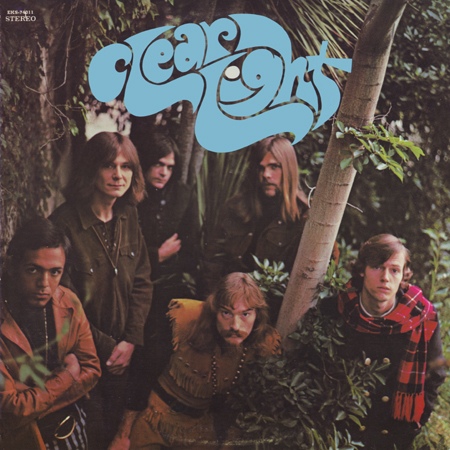
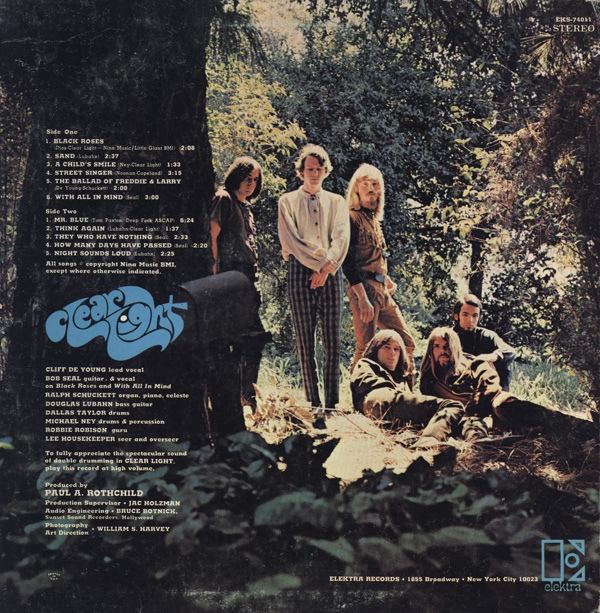
HARMONY OF THE SOUL: VOCAL GROUPS 1962-1967.
HARMONY OF THE SOUL: VOCAL GROUPS 1962-1967.
For many record companies, especially smaller independent labels, a successful compilation can be the answer to a label manager’s prayers. Suddenly, all the small losses that they’ve accumulated over the financial year are wiped out. Even better, there’s some profit left over. So it’s no surprise that the label manager’s thoughts turn to a followup.
Soon work begins on the followup. Compiling the compilation is a slow, laborious process. Time is spent finding and licensing tracks. Then there are sleeve-notes to write and an album cover to design. It all takes time. However, when the second instalment in the series is released, it’s another commercial success. By then, there’s talk of the compilation becoming an annual occurrence.
After volumes three and four sell in larger quantities, the record company begin to pressure the compiler to release two volumes annually. This is where things can go wrong.
The compiler hasn’t the same time find and license the tracks. So instead of picking the tracks he really wants, he settles for second best. Suddenly, the reviews aren’t as good and the sales start to suffer. After another couple of volumes, the series is a pale shadow of what it once was. It lasts just one more volume, before the compilation is pensioned off. By then, it’s more off a mercy killing. It’s a sad end to what could’ve been a long and successful compilation series. Sadly, it was cut down in its prime by greed and avarice.
That will never happen to one of Kent Soul’s Harmony series, which makes a welcome comeback after a three year absence. Harmony Of The Soul: Vocal Groups 1962-1977 is only the forth volume in a series that began in 2003.
It was back in July 2003, that Kent Soul, a subsidiary of Ace Records released In Perfect Harmony: Sweet Soul Groups 1968-1977. When the compilation was released, it was well received by critics and commercially successful. However, despite the critical acclaim and commercial success, it was over two years before the followup to In Perfect Harmony: Sweet Soul Groups 1968-1977 was released.
As October 2005 drew to a close, Kent Soul released More Perfect Harmony: Sweet Soul Groups 1967-1975. The same critical acclaim accompanied the release of the second instalment in the Harmony series. Surely a third volume would follow quite quickly?
On 2nd December 2013, soul fans’ patience was rewarded when Kent Soul released Soul In Harmony: Vocal Groups 1967-1977. This was an early Christmas present for soul fans. When they played Soul In Harmony: Vocal Groups 1967-1977, they realised the reviews were right, and the eight year wait was worthwhile. However, the big question was when will the next instalment of this occasional series be released?
The answer came in late February, when Kent Soul released Harmony Of The Soul: Vocal Groups 1962-1977. It’s a twenty-four track compilation featuring a mixture of familiar faces an new names. There’s contributions from Choice of Colors, The Imaginations, The Perfections, The Lovers, The Pretenders, The Superbs, Special Delivery, The Webb People, The Dramatic Experience and Steelers. These artists are just a few of the names on Harmony Of The Soul: Vocal Groups 1962-1977, which I’ll pick the highlights of.
Opening Harmony Of The Soul: Vocal Groups 1962-1977 is The Pretenders’ For The Rest Of My Days. It was the B-Side to The Pretenders’ 1973 single Hearts Were Made To Love. For The Rest Of My Days was penned by Kenneth Ruffin, and produced by Joe Evans for his New Jersey based Carnival label. There’s a nod to Philly Soul, and especially Thom Bell’s work with The Delfonics and The Stylistics. Sadly, The Pretenders never enjoyed the same success as these giants of soul, despite releasing such beautiful, heartfelt ballad like For The Rest Of My Days.
Act 1 had changed their name Special Delivery in 1973, after discovering another group with the same name. So Act 1 became Special Delivery, who in 1975, were preparing to release their debut single Destroyed Your Love Parts 1 on Mainstream Records. It was penned by Terry Huff who takes charged of an impassioned lead vocal. Accompanied by emotive, needy harmonies, it should’ve been the perfect recipe for a hit single.
That was until Terry Huff and George Parker fell out. Two weeks before the release of the single, George Parker left Special Delivery. His timing was disastrous. Destroyed Your Love Parts charted, and began to climb the charts. So Terry Huff brought his two brothers onboard. Sadly, Destroyed Your Love Parts 1 reached just sixty-two on the US R&B charts. Despite that, it’s one of Special Delivery’s finest singles.
Brief described The Windjammers recording career. Sadly, it began in 1970 and was over by 1971. During that period, they released just one singles Poor Sad Child in 1970. However, The Windjammers recorded another potential single, Why Can’t It Be? It a heartfelt plea from the The Windjammers that’s full of social comment. However, through no fault of their own, the song was never released.
The Windjammers had recorded Why Can’t It Be? at Golden State Recorders, which was one of the city’s top studios. However, Willie Hoskins who owned their record label, neglected to pay the studio bill. So title remained with Leo Kluge, of Golden State Recorders, and Why Can’t It Be? only makes its debut on Harmony Of The Soul: Vocal Groups 1962-1977.
The Smith Brothers only ever recorded a quartet of songs for Jack Ashford’s Just Production in the early seventies. By 1973, The Smith Brothers were ready to release their debut single There Can Be A Better Way on the short-lived Soul Dimension label. When The Smith Brothers returned with the beautiful ballad Let Me Take Care Of Your Heart in 1976. It was released on the Miami based Shield label, but sadly, slipped into obscurity. Forty years later, and Let Me Take Care Of Your Heart makes a welcome return.
By 1974, producer Dave Hamilton had known Charles “Chuck” Webb for the best part of a decade. The pair had worked together, with Chuck adding backing vocals on various recordings. Then in 1974, Chuck formed The Webb People did. They featured brothers Charles and Dennis plus Ollie and Otis Peoples.
In 1974, The Webb People entered the studio with Dave Hamilton and recorded several songs. This included the 1974 single Bump With Me and the flip-side I’m Sending Vibrations. One song that was never released was Love (Our Favourite Pastime). It was penned and produced by Dave Hamilton, and this ballad is the perfect showcase for The Webb Brothers’ vocal prowess. Despite this, it’s lain unreleased since 1974, but is a welcome addition to Harmony Of The Soul: Vocal Groups 1962-1977.
For most of their career, the Detroit based Brothers Of Soul comprised Fred Bridges, Richard Knight and Bobby Eaton. That was until Colours Of Soul released their sixth and penultimate single, You Better Believe It. By then, Richard Knight was in prison. So when Colours Of Soul entered the studio with producer Roy Allen, Ben Knight had been drafted in. He played a part in what’s now regarded as one of Colours Of Soul’s finest singles. Sadly, when the single was released in 1970 on Boo Records, it wasn’t a commercial success. Despite that, the single is now in demand amongst collectors, who are willing to pay large sums of money for this hidden gem.
Although The M-Ms and The Peanuts released Without A Word in 1965, it’s a song that is reminiscent of the doo wop era. That’s despite the song being recorded in 1964. By then, doo wop was quickly becoming a distant memory. Soon, so would The M-Ms and The Peanuts. Without A Word was the last of three singles the The M-Ms and The Peanuts released on Money Records.
Fifty years ago, The Turn Arounds entered the studio in Atlanta, Georgia and recorded I Want You To Know. It was penned by Terry Evans and Jimmy Russell, and featured an understated arrangement. This allow the lead vocal that sounds not unlike Sam Cooke to shine. Despite the quality of the lead vocal and harmonies, I Want You To Know has lain unreleased, and the Los Angeles’ based group never enjoyed their moment in the sun..until now.
Following his time at Motown, former Funk Brother Jack Ashford embarked upon life as a career as a songwriter and producer for hire. Using his Pied Piper vehicle, he wrote and produced tracks for a variety of artists. This included The Perfections, just one of several Detroit based groups of that name.
In 1968, The Perfections recorded Don’t Take Your Love From Me as a single. On the flip-side was the Warren Moore and William Robinson composition Since I Lost My Baby. When Don’t Take Your Love From Me was released on Drumhead Records in 1968, the single flopped. Sadly, that was the end of The Perfections and Drumhead Records. their legacy is : Don’t Take Your Love From Me and hurt filled B-Side Since I Lost My Baby.
Back in 1971, Bobby Moore and The Rhythm Aces were just the latest in a long line of groups who journeyed to Fame Studios, hoping Rick Hall could work his magic. This worked the first time round, in 1966 when Searching For My Gave gave Bobby Moore and The Rhythm Aces a hit in the US Billboard 100 and US R&B charts. Commercial success was fleeting, and by 1968, it was a stranger to Bobby Moore and The Rhythm Aces. By 1971, fame was but a distant memory. So Bobby Moore and The Rhythm Aces retraced their steps to Fame Studios.
Bobby Moore and The Rhythm Aces recorded one last session at Fame Studios. However, the resultant tracks, including Is Love For Real were never released. Is Love For Real was the only ballad recorded, and features a heart-wrenching delivery. It’s as if Bobby Moore and The Rhythm Aces were determined to bow out in style, and certainly do so with Is Love For Real.
My final choice from Harmony Of The Soul: Vocal Groups 1962-1977 is The Fabulous Determinations’ Don’t Make Me Blue. It was penned by Sam Smith, while Bill Stith, Carl Edmondson and Stephen Helwig co-producer Don’t Make Me Blue. It was released on Mainstream Records in 1975. It’s The Fabulous Determinations only single. However, Don’t Make Me Blue is a delicious slice of the sweetest soul music from The Fabulous Determinations, and one of my favourite tracks on Harmony Of The Soul: Vocal Groups 1962-1977.
For anyone who has bought the previous instalments in the Harmony series, Harmony Of The Soul: Vocal Groups 1962-1977 is a must have compilation. It picks up where Soul In Harmony: Vocal Groups 1967-1977 left off. Not only does Harmony Of The Soul: Vocal Groups 1962-1977 pickup where left off, but surpasses the quality of previous volumes. It’s no exaggeration to say that Harmony Of The Soul: Vocal Groups 1962-1977 is the perfect starting point for a newcomer to the series.
If however, you’ve never bought any of the previous instalments in the Harmony series, then Harmony Of The Soul: Vocal Groups 1962-1977 is the perfect starting place. It was recently released by Kent Soul, an imprint of Ace Records.
Just like its predecessor Harmony Of The Soul: Vocal Groups 1962-1977 oozes not just quality, but music that’s variously beautiful, emotive, heart-wrenching and hurt-filled. Tales of hurt, heartbreak, love and love lost sit side-by-side with songs of betrayal and loss on what’s an emotional roller coaster. Harmony Of The Soul: Vocal Groups 1962-1977. That’s the only way to describe Harmony Of The Soul: Vocal Groups 1962-1977.
HARMONY OF THE SOUL: VOCAL GROUPS 1962-1967.




HANS-JOACHIM ROEDELIUS- AWARDS, HARMONIA, CLUSTER AND QLUSTER.
HANS-JOACHIM ROEDELIUS- AWARDS, HARMONIA, CLUSTER AND QLUSTER.
The words pioneer and innovator are often overused. However, it is a fitting description of Hans-Joachim Roedelius. He is, without doubt, one of the most inventive and influential musicians of the past fifty years. His music has influenced and inspired several generation of musician. That’s why recently, Hans-Joachim Roedelius was awarded a Schallwelle Award, in recognition of a lifetime spent making music. And Hans-Joachim Roedelius has released more music that most musicians.
Hans-Joachim Roedelius has released over 200 albums over the past six decades. This includes solo albums and the albums he made Kluster, Cluster and Harmonia, who Brian Eno called: “the most important band in the world.” By then, Harmonia had released two albums. Their debut album Deluxe, was released in 1974, with their sophomore album, Music Von Harmionia following in 1975. The same year, Harmonia recorded the material that would feature on Documents 1975, which was eventually released in 2007. Nine years later, and Documents 1975 is being reissued by Groenland Records on 18th March 2016. However, Documents 1975 isn’t the only album that’s issued or reissued that features Hans-Joachim Roedelius.
Far from it. On 4th March 216, Qluster, which carries on the tradition of Kluster and Cluster released their sixth album Echtzeit. The on 9th April 2016, Bureau B will release 9CD and 9LP box set 1971-1981, which documents Cluster’s ten year recording career. It’s the most comprehensive Cluster retrospective, and celebrates one of the most important musicians in the history of German musical history, Hans-Joachim Roedelius. He shows no sign of slowing down, and continues to work collaborate on a variety of projects. That’s been the case throughout Hans-Joachim Roedelius’ career.
Over the last forty years, Hans-Joachim Roedelius has collaborated with everyone from Brian Eno and Tim Story, to Lloyd Cole, Conrad Schnitzler, Morgan Fisher and Christopher Chaplin. He is a truly prolific musician, who even today is working on ten separate collaborations. It seems Hans-Joachim Roedelius, who I interviewed recently, has an insatiable appetite for music. His story began in 1934, some eighty-one years ago.
The Hans-Joachim Roedelius’ story began in Berlin, on 26th October 1934. That is when one of the future leading lights of the German music scene was born. However, unlike many future musicians, Hans-Joachim Roedelius didn’t grow up in a musical household.
Music was a luxury as Hans-Joachim Roedelius grew up. Like so many young Europeans, World War II interrupted his his childhood. He grew up “hearing bombs drop across the city” of Berlin. It must have been a terrifying sound and time for young Hans-Joachim Roedelius. However, better, more peaceful times were ahead for all Europeans. It was then that music entered Hans-Joachim Roedelius in earnest.
As Hans-Joachim Roedelius grew up, he begin to discover music. “It was classical composers who I listened to. Their music was played by the great orchestras, including The Bonn Orchestra. This was my eduction, and how I discovered music. I learnt through listening.” This was the first step in Hans-Joachim Roedelius’ journey to becoming a musician. Meanwhile, his future contemporaries were studying music.
By the sixties, many of the musicians who became leading lights of the German music scene were music students. Holger Czukay, Conny Plank and Irmin Schmidt were studying under the legendary Karlheinz Stockhausen in Cologne. Meanwhile, another aspiring musician, Dieter Moebius was studying under Joseph Beuys at Düsseldorf Fine Arts Academy. Their paths would cross with Hans-Joachim Roedelius’ after they graduated.
In 1968, at the height of the psychedelic era, Hans-Joachim Roedelius “cofounded music commune Human Being.I also co-founded Zodiak Free Arts Lab in West Berlin with conceptual artist Conrad Schnitzler. At that period, I was a member of the group Human Being, a forerunner of Kluster.” For Hans-Joachim Roedelius: “this was an exciting time, where there was a sense that anything was possible. It was like a revolution. We were happy to have found this place to work. All the freelance musicians in the city found their way to Zodiak Free Arts Lab. There were members of Can, Tangerine Dream, Ash Ra, Neu! at Zodiak. They were great times.” The Zodiak Free Arts Lab was also where Hans-Joachim Roedelius met someone who would play a huge part in his career.
This was Dieter Moebius. “About the end of 1969, Dieter Moebius visited The Zodiak Free Arts Lab. He wasn’t a member. No. He just visiting, and we got talking.” The two men found they had a lot in common, including the way they believed music should be made. It was almost inevitable that Hans-Joachim Roedelius and Dieter Moebius would form a group.
Kluster.
“It was later, in 1970 that we founded Kluster.” Hans-Joachim Roedelius and Dieter Moebius joined with Conrad Schnitzler to form Kluster. However, Kluster was no ordinary band. Initially, Cluster played an eclectic instruments and utensils. “Everything was spontaneous. Improvisation was key.” Kluster’s music was described in The Crack In The Cosmic Egg magazine as “unlike anything heard before.” Hans-Joachim Roedelius admits: “that was what Kluster set out to do. Kluster was about musical activism.” Soon, the musical activists would record their debut album.
Kluster’s debut album came about in the unlikeliest of circumstances. Although band were based in West Berlin; “one night we were playing a concert in Dusseldorf. A priest just happened to be walking past, and heard the music. He liked our music, and came in to the hall. Once the concert was finished, he asked if we would like to record an album of new church music? The answer was yes!” So Kluster made the journey to the Rhenus-Studio in Gordor.
When Kluster arrived at the Rhenus-Studio, “we met Conny Plank and producer Oskar Gottlieb Blarr. We went into the studio and recorded an hour of music in one take. Religious text was added to this, and became the ‘new church music.’ The music became our first two albums Klopfzeichen and Zwei-Osterei.
Only 300 copies of both albums were pressed. Klopfzeichen was released in 1970, with Zwei-Osterei following in 1971. Critics realised the importance of Kluster’s music. It was described as quite extraordinary, bleak, stark, unnerving and full of electricity. Despite the reviews, the sales of Klopfzeichen and Zwei-Osterei were small. However, later, Kluster would be recognised as one of the most influential groups of the early seventies. This influential and innovative group would only release one further album.
This was Eruption, which was recorded by Kluster during 1971. It featured an hour of experimental music, which was recorded by Klaus Freudigmann. Eruption is quite different from Kluster’s first two albums. There is no religious text, just Kluster at their innovative best. For many, Eruption is Kluster’s finest hour. However, 1971 marked the end of an era for Kluster. One group became two.

Cluster.
In the middle of 1971, Conrad Schnitzler left Kluster, and briefly, worked with another band, Eruption. This was the beginning of the end for Kluster.
After the original lineup of Kluster split-up, “Dieter Moebius and I anglicised the band’s name, and Kluster became Cluster.” Between 1971 and 1981, Cluster would release eight studio albums and a live album. Cluster’s debut was released later in 1971.
Cluster.
When Cluster recorded their eponymous debut album, they were joined in the studio by another legend of German music, Conny Plank. He featured on Cluster, which marked a change in sound. Gone was the almost industrial, discordant sound, which was replaced by an electronic sound. Dieter and I played all the instruments and Conny added all sorts of effects. For us this was the start of a new era.”
Cluster was released later in 1971 on Phillips. “This was Cluster’s major label debut. It found Cluster at a crossroads.” They were ready to turn their back on the avant-garde, almost discordant and industrial sound of Kluster, and begin the shift towards the ambient and rock-tinged sound of the late seventies. That was the future. Cluster which had very little melody, is a series of improvised and atmospheric soundscapes.” They would become part of Cluster, which is now regarded as an innovative classic, and in a sense, this was the start of Cluster’s career in earnest.
Cluster II.
“For the followup to Cluster, Conny Plank was no longer a member of Cluster. We were now a duo, consisting of Dieter and I. Conny had other projects he wanted to concentrate on.” With three becoming two, the two remaining members took a different approach to recording. “To some extent, it was trial and error. We tried different things. Some worked, others didn’t.” Hans Hans-Joachim Roedelius explains. The end result, Cluster II “saw a further shift towards a more electronic sound,” and an album that is seen as a influential classic. Cluster were evolving, and would continue to do so.
Zuckerzeit.
Zuckerzeit, Cluster’s third album released in 1974, was co-produced by Michael Rother of Neu! “Michael first met Dieter and I in 1971. By 1973, Michael was on a break from Neu! We decided to head into the countryside to Forst, to build our own recording studio.” This could’ve been fraught with problems? “No. We knew what we were doing and trying to achieve. All of us had experience in studios, so knew what was required.” The result was a studio “where Michael, Dieter and I recorded the two Harmonia albums, Musik Von Harmonia and Deluxe.” However, before that, Zuckerzeit was released.
On the release of Zuckerzeit, in 1974 Michael Rother’s influence is noticeable. He placed more emphasis on melody, rhythm and the motorik beat.” Hans-Joachim Roedelius explains that previously, Cluster didn’t place the same importance on melody or structure. Michael introduced structure and discipline.” The result was a very different album. That would be the case through Cluster’s career. However, by then Cluster’s career was on hold. Harmonia had been born.
The Birth Of Harmonia.
After completing their recording studio in Forst, it seemed only natural that the three friends record an album. So Harmonia was born. It was meeting of musical minds. The two members of Cluster were receptive to Michael Rother’s way of working. Hans-Joachim Roedelius explains: “there were no problems, we wanted to learn. Previously, we improvised, which made playing live problematic. A song was merely the starting point, it could go anywhere. Michael however, taught us about structure. We influenced him. It was a two-way thing.”
Musik von Harmonia.
That proved to be the case. “Harmonia’s 1974 debut album, Musik von Harmonia, was a move towards ambient rock.” While Michael Rother influence can be heard, so can the two members of Cluster. Their influence is more prominent. They adds an ambient influence to what’s a groundbreaking classic. It saw this nascent supergroup seamlessly embrace and incorporate disparate musical genres. In the process, Harmonia set the bar high for future ambient rock albums. However, Harmonia changed tack on the followup to Musik von Harmonia.
The three members of Harmonia reconvened in their studio in Forst for the recording of Deluxe. Co-producing Deluxe was Conny Plank. This just happened to coincide with Harmonia changing direction musically.
Deluxe.
Deluxe saw a move towards Krautrock or Kominische music. The music was more song oriented. However, still Harmonia were experimenting, pushing musical boundaries. This was Cluster’s influence. Other parts of Deluxe had been influenced by Michael Rother. Hans-Joachim Roedelius agrees. “Michael Rother’s influence can be heard on Deluxe, more so than on Musik von Harmonia.” What was also noticeable, was that Deluxe had a more commercial sound. “This wasn’t a conscious decision. The music morphed and evolved, and the result was Deluxe.” It was released in 1975, to the same critical acclaim as Musik von Harmonia. However, the end was nigh for Harmonia.
Tracks and Traces.
Little did the three members of Harmonia realise, that Deluxe was the last album they would release for thirty-two years. For what was their swan-song, Harmonia were joined by another legend, Brian Eno.
At the studio in Forst, Hans-Joachim Roedelius, Dieter Moebius, Michael Rother and Brian Eno spent eleven summer days recording what was meant to be their third album. The working title was Harmonia ’76. However, by then, “Michael Rother was wanting to concentrate on his solo career. Once the album was completed, it became apparent Harmonia had run its course. It was evolution.” So, Harmonia ’76 was never released until 1997.
During the next thirty-one years, it was thought that the master tapes had gone missing. “That was a rumpur. Harmonia ’76 was released as Tracks and Traces in 1997.” Then ten years later, in 2007, Harmonia reunited.
The reunion was for the release of their Live 1974 album. It featured a a recording of Harmonia’s concert on the 23rd March 1974, at Penny Station Club in Griessem, Germany. To celebrate the release of Live 1974, Harmonia played live for the first time since 1976. This landmark concert took place at the Haus der Kulturen der Welt in Berlin, on November 27th 2007. By then, Hans-Joachim Roedelius had recorded nearly 200 other albums. However, following the breakup of Harmonia, Hans-Joachim Roedelius and Dieter Moebius returned to Cluster.
A New Cluster Album.
Sowiesoso.
After “Harmonia ran its course, we returned to Cluster. We had never stopped being Cluster. We played live, but didn’t release a new album until Sowiesoso, in 1976, which we recorded in just two days.” Despite being recorded in just two days, Sowiesoso found Cluster at their creative, as they recorded an album of understated and beautiful melodies. This was the start of a three year period when Cluster could do no wrong.
Enter Brian Eno.
In June 1977, the two members of Cluster were joined by three old friends. The first was Holger Czukay of Can. “Dieter and I knew Holger from way back, back to Zodiak Free Arts Lab. We hung around with members of Can. Back then, there was a great sense of community. Everyone helped and influenced each other. We even went on to tour together.” Another of the guest artists on Cluster’s 1977 album first met Dieter and Hans at a Cluster concert.
That was Brian Eno: “who Cluster jammed with in 1974. Brian joined us on stage, and we spent the second half of the concert jamming. That was how we first met Brian. Then in 1977, he joined as for the recording of Cluster and Eno. We learnt a lot from Brian. Similarly, I like to think we influenced him. That was the case when we recorded After The Heat.” Before that, Cluster and Eno was recorded.
The four great innovators got to work. They spent part of June 1977 recording enough for two albums. Conny Plank laid down bass lines, while Dieter and Hans-Joachim Roedelius played synths and keyboards. So did Brian Eno who added bass and vocals. Once the recording session was complete, the first collaboration between Cluster and Brian Eno was released later in 1977.
Cluster and Eno.
When Cluster and Eno was released later in 1977, the album was a meeting of minds. Elements of both Cluster and Brian Eno’s music melted into one. Cluster supplied elements of avant-garde, while Brian Eno’s supplied the ambient influence. When this was combined with drone and world music, the result was another classic album.
Widespread critical acclaim accompanied the release of Cluster and Eno. It was hailed a groundbreaking album, one that was way ahead of its time. Cluster and Eno is an album that Hans-Joachim Roedelius: “is proud of.” He remembers the recording sessions fondly, and sees both Cluster and Eno, and its followup After The Heat, as an equally “influential album.”
After The Heat,
Just a year after the release of Cluster and Eno, the second collaboration between Cluster and Brian Eno was released. It too, was released to critical acclaim. This fusion of ambient, art rock, avant-garde, experimental and Krautrock were combined by Cluster and Brian Eno. Again, both Cluster and Brian Eno were influencing each other.
“This was not one way. We both influenced each other. On After The Heat, I believe we influenced Brian’s production style. If you listen to David Bowie’s Low and Lodger albums which Brian Eno produced, Cluster and Harmonia’s influence can be heard. So while Brian influenced Cluster, we certainly influenced him.” After two albums with Brian Eno, Cluster’s next album saw them return to a duo.
The Return Of The Cluster Duo.
Grosses Wasser.
Following two albums with Brian Eno, Cluster returned to the studio in 1979. This time, Cluster were joined by Peter Baumann of Tangerine Dream. He would produce Grosses Wasser, Cluster’s seventh album.
When Cluster released Grosses Wasser later in 1979, it proved to be Cluster’s most avant-garde album. “This wasn’t a conscious decision. Instead, it was just a case of evolution. That was the way that the Cluster worked. It was the same live.” That became apparent on Cluster’s first live album.
Live In Vienna.
Despite releasing seven studio albums, Cluster had never released a live album. That changed when Cluster took to the stage at the Wiener Festwochen Alternativ, on June 12th, 1980. It was the only time that Cluster took to the stage with Joshi Farnbauer. The result was one of Cluster’s most experimental albums.
Sometimes, the music veered towards discordant, and was reminiscent of early performances by Kluster. Hans-Joachim Roedelius remembers: “a song was just the starting point. We never knew what direction it would take. It was improvisation at its purest. Partly, it was because we couldn’t replicate our music live.” That was the case on, Live In Vienna, which featured Cluster at their most ambitious and inventive. However, just like Harmonia four years earlier, the end was nigh for Cluster.
Curiosum.
Cluster recorded their ninth album Curiosum in 1981. Recording took place at Hamet Hof, in Vienna, which was now Hans-Joachim Roedelius’ adopted home. At Hamet Hof, Cluster recorded seven tracks. Some were relatively short by Cluster standards. Given the title, the seven tracks on Curiosum were somewhat unorthodox. However, they were unusually melodic. It was a fitting way to end chapter one of the Cluster story.
Just like Harmonia, “Cluster had run its course. We decided to concentrate on other projects. There was no fall-out, Cluster just came to a natural end. After nine albums, Cluster was over. Or was it?
The Solo Years.
By the time that Cluster came to an end, Hans-Joachim Roedelius’ was a respected solo artist. “My solo career began in 1972, and by 1978, I was working on various projects, including my debut album Durch die Wüste.” It featured Conny Plank and Dieter Moebius.” There was no ill feeling. The former member of Cluster was happy to help launch his friend’s solo career.
Durch die Wüste was released in 1978. Just like so many albums Hans-Joachim Roedelius had been involved with, critical acclaim accompanied the release of Durch die Wüste. A year later, Hans-Joachim Roedelius released his sophomore album, Jardin Au Fou. It was a fusion of ambient, avant-garde, electronica and new age music. Just like before, Hans-Joachim Roedelius was a pioneer, of what was being called new age music.
Selbstportrait, which was released in 1980, was another album of new age music. It’s described as understated and thoughtful album. That was the case with Selbstportrait Volume II and III. Already, Hans-Joachim Roedelius was showing that he was a prolific artists who is capable of juggling disparate projects “That has been the case throughout my career. Even today, I am working on seven, no ten projects. Back in 1978, I was combining Cluster and my solo career. Since then, I’ve continued to combine projects.”
Throughout the rest of the eighties, Hans-Joachim Roedelius released over a dozen solo albums. Some years he released two or three albums. It seemed Hans-Joachim Roedelius lived to work. “I love music, always have. Making music comes naturally to me. It’s what I enjoy doing.” So is innovating.
By 1986, Hans-Joachim Roedelius was still releasing groundbreaking music. This includes Wie das Wispern des Windes, an album of ambient piano music. The album had been recorded at Hans-Joachim Roedelius’ home, a friend’s house and at the Bloomsbury Theatre in London. Hans-Joachim Roedelius even designed the album cover. There seemed no end to his talents. Meanwhile, a new generation of artists were discovering the music of Hans-Joachim Roedelius.
From the early eighties, a new generation of artists had been influenced by Hans-Joachim Roedelius’ music. Whether it was the music he made with Cluster, Harmonia or Brian Eno, Hans-Joachim Roedelius’ music was proving influential. That would be the case over the next three decades.
As the eighties gave way to the nineties, groups like Primal Scream and the Stone Roses were being inspired by groups like Can, Cluster, Harmonia and Kraftwerk. So were the a new generation of electronic musicians, and even some hip hoppers. They were looking to the past for inspiration for the future. Meanwhile, Hans-Joachim Roedelius was still one of the hardest working musicians. He was looking forward.
During the nineties, Hans-Joachim Roedelius was averaging over an album a year. Still, his music was innovative, inventive and influential. There was no sign of Hans-Joachim Roedelius slowing down. Artists wanted to collaborate with hime. Then there was Hans-Joachim Roedelius various side-projects. Despite this, he managed to find time to reform Cluster.
The Return Of Cluster.
Cluster reformed in 1989, and straight away, began work on their first album for eight years. So Dieter Moebius made the journey to Austria, where his old friend was still living.
Apropos Cluster.
Recording of Cluster’s tenth album took place during 1989 and 1990. Dieter Moebius and Hans-Joachim Roedelius recorded five tracks, including the twenty-two minute epic title-track. It was part of an album that was similar to Grosses Wasser.
That is the comparisons critics drew, when Apropos Cluster was released in 1991. The only difference was, that Apropos Cluster wasn’t as rhythmic as Grosses Wasser. Instead, it was understated, ethereal and thoughtful ambient music. The followup to Apropos Cluster was the first of three live albums.
One Hour
The first of the trio of live albums Cluster released during the nineties, was One Hour. It came about after Cluster improvised in the studio for four hours. They edited this down to One Hour. The result is a truly captivating album that was released in 1995.
One Hour is Cluster at their most imaginative. They take their music in the most unexpected directions. Curveballs are constantly bowled, as what sounds like the soundtrack to a surrealist film unfolds. Elements of ambient, avant-garde and modern classical music combine, resulting in one of the most intriguing albums in Cluster’s discography.
Two years later, in 1997, Cluster released the first of two live albums. The first was Japan 1996 Live. It was followed by First Encounter Tour 1996, which was their thirteen album, was the first double album Cluster had released. It would also be the last album they released for eleven years. During that period, Hans-Joachim Roedelius released countless solo albums, side projects and collaborations.
Collaborations.
Throughout his career, Hans-Joachim Roedelius has collaborated with an eclectic selection of artists. Michael Rother and Brian Eno were among the first. That was just the start of Hans-Joachim Roedelius’ unquenchable thirst to make music.
From the eighties onwards, Hans-Joachim Roedelius would collaborate with everyone from Alexander Czjzek, keyboardist Richard Barbieri, Aqueous and Mexican vocalist Alquimia. However, one of his most high profile collaborations came with Tim Story.
As Lunz, Hans-Joachim Roedelius and Philly born composer and musician Tim Story recorded four albums. The story began in 2000, when Lunz released The Persistence of Memory. Two years later, in 2002, came Lunz’s eponymous sophomore album. Just like Lunz’s debut, it won favour with critics and cultural commentators. However, Lunz’s finest album came in 2008, when Inlandish was released. That is the album that Hans-Joachim Roedelius: “is most proud of. It’s the best album Lunz recorded and is the perfect introduction to Lunz. Recording these albums was an enjoyable period of my life, and I’ll be pleased to be reunited with Tim Story at the forthcoming festival celebrating my career.” Three other artists Hans-Joachim Roedelius has collaborated with will feature at the festival.
This includes Conrad Schnitzler, who back in 1968, co-founded the Zodiak Free Arts Lab with Hans-Joachim Roedelius. They collaborated on the album Acon 2000/1. “That brought back great memories, of the early days at Zodiak. Back then anything seemed possible. It was an exciting time not just for me, but everyone involved.” Then in 2012, Hans was joined by the son of a famous father.
Christopher Chaplin is the youngest son of comedian Charlie Chaplin. He began life as an actor, and became a composer. In 2012, Christopher Chaplin and Hans-Joachim Roedelius released their collaboration King Of Hearts. The following year, Hans-Joachim Roedelius worked with an honorary Scot.
Although he was born south of the border, Scots regard Lloyd Cole as one of their own. He was the lead singer Lloyd Cole and The Commotions, who released a quartet of albums. Their finest hour was Rattlesnakes, a stonewall classic. After Lloyd Cole and The Commotions split-up, Lloyd embarked upon a solo career. Not only has he released a string of successful albums, but has collaborated with a variety of artists. In 2013, this included Hans-Joachim Roedelius.
He has fond memories of their collaboration, Selected Studies Volume 1. “Lloyd is a nice guy, who I enjoyed working with. He is talented and interesting.” That is what everyone who has collaborated with Hans-Joachim Roedelius says.
There are so many people who have been fortunate enough to work with. Among them are Fabio Capanni, Felix Dorner, Hirishi Nagashima and Robin Storey. They collaborated with Hans-Joachim Roedelius on their 2001 album Evermore. Then there are the collaborations between Hans-Joachim Roedelius and Nikos Arvanitis, Morgan Fisher, David Bickley, Kava and Italian composer Alessandra Celletti. Each and every one of these artists have been fortunate enough to work with Hans-Joachim Roedelius. That list continues to grow, as “currently I’m working on ten separate projects.” Then there are Hans-Joachim Roedelius’ various side projects.
Side Projects.
Ever sice his days working with Harmonia, side projects have played an important part in Hans-Joachim Roedelius’ career. This includes Aquarello, who fused ambient music and jazz.
Aquarello were based in Austria, and featured Hans-Joachim Roedelius, multi-instrumentalist Fabio Capanni, and saxophonist Nicola Alesini. As Aquarello, they released three albums. The first was Friendly Game, which initially, was credited to Roedelius, Capanni, Alesini. It was released in 1991. By the time To Cover The Dark was released in 1993, the trio were known as Aquarello. Their swan-song was the 1998 live album Aquarello. A year later, and Hans-Joachim Roedelius embarked upon a new project.
This was the short-lived Globe Trotters. It featured Kenji Konishi, Susumu Hirasawa, Alquimia, David Bickley, Felix Jay, Alex Paterson of The Orb. The Globe Trotters only album was Drive, released in 1999. Later that year, a remix album was released. That however, was all that was heard from the Globe Trotters. They’re just one of the side projects that Hans-Joachim Roedelius has busied himself with. However, with a new millennia about to dawn, the sixty-six year old’s career was about to enjoy one of the most productive period of his career.
The Solo Years Continued.
As some artists struggled to complete one album in two years, Hans-Joachim Roedelius released eight albums between 2000 and 2001. This Hans-Joachim Roedelius acknowledges “was one of the most productive periods of my career. It’s also some of the music I’m most proud of.” Despite approaching the veteran stage, “I was still brimming with ideas, ideas that I wanted to record. It was what I enjoyed doing. There was hardly any time for anything else.”
That would be the case throughout the noughties. Hans-Joachim Roedelius’ album count was rising. He had long passed the hundred mark, and in 2015 “has released over 200 albums. I’m not finished yet. There are still the ten projects I’m working on, plus albums awaiting release.” However, back in 2007, Hans-Joachim Roedelius and Dieter Moebius decided to reform Cluster.
On The Road With Cluster..One Last Time.
It had been ten years since Cluster split-up. They reformed in 2007, and made their first appearance at the Kosmische Club, London. However, the main event was in Berlin.
Berlin ’07.
It had been thirty-eight years since Cluster played in Berlin. That was back in 1969, in the early days of Cluster. That time, Cluster played a twelve hour concert. This time around, Cluster were playing to a packed concert hall. The concert was recorded, and released in 2008 as Berlin ’07.
When Berlin ’07 was released, it featured just two lengthy tracks. This allowed Cluster to stretch their legs and experiment, while fusing musical genres. The album was well received, and resulted in Cluster returning to the studio.
Qua.
Qua was released on May 21st 2009, and showed that after making music for thirty years, Cluster were still relevant, and capable of making music that was imaginative and inventive. This was Cluster’s twelfth album, and first studio album in fourteen years.
It was described as variously cinematic, spartan, sombre and hymnal. Qua was also intriguing. Still Cluster were capable of taking the listener down avenues and alleyways that they never expected. That was what one would expect from one of the most innovative groups of the past forty years, Cluster. They decided to call it a day in November 2010. That wasn’t quite the end of the story.
Qluster.
Following the demise of Cluster, Hans-Joachim Roedelius announced he was forming a new group. Just like Cluster picked up where Kluster left off, Qluster was picking up where Cluster left off. It was an exciting time for Hans-Joachim Roedelius, and his new group.
Qluster were a trio, consisting of electronic musicians Onnen Bock and Armin Metz. They released four studio albums and a live album between 2011 and 2015. Their debut was the studio album Rufen, which was released in 2011. This was the first in a trilogy.
Fragen was also released by Qluster in 2011.The third and final instlemnt in the trilogy was released in 2012. That was Antworten. By then, Qluster were being heralded as one of the most important modern day groups. Age didn’t matter to Hans-Joachim Roedelius. What mattered was the music.
By the time Qluster released their fourth album, Lauschen Hans-Joachim Roedelius was seventy-nine. He wasn’t slowing down, and certainly hadn’t lost any of his enthusiasm for music. Several generations of record buyers were drawn to Qluster’s music. From those who grew up listening to with Kluster, Cluster or Harmonia, Qluster was essential listening.
Qluster released their fifth album Tasten in 2015. Stylistically, it marked a departure in style. A triumvirate of pianos featured on Tasten. This wasn’t surprising given Hans-Joachim Roedelius love of the piano. However, less than a year later, and Qluster were ready to release their sixth album in just five years, Echtzeit. It marks another change in sound from Qluster. Gone was the triumvirate of pianos on Tasten, to be replaced by a much more ambient sound on Echtzeit. Hans-Joachim Roedelius was determined that Qluster would continue to innovate. This was, after all, the legacy of Kluster and Qluster, something that was hugely important to him.
Throughout his career, Hans-Joachim Roedelius worked with his dear friend Dieter Moebius. The two pioneers and innovators first worked together in Kluster, and then as Cluster, whose music is about to be celebrated with the forthcoming release of Bureau B’s Cluster box set 1971-1981. Just like Grönland Records’ reissue of the Harmonia box set Complete Works in October 2015, the release of 1971-1981 will be tinged with sadness.
After a brave and lengthy battle against cancer, Dieter Moebius died on 20th July 2015. The man whose been at Hans-Joachim Roedelius during some of his greatest and most ambitious musical triumphs will be missing. “After a lifelong friendship, losing Dieter has left a void. We were friends since 1969, and spent a lifetime making music. Many a month we spent on the road, talking, and enjoying friendship as the kilometres passed by. We travelled the world together, and enjoyed every minute. So losing Dieter has come as a shock, albeit it was expected. However, I have great memories of a great man, and a great friend, who I’ll never forget.” Hopefully, when the star studded lineup celebrate Hans-Joachim Roedelius’ career over four days in Berlin, they’ll take time to remember Dieter Moebius. He played a huge part in life and career of Hans-Joachim Roedelius.
And what a life it has been so far. Hans-Joachim Roedelius’ career that has lasted forty-six years. During this period, Hans-Joachim Roedelius’ has released over 200 albums. This includes some truly innovative music.
While a very few artists will be part one groundbreaking group, Hans-Joachim Roedelius has been a member of several. This started with Kluster, then Cluster and Harmonia. For the last five years, Hans-Joachim Roedelius has been part of Qluster. Just like the other groups he has been part of, they continually made music that’s innovative, inventive, imaginative and inventive. That has been the case throughout Hans-Joachim Roedelius’ career.
During his career Hans-Joachim Roedelius hasn’t been afraid to push musical boundaries to their limits, and sometimes, way beyond. That’s what you expect from a true musical pioneer. Hans-Joachim Roedelius has boldly gone, where others musicians have feared to tread.
That has been the case throughout Hans-Joachim Roedelius’ long and successful career. Now eighty-one, Hans-Joachim Roedelius thoughts are the future. This means more music that is ambitious, innovative, inspiring and influential music. That is what Hans-Joachim Roedelius has been doing for fifty years, and why he’s been awarded a Schallwelle Award, in recognition of a lifetime spent making groundbreaking music.
HANS-JOACHIM ROEDELIUS- AWARDS, HARMONIA, CLUSTER AND QLUSTER.

EMMA POLLOCK-IN SEARCH OF HARPERFIELD-VINYL EDITION.
EMMA POLLOCK-IN SEARCH OF HARPERFIELD-VINYL EDITION.
Most people haven’t heard of Castle Douglas. Why should they? It’s a small market town in Dumfries and Galloway, in south-west Scotland. However, Castle Douglas has been home to some famous faces over the last 224 years. This includes a potter, politician, footballer and two rugby players. However, they’ve been usurped as Castle Douglas’ most famous former resident. Nowadays, former Delgado and singer-songwriter Emma Pollock is regarded as CD’s most famous former resident.
Emma Pollock just happens to have released her third solo album, In Search Of Harperfield on Glasgow’s premier label, on vinyl on Chemikal Underground. It’s Emma’s first solo album since The Law of Large Numbers in 2010. Since then, Emma has been busy, not just making music, but running Chemikal Underground, which in 2015, celebrated its twentieth anniversary. Businesswoman is just another addition to Emma Pollock’s impressive CV.
Her story began back in 1994, when The Delgados were formed. Emma’s boyfriend Paul Savage had been a member of the band Bubblegum. That was until a coup d’état. Suddenly, Paul, Alun Woodward and Stewart Henderson found themselves out in the cold. Their only option was to form a new band.
The Delgados.
That’s when The Delgados were born. The three former members of Bubblegum asked Emma to join the nascent band. She became The Delgados vocalist and guitarist. Little did Emma or the rest of the band realise that this was the start of an eleven year journey.
During that journey, The Delgados released a string of singles and E.P.s; not forgetting five albums. However, the first anyone heard of The Delgados was when Liquidation Girl featured on a compilation Skookum Chief Powered Teenage Zit Rock Angst. Those that heard Liquidation Girl realised that The Delgados were rising stars of the Scottish music scene. Surely, record companies would soon be chasing their signature?
That’s not how it worked out. Rather than sign to a record company, The Delgados decided to form their own record label, Chemikal Underground. Two of the new label’s first signings were Mogwai and Arab Strap. Just like The Delgados, they eventually became Scottish music royalty.
Chemikal Underground’s first release came in 1995, when The Delgados debut single Veronica Webster was released. This was the first of a string of singles and E.P.s that Mogwai would release over a ten year period. They would also release five albums. Their debut album was released in 1996.
Domestiques.
Just over years after The Delgados were formed, they released their debut album Domestiques in November 1996. By then, The Delgados were combining running a record label with touring and recording. It was like spinning plates. However, The Delgados made it seem easy.
When Domestiques was released. it was to almost overwhelming critical acclaim. Indie rock met pop and even a punk aesthetic on Domestiques, which was hook-laden and melodic. The Delgados hadn’t yet been shorn of their rough edges, had won over even the mist hard bitten gonzo music critic. So was DJ John Peel.
He began championing The Delgados music in 1996. Soon, his The Delgados were a favourite of his listeners. So much so, that when the votes were counted for John Peel’s Festive Fifty, The Delgados Under Canvas, Under Wraps was number three. This was an unexpected Christmas present, as the adventure continued for The Delgados.
Peloton.
In June 1998, The Delgados returned with their sophomore album, Peloton. Just like Domestiques, its title was another reference to cycling. Another similarity was that the critical acclaim accompanied the release of Peloton.
Critics pointed at a more polished album, which showcased The Delgados unique brand of indie rock. Gone were The Delgados rough edges. It was a very different band to the one that featured on Domestiques, and one that were about to enjoy their first hit single.
Pull the Wires From the Wall was released as a single, and reached number sixty-nine in the UK charts. For The Delgados this was definitely another step in the right direction.
The Great Eastern.
As the new millennia dawned, The Delgados returned with what was their Magnus Opus, The Great Eastern. It was produced by American producer Dave Fridmann, who previously, had worked with Mercury Rev and The Flaming Lips. Now he turned his attention to The Delgados, and played his part in a career-defining album.
Released in 2000, the title referenced a famous Glasgow landmark, a one-time textile mill that in 2000, was home to the city’s homeless. However, for a generation of music lovers, The Great Western meant The Delgados’ third, and best album. Critics agreed.
When the critics had their say, they hailed The Great Western The Delgado’s finest hour. Elements of folk and indie rock combined on The Great Western, a dreamy, sometimes elegiac, minimalist and thoughtful opus. Everything it seemed, had been leading up to The Great Western. The Delgados were hot property. However, things got even better for The Delgados.
American Trilogy reached sixty-one on the UK charts. Then when the end of year awards were announced, The Great Western won prizes galore. The Spirit Of Scotland Award, the Nordoff-Robbins Best Newcomer Award and Jockrock Tartan Cleft Award. Then The Great Western was nominated for the Mercury Music Prize. For Emma Polock and the rest of The Delgados, 2000 had been the most successful year of their six year career.
Hate.
Following up a career-defining album is never easy for a band. That’s been the case throughout musical history. That was the case for The Delgados. The Great Western was their finest hour, and nowadays, is regarded as one of the greatest Scottish albums. However, The Delgados were determined to produce another award winning album.
The four Delgados returned to the studio with producer Dave Fridmann. Over the next few months, they recorded what became Hate. This time around, Dave Fridmann who had worked with the Flaming Lips, seems to use them as a template. This was noticed by critics.
Unlike previous Delgados albums, Hate was released on the Mantra label in October 2002. Reviews of Hate were mostly positive. A few critics even compared Hate to The Flaming Lips 1999 album The Soft Bulletin. That wasn’t surprising.
Both albums had been produced by Dave Fridmann. His star was in the ascendancy. Despite that, Hate didn’t quite receive the same critical acclaim as The Great Western had. Normally, this would’ve been disappointing. However, that was almost expected. The Great Western had been The Delgados’ Magnus Opus. Most groups never reach the same heights as The Great Western, never mind releasing a quartet of successful albums. Soon, four would become five.
Universal Audio.
For The Delgados’ fifth album, they decided to change direction. Dave Fridmann didn’t return for a third time. Instead, Tony Doogan, who had worked with Mogwai, co-produced what became Universal Audio with The Delgados.
It was recorded at Chem 19, Chemikal Underground’s own recording studio. Universal Audio was a much more understated album. Gone was the orchestral sound of previous albums. The Delgados seemed to be reinventing their music. The did this with the help of Belle and Sebastian’s Stevie Jackson and Mother and The Addicts. Once Universal Audio was complete, it was released in September 2004.
Reviews of Universal Audio ranged from positive to critically acclaimed. Mostly, critics embraced the new Delagados. So did record buyers, when the album was released. When they bought Universal Audio, little did they realise it would be The Delgados swan-song.
Eight months after the release of Universal Audio, came the shock news that The Delgados were splitting up. Alan Henderson had announced that he was leaving the band. Rather than seek a replacement, The Delgados called time on their career, but continued to run Chemikal Underground. However, two former members of The Delgados embarked on solo careers, Alun Woodward and Emma Pollock.
The Solo Years.
Later in 2005, Emma Pollock signed a record contract with London based independent label 4AD. She was going to combine a solo career with running Chemikal Underground. It was by then, the most successful Scottish record label. Still, Emma was spinning plates. This was no problem for someone with a degree in physics from Strathclyde University.
Two years later, and Emma Pollock returned with her debut solo album, Watch The Fireworks.
Watch The Fireworks.
Watch The Fireworks featured eleven new songs written by Emma Pollock. She had recorded Watch the Fireworks with Australian producer, Victor Van Vugt. He had an impressive track record; and previously, had worked with everyone from Nick Cave and The Bad Seeds to Beth Orton, Depeche Mode and Einstürzende Neubauten. With a CV like that, he seemed the ideal person to produce Emma’s debut album, Watch The Fireworks. When it was complete, it was scheduled for release in September 2007.
Before then, Adrenaline was released as the lead single from Watch the Fireworks in May 2007. It was paired with A Glorious Day, a poem by Irish poet Brendan Cleary set to music. Adrenaline was a tantalising taste of what Emma Pollock had in store on Watch The Fireworks.
In the lead up the release of Watch The Fireworks, critics had their say on Emma Pollock’s debut album. For any artist, this is a nerve-wracking moment. It doesn’t matter if it’s their first or tenth album. Emma needn’t have worried. Watch The Fireworks was well received by critics. Most of the reviews were positive. They were won over by an eclectic album from a hugely talented, versatile vocalist.
There was everything from waltz, ballads, indie pop and indie rock on Watch The Fireworks. Some critics drew comparisons with The Degados. That wasn’t surprising. Paul Savage played on Watch The Fireworks, and watched as Emma made the transition from band member to solo artist seem ridiculously easy. Effortlessly, Emma changed direction on Watch The Firework as the music veered between atmospheric, emotive, melodic, mesmeric, playful, urgent and wistful. The result was a triumphant debut album from the former Delgado. Now all Emma Pollock had to do, was do it all again.

The Law Of Large Numbers.
And so she did. Three years later, and Emma Pollock returned with her sophomore album The Law Of Large Numbers in 2010. Emma had written twelve new tracks, and recorded them with a tight, talented band of Scottish musicians. This included her partner Paul Savage, who by then, had established a reputation as one of the top Scottish producers. He replaced Victor Van Vugt, and produced The Law Of Large Numbers. It was more than a fitting followup to Watch The Fireworks.
Critics agreed. Critical acclaim accompanied the release of The Law Of Large Numbers. Just like Watch The Firework, The Law Of Large Numbers showcased a talented songwriter. Emma Pollock was a skilled wordsmith, capable of writing clever, catchy songs that didn’t lack in hooks. She was also able to adapt her delivery to suit the song.
Seamlessly, Emma could deliver a vocal with emotion, anger, frustration, joy or even with a weariness. On Chemistry Will Find Me and The Loop, Emma’s thoughtful and introspective. The Child in Me and House on the Hill finds Emma transformed into a folk singer. She handles the role with aplomb, before changing direction again. Then on Hug the Harbour and Confessions are delicious slices of perfect pop. By the end of The Law Of Large Numbers, Emma Pollock had come of age as a solo artist. Surely a third album would follow soon?
In Search Of Harperfield.
That proved not to be the same. Nearly six years have passed since Emma released The Law Of Large Numbers. Since then, a lot has happened.
Chemikal Underground, the label Emma Pollock cofounded, has grown into the most successful Scottish record label. Nowadays, it has an enviable roster. Helping run Chemikal Underground understandably, takes up a lot of Emma’s time. Sadly, for a while, so did family matters.
At one point, both of Emma’s parents were ill at the same time. Her father who still lived in Castle Douglas, was in hospital there. Emma’s mother, who lived in Glasgow, was in one of the city’s hospitals. So Emma, who is an only child, found herself journeying up and down the motorway, visiting her parents in different hospitals. Sadly, things took a turn for the worst in February 2015, when Emma’s mother passed away. This must have been devastating for Emma. Part of the grieving process for Emma was writing what became her third album, In Search Of Harperfield.
It’s an incredibly personal and powerful album. Harperfield Lodge was the first home Emma’s parents, Guy and Kathleen Pollock bought. They eventually bought and sold thirty houses during their marriage. This includes the five Emma lived in, in Castle Douglas alone. However, it’s Harperfield Lodge that has a special place in Emma’s heart. She remembers it vividly. So much so, that she can remember how the light shawn, the sense of space and being surrounded by nature. Harperfield Lodge sounds like a rural idyll that will forever, be imprinted on Emma’s memory. So will her parents.
Maybe that’s why a photograph of a young Guy Pollock dawns the album cover of In Search Of Harperfield? He’s pictured tending his animals on the hillside, on his land at Blair Atholl. That’s not the only time Guy or Kathleen Pollock feature on In Search Of Harperfield. They’re forever in the shadows on what’s the most personal and intense album of Emma Pollock’s career, In Search Of Harperfield.
It’s almost an autobiographical album. Emma looks back at her youth, which was spent growing up in the beautiful Galloway countryside. Other times, Emma introduces a series of characters. They play walk-on parts as Emma deals with a variety of subjects, including some many people would’ve chosen to forget. This includes bullying on Parks and Recreation. It’s one of the eleven songs on In Search Of Harperfield. The making of the album was a family affair.
Producing In Search Of Harperfield, was Emma’s husband, Paul Savage. He’s aided and abetted by Malcolm Lindsay. They provide the perfect backdrops to Emma’s vocals. They frame her vocals beautifully, and are like yin to Emma’s yang. on her much anticipated third album In Search Of Harperfield.
Cannot Keep A Secret opens In Search Of Harperfield. It deals with what Emma describes as “patriarchal machinations of Irish gender politics.” From the opening bars the listener is captivated, and the story unfolds. A distant piano plays, before pensive cooing harmonies usher in Emma’s heartfelt, thoughtful vocal. It’s accompanied by just the bass and harmonies before the piano and drums enter. They augmented by occasional finger clicks, and later as what’s an enchanting and beautiful song literally waltzes along, clicking hi-hats. Later, the arrangement becomes dramatic, elegiac and cinematic. By then the listener is spellbound, as they wonder what every happened to the characters in the song? Did: “they eddy and they flow and bring your sisters home?”
Pizzicato strings and a strident muted guitar combine on Don’t Make Me Wait. As the strings sweep, Emma is transformed into a sixties siren, as she delivers a slice of perfect pop. The hooks haven’t been spared, as Emma accompanied by choppy guitars, lush strings and a tinkling piano. She delivers a needy, but frustrated vocal. Soon, she’s delivering an ultimatum, “Don’t Make Me Wait.” She then rubs salt into wound when she tells her errant love he’ll: “never make it on your own.” What a way to round off a gorgeous slice of perfect pop, with the perfect pay off.
Alabaster opens with the sound of a Tube announcement. “The next stop is Strawberry Hill” signals an arrangement that slowly, plods, lysergically along. Meanwhile, Emma’s vocal is rueful and tinged with sadness and regret. She remembers better days, when: “like king and queen we ruled it all.” Not any more. As the arrangement and drama builds, this tale of betrayal unfolds. Soon, dramatic becomes melancholy, as Emma’s sings: “these little secrets do betray you see.” It’s a four minute soap opera with a pay off that packs a punch.
Quivering, shivering strings join a piano and guitar on Clemency. They set the scene for Emma’s folk-tinged vocal, on what’s another song about betrayal and an errant partner. Anger and frustration are omnipresent. She won’t forgive him in a hurry. He’s looking for clemency. However, hell hath no fury like a woman scorned. “If you confess all, you really think you still won’t face the fire?” Emma is determined to make him suffer, and has revenge on her mind. No ordinary revenge. Instead, it’s Old Testament revenge. As shimmering strings and piano, combines Emma’s mind turns to revenge: “pushed down, fell down..,from every point of view you’ve tumbled.” The woman scorned has been avenged.
Intermission is a truly powerful song. It’s impossible not to be moved by a Intermission. A violin plays, and is joined by a cello. Soon, they’re reaching a dramatic crescendo. It’s then that Emma’s vocal enters. It’s a mixture a sadness, despair and panic. She’s having to watch her parents grow old, and become ill. Suddenly, she’s caring for the people who cared for her. They’re “the man I know best” and ‘“the woman who made me.” Now they’re dependant on Emma. Accompanied by swells of strings, Emma delivers what’s a heart-wrenching song, that many people will be able to relate to, and find solace in, knowing someone else has travelled the road they’re on.
As Parks and Recreation unfolds, there’s a rocky, sometimes post punk sound. Emma sounds like one time Pretender Chriss Hynde. As drums pound and guitars are sprayed across the arrangement, By then, memories come flooding back for Emma. She remembers the bullies who tormented her growing up. “I came down for a game of basketball, but you threw me a punch instead.” By then, the arrangement is rocky, rowdy and features call and response vocals. Mostly, Emma’s vocal is rueful. However, she’s had the last laugh. What are the bullies doing now? They’re certainly not making records, touring the world and running a record company.
Background chatter gives way to a motorbike, percussion and machine gun guitars on Vacant Stare. Soon, Emma’s delivering a questioning, rueful vocal. “How can I dive from over 15 metres high, when I can’t even swim?” Behind her, Paul is responsible for a stomping, rocky arrangement. It’s complete with chiming guitar, bubbling bass and harmonies. Emma’s vocal has been multi-tracked and they fit hand in glove with her vocal. It delivers what are clever, witty vocals. They become part of another hook laden song from Galloway’s finest singer-songwriter.
As In The Company Of The Damned unfolds, it sounds as it’s been recorded by a sixties girl group. The rhythm section and chumming guitars accompany Emma and her younger self. The older and wiser Emma, asks “do you really want to stay here, In the company of the damned, as they prepare to take your hanshd, torment with true ambition?” Like a seer, Emma can see if she had, there wouldn’t be a happy ending. Luckily, she had the courage and foresight to get out, and should be a shining light to a new generation, not just in CD, but small towns across Scotland.
Emma is accompanied by an acoustic guitar and the lushest of strings on Dark Skies. She’s in a thoughtful mood. Meanwhile occasional rolls of timpani and pizzicato strings punctuate the arrangement. All the time, Emma strums her guitar as she delivers a tender, pensive vocal, as the arrangement grows, becoming dramatic. Still there’s a sense of wonderment in Emma’s vocal as she delivers lyrics that are poetic and cerebral.
Monster In The Pack is another guitar lead track. Emma plays the guitar, before scrubbing at in. This adds an element of drama, before dark strings sweep in adding the perfect accompaniment to the cinematic lyrics. Desperation and loneliness in Emma’s voice. She’s also lost her faith. That’s apparent as she sings: “and I only go to church cause my friends are out today.” When Emma sings: “my head is full of noise, won’t you listen it’s so loud in here, my heart and my silence break,” despair and loneliness become a cry for help. That becomes apparent as she sings of the “Monster In The Pack,” in this emotive, cinematic, folk-tinged track.
Closing In Search Of Harperfield is Old Ghosts. What sounds like an eighties drum machine rings out. It’s joined by a poignant sounding piano. As the drum machine shuffles along, Emma who sounds like Karen Carpenter, is having a conversation with her mother. She’s older and wiser, and is speaking with the benefit of maturity. “I’m not sorry that you’re gone, the hell we raised was always fun, but I’m not sorry that you’re gone” is an acknowledgement that the pain and suffering is over, but the love Emma has for her mother isn’t. Soon, Emma is walking through her parents house, reminiscing, talking to them. Like so many adult Emma who’ve argued with their parents, she struggles to understand: “why so reasonable now?” As the song draws to a close, Emma realises she’s alone; and how am I supposed to speak to, those I ridiculed but still looked up to?” Poignant and moving describes what’s a truly beautiful way to end In Search Of Harperfield.
It’s the long-awaited, and much-anticipated, followup to Emma Pollock’s sophomore album In Search Of Large Numbers. It was released in 2010. Since then, a lot has happened in Emma Pollock’s life. At one point, both her parents were ill, and in hospital. Suddenly, Emma was no longer singer, songwriter or businesswoman. Instead, she was a loving and dutiful daughter, who was caring for “the man I know best” and ‘“the woman who made me.” Then in February 2015, Emma’s mother passed away. This must have left a massive void, and been a lot for Emma to cope with. She began to grieve, and part of the grieving process was writing and recording.
Hopefully, writing and recording Search Of Harperfield was cathartic. It’s certainly an album that many people will be able to relate to. Many of the songs are beautiful, moving and poignant. Especially Intermission and Old Ghosts, which is one of the most moving, emotive and beautiful songs I’ve heard in a long time. That’s testament to Emma Pollock’s skills as a singer and songwriter.
From the opening bars of Cannot Keep A Secret, right through to the closing notes of Old Ghosts, Emma Pollock tells a series of stories. Often, her lyrics are cinematic. That’s the case on Cannot Keep A Secret, where harmonies and an orchestral arrangement accompany and augment Emma’s vocal. The arrangement comes courtesy of Paul Savage. He provides a backdrop for Emma, as she sings of betrayal and revenge on Alabaster and Clemency. Very different is Don’t Make Me Wait, a delicious hook-laden slice of perfect pop. Hooks certainly have’t been rationed on In Search Of Harperfield. That’s the case on Cannot Keep A Secret, and Parks and Recreation where Emma remembers the bullies who tormented her younger self. Emma however, has the last laugh. Later, on In The Company Of The Damned an older, wiser Emma advises her younger self on her future. It has a happy ending, with Emma fulfilling her early potential.
That’s almost an understatement. Emma Pollock is the small town girl who headed to the city, and graduated with a degree in physics. She joined a band, they toured the world and released five albums. Then when the band broke up, Emma Pollock embarked on a solo career, and somewhere along the way, married the drummer. Now Emma has just released her third and best solo album, In Search Of Harperfield, on vinyl on Chemikal Underground. Just like the CD version, the sound quality is stunning. It’s a beautifully mastered release, that allows Emma Pollock to shine on a career defining album.
In Search Of Harperfield is a career defining, autobiographical album from Emma Pollock. Hopefully, writing and recording In Search Of Harperfield has been cathartic for Emma Pollock. The last few years have been tough for her. However, the future looks bright for CDs most famous famous former resident, if she continues to release albums of the quality of In Search Of Harperfield. It has to be an early contender for the 2016 Scottish Album Of The Year Award.
EMMA POLLOCK-IN SEARCH OF HARPERFIELD-VINYL EDITION.
 dereksmusicblog
 dereksmusicblog