SENEGAL 70-SONIC GEMS AND PREVIOUSLY UNRELEASED GEMS FROM THE 70S VINYL EDITION.
SENEGAL 70-SONIC GEMS AND PREVIOUSLY UNRELEASED GEMS FROM THE 70S VINYL EDITION.
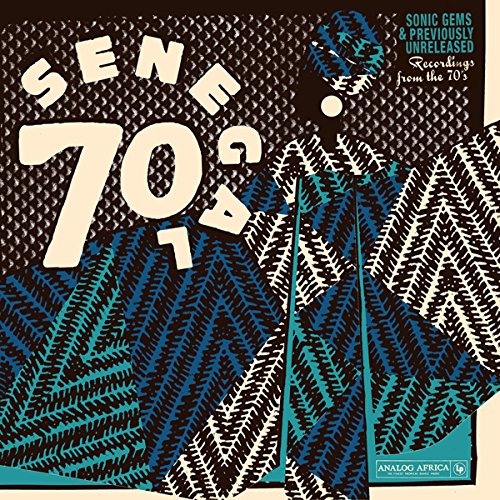
For their first release of 2016, Senegal 70 Sonic Gems and Previously Unreleased Recordings From The 70s, Analog Africa return to what was the musical capital of West Africa, Senegal. It had one of the most vibrant musical scenes in West Africa. That had been the case since the sixties. However, Senegal’s proud and eclectic musical heritage can be traced back to the late forties.
That was when American and Cuban sailors came bearing musical gifts. The American sailors brought with them jazz from New Orleans. Cuban sailors brought Son Montuno and Patchanga music. All this music was embraced in the major Senegalese cities, and quickly found an audience within the local music scene.
Soon, Caribbean music was providing the soundtrack to many clubs in Senegal. Before long, the locals had embraced this vibrant, exotic sound. The next stop was to combine Son Montuno and Patchanga with their own music.
Soon, Caribbean music was being combined with West African and Latin music. The result was a unique and unlike musical fusion, where the music of three continents combined. This new unique sound was quickly embraced by local musicians and producers.
Records were recorded, and the top bands became hot property. Club owners wanted the best bands to play at their clubs. This included Ibra Kassé, who also owned the Miami nightclub in Dakar. His club would at the heart of this new scene as it exploded into life.
Across Senegal, bands were being formed and ballroom parties were being thrown. However, the country’s capital Dakar, was where the best musicians gravitated. That was just as well.
In Dakar, there were hardly enough local musicians to fulfil the demand. So musicians were coming from much further afield. This included Amara Touré, a percussionist and singer from Guinea-Conakry.
Amara Touré was discovered by Ibra Kassé, owner of Dakar’s Miami nightclbub. He he was accompanying Dexter Johnson on tour. That was where Ibra Kassé first heard Amara Touré he realised the young percussionist and singer had potential, and was destined for greater things. So Ibra Kassé asked Amara Touré of he wanted to become part of a new band he was putting together in Dakar. It didn’t take Amara Touré long to agree. What he didn’t realise, was that this new band would change Senegalese music forever.
That band was Le Star Band de Dakar. It would become one of the most important bands in the history of modern Senegalese music. They played an important part to Senegal’s musical soundtrack during the sixties and seventies. Especially with Amara Touré at the helm. One of the twelve tracks on Senegal 70 Sonic Gems and Previously Unreleased Recordings From The 70s, El Carretero, features the potent partnership of Amara Touré et Le Star Band de Dakar. By then, Senegal’s had one of the most vibrant musical scenes in West Africa.
That had been the case since the sixties. Bands were fusing everything from Afro-beat, blues, funk, jazz, Mbalax, R&B, soul, Son Montuno from Cuba and the inimitable Mandigue guitar sound. This potent fusion provided the soundtrack to many a night out in towns and cities across Senegal. However, none of the twelve tracks on Senegal 70 Sonic Gems and Previously Unreleased Recordings From The 70s which will be released on vinyl by Analog Africa on 11th March 2016, were part of the soundtrack.
The twelve tracks on Senegal 70 Sonic Gems and Previously Unreleased Recordings From The 70s have lain unreleased for forty years. However, the story behind the compilation started six years ago in 2009.
That’s when Adamantios Kafetzis made the journey from Senegal to Greece in search of a new tape recorder. The former owner of the famous Sangomar club in Thiés, had a pile of reel-to-reel tapes he wanted to digitise. To do that, he needed a new tape recorder. So he made the journey to Greece, to find the much needed tape recorder.
Having eventually found a new tape recorder Adamantios Kafetzis was ready to return home. He was eager to return home, so he could begin to digitise his collection of tapes. This was going to take time.
Back home in Thiés, Adamantios Kafetzis had four decades worth of reel-to-reel tapes. They had been recorded at the Sangomar club by sound engineer Moussa Diallo. Luckily, Adamantios Kafetzis was a patient man. His patience was rewarded when he discovered 300 songs that had never been heard before. Adamantios Kafetzis had struck gold, and five of these songs eventually, made their way onto Senegal 70 Sonic Gems and Previously Unreleased Recordings From The 70s.
Compiling Senegal 70 Sonic Gems and Previously Unreleased Recordings From The 70s took Samy Ben Redjeb four years. During that period, he worked with Teranga Beat, who currently, are the leading Senegalese record label. Aided and abetted by the Teranga Beat, Samy Ben Redjeb set about compiling a compilation that will transport the listener to Senegal during the seventies. The twelve tracks give the listener a flavour of the hot, heady nights in towns and cities across Senegal. This they can do, without leaving their home. Instead, all they need to do, is press play, on Senegal 70 Sonic Gems and Previously Unreleased Recordings From The 70s, and instantly, they’re transported to Senegal in the seventies.
The listener is privileged to hear songs from Le Sahel, Orchestre Laye Thiam, Number One de Dakar, Orchestra Baobab and Dieuf Dieul de Thies and Xalam1. These bands and orchestras combined a mixture of traditional and modern instruments. From Senegal’s musical past, came the traditional percussive sound of the Sabra, Tama and Bougarabou. They were combined with a myriad of organs, keyboards and often, guitars. The result was a musical hybrid, which crossed not just generations, but centuries. Here was music that gave a nod to the past, including Senegalese folklore, the present, and given the experimental sound of some of the songs, the future. It was no wonder that this music was embraced by Senegalese youth. In one fell swoop, Cuban music was dethroned as the favoured sound amongst the Senegalese youth, who were being exposed to a much more eclectic selection of music.
It wasn’t just local artists who were finding an audience amongst the Senegalese youth. American, European and music from other African countries was finding its way into Senegal. Often, sailors brought the latest releases back from their travels. However, the Senegalese President was a man with a “vision.”
Unlike many of his counterparts across Africa, the Senegalese President’s plan neither involved five year plans nor nuclear weapons. Instead, President Senghor wanted Senegal to attract the biggest names in music. He was successful, to a degree. James Brown and The Jackson Five arrived from America. However, whether they can be regarded as the creme de la creme of international or even American music is debatable? After this, Cuban singer Celia Cruz and Haitian star Tabou Combo made their way to Senegal. For President Senghor this was good publicity for his regime. So was the arrival of some of the biggest names in African music.
From the Congo,Tabu Ley Rochereau arrived. So did Manu Dibango from Cameroon and Bembeya Jazz from Guinée. These stars of African music not only played in Senegalese cities, but were happy to play alongside local musicians. All these visiting musicians were influencing the local musicians, including some of the bands that featured on Senegal 70 Sonic Gems and Previously Unreleased Recordings From The 70s.
The best way to describe Senegal 70 Sonic Gems and Previously Unreleased Recordings From The 70s, which is Analog Africa’s nineteenth release, is eclectic. The compilation has been four years in the waiting. That has been four years in the waiting. This becomes apparent on the opening track.
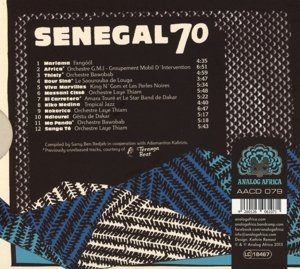
That’s Fangool’s Mariama, which opens Senegal 70 Sonic Gems and Previously Unreleased Recordings From The 70s. It’s something of a slow-burner, which has an almost spiritual quality to the vocal. Horns and a Hammond organ lock into a groove with percussion, as the track takes on a mesmeric sound. Then when the vocal returns, it’s truly heartfelt and hauntingly beautiful. One wonders how Samy Ben Redjeb will surpass Mariama?
Orchestre G.M.I then burst into life on Africa, a track that’s
funky, jazz-tinged and dance—floor friendly. It’s also joyous and up-lifting. Resistance is impossible. Best just submit to Africa’s charms. After this, a series of curveballs are thrown.
The first is Orchestre Bawobab’s Thiely, which has a much more understated, traditional sound. It’s just the vocal, percussion, guitar and dusty, braying horns. They respond to the soulful, impassioned vocal’s call. Thiely is proof that sometimes, less is more.
Le Sourouba De Louga haven’t just been influenced by Senegalese music, but funk and occasionally rock. That quickly becomes on Bour Sine, as they sing call and response, against an almost funky, hypnotic arrangement. Later, it features a blistering, rocky guitar solo, that tries to conjure up the spirit of Hendrix, as the music of two continents collide.
Further proof that less is more comes on King N´gom Viva Marvillas. The vocals dominate the arrangement, with percussion and guitars playing a supporting role on a track that more than hints at Senegal’s musical past.
That’s the case with Orchestre Laye Thiam, as they burst into life Massani Cicé. However, they add a healthy pinch of funk to this fusion of Afr0beat and jazz. It unfolds in mesmeric waves, that wash over the listener. Horns and a Hammond organ play starring roles on what’s another of the highlights of Senegal 70 Sonic Gems and Previously Unreleased Recordings From The 70s.
That’s the case with Orchestre Laye Thiam, as they burst into life Massani Cicé. However, they add a healthy pinch of funk to the jazz-tinged arrangement. It unfolds in mesmeric waves, that wash over the listener. Horns and a Hammond organ play starring roles on what’s another of the highlights of Senegal 70 Sonic Gems and Previously Unreleased Recordings From The 70s.
Two of the stars of Senegalese music feature on El Carretero, Amara Touré et Le Star Band de Dakar. Together, they play their part in a melodic, sultry and heart wrenching ballad. It’s a real find. So is the bustling, joyous sound of Le Tropical Jazz on the uptempo Kiko Medina. Following hard on its heels is Orchestre Laye Thiam’s Kokoriko. This is another irresistible call to dance. Propelled along by a myriad of percussive and a vocal that’s obviously been influenced by James Brown, it’s a potent mix that’s guaranteed to put a smile on even the saddest face. By then, Samy Ben Redjeb keeps pulling musical rabbits out of his hat? However, can he keep this up?
He can. Gestu De Dakar’s Ndiourel’s is up-lifting, joyful, good-time music. Propelled along my percussion, guitars and one of the best vocals on Senegal 70 Sonic Gems and Previously Unreleased Recordings From The 70s, Ndiourel is another hidden gem that
Samy Ben Redjeb has discovered.
Ma Penda is the second contribution from Orchestre Bawobab. Their previous contribution Thiely, had a quite traditional sound. To some extent, so does Ma Penda. Other times, the music that was arriving from America and Europe affects the arrangement. This includes an effects laden guitar. It’s provides a contrast to the heartfelt, emotive vocal, shrill horns and futuristic keyboards. They exit stage left when the galloping arrangement is stripped bare. Percussion takes centre-stage, before a stunning, virtuoso scorching guitar solo steals the show. Breathtaking describes a performance singlehandedly transforms the song.
Orchestre Laye Thiam’s Sanga Té closes Senegal 70 Sonic Gems and Previously Unreleased Recordings From The 70s. It has an understated, wistful sound that meanders along. Genres melt into one. Listen carefully, and elements of blues, Cuban, jazz, funk and soul can be heard on what’s a quite beautiful, melancholy song, proving a perfect way to close Senegal 70 Sonic Gems and Previously Unreleased Recordings From The 70s.
So that’s the story of Analog Africa’s nineteenth release, proving a perfect way to close Senegal 70 Sonic Gems and Previously Unreleased Recordings From The 70s. It’s taken four years to compile, but this has been four years well spent. The twelve hidden gems on Senegal 70 Sonic Gems and Previously Unreleased Recordings From The 70s have lain unreleased for far too long.
That not always the case when an albums comes bearing the words unreleased recordings. Often, they’re tracks that were never meant to be released. They’re either demos or outtakes, and the artists would be embarrassed that they’re seeing the light of day. However, that’s definitely not the case with Senegal 70 Sonic Gems and Previously Unreleased Recordings From The 70s.
Analog Africa have struck Senegalese gold, on these twelve glittering gems. They deserve to be heard by a much wider audience, and show how eclectic, Senegal’s vibrant music scene was during the seventies. It had been influenced by everything from Afro-beat, blues, funk, jazz, Mbalax, R&B, soul, Son Montuno from Cuba and the inimitable Mandigue guitar sound. That’s apparent on Senegal 70 Sonic Gems and Previously Unreleased Recordings From The 70s, which will be released on vinyl by Analog Africa on 11th March 2016.
Whether you choose the vinyl or CD version of Senegal 70 Sonic Gems and Previously Unreleased Recordings From The 70s is a matter of personal preference. Some genres are better suited to vinyl. While the vinyl sounds good, the CD seems to have an edge quality wise. It allows you to hear some hidden gems from some of the biggest names in Senegalese music.
There was no bigger names than Amara Touré et Le Star Band de Dakar. They became one of the most important bands in the history of modern Senegalese music. Especially with Amara Touré at the helm. Like everything, this relationship came to an end, and Amara Touré went off to form his own band. By then, Amara Touré et Le Star Band de Dakar had played an important part of the soundtrack to Senegal during the seventies. That’s the case with many of the bands on Senegal 70 Sonic Gems and Previously Unreleased Recordings From The 70s, which was the most exciting and vibrant period during Senegal’s modern musical history.
SENEGAL 70-SONIC GEMS AND PREVIOUSLY UNRELEASED GEMS FROM THE 70S VINYL EDITION.
WHERE THE GIRLS ARE VOLUME 9.
WHERE THE GIRLS ARE VOLUME 9.
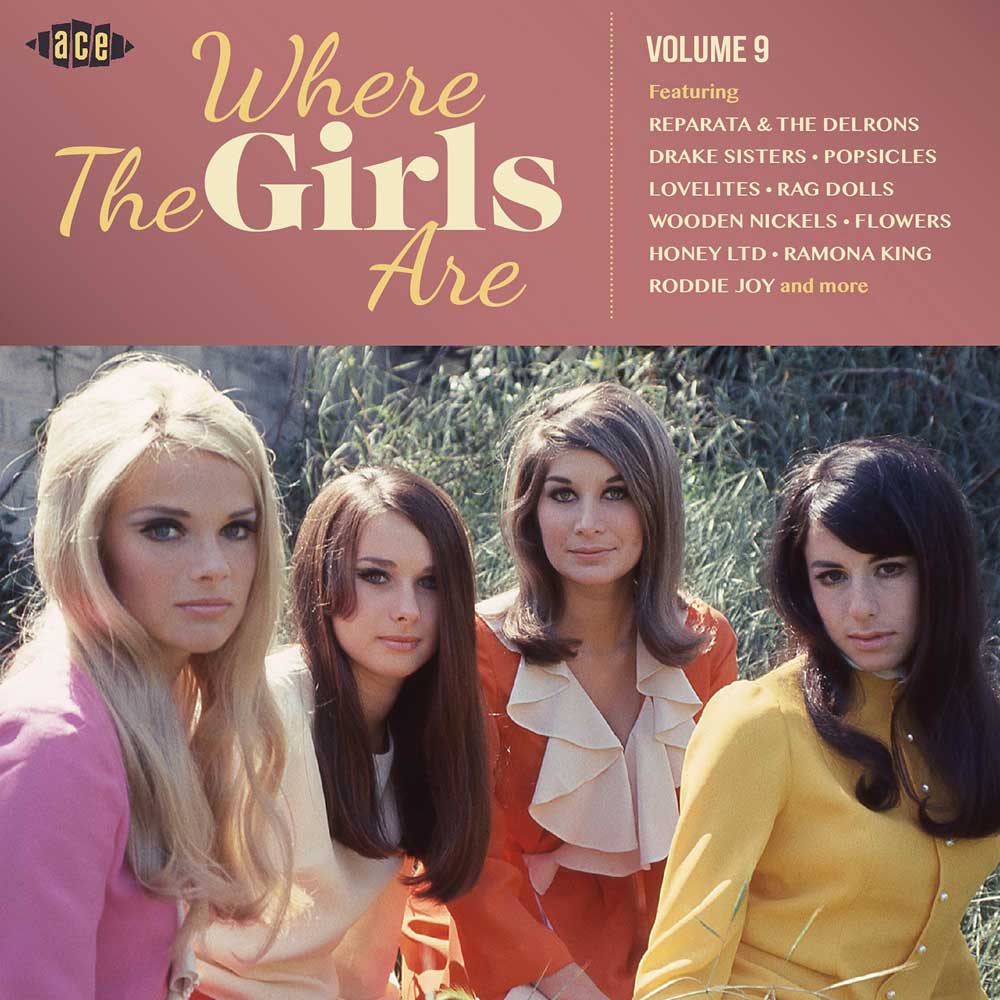
Recently, Ace Records released a new volume in one of their longest running, and most successful compilation series. The compilation series in question, is Where The Girls Are. Its story began back on 27th May 1997.
That’s when Ace Records released Where The Girls Are. Back then, hope was in the air in Britain. Labour’s Tony Blair had been elected Prime Minister, and the promise was Things Are Going To Get Better. They never did. Meanwhile, in America Bill Clinton was coming to the end of his first term in office. Nineteen years later, and another Clinton is vying for the title of President of the United States Of America.
This, time it’s the former First Lady, Hilary Clinton. She hopes to become the 45th President of the United States Of America. As Hilary Clinton campaign criss-crossed America, Ace Records prepared to release the latest instalment in the Where The Girls Are series, Where The Girls Are Volume 9, which features twenty-five tracks from the decade Hilary Clinton grew up in, the sixties.
Who knows, maybe when Hilary Clinton was growing up she listened to The Rag Dolls, Diane Christian, Popsicles, Evie Sands, Lovelites, The Francettes, The Penny Sisters and The Blossoms With Billy Strange. If she did, then Where The Girls Are Volume 9 are going to bring the memories come flooding back. That’ll be the case for all the baby boomers growing up in the sixties
Opening Where The Girls Are Volume 9 is The Sweet Three’s That’s The Way It Is (When A Girl’s In Love). It was the B-Side to Big Lovers Come In Small Packages. Just like That’s The Way It Is (When A Girl’s In Love), it was penned and produced by Leon Huff. The single was released on Decca in August 1966. Sadly, the single failed commercially, and by 1967 The Sweet Thing’s recording career was over. They returned to their career as backing vocalists in Philly studios. However, things might have been very different if the sweet, soulful The Sweet Three’s That’s The Way It Is (When A Girl’s In Love) had been released as a single.
The only group to feature twice on Where The Girls Are Volume 9 are The Popsicles. They feature none other than songwriter Ellie Greenwich, who started her career as a session singer. By 1965, she had formed a successful songwriting with Jeff Barry. However, Ellie Greenwich hadn’t given up dreams of making it as a singer. She was member of The Popsicles who released a trio of singles between 1964 and 1965.
This included I Don’t Want To Be Your Baby Anymore, which featured Baby I Miss You. Both tracks were penned by Mark Barkan and Ben Raleigh, who was Ellie Greenwich’s husband. The single was released in American on Crescendo, and in Britain on Vocallion. On both sides Ellie Greenwich takes charge of the lead vocal, and shows that she was not just a songwriter, but a talented singer.
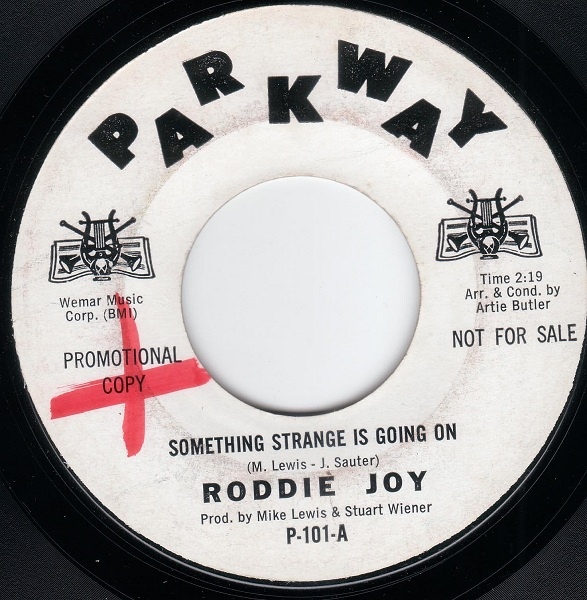
Roddie Joy released Something Strange Is Going On as a single fifty years ago, in 1966. It was produced by Mike Lewis and Stuart Wiener, and released on the Philly based Parkway label. Sadly, nothing came of the single, and by 1967 Roddie Joy’s solo career was over. However, Something Strange Is Going On, with its mixture of mystery and romance, is one of Roddie Joy’s best singles.
Irresistible is the perfect way to describe Evie Sands’ 1968 single Billy Sunshine. It was produced by Al Gorgoni and Chip Taylor, and released on Philly based Cameo Parkway. Sadly, despite being a joyous slice of musical sunshine, Billy Sunshine passed record buyers by.
There’s a trio of unreleased tracks on Where The Girls Are Volume 9. This includes BlueZette’s With A Kiss. It was penned by Brill Building songwriters George Fischoff and Tony Powers. The date of the recording is unknown, and so is the identity of BlueZette. Whoever they were, they released a wistful, dreamy sounding track that epitomises the girl group sound.
Late in 2015, Ace Records released The Murmaids compilation A Few Of The Things We Love. It documented the career of The Murmaids. Their one and only hit was Popsicles and Icicles. That was only part of the story as A Few Of The Things We Love shows. The Murmaids recorded a string of singles and two album. On their sophomore album Resurface!, was Don’t Forget, a delicious hook-laden slice of pop.
1967 was an exciting time for sisters Patricia and Rosena Hamilton. They had founded The Lovelites with their friend Barbara Peterman and were about to release their debut single I Found Me A Lover. However, when the single was released on the Bandera label, it failed commercially. Tucked away on the flip side You Better Stop. It was penned by Ernie Hines with Patricia and Rosena Hamilton. You Better Stop It was catchy, memorable and soulful, and if released as a single, might have given The Lovelites a hit single?
When Reparata and The Delrons had enjoyed a hit single with Whenever A Teenager Cries in 1965, they were full-time student. Despite this they managed to squeeze in a tour with Dick Clark’s Caravan Of Stars. When Reparata and The Delrons returned, they recorded their sophomore single, Tommy. It was released on World Artists Records in 1965. On the B-Side was a cover of the folk song, Mama Don’t Allow. It’s given a makeover by Reparata and The Delrons who transformed the song, so that it could become the soundtrack to the latest dance craze.
Ramona King released around a dozen singles during her career. Ballyhoo was just the third single of her nascent career. Just like the first two, it was produced by Lee Hazelwood and released on his Eden Records. During the dance-floor friendly Ballyhoo, Ramona King names several dance crazes on this poppy slice of soul.
The Penny Sisters only ever released the one single, I Need A Boy in 1971. It was released on B.T. Puppy Records, which was founded by The Tokens in the mid-sixties. A year later after the release I Need A Boy, The Penny Sisters released their only album Wishing You Well. It’s now something of a rarity.
Phil Spector was obviously a big influence on The Drake Sisters’ What Did You Do Last Night. It was The Drake Sisters’ only single. What Did You Do Last Night was recorded by arranger and producer Stan Ross. For the recording, he used Phase—O-Phonic Sound at Goldstar Studios, in Los Angeles. What sounds like phasing and filters are heavily deployed. They give the Spector-esque sound. Despite the Phil Spector influence and a trademark girl group sound, the single failed commercially when it was released in 1964. Sadly, that was the only single the talented Drake Sisters released.
Straight away, The Flowers sound not unlike The Ronettes. Meanwhile, On A Rainy Night is reminiscent of The Shirelles’ 1960 cover of Gerry Goffin and Carole King’s Will You Still Love Me Tomorrow. The only difference is the tempo is slower. It’s more like the tempo of Carole King’s version on her classic album tapestry, which was released in 1971. By then, The Flowers had wilted.
The Flowers released On A Rainy Night in 1965. It was penned by Herb Ryals and Jerry Willis; while Bill Haney produced the single. On A Rainy Night was then released on Bill Haney’s Chant label. However, the tender, wistful and beautiful vocals, the single wasn’t a commercial success. Nowadays, the single is really rare, and the only way most people will hear it is on a compilation like Where The Girls Are Volume 9.
Closing Where The Girls Are Volume 9 is another of the three unreleased tracks, The Blossoms With Billy Strange’s Moon Walking. It was recorded around 1966. Darlene Love, Jean King and Fanita James add harmonies atop the Billy Strange’s surf inspired guitar. Moon Walking is a real hidden gem, which shows another side to The Blossoms and Mr. Guitar Billy Strange. It’s quite different to many of the other tracks on Where The Girls Are Volume 9.
Essentially, Where The Girls Are Volume 9 is an eclectic compilation. It features an captivating selection of quality music. The listener never knows what compiler Mick Patrick has in-store. He’s dug deep into the vaults of numerous labels, including Ballyhoo, Bandera, Bell Records, Cameo, Decca, Flip, Mint, Parkway and Vault. There’s surprises aplenty for the listener.
There everything from pop to soul and the classic sixties girl group sound. There’s even a couple of would-be dance crazes on Where The Girls Are Volume 9. It’s a welcome addition to one Ace Records’ longest running and critically acclaimed series, Where The Girls Are.
The latest instalment in the series, Where The Girls Are Volume 9 takes listeners back to the sixties. For baby boomers everywhere, Where The Girls Are Volume 9 will be a welcome reminder of the sixties they grew up. This includes Hilary Clinton as she criss-crosses America in search for the keys to the Oval Office.
WHERE THE GIRLS ARE VOLUME 9.




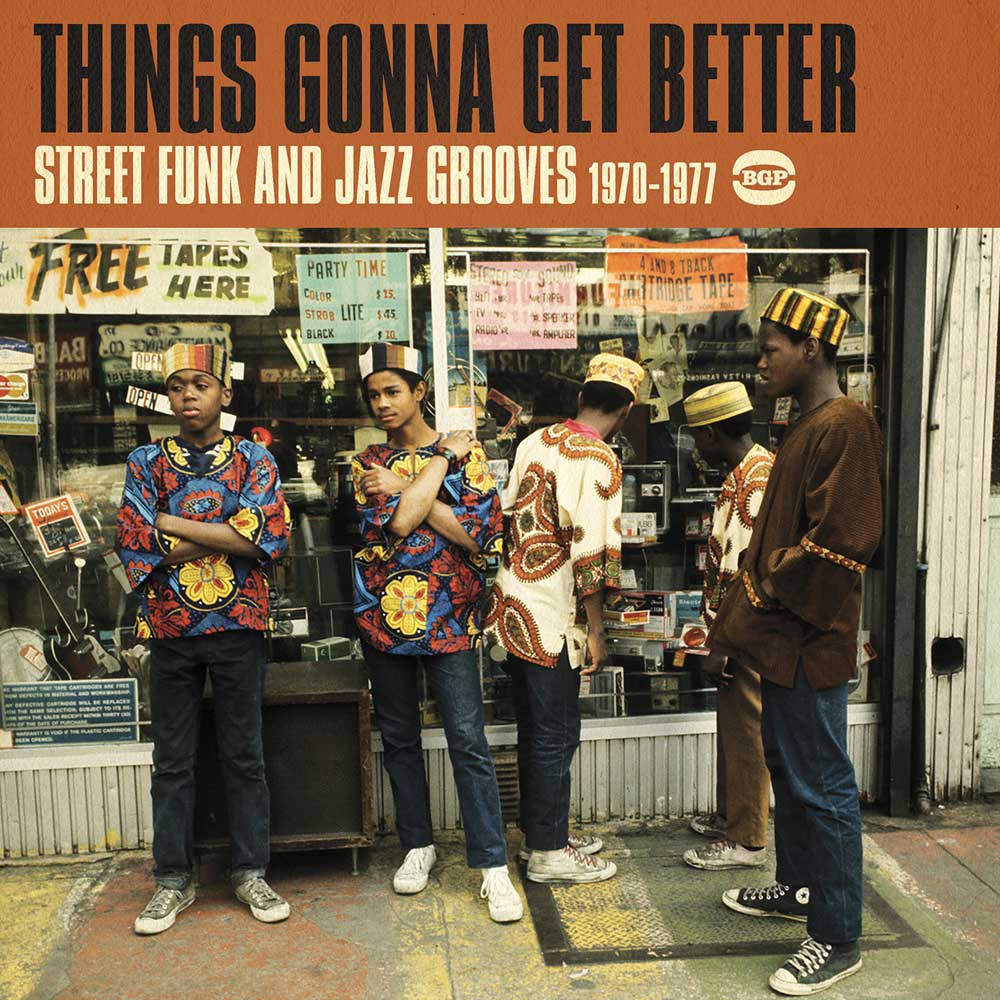
THINGS GONNA GET BETTER: STREET FUNK AND JAZZ GROOVES 1970-1977.
THINGS GONNA GET BETTER: STREET FUNK AND JAZZ GROOVES 1970-1977.
As the seventies dawned, America was still at war in Vietnam, and the struggle for racial equality continued. Things were improving, but still, when it came to racal equality, America’s report card said “could do better.” There was hope though.
The civil rights movement hoped that as the seventies progressed, the racial barriers that had blighted America’s recent past would become be consigned to the dustbin of history. After all, wasn’t America a more prosperous country than it had once been?
Following World War II, America went on to enjoy a prolonged period of economic expansion. The automobile, aviation and electronics industries thrived, while new industries prospered. Between 1940 and 1960, America’s Gross Domestic Product increased by 150%. Meanwhile, housing became more affordable, and more Americans qualified for mortgages. Many of these homebuyers, were the baby boomers. Their spending power helped fuel the economy during what economists called the Long Boom. By 1969, America was certainly a much more prosperous country.
Unemployment had fallen between from 6.7% in 1961 to 3.9%. With unemployment less than 5%, American economists referred to America as enjoying full employment. America it seemed, was a much better place as the seventies dawned.
Or so it seemed. There was still poverty and unemployment in both urban and rural America. Homelessness was still a problem, and every night, people slept on city streets. Many of those slewing rough were veterans who had returned home from Vietnam. They had suffered horrendous injuries; but in their hour of need, their country failed them. Across America, thousands of veterans were struggling financially, living in abject poverty. This included a disproportionate amount of young black men.
Civil rights activists had analysed the figures of those that died or were injured in Vietnam. They discovered that, a a disproportionate amount of those killed or injured were young black men. The injured were suffering from either of physical and psychological problems. Some of those let down by their country, turned to drugs to blot out the pain. Soon they had a drug problem. This would be one of the many problems that blighted America during the seventies.
Little did anyone know that the seventies would become one of the most turbulent decades in American history. America was consumed by Watergate, which lead to the impeachment and resignation of President Nixon on August 8th 1974. That day President Richard Nixon was transformed into Tricky Dicky. His presidency hadn’t been the most successful.
Just a year earlier, on March 29th 1973, America ended its military involvement in Vietnam. It was the war that America couldn’t win. The war in Vietnam cost America dearly. 58,282 American soldiers were killed in action, and another 303,644 Americans were wounded. Many of those that came home when the war ended, came home to a turbulent America.
No longer was America the prosperous country of the sixties. As the veterans returned home in 1973, they discovered an Oil Embargo. It had a serious affect on the American economy. Especially when the price of oil quickly quadrupled. To make matters worse, unemployment had risen and was 4.9%. It would continue to rise, reaching 8% later in the seventies. By 1979, there was another oil crisis, and stagflation had hit the American economy. Inflation at just over 10%, poverty rife and a feeling of discontent could be felt across America. Workers felt they had no option but to strike. Elsewhere, the ghettos in American cities became a breeding ground for disaffected youth. America wasn’t the same country as it had been during the hope filled sixties. However, one thing didn’t change, the quality of music.
Especially the music many black Americans were listening to. They enjoyed a soundtrack of groundbreaking music, which often had a social conscience. Everyone from Funkadelic and Vernon Garrett to Richard “Groove” Holmes, Idris Muhammad and Lonnie Liston Smith, to Don Julian and The Larks, Harold Alexander and Pretty Purdie and The Playboys provided the backdrop to black America between 1970 and 1977. These artist feature on the BGP Records’ compilation Things Gonna Get Better: Street Funk and Jazz Grooves 1970-1977, which is the latest instalment in Things Gonna Get Better series.
Things Gonna Get Better: Street Funk and Jazz Grooves 1970-1977 opens with Funkadelic’s A Joyful Process. It’s a track from Funkadelic’s 1972 album America Eats Its Young which was released on Westbound Records on May 22nd 1972. The album reached 123 on the US Billboard 200, and number twenty-two on the US R&B charts. When Loose Booty was released as a single, A Joyful Process was on the B-Side. Those that flipped over to the flip side, discovered a delicious and joyous slice of P-Funk produced by George Clinton. It veers between has a loose, lysergic and cinematic, to a much tougher funky sound. The addition of lush strings is a masterstroke, to a track that would grace any Blaxploitation soundtrack.
By 1975, Vernon Garrett had renewed his acquaintance with the Bihari brothers. They had worked with Vernon Garrett before, so when they launched their new label Big Town, gave him a call. Vernon Garrett went on to release one album and four singles for Big Town. The album was Going To My Place Baby as a single. Hidden away on the flip side was a cover of Billy Ray Charles’ One Man’s Loss. It was produced by Billy McCloud and features a truly impassioned, soul-baring vocal from Vernon Garett. It’s enough to make you seek out the original album. However, an original copy will set you back $329 or £253.
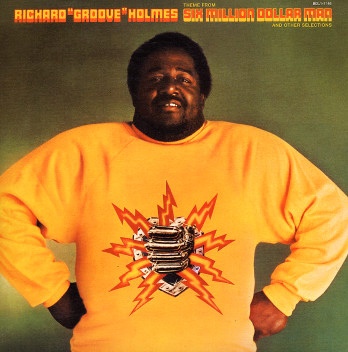
Richard “Groove” Holmes was one of the many Hammond organists who were popular during the sixties and seventies. However, Richard “Groove” Holmes stood out from the crowd, and was one of the most successful B3 players. He had enjoyed a top ten US R&B hit with Misty in 1966, when he was signed to Prestige. After leaving Prestige, Richard “Groove” Holmes had short spells with other labels, and in 1975 signed to Bob Thiele’s Flying Dutchman Productions.
That’s where Richard “Groove” Holmes released Six Million Dollar Man. Without doubt, one of the highlights of the album was 125th St And 7th Ave. It features a nimble fingered funky performance from one of the masters of the big burner.
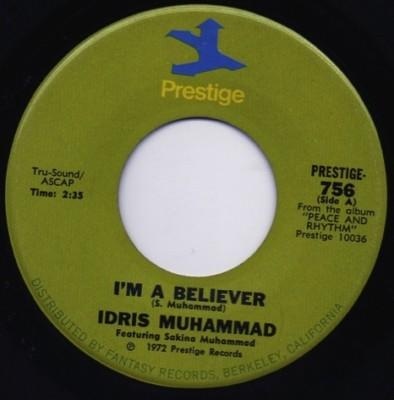
In 1971, thirty-two year old drummer Idris Muhammad was signed to Prestige. Later that year, he released his debut album Peace and Rhythm. The following year, 1972, I’m A Believer was released as a single. It was easily, one of the highlight of Peace and Rhythm. No wonder. I’m A Believer featured the vocal prowess of Sakina Muhammad. She delivers the lyrics as if she means every word, while the all-star band combine jazz and funk seamlessly. So good is this song, it’ll make a believer out of you.
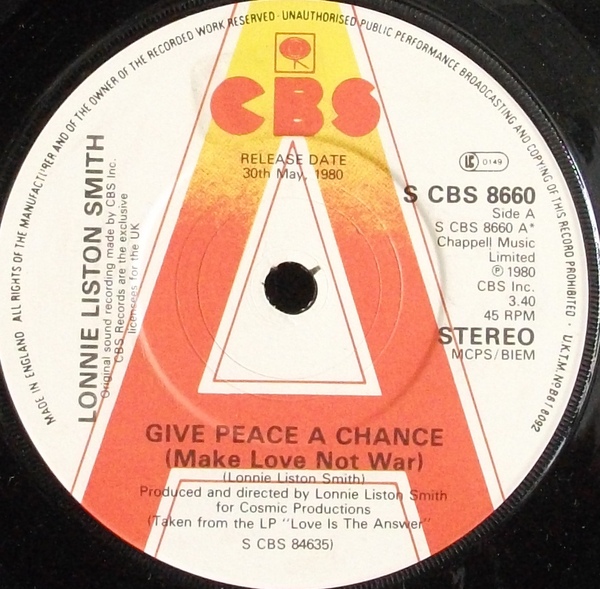
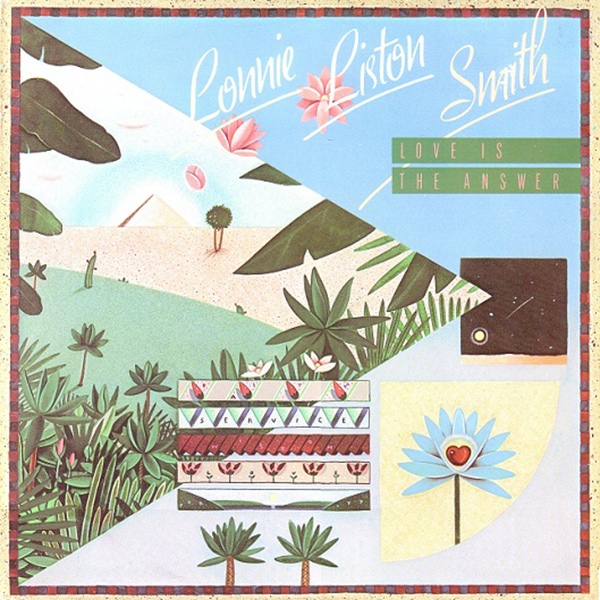
Lonnie Liston Smith has to be one of the most underrated jazz musicians of the seventies and eighties. He released a quartet of albums for Columbia between 1978 and 1980. They’re must haves for anyone interested in jazz-funk. Especially 1980s Love Is The Answer, which features Give Peace A Chance (Make Love Not War). It was easily the highlight of Love Is The Answer. So it was no surprise when this the hook-laden anthem was released as a single in 1980. It’s lyrics are just as relevant today, as they were in 1980.
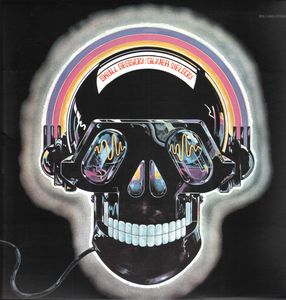
The same year Richard “Groove” Holmes released Six Million Dollar Man on Flying Dutchman Productions, Oliver Nelson released Skull Sessions. By then, Oliver Nelson had established a reputation for providing the themes to television and movies. However, that was only part of the story.
In 1975, the alto saxophonist released the album Skull Session. It’s one real hidden gem of an album, which features a stunningly grotesque album cover. One of the highlights of Skull Session was the title-track, where Oliver Nelson combines traditional instruments and new technology. Synth are utilised on Skull Session which takes on a futuristic, cinematic sound. It showcases the multitalented Missouri born musician. Sadly, it was the final album released during Oliver Nelson’s lifetime. He died of heart attack later in 1975, aged just forty-three.
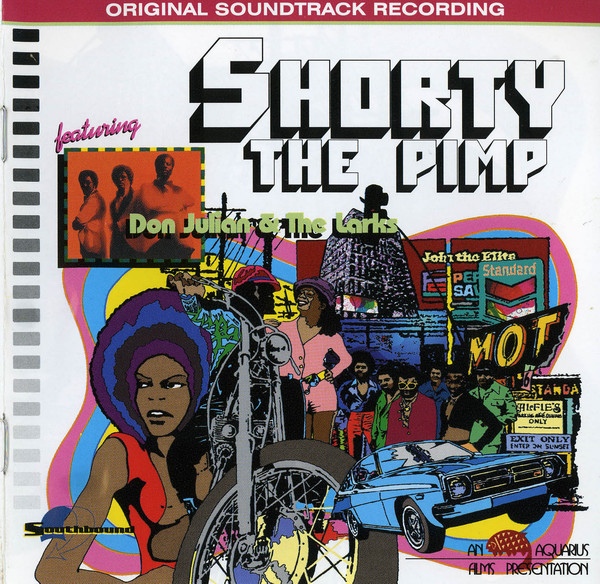
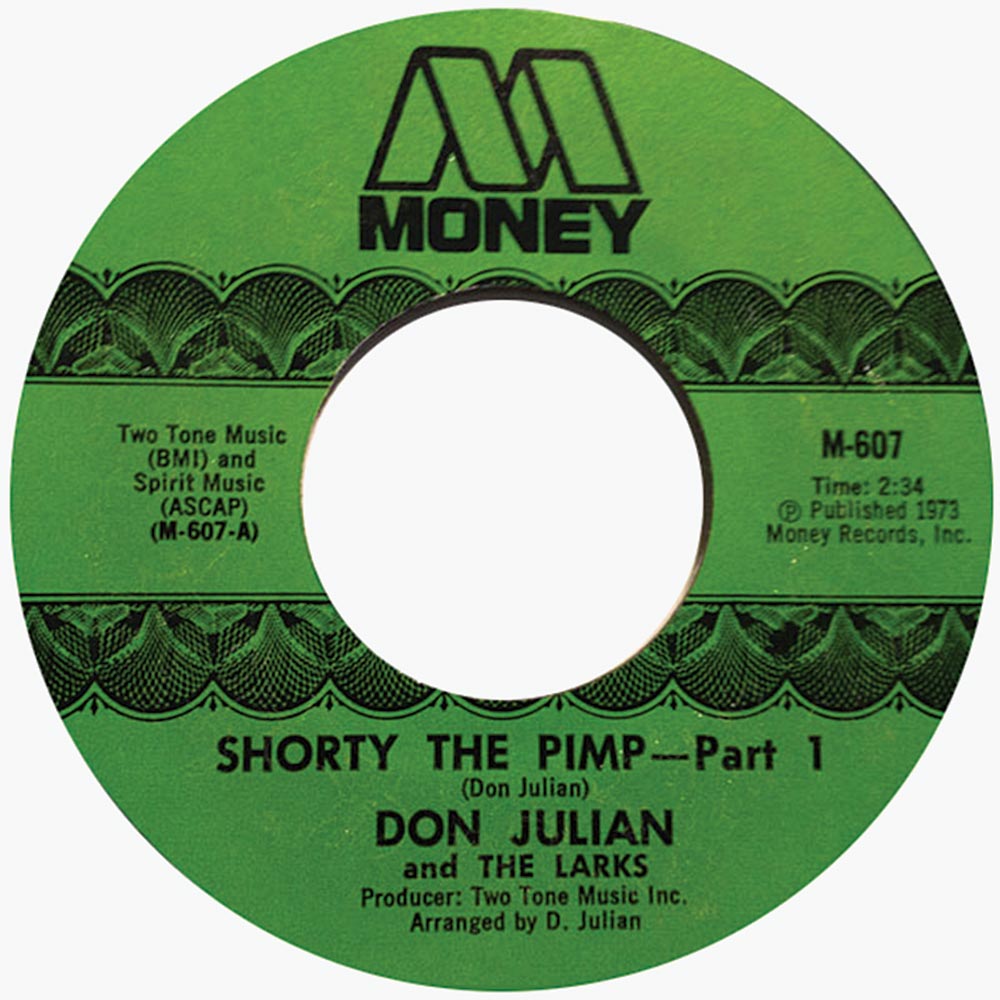
During the seventies, Blaxploitation movies became a phenomenon. The quality of films varied from genre classics like Shaft, Super Fly and Black Caesar. Other Blaxploitation movies were parodic, while some were decidedly average. However, many a Blaxploitation’s movies saving grace was an uber funky soundtrack. That’s no surprise. Some of the great and good of soul, jazz and funk recorded Blaxploitation soundtrack, including Curtis Mayfield, Isaac Hayes, Melvin Van Peebles, James Brown and Sun Ra. However, a name many people may not of heard about is Don Julian and The Larks.
They provided the soundtrack to the 1973 Blaxploitation movie Shorty The Pimp. It was later rereleased by Ace Records in 1998. The title track then featured on Don Julian and The Larks’ 1974 album Super Slick. Shorty The Pimp is one of the standout tracks from Super Slick. Soulful and funky, it epitomises the sort of track that featured on an early seventies Blaxploitation movie.
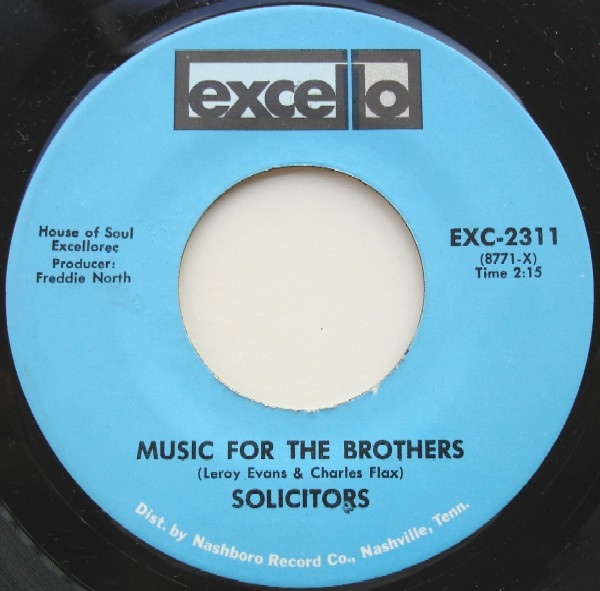
The Solicitors are one of hundreds and thousands of groups who released just a few singles, before calling time on their career. One of the singles The Solicitors released was Music For The Brothers, which was released on Excello in 1970. Music For The Brothers is a blistering slice of instrumental funk. It’s musical gold, that DJs and sample hungry producers will treasure.
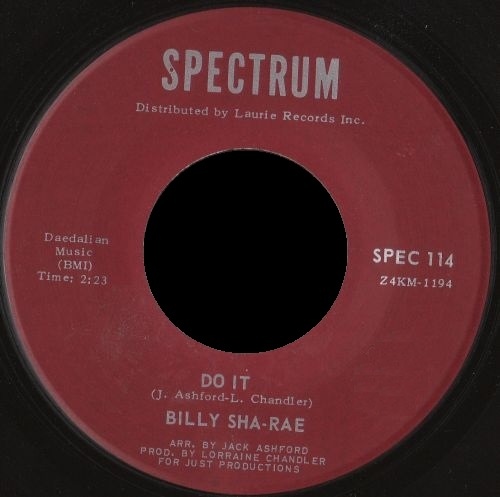
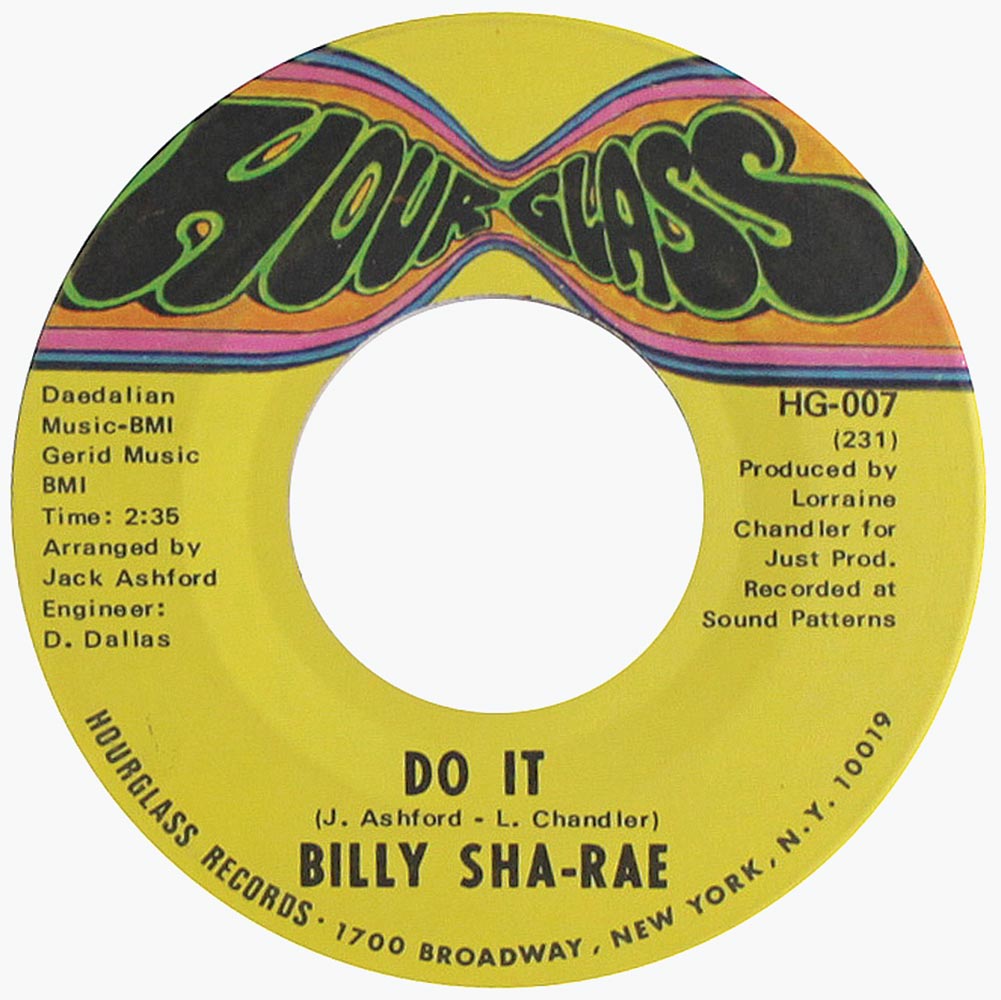
Soulful and funky describes Billy Sha-Rae’s Do It. It sounds as if it belongs on Blaxploitation soundtrack. Do It was released by Billy Sha-Rae in 1970, on Spectrum Records. Later, Billy Sha-Rae seems to pay homage to James Brown as he vamps his way through the uber funky Do It.
Some people will remember Harold Alexander from his time with Pucho and His Latin Soul Brothers. However, by 1971 Harold Alexander was about to embark upon a solo career. He signed to Bob Thiele’s Flying Dutchman Productions. Harold Alexander released his debut album Sunshine Man in 1971. It featured a musical masterclass from Harold Alexander on The Rope, one of Sunshine Man highlights.
Back in 1971, Gil-Scott Heron was signed to Flying Dutchman Productions. That was when Gil-Scott Heron, Brian Jackson and vocalist Victor Brown formed a group Black and Blues. They recorded just a trio of tracks, including Chains. Sadly, none of the songs were released, until 2014. That’s when they featured on BGP Records extended reissue of Gil-Scott Heron’s Pieces Of A Man. Two years later, and Chains makes a welcome appearance on the BGP Records compilation Things Gonna Get Better: Street Funk and Jazz Grooves 1970-1977. Chains is a truly beautiful, heart-wrenching track which features an impassioned deliver from Victor Brown.
My final choice from Things Gonna Get Better: Street Funk and Jazz Grooves 1970-1977 is Pretty Purdie and The Playboys’ Whatcha See Is Whatcha You Get. This was a track from Stand By Me (Whatcha See Is Whatcha Get), the only album that Pretty Purdie and The Playboys ever released. It was released in 1971, on Flying Dutchman Productions, and features a stunning solo from New York session drummer, Bernard “Pretty” Purdie on this wistful sounding, timeless track.
Although funk and jazz compilations are plentiful, Things Gonna Get Better: Street Funk and Jazz Grooves 1970-1977 stands head and shoulders above the competition. They’re mere also-rans compared to Things Gonna Get Better: Street Funk and Jazz Grooves 1970-1977. It’s the second, and best instalment in BGP Records’ Things Gonna Get Better series.
BGP Records, an imprint of Ace Records have been releasing quality funk and jazz compilations for over twenty years. So much so, the BGP Records’ logo is synonymous with quality. So is Dean Rudland’s name.
Dean Rudland is a veteran of countless critically acclaimed compilations. The latest is Gonna Get Better: Street Funk and Jazz Grooves 1970-1977. It’s the latest in a long line of quality compilations bearing Dean Rudland’s name. Not for the first time, Dean Rudland has compiled what can only be described as a must have compilation for fans of jazz and funk. That’s no surprise.
Gonna Get Better: Street Funk and Jazz Grooves 1970-1977 oozes quality, and will be a welcome addition to any record collection. The twenty tracks are a mixture of singles, B-Sides, album tracks and Dave Hamilton’s unreleased track What’s The Matter With The World. That’s what many Americans must have been thinking during what was one of the most turbulent decades in modern day American history.
Between 1970 and 1977, America seemed to stumble from crisis crisis. By 1973, America had left Vietnam, having realised this was one war they couldn’t win. As the veterans returned home, the Oil Embargo began. Soon, the price of oil quadrupled. Less than a year later, President Nixon was impeached and resigned in 1974. When he left office, unemployed was rising, while poverty and inequality were still rife. It was a far cry from the hope of the sixties. However, one thing hadn’t changed, and that was the quality of music being produced in the land of the free. This includes the twenty tracks on Gonna Get Better: Street Funk and Jazz Grooves 1970-1977, which is must-have compilation for anyone who likes funk, jazz and soul.
THINGS GONNA GET BETTER: STREET FUNK AND JAZZ GROOVES 1970-1977.


WHITE LIGHT-PARABLE.
WHITE LIGHT-PARABLE.
Glasgow in the early seventies was a very different place to it is today. While it wasn’t the same place as portrayed in No Mean City, Glasgow was still a tough place to grow up. The second was still part of Scotland’s industrial heartland, where people worked hard and played hard. However, Glasgow was a city divided.
Dividing Glasgow in two were religions. You were either a Billy or Tim, and people weren’t shy about asking which side of sectarian the divide your loyalties lay. Usually, the question was “what school did you go tae son?” More often, it was which team do you support? There were two answers, Rangers and Celtic. If you gave the right answer, it was handshakes and drinks all round. However, if you gave the wrong answer, either get ready to run, and run fast, or risk finding yourself on the wrong end of a Glasgow kiss. Ironically, in a city where religion played seemed to play such an important part in daily life, Glasgow in the early seventies wasn’t really religious city.
Most Glaswegians were never near a church or chapel. That’s apart from hatches, matches and despatches. Instead, they worshipped at weekends at Ibrox and Parkhead, where Rangers and Celtic played. Then on Sunday morning when the church bells rang, many Glaswegians were sleeping off the hangover of the previous night. If the truth be told, many Glaswegians were neither God fearing, nor church going people. The members of White Light realised this, so when they played in Glasgow, they played in pubs and clubs. There was a reason for this.
Glasgow based White Light were no ordinary rock band. To the casual observer their fusion of rock, heavy metal, psychedelia and blues sounded no different to many other bands who played in Glasgow. However, when the audience listened more closely to White Light’s lyrics on songs like Prodigal and Pretty Big God, the picture became much more clear. White Light were a Christian rock band, who rather than play in churches, played in pub and clubs the length of Scotland. That had been the case since the early seventies.
That’s when White Light were born in Glasgow. In the early days, band’s lineup was fluid. Members came and go, but eventually, White Light arrived at a settled lineup. This included the rhythm section of drummer Alex Smith and bassist Dave McRoberts. They were joined by keyboardist David Murdoch and lead guitarist Doug McRoberts. With a settled lineup, White Light began touring not just Glasgow and the West of Scotland, but further afield.
Eventually, White Light were criss-crossing Scotland, playing it seemed everywhere from Dumfries to Inverness. Each night, White Light unleashes an impressive wall of sound, as they combined rock, heavy metal, psychedelia and blues. White Light’s inspirations were John Mayall and The Bluesbreakers, The Who, Deep Purple and Black Sabbath, and it showed. Soon, they were attracting larger audiences. It seemed that the Christian rockers were a popular draw.
Partly, that was because people were able to listen to White Light’s music on two levels. They could enjoy a hard rocking group, as they enjoyed a night out with friends. Other people listened to White Light’s message, and this lead to them discovering their faith. That was what White Light were hoping. However, by 1972, success had come White Light’s way.
Each year, Melody Maker magazine arranged a competition, which rock groups from across Britain could enter. White Light decided to enter, and made it to the final.
At the national final, other groups played a either their own material or cover versions. However, when White Light took to the stage, they were determined to things their way. They showcased their mini rock opera Prodigal, which was based around the parable of the Prodigal Son. While White Light didn’t win the Melody Maker competition, they were buoyed by getting so far in what was a prestigious nationwide competition.
Following the success at the Melody Maker competition, White Light returned to touring Scotland. They continued to tour until 1974, when White Light decided to record their debut album. This was a logical progression for them. They were an experienced band, with a loyal following.
Having made the decision to record their debut album, White Light decided the album should be a mixture of original material and cover versions. David Murdoch penned Mighty Big God. Then he cowrote Prodigal and Now I Realise with Doug McRobert. The cover versions included John Mayall’s Where Did I Belong; George Harrison’s Awaiting On You All and Edwin Hawkins’ In My Father’s House. These six songs became Parable, which was recorded in the nearby town of Paisley.
To record Parable, White Light decided to brave the journey along the M8 to bandit country, Paisley. That’s where they met Peter May, who nowadays, is better known as an author and purveyor of critically acclaimed Tartan Noir. However, back in 1974, Peter May it seems, had ambitions to become a record producer. He eagerly awaited the arrival of White Light, and was ready to produce their debut album, which became Parable.
Once White Light had unpacked their impressive array of equipment, White Light waited for Peter May to press record. Then, the rhythm section of drummer Alex Smith and bassist Dave McRoberts joined forces with keyboardist David Murdoch and lead guitarist Doug McRoberts. Soon, White Light were in full flow, recording six songs. This included their mini rock opera Prodigal. There was, it seemed, something for everyone on Parable. Blues, heavy metal, psychedelia and rock could be heard on Parable. Surely it would appeal to agnostics, atheists, Christians and rockers?
With Parable recorded, White Light listened to the playback of the album. Quickly, White Light realised that Parable was not unlike one their live performances. Somehow, Peter May had captured the same raw energy and power of one of White Light’s live performances. Surely, this would appeal to White Light’s fans?
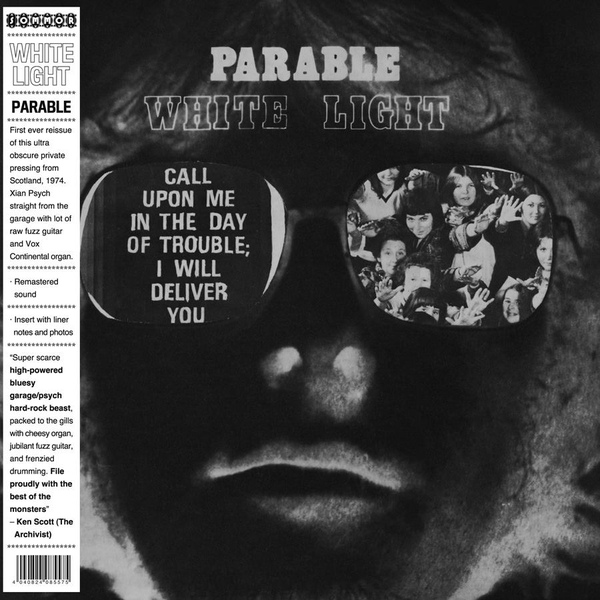
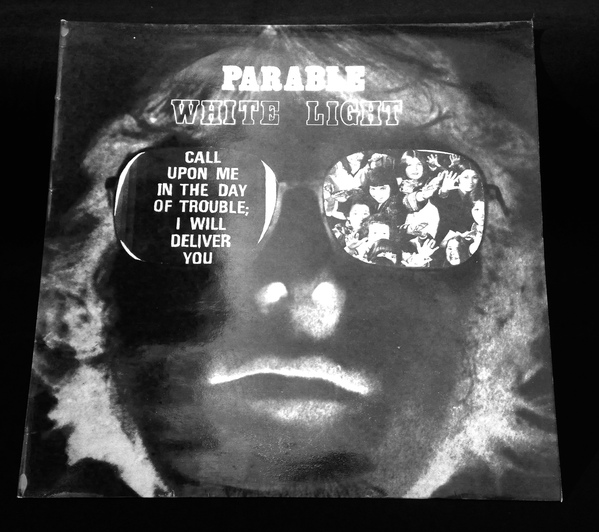
When Parable was released in 1974, it was on the Scotia label. The album sported a lysergic cover designed by producer Peter May. It was quite unlike what most people would’ve expected a Christian rock album to look like. If ever there was a wolf in sheep’s clothing, it was Parable. Its cover should’ve drawn attention to the album. Sadly, that wasn’t the case.
There were very few reviews of Parable published. Those that were published, praised White Light’s debut album. However, when Parable went on sale, the album flopped. Hardly any copies were sold, and the album flopped. This would have ramifications over forty years later.
By then, Parable was a real rarity. Copies were literally impossible to find. Anyone wanting a copy of Parable was out of luck. Then a couple of years ago, an American record collector saw a copy of Parable for sale. The only problem it was advertised at $950.
Despite this, the record collector didn’t baulk at the $950 asking price. When word eventually got back to the former members of White Light, they were almost speechless. Parable was now one of the rarest and most expensive records. That’s still the case.
Nowadays, only one copy of Parable is being offered for sale. It’s not in as a condition as one that was sold a few years ago. Despite this, the copy of Parable will set record buyers back £370, $555 or €480. Luckily, then, that recently Sommor Records reissued Parable of CD and LP. At last, anyone who wants a copy of White Light’s debut album Parable, will be able to afford one. However, what does Parable have in-store for record buyers?
Opening Parable is Prodigal, is a near nineteen minute epic, based upon the parable of the Prodigal Son. It finds White Light are at their hard rocking best. They combine elements of blues, psychedelia and rock. There’s even a brief nod towards progressive rock. Mostly, though, White Light are rocking, and rocking hard, during this dramatic, epic musical Parable. It’s the first chapter in White Light’s mini rock opera.
The second is Mighty Big God. Although machine gun guitars opens Mighty Big God, White Light, are soon rolling back the years to the fifties. Suddenly, a slice of good time rock ’n’ roll unfolds.
Originally, the John Mayall penned Where Did I Belong was a moody blues. However, the song takes on new meaning in White Light’s hands; and fits perfectly with the rest of White Light. The song takes an almost spiritual sound, as emotion and drama combine on this slow blues. It’s a tale someone at a crossroads in their life, looking for answers and rediscovering their faith.
George Harrison wrote Awaiting On You All for his 1971 album All Things Must. Again, the song fits with the rest of Parable. It’s a akin to joyous slice of Christian rock in White Light’s hands, as they spread their message.
Now I Realise is the second song penned by David Murdoch and Doug McRobert. As the song unfolds, the songs roots are in the church. Soon, though, White Light are jamming and giving one of their best performances on Parable. There’s a nod to The Who, especially in some of the guitars and briefly, the bass. From there, the lyrics take on a celebratory sound on what becomes another tale of rediscovering faith.
Closing Parable is a cover of Edwin Hawkins’ In My Father’s House. It’s best described as a slice of uplifting piano lead gospel, with the merest hint of psychedelia added for good measure. After just six tracks lasting just thirty-nine minutes, White Light take their leave.
Forty-two years after White Light’s one and only album Parable, was released on Scotia, at last the Glasgow based band’s album is now available for everyone to enjoy. Parable was recently released by Sommor Records. This has resulted in an upsurge in interest in the album. Radio, press and television interest in White Light has been considerable. However, they’re very different to the band they once were.
No longer are they the young men that featured on the cover to White Light. They turned their back on music, and enjoyed careers as a commercial valuer, mortgage adviser, computer programmer and in Doug McRoberts’ case, a minister. The four members of White Light also have children and grandchildren of their own. They’re bemused that their father and grandfathers were once in a band. That’s the case though.
What’s more, White Light were a popular band, who played the length and breadth of Scotland. They took their message into pubs and clubs. In many places, this would’ve been like entering the lion’s den. After all, it wasn’t just Glasgow that was a tough place. So were other parts of industrial Scotland, where people weren’t shy about voicing their opinion. So to take to the stage and deliver a mini rock opera like Parable took guts. However, White Light survived to tell the tale forty-two years later.
Maybe Parable will find a more appreciative audience this time around; and White Light will enjoy the critical acclaim nor commercial success that passed them by in 1974?
WHITE LIGHT-PARABLE.


NICKLAS SORENSEN-SOLO.
NICKLAS SORENSEN-SOLO.
Back in late 2010, Copenhagen based instrumental rock trio Papir, released their eponymous debut album. Papir was released to critical acclaim, and in the process, launched the career of one of the rising stars of the Nordic music scene.
A year later, in 2011, Papir returned with their sophomore album Stundum. It was the first album Papir released on El Paraiso Records. Stundum featured Papir’s unique fusion of Krautrock, psychedelia and space rock. Again, this met with the approval of critics. They forecast a bright future for Papir, who it seemed, were beginning to make inroads into the vibrant Nordic music scene.
Over the next couple of years, Papir continued to tour. There was no shortcuts to success. Papir had to do what bands had been doing for over fifty years, play live. They embarked upon a gruelling schedule, touring the length and breath of Denmark, and sometimes further afield. From concert halls to festivals, Papir continued to hone and refined their sound. This all made Papir a much better band by the time they came to release their third album.
Papir returned in 2013 with not one, but two albums. This included their third album, II. Then later in 2013, Papir released their collaboration with fellow space rockers Electric Moon, The Papermoon Sessions. The album was released on Dave Schmidt’s Sulatron-Records, and helped introduce Papir’s music to a new audience.
Buoyed by the success of III and The Papermoon Sessions, Papir prepared to release their fourth studio album. In true Led Zeppelin style, Papir’s fourth album was simply entitled IIII. It was released on 11th February 2014, and hailed as the finest album of Papir’s four year recording career. The Copenhagen based trio had come a long way in just four years.
2015 saw Papir release another two albums. They released their second collaboration with Electric Moon. The second in the Papir Meets Electric Moon series was a live album, The Papermoon Sessions Live At Roadburn 2014. Then later in 2015, Papir released their first solo live album, Live At Roadburn. It was a tantalising taste of Papir live as they combined Krautrock, psychedelia and space rock. They were fast becoming one of the success stories of the Danish music scene. Despite that, one of the members of Papir was longing to try something different musically.
The musician in question was Papir’s guitarist Nicklas Sørensen. For some time, he had been toying with recording a solo album. This would allow him to experiment musically. So Nicklas Sørensen and a few friends entered the studio, and recorded six new songs. These six songs became Solo, Nicklas Sørensen’s debut solo album. Solo was recently released by El Paraiso Records, and showcases another side to Nicklas Sørensen.
Having made the decision to record his debut solo album, and told the other members of Papir his plan, Nicklas Sørensen began work on what became Solo.
For Solo, Nicklas Sørensen wrote six instrumentals. They were recorded at TABF Studio. This is El Paraiso Records’ newly built studio. It’s where a few friends joined guitarist and synth player Nicklas Sørensen. This included Papir’s rhythm section of drummer and percussionist Christoffer Brøchmann Christensenand and bassist Christian Becher Clausen. The final member of piece of the jigsaw was Causa Sui’s Jonas Munk. He added additional synths and electronics; and recorded two tracks. Peter Sloth recorded the other four tracks. However, it was Nicklas Sørensen and Jonas Munk that produced Solo, which was ready for release in late February 2016.
When Nicklas Sørensen released Solo, those that were familiar with Papir’s music, wondered if his debut solo album was going to have a similar hard rocking style? They were in for a surprise as Solo unfolded.
Solo 1 opens Nicklas Sørensen’s Solo. Straight away, Nicklas’ love of Krautrock shines through as the rhythm section lock into a groove. The bass is to the fore, as the rhythm section provide a hypnotic backdrop for Nicklas’ crystalline, shimmering guitar. Already, there’s a nod to guitarist Michael Rother of Kraftwerk, Neu! and Harmonia. That’s no surprise. Harmonia are one of the groups that have influenced Papir. Soon though, it’s all change, and drums pound creating a mesmeric backdrop. To that, Nicklas adds his glistening guitar and later, washes of synths. It’s a potent and heady brew. Later, the arrangement is stripped bare, and just the rhythm section remain. Then it’s time for Nicklas to return on this joyous, hypnotic and euphoric homage to classic Krautrock.
As Solo 2 begins, ominous, dramatic drums play. Meanwhile, Nicklas slowly and deliberately strums his guitar, producing shimmering, glistening washes of beautiful music. It’s joined by subtle washes of synths brief bursts of cymbals. They crash, rinse and resonate. By then, there’s a hypnotic, almost primal sound to the drums. By comparison, Nicklas’ guitar is akin to washes of ethereal beauty. They wash over the listener, as even the mesmeric drums proves comforting. Later, effects are briefly added to the guitar, transforming the sound. This adds an element of drama. Soon, normal service is resumed, and the ethereal beauty of this neo-ambient soundscape returns, before reaching a crescendo.
A shaker is joined by guitars on Solo 3. Just like previous tracks, Nicklas’ chiming guitar has a crystalline sound. It glistens and shimmers, leaving trails of aural sunshine. Soon, the bass and a mesmeric synth are added. This is Nicklas’ cue to create a hypnotic, chiming sound. It’s the latest layer of sound that’s added to a multi-layered arrangement. As chirping guitar is panned left, synths strings are penned right. Later, the track takes on a dreamy, mesmeric sound. By then, Solo 3’s cinematic sound sounds as if it would be the perfect soundtrack to a journey from Munich to Berlin aboard the Deutsche Bahn.
As the bass is plucked deliberately, and resonates on Solo 4. As it lingers, Nicklas’ shimmering guitar adds a melodic, but wistful hue. Panning is used to shift sounds across the arrangement. They squeak, while washes of synths trail into the distance. By now, Solo 4 is akin to an ambient soundscape. It washes beautifully over the listener. Especially when Nicklas slowly and almost deliberately plays his guitar. Soon, layer upon layer of shimmering, glistening and chiming guitars combine. They’re joined by keyboards and the bass. Together, they create what’s without the most beautiful, melodic and captivating soundscapes on Solo.
The whole of Papir’s rhythm section rejoin Nicklas on Solo 5. As the rhythm section lock into the tightest of grooves, Nicklas takes centre-stage. Soon, a rockier sounding track is beginning to unfold. Gone is the blissful sound of the previous track. A very different sound is unfolding. Soon, Nicklas’ guitar and keyboards add a brief dreamy sound. Mostly, though, Nicklas and his friends enjoy the opportunity to unleash a glorious slice of rocky music. It brings back memories of the heyday of the power trio. That’s until the track becomes dreamy, melodic, lysergic and hypnotic. Nicklas and his fiends are showcasing their versatility on what’s best described as a genre-melting track. Elements of rock, psychedelia, space rock, avant-garde and Berlin School combine seamlessly with Krautrock on Solo 5.
Closing Solo, is Solo 6, a twelve minute epic. Dubby drums are joined by a quivering guitar while the bass buzzes and hums. This combination adds a moody, broody backdrop. That’s until washes of synths and shimmering guitar are added. Suddenly, moody and melodic meet head-on. It’s an interesting and mesmeric combination, and one that works well. The listener is drawn in, and soon, are captivated by this melodic, mesmeric soundscape. Later, percussion and keyboards are added. Their addition works well as the Solo 6 decides to share its secrets. Washes of shimmering, glistening guitars veer between ethereal, melodic to briefly dramatic. Especially when Nicklas Sørensen and friends decide to improvise. A wah-wah guitar, synths and percussion combine; as the drums continue to create the moody, mesmeric backdrop on this ambitious sonic adventure.That describes Solo perfectly.
Solo which was recently released by El Paraiso Records, is a truly ambitious debut album from sonic adventurer Nicklas Sørensen. He set out to experiment, and does so on Solo. However, on other tracks, Nicklas Sørensen reminds the listener’s Papir’s trademark sound. For the listener, they enjoy the best of both worlds.
Especially, newcomers to Papir’s music. They hear a tantalising taste of the Copenhagen based trio. Then on other tracks, Nicklas Sørensen experiments. With a little help from his friends, he takes the listener on a genre-melting journey. This journey lasts just six tracks and forty-eight minutes. However, during this journey, Nicklas Sørensen combines musical genres and influences.
This includes the three genres that have influenced Papir, Krautrock, psychedelia and space rock. These influences can be heard on Solo. However, the Krautrock has been a big influence on Nicklas Sørensen. Especially Can, Neu!, Cluster and Harmonia. However, one particular Krautrock legend seems to have been a big influence on Nicklas Sørensen…Michael Rother.
The former Kraftwerk, Neu! and Harmonia guitarist seems to have been a reference point for Nicklas Sørensen on Solo. Especially Harmonia’s two classic albums Musik Von Harmonia and Deluxe; and Michael Rother’s first two solo albums, Flammende Herzen and Sterntaler. These four albums have influenced Nicklas Sørensen stylistically and sonically. This is apparent throughout Solo. Sometimes, Nicklas Sørensen sounds uncannily like Michael Rother, in this genre-melting journey.
Apart from Krautrock, psychedelia and space rock, Nicklas Sørensen combines elements of ambient, avant-garde, dub and rock as genres and influences melt into one. The result is Solo, an album that’s guaranteed to toy with the listener’s emotions.
Solo veers between blissful, euphoric and joyous, to moody and broody, through to lysergic and dramatic. For much of Solo, the music is hypnotic and mesmeric. That’s down to Krautrock influence. Other times, the music is cinematic. Then it’s up to the listener to provide the script to Nicklas Sørensen’s soundtrack. Often, though, the Solos are beautiful and dreamy, as trails of glistening, shimmering music captivate, and makes the world seem a much better place. Sadly, all too soon, Solo is over. All that’s left are the memories of Nicklas Sørensen’s genre-melting, sonic adventure, Solo. One can’t help but reach over and press play again, and enjoy Solo’s subtleties, nuances and beauty.
NICKLAS SORENSEN-SOLO.

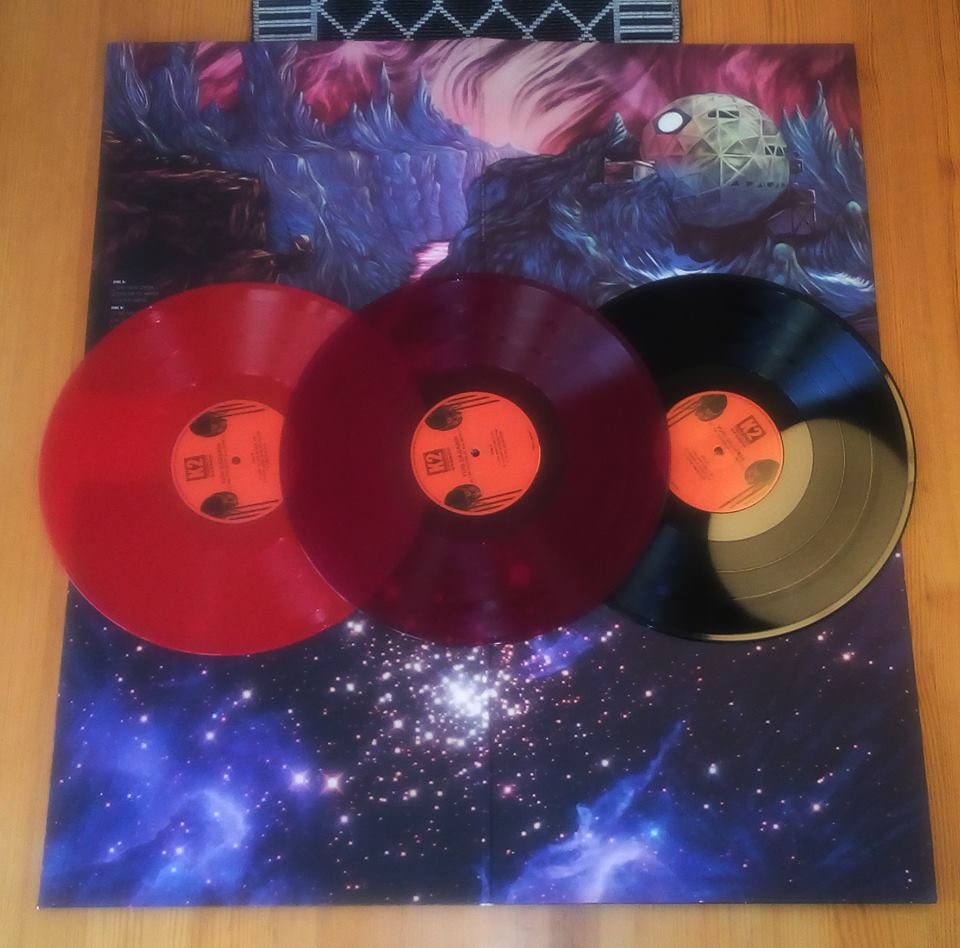
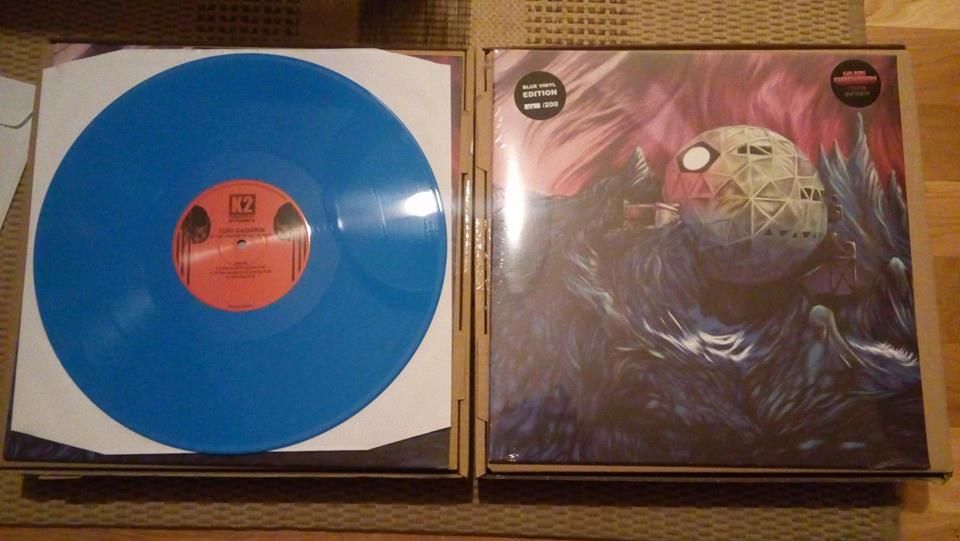
YURI GAGARIN-AT THE CENTER OF ALL INFINITY.
YURI GAGARIN-AT THE CENTER OF ALL INFINITY.
Since the dawn of the internet age, the way music has been made, released and consumed has been totally transformed. For unsigned bands this has been a game-changer. Yuri Gagarin are proof of this.
Swedish space rockers Yuri Gagarin were formed in Gothenburg, in early 2012. For the first few months of their career, the five members of Yuri Gagarin concentrated on honing their sound. Then when they were ready, the members of Yuri Gagarin decided to record a few songs.
No longer did recording a few songs necessitate booking a rerecording studio, which charged by the hour. Instead, Yuri Gagarin could record some songs in their own practice room using affordable equipment. It was changed days.
Previously, most bands who entered a recording studio were signed to a record label. There was a reason for this. Hiring a recording studio was prohibitively expensive. As a result, most unsigned bands were unable to afford to hire a recording studio. However, the computer-age changed this.
As computers become more affordable, so did digital audio workstations. Programs like Pro Tools, Cubase and later Ableton Live were within the budget of an unsigned band wanting to record either demos or even, an album.
All an unsigned band needed, was a computer running a DAW, an audio interface and some microphones. Then they had their own home studio. Initially, this would allow a band to record demos, which they could shop to record labels. Other bands recorded an album using their own label, and released it on their own label. This would soon become more commonplace.
Over the next few years, there was a revolution within the music. A catalyst for change was the internet. It had transformed how people made, released and consumed by mid-2012. Now it was possible for a band record a song in the morning; upload it onto the internet in the afternoon; and by the evening, people around the world could be listening to this. That’s what Yuri Gagarin did.
Having loaded their newly recorded songs onto Soundcloud, Yuri Gagarin couldn’t believe what happened next. Within a few weeks, Yuri Gagarin were named Soundcloud’s band of the week. That was quite an achievement, considering bands worldwide were submitting music. So it was no surprise that a couple of months later, Yuri Gagarin got the chance to record and release a new album.
The offer came from a new label based in Gothenburg. Yuri Gagarin jumped at opportunity, and soon, found themselves in the studio. They recorded four tracks which became their eponymous debut album. Yuri Gagarin was then released in October 2013 on Levande Begravd Records.
When Yuri Gagarin was released, the album was well received by critics and sold well. Despite this, Yuri Gagarin weren’t happy with the sound quality. So in 2014 a decision was made to remix the album.
Linus Andersson the head sound engineer at Liseberg, was drafted in to do the remix. He improved the sound of Yuri Gagarin, which was released as on vinyl by Sulatron-Records. Quickly, the album sold out, and since then, Yuri Gagarin’s star has been in ascendancy.
Word was spreading about Swedish space rockers Yuri Gagarin. Their unique brand of heavy, instrumental space rock was compared to Hawkwind. This was a huge complement for the Gothenburg based band who began recording their sophomore album during 2015.
So the five members of Yuri Gagarin headed to Elementstudio, in Gothenburg. That’s where Yuri Gagarin prepared to record the six new tracks they had written. They would be recorded by Linus Andersson who would guide the band through the recording of their debut album.
With Linus Andersson take charge of the recording sessions, the members of Yuri Gagarin got to work. Yuri Gagarin’s all important rhythm section were key to the band’s sound. Drummer Steffo, bassist Leif and rhythm guitarist Jon formed a formidable partnership. They were joined by lead guitarist Crille and Robin on synths and FX. Other instruments were brought into the studio, including a bouzouki, grand piano, monotron and percussion. These instruments were played by members of Yuri Gagarin and recordist Linus Andersson. He also mixed and mastered what Yuri Gagarin’s sophomore album. It became At The Center Of All Infinity.
Now that The Center Of All Infinity was complete, Yuri Gagarin began working towards the release of their sophomore album. At The Center Of All Infinity was the first album that Yuri Gagarin had recorded for Dave Schmidt’s Sulatron-Records. It was the perfect label for Yuri Gagarin. Space rock was one of the label’s specialities. Yuri Gagarin had picked the perfect label to recently release At The Center Of All Infinity.
The New Order opens At The Center Of All Infinity. From the get-go, Yuri Gagarin kick loose. Machine gun guitars drive the arrangement along, while brief bursts of futuristic sounds can be heard in the distance. Soon, the rhythm section lock into a tight groove, and become one. Meanwhile the lead guitar that’s panned hard left plays a starring role. It unleashes a blistering solo. Fingers fly up and down the fretboard, while a relentless and impressive wall of sound assails the listener. Later, filters are deployed, taking the edge off the arrangement and adding the space rock sound. However, there’s more to Yuri Gagarin than space rock.
Apart from space rock, Yuri Gagarin combine elements of classic rock, heavy metal and psychedelia, before it’s all change at 5.48. The arrangement almost grinds to a halt, as feedback threatens to drench the arrangement. Somehow, the tiger is tamed, as the guitar continues to play, as Eastern influence and drones flit in and out during this epic opening track. It’s the perfect showcase for Yuri Gagarin’s considerable skills and versatility.
Cluster Of Minds features Yuri Gagarin at their heaviest. Straight away, the band play as one and a wall of sound assaults the listener’s senses. Anchoring the arrangement, are the rhythm section, as the twin guitars play starring roles. Again, Crille’s lead guitar is panned left, while the rhythm guitar is panned right. This has the effect of balancing the arrangement. Both guitarists unleash blistering, searing solo and rocky riffs. It’s as of they’re feeding off each other Meanwhile, washes of synths and effects add an dramatic “breathing” sound as space rock and heavy metal unite head on. However, it’s Crille’s lead guitar that steals the show as the track reaches a crescendo.
In The Abyss sees Yuri Gagarin pickup where they left off on Cluster Of Minds. Guitars ring out, before washes of synths and the ominous bass combine. Then the rhythm section cut loose. Drums aren’t so much played as pounded. Still the bass matches the drums every step of the way. It’s the guitars that take centre-stage. Crille’s guitar is panned left, and sometimes filters are used to transform the sound. That’s the case when Jon’s guitar is panned right. It’s almost hidden below the filters. As a result it plays a supporting role to Crille’s lead guitar, as he delivers what can only be described by a guitar masterclass. His playing seems to life the rest of the band, and they unleash a barnstorming performance.
I See No God Up Here is more like a soundscape, than a traditional song. It’s been sculpted over three minutes by Yuri Gagarin. Washes of synths play an important role, while a buzzing bass and feedback create a moody, dramatic and latterly, ethereal soundscape.
Normal service is resumed on At The Center Of All Infinity. Yuri Gagarin return to their space rock sound with what can only be described as impressive, but controlled explosion of sound. The rhythm section combine with relentless, driving guitars and washes of synths. They soar above the arrangement, before Crille steps up and unleashes another blistering, searing solo. Filters are then added, as Jon’s rhythm guitar takes centre-stage. The as washes of synths encircle the arrangement, one becomes two, and Yuri Gagarin duel guitars drive the arrangement along. Later, bursts of bubbling, futuristic sci-fi synths encircle enter, as the rest of the arrangement dissipates. All that’s left are sci-fi sounds and of course, the memories of Yuri Gagarin in full flow.
All too soon, Yuri Gagarin’s sophomore album At The Center Of All Infinity is almost over. Only Oblivion remains. It’s a nine minute epic, that’s driven along by searing guitars and the thunderous rhythm section. Trails of synths soar above the arrangement, as again, the guitars are key to the song’s success. Crille and Jon unleash machines gun guitars, and blistering solos. They’re fast, furious, flawless and melodic. Yuri Gagarin seem to have kept the best until last. Then at 8.20, the volume decreases and Yuri Gagarin disappear leaving just a trail of sci-fi sounds. The space rockers it seems, have left the building..,until the next time.
Hopefully, it won’t be another three years before Yuri Gagarin return with the followup to At The Center Of All Infinity. It was recently released on Sulatron-Records and features the coming of age Yuri Gagarin. The Gothenburg based band have matured into one of the finest exponents of instrumental space rock.
From the opening bars of The New Order, to the closing notes of Oblivion, it’s an almost flawless performance from Yuri Gagarin. They combine elements of classic rock, heavy metal and psychedelia with Yuri Gagarin’s unique brand of space rock. It’s fast, frenetic and melodic, as five hugely talented musicians showcase their considerable skills and versatility. Stealing the show are Yuri Gagarin’s guitarists, Crille and Jon. They both play starring roles. However, it’s lead guitarist Crille who gets more opportunities to shine. When he does, he grabs them with both hands, and unleashes a series of blistering, scorching, searing solos. They play an important part in the sound and success of Yuri Gagarin’s career defining album, At The Center Of All Infinity.
YURI GAGARIN-AT THE CENTER OF ALL INFINITY.

SULA BASSANA-SHIPWRECKED.
SULA BASSANA-SHIPWRECKED.
Nowadays, most musicians are content to release an album every year or two. It’s a far cry from the sixties and seventies when bands would regularly release two albums a year. That most people thought, was a thing of the past. However, it’s not. Dave Schmidt is proof of this. His three groups have released fifty-eight albums since 1998.
That’s when the Dave Schmidt story began. Back then, Dave Schmidt was a member of Zone Six. He was the bassist and keyboardist for the German psychedelic space rockers. They were about to release their eponymous debut album in 1998. Zone Six launched the band’s career, and later in 1998 they returned with Live Pebbles Volumes One. This was a taste of what was to come from Dave Schmidt.
By 20002, Zone Six had released another trio of live albums. Live Pebbles Volume Two and Triprock Live ’99 were released in 1999. Three years later, and Live At RAW Tempel was released in 2002. However, by then, Dave Schmidt had launched Sula Bassana his latest musical project.
Sula Bassana was essentially, a musical vehicle for the multi-talented Dave Schmidt. This made sense. A new musical vehicle would allow Dave Schmidt to experiment musically. However, his name didn’t feature on Sula Bassana’s 2002 debut album, Dreamer.
Instead, Sula Bassana was credited as performer, producer and recordist. It seemed that musically, Dave Schmidt had been reborn, and was going to divide his time between Sula Bassana and Zone Six.
That was the case for the next few years. By 2006, Sula Bassana and Zone Six were both prolific bands. Zone Six released nine albums, including three studio albums and six live albums. Meanwhile, Sula Bassana had released seven albums. This included four studio albums and three collaborations. Two of Sula Bassana’s studio albums had been released on a new label, Sulatron-Records.
Not content with being a member of two of the most prolific European bands, Dave Scmidt had decided to launch his own label in 2006, Sulatron-Records. This made sense. Sula Bassana had released four albums during 2006. If the albums were released on another label, they were profiting from Sula Bassana’s success. So Dave Schmidt made the decision to found Sulatron-Records.
The new label’s first release was Sula Bassana’s Endless Winter. Not long after this, Sulatron-Records released Sula Bassana and Friends’ double album Spaced Out. Having released its first two releases, Sulatron-Records began to expand its roster.
One of the first bands to release an album on Sulatron-Records were Zone Six. They released two albums on Dave Schmidt’s new label during 2007. The first was Live At Burg Herzberg Open-Air 22.07 2006. It was the nascent label’s fourth release. Later in 2007, Zone One released 10 Years Of Aural Psychedelic Journeys, Rare and Unreleased. Zone Six would return to Sulatron-Records over the next few years.
By late 209, Dave Schmidt had joined a new band, Electric Moon. He was a still running Sulatron-Records and a member of Zone Six and Sula Bassana. Both were just as prolific.
As 2009 drew to a close, Zone Six had released fourteen albums. Eleven were live albums and three were studio albums. Dave Schmidt was still busy will Sula Bassana.
Just like Zone six, Sula Bassana hadreleased fourteen albums. Seven of these albums were collaborations. On Sula Bassana’s studio albums, Sula Bassana enjoyed the opportunity to experiment and journey in different directions from Zone Six. Dave Schmidt it seemed, had the best of both worlds. Now he was about to embark upon a new musical adventure with Electric Moon.
Having formed Electric Moon in late 2009, the psychedelic-space rockers began working on their debut album. Lunatics was released in 2010. Then later in 2010, Electric Moon released Live At Epplehaus 2010 on Sulaetron-Records. This was the start of a truly prolific period for Electric Moon.
When Electric Moon released Theory Of Mind in 2015, it was the band’s nineteenth album. This included studio albums, live albums and collaborations. Most of Electric Moon’s albums had been released on Sulaetron-Records. They were one of the label’s success stories.
So were Zone Six. By 2015, Zone Six had released nineteen albums since their debut album in 1998. Zone Six’s most recent album Love Monster, was one of five albums they had released on Dave Schmidt’s Sulaetron-Records. Love Monster also one of Zone’s Six’s most successful album. It was their first studio album since 2003, and one of the best albums Zone Six had ever released. Could the same be said of Sula Bassana?
Recently, Sula Bassana released their latest studio album, Shipwrecked on Sulaetron-Records. Shipwrecked was Sula Bassana’s twentieth album, and first studio album since Dark Days in 2012.
For Shipwrecked, Dave Schmidt has locked himself in the studio and has written, recorded, mixed and produced six new tracks. These tracks are described as electronic Krautrock. That’s despite mostly vintage instruments being used on Shipwrecked.
Before recording of Shipwrecked got underway Dave Schmidt gathered together the array of instruments he’s collected over the years. They were a mixture of traditional and electronic instruments. Synths, a sequencer, organs and drum machines sit side-by-side with a melotron, bass and guitar. There’s even a toy-Mandoline on Shipwrecked, the twentieth album of Sula Bassana’s career.
Moonbase Alpha Alpha opens Shipwrecked. A myriad of futuristic, sci-fi sounds are joined by what sounds like snippets of dialogue from an Apollo space mission. The words “the eagle has landed” signals the arrangement to unfold. Drums courtesy of a vintage drum machine crack; while synths pulsate. Panning is used extensively, shifting the the arrangement from side to side. This adds an element of drama to this pulsating slice of electronic Krautrock. Meanwhile, understated, deliberate keyboards sit low in the mix. They’re surrounded by layers on instruments, as the drums crack and the arrangement builds. By then, Dave Schmidt seems to be paying homage to Cluster, Kraftwerk, Michael Hoenig and even Rodion G.A.’s Misiunea Spațială Delta on Moonbase Alpha Alpha. By them a dramatic and cinematic soundscape that would be the perfect soundtrack to a new sci-fi short has evolved.
Understated and mesmeric, straight away, there’s an Eastern influence as the arrangement to Shushie Express unfolds. That’s down to the hypnotic, vocoded drone. It sits centre-stage, alongside the drums. They epitomise Krautrock, with the Apache or Dinger beat. Meanwhile, while wistful, almost eerie synth strings play slowly. They’re the polar opposite of the drums and drone. Synths fatten the sound, as the arrangement skips along.
Futuristic, sci-fi sounds add to the hypnotic, almost robotic nature of the track. Elements of Berlin School, Krautrock, avant-garde, electronica and world music combine seamlessly. The result is a hypnotic, melancholy and melodic fourteen minute epic, which references Can, Cluster, Kraftwerk and Neu!
A slow, deliberate and buzzing synth sets the scene on No Time: No Eternity. As the synth meanders deliberately along, drums crack and resonate. By then, the darkness has descended. Moody and broody describes the arrangement. So does mesmeric, lysergic and cinematic. Still, the arrangement continues to plod along at funeral pace. Despite the tempo, drama is omnipresent. That’s the case as slowly, and gradually, the arrangement changes. Instruments are added, including the buzzing synth and synths strings. They add a wistful sound to the dramatic, pensive and moody soundscape.
The introduction to Planeta Bur has an eighties sound, as drums and a bass synth combine in the introuduction. Soon, Dave Schmidt is deploying his array of instruments. Traditional instruments and synths are used to sculpt the soundscape. However, nothing is as it seems. Dave Schmidt deploys a myriad of effects. They transform the original signal, transforming it into something entirely different. Synths play an important part as a droning, churning multi-layered arrangement unfolds. Sometimes, there’s a robotic sound to parts of the arrangement. Other times there’s a nod to experimental music, Berlin School, eighties electronica and avant-garde. Washes of synths and drums combine with synth strings. By the words hypnotic and later dramatic spring to mind, as Sula Bassana continues to captivate in this latest musical adventure.
Just a mellotron plays slowly and thoughtfully on Shipwrecked. Space is left in the arrangement. Even when synths are added. This allows the listener to provide pictures to Sula Bassana’s melancholy, heart-wrenching soundtrack. This is down to the addition of synth strings which are the perfect counterpoint to the maudlin mellotron. Together, they create a quite beautiful, cinematic and sometimes, dramatic track.
No Way closes Shipwrecked. A guitar plays, feeding back. However, Dave Schmidt manages to tame the tiger. By then, instruments and effects are added. Synths and an organ combine with the guitar. As it feedbacks, synths bubbles and an organ plays. Its reference point is progressive rock. When this is combined, the result is another sci-fi inspired soundscape. This bookends Shipwrecked perfectly.
Shipwrecked is the fifty-eighth album that Dave Schmidt has released since 1998. That was when his career began with Zone Six. By 2002, Dave Schmidt was recording as Sula Bassana. It was the musical vehicle for his solo projects. However, Sula Bassana had to fit around Zone Six. So sometimes, Dave Schmidt had to put Sula Bassana.
Indeed, for three years between 2003 and 2006, Sula Bassana never released an album. Then they released a quartet of albums in 2006. Two of these albums were released on Sulatron-Records, the label Dave Schmidt founded in 2006. It would become home for Sula Bassana and sometimes, Zone Six and Electric Moon.
Formed in late 2009, Electric Moon was the third band that Dave Schmidt would join. It was by far, the most prolific of the triumvirate of bands. They’ve released nineteen albums between 2010 and 2015. However, Sula Bassana have gone one better.
Recently, Sula Bassana released their twentieth album since 2002, Shipwrecked. It was released on Dave Schmidt’s Sulatron-Records. Shipwrecked is best described as an album of electronic Krautrock, albeit with a few detours.
On Shipwrecked, Dave Schmidt combines elements of avant-garde, Berlin School, experimental and psychedelia with electronic Krautrock. In doing so, Sula Bassana draws inspiration from, and pay homage to Can, Cluster, Kraftwerk, Michael Hoenig, Neu! and Rodion G.A. When this heady brew of musical genres and influences is combined, the result is Sula Bassana’s twentieth album, Shipwrecked.
It features music that veers between dramatic to broody and moody, to hypnotic and mesmeric right through to melancholy and wistful. Other times, the music on Shipwrecked ranges from lysergic to futuristic and even beautiful. Always though, Sula Bassana’s music on Shipwrecked is innovative, captivating and cinematic. Shipwrecked sounds like the soundtrack to a film that’s yet to made, but if it ever is, is sure to be a blockbuster.
SULA BASSANA-SHIPWRECKED.
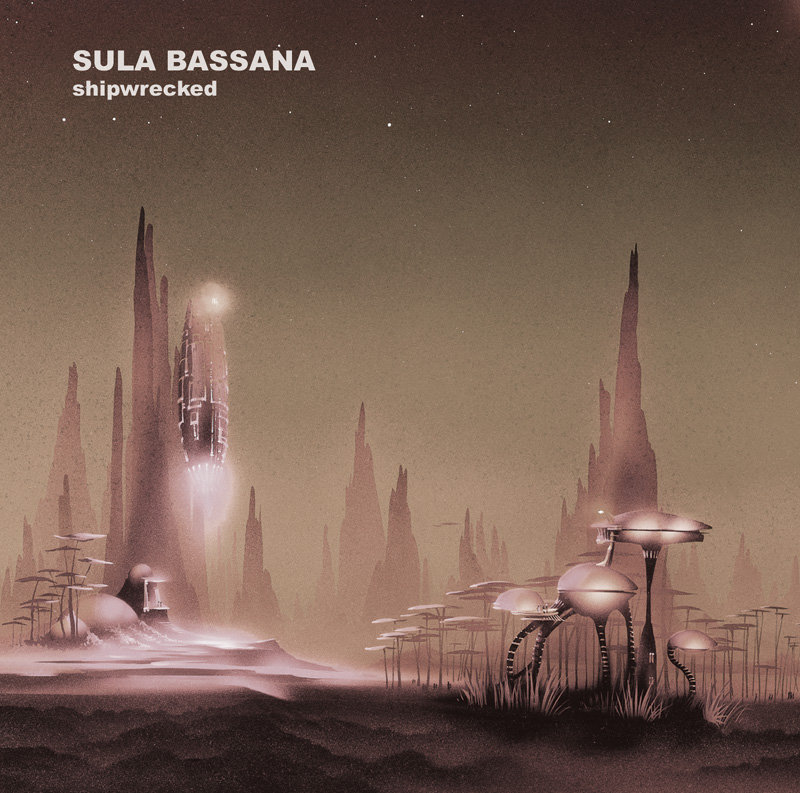
BAUMAN/KOEK-BAUMAN/KOEK-VINYL EDITION.
BAUMAN/KOEK-BAUMAN/KOEK-VINYL EDITION.
By 1978, German music was changing. The Krautrock era had ended in 1977, and there was a move towards electronic music. This wasn’t new.
The Berlin School had been around since the early seventies. It was also a precursor of ambient music, and went on to influence future generations of ambient musicians. Among the founding fathers of The Berlin School were Tangerine Dream, Klaus Schulze and Manuel Göttsching. They began to pioneer electronic music in West Berlin. Over the next few years, they recorded not just some of the most important, influential and innovative electronic music of the seventies, but in the history of music. This included many classic Berlin School albums.
Tangerine Dream, were are at the forefront of The Berlin School sousnd. Lead byEdgar Froese and Christopher Franke, they released back to-back classics. The first was Phaedra in 1974, with Rubycon following in 1975. The same year, a former member of Tangerine Dream released another classic album.
Klaus Schulze released his fifth album Timewind in 1975. Timewind was hailed a groundbreaking, Berlin School classic, and influenced other artists. So did an album Manuel Göttsching released in 1976,
When New Age Of Earth was released in 1976, the album was credited to the band Ash Ra. However, there was no doubt about it, New Age of Earth was a Manuel Göttsching solo album. New Age Of Earth was very different to many albums being released in 1976. With its ambient sound, it would influence several generations of ambient musicians, and nowadays, is regarded as an ambient classic. It seemed with every year that passed, Berlin School classic was released.
1978 was no different. That year, Michael Hoenig released his critically acclaimed album Departure From The Northern Wasteland. It was a career-defining classic, that nowadays, is regarded as a landmark album. However, it wasn’t until much later that Departure From The Northern Wasteland began to receive the critical acclaim it deserved. This wasn’t new.
It had been a familiar story since the birth of The Berlin School. Some of the most important, influential and innovative Berlin School albums passed almost unnoticed. Even in Germany. That was the case with an album from two musicians from Kempten, Bavaria, Wolfgang Baumann and Ata Koek.
They recorded just one album Baumann Koek, which was recently reissued by on vinyl Bureau B. It’s a welcome reissue of an album that’s one of the hidden gems of The Berlin School. Baumann/Koek deserves to be heard by a much wider audience than heard their eponymous album in 1978. That couldn’t be helped. They were a victim of circumstances, and their story is a case of what if?
The Baumann/Koek began in Kempten, Bavaria in 1978. That was home to Wolfgang Baumann and Ata Koek, two musicians who dreamt of making an album. This wasn’t going to be a traditional rock album. Instead, twenty-eight year old Wolfgang Baumann and twenty-two year Ata Koek wanted to follow in the footsteps of Tangerine Dream, Klaus Schulze and Manuel Göttsching. There was one problem though, they didn’t have the equipment necessary to record an album. So they headed to Bonn.
Back then, Bonn was the capital of West Germany. It was also a good place to buy the equipment they needed. One place especially, would have what Wolfgang and Ata needed to record an album, Synthesizerstudio Bonn. This was where German musical royalty came to buy electronic equipment. Knowing they were following in the footsteps of Kraftwerk, who were one of Germany’s most successful musical exports, meant their was an air of excitement as Wolfgang and Ata journeyed to Bonn. Eventually, they arrived and went shopping.
At Synthesizerstudio Bonn, Wolfgang and Ata bought a secondhand ARP 2600. This they hoped would allow them to record their album.
When Wolfgang and Ata returned home, they began experimenting with the ARP 2600, finding out what it could, and couldn’t do. It was with a heavy heart, that Wolfgang and Ata realised they needed more equipment. So they made another journey to Bonn.
This time, when Wolfgang and Ata they were determined to buy enough equipment to record their album. So in Synthesizerstudio Bonn they bought an ARP sequencer, a Solina String keyboard, and an EKO Computer rhythm drum computer. The final piece of the musical jigsaw was a four-track recorder, which allowed Wolfgang and Ata to record their album.
With this expensive array of equipment, a learning experience began for Wolfgang and Ata. They had to work out how to operate each piece of equipment. That was no mean feat. Especially since 1978 was the pre-MIDI age. There was no standardised interface that allowed equipment from different manufacturers to communicate. With Wolfgang and Ata owning equipment by ARP, Solina and EKO, this was problematic. However, patience, persistence and perseverance resulted in Wolfgang and Ata recording the five tracks that became Baumann/Koek. Now they needed someone to mix their album.
By 1978, there was no person better qualified for the job than the legendary Conny Plank. He had worked with the great and good of German music. However, Conny Plank was just as happy to mix Baumann/Koek. So Wolfgang and Ata booked Conny Plank’s studio for the mix, and watched as the master got to work. Conny Plank sprinkled his magic dust, and now Wolfgang and Ata began to plan for the release of Baumann/Koek.
Rather than take their album to one of Germany’s top labels, Wolfgang and Ata decided to release Baumann/Koek themselves. So they had 1,000 copies of Baumann/Koek pressed. Once the album was pressed, it was released later in 1978.
Reviews of Baumann/Koek were positive. The album was well received, and began to sell well in West Germany. It was then that the Swabian wholesaler Jaguar Records offered to distribute Baumann/Koek worldwide. This seemed like too good an offer to refuse. Sadly, it was.
Not long after Jaguar Records took over the worldwide distribution of Baumann/Koek, the company became insolvent. Soon, Jaguar Records was declared bankrupt. For Wolfgang and Ata, this was a huge blow.
Once they had time to digest how the bankruptcy of Jaguar Records would affect them, Wolfgang and Ata came to a decision. There would be no followup to Baumann/Koek. They weren’t willing to risk any more of their capital. This meant that Baumann/Koek was the one and only album from Baumann/Koek.
Sadly, for a while Baumann/Koek was overlooked by record buyers. It wasn’t until the dawn of the internet age, that a new generation of music lovers rediscovered Baumann/Koek. However, there was a degree of confusion over who played on the album.
When some people heard Baumann/Koek, they were convinced that the album featured Peter Bauman of Tangerine Dream. This was denied, but even today, the rumours persist. Other rumours were that Baumann/Koek featured Peter Bauman who sung on the MPS Records’ cover albums. This was also denied. Still, though, the rumours persist. Maybe Bureau B’s reissue of Baumann/Koek will finally put paid to these rumours, and ensure that Wolfgang Bauman and Ata Koek receive the credit they so richly deserve. Although they only released one album, Baumann/Koek is an album that will grace any self-respecting record or CD collection.
Opening Baumann/Koek, is Yarabbim, a twelve minute epic. The arrangement can be heard in the distance. It sounds like a train making its way down the line, ready to take listener on a musical journey aboard one of Deutsche Bahn’s futuristic looking trains. As the arrangement grows in power and drama, the train nears the station. When the listener climbs onboard, Baumann/Koek are ready to provide the soundtrack,
After a brief nod to Kraftwerk, the train leaves the station, and Baumann/Koek provide an irresistible soundtrack to the journey. As the kilometres go by, the arrangement pulsates, and veers between hypnotic and mesmeric, to elegiac and ethereal. Contrasts abound, as washes of synths join the pounding, hypnotic drums. By then, the listener is hooked, as they’re swept along atop swathes of synths strings. Dramatic, beautiful and full of subtle hooks, Yarabbim is a truly irresistible journey courtesy of musical master craftsmen, Baumann/Koek. One wonders if this is the music they dreamt of recording as they journeyed between Kempten to Bonn, to buy the instruments to record the album?
A myriad of beeps and squeaks are panned left to right on TD-Mem. Soon, urgent synths are added to the pulsating, mesmeric arrangement. It seems the journey that began on Yarabbim continues. Above the arrangement, what sounds like a light aircraft soars, as if surveying man and machine in perfect harmony. By then, swells of synth strings add en elegiac sound, which contrasts perfectly to urgency and mesmerism of the arrangement. Later, the tempo increases, and futuristic bursts of sci-fi synths are added. This adds to the cinematic nature of the track, as the tempo increases again. It’s as if Baumann/Koek are going through the gears as this captivating, cinematic journey continues apace.
Gamabol is another twelve minute epic. The introduction might sound understated and otherworldly. It’s not. Instead, it’s a radio is being tuned, and then a code being tapped out. Then the arrangement beeps, speaks and buzzes. Frantically, a code is tapped out, sounding like a desperate cry for help. Musical alchemists deploy their array of equipment and create an innovative cinematic soundscape. Later, washes of synths envelop the listener. The arrive from left and right, as hypnotic strings chug along. Again, Baumann/Koek are taking the listener on a journey. Melodic and dramatic, the arrangement flows along. After eight minutes, man and machine are in perfect harmony, creating an elegiac, graceful melodic, electronic symphony that sweeps the listener along as their journey continues.
A car races by, before pulsating bass synth dominates the arrangement of Where. It seems Baumann/Koek are taking the listener on a late night drive along the autobahn. Meanwhile, washes of synths sweep in and out. Sometimes, filters are used to transform the dry sound. This works well. Soon, the tempo increases and drums are added. So are synths strings. They add an ethereal backdrop. Filters continue to be used, and signal another increase in the tempo. However, Baumann/Koek don’t fall into the trap of overusing the filters. Instead, they use them sparingly, to compliment the arrangement to Where.
Sequencer Roll closes Baumann/Koek eponymous debut album, and is totally different to previous tracks. So much so, that one can’t help but wonder if I’ve strayed onto the wrong album? Baumann/Koek sound like Canned Heat or ZZ Top, as they boogie their way through this two minute track. It’s a truly irresistible track, and one that showcases Baumann/Koek’s versatility and talent. Not many people could create a track like Sequencer Roll, using the equipment they had available. However, the Kempten based poisoners managed to, and it’s a fitting finale to their one and only album, Baumann/Koek.
Sadly, there was no followup to Baumann/Koek, which was recently reissued by Bureau B. After Jaguar Records became insolvent and was declared bankrupt, Wolfgang Bauman and Ata Koek had to rethink their future plans. Eventually, they decided they couldn’t put more of their capital at risk. Releasing Baumann/Koek had proved expensive.
Wolfgang Bauman and Ata Koek had to buy the equipment to record the album. Then there was the production costs and hiring Conny Plank’s studio so the maestro could mix Baumann/Koek. After the album was mixed, 1,000 copies of Baumann/Koek were pressed. By then, the costs must have been escalating, and surely, Wolfgang Bauman and Ata Koek must have been rueing their decision to self release the album? If only they had taken Baumann/Koek to a record company.
Surely, there would’ve been no shortage of labels willing to release Baumann/Koek? After all, here was an album of innovative music that if promoted properly, could’ve and should’ve been a commercial success. It was an album that oozed quality.
The best way to describe Baumann/Koek was a musical journey. It lasts five tracks and thirty-nine magical minutes. The music veers between cinematic and dramatic, to elegiac and ethereal and even hypnotic and mesmeric. Other times the music is hook-laden, irresistible and melodic. Especially as the listener is swept along atop synth strings. Then as Baumann/Koek draws to a close, Wolfgang and Ata bowl a curveball. A slice of boogie unfolds and Baumann/Koek rock into the distance. Sadly, there was no encore.
Maybe things would’ve been different if a record company had released Baumann/Koek. They would’ve had the money and personnel to promote Baumann/Koek. However, Baumann/Koek valued their independence.
This would ultimately cost them the chance of a long and successful musical career. Neither Wolfgang Bauman nor Ata Koek released another album. Instead, they returned to where the dream began, in began in Kempten, Bavaria.
Thirty-seven years later, and Baumann/Koek has been reissued by vinyl Bureau B. This is a welcome reissue of one the hidden gems of The Berlin School. It’s been nicely mastered, and the sound quality is almost flawless. There’s a but though. Is it worth paying the extra for the vinyl version? Personally, I would say no. The CD version sound just as good. The important thing is that a new generation of music lovers embrace this timeless, cult classic which should’ve been the beginning a successful career for Baumann/Koek.
BAUMAN/KOEK-BAUMAN/KOEK-VINYL EDITION.
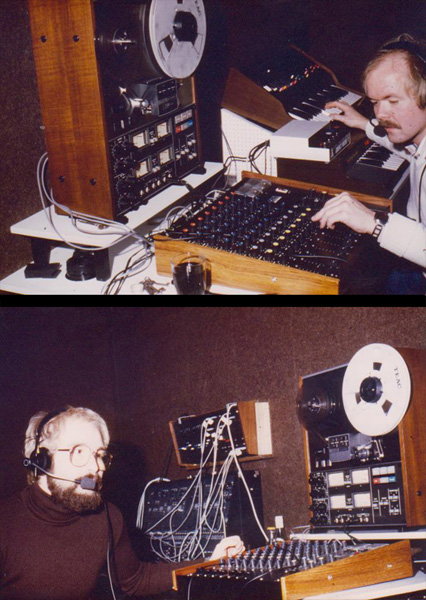
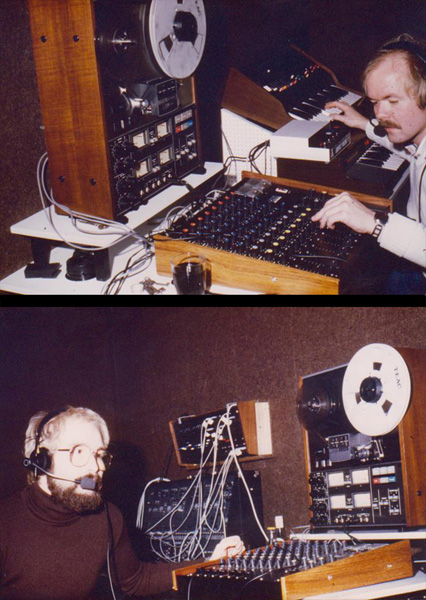
THE PARIS SISTERS- ALWAYS HEAVENLY-THE PARIS SISTERS ANTHOLOGY.
THE PARIS SISTERS- ALWAYS HEAVENLY-THE PARIS SISTERS ANTHOLOGY.
The Paris Sisters weren’t an overnight success. Far from it. It took nearly a decade of hard work and dedication before they made a commercial breakthrough. Suddenly, all the hard work was worthwhile.
Especially when I Love How You Love Me reached five on the US Billboard 100 in October 1961, and in the process, sold over one million copies. This is just one of The Paris Sisters’ hit singles that feature on Always Heavenly-The Paris Sisters Anthology, which was recently released by Ace Records. Featuring twenty-five tracks, Always Heavenly-The Paris Sisters Anthology is the most comprehensive compilation of The Paris Sisters music. Their story began in the early fifties.
That’s when former opera singer, Faye Filzer decided that her three talented daughters had the potential to pursue a career in the world of entertainment. So Priscilla, her elder sister Albeth and their middle sister Sherrell became The Paris Sisters, San Francisco’s latest singing trio.
Faye Flzer, it seemed had looked towards “sister groups” like the Andrews Sisters and McGuire Sisters for inspiration. She decided that her daughters would follow in their footsteps, and hopefully, enjoy the same success.
In the early days, The Paris Sisters appeared at Elk Clubs and Navy bases. However, soon, it became apparent that The Paris Sisters would have to hone their singing talents.
With their mother’s help, The Paris Sisters honed their voices. So much so, that by 1954, they were recording for the local Cavalier label. Faye Filzer wanted to document their progress. Anything else was a bonus. However, not long after this, Faye Filzer managed to secure the endorsement of the Andrews Sisters for The Paris Sisters. This lead to the nascent group signing to Decca Records.
By then, The Paris Sisters were constantly appearing at fairs and clubs. These appearances ensured that The Paris Sisters were already well known across the western states. This should’ve meant that Decca Records had a captive audience for The Paris Sisters’ singles.
That wasn’t the case. The Paris Sisters released six singles between 1955 and 1958 for Decca Records, and then Imperial. They all failed to catch the attention of record buyers. Maybe that’s why Faye Filzer decided to let a manager take charge of The Paris Sisters.
Norman Weiss became The Paris Sisters’ manager, in exchange for a twenty-five percent of their earnings. Straight away, he got them a booking in the Dunes Hotel, Las Vegas. The Paris Sisters were booked to do four fifty minute shows a night. It was no surprise that Priscilla’s vocal was damaged. Luckily, she recovered and soon, was back on the road.
By then, The Paris Sisters had all finished their schooling. Then in 1959, Albeth met dance instructor Clancy Grass in Vancouver. The Paris Sisters were in Vancouver to do a show, when Albeth met her future husband Clancy Grass. The relationship didn’t go down well with Albeth’s parents, Faye and Walter Filzer.
Norman Weiss tried to intervene, and act as a go-between, This backfired, and Faye Filzer started shopping The Paris Sisters to other management companies. Some of these companies were in Los Angeles, where Faye and Walter Filzer now lived. That’s where Faye Filzer met Lester Sill.
He was a veteran of the music business, and could spot talent at twenty paces. Lester Sill realised that The Paris Sisters had bags of potential, and began telling Faye Filzer about his new business partner Phil Spector, who was in the process of forging a career as a producer.
Before long, The Paris Sisters were were introduced to Phil Spector, who set about changing their style. It would be very different to other groups who Phil Spector would later work with. Priscilla’s almost reserved, demure vocal took charge of the lead, while Albeth and Sherrell added cooing harmonies. Sometimes, Sherrell switched to lead, the other two sisters added harmonies. With these changes in place, Phil Spector took The Paris Sisters into the recording studio.
For Phil Spector’s first recording session with The Paris Sisters, Gold Star Studios was chosen. That’s where the ballad Be My Boy was recorded. It features on Always Heavenly-The Paris Sisters Anthology. Once Be My Boy was recorded, Lester Sill struggled to sell the master.
So he decided to release the single on the Gregmark label, which he owned with Lee Hazelwood. When Be My Boy was released in March 1960, comparisons were drawn to The Teddy Bears. However, soon, the single was climbing the charts, but stalled at just fifty-six in the US Billboard 100. For The Paris Sisters, this was their first hit single. It wouldn’t be their last.
Following the success By My Boy, Phil Spector continued to hone The Paris Sisters’ sound. Only then, would he record The Paris Sisters’ next single I Love How You Love Me which saw a move towards rock ’n’ roll on this string drenched ballad. Again, comparisons were drawn with The Teddy Bears, and To Know Him Is To Love Him. However, when I Love How You Love Me was released in August 1961 on Gregmark, it quickly found favour with DJs and record buyers. Eventually, the single reached number five in the US Billboard 100, and sold one million copies. By then Norman Weiss was no longer The Paris Sisters’ manager.
Faye Wilzer has extricated her daughters from their contract with Norman Weiss. Replacing him was Jess Rand who was Sam Cooke’s manager. He had a busy schedule, managing The Letterman and Sam Cooke. However, after December 11th 1964, he would have much more space in his diary.
Little did Jess Rand realise that The Paris Sisters had enjoyed the biggest hit of their career. They would enjoy further hits, but never had as a big a hit as I Love How You Love Me. It wasn’t through trying though.
One of the first things Jess Rand did, was hire a publicist. They were in place as The Paris Sisters released He Knows I Love Him Too Much as a single in March 1962. It was released on Gregmark,but reached just thirty-two in the Billboard 100. Given the success of I Love How You Love Me this was a disappointment. However, Gregmark was just a small label. The Paris Sisters should’ve been signed to a major. This was hampering The Paris Sisters’ career.
Not long after the release He Knows I Love Him Too Much, Let Me Be The One was released as a single on Gregmark later in 1962. It looked like Phil Spector had been building up a supply of songs from The Paris Sisters. Maybe he feared they would leave for a bigger label, and wanted some songs in reserve?
When Let Me Be The One, which doesn’t feature on Always Heavenly-The Paris Sisters Anthology, stalled at just eighty-seven on the Billboard 100. This was another disappointment for The Paris Sisters. Less than a year earlier, they were enjoying a million selling single.
Things didn’t improve for The Paris Sisters. Neither Let Me Be The One, nor Yes, I Love, which was released in November 1962, charted. To make matters, Phil Spector and his business partner Lester Sill were clashing. At the root of the problem, was Phil Spector’s success, and his decision to found his own label, Phillies. Adding fuel to the fire, was Phil Spector encouraging Priscilla to pursue a solo career. By then, Phil Spector and Priscilla were alleged to have been dating. There were even rumours of a marriage proposal. Things were getting complicated.
Especially when Phil Spector and Lester Sill began a legal battle that lasted years. Then came the announcement that The Paris Sisters album was cancelled. It’s thought that Phil Spector had destroyed the tapes. By then, Jess Rand was spending more of his time managing The Letterman. So Clancy Grass became The Paris Sisters’ co-manager. This was perfect timing, as in August 1963, there was some good news for The Paris Sisters. They signed to Columbia Records.
At last The Paris Sisters were on a major. With a manager who was determined to look after The Paris Sisters’ best interests, things were looking good for The Paris Sisters as a period of change began.
No longer was Phil Spector producing The Paris Sisters. Instead, Terry Melcher, Doris Day’s son, took charge of producing The Paris Sisters. The rise and rise of Terry Melcher had been rapid.
Initially, Terry Melcher worked in the post room at his mother’s record company. Then he secured a junior post in A&R at Columbia. From there, he moved into production, where he was entrusted with The Paris Sisters’ career.
At his first session, with The Paris Sisters, Terry Melcher concentrated on building a big, bold arrangement on Play It One More Time. He also double-tracked Priscilla’s vocal, which was meant to give her vocal a teenage sound. This was no different to what Phil Spector had been doing. Despite recording several tracks, none of the tracks recorded during the Terry Melcher session were ever released by Columbia. However, Play It One More Time makes a welcome debut on Always Heavenly-The Paris Sisters Anthology. It’s a reminder of the Terry Melcher session.
After their encounter with ‘producer’ Terry Melcher, The Paris Sisters’ were assigned to a new production team. This time, Fred Benson and Nik Venet, took charge of production duties during the next The Paris Sisters’ session. Ben-Ven Productions were responsible for The Paris Sisters 1964 single Dream Lover, and the flip side Lonely Girl. Recording took place to fit in with The Paris Sisters’ schedule. They still seemed to be undertaking a gruelling schedule, and in 1964, appeared on American Bandstand. Still The Paris Sisters hugely successful.
Despite this, when Dream Lover was released later in 1964, it flopped. That’s despite being one of The Paris Sisters’ best singles in recent years. By then, The Paris Sisters were recording their long-awaited debut album. It was meant to feature a mixture of standards and pop covers. However, Columbia were having cold feet. The next single would be crucial.
In August 1964, The Paris Sisters covered Nat King Cole’s When I Fall In Love. It was released as a single, but failed commercially. A decision was made to cancel The Paris Sisters’ debut album. Another year would pass before Columbia released another single by The Paris Sisters.
A year after the release of their last single, The Paris Sisters entered the studio with producer Mike Curb. He produced the heartfelt ballad Always Waitin’ on MGM Records. On the B-Side was Why Do I Take It From You which was penned by Priscilla. She delivers a wistful, breathy vocal that’s so good, it deserved to fare better than a B-Side. Sadly, commercial success continued to elude The Paris Sisters. However, they were just as busy as ever with live work.
Despite this the next two years saw The Paris Sisters release a string of singles for Reprise Records. In 1966, The Paris Sisters entered the studio with producer Jack Nitzsche, and they cut two fine singles. My Good Friend was a much more uptempo track, that showed another side to The Paris Sisters. You was another uptempo cut, with I’m Me, a beautiful rueful ballad on the flip side. Although neither single charted, The Paris Sisters released their debut album.
When Sing From “The Glass House” was released, it wasn’t the album that The Paris Sisters had envisaged a few years earlier. They had been asked to provide the soundtrack to a television show The Glass House. So Priscilla Paris penned six of the ten tracks, and Mike Curb wrote Help Me. Once the album was complete, it was announced that The Glass Show wouldn’t be aired. For The Paris Sisters this was a huge blow, as the show was being aired coast to coast. Despite this Sing From “The Glass House” was released by Unifilms in 1966, but never was the success that The Paris Sisters had hoped. This was a disappointing end to what had been one of the busiest years of The Paris Sisters’ recording career.
1967 proved to be just as busy. Some Of Your Lovin’ was released as a single, but doesn’t feature on Always Heavenly-The Paris Sisters Anthology. The B-Side, I Came A Long Way To Nowhere which is a heart-wrenching ballad, was produced by Clancy Grass and Mike Curb. It shows how The Paris Sisters music was evolving, and moving with the times. Later in 1967, The Paris Sisters released their second and third album.
Sing Everything Under The Sun!!! was released by Reprise Records in 1967. It featured the tracks The Paris Sisters had recorded between 1966 and 1967. This included My Good Friend, You, It’s Me and See That Boy. They all feature on Always Heavenly-The Paris Sisters Anthology. These are among Sing Everything Under The Sun!!!’s highlight. Later in 1967, came The Paris Sisters’ third album.
It was Mike Curb who noticed that The Paris Sisters had never released a Greatest Hits album. So he suggested The Paris Sisters rerecord some of their earlier hits, and some new songs. Eventually, three new songs found their way onto Golden Hits Of The Paris Sisters. This included Together, See That Boy and Won’t You Help Me. Together and See That Boy seem to hark back to the golden age of the classic girl group sound. These new songs should’ve appealed to diehard fans of The Paris Sisters. Sadly, that wasn’t the case, and Golden Hits Of The Paris Sisters failed commercially. It seemed The Paris Sisters recording career was at a crossroads.
By 1968, The Paris Sisters were signed to Capitol Records, and released Greener Days as a single. On the B-Side was Greener Days, which features on Always Heavenly-The Paris Sisters Anthology. Greener Days failed commercially, and The Paris Sisters moved on.
Next stop was GNP-Crescendo, where in August 1968, The Paris Sisters released The Ugliest Girl In Town. On the flip-side was Stand Naked Clown. Sadly, history repeated itself and The Ugliest Girl In Town flopped. Three months later and The Paris Sisters were history.
In November 1968, The Paris Sisters announced they had split-up. Their recording career had lasted fourteen years, but three years had passed since The Paris Sisters enjoyed a hit single. It was the end of era for The Paris Sisters, which is documented on Always Heavenly-The Paris Sisters Anthology, which was recently released by Ace Records.
Always Heavenly-The Paris Sisters Anthology features singles, B-Sides and album tracks. That’s not forgetting the quartet of unreleased tracks on Always Heavenly-The Paris Sisters Anthology. This includes When I’m Alone With You. Baby That’s Me, Play It One More Time and Then Came Love. They’re a welcome addition to the compilation.
When I’m Alone With You is a ballad, that features a tender wistful vocal. Baby That’s Me has Phil Spector’s name written large all over it. It’s a real hidden gem that’s too good to have lain unreleased for fifty years. Play It One More Time is a much more uptempo track. Slick and full of hooks, cooing harmonies and horns augment a heartfelt vocal. An interesting addition for The Adams Sisters’ completists, is the Diet Rite Commercial that closes Always Heavenly-The Paris Sisters Anthology.
It documents the most successful period of The Paris Sisters’ career…the sixties. With its mixture of ballads and uptempo tracks, Always Heavenly-The Paris Sisters Anthology showcases The Paris Sisters versatility, and ability to reinvent themselves musically. That’s why for a while, they were one of the most successful girl groups of the sixties. However, The Paris Sisters weren’t an overnight success.
Far from it. It took nearly a decade of hard work and dedication before they made a commercial breakthrough. However, when Phil Spector produced their million selling single I Love How You Love Me Suddenly in 1961, all the hard work was worthwhile. After that, The Paris Sisters constantly toured America, going coast to coast and enjoying the success while it lasted.
Sadly, nothing lasts forever, and by 1966 the hits had dried up. Luckily, The Paris Sisters were still a popular live draw, and right throughout until they spilt up in 1968. A reminder of the most successful period of The Paris Sisters’ career can be found on Always Heavenly-The Paris Sisters Anthology, which is a welcome reminder of one of the most successful girl groups of the sixties.
THE PARIS SISTERS- ALWAYS HEAVENLY-THE PARIS SISTERS ANTHOLOGY.

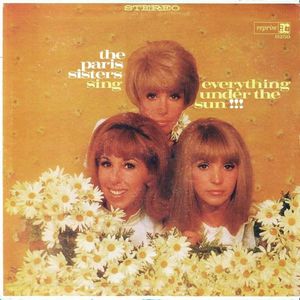

CHARLEY PRIDE-DID YOU THINK TO PRAY/A SUNSHINE LOVE/SONGS OF LOVE/ SWEET COUNTRY.
CHARLEY PRIDE-DID YOU THINK TO PRAY/A SUNSHINE LOVE/SONGS OF LOVE/ SWEET COUNTRY.
Growing up, in Sledge, Mississippi, Charley Pride had two loves. The first was baseball, the other was music. Music however, was just a hobby for Charley Pride. His mother bought him a guitar in 1950, when Charley was just fourteen. Soon, he had taught himself to play the guitar. He was a natural. Still, Charley Pride’s dream was to make a living out of baseball.
By 1952, Charley Pride was pitching for the Memphis Red Sox in the Negro American League. Things went well for Charley Pride, and in 1953 he signed for the Boise Yankees. They were a Class C farm team of the legendary New York Yankees. Charley was one step closer to achieving his dream. Then injury interrupted his nascent career.
The injury resulted in a loss of form for Charley Pride, and he was sent to the New York Yankees’ Class D team, Fond du Lac, in Wisconsin. This was a setback for Charley.
Towards the end of the season Charley found himself playing for the Louisville Clippers. Charley’s career seemed to have stalled, and now was on the slide. It was then that Charley and and another player were traded to the Birmingham Black Barons for a team bus. That all but ended Charley’s hopes and dreams of becoming a pro ball player.
He spent another couple seasons in the minor leagues. Charley even got to play three games for the Missoula Timberjacks, the Cincinnati Reds farm team. However, when he was let go by the Missoula Timberjacks Charley ended up working in construction in Helena, Montana.
Soon, Charley had been signed by a semi-pro team the East Helena Smelterites. Initially, he was paid $10 a game. However, Charley was a crowd puller, so he was paid a bonus of $10. This augmented his weekly pay. So did the money Charley was making from playing with The Night Hawks and as a solo artist.
Before long, Charley was playing around the local area. He was even playing at company picnics and before the Helena Smelterites’ games. Charley was making a good living. Especially if he arranged his shifts so that nights were free for when he played the local live circuit. However, working at the smelter was hot and dangerous work, and Charley once broke his ankle. Other times he suffered burns. Despite this, Charley kept this up until 1967, when his musical career began in earnest.
With Charley needing to fly all over the country, he needed to live near an airport. So Great Falls, Montana became the Pride family home in 1967, before they moved to Texas, the Lone Star Stare, in 1969.
By 1969, Charley Pride had released seven albums. His debut Country was released in April 1966 and reached number sixteen in the US Billboard Country charts. This was enough for Country to be certified gold. Despite this, his first two singles The Snakes Crawl at Night and Before I Met You failed to chart. Then Just Between You and Me reached number nine in the US Billboard Country charts. For Charley Pride this was the start of a long and successful career. However, at one point it looked like Charley’s debut album had been a one-off.
When The Pride of Country Music was released in June 1967, it failed to replicate the success of Country. The Pride of Country Music reached number thirty-three in the US Billboard Country charts. At least the two singles Just Between You and Me and I Know reached number nine and six on the US Billboard Country charts. That was a small crumb of comfort for Charley Pride. However, in December 1967, Charley Pride bounced back.
Just before Christmas 1967, Charley Pride released his third album The Country Way. Not only did it reach number one on the US Billboard Country charts, but reached number 199 in the US Billboard 200. Charley Pride’s music it seemed, was already reaching a much wider audience. Things got even better for Charley when he enjoyed his second gold disc. That wasn’t the end of the commercial success.
The two singles released from The Country Way, Does My Ring Hurt Your Finger and The Day the World Stood Still reached number four on the US Billboard Country charts. Some of the veterans of country music scene forecast that Charley Pride was set to become one of the biggest names in country music.
1968 was a busy year for Charley Pride. he released another two albums. Make Mine Country was released in April 1968, and reached number four on the on the US Billboard Country charts. ThenSongs of Pride…Charley That Is was released in September 1968, and reached number six on the US Billboard Country charts. It featured the biggest single of Charley Pride’s career, The Easy Part’s Over which reached number two in US Billboard Country charts. For Charley, 1968 had been the most successful year of his career, until 1969.
During 1969, Charley Pride could do no wrong. Charley Pride in Person was released in January 1969, reaching number two in the US Billboard Country charts, and number sixty-two in the US Billboard 200. This resulted in another gold disc for Charley Pride. Then when The Sensational Charley Pride was released in May 1969, it number two in the US Billboard Country charts, and number forty-four in the US Billboard 200. Again, the album was certified gold. By June 1969, RCA Victor were ready to release The Best of Charley Pride. It reached number one in the US Billboard Country charts, and number twenty-four in the US Billboard 200. The Best of Charley Pride, which was certified gold in America and platinum in Canada, was Charley’s most successful album. What helped was it featured a number one single.
All I Have to Offer You (Is Me) featured on The Best of Charley Pride. It was released as a single, and reached number one in the US Billboard Country charts, and number ninety-one in the US Billboard 100. Later, in 1969, Charley enjoyed a second number one single, when (I’m So) Afraid of Losing You Again was released, and also reached seventy-four in the US Billboard 100. (I’m So) Afraid of Losing You Again would feature on Charley’s next album Just Plain Charley. However, by then, Charley Pride had just enjoyed the most successful year of his career. Surely it couldn’t get any better?
It did. As the seventies dawned, Charley Pride was about to begin the hottest streak of his career. Just Plain Charley was released in January 1970; reaching number one on the US Billboard Country charts and twenty-two on the US Billboard 200. This resulted in Charley’s sixth gold disc. Later in 1970, six became seven.
When Charley Pride’s 10th Album was released in June 1970; it reached number one on the US Billboard Country charts and thirty on the US Billboard 200. Charley was presented with his seventh gold disc. As if things couldn’t get any better, Is Anybody Goin’ To San Antone reached number one on the US Billboard Country charts and seventy on the US Billboard 200. However, this wasn’t the only number single Charley enjoyed during 1970.
From Me To You was released in December 1970, and became Charley Pride’s third album of the year. It reached number two on the US Billboard Country charts and forty-two on the US Billboard 200. This resulted in gold disc number eight for Charley Pride. Then when the Bill Rice penned Wonder Could I Live There Anymore was released as a single, it reached number one on the US Billboard Country charts and eighty-seven on the US Billboard 100. Lightning struck twice when I Can’t Believe That You’ve Stopped Loving Me reached number one on the US Billboard Country charts and seventy-one on the US Billboard 100. For Charley Pride the success he was enjoying was beyond his wildest dreams. Just a few years ago, he had been working in a smelter. Now he was one of the biggest names in country music. What would 1971 hold for Charley Pride?
June 1971 saw Charley Pride release I’m Just Me. It marked a return to number one on the US Billboard Country charts and fifty on the US Billboard 200. This time, there was no gold disc for Charley. However, I’d Rather Love You reached number one on the US Billboard Country charts and seventy-nine on the US Billboard 100. I’d Rather Love You gave Charley his seventh number one single. Soon, the number would rise to eight.
Charley Pride Sings Heart Songs was released in October 1970, the album reached number one on the US Billboard Country charts and thirty-eight on the US Billboard 200. This resulted in Charley receiving his eighth gold disc. Then when Kiss An Angel Good Mornin’ was released as a single it reached number one on the US Billboard Country charts and number twenty-one on the US Billboard 100. Kiss An Angel Good Mornin’ was Charley Pride’s eight number one single. By then, Charley Pride was one of RCA Victor’s most successful artists. However, it was then that Charley Pride through a curveball, and decided to record Do You Think To Pray, a country gospel album.
Did You Think To Pray is one of four albums released on two discs by BGO Records. The others are a trio of country albums A Sunshine Love, Songs Of Love and Sweet Country. These albums feature Charley Pride during the most successful period of his career. The next part of story begins with Did You Think To Pray, which was released in late 1971.
Did You Think To Pray.
Just like many country artists who had preceded Charley Pride, he wanted to record a country gospel album. Johnny Cash, Hank Snow and Roy Acuff had all recorded a country gospel album Now it was Charley Pride’s turn.
This was the music Charley Pride had grown up listening to in Sledge, Mississippi. In a way, it was Charley Pride going back to his roots. So he chose ten tracks that he would cover and record with producer Jack Clement at RCA’s Nashville Sound Studio.
Among the tracks Charley chose, were Did You Think To Pray, Angel Band, Whispering Hope and The Church In The Wildwood. Other tracks included Arthur Brumley’s I’ll Fly Away; Ann J. Morton’s Time Out For Jesus; Ben Peter’s Let Me Live; Lassaye Holmes’ This Highway Leads To Glory and Curtis Stewart’s Lord, Build Me A Cabin In Glory. These tracks were recorded in Nashville, the capital of country music.
A crack band of session players were assembled by producer Jack Clement, at RCA’s Nashville Sound Studio. Joining the session were The Jordanaires, who added backing vocals on This Highway Leads To Glory. This was a controversial move.
Charley Pride was the second biggest selling artist on RCA Victor. The biggest selling artist was Elvis Pressley. What would The King make of The Jordanaires appearing on the opposition’s album? Eventually, the featured on a couple of tracks on Did You Think To Pray. Just like previous sessions, the album was recorded quickly, and Did You Think To Pray was scheduled for release in late 1971.
Deep down, some executives at RCA Victor must have been worried, Charley Pride was one of the biggest names in country music. Here he was deviating from what was a successful formula. Releasing a country gospel album could alienate some record buyers. That was the least of their worries. Before that, critics had their say.
They like what they heard, and wrote approving, positive reviews. This was no surprise given the quality of music on Did You Think To Pray.
Seamlessly, Charley Pride made the switch from country to gospel on Did You Think To Pray. Tracks like Did You Think To Pray, Angel Band, Let Me Live, Whispering Hope and This Highway Leads To Glory showcased Charley Pride’s versatility.
His vocal veers between heartfelt and sincere to almost laid-back as sometimes, the album heads in the direction of bluegrass gospel. Other times, Charley Pride reinvents traditional tracks, bringing them into the twentieth century. Charley Pride’s first gospel album looked like being an unqualified success.
When Did You Think To Pray was released in late 1971, the album reached number one on the US Billboard Country charts and number seventy-six on the US Billboard 200. This meant another gold disc for Charley Pride. Executives at RCA Victor who had been worried by Charley’s gospel album were able to relax. The only disappointment was when Let Me Live stalled at number twenty-one on the US Billboard Country charts and stopped short of reaching the the US Billboard 100, at number 104. However, normal service would be resumed when Charley returned to country music. Before that, Charley released another compilation.
The Best of Charley Pride Volume 2 was released in early 1972. It reached number one on the US Billboard Country charts and number fifty on the US Billboard 200. This was another gold disc for Charley Pride’s collection. Would his next studio album A Sunshiny Day With Charley Pride prove as popular?
A Sunshiny Day With Charley Pride.
It wasn’t until June 1972, that Charley Pride returned with his next album, A Sunshiny Day With Charley Pride. A lot had happened since then.
Charley Pride had won two Grammy Awards. The first came when the single Let Me Live won Best Gospel Performance. Then Did You Think To Pray won the Grammy Award for Best Sacred Performance. Buoyed by winning two Grammy Awards, Charley Pride began to think about his next album.
For what became A Sunshiny Day With Charley Pride, Charley Pride chose ten tracks. They were all cover versions. Charley didn’t write much of his material. So he was reliant on other people’s songs.
This included Ben Peters who wrote Sunshiny Day and It’s Gonna Take A Little Bit Longer. Two Al Urban songs, When The Trains Come In and You’re Wanting Me To Stop Loving You were chosen. So were two songs from the songwriting team of A. L. Doodle Owens and Hal Bynum. Their contributions were She’s Helping Me Get Over You and One More Year. Other tracks included Richard Jarvis’ Back To The Country Roads; Gene Ash’s Put Back My Ring On Your Hand; Johnny Duncan’s Nothin’ Left But Leavin’ and Rev. Roland W. Davis’ Seven Years With A Wonderful Woman. These songs would become A Sunshiny Day With Charley Pride.
Again, Jack Clement produced at A Sunshiny Day With Charley Pride RCA’s Nashville Sound Studio. With a tight, talented band accompanying Charley, the recording went smoothly, and before long, RCA Victor were getting ready to release A Sunshiny Day With Charley Pride.
Before that, reviews of A Sunshiny Day With Charley Pride were published. The album received positive reviews, with critics complimenting Charley Pride on his choice of material. Much of it seemed tailor made for him. He had relied on tried and trusted songwriters. Ben Peters’ Sunshiny Day whetted the listener’s appetite for the rest of the album.
Al Urban’s You’re Wanting Me To Stop Loving You featured a soul-baring performance; while Put Back My Ring On Your Hand featured a needy hopeful vocal from Charley Pride. Then on Ben Peters’ other contribution, It’s Gonna Take A Little Bit Longer Charley’s vocal veers between wistful to hopeful. The highlight of A Sunshiny Day With Charley Pride, was the celebratory sound of Seven Years With A Wonderful Woman which came from the pen of Rev. Roland W. Davis. Then She’s Helping Me Get Over You features an emotive performance. Closing A Sunshiny Day With Charley Pride was Charley’s reading of Nothin’ Left But Leavin’. He sounds as if he’s lived and survived the lyrics. Given the quality of the songs on A Sunshiny Day With Charley Pride, surely commercial success was sure to follow?
A Sunshiny Day with Charley Pride was released in July 1972, and reached number one on US Billboard Country charts and number 115 on the US Billboard 200. The disappointing performance on the US Billboard 200, meant there was no gold disc for Charley Pride. At least It’s Gonna Take a Little Bit Long reached number one on the US Billboard Country charts, but stalled at 101 in the US Billboard 100. While Charley was still one of the Kings of country music, was he losing his crossover appeal?
Songs of Love By Charley Pride.
While Charley Pride was RCA Victor’s second biggest selling artist, the worry within the company’s headquarters was that one of their biggest assets was losing his magic touch. Between 1966 and 1971, ten of Charley Pride’s albums had been certified gold. For the last two albums, Did You Think To Pray and A Sunshiny Day with Charley Pride it looked as if Charley was no longer as popular outside of country music circles. So his next album was one of the most important of his six year career.
With this in mind, Charley Pride started choosing songs for his next album. Again, Charley chose songs by tried and trusted songwriters. This included two songs by Ben Peters, She’s That Kind and My Love Is Deep, My Love Is Wide. Johnny Duncan who contributed two tracks to A Sunshiny Day with Charley Pride wrote She’s Too Good To Be True. A Good Hearted Woman came from the pen of country music royalty, Waylon Jennings and Willie Nelson’s A Good Hearted Woman. Among the other tracks were the Davis and Pitt composition, Give A Lonely Heart A Home; and She’s Too Good To Be True, which was penned by Sonny Lamaire and J.P. Pennington. Along with Too Weak To Let You Go, You Were All The Good In Me and the album closer I’m Building Bridges, these songs became Songs of Love By Charley Pride.
For the recording of Songs of Love By Charley Pride, Charley andproducer Jack Clement headed to RCA’s Nashville Sound Studio. With a tight, talented band accompanying Charley, the recording went smoothly, and before long, RCA Victor were getting ready to release Songs of Love By Charley Pride.
With the lucrative Christmas market in mind, RCA Victor scheduled the release of Songs of Love By Charley Pride for December 1972. Before that, critics had their say on Songs of Love By Charley Pride.
They noted that Songs of Love By Charley Pride featured more songs designed to tug at the listener’s heartstrings. That was the case from the album opener Too Weak To Let You Go, She’s That Kind, Give A Lonely Heart A Home, Love You More In Memory and (Darlin’ Think Of Me) Every Now And Then. Songs of love, loneliness and love lost featured on Songs of Love By Charley Pride. Songs came to life in Charley’s hands.
It was as if he had been there and lived to tell the tale. On She’s Too Good To Be True there’s an air of cynicism; while hurt and heartbreak feature heavily on Songs of Love By Charley Pride. Among the highlights of Songs of Love By Charley Pride were the album opener Too Weak To Let You Go, Good Hearted Woman and the hurt-filled take on (Darlin’ Think Of Me) Every Now And Then. Despite songs of that quality, some of the critics felt that Songs of Love By Charley Pride wasn’t as good as A Sunshiny Day with Charley Pride. As usual, record buyers had the casting vote.
When Songs of Love By Charley Pride was released in December 1972, the album reached number one on the US Billboard Country charts, but stalled at 149 in the US Billboard 200. This was a disappointment, as Charley Pride’s crossover appeal seemed to be slipping. That became apparent when Too Good To Be True reached number one in the US Billboard Country charts, but failed to enter the US Billboard 100. Despite a number one album and single in US Billboard Country charts, it was a worrying time for Charley Pride.

Sweet Country.
For a country artist with crossover appeal, the difference financially can be huge. Granted Charley Pride was enjoying a successful career. However, he wasn’t as popular as he once been. Maybe his next album Sweet Country would result in a change in fortune for Charley Pride?
He wasted no time releasing another album. Charley it seemed was keen to get back on the horse. He had chosen and recorded ten new tracks.
Just like his two previous albums, Charley Pride recorded songs by songwriters he knew and trusted. This included Ben Peters, who contributed a trio of songs, The Happiest Song On The Jukebox, Just To Be Loved By You and Tennessee Girl. Johhny Duncan contributed I’m Learning To Love Her. Other tracks included Don Williams’ The Shelter Of Your Eyes; John Schweers’ Don’t Fight The Feelings Of Love; Hillman Hall’s Pass Me By and Merle Haggard’s A Shoulder To Cry On. Along with Along The Mississippi and Love Unending, these were the tracks that became Sweet Country.
It was recorded with producer Jack Clement at RCA’s Nashville Sound Studio. Some of Nashville’s top musicians accompanied Charley, and the recording went smoothly. So four months after the release of Songs of Love by Charley Pride, RCA Victor were getting ready to release Sweet Country.
When Sweet Country was released, it was well received by critics. Charley brought something new to Don Williams’ The Shelter Of Your Eyes; John Schweers’ Don’t Fight The Feelings Of Love and Merle Haggard’s A Shoulder To Cry On. Ben Peters was proving a reliable source of quality songs for Charley. He brought he Happiest Song On The Jukebox, Just To Be Loved By You and Tennessee Girl to life and in the process, made them his own. The same could be said of Johhny Duncan’s almost wistful I’m Learning To Love Her. Sweet Country was a return to form from Charley Pride. Would record buyers agree?
Sweet Country was released in April 1973, and became Charley Pride sixteenth albums since 1966. However, Charley narrowly missed out on his fifth consecutive number one album in the US Billboard Country charts, when Sweet Country reached number three. In the US Billboard 200, Sweet Country stalled at 166. This was Charley Pride’s lowest chart position in the US Billboard 200 since Songs of Pride…Charley That Is in 1968. If executives at RCA Victor weren’t worried, they were now.
Ever since the release of Did You Think to Pray in late 1971, Charley Pride seemed to more popular in country music circles. No longer was his music crossing over as it once had. Just three years ago, he had reached number twenty-two in the US Billboard 200 with Just Plain Charley in 1970. Later, that year, Charley Pride’s 10th Album had reached number thirty and From Me to You reached number forty-two. Then I’m Just Me reached just fifty in the US Billboard 200 in 1971. Charley Pride Sings Heart Songs arrested the slide, when it reached thirty-eight in the US Billboard 200. However, Did You Think to Pray was the turning point.
After the release of Did You Think to Pray, Charley Pride’s albums never reached the upper reaches of the US Billboard 200. Indeed, Sweet Country proved to be the end of an era.
Little did Charley Pride realise this, when he attended the American Music Awards, to collect the Favourite Country Male Artist award, A Sunshiny Day With Charley Pride won the Favourite Country Album Of 1973. For Charley This was another award to add to his eleven gold discs and the one platinum disc he had been awarded in Canada for The Best of Charley Pride. However, gold discs in America would be a thing of the past for Charley Pride.
While he was still one of the biggest names in country music, Charley Pride’s albums never again sold in the same quantities. It was across the border in Canada, where Charley Pride enjoyed two more gold discs and where The Best of Charley Pride Volume 3 was certified four times platinum in 1976. Since then, Charley Pride has continued to tour and release albums.
Charley Pride is still regarded as country music royalty. He’s enjoyed thirty-nine number one singles on the US Billboard Country charts, and sold over seventy-million albums. Still, Charley Pride is RCA Victor’s second biggest selling artist of all time. The boy who once dreamt of becoming a baseball player has come a long way.
The most successful period of Charley Pride’s career was between 1966 and 1972. This period includes the four albums that were recently released on two discs by BGO Records. The two disc set begins with the gospel country of Did You Think To Pray and includes a trio of country albums A Sunshine Love, Songs Of Love and Sweet Country. These albums feature Charley Pride during the most successful period of his career.
This quartet of albums is the perfect introduction to Charley Pride. His is a story like no other. He’s the failed ballplayer, who ended up working in a smelter in Montana, and four years later, found himself singing at the Grand Ole Opre. That’s Charley Pride, who went on to sell seventy million records and is the living embodiment of the American Dream.
CHARLEY PRIDE-DID YOU THINK TO PRAY/A SUNSHINE LOVE/SONGS OF LOVE/ SWEET COUNTRY.

CLARENCE CARTER-THIS IS CLARENCE CARTER & THE DYNAMIC CLARENCE CARTER.
CLARENCE CARTER-THIS IS CLARENCE CARTER & THE DYNAMIC CLARENCE CARTER.
The Clarence Carter story is one of triumph over adversity. Clarence Carter was born in Alabama, on January 14 1936. Sadly, shortly after his birth, doctors discovered that Clarence Carter was blind. This was a huge blow for the Carter family. They worried what the future held for young Clarence Carter?
As the time came Clarence Carter to go to school, he had to move to Talladega. That’s where he attended the Alabama School For The Blind, and West Side High School. However, by the time Clarence was attending West Side High School he had discovered how he would make a career…music.
Clarence Carter first took an interest in music when he was nine. So when Christmas came, Clarence’s grandmother gave him a guitar. It turned out that Clarence was a natural, and when he left high school, he headed to Alabama State University.
In 1960, Clarence Carter graduated from Alabama State University a degree in music. It was then that the twenty-four year old decided to pursue a career in music.
It wasn’t as a solo artist though. Clarence was part of a duo with Calvin Scott. As Clarence and Calvin, the pair released a string of singles between 1962 and 1965. Their debut single was 1962s I Don’t Know (School Girl), which they released as Clarence and Calvin. After that they became the C and C Boys, releasing four singles for Duke Records. Commercial success eluded them and in 1965 they left Duke Records. Down but not out, Clarence and Calvin headed to Rick Hall’s Fame Studios in Muscle Shoals.
There they recorded Step By Step, which was released on Atco Records, a subsidiary of Atlantic Records. Step By Step failed to chart. Worse was to come. Calvin Scott’s wife shot him, resulting in Calvin having to retire from music temporarily. This inadvertently lead to Clarence’s debut solo single.
In late 1966, Clarence Carter signed to Rick Hall’s Fame Records. His first solo single was Tell Daddy, which reached number thirty-five in the US R&B charts. The followup Thread The Needle reached number ninety-eight in the US Billboard 100 and thirty-eight in the US R&B charts. Then when She Ain’t Gonna Do Right was released later in 1967, it failed to chart. This lead to Atlantic Records’ Jerry Wexler suggest that maybe, it would be best if Clarence Carter’s next single was released on Atlantic Records?
This proved to a masterstroke, when Looking For A Fox reached number sixty-two in the US Billboard 100 and twenty in the US R&B charts. After the biggest hit of his career, Rick Hall chose Funky Fever for the followup. However, it stalled at just eighty-eight in the US Billboard 100 and forty-nine in the US R&B charts. The DJs flipped over the Funky Fever, and it started climbing the charts. Eventually, it reached number six on the US Billboard 100 and two in the US R&B charts. This was enough to earn Clarence Carter a gold disc. It was then that all thoughts turned to Clarence Carter’s debut album.
This Is Clarence Carter was released in 1968, and was recently reissued by Kent Soul with the followup album The Dynamic Clarence Carter. These two albums feature some of the best music Clarence Carter recorded for Fame Records.
This Is Clarence Carter.
After enjoying the most successful single of his career, Rick Hall wasted no time in putting together Clarence’s debut album, This Is Clarence Carter.
Already Rick Hall had amassed plenty of material. It had been recorded at Fame Studio, with the legendary Muscle Shoals Rhythm Section and horns. So it was a case of choosing the best of the material Clarence had already recorded, and then going into Fame Studio and recording some new material for This Is Clarence Carter.
Eventually, twelve tracks were chosen, including the singles She Ain’t Gonna Do Right; Thread The Needle; Looking For A Fox and its B-Side I Can’t See Myself (Crying About You); Slip Away and Funky Fox were included. Other tracks included covers of Jimmy Webb’s Do What You Wanna Do; Clay Hammond’s Part Time Love and Claude Putman’s Set Me Free. Along with Dan Penn and Spooner Oldham’s Slippin’ Around; Rick Hall and Quin Ivy’s I’m Qualified. The other track, Wind Up, was another Clarence Carter composition. He was already shaping up to be a talented songwriter, and had written the arrangements for several of the new songs on This Is Clarence Carter.
The new songs were recorded at Rick Hall’s Fame Studio. Accompanying Clarence Carter were the Muscle Shoals Rhythm Section and horns. Rick Hall produced the songs, which had to be recorded quickly. Atlantic Records wanted to build on the success of Funky Fever. Once the recorded was complete, Atlantic Records scheduled the release for later in 1968. However, before that, critics had their say on This Is Clarence Carter
Before This Is Clarence Carter was released in 1968, it was well received by critics. Clarence Carter had the ability to breath life and meaning into the lyrics. That was the case regardless if it was a ballad like Do What You Gotta Do, Part Time Love, the soul-baring Slip Away or uptempo tracks like I’m Qualified and Wind It Up. Critics thought the versatile and talented Clarence Carter was destined to become Southern Soul’s next big star.
Rick Hall had high hopes for This Is Clarence Carter when it was released. Sadly, the album stalled at just forty-nine and stayed in the charts just two weeks. However, This Is Clarence Carter was just Clarence’s debut album. Maybe his luck would improve with the followup The Dynamic Clarence Carter?
The Dynamic Clarence Carter.
After the release of This Is Clarence Carter, Rick Hall and Clarence Carter began thinking about the followup to Funky Fever. Eventually, the settled on Too Weak To Fight, which Clarence, Rick Hall, George Jackson and John Keyes cowrote. On the flip side, was Back Door Santa. When Too Weak To Fight was released in time for Christmas 1968, the album reached number thirteen in the US Billboard 100 and number three in the US R&B charts. This gave Clarence another gold disc. Then Back Door Santa reached number four on Billboard Christmas chart. Clarence Carter enjoyed two hits as 1968 drew to a close. This should’ve been a time celebration. However, there was a problem.
The cupboard was bare for Clarence Carter. He had used up the supply of songs he had recorded for Rick Hall. There was nothing left for a new album. So as 1969 dawned Clarence and Rick Hall began to think of the followup to This Is Clarence Carter.
With no new material, a decision was made that Clarence Carter should record an album of recent hits and cover versions. This included a cover of Etta James and Ellington Jordan’s I’d Rather Go Blind; Don Covay and Otis Redding’s Think About It and Barry Mann and Cynthia Weil’s You’ve Been A Long Time Coming. One of the covers that caused raised eyebrows was The Doors’ Light My Fire seemed. However, Jimmy Hughes’ Steal Away seemed the perfect song for Clarence to cover. So did Obie Burnett McClinton’s Let Me Comfort You and Charles Chalmers and Donna Rhodes’ Look What I Got. Other covers included Tom Hall’s Harper Valley Pta and Weekend Love, which had been penned by Larry Chambers, George Jackson, Melvin Leakes and Raymond Moore. The other two tracks on what became The Dynamic Clarence Carter, were Too Weak To Fight and the Clarence Carter composition The Road Of Love. These songs were recorded at Fame Studio.
The twelve songs that became The Dynamic Clarence Carter were recorded at Rick Hall’s Fame Studio. Accompanying Clarence Carter were the Muscle Shoals Rhythm Section and horns. Rick Hall produced The Dynamic Clarence Carter, which was released in February 1969.
Despite the lack of the new songs, The Dynamic Clarence Carter was well received by critics. They felt that Clarence Carter brought something new to each of the songs. That was the case with a heart-wrenching cover of I’d Rather Go Blind that opened The Dynamic Clarence Carter. Rick Hall slows the tempo, and Clarence takes the song in a new direction. That’s just a taste of what’s to come.
Clarence delivers emotive readings of Think About It and You’ve Been A Long Time Coming. There’s a wistful quality to The Road Of Love; before Clarence reinvents The Doors’ Light My Fire as a ballad. Jimmy Hughes’ Steal Away seems almost tailor made for Clarence as he delivers a needy, hopeful vocal. It’s followed by one of the album’s highlights, Let Me Comfort You. This slice of country soul features an impassioned vocal from Clarence Carter. One of the most powerful songs is Too Weak To Fight, which gave Clarence a hit single. It’s easily one of the album’s highlights. However, it’s the sultry sounding Weekend Love which closes The Dynamic Clarence Carter. Although it was lacking in new material, this mixture of a familiar songs and cover versions was the perfect showcase for Clarence Carter.
Record buyers agreed, and The Dynamic Clarence Carter reached twenty-two in the US R&B charts. This was a vast improvement on his debut album. However, that wasn’t the end of the commercial success.
By the time The Dynamic Clarence Carter was released in February 1969, Clarence was enjoying another hit single. Snatching It Back reached number thirty-one in the US Billboard 100, and number four in the US R&B charts. Clarence Carter was on a roll, and thanks to Rick Hall, was well on his way to becoming one of the stars of Southern Soul.
Over the next two years, commercial success and critical success came Clarence Carter’s way. He enjoyed another six hit singles before 1970 drew to a close. By then, Clarence Carter had enjoyed the biggest single of his career, Patches, which reached number four in the US Billboard 100, and number two in the US R&B charts. This was just one of seven top ten US R&B singles that Clarence Carter enjoyed between 1968 and 1970. They all had one thing in common, they were produced by Rick Hall at Fame Studio.
Rick Hall transformed the career of Clarence Carter. With Rick Hall’s guidance Clarence Carter became one of the stars of Southern Soul. The most successful period of Clarence Carter’s career was between 196 and 1970. During that period, Clarence Carter produced some of the best music of his career. This includes the first two albums of Clarence Carter’s career, This Is Clarence Carter and The Dynamic Carter. They’ve been reissued by Kent Soul, an imprint of Ace Records, complete with five bonus tracks. These two albums are a tantalising taste of Clarence Carter, who triumphed over adversity to became one of the stars of Southern Soul during the late sixties.
CLARENCE CARTER-THIS IS CLARENCE CARTER & THE DYNAMIC CLARENCE CARTER.
KRIS DREVER-IF WISHES WERE HORSES.
KRIS DREVER-IF WISHES WERE HORSES.
For the last decade, Kris Drever has managed to combine his solo career, with being a member of Lau, who nowadays, are one of the most successful, respected and progressive British folk bands of their generation. However, to reach the heights Lau have, hasn’t been easy. Each of the three members of Lau have had to make sacrifices.
In the case of Kris Drever, he’s had to put recording his third solo album on hold. This must have been frustrating for Kris Drever. His first two albums, 2006s Black Water and 2010s Mark The Hard Earth had been released to widespread critical acclaim. However, Lau were on the verge of making a big breakthrough. Everyone had to make a sacrifice. So Kris Drever’s solo career put recording his third solo album on hold.
By 2015, Lau had established themselves as one of the premier British folk groups. They had just released their fourth studio album, The Bell That Never Rang in May 2015. The Joan Wasser produced album was released to critical acclaim, further cementing and enhancing Lau’s reputation as one of the most progressive and successful folk trios. All the hard work and constant touring had been worthwhile. Now Lau could enjoy the fruits of their labour; and Kris Drever could record his third studio album.
Eventually, Kris Drever had written eleven new songs, which he recorded with his band. These songs became If Wishes Were Horses, which will be released by Reveal Records on 25th March 2016. Not only does If Wishes Were Horses marks the return of Kris Drever, but finds him celebrating ten years as a solo artist. He’s come a long way in a short space of time.
The Kris Drever story began in 1978, in Kirkwall, on the beautiful island of Orkney. That’s where Kris Drever was born into a musical family.
Ivan Drever, Kris’ father, had been a folk musician since he was a teenager. By then, Ivan Drever had been winning talent shows all over Orkney. Then in 1974, Ivan Drever founded his first folk group, Knowe O’Deil. He would be a member right up until the late eighties, when Ivan Drever left and released his debut album Homeland in 1989. A year later, in 1990, Ivan Drever joined Celtic rockers Wolfstone. By then, his son was getting ready to follow in his footsteps.
Already, Kris Drever had learnt to play the guitar. Soon, he would become an active participant in Orkney’s folk scene. This was akin to the first part of a musical apprenticeship for Kris Drever. The highlight of Kris Drever’s nascent musical career came when he took part in the Orkney Folk Festival. However, by the time he was seventeen, Kris Drever decided to move to the mainland.
Having left home, Kris Drever settled in Edinburgh in 1995. Soon, he became a familiar face at the Tron Ceilidh House, where he played several nights a week. At one point, Kris played double bass, but soon, returned to his trusty guitar. By then, as he had honed his own unique style, and was able to seamlessly, switch between musical genres. Kris was just as happy playing country, folk, jazz and rock. This made Kris an ideal candidate for session work.
Given his versatility and unique playing style, Kris Drever was constantly in demand for session work. He could come in learn a part, and lay it down. Soon, word was out that anyone looking for a guitarist should try this “young guy from Shetland.” However, Kris had set his sights higher than session work.
Towards the end of 2000, Kris Drever formed his first folk trio, Fine Friday with Nuala Kennedy and Anna-Wendy Stevenson. In the early days, they played a weekly gig in an Edinburgh pub. However, despite such humble beginnings, Fine Friday were destined for greater things.
They went on to release two albums, Mowing The Machair and Gone Dancing. Suddenly, the band that made its debut in an Edinburgh pub were touring Britain, Europe and even as far away as Australia. Eventually, though, Fine Friday ran its natural course and the group disbanded. However, as door closed, another opened.
No longer part of a band, Kris Drever was able to work with a variety of different musicians and bands. This included Cathy Ryan of Irish-American supergroup Cherish the Ladies. After this, Kris worked alongside two top Scottish fiddlers John McCusker and Bruce MacGregor. He also got the opportunity to work with Irish accordionist Leo McCann; Gaelic band Tannas. All this was good experience for the future, whatever it had in store for him.
By 2005, Kris Drever had just co-founded Lau Martin Green and Aidan O’Rourke. From the earliest days of Lau, the three men agreed that they should all be free to embark on other projects; as long as they came back to “the mothership.” Since then, the members of Lau have combined being a member of “modern folk’s most innovative band,” with their various projects. In Kris Drever’s case, this has included various projects over the years.
In 2005, Kris Drever got the opportunity to play on Kate Rusby’s album The Girl Who Couldn’t Fly. It was released in October 2005. By then, Kris was working on his debut solo album.
Black Water.
This was the first time that Kris Drever had left “the mothership” since he cofounded Lau. However, he was determined that his solo career could coexist with life as a member of Lau.
For his debut album Black Water, Kris Drever had penned eleven new songs. They were recorded in Pure Records Studio, Yorkshire. Producing the album, was another Scottish folk musician John McClusker. Once the album was complete, it was scheduled for release on Reveal Records on October 23rd 2006.
Prior to the release of Black Water, critics had their say. This can be a nervous time for artists, especially new artists. Bad reviews can derail a career. However, Black Water was released to widespread critical acclaim. Critics forecast that Kris Drever was a rising star of the folk scene.
That proved to be the case. When the BBC 2 Radio Folk Awards were announced in 2007, Kris Drever had been shortlisted. He went one further, and won his first BBC 2 Radio Folk Award; the Horizon Award For Best Newcomer. By then, Lau were preparing release their debut album. However, Kris beat them to it, with his collaboration with Éamonn Coyne.
Honk Toot Suite.
As 2007 dawned, Kris Drever and Éamonn Coyne released their first collaboration Honk Toot Suite. It was an album that featured both new songs and traditional songs. On Honk Toot Suite, had been recorded in Edinburgh, where Kris Drever and Éamonn Coyne were joined by the great and good of British folk. Kate Rusby, Eddie Reader, Roddy Woomble and Ian Carr all featured on Honk Toot Suite. It was an impressive lineup for Kris Drever and Éamonn Coyne’s first collaboration.
When Honk Toot Suite was released, the reviews were positive. Critics hoped that Kris Drever and Éamonn Coyne would repeat the exercise, and that a followup to Honk Toot Suite would followup. However, that would be if Kris could find time. He would be busy for the next few years with Lau.
Lightweights and Gentlemen,
Nearly two years after Lau were first formed, they released their debut album Lightweights and Gentlemen in March 2007. It had been recorded at Castle Sound in Edinburgh. Producing Lightweights and Gentlemen was Callum Malcolm, who had previously, had worked with The Blue Nile.
Since then, he had worked with a wide variety of artists. Now he was an experienced producer, and the perfect person to produce Lau’s debut album. He could and would bring out the best in Lau.
Before the release of Lightweights and Gentlemen, critics received a copy of Lau’s debut album. Critics were excited by what they heard, and soon, were calling Lau one of the most exciting modern folk bands of recent years. Lau it seemed had come a long way in a short space of time. They didn’t know how far though.
Despite, Lightweights and Gentlemen being Lau’s debut album, Lau were and won their first BBC 2 Radio Folk Award. Lau won the award for the Best Group. By then, Lau were about to release another album.

Live.
By then, Lau had established a reputation as one of Scotland’s best live bands. Whether it was festivals or small intimate venues, Lau were guaranteed to lift the roof with their unique brand of folk music. So it made sense that Lau released a live album.
Live was released in 2008, and was a tantalising taste of Lau live. The album featured Lau at their very best, as they combine electronic and traditional instruments, and take folk a new direction. Lau, who had already garnered a large, loyal following, were being hailed as musical pioneers.
Again, the judges of the BBC 2 Radio Folk Awards realised this. For the second time, Lau won the award for the Best Group. Meanwhile, Lau’s fans awaited their next studio album with baited breath.
Arc Light
Two years after their debut album Lightweights and Gentlemen, Lau released their sophomore studio album Arc Light in March 2009. Again, Arc Light had been produced by Callum Malcolm at various Edinburgh studios during December 2008. Once Arc Light was complete, the spotlight would shine in Lau’s direction again.
Arc Light caught the attention of critics. They hailed the album Lau’s finest album. Superlatives aplenty were expounded in critically acclaimed reviews of Arc Light. It was further proof that Lau were the future of folk music. However, Kris Drever was ready to leave “the mothership” again.
Mark The Hard Earth.
Ever since the release of Black Water in 2006, Kris Drever had mainly concentrated on Lau. Granted, he had made the occasional appearance on other artists’ albums. This included Kate Rusby’s Awkward Annie in 2007. Then in 2008, Kris played on Heidi Talbot’s In Love and Light and Duncan Chisholm’s Farrar. Later in 2008, Kris’ collaboration with Roddy Woomble and John McCusker Before The Ruin was released in September. What was hailed as an album from three of Scotland’s finest folk musicians was well received by critics. However, after the release of Before The Ruin, Kris returned to “the mothership.” A year later, he left again.
Kris had returned to the studio with producer John McCusker during 2009. With a band that included, Phil Cunningham and Karine Polwart, another eleven new songs were recorded. These songs became Mark The Hard Earth which was premiered at a concert Celtic Connections in Glasgow, during January 2010.
The premiere of Mark The Hard Earth received rave reviews. This augured well for the release of Kris Drever’s sophomore album. It was released two months later, on 8th March 2010. Critical acclaim accompanied the release of Mark The Hard Earth, which was regarded as Kris’ finest album. His fans hoped that it wouldn’t be four years until Kris returned with his third album. It wasn’t. Instead, six years passed before Kris released If Wishes Were Horses. However, he had a good excuse. Lau were about to become one of the biggest, and most progressive British folk bands of their generation.
Race The Loser.
Three years after the release of Arc Light, Lau reyturned Castlesound Studios, Pencaitland. This time, there was no sign of Callum Malcolm. Instead, Grammy Award nominated producer Tucker Martine would produce the nine tracks that became Race The Loser.
When Race The Loser was released in 2012, it was to widespread critical acclaim. Critics hailed Race The Loser as Lau’s most ambitious, and eclectic album of Lau’s career. Tucker Martine had taken Lau right out of their comfort zone.
Although it would’ve been easy to describe Race The Loser as a folk album, it was much more than that. Granted folk is the most predominant influence, but there’s elements of jazz, rock, electronica and soul. The soul comes in the shape of Kris’ world-weary, all-knowing vocal. It plays an important part in what was a career-defining album from Lau.
Following the release of Race The Loser, “the mothership” took off, and Lau’s star was in the ascendancy. They were regarded as one of the leading lights and pioneers of British modern folk. For the next three years, Lau would spend much of their time touring. There was little time for Kris Drever to even contemplate recording his third album.

Storymap.
The only album Kris found time to record was Storymap, the long-awaited followup to Honk Toot Suite, his 2007 collaboration with Éamonn Coyne. Just like Honk Toot Suite, Storymap was a mixture of old and new songs. A total of nine songs were recorded by Kris Drever and Éamonn Coyne, with a tight, talented band. Once the album was complete, it was released in 2013.
When Storymap was released, the reviews of the album were positive. Critics noted that the music on Storymap was quite different to that on Kris’ solo albums, and Lau’s four studio albums. It seemed that his collaborations with Éamonn Coyne, allowed Kris to record and release a different style of music. However, soon, Kris would return to “the mothership” once more.

The Bell That Never Rang.
Race The Loser had been the most successful album of Lau’s seven year career. Now they were faced with following up what had been a career defining album. However, rather than record another album with producer Tucker Martine, a decision was made to change producer. For The Bell That Never Rang, Joan Wasser was chosen to record what was the most important album of Lau’s career.
Their profile had never been higher, and they were one of the most successful, respected and progressive British folk bands of their generation. So when Lau returned to Castlesound Studio, in Edinburgh, it was with a degree of trepidation. They devoted ten years of their life to Lau. However, Joan Wasser was an experienced producer who would ensure that Lau picked up where they left off on Race The Loser.
That proved to the case. The Bell That Never Rang featured a triumphant return from musical alchemists Lau. They’re at their at their innovative best, seamlessly combining disparate musical genres. Everything from Celtic, electronica, electro, folk, indie rock and rock is thrown into Lau’s melting pot on The Bell That Never Rang. Producer Joan Wasser sprinkles some sonic seasoning, and the result is a dish that’s fit for a King or Queen.
Critics agreed. The Bell That Never Rang was regarded as Lau’s greatest album. It surpassed everything that had gone before. Lau had released a musical Magnus Opus, that saw them cement their place at British folk’s top table. Suddenly, all the hard work and sacrifices the members of Lau had made seemed worthwhile.

After touring The Bell That Never Rang, the three members of Lau left ”the mothership.” For the last six years, they had been working seemingly non stop. It was time for some R&R. However, R&R for Kris Drever meant recording his long-awaited third album If Wishes Were Horses.
If Wishes Were Horses.
When Kris Drever began to work on his third album, five years had passed since he released Mark The Hard Earth. Kris had only released two albums in nine years. However, Lau had kept him busy. In a way, Kris had the perfect excuse. However, it didn’t stop people asking when he would be releasing his next album. Soon, he would be able to say.
Just like his two previous albums, Kris wrote the eleven songs on that became If Wishes Were Horses He then began to record the album with his tight, talented band.
The rhythm section featured drummer and percussionist Louis Abbott; bassist Euan Burton, who played piano and Wurlitzer; while guitarist Ian Carr also added trumpet. Yolanda Quartey added backing vocals. Kris played guitar, added vocals and produced If Wishes Were Horses. Stuart Hamilton took charge of engineering at Castlesound Studio, while Tim Matthew looked after engineering duties at Mareel Studio, Shetland. Once the album was recorded, all that was left was mixing and mastering.
If Wishes Were Horses was mixed in Glasgow, by Mark Freegard, at Kyoti Studio. Then the album was mastered in London, by Nick Watson at Fluid Mastering. Now all that was left was Reveal Records to set a release date for If Wishes Were Horses. Eventually, they settled on 23rd March 2016, just over six years since Kris Drever released Mark The Hard Earth. However, If Wishes Were Horses is definitely well worth the six year wait.
Opening If Wishes Were Horses is I Didn’t Try Hard Enough. Just a firmly strummed, crystalline guitar is joined by a ponderous bass. They set the scene for Kris’ hurt-filled. It’s tinged with regret and guilt, as he rues “I Didn’t Try Hard Enough.” Then Kris realises its really his “factory job” and “the repetition” that he misses. He confesses: “I miss it more than I miss you.” When his vocal drops out, just guitars combine. Soon, the arrangement builds, and Kris admits: “I couldn’t see the road ahead for tears.” Ruefully, he sings “oh well,” as the arrangement to this confusional reaches a thoughtful crescendo.
When We Roll in the Morning deals with subject of a broken relationship, and new love. Carefully, Kris strums the his guitar which was been close miked. A slow, thoughtful drum plays, Kris remembers breaking up with his former parter. There’s guilt in his voice as he sings “though she’s still alive, we don’t talk anymore.” Soon, there’s a change in his tone. “I thought that was as good as it got, but now I’m with a girl whose beautiful and wise.” In an instant, the guilt is gone, to be replaced by happiness and joy. Deep down though, he can’t quite believe his relationship will last, as he he’s loved and lost before. However, having: “fallen in love for the third time,” Kris hopes it’s third time lucky in this beautiful paean.
Capernaum the only song on the album not penned by Kris. He’s responsible for the fuller, jauntier arrangement. Guitars and bass combine before Kris’ vocal enters. He follows the lead of the guitars and rhythm section. Soon, he’s singing of old Edinburgh. The lyrics were written in traditional Scots. Despite this, Kris almost makes them swing as he reels off local landmarks, including The Tron, kirks, mills, wynd and braes are all mentioned. Behind Kris, his band enjoy the opportunity to change direction, and like Kris showcase their versatility.
There’s a degree of urgency and drama as the band play on Shipwrecked. They ensure the arrangement almost gallops along. Drums are caressed with brushes and guitars strummed and picked. A weary Kris sings to his lover, as prepares to set sail for home. His lyrics have a cinematic quality. As the bass walks the arrangement along, and a piano adds a melancholy hue, Kris longs to be home. Deep down he’s worried. Especially when he sings: “if our boat hits the rock below, we’ll swim for shore.” Worriedly he wonders and asks “nobody gets shipwrecked any more” on this powerful, cinematic song.
Firmly and confidently Kris strums his guitar on If Wishes Were Horses. Soon, galloping percussion and another guitar accompany Kris’ vocal as wistfully he sings: “I wish that we were made of gold, I wish we would never grow old.” Later, frustration and anger fill Kris’ voice as he sings: “I wish that politicians ties, would tighten when they tell lies.” Sadness fills Kris’ vocal when he delivers the line: “when you get what you want, and it’s not what it seems.” One can’t help but wonder if this is a comment on the fame that’s come Lau’s way? After all, it’s come at a cost. The band are away from home for long periods of time. However, throughout the song, Kris seems to be wishing and longing for change, proving that rock stars are no different from everyone else.
Carefully and slowly, Kris strums his guitar on The Longest Day. Its crystalline sound chimes, adding a melancholy hue to. This is perfect for Kris’ vocal, as memories come flooding back. To him “it was The Longest Day, the air was still and I was too.” He seems to remember everything as it was. Especially, “and when I kissed you then.” That seems: “a million years ago. Soon, some of the most beautiful lyrics on the album unfold: “Thomas Wolfe says we can never go home, it’s okay I need the right to roam, we’re all wondering this world, looking for paradise, you can never set foot in same town twice.” All the time, the understated arrangement compliments the lyrics to what’s one of the highlights of If Wishes Were Horses.
A lone chiming guitar plays, before a guitar is strummed slowly and Kris whistles on When the Shouting Is Over. When his vocal enters, his delivery is impassioned. His lyrics have a cinematic quality, and his delivery bring them to life. Soon, the scenes are unfolding before the listener’s eyes.The other noticeable thing, is how melodic the song is. Even after one listen, you’re hooked and for the rest of the day will find yourself singing When the Shouting Is Over.
The tempo to Don’t Tell Me That (Human Nature) is slow, and Kris’ delivery of the lyrics is almost deliberate. It tells the story of two men from the same place, who come from the same background. One is Kris, an other someone whose unemployed. Accompanied by guitars, disbelief fills his voice as he sings “don’t tell me that because of dumb luck, you can’t see the flip side.” Nor is he willing to accept “that it’s just human nature, to grasp and keep grasping.” There’s an alternative to benefits Kris believes..,self-employment. His advice is: “if the lifeboats are rotten, and so is the ship, you better slip your shoes on, or learn how to swim.”
There’s a change of style and tempo on Hard Year. Straightg away, the rhythm section lock into a groove, joining the guitars in accompanying Kris’ vocal. Adding backing vocals is Yolanda Quartey, whose vocal sits just bellows Kris. He’s trying to remain positive; I know it’s been a Hard Year, we’ve cried a thousand tears.” By then, a Wurlitzer has been added. Just like the addition of a backing vocalist, it takes the song in a new direction. Later, Kris suggests: “so bring things to the fore and let them know, voice your doubts and call them to the sky, grab your chances before you go, you probably won’t choose the day you die.” Just like When the Shouting Is Over, this is another song that’s melodic, memorable and hugely catchy.
The guitars on Five Past Two ring out, chiming as Kris’ forlorn, melancholy vocal delivers the lyrics. They’re about a man whose given up on life. He’s locked away in his flat, and no longer even bothers to clean his flat. As he sits alone “I cant seem to open this document.” Soon, he’s pouring his heart out. When he delivers the line: “my MU bills are still unpaid,” one can’t help but wonder if the worry of being unable to pay for his education is the cause of this despair?
Going To The North is a homecoming song, that closes If Wishes Were Horses. Just galloping percussion, bass and guitars combine with Kris’ vocal. He’s travelling home to see his parents in “this old frozen railway car, we’re only going to the North to see our parents there, they’ll always find a bed for us, though there is no space to spare.” There’s a sense of anticipation as the train makes its way North. Kris sings “there’s a magnet in the north, you’re never really gone, the Lodestone it can’t but spin, and it knows where you belong.” As he delivers the lyrics, Kris seems happy to be back where he belongs.
That’s where it all began for Kris Drever. He left a long time ago, 1995 to be precise. Since then, he’s spent the last twenty-one years making music. He’s come a long way from his days as a session guitarist. Now he’s a member of one of the successful, respected and progressive British folk bands of their generation, Lau. That’s not all. Kris Drever also celebrates ten years as a solo artist during 2016. What better way to do this, than with the release of his long-awaited third album, If Wishes Were Horses. It will be released by Reveal Records on 25th March 2016, and is without doubt, the best of Kris Drever’s trio of solo albums.
With its understated, and sometimes sparse arrangements, Kris Drever’s vocal takes centre-stage. Other times, the understated arrangements showcase catchy, melodic and memorable tracks where hooks haven’t been rationed. Always, though, the arrangements allow the listener to concentrate on the lyrics. Kris tackles a variety of subjects, from education and social migration to politics, self-employment and Shetland where Kris Drever now lives. There’s also songs about love and sex. No subject is off-limits, on what’s a semi-autobiographical album from Kris Drever. He’s matured as singer and songwriter since his sophomore album Mark The Hard Earth.
That’s not surprising, as it’s six years since Mark The Hard Earth was released. However, If Wishes Were Horses has been well worth the wait. If Wishes Were Horses is a cerebral, career defining album from Orkney born troubadour Kris Drever. He ponders and philosophises on a variety of subjects on If Wishes Were Horses, and in the process, breathes life and meaning into his cerebral, insightful lyrics.
KRIS DREVER-IF WISHES WERE HORSES.
THE KING AND DELUXE ACETATE SERIES: BEEF BALL BABY! THE NEW ORLEANS SESSIONS.
THE KING AND DELUXE ACETATE SERIES: BEEF BALL BABY! THE NEW ORLEANS SESSIONS.
While Deluxe Records headquarters were in New York, the label’s founders David and Jules Braun weren’t averse to heading out on the road in search of new artists to add to their rooster. Previous trips to L.A. and Charlotte, North Carolina during 1946 had proved fruitful. So in February 1947, the Braun brothers prepared for a trip to the Big Easy.
New Orleans always had a rich musical heritage. That had been the case since the dawn of the twentieth century. Ever since then, New Orleans was known to have a vibrant and thriving music scene. The Braun brothers had high hopes for their first trip to the Big Easy.
Having made their way to New Orleans, the Braun brothers struck musical gold when they got the opportunity to record a veteran of the city’s music scene, singer and pianist Walter “Fats” Pichon. Then the Braun brothers got the opportunity to record the Cajun band of Luderin Darbone. Gradually, the Braun brothers were making inroads into the New Orleans’ musical scene. Guiding them was Paul Gayten.
He would soon become Deluxe Records’ A&R man in New Orleans, and was signed to the label. Paul Gayten is also one of the artists that features on Ace Records’ recent released compilation The King and Deluxe Acetate Series: Beef Ball Baby! The New Orleans R&B Sessions. It’s the eighth and latest instalment The King and Deluxe Acetate Series.
The King and Deluxe Acetate Series: Beef Ball Baby! The New Orleans R&B Sessions features twenty-four tracks from Eddie Gorman, Paul Gayten and His Band, Smiling Lewis, Cousin Joe And His Sextette, Jewel King Dave Bartholomew and His Sextette and Chubby “Hip Shakin’” Newsom and Her Hip Shakers. Eight of the twenty-four tracks have never been released before. This includes some real finds, which are a reminder of New Orleans’ illustrious musical past.
Opening The King and Deluxe Acetate Series: Beef Ball Baby! The New Orleans R&B Sessions is Answer To Chubby’s Bedroom Blues, the first of six tracks from bluesman Eddie Gorman. They were recorded just before New Year’s Eve 1947, when the recording ban came into effect. Sadly, only one the six tracks Eddie Gorman recorded was ever released.
Beef Ball Baby was released by Deluxe Records in 1949. The remainder of the tracks Eddie Gorman recorded with producer Paul Gayten lay in Deluxe Records’ vaults.
This included Answer To Chubby’s Bedroom Blues, Hey Now, Telephone Blues, You Don’t Move Me No More and an alternate take of Eddie Gorman’s 1948 single Worrying About My Love. Each of these tracks showcase Eddie Gorman’s versatility, and his ability to breath life and meaning into the lyrics. Sadly, Eddie Gorman’s recording career lasted just the two years he was signed to Deluxe Records.
Paul Gatyen played an important part in Deluxe Records’ musical mining expeditions to New Orleans. He was the company’s talent A&R man and producer. However, at one point, Paul Gatyen and His Band were signed to Deluxe Records.
In 1948, Paul Gayten and His Band released Don’t Worry ‘Bout Nothin’ as a single. It featured a vocal from one of Paul Gayten’s discoveries, Eddie Gorman. However, the single failed commercially, and Paul Gatyen decided to concentrate on his work as A&R man and producer.
Smiling Lewis was another of Paul Gatyen’s discoveries. He recorded two singles during 1947. The first was Swimming Blues, which featured Turn On Your Volume, Baby on the flip side. The follow was meant to be Here Comes Smiley, with Love Is Like A Gamble on the B-Side. Both singles were recorded with David Braun. However, it’s unknown if either single was ever released? They were given a catalogue number, but whether the New Orleans’ bluesman’s singles were ever released is unknown?
It was Cousin Joe who recorded the first R&B side for Deluxe Records. Previously, Cousin Joe had recorded for various labels. Mostly, the sessions had taken place in New York. This was a long way from home for the Louisiana born singer. Then in 1947, Cousin Joe and His Sextette got the opportunity to record four sides in the Big Easy.
Sadly, only three of the sides that Cousin Joe And His Sextette recorded have survived. One of the the acetate was so badly damaged, that it was unplayable. At least Phoney Women Blues, Little Woman Blues and It’s Dangerous To Be A Husband have survived, and are a reminder of the first R&B session recorded for Deluxe Records.
Jewel King made her recording debut in 1948, when she recorded a session with Dave Bartholomew. The session was split, with Jewel King and Dave Bartholomew both recording tracks.
For her recording debut, Jewel King recorded three songs. The first was an impassioned version of Give Me A Clue Baby. Her defiant take of Go Now heads in the direction of jump blues. Then on Passion Blues, Jewel King delivers a heartfelt, soul-baring vocal. It’s so full of hurt and heartache, that it’s as if Jewel King has lived and survived the lyrics.
After Jewel King had laid down her trio of tracks, it was time for Dave Bartholomew And His Sextette to record nine tracks. Sadly, only two of the acetates remain. This includes what’s regarded as Dave Bartholomew And His Sextette’s finest hour, She’s Got Great Big Eyes (And Great Big Thighs). Playing a part in the track’s sound and success is drummer Earl Palmer.
He would go on to play a huge future in shaping the rock ’n’ roll sound during the fifties. However, Earl Palmer doesn’t play a starring role on Dave’s Boogie Woogie. It’s a reminder of New Orleans’ illustrious musical past, from Dave Bartholomew And His Sextette.
Chubby “Hip Shakin'” Newsom and Her Hip Shakers contribute the five remaining tracks on The King and Deluxe Acetate Series: Beef Ball Baby! The New Orleans R&B Sessions. The five tracks were recorded in 1949, and were an attempt to match the commercial success of Chubby Newsom’s hit single Hip Shakin’ Mama. It had been released in December 1948, and gradually, went from being a local number one, to reaching number eight on the US R&B charts. Sadly, Hip Shakin’ Mama doesn’t feature on the compilation, as the acetate hasn’t survived. At least, the flip-side to Hip Shakin’ Mama, Chubby’s Confession has survived. So have the other four sides Chubby Newsom cut for Deluxe Records.
This includes the followup single Back Bitin’ Woman, and the B-Side Bedroom Blues. While Back Bitin’ Woman sold reasonably well, it failed to match the success of Hip Shakin’ Mama. So Chubby “Hip Shakin'” Newsom and Her Hip Shakers returned to the studio with Dave Bartholomew.
The next single Chubby “Hip Shakin'” Newsom and Her Hip Shakers recorded was Close To Train Time. On the B-Side was New Orleans Lover Man. However, Close To Train Time failed to replicate the success of Hip Shakin’ Mama. Since then, Close To Train Time and Back Bitin’ Woman have been a tantalising taste of what Chubby Newsom was capable of.
Just a few weeks after cutting Close To Train Time, the Braun brothers left New Orleans for the last time. Their time in New Orleans had been productive.
They had discovered Roy Brown, one of the label’s most successful artists. Later, they discovered Chubby “Hip Shakin'” Newsom and Her Hip Shakers, who was responsible for one of Deluxe Records’ most successful hits nationally, Hip Shakin’ Mama. While her other releases weren’t as successful nationally, they sold well locally. These singles brought to an end Deluxe Records’ two year adventure in the Big Easy.
The Braun brothers moved on, in search of the next big thing. There were still plenty of cities with musical gold awaiting discovery. Similarly, those that had played an important role in Deluxe Records’ New Orleans adventure moved.
A&R man and producer Paul Gayten, and Dave Bartholomew both moved on. So did Chubby Newsom, who in 1951, was reunited with the Braun brothers, when she signed for their latest venture Regal Records. Chubby Newsom was a reminder of the two years the Braun brothers spent travelling between New York and the Big Easy, seeking musical riches.
Not everything that glittered proved to be musical gold. Some of the music the Braun brothers discovered in New Orleans wasn’t a commercial success. Some of the recordings made in New Orleans weren’t even released, and make their debut on Ace Records’ recent released compilation The King and Deluxe Acetate Series: Beef Ball Baby! The New Orleans R&B Sessions. It’s the eighth and latest instalment The King and Deluxe Acetate Series, and documents the Braun brothers’ two year musical adventure in the Big Easy.
THE KING AND DELUXE ACETATE SERIES: BEEF BALL BABY! THE NEW ORLEANS SESSIONS.
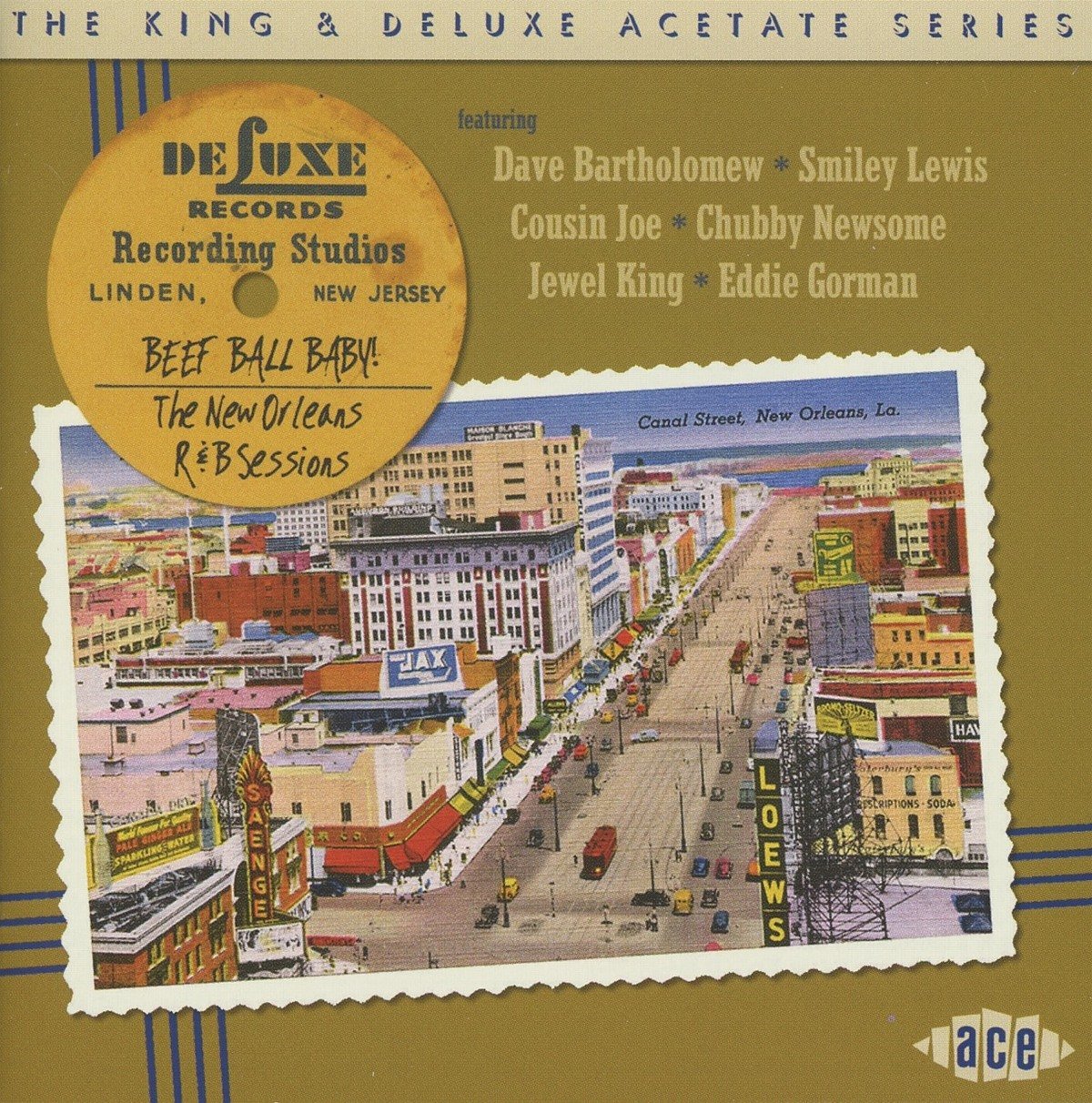
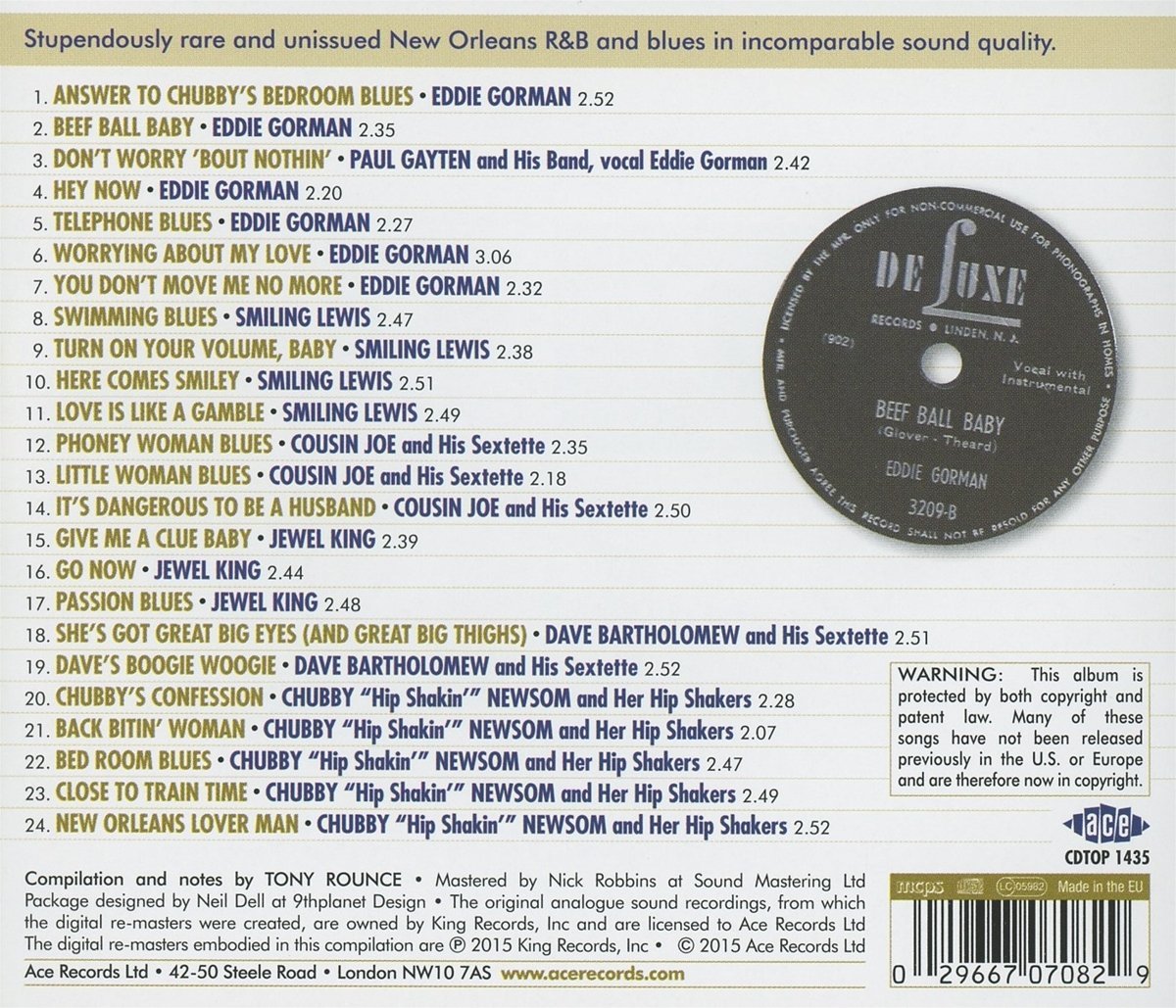
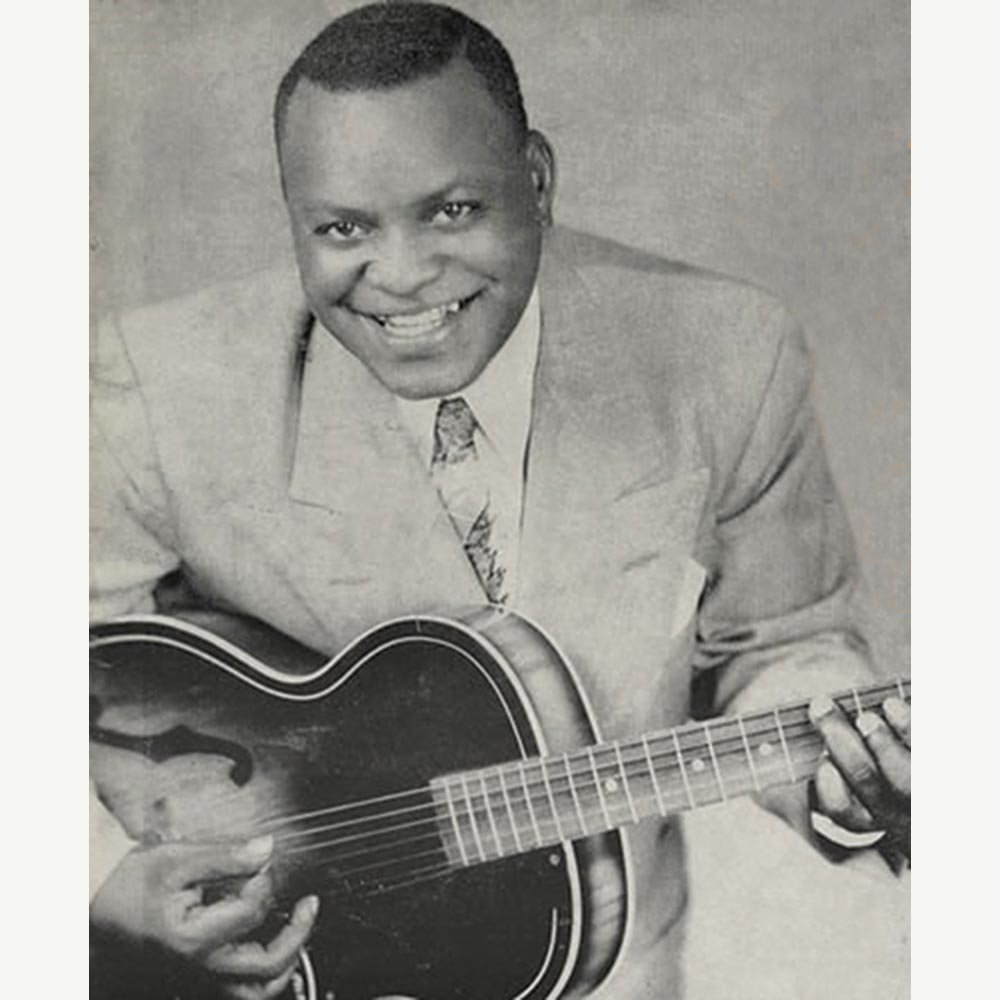
FIRE!-SHE SLEEPS, SHE SLEEPS.
FIRE!-SHE SLEEPS, SHE SLEEPS.
During the sixties and seventies, jazz musicians thought nothing of releasing two and sometimes three albums a year. Often albums were recorded in a few days. This included many a classic album, including John Coltrane’s A Love Supreme. Nowadays, recording an album can be a long, drawn out process.
That’s been the case since the advent of the home studio. No longer do artists have to hire a recording studio, and discipline themselves to record an album within a certain timeframe. Instead, it’s possible for artists to record an album at home. All they need is a laptop with a DAW and a handful of plug-ins installed plus a digital audio interface. Then they’re ready to record their Magnus Opus. However, often, things don’t go to plan.
When bands disappear into their home studio determined to record a career defining album, they’ve not a worry in the world. They’re happy not to be renting a studio by the hour. This means they can take their time honing, refining and tweaking even the tiniest detail.
Before the band realises it, days become weeks, and weeks become months. For some bands, months turn into a year, and often two. That’s not uncommon in the age of a home recording studio. However, while some bands take two years to record an album, the three members of Fire! have recorded five albums in seven years, plus another three albums with Fire Orchestra. It seems that the Mats Gustafsson , Johan Berthling and Andreas Werliin are the hardest working men in Swedish music.
Their latest album as Fire! is She Sleeps, She Sleeps, which was reissued on Rune Grammofon on 19th February. She Sleeps, She Sleeps was recorded in Stockholm in March 2015. By the time She Sleeps, She Sleeps was mixed during the summer of 2015, the three members of Fire! were back making music. There was no way that the members of Fire! would spend two years recording an album. They’ve recorded several albums during a two year period before, and will continue to do so.
Ever since Fire! released their debut album You Liked Me Five Minutes Ago on Rune Grammofon, in 2009, Mats Gustafsson ,Johan Berthling and Andreas Werliin have had to fit the project around their other musical commitments.
Reeds player and saxophonist Mats Gustafsson is the elder statesmen of Fire! He was born in 1964, and has been involved in the Swedish music scene since 1988. Since then, Mats Gustafsson has worked as a musician, arranger, composer, conductor and producer. He’s played and performed on over 200 albums. That’s just the tip of the iceberg.
Currently, Mats Gustafsson is a a member of jazz trio The Thing. However, over the past three decides Mats Gustafsson has collaborated with everyone from Jim O’Rourke to Sonic Youth and Lasse Marhaug. Then there’s the solo albums Mats Gustafsson has released. These solo albums and collaborations add another seventy albums to Mats Gustafsson’s C.V. However, he’s not the only member of Fire! with an impressive C.V.
Just like Mats, bassist Johan Berthling is a veteran of numerous bands. Previously, he’s been a member of Angles, Angles 9, Boots Brown, Nacka Forum, Ohayo, Pipeline, Sten Sandell Trio, Tape, The Godforgottens, The Tiny and Time Is A Mountain. Away from these bands, Johan has worked as a hired hand.
Johan has worked as an arranger, musician, producer and songwriter. Already, he has around 170 credits to his name. When Johan’s not working on other people’s albums, he runs a record label.
In 1999, John and Klas Augustsson founded the Häpna record label. It’s based in Stockholm, and has released nearly sixty releases. This includes albums by Tape, who released their eighth album Casino in 2014. Just like other members of Fire!, Johan has a voracious appetite for making music.
The same can be said of drummer and percussionist, Andreas Werliin. He was born in 1982, and is the youngest member of Fire! Although he’s only thirty-four, Andreas is almost veteran of Swedish music. Andreas has worked as an arranger, musician, singer, songwriter and producer. He’s happy to work as a hired hand, when not been working with the various bands he’s been a member of.
Among the groups that Andreas has played in, are Angles 9, Time Is a Mountain, Tonbruket and Wildbirds and Peacedrums. In both Angles 9 and Time Is a Mountain, Andreas is joined by Johan in the rhythm section. They’ve formed a formidable partnership, since Fire! released their debut album in 2009.
You Liked Me Five Minutes Ago.
You Liked Me Five Minutes Ago was Fire!’s debut album. It showcased what was a new and innovative approach to improvised music. Fire! stepped out of their comfort zone on You Liked Me Five Minutes Ago, seamlessly combining free jazz, psychedelic rock and noise. This was the perfect showcase for the three members of Fire!’s considerable musical skills. Critics were won over by Fire!, and forecast a bright future from the Swedish trio.
Unreleased?
Two years later, and Fire! returned with the first collaboration of their career. They had recorded four lengthy improvised pieces with Chicago born, but Tokyo based performer, composer and record producer. He was a veteran of countless collaborations since his career began in the late eighties. Now he was ready to hitch a ride with Fire!
When the album was ready for release in 2011, Fire! received star billing. Fire! With Jim O’Rourke Unreleased? was released on Rune Grammofon. This genre-melting album saw Fire! continue to push musical boundaries, taking the music in hitherto unexpected directions. The collaboration with Jim O’Rourke was regarded as an overwhelming success. So it was no surprise when another artist asked to collaborate with Fire!
In The Mouth-A Hand.
This time, it was Australian experimental electronic guitarist and percussionist, Oren Ambarchi. He was no stranger to collaborations, and previously, had worked a variety of artists, including Keith Rowe. Fire! agreed to the collaboration, and the result was the album In The Mouth-A Hand.
It featured another four lengthy, improvised tracks. This allowed Fire! and Oren Ambarchi to take the listener on a musical adventure, where musical genres and influences were combined. Three of the most prevalent influences were free jazz, noise and psychedelic rock. Just like previous albums, this was a crucial part of Fire!’s sound.
When In The Mouth-A Hand was released on Rune Grammofon, again, Fire! received top billing. They played a huge part in what was another important album collaboration. With Oren Ambarchi, Fire! had created another album of groundbreaking, innovative music. Despite this, Fire!’s next album wasn’t a collaboration. Instead, it featured just the three members of Fire!
(Without Noticing).
By the time, Fire! began work on (Without Noticing), they were regarded as one of the most exciting and innovative groups in the Nordic music scene. Fire! had released three albums in three years. Now they were four for four.
When (Without Noticing) was released on Rune Grammofon in 2013, it was hailed a career defining album. It was a fusion of free jazz and psychedelic rock via a more traditional rocky and jazz-tinged sound. Fire! weren’t afraid of pushing musical boundaries, and on (Without Noticing), continued to do so. This resulted in critically acclaimed reviews from critics. However, by then, Fire! had realised the limitations of a trio, and founded the Fire! Orchestra.
Exit.
In 2011, that the members of Fire decided to expand beyond the core trio. They hit on the idea to expand the group. The way Fire! did this, was to bring onboard the great and the good of Scandinavian jazz, improvisation and avant rock players and vocalists. They called this new musical venture Fire! Orchestra. It was a musical first in Sweden.
The newly named Fire! Orchestra were building on the music of some of the legendary free jazz big bands. This includes the big bands of Sun Ra, Charlie Haden’s Liberation Orchestra, Mike Westbrook and Mike McGregor. There was more to the Fire! Orchestra that free jazz. They incorporated funk, blues, rock and jazz. This became apparent when the Fire! Orchestra made their tentative first steps.
In the beginning, the Fire! Orchestra played just a handful of shows. They were finding their feet musically. Gradually, they were finding their sound. It’s best described as genre-melting and was showcased on their live debut album, Exit.
It was in 2013, when Fire! released their live debut album Exit. Released to widespread critical acclaim, Exit was a genre-melting sound that people wanted to hear more of.
Enter.
So after playing a couple of concerts early in January 2014, the Fire! Orchestra entered the Svenska Grammofonstudion, in Gothenberg on 10th January 2014. This wasn’t going to be a long session. Instead, the Fire! Orchestra took just one day to record Enter.
The result was an album of music that critics called innovative and progressive. Enter showcased the Fire! Orchestra in full flight. This was an impressive sound. Especially given their fusion of mesomorphic rock rhythms, funk, free jazz and the bluesy, soul-baring vocals of the Fire! Orchestra’s three vocalists. Add to this the scorching free jazz saxophone of Joe McPhee and Enter, has a potent, powerful and captivating sound; which succeeded in bringing back memories of musical luminaries like Sun Ra, Charlie Haden’s Liberation Orchestra, Mike Westbrook and Mike McGregor. So successful was Enter, that Fire! Orchestra released one more album.
Exit Again.
Just like Exit, Exit Again was another live album. The concert was recorded on 2nd September 2012 at Festival Les Rendez-Vous de L’erdre, in Nantes, France. Joining a slimmed down version of the Fire! Orchestra that night, was guitarist Oren Ambarchi. Joined the great and good of Scandinavian music for what was the Fire! Orchestra’s encore.
When Exit Again was released on 14th January 2014, it was a limited edition release. Only 500 copies of the Exit Again were released on vinyl. Again, the Fire! Orchestra in full flight was an impressive sound. On Second Exit Part One and Second Exit Part Two, the Fire! Orchestra showcase their considerable skills and seamlessly, switch between disparate musical genres. Somehow, it all makes sense, and has the listener wanting to hear more of the Fire! Orchestra. A new album is planned later in 2016. Before that, Fire released their new album She Sleeps, She Sleeps on Rune Grammofon.
She Sleeps, She Sleeps.
Work began on She Sleeps, She Sleeps back in March 2015. That’s when the three members of Fire! recorded the four songs they had written, and would produce.
Recording of She Sleeps, She Sleeps took place at Orionteatern studios in Stockholm. When the three members of Fire! began setting up their instruments. Drummer Andreas Werliin unpacked a lap pedal steel guitarist Andreas Werliin. Johan Berthling carefully tuned his trusty double bass. Mats Gustafsson arranged his tenor, baritone and bass saxophones. Meanwhile, Mikael Werliin was preparing to record the session. He also recorded cellist Leo Svensson Sander at Rud Studios, in Stockholm. Halfway around the world, in Melbourne, Australia, guitarist Oren Ambarchi laid down his parts for She Bid A Meaningless Farewell. Once the sessions were complete, the members of Fire! continued to make music with the various projects they were involved with.
Then in the summer of 2015, Mikael Werliin mixed what became She Sleeps, She Sleeps at Studio Oodion, in Gothenberg. All that was left was for Lupo to master the album at Calyx Mastering in Berlin. Once She Sleeps, She Sleeps was mastered, then Fire! could work towards a release date.
Eventually, She Sleeps, She Sleeps was scheduled for release on 19th February 2016, by Rune Grammofon. This was Fire!’s fifth album in seven years, and eight if the three albums by Fire! Orchestra were included. Mats Gustafsson, Johan Berthling and Andreas Werliin, it seemed, were the hardest working men in Swedish music. Their latest album was She Sleeps, She Sleeps, the long-awaited fifth album from Fire!
She Penetrates The Distant Silence, Slowly opens She Sleeps, She Sleeps. Dramatic bursts of music hang in the air, resonating, before dissipating, only to return. In the process, Fire! have succeeded in grabbing listener’s attention. Then hissing hi-hats, rolls of drums and a plucked bass propel the arrangement along. As the tempo rises, a braying saxophone takes centre-stage. It’s the star of the show. Slowly and carefully, Mats plays, choosing each note with the utmost care. Behind him, the rhythm section have kicked loose, and are into overdrive. Later, just cymbals and bass provide the backdrop for Mats’ saxophone. His playing is akin to a cathartic outpouring of hurt and heartache. What follows is like a free jazz confessional. By the six minute mark, Mats seems almost spent. He’s not though. His playing is like a musical equivalent of Primal Scream Therapy, before the track reaches a crescendo.
There’s an Eastern sound to the bells that chime on She Sleeps, She Sleeps. Meanwhile, the rest of Fire! march to the beat of Andreas’ drum. Slowly and thoughtfully, Johan plucks his bass adding to the moody, broody and understated soundscape. Cymbals crash, bells chime and gradually, a wailing sound grows in power. Soon, Mats’ droning saxophone drifts in and out. Still, understated describes the arrangement. Then Mats unleashes a growling saxophone. Gradually, it becomes melodic, as sounds flit in and out of the arrangement. Some make only a fleeting appearance, others stay longer. This includes Oren Ambarchi’s buzzing, droning guitar. Effects transform the dry sound, giving it an otherworldly, experimental sound. By then, Mats is combining power, passion and his determination to innovate as his saxophone plays the leading role. Behind him, the rhythm section create a hypnotic backdrop on this genre-melting epic, which features Fire! at their innovative best.
Rolls of drums open She Bid A Meaningless Farewell. It sounds as if Andreas’ drums have been multi-tracked, and the merest hint of delay seems to have been added to the double. This means he accompanies himself. Then the groaning saxophone and bass join. Usually, Mats’ saxophone dominates the arrangement. However, Andreas matches Mats all the way, and soon, it’s just the rhythm section that remain. They create a mesmeric, exotic and cinematic sounding arrangement, that sometimes, sounds as if it’s been influenced by world music.
Closing She Sleeps, She Sleeps is She Penetrates The Distant Silence, Slowly is a seventeen minute musical adventure. They’re in no hurry though. For nearly three minutes, it’s just a slow, moody bass that plays. Eventually, percussion and a droning saxophone are joined cymbals that are caressed. Gradually, though, the arrangement seems to have wakened from its slumbers. Bells ring and chime. So do cymbals. Drum rolls and the groaning, growling, howling saxophone combine. By 8.00, Mats is unleashing one of his best solos. It veers between moody, inventive and innovative to melodic. Behind him, the rhythm section lock into a hypnotic groove. Adding to the atmospheric, mesmeric sound is a droning, buzzing cello. It adds to the ominous sound of what sounds like the perfect soundtrack to a new Scandinavian drama or film noir. Fire! it seems, have kept the best until last on She Sleeps, She Sleeps, with what’s worthy of being described as a Magnus Opus.
Just like previous albums by Fire! and the Fire! Orchestra, the music on She Sleeps, She Sleeps is groundbreaking, influential and innovative. It’s music that should influence a new generation of Swedish musicians. Hopefully, they’ll decide to follow in the footsteps of Fire! and create music an album of captivating, progressive album of genre-melting music.
Key to the success of She Sleeps, She Sleeps is Fire!’s ability to seamlessly combine elements of avant-garde, experimental, free jazz, noise and psychedelic rock. Fire! are like a musical shaman, combining an eclectic and disparate selection of musical genres and influences. Playing a leading role in their potent musical potion, are mesomorphic rock rhythms and a braying free jazz saxophone. Opposites it seem, do attract, and indeed, are like a musical yin and yang on She Sleeps, She Sleeps, complimenting the other perfectly. It’s no surprise that She Sleeps, She Sleeps is Fire!’s finest hour.
The music on She Sleeps, She Sleeps veers between moody and broody, to dark and dramatic, through to hypnotic and mesmeric. Other times, the music is akin to a soul-baring confessional, where pain, hurt and heartache pours out of
Mats Gustafson’s saxophone. Then his playing is akin to a musical equivalent of Primal Scream Therapy. Once he’s seemingly exercised of demons, it’s all change, and often, the music becomes beautiful and melodic. Always, though, Fire!’s potent and powerful musical cocktail continues to captivate, and proves to be just as progressive and innovative on their latest album She Sleeps, She Sleeps.
FIRE!-SHE SLEEPS, SHE SLEEPS.
MIKE OLDFIELD-DISCOVERY-VINYL EDITION.
MIKE OLDFIELD-DISCOVERY-VINYL EDITION.
By June 1984, thirty-one year old Mike Oldfield prepared to release the ninth album of his career, Discovery which was recently reissued by on vinyl by UMC. This was the followup to 1983s Crises, which was Mike Oldfield’s most successful album of recent years. Crises was certified platinum in Germany and Sweden; and gold in Britain, France and Holland. This surpassed the success of his six previous albums. However, the roots of the success can be traced back to Five Miles Out, which Mike released in 1982.
Five Miles Out had been recorded during 1981 and 1982. Before the sessions began, Mike Oldfield had been thinking about the future. His albums were no longer as popular as they had once been. He discovered this in 1980.
QE2.
As the new decade dawned, a new Mike Oldfield seemed to have been born. His first album of the eighties, was very different from previous albums. It was a far certainly a far cry from the symphonic majesty of Tubular Bells, Hergest Ridge and Ommadawn. These were the albums that launched Mike’s career. Since then, his music continued to evolve.
QE2 was no different. However, a more than a few eyebrows were raised when QE2 featured cover versions of Abba’s Arrival and The Shadows’ Wonderful Land featured on QE2. It seemed Mike Oldfield was determined to reinvent his music.
He did this with the help of vocalist Maggie Reilly, who would become a familiar face on future Mike Oldfield albums. She made her debut on QE2, which was co-produced by Mike and David Hentschel, and scheduled for release in October 1980.
Before the release of QE2, the reviews were mixed. It was a long way from Mike Oldfield’s first three albums. Some critics went as far as to say that QE2 was the weakest album of Mike Oldfield’s six album career. Record buyers agreed.
When QE2 was released in 1980, it reached just number twenty-seven in Britain. Despite this, QE2 solid 100,000 copies and was certified gold. Elsewhere in Europe, QE2 didn’t sell in the same quantities as previous albums. The exceptions were Germany and Spain, where QE2 was certified gold. That was as good as it got. In America, QE2 stalled at number 174 in the US Billboard 200. While QE2 was Mike’s first album since 1975s Ommadawn to chart in the US, it was nothing to go overboard about. Far from it.
Mike Oldfield’s music at a crossroads. If he didn’t do something to address the problem, he risked becoming irrelevant. Gone were the days when prog rock was King and two lengthy musical movements appealed to music buyers. That was long gone. Times and music had changed, and not necessary for the better. Mike realised this and his music began to change direction on QE2. However, QE2 saw Mike heading in the wrong direction.
The problem Mike Oldfield faced, was that since the late seventies, music seemed to be in a constant state of flux. Fashion changed quickly. Musical genres seemed to fall quickly out of fashion. As a result, so did artists. Careers were becoming shorter. Mike who was just twenty-seven had already released six albums. However, he had to rethink his musical future. If Mike’s music didn’t change, he risked alienating a generation of record buyers.
While Mike Oldfield was popular within a certain age group, he wanted to appeal to younger record buyers too. This made sense. Those that had bought Mike’s albums in the early seventies were growing older. Many were married, with families and didn’t have the same money to spend on music. This was impacting on record sales. So Mike needed the new generation of record buyers to embrace his music. The “baby boomers” were the ones with the disposable income, who were buying albums. However, there was a problem with their perception of Mike’s music.
Many of the new generation of record buyers saw Mike Oldfield as the music their parents listened to. When they thought of Mike Oldfield, they thought of grandiose, symphonic music and of course, prog rock. That was the problem.
People’s perception of Mike was problematic. It also meant that a whole generation of record buyers were potentially overlooking Mike’s music. This was ironic because throughout his career, Mike Oldfield’s music evolved. It never stood still. Instead, Mike was a musical shapeshifter, who continued to reinvent his music. Sometimes, the changes were subtle; other times, they were more radical. Mike however never shied away from change.
He had changed direction on QE2. That hadn’t gone to plan. So it was time for a rethink, and a further reinvention of Mike Oldfield, It wouldn’t happen overnight. Instead, it would take three albums, and began on Five Miles Out.
Five Miles Out.
Before the recording sessions for Five Miles Out began, Mike Oldfield realised that his music had to evolve, or risk becoming irrelevant. It was like playing a game of high stakes musical poker. At stake was Mike Oldfield’s career. If his reinvention didn’t work, his career could be all but over. So Mike had to record an album that would appeal to a wider audience.
No longer could Mike record the symphonic albums of his past. That wasn’t what the record public wanted in the early eighties. With this in mind, Mike Oldfield decided his music should move towards a much more accessible pop style. Already Mike had introduced vocalists, cover versions and shorter songs. More changes were afoot for his seventh album Five Miles Out.
When Mike started recording Five Miles Out, synths, sequencers and drum machines were starting to replace real musicians. Mike had been using synths since 1979s Platinum, where he’d used a Roland SH-2000 and Sequential Prophet. For his seventh album Five Miles Out, Mike used a Fairlight CMI.
The Fairlight CMI was a digital sampling synth, which Mike Oldfield would put to good use on Five Miles Out. This lead to a change in style. Gone was the symphonic style of earlier albums. Replacing it, were short, poppy songs. Full of slick, poppy hooks, Mike Oldfield had tried to make his music more accessible, and succeed.
For some of his older fans, the stylistic change didn’t please them. They preferred the symphonic style of earlier albums. This was a step too far. Some went as far as to say Mike had sold out. was being a realist. If he didn’t change, he’d become irrelevant. His decision to change direction musically was vindicated.
Five Miles Out was well received by critics. Many of them embraced the stylistic change. Although a few critics yearned for the symphonic rock opus’ of the past, they realised music had changed. Mike had moved on, and in doing so, maybe won some of the younger record buyers who had previously, criticised his music.
The lead single from Five Miles Out was the title-track, which reached number forty-three in the UK. This gave Mike his first single in six years. Released in March 1982 Five Miles Out was Mike most successful album since 1975s Ommadawn. It reached number seven in the UK, where it was certified gold. Five Miles Out was certified gold in Germany and even reached number 164 in the US Billboard 200. Then when Mike released Family Man, which featured the vocals of Maggie Reilly, it reached number forty-five in the UK. Two hit singles and a gold disc in Britain, Five Miles Out marked the beginning of the reinvention of Mike Oldfield. It continued on Crises.
Crises.
For the followup to Five Milles Out, Mike Oldfield decided to appeal to fans old and new. The title-track filled side one, and was a twenty minute opus that his old fans would enjoy. It was written by Mike. The five short songs on side two showcased the “new” Mike Oldfield. This included Moonlight Shadow, Taurus 3 and Shadow On The Wall. The other two tracks were collaborations. Foreign Affair was written by Mike and Maggie Reilly, a frequent collaborator with Mike and regular guest vocalist. Jon Anderson of Yes, cowrote in High Places with Mike. These six tracks became Crises.
Crises was co-produced by Mike and Simon Phillip. Mike decided that it was best to stick with what was a winning formula. This meant hiring the best session musicians, for what the slimmed-down band that played on Crises. There was a reason for that. Mike was relying more on drum machines and synths. Many of the other instruments, Mike played himself. That was the benefit of being a skilled multi-instrumentalist. However, for backing vocals, Maggie Reilly, Jon Anderson and Roger Chapman of Family were drafted in. This was the personnel that featured on Crises, which was recorded at his own studio between November 1982 and April 1983. A month later, Crises was released.
On 27th May 1983, Crises was released to widespread critical acclaim. Crises picked up where Five Miles Out left off, reaching number six in the UK. This resulted in Mike’s third gold disc. Around Europe, Crises was a huge success, reaching the top ten in eight countries. In Sweden and Germany, Crises reached number one, and was certified gold in France, Germany and the Netherlands. In Germany, Spain and Sweden, Crises was certified platinum. Mike was back, with one of the most successful albums of his career. However, this wasn’t an end to the commercial success Mike would enjoy.
Moonlight Shadow which was chosen as the lead single from Crises, and reached number four in the UK. Elsewhere, it was a huge commercial success, reaching number one in eleven countries in Europe. For Mike, Moonlight Shadow was the biggest single of his ten year career. The second single was Shadow On The Wall, which featured Roger Chapman from Family on lead vocal, stalled at just number ninety-five in the UK. Despite that disappointment, Crises had been a huge commercial success, further vindicating Mike’s decision to change direction musically.
After the success of Crises, Mike Oldfield was hailed the comeback King. He had rescued his career, and by June 1984, was preparing to release his ninth album, Discovery, which was recently reissued by UMC.

Discovery.
By the time Mike Oldfield was ready to write what became Discovery, he was living as a tax exile. Home for Mike was Villars-sur-Ollon in the canton of Vaud, in Switzerland. That was where Mike Oldfield wrote and recorded what became Discovery.
For Discovery, Mike Oldfield wrote eight tracks. Mainly, they were short songs, apart from The Lake, which was twelve minutes long. However, compared to Mike’s early albums, The Lake was almost an excercise in brevity. Just like the rest of Discovery, The Lake was recorded in Villars-sur-Ollon.
Gone were the days when Mike would be joined by a full band. These days were in the past. Instead, just drummer Simon Phillips; and vocalists Maggie Reilly and Barry Palmer made their way to Villars-sur-Ollon. Mike a multi-instrumentalist, utilised both traditional instrumehts and technology. Seamlessly, Mike switched from acoutic and electric guitars to a bass and mandolin. He also used guitar and bass synths, and the Fairlight CMI. Mike who was an early adopter of the Fairlight CMI, used it for sampling and sequencing. Sonically, it was a far cry from Tubular Bells, Mike’s classc debut album. However, Mike new in his heart of hearts that his music had to contnue to evolve on Discovery. It was released on 25th June 1984.
Before the release of Discovery, critics had their say on Mike’s ninth album in eleven years. Mostly, the reviews were positive. Some critics preferred Mike’s “old” sound, and found some of the poppier songs too lightweight. However, Mike had been ecouraged to include the more poppy songs by Virgin Records.
They wanted another Moonlight Shadow. So Mike sat at his Fairlight CMI trying to compose another hit single. It wasn’t easy. Moonlight Shadow had taken eight years hard work. So the chances of lighting striking twice were slim. However, Mike had to be seen to appeasing his paymasters at Virgin Records. He knew that record buyers would have the final say. They may not be the arbiters of taste, but they certainly were the arbiters of popularity.
When Discovery was relased in Britain, it failed to replicate the sucess of Crises, reaching just fifteen. However, this was enough for another gold disc. Elsewhere in Europe, Discovery proved popular. It reached number one in Germany and Switzerland; number two in Holland; and number three in Austria, Norway and Sweden. This resulted in Discovery being certified platinum in Spain; and gold in France, Germany and Sweden. While Discovery didn’t quite replcate the success of Crises, the reinvention of Mike Oldfield ensured that his comeback continued.
That’s despite the singles not replicating the success of Moonlight Shadow. Mary, Queen Of Scots reached the top ten in eight European countries. In France it reached number one. However, in Britain, Mary, Queen Of Scote stalled at forty-eight. Tricks Of The Light failed to matche the success of Mary, Queen Of Scots. It reached just ninety-one in Britain and forty-six in Germany. By then, Discovery, the third album from the new Mike Oldfield, was well on its way to selling over a million copies in Europe.
Opening Discovery, is To France, a song about Mary, Queen Of Scots. Straight away, there’s a Celtic influence before eighties drums accompany Maggie Reilly’s heartfelt, emotoive vocal. Soon, guitars, bass and keyboards are provding the backdrop to Maggie’s vocal. She brings the lyrics to life, so much so, that it’s possible to imagine Mary fleeing, seeking sanctuary and safety. By then Maggie’s vocal is etheral, and at the heart of the arrangement. When it drops out, a keyboards, guitar, flugelhorn and drums replace the vocal. Insruments are introdced and just as importantly, withdrawn at the right moment. This includes a searing guitar that cuts across through the arrangement. It’s just the latest addition to this hook-laden fusion of pop and Celtic music, which features a vocal masterclass from Maggie Reilly.
A bass synths opens Poison Arrows, addimg an element of drama. Soon, drums pound deliberately and a guitar cheeps, and accompanies Barry Palmer’s dramatic vocal. Fear is in his voice as he warns: “someone’s out to get you, hiding in the shadows.” Rolls of drums, bass and later, blistering rocky guitars are added. They replace Barry’s vocal. Then Mike Oldfield is transformed into guitar hero. It’s the latest dramatic element. So are a pulsating bass synth and howls, which add to the cinematic nature of the track.
A crystalline guitar joins hypnotic drums on Crystal Gazing. It features the return of Maggie Reilly. Her elegiac, etheral vocal is swept along on the arrangement whichg now includes keyboards and synths. Then when the vocal drops out, a guitar gives way to a horn, before reaching a sudden ending. All that’s left is a pleasnt memory of Maggie Crystal Gazing.
Tricks Of The Light has a real eighties sound to it. The telltale signs are the drums, synths and even the bass. They provide the backdrop for Maggie and Barry, who share vocal duties. That’s despite not meeting until after Discovery was recorded. Their vocals are envloloped by synths and searing guitars. Harmonies augment the vocal, before Mike Oldfield makes another welcome appearance. He adds to the urgency, on what’s another catchy fusion of pop and eighties electronica.
Drums pound, while the blisterng guitar cuts through Discovery’s arrangement. Then when Barry’s vocal enters, it’s a throaty, impassioned roar. He delivers the lyrics with feeling, while banks of keyboards and synths joins machine guitars and ocasional harmonies. Barry’s vocal is a mixture of anger and frustration; especially when he asks: “how can you sleep, how can you turn away, thinking’s so cheap, some day you’ll pay.” By then, Mike Oldfield is firmly in fistpumping, stomping eighties anthem territitory. It’s a long way from Tubular Bells, and QE2, the album the nearly sunk the good ship Oldfield. Three albums later, and Discvery finds the new Mike Oldfield in calmer waters, having rediscovered his Midas Touch.
Talk About Your Life is an elegiac ballad featuring Maggie Reilly. She’s accompanied by a slow arrangement where synths and keyboards dominate. It provides the backdrop to a vocal that can only be described as ethereal. Gradually, the tempo quickens slightly, as different instruments are introdced. This includes a what could be a church organ and even guitar. They’re joined by harmonies, as the drama builds, and Maggie delivers an emotional and hearfelt vocal.
Saved By A Bell has a much more understated, dreamy arrangement. Mike deploys his synths, and they frame the vocal. Soon, the arrangenent begins to unfold. Drums are dropped in. So are the bass, guitars and bold keyboards. By now, the track has been transformed. It’s two sides of the same coin, which are part and parcel of the same song, which later, heads in the direction of an impassioned power ballad.
The Lake, a twlve minute track closes Discovery. It’s a nod to Mike’s older fans, who embraced his symhponic epics. Often, these albums only featured two lengthy tracks. For them, he offers up The Lake. Hpynotic see-saw synths are eventually joined by a dark, pulsating bass. Then Mike throws a curveball, and the arranegennt races away. Drums power the arrangement away, as it references Mike’s seventies heyday. At one point, there’s even a nod to Status Quo. Sci-fi are added, as Mike Oldfield takes the listener on a musical adventure. The arrangement veers between eerie and haunting, futuristic and cinematic. See-saw synths are joined by guitars as the track veers between grandiose and understated. By then, The Lake sounds like the soundtrack to a film that’s yet to be made. Later, Mike’s rocks along before the elgiac soundscape returns. It seems Mike Oldfield has kept the best to last, and at the same time, keeps his old fans onside.
That was important. Mike Oldfield couldn’t risk alienating his old fans. They had been buying his albums since Tubular Bells was released in 1973. Eleven years later, and Discovery was Mike’s ninth album. Many of his old fans had turned their back on Mike’s music. They didn’t like the lightweight, poppy sound. Instead, they preferred the symphonic, preogressive sound of Mike’s early albums.
Ever since QE2, many of Mike’s older fans felt neglected. Things had changed slightly on Five Miles Out, with its twenty-fove minute epic Taurus II. Then on Crises, the title-track was a twenty minute opus. Both albums featured the new and old Mike Oldfield. Mostly, though Mike’s older fans had t watch their onetime hero trying to win over a new generation of music lovers. Some of Mike’s old fans felt neglected and unloved. So on Discovery, he pampered his old fans with the twelve minute epic, The Lake. It was the nearest thing Mike Oldfield’s old sound. Ironically, The Lake was the best track on Discovery. However, there’s more to Discovery than one track.
From the opening bars of To France, right through to The Lake, Mike Oldfield and his friends captivate, and take the listener on a musical journey. Aided and abetted by Maggie Reilly, Barry Palmer and Simon Phillips, Mike Oldfield combines pop, rock and eighties electronica with progressive rock. The result is hook-laden album that should’ve appealed to Mike Oldfield’s fans old and new. As a result, Mike Oldfield’s comeback continued with Discovery, whcoh was recently reissued by on vinyl UMC. The sound quality is excellent, with great care and attention taken with the mastering. Nor is the music too loud. Too many albums have been wasted during the loudness wars. Not Discovery, which was released a crucial time in Mike Oldfield’s career.
It seems a longtime ago since Mike Oldfield stood at the musical crossroads. However, he didn’t make the mistake many musicians had made before, and changed direction. This ensured that Mike Oldfield’s career continued, and thirty years later, in 2014 Mike Oldfieled released Man On The Rocks, his twenty-fifth studio album. However, that might not have happened. Especially if Mike Oldfield hadn’t began to reinvent his on Five Miles Out. The reinvention of Mike Oldfield continued on Crises and was complete on his ninth studio album, Discovery.
MIKE OLDFIELD-DISCOVERY-VINYL EDITION.
SHAZAM! AND OTHER INSTRUMENTALS WRITTEN BY LEE HAZLEWOOD.
SHAZAM! AND OTHER INSTRUMENTALS WRITTEN BY LEE HAZLEWOOD.
During a career that spanned six decades, Lee Hazlewood was a singer, songwriter, musician and producer. He even founded his own record label LHI Records in 1967. By then, Lee Hazlewood had been involved with music since the the early fifties.
By then, Lee Hazlewood’s life was at a crossroads. He had just left the US Army, and had decided not to pursue his medical degree. Instead, Lee Hazelwood began work as a disc jockey. This was only temporary, he hoped.
What Lee Haeelwood really wanted to do with his life, was write songs. This must have seemed like a pipe dream to his friends and family. However, Lee Hazlewood had the last laugh. His songs were recorded by Duane Eddy, The Ventures, The Vanguards, Al Casey, The Astronauts, Jack Nitzsche, Rhythm Rockers and Hal Blaine and The Young Cougars. These artists all feature on Ace Records recently released compilation, Shazam! and Other Instrumentals Written By Lee Hazlewood. This twenty-four track compilation is a reminder of Lee Hazelwood’s skills as a songwriter. However, Lee Hazlewood was a latecomer to songwriting. His story began the year of Great Depression, 1929.
Lee Hazlewood was born in Mannford, Oklahoma on the 9th July 1929. During his early years, Lee and his family moved between Arkansas, Kansas, Oklahoma and Louisiana. Brought up on a diet of bluegrass and pop, Lee’s tastes broadened when his family moved to Texas. Music it seemed was in his blood. Despite that, Lee didn’t make a career out of music when he left high school.
No. On leaving high school, Lee headed to Dallas’ Southern Methodist University, where he decided to study medicine. After university, Lee joined the US Army during the Korean War. When he was discharged from the Army, Lee decided medicine wasn’t for him.
Instead, Lee took a job as a disc jockey. His reason for doing so, was it allowed him to work on his songwriting skills. Lee had decided to pursue a career in music. That didn’t mean spinning records. No. It meant writing them.
The first hit Lee wrote and produced was Sanford Clark’s 1956 rockabilly hit The Fool. That was just the start of Lee’s musical career. He went on to pen two more hits for Sanford Clark, 1956s Usta Be My Baby and 1957s The Man Who Made An Angel Cry. Lee then wrote Leroy Vandyke’s 1957s The Pocket Book Song and Pat Boone’s 1957 single Why Did I Choose You? However, Lee’s career really took off when he met innovative guitarist Duane Eddy.
Best known for his twangy guitar sound, Duane Eddy will always be remembered as a pioneering guitar player. With Lee Hazelwood writing and producing many of his singles, Duane Eddy went onto enjoy a successful career. Lee penned and produced 1958s The Walker, Rebel Rouser, Dixie Part 1 and Peter Gunn. Soon, Lee writing for other artists, including Sam Horn and His Orchestra, Mark Robinson and Das Hazy Osterwald Sextet. However, just like 1958, most of the hits he wrote were for Dune Eddy.
During 1959, Duane Eddy enjoyed a string of hit singles. Forty Miles of Bad Road, Only Child, The Quiet Three and Shazam. Duane Eddy was now one of the biggest names in music. Although Lee had to keep the hits coming for Duane, he penned singles for Hans Brandel and Sanford Clark. This was no bad thing, as the hits started drying up for Duane Eddy.
1960 saw Duane Eddy release just three singles, one of which Rebel Walk, had been released before. Luckily, Lee was writing for other artists including Paul Rich, Tony Castle and Greg Connors. Another artist who’d release a single during 1960 was Lee Hazlewood.
Lee’s debut single was Words Mean Nothing. which Lee recorded with Duane Eddy and His Orchestra. It wasn’t a commercial success, so Lee went back to songwriting and production. However, Lee had enjoyed a tantalising taste of life as a recording artist. His return to songwriting and production was only going to be temporary.
For the next three years, Lee Hazlewood was busy working as songwriter and producer. During 1961, Lee worked penned songs for Tom and Jerry, Donnie Owens, Tony Gunner and Bud Ashton and His Group. Then in 1962, Duane Eddy enjoyed a string of hit singles. With The Shadows and The Ventures recording songs written by Lee, Lee Hazelwood could’ve continued to enjoy a career as a successful songwriter. He didn’t.
Instead, Lee decided to relaunch his solo career. He signed to Mercury and began work in what was his 1963 debut album, Trouble Is A Lonesome Town. This was first album of Lee’s five decade recording career. However, despite release over twenty solo studio albums, still many people remember Le for the songs he’s written for other people. This includes the artists on Shazam! and Other Instrumentals Written By Lee Hazlewood.
Fittingly, Duane Eddy’s Shazam opens Shazam! and Other Instrumentals Written By Lee Hazlewood. It’s one of four tracks Lee penned and produced for Duane Eddy on the compilation.
The earliest song from Duane Eddy is the moody sounding Stalkin’ the B-Side of Rebel Rouser, which was released on Jamie in 1958. It reached number six in the US Billboard 100 and number nineteen in the UK. It’s a track from the 1958 album Have “Twangy” Guitar Will Travel. Then in late 1959, Duane Eddy released one of his best known songs, Shazam.
When Shazam was released on Jamie, it fared better in the UK than the US. While the single stalled at forty-five in the US Billboard 100 in Spring 1960, Shazam soared to number four in the UK. Since then, Shazam, with its nod to Captain Marvel, is regarded as an instrumental classic. By the time Duane Eddy released his next contribution Shazam! and Other Instrumentals Written By Lee Hazlewood times, and indeed music had changed.
Eight years later, in 1968, Duane Eddy was signed to Reprise. He hadn’t enjoyed a hit since 1964, when The Son of Rebel Rouser reached a lowly ninety-seven in the US Billboard 100. Still, thought, Lee Hazelwood continued to produce Duane Eddy, For his next single When There Is A Mountain was chosen, and released as a single on 31st January 1968, Again, the single never troubled on the charts. Hidden away on the B-Side was the moody, atmospheric and cinematic sounding This Town. It’s a hidden gem that again, shows another side to Duane Eddy.
Al Casey contributes a two tracks to Shazam! and Other Instrumentals Written By Lee Hazlewood. The first is The Stinger, which Al Casey and Lee cowrote. It was
released in 1958 on the Highland label, and later, on United Artists. The Stinger is the perfect showcase for Al Casey’s surf guitar. He was a hugely talented guitarist. So much so, that he quickly became Lee Hazelwood’s go-to guitarist for sessions. Five years later, and Al Casey returned with another slice of surf music, Surf’s You Right. Instead of being released as a single, Surf’s You Right found its way onto Al Casey’s debut album Surfin’ Hootenanny. Sadly, it was also the only album the prodigiously talented guitarist released.
Tony Castle was another of the session guitarists Lee had on speed dial. If Al Casey wasn’t available, Tony Castle got the call. However, in February 1961, Tony Castle and The Raiders released Salty as a single on the Gone label. It was written by Lee Hazlewood, who produced Salty with Lester Sill. Salty sees Tony Castle and The Raiders paying homage to Duane Eddy with whoops, hollers and a blistering saxophone solo.
The Astronauts were a surf group from Boulder, Colorado. They were formed in 1960, and initially, called The Stormtroopers. When RCA saw the success that the Beach Boys were enjoying, they signed The Astronauts. Soon, RCA’s latest signing were enjoying a degree of success.
In 1963, The Astronauts released K U K as a single. On the flip side was Movin’, which also featured on their debut album Surfin’ With The Astronauts. Movin’ was a hidden surf gem, that was too good for a B-Side. It featured a surf group that were a cut above the competition. It looked like the future was bright for The Astronauts.
Then in 1964, music changed, when the British Invasion arrived. By the time they released their third album Competition Coupe, in 1964, The Astronauts music began to fall out of favour. As a result Competition Coupe wasn’t a commercial success, and record buyers missed out on sparking slices of surf like El Aguila (The Eagle) and The Hearse.
In 1963, drummer Hal Blaine, a future member of the legendary Wrecking Crew, was a session musician. Producers all over L.A. had his number in their contacts book. However, by 1963, the hot rod and surf songs instrumentals filled the charts. Hal Blaine decided he wanted a piece of the action, and formed Hal Blaine and The Young Cougars, who would cash in on the hot rod sound.
Hal Blaine and The Young Cougars teamed up with Lee Hazlewood. He wrote and produced Challenger II, which was released as a single on RCA Victor in 1963. Challenger II also featured on the 1963 album Deuces, T’s, Roadsters and Drums. So does The Phantom Driver another track penned and produced by Lee Hazlewood. Just like Challenger II, The Phantom Driver epitomises everything that’s good about the hot road sound.
Jack Nitzsche was born in the Windy City of Chicago, but brought up in Michigan. Growing up, he learnt to play piano, clarinet and saxophone. When Jack Nitzsche was eighteen in 1955, he moved to Hollywood. By 1961, Jack Nitzsche found himself sharing an office with Lee Hazlewood. Two years later, Jack Nitzsche recorded Baja, a Lee Hazlewood composition.
Baja was one of twelve tracks Jack Nitzsche recorded his debut album The Lonely Surfer. It was released on Reprise Records in 1963, and saw Jack Nitzsche combine surf and lounge. Dramatic and cinematic describes Baja, which was produced by Jimmy Bowen. Then in 1964, Jack Nitzsche recorded another Lee Hazlewood composition.
Zapata was chosen as the flip side to Theme From The Long Ships. Again, it was produced by Jimmy Bowen, and released on Reprise Records in 1964. Just Baja, Zapata has a cinematic sound, and wouldn’t sound out of place on the soundtrack to a Spaghetti Western.
The Ventures recorded a cover of the Duane Eddy and Lee Hazlewood composition Rebel-‘Rouser in 1964. For some reason, it wasn’t released until 1967, when it featured on the compilation Golden Greats By The Ventures. By then, The Ventures weren’t enjoying the same popularity as they had earlier in the decade. However, their music was still as good as it had always been.
As the lyrics to King Of The Surf Guitar say, “Dick Dale is the King Of The Surf Guitar.” That’s apparent from Angry Generation a track Dick Dale and His Del-Tones recorded in 1965. Penned by Lee Hazlewood this version is taken from the 1965 album Rock Out With Dick Dale and His Del-Tones Live At Ciro’s. It’s a tantalising taste of what the King Of The Surf Guitar is capable of.
In 1966, Frenesi (Cancion Tropical) was released as a single on MGM Records. It was credited to Lee Hazlewood Woodchucks. What those that heard the single didn’t realise, is the group didn’t exist. Instead, Lee Hazlewood had drafted in members of the Wrecking Crew to recorded two treacks. This included the B-Side Muchacho, a Mexican sounding arrangement which has a dramatic, cinematic sound.
The Vanguards instrumental version of A Stranger In Your Town sounds as if it was recorded in New Orleans. It was written by Lee Hazelwood and Marty Cooper, who like Jack Nitzsche, was a member of The Shaklefords. Marty Cooper also produced what was a delicious fusion of Dixieland, Cajun, folk and country.
The Afro Blues Quintet’s Some Velvet Morning closes Shazam! and Other Instrumentals Written By Lee Hazlewood. It’s very different from the other tracks on the compilation. This is a track from The Afro Blues’ Next Album. It was released in 1968, on Mira Records. Producers George Steel and Randall Wood, this Lee Hazlewood composition a wistful, jazz-tinged sound. Literally, the arrangement sashays along, all the time heading in the direction of Latin jazz. Although very different to the rest of the songs on Shazam! and Other Instrumentals Written By Lee Hazlewood, Some Velvet Morning has one thing in common…it oozes quality. That’s thanks to Lee Hazlewood skills as a songwriter.
On Shazam! and Other Instrumentals Written By Lee Hazlewood, it’s not just Lee’s songwriting skills that are showcased, but his talents as a producer. Lee Hazlewood started out as a producer in the late fifties, when equipment was very basic. It was a far cry from what the equipment he used later in his career. Still, though, Lee Hazlewood was able to create groundbreaking music.
This was the case from his work with Duane Eddy, right through to the music he created during the surf and hot rod crazes. It seemed Lee Hazelwood knew how to make the most of the basic equipment found in studios. What he produced, left other producers scratching their head. They wondered how they could create similar results? Other songwriters were in a similar boat.
They watched as Lee Hazlewood penned hit after hit. Duane Eddy, The Astronauts and The Ventures were all beneficiaries of Lee’s songwriting skills. So were Nancy Sinatra and Dean Martin. Later, Lee wrote for Frank and Nancy Sinatra. Then later in his career, Lee Hazlewood’s music was discovered by a new breed of indie rockers.
Suddenly, Primal Scream, the Jesus and Mary Chain, Beck, Nick Cave and Einstürzende Neubauten all recorded Lee Hazelwood’s songs. Ironically, Lee Hazlewood had written and recorded his first songs before many of these artists were even born. It seemed that Lee Hazelwood’s music appealed to artists of all generations. That’s not surprising.
Much of the music Lee Hazlewood wrote and produced has a timeless quality. It sounds just as good as did, when it was first recorded in the fifties and sixties. That’s apparent when one listens to Shazam! and Other Instrumentals Written By Lee Hazlewood, which was recently released by Ace Records.
SHAZAM! AND OTHER INSTRUMENTALS WRITTEN BY LEE HAZLEWOOD.




JERRY LEE LEWIS-COUNTRY CLASS AND COUNTRY MEMORIES.
JERRY LEE LEWIS-COUNTRY CLASS AND COUNTRY MEMORIES.
March 12th 1968 will forever be a date that looms large in Jerry Lee Lewis’ memory. That was the day when he released his first country single, Another Place, Another Time. Soon, it was climbing the US Country charts, and reached number five. This was the start of a new era in Jerry Lee Lewis’ career, and marked the end of what had been a frustrating time for him.
Before Jerry Lee Lewis decided to head to Nashville and reinvented himself as a country singer, his career had stalled. He couldn’t buy a hit. To make matters worse, his contract with Smash Records was almost over. He had to do something to get his career back on track.
Jerry Lee Lewis was one of the great survivors of the music industry. He had been stuck behind the black ball before. However, Jerry Lee Lewis never gave up, and aways seemed to manage to rescue his career. Critics weren’t willing to bet against Jerry Lee Lewis getting back to the top again.
Four years earlier, in 1964, Jerry Lee Lewis was on the comeback trail. He was still seeking redemption. Persona non gratis in his home country, Jerry Lee Lewis was trying to rebuild his tattered reputation in Europe. So, in 1964, Jerry and The Nashville Teens had agreed to appear at The Star Club, Hamburg. That night, Jerry powered his way through thirteen tracks. It was a peerless performance, which was recorded for posterity.
Later in 1964, that legendary concert was released as Live at the Star Club, Hamburg. Released to critical acclaim, Live at the Star Club, Hamburg was a tantalising reminder of of what the man they called The Killer, was capable of. However, to many Americans, Jerry Lee Lewis was still persona non gratis. They never could, and never would forgive him, never mind buy his records.
This presented a problem, Jerry Lee Lewis had signed to Smash Records in 1963. He regularly released rock recordings over the next four years, but they failed to find an audience. It was a far cry from the early days of his career when Jerry Lee Lewis was one of the biggest selling American artists. Something had to change.
That’s when Jerry Lee Lewis decided to reinvent himself as a country singer. This was a masterstroke, and resulted in the man they called The Killer beginning his climb to the top.
Soon, Jerry Lee Lewis was hot property again. So much so, that in 1969, Shelby Singleton, his former producer at Smash Records, went so far as to purchase Sun Records from Sam Phillips. The big attraction was Jerry Lee Lewis’ country recordings.
Over the next few years, three or four Jerry Lee Lewis albums were repackaged. Many unsuspecting record buyers thinking that the albums were new releases, bought them. Little did they know, that Jerry Lee Lewis had recorded them years before, when his career was in the doldrums. Not any more.
By 1970, Jerry Lee Lewis was signed to Mercury Records. He was well on the way to becoming one of their most prized assets. The Killer was back, and well on his way to becoming a country music icon. His redemption may not be complete in the eyes of many Americans, but Jerry Lee Lewis was about to enjoy one of the most successful periods of his career.
Between 1970 and 1973, Jerry Lee Lewis’ popularity soared. He was one of the biggest selling country artists. He enjoyed fourteen top twenty US Billboard Country singles, including four number ones. That was just the tip of the iceberg.
Eleven of Jerry Lee Lewis’ albums reached the top twenty in the US Billboard Country charts. Eight of these albums charted in the US Billboard 200. It looked like Jerry Lee Lewis going to be an ever-present at the top of the country charts.
I-40 Country.
That was until 1974, when Jerry Lee Lewis released the album I-40 Country. It wasn’t well received by critics, and stalled at number twenty-five in the US Billboard Country charts. Those that seemed desperate for Jerry Lee Lewis to fail, forecast that his career was about to stall. However, the two singles released from I-40 Country reached the top twenty in the US Billboard Country charts. Tell Tale Signs reached eighteen and He Can’t Fill My Shoes number eight. Given the success of the singles, maybe the ‘lowly’ chart position of I-40 Country was a mere hiccup?
Boogie Woogie Country Man.
That’s what it looked like. When Jerry Lee Lewis released Boogie Woogie Country Man in 1975, it reached number sixteen on the US Billboard Country charts. The lead single from Boogie Woogie Country Man, I Can Still Hear The Music In The Restroom, reached number thirteen in the US Billboard Country charts. However, when the title-track was released as a single, it reached just twenty-four in the US Billboard Country charts. While this wasn’t disastrous, it was enough to worry executives at Mercury Records.
Jerry Lee Lewis’ last two albums hadn’t reached the top ten in the US Billboard Country charts. After six consecutive top ten albums, executives at Mercury Records couldn’t ignore the commercial failure of I-40 Country and Boogie Woogie Country Man. After all, Jerry Lee Lewis had been one of Mercury Records’ success stories. He was one of the biggest selling country artists of the late-sixties and early seventies. Surely, this wasn’t the end of another chapter in Jerry Lee Lewis’ career?
Odd Man In.
Later in 1975, Jerry Lee Lewis released Odd Man In, an album of cover versions. Shake, Rattle and Roll, Leadbelly’s Goodnight Irene, Crawdad Song and Hank Williams’ Your Cheatin’ Heart were some of the songs Jerry Lee Lewis had chosen to cover. They were recorded in Nashville with producer Jerry Kennedy and a crack band of session musicians and backing vocalists. Their addition was to sweeten the sound of Jerry Lee Lewis’ vocal.
When Jerry Lee Lewis had arrived at the studio, it was apparent his voice wasn’t in good shape. Some onlookers feared his vocal was shot. It seemed that years of hard living had caught up with The Killer. Once the album was recorded, executives at Mercury Records held their breath as Odd Man In was released.
Just like Boogie Woogie Country, Odd Man In wasn’t well received by critics. Record buyers didn’t rush out to buy Odd Man In. It stalled at just thirty-three on the US Billboard Country charts. This was the worst chart placing since Country Songs for City Folks in 1965. To rub salt into the wound, even the singles bombed.
A Damn Good Country Song reached a lowly sixty-eight in the US Billboard Country charts. Don’t Boogie Woogie fared slightly better, reaching fifty-eight in the US Billboard Country charts. For Jerry Lee Lewis, this was a disaster.
After three albums that hadn’t sold well, Jerry Lee Lewis’ career was at the crossroads. It was crucial that his next album was a commercial success. So in December 1975, Jerry Lee Lewis went into the studio to record most of his next album Country Class. It’s been paired with the followup Country Memories, for a reissue on the one disc by BGO Records on 19th February 2016. With Country Class and Country Memories feature another comeback from Jerry Lee Lewis?
Country Class.
In December 1975, Jerry Lee Lewis began to work on the followup to Odd Man In. It was hoped that things would improve for Jerry Lee Lewis. Since he recorded Odd Man In, he had undergone an operation on his sinuses. No longer would Jerry Lee Lewis have to rerecord vocals. Nor would there be complaints about the standard of his vocals. For The Killer, it was hopefully, a new beginning.
For this new beginning, Jerry Lee Lewis returned to the music of his roots, and decided to cover songs made famous by some of the greats of country music. This included three songs synonymous with Hank Williams. They were Mel Foree and Fred Rose’s No One Will Ever Know; Old Country Church and Claude Boone’s Wedding Bells. Another country standard was The One Rose (That’s Left in My Hand). It had been recorded by many artists, but Jerry Lee Lewis wanted to pay homage to Gene Autry and Jimmie Rodgers’ versions. These country standards were joined by a trio of tracks penned by Jerry Foster and Bill Rice.
They contributed Let’s Put It Back Together Again, After the Fool You’ve Made of Me and Jerry Lee’s Rock and Roll Revival Show. The other tracks chosen for Country Class were Mack Vickery’s I Sure Miss Those Good Old Times; Bob McDill’s Closest Thing to You; After The Fool You’ve Made Of Me and Only Love Can Get You in My Door. These songs would recorded in the country music capital, Nashville, Tennessee.
Recording of Country Class took place at US Recording Studios, Inc, Nashville. This time around, two producers were used. Charles Fach recorded three tracks, and Jerry Kennedy the other eight. Cam Mullins was drafted in to arrange the strings and horns on three tracks. Along with a crack band of session players, everything was in place for Jerry Lee Lewis’ comeback.
Many of the songs were cut during the December 1975 sessions. However, Jerry Lee Lewis had to return to the studio in May 1976. Soon, ten songs were completed. The finishing touch was another cover of a song from country music’s past, You Belong To me. It was penned by Pee Wee King, Chilton Price and Redd Stewart, and had been recorded in 1969. Somewhat belatedly, it was about to make its debut on Country Class.
When Country Class was released, critics called the album a return to form from Jerry Lee Lewis. Some critics pointed at the noticeable improvement in the quality of his vocals. Critics who said Jerry Lee Lewis’ vocal was shot were wrong.
The operation to Jerry Lee Lewis’ sinuses had improved his vocal no end. He delivered some of his best vocals of recent years. Especially on Country Class’ ballads. Heartfelt, emotive, soulful and impassioned, described his delivery. What also helped that Jerry Lee Lewis had the right material to cover.
When he covered No One Will Ever Know, Old Country Church and Wedding Bells it was as if Jerry Lee Lewis wanted to make Hank Williams proud. Jerry Lee Lewis’ reading of Wedding Bells was wistful and full of hurt and heartache. It’s as if he’s lived the lyrics. Then On The One Rose (That’s Left in My Hand), he continues breathes life and meaning into the lyrics. Equally heartfelt was the 1969 cover of You Belong to Me and the album closer Closest Thing to You. However, another of the highlights of Country Class saw The Killer change direction,
Jerry Lee’s Rock and Roll Revival Show, sees The Killer kick loose on what’s a slice of good time music. This was the perfect showcase for Jerry Lee Lewis’ piano playing skills. It features a musical masterclass from The Killer. By then, it was obvious that Jerry Lee Lewis was back on form. However, would record buyers agree?
After three disappointing albums, the big question was, would record buyers stay true to Jerry Lee Lewis? Fortunately, for Jerry Lee Lewis his fans gave their hero one more chance, and Country Class reached number sixteen in the US Billboard Country charts. While this was a far cry from his glory days, it was a vast improvement on Odd Man In. So were the singles.
Let’s Put It Back Together Again reached number six in the US Billboard Country charts. This was Jerry Lee Lewis’ most successful single since Sometimes a Memory Ain’t Enough in 1973. The followup single, The Closest Thing to You didn’t fare as well, and stalled at just twenty-seven on the US Billboard Country charts. Despite this, it was a vast improvement on the singles released from Odd Man In. Things were looking good for Jerry Lee Lewis, as his latest comeback continued.
That was until September 29th 1976. Butch Owens, Jerry Lee Lewis’ bass player was celebrating his forty-first birthday. Everything was going fine until Jerry Lee Lewis began fooling with a Colt .357. Suddenly, the gun accidentally went off in his hand, and in the process, nearly killed Butch Owens. Luckily, the bassist survived. However, less than two months later, Jerry Lee Lewis had another controversial encounter with a gun.
On 23rd November 1976, Jerry Lee Lewis was in Vapors nightclub, Memphis. He had spent much of the day trying to bail his father out of jail, on a drink-driving charge. By the evening Jerry Lee Lewis was drinking champagne in Vapors. By the time someone handed him a gun, Jerry Lee Lewis was drunk. It was then that he remembered that Elvis Presley wanted him to visit Graceland.
So Jerry Lee Lewis left Vapors, and climbed into his Lincoln Continental. As he drove off, his pistol sat on the dashboard and he had a bottle of champagne under his arm. With Jerry Lee Lewis at the wheel, the Lincoln Continental raced off, and when it reached Graceland at 3am, crashed into the gates. Manning the gate that night, was Elvis Presley’s cousin Harold Lloyd. Jerry Lee Lewis climbed out the car carrying the bottle of champagne. Then for some reason, The Killer decided to hurl the bottle through the car window. The only problem was, the window was shut. Meanwhile, an alarmed Elvis Presley watched all this play out. Eventually, he told the Graceland guards to call the police.
When the police arrived, and realised that it was Jerry Lee Lewis who had crashed into Graceland’s gates, they asked ‘The King’ what they should do? His reply was “lock him up.” This seemed strange as Jerry Lee Lewis was a friend of Elvis Presley. He watched as Jerry Lee Lewis was arrested, cuffed and taken to the police station.
It was there that things went from bad to worse. Jerry Lee Lewis was charged not just with public drunkenness, but with carrying. Eventually, he was released on a $250 bond. By the following day, newspapers were carrying the story of Jerry Lee Lewis’ arrest. It was the latest controversy in The Killer’s career. Just as things were going so well. How would this affect Jerry Lee Lewis’ comeback?
Country Memories.
After the Graceland controversy, Jerry Lee Lewis seemed to be lying low. There was no sign of him beginning work on the followup to Country Class during the first half of 1977. I entered the studio since May 1976. It wasn’t until the 3rd of August 1977, Jerry Lee Lewis began recording what became Country Memories. By then, an era was about to end.
Jerry Kennedy had been Jerry Lee Lewis’ producer for many years. They had been working together since 1963, and had played a part in Jerry Lee Lewis’ two comebacks. However, their final album together would be Country Memories.
For Country Memories, Jerry Lee Lewis had chosen eleven tracks. This included the classics Georgia on My Mind and Who’s Sorry Now. One of The Killer’s favourite songwriting teams seemed to be Jerry Foster and Bill Rice. They contributed (You’d Think By Now) I’d Be Over You and the title-track. The others songs were a mixture of old, blue and new songs.
One of the new songs was Sonny Throckmorton’s Middle Age Crazy. Other tracks included Jimmie Skinner and Ernest Tubbs’ Let’s Say Goodbye Like We Said Hello; Jenny Carson’s Jealous Heart; Bobby Braddock’s Come on In; Dorsey Burnette’s As Long as I Live; Bob McDill’s What’s So Good About Goodbye and Billy Hughes’ Tennessee Saturday Night. These tracks would be recorded in Nashville, over two days.
The recording began on the 3rd of August 1977, and by the 4th of August, the eleven tracks had been cut. Country Memories was the quickest album that Jerry Lee Lewis had recorded in recent years. Would this affect the reviews of Country Memories?
That wasn’t the case. When reviews of Country Memories were published in November 1977, critics were won over by Jerry Lee Lewis’ latest album. Billboard called the music “smooth and spirited.” It was the critic said a “potent collection” containing “a rock number to classic steel and fiddle tunes and country ballads.” This described what was a polished collection from the comeback King.
Throughout Country Memories, Jerry Lee Lewis seems back to his best. His vocal is fully recovered, and is more reminiscent of the early years of his country career. Jerry Lee Lewis’ vocals are much more considered, and bring something new to oft covered classics like Georgia On Mind and Whose Sorry Now. His reading of the Jenny Carson penned Jealous Heart oozes emotion. So does (You’d Think By Now) I’d Be Over You which features a wistful, heartbroken vocal from The Killer. Let’s Say Goodbye Like We Said Hello manages to be both hopeful and hurt-filled. However, one of the most successful and indeed poignant songs from Country Memories was the Sonny Throckmorton penned Middle Age Crazy.
Rather than featuring The Killer on piano, Middle Age Crazy features the legendary blind session player Hargus “Pig” Robbins. He laid down his part before Jerry Lee Lewis arrived at the studio. When he arrived, The Killer wasn’t looking wasn’t looking well. Despite that, he laid down the song about a man wanting to live forever. However, not long after this, Jerry Lee Lewis was admitted to hospital for the first, but not the last time. It seemed like three decades of hard living and making music were catching up on him.
Over the years, The Killer was regarded as one of the hardest living men in music. He drank, smoked cigars and popped pills. This caught up on him. By the time Country Memories was released, Jerry Lee Lewis suffered from stomach tears and ulcers which had began to bleed. It seemed Jerry Lee Lewis’ stomach was just one drink or pill away from haemorrhaging. To make matters worse, Jerry Lee Lewis was becoming hoarse. All the years of constant touring were taking their toll. However, when Country Memories was released, there was no sign of this.
When Country Memories was released in late 1977, it reached number twenty-one in the Billboard Country charts. While the album wasn’t as successful as Country Class, the singles were.
Middle Age Crazy was chosen as the lead single, and reached number four in the Billboard Country charts. This was Jerry Lee Lewis most successful single, since his number one single Chantilly Lace in 1972. Come On In was chosen as the followup to Middle Age Crazy, and reached number ten in the Billboard Country charts. For Jerry Lee Lewis two top ten singles and a top thirty album meant that the comeback continued.
Those that written Jerry Lee Lewis off, realised they do so at their peril. The Killer had been down and out before, but twice had made a comeback. Country Class was the start of the third comeback of his career. It continued on Country Memories, which was the final album Jerry Kennedy produced for Jerry Lee Lewis. The veteran producer had bowed out in style.
He had produced two critically acclaimed albums, Country Class and Country Memories, which have been remastered, and will be reissued on one CD by BGO Records on 19th February 2016. These two albums feature Jerry Lee Lewis, the comeback King as he rolls back the years.
Still Jerry Lee Lewis was one of country music’s hottest properties. Country Class and Country Memories recused the career of the one time rock ’n’ roller turned country singer. Jerry Lee Lewis seemed to have nine musical lives, and despite a controversial and sometimes chaotic private life, continued to produce albums of the quality of Country Class and Country Memories.
JERRY LEE LEWIS-COUNTRY CLASS AND COUNTRY MEMORIES.

SAINT ETIENNE PRESENT SONGS FOR THE CARNEGIE DELI.
SAINT ETIENNE PRESENT SONGS FOR THE CARNEGIE DELI.
Back in 1984, Woody Allen wrote, directed and starred in the black and white comedy, Broadway Danny Rose. Part of the film takes place over lunch in New York’s famous Carnegie Deli. It’s situated at 854 7th Avenue, and has been called the:”most famous” deli in the United States” by USA Today. Quite simply, The Carnegie Deli is a culinary institution. That’s why many visitors to the Big Apple beat a path to its door. This included Bob Stanley of Saint Etienne in 1991.
Bob Stanley had heard of the legendary deli, and promised himself that on his next visit to New York, he was going to eat at The Carnegie Deli. He wasn’t disappointed. It was everything he expected, and much more. This set Bob Stanley thinking, what kind of music was played in The Carnegie Deli, and similar diners over the years?
Soon, Bob Stanley’s mind was racing as he thought of songs that might, at one time, have provided a backdrop to life in a New York diner. Before long, Bob Stanley had a list of possible song that might provided the soundtrack to life in The Carnegie Deli. However, this was a purely academic exercise. Nothing he thought would come of it.
That was until Ace Records asked Bob Stanley and Pete Wiggs to compile Saint Etienne Presents Songs For The Carnegie Deli. This twenty-four track compilation was recently released by Ace Records and features sleeve-notes from Bob Stanley. He and Pete Wiggs have provided what could easily have been the soundtrack to life in The Carnegie Deli over the years.
When compiling Saint Etienne Presents Songs For The Carnegie Deli, Bob Stanley and Pete Wiggs delved into the vaults of Smash, United Artists, Wand, Big Hill, Sue, Barry, Sylvia, Cameo, GWO and Arock. From these labels, they picked twenty-four tracks. Among them, were contributions from Irma Thomas, Chuck Jackson, Lou Johnson, The Chiffons, Baby Washington, Junior Lewis, David Coleman, Lesley Gore, The Shirelles and The Hesitations. They’re just a taste of the musical delights on Saint Etienne Presents Songs For The Carnegie Deli. Choosing just a few dishes to taste, won’t be easy.
The Valli Boys’ Night Hawk opens Saint Etienne Presents Songs For The Carnegie Deli. It was the B-Side to Frankie Vali’s (You’re Gonna) Hurt Yourself, which was released fifty years ago, in 1966, on the Smash label. Night Hawk is described as a “finger snapper.” It’s hard to argue with that. There’s even a slightly cinematic sound to a song that was recorded by a group of New York’s session musicians.
Irma Thomas the Soul Queen Of New Orleans contributes Live Again to Saint Etienne Presents Songs For The Carnegie Deli. It’s a cover of a Bacharach and David song that Irma had recorded for Mint but lay unreleased until 1992. That was when Live Again was released on Time Is On My Side-The Best Of Irma Thomas, Volume 1. Belatedly this soulful gem was released and shows just why Irma Thomas is regarded as the Soul Queen Of New Orleans.
By 1965, Chuck Jackson had been signed to Wand since 1961. He was averaging an album a year, and in 1965 released his Mr. Everything album. It features I’m Your Man, a tender, heartfelt ballad from Chuck Jackson.
In 1964, Lou Johnson released Please Stop The Wedding as a single on Big Hit Records. It was penned by the Baum-Giant-Kaye songwriting team. So was the flip side Park Avenue. It’s the perfect showcases for Lou’s vocal prowess, as he dreams of leaving his life as a chauffeur behind.
When The Chiffons released Up On The Bridge as a single in 1968, their days of releasing million selling singles were long gone. Even a hit single was a rarity by 1968. Up On The Bridge, which was released on the Laurie label, could’ve been a game-changer. With its dreamy, soulful sound, it would’ve given The Chiffons a hit single a few years previously. However, music had changed by 1968, and Up On The Bridge became the one that got away.
Baby Washington released Your Fool as a single on Sue in 1965. Anyone who flipped the single over, discovered an impassioned, soul-baring ballad Run My Heart. It epitomises everything that’s good about Baby Washington, whose still one of soul music’s best kept secrets.
Dawn may be a new to many people. She only released a quartet of singles between 1966 and 1967. This included two singles on Laurie Records. One of them was I’m Afraid They’re All Talking About Me, a Doug Morris and Eliot Greenberg composition. They also cowrote the B-Side Lover’s Melody, a thoughtful, and slightly sassy slice of poppy soul.
Joan Moody released four singles for Sylvia Records between 1965 and 1966. Boy You Move Me was recorded has never been released before. It makes its debut on Saint Etienne Presents Songs For The Carnegie Deli. This a real find, and a song that could find favour within the UK Northern Soul scene.
Eight years after they released their debut single, The Shirelles released After Midnight as a single in 1966. During that eight year period, The Shirelles had stuck with Scepter Records. They were the label that discovered them, and gave the teenage group their big break. However, by 1966 the singles were drying up. So it has been alleged, was the money that was meant to be held in a trust fund for The Shirelles. When they tried to withdraw money from the trust fund, The Shirelles discovered the cupboard was bare. So it’s no surprise that there’s a sense of sadness and melancholia in The Shirelles vocal on Shades Of Blue, the B-Side to After Midnight.
It was in 1969, that The Hesitations released Is This The Way To Treat A Girl (You Bet It Is) as a single. Sadly, it was their swan-song for GWP Records, and indeed the last single The Hesitations released. They seemed determined to bow out in style with an impassioned, accusing vocal powerhouse. As a result, Is This The Way To Treat A Girl (You Bet It Is) is one of the highlights of Saint Etienne Presents Songs For The Carnegie Deli.
Tutti Hill only ever released one single, He’s A Lover in 1964. It was released on Arock Records and features an understated arrangement. With just harmonies, and later a sultry saxophone for company Tutti Hill’s vocal takes centre-stage, where it belongs.
Closing Saint Etienne Presents Songs For The Carnegie Deli is The Tradewinds Catch Me In The Meadow. This is a Don Ciccone, Pete Andreoli and Vince Poncia composition. It was released on the Kama Sutra label in 1966. Catch Me In The Meadow was one of a quartet of singles The Tradewinds released on the Kama Sutra label. It’s a dramatic, heartfelt slice of soulful pop that maybe fifty years ago, part of the soundtrack to daily life in The Carnegie Del?
During that period, The Carnegie Deli have catered for several generations of hungry New Yorkers, and countless curious tourists. They’ve come to taste what the: ”most famous” deli in the United States” has to offer. That includes pastrami, corned beef, and burgers that would satisfy Popeye at his hungriest. That’s not forgetting matzoh ball soup, potato pancakes and to round it all off, a slice of what some say is the best cheesecake the Big Apple has to offer. As they await their order, hungry New Yorkers and tourists can compile what they believe the soundtrack to The Carnegie Deli should be. Then they can compare it to Saint Etienne Presents Songs For The Carnegie Deli, which was compiled by Bob Stanley and Pete Wiggs.
Instantly, the listener is transformed to the sixties when The Carnegie Deli was run by the Parker family. They would work as Irma Thomas, Chuck Jackson, Lou Johnson, The Chiffons, Baby Washington, Junior Lewis, David Coleman, Lesley Gore, The Shirelles and The Hesitations played on the radio. This was the soundtrack for first dates, anniversaries and sometimes, even a breakups. Other times, people were enjoying a meal before heading to the adjacent Carnegie Hall. Nearly fifty years later, and The Carnegie Deli is still going strong. However, there’s been a few changes.
Nowadays, Marian Harper Levine own and runs The Carnegie Deli. The food is just as good, and still, it’s the: ”most famous” deli in the United States.” The other thing that’s changed is the soundtrack to daily life in The Carnegie Deli. It’s very different to the music on Saint Etienne Presents Songs For The Carnegie Deli. It features twenty-four songs from the sixties, which many people regard as the golden age of music, and the American diner. Sadly, nowadays, the American diner is becoming something of a rarity.
One of the survivors is The Carnegie Deli. Sadly, it’s one of the last diners left standing in the Big Apple. It’s a magical reminder of a golden age. So is the music on Saint Etienne Presents Songs For The Carnegie Deli. Maybe Ace Records should send Marian Harper Levine a copy of Saint Etienne Presents Songs For The Carnegie Deli, which would be the perfect soundtrack to what is, the: ”most famous” deli in the United States?
SAINT ETIENNE PRESENT SONGS FOR THE CARNEGIE DELI.

DIES IRAE-FIRST.
DIES IRAE-FIRST.
For many new bands, their main objective is to release a “record.” They want to do this as quickly as possible. For them, it’s a sign that they’ve “arrived” and have one foot on the musical ladder. Sadly, for some bands, that’s as far as it goes. The album fails to sell and that’s the last that’s heard of them. Sadly, they’re in the majority. Musical history is littered with bands that “could’ve been contenders.”
What many people fail to realise, is that the difference between success and failure is often, akin to a toss of coin. Many bands could’ve gone on to have a glittering career, or influence future generations of musicians. That was the case with Dies Irae, one of the earliest bands of the Krautrock era.
Dies Irae could’ve and should’ve reached far greater heights. They were founded in 1968, and by the time Dies Irae released their debut album First in 1971, the band looked like they were destined for greatness.
By then, Dies Irae were a popular band on the live circuit. Regularly, Dies Irae shared the bill with bands that would become some of the biggest names in Krautrock history. Night after night, Dies Irae held their own agains future Krautrock greats. Critics embraced Dies Irae’s psychedelic-progressive sound. So did concert goes. So when Dies Irae announced they were about to release their debut album First in 1971, it looked like they were about to be promoted to the Bundeslegia.
When First was released in 1971, there was a problem. The lyrical content of First was controversial. So much so, that the majority of West German radio stations promptly banned the album. With little or no radio play, First failed to find the audience it deserved. For the members of Dies Irae, this was a huge disappointment. This hadn’t been part of their hopes and dreams when Dies Irae as founded in 1968.
That’s when Rainer Wahlmann, Andreas F. Cornelius, Harald H.G. Thoma and Robert J. Schiff founded Dies Irae. However, Rainer Wahlmann can trace roots of the band can be traced back to the late-fifties and early sixties.
That’s when Rainer Wahlmann first remembers listening to the music of Elvis Pressley, Eddie Cochran, Buddy Holly, Little Richard and Bill Haley. This was to all intents and purposes his musical education. However, Rainer’s music didn’t go well with everyone. His father and other adults in the village were angry that Rainer and his friends were listening to American music. For Rainer, this made the music all the more appealing.
“I was honestly impressed. This kind of weird music really disturbed the adult world so much, and was able to make them really angry!” This resulted in Rainer’s father deciding to teach his son a musical lesson. “My father played the guitar and he always tried to teach me the songs he used to sing. I hated those songs and as a result I never really learned to play the guitar.” Despite this Rainer go not to make a career out of music. Before then, his musical tastes began to change.
“Later, about 1963/64, I started to listen to early British beat bands like The Searchers, The Kinks, The Animals and The Who.” By then, British groups were popular in America and Europe. However, Rainer’s father wasn’t a fan. “My first records were of the Rolling Stones and my record player got thrown out the window by my father.” For Rainer this was the last straw.
“I decided to fight with music for freedom of thought and against intolerance. With some schoolmates we began practicing. I couldn’t play anything, but I thought I had something to say. I pretended to be the singer.” Soon, what started out as a protest and act of defiance, inadvertently launched Rainer’s musical career.
By 1968, a new wave of bands were being formed across West Germany. Many were inspired by psychedelia, which was popular on both sides of the Atlantic. However, Dies Irae would be more like Amon Düül and Guru Guru, with a darker sound.
The four men behind Dies Irae’s darker sound were harmonica player and vocalist Rainer Wahlmann, drummer Andreas F. Cornelius, bassist Robert J. Schiff and guitarist Harald H.G. Thoma. They cofounded Dies Irae in 1968, began working on honing their sound.
Over the next weeks and months, Dies Irae gradually honed and refined their sound. It became much more closely aligned with Amon Düül and Guru Guru. Dies Irae’s music had a similar darkness. However, unlike many bands who were pioneers of the nascent Krautrock scene, Dies Irae didn’t reject American musical influences.
As the Krautrock era began in 1969, many groups turned their back on American music. Especially the influence blues had had on music. That for many Krautrock pioneers was the music of the past. They were determined reinvent music. Many bands, including Amon Düül and Can pioneered improvisation. However, Dies Irae didn’t turn their back on the blues influence. Instead, the kept their options open.
As the sixties became the seventies, Dies Irae were a favourite of the live scene. They shared concert and festival bills with future Krautrock favourites. Audiences were won over by Dies Irae’s crowd pleasing fusion of psychedelia, progressive rock, blues and rock. Their music seemed to appeal to a wider audience than some bands. This augured well for Dies Irae who were preparing to release their debut album First.
For their debut album, nine tracks were penned. Seven were written by Rainer Wahlmann and the other three members of Dies Irae. Salve Oimel and Run Off were credited to the four members of Dies Irae. These tracks would become First, which was recorded in Hamburg, with a legend of German music.
Recording of what what became First took place at the Star Studio Hamburg. The engineer was none other than Conny Plank. He had already worked with some of the most innovative groups of the Krautrock era. By the time the Krautrock era drew to a close in 1977, Conny Plank would’ve played a leading role in recording and producing everyone from Kraftwerk and Cluster, to Guru Guru, Neu!, Lava, Kollectiv, Harmonia and Grobschnitt. The man that Michael Rother would later call “the genius,” would’ve more than played his role in the Krautrock era. However, for the recording of First, Conny left the production to Jürgen Schmeisser.
He was an experienced producer, who initially, ran the Pliz label, which was a subsidiary of the BASF corporation. Already, Jürgen Schmeisser had produced Ardo Dombec, Blackwater Park, McChurch Soundroom and Virus for the Pilz label. Now he was set to work with Dies Irae.
Dies Irae arrived at Star Studio Hamburg on the 3rd of June 1971. Harmonica player and vocalist Rainer Wahlmann watched as the rhythm section of drummer Andreas F. Cornelius and bassist Robert J. Schiff setup. They were joined by guitarist Harald H.G. Thoma. Once the equipment was setup, the members of Dies Irae realised that now was the movement they had spent three years working towards. The next two days could make or break their career.
After two days recording the nine tracks, First was completed and now, their debut album would be released on the Pliz label. They were about to follow in the footsteps of Ardo Dombec, Blackwater Park, McChurch Soundroom and Virus.
Later in 1971, First was released on the Pliz label. While the album was well received by critics, there was a problem. Rainer’s lyrics were deemed too controversial to be played on West German radio stations. They banned the album. This was a huge blow for the members of Dies Irae.
Without radio play, people how were people going to hear about First? To make matters worse, Pliz, a subsidiary of BASF wasn’t like other record labels.
Part of the problem was, by 1971, BASF was a vast conglomerate. A record company was just part of its business portfolio. However, BASF didn’t seem to have the personnel to run what was a pan European record company.
They seemed to lack the expertise to promote First. That essentially killed the album. BASF seemed to lack a proper distribution network that ensure the album found its way into shops. That was the last straw.
Just like other albums released by BASF’s record label, First failed commercially. Albums were lucky to sell even a couple of thousand copies. That’s if they were really lucky. It seemed Dies Irae had signed to the wrong label. Things could’ve and should’ve been very different. After all, First was album that deserved to reach a much wider audience.
Lucifer literally bursts into life, opening First. There’s a blues-rock sound as Rainer’s harmonica and the rhythm section drive the arrangement along. That’s until Rainer dawns the role of psychedelic preacher. With chiming guitars for company, his languid, lysergic vocal begins to delivers his message. Then the blues rock arrangement explodes, and Dies Irae cut loose. Rainer’s vocal becomes an impassioned roar, that surely, influenced the punk generation? Meanwhile, the rhythm section provide the pounding heartbeat, and sometimes, produce a proto-punk sound. Harald H.G. Thoma’s blistering, searing guitar plays a starring role. When it’s panned, it adds to the trippy, freakbeat sound. With less than a minute to go, Rainer revives the role of psychedelic preacher, and proclaims: “theirs is the dawn of the new era,” on what’s one of the most memorable starts to any Krautrock album.
Another Room is best described as a spoken word, lysergic sketch lasting just thirty seconds. It sounds as if one of Dies Irae has taken a Trip, as he giggles uncontrollably.
Straight away, Another Room combines classic rock and blues. There’s a nod to Led Zeppelin as the rhythm section and guitar combine. They set the scene for Rainer’s as he sings: “ I moved away some days ago, away from my home town, into the bright city lights.” Then when Rainer’s vocal drops out, the rest of the band fuse elements of psychedelia and progressive rock. By then, it’s apparent just how tight and talented a group Dies Irae are. As they showcase their considerable skills, they seem to relish this opportunity. Then with a minute to go, Rainer’s vocal returns. It’s a mixture of power, passion and emotion. He passes the baton to the rest of the band, as the song reaches a blistering, rocky crescendo.
As Rainer advises “tune in,” the arrangement to Trip heads in the direction of avant-garde, psychedelia and free jazz. Dies Irae jam for just over a minute, before the arrangement almost dissipates. All that’s left is Rainer’s whispery vocal, which is accompanied by what’s an eerie, cinematic and lysergic backdrop. A guitar weeps, a bass bounds in the distance and drums are caressed as what’s easily the most psychedelic track on First unfolds. Rainer seems to pickup where the Lizard King left off. As a guitar shimmers across the arrangement, the rhythm section play subtly. Later, avant-garde, psychedelia and free jazz combine on this magical, mesmeric and lysergic Trip.
Harmagedon Dragonlove finds Dies Irae at their hard rocking best. They sound like one of the unholy trinity of rock, as the rhythm section drive the arrangement relentlessly along. Then there’s a brief, dreamy burst of what sounds like mid-seventies Pink Floyd. Then Dies Irae are off and running. Rainer sounds every inch the strutting frontman of a rock ’n’ roll band. Behind him, the rest of Dies Irae are at their hard rocking best. That’s apart from the brief bursts of dreamy, lysergic music, and a diversion via progressive rock. Mostly, though Dies Irae are kicking loose. A blistering, searing guitar and the thunderous rhythm provide the perfect backdrop to Rainer’s swaggering vocal.
Tired was one of the songs that attracted controversy. It has an understated introduction. Just the bass and guitar combine with Rainer’s bluesy harmonica, before the drums drive the arrangement along. Soon, Rainer’s singing: “start living in your dreams, fly a dovetail joint, get on a trip.” This was a controversial lyric. Especially in conservative West Germany in 1971. Then in the next verse, Rainer adds to the controversy with an attitude filled vocal. He sings: “get rid of those mindfuc-ers, fu-k you too.” Later, it’s just the harmonica that plays, before the rest of Dies Irae return. Rainer and guitarist Harald H.G. Thoma play call and response, while the rhythm section power this bluesy jam along.
Witches’ Meeting, a nine minute epic, has a jazz-tinged introduction. The bass walks the arrangement along, while blistering guitar and drums combine. Rainer’s vocal has a jazz influence, before it drops out. Then Dies Irae jam, combining jazz with elements of blues, classic rock and progressive rock. At 2.10 the song literally grinds to a halt, before the bass walks the arrangement along. Later, washes of shimmering, effects laden psychedelic guitar join rumbling drums as Dies Irae jam and improvise. Again, this gives them the opportunity to show that they belonged in the musical Bundeslegia. It’s another stunning genre-melting jam.
Red Lebanese is another of the songs that attracted controversy in 1971. With its references to smoking hash, this was just another reason for the authorities to ban the album from being played on radio. The decision of West Germany’s moral guardians, meant that a wider audience were denied the opportunity of hearing First on radio stations.
That was a great shame, as Red Lebanese finds Dies Irae at their very hard rocking best. That’s the case from the get-go. Bursts of blistering guitars join the driving the rhythm section. Rainer’s vocal fills left the gaps by the rest of the band. Then when his vocal drops out, the arrangement takes on a bluesy hue. Later, Dies Irae take a diversion via jazz. This comes courtesy of the walking bass. Bursts of guitar are panned right and left. Then at 2.38 the arrangement almost grinds to a halt. As, Dies Irae rebuild, a crystalline acoustic guitar plays, adding a sunshine sound. Later, lysergic guitars give way to a choppy, hard rocking rocking arrangement, before Rainer and the band veer between blues and rock. Seamlessly, they switch between genres, and in the process, showcase their versatility and considerable skills.
Run Off closes First. It starts offs a jam, before the tape speed is increased. This results in a cartoonish sound, which Dies Irae must have thought would leave a smile on the listeners’ faces…until the next time.
Sadly, there wasn’t a next time. First was Dies Irae’s first and last album. They never released another album for Pliz, or indeed any other label during the Krautrock era.
Rainer Wahlmann left Dies Irae in 1972. He wasn’t just the frontman and harmonica player, he was Dies Irae’s lyricist. Without him, Dies Irae weren’t the same band. That’s despite Andreas F. Cornelius, Harald H.G. Thoma and Robert J. Schiff being hugely talented musicians. However, without their frontman and lyricist, it was just about the end of the road for Dies Irae.
They continued until 1973, when eventually, they called time on their five year career. It was yet another case of what if?
Dies Irae are another band from the Krautrock era who should’ve enjoyed widespread critical acclaim and commercial success. The band featured four hugely talented musicians, who seamlessly, could switch between genres.
Although referred to as a band who combined psychedelia and progressive rock, there’s much more to Dies Irae’s music than that. They combine elements of avant garde, blues, classic rock, experimental, free jazz and jazz on First. Sometimes, though, when Dies Irae combine blues and rock, they sound not unlike Led Zeppelin. Sadly, Dies Irae didn’t enjoy the same success. However, what would’ve happened if Dies Irae had been signed to another label?
The problem was, Dies Irae signed to the wrong label. Pliz in 1971, seemed to a be somewhat dysfunctional record company. It wasn’t equipped to promote new artists. If they had been, then First would’ve found a much wider audience. Dies Irae it seemed, had signed to the wrong label.
Who knows what might have happened if Dies Irae had signed to Ohr, Brain or even Liberty? Maybe these labels would’ve promoted Dies Rae more effectively? Sadly, that wasn’t the case. However, Dies Irae weren’t alone.
Far from it. In the early seventies, countless bands were in a similar music. Many were releasing groundbreaking music. Despite that, many of these albums sunk without trace. Often, it was through no fault of the band. Many had the misfortune to sign to the wrong label. Some of these labels lacked the knowledge, nous or funds to promote an album. As a result, albums that could’ve played an important part in German musical history were lost for a generation.
It was no surprise that after the failure of First, and the demise of Dies Irae that Rainer Wahlmann was bitter about the failure of First. He had been part of a group that should’ve enjoyed a long and successful career. Instead, they only released one album, which West Germany’s moral guardians banned from the radio. For Rainer Wahlmann and the rest of Dies Irae the dream was over. They weren’t going to rub shoulders with the leading lights of German music.
Instead, Rainer Wahlmann turned his back on music, and returned to the ‘real world.’ With the dream over, he found a steady job and settled down. While it wasn’t the rock ’n’ roll lifestyle he had dreamed of, he enjoyed the security the 9-5 slog brings. However, like many musicians he still loved music and performing. It was in his blood.
Unlike many musicians, Rainer Wahlmann wasn’t willing to turn his back on security for another taste of the rock ’n’ roll lifestyle. He had been there. Instead, he was going to make music on his terms. This time round, music was going to be a hobby for Rainer Wahlmann, and his new group Green Wave. The second chapter in the Rainer Wahlmann story was about to begin.
DIES IRAE-FIRST.
NEW BREED WORKIN’-BLUES WITH A RHYTHM.
NEW BREED WORKIN’-BLUES WITH A RHYTHM.
Not many compilation series survive to release six volumes, never mind thirteen. That’s almost unheard of. However, recently, two compilation series celebrated the release of their sixth and thirteenth volumes. They seem to have found the ‘secret’ of a successful compilation.
For those waiting with baited breath, there’s no magic formula to a successful compilation. The key thing is a knowledgeable and enthusiastic compiler. They must have an almost encyclopaedic knowledge of their subject, and know where the hidden gems and musical treasure is buried. That’s been the key to two of the most successful and critically acclaimed compilations of recent years.
Recently, Ace Records released new instalments in two of their longest running, and most successful compilation series. The By The Bayou series celebrated the release of its thirteenth volume. Still, compiler Ian Saddler continues to uncover hidden gems from Louisiana. It’s a similar story with the New Breed compilation series, which released its sixth volume New Breed Workin’-Blues With A Rhythm the same day.
New Breed Workin’-Blues With A Rhythm was released on Kent Dance, an imprint of Ace Records. It was compiled by the hardest working man in music, Ady Croasdell. Hardly a month passes without a compilation bearing his name being released. They all have one thing in common…their quality. New Breed Workin’-Blues With A Rhythm is no different.
Ady Croasdell has dug deep to find the twenty-four tracks that feature on New Breed Workin’-Blues With A Rhythm. He’s searched the vaults of labels like Frisco, Cleveland, Dore, Brent, Kent, Krafton, RPM, Music City and Cator. Carefully, Ady Croasdell searched for the perfect mixture of familiar faces, new names, hidden gems and several rarities. This took time.
Eventually, though, Ady Croasdell managed to whittle his long-list down to just twenty-four tracks. They became New Breed Workin’-Blues With A Rhythm, the sixth instalment in the series.
Just like previous volumes in the New Breed series, Ady Croasdell had chosen the perfect mixture of familiar faces, new names, hidden gems and rarities. New Breed Workin’-Blues With A Rhythm included contributions from from Danny White, Pee Wee Foster, B.B. King, Bertha Tillman, Nookie Boy, Mary Johnson, Cool Papa Jarvis, Billy Ray, Richard Berry and Chet “Poison” Ivey. There were also eight tracks that have never featured on CD before. They’re a welcome addition to New Breed Workin’-Blues With A Rhythm. Especially, with veterans collectors of R&B.
Just like collectors of rock, psychedelia or soul, collectors of R&B are always looking for something new to add to their burgeoning collection. Especially, veteran collectors who have spent a lifetime look for those elusive rarities. However, times have changed in the last few years.
Previously, many collectors saw themselves as purists, who were only willing to an original vinyl 45 to their collection. Not any more. Nowadays, many collectors are realists. The price of many 45s are prohibitively expensive. No longer can they warrant paying $100-$200 for one 45. Not in these recession hit times. So when the same track can be found on a compilation, along with twenty-three other tracks it’s a no brainer. Suddenly, this makes financial sense, and compilations like Breed Workin’-Blues With A Rhythm seem like the bargain of the year. That you’ll soon realise, is the case.
Danny White’s The Twitch opens. New Breed Workin’-Blues With A Rhythm. It was released in 1963, on the Frisco label. This was Danny’s third single, but first attempt at a launching a dance craze. Despite Danny’s popularity in New Orleans, where he was a stalwart of Bourbon Street, The Twitch sunk without trace. However, fifty-three years later, The Twitch is a favourite of many DJs on the R&B and soul scene.
When looking for tracks for what became New Breed Workin’-Blues With A Rhythm, Ady Croasdell found a trio of tracks in the Arock vaults. They were just what Ady Croasdell was looking for. However, there was a problem. Nobody knew who wrote or recorded two of them. The easiest solution would be to forget about them, and pick two more tracks. Not Ady Croasdell. He decided to include them, and rather than credit them to unknown artist gave these unknown artists an alias. If at a later date, the artist’s name is discovered, then they’ll be credited.
Cruel World is first of the two mystery tracks. It was recorded in 1957, and can only be described as an impassioned soul-baring plea. It was credited to Roosevelt Powers. The second mystery track was a cover of Buddy Lucas’ Steamboat, which gave The Drifters a hit single in 1955. Then on 30th March 1963, Steamboat was cut at Sound Plus Studios, in Philly. Sadly, the artist’s name of this delicious cover of Steamboat is unknown. So they became Arthur Grant and The Red Shoes. Unless of course, you know the true identity of the artist.
By 1963, B.B. King had signed to Kent Records. His third single for his new label was The Letter. Hidden away on the B-Side was You Never Know, which features a barnstorming performance from the legendary bluesman. You Never Know also featured on his 1963 eponymous album. However, it was released on Crown Records. Three years later, in 1966, the B.B. King album was repackaged and released by Custom Records. One of the highlights was that barnstorming performance of You Never Know from B.B. King Lucille.
In 1962, Nookie Boy recorded Oliver Morgan’s I’ve Got A Feeling For You Baby. It was released on AFO, a New Orleans label founded in 1961. Mystery surrounded the identity of Nookie Boy. Who was the mystery vocalist record buyers asked? The clue was on the label. Nookie Boy was an alias of Oliver Morgan who penned the song. He combines elements of pop and jazz on his one and only single as Nookie Boy. By the time he released his next single Who Shot The La La La, his Nookie Boy alias had been laid to rest. Since then, copies of I’ve Got A Feeling For You Baby have become a real rarity. They change hands for considerable sums of money, much more than it would cost to buy a copy of New Breed Workin’-Blues With A Rhythm.
Two unreleased tracks are back-to-back on New Breed Workin’-Blues With A Rhythm. The first is an alternate version of Mary Johnson’s These Tears. It was released on the Foxy label in 1961. The original version doesn’t feature the brass and saxophone solo that’s on the alternate take. This transforms the track, and is the perfect accompaniment to Mary’s powerhouse of a vocal.
Joan Duvalle’s Lucky Girl is the second consecutive unreleased track. It was recorded for the New Orleans’ based AFO label. It was only in existence for two years, and released eighteen singles. Lucky Girl is the one that got away. However, fifty-two years after AFO closed its doors for the last time, Joan Duvalle’s Lucky Girl makes a belated and welcome debut.
Prolific describes Ray Agee. He recorded over seventy singles over a twenty year period. Ray Agee seemed determined to claim the title, the hardest working man in music. In 1967, he recorded Your Thingerma-Do as a single for the Krafton label. On the flip-side was Real Real Love, a stomper that found favour on the UK Northern Soul scene.
When the hits ran dry for Varetta Dillard in 1961, executives at Brent paired her with a group of male backing singers. This marriage of convenience became Varetta and The Thomases Breaking Hearts. Their recording career was brief, and amounted to just one memorable and soulful single Breaking Hearts. It was released on Brent in 1962, and features an emotive powerhouse of a vocal from Varetta.
Back in 1956, Big Boy Groves and Little Margie, his latest musical partner entered the studio to record some new tracks. This included Yes It’s You, and what was meant to be the followup, Another Ticket. Things didn’t quite go to plan, and neither track was released as a single. It wasn’t until 2009, that Yes It’s You featured on Ace Records’ Toast Of The Coast Volume 1 compilation. Six years later, and Big Boy Groves and Little Margie make a welcome return with Yes It’s You, a hidden gem that’s sure to be appreciated on the retro dance scene.
The Music City Soul Brothers only ever released two singles. Their second and final single was Something In My Eye. Tucked away on the B-Side was the Robert Walker penned Looking For My Baby. Robert Walker was the alias of Jimmy Norman who briefly, was the lead singer of The Music City Soul Brothers. His one and only single with The Music City Soul Brothers was Something In My Eye. When it failed to make an impression on the charts, Jimmy Norman moved on. The finest moment of his all too brief career with The Music City Soul Brothers was Looking For My Baby, which features a needy, pain-filled vocal.
Closing New Breed Workin’-Blues With A Rhythm is Chet “Poison” Ivey’s heart-wrenching versions of Now We Must Part. It was penned by Chet, and released on the Gator label in 1962. As Chet sings: “and Now We Must Part,” this proved the perfect way to close the sixth instalment in the New Breed compilation series. Hopefully, it won’t be for long, and volume seven will follow hot on the heels of New Breed Workin’-Blues With A Rhythm.
Despite reaching the sixth instalment in the New Breed compilation series, the music on New Breed Workin’-Blues With A Rhythm is still of the highest quality. It was released on Kent Dance, the same day as another of Ace Records’ most successful compilation series, By The Bayou. Much of the success of these two compilation series’ is down to the compiler.
Ian Saddler has masterminded thirteen instalments in the Bayou series. This side of the Atlantic, Ady Croasdell has some catching up to do. New Breed Workin’-Blues With A Rhythm is ‘only’ the sixth instalment in the New Breed series. Just like previous volumes, New Breed Workin’-Blues With A Rhythm oozes quality. That’s down to Ady Croasdell’s crate-digging skills.
He’s searched the vaults on countless record companies, including Frisco, Cleveland, Dore, Brent, Kent, Krafton, RPM, Music City and Cator. He’s struck gold several times on New Breed Workin’-Blues With A Rhythm, discovering hidden gems rarities and eight tracks that are new to CD. That’s not forgetting six previously unreleased tracks. Ady Croasdell has surpassed himself in his search for tracks for the sixth instalment in the New Breed series, New Breed Workin’-Blues With A Rhythm. However, I’m sure it won’t be long before Ady Croasdell sets out in search of more musical treasure.
There’s still plenty more musical gems awaiting discovery by Ady Croasdell. He has an uncanny knack for finding rarities, hidden gems and unreleased tracks. These he mixes with some familiar faces and old friends. This proves a potent combination, and one that’s proved successful. Especially on New Breed Workin’-Blues With A Rhythm, which has the perfect mixture of old friends, familiar faces, new names, hidden gems, rarities and unreleased tracks. It’s a welcome addition to the New Breed series.
NEW BREED WORKIN’-BLUES WITH A RHYTHM.
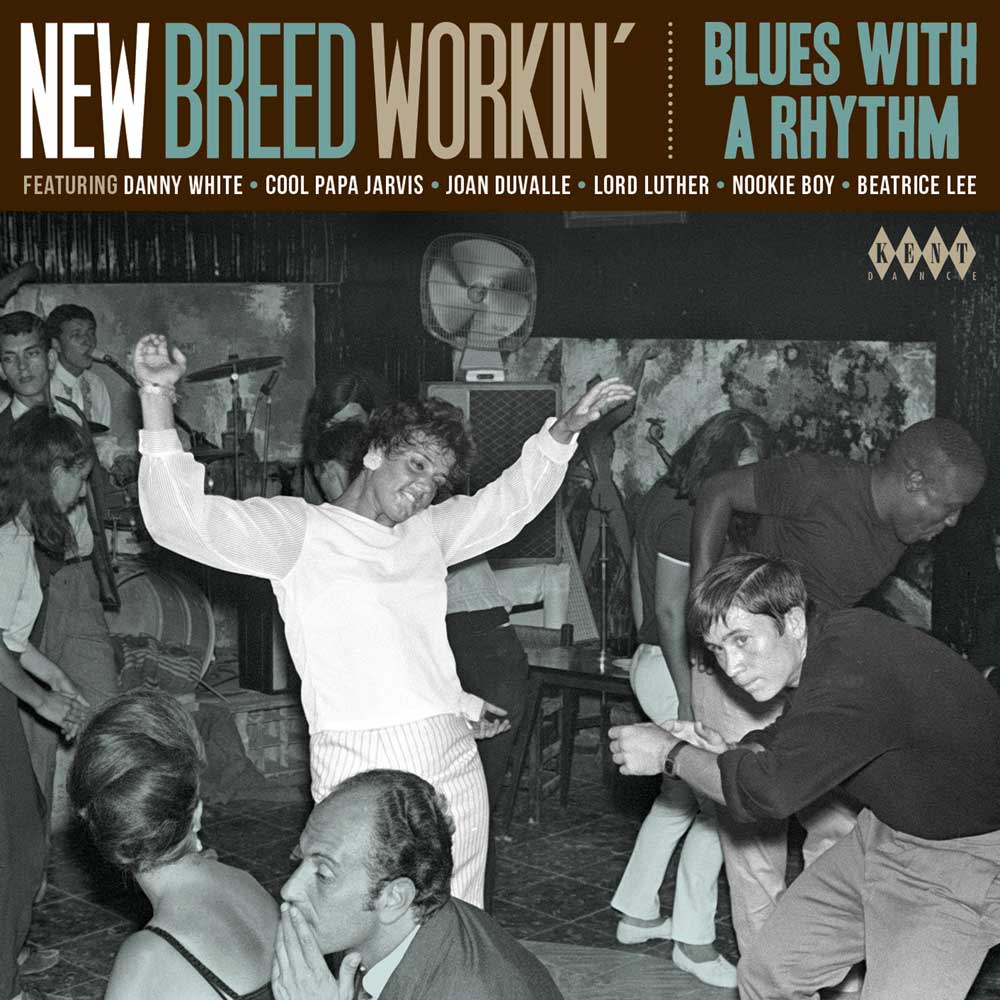
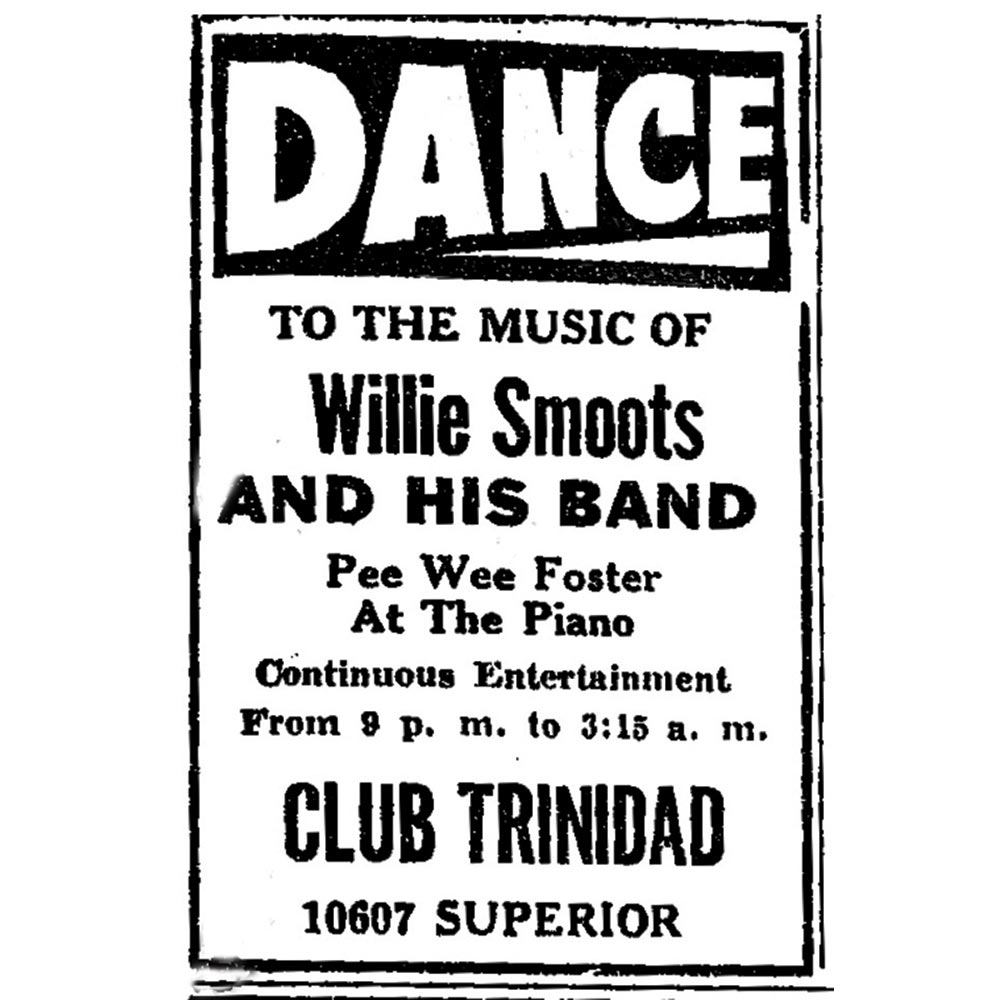


 dereksmusicblog
 dereksmusicblog