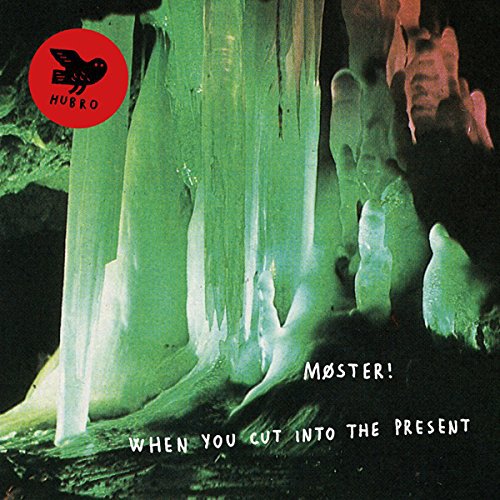
MOSTER!-WHEN YOU CUT INTO THE PRESENT.
MOSTER!-WHEN YOU CUT INTO THE PRESENT.
Ever since they made their debut at the Kongsberg Jazz Festival in 2010, Norwegian supergroup Møster!’s star has been in the ascendancy. So much so, that Møster! are now regarded as one of the biggest bands in the Nordic music scene. That’s quite a feat.
Especially since Norway has one of the most vibrant music scenes in Europe. However, Møster! can hold their own against Norway’s top bands. No wonder. Møster! are a supergroup, featuring four of Norway’s top musicians. They were founded back in 2010.
That’s when Bushman’s Revenge saxophonist and bandleader Kjetil Møster founded Møster!. He wasn’t looking to form a supergroup. It just worked out that way.
Kjetil Møster brought onboard three of Norway’s most talented musicians. This included Motorpsycho and Grand Central drummer, Kenneth Kapstad. The other two members of Møster! were also members of Elephant9. This includes keyboardist Ståle Storløkken and bassist Nikolai Hængsle Eilertsen, whose also a member of Big Bang. With Møster’s lineup complete, the made their debut at one Norway’s most prestigious festivals, the Kongsberg Jazz Festival in 2010.
Not many bands get the opportunity to start launch their career at such a prestigious event. Møster! did. Having taken the Kongsberg Jazz Festival by storm, Møster! received a standing ovation. Since then, Møster! have released two albums, and are just about to release their much anticipated third album When You Cut Into The Present. It’ll be released on 27th November 2015 by Hubro Music. When You Cut Into The Present is the followup to Møster!’s critically acclaimed sophomore album Inner Earth, which was released in October 2014. This was four years after Møster! made their first tentative steps.
Having formed Møster!, and stolen the show at the Kongsberg Jazz Festival in 2010, many critics thought that it would only be a matter of time before Kjetil Møster’s new band would release their debut album. They were wrong.
Three long years passed, before Møster! released their long awaited debut album Edvard Lygre Møster, on Hubro Music in 2013. Looking back, this isn’t surprising. The four members of Møster! have other musical commitments, so finding time to record Møster!’s debut album wasn’t easy. However Edvard Lygre Møster was worth the wait.
Critical acclaim accompanied Edvard Lygre Møster. Møster!’s much-anticipated debut album was hailed as one of the finest Norwegian albums of 2013. However, Møster!’s music was finding an audience much further afield.
By the end of 2013, Edvard Lygre Møster had found its way into New York City Jazz Records’ top ten jazz albums. Then when Prog Magazine published its list of the best albums of 2013, Edvard Lygre Møster was at number six. This was just the start of the Møster story.
Eagerly, critics, cultural commentators and music lovers awaited Møster’s next move. The next hurdle they had to overcome was their sophomore album, or what’s often referred to by critics as “the difficult second album.”
When Møster began work on their sophomore album is Inner Earth, their was a new face in the studio. This was Motorpsycho guitarist Hans Magnus “Snah” Ryan. He joined saxophonist and bandleader Kjetil Møster and the rhythm section of drummer Kenneth Kapstad and bassist Nikolai Hængsle Eilertsen. This was the lineup of Møster that wrote and recorded Inner Earth.
The first recording session for Inner Earth took place at Super Duper Studio between January 11th and 12th 2014. A month later, Møster! reconvened at Super Duper Studio on February 24th and recorded right through to the 27th February 2014. That marked the end of the recording of Inner Earth. It was then mastered at Grotten on 30th May 2014, Jørgen Træen. Five months later, and Inner Earth was released by Hubro Music.
Just like their debut album, Edvard Lygre Møster! was released to widespread critical acclaim. The music was an ambitious and innovative fusion of moods, textures and musical genres. It veered between dreamy, futuristic, lysergic and otherworldly to cinematic and melodic on this musical journey to Inner Earth. Norwegian supergroup Møster! had just released one of the best albums of 2014. Since then, Møster! have been busy.
Møster! embarked upon a gruelling touring schedule. This included touring with Norwegian-American band Young Mothers. On that tour, Møster! worked hard, honing and tightening their sound even further. Kjetil Møster! and Co. seem to be perfectionists. This paid off.
When You Cut Into The Present.
By March 20th 2015, Møster! had a few days off from the tour. They didn’t head for rest and recuperation. No Møster! headed to Øra Studio in Trondheim, where they hooked up with technician Jo Ranheim. Over the next three days, Møster! When You Cut Into the Present recorded their third album, When You Cut Into The Present.
The same lineup of Møster! that featured on Inner Earth began work on When You Cut Into The Present. Lead by saxophonist Kjetil Møster!, Møster! began recording the five songs that became When You Cut Into The Present. Providing the heartbeat, was the rhythm section of drummer Kenneth Kapstad and bassist Nikolai Hængsle Eilertsen. Motorpsycho guitarist Hans Magnus “Snah” Ryan, returned for his second album with Møster! He like the rest of Møster! he adds percussion on When You Cut Into The Present, which was finished on 23rd March 2015.
After this, Møster! headed back on tour. Then on 6th April 2015, Christian Engfelt, Kjetil Møster and Nikolai Hængsle Eilertsen began mixing When You Cut Into The Present at Engfelt and Forsgren Studio, in Oslo. By the 9th April 2015, the mixing was complete. Jørgen Træen then mixed When You Cut Into The Present at Grotten, in the Bergen Kjøtt building. Only then, was When You Cut Into The Present ready for release.
Just like Møster!’s two previous albums, When You Cut Into The Present will be released by Hubro Music. It’s one of the most eagerly awaited albums of recent months. That’s because onlookers to the recording sessions say that Møster! have never sounded better.
Apparently, there was an intensity and energy in the studio as Møster! recorded When You Cut Into The Present. Møster! combined progressive rock, psychedelia, free jazz, Krautrock, classic rock and the Norwegian jazz of the sixties and seventies. It’s best describes as a fusion of Can, Alice Coltrane, King Crimson’s Red period, John Coltrane and the Nordic jazz pioneers Jan Garbarek, Terje Rypdal, Arild Andersen and Jan Christensen. All these influences are referenced on Møster!’s forthcoming album When You Cut Into The Present, which I’ll tell you about.
Nebula and Red Giant opens When You Cut Into The Present. Dramatic describes the introduction. Møster! unite, and a wailing, free jazz horn soars and screeches. Meanwhile, drums rolls, all the time threatening to explode, a bass buzzes and a guitar cuts through the arrangement, carrying an air of menace. The arrangement builds, only to dissipate at 2.33. By 2.39, Møster! are ready to kick loose. Soon, they kick out the jams. Møster!’s thundering rhythm section drive the arrangement along, reminiscent of Guru Guru or Birth Control. Guitarist Hans Magnus “Snah” Ryan and saxophonist Kjetil Møster go toe-to-toe, feeding off each other. The braying choppy, gulping saxophone and searing, buzz saw guitar lines trying to outdo each other. Then a myriad of galloping percussion and a powerhouse of a drum solo take centre-stage. From there, an explosive saxophone solo is off and running, leaving the rest of Møster! playing a supporting role. Breathtaking and blistering describes this performance. It seems to spur the rest of Møster! on. They became an unstoppable force, like a rolling stone, gathering pace with every turn. By the end of the track, Møster! are spent, and reach for the musical equivalent of the post coital cigarette. It’s richly deserved.
On The Future Leaks Out, Møster! set about making the music of tomorrow today. To do this, thunderous drums are pounded at breakneck speed, and are omnipresent. Other instruments flit in and out the mix, as elements of avant garde, experimental, free jazz, industrial, psychedelia and rock can be heard. Sometimes, the arrangement is full of slight of hand. Nothing is what it seems. Effects are added to instruments, disguising their sound. It’ like Halloween for Moster! as they combine a bubbling bass, guitar, percussion and even briefly, a shivering violin. Later, the arrangement becomes a bubbling, experimental brew. Sci-fi sounds join machine gun drums and see-saw guitars. Then a bounding, bouncing bass joins a shrill, shrieking free jazz saxophone and a Hendrix-esque guitar. Inspiration also seems to come from Judas Priest and John Coltrane. This might seem a strange brew, but it’s a potent heady one. Especially with Møster! at their most ambitious, adventurous and innovative, creating a dramatic, cinematic soundscape.
As a guitar reverberates, a sultry saxophone soars above the arrangement to Journey. It features just occasional rolls of drums. Mostly, it’s just the saxophone, with the effects laden guitar proving a perfect foil. Meanwhile, the bass is rumbles, creating a hypnotic backdrop and drummer Kenneth Kapstad adds an eighties Krautrock influence. Hans is responsible for wall of siren like guitars. They seem to sound a warning, as if Møster! are providing a mesmeric, hypnotic, cinematic soundtrack to a film that deserves to be made.
Soundhouse Rumble is the track that closes Møster!’s third album When You Cut Into The Present. Møster! seem ready to rumble, and from the opening bars are off and running. The rhythm section are responsible for a rocky heartbeat. Hans’ hypnotic guitar veers between rock and jazz. Kjetil meanwhile, is unleashing a blistering jazzy solo. He hardly draws breath, and seems to have saved his best until last. When his solo drops out, briefly, the rhythm section head in the direction of progressive rock. There’s even a very brief funky interlude. Having given Kjetil time to recover, Møster! unite, and charge towards the finishing line. As they do, they pay homage to the Gods of rock. Hans unleashes a scorching guitar solo. It wouldn’t sound out of place on an Iron Maiden album. Then Møster! reach a crescendo, and it’s time for them to take their leave…until the next time.
Once When You Cut Into The Present draws to a close, listeners will reach for the equivalent of a post coital cigarette. They’ll also toast Moster, who’ve on 27th November 2015, will release what’s a career defining album, When You Cut Into The Present. It features Møster! in full flight. That’s a joy to behold, and is something all record buyers should experience. No wonder.
Møster! are, without doubt, one of the most talented and innovative Norwegian bands. That takes some doing. Just now, the Norwegian music scene is one of most vibrant in Europe. At the top table of Norwegian music sits Møster!.
It’s taken five years for Møster! to become one of leading lights of the Norwegian music scene. However, this talented and innovative band are making their presence felt much further afield. From Britain, Europe and America, Møster! have won friends and are sure to influence the next generation of bands with their hard rocking, but genre-melting sound.
When You Cut Into The Present shows that Møster! are much more than a rock band. They combine avant garde, classic rock, experimental, free jazz, funk, jazz, Krautrock, progressive rock and psychedelia, with the classic Norwegian jazz sound of the sixties and seventies. It’s best describes as a fusion of Can, Alice Coltrane, King Crimson’s Red period, John Coltrane and the Nordic jazz pioneers Jan Garbarek, Terje Rypdal, Arild Andersen and Jan Christensen. Sometimes, it sounds as if Møster! have been influenced by German musical pioneers, Birth Control, Guru Guru and Neu! It sounds like the four members of Møster! have eclectic taste in music.
That’s definitely the case with guitar wizard Hans Magnus “Snah” Ryan. The virtuoso seems to have been influenced by Jimi Hendrix. Sometimes, it sounds like Hans is channeling the spirit of Hendrix in the studio. Other times, Hans’ licks sound as if they belong on an Iron Maiden or Judas Priest album. Just like the rest of Møster!, Hans is a versatile and talented member of this supergroup.
They’ve made huge strides on When You Cut Into the Present. The Trondheim groove-meisters have created a career defining album of hard rocking music. They kick loose from the opening bars of Nebula and Red Giant, and never let go until the closing notes of Soundhouse Rumble. In between you’re treated a glorious assault on the sensory system which unleashes endorphins aplenty. These comes courtesy of those genre-melting innovators Møster!, and their critically acclaimed, career-defining third album When You Cut Into the Present.
MOSTER!-WHEN YOU CUT INTO THE PRESENT.
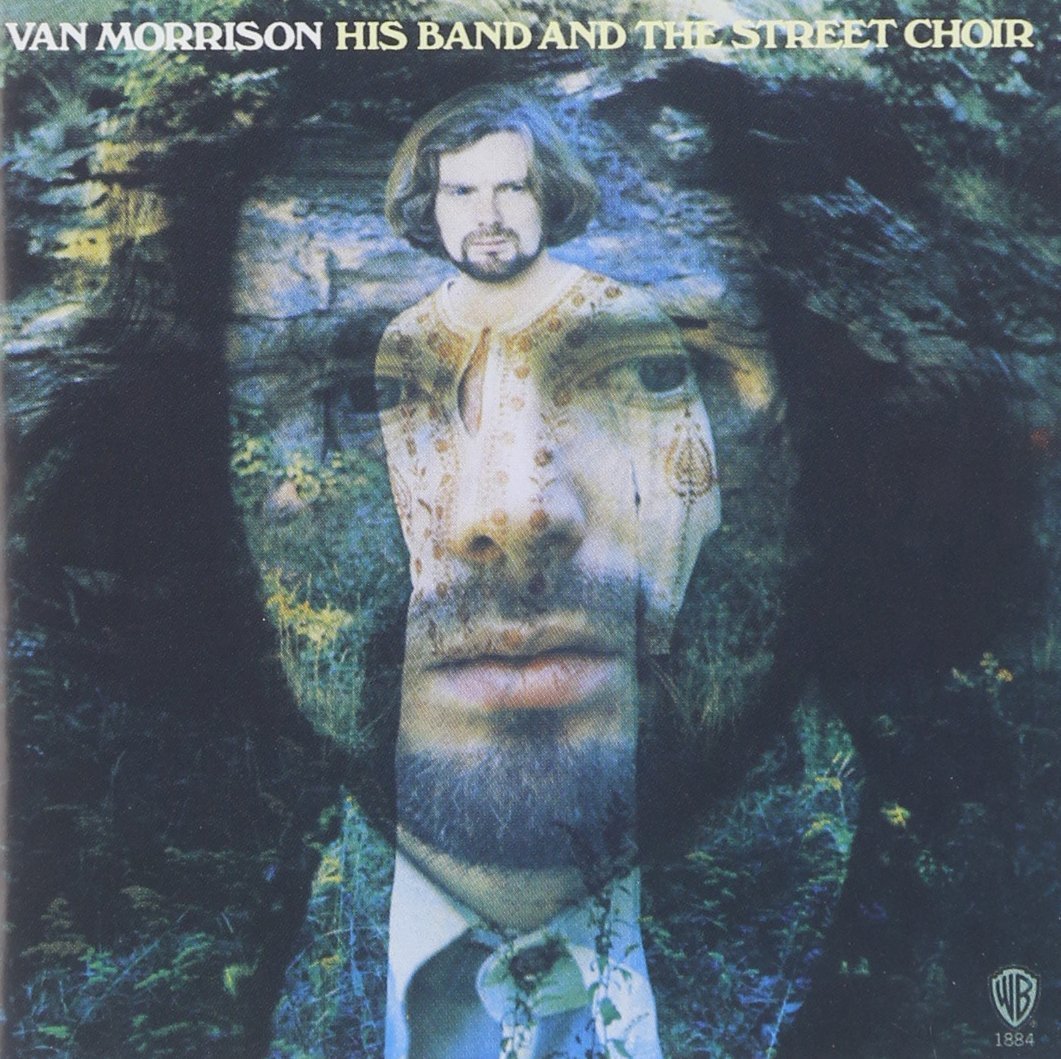
VAN MORRISON-HIS BAND AND STREET CHOIR-VINYL EDITION.
VAN MORRISON-HIS BAND AND STREET CHOIR-VINYL EDITION.
When Van Morrison began work on his fourth album His Band and Street Choir, he faced the biggest challenge of his career. His last two albums, 1969s Astral Weeks and 1970s Moondance, had been stonewall classics. Following these albums up wasn’t going to be easy. It was going to be the biggest challenge of Van Morrison’s career.
This challenge began in early 1970. The recently married Van Morrison, was living in Woodstock, in upstate New York. So it made sense to record some demos locally. Van found the perfect location, a small church in Woodstock Village. It was the perfect place to work on new material, which would eventually feature on His Band and Street Choir, which will be rereleased on vinyl on 4th December 2015 byRhino.
Originally, Van wasn’t intending this new material to feature on an album. He had recently released Moondance on the 29th January 1970. It was too soon to think about a new album. That could wait. However, he was happy to hone old songs and work on ideas for new songs. This included songs he had previously written and recorded over the last few years. Van hadn’t been happy with them. Now that he had with some time on his hands, he decided to hone these songs.
Among them, were I’ve Been Working, Domino, Virgo Clowns and Crazy Face. None of these songs were new. Some had been written and recorded years ago.
I’ve Been Working was first recorded in 1968, during the Astral Weeks’ sessions. Crazy Face had been inspired by Going Around with Jesse James, which Van had recorded for Astral Weeks. So it wasn’t a new track. Nor was Domino, which had been recorded several times before. The first times was just after the Astral Weeks’ sessions were completed. Virgo Clowns had been recorded in early 1969. However, just like the other tracks, they never made it onto to an album. So Van began work on them.
At the church, drummer David Shaw (Dahaud Shaar) began setting up microphones and some basic equipment. This included the tape recorder. It was a low-fi setup that Van and his band encountered. Despite this, they began recording demos of I’ve Been Working, Domino, Virgo Clowns and Crazy Face. They then began work on Crazy Face and Give Me a Kiss, which had never been recorded before. Over the next few days and weeks, the sessions at the Woodstock church became a dry run for the recording of His Band and Street Choir in the spring of 1970.
Recording of Van Morrison’s fourth album began in March 1970, at the A&R Recording Studios, in New York. That would be home to Van and his new band for the next four months.
As Van Morrison’s arrived at the A&R Recording Studios, there were some familiar faces in the new band. This included bassist John Klingberg and guitarist John Platania. Both had played on Moondance, and slotted into the rhythm section alongside David Shaw (Dahaud Shaar). He played drums, percussion and bass clarinet, and had played on the Moondance tour. Three other familiar faces were the backing vocalists Judy Clay, Emily Houston and Jackie Verdell. Their backing vocals featured on Moondance. On His Band and Street Choir, they added backing vocals on If I Ever Needed Someone. Joining the veterans of previous Van Morrison albums and tours, were some top musicians.
This included Alan Hand on piano, Hammond organ and celeste. Keith Johnson played trumpet and Hammond organ. Jack Schroer switched between alto and baritone saxophone, and piano. Van Morrison played guitar, harmonica and tenor saxophone. Most importantly, he added his unmistakable vocals. Augmenting his vocals were The Street Choir.
Originally, Van Morrison planned to record his fourth album without a backing band. He had wanted to sing a cappella, with only backing vocalists accompanying him. The backing vocalists Van decided, would be called The Street Choir. However, things didn’t work out that way. Van recorded with a backing band and The Street Choir. It eventually featured Larry Goldsmith, Janet Planet, Andrew Robinson, Ellen Schroer, David Shaw and Martha Velez. The Street Choir and Van Morrison’s band spent the next four months recording the album that was originally meant to be entitled Virgo’s Fool. By July 1970, Virgo’s Fool was complete.
Six months after the release of Moondance, Van Morrison had handed his fourth album into Warner Bros. It hadn’t been smooth sailing. Van Morrison wasn’t happy with the backing vocals. Originally, he had planned to use a quintet. However, additional backing vocalists were drafted in. This he felt, had spoiled the sound of Virgo’s Fool. There was very little he could do now. Warner Bros. were planning on releasing Virgo’s Fool on 15th November 1970, just in time for Christmas.
Although Virgo’s fool had been recorded, the album still had to be mixed and mastered. Then there was the small matter of an album cover. Warner Bros. were determined that the album be released before Christmas. That wasn’t their best idea.
This resulted in the design of the album cover being rushed. Janet Planet, Van’s then wife, designed the album cover and wrote the sleeve notes. They were later criticised by Van’s biographer Brian Hinton as sounding: “a little desperate.” Especially the words: “this is the album that you must sing with, dance to, you must find a place for these songs somewhere in your life.” However, Janet Planet’s words were well meaning. She was trying to ensure Virgo’s Fool was a success. Others weren’t being as careful.
As Warner Bros. prepared the promotional versions of Virgo’s Fool, it was like a chapter of accidents. Instead of the title Virgo’s Fool, the album was entitled His Band and Street Choir. That wasn’t the end of the mistakes. The track listing was wrong. Then as I’ll Be Your Lover, Too draws to a close, part of a conversation could be heard. It should’ve been edited out. That however, wasn’t the end of what was quickly becoming a fiasco.
Photos had been taken for the gatefold album cover by David Gair. He shot the photos at a party for John Planet’s son, Peter. Van Morrison was pictured surrounded by the wives and family of his band. When Van Morrison saw the photos, to was scathing. The photos were “rubbish.” Things got worse. The album cover featured Van Morrison dressed in a full length kaftan. It made Van Morrison looking like the stereotypical hippy. This didn’t please him. He fumed, as he had never embraced the hippy lifestyle. This was just the latest in a series of mishaps. It didn’t bode well for the release of His Band and Street Choir.
Before His Band and Street Choir was released, critics received their copy of the album. Despite the wrong title, incorrect track listing and dreadful album cover, critics were impressed. That wasn’t surprising. Domino had been released as a single, giving people a taster of the album. It reached number nine in the US Billboard 100 and number twenty-two in Holland. So it was no surprise that the reviews of His Band and Street Choir were positive. Just like his last two albums, His Band and Street Choir was released to widespread critical acclaim.
His Band and Street Choir was released on 15th November 1970. The album reached number eighteen in Britain, thirty-two in the US Billboard 200 and number forty-eight in Holland. Despite Astral Weeks and Moondance being regarded as classics, His Band and Street Choir had been a bigger success upon its release. That wasn’t end of the success.
Blue Money was released as a single in 1971, and reached number twenty-three in the US Billboard 100. That made it two hit singles from His Band and Street Choir. Sadly, two didn’t become three when Call Me Up in Dreamland stalled an ninety-five in the US Billboard 100. However, His Band and Street Choir was regarded as a success by Warner Bros. and Van Morrison.
Opening His Band and Street Choir, is Domino a tribute to New Orleans’ born singer Fats Domino. A chirping guitar is joined by an urgent rhythm section and Van’s lived-in vocal. Soon, stabs of blazing horns and a jangling piano join the rhythm section. They drive the arrangement along, while Van delivers a vocal powerhouse, as he gives thanks for “Domino.” Van combines elements of Celtic soul with R&B on what would become one of his best known songs.
Unlike the majority of tracks on His Band and Street Choir, Crazy Face has an 8/4 beat. It’s a track that was inspired by Jesse James. A thoughtful meandering piano is joined by an acoustic guitar and rhythm section. Van’s vocal is best described as a mid-Atlantic twang. Like an actor in a play, Van brings the lyrics about one of America’s most famous outlaws to life. When his vocal drops out, washes of Hammond organ and joined by a scorching saxophone. It’s panned right, leaving plenty of space for the rest of the band. They stretch their legs until Van’s vocal returns. His vocal is a mixture of power and passion. He’s like a showman, as he adds an element of theatre and drama.
A strummed guitar opens Give Me A Kiss, a song Van wrote to celebrate the birth of a child. Happiness fills his vocal, as the bass helps walk the arrangement along. Stabs of growling horns are added. So are doo wop harmonies as this joyous, feel good song begins to swing.
As I’ve Been Working unfolds,the rhythm section, guitars and percussion set the scene for Van’s weary vocal. Soon, the weariness disappears and hope and happiness shines through. He’s with the woman he loves, and suddenly, everything seems worthwhile. Again, the bass is prominent in the mix. Washes of Hammond organ can also be heard in the distance. Then braying horns make an entrance as Van vamps. His vocal is like a stream of consciousness. Then when the vocal drops out, his band jam, and showcase their considerable talents. When Van returns, he vamps and the band play around him. Van and his band are one, on what’s one of the highlights of His Band and Street Choir.
Call Me Up In Dreamland has been inspired by gospel music. and is a song about life on the road. Subtle horns and the bass combine, before a roll of drums signals the arrival of Van’s grizzled vocal. Soon, Van’s joined by gospel-tinged harmonies. They’re crucial to the song’s success. The R&B inspired saxophone that replaces the harmonies work, but only just. The song seems to loose momentum. Then Van saves the day. He literally grabs the song and makes it work. Adding the finishing touch are the returning harmonies. They ensure the song reaches a joyous crescendo.
Slowly and deliberately, a lone acoustic guitar plays on I’ll Be Your Lover, Too. It’s joined by Van’s needy, heartfelt vocal. Soon, drums played by brushes join the acoustic guitars. They allow Van’s impassioned, hopeful vocal to take centre-stage on this beautiful ballad about his relationship.
Blue Money was penned by Van about his financial situation. Despite the seriousness of the situation, Van’s lyrics are full of humour. He’s able to laugh at himself and his problems. That’s the case from the opening bars. A guitar is joined by the rhythm section and Van’s vocal. He strolls through the lyrics, delivering a plethora of puns. Behind him, the band make sure the arrangement swings. Later, The Street Choir add harmonies which augment Van’s vocal on this catchy, pun filled track.
Virgo Clowns should’ve been the title-track to the album. It wasn’t a new song. Originally, it was recorded in early 1969 as (Sit Down) Funny Face. Van rerecorded it during the first Street Choir session as Funny Face. Then at the the A&R Recording Studios it became Virgo Clowns. Urgently strummed guitars, backing vocals and later, a braying saxophone accompany Van’s impassioned vocal.
A celeste opens Gypsy Queen before the bass and acoustic guitar accompany Van’s vocal. It veers between heartfelt to reassuring and powerful. He uses his full vocal range. Behind him, washes of Hammond organ and horns are added. They provide the perfect accompaniment to Van on this heartfelt ballad.
It’s thought that Sweet Jannie was inspired by The Impressions’ Gypsy Woman. There’s certainly an R&B influence present as the arrangement bounds along. Van’s accompanied by the rhythm section and chiming guitars. They’re omnipresent as Van pays homage to The Impressions. Ironically, this homage is by far, the weakest song on the album. Van’s at his best when he’s himself.
Proof of this is If I Ever Needed Someone. He’s accompanied by gospel-tinged harmonies, piano and the bass as he delivers one of his best vocals. It’s full of emotion, and can only be described as soul-baring confessional.
Street Choir closes His Band and Street Choir. A Hammond organ is joined by the rhythm section and piano. Van’s impassioned, hurt-filled vocal is accompanied by soulful harmonies and wistful horns. They’re a potent combination and prove the perfect way to close Van Morrison’s fourth album, His Band and Street Choir.
Despite the problems that beset the release of His Band and Street Choir, the album became the most successful of Van Morrison’s four album career. That’s ironic, given Astral Weeks and Moondance are two of the most important albums not just in Van Morrison’s career, but the history of music. Every album Van Morrison went on to release, was compared to his two classic albums. This includes His Band and Street Choir, which will be rereleased on vinyl by Rhino on 4th December 2015.
His Band and Street Choir has always been overshadowed by Astral Weeks and Moondance. In 1970, Van Morrison was trying to followup an album of the magnitude of Moondance. It was almost impossible. Critics had said the same about Astral Weeks, and Van came back with Moondance. However, His Band and Street Choir is no Moondance.
Having said that, His Band and Street Choir is a very good album, and for too long, has been understated. It’s one of the finest albums Van Morrison released during the seventies. His Band and Street Choir is only let down by Sweet Jannie, Van’s homage to The Impressions. Apart from that, it’s a case of wallowing in Van Morrison at the peak of his powers on His Band and Street Choir. This creative spell continued.
Right up until 1972, Van Morrison could do no wrong. From Astral Weeks and Moondance, through His Band and Street Choir, 1971s Tupelo Honey and 1972s Saint Dominic’s Preview, Van Morrison was writing and recording some of the best music of his career. These albums featured Van Morrison at the peak of his powers. Despite their undoubted quality, they’ve been overshadowed by his two classic albums, Astral Weeks and Moondance.
Every album Van Morrison released was compared to Astral Weeks and Moondance, rather than viewed as a new piece of work. As a result, Van Morrison spent his career trying surpass, or even match Astral Weeks and Moondance. He never quite managed to do so. However, the nearest Van Morrison came, was on albums like His Band and Street Choir, Tupelo Honey and Saint Dominic’s Preview.
VAN MORRISON-HIS BAND AND STREET CHOIR-VINYL EDITION.
YAORCHT ROCK.
YAORCHT ROCK.
Back in the seventies and eighties, AOR was at the peak of its popularity. Especially amongst the generation who had just graduated university and had entered the workplace for the first time. With their disposable income, they bought albums by Boz Scaggs, Seals and Crofts, Carly Simon, Toto, Christopher Cross, Daryl Hall and John Oates, Rickie Lee Jones and America. These artists and groups were amongst the finest practitioners of Adult Orientated Rock.
By the eighties, AOR was one of the most lucrative genres. AOR albums sold by the million. Gold and platinum discs were scattered throughout the Hollywood mansions of its practitioners. Still though, critics and other artists looked down on AOR.
According to critics, AOR was lightweight and didn’t address serious social issues. Not like hip hop, which many critics were championing. This was ironic.
Most hip hop artists weren’t musicians. They could neither read nor write music. Instead, they were musical illiterates, the idiot savants of the music industry. They were lost without a sampler and pile of vinyl.
This allowed them to sample snippets of music. Often, this was a blatant act of theft. Many hip hop artists didn’t even bother to clear the sample. They were the musical equivalent of highwaymen. The only difference was, hip hoppers didn’t bother to wear a mask.
They had perfected a scam that even the greediest banker would’ve been proud of. Unlike bankers, there was very little chance that the highwaymen hip hoppers were going to get caught with their sticky fingers in the till.
When hip hoppers, went crate digging for samples, they often went in search of forgotten singles and albums to sample. They searched through friends and relatives record collections. Then when that failed, they beg, stole and borrowed. The more obscure the vinyl the better.
Often that’s where the best drum beats and breaks were. Even better for the highwayman rapper, very few people had ever heard these singles or albums. So there was little chance that anyone would recognise the sample. Often, to lessen the chance of this happening, they would adjust the pitch of the sample. This was belt and braces, and ensured that their chances of getting close to caught were close zero. Or so they thought.
Often, it only became apparent years later, that many hip hoppers had illegally sampled artists. Sometimes, court cases ensued. Incredibly, some artists decided to to take action against those who had stolen from them. In many cases this was ironic.
Many of the artists whose music was sampled didn’t make much money out of music. This includes The Winstons, whose career began in the sixties and lasted into the seventies. They released two albums and a string of singles. They’re the second most sampled group or artist in the history of music Their music has been sampled 2,165 times. One of their most sampled songs was Amen Brother, the flip side to their 1969 single Colour Him Father. Sadly, The Winstons were often neither credited, nor received the royalties they were due. The closed they came to receiving royalties for the sampling of Amen Brother was when someone started a crowd funding campaign recently. Even that, only made a fraction of what The Winstons were due. It seems that this musical genre which critics hailed as music with a social conscience was far from that.
Hip hop may have talked the talk for a few short years, however, they never walked the walk. They were modern day highwaymen, robbing and pillaging musically, whenever and wherever they wanted. That was the case, whether it was soul, funk and R&B, to electronica, rock and even AOR. Nothing was off limits.
That’s why, when critics and cultural commentators call hip hop music with a social conscience, my response is “don’t believe the hype.”
AOR may be the antithesis to hip hop, but there’s much to commend this hugely underrated music from the seventies and eighties. It may not be music with a social conscience, but it was melodic, hook-laden and in many case timeless. Thirty to forty years later, the music doesn’t sound dated. That’s because it was written, played and performed by real musicians.
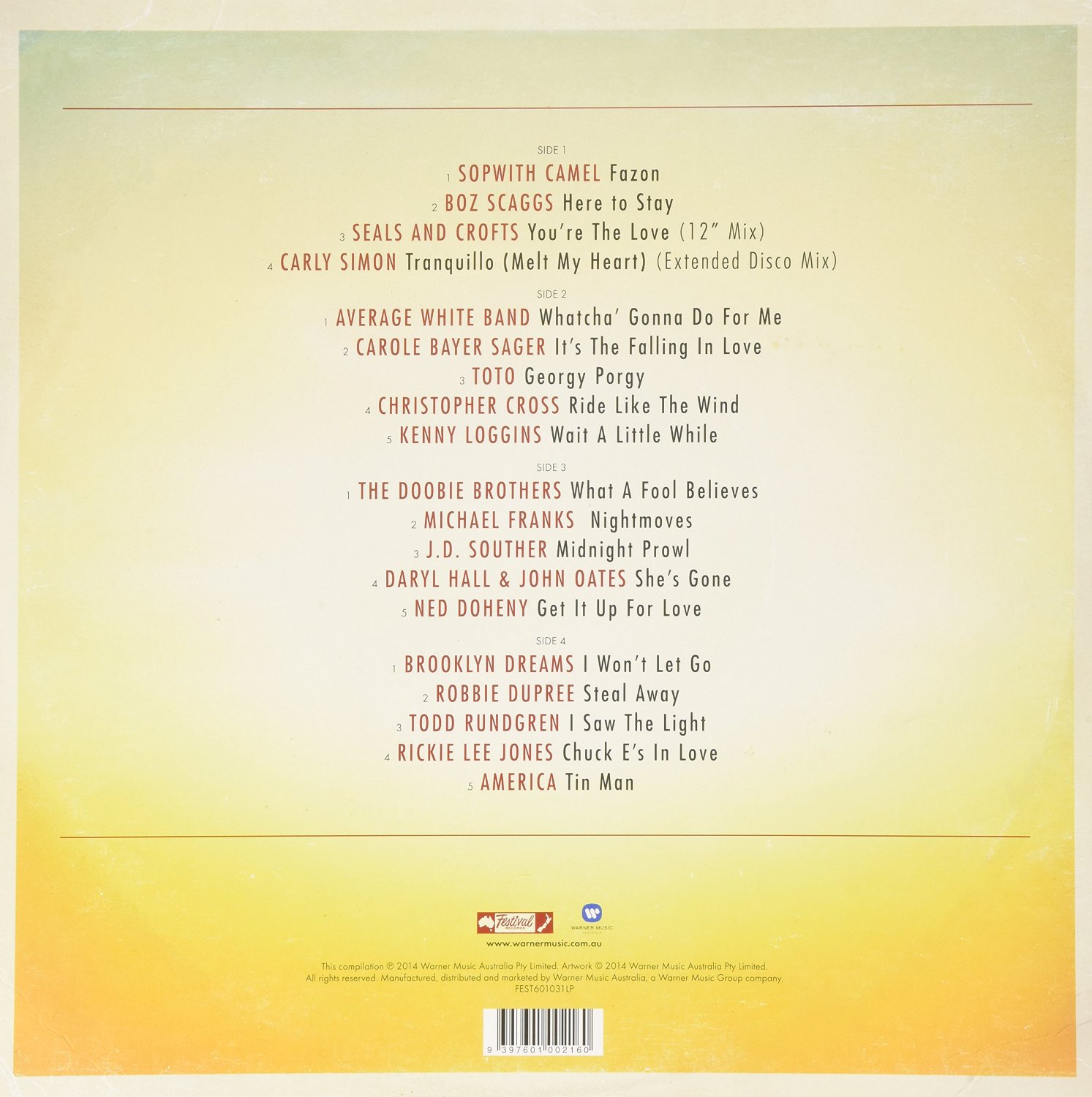
Those who wrote, recorded, played and performed AOR were true musicians in the truest sense of the word. They could actually play an instrument, sometimes several. Most could read and write music. They understood chordal structure, harmonics and in the case of many AOR musicians, they produced the music they wrote and recorded. This includes much of the music on Yaorcht Rock, which was recently released by Warner Music on CD and LP.
Yaorcht Rock features what in the seventies and eighties, used to be called AOR. However, no longer is AOR called AOR. Instead, AOR has undergone a rebranding.
Instead, AOR referred to as yacht rock. This is essentially a rebranding. To many people, AOR brings to mind the AM radio stations. That’s where many people heard their daily diet of AOR. Nowadays, however, AOR to record company executives, sounds like a remnant from the seventies. So yacht rock was born.
Soon, a slew of yacht rock compilations were released. They’ were a mixed bag, and ranged from good, bad to downright ugly. The problem was, the majors owned the rights to the best in AOR. So independent labels were left scrambling about, releasing compilations featuring the also rans of AOR. This should’ve left the field clear for the majors to release peerless compilations of AOR.
That should’ve been the case. However, it all depends on the compiler. For the latest marriage of Yacht Rock and AOR, Yaorcht Rock, classics, familiar faces and hidden gems rub shoulders. Choosing the ten highlights isn’t going to be easy. However, here goes.
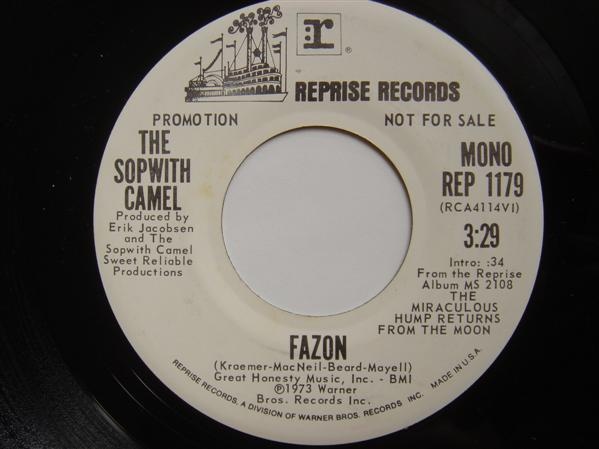
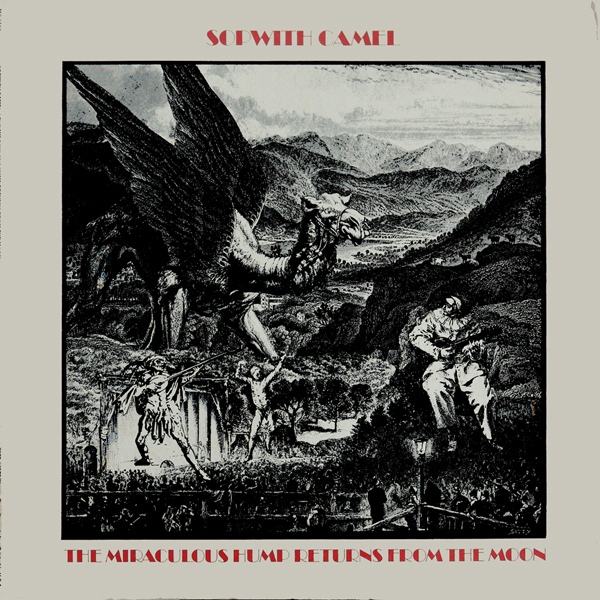
The opening track on any album is always the most important. Yaorcht Rock is no different. Here, it’s case of eschewing the predictable, and heading to San Francisco, which was home to psychedelic rockers Sopwith Camel. They released Fazon, as a single in 1973 on Reprise. It was taken from their sophomore album, The Miraculous Hump Returns From The Moon. However, commercial success eluded Sopwith Camel, and not long after this, they split-up. Fazon is a floaty, funk-tinged slice of AOR, which showcases a talented band who are one of music’s best kept secrets.
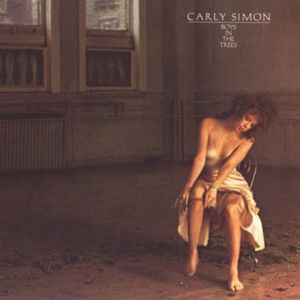
Carly Simon however, was one of the stars of the AOR era. By 1978, the first Lady of AOR’s music had just released her seventh album, Boys In The Trees on Elektra. It featured the single Tranquillo (Melt My Heart), which saw Carly Simon heading in the direction of the dance-floor. This wasn’t surprising, as disco was at the peak of its popularity. The version of Tranquillo (Melt My Heart) on Yaorcht Rock is the extended disco mix, which despite its disco influence, doesn’t see Carly Simon turning her back on her AOR roots.
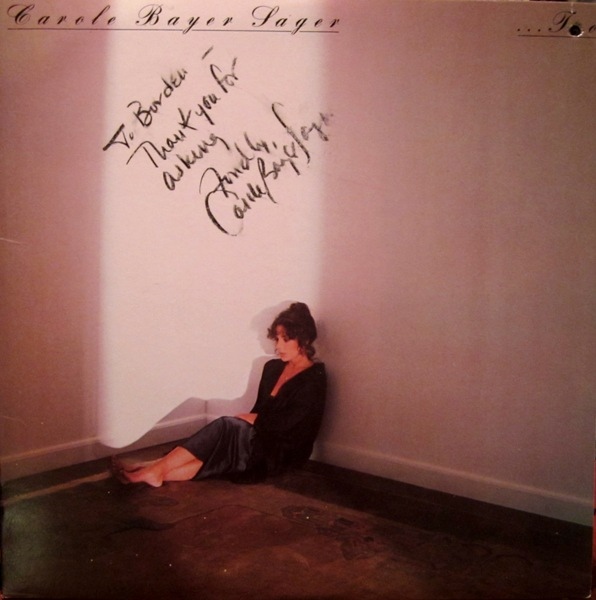
Another single from 1978, was Carole Bayer Sager’s It’s The Falling In Love. It was released on Elektra, and was taken from Carole Bayer Sager’s sophomore album Too. It’s The Falling In Love was written by Carole Bayer Sager and David Foster, and is another dance-floor friendly track with AOR leanings.
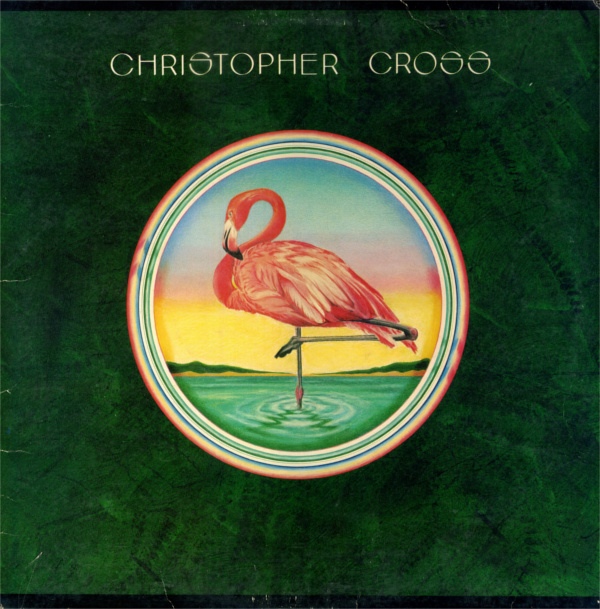
Christopher Cross released his eponymous debut album in 1979. It reached number six in the US Billboard 200 and fourteen in Britain. This resulted in the album being certified platinum o both sides of the Atlantic. This wasn’t surprising. Ride Like The Wind had been chosen as the lead single. When it was released in 1979, it reached number two US Billboard 100. Since then, Ride Like The Wind is regarded as an AOR classic.
That’s the case with The Doobie Brothers’ What A Fool Believe. It was released as a single in 1979, and reached number one on the US Billboard 100. What A Fool Believes featured on The Doobie Brothers’ 1979 album Minute by Minute, which reached number one on the US Billboard 200 and was certified triple platinum. Since then, it’s become not just an AOR classic, but a favourite of compilation compilers.
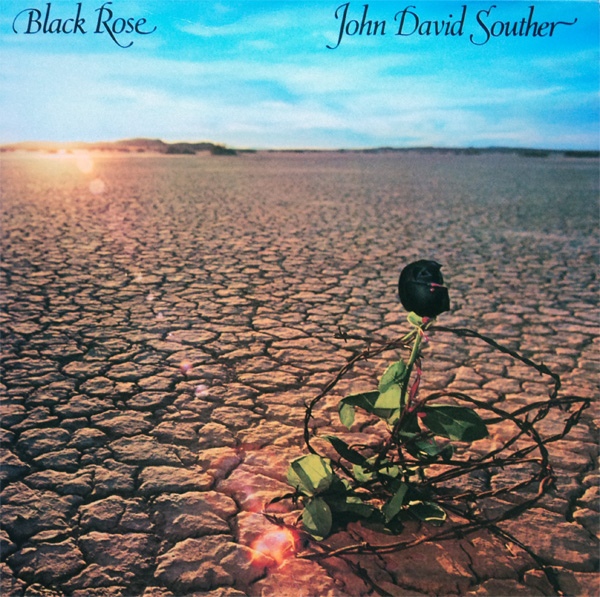
Blues rocker, J.D. Souther, released his sophomore album Black Rose, in 1976 on Asylum. Midnight Prowl was chosen as the lead single from Black Rose. It’s a moody sounding ballad, featuring a wonderfully worldweary vocal from J.D. Souther. It’s at the heart of the success of a track that epitomises everything that’s good about AOR.
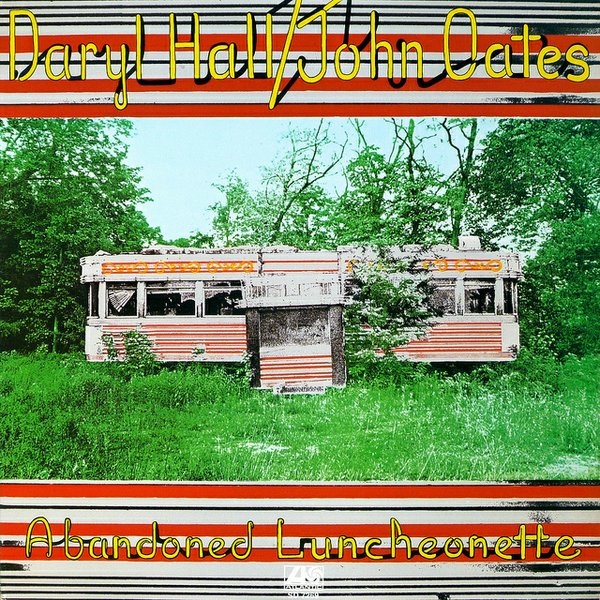
Daryl Hall and John Oates were another act who epitomised the AOR sound. She’s Gone released as a single by Atlantic Records in 1973, but stalled at number sixty in the US Billboard 100. It was taken from the album Abandoned Luncheonette, which reached number thirty-three in the US Billboard 200. By 2002, Abandoned Luncheonette had sold over a million copies, and was certified platinum. This made it the most successful album Daryl Hall and John Oates released at Atlantic Records. No wonder. It oozes quality from the AOR duo.
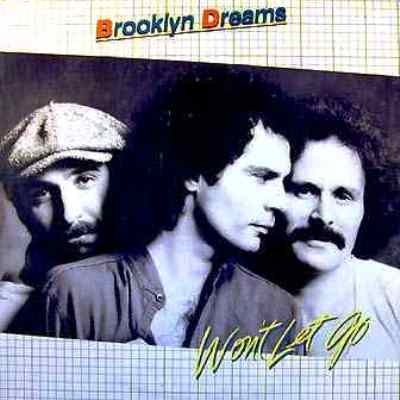
1980 saw Brooklyn Dreams released I Won’t Let Go was a single. It was the title-track from their fourth album, which was released Casablanca Records. It’s another track that screams AOR. Brooklyn Dreams combined elements of soft rock, soul and even disco on I Won’t Let Go. The result is a track that owes a debt of gratitude to Daryl Hall and John Oates.
Chuck E’s In Love is the song that forever will be synonymous with Rickie Lee Jones. That’s despite a recording career that’s lasted thirty-six years. Rickie Lee Jones began in 1979, when she released her eponymous debut album on Warner Bros. It reached number three in the US Billboard 200, and was certified platinum. The lead single was Chuck E’s In Love, which reached number four in the US Billboard 100 and number eighteen in Britain. Since then, Chuck E’s In Love has become an AOR classic. However, it’s just a tantalising taste of one of the most talented singer-songwriters of her generation, Rickie Lee Jones.
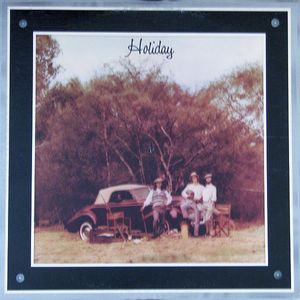
America’s Tin Man closes Yaorcht Rock. It reached number one on the US Billboard 100 in 1974. This was a track from America’s fourth album Holiday. The album was produced by George Martin, and reached number three in the US Billboard 200. This resulted in the album being certified gold in America, and silver in Britain. Penned by Dewey Bunnell, and inspired by The Wizard Of Oz, Tin Man gave American their first top ten single in America since 1972. However, America’s first four album were commercially successful, and saw the trio become one of the most successful AOR bands of the seventies.
Unlike the last album of yacht rock I reviewed, Too Slow To Disco 2, Yaorcht Rock is well worth buying. Especially if you’re new to the genre, and wanting to dip your toe in the yacht rock waters. It features a good selection of the familiar, combined with a few left-field choices.
Some of the tracks are perennial favourites, and are veterans of many compilations, not just yacht rock compilations. This includes Christopher Cross’ Ride Like The Wind, The Doobie Brothers’ What A Fool Believes, Daryl Hall and John Oates’ She’s Gone and Rickie Lee Jones’ Chuck E’s In Love. However, these four tracks are true AOR classics. These tracks are just the tip of the iceberg.
View Yaorcht Rock, which was recently released by Warner Bros. as an introduction to these artists. The albums these classics are taken from, feature some fantastic music. Especially Rickie Lee Jones’ eponymous debut album. It’s one of the best debut albums I’ve encountered, and has stood the test of time. That’s the case with so much of the music on Yaorcht Rock.
Even the songs with a slight disco influence have stood the test of time. My only criticism is including the twelve inch mix of . Seals And Crofts’ You’re The Love and the extended disco mix of Carly Simon’s Tranquillo (Melt My Heart). Disco mixes and extended mixes are the devil’s work, and have no place in AOR. That’s a minor quibble.
Mostly, Yaorcht Rock is perfect primer to the golden age of AOR, the seventies and eighties. Choosing just nineteen tracks couldn’t have been easy. There’s enough music for a box set in the Warner Bros. vaults. Maybe that’s for another day? Just now, Yaorcht Rock is the perfect introduction to AOR. Yaorcht Rock a compilation which won’t end in the musical equivalent of the Bermuda Triangle, given it features a who’s who of AOR.
YAORCHT ROCK.




ORNETTE COLEMAN-BEAUTY IS A RARE THING.
ORNETTE COLEMAN-BEAUTY IS A RARE THING.
George Orwell wrote in Animal Farm that “not all animals are created equal.” The same seems to be the case with musicians. Especially when it comes to obituaries.
During 2015, many musicians have passed away. A few were innovators and changed music forever. Some enjoyed a string of commercially successful and critically acclaimed albums. Others however, were no more than journeymen. Quite a few others were vastly overrated. They lived off the memory of one of two hits.
Sadly, far too often, it’s the overrated and journeymen received the lengthiest obituaries. These obituaries would bring a tear to a glass eye. However, these obituaries are vastly disproportionate to what they actually achieved. Meanwhile, the careers of the most successful, innovative and talented musicians of the past fifty years passes almost unnoticed.
This includes Yes’ Chris Squire, Three Dog Night’s Jimmy Greenspoon Free’s Andy Fraser and Motorhead’s Phil Taylor. They were part of four hugely successful bands, who sold in excess of forty million albums worldwide. Despite this, and leaving a rich, varied and innovative musical legacy, the careers of these four musical giants wasn’t celebrated as it should’ve been. Often, it was a mere footnote in a newspaper or magazine. That was the case with one of the most innovative jazz musicians ever, Ornette Coleman.
It was on June 11th 2015, that Ornette Coleman passed away, aged eighty-five. Music had lost a true legend, whose album Free Jazz: A Collective Improvisation lent its name to a musical genre, free jazz. It’s the genre that Ornette Coleman became synonymous with. However, two years earlier, this nascent genre had no name.
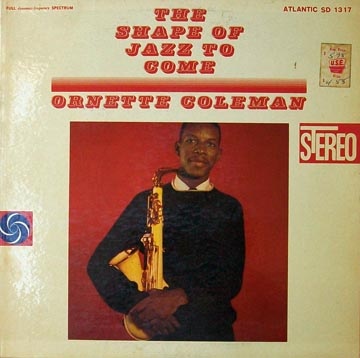
Ornette Coleman released his Atlantic Records’ debut in 1959. The Shape of Jazz to Come hinted that jazz was changing. However, it wasn’t until the release of Ornette Coleman’s fourth album for Atlantic Records, Free Jazz: A Collective Improvisation that the genre was christened. Suddenly, free jazz was born. It was being hailed the most exciting development in jazz, and Ornette Coleman was one of its most innovating practitioners. This became apparent on the nine album Ornette Coleman released for Atlantic Records. They feature on the Beauty Is A Rare Thing, which was recently reissued by Rhino. However, there’s a rub.
Rather that have nine discs featuring the nine albums, the sessions appear in chronological order. This is one way of doing things, and allows listeners to hear how Ornette Coleman’s music evolved. However, most record buyers would rather have the none albums on nine discs. Or even the six discs that feature in the Beauty Is A Rare Thing box set. That’s not the case. Given that the Beauty Is A Rare Thing is available at a very reasonable price, why worry? This is the opportunity to hear a giant of jazz at the peak of his powers. His story began in 1930.
It was on March 9th, 1930, that Ornette Coleman was born Randolph Dernard Ornette. He was born and brought up in Forth Worth, Texas, where his musical skills were apparent from an early age. A true multi-instrumentalist, Ornette played saxophone, violin and trumpet and composed music. His trademark sound is blues-based, with a crying, keening timbre. Growing up, Ornette played in his high school band, but was thrown-out, for jamming during a rendition of Washington Post.
As a teenager, Ornette formed a band, with fellow students Prince Lasha and Charles Moffett. Then in 1949, he started playing with Silas Green, in his R&B show. It was during a show in Baton Rouge, that Ornette was assaulted and his saxophone destroyed. This resulted in Ornette changing to alto-saxophone. After the Baton Rouge assault, Ornette decided to leave Silas Green’s band.
After leaving Silas Green’s band, Ornette joined Pee Wee Crayton’s band. When he wasn’t making music, Ornette worked a variety of jobs, including lift operator. Still, he was determined to make a living playing music. Other musicians, however, didn’t understand Ornette’s style of music.
From his high school days, Ornette had a unique musical style. Schooled in R&B and bebop, Ornette’s approach to chord progression and harmony was very different. It was much more fluid. He played what heard in his head, which coupled with his blues’ influence, may have resulted in the rawness in Ornette’s playing. For some musicians, they thought Ornette was out-of-tune. That wasn’t the case. Unlike them, Ornette was a visionary, an innovator, a musician who’d become one of the giants of free jazz.
Even though many musicians didn’t understand Ornette Coleman, he was gradually building up a group of influential supporters. This included pianist Paul Bley, who later collaborated with Ornette. Paul however, didn’t feature on Ornette’s 1958 debut album Something Else. Released on Contemporary Records, Something Else featured Don Cherry on trumpet and Walter Norris on piano, as be bop combined with free jazz. Ornette released his sophomore album in 1959s. Tomorrow Is The Question was also released on Contemporary Records. All of sudden, people were taking notice of Ornette Coleman. They were “getting” Ornette’s unique sound and approach to jazz.
So it was no surprise that in 1959, Ornette Coleman signed to what was then, one of the biggest record labels, Atlantic Records. They had a huge roster, and released an eclectic selection of music. This included everything from blues, R&B, soul and of course, jazz. Ornette Coleman was their latest signing.
Atlantic Records was home to Ornette Coleman between 1959 and 1962. During that time, he entered the studio ten times. The first time came on 22nd May 1959, when Ornette Coleman made his way to Radio Recorders in Hollywood, California. With his quartet, Ornette Coleman recorded eight tracks. This included the six tracks that became The Shape Of Jazz That To Come. It was released in October 1959, and was the first of six albums released by Ornette Coleman between 1959 and 1962.
During the ten sessions Ornette Coleman recorded between 1959 and 1962, a total of fifty-eight tracks were recorded. Atlantic Records, just like all jazz labels, would get their money’s worth.
Following the release of Ornette On Tenor in December 1962, Ornette Coleman left Atlantic Records. However, there were still thirty-six tracks unreleased. This proved enough for another three albums. These nine albums include some of the best and most innovative music of Ornette Coleman’s career. He was one of the founding fathers of free jazz, who came of age at Atlantic Records.
The Shape Of Jazz To Come.
Having served his musical apprenticeship, Ornette Coleman was more than ready to sign to a major label. On his first two albums, Ornette Coleman pioneered this new musical genre. Some likened it do avant garde. Others thought that what Ornette Coleman and his band were playing had an experimental sound. However, after his first session with ‘producer’ Nesuhi Ertegun, he had the answer to this conundrum.
On 22nd May 1959, Ornette Coleman made his way to Radio Recorders in Hollywood, California. Joining him, were the other three members of his quartet, drummer Billy Higgins, bassist Charlie Haden and Don Cherry on cornet. They recorded eight tracks with Ornette Coleman recorded eight tracks. These tracks followed a different format to what most musicians were used to.
Each of the eight compositions Ornette Coleman’s quartet record a brief thematic statement. After that, there were several of minutes of free improvisation. Then they revisit the main theme. While this may sound similar to bebop, there’s a big difference. Advocates of free jazz abandoned the use of chord structures. Having listened to Ornette Coleman’s quartet pioneer this nascent genre, Nesuhi Ertegun had an idea for the album title.
After thinking about the session he had just ‘produced,’ Nesuhi Ertegun realised that it was important that the album title gave record buyers: ”an idea about the uniqueness of the LP.” It Nesuhi Ertegun realised, was a game-changer. This new sound was about to change jazz
Ornette Coleman’s Atlantic Records’ debut was The Shape Of Jazz To Come. It was released in October 1959, and initially, divided the opinion of critics.
Some critics and cultural commentators hailed the music on The Shape Of Jazz To Come as innovative and inventive. Lonely Woman, the album’s opener was seen as a future classic. That proved prescient. Nowadays, Lonely Woman is a jazz standard. These critics that forecast this, and realised the importance of The Shape Of Jazz To Come knew that something important was happening.
So did some of Ornette Coleman’s peers and contemporaries. They realised that potentially, this new musical movement could be the biggest innovation since bebop. Especially when Ornette Coleman began a two week residency at the Five Spirit on November 17th 1959. It became the hottest ticket in town. Ornette Coleman’s residency was extended, and eventually, last two-and-a-half months. It seemed Ornette Coleman was well on his way to becoming one of the major players in jazz. Not everyone agreed.
The lack of chordal structure proved controversial. Up until then, a pianist and guitarist gave compositions chordal structure. Not on The Shape Of Jazz To Come. That was jazz’s past. Another criticism was the harsh timber of Ornette Coleman’s saxophone. However, this wasn’t surprising. He eschewed the finest saxophone, instead, preferring a plastic Grafton saxophone. This he believed gave his music, a “harmolodic” sound, which was a fusion of harmony, movement, and melody. There was a reason for this.
Harmonic accompaniment, Ornette Coleman believed, wasn’t important. Instead, he focused merely on improvising melodies and variations on themes and motifs. Proof of this could be found on The Shape Of Jazz To Come, which in 1959, was recognised as an important, innovative and inventive album. It was also an album that changed jazz. At the forefront of this new musical movement was Ornette Coleman.
Change Of The Century.
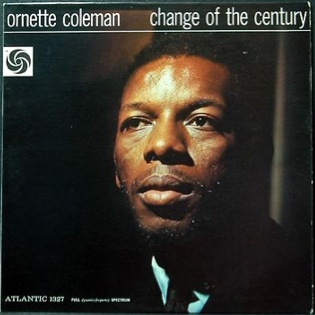
By the time that The Shape Of Jazz To Come was released, Ornette Coleman had been back in the studio twice. On the 8th October 1959, Ornette Coleman and the his band recorded four tracks. That day, Don Cherry switched from cornet to pocket trumpet. Then the following day, 9th October 1959 another five tracks were recored. Seven of these tracks became Change Of The Century.
When Change Of The Century was released in June 1960, it was to widespread critical acclaim as The Shape Of Jazz To Come. There were no dissenting voices. Ornette Coleman critics realised, was a trailblazer, and with his fellow travellers, was the future of jazz.
This Is Our Music.
Having just recorded eight tracks on the 8th and 9th July 1960, Ornette Coleman returned to the studio later that month. On 19th July 1960, his band recorded nine new tracks. That day, there was a new face in the studio
Drummer Ed Blackwell had replaced Billy Higgins. Seamlessly, he slotted into the rhythm section alongside bassist Charlie Haden. Once the nine tracks were recorded, the band took a break for a week.
Ornette Coleman and his band returned on the 26th August 1960. That day, they recorded eleven songs. This was enough for two albums at least. It seemed that Atlantic Records were stockpiling recordings. This was nothing new. Record companies had been doing this since the musician’s strike two decades ago. Never again, would they be short of material to release.
Music was a record company’s lifeblood. Nesuhi Ertegun realised this. So on August 2nd 1960, Ornette Coleman and his band returned to Atlantic Recoding Studio, New York. That day, they recorded three of the tracks that featured on Ornette Coleman’s next album, This Is Our Music. Not content with recording Ornette Coleman’s next album, Nesuhi Ertegu decided that the band began work on the next album, Free Jazz: A Collective Improvisation.
Just as 1960 was drawing to a close, Ornette Coleman’s band found themselves A&R Studios, New York between 19th and 21st December. The first two days were spent recording two tracks for a new project, John Lewis Presents Contemporary Music Jazz Abstractions. It featured music composed by Gunther Schuller and Jim Hall. This new project allowed Ornette Coleman to work with different musicians.
So on Monday 19th December, six days before Christmas, Ornette Coleman was due to record the Gunther Schuller and Jim Hall composition, Abstraction. It featured an expanded lineup of Ornette Coleman’s band.
The rhythm section featured drummer Sticks Evans; bassists Scott LeFaro and Alvin Brehm; and guitarists Jim Hall. Augmenting this new lineup, was The Contemporary String Section. Once Abstraction was recorded, it was all change again,
On Tuesday 20th December 1960, Ornette Coleman and another expanded lineup of his band were due to record Variants On A Theme Of Thelonious Monk. The lineup read like a who’s who of jazz.
In the rhythm section alongside drummer Sticks Evans; were bassists Scott LeFaro and George Duvivier; and guitarists Jim Hall. Pianist Bill Evans joined Eddie DeCosta on vibes and flautist Robert DiDomenica and Eric Dolphy on alto saxophone, flute and clarinet. Adding the finishing touch, were The Contemporary String Section. This all-star lineup recorded one of the most complex suites Ornette Coleman’s band had recorded. When Variants On A Theme Of Thelonious Monk was completed, it would find its way onto the the 1961 album John Lewis Presents Contemporary Music Jazz Abstractions. However, on the final day of the session, Ornette Coleman recorded two tracks for his own career.
Wednesday 21st December 1960, Ornette Coleman’s band recorded two tracks, including Free Jazz, which was destined for Free Jazz: A Collective Improvisation. It featured a double quartet.
This was unheard of. Ornette Coleman decided that a different quartet feature on the right and left channel. On the left channel, was Ornette Coleman on alto saxophone, Don Cherry’s pocket trumpet and a rhythm section of drummer Billy Higgins and bassist Scott LeFaro. The right channel featured a rhythm section of drummer Ed Blackwell and bassist Charlie Haden. They were joined by trumpeter Freddie Hubbard and Eric Dolphy on bass clarinet. With this expanded lineup, Ornette Coleman was making the music of the future. It was an exciting time, and one that could change music. Before that, however, This Is Our Music was released.
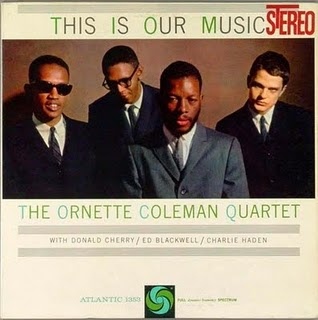
Having recorded twenty-three tracks during the last three sessions, there was plenty of music to choose from. Eventually, seven tracks were chosen. This included a cover of George and Ira Gershwin’s Embraceable You. It was the first time Ornette Coleman’s had covered a jazz standard. However, never had Embraceable You been covered the way Ornette Coleman did on This Is Our Music.
The release of This Is Our Music in February 1961, was Ornette Coleman’s third release for Atlantic Records, and his fifth album overall. This Is Our Music marked the first release from the new lineup. However, what didn’t change, was the critics response to This Is Our Music. Described as inventive and innovative, Ornette Coleman was one of the pioneers of this new and exciting musical movement. It still didn’t have a name. That would soon change.
Free Jazz: A Collective Improvisation.
Just over a month after their last recording session, Ornette Coleman’s band returned to Atlantic Recording Studios, New York. There was a new member of the band. Scott LaFaro had replaced Charlie Haden. Over the last six months, a new rhythm section had joined Ornette Coleman’s band. This latest lineup was all set to make their debut on 31st January 1961.
The tapes started rolling at 3pm on 31st January 1961. By 7.30pm, another seven tracks were in the can. By now, Atlantic records still had twenty-three unreleased tracks. At this rate, they had enough for at least three albums. Despite this, less than two months later, Ornette Coleman’s band would return to the same studio.
Wednesday March 21st 1961 found another new lineup of Ornette Coleman’s band at Atlantic Recording Studios, New York. Jimmy Garrison was the new bassist, and replaced Scott LaFaro. This new lineup only recorded one track, EOS, which found its way onto Ornette On Tenor. Recording of that album was completed on Monday, March 27th 1961.
That was the last time Ornette Coleman’s band returned to Atlantic Recording Studios, New York. Never again, would Ornette Coleman record for Atlantic Records. However, that day proved productive. Ornette Coleman’s band recorded five tracks for Ornette On Tenor, and Harlem’s Manhattan for Art Of The Improvisers. This session marked the end of era for Ornette Coleman. Not for Atlantic Records.
It was ironic that Ornette Coleman’s contract with Atlantic Records was over. When Free Jazz: A Collective Improvisation was released in September 1961, it was a game-changer.
Critics listened intently to Free Jazz: A Collective Improvisation. Each side featured one lengthy track. Free Jazz (Part One) filled side one, and lasted nearly twenty minutes. On side two, Free Jazz (Part Two) lasted just over sixteen minutes. On both tracks, the two rhythm sections played as one. Then came the solos, where the soloists were allowed the freedom and opportunity to improvise on the two tracks. No longer were musicians constrained, they were allowed the opportunity to take the music wherever they wanted. This was revolutionary music. So it was fitting that the album cover featured Jackson Pollock’s painting The White Light.
Just like so many landmark albums, Free Jazz: A Collective Improvisation divided opinion. Critics either loved or loathed the album. There was no middle ground. Most reviews were filled with praise and plaudits. Some critics saw no merit in Free Jazz: A Collective Improvisation. To them, it was forty minutes of their life they would never see again. However, since then, Free Jazz: A Collective Improvisation is regarded as one of the most innovative and influential free jazz albums. For Ornette Coleman, who had left Atlantic Records, it must have been a bittersweet moment.
His latest album would lend its name to a genre, free jazz. Free Jazz: A Collective Improvisation was also being hailed one of the most innovative and influential albums in the nascent free jazz genre. To add to the irony, Atlantic Records had plenty more music to release.

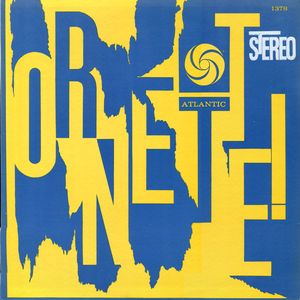
Ornette!
Just five months after the release of the groundbreaking Free Jazz: A Collective Improvisation, Atlantic Records released Ornette! in February 1962. It was the first album to feature Scott LaFaro on bass.
He played his part in an album where elements of free jazz and avant garde combined on the four tracks on Ornette! These four tracks, W.R., U, T and T, C and D, R.P.D.D. were an acronym of Sigmund Freud’s Wit and Its Relation To The Unconscious, Totem and Taboo. Civilization and Its Discontents, and the essay Relation of the Poet to Day Dreaming. This was a first. Never before had a jazz musician been inspired founding father of psychoanalysis. Ornette! was released to widespread critical acclaim.
While Ornette! was released to critical acclaim, it didn’t match the quality of Free Jazz: A Collective Improvisation. That was Ornette Coleman’s Magnus Opus. However, Ornette! didn’t divide opinion in the same way as Free Jazz: A Collective Improvisation. It seemed that Ornette Coleman could do no wrong. That however, was about to change.
Ornette On Tenor.
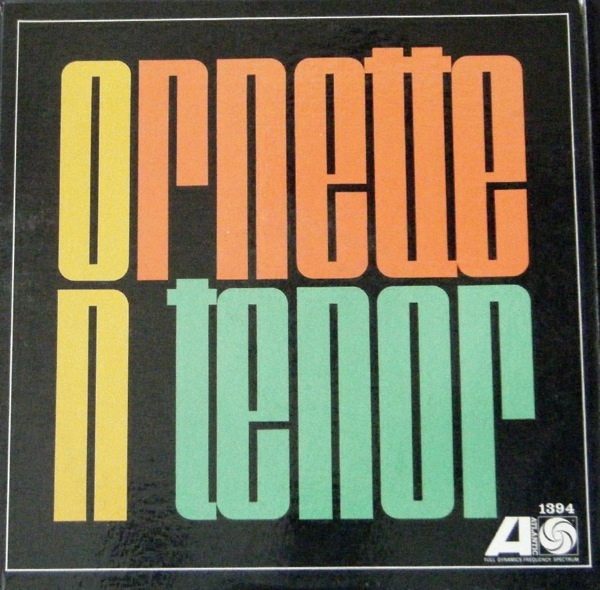
Twenty-one months after Ornette Coleman’s last recording session for Atlantic Records, Ornette On Tenor was released in December 1962. It was Ornette Coleman’s eight album, and sixth for Atlantic Records.
Ornette On Tenor featured further changes to the lineup of Ornette Coleman’s band. Jimmy Garrison replaced Scott DeFaro on bass. The other change was Ornette Coleman switched from alto to tenor saxophone. This wasn’t the success he hd hoped.
When Ornette On Tenor was released in December 1962, critical opinion was, once again divided. Some critics called the album a classic. They thought that the Ornette Coleman Quartet were continuing to revolutionise jazz. Others disagreed.
They thought Ornette On Tenor was the weakest by the Ornette Coleman Quartet. The album, in their opinion, wasn’t regarded as as innovative or groundbreaking as its predecessors. Once again, Ornette Coleman had divided opinion, with what was meant to be his Atlantic Records’ swan-song.
After that, Ornette Coleman became something of a musical nomad. He flitted between labels, never spending long at any label. Briefly, Columbia and Impulse were home to Ornette Coleman. The exception was Blue Note, where he released three albums.
Ornette Coleman’s Blue Note years began with 1966s The Empty Foxhole. Two years later, in 1968, Ornette Coleman released New York Is Now. Later in 1968, Ornette Coleman’s Blue Note years were at an end, when Love Call was released. After this, Ornette Coleman’s signed to Impulse Records.
At Impulse Records, Ornette Coleman released just two albums. The first was Ornette At 12, which was released in late 1968. It was another album that divided the opinion of critics and record buyers. Things improved in 1969, when Ornette Coleman released the live album Crisis, which critics felt marked a return to form from Ornette Coleman. However, after the release of Crisis, Ornette Coleman found himself without a record label.
While labels recognised Ornette Coleman’s undoubtable skill, they seemed reluctant to sign him. However, Bob Thiele took a chance on Ornette Coleman, and signed him on a one album deal. The result was Friends And Neighbors-Ornette Live At Prince Street.
Ornette Coleman’s second live album in two years found the founding father of free jazz back to his inventive best. Along with his Friends And Neighbors-Ornette Live At Prince Street showed that Ornette Coleman still a pioneer, who had much to offer music. Maybe that what’s made Atlantic Records release The Art Of The Improvisers.
The Art Of The Improvisers.
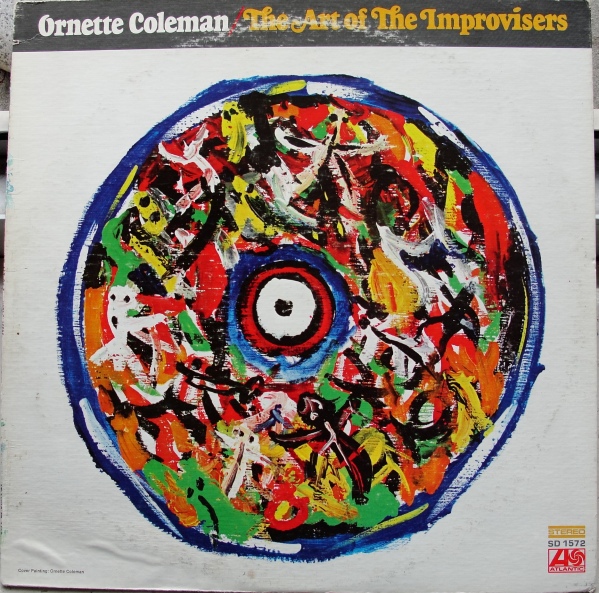
When The Art Of The Improvisers was released in 1971, many record buyers presumed that Ornette Coleman was back at Atlantic Records. They were wrong, very wrong.
The Art Of The Improvisers had been recorded between May 22nd 1959 and 31st January 1961. This meant the music was between ten and twelve years old.
Despite a moderne album cover, the music on The Art Of The Improvisers sounded as if it had been recorded a decade ago. There was a big difference to what Ornette Coleman had been releasing recently. However, some critics and record buyers welcomed this return to the past. This was when Ornette Coleman released the best music of his career. While this was all very revisiting the vaults once, if Atlantic Records did this too often, there would be the sound of the barrel being scrapped.
Twins.
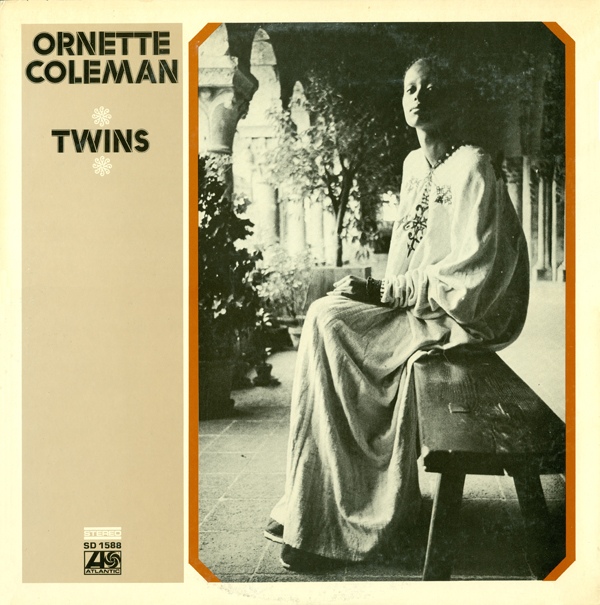
1971 saw Atlantic Records return to the well for the five tracks that became Twins. It was released on October 4th 1971. Just like The Art Of The Improvisers, Twins wasn’t a new album of material.
The five tracks that became Twins, were recorded between 8th October 1959 and 2nd August 1960. This meant that Little Symphony had been recorded two decades ago. However, it wasn’t just Atlantic Records who were doing this.
Many jazz labels were releasing tracks that had been recorded many years previously. Some of the tracks had been initially regarded as outtakes. However, if an artist’s career was enjoying an Indian summer, their old record companies would sometimes release an album of unreleased tracks. They knew that those who had purchased their previous albums. Often they were in for a surprise.
When critics heard Twins, they realised that just like The Art Of The Improvisers, it was an album from Ornette Coleman’s classic era. Some critics realising that Twins didn’t feature new material overlooked the album. They missed a hidden gem of an album.
Twins features some masterful performances from Ornette Coleman. Aided and abetted by his usual, tight, talented band, apart from on Little Symphony and Joy Of A Toy, Ornette Coleman turns back the clock. The music is variously uptempo, soulful, bluesy and features masterful interplay between Ornette Coleman and Don Cherry. They’re like two master craftsmen as they weave their way across Twins, reminding listeners what Ornette Coleman in his prime, sounded like. That looked like it was the last Ornette Coleman album Atlantic Records would release. However, it wasn’t.
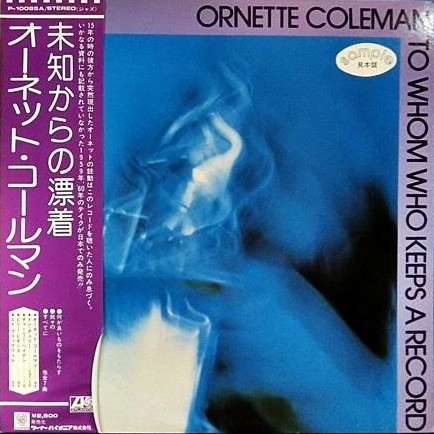
To Whom Who Keeps A Record.
Late 1975, which was over four years since the release of Twins, Warner Japan released To Whom Who Keeps A Record. The album was released only in Japan.
That’s despite Ornette Coleman having a worldwide fan-base. They missed out on an album of uncompromising, fiery and provocative free jazz. It was well received in Japan, forty years ago, and is a welcome addition to the Beauty Is A Rare Thing box set.
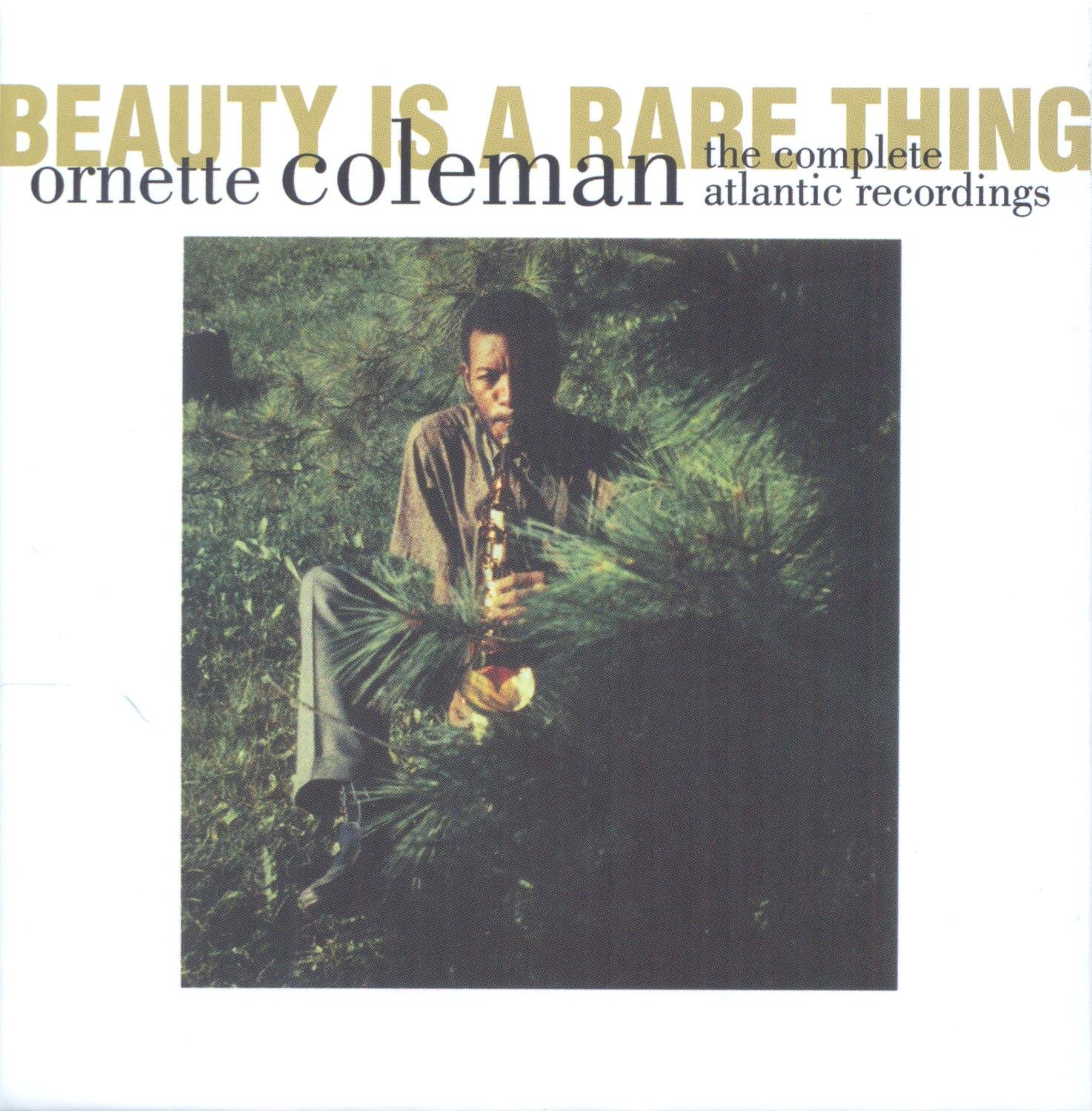
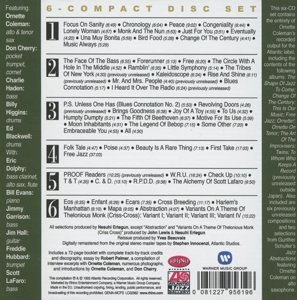
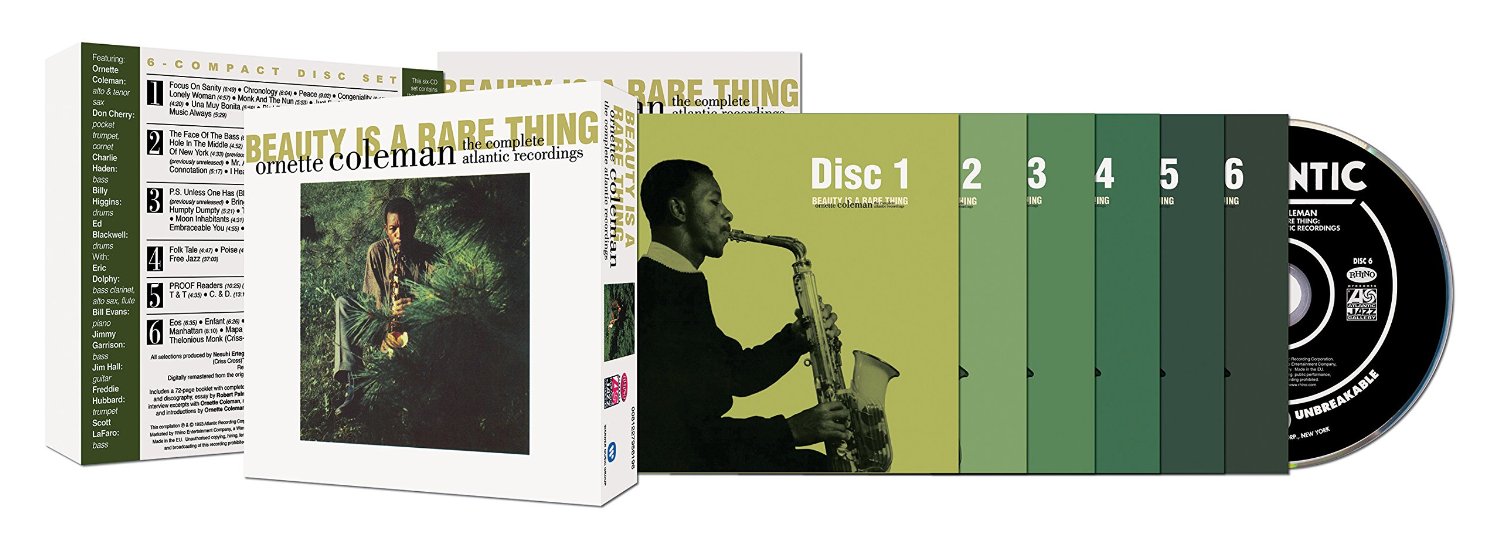
The Beauty Is A Rare Thing box set was recently reissued by Rhino, and features everything that Ornette Coleman released for Atlantic Records. That’s nine albums. They were released between 1959 and 1975, and find one of the founding fathers of free jazz at his most inventive and innovative.
Freed from the constraints of bebop, Ornette Coleman and his band embark upon what was akin to a series of musical adventures. During these adventures, they push musical boundaries to their limits, and sometimes way beyond. They challenge what was conventional thinking, and create music that’s ambitious, groundbreaking and innovative. This new genre of music free jazz, was the future of music. It was far removed from the blandness of the Cool School, and the constraints of bebop. Ornette Coleman was at the vanguard of this new musical movement.
That’s not surprising. Ornette Coleman was one of jazz’s most innovative and inventive musicians and composers in the history of jazz. Bold, and unafraid to produce cutting-edge music, Ornette Coleman produced music that was challenging music, music that challenged musical norms. Realising musical rules were there to be broken, Ornette Coleman set about breaking these rules. However, Ornette Coleman knew when to break the rules.
By breaking these rules, Ornette Coleman created some of the most inventive, influential and innovative music in the history of jazz. This was music that fused various musical genres and influences. Bebop, free-jazz, blues, avant-garde and experimental music all influenced Ornette Coleman’s music. These genres and influences were thrown into the melting pot of one of the most creative and inventive musicians of the twentieth century. Sadly, Ornette Coleman died on June 11th 2015, that Ornette Coleman passed away, aged eighty-five. Music had lost a true legend, whose album Free Jazz: A Collective Improvisation lent its name to a musical genre, free jazz.
Free Jazz: A Collective Improvisation is Ornette Coleman’s Magnus Opus, and was recorded during what was the most productive and fertile period of his career. That was the three years he spent at Atlantic Records. These three years saw Ornette Coleman record enough music for nine albums, which feature in the Beauty Is A Rare Thing, which features the best music of Ornette Coleman’s long and illustrious career.
ORNETTE COLEMAN-BEAUTY IS A RARE THING.
SLIP-DISC-DISHOOM’S LONDON BOMBAY GROOVES.
SLIP-DISC-DISHOOM’S LONDON BOMBAY GROOVES.
In the wake of World War II, the British government encouraged people from all over the Commonwealth and Empire to emigrate to Britain. The War had hit Britain hard. So many people had died, that there weren’t enough people to fill shortages in the labour market.
Soon, people were making their way to Britain from all over the world. They came in search of a better, more prosperous life. Some settled, and made Britain their home. Others quickly realised that life in post-war Britain wasn’t for them. Those that remained, had families who in the sixties, became played a part of Britain’s cultural awakening.
For Britain, the sixties was a new beginning. The Beatles’ debut single Love Me So was a game-changer. Soon, Britain was enjoying a soundtrack of The Beatles, Rolling Stones, The Kinks, The Who and Dusty Springfield. No longer did Britain rely upon America to provide its musical soundtrack. Instead, America was being influenced by Britain. The tables had been turned. However, they were about turn again.
As the sixties progressed, British musicians were influenced by the culture of another country, India. This was a two-way process.
Just like other young Britain’s, the children of Indian immigrants were embracing this new, British music. Quickly, this became part of the soundtrack to their lives, alongside the music that was popular in India.
By then, British music had a huge influence on India. All of a sudden, beat bands were being formed in India. They had been influenced by successful British groups, and fashioned themselves on The Beatles, Rolling Stones, The Kinks and The Who. However, there was much more to Indian music than beat music or cover bands.
India had a rich musical heritage. Some of them were making their presence felt in the West. One of the biggest success stories was Ravi Shanhar. He quickly, became a favourite of British bands keen to explore India’s wider cultural heritage.
As the sixties, gave way to the seventies, India had had a huge influence on British music. Groups like The Beatles and the Rolling Stones had embraced India. It wasn’t just its music, but its spiritual, philosophical and mystical side.
Soon, a generation of British youths were enjoying a long-distance love affair with India. The more adventurous, made their way to India. Some joined the hippie trail, and headed all the way to Goa. It would become a spiritual journey for future generations. However, by then the fusion of British and Indian music was commonplace.
It had become part of the British musical fabric. However, in the sixties, a generation of British were introduced to Indian music by their friends. Soon, they were familiar with the music of Ananda Shankar, Mohammed Rafi and Asia Bhosle. They’re three of the twelve tracks that feature on Slip-Disc Dishoom’s London Bombay Grooves. It will be released by the Dishoom label on 20th November 2015. Slip-Disc Dishoom’s London Bombay Grooves features old, new and possibly, even bluesy. This music has influenced several generations, and is now regarded as part of Britain’s cultural fabric.
Especially, Ananda Shankar. She’s one of the greatest Bengali musicians, who helped popularise the fusion of Eastern and Western music. Her 1970 eponymous debut album released by Reprise Records. Opening the album, was a cover of the Rolling Stones’ Jumpin Jack Flash. It also opens Slip-Disc Dishoom’s London Bombay Grooves. It’s a familiar track, and has featured on several compilations. However, it’s always worth hearing this fusion of psychedelia, rock, jazz and and Bengali music again. The result is one of the best covers of a Rolling Stone song…ever.
Back in 1997, Ravi Harris and The Prophets covered Cissy Strut one their one and only album, Funky Sitar Man. It was released on BBE. Ravi Harris proves to be a very Funky Sitar Man, and his backing band are far from being false Prophets.
In 1968, Henry Mancini composed and conducted to the soundtrack to The Score. This was a film starring Peter Sellers, who played the part of an Indian film star. Producing The Party was Blake Edwards. He asked Henry Mancini to compose the score. The Party proves a truly joyous sounding track, that’s a reminder of when London was swinging.
Originally, The Savages were formed in the mid-sixties. By 1973, they were signed to Polydor, and released their debut album Black Scorpio. One of the highlights was their psychedelic rock cover of Born to Be Wild. Its trippy sound reinvents what’s a familiar song, and at the same time, brings a smile to your face.
The Bombay Royale weren’t around when Indian music first begn to influence British music. Instead, The Bombay Royale were formed in Melbourne, in 2011. A year later, in 2012, they released their debut album You Me Bullets Love, on Hope Street Recordings. One of its highlights was the genre-melting You Me Bullets Love. Surf guitars, braying horns and lush strings are combined with elements of cinematic pop, Bollywood and funk.
Blossom Dearie released her tenth album That’s Just The Way I Want To Be in 1970. This was her comeback album. She hadn’t released album since 1967s Sweet Blossom Dearie. The problem was, Blossom Dearie’s “sound” had begun to sound dated. Three years later, Fontana agreed to release Blossom Dearie’s comeback album. It featured I Like London in the Rain, which she cowrote with Jim Council. With its thoughtful, almost wistful sound, it featured one of Blossom Dearie’s trademark vocals. Sadly, the song, and album sounded as if had been recorded five or six years earlier. As a result, its dates sound results in one of the weakest songs on Slip-Disc Dishoom’s London Bombay Grooves.
Some years ago, BB Davis and The Red Orchidstra covered Get Carter. It originally featured on the Warp Factor 2 compilation, which was released in 1999. Sixteen years later, it’s dusted down and introduced to a new audience. It’s given a moody, cinematic makeover, with keyboards that reference The Doors’ Riders In The Storm. Jim Morrison and Co. are owed a debt of gratitude for inspiring BB Davis and The Red Orchidstra on Get Carter.
It was in 1972 that the Peter Ivers Group featuring Asha Puthli covered Ain’t That Peculiar. It was released as a single on Epic, and features a funky, sassy, soulful and psychedelic sound. It’s a glorious melange of Eastern and Western influences.
Fifty years ago, in 1965, Mohammed Rafi covered Jaan Pehchan Ho for the Gumnam soundtrack. So it’s no surprise that the song has a cinematic sound. Indeed, if Quentitn Tarantino was about make his next film in Bollywood, he would want to use this on the soundtrack.
In 1966, Hungarian jazz guitarist Gabor Szabo was signed to the prestigious Impulse label. He had released his debut album Gypys ’66 in 1965. The followup was Spellbinder, which was released in 1966. One of the highlights of Spellbinder was Bang Bang (My Baby Shot Me Down). It was released as a single in 1966, and showcases the legendary guitarist considerable skills.
Asha Bhosle was born in 1933, Sangli, Maharastra, in 1933. Just like her sisters Lata and Usha, she became a singer. By 1972, Asha Bhosle was one of the biggest names in music and film. Eventually, she sung over 12,000 songs and appeared in around 950 films. Twelve of the songs for soundtracks feature on the 1972 compilation Top Film Hits, which was released on the Odeon label. This includes Dum Maro Dum, which is a captivating introduction to Asha Bhosle.
Closing Slip-Disc Dishoom’s London Bombay Grooves is Big Jim Sullivan’s cover of Sunshine Superman. Given his name, people could be forgiven for thinking Big Jim Sullivan is an old Delta bluesman. However, Uxbridge in Middlesex is a long way from the Mississippi Delta. That’’s where Big Jim Sullivan was born. Once he left school, he embarked upon a career as a session guitarist. In 1967, Big Jim Sullivan released his album Sitar Beat, which features Sunshine Superman. It’s a fusion of easy listening, lounge and Eastern influences. Back in 1967, this would described as groovy. Nowadays, it’s best described as ironic, and sounds as if it’s a reject from the Austin Powers’ soundtrack. This is a disappointing way to end Slip-Disc Dishoom’s London Bombay Grooves.
That’s the story of Slip-Disc Dishoom’s London Bombay Grooves, which will be released by the Dishoom label on 20th November 2015. It’s an eclectic and intriguing compilation, one where disparate cultures and musical genres melt into one.
Indian and Western music combines throughout Slip-Disc Dishoom’s London Bombay Grooves. From Ananda Shankar’s cover Jumpin’ Jack Flash to Big Jim Sullivan’s ironic take on Sunshine Superman, everything from easy listening, funk, jazz, lounge, psychedelia, rock and soul can be heard. There’s also cinematic sounds from Henry Mancini and the sound of Bollywood from Mohammed Rafi and Asha Bhosle on Slip-Disc Dishoom’s London Bombay Grooves. It features twelve tracks that were released between 1965 and 2012.
Of the twelve tracks on Slip-Disc Dishoom’s London Bombay Grooves, there’s only the occasional musical faux pax. There’s Blossom Dearie’s dated sounding I Like London in the Rain. It sounds out of place on Slip-Disc Dishoom’s London Bombay Grooves. Although Bg Jim Sullivan’s cover of Sunshine Superman. Just like I Like London in the Rain, is relevant to the compilation, its dated ironic sound makes it a strange inclusion. Just like the cover of Sunshine Superman lets the compilation down. Even BB Davis and The Red Orchidstra’s cover of Get Carter owes a lot to The Doors’ Riders On The Storm. This means that just nine of the twelve tracks pass muster. Does this mean Slip-Disc Dishoom’s London Bombay Grooves is worth buying?
It depends. Slip-Disc Dishoom’s London Bombay Grooves is quite a niche compilation. It won’t be of interest to everyone. Having said that, there’s a market for it; albeit a small one.
For anyone interested in Indian music, Slip-Disc Dishoom’s London Bombay Grooves may be of interest to them. From a historical point of view, Slip-Disc Dishoom’s London Bombay Grooves shows how Indian music has affected disparate musical genres over the past fifty years. Indian music has also influenced several generations of musicians. Proof of this can be found on Slip-Disc Dishoom’s London Bombay Grooves
From Gabor Szabo to Big Jim Sullivan, and countless other artists, they’ve all been inspired by Indian music, and incorporated it into their music. That’s still the case today, and even occasional record buyers will have influenced this influence. For those who want to hear how Indian music has influenced and inspired musicians over the past fifty years, then Slip-Disc Dishoom’s London Bombay Grooves is reasonable primer. However, it’s not an essential purchase.
Far from it. If I was marking Slip-Disc Dishoom’s London Bombay Grooves, I would give it a B-. There are much better compilations available. Especially for the occasional compilation buyer. I would suggest that they pass on Slip-Disc Dishoom’s London Bombay Grooves. It doesn’t ooze quality that would allow me to recommend Slip-Disc Dishoom’s London Bombay Grooves. That’s why Slip-Disc Dishoom’s London Bombay Grooves won’t find its way onto the lists of best compilations of 2015.
SLIP-DISC-DISHOOM’S LONDON BOMBAY GROOVES.

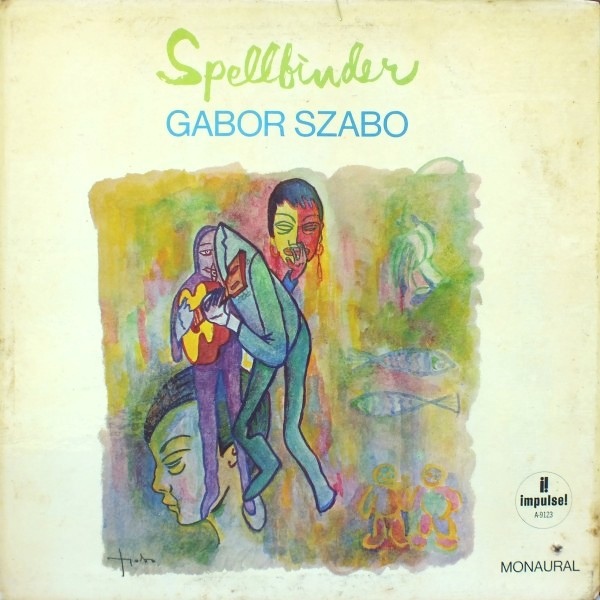


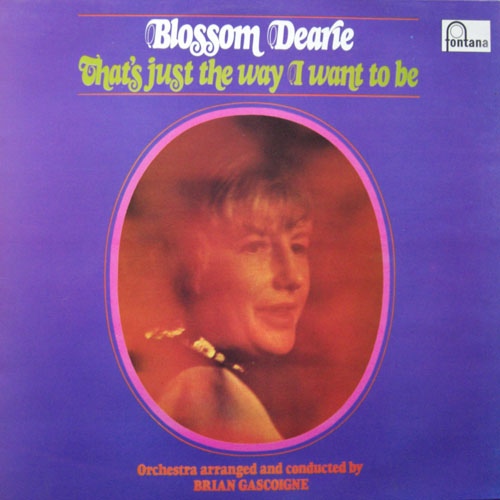
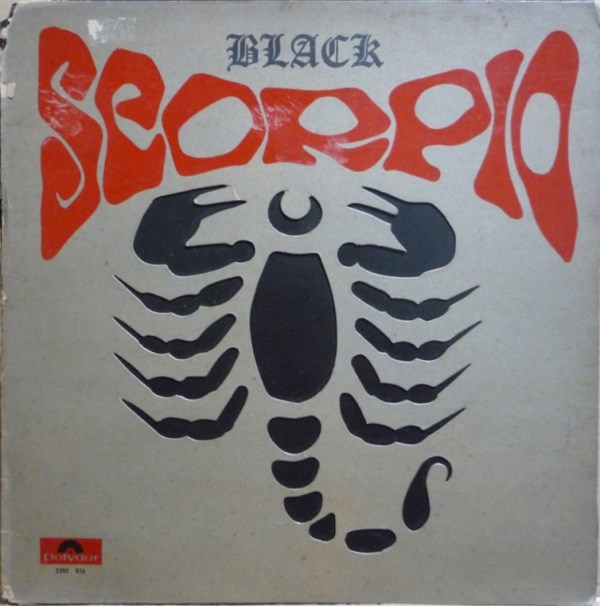
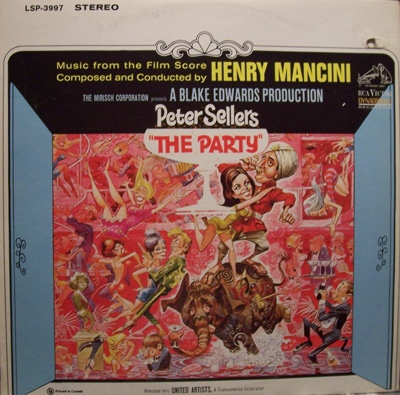
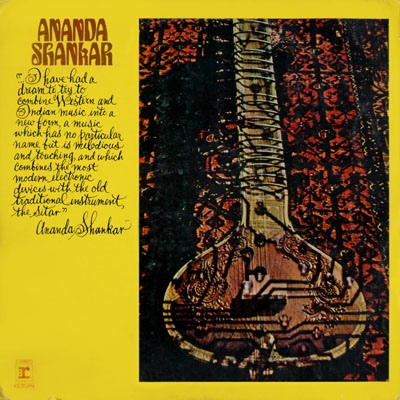
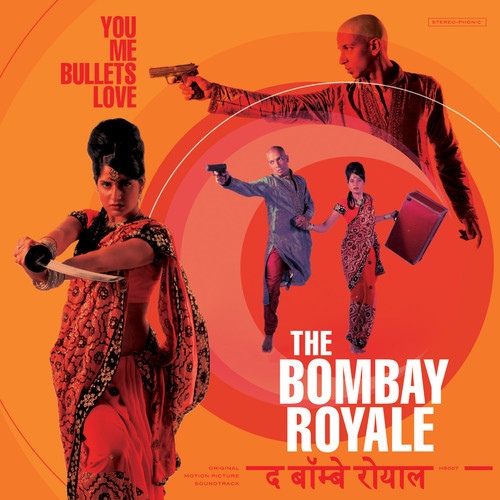
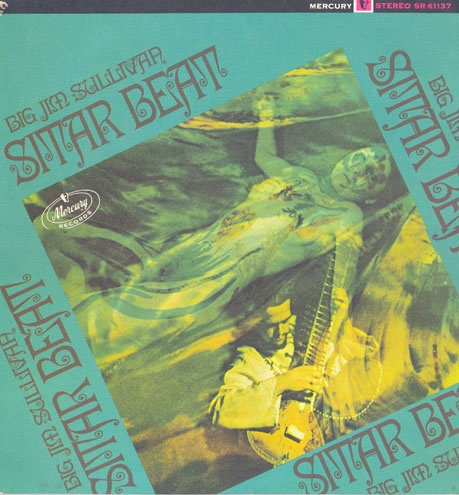
BLACK MOON CIRCLE-THE STORY SO FAR.
BLACK MOON CIRCLE-THE STORY SO FAR.
Over the last few years, the Norwegian music scene has been thriving. Groups old and new, have been releasing some of the most innovative music in Europe. This includes everything from free jazz, progressive rock and psychedelia to space rock, experimental and avant garde music. It seems that the thriving Norwegian music scene is also truly eclectic.
While the music coming out of Norway each month eclectic, it’s also groundbreaking. It surpasses the music being released by many British labels. Their A&R departments and label managers should make their may to Oslo, Bergen, Fredrikstad, Lillehammer or Trondeim. In each of these towns and cities, there’s a thriving music scene. There’s plenty of talented bands waiting to be discovered. They would be happy to sign on the dotted line. However, they’re not sitting twiddling their thumbs, waiting for A&R men to beat a path to their door.
Instead, they’ve been making things happen. They do this the old fashioned way, through constant touring. Gradually, they build a following. This leads to bands playing larger venues and festivals. Then when they’re not touring, they write and record singles, E.P.s and albums. They’re then released independently, or via one-off deals with Norwegian labels. This is what Black Moon Circle have been doing since 2012.
Black Moon Circle are, without doubt, one of the most exciting, talented and innovative of this generation of new Norwegian groups. Considering how rich and vibrant the Nordic music scene is, that’s high praise indeed. However, it’s well deserved.
The Trondheim based trio seem to have been influenced by their fellow countrymen Motorpsycho and Moster! That’s not all. Black Moon Circle sound as of they’ve been influenced by Led Zeppelin, Hawkwind, early Pink Floyd and legendary guitar virtuoso, Jimi Hendrix. That’s why Black Moon Circle are being hailed as one of the rising stars of the Nordic music scene. That’s been the case since the Engan brothers formed Black Moon Circle.
Norwegian space rock band Black Moon Circle were formed back in 2012, by brothers Øyvin Engan and Vemund Engan in 2012. Øyvin plays bass, guitar and takes charge of vocals. His brother Vemund is a guitarist. Both brothers used to play in the Trondheim-based punk rock band The Reilly Express. That was Øyvin and Vemund Engan’s musical apprenticeship.
The Reilly Express’ career began in 2001, when they released their Bleeding Hearts E.P. on the Norwegian underground label, Luftwaffel Records. However, it was another three years before The Reilly Express released their debut album.
Dizzy was released in 2004, on Luftwaffel Records. This was the first of a trio of albums released by The Reilly Express. It was a case of full steam ahead for the Trondheim based band.
They returned in 2004 with their sophomore album, Ways Of Falling. This sixteen track epic was released on the short-lived Cutwater Records. It was long gone by the time The Reilly Express returned with their third album.
Howl, Shake and Boogie was released in 2009, on Timber Records. The label was setup with express purpose of releasing The Reilly Express’ third album Howl, Shake and Boogie. It was a glorious fusion of of punk, blues and rock. The Reilly Express’ third album was hailed as their finest hour. However, it was also their swan-song.
With The Reilly Express now consigned to Norwegian musical history, the the Engan brothers were looking for a new musical vehicle. This would become Black Moon Circle. All they needed was a drummer.
Completing Black Moon Circle’s lineup was drummer, Per Andreas Gulbrandsen on drums. He was the final piece of the jigsaw. Now Black Moon Circle could set about honing their sound.
Gradually, Black Moon Circle’s sound began to evolve. It’s essentially a combination of lengthy jams, searing guitar riffs and a myriad of effects added to the bass and guitar. This Black Moon Circle describe as space rock band. They’re not alone.
There are numerous other Norwegian space rock bands. This includes Earthless and Colour Haze, two of the finest purveyors of space rock. Black Moon Circle are just the latest space rock band. They’ve been creating space rock with a twist since 2013.
Black Moon Circle are, essentially, a power trio, who create their unique brand of psychedelic space rock. Their roots are firmly and unashamedly in the past. The basis for the music Black Moon Circle are making can be found in the classic rock of the sixties and seventies, psychedelia and space rock. To this, Black Moon Circle add elements of electronica, experimental music and free jazz. Seamlessly, these disparate musical genres and influences merge into something new and innovative. It’s cinematic, dramatic, futuristic, moody, rocky and as Øyvin Engan says, “intense.”
This intensity is deliberate. It comes courtesy of the three members of Black Moon Circle. They deploy layers of fuzzy guitars, spacey, lysergic synths and a mesmeric rhythm section. When all this is combined, the result is space rock Black Moon Circle style.
The first example of this came in 2013, when Black Moon Circle recorded their eponymous, debut, mini-album, at Nautilus studios in 2013. Black Moon Circle was then released in February 2014 by Space Rock Productions, the label run by the Øresund Space Collective from Copenhagen, Denmark. However, Black Moon Circle weren’t the type of band to let the grass grow under their feet.
Andromeda.
No. Black Moon Circle returned to the studio in April 2014. That’s when Black Moon Circle recorded Andromeda. They worked quickly and efficiently. As a result, the five songs on Andromeda were recorded in one day. Six months later, Andromeda, Black Moon Circle’s debut album was ready for release.
After just a year together, Black Moon Circle had come a long way. They were forging a reputation as one of Trondheim’s best new bands. What’s more, they had released their eponymous mini album. Now, the crowning glory was their debut album Andromeda. It was released by Crispin Clover Records, in cooperation with Stickman Records in October 2014. Andromeda, was the perfect introduction to Black Moon Circle.
Opening Andromeda, is The Machine On The Hill. Per Andreas Gulbrandsen’s drums set the scene for the Engan brothers. A guitar reverberates and a buzzing bass enters. Effects are unleashed. What sounds like a howling wind, accompanies Øyvin’s pensive vocal. Meanwhile, sci-fi sounds and feedback are unleashed. Then Black Moon Circle become one. Vemund and Per join Øyvin on vocals, as they showcase their unique version of space rock. There’s even a nod to Hawkwind. That’s not all. What follows is a glorious melange of classic rock, psychedelia and futuristic, sci-fi sounds. Innovative but also harking back to the golden age or rock, it’s a potent fusion that sure whet’s the listener’s appetite, as Black Moon Circle continue to unleash their own brand of psychedelic space rock.
For nine minutes, Black Moon Circle unleashes blistering, searing guitar licks. Literally, they do toe-to-toe. They’re laden with effects, while the rest of the rhythm section become a powerhouse. It’s a glorious combination and the perfect showcase for space rock pioneers Black Moon Circle, in full flight. A pounding, thunderous rhythm section create a slow, dramatic introduction to Jack’s Cold Sweat. This is the perfect backdrop for Øyvin’s vocal. It starts off slow and moody, growing in power and presence. Per and Vemund add harmonies, as guitars soar above the arrangement, drums pound and the buzzing bass makes its presence felt. Black Moon Circle, are at their best when they kick loose. In full flight, Black Moon Circle are a tight, talented group. This is what music sounded like in the days of Led Zeppelin, Black Sabbath and Deep Purple. That music will bnever die. In Norway, groups like Motorpsycho, Moster! and Black Moon Circle fly the flag for the golden age of rock.
Supernova has a moody, ominous sound. The arrangement unfolds in waves. Its dark sound buzzes. Drums and a crystalline guitar play. Along with Øyvin’s wistful vocal, they’re responsible for a sound that’s reminiscent of Pink Floyd. Effects are added to the arrangement. As a result, it frames Øyvin’s vocal. It’s the perfect foil for a vocal that’s full of sadness and melancholy. Tinged with regret and emotion, Øyvin delivers the vocal like he’s lived the lyrics. The rest of Black Moon Circle play their part in what’s without doubt the highlight of Andromeda.
Just a lone guitar opens Dragon. Having set the scene, Øyvin’s husky, dramatic vocal enters. Soon, the rest of Black Moon Circle enter. The rhythm section provide the heartbeat, while a myriad of effects are added. A wind blows, the arrangement bubbles and futuristic, sci-fi sounds emerge from the arrangement. Mostly, though it’s Øyvin’s that grabs your attention. Everything else is playing a supporting role. Only when the vocal briefly drops out, do the rest of Black Moon Circle showcase their considerable talents. Then Black Moon Circle kick loose, and searing, howling, braying guitars join the driving, churning rhythm section on this nine minute Magnus Opus, where we hear two sides of the hugely talented Black Moon Circle.
The title-track Andromeda closes Black Moon Circle’s latest albums. It’s another epic track, lasting fifteen magnificent minutes. At the start, it’s just Øyvin’s thoughtful, powerful vocal. He’s joined by the rhythm section. Straight away, they make their presence felt. So do the searing, choppy, shimmering guitars. Always, though, they leave space for the heartfelt, dramatic vocal. When the vocal drops out, Black Moon Circle get the opportunity to stretch their legs. Slowly, and purposely, they play. Choppy guitars reverberate, a buzzy bass howls and pulsates. All the time, drums provide the heartbeat. Guitars steal the show. Howling, searing and blistering machine gun licks are unleashed, as Black Moon Circle lock into a groove. The result is a mesmeric, hypnotic and dramatic rock epic, where Black Moon Circle join the Norway’s musical elite.
Andromeda, the latest musical missive from Norwegian space rock pioneers, Black Moon Circle is an old school album. It features five tracks lasting forty-five minutes. This is how albums used to be, back in the days of classic rock. Back then, Led Zeppelin, Black Sabbath and Deep Purple were Unholy Trinity of Rock. Albums were very different.
They weren’t sprawling, unfocused affairs featuring eighteen tracks. No. Instead, they featured between seven and ten tracks. These tracks featured on albums made of vinyl. That’s the way Black Moon Circle do things. They’re an old school band with a huge future ahead of them.
Over five tracks, Black Moon Circle the quintessential power trio, combine elements of classic rock, psychedelia and space rock on Andromeda. Sometimes, there’s a nod to Led Zeppelin, Hawkwind and Pink Floyd. That’s not all. Black Moon Circle remind me of their fellow countrymen, Motorpsycho and Moster!, two other pioneering Norwegian groups. The latest name to be added this list of Norwegian musical pioneers, are Black Moon Circle.
It’s no exaggeration to say, that Black Moon Circle, are one of the most exciting, talented and pioneering Norwegian groups. They’re flying the flag proudly for classic rock and space rock. This is the case on Black Moon Circle’s latest album Andromeda, which features a coming of age from the multitalented Norwegian power trio, who have a huge future in front of them.
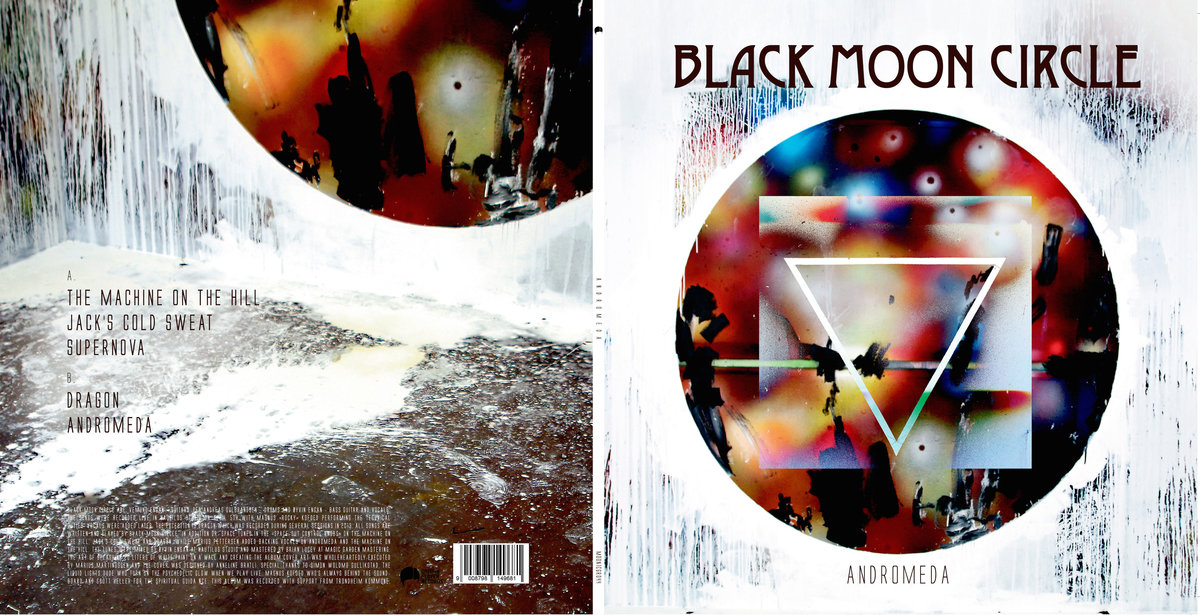
The Studio Jams Volume I: Yellow Nebula In The Sky.
After the commercial success and critical acclaim that accompanied Andromeda, a great future was forecast for Black Moon Circle. No wonder. Black Moon Circle are one of the most talented bands in the Nordic music scene. They’re also one of the most ambitious. Why?
While most bands don’t plan any further than their next single or E.P., Black Moon Circle plan to release a trilogy of albums in the next two years. They’re no ordinary album. Instead, they’re a trilogy of studio jams. The first instalment is The Studio Jams Volume I: Yellow Nebula In The Sky. It was recently released on limited edition vinyl, by Crispin Glover Records. It’s the next chapter in the Black Moon Circle story and sees the band joined by a new name.
For the first in Black Moon Circle’s trilogy of studio jams, it seems fitting that they recorded a trio of length jams. One of the tracks was recorded during the first jam session in April 2013, while the other two tracks were recorded in 2014. Joining Black Moon Circle were Scott Heller Scott Heller the synth player in Øresund Space Collective. He plays an important part in the three tracks which became The Studio Jams Volume I: Yellow Nebula In The Sky. It showcases the hugely talented Trondheim Black Moon Circle at their genre-melting best.
The Studio Jams Volume I: Yellow Nebula In The Sky has been eagerly-awaited. What direction were Black Moon Circle heading? When I asked Øyvin Engan, one the founding members of Black Moon Circle, he described The Studio Jams Volume I: Yellow Nebula In The Sky, as: “all about intensity. “Intense heavy fuzzed out guitars, blasting bass and drums and spaced out synthesisers. This is an intense instrumental trip with some killer jamming from the entire band.”
That’s the perfect description of Black Moon Circle’s sophomore album, Andromeda. It was released to widespread critical acclaim, and sounded as if it had been partly inspired by the sixties and seventies, the golden age of rock. That becomes clear.
Closed Loop Circle opens side one of The Studio Jams Volume I: Yellow Nebula In The Sky. What sounds like a howling gale is accompanied by a bounding bass. It reverberates into the distance while drums add an element of drama. Synths beep and squeak, like a siren sending out a warning. A blistering, searing fuzzed-out guitar cuts through the slow, moody, cinematic arrangement. Soon, a fuzzy guitar unleashes a wall of feedback. It’s controlled though, in a Hendrex-esque manner. Meanwhile, the bass bounds along. By then, Black Moon Circle are seamlessly combining elements of electronica, experimental, free jazz, psychedelia, rock and space rock. As musical genres combine, Black Moon Circle are locked into a groove, creating a rocky, psychedelic, space age soundtrack for a film that’s yet to be made. In doing so, Black Moon Circle showcase their considerable skills.
Sea of Vapors is the other track on side two of The Studio Jams Volume I: Yellow Nebula In The Sky. Futuristic, space-age sounds are scene setters, before the rhythm section enter. They lock into a groove, playing within themselves. As they do, Black Moon Circle sound like a power trio from the seventies. That’s no bad thing, as it was the golden age of rock. Listening to Black Moon Circle is like being transported back to another time and place. Meanwhile, a scorching guitar and bass cut through the arrangement, and drums provide the heartbeat. The futuristic synths give the impression that Black Moon Circle are under attack from an alien nation. When the synths drop out, a blistering guitar solo is unleashed. It soars higher and higher, and is best described as a gravity defying masterclass. Later, the arrangement takes on a darker sound. However, there’s another surprise is store. It’s another scorching guitar solo, which is accompanied by space invader synths. Together, they lighten the mood, as Black Moon Circle drive this musical Magnus Opus to even greater heights. Psychedelic space rock doesn’t get better than this.
The whole of side two of The Studio Jams Volume I: Yellow Nebula In The Sky is given over to Yellow Nebula in the Sky. It’s a twenty-two minute epic where Black Moon Circle stretch their legs. There’s plenty of opportunity to head off on a musical voyage of discovery. Washes of whirling synths set the scene for a crunchy, rocky guitar. Soon, Black Moon Circle unite, and become a power trio. They unleash a dramatic, rocky backdrop. Atop the arrangement a myriad of futuristic synths float. These sounds are twisted and transformed. Meanwhile, a blistering, crunchy guitar threatens to feedback and Black Moon Circle’s rhythm section relentlessly drive the arrangement along. Later, sirens sound, squeak and beep. They’re the perfect foil to Black Moon Circle as they kick loose and get into the tightest of grooves. Everything from electronica, psychedelia, rock and space rock melts into one. The result is music that’s gloriously loud, rocky, dramatic and mesmeric. Black Moon Circle never miss a beat on this epic track, as they show why they’re one of the rising stars of the Nordic music scene.
That’s no exaggeration. Black Moon Circle are, without doubt, one of the most exciting, talented and innovative Norwegian groups. Proof of that, is The Studio Jams Volume I: Yellow Nebula In The Sky. It finds Black Moon Circle picking up where they left off on Andromeda. They take their trailblazing sound much further on The Studio Jams Volume I: Yellow Nebula In The Sky. That’s not surprising, as Black Moon Circle are a hugely talented band. They’re also ambitious.
Very few bands plan three albums ahead. However, Black Moon Circle do. They’ve got their future mapped out. Black Moon Circle make things happen, and are have the potential to become one of leading lights of the Nordic music scene. However, Black Moon Circle won’t stop there.
Black Moon Circle’s music is now finding an audience much further afield. Across Europe, record buyers have been introduced to Black Moon Circle. They’ve been won over by Black Moon Circle’s fusion of the music of the past and present. This creates the music of the future.
To create the music of the future, Black Moon Circle draw inspiration from the golden age of rock. They’ve been inspired by Led Zeppelin, Black Sabbath, Hawkwind, Deep Purple, early Pink Floyd and Jimi Hendrix. They’ve also been inspired by Krautrock Kings Can and Neu!. Closer to home, fellow Nordic rockers Motorpsycho and Moster! have influenced Black Moon Circle. They’re a band for the 21st Century, whose roots are firmly and proudly in the past.
Essentially, Black Moon Circle are a classic power trio. The golden age of the power trio was the late-sixties, early seventies. Back then, groups like Cream and the Jimi Hendrix Experience were at the peak of their powers. Since then, several generations of power trios have enjoyed commercial success and critical acclaim. Mow it’s Black Moon Circle’s turn to enjoy commercial success and critical acclaim?
They’ve got the talent and ambition. Their unique brand of psychedelic space rock, which features on The Studio Jams Volume I: Yellow Nebula In The Sky, has been released to critical acclaim and commercial success. The basis for The Studio Jams Volume I: Yellow Nebula In The Sky was the classic rock of the sixties and seventies, psychedelia and space rock. To this, Black Moon Circle add elements of electronica, experimental music and free jazz. Seamlessly, these disparate musical genres and influences merge into something new and innovative. It’s cinematic, dramatic, futuristic, moody, rocky and as Øyvin Engan says, “intense.”
This intensity is deliberate. It comes courtesy of the three members of Black Moon Circle. They deploy layers of fuzzy guitars, spacey, lysergic synths and a mesmeric rhythm section. When all this is combined, the result is the next instalment in the Black Moon Circle story, The Studio Jams Volume I: Yellow Nebula In The Sky. It’s without doubt the best album of Black Moon Circle’s career. That’s why, for anyone yet to discover Black Moon Circle, The Studio Jams Volume I: Yellow Nebula In The Sky is the perfect introduction to the Norwegian psychedelic space rock pioneers at their hard rocking best.
That’s no exaggeration. Black Moon Circle reach for the stars on The Studio Jams Volume I: Yellow Nebula In The Sky, which is a career-defining Magnus Opus from one of the rising stars of the vibrant Nordic music scene.,
BLACK MOON CIRCLE-THE STORY SO FAR.
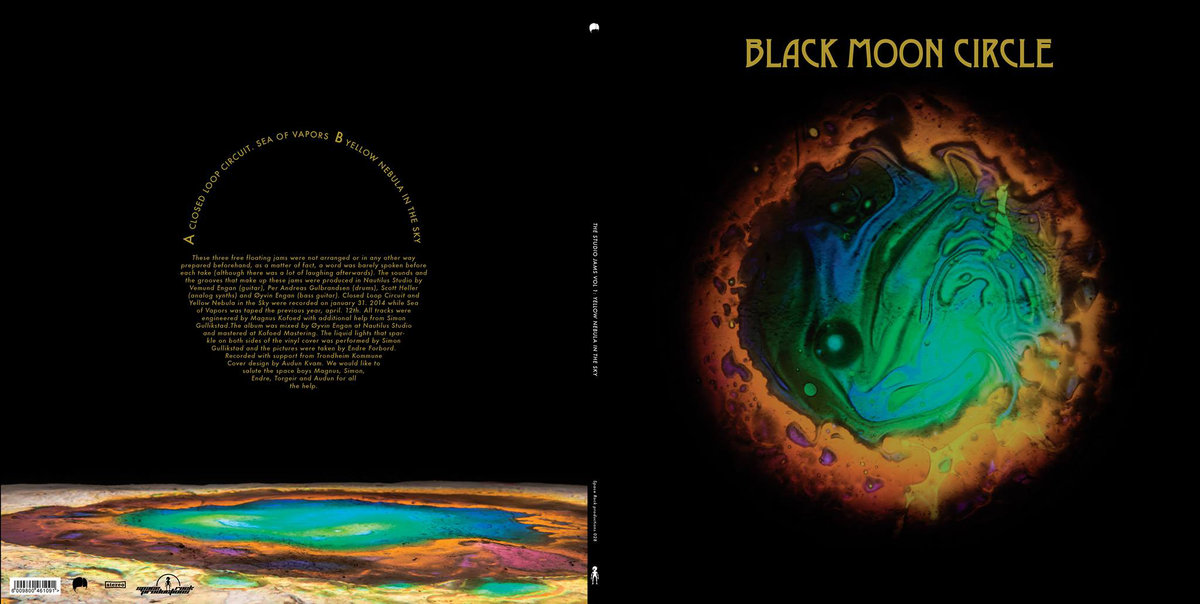


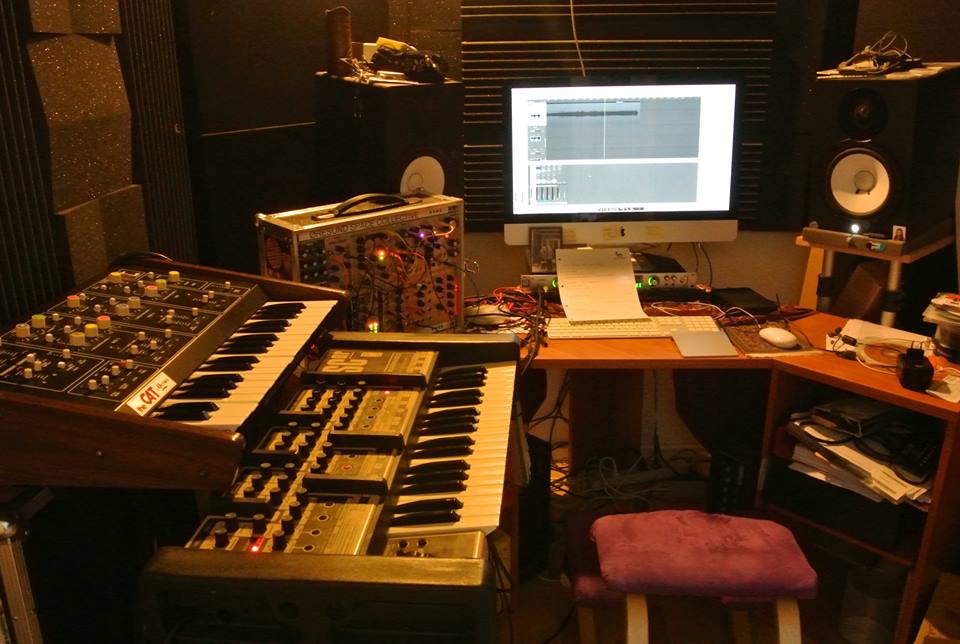
SWEETHEARTS OF THE PRISON RODEO-PIGS IN THE BULL RING [HUMANS LIKE BEASTS].
SWEETHEARTS OF THE PRISON RODEO-PIGS IN THE BULL RING [HUMANS LIKE BEASTS].
Concept album. These two words are guaranteed to divide opinion amongst music critics. That’s despite many classic albums falling into the category of concept albums. This has been the case for nearly fifty years.
One of the first concept albums was The Beach Boys’ Pet Sounds, which was released in 1968. The same year, The Pretty Things released S.F. Sorrow and The Kinks’ The Kinks Are the Village Green Preservation Society.Then in 1969, The Who released Tommy. It was their first concept album. They would release another during the seventies, which was the golden era for concept albums.
During the seventies, progressive rock was King. Nearly every progressive band released a concept album. This included Gentle Giant who released Three Friends in 1972. That year, Jethro Tull released Thick As A Brick in 1972. Jethro Tull were masters of the concept albums. However, it wasn’t just progressive rock who were releasing concept albums.
In 1973 David Bowie released The Rise and Fall Of Ziggy Stardust and The Spiders From Mars and The released Quadrophenia. However, 1973 saw two of the greatest progressive bands release classic albums.
This included Yes’ Tales From Topographic Oceans. It was released in October 1973, to widespread critical acclaim. It’s now regarded as a progressive rock classic. However, in March 1973, Pink Floyd released what many music critics consider the greatest concept album in musical history, Dark Side Of The Moon. Soon, other progressive rock bands were following in Pink Floyd’s footsteps.
A year later, Genesis released The Lamb Lies Down on Broadway in 1974. Then in 1976, The Alan Parsons Project released one of their greatest ever concept albums, Tales Of Mystery and Imagination. It’s considered a classic concept album. So is Rush’s 1976 concept album 2112. However, as the seventies drew to close, the masters of the concept album returned, and Pink Floyd released The Wall. Meanwhile, Frank Zappa released Joe’s Garage. Concept albums had been a feature of the seventies, and featured some of the greatest music of the decade. During the eighties, their popularity declined.
As the eighties dawned, concept albums were regarded as over-indulgent by the new breed of gunslinger critics. Blindly, they had flown the flag for punk and post punk. Despite their best efforts to kill off the concept album, some concept albums still sold in vast quantities.
Among the most popular was Duke, which Genesis released in 1980. Then in 1983, Pink Floyd without Roger Waters released The Final Cut. Not to be outdone, Roger Waters released Radio K•A•O•S in 1987. Then in 1988, Iron Maiden unleashed Seventh Son Of A Seventh Son. Concept albums were still popular. However, that was about to change.
During the nineties, the critics continued to call concept albums over-indulgent and a relic of music’s past. Then suddenly, critics changer their minds when Radiohead released O.K. Computer in 1997. Since then, many musicians have released concept albums.
This includes everyone from Arcade Fire and Bon Iver to The Flaming Lips and The Killers. Now it seems, the concept album is back in fashion. That’s just as well, as Falkirk’s very own Sweethearts Of The Prison Rodeo’s recently released sophomore album Pigs In The Bull Ring [Humans Like Beasts] is a concept album.
Pigs In The Bull Ring [Humans Like Beasts] was released on the Wiseblood Industries label, and is the followup to Sweethearts Of The Prison Rodeo’s 2013 album, On The Desolate Hillside. It introduced listeners to Falkirk’s very own purveyors of freak-country-folk, the Sweethearts Of The Prison Rodeo. Their raison d’être is to release cerebral music with a social conscience. However, who are Sweethearts Of The Prison Rodeo?
For those yet to discover the Sweethearts Of The Prison Rodeo, they’re a Falkirk based musical collective centred around D. King. That’s David King, the the Sweethearts Of The Prison Rodeo songwriter-in-chief. By calling himself D. King, it seen as adding an air of mystery. Or as much an air of mystery as anyone from Falkirk can exude. Falkirk you see, isn’t the type of place 007 hangs out on his day off.
If you’ve never been to Falkirk, it’s smack bang between Glasgow and Edinburgh. Anyone whose taken a train out of Edinburgh, to Scotland’s musical capital Glasgow, will have passed through Falkirk. It was once part of Scotland’s proud industrial heritage. Now it’s better known for tourist attractions like the Wheel and the Kelpies. However, it’s also developing a vibrant musical scene.
This is where the Sweethearts Of The Prison Rodeo come in. For the last few years, they’ve been at the heart of the local music scene. Sweethearts Of The Prison Rodeo’s first release was the Split E.P. This saw them start as they meant to go on. It was released on a limited edition orange cassette. Then came their double-A-sided single.
Sweethearts Of The Prison Rodeo’s double-A-sided single featured Fashionable Buddhas and Solitary Rabbit. The single was seen as a statement of intent. This was Sweethearts Of The Prison Rodeo laying down their marker, and showing what they were capable of. The single was then released on Wiseblood Industries, and featured searing social commentary and wry, surreal humour. This whetted the appetite for Sweethearts Of The Prison Rodeo’s debut album On The Desolate Hillside.
It was in September 2013, that the Sweethearts Of The Prison Rodeo released On The Desolate Hillside. This was a very different debut album. After all, who else included songs aboyr regression, greedy bankers burning in hell and pollen distribution? The Sweethearts Of The Prison Rodeo did, and and that’s why On The Desolate Hillside was such a truly compelling debut album from the Falkirk collective. Since then, a question on many Scottish music lips was where are the Sweethearts Of The Prison Rodeo?
The answer to that question came recently, when the Sweethearts Of The Prison Rodeo returned with their sophomore album Pigs In The Bull Ring [Humans Like Beasts]. It’s described as “a concept album of sorts, it explores the intertwining of animal and human behaviour, through the retelling of stories brought by the fascist ghost of Mussolini, in dreams of absent-minded regression.” According to Sweethearts Of The Prison Rodeo; “all humans can behave like beasts when power is in their hands.” This is an interesting theory, which Sweethearts Of The Prison Rodeo’s will explore on Pigs In The Bull Ring [Humans Like Beasts]. It’s very much the the work of David King, Sweethearts Of The Prison Rodeo’s songwriter-in-chief
David King has been busy. He’s written eight of the ten songs on Pigs In The Bull Ring [Humans Like Beasts]. The exceptions are Amelia’s Song and Womanhood Suffrage. Both are penned by David King with Paul Tonner. These tracks were then recorded by an expanded lineup of Sweethearts Of The Prison Rodeo.
When recording of On The Desolate Hillside took place, the Sweethearts Of The Prison Rodeo were a quartet. Now seven members of the collective packed into the studio. Some are permanent members, others are playing a walk-on role on Pigs In The Bull Ring [Humans Like Beasts].
David King has been central to the Sweethearts Of The Prison Rodeo story, and plays acoustic guitar, kazoo and percussion. So is the rhythm section featured drummer and percussionist Steven Tosh and bassist Robbie Lesiuk. He also played steel and acoustic guitar, ukelele, melodica, keyboard, lap steel and percussion. Paul Tonner returns, and plays percussion, cajon and vocals. They’re joined by three new names.
This includes Andy Hill on guitar and synths and guitarist and harmonica player Francis McFaul. The last of the new names is vocalist Louise Ward. Both the old faces and new names got to work on Pigs In The Bull Ring [Humans Like Beasts]. Once it was recorded and produced by Robbie Lesiuk, he then mastered the album. Only then was the Sweethearts Of The Prison Rodeo sophomore album ready to release. However, how does Pigs In The Bull Ring [Humans Like Beasts] compare to On The Desolate Hillside?
Opening Pigs In The Bull Ring [Humans Like Beasts], is The Austrian Farmer. Distant washes of music draw nearer, while a pulsating bass provides the heartbeat. Meanwhile, a myriad of percussion fills out the arrangement, while David King delivers the lead. He’s accompanied by disparaging, accusing, singalong harmonies. As The Austrian Farmer takes to the stand, he’s accused of various wrongs, including “chauvinistic piggery.” The Sweethearts Of The Prison Rodeo vocals ooze disgust. By then, David King and Co. have dawned an Austrian accent. It’s used in parts of the track. Rocky guitars drive the arrangement along, and provide a see-sawing arrangement. It accompanies David and the Sweethearts Of The Prison Rodeo. They sing accusingly: “he’s two wives, he’s two wives.” Anger, disgust frustration shine through. Later, the song becomes melodic, as the Sweethearts Of The Prison Rodeo showcase their ability to craft cerebral songs full of scathing, social commentary.
Just drums and percussion combine as Donkey Actor In Makeup unfolds. A chiming, country-tinged guitar sets the scene for heartfelt harmonies. They’re tinged with guilt, at the breakup letter they’ve sent. When David King takes charge of the vocal, he combines power, passion and emotion. Accompanying David are rat-a-tat harmonies, rocky guitars and pounding drums. They add an indie rock sound to this captivating fusion of influences.
Straight away, washes of trembling, quivering guitars add a cinematic hue to Vulture People. They’re accompanied by robotic drums and an acoustic guitar. However, taking centre-stage is Laura’s vocal. Wistful and despairing, she delivers the line: “you’re on the path to self-destruction.” Meanwhile, the drums add a hypnotic effect, while deliberate bursts of guitar and harmonies accompany Laura. Hurt fills her voice as she duets with David. Especially when sings of “dysfunction people.” Other times despair fills her voice as she remembers the: “people who can’t get relief” from their torment. It’s a moving, heartfelt acknowledgement of people “dysfunction people,” living lives on the edge where despair and torment are omnipresent.
As The Cruel Revenge Of Queen Maria begins to unfold, it begins to take on an anthemic sound. There’s more than a nod to late-sixties, early-seventies Rolling Stones. Partly, that’s down to the rocky riffs that are unleashed. Meanwhile, the a buzzing bass accompanies David King as he vamps his way through the lyrics. Sometimes, there’s theatrical, dramatic sound to his vocal. He seems determined to bring the lyrics to life. Behind him, the guitar line that starts at 2.00 reminds me of Gimme Shelter. Surely, Falkirk’s freak-country-folk combo aren’t going down to follow in the footsteps of Mick Jagger and Co.? Later, an angry, vengeful David announces: “we’re gonna blow all the fascists to hell” as they strut their way through this rocky anthem.
An urgent strummed guitar is a scene setter on The Insidious Creep. A defeated and deflated David sings: I’ve sold my soul to the corporation. Later, he sings “my opinions and beliefs mean nothing more.” By then, strummed guitars harmonies and the rhythm section create a melodic, hook rich backdrop for David’s vocal. Playing an important role is Robbie Lesiuk’s pulsating bass. Robbie also produced the album, and this is without doubt, one of its finest moments.
Faithless, Lawless sees an acoustic guitar and harmonica combine to create a country backdrop. They set the scene for David’s vocal. He doesn’t try and disguise his Scottish vocal. There’s no mid-Atlantic vocal like some bands try on a country track. Instead, his accent shines through, as memories come flooding back. He remembers his hopes and dreams, and wonders: “where are they now?” By then, harmonies have joined him, as he sings of a friend who is a “love rat clown.” They’re seeking forgiveness, from the woman they’ve cheated on. Later, David asks: “what makes you such a selfish lover?” He’s angry and frustrated at his friend’s behaviour, and asks: what ever happened, what’s happening in your mind, you’ve been sinking to the bottom of the promiscuous ocean?”
Washes of keyboard, chiming guitar and a pulsating bass combine on Amelia’s Song. They provide the backdrop to what’s meant to be a dramatic, theatrical, accented, half-spoken vocal. The lyrics are dark and disturbing. They talk of: “lust and desire that’s easily pleased,” and “victimless crimes.” Soon, various instruments have been added to frame the vocals. This includes a pedal steel and haunting melodica. These instruments are chosen carefully, and match lyrics dark, disturbing lyrics like: “we romanticise summary execution.” It’s delivered by David and Laura, who also adopts an accented vocal. As the track reaches a dramatic ending, the bass pulsates, and there’s a twist in the tale. “My Iberian Queen, the love of my live, cuts and dissects me and washes me down with red wine.”
Just a firmly strummed guitar opens Womanhood Suffrage. It’s joined by dramatic harmonies. They give way to Laura’s vocal. She sounds like Suzanne Vega, circa 1986. Before long, Laura is showcasing her considerable talents. She bring the lyrics to life. The way she delivers; “you’ve got no common sense,” it’s as if she means every word. Then when rocky guitars interject, the understated arrangement dissipates. Laura’s replaced by David, and the pair duet. David adds another of his heavily accented vocals. Similarly, the harmonies veer between heavily accented and dramatic on what’s a seven minute, dramatic and theatrical epic.
Pigs In The Bull Ring [Humans Like Beasts] closes with A Young Fascist Girl For All Occasions. There’s a mixture of influences as the song unfolds. Elements of country, folk, indie rock and blues shine through. A steel guitar, pedal steel, chiming, quivering guitar and the rhythm section combine. They provide the backdrop for David’s vocal. His vocal sounds impassioned, as he earnestly delivers the vocals. Other times, he reassures. This is the case as he sings: “don’t be scared little girl, we only kill fascists.” Behind him, one of the best arrangement on the album unfolds. Later, David King vows to protect us: “from the ghost of Mussolini,” which is one of Pigs In The Bull Ring [Humans Like Beasts]’ highlights.
That seems to be the end of the Pigs In The Bull Ring [Humans Like Beasts]. As the listener winds their way to the CD player, the Sweethearts Of The Prison spring a surprise. Paul Tonner has penned what’s simply entitled Untitled Track. It’s the track that closes the Sweethearts Of The Prison Rodeo’s sophomore album Pigs In The Bull Ring [Humans Like Beasts]. However, how does it compare to their debut album On A Desolate Hillside?
The Sweethearts Of The Prison Rodeo don’t make things easy for themselves. Writing and recording a concept album wasn’t going to be easiest way to followup their debut album. Especially when it’s told by the ghost of Mussolini. This makes Pigs In The Bull Ring [Humans Like Beasts] sound like an album that harks back to the classic concept album of the seventies.
Pigs In The Bull Ring [Humans Like Beasts] doesn’t come courtesy of Pink Floyd, E.L.P. or Yes. Instead, it come from David King and his Falkirk collective, Sweethearts Of The Prison. They’re not progressive rockers. Far from it.
Sweethearts Of The Prison Rodeo described themselves as a freak-country-folk combo. That’s almost selling themselves short. They combine everything from blues, country, folk, indie rock and indie rock. Musical genres combine and collide seamlessly on Pigs In The Bull Ring [Humans Like Beasts]. To this musical hotpot, Sweethearts Of The Prison Rodeo combine, melodies and subtle hooks and social comment. This proves a potent combination…to some people.
Over the years, some groups have tried too hard to be clever. This has proved a turnoff for record buyers. Still, these bands have continued to release their own albums. Sales continue to decline album on album. Ultimately, their albums end up being the musical equivalent of vanity publishing. Eventually, these groups are never heard of again. It doesn’t matter that their album feature cerebral music full of social comment. Other groups have been down this well trodden path, and haven’t lived to tell the tale. Maybe, Sweethearts Of The Prison Rodeo are prepared to take that risk.
If they do, many record buyers will see the music on Pigs In The Bull Ring [Humans Like Beasts] as as pretentious and over-indulgent. They’ll even find the words concept album off-putting. It may even bring back Vietnam-like flashbacks of the seventies heyday of the concept album. All this could mean that that the Sweethearts Of The Prison Rodeo music isn’t going to find a much wider audience? Surely, that’s what the Sweethearts Of The Prison Rodeo want?
Especially when David King and his latest lineup of Sweethearts Of The Prison Rodeo are a talented group of singers, songwriters and musicians. On A Desolate Hillside, and its followup Pigs In The Bull Ring [Humans Like Beasts] are proof of this. Both albums feature cerebral, captivating, dramatic, impassioned and powerful music. Sadly, this music isn’t proving particularly successful. Maybe, Sweethearts Of The Prison Rodeo have to change tack?
Much as I enjoyed Pigs In The Bull Ring [Humans Like Beasts], and enjoyed what’s compelling concept album, why don’t Sweethearts Of The Prison Rodeo try and reinvent themselves and their music? I’m sure they could write a much more commercial album. Other Scottish groups, including The Pearlfishers have been down this road, and survived with their street cred in tact. I’m sure that the Sweethearts Of The Prison Rodeo could too.
That’s unless the Sweethearts Of The Prison Rodeo are content to plough their own furrow, and continue to release captivating concept albums like Pigs In The Bull Ring [Humans Like Beasts]. Of course, maybe fame and fortune isn’t for the Falkirk based collective? Maybe John Lennon was right, and the Sweethearts Of The Prison Rodeo are happy to watch the Falkirk Wheel going round, while writing the followup to Pigs In The Bull Ring [Humans Like Beasts]?
SWEETHEARTS OF THE PRISON RODEO-PIGS IN THE BULL RING [HUMANS LIKE BEASTS].
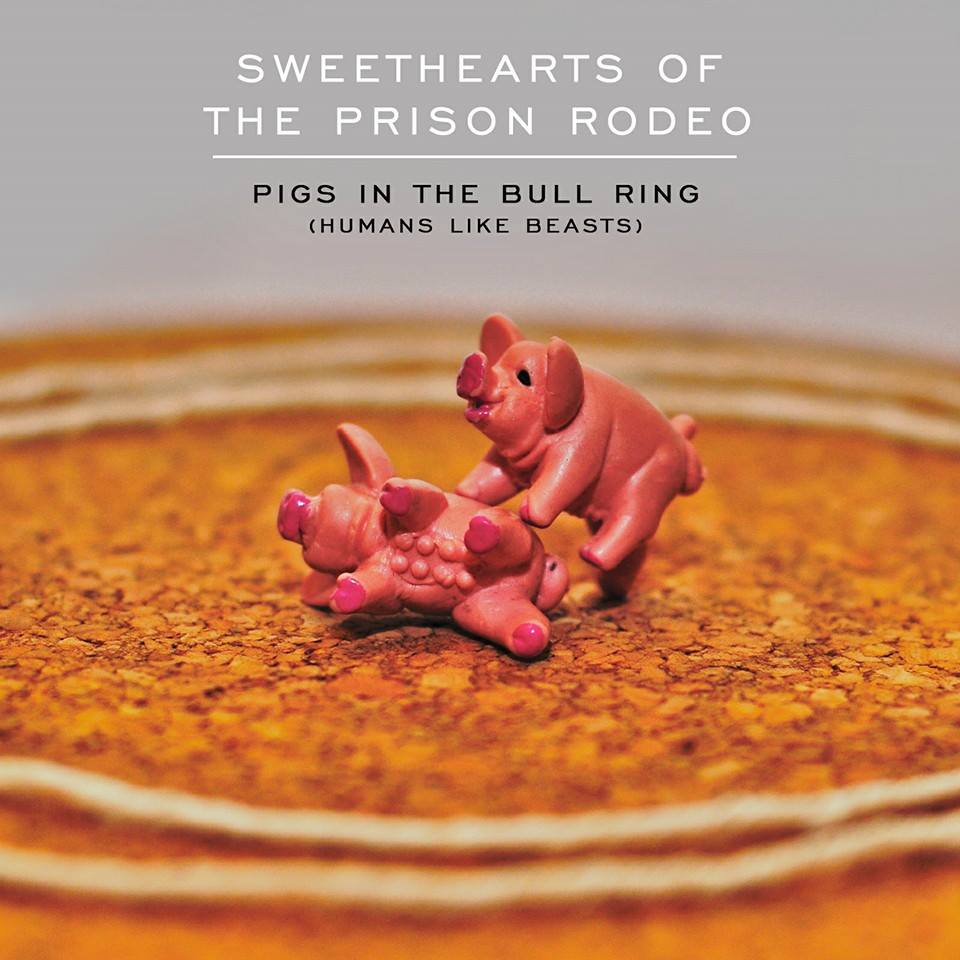
THE JIMI HENDRIX EXPERIENCE BOX SET.
THE JIMI HENDRIX EXPERIENCE BOX SET.
The word legend is one of the overused in music. It should be reserved for the creme de la creme of music. That would definitely include Jimi Hendrix, who achieved more in twenty-seven short years than many musical journey achieve in seventy years.
Jimi Hendrix was an otherworldly musician. It was as if he’d descended down from another world, and was during his short time on planet music, was determined to reinvent how to play the guitar. For the next few years, the world was awestruck as this musical visionary took the guitar to another level.
Jimi Hendrix took music by storm, and vied for the title of rock’s greatest guitarist. Throughout his career, Jimi was a flamboyant showman, who growing up, modelled himself on T-Bone Walker.
It was T-Bone who Jimi saw playing his guitar with his teeth. When Jimi saw this, he took it as a challenge. This became part of Jimi’s routine. In years to come, Jimi played his guitar as if his life depended upon it. Jimi, on form, was like a man possessed. Some nights, Jimi played his guitar behind his back, played it with his teeth and as if trying to exercise some inner demons, set his guitar on fire. All this made Jimi one of the most exiting guitarists ever. However, Jimi was also a technically brilliant guitarists of his generation. Sadly, Jimi Hendrix’s career was cut tragically short.
At around 11a.m. on the 18th September 1970, that Jimi Hendrix was found unresponsive at an apartment in the Samarkand Hotel, in Notting Hill, London. He was rushed to the St. Mary’s Abbot’s Hospital, but pronounced dead at 12.45p.m. Jimi Hendrix was just twenty-seven. However, music had lost one of the most influential and innovative guitarists of his generation.
It was tragic. Music was in mourning. Especially since Jimi Hendrix had only released a trio of studio album and one live album. One can only speculate what he would’ve achieved had he lived longer? However, by dying aged twenty-seven his genius was never tarnished.
Unlike his contemporaries, Jimi Hendrix never grew old and bloated. Nor did he become predictable and boring. No. Jimi Hendrix will forever be twenty-seven. The images of him playing his guitar with teeth or setting it on fire will live forever. Both show the youthful and otherworldly virtuoso at the peak of his powers, as he changed music forevermore. So does a recently released box set The Jimi Hendrix Experience.
The four disc box set, The Jimi Hendrix Experience was recently released by Sony Music. However, it’s not a new box set. Just like several other box sets released during 2015, it’s been released before. In the case of The Jimi Hendrix Experience box set, it was released in 2000. However, for those that don’t own The Jimi Hendrix Experience box set it’s a fantastic opportunity to purchase the box set at a budget price. Apparently, copies of The Jimi Hendrix Experience are available for £12, $18 and €16. It’s the perfect way to discover some of the hidden gems from The Jimi Hendrix Experience’s back catalogue. Their story began in 1967, when The Jimi Hendrix Experience released their debut album, Are You Experienced was
It was no ordinary album. When Are You Experienced? was released on May 12th 1967, it was to widespread critical and commercial success. Are You Experienced? introduced the world to Jimi Hendrix, a musical maverick, and legend in the making.
Are You Experienced?
That was apparent from The Jimi Hendrix’s 1967 explosive debut album Are You Experienced. It featured the debut of the legendary power trio of drummer Mitch Mitchell, bassist Noel Redding and guitarist Jimi Hendrix. They fused rock and psychedelia on eleven tracks penned by Jimi Hendrix.
The eleven tracks that became Are You Experienced, were recorded between October and April 1966. Three London studios were used, De Lane Lea Studios, CBS, and Olympic Studios. That’s where The Jimi Hendrix Experience recorded their debut album Are You Experienced, which was produced by Chas Chandler. Once it was completed, it was released in Britain in May 1967.
When Are You Experienced was released, it was hailed as one of the greatest debut rock albums. It showcased an innovative fusion of rock and psychedelia. At the heart of the Are You Experienced’s sound was the freewheeling sound of Jimi Hendrix’s guitar. He could do things other guitarists could only dream of. Add to the equation Jimi’s languid, charismatic vocal and it’s no surprise that Are You Experienced was such a huge commercial success.
When Are You Experienced was released in Britain, in May 1967, it reached number two. This resulted in a gold disc for the Jimi Hendrix Experience. No wonder. Are You Experienced featured future Jimi Hendrix classics like Foxy Lady, Third Stone from the Sun and Are You Experienced? Three months later, in August 1967, Are You Experienced was released in the US. It reached number five, and was certified platinum five times over. For Jimi, this was the start of a three year period where he could do no wrong.
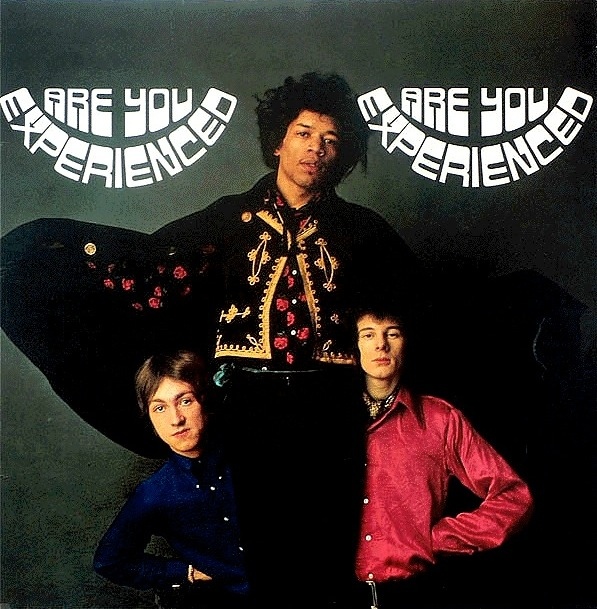
Axis: Bold As Love.
Seven months later, on 1st December 1967, the Jimi Hendrix Experience returned with their sophomore album Axis: Bold As Love in the UK. It featured thirteen tracks. Twelve were penned by Jimi. These tracks showed Jimi evolving as a songwriter. He may have just been twenty-five, but he was a talented songwriter. Proof of this were tracks like Spanish Castle Magic, Wait Until Tomorrow, Castles Made of Sand and Bold As Love. They featured Jimi coming of age as a songwriter. These songs were recorded at Olympic Studios, London.
Recording of Axis: Bold As Love took place at Olympic Studios, London. The sessions took place during May, June and October 1967. Axis: Bold As Love had to be released during 1967. The contract that the Jimi Hendrix Experience had signed stipulated this. Ironically, the album was nearly lost. However, Axis: Bold As Love was only released in Britain in December 1967.
One night, Jimi Hendrix took the master tapes to side one home. Unfortunately, Jimi left them in a taxi. The master tapes were never found. This resulted in side one being mixed again. This didn’t delay the release of Axis: Bold As Love.
Axis: Bold As Love, was released in Britain, on 1st December 1967. It was released to the same critical acclaim as Are You Experienced. Critics ran out of superlatives in an attempt to describe Axis: Bold As Love. Jimi was described as some sort of musical messiah, who had music’s future in his hands. Record buyers agreed with the critics description of Axis: Bold As Love.
When Axis: Bold As Love was released in Britain, it reached number five and was certified silver. Then on January 15th 1968, Axis: Bold As Love was released in America. However, Axis: Bold As Love hadn’t been released in America during 1967.
There was a reason for this. The Jimi Hendrix Experience’s record company were scared this would affect sales of Are You Experienced. So Axis: Bold As Love wasn’t released in America until January 1968. When it was released, it reached number three in the US Billboard 200 and was certified platinum. Although not as successful as Are You Experienced, Jimi Hendrix was riding the crest of a musical wave.
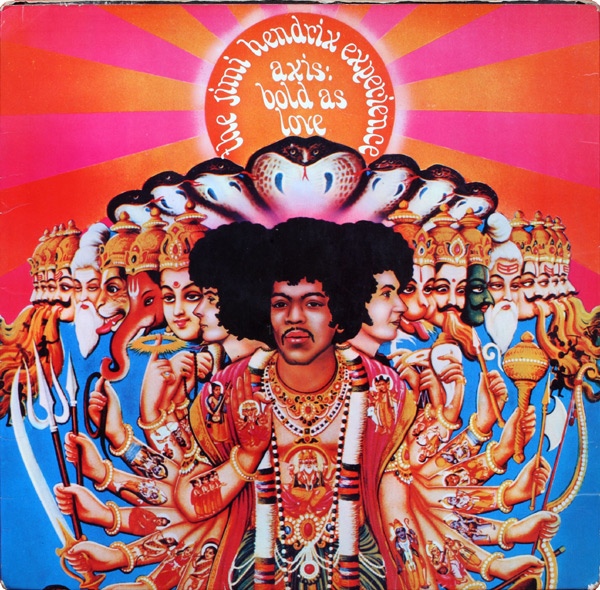
Electric Ladyland.
By October 1968, when The Jimi Hendrix Experience released Electric Ladyland, Jimi Hendrix was one of the most successful musicians in the world. His albums sold by the million, and when The Jimi Hendrix Experience played live, they were one of the hottest live acts. This showed when Electric Ladyland was released.
Unlike The Jimi Hendrix Experience’s two previous albums, Electric Ladyland was an ambitious double album. It featured sixteen songs. Thirteen songs were penned by Jimi. Two of the covers were Bob Dylan’s All Around The Watchtower and Earl King’s Come On (Let the Good Times Roll. These tracks, and the rest of Electric Ladyland were recorded at three recording studios.
Recording sessions took place between July and December 1967, then between January and April 1968. Three different studios in London and New York were used. This included Olympic Studios in London and Record Plant Studios and Mayfair Studios, New York. Once the sixteen tracks were recorded, Electric Ladyland was released in October 1968.
As soon as critics heard Electric Ladyland, they realised that this was The Jimi Hendrix Experience’s. It oozed quality. Tracks like Crosstown Traffic, Voodoo Chile, Voodoo Child (Slight Return), All Along the Watchtower and Gypsy resulted in what was the greatest album of The Jimi Hendrix Experience’s career. Critics hailed Electric Ladyland a career high for The Jimi Hendrix Experience. Record buyers agreed.
When Electric Ladyland was released in Britain, on 16th October 1968, it reached number six and was certified gold. Nine days, later, on 25th October 1968 Electric Ladyland was released in America. It reached number one on the US Billboard 200 and was certified double platinum. The rise and rise of The Jimi Hendrix Experience continued.
Just like their previous two albums, their third album Electric Ladyland became a classic. Electric Ladyland was the album that The Jimi Hendrix Experience were always capable of making. It was a coming of age for The Jimi Hendrix Experience. They’d released the finest album of their three album career. Sadly, there was a twist in the tale. Electric Ladyland would be The Jimi Hendrix Experience’s final album. However, it was a fitting swan-song from a legendary power trio.
Eight months after the release of Electric Ladyland, The Jimi Hendrix Experience played their last concert on June 29th 1969. This took place at Barry Fey’s Denver Pop Festival. This was a three day event. Little did anyone know The Jimi Hendrix Experience would only play one further concert. They reunited in 1970, to allow Jimi to spread his message of universal love. However, before that, Jimi’s new trio, Band Of Gypsys, recorded their only album.
Band of Gypsys.
After The Jimi Hendrix Experience split-up, Jimi formed another trio, the Band Of Gypsys. The lineup featured drummer Buddy Miles, bassist Billy Cox and Jimi on guitar. The Band of Gypsys recorded their only live album on 1st January 1970.
When the Band Of Gypsys took to the stage at Filmore East, in New York, on 1st January 1970, they had been busy. They’d written six new songs. Jimi penned four tracks, including Who Knows and the funky, anti Vietnam War song Machine Gun. These two tracks comprise side one of Band Of Gypsys. He also wrote Power To Love and Message Of Love. Jazz drummer Buddy Miles, wrote Changes and We Gotta Live Together. These six tracks found the Band Of Gypsys moving in a different direction from The Jimi Hendrix Experience.
Elements of funk, R&B and soul shine through on Band Of Gypsys. This isn’t surprising, given Jimi’s bandmates’ past. However, Jimi’s trademark fusion rock and psychedelia is still present. What’s obvious, is that Jimi was keen to explore different musical directions. He wasn’t going to be tied to the one musical genre. Instead, he was willing to experiment musically. Band Of Gypsys was just the start.
When critics heard Band Of Gypsys, they were won over by the genre melting album. They realised that Band Of Gypsys was an ambitious album. Machine Gun, they felt, was the best track on Band Of Gypsys. It was the album’s centrepiece, and showed what Jimi Hendrix, musical maverick was capable of, even without The Jimi Hendrix Experience. Just like The Jimi Hendrix Experience, the Band Of Gypsys was the perfect vehicle for Jimi.
Band Of Gypsys was released in Britain on 25th March 1970. It reached number six. Nearly three months later, on June 12th 1970, Band Of Gypsys was released in America, reaching number five in the US Billboard 200. This resulted in Band Of Gypsys being certified double platinum. Jimi Hendrix it seemed could do no wrong. Everyone waited with baited breath to see what direction his career headed.
After the release of Band Of Gypsys, Jimi returned the studio, where he began work on his next album. Jimi was a prolific artist, and recorded many tracks over a relatively short space of time. So much so, that by the time he headed to the second Atlanta Pop Festival, which was held on the 4th of July 1970, there were many tracks in various states of completion. This was more than enough for several album’s worth of material. Some of the new songs newly reformed lineup of The Jimi Hendrix Experience planned to showcase at the Atlanta Pop Festival.
Freedon-Atlanta Pop Festival.
Lesser musicians than Jimi Hendrix would’ve been nervous about playing at the heart of the Deep South. Not Jimi. He relished the challenge of uniting a region divided. He planned to do so with the newly reformed lineup of The Jimi Hendrix Experience.
Sadly, bassist Noel Redding wasn’t going to take to the stage. Taking his place would be Band Of Gypsys bassist Billy Cox. At least Noel Redding The Jimi Hendrix Experience’s original drummer was by Jimi’s side as they took to the stage. What had been a legendary power trio were about to try to unite a region divided.
When The Jimi Hendrix Experience took to the stage at the Atlanta International Pop Festival, they were greeted by a crowd estimated to be between 300,000-400,000. The Jimi Hendrix Experience launched into what was a blistering set. A Jimi took to the stage, he’s greeted by an audience that’s united. As he tunes his guitar, he introduces the band. Only then does he launch into a blistering version of Fire, before moving on to Lover Man and Spanish Castle Magic. Red House sees a stylistic change, as Jimi pays homage to his bluesy roots. Not only does he unleash a spellbinding solo, but a testifying vocal. From there, Jimi showcased three new songs.
The first of was Room Full of Mirrors, which The Jimi Hendrix Experience followup with Room Full Of Mirrors and Hear My Train A-Comin.’ It’s poignant listening to this trio of tracks, knowing that Jimi would be dead by the time these songs were released. After a trio of new songs, The Jimi Hendrix Experience kicks loose on Message to Love. Fittingly, Jimi’s guitar plays a starring role, while as the rhythm section of bassist Billy Cox and drummer Mitch Mitchell seem content to play a supporting role. However, soon the three members of The Jimi Hendrix Experience revived a standing ovation.
No wonder. They launch into a classic, All Along the Watchtower. The Jimi Hendrix Experience are given an enthusiastic response as they launch into a classic track. It’s the first of several classics.
Before that, Freedom, The Jimi Hendrix Experience showcase another new songs Freedom. This is fitting. Jimi had gone into a region divided, and was preaching a message of universal love and now Freedom. Given the South’s history, it’s a poignant song. The way Jimi delivers the lyrics, it’s as if he’s making a point. Having done so, it’s nearly classics all the way.
A wash of feedback signals the introduction to Foxy Lady. It’s as if Jimi’s gotten something of his chest on Freedom, and unleashes a series of virtuoso performances. He launches into a blistering version Purple Haze then Hey Joe and Voodoo Child (Slight Return). The classics keep on coming, as Jimi teases the listener with a reworking of Stone Free. By then, he’s worked the audience into a frenzy. Sadly, his set is almost at an end.
Not quite. Jimi unleashes a version of the Star Spangled Banner on his guitar. Not everyone seems receptive to this. In the heart of Dixie, some see this as sacrilegious. There’s the odd jeer and whistle, before Jimi wins over the audience. All around him, fireworks explode. After that, Straight Ahead closes the show and the newly reformed Jimi Hendrix Experience take their leave.
The Jimi Hendrix Experience had written their place into music history by playing a starring role in what’s now remembered as the “last great rock festival.” Jimi had united a region that had been divided. His message of unity, universal love and Freedom had him friends on both sides of the racial divide. Now Jimi Hendrix could concentrate on completing his next album. However, that never happened
On 18th September 1970, music was in mourning. Jimi Hendrix, it was announced, was dead.
Jimi Hendrix had been found around 11a.m. on the 18th September 1970, that Jimi Hendrix was found unresponsive at an apartment in the Samarkand Hotel, in Notting Hill, London. He was rushed to the St. Mary’s Abbot’s Hospital, but pronounced dead at 12.45p.m. Jimi Hendrix was just twenty-seven. However, music had lost one of the most influential and innovative guitarists of his generation.
That’s despite Jimi’s career beginning just four years earlier. However, little did anyone realise, that Jimi Hendrix had been a truly prolific.
After his death, it was discovered that there was still a lot of unreleased material. This included songs recorded in the studio, plus numerous live recordings. They’ve been gradually released over the last forty-five years. This included The Jimi Hendrix Experience box set, which was recently rereleased by Sony Music.
The Jimi Hendrix Experience.
There’s sixty tracks on the four discs in the The Jimi Hendrix Experience box set. They’re a mixture of studio and live recordings. Mostly, the discs are arranged chronologically, which I like. It allows the listener to hear how The Jimi Hendrix grow, mature and evolve musically. That’s apparent through the four discs.
Disc One.
Fittingly, a classic track opens disc one of The Jimi Hendrix Experience. It’s a version of Purple Haze, which was recorded at the DeLane Lea Studios, London, UK, January 11th 1967. This was just three months after The Jimi Hendrix Experience came to the attention of many people.
That was on October 18th 1966, at the Olympia Theater, Paris. That night, The Jimi Hendrix Experience showcases Killing Floor and Hey Joe. Around this time, The Jimi Hendrix Experience were in Pye Studios, London during 1966. This was the first of many times they would be ensconced in a recording studio.
Just under two months later, on December 13th 1966, The Jimi Hendrix Experience were in CBS Studios, London. This was one three London studios were used that The Jimi Hendrix Experience recorded the debut album Are You Experienced at. Other sessions took place at De Lane Lea Studios, CBS, and Olympic Studios between October 1966 and April 1967. Four tracks from these sessions feature on disc one of The Jimi Hendrix Experience.
This includes versions of Foxy Lady and Highway Chile. They were recorded at Olympic Studios on 13th December 1966 and April 3rd 1967, the same day Title #3 was recorded. Then on the 4th of April, Jimi Hendrix Noel Redding and Mitch Mitchell recorded Here He Comes (Lover Man) (Olympic Studio. Olympic Studios would become a favourite of The Jimi Hendrix Experience.
The sessions in other studios proved fruitful. 3rd Stone From The Sun, which was recorded at DeLane Lea Studios, on January 11th 1967. Just like Foxy Lady, a version of 3rd Stone From The Sun would find its way onto Are You Experienced when it was released in May 1967.
By the The The Jimi Hendrix Experience Hendrix Experience were back in the studio recording their sophomore album. Axis: Bold As Love. The Jimi Hendrix Experience recorded If 6 Was 9 (Olympic Studios, on the 4th May 1967. Then five days later, on May 9th 1967, they recorded a version of Burning Of The Midnight Lamp at Olympic Studios. Only a version of If 6 Was 9 made it onto Axis: Bold As Love, when it was released on 1st December 1967.
That was a long time away. By then, The Jimi Hendrix Experience had played at the Monterey International Pop Festival, Los Angeles, on June 18th 1967. They played Rock Me Baby and a cover of Bob Dylan’s Like A Rolling Stone. They’re a welcome addition to disc one of The Jimi Hendrix Experience box set. So is the version of The Stars That Play With Laughing Sam’s Dice that was recorded at Mayfair Studios, New York, July 19th and 20th 1967. It’s a fitting finale to disc one.
Disc Two.
Just like disc one, disc two of The Jimi Hendrix Experience box set is a mixture of live tracks and studio recordings. A live cover version of Sgt. Pepper’s Lonely Hearts Club Band opens disc one. Along with a version of Burning Of The Midnight Lamp was recorded live in Stockholm, Sweden, on September 5th 1967. The Jimi Hendrix Experience are at their inventive best, as they prepare to return to Olympic Studios, London.
On 1st October 1967, The Jimi Hendrix Experience recorded Little Miss Lover at Olympic Studios. A version of Bold As Love was recorded on the 5th October. Then on 25th of October, a The Jimi Hendrix Experience cut a take of Little Wing. By then, they had taken Paris by storm.
At the Olympia Theater, Paris, France, The Jimi Hendrix Experience won friends and influenced people on October 19th 1967. Two songs they played that night, were Catfish Blues and The Wind Cries Mary. It would become a favourite when The Jimi Hendrix Experience played live. After their triumphant concert in Paris, The Jimi Hendrix had to get Axis: Bold As Love completed. The release date was scheduled for 1st December 1967.
Before that, The Jimi Hendrix Experience returned to Olympic Studios, London were they recorded the version of Sweet Angel that’s on The Jimi Hendrix Experience box set on 13th November. Three weeks later, The Jimi Hendrix Experience released their sophomore album Axis: Bold As Love.
Following the commercial success and critical acclaim of Axis: Bold As Love, The Jimi Hendrix were one of the biggest bands in the world. So in 1968, The Jimi Hendrix Experience divided their time between Britain and America.
Based in America, The Jimi Hendrix Experience played at Clark University, in Worcester on March 15th 1968. On the setlist was an incendiary version of Fire. Later that month, The Jimi Hendrix Experience took to the stage at the Sound Center, New York. That night, Somewhere was on their setlist. It shows that The Jimi Hendrix Experience were now one of the top power trios on planet music. Their main rivals were Cream. However, with The Jimi Hendrix Experience about to enter the studio again, maybe they would become the world’s best power trio?
So in the spring of 1968, The Jimi Hendrix Experience entered Record Plant in New York. For many a year, it had been a favourite studio of top musicians. The Jimi Hendrix Experience were no difference. They wanted to record at a top studio. SO
Jimi Hendrix bassist Noel Redding and drummer Mitch Mitchell set up their equipment, and on April, 22nd 1968, recorded a version of Gypsy Eyes. A take of (Have You Ever Been To) Electric Ladyland was recorded on June 14th 1968). Then on August 12th 1968, Room Full Of Mirrors was laid down. That’s the last of the songs from the 1968 Record Plant sessions on disc three. Next stop for The Jimi Hendrix Experience was L.A.
By then, The Jimi Hendrix Experience had released their third and final album, Electric Ladyland. It was released on October 16th 1968. Just like their two previous albums, Electric Ladyland was released to commercial success and critical acclaim. This didn’t stop The Jimi Hendrix Experience returning to the studio.
This time, they made their way to TTG Studios, in Hollywood, L.A. On 24th October 1968, Peace in Mississippi was recorded. Then on 29th October 1968, a version of Gloria was recorded. These two tracks are the only two on The Jimi Hendrix Experience box set from the 1968 TTG Studios’ sessions. However, in February 1969, The Jimi Hendrix Experience were back in a familiar setting, The Record Plant New York.
The Record Plant was fast becoming The Jimi Hendrix Experience’s favourite studio. That’s where It’s Too Bad was recorded on February 11th 1969. They would return in 1969. By then, The Jimi Hendrix Experience had recorded their take on the Star Spangled Banner. It closes disc two of The Jimi Hendrix Experience box set.
Disc Three.
There’s just eleven tracks on disc three of The Jimi Hendrix Experience box set. The opening track is a version of Stone Free, which was recorded at the Record Plant, on April, 7th 1969. However, that wasn’t The Jimi Hendrix Experience’s first time in a studio during 1969.
On February 17th 1969, The Jimi Hendrix Experience had recorded versions of Spanish Castle Magic and Hear My Train A Comin’ at Olympic Studios, London. Then two months later, The Jimi Hendrix Experience returned to the Record Plant in New York.
On April 21st 1969, The Jimi Hendrix Experience recorded Room Full Of Mirrors at the Record Plant in New York. After that, they continued their hectic live schedule.
26th April 1969 found The Jimi Hendrix Experience at Los Angeles Forum, where the ironically titled I Don’t Live Today was on the setlist. Then on May 25th 1969, The Jimi Hendrix Experience took to the stage at the San Diego Sports Arena. Two of the songs on the setlist were Red House and Purple Haze. The Jimi Hendrix Experience took San Diego by storm, and were now, one of the most exciting bands in the world.
Ironically, in June 1969, The Jimi Hendrix Experience were no more. After just three studio albums, The Jimi Hendrix Experience called time on their career. However, they continued to work together on various projects. Despite that, the music industry was stunned. One of the most successful bands had called time on their career after just three albums. Two months later, Jimi Hendrix was back in the studio.
At the height of the summer of 1969, Jimi Hendrix returned to the studio. This time, it was the Hit Factory, New York where Izabella was recorded on August 29th 1969. Less than three months later. It would never find its way onto an album during Jimi Hendrix’s lifetime.
Disc Four.
That was the case with with Message To Love and Earth Blues. Both were recorded at the Record Plant, New York, on 19th December 1969. Recording broke up for the holiday season.
Jimi Hendrix reconvened after the Christmas holidays. On 21st January 1970, he and his band recorded Astro Man at the Record Plant. Country Blues was recorded on the 23rd January 1970. A week or two later, Jimi Hendrix sprung a surprise.
The Jimi Hendrix Experience it seemed were reforming. Jimi Hendrix even was interviewed by Rolling Stone magazine, for their March 19th issue. However, in reality even the other band members didn’t know what was going on.
There was a change to The Jimi Hendrix Experience’s lineup. Billy Cox was to replace bassist Noel Redding. As usual, Mitch Mitchell’s drums would provide the heartbeat. Jimi Hendrix would play the starring role. While the details of what was being called the Star Of Love tour were ironed out, Jimi Hendrix returned to the studio.
At the Record Plant, on February 16, 1970, Jimi Hendrix and his band laid down a version of Freedom. Everything seemed to be going so well. Not only were the recording sessions going well, but Jimi Hendrix had a packed touring schedule.
May 30th 1970 found Jimi Hendrix playing at Berkeley Community Theater, Berkeley. That night, they covered Johnny B. Goode and Blue Suede Shoes. Jimi Hendrix wasn’t averse to playing some old favourites. It didn’t matter if it was blues or rock ’n’ roll, they could play either. Whether with The Jimi Hendrix Experience, Band Of Gypsys or a pickup band for company, he was versatile, talented and a musical phenomenon.
That’s apparent on the version of Cherokee Mist recorded on June 14th 1970 at Electric Lady Studios, New York. Then on 15th July, Jimi laid down Come Down Hard On Me. The following day, 16th July, Jimi Hendrix recorded Night Bird Flying. There was even a live version of Lover Man recorded at Electric Lady Studios on 20th July. This was good practice for when Jimi Hendrix played live.
Over the next month, Jimi Hendrix’s hectic touring schedule continued. He played in Maui, Hawaii, on July 30th 1970, and unleashed a medley of Hey Baby/In From The Storm. Three weeks later, Jimi Hendrix returned to Electric Lady Studios, New York.
At Electric Lady Studios, Jimi Hendrix recorded a version of Slow Blues. It finds Jimi Hendrix returning to his blues roots. Then ten days later, Jimi Hendrix played a starring role at what was one of Britain’s biggest festivals.
Jimi Hendrix took to the stage at the Isle Of Wight Festival, in England, on 30th July 1970. He stole the show, with blistering, mind-blowing set. It was Jimi Hendrix at his best. Again, his set included In From The Storm. Little did anyone realise that this was one of Jimi Hendrix final performances in Britain.
Less than two months later, at around 11a.m. on the 18th September 1970, Jimi Hendrix was found unresponsive at an apartment in the Samarkand Hotel, in Notting Hill, London. He was rushed to the St. Mary’s Abbot’s Hospital, but pronounced dead at 12.45p.m. Jimi Hendrix was just twenty-seven. That day, music had lost one of the most influential and innovative guitarists of his generation.
Just over forty-five years after the death of Jimi Hendrix, his music is even more popular than ever. Several generations of music lovers have been introduced to Jimi Hendrix’s music since his untimely death in 1970.
By the time of his death, Jimi Hendrix had only released a trio of studio album and one live album. Since then, numerous posthumous albums have been released. This includes The Jimi Hendrix Experience box set. It was recently reissued by Sony Music, and is a welcome reminder of a musical legend at the peak of his powers.
Between 1966 and the 18th September 1970, Jimi Hendrix’s star was in the ascendancy. It was as if he’d descended down from another world, and was determined to reinvent how to play the guitar. For the next few years, the world was awestruck as this musical maverick and visionary. Wherever he played, audiences were spellbound by his otherworldly music. However, he wasn’t a one man band.
Credit must be given bassist Noel Redding and drummer Mitch Mitchell. They were happy to stay in the shadows, while Jimi Hendrix prowled across the stage reinventing the guitar. One minute he was playing it behind his back, the next he was on his knees playing it with his teeth. Jimi Hendrix was a musical showman, who would try anything once.
Seamlessly, Jimi Hendrix combined blues, rock, funk and jazz. Jimi Hendrix was versatile, hugely talented, innovative and influential. He was a musical trailblazer, who was unlike anything that had gone before.
Jimi Hendrix was the polar opposite of tired, staid musicians like B.B. King. He built a career on the same sound. Right up until earlier in 2015, B.B. Kingwas phoning in performances of the same tired and predictable songs. Jimi Hendrix would never have done that. Instead, Jimi Hendrix was an innovator who if he’d lived, would’ve been at the forefront of music, constantly moving his sound forward. Sadly, Jimi Hendrix’s career was cut tragically short, and music was robbed of his genius when he was just twenty-seven.
At least Jimi Hendrix never grew old, bloated and predictable. Unlike some of his contemporaries. They’re a shadow of their former selves. Jimi Hendrix however, will forever be twenty-seven, and the a flamboyant, maverick musician whose genius had audiences spellbound when he was with The Jimi Hendrix Experience.
THE JIMI HENDRIX EXPERIENCE.
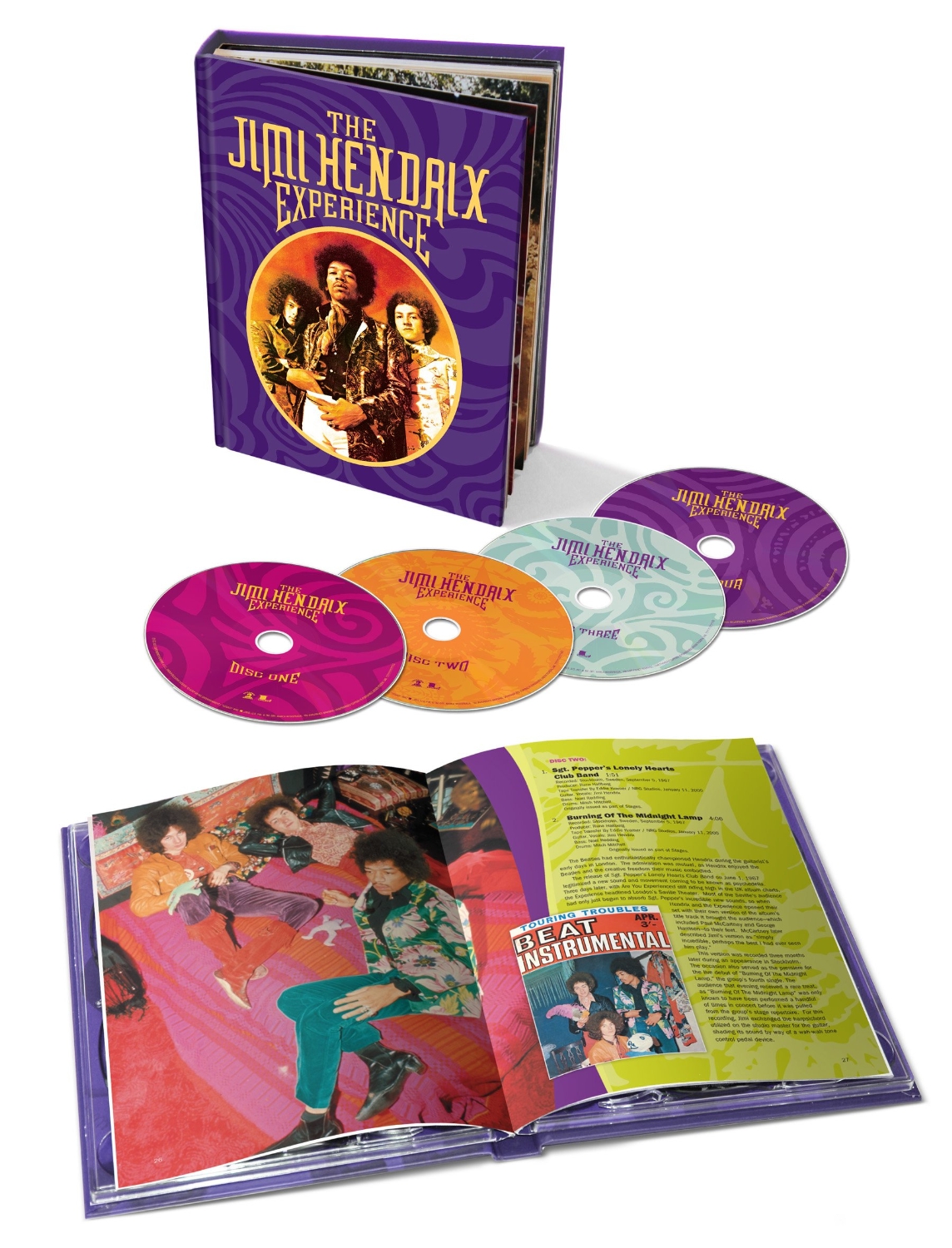
JEFF BUCKLEY-GRACE-VINYL EDITION.
JEFF BUCKLEY-GRACE-VINYL EDITION.
Twenty-one years ago, Jeff Buckley released the one and only album of his career, Grace. Jeff was the son of Tim Buckley, one of the most talented singer-songwriters of his generation. Tim could’ve and should’ve enjoyed widespread commercial success and critical acclaim. Sadly, that wasn’t to be. Having released nine albums between 1966 and 1974, Tim died in 1975. He was only twenty-eight. Sadly, Tim never got to the opportunity to realise his potential. Tragically, history would repeat itself twenty-two years later.
Originally, Jeff played in various struggling bands. After that, he worked as a session guitar. Then in 1990, Jeff decided to follow in his father’s footsteps. Just like his father Tim, it became apparent that Jeff Buckley was a talented singer-songwriter. Four years later, Jeff Buckley released his debut album Grace. Released to widespread critical acclaim, Grace was a stunning and successful debut album. A great future was forecast for Jeff. Sadly, tragedy intervened in Jeff Buckley’s life.
On 29th May 1997 Jeff was in based in Memphis, where he was in the process of recording his sophomore album. He was awaiting the arrival of his band. With nothing to do, Jeff decided to go for a swim in the Wolf River. Having dived fully clothed into the river, Jeff was caught in the wake of a passing boat. Various attempts were made to rescue Jeff. These attempts were in vain. It wasn’t until 5th June 2014, that Jeff Buckley’s body was recovered. That day, music lost one of its most potentially talented sons. Jeff Buckley’s musical legacy was his only album Grace, which will be rereleased on vinyl by Sony on 2oth November 2015. Before I tell about Grace, I’ll tell you about Jeff Buckley’s life.
Jeff Buckley was born on November 17th 1966, in Anaheim, California. Although the son of Tim Buckley and Mary Guibert, he was brought up as Scotty Moorhead. He was brought up by his mother and stepfather. During his childhood, he was steeped in music. His mother was a classically trained musician, playing cello and piano. Tim Buckley, his father, was a successful singer-songwriter. However, it was his stepfather, Ron Moorhead who introduced Jeff to artists like Jimi Hendrix, Led Zeppilin, Pink Floyd and Queen. He had started playing guitar aged five, and by thirteen, owned his first electric guitar. During high school, he played music, even playing in the school jazz band.
On graduating from high school, he spent a year at the Musician’s Institute, graduating aged nineteen. This course taught him about music theory and harmonies. After this, he spent six years playing guitar in various bands. Their style of music ranged from rock to reggae, and jazz to heavy metal. To make ends meet, he worked in a hotel during this time. He also worked as a session musician, playing in funk and R&B sessions.
In February 1990, Jeff moved to New York. Once settled in New York, he found it hard to get work as a musician. Whilst there, his musical tastes widened. He became interested in blues musician Robert Johnson’s music, hardcore punk band Bad Brains and Qawwali, a form of Sufi devotional music, and Nusrat Fateh Ali Khan’s work in particular. It was whilst in New York that Jeff got his next major break in music. His late father’s manager Herb Cohen, offered to help Jeff record a demo tape. This was called the Babylon Dungeon Sessions. The idea was to attract interest in Buckley as a solo artist.
This worked. The Babylon Dungeon Sessions brought Jeff’s music to the attention of a wider audience. Soon, word spread that Tim Buckley’s son was a talented singer-songwriter. However, although Babylon Dungeon Sessions had been a success, Jeff was still looking for that elusive “big break.” It came when Jeff was asked to sing at a 1991, tribute show to his father Tim in New York.
At that tribute concert in New York, Jeff performed one of his father’s classic songs I Never Asked To Be Your Mountain. His performance at the concert stimulated interest in his career. At last, his music career was going somewhere. For the next couple of years, he played numerous gigs around New York, where he honed his skills as a musician. During his concerts, he would play a wide range of material. In his sets he would play covers of everything from Edith Piaf to The Smiths and Led Zeppelin to Leonard Cohen. After a while, he started attracting interest from major record labels. Eventually, he signed to Columbia Records, signing a three album deal, worth roughly one million dollars in October 1992. In July and August 1993, he headed to the studio, to record his debut EP Live At Sin-e.
Midway through 1993, he began working on his debut album Grace. It featured ten tracks. Three were written by Jeff, Last Goodbye, Lover, You Should’ve Come Over and Eternal Life. He cowrote Mojo Pin and Grace with Gary Lucas, and So Real with Michael Tighe. Dream Brother was the other track Jeff cowrote Matt Johnson and Mick Grondahl. The other three tracks were cover versions. They were James Shelton’s Lilac Wine, Leonard Cohen’s Hallelujah and Benjamin Britten’s Corpus Christi Carol. These ten tracks would become Grace.
For Grace, Jeff put together a tight, talented band. The rhythm section included drummer and vibes player Matt Johnson, bassist Mick Grondahl and guitarists Michael Tighe and Gary Lucas. Other musicians included organist Loris Holland and Misha Masud on tabla. Jeff played guitar, harmonium, organ, dulcimer and tabla. The sessions were produced by Andy Wallace, who previously, had mixed Nirvana’s Nevermind album. After a few weeks practice, the band headed to Bearsville Studios, in Woodstock, New York. They spend six weeks recording parts of Grace. Overdubbing took place in New York and Manhattan. It was there, that Jeff Buckley recorded numerous takes of his vocals, attempting to achieve perfection.
Between finishing the recording and overdubbing sessions for Grace, and its release in August 1994, Jeff Buckley headed out on the road to tour his EP, Live At Sin-e. His tour was a huge success, with many well known musicians taking in Jeff’s shows. This would include Chrissie Hynde of The Pretender and U2’s The Edge. With such high profile names accompanying him, this created a buzz for the release of Grace.
When Grace was released in August 1994, it was critically acclaimed. The great and good of music all queued up to praise the album. Luminaries such as Robert Plant, Jimmy Page and David Bowie all loved Grace, and widely praised it. Rolling Stone magazine loved the album, and have included it in their 500 Greatest Albums of All Time. Sales started slowly, and eventually, Grace stalled at number 149 in the US Billboard 200 and number forty-four in Britain. This was disappointing, considering the reviews Grace received. Since then Grace has been certified gold in Australia, France and the US. However, it was very different back in 1994.
After the release of Grace, Buckley spent the next eighteen months touring the album. Wherever he played, he was a sell out. After all the years he’d struggled to make ends meet, Jeff was suddenly a huge star. After the tour ended in 1996, he prepared to write his next album. This was entitled Sketches For My Sweetheart the Drunk. Tom Verlaine ex-member of Television was to produce the album. Several recordings took place, and after a recording session in Manhattan, Buckley was still not happy with the album. To him, the album wasn’t finished yet. He played a few new songs at The Knitting Factory’s tenth anniversary concert. After that, he decided to head to Easley McCain Recording studios in Memphis, to work on his album. He hired a house, and became so attached to it, that he asked the owner’s if he could buy it. Whilst there, he even played a number of concerts at local venues. However, the album wasn’t going well, Buckley wasn’t happy with Tom Verlaine as producer, and contacted Andy Wallace, producer of his first album, Grace. In preparation for the arrival of Andy Wallace, Jeff recorded some demos and sent them to Andy Wallace.
Whilst his band returned to New York, Buckley stayed behind to work on the album. His band arrived back in Memphis on May 29th 1997. They were going to join him in the studio to see some new material he’d been working on. That night, Buckley decided to go swimming in Wolf River Harbor, part of the Mississippi. He entered the river fully clothed. A member of his road crew watched his swim. He’d swam there before. The roadie turned, and moved a guitar and radio out of the reach of the wake of a tug-boat, that was about to pass. When he turned round, Jeff Buckley was gone, nowhere to be seen. Tragedy had struck. Sadly, after a long search that night, there was no sign of Buckley. Then on June 5th, two local residents found Jeff Buckley’s body. He was thirty years of age. That day, music lost one of its a hugely talented singer-songwriter.
Since his death, Jeff Buckley’s music is more popular than ever. A number of live albums, greatest hits and Sketches For My Sweetheart the Drunk have been released since his death. His music is still attracting new fans, and his debut album Grace, is widely recognized as an outstanding album, one of the best albums of the 1990s’ I will now tell you just why Grace is such an outstanding album.
Grace opens with Mojo Pin, a song that starts quietly, the sound distant, gradually getting nearer. When it does, Jeff Buckley’s vocal emerges, soaring high at first, then dropping almost to a whisper. His hesitancy could be because he’s singing about a dream. Behind him the track meanders gently, before opening out, becoming louder and fuller. As this happens, Jeff’s voice veers between high and low. His range is wide, his voice full of character. You get the impression he’s holding himself back, and any minute he could launch into a vocal thats loud and passionate. It happens. He almost screams, but gathers control. The same can’t be said of his band, they really let go and unleash a wall of glorious sound. Mojo Pin is a dichotomy of a track, one minute quiet, gentle, with Buckley sounding thoughtful, the next his voice soars, he nearly screams, joining the band in an almost explosive crescendo. It’s a powerful track, one that demonstrates Jeff Buckley’s considerable talent as a vocalist.
The introduction to the title-track, Grace sees a change in tack from Jeff and his band. Grace is based upon an instrumental Rise Up to Be, which was penned by Gary Lucas. Jeff added the lyrics after saying goodbye to his girlfriend at an airport. Straight away, the sound is full, the tempo faster. When Buckley sings his voice is softer, he articulates the lyrics perfectly, bringing out the beauty in the lyrics. It’s one of his best performances on the album. His band play really well, the guitars particularly are a highlight of the track. Later in the track, Jeff adds beautiful harmonies. Then later, his voice is much stronger, he really lets go, forces the high notes to emerge. When he does, his band join in, upping the tempo, the sound getting louder, nearly frenetic. Then suddenly, the track ends. You’re left wondering, where did it go? However, at least you’re are left with a wonderful memory of Jeff Buckley in full flight.
Last Goodbye begins with a slide guitar playing, as if just warming up. Quickly, things get serious. What follows is a beautiful song. Buckley’s voice is strong, clear and full of emotion. Despite the emotion, Jeff is perfectly in control of his voice. Again, he demonstrates that wide vocal range. This allows him to veer from gentle and tender to high and soaring. Always though, Jeff in control. As for Jeff’s lyrics, they are among the best on the Grace. When he delivers them, his vocal is heartfelt, impassioned and emotive. That’s one reason why, seamlessly, everything falls into place. Jeff’s vocal, the lyrics and his band’s play their part in one of Grace’s high points.
Lilac Will will be familiar to many people. It has been covered by many artists. I’ve heard many of these versions. Some are good, others bad, and some the equivalent of a musical car crash. Jeff’s version is, by far, my favorite version. He poured everything he had into this song. During the song, you’ll experience a wide range of emotions. You’ll feel sad and happy, and experience highs and lows. Here his rendition is heartfelt, passionate and loaded with emotion. He brings the tempo way down low, when he sings his voice is brilliant, perfectly suited for the song. The arrangement is minimalist, just Jeff and his band playing softly behind him. It’s truly a gorgeous, soul-baring version of this song. After you’ve heard this version, anything else is second best.
After Jeff’s vocal masterclass on Lilac Wine, it’s going to be hard to either equal, or better that song. On So Real, he tries, tries very hard. It’s a good attempt. So Real is another of the album’s highlights. His voice is at its best, going between soft and gentle, to high and soaring. When he does this, he’s always in control of his powerful voice. This is something he shared with his father Tim. On this track, the arrangement is much fuller, the band are occasionally, allowed of the leash. Like Jeff Buckley’s vocal, the band’s performance veers between almost understated to full on. Having said that, they never overpower Jeff Buckley’s vocal, and compliment him perfectly.
Hallelujah sees Jeff cover another song that has been covered by many people. Written by Leonard Cohen, it’s a beautiful song, with Cohen’s version in many people’s opinion the best. Until now. Jeff sings the song beautifully, the arrangement wonderfully understated. He immerses himself into the song. So much so, that his version is one of the most moving versions of this song you’ll ever hear. When he delivers the lyrics, there are no frills. Instead, you’re fortunate to hear what’s an extremely moving and heartfelt reading of Leonard Cohen’s beautiful lyrics. This version is dramatic and emotive. When you first hear this track, it takes your breath away. It’s so different from many of the songs on the album. Only one word can describe this performance. Seminal.
Lover You Shouldn’t Have Come is a track that starts slowly. Gradually, it reveals its secrets and subtleties. After nearly a minute before Jeff Buckley sings. When he does, it’s well worth the wait. His performance is truly compelling. Jeff’s delivery of the lyrics he wrote is full of despondency and despair. He sounds as if he’s outlived the relationship he’s singing about. What follows is a snapshot into Jeff’s turbulent personal life. It’s also the perfect showcase for Jeff’s talents as a songwriter. Quite simply, these are some of his best lyrics on Grace. His vocal is just as good. When Jeff sings, he sings from the heart. You feel he means every word of the lyrics. Heartfelt, sincere and tinged with equal parts despair and despondency, Lover You Shouldn’t Have Come features Jeff at his very best.
Corpus Christi Carol, is from Benjamin Britton’s, A Boy Is Born. This was a song that Jeff was first introduced to in school. It’s the last of the three cover versions on the album. His version of this song is stunning. When you hear his voice, it has an ethereal quality, he controls his voice really well, resisting the urge to reinterpret the song. Instead he sings the song as it’s meant to be sung. The arrangement is subtle, understated and perfect for this beautiful song.
Eternal Life is the complete opposite to many tracks on Grace. Whereas Lilac Wine, Hallelujah and Corpus Christi Carol are quiet tracks, with a subtlety and understated arrangement, Eternal Life is the complete opposite. Straight away, the sound is loud and unapologetic. It’s right in your face. Truthfully, you worry if your speakers will survive nearly five minutes of this. Searing, scorching guitars soar above the arrangement and the drums pound. So much so, that it sounds as if they’re being punished. After the initial shock, when you listen to the track, it grows on you. You begin to enjoy it. Jeff Buckley’s vocal is loud, as if he’s battling his band, almost struggling to make himself heard. When eventually the tempo drops, you breath a sigh of relief, draw breath. Mistake. They start straight back up, launching another assault on their instruments. By the end, I’m exhausted, but in all honesty, I really enjoyed the track, as it showed a very different side to Jeff.
Grace ends with Dream Brother, a track that has a hesitant start. When the track starts the arrangement is gentle. A guitar plays quietly, drums play in the distance and Jeff’s vocal is understated. The song meanders along. I’m always waiting for the song to open out, the volume to increase, Jeff and the band to cut loose. After two and a half minutes the sound gets fuller, the band and Jeff still showing restraint. They’re resisting the temptation to end the album with a band. Instead Jeff Buckley’s vocal is controlled, very much within himself. His voice is still full of character and feeling when he sings the lyrics. They’re powerful, his rendition of them adding a dramatic impact. Then the song ends, not with a bang, but with a subtle, understated ending. It’s a lovely track to end the album, keeping up the consistent quality that runs throughout Grace.
Grace was the only album released during Jeff Buckley’s short life. It was one of the best debut albums of the nineties. Twenty years later, Grace is still one of the best debut album you’ll be lucky enough to hear. So good was Grace, that was hailed as one of the best album of the 1990s. That’s still the case. Grace is a truly timeless album. It’s an album that has stood the test of time well. Today, Grace still sounds as good today as the day I first heard it back in 1994. Indeed, so good was Grace that it was hailed one of the finest albums of the nineties. In the twenty years since Grace’s release, it’s been hailed as a classic album. Whenever lists of the best albums of all-time are released, Grace features on it. As a result, Grace has sold over two million copies. That’s no surprise. It’s a classic album that belongs in every record collection. For those yet to discover Grace, now is their opportunity to do so.
Grace which was released just over twenty-one years ago, will be rereleased on vinly by Sony on 20th November 2015. Jeff Buckley’s Magnus Opus, Grace should’ve launched Jeff Buckley’s career. Sadly, fate decided to intervene.
Nearly three years after the release of Grace, on 29th May 1997 Jeff was in based in Memphis, where he was in the process of recording his sophomore album. Things hadn’t been going well. He’d changed producer and came to Memphis seeking inspiration. Tom Verlaine was replaced by Andy Wallace, who produced Grace. Tragedy occurred when Jeff was awaiting the arrival of his band.
With nothing to do, Jeff decided to go for a swim in the Wolf River. Having dived fully clothed into the river, Jeff was caught in the wake of a passing boat. Various attempts were made to rescue Jeff. These attempts were in vain. It wasn’t until 5th June 2014, that Jeff Buckley’s body was recovered. That day, music lost one of its most potentially talented sons. Jeff Buckley’s musical legacy was his only album Grace,
Although Jeff Buckley only released one album, Grace was a stonewall classic. It’s a mixture of three cover versions and seven new songs. There is not one bad song on Grace. This is unusual. Usually, there are a couple of mediocre tracks on most albums. Not on Grace. It’s an album that oozes quality. Similarly, emotion and beauty is omnipresent throughout Grace. That’s why Grace is one of these albums that I return to time and time again. Each time, I hear something new. With every listen to Grace, subtleties or nuances continue to reveal themselves. That’s why I never tire of listening to Grace. It was the perfect showcase for Jeff Buckley.
He could’ve become one of the most talented singer-songwriters of his generation. Jeff could’ve and should’ve enjoyed widespread commercial success and critical acclaim. Sadly, that wasn’t to be. Jeff died aged thirty, having never come close to fulfilling his potential. Grace is just a taste of what Jeff Buckley was capable of. Sadly, we’ll never know what heights Jeff Buckley might of reached? Grace is just a hint of the heights Jeff Buckley might have reached and what he was capable of.
JEFF BUCKLEY-GRACE-VINYL EDITION.
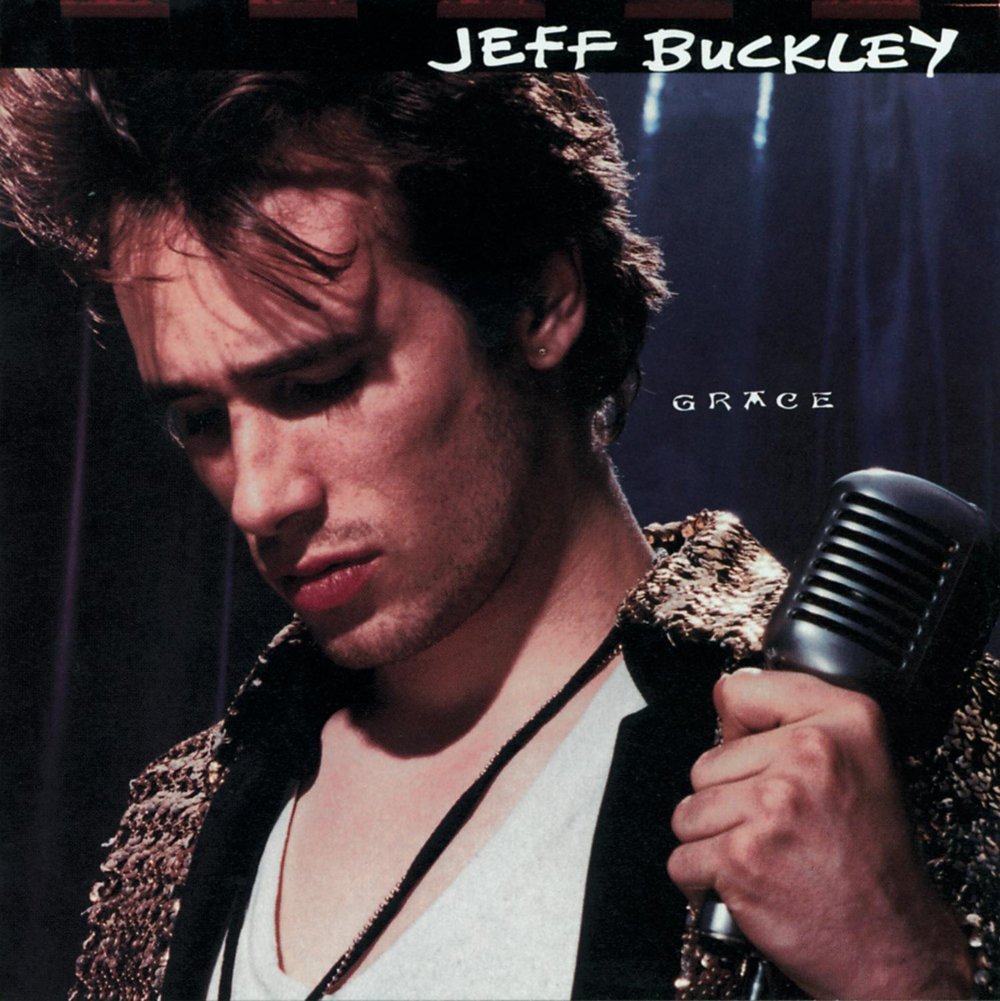
SWEET LEAF-A STONER SALUTE TO BLACK SABBATH.
SWEET LEAF-A STONER SALUTE TO BLACK SABBATH.
At this time of year, the compilation market becomes even more crowded than usual. It’s polluted by compilations of third rate disco, cheesy Chicago House, seventies throwaway pop and the dreaded Christmas songs. They’re the equivalent of an oil slick, that every year, pollute the compilation market. Be afraid, be very afraid, they’re coming to a record store, supermarket or petrol station near you…for a while.
Thankfully, by Boxing Day, their prices will be slashed and they’ll be coming to a bargain bin near you. If that doesn’t shift the remaining copies of these compilations, the next stop thankfully, will be a landfill site. However, for the time being, avoiding these compilations is going to be difficult.
The record companies releasing these compilations have big marketing budgets. It’s not surprising. Many are part of multinational companies. These compilations allow them to showcase some of the artists in their back-catalogue. They’re sure to appeal to the sort of ‘party people’ who are the life and soul of their office Christmas party.
For these sad people, dancing to a medley of Abba and Gloria Gaynor is the highlight of their year. These dear readers, are the type of people people to blame for the annual onslaught of Best Disco Album and 70s Pop Explosion compilations. They ought to either get out more, try class As or undergo a musical reeducation program.
On these programs, musical illiterates are reeducated. They’re weaned of their music lite diet. No longer will they dance to third rate disco, cheesy Chicago House or seventies throwaway pop. Instead, these musical philistines will be introduced to real music. That means the delights of classic rock, folk, Krautrock, psychedelia and prog rock. Only when the idiot savants refuse to mince to the disco beat, will this musical reeducation program be deemed a success.
Belatedly, they’ll know the difference between Pink Floyd and The Pink Fairies. No longer is Led Zeppelin an airship. Nor was Jethro Tull just an 18th Century agricultural pioneer. Suddenly, The Holy Trinity takes on a new meaning. It’s no longer Father, Son and Holy Ghost. Instead, The Unholy Trinity are Led Zeppelin, Deep Purple and Black Sabbath, three of the greatest groups in the history of rock.
Fittingly, Cleopatra Records have recently released a double album that pays tribute to one of The Unholy Trinity. Sweet Leaf-A Stoner Salute To Black Sabbath features sixteen songs on two albums. This includes some of the finest songs from the Black Sabbath back-catalogue. They’re brought to life by Cancer Bats, Bloody Hammers, Stoned Jesus, Death Hawks, House Of Broken Promises, Witch Mountain, Pentagram and William Shatner featuring Zakk Wylde and Mike Inez. This star-studded lineup pay homage to Black Sabbath on Sweet Leaf-A Stoner Salute To Black Sabbath, which I’ll pick the highlights of.
Opening disc one of Sweet Leaf-A Stoner Saluter To Black Sabbath is Cancer Bats’ take on Into The Void. It’s a track from Black Sabbath’s third album, Master Of Reality. Released on 21st July 1971, it reached number five in Britain and number eight in the US Billboard 200. This resulted in a silver disc in Britain, and a platinum disc in America. No wonder, with tracks like Into The Void.
It’s given an uber heavy makeover by Canadian metal band Cancer Bats. They’ve been around since 2004. They play hard and loud on Into The Void. Ozzy Osbourne, Geezer Butler, Tony Iommi and Bill Ward would be proud of them.
Changes is the Black Sabbath song Bloody Hammers chose to cover. It’s from the 1972 album, Black Sabbath Volume 4. Released on 25th September 1972, it reached number eight in Britain, and thirteen in the US Billboard 200. Again, this resulted in a silver disc in Britain, and a platinum disc in America. That’s where Bloody Hammers are based.
South Carolina based Bloody Hammers have been influenced by many bands, including Black Sabbath. Bloody Hammers are a band to watch. They’re signed to Napalm Records and have just released a new album Under Satan’s Sun. It showcases a truly talented band with a big future ahead of them. That’s apparent when one listens to Bloody Hammers cover of Changes. This piano lead ballad has a real classic rock sound, and is one of the highlights of Sweet Leaf-A Stoner Saluter To Black Sabbath.
Black Sabbath fans can be found around the world. So it’s fitting that a Ukrainian psychedelic rockers Stoned Jesus feature on Sweet Leaf-A Stoner Salute To Black Sabbath. They cover The Writ, a track from Sabotage. It was released on 28th July 1975. By then, Black Sabbath were still popular in Britain, where Sabotage reached number eight and was certified silver. Across the Atlantic, Sabotage only reached number twenty-eight in the US Billboard 200. Sabotage became Black Sabbath’s first album not to be certified platinum. Instead, it sold just 500,000 copies and was certified gold. Ironically, Sabotage is one of Black Sabbath’s most underrated albums. Equally underrated are Stoned Jesus.
They’ve toured the Ukraine and Russia, and released three albums. Their most recent album was The Harvest, which was released earlier in 2015. Hopefully, The Harvest will be the album that sees Stoned Jesus’ music reach a wider audience. Going by their cover of The Writ, they’re a talented band who prove that there’s still some great, heard rocking bands out there.
Death Hawks cover of Hand Of Doom closes disc two of Sweet Leaf-A Stoner Salute To Black Sabbath. This is a track from Black Sabbath’s 1970 sophomore album Paranoid. It’s one of Black Sabbath’s finest hours. No wonder Paranoid, which was released on 18th September 1970, reached number one in Britain, and was certified gold. Across the Atlantic, Paranoid reached reached number twelve and was certified platinum four times over. Black Sabbath were well on their way to becoming rock royalty, thanks to albums like Paranoid and songs like Hand Of Doom, which Death Hawks cover.
In Death Hawks’ hands, Hand Of Doom takes on a lysergic sound. That’s not surprising, as Death Hawks are a psychedelic rock. They’re based in Finland, and have released two albums their most recent album is Death Hawks, which was released in 2013. Given the undoubtable quality of Hand Of Doom, hopefully it won’t be long until Death Hawks release their third album.
House of Broken Promises open disc two of Sweet Leaf-A Stoner Salute To Black Sabbath with a cover of Lady Evil. It’s a track from Heaven And Hell, which was released on 25th April 1980. Heaven and Hell saw a resurgence in Black Sabbath’s fortunes. The album reached number nine in Britain, and twenty-eight in the US Billboard 200. This resulted in a gold disc in Britain, and a platinum disc in America. For Black Sabbath, this was their most successful album 1973s Sabbath Bloody Sabbath.
Witch Mountain are regarded as one of the finest purveyors of stoner metal. They keep the spirit of Black Sabbath flying with their cover of Sleeping Village. It’s a track from Black Sabbath’s eponymous debut album. Released on 13th February 1970, Black Sabbath reached number eight in Britain, and number twenty-three in the US Billboard 200. This resulted in a gold disc in Britain and a platinum disc in America. For Black Sabbath, this was the first of many. Ulver however, are still waiting for a gold or platinum disc.
That’s despite being one of the most experienced band. The Norwegian based musical collective have been making music since 1993. It’s another track from Black Sabbath’s 1971 classic album, Master Of Reality. Back then, Black Sabbath were on roll, producing some of the best music of their career. So to are Ulver, who have released fifteen albums since Bergtatt – Et Eeventyr I 5 Capitler in 1995. Surely another album can’t be far away from one of the elder statesmen of Norwegian music, who are never afraid to innovate.
It’s fitting that Weedpecker cover the track that lent its title to the compilation Sweat Leaf. It’s another track from Black Sabbath’s 1971 classic, Master Of Reality. That’s no surprise. It was one of the best and most cohesive albums of Black Sabbath’s career. They’re at their hard rocking best on Masters Of Reality. Hard rock also describes Weedpecker’s cover of Sweat Leaf. It’s a smoking track.
Closing Sweet Leaf-A Stoner Saluter To Black Sabbath is a track from an unlikely rocker, William Shatner. William Shatner featuring Zakk Wylde and Mike Inez cover Iron Man, a track from 1970s Paranoid. It’s the ultimate Black Sabbath album, so it’s not surprising that several artists cover tracks from Paranoid. The combination of heavy metal and William Shatner isn’t one that many people would expect. However, it works and William Shatner boldly goes where he’s never gone before.
Just like previous instalments in Cleopatra Records Tribute To and Salute To series’, Sweet Leaf-A Stoner Saluter To Black Sabbath is the perfect way for people to discover bands they may never have heard of before. This includes Cancer Bats, Bloody Hammers, Stoned Jesus, Death Hawks, House Of Broken Promises, Witch Mountain and Pentagram? Each of these bands are talented and capable of producing hard rocking music. The future of rock is safe in their hands. That’s apparent as one listens to Sweet Leaf-A Stoner Saluter To Black Sabbath.
Sadly, many people won’t have heard of these bands…until now. Hopefully, they will go out and seek out their music. Just like Black Sabbath, many of these bands have a rich back-catalogue. Especially groups like Cancer Bats, Stoned Jesus, Death Hawks and Ulver. They’re all experienced bands that are no stranger to a recording studio. These groups are old school, unlike the latest generation of laptop musicians.
They can neither read nor write music. Forget about playing an instrument. That to them, is so last year. The reality is, they wouldn’t no what to do with a guitar or bass. Instead, they make music with a cheap laptop and a cracked copy of Pro Tools. The results are usually disastrous. They try to tell you it’s trap. In reality, it’s crap. Unlike the music that real musicians like those on Sweet Leaf-A Stoner Salute To Black Sabbath make.
It’s groups like Cancer Bats, Bloody Hammers, Stoned Jesus, Death Hawks, House Of Broken Promises, Witch Mountain and Ulver that deserve to be receiving critical acclaim and commercial success, rather than DJs, producers and remixers. When the history of music is written, their legacy will be negligible. That’s unlike groups like Black Sabbath and the groups that salute them on Sweet Leaf-A Stoner Salute To Black Sabbath. They’re talented and are the future of music.
Fittingly, music’s past and present meet head-on on Sweet Leaf-A Stoner Salute To Black Sabbath, which is a fitting tribute to one of the unholy trinity of rock.
SWEET LEAF-A STONER SALUTE TO BLACK SABBATH.
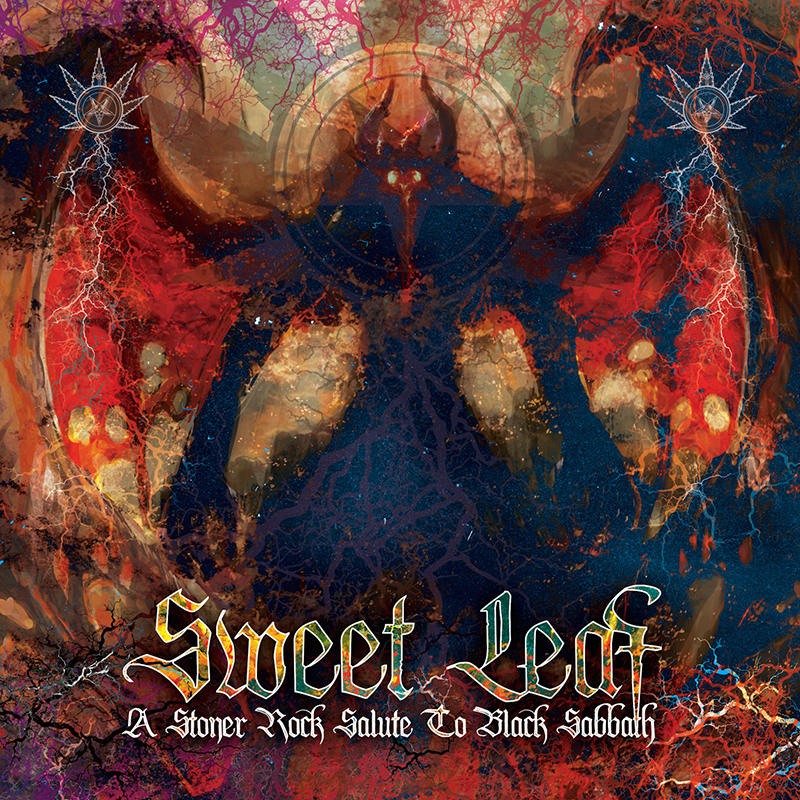

ANTHONY PHILLIPS-PRIVATE PARTS AND PIECES I-IV.
ANTHONY PHILLIPS-PRIVATE PARTS AND PIECES I-IV.
Many people think that the home studio is a new thing. That’s not the case. Musicians were recording music at home way DAWs and laptops began to play an important part in the recording process. Anthony Phillips is proof of that.
Anthony Phillips started experimenting with a basic reel-to-reel tape mach in 1966, when he was still a member of Anon. He used the reel-to-reel to record ideas for a song. Sometimes, he experimented with overdubs. However, it was pretty basic. Especially, compared to what Anthony would use later in his career. By then, Anthony Phillips had been part of what would become one of the biggest bands in the world, Genesis.
The Genesis story began in 1967, at Charterhouse School, in Surrey. That’s where Tony Banks, Mike Rutherford, Peter Gabriel and Anthony Phillips formed their nascent band. At first, the band was managed by another former Charterhouse pupil, and now disgraced and convicted DJ Jonathan King.
He arranged for Genesis to record several singles and an album, From Genesis to Revelation. It was released on Decca on 7th March 1969. From Genesis to Revelation failed to chart in Britain, and stalled at 170 in the US Billboard 200. This was an inauspicious start to Genesis’ recording career. Stung by the commercial failure of their debut album, Genesis ended their relationship with Jonathan King. This coincided with an upturn in their fortunes.
Not long after this, Genesis began touring as a professional band. This brought them to the attention of Charisma Records, who signed Genesis.
Now signed to Charisma Records, which had an enviable roster of artists in the late-sixties, early-seventies, Genesis began work on their sophomore album, Trespass.
For Trespass, Genesis were paired with a professional producer, John Phillips. His career had started a year earlier, when he worked with Yes in 1968. After that, John Phillips knew that he wanted to be a producer.
To record Trespass, John Phillips took Genesis to London’s Trident Studios. Between June and July 1969, Genesis recorded the six tracks that became Trespass. It was released on 23rd October 1970.
Before the release of Trespass, critics had their say on Genesis’ sophomore album. The reviews of Trespass were mixed. One of the most influential publications, Rolling Stone Magazine wasn’t impressed by Trespass. It was an album that was: “boring and should be avoided.” Record buyers took this advice.
When Trespass was released, the album failed to chart on both sides of the Atlantic. However, in 1971, Trespass gave Genesis their first number one album…in Belgium. By then, Anthony Phillips had left Genesis.
Following his departure from Genesis, Anthony Phillips studied classical music. He was especially interested in classical guitar. This would serve him well, when he embarked upon a solo career.
Having played on the demos for Peter Gabriel’s ‘Scratch’ album, Anthony Phillips’ solo career began in 1977, with the release of The Geese and The Ghost.
The Geese and The Ghost.
Originally, The Geese and The Ghost was meant to be a collaboration between Anthony Phillips and Mike Rutherford. That was the plan. However, Mike Rutherford was busy with Genesis, and hadn’t the time to record a whole album. So instead, Mike Rutherford cowrote three songs with Anthony Phillips, and made guest appearances on The Geese and The Ghost. It had been recorded over three years.
The material on The Geese and The Ghost had been recorded between August 1973 and October 1976. Anthony Phillips had spent part of the last three years recording not just his debut album, but his comeback album. It was nearly complete. So Anthony Phillips took the album to Charisma Records.
When the A&R people at Charisma Records listened to The Geese and The Ghost, they decided to pass on what should’ve been Anthony Phillips’ debut album. That’s despite guest appearances from Mike Rutherford and Phil Collins. For Anthony Phillips this was devastating. He had hoped Charisma Records would want to release the record, and advance him enough to release The Geese and The Ghost.
Without the money to complete The Geese and The Ghost, Anthony Phillips returned to making library music. He like many musicians during the seventies, was making a decent living out of recording library music. Just as Anthony Phillips had resigned himself to a life as an anonymous musician making library music, he caught a break.
Passport Records, an American company, got in touch with Anthony Phillips. They wanted to release The Geese and The Ghost. Having failed to interest Charisma Records and then Virgin in releasing The Geese and The Ghost in Britain, Anthony and Genesis’ manager Tony Smith decided to form their own label. They named the label Hit and Run. All they needed now, was a distributor. Then The Geese and The Ghost would be released.
Everything it seemed was going to plan. Anthony Phillips managed to finish his debut album, The Geese and The Ghost. It was scheduled for release in March 1977. Before that, critics had their say on Anthony Phillips’ long-awaited debut album.
When The Geese and The Ghost was released, the reviews were mixed. This fusion of folk rock, prog rock and symphonic rock divided opinions. For some critics, the two part title-track was the album’s undeniable highlight. Other critics thought the track, and the album was over-indulgent. There was no consensus. Record buyers had the deciding vote.
On its release, The Geese and The Ghost stalled at a lowly 191 in the US Billboard 200. This was a huge disappointment. Some critics weren’t surprised. The backlash against prog rock had just begun. If The Geese and The Ghost had been released a couple of years earlier, it might have fared better. This was a case of being Wise After the Event, which was the title to Anthony Phillips’ sophomore album.
Wise After the Event.
Despite the commercial failure of his debut album, Anthony Phillips returned to the studio just seven months later. Between October and December 1977, Anthony Phillips recorded what became Wise After the Event at Essex Studios, England.
This time around, Anthony Phillips recorded more than enough material for an album. It was impossible to fit all the songs onto one album. So an E.P. was released to accompany Wise After the Event. Still, there were songs left over. So Anthony Phillips kept them for his 1980 album, Private Parts and Pieces II: Back To The Pavilion. It’s part of Anthony Phillips’ recently released five disc box set, Private Parts and Pieces I-IV, which was released by Esoteric Recordings. It’s a snapshot of a part of Anthony Phillips’ career. Before that, came Wise After The Event.
Eventually, Anthony Phillips chose nine tracks for Wise After The Event. He had penned eight of the nine tracks, and cowrote Greenhouse with Jeremy Gilbert. Wise After the Event was released in May 1978, on Passport Records in America, and Virgin in Britain.
Prior to the release of Wise After The Event, the album was well received by critics. It was a much more cohesive album than The Geese and The Ghost. Anthony, who took charge of the lead vocal for the first time in his career, was an assured and confinement vocalist. Especially on the ballads. Things it seemed, were looking promising for Anthony Phillips.
It was a false dawn. Wise After The Event failed to chart in America. After two solo albums, Anthony Phillips’ career was at a crossroads. Making this even more galling, was that by then, Genesis were one of the biggest bands in rock music. They certainly weren’t reduced to releasing a limited edition album of 5,000 copies.
Private Parts and Pieces.
Five months after the release of Wise After The Event, Anthony Phillips returned. He had had a rethink, and decided to release a different type of album. This time, Anthony Phillips wasn’t going to pursue commercial success. Private Parts and Pieces would be a limited edition release. Only 5,000 copies in Britain. That however, wasn’t the only change.
Private Parts and Pieces Anthony Phillips decided, would be an album of instrumental music. There were only six tracks on the album. They weren’t new songs. Two had been recorded in 1972. The other four had been recorded in 1976. However, they were all Anthony Phillips’ compositions.
Five songs were written by Anthony Phillips. The other track, Field of Eternity was cowritten by Mike Rutherford. It was an old Genesis song. However, he didn’t feature on Field of Eternity. It was just Anthony Phillips and a myriad of instruments on Private Parts and Pieces.
When critics heard Private Parts and Pieces, they were impressed by Anthony Phillips’ latest offering. It was a different approach, given Private Parts and Pieces was an instrumental album. However, still, progressive rock and folk rock shine through. So do elements of classical and world music. Although different to what many critics expected, they gave Private Parts and Pieces their seal of approval.
In November 1978, Private Parts and Pieces was released in America by Passport Records. Despite not being the most commercial album of Anthony Phillips career, they released the album. Unsurprisingly, the album failed commercially. Then in April 1979, Private Parts and Pieces went on sale in Britain. The 5,000 copies sold. Anthony Phillips saw this as a success. This could be an alternative income stream, now his contract with Arista was almost over.
Sides.
Anthony Phillips only owed Arista one more album. That album was Sides, the most commercial album of his career. Giving Sides its commercial sound was producer by Rupert Hines.
For Sides, Anthony Phillips had written seven new songs and cowrote Holy Deadlock with Martin Hall. These songs were recorded at Essex Studios and Matrix Studios. There, Anthony Phillips and his band recorded the nine tracks. With producer Rupert Hines at the controls, the most commercial album of Anthony Phillips career took shape. It was scheduled for release in April 1979.
Before that, critics had their say on the aptly titled Sides. Side two featured forgettable throwaway pop. However, things improved marginally on side two. The orchestral sounding Sisters of Remindum and Nightmare was much more like what people had come to expect from Anthony Phillips. So was Magdalen, which featured a guitar masterclass from the former Genesis man. However, it was too little, too late.
When Sides was released, the album crashed and burned on both Sides of the Atlantic. Anthony Phillips’ dalliance with commercial pop had been a minor disaster. It wasn’t going to win him any new fans or another recording contract with Arista.
Sides was the last album Anthony Phillips released for Arista. Having discharged his contractual obligations, he returned to the Private Parts and Pieces’ series.

Private Parts and Pieces II: Back To The Pavilion.
Just like the first instalment in the Private Parts and Pieces’ series, Private Parts and Pieces II: Back To The Pavilion featured music that Anthony Phillips had recorded between 1976 and 1977.
Originally, the tracks were meant for ‘other projects’, which it seems, hadn’t come to anything. This included The Scottish Suite which supposedly, was meant to have been a commission to bring MacBeth to music. However, this hadn’t come to pass. Since then, these tracks had lain unreleased. Not anymore.
June 1980 was the release date for Private Parts and Pieces II: Back To The Pavilion. Some of these tracks featured Genesis’ Mike Rutherford and former King Crimson drummer Andrew McCulloch. This all-star lineup was part of the album’s U.S.P.
It was going to be a hard sell for Anthony Phillips, who was between record labels. His deal with Arista was over. All he was left with, were distribution deals with Passport Records and Virgin. Their job was to get Private Parts and Pieces II: Back To The Pavilion into the shops. They weren’t going to point out that some of the music on the album sounded dates.
Critics, however, had no qualms. They seemed to take delight in pointing out the obvious. Here was music that had been recorded during another era, between 1976 and 1977. Prog rock was still hugely popular in 1976. However, then came punk and the backlash began. Suddenly, prog rock was seen as the enemy. Its practitioners were called rick, over-indulgent dinosaurs. Ironically, those doing the mudslinging, had been fans of the genre. Then they jumped on the punk bandwagon. After a couple of years, it too hit the buffers, and the post punk era began. Still, prog rock was popular. The genre had evolved since then, whereas the music on Private Parts and Pieces II: Back To The Pavilion was a remnant of prog rock’s past.
When reviews of Private Parts and Pieces II: Back To The Pavilion were published, critics felt the music sounded dated. Some went as far as to say it was a relic of the past. That was harsh.
Some of the music on Private Parts and Pieces II: Back To The Pavilion was ambitious, beautiful, melodic, multi-layered and nuanced. Other times, there’s a degree of aggression in Anthony Phillips’ guitar playing. It can be a captivating album. However, there’s a but.
Another criticism was that Private Parts and Pieces II: Back To The Pavilion doesn’t sit together cohesively. That’s certainly the case. Instead, it’s more like a compilation. It’s far from the concept albums of prog rock’s glorious heyday.
Unsurprisingly, Private Parts and Pieces II: Back To The Pavilion wasn’t a huge success. That had never been Anthony Phillips intention. It was more about providing an alternative income stream. Private Parts and Pieces II: Back To The Pavilion did that, to an extent. However, it would be another four years until Anthony Phillips revived the Private Parts and Pieces’ series, as he had signed to RCA.
1984.
For his RCA debut, Anthony Phillips wrote an album of instrumental electronic music. It was a stylistic departure for Anthony Phillips. He deployed drum machines, keyboards, a myriad of percussion and vocal effects on what was an alternative prog rock album.
It’s as if Anthony Phillips took the criticism of releasing an album of dated material to heart. He had decided to create an innovative album, but one that featured the music he knew best, prog rock.
When 1984 was released the reviews were mixed. Some critics felt that Anthony Phillips had embraced and understood how to use the technology to its potential. The result they felt, was an album that paid a fitting homage to George Orwell’s masterpiece. Others critics weren’t convinced, and thought the four track album was somewhat over-indulgent. Just like before, there was no consensus on Anthony Phillips’ sixth album.
Again, records buyers were left to cast the deciding vote. 1984 wasn’t a commercial success, and RCA took a bath. It wasn’t the best way for Anthony Phillips to begin a new chapter in his career. So Anthony Phillips returned to the familiarity Private Parts And Pieces III: Antiques.
Private Parts And Pieces III: Antiques.
Anthony Phillips latest instalment in the Private Parts And Pieces’ series was the first of two collaboration he released between 1982 and 1983. He collaborated with guitarist Enrique Berro Garcia on Private Parts And Pieces III: Antiques.
The entire album was penned by Anthony Phillips. Then he and Enrique Berro Garcia entered the studio.
Anthony Phillips played bass plus six-string and twelve-string classical guitar. He also produced Private Parts And Pieces III: Antiques. Enrique Berro Garcia contributed six-string and twelve-string classical guitar. Once the two suites and six other tracks were recorded, Private Parts And Pieces III: Antiques was ready for release.
Just like previous albums, Private Parts And Pieces III: Antiques divided the opinion of critics. The reviews were mixed on an album where rock and classical music melted into one. There were elements of folk rock and prog rock on Private Parts And Pieces III: Antiques. They joined a healthy serving of classical music. This was nothing new.
Progressive rock musicians had been doing this since the late-sixties. It was hardly innovative. However, Enrique Berro Garcia and Anthony Phillips were undeniably talented musicians. Proof of this was Hurlingham Suite and Suite in D Minor. Both tracks oozed quality. It didn’t matter that this wasn’t innovative music. Not everyone felt the same way.
After some harsh words from critics, Private Parts And Pieces III: Antiques seemed to fall on deaf ears. It seemed it was just Anthony Phillips’ loyal fans who bought Private Parts And Pieces III: Antiques. Maybe, Anthony Phillips luck would change when he released the second of two collaborations?
Invisible Men.
Things didn’t get much better in 1983, when Anthony Phillips and Richard Scott collaborated on Invisible Men. It was a concept album based around the 1982 Falklands War between Britain and Argentina. The song titles on Invisible Men mark reflect events that happened during the Falklands War. This includes Exocet, which is about the ‘accidental’ sinking of the Belgrano. It’s one of ten tracks on Invisible Men.
Eight of the ten songs were written by Anthony Phillips and Richard Scott. The other two came from the pen of Anthony Phillips. However, Richard Scott more than played his part. He added some lead vocals, programmed a Roland TR-808 drum machine and played guitar and piano. After recording sessions during 1982 and 1983, Invisible Men was complete. It proved to be an ironic title.
What was meant to be a powerful, politically charged album received mixed reviews from critics. Some publications didn’t review the album. The Falklands War was still a controversial subject, that divided the opinion of politicians, historians and the public. They passed on Invisible Men, and what was a well intentioned album failed commercially. As far as the record buying public were concerned, Anthony Phillips and Richard Scott might as well be Invisible Men.
Private Parts and Pieces IV: A Catch At The Tables.
After the commercial failure of Invisible Men, Anthony Phillips decided to revisit the Private Parts and Pieces’ series for the fourth time. Amongst his small, but loyal fan-base the series was popular. However, beyond his existing fan-base, very few people, apart from some Genesis fans knew the name. So Anthony Phillips set about rectifying this.
That was supposed to be the case. It was a case of good intentions. At the start of the project, Anthony Phillips decided to release an album of experimental and improvisational music.
Again, this was nothing new. German musicians had been releasing some of the most groundbreaking experimental and improvisational music since the late-sixties. Innovative groups like Can, Neu!!, Harmonia, Ashra and Popol Vuh had changed the musical landscape in the seventies. So had Klaus Schulze. He was joined by Holger Czukay, Irmin Schmidt, Michael and Hans-Joachim Roedelius. This quartet of pioneers were now solo artists, and were continuing to influence another generation of musicians. Would Anthony Phillips?
The answer to that was no. When Private Parts and Pieces IV: A Catch At The Tables was released, it was mostly, the work of Anthony Phillips. That’s expect on Sistine, when he was aided and abetted by a bugle, bagpipes and harmonica. Describing the music as experimental would require a stretch of the imagination. The nearest Anthony Phillips comes to experimental, is deploying a Moog or drum machine. Mostly, the music has a familiar sound. That’s not surprising.
While some of the songs had been recorded between 1983 and 1984, other tracks had been recorded as far back as 1979. Five years was a long time in music. It was as if Anthony Phillips couldn’t resist using up tracks he had recorded before. Some of these tracks have an almost unfinished sound. It’s as if they were work in progress. The result is an album that was disjointed and lacked cohesion.
When Private Parts and Pieces IV: A Catch At The Tables was released, some critics called the album predictable and “archaic.” Especially some of Anthony Phillips’ guitar playing. It had the same progressive sound that albums released on albums during the seventies. For critics and record buyers, it was wearing a bit thin. Little did they know that there were another seven volumes in the series still to be released.
Only the first four feature in the five disc box set Private Parts and Pieces I-IV, which was recently released by Esoteric Recordings. It’s far from the lavish box sets that many record labels release. Instead, it’s similar to other box sets that this label has released.
They’re best described as expense spared. That’s the case with Private Parts and Pieces I-IV. It looks as if it belongs at the budget end of the box set market. The five discs are housed in a cheaply made box and feature what can hardly be described as in-depth, informative sleeve-notes. Despite, all this, Private Parts and Pieces I-IV will cost music lovers around £27, $41 or €35. Private Parts and Pieces I-IV however, isn’t worth that.
Even though Private Parts and Pieces I-IV comes with an album of ‘bonus’ tracks. Private Parts and Extra Tracks, this includes alternate tracks and variations. The quality of these tracks varies. That’s the case with many discs containing bonus tracks. They should come with a government health warning, that: “this is an hour of your life that’s gone forever.” Sometimes that’s the not the case. The Led Zeppelin, Spooky Tooth and Velvet Underground box sets are cases in point. However, Anthony Phillips Phillips has never enjoyed the critical acclaim and commercial success of these three giants of rock.
With Private Parts and Pieces I-IV, this chapter of Anthony Phillips’ career seems to be a case of potential unfulfilled. He’s obviously a talented songwriter and musician. However, the four albums Private Parts and Pieces I-IV lack cohesion. They come across as compilations rather than studio albums. That’s no surprise. Sometimes, tracks recorded for an album are augmented by tracks recorded years previously. This results in albums that features music that’s disjointed, dated and lacking cohesion. Other times, albums feature songs recorded over a period of several years are passed off as albums, rather than as a compilation which is essentially, what they are. A case in point is Private Parts and Pieces II: Back To The Pavilion. That’s sad.
Listening to Private Parts and Pieces I-IV, should’ve enjoyed much more success than he has. He’s still a relative unknown, despite releasing over twenty albums. Many of these albums showcase a talented musician. However, Private Parts and Pieces I-IV doesn’t feature Anthony Phillips at his very best. While there’s undoubtably quality on the four albums, they fall short of being cohesive albums. On Private Parts and Pieces IV: A Catch At The Tables, the music was predictable and “archaic.” Things could’ve been very different
With his undeniable talent, Anthony Phillips came part of the road that leads to critical acclaim and commercial success on Private Parts and Pieces I-IV. However, on each of the album in the Private Parts and Pieces I-IV box set, Anthony Phillips takes a wrong turn. Maybe with the right person guiding his career, Anthony Phillips could’ve reached greater heights?
Although Anthony Phillips’ career has lasted nearly fifty years, and he’s enjoyed a degree of success, I wonder whether he has his regrets? Would he change how he approached the four albums in Private Parts and Pieces I-IV? If he did, then Anthony Phillips’ may have fulfilled the potential that’s apparent throughout Private Parts and Pieces I-IV.
ANTHONY PHILLIPS-PRIVATE PARTS AND PIECES I-IV.
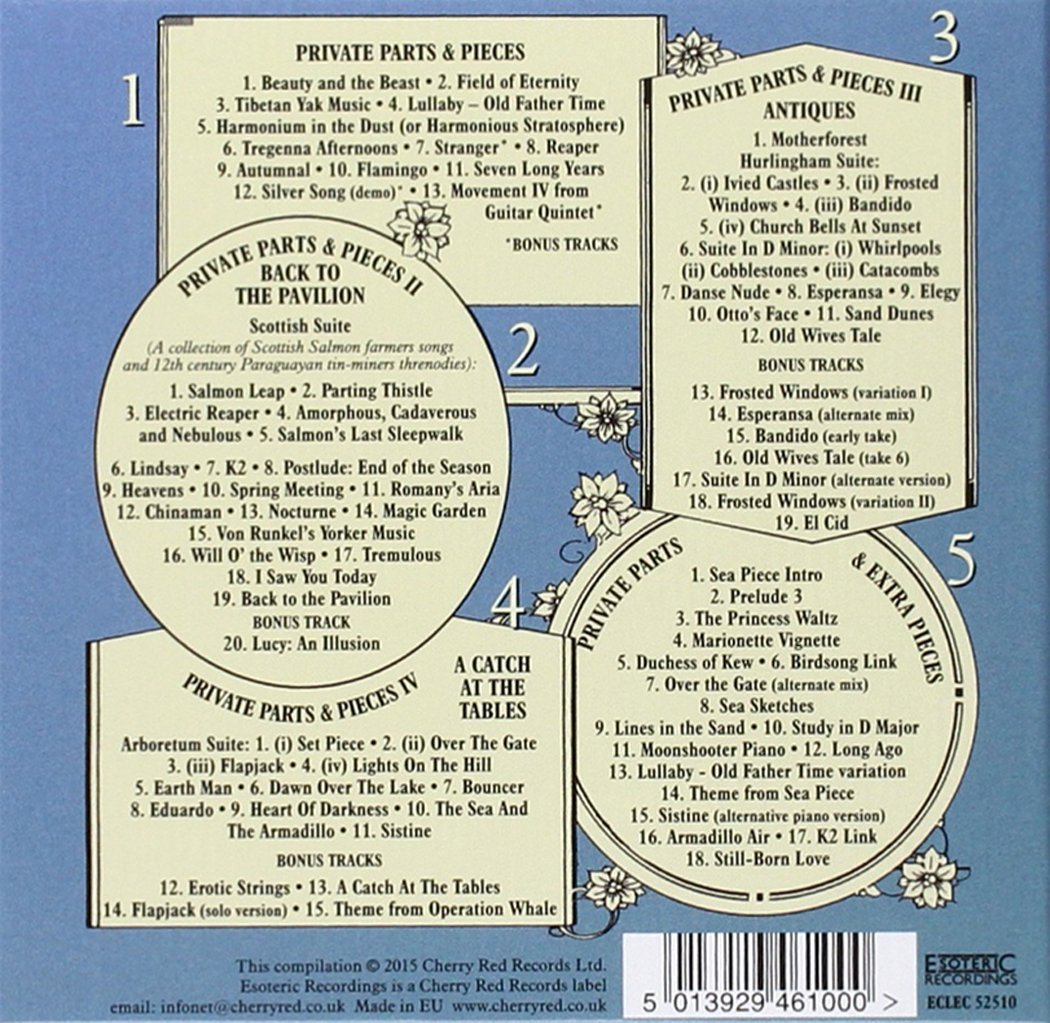
BARETO-IMPREDICIBLE.
BARETO-IMPREDICIBLE.
When friends form a band, an adventure begins. Nobody knows what’s about to happen. Everyone has their hopes and dreams. It used to be being signed to a record company, and releasing their debut album. Maybe, after a couple of albums, commercial success and critical acclaim will have come their way?
If that’s the case, their lives will have been transformed. They’ll have turned their back on the tedium and drudgery of everyday life. Replacing it, will be life split between recording studios and playing some of the most prestigious venues in planet music. That’s the dream. Hoping to live that dream are one of the rising stars of the Peruvian music scene, Bareto, whose new album Impredecible, will be released on the World Village label on November 27th 2015. Impredecible will be the fourth album Bareto have released since 2003.
The Bareto story began in Lima, Peru, back in 2003. That’s when four friends decided to form their own Cumbia band. Before long, this talented septet made tentative steps into the Peruvian musical scene.
Bareto began playing small venues in Lima. Soon, word was out. Here was a band that could, follow in the footsteps of two of the greatest Peruvian bands of the seventies, Black Sugar and Los Belkings. Already it seemed, Bareto’s star was in the ascendancy.
So in 2005, Bareto released their debut E.P. Ombligo. It featured three songs penned by Bareto, plus covers of Herbie Hancock’s Cantaloop Island and Burning Spear’s Marcus Garvey. Quickly, the 500 copies of the Ombligo E.P. sold out, and nowadays, are prized items among collectors. After the success of their Ombligo E.P., Bareto’s thoughts turned to their debut album, Boleto.
Boleto.
Recording of Boleto took place at Lempsa Studios by Tato del Campo. By now, the Boleto had added a wind section and percussionist. The expanded lineup of Bareto recorded ten tracks. Most of these tracks were new song. That was apart from a cover of La del Brazo, which Peruvian rock band Fragil had made famous. However, Bareto’s version was quite different from the original.
That was the case with Boleto. Although Bareto were described as a Cumbia band, there’s much more to their music than that. Bareto flitted between and fused funk, punk, reggae, ska with tropical influences and Latin beats. This eclectic mixture of genres and influences became Boleto, Bareto’s debut album. Boleto was the first chapter in the Bareto story.

Cumbia,
Just over two years later, and Bareto returned with their sophomore album Cumbia. Bareto it seemed, had returned to their musical roots. They had covered eleven popular Cumbia and Latin songs. There were Amazonian and Andean Cumbia songs on Bareto’s eagerly awaited sophomore album. It featured vocalists Wilindoro Cacique. With a new addition to their ranks, and songs that had commercial appeal, things were looking good for Bareto.
That proved to be the case. When Cumbia was released, it sold well. Within three months, Cumbia was certified gold. That was just the start of Cumbia’s success. Eventually, Cumbia was certified platinum. Bareto had arrived. After just two albums, Bareto had achieved what many bands never achieve…commercial success and critical acclaim. Despite this Bareto weren’t going to stand still.
Sodoma Y Gamarra.
As 2009 drew to a close, Bareto returned with a new E.P., Sodoma Y Gamarra. Although Cumbia, with its commercial sound had brought commercial success and critical acclaim Bareto’s way, the band had changed direction.
Rather than remake Cumbi, Bareto, like true musical chameleons, decided that their music should continue to evolve. Previously, Bareto had incorporated everything from funk, punk, reggae, ska with tropical influences and Latin beats to the various strains of Cumbia. This time around, Bareto decided to combine the various types of Peruvian music with world music. Sodoma y Gamarra proved a delicious musical cocktail from Cumbia pioneers Bareto.
Especially, when record buyers discovered that Dina Paucar had featured on La Distancia Bareto. It was one of the six songs on the Sodoma Y Gamarra E.P. It was released in late-2009.
On its release the Sodoma y Gamarra E.P. was well received by critics. It sold well, and the single No juegue con el diablo became part of the soundtrack to Los Exitosos Gomes. Bareto were well on their way to becoming one of the stars of Peruvian music. Now was the perfect time for Bareto to get their music heard further afield.
Ves Lo Que Quieres Ver.
Three years passed between the released of the Sodoma Y Gamarra E.P., and their third album Ves Lo Que Quieres Ver. Bareto’s fans were hungry for a new album. It had been four years since Bareto released Cumbia. However, Ves Lo Que Quieres Ver was well worth the wait.
For Ves Lo Que Quieres Ver, Bareto revisited ideas and sound from the past. They became the building blocks for Ves Lo Que Quieres Ver. These ideas were taken much further. That wasn’t surprising. Bareto were innovators. With producer Manuel Garrido-Leccca, Bareto fused Cumbia, reggae, psychedelia and dub with a variety of Latin influences with social comment. Ves Lo Que Quieres Ver was a groundbreaking, landmark album.
This became apparent when Ves Lo Que Quieres Ver was released. Before that, the lead single Camaleon, gave record buyers a tantalising taste of what to expect on Ves Lo Que Quieres Ver.
What record buyers discovered, was an album that critics and cultural commentators called Bareto’s finest hour. Ves Lo Que Quieres Ver was released to commercial success and widespread critical acclaim in Peru. However, Bareto were looking further afield.
While Bareto would never forget the Peruvian people, they wanted their music heard in other countries. The only way to do this was by touring. It’s what bands have been doing since the birth of modern music.
So Bareto headed off on tours of Japan, America and Brazil. During these tours, Bareto promoted their landmark album Ves Lo Que Quieres Ver. It was the album that saw Bareto make a breakthrough into foreign markets.
After Bareto toured Ves Lo Que Quieres Ver in Japan, America and Brazil, people started talking about Bareto. After nine long years, the talented septet from Lima were finding a wider audience. For many in the audience, they had never even heard Cumbia. This was a new experience. However, they like what they heard. Those who knew and loved Cumbia, realised that Bareto were unlike any other Cumbia band they had come across. Bareto’s music was ambitious, innovative and genre-melting. That’s why Bareto were nominated for one of the most prestigious prizes in music.
It wasn’t just critics, cultural commentators and record buyers who had been impressed by Ves Lo Que Quieres Ver. So were the judges of the Latin Grammy Awards. Bareto’s third album Ves Lo Que Quieres Ver had been nominated for a Latin Grammy Award. This was a huge honour. However, 2013 would be just as good for Bareto.
During 2013, Bareto played sold out shows across America. From Washington D.C. to New York, Connecticut, Miami, Seattle, Los Angeles and San Francisco. To round off 2013, Bareto were named Group of the Year in El Comercio’s end of year poll. Bareto were proud of this. El Comercio is regarded as Peru’s most important and influential newspaper. This showed how far Bareto had come in just nine years. They were now one of Peru’s biggest and most successful bands
Impredecible.
Two years after releasing Ves Lo Que Quieres Ver, Bareto return with another album of ambitious, innovative and genre-hopping music. That’s the perfect way to describe Impredecible, the latest album from Bareto.
Recording of Impredecible took place in Lima, at Bareto’s own studio during April 2014. The seven members of Bareto, Joaquín Mariátegui, Bambam Giraldo, Rolo Gallardo, Sergio Sarria, Mauricio Mesones, Jorge Olazo and Miguel Ginocchio recorded eleven tracks with producer Felipe Álvarez. The sessions were laid-back affairs. Given the studio was Bareto’s, they didn’t need to hurry. They took their time, ensuring that Impredecible recorded a fitting followup to Ves Lo Que Quieres Ver. Once the album was complete, a friend of Bareto’s mixed it.
That friend was producer, engineer and musician Richard Blair, a.k.a. Sidestepper. He was based in Bogotá, Columbia. Richard began mixing what’s a typically eclectic selection of songs from Bareto.
It’s fair to say that no two songs on Impredecible are the same. Bareto combine disparate and eclectic musical genres and influences. This includes what Bareto describe as: “tropical indie, electronica, Cumbia and Afro-Peruvian” influences. That’s not all. Reggae and psychedelia can be heard on Impredecible. It’s delicious musical stew that should be tasted often. DJs and critics realised this when they heard the lead single.
La Voz del Sinchi had been chosen as the lead single. It was released just over a year ago, and found favour with DJs on both sides of the Atlantic. British DJ Gilles Peterson and Vice, Ransom Note and Remezcla stateside were all won over by La Voz del Sinchi. They eagerly awaited the release of Impredecible.
Now the release of Impredecible is only two weeks away. Impredecible sees Bareto joined by some of their firnds. This includes one of Peru’s top singers Susana Baca, and Novalima’s cajon player Cotito. They play their part in what’s a career defining album from Bareto, Impredecible.
Impredecible is the perfect title for Bareto’s new album. In English, it means unpredictable. That’s a perfect description of Bareto’s music. It’s a like a Magical Mystery Tour through disparate and eclectic musical genres and influences, with Bareto as your tour guide. It’s a case of sit back and enjoy the journey, as the Magical Mystery Tour begins.
Fittingly, Impredecible begins with Bareto paying homage to Cumbia music on La Voz del Sinchi. Being Bareto, it’s a Cumbia instrumental with a twist. Otherworldly and dubby describes this heady brew. Big bold beats, a bounding bass and a myriad of percussive delights are combined. Later a searing guitar cuts through the arrangement. Meanwhile, Bareto skank their way through La Voz del Sinchi, and in the process, whet your appetite for the rest of Impredecible.
La Pantalla (The Screen) literally explodes into life, and grabs your attention. Bareto’s rhythm section are at the heart of the action. The bass anchors the arrangement, and joins the percussion and space-age synths. Meanwhile, lyrics full of social comment are delivered with feeling. This isn’t new. On Ves Lo Que Quieres Ver, Bareto didn’t shy away from facing up to the problems of modern life. This time, Bareto have set their sites on protest against dumbed down television programs on this joyous, hook heavy songs
A lone strummed guitar is joined by a bass, percussion and guitar on El Impredecible. They accompany an impassioned vocal on The Unpredictable. It has a much more traditional folk-tinged sound. Mostly, the arrangement has an understated sound. This allows the heartfelt vocal to take centre-stage. Meanwhile, the guitar playing is intricate and considered. Later, the vocal grows in power and the tempo rises, and allows Bareto to showcase their considerable skills.
Two of Bareto’s “secret weapons” are the guitar and bass. Both play an important part in the tender ballad No Es Para Mí. As the guitar is strummed, the bass is considered. Every note is chosen with the utmost care. The vocal is heartfelt, with harmonies responding to the call. Meanwhile, an electric guitar wah-wahs, before some of the most intricate guitar motifs are played. They drop out, to be replaced by the vocal. It’s then replaced by feedback, which shrieks before being tamed and adding an experimental hue to this beautiful ballad.
Moody and cinematic describes the introduction to La Negra y el Fantasma. That has the listener hooked. Bareto then throw a curveball, when a reggae influence making its presence felt. As the arrangement skanks along, an impassioned, pleading vocal vocal is delivered. An accordion joins a crystalline guitar, percussion and a bass that’s at the heart of the arrangement. It provides the heartbeat during this genre-melting ballad.
Haunting. That’s a good way to describe Bombo Baile. It’s another track where numerous genres melt into one. Elements of Afro-Peruvian, country, electronica and dub melt into one as this captivating and haunting track gallops along. A myriad of effects are added, including a vocoder. The result is a lysergic sounding track that Lee “Scratch” Perry might well have produced.
Viejita Guarachera pays homage to The Specials’ Ghost Town. A rumbling bass, ratty drums and stabs of blazing horns play their part in this tribute. Then the tempo drops, and Bareto add Afro-Peruvian festejo rhythms. Later, the track becomes an adventure in the trippy, cinematic dub. Just like so many songs on Impredecible, it’s a musical adventure par excellence.
Mamá Motelo is reminiscent of the opening track, La Voz del Sinchi. Both are Cumbia instrumental with a vaguely futuristic sound. Again, it’s Cumbia with a twist. Here, Bareto add a surf influence. This comes courtesy of the guitar, which adds to the cinematic sound. The result is a track that sounds as if it belongs on the next Quentin Tarintino soundtrack.
El Loco sees Bareto joined by one of Peruvian music’s greatest vocalists Susana Baca. She’s accompanied by a chirping guitar and subtle percussion. When Susan’s vocals are multi-tracked at thirty-seven seconds, she sounds like Stevie Nicks. Surely, Bareto aren’t going to transform themselves into Fleetwood Mac? Anything it seems, is possible. That proves not to be the case. When the vocal drops out, effects are added and the the arrangement shimmers, becoming dubby. Then when Susana’s tender vocal returns, the bass and guitars accompany her. They’re a perfect foil for her, on what’s one of the highlights of Impredecible.
La Semilla (The Seed) has a noticeable Hawaiian influence. It comes courtesy of the rhythm section and guitars. This is apparent from the opening bars. Instantly, the listener is transported from Lima, Peru to Hawaii. They don’t even to buy a ticket. Another tender, impassioned vocal sits amidst the pounding rhythm section and deliberate guitars. It’s a potent and exotic brew, from Bareto.
País de las Maravillas closes Impredecible. A combination of futuristic sounds reach a frenzied crescendo. That’s the signal for dub, surf and Cumbia to melt into one. Later, there’s even a hint of reggae. It’s an unlikely combination, but one that works. There’s even a hint of reggae as musical shaman Bareto finish their fourth album on a eclectic, cinematic high.
That’s the story of Bareto’s fourth album Impredecible. It’s the much anticipated and eagerly followup to Ves Lo Que Quieres Ver. It was recorded in Bareto’s Lima studio in April 2014.
Bareto took their time, and didn’t hurry the recording of Impredecible. That shows. Impredecible is a carefully crafted album of eclectic songs. They draw inspiration from “tropical indie, electronica, Cumbia and Afro-Peruvian” influences. That’s not all. Reggae, psychedelia and dub can be heard. So can the Hawaiian and Latin influences. The result is a captivating and intriguing album, Impredecible will be released on the World Village label on November 27th 2015.
Impredecible is captivating and intriguing because you never know which direction the album is heading. Bareto throw curveballs aplenty. Each track is eagerly awaited. What genre will Bareto reference next? Sometimes that’s obvious. Other times, surprises are store. The music veers between cinematic, haunting and moody to joyous, irresistible and hook-laden. However, each track on this musical magical mystery tour has one thing in common. They ooze quality. That’s why Impredecible, this career defining album, should introduce Bareto’s genre-melting music to a much wider audience.
BARETO-IMPREDICIBLE.
A SALUTE TO THE THIN WHITE DUKE.
A SALUTE TO THE THIN WHITE DUKE.
Over the last year, Cleopatra Records have released a series of “Tribute To” compilations. These Tribute To compilations see a new generation of up-and-coming artists homage to rock, psychedelic and pop royalty.
Everyone from Pink Floyd and The Doors, through The Rolling Stones and Creedence Clearwater Revival, to Black Sabbath, The Beatles and Judy Collins have had their music reinvented by a new generation of artists. Some of these Tributes have a twist.
There have been be Psyched Out or Stoner Tributes. One thing they all have in common, is they bring new meaning to familiar songs. That’s been the case since the first instalment in the series. Since then, each new instalment in this series has been eagerly awaited.
Part of the fun, is wondering who Cleopatra Records will pay tribute to next. The answer to that is The Thin White Duke, David Bowie. A Salute To The Thin White Duke will be released on CD and vinyl be Cleopatra Records on 13th November 2015. It sees sixteen up-and-coming artists give A Salute To The Thin White Duke.
Among the sixteen groups paying tribute to David Bowie on A Salute To The Thin White Duke, are Rogue Wave, Dum Dum Girls, The Deer Tracks, Magic Wands, Heartless Bastards, Ume, The Vacant Lot, Coves and The Muffs. Each of these artists rework a David Bowie song. They’re a real eclectic selection.
Some of the songs on A Salute To The Thin White Duke, are among David Bowie’s finest. This includes Heroes, Changes, Suffragette City, Fame, Star Man, Rebel Rebel and John, I’m Only Dancing. There’s a few classics amongst that lot. Then there’s Ashes To Ashes and Modern Love, from David Bowie’s, early-eighties renaissance period. However, other tracks are far from the most obvious choices.
Which band, when asked which David Bowie track they wanted to cover, would come up with Moonage Daydream, Letter to Hermione, Blue Jean, Cat People (Putting Out Fire) and Absolute Beginners? The answer to that is Boy Hits Car, Dum Dum Girls, Electric Six, Magic Wands and Coves. Each of these bands try to revitalise what was far from David Bowies finest hour. Maybe that’ll be able to breath new life into these tracks? That will become clear, when when I pick highlights of A Salute To The Thin White Duke.
Originally, Modern Love was a track from David Bowie’s 1983 album Let’s Dance. It reached number one in Britain and number four in the US Billboard 200. This resulted in Let’s Dance being certified platinum in Britain and five time platinum in America. When Modern Love was released as a single it reached number two in Britain and number fourteen in the US Billboard 100. For David Bowie, this resulted in a silver disc Britain and a gold disc in America. The Let’s Dance success story continued.
Thirty-one years later, Rogue Wave’s cover of Modern Love opens A Salute To The Thin White Duke. The Oakland based band transform the track into an eight minute, moody indie rock epic. It’s very different from the original, and reinvents a familiar song. If the rest of A Salute To The Thin White Duke is as good as Rogue Wave’s cover of Modern Love, it’s going to be a compilation to remember.
When asked what David Bowie song The Tulips wanted to cover, they chose Heroes. It’s the title-track to the second in David Bowie’s Berlin Trilogy. When Heroes was released on 24th October 1977, it reached number three in Britain and thirty-five in the US Billboard 200. However, when Heroes was released as a single, it reached just twenty-four in Britain. Despite that, it’s now regarded as a Bowie classic.
That’s why The Tulips chose to cover Heroes. However, it’s not easy to cover a classic. Shat The Tulips do, is create a haunting, ethereal and understated cover of Heroes. It’s nothing like the original, and transforms the song into something The Thin White Duke never imagined. So good is The Tulips cover, that it’s one of the highlight of A Salute To The Thin White Duke.
For A Salute To The Thin White Duke, The Deer Tracks cover Starman, a track from The Rise And Fall Of Ziggy Stardust and The Spiders From Mars. It was released in 1972, reaching number five in Britain and just seventy-five in the US Billboard 200. Despite this, The Rise And Fall Of Ziggy Stardust and The Spiders From Mars was certified platinum in Britain and gold in America. When Starman was released as a single, it reached number ten in Britain and a lowly sixty-five in the US Billboard 100. Forty-three years later, and Starman is one of David Bowie’s most popular singles from the early seventies.
The Deer Tracks didn’t set about remaking the original. It reminds me of Bjork, before the track takes on a slow, dreamy, lysergic and mesmeric sound. It’s indie pop with a hint of psychedelia. Incredibly, The Tulips who are from the MacArthur Park area of downtown L.A., are still unsigned. Some record company should give this truly talented band a contract. If they don’t someone else will.
In 1974, the glam rock era was well underway. That year, David Bowie released Diamond Dogs, which featured Rebel Rebel. When Rebel Rebel was released as a single, it reached number five in Britain and sixty-four in the US Billboard 100. However, Diamond Dogs became David Bowie’s most successful album. Not only did it give him his third consecutive number one in Britain, but reached number five in the US Billboard 200. This resulted in David Bowie receiving gold discs on both sides of the Atlantic. Rebel Rebel, one of the singles from Diamond Dogs is covered by one of the veterans of the Tribute To series, The KVB.
The KVB give Rebel Rebel a hypnotic, haunting sound. Rebel Rebel has been reinvented. So much so, that it bears no resemblance to the original. That’s as it should be. Here, The KVB have used their imagination to reinvent the track. They fuse elements post rock, psychedelia, indie rock and electronica, with the sound of Berlin circa 1977. The end result is a track The Thin White Duke would be proud of.
David Bowie released The Jean Genie as a single in 1972. It reached number two in Britain and number seventy-one in the US Billboard 100. Then on 13th April 1973, David Bowie released Aladdin Sane album, The Jean Genie was the penultimate track on side two. Aladdin Sane reached number one in Britain, and number seventeen in the US Billboard 200. This resulted in gold discs on both sides of the Atlantic for David Bowie. However, the song that started it off, was The Jean Genie, which is given a makeover by the Heartless Bastards.
For those who have still to discover the Heartless Bastards, they’re from Austin, Texas. They released their new album Restless Ones in June 2015. It’s the fifth album from The Heartless Bastards. Their cover of The Jean Genie is sure to have you looking for a copy of Restless Ones. They’ve been described as indie rockers and an old fashioned rock ’n’ roll band. That’s apparent on their blistering, swaggering take on The Jean Genie.
Another L.A. band is The Vacant Lots. However, the two members of The Vacant Lots, Jared Artaud and Brian MacFadyen are based in New York. They’ve contributed a cover of Fame to A Salute To The Thin White Duke. Fame was a track from David Bowie’s 1975 album Young Americans. It reached number two in Britain and number nine in the US Billboard 200. This resulted in a silver disc in Britain, and a gold disc in America. That wasn’t the end of the success. When Fame was released as a single, it reached number seventeen in Britain and number one in the US Billboard 100. Forty years later, The Vacant Lots cover Fame, as they too, search for fame and fortune.
The Vacant Lots cover is a captivating fusion of rock and electro. Just like the other bands on A Salute To The Thin White Duke, they’re determined to make their mark on the song. This is no slavish remake. Far from it. Instead, The Vacant Lots give the original a welcome, moderne twist, and in the process, pay tribute to The Thin White Duke.
It’s hard to believe that it was in that David Bowie released Space Oddity as a single in 1969. It reached number five in Britain. Then on 4th November 1969, David Bowie released his sophomore album Space Oddity. While it reached seventeen in Britain, Space Oddity reached number sixteen in the in the US Billboard 200. However, in Britain Space Oddity was certified silver and was the first of many discs David Bowie received. Kittie however, are still awaiting their first disc.
They’re a a talented Canadian metal band, who were formed in London, Ontario in 1996. Since then, they’ve released six albums. For A Salute To The Thin White Duke they unleash a blistering, rocky take on Space Oddity. Kittie stay true to the original, before kicking loose and showing why they’re regarded as one of North America’s best metal bands.
Anyone who had the misfortune to see the film Absolute Beginners had paid to see what was without doubt, one of the worst films of 1986. Twenty-nine years later, I still feel director Julian Temple owes me a refund. Just as bad, was the soundtrack to the film. David Bowie’s contribution Absolute Beginners was a far cry from his seventies heyday.
It was slightly better than Peace On Earth and his dreadful duet with Mick Jagger, Dancing In The Streets. Incredibly, Absolute Beginners reached number two in Britain and was certified silver. Across the Atlantic, Absolute Beginners only reached fifty-three in the US Billboard 100. Given that Absolute Beginners wasn’t David Bowie’s finest hour, I was surprised anyone chose to cover it. However, step forward Coves.
Incredibly, the Coves moody, lysergic cover of Absolute Beginners works. Elements of indie rock, psychedelia and even a hint of shoegaze are combined by Coves. They do the impossible, and transform Absolute Beginners, into a track that’s much better than the original. For that I salute them.
Closing A Salute To The Thin White Duke is a The Muffs cover Changes. It’s a track from Hunky Dory, which was released in 1971. Hunky Dory reached number three in Britain, and was certified platinum. In America, Hunky Dory stalled at ninety-three in the US Billboard 200. Then when Changes was released as a single in 1972, but stalled at number sixty-six in the US Billboard 100. Despite that, Changes has featured on numerous Greatest Hits and Best Of albums. Maybe that’s where The Muffs heard Changes?
The Muffs arent a new band. They’ve been around since 1991. Fronted by Kim Shattuck, who was a member of The Pixes, The Muffs deliver a feisty version of Changes. They fuse elements of indie pop and garage rock. This is a cover the The Thin White Duke would approve of, and bookends Salute To The Thin White Duke perfectly.
Although I’ve only mentioned some of the tracks on A Salute To The Thin White Duke, there’s nothing wrong with the rest of tracks. They’re an interesting and eclectic selection of tracks from David Bowie’s back-catalogue.
Classics, old favourites and even some unlikely candidates are combined on A Salute To The Thin White Duke, which will be released by Cleopatra Records on 13th November 2015. Whether you’re a David Bowie fan, or just someone interested in discovering new bands, it’s well worth adding A Salute To The Thin White Duke to your collection. It’s available on CD and LP, and is a fitting addition to Cleopatra Records’ series of “Tribute To” compilations. These Tribute To compilations see a new generation of up-and-coming artists homage to rock, psychedelic and pop royalty.
Everyone from Pink Floyd and The Doors, through The Rolling Stones and Creedence Clearwater Revival, to Black Sabbath, The Beatles and Judy Collins. Each of these artists are musical royalty. So is David Bowie, who the latest generation of band pay a fitting tribute to on A Salute To The Thin White Duke.
A SALUTE TO THE THIN WHITE DUKE.
JON SAVAGE’S 1966: THE YEAR THE DECADE EXPLODED.
JON SAVAGE’S 1966: THE YEAR THE DECADE EXPLODED.
It was the best of times, it was the worst of time. That’s the best way to describe 1966, which musical historians and cultural commentators remember as the year that transformed music. 1966 was a game-changer. Nothing would ever be the same again. Jon Savage explains why in his forthcoming book 1966: The Year the Decade Exploded, which will be released by Faber and Faber on the 19th November 2015. To compliment his book, Jon has compiled a double album. This forty-eight track compilation Jon Savage’s 1966: The Year the Decade Exploded was recently released by Ace Records. It features an eclectic selection of the music that made 1966 such an influential and important one.
From folk, rock, pop and psychedelia, to soul and funk, Jon Savage’s 1966: The Year the Decade Exploded is a truly eclectic compilation. It’s representative of 1966. There’s contributions from innovators like The Association, The Velvet Underground, The Seeds, Freaks of Nature and The Thirteenth Floor Elevators, Love and The Human Expression. Rock royalty The Who and The Yarbirds feature on 1966: The Year the Decade Exploded. So does a young David Bowie, who was just beginning his journey to stardom. Folk singer Tim Hardin’s Hang On To A Dream which provided a hopeful anthem to this new beginning. However, there were plenty of familiar faces still in the charts during 1966.
While 1966 was a new beginning, with new musical genres making their presence felt, soul was still popular in some quarters. Otis Redding, Wilson Pickett, The Four Topes, James Brown and The Supremes all enjoyed commercial success during 1966. It seemed this latest generation of music lovers had much more eclectic tastes than their parents and grandparents. They were much more willing to try new things. An opportunity arose early in 1966 to try something new.
As 1966 dawned, across San Francisco, posters were put up. They asked Can You Pass The Test? The curious and adventurous made their way to the Trips Festival at San Francisco’s Longshoreman’s Hall on the 3rd of January 1966. This was where Ken Kesey and Stewart Brand conducted their three day Acid Test. As people dropped LSD, the Grateful Dead played against a backdrop of strobe lights. An estimated 10,000 turned up, tuned in and tripped out. They were the “lucky ones.” Each night, thousands were turned away. However, maybe the ones who were turned away were the lucky ones.
While many who took the Acid Test had life-enhancing or life-changing experiences, many others became acid casualties. They were damaged by LSD, and never fully recovered. For the rest of their lives, these acid casualties were a shadow of their former selves. Alexander “Skip” Spence and Syd Barrett would would soon become two of the highest profile acid casualties. However, in 1966 the Merry Pranksters took great delight at watching 6,000 people drink punch spiked with LSD. This was how 1966, the year that changed music began.
January.
Part of the soundtrack to the Acid Test could’ve included The Strangeloves’ Night Time. It was released on the 1st of January, just as the year dawned. It’s one of twenty-four tracks on disc one of 1966: The Year the Decade Exploded. 1966 started with an eclectic array of singles.
The Guys From Uncle released The Spy on 15th January. It was one of numerous instrumental singles inspired by films like the James Bond series, and The Man From Uncle television series. A week later, on 21st January, two very different singles were released.
Little By Little was Dusty Springfield’s eighth single, and featured what critics called a vocal masterclass. She combined pop and soul on the Buddy Kaye and Bob Verdi penned single. However, The Uglys’ single The Quiet Explosion was a much more sombre affair. They broached the subjects of nuclear devastation and famine. These were both subjects that were on people’s minds. It was a harrowing reminder of what could happen at a touch of a button. Music it seemed, was no longer about the throwaway pop and escapism.
February.
While many rock groups were determined to bring about change with their music, soul music was about escapism and having a good time.
The San Remo Golden Strings’ Festival Time on 5th February. Then on 11th January, James Brown and The Famous Flames released one I Got You (I Feel Good). Ray Sharpe With The King Curtis Orchestra then released Help Me (Get The Feeling) Part 1 on February 19th. Later that month, garage rock pioneer Link Wray released his take on the Batman Theme. However, one record released in February 1966 was a much more sombre affair.
The Monitors’ Greetings This Is Uncle Sam was released on the 24th February, just as the Vietnam War was worsening. This anti-war story featured the voice of the stereotypical drill sergeant, who would’ve put anyone off signing on the dotted line. However, from a sombre song full of social comment, a classic opened March 1966.
March.
4th March saw The Who release a stonewall classic, Substitute. Pete Townsend windmills his way through track, while Keith “The Loon” Moon, provides the heartbeat. Substitute was just the start of a month where rock classics rubbed shoulders with innovation.
The Association released their fusion of psychedelia and sunshine pop Here Comes Mary on 8th March. Then four days later, on the 12th March garage rock pioneers released one of their finest singles, Pushin’ Too Hard. On the flip side was Try To Understand, one of the most underrated songs in The Seeds’ back-catalogue. These two groundbreaking groups would make their mark on sixties music.
April.
So would one a band who were one of the leading lights of Los Angeles’ psychedelic scene, The Electric Prunes. They covered Roger and Terrye Tilson’s Ain’t It Hard. It was produced by Leon Russell, and released as their Reprise debut on 27th April. Aint’ It Hard was a tantalising taste of what one of pioneering bands of the psychedelic era were capable of.
May.
Just a few weeks later, another of the greatest psychedelic bands of the sixties released their debut single. This was the Houston based, The 13th Floor Elevators who released You’re Gonna Miss Me in May 1966. Roky Erickson and the rest of The 13th Floor Elevators endorsed the use of drugs, especially LSD. This would prove ironic.
By 1968, the effects of drugs were taking their toll on Roky Erickson. He had developed mental health problems, and doctors diagnosed that suffering from paranoid schizophrenia. Doctors prescribed ECT, against his wishes. A year later, and Roky Erickson was arrested in Houston. Police found him in possession of one Marijuana joint. Facing a mandatory ten year sentence, Roky Erickson plead insanity, and spent three years incarcerated in State Hospitals. Roky Erickson was yet another musical acid casualty. However, psychedelia was just part of the musical soundtrack to 1966.
Nothing Comes Easy was released on 12th May, as Sandie Shaw’s tenth single in just two years. It reached number fourteen in Britain, and in the process, tightened Sandie Shaw’s grip on the title of Britain’s top female pop vocalist. Sandie Shaw, it seemed, could do no wrong. Soon, that would the case with one of the most famous bands in the history of music, The Velvet Underground.
June.
Midway through 1966, the world were about to be introduced to The Velvet Underground, when they released I’ll Be Your Mirror as their debut single. It was penned by Lou Reed and David Lang, and released by Verve on 15th July. By then, The Velvet Underground had a residency at Andy Warhol’s 47th East Street Factory. There, they introduced audiences to their unique sound. The Velvet Underground fused art rock, experimental, folk rock, psychedelia and proto-punk. This sound would influence several generations of musicians, and is a fitting way to close disc one of 1966: The Year the Decade Exploded.
July.
Just as America was sweltering in ninety degree heatwave, The Loving Spoonful unleashed what many thought was the perfect soundtrack, Summer In The City. However, when people paid closer attention, Summer In The City spoke of riots and disturbance. It was tantamount to a call to arms. Released on 2nd July, it reached number one, and became a classic track. So did Lee Dorsey’s cover of Allen Toussaint’s Working In A Goldmine.
Produced by Allen Toussaint and Marshall E. Sehorn, Working In A Goldmine was released on the 8th July. It began to climb the charts, and eventually, reached number eight on both sides of the Atlantic. Since then, Working In A Goldmine has been synonymous by Lee Dorsey, and is seen as his finest hour. Meanwhile, another of the pioneers of the psychedelic scene’s recording career was just about to get underway.
Arthur Lee and the other members of Love, were a new name to most people. Not for long. Soon, Love were veering between garage rock, baroque, psychedelia and folk rock. They were an innovative group, who like The Velvet Underground, would influence several generations of musicians. That was the case from their debut single.
Love’s debut single was Seven And Seven Is. Released on 16th July, this Arthur Lee penned track eventually reached number thirty-three. It also featured on Love’s eponymous debut album. It’s now regarded as a classic, and showcased what Love were capable of. They would become one of the most important groups of the late-sixties,
August.
August was an eclectic month for record buyers. There was everything from soul to rock, and everything in between.
Otis Redding released I Cant’t Turn You Loose on 12th August. Then on the 18th July, The Four Tops released one of their biggest singles, Reach Out and I’ll Be There. It reached number one in Britain and America. As August drew to a close, the Mod’s favourites returned.
The Who were back with their new single I’m A Boy. It was released on 26th August, and told the story of a woman who dressed her son as a girl. This leads to confusion about his identity and eventually, self harm. Just like previous singles from The Who, I’m A Boy made its way to the top of the charts, reaching number two in Britain. Keith Moon, Roger Daltrey, John Entwistle and Pete Townsend were well on their way to becoming rock royalty.
September.
There’s only one track from September 1966 on Jon Savage’s 1966: The Year the Decade Exploded. That’s Come On Back by Paul and Ritchie and The Crying Shames. This was the B-Side to September In The Rain. It was produced by Joe Meek. While September In The Rain was throwaway pop, Come On Back has a much harder, rocky sound. It’s a hidden gem, and proved a fitting swan-song for Joe Meek, one of the most innovative producers of his generation. Another innovator about to make his mark in 1966, was Jimmy Page
October.
By October 1966, The Yarbirds line had changed. Bassist Paul Samwell-Smith had left in June. Not long after this, the remaining members of The Yarbirds realised their music was no longer relevant. So they brought onboard Jimmy Page.
At first, Jimmy Page played bass. Then he switched to guitar, his preferred weapon of choice. He makes his debut on the lysergic sounding Happenings Ten Years Time Ago. It was released on the 7th October, and reached number forty-three in Britain, and number thirty in America. For the revitalised lineup of The Yarbirds this was disappointing. Such an innovative record deserved a better fate. Meanwhile, The Supremes released the followup to You Can’t Hurry Love.
You Keep Me Hangin On was released on 12th October. Many people thought it would repeat the success of You Can’t Hurry Love. It looked as if that wasn’t going to happen when You Keep Me Hangin On entered at number sixty-eight in the US Billboard 100. This was a disappointment for the Holland–Dozier–Holland penned single. Then the American feminist movement got behind the single, and it reached number one in the US Billboard 100 in November 1966, and became The Supremes’ eighth number one single.
November.
With The Supremes climbing the charts, a new group was trying to make their presence felt in America, The Human Expression. They seemed to have been inspired by British Invasion groups like the Rolling Stones and The Yarbirds. That becomes apparent on their debut single, Love At Psychedelic Velocity. It was released in November 1968 on the Accent label. This was the first of three singles The Human Expression released. The following month, another new name was about to release a single, David Bowie.
December.
Unlike The Human Expression, David Bowie wasn’t a musical newcomer. Neither was Tim Hardin. They both released singles on the 2nd of December. David Bowie’s was Rubber Band.Tucked away om the flip side, was The London Boy’s, which was released on Deram. Meanwhile, on the other side of the Atlantic, Tim Hardin released Hang On To A Dream. This hopeful and poignant song seemed a perfect soundtrack to the start of a new musical era.
It began in 1966, and is documented on 1966: The Year the Decade Exploded, was recently released by Ace Records, as a double album. This forty-eight track compilation features a truly eclectic selection of the music, including some of the music that made 1966 such an influential and important one.
The story of 1966, and why it’s such an important and influential one is documented on Jon Savage’s book 1966: The Year the Decade Exploded. It will be released by Faber and Faber on the 19th November 2015. To compliment his book, Jon has compiled this double album. It’s a tantalising taste of the music that changed musical history forever
There’s folk, rock, pop and psychedelia, to soul and funk, 1966: The Year the Decade Exploded. Describing the compilation is almost an understatement. However, the music on Jon Savage’s 1966: The Year the Decade Exploded is representative of 1966. Innovators like The Association, The Velvet Underground, The Seeds, Freaks of Nature and The Thirteenth Floor Elevators, Love and The Human Expression rub shoulders with rock royalty The Who and The Yarbirds. A young David Bowie even makes an appearance. So do soulsters Otis Redding, The Four Tops and The Supremes. Then there’s two contributions from the self-styled ‘Godfather Of Funk,’ James Brown. However, Jon Savage’s 1966: The Year the Decade Exploded reaches a poignant conclusion with Tim Hardin’s Hang On To A Dream, which seems a fitting slogan for the new musical era, which was about to unfold.
JON SAVAGE’S 1966: THE YEAR THE DECADE EXPLODED.
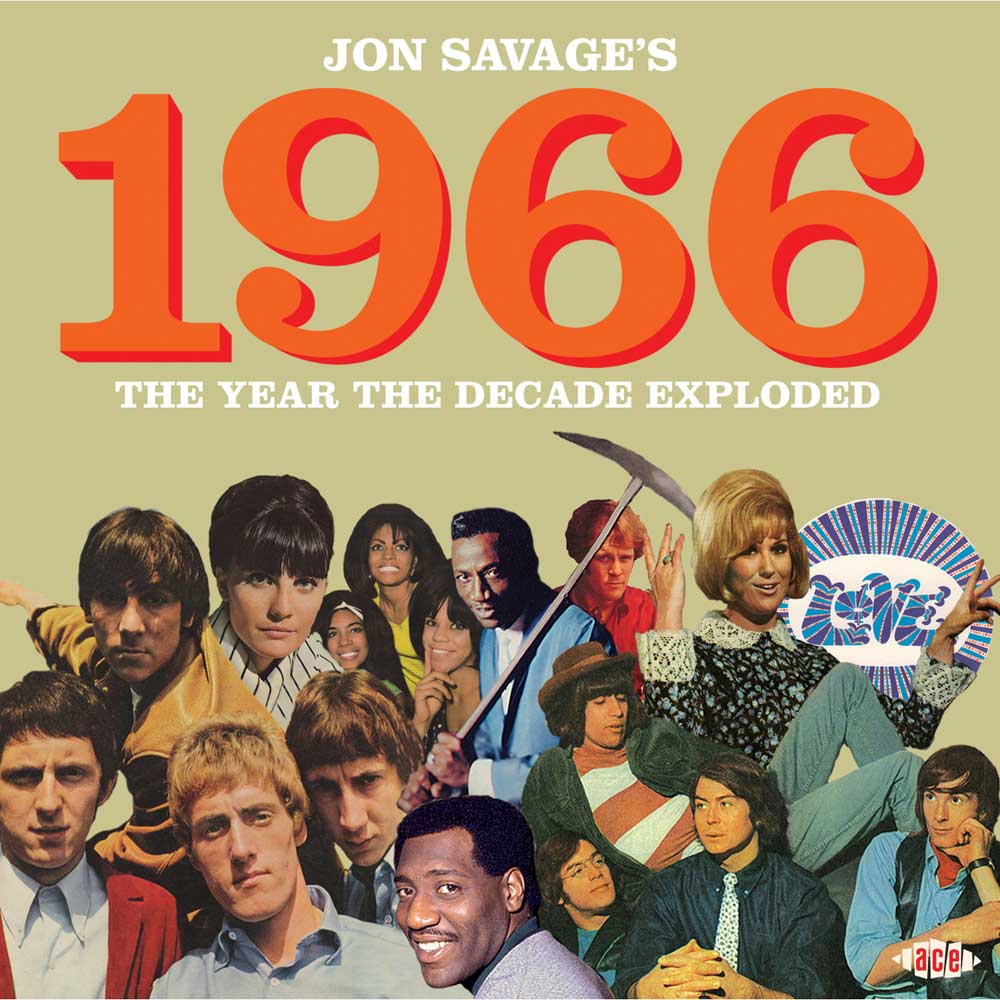
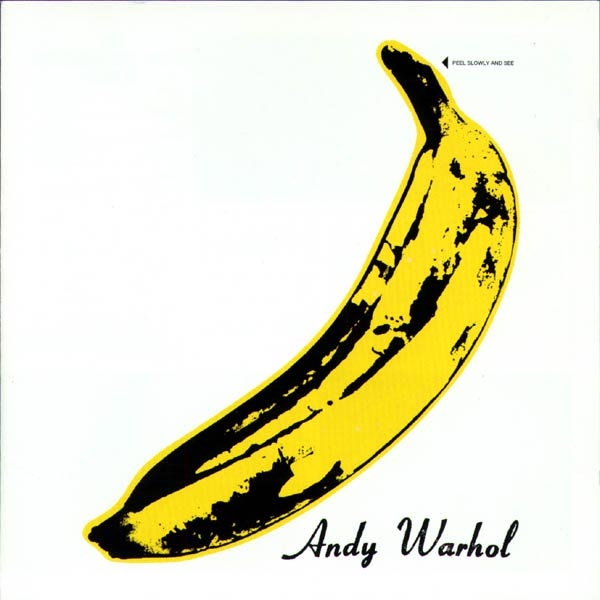
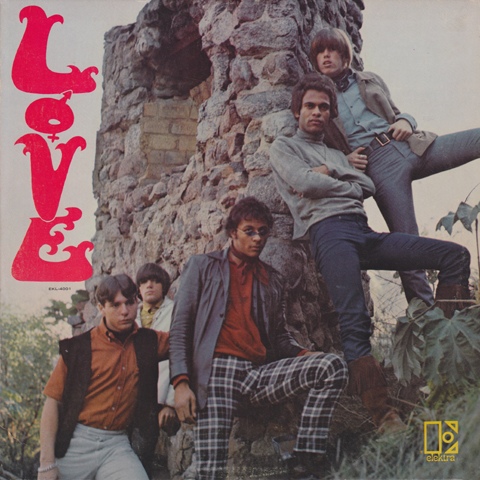
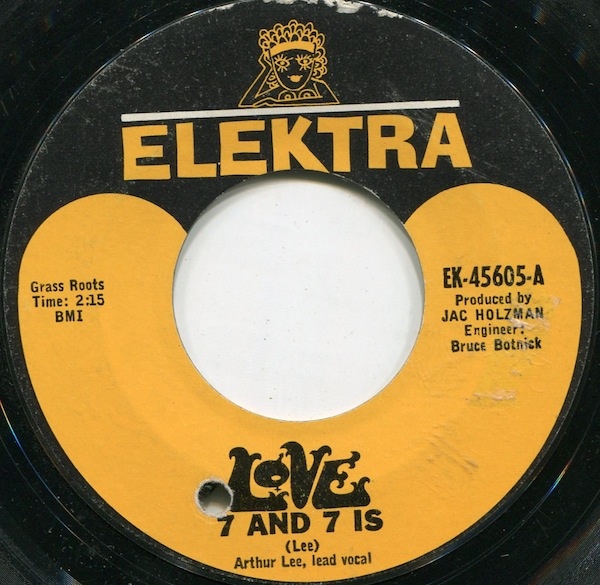
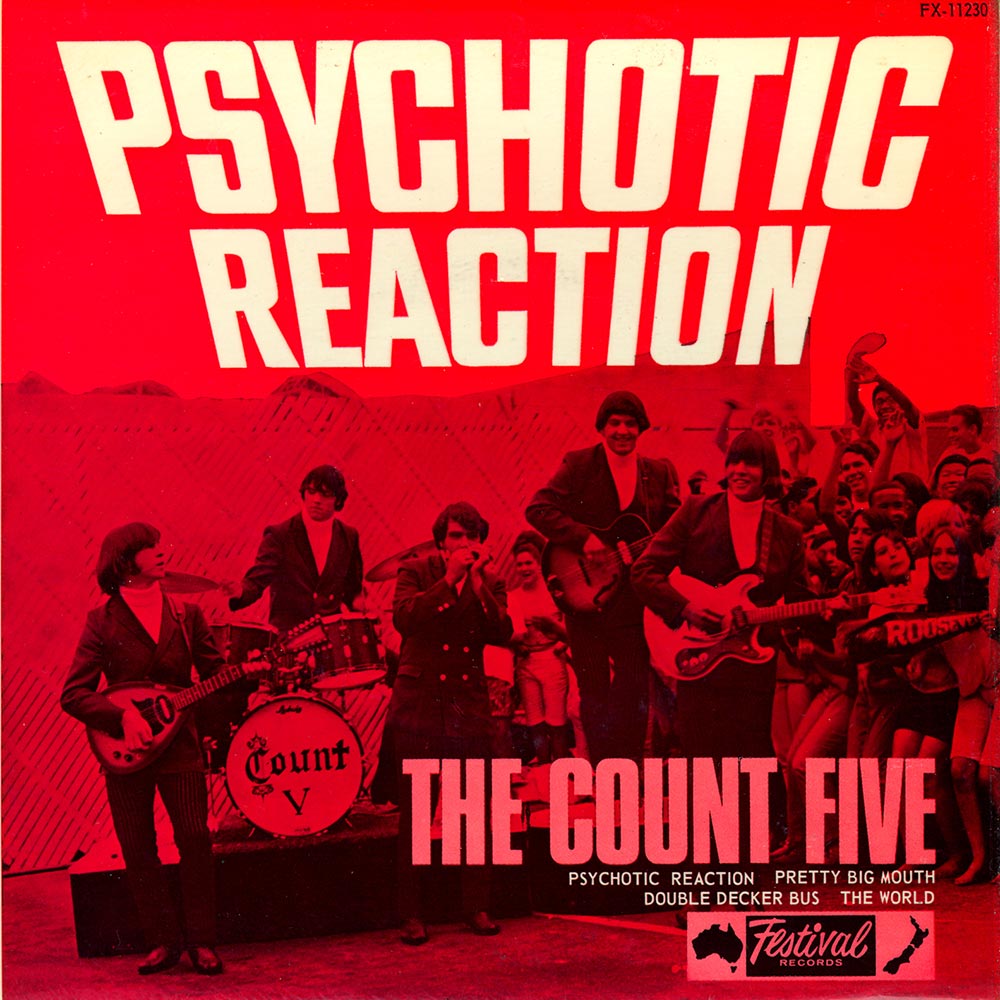
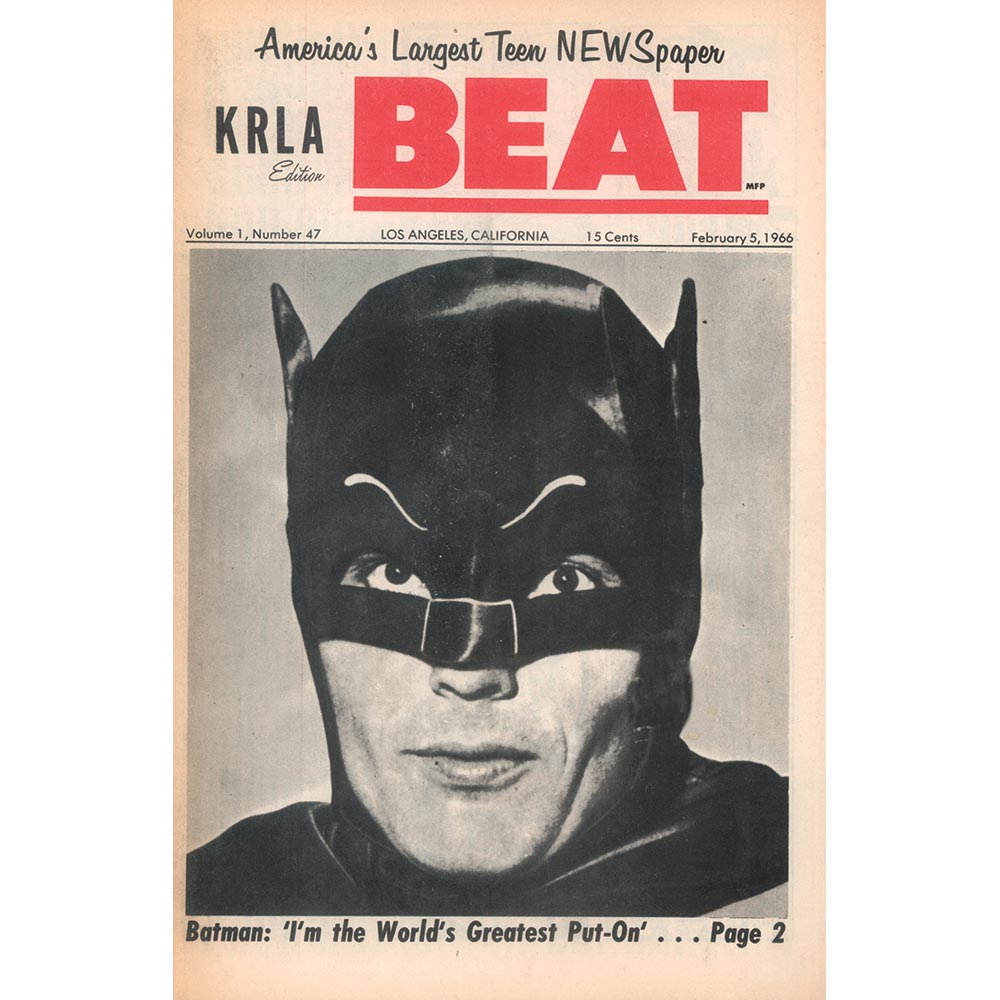
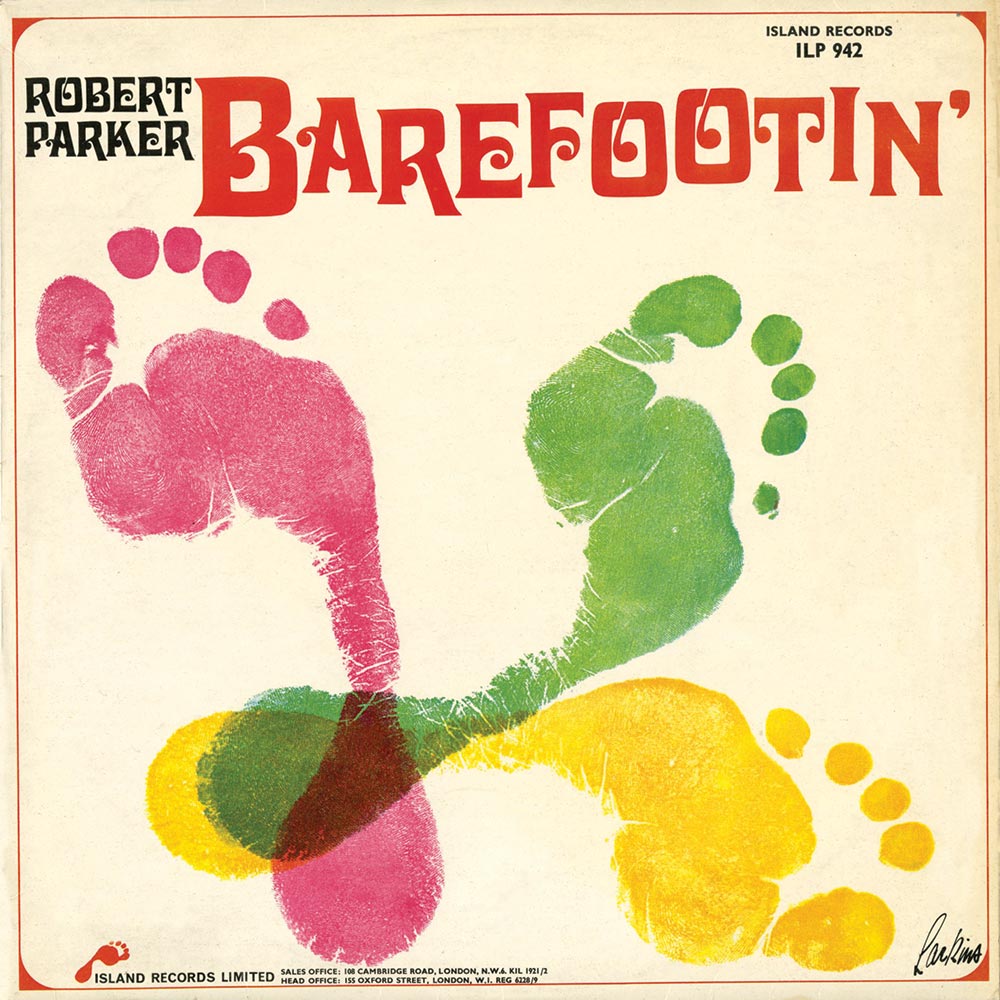
GIRL ZONE-VINYL EDITION.
GIRL ZONE-VINYL EDITION.
Vinyl it seems, has made a Lazarus like recovery over the last few years. The sales figures for 2014 are proof of this.
In Britain, sales of vinyl albums are at their highest in eighteen years. It’s a similar story in America.
Sales of albums on vinyl rose by fifty-two percent. Meanwhile, sales of downloads, the supposed saviour of the modern music industry are down.
Downloads of albums fell by nine percent. Cheerleaders for downloads within the music industry will try to argue that’s because people aren’t buying albums any more. They’re wrong. Sales of downloads of songs fell by twelve percent. The problem is, the cheerleaders for downloads are in denial. No wonder. They’ve two reasons to be worried.
A few years ago, many small, independent labels bet the bank on downloads and streaming. Granted streaming’s popularity has increased by fifty-four percent in 2014. However, it’s a seriously flawed model.
The music industry didn’t understand the streaming model. Especially small, cash strapped independents. Many of these labels live a hand-to-mouth existence. Streaming offered them an extra revenue stream. For labels who were barely breaking even, it was a case of where do we sign? However, many of the people running these independent labels aren’t business people.
Far from it. Essentially fans at heart. That’s a recipe for disaster. Especially if they fail to read a contract carefully. This is something many labels failed to do. Instead, they happily signed contracts with the streaming companies. Then it was a case of trebles all round, and have a cigar. What the various label managers and owners didn’t realise, was how much, or rather, how little, they would be paid.
After a year it all became clear. For most independent labels, the money was negligible. It was a similar story at the majors. To their horror, the accountants realised that a million streams is only worth between $6,000 to $8,400. That’s if the streaming companies paid up. Some have been reluctant to pay what they were due. Record companies big and small, had backed the wrong horse.
Meanwhile, some independent labels were still flying the flag for vinyl. They released lovingly curated reissues of classic albums and compilations. These releases were released to an audience with an insatiable appetite for vinyl. They didn’t want lossy, compressed music. Instead, they wanted to hear the music as the artist intended. This was on vinyl.
That’s the case with the artists on Girl Zone, which was recently released on vinyl by Ace Records. It’s an addition to Ace Records’ Where The Girls Are series. However, it’s not the next instalment in the series.
Instead, Girl Zone is a musical amuse bouche, to whet the listener’s appetite for the next instalment in the Where The Girls Are series. However, Girl Zone gives no indication of the direction that the Where The Girls Are series is heading. It’s a collection of twelve eclectic tracks.
On Girl Zone, there’s contributions from The Angels, The Darlettes, The Teardrops, The Drake Sisters, The Fashionettes, The Charmaines and The Ikettes. There’s a total of twelve tracks on this slab of delicious 180 gram, heavyweight red lava vinyl.
The first of these is Reparata and The Delrons’ Panic. It opens side one of Girl Zone. Panic was the B-Side to Saturday Night Didn’t Happen. This was one of two singles Reparata and The Delrons released on Mala, an imprint of Bell Records in 1968. By then, Reparata and The Delrons’ were experienced campaigners.
Their recording career began in May 1964, when the Delrons released Your Big Mistake on the Laurie label. After becoming Reparata and The Delrons, they enjoyed success with When A Teenager Cries and Tommy. Four years later, several singles and an album later, Reparata and The Delrons’ lineup had changed. They were popular in Europe, where Bell Records released Saturday Night Didn’t Happen. Those that flipped over to Panic, discovered a melodic, stomper that’s the perfect way to open Girl Zone.
Louie Louie has been an oft-covered track. In 1964, The Angels decided to give the track a makeover for their fourth album, A Halo to You. For some reason, the track wasn’t released as a single. If it had been, it could’ve given The Angels a hit single. It’s a potent combination of garage rock, proto-punk and rock ’n’ roll. Since then, the track has become something of an cult classic.
In 1963, The Darlettes were about to record their sophomore single for Dunes Records. That’s when they came across Here She Comes, which had been penned by Ellie Greenwich and Jeff Barry. They were one of the hottest songwriting teams. So were Lieber and Stoller, who produced Here She Comes. With such a stellar lineup of songwriters and producers, many forecast great things for The Darlettes’ new single.
When Here She Comes was released, it wasn’t the commercial success many forecast. That’s despite its soulful, poppy sound. . For the Bronx-based trio, this was the end of road. After just two singles, The Darlettes’ recording career was over. However, they bowed out with a song that fifty-two years later, has stood the test of time, Here She Goes.
The Teardrops’ Here Comes Loneliness has been released by Ace Records before. That was back in 1993, as part of the Kent Anniversary Special. It was a welcome rerelease. That’s the case twenty-two years later, when Here Comes Loneliness makes a return on Girl Zone. With its Spector-esque arrangement, and vocals that are tinged with hurt and heartache, it’s good to hear this hidden gem once again.
Mousie and The Traps only ever released one single, It’s All In The Way (You Look At It Baby). The song was penned by Jim Holvay, and released on the Toddlin’ Town label in July 1968. Sadly, it was a familiar story. It’s All In The Way (You Look At It Baby) failed commercially, and Mousie and The Traps never recorded another single. That’s a pity, given the quality of this hook-laden dancer.
Another group that only released one singles was The Drake Sisters. The group consisted of identical triplets. Their only single was What Did You Do Last Night? It was released in 1964 on the Chattahoochee label. Tucked away on the B-Side was Smoke From Your Cigarette, a soul-searching ballad, with doo wop harmonies. It’s a poignant and beautiful way to close side one of Girl Zone.
Having flipped over to side two of Girl Zone, The Fashionettes’ sassy Losin’ Control bursts into life. Quickly, it takes on a Northern Soul sound. Losin’ Control was penned and produced by Gary Paxton and Dale Davis in 1964. However, it wasn’t until fifty forty years later, in 2004 that Losin’ Control was released as a single by Kent Select. Belatedly, Darlene McKinney and Josephine Rosborough was heard by the audience it deserves. Eleven years later, and Losin’ Control returns for an overdue encore.
By 1964, The Charmaines were signed to Ohio based Fraternity Records. It had been founded in 1954, by Harry Carlson. Since then, many people had passed through Fraternity Records’ doors. The Charmaines were the latest. They entered the studio with producer Carl Edmonson and covered Ike Turner’s I Idolize You. However, the song was never released until 2008, when it was released twice.
The first time I Idolize You was released, was on the Kent Soul compilation New Breed R&B With Added Popcorn. That wasn’t the end of story. I Idolize You was also released by on the A-Side of a limited edition single by Kent Soul. After forty-four years languishing in Fraternity Records’ vaults, this heart wrenching ballad had been released twice in one year.
In 1964, The Angelos were about the record their debut single. The song chosen was Bad Motorcycle (Wooden Wooden). On the B-Side was Backfield In Motion, which was written by Elzie Bynem. He was the brother of The Angelos’ lead singer Linda Martell. Later in 1964, Bad Motorcycle (Wooden Wooden) was released as a single on Tollie Records, and sunk without trace. On reflection, The Angelos had chosen the wrong song.
If Backfield In Motion had been chosen as the single things would’ve been different? It oozes quality, as Linda Martell accompanied by harmonies, brings this irresistible song to life. It’s a very welcome addition to Girl Zone, and the Where The Girls Are series.
Just like several groups on Girl Zone, Pat Powdrill and The Powerdrills Together Forever only ever released one single. However, what a single Together Forever was. It was penned by Barry White and Jack Stern. They’re responsible for a joyous paean which was released on the Downey label in 1967. Sadly, the single flopped, and there was no followup.
The Kavetts’ I’ve Got A Story To Tell You is one of the rarest records on the Northern Soul scene. If a copy comes up for sale, it will cost anything up to $325. I’ve Got A Story To Tell You was released on the Len-Dre label in 1963. Although the single failed commercially, it later became a favourite in the UK Northern Soul. Its addition on Girl Zone will be welcomed by many within the Northern Soul fraternity.
Closing side two of Girl Zone, is The Ikettes’ Camel Walk. Penned by Ike Turner, Camel Walk was the B-Side to The Ikettes’ 1964 single Nobody Loves Me. It was released on Modern. Those that flipped over to the B-Side found a storming version of the Camel Walk. It’s the perfect way to close Girl Zone, as it leaves the listener wanting more.
For those in need of their next fix of the Where The Girls Are series, then Girl Zone is just what they’ve been waiting for. This eclectic, twelve-track musical amuse bouche is sure to whet their appetite.
There’s contributions from The Angels, The Darlettes, The Teardrops, The Drake Sisters, The Fashionettes, The Charmaines and The Ikettes on Girl Zone. It was recently released on a slab of delicious 180 gram, heavyweight red lava vinyl. It’s like a work of art, and seems almost too good to play. However, having lowered the stylus onto the red lava vinyl, pop, soul and garage rock come blasting out of speakers. Suddenly, it’s the sixties again.
While the twelve tracks on Girl Zone are the biggest hits you’ll ever hear, you’ll surely want to hear them again. Compiler Mick Patrick has put together twelve tantalising tracks for Girl Zone, a delicious musical amuse bouche for fans hungry for the next instalment in the Where The Girls Are series.
GIRL ZONE-VINYL EDITION.
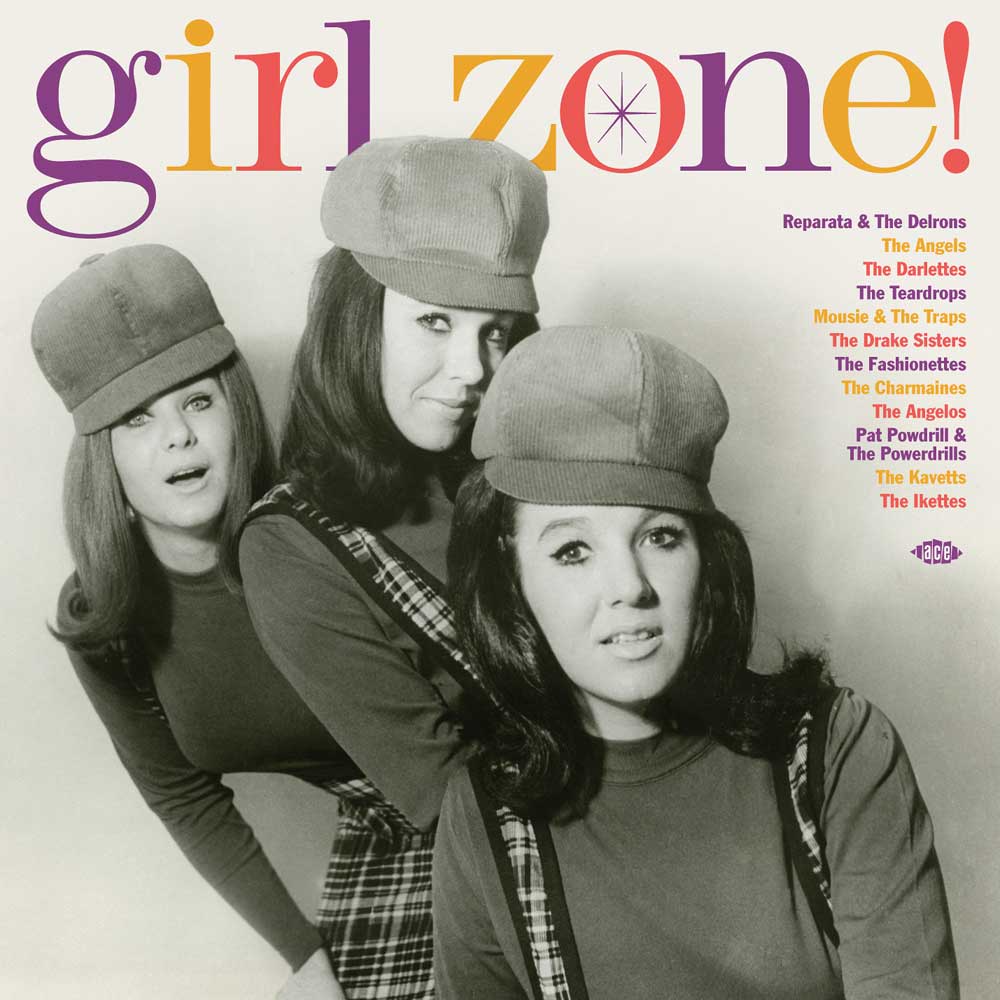

CHVRCHES-EVERY OPEN EYE-VINYL EDITION.
CHVRCHES-EVERY OPEN EYE-VINYL EDITION.
It was 10.30pm, when there was a knock at the door. The old couple from up the stairs stood there almost embarrassedly. “Could you possibly turn it down a wee bit. We’re trying to sleep?” This actually happened to Chvrches during the recording of their new album Every Open Eye which was recently released by Virgin on vinyl.
Chvrches were laying down some drum loops for a track on Every Open Eye. As often happens, there’s the temptation just to increase the volume slightly. Usually, that’s okay. Especially if it’s a luxurious, custom-built studio on the outskirts of town. However, that doesn’t describe Chvrches’ studio. It’s a basement flat, situated on the South side of Glasgow. To passers by, it’s just another Glasgow tenement. However, that’s not the case. Instead, it’s been Chvrches’ headquarters since they formed in 2011.
Their rented basement flat was where Chvrches recorded their debut album The Bones Of What You Believe. This was the album that transformed the fortunes of Lauren Mayberry, Ian Cook and Martin Doherty. It was released on 20th September 2013, and was hit Britain, America, Europe, Japan and Australasia. After selling over a million copies worldwide, Chvrches’ thoughts turned to recording their sophomore album.
Many who had charted the rise and rise of Chvrches, presumed that they would head off to one of the major studios. There’s plenty to choose from. How about Sunset Sound in Los Angeles or Electric Ladyland in New York. Closer to home Abbey Road is just a shuttle flight away. However, Chvrches chose to forsake the splendour and dare I say expensive of these legendary studios. Instead, they returned to their basement studio in the Southside of Glasgow. This was where the story began.
Ian Cook and Martin Doherty, who was a member of The Twilight Sad when they played live, were working on a new project. They needed someone to lay down some vocals. Neither Ian nor Martin saw themselves as lead vocalists. Ian suggested a singer he had encountered recently Lauren Mayberry.
They met came about when Ian was producing an E.P. for Blue Sky Archives in September 2011. Their lead singer was Lauren Mayberry. Ian had been impressed by her voice. It was only when Ian and Martin started discussing bringing onboard a vocalist, that he remembered the Blue Sky Archives singer. So, Ian told Martin about Lauren, and they decided to ask her to sing on one of their demos. A phone call was made and Lauren agreed to add a vocal to Ian and Martin’s demos.
Little did Lauren realize what she’d let herself in for. Ian and Martin it seems, are perfectionists. That proved to be no bad thing. They spent eight months in a basement studio, working on their new project. Eventually, it was finished. It had been such a success, they decided to transform this studio project into a live band, that became Chvrches.
The newly named band released its debut single in May 2012. Chvrches did this in an unusual way. People were able to download a free copy of their debut single Lies, via the Neon Gold label’s blog. This somewhat unorthodox release worked.
Soon, people were talking about Chvrches. They were fast becoming an internet sensation. Before long, the press and media were taking notice of Chvrches. One of the first publications to do so, were The Guardian. Quickly, others followed. Momentum was building. What helped was that Chvrches were a great live band.
Throughout the summer of 2012, were honing their live act. Quickly, word was spreading about this new Glasgow band. September 2012 it seemed, was the right time to release their sophomore single.
Chvrches found two free days in their increasingly hectic touring schedule. Somehow, they wrote and recorded The Mother We Share in just two days. Little did they know that these two days would transform their nascent career.
When The Mother We Share was released in September 2012, critics were falling over themselves to heap praise on Glasgow’s newest band. This classy and classic slice of glistening, ethereal electro-pop, had made an impression on critics. It would also make an impression on record buyers.
Across the world, The Mother We Share was introducing Chvrches’ music to a much wider audience. It reached thirty-eight in Britain, and was a hit in Belgium, Germany, Japan and most importantly for a new band, America. The Mother We Share had reached number twelve in the all important US Alternative charts. Things were looking good for Chvrches, and were about to get a whole lot better.
At the end of 2012, various blogs, magazines and radio stations publish their best of 2012 polls, Chvrches name loomed large. The NME, BBC and Huffington Post praised Lies and The Mother We Share. This new band had made a big impression. However, this was just the start of Lauren, Ian and Martin’s big musical adventure.
By February 2013, Chvrches were ready to release third single Recover. Just like The Mother We Share, Recover was released to widespread critical acclaim. Not only was it a hit in Britain, but in Australia, Belgium and Germany. With every release, Chvrches’ fan-base was growing. Every concert sold out and record buyers awaited the release of their debut album. So Chvrches got to work.
This meant time spent in their basement studio in the South side of Glasgow. That was where Ian wrote and recorded his music for films and television. Compared to many studios, Chvrches studio was almost minimalistic. There were just two synths, samplers, drum machines, guitars and bass. However, this was more than enough to record an album. Especially given Chvrches combined talents and determination. This wasn’t easy.
For much of the spring and summer of 2013, Chvrches had a busy touring schedule. So when they had time, they recorded their debut album The Bones Of What You Believe. Once it was completed, Chvrches headed back out on tour. There were still parts of the world where Chvrches’ gospel hadn’t been heard. Agnostics had to be transformed into believers. This was working.
In July 2013, Chvrches released their fourth single Gun. It was a tantalising taste of Chvrches’ debut album. Critics hailed Gun the finest single of their career. Record buyers agreed. Gun was a hit everywhere from Britain, to Belgium and Japan. Chvrches were on a roll. This was perfect timing for a band about to release their debut album.
Two years after Chvrches first recorded together, they released their debut album The Bones Of What You Believe on 23rd September 2013. It had been released to widespread critical acclaim. By then, Chvrches had had been on a coast to coast tour of America. Just like everywhere they had been, they had been winning friends and influencing people. This became obvious when The Bones Of What You Believe was released.
When The Bones Of What You Believe hit the shops, it reached number nine in Britain and five in Scotland. Across the Atlantic, The Bones Of What You Believe reached number twelve in the US Billboard 200 and topped the US Alternative charts. That wasn’t the end of the story.
Elsewhere, The Bones Of What You Believe was a hit in Australia, Canada, Germany, Holland, Ireland, Japan and New Zealand. Chvrches debut album had been a huge success. The icing on the cake was when The Bones Of What You Believe was certified gold in Britain. Chvrches were riding a roller coaster.
It was showing no sign of stopping. That was the case through much of 2014 and 2015. Chvrches seemed to have continually toured the world. They’ve undertaken coast-to-coast tours of America, before crossing the border to Canada. Then they’re off on their travels again. There’s been tours of Europe and concerts in Japan. That’s not forgetting the festival circuit.
Recently, Chvrches have been familiar faces at the biggest festivals in the worlds. Scotland’s finest have played at SXSW, Canadian Music Fest, The Great Escape, T in the Park, Electric Picnic, Reading and Leeds Festival and the V Festival. Despite this punishing touring schedule, Chvrches still found time to record their eagerly awaited sophomore album.
The recording of Every Open Eye began in January 2015. That was just six weeks after they had finished touring The Bones Of What You Believe. So Lauren, Ian and Martin returned to where it all began, the basement studio on the South-side of Glasgow.
They had decided that rather than move from their old studio, they would upgrade the equipment. Using some of the royalties from The Bones Of What You Believe some new synths were installed in the studio. This meant Chvrches were no longer having to rely on just two synths. Now they had banks of synths to deploy. While the synths were mainly for Ian and Martin, Lauren had a new room to record her vocals.
Next door to their studio, was another room. That studio was occupied by engineer David Simpson. Chvrches were needing anther room. So they made David an offer he couldn’t refuse. If he gave up his studio, Chvrches would employ him full-time. He accepted the offer, and proved invaluable over the next five months.
Much of David’s time was spent in his former studio. It had been given a makeover. A vocal booth was installed, and Lauren laid down her vocals. They were recorded by David Simpson. He was kept busy.
When the recording sessions began, Chvrches had written thirty demos. A total of twenty-one were recorded. The way Chvrches worked, was Ian, Martin and Lauren recorded a backing track. Then Lauren had to write the lyrics and record a vocal. It could’ve been very different.
Unsurprisingly, various people had offered to cowrite songs with Chvrches. Chvrches decided to continue to write the songs themselves. It had worked well so far. So for the next five months, Chvrches worked six hours a day, five days a week. They proved a potent partnership.
The three members of Chvrches are multi-talented, multi-instrumentalists. Ian played guitar, bass, synths and added vocals. Martin added synths, samplers and vocals. Lauren added lead vocals and played synths and samplers. After five months, the three members of Chvrches had written, recorded and produced Every Open Eye. It was then sent to mixer Mark “Spike” Stent. He applied the finishing touches to Every Open Eye.
Once Every Open Eye was mixed, it was scheduled for release on the 25th September 2015. This was fitting, as it was nearly two years to the day Chvrches had released their debut album The Bones Of What You Believe. A lot had happened since then. Not all of it pleasant.
Over the last year of so, Lauren had been threatened on social media. Vile and explicit threats were made against her. Although the other members of Chvrches put a protective cordon around Lauren, it must have been a difficult time for Lauren, and her family and friends. After all, how was she to know that these were idle threats? Something had to be done about this situation.
The last thing many people in this situation would’ve done, was expose and confront the perpetrators. However, they had picked the wrong lady to threaten. Lauren Mayberry is no shrinking violet. She exposed the threats on social media, and has spoken spoken and written about them. With all this going on in the background, writing, recording, producing and promoting Every Open Eye can’t have been easy.
Somehow, though, Lauren and the rest of Chvrches have managed to write, record and produce an album that won the approval of both critics and record buyers. Every Open Eye was far from the difficult second album. It was released to widespread critical acclaim, and commercial success. Every Open Eye reached number four in Britain, one in Scotland and number eight in the US Billboard 200. Elsewhere, Every Open Eye has reached the top twenty in Australia, Germany, Ireland and New Zealand. That’s despite Every Open Eye only being released a couple of weeks ago. Every Open Eye, which I’ll tell you about, looks like surpassing the success of The Bones Of What You Believe.
Never Ending Circles opens The Bones Of What You Believe. It’s the perfect way to start Chvrches’ sophomore album. Banks of the new acquired synths play a big part in the arrangement. A bass synth buzzes, while crystalline, chirping synths join rattling drums. They provide the backdrop for Lauren’s urgent vocal. It’s tinged with sadness and anger on this relationship song. Soon, her vocal is feisty, as ultimatums are issued. There’s a degree of uncertainly though: “cut off, I’ll go my way, if I’m going at all…I will try and find my feet and go.” Lauren’s vocal plays a starring role on this hook-laden, anthem. It’s sure to be a favourite of as Chvrches continue their never-ending tour.
Almost otherworldly synths open Leave A Trace. That’s until the buzzing, mesmeric synth and drums that crack usher in Lauren’s vocal. It’s full of emotion and anger. Soon, there’s relief in her vocal at the thought of leaving a failing relationship behind. By then, her vocal grows in power and passion, before reaching a crescendo. Then at the breakdown, the arrangement becomes wistful before this emotional, and sometimes ethereal sounding roller coaster sweeps you away.
Briefly, a vocoder makes its presence felt on Keep You On My Side. Then the arrangement explodes into life. Synths and drums propel the arrangement along. Atop the arrangement sits Lauren’s diva-esque vocal. She doesn’t so much sing the lyrics, but lives them. It’s as if she’s experienced them, and survived to tell the tale. By then, it’s obvious that this track’s been designed with the dance-floor in mind. Elements of electro-pop, Euro pop, Euro Disco and even trance-influenced synths are deployed by Chvrches. Together, they create a track that’s guaranteed to fill any dance-floor, anywhere.
Shimmering synths and thunderous, urgent drums are at the heart of the arrangement to Make Them Gold. That’s until Lauren joins the fray. She delivers a dreamy, joyous vocals. Behind her, the arrangement seems to have been influenced by electro-pop, Euro pop, Euro Disco, Hi-NRG and house. Again, it’s an anthemic dance-floor friendly track. It’s truly irresistible.
Briefly, the tempo drops on Clearest Blue. That’s until Lauren’s vocal enters. It’s pensive, melancholy and tinged with hurt and heartbreak. Behind her, banks of synths drive the pulsating arrangement along. Later, Lauren’s vocal is needy, as she sings: “so please say you’ll meet me, meet me half way.” Briefly, when the vocal drops out, Martin and Ian go through the gears. The tempo increases and there’s an injection of urgency. Stabs and jabs of synths punctuate the arrangement, before poignantly Lauren asks: “will you keep it, half-way?”
Crystalline, shimmering synths open High Enough To Carry You Over . They’re joined by drums and the vocal. Surprisingly, it’s not Lauren. It’s an eighties, yacht rock influenced vocal. That, by the way, isn’t a bad thing. Needy, rueful and tinged with sadness, the line “if I only hadn’t given you up” will be one that resonates with many people.
Lauren returnson Empty Threat. Her ethereal vocal seems to march to the beat of the drums. Gradually synths play a bigger part in the arrangement. As Lauren delivers a powerhouse of a vocal, the synths and drums match her every step of the way. She delivers a needy, desperate vocal. At the breakdown at 2.07 it sounds as if her vocal has been pitched up. This adds to the urgency and emotion. Especially as Lauren sings: “take it back with no regrets, I was better at your side.” From there, the arrangement rebuilds and the drama builds, before reaching arrangement swaggers to a crescendo.
Spacey sci-fi synths open Down Side Of Me, before Lauren’s dreamy vocal enters. Harmonies accompany her, as the arrangement to this ballad becomes floaty and dreamy. A very different side of Chvrches is unfolding. It suits them. Their trusty synths provide the perfect backdrop, veering between floaty and dreamy, to big, bold and sometimes, dramatic. It’s one of the highlights of Every Open Eye, and has single written all over it.
Filters are added to the chattering synths as Playing Dead unfolds. Briefly, the notes run into one another. In doing so, they’ve gotten your attention. So does Lauren’s delivery of: “no more excuses and no more playing dead, there are no silver linings in anything you said.” Her vocal is impassioned, defiant and powerful. Later, that defiance shines through as she sings: “you can tell me to go move and I won’t go.” Like the lyrics to others songs, the way they’re delivered seem personal. Aided and abetted by an arrangement that’s big, bold and not short of hooks, it’s Chvrches doing what they do best, delivering anthems.
Stabs of a bass synth open Bury It, before Lauren accompanied by a shimmering synth and drums begin in another journey into anthem territory. By then, emotion and power are being combined by Lauren. Chvrches aren’t a one woman band. Ian and Martin play their part. They lay down the synth lines and program the beats. They add occasional backing vocals, and knowing that a classy slice of electro-pop is unfolding, whoop in the distance. They’re like lottery winners as they realise they’ve just won the jackpot.
Afterglow closes Every Open Eye. It’s another ballad. Just slow, washes of synths accompany Lauren’s tender, ethereal and heartfelt vocal. The minimalist arrangement is the perfect accompaniment. Even when the vocal briefly drops out, Chvrches resist the temptation to overload the arrangement. Instead, it’s a case of more is less. This is perfect for Lauren’s beautiful, soul-baring vocal. It’s like a cathartic unburdening, as she cleanses herself of all the hurt and heartache. This had to be the final track on the album. Not only is it the best track on Every Open Eye, but it’s the most beautiful and poignant song Chvrches have written and recorded.
Chvrches set the bar high with their debut album The Bones Of What You Believe. Many critics felt it wasn’t going to be hard to surpass its quality. Oh ye have little faith.
With its mixture of anthems and heart wrenching ballads, Open Every Eye is almost flawless. From the opening bars of Never Ending Circles, right through to the closing notes of Afterglow, it’s a emotional and musical roller coaster. The music veers between anethemic, beautiful, dreamy, ethereal and joyous, to dramatic, haunting, poignant and rueful. Elements of Euro pop, Euro disco, Hi-NRG, house, and pop are combined with Chvrches’ unique brand of electro-pop. It’s music that tells a story.
Unlike so much modern day music, this isn’t throwaway pop. Lauren Mayberry is an intelligent and educated young woman. Her lyrics are bound to resonate with many people. They speak of heartbreak and hurt. Other times, hope and joy shines through. Sometimes there’s a poignancy and ruefulness. Occasionally there’s a defiance. Combined with hook-laden arrangements, it’s proved to be a potent and successful musical partnership.
Proof of this is Every Open Eye, an album full of dance-floor fillers, anthems and beautiful ballads. The five months Chvrcges spent recording Every Open Eye was five months well spent. Every Open Eye is a stunning album, and almost flawless album.
Undoubtably, Chvrches’ sophomore album feature heavily on the best of 2015 lists. It deserve to. Then when the awards for the best British album of 2015 are dished out, Glasgow’s talented trio Chvches are sure to be a contender with their triumphant return Every Open Eye.
CHVRCHES-EVERY OPEN EYE-VINYL EDITION.
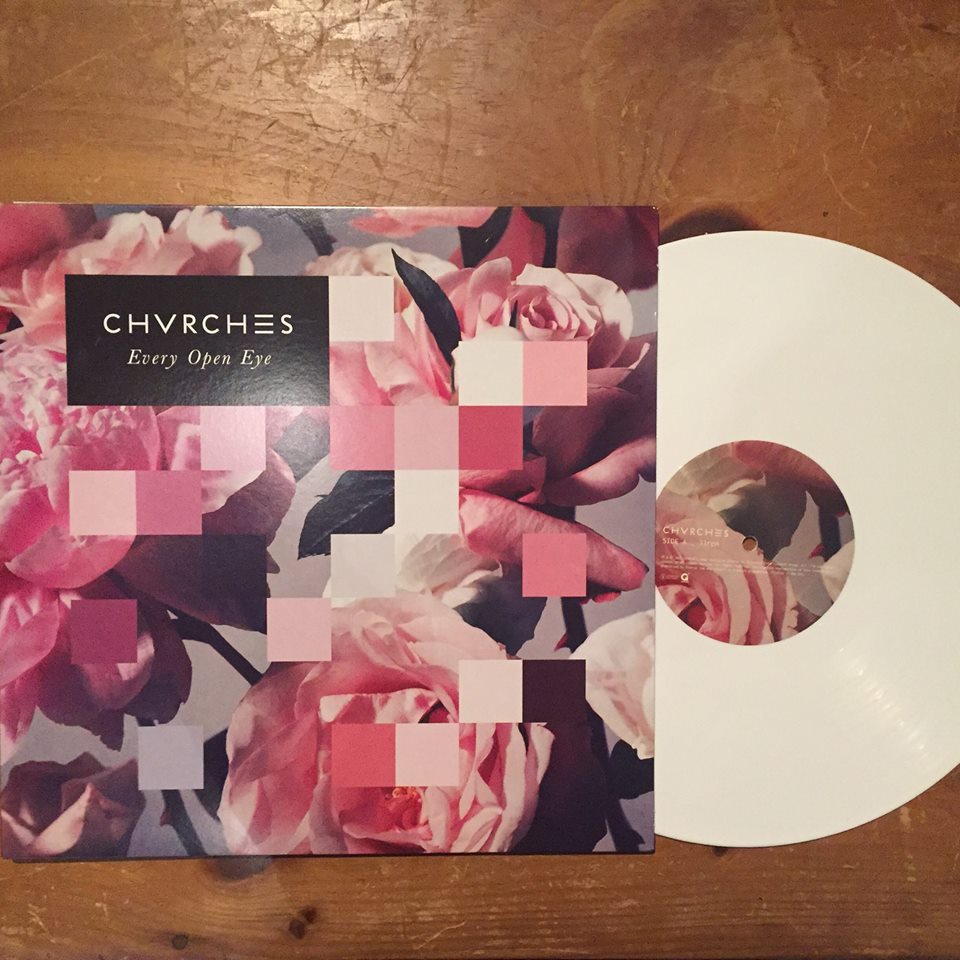
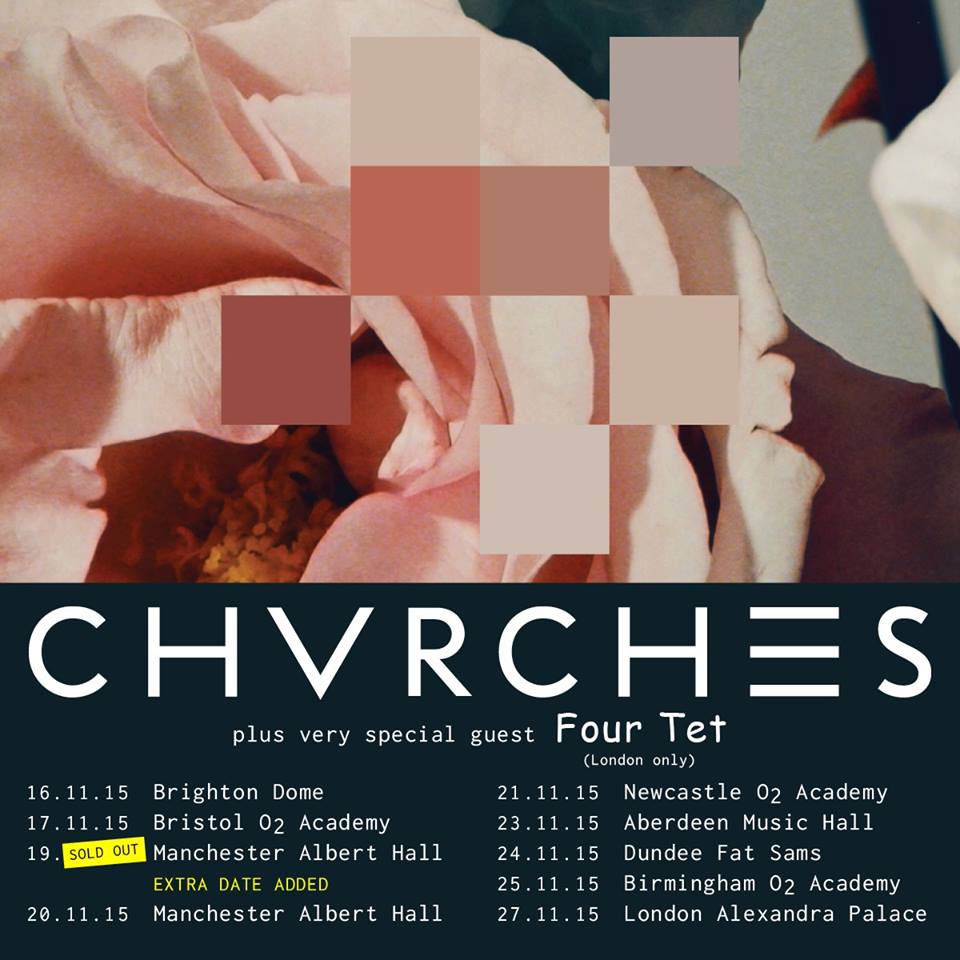

LOVE AND AFFECTION-MORE MOTOWN GIRLS.
LOVE AND AFFECTION-MORE MOTOWN GIRLS.
For a generation, Motown was the label that provided the soundtrack to their youth. They fondly remembers singles by The Temptations, Gladys Knight, Stevie Wonder, Marvin Gaye, Gladys Knight and Diana Ross. These singles bring back memories, of times, places and people. It’s escapism.
Suddenly, they’re transported back in time. Once again, they’re young and have their whole life in front of them. There’s hope, and a sense that anything is possible. Gone is the drudgery and reality of life. Then after three minutes, the spell is broken and reality sets in. However, for three minutes, their life was transformed. All because of music, music that was recorded fifty years ago.
After all, it was 1959 that Motown first opened its doors in Detroit. Little did Berry Gordy realise, that his nascent record company would become one of the biggest soul labels ever, and in the process, transform the lives of a generation. Motown was, for many, their introduction to soul music.
From there, they headed off on a voyage of discovery. Soon, they were discovering the delights of Southern Soul, Deep Soul, Philly Soul and even, Northern Soul. However, for many, their dalliances with Southern Soul and Deep Soul were mere indiscretions. They returned home to Motown, promising never to stray again. For those who have strayed, and those who have stayed true to the Motown sound, then Love and Affection-More Motown Girls will be a must have.
Love and Affection-More Motown Girls was recently released by Kent Soul, an imprint of Ace Records. It’s a twenty-five track compilation, featuring tracks recorded between 1962 and 1969. The majority of these tracks have never been released before. Twenty tracks make their debut on Love and Affection-More Motown Girls. This includes Brenda Holloway, Gladys Knight and The Pips, Barbara Randolph, Martha Reeves and The Vandellas, Debbie Dean, LaBrenda Ben and Barbara McNair. Many artists feature more than once. They return for an encore, picking up where they left off earlier. This includes Brenda Holloway.
She opens Love and Affection-More Motown Girls Reassure Me That You Love Me. It’s never been released before, and features a truly needy vocal. It was recorded in March 2015, not long after the backing track and strings were recorded. However, for whatever reason, Reassure Me That You Love Me was never released, and somewhat belatedly, makes a debut here.
Brenda Holloway’s other contribution Lonely Teardrops, was released in 2014. That was fifty years after Brenda recorded the song in 1964. It had been made famous by Jackie Wilson in 1962. However, Brenda’s delivery is dramatic and impassioned, and a reminder of her ability to make a song come to life.
During her time at Motown, Gladys Knight played second fiddle to Diana Ross. She seemed to get the best songs, and worked with the best songwriters and producers. This must have been frustrating for a truly talented artist. However, occasionally, Gladys Knight and The Pips got the chance to work with some of Motown’s best producers and songwriters.
This included the lauded Holland, Dozier, Holland. They wrote and produced Any Girl In Love (Knows What I’m Going Through). It was recorded in April 1966 and features a vocal full of heartbreak. Despite that, it was left in the Motown vaults. So was Ivy Jo Hunter produced The Things Time Can’t Erase, which was recorded in May 1967. Given its sound, it’s sure to be a favourite among Northern Soul fans.
Martha Reeves and The Vandellas were one of Motown’s most successful ‘girl’ groups. They were regular hit makers and added their vocals to the backing track in January 1969. It became This Is The Love (I’ve Been Waiting For). Motown never released the song. That was also the case with Mother Tell Me What To Do. Penned and produced by Ivy Jo Hunter, it was recorded in August 1966. Since then, it has languished in Motown’s vaults until Keith Hughes and Mick Patrick discovered the tracks when compiling Love and Affection-More Motown Girls.
I Can’t Make It Without You was recorded by Debbie Dean in November and December 1966. The song was written by Debbie Dean and Dennis Lussier, who produced I Can’t Make It Without You. It’s a needy outpouring of emotion, that sounds as if Debbie’s lived the lyrics.
Unlike some compilers, Keith Hughes and Mick Patrick eschew the tired and familiar. Instead, they’ve picked two tracks from LaBrenda Ben. This will be a new name for many people. Her contributions are Just Go On Sleeping and Fugitive. Both tracks were released in 2014, but make a welcome return on Love and Affection-More Motown Girls.
Just Go On Sleeping was recorded in January 1964, and produced by Fay Hale. A month later, in February 1964, LaBrenda Bren was back in the studio with producer George Fowler. He produced this trademark Motown stomper. It has the name Motown written all over it. Later, LaBrenda Bren and George Fowler left Motown. George found religion, and became a minister. LaBrenda Bren became Mrs. LaBrenda Fowler, and only sung gospel music.
Connie Haines will be another new name to many people. She’s not as well known as some of the names who passed through Motown’s doors. She worked with William ‘Smokey’ Robinson. He wrote and produced Mr Pride And Mr Gloom, three minutes of raw emotion from Connie Haines.
Chris Clark is another artist who features twice on Love and Affection-More Motown Girls. Her first contribution is Check Yourself. Unlike most of the tracks on the compilation, the backing track and vocal were recorded in New York in May 1966. Nearly three years later, in January 1969, Chris Clark recorded Forgotten at Golden World Studios, in Detroit. Just like Check Yourself, Forgotten showcases a talented and underrated singer who sadly, didn’t enjoy the success their talent warranted.
Barbara McNair spent around four years at Motown. During that period, she released several singles and an album. At the start of this period, in January 1965, Barbara got the opportunity to work with one of the greatest songwriters of his generation, Jimmy Webb. His career was just beginning, and during 1965, he penned seventeen songs at Motown. This included Come Back Half Way, which he cowrote with Mary Dean. Barbara breathes life and meaning into the lyrics. A month later, in February 1965, Barbara is back in the Motown studios, recording a desiring take on The Good Times Are Gone. Sadly, neither track was released, and has spent the last fifty years languishing in the Motown vaults. Somewhat belatedly, both tracks make their debut on Love and Affection-More Motown Girls.
Yvonne Fair was a member of The Chantels, and then, became a member of James Brown’s touring band. By 1969, she was signed to Motown, and recorded Close My Crying Eyes at Gold World Studio in the September. This Leonard Caston production was an outpouring of emotion and hurt from Yvonne Fair.
Kim Weston’s Lover Man (Oh Where Can You Be) closes Love and Affection-More Motown Girls. It was recorded in February 1964, with producer William Stevenston. For the next fifty years, nobody heard Lover Man (Oh Where Can You Be)? Then in 2014, the song was released for the first time. A year later, this poignant tale of betrayal proves the perfect way to close Love and Affection-More Motown Girls.
Fifty-six years after Motown opened its doors, people still have an insatiable appetite for Motown. That’s why so many Motown compilations are released. Many, however, constantly recycle the same songs. Not Love and Affection-More Motown Girls, which was recently released by Kent Soul, an imprint of Ace Records.
Love and Affection-More Motown Girls features twenty tracks that will be new to everybody. These tracks have never been released before. The other five only made their debut in 2014. So for Motown fans, Love and Affection-More Motown Girls is going to come high on their Christmas wish-list.
No wonder. There’s contributions from Brenda Holloway, Gladys Knight and The Pips, Barbara Randolph, Martha Reeves and The Vandellas, Debbie Dean, LaBrenda Ben and Barbara McNair. The only big name whose missing is La Ross. However, there’s plenty to occupy both newcomers to Motown, and veterans of countless compilations. For both camps, Love and Affection-More Motown Girls features a plethora of long forgotten hidden gems. They somewhat belatedly, make their debut on Love and Affection-More Motown Girls the followup to Finders Keepers- Motown Girls.
LOVE AND AFFECTION-MORE MOTOWN GIRLS.
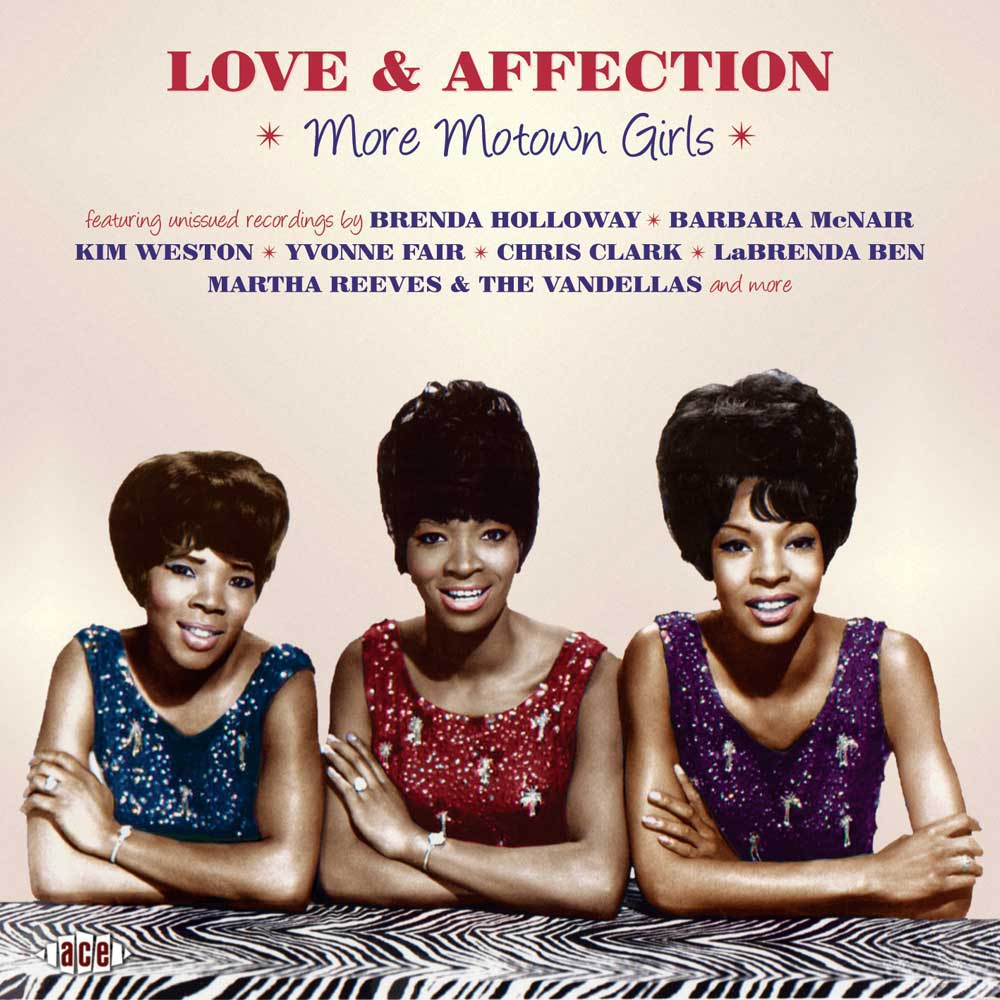

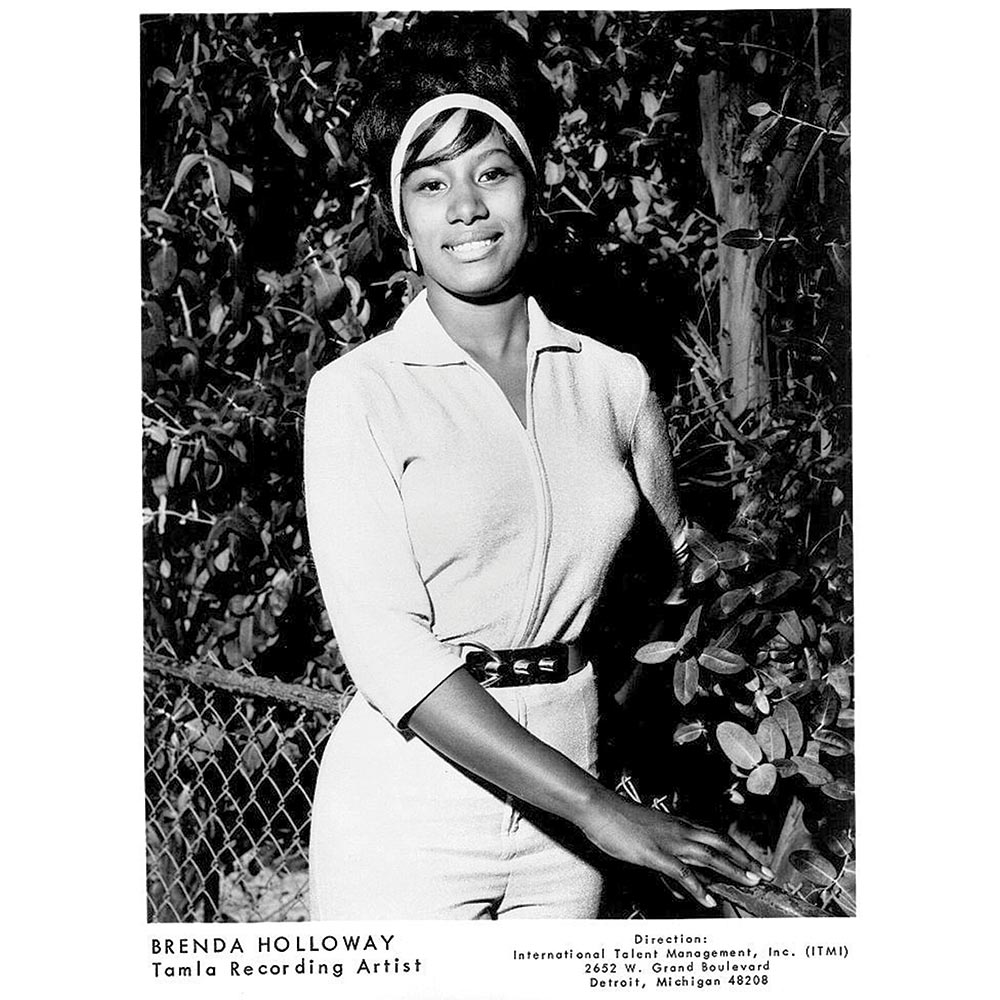


LOST WITHOUT YOU-THE BEST OF KENT BALLADS 2.
LOST WITHOUT YOU-THE BEST OF KENT BALLADS 2.
Just over five years ago, Deep Shadows-The Best Of Kent Ballads was released to critical acclaim by Kent Soul in August 2010. Deep Shadows-The Best Of Kent Ballads featured a truly eclectic selection of ballads. That’s almost an understatement.
When soul fans pressed play on Deep Shadows-The Best Of Kent Ballads they heard everyone from Lolleatta Holloway and Sam Dees, to Phillip Mitchell and Garland Green, through The Charmels, The Ravins and Debbie Taylor. There was everything from heart-wrenching Southern Soul and Deep Soul sides to Northern Soul rarities. Familiar faces rubbed shoulders with B-Sides and hidden gems. Deep Shadows-The Best Of Kent Ballads was a musical voyage of discovery.
The best way to describe Deep Shadows-The Best Of Kent Ballads, was as the musical equivalent of Forest Gump’s box of chocolates. It was a case of: “you never know what you’re gonna get.” For many soul fans, Deep Shadows-The Best Of Kent Ballads was one of their favourite compilations of 2010. Surely it wouldn’t be long before a followup was released by Kent Soul?
A followup was released. However, it’s taken just over five years before Kent Soul, an imprint of Ace Records, released Lost Without You-The Best Of Kent Ballads 2. It finds Mick Patrick and Tony Rounce digging deep into the Kent vaults, and coming up with twenty-four heartbreaking ballads. They became Lost Without You-The Best Of Kent Ballads 2.
Among the names on Lost Without You-The Best Of Kent Ballads, are The Wanderers, Julius Wright, Dori Grayson, Johnny Watson, John Edwards, Alice Clark, Joe Mayfield, Danny White, Lou Johnson and Mary Love. Then there’s ten previously unissued tracks from. This includes contributions from Jerry Washington, Lorraine Chandler, J.J. Jackson and The Jackaels, Julius Wright, The Exotics, Peggy Gaines and The Turquinettes. These tracks were released between the sixties and eighties, and feature on Lost Without You-The Best Of Kent Ballads, which I’ll pick the highlights of.
Opening Lost Without You-The Best Of Kent Ballads is one of the unreleased tracks, The Turn Arounds’ Stay Away. This is one of five tracks the Los Angeles based The Turn Arounds recorded for Fraternity in 1966. None of these tracks has been released..,until now. Stay Away, which was penned by Terry Evens and Jimmy Russell. Full of emotion and heartache, it’s a stonewall hidden gem and whets the listener’s appetite for the rest of Lost Without You-The Best Of Kent Ballads.
Another of the unreleased tracks comes courtesy of Jerry Washington. He was signed to the Nashiville based Excello label in 1974. His career at Excello began with Let Me Love You Right Or Wrong in 1973. Other singles included I Won’t Leave You Hanging and Set Your Soul On Fire. One of Jerry’s recordings that wasn’t released the defiant I Don’t Need Nobody. Looking back, this could’ve been a missed opportunity for Excello and Jerry Washington, who never quite fulfilled his potential.
By 1963, The Wanderers were signed to United Artists. They had started their career at Decca in 1954. Since then, The Wanderers had been signed briefly to Onyx, before finding a home at Club. Then after four years at Club, where The Wanderers enjoyed a trio of minor his, they signed to MGM in 1962. That proved to be short-lived, and in 1963, they signed to United Artists.
That was where they released Run-Run Señorita as a single. On the flip-side was After He Breaks Your Heart. It’s a better song than the single. The vocal is rueful, and there’s a slight gospel sound to the arrangement. It’s augmented by quivering strings, which adds to the heart-wrenching sound.
John Riley and Joe Lindsay formed The Exotics in Orangeburg, South Carolina. They later signed to Excello, where they released just two singles. It was a familiar story. Neither Boogaloo Investigator nor Let Me Be A Part of You were a commercial success. After two flops, it was a case of stick or twist. Excello decided to stick, leaving Nobody But You in the can. That was ironic, as Nobody But You was The Exotics’ finest hour. It’s a needy, hopeful slice of Southern Soul that’s reminiscent of Sam and Dave.
Dori Grayson cut I Can Fix That For You for Murco in 1968. She penned the song with Willie James. Against an understated arrangement, Dori’s vocal becomes a cathartic outpouring of hurt. It’s without doubt, one of the highlights of Lost Without You-The Best Of Kent Ballads.
Back in the seventies, New York Johnny Watson recorded several songs with Phil Medley. He was one of the Brill Building songwriters, who by then, was also a producer. His biggest hit hit was Twist and Shout. Doubtless, he had high hopes for
I Give A Damm when the song was recorded. However, it wasn’t until 1989 that the song was released on the Valise label as part of a collection. Belatedly, this long-forgotten soulful gem could be heard by a wider audience.
Back in 1974, future Detroit Spinner John Edwards was signed the ill-fated Aware label. That had been home to John for the last few years. Everything was going to plan. He had released his eponymous debut album in 1973, and was seen as a rising star of soul music. Now was the time for John Edwards to release his new single.
For his new single, John Edwards chose to cover Clayton Ivey, Frank Johnson and Terry Woodford’s You’re Messing Up A Good Things. For the flip side, he chose Claim Jumping. The two tracks were produced by Floyd Smith, who was married to Loleatta Holloway. Both sides ooze quality. Especially, the needy, heartfelt You’re Messing Up A Good Thing. It’s one of the finest sides John Edwards cut for Aware.
James Taylor’s Don’t Let Me Be Lonely Tonight, is an oft-covered song. He released the original in 1972. Since then, many artists have covered it. This includes Ty Karim in 1973. She covered the song at Ray Charles’ studio, and the single was released by Romark. Although the song was a hit locally, it wasn’t a hit nationwide. However, Ty Karim’s version was one of the most soulful and impassioned.
Alice Clark first experience of music came when she sung in church choirs. That’s apparent on her Heaven’s Will (Must Be Obeyed). It’s the B-Side of her 1968, Warner Bros. single You Hit Me (Right Where It Hurt Me). Although Heaven’s Will (Must Be Obeyed) was penned by Eddie Jones and Arthur Mitchell, there’s a similarly to People Get Ready. This becomes really noticeable in parts of Richard Tee’s arrangement. However, Alice Clark’s soulful, gospel-tinged vocal is unique. It’s a mixture of emotion and sincerity.
The Bart Bacharach and Hal David songwriting team wrote The Last One To Be Loved. It was covered by Lou Johnson in 1964, and became the B-Side Kentucky Bluebird (Send A Message To Martha). This was another Bart Bacharach and Hal David composition. That was the end of their part in the song. Bart Bacharach arranged, conducted and produced both songs.
Then Kentucky Bluebird (Send A Message To Martha) was released as a single on Big Hill Records. However, of the two sides, The Last One To Be Loved is the best of the two. It’s the perfect vehicle for Lou Johnson’s vocal. Combined with Bart Bacharach trademark production it was a potent partnership. It might well have fared better than Kentucky Bluebird (Send A Message To Martha), which failed to chart in America, and reached a lowly thirty-six in Britain.
The Soul Brothers recording career was short-lived. They released just two singles for the New Orleans’ based Sho Biz label. Their second and final single was Later For You, which was released in April 1966. On the flip side was Lonely Man, a devious slice of needy, blue-eyed soul produced by Walter Quezergue.
My final choice from Lost Without You-The Best Of Kent Ballads 2 is The Price from Mary Love-Comer. The former Mary Love had found God and married Brad Comer. With a new faith and new name, came a new sound.
This was showcased on The Price, which was released in 1987, the same year Mary released her Sin No More album. It’s described as soul with a Christian message. Her new sound was very different to Mary Love’s sixties sound. Especially, the synthetic eighties drums. However, one thing hadn’t changed, Mary’s voice. It had matured with age, as The Price proves. This hidden gem closes Lost Without You-The Best Of Kent Ballads 2, the eagerly awaited followup to Deep Shadows-The Best Of Kent Ballads.
Just over five years after the release of Deep Shadows-The Best Of Kent Ballads, Kent Soul, an imprint of Ace Records, return with Lost Without You-The Best Of Kent Ballads 2. It’s twenty-four songs where hope, hurt and heartbreak are omnipresent. Other times, the vocals are heartfelt, needy and impassioned. That’s the case on each of the heart-wrenching ballads on Lost Without You-The Best Of Kent Ballads 2.
It’s a truly eclectic selection of all things soulful. Whether blue-eyed soul, Deep Soul or Southern Soul is your bag, there’s all this and more. Familiar faces rubbed shoulders with rarities, B-Sides and hidden gems. Then there’s ten unreleased tracks.
This includes contributions from Jerry Washington, Lorraine Chandler, J.J. Jackson and The Jackaels, Julius Wright, The Exotics, Peggy Gaines and The Turquinettes. They’re just some of the tracks that make a belated debut on Lost Without You-The Best Of Kent Ballads 2. Some of these tracks are good enough to have been released as a single. For whatever reason, that never happened. Now somewhat belatedly, a plethora of hidden gems prove a welcome addition to Lost Without You-The Best Of Kent Ballads 2, the latest addition to Kent Soul’s burgeoning discography.
Kent Soul is the gift that keeps on giving. For more years than I care to remember, Kent Soul has been one of the finest purveyors of soul compilation. The Kent Soul logo means quality is assured. That’s been the case for four decades. Still, it’s compilers dig deep, for new compilations. This includes Mick Patrick and Tony Rounce, whose latest compilation Lost Without You-The Best Of Kent Ballads 2, will ensure that Kent Soul the premier soul reissue label.
LOST WITHOUT YOU-THE BEST OF KENT BALLADS 2.
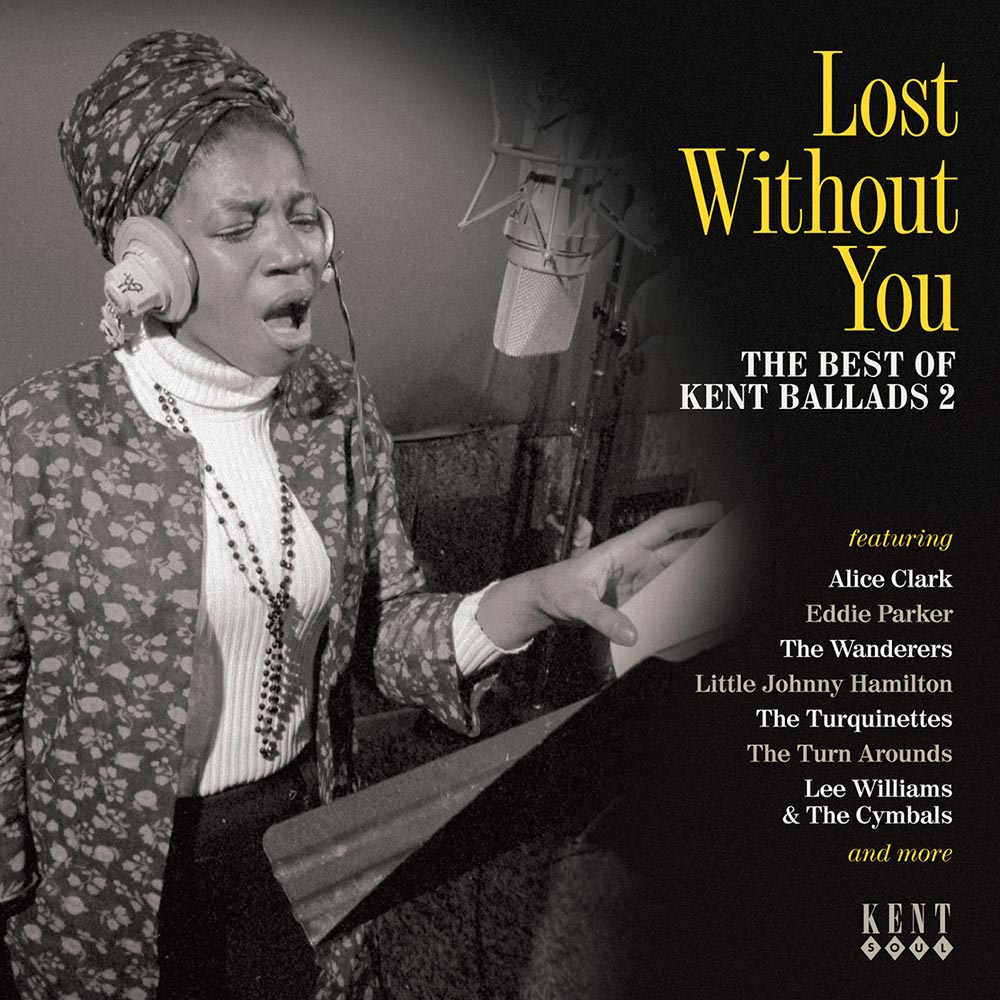

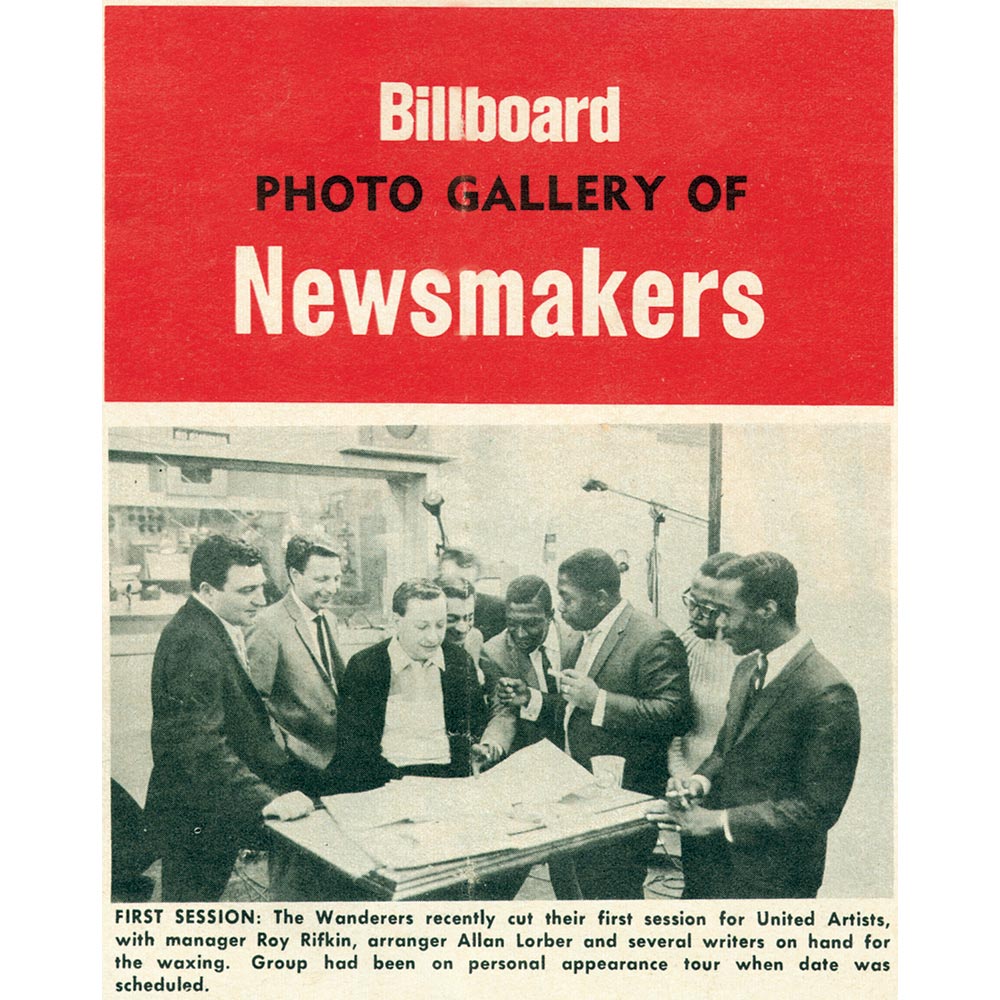
GEORGIE FAME HEARD THEM HERE FIRST.
GEORGIE FAME HEARD THEM HERE FIRST.
Not many compilation series has enjoyed the longevity and success of Ace Records’ Heard Them Here First series. There’s a reason for this. The series allows music lovers to hear the music that influenced some of the biggest names in music. This has previously included The New York Dolls, The Ramones, David Bowie, Nick Cave, Elvis Presley and even Dusty Springfield. To celebrate the tenth instalment in the series, Ace Records have chosen Georgie Fame, Britain’s “original mod hero.”
This was back in the early sixties, when Georgie Fame’s was enjoying the most successful period of his career. He enjoyed a string of hit singles, and enjoyed three number singles. The first of these was Yeh Yeh in 1964. Get Away followed in 1966, with 1967s The Ballad Of Bonnie and Clyde being Georgie Fame’s final number one single. However, by then, Georgie Fame was a popular live act.
That had been the case, ever since Georgie Fame and The Blue Flames were playing four or five sets a night at London’s Flamingo and Roaring 20s. Soon, Georgie Fame and The Blue Flames were one of the most popular British R&B bands. They toured the country. Often, Georgie Fame and The Blue Flames’ sets included singles Georgie had had heard in clubs or bought as imports.
Georgie Fame was, a keen record collector. In his free time, he searched London’s specialist record shops, looking for blues, jazz, R&B and soul singles. Other times, sound system operator Count Suckle would give Georgie Fame records to add to his burgeoning collection. Soon, Georgie Fame had an enviable collection. Since then, Georgie Fame’s love of music has never diminished. He’s still got an insatiable appetite for music, so when Ace Records asked him to pick twenty-five tracks for Georgie Fame Heard Them Here First, he was spoiled for choice. He could easily have chosen enough material for a box set. However, after much ruminating and reflecting, George Fame came up with the track list for Georgie Fame Heard Them Here First.
On Georgie Fame Heard Them Here First, there’s tracks from The Spinners, Major Lance, Rufus Thomas, Mose Allison Trio, Paul Anka, Fats Domino, William Bell, Lee Dorsey, The Miracles and Jimmy McGriff. It’s an eclectic selection of music, with everything from jazz, pop, R&B, reggae, soul and Southern Soul on Georgie Fame Heard Them Here First. It’s not going to be easy choosing the highlights of Georgie Fame Heard Them Here First.
A good enough place to start is with The Spinners’ Sweet Thing, which opens Georgie Fame Heard Them Here First. This was before commercial success came The Spinners way. They started their career at Harvey Fuqua’s Tri-Phi Records. It was bought out by Motown, and between between 1964 and 1968, that was home to The Spinners.
Their Motown debut was Sweet Thing, which was written and produced by William Stevenson. Three years later, in 1967, Sweet Thing featured on The Spinners’ only Motown album, The Original Spinners. Sadly, success passed The Spinners by at Motown. While Sweet Thing was a taste of what they were capable of, it wasn’t until The Spinners met producer Thom Bell, that they fulfilled their potential.
Major Lance’s recording career began at Mercury in 1959, when he released I’ve Got A Girl. By 1962, he had signed to Okeh. His Okeh debut Delilah failed commerically. However, when Major Lance released a cover of Curtis Mayfield’s Monkey Time in 1963, it was a case of third time lucky. Monkey Time reached number eight in the US Billboard 100 and number two in the US R&B charts. Despite its success in America, Monkey Time failed to chart in Britain. This soulful dancer became a favourite of discerning DJs, and Georgie Fame, who covered it on his 1964 album Fame At Last.
A year after Titus Turner released the original version of Get On The Right Track Baby, Ray Charles covered the song in 1957. It was released on Atlantic, which had been home to Ray Charles throughout his career. However, Get On The Right Track wasn’t a commercial success. By the sixties, Get On The Right Track was a favourite in many clubs. That would be the case right through to the early seventies. Partly, that’s down to a vocal masterclass from Ray Charles. His delivery and phrasing are almost flawless.
By 1965, Joe Tex was signed to the Dial label. He had already enjoyed two number one singles in the US R&B charts. This would soon become three, when Joe Tex released A Sweet Woman Like You. It was another of Joe Tex’s compositions. When it entered the charts, it reached just twenty-nine in the US Billboard 100. However, it kept climbing the US R&B charts, right to the top stop. Two years later, in 1966, A Sweet Woman Like You was released as a single in the UK. On the B-Side was Close The Door. While A Sweet Woman Like You was a favourite of many DJs, some flipped over to the B-Side and discovered the stomping Close The Door. Quickly, this stomper became a favourite of DJs and Joe Tex’s fans.
In 1960, The Mose Allison Trio released their debut album on Columbia, I Love The Life I Live album on Columbia. Mose Alison was already an experienced musician. He had been signed to Prestige since he released Back Country Suite in 1957. By 1959, Mose Allison had released six albums. His seventh album, and Columbia debut was released in 1959.
This was the Transfiguration of Hiram Brown. A year later, in 1960, came The Mose Allison Trio’s debut I Love The Life I Live. The title-track was a cover of a song penned by Willie Dixon. However, when Muddy Waters covered the song for Chess Records, it was as I Live The Life I Live. The Mose Allison Trio’s version is very different. This a slinky slice of blues-tinged, jazz struck a nerve with Georgie Fame. Four years later, he covered I Live The Life I Live on his 1964 album Fame At Last.
Billy Stewart started life with The Rainbows, a vocal group. That was his introduction to secular music. It was also where Billy Stewart met Don Covay. The two men would forge careers as soul singers in the sixties. By 1965, Billy Stewart was signed to Chicago’s Chess Records. He had spent most of his career at Chess Records, and repaid them with a string of hits. This included Sitting In The Park, which reached number twenty-four in the US Billboard 100 and four in the US R&B charts. Sitting In The Park was one of the biggest hits of Billy Stewart’s career. Sadly, five years later, Billy Stewart was dead, aged just thirty-three. A reminder of his talent is Sitting In The Park, a truly beautiful ballad that’s the best track on Georgie Fame Heard The Here First.
Fats Domino influenced many British artists. This included everyone from The Beatles and Rolling Stones to Van Morrison and Georgie Fame. For this generation, they had never experienced anything like Fats Domino. He was seen as a breath of fresh in air to these aspiring musicians. In April 1958, Fats Domino released Sick and Tired on Imperial. It reached number twenty-two in the US Billboard 100 and fourteen in the US R&B charts, and featured on The Fabulous Mr. D album. A few years later, these artists were rubbing shoulders with Fats Domino. This included Georgie Fame, who covered Sick and Tired in 1964.
Most people asked to name their favourite Lee Dorsey song, would choose Working In The Coal Mine. Not Georgie Fame. He throws a curveball, choosing Do-Re-Mi. This was Earl King composition became Lee Dorsey’s sophomore single. It was the followup to Ya Ya, which had given Lee Dorsey a number one single in the US R&B charts. Lightning didn’t strike twice, and Do-Re-Mi reached just number twenty-seven in the US Billboard 100 and twenty-two in the US R&B charts. It’s an often overlooked track, that’s a welcome addition to Georgie Fame Heard The Here First.
Berry Gordy and William Robinson penned The Miracles’ 1960 single Shop Around. It gave The Miracles the biggest single of their nascent career, when it reached number two in the US Billboard 100 and one in the US R&B charts. Shop Around transformed The Miracles’ career, and after that, they were on the road to becoming one of the Motown’s biggest success stories.
In 1964, Joe Hinton covered a Willie Nelson song, Funny. It had originally been recorded by country singer Billy Walker in 1961. Three years later, in 1964, Joe Hinton released Funny as a single on Back Beat. By the time Joe Hinton released his debut album in 1965, the song had been rechristened Funny How Time Slips Away. was released on Back Beat in America, the song was entitled Funny. It wasn’t until Joe Hinton released his debut album that the song had been rechristened. His reading of this wistful R&B ballad is one of the album’s highlights, and one of the highlights of Georgie Fame Heard The Here First.
Closing Georgie Fame Heard The Here First, is Jimmy McGriff’s All About My Girl. It was released on the Sue label in 1963, and showcases one of the finest Hammond organ players of his generation. Jimmy McGriff showcases his considerable skills on the ‘big burner’ and makes All About My Girl swing. In doing so, he leaves the listener wanting more. That’s how every compilation should finish.
Georgie Fame Heard The Here First is the tenth instalment in Ace Records’ Heard It Here First series. It’s certainly one of the most eclectic in the Heard Them Here series. There’s everything from blues, jazz, pop, R&B, reggae, soul, soul jazz and Southern Soul. Everyone from The Spinners and Major Lance, through Rufus Thomas and Mose Allison Trio to Paul Anka, Fats Domino, William Bell, Lee Dorsey, The Miracles and Jimmy McGriff make an appearance on Georgie Fame Heard The Here First. That’s not all.
Billy Stewart makes a very welcome appearance with Sitting In The Park. He’s an artist. So do Joe Tex, Marvin Gaye, William Bell and Earl Van Dyke. Never, does your hand stray towards the remote control. Instead, you’re captivated, as Georgie Fame takes you on a guided tour through the music that influenced and shaped him musically. His taste is not just eclectic, but impeccable. Georgie Fame digs out singles, hidden gems, B-Sides, instrumentals and album tracks for Georgie Fame Heard The Here First, which is a fitting way for Ace Records to celebrate the tenth anniversary of the Heard It Hear series.
GEORGIE FAME HEARD THEM HERE FIRST.
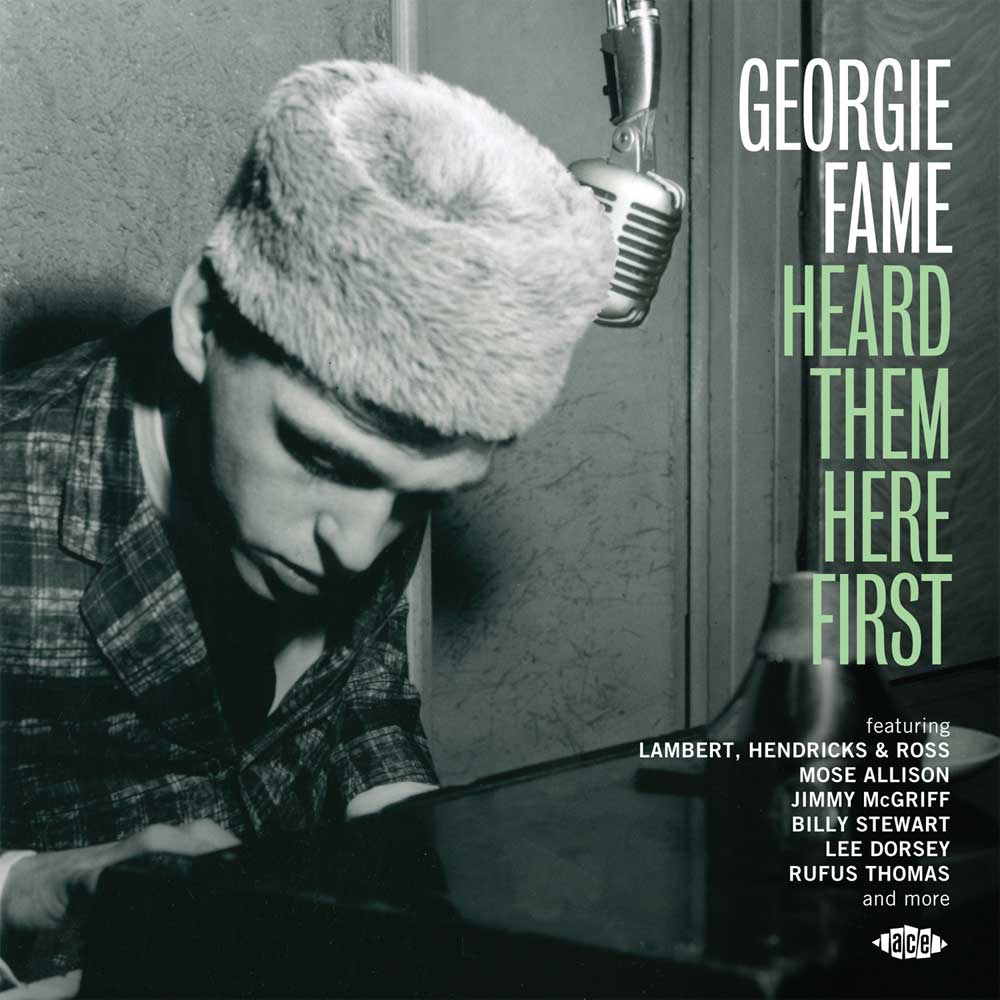
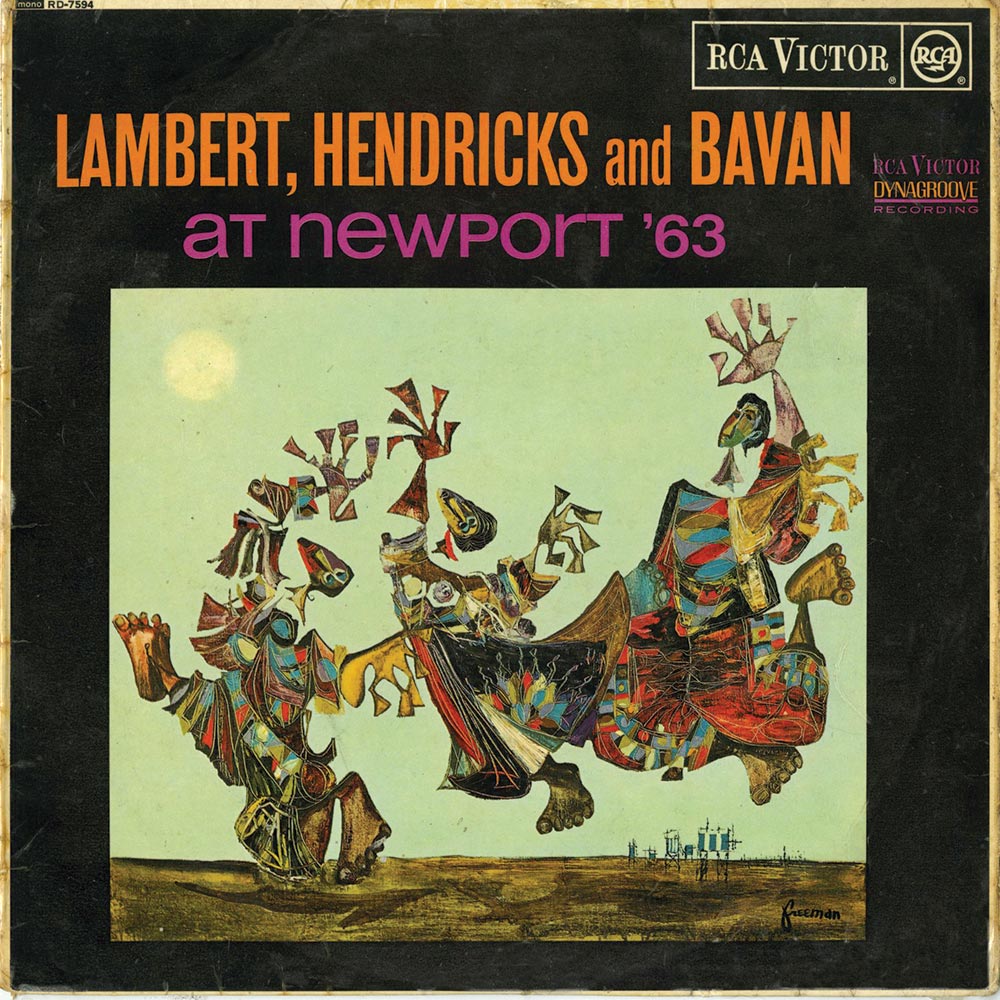
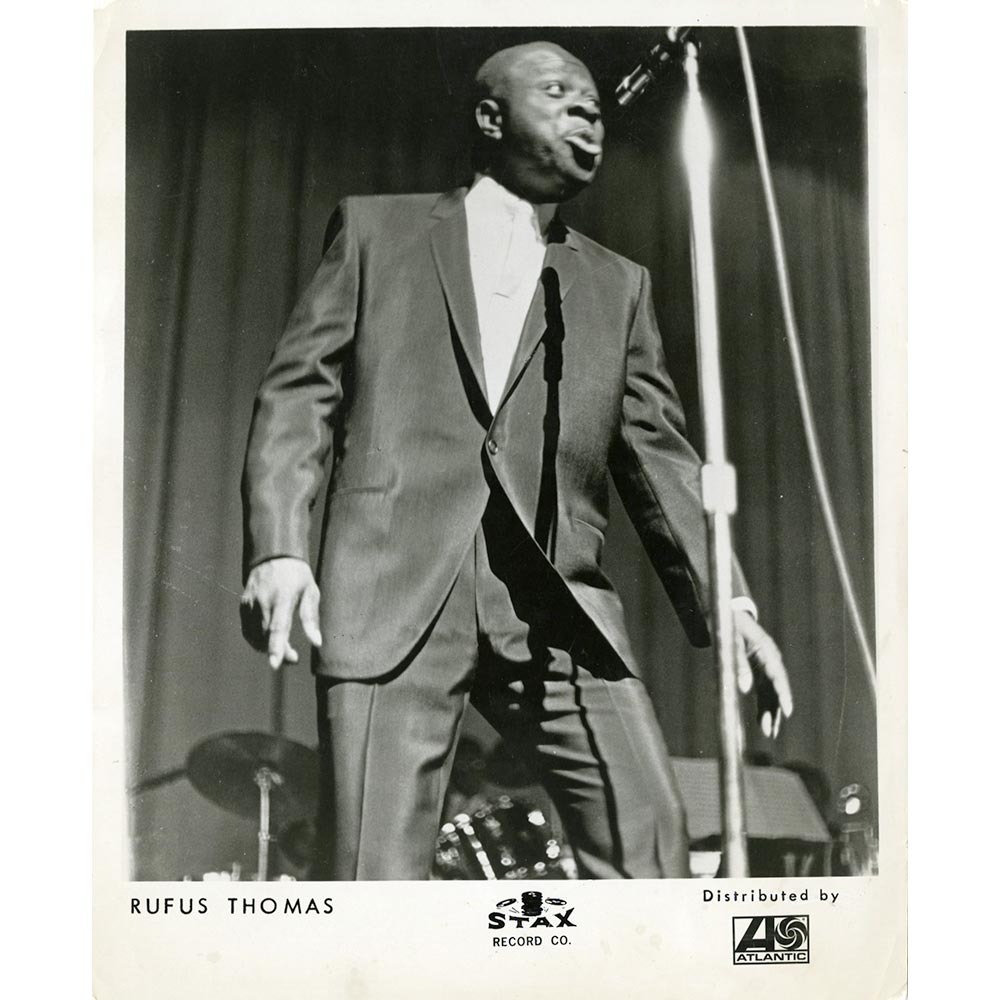
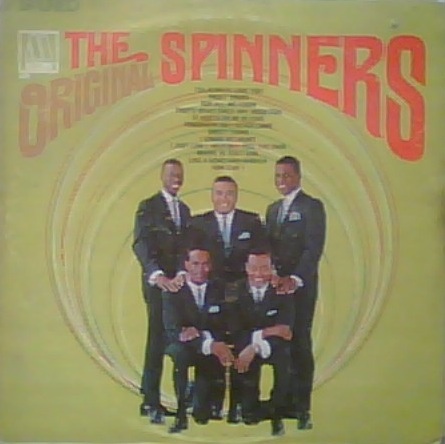
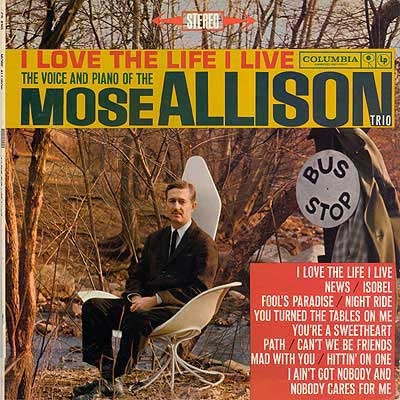
SPOOKY TOOTH-THE ISLAND YEARS.
SPOOKY TOOTH-THE ISLAND YEARS.
All too often, some bands don’t get the credit they deserve. That was the case with Spooky Tooth, who for a time, pioneered the use of twin keyboards. They lead the way. Soon, other bands were following in their wake. By then, the Spooky Tooth story was over.
Spooky Tooth were only together seven years between 1967 and 1974, but managed to release eight seven albums. They could’ve become one of the biggest British bands of the late-sixties, early-seventies. However, Spooky Tooth wandered down a rocky road. That was the case since for a lot longer.
The Spooky Tooth story started in 1963, when The V.I.P.s were founded in Carlisle, Cumbria by lead vocalist Mike Harrison and bassist Greg Ridley. Over the next four years, The V.I.P.s lineup evolved. Rhythm guitarist Frank Kenyon and lead guitarist Jimmy Henshaw were members between 1963 and 1967. Other musicians played a walk-on roll on The V.I.P.s’ story. This included Keith Emerson whose keyboards would play a starring role in The Nice and Emerson, Lake and Palmer. However, by the time The V.I.P.s decided to change direction musically, Keith Emerson had left the band.
For the four years they were together, The V.I.P.s played blues and R&B. By 1967, they decided that to change direction musically. So The V.I.P.s changed their name to Art. Then in October 1967, Gary Wright joined Art. He played on Art’s one and only album Supernatural Fairy Tales, and played an important part in The Spooky Tooth story.
It’s documented on the nine disc Spooky Tooth box set, The Island Years which was recently released by Universal Music Group. The Island Years features Art’s album Supernatural Fairy Tales and Spooky Tooth’s seven studio albums. Then on the ninth and final disc, there’s a live recording, Live In Oldenburg 1973. This recording has never been released before, and makes its debut on The Island Years, which documents the seven year career of Spooky Tooth. However, there would be no Spooky Tooth without Art, the group that gave birth to Spooky Tooth.
Supernatural Fairy Tales.
In 1967, the newly named Art found themselves signed to Chris Blackwell’s Island Records. Art were about to go into the studio with producer Guy Stevens, so began work on their debut album.
By then, Art still a quartet. However, only two original members of The V.I.P.s remained. Ironically, they were the founding members, vocalist and keyboardist Mike Harrison and bassist Greg Ridley. They were joined by drummer Mike Kellie and guitarist Luther Grosvenor. The four members of Art got to work on what became Supernatural Fairy Tales.
For their debut album Supernatural Fairy Tales, the four members of Art wrote ten tracks. They would be augmented by covers of The Young Rascals’ Come on Up and Buffalo Springfield’s For What It’s Worth. Recording took place at two studios.
Pye Studios was where the majority of Supernatural Fairy Tales was recorded. Some recording took place at Olympic Studios. At the two studios, producer Guy Stevens, whose career was in the ascendancy, took charge of production. He guided Art through the maze that’s recording a debut album. The result was Supernatural Fairy Tales, which became a cult classic.
When critics heard Supernatural Fairy Tales, the reviews of Art’s debut album were mostly positive. Its progressive, psychedelic rock sound was decidedly on trend. It tapped into a sound that was commercial. Surely, Supernatural Fairy Tales would prove a commercial success?
That proved not to be the case. When Supernatural Fairy Tales was released in the Autumn of 1967, the album wasn’t a commercial success. This was disappointing for Art and Island Records. Chris Blackwell wasn’t giving up on Art. Instead, he introduced them to Gary Wright, an American vocalist and organist.
Gary Wright was also a psychology student, who had travelled to Berlin to finish his studies. That was where Gary Wright formed the band The New York Times with some American expats and a German bassist. They had opened for Traffic, and were thinking about recording an album. So Gary Wright contacted his old friend Jimmy Miller. The producer was working for Island Records, and suggested that The New York Times hotfoot it to London.
When The New York Times arrived in London, the recording sessions didn’t go to plan. The rest of the band split, leaving Gary Wright. It was then, in October 1967, that Gary Wright was introduced to Art. Ironically, Art were just about history. However, a new band were about to be born, Spooky Tooth.

It’s All About.
Straight away, work began on Spooky Tooth’s debut album. The new recruit quickly made his presence felt. Whereas the four members of Art cowrote most of their debut album Supernatural Fairy Tales, that wasn’t the case with Spooky Tooth.
Gary Wright penned Sunshine Help Me and cowrote another six tracks. This included It Hurts You So and Forget It, I Got It with his ole buddy Jimmy Miller. The Wright and Miller partnership weren’t finished. They cowrote Love Really Changed Me with Luther Grosvenor. That trio joined Mike Harrison in penning Here I Lived So We. Luther Grosvenor and Chris Wight also cowrote Bubbles. Spooky Tooth was quickly becoming the Gary Wright show.
If the other members felt uncomfortable that Chris Wight was playing a leading role in Spooky Tooth. He was friends with Jimmy Miller, who was chosen to produce It’s All About. He just happened to be friends with Island Records’ owner Chris Blackwell. To onlookers, these relationships looked too cosy. After all, it was Chris Blackwell who introduced Gary Wright. He would join the rest of Spooky Tooth at Olympic Studios.
Island Records’ recording sessions were notorious for only allotting a specific amount of time to record an album. Woe betide the band and producer who went over budget. Spooky Tooth had twelve songs to record when they entered the studio in November 1967. This included covers of Janis Ian’s Society’s Child, Bob Dylan’s Too Much Of Nothing and John D. Loudermilk’s Tobacco Road. Along with the songs penned by members of Spooky Tooth, the twelve songs became It’s All About.
Before the release of It’s All About in June 1968, critics had their say on Spooky Tooth’s debut album. They were won over by It’s All About. Many critics gave the albums rave reviews. Some critics liked that Spooky Tooth had two different vocalists. This was uncommon. However, with Mike Harrison and Gary Wright sharing the lead vocals, this allowed the band to take their music in a variety of directions. On It’s All About, this included blues, rock and psychedelia. Despite winning over critics, record buyers weren’t convinced.
When It’s All About was released in June 1968, the album wasn’t the success many had forecast. This would soon change.
Spooky Tooth were about to become one of Europe’s most popular live bands. Then in August 1968, Spooky Tooth were invited to tour America. This was a game-changer. Especially when Spooky Tooth were invited to play at one of the most prestigious venues in America, the Fillmore West in San Francisco.
Promoter Bill Graham invited Spooky Tooth to play the Fillmore West. This was a rite of passage for bands touring America. It was a signal they had arrived. Spooky Tooth were going up in the world, so Island Records’ thoughts turned to their sophomore album, Spooky Two.

Spooky Two.
Unlike their debut album, Spooky Two only featured eight songs. Partly, this was why Spooky Too was a leaner, more focused album. Again, Gary Wright who had assumed the role of Spooky Tooth’s songwriter-in-chief.
Gary Wright penned four tracks and cowrote three others. This included Feelin’ Bad and I’ve Got Enough Heartaches with drummer Mike Kellie. Mike Harrison and Luther Grosvenor cowrote Waitin’ for the Wind with Gary Wright. Spooky Two’s other track, was a cover of Larry Weiss’ Evil Woman. These songs were recorded at Morgan Studios, London.
Just like It’s About You, Spooky Two was produced by Jimmy Miller. Recording began in November 1968, and Spooky Tooth began recording what’s now considered their greatest album, Spooky Two.
Once Spooky Two was complete, the release was scheduled for March 1969. This didn’t leave much time to promote the album. However, the reviews did a good job of this. Spooky Two was hailed a masterpiece of blues, hard rock, psychedelia and classic rock. Luther Grosvenor’s guitar playing was at the heart of the album’s success. It was loose, but fluid. Spooky Tooth’s played hard, raw and rock on Spooky Too. Critics forecast that Spooky Too was going to be Spooky Tooth’s breakthrough album.
That proved to be the case. On its release in March 1969, Spooky Too reached number forty-four in the US Billboard 200. This resulted in Spooky Tooth’s profile rising.
Suddenly, they were playing in front of bigger audiences on nearly every continent. Other musicians wanted to work with Spooky Tooth. This included French electronic musician, Pierre Henry.
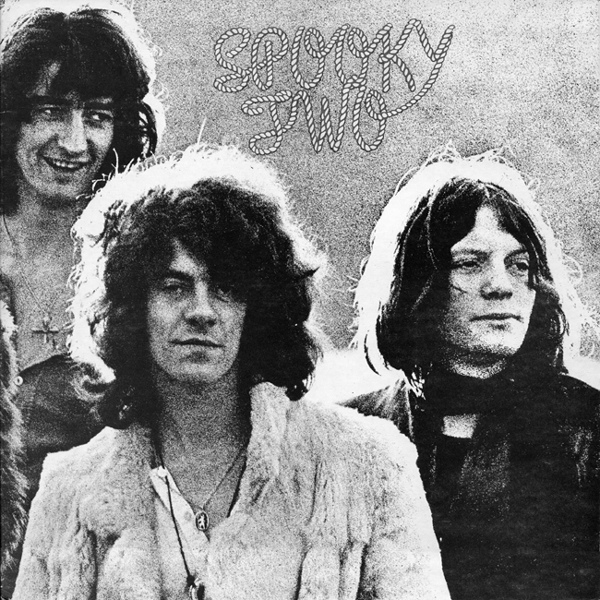
Ceremony.
After the release of Spooky Too, there was a change to Spooky Tooth’s lineup. In 1970, bassist Greg Ridley was asked to join Humble Pie. He agreed, and Andy Leigh was drafted in as his replacement. This was the first, but not the last change in Spooky Tooth’s lineup.
After the commercial success and critical acclaim of Spooky Too, Spooky Tooth’s star was in the ascendancy. Suddenly, people wanted to work with Spooky Tooth. This included French electronic musician, Pierre Henry.
He described himself as a found-object” composer. Pierre Henry took everyday objects and transformed them into an instrument. This wasn’t a new concept.
Pablo Picasso had pioneered the idea in 1912, when he pasted aprinted image of chair caning onto his painting Still Life with Chair Caning. Turning everyday objects into musical instruments took the idea further. That’s what Pierre Henry, and many other moderne musicians did.
Originally, Spooky Tooth were collaborating with Pierre Henry. It was his album. The new lineup of Spooky Tooth were essentially his backing band, on Ceremony.
For Ceremony, Pierre Henry and Gary Wright wrote six tracks. He and the rest of the new lineup of Spooky Tooth made their way to France. It was agreed that Pierre Henry and Spooky Tooth would co-produce Ceremony, due to the fact the album takes the form of a church service.
Quickly, Spooky Tooth recorded their parts. This left Pierre Henry to play synths and take charge of electronics on five tracks. On Hosanna, which closed Ceremony, Spooky Tooth took centre-stage. It was Ceremony’s Magnus Opus. Once the recording was complete, Spooky Tooth headed home.
Having returned home, Spooky Tooth were sent a copy of Ceremony. Gary Wright didn’t like what he heard. He was straight on the phone to Chris Blackwell, urging him not to release Ceremony. This didn’t work.
Chris Blackwell disagreed, telling Gary Wright: “people will love this album. We have to put this out.” According to Gary Wright, the rest of Spooky Tooth didn’t want Ceremony released. He went as far as to say: “it was against our wishes.” He thinks that the “release of the album lead to the initial breakup of the band.”
With Island Records determined to release Ceremony, December 1969 was scheduled as the release date. Before that, critics had their say on Ceremony. This fusion of rock and avant-garde was billed as an album from Spooky Tooth and Pierre Henry. Reviews were mixed. It wasn’t what most critics had expected from Spooky Tooth. The problem Mike Harrison says was;”people thought it was Spooky Tooth’s third album.”
When Ceremony was released in December 1969, it reached just ninety-two in the US Billboard 200. Spooky Tooth were going backwards. That was only part of the story.
All wasn’t well within Spooky Tooth. There was disharmony within the ranks. Mike Kellie believes things would’ve been different if Spooky Tooth: “had independent management.” They could’ve been an arbiter in the conflicts. Without that, Spooky Tooth split-up.

The Last Puff.
That wasn’t the end of the Spooky Tooth story. Instead, it was just the end of a chapter. Mike Harrison, Mike Kellie and Luther Grosvenor remained. Gary Wright exited stage left. So did bassist Andy Leigh. In their place, came some new faces.
Among them, were guitarist Henry McCullough, bassist Alan Spenner and Chris Stainton. He played bass, piano and organ. His versatility would be put to good use on The Last Puff, which was billed as an album from Spooky Tooth Featuring Mike Harrison.
For The Last Puff, seven cover versions were chosen. Among them were Lennon and McCartney’s I Am The Walrus; Joe Cocker and Peter Nichols’ Something to Say; David Ackles’ Down River and Elton John and Bernie Taupin’s Son of Your Father. New recruit Chris Stainton contributed The Last Puff. Ironically, The Wrong Time a song penned by Gary Wright and Hugh McCracken. Given Gary Wright had just left Spooky Tooth this seemed a strange decision.
Recording of The Last Puff took place at Island Studios, London. Producing the album was Island Records’ owner Gary Blackwell and Chris Stainton. Once the new lineup of Spooky Tooth finished recording The Last Puff, it was released in July 1970.
Critics however, received advance copies of Spooky Tooth Featuring Mike Harrison’s album The Last Puff. Critical acclaim accompanied this album of art rock, blues rock, psychedelia and rock. It seemed the loss of two members hadn’t derailed Spooky Tooth.
That seemed to be the case. The Last Puff proved more successful than Ceremony, reaching number eighty-four in the US Billboard 200. However, not long after the release of The Last Puff, Spooky Tooth split-up.
That looked like the end of the line for Spooky Tooth. Island Records were dismayed. They had just lost one of their most popular groups.
So a year later, in 1971, Island Records repackaged and rereleased It’s All About as Tobacco Road. When the album was released, it reached number 152 in the US Billboard 200. That many people thought, was Spooky Tooth’s swan-song. It wasn’t.

You Broke My Heart So I Busted Your Jaw.
In 1972, Spooky Tooth reformed, with a new lineup. The only musician who had played on The Last Puff was Mike Harrison.
Luther Grosvenor had joined Mott The Hoople, where he dawned the alias Ariel Bender. His replacement in Spooky Tooth, was future Foreigner guitarist Mick Jones. Mike Kellie was replaced by drummer and percussionist Bryson Graham. Chris Stewart became Spooky Tooth’s fourth bassist. However, the biggest surprise, was the return of Gary Wright.
Quickly, Gary Wright resumed the role of Spooky Tooth’s songwriter-in-chief. He wrote six of the eight songs, and cowrote Times Have Changed with Mick Jones. The other song on You Broke My Heart So I Busted Your Jaw was the Bryson Graham composition This Time Around. These eight songs were recorded at three London studios.
Recording of You Broke My Heart So I Busted Your Jaw. Olympic Studios, Island Studios and Apple Studios. It seemed no expense was being spared for Spooky Tooth’s comeback album. These were some of London’s top studios. One expense that was saved was a producer. Spooky Tooth produced You Broke My Heart So I Busted Your Jaw. It was scheduled for release in ay 1973.
Many of Spooky Tooth’s fans eagerly awaited their comeback album. However, when reviews were published, they were mixed. Some critics felt that You Broke My Heart So I Busted Your Jaw wasn’t Spooky Tooth’s finest hour. That’s despite Spooky Tooth combining progressive rock, hard rock and blues rock. While hard rock was still popular, progressive rock dominated the charts. However, other critics were won over by Spooky Tooth’s comeback album.
Other critics liked the dual keyboard sound on You Broke My Heart So I Busted Your Jaw. This brought a new dimension to Spooky Tooth’s sound. There was no consensus. For once, a Spooky Tooth album had divided the critics’ opinion. However, record buyers were of one mind.
On the release of You Broke My Heart So I Busted Your Jaw, in November 1973, the album reached number eighty-four in the US Billboard 200. This matched the popularity of The Last Puff. Spooky Tooth were back to where they were before Ceremony. What could go wrong?
Witness.
After making their comeback with You Broke My Heart So I Busted Your Jaw, Spooky Tooth looked as if their career was back on track. Then there was a change in Spooky Tooth’s lineup.
This time, Spooky Tooth’s original drummer Mike Kellie made a comeback, and replaced recent recruit Bryson Graham. However, that wasn’t the end of Bryson Graham. He played on some of the tracks on Witness. It was a tale of two drummers.
One thing didn’t change, Gary Wright wrote most of Witness. He penned six of the nine tracks, and cowrote the other three tracks with members of Spooky Tooth. Considering the other members weren’t regarded as songwriters, they were proving a reliable source of songs. Gary Wright and Chris Stewart penned Don’t Ever Stray Away. Mick Jones collaborated with Gary Wright on All Sewn Up. Drummer Mike Kellie celebrated his return by cowriting Pyramids with Chris Stewart. It seemed the other members of Spooky Tooth had hidden talents.
They also produced Witness, which was recorded at Olympic Studios and Island Studios, in London. At two of London’s premier studios, Spooky Tooth recorded their sixth studio album. Little did anyone realise, but this would be the last time one of the band set foot in a recording studio with Spooky Tooth. It was the end of an era.
Sadly, with one of the band about to call time on their career with Spooky Tooth, the reviews of Witness were mixed. Not for the first time, a Spooky Tooth album divided opinion. Some critics enjoyed Witness mixture of hard rock, blues rock, progressive rock and psychedelia. Others felt the sound was dated. Record buyers had the deciding vote.
They too were undecided. When Witness was released in November 1973, it stalled at ninety-nine in the US Billboard 200. Witness hadn’t matched the commercial success of You Broke My Heart So I Busted Your Jaw. That was disappointing. However, it wasn’t as disappointing as losing one of the band’s most important figures.
Mike Harrison, who founded The V.I.P.s ten years previously, called time on the band he cofounded with Greg Ridley. The group’s cofounder wanted to pursue other projects. Another departure was bassist Chris Stewart. While he was a loss, his departure didn’t leave the void that Mike Harrison’s left. It was a case of the King is dead, long live the King.
The Mirror.
By 1974, music was changing, and changing fast. Progressive rock was one of the most popular genres. It was the most cerebral type of rock music. Glam rock however, was all style and no substance. Then there was Art Rock, which groups like Roxy Music pioneered. Heavy rock was still popular, with Led Zeppelin and Bad Company two of it’s finest purveyors. Spooky Tooth had previously aligned themselves with hard rock. Now they decided to change direction.
With Spooky Tooth changing direction, a new member joined the band. Val Burke had featured on Witness, but on Mirror became a permanent member. Again, Mike Kellie and Bryson Graham both featured on Witness. Drummer, percussionist and keyboardist Mike Patto, was another new addition. It was a very different version of Spooky Tooth that began work on The Mirror.
Gary Wright wrote just two songs and cowrote the other seven songs. The other members of the band seemed to want to contribute to The Mirror. Mick Jones cowrote Fantasy Satisfier with Gary Wright. They cowrote Two Time Love and The Mirror with Mike Patto. He joined Gary Wright in penning The Hoofer. Along with Kyle and I’m Alive, which Gary Wright cowrote, these nine songs became The Mirror.
When recording of The Mirror began, Gary Wright, Eddie Kramer and Mick Jones were co-producing the album. It quickly became apparent to onlookers, that Spooky Tooth had changed direction. Gospel, pop and R&B combined with rock on The Mirror. Once it was complete, Island Records announced The Mirror would be released in October 1974.
Before then, critics had their say on The Mirror. Most were impressed by the new Spooky Tooth. Some weren’t convinced. The new lineup of Spooky Tooth was a shadow of its vainglorious self. Cynics suggested that Spooky Tooth had dumbed down their sound in the hope of commercial success. If that was the case, it backfired on Spooky Tooth.
When The Mirror was released in October 1974, it only reached 130 in the US Billboard 200. It became Spooky Tooth’s least successful album. However, there was a twist in the tale.
A month after the release of The Mirror, Spooky Tooth announced they were splitting up. The members of Spooky Tooth joined other bands, or embarked upon new projects. Some critics said it was the end of an era.
In reality, the departure of Mike Harrison marked the end of an era. He had founded The V.I.P.s with Greg Ridley in Carlisle, in 1963. The V.I.P.s became Art, and then Art became Spooky Tooth. However, Spooky Tooth without Mike Harrison was gin without the tonic. He was part and parcel of the band’s sound, and been a vital cog in the Spooky Tooth Wheel. Without him, the band limped on, and a year later, literally fell apart.

That was the end of Spooky Tooth until 1999, when they reformed and released Cross Purpose. Mike Harrison was back at the helm. Gary Wright wasn’t part of the newly reformed Spooky Tooth. Making a comeback in the Spooky Tooth story was Island Records founder, Chris Blackwell. He produced Cross Purpose, which proved to be Spooky Tooth’s last studio album.
Spooky Tooth released two live albums, Live In Europe in 2001 and Nomad Poets-Live In Germany 2004, which was released in 2007. By then, Spooky Tooth were still a popular band. That’s the case today, and is why the release of The Island Years box set has to be welcomed.
The nine disc Spooky Tooth box set The Island Years was recently released by Universal Music Group. Unlike many box sets, The Island Years is crammed full of bonus tracks. Every album has numerous bonus tracks tacked onto the end. This makes The Island Years the most comprehensive retrospective of Spooky Tooth’s career.
Especially since it features Art’s one and only album Supernatural Fairy Tales. Along with Spooky Tooth’s seven studio albums and the previously unreleased live recording, Live In Oldenburg 1973, The Island Years is the most comprehensive overview of Spooky Tooth’s sometimes turbulent seven year career. Despite the changes in lineup and breakups, Spooky Tooth managed to make some of the best, most memorable rock music of the late-sixties and early-seventies. Sadly, Spooky Tooth never quite fulfilled their potential.
Drummer Mike Kellie’s observation about the Spooky Tooth’s initial breakup after The Last Puff. Things would’ve been different if Spooky Tooth: “had independent management.” That would’ve been the case throughout their career. Maybe, with the right manager guiding their career, Spooky Tooth would’ve had a settled lineup and The Island Years would’ve lasted longer than seven years.
SPOOKY TOOTH-THE ISLAND YEARS.
 dereksmusicblog
 dereksmusicblog