VAN MORRISON-HIS BAND AND STREET CHOIR.
VAN MORRISON-HIS BAND AND STREET CHOIR.
When Van Morrison began work on his fourth album His Band and Street Choir, he faced the biggest challenge of his career. His last two albums, 1969s Astral Weeks and 1970s Moondance, had been stonewall classics. Following these albums up wasn’t going to be easy. It was going to be the biggest challenge of Van Morrison’s career.
This challenge began in early 1970. The recently married Van Morrison, was living in Woodstock, in upstate New York. So it made sense to record some demos locally. Van found the perfect location, a small church in Woodstock Village. It was the perfect place to work on new material, which would eventually feature on His Band and Street Choir, which was recently rereleased on Rhino.
Originally, Van wasn’t intending this new material to feature on an album. He had recently released Moondance on the 29th January 1970. It was too soon to think about a new album. That could wait. However, he was happy to hone old songs and work on ideas for new songs. This included songs he had previously written and recorded over the last few years. Van hadn’t been happy with them. Now that he had with some time on his hands, he decided to hone these songs.
Among them, were I’ve Been Working, Domino, Virgo Clowns and Crazy Face. None of these songs were new. Some had been written and recorded years ago.
I’ve Been Working was first recorded in 1968, during the Astral Weeks’ sessions. Crazy Face had been inspired by Going Around with Jesse James, which Van had recorded for Astral Weeks. So it wasn’t a new track. Nor was Domino, which had been recorded several times before. The first times was just after the Astral Weeks’ sessions were completed. Virgo Clowns had been recorded in early 1969. However, just like the other tracks, they never made it onto to an album. So Van began work on them.
At the church, drummer David Shaw (Dahaud Shaar) began setting up microphones and some basic equipment. This included the tape recorder. It was a low-fi setup that Van and his band encountered. Despite this, they began recording demos of I’ve Been Working, Domino, Virgo Clowns and Crazy Face. They then began work on Crazy Face and Give Me a Kiss, which had never been recorded before. Over the next few days and weeks, the sessions at the Woodstock church became a dry run for the recording of His Band and Street Choir in the spring of 1970.
Recording of Van Morrison’s fourth album began in March 1970, at the A&R Recording Studios, in New York. That would be home to Van and his new band for the next four months.
As Van Morrison’s arrived at the A&R Recording Studios, there were some familiar faces in the new band. This included bassist John Klingberg and guitarist John Platania. Both had played on Moondance, and slotted into the rhythm section alongside David Shaw (Dahaud Shaar). He played drums, percussion and bass clarinet, and had played on the Moondance tour. Three other familiar faces were the backing vocalists Judy Clay, Emily Houston and Jackie Verdell. Their backing vocals featured on Moondance. On His Band and Street Choir, they added backing vocals on If I Ever Needed Someone. Joining the veterans of previous Van Morrison albums and tours, were some top musicians.
This included Alan Hand on piano, Hammond organ and celeste. Keith Johnson played trumpet and Hammond organ. Jack Schroer switched between alto and baritone saxophone, and piano. Van Morrison played guitar, harmonica and tenor saxophone. Most importantly, he added his unmistakable vocals. Augmenting his vocals were The Street Choir.
Originally, Van Morrison planned to record his fourth album without a backing band. He had wanted to sing a cappella, with only backing vocalists accompanying him. The backing vocalists Van decided, would be called The Street Choir. However, things didn’t work out that way. Van recorded with a backing band and The Street Choir. It eventually featured Larry Goldsmith, Janet Planet, Andrew Robinson, Ellen Schroer, David Shaw and Martha Velez. The Street Choir and Van Morrison’s band spent the next four months recording the album that was originally meant to be entitled Virgo’s Fool. By July 1970, Virgo’s Fool was complete.
Six months after the release of Moondance, Van Morrison had handed his fourth album into Warner Bros. It hadn’t been smooth sailing. Van Morrison wasn’t happy with the backing vocals. Originally, he had planned to use a quintet. However, additional backing vocalists were drafted in. This he felt, had spoiled the sound of Virgo’s Fool. There was very little he could do now. Warner Bros. were planning on releasing Virgo’s Fool on 15th November 1970, just in time for Christmas.
Although Virgo’s fool had been recorded, the album still had to be mixed and mastered. Then there was the small matter of an album cover. Warner Bros. were determined that the album be released before Christmas. That wasn’t their best idea.
This resulted in the design of the album cover being rushed. Janet Planet, Van’s then wife, designed the album cover and wrote the sleeve notes. They were later criticised by Van’s biographer Brian Hinton as sounding: “a little desperate.” Especially the words: “this is the album that you must sing with, dance to, you must find a place for these songs somewhere in your life.” However, Janet Planet’s words were well meaning. She was trying to ensure Virgo’s Fool was a success. Others weren’t being as careful.
As Warner Bros. prepared the promotional versions of Virgo’s Fool, it was like a chapter of accidents. Instead of the title Virgo’s Fool, the album was entitled His Band and Street Choir. That wasn’t the end of the mistakes. The track listing was wrong. Then as I’ll Be Your Lover, Too draws to a close, part of a conversation could be heard. It should’ve been edited out. That however, wasn’t the end of what was quickly becoming a fiasco.
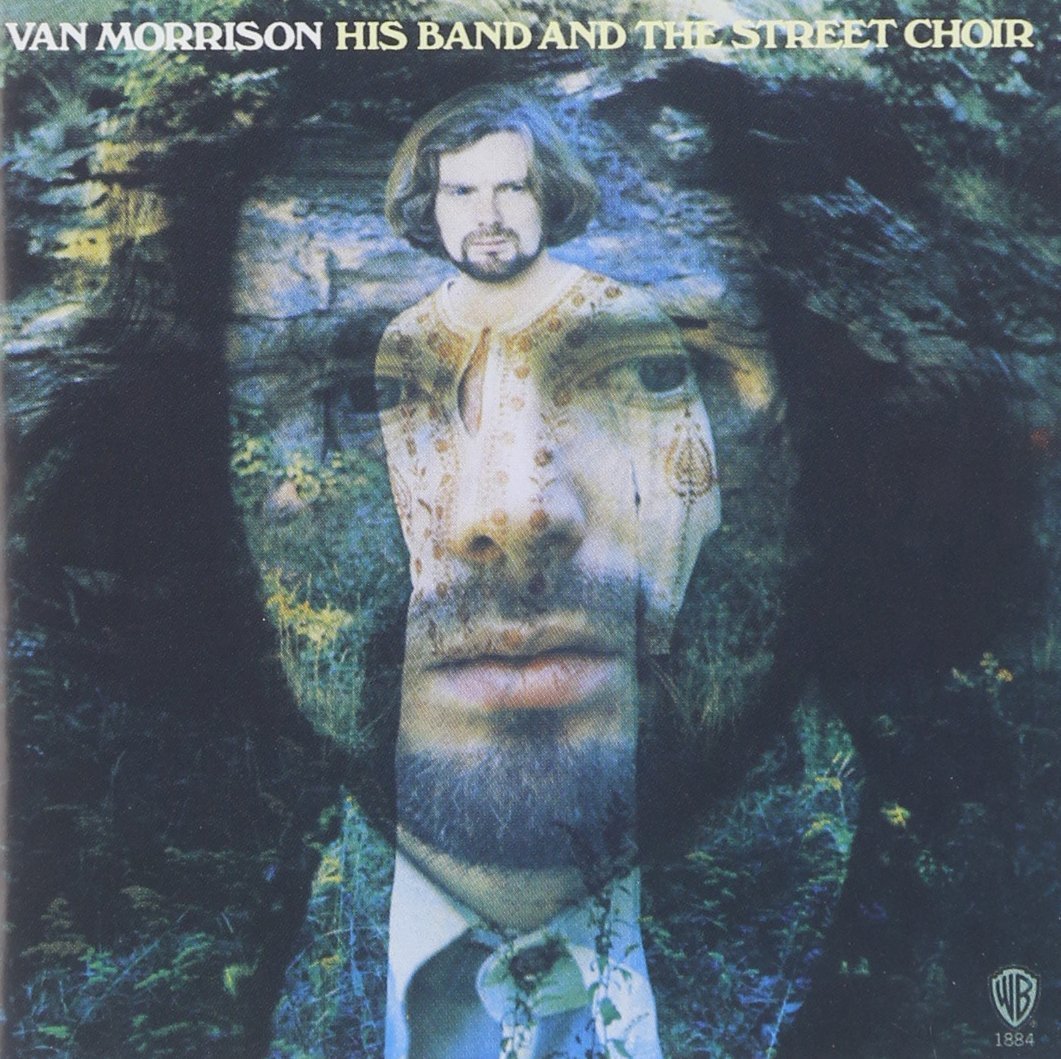
Photos had been taken for the gatefold album cover by David Gair. He shot the photos at a party for John Planet’s son, Peter. Van Morrison was pictured surrounded by the wives and family of his band. When Van Morrison saw the photos, to was scathing. The photos were “rubbish.” Things got worse. The album cover featured Van Morrison dressed in a full length kaftan. It made Van Morrison looking like the stereotypical hippy. This didn’t please him. He fumed, as he had never embraced the hippy lifestyle. This was just the latest in a series of mishaps. It didn’t bode well for the release of His Band and Street Choir.
Before His Band and Street Choir was released, critics received their copy of the album. Despite the wrong title, incorrect track listing and dreadful album cover, critics were impressed. That wasn’t surprising. Domino had been released as a single, giving people a taster of the album. It reached number nine in the US Billboard 100 and number twenty-two in Holland. So it was no surprise that the reviews of His Band and Street Choir were positive. Just like his last two albums, His Band and Street Choir was released to widespread critical acclaim.
His Band and Street Choir was released on 15th November 1970. The album reached number eighteen in Britain, thirty-two in the US Billboard 200 and number forty-eight in Holland. Despite Astral Weeks and Moondance being regarded as classics, His Band and Street Choir had been a bigger success upon its release. That wasn’t end of the success.
Blue Money was released as a single in 1971, and reached number twenty-three in the US Billboard 100. That made it two hit singles from His Band and Street Choir. Sadly, two didn’t become three when Call Me Up in Dreamland stalled an ninety-five in the US Billboard 100. However, His Band and Street Choir was regarded as a success by Warner Bros. and Van Morrison.
Opening His Band and Street Choir, is Domino a tribute to New Orleans’ born singer Fats Domino. A chirping guitar is joined by an urgent rhythm section and Van’s lived-in vocal. Soon, stabs of blazing horns and a jangling piano join the rhythm section. They drive the arrangement along, while Van delivers a vocal powerhouse, as he gives thanks for “Domino.” Van combines elements of Celtic soul with R&B on what would become one of his best known songs.
Unlike the majority of tracks on His Band and Street Choir, Crazy Face has an 8/4 beat. It’s a track that was inspired by Jesse James. A thoughtful meandering piano is joined by an acoustic guitar and rhythm section. Van’s vocal is best described as a mid-Atlantic twang. Like an actor in a play, Van brings the lyrics about one of America’s most famous outlaws to life. When his vocal drops out, washes of Hammond organ and joined by a scorching saxophone. It’s panned right, leaving plenty of space for the rest of the band. They stretch their legs until Van’s vocal returns. His vocal is a mixture of power and passion. He’s like a showman, as he adds an element of theatre and drama.
A strummed guitar opens Give Me A Kiss, a song Van wrote to celebrate the birth of a child. Happiness fills his vocal, as the bass helps walk the arrangement along. Stabs of growling horns are added. So are doo wop harmonies as this joyous, feel good song begins to swing.
As I’ve Been Working unfolds,the rhythm section, guitars and percussion set the scene for Van’s weary vocal. Soon, the weariness disappears and hope and happiness shines through. He’s with the woman he loves, and suddenly, everything seems worthwhile. Again, the bass is prominent in the mix. Washes of Hammond organ can also be heard in the distance. Then braying horns make an entrance as Van vamps. His vocal is like a stream of consciousness. Then when the vocal drops out, his band jam, and showcase their considerable talents. When Van returns, he vamps and the band play around him. Van and his band are one, on what’s one of the highlights of His Band and Street Choir.
Call Me Up In Dreamland has been inspired by gospel music. and is a song about life on the road. Subtle horns and the bass combine, before a roll of drums signals the arrival of Van’s grizzled vocal. Soon, Van’s joined by gospel-tinged harmonies. They’re crucial to the song’s success. The R&B inspired saxophone that replaces the harmonies work, but only just. The song seems to loose momentum. Then Van saves the day. He literally grabs the song and makes it work. Adding the finishing touch are the returning harmonies. They ensure the song reaches a joyous crescendo.
Slowly and deliberately, a lone acoustic guitar plays on I’ll Be Your Lover, Too. It’s joined by Van’s needy, heartfelt vocal. Soon, drums played by brushes join the acoustic guitars. They allow Van’s impassioned, hopeful vocal to take centre-stage on this beautiful ballad about his relationship.
Blue Money was penned by Van about his financial situation. Despite the seriousness of the situation, Van’s lyrics are full of humour. He’s able to laugh at himself and his problems. That’s the case from the opening bars. A guitar is joined by the rhythm section and Van’s vocal. He strolls through the lyrics, delivering a plethora of puns. Behind him, the band make sure the arrangement swings. Later, The Street Choir add harmonies which augment Van’s vocal on this catchy, pun filled track.
Virgo Clowns should’ve been the title-track to the album. It wasn’t a new song. Originally, it was recorded in early 1969 as (Sit Down) Funny Face. Van rerecorded it during the first Street Choir session as Funny Face. Then at the the A&R Recording Studios it became Virgo Clowns. Urgently strummed guitars, backing vocals and later, a braying saxophone accompany Van’s impassioned vocal.
A celeste opens Gypsy Queen before the bass and acoustic guitar accompany Van’s vocal. It veers between heartfelt to reassuring and powerful. He uses his full vocal range. Behind him, washes of Hammond organ and horns are added. They provide the perfect accompaniment to Van on this heartfelt ballad.
It’s thought that Sweet Jannie was inspired by The Impressions’ Gypsy Woman. There’s certainly an R&B influence present as the arrangement bounds along. Van’s accompanied by the rhythm section and chiming guitars. They’re omnipresent as Van pays homage to The Impressions. Ironically, this homage is by far, the weakest song on the album. Van’s at his best when he’s himself.
Proof of this is If I Ever Needed Someone. He’s accompanied by gospel-tinged harmonies, piano and the bass as he delivers one of his best vocals. It’s full of emotion, and can only be described as soul-baring confessional.
Street Choir closes His Band and Street Choir. A Hammond organ is joined by the rhythm section and piano. Van’s impassioned, hurt-filled vocal is accompanied by soulful harmonies and wistful horns. They’re a potent combination and prove the perfect way to close Van Morrison’s fourth album, His Band and Street Choir.
Despite the problems that beset the release of His Band and Street Choir, the album became the most successful of Van Morrison’s four album career. That’s ironic, given Astral Weeks and Moondance are two of the most important albums not just in Van Morrison’s career, but the history of music. Every album Van Morrison went on to release, was compared to his two classic albums. This includes His Band and Street Choir, which was recently remastered and rereleased by Rhino.
His Band and Street Choir has always been overshadowed by Astral Weeks and Moondance. In 1970, Van Morrison was trying to followup an album of the magnitude of Moondance. It was almost impossible. Critics had said the same about Astral Weeks, and Van came back with Moondance. However, His Band and Street Choir is no Moondance.
Having said that, His Band and Street Choir is a very good album, and for too long, has been understated. It’s one of the finest albums Van Morrison released during the seventies. His Band and Street Choir is only let down by Sweet Jannie, Van’s homage to The Impressions. Apart from that, it’s a case of wallowing in Van Morrison at the peak of his powers on His Band and Street Choir. This creative spell continued.
Right up until 1972, Van Morrison could do no wrong. From Astral Weeks and Moondance, through His Band and Street Choir, 1971s Tupelo Honey and 1972s Saint Dominic’s Preview, Van Morrison was writing and recording some of the best music of his career. These albums featured Van Morrison at the peak of his powers. Despite their undoubted quality, they’ve been overshadowed by his two classic albums, Astral Weeks and Moondance.
Every album Van Morrison released was compared to Astral Weeks and Moondance, rather than viewed as a new piece of work. As a result, Van Morrison spent his career trying surpass, or even match Astral Weeks and Moondance. He never quite managed to do so. However, the nearest Van Morrison came, was on albums like His Band and Street Choir, Tupelo Honey and Saint Dominic’s Preview.
VAN MORRISON-HIS BAND AND STREET CHOIR.
MOGWAI-CENTRAL BELTERS.
MOGWAI-CENTRAL BELTERS.
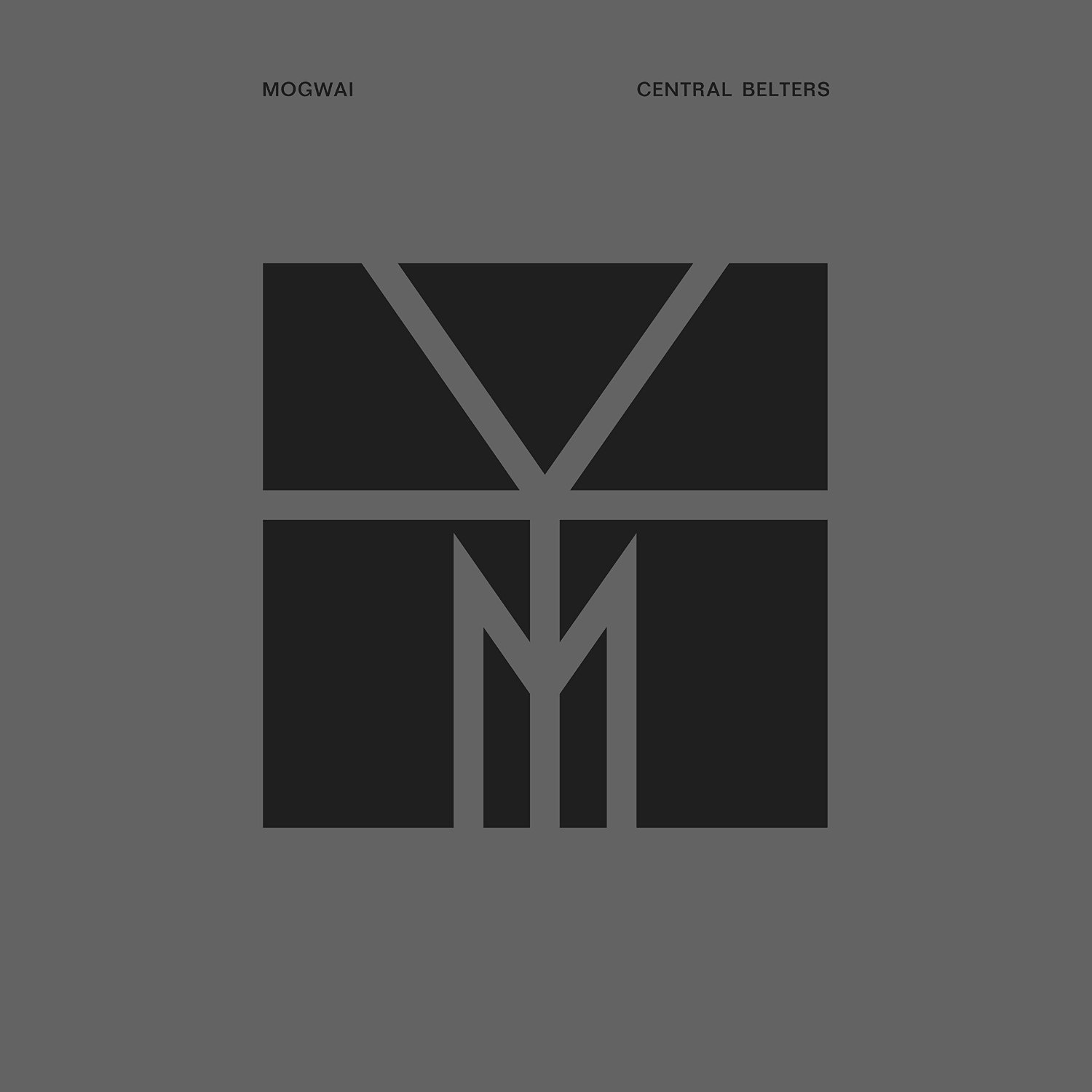
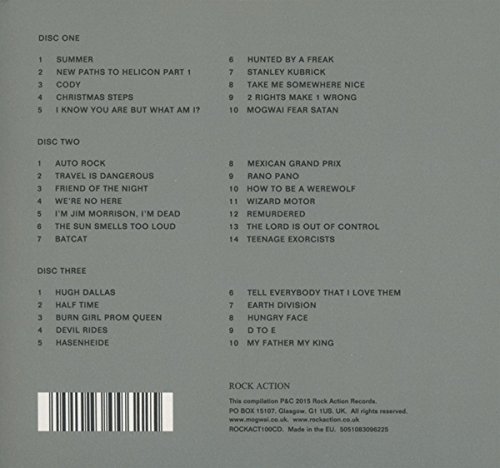
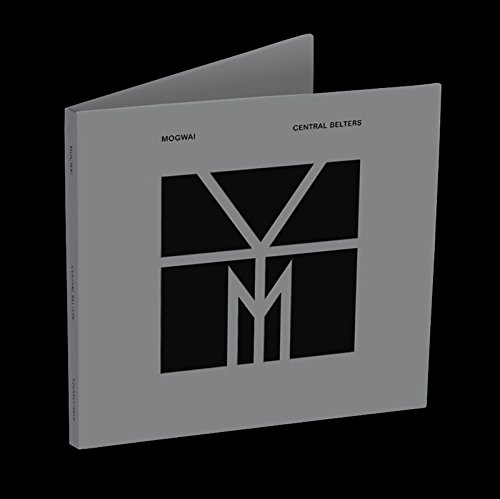
2015 finds post rock pioneers Mogwai celebrating their twentieth anniversary. A lot has happened in that twenty year period. Mogwai have released eight studio albums and three soundtracks. These albums have been critically acclaimed and commercially successful not just in Britain, but in America. That’s why nowadays, Mogwai are regarded as Scottish music’s elder statesmen. So it’s fitting the Mogwai have recently released a three disc retrospective box set, Central Belters, on Rock Action Records. Central Belters tells the story of twenty years of Mogwai. It’s a story which began in 1991.
That’s when Stuart Braithwaite and Dominic Aitchison first met in Glasgow. Four years later, they met drummer Martin Bulloch and formed Mogwai, which film buffs will remember, is a character from the movie Gremlins. Mogwai was always meant as a temporary name, but it stuck and was on the label of Tuner, their 1996 debut single.
Tuner was released to critical acclaim and the NME awarded it their single of the week award. Two other singles were released during 1996 Angels v. Aliens and Summer, which features on Central Belters. By then Mogwai were a quartet.
Guitarist John Cummings joined the band in 1995. He’s also something of a maestro when it comes to all things technical and is described as playing “guitar and laptop.” He was part of one of the hottest bands of the late nineties, Mogwai who released two more singles in 1997.
The first of these was New Paths To Helicon Pt. 1 which features on Central Belters. It showed Mogwai growing and maturing as a band. NME agreed, and just like their debut single Tuner, New Paths To Helicon Pt. 1 was won NME’s single of the week award. Club Beatroot the followup to was also well received by critics. This was the perfect time for Mogwai to record their debut album, Mogwai Young Team.
Mogwai Young Team.
For Mogwai Young Team, Mogwai brought onboard Brendan O’Hare the Teenage Fanclub’s drummer. Another guest artist was Aidan Moffat of Falkirk based band Arab Strap. He added the vocal to R U Still In 2 It. The rest of Mogwai Young Team consisted of instrumentals. Mogwai Young Team was recorded at Chem 19 studios and produced by two of Scotland’s top producers, ex-Delgado Paul Savage and Andy Miller. Once Mogwai Young Team was completed, it was then released on Scotland’s biggest record label, Chemikal Underground.
Before its release, critics were one over by Mogwai Young Team. Mogwai were hailed Mogwai as a band with a big future. Mogwai Young Team was a hailed as a groundbreaking album of post-rock. An example of that was Mogwai Fear Satan, which features on Central Belters. It’s just one reason critics forecast a big future for Mogwai.
That proved to be a perceptive forecast. When Mogwai Young Team was released on 21st October 1997, sold over 30,000 copies and reached number seventy-five in the UK. The Mogwai Young Team were on their way. However, a few changes were about to take place.
Come On Die Young.
A year later, Mogwai were back in the studio recording their sophomore album Come On Die Young. Much had changed. A new member had joined the band. Barry Buns a flautist and sometimes pianist, had played a few gigs with the band. They then asked him to become the fifth member of Mogwai. Violinst Luke Sutherland joined Mogwai, but not on a full-time basis. This wasn’t the only change.
Recording was split between New York and Glasgow. This time, they’d forsaken Chem 19 in Blantyre and recorded parts of the album in Rarbox Road Studios, New York. Some sessions took place in Glasgow’s Cava Studios. Producing Come On Die Young was Dave Fridman. For some critics, his addition changed Mogwai’s sound.
Some critics felt his production style resulted in a much more orthodox sounding album. However, personally, I felt that Come On Die You was part of Mogwai discovering their “sound” and direction. Come On Die Young is a much more understated, but also ambient, experimental, multi-textured and melodic. There’s a fusion of ambient, grunge and post rock on Come On Die Young, which was released in 29th March 1999.
On its release, Come On Die Young reached number twenty-nine in the UK. Mogwai it seemed were now on their way to finding their sound and fulfilling the potential evident on their debut album. This was apparent with tracks of the quality of Two of its highlights, CODY, Hugh Dallas and Christmas Steps feature on Central Belters. However, like all innovative bands, Mogwai continued to reinvent their music.
This proved to the case on their eponymous E.P. Two of E.P.’s four tracks feature on Central Belters. This includes Stanley Kubrick, which was recorded in the exotic surroundings of Cowdenbeath in Fife. Burn Girl Prom Queen was recorded at Cava Studios, in Mogwai’s hometown of Glasgow. These two tracks were part of E.P., which further enhanced Mogwai’s reputation as post rock pioneers. So did their third album Rock Action.
Rock Action.
Mogwai’s music continued to evolve on their third album 2001s Rock Action. More use was made of electronics on Rock Action. This was part of a process that would continue over the next few albums. There were even more layers and textures on Rock Action. It was as if Mogwai had expanded their palette. Seven of the songs were instrumentals, while Dial Revenge featured Gruff Rhys of Super Furry Animals.
Again, Rock Action was produced by Dave Fridman, while recording took place in New York and at Glasgow’s Cava Studios. Once Rock Action was completed, it became Mogwai’s first album to be released on Play It Again Sam.
Rock Action was released in April 2001, and proved to be Mogwai’s most successful album. It reached number twenty-three in the UK. Critics remarked upon how Rock Action wasn’t as dark an album as its predecessors. That didn’t mean that Mogwai’s view of the world had changed. They were still worldweary. That would become a Mogwai trademark.
Six months after the release of Rock Action, Mogwai returned with another single, The My Father My King. It was released in October 2001, and was described “as the companion piece to Rock Action.” A sticker on the cover bore Mogwai’s description of the single as: “two parts serenity and one part death metal.” That was about to change. Soon, they’d be happy people writing happy songs and making a breakthrough into the American market.
Happy Songs For Happy People.
Happy Songs For Happy People was released in 2003. Mogwai’s evolution continued. Their music continued further down the electronic road. Yes, electric guitars and a drummer were used, but synths were playing a more important role in Mogwai’s music. So were the addition of strings and a piano. They played their part in what was a much more understated album. Part of this change in style was a change of producer.
Tony Doogan was brought onboard as producer. He replaced Dave Fridman. Gone were transatlantic recording sessions. Happy Songs For Happy People was recorded at Cava Sound Studios, Glasgow. On its release in June 2003, Happy Songs For Happy People was well received by critics. Critics drew attention to I Know You Are But What Am I? and Hunted By A Freak, which feature on the new Central Belters compilation. The critics welcomed Mogwai’s latest change in style. So did record buyers.
While Happy Songs For Happy People only reached number forty-seven in the UK, it spent a week in the American charts, reaching number 182 in the US Billboard 200. After four albums, Mogwai had broken into the American market. Happy Songs For Happy People it seemed, was a landmark album.
Having made inroads into the lucrative American market, Mogwai didn’t rush their fifth album. It was released three years after Happy Songs For Happy People. There’s a reason for this. They were working on tree separate projects.
The first was their fifth album Mr. Beast. Then there was the first soundtrack they’d written and recorded. This was for the 2006 movie Zidane: A 21st Century Soundtrack. Mogwai also collaborated with Clint Mansell on the soundtrack to The Fountain. Although soundtracks were a nice sideline for Mogwai, their fifth album Mr. Beast was of huge importance. Especially, if it was a commercial success in America.
Mr. Beast.
Recording of Mr. Beast took place at Mogwai’s new studio, Castle Of Doom Studios in Glasgow. Co-producing Mr.Beast with Mogwai, was Tony Doogan. Between April and October 2005, Mogwai honed their fifth album. Tony Doogan and Mogwai co-produced Mr. Beast. After six months, Mr. Beast was complete. It was Mogwai’s most important album.
Everyone realised the importance of Mr. Beast. Mogwai were on a verge of breaking into the American market. Happy Songs for Happy People had got Mogwai’s foot in the door. Now was the time for the Mogwai Young Team to kick it in, and make their presence felt. That’s what Mogwai intended to do with tracks like Travel Is Dangerous,Friend Of The Night and We’re No Here. They featured Mogwai at their best, and are on the new Central Belters compilation. This trio of tracks would please critics.
On its release, it was mostly, to critical acclaim. Critics were fascinated at how Mogwai’s music continued to evolve. For Mogwai, standing still was going backwards. Groundbreaking music was what record buyers expected from Mogwai.
When Mr. Beast was released on 5th March 2006, record buyers found an album of innovative music. It climbed thirty-one in the UK. Across the Atlantic, Mr. Beast reached number 128 in the US Billboard 200. Mogwai were now one of Scotland’s most successful musical exports. They were certainly Scotland’s most innovative band. This was a title they weren’t going to give up without a fight.
Zidane: A 21st Century Portrait.
Following the release of Mr. Beast, the other two projects that Mogwai had been working on, were released. The first was Zidane: A 21st Century Portrait. The project came about in late 2005, when artist Douglas Gordon asked Mogwai to write and record a soundtrack to a film he was making about Zinedine Zidane, Zidane: A 21st Century Portrait. Mogwai agreed, and this gave them their entry into the world of soundtracks.
Maogwai grasped this opportunity. They recorded Zidane: A 21st Century Portrait at Castle Of Doom Studios. At first hand, Mogwai had recorded ten tracks, which were produced by Tony Doogan. However, when the soundtrack was released, it came baring a secret.
Unlike the seven minutes of Half Time, which features on Central Belters, the hidden track Untitled, is a twenty-three minute epic, featuring Mogwai at their most inventive. That was the case throughout Zidane: A 21st Century Portrait. Most critics realised this. A few, however, didn’t seem to ‘get’ Zidane: A 21st Century Portrait. However, the critics that mattered, gave Mogwai the recognition they deserved when Zidane: A 21st Century Portrait was released on 30th October 2006. Then less than a month later, the soundtrack to The Fountain was released on 27th November 2006.
The Fountain.
The Fountain was a collaboration between contemporary classic composer Clint Mansell, string quartet the Kronos Quartet and Mogwai. To some onlookers, it looked like an unlikely collaboration. That wasn’t the case though.
Mogwai had spent December 2005 locked away in their Castle Of Doom Studios with producer Tony Doogan. Other parts of The Fountain project were recorded in New York and Los Angeles. Then once the project was complete, The Fountain was released on 27th November 2006.
When The Fountain soundtrack was released, the reviews were positive. Mogwai’s contribution to the soundtrack had proved vital, while the Kronos Quartet proved a perfect foil the Mogwai Young Team. Mogwai’s lasted soundtrack had enhanced their reputation as the go-to guys for a soundtrack. That would their sideline in the future. However, before they released another soundtrack, Mogwai would release another two albums.
The Hawk Is Howling.
The first of these was The Hawk Is Howling. To ensure they kept their title of Scotland’s most innovative bands, Mogwai returned to the studio where it all began, Chem 19 in Blantyre.
Andy Miller who’d co-produced Mogwai Young Team, Mogwai’s debut album was chosen to produce what became The Hawk Is Howling. This was Mogwai’s sixth album and marked a first. It was Mogwai’s first album to consist of just instrumentals. Among them were I’m Jim Morrison, I’m Dead, The Sun Smells Too Loud, Batcat and Scotland’s Shame which feature Central Belters. They feature the post rock pioneers pushing musical boundaries to their limits, and sometimes, beyond. Once The Hawk Is Howling was recorded, Garth Jones mixed the album at Castle Of Doom Studios in Glasgow. After that, The Hawk Is Howling was ready for release.
The Hawk Is Howling was released on 22nd September 2008. Critics were won over by The Hawk Is Howling. There were no dissenting voices. This was one of Mogwai’s best albums. So, it was no surprise it sold well in the UK and America.
On its release, The Hawk Is Howling reached number thirty-five in the UK and number ninety-seven in the US Billboard 200. It seemed with each album, Mogwai’s music evolved and matured. This resulted in even more success coming their way. Would this continue with Hardcore Will Never Die?
Hardcore Will Never Die.
For their seventh album, Mogwai returned to Chem 19 Studios in Blantyre, where they hooked up with ex-Delgado Paul Savage. Since he’d produced Mogwai’s debut album, Mogwai Young Team Paul had established a reputation as one of Scotland’s best producers.
By then, Paul Savage had worked with everyone from Franz Ferdinand to R.M. Hubbert. However, it was a very different Mogwai Paul encountered. They were very different to the band who recorded Mogwai Young Team Paul. Their music had evolved and was continuing to do so. They’d matured as musicians and embraced the new technology. Hardcore Will Never Die, But You Will was proof of this.
Here was an album of groundbreaking, genre-melting post-rock with attitude. Hardcore Will Never Die, But You Will was also an album not short on humour. Poppy soulster Lionel Ritchie provided the inspiration for You’re Lionel Ritchine. There was also a celebratory sound to Hardcore Will Never Die, But You Will
The death of Scotland’s nemesis, Margaret Thatcher sparked celebration on Glasgow’s George Square. Hardcore Will Never Die, But You Will celebrated that great night again with George Square Thatcher Death Party. Sadly, it’s not on the new Central Belters’ compilation. However, Mexican Grand Prix, Rano Pano and How To Be A Werewolf are. They’re a reminder of an album of pioneering, post rock music crammed full of hooks, humour and attitude. Hardcore Will Never Die, But You Will was an album that couldn’t fail.
Before the release of Hardcore Will Never Die, But You Will, Rano Pano was released as a single. On the flip side was Hasenheide, which didn’t feature on Hardcore Will Never Die. However, it makes a welcome appearance on Central Belters, and is a reminder that Mogwai’s B-Sides are better than most band’s singles. Things it seemed were looking good for Mogwai.
Yet again, Mogwai won over the majority of critics with Hardcore Will Never Die, But You Will. A couple of contrarian critics proved to be mere dissenting voices in the wilderness. Most critics realised that Hardcore Will Never Die, But You Will was one of Mogwai’s finest hours. Record buyers would agree.
Hardcore Will Never Die, But You Will reached number thirty-five in the UK and number ninety-seven in the US Billboard 200. For Mogwai, they were now into their third decade as band and had just enjoyed their biggest album to date. What next?
Les Revenants.
The answer to that was Les Revenants, a soundtrack to a French television series. Les Revenants or The Returned is essentially a television program about zombies. Unlike similar programs, when the “undead” return to the town they lived in, it’s as they were, not how most films portray zombies. Another difference was the way Mogwai were commissioned.
Usually, someone writing a soundtrack can see the film they’re writing music to. Not Mogwai. They were just shown a few scripts. Then they were given an overview of what the series was about. From there, Mogwai wrote thirteen of the fourteen tracks including Wizard Motor and Hungry Face which features on Central Belters. The other track they chose was What Are They Doing In Heaven Today, which was written by Charles Elbert Tilney. These fourteen tracks were recorded by Mogwai, who produced Les Revenants with Neil MacMenamin. Once Les Revenants was finished, it was released in February 2013.
Before Les Revenants was released an E.P. was released. It featured four tracks. That was a tantalising taster of what was to come. After all, Mogwai would approach a soundtrack like Les Revenants in a different manner. They wouldn’t do anything predictable. Les Revenants was a case of expect the unexpected. Critics loved Les Revenants and hailed the album as one of the best albums Mogwai had released. However, Mogwai had other ideas.
Rave Tapes.
Rave Tapes features ten tracks which were written by Mogwai. These tracks were recorded at Mogwai’s Castle Of Doom Studios, in Glasgow. Producing Rave Tapes was ex-Delgado Paul Savage. He’s produced previous Mogwai albums and knew how the band worked. This was important, given Mogwai were at last, enjoying the critical acclaim and commercial success their music deserved. Work began on Rave Tapes on the 28th August 2013.
This was like the first day back at school. Mogwai were ready to begin recording what was their eighth studio album. The lineup of Mogwai has been settled for a few years. This included a rhythm section of bassist and guitarist Dominic Aitchison, drummer Martin Bulloch and guitarists Stuart Braithwaite and John Cummings who also played piano. Barry Burns plays organ, piano and guitar. at Castle Of Doom Studios, Glasgow, Mogwai recorded the ten tracks that became Rave Tapes, which was released on 20th January 2014.
Rave Tapes was one of the most anticipated albums of 2014. The big question was, what direction Mogwai’s music would head? After all, Mogwai’s music never stands still. It’s in a constant state of evolution. That’s no bad thing. Standing still is akin to going backwards in Mogwai’s book. On Rave Tapes, Mogwai’s music continues to evolve. Musical genres and influences melt into one on Remurdered, The Lord Is Out Of Control and Tell Everyone I Love Them, which all feature on the Central Belters’ box set. However, one of the most prominent influences on Rave was Krautrock. Add to this ambient, avant-garde, electronica, experimental, indie rock and rock. We hear different sides to Mogwai on Rave Tapes. Whether it’s fuzzy soundscapes or kicking out the jams, Mogwai don’t disappoint on Rave Tapes, their most recent album.
Since then, Mogwai haven’t released the followup to Rave Tapes. However, Mogwai released Music Industry 3. Fitness Industry E.P. on 1st of December 2014. Opening this six track E.P. is one of its highlights, Teenage Exorcists. So fittingly, it finds its way onto Mogwai’s three disc retrospective box set, Central Belters.
For anyone yet to discover the delights of of post rock pioneers Mogwai, then the Central Belters’ box set is the perfect starting place. It was recently released on Rock Action Records, and costs no more than an individual CD. It’s Mogwai’s way of thanking their loyal fans who have supported them over the last twenty years. And what a roller coaster it’s been.
Since they formed in 1995, Mogwai have released eight albums and three soundtracks. Then there’s countless singles, E.P.s and two remix albums. Mogwai must be one of the hardest working bands in music. That’s not forgetting one of the most innovative.
For the last twenty years, Mogwai’s music has been ambitious, bold, challenging, influential and innovative music. It’s full of nuances, subtleties and surprises as Mogwai seamlessly combine musical genres. They fuse ambient, avant garde, classic rock, electronica, experimental, indie rock, psychedelia and Krautrock, to create their unique post rock sound. All the time, Mogwai continue to push musical boundaries to their limits and even sometimes, way beyond.
That’s why Mogwai’s music has continued to evolve. They’ve never been content to stand still. Mogwai never play it safe, and their music is never predictable. Leave that to lesser mortals, like Coldplay, Mumford and Sons and Ed Sheeran. While they churn out album after album of similar music, the Mogwai Young Team will be off on a new adventure.
Glasgow’s famous five are due a new musical adventure. It’s nearly two years since the release of Rave Tapes. Hopefully, Mogwai are hard at work on their next musical adventure in their Castle Of Doom studios. This isn’t the type of adventure Enid Blyton’s Famous Five once enjoyed. There’s no picnics, lemonade and bicycle trips. Instead, it’s a bit more edgy and gritty. That’s the case with Central Belters Mogwai’s career retrospective.
Central Belters celebrates twenty years of pioneering post rock from Glasgow’s one and only, Mogwai, who for the last two decades, have been producing music that’s innovative and influential. Long may that continue.
MOGWAI-CENTRAL BELTERS.

DAVID GILMOUR-RATTLE THAT LOCK-VINYL EDITION.
DAVID GILMOUR-RATTLE THAT LOCK-VINYL EDITION.
After a career than spanned forty-seven years, Pink Floyd released their final album, The Endless River. It was the end of an era. Pink Floyd had been a musical institution. For six decades, Pink Floyd had provided the soundtrack to the lives of several generations. However, realistically, The Endless River had to bring the curtain down on Pink Floyd’s career.
Sadly, only two members of the David Gilmour led Pink Floyd were still alive. Drummer Nick Mason and Dave Gilmour were the last men standing.Keyboardist Richard Wright had died in 2008. Despite this, he featured posthumously on The Endless River. It proved a fitting finale to long and illustrious career.
When The Endless River was released on vinyl in November 2014, it was to commercial success and critical acclaim. Across the world, The Endless River was a huge success and showed that Pink Floyd were just as relevant in 2014, as in 1967. This allowed Pink Floyd to bow out while they were still at the top.
After the dust had settled, the speculation began in what the Nick Mason and David Gilmour would do post Pink Floyd. Soon, the word was out that David Gilmour was planning to release his long-awaited fourth studio album.
Over nine years had passed since David Gilmour had released his last studio album On An Island. It had been released in March 2006. Since then, David Gilmour’s only release was Live In Gdańsk in September 2008. For David Gilmour’s loyal fans, another solo album was long overdue.
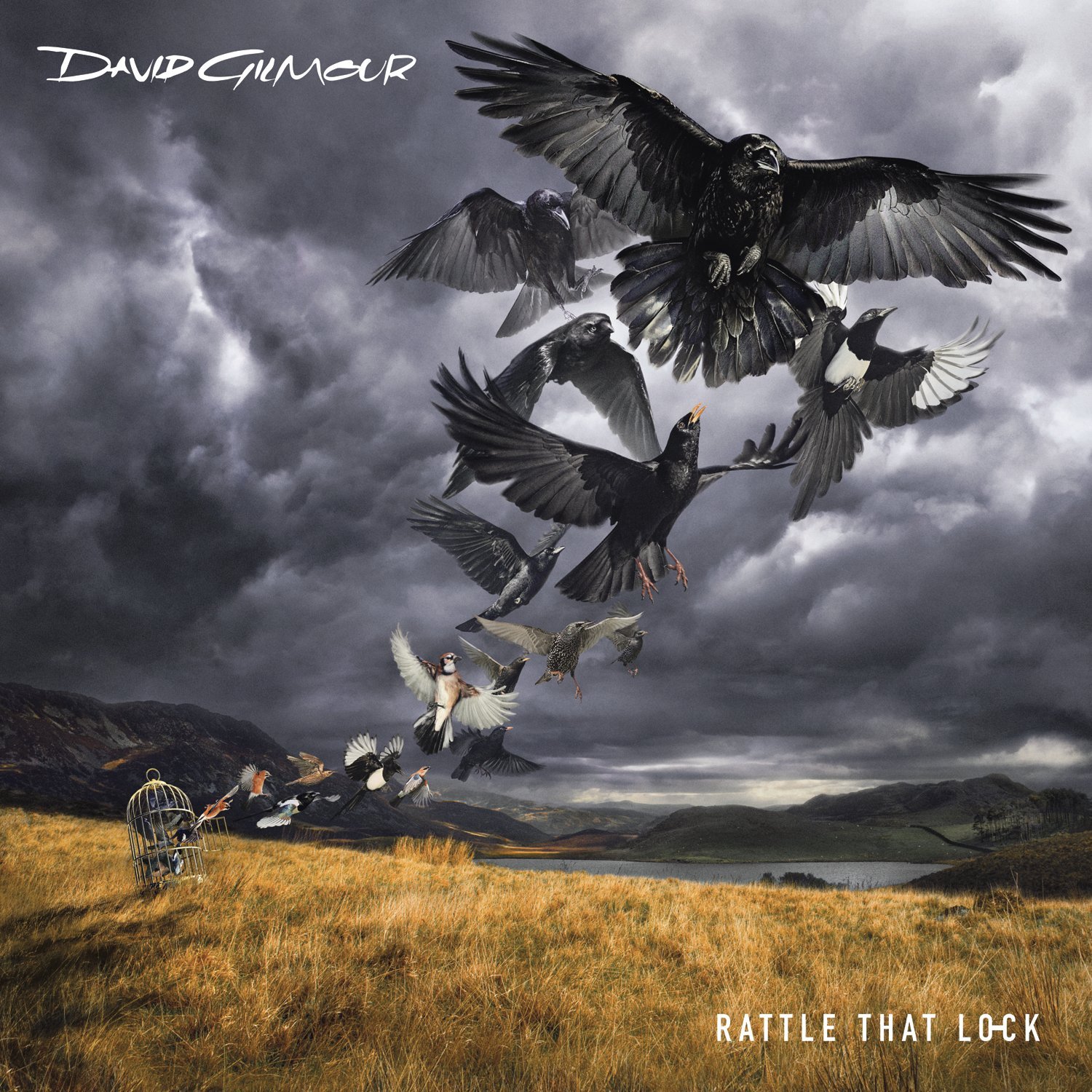
Their patience was rewarded when Rattle That Lock was released on Sony Music, on 18th September 2015. David Gilmour had spent much of 2014 and 2015 recording Rattle That Lock.
Rattle That Lock featured ten new songs. This included three instrumentals, 5 A.M., Beauty and And Then. They were penned by David Gilmour. So were Faces of Stone and Dancing Right In Front Of Me. A Boat Lies Waiting, In Any Tongue, The Girl in the Yellow Dress and Today were written by David and his partner Polly Sampson. They also cowrote Rattle That Lock with Michaël Boumendil. These ten tracks would become David Gilmour’s fourth studio album Rattle That Lock. It was recording at four studios.
Most of the recording of Rattle That Lock took place at David’s Medina Studio, in Hove. Other parts were recorded at Astoria Studio in Middlesex, Abbey Road Studios and the orchestral parts were recorded at AIR Studios in London. Zbigniew Preisner took charge of the orchestration. He was just part of a huge cast that accompanyied David Gilmour.
This included some big names. One of them was coproducer Phil Manzanera. He had previously co-produced On An Island and Live In Gdańsk. This time around, he played Hammond organ, keyboards and acoustic guitar. Phil was just one of over thirty musicians and backing vocalists played a part in the making of Rattle That Lock. Some played on just one tracks. Others played on several tracks.
That’s why rhythm section included several drummers, bassists and guitarists. Drummers including Martin France, Andy Newark and Steve DiStanislao who added percussion. Bassists included Guy Pratt and Yaron Stavi also played standup bass. So did Chris Laurence. Guitarists included Rado Klose and John Parricelli. This was just part of cast that featured on Rattle That Lock.
Joining the rhythm section were pianists Roger Eno, Gabriel Gilmour and Jools Holland. Jon Carin and Mike Rowe both played electric piano. Robert Wyatt played cornet on The Girl In The Yellow Dress. Saxophonist Colin Stetson joined percussionist Danny Cummings was joined by Eira Owen on French horn. A poignant inclusion was a sample of Rick Wright’s voice. The late Pink Floyd keyboardist. Augmenting the musicians were backing singers.
Backing vocalists included two members of Crosby, Stills, Nash and Young. David Crosby and Graham Nash joined some less well known names. Among them were Mica Paris, The Liberty Choir and Louise Marshall. They were joined by David Gilmour’s partner Polly Samson. Together, they accompanied David, who played guitars, bass, bass harmonica, electronic harmonica, Hammond organ, keyboards, piano and added vocals. He also co-produced Rattle That Lock with Phil Manzanera. It was scheduled for release on 18th September 2015. Before that, the title-track was released as a single.
On 17th July 2015, Rattle That Lock was released as a single. Although it was well received, especially by DJs, the only place that Rattle That Lock charted was in France. Even then, it stalled at number seventy-one. Two months later, on 4th September 2015, Today was released as a single. Just like Rattle That Lock, it wasn’t a commercial success, failing to chart anywhere. To make matters worse, the critics were about to have their say on Rattle That Lock.
When Rattle That Lock was released, critics didn’t go overboard about the album. Some hailed Rattle That Lock David Gilmour’s finest album to date. Others disagreed. Some went further, and seemed to take an instant dislike to the album. That was ironic.
Previously, David had patiently had done the rounds of the music press. Having granted them interviews, he patiently and politely answered the same question time after time. They proceeded to stab him in the back. Suddenly, it 44BC and David was Julius Caesar. The cynics in the press were Gaius Cassius Longinus and Marcus Junius Brutus. However, these mixed reviews didn’t affect sales.
After being on sale for less than a month, Rattle That Lock has been in top ten in twenty-four countries. In America, Rattle That Lock reached number five in the US Billboard 200 charts. Meanwhile, Rattle That Lock reached number one in Britain. It was a similar story in Belgium, the Czech Republic, France, Italy, New Zealand, Norway, Portugal, Scotland, Spain and Sweden. That wasn’t the end of the commercial success. Rattle That Lock was certified silver in Britain and gold in Italy. David Gilmour’s fourth studio album Rattle That Lock, had been a resounding success. No wonder.
Opening Rattle That Lock is the instrumental 5.A.M. The sound of the day dawning opens the track. Birds cheep, as a wash of strings combine with a bass. David’s crystalline guitar shimmers and chimes. All his years of experience shine through, and a beautiful track unfolds. Stabs of keyboards, a glistening cymbal and guitar join the washes of strings. However, it’s David’s guitar playing that’s at the heart of the song’s sound and success.
Rattle That Lock was chosen as the lead single from the album. No wonder. It has a contemporary sound, and should’ve been a much bigger success than it was. Especially given it’s long on hooks. Synths usher in the rhythm section. A funky bass and chiming guitar are joined by David’s lived-in heartfelt vocal. He reassures, trying to tell her things can be the way they were. Harmonies accompany David. They’re almost reassuring. They remain when the vocal drops out. Then it’s time for David to unleash another of his searing guitar solo. When his vocal returns, it’s needy and hopeful. It’s as if David has experience what he’s singing about. Maybe that’s why it’s such an irresistible, hook-laden and radio-friendly song?
The piano on Faces Of Stone is almost reminiscent of Brian Eno’s seventies ambient music. It’s accompanied by subtle swathes of synths, and then a guitar. It accompanies David’s rueful vocal, as memories come flooding back. An accordion is played by Damon Iddins who also adds a calliope keyboard. By then, the arrangement is perfect foil David’s vocal. Then David lays down a searing guitar solo so far. It’s replaced by strings, before David’s vocal brings back memories of classic Pink Floyd. Later, the arrangement has a French sound. Maybe the meeting David is singing took place late one night in Paris, by the Seine, and he wants to replicate this?
Just like the previous track, A Boat Lies Waiting is reminiscent of the piano on Brian Eno’s seventies ambient albums. This time, it’s not surpassing. The pianist is Roger Eno, Brian’s brother. His moody, ambient piano paints a cinematic sound. It’s joined by a weeping guitar. Then the understated sound is gone. As the piano injects an element of drama, percussion and sound effects join the guitar. Still, there’s a cinematic sound. David’s vocal doesn’t enter until 2.20. Its rueful and tinged with regret and loneliness. Backing vocals, piano and weeping guitar accompany him. Together, they create a lament for love lost.
Jaunty keyboards open Dancing Right In Front of Me. They’re played confidently, while a subtle guitar chimes and reverberates. Then a bold, blistering guitar ushers in David’s vocal. It’s full of emotion, sadness and despair. He can’t believe what’s happened to his relations. There’s still hope though: “I’m stuck here waiting for the stars to align.” When David’s vocal drops out, the guitar blistering cuts through the arrangement. Then when David’s vocal returns, cooing harmonies continue to accompany. They then take centre-stage. So do a guitar, jazz-tinged piano and standup bass on this six minute soul-baring ballad.
David whistles happily as In Any Tongue opens. Then washes of broody synths and what sounds like an animal growling can be heard. Already, it sounds like a lost Pink Floyd song. That’s definitely the case when the rhythm section, piano and David’s despairing vocal enters. “What has he done, God help my son,” a maudlin David sings. This sounds like a reference to the arrest, and subsequent imprisonment of David’s son in 2011. Emotion seems to well up, as David wonders where he went wrong? Drama and emotion are present in equal measures. A piano adds a pensive, moody sound. So do the strings, as David lays bare his hurt and soul for all to see on this confessional.
After baring his soul on In Any Tongue, it’s as if David needs emotional respite. Beauty is an instrumental. A jagged detuned electronic harmonic is joined by washes of moody synths. Pianist Roger Eno returns. He proves the perfect foil for David’s guitar. They converse, and take centre-stage. Later, weeping and scrabbled guitar join swathes of strings. So does a bass and a searing guitar. Elements of ambient, electronica, post rock and rock melt into one, as David Gilmour and his multi-talented band create a majestic musical tapestry.
A standup bass gives The Girl In A Yellow Dress a jazz-tinged sound. Everyone takes their lead from the standup bass. David’s vocal is delivered in a similar jazzy style as he sings: “The Girl In A Yellow Dress says yes.” There’s a sense of sadness and pathos in the lyrics, as he remembers this emotionless encounter. Adding to the sadness and pathos is Robert Wyatt’s cornet. Along with the rest of David’s band, he helps transport the listener to a smokey, jazz club in the late-forties or early-fifties. Meanwhile, a rueful David has dawned the role of storyteller on what’s another cinematic track.
Just a lone droning sound ushers in the choir on Today. They sing tenderly, giving the arrangement a pastoral sound. After fifty-one seconds it’s all change. The rhythm section get funky, while chunky keyboards accompany David’s floaty, dreamy vocal. “Feel that sun on your back, feel the shadows falling.” Soulful harmonies accompany David as he continues to show his versatility. Seamlessly, he switches between styles. Today sees David move towards the dace-floor. Doubtless, someone will remix what’s another joyous, hook-heavy song.
Closing Rattle That Lock is And Then, the third instrumental. A lone drone gives way to David’s crystalline guitar. Behind him, a standup bass and lush strings are playing supporting roles. They frame another of David’s peerless, chiming guitar solos. It brings back memories of classic Pink Floyd albums, where David’s inimitable guitar played a starring role. Here, his guitar adds a melancholy, sometimes reflective hue. Maybe he’s reflecting on what’s been a glorious six decade career with Pink Floyd and as a solo artist, and realises that only Nick Mason and he remian. Sadly, it’s a case of And Then there were two. However, one thing will remain, Pink Floyd and David’s musical legacy.
The latest addition to this rich musical legacy is Rattle That Lock. It’s a worthy addition, and is the best album in David Gilmour’s four album solo solo career. Rattle That Lock took the best part of two years to record. That was time well spent.
Over nearly two years, a huge cast of musicians, backing singers and an orchestra accompanied David Gilmour. He and his co-producer Phil Manzanera crafted a quite beautiful and eclectic album. There’s elements of ambient, classic rock, jazz, pop and post rock on Rattle That Lock. Seamlessly, David switches between genres. He’s just as happy delivering a soul-baring ballad like In Any Tongue as he is delivering the jazz-tinged The Girl In The Yellow Dress. Then there’s a trio of cinematic instrumentals. Each and every one of them paint pictures. However, And Then features a reflective David. It’s as if he’s remembering his fallen comrades from Pink Floyd. And Then proves a poignant way to close Rattle That Lock which was recently released on vinyl by Sony Music.
David’s Gilmour’s fourth studio album, Rattle That Lock, is his first since Pink Floyd’s swan-song, The Endless River. Rattle That Lock is, without doubt, the finest album of David Gilmour’s career, and shows that there’s life after Pink Floyd.
DAVID GILMOUR-RATTLE THAT LOCK-VINYL EDITION.
MUSIK FOR AUTOBAHNS VOLUME 2.
MUSIK FOR AUTOBAHNS VOLUME 2.
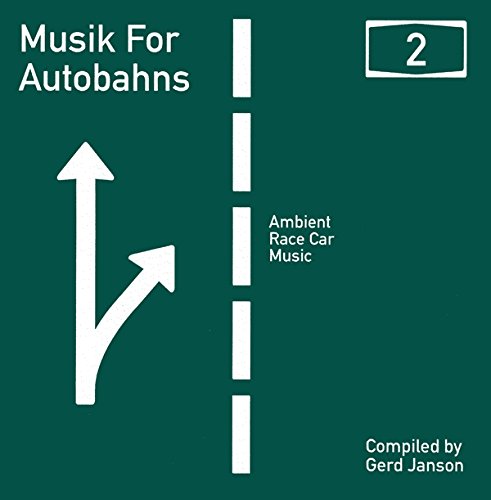
The compilation market has to be one of the most competitive markets. Every week, hundreds of compilations are released. They vary considerably in quality, and range from the good, bad and indifferent. However, very occasionally, a compilation stops a critic in their tracks. That was the case with Gerd Jenson’s Musik For Autobahns compilation.
Musik For Autobahns was released back in March 2013, on the Rush Hour label. Described as: “Industrial Ambient and Electrifying New Age,” Musik For Autobahns struck a nerve with critics and record buyers. It was well received upon its release. No wonder.
There were exclusive tracks from Âme, Move D, Quiet Village Marco Passarani, Roman Flügel and Tom Trago on Musik For Autobahns. It seemed compiler Gerd Jenson was picking up where he left off with his Computer Incarnations For World Peace compilations. They had been one of success stories at the Sonal Kollectiv label. Musik For Autobahns looked like being Gerd Jenson’s next success story.
Many people thought that it wouldn’t be long until Musik For Autobahns Volume 2 was released. After all, why not strike while the iron is hot? However, two-and-half years passed before Musik For Autobahns Volume 2 was released on 30th October 2015 on Rush Hour.
It seems Gerd Jenson was determined that Musik For Autobahns Volume 2 would match or surpass the quality of Musik For Autobahns. He was only going to release Musik For Autobahns Volume 2 when he had the best music possible. Eventually, Gerd had secured tracks from Conga Radion, Joy Orbison, AKSK, Shan, Bicep, Orson Welles and Lauer. Will this music match Musik For Autobahns Volume 2’s description of “Ambient Race Car Music?”
For Musik For Autobahns Volume 2’s opening track, Gerd Jenson has chosen Conga Radio’s 168 North. Conga Radio will be a new name to most people. They released Naturalmente as a single in March 2015 on the Good Timin’ label. 168 North is an interesting choice of track. It’s not as ambient as I’d expected as genres melt into one. Elements of ambient, electronica, funk, house and jazz can be heard. From hypnotic and funky, the the music becomes upbeat, melodic and joyous. With its feel-good sound, many people will enjoy 168 North as party of the soundtrack to their journey. However, personally, it’s the wrong track to open the album. I would be controversial and suggest that the track doesn’t belong on the album, given it’s so far removed from “Ambient Race Car Music.”
Portsmouth based ‘producer’ Leon Vynehall released his debut album Music For The Uninvited in 2014. However, Leon has submitted a new track for Musik For Autobahns Volume 2. That’s Midnight On Rainbow Road. Its much more what I’d been expect. It has a dreamy, mesmeric ambient sound. The music just washes over the listener, and sometimes, sounds like a journey at Midnight On Rainbow Road. Given the track’s ambient quality it would’ve made sense if it opened Musik For Autobahns Volume 2. It would certainly have set the tone for the album much better.
Peter O’Grady a.k.a. Joy Orbison is following in the footsteps of his uncle, Ray Keith. He spent four decades DJ-ing and producing. However, Joy Orbison is just at the start of his career. Going by the quality of Joy Orbison’s contribution A213, he has a bright future ahead of him. His moody, pulsating, Kraftwerk influenced journey down the Autobahn or A213 one of the highlights of Musik For Autobahns Volume 2.
AKSK is a collaboration between Adda Kaleh and Suzanne Kraft. They contribute Breathing, a quite beautiful, dreamy ambient track. It’s reminiscent of the music that was popular in the mid to late nineties, when ‘chill out’ music was popular. There’s a nod to AIR and Afterlife on a track that will make your trip down the Autobahn all the more enjoyable.
Since 2013, Shan, a Frankfurt based producer has released a handful of singles. His star seems to be in the ascendancy. So it’s fitting that this rising star has been asked to contribute a track. Awakening is Shan’s contribution. With its futuristic, otherworldly sound, it’s as if Shan’s drawn inspiration from the great German ambient composers of the seventies. He’s then given this a moderne twist, including the hypnotic, mesmeric drums. The sci-fi sounds add to the cinematic sound, and make you wonder what’s hovering above your automobile?
Bicep are an experienced DJ and production duo from Belfast, in Northern Ireland. Andrew Ferguson and Matthew McBriar have been making music together since 2010, and have an impressive back-catalogue. They contributed Bicep, which again, sounds as if it’s been influenced by Kraftwerk. This seven minute epic has a futuristic, hypnotic epic. Again, I wouldn’t describe the track as ambient. However, it could be part of some people’s soundtrack to a journey down the autobahn.
Michael Greene has released two albums as Fort Romeau. His debut was Kingdoms, with Insides following earlier in 2015. Seleno is a new track, and is perfect for Musik For Autobahns Volume 2. Just like other tracks on the compilation, Krafwerk are a noticeable influence. So are ambient, techno and house. This mesmeric, otherworldly sounding track oozes quality. Fort Romeau experience has been put to good use, and the result is a track that’s a perfect fit for Musik For Autobahns Volume 2. It sounds like “ambient race car music.”
A compilation with a track from Orson Welles I hear you ask? That would be incredible. He died thirty years ago. So unless a medium was brought into the recording studio, and they channeled copious amounts of woo, it’s someone else. That’s the case. Instead, it’s Orson Wells. This is one of three aliases producer Lennard Poschmann uses. Orson Wells’ contribution is Orbiting Jupiters. It sees Orson spiring a cornucopia of surprises. From a spacey, sci-fi sound Orbiting Jupiters becomes jazz-tinged, before there’s a nod to Acid House. All the time the dreamy, meditative and otherworldly cinematic sound captivates.
Just like James Bond, Mike Taylor dawns an alter ego. Mike’s is the wonderfully named Disco Nihilist. His previous productions include It’s Grim Up North and Running Far Away. For Musik For Autobahns Volume 2, Disco Nihilist contributes Melancholy. Somewhat ironically, given his moniker there’s a disco influence to the shuffling, mesmeric Melancholy. Whether it fits the description of: “ambient race car music” is debatable? However, it’s quality can’t be faulted.
Lauer’s Autofahrn closes Musik For Autobahns Volume 2. DJ and producer Phillip Lauer is obviously a huge fan of Kraftwerk. He pays homage to Ralf Hütter’s groundbreaking group on Autofahrn. It’s been inspired by Kraftwerk’s Autobahn. Phillp Lauer even uses the vocoder to add sing “Autofahrn.” Despite being influenced by a Kraftwerk classic, Autofahrn is one of the highlights of Musik For Autobahns Volume 2, the long-awaited and much-anticipated followup to Musik For Autobahns.
It was released in March 2013. Since then, many people have eagerly awaited the release of Musik For Autobahns Volume 2. Two-and-a-half years is a long time to wait for this compilation of “Ambient Race Car Music.” However, has it been worth the wait?
When I pressed play and heard Conga Radio’s 168 North, I was disappointed. There was nothing wrong with the quality of music. Instead, 168 North isn’t what most people would expect from an album of “Ambient Race Car Music.” Things improved with Leon Vynehall’s Midnight on Rainbow Road and Joy Orbison’s A213. It was like being on a journey down the autobahn late at night. Even the breathy ambient sound of AKSK’s Breaking fitted in. From there Shan, Fort Romeau and Orson Wells keep the “Ambient Race Car Music” coming. There’s a blip with Bicep’s Carmine the ironically named Disco Nihilist. Despite their quality, neither track fits in with the “Ambient Race Car Music” theme. However, Lauer, like a musical superhero, saves the day with Autofahrn, his homage to Kraftwerk’s Autobahn. That seemed a fitting way to end Musik For Autobahns Volume 2.
After all, Kraftwerk are one of the most important and innovative groups in the history of electronic music. Without them, the musical landscape would be very different. Given the influence they’ve had on electronic music, it’s no surprise that so many artists on Musik For Autobahns Volume 2 referenced Kraftwerk. Their influence can be heard on several tracks. This includes some of the highlights of the highlights of this eagerly-awaited compilation. However, has Musik For Autobahns Volume 2 been worth the wait?
Yes and no. There’s some good music on Musik For Autobahns Volume 2. Sadly, none of the tracks are outstanding. Similarly, the compilation is good, but not great. It’s more Borussia Monchengladbach than Bayern Munich. Musik For Autobahns Volume 2. That’s a shame, as Musik For Autobahns Volume 2 has been eagerly awaited. However, there’s been much better compilations released during 2015. Most of the tracks are worthy of their place on Musik For Autobahns Volume 2. The others have wandered onto the wrong movie. Gerd Jenson’s compilation of “Ambient Race Car Music” has left me feeling somewhat disappointed.
For some time, I had been looking forward to the release of Musik For Autobahns Volume 2. Sadly, the compilation hasn’t matched the hype. This album of “Ambient Race Car Music” isn’t the laid-back, loved-up journey I had hoped. Musik For Autobahns Volume 2 won’t send you down the autobahn in a beatific, mesmeric and chilled out state. Having said that, road-rage will be the last thing on your mind. Most likely, you’ll end up reaching for your trusty copy of Kraftwerk’s Autobahn, rather than Musik For Autobahns Volume 2.
MUSIK FOR AUTOBAHNS VOLUME 2.
GLORIA-GEISTER.
GLORIA-GEISTER.
Just two years have passed since Gloria released their eponymous debut album. Since 2013, Gloria’s star has been in the ascendancy. They’re regarded as one of the rising stars of the German music scene. However, things were very different when Klaas Heufer-Umlauf, Mark Tavassol, and Tim Schierenbeck first started making music.
Back then, music was a hobby for the three members of Gloria.They practised in various flats in Hamburg. It was their way of relaxing when the day was done. Gradually, though, things started to change.
After three years practising and recording songs, Mark Tavassol realised that maybe, they had enough material for an album. Given Mark’s past, it made sense that he become producer.
Between 2000 and 2012, Mark Tavassol had been a member of the band Wir Sind Helden. They released six albums between 2003 and 2010. However, in 2012 Wir Sind Helden was put on hold indefinitely. It wasn’t long after that, when Mark met the other two members of Gloria.
Tim Schierenbeck had also been in a band, The Splashdowns. They released three albums between 2000 and 2011. The only member of Gloria not to have been in a band, was Klaas Heufer-Umlauf. However, he was a familiar face in Germany. He was a TV host and actor. When he joined Gloria, he added singer to his CV.
When Mark took over the role of Gloria’s producer, he realised the band had potential. Although Klaus was initially a reluctant vocalist, he was talented. Combined with the experience Mark and Tim brought to Gloria, they could be a potent combination. So Mark began working on the songs.
Soon, the songs began to take shape. These songs were unique. Later, the members of Gloria described them as: “rough clever poetry, verses for deep nights…things for the best times of the day, lines that you write on the hand, so you have them ready quickly.” These literate, musical musings beam Gloria, the Hamburg based group’s eponymous debut album.
Gloria.
Before Gloria was released on 27th September 2013, on one of Germany’s premier labels, Grönland Records, critics had their say on the album. Gloria was well received by critics. They were impressed by an album of well crafted songs written by the three members of Gloria. These songs were melodic, emotive and came to life thanks to Klaas Heufer-Umlauf’s vocals. Buoyed by critically acclaimed reviews, Gloria was released on 27th September 2013, just before Gloria headed out on tour.
The tour started in Berlin, before heading to Hamburg, Gloria’s hometown. That night in Hamburg, Gloria were the homecoming Kings. Having wowed their hometown crowd, Gloria’s tour continued. By then, their eponymous debut album was proving a commercial success. Gloria’s star was in the ascendancy, and a great future was forecast for the group.
Geister.
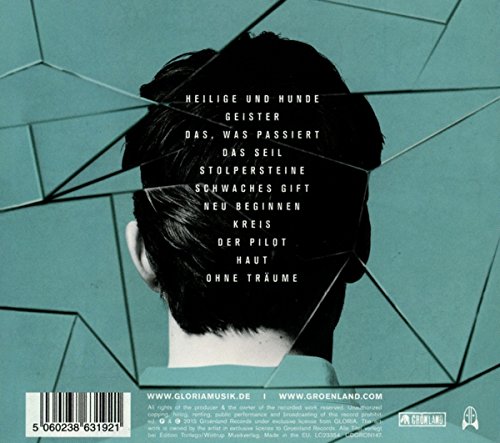
Since then, Gloria have returned to the studio and have recorded their sophomore album Geister (Ghosts). It features eleven new songs. Just like Gloria, the eleven songs on Geister were penned by the three members of the band. Gloria then headed to the studio.
In the Hamburg studio, Gloria began work on their sophomore album. Mark Tavassol played bass and Tim Schierenbeck drums. Klaas Heufer-Umlauf the once reluctant frontman, was now an assured lead vocalist. The three friends recorded eleven tracks which became Geister.
Just like Gloria, Geister was released on Berlin-based Grönland Records. However, before that critics had their say on Gloria’s new album. They hailed the album a fitting followup to Gloria. Geister was released to plaudits and critical acclaim. Gloria had come a long way since their early days in Hamburg.
That’s apparent on Geister. It seemed that in the two years since Gloria had released their debut album, they’ve certainly grown and matured as a band. They’re a tight, talented who come across as self-assured and confident. Seamlessly, Gloria combine brief moments of ambient with elements of indie rock, pop and post rock on Geister. However, where they’ve really matured is as songwriters.
That’s the case from Heilige Und Hunde. Gradually it builds and soon, Gloria are heading towards anthem territory. Hooks haven’t been rationed, as the song becomes a rhythmic and emotive roller coaster. By then, it’s hard to believe that Geister is only Gloria’s sophomore album. They sound much more assured than many bands who’ve only released one album. That continues to be the case.
Gloria are fortunate that they’ve three talented songwriters. They contribute lyrics that thoughtful and pensive. Soon, the listener is reflecting and ruminating. Especially on tracks like the piano lead Geister. It’s just like Heilige Und Hunde, in that it starts slowly and quickly builds. In the process, you’re captivated by Gloria’s ability to combine cerebral lyrics and subtle hooks. That continues throughout Geister.
Das, Was Passiert and Das Seil follow one after another. It’s as if Gloria are looking for, and need answers. Impassioned, searching and questioning vocals seek answers. On each song, Klaas sounds on the edge. There’s an element of desperation. It shines through on Schwaches Gift. This outpouring of emotion is akin to a cry for help. It’s powerful, emotive music. Sometimes, though, the darkness lifts.
Then on Neu Beginnen its all change. There’s a New Beginning. All of a sudden, there’s hope for the future. However, then on the melancholy sounding Kreis, it’s as if the darkness has descended and there’s no way out. Despite this sense of despair, Neu Beginnen is one of Geister’s highlights. It’s a beautiful, soul-baring song. So is Der Pilot, which is akin to a moving confessional. Without doubt, it’s another of Gloria’s finest moments.
Having just said that, the quality keeps on coming.The mid-tempo Haut is another anthemic sounding track. Then on the wistful sounding Ohne Träume, which closes Geister, Gloria burst into life and take the listener on a melodic musical journey. Sometimes, they sound like mid-period U2. Especially the guitars. However, there’s a sense of sadness in the vocal to Without Dreams. Just like so many of the songs Geister, Ohne Träume oozes emotion, and tugs at the listener’s heartstrings. That’s down to Klaas’ vocal and a trio of talented songwriters, whose career is blossoming.
Listening to Geister, it’s difficult to believe that this is just Gloria’s sophomore album. They’re a tight, talented and self-assured band. In a way, that’s not surprising. Two members of Gloria have been members of successful bands.
Mark Tavassol spent twelve years with Wir Sind Helden. Tim Schierenbeck was a member of The Splashdown when they recorded three albums. Both were experienced bands. This was good experience for Gloria, the bedroom band turned musical phenomenon. However, Klaas Heufer-Umlauf had been an actor and TV host. Now he’s added singer and songwriter to his CV.
Klaas Heufer-Umlauf seems to have grown into the role of frontman. He seems much more comfortable with his new role, as he brings the lyrics to life. Sometimes, it’s despair or sadness that’s required. Other times Klass has to empathise. Then occasionally, hope and joy shines through. Just like all vocalists, Klaas has to be a chameleon, bringing a variety of emotions to the table. He does this very well. Maybe his experience acting experience helps? Whether that’s the case, Gloria are a band with a big future ahead of them.
After releasing just two albums, Gloria’s star is in the ascendancy. They’re one of the rising stars of the German music scene. Geister, their recently released by Grönland Records marks a coming of age from Gloria.
For anyone who enjoys well-crafted, cerebral and emotive music then Geister is sure to appeal to them. It’s melancholy, pensive and reflective music. That’s not all. The music on Geister is also beautiful, sometimes hopeful and joyful. Geister is also awash with a plethora of hooks. They grab the listener’s attention, and soon they’re captivated. What follows is music that’s variously anthemic, melodic, contemplative, reflective and thought-provoking. Geister, which is Gloria’s latest and greatest album, is designed to make the listener think, and certainly does that.
GLORIA-GEISTER.

HARMONIA COMPLETE WORKS.
HARMONIA COMPLETE WORKS.
All too often, groundbreaking music is overlooked upon its release. It’s only much later, that the music’s importance and innovation is recognised. Musical history is littered with examples. This includes Harmonia, Germany’s first supergroup.
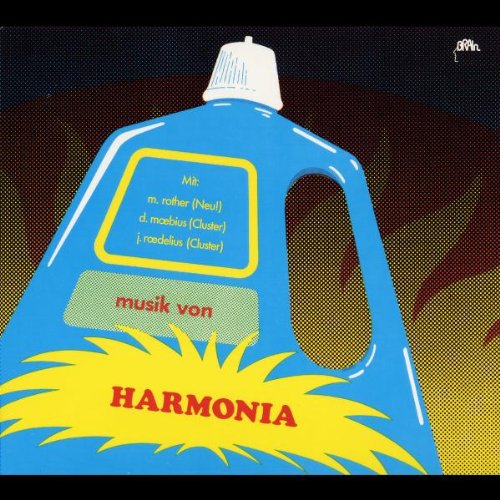
Harmonia featured members members of Neu! and Cluster. They decided to form a new group, and went on to release two studio albums. Their debut was Musik Von Harmonia in 1974. Brian Eno on hearing Musik Von Harmonia, called Harmonia: “the most important band in the world.” Despite such high praise, Musik Von Harmonia wasn’t a commercial success. However, Harmonia weren’t going to give up.
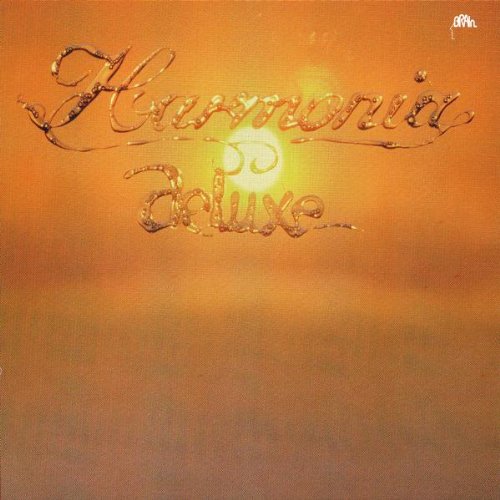
Instead, Harmonia returned to Forst, where they recorded another album, Deluxe. When Deluxe was released in 1975, lightning struck twice. Harmonia’s sophomore album passed critics and record buyers by. They didn’t seem to ‘get’ Harmonia’s music. However, Brian Eno did.
So Brian Eno joined Harmonia in Forst, where they recorded an album in eleven days. This could’ve and should’ve been the album that gave Harmonia their commercial breakthrough. However, the master-tapes were lost, and only discovered twenty years later. By then, Harmonia were being recognised as one of the most important, influential and innovative Komische bands of the seventies.
Since then, Harmonia sit proudly at the top table of German music, where they rub shoulders with Can, Karaftwerk and Neu! Belatedly, Harmonia are receiving the plaudits that they so richly deserve. To document and celebrate Harmonia’s arrival at the top table of German music, a new Harmonia box set, Complete Works will be released by Grönland Records on 30th October 2015.
The best way to describe the Complete Works box set, is a lovingly curated and luxurious box set. Michael Rother has overseen the remastering of Harmonia’s music for Complete Works, which will be released. He explains what’s included in the Complete Works box set. “There’s five digitally remastered LPs, including: Musik Von Harmonia, Deluxe, Tracks and Traces, Live ’74 and an album of unreleased material. Then there’s a thirty-six page booklet, download code and a copy of an original tour poster.” It’s a fitting tribute to Harmonia, whose career began in 1973.
Back in 1973, Neu! had just released their sophomore album Neu! 2. It failed to match commercial success and critical acclaim of their eponymous debut album. Neu! had sold 30,000 copies in Germany alone. This was good for an underground album. However, Neu! 2 was a different matter.
The problems started when Neu! went into the studio to record Neu! 2. They had booked ten days to record their second album. This should’ve been plenty of time. Neu! had recorded their debut album in four days. However, Micahel and Klaus spent too long recording side one of the album. With only three days left, the pair panicked. Desperation set in. Then they remembered a single Neu! had released, Neuschnee which featured Super on the flip-side. This was the solution to their problems.
So for side two of Neu! 2, Michael and Klaus recorded versions of Neuschnee and Super. Michael remembers “We did all sorts of things. I played the single on a turntable, and Klaus kicked it as it played. We than played the songs in a cassette player, slowing and speeding up the sound, and mangling the sound in the process.” Just like their debut album, Neu! 2 was completed just in time. It was another: “close shave.”
With Neu! 2 complete, it was scheduled for release later in 1973. When the album was released, critics were won over by side one. Neu! were refining the sound of their debut album. Für immer was Neu! 2’s masterpiece. However, critics weren’t impressed by side two.
Many critics saw the music as gimmicky, and accused Neu! trying to fool and rip off record buyers. Indignant critics took the moral high-ground. Some record buyers agreed. “They felt that we were trying to rip them off. That was not the case.” Side two was Neu! at their most experimental, deconstructing ready made music only to reconstruct or manipulate it. However, neither critics nor record buyers realised this, and Neu! 2 failed commercially. This left Michael Rother and Klause Dinger with a problem.
Both men decided to look for a solution to the problem. Klaus headed to London, where he tried to drum up interest in Neu! Meanwhile, Michael found the solution to his problem in a song.
After hearing “Im Süden, a track from Cluster’s sophomore album Cluster II,” Micahel Rother decided to turn Neu! into the first German supergroup. So Michael embarked upon a journey to the Forst Commune, where his he had a proposal for two of his friends, Dieter Moebius and Hans-Joachim Roedelius of Cluster.
As Michael made his way to the Forst Commune, he wondered if Dieter Moebius and Hans-Joachim Roedelius would be interested in joining an extended lineup of Neu!? Then Michael began to consider another possibility, a German supergroup consisting of Neu! and Cluster? This would be a first. Nobody had ever tried this before. It was the opportunity of a lifetime.
Soon, it became apparent that Michael’s idea of a supergroup was about to take shape, just not in the way Michael had originally envisaged. That initial jam later became Ohrwurm, a track from Harmonia’s 1974 debut album Musik von Harmonia. Following their initial jam session, Michael stayed at the Forst Commune to prepare for the recording of Harmonia’s debut album. Germany’s first supergroup had just been born. It wasn’t an extended version of Neu! Instead, it was a new band Harmonia.
Musik von Harmonia.
Soon, Michael Rother, Dieter Moebius and Hans-Joachim Roedelius started recording what became Musik von Harmonia in June 1973. It was meeting of musical minds. Over the next five months, Harmonia recorded eight songs. The two members of Cluster were receptive to Michael Rother’s way of working. Hans-Joachim Roedelius explained recently: “there were no problems, we wanted to learn. Previously, we improvised, which made playing live problematic. A song was merely the starting point, it could go anywhere. Michael however, taught us about structure. We influenced him. It was a two-way thing.”
That’s definitely the case. Michael Rother believes: “that working with Dieter Moebius and Hans-Joachim Roedelius made him a more complete musician.” Over his time working with the two members of Cluster; “I learnt so much.”
This became apparent when Musik von Harmonia was completed in November 1974. Harmonia’s 1974 debut album, Musik von Harmonia, was a move towards ambient rock. Both Michael Rother and the two members of Cluster’s influences can be heard on the nascent supergroup’s debut album. It was released in January 1974.
When Musik von Harmonia was released, many critics realised the importance of what’s a groundbreaking classic. It saw this nascent supergroup seamlessly embrace and incorporate disparate musical genres. In the process, Harmonia set the bar high for future ambient rock albums. Despite the critical acclaim that accompanied Musik von Harmonia, the album wasn’t a commercial success.
Michael Rother remember ruefully: “the seventies weren’t a good time for Harmonia. Our music was ignored, it was tough to survive during this period. So towards the end of 1974, Michael and Klaus reunited for Neu!’s third album.
That wasn’t the end of Harmonia though. Neu! spent December 1974 and January of 1975 recording their third album Neu! 75. It was scheduled for release later in 1975. By then, the recording of Harmona’s sophomore album began in June 1975.
The Reuturn Of Harmonia-Deluxe.
In June 1975, the three members of Harmonia returned to their studio in Forst for the recording of their sophomore album, Deluxe. Joining them, was a new face, Conny Plank, who was
Co-producing Deluxe. Conny Plank and Michael were good friends, and had worked together on three projects. This included Kraftwerk’s aborted album and Neu!’s two album. The addition of the man who Michael Rother calls: “the genius,” just happened to coincide with Harmonia changing direction musically.
Deluxe saw a move towards Kominische musik. Partly, this was down to the addition of Guru-Guru drummer Mani Neumeier. He played on some track, and added a Kominische influence. Another change was that Michael Rother’s guitar played a more prominent role. That wasn’t Michael’s only influence.
The music on Deluxe was more song oriented. This was Michael Rother’s influence. He had taught the two members of Cluster the importance of structure. However, still Harmonia were experimenting, pushing musical boundaries. This was Cluster’s influence. Other parts of Deluxe had been influenced by Michael Rother. Hans-Joachim Roedelius agrees. “Michael Rother’s influence can be heard on Deluxe, more so than on Musik von Harmonia.” What was also noticeable, was that Deluxe had a more commercial sound.
“This wasn’t a conscious decision. The music morphed and evolved, and the result was Deluxe,” Hans-Joachim Roedelius reflects. Michael Rother agrees. “Every album I’ve made I set out for it to be commercial. Sometimes, though, it doesn’t work out that way.” Sadly, that proved to be the case.
When Deluxe was released in 1975, to the same critical acclaim as Musik von Harmonia. The noticeable shift to what was a more commercial sound, surely would lead to a change in Harmonia’s fortunes?
That wasn’t to be. Deluxe was released on 20th August 1975, and sales of the album were slow. They never picked up, and history it seemed, was repeating itself. Michael reflects: “Still our music was being ignored. It was a difficult time for us. So much so, that Michael decided to record his debut solo album.
By then, it looked as if Harmonia had run its course. So Michael Rother decided to embark upon a solo career. That would take up the majority of his time. Michael’s first solo album was “Flammende Herzen which I recorded at Conny’s Studio,” during June 1976. Then later in the summer, Harmonia recorded their third and final studio album.
Tracks and Traces.
Little did the three members of Harmonia realise, that Deluxe was the last album they would release for thirty-two years. For what was their swan-song, Harmonia were joined by another legend, Brian Eno.
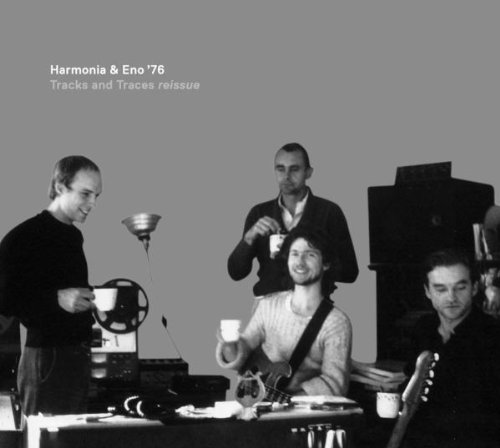
At the studio in Forst, Hans-Joachim Roedelius, Dieter Moebius, Michael Rother and Brian Eno spent eleven summer days recording what was meant to be their third album. The working title was Harmonia ’76. However, by then, “Michael Rother was wanting to concentrate on his solo career. Once the album was completed, it became apparent Harmonia had run its course. It was evolution.” So, Harmonia ’76 was never released until 1997.
During the next thirty-one years, it was thought that the master tapes had gone missing. “That was a rumour. Harmonia ’76 was released as Tracks and Traces in 1997.” Then ten years later, in 2007, Harmonia reunited.
Live ’74.
The reunion was for the release of their Live 1974 album. It featured a a recording of Harmonia’s concert on the 23rd March 1974, at Penny Station Club in Griessem, Germany.
Live ’74 features just five lengthy tracks. As Harmonia open the show with a near eleven minute version of Schaumburg instantly, the listener is transported back to that night on 23rd March 1974. Harmonia then work their way through Veteranissimo, which becomes a seventeen minute epic, Arabesque and the Magnus Opus that’s Holta-Polta. Then Harmonia close the set with Ueber Ottenstein. These five tracks are a snapshot of Harmonia at the peak of their powers. They were one of the greatest German bands, but very few people had realised this. By 2007, when Live ’74 was released, it was common knowledge that Harmonia were Komische royalty.
To celebrate the release of Live 1974, Harmonia played live for the first time since 1976. This landmark concert took place at the Haus der Kulturen der Welt in Berlin, on November 27th 2007. Sadly, it was the last time Harmonia played together.
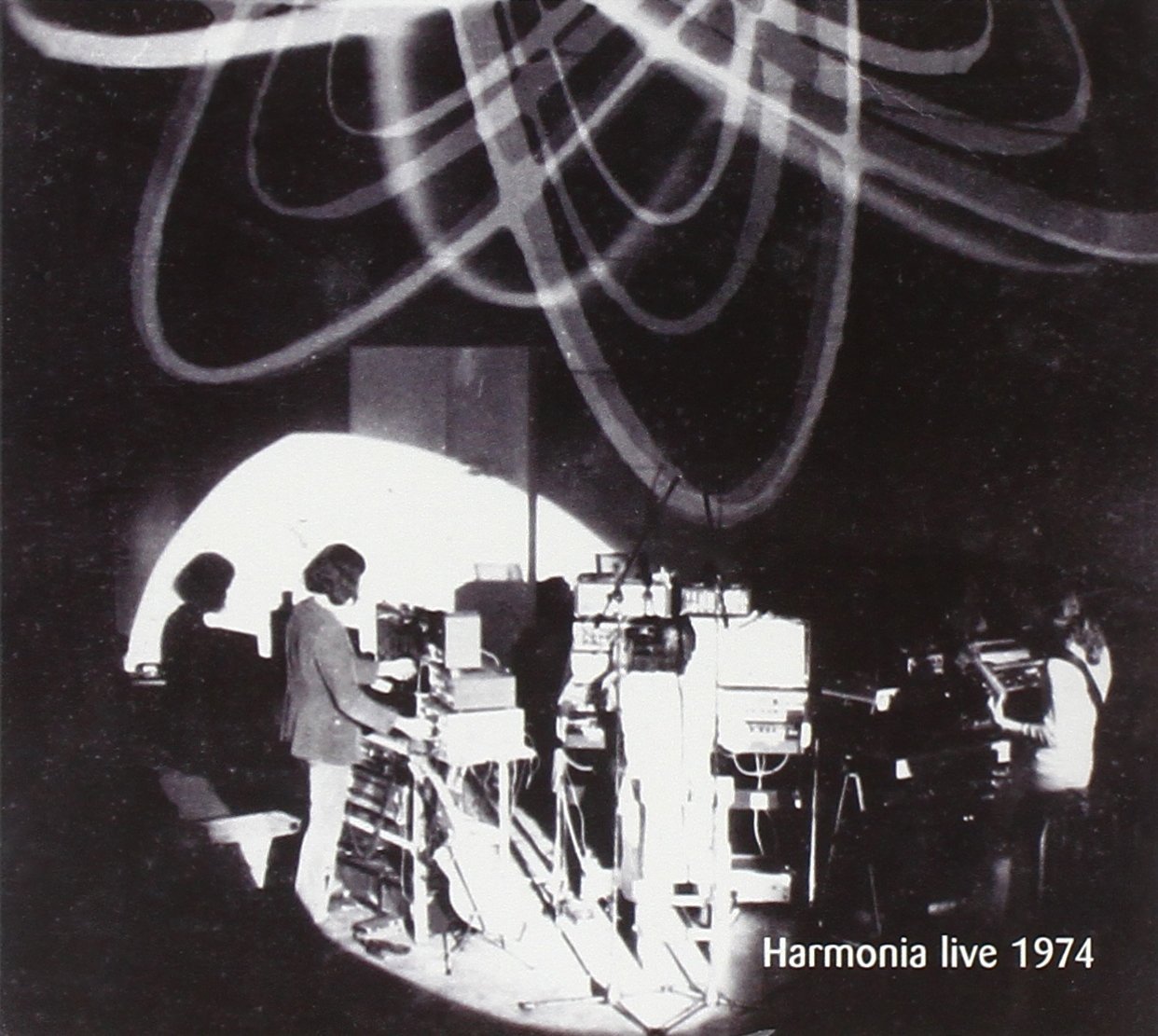
After a brave and lengthy battle against cancer, Dieter Moebius died on 20th July 2015. Sadly, he never lived to see the release of the Harmonia box set Complete Works. Michael’s saddened by the passing of his old friend. During the making of Complete Works, Michael says: “I always made sure to keep Dieter up to date with how Complete Works was progressing. Only after he had approved everything, did I move on. I would never have done anything without his approval.” Four months after Dieter Moebius’ passing, the Complete Works’ box set is ready for release.
The Complete Works’ box set is fitting reminder of the group that Dieter Moebius played such a big part of. Along with Hans-Joachim Roedelius and Michael Rother, Dieter Moebius was part of one of the most innovative groups in the history Kosmische musik. They’re now regarded as one of the finest purveyors of Kosmische musik. Harmonia sit alongside Can, Kraftwerk and Neu! at Kosmische musik’s top table.
Sadly, it was long after Harmonia released two classic albums, Musik Von Harmonia and Deluxe that they received the recognition they deserved. Nowadays, Harmonia are regarded as one of the most important, influential and innovative Komische bands of the seventies. That becomes apparent as one listens to the Complete Works box set, which will be released by Grönland Records on the 30th November 2015.
The lovingly compiled Complete Works box set features five digitally remastered LPs, including: Musik Von Harmonia, Deluxe, Tracks and Traces, Live ’74 and an album of unreleased material. Then there’s a thirty-six page booklet, download code and a copy of an original tour poster.” It’s a fitting reminder of a groundbreaking group, Harmonia, who have influenced several generations of musicians. However, the Complete Works box set is also a fitting tribute to Dieter Mobieus.
Hans-Joachim Roedelius said recently: “after a lifelong friendship, losing Dieter has left a void. We were friends since 1969, and spent a lifetime making music. Many a month we spent on the road, talking, and enjoying friendship as the kilometres passed by. We travelled the world together, and enjoyed every minute. So losing Dieter has come as a shock, albeit it was expected. However, I have great memories of a great man, and a great friend, who I’ll never forget.” This includes a rich musical legacy, including the music Dieter Mobieus made with Harmonia.
Now, just over forty years after the release of Musik Von Harmonia and Deluxe, the music of Harmonia is more popular than ever. This is ironic. Michael Rother remembers how: “the seventies weren’t a good time for Harmonia. Our music was ignored, it was tough to survive during this period.” Now however, things are very different for Harmonia. They’re quite rightly regarded as one the giants Komische music. Harmonia are regarded as just as important, influential and innovative as Can, Kraftwerk and Neu! A reminder of why can be found in the Complete Works box set, which celebrates and documents Harmonia’s illustrious career.
HARMONIA COMPLETE WORKS.

GILES PETERSON PRESENTS-SUN RA AND HIS ORCHESTRA TO THOSE OF EARTH…AND OTHER WORLDS.
GILES PETERSON PRESENTS-SUN RA AND HIS ORCHESTRA TO THOSE OF EARTH…AND OTHER WORLDS.
During a career that spanned six decades, Sun Ra released around 125 albums. These were no ordinary albums. They featured Sun Ra and His Orchestra combining Egyptian history and space-age cosmic philosophy with freeform jazz. It was unlike anything anyone had heard before. That wasn’t surprising.
Musically, Sun Ra was a maverick. He did things his way. Soon, he was one of jazz music’s pioneer. No wonder. Sun Ra was determined to create music that was both innovative and groundbreaking. This meant that constantly, Sun Ra’s had to push musical boundaries. He was never content to stand still musically. Similarly, he was always striving to reinvent his music.
That was the case whether in the studio or live. For Sun Ra, the original version of a song was merely the starting point. What it became, was anyone’s guess? Sun Ra and His Orchestra were determined to innovate, and reinvent a track. This meant his music headed in the most unexpected directions. It was a roller coaster ride, as Sun Ra and His Arkestra seamlessly combined Egyptian history and space-age cosmic philosophy with freeform jazz. The self confessed member of the angel race was regarded as a one off. Sun Ra was unique, and enigmatic.
Very few people knew the real Sun Ra. One word that’s constantly used to describe him is enigmatic. Hence his nickname Mr. Mystery. In mid-thirties, Mr. Mystery claimed he had a visionary experience. He believed he had transported to Saturn, where he spoke to the Angel Race. They warned him the world was heading for chaos and Sun Ra could make a difference with his music. Sun Ra’s music certainly made a difference.
For six decades Sun Ra was heralded as one of the jazz’s pioneers and innovators. Sadly, Sun Ra died in 1993, aged just seventy-nine. Since then, many people have kept Sun Ra’s music alive, and introduced it to another generation of music lovers. This includes DJ Giles Peterson, who has compiled a new compilation of Sun Ra’s music.
Giles Peterson Presents-Sun Ra and His Orchestra To Those Of Earth…and Other Worlds. This double album, which will be released by Strut Records on 30th November 2015. It’s available as a two CD set, double album and as a digital download. There’e a total of thirty-four tracks on Giles Peterson Presents-Sun Ra and His Orchestra To Those Of Earth…and Other Worlds. Quite simply, it’s the perfect followup Strut’s previous Sun Ra compilation, Marshall Allen Presents Sun Ra and His Arkestra In The Orbit Of Sun Ra. These two compilations are the perfect introduction to the man born Herman Poole Blount.
Before dawning the moniker Sun Ra, Herman Poole Blount was born on the ‘22nd’ of May 1914, in Birmingham, Alabama. Very little is known about Herman Poole Blount’s early life. So much so, that for many years, nobody knew what age he was. What we do know, is that growing up, Herman Poole Blount immersed himself in music.
He learnt to play the piano at an early age and soon, was a talented pianist. By the age of eleven, Herman Poole Blount was to able read and write music. However, it wasn’t just playing music that Herman Poole Blount enjoyed. When musicians swung through Birmingham, Herman Poole Blount was there to see everyone from Duke Ellington to Fats Waller play. Seeing the great and good of music play live inspired Herman Poole Blount to become a professional musician.
By his mid teens, Herman Poole Blount was a high school student, but even by then, music was his first love. His music teacher John T. “Fess” Whatley realised this, and helped Herman Poole Blount’s nascent musical career.
John T. “Fess” Whatley was a strict disciplinarian, and this rubbed off on Herman Poole Blount. Later, he would acquire a reputation as a relentless taskmaster when he formed his Arkestra. He was determined that the musicians in his Arkestra to reach his high and exacting standards and fulfil the potential that he saw in them. At rehearsals, musicians were pushed to their limits, but this paid off when they took to the stage. Led by Sun Ra, the Arkestra in full flow were peerless. However, that was way in the future. Before that, Herman Poole Blount’s career began to take shape.
In his spare time, Herman Poole Blount was playing semi-professionally in various jazz and R&B groups, and other times, he worked as a solo artist. Before long, Herman was a popular draw. This was helped by his ability to memorize popular songs and play them on demand. Strangely, away from music, the young Herman Poole Blount was very different.
He’s remembered as studious, kindly and something of a loner. Herman Poole Blount was also a deeply religious young man despite not being a member of a particular church. One organisation that Herman Poole Blount joined was the Black Masonic Lodge. This allowed him access to one of the largest collection of books in Birmingham. For a studious young man like Herman Poole Blount, this allowed him to broaden his knowledge of various subjects. Whether this included the poetry and Egyptology that would later influence his musical career.
In 1934, twenty-year-old Herman Poole Blount was asked to join a band that was led by Ethel Harper. She was no stranger to Herman Poole Blount, and just a few years earlier, had been his high school biology teacher. Just a few years later, and he was accepting Ethel Harper’s invitation to join her band.
Before he could head out on tour with Ethel Harper’s band, Herman Poole Blount joined the local Musicians’s Union. After that, he embarked on a tour of the Southeast and Midwest. This was the start of Herman Poole Blount’s life as a professional musician. However, when Ethel Harper left her band to join The Ginger Snaps, Herman Poole Blount took over the band.
With Ethel Harper gone, the band was renamed The Sonny Blount Orchestra, and it headed out on the road and toured for several months. Sadly, The Sonny Blount Orchestra wasn’t making money, and eventually, the band split up. However, other musicians and music lovers were impressed by The Sonny Blount Orchestra.
This resulted in Herman Poole Blount being always in demand as a session musician. He was highly regarded within the Birmingham musical community, so much so, that he was awarded a music scholarship to Alabama Agricultural and Mechanical University in 1937. Sadly, he dropped out after a year when his life changed forever.
In 1937, Herman Poole Blount experienced what was a life-changing experience. It’s a story he told many times throughout his life. He describes a bright light appearing around him and his body changing. “I could see through myself. And I went up … I wasn’t in human form … I landed on a planet that I identified as Saturn. They teleported me. I was down on a stage with them. They wanted to talk with me. They had one little antenna on each ear. A little antenna over each eye. They talked to me. They told me to stop attending college because there was going to be great trouble in schools … the world was going into complete chaos … I would speak through music, and the world would listen. That’s what they told me.” For a deeply religious young man, this was disturbing and exciting. It certainly inspired the young Herman Poole Blount.
After his: “trip to Saturn,” Herman Poole Blount decided to devote himself to music. So much so, that he hardly found time to sleep. Day in, day out, Herman Poole Blount spent his time practising and composing new songs in his first floor home which he had transformed into a musical workshop. That was where also where he rehearsed with the musicians in his band. Away from music, Herman Poole Blount took to discussing religious matters. Mostly, though, music dominated his life.
It was no surprise to when Herman Poole Blount announced that he had decided to form a new band. However, his new band was essentially a new lineup of The Sonny Blount Orchestra. It showcased the new Herman Poole Blount, who was a dedicated bandleader, and like his mentor John T. “Fess” Whatley, a strict disciplinarian. Herman Poole Blount was determined his band would be the best in Birmingham. This proved to be the case as seamlessly, The Sonny Blount Orchestra were able to change direction, as they played an eclectic selection of music. Before long, The Sonny Blount Orchestra were one of most in-demand bands in Birmingham, and things were looking good for Herman. Then in 1942, The Sonny Blount Orchestra were no more when Herman was drafted.
On receiving his draft papers, Herman Poole Blount declared himself a conscientious objector. He cited not just religious objections to war and killing, but that he had to financially support his great-aunt Ida. Then there was the chronic hernia that blighted Herman Poole Blount’s life. Despite his objections the draft board rejected his appeal, and things got worse for Herman Poole Blount.
Herman Poole Blount’s family was embarrassed by his refusal to fight, and some turned their back on him. Eventually, though, Herman Poole Blount was offered the opportunity to do Civilian Public Service. However, he failed to appear at the camp in Pennsylvania on the December ‘8th’ 1942.
This resulted in Herman Poole Blount being arrested, and when he was brought before the court, Herman Poole Blount debated points of law and the meaning of excerpts from the Bible. When this didn’t convince the judge Herman Poole Blount said he would use a military weapon to kill the first high-ranking military officer possible. This resulted in Herman Poole Blount being jailed. For Herman, this led to one of the most disturbing periods in his life.
Herman Poole Blount’s experience in military prison were so terrifying and disturbing that he felt he no option but to write to the US Marshals Service in January 1943. By then, Herman felt he was on the verge of a nervous breakdown. He was suffering from stress and feeling suicidal. There was also the constant fear that he would be attacked by others within the military prison. Fortunately, the US Marshals Service looked favourably on his letter.
By February 1943, Herman Poole Blount was allowed out during the day to work in the forests around Pennsylvania. At nights, he was able to play the piano. A month later, Herman Poole Blount was reclassified and released from military prison. This brought to an end what had been a harrowing period of his life.
Having left prison, Herman formed a new band. They played around the Birmingham area for the next two years. Then in 1945, when his Aunt Ida died, Herman Poole Blount left Birmingham, and headed to the Windy City of Chicago.
After moving to Chicago, Herman Poole Blount quickly found work. He worked with Wynonie Harris and played on his two 1946 singles, Dig This Boogie and My Baby’s Barrelhouse. After that, Herman Poole Blount worked with Lil Green in some of Chicago’s strip clubs. Then in August 1946, Herman Poole Blount started working with Fletcher Henderson. However, by then, Fletcher’s fortunes were fading.
By then, Fletcher Henderson’s band was full of mediocre musicians. The main man, Fletcher Henderson, was often missing, as he was still recovering after a car accident. What Fletcher Henderson needed was someone to transform his band’s failing fortunes. This was where Herman Poole Blount came in. His role was arranger and pianist, but realising the band needed to change direction, he decided to infuse Fletcher Henderson’s trademark sound with bebop. However, the band were resistant to change and in 1948, Herman Poole Blount left Fletcher Henderson’s employ.
Following his departure from Fletcher Henderson’s band, Herman Poole Blount formed a trio with saxophonist Coleman Hawkins and violinist Stuff Smith. Alas, the trio was somewhat short-lived and didn’t release any recordings. Not long after this, Herman Poole Blount would make his final appearance as a sideman on violinist’s Billy Bang’s Tribute to Stuff Smith. After this, Herman Poole Blount became Sun Ra.
By then, Chicago was changing, and was home to a number of African-American political activists. Soon, a number of fringe movements sprung up who were seeking political and religious change. When Herman Poole Blount became involved, he was already immersing himself in history, especially, Egyptology. He was fascinated with the Chicago’s many ancient Egyptian-styled buildings and monuments. This resulted in Herman Poole Blount discovering George G.M. James’ The Stolen Legacy. Discovering this book was a life-changing experience.
In The Stolen Legacy, George G.M. James argues that classical Greek philosophy actually has its roots in Ancient Egypt. This resulted in Herman Poole Blount concluding that the history and accomplishments of Africans had been deliberately denied and suppressed by various European cultures. It was as if his eyes had been opened. For Herman Poole Blount, this was just the start of a number of changes in his life.
As 1952 dawned, Herman Poole Blount had formed a new band, The Space Trio. It featured saxophonist Pat Patrick and Tommy Hunter. At the time, they were two of the most talented musicians Herman knew. This allowed him to write even more compacted and complex songs. However, by October 1952, he wasn’t writing these songs as Herman Poole Blount. No. Sun Ra was born in October 1952.
Just like Malcolm X and Muhammad Ali, adopting the name Sun Ra was perceived by some as Herman choosing to dispense with his slave name. This some felt, was a kind of rebirth for Sun Ra. It certainly was a musical rebirth.
After Pat Patrick got married, he moved to Florida, which left The Space Trio with a vacancy for a saxophonist. Tenor saxophonist, John Gilmore was hired and filled the void. He would become an important part of Sun Ra’s band. So would the next new recruit alto saxophonist Marshall Allen. They were then joined by saxophonist James Spaulding, trombonist Julian Priester and briefly, tenor saxophonist Von Freeman. Another newcomer was Alton Abraham, who would become Sun Ra’s manager. He made up for Sun Ra’s shortcomings when it came to business matters.
While he was a hugely talented bandleader, who demanded the highest standards, Sun Ra, like many other musicians, was no businessman. With Alton Abraham onboard, Sun Ra could concentrate on music while his new manager took care of business. This included setting up El Saturn Records, an independent record label, which would release many of Sun Ra’s records. However, El Saturn Records didn’t released Sun Ra and His Arkestra’s debut album, Jazz By Sun Ra.
Jazz By Sun Ra was released in 1956, on the short-lived Transition Records. However, Sun Ra and His Arkestra’s sophomore album Super Sonic Jazz was released in March 1956, on El Saturn Records. Sound Of Joy was released on Delmark in November 1956. For the next few years, El Saturn Records released most of Sun Ra and His Arkestra’s albums. By his death in 1993, Sun Ra had released over 125 albums. The man they once called Mr. Mystery was by then, one of the most prolific recording artists. Sun R was also regarded as one of the pioneers of free jazz. Since then, Sun Ra’s popularity has grown, and every year, his music is discovered by a wider audience.
For those looking for an introduction to Sun Ra’s recording career, Giles Peterson Presents-Sun Ra and His Orchestra To Those Of Earth…and Other Worlds is the perfect starting point. It features a selection of Sun Ra’s best and most innovative works. They come not just from his best known albums, but some of his lesser known albums. And there were plenty of these.
The fifties and sixties saw Sun Ra at his most productive. He oversaw the pressing of records, and drew the artwork himself. Other times, Sun Ra oversaw the recording of concerts. They were later released on vinyl. Often, these live recordings came in a plain white bag. Nowadays, they’re a prized item among collectors, and change hands for ever increasing sums of money. Those that have them aren’t parting with them. Others who want them, hungrily lust after them. After all, Sun Ra is one of the most collectable artists in music.
To collect the thirty-four tracks on Giles Peterson Presents-Sun Ra and His Orchestra To Those Of Earth…and Other Worlds would be beyond those with the deepest pockets. Collecting copies of each track would require a second mortgage or the sale of a kidney. So the money spent on Giles Peterson Presents-Sun Ra and His Orchestra To Those Of Earth…and Other Worlds will be money well spent. It’s crammed full of timeless, innovative music, so choosing the highlights isn’t going to be easy. In homage to Sun Ra’s dedication to Egyptology, I’ll pick seven track from each disc. The number seven in Egyptology is a symbol of perfection, effectiveness and completeness. That seems fitting when taking about Sun Ra.
Side One.
Opening side one of Giles Peterson Presents-Sun Ra and His Orchestra To Those Of Earth…and Other Worlds is Calling Planet Earth. It’s credited to Sun Ra and His Myth-Arkestra, and is a track from their 1963 album When Sun Comes Out. It was released on the Saturn Research label, and finds Sun Ra at his most accessible. Pensive and thoughtful sounding, Calling Planet Earth is just the start of captivating journey with cosmic jazz pioneer Sun Ra as the guide.
India opened Sun Ra and His Arkestra’s 1957 debut album Super-Sonic Jazz. It was released on El Saturn Records, and was unlike the majority of the music being released in 1957. Super-Sonic Jazz was a groundbreaking fusion of free jazz, avant-garde and big band music. The new met the old on Super-Sonic Jazz, and one its highlights was India where a musical pioneer introduced himself to the world.
Not only was Sun Ra reinventing his music, but he constantly changed his bands name. By 1970, they were known as Sun Ra and His Intergalactic Infinity Arkestra. That was when the album The Night Of The Purple Moon was released on Thoth Intergalactic, an imprint of El Saturn Records. One of the highlights of the album is a Sun Ra classic, Love In Outer Space, which is a welcome addition to Giles Peterson Presents-Sun Ra and His Orchestra To Those Of Earth…and Other Worlds.
In 1978, The Sun Ra Quartet release their New Steps album on Horo Records. By then, The Sun Ra Quartet included John Gilmore. The legendary free jazz tenor saxophonist was a shrewd addition to Sun Ra’s latest band. He plays a leading role on New Steps. This includes on When There Is No Sun, which features a musical masterclass where elements of free jazz meet soul jazz. It’s a heady brew, as Sun Ra continues to reinvent his music.
One of the albums Sun Ra and His Solar-Myth Arkestra released in a plain white bag was The Lady With The Golden Stockings. This was in 1966. A year later, in 1967, the album was rereleased as The Nubians Of Plutonia, on the Saturn Research label. That wasn’t the end of the story. In 1969, The Nubians Of Plutonia was rereleased again. This time, it featured a new cover by Richard Pedreguera. Since then, many regard Nubians Of Plutonia as one of Sun Ra’s classic albums. It’s best described as a genre-melting album. Proof of this is Watusa, a glorious fusion of hard bop and free jazz. It’s Sun Ra and His Solar-Myth Arkestra at their best, and most innovative.
As an added bonus, there’s a quartet of live unreleased tracks on Giles Peterson Presents-Sun Ra and His Orchestra To Those Of Earth…and Other Worlds. The version of Strange Worlds was recorded in France, and features Sun Ra and His Arkestra. They provide a tantalising taster of what Sun Ra and His Arkestra live sounded like in their prime.
Closing disc one of Giles Peterson Present-Sun Ra and His Orchestra To Those Of Earth…and Other Worlds is Blackman. It was recorded by Sun Ra and His Blue Science Arkestra for his 1972 album Universe In Blue. Later in 1972, Universe In Blue was released on El Saturn Records. One of the tracks that caught the attention of critics and record buyers, was the defiant anthem Blackman.
Side Two.
Just like disc one, it’s not easy to choose the highlights of disc two of Giles Peterson Presents-Sun Ra and His Orchestra To Those Of Earth…and Other Worlds. A good place to start is the opening track Twilight. It’s a track from Sun Ra And His Astro Infinity Arkestra’s 1971 album My Brother The Wind, Vol II. This eleven track album was recorded during 1969 and 1970. By then, Sun Ra was an early adopter of synths. They feature on the album. So does tenor saxophonist John Gilmore. Along with this stellar lineup, Sun Ra showcases his considerable skills. Especially on Somebody Else’s World, one of the albums highlights.
By 1979, Sun Ra had decided to change the name of his band again. This time, they became Sun Ra and His Intergalactic Myth-Science Solar Arkestra. Sun Ra’s latest band’s debut was Sleeping Beauty, which was released in 1979 on El Saturn Records. The centre-piece of the album, was the modal classic Sleeping Beauty. It’s classic Sun Ra and shows Sun his versatility.
When Children Of The Sun was released on Saturn Research, in 1985, it proved to be a controversial album from Sun Ra and His Arkestra. Some of the tracks had featured on the 1983 album Ra To The Rescue. However, Children Of The Sun was one of the new tracks. This mesmeric, anthemic and uplifting track lent its title to the album. When critics reviewed Children Of The Sun, they called the title-track the best of the new tracks. Sun Ra’s career may have been five decades old, but he was still creating music that was relevant to a new generation of music lovers.
The cover of Sun Ra and His Myth-Science Arkestra’s 1963 album When Sun Comes Out features Sun Ra sitting at a piano, with a cape draped around his shoulders. He looks like a musical superhero. His superpower was making music. Not just any type of music, but some of the most innovative free jazz of the early sixties. When Sun Comes Out is an example of this. Dark, moody, but melodic and captivating, the musical superhero weaves his magic, and saved the world from third rate jazz.
Sun Ra And His Solar Arkestra recorded On Jupiter in 1979. The album was released on El Saturn Records. Some well known names joined Sun Ra. This included trumpeter Eddie Gale. He plays his part on what’s a hidden gem in Sun Ra’s back-catalogue. The highlight of the album has to be On Jupiter, a quite beautiful, melodic track. Gone is the avant-garde, experimental sound of many of Sun Ra’s albums. Instead, Sun Ra and the Arkestra produce a much more traditional sounding track, which shows yet another side to this musical chameleon.
The cinematic sounding There Are Other Worlds (They Have Not Told You Of) is a track from Sun Ra’s 1978 album Lanquidity. It was released on the Philly Jazz label. It’s a mixture of the melodic and avant-garde. This is something Sun Ra did so well. He plays it straight before throwing a musical curveball. There Are Other Worlds (They Have Not Told You Of) is a perfect example of this.
My final choice from Giles Peterson Present-Sun Ra and His Orchestra To Those Of Earth…and Other Worlds is a live version of Space Is The Place. It’s a track that even those with just a passing interest in Sun Ra’s music will have heard. Space Is The Place is a favourite of compilers. Usually, the original version is chosen. It was the title-track of Sun Ra’s 1973 album for Blue Thumb Records. However, it became favourite of Sun Ra and His Arkestra. Together, they reinvent one of Sun Ra’s best known tracks, which seems a fitting finale to what’s without doubt a fitting followup to Marshall Allen Presents Sun Ra and His Arkestra In The Orbit Of Sun Ra. These two compilations are the perfect introduction to Sun Ra, a true musical innovator.
Sun Ra’s career lasted six decades. During that period, Sun Ra released around over 125 album. These albums showcase one of the most enigmatic and innovative musicians of the 20th Century. That’s no exaggeration.
Many artists are described as innovative. However, very few really are. Sun Ra is one of the exceptions. From the moment he dawned the role of Sun Ra, his music was transformed. It became much more complex. This was only possible because Sun Ra found liked minded musicians. Among them were Pat Patrick, Tommy Hunter, John Gilmore, Marshall Allen, James Spaulding, Julian Priester and Art Yard. They became Sun Ra’s legendary Arkestra.
For nearly forty years, Sun Ra and His Arkestra pushed musical boundaries. Sun Ra was a perfectionist and relentless taskmaster. With some of most talented, inventive and adventurous musicians of their generation, Sun Ra set about honing the Arkestra’s sound. He was demanding and exacting standards. Second best was no use to Sun Ra. What he was after was an Arkestra who were innovators and musical adventurers.
Sun Ra was never content to stand still musically. Similarly, he was always striving to reinvent his music. The original version of a song was merely the starting point. What it became, was anyone’s guess? Sun Ra was forever determined to innovate. When he reinvented a track, he took the music in the most unexpected direction. He combined Egyptian history and space-age cosmic philosophy with freeform jazz. This innovative fusion transformed the career of the man born Herman Poole Blount.
Eventually, Sun Ra became a giant of jazz. This took time, patience and dedication. He had come a long way since his early days in Birmingham, Alabama. Sadly, very little is known about Sun Ra’s early year. This just adds to the man many called Mr. Mystery.
So does his alleged ‘trip’ to Saturn, which changed Sun Ra’s life forevermore. Thereafter, Sun Ra became added philosopher to his C.V. However, it was music which made Sun Ra famous.
Even twenty-two years after his death, interest in Sun Ra’s music is growing. So Strut Records couldn’t have picked a better time to release Giles Peterson Present-Sun Ra and His Orchestra To Those Of Earth…and Other Worlds. It’s available on 30th October 2015. Giles Peterson Present-Sun Ra and His Orchestra To Those Of Earth…and Other Worlds is the perfect introduction to a musical pioneer, whose career spanned six decades and 125 albums of groundbreaking and inventive music.
GILES PETERSON PRESENTS-SUN RA AND HIS ORCHESTRA TO THOSE OF EARTH…AND OTHER WORLDS.

BOY-WE WERE HERE.
BOY-WE WERE HERE.
Valeska Steiner and Sonja Glass first met in 2005, at the Hochschule für Musik und Theater Hamburg. They were both students on a pop music course.
Singer Valeska Steiner had travelled from Zurich in Switzerland, to join the course. Bassist Sonja Glass was local. She had been born in Hamburg, and lived in the city all her life. Soon, Valeska and Sonja became close friends. By 2007, they decided to form a band, and put what they had spent the last two years learning into practise.
Their nascent band was called BOY. Initially, BOY concentrated on playing live. This allowed them to hone their sound. It was a case of BOY were putting into practise what they had just learnt at Hochschule für Musik und Theater Hamburg into practise.
Given that BOY had just completed a course in pop music, this gave them an advantage over other bands. They knew the perils and pitfalls of the music industry. The two members of BOY knew how important it was to play live. Not only did it allow BOY find their voice and hone their sound, but it allowed the nascent band to build a following. So that’s what BOY spent the next three years doing.
It took time. BOY were no overnight success story. That never happens. Just like so many bands before then, BOY discovered it’s not easy for a new and inexperienced band to get gigs. So, they played wherever they could get a booking. During this period, Sonja Glass’ mother drove BOY to concerts. She believed in BOY, who after three years hard work and perseverance, were beginning to make a breakthrough.
By 2010, BOY’s popularity had grown. Their star was in the ascendancy. So the two members of BOY, decided to record their debut E.P.
Hungry Beast.
For their Hungry Beast E.P., five tracks were chosen. This included three penned by the two members of BOY. Drive Darling, July and Skin showcased Valeska Steiner and Sonja Glass’ songwriting skills. Valeska Steiner also cowrote Zapping with Adrian Stern. The final track on the Hungry Beast was a cover of Ben Folds Fred Jones, Pt. 2. These five tracks were recorded in Berlin in June 2010, and released later that year.
The Hungry Beast E.P. was well received by both critics and music fans. BOY’s music was beginning to find a wider audience. Surely, it was only a matter of time before BOY came to the attention of a record company?
And so it proved to be. In 2011, Berlin based Grönland Records swooped, and signed BOY. For BOY this was a coup. Grönland Records were one of Germany’s leading independent labels. Their career was in good hands.

Mutual Friends.
Before long, Grönland Records sent BOY into the studio. By then, the two members of BOY had penned twelve tracks. This included Drive Darling, July and Skin from BOY’s Hungry Beast E.P. A further nine new tracks would make their debut on what became Mutual Friends. It was produced by Philipp Steinke.
This made sense. Philipp Steinke had produced BOY’s debut E.P. The Hungry Beast. He was an experienced singer and musician, who was just beginning his production career. However, the advantage Philipp Steinke had, was he knew BOY, and had worked with them before. This stood him in good stead, as BOY recorded the twelve tracks that became their debut album Mutual Friends. Once the album was complete, it was scheduled for release in the autumn of 2011.
Before the release of Mutual Friends, critics had their say on BOY’s debut album. Rolling Stone, The New York Times and Filter were all won over by BOY’s debut album. So were record buyers.
Soon, Mutual Friends was selling well in Germany. This was helped by the success of four singles. The lead single was Little Numbers, with Waitress, Drive Darling and This Is The Beginning all proving popular. So popular, that Mutual Friends was released in 2013 in Britain, North America and Japan.
By then, Mutual Friends had won the 2012 European Border Breakers Award. This was just the start of a roller coaster year for BOY. Soon, they were playing at Hamburg’s prestigious Stadtpark, in front of a 4,000 audience. After that, BOY headed out on tour.
Across the world, BOY continued to wow audiences. They had enjoyed a number four single in Japan’s Hot 100 chart. By then, Mutual Friends was a hugely successful album. Tens of thousands of copies of Mutual Friends had been sold, and BOY had won a glittering array of awards. BOY had come a long way since they signed to Grönland Records.
This roller coaster journey has continued apace. For four years, BOY have become a musical phenomenon. They criss-cross the globe, winning friends and influencing people with their award winning sound. However, there’s been no sign of a followup to Mutual Friends. Until now.
We Were Here.
Ten years after Valeska Steiner’s and Sonja Glass’ first met, they released their long-awaited, and much-anticipated sophomore album, We Were Here on Grönland Records. It’s the latest chapter in BOY’s roller coaster career.
For We Were Here the two members of BOY penned nine new tracks. These nine tracks were recorded and produced by Philipp Steinke. The recording of We Were Here took place at various studios, where BOY were augmented by some of Germany’s best session musicians.
Just like on Mutual Friends, producer Philipp Steinke put his years of experience to practise. He played keyboards, Juno, percussion, guitars and took charge of programming. Both members of BOY, Valeska Steiner and Sonja Glass added vocals. That wasn’t their only part in the recording of We Were Here.
When recording began, some musicians played on several tracks, other featured just once. So at the various studios, the band kept evolving. This included the rhythm section, which featured drummers Marcello Romero, Thomas Hedlund and Marco Moeller; guitarist Denis Erarslan; and Sonja Glass who played bass, guitars and Juno. Valeska Steiner added percussion. Other musicians were brought onboard to play on just one track.
A horn section was needed for We Were Here. So trombonist Michael Flury and Gregor Lentjes were drafted in. Then when Hit My Heart was being recorded, the strings came courtesy of cellist Matthias Bartolomey and Klemens Bittman on viola and violin; while Eden Boucher and David Turley added choral vocals. Gradually, We Were Here began to take shape, and eventually, recording of BOY’s much-anticipated sophomore album was completed.
All that was left was for We Were Here to be mixed and mastered. Michael Ilbert mixed We Were Here at the Hansa Mix Room in Berlin. However, Tom Coyne at Sterling Sound was chosen to master We Were Here. Now BOY could prepare for the release of their long-awaited sophomore album, We Were Here.
A lot had happened in the four years since Mutual Friends was released in the autumn of 2011. BOY’s star had been in the ascendancy ever since, and their music was popular all over the world. Since then, they had sold tens of thousands of albums, won numerous awards and enjoyed hit singles around the world. Now they were ready to release their new album.
After four years away, BOY must have been nervous about how We Were Here would be received. They needn’t have worried. BOY were back with a bang. Critics called We Were Here a BOY fitting followup to Mutual Friends. The music was variously melodic, melancholy and mischievous. Other times, it was anthemic and hook-laden. It was impossible not to be captivated by BOY, as they continue to win friends and influence people. That’s the case from the start of We Were Here.
Opening We Were Here was the title-track. Just slow, deliberate chord changes on the keyboards accompany Valeska’s pensive vocal. Soon, memories come flooding back. Sadness is omnipresent as Valeska sings: “We Were Here.” By then, the rhythm section, keyboards and percussion accompany her vocal. Later, sci-fi synths are added. They become more prominent as the vocal begins to drop out. The arrangement becomes understated before the trombone and flugelhorn are added. Neither overpower the arrangement. Just like the rest of the instruments they complement the vocal on his carefully crafted slice of heartfelt, perfect pop.
From the opening bars, Fear reminds me of the Scottish band Chvrches. Stylistically and sonically there’s similarities. That’s down to the instruments used. A pulsating synth joins the rhythm section and chiming guitar. They provide a backdrop for Valeska’s vocal, and propel the arrangement along. By then, the Fear in Valeska’s vocal seems very real. It’s as if she’s lived with it. Frustration turns to anger as she sings: “I wish I could blow it off.” There’s sadness in her voice as she realises: “it won’t let you get away.” By then, Fear is a fully fledged anthem, that’s bound to be a favourite when BOY play live.
Subtle, bubbling pizzicato strings open Hit My Heart. Soon, drums join the keyboards, percussion and harmonies are accompanying Valeska’s jaunty vocal. She almost skips through the arrangement of this carefully crafted song. As she sings: “and we’ll fast forward to the chorus, join the choir, spread the word,” this signals the entrance of harmonies. This is a masterstroke. So is the addition of the subtle bursts of strings. Everything seems to fall into place, and another irresistible slice of classy pop unfolds.
Hotel marks a stylistic change from BOY. Just a lone guitar accompanies Valeska’s wistful vocal and the track takes on
a folk-tinged sound. Sometimes, Valeska sounds like Suzanne Vega as she sings the cinematic lyrics. Later, she reminds me of Karen Carpenter. Valeska brings the lyrics about an affair to life. She describes the clandestine meetings in a Hotel: “362 do not disturb, if no one knows no one gets hurt, if he turns off his mobile phone, he’s never been this far from home.” As Sonja’s bass underpins the arrangement, keyboards and percussion frame the vocal. The tempo quickens, and the vocals full of sadness and regret. It’s a wistful and cinematic song from BOY, who showcase another side to their music.
Just like Hotel, No Sleep For The Dreamer has an understated arrangement. That’s not the end of the similarities. The lyrics have a cinematic quality. They’re also some of the best on We Were Here. That soon becomes apparent. A lone guitar takes centre-stage, before drums usher in the vocal. The tempo is slow, as Valeska delivers a hopeful, joyous vocal. “And now I’m driving home from your house, something big’s about to begin.” Throughout the song, pictures are painted. “Of morning radio, and people leaving bars.” All this is going on around Valeska. She’s found love: there’s something in the wind, there’s something big about to start, no sleep no sleep for the dreamer.”
A guitar is strummed deliberately and subtly on Flames. It almost fades away as the two members of BOY sing in unison. They compliment each other perfectly, and bring the lyrics to life. That’s the case from: “an empty house, the roof’s on fire, you’re fighting with the flames.” From there, the listener is spellbound, as the story unfolds. BOY sound not unlike Wilson Phillips. Partly, that’s because of the way their vocals interact and compliment each other. Meanwhile, the arrangement of a
chiming guitar, pounding drums, percussion and jangling keyboards augments the vocals perfectly. It doesn’t overpower the arrangement. Instead, if frames the vocals, as the story to unfold. There’s a poignancy to the closing lines: “oh if only I could find, a way to ease your troubled mind.”
Galloping percussion and the rhythm section join a crystalline guitar on New York. Taking centre-stage is Valeska’s tender vocal. She’s misty-eyed, as she remembers her first visit to New York. Memories come flooding back. Valeska shares them, and is accompanied by occasional ethereal harmonies. They add to the beauty of this cinematic ballad.
Distant percussion, bass and drums combine as Rivers Or Oceans unfolds. A chiming guitar signals the arrival of Valeska’s vocal. Bravado, confidence and relief combine as she sings: “a pale blue rising, as I’m sailing away from the scene of the crime.” As a muted bass, keyboards and drums combine, Valeska adds: “no traces behind me, yeah the water will sweep away the blood and the gold.” This is described as: “such a shimmering misfortune, such a dark kind of bliss, I’ll cry Rivers Or Oceans, ’til I get over it.” It’s the perfect crime, courtesy of BOY. They use drama, humour and irony to cover their tracks.
Into The Wild closes We Were There. A droning sound grabs the listener’s attention, before percussion, drums and a guitar combine. They provide a slow, mesmeric backdrop to Valeska’s heartfelt, hopeful and impassioned vocal. That becomes apparent as she sings: “or I could follow you, into the wild…we’d live with the animals, play by the fire.” As Valeska delivers the lyrics, a crystalline guitar adds a wistful accompaniment. It plays a supporting role to Valeska as her vocal takes centre-stage, on this heartachingly beautiful vocal. It’s the perfect way to close We Were There.
Unlike so many modern albums, We Were There is a gloriously old school album from BOY. It features just nine songs, that last only thirty-five minutes. That’s how long albums used to last. It meant record buyers were hearing a band’s best work. Nowadays, albums are padded out, and feature fifteen tracks or more. This results in the quality suffering. After all, no artist or band can write fifteen flawless tracks. However, BOY wrote have written and recorded an album that’s almost flawless.
That’s no exaggeration. Rather than write and record a sprawling album, BOY have only committed their best songs to tape. From the opening bars of We Were Here, right through to the closing notes of Into The Wild, BOY continue to captivate with music that’s cinematic, beautiful, heartfelt and hook-laden. Other times, the music on We Were Here is melodic, melancholy, joyous, ironic, poignant, dreamy and dramatic. Quite simply, We Were Here is an emotional roller coaster, that anyone who enjoys good music will enjoy.
No wonder. The two members of BOY, Valeska Steiner and Sonja Glass are talented singer, songwriters and musicians. They write, craft and record music that’s cerebral and cinematic. There’s everything from tales of love and love lost, to hurt and heartache, to drama and tragedy on We Were Here. There’s also delicious anthems and carefully crafted perfect pop. Aided and abetted by producer Philipp Steinke, Valeska Steiner and Sonja Glass create a critically acclaimed followup to Mutual Friends.
BOY have come of age musically with We Were Here, which was recently released by Grönland Records. We Were Here is a career defining album from BOY. The former pop music students have graduated summa cum laude with We Were Here, a carefully crafted album of hook-laden, perfect pop from BOY.
BOY-WE WERE HERE.

INTERVIEW WITH HANS-JOACHIM ROEDELIUS-A LIFE MAKING MUSIC.
INTERVIEW WITH HANS-JOACHIM ROEDELIUS- A LIFE MAKING MUSIC.
The words pioneer and innovator are often overused. However, it is a fitting description of Hans-Joachim Roedelius. He is, without doubt, one of the most inventive and influential musicians of the past fifty years. His music has influenced several generation of musicians. And Hans-Joachim Roedelius has released more music that most musicians.
Prolific describes Hans-Joachim Roedelius. He has released over 200 albums over the past six decades. This includes solo albums and the albums he made Kluster, Cluster and Harmonia, who Brian Eno called: “the most important band in the world.”
By then, Harmonia had released two albums. Their debut album Deluxe, was released in 1974. A year later, Harmonia released their sophomore album, Music Von Harmionia in 1975. Both albums featured innovative and influential albums. They came to the attention Brian Eno. This resulted in Harmonia and Brian Eno collaborating on an album.
Recording of the collaboration took place in the studio in Forst. Harmonia and Brian Eno spent eleven days recording an album. Once the recording sessions were complete, the album was given a working title of Harmonia ’76. It was scheduled to be released later that year. That wasn’t the case.
The master tapes to the album went missing. Despite a frantic search for the lost tapes, it looked like they were lost forever. That wasn’t the case. They were discovered two decades later. Belatedly, Tracks and Traces was released in 1997. It’s part of the Harmonia’s forthcoming vinyl box set Complete Works, which will be released by Groenland Records on 30th October 2015. The lavish and lovingly curated Complete Works box set is a celebration of Harmonia’s music. However, Harmonia is just one of many chapters in Hans-Joachim Roedelius’ career. He’s also collaborated with the great and good of music.
Over the last forty years, Hans-Joachim Roedelius has collaborated with everyone from Brian Eno and Tim Story, to Lloyd Cole, Conrad Schnitzler, Morgan Fisher and Christopher Chaplin. He is a truly prolific musician, who even today is working on ten separate collaborations. It seems Hans-Joachim Roedelius, who I interview recently, has an insatiable appetite for music. His story began in 1934, some eighty-one years ago.
The Hans-Joachim Roedelius’ story began in Berlin, on 26th October 1934. That is when one of the future leading lights of the German music scene was born. However, unlike many future musicians, Hans-Joachim Roedelius didn’t grow up in a musical household.
Music was a luxury as Hans-Joachim Roedelius grew up. Like so many young Europeans, World War II interrupted his his childhood. He grew up “hearing bombs drop across the city” of Berlin. It must have been a terrifying sound and time for young Hans-Joachim Roedelius. However, better, more peaceful times were ahead for all Europeans. It was then that music entered Hans-Joachim Roedelius in earnest.
As Hans-Joachim Roedelius grew up, he begin to discover music. “It was classical composers who I listened to. Their music was played by the great orchestras, including The Bonn Orchestra. This was my eduction, and how I discovered music. I learnt through listening.” This was the first step in Hans-Joachim Roedelius’ journey to becoming a musician. Meanwhile, his future contemporaries were studying music.
By the sixties, many of the musicians who became leading lights of the German music scene were music students. Holger Czukay, Conny Plank and Irmin Schmidt were studying under the legendary Karlheinz Stockhausen in Cologne. Meanwhile, another aspiring musician, Dieter Moebius was studying under Joseph Beuys at Düsseldorf Fine Arts Academy. Their paths would cross with Hans-Joachim Roedelius’ after they graduated.
In 1968, at the height of the psychedelic era, Hans-Joachim Roedelius “cofounded music commune Human Being.I also co-founded Zodiak Free Arts Lab in West Berlin with conceptual artist Conrad Schnitzler. At that period, I was a member of the group Human Being, a forerunner of Kluster.” For Hans-Joachim Roedelius: “this was an exciting time, where there was a sense that anything was possible. It was like a revolution. We were happy to have found this place to work. All the freelance musicians in the city found their way to Zodiak Free Arts Lab. There were members of Can, Tangerine Dream, Ash Ra, Neu! at Zodiak. They were great times.” The Zodiak Free Arts Lab was also where Hans-Joachim Roedelius met someone who would play a huge part in his career.
This was Dieter Moebius. “About the end of 1969, Dieter Moebius visited The Zodiak Free Arts Lab. He wasn’t a member. No. He just visiting, and we got talking.” The two men found they had a lot in common, including the way they believed music should be made. It was almost inevitable that Hans-Joachim Roedelius and Dieter Moebius would form a group.
Kluster.
“It was later, in 1970 that we founded Kluster.” Hans-Joachim Roedelius and Dieter Moebius joined with Conrad Schnitzler to form Kluster. However, Kluster was no ordinary band. Initially, Cluster played an eclectic instruments and utensils. “Everything was spontaneous. Improvisation was key.” Kluster’s music was described in The Crack In The Cosmic Egg magazine as “unlike anything heard before.” Hans-Joachim Roedelius admits: “that was what Kluster set out to do. Kluster was about musical activism.” Soon, the musical activists would record their debut album.
Kluster’s debut album came about in the unlikeliest of circumstances. Although band were based in West Berlin; “one night we were playing a concert in Dusseldorf. A priest just happened to be walking past, and heard the music. He liked our music, and came in to the hall. Once the concert was finished, he asked if we would like to record an album of new church music? The answer was yes!” So Kluster made the journey to the Rhenus-Studio in Gordor.
When Kluster arrived at the Rhenus-Studio, “we met Conny Plank and producer Oskar Gottlieb Blarr. We went into the studio and recorded an hour of music in one take. Religious text was added to this, and became the ‘new church music.’ The music became our first two albums Klopfzeichen and Zwei-Osterei.
Only 300 copies of both albums were pressed. Klopfzeichen was released in 1970, with Zwei-Osterei following in 1971. Critics realised the importance of Kluster’s music. It was described as quite extraordinary, bleak, stark, unnerving and full of electricity. Despite the reviews, the sales of Klopfzeichen and Zwei-Osterei were small. However, later, Kluster would be recognised as one of the most influential groups of the early seventies. This influential and innovative group would only release one further album.
This was Eruption, which was recorded by Kluster during 1971. It featured an hour of experimental music, which was recorded by Klaus Freudigmann. Eruption is quite different from Kluster’s first two albums. There is no religious text, just Kluster at their innovative best. For many, Eruption is Kluster’s finest hour. However, 1971 marked the end of an era for Kluster. One group became two.

Cluster.
In the middle of 1971, Conrad Schnitzler left Kluster, and briefly, worked with another band, Eruption. This was the beginning of the end for Kluster.
After the original lineup of Kluster split-up, “Dieter Moebius and I anglicised the band’s name, and Kluster became Cluster.” Between 1971 and 1981, Cluster would release eight studio albums and a live album. Cluster’s debut was released later in 1971.
Cluster.
When Cluster recorded their eponymous debut album, they were joined in the studio by another legend of German music, Conny Plank. He featured on Cluster, which marked a change in sound. Gone was the almost industrial, discordant sound, which was replaced by an electronic sound. Dieter and I played all the instruments and Conny added all sorts of effects. For us this was the start of a new era.”
Cluster was released later in 1971 on Phillips. “This was Cluster’s major label debut. It found Cluster at a crossroads.” They were ready to turn their back on the avant-garde, almost discordant and industrial sound of Kluster, and begin the shift towards the ambient and rock-tinged sound of the late seventies. That was the future. Cluster which had very little melody, is a series of improvised and atmospheric soundscapes.” They would become part of Cluster, which is now regarded as an innovative classic, and in a sense, this was the start of Cluster’s career in earnest.
Cluster II.
“For the followup to Cluster, Conny Plank was no longer a member of Cluster. We were now a duo, consisting of Dieter and I. Conny had other projects he wanted to concentrate on.” With three becoming two, the two remaining members took a different approach to recording. “To some extent, it was trial and error. We tried different things. Some worked, others didn’t.” Hans Hans-Joachim Roedelius explains. The end result, Cluster II “saw a further shift towards a more electronic sound,” and an album that is seen as a influential classic. Cluster were evolving, and would continue to do so.
Zuckerzeit.
Zuckerzeit, Cluster’s third album released in 1974, was co-produced by Michael Rother of Neu! “Michael first met Dieter and I in 1971. By 1973, Michael was on a break from Neu! We decided to head into the countryside to Forst, to build our own recording studio.” This could’ve been fraught with problems? “No. We knew what we were doing and trying to achieve. All of us had experience in studios, so knew what was required.” The result was a studio “where Michael, Dieter and I recorded the two Harmonia albums, Musik Von Harmonia and Deluxe.” However, before that, Zuckerzeit was released.
On the release of Zuckerzeit, in 1974 Michael Rother’s influence is noticeable. He placed more emphasis on melody, rhythm and the motorik beat.” Hans-Joachim Roedelius explains that previously, Cluster didn’t place the same importance on melody or structure. Michael introduced structure and discipline.” The result was a very different album. That would be the case through Cluster’s career. However, by then Cluster’s career was on hold. Harmonia had been born.
The Birth Of Harmonia.
After completing their recording studio in Forst, it seemed only natural that the three friends record an album. So Harmonia was born. It was meeting of musical minds. The two members of Cluster were receptive to Michael Rother’s way of working. Hans-Joachim Roedelius explains: “there were no problems, we wanted to learn. Previously, we improvised, which made playing live problematic. A song was merely the starting point, it could go anywhere. Michael however, taught us about structure. We influenced him. It was a two-way thing.”
Musik von Harmonia.
That proved to be the case. “Harmonia’s 1974 debut album, Musik von Harmonia, was a move towards ambient rock.” While Michael Rother influence can be heard, so can the two members of Cluster. Their influence is more prominent. They adds an ambient influence to what’s a groundbreaking classic. It saw this nascent supergroup seamlessly embrace and incorporate disparate musical genres. In the process, Harmonia set the bar high for future ambient rock albums. However, Harmonia changed tack on the followup to Musik von Harmonia.
The three members of Harmonia reconvened in their studio in Forst for the recording of Deluxe. Co-producing Deluxe was Conny Plank. This just happened to coincide with Harmonia changing direction musically.
Deluxe.
Deluxe saw a move towards Krautrock or Kominische music. The music was more song oriented. However, still Harmonia were experimenting, pushing musical boundaries. This was Cluster’s influence. Other parts of Deluxe had been influenced by Michael Rother. Hans-Joachim Roedelius agrees. “Michael Rother’s influence can be heard on Deluxe, more so than on Musik von Harmonia.” What was also noticeable, was that Deluxe had a more commercial sound. “This wasn’t a conscious decision. The music morphed and evolved, and the result was Deluxe.” It was released in 1975, to the same critical acclaim as Musik von Harmonia. However, the end was nigh for Harmonia.
Tracks and Traces.
Little did the three members of Harmonia realise, that Deluxe was the last album they would release for thirty-two years. For what was their swan-song, Harmonia were joined by another legend, Brian Eno.
At the studio in Forst, Hans-Joachim Roedelius, Dieter Moebius, Michael Rother and Brian Eno spent eleven summer days recording what was meant to be their third album. The working title was Harmonia ’76. However, by then, “Michael Rother was wanting to concentrate on his solo career. Once the album was completed, it became apparent Harmonia had run its course. It was evolution.” So, Harmonia ’76 was never released until 1997.
During the next thirty-one years, it was thought that the master tapes had gone missing. “That was a rumpur. Harmonia ’76 was released as Tracks and Traces in 1997.” Then ten years later, in 2007, Harmonia reunited.
The reunion was for the release of their Live 1974 album. It featured a a recording of Harmonia’s concert on the 23rd March 1974, at Penny Station Club in Griessem, Germany. To celebrate the release of Live 1974, Harmonia played live for the first time since 1976. This landmark concert took place at the Haus der Kulturen der Welt in Berlin, on November 27th 2007. By then, Hans-Joachim Roedelius had recorded nearly 200 other albums. However, following the breakup of Harmonia, Hans-Joachim Roedelius and Dieter Moebius returned to Cluster.
A New Cluster Album.
Sowiesoso.
After “Harmonia ran its course, we returned to Cluster. We had never stopped being Cluster. We played live, but didn’t release a new album until Sowiesoso, in 1976, which we recorded in just two days.” Despite being recorded in just two days, Sowiesoso found Cluster at their creative, as they recorded an album of understated and beautiful melodies. This was the start of a three year period when Cluster could do no wrong.
Enter Brian Eno.
In June 1977, the two members of Cluster were joined by three old friends. The first was Holger Czukay of Can. “Dieter and I knew Holger from way back, back to Zodiak Free Arts Lab. We hung around with members of Can. Back then, there was a great sense of community. Everyone helped and influenced each other. We even went on to tour together.” Another of the guest artists on Cluster’s 1977 album first met Dieter and Hans at a Cluster concert.
That was Brian Eno: “who Cluster jammed with in 1974. Brian joined us on stage, and we spent the second half of the concert jamming. That was how we first met Brian. Then in 1977, he joined as for the recording of Cluster and Eno. We learnt a lot from Brian. Similarly, I like to think we influenced him. That was the case when we recorded After The Heat.” Before that, Cluster and Eno was recorded.
The four great innovators got to work. They spent part of June 1977 recording enough for two albums. Conny Plank laid down bass lines, while Dieter and Hans-Joachim Roedelius played synths and keyboards. So did Brian Eno who added bass and vocals. Once the recording session was complete, the first collaboration between Cluster and Brian Eno was released later in 1977.
Cluster and Eno.
When Cluster and Eno was released later in 1977, the album was a meeting of minds. Elements of both Cluster and Brian Eno’s music melted into one. Cluster supplied elements of avant-garde, while Brian Eno’s supplied the ambient influence. When this was combined with drone and world music, the result was another classic album.
Widespread critical acclaim accompanied the release of Cluster and Eno. It was hailed a groundbreaking album, one that was way ahead of its time. Cluster and Eno is an album that Hans-Joachim Roedelius: “is proud of.” He remembers the recording sessions fondly, and sees both Cluster and Eno, and its followup After The Heat, as an equally “influential album.”
After The Heat,
Just a year after the release of Cluster and Eno, the second collaboration between Cluster and Brian Eno was released. It too, was released to critical acclaim. This fusion of ambient, art rock, avant-garde, experimental and Krautrock were combined by Cluster and Brian Eno. Again, both Cluster and Brian Eno were influencing each other.
“This was not one way. We both influenced each other. On After The Heat, I believe we influenced Brian’s production style. If you listen to David Bowie’s Low and Lodger albums which Brian Eno produced, Cluster and Harmonia’s influence can be heard. So while Brian influenced Cluster, we certainly influenced him.” After two albums with Brian Eno, Cluster’s next album saw them return to a duo.
The Return Of The Cluster Duo.
Grosses Wasser.
Following two albums with Brian Eno, Cluster returned to the studio in 1979. This time, Cluster were joined by Peter Baumann of Tangerine Dream. He would produce Grosses Wasser, Cluster’s seventh album.
When Cluster released Grosses Wasser later in 1979, it proved to be Cluster’s most avant-garde album. “This wasn’t a conscious decision. Instead, it was just a case of evolution. That was the way that the Cluster worked. It was the same live.” That became apparent on Cluster’s first live album.
Live In Vienna.
Despite releasing seven studio albums, Cluster had never released a live album. That changed when Cluster took to the stage at the Wiener Festwochen Alternativ, on June 12th, 1980. It was the only time that Cluster took to the stage with Joshi Farnbauer. The result was one of Cluster’s most experimental albums.
Sometimes, the music veered towards discordant, and was reminiscent of early performances by Kluster. Hans-Joachim Roedelius remembers: “a song was just the starting point. We never knew what direction it would take. It was improvisation at its purest. Partly, it was because we couldn’t replicate our music live.” That was the case on, Live In Vienna, which featured Cluster at their most ambitious and inventive. However, just like Harmonia four years earlier, the end was nigh for Cluster.
Curiosum.
Cluster recorded their ninth album Curiosum in 1981. Recording took place at Hamet Hof, in Vienna, which was now Hans-Joachim Roedelius’ adopted home. At Hamet Hof, Cluster recorded seven tracks. Some were relatively short by Cluster standards. Given the title, the seven tracks on Curiosum were somewhat unorthodox. However, they were unusually melodic. It was a fitting way to end chapter one of the Cluster story.
Just like Harmonia, “Cluster had run its course. We decided to concentrate on other projects. There was no fall-out, Cluster just came to a natural end. After nine albums, Cluster was over. Or was it?
The Solo Years.
By the time that Cluster came to an end, Hans-Joachim Roedelius’ was a respected solo artist. “My solo career began in 1972, and by 1978, I was working on various projects, including my debut album Durch die Wüste.” It featured Conny Plank and Dieter Moebius.” There was no ill feeling. The former member of Cluster was happy to help launch his friend’s solo career.
Durch die Wüste was released in 1978. Just like so many albums Hans-Joachim Roedelius had been involved with, critical acclaim accompanied the release of Durch die Wüste. A year later, Hans-Joachim Roedelius released his sophomore album, Jardin Au Fou. It was a fusion of ambient, avant-garde, electronica and new age music. Just like before, Hans-Joachim Roedelius was a pioneer, of what was being called new age music.
Selbstportrait, which was released in 1980, was another album of new age music. It’s described as understated and thoughtful album. That was the case with Selbstportrait Volume II and III. Already, Hans-Joachim Roedelius was showing that he was a prolific artists who is capable of juggling disparate projects “That has been the case throughout my career. Even today, I am working on seven, no ten projects. Back in 1978, I was combining Cluster and my solo career. Since then, I’ve continued to combine projects.”
Throughout the rest of the eighties, Hans-Joachim Roedelius released over a dozen solo albums. Some years he released two or three albums. It seemed Hans-Joachim Roedelius lived to work. “I love music, always have. Making music comes naturally to me. It’s what I enjoy doing.” So is innovating.
By 1986, Hans-Joachim Roedelius was still releasing groundbreaking music. This includes Wie das Wispern des Windes, an album of ambient piano music. The album had been recorded at Hans-Joachim Roedelius’ home, a friend’s house and at the Bloomsbury Theatre in London. Hans-Joachim Roedelius even designed the album cover. There seemed no end to his talents. Meanwhile, a new generation of artists were discovering the music of Hans-Joachim Roedelius.
From the early eighties, a new generation of artists had been influenced by Hans-Joachim Roedelius’ music. Whether it was the music he made with Cluster, Harmonia or Brian Eno, Hans-Joachim Roedelius’ music was proving influential. That would be the case over the next three decades.
As the eighties gave way to the nineties, groups like Primal Scream and the Stone Roses were being inspired by groups like Can, Cluster, Harmonia and Kraftwerk. So were the a new generation of electronic musicians, and even some hip hoppers. They were looking to the past for inspiration for the future. Meanwhile, Hans-Joachim Roedelius was still one of the hardest working musicians. He was looking forward.
During the nineties, Hans-Joachim Roedelius was averaging over an album a year. Still, his music was innovative, inventive and influential. There was no sign of Hans-Joachim Roedelius slowing down. Artists wanted to collaborate with hime. Then there was Hans-Joachim Roedelius various side-projects. Despite this, he managed to find time to reform Cluster.
The Return Of Cluster.
Cluster reformed in 1989, and straight away, began work on their first album for eight years. So Dieter Moebius made the journey to Austria, where his old friend was still living.
Apropos Cluster.
Recording of Cluster’s tenth album took place during 1989 and 1990. Dieter Moebius and Hans-Joachim Roedelius recorded five tracks, including the twenty-two minute epic title-track. It was part of an album that was similar to Grosses Wasser.
That is the comparisons critics drew, when Apropos Cluster was released in 1991. The only difference was, that Apropos Cluster wasn’t as rhythmic as Grosses Wasser. Instead, it was understated, ethereal and thoughtful ambient music. The followup to Apropos Cluster was the first of three live albums.
One Hour
The first of the trio of live albums Cluster released during the nineties, was One Hour. It came about after Cluster improvised in the studio for four hours. They edited this down to One Hour. The result is a truly captivating album that was released in 1995.
One Hour is Cluster at their most imaginative. They take their music in the most unexpected directions. Curveballs are constantly bowled, as what sounds like the soundtrack to a surrealist film unfolds. Elements of ambient, avant-garde and modern classical music combine, resulting in one of the most intriguing albums in Cluster’s discography.
Two years later, in 1997, Cluster released the first of two live albums. The first was Japan 1996 Live. It was followed by First Encounter Tour 1996, which was their thirteen album, was the first double album Cluster had released. It would also be the last album they released for eleven years. During that period, Hans-Joachim Roedelius released countless solo albums, side projects and collaborations.
Collaborations.
Throughout his career, Hans-Joachim Roedelius has collaborated with an eclectic selection of artists. Michael Rother and Brian Eno were among the first. That was just the start of Hans-Joachim Roedelius’ unquenchable thirst to make music.
From the eighties onwards, Hans-Joachim Roedelius would collaborate with everyone from Alexander Czjzek, keyboardist Richard Barbieri, Aqueous and Mexican vocalist Alquimia. However, one of his most high profile collaborations came with Tim Story.
As Lunz, Hans-Joachim Roedelius and Philly born composer and musician Tim Story recorded four albums. The story began in 2000, when Lunz released The Persistence of Memory. Two years later, in 2002, came Lunz’s eponymous sophomore album. Just like Lunz’s debut, it won favour with critics and cultural commentators. However, Lunz’s finest album came in 2008, when Inlandish was released. That is the album that Hans-Joachim Roedelius: “is most proud of. It’s the best album Lunz recorded and is the perfect introduction to Lunz. Recording these albums was an enjoyable period of my life, and I’ll be pleased to be reunited with Tim Story at the forthcoming festival celebrating my career.” Three other artists Hans-Joachim Roedelius has collaborated with will feature at the festival.
This includes Conrad Schnitzler, who back in 1968, co-founded the Zodiak Free Arts Lab with Hans-Joachim Roedelius. They collaborated on the album Acon 2000/1. “That brought back great memories, of the early days at Zodiak. Back then anything seemed possible. It was an exciting time not just for me, but everyone involved.” Then in 2012, Hans was joined by the son of a famous father.
Christopher Chaplin is the youngest son of comedian Charlie Chaplin. He began life as an actor, and became a composer. In 2012, Christopher Chaplin and Hans-Joachim Roedelius released their collaboration King Of Hearts. The following year, Hans-Joachim Roedelius worked with an honorary Scot.
Although he was born south of the border, Scots regard Lloyd Cole as one of their own. He was the lead singer Lloyd Cole and The Commotions, who released a quartet of albums. Their finest hour was Rattlesnakes, a stonewall classic. After Lloyd Cole and The Commotions split-up, Lloyd embarked upon a solo career. Not only has he released a string of successful albums, but has collaborated with a variety of artists. In 2013, this included Hans-Joachim Roedelius.
He has fond memories of their collaboration, Selected Studies Volume 1. “Lloyd is a nice guy, who I enjoyed working with. He is talented and interesting. I will be pleased to see him at the forthcoming festival.I’ll play piano for Lloyd who I enjoyed working with.” That is what everyone who has collaborated with Hans-Joachim Roedelius says.
There are so many people who have been fortunate enough to work with. Among them are Fabio Capanni, Felix Dorner, Hirishi Nagashima and Robin Storey. They collaborated with Hans-Joachim Roedelius on their 2001 album Evermore. Then there are the collaborations between Hans-Joachim Roedelius and Nikos Arvanitis, Morgan Fisher, David Bickley, Kava and Italian composer Alessandra Celletti. Each and every one of these artists have been fortunate enough to work with Hans-Joachim Roedelius. That list continues to grow, as “currently I’m working on ten separate projects.” Then there are Hans-Joachim Roedelius’ various side projects.
Side Projects.
Ever sice his days working with Harmonia, side projects have played an important part in Hans-Joachim Roedelius’ career. This includes Aquarello, who fused ambient music and jazz.
Aquarello were based in Austria, and featured Hans-Joachim Roedelius, multi-instrumentalist Fabio Capanni, and saxophonist Nicola Alesini. As Aquarello, they released three albums. The first was Friendly Game, which initially, was credited to Roedelius, Capanni, Alesini. It was released in 1991. By the time To Cover The Dark was released in 1993, the trio were known as Aquarello. Their swan-song was the 1998 live album Aquarello. A year later, and Hans-Joachim Roedelius embarked upon a new project.
This was the short-lived Globe Trotters. It featured Kenji Konishi, Susumu Hirasawa, Alquimia, David Bickley, Felix Jay, Alex Paterson of The Orb. The Globe Trotters only album was Drive, released in 1999. Later that year, a remix album was released. That however, was all that was heard from the Globe Trotters. They’re just one of the side projects that Hans-Joachim Roedelius has busied himself with. However, with a new millennia about to dawn, the sixty-six year old’s career was about to enjoy one of the most productive period of his career.
The Solo Years Continued.
As some artists struggled to complete one album in two years, Hans-Joachim Roedelius released eight albums between 2000 and 2001. This Hans-Joachim Roedelius acknowledges “was one of the most productive periods of my career. It’s also some of the music I’m most proud of.” Despite approaching the veteran stage, “I was still brimming with ideas, ideas that I wanted to record. It was what I enjoyed doing. There was hardly any time for anything else.”
That would be the case throughout the noughties. Hans-Joachim Roedelius’ album count was rising. He had long passed the hundred mark, and in 2015 “has released over 200 albums. I’m not finished yet. There are still the ten projects I’m working on, plus albums awaiting release.” However, back in 2007, Hans-Joachim Roedelius and Dieter Moebius decided to reform Cluster.
On The Road With Cluster..One Last Time.
It had been ten years since Cluster split-up. They reformed in 2007, and made their first appearance at the Kosmische Club, London. However, the main event was in Berlin.
Berlin ’07.
It had been thirty-eight years since Cluster played in Berlin. That was back in 1969, in the early days of Cluster. That time, Cluster played a twelve hour concert. This time around, Cluster were playing to a packed concert hall. The concert was recorded, and released in 2008 as Berlin ’07.
When Berlin ’07 was released, it featured just two lengthy tracks. This allowed Cluster to stretch their legs and experiment, while fusing musical genres. The album was well received, and resulted in Cluster returning to the studio.
Qua.
Qua was released on May 21st 2009, and showed that after making music for thirty years, Cluster were still relevant, and capable of making music that was imaginative and inventive. This was Cluster’s twelfth album, and first studio album in fourteen years.
It was described as variously cinematic, spartan, sombre and hymnal. Qua was also intriguing. Still Cluster were capable of taking the listener down avenues and alleyways that they never expected. That was what one would expect from one of the most innovative groups of the past forty years, Cluster. They decided to call it a day in November 2010. That wasn’t quite the end of the story.
Qluster.
Following the demise of Cluster, Hans-Joachim Roedelius announced he was forming a new group. Just like Cluster picked up where Kluster left off, Qluster was picking up where Cluster left off. It was an exciting time for Hans-Joachim Roedelius, and his new group.
Qluster were a trio, consisting of electronic musicians Onnen Bock and Armin Metz. They released four studio albums and a live album between 2011 and 2015. Their debut was the studio album Rufen, which was released in 2011. This was the first in a trilogy.
Fragen was also released by Qluster in 2011.The third and final instlemnt in the trilogy was released in 2012. That was Antworten. By then, Qluster were being heralded as one of the most important modern day groups. Age didn’t matter to Hans-Joachim Roedelius. What mattered was the music.
By the time Qluster released their fourth album, Lauschen Hans-Joachim Roedelius was seventy-nine. He wasn’t slowing down, and certainly hadn’t lost any of his enthusiasm for music. Several generations of record buyers were drawn to Qluster’s music. From those who grew up listening to with Kluster, Cluster or Harmonia, Qluster was essential listening. They released their fifth album earlier in 2015. Tasten however, isn’t the end of the road for Hans-Joachim Roedelius.
Far from it. Talking to Hans-Joachim Roedelius he has the energy of someone half his age. He enthuses about music, past and present. Still he constantly juggles numerous projects. “Currently, I’m working on ten different projects. Nowadays, I work with an iPad and software. It’s very different from the old days, when we worked in studios. I can make music anywhere, and the equipment is much lighter! The new software is so helpful and easy to use. Digital audio workstations and plug-ins mean anything is possible. I could never go back to what it was like. Always, I want to go forward, and make more music. One of the projects Hans-Joachim Roedelius I’m most excited about is Imagori, my recent collaboration with Christoph H. Mueller.” However, that’s not the only release that Hans-Joachim Roedelius is excited about
“On October 30th 2015, the Harmonia box set Complete Works will be released.” At last, Harmonia’s albums have been remastered and given an overdue reissue. This has been Michael Rother’s baby. The result is a loving curated and luxurious box set. Michael Rother has overseen the remastering of Harmonia-Complete Works. It will be released by Grönland Records on 30th October 2015. Included in the box set are the five digitally remastered vinyls; including Musik Von Harmonia, Deluxe, Tracks and Traces, Live ’74 and an album of unreleased material. That’s not all.
There’s a thirty-six page booklet, detailing Harmonia’s history and a tour poster and even a digital download code. Looking at the Complete Works’ box set, it’s without doubt, a luxurious, lavish and lovingly compiled product. This seems a fitting way to remember the group Brian Eno considered as: “the world`s most important rock group.“ However, the release of Complete Works is tinged with sadness.
After a brave and lengthy battle against cancer, Dieter Moebius died on 20th July 2015. The man whose been at Hans-Joachim Roedelius during some of his greatest and most ambitious musical triumphs will be missing. “After a lifelong friendship, losing Dieter has left a void. We were friends since 1969, and spent a lifetime making music. Many a month we spent on the road, talking, and enjoying friendship as the kilometres passed by. We travelled the world together, and enjoyed every minute. So losing Dieter has come as a shock, albeit it was expected. However, I have great memories of a great man, and a great friend, who I’ll never forget.” Hopefully, when the star studded lineup celebrate Hans-Joachim Roedelius’ career over four days in Berlin, they’ll take time to remember Dieter Moebius. He played a huge part in life and career of Hans-Joachim Roedelius.
And what a life it has been so far. Hans-Joachim Roedelius’ career that has lasted forty-six years. During this period, Hans-Joachim Roedelius’ has released over 200 albums. This includes some truly innovative music.
While a very few artists will be part one groundbreaking group, Hans-Joachim Roedelius has been a member of several. This started with Kluster, then Cluster and Harmonia. For the last five years, Hans-Joachim Roedelius has been part of Qluster. Just like the other groups he has been part of, they continually made music that’s innovative, inventive, imaginative and inventive. That has been the case throughout Hans-Joachim Roedelius’ career.
During his career Hans-Joachim Roedelius hasn’t been afraid to push musical boundaries to their limits, and sometimes, way beyond. That’s what you expect from a true musical pioneer. Hans-Joachim Roedelius has boldly gone, where others musicians have feared to tread.
That has been the case throughout Hans-Joachim Roedelius’ long and successful career. Now eighty-one, Hans-Joachim Roedelius thoughts are the future. This means more music that is ambitious, innovative, inspiring and influential music. That is what Hans-Joachim Roedelius has been doing for forty-six years. It’s certainly what Harmonia did for three year.
Harmonia were musical pioneers, and released music that was ambitious and innovative. It was also inspiring and influential. Even today, a new generation of musicians have been influenced and inspired by Harmonia’s two Komische classics, Musik Von Harmonia and Deluxe. So impressed was Brian Eno, that he called Harmonia: “the most important band in the world.”
Brian Eno was one of the first people to recognise the importance of Harmonia. Nowadays, they’re regarded as one of the most important bands in Komische history. That’s why it’s fitting that at last, all of Harmonia’s music has been remastered and will be reissued in the lovingly curated Harmonia box set Complete Works which will be released by by Groenland Records on 30th October 2015. Hans-Joachim Roedelius looks forward to the the Complete Works box set, which he sees a “fitting way to celebration the music of Harmonia,” the group he formed with his two friends Dieter Mobieus and Michael Rother.
INTERVIEW WITH HANS-JOACHIM ROEDELIUS- A LIFE MAKING MUSIC.
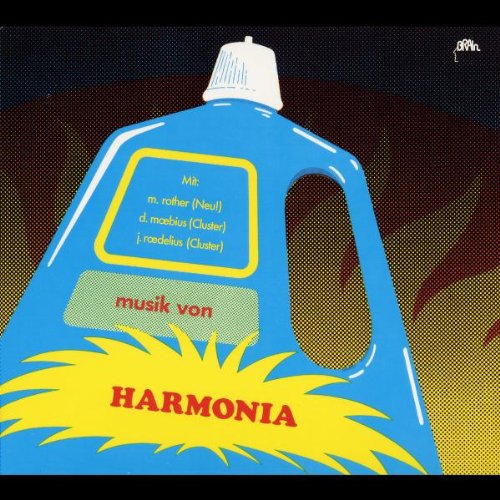
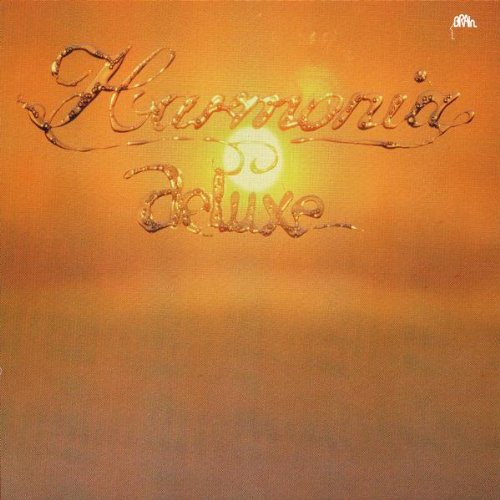
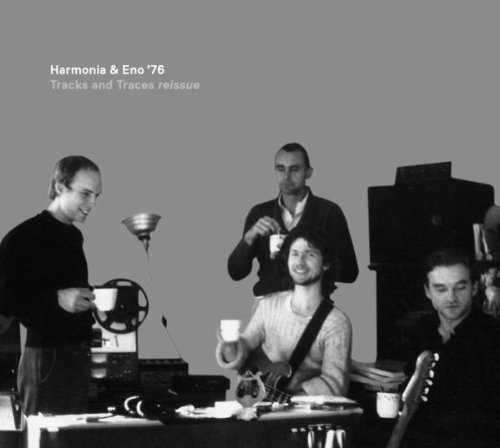
BRIAN ENO-AMBIENT 1/MUSIC FOR AIRPORTS.
BRIAN ENO-AMBIENT 1/MUSIC FOR AIRPORTS.
After leaving Roxy Music in 1973, Brian Eno’s career changed direction. Instead, his attention turned to ambient and electronic music. This was a controversial decision, given Roxy Music were one of the most successful British bands of the early seventies. Brian Eno’s creativity was being stifled. He felt he’d much more to offer music. So, he made the decision to leave Roxy music and change direction musically.
Whilst he didn’t enjoy the commercial success he enjoyed with Roxy Music, Brian Eno released a string of critically acclaimed albums. Some of his most critically acclaimed music was released between 1974 and 1983. During that period, Brian Eno could do no wrong. One of the finest albums he produced during this period, was Ambient 1/Music For Airports which was recently reissued by Glitterbeat. It was released in 1978 and is an ambient classic. However, Ambient 1/Music For Airports wasn’t Brian Eno’s debut album.
As Brian Eno’s solo career began, it was apparent he hadn’t turned his back on glam rock entirely. His 1974 debut album, Here Come The Warm Jets was a fusion of art rock, avant garde, experimental and glam rock. Here Come The Warm Jets was recorded in just twelve days in September 1973, with the help of some of rock music’s luminaries. This included Robert Fripp of King Crimson and Phil Manzqnera of Roxy Music. On its release in January 1974, Here Come The Warm Jets was well received, reaching number twenty-six in the UK and number 151 in the US Billboard 200. After Here Come The Warm Jets, Brian Eno’s music changed direction again.
Just ten months after the release of his debut album, Brian Eno returned with his sophomore album, Taking Tiger Mountain (By Strategy). It was a concept album, where Brian had been inspired by a series of postcards of a Chinese revolutionary opera, entitled Taking Tiger Mountain (By Strategy). That’s why the subject matters included revolution in China and espionage. This was what Brian Eno did so well, create cerebral, experimental music.
Accompanied by a band that featured Robert Wyatt and Phil Manzqnera, with Andy McKay of Roxy Music one of the guest artists, recording took place in September 1974. The result was an album of contrasts. Somehow, the music manages to be upbeat and dark. Essentially, Taking Tiger Mountain (By Strategy) was a concept album. Released in November 1974, Taking Tiger Mountain (By Strategy) failed to chart. Critics, however, hailed the album. They approved this progressive concept album. For Brian Eno, the lack of commercial success was surely just a minor blip. Things would improve with his third album? Surely?
Another Green World which was released in September 1975, saw a change in direction from Brian Eno. He moved further towards the ambient sound he became known for. There were less songs with lyrics. Most of the songs were ambient instrumentals. When there were songs with lyrics, they were lush, lysergic and dreamy. They were more like sonic experiments. With a band featuring John Cale and Robert Fripp, Brian Eno recorded what was undoubtably his best solo album of his career so far.
Critics realised this and hailed Another Green World a minor classic. Despite being critically acclaimed, Another Green World failed to chart. It seemed Brian Eno was enjoying the most creative period of his career, but apart from critics, nobody realised this. Maybe his next album Discreet Music, would mark a change in fortune for Brian Eno?
Discreet Music saw Brian Eno release what many critics describe as his first ambient albums. Previous albums were hybrids, while Discreet Music was purely an ambient album. Brian drew inspiration from Erik Satie and recorded an album of what was described as “furniture music.”
This meant the music was designed to blend into the ambient atmosphere of room. You didn’t need to concentrate or focus on it to the exclusion of everything else. Side one, which features the title-track, was a thirty-minute movement designed for Robert Fripp to play against in concerts. On the second side, were Three Variations on the Canon in D Minor, by Johann Pachelbel. Brian gave the Cockpit Ensemble parts of the score and asked them to repeat these parts several times. Brian also gave them the freedom to alter the tempo and improvise. This was truly groundbreaking.
Cultural commentators and critics realised this, and plaudits came Brian’s way. His ambient debut Discreet Music was released in 1975, but failed to chart. Following the disappointing sales of Discreet Music, Brian decided to change direction again.
Just over two years later, in December 1977, Brian Eno released his fifth album, Before and After Science. It saw Brian make a brief and final return to rock music. With an all-star cast, including members of Fairport Convention, King Crimson, Roxy Music, Free, Can and Cluster, ten songs were recorded in Berlin and London.
Having taken two years to make and with Bhrett Davies co-producing Before and After Science, great things were expected of the album. Especially when critics referred to the album as one of Brian’s finest albums. Sadly, that didn’t translate to album sales. Before and After Science failed to chart in the UK and reached just number 171 in the US Billboard 200. Brian’s return to rock music hadn’t worked. So his next album Ambient 1/Music For Airports was a return to ambient music.
Ambient 1/Music For Airports would prove to be the first in a quartet of the “Ambient” series. Brian came up with the Ambient term to differentiate his music from what many people referred to as “canned music.” Originally, Brian perceived the music on Ambient 1/Music For Airports as being played continually at airport to calm people down and defuse tension. This idea came to Brian when he was waiting for a plane at Bonn airport in the mid-seventies. Brian found the lack of a soundtrack uninspiring. Music like that on Ambient 1/Music For Airports was the answer. So, he recorded what he’d have liked to hear in Bonn airport.
For Ambient 1/Music For Airports four tracks were penned. Co-producer Rhett Davies, Robert Fripp and Brian wrote the opening track 1/1. Brian wrote 1/2, 2/1 and 2/2. These four tracks were recorded by a small band in London and Cologne. Robert Wyatt played acoustic piano and Brian played synths and electric piano. Vocalists included Christe Fast, Christine Gomez and Inge Zeininger. Engineers included Dave Hutchins, Conny Plank and Rhett Davies, who co-produced Ambient 1/Music For Airports with Brian Eno. Once Ambient 1/Music For Airports was completed, it was released in 1978.
When critics heard Ambient 1/Music For Airports they realised that Brian Eno had just recorded one of the best albums of his career. Some described Ambient 1/Music For Airports as a classic. They described it as innovative due to its use of tape loops and its ambient quality. Despite the reception Ambient 1/Music For Airports received, it wasn’t a commercial success. Indeed, it failed to chart. However, since then, Ambient 1/Music For Airports is seen as a classic album which deserves to be in any self-respecting record collection. I’ll tell you why, once I’ve told you about Ambient 1/Music For Airports.
Ambient 1/Music For Airports opens with 1/2. Just a slow, spacious and pensive piano are played deliberately. Synths drone in the background, as if posing a question. This piano melody is constantly repeated. as instruments fade in and out. Chimes, synths and acoustic piano played by Robert Wyatt. Ethereal, dreamy, becalming and thoughtful, the music washes over you. It’s like a balm that massages your very soul. There’s a hypnotic and mesmeric quality to the music. You’re drawn to the music, become part of it, focusing on its hidden secrets and subtleties. Sometimes, there’s a zen like quality to the music as ambient, avant garde and experimental music combine to create a soundtrack to calm any travellers weary soul.
A celestial choir opens 1/2, their voices cascading above the arrangement. Accompanying what sounds like a choir of angels are washes of synths. They too have an elegant, ethereal sound as the arrangement unfolds in waves. Again, it washes over. It’s akin to waves washing up on a deserted beach. Both have the same relaxing and becalming quality and are nine of the best minutes of minimalist music Brian Eno ever recorded. This track is also proof that sometimes, less is more.
Just a thoughtful, pensive piano opens 2/1. Soon, ethereal harmonies descend. They’re celestial and tender, drifting in and out of the arrangement. Accompanying them are a lone piano and occasional plucked bass. It’s played slowly, deliberately and as if every note has been considered with care. Space is left within the arrangement, as if mindful of Miles Davis’ comment about the space between two notes being as important as the notes them-self. The space only heightens the anticipation of the swathes of harmonies that swoop in. Tender, beautiful and otherworldly, they’re the perfect accompaniment to Brian’s piano. Ying and yang describes them as they play their part in this ethereal celestial symphony.
2/2 closes Ambient 1/Music For Airports. This ten minute track is quite different from the previous tracks. It has a cinematic sci-fi sound. A synth creates a droning, atmospheric sound. Squelchy, spacious, dubby synths prove an atmospheric, evocative and dramatic soundscape. It brings to mind a spacecraft sailing towards a distant galaxy, going where no man has gone before. Whilst the music is still minimalist, it lacks the ethereal quality. That’s no bad thing. It offers variety, and demonstrates Brian Eno’s versatility and ability to paint pictures with music.
It’s no exaggeration to say that Brian Eno’s Ambient 1/Music For Airports, his sixth solo album, is an ambient classic. I’d go further and say that Ambient 1/Music For Airports is a classic album. Minimalist, understated, spacious, ethereal, haunting and becalming, it was an ambient Magnus Opus. That’s quite fitting. Back in 1975, Brian drew inspiration from Erik Satie for his fourth album Another Green World. On Ambient 1/Music For Airports Brian took this concept further. Much further.
Rather than record what Erik described as “furniture music,” Brian Eno expanded this concept. He recorded an album that could and would provide the soundtrack to everyday life. He envisaged this providing the backdrop at airports, becalming the weary traveller and diffusing tension. In some ways, Brian music is utilitarian. Brian also envisaged the music as providing a constant backdrop to art installations. So, Ambient 1/Music For Airports could be all things to all people. Ambient 1/Music For Airports also marked the blossoming of Brian Eno’s creativity.
A lifelong musical pioneer, Ambient 1/Music For Airports was the start of the most creative period of Brian Eno’s long career. He released another three albums in the “Ambient” series. From 1978s Music For Films, which is another classic album, Brian embarked upon a string of innovative albums. This includes 1982s Ambient 4: On Land, 1983s Apollo: Atmospheres and Soundtracks and then 1983s More Music For Films. These albums, plus Another Green World, Discreet Music and of course, Ambient 1/Music For Airports feature the Godfather of ambient music at his creative zenith. Since then, Brian Eno has continued to release ambitious, challenging, groundbreaking and innovative music. However, one of the finest albums of Brian Eno’s solo career has to be Ambient 1/Music For Airports, a truly groundbreaking classic album.
BRIAN ENO-AMBIENT 1/MUSIC FOR AIRPORTS.

LARAAJI-AMBIENT 3 (DAY OF RADIANCE).
LARAAJI-AMBIENT 3 (DAY OF RADIANCE).
Despite being one of the most innovative musicians of his generations, Laraaji still remains one of music’s best kept secrets. That’s despite releasing nearly thirty albums. Many of these albums showcase Laraaji’s unique ambient sound. Best known for playing the zither, Laraaji’s music is best described as a fusion of ambient, experimental and psychedelia. Hypnotic, mesmeric and meditative also describes Laraaji’s music. That includes the album that launched Laraaji’s career, Ambient 3 (Day Of Radiance) which was recently reissued by Glitterbeat.
Ambient 3 (Day Of Radiance) was produced by Brian Eno and released in 1980. It was Laraaji’s third album, but the first released by a record label. This was a coming of age for Laraaji, who over the next four decades, released nearly thirty ambient albums. However, growing up, the music that inspired Laraaji was very different to the groundbreaking music he went on to create,
The Laraaji story began in Philadelphia in 1943. That was where he was born Edward Larry Gordon. At an early age, Edward and his family moved to New Jersey.
That was where he studied violin, piano, trombone and singing. At high school, Larry played in the school band and orchestra. Music was part of Larry’s life. He was exposed to an eclectic range of music. His family attended the local Baptist church, so Larry heard choral and gospel music, as well as negro spirituals. At home though, Larry heard very different music.
He sat and absorbed everything from jazz, R&B and rock ’n’ roll. The great piano players inspired Larry. This included Oscar Peterson, Fats Domino and Ahmad Jamal. So it was no surprise that having graduated from high school, Larry decided to study music.
Having won a scholarship to study piano and composition, Larry headed to one of the most prestigious universities in America, Howard University, in Washington D.C. He spent the next few years immersed in music. It seemed that Larry was destined to pursue a career in music. That wasn’t the case.
After graduating from Howard University, Edward decided not to pursue a career in music. Instead, Larry decided to pursue a career as a standup comic. His love of comedy began in college. Then when he left University, Larry and his comedy partner decided to head to New York to audition at the Bitter End, who regularly held talent shows. This was where Bill Cosby’s comedy career began. For an aspiring comedian, this seemed the perfect place to launch their new career. However, the night Larry and his comedy partner were meant to make their debut, his partner never turned up. Having been left in the lurch, he had to make his debut as a solo artist. He was well received. That was the start of Larry’s comedy career. Soon he became a regular on the New York comedy circuit. Comedy wasn’t the only career Larry had.
Through his exploits as a comedian, Larry came to the attention of Ernestine McClendon, who was a respected theatrical agent. She took Larry under her wing and guided his nascent career. Larry was sent to auditions, and soon, was appearing on television commercials, in theatre and even in films. One of these films Putney Swope. Much of the film was improvised. When it came out, it inspired Larry to look at the role of the mass media. Looking for answers, Larry read books and learnt to meditate.
To help him, he turned to teachers who taught Larry how to mediate. He soon was practising meditation and calisthenics. Larry was also using piano exercises as an outlet. This is how he discovered spontaneous music. Everything was improvised, off-the-cuff and experimental. Straight away, Larry realised the possibilities were endless. However, meditation was key to this. He could do with music and art now he’d discovered meditation. Discovering meditation was akin to a spiritual awakening. Before long, the next part of Larry’s Meditation spiritual awakening took place.
Around 1974 or 1975, Larry living near JFK airport. One night he had been out walking, and on his return home, he started hearing what he describes as “the music of the spheres.” This was akin to a cosmic symphony. The music was joyous and celebratory. Larry became part of the music. He was at one with the music. The whole experience had a lasting effect. It was a spiritual and cosmic awakening. Suddenly, he understood things that had puzzled him. Things made sense after what Larry refers to as “a trigger for a cosmic memory.” It was as if Larry had been enlightened. However, he wanted to know more about what had happened. So, he embarked on a course of study.
To further understand what had happened to him, Larry embarked upon a study of Vedic teachings. Part of the Vedic teachings is that the yogis hear music in layers. This is what Larry had experienced, and why he was able to describe the music so vividly. His teachers told him he’d reached such a high level of consciousness that he was able to see things differently from most people. It seemed his spiritual and cosmic awakening was almost complete. Now he wanted to recreate the music he’d heard.
At last, Larry was able to put his musical education to good use. He’d always played music, even when he was working as a comedian and actor. Latterly, he’d been playing the Fender Rhodes. However, Larry was fed up having to transport such a heavy instrument. One night as he was preparing to go onstage, he told his “cosmic ear” he would “like a lighter instrument to share his musical consciousness with the world.” A few days later, he found himself in a pawn shop, ready to pan his guitar, when out of nowhere, a voice told Larry to swap his guitar for a stringed instrument in the shop window. This was an autoharp. Now all Larry had to do was master this new instrument.
When Larry took the instrument home, he tuned it to his favourite piano chords and open guitar tunings. The effect this had, was to return it to what was essentially a zither, whose roots can be traced back the the ancient, traditional instrument the kithara. Gradually, through a process of experimentation, Larry discovered what the autoharp was capable of. Then when he added an electric pickup, this was a game-changer. The possibilities were endless. He was able to begin creating the music he’d heard that fateful night, albeit with a little help from a friend.
Not long after Larry begin playing the autoharp, he was strumming and plucking it like a guitar. That seemed the way to play the autoharp. That’s until he met Dorothy Carter. She was hammered dulcimer artist and encouraged Larry to play his autoharp with hammers. The other thing Dorothy did, was invite Larry to the Boston Globe Music Fest. That’s where Larry met another innovator.
At the Boston Globe Music Fest, Larry met Steven Halpern. It’s no exaggeration to say, that he is a pioneer of new age music. Meeting Steven exposed him to music that he never new existed. It changed Larry’s way of thinking. He realised that music didn’t need to follow the structures that he’d been taught. Music didn’t need to have a beginning, end or even a melody. Instead, it could be a freeform stream of consciousness. There was room for experimentation and improvisation within music. For Larry this changed his approach to music. Inspired and confident in his ability to play the autoharp, Larry was ready to make his debut.
They say all the world is a stage, well that proved to be the case for Larry. He made his debut as a busker on the streets of New York in 1978. A year later, Larry was still busking. However, he was playing in a different location. This proved fortuitous. Some would say it was fate.
Larry was now busking in Washington Square Park. He sat on top of a blanket, cross-legged and with his eyes closed, played his zither using the open tunings he favoured. So he never saw Brian Eno standing watching him. The Godfather of ambient music was transfixed. He’d been walking through the park with Bill Laswell and came across a fellow innovator. Recognising the potential that Larry had, Brian Eno wrote a message to Larry on a piece of paper.
This message asked whether Larry would be interested in working with him on a recording project. For Larry this was kismet. A few weeks previously, people watching Larry play suggested Larry might like Brian Eno and Robert Fripp’s music. Here, lying at his feet when he opened his eyes after playing, was a message from Robert Eno. This Larry felt was an example of cosmic synchronicity. So he contacted Brian Eno.
The next day they met and spoke about ambient music and electronics. Straight away, they got on. Three weeks later, Larry now calling himself Laraaji, headed to Apple Studios, in Green Street, New York. That was where Ambient 3 (Day Of Radiance) was recorded.
When Laraaji arrived at Apple Studios, he brought with him his zither and dulcimer. He also brought the five songs he had composed. Along with producer Brian Eno, they recorded the five tracks.
As the session got underway, Laraaji’s 36-stringed open-tuned zither was treated and amplified. Then when played his dulcimer, he used a series of hammers. Brian Eno added a variety of instruments and effects, which added the all important layers to the five tracks. Once the five tracks were recorded, they became Ambient 3 (Day Of Radiance). It was released later in 1980 and was the latest instalment in a groundbreaking series.
The story started in 1978, when Brian Eno had released his ambient classic, Ambient 1 (Music For Airports). This was one of Brian Eno’s finest albums of the seventies. However, it was another two years before he returned with the next instalment in the series.
Ambient 2 (The Plateaux Of Mirror) was released earlier in 1980, Brian Eno had collaborated with Harold Budd. It was a tantalising prospect, two of ambient music’s pioneers collaborating on an album. On Ambient 2 (The Plateaux Of Mirror)’s release, it didn’t disappoint. With the two colossi of ambient music pooling their resources, it was a fitting followup to Ambient 1 (Music For Airports). This must have left Brian Eno with a dilemma, how do followup Ambient 2 (The Plateaux Of Mirror)? Then fate intervened, and he encountered Laraaji busking in Washington Square Park.
He was the perfect person to record the next instalment in the Ambient series. So Brian left a note asking Laraaji to call him, and the rest was history. They had recorded an album together, and later in 1980, Ambient 3 (Day Of Radiance) was just about to be released. Before that, the critics had to have their say.
For many artists this is a worrying time. Especially, with a left field project. There’s always the possibility that critics won’t understand the music. In the post punk days, the snarling angry young gunslingers in the music press weren’t exactly accommodating to music that didn’t fit their particular agenda. However, some critics gave Ambient 3 (Day Of Radiance) a chance, and realised that this was a groundbreaking album. Elements of ambient, electronica, folk and world music combined on Ambient 3 (Day Of Radiance). Thirty-seven year old Laraaji’s debut album was on its way to becoming an ambient cult classic. No wonder.
Opening Ambient 3 (Day Of Radiance) The Dance #1. Spacey, flourishes of Laraaji’s hammered dulcimer add a dreamy, meditative sound. Then it’s all change. Laraaji plays with a degree of urgency. It’s as if he’s determined to get his ideas down on tape. His playing is impassioned and relentless. Soon, the music takes on a rhythmic, mesmeric quality as it washes over the listener. They bathe in its glistening beauty as the arrangement literally dances, and captivates. Subtle, distant, washes of synths, and later a zither is added. They’re the perfect foil for the relentless energy. Together, they’re responsible for what’s akin to a cathartic outpouring of ideas and energy from Laraaji. It’s is been waiting years to take listeners on his magical, mesmeric, rhythmic and meditative musical journey.
Again, washes of dulcimer ring out in The Dance #2, giving the track a spiritual sound. It’s like some cosmic call to worship, in a 21st century temple. In the background, there’s a almost industrial sound. It has a mesmeric, machinelike sound, as if saying: “chop that wood and carry water.” Later, a wash of celestial sound arise from the arrangement. They wash over the listener, soothing their weary soul. By then, the industrial sound is much more prominent. Despite that, it’s still melodic, celestial and like The Dance #1, has a mesmeric and rhythmic sound.
Stabs of shimmering, glistening dulcimer open The Dance #3. Soon, the music grows in power, and begins to jar. It threatens to become discordant. That’s because Brian Eno has slowed the tape down. This has the effect of the sound vibrating and become deep and distorted. It’s worth it though, when an ethereal and celestial sound shines through. From darkness, there’s light and ethereal beauty, on this three minute soundscape where contrasts are omnipresent.
Meditation #1 is a nineteen minute. Understated, dreamy and spacey, gentle washes of zither ripple slowly. They wash over the listener, and have a meditative quality. It’s a case of less is more. Space is left between the notes. A chiming cheeping sound resonates, before there’s near silence. Many artists fear silence. For them, it’s the elephant in the room. It allows the listener to reflect, before the arrangement glistens and shimmers. There’s a hypnotic quality. Mostly, though, the music’s serene, ethereal beauty washes over the the listener, allowing them to bathe and cleanse their weary soul.
Closing Ambient 3 (Day Of Radiance), is Meditation #2. Slowly and thoughtfully, the zither reverberates into the distance. This is the result of Brian Eno treating Laraaji’s zither electronically. His treatment and the zither’s long decay-rate creates what can only be described as an ethereal sound. Washes of synths and dulcimers are added, creating a shimmering soundscape. One minute there’s an element on drama, the next there’s near silence. From there, the arrangement meanders along, glistening and shimmering. The music is ethereal and elegiac. Sometimes, it hypnotic, and always is captivating. Briefly, Laraaji springs a surprise when dramatic flourishes of his zither add a contrast. Later, the arrangement returns to its understated, spacious and elegiac sound. By then, Laraaji’s music is reminiscent of Brian Eno’s classic seventies ambient music. It seems the pupil has learnt from the master, as Ambient 3 (Day Of Radiance) is an ambient classic.
That’s why Glitterbeat’s recent reissue of Ambient 3 (Day Of Radiance) is to be welcomed. It’s an ambient classic, that for far too long, has been overlooked. Especially, when compared to other albums in the Ambient series.
Brian Eno’s Ambient series started with Ambient 1 (Music For Airports). It’s an ambient classic. However, it was another two years before he returned with the next instalment in the series.
Ambient 2 (The Plateaux Of Mirror) was released earlier in 1980, Brian Eno had collaborated with Harold Budd. This was a tantalising prospect. Here were two of ambient music’s pioneers collaborating on an album. They didn’t disappoint. Not only did the two colossi of ambient music produce a fitting followup to Ambient 1 (Music For Airports), they whetted record buyer’s appetites for the next instalment in the series.
Rather than bring onboard one of the big names in ambient music, Brian Eno brought onboard an unknown. It was Rocky-esque.
Laraaji had been in training for this opportunity for years. This included years spent busking on the Big Apple’s streets. Then fate brought Brian Eno and Laraaji together. The result was Ambient 3 (Day Of Radiance), the album that introduced Laraaji to a wider audience.
When they dropped the needle on Ambient 3 (Day Of Radiance), they heard music that was variously beautiful, dreamy, elegiac, ethereal, melancholy, mesmeric and rhythmic. Other times it’s challenging, meditative, otherworldly and spiritual. Always, the music on Ambient 3 (Day Of Radiance) was innovative. It was a fusion of ambient, Arabic, avant-garde, electronic, experimental, neo-industrial and world music. However, just like so many musical innovators, many people didn’t understand Laraaji’s music.
It wasn’t just Laraaji’s music people didn’t understand. They didn’t understand ambient music per se. Ambient music was very different to most commercial music. Throughout the seventies, it had been overlooked by most people. Instead, Philly Soul, disco and punk proving the soundtrack to the seventies. This was formulaic, disposable music at its worst. However, this music for social dopes was filling the charts and polluting the airwaves. Sadly, ambient, Komische and progressive rock were all being overlooked. That was music for the mind, rather than the feet. However, thankfully, times have changed.
Over the last few years, a new generation of record buyers have rediscovered Laraaji’s music. Somewhat belatedly, Laraaji’s music has found the audience it so richly deserves. This includes Ambient 3 (Day Of Radiance), Laraaji’s collaboration with Brian Eno.
With Brian Eno’s guidance, Laraaji blossomed on Ambient 3 (Day Of Radiance). Soon, he came to be regarded as one of music’s pioneers. Since Ambient 3 (Day Of Radiance), Laraaji has released nearly thirty albums. It’s innovative, cinematic and ethereal music. It toys with the listener’s emotions, and takes them on a journey, all the time, painting pictures in their mind’s eye. Sometimes, Laraaji throws a curveball, taking the listener somewhere they never expected to go. However, it’s a case of trust in Laraaji. This musical visionary takes the listener by the hand on Ambient 3 (Day Of Radiance), and takes them on an ethereal, mesmeric and captivating journey.
LARAAJI-AMBIENT 3 (DAY OF RADIANCE).
RIM AND KASA-TOO TOUGH.
RIM AND KASA-TOO TOUGH.
Music was in Rim Kwaku Obeng’s blood. Both his father and uncle were master drummers. So it was no surprise when he followed in their footsteps. He started life as Samuel K. Mfojo, in Begoro, Ghana. However, when his career in music began, he adopted the name Rim Kwaku Obeng.
He released his debut album Rim Arrives in 1980. A fusion of disco and funk, Rim Arrives failed to find an audience. That’s until later, when DJs spinning Afro-disco discovered the album. By then, Rim Arrives was a real rarity. However, it wasn’t Rim’s only release.
In 1982 Rim and Kasa released a three track E.P. Too Tough. Then the following year, 1983, Rim and The Believers released I’m Not Going To Let You Go as a 12” single. Both releases can be found on the Too Tough mini-album, which will be reissued by BBE Africa on 30th October 2015. Too Tough is the next chapter in the story of Samukel K, Mfojo.
Samukel K, Mfojo proved a quick learner. By the time he was eighteen, he was a master drummer. There was no higher position. Or so it seemed,
Soon, Samy became the personal drummer to the Ashanti chief in his community. This was a position Rim held for the next eight years. He held this position until he was twenty-six, Then he heard the comedy group the Accra Trio.
They were playing a type of music that was new to Rim. It excited and inspired him. So much so, that Rim asked if he could tour with them. Given Rim’s position in the community, they agreed. It was to everybody’s benefit. He was after all, the Ashanti chief’s personal drummer.
This was the start of Rim’s professional career. It began with Rim touring with the Accra Trio. Then he was approached by Duke Oketa, the leader of one of the top Highlife bands in Ghana, the Uluru Dance Band.
Over the next five years, Rim toured Britain, America and even Russia with the Uluru Dance Band. During that period, he honed and perfected his playing style, Rim also became firm friends with Duke Oketa as the Uluru Dance Band toured, All the time, their music continued to evolve. That was the case for five years, until Rim was called up and had to spend time in the armed forces.
Once Rim’s time in the armed forces was over, he was reunited with his old friend, Duke Oketa. He told Rim he was going to Los Angeles for a recording session. What’s more, he wanted Rim to accompany him. This was no surprise.
Rim and Duke travelled far and wide for five years. By then they had become firm friends. So when Duke Oketa headed to Los Angeles for a session, Rim went too.
By then, the Uhuru Dance Band could do no wrong. Every song they recorded, had the potential to be a hit. So, for their next session, Duke Oketa decided to head to Los Angeles, and one of the city’s top studios.
Once there, Duke booked a studio for a new recording. Duke, however, didn’t do things by halves. He booked one of L.A.’s top studios, A&M Studios. However, Duke wasn’t done yet. For his session, he hired a huge string section. They made their way to the A&M Studios expecting everything to be ready. It wasn’t.
There were no charts awaiting the string section. Duke had no option but to postpone the session for a week. Luckily, Duke knew a man who could have the charts ready within a week. That was his drummer and friend, Rim Kwaku Obeng. He got to work preparing the charts. Within a week they were completed. Duke was so pleased that he paid Rim $700. While all this was playing out, one Quincy Jones was watching on.
He just happened to be spending some time at A&M Studios. When Quincy Jones saw how Rim handled the situation with the charts, he was impressed, Preparing the charts within a week was a big ask. However, Rim managed it. So, Quincy Jones asked Rim to join him. Unfortunately for Rim. Duke got involved, and threatened to sue Quincy Jones if Rim left his employ. Despite ruining the opportunity of a lifetime, Rim stayed loyal to Duke. That was a big mistake.
After the L.A. escapade, Duke invited Rim to accompany him to London. Duke told Rim they were going to record with “a band called Traffic” and Joan Armatrading, who was then, an up-and-coming singer-songwriter. For Rim, this must have seemed like the opportunity of a lifetime. Sadly, that wasn’t the case.
When Duke and Rim arrived in London, they booked into a hotel. Everything it seemed, was going well. However, that was until Rim’s second morning in London. Rim discovered that Duke had checked out of the hotel taking with him Rim’s passport, documents, money and luggage. While the hotel staff were sympathetic at his plight, this left Rim with a huge problem, how did he get home? The answer was, he couldn’t.
With no money, passport or documents, Rim was stranded. What’s more, he had nowhere to live. In the space of little over twenty-four hours, Rim found himself homeless. For the next six long and lonely months. Rim spent them sleeping rough. He was down, out and destitute. It was as if his world had ended. Over the next six months, Rim experienced hell on earth. It was only after a chance meeting with Joan Armatrading that Rim turned his life around.
One day, Rim saw that Joan Armatrading was playing in Ronnie Scott’s jazz club. He recognised and remembered the name. Here was the young singer-songwriter that he was meant to work with when he arrived in London. So, he returned to Ronnie Scott’s the night Joan was playing. He couldn’t get in, given his dishevelled state. So, Rim tried plan B.
Rim found a phone box and tried to phone home, call collect. No luck. Eddie Lee who he was phoning wasn’t around. With things going from bad to worse, and Rim exhausted, he fell asleep in the phone box. That was until someone wanted to use the phone. Then Rim was on the move again. He was out of luck. Or was he?
Surrounded by hotels, Rim decided to try and find a hotel where he could either phone home, or spend the night. Then fate intervened, The hotel he decided to try was the one where he spent his first night in London. When the receptionist who had asked him to leave, saw the state of Rim she was worried. Rim told her what had happened, and slowly, she began to realise that he was a well known musician. So she allowed Rim to phone Eddie Lee.
Having got through to Eddie Lee, his old friend paid for a room in the hotel for three weeks. Eddie Lee also got in touch with Joan Armatrading.
When she heard what had happened to Rim, and what he’d been through, Joan promised to help him. No longer was London the lonely, scary place it had been for the past six months. During that period, Rim had survived by the skin of his teeth. It had been a terrifying time, Now life was looking up, and could only get better for Rim. Joan took Rim home, got him fed and cleaned him, and the next day, bought him new clothes. Soon, he was rehearsing with Joan’s band. Thanks to Joan Armatrading the next chapter in Rim’s life was about to begin.
By 1977, Rim Kwaku Obeng had gone from sleeping rough on the streets of London, to Los Angeles. He had struggled to raise the money to cross the Atlantic. Eventually, he had saved enough, that he could say goodbye to London.
When he arrived in L.A., Rim was able to stay with a friend while he found his feet. Soon, he was working with a group of expat African musicians. Some weren’t even professional. However, before long, Rim turned them into a crack band who were able to seamlessly, combine Western and African music. This fusion of musical influences, would feature on Rim’s debut album, Rim Arrives.
For his debut album, Rim Arrives. Rim had written seven tracks, He took the band he had honed, and augmented them with some top L.A. session players and expat African musicians. They recorded what could’ve, and should’ve been an album of dance-floor fillers.
Especially with 1977, being the year disco’s popularity peaked. Everyone and anyone were releasing disco records. This included the biggest names in music, actors and stars whose career had hit the buffers. However, back in 1977 Rim was one of the rising stars of Afro-funk and disco. Rim Arrives, his debut album, many felt would lunch his career.
That didn’t happen. When Rim Arrives was eventually released in 1980, it wasn’t a commercial success. Very few copies were sold and the album passed record buyers by. That’s despite the disco being at the peak of its popularity. However, Rim wasn’t about to throw in the towel.
Two years later, Rim returned in 1982, with three new tracks that he had written. He went into the studio and recorded them a small band. This included bassist Baba Tunde, keyboardist MrStro, trumpeter Bill Oritz and lead vocalist Anita Berry. Rim played drums, bells, congas, shaker, timbales, piano and vocals. He also arranged and produced his E.P. Once it was completed, it was released later in 1982.
When Too Tough was released on Sum-Sum Records, it was credited to Rim and Kasa. History repeated itself when the Too Tough E.P. failed commercially. Very few copies of Too Tough were sold. That’s why nowadays, copies of Too Tough can change hands for up to £240, $360 or €312. However, back in 1982, the one-time master drummer’s career looked as if it was at the crossroads. Rim however, wasn’t going to give up that easily.
In 1983, Rim was back, with a new band. Rim and The Believers went into the studio recorded what became the 12” single, I’m Not Going To Let You Go. Just like Too Tough, Rim wrote and produced I’m Not Going To Let You Go and the B-Side Peace Of Mind. Once the two songs were recorded and mixed, Harmony Records agreed to release I’m Not Going To Let You Go.
After the commercial failure of Too Tough, Rim must have been hoping that his luck would change with I’m Not Going To Let You Go. That wasn’t to be. When Harmony Records released Rim and The Believers’ first single later in 1983, it disappeared without trace. It would be another two years before Rim and The Believers returned with their second and final single, International Funk.
Still, Rim and The Believers’ were out of luck. On International Funk’s release in 1985, it too, failed commercially. Life was hard for the one-time master drummer. His music wasn’t attracting an audience. That would change, but it took a while.
It was only much later, that DJs spinning rare disco came across copies of Rim Arrives. They were the lucky ones. Very few copies of Rim Arrives still exist. Some of the DJs wondered whether Rim had recorded anything else? Some discovered the Too Tough E.P. and the 12” single I’m Not Going To Let You Go. However, just like copies of Rim Arrives, they were real rarities. Unless record collectors had deep pockets or were very lucky, they very little chance of finding any of Rim’s music. So, the newly founded BBE Africa decided to reissue Rim’s back-catalogue.
BBE Africa’s first release was Rim Arrives, which was recently released. Now Too Tough has been released as a mini-album. it features the original Too Tough E.P. and the 12” single I’m Not Going To Let You Go. These five tracks become Too Tough, and are the latest chapter in the story of Rim Kwaku Obeng.
Opening Too Tough is Shine The Ladies, a slice of Afro-disco. The rhythm section lock into a groove, with Baba Tunde’s underpinning the arrangement. Meanwhile, short, sharp, stabs of blazing horns accompany harmonies. Soon, keyboards and chiming guitar join a jazz-tinged rhythm section and disco strings. They build up the arrangement, before Anita Berry’s vocal enters. She sings call and response with the backing vocalists. Anita’s message is equality and respect. This is a rarity, a disco track full of social social comment. Later, a blistering saxophone solo nearly steals the show. That looks like being the case. Then a searing, rocky guitar solo is unleashed. It’s gave set and match. That’s despite the rest of the solos showcasing a tight, talented band. Along with Anita Berry they play their part in a nine minute Afro-disco epic.
From the get-go, the rhythm and horn sections combine with percussion on Love Me For Real. They create an über funky backdrop. Stabs of horns combine with a funky bass before rumbling drums announce the arrival of the dreamy, sing-song female vocal. By now, the arrangement veers between hypnotic to swaggering. It’s very different to the vocal, which is variously tender and sassy. Then as the vocal drops out, strings sweep and horns sound. When the vocal returns, it’s a needy vamp. Later a myriad of percussion joins the horns and rhythm section are unleashed as the cry is: “make it make make it funky.” Then when Rim’s earnest vocal enters, the band have kicked loose. In full flight, they seamlessly combine elements of Afro-beat, disco, funk and jazz, on this long-lost, hidden gem.
I’m A Songwriter closed the original Too Tough E.P. Previously, comparisons have been drawn to Roy Ayers, when he was inspired by Fela Kuti. Another way to describe the track is genre-melting. The backing vocals realise this, and begin to reel of the influences. They describe it as “funky reggae music.” That’s just part of the story, Later, they ask: “do you hear the jazz feeling, do you hear the African feeling?” The closer you listen, the more influences make their presence felt. There’s a soulful sound, a psychedelic twist and a nod to dub pioneer Lee Scratch Perry. Quite simply, it’s genre-melting, roller coaster ride, which somehow, makes sense.
I’m Not Going To Let You Go was the 12” single released by Rim and The Believers. Thunderous drums, chiming guitar and piano join trippy, dubby synths. They set the scene for Rim’s hopeful, and later, bravado fuelled vocal. Needy harmonies augment his vocal. Meanwhile, squeaky synths, percussion and the rhythm section provide the backdrop to Rim, on this sassy paean.
Closing Too Tough, is Peace Of Mind which was the flip side to I’m Not Going To Let You Go. I much prefer this side. It’s an instrumental, and is another genre-melting, roller coaster. Just the rhythm section and percussion combine with keyboards. Underpinning the arrangement is the bass. The keyboards veer between jazz-tinged and jaunty to a much more lounge sound. Vibes are added, filling up the arrangement. This adds to the feel-good sound, and seems the perfect way to close the Too Tough mini-album. It’s the second chapter in the Rim Kwaku Obeng story.
The first chapter in the story was Rim Arrives. It was rereleased recently by BBE Africa. Now they turn their attention to the music Rim Kwaku Obeng released between 1982 and 1983.
This includes Rim and Kasa’s three track E.P. Too Tough. It was released in 1982 on Sum Sum Records. Just like Rim Arrives, Too Tough wasn’t a commercial success. Neither was Rim and The Believers’ debut single I’m Not Going To Let You Go. It was released on Harmony Records in 1983. That was the last anyone heard of Rim and The Believers for two years.
They returned in 1986 with International Funk. Just like I’m Not Going To Let You Go, it was released on Harmony Records. International Funk failed commercially. That was the last single Rim and The Believers released.
Very little was heard of Rim Kwaku Obeng for many years. Then rare disco DJs started spinning Rim Kwaku Obeng’s music. This resulted in a resurgence in interest in the one-time master drummer’s music. There was a problem though, copies of Rim Kwaku Obeng debut album, E.P. and single were few and far between. Any copies that came to light were changing hands for anything up to £300. This meant only those with the deepest pockets could afford a copy of Rim Arrives, the Too Tough E.P. or the 1983 single I’m Not Going To Let You Go. What was needed, was a record company to reissue Rim Kwaku Obeng’s back-catalogue.
That’s what BBE Africa have been doing recently. They started with Rim Arrives, and the next chapter in the Rim Kwaku Obeng story is Too Tough, which will be released on BBE Africa on 30th October 2015.
RIM AND KASA-TOO TOUGH.
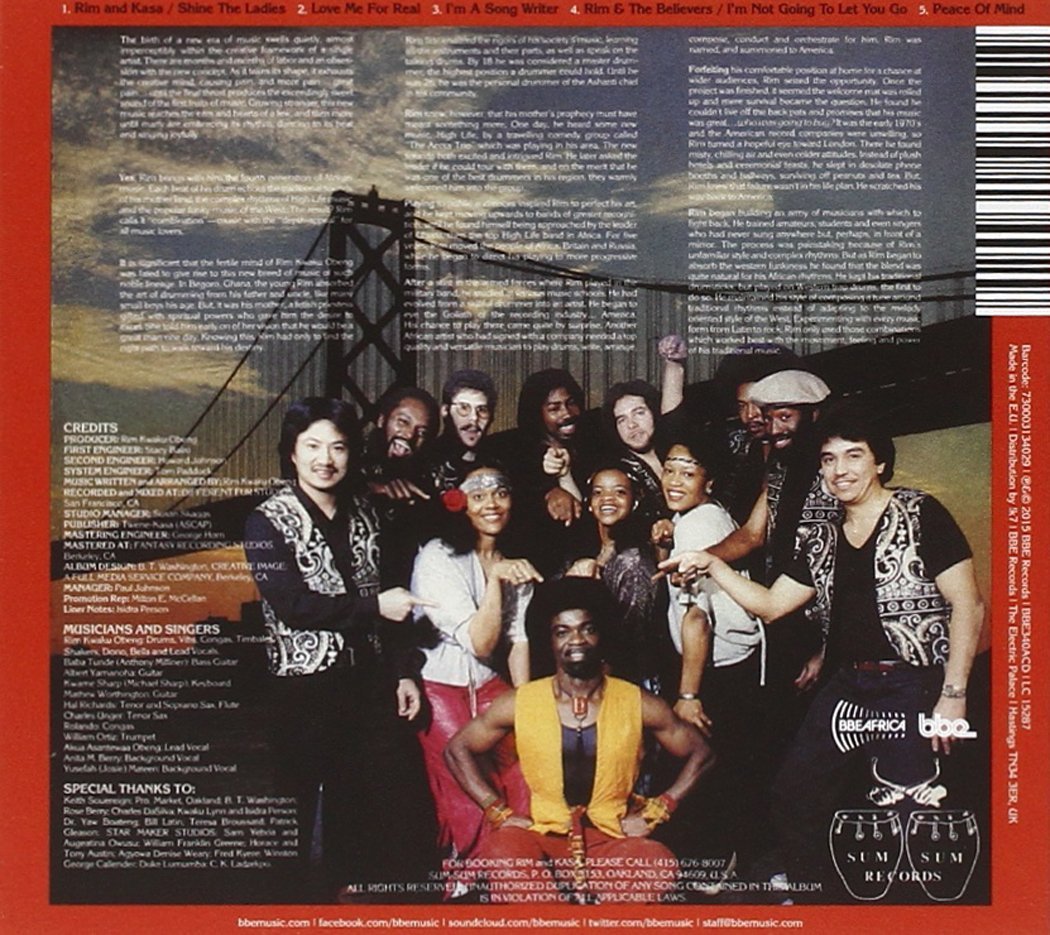

PRIVATE WAX VOLUME TWO.
PRIVATE WAX VOLUME TWO.
Nowadays, when a record company releases a successful compilation, the followup follows hot on its heels. Sometimes, only six months or a year has passed. However, it’s a case of striking while the iron hot. After all, it’s not easy for record companies to make money nowadays. So a successful compilation is like mana from heaven. Especially for independent labels.
For many independent labels, the difference between success and failure is minute. Even a relatively small sum of money like £300 can make all the difference. That’s the difference between profit and loss. And loss is the word that all label managers dread hearing. It sends shivers down their spine, and causes them to have sleepless nights.
During these sleepless nights, the worried label manager wonders how to balance the books? They don’t want people to lose their jobs. Nor do they want to make cut backs. If only they think, they had a successful compilation series to fall back on? It could ride to the rescue like a white knight.
That’s many independent record label’s trump card, in what’s proved to be a turbulent time for many smaller labels. For these labels, a successful compilation mops up all the little losses they’ve made throughout the year. It allows them to keep releasing music they believe in. This isn’t necessarily music that’s going to make anyone rich. Instead, it’s music everyone believes in, and is passionate about. There’s countless albums like this released each week. Their losses are offset against successful compilations.
There’s certainly plenty successful compilations series. Some have released anything between six and twelve volumes. Others have only released two or three. BBE Music’s Private Wax compilation series is just about to release the long-awaited and much anticipated second volume.
Private Wax Volume Two will be released on BBE Music on the 30th October 2015. This is another compilation of “Super Rare Boogie and Disco Compiled By Zaflovevinyl.” Given their rarity, it’s no wonder it’s taken three years to compile Private Wax Volume Two. However, if anyone was going to hunt down the vinyl on Private Wax Volume Two, it was going to be Zaf Chowdry.
He’s a veteran crate-digger and record collector whose been collecting records since the mid-seventies. Zaf however, takes crate-digging to a new level. Like a crate digging superhero, Zaf dawns his cape and prepares to dig where others fear to tread.
His mission in life is to seek out rarities and hidden gems. He’s journeyed to small towns in search of backstreet record shops. Other times, he’s clambered down into dusty basements. Even though the owner passes a striking resemblance to Norman Bates. It could be worth it he keeps telling himself. There could be piles of long-forgotten, unloved music.
Zaf tells himself the same thing when he’s searching through damp, dark warehouses crammed full of ageing vinyl. Maybe, just maybe, there will be long-forgotten private press that somehow, has escaped other crate-diggers’ attention. That however, is the life of a veteran record collector and crate-digger.
They’ve many a tale to tell. They can tell stories bagged bargains in thrift stores. Then they remember finding vinyl gold in second hand shops full of commodes and three-legged chairs. These are the crate-digger’s equivalent of war stories. Instead, of Basra and Kabul, they’ve survived trips to Chigwell, Clacton, Cannock and Cambridge. During these trips, Zaf has a sixth sense for vinyl.
Zaf knows if its in the vicinity, and is soon on the scent. he’s a bit like Scooby Doo with a series case of the munchies. Soon, Zaf’s off in search of thrift stores, flea markets and second hand shops. There’s always the possibility that some hidden gem may be lurking in the bargain bins? It could be that one slice of boogie or rare disco that he’s been looking for for years? Who knows, maybe that’s how Zaf found some of the tracks on Private Wax Volume Two. They’re the equivalent of campaign medals for the veteran crate digger.
Maybe that Starvue cut that opens Private Wax Volume Two is the equivalent of a Purple Heart for Zaf? Was it won in a crate-digging expedition in deepest, darkest Kent. Does Zaf still have the flashbacks about that particular campaign? Certainly don’t mention the Infinity, Lou Johnson and Executive Force singles. That was one trip behind enemy lines that nearly got messy. Every track has a story to tell. That’s the case with singles from The Moods and Royal Flush, to the cuts from New Experience and Nina Dunn. Then there’s that time he unearthed True Feelings. He still gets the shivers about that one. Wes Black’s I Feel Good, well let’s not go there. That was one that nearly got away. However, it didn’t and found its way onto Private Wax Volume Two. It’s the long-awaited followup to Private Wax, and is the result of sixteen tours of duty from Zaf Chowdry.
There’s no better place to start than Starvue’s Love Affair, which opens Private Wax Volume Two. It’s a track from Starvue’s 1980 album Upward Bound. It was released on the little-known and short-lived, Chicago based Midwest International Records. Sadly, the album wasn’t a commercial success, and nowadays, copies of Upward Bound fetch up to €305. That’s beyond the reach of most record collectors. However,Love Affair is a tantalising taste of slice of uber soulful boogie funk which features Starvue in full flight.
After releasing their debut single Put Everything In Place in 1979, Infinity returned with the followup in 1980. This was Queen Of The Universe, which was released on Willkerr Records. They only released a handful of singles between 1980 and 1981. Queen Of The Universe was penned by Alvin Walker and Moses Tribbey. George Kerr took charge of production, and combined elements of funk, soul, boogie and disco. The result was a soulful disco single, that even today, would fill any dance-floor.
Lou Johnson’s career began in 1962, when he released hank You Anyway (Mr. D.J.) on Big Top. Seventeen years later, the former Southern Soul singer had jumped onto the disco bandwagon. He wasn’t alone. Many artists were reinventing themselves, and Lou Johnson was this. He released Keep That Fire Drama Burning on his own Lou-j label. The version included isn’t the original. Instead, it’s the ‘Sean P Edit. This means a delicious mixture of disco strings, soaring gospel tinged harmonies and funky bass combine, as Lou rolls back the years on this long-lost, hidden disco gem. It’s a real find and one of the highlights of Private Wax Volume Two.
Executive Force only ever released a quartet of singles. Their finest moment has to be Drop That Body. This Frank Young penned track was released in 1981 on New Age Records. Sadly, it was Executive Force’s swan-song. What better way to bow out than with this irresistible fusion of funk, soul and boogie?
Moods released their one and only album in 1978. It as released on Soiree Records, and nowadays, is a real rarity. If you wanted a copy you would have to search long and hard. You would also need to part with nearly £300, $450 or €390. Once you put the needle on the record, you would discover the delights Live Today. It’s another funky, soulful, dancer that’s hard to resist.
Charles Beadle, Jerline Shelton, Maurice Commander and Sherline Shelton formed Royal Flush in the late-seventies. They only ever recorded one album, Hot Spot in 1980. It was released on the GEC label and featured Funk Power. It’s a horn driven slice of P-funk with more than a hint of boogie. Rather than the album version, the Sean P Edit has been included on Private Wax Volume Two. Despite its boogie leanings, it still remains a contemporary sound.
New Xperience released Frisco Disco in 1979. Disco was breathing its last, and on the 12th July, lost its fight for life. As a result many singles released in 1979 were overlooked. This includes Frisco Disco, which was penned by Vince Jones. He co-produced the single with Rickenbacker, and the single was then released on Joy Ride Records. Given the climate for disco, Frisco Disco crashed and burned. It was later when crate diggers later discovered this hidden gem, that it belatedly found a wider audience.
Space invader synths open Karizma’s sassy sounding Will You Dance With Me? It was released in 1984 on FRP Records. Will You Dance With Me was an Arthur Ford and Melvin Winn composition. Melvin Winn produced this mesmeric and sassy fusion of funk, soul, boogie and hip hop.
Nina Dunn released Stay and Dance in 1978 on the Franco FD Inc. Stay and Dance is described as a rare slice of disco from Montreal, in Canada. It’s certainly rare. A copy will cost anything up to £300, $450 or €390. However, there’s a hint of boogie courtesy of the clavinet. Mostly though, it’s disco all the way, as a killer vocal combines with the lushest of disco strings.
My final choice from Private Wax Volume Two just happens to the final track. It comes courtesy of Wes Black featuring The Star West Orchestra. I Feel Good (Feeling Good) was the B-Side of I’ll Always Be In Love With You which was released on Star West, in 1980. This goes to show, always flip over a single. There may be gold on the B-Side. That’s the case with I Feel Good (Feeling Good), which is funky, soulful and dance-floor friendly. This ensures that Private Wax Volume Two ends on a high, leaving you wanting more.
That’s what I consider to be the highlights of Private Wax Volume Two. Although I’ve only mentioned ten tracks, there’s nothing wrong with the other six. Far from it. It’s quality all the way. Zaf has chosen well. The sixteen tracks rarities are funky, soulful and dance-floor friendly. There’s also disco and boogie on Private Wax Volume Two, which will be released by BBE Music on 30th October 2015.
The music on Private Wax Volume Two is the result of a lifetime dedicated to crate-digging. They’re the result of past campaigns routing through backstreet record shop, dusty basements, damp warehouses and thrift stores. That’s the habitat of the crate-digger searching for long lost rarities and hidden gems. Zaf Chowdry has spent five decades digging for vinyl. During that time, he’s struck gold.
Some of the results of Zaf’s crate-digging escapes cane be heard on Private Wax Volume Two. They’re the result of sorties behind enemy lines, where Zaf has raided bargain bins, basements and dusty warehouses. Sometimes, it’s all worth it, and Zaf finds that one slice of boogie or rare disco that he’s been looking for for years? Maybe that includes some of the tracks on Private Wax Volume Two. They’re the equivalent of campaign medals for the veteran crate digger.
That’s describes Zaf Chaudry perfectly. He’s the veteran crate-digger with a nose for rare vinyl. Zaf is a crate-digging equivalent of Scooby Doo with a series dose of the munchies. He seems to be able to find elusive and rare vinyl in the unlikeliest of places. Some of it has found its way onto his long-awaited and much anticipated compilation, Private Wax Volume Two, which Zaf deserves the crate-digging equivalent of a Purple Heart for. Let’s just hope Zaf has no flashbacks from his latest campaign, Private Wax Volume Two.
PRIVATE WAX VOLUME TWO.
INTERVIEW WITH MICHAEL ROTHER-50 YEARS MAKING MUSIC.
INTERVIEW WITH MICHAEL ROTHER-50 YEARS MAKING MUSIC.
During the early seventies, the German music scene was thriving. It was one of the most vibrant in Europe. Some of the most influential and innovative music was being released by German bands. This included the holy trinity of Can, Kraftwerk and Neu!. Along with Amon Düül II, Ashra, Cluster, Popol Vuh and Tangerine Dream, these groups were at the forefront of a new musical movement.
In Germany, this new musical movement was called Kosmische musik. Its roots can be traced to the late-sixties, and in a way, were a reaction against the rigidity and rules of traditional music. No longer were musicians willing to be constrained by the rules of modern music. They wanted to free themselves from the shackles of rules and rigidity, and in the process, create new and groundbreaking music.
To do this, musicians fused a disparate and eclectic selection of musical genres. Everything from avant-garde, electronica, experimental rock, free jazz and progressive rock influenced and inspired Kosmische musik. This included the holy trinity of Can, Kraftwerk and Neu!.
They went on to create music that at the time, was ambitious, groundbreaking and innovative. Musical boundaries were pushed to their limits, and musical norms challenged. The holy trinity were fearless visionaries. This includes Michael Rother, who was a member of three of the biggest bands in German musical history.
Michael Rother, who has played a huge part in German musical history, celebrates fifty years as a musician in 2015. He started his career with Spirits Of Sound in 1965, before first jamming with Kraftwerk in the late-sixties. Later, he joined the band on a permanent basis, but left in 1971 to form another of the holy trinity, Neu! with Klaus Dinger.
The pair recorded and released two groundbreaking albums Neu! in 1972 and Neu! 2 in 1973. However, when Neu! 2 wasn’t a commercial success, Neu! was put on hold, and Michael Rother joined Harmonia, the first German supergroup.
Harmonia featured Michael Rother plus Hans-Joachim Roedelius and Dieter Moebius of Cluster. They released two albums, Deluxe in 1974 and Music Von Harmionia in 1975. Both were groundbreaking and influential albums. However, Harmonia were too ahead of the musical curve, and neither album was a success. So Michael Rother recorded another another album with Neu!
By then were very different people, and had different ideas on music. This became apparent when Neu ’75 was released. It was the last time they would record for over a decade. In the meantime, Michael Rother returned to life with Harmonia.
Their music had attracted Brian Eno’s attention. He had called Harmonia “the most important band in the world.” Soon, Harmonia and Brian Eno would spend eleven days recording an album. Once the recording sessions were complete, the master tapes went missing, and only were discovered two decades later. Belatedly, Tracks and Traces was released in 1997. It’s part of the Harmonia’s forthcoming box set Complete Works, which will be released by Groenland Records on 30th October 2015. Michael Rother told me about the Complete Works box set, as we discussed his fifty year career.
Michael Rother was born on 2nd September 1950 in Hamburg. That was home for the early years of his life. Then the Rother family moved from Hamburg to Wilmslow in Cheshire. That was just the first in a series of moves.
Next stop was Karachi, in Pakistan, where Michael was: “captivated by the street musicians. The sounds, scales, rhythm and constant repetition mesmerised me. They would later influence as a musician.” That wasn’t his first musical influence.
“Originally, my earliest musical influence, was classical music. I remember my mother, who was a pianist, playing Chopin’s concertos. Then it was rock ’n’ roll. My brother who was ten years older than me, had rock ’n’ parties. Little Richard was my favourite, I loved the energy. Later, after the British explosion, The Beatles, Rolling Stones and The Kinks were the groups I listened to. Much later, the guitarists Eric Clapton, Jeff Beck and Jimi Hendrix when he descended down, were my influences.” However, the mention of Jimi Hendrix’s name and almost in an instant, Michael Rother is a teenager again.
“I was lucky, I once saw Jimi Hendrix live, it was an incredible experience.” As Michael speaks, he’s almost awe-struck. Then he reflects on the subject of influences: “later, when I became a musician, I came to regard those that I worked with, and collaborated with, as my influences and inspirations.” It’s then that Michael turns to the clock back to 1965, when his career began.
Spirits Of Sounds.
“My career began in 1965, when I joined a covers band at school. I had watched them play, so went away and spent the next year practising my guitar. Once I was ready, I asked if I could join and I became a member of Spirits Of Sounds. They said yes and this was the start” This cover’s band featured two other musicians who would enjoy successful processional careers.
Wolfgang Flür went on to form Kraftwerk and Wolfgang Riechman formed Wunderbar. Spirit Of Sounds must have been the only cover’s band to feature three musicians who would later transform German music. That was still to come.
“Spirits Of Sound played just covers, including songs by The Beatles, Rolling Stones and The Who.” For Michael Rother, this was his musical apprenticeship. Playing with Spirits Of Sound allowed him to learn his trade and hone his sound. All the time, he was listening to music which changed throughout the sixties.
“Later guitarists like Eric Clapton, Jeff Beck and Jimi Hendrix that were influencing me.” By then, Michael Rother was happy being part of a band, and seeing what life in a group was like. He was also well on his way to refining his guitar playing. However, then in 1969, Michael Rother got the call all young people must have dreaded.
Back in 1969, every German citizen had to spend six months in the army. Those who refused, or suffered from ill health, could spend six months as a civilian volunteer. That’s how in 1969, Michael Rother found himself working at St. Alexius hospital, Neuss. He had no option.
By the time his six month as a civilian volunteer was over, Michael Rother “was beginning to become frustrated with playing in a cover’s band. It had its limitations, and wanted to move away from traditional music.” Fortunately, Michael Rother got the opportunity to jam with a new band, Kraftwerk in late 1969.
Kraftwerk.
At first, Michael was just jamming with Kraftwerk. He enjoyed the freedom that their approach to music had. “When I began playing with Kraftwerk, they improvised, playing melodies without the blue notes.” For Michael this opened his eyes to the possibilities that were in the process of unfolding. Kosmische musik had just been born, and Kraftwerk were one of its pioneers. “After I had jammed with Kraftwerk, Florian Schneider and I exchanged phone numbers.”
After his session with Kraftwerk, Michael returned to Spirits Of Sound. Musically, his eyes had been opened. A new musical movement had been born in West Germany. However, for the time being, Michael was back in his covers band.
Then in 1971, Michael received a call from Florian Schneider. “Ralf Hütter had quit Kraftwerk unexpectedly, and returned to university to complete a course.” Meanwhile “the first Kraftwerk album had been a hit, and they wanted to build on the momentum.” So Florian wanted Michael to join Kraftwerk on a permanent basis.
It didn’t take Michael long to agree. After six years with Spirits Of Sound, a new chapter in Michael Rother’s career was about to begin. He was going to be part of Kraftwerk, who were now a trio.
When joined Kraftwerk, the group’s lineup was very different to the one that had recorded their 1970 eponymous debut album. Just Florian Schneider and Klaus Dinger remained. The addition of Michael Rother on guitar filled out the sound. However, very quickly, Michael discovered that all wasn’t well within Kraftwerk.
Michael’s role in Kraftwerk was twofold. “I would play live and play on what was to be their second album.” Straight away, Michael discovered that life with Kraftwerk was eventful. “It was exciting, never boring. When we played live, it could become chaotic, fights broke out between Klaus and Florian. They were both spiky characters.” That was only half the story.
“Sometimes, the audience didn’t understand what they heard. They came to hear what they heard on Kraftwerk. That was just a starting point. We took things from there. For members of an audience who expected to hear Kraftwerk replicated live, this what frustrating. Other members of the audience were excited by the possibilities. It was an exciting time for everyone” However, it was also a frustrating one.
After the success of Kraftwerk, Florian and Klaus were keen to record their sophomore album with producer Conny Plank. Tension was in the air. The recording sessions were fraught with difficulties. Although songs were recorded, the album never was completed. “Eventually, we hit a dead end and the recordings have been released. It was then that Klaus and I decided to form a new band, Neu!”
Neu!
By then, Michael and Klaus realised that “we had a similar musical vision.” So the nascent band were formed later in 1971, and was based in Dusseldorf. After the disagreements and frustration of Kraftwerk towards the end, the new band was a breath of fresh air. It was sure to revitalise the two musicians. The only thing they couldn’t agree on, was the band’s name
Michael though the band should have an organic name. Klaus however, had hit on the name Neu! This made sense, as they were a new band, who were part of the new musical Kosmische musik movement.
So, the new band became Neu! To go with the new name, a pop art logo was designed and copyrighted. This new logo was seen as a comment and protest against the modern consumer society. Just like contemporaries Can, Neu weren’t afraid to combine social comment and art. Having settled on a name, Neu!’s thoughts turned to recording their debut album. There was a problem though.
Neu!
Michael explains “we were poor musicians,’ All we could afford were four nights at Windrose-Dumont-Time Studios in December 1971. The reason we chose to record at nights, is it was cheaper. However, “it was a close shave, I get the shivers thinking about it. However, with the help of the genius Conny Plank, we got our message across.”
Over the four days, Neu! recorded a total of six tracks. They were written by Michael and Klaus. The two members of Neu! laid down all the parts onto an eight-tracks. Michael played guitars and bass, while Klaus played drums and a Koto. “At first the recording was slow, then we found the positive energy to move forward. The songs were stripped down to the bare essentials, they had to be we only had eight tracks to record onto.” Five of the six songs Neu! recorded were lengthy tracks. This included Hallogallo and Negativland.
Both feature Klaus’ innovative and mesmeric motorik beat. He played a 4/4 constantly, with only an occasional interruptions. Its hypnotic sound would soon become famous.
As Klaus and Michael listened to the playback of Hallogallo and Negativland, they had no idea that this drumbeat would become synonymous with Kosmische musik. Even once Conny Plank had mixed Neu! at Star Musik Studio, in Hamburg the two members of Neu! had no idea how influential the album would become.
“Once the album was mixed, Conny Plank gave me a copy of the cassette to listen to. I was proud, and played it to my girlfriend, family and friends. I’d no idea the effect the album would have. I was just pleased to have recorded my album. It had been a close shave.” Michael had no inclination that he had recorded a classic album.
Neu! was scheduled for release in early 1972. At the time, critic’s opinions were divided. Some critics realised Neu! was a truly groundbreaking album, and appreciated what was a genre-melting album. Elements of ambient, electronica, experimental, free jazz, industrial, music concrete and rock can be heard. These critics identified the album as a Kosmische classic. Other critics didn’t seem to understated Neu!, or Kosmische musik, which by then, had been renamed.
In London, a critic at Melody Maker had coined the term Krautrock. This came after Amon Düül released their 1969 album Psychedelic Underground. It featured a track titled Mama Düül und Ihre Sauerkrautband Spielt Auf, which in English, translates as Mama Düül and her Sauerkrautband Strike Up. At first, many people were reticent about using the name of this new genre.
By the time Neu! was released in 1972, that was no longer the case. Other critics and record buyers were using Krautrock rather than Kosmische musik. This was how they described the music of Can and Kraftwerk, and then Neu!, who had just released their eponymous debut album.
When Neu! was released on Brain in 1972, the album sold 30,000 copies in Germany. For an underground album, that was seen as a success. However, outside of Germany, Neu! didn’t sell in vast quantities. Despite only selling well in Germany, Neu! began work on their sophomore album, Neu! 2.

Neu! 2.
In January 1973, Neu! found themselves back in the studio with producer Conny Plank. “We weren’t signed to a record label, so Klaus, Conny and I had saved our money, and when we went to the studio, handed over enough to record for ten days.”
With Conny Plank producing what became Neu! 2, Michael and Klaus began work. “This time, we had sixteen tracks to work with, so could layer instruments. I played my guitar, it was played backwards, the tempo was sped up and effects were added.” Neu! it seemed, had taken experimenting to a new level, and were pushing musical boundaries to their limits, and sometimes way beyond. Everything seemed to be going so well. Then a problem arose.
“By then we had spent a week exploring, adding layers. I stacked five six guitars, added effects like distortion. This had taken a week, and we only had half an album recorded. We panicked. Then we thought of a solution. We had released recently Neuschnee and Super as a single. For some reason, the record company hadn’t promoted it. They seemed not to value singles. So we began to experiment.”
This Michael explains was: “a result of desperation. Side two of Neu! 2 is made different versions of Neuschnee and Super. We did all sorts of things. I played the single on a turntable, and Klaus kicked it as it played. We than played the songs in a cassette player, slowing and speeding up the sound, and mangling the sound in the process.” Just like their debut album, Neu! 2 was completed just in time. It was another: “close shave.”
With Neu! 2 complete, it was scheduled for release later in 1973. When the album was released, critics heard than Neu! had refined their trademark sound, and taken it even further. “Für immer an eleven minute epic was the best example.” It features Klaus and Michael becoming one. As Klaus’ drums propel the arrangement along, Michael delvers a virtuoso performance. Critics were won over by “Für immer, which was regarded as the highlight of Neu! 2. However, side two proved controversial.
Many critics weren’t impressed by side two of Neu! 2. They saw the music as gimmicky, and accused Neu! trying to fool and rip off record buyers. As indignant critics took the moral high-ground, again, it was a case that they didn’t understated music.
“What we had done, was take ready made music and deconstruct it. Then they could either reconstruct or manipulate the deconstructed music.” Critics either couldn’t or didn’t want to understand this. Neither did record buyers.
Just like critics, those who bought Neu! 2 were won over by side one. Für immer was Neu! 2 masterpiece, and most people realised this. However, when record buyers turned over to side two, they quickly became alienated. “They felt that we were trying to rip them off. That was not the case. Side two was Neu! at their most experimental, deconstructing only to reconstruct or manipulate. People didn’t understand this. It’s only recently that the music on side two has began to find favour with people. That wasn’t the case in 1973.”
On its release, Neu! 2 didn’t sell well. Even in Germany, Neu! 2 failed commercially. Brian who released Neu! 2, had expected the band to tour the album. However, there was very little interest in Neu!
Klaus Dinger and his brother Thomas even headed to London, to see if he could organise a Neu! tour of Britain. There, he met DJ John Peel, and Karen Townsend, the wife of The Who’s guitarist Pete. Although John Peel played tracks from Neu! 2 on his radio show, and tried to champion the band, there was no appetite for a Neu! tour of Britain. When Klaus returned home, he and Michael put Neu! on hold.
Both Klaus and Michael were keen to make it clear that this wasn’t the end of Neu! They merely, wanted to take some time out, to pursue other interests and projects. Klaus’ new project was La Düsseldorf. Meanwhile, Michael decided to embark on a journey to the Forst Commune.
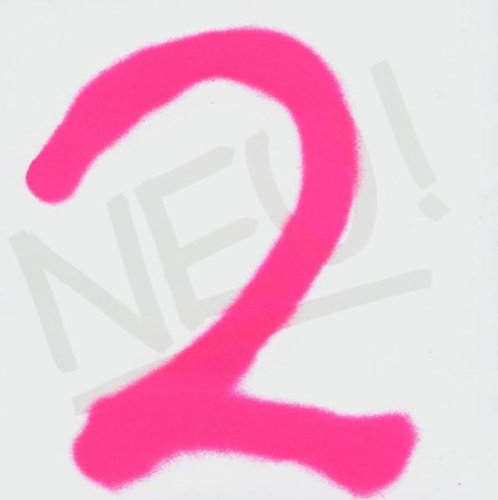
The Birth Of Harmonia.
That was where he would meet Dieter Moebius and Hans-Joachim Roedelius of Cluster. Michael had heard Im Süden, a track from Cluster’s sophomore album Cluster II. The track struck a nerve with Michael, who wondered if Dieter Moebius and Hans-Joachim Roedelius would be interested in joining an extended lineup of Neu!? Then Michael began to consider a German supergroup consisting of Neu! and Cluster.
That proved to be the case. At the Forst Commune, Michael jammed with Dieter Moebius and Hans-Joachim Roedelius. That initial jam later became Ohrwurm, a track from Harmonia’s 1974 debut album Musik von Harmonia. Following their initial jam session, Michael stayed at the Forst Commune to prepare for the recording of Harmonia’s debut album.
Meanwhile, Klaus and Thomas Dinger had returned from London. They came, they thought, baring gifts. One of the gifts was studio engineer Hans Lampe, who for much of 1972, had been Conny Plank’s engineer. The other was Klaus’ brother Thomas. They Klaus proposed, would join an extended lineup of Neu! In preparation, they played a series of concerts as La Düsseldorf. Michael however, was busy with Harmonia. Not only were they planning to record their debut album, but build a recording studio.
Building a recording can be fraught with difficulties. However, for Michael, Dieter Moebius and Hans-Joachim Roedelius the building of their studio in Forst went smoothly. This new studio would play a hugely important part in Michael Rother’s future career. Not only would it be where Harmonia recorded their debut album, but where Michael worked on future projects with Neu! and later, recorded his solo albums. That was still to come. Before that, Harmonia began to record their debut album Musik von Harmonia.
Musik von Harmonia.
Having built their new studio, Michael Rother, Dieter Moebius and Hans-Joachim Roedelius started recording what became Musik von Harmonia in June 1973. Over the next five months, Harmonia recorded eight songs. The two members of Cluster were receptive to Michael Rother’s way of working. Hans-Joachim Roedelius explained recently: “there were no problems, we wanted to learn. Previously, we improvised, which made playing live problematic. A song was merely the starting point, it could go anywhere. Michael however, taught us about structure. We influenced him. It was a two-way thing.”
That’s definitely the case. Michael Rother believes: “that working with Dieter Moebius and Hans-Joachim Roedelius made him a more complete musician.” Over his time working with the two members of Cluster; “I learnt so much.”
This became apparent when Musik von Harmonia was completed in November 1974. Harmonia’s 1974 debut album, Musik von Harmonia, was a move towards ambient rock. Both Michael Rother and the two members of Cluster’s influences can be heard on the nascent supergroup’s debut album. It was released in January 1974.
When Musik von Harmonia was released, many critics realised the importance of what’s a groundbreaking classic. It saw this nascent supergroup seamlessly embrace and incorporate disparate musical genres. In the process, Harmonia set the bar high for future ambient rock albums. Despite the critical acclaim that accompanied Musik von Harmonia, the album wasn’t a commercial success.
Michael Rother remember ruefully: “the seventies weren’t a good time for Harmonia. Our music was ignored, it was tough to survive during this period. So towards the end of 1974, Michael and Klaus reunited for Neu!’s third album.
The Return Of Neu!-Neu! ’75.
For Neu!! ’75, Michael Rother and Klaus Dinger reunited in December 1974 at Conny Plank’s studio. By then, Conny’s Studio was the go-to recording studio for German groups. They wanted “the genius” to sprinkle his magic on their albums. This would be the case for Neu! ’75.
The two members of Neu! had changed. Klaus was heavily into rock music, while Michael’s interest in ambient music was growing. As Michael explains: “After two years apart, we were different people. To complicate matters, Klaus wanted to move from behind the drum kit. He felt he was hidden away. I can understand this. But it was what Klaus did so well. However, he wanted to become an entertainer, playing the guitar and singing. He wanted to bring in two new musicians to replace him.” This included Klaus’ brother Thomas and Conny Plank’s former engineer Hans Lampe. These new musicians would allow Neu! to make a very different album.
Michael realised this was problematic. “By then Klaus could be difficult to work with. I realised we had compromise, so ended making an album with two very different sides. Side one was old Neu! and side two was new Neu!” On side two Klaus come out from behind his drum kit and play guitar and sing. He became the entertainer on what proved to be an album of two sides. It was completed in January 1975, and released later that year.
When critics were sent copies of Neu! ’75, they were struck by side one’s subtle, ambient, melodic sound. Michael remembers: “we used keyboards and phasing a lot on both sides. While Michael Rother’s name was written large all over side one; side two was very different, and quite unconventional. Reviews were mixed, partly because of side two. Some critics felt that if Neu! ’75 had the same sound throughout, it would’ve been hailed a classic. However, later Neu! ’75 and Neu!’s earlier albums would be reevaluated. Before that Neu! ’75 was released.
Just like Neu! 2, Neu! ’75 didn’t sell well. The problem was, many people didn’t understand what was essentially parts of two disparate albums joined together. The proto-punk of side two was so different from the ambient sound of side one. Record buyers were confused, and didn’t understand what Neu! stood for? It seemed that Neu! were just the latest groundbreaking group whose music was misunderstood and overlooked.
Michael looking back at Neu! ’75 reflects: “It was a time time. Klaus wasn’t the easiest person to work with. He was involved with different people, and being pulled in different ways. We were also very different musically. Then there were the new drummers on side two. They weren’t particularly good. Certainly neither were as good as Klaus,” a rueful Michael remembers. “It was a difficult project. By then Klaus was different to the man I’d met a few years earlier.” Michael wouldn’t work with Klaus for another decade. By then, Neu! music had inspired a new musical movement, punk.
Things started to change in 1976. Michael explains: “many punks claim that Neu! ’75 inspired them. Especially, side two.” That wasn’t the only Neu! album that inspired the punk ideal. Side two of Neu! 2 was a favourite of punks. It was: “a result of desperation,” which struck a nerve with the nascent punk movement, and its D.I.Y. approach. That’s when the revaluation of Neu! began. However, “it was a long time before our music was accepted and recognised, and began to sell in the quantities it does now”. That’s also the case with Harmona, who began recording their sophomore album in June 1975.

The Reuturn Of Harmonia-Deluxe.
In June 1975, the three members of Harmonia returned to their studio in Forst for the recording of their sophomore album, Deluxe. Joining them, was a new face, Conny Plank, who was co-producing Deluxe. Conny Plank and Michael were good friends, and had worked together on four projects. This included Kraftwerk’s aborted album and Neu!’s two albums. The addition of the man who Michael Rother calls: “the genius,” just happened to coincide with Harmonia changing direction musically.
Deluxe saw a move towards Kominische musik. Partly, this was down to the addition of Guru-Guru drummer Mani Neumeier. He played on some track, and added a Kominische influence. Another change was that Michael Rother’s guitar played a more prominent role. That wasn’t Michael’s only influence.
The music on Deluxe was more song oriented. This was Michael Rother’s influence. He had taught the two members of Cluster the importance of structure. However, still Harmonia were experimenting, pushing musical boundaries. This was Cluster’s influence. Other parts of Deluxe had been influenced by Michael Rother. Hans-Joachim Roedelius agrees. “Michael Rother’s influence can be heard on Deluxe, more so than on Musik von Harmonia.” What was also noticeable, was that Deluxe had a more commercial sound.
“This wasn’t a conscious decision. The music morphed and evolved, and the result was Deluxe,” Hans-Joachim Roedelius reflects. Michael Rother agrees. “Every album I’ve made I set out for it to be commercial. Sometimes, though, it doesn’t work out that way.” Sadly, that proved to be the case.
When Deluxe was released in 1975, to the same critical acclaim as Musik von Harmonia. The noticeable shift to what was a more commercial sound, surely would lead to a change in Harmonia’s fortunes?
That wasn’t to be. Deluxe was released on 20th August 1975, and sales of the album were slow. They never picked up, and history it seemed, was repeating itself. Michael reflects: “Still our music was being ignored. It was a difficult time for us. So much so, that Michael decided to record his debut solo album.
Michael Rother-The Solo Years-Part One.
With Harmonia having just about run its course, Michael Rother embarked upon his solo career. That would take up the majority of his time. Michael’s first solo album was “Flammende Herzen which I recorded at Conny’s Studio.” Michael had entrusted his solo career to the man he refers to as “the genius.”
Flammende Herzen.
Recording of Flammende Herzen began at Conny’s Studio in June 1976. Michael had penned five tracks, and planned to play most of the instruments himself. The only instrument he couldn’t play were the drums. So Jaki Liebezeit of Can came onboard, and this was the start of a long-lasting collaboration. That was the case with Conny Plank, who co-produced Michael’s debut solo album.
At Conny’s Studio, five instrumentals which were based around Michael’s guitar were recorded. These tracks became Flammende Herzen, which was completed in September 1976. Michael’s debut album scheduled for release in March 1977.
Before the release of Flammende Herzen, critics had their say on Michael Rother’s solo album. Most of the reviews were positive. It seemed that Michael’s fortunes were about to change.
When Flammende Herzen was released in March 1977, the album wasn’t a commercial success. It was as if Michael was fated. Despite releasing album after album of innovative and influential music, they failed to sell. The only small crumb of comfort for Michael, was that “Flammende Herzen, which, was released as a single, was later used in the soundtrack to Flaming Hearts.”
Nowadays, Flammende Herzen is regarded as one of Michael’s finest solo albums. It’s as if this was the album he had been longing to make. Sadly, in 1977, as punk was making its presence felt, Flammende Herzen passed record buyers by. By then, Michael had been back in the studio with Harmonia, and a special guest, Brian Eno.
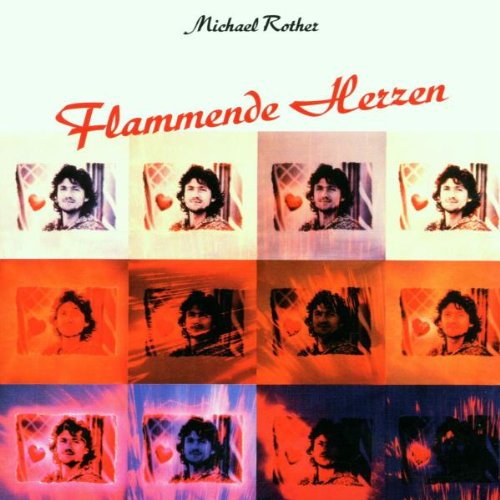
The Return Of Harmonia With Brian Eno-Tracks and Traces.
After the release of Musik von Harmonia, Brian Eno had called Harmonia was “the world’s most important rock band” at the time. So it was no surprise that when Harmonia reunited to record their third album, it was a collaboration with Brian Eno. However, it was also the end of an era.
Little did the three members of Harmonia realise, that Deluxe was the last album they would release for thirty-two years. For what was their swan-song, Harmonia were joined by another legend, Brian Eno.
Michael remembers the sessions well. “Brian Eno was a very intelligent man. He seemed to know what music was on the way up. By then, he was making ambient music and was working as a producer. He was about to produce David Bowie’s Heroes’ album.” However, for the next eleven days, Brian Eno joined the band he had been championing since their debut album.
At the studio in Forst, Hans-Joachim Roedelius, Dieter Moebius, Michael Rother and Brian Eno spent eleven summer days recording what was meant to be their third album. The working title was Harmonia ’76. However, by then, Hans-Joachim Roedelius remembers “Michael Rother was wanting to concentrate on his solo career. Once the album was completed, it became apparent Harmonia had run its course. It was evolution.”
This wasn’t surprising. Harmonia weren’t selling many records. “It was a tough time for us. Our music seemed to be ignored.” Neu! also seemed to have run its course. “Neu ‘75 hadn’t sold well. Klaus wasn’t an easy person to work with. So, I decided to return to my solo career after the release of Harmonia ’76.” That never happened.
Incredibly, the master-tapes for Harmonia ’76 went missing. “We feared they were lost forever. Then twenty years later, they were found.” What was meant to be Harmonia ’76 was released Tracks and Traces in 1997.” That wasn’t the end of the Harmonia story. No. However, before the next chapter in the Harmonia story unfolded, Michael Rother’s solo career continued.
Michael Rother’s Solo Career-Part Two-Sterntaler.
After the drama and disappointment of the loss of the master tapes for Harmonia ’76, the three members of Harmonia went their separate ways. By September 1977, Michael was ready to record his sophomore album Sterntaler.
It was recorded between September and November 1977 at two studios. This included Conny’s Studio, and Michael’s studio in Forst. By then, Michael was a true multi-instrumentalist, and was playing guitar, bass guitar, piano, synths, electronic percussion Hawaiian slide guitar and synth strings. Augmented by Jaki Liebezeit’s drums, Sterntaler took shape.
Unlike his debut album, the synths were playing an important part in Sterntaler’s sound, and were responsible for the melody. Then on the ambient sounding Blauer Regen, Jaki Liebezeit’s weren’t needed. This was another signal that Michael’s music was changing. Michael and co-producer Conny Plank finished work on Sterntaler in November 1977. Maybe the stylistic shift would result in a change in Michael’s fortunes?
Sadly, it was a familiar story. The reviews of Sterntaler were generally positive, and Michael was regarded as one of the most innovative musicians of his generation. However, when Sterntaler was released, the album didn’t sell well. Michael remembers; “my music seemed to be out of fashion.” However, he continued to make music, music that continued to evolve.
Katzenmusik.
Recording of Michael’s third album Katzenmusik took place between March and July 1979. Just like his previous album, the album was recorded in Forst and Conny’s Studio. Michael used mainly electronic instruments. They were augmented by guitars and Jaki Liebezeit’s drums.
It seemed that if Michael was a painter, he was reducing his pallet. That would be the case for most musicians. Michael Rother wasn’t most musicians. Along with his co-producer Conny Plank, they recorded two suite of songs which featured twelve tracks. Essentially, they were variations layered around four different five-note melodies. They then recur in a variety of ways. While stylistically, the music was similar to his two previous albums, the instruments used had changed. However, this didn’t stop Michael recording another album of groundbreaking music. It was released later in 1979.
On Katzenmusik’s release, some critics hailed the album Michael Rother’s finest hour. He had come of age as a solo artist. This should’ve been a cause for celebration. However, it was, and it wasn’t.
Katzenmusik was the last album Michael recorded with Conny Plank. “It was no reflection on Conny. The man was a genius. However, I wanted to go my own way, and explore other options.” Sadly, Michael Rother and Conny Plank’s swan-song wasn’t a commercial success. It would be another three years before Michael released a new album.
Fernwärme.
It was 1981 when Michael Rother began work on his fourth album. The recording took place at Michael’s own Flammende Herzen Studio in Forst. It was just Michael and drummer Jaki Liebezeit. Unlike his first three albums, Conny Plank was absent. “We remained friends, and I owe Conny a lot, but it was the time to move on.”
This couldn’t have been easy. The pair had worked on nearly every project Michael had been involved with. Fernwärme was a first. It was just Michael, Jaki and the latest electronic instruments. They were used extensively on Fernwärme. This included drum machines. For Jaki Liebezeit the writing was on wall. Fernwärme was his swan-song with Michael Rother.
Michael explains: “Fernwärme was the last project Jaki worked on. Again, it was nothing personal. It was similar to the situation with Conny Plank. I wanted to move in a different direction, and already had began to use drum machines. Jaki was a fantastic drummer. The man is a machine, and will be drumming the rest of his life. However, Fernwärme was the last time we worked together.”
As Michael Rother prepared for the release of Fernwärme in 1982, it must have been with a degree of trepidation. It was the first album he had produced himself. However, he needn’t have worried, as Fernwärme was well received upon its release. Michael’s first album in three years, and the first he had produced himself was hailed a success. Sadly, the wider record buying public still hadn’t discovered Michael Rother’s music. “It was a really frustrating time for me.”
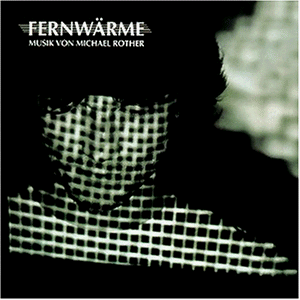
Lust.
After the release of Fernwärme in 1982, Michael didn’t return to his Sterntaler Studio, Forst until 1983. When he did, he was on his own. “Lust was the first album I wrote, recorded and produced on my own. Because I had my own studio, I found myself spending more time thinking things over. Sometimes, when I went to bed, all I could think of was what I had been working on. That is the downside of having a home studio. However, the advantages outweigh disadvantages. I had also bought a Fairlight, and was just getting use to it. Its sounds divides people. Some people like it, others love it. Lust was the first album where I used the Fairlight.” That was another reason Michael spent as long as he wanted perfecting Lust. Only then, was he ready to release the album.
Lust was released in 1983, and was Michael Rother’s fifth album. It was all his own work. No other musician had played a part in recording the album, which showcased a new sound. At the heart of the sound was the Fairlight. Although the Fairlight divided people’s opinion, the majority of critics gave Lust positive reviews. The latest reinvention of Michael had been a critical success. However, when Lust wasn’t the commercial success many critics forecast, it was another two years before Michael returned with his sixth solo album.
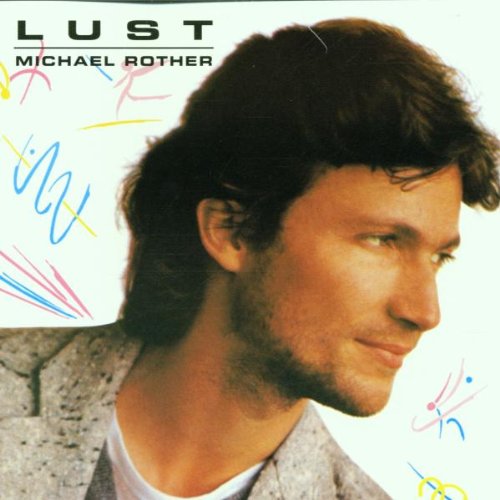
Süßherz und Tiefenschärfe.
November 1984 saw Michael Rother return to his Katzenmusik Studio, in Forst to record what would become Süßherz und Tiefenschärfe. Just like his previous album Lust, he wrote, recorded and produced. It was just Micael, his trusty guitar and the electronic instruments he favoured. For three months he honed what became his sixth solo album. It was completed in February 1985, and became Süßherz und Tiefenschärfe.
Later in 1985, Polydor released Süßherz und Tiefenschärfe. Before that, critics had their say on Michael Rother’s sixth solo album. Again the reviews were positive. Some critics went as far as to say that üßherz und Tiefenschärfe was one of the best albums Michael had recorded. It was released later in 1985. By then, Michael Rother and Klaus Dinger had been reunited.
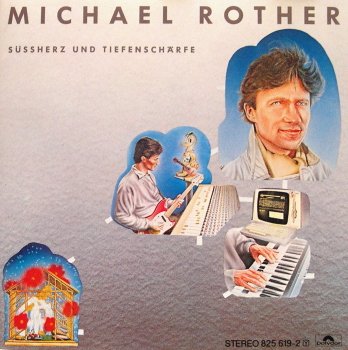
Neu! Reunite Again.
Little did Micahel Rother realise what he was letting himself in for. When Michael met Klaus; “I realised that Klaus wasn’t in a good place. He had surrounded himself with people who were pulling him in all directions. Klaus was also needing money, and recording a new Neu! album offered him the opportunity to make some money. So we entered a small studio in Düsseldorf. It wasn’t like the professional studio we had worked in before. Instead, it was more like a semi-professional studio.” That was where recording of Neu!’s most controversial album began.
Recording began in October 1985. The members of Neu! then moved between Grundfunk Studio and Dinerland-Lilienthal Studio. The sessions were problematic. A decade had passed since the pair had worked together. Michael remembers: “Klaus seemed different. He was argumentative, and there was no longer the same chemistry between us. It wasn’t an easy time. Despite that, we managed to record tracks which I took to my own studio in Forst.”
The group’s sound was very different. Synths were added to Neu!’s old sound. It was Neu! with a new wave twist. However, this didn’t work. By then, Klaus and Michael were vey different as musicians. Michael had moved towards the electronics and technology. Klaus it seemed, hadn’t moved at the same pace.
By April 1986, work on the album stopped, and the project was cancelled. “Klaus and I met in Düsseldorf and agreed to abandon the project. We even went as far as sealing the tapes. This seal wasn’t to be broken without the other’s permission. The album was certainly not going to be released. That was why we sealed the master tapes. I never thought the would be released. Certainly not in the way that was released in late 1995.” By then, Michael was concentrating on his solo career.
Michael Rother The Solo Years Part 3-Traumreisen.
After the abandoned Neu! project, Michael Rother didn’t return to the studio until January 1987. He spent the next six months in his home studio. “That was the benefit of having your own studio. I could record when I wanted. Sometimes, it a lonely life, and I felt as if I was going slightly mad.” Eventually, though, Traumreisen was completed in July 1987.
Just like his previous album, Traumreisen featured just guitars and Michael electronic instruments. Critics were won over by Traumreisen, which was released later in 1987. It was a case of deja vu, when Traumreisen failed to reach a wider audience. After seven solo albums, he was still make a commercial breakthrough. Michael’s music it seemed, was only appreciated by connoisseurs of Kosmische musik. This lack of commercial success resulted in Michael “beginning to lose interest in recording albums.” It would be another nine years before he released another album. By then, Michael had founded his own record company.
Random Records was founded in 1993. This coincided with Michael managing to secure the rights to his back catalogue. However, the new label’s first release was a compilation, Radio-Musik Von Michael Rother-Singles 1977-93. It was released in 1993, with reissues of Michael’s solo albums being released over the next few years. Each album was remastered and released with bonus tracks on Michael’s Random Records. Michael was in control of his musical destiny. At least for his solo career. Neu! was another matter.
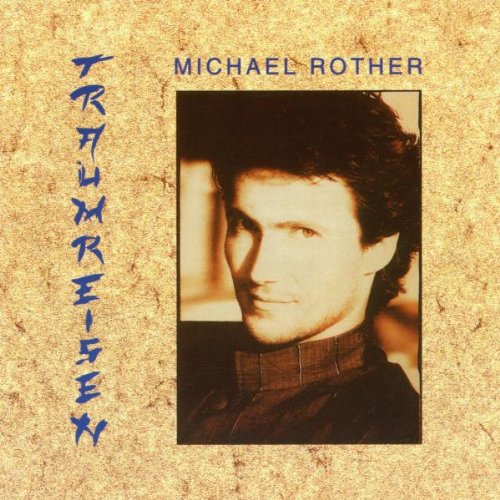
Neu! 4.
By the time Michael founded Random Records, Neu!’s first three albums had been released on CD by Germanofon Records, a Luxembourg based label. However, there was a problem.
Michael explains: “the deal to release Neu!’s first three albums was entered into, without his permission. These bootlegs were available in every record shop I entered into.” There’s frustration and anger in his voice. It’s not about money though. Instead; “I was frustrated that people were buying an inferior product. It wasn’t of the quality I expected.” If Michael was frustrated about the release of Neu!’s first three albums, he was in for a shock on the morning of 17th October 1995.
“That day, I was sitting at home, when I received a fax from Klaus congratulating on the release of Neu! 4. I was shocked, as I hadn’t given my permission or consent to release the album. Soon, the picture became clear.
“By then, Klaus was really frustrated and angry about the bootleg releases of our first three albums. They were selling well, and neither of us were making anything from them. To make matters worse, Klaus was short of money, and desperate, so entered into a deal with the Japanese label Captain Trip Records. The owner was a huge fan of Neu! and was impressed by Klaus. He gave Klaus cash which he was meant to share with me. In the sleeve-notes to what was billed as Neu! 4, Klaus railed against the bootleggers.” Ironically, this was something that both Michael and Klaus agreed about. However, the release of Neu! 4 drove a wedge between the two old friends.
With the benefit of hindsight, Michael reflects: “looking back, I wish I’d jumped on the train to Düsseldorf and punched Klaus on the nose. I’m not that kind of person though. But I might have felt better. Then we could’ve moved on. However, we never did.”
After the release of Neu! 4, Klaus and Michael were continually at loggerheads. This was ironic. “By then, Neu! were at last, a popular band. People wanted to buy our albums. All that was available were the bootlegs, and Neu! 4 which to me, wasn’t a legally released or genuine album.” Eventually, though, Michael and Klaus reached an agreement in 2000, and Astralwerks in America and Grönland Records in Europe released Neu!’s first three albums. They also recalled copies of Neu! 4, which has been out of print ever since. Michael however, stresses: “I’ve no problem people buying a second hand copy of Neu! 4, I just don’t want the album rereleased. After the problems with Neu! 4, Michael released his eighth solo album in 1996.

Esperanza.
Unlike his last couple of albums, Michael didn’t work alone on Esperanza. He was joined by Jens Harke, who wrote the lyrics and added vocals to Weil Schnee und Eis. This was a first. Apart from the occasional vocal sample, Michael’s album had been vocal free zones. That wasn’t the only change.
The other contributor to Esperanza was Joachim Rudolph. He took charge of Pro Tools programming. Things had changed since Michael’s last album. It was the digital age, and now, DAWs had found their way into recording studios. As befitting the digital age; “I used only electronic instruments on Esperanza. There were no guitars on the album. This wasn’t a first. I’d already gone on a tour of America without a guitar. I was tired of the guitar and wanted to experiment.” That’s what Michael Rother did between January 1995 and January 1996 at three studios. Once the album was completed, it was released two months later.
Esperanza was released on the 11th March 1996, on Michael’s Random Records. Most of the reviews of Esperanza were positive. Michael Rother, was continuing to innovate and push musical boundaries. However, when Esperanza wasn’t a commercial success, “I began to lose interest in recording, and decided to concentrate on playing live.” As a result, it was a new millennia when Michael released his next album.
Remember (The Great Adventure).
April the 25th 2004 proved to be a significant date in Michael Rother’s career. It was the day he released his most recent solo album, Remember (The Great Adventure). It had been recorded over a period of seven years and was a collaboration with various electronic musicians. This includes Thomas Beckmann, Andi Toma and Jake Mandell, who all programmed beats for the rhythm tracks. Sophie Williams and Herbert Grönemeye added vocals on Remember (The Great Adventure). This was only Michael’s second album to feature vocalists. Ironically, it proved to be his last.
Michael Rother’s collaboration with a new generation of musicians was well received by critics. Just like his previous albums, Michael didn’t shy away from innovating. Instead, he embraced the new and was determined to look forwards, rather than backwards. That was the case throughout his solo career.
Following Remember (The Great Adventure), Michael Rother “decided to concentrate on playing live. It’s allowed me to travel the world and play all over Europe, America and in 2014, in China. My albums were not selling well, and after a while, I lost interest in recording music.” However, it wasn’t just Michael that was playing live. One of his old groups reunited and took to the stage one more time, Harmonia.
Harmonia Reunited and Live.
The reunion was for the release of Harmonia’s Live 1974 album. It featured a a recording of Harmonia’s concert on the 23rd March 1974, at Penny Station Club in Griessem, Germany. To celebrate the release of Live 1974, Harmonia played live for the first time since 1976. This landmark concert took place at the Haus der Kulturen der Welt in Berlin, on November 27th 2007. Sadly, it would be the last time the three members of Harmonia played live. Belatedly, they had found the critical acclaim and commercial success they so richly deserved. It had taken thirty years, but Harmonia were regarded as one of the most innovative and influential groups in Kosmische musik. So were Neu!
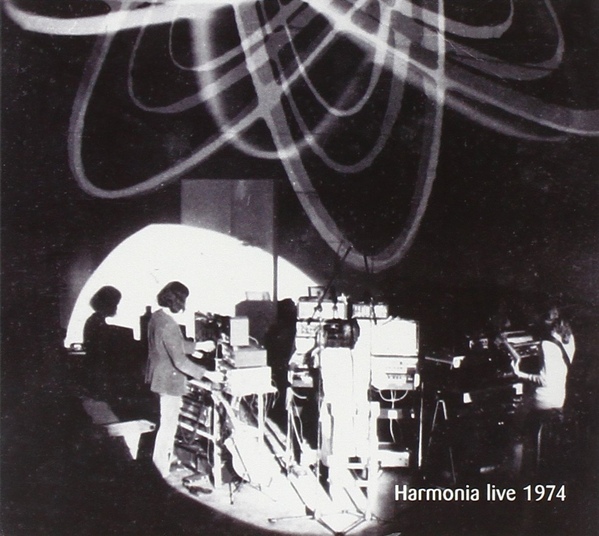
Neu! The Comeback-Neu! ’86.
As the years passed by, Neu! 4 was still a sore point for Michael Rother. It had driven a wedge between Michael and Klaus. “Sadly, Klaus died in 2008. I was deeply saddened. We had been great friends once.” Kosmische musik had lost one of its pioneers.
Two years later, Michael got the opportunity to right a wrong. He explains: “in early 2010, I came to an agreement with Klaus’ widow. It allowed me work on what had been Neu! 4. Using the master tapes, I remixed the whole album.” That wasn’t the only change.
The running order changed. Some of the tracks were given new names. Only twelve of the fourteen tracks on Neu! 86 found their way onto Neu! 86. A new song, “Drive (Grundfunken), was added to what became Neu! 86. It was released as a box set on May 10th 2010. Then on August 16th 2010, a CD version of Neu! 86 was released.
Mostly, reviews of Neu! 86 were positive. The only criticism was that the album was overproduced. Michael disagrees but agree: “it’s all matter of taste and opinion. I feel I did the best I could with what I had. Now Neu! 86 is much nearer to the album we had tried to make in 1985.” A quarter of a century later, and Michael was happy at the release of Neu! 86 in 2010. That wouldn’t be the last project from the past that Michael would undertake.


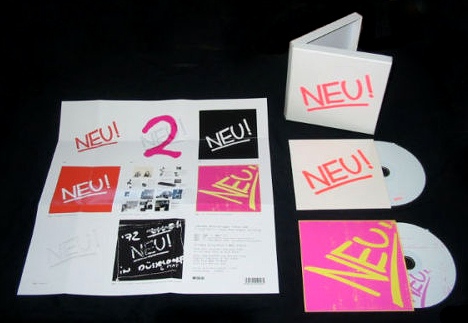
Harmonia-Complete Works.
Recently, Michael Rother has been working on what can only be described as a loving curated and luxurious box set. He has overseen the remastering of Harmonia-Complete Works, which will be released by Grönland Records on 30th October 2015. Included in the box set are the five digitally remastered vinyls; including Musik Von Harmonia, Deluxe, Tracks and Traces, Live ’74 and an album of unreleased material. One of the unreleased tracks was nearly lost forevermore.
Michael explains what happened. “Harmonia recorded all our shows and rehearsals. However, we were a poor band, and had to reuse each tape. Luckily, one night, a friend asked if we could record a rehearsal? Hans-Joachim Rodelius recorded the show, and at the end of the night, handed him the tape. That tape features what I consider to be the ultimate version of Tiki. Having given the tape away, I feared we would never see it again. Fortunately, our friend has kept that tape and the version of Tiki features on the fifth album of Complete Works.” That however, isn’t all that features in this laving and luxurious box set.
“There’s a thirty-six page booklet, detailing Harmonia’s history and a tour poster.” For those wanting to keep their vinyl pristine, there’s even a download code. This seems a fitting way to remember the group Brian Eno considered as: “the world`s most important rock group.“ However, the release of Complete Works is tinged with sadness.
After a brave and lengthy battle against cancer, Dieter Moebius died on 20th July 2015. Michael’s saddened by the passing of his old friend. During the making of Complete Works, Michael says: “I always made sure to keep Dieter up to date with how Complete Works was progressing. Only after he had approved everything, did I move on. I would never have done anything without his approval.” Sadly, Dieter Moebius died before Complete Works was released. He never got to see what will prove to be fitting reminder of the group that Dieter Moebius played such a big part of. Along with Hans-Joachim Roedelius and Michael Rother, Dieter Moebius was part of one of the most innovative groups in the history of Kosmische musik. They’re now regarded as one of the finest purveyors of Kosmische musik. Harmonia sit alongside the holy trinity, at Kosmische musik’s top table. At the head of the table is Michael Rother.
There’s a reason for this. Michael Rother has been part of three of the biggest bands in the history of Kosmische musik; Kraftwerk, Neu! and Harmonia. He then released nine solo albums and more recently, two soundtrack albums. “That was a new experience. However, now I concentrate my time on performing live.” Michael explains.
“I’ve been fortunate it’s taken me all over the work. One of the highlights was playing in China in 2014. I’ve a tour booked for early 2016, and will be playing in London. However, I’ve really enjoyed working on the Harmonia box set project. Indeed, once Complete Works is released, I’ll not know what to do with myself. Maybe, I’ll go back into the studio? I don’t know. That’s the future. For now, I’m concentrating on the release of Complete Works on the 30th November 2015. Grönland Records have done a fantastic time and I’m grateful for that. Complete Works has been a labour of love, and I’ve enjoyed seeing it through to fruition.”
Across the world, many music lovers are grateful to Michael Rother for compiling the Harmonia box set Complete Works. At last, Harmonia’s albums have been remastered and given an overdue reissue. Who better to do this, than one of the men responsible for some of the most innovative, influential and important Kosmische music ever recorded. That’s Michael Rother, the one-time Kraftwerk guitarist who went on to cofound Neu! and then Harmonia. Both groups went on to play an important part in the history of Kosmische musik; and influenced and inspired several generations of musicians. A reminder of why so many musicians have been inspired by Harmonia can be found within the Complete Works box set. No wonder. That includes some of the most important in Kosmische musik ever recorded. Albums like Music Von Harmonia and Deluxe are now regarded as Kosmische classics. That’s why nowadays, Harmonia sit proudly at the top table of Kosmische musik. Maybe the release of Complete Works should see the holy trinity become a quartet? Harmonia deserve to rub shoulder with Kraftwerk, Can and Neu!, as the Complete Works box set shows.
INTERVIEW WITH MICHAEL ROTHER-50 YEARS MAKING MUSIC.
THE JIMI HENDRIX EXPERIENCE-FREEDOM: ATLANTA POP FESTIVAL-VINYL EDITION.
THE JIMI HENDRIX EXPERIENCE-FREEDOM: ATLANTA POP FESTIVAL-VINYL EDITION.
On the 4th of July 1970, Jimi Hendrix journeyed 100 miles south of Atlanta. His destination was the second Atlanta International Pop Festival. It was being billed as the second Woodstock, and The Jimi Hendrix Experience were about play a starring role.
When The Jimi Hendrix Experience arrived at the Atlanta International Pop Festival, they were greeted by a crowd estimated to be between 300,000-400,000. What is now remembered as the “last great rock festival” was an unlikely event for Jimi Hendrix to appear at.
Byron, in Atlanta was in the heart of old the Deep South. This was Klan country. Racial tensions were always threatening to bubble over. The organisers of the 1970 Atlanta Pop Festival were well aware of this. So they made the conscious decision that the star of the show should be someone who appealed to everyone. This wasn’t going to be easy.
So the organisers set about thinking of an artist or band who would appeal to both sides of the racial, cultural and socio political divide. This wasn’t going be easy.
The organisers had to think how the audience would respond to certain artists, bands or situations. How would a rural audience in the Deep South feel about the so called long haired, hippie bands? Or how would they respond to black and white artists on the same bill? That could inflame an already volatile situation. While some promoters would’ve avoided this situation, the organisers of the Atlanta Pop Festival wanted to challenge the beliefs held by many of their potential audience. So, they booked a man who would unite the audience with the his music and his message of universal love, Jimi Hendrix.
It wasn’t just Jimi Hendrix that would star at the second Atlanta Pop Festival. No. On 4th of July 1970, the Jimi Hendrix Experience had reformed, and this alternate lineup of the Experience would take to the stage and work their way through sixteen songs that feature on Freedom-Atlanta Pop Festival, which was recently released on vinyl as a double album by Sony Music. It’s a musical masterclass from a musical legend.
Accompanied by bassist Billy Cox and drummer Mitch Mitchell, Jimi Hendrix showman extraordinaire and guitar virtuoso had the huge audience spellbound as he worked his way through classics like Foxy Lady, Hey Joe and Purple Haze, plus a cover version of Bob Dylan’s All Along The Watchtower. Jimi even showcased songs from his next album, which was going to feature Room Full Of Mirrors, Freedom, Hear My Train A-Comin’ and Hey Baby (New Rising Sun) were heard by many for the first time. Then as fireworks exploded, Jimi launched into a rendition of The Star Spangled Banner. He wasn’t finished yet, and returned for an encore of Straight Ahead. When he left the stage that night, nobody realised that the second Atlanta Pop Festival would be the last major American concert Jimi Hendrix would play at. Ten weeks later on 18th September 1970, Jimi Hendrix was pronounced dead. He was just twenty-seven.
For Jimi Hendrix the last three years had been a whirlwind. He took music by storm when The Jimi Hendrix released their debut album Are You Experienced? in 1967. Music was never the same after the release of Are You Experienced?
Are You Experienced?
That was apparent from The Jimi Hendrix’s 1967 explosive debut album Are You Experienced. It featured the debut of the legendary power trio of drummer Mitch Mitchell, bassist Noel Redding and guitarist Jimi Hendrix. They fused rock and psychedelia on eleven tracks penned by Jimi Hendrix.
The eleven tracks that became Are You Experienced, were recorded between October and April 1966. Three London studios were used, De Lane Lea Studios, CBS, and Olympic Studios. That’s where The Jimi Hendrix Experience recorded their debut album Are You Experienced, which was produced by Chas Chandler. Once it was completed, it was released in Britain in May 1967.
When Are You Experienced was released, it was hailed as one of the greatest debut rock albums. It showcased an innovative fusion of rock and psychedelia. At the heart of the Are You Experienced’s sound was the freewheeling sound of Jimi Hendrix’s guitar. He could do things other guitarists could only dream of. Add to the equation Jimi’s languid, charismatic vocal and it’s no surprise that Are You Experienced was such a huge commercial success.
When Are You Experienced was released in Britain, in May 1967, it reached number two. This resulted in a gold disc for the Jimi Hendrix Experience. No wonder. Are You Experienced featured future Jimi Hendrix classics like Foxy Lady, Third Stone from the Sun and Are You Experienced? Three months later, in August 1967, Are You Experienced was released in the US. It reached number five, and was certified platinum five times over. For Jimi, this was the start of a three year period where he could do no wrong.
Axis: Bold As Love.
Seven months later, on 1st December 1967, the Jimi Hendrix Experience returned with their sophomore album Axis: Bold As Love in the UK. It featured thirteen tracks. Twelve were penned by Jimi. These tracks showed Jimi evolving as a songwriter. He may have just been twenty-five, but he was a talented songwriter. Proof of this were tracks like Spanish Castle Magic, Wait Until Tomorrow, Castles Made of Sand and Bold As Love. They featured Jimi coming of age as a songwriter. These songs were recorded at Olympic Studios, London.
Recording of Axis: Bold As Love took place at Olympic Studios, London. The sessions took place during May, June and October 1967. Axis: Bold As Love had to be released during 1967. The contract that the Jimi Hendrix Experience had signed stipulated this. Ironically, the album was nearly lost. However, Axis: Bold As Love was only released in Britain in December 1967.
One night, Jimi Hendrix took the master tapes to side one home. Unfortunately, Jimi left them in a taxi. The master tapes were never found. This resulted in side one being mixed again. This didn’t delay the release of Axis: Bold As Love.
Axis: Bold As Love, was released in Britain, on 1st December 1967. It was released to the same critical acclaim as Are You Experienced. Critics ran out of superlatives in an attempt to describe Axis: Bold As Love. Jimi was described as some sort of musical messiah, who had music’s future in his hands. Record buyers agreed with the critics description of Axis: Bold As Love.
When Axis: Bold As Love was released in Britain, it reached number five and was certified silver. Then on January 15th 1968, Axis: Bold As Love was released in America. However, Axis: Bold As Love hadn’t been released in America during 1967.
There was a reason for this. The Jimi Hendrix Experience’s record company were scared this would affect sales of Are You Experienced. So Axis: Bold As Love wasn’t released in America until January 1968. When it was released, it reached number three in the US Billboard 200 and was certified platinum. Although not as successful as Are You Experienced, Jimi Hendrix was riding the crest of a musical wave.
Electric Ladyland.
By October 1968, when The Jimi Hendrix Experience released Electric Ladyland, Jimi Hendrix was one of the most successful musicians in the world. His albums sold by the million, and when The Jimi Hendrix Experience played live, they were one of the hottest live acts. This showed when Electric Ladyland was released.
Unlike The Jimi Hendrix Experience’s two previous albums, Electric Ladyland was an ambitious double album. It featured sixteen songs. Thirteen songs were penned by Jimi. Two of the covers were Bob Dylan’s All Around The Watchtower and Earl King’s Come On (Let the Good Times Roll. These tracks, and the rest of Electric Ladyland were recorded at three recording studios.
Recording sessions took place between July and December 1967, then between January and April 1968. Three different studios in London and New York were used. This included Olympic Studios in London and Record Plant Studios and Mayfair Studios, New York. Once the sixteen tracks were recorded, Electric Ladyland was released in October 1968.
As soon as critics heard Electric Ladyland, they realised that this was The Jimi Hendrix Experience’s. It oozed quality. Tracks like Crosstown Traffic, Voodoo Chile, Voodoo Child (Slight Return), All Along the Watchtower and Gypsy resulted in what was the greatest album of The Jimi Hendrix Experience’s career. Critics hailed Electric Ladyland a career high for The Jimi Hendrix Experience. Record buyers agreed.
When Electric Ladyland was released in Britain, on 16th October 1968, it reached number six and was certified gold. Nine days, later, on 25th October 1968 Electric Ladyland was released in America. It reached number one on the US Billboard 200 and was certified double platinum. The rise and rise of The Jimi Hendrix Experience continued.
Just like their previous two albums, their third album Electric Ladyland became a classic. Electric Ladyland was the album that The Jimi Hendrix Experience were always capable of making. It was a coming of age for The Jimi Hendrix Experience. They’d released the finest album of their three album career. Sadly, there was a twist in the tale. Electric Ladyland would be The Jimi Hendrix Experience’s final album. However, it was a fitting swan-song from a legendary power trio.
Eight months after the release of Electric Ladyland, The Jimi Hendrix Experience played their last concert on June 29th 1969. This took place at Barry Fey’s Denver Pop Festival. This was a three day event. Little did anyone know The Jimi Hendrix Experience would only play one further concert. They reunited in 1970, to allow Jimi to spread his message of universal love. However, before that, Jimi’s new trio, Band Of Gypsys, recorded their only album
Band of Gypsys.
After The Jimi Hendrix Experience split-up, Jimi formed another trio, The Band Of Gypsys. The lineup featured drummer Buddy Miles, bassist Billy Cox and Jimi on guitar. The Band of Gypsys recorded their only live album on 1st January 1970.
When the Band Of Gypsys took to the stage at Filmore East, in New York, on 1st January 1970, they had been busy. They’d written six new songs. Jimi penned four tracks, including Who Knows and the funky, anti Vietnam War song Machine Gun. These two tracks comprise side one of Band Of Gypsys. He also wrote Power To Love and Message Of Love. Jazz drummer Buddy Miles, wrote Changes and We Gotta Live Together. These six tracks found the Band Of Gypsys moving in a different direction from The Jimi Hendrix Experience.
Elements of funk, R&B and soul shine through on Band Of Gypsys. This isn’t surprising, given Jimi’s bandmates’ past. However, Jimi’s trademark fusion rock and psychedelia is still present. What’s obvious, is that Jimi was keen to explore different musical directions. He wasn’t going to be tied to the one musical genre. Instead, he was willing to experiment musically. Band Of Gypsys was just the start.
When critics heard Band Of Gypsys, they were won over by the genre melting album. They realised that Band Of Gypsys was an ambitious album. Machine Gun, they felt, was the best track on Band Of Gypsys. It was the album’s centrepiece, and showed what Jimi Hendrix, musical maverick was capable of, even without The Jimi Hendrix Experience. Just like The Jimi Hendrix Experience, the Band Of Gypsys was the perfect vehicle for Jimi.
Band Of Gypsys was released in Britain on 25th March 1970. It reached number six. Nearly three months later, on June 12th 1970, Band Of Gypsys was released in America, reaching number five in the US Billboard 200. This resulted in Band Of Gypsys being certified double platinum. Jimi Hendrix it seemed could do no wrong. Everyone waited with baited breath to see what direction his career headed.
After the release of Band Of Gypsys, Jimi returned the studio, where he began work on his next album. Jimi was a prolific artist, and recorded many tracks over a relatively short space of time. So much so, that by the time he headed to the second Atlanta Pop Festival, which was held on the 4th of July 1970, there were many tracks in various states of completion. This was more than enough for several album’s worth of material. Some of the new songs newly reformed lineup of The Jimi Hendrix Experience planned to showcase at the Atlanta Pop Festival.
Freedon-Atlanta Pop Festival.
Lesser musicians than Jimi Hendrix would’ve been nervous about playing at the heart of the Deep South. Not Jimi. He relished the challenge of uniting a region divided. He planned to do so with the newly reformed lineup of The Jimi Hendrix Experience.
Sadly, bassist Noel Redding wasn’t going to take to the stage. Taking his place would be Band Of Gypsys bassist Billy Cox. At least Noel Redding The Jimi Hendrix Experience’s original drummer was by Jimi’s side as they took to the stage. What had been a legendary power trio were about to try to unite a region divided.
Disc One.
When The Jimi Hendrix Experience took to the stage at the Atlanta International Pop Festival, they were greeted by a crowd estimated to be between 300,000-400,000. The Jimi Hendrix Experience launched into what was a blistering set. A Jimi took to the stage, he’s greeted by an audience that’s united. As he tunes his guitar, he introduces the band. Only then does he launch into a blistering version of Fire, before moving on to Lover Man and Spanish Castle Magic. Red House sees a stylistic change, as Jimi pays homage to his bluesy roots. Not only does he unleash a spellbinding solo, but a testifying vocal. From there, Jimi showcased three new song.
The first of was Room Full of Mirrors, which The Jimi Hendrix Experience followup with Room Full Of Mirrors and Hear My Train A-Comin.’ It’s poignant listening to this trio of tracks, knowing that Jimi would be dead by the time these songs were released. After a trio of new songs, The Jimi Hendrix Experience kicks loose on Message to Love. Fittingly, Jimi’s guitar plays a starring role, while as the rhythm section of bassist Billy Cox and drummer Mitch Mitchell seem content to play a supporting role. It’s a fitting way to close disc one.
Disc Two.
Disc two opens with All Along the Watchtower. The Jimi Hendrix Experience are given an enthusiastic response as they launch into a classic track. It’s the first of several classics.
Before that, Freedom, The Jimi Hendrix Experience showcase another new songs Freedom. This is fitting. Jimi had gone into a region divided, and was preaching a message of universal love and now Freedom. Given the South’s history, it’s a poignant song. The way Jimi delivers the lyrics, it’s as if he’s making a point. Having done so, it’s nearly classic all the way.
A wash of feedback signals the introduction to Foxy Lady. It’s as if Jimi’s gotten something of his chest on Freedom, and unleashes a series of virtuoso performances. He launches into a blistering version Purple Haze then Hey Joe and Voodoo Child (Slight Return). The classics keep on coming, as Jimi teases the listener with a reworking of Stone Free. By then, he’s worked the audience into a frenzy. Sadly, his set is almost at an end.
Not quite. Jimi unleashes a version of the Star Spangled Banner on his guitar. Not everyone seems receptive to this. In the heart of Dixie, some see this as sacrilegious. There’s the odd jeer and whistle, before Jimi wins over the audience. All around him, fireworks explode. After that, Straight Ahead closes the show and the newly reformed Jimi Hendrix Experience take their leave.
The Jimi Hendrix Experience had written their place into music history by playing a starring role in what’s now remembered as the “last great rock festival.” Jimi had united a region that had been divided. His message of unity, universal love and Freedom had him friends on both sides of the racial divide. Now Jimi Hendrix could concentrate on completing his next album. However, that never happened
On 18th September 1970, music was in mourning. Jimi Hendrix, it was announced, was dead.
Jimi Hendrix had been found around 11a.m. on the 18th September 1970, that Jimi Hendrix was found unresponsive at an apartment in the Samarkand Hotel, in Notting Hill, London. He was rushed to the St. Mary’s Abbot’s Hospital, but pronounced dead at 12.45p.m. Jimi Hendrix was just twenty-seven. However, music had lost one of the most influential and innovative guitarists of his generation.
That’s despite Jimi’s solo career beginning just four years earlier. Since then, Jimi had released a trio of studio album and one live album. However, since Jimi’s death, numerous posthumous albums have been released. This includes Freedom: Atlanta Pop Festival, which was recently released on vinyl as a double album by Sony Music. Freedom: Atlanta Pop Festival, is a reminder of a musical maverick at the peak of his powers.
Jimi Hendrix took music by storm, and vied for the title of rock’s greatest guitarist. Throughout his solo career, Jimi was a flamboyant showman, who growing up, modelled himself on T-Bone Walker.
It was T-Bone who Jimi saw playing his guitar with his teeth. When Jimi saw this, he took it as a challenge. This became part of Jimi’s routine. In years to come, Jimi played his guitar as if his life depended upon it. Jimi, on form, was like a man possessed. Some nights, Jimi played his guitar behind his back, played it with his teeth and as if trying to exercise some inner demons, set his guitar on fire. All this made Jimi one of the most exiting guitarists ever. However, Jimi was also a technically brilliant guitarists of his generation. That’s apparent on Freedom: Atlanta Pop Festival, which features a flamboyant, musical maverick at the peak of his powers. Along with the rest of The Jimi Hendrix Experience he combines classics, cover versions and new songs on Freedom: Atlanta Pop Festival, and in the process, united a region that previously, had been divided.
THE JIMI HENDRIX EXPERIENCE-FREEDOM: ATLANTA POP FESTIVAL-VINYL EDITION.

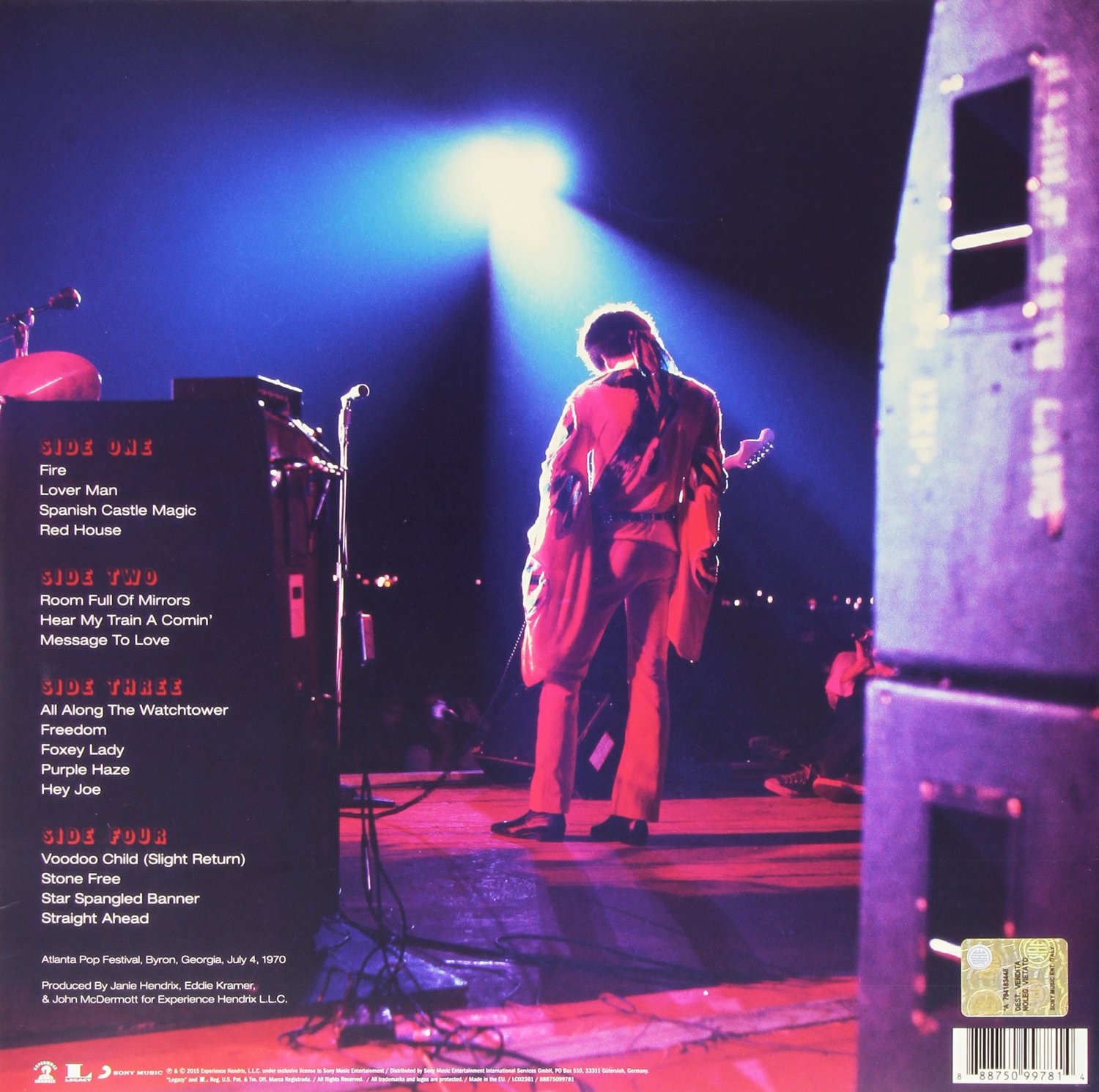
SLY AND THE FAMILY STONE-LIVE AT THE FILLMORE EAST-OCTOBER 4TH AND 5TH 1968-VINYL EDITION.
SLY AND THE FAMILY STONE-LIVE AT THE FILLMORE EAST-OCTOBER 4TH AND 5TH 1968-VINYL EDITION.
As promoters go, Bill Graham was one of the best. He seemed to have the uncanny knack of spotting bands on their way up. Often he managed to book bands just before they made it big. This meant when a band were enjoying a hit single or album, they were playing at the Fillmore East or West. However, one band Bill Graham didn’t initially “get,” were Sly and The Family Stone.
For whatever reason, Bill Graham didn’t see what other people saw in Sly and The Family Stone. Initially he wasn’t won over by their unique brand of dance music. As a result, he was reluctant to book Sly Stone and his band. Eventually, though, Bill Graham was persuade to go and see Sly and The Family Stone live. This changed his mind.
Sly and The Family Stone in full flight were a musical powerhouse. Their fusion of soul, funk and psychedelia was winning friends and influencing people. They certainly won over Bill Graham. So much so, that Bill Graham booked Sly and The Family Stone to open for Eric Burdon and The Animals at four concerts a the Fillmore East in October 1968.
These four concerts were recorded, but never released. That’s until recently. Live At The Fillmore East-October 4th and 5th 1968 was recently released by Sony Music on vinyl as a double album . They’re a fascinating insight into Sly and The Family Stone.
Live At The Fillmore East-October 4th and 5th 1968 features Sly and The Family Stone way before they became one of the biggest bands of the late sixties and early seventies. Back then, they had only released a trio of albums, 1967s A Whole New Thing, 1968s Dance To The Music and Life. None of these albums were a huge success. That was still to come.
By 1968, Sly and The Family Stone had only been together a year. Sly and The Family Stone was formed when Sly Stone and his brother Freddie decided to amalgamate their two bands, Sly and the Stoners and Freddie and the Stone Souls. The result was Sly and The Family Stone, the first multiracial band of the sixties.
Originally, Sly and The Family Stone featured guitarist Sly Stone, guitarist Freddie Stone, drummer Gregg Errico, trumpeter Cynthia Robinson and saxophonist Jerry Martini. This was the initial lineup of Sly and The Family Stone. However, initially, there was a problem. Both Sly and Freddie were guitarists.
Sly felt the new band didn’t need two guitarists. So, he volunteered to switch to the organ. There was one problem with this. He couldn’t play the organ. This didn’t bother Sly, who liked a challenge. Before long, Sly Stone was equally comfortable on guitar or organ. Now all Sly and The Family Stone needed, was a bassist.
That was the missing piece in the musical jigsaw. Luckily, Sly Stone knew the very man, Larry Graham. So Sly went to see Larry Graham, and by the time he left, Sly and The Family Stone’s lineup was complete. Or so he thought.
Then Sly Stone met Vaetta Stewart. She wanted to join Sly and The Family Stone. Vaetta Stewart was already a member of a gospel group, The Heavenly Tones with Mary McCreary and Elva Mouton. Once Sly Stone heard The Heavenly Tones, he decided to bring them onboard. They became Sly and The Family Stone’s backing singers, Little Sister. Now Sly and The Family Stone were ready to make some funky, soulful and psychedelic music.
Soon, Sly and The Family Stone were playing local clubs. This allowed them to hone their sound. Some members of the two bands that became Sly and The Family Stone had never played together. However, it didn’t take long before the new band were firing on all cylinders.
Quickly, Sly and The Family Stone established a name for themselves in San Francisco. One night they were booked to play at the Winchester Cathedral, nightclub in Redwood City. Sly and The Family Stone approached the concert like any other. Little did they realise that out front, sat David Kapralik from CBS Records.
After the concert, David Kapralik approached Sly and The Family Stone. He had liked what he heard, and wanted to sign Sly and The Family Stone to CBS Records’ imprint, Epic Records. For such a new band, this was almost unheard of. However, Sly and The Family Stone didn’t need to be asked twice. They signed on the dotted line.
A Whole New Thing.
With Sly and The Family Stone now signed to Epic Records, work began on their debut album. Sly Stone was already proving to be the group’s creative force. He wrote the twelve songs that became A Whole New Thing and produced the album. However, Sly Stone way of working was quite different from other producers.
Rather than employ overdubbing, Sly Stone decided to record A Whole New Thing live in the studio. To him, this made sense. It was how Sly and The Family Stone sounded live. There was also a sense of spontaneity and energy recording A Whole New Thing live. Doing things this way, was also quicker. So, A Whole New Thing was ready for release in October 1967.
On the release of A Whole New Thing, critics gave Sly and The Family Stone’s debut album mixed reviews. However, within the music industry, A Whole New Thing found favour with Tony Bennett and Mose Allison. They were won over by Sly and The Family Stone and their groundbreaking fusion of funk, soul and R&B on A Whole New Thing. However, what did record buyers think?
When A Whole New Thing was released, it didn’t sell well. It failed to even reach the lower reaches of the charts. For Sly and The Family Stone, this was a disaster. They had hoped that A Whole New Thing was their ticket out of the small clubs that they had been playing. That wasn’t going to be the case.
At CBS Records, the low sales of A Whole New Thing were a cause for concern. The label had high hopes for Sly and The Family Stone. So, president Clive Davis went to speak to Sly Stone. He explained to Sly that maybe, the followup to A Whole New Thing needed to be a much more commercial album.
Dance To The Music.
With Clive Davis’ advice ringing in his ears, Sly Stone set about writing a commercial song for him. He came up with Dance To The Music. It was recorded in late 1967, and released as a single in January 1968. Soon, Clive Davis had his single.
Before long, Dance To The Music was climbing the charts. It eventually reached number eight on the US Billboard 100 and number nine on the US R&B charts. Across the Atlantic, Dance To The Music reached number seven in Britain. However, there was a problem.
None of the members of Sly and The Family Stone like Dance To The Music. Although Dance To The Music was a fusion of funk, soul, R&B and pop, it had a much more poppy, commercial sound than the music on A Whole New Thing. While Dance To The Music had given Sly and The Family Stone a hit single, it wasn’t on their terms. The members of Sly and The Family Stone didn’t want to be in a pop band. Jerry Martini was the most vocal member of the band. He called Dance To The Music: “glorified Motown beats.” He wouldn’t be pleased when CBS Records wanted an album to followup Dance To The Music.
When the recording of Sly and The Family Stone’s sophomore album began, a new member had joined the band. Rose Stone, Sly and Freddie’s sister had been recruited to play keyboards and sing backing vocals. With their newest recruit, Sly and The Family Stone got to work.
Again, Sly Stone had penned each of the ten tracks. He also produced what became Dance To The Music, which featured several themes. This included peace, equality and brotherly love. Sly was keen to promote the message of equality, at a time when racism was rife. His platform to do so, was his music. It gave him the opportunity to reach a much wider audience than many activists. That was, if Dance To The Music sold well?
Before the release of Dance To The Music, critics had their say. Most of the reviews were positive, with critics enthusing over this Sly and The Family Stone’s new sound on Dance To The Music. This they referred to as psychedelic soul. With such positive reviews of Dance To The Music, things were looking good for Sly and The Family Stone.
Dance To The Music was released on April 27th 1968. Soon, it was climbing the charts. Eventually, it peaked at number 142 in the US Billboard 200 and number eleven in the US R&B charts. Clive Davis it seemed, had been right. By changing their style, commercial success came Sly and The Family Stone’s way. The only problem was, Sly and The Family Stone hated Dance To The Music. To them, it was tantamount to selling out. Ironically, numerous producers, including those toiling at the Motown music factory, took to copying Sly and The Family Stone’s new style. This new style would become their old style later in 1968.
Life.
Following the success of Dance To The Music, Sly and The Family Stone returned to the studio in the summer of 1968. Recording took place in San Francisco, where Sly and The Family Stone recorded ten tracks penned by Sly Stone. Just like the two previous albums, Sly wrote the songs on Life, and produced the album. Unlike last time, Sly wasn’t going to have the band record an album they hated. Instead, he was a man with a plan, a master-plan.
Sly Stone had decided there was no way he was recording Dance To The Music II. That wasn’t going to happen. So he decided to find a middle ground, somewhere between A Whole New Thing and Dance To The Music. This he hoped would result in an album that allowed Sly and The Family Stone to express themselves but sold well. M’Lady, Fun and Love City he hoped would appeal to those who enjoyed Sly and The Family Stone’s much more commercial sound. Other tracks, had a much more gritty sound. Just like previous albums, several themes run through Life. Among them are unity and integration. There’s also songs about groupies, plastic people and the dating scene. All these themes were explored on Life, Sly and The Family Stone’s second album of 1968.
In September 1968, Life, Sly and The Family Stone’s third album was released. Mostly, reviews of Life were positive. There were the occasional unfavourable review. However, it seemed like Sly and The Family Stone had done it again, with their unique brand of funk and psychedelic soul. Success looked almost assured.
That proved not to be the case. When Life was released, it didn’t sell well, and peaked at 195 in the US Billboard 200. It was a case of third time unlucky for Sly and The Family Stone. However, things were about to get a lot worse.
Sly and The Family Stone were schedule to tour Britain. So, Sly and The Family Stone embarked on a transatlantic flight. Once they arrived in Britain, the tour began. At first, things were going to plan. Then Larry Graham was arrested for possession of marijuana. That wasn’t the end of Sly and The Family Stone’s problems. There were problems with British concert promoters. Eventually, Sly and The Family Stone decided to cut their losses, and return home. By the time they arrived on American soil, Sly and The Family Stone weren’t in a good place. To make matters worse, Sly and The Family Stone were about to make their Fillmore East debut.
Following the problems that beset Sly and The Family Stone’s British tour, the band had to get their game head on. They were about to make their Fillmore East debut, this didn’t bode well for the 4th and 5th October 1968. Each day, Sly and The Family Stone would open for Eric Burdon and The Animals in their early and late shows. These four shows could play an important part in Sly and The Family Stone’s future career.
Live At The Fillmore East-October 4th and 5th 1968.
By the time, the 4th of October 1968 came round, Sly and The Family Stone were doubly determined that their four concerts at the Fillmore east would transform their ailing fortunes. One of these features on Live At The Fillmore East-October 4th and 5th 1968.
So on the 4th October 1968, Sly and The Family Stone took to the stage for the early show at the early show at The Fillmore East. They proceeded to work their way through seven tracks, comprising cover versions and album tracks.
From the moment Sly and The Stone strike up Are You Ready, they’re in the funkiest of grooves. They work their way through Colour Me True, Won’t, Be Long, We Love All (Freedom) and a medley of Turn Me Loose, I Can’t Turn You Loose. By then, Sly and The Family Stone have won over the Fillmore East. While they were just the support band, they were more than making an impression. Closing the show, were two tracks from Life, Chicken and Love City. As Sly and The Family Stone walked of the stage of The Fillmore East, it was to a standing ovation. Later, they had it all to do again.
When Sly and The Family Stone opened their late show, it was with two different tracks. M’Lady from Life opened the show, before they turned their attention to Don’t Burn Baby from Dance To The Music. Then Sly and The Family return to Colour Me True and Won’t, Be Long. From there, they drop in St. James Infirmary, which was already a staple of Sly and The Family’s live show. Somehow, Sly and The Family were matching, and sometimes, surpassing the quality of the early show. They were on a mission.
It was the perfect time to drop in their medley of Turn Me Loose, I Can’t Turn You Loose, and then Dance To The Music. By now, everyone in The Fillmore East seems to be on their feet. Now that Sly and The Family Stone have them where they want them, they close the show with Music Love and finally, a medley of Life and Music Lover. They then take their leave, and ready themselves to do it all again on the 5th October 1968.
Having conquered The Fillmore East on the 4th October 1968, Sly and The Family Stone had it all to do again. Given they had produced two barnstorming performances, Sly and The Family Stone must have had mixed feelings. Could they top their two previous performances? They were going to give it a good go.
As Sly and The Family Stone took to the stage, they opened with Life, the title-track to their third album. From there, they followed up with Colour Me True and Won’t Be Long. They had featured in the two previous sets, and allowed Sly and The Family Stone to their stride.
Then came Dance To The Music, which was by then Sly and The Family Stone’s theme tune. Each set they were forced to play a song they loathed. However, this doesn’t show, as Sly and The Family Stone combine elements of funk, pop, psychedelic soul, R&B and even rock. They prove a talented and versatile band, one who seamlessly combine musical genres. This they do on Music and then, M’Lady a track from Life which closes the set. As Sly and The Family Stone make their way off the stage, they’re given another standing ovation. All they had to do, was do it all again that night.
Unlike many bands, Sly and The Family Stone didn’t play the same set each time they took to the stage. Instead, they mixed things up. On the evening of the 5th October 1968, which features on Live At The Fillmore East-October 4th and 5th 1968, they opened with Life and M’Lady, before turning to Are You Ready, Won’t Be Long and Colour Me True. Having worked the audience into a frenzy with their unique brand of funky, psychedelic soul, Sly and The Family Stone drop in their biggest hit Dance To The Music. This has the desired effect, and almost lifts the roof off. From there, Music City gives way to Love City and the medley of Turn Me Loose, I Can’t Turn You Loose. Closing the show and two days at The Fillmore East is Country Jams. With that, Sly and The Family take their leave. Their luck has changed, and would continue to do so.
Reviews of Sly and The Family Stone’s at The Fillmore East went a long way to restoring their reputation. The commercial failure of Life, then the ill-fated tour of Britain left Sly and The Family Stone’s reputation in tatters. These two days at The Fillmore East were make or break for Sly and The Family Stone. If they hadn’t gone well, it could’ve been game over for Sly and The Family Stone. Would CBS Records have allowed Sly Stone the freedom to make Sly and The Family Stone’s next album Stand? It was the start of a five year period when Sly and The Family Stone could do no wrong.
Stand.
Maybe, Clive Davis would have parachuted a producer in to oversee Sly and The Family Stone’s fourth album. That wasn’t the case. Sly and The Family Stone were the conquering heroes, who had produced four barnstorming performances at The Fillmore East. They’re documented on Live At The Fillmore East-October 4th and 5th 1968, which was recently released by Sony Music. It features Sly and The Family Stone as they embark upon the most successful period of their career.
This began when Sly and The Family Stone released Everyday People in December 1968. It reached number one on the US Billboard 100 and US R&B charts. Then on May 3rd 1969, Sly and The Family Stone released Stand. It reached number thirteen in the US Billboard 200 and number three on the US R&B charts. This resulted in Sly and The Family Stone’s first platinum album, and the beginning of the rise and rise of Sly and The Family Stone.
Following Stand, Sly and The Family Stone were one of the stars of Woodstock. Their early morning set on 17th August 1969, was one of the highlights of Woodstock. This further cemented their huge popularity. After Woodstock, CBS, their record company were desperate for a new album.
Greatest Hits.
No wonder. Sly and The Family Stone’s profile was at an all time high. Deadlines were set, and deadlines missed. For CBS, this was frustrating. They were desperate for a new album. Realising a new album wasn’t going to be imminent, a Greatest Hits album was released in 1970. Featuring three new songs, Greatest Hits reached number two in the US Billboard and number one in the US R&B Charts. This resulted in Greatest Hits being certified gold. Eventually, Greatest Hits surpassed the success of Stand, selling five million copies and was certified platinum five times over in 2003. By releasing their Greatest Hits album, Sly and The Family Stone had bought some time. All wasn’t well within Stand, Sly and The Family Stone.
At this time, relationships within the band were at an all time low, especially among The Stone brothers Sly and Freddie, and bassist Larry Graham. Tense doesn’t come close to describe their relationship. Ironically, Larry’s bass playing would be crucial to the success of what became There’s A Riot Goin’ On. It provided the heartbeat to the album. Sadly, the tension between the band members wasn’t the only problem surrounding Sly and The Family Stone.
The other problem was that drug use was rife within the band. Stories emerged that Sly Stone allegedly, carried a violin case full of drugs everywhere the band went. Drug use had worsened when the band had relocated to California. PCP and cocaine were now the drugs of choice for the band. This started to affect the recoding schedule and tours. Sly’s moods changed One minute he was upbeat and happy, then suddenly he was moody. His behavior started to become erratic. Between concerts, it was reported that he spent much of his time taking drugs. For a band who’d just enjoyed two hugely successful albums, Sly and The Family Stone were shooting themselves in their foot at every turn. Controversy arose when Sly Stone became friendly with The Black Panthers.
Adding to the controversy surrounding Sly Stone, was his newfound relationship with The Black Panthers. This was said to be affecting the band’s music. They wanted the band’s music to be more militant, both in style, lyrically and musically. The Black Panthers also felt that Sly and The Family Stone should reflect the movement’s beliefs. Even more controversial was that The Panthers wanted Sly to fire the two white instrumentalists Greg Errico and Jerry Martini. Their replacements, The Panthers said, should be black musicians. Their final request, was that manager David Kapralik be sacked. Replacing him, should be a black manager who would represent the group. Soon, politics were the least of Sly’s problems. Soon, Sly was involved with gangsters.
By now, the Sly Stone story was like a cheap dime novel. He had decided to hire gangsters to manage his affairs, protect him and source him drugs. Other members of the band looked on helplessly. With Sly’s various problems and members of the band being sacked, Sly and The Family Stone were a band in crisis. Adding to this crisis was drummer Greg Errico’s decision to leave the band. This was the backdrop for the recording of new album in 1970 and 1971. Sly and The Family Stone were up against it when recording of There’s A Riot Goin’ On began.
There’s A Riot Goin’ On.
Recording of There’s A Riot Goin’ On took place between 1970 and 1971 at the Record Plant, Sausalito. Sly and The Family Stone recorded twelve songs penned by Sly Stone. Eventually, amidst rancor, tension and a haze of drugs, a genre-melting album was recorded. There’s A Riot Goin’ On was a delicious fusion of funk, soul, rock, psychedelia and jazz. Ironically, There’s A Riot Goin’ On wasn’t immediately recognized as a stonewall classic.
On its release, There’s A Riot Goin’ On was released to widespread critical acclaim. It reached number one on the US Billboard 200 and US R&B charts and was certified platinum. There’s A Riot Goin’ On also featured the number one single Family Affair, which reached number one on the US Billboard 100 and US R&B charts. Sly and The Family Stone, it seemed, could do no wrong.
Fresh.
Following up a stonewall classic like There’s A Riot Goin’ On was almost impossible. Especially since Sly Stone was continuing to indulge in the rock ’n’ roll lifestyle. His drug use was affecting the band.
He had written and produced the eleven tracks that became Fresh. However, constantly Sly rerecorded and remixed the album. Sly was never happy with the songs. For his record company, this was frustrating. They desperately needed a new album. Eventually, nineteen months after the release of There’s A Riot Goin’ On was released, Fresh was released on June 30th 1973.
Reviews of Fresh were mixed. Fresh’s dark, funky sound divided the opinion of critics. Their reviews ranged from favourable to positive. However, other musicians saw Fresh as an innovative album. This included Brian Eno, Miles Davis and George Clinton. Brian Eno remarked that Fresh was the start of a period where the bass and bass drum became the most important instruments in a mix. Miles Davis and George Clinton were equally impressed, referring to Fresh as one of their favourite albums. However, would record buyers agree?
To an extent they did. Fresh reached number seven in the US Billboard 200 and number one in the US R&B charts. This resulted in a gold disc for Sly and The Family Stone. While many musicians would’ve been pleased with this, album sales were way down. Was this the end of Sly and The Family Stone’s golden era?
Small Talk.
Having spent nineteen months recording Fresh, Sly and The Family Stone released Small Talk in July 1974. He wrote ten of the eleven tracks and cowrote Small Small Talk. Sly also arranged and produced Small Talk, which marked the end of an era.
Prior to its release, Small Talk received mixed reviews. Just like Fresh, they ranged from poor to positive. Many were wondering had Sly Stone lost his Midas Touch?
That proved not to be the case. Small Talk reached number fifteen in the US Billboard 200 charts, and was certified gold. While this should’ve pleased everyone at Epic Records, they were in for a shock.
Six months later, in January 1975, Sly and The Family Stone split-up. Between 1969s Stand and 1974s Small Talk, Sly and The Family Stone could do no wrong. They released five albums, which sold over ten million copies. This run of commercial success and critical acclaim began with Stand, which was certified platinum, and ended with Small Talk, which was certified gold. In between, Sly and The Family Stone were one of the most groundbreaking groups of the late sixties and early seventies. Their music influenced several generations of musicians, and much of it is timeless. However, the commercial success and critical acclaim that Sly and The Family Stone enjoyed could’ve, and should’ve lasted longer.
Especially given the combined talents of Sly and The Family Stone, that’s hugely disappointing. At the heart of Sly and The Family Stone’s downfall, were the problems surrounding Sly Stone, the group’s leader, songwriter and producer. They eventually took their toll. Just like Icarus, Sly Stone flew to close to the sun. Drugs and his involvement with gangsters and the Black Panthers proved costly. So did his decision to replace key members of the band. By then, Sly’s life had become increasingly chaotic. However, for five years Sly and The Family Stone were an innovative and imaginative band who released groundbreaking, influential music. This journey began at The Fillmore East on the 4th and 5th October 1968, and saw Sly and The Family Stone rise, like a phoenix from the ashes on Live At The Fillmore East-October 4th and 5th 1968.
SLY AND THE FAMILY STONE-LIVE AT THE FILLMORE EAST-OCTOBER 4TH AND 5TH 1968-VINYL EDITION.



MILES DAVIS AT NEWPORT 1955-1975-THE BOOTLEG SERIES VOLUME 4-VINYL EDITION
MILES DAVIS AT NEWPORT 1955-1975-THE BOOTLEG SERIES VOLUME 4-VINYL EDITION.
It was in 1954, that Elaine Lorillard and her husband Louis founded the Newport Jazz Festival. Elaine’s love affair with jazz began in 1943.
She was twenty-nine, single and was living in New York when she first heard jazz music. This was very different to her musical background. Elaine Guthrie was a graduate of the New England Conservatory Of Music. Music was in her blood. Her mother was a classical singer. However, Elaine wasn’t about to follow in her footsteps. Instead, she had just accepted a job with the Red Cross in Naples.
Elaine new job found her teaching orphans to paint and play play the piano. It was a role she was suited to. She a classically trained musician and a gifted painter. By day Elaine taught, and at night she explored the city of Naples. It was during two of these expeditions, that her life was changed forevermore.
During a trip into Naples, Elaine Guthrie heard jazz. Although she had heard jazz in New York before, this was the start of her love affair with jazz. Another of Elaine’s expeditions into Naples resulted in another love affair.
It was in Naples that Elaine first met Lieutenant Louis Livingston Lorillard. He was stationed in Naples with the US Army. Louis was five years Elaine’s junior. This didn’t matter. The pair quickly grew close and married three years later in 1946. By then, Elaine had embraced jazz fully.
Once they were married, Elaine and Louis’ love of jazz grew. They occasionally visited jazz clubs to catch some of the big names as they swung through town. In 1953, Elaine and Louis visited the Storyville Nightclub. Joining them, were Elaine’s brother Thomas T. Guthrie and his friend Professor Borne, from Boston University. However, that night, it wasn’t jazz they heard.
As they listened to the music, they got talking with the owner George Wein. Elaine and Louis told George Wein that if he intruded jazz to his club, it might improve the “terribly boring” club. Fortunately, George didn’t take offence to this advice, and this was the start of a friendship that resulted in Elaine, Louis and George founding one of the most prestigious jazz festivals, the Newport Jazz Festival.
Louis, who was the heir to the Lorillard Tobacco Company, gave a grant of $20,000 grant for the first Newport Jazz Festival. There was a caveat though. The Newport Jazz Festival was founded as not-for-profit organisation. Any profits made, were to be used to educate musicians. With the ground rules established, George Wein began organising what would become as the First Annual American Jazz Festival.
Eventually, George had a venue for The Newport Jazz Festival. It would be held at Newport Casino in the Bellevue Avenue Historic District of Newport, Rhode Island. The festival lasted two days, and combined live music with academic panel discussions. These discussions took place inside the Casino, while the performances took place on the lawn. Topping the bill was Billie Holiday. A total of 11,000 people attended the two day festival in July 1954. It had been a resounding success.
After the success of the first The Newport Jazz Festival, George Wein began to make plans for 1955. Straight away, there was a problem. The Newport Casino’s facilities couldn’t cope with the numbers that attended the Festival, and the lawn had been damaged. So they declined to host the second Newport Jazz Festival. For George Wein this was a disaster.
Fortunately, Elaine and Louis noticed that a local estate Belcourt was for sale. This they thought, would be a perfect venue for The Newport Jazz Festival. So they bought Belcourt, only for those in the neighbourhood to object to the plans to host the The Newport Jazz Festival at Belcourt. George Wein was back to square one.
Luckily, an alternative venue was found. Freebody Park a nearby sports arena hosted the concerts. However, the workshops and discussions were allowed to be held at Belcourt. It seemed the neighbourhood didn’t object to academic discussions taking place locally. Music, however, was an other matter. With a venue in place, George went looking for someone to headline the the second Newport Jazz Festival.
George Wein set his sights high, and had booked Miles Davis. It was the easiest booking George ever made. The pair had met in a jazz club in New York in late 1954. Miles had asked “George are you going to to have the festival again up in Newport?” An astonished George Wein responded: “Miles you want to be in the festival?” Quick as a flash, Miles said: “you can’t have it without me.” There and then the deal was sealed.
Despite what would be a huge boost to the nascent event, George didn’t advertise Miles Davis’ appearance. Everything had happened so late in the day. However, even without advertising Miles Davis’ appearance, it would be a vast improvement on the previous year.
Billie Holiday had been booked for the first Newport Jazz Festival. However, her career was on the slide, and Lady Day was a pale shadow of her former self. Miles Davis however, was one of the biggest names in jazz.
Miles Davis’ hard bop era had finished in 1954, and 1955 was the start of a new era. It featured Miles Davis’ first great quintet. As Miles played trumpet, the rhythm section featured drummer Philly Joe Jones and bassist Paul Chambers. They were augmented by pianist Red Garland and tenor saxophonist John Coltrane. This all-star lineup was would become part of jazz history. However, this wasn’t the band that took to the stage at the second Newport Jazz Festival on 17th July 1955. Excerpts from this performance feature on Miles Davis At Newport 1955-1975-The Bootleg Series Volume 4, which will be released as an eight LP set by Music On Vinyl.
LPs 1 and 2.
Instead, George Wein put together a band for second Newport Jazz Festival. It featured pianist Thelonius Monk, baritone saxophonist Gerry Mulligan, tenor saxophonist Zoot Sims and a rhythm section of bassist Percy Heath and drummer Connie Kay of The Modern Jazz Quartet. The result was a versatile band who were just as happy playing hard bop or moving towards the cool school. This was perfect for Miles Davis’ unexpected Newport Jazz Festival debut.
It took place at Festival Field Newport on 17th July 1955. Accompanied by a tight, uber talented and versatile band, Miles took to the stage. Gerry Mulligan introduces the band, and then they get to work. Having accompanied Miles on Hackensack, the highlight of the set unfolds. That’s a seminal six minute performance of Round Midnight. Miles delivers a stunning trumpet solo, which was hailed as “the return of Miles Davis.” From there, the band join Miles on Charlie Parker’s Now’s The Time. They feature on disc one of Miles Davis At Newport 1955-1975-The Bootleg Series Volume 4. It documents the first twenty years of Miles Davis’ thirty year association with the Newport Jazz Festival.
Over the next twenty years, constantly, Miles returned to Newport like a conquering hero. Often, he had just reinvented himself, or released a classic, or groundbreaking album. However, as Miles and his band left the state in 1955, little did anyone realise that thirty years down the line, Miles would still be star at Newport. Excerpts from Miles performances in 1958, 1966, 1967, 1969, 1973 and 1975 all feature on Miles Davis At Newport 1955-1975-The Bootleg Series Volume 4’s four discs.
Three years after his Newport debut, Miles Davis returned in 1958. It was a case of hail the conquering hero. Since 1955, he had founded his first great quintet and sextet. Miles had also recently released two classic albums, ‘Round About Midnight and Miles Ahead. This provided Miles with some of the material for his set at Newport in 1958.
Just like his Newport debut, Miles was accompanied by some of the legends of jazz. Pianist Bill Evans joined tenor saxophonist John Coltrane and Cannonball Adderley on alto sax. They were joined by a rhythm section of bassist Paul Chambers and drummer Jimmy Cobb. They took to the stage at Newport Field on 3rd July 1958.
After Willis Connover introduces the band, they open their set with Charlie Parker’s Ah-Leu-Cha from ‘Round About Midnight. They follow this up with Straight No Chaser, which would feature on Milestones later in 1958, then Fran-Dance. Then it’s another track from Milestone Two Bass Hit. By then, Miles and his band are in the groove. So they revisit another track from ‘Round About Midnight Bye-Bye Blackbird, before closing the show with The Theme. Just like in 1955, it’s a case of hail the conquering hero, as Miles exits stage left. However, he would be back.
LPs 3 and 4.
When Miles Davis returned in 1961, the previous year’s festival hadn’t been a huge success. A rival festival took place at the nearby Cliff Walk Manor Hotel. It had been organised by musicians Charles Mingus and Max Roach. This was their way of protesting at what they perceived as the low fess paid to musicians. What Messrs. Mingus and Roach failed to see, was that the Newport Jazz Festival was a not-for-profit organisation. Any profits made, were used to educate musicians. So setting up a rival event, was affecting the education of musicians. That wasn’t the end of George Wein’s woes.
To make matters worse, audiences at Newport had gained a reputation for being lively, or some may say rowdy. In 1960, as Muddy Waters headlined the Festival, crowd trouble broke out. Things got so bad, that the National Guard were called. This had ramifications.
The disturbance in 1960, resulted in the 1961 event being cancelled. Then in 1961, Elaine and Louis Lorillard ended their association with the Newport Jazz Festival. In 1962, George Wein had managed to secure the Freebody Park for the Newport Jazz Festival. However, 1962 saw a change in the way the profits from the Festival were distributed.
Up until then, the Newport Jazz Festival was a not-for-profit organisation. That ended with the Lorillard’s association with the Newport Jazz Festival. So George Wein decided that now was the time to run the Newport Jazz Festival as a commercial enterprise. This would please some of the mercenaries within the jazz profession. Four years after this change in the philosophy of the Newport Jazz Festival, Miles Davies returned in 1966.
A lot had happened when Miles returned in 1966. The biggest difference was that the Newport Jazz Festival was being staged outside the city limits. This happened for the first time in 1964. A year later, in 1965, and Frank Sinatra was the headliner. His appearance resulted in record attendances. After Ole Blue Eyes won over Newport, the bar had been set high. George needed someone guaranteed to bring the audiences flooding in. What better person than Miles Davis.
By the time Miles took to the stage at Festival Field on 4th July 1966, music had undergone a revolution. Rock ’n’ roll had been in its infancy the last time Miles took to the stage at Newport. Now it was all change. Pop and rock ruled the roost, and the psychedelic era had just begun. Jazz was on its uppers, and many thought it was about to go the way of blues music. Not if Miles had anything to do with it.
As Miles took to the stage, he was accompanied by tenor saxophonist Wayne Shorter, pianist Herbie Hancock, bassist Ron Carter and drummer Tony Williams. They open the show with Gingerbread Boy from the 1966 album Miles Smiles. From there, Miles moves through All Blues and Stella By Starlight and the Ron Carter penned R.J. Then Miles and his band return to Seven Steps To Heaven, the title-track from his 1963 album.
The Steps To Heaven album featured an entirely new band. This came after Miles’ previous band quit. It hadn’t been a good time for Miles. He had health problems, resulting in him missing gigs. The remaining gigs he played varied in quality. However, the gigs he had missed proved costly. Soon, the money dried up, and Miles couldn’t pay his band. They quit en masse. Ironically, it was the best thing that happened to Miles.
He quickly assembled a band to record the Steps To Heaven album. They spent the next six years with Miles, and played on some his best albums of the sixties. The band were enjoying their Newport Jazz Festival debut with Miles. Especially, Herbie Hancock who plays a starring role on Steps To Heaven. This future standard had been penned by Miles and pianist Victor Feldman. It was the penultimate track of the set. After Steps To Heaven, the band play The Theme and they take their bow. A year later, Miles and his band return.
When Miles and the same band that headlined the 1966 Newport Jazz Festival returned in 1967, Miles had a just released Miles Smiles and recorded new album, Sorcerer. It would be released in October 1967. However, on Jul7 2nd 1967, Miles and his band returned to Miles Smiles.
After the usual introductions, Miles and the band play “Ginger Bread Boy and Footprints which featured on Miles Smiles. Then Miles returns to a classic, and a spellbinding performance of ‘Round Midnight unfolds. Although it’s not quite up there with Miles performance in 1958, it’s a captivating performance. Following this up isn’t easy, but So What is the track that’s chosen, before The Theme closes the show. It would be another two years before Miles returned to the Newport Jazz Festival.
LPs 6 and 7.
By 1969, fusion had rode to the rescue of jazz. This marriage of funk, jazz and rock saved jazz from following in the footsteps of the blues. However, this didn’t please some traditionalists. These veteran musicians weren’t fans of fusion. It seemed they would rather endure penury than play fusion. Not Miles, he embraced fusion.
From 1968s Miles In The Sky to 1969 Filles de Kilimanjaro, Miles’ music moved towards fusion. In A Silent Way, which was recorded on February 18th 1969, saw the shift towards fusion complete. It was scheduled for release in late July, just after Miles played at the Newport Jazz Festival on 5th July 1969.
Accompanying Miles, were a new band. The quartet featured pianist Chick Corea, drummer Jack DeJohnette and bassist Dave Holland. They played a fusion filled set. A ten minute version of Miles Runs the Voodoo Down opened the set. Just like Sanctuary, it would feature on Miles next album, Bitches Brew. This classic album was released in 1970. Closing the set was It’s About That Time, from the 1969 album In A Silent Way. As Miles and the band left the stage, some critics realised they had witnessed the future of jazz.
Four years later, and fusion was just as popular. The genre continued to reinvent itself. Fusion was thriving all over the word, including in Germany. This was Miles Davis destination on 1st November 1973. George Wein had decided to take the Newport Jazz Festival on the road. So Miles and his latest band made their way to Berlin.
At the Berlin Philarmonie, Miles and his band work their way through five tracks. Ronne Scott introduced the band. It featured percussionist James Mtume Forman and Dave Leibman on flute, soprano and tenor saxophonist.They’re joined by guitarists Reggie Lucas and Pete Cosey who also plays percussion. The rhythm section features drummer Al Foster and electric bassist Michael Henderson. Miles switches between trumpet and organ, over the five tracks.
Turnaroundphrase opens the set, before Tune In 5, fourteen minute version of Ife. From there, Miles and the band switch into Untitled Original and return to Tune In 5. It’s Miles Davis pushing musical boundaries and ensuring his music evolved. That had been the case throughout his career. He wasn’t going to change. That was the case in 1975, when the Newport Jazz Festival went on the road again.
This time, they didn’t go far. The Avery Fisher Hall, New York was the destination. Miles’ band from 1973 had evolved slightly. Sam Morrison had been drafted in to play tenor sax, replacing Dave Liebman. This latest lineup of Miles’ band features on a version of Mtume. It featured on Miles 1974 album Get Up With It. By then, he was combining free jazz with post bop and fusion. Miles Davis was, forever the musical chameleon. That had been the case two years earlier.
LPs 7 and 8.
On 22nd October 1971, the Newport Jazz Festival travelled to Switzerland. The venue was Neue Stadtalle, Dietikon. Miles was scheduled to play two concerts. The first of these concerts features on disc four of Miles Davis Live At Newport 1955-1975-The Bootleg Series Volume 4. That night, Miles and his band work their way through seven tracks.
By then, Miles band had changed its lineup. Musicians seemed to come and go. Gary Bartz played soprano and alto saxophone. Keith Jarrett played electric piano and organ. Perussionists included James Mtume Forman and Don Aias. The rhythm section featured drummer Ndugu Leon Chancler and electric bassist Michael Henderson. This latest lineup would wow the Swiss audience.
Opening the show with Directions, Miles and his band moved onto What I Say? A four minute version of Sanctuary, which closed Bitches Brew in 1970, was followed by It’s About Time. Then Miles returns to Bitches Brew, which had been released in April 1970, and was well on its way to selling two million copies in America alone. To celebrate this, Miles and the band unleash a near twelve minute version of the title-track. It’s an epic. However, that’s nothing compared to Funky Tonk, which lasts nearly twenty-six minutes. It’s Miles at his most innovative, pushing musical boundaries, switching between genres and taking the track in unexpected directions. After Funky Tonk, the Wayne Shorter composition Sanctuary closes not just the set, but Miles Davis Live At Newport 1955-1975-The Bootleg Series Volume 4.
As box sets go, Miles Davis Live At Newport 1955-1975-The Bootleg Series Volume 4 is a lovingly compiled box set, which will be released on eight LPs on 30th October 2015, by Music On Vinyl. It celebrates and documents the first twenty years that Miles was associated with the Newport Jazz Festival. This box set also shows how Miles Davis’ music evolved over this period.
Miles Davis was never content to stand still. He was restless. Having pioneered or been at the forefront of a musical movement or genre, Miles wanted to move on. So he went in search of the latest musical genre. He had moved from bebop, hard bop and post bop, to modal free jazz and fusion. There’s even a nod towards psychedelia during this twenty year celebration of Miles Davis association with the Newport Jazz Festival.
After his debut in 1955, Miles Davis returned in 1958, 1966, 1967 and 1969. As the sixtes gave way to seventies, Miles association with the Newport Jazz Festival continued. Miles returned in 1971, 1973 and 1975. Often he was hailed the conquering hero. Even when jazz’s popularity declined in the late sixties, Miles Davis continued to win friends and influence the Newport audience.
By 1969, George Wein had tried to broaden the appeal of the Newport Jazz Festival. He decided to combine rock, soul and jazz. So on the Saturday, Jeff Beck, Ten Years After, Blood Sweat and Tears and Jethro Tull rubbed shoulders with Miles Davis and Dave Brubeck, John Mayall and Sly and The Family Stone. Then on the Sunday, James Brown the self styled ‘Godfather of funk,’ joined Herbie Hancock and B.B. King. The headline act was Led Zeppelin. They rose above the mediocrity of James Brown and B.B. King, stealing the show. The inclusion of non jazz acts had been a resounding success, so two years later, George Wein booked The Allman Brothers Band.
Again George Wein’s decision to book a much more eclectic selection of artists proved a huge success. It continued to broaden the appeal of the Newport Jazz Festival. On the second night of the Festival, Dionne Warwick was performing in an adjacent field. As she began to sing What The World Needs Now Is Love, festival goers crashed through fences. A disturbance followed and chaos ensued. Later, members of the audience rushed the stage, and equipment was destroyed. Not for the first time, trouble blighted the Newport Jazz Festival. It was a victim of its own success.
Just like Miles Davis, the Newport Jazz Festival survived the decline in jazz’s popularity. Miles and George Wein knew that in both their cases they had to adapt and evolve. If neither Miles Davis nor the Newport Jazz Festival evolved, they would’ve become irrelevant. That didn’t happen though. Both Miles and the Newport Jazz Festival went from strength to strength.
Miles Davis was associated with the Newport Jazz Festival until 1985. Their relationship had lasted thirty years, and during that period, Miles Davis continued to reinvent his music. Continually, he innovated and pushes musical boundaries. That was the case right up until his death in 1991. His career had spanned five decades, during which Miles Davis released forty-eight studio albums. This include classic albums like 1957s Birth Of The Cool and ’Round About Midnight, 1959s, Kind Of Blue and 1970s Bitches Brew. Tracks from each of these albums feature on Miles Davis Live At Newport 1955-1975-The Bootleg Series Volume 4, which documents, and celebrates, the first twenty years of Miles Davis association with the Newport Jazz Festival.
MILES DAVIS AT NEWPORT 1955-1975-THE BOOTLEG SERIES VOLUME 4-VINYL EDITION.
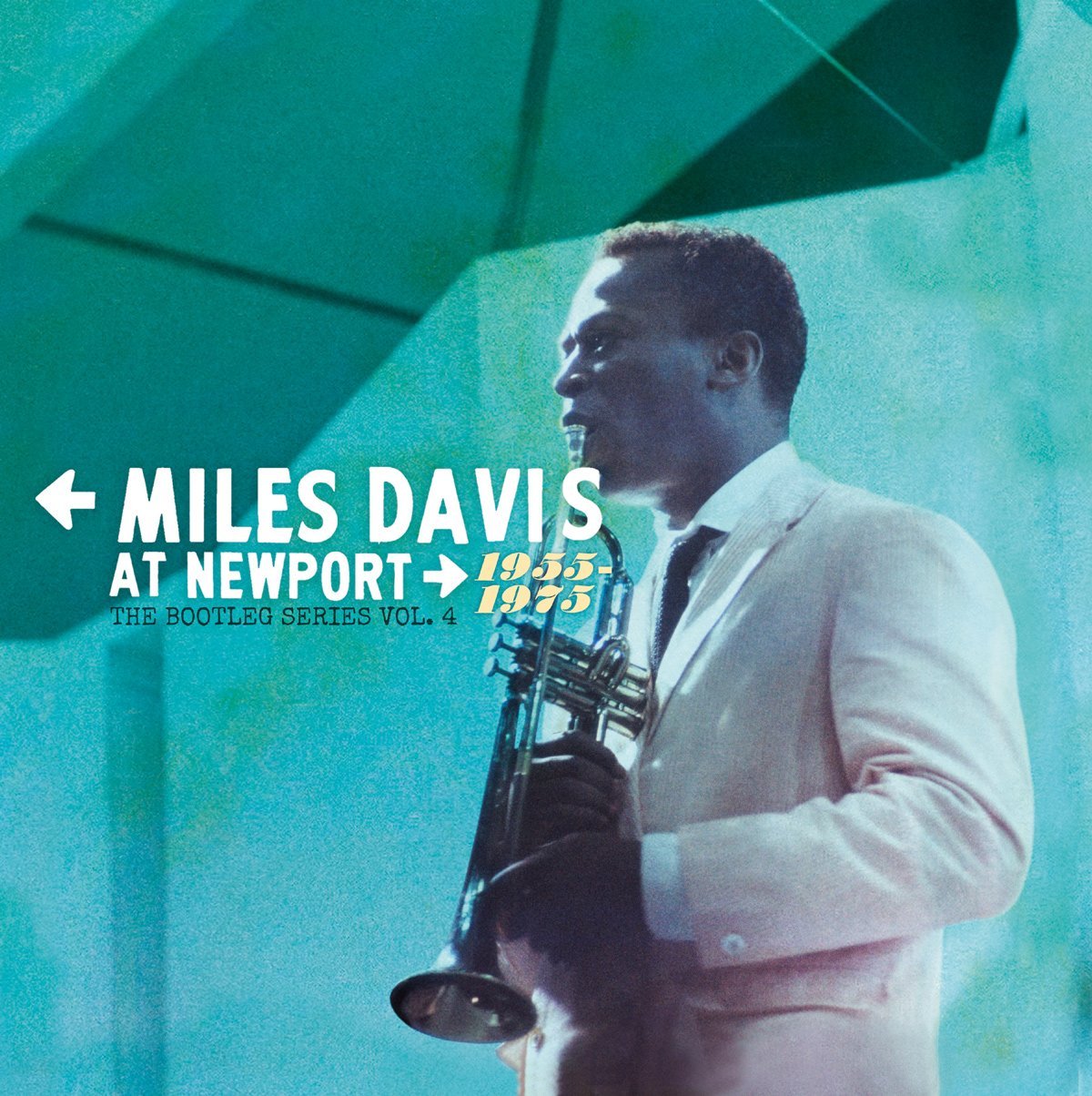
EJI OYEWOLE-CHARITY BEGINS AT HOME.
EJI OYEWOLE-CHARITY BEGINS AT HOME.
In the sixties and seventies, the Nigerian music scene was thriving. New bands were constantly being formed. Similarly, new artists were making an impression on Nigerian music. This included Eji Oyewole. However, the flautist, saxophonist and future bandleader was different from his contemporaries and peers.
Eji Oyewole was born in Ibadan, the city on edge of the savannah. Ibadan was capital of Oyo State, which was the third largest metropolitan area in Nigeria. However, in Ibadan, Eji Oyewole’s family were held in high regard. They were descended from royalty. So in reality, Eji Oyewole was really Prince Eji Oyewole. Despite this, Prince Eji Oyewole was determined to forge a career as a musician.
He succeeded in doing so, but only ever released one solo album, Me and You. It was released on the Nigerian label Top Records in 1985. However, Me and You should’ve been Eji Oyewole’s sophomore album.
Towards the end of the seventies, Eji Oyewole had recorded Charity Begins At Home for EMI Nigeria. However, Charity Begins At Home was never released, and lay unreleased until 16th October 2015. That’s when BBE Africa released what is now regarded as a lost highlife classic. Belatedly, what should’ve been Eji Oyewole’s debut album can be heard for the first time.
Although four decades have passed since Eji Oyewole recorded Charity Begins At Home, he still occasionally plays live. Music has been a constant in his life.
Prince Eji Oyewole was born in Ibadan, and growing up, discovered music. At last, the young Eji Oyewole knew what he wanted to do with his life. When he told his parents, they were horrified. Eji explains “My family rejected it initially. They wanted me to study professional courses such medicine or law. They even asked if I had started smoking Indian hemp already?” He was able to reassure them that wasn’t the case. However, Prince Eji Oyewole was determined to make a living as a musician.
The defiant young prince got his breakthrough at the Paradise Club in Ibadan. He became a member of Eddy Okonta’s highlife band. Initially, Prince Eji Oyewole played the flute. Then he decided he wanted to play saxophone.
Most people would’ve taken lessons from a music teacher. Not Prince Eji Oyewole. Instead, he bought some text books and with his basic knowledge of music, taught himself to play the saxophone. That wasn’t the end of Prince Eji Oyewole’s musical education. Not by a long chalk.
Just before Prince Eji Oyewole decided to move to Lagos, he met Chris Ajilo. The legendary tenor saxophonist taught him the basics of music. As he spoke and played, little did Prince Eji Oyewole realise he was receiving a musical masterclass. When he left for Lagos, he was a much better musician.
Having moved to Lagos, the Nigerian capital, Prince Eji Oyewole found himself playing at the Lido Club and Empire Hotel. Soon, he was a familiar face at both venues. Then an opportunity arse for Prince Eji Oyewole to join another band.
This was Bobby Benson’s Band, who at the time, had a residency at the Caban Bamboo Club. Joining Bobby Benson’s Band had lifted Prince Eji Oyewole’s profile. People had heard about the young Prince playing in the band, and came to hear him play. So did a friend of Prince Eji Oyewole’s. He came with his employer.
Isaac Olashugba was alto saxophonist in Fela Ransome-Kuti’s first band Koola Lobitos. They were an innovative group, who fused jazz and highlife. So it’s no surprise that Koola Lobitos were a popular draw. However, when they weren’t playing, Isaac Olashugba came to see his friend the Prince play. On a number of occasions, he brought Felt Kuti. He liked what heard, and on numerous occasions, Fela Kuti and Isaac Olashugba tried to get him to join Koola Lobitos. However, Prince Eji Oyewole was loyal, and decided to stay with Bobby Benson’s Band.
Despite staying with Bobby Benson’s Band, Prince Eji Oyewole often got on stage with Koola Lobitos. He even joined them when they played on radio. However, by the mid-sixties, Prince Eji Oyewole must have regretted not joining Koola Lobitos.
Following a military coup d’etat in 1966, Nigeria was a dangerous place to live. Especially for someone with royal blood. Things got worse for Prince Eji Oyewole when the Premier of the Western Region, Chief Akintola was assassinated. Now was the time for Prince Eji Oyewole to leave Nigeria behind.
In the early days of his exile, life was tough for Prince Eji Oyewole, Much of West Africa spoke French. So life in Cotonou and Lome wasn’t easy. So Prince Eji Oyewole was on the move again.
Next stop for him, was Accra. In the Ghanian capital, Prince Eji Oyewole hooked up with one of the city’s top highlife bands, Black Santiago. For a while, Prince Eji Oyewole was happy playing with Black Santiago. However, after a while, the wanderlust kicked in.
From Accra, Prince Eji Oyewole made his way to the Ivory Cost. It wasn’t his finest hour. He ended up playing on the cabaret circuit. For a Nigerian Prince, this was a comedown. Ironically, he was rescued from obscurity by President Houphouet Boigny.
He asked Prince Eji Oyewole to joined the Presidential Band. He was hardly spoiled for choice, so agreed to President Houphouet Boigny’s request. Prince Eji Oyewole’s elevated status with the Presidential Band resulted in him being offered to join a prestigious band.
Whilst playing with the Presidential Band, Prince Eji Oyewole came across Franco, who was the leader and guitarist of OK Jazz Of Congo. They were looking for a saxophonist. Prince Eji Oyewole, who also played the flute, fitted the bill. He joined OK Jazz Of Congo’s tour of West Africa. After the tour, Prince Eji Oyewole and OK Jazz Of Congo went their separate ways. Prince Eji Oyewole was on the move again.
His nomadic lifestyle took him to France, and he headed to the capital, Paris. It was there he first encountered Johnny Halliday. Soon, Prince Eji Oyewole and Johnny Halliday were sharing the same stage. This led to Prince Eji Oyewole being booked at Trois Mallez, which in the late-sixties, was a prestigious cabaret and jazz club. However, as was the norm, Prince Eji Oyewole didn’t stay around long.
Next stop on what was like the modern day equivalent of a Grand Tour, was Geneva, in Switzerland. Prince Eji Oyewole had been booked to play at the city’s Club 7. For the next month, this was home to the wandering Prince. After this, he decided to further his education.
Prince Eji Oyewole couldn’t have chose a better place than Germany. The country’s music scene was thriving, and featured some of the most innovative musicians in the world. Many had studied the Musik Hochschule, under the tutelage of the great Professor Roland. While he studied by day, Prince Eji Oyewole played at venues around the city. Man, even a Prince, cannot live by bread alone. One of the venues Prince Eji Oyewole played was The Star Club, where The Beatles honed their sound. So it seemed was the Prince, before he was on the move again.
No wonder. West Berlin was home to some of the greatest creative minds. Writers, poets, philosophers and musicians. True innovators, including Can, Kluster, Tangerine Dream, Ashra and Neu! congregated at The Zodiak Free Arts Lab. This was the city’s creative hub, where the best musical minds met. Prince Eji Oyewole however, was in West Berlin for saxophone lessons with Professor Lampart at the West Berlin Musik Hochschule. It was during this period of his life, that Prince Eji Oyewole caught a break.
During his time West Berlin, Prince Eji Oyewole was asked to join Billy Brooks, who at that time, was a European ambassador of jazz. Soon, Prince Eji Oyewole, who had come to city for saxophone lessons, was playing at Berlin’s Jazz Galerie and a the Berlin Jazz Festival. Not long after becoming the first Nigerian artist to play tab the Berlin Jazz Festival, the nomadic Prince had been talked into moving to London.
This happened when Fred Schwartz met Prince Eji Oyewole at Berlin’s Jazz Galerie. Keyboardist Fred Schwartz was a member of The Gasoline Band. They were heading to London to record their one and only album The Gasoline Band. Fred wanted the Prince to join The Gasoline Band in London. He agreed, and the Gasoline Band had a new recruit as they embarked for London.
When The Gasoline Band arrived in London, the fusion band made their way to Morgan Studios. That was where The Gasoline Band’s eponymous debut album was to be recorded. Prince Eji Oyewole was meant to have played on the album. However, there’s no sign of his name on the credits, unless he played under an alias? After the album was recorded, The Gasoline Band, headed off on a tour of Europe. The newly recruited band became part of the band’s horn section. Once the tour was complete, the Prince returned to the world of academia.
He returned to London, where he decided to complete his musical studies at the prestigious Trinity College. Once his education was complete, Prince Eji Oyewole became a session player.
After completing his studies at Trinity, Prince Eji Oyewole found himself working as the musical equivalent of a hired gun. He played on everything from rock and pop, to funk and soul. Just like all session musicians, they were all different. Some of the bands were serious musicians, looking for someone to sit in. Others were throwaway pop and faux soul.
In January 1976, Prince Eji Oyewole found himself in Nova Studios. By then, the Prince was using the alias Joe Oye. That’s the name that’s on the session sheets for the horn section. Joe Oye was accompanying the ironically titled The Real Thing. Fortunately, his luck was about ti change.
Later in January 1976, Vangelis were due to play at the Festival Hall. The previous year, 1975, Vangelis had released the soundtrack to Do You Hear the Dogs Barking? and released his fifth solo album Heaven and Hell. Then in December 1975, Vangelis had recorded one of the most ambitious and innovative albums of his career, Albedo 0.39 which was released later in 1976. It was a concept album based around space and space physics. This was the calibre of musician Prince Eji Oyewole was about to share a stage with. Vangelis was the real thing. So was another artist Prince Eji Oyewole would later share a stage with.
This was Bob Marley. The three years that Prince Eji Oyewole spent in Bob Marley’s employ was still to come. Before that, Prince Eji Oyewole decided to record his debut album, Charity Begins At Home.
For Charity Begins At Home, Prince Eji Oyewole penned four tracks. Charity Begins At Home, Gele Odun (Oil Boom), Lagos Complex-Lagos Highways and Unity in Africa (Kasowopo Kasekan) were full of social comment. These tracks were recorded by Prince Eji Oyewole and a group of African musicians.
Joining Prince Eji Oyewole for the recording of Charity Begins At Home, were a group of Nigerian musicians. The rhythm section featured just drummer Sunny Adefadugba and guitarist John Medua. They were augmented by Abu Ismail on congas, Kayode Dosunmo on bongos and Ayan on talking drum. Tende Mugbadu played second tenor saxophone. Prince Eji Oyewole played tenor and soprano saxophone, piano, flute, percussion and added vocals. He also co-produced Charity Begins At Home with Emmanuel Odenusi. Once the album was completed, Charity Begins At Home was meant to be released by EMI Nigeria.
When EMI Nigeria heard Charity Begins At Home, they decided not to release the album. Why remains a mystery. One school of thought was that Eji Oyewole had taken the highlife ball and run with it, but run too far.
While most highlife bands had guitars at the heart of their sound, Eji Oyewole decided to replace the guitars with horns. Their big, brash, harsh sound took centre-stage, while one lone guitar features on Charity It Begins At Home. With horns to the fore, Eji Oyewole seemed to have drawn inspiration from funk, especially American funk. This shines through, throughout Charity It Begins At Home’s four tracks. They’re different to the music found on most highlife albums towards the end of the seventies.
Gone were short, three or four minute, radio friendly songs. Replacing them on Charity It Begins At Home were four lengthy tracks. They lasted between six and nine minutes. This wasn’t what executives at EMI Nigerian had been expecting. However, it was a case of being unable to see the wood from the trees.
Eji Oyewole had decided that highlife had to evolve. If it didn’t, it could risk becoming stale, and eventually, irrelevant. So, he set about reinventing highlife. To do this, he combines a generous supply of funk with jazz, highlife, Afrobeat and even rock. Seamlessly, these musical genres combine over the four tracks. The other ingredient is searing social comment. The man who was born a Prince, wasn’t shy about sharing his opinion on not just what was wrong with Nigeria, but the continent of Africa. This was another reason why executives at EMI Nigeria must have been reluctant to release Charity It Begins At Home.
The title-track Charity It Begins At Home opens the album. Understated soon becomes dramatic. Soon, the man who was born Prince Eji Oyewole is suggesting that Nigerians should unite, and look after each other. Behind him stabs of brash, blazing horns, a funky rhythm section and chiming guitars combine with percussion. They propel the arrangement along. Unity is Eji’s theme. His lyric “Scottish, Welsh and English all together is ironic and misguided. In the late-seventies, Scotland was seeking devolution. Despite his faux pax, Eji sings of “understanding” and ask Nigerians to “come together.” His sincerity can’t be faulted. Neither can the quality of his band. Over six minutes, Eji and his tight talented band showcase their considerable skills. Whether playing together, or when the sizzling, blazing saxophone solo come round, they create an irresistible and funky track. It sees Eji Oyewole begin the reinvention of highlife.
Eji’s flute opens Gele Odun (Oil Boom). Otherworld percussion joins a crystalline, chiming guitar and a rhythm section that errs on the side of funk, rather than highlife. This the co-producers must have thought would give song a much more contemporary sound. There’s a still more than a nod to the old, as Eji sings of the recent oil boom that transformed Nigeria. Dramatic bursts os braying horns joins the chiming guitar and a myriad of percussion. Together they create a churning, swampy and funky arrangement. It’s a glorious fusion of funk, highlife and courtesy of Eji’s impassioned vocal, soul.
With the oil boom, Lagos in the late-seventies was expanding. Eji and the band sing about this on Lagos Complex-Lagos Highways. The growling horns unite with the rhythm section and a mass of percussion. It’s what one expects on a highlife album. Chiming guitars are panned right and left. They seem to surround the listener. That’s no bad thing. By then, the band are in the groove. Later, the band almost chant the lyrics, giving it a mesmeric, hypnotic quality. This is a contrast to the arrangement. It flows freely and joyously. Playing a starring role is Eji and his saxophone. He unleashes a blistering solo, before the hypnotic harmonies return. Later, another of Eji Oyewole’s grandstanding braying saxophone solo steals the show on Lagos Complex-Lagos Highways.
Unity in Africa (Kasowopo Kasekan) closes Charity Begins At Home. A scorching saxophone solo and rolls of dramatic drums combine. Then the rhythm section join the horns as the band kick loose. They play as one, and never miss a beat. Then when horns drop out, and the rhythm section briefly showcase their skills. Then Eji delivers an urgent and impassioned vocal. His is clear: “Unity in Africa.” Later, the rhythm section and guitar sound as if they’ve walked off the set for Blaxploitation movie. However, the myriad of percussion and dramatic, blazing horns remind you that this is actually a highlife album. However, it’s highlife, but not as we know it. Instead, it’s Eji Oyewole as he set about reinventing highlife. Sadly, Charity Begins At Home never saw the light of day until very recently.
It was only on 16th October 2015, that BBE Africa released Charity Begins At Home, which was meant to be Eji Oyewole’s debut album. However, for whatever reason, EMI Nigeria chose not to release the album.
Maybe Eji Oyewole’s lyrics were seen as too controversial? The Nigerian economy was booming, and inward investment was at an all-time high. Many people were getting rich. This didn’t include many ordinary, working class Nigerians. They were living in abject poverty. If they had heard Prince Eji Oyewole’s message of unity and togetherness, they could’ve rebelled. That couldn’t be allowed to happen. So Charity Begins At Home was pulled. If that is the case, then Nigerian musical history changed.
Highlife could’ve evolved, and gone in a new direction. It would’ve taken on a funk fuelled sound. That wasn’t to be. Instead, the status quo remained. Nothing however, stays the same. Not even highlife. Eventually, highlife began to evolve, and musically, become more relevant. By then, Eji Oyewole was part of a band that had a record released.
Eji Oyewole was part of the short-lived Piliso, who released their one and only album, Thumela, in 1983. Although the Prince was just part of the horn section, he made his presence felt. By then, Eji Oyewole was rubbing shoulders with a true musical great, Bob Marley.
For three years Eji Oyewole worked with Bob Marley and The Wailers. He can be heard on Buffalo Soldier, which was released in 1983. Later, Eji Oyewole went on to work with real royalty, Miles Davis. Sadly, Eji Oyewole’s time with Bob Marley and The Wailers and Miles Davis is overlooked. However, it’s testament to the high regard that Eji Oyewole was held.
Despite that, Eji Oyewole decided to return home to where the story starter, Ibadan, the city on edge of the savannah. That’s where Prince Eji Oyewole was born. That’s where Eji Oyewole has called home for the last twenty years. Still, the man who was born a Prince continues to make music. Eji Oyewole has recorded an album of new material with his new band, The Afrobars. He’s also part of Faaji Agba, a Nigerian supergroup who have been compared to Buena-Vista Social Club. Still, there’s no sign of Eji Oyewole losing his insatiable appetite for music.
Far from it. He’s at the heart of Ibadan’s thriving music scene, and continues to collaborate with, and encourage the latest generation of musicians. Belatedly, Eji Oyewole can show Ibadan’s latest generation of musicians his long lost album, Charity Begins At Home, which he recorded five decades ago. The belated release of Eji Oyewole’s album Charity Begins At Home, is just the latest chapter in the Prince of Ibadan’s action packed fifty year career.
EJI OYEWOLE-CHARITY BEGINS AT HOME.


TUXEDOMOON AND THE CULT WITH NO NAME- BLUE VELVET REVISITED.
TUXEDOMOON AND THE CULT WITH NO NAME- BLUE VELVET REVISITED.
After the commercial and critical failure of Dune in 1984, David Lynch knew that his next film had to make an impression on critics and filmgoers. There was no buts. So David Lynch made a conscious decision to write a much more personal story. The result was Blue Velvet, the title of Bobby Vinton’s 1963 hit single. Blue Velvet was a return to form from David Lynch.
It marked a return to the surrealist style of Eraserhead, his 1977 debut full-length feature film. Seven years later, and David Lynch was about to fuse psychological horror and film noir. So David Lynch made his way to Wilmington, North Carolina, where he directed an all-star cast that featured Dennis Hopper, Kyle MacLachlan, Isabella Rossellini and Laura Dern. An onlooker to David Lynch’s use of shadowy and dark cinematography was Peter Braatz.
The young German filmmaker had been invited by David Lynch to document the making of Blue Velvet. For and up-and-coming cinematographer, this was an opportunity of a lifetime. He was given unlimited access to the film set and was able to freely mingle with the cast, crew and David Lynch. This allowed Peter Braatz to fully document the making of Blue Velvet.
As David Lynch directed Blue Velvet, Peter Braatz shot countless reels of film and took over a thousand photos. Peter Braatz also interviewed the cast, crew and the man who nowadays, is regarded as one of the greatest directors of his generation, David Lynch. He was in the process of shooting a film that would win him his second Academy Award, Blue Velvet.
Many thought this would be unlikely, when Blue Velvet was released in September 1986. Critics couldn’t agree about Blue Velvet. Most loved the film, and heaped praise on it. Others loathed it, and saw it as cinematic grandstanding from David Lynch. They seemed to have a problem and “previous with a man who was one of the film industry’s great innovators. However, mostly, the reviews were positive, and quickly, Blue Velvet became a cult film.
When the end of year awards were handed out, Blue Velvet won twelve awards. This included four Academy Awards, including David Lynch’s Academy Award for the best director. Blue Velvet won awards at the Film Independent Spirit Awards, the Montreal World Film Festival, the Los Angeles Film Critics Association Awards, the National Society of Film Critics and the Sitges Film Festival. This wasn’t surprising. David Lynch’s comeback film was about to become a classic.
By the end of the eighties, Blue Velvet was regarded as one of the finest films of the decade. Enhancing David Lynch’s reputation was the success of Twin Peaks. David Lynch could do no wrong.
Fast forward nearly thirty years, and David Lynch’s neo-noir, mystery film, Blue Velvet has achieved classic status. It’s an aspirational film for each generation of budding filmmakers. They all dream of shooting such an innovative classic. None of them will ever come close. I’m sure that Peter Braatz will concur with this.
Peter Braatz had the privilege of watching and documenting the making of Blue Velvet. For Peter Braatz, it was a learning process. He was watching the master at work. As David Lynch shot and directed Blue Velvet, the twenty-five year old Peter Braatz was documenting the proceedings. In the process he was absorbing and learning Peter Lynch’s methods. This was a once in a lifetime experience. He was able to watch one of the greatest directors of his generations at work. Carefully, he filmed, photographed and interviewed not just David Lynch, but the cast and crew. Once the filming of Blue Velvet was complete, Peter Braatz was left with a documentary waiting to be made. Now, thirty years later, Peter Braatz has begun work on his documentary.
He even has chosen who he wanted to record the soundtrack. This came after Peter Braatz first heard the Cult With No Name’s 2013 album Above As Below. The song that caught Peter’s attention was As Below. He explains: “ As Below came on, I immediately had the idea to use it for my Blue Velvet Revisited project, and to edit a trailer to the track that would showcase my footage. It was kismet.
When Peter Baatz began editing the film, he realised: “the editing of the trailer was effortless, and the feel of the footage merged perfectly with the feel and tempo of the track. It was obvious that I would need this music, and more of it with this exact feel, for my film.” So Peter got in contact with Erik Stein from Cult With No Name. It was then that they decided to collaborate.
By then, it’s as if Peter Baatz’s mind had been made up. “I had already heard a lot Cult With No Name’s music, and was a real fan. I was impressed with its calmness, its elegance and the way in which they seemed to realise their musical ideas so freely and easily.” In his heart, it’s as if Peter had found the group he wanted to provide the soundtrack to his unmade documentary.
This suited Peter Braatz perfectly. He wanted just one artist to write the soundtrack to his Blue Velvet Revisited project. Then Erik Stein told Peter that the stunning trumpet piece was played by Luc Van Lieshout of Tuxedomoon. For Peter, this was another coincidence.
Tuxedomoon, Peter explains are: “a group I also knew well and greatly admired. Because it was the trumpet part that I found so perfect, we soon pitched the idea of a joint soundtrack between Cult With No Name and Tuxedomoon.” Not long after this; “the deal was then sealed at concert featuring both bands in Berlin, in March 2014.” This left Peter Braatz to raise the funding for the recording of the soundtrack.
This wasn’t easy. Fundraising for any artistic project isn’t easy. Many others have struggled manfully, but eventually, were forced to give up. Not Peter Braatz. It took until September 2014 before: “I was able to first release the funding for the recording to properly get underway.” Now Tuxedomoon and The Cult With No Name could begin recording the soundtrack to the Blue Velvet Revisited project.
As 2014 drew to a close, work on the Blue Velvet Revisited was coming along nicely. That was when Peter Braatz received an unexpected Christmas present. Peter remembers what happened: “at the end of the year came the wonderful surprise of an additional track from John Foxx, which I liked very much and fitted perfectly.” Now all Tuxedomoon and The Cult With No Name had to do was finish the soundtrack to Blue Velvet Revisited.
By the end of January 2015, Tuxedomoon and The Cult With No Name had finished recording the soundtrack Blue Velvet Revisited. By then, Peter Braatz had also completed an important process.
Peter Braatz digitalised all of the Super-8 footage he shot when documenting the filming of Blue Velvet. He had also digitalised over a thousand photographs. What had been a long and laborious task was completed. It would’ve been finished soon, of there hadn’t been a delay in another of Peter Braatz’s projects. This meant that the start date of film was postponed. Now he’s just started the editing process. However, Peter Braatz is determined his Blue Velvet Revisited project will be completed.
Especially since Tuxedomoon and The Cult With No Name’s soundtrack for Blue Velvet Revisited is scheduled for release by Crammed Discs on 16th October 2015. It’s Volume 42 in Crammed Discs long established, but recently revived Made To Measure series. This specially sculpted soundtrack, showcases the skills of two talented musical pioneers.
For Tuxedomoon and The Cult With No Name writing and recording the soundtrack to Blue Velvet Revisited wasn’t going to be easy. There would be the inevitable comparisons to Angelo Badalamenti’s original soundtrack. It played a huge part in the success of Blue Velvet, and is revered by connoisseurs of film scores and soundtrack. They had to think outside the box.
Especially since Peter Braatz had to requests. Tuxedomoon and Cult With No Name explain that the soundtrack to Blue Velvet Revisited had to be “unusual.” That wasn’t all. They explain that: “the score should dictate the film and not the other way round.” Peter Braatz “would take his cues as music” This meant that he couldn’t begin making Blue Velvet Revisited until the soundtrack was complete.
To help them on they began recording Blue Velvet Revisited, Peter Braatz delved into his archives. He showed Tuxedomoon and Cult With No Name: “a three minute trailer and a large number of photos.” The other thing Peter Braatz reminded Tuxedomoon and Cult With No Name that they would be: “trading in (fragile) people’s often fragile and highly emotive memories.” After all, twenty-nine years after the release of Blue Velvet, the film still has a special place in many people’s hearts and minds. With these words ringing in their ears, Tuxedomoon and Cult With No Name began work.
As they began to create the soundtrack to Blue Velvet Revisited, they had to avoid at all costs Angelo Badalamenti’s original score. If they consciously or subconsciously referenced the original score, then Blue Velvet Revisited ceased to become a Peter Braatz film. Instead, it would become a homage to David Lynch and Angelo Badalamenti’s original score. That wasn’t what Blue Velvet Revisited was about.
Instead, Blue Velvet Revisited will be about an outsider who was invited onto the Blue Velvet set, to give an outsider’s perspective. Essentially, it’s a fly-on-the-wall documentary, whose subject just happens to be one of the world’s great filmmakers who was in the process of filming a classic film. With this in mind, Tuxedomoon and Cult With No Name began work in a variety of locations.
Initially, Tuxedomoon and Cult With No Name first met at a concert in Berlin. Both bands just happened to be appearing on the same bill. Again, this was kismet. That night, they agreed to collaborate on the Blue Velvet Revisited soundtrack. Then in August 2014, Tuxedomoon began rehearsing in Athens, Greece. Meanwhile, Cult With No Name rehearsing in his London studio.
Both musicians improvised, see which road they ended up travelling down. For Cult With No Name and Tuxedomoon this was just the start of a musical adventure.
Having got some ideas recorded, Tuxedomoon and Cult With No Name began to expand upon them. It was a musical voyage of discover, where consciously they tried to ignore the elephant in room. Angelo Badalamenti’s original score loomed large. The two men had to avoid it influencing them at all costs.
Meanwhile, Tuxedomoon was on the road. Although much of his music was recorded in Athens, other recording sessions took place in Brussels and Mexico. Cult With No Name however, never left his London studio. That’s where he recorded his parts. Then when Tuxedomoon had completed his contributions, Cult With No Name edited and produced the score to Blue Velvet Revisited. Eventually, it was complete.
Now that the Blue Velvet Revisited score was complete, Peter Braatz could begin work on his long-awaited and much-anticipated film. At last, Peter Braatz had something to take his cues from. This was Tuxedomoon and Cult With No Name’s score to Blue Velvet Revisited.
When Peter Braatz heard it, he must have been relieved. Tuxedomoon and Cult With No Name’s score to Blue Velvet Revisited hasn’t been influenced by Angelo Badalamenti’s original score. That’s despite it looming large, like the spectre at the feast. The Blue Velvet Revisited score was very different to the Blue Velvet score. It was also a truly eclectic score.
That’s no exaggeration. There’s everything from modern classical and Krautrock, and ambient electronica to jazz on the Blue Velvet Revisited score. Incredibly, Tuxedomoon and Cult With No Name have penned the soundtrack to this film that’s yet to be made. It gives the listener an insight to what Peter Braatz has in-store.
The Blue Velvet Revisited score is a captivating journey through disparate and eclectic musical genres. That’s the case from The Slow Club. It’s a track that wouldn’t sound out of place on the score to a David Lynch film. It’s an understated, wistful and slightly eerie sounding scene setter. Already, you find yourself wondering what pictures will accompany it in Blue Velvet Revisited? That’s the case with Lumberton, which sees Tuxedomoon and Cult With No Name draw inspiration from contemporary and neo-classical music. It’s a heart-wrenching track. Partly that’s because of the piano and haunting violin on this slow, melancholy soundscape. Very different is Do It For Van Gogh. It’s best described as bubbling, ethereal ambient electronica. The two musical pioneers seem able to change direction
Seamlessly, Tuxedomoon and Cult With No Name flit between musical genres, and seem comfortable wielding their musical palette as they paint eclectic soundscapes. An example of this is So Fucking Suave. It’s best described as jazz-tinged ambient music. However, what about the title? Is this a reference to someone connected to Blue Velvet? We’ll never know.
Now It’s Dark sees the darkness descends on. Straight away, memories of David Lynch’s shadowy and dark cinematography on Blue Velvet comes to mind. However, Tuxedomoon and Cult With No Name are continuing to plough their own musical furrow. That’s the case on Dorothy. It’s a spine-tingling, emotional roller coaster. Early on it’s reminiscent of seventies ambient music. Quickly, though, the music becomes dark and sinister. Especially, as the strangulated sound of “Dorothy” can be heard. It’s a Lynch-esque track. Then it’s all change.
A Candy Coloured Clown is totally different to the rest of Blue Velvet Revisited. It bursts into dramatically into life, showcasing a big, bold, dramatic and uptempo track. At times, it’s joyous and anthemic. Tuxedomoon and Cult With No Name are full of surprises.
They take a break, as John Foxx provides Lincoln Street. It’s very much in keeping with the rest of Blue Velvet Revisited. As the synths bubble and squeak. Their futuristic sound add a dark, moody, cinematic sound. Just like so much of the score to Blue Velvet Revisited, one can imagine Peter Braatz using the music to tell his outsider’s story of the making of Blue Velvet.
Robotic, futuristic synths join woodwind in creating an bubbling, otherworldly sounding track. Elements of ambient, neo-classical, experimental and post rock melt into one, as Tuxedomoon and Cult With No Name continue to guide the listener through their musical kingdom. This includes on the wistful, rueful sounding Until The Robins Come. It brings to mind loss and longing. There’s even a mournful air to its ethereal beauty. These two words also describe Don, which closes Blue Velvet Revisited. A gypsy violin plays, joining haunting harmonies combine seamlessly, and prove a poignant and perfect way to close the vinyl edition Blue Velvet Revisited. Tuxedomoon and Cult With No Name it seems, have kept the haunting and heartachingly beautiful to last.
Blue Velvet Revisited was always going to be an ambitious project. Peter Braatz was asked to document the making of a film that could make, or break, David Lynch’s career. It seemed David Lynch had an inkling he was about to make history, and wanted history documented. However, despite shooting countless reels of Super-8 film, taking over a thousand photos and interviewing the cast and crew of Blue Velvet, it’s taken nearly thirty years to make Blue Velvet Revisited. Tuxedomoon and Cult With No Name’s soundtrack is the first step in this process.
Maybe, Peter Braatz will have finished Blue Velvet Revisited by September 2016? That would be perfect timing, that would be the perfect way to celebrate the thirtieth anniversary of a classic film, Blue Velvet. It was accompanied by Angelo Badalamenti’s stunning soundtrack. Peter Braatz’s Blue Velvet Revisited will also be accompanied by Tuxedomoon and Cult With No Name’s score.
Tuxedomoon and Cult With No Name have penned and produced a score that’s variously ambient, beautiful and dreamy, to ethereal, erring and evocative. It also veers between moody and broody, via dark and disturbing to joyous via melancholy, rueful and wistful. Blue Velvet Revisited which will be released on Crammed Discs on vinyl, CD and as a digital download, is an emotional roller coaster. Incredibly, Tuxedomoon and Cult With No Name have managed to create such an evocative score without drawing inspiration from Angelo Badalamenti’s classic soundtrack. That took some doing. After all, Blue Velvet and Angelo Badalamenti’s soundtrack were like yin and yang.Hopefully, that will be the case with Tuxedomoon and Cult With No Name’s Blue Velvet Revisited score and Peter Braatz’s film.
It will provide a remarkable insight into the making of Blue Velvet, while Tuxedomoon and Cult With No Name take viewer on a genre-hopping musical adventure. From ambient and contemporary classical, to electronica and experimental via jazz, neo-classical, post rock. It’s a captivating, musical journey, where Tuxedomoon and Cult With No Name continually toy with the listener’s emotions on this eclectic suite of captivating musical soundscapes that comprise Blue Velvet Revisited.
TUXEDOMOON AND THE CULT WITH NO NAME- BLUE VELVET REVISITED.
DAVID GILMOUR-RATTLE THAT LOCK.
DAVID GILMOUR-RATTLE THAT LOCK.
After a career than spanned forty-seven years, Pink Floyd released their final album, The Endless River. It was the end of an era. Pink Floyd had been a musical institution. For six decades, Pink Floyd had provided the soundtrack to the lives of several generations. However, realistically, The Endless River had to bring the curtain down on Pink Floyd’s career.
Sadly, only two members of the David Gilmour led Pink Floyd were still alive. Drummer Nick Mason and Dave Gilmour were the last men standing.Keyboardist Richard Wright had died in 2008. Despite this, he featured posthumously on The Endless River. It proved a fitting finale to long and illustrious career.
When The Endless River was released in November 2014, it was to commercial success and critical acclaim. Across the world, The Endless River was a huge success and showed that Pink Floyd were just as relevant in 2014, as in 1967. This allowed Pink Floyd to bow out while they were still at the top.
After the dust had settled, the speculation began in what the Nick Mason and David Gilmour would do post Pink Floyd. Soon, the word was out that David Gilmour was planning to release his long-awaited fourth studio album.
Over nine years had passed since David Gilmour had released his last studio album On An Island. It had been released in March 2006. Since then, David Gilmour’s only release was Live In Gdańsk in September 2008. For David Gilmour’s loyal fans, another solo album was long overdue.
Their patience was rewarded when Rattle That Lock was released on Sony Music, on 18th September 2015. David Gilmour had spent much of 2014 and 2015 recording Rattle That Lock.
Rattle That Lock featured ten new songs. This included three instrumentals, 5 A.M., Beauty and And Then. They were penned by David Gilmour. So were Faces of Stone and Dancing Right In Front Of Me. A Boat Lies Waiting, In Any Tongue, The Girl in the Yellow Dress and Today were written by David and his partner Polly Sampson. They also cowrote Rattle That Lock with Michaël Boumendil. These ten tracks would become David Gilmour’s fourth studio album Rattle That Lock. It was recording at four studios.
Most of the recording of Rattle That Lock took place at David’s Medina Studio, in Hove. Other parts were recorded at Astoria Studio in Middlesex, Abbey Road Studios and the orchestral parts were recorded at AIR Studios in London. Zbigniew Preisner took charge of the orchestration. He was just part of a huge cast that accompanyied David Gilmour.
This included some big names. One of them was coproducer Phil Manzanera. He had previously co-produced On An Island and Live In Gdańsk. This time around, he played Hammond organ, keyboards and acoustic guitar. Phil was just one of over thirty musicians and backing vocalists played a part in the making of Rattle That Lock. Some played on just one tracks. Others played on several tracks.
That’s why rhythm section included several drummers, bassists and guitarists. Drummers including Martin France, Andy Newark and Steve DiStanislao who added percussion. Bassists included Guy Pratt and Yaron Stavi also played standup bass. So did Chris Laurence. Guitarists included Rado Klose and John Parricelli. This was just part of cast that featured on Rattle That Lock.
Joining the rhythm section were pianists Roger Eno, Gabriel Gilmour and Jools Holland. Jon Carin and Mike Rowe both played electric piano. Robert Wyatt played cornet on The Girl In The Yellow Dress. Saxophonist Colin Stetson joined percussionist Danny Cummings was joined by Eira Owen on French horn. A poignant inclusion was a sample of Rick Wright’s voice. The late Pink Floyd keyboardist. Augmenting the musicians were backing singers.
Backing vocalists included two members of Crosby, Stills, Nash and Young. David Crosby and Graham Nash joined some less well known names. Among them were Mica Paris, The Liberty Choir and Louise Marshall. They were joined by David Gilmour’s partner Polly Samson. Together, they accompanied David, who played guitars, bass, bass harmonica, electronic harmonica, Hammond organ, keyboards, piano and added vocals. He also co-produced Rattle That Lock with Phil Manzanera. It was scheduled for release on 18th September 2015. Before that, the title-track was released as a single.
On 17th July 2015, Rattle That Lock was released as a single. Although it was well received, especially by DJs, the only place that Rattle That Lock charted was in France. Even then, it stalled at number seventy-one. Two months later, on 4th September 2015, Today was released as a single. Just like Rattle That Lock, it wasn’t a commercial success, failing to chart anywhere. To make matters worse, the critics were about to have their say on Rattle That Lock.
When Rattle That Lock was released, critics didn’t go overboard about the album. Some hailed Rattle That Lock David Gilmour’s finest album to date. Others disagreed. Some went further, and seemed to take an instant dislike to the album. That was ironic.
Previously, David had patiently had done the rounds of the music press. Having granted them interviews, he patiently and politely answered the same question time after time. They proceeded to stab him in the back. Suddenly, it 44BC and David was Julius Caesar. The cynics in the press were Gaius Cassius Longinus and Marcus Junius Brutus. However, these mixed reviews didn’t affect sales.
After being on sale for less than a month, Rattle That Lock has been in top ten in twenty-four countries. In America, Rattle That Lock reached number five in the US Billboard 200 charts. Meanwhile, Rattle That Lock reached number one in Britain. It was a similar story in Belgium, the Czech Republic, France, Italy, New Zealand, Norway, Portugal, Scotland, Spain and Sweden. That wasn’t the end of the commercial success. Rattle That Lock was certified silver in Britain and gold in Italy. David Gilmour’s fourth studio album Rattle That Lock, had been a resounding success. No wonder.
Opening Rattle That Lock is the instrumental 5.A.M. The sound of the day dawning opens the track. Birds cheep, as a wash of strings combine with a bass. David’s crystalline guitar shimmers and chimes. All his years of experience shine through, and a beautiful track unfolds. Stabs of keyboards, a glistening cymbal and guitar join the washes of strings. However, it’s David’s guitar playing that’s at the heart of the song’s sound and success.
Rattle That Lock was chosen as the lead single from the album. No wonder. It has a contemporary sound, and should’ve been a much bigger success than it was. Especially given it’s long on hooks. Synths usher in the rhythm section. A funky bass and chiming guitar are joined by David’s lived-in heartfelt vocal. He reassures, trying to tell her things can be the way they were. Harmonies accompany David. They’re almost reassuring. They remain when the vocal drops out. Then it’s time for David to unleash another of his searing guitar solo. When his vocal returns, it’s needy and hopeful. It’s as if David has experience what he’s singing about. Maybe that’s why it’s such an irresistible, hook-laden and radio-friendly song?
The piano on Faces Of Stone is almost reminiscent of Brian Eno’s seventies ambient music. It’s accompanied by subtle swathes of synths, and then a guitar. It accompanies David’s rueful vocal, as memories come flooding back. An accordion is played by Damon Iddins who also adds a calliope keyboard. By then, the arrangement is perfect foil David’s vocal. Then David lays down a searing guitar solo so far. It’s replaced by strings, before David’s vocal brings back memories of classic Pink Floyd. Later, the arrangement has a French sound. Maybe the meeting David is singing took place late one night in Paris, by the Seine, and he wants to replicate this?
Just like the previous track, A Boat Lies Waiting is reminiscent of the piano on Brian Eno’s seventies ambient albums. This time, it’s not surpassing. The pianist is Roger Eno, Brian’s brother. His moody, ambient piano paints a cinematic sound. It’s joined by a weeping guitar. Then the understated sound is gone. As the piano injects an element of drama, percussion and sound effects join the guitar. Still, there’s a cinematic sound. David’s vocal doesn’t enter until 2.20. Its rueful and tinged with regret and loneliness. Backing vocals, piano and weeping guitar accompany him. Together, they create a lament for love lost.
Jaunty keyboards open Dancing Right In Front of Me. They’re played confidently, while a subtle guitar chimes and reverberates. Then a bold, blistering guitar ushers in David’s vocal. It’s full of emotion, sadness and despair. He can’t believe what’s happened to his relations. There’s still hope though: “I’m stuck here waiting for the stars to align.” When David’s vocal drops out, the guitar blistering cuts through the arrangement. Then when David’s vocal returns, cooing harmonies continue to accompany. They then take centre-stage. So do a guitar, jazz-tinged piano and standup bass on this six minute soul-baring ballad.
David whistles happily as In Any Tongue opens. Then washes of broody synths and what sounds like an animal growling can be heard. Already, it sounds like a lost Pink Floyd song. That’s definitely the case when the rhythm section, piano and David’s despairing vocal enters. “What has he done, God help my son,” a maudlin David sings. This sounds like a reference to the arrest, and subsequent imprisonment of David’s son in 2011. Emotion seems to well up, as David wonders where he went wrong? Drama and emotion are present in equal measures. A piano adds a pensive, moody sound. So do the strings, as David lays bare his hurt and soul for all to see on this confessional.
After baring his soul on In Any Tongue, it’s as if David needs emotional respite. Beauty is an instrumental. A jagged detuned electronic harmonic is joined by washes of moody synths. Pianist Roger Eno returns. He proves the perfect foil for David’s guitar. They converse, and take centre-stage. Later, weeping and scrabbled guitar join swathes of strings. So does a bass and a searing guitar. Elements of ambient, electronica, post rock and rock melt into one, as David Gilmour and his multi-talented band create a majestic musical tapestry.
A standup bass gives The Girl In A Yellow Dress a jazz-tinged sound. Everyone takes their lead from the standup bass. David’s vocal is delivered in a similar jazzy style as he sings: “The Girl In A Yellow Dress says yes.” There’s a sense of sadness and pathos in the lyrics, as he remembers this emotionless encounter. Adding to the sadness and pathos is Robert Wyatt’s cornet. Along with the rest of David’s band, he helps transport the listener to a smokey, jazz club in the late-forties or early-fifties. Meanwhile, a rueful David has dawned the role of storyteller on what’s another cinematic track.
Just a lone droning sound ushers in the choir on Today. They sing tenderly, giving the arrangement a pastoral sound. After fifty-one seconds it’s all change. The rhythm section get funky, while chunky keyboards accompany David’s floaty, dreamy vocal. “Feel that sun on your back, feel the shadows falling.” Soulful harmonies accompany David as he continues to show his versatility. Seamlessly, he switches between styles. Today sees David move towards the dace-floor. Doubtless, someone will remix what’s another joyous, hook-heavy song.
Closing Rattle That Lock is And Then, the third instrumental. A lone drone gives way to David’s crystalline guitar. Behind him, a standup bass and lush strings are playing supporting roles. They frame another of David’s peerless, chiming guitar solos. It brings back memories of classic Pink Floyd albums, where David’s inimitable guitar played a starring role. Here, his guitar adds a melancholy, sometimes reflective hue. Maybe he’s reflecting on what’s been a glorious six decade career with Pink Floyd and as a solo artist, and realises that only Nick Mason and he remian. Sadly, it’s a case of And Then there were two. However, one thing will remain, Pink Floyd and David’s musical legacy.
The latest addition to this rich musical legacy is Rattle That Lock. It’s a worthy addition, and is the best album in David Gilmour’s four album solo solo career. Rattle That Lock took the best part of two years to record. That was time well spent.
Over nearly two years, a huge cast of musicians, backing singers and an orchestra accompanied David Gilmour. He and his co-producer Phil Manzanera crafted a quite beautiful and eclectic album. There’s elements of ambient, classic rock, jazz, pop and post rock on Rattle That Lock. Seamlessly, David switches between genres. He’s just as happy delivering a soul-baring ballad like In Any Tongue as he is delivering the jazz-tinged The Girl In The Yellow Dress. Then there’s a trio of cinematic instrumentals. Each and every one of them paint pictures. However, And Then features a reflective David. It’s as if he’s remembering his fallen comrades from Pink Floyd. And Then proves a poignant way to close Rattle That Lock which was recently released by Sony Music.
Just like many albums, Rattle That Lock is a multi-format release. There’s everything a Standard Edition and a variety of Deluxe Editions. Both Standard and Deluxe Edition are available in CD, LP and digital. There’s something for everyone and for all pockets. That’s fitting.
David’s Gilmour’s fourth studio album, Rattle That Lock, is his first since Pink Floyd’s swan-song, The Endless River. Rattle That Lock is, without doubt, the finest album of David Gilmour’s career, and shows that there’s life after Pink Floyd.
DAVID GILMOUR-RATTLE THAT LOCK.

 dereksmusicblog
 dereksmusicblog