AKSAK MABOUL-ONZE DANSES POUR COMBATTRE LA MIGRAINE.
AKSAK MABOUL-ONZE DANSES POUR COMBATTRE LA MIGRAINE.
Deep down, everyone has a dream. For most young musicians, it’s to record and release an album. That was Marc Hollander and Vincent Kenis’ dream in the spring of 1977. They had recently formed a new band, Aksak Maboul, and were determined to record and release an album. So Aksak Maboul entered the studio in April 1977 and began recording their debut album.
The resultant album was Onze Danses Pour Combattre La Migraine, which was recently reissued on vinyl by Crammed Discs, the label Marc Hollander founded in 1981. Thirty-four years later, and Crammed Discs is still going strong, and releasing groundbreaking music, including Onze Danses Pour Combattre la Migraine, which was recorded over two months in the spring of 1977.
By then, Aksak Maboul were a trio. The latest member of Aksak Maboul was percussionist and keyboardist Chris Joris. He was the son of Belgian opera singer Jan Joris. Chris would play keyboards and soprano saxophone. Marc Hollander a true multi-instrumentalist, played played keyboards, percussion, xylophone, mandolin, alto saxophone, flute, clarinet, bass clarinet and programmed the drum machine. Vincent Kenis was equally versatile musically. Seamlessly, he switched between accordion, bass, guitar, slide guitar, keyboards and percussion. Between the three members of Aksak Maboul, they had all bases covered when the recording began.
Aksak Maboul’s debut album was an ambitious project. It featured seventeen tracks. Marc Hollander wrote eleven of the tracks and cowrote another three. This included Vapona, Not Glue and Glympz with Vincent Kenis. Comme On A Dit was Marc’s collaboration with Chris Joris. Augmenting the the tracks penned by three members of Aksak Maboul, were a trio of cover versions. Paolo Radoni Milano Per Caso, Duke Ellington’s The Mooche and the traditional song Ciobane, which Marc arranged were an interesting and eclectic selection. This was typical of Aksak Maboul. They were determined to plough their own furrow.
Unlike most new groups about to record their debut album, Aksak Maboul decided to record without a producer. That was a brave move. For most young groups, a producer is vital, and is able to guide them through the maze that’s recording an album. Recording an album isn’t easy. It’s full of pitfalls. That didn’t bother the members of Aksak Maboul. Through April and May, they worked on their debut album. The studio, which was littered with musical instruments, was more like a laboratory, where a musical experiment took place.
Onlookers watched incredulously as the three members of Aksak Maboul fused disparate and unlikely musical genres. That proved to be the case. Everything from avant garde to African music was rubbing shoulders with Balkan, experimental and electronica on Onze Danses Pour Combattre la Migraine. So were free jazz, rock and proto techno. That happily sat side-by-side with American minimalist, jazz and early twentieth century classical music. Aksak Maboul had cast their net far and wide for inspiration.
It was as if the three young musicians were delving into the furthest corners of their respective record collections. The influence of minimalist composer and pianist Erik Satie could be heard. So could avant garde composers like Tony Conrad, Jon Gibson, Frans Geysen and Terry Riley. Brian Eno, who had pioneered and popularised ambient music, was another influence on Aksak Maboul. Another important influence were the free jazz musicians of the sixties.
Sun Ra, Charles Mingus and Ornette Coleman seem to have been a starting point for Aksak Maboul. These pioneers of what in the sixties was referred to as energy music, seemed to have inspired Aksak Maboul. They then embark on what’s akin to a journey without a map. This brave and adventurous approach worked for Aksak Maboul, as they continue to combine musical genres and influences.
Rock pioneers Frank Zappa and the Velvet Underground both seem to have influenced Aksak Maboul. These were just the latest influences the three musical magpies combined. They drew inspiration from countless sources, and then turned it into something totally different. Often, that wasn’t the end of this ambitious musical experiment. This musical mosaic was then deconstructed, and incredibly, seamlessly became something totally different and innovative. Astonished onlookers watched as the three musical alchemists worked their magic on their debut album. It was finished in May 1977 and became Onze Danses Pour Combattre La Migraine. Some onlookers wondered what the outcome of the last two months would be?
By then, onlookers realised that Aksak Maboul were no ordinary band. It was obvious even to the casual observer that Aksak Maboul were musical pioneers. They dared to go where other bands feared to tread. Aksak Maboul it seemed, were determined to challenge musical norms and push boundaries to their limits. Onlookers speculated how this would turn out?
By then, there were two schools of thoughts on what the outcome would be. Either Aksak Maboul would either crash and burn or create a groundbreaking album. Someone was bound to be proved right.
Before Onze Danses Pour Combattre La Migraine was released in the summer of 1977, critics had their say on Aksak Maboul’s debut album. The album was hailed as ambitious, imaginative and innovative. Some critics went even further, describing Onze Danses Pour Combattre la Migraine as a masterpiece. With critical acclaim ringing in their ears, Aksak Maboul released their avant-pop classic, Onze Danses Pour Combattre la Migraine.
Later in the summer of 1977, Onze Danses Pour Combattre la Migraine, which translates to Eleven Dances For Fighting Migraines, was released on the Belgian independent label Kamikaze Records. However, Aksak Maboul’s debut wasn’t solely credited to the band. Instead, the album was credited to Marc Hollander/Aksak Maboul. There was a reason for this.
Much of the music on Onze Danses Pour Combattre la Migraine was the work of Marc Hollander. So it seemed fair that he received much of the credit for what is now regarded as a seminal album, Onze Danses Pour Combattre la Migraine.
When Onze Danses Pour Combattre la Migraine was released, it wasn’t a huge success. That wasn’t surprising. Kamikaze Records was only a small independent label. It neither had the budget to promote the album, nor get Onze Danses Pour Combattre la Migraine into the major record shops. However, Onze Danses Pour Combattre la Migrain became a cult album, and set the bar high for future avant-pop albums. They were always compared to Marc Hollander/Aksak Maboul’s genre classic.
So was Aksak Maboul’s sophomore album Un Peu de l’Âme des Bandits. It was released in January 1980, nearly three years after Aksak Maboul’s debut album. Since then, much had changed, including Aksak Maboul’s lineup.
Both Vincent Kenis and Chris Joris had left the band. The only original member of the band was Marc Hollander. They had been replaced by an expanded lineup of Aksak Maboul. However, they were determined to continue their mission to innovate.
When Critics heard Un Peu de l’Âme des Bandits, they were won over by another album of ambitious, eclectic and innovative music. Aksak Maboul’s lineup may have changed, but they were still pushing musical boundaries. It was exciting times for Aksak Maboul.
They had just signed to a new label, Crammed Discs. It had been formed in 1980 by Marc Hollander. Un Peu de l’Âme des Bandits was one of Crammed Discs’ first releases. Since then, Crammed Discs have released over 250 albums. This includes a reissue of Onze Danses Pour Combattre la Migraine.
By 1981, Marc Hollander and the rest of Aksak Maboul decided to reissue the band’s debut album Onze Danses Pour Combattre la Migraine. This made sense commercially. Aksak Maboul’s star was in the ascendancy, and their music had found an audience across Europe. Partly, that was because of the role that Aksak Maboul played in the Rock In Opposition movement.
Rock In Opposition was a musical collective that promoted and represented its members. Many worked outside of the traditional, and mainstream music industry. To some extent, this described Aksak Maboul. They were one of the movement’s leading lights, and toured Europe with other members of the Rock In Opposition movement. This meant Aksak Maboul’s music was heard by a much wider audience. So it made sense to release Onze Danses Pour Combattre la Migraine. There was definitely demand for the album.
After four years, it looked as if Aksak Maboul were about to make a breakthrough. Everything seemed to be going their way.
The reissue of allowed a new audience to discover the delights of their genre classic, Onze Danses Pour Combattre la Migraine. it was released on Crammed Discs, and Aksak Maboul began work on their third album.
Between 1981 and 1983, Aksak Maboul recorded what was meant to be their third album. However, the project stalled in 1983. Things weren’t going well for Aksak Maboul. By the mid-eighties, Aksak Maboul were no longer active. This ambitious and groundbreaking group were no more. That looked like being the end of the Aksak Maboul story.
It wasn’t. In 2010, Aksak Maboul reformed. Then in 2014, Aksak Maboul resumed work on their unfinished album. When it was released the Ex-Futur Album was credited to Véronique Vincent and Aksak Maboul. Thirty-one years after the project was put on hold, Aksak Maboul released their long-awaited third album. It received the same critical acclaim as their first two albums. Belatedly, Aksak Maboul were back, and were still creating innovative music. However, the album that began the Aksak Maboul story in 1977 hadn’t been heard by a generation.
So Crammed Discs set about rectifying this. They recently reissued Aksak Maboul’s debut album Onze Danses Pour Combattre la Migraine on vinyl. This is no ordinary reissue. Instead, it’s a luxurious and loving curated release. The reissue of Onze Danses Pour Combattre la Migraine contains three bonus tracks, and comes complete with the original artwork and a double insert. There’s also a digital download code. This will allow vinyl lovers to legally download a copy of this genre classic. It’s the perfect starting place to newcomers to Aksak Maboul’s music.
This long lost avant-pop classic was Aksak Maboul’s finest hour. Although they released two further albums, Aksak Maboul never surpassed Onze Danses Pour Combattre la Migraine. It’s an avant-pop classic, that set the bar high for those that followed in their footsteps. Very few came even close. No wonder. Onze Danses Pour Combattre la Migraine was Aksak Maboul’s finest hour, and is best described as an avant-pop equivalent of a perfect storm.
AKSAK MABOUL-ONZE DANSES POUR COMBATTRE LA MIGRAINE.
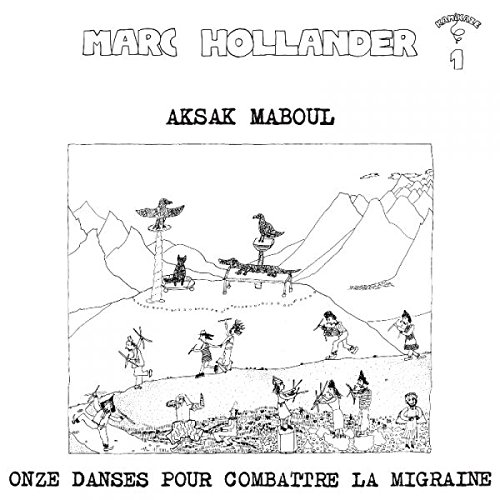
LITTLE BOB STORY-OFF THE RAILS AND LIVE’78.
LITTLE BOB STORY-OFF THE RAILS AND LIVE’78.
By 1977, punk was at the peak of its popularity in Britain. For the last year, bands were being formed from John O Groats to Land’s End. Suddenly, it seemed, everyone was a musician. That was all very well. However, there was a problem.
Many of these bands weren’t very good. The problem was, many of this new breed of musicians could neither sing, nor play their instrument. This wasn’t meant to matter. The DIY ethos of punk meant anyone who wanted to become a musician, could be. René Descartes, the founding father of philosophy, it seemed, was right when he said “I think, therefore I am.” That, however, wasn’t the case.
The truth lay in Hans Christian Andersen’s The Emperor’s New Clothes. It summed up punk perfectly. Playing the swindlers were punk groups and their managers. Dawning the role of the Emperor were critics and cultural commentators. They genuinely believed that this wall of discordant sound was the future of music. What made this worse, was while these critics and cultural commentators wrote puff stories praising punk, they wrote disarranging reviews of perfectly good albums. There was a reason for this.
These albums were by punk’s “supposed” enemies. The enemies of punk were many. This included the prog-rock and rock. They were perceived as the musical establishment, and therefore, enemies of punk. It was a case of them and us. The battle-lines, it seemed were drawn, and a battle for music’s future was about to take place. Complicating matters was another musical genre that to this day, divides opinion, disco.
Ever since 1975, disco’s popularity had been on the rise.Born in America, soon disco’s influence was being felt worldwide. Around the world, dancers danced to the pulsating disco beat. Disco had crossed the continents and was providing the musical soundtrack to dance-floors worldwide. Just like punk, disco wasn’t music’s finest hour. It was lightweight, formulaic, disposable music at its worst.
Across America and even into Canada, disco factories were set up. From Philly to New York and Toronto, the disco factories churned out formulaic music. One of the worst abominations of the disco era was the disco orchestra. Producers brought together anonymous session musicians and unknown backing singers. They became what’s laughingly known as a disco orchestra. Using the disco formula, albums of lightweight dance muzak was churned out. Just like Motown a decade before, these producers had found a successful formula and were exploiting it fully. Record companies realising that disco was profitable, poured music into disco. For many “real” musicians, this was the last straw.
The money being poured into disco had to come from somewhere. Often, the A&R budgets were cut. Up-and-coming bands were no longer nurtured. Instead, they were cut loose if they weren’t an overnight success. Even the older rock and prog rock bands were affected. When they went to renew their contracts, the terms weren’t as favourable. Contracts were shorter, and advances were slashed. Suddenly, it seemed that unless you were a punk band or a disco artist, record companies weren’t interested. This was the case everywhere, including in France.
Just a year earlier, Little Bob Story had released his debut album High Time in 1976. Their brand of high energy rock ’n’ roll was a reaction against the music that was popular in France. Incredibly, they had it worse than their British counterparts.
It wasn’t just punk and disco French music lovers had to contend with. Chanson and mediocre MOR were another two reasons French music lovers were scared to turn on their radios. Apart from rock and prog rock, France, like Britain musically, was a cultural desert. Little Bob Story vowed to bring about change.
So in 1976, Little Bob Story released their debut album High Time. It was released in France and Britain. High Time was well received by critics and especially, record buyers. The album sold well, and Little Bob Story proved a popular live act. Music fans
realised that Little Bob Story was a force for change, and wanted to remove the fakery from music. Little Bob Story were more than happy to do this.
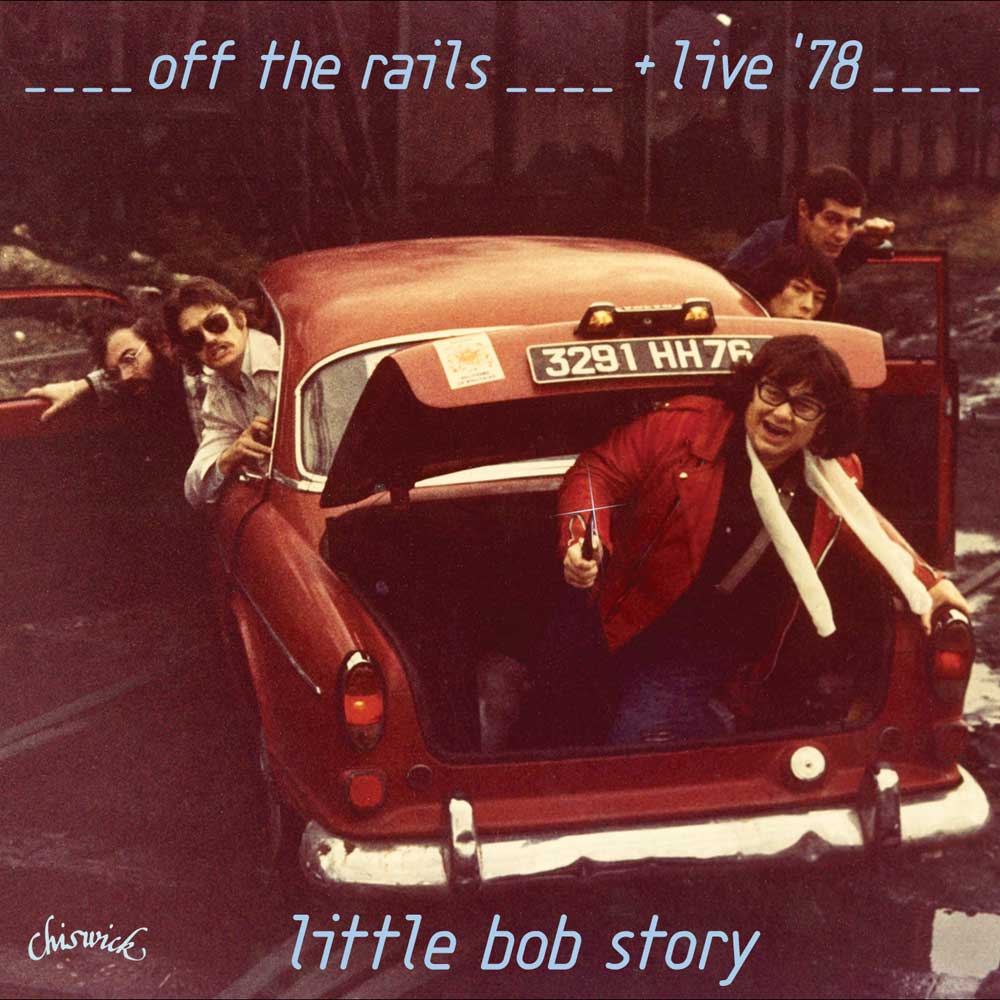
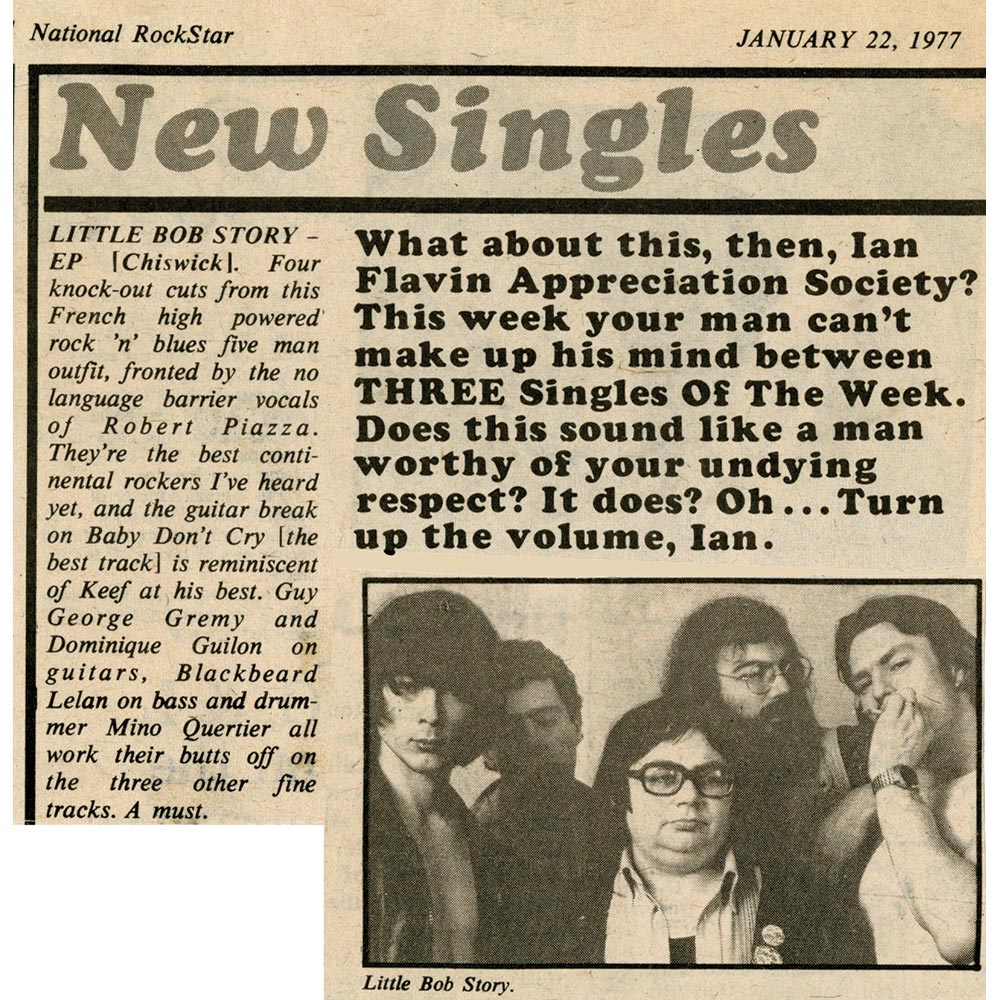
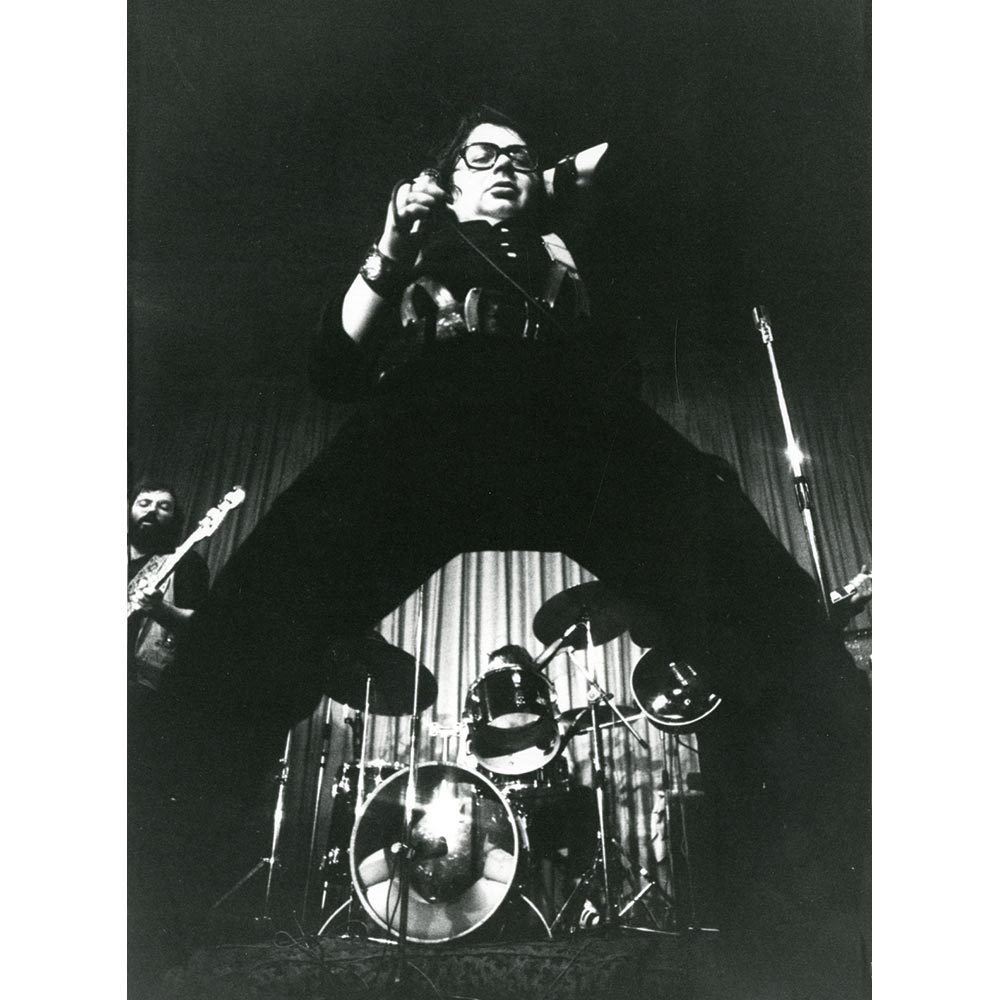
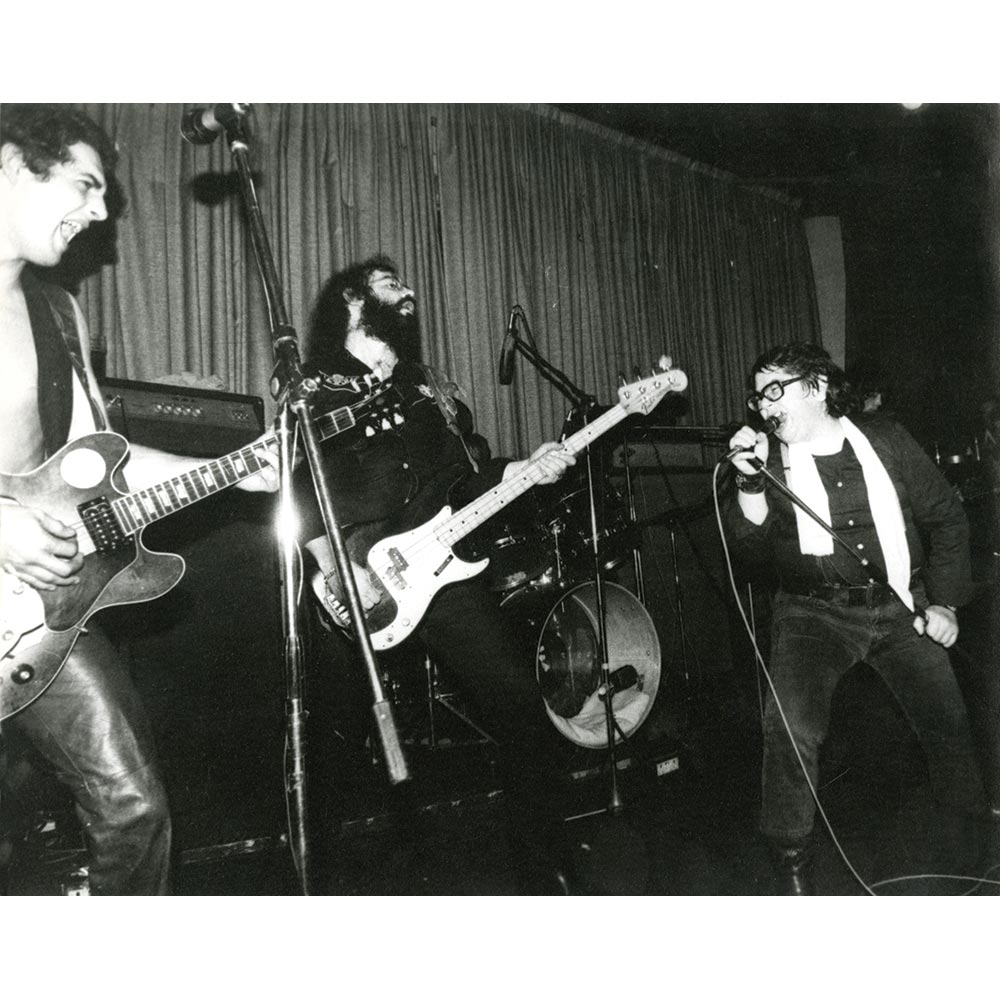
So work began on Little Bob Story’s sophomore album Off The Rails. It was released in 1977 on both sides of the Channel. In Britain, Chiswick Records, an imprint of Ace Records released Off The Rails. Thirty-eight years later, and Chiswick, which is still an imprint of Ace Records, recently released Off The Rails. As an added bonus, five live unreleased tracks recorded in 1978 are added on what’s now entitled, Off The Rails and Live ’78. The fourteen tracks on Off The Rails and Live ’78 feature Little Bob Story’s unique brand of high energy rock ’n’ roll. Their story began in 1974.
That’s when Little Bob Story were founded by Roberto Piazza. He was twenty-nine, and was born in Italy. However, since 1958, France had been home to Roberto Piazza. By 1974, the Little Richard decided to form a band.
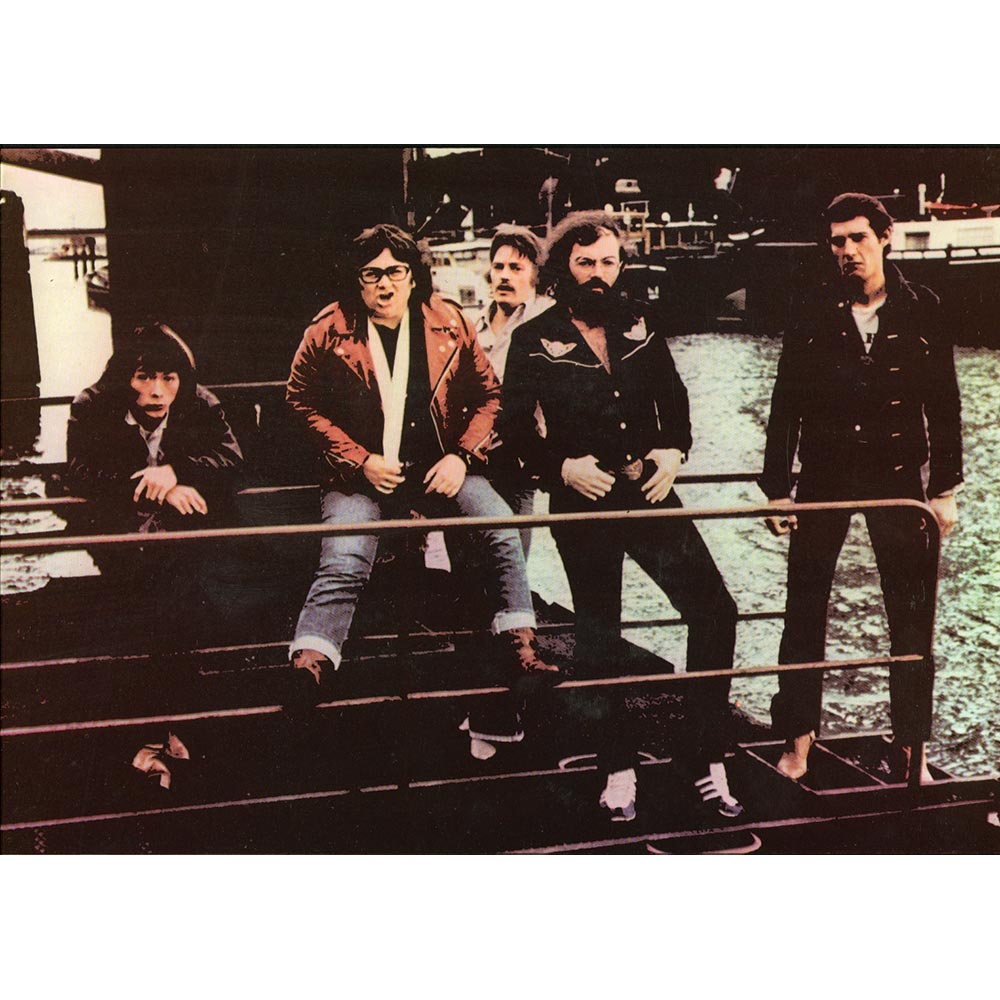
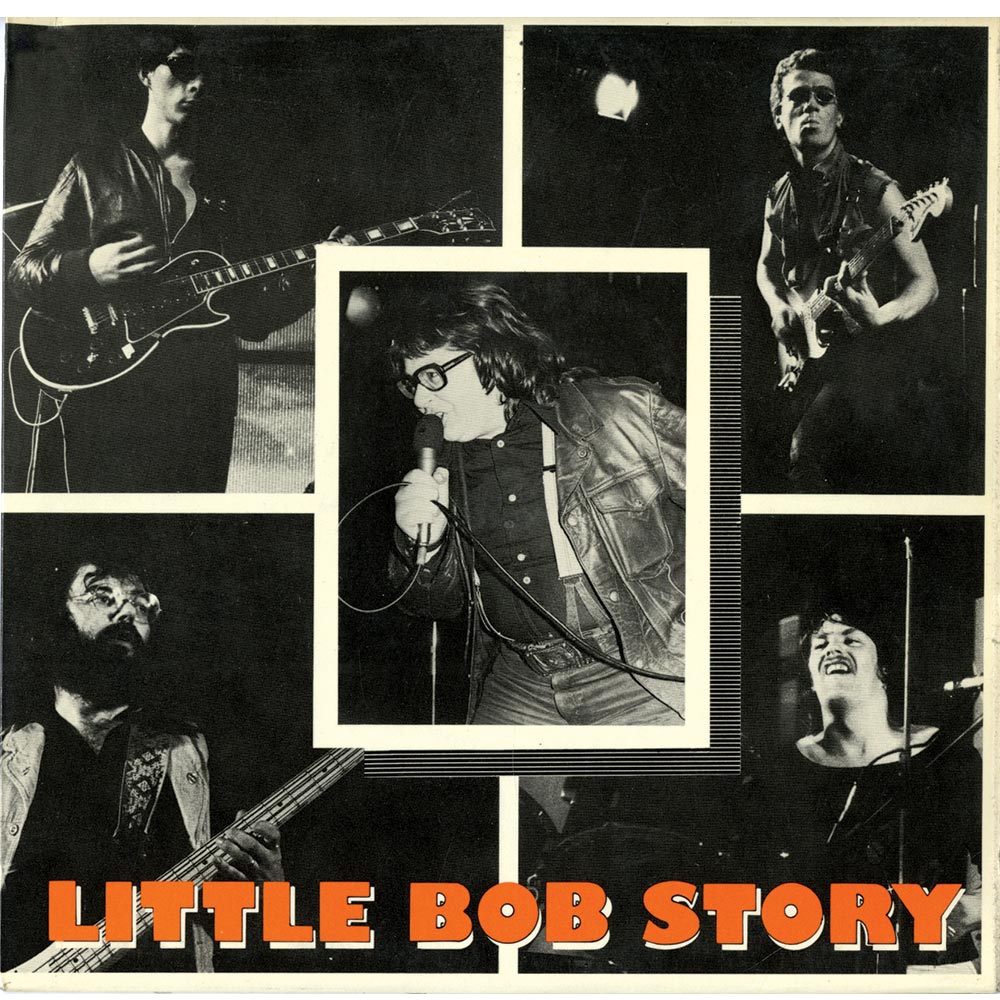
Joining Roberto Piazza in Little Bob Story were a rhythm section of drummer Bob “Mino” Quertier, bassist Dominique “Blackbeard” Le Lan and a trio of guitarists. This included Guy-Georges Gremy, Christian “Bibi” Delahaye and Dominique “Ginger” Guillon. From their earliest concerts, Little Bob Story were making an impression.
It didn’t matter where they played. From the cities to suburbia and the countryside, Little Bob Story’s music enlivened previously jaded musical palettes. This nascent group was shaking French music from its slumbers. For many in the audience, they had never heard music like this. However, they liked it.
With audiences being won over by the their trademark brand of hi energy rock ’n’ roll, it was only a matter of time before Little Bob Story released a single. This came in 1975, when Don’t Let Me Be Misunderstood became Little Bob Story’s debut single. It was released on the small, independent label Arcane. So was the followup, Let Me In. Both singles were well received, and this led to Little Bob Story releasing their debut album in 1976.
After the success of their first two singles, Arcane were keen for Little Bob Story to record their debut album. So a deal was struck by Little Bob Story’s manager Jean-Claude Pognant and recording began in March 1975.
The venue for the recording of Little Bob Story’s debut album was Studio D’Antibes-Azurville. A total of nine tracks were recorded. They were a mixture of new songs and cover versions. Among the cover versions were Bob Dylan’s It’s All Over Now Baby Blue, The Animals’ I’m Crying and Willie Dixon’s You’ll Be Mine. These nine tracks became High Time, which was released later in 1976.
When High Time was released, it was well received by critics. It was a mixture of hi energy rock ’n’ roll, blues rock and pub rock. There was more than a nod to MC5 and The Stooges on this musical adrenaline rush. When it was released, it found an audience not just in France, but further afield.
Copies of High Time found their way across the English Channel, where the pub rock circuit was thriving. Two graduates of that scene were Dr. Feelgood and Eddie and The Hot Rods. Little Bob Story’s debut album High Time struck a nerve with their fans. However, there was a commonality between three bands.
Between 1975 and 1976, Little Bob Story had shared the bill with various English pub rock bands. This included Dr. Feelgood and Eddie and The Hot Rods. Little Bob Story had opened for at Dr. Feelgood in Le Havre, which was Roberto Piazza’s adopted hometown. Then in 1976, Little Bob Story opened for Eddie and The Hot Rods in the Olympia Theatre in Paris. It seemed that Little Bob Story’s star was in the ascendancy.
Despite Little Bob Story’s popularity growing, High Time hadn’t been released in Britain. Apart from France, Little Bob Story’s manager Jean-Claude Pognant had only licensed High Time in Spain. So British record buyers wanting a copy of High Time, were forced to order the album as an import. This meant paying a premium. When Roberto Piazza heard this, he was determined this wouldn’t happen again.
The members of Little Bob Story decided to take charge of their career in Britain. Their manager, Jean-Claude Pognant had more than enough to do managing Little Bob Story in France. So, to take the pressure off him, the band took charge of their career in Britain. It was then that they discovered that High Time could’ve been a success in Britain.
Ironically, there was definitely an appetite for High Time in Britain. Many British music fans who attended the 1976 International Punk Rock Festival, in Mont de Marsan, in the south west of France were familiar with Little Bob Story. They had blown the audience away, with blistering set of hi-energy rock ’n’ roll. Little Bob Story put many bands on the bill to shame.
This wasn’t surprising. Unlike many bands on the bill, the members of Little Bob Story were talented musicians who were able to play their instruments. They took the International Punk Rock Festival by storm, and unsurprisingly, were invited back in 1977. Before that, Little Bob Story crossed the channel.
Despite their debut album not being released in Britain, Little Bob Story received a rapturous reception wherever they went. The twelve date tour took in England and Wales. At each venue, their unique brand of hi-energy found favour with the audience. Especially among the ageing Teddy Boys in the audience. They requested a string of rock ’n’ roll classics. Roberto Piazza was happy to oblige. Each night as Little Bob Story left the stage, they felt like conquering heroes. They vowed that their sophomore album would be released in Britain.
This proved to be the case. However, that’s not surprising. By the time Little Bob Story set about recording their sophomore album Off The Rails, they were signed to a British label, Chiswick Records. This the members of Little Bob Story felt, was the perfect fit for them. Chiswick Records was home to several other rock ’n’ roll bands, including The Gorillas and The Count Bishops. So Little Bob Story signed to Chiswick Records, began work on Off The Rails.
When the recording sessions began at Escape Studios, the members of Little Bob Story had penned eight of the nine tracks. This time around, there was only one cover version, The Sorrows’ Baby. It was a favourite of Robert Piazza, so was included. These nine tracks were recorded by a different lineup of Little Bob Story
By the time recording of Off The Rails began, Little Bob Story’s number had been reduced. Dominique Guillon was no longer in the band. His replacement was Serge Hendrix. He joined the other five members of Little Bob Story at Escape Studios.
Little Bob Story’s rhythm section featured drummer Dominique Quertier and bassist Dominique “Blackbird” Le Lan. They were joined by guitarists Dominique Guillon and Guy George Gremy. Robert Piazza added his unmistakable, distinctive vocals to the nine tracks. They were produced by Sean Tyla. He played an active part in the recording, laying down a blistering guitar riff on Riot In Toulouse. Along with engineer John Burns, producer Sean Tyla soon brought Off The Rails together. It was released later in 1977.
When critics heard Off The Rails, they were won over by Little Bob Story. The band’s turbo charge brand of hi-energy rock ’n’ roll wowed even the most cynical, sarcastic and acerbic critics. They penned critically acclaimed reviews. This was akin to a recommendation for Little Bob Story’s sophomore album Off The Rails.
The reviews of Off The Rails were only part of the story. When the album was released in 1977, it proved popular among record buyers. Many record buyers were already fans of French music. However, Little Bob Story was totally different. They embraced Off The Rails, and this was the start of British music fan’s love affair with Little Bob Story’s music.
Whether it was future albums or tours, Little Bob Story were always greeted as the conquering heroes. The album that began this love affair was Off The Rails. It’s a fusion of blues rock, pub rock and rock ’n’ roll. There’s even a nod to punk. Mostly, though, it’s blistering, hi-energy rock ’n’ roll. Little Bob Story’s turbo charged sound is like a musical dervish. From the opening bars of When The Night Comes, through the cover of The Sorrows’ Baby to Little Big Boss, You Make Me Crazy and Dress In Black it’s a ferocious foray into the world of Little Bob Story. That brought side one of the original version of Off The Rails to a close, and allowed the listener to draw breath. Not the newly released version of Off The Rails and Live ’78.
With their trio of guitars at the ready, and a driving, powerhouse of a rhythm section, Little Bob Story kick loose on Riot In Toulouse. It’s easily one of their finest moments. There’s no stopping Little Bob Story though. This musical roller coaster continues through Mr. Tap, Nothin’ Else (Can Give It To Me) and the album closer ‘Round The Corner. That should be the end of Off The Rails. It’s not.
There’s still the five bonus tracks. They were recorded live at Dingwalls in March 1978, but until now, have never been released. As Little Bob Story launch into Baby Don’t Cry then Hot ’N’ Sweaty, suddenly, it’s 1978 all over again. The intensity and attitude continues on Come On Home and High Time. Howvever, Little Bob Story have an ace up their sleeve with a rousing cover of The Small Faces All Or Nothing closes. Then they take their leave, leaving you revel in what’s been a truly memorable musical experience.
Now anyone who witnessed that performance at Dingwalls in March 1978, will be able to relive it thirty-seven years on. They’ll also be able to rediscover Little Bob Story’s sophomore album Off The Rails. It’s never been reissued before. However, Chiswick Records, an imprint of Ace Records have rectified this, by releasing Off The Rails and Live ’78. This is a welcome release.
Not only will veterans of Little Bob Story’s music enjoy the opportunity to rediscover their music, but a new generation of music fans will be able to discover an iconic French group from the seventies. Little Bob Story went on to enjoy commercial success across Europe. Especially when Little Bob Story played live. They wowed huge audiences, with their unique brand of hi-energy brand of rock ’n’ roll, which can be heard on Little Bob Story’s sophomore album Off The Rails and Live ’78.
LITTLE BOB STORY-OFF THE RAILS AND LIVE’78.
CHVRCHES-EVERY OPEN EYE.
CHVRCHES-EVERY OPEN EYE.
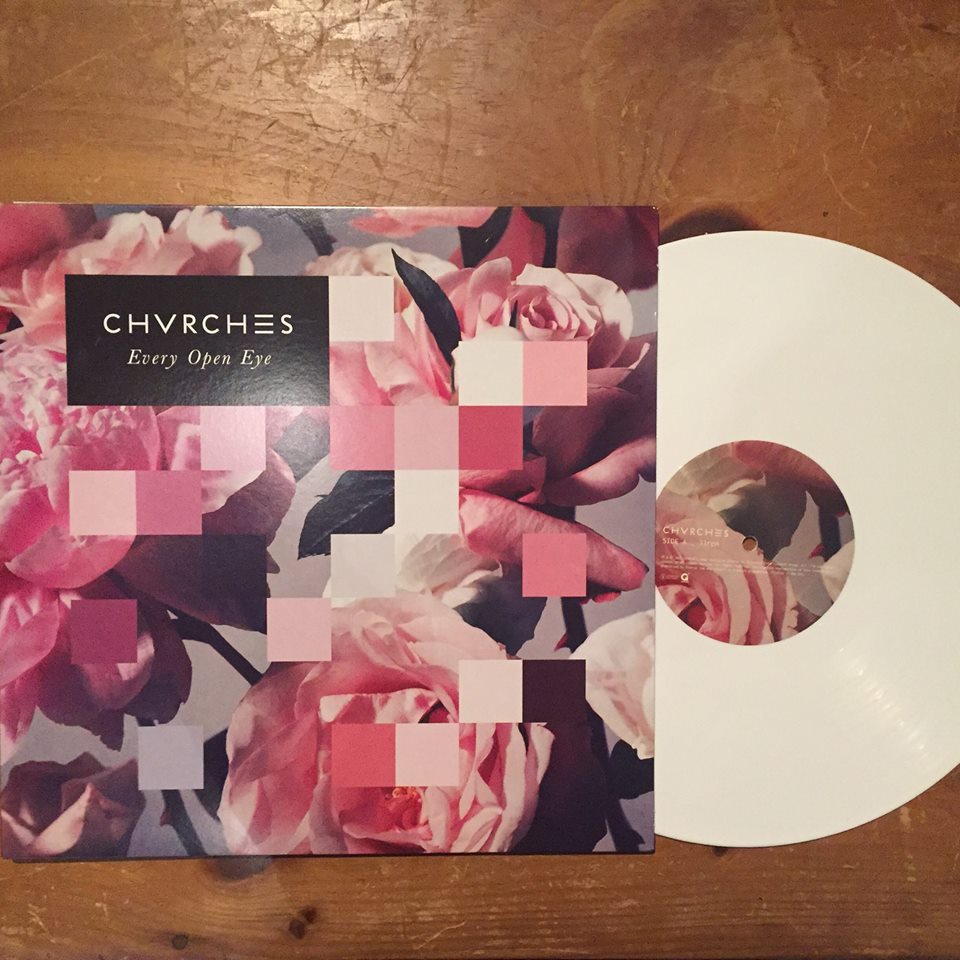
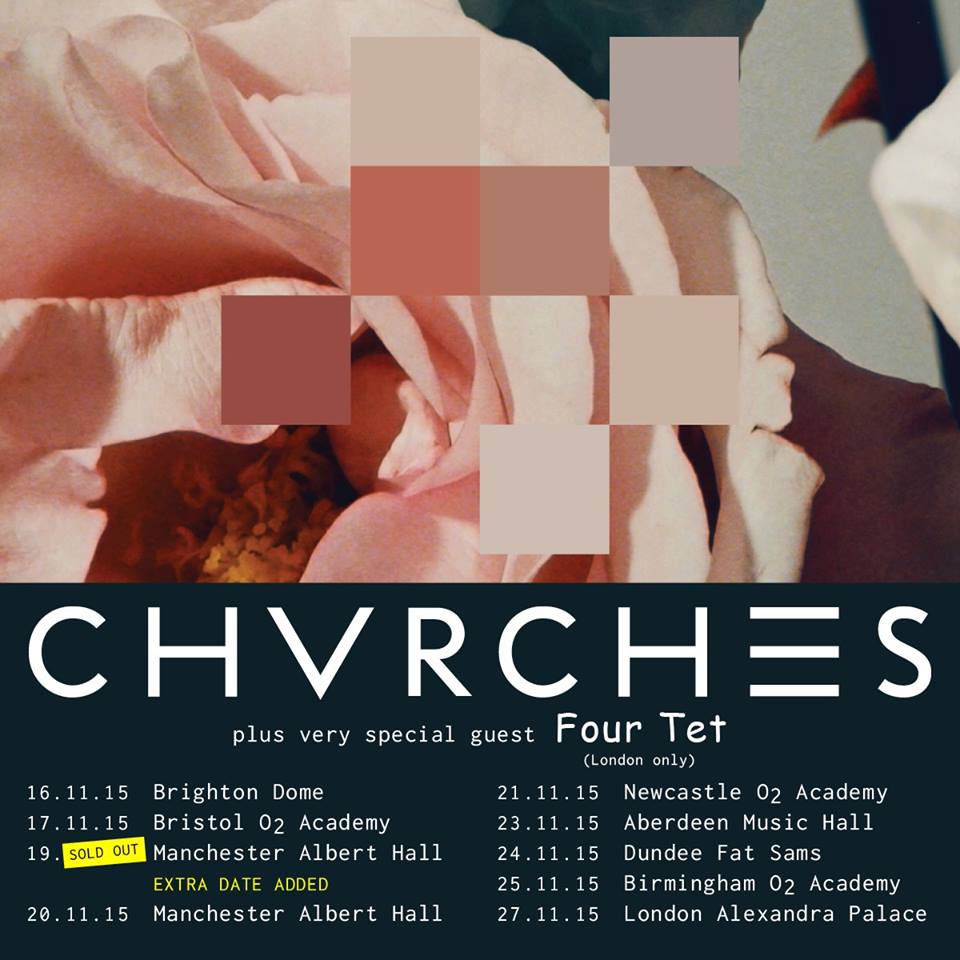
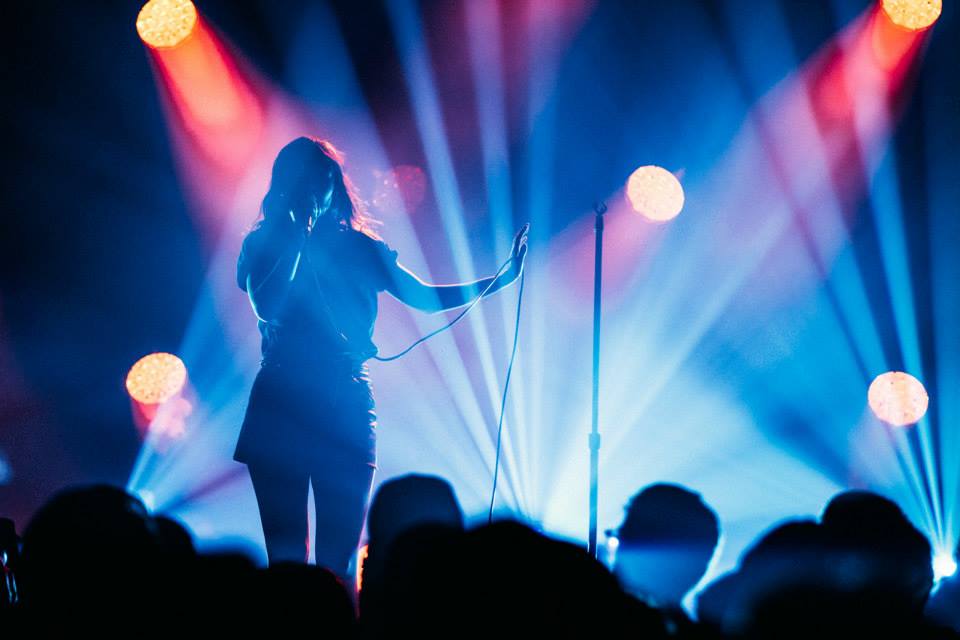
It was 10.30pm, when there was a knock at the door. The old couple from up the stairs stood there almost embarrassedly. “Could you possibly turn it a wee bit. We’re trying to sleep?” This actually happened to Chvrches during the recording of their new album Every Open Eye which was recently released on Virgin.
Chvrches were laying down some drum loops for a track on Every Open Eye. As often happens, there’s the temptation just to increase the volume slightly. Usually, that’s okay. Especially if it’s a luxurious, custom-built studio on the outskirts of town. However, that doesn’t describe Chvrches’ studio. It’s a basement flat, situated on the South side of Glasgow. To passers by, it’s just another Glasgow tenement. However, that’s not the case. Instead, it’s been Chvrches’ headquarters since they formed in 2011.
Their rented basement flat was where Chvrches recorded their debut album The Bones Of What You Believe. This was the album that transformed the fortunes of Lauren Mayberry, Ian Cook and Martin Doherty. It was released on 20th September 2013, and was hit Britain, America, Europe, Japan and Australasia. After selling over a million copies worldwide, Chvrches’ thoughts turned to recording their sophomore album.
Many who had charted the rise and rise of Chvrches, presumed that they would head off to one of the major studios. There’s plenty to choose from. How about Sunset Sound in Los Angeles or Electric Ladyland in New York. Closer to home Abbey Road is just a shuttle flight away. However, Chvrches chose to forsake the splendour and dare I say expensive of these legendary studios. Instead, they returned to their basement studio in the Southside of Glasgow. This was where the story began.
Ian Cook and Martin Doherty, who was a member of The Twilight Sad when they played live, were working on a new project. They needed someone to lay down some vocals. Neither Ian nor Martin saw themselves as lead vocalists. Ian suggested a singer he had encountered recently Lauren Mayberry.
They met came about when Ian was producing an E.P. for Blue Sky Archives in September 2011. Their lead singer was Lauren Mayberry. Ian had been impressed by her voice. It was only when Ian and Martin started discussing bringing onboard a vocalist, that he remembered the Blue Sky Archives singer. So, Ian told Martin about Lauren, and they decided to ask her to sing on one of their demos. A phone call was made and Lauren agreed to add a vocal to Ian and Martin’s demos.
Little did Lauren realize what she’d let herself in for. Ian and Martin it seems, are perfectionists. That proved to be no bad thing. They spent eight months in a basement studio, working on their new project. Eventually, it was finished. It had been such a success, they decided to transform this studio project into a live band, that became Chvrches.
The newly named band released its debut single in May 2012. Chvrches did this in an unusual way. People were able to download a free copy of their debut single Lies, via the Neon Gold label’s blog. This somewhat unorthodox release worked.
Soon, people were talking about Chvrches. They were fast becoming an internet sensation. Before long, the press and media were taking notice of Chvrches. One of the first publications to do so, were The Guardian. Quickly, others followed. Momentum was building. What helped was that Chvrches were a great live band.
Throughout the summer of 2012, were honing their live act. Quickly, word was spreading about this new Glasgow band. September 2012 it seemed, was the right time to release their sophomore single.
Chvrches found two free days in their increasingly hectic touring schedule. Somehow, they wrote and recorded The Mother We Share in just two days. Little did they know that these two days would transform their nascent career.
When The Mother We Share was released in September 2012, critics were falling over themselves to heap praise on Glasgow’s newest band. This classy and classic slice of glistening, ethereal electro-pop, had made an impression on critics. It would also make an impression on record buyers.
Across the world, The Mother We Share was introducing Chvrches’ music to a much wider audience. It reached thirty-eight in Britain, and was a hit in Belgium, Germany, Japan and most importantly for a new band, America. The Mother We Share had reached number twelve in the all important US Alternative charts. Things were looking good for Chvrches, and were about to get a whole lot better.
At the end of 2012, various blogs, magazines and radio stations publish their best of 2012 polls, Chvrches name loomed large. The NME, BBC and Huffington Post praised Lies and The Mother We Share. This new band had made a big impression. However, this was just the start of Lauren, Ian and Martin’s big musical adventure.
By February 2013, Chvrches were ready to release third single Recover. Just like The Mother We Share, Recover was released to widespread critical acclaim. Not only was it a hit in Britain, but in Australia, Belgium and Germany. With every release, Chvrches’ fan-base was growing. Every concert sold out and record buyers awaited the release of their debut album. So Chvrches got to work.
This meant time spent in their basement studio in the South side of Glasgow. That was where Ian wrote and recorded his music for films and television. Compared to many studios, Chvrches studio was almost minimalistic. There were just two synths, samplers, drum machines, guitars and bass. However, this was more than enough to record an album. Especially given Chvrches combined talents and determination. This wasn’t easy.
For much of the spring and summer of 2013, Chvrches had a busy touring schedule. So when they had time, they recorded their debut album The Bones Of What You Believe. Once it was completed, Chvrches headed back out on tour. There were still parts of the world where Chvrches’ gospel hadn’t been heard. Agnostics had to be transformed into believers. This was working.
In July 2013, Chvrches released their fourth single Gun. It was a tantalising taste of Chvrches’ debut album. Critics hailed Gun the finest single of their career. Record buyers agreed. Gun was a hit everywhere from Britain, to Belgium and Japan. Chvrches were on a roll. This was perfect timing for a band about to release their debut album.
Two years after Chvrches first recorded together, they released their debut album The Bones Of What You Believe on 23rd September 2013. It had been released to widespread critical acclaim. By then, Chvrches had had been on a coast to coast tour of America. Just like everywhere they had been, they had been winning friends and influencing people. This became obvious when The Bones Of What You Believe was released.
When The Bones Of What You Believe hit the shops, it reached number nine in Britain and five in Scotland. Across the Atlantic, The Bones Of What You Believe reached number twelve in the US Billboard 200 and topped the US Alternative charts. That wasn’t the end of the story.
Elsewhere, The Bones Of What You Believe was a hit in Australia, Canada, Germany, Holland, Ireland, Japan and New Zealand. Chvrches debut album had been a huge success. The icing on the cake was when The Bones Of What You Believe was certified gold in Britain. Chvrches were riding a roller coaster.
It was showing no sign of stopping. That was the case through much of 2014 and 2015. Chvrches seemed to have continually toured the world. They’ve undertaken coast-to-coast tours of America, before crossing the border to Canada. Then they’re off on their travels again. There’s been tours of Europe and concerts in Japan. That’s not forgetting the festival circuit.
Recently, Chvrches have been familiar faces at the biggest festivals in the worlds. Scotland’s finest have played at SXSW, Canadian Music Fest, The Great Escape, T in the Park, Electric Picnic, Reading and Leeds Festival and the V Festival. Despite this punishing touring schedule, Chvrches still found time to record their eagerly awaited sophomore album.
The recording of Every Open Eye began in January 2015. That was just six weeks after they had finished touring The Bones Of What You Believe. So Lauren, Ian and Martin returned to where it all began, the basement studio on the South-side of Glasgow.
They had decided that rather than move from their old studio, they would upgrade the equipment. Using some of the royalties from The Bones Of What You Believe some new synths were installed in the studio. This meant Chvrches were no longer having to rely on just two synths. Now they had banks of synths to deploy. While the synths were mainly for Ian and Martin, Lauren had a new room to record her vocals.
Next door to their studio, was another room. That studio was occupied by engineer David Simpson. Chvrches were needing anther room. So they made David an offer he couldn’t refuse. If he gave up his studio, Chvrches would employ him full-time. He accepted the offer, and proved invaluable over the next five months.
Much of David’s time was spent in his former studio. It had been given a makeover. A vocal booth was installed, and Lauren laid down her vocals. They were recorded by David Simpson. He was kept busy.
When the recording sessions began, Chvrches had written thirty demos. A total of twenty-one were recorded. The way Chvrches worked, was Ian, Martin and Lauren recorded a backing track. Then Lauren had to write the lyrics and record a vocal. It could’ve been very different.
Unsurprisingly, various people had offered to cowrite songs with Chvrches. Chvrches decided to continue to write the songs themselves. It had worked well so far. So for the next five months, Chvrches worked six hours a day, five days a week. They proved a potent partnership.
The three members of Chvrches are multi-talented, multi-instrumentalists. Ian played guitar, bass, synths and added vocals. Martin added synths, samplers and vocals. Lauren added lead vocals and played synths and samplers. After five months, the three members of Chvrches had written, recorded and produced Every Open Eye. It was then sent to mixer Mark “Spike” Stent. He applied the finishing touches to Every Open Eye.
Once Every Open Eye was mixed, it was scheduled for release on the 25th September 2015. This was fitting, as it was nearly two years to the day Chvrches had released their debut album The Bones Of What You Believe. A lot had happened since then. Not all of it pleasant.
Over the last year of so, Lauren had been threatened on social media. Vile and explicit threats were made against her. Although the other members of Chvrches put a protective cordon around Lauren, it must have been a difficult time for Lauren, and her family and friends. After all, how was she to know that these were idle threats? Something had to be done about this situation.
The last thing many people in this situation would’ve done, was expose and confront the perpetrators. However, they had picked the wrong lady to threaten. Lauren Mayberry is no shrinking violet. She exposed the threats on social media, and has spoken spoken and written about them. With all this going on in the background, writing, recording, producing and promoting Every Open Eye can’t have been easy.
Somehow, though, Lauren and the rest of Chvrches have managed to write, record and produce an album that won the approval of both critics and record buyers. Every Open Eye was far from the difficult second album. It was released to widespread critical acclaim, and commercial success. Every Open Eye reached number four in Britain, one in Scotland and number eight in the US Billboard 200. Elsewhere, Every Open Eye has reached the top twenty in Australia, Germany, Ireland and New Zealand. That’s despite Every Open Eye only being released a couple of weeks ago. Every Open Eye, which I’ll tell you about, looks like surpassing the success of The Bones Of What You Believe.
Never Ending Circles opens The Bones Of What You Believe. It’s the perfect way to start Chvrches’ sophomore album. Banks of the new acquired synths play a big part in the arrangement. A bass synth buzzes, while crystalline, chirping synths join rattling drums. They provide the backdrop for Lauren’s urgent vocal. It’s tinged with sadness and anger on this relationship song. Soon, her vocal is feisty, as ultimatums are issued. There’s a degree of uncertainly though: “cut off, I’ll go my way, if I’m going at all…I will try and find my feet and go.” Lauren’s vocal plays a starring role on this hook-laden, anthem. It’s sure to be a favourite of as Chvrches continue their never-ending tour.
Almost otherworldly synths open Leave A Trace. That’s until the buzzing, mesmeric synth and drums that crack usher in Lauren’s vocal. It’s full of emotion and anger. Soon, there’s relief in her vocal at the thought of leaving a failing relationship behind. By then, her vocal grows in power and passion, before reaching a crescendo. Then at the breakdown, the arrangement becomes wistful before this emotional, and sometimes ethereal sounding roller coaster sweeps you away.
Briefly, a vocoder makes its presence felt on Keep You On My Side. Then the arrangement explodes into life. Synths and drums propel the arrangement along. Atop the arrangement sits Lauren’s diva-esque vocal. She doesn’t so much sing the lyrics, but lives them. It’s as if she’s experienced them, and survived to tell the tale. By then, it’s obvious that this track’s been designed with the dance-floor in mind. Elements of electro-pop, Euro pop, Euro Disco and even trance-influenced synths are deployed by Chvrches. Together, they create a track that’s guaranteed to fill any dance-floor, anywhere.
Shimmering synths and thunderous, urgent drums are at the heart of the arrangement to Make Them Gold. That’s until Lauren joins the fray. She delivers a dreamy, joyous vocals. Behind her, the arrangement seems to have been influenced by electro-pop, Euro pop, Euro Disco, Hi-NRG and house. Again, it’s an anthemic dance-floor friendly track. It’s truly irresistible.
Briefly, the tempo drops on Clearest Blue. That’s until Lauren’s vocal enters. It’s pensive, melancholy and tinged with hurt and heartbreak. Behind her, banks of synths drive the pulsating arrangement along. Later, Lauren’s vocal is needy, as she sings: “so please say you’ll meet me, meet me half way.” Briefly, when the vocal drops out, Martin and Ian go through the gears. The tempo increases and there’s an injection of urgency. Stabs and jabs of synths punctuate the arrangement, before poignantly Lauren asks: “will you keep it, half-way?”
Crystalline, shimmering synths open High Enough To Carry You Over . They’re joined by drums and the vocal. Surprisingly, it’s not Lauren. It’s an eighties, yacht rock influenced vocal. That, by the way, isn’t a bad thing. Needy, rueful and tinged with sadness, the line “if I only hadn’t given you up” will be one that resonates with many people.
Lauren returnson Empty Threat. Her ethereal vocal seems to march to the beat of the drums. Gradually synths play a bigger part in the arrangement. As Lauren delivers a powerhouse of a vocal, the synths and drums match her every step of the way. She delivers a needy, desperate vocal. At the breakdown at 2.07 it sounds as if her vocal has been pitched up. This adds to the urgency and emotion. Especially as Lauren sings: “take it back with no regrets, I was better at your side.” From there, the arrangement rebuilds and the drama builds, before reaching arrangement swaggers to a crescendo.
Spacey sci-fi synths open Down Side Of Me, before Lauren’s dreamy vocal enters. Harmonies accompany her, as the arrangement to this ballad becomes floaty and dreamy. A very different side of Chvrches is unfolding. It suits them. Their trusty synths provide the perfect backdrop, veering between floaty and dreamy, to big, bold and sometimes, dramatic. It’s one of the highlights of Every Open Eye, and has single written all over it.
Filters are added to the chattering synths as Playing Dead unfolds. Briefly, the notes run into one another. In doing so, they’ve gotten your attention. So does Lauren’s delivery of: “no more excuses and no more playing dead, there are no silver linings in anything you said.” Her vocal is impassioned, defiant and powerful. Later, that defiance shines through as she sings: “you can tell me to go move and I won’t go.” Like the lyrics to others songs, the way they’re delivered seem personal. Aided and abetted by an arrangement that’s big, bold and not short of hooks, it’s Chvrches doing what they do best, delivering anthems.
Stabs of a bass synth open Bury It, before Lauren accompanied by a shimmering synth and drums begin in another journey into anthem territory. By then, emotion and power are being combined by Lauren. Chvrches aren’t a one woman band. Ian and Martin play their part. They lay down the synth lines and program the beats. They add occasional backing vocals, and knowing that a classy slice of electro-pop is unfolding, whoop in the distance. They’re like lottery winners as they realise they’ve just won the jackpot.
Afterglow closes Every Open Eye. It’s another ballad. Just slow, washes of synths accompany Lauren’s tender, ethereal and heartfelt vocal. The minimalist arrangement is the perfect accompaniment. Even when the vocal briefly drops out, Chvrches resist the temptation to overload the arrangement. Instead, it’s a case of more is less. This is perfect for Lauren’s beautiful, soul-baring vocal. It’s like a cathartic unburdening, as she cleanses herself of all the hurt and heartache. This had to be the final track on the album. Not only is it the best track on Every Open Eye, but it’s the most beautiful and poignant song Chvrches have written and recorded.
Chvrches set the bar high with their debut album The Bones Of What You Believe. Many critics felt it wasn’t going to be hard to surpass its quality. Oh ye have little faith.
With its mixture of anthems and heart wrenching ballads, Open Every Eye is almost flawless. From the opening bars of Never Ending Circles, right through to the closing notes of Afterglow, it’s a emotional and musical roller coaster. The music veers between anethemic, beautiful, dreamy, ethereal and joyous, to dramatic, haunting, poignant and rueful. Elements of Euro pop, Euro disco, Hi-NRG, house, and pop are combined with Chvrches’ unique brand of electro-pop. It’s music that tells a story.
Unlike so much modern day music, this isn’t throwaway pop. Lauren Mayberry is an intelligent and educated young woman. Her lyrics are bound to resonate with many people. They speak of heartbreak and hurt. Other times, hope and joy shines through. Sometimes there’s a poignancy and ruefulness. Occasionally there’s a defiance. Combined with hook-laden arrangements, it’s proved to be a potent and successful musical partnership.
Proof of this is Every Open Eye, an album full of dance-floor fillers, anthems and beautiful ballads. The five months Chvrcges spent recording Every Open Eye was five months well spent. Every Open Eye is a stunning album, and almost flawless album.
Undoubtably, Chvrches’ sophomore album feature heavily on the best of 2015 lists. It deserve to. Then when the awards for the best British album of 2015 are dished out, Glasgow’s talented trio Chvches are sure to be a contender with their triumphant return Every Open Eye.
CHVRCHES-EVERY OPEN EYE.

LED ZEPPELIN-CODA-VINYL EDITION.
LED ZEPPELIN-CODA-VINYL EDITION.
Led Zeppelin enjoyed ten years at the top. During their ten years at the top, Led Zeppelin released eight albums. They released their debut album Led Zeppelin in January 1969. Just over ten years later, Led Zeppelin released In Through The Out Door in August 1979. These eight albums sold over 100 million copies and resulted in Led Zeppelin being crowned the biggest band in the world. However, that era was about to end in tragedy.
A year after the release of In Through The Out Door, Led Zeppelin began preparing for the 1980 North American tour. The tour was scheduled to begin on 17th October 1980. It would be the first time Led Zeppelin had toured North America since 1977. So Led Zeppelin were keen to make an impression. Rehearsals began a month earlier.
On 24th September 1980, Rex King, Led Zeppelin’s assistant, picked John Bonham up at his home. Rex was to drive John to the rehearsals at Cray Studios. However, en route, John asked to stop for “breakfast.” Breakfast for John Bonham was a ham roll and four quadruple vodkas. Once he had his breakfast, Rex took John to the studios, where the rehearsals began.
John continued to drink throughout the day. Rehearsals continued into the evening. Then when the rehearsals were over, Led Zeppelin headed to Jimmy Page’s house. Still, John continued to drink. Just after midnight, John had fallen asleep, and had to be helped to bed. By then, John had drunk 1.4 litres of 40% vodka. Just after midnight, John, who had fallen asleep, was put to bed. Despite putting him on his side, John Bonham would be found dead the following day.
By 12.45pm, on 25th September 1980 there was no sign of John Bonham. So, Led Zeppelin’s new tour manager, Benji LeFevre and John Paul Jones went to investigate. They found John Bonham dead. He was only thirty-two. Because of the circumstances of John’s death, an inquest was called.
Before the inquest, an autopsy discovered that John Bonham had died of from asphyxiation. He had choked on his own vomit, after drinking the equivalent of forty shots of 40% vodka. At the inquest on 27th September 1980, a verdict of accidental death was recorded. By then, John Bonham had been cremated on the 10th October 1980, and his ashes were buried in St Michael’s Church in Rushock near Droitwich, Worcestershire. For the biggest band in the world, it was the end of an era.
The three remaining members of Led Zeppelin had a huge decision to make. They were meant to be beginning a lucrative North American tour. However, Jimmy Page, Robert Plant and John Paul Jones were mourning the loss of their friend. The last thing on their mind was music.
Despite this, rumours in the music press suggested the tour would continue with a replacement drummer. Names mentioned to play drums on Led Zeppelin’s North American tour included Carmine Appice, E.L.O.’s Bev Bevan, Jethro Tull’s Barriemore Barlow and Free’s Simon Kirke. Cozy Powell who had just parted company with Rainbow earlier in 1980, was said to be a contender. Ultimately, this was mere speculation. The other three members of Led Zeppelin had come to a decision.
Led Zeppelin’s North American tour was cancelled. Then on 4th December 1980 Led Zeppelin’s future became clear. The three remaining members of Led Zeppelin issued a press release. It stated: “We wish it to be known that the loss of our dear friend, and the deep sense of undivided harmony felt by ourselves and our manager, have led us to decide that we could not continue as we were.” At the bottom of the press release, it was signed “Led Zeppelin.” After eleven years,Led Zeppelin were no more.
That seemed to be the end of Led Zeppelin. The three members of Led Zeppelin went their separate ways. Then in 1981, Robert Plant founded The Honeydrippers. He was joined by Jimmy Page and Jeff Beck. The Honeydrippers’ lineup was fluid, with friends of Robert Plant and Jimmy Page joining a variety of other musicians. This kept Robert Plant and Jimmy Page busy. However, in 1982 a ninth Led Zeppelin album would be released.
Led Zeppelin still owed Atlantic Records an album. This dated back to when Led Zeppelin formed their Swan Song label in 1974. However, this wasn’t the official reason.
According to Jimmy Page, the three members of Led Zeppelin had noticed how popular bootleg recordings were. They were selling in vast quantities. Given they were unauthorised releases, Led Zeppelin weren’t benefiting from the releases. So the remaining members of Led Zeppelin decided that they should reissue some of the unreleased material in the vaults.
With Led Zeppelin having been together for eleven years before John Bonham’s death, there was plenty of unreleased material. There was more than enough for one album. That’s apparent on Warner Bros’ recent triple vinyl reissue of Coda. Not only does it feature the eight tracks on the original version of Coda, but two further discs of unreleased material. There’s eight tracks on the second album, and another seven tracks on the third. Forty-three years later, and the Led Zeppelin vaults are the gift that keep on giving. Back in 1982, John Paul Jones saw the release of Coda as an opportunity for Led Zeppelin to showcase some of the hidden gems that lay unreleased in the vaults.
Just before the release of Coda, John Paul Jones explained why the album was being released. After all, some of the eight tracks had been recorded some time ago? “They were good tracks. A lot of it was recorded around the time punk was really happening.” Most of the music was released John Paul Jones explains. “There wasn’t a lot of Zeppelin tracks that didn’t go out. We used everything.” Some of the music that hadn’t been released would feature on Coda, which was a fitting title to what was Led Zeppelin finale.
When looking for a title for Led Zeppelin’s ninth and final album, a musical term was chosen…Coda. It proved to be a fitting description of what the album was. A Coda, the three remaining members of Led Zeppelin explained, “was a passage that ends a musical piece following the main body.” In the case of Led Zeppelin, In Through The Out Door was the last album in their main discography. Coda was an addendum, featuring tracks recorded between 1970 and 1978.
For Coda, the three remaining members of Led Zeppelin searched through the band’s vaults. They were looking for songs that would be fitting farewell for their fallen comrade. After much consideration, Jimmy Page, Robert Plant and John Paul Jones decided on eight tracks. They became Coda.
Album One.
Opening Coda, was the bluesy We’re Gonna Groove, which was recorded on 9th January 1970, at the Royal Albert Hall, London. However, the guitar parts were later removed, and over-dubbed in the studio.
Poor Tom was originally meant to feature on Led Zeppelin III. It was penned by Jimmy Page and Robert Plant. Once the recording of Led Zeppelin III was complete, Poor Tom was omitted from the final album. It’s vintage Led Zeppelin.
Another track from the Royal Albert Hall Concert on 9th January 1970, is a cover of Willie Dixon’s I Can’t Quit You Baby. Willie Dixon originally wrote the song for Otis Rush. Later, it became a favourite of Led Zeppelin, who reinvent the track.
Closing side one of Coda, was Walter’s Walk which was recorded on 15th May 1972. It’s thought that the vocals were over-dubbed at a later date. Originally, Walter’s Walk was meant to feature on Houses Of The Holy, but was omitted from the final album. Ten years later, it’s rediscovered and comes to light on Coda.
The majority of side two of Coda are outtakes from the In Through The Out Door sessions. This includes Ozone Baby, a Page and Plant composition. It’s followed by Darlene, which is credited to the four members of Led Zeppelin. Just like Ozone Baby, Darlene failed to make it onto In Through The Out Door, which despite mixed reviews, still managed to sell six million copies in America alone.
Bonzo’s Montreux, which was recorded in September 1976, at the Mountain Studios in Montreux, Switzerland features drumming masterclass from John Bonham. Despite the years of excess, he puts the pretenders to his throne to shame. After the recording of Bonzo’s Montreux, Jimmy Page added a myriad of electronic effects. This adds to what’s one of the highlights of Coda. Why it doesn’t close Coda, seems a strange decision? That would’ve been a fitting homage to John “Bonzo” Bonham.
Instead, the Page and Plant penned Wearing Baby closes side two of Coda. It features Led Zeppelin kick loose, and remind the listener why the sold over 100 million albums in just ten years. Led Zeppelin in full flight was a joy to behold. Sadly, Coda was their swan song. What did critics think of Coda?
Just like previous albums, critics weren’t impressed by Led Zeppelin. It was a familiar story. Reviews were mixed. Some critics panned Coda. They described the album as a mixed bag of songs. Others saw it as Led Zeppelin fulfilling their contractual obligations. However, if the truth be told, Led Zeppelin were never flavour of the month among critics and cultural commentators. Many of them never gave Led Zeppelin the credit that they deserved. Especially during the punk era. Rock groups like Led Zeppelin were seen as musical dinosaurs, who were to be slain by a new breed of gunslinger critics. Ironically, many of the same critics later rewrote musical history, when they changed their mind about Led Zeppelin. Sadly, when Coda was released, Led Zeppelin had few fans in the music press.
Sadly, when Coda was released on 19th October 1982, it wasn’t a huge success. That’s despite reaching number four in Britain, and number six in the US Billboard 200. This resulted in Coda being certified platinum in America, and silver in Britain. When this was translated into sales, Coda sold one million copies in America and 60,000 in Britain. It was a far cry from 1971s Led Zeppelin IV which sold twenty-three million copies in America alone. Then 1973s Houses Of The Holy sold eleven million and 1975s Physical Graffiti sold a further sixteen million copies. In the space of three albums, American record buyers bought fifty copies of Led Zeppelin albums. It’s no wonder that Coda was seen as a commercial failure.
That was the case elsewhere. No longer were Led Zeppelin topping the charts. Only in Australia, Canada and New Zealand did Coda enter the top ten. Led Zeppelin’s time had been and gone.
The group who for several years had been the biggest band in the world were history. After Coda, the three members of Led Zeppelin went their separate ways. In the case of Robert Plant and Jimmy Page, they spent the next few years on The Honeydrippers. However, never again did Led Zeppelin record another album.
That was fitting. Led Zeppelin’s success was down to the four members of the band, not just three. The music on Coda was proof of this. Each and every track features the four members of Led Zeppelin. That’s the case on the three disc version of Coda which was recently released by Warner Bros.
From the opening bars of We’re Gonna Groove on disc one, right through to the Rough Mix of Everybody Makes It Through (In The Light) that closes disc three, the four members of Led Zeppelin play their part in the sound and often, the success of the music.
Album Two.
The second album two features just eight track. Three of the tracks on disc two, feature alternative versions of songs from Coda. There’s an alternate take of We’re Gonna Groove, a mix construction in progress of Bonzo’s Montreux and an instrumental mix of Poor Tom. The inclusion of this version of Bonzo’s Montreux is an interesting one. Usually, recordings like this would never be released. They’re reference tracks only. So, it allows listener to see how the track evolved.
Other tracks include a mix of Sugar Mama and Baby Come On Home. Both were recorded in October 1968, when Led Zeppelin were recording their eponymous debut album. Hey, Hey, What Can I Do was the B-Side of Led Zeppelin’s 1970 single Immigrant Song. a rough mix If It Keeps On Raining is an early mix of When the Levee Breaks, from Led Zeppelin IV. The other track is Travelling Riverside Blues, which was recorded during a BBC Session. That’s not the end of Coda. There’s still the third album to come
Album Three.
Just like disc two, the seven tracks feature alternative versions of songs from Coda.There’s a rough mix of Bring It On Home from Led Zeppelin II, and Walter’s Walk, which which was recorded in 1972 for the Houses Of The Holy album. However, Walter’s Walk was never released until it featured on Coda. The version on disc three is just a rough mix. That’s the case with St. Tristan’s Sword, Desire (The Wanton Song) and Everybody Makes It Through (In The Light) which was recorded for the 1975 album Physical Graffiti. These tracks are work in progress, and allow listeners to compare and contrast with the finished article.
Four Hands (Four Sticks) was recorded in 1971, and featured on Led Zeppelin. It was also the B-Side to the single Rock ’N’ Roll. However, the version on disc three is the Bombay Orchestra version. It was recorded in 1972, and features the Bombay Symphony Orchestra. They also feature on Friends, which was recorded at the same time. Both tracks feature a very different side of Led Zeppelin and are a welcome addition to disc three of Coda, which closes the Led Zeppelin remaster series.
It’s taken just over a year for Atlantic and Warner Bros. to rerelease the nine Led Zeppelin albums. These nine albums were released between 1969 and 1982. During that period, Led Zeppelin sold over 100 million albums and became the biggest band in the world. However, like all good stories, the Led Zeppelin story had to come to an end.
When the end came, there was a twist in the tale. The four members weren’t going to live happily ever after. No. Drummer John Bonham, the hardest living member of Led Zeppelin died of asphyxiation on the 25th September 1980. He had choked on his own vomit, after drinking the equivalent of forty shots of 40% vodka the day before. That day, Led Zeppelin died too.
Less than three months later, on 4th December 1980, the other three members of Led Zeppelin announced that the biggest band in the world were no more. They had overlooked the fact that they owed Atlantic Records one album.
So, just under two years later, on the 19th November 1982, Led Zeppelin released Coda. It was a selection of unreleased tracks. While Coda was hardly Led Zeppelin’s finest hour, just like In Through The Out Door, it featured fleeting moments of genius. However, it was a far cry from their first six albums.
From Led Zeppelin right through to Physical Graffiti, Led Zeppelin could do no wrong. However, on Presence and In Through The Out Door, no longer were Led Zeppelin invincible. There was a chink in their armour. What’s more all the years of hard living caught up with Led Zeppelin.
By the time they were recording In Through The Out Door, Jimmy Page was struggling with heroin addiction, and John Bonham was battling alcoholism. Sadly, just over a year after the release of In Through The Out Door, John Bonham lost his battle with alcoholism on 25th September 1980. The day, that John Bonham died, so did Led Zeppelin.
The ideal ending to the Led Zeppelin story would’ve been of the three remaining members of the band pieced together a critically acclaimed album featuring unreleased tracks. Sadly, that would only happen in the movies. Instead, Coda proved to be what critics called a musical mixed big, that became Led Zeppelin’s least successful album. Coda became a Coda to Led Zeppelin’s eleven year career, where they sold over 100 million albums.
LED ZEPPELIN-CODA-VINYL EDITION.
STEIN URHEIM AND MARI KVIEN BRUNVOLL-FOR INDIVIDUALS FACING THE TEROR OF COSMIC LONELINESS.
STEIN URHEIM AND MARI KVIEN BRUNVOLL-FOR INDIVIDUALS FACING THE TEROR OF COSMIC LONELINESS.
Forty years ago, it wasn’t unusual for an album to be recorded in four days. The only way to record an album, was in a recording studio. This cost money. So, the only bands able to record an album, were those signed to a record company. Once they had signed on the dotted line, they were ready to record their album.
When bands entered a recording studio, they had to be ready to roll when that red light went on. Every hour was costing them money. That money was coming out of their royalties. So the longer they took a year to record an album, the more it was going to cost them. The more experienced a band or artist became, the more they were aware of this.
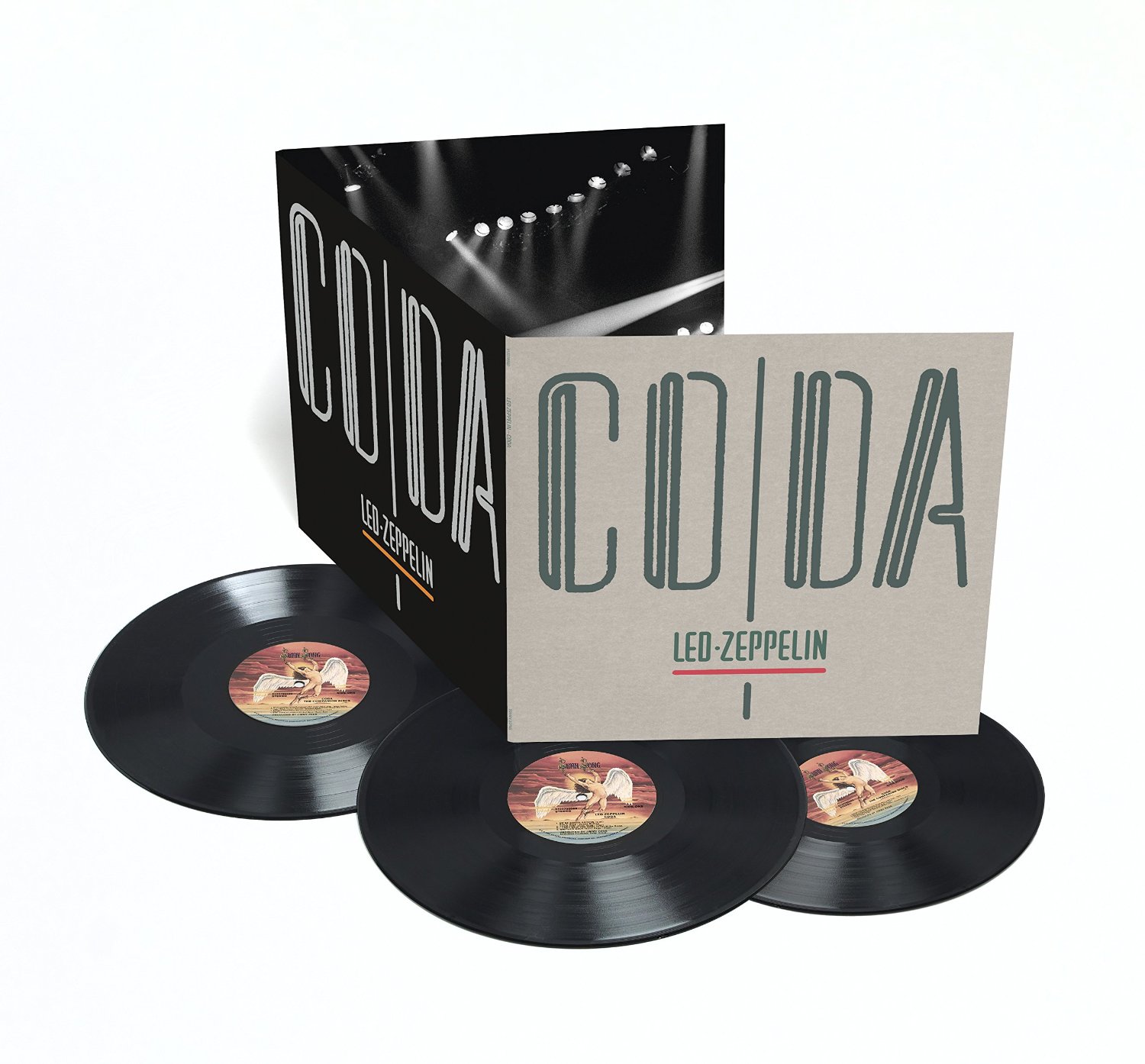
Stein Urheim and Mari Kvien Brunvoll are certainly well aware of the costs of recording an album. Both of them have enjoyed lengthy careers as solo artists, and for the last four years, have been collaborating. They had previously recorded two albums together. Individuals Facing The Terror Of Cosmic Loneliness, which was recently released by Jazzland Recordings was their third collaboration. It was recorded in just four days.
With nine new songs written, Stein Urheim and Mari Kvien Brunvoll entered the recording studio on the 6th of January 2015. Four days later, and the Stein Urheim and Mari Kvien Brunvoll had completed the recording of Individuals Facing The Terror Of Cosmic Loneliness. It was only the 9th of January 2015. Now they could make plans to release followup to their debut album Daydream Twin.
The collaboration between Stein Urheim and Mari Kvien Brunvoll began in 2012. That’s when they released their debut E.P. Stein and Mari’s Daydream Community. It was released to critical acclaim, and featured ambitious and groundbreaking music. Elements of avant-garde, contemporary jazz, experimental and free jazz were combined over eight tracks. Critics tipped the duo as a partnership with a big future ahead of them.
That wasn’t surprising. Both Stein and Mari were experienced musicians. Stein who was thirty-three and Mari who was twenty-eight were career musicians.
Stein, who had worked with some of the biggest names in Norwegian jazz, had already released two albums. His debut was Three Sets Of Music, which was released in 2009. The album showcased Stein’s versatility. Seamlessly, this talented multi-instrumentalist switched between genres. For the first time in nearly a decade, Stein was taking centre-stage. At last, his talents were recognised.
In 2010, Stein Urheim won his first Vossajazz. This is one of the biggest, and most prestigious awards. Stein picked has award up at the Vossa Jazz festival. Buoyed by this, Stein’s career continued apace.
By 2012, Stein had met Mari Kvien Brunvoll. They released their Stein and Mari´s Daydream Community E.P. Plans were in place for the pair to record their debut album. Before that, Stein and Mari had albums to release.
Later in 2012, Stein released his sophomore album Kosmolodi. It was released on one of Norway’s most prestigious labels, Hubro Music. Kosmolodi featured a musical innovator, who continually, pushed musical boundaries. Genres melted into one on Kosmolodi’s five tracks. Everything from blues, country, experimental, free jazz, folk, jazz and world music. It seemed that Stein Urheim had come of age musically. Meanwhile, Mari Kvien Brunvoll had also released her eponymous debut album.
Mari Kvien Brunvoll was released in 2012 on Jazzland Recordings. By then, Mari was already being hailed as one of the rising stars of the Norwegian scene. This came about after Mari’s appearance at Moldejazz in 2010. Suddenly, her star was in the ascendancy. Critics awaited the release of Mari’s debut album. They weren’t disappointed when her eponymous debut album was released in 2012. The former jazz student at the Grieg Academy had surpassed even the critic’s expectations. Already, critics were talking about Mari’s sophomore album. That would have to wait Stein Urheim and Mari Kvien Brunvoll were about to record their debut album, Daydream Twin.
When Daydream Twin was released in 2013, it was Stein Urheim and Mari Kvien Brunvoll’s first album. Previously, they had only released an E.P., Stein and Mari’s Daydream Community. That was a tantalising taste of what they were capable of.
If Stein and Mari’s Daydream Community was an amuse-bouche, they Daydream Twin was three course meal. Critics hailed Daydream Twin as an innovative album from two musical pioneers. Hailed as one of the best Norwegian albums of 2013, Daydream Twin was released to widespread critical acclaim. Again, the music was ambitious and groundbreaking music. Stein and Mari combined elements of eclectic and disparate musical genres. Ambient, avant-garde, electronica, experimental and free jazz shawn through on Daydream Twin. This genre-melting album won friends and influenced people.
Among them were the judges of the Spellemannprisen Awards. This is the Norwegian Grammys. In 2013, Daydream Twin was nominated in the open category. Although the Daydream Twin didn’t win a Spellemannprisen Award, suddenly, a much winder audience were starting to take notice of Stein Urheim and Mari Kvien Brunvoll.
Despite their profile rising, Stein Urheim and Mari Kvien Brunvoll resisted the temptation to rush out their followup to Daydream Twin. They had spent years building their reputations. There was no way they were going to risk it by rushing out an album. What’s more they had other projects that had to take priority.
In Stein’s case, this meant releasing his third solo album. His eponymous album was released on Hubro Music on 2014, and is regarded as the best album of his career. Stein Urheim seemed to mature with each album. However, he had been making music for three decades. Mari’s latest project was a new one.
This was Building Instrument, a trio which featured Åsmund Weltzien, Øyvind Hegg-Lunde and Mari Kvien Brunvoll. They released their eponymous debut album on Hubro Music. It was an album of innovative, genre-melting music. Building Instrument found favour with critics, and the album was released to critical acclaim. Once the Building Instrument had been released, now Stein Urheim and Mari Kvien Brunvoll could think about collaborating again.
So the pair got to work. Before heading to the studio, Stein had penned Lazy Philosopher, For Now and Are You Glad. Trees, What I’d Do and Gold were written by Mari. Stein and Mari cowrote Garden Sound. Things I Wish For and Lately were improvised at the Forsamlingshuset, Dale studio. That’s where Individuals Facing The Terror Of Cosmic Loneliness was recorded.
When recording got underway on 6th January 2015, both Stein and Mari played a variety of instruments. Stein added vocals and played guitars, bass, flute, bouzouki, tamboura, percussion, effects and loops. Mari adds vocals, drum machine, effects and plays kalimba, kazoo, percussion, roll-up-piano and zither. Producer Jørgen Træen plays modular synth and adds a mellotron sample. He also took charge of programming. By the 9th of January 2015 Individuals Facing The Terror Of Cosmic Loneliness was complete. All that was left was for the album to be mixed and mastered. This took place at Grotten/Duper Studio, Bergen in February and April 2015. Now Individuals Facing The Terror Of Cosmic Loneliness was ready for release.
It wasn’t until quite early October 2015 that Individuals Facing The Terror Of Cosmic Loneliness was released to critical acclaim. Stein and Mari had surpassed their Daydream Twin with a cinematic and multi-textured albums. As the nine songs unfold, one’s mood changes. Sadness gives way to joy, on this emotional roller coaster, which I’ll tell you about.
Garden Sound opens Individuals Facing The Terror Of Cosmic Loneliness. Minimalist. That describes the introduction. A wistful, weeping sound is joined by swathes of synth strings. They shimmer and quiver, reminiscent of The Blue Nile. In the distance, a guitar chimes. Gradually, it grows in power, it’s almost detuned sound dominating the arrangement. Mari’s ethereal vocal floats around the arrangement. A guitar shimmers, as harmonies coo. By then, the arrangement is dreamy, ethereal and captivating. It’s very different from the introduction. Partly, that’s down to the myriad of percussive delights, synths and Mari’s beautiful, ethereal vocal.
Elements of ambient and avant-garde combine as the Lazy Philosopher unfolds. Waves and washes of the jagged, challenging and chiming arrangement wash over you. Soon, it takes on a hypnotic sound. There’s an element of drama too. A lone guitar plays in the dense, multi-layered arrangement. If this was a painting, the whole palette would’ve been used. Hands clap, then synths bubble and squeak. Only then, does the vocal emerge. It’s veers between disinterested and dreamy. This is perfect for the Lazy Philosopher’s message. By then, they Stein and Mari remind me of the BMX Bandits. They too combined music and social comment. However, Stein and Mari pickup the baton on this genre-melting track.
A lone bass plays on For Now, before Mari’s abrupt, deliberate vocal emerges. The lyrics sound like the work of the Lazy Philosopher; “we’re only here for now, don’t you wonder how.” As her vocal becomes a scat, a dubby guitar accompanies her. Then when her vocal drops out, sci-fi synths replace it. When her vocal returns, it’s urgent. Harmonies accompany her, on this mixture of indie rock, dub, electronica and experimental music. There’s even a nod to The B52s on For Now, as Stein and Mari continue to showcase their versatility.
What sounds like a code being tapped out opens Things I Wish For. One can hear this in the distant arrangement. It meanders along. Sound effects are added before a crystalline keyboard is played slowly, subtly and almost hesitantly. It’s the polar opposite of the rest of arrangement. As pounds and crackles, the keyboards prove the perfect foil. Another addition is a scatted vocal. Again, it has an ethereal quality, and adds another texture. Stein and Mari are digging deep into their musical palette, as this imaginative and innovative soundscape takes shape.
A lone zither opens Trees. This grabs you attention. So do the addition of a flute. They add to the arrangement’s understated Eastern sound. That’s until Stein and Mari bowl a curveball. A wave of synths washes overpowers the arrangement. After it dissipates, the understated sound returns. Later, this happens again, as Stein and Mari continue to throw curveballs on this magical, musical, mystery tour.
In the distance, the arrangement to That’s What I’d Do makes its presence felt. Again, it’s an arrangement full of contrasts. A hypnotic groove, choppy harmonies, handclaps and Mari’s lilting, joyous vocal. Instruments drift in and out, a mixture of left-field and ‘traditional’ sound. Producer Jørgen Træen combines what are sometimes unlikely bedfellows, creating a hook heavy slice of alt-sunshine pop.
Gold seems to pick up where That’s What I’d Do left. Quickly though, it’s just the guitar and vocals. That’s all that’s needed. Anything else would be overkill. Then when the tempo drops, the vocals drop out, the glistening, chiming guitars take centre-stage. It’s a case of less is more. However, when the vocals return, they add the finishing touch to this musical treasure, Gold.
Lately has a crackly, atmospheric, analog sound. Instruments drift in and out, adding an otherworld sound. They paint pictures of somewhere hot, dusty and distant. There’s also a moody, broody and dramatic sound. The best way to describe Lately though, is cinematic.
Individuals Facing The Terror Of Cosmic Loneliness closes with Are You Glad. A guitar accompanies Stein and Mari as they add vocals. Then when their vocals drop out, washes of moody, Eastern sound music replaces it. Washes of bluesy slide guitar and harmonies combine with the zither, as the tempo increases. It’s as if Stein and Mari are determined to close the album on a high. They certainly succeed in doing so.
Unlike so many albums released in the CD age, Individuals Facing The Terror Of Cosmic Loneliness isn’t a sprawling album. Far from it. The album lasts just thirty-two minutes. That’s the way things used to be in the vinyl age.
Back then, artists only put eight to ten tracks on an album. That meant record buyers were hearing an artist’s best work. Now an album can feature fifteen or more albums. Artists seem obliged to fill the eighty minutes of a CD. Often, this means a lot of second rate music finds its way onto an album. That’s not the case on Individuals Facing The Terror Of Cosmic Loneliness.
Instead, Individuals Facing The Terror Of Cosmic Loneliness Stein Urheim and Mari Kvien Brunvoll’s oozes quality. It’s a filler free zone, on what can only be described as a genre-melting album. There’s everything from alt-sunshine pop, ambient, avant-garde, dub, Eastern blues, electronica, experimental, free jazz and synth pop. The result is an eclectic and potent mix of musical genres for two innovative artists, Stein Urheim and Mari Kvien Brunvoll.
Together, they have created a captivating and cinematic album. It’s like the musical equivalent of a magical mystery tour, that Stein Urheim and Mari Kvien Brunvoll “are coming to take you away” on. As this magical musical mystery tour unfolds, Stein and Mari toy with your emotion. One minute you feel wistful, the next joyous. However, the music on Individuals Facing The Terror Of Cosmic Loneliness veers between atmospheric, beautiful, dark, dramatic, ethereal, haunting, hypnotic, melancholy, mesmeric, sparse, thoughtful and wistful. However, Stein Urheim and Mari Kvien Brunvoll’s sophomore album Individuals Facing The Terror Of Cosmic Loneliness is also ambitious and innovative. Surely, this is bound to be what the Spellemannprisen Award judges are looking for?
STEIN URHEIM AND MARI KVIEN BRUNVOLL-FOR INDIVIDUALS FACING THE TEROR OF COSMIC LONELINESS.
JOHNNY HAMMOND-GEARS.
JOHNNY HAMMOND-GEARS.
Johnny “Hammond” Smith’s recording career began in 1958. A year later he released his debut album Have You Heard. This was the first of two albums Johnny “Hammond” Smith released during 1959. Over the next sixteen years, Johnny “Hammond” Smith released another thirty album. His thirty-second album was Gears, which was recently rereleased by BGP, an imprint of Ace Records.
By the time Johnny “Hammond” Smith began work on Gears, his music had been becoming more funky. His music had changed over the last four years. This happened after Johnny “Hammond” Smith left the Prestige label.
This was where Johnny “Hammond” Smith had enjoyed the most successful period of his career. He signed to Prestige in 1961, and was their through the label’s glory years. Johnny “Hammond” Smith rubbed shoulders with some of the most innovative jazz musicians, including John Coltrane, Miles Davis, Thelonious Monk and Yusef Lateef to Freddie McCoy and Freddie Roach. However, in 1971, Johnny “Hammond” Smith decided to leave Prestige. Next stop was CTi Records.
Creed Taylor had founded CTi Records in 1968. Originally, a producer, he had worked for ABC Records. Creed Taylor had founded its Impulse! subsidiary in 1960. One of Creed Taylor’s first signing was John Coltrane. He released some of the best music of his career at Impulse. However, by then, Creed Taylor had moved on.
In 1961, Creed Taylor left Prestige and began working for Verve Records. During his time at Verve Records, Creed Taylor helped popularise the bossa nova. He signed Antonio Carlos Jobim, João and Astrud Gilberto Verve Records. Soon, the bossa nova was influencing other artists signed to Verve Records, including Donald Byrd. However, popularising the bossa nova was only part of Creed Taylor’s achievements at Verve Records. He also produced albums by Wes Montgomery, Jimmy Smith and Bill Evans during his six year tenure. It came to an end in 1967. That was when Creed Taylor started at A&M, and founded CTi Records.
Creed Taylor’s time at A&M was brief. He left in 1968, to concentrate on establishing CTI Records as an independent record company. That’s what he proceeded to do.
When Johnny “Hammond” Smith left Prestige in 1971, he signed to Creed Taylor’s CTi Records. By then, it had an enviable roster. Stanley Turrentine, George Benson, Gábor Szabó, Freddie Hubbard and Hubert Laws had been, or were, part of the CTi Records’ family. Now Johnny “Hammond” Smith was signed to CTi Records, and released some of the funkiest music of his career on its Kudu Records imprint.
The Kudu Records imprint was established in 1971, and was a perfect home for Johnny “Hammond” Smith. It was geared towards soul jazz. However, over the years everyone from Grover Washington, Jr, Hank Crawford, Grant Green, Joe Beck, Lonnie Smith and Idris Muhammad all pitched up at Kudu Records. This change of label seemed to reinvigorate Johnny “Hammond” Smith.
Between 1971 and 1973, Johnny “Hammond” Smith released four albums on Kudu Records and one its sister label Salvation. His debut was Breakout, released in 1971, and was the perfect way to start a new chapter in his career.
Before signing to Kudo Records, their latest signing was billed as Johnny “Hammond” Smith. However, this was problematic. People kept mixing Johnny “Hammond” Smith with the guitarist Johnny Smith. So a decision was made for Johnny “Hammond” Smith to become Johnny Hammond. That seemed especially fitting, as the Hammond organ was Johnny’s musical weapon of choice. Soon, this change of name became ironic, when Johnny started to add other keyboards to his arsenal. This began with his Kudo Records debut Breakout.
Once Breakout was recorded, Kudo Records announced their latest signing Johnny Hammond was about to release his debut album Breakout. However, first critics had to have their say.
When critics heard Breakout, they realised it was one the best albums the newly named Johnny Hammond had released in the last few years. It was also an eclectic album. There was everything from blues and soul jazz, to some of the funkiest music of Johnny Hammond’s career. However, there was a still a soulful side to Breakout. Creed Taylor had brought out the best in Johnny “Hammond” Smith on this eclectic album. It looked like being a fruitful partnership.
That proved to be the case. When Breakout was released in 1971,it reached number 123 in the US Billboard 200, fifteen in the US R&B charts and number three in the US Jazz charts. Buoyed by the success of Breakout, Johnny Hammond began work on the followup.
Later in 1971, Johnny Hammond announced the release of the followup to Breakout, Wild Horses Rock Steady. Creed Taylor had produced another critically acclaimed album. It was described as über funky. No wonder. Accompanying Johnny Hammond were a band of top musicians. They were versatile, and could play nearly any genre, including funk. With their help, Johnny Hammond’s conversion to funkateer was almost complete. However, how would his old fans react?
When Wild Horses Rock Steady was released, it stalled at number 174 in the US Billboard 200, forty-three in the US R&B charts and fifteen in the US Jazz charts. This wasn’t as successful as Breakout. Maybe Johnny Hammond’s change in direction had alienated his loyal fans?
Little did Johnny Hammond realise that things were about to get a whole lot worse. Johnny Hammond returned in 1972 with The Prophet, his third album for Kudo Records. Despite being well received by critics, Prophet failed commercially. It failed to trouble the charts. Surely this was only a minor blip?
It wasn’t. When Johnny Hammond returned in 1974 with Higher Ground, it proved to be his weakest album for Kudo Records. Critics felt that Johnny Hammond overpowered the rest of the band, including the horn section. Producer Creed Taylor seemed unable to reign him in. Record buyers seemed to have read the reviews of Higher Ground, and when it was released, it failed to chart. Things had started so well with Breakout, but commercially, had been downhill all the way after that. So Creed Taylor and Johnny “Hammond” Smith decided it was time for a new production team to work with Johnny.
Creed Taylor had two men in mind, Larry and Fonce Mizell. The Mizell Brothers worked under the Sky High moniker, and were already a successful production partnership. Their track recorded suggested that they had what was needed to rejuvenate Johnny “Hammond” Smith’s ailing career. So the Mizell Brothers and Johnny “Hammond” Smith got to work.
The resultant album Gambler’s Life was a big improvement on Higher Ground. It had been recorded at The Sound Factory in Los Angeles. This was the Mizell Brothers’ favourite studio, so it seemed the perfect place to record Gambler’s Life. The change of ‘scenery’ enlivened Johnny Hammond.
At The Sound Factory, Johnny Hammond deployed a variety of different keyboards, including synths and Fender Rhodes. Another difference was that Johnny Hammond wasn’t just a soloist, but part of his band’s rhythm section. This made a big difference to the album.
Gambler’s Life was funky, soulful and dance-floor friendly. Other times, the music is laid-back and blissful. The Mizell Brothers had reinvented Johnny Hammond. However, it was only Larry Mizell that received a production credit. His brother Fonce was credited as a musician. Regardless of who produced the album, the Mizell Brother, Creed Taylor and Johnny Hammond must have had high hopes for Gambler’s Life.
Despite positive reviews by critics, Gambler’s Life failed commercially. When it was released on the new CTi Records subsidiary Salvation, Gambler’s Life didn’t even come close to troubling the charts. This proved to be the end of Johnny Hammond’s time at CTi Records.
Having left Creed Taylor’s employ, Johnny Hammond was signed by Milestone, an imprint of Fantasy Records. The Mizell Brothers were retained to produce Johnny Hammond’s next album. This would become Gears, the thirty-second album of Johnny Hammond’s career.
Work began on Gears almost as soon as the ink was dry on the contract. The Mizell Brothers penned five of the six songs on Gears. This included Tell Me What To Do, Los Conquistadores Chocolatés, Lost On 23rd Street, Shifting Gears and Can’t We Smile? Johnny Hammond wrote the other track Fantasy. These six tracks became Gears, which was recorded with The Mizell Brothers’ favoured musicians.
Recording of Gears took was split between The Sound Factory in Los Angeles and Fantasy Records’ own in-house studio. The rhythm tracks were recorded at Fantasy Records’ studio during July 1975. That’s where drummer Harvey Mason, bassist Chuck Rainey and guitarists Craig McMullen and Craig Rowan got to work with Johnny Hammond. Together, they laid down the rhythm tracks. Then at The Sound Factory, the Mizell Brothers were joined by the rest of the band in September 1975.
Fonce Mizell played clavinet and Larry Mizell added piano and solina. They were joined by percussionist Kenneth Nash, violinist Michael White, pianist Jerry Peters and Roger Glenn on vibes and flutes. The horn section featured tenor saxophonist Hadley Caliman and trombonist Julian Priester. Johnny Hammond, the star of the show, played Hammond organ and electric piano. Once the six tracks were recorded, Gears was released.
Critics hailed Gears the finest jazz-funk album of 1975. They only changed their mind when Donald Byrd released Spaces and Places. However, two tracks on Gears, Fantasy and Los Conquistadores Chocolates were geared towards the dance-floor. Johnny Hammond was about to embrace disco. Jazz purists held their hands up in horror, recoiling at Johnny Hammond’s stylistic departure. Would this change in style result in a change in Johnny Hammond’s fortunes?
When Gears was released in late 1975, sales were slow. Eventually, Gears reached number thirty-one on the US Jazz charts. This was disappointing. However, then Los Conquistadores Chocolatés was released as a single. It reached number four on both the US Dance Music/Club Play Singles and US Disco Singles charts. At last, Johnny Hammond’s luck was changing, and Gears was the album that was responsible for this. Gears is now regarded as a jazz-funk classic, and celebrates its fortieth anniversary this year. Has it stood the test of time?
Stabs of Fender Rhodes open Tell Me What To Do, which opens Gears. After a flourish of Fender Rhodes, things get funky. Drums pound, a guitar chimes and wah-wahs. It combines with the rhythm section and percussion. By then, Johnny’s adding a probing, confused vocal. “Tell Me What To Do?” he asks. Behind him, wistful tenor saxophone plays, as his band stretch their legs. Soon, the arrangement veers between smooth to funky and jazz-tinged. Johnny switches between Fender Rhodes to Hammond organ on this quite beautiful, mid-tempo track. Literally, the arrangement floats along, before Johnny adds a masterclass on his Fender Rhodes. Later, his vocal becomes dubby, adding a mysterious air, as Gears, a true jazz-funk classic begins to share its secrets.
After a spoken word vocal, a gale blows and Harvey Mason lays down a drum solo. He nails it. Soon, he’s joined by a flute and a bouncy, funky bass. It’s the signal for thinks to get funky. Keyboards, wah-wah guitar and the rhythm section combine with vibes. Already, Johnny is playing a starring role, laying down a solo. However, the rhythm section and guitars aren’t far behind. This seems to push Johnny to greater heights. He lays down a Hammond organ solo. In his hands, the ‘big burner’ comes to life. Along with the rhythm section, he helps drive the arrangement along. By then, he’s stealing the show. His performance can only be described as a virtuoso one. Without doubt, it’s one of the highlights of Gears. Johnny moves through the Gears on what was an unlikely disco hit.
Other-worldly synths open Lost On 23rd Street. Soon, the rhythm section and chiming guitar play slowly, as the arrangement glides effortlessly along. Then an Arp ProSoloist keyboard replicates what sounds like a haunting trombone solo. Effects have been used to transform the sound. By then Johnny is playing the Fender Rhodes. One minute his fingers glide along the keyboard, the next he stabs at them. A clavinet is added. However, the trombone dominates the arrangement. That’s until the tenor saxophone is unleashed. As the rhythm section, guitars and keyboards lay down a groove, the horns dominate the arrangement. They feed off each other. Soon, the funk factor increases, and the band are jamming. Suddenly, a tender vocal floats across the arrangement. It proves to be the icing on what’s a particularly tasty cake.
Fantasy was the only track penned by Johnny Hammond. Harvey Mason’s drums are joined by percussion, a funky bass, wah-wah guitar and Johnny’s urgent keyboards. Lush strings are added, and signal the arrival of the hopeful vocal. A violin replaces the vocal, before it returns. From there, the arrangement builds. Instruments are added, disappear and reappear. This includes the Fender Rhodes and Hammond organ. However, a constant are the rhythm section and guitars. They’re responsible for one of the funkiest arrangements. Johnny more than plays his part, adding keyboard solos and a vocal. The result is one of the most memorable moments on Gears.
As Shifting Gears begins, it has a much more traditional funky sound. It’s just the Chuck Rainey’s bass and Harvey Mason’s drums. Soon, percussion and a wah-wah guitar are added. Gradually, the arrangement begins to unfold. Johnny’s vocal is the next addition. There’s an urgency to his delivery. When the vocal drops out, a flute and then violin are added. Then when Johnny returns, a clavinet and keyboards add to what’s already, a dark, dramatic and edgy sound. Johnny delivers another virtuoso performance. Having unleashed one of his best solo, he shifts through the gears and the track takes on a cinematic sound. By then, Shifting Gears, with its funky, and later, smooth, slick sound wouldn’t sound out of place on either a Blaxploitation soundtrack or a dance-floor.
On Can’t We Smile? which closes Gears, the tempo drops, and the Mizell Brothers add a smooth, but funky backdrop. The rhythm section supply the heartbeat, while guitars add to the funky sound. Johnny delivers a heartfelt, hopeful vocal as the arrangement glides along. Harmonies, a violin and shimmering, quivering synths accompany the vocal. After the vocal drops out, another tender solo is delivered. Meanwhile, Johnny’s three decades of experience shine through. Then accompanied by occasional harmonies, his vocal returns on this truly beautiful ballad. Johnny Hammond has kept the best until last on Gears.
For their fortieth anniversary edition of Gears, BGP, a subsidiary of Ace Records, have included six bonus tracks. There’s a slow and fast version of A Child’s Love, plus Song For My Family, Detroit Rainbow and Funky Native. Fittingly an alternate take of Can’t We Smile? is the final bonus track. These six tracks are welcome additions, and showcase just how versatile and talented a musician Johnny Hammond was.
Sadly, Johnny Hammond only released three more albums after Gears. The first was 1976s Forever Taurus. Storm Warning followed in 1977. However, 1978s Don’t Let the System Get to You proved to be Johnny Hammond’s swan-song. By then, Johnny Hammond was only forty-five.
He taught music during the eighties at California State Polytechnic University. However by the nineties, Johnny Hammond returned to life as a professional musician. However, he chose life as a sideman. Johnny Hammond was part Hank Crawford, Dianne Witherspoon and Dan Papaila’s bands. His final performance came at the Charles Earland Organ Summit. This was fitting, as Charles Earland had inspired Johnny Hammond. Sadly, ten days later on June 4th 1997, Johnny Hammond died. He left behind a rich and varied musical legacy.
This included Gears, Johnny Hammond’s jazz-funk classic, which was released forty years ago in 1975. Forty years later, and Johnny Hammond’s last great album Gears, has stood the test of time, and is a fitting reminder of a jazz great.
JOHNNY HAMMOND-GEARS.


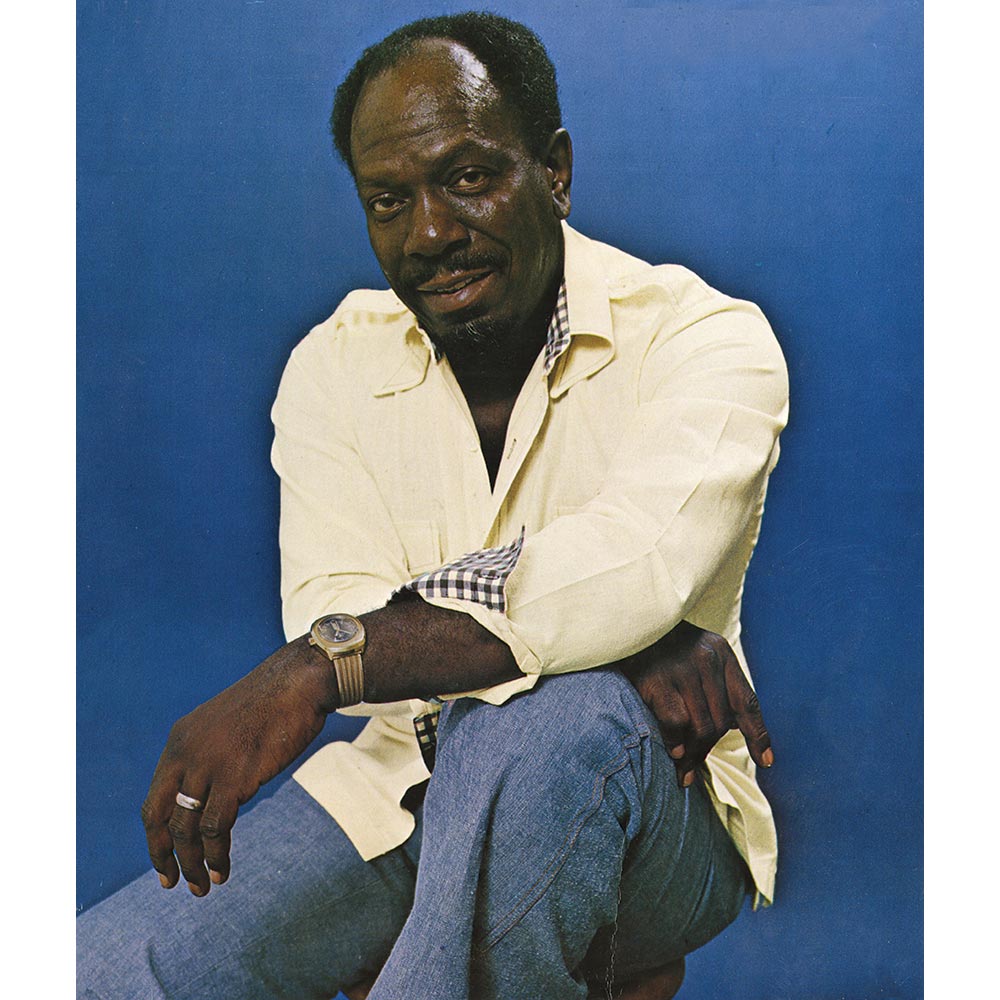


LEON THOMAS-FULL CIRCLE.
LEON THOMAS-FULL CIRCLE.
For Leon Thomas, Full Circle represented the end of an era. It was the last album Leon Thomas released on Flying Dutchman Productions, and marked the end of his “classic period.” It had started four years earlier in 1969, when Leon Thomas released his debut album Spirits Known and Unknown. Since then, Leon Thomas’ star had been in the ascendancy. Full Circle which was recently rereleased by BGP, an imprint of Ace Records, Leon Thomas’ fourth solo album and the last great album he released. His story began in 1937.
Leon Thomas was born in East St. Louis, Illinois, in October 1937. From an early age, Leon’s life revolved around music. His parents were avid music lovers and his hometown had a thriving musical scene. Inspired by blues’ shouters like Big Joe Turner, Leon was a familiar face on the local music circuit. Then when Miles Davis came to town, Leon had a musical awakening.
The night Miles Davis played St. Louis, Miles’ band featured John Coltrane. That night, they embraced improvisation and pushed musical boundaries to their extremes. For Leon Thomas, this showed him what was possible musically. Here was musical that was inventive, innovative and influential. So much so, that it inspired Leon to study musical at Tennessee State University.
Having left Tennessee State University, Leon became a familiar face on the jazz circuit. Having signed to RCA in 1958, Leon recorded what should’ve been his debut album. It wasn’t released. After that, When Leon was the vocalist with Count Basie’s band in the early-sixties right through until the mid-sixties. During that time, Leon’s style is best described as traditional blues. However, his style changed when he headed to Los Angeles.
It was is Los Angeles that Leon Thomas embraced free jazz. Already an admirer of improvisation within jazz, free jazz took things further. Even better, Leon met musicians who not only shared similar musical philosophies, but political and social values. This included saxophonist Arthur Blythe, drummer Leroy Brooks and pianist Horace Tapscott. Together, they were the Underground Musicians and Artists Associations. Meeting these three musicians, resulted in Leon finding his real voice. With their help, Leon’s voice became like an instrument. He fused musical influences, with blues, jazz and Afro-beat combining with soul, as Leon’s vocal veered between a scat and yodel. This was unique, avant garde and groundbreaking. Leon Thomas was a pioneer, as he headed to New York, looking for fellow travelers.
By 1967, Leon Thomas had met saxophonist Pharoah Sanders. This was a perfect match for Leon. Here were two groundbreaking musicians. In Pharoah Sanders’ hands, the saxophone was transformed. He’d been a member of John Coltrane’s band, until his death in 1967. After that, he formed his own band. Comprising Leon, pianist Lonnie Liston Smith and Pharoah, this was a band of musical pioneers recorded Pharoah Sanders 1969 album Karma, which was released on Impulse. It featured The Creator Has A Master Plan, which showcased Leon’s unique vocal style. A compelling, spiritual track where Leon yodels and scats his way through the track, it was truly groundbreaking. One man who realized Leon Thomas’ potential was Bob Thiele, founder of Flying Dutchman Records.
Having heard Leon Thomas feature on Pharoah Sanders’ Karma album, Bob Thiele signed Leon to Flying Dutchman Records. Leon’s Flying Dutchman Productions’ debut was 1969s Spirits Known and Unknown. Released to critical acclaim, Spirits Known and Unknown featured a version of The Creator Has A Master Plan, which Leon and Pharoah cowrote. There was also a cover of Horace Silver’s Song For My Father. Hailed not just as innovative and groundbreaking, but soulful, spiritual and full of social comment, Spirits Known and Unknown launched the career of Leon Thomas. Following up such a critically acclaimed and innovative album wasn’t going to be easy.
A year later, Leon returned with The Leon Thomas Album. Released in 1970, as the new decade dawned, The Leon Thomas Album was hailed as innovative and ambitious. Critics realised that Leon was an artist who was determined to move jazz in a new direction. Standing still wasn’t an option for Leon. This was admirable. However, it wasn’t profitable. Sadly, The Leon Thomas Album didn’t sell well. The problem was, that Leon was way ahead of the musical curve. Although he was admired and lauded by the critics, he wasn’t selling enough records. Both Bob Thiele and Leon Thomas had bills to pay. Somehow, Leon had to rescue his career. Would his third album Blues And The Soulful Truth, do so?
Blues And The Soulful Truth was released in 1972. It marked a change in direction from Leon. Critics referred to Blues And The Soulful Truth as the most accessible album Leon had released. The addition of Pee Wee Ellis had played an important part in this. He realised the importance of choosing the right tracks for the album. The eight tracks allowed Leon’s vocal to shine. They also allowed what’s a hugely talented band to showcase their considerable talents and sometimes, stretch their legs musically. The result was one of the most exciting and exhilarating vocal jazz albums of the early seventies. Despite this, Blues And The Soulful Truth passed record buyers by. For Leon Thomas and Bob Thiele this was a worrying time.
Despite his career having stalled, Leon Thomas got to work on his fourth album, which would become Full Circle.
For Full Circle, nine tracks were chosen. Leon Thomas only wroteWhat Are Gonna Do? and with Neil Creque cowrote Balance Of Life (Peace Of Mind). Neil Creque also wrote It’s My Life I’m Fighting For. These tracks were augmented by some familiar songs.
This included Never Let Me Go, which came from the pen of a pioneer of rock ’n’ roll, Joe Scott. There were also covers of B.B. King and Jules Bihari’s Sweet Little Angel; Arthur Ross and Leon Ware’s I Wanna Be Where You Are; Stevie Wonder’s You Are The Sunshine Of My Life and a cover of Elliot Willensky’s Got To Be There. A cover of Santana’s Just In Time To See The Sun was a fitting addition.
Carlos Santana, Greg Rolle and Michael Shrieve had penned Just In Time To See The Sun for their 1972 album Caravanserai. By then, Carlos Santana had ‘discovered’ Leon Thomas, and wanted him to join Santana. Leon added vocals on their 1973 album Welcome. He would then join their touring band. So the inclusion of Just In Time To See The Sun seemed fitting. Just like the rest of the tracks on Full Circle, they had been carefully chosen.
They had to be. Leon Thomas’ last two albums had flopped. So Leon and Bob Thiele must have considered carefully what tracks should feature on Full Circle. If they chose some familiar songs, maybe this would widen Leon Thomas’ commercial appeal? This had worked for Esther Phillips at CTi.
Her career was rejuvenated after years in the doldrums. This resulted in Esther Phillips’ album From A Whisper To A Scream being nominated for a Grammy Award. Bob Thiele was hoping to do the same with Leon Thomas. After all, the status quo wasn’t an option.
An artist who wasn’t selling albums was a liability to a record company. It didn’t matter how innovative their music is. What counted was the bottom line. Bob Thiele couldn’t continue to release albums that didn’t sell. With reality hitting home, Bob Thiele decided to target the soul market. With this in mind, Leon Thomas entered the studio.
When recording of Full Circle began, Bob Thiele had rung the changes. It was a very different band that arrived at the studio. Although there were a few familiar faces, new names gathered to record Full Circle. Again, Bob Thiele would produce the album. However, he had brought onboard a new arranger and conductor. Glen Osser replaced Pee Wee Ellis. He still featured on Full Circle, albeit in a much reduced capacity, playing tenor saxophone on Never Let Me Go and soprano saxophone on Just In Time To See The Sun. Pee Wee Ellis’ replacement Glen Osser, played piano, electric piano. This wasn’t the end of the changes.
There was a big change in the band’s lineup. While there were a few familiar faces, it seemed that it was out with the old and in with the new. The rhythm section featured drummers Bernard “Pretty” Purdie and Herbie Lovelle; bassist Richard Davis; and guitarists Joe Beck and Lloyd Davis. Jimmy Owens played trumpet and flugelhorn; Richard Landrum played bata and percussion; and Sonny Morgan played berimbau and percussion. The final piece of the jigsaw was Leon Thomas, who added vocals and maracas. Once Full Circle was complete, the album was scheduled for release in 1973.
On the release of Full Circle in 1973, critics welcomed the move towards a much more commercial sound. Leon Thomas had set out to record an album that appealed to soul fans. He had succeeded. Full Circle was his most commercial offering. Some of his fans, thought that Leon Thomas had ‘sold out.’
It wasn’t a ‘sell out.’ Instead, it more a case of reality biting. He couldn’t continue to release albums that weren’t selling. The fans that cried ‘sell out,’ were wrong though. Occasionally, Full Circle offered Leon Thomas the opportunity to innovate. The best example was on Stevie Wonder’s You Are The Sunshine Of My Life. Mostly though, Full Circle was a soul album where Leon Thomas tried to attract a wider audience. That was the theory.
Before the release of Full Circle, Just In Time To See The Sun was released as a single, but failed to chart. Then when Full Circle was released in 1973, the album reached fifty-four in the US R&B charts. This was hardly going to make Leon Thomas and Bob Thiele rich men, but proved a point. However, that was as good as it got for Leon Thomas. His time at Flying Dutchman Production was at an end. Full Circle was his swan-song.
A cover of B.B. King’s Sweet Little Angel opens Full Circle. Strings sweep as a hypnotic standup bass, drums and flourishes of piano combine with a chiming guitar. Stylistically it pays homage to B.B. King. Then when the strings drop out, Leon’s vocal enters. It’s slow, bluesy, needy and full of sass. His band of top New York session players stay true to the original. Even the strings sound sound as if they were recorded in another era, back when B.B. King first recorded Sweet Little Angel. Leon doesn’t try and reinvent the song. Instead, he stays true to the original as he rediscovers his bluesy roots.
Just In Time To See The Sun must have come as a shock to those who had bought Leon Thomas’ previous albums. It’s a funky, Latin-tinged cover of a Santana song. Literally, the song bursts into life, propelled along by the rhythm section, guitars and percussion. Leon delivers an impassioned plea, before a trumpet and flugelhorn are unleashed. They both enjoy their moment in the spotlight, as the reinvention of Leon Thomas begins in earnest. Playing an important part are the band. Seamlessly, the combine elements of funk, fusion, jazz and Latin. Meanwhile, Leon delivers a vocal that’s a mixture of power and soulfulness. Sometimes, he reminds me of Terry Callier. Sadly, neither men enjoyed the commercial success their talent deserved.
A Fender Rhodes opens It’s My Life I’m Fighting For. It’s a ten minute epic, where a funky rhythm section join percussion and the Fender Rhodes. Quickly, Leon is combining power and emotion. He sounds as if he’s lived the lyrics, and experienced what he singing about. Meanwhile, a subtle flugelhorn floats across the arrangement. So does a trumpet. That’s the signal for Leon to unleash one of his trademark yodels. However, it’s cut short, as the horns take centre-stage. Along with an uber funky rhythm section and percussion, they stretch their legs. Then when Leon returns he showcases his versatility, yodelling, as his voice is transformed into an instrument. He doesn’t overdo this. It’s as if Bob and Leon were scared that this would impinge upon the album’s commerciality. The song doesn’t suffer for this. Far from it. Leon and his band seem to feed off each other, one encouraging the other to even greater heights.
By the time Leon covered Joe Scott’s Never Let Me Go, it was almost a standard. A lone rasping tenor saxophone is panned left before lush strings, stabs of piano and an understated rhythm section combine. By then, Leon’s band have recreated the sound of a mid-fifties’ hop. When Leon’s vocal enters, he tenderly, croons his way though the lyrics. Meanwhile, a piano plays, a horn rasps and the rhythm section create the heartbeat. Adding the finishing touch to this beautiful ballad are the lushest of strings.
Arthur Ross and Leon Ware penned I Wanna Be Where You Are. It’s interpreted by Leon. Accompanying him are swathes of slow strings, a lone horn and the rhythm section. It’s augmented by percussion, before Leon delivers another tender heartfelt vocal. His vocal is tinged with regret, before becoming needy, hopeful and powerful. Then when it drops out a trumpet solo takes charge. Just below, Richard Davis’ bass underpins the arrangement. Not for the first time, he plays a starring role, as this crack band of New York musicians continue the reinvention of Leon Thomas.
Elliot Willensky wasn’t a prolific songwriter. However, he hit the jackpot when he penned Got To Be There. After Michael Jackson enjoyed a hit with the single, suddenly, everyone from Black Ivory, The Ramsey Lewis Trio, Grant Green, Smokey Robinson and The Miracles, Julius Brockington, Peter Nero, Sonny Stitt and The Jackson 5 had covered Got To Be There between 1972 and 1973. Despite this, Leon Thomas decided he would cover Got To Be There for Full Circle.
Rather than reinvent Got To Be There, Leon stays true to the original. Slow, wistful string, a chiming guitar and thoughtful rhythm section combine before harmonies sing “Got To Be There.” They’re reminiscent of Michael Jackson’s version. Then when Leon’s vocal enters it’s much more powerful and full of emotion. Soon, it grows in power as the strings sweep and percussion is panned right. Again, Richard Davis’ prowling bass underpins the arrangement. Later, a trumpet adds a wistful hue, setting the scene for Leon’s hopeful, heartfelt vocal. It’s one of his finest on Full Circle.
A myriad of percussion opens Balance Of Life (Peace Of Mind). For just over forty seconds they’re scene setters. Then some of the percussion exits stage left. This frees up space for the rhythm section and Leon’s slow, deliberate and powerful vocal. When Leon yodels, he again cuts this short. This is different from previous albums where he transformed his vocal into another instrument. However, maybe Leon and Bob Thiele thought that many newcomers to Leon’s music wouldn’t ‘understand’ or ‘get’ this. At the break, it just congas panned left and percussion panned right. Then the arrangement rebuilds and Leon Thomas shows why in 1973, he was one of the finest practitioners of vocal jazz.
Anyone covering Stevie Wonder’s You Are The Sunshine Of My Life is in a no-win situation. It’s regard as the definitive version. All covers of the are compared against the original. So Leon tries to reinvent the songs. He slows the song down and vintage arranger Glenn Osser drenches the arrangement in the lushest of strings. The rhythm section play subtly, while Leon delivers a heartfelt vocal. By then, this paean is taking on new life and meaning. Later, a wistful horn and chiming guitar join percussion and strings replace Leon’s vocal. When he returns, the reinvention of You Are The Sunshine Of My Life is complete. It becomes a beautiful jazz-tinged, soulful ballad.
What Are We Gonna Do? closes Full Circle. A piano plays, and with occasional flamboyant flourishes setting the scene for Leon’s impassioned plea. With just the piano for company, he delivers a soul-searching, emotive vocal. Then when Leon’s vocal drops out, the piano adds occasional dramatic flourishes. When Leon returns, the same passion, sincerity and belief is present. This impassioned plea seems a fitting way to end Leon’s time at Flying Dutchman Productions.
Leon Thomas’ time at Flying Dutchman Productions ended on a high. Full Circle became his most successful album. That’s despite only reaching fifty-four in the US R&B charts. Bob Thiele, the veteran music man had been vindicated.
After Leon Thomas’ last two albums had failed commercially, something had to change. So Bob Thiele decided to try and steer Leon Thomas towards the lucrative soul market. Bob Thiele got the idea from Creed Taylor. He had successfully transformed Esther Phillips’ career at CTi Records by turning her into a soul singer. Her album From A Whisper To A Scream was then nominated for a Grammy Award. Bob Thiele had hoped that by encouraging Leon Thomas to change direction, success would come his way.
That proved to be the case. Full Circle, which was recently released by BGP, an imprint of Ace Records, was the most successful album of Leon Thomas’ career. Together, Leon and Bob Thiele had cultivated a very accessible album. Mostly, it featured Leon Thomas singing soul. However, there were occasional diversions via blues and jazz. Meanwhile, Leon’s band seamlessly shifted between blues, funk, jazz, Latin and soul. This crack band of New York session players ensured that Leon’s final album for Flying Dutchman Productions was a memorable one.
Full Circle was also the album that introduced Leon Thomas to a much wider audience. It was seen as a much more accessible album. Given the relative success of Full Circle, many thought that this was Leon Thomas would go on to greater things at Flying Dutchman Productions. Sadly, that wasn’t to be.
By then, Carlos Santana had ‘discovered’ Leon Thomas, and wanted him to join Santana. Leon added vocals on their 1973 album Welcome, and then joined their touring band. So there was no followup to Full Circle. Leon Thomas’ time at Flying Dutchman Productions was over. Maybe, Bob Thiele had had a lucky escape?
When Leon Thomas returned from a one year tour with Santana, his career stalled. There were rumours of drug usage. Leon Thomas then became a stranger to recording studios. He never recorded another album until Piece Of Cake in 1980. However, by then, his best days were behind him.
Leon Thomas’ “classic period” was at Flying Dutchman Productions. It began with his 1969 debut album Spirits Known and Unknown and included The Leon Thomas Album and Blues and Soulful Truth. This “classic period” ended with Full Circle. By then, Leon Thomas had come Full Circle. His career began at Flying Dutchman Productions began as a free jazz pioneer, before encompassing blues and soul. By then, the versatile and talented Leon Thomas’ career had come Full Circle.
LEON THOMAS-FULL CIRCLE.
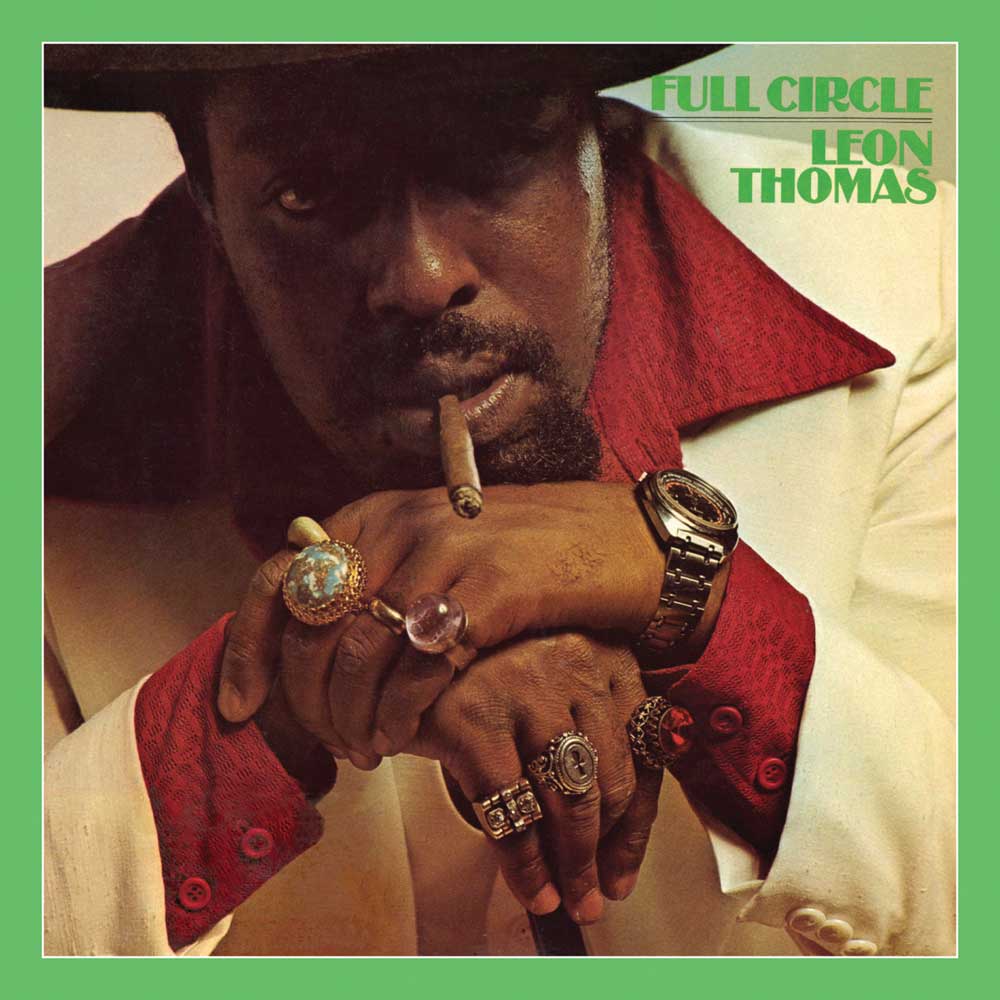
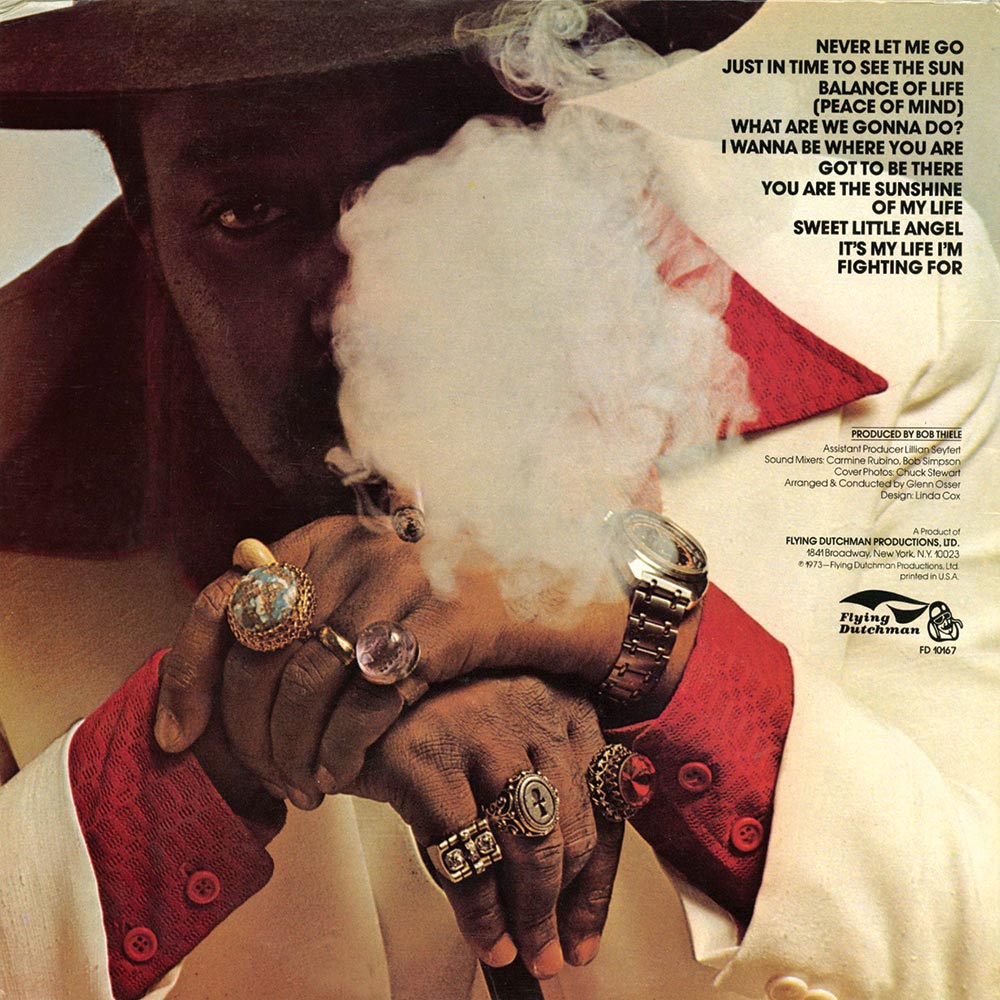

KEITH ROWE/JOHN TILBURY-ENOUGH STILL NOT TO KNOW.
KEITH ROWE/JOHN TILBURY-ENOUGH STILL NOT TO KNOW.
There aren’t many collaborations that have lasted five decades. However, Keith Rowe and John Tilbury’s has. They first began working together in the mid-sixties, when they were members of AMM and then The Scratch Orchestra. Since then, Keith Rowe and John Tilbury have formed an uncanny musical bond.
They’re like a musical yin and yang. One seems to know just what the other is thinking, and about to do. They anticipate each other’s next move. What follows is like a game of musical chess, except there’s no winner. That’s been the case with these two legends of experimental music. They’ve pioneered experimental music, with their unique brand of improvised music. It features on their latest project Enough Still Not To Know. It’s a four disc box set which was released on Sofa Music on 2nd October 2015. This is the soundtrack to a captivating project.
Enough Still Not To Know features just Keith Rowe and JohTilbury. However, Enough Still Not To Know was produced by visual artist Kjell Bjørgeengen. That’s not surprising. The music on Enough Still Not To Know’s four discs will provide the soundtrack to one of Kjell Bjørgeengen’s video installations. That music was recorded at City University’s Music Studios between the 17th and 18th July 2014. That’s where four lengthy soundscapes were recorded. The four discs, entitled Part One, Part Two, Part Three and Part Four total three-and-a-half hours. This was the latest collaboration between two musical pioneers. They first worked together in the mid-sixties.
By then, Keith Rowe had been playing jazz since early sixties. He was born in Plymouth on 16th March 1940. Growing up, he discovered the guitar, and quickly mastered the instrument. His influences were some of the great American jazz guitarists, including Wes Montgomery, Charlie Christian and Barney Kesse. They inspired Keith to embark upon a career as a jazz musician.
In the early sixties, Keith was playing alongside Mike Westbrook and Lou Gare.For the first few years, Keith enjoyed the life of a jazz musician. However, he began to feel limited by jazz music. The genre was stifling his creativity. Something had to give.
So when Keith was practising, he took to experimenting. Nothing to radical, just gradually seeing what was possible with his guitar. Then one New Year’s Eve, Keith made a resolution not to tune his guitar. Mike Westbrook, who Keith was playing with, wasn’t pleased. However, even he would forced to agree that Keith’s decision paid off.
Soon, Keith was one of the British pioneers of free jazz and improvisational music. He even abandoned conventional guitar techniques, and began to plough his own musical furrow. Encouragement came from an unlikely source.
An art tutor who was teaching Keith to paint, encouraged him to find his own technique. The tutor drew parallels with Jackson Pollock, who turned his back on conventional styles of painting to hone his own style. Keith his tutor encouraged, should do the same.
Keith was soon thinking laterally, and took to laying the piano flat. This he realised made sense. He could attach pickups and manipulate the strings with all manner of everyday items. Soon, he was playing his guitar with everything from a paper clip to library card. The result was what was essentially a new instrument, capable of producing a myriad of otherworldly and left-field sounds. Now all Keith needed was to find likeminded musicians.
He found this in both AMM and then The Scratch Orchestra. They were the likeminded musicians Keith Rowe had been looking for. This meeting of minds took place in the mid-sixties.
That’s when AMM were founded. Keith joined forces with Lawrence Sheaff,Eddie Prévost, Lou Gare and Cornelius Cardew. This was the lineup that featured on AMM’s 1967 debut album Ammmusic. It was released on Elektra, and was a fusion of avant-garde, experimental, free jazz and neo-classical. Hailed as an ambitious, exciting and groundbreaking project. It would enjoy an unrivalled longevity. Unlike another equally innovative project The Scratch Orchestra. This was another meeting of minds.
The Scratch Orchestra was formed in the spring of 1969 by Cornelius Cardew, Michael Parsons and Howard Skempton. Soon other musicians joined the nascent group. Among the members were Gavin Bryars, Michael Chant, Christopher Hobbs, and Hugh Shrapnel. Two other members were Keith Rowe, and the man who he would enjoy a five decade collaboration with, John Tillbury.
John was four years Keith Rowe’s senior. He was born on 1st February 1936, and studied firstly at the Royal College Of Music, and then with Zbigniew Drzewiecki at the Warsaw Conservatory. Then in 1968, the thirty-two year old pianist won the Gaudeamus competition in the Netherlands. Given his background and achievements, it seemed that John Tilbury was destined to become a pillar of the musical establishment. However, John was about to discover the endless possibilities of improvisational music.
Now a member of The Scratch Orchestra, John Tilbury was about to encounter two men who would play an important part in his career, Cornelius Cardew and Keith Rowe.
Little did John realise the impact that Cornelius Cardew would have on his career. Throughout his career, he would interpret Cornelius Cardew’s music. However, in Keith Rowe, John Tibury found a kindred spirit. After The Scratch Orchestra recorded their debut album, they would embark upon a five decade collaboration.
Recording of The Scratch Orchestra’s one and only album took place at Chappell Studios, London, on February 15th and 16th 1971. The Scratch Orchestra recorded two of Cornelius Cardew’s compositions. He had penned them in 1969, and they made their debut on The Great Learning. It was produced by Karl Faust for Deutsche Grammophon. Once The Great Learning was completed, it was released later in 1971.
On the release of The Great Learning, Cornelius Cardew and The Scratch Orchestra shared equal billing. Critics were captivated by The Great Learning. It was variously described as an album of avant-garde, experimental, improvised or post modern music. However, The Great Learning was ahead of its time, and many people didn’t understand the music. It’s only later that many came to appreciate The Great Learning. However, at least John Tilbury and Keith Rowe had discovered each other. The two men vowed to collaborate again. Before that, Keith was busy with other projects.
This didn’t include AMM. They were inactive for much of the seventies. The first time they returned to the studio was in 1974. By then, AMM were reduced to a duo of Eddie Prévost and Lou Gare. They recorded To Hear And Back Again. However, four years passed before it was released in 1978. A year after the release of To Hear And Back Again, AMM returned to the studio.
By then, AMM, who were now a quartet. Keith Rowe had returned to the AMM fold for the recording of It Had Been An Ordinary Enough Day In Pueblo, Colorado. It took place at the Studio Bauer, Ludwigsburg. Keith Rowe played guitar and deployed a myriad of electronics, including a transistor radio. He was one of the leading lights of the British experimental music scene, and played an important part in the album. Critics and connoisseurs of all things left-field realised this, when It Had Been An Ordinary Enough Day In Pueblo, Colorado was released in 1980 to critical acclaim. Despite this, it was another three years before AMM released another album.
When AMM released Generative Themes in 1983, John Tilbury had joined the group. AMM’s lineup had always been fluid. John Tilbury’s addition was a coup. He added another dimension to AMM’s sound, and complimented cellist Rohan de Saram, percussionist Eddie Prévost and Keith Rowe. John Provost was the perfect addition to AMM. He would return for their next album. Before that, John began to interpret Samuel Beckett’s work.
This was something that interested both John Tilbury and Keith Rowe. However, it was John who made music and text-based performances of Samuel Beckett’s work. The first of these was Worstward Ho in 1983. Stirrings Still and What Is The Word followed in 1989. By then, Samuel Beckett was proving an inspiration for Keith Rowe’s music. Especially, when Keith’s music is stripped bare so that only the most important constituents remain. Little did Keith or John realise that twenty-five years after Stirrings Still and What Is The Word, they would meet another man inspired by Samuel Beckett, visual artist Kjell Bjørgeengen. Before that, the pair had a lot of music to make together.
This started with AMM’s 1987 album The Inexhaustible Document. The same lineup of AMM reconvened for the recording of The Inexhaustible Document at the Union Chapel, in Islington, London on January 10th 1987. Later in 1987, The Inexhaustible Document was released, further enhancing AMM’s reputation. So much so, that artists were keen to collaborate with AMM.
Among them, were painter, composer and writer Tom Phillips. One of his former pupils was Brian Eno, who coincidentally, was another a light of the ambient and avant-garde scenes. Tom Philips was no stranger to a recording studio. He had already released two albums, including his 1975 solo album Words and Music. Then there was Tom’s 1978 collaboration with Gavin Bryars and Fred Orton. So when Tom arrived at The Union Chapel, London on the 20th May 1988 he knew how an album was recorded. However, he had never encountered a group as innovative as AMM.
When Tom Philips arrived at the studio, AMM’s lineup had changed. Cellist Rohan de Saram had left AMM. Filling the void was Keith Rowe. He played guitar, cello and unleashed a mesmeric myriad of electronics. Along with guest vocalists, the Irma album took shape. This collaboration between Tom Philips and AMM was released later in 1988. It was hailed an ambitious fusion of musical genres. Although well received upon its release, it wasn’t a huge commercial success.
That was the case throughout both Keith Rowe and John Tilbury’s careers. Their albums never sold in vast quantities. It was the same with AMM, and the future projects they would become involved with. However, all of their albums were seen as ambitious and innovative. That would be the case as the nineties unfolded.
As the new decade dawned, AMM released Combine And Laminates in 2000 It was released to the same critical acclaim as previous AMM albums. Elements of avant-garde, experimental and free jazz melted into one, as AMM continued to reinvent their music. That would be a familiar theme.
Just a year later, AMM returned with their latest album The Nameless Uncarved Block. It was a live album, which had been recorded in Zürich and Basel at concerts organised by the TAKTLOS Festival in April 1990. For many, this was the first time they had heard AMM live. They improvised for seventy-four minutes, continually pushing musical boundaries. This was what people had come to expect from AMM, who were still awaiting their major breakthrough.
Two years passed before AMM released another album. From A Strange Place was another live album. It was a recording of a concert at The Egg Farm, in Fukaya, Japan, on 22nd October, 1995. The album featured just one lengthy piece, lasting sixty-eight minutes. This was a musical voyage of discovery, with AMM throwing curveballs aplenty. While From A Strange Place was a welcome addition to AMM’s discography, they hadn’t released a studio album since 1990.
Still, there was no sign of AMM releasing their next studio album. They continued to release live albums.
The first was Laminal, a live retrospective of AMM’s career. It was released in 1996, the same year as Live In Allentown USA. Then Before Driving To The Chapel We Took Coffee With Rick And Jennifer Reed was released in 1997. That was the last anyone heard of AMM until a new decade dawned.
Later in 1997, Keith Rowe formed a new group M.I.M.E.O. Just like AMM, M.I.M.E.O.’s lineup has always been fluid. Members of the group were drawn from all over Europe. This pan-European group filled the void left by AMM.
M.I.M.E.O.’s debut album Queue was released in 1998, with their sophomore album Electric Chair and Table following in 1999. Both albums were released to critical acclaim, and hailed as groundbreaking releases. There were the inevitable comparisons with AMM. However, AMM spent more time playing live, than in the recording studio.
AMM’s first album of the new millennia was Tunes Without Measure Or End. It was another live album, that had been recorded at the McLellan Galleries, Glasgow on 4th May 2000. Tunes Without Measure Or End was released in 2001, the same year as another live album Fine. It had been recorded on 24th May 2001 at Musique Action festival in Vandoeuvre-les-Nancy, France. By then, AMM were still one of the finest purveyors of improvised music. They seemed to prefer playing live, rather than recording albums.
This made sense. AMM’s albums were never big sellers. It would’ve been hard to justify the cost of hiring a recording studio and producing an album. Instead, they concentrated on playing live, and released a series of live album. This was a real reflection of AMM’s music. However, their next live album was a particularly poignant one.
Both Keith Rowe and John Tilbury had been close to Cornelius Cardew. He had died on 13th December 1981, aged just forty-five. So to mark the twentieth anniversary of his death, AMM decided to record their performance at the Musique-Action Festival in Nancy, France in June 2002. It featured a forty-five minute performance of Treatise, a track composed by Cornelius Cardew. This performance was released in 2003 as the live album Formanex. Little did anyone realise that it marked the end of an era for AMM.
The following year, 2004, Keith Rowe left AMM for the second time. So Keith concentrated his time on M.I.M.E.O.
By then, M.I.M.E.O. had just released their third album The Hands Of Caravaggio in 2002. It was a collaboration with John Tilbury. Just like Keith Rowe, the veteran pianist was someone the rest of the M.I.M.E.O. respected. Keen to impress theJohn Tilbury, M.I.M.E.O. raised their game and recorded the finest album of their career. The Hands Of Caravaggio was released in 2002, and was so well received, that it made it was seen by some as one of the best experimental albums of 2002. Nowadays, The Hands Of Caravaggio is perceived as a landmark album in the electroacoustic improvisation genre. However, the album that John and Keith recorded in 2003 was very different.
John Tilbury’s mother had passed away, so he and Keith Rowe, one of his oldest friends decided to embark upon a project dedicated to the memory of his mother. The result was Duos For Doris, a truly poignant project, which was released in 2003. It was another landmark release from the two friends who had been collaborating for four decades. They would reunite in 2011.
By then, M.I.M.E.O. had released another trio of albums. The first of these, Lifting Concrete Lightly was the most ambitious project of their career. Lifting Concrete Lightly was released as a three CD set in 2004. M.I.M.E.O.’s reputation was innovators and pioneers of electroacoustic improvisation music was growing.
It continued to grow with the release Sight in 2007. As a result, other musicians were desperate to collaborate with Keith Rowe. This was a far cry from the past, when he was exiled in obscurity. The sixty-seven year old’s career was enjoying an Indian Summer.
That continued right through to 2011. By then, Keith Rowe was seen as the founding father of electroacoustic improvisation music. Proposals for projects came flooding in. However, there was one he couldn’t and wouldn’t say no to. That was a collaboration with John Tilbury.
Before that, Keith oversaw the release of Wigry, M.I.M.E.O.’s first live album. It was released earlier in 2011, and featured a recording of a concert in Wigry on the 14th of November 2009. Just over a year later, and John Tilbury and Keith Rowe were also recording a live album.
That was E.E. Tension And Circumstance. It was recorded at at Les Instants Chavirés, on 17th December 2010. A year later, abd E.E. Tension And Circumstance was released. This was the first time the two friends had worked together since The Hands Of Caravaggio in 2002. As they celebrated a musical partnership that had lasted five decades, they promised to work together again.
That promise was kept. On 17th and 18th July 2014, Keith Rowe and John Tilbury began to record one of the most ambitious projects of their career. The pair had been approached by visual artist Kjell Bjørgeengen. He wanted Keith and John to provide the soundtrack to one of his video installations.
Kjell Bjørgeengen explained that with his video installations, people often “don’t expect to hear any music at all.” The music that he wanted didn’t have to have to have a “musicality in he traditional sense.” There was nothing wrong with a “moment of silence” Kjell Bjørgeengen explained. This allowed people to reminisce. With a clear explanation of what was expected of them, Keith and John began recording.
At City University’s Music Studios, in London, Keith Rowe played guitar and took charge of electronics. Meanwhile, John Tilbury played piano. They didn’t just record enough music for one disc. Instead, Keith and John recorded a total of three-and-a-half hours of music. It can be found on Enough Still Not To Know, which is a four disc box set. It’ll be released on Sofa Music on 2nd October 2015. Not only will Enough Still Not To Know be a perfect accompaniment to Kjell Bjørgeengen’s video installation, but it’s what one would expect from two veteran musical pioneers.
Enough Still Not To Know features just four lengthy tracks. The four discs are entitled Part One, Part Two, Part Three and Part Four. It’s what producer and visual artist Kjell Bjørgeengen wanted. The music drifts in and out. Keith and John aren’t afraid to leave sometimes lengthy periods of silence. They allow for reflection and contemplation. This works away from the video installation, and allows the listener to reflect and contemplate on the travails of life.
Sometimes the music on Enough Still Not To Know is understated and ethereal. Other times it reaches a crescendo and dissipates, leaving behind a mere memory of what’s gone before. Then there’s silence. This would frighten most musicians. They feel the need to fill every second. Not Keith and John. This pregnant pause allows the listener’s brain to reboot, before further waves of cinematic music ebb and flow. All the time, music washes over the listener. They absorb and immerse themselves in the music. However, it’s also possible for Enough Still Not To Know to become the backdrop to daily life, and drop in and out when possible.
As you do, distant bells chime, surprises are sprung and Keith and John take the listener on a voyage of discovery. Sounds gently implode and explode. There’s twists and turns aplenty. Constantly, there’s atonal changes. Similarly, there’s constant changes in the musical landscape. It seems to be constantly evolving.
The music veers between ambient, beautiful, ethereal and understated, to captivating, cinematic and even intriguing and intense. Sometimes, there’s an element of suspense, as Keith and John spring a surprise with their rich musical palette. They continually tease and tantalise the listener on this epic musical journey.
Sometimes, things are happening in the distance. Straining, the listener is desperate to hear what’s happening. They want to share this secret. This adds to the intrigue and suspense. However, it also adds to the ethereal beauty, and adds an air of mystery, suspense and sometimes, poignancy.
Sometimes, this leads the listener to reflect on something, or someone, that was tantalisingly out of reach. This leads to further reflection and contemplation. That’s something the listener can do a lot of during, Enough Still Not To Know. The stretches of silence, or pregnant pauses allow the listener to reflect on this musical Odyssey from two veteran musical pioneers, Keith Rowe and John Tilbury.
Both men have spent a lifetime making music that’s groundbreaking. Frustrated by the constraints of tradition music, they decided to rewrite the musical rulebook. Soon, they were embarking upon a journey through ambient, avant-garde, experimental, free jazz and electroacoustic improvisation music. Elements of each and every one of these genres can be heard on Enough Still Not To Know, which was produced by visual artist Kjell Bjørgeengen. He sculpted the four Parts of Enough Still Not To Know so that they fitted his visual installation. By the time he was finished, Enough Still Not To Know was the perfect backdrop to his visual installation.
That’s not surprising. Enough Still Not To Know is the work of two musical pioneers, who for the past five decades have been pushing musical boundaries to their limits, and sometimes beyond. They continue to do so, on their latest music voyage of discovery, Enough Still Not To Know. It was released on Sofa Music on the 2nd of October 2015, some forty-five years after Keith Rowe and John Tilbury first recorded with The Scratch Orchestra.
Since then, they’ve both made countless albums. However, they’ve always found time to collaborate with each other; and although Enough Still Not To Know is the perfect backdrop to Kjell Bjørgeengen’s visual installation, it’s also a groundbreaking celebration of a musical partnership and friendship that’s lasted five decades.
KEITH ROWE/JOHN TILBURY-ENOUGH STILL NOT TO KNOW.
ELEPHANT9 WITH REINE FISKE-SILVER MOUNTAIN.
ELEPHANT9 WITH REINE FISKE-SILVER MOUNTAIN.
For their fourth album, Silver Mountain, Elephant9 have once again joined forces with Swedish guitarist Reine Fiske. This tantalising pan-Scandinavian collaboration has resulted in a genre-melting album of rock ’n’ jazz, prog rock and psychedelia, Silver Mountain. It will be released on Rune Grammofon on 16th October 2015, and is being hailed as the finest album of Elephant9’s four album career. Their career began in Oslo, Norway, in 2006.
That’s when keyboardist Ståle Storløkken, drummer Torstein Lofthus and bassist Nikolai Hængsle Eilertsen decided to embark upon a new project. This new project they called Storløkken/Eilertsen/Lofthus. The three musicians were experienced, talented and known for producing ambitious, innovative music. That had been the case throughout their careers, when they’ve been involved in a variety of projects.
The elder statesman of the trio was keyboardist Ståle Storløkken. He was thirty-seven in 2006, and previously, had been a member of Audun Kleive Generator X, Veslefrekk, Pocket Corner, Humcrush, Pocket Corner and Trondheim Jazz Orchestra. Each of these groups had released at least one album. So had the each of the other groups Ståle Storløkken was involved with. This included Bol, Cucumber and Supersilent. It seemed Ståle Storløkken had an insatiable thirst for music. That was also the case with drummer Torstein Lofthus.
Just like Ståle Storløkken, drummer Torstein Lofthus was a veteran of several bands. He was twenty-nine in 2006, and had previously been a member of Damp and Shining. Both bands had released two albums. So, Torstein Lofthus was an experienced musician. He was no stranger to the recording studio or touring circuit. Neither was the third member of the new group, bassist Nikolai Hængsle Eilertsen.
At twenty-eight, Nikolai Hængsle Eilertsen was the youngest member of the new band. However, he wasn’t lacking in experience. Already, Nikolai Hængsle Eilertsen was a member of Big Bang and The National Bank. Both bands had enjoyed a degree of success, and were seen as rising stars of the Norwegian music scene. However, like many Norwegian musicians, Nikolai Hængsle Eilertsen was happy to be part of several bands.
That was the case with Ståle Storløkken and Torstein Lofthus. They had spent much of their careers working on different projects and collaborating with a variety of musicians. Some of these projects enjoyed a degree of longevity, others were short-lived. When Storløkken/Eilertsen/Lofthus began working together they had no idea that nine years later, they would still be together. Albeit with a new name.
For much of the first year, the nascent band spent time honing their sound. When they played live, Storløkken/Eilertsen/Lofthus’ sound was variously described as jazz fusion or progressive, neo-psychedelic, jazz-fusion. Storløkken/Eilertsen/Lofthus’ music was already proving popular. However, after a year together, the band decided to change their name, and Elephant9 were born in 2007.
Just a year after the birth of Elephant9, the band were readying themselves to release their debut album Dodovoodoo. It was due for release on Rune Grammofon later in 2008. Critics were impressed by Elephant9’s debut album, heaping praise on Dodovoodoo. With this praise ringing in their ears, the three members of Elephant9 must have known that they were on the verge of something exciting.
And so that proved to be. Two years after the release of Dodovoodoo, Elephant9 returned in 2010 with their sophomore album Walk The Nile. This time around, it wasn’t just jazz critics that were won over by Walk The Nile. Instead, both jazz and rock critics championed the album. When it was released on Rune Grammofon, it was to widespread critical acclaim. Record buyers were also won over by Walk The Nile. So were one of Norway’s leading bands.
After the release of Walk The Nile, Motorpsycho asked Elephant9 to open for then in Norway and in London. This meant that Elephant9’s music was being heard by a wider audience. For a group being hailed one of the rising stars of the vibrant and thriving Norwegian music scene, 2010 was suddenly getting even better. Soon, things would get even better for Elephant9.
Later in 2010, the shortlist for Spellemannprisen Awards were announced. Elephant9 found their name on the shortlist for a Spellemannprisen in the jazz category. The Spellemannprisen Awards were the most prestigious in Norwegian music. Even being nominated was an achievement in itself. However, Elephant9 went one better, and won a Spellemannprisen Award. 2010 had been the most successful year of Elephant9’s four year career. However, they weren’t going to rest on their laurels.
In 2011, Elephant9 released their first live album, Live At The BBC. It was recorded in London, and released by Rune Grammofon. Live at the BBC was a tantalising taste of Elephant9 live. Seamlessly, the three master musicians switch between genres on a quartet of tracks from their first two albums. From I Cover The Mountain Top, through Dodovoodoo, Aviation and the twelve minute album closer Habanera Rocket, Elephant9 are at their very best. This whetted record buyer’s appetite for Elephant9’s third album.
For their third studio album Atlantis, Elephant9 decided to collaborate with legendary Swedish prog rock guitarist Reine Fiske. Reine made his name with Dungen, and then joined Reform. However, when he first collaborated with Elephant9, Reine was a member of Sylvester Schlegel’s band The Guild. With Reine onboard, Elephant9 began work on their third album Atlantis. Once the album was completed, it was scheduled for release later in 2012.
Prior to the release of Atlantis on Rune Grammofon, the critics had their say. Just like their first two albums, critical acclaim accompanied the release of Atlantis. Some critics saw Reine Fiske as Elephant9’s missing link. Adding a guitarist to the lineup completed their sound. Now it was a case of onwards and upwards for Elephant9.
That proved to be the case. After the release of Atlantis, Elephant9 took to the stage at some of Norway’s biggest festivals. There’s none bigger that the prestigious Kongsberg Jazzfestival. Appearances at Union Scene, and Victoria and Najonal Jazzscene rounded off 2012 for Elephant9.
After the critically acclaim and commercial success of Atlantis, critics and record buyers awaited the release of Elephant9’s fourth album. However, it’s been a long wait. Nearly three years have passed between the release of Atlantis and Silver Mountain. Partly, this is because of the three members of Elephant9’s other commitments. It was a case of fitting the recording of Elephant9’s fourth album into Ståle Storløkken, Torstein Lofthus and Nikolai Hængsle Eilertsen schedules.
Recording of what became Silver Mountain began at the Kungsten Studio. The group came prepared. They had penned four tracks and chosen a cover version. Ståle Storløkken had penned Occidentali and Abhartach. Kungsten and The Above Ground Soundwere penned by the three members of Elephant9. The other track was a cover of Stevie Wonder’s You Are The Sunshine Of My Life. These five tracks were recorded by the three multitalented members of Elephant9 and Reine Fiske during October 2014.
When recording began, keyboardist Ståle Storløkken was soon showing his versatility. He switched between Fender Rhodes, Hammond Organ, upright piano, mellotron and synths. Nikolai Hængsle Eilertsen played electric bass, acoustic guitar and percussion. Drummer Torstein Lofthus also added percussion. So did Reine Fiske. Mainly, he played electric and acoustic guitar. Once recording was complete, Elephant9 got back to playing live.
By then, Elephant9 were now able to pack huge venues. It was a far cry from the days when they played at Rockefeller’s in Olslo, which only held 1,300 people. However, that was a seen as a coup d’état. The Rockefeller was a rock venue. Elephant9 were seen by many as a jazz band. However, by the time they left the stage, Elephant9 had changed the audience’s mind. They’ve continued to do so. By the time Silver Mountain was being mixed by Mattias Glava and mastered by Espen Berg at the Livingroom Studio, Elephant9 were one of the stars of the Norwegian scene.
That became evident when critics heard Elephant9’s fourth album Sliver Mountain. They called Sliver Mountain Elephant9’s finest album. Is that the case? That’s what I’ll tell you.
Occidentali opens Silver Mountain. It’s a fourteen minute musical adventure. Moody, broody and cinematic. That describes the combination of rhythm section, guitar and synths strings. They add a cinematic hue. Sometimes, there’s a world music music influence. Other times, Elephant9 seem to be picking up where Can left off. Big, bold chords are played in keyboards, before Elephant9 seem to draw inspiration from a sixties film noir soundtrack. Partly, it’s the cinematic synths. Then Elephant9’s rhythm section lock horns with bold, confident keyboards. All of a sudden, the arrangement becomes spartan, with just washes of guitars and percussion combining. Waves of jarring feedback is briefly unleashed. It intermingles with the arrangement, before Elephant9 kick out the jams. Free jazz, classic rock, psychedelia, electronica and space rock all melt into one. Welcome to the machine. The spirit of Hendrix is combines with stabs and washes of ferocious keyboards. By then, Elephant9 are in full flow, and have locked into the tightest of grooves, producing driving, blistering, mesmeric, rocky music.
I’ve never been a fan of the Motown machine. Especially the saccharine sugar of tracks like You Are The Sunshine Of My Life. Elephant9 however, try and make a believer of even the biggest Motown agnostic. They turn the track into a ten minute epic. Distant drums pitter patter, percussion plays and a myriad of futuristic sounds are added. It seems Elephant9 are toying with Stevie’s saccharine sugar single. As sci-fi sounds punctuate the arrangement, a pulsating bass plays. Washes of Hammond organ are joined by chiming, crystalline guitars and the rhythm section lock down a groove. Still, Elephant9 reinvent a familiar track. It’s taking on a spacey, electronic sound. All the time, the rhythm section are creating a hypnotic groove. Stabs and washes of Hammond organ join sci-fi sounds and a quivering, shimmering guitar solo. Slowly, something new and innovative unfolds. A groundbreaking, genre-melting epic takes shape and a familiar track takes on new life and meaning.
Abhartach is the second track penned by keyboardist Ståle Storløkken. The rhythm section are joined by bursts of buzzing keyboards. Elements of Cream, Can and Neu! can be heard as the arrangement begins to unfold. Then there’s an explosion of shrieking, sometimes cinematic synths strings. They’re joined by squelchy, buzzing synths and banks of keyboards. By then elements of classic rock, psychedelia, electronica, free jazz, prog rock and space rock are playing their part in this glorious, mesmeric jam. There’s more than a nod to Hawkwind, Yes and Rick Wakeman. Elephant9 it seems, are musical magpies, seeking inspiration from all four corners of their record collections. For nine minutes, they pay homage to those who have inspired them, on what can only be described as a genre-melting opus.
Kungsten is a twenty minute musical voyage of discovery. There’s a brief nod to Kraftwerk’s Autobahn, before the clock strikes and Elephant9 explode into action. They’re not unlike the Jimi Hendrix Experience. As drums pound, and guitars soar above the arrangement, there’s an urgency about Elephant9. They play as one, the rhythm section driving the arrangement along. This allows the searing guitars and cinematic keyboards to fill in the spaces. Rene Feiske unleashes a scorching solo, while briefly, the keyboards are reminiscent of Tubeway Army’s Are Friends Electric? As the song progresses, the urgency increases, and a dark dramatic sound emerges. Mostly, that’s down to Ståle Storløkken’s expressive keyboards. They drone as the rest of Elephant9 have their pedals firmly on the metal. After reaching a dramatic crescendo at seven minutes, the tempo drops and an eerie, cinematic soundscape. Think Wim Wender’s Paris Texas or David Lynch’s Twin Peaks. Then after ten minutes, Elephant9 kick loose for another three minutes. Cinematic guitars, bass and washes of synths combine to create a beautiful backdrop. Again, it sounds as if it belongs on a soundtrack. By then, Elephant9 seem to have drawn inspiration from Pink Floyd. The music is lysergic and cinematic. That’s until one more time, Elephant9 kick loose, and run for the hills, completing this monumental musical voyage of discovery.
Closing Silver Mountain is The Above Ground Sound. At twenty-two minutes long, it’s a real epic. This allows Elephant9 the opportunity to take a few twists and turns. For the first four minutes, the music is moody, dramatic and cinematic. It’s mostly just the rhythm section and percussion. Guitars are used sparingly, but when they’re unleashed they add to this unnerving soundscape. It’s a similar case with the keyboards. When they’re used, they prove effective. Gradually, the arrangement builds. What sounds like a siren sound, then the guitars and keyboards go toe-to-toe. These two musical titans embark upon a musical duel, and proceed to feed off each other. Urgent and frenzied, thanks in part to the driving, thunderous rhythm section and banks of keyboards. Then all of a sudden, just a lone acoustic guitar plays. By then, Elephant9 remind me of Led Zeppelin in their prime. As they draw breath, the acoustic guitar and drums combine. Synth strings are added as understated ambient soundscape unfolds. It’s reminiscent of Klause Doldinger. However, something is stirring. Rumbling drums, a blistering guitar and banks of keyboards cut loose. Prog rock is the order of the day. So is the classic rock of the late-sixties and seventies. There’s even a nod to The Doors around nineteen minutes. From there, those musical adventurers Elephant9 complete their fourth an finest album Silver Mountain.
Not only is Silver Mountain the finest album of Elephant9’s career, but one of the best albums of 2015. It features music that’s ambitious, bold, exciting and innovative. Continually, Elephant9 push musical boundaries. To do this, they combine musical genres. Everything from ambient, the classic rock of the late-sixties and seventies, electronica, experimental, free jazz, Krautrock, prog rock, psychedelia and space rock can be heard on Sliver Mountain. It’s a captivating journey through musical genres and influences.
Listen carefully, and you’ll hear everyone from Can, Hawkwind, Jimi Hendrix, Klaus Doldinger, Kraftwerk, Led Zeppelin, Neu!, Pink Floyd, Rick Wakeman, Ry Cooder, The Doors, Tubeway Army and Yes. Some of these influences can be heard only briefly, while others are more noticeable. Closer to home, another of Norway’s leading bands Motorpscycho also seem to have influenced Elephant9, as they take listeners on this magical musical mystery tour.
One thing you learn quickly, is never, ever try and second guess Elephant9. Continually, they take twists and turns throughout Silver Mountain. They lead you down blind alleys, only to find an escape route. Out of a blistering slice of rock comes an ethereal ambient soundscape. That’s what you quickly come to expect from Elephant9 on Silver Mountain, which will be released by Rune Grammofon on 16th October 2015.
This is the perfect home for Elephant9. Rune Grammofon always releases music that’s ambitious, bold, exciting and innovative. They don’t shy away from risk. Continually, they’ve been rewarded by their bravery, by releasing albums that are lauded and released to widespread critical acclaim. This includes Elephant9’s career defining album Silver Mountain.
It’s been well worth the wait, and features a group at the peak of their power. Silver Mountain is like a journey onboard a musical roller coaster. The music veers between moody and broody, to dramatic and cinematic. Other times it’s progressive and rocky. Occasionally it’s ethereal, understated and lysergic. Always though, Elephant9’s music is ambitious, bold, exciting and innovative on Silver Mountain, which is a monumental musical voyage of discovery.
ELEPHANT9 WITH REINE FISKE-SILVER MOUNTAIN.

TOJOURS CHIC! MORE FRENCH GIRL SINGERS OF THE 1960s.
TOJOURS CHIC! MORE FRENCH GIRL SINGERS OF THE 1960s.
Although Ye-ye music’s origins can be traced back to the late fifties, it wasn’t until the early sixties its popularity began to grow. Suddenly, it became a pan-European phenomenon. From France, Luxembourg Italy, Portugal and Spain ye-ye music’s popularity was on the rise. However, France was undoubtably the ye-ye capital of Europe. Especially after Serge Gainsbourg success helped popularise the genre.
Soon, France was producing some of the best, and most popular ye-ye music. France Gall, Annie Philippe, Valérie Lagrange and Françoise Hardy were at the forefront of the genre. However, there was a problem. Some people struggled to define ye-ye music.
Some critics saw ye-ye music as a style of pop music. However, this pan-European phenomenon didn’t have one “sound.” Instead, ye-ye, which is derived from “yeah-yeah,” came to incorporate everything from pop, R&B, rock ‘n’ roll, sixties girl groups, jazz and beat music. Ye-ye music was a board musical church. Across Europe much of mainland Europe, ye-ye became popular.
Many of the ye-ye singers were young. They sang in their own language. In France, Luxembourg Italy, Portugal and Spain, each country had its own ye-ye scene. This included both male and female singers. However, the majority and best ye-ye music came from female singers, especially French female singer-songwriters.
Soon, France became Europe’s ye-ye capital. That was where some of the best ye-ye music was being recorded. Much of this was being recorded by French female singer-songwriters. Many of them were young, charismatic, mysterious and attractive. Often they exuded an air of naivety. This was far from the case. Instead, they were crafting an image. While the artists were deliberately crafting an image, some of the lyrics they wrote would prove controversial.
While many people think of ye-ye music as throwaway pop music, that’s far from the case. It was often controversial. Lyrics were often full of sexual symbolism, double entendre and strewn with innuendo. Incredibly, given the early-sixties were less liberated times, these records were played on radios across Europe. Not all the lyrics to ye-ye records would prove controversial. Like pop music, any number of subjects were covered. This is apparent on Tojours Chic! More French Girl Singers Of The 1960s, which was recently released by Ace Records. It’s the third in Ace Records’ series which looks back at France’s vibrant ye-ye scene.
The series began nearly five years ago, when C’est Chic: French Girl Singers Of The 1960s was released in November 2010. Just under three years later, and Chic! More French Girl Singers Of The 1960s followed in July 2013. Since then, compiler Mick Patrick has been working on Tojours Chic! More French Girl Singers Of The 1960s. The result is a twenty-four track compilation that features not just the great and good of the French ye-ye scene, but some new names.
Among the twenty-four tracks on Tojours Chic! More French Girl Singers Of The 1960s France Gall, Annie Philippe, Valérie Lagrange and Françoise Hardy rub shoulders with Brigitte Bardot, Charlotte Walters, Christie Laume, Fabienne, Laura Ulmer, Pussy Cat, Sheila, Stone and Zouzou all feature. The majority of the tracks were released between 1964 and 1970. That’s apart from Laura Ulmer’s Amoureux D’une Affiche. It’s never been released before, and makes its debut on Tojours Chic! More French Girl Singers Of The 1960s, which I’ll pick the highlights of.
Opening Tojours Chic! More French Girl Singers Of The 1960s is the first of two tracks from singer-songwriter Fabienne. The other is Quand Tu Verras La Pluie Tombe. It’s the title-track of Fabienne’s 1964 E.P. Originally, it had been released as a single on Pathé’s short-lived label Pat. When the E.P. failed to make an impression, it was repacked a year later as part of the Quand Tu Verras La Pluie Tombe E.P. Although both tracks ooze quality, the jazz-tinged Cours Si Tu As Peur is the best of the two. Both tracks were penned by Fabienne, who many felt would enjoy a successful career. That wasn’t to be, and despite her talent, Fabienne’s recording career proved short-lived.
By 1966, Zouzou was a model, film star and socialite. Her social circle included Bob Dylan, George Harrison, Brian Jones and Andy Warhol. Zouzou was about to add to hear already impressive C.V. when she signed a recording contract with Disques Vogue. She only released two E.P.s Her debut E.P. Il Est Parti Comme Il Etait, was released in 1966. The title-track features on Tojours Chic! More French Girl Singers Of The 1960s. So does Demain, a track from Zouzou’s 1967 E.P. Petit Garçon, Tu Fais Partie Du Passé, Ce Samedi Soir and Demain. Both tracks epitomise the ye-ye sound. However, despite not lacking talent, Zouzou turned her back on music after two E.P.s, preferring to concentrate on her career as an actress.
Laura Ulmer came from a talented family. Her father George was a singer and actor. So when Laura left high school, she embarked upon a career as a singer. Her career began in 1965, and by 1966 Laura had already made her acting debut. By then, she had released three E.Ps, which were mostly popular in Canada. A fourth was recorded, but never released. One of the tracks was Demandez Speciale Dernièr, which makes a belated debut on Tojours Chic! More French Girl Singers Of The 1960s. So does Laura’s 1967 single Amoureux D’une Affiche, and the B-Side Les Cover-Girls. It was released on the Barclay label, but wasn’t a huge commercial success. Not long after this, Laura turned her back on music. Her musical legacy included three E.P.s and one single. They’re a reminder of one of ye-ye music’s lost stars.
France Gall’s career began in 1963, when she was just sixteen. After that, she was constantly touring and recording. By 1966, she released her FG album on the Phillips label. One of its highlights is La Guerre Des Chansons. It has has a quintessentially French ye-ye sound, veering between wistful and hopeful. Two years later, in 1968, France decided her ye-ye career was over. Far from over was her musical career. She enjoyed a long and successful career, including working with some of the biggest names in music,including Serge Gainsbourg and Michel Berger.
By 1967, Annie Philippe was one of the biggest names in Pour La Gloire. That’s despite her career only beginning in 1965. Two years later, she was now signed to Phillips and had released her Pour La Gloire E.P. Although not as well known as Ticket De Quai, Mes Amis or C’est La Mode, Pour La Gloire is one of the hidden gems of Annie Philippe’s career.
Valérie Lagrange started life as an actress. She also enjoyed a musical career. Her career began in 1964, when she signed to Phillips. That’s where she the next two years. One of Valérie’s final recordings was her 1966 E.P. Ce Que Je Suis. Compiler Mick Patrick has chosen the title-track. It has a tougher, rockier sound. That comes courtesy of Valérie’s feisty vocal. Behind it, swathes of dancing strings prove an unlikely, but perfect foil. This results in a track that nearly fifty years later, has stood the test of time.
Évely Courtois had never thought about embarking upon a musical career. That was until she at attended a show at the Paris Olympia. Then she decided to form her own girl group. They recorded an E.P. and even supported Tom Jones. Then Évely Courtois was persuaded to pursue a solo career. So Évely Courtois adopted the Pussy Cat alias. Pussy Cat released her debut E.P. in May 1966. The Ce N’est Pas Une Vie E.P. was released on RCA Victore and featured a cover of Les Temps Ont Changé (Have Courage, Be Faithful). It’s Pussy Cat’s finest moment on the E.P. By 1969, Pussy Cat was ready to turn her back on the music business. She bowed out on a high, with one of her finest songs, Cette Nuit. It features a soul-searching vocal full of emotion. What a way to bring the curtain down on a career.
Françoise Hardy is one of the biggest names in ye-ye music. She recorded in German, Italian, Portuguese, English and French.During the seven years Françoise was signed to Vogue she released twenty-nine E.Ps. In 1965, she cowrote Je T’aime, which features on her Tu Peux Bien E.P. It’s tucked away on the B-Side, and features a vocal that’s heartfelt and hopeful.
After being voted Miss Beaknik, Annie Gautrat secured a recording contract with Polydor. She then dawned the pseudonym Stone. By 1967, Stone was about to release her sixth E.P. Baby Stone. It featured L’antiquité, which was penned by Eric Charden. So was the La Nenuphar, a track from Stone’s 1967 E.P. Viva Le France. Everything from the Beach Boys, Phil Spector and psychedelia seems to have influenced La Nenuphar. It shows just how broad a church ye-ye music was.
Many people overlook Brigitte Bardot’s musical career. They remember her for her career as an actress. However, Brigitte Bardot enjoyed a long, varied and successful career. By 1970, she had released five albums and close to thirty singles. One of singles Brigitte Bardot released in 1970 was Nue Au Soleil. With a jaunty, jazz-tinged, Latin arrangement, Brigitte Bardot delivers a sassy, sensual vocal.
My final choices from Tojours Chic! More French Girl Singers Of The 1960s, come courtesy of future disco diva Sheila. However, back in 1964, Sheila was an up-and-coming ye-ye singer. Her career career began in 1962. In 1964, Sheila released her Écoute Ce Disque E.P. It featured A La Fin De La Soirée, where Sheila delivers a vocal powerhouse, accompanied by gospel harmonies. Even then, it seemed Sheila was destined to enjoy a long and successful career. Later in 1964, Sheila released her Oui, C’est Pour Lui E.P. Hidden away on the B-Side was the ballad L’ami De Mon Enfance. It shows another side to Sheila. She was already a versatile and talented singer, and in the seventies, reinvented herself as a disco diva with Sheila and B. Devotion.
Just like the two previous volumes in Ace Records’ series, Tojours Chic! More French Girl Singers Of The 1960s is the perfect introduction to the charms and delights of ye-ye music. It became a pan-European phenomenon in the early sixties. However, the ye-ye capital of Europe was France. Tojours Chic! More French Girl Singers Of The 1960s features some of the stars of the French ye-ye scene. There’s also some less well known names. This mixture of familiar faces and new names is the perfect musical combination. It takes the listener to France in the sixties.
Back then, ye-ye music was providing the soundtrack not just to France, but to much of Europe. Across Europe, the ye-ye scene was thriving, exciting, vibrant and colourful. It was also a cosmopolitan scene. Many of the artists, including Françoise Hardy, were happy to record their singles and E.P.s in numerous languages. They could switch between German, Italian, Portuguese, English and French. This helped the ye-ye scene to spread the length and breadth of Europe. This proves that ye-ye music was far from the throwaway pop its critics would have you believe.
That’s why the ye-ye music scene lasted longer than most musical genres. It lasted the whole of the sixties, and in the process, outlived even The Beatles. However, ye-ye music didn’t have the same impact or enjoy the same success. Many artists careers lasted just two or three years. Then they turned their back on music. However, for a few short years, ye-ye music, including that on Tojours Chic! More French Girl Singers Of The 1960s, succeeded where generations of politicians had failed to do, and unified Europe.
Looking back, it’s incredible that this musical phenomenon united Europe. That however, was the case. What’s makes this all the more remarkable, was that during this period, Europe was in the midst of a political, social, cultural and musical revolution. In the space of a few short years, Europe became unrecognisable. It was a case of out with the old, and in with the new. One of the biggest changes came in music. By the late sixties, the psychedelic era had begun. Still ye-ye music continued to be popular. However, many of its biggest names turned their back on the genre that once united Europe. A reminder of their musical legacy can be heard on Tojours Chic! More French Girl Singers Of The 1960s, which features some unlikely revolutionaries who once united Europe.
TOJOURS CHIC! MORE FRENCH GIRL SINGERS OF THE 1960s.
VAN MORRISON-MOONDANCE-VINYL EDITION.
VAN MORRISON-MOONDANCE-VINYL EDITION..
When Van Morrison released his third album, Moondance, in February 1970, little did he know he’d just released not only a classic album, but an album he’d never surpass. This wasn’t unexpected. After all, two years earlier in February 1968, Van Morrison has released Astral Weeks, an album which was a game-changer.
Astral Weeks has been described as concept album. That’s wrong. It was a song cycle where Van fused jazz, blues, poetry and classical music. Full of symbolism, this stream of consciousness was an exploration of earthy love and heaven. Critically acclaimed upon its release, Astral Weeks was very different from Van’s debut, 1967 Blowin’ Your Mind.
Critics were spellbound by Astral Weeks, this groundbreaking album from Van Morrison, who was seen as part-poet, part-musical visionary. On its release, Astral Weeks wasn’t originally a huge success. It was certified gold in the US, but failed to make much of an impression in the UK, where it stalled at number 140. Things would be very different when Van Morrison released Moondance, which will rereleased by Rhino on vinyl on 30th October 2015.
Van Morrison was only twenty-five when he released his third album, Moondance in February 1970. Moondance had been two years in the making and was an introduction to Van’s Caledonian soul. It had taken Van ten months to write the lyrics to Moondance. The lyrics were written at Van’s mountaintop home, not far from Woodstock village, in upstate New York. For some time, Van had been living in Woodstock, which was now home for him and his wife. This was the perfect place to write a classic album, Moondance.
Inspired by his surroundings, family and memories, Van set about writing the lyrics to Moondance. They are poetic, evocative and mystical. Like an artist used his palette to create pictures, Van used words. He takes you on a series of journeys. On And It Stoned Me, Van takes you back to the Belfast of his youth, while Caravan conjurs up images of living life as a gypsy. You can imagine the pictures unfolding before your eyes. These were the lyrics that Van took into A&R Studios, in New York.
For the recording of Moondance, Van recruited his band from musicians based in Woodstock. They headed along to A&R Studios, in New York. When they got there, they discovered that Van hadn’t written the music to Moondance. No. The music and the arrangements existed in his head along. Somehow, Van had managed to make his band understated what he was hearing in his head. That’s no surprise. Van had recruited a crack band of musicians.
The musicians who played on Moondance included a rhythm section of bassist John Kingberg, guitarist John Platania and Gary Mallaber on drums and vibes. Jef Labes played clavinet, organ and piano and Guy Masson played congas. Horns came courtesy of Jack Schroer on alto and soprano saxophone, while Colin Tilton played tenor saxophone and flute. Adding harmonies were The Sweet Inspirations, Doris Troy, Cissy Houston and Jackie Verdell. As for Van, he played acoustic and rhythm guitar, plus harmonica and tambourine. Moondance marked Van’s debut as producer. Producing a critically acclaimed and commercially successful classic, was quite a start to Van’s production career.
When critics heard Moondance, they hailed it an instant classic. There were no dissenting voices. Moondance was perceived as a coming of age for Van Morrison. He’d set the bar high with Astral Weeks, but surpassed it. Moondance was no ordinary album. Far from it. Genres melted into one. Blues, country, jazz, rock and soul combined with Van’s Celtic roots. The result was a cerebral, challenging and genre-melting of poetic genius, which showcased Van Morrison at the height of his powers. Just like the critics, music lovers loved Moondance.
On its release, in February 1970, Moondance reached number twenty-nine in the US Billboard 200 and was certified triple-platinum. In the UK, Moondance reached just number thirty-two. Come Running was released as a single, but reached just number thirty-nine in the US Billboard 100. Then when Crazy Love was released as a single, it failed to chart. Maybe the problem was, that the singles released from Moondance didn’t work in isolation. Instead, they were part of something bigger, a classic album, Moondance, which I’ll tell you about.
Opening Moondance is And It Stoned Me, is a song about an experience Van had as a child. He was on his way fishing, when he asked an old man for a glass of water. Van was given some water the old man got from a stream. When Van drunk it, he remembers time standing still and heading into another dimension. With its mystical, almost surreal lyrics, Van paints potent pictures. There’s references to rural Ireland, where there’s county fairs and mountain streams. Van even references veteran jazzer Jelly Roll Morton. It’s as if when Van’s delivering the lyrics, he’s transported back in time. He’s right there, the scene unfolding before him. Behind him, a jazz-tinged piano, rasping horns and the rhythm section provide the perfect backdrop to this outpouring of surreal memories. Later, Van adds an acoustic guitar that’s a perfect foil for the piano. It sets the scene for his impassioned vocal, on this fusion of blues, jazz, country and Celtic soul.
Very few songs are as recognizable as Moondance. With its familiar jaunty arrangement, it skips and swings along. Driven along by an electric bass, the jazz-tinged arrangement is mostly acoustic. A guitar, flute, piano, saxophone and drums combine to create a small jazz band. Over-dubbing the flute was a masterstroke. It transforms the tracks. So does the piano solo, before the blazing saxophone panned left takes centre-stage. Together, the band ensure the song swings, as Van unleashes a vocal masterclass. Feeding off the band, he delivers the lyrics about autumn. You close your eyes and Van the poet, paints pictures. Evocative, images of Woodstock village where Van wrote Moondance come to mind. Later, as Van scats and the song reaches its dramatic crescendo, there’s only one word to describe this track “classic.”
Crazy Love shows another side of Van Morrison. An understated ballad, Van’s tender, heartfelt and needy vocal is joined by The Sweet Inspirations. They’re the perfect foil to Van. Bursts of their tender harmonies soar above the arrangement. Meanwhile, the band play thoughtfully, taking care not to overpower Van’s vocal. The result is an ethereal and beautiful paean, which shows Van’s romantic side.
Flourishes of piano open Caravan, a song about gypsy life. Straight away, Van unleashes a vocal powerhouse. Soon, he’s delivering lyrics which are full of imagery. So much so, you can imagine life on the open road, no worries, just days stretching in front of you. There’s a romanticism in the lyrics, which seems idealistic. There’s a melancholy, romantic sound. Van’s band provide the backdrop for his vocal. One minute his vocal is wistful, the next minute it’s a scat, as he trills. The guitar and Van’s vocal feed off each other. They’re crucial to the song’s success. As for the arrangement, it veers between understated to dramatic. Horns blaze adding drama, and with the piano add a jazz-tinged sound to this evocative, Joycean track.
Just an acoustic guitar, then meandering, thoughtful bass open Into The Mystic. As Van’s vocal emerges, it’s pensive and thoughtful. There’s a mysterious sound, as gradually, the arrangement unfolds. The band play gently, as if deferring to Van’s vocal. Piano, bass and acoustic guitars play an important part in the song. So do bursts of growling, jazzy horns. Again, imagery and romanticism are omnipresent. Van describes the sea, and the foghorn blowing as he makes his way home. Just on cue, a saxophone replicates the foghorn. Then his vocal grows in power and passion, as he unleashes another of his trademark vocal powerhouses. Along with his band, the lyrics come to life as Van poet and painter, create one of Moondance’s highlights.
Come Running has a country influence that’s obvious from the opening bars. Just the rhythm section, driven along by the bass, and the piano join forces to accompany Van. He sets the scene with even more imagery. You can imagine the train running down the track in the wind in rain. In the train, is Van lover. He’s sure of that. So sure, he delivers the line: “you’ll Come Running to me.” There’s a certainty that almost borders on arrogance. No wonder. This seems to be a game they play, given Van’s confident, feisty vocal. Their relationship is a turbulent one, one that’s brought to life in this fusion of blues, country, jazz and rock.
These Dreams Of You are driven along by a bluesy harmonica and the rhythm section. Chiming guitars accompany Van’s grizzled, heartbroken vocal. There’s a reason for this heartache. Van dreamt his idol Ray Charles had been assassinated. Soon the song becomes a mini soap opera. Soon, growling horns and Hammond organ are dropped in. They ensure the song swings and add the finishing touch as Van lays bare his soul and dreams for all to hear.
Brand New Day has a melancholy sound as piano and country guitars combine. Van’s vocal is slow and full of hope, hope for the future. He wrote the song when he was having problems spiritually. What follows is a cathartic outpouring of doubt. Cleansed of this doubt, it’s as if spiritually, his life begins again. His masterstroke on Brand New Day was having The Sweet Inspirations add gospel-tinged harmonies. Dramatic and spiritual, they’re the perfect accompaniment to Van on this spiritual awakening.
A clavinet opens Everyone, as the song explodes into life. It’s played powerfully and confidently. That describes Van’s impassioned vocal. It’s a mixture of power and passion, while the rhythm section provide a pounding, driving 12/8 beat. Later, a flute is overdubbed. It carries the melody, while acoustic guitar and occasional drums play supporting roles. With the 12/8 beat and choice of instruments, this track is very different from the rest of Moondance. Having said that, it showcases Van and his band’s versatility and undoubtable talent.
Closing Moondance is Glad Tidings. Inspiration from the song came from a letter Van received, marked that said “Glad Tidings” from London. With its R&B and soul influence, it’s as if Van’s been inspired by labels like Fame and Stax. That’s no bad thing. There’s a joyous, celebratory sound to the track, as Van’s vocal becomes a scat and vamp. Horns blaze, growl and rasp, punctuating the arrangement while the rhythm section provide the heartbeat and a Hammond organ adds its atmospheric sound. Van seems determined to close Moondance on a high. Encouraging his band, he vamps his way through this joyful, celebratory track. This seems a fitting way to end what’s a classic album.
Following up an album as critically acclaimed and commercially successful as Astral Weeks wasn’t going to be easy for Van Morrison. However, he wasn’t like other artists. Although he’d only released two albums, he was already establishing a reputation as one of the most talented singer-songwriters of his generation. Van was part-poet, part-musical visionary. Proof of that are the ten tracks on Moondance.
Van Morrison’s lyrics are on Moondance are poetic, evocative and mystical. Van’s songs takes you on a series of journeys. Full of imagery, he conjurs up images. These pictures unfold vividly before your eyes. Using inspiration from his life and everyday life, you’re introduced to a cast of characters and scenarios. Other tracks feature lyrics that are almost mystical and surreal. Then there’s songs about love, and love gone wrong. This includes Crazy Love and Come Running. Brand New Day is Van’s spiritual awakening. Of course, there’s the classic title-track, Moondance, which since 1970, has been a staple of radio stations everywhere. It’s one of the best known songs Van Morrison wrote, while Moondance is perceived as Van’s finest album.
Think of that. Van Morrison wrote Moondance, the best album of his career when he was just twenty-five. Moondance was just Van’s third album. After that, he’d go on to release another twenty-nine albums. While many of them were critically acclaimed and commercially successful, they never quite matched the quality of Moondance. Following Moondance, Van was constantly trying to replicate such a groundbreaking, critically acclaimed and commercially successful album. That must have been hugely frustrating. There were times when we heard tantalising glimpses of the quality of music on Moondance, which will rereleased by Rhino on 16th October 2015..
Quite simply, the music comes alive on the vinyl version of Moondance. It’ll be released by Rhino on 30th October 2015. You’ll hear subtleties and nuances you’ve never heard before. They clarity of music is much better than previous versions. It assails you and surrounds you. There’s a depth to the music. Layer upon layer of music reveal themselves. You can’t help but let the music wash over you and revel in is ethereal, emotive and spiritual beauty. As the music washes over you, Van Morrison’s unique brand of Caledonian Soul comes alive on Moondance.
Genres melted into one on Moondance. Blues, country, jazz, R&B, rock and soul combined with Van’s Celtic roots. The result was Moondance, a cerebral, challenging and genre-melting album which showcased Van’s Morrison’s poetic genius. Moondance, like its predecessor Astral Weeks, featured Van Morrison at the height of his powers. That’s why Moondance is worthy of being referred to as a classic, which belongs in the record collection of anyone remotely interested or passionate about music.
VAN MORRISON-MOONDANCE-VINYL EDITION..

RHYTHM ‘N’ BLUESIN’ BY THE BAYOU-VOCAL GROUPS.
RHYTHM ‘N’ BLUESIN’ BY THE BAYOU-VOCAL GROUPS.
When compilers are looking for inspiration for a new compilation series, there’s a tendency to focus on a city or region. That’s all very well. However, far too often, compilers focus on the same cities. Detroit, Memphis and Philly are favourites. So are Chicago, Los Angeles and New York. Occasionally, compilers explore the music of Nashville and New Orleans. Sadly, some compilers don’t explore the wider musical world.
This means that vast swathes of the musical world are left unexplored. Granted compilations of Latin and African music are becoming more commonplace. However, when was the last time you saw a compilation of music from Asia or Eastern Europe? They’re few and far between.
Even cities that have played a huge part in the development of a specific genre are overlooked. An example is electronic music. For too long, the early electronic music produced in Berlin and Düsseldorf have been overlooked. Both the Berlin and Dusseldorf Schools played an important part in the birth or electronic music. Across the Atlantic, one of the fifty-two states was equally neglected, Louisiana.
That was a great shame. For over a century, Louisiana has been a musical hotbed. It’s given the world cajun, creole, Dixieland, swamp blues, swamp pop and zydeco. That’s not all. Many blues, country and jazz artist were born and bred in Louisiana. Despite being such a musical hotbed, Louisiana was for far too long, been overlooked by compilers.
Instead, compilers headed to Detroit, Memphis, New York and Philly. They became favourite destinations for compilers. That’s no longer the case. Some compilers dig deeper, much deeper. This includes Ian Saddler the man behind Ace Records In The Bayou compilation series.
Ian was one of the first compilers to head to Louisiana. Others, realising that Louisiana is a musical treasure trove, have followed in his wake. However, Ian was a trailblazer. He’s now a familiar face in the Bayou state, having just compiled the twelfth instalment in twelve instalments in the lovingly compiled In The Bayou compilation series.
Rhythm ’N’ Bluesin’ By the Bayou-Vocal Groups was recently released by Ace Records. This twenty-eight track compilation features familiar faces and new names. There’s everyone from The Velvetiers, Sonny Martin, Charles Morris, The Del-Chords, Henry Clement, Sticks Herman, The Raves and Katie Webster.
Opening Rhythm ’N’ Bluesin’ By the Bayou-Vocal Groups is Feelin Right Saturday Night, the first of two tracks from The Velvetiers. It was one of two tracks recorded at Cosimo’s New Orleans’ studio on 3rd August 1958. The doo wop ballad Oh Baby was chosen as the single, with Feelin Right Saturday Night relegated to the flip side. Oh Baby was released as a single in 1959. Despite its undeniable quality, Oh Baby failed commercially, and it proved to be the only single The Velvetiers released.
Sonny Martin isn’t a newcomer to By the Bayou series. He featured on the first compilation. Eleven instalments later, and he returns with a trio of unreleased tracks. They were recorded for J.D. Miller, but the date of the session is unknown. Since then, the alternate versions of I Cried, Lookin And Searchin’ and Some Other Time have lain in J.D. Miller’s vaults. Not any more. They’re a welcome addition to Rhythm ’N’ Bluesin’ By the Bayou-Vocal Groups. Especially the rousing versions of I Cried and Some Other Time.
When Floyd Soileau first heard The Del-Chords, he had high hopes for the group from Bunkie, Louisiana. So, the owner of the Jin Records took The Del-Chords into the studio. They recorded Help Me, which became their debut single. It was released on Jin Records in 1960. Floyd also sent copies of Help me to the major labels. He thought they would find it hard to resist the combination of a needy vocal and tight harmonies. He was wrong. None of the majors expressed an interest in The Del-Chords. To make matters worse, the single flopped. Even veteran music men get it wrong once in a while.
Henry Clement features five times on Rhythm ’N’ Bluesin’ By the Bayou-Vocal Groups. This includes some of his earliest recordings. Please, Please Darling was the B-Side to Henry’s 1958 debut single So In Love With You. It was released on the Zynn label. So was a single Henry released as Little Henry. Jenny, Jenny, Jenny was released in 1959. The B-Side was What Have I Done Wrong? It’s features a soul-baring performance from Henry Clement. His other two contributions are the unreleased Cry Weeping Willow and an alternate take of the sassy Tall Skinny Mama. This quintet of tracks is sure to whet your appetite to Henry Clement’s music.
Over the years, Sticks Herman recorded fifteen sides for Eddie Shuler. This includes his 1957 single The Natural Thing To Do. It was one of a trio of singles Sticks released on Goldband. Four years later, in 1961, and Sticks released Give Me Your Love on Eddie Shuler’s Tic Toc Records. Despite a needy, hopeful vocal, the single failed commercially. Nowadays, it’s a real rarity, and copies of the single change hands for upwards of £90. That’s beyond the pockets of most music fans. So its inclusion on Rhythm ’N’ Bluesin’ By the Bayou-Vocal Groups allows everyone to hear this little-known hidden gem.
From the moment J.D. Miller clapped eyes on The Gaynotes, he thought they had a big future ahead of them. So J.D. cut cut four sides with The Gaynotes and sent a copy of the tape to Excelo’s Ernie Young in Nashville. He passed on the The Gaynotes. Unperturbed, J.D. Miller released Plea Of Love with Waiting In The Chapel on the flip side. When the singles arrived from the pressing plant, the label said Clem and The Dew Drops. Rather than repress the singles, a label was used to cover the error. The single was then released on Zynn in 1958, but wasn’t the success J.D. Miller had hoped for. Since then, the single has continued to cause confusion. Many of the labels have fallen off or been removed, leading record buyers to think that Plea Of Love is in fact by Clem and The Dew Drops. Now you know better.
The Gaynotes contribute two other tracks to Rhythm ’N’ Bluesin’ By the Bayou-Vocal Groups, Married Too Soon had never been released before. The Snake made its debut on a Flyright compilation in 1988. Just like Plea Of Love with Waiting In The Chapel, both cuts show the potential that J.D. Miller spotted in The Gaynotes.
In 1958, Sam Montel, owner of the Montel label, was contacted by Nashville DJ, Bill “The Horseman” Allen. He was managing The Hi-Fis, who had recorded a single I’m So Lonely. It was penned by James Church who also wrote the B-Side My Dear. Bill wanted Sam to release the single on his Montel label. Hearing the song’s potential, I’m So Lonely was released in 1959. However, the song failed to attract the attention of record buyers, and I’m So Lonely was The Hi-Fis only single.
Katie Webster is, without doubt, a true legend of the Louisiana music scene. Having started life as a session musician, Katie began to forge a career as a solo artist. By 1958, she was working with producer J.D. Miller. One of the songs Katie recorded with J.D. Miller was Sea Of Love. However, it was thirty years later before the track found its way onto a Flyright compilation. Belatedly, this beautiful cover of Sea Of Love was heard by a wider audience. It makes a welcome reappearance on Rhythm ’N’ Bluesin’ By the Bayou-Vocal Groups, and is a reminder of a legend of the Louisiana music scene.
My final choices from Rhythm ’N’ Bluesin’ By the Bayou-Vocal Groups come courtesy of The Raves. They were another group recorded by J.D. Miller. He took them into the studio in 1959, and the recorded two tracks penny by Allen Spears and Jerry West. Billy The Kid was chosen as the single, and Tell Me, Tell Me, Tell Me was the flip side. When the single was released in September 1959, it failed to make any impact. Fifty-six years later, and Billy The Kid is the perfect way to close the twelfth instalment in the By The Bayou series. It leaves the listener wanting more.
Hopefully, there will be further volumes in the By The Bayou series. Rhythm ’N’ Bluesin’ By the Bayou-Vocal Groups was the twelfth instalment in what’s fast becoming, one of Ace Records’ most popular compilation series. There’s a reason for this. Compiler Ian Saddler loves the music of Louisiana.
Each of the twelve instalments of the By The Bayou series are lovingly compiled. Rhythm ’N’ Bluesin’ By the Bayou-Vocal Groups is no different. Ian continues to dig deep into the vaults of the various Louisiana studios. Just like on previous occasions, J.D. Miller’s studio has been an absolute treasure trove. It’s the gift that keeps on giving. This includes tracks from Sonny Martin, The Gaynotes, Katie Webster and The Raves. There’s also tracks from the studios of Cosimo Matassa, Eddie Shuler, Floyd Soileau and Sam Montel. These tracks were recorded in the late-fifties, early-sixties and feature on what’s another musical feast.
Just like previous instalments in the series, Rhythm ’N’ Bluesin’ By the Bayou-Vocal Groups oozes quality. That’s down to Ian Saddler’s track selection. Ian combines familiar faces, new names and hidden gems. The result is a twenty-eight track journey through Louisiana’s illustrious musical past. This includes contributions from familiar faces and new names. After The Velvetiers open Rhythm ’N’ Bluesin’ By the Bayou-Vocal Groups, there’s contributions from Sonny Martin, Charles Morris, The Del-Chords, Henry Clement, Sticks Herman, Katie Webster and The Raves. They close Rhythm ’N’ Bluesin’ By the Bayou-Vocal Groups with Billy The Kid. It’s the perfect way to close the Rhythm ’N’ Bluesin’ By the Bayou-Vocal Groups. Already, you’re awaiting the thirteenth instalment in the By The Bayou series.
That’s pretty good going. Most compilations loose their mojo after just a few volumes. Not Ace Records’ By The Bayou compilation series. After its twelfth instalment, Rhythm ’N’ Bluesin’ By the Bayou-Vocal Groups its going strong. It’s a welcome addition to a series where Ian Saddler documents and celebrates Louisiana’s rich and illustrious musical past.
RHYTHM ‘N’ BLUESIN’ BY THE BAYOU-VOCAL GROUPS.
BETTYE SWANN-THE VERY BEST OF BETTYE SWANN.
BETTYE SWANN-THE VERY BEST OF BETTYE SWANN.
The Bettye Swann story was a case of what might might have been. She could’ve and should’ve been one of the biggest names in sou music. That looked like being the case. Bettye Swann released her debut single Don’t Wait To Long in 1964. Three years later, Betty Swann was topping the US R&B charts with Make Me Yours. The future looked bright for Bettye Swann. Critics forecast she was about to enjoy a long and successful career.
Sadly, that wasn’t to be. Bettye Swann never scaled the same heights. Apart from a couple of minor hit singles, commercial success eluded Bettye Swann. Her recording career was over by 1976. In 1980, Bettye Swann gave her last concert. Later that year, Betty’s husband and manager George Barton died in 1980,
Following the death of her husband and manager, Bettye Swann retired from the music industry aged thirty-six. It was then that Bettye decided upon a change of name and career. In a sense Bettye Swann died and Bettye Barton was born. The “newly born” Bettye Swan embarked on a career in education in Las Vegas and became a Jehovah’s Witness. Never again, did Bettye return to soul music.
Thirty-five years after Bettye Swann turned her back on music, her music is more popular than ever. That’s why Kent Soul, an imprint of Ace Records have recently released The Very Best Of Bettye Swann. This twenty-four track covers Bettye Swann’s time at Money, Capitol Records, Atlantic Records and Fame Records. There’s even three previously unreleased on what’s without doubt The Very Best Of Bettye Swann. It’s a story that began in Shreveport, Louisiana, on October 24th 1944.
That’s the date that Betty Jean Champion was born. She was one of fourteen children. Betty grew up in Arcadia, Louisiana. It wasn’t until Bettye was in her teens that she starting singing secular music. She became part of a The Fawns, a vocal group who sung locally. However, in 1963, when Bettye was nineteen, she decided to move to Los Angeles, where she would stay with her sister.
Once she had settled in Los Angeles, Betty was spotted by songwriter Huey Harris. Realising that Betty had potential, Huey told Betty about a friend of his, Al Scott who ran Money Records.
Just like Huey Harris, Al Scott spotted Betty’s potential and wanted to sign her to Money Records. However, he didn’t like her name. So he advised Betty to change her name. She needed something that rolled off the tongue. He had a think, and came up with Bettye Swann. That was more showbiz. With a new name, she signed to Money Records.
Soon, Bettye’s life was transformed. Not only had she a new name, but a manager. She had began writing what she hoped would become her first hit. After a few false starts, Bettye Swann had penned Make Me Yours, which would become her first single.
Recording of Make Me Yours, took place at Gold Star Records, In L.A.. Al Scott put together a tight, talented band. For the flip side, Huey Harris’ What Is The World Coming To was chosen? This was Al Scott’s way of thanking Huey Harris for putting Bettye Swann Money Records way. With Doc Siegel engineering the sessions, Make Me Yours and What Is The World Coming To were recorded at the foot of the Hollywood hills in late 1964. Now that Bettye’s debut single was recorded, all that was left, was to release it.
The release was scheduled for late December 1964. Before that, Money Records began promoting their latest singing’s debut single. Money Records didn’t skimp on promotion, and this paid off. By February 1965, Don’t Wait Too Long had reached number twenty-seven in the US R&B charts. For Bettye Swann, this was the stuff dreams were made of. However, the tricky thing was repeating the feat.
For the followup The Man That Said No was chosen. Bettye and Huey Harris cowrote The Man That Said No. The single was released later in June 1965. Everything was looking good for Bettye. She had booked to appear on television, where she would sing her new single. Accompanying her, were The Blossoms, who would add backing vocals. This was great publicity. Al Scott must have thought this would boosted sales. Ultimately, it didn’t. Bettye’s sophomore single was a commercial failure. For Bettye, it was back to the drawing board.
The song chosen for Bettye’s third single was single, The Heartache Is Gone. It showcased the new soul sound. This was seen as the future of soul. Tucked away on the B-Side was a heart wrenching ballad Our Love. It’s another Bettye Swann composition, and could’ve been released as a single. Sadly, that wasn’t to be. Our Love which features on The Very Best of Bettye Swann, was destined to be just a flip side. When The Heartache Is Gone was released in 1966, it failed commercially. By then, Al Scott had started to work on Bettye’s debut album.
When work began of Bettye’s debut album, the plan was to used the Bettye’s first three singles and some of the flip sides. New songs would be recorded at Gold Star. They would become Bettye Swann’s debut album. That never happened.
With Bettye’s last two singles failed commercially, the proposed album was shelved. For Bettye this was a huge disappointment. However, Al Scott hadn’t lost faith in Bettye.
He sent her back into the studio. At Arts Studio Bettye recorded a song she had penned, Make Me Yours. For the flip side, I Will Not Cry was chosen. It’s another Bettye Swann composition, which was remixed for The Very Best Of Bettye Swann. After Bettye had cut Make Me Yours, her career was transformed.
Make Me Your was released in April 1967. Straight away, the track began to climb the charts. Eventually, it reached number one on the US R&B charts and number twenty-one on the US Billboard 100. After three long and frustrating years, Bettye Swann had made a breakthrough. Now came the hard bit, following up Make Me Yours.
For the followup Fall In Love With Me was chosen. This was another song penned by Bettye. When it was released in August 1967, it charted, but stalled at just thirty-six in the US R&B charts. While this was disappointing compared to Make Me Yours, it took Bettye’s tally of hits to three in three years. She was hot property. So Al Scott’s thoughts turned to Bettye’s debut album.
Rather than rush out Bettye’s debut album, Al Scott decided to rerecord some of the tracks. This included two B-Sides, I Will Not Cry and Lonely Love. New tracks were recorded, including The Temptations’ Don’t Look Back, Ray Charles’ I Can’t Stop Loving You and Sam Cooke’s A Change Is Gonna Cone. It’s reinvented by Bettye and is a welcome addition to The Very Best Of Bettye Swann where it’s remixed. With the album completed, it was released in 1967 as Make Me Yours.
Despite the effort of everyone at Money Records put into the release of Make Me Yours, the album wasn’t a commercial success. The album passed records by. So Al Scott’s thoughts turned to Bettye’s next single.
The song chosen was a track from Make Me Yours, Don’t Look Back. It doesn’t feature on The Very Best Of Bettye Swann. However, the B-Side You Gave Me Love does. Just like Our Love, it falls into the category of hidden gem. Don’t Look Back was released in 1968, but failed commercially. Things weren’t going well for Bettye Swann. Her time at Money Records was almost at an end.
Bettye Swann would only released one more single on Money Records. Don’t Take My Mind was another track from Make Me Yours. It was paired with the soul-baring I Think I’m Falling In Love. History repeated itself when Don’t Take My Mind failed to chart. That proved to be the end of two chapters in Bettye Swann’s career.
The money spent on promoting Bettye’s Make Me Yours album had taken its toll on Money Records’ finances. This wasn’t helped by the failure of her last two singles. Something had to give. So, Bettye left Money Records.
Just a year after enjoying a number one single, Bettye Swann parted company with Al Scott. Not only did Al produce and manage Bettye, but they had been a couple. Mixing business and pleasure is always dangerous. That proved to be the case. The relationship faltered, and by 1968, Bettye had a new manager George Barton.
Following her departure from Money Records, Bettye and George Barton moved to Athens, Georgia. George who was twenty years older than Bettye, was a veteran of the music industry. He knew his way around the music business, and in mid-1968 Bettye Swann signed to what was one of the biggest, and most prestigious labels in music, Capitol Records. So far, so good.
Now Capitol Records had to pair Bettye with a producer. They decided to pair Bettye with Wayne Shuler. He was a relative newcomer to Capitol Records. Most people would’ve called Wayne a rookie. That wasn’t the case. Wayne’s father was Eddie Shuler, the producer and owner of Goldband Records. From an early age, he had taught Wayne tricks of the trade. So when he began work at Capitol Records, he had an edge on the real “rookies.” He was well versed not just in soul and R&B. All of a sudden, the pairing of Wayne and Bettye Swann made sense. Maybe Wayne could get Bettye’s career back on track?
Unlike Money Records, Capitol Records’ priority was albums. That was where the money was to be made. Singles were a bonus. Despite this, Bettye’s Capitol Records debut was a single,
I’m Lonely For You. It’s another of Bettye’s compositions. So was the B-Side was (My Heart Is) Closed For The Season. It had a much more grownup sound, and featured Bettye singing about the travails of life. This was the polar opposite of the pop soul of I’m Lonely For You. However, (My Heart Is) Closed For The Season which features on The Very Best Of Bettye Swann, was the direction Bettye’s music would take in the future. Maybe that was as well.
When I’m Lonely For You was released in August 1968, the single failed to chart. This wasn’t a good start to Bettye’s time at Capitol Records. However, better times weren’t far away.
For Bettye’s second single for Capitol Records, Bettye covered Hank Cochran’s Don’t Touch Me. When it was released in January 1969, it reached number fourteen in the US R&B charts. Now all thoughts turned to Bettye Bettye Swann’s first album for Capitol Records.
Ten tracks had been chosen for what became The Soul View Now! Only two of the tracks were penned by Betty. The rest were cover versions. This included Otis Redding’s These Arms of Mine, Chip Taylor’s Angel Of The Morning, Don Gibson’s Sweet Dreams. So do John D. Loudermilk’s Then You Can Tell Me Goodbye and Aaron Neville’s Tell It Like It Is. They both feature on The Very Best Of Bettye Swann. However, back in 1969, some of the top session players accompanied Bettye on The Soul View Now! Once the album was soon recorded, it was ready for release.
Bettye Swann’s first album for Capitol Records, The Soul View Now! was released in the first half of 1969. It reached number forty-eight in the US R&B Charts. Bettye’s luck seemed to be changing.
For her next single, the Chip Taylor penned Angel Of The Morning was chosen. It was released in May 1969, but failed to chart. This was a disappointment. However, still Capitol Records had faith in Bettye Swann. They sent her back into the studio.
Capitol Records didn’t spare any expense. Some top session musicians were drafted in to record the ten tracks. They accompanied Bettye, while Wayne Shuler produced Don’t You Ever Get Tired Of Hurting Me? One of the tracks that was recorded was Traces, which features on The Very Best Of Bettye Swann. It’s a tantalising taste of Bettye Swann’s third album, which was released later in 1969.
When Don’t You Ever Get Tired Of Hurting Me? was released, it failed to chart. Little did Bettye Swann realise, that thing were going to get a whole lot worse.
Bettye Swann released just two more singles on Capitol Records. The first was Don’t You Ever Get Tired (Of Hurting Me)? It was released in September 1969, and failed to chart. When Little Things Mean A Lot was released in 1970, it also failed to chart. Neither single features on The Very Best Of Bettye Swann. For Bettye Swann, Little Things Mean A Lot was the last single she released on Capitol Records.
This left Bettye Swann looking for a new label. She found it in 1971, when she signed to Fame Records. It was enjoying the most successful period in its history. Candi Staton was its most successful artist. However, Fame Records were alway looking to add to their roster. So with Bettye Swann without a label, Fame Records swooped. Sadly, Bettye’s time at Fame Records was short-lived.
Mickey Buckins had been trying to get an in at Fame Records. His patience was eventually recorded, when he was given a job as staff songwriter and technician. Although Mickey was mainly based at Fame Records’ demo studio, this didn’t matter to him. He was just happy to be working at such a prestigious studio. He eventually formed a fruitful songwriting partnership with George Jackson. One of their songs was I’m Just Living A Lie. It seemed like the perfect song for Bettye Swann.
Bettye went into the Fame studios and cut I’m Just Living A Lie. It was released in March 1971, but failed to chart. For Bettye, history was repeating itself. There was no followup to I’m Just Living A Lie, and Bettye’s time at Fame Records was over.
It was nearly another year before Bettye Swann released another single. However, it was well worth the wait when Victim Of A Foolish Heart was released on Atlantic Records. However, it wasn’t written or produced in-house.
Instead, it had been written and recorded at Fame Records. Just like I’m Just Living A Lie, it was penned by Mickey Buckins and George Jackson. The song was produced by Mickey and Rick Hall. When executives at Atlantic Records heard the song, they knew they had a hit on their hands.
When Victim of A Foolish Heart was released on 30th March 1972, it reached number fourteen in the US R&B Charts and sixty-one in the US Billboard 100. After six singles that failed to chart, Bettye was back. Could she make it two in a row?
For the followup to Victim of A Foolish Heart, the song chosen was Merle Haggard’s Today I Started Loving You Again. Again, recording took place at Fame Studios. This time though, the producers were Phil Hurtt, Tony Bell and LeBaron Taylor. They reinvented Today I Started Loving You Again. When it was released in November 1972, it reached number twenty-four in the US R&B charts and number forty-six in the US Billboard 100. Bettye’s career had been rejuvenated at Fame.
Sadly, Bettye wouldn’t return to Fame to record the follow up to Today I Started Loving You Again. Instead, Bettye was Philly bound. Executives at Atlantic Records seeing the success of Philly Soul. So they sent Bettye to Philly. However, Bettye wasn’t working with Gamble and Huff or Thom Bell. The Big Three were too busy, so Bettye was paired with The Young Professionals.
Their first single with Bettye was The Boy Next Door. On its release in August 1974. it stalled at a disappointing seventy-four in the US R&B charts. On the flip side was Kiss My Love Goodbye, which features on The Very Best Of Bettye Swann. It’s an uptempo track that epitomises the Philly Soul sound. Although quite different from much of the music Bettye had recorded, it showcased her versatility. So did her next single.
For the followup to The Boy Next Door, Time To Say Goodbye and When The Game Is Played On You were chosen. They were released as a double-A-side. Neither track caught the imagination of the record buying public. They missed one of the best tracks from Bettye’s Philly Soul era, When The Game Is Played On You. It’s a welcome addition to The Very Best Of Bettye Swan. After the commercial failure of Bettye’s latest single, executives at Atlantic Records were watching events in Philly closely.
Time To Say Goodbye was the last single produced by The Young Professionals. When it was released in September 1974, the single never troubled the charts. This spelt the end of Bettye’s Philly Soul era.
There was no sentimentality at Atlantic Records. When The Young Professionals failed twice to deliver a hit, they brought onboard a new producer, Dave Shapiro.
He chose Red Lane and Curly Putnam’s All The Way In Or All The Way Out. The Dave Shapiro produced All The Way In Or All The Way Out was released in 1975, but reached just eighty-three in the US R&B charts. Then in 1976, Bettye released Heading In The Right Direction. When it failed to chart, this spelt the end of Bettye Swann’s time at Atlantic Records.
Four years later, in 1980, Bettye Swann made what was the final appearance of her career. Betty’s husband and manager George Barton died in 1980,
Following the death of her husband and manager, Bettye Swann retired from the music industry aged thirty-six. It was then that Bettye decided upon a change of name and career. In a sense Bettye Swann died and Bettye Barton was born. The “newly born” Bettye Swan embarked on a career in education in Las Vegas and became a Jehovah’s Witness. Never again, did Bettye return to soul music. However, Bettye Swann left a rich musical legacy.
A tantalising taste of Bettye Swann’s musical legacy can be found on The Very Best Of Bettye Swann. It was recently released by Kent Soul, an imprint of Ace Records. This twenty-four track covers Bettye Swann’s time at Money, Capitol Records, Atlantic Records and Fame Records. There’s even three previously unreleased on The Very Best Of Bettye Swann. It’s the definitive collection of Bettye Swann’s music, and without doubt is The Very Best of Bettye Swann.
BETTYE SWANN-THE VERY BEST OF BETTYE SWANN.




THE BIRTH OF SURF VOLUME 3.
THE BIRTH OF SURF VOLUME 3.
In 1963, Dick Dale and His Del-Tones released their sophomore album King Of The Surf guitar. By then, Dick Dale was rightly seen as the King Of The Surf Guitar. He had pioneered the surf guitar sound a few years earlier.
Inspired by Link Wray, The Ventures and Duane Eddy’s rock instrumentals, Dick Dale added elements of Middle Eastern and Mexican music. The final piece of this musical jigsaw was reverb, and lots of it. This gave the signal a wet sound. In an instance, Dick Dale’s trademark trademark surf guitar sound was born.
It found its way onto record in 1961, when Dick Dale and His Del-Tones released the surf classic, Let’s Go Trippin.’ Dick released what’s now regarded as the first surf rock instrumental on his own label, Deltone. By then, he had already released three previous singles. His debut single Ooh-Whee Marie was released in 1959. However, Let’s Go Trippin’ proved a game-changer.
After the release of Let’s Go Trippin’ Dick Dale and His Del Tones were playing to audiences of over 3,000. Quickly, surf rock was becoming a musical phenomena.
So it was no surprise, that other bands were formed. As surf rock grew in popularity, established bands decided to jump on the surf rock bandwagon. The first half of the sixties saw surf rock’s popularity soar. Joining Dick Dale and His Del-Tones, were The Rip Tides, The Rumblers, The Sentinals, The Baymen, The Torquetts, The Rondells, Marrell’s Marauders, Buddy Lee and the Satellites and The Surfaris. Each of these groups became part of the surf phenomena. They also feature on The Birth Of Surf Volume 3, which was recently released by Ace Records.
The Birth Of Surf Volume 3 is a twenty-six track compilation. It was compiled by Alan Taylor and Dave Burke of Pipeline Magazine. They also put their extensive knowledge of surf rock to good use, when thy wrote the sleeve-notes. They’re detailed and informative, which is ideal for the newcomer to surf rock. What better way to learn out the genre, than through The Birth Of Surf compilation series. This lovingly compiled is guaranteed to whet the appetite of veterans and newcomers to surf rock. No wonder. It features some of the genre’s best known names, plus a few new names. The Best Of Surf Volume 3 is a perfect mixture of the familiar and hidden gems.
Billy Mure’s 1959 single Flaming Guitar opens The Birth Of Surf Volume 3. By the time Billy released Flaming Guitar in 1959, he had played various genres of music. Originally, Billy was a session musician. However, in 1957, Billy signed RCA Victor and released his debut album Supersonics Guitars In Hi-Fi. Two years later, and Billy was now signed to MGM Records, and released his third album Supersonics In Flight in 1959. It featured Flaming Guitar, a forerunner of the surf rock instrumental. Elements of flamenco shine through in this proto surf rock instrumental. Unknowingly, Billy Mure had just played his part in the birth of the surf rock instrumental.
Just like Billy Mure, Richie Allen Podolor was a session musician. He played guitar on Sandy Nelson’s Teen Beat and Let There Be Drums. Seeing Sandy Nelson enjoy two hit singles, Richie decided to release a single. So he released Stranger From Durango as Richie Allen. It reached the US Billboard 100. This wasn’t a case of beginner’s luck. No. Richie Allen had released several guitar instrumentals of Imperial. However, Richie hadn’t released a surf rock instrumental. That changed in 1962, when Richie played lead guitar on The Beachcombers understated and wistful single Lone Survivor, It was released on the Dot Records, and was The Beachcombers’ finest hour.
When The Rumblers were looking for a name for their nascent group, they decided to pay homage to Link Wray’s 1958 hit single Rumble. In an instant, The Rumblers were born. Their debut single was the Jack Wenzel penned Boss. It was released on Downey Records in February 1963, and the tough twangy sound proved popular. Boss found its way into the US Billboard 100. Not long after this, Dot Records picking up The Rumblers, and an album entitled Boss was released later in 1963. Sadly, it was the only album The Rumblers released. After three singles and an E.P., The Rumblers’ story was over. Its legacy was Boss, a minor surf classic.
Confusingly, two of the finest purveyors of the surf rock instrumental had a similar name, The Original Surfaris and The Surfaris. It was The Surfaris who released Wipe Out, the timeless surf classic. However, The Original Surfaris were no slouches. Far from it. Their name is written large in surf rock history. They were formed in 1962, and in released Moment Of Truth in March 1963 on the Northridge label. It’s a reminder of why, The Original Surfaris are regarded as one of the finest purveyors of the surf rock sound.
By the time The Baymen released Bonzai as a single in 1963, their lead guitarist John Anderson was a veteran musician. After all, he had been in bands ever since he was thirteen. However, The Baymen, who were a sextet, only ever released one single, Bonzai. It was Phill Anderson’s recording debut. Soon, The Baymen in full flight. It’s an impressive and blistering slice of surf rock. Sadly, The Baymen were a short-lived band.
Later in 1963, Phil Anderson joined Eddie and The Showmen. Then by 1966, Phil was a member of The Clee-Shays. That wasn’t the end of Phil’s musical career. He later joined Space, The Humans, The Ninja Nomads and The Neon Spores. Music it seemed ran through Phil’s veins and for four decades he was making music. However, the single that leached Phil’s career, was Bonzai.
The more popular surf rock became, the more bands new bands were formed. Old bands reinvented themselves, including The Stormtroopers. They became The Astronauts. This reinvention paid off. Suddenly, The Astronauts were signed to RCA, who wanted a slice of the surf rock phenomenon. They hoped The Astronauts would rival The Beach Boys. So RCA sent The Astronauts into the studio in September 1963, where they cut nine tracks. One of these tracks was Surf Party. It was by 20th Century Fox for their film Surf Party. For The Astronauts this was a huge boost to their career. Later in 1963, Surf Party was the flip side of The Astronauts third single Firewater. Given the quality of Surf Party, this seems a strange decision. Since then, Surf Party has remained something of a hidden gem, which makes a welcome return on The Birth Of Surf Volume 3.
Originally, The Charades Band started life backing the vocal group The Charades. They accompanied them live and played on their recordings. The Charades Band were too good to be a backing band. It was only after guitarist Eddy Cuellar penned Christina, that The Charades Band caught a break. They were signed to the Impact label, where they released Christina as a single in 1964. It’s another of the more understated songs on The Birth Of Surf Volume 3. Melancholy and cinematic, it shows another side to the surf rock instrumental.
There had to be a single from Dick Dale, the founding father of the surf rock instrumental on The Birth Of Surf Volume 3. With so many tracks to chose from, it couldn’t have been easy for the compilers. They settled on The Victor, a track from Dick Dale and His Del-Tones’ 1964 album Mr. Eliminator. The Victor is a classic, and is the perfect showcase for Dick Dale’s virtuoso skills.
In May 1964, The Pyramids released their debut album The Pyramids Play The Original Penetration! Originally, Pressure was meant to feature on the album. When it wasn’t completed on time, Pressure became one side of The Pyramids’ fourth single. On the other side was Contact. The two tracks were released as a double-A-side on Cedwicke Records. Of the two tracks, Pressure is the standout track. Despite having two bites of the musical cherry, this double-A-side didn’t match the success of their earlier single Penetration. It had reached the top twenty in the US Billboard. This time round, it was a case of what might have been.
Many musicians were inspired to form a surf rock band after hearing Dick Dale and His Del-Tones. This included Dave Myers. He formed Dave Myers and the Surftones. They quickly established a reputation as one of the rising stars of the surf scene. So much so, that when Dick Dale and His Del-Tones left their residency at the Rendezvous in late 1962, Dave Myers and the Surftones were chosen as their replacement. A years later in 1963 Dave Myers and the Surftones released their debut album Hangin’ Twenty! It featured Gear! which was release on the Wickwire label in 1964. Experimental and innovative, Dave Myers and the Surftones create a track that’s dramatic and cinematic.
Another band who decided to reinvent themselves as a surf band were The Treasures. They started life as The Staccatos, before becoming The Knights. That wasn’t the end of the story. The Knights then became The Treasures. Now that they had settled on a name. However, The Treasures’ lineup was fluid. One constant was guitarist Paul Hubbard, who penned Minor Chaos. It was released on the Valor label in 1964, and epitomises everything that’s good about a surf rock instrumental. Sadly, Minor Chaos wasn’t a commercial success, and is one of the hidden gems that feature on The Birth Of Surf Volume 3.
My final choice from The Birth Of Surf Volume 3, is The Surfaris’ Storm Surf. Given this a track from the band that were responsible for Wipe Out, quality is almost guaranteed. After a brief nod to their classic Wipe Out, lead guitarist Jim Fuller showcases his considerable skills. Incredibly, this version of Storm Surf was recorded in a home studio, and wasn’t released until 1998. It was a case of better late than never, as The Surfaris roll back the years to the glory days of the surf rock instrumental.
The Birth Of Surf Volume 3 is essentially a journey back to the glory days of the surf rock instrumentals. There’s twenty-six tracks from familiar faces and new names. Among the familiar faces is the founding father of the surf rock instrumental, Dick Dale. Joining Dick Dale and His Del-Tones are The Rip Tides, The Rumblers, The Sentinals, The Baymen, The Torquetts, The Rondells, Marrell’s Marauders and The Surfaris. That’s just a tantalising taste of The Birth Of Surf Volume 3. It was lovingly compiled by Alan Taylor and Dave Burke of Pipeline Magazine.
They’ve certainly put their extensive knowledge of surf rock to good use when they compiled The Birth Of Surf Volume 3 which was recently released by Ace Records. That becomes apparent in the sleeve-notes. They’re detailed and informative. This is ideal for the newcomer to the surf rock instrumental.
For anyone looking for an introduction to the surf rock instrumental, then The Birth Of Surf series is the perfect starting point. Along with the the first two instalments in The Birth Of Surf series, The Birth Of Surf Volume 3 is the perfect primer to the surf rock instrumental.
Whether you’re a newcomer to the surf rock instrumental, or a veteran of countless compilations, The Birth Of Surf Volume 3 deserves to finds its way into any record collection. The Birth Of Surf Volume 3 is one of the best surf rock compilations money can buy.
THE BIRTH OF SURF VOLUME 3.
AMERICA-THE WARNER BROS. YEARS 1971-1977.
AMERICA-THE WARNER BROS. YEARS 1971-1977.
Somewhat confusingly, the America story began in London in 1971. That’s when high school students Dewey Bunnell, Dan Peek, and Gerry Beckley first met. Their fathers were all members of the US Air Force, and at that time, were stationed in London. Far from home, and strangers in a foreign country Dewey, Dan and Gerry soon became close friends. They had a lot common. Especially music.
It wasn’t long until Dewey, Dan and Gerry formed a group. They sung close vocal harmonies and quickly, honed their own sound. Early on, it was described as acoustic folk. This became popular around the London area, where they performed live. For the trio of high school students, things were happening fast.
By the time that Dewey, Dan and Gerry had graduated high school, Warner Bros. offered them a record band. For the nascent group, this was the stuff that dreams were made of. However, for America this was just the start of a roller coaster ride.
Between 1971 and 1976, America became one of the most popular bands on both sides of the Atlantic. They released six albums during this period, and they feature in the The Warner Bros. Years 1971-1977 box set. It was recently released by Warner Bros. and celebrates the most successful period of America’s career. This began in December 1971, when America released their eponymous debut album.
America.
Having signed to Warner Bros., the label didn’t waste time getting their latest signing into the studio. America had written twelve tracks for their eponymous debut album. Each member contributed to the America. Dewey Bunnell penned six tracks, Dan Peek three and Gerry Beckley three. These songs were recorded at two London studios.
Trident Studios and Morgan Studios were chosen for the recording of America. Producing America, was Ian Samwell, who already established a reputation as a talented producer. Keeping a close eye on proceeding was former dancer Jeff Dexter. He was America’s manager, and was credited as the executive producer of America. His clients were a talented trio.
This became apparent when recording of America began. The three members of America were all multi-instrumentalists. They played many of the instruments on America. Dewey Bunnell played acoustic guitar. Gerry Beckley played bass, six and twelve string acoustic guitar, electric guitar, piano and chimes. Dan Peek bass, six and twelve string acoustic guitar, electric guitar and piano, When it came to the lead vocals, they were shared around. Usually, one member of America took the lead, while the other two added harmonies. However, on Riverside which opened America, the three members of America shared lead vocals. Augmenting America, were some session players including guitarist David Lindley and percussionist Ray Cooper. Once America was recorded, it was scheduled for release in December 1971.
Before the release of America, critics received an advance copy. When critics heard this new group’s debut album, they were quickly won over. While critical acclaim accompanied the release of America, some critics went as far as to call the album a “folk pop classic.” This was a huge call, but proved to be prescient.
When America was released on 29th December 1971, the album began climbing the charts on both sides of the Atlantic. In Britain, America’s adopted home, the album reached number five and was certified silver. However, in their home country, America reached number one in the US Billboard 200, and was certified platinum. Helping sales of the album were a classic single.
A Horse With No Name was chosen as the lead single from America. It was released on January 12th 1972, and reached number three in Britain and number one on the US Billboard 100. Elsewhere, A Horse With No Name was a huge hit single. However, it was in America where it was most successful. Having sold over a million copies, A Horse With No Name was certified platinum. For America, this wasn’t the end of the success.
I Need You was released on 26th April 1971, and reached number nine in the US Billboard 100. This was just the icing on the cake for America. They had just enjoyed a million selling single and album, both of which were being referred to as classics. Could things get any better?
Homecoming.
After the success of America, the band returned to the studio in 1972. The pressure was on for America to prove that their debut album hadn’t been a fluke. Musical history was littered with bands who enjoyed one successful album, then faded away. America were determined not to join their ranks.
For their sophomore album Homecoming, the three members of America penned nine of the ten tracks. Each member contributed three tracks each. America the band, were a democracy. The other track on Homecoming was a cover of John Martyn’s Head and Heart. With the help of some top session players, these tracks became America’s sophomore album.
Among the session players, were Wrecking Crew drummer Hal Blaine. He provided the heartbeat to nine of the tracks on Homecoming, which was being produced by America. For such a young group, this was seen as a brave or foolish decision.
Ironically, when critics heard Homecoming there was no criticism of the production. America’s decision to dispense with a producer had been vindicated. The only criticism of Homecoming was that some of the lyrics lacked depth. They veer towards banal, and can hardly be described as cerebral. Despite this, Homecoming received glowing reviews, and nowadays, is seen as one of their finest albums. Record buyers heard a sneak preview of Homecoming on September 19th 1972.
That’s when Ventura Highway was released as a single. It reached number forty-three in Britain and number eight in the US Billboard 100. This augured well for the release of Homecoming.
November 15th 1972 was the date that America had been waiting for. That was when their sophomore album was released. It was their production debut. They wondered how listeners would react to the change in sound. Although still based around the acoustic guitar, both the electric guitar and keyboards were more prominent. America hoped this stylistic departure wouldn’t alienate listeners.
It didn’t. Homecoming reached number twenty-one in Britain and number nine in the US Billboard 200. While Homecoming wasn’t as successful as America, the album was certified platinum in America. This was America’s second album that sold over a million copies. Elsewhere, America’s popularity was spreading. Homecoming was certified platinum in Australia and gold in Canada. Spurred on by this success, America released another single from Homecoming.
Don’t Cross the River was released on the 3rd January 1973, and reached number thirty-five in the US Billboard 100. This was disappointing for America. It was the least successful single of their career. Until America released Only in Your Heart. When it was released on April 14th 1973, it stalled at a lowly sixty-two in the US Billboard 100. Were there problems ahead for America?
Hat Trick.
Although Homecoming had been certified platinum, the commercial failure Don’t Cross the River and Only in Your Heart rankled with America. This made them doubly determined to return with another successful album. So they began work on their third album.
Eventually, Dewey Bunnell had penned four tracks, Gerry Beckley three and Dan Peek two. The three members of America penned Hat Trick, which lent its title to the album. Muskrat Love was the other song on Hat Trick. It had been penned by Willis Alan Ramsey. Originally, the song had been entitled Muskrat Candlelight, and featured on Willis Alan Ramsey’s 1972 eponymous debut album. However, when America recorded the song, they changed the title to Muskrat Love. Along with the other ten tracks, it was record at the Record Plant, Los Angeles.
Just like Homecoming, Hat Trick was produced by America. They brought onboard some high profile musicians to augment them. Drummer Hal Blaine, guitarist Joe Walsh and Beach Boys Bruce Johnston and Carl Wilson. They joined America as they recorded Hat Trick between 29th May and 12th July 1973. Once Hat Trick was recorded, the release was scheduled for October 19th 1973.
Before the release of Hat Trick, critics had their say. They weren’t impressed. The songwriting wasn’t on Hat Trick wasn’t the standard. Letting Hat Trick down were Green Monkey, Molten Love and Willow Tree Lullaby. These three tracks weren’t up to the standard critics expected of America. Nor were some of the tracks as melodic as America and Hat Trick. America seemed to have lost their folk rock mojo. Would this be reflected in sales of Hat Trick?
Muskrat Love had been released as a single on June 28th 1973, while America were still recording Hat Trick. It stalled at a disappointing sixty-seven in the US Billboard 100. When Hat Trick was released on October 19th 1973, it reached just forty-one in Britain and twenty-eight in the US Billboard 200. There was no third platinum disc for America. A small crumb of comfort was that Hat Trick was certified silver in Britain. That was as good as Hat Trick got for America.
When Rainbow Song was released later in 1973, it failed to chart. Green Monkey also failed to chart upon its release in 1974. For America, these were worrying times.
Holiday.
Following the relative failure of Hat Trick in America, America decided to bring onboard a producer. With technology playing an increasingly important part in the recording process, many thought that America would employ someone used to the latest technological advancements. Instead, they brought onboard someone who many regarded as an old school producer. However, forty-eight year old George Martin had an enviable track record.
He was the man who transformed the fortunes of The Beatles, taking them from relative unknowns to the biggest selling band in the world. If he could work his magic again, America’s career would be back on track.
For the first album in America’s George Martin era, America had written twelve tracks. Gerry Beckley had penned five tracks, Dewey Bunnell three and Dan Peek three. Dan also penned Lonely People with his wife Catherine Peek. These twelve tracks would accompany America to AIR Studios, London.
Recording of what became Holiday, began on April 17th and was completed on May 7th 1974. America played every instrument, apart from the drums. Willie Leacox was drafted in to add drums. Geoff Emerick engineered Holidays and George Martin arranged and produced the album. George Martin even added some keyboard tracks. Everything went smoothly, and in three weeks America’s fourth album Holiday was complete. Would it be their comeback album?
Critics decided that it was. America’s decision to bring George Martin onboard was a masterstroke. He brought out the group’s potential. For much of Hat Trick, it seemed to have lain dormant. Not any more. George Martin brought out the best in America, and the result was Holiday, an album that would appeal to a wide spectrum of record buyers.
Whether AOR, folk rock, pop or rock was their bag, record record buyers were won over by Holiday. It reached number three in the US Billboard 200 and number one on the Adult Contemporary charts. Holiday was certified gold in America and silver in Britain. America’s comeback was almost complete.
Tin Man was chosen as the lead single from Holidays. It was released on July 10th 1974, and reached number four in the US Billboard 100 and number one on the Adult Contemporary charts. Lonely People was released as a single on November 27th 1974, and reached number five in the US Billboard 100 and number one on the Adult Contemporary charts. Now America’s comeback was complete.
Hearts.
Following the success of Holiday, America were under pressure to record their fifth studio album. Less than two months after the release of Holiday, America were back in the studio with George Martin.
For Hearts, America had written twelve new tracks. Garry Beckley wrote just three tracks and Dewey Bunnell three. However, Dewey cowrote Dan Peek penned Midnight and The Story Of A Teenager. Dan Peek contributed three tracks, and cowrote Old Virginia with Catherine Peek. These twelve tracks wouldn’t be recorded in America with George Martin.
This time, George Martin decided to forsake his beloved AIR Studios for the sun of Sausalito, in California. That’s where The Record Plant was situated. It had quickly established a reputation as one of the top studios on the West Coast. The sessions began on January 6th 1975. George Martin arranged and produced Hearts. He even added piano. Engineer Geoff Emerick accompanied George Martin. Another familiar face was drummer and percussionist Willie Leacox. He had featured on Holiday. A newcomer was bassist David Dickey. Hearts was his first session with America and George Martin. Just like the last time, everything ran smoothly, and Hearts was completed on January 30th 1975. Less than two months later, Hearts was released on March 19th 1975.
When critics heard the George Martin produced Hearts, it didn’t elicit the same response as Holiday. Although reviews of Hearts were mostly positive, they weren’t as gushing as Holiday. Still, though, Hearts received the seal of approval from most critics. They saw Hearts as a B+ rather than an A.
Record buyers had a different view. When Hearts and the single were released on 19th March 1975, both proved a commercial success. Hearts reached number four on the US Billboard 200, and was certified gold. Sister Golden Hair reached number one in the US Billboard 100 and number five on the Adult Contemporary charts. It seemed the critics had been wrong.
Nearly four months later, Daisy Jane was released on 2nd July 1975, reached number twenty in the US Billboard 100 and number four on the Adult Contemporary charts. Woman Tonight then reached number forty-four in the US Billboard 100 and number forty-one on the Adult Contemporary charts. Although these two singles were only minor hits, FM radio latched onto several album tracks. Old Virginia, Bell Tree and Midnight were regularly played by FM DJs. The America success story continued apace.
History: America’s Greatest Hits.
Having released five studio album, and enjoyed eleven hit singles, Warner Bros. decided the time was right for America to release a Greatest Hits album. The release was scheduled for October 24th 1975.
When the twelve compilation hit the shops, History: America’s Greatest Hits became America’s biggest selling album. It reached number three in the US Billboard 200 and number sixty in Britain. This resulted in the album being certified silver in Britain. However, History: America’s Greatest Hits sold four million copies in America, and was certified platinum four times over. In Australian, History: America’s Greatest Hits was certified platinum six times over. Over the border, Canada’s love affair with America’s music continued, and the album was certified platinum. There was no sign of America’s popularity declining. Far from it.
Hideaway.
So just three months after the release of History: America’s Greatest Hits, America began work on their sixth album. They had written thirteen new tracks for what would become Hideaway.
Gerry Beckley had written four tracks, Dewey Bunnell five and Dan Peek three tracks. Jet Boy Blue, the other song on Hideaway was a Dan and Catherine Peek composition. These twelve tracks were recorded in Colorado.
America and producer George Martin made the journey to Caribou Ranch, in Nederland, Colorado. It housed the studio built by James William Guercio in 1972. He had produced Chicago’s early albums. His other credits included sunshine pop group The Buckinghams and Blood, Sweat and Tears. However, one of James William Guercio’s finest hours was Blood, Sweat and Tears’ 1969 eponymous sophomore album. It won a Grammy Award. Seven years later, the thirty-one year old producer owned his own studio, and had been joined by America and George Martin.
Recording began on February 16th 1976, and followed a similar pattern to Holiday and Hearts. America played most of the instruments, apart from bass and drums. So drummer and percussionist Willie Leacox and bassist David Dickey were brought onboard. By February 28th 1976, Hideaway was complete. Its release was scheduled for the 9th April 1976.
That left less than two months to promote and release Hideaway. It wasn’t a lot of time, but wasn’t unusual in the seventies. Somehow, the record was mastered, the sleeve designed, promoted and copies sent out to critics.
When critics received their copy of Hideaway, most of them gave the album positive reviews. Some critics felt Hideaway wasn’t America’s strongest album. They weren’t shy about saying so. However, the critics had been proved wrong before. Hearts was a case in point.
So was Hideaway. It was released on 9th April 1976, and reached number eleven in the US Billboard 200. Having sold 500,000 copies, it was certified gold. This success continued when Today’s The Day was released on April 28th 1976. While it only reached number twenty-three on the US Billboard 100, it topped the Adult Contemporary charts. Four months later, She’s A Liar stalled at seventy-five in the US Billboard 100 and number seventeen in the Adult Contemporary charts. While this was a disappointing end to 1976, America were still a favourite of FM radio, with Jet Boy Blue and Don’t Let It Get You Down favourites of DJs. Commercially, 1976 had been a relatively good year for America.
The only cloud on the horizon was that Hideaway had sold less copies than Hearts. It had sold less copies than Holiday. However, Holiday sold more copies of Hat Trick. As America headed out on tour that wasn’t the only thing worrying them.
America were finding it hard to replicate George Martin’s arrangements live. So America decided to augment their live lineup. Percussionist Tom Walsh and keyboardist and saxophonist Jim Calire joined America on tour. Hopefully, their 1976 tour would improved sales of Hideaway.
Although America’s 1976 tour proved reasonably successful, as the tour ended, still the sales of Hideaway were less than Hearts. This was disappointing. Little did America know that things were going to get a lot worse.
Harbor.
From their 1971 eponymous debut, right through to 1976s Hideaway, it had been mostly smooth sailing for America. The only disappointment was Hat Trick. However, when George Martin was brought onboard, America never looked back. Commercial success and critical acclaim accompanied them. America had sold over 5.5 million albums in America alone since George Martin’s arrival. He had been a godsend for America. Without him, their career could’ve hit the buffers. He produced three consecutive gold albums. Could he make it four?
America had been writing their seventh album Harbor, before heading to the Ka Lae Kiki Studios, Kauai, Hawaii. Just like their six previous studio albums, each member of America contributed tracks. Gerry Beckley penned five tracks, Dewey Bunnell three and Dan Peek four. With Harbor written, America made the short journey to Hawaii.
Recording began in late 1977 at Ka Lae Kiki Studios. Harbor was the fourth America album George Martin had produced. They had all been certified gold. He was joined by some familiar faces. Drummer Willie Leacox and bassist David Dickey had played on previous America albums. Percussionist Tom Walsh had been part of America’s touring band. Larry Carlton, although an experienced musician, had never worked with America. He was a guitarist, but on Harbor, played electric sitar. This was new, and added an experimental sound. Maybe this should’ve been a warning of what was about to happen.
Once Harbor was completed, Warner Bros. scheduled the release for 15th February 1977. Harbor, with its mixture of pop, rock and soft rock wasn’t well received by critics. They recognised that Harbor was easily, the worst album of America’s career.
Despite the reviews of Harbor, when the album was released on 15th February 1977, it reached number twenty-one on the US Billboard 200. Sales were way down, and there was no gold disc for America. To make matters worse, the singles flopped.
God of the Sun was chosen as the lead single. When it was released in April 1977, it failed to chart. Two months later, Don’t Cry Baby also failed to chart. Then later in 1977, Slow Down became America’s third consecutive single not to chart. By then, three had become two.
Dan Peek had had a crisis of conscience. After years of enjoying the rock ’n’ roll lifestyle, Dan became a Christian. This was nothing new. He had been a Christian before finding fame and fortune with America. However, his faith had lapsed and Dan dabbled in drugs. Not any more. Now he had returned to the Christian fold, Dan was determined not to put temptation his way. So he left America.
When Dan left America, it was with Dewey and Gerry’s blessing. However, this presented a problem for Dewey and Gerry. Did they remain a duo or recruit a new member of America. After some careful consideration, they decided to remain a duo. The first many people heard of the “new” America, was when they heard America Live.
America Live.
Just a couple of months after America were reduced to a duo, Gerry and Dewey journeyed to Los Angeles on July 24th 1977. Their destination was the Greek Theatre, where America were due to record a live album.
For America Live, fourteen tracks were chosen. Seven were penned by Dewey Bunnell and six by Gerry Beckley. The other was Willis Alan Ramsey’s Muskrat Love. Accompanied by their touring band, the “new” America recorded their first live album. It would be released in October 1977.
America Live wasn’t well received by critics. The loss of Dan Peek had proved costly. Now that America were a duo, gone were their trademark close vocal harmonies. While backing vocalists could try and make up for Dan’s loss, they didn’t come close. America weren’t the same band.
Record buyers turned their back on America. America Live reached just a lowly 129 in the US Billboard 200. Even in Australia, where America were popular, America Live stalled at just seventy-four. America’s career was at a crossroads.
It’s America Live that brings The Warner Bros. Years 1971-1977 box set to a close. 1979s Silent Letter isn’t included. That’s no bad thing.
Silent Letter.
Silent Letter was the last album produced by George Martin, It was recorded at AIR Studios, Montserrat during March and April of 1979. Over eleven tracks, America embraced disco and power ballads. It was a last gasp attempt to get their career back on track.
Ultimately, this desperate throw of the dice failed. Critics were far from impressed by Silent Letter. They realised it was a far cry from America’s first two albums. 1971s America and its 1972 followup Homecoming, were the finest albums of America’s career. Silent Letter was the low point.
As the reviews forecast, when Silent Letter was released on June 15th 1979, it reached a lowly 110 in the US Billboard 200. To make matters worse, the lead single Only Game in Town failed to chart. So did All My Life and All Around. However, All My Life reached forty-eight in the Adult Contemporary charts. Then in 1980, All Around reached forty-five in the Adult Contemporary charts. That was the end of America’s Warner Bros. years.
The Warner Bros. years were the best years of America’s career. For much of that time, America’s albums were released to commercial success and critical acclaim. Their first seven studio albums sold over 4.5 million albums. That’s no surprise.
During their time Warner Bros., America released the best music of their career. Their first seven studio albums and Live America are documented on America-The Warner Bros. Years 1971-1977. 1971s America begins the America story, and was the most successful album of America’s career. However, their 1972 sophomore album Homecoming is regarded by many as their finest hour. Unlike 1973s Hat Trick, which saw America’s career briefly derailed. It took producer George Martin to get America’s career back on track.
From 1974s Holiday through 1975s Hearts to 1976s Hideaway, George Martin seemed to be working his magic. All seemed to be going well. Holiday, Hearts and Hideaway were all certified gold. However, Hearts sold less that Holiday. Then Hideaway sold less than Holiday. Executives at Warner Bros. looked on with concern. Then Harbor became America’s least successful album since 1973s Hat Trick. Just as things couldn’t get any worse, Dan Peek left.
With America reduced to a duo, it was the end of an era. Their first live album, America Live failed commercially. That was a sign of what was to come from America.
Fortunately, America only owed Warner Bros. one album. Silent Letter proved a disappointing end to a relationship that lasted eight studio albums, a live album and a greatest hits album. After over 8.5 million record sales, two platinum and three gold discs, America left Warner Bros. It had been an incredible journey that lasted eight years.
Little did America realise when they left Warner Bros. and signed to Capitol, that they would never experience the same commercial success and critical acclaim. Incredibly, Gerry Beckley and Dewey Bunnell were only twenty-seven. They had their whole life in front of them. While they persevered with America for another four decades, America’s best years were behind them. They’re documented on The Warner Bros. Years 1971-1977, which is the perfect introduction to America.
AMERICA-THE WARNER BROS. YEARS 1971-1977.
MILES DAVIS AT NEWPORT 1955-1975-THE BOOTLEG SERIES VOLUME 4.
MILES DAVIS AT NEWPORT 1955-1975-THE BOOTLEG SERIES VOLUME 4.
It was in 1954, that Elaine Lorillard and her husband Louis founded the Newport Jazz Festival. Elaine’s love affair with jazz began in 1943.
She was twenty-nine, single and was living in New York when she first heard jazz music. This was very different to her musical background. Elaine Guthrie was a graduate of the New England Conservatory Of Music. Music was in her blood. Her mother was a classical singer. However, Elaine wasn’t about to follow in her footsteps. Instead, she had just accepted a job with the Red Cross in Naples.
Elaine new job found her teaching orphans to paint and play play the piano. It was a role she was suited to. She a classically trained musician and a gifted painter. By day Elaine taught, and at night she explored the city of Naples. It was during two of these expeditions, that her life was changed forevermore.
During a trip into Naples, Elaine Guthrie heard jazz. Although she had heard jazz in New York before, this was the start of her love affair with jazz. Another of Elaine’s expeditions into Naples resulted in another love affair.
It was in Naples that Elaine first met Lieutenant Louis Livingston Lorillard. He was stationed in Naples with the US Army. Louis was five years Elaine’s junior. This didn’t matter. The pair quickly grew close and married three years later in 1946. By then, Elaine had embraced jazz fully.
Once they were married, Elaine and Louis’ love of jazz grew. They occasionally visited jazz clubs to catch some of the big names as they swung through town. In 1953, Elaine and Louis visited the Storyville Nightclub. Joining them, were Elaine’s brother Thomas T. Guthrie and his friend Professor Borne, from Boston University. However, that night, it wasn’t jazz they heard.
As they listened to the music, they got talking with the owner George Wein. Elaine and Louis told George Wein that if he intruded jazz to his club, it might improve the “terribly boring” club. Fortunately, George didn’t take offence to this advice, and this was the start of a friendship that resulted in Elaine, Louis and George founding one of the most prestigious jazz festivals, the Newport Jazz Festival.
Louis, who was the heir to the Lorillard Tobacco Company, gave a grant of $20,000 grant for the first Newport Jazz Festival. There was a caveat though. The Newport Jazz Festival was founded as not-for-profit organisation. Any profits made, were to be used to educate musicians. With the ground rules established, George Wein began organising what would become as the First Annual American Jazz Festival.
Eventually, George had a venue for The Newport Jazz Festival. It would be held at Newport Casino in the Bellevue Avenue Historic District of Newport, Rhode Island. The festival lasted two days, and combined live music with academic panel discussions. These discussions took place inside the Casino, while the performances took place on the lawn. Topping the bill was Billie Holiday. A total of 11,000 people attended the two day festival in July 1954. It had been a resounding success.
After the success of the first The Newport Jazz Festival, George Wein began to make plans for 1955. Straight away, there was a problem. The Newport Casino’s facilities couldn’t cope with the numbers that attended the Festival, and the lawn had been damaged. So they declined to host the second Newport Jazz Festival. For George Wein this was a disaster.
Fortunately, Elaine and Louis noticed that a local estate Belcourt was for sale. This they thought, would be a perfect venue for The Newport Jazz Festival. So they bought Belcourt, only for those in the neighbourhood to object to the plans to host the The Newport Jazz Festival at Belcourt. George Wein was back to square one.
Luckily, an alternative venue was found. Freebody Park a nearby sports arena hosted the concerts. However, the workshops and discussions were allowed to be held at Belcourt. It seemed the neighbourhood didn’t object to academic discussions taking place locally. Music, however, was an other matter. With a venue in place, George went looking for someone to headline the the second Newport Jazz Festival.
George Wein set his sights high, and had booked Miles Davis. It was the easiest booking George ever made. The pair had met in a jazz club in New York in late 1954. Miles had asked “George are you going to to have the festival again up in Newport?” An astonished George Wein responded: “Miles you want to be in the festival?” Quick as a flash, Miles said: “you can’t have it without me.” There and then the deal was sealed.
Despite what would be a huge boost to the nascent event, George didn’t advertise Miles Davis’ appearance. Everything had happened so late in the day. However, even without advertising Miles Davis’ appearance, it would be a vast improvement on the previous year.
Billie Holiday had been booked for the first Newport Jazz Festival. However, her career was on the slide, and Lady Day was a pale shadow of her former self. Miles Davis however, was one of the biggest names in jazz.
Miles Davis’ hard bop era had finished in 1954, and 1955 was the start of a new era. It featured Miles Davis’ first great quintet. As Miles played trumpet, the rhythm section featured drummer Philly Joe Jones and bassist Paul Chambers. They were augmented by pianist Red Garland and tenor saxophonist John Coltrane. This all-star lineup was would become part of jazz history. However, this wasn’t the band that took to the stage at the second Newport Jazz Festival on 17th July 1955. Excerpts from this performance feature on Miles Davis At Newport 1955-1975-The Bootleg Series Volume 4, which was recently released as a four disc set by Sony Music.
Disc One.
Instead, George Wein put together a band for second Newport Jazz Festival. It featured pianist Thelonius Monk, baritone saxophonist Gerry Mulligan, tenor saxophonist Zoot Sims and a rhythm section of bassist Percy Heath and drummer Connie Kay of The Modern Jazz Quartet. The result was a versatile band who were just as happy playing hard bop or moving towards the cool school. This was perfect for Miles Davis’ unexpected Newport Jazz Festival debut.
It took place at Festival Field Newport on 17th July 1955. Accompanied by a tight, uber talented and versatile band, Miles took to the stage. Gerry Mulligan introduces the band, and then they get to work. Having accompanied Miles on Hackensack, the highlight of the set unfolds. That’s a seminal six minute performance of Round Midnight. Miles delivers a stunning trumpet solo, which was hailed as “the return of Miles Davis.” From there, the band join Miles on Charlie Parker’s Now’s The Time. They feature on disc one of Miles Davis At Newport 1955-1975-The Bootleg Series Volume 4. It documents the first twenty years of Miles Davis’ thirty year association with the Newport Jazz Festival.
Over the next twenty years, constantly, Miles returned to Newport like a conquering hero. Often, he had just reinvented himself, or released a classic, or groundbreaking album. However, as Miles and his band left the state in 1955, little did anyone realise that thirty years down the line, Miles would still be star at Newport. Excerpts from Miles performances in 1958, 1966, 1967, 1969, 1973 and 1975 all feature on Miles Davis At Newport 1955-1975-The Bootleg Series Volume 4’s four discs.
Three years after his Newport debut, Miles Davis returned in 1958. It was a case of hail the conquering hero. Since 1955, he had founded his first great quintet and sextet. Miles had also recently released two classic albums, ‘Round About Midnight and Miles Ahead. This provided Miles with some of the material for his set at Newport in 1958.
Just like his Newport debut, Miles was accompanied by some of the legends of jazz. Pianist Bill Evans joined tenor saxophonist John Coltrane and Cannonball Adderley on alto sax. They were joined by a rhythm section of bassist Paul Chambers and drummer Jimmy Cobb. They took to the stage at Newport Field on 3rd July 1958.
After Willis Connover introduces the band, they open their set with Charlie Parker’s Ah-Leu-Cha from ‘Round About Midnight. They follow this up with Straight No Chaser, which would feature on Milestones later in 1958, then Fran-Dance. Then it’s another track from Milestone Two Bass Hit. By then, Miles and his band are in the groove. So they revisit another track from ‘Round About Midnight Bye-Bye Blackbird, before closing the show with The Theme. Just like in 1955, it’s a case of hail the conquering hero, as Miles exits stage left. However, he would be back.
Disc Two.
When Miles Davis returned in 1961, the previous year’s festival hadn’t been a huge success. A rival festival took place at the nearby Cliff Walk Manor Hotel. It had been organised by musicians Charles Mingus and Max Roach. This was their way of protesting at what they perceived as the low fess paid to musicians. What Messrs. Mingus and Roach failed to see, was that the Newport Jazz Festival was a not-for-profit organisation. Any profits made, were used to educate musicians. So setting up a rival event, was affecting the education of musicians. That wasn’t the end of George Wein’s woes.
To make matters worse, audiences at Newport had gained a reputation for being lively, or some may say rowdy. In 1960, as Muddy Waters headlined the Festival, crowd trouble broke out. Things got so bad, that the National Guard were called. This had ramifications.
The disturbance in 1960, resulted in the 1961 event being cancelled. Then in 1961, Elaine and Louis Lorillard ended their association with the Newport Jazz Festival. In 1962, George Wein had managed to secure the Freebody Park for the Newport Jazz Festival. However, 1962 saw a change in the way the profits from the Festival were distributed.
Up until then, the Newport Jazz Festival was a not-for-profit organisation. That ended with the Lorillard’s association with the Newport Jazz Festival. So George Wein decided that now was the time to run the Newport Jazz Festival as a commercial enterprise. This would please some of the mercenaries within the jazz profession. Four years after this change in the philosophy of the Newport Jazz Festival, Miles Davies returned in 1966.
A lot had happened when Miles returned in 1966. The biggest difference was that the Newport Jazz Festival was being staged outside the city limits. This happened for the first time in 1964. A year later, in 1965, and Frank Sinatra was the headliner. His appearance resulted in record attendances. After Ole Blue Eyes won over Newport, the bar had been set high. George needed someone guaranteed to bring the audiences flooding in. What better person than Miles Davis.
By the time Miles took to the stage at Festival Field on 4th July 1966, music had undergone a revolution. Rock ’n’ roll had been in its infancy the last time Miles took to the stage at Newport. Now it was all change. Pop and rock ruled the roost, and the psychedelic era had just begun. Jazz was on its uppers, and many thought it was about to go the way of blues music. Not if Miles had anything to do with it.
As Miles took to the stage, he was accompanied by tenor saxophonist Wayne Shorter, pianist Herbie Hancock, bassist Ron Carter and drummer Tony Williams. They open the show with Gingerbread Boy from the 1966 album Miles Smiles. From there, Miles moves through All Blues and Stella By Starlight and the Ron Carter penned R.J. Then Miles and his band return to Seven Steps To Heaven, the title-track from his 1963 album.
The Steps To Heaven album featured an entirely new band. This came after Miles’ previous band quit. It hadn’t been a good time for Miles. He had health problems, resulting in him missing gigs. The remaining gigs he played varied in quality. However, the gigs he had missed proved costly. Soon, the money dried up, and Miles couldn’t pay his band. They quit en masse. Ironically, it was the best thing that happened to Miles.
He quickly assembled a band to record the Steps To Heaven album. They spent the next six years with Miles, and played on some his best albums of the sixties. The band were enjoying their Newport Jazz Festival debut with Miles. Especially, Herbie Hancock who plays a starring role on Steps To Heaven. This future standard had been penned by Miles and pianist Victor Feldman. It was the penultimate track of the set. After Steps To Heaven, the band play The Theme and they take their bow. A year later, Miles and his band return.
When Miles and the same band that headlined the 1966 Newport Jazz Festival returned in 1967, Miles had a just released Miles Smiles and recorded new album, Sorcerer. It would be released in October 1967. However, on Jul7 2nd 1967, Miles and his band returned to Miles Smiles.
After the usual introductions, Miles and the band play “Ginger Bread Boy and Footprints which featured on Miles Smiles. Then Miles returns to a classic, and a spellbinding performance of ‘Round Midnight unfolds. Although it’s not quite up there with Miles performance in 1958, it’s a captivating performance. Following this up isn’t easy, but So What is the track that’s chosen, before The Theme closes the show. It would be another two years before Miles returned to the Newport Jazz Festival.
Disc Three.
By 1969, fusion had rode to the rescue of jazz. This marriage of funk, jazz and rock saved jazz from following in the footsteps of the blues. However, this didn’t please some traditionalists. These veteran musicians weren’t fans of fusion. It seemed they would rather endure penury than play fusion. Not Miles, he embraced fusion.
From 1968s Miles In The Sky to 1969 Filles de Kilimanjaro, Miles’ music moved towards fusion. In A Silent Way, which was recorded on February 18th 1969, saw the shift towards fusion complete. It was scheduled for release in late July, just after Miles played at the Newport Jazz Festival on 5th July 1969.
Accompanying Miles, were a new band. The quartet featured pianist Chick Corea, drummer Jack DeJohnette and bassist Dave Holland. They played a fusion filled set. A ten minute version of Miles Runs the Voodoo Down opened the set. Just like Sanctuary, it would feature on Miles next album, Bitches Brew. This classic album was released in 1970. Closing the set was It’s About That Time, from the 1969 album In A Silent Way. As Miles and the band left the stage, some critics realised they had witnessed the future of jazz.
Four years later, and fusion was just as popular. The genre continued to reinvent itself. Fusion was thriving all over the word, including in Germany. This was Miles Davis destination on 1st November 1973. George Wein had decided to take the Newport Jazz Festival on the road. So Miles and his latest band made their way to Berlin.
At the Berlin Philarmonie, Miles and his band work their way through five tracks. Ronne Scott introduced the band. It featured percussionist James Mtume Forman and Dave Leibman on flute, soprano and tenor saxophonist.They’re joined by guitarists Reggie Lucas and Pete Cosey who also plays percussion. The rhythm section features drummer Al Foster and electric bassist Michael Henderson. Miles switches between trumpet and organ, over the five tracks.
Turnaroundphrase opens the set, before Tune In 5, fourteen minute version of Ife. From there, Miles and the band switch into Untitled Original and return to Tune In 5. It’s Miles Davis pushing musical boundaries and ensuring his music evolved. That had been the case throughout his career. He wasn’t going to change. That was the case in 1975, when the Newport Jazz Festival went on the road again.
This time, they didn’t go far. The Avery Fisher Hall, New York was the destination. Miles’ band from 1973 had evolved slightly. Sam Morrison had been drafted in to play tenor sax, replacing Dave Liebman. This latest lineup of Miles’ band features on a version of Mtume. It featured on Miles 1974 album Get Up With It. By then, he was combining free jazz with post bop and fusion. Miles Davis was, forever the musical chameleon. That had been the case two years earlier.
Disc Four.
On 22nd October 1971, the Newport Jazz Festival travelled to Switzerland. The venue was Neue Stadtalle, Dietikon. Miles was scheduled to play two concerts. The first of these concerts features on disc four of Miles Davis Live At Newport 1955-1975-The Bootleg Series Volume 4. That night, Miles and his band work their way through seven tracks.
By then, Miles band had changed its lineup. Musicians seemed to come and go. Gary Bartz played soprano and alto saxophone. Keith Jarrett played electric piano and organ. Perussionists included James Mtume Forman and Don Aias. The rhythm section featured drummer Ndugu Leon Chancler and electric bassist Michael Henderson. This latest lineup would wow the Swiss audience.
Opening the show with Directions, Miles and his band moved onto What I Say? A four minute version of Sanctuary, which closed Bitches Brew in 1970, was followed by It’s About Time. Then Miles returns to Bitches Brew, which had been released in April 1970, and was well on its way to selling two million copies in America alone. To celebrate this, Miles and the band unleash a near twelve minute version of the title-track. It’s an epic. However, that’s nothing compared to Funky Tonk, which lasts nearly twenty-six minutes. It’s Miles at his most innovative, pushing musical boundaries, switching between genres and taking the track in unexpected directions. After Funky Tonk, the Wayne Shorter composition Sanctuary closes not just the set, but Miles Davis Live At Newport 1955-1975-The Bootleg Series Volume 4.
As box sets go, Miles Davis Live At Newport 1955-1975-The Bootleg Series Volume 4 is a lovingly compiled box set, which was recently released by Sony Music. It celebrates and documents the first twenty years that Miles was associated with the Newport Jazz Festival. This box set also shows how Miles Davis’ music evolved over this period.
Miles Davis was never content to stand still. He was restless. Having pioneered or been at the forefront of a musical movement or genre, Miles wanted to move on. So he went in search of the latest musical genre. He had moved from bebop, hard bop and post bop, to modal free jazz and fusion. There’s even a nod towards psychedelia during this twenty year celebration of Miles Davis association with the Newport Jazz Festival.
After his debut in 1955, Miles Davis returned in 1958, 1966, 1967 and 1969. As the sixtes gave way to seventies, Miles association with the Newport Jazz Festival continued. Miles returned in 1971, 1973 and 1975. Often he was hailed the conquering hero. Even when jazz’s popularity declined in the late sixties, Miles Davis continued to win friends and influence the Newport audience.
By 1969, George Wein had tried to broaden the appeal of the Newport Jazz Festival. He decided to combine rock, soul and jazz. So on the Saturday, Jeff Beck, Ten Years After, Blood Sweat and Tears and Jethro Tull rubbed shoulders with Miles Davis and Dave Brubeck, John Mayall and Sly and The Family Stone. Then on the Sunday, James Brown the self styled ‘Godfather of funk,’ joined Herbie Hancock and B.B. King. The headline act was Led Zeppelin. They rose above the mediocrity of James Brown and B.B. King, stealing the show. The inclusion of non jazz acts had been a resounding success, so two years later, George Wein booked The Allman Brothers Band.
Again George Wein’s decision to book a much more eclectic selection of artists proved a huge success. It continued to broaden the appeal of the Newport Jazz Festival. On the second night of the Festival, Dionne Warwick was performing in an adjacent field. As she began to sing What The World Needs Now Is Love, festival goers crashed through fences. A disturbance followed and chaos ensued. Later, members of the audience rushed the stage, and equipment was destroyed. Not for the first time, trouble blighted the Newport Jazz Festival. It was a victim of its own success.
Just like Miles Davis, the Newport Jazz Festival survived the decline in jazz’s popularity. Miles and George Wein knew that in both their cases they had to adapt and evolve. If neither Miles Davis nor the Newport Jazz Festival evolved, they would’ve become irrelevant. That didn’t happen though. Both Miles and the Newport Jazz Festival went from strength to strength.
Miles Davis was associated with the Newport Jazz Festival until 1985. Their relationship had lasted thirty years, and during that period, Miles Davis continued to reinvent his music. Continually, he innovated and pushes musical boundaries. That was the case right up until his death in 1991. His career had spanned five decades, during which Miles Davis released forty-eight studio albums. This include classic albums like 1957s Birth Of The Cool and ’Round About Midnight, 1959s, Kind Of Blue and 1970s Bitches Brew. Tracks from each of these albums feature on Miles Davis Live At Newport 1955-1975-The Bootleg Series Volume 4, which documents, and celebrates, the first twenty years of Miles Davis association with the Newport Jazz Festival.
MILES DAVIS AT NEWPORT 1955-1975-THE BOOTLEG SERIES VOLUME 4.

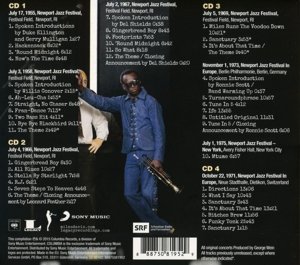
STOMU YAMASHTA-GO TOO.
STOMU YAMASHTA-GO TOO.
By the late sixties, jazz was at a crossroads. It was no longer as popular as it had once been. Its popularly had plummeted. Comparisons were being drawn with blues music.
Although there had been a brief resurgence in the blues popularity earlier in the sixties, many of its biggest names were struggling to eek out a living. They played wherever they could get a gig. Some had even turned their back on the blues. For many it was a worrying time. Part of the problem was, the blues hadn’t really evolved. While the same couldn’t be said of jazz, its popularity was declining, and declining rapidly. Something had to change.
Jazz albums were no longer selling in the same quantities as a decade earlier. Some established labels struggled financially. So did the newer labels, who promised a brave new world in jazz. That didn’t happen. Across America, jazz’s decline was noticeable. Many jazz clubs were now putting on pop and rock groups. Jazz was, yesterday’s music. It was a dying genre. However, had jazz’s demise been overstated?
That proved to be the case. Riding to the rescue, like jazz’s very own caped crusader, came fusion. A mixture of jazz, funk and rock, fusion proved to be jazz’s savour.
From the late sixties, its popularity exploded. Gary Burton’s 1967 album Duster, is seen by many as the first fusion album. However, it was Miles Davis who was at the forefront of fusion’s rise. He released a series of albums which helped define the genre.
Miles Davis released Miles In The Sky and Filles de Kilimanjaro in 1968. Both albums influenced the development of fusion. However, it was the release of In A Silent Way in 1969 was crucial to the genre’s development. So was Bitches Brew, Miles Davis’ seminal fusion album. It featured a stellar lineup, including Chick Corea, Wayne Shorter, Joe Zawinul, John McLaughlin and Airto Moreira. Many of the musicians who were in Miles Davis’ fusion band, went on to form their own bands
In 1970, Wayne Shorter, Joe Zawinul and Airto Moreira became part of Weather Report. A year later, in 1971, John McLaughlin founded The Mahavishnu Orchestra. They became two of the best known names in fusion. However, as the seventies unfolded, many more fusion bands were founded across the world.
One of the leading lights of the British fusion scene, was Ian Carr. He founded Nucleus. Two of its members Karl Jenkins and John Marshall went on to found Soft Machine. Across the Atlantic, Chick Corea formed Return To Forever, a Latin inspired fusion band. It featured vocalist Flora Purim and percussionist Airto Moreira. They seemed to have been inspired by Santana.
However, later, Return To Forever changed direction, and fused elements of psychedelia and progressive rock. By then, Larry Corryell had formed his own fusion band, The Eleventh House. Larry had been part of the fusion scene since the early days. Others were jumping on the bandwagon.
Many of jazz’s veteran vehemently criticised fusion. They disliked the genre, and didn’t approve of the marriage of funk, jazz and rock. These veterans didn’t seem to realise if jazz hadn’t evolved, it would be dead. Some of the veterans seemed to be preaching a form of musical apartheid. It was a strange stance to take. Despite the stance of many veterans, some veterans broke ranks and took what others saw, as jazz’s equivalent of the King’s Shilling. Buddy Rich, Dexter Gordon and Maynard Ferguson were realists, and realised that fusion was the future of jazz. Fusion was quickly conquering the world, and by 1976, found its way to Japan.
One of the first Japanese fusion groups were Casiopea. They were formed by guitarist Issei Noro, bassist Tetsuo Sakurai and keyboardist Hidehiko Koike in 1976. That was the same year that one of Japanese music’s most innovative musicians, Stomu Yamashta, founded a supergroup, Go.
Go.
By 1976, supergroups were nothing new. Go however, was different from many supergroups. It had been formed by Stomu Yamashta, Steve Winwood and Michael Shrieve in late 1975, and featured musicians from all over the world. America, Britain, Germany, Jamaica and Japan were all represented on this what was immediately hailed a global supergroup.
As supergroups go, Go was one of the biggest. It featured a total of seventeen musicians and backing vocals. Among them were British born vocalist and multi-instrumentalist, Steve Winwood. Basisst Rosko Gee, another member of Traffic and former Wailers’ guitarist Marvin Junior were both Jamaicans. Tangerine Dream’s keyboardist Klaus Schulze had been born in Berlin, Germany. Former Santana drummer Michael Shrieve and guitarist Pat Thrall, both hailed from San Francisco. Another American, was New Jersey born guitarist, Al Di Meola. He was a veteran of fusion, and had been a member of Return To Forever. Al had also played alongside everyone from Stanley Clarke, Jan Hammer, Jean-Luc Ponty and John McLaughlin. His experience was vital. So was the experience of British born arranger and and co-producer Paul Buckmaster. Along with Stomu Yamashta the pair co-produced Go’s debut album. It was recorded in New York in February 1976, and released in April 1976.
When Go was released in April 1976, critics were already familiar with Stomu Yamashta’s music. By then, he was almost a veteran. Stomu Yamashta helped popularise world music back in the sixties. Right through to the seventies, Stomu Yamashta was one of the leading lights in the burgeoning world music scene. He had also released a string of groundbreaking albums, including 1971s Red Buddha and 1972s Floating Music. They’re just two of around fifteen albums Stomu Yamashta had released or collaborated on, before founding Go. It was well received by critics.
Already, Stomu Yamashta had a reputation as a musical pioneer. The music he released was always innovative and influential. Constantly, Stomu Yamashta fused multiple and disparate musician. Go was no different. Critics and cultural commentators saw Stomu Yamashta releasing an album which saw fusion continue to evolve, Go. It proved a popular album,
When Go was released in April 1976, by Island Records, the album reached number 160 in the US Billboard 200 charts. Not long after this, Go headed out on tour and in Paris, recorded a live album, Go Live From Paris.
Go Live From Paris.
When Go’s tour arrived in Paris on 12th June 1976, Island Records had arranged for a mobile recording studio to be waiting for Go.
It was a slimmed down version of Go that had taken to the road. Steve Winwood took charge of piano and vocals. Drummer Michael Shrieve, keyboardist Klaus Schulze and guitarists Al Di Meola and Pat Thrall were joined by conga player Brother James. Karen Friedman one of the the backing vocalists called Thunderthighs. They had featured on Go. However, she was the only member of Thunderthighs that were part of the touring band. A new name was bassist Jerome Rimson. He was a more than able replacement for Rosko Gee. This was the lineup that took to the stage in Paris, and worked their way through fourteen tracks. They were later released as Go Live From Paris.
After the recording of Go Live From Paris on 12th June 1976, the album was released later in 1976. Critics were won over by Go Live From Paris. The album was proof that Go were capable of taking their sound to the stage. Not all fusion bands could do that successfully. Go could. However, despite the glowing reviews of Go Live From Paris, the album failed to chart. Go Live From Paris was the end of an era.
Go Too.
When Go began work on their sophomore album Go Too, it was a very different band. One of the founding members, Steve Winwood, had left Go. His replacement was Jess Roden, who ironically, was well known to Steve Winwood. Jess Roden had supported many Island Records’ acts over the years, including Traffic, who Steve Winwood had been a member of. However, the addition of Jess Roden wasn’t the only change to Go’s lineup.
There were two new faces when Go reached the recording studio. The first was vocalists Linda Lewis, who would share the lead vocals with Jess Roden. However, this resulted in a change of direction for go. This wasn’t a case of swapping like for like. Nor was the replacing bassist Rosko Gee with Paul Jackson.
Rosko Gee had been Traffic’s bassist. They were a rock group. Go were a fusion band. While Rosko Gee passed muster on Go, Paul Jackson was much more suited to the role. He was one of the most respected jazz bassists, and had played on some of Herbie Hancock’s best albums, including 1973s Head Hunters. Paul, a versatile bassist, had also played alongside Azteca, Harvey Mason, The Pointer Sisters, Stanley Turrentine and Eddie Henderson. So, Paul was a more than adequate replacement for Rosko Gee, who unfortunately, had joined Can. His replacement, David Jackson, made his way to New York to begin work on what became Goo Too, which has been recently released by Esoteric Recordings.
At Camp Colomby, New City, New York recording of Go Too got underway. Stomu Yamashta had written Prelude. He cowrote Seen You Before, Madness, Mysteries Of Love, Wheels Of Fortune, Beauty and You and Me with Michael Quartermain. Ecliptic was penned by Stomu Yamashta and Klaus Schulze. These eight tracks were recorded by the new lineup of Go.
This included a rhythm section of drummer Michael Shrieve, bassist Paul Jackson and guitarists Al Di Meola and Doni Harvey. Klaus Schulze, John Peter Robinson and Stomu Yamashta all played synths. They each had a different “weapon” of choice. For Klaus, it was a Moog, John’s was an Moog and Stomu’s an Arp. Each had their own distinctive sound. Meanwhile, Brother James added a percussion. Jess Roden and Linda Lewis added vocals. Backing vocals came courtesy of Doreen Chanter, Liza Strike and Ruby James. Accompanying Go, were The Martin Ford Orchestra. Arranging Go Too was Paul Buckmaster, while Stomu produced the album. Once Go Too was completed, it was released later in 1977.
Just like Go and Go Live From Paris, Go Too was released to critical acclaim. Some critics embraced Go’s new sound. This fusion of disco, funk, pop, progressive fusion and rock went down well with record buyers. Go Too, the reinvention of Go, reached number 156 in the US Billboard 200. It had just managed to surpass the success of Go, which reached number 160. It looked like Go were going places. Or were they? Maybe Go Too had seen Stomu Go Too far from the starting point of fusion?
A myriad of sound make their presence felt as Prelude unfolds. One minute they bubble, the next a storm gives way to cinematic and dramatic sci-fi synths. They’re scene setters, and the start of a musical adventures. Sounds assail the listener, as if they’re being taken on a futuristic journey. Synths are at the heart of Go’s sound and their success on this captivating and cinematic track.
It gives way to Seen You Before. It’s a mixture of disco strings, a funky rhythm section and synths. Josh and Linda trade vocals. His vocal is a powerhouse, while Linda and the backing vocalists keep things soulful. When the vocals drop out, the synths create a dramatic backdrop. The synths add a progressive fusion sound. Meanwhile, braying horns, soulful harmonies and disco strings combine. By then, the rhythm section and synths create a dramatic backdrop. At the breakdown, there’s a return to fusion at its purest. Then a rocky guitar and disco strings combine with sensual, soulful harmonies, and this genre-melting journey continues to captivate, as Go head to the dance-floor.
Rolls of thunderous drums open Madness, before the arrangement becomes uber funky. That’s down to the bass and guitar. The synths add a funky hue, before creating a dramatic, buzzing backdrop. By then, Linda is adding a soulful powerhouse. She’s augmented by soaring harmonies, and is more than a fitting foil for Josh Rodden. Meanwhile, the rhythm section, searing guitars and squelchy, buzzing synths provide the backdrop for Linda and Josh on this genre-melting epic.
Mysteries Of Love has a much more understated introduction. A harp gives way to a piano and melancholy strings. Gradually, the arrangement builds and a soul-searching ballad unfolds. Josh delivers the lyrics as he ponders the “Mysteries Of Love.” Soon, the rhythm section and tender harmonies are added. Along with the piano and strings, everything seems to be falling into place. This includes the searing, heart wrenching guitar solo. It’s added at the breakdown, and proves a more than fitting replacement for the vocal. It soars across the arrange, as strings and cooing harmonies are added. Then when Josh’s vocal returns, and later, when Linda’s vocal enters. Everything is falling into place, and this beautiful ballad proves to be one of Go Too’s highlights.
Just like Prelude, various cinematic sounds can be heard at the start of Wheels Of Fortune. They seem unnecessary, and don’t add anything to the track. It’s a case trying to be too clever, and failing badly. Essentially, it’s twenty-seven seconds of their life the listener won’t get back. After that, disco strings and the rhythm section combine with one of the funkiest, chiming guitars on Go Too. Just as the listener is enjoying the band stretch their legs, Josh Rodden’s vocal enters. As usual, he unleashes a powerhouse, and sings call and response with the backing vocalists. The backing vocalists are much more subtle and soulful. Behind them, playful keyboards, a powerhouse of a rhythm section and dancing strings combine. Then Go, including Linda and the backing vocalists kick loose. Thankfully, the breakdown offers welcome respite. Later, it’s just Linda, the rhythm section and exotic percussion. Bookending the track are sound effects which conjure up images of an equally exotic beach. This works, unlike the start of the track. However, overall, when Go spun these Wheels Of Fortune, they didn’t win. Neither did the listener.
What sounds like a deserted beach greats the listener on Beauty. Just a piano plays before Linda’s tender vocal enters. Soon, a subtle, but funky bass and distant strings combine. Bubbling synths are joined by dramatic, cinematic strings and gospel tinged harmonies. By the sci-fi synths and piano join woodwind in accompanying Linda’s heartfelt vocal. Soon, it’s replaced by Josh and the arrangement builds. A Spanish guitar, swathes of strings and piano add an element of drama, before Linda’s vocal, augmented by harmonies return. From there, the arrangement literally floats thoughtfully along, and in the process, seems to loose its way.
You and Me sees otherworldly sounds added before futuristic synths emerge from the arrangement. They bubble and squeak, while the rhythm section add to the progressive fusion sound. Everything seems fine. Then Josh’s vocal enters, the tempo rises and the track heads in the direction of dance-floor. Disco strings join harmonies that veer between soulful and gospel tinged. After singing call and response, Linda’s vocal enters. By then, Go are flitting between genres. From the earlier progressive fusion sound, there’s been diversions via, disco, soul and gospel. Later, there’s a nod to prog rock, with the constant changes in tempo, in the penultimate track on this genre-melting adventure. It’s slightly unfocussed, and not Go’s finest hour. Sadly, it’s a case of what might have been.
Ethereal and quickly futuristic describes the introduction to Ecliptic. It closes Go Too, and sounds like it belongs on the soundtrack to a sci-fi soundtrack. Gradually, the drama builds as the synths take centre-stage on this soundscape. It’s one of the highlights of Go Too, and it’s a pity that there’s not more tracks like this on the album.
From the earliest days of his career, Stomu Yamashta was a musical adventurer and maverick. He was one of the pioneers of world music, and later, embraced ambient, avant garde, drone, experimental, free jazz and proto-industrial. So it was no surprise that in 1976, that Stomu Yamashta embraced fusion.
Along with Michael Shrieve and Steve Winwood, they formed Go, and released their debut album Go in April 1976. Go Live In Paris was released in June 1976. At that point, Go looked like it had a big future ahead of them. Then they lost Steve Winwood. Replacing him wasn’t going to be easy.
Josh Rodden was merely an adequate replacement. That was all. Apart from on Mysteries Of Love, Josh Rodden resorts to unleashing a series of vocal powerhouses. It’s as if he knows he has big shoes to fill, and the only way he can do so, is to resort to power. Even aided and abetted by Linda Lewis, Josh Rodden was no substitute for Steve Winwood. Until the release of Go Too, nobody realised how weakened Go had been by the loss of Steve Winwood. To make matters worse, his loss resulted in Go having to change direction.
Now Go’s music was a fusion of disparate genres. They moved away from fusion in its purest for, to what was akin to a journey through musical genres. This journey encompassed disco, electro pop, experimental, funk, gospel, jazz, pop, rock and soul. There was even the a nod towards prog rock, progressive fusion and world music. Despite what was a journey through disparate musical genres, Go weren’t the same band.
On some of the tracks on Go Too, Go moved towards the dance-floor. They even incorporated disco into their sound. It was a long way the early days of fusion, when it was seen as the saviour of jazz. Go like many, jumped on the disco bandwagon. Disco strings punctuate Go Too, as Go look longingly towards the dance-floor. However, Go seemed to hedging their bets.
They covered all musical bases, in an attempt to expand their audience. It worked, just. Go Too Reached number 156 in the US Billboard 200. This was four places better than Go. For the members of Go it proved to be a Pyrrhic victory. Although Go Too reached a wider audience, fusion purists turned their back on Go. Coupled with the loss of Steve Winwood, it was the end of the road for Go.
Go Too was the last album Go released. It was a short-lived project, that promised much. Their 1976 eponymous debut album was their finest hour. The followup Go Too is a case of what might have been. Although the album started well, it was far from a classic album. If the truth be known , Go Too is nowhere near a classic album. Things start to go awry on Wheels Of Fortune. From there, it’s downhill all the way, and Go Too only gets back on track on the closing track on Ecliptic. Ultimately, Go Too it’s a disappointing album, and not Stomu Yamashta’s finest hour.
Despite that, Esoteric Recordings have reissued Go Too twice since 2009. The initial reissue came in 2009, and the album was remastered. Recently, Go Too was reissued. However, it’s a case of caveat emptor. Some people who have bought what they believed to be the 2015 edition, have received a 2009 edition. If however, you wish to sample Go Too, the best way to do so, is buy a vinyl edition. Second hand vinyl editions can be found for the price of the CD. However, Go Too isn’t a good place to discover the delights of Stomu Yamashta’s back-catalogue.
For newcomers to the music of Stomu Yamashta, then Go Too isn’t place to start. Instead, Red Buddah and Floating Music are two of Stomu Yamashta best albums. The music on both albums are innovative and groundbreaking. They feature Stomu Yamashta, at his creative zenith, as this musical pioneer embarks upon what was a long and mostly, illustrious career.
STOMU YAMASHTA-GO TOO.

CAPTAIN BEEFHEART-LICK MY DECALS OFF, BABY, THE SPOTLIGHT KID AND CLEAR SPOT.
CAPTAIN BEEFHEART-LICK MY DECALS OFF, BABY, THE SPOTLIGHT KID AND CLEAR SPOT.
It was in 1964 that Don Van Vliet first dawned his Captain Beefheart persona. By then, Don was already twenty-three and had led an eventful life. He’d been called a child prodigy, attended art school, sold vacuum cleaners and for the last two years, been a member of Alex Snouffer’s Magic Band. His story began in Glendale, California in 1941.
That’s where the future Captain Beefheart, was born Don Glen Vliet on January 15th 1941. By the time Don was three, he was already sculpting. His speciality was animals. So, it’s no surprised that when Don was nine, he won a children’s sculpting competition organised by Los Angeles zoo. This was just the start of Don’s artistic career.
During the fifties Don worked as an apprentice with Rodrigues. He spoke in glowing terms about Don, referring to his as a child prodigy. He wasn’t wrong.
Growing up, all Don wanted to do was sculpt. Sometimes, he was so busy sculpting, that Don forgot to eat. All that mattered was his art. Don it seemed, was aiming for artistic perfection. So, when he was offered several scholarships, it seemed that Don would jump at the opportunity.
Sadly, Don’s parents didn’t approve of their son heading to art school. As a result, Don wasn’t heading to art school. Instead, he was heading to Lancaster, in the Mojave desert, where the aircraft industry was thriving. This would influence Don’s sculpting.
It was also where Don’s eclectic musical taste developed. Blues and jazz were favourites of Dons, including Son House, Howlin’ Wolf, Muddy Walters, John Coltrane, Thelonious Monk and Ornette Coleman. Soon, Don was spending all day listening to music and sculpting. However, sometimes, Don spent time socialising with members of local bands The Omens and The Blackouts. Mostly though, art dominated Don’s life.
So much so, that Don wasn’t a regular attendee at Antelope Valley High School, in Lancaster. That didn’t seem to matter, as he was a gifted student. After high school, Don attended Antelope Valley Junior College as an art major. A year later, Don quit and got a job selling vacuum cleaners. Again, this didn’t last long, and Don got a job managing a shoe shop. After a while, Don quit and headed to Rancho Cucamonga, California, where once again, he hooked up with Frank Zappa, on old school friend.
With Frank Zappa’s help, Don was confident enough to take to the stage, imitating Howlin’ Wolf and playing the harmonica. What became apparent, was that Don had a wide vocal range. This would prove useful when his career began in 1962.
It was in in Lancaster, California, that Don met Alex Snouffer, an R&B guitarist. He asked Don to join his Magic Band. This resulted in Alex Snouffer becoming Alex St. Clair, and Don Glen Vliet becoming Don Van Vliet. A year later, in 1965, Don Van Vliet became Captain Beefheart.
Just a year later, Captain Beefheart and His Magic Band signed to A&M Records. Little did anyone realise that that day, the career of one of the most innovative artists began.
For Captain Beefheart and His Magic Band’s debut single, they covered Bo Diddley’s Diddy Wah Diddy. The followup was Moonglow, penned by David Gates, who would find fame and fortune with Bread. By then, Captain Beefheart and His Magic Band would be pushing musical boundaries to their limits, and sometimes, beyond. That’s the case on the thirteen albums Captain Beefheart and His Magic Band would release.
This included 1970s Lick My Decals Off, Baby, 1971s Mirror Man and 1972s The Spotlight Kid. These three albums have recently been released by Rhino. However, before that, Captain Beefheart and His Magic Band released two classic albums.
Safe As Milk.
In 1967, Captain Beefheart and His Magic Band’s released their debut album, Safe As Milk. It was recorded at RCA Studios, in Los Angeles, during April 1967. Safe As Milk was a tantalising taste of what Captain Beefheart and His Magic Band were capable of.
Safe As Milk, Captain Beefheart and His Magic Band’s debut album, was released in September 1967. It was produced by Richard Perry and Bob Krasnow and featured an all-star cast. This included Ry Cooder and Taj Mahal of Rising Sons plus guitarist Russ Titelman. They played their part in a groundbreaking album, Safe As Milk.
On hearing Safe As Milk, critics realised this was unlike anything they’d heard before. It was an innovative and experimental, genre-melting album. Captain Beefheart’s love of the delta blues was evident on Safe As Milk. There’s even a cover of Robert Pete Williams’ Grown So Ugly. It was arranged by Ry Cooder. The other eleven tracks on Safe As Milk are original tracks, which Captain Beefheart either wrote or cowrote.
These tracks feature lyrics that veer between surreal and absurd. Another difference was the time signatures. This wasn’t an album of music in a 4/4 time signature. Instead, different time signatures feature throughout Safe As Milk, which critics hailed a classic. However, despite this, neither record buyers nor Buddah Records agreed.
Record buyers didn’t seem to ‘get’ Safe As Milk. It failed to chart in Britain or America. This would be the case with many of Captain Beefheart and His Magic Band’s albums. Commercial success would continue to elude them. Buddah Records didn’t get Safe As Milk. They were beginning to come to the conclusion that Captain Beefheart and His Magic Band’s music was too left-field and unconventional. That’s despite releasing a classic album, Safe As Milk.

Strictly Personal.
After Safe As Milk was released, Captain Beefheart and His Magic Band began work on their sophomore album Strictly Personal. It featured eight tracks penned by Captain Beefheart. They were recorded at Sunset Sound Studios, Los Angeles, between April 25th and May 2nd 1968. Once Strictly Personal was completed, it was due to be released by Buddah Records.
However, by then, Buddah Records had decided that Captain Beefheart and His Magic Band’s music was too left-field and unorthodox. So, they decided not to release Strictly Personal.
Luckily, Bob Krasnow’s Blue Thumb Records were wiling to release Captain Beefheart and His Magic Band’s sophomore album Strictly Personal. However, there was a problem.
Bob Krasnow, who produced Strictly Personal, used phasing during the recording of Strictly Personal. It was used on many tracks. This production technique proved controversial. Initially, Captain Beefheart thought this was a good idea. However, later, he claimed that the phasing had been used without his permission or approval. As a result, Captain Beefheart claimed that he hated the psychedelic effects used on Strictly Personal. Never again, would effects be used on a Captain Beefheart and His Magic Band album. These effects would divide the attention of critics.
When Strictly Personal was released in September 1968, critics were divided. They were unable to decide if Strictly Personal was the work of a genius, or incoherent ramblings. Mostly, critics were won over by Strictly Personal. However, many critics felt that the effects jarred, and detracted from the music. Record buyers didn’t seem to have an opinion on Strictly Personal, as it failed to chart in America or Britain. Still, Captain Beefheart and His Magic Band were a cult band. That was about to change, with Captain Beefheart and His Magic Band’s second classic album, Trout Mask Replica.

Trout Mask Replica.
For their third album Trout Mask Replica, Captain Beefheart and His Magic Band headed to Sunset Sound Studios, Los Angeles, in August 1968. That’s where Captain Beefheart hooked up with his old school friend and musical soul mate, Frank Zappa. He would produce Captain Beefheart and His Magic Band’s most ambitious and innovative album Trout Mask Replica.
For Trout Mask Replica, Captain Beefheart had penned twenty-eight tracks. As a result, Trout Mask Replica would be a sprawling and genre-melting double album. After the sessions at Sunset Sound Studios, Captain Beefheart and His Magic Band reconvened at Los Angeles’ Whitney Studios in March 1969. That’s where Trout Mask Replica was completed. It was then released on June 16th 1969.
Trout Mask Replica was released on Straight Records on June 16th 1969. It failed to chart in America, but reached number twenty-one in Britain. Just like Safe As Milk, Trout Mask Replica was another classic album from Captain Beefheart and His Magic Band. Elements of Americana, avant-garde, blues, classical, experimental, folk, free jazz, psychedelia, rock and surrealism melted into one on Trout Mask Replica. The lyrics were cerebral and controversial, dealing with politics, religion, love, sexuality, the Holocaust, conformity, the environment and musical history. It was an ambitious, far reaching and genre-melting opus. Sadly, only music critics, cultural commentators and a few discerning music lovers realised the importance of Trout Mask Replica. It’s now regarded as one of the most important albums of the late sixties. Captain Beefheart and His Magic Band saw the sixties close with a classic. What, however, would the seventies bring for Captain Beefheart and His Magic Band?
Lick My Decals Off, Baby.
As the seventies dawned, a frustrated Captain Beefheart and His Magic Band returned to the studio. This frustration gave Captain Beefheart the inspiration for his fourth album’s title, Lick My Decals Off, Baby.
Captain Beefheart was a man on a mission. That mission was to to get rid of “labels”. Instead, he wanted people to evaluate things, including music, according to its merits, rather than according to superficial labels or “decals.” This was admirable. After all, Captain Beefheart had been a victim of labels. Trout Mask Replica was in some quarters, labelled an avant-garde album. Conservative record buyers recoiled in horror, rather than giving an innovative album an opportunity. Maybe after Lick My Decals Off, Baby, things would change.
For Lick My Decals Off, Baby, Captain Beefheart had written fifteen songs, including I Love You, You Big Dummy, Woe-Is-Uh-Me-Bop, The Smithsonian Institute Blues (Or The Big Dig) and The Clouds Are Full Of Wine (Not Whiskey Or Rye). They were recorded at United Recording Corporation, Los Angeles during May 1970. With Captain Beefheart producing Lick My Decals Off, Baby, Captain Beefheart and His Magic Band fused avant-garde, blues, experimental, free jazz, psychedelia and rock. Accompanied by His Magic Band’s ever evolving lineup, Lick My Decals Off, Baby was released in December 1970.
On Lick My Decals Off, Baby’s release, in December 1970, critics called the album a mini masterpiece. Some went as far as to say that Lick My Decals Off, Baby was better than Trout Mask Replica. Described as captivating, challenging, engrossing, humorous, innovative and playful, what started as pieces of music improvised on his home piano, became Captain Beefheart and His Magic Band’s third classic. It even surpassed the commercial success of Trout Mask Replica, reaching number twenty in Britain. It seemed things were looking up for Captain Beefheart and His Magic Band.
Mirror Man.
Just as things were looking up for Captain Beefheart and His Magic Band, Buddah Records decided to release Mirror Man. It was originally recorded as as part of an abandoned project, It Comes to You in a Plain Brown Wrapper album. However, the album was shelved and some of the material found its way onto Captain Beefheart and His Magic Band’s 1968 sophomore album. However, Buddah Records were obviously keen to cash-in on Captain Beefheart and His Magic Band’s popularity.
The Bob Krasnow produced Mirror Man was released in April 1971. Mirror Man features just four tracks. This includes three lengthy blues jams. They make Mirror Man’s release worthwhile. These tracks showcase Captain Beefheart and His Magic Band at the start of their career, and is very different from the band that features on On Lick My Decals Off, Baby.
Critics remarked upon that. They also remarked that Mirror Man wasn’t for newcomers to Captain Beefheart and His Magic Band. It was a case of only seasoned veterans of Captain Beefheart and His Magic Band should try Mirror Man, a hidden gem in Captain Beefheart and His Magic Band’s back-catalogue. It features Captain Beefheart and His Magic Band at their intensive and creative best. However, Captain Beefheart’s sixth album, The Spotlight Kid, was his most accessible.
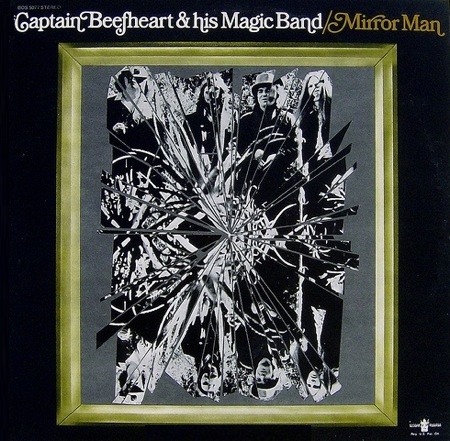
The Spotlight Kid.
During autumn 1971, Captain Beefheart and co-producer Phil Schier, began work on what would become The Spotlight Kid. Captain Beefheart wrote nine tracks and cowrote Blabber ‘N Smoke with Jan Van Vliet. These ten tracks would become The Spotlight Kid, which was credited to Captain Beefheart.
Although His Magic Band featured on The Spotlight Kid, the album is just credited to Captain Beefheart. The starting point for The Spotlight Kid, is Captain Beefheart’s beloved blues. However, this is blues with a twist. Marimba, bells and percussion are added. They provide a contrast to the slide guitar, rhythm section and harmonica. The result was what critics called Captain Beefheart’s most accessible album.
From I’m Gonna Booglarize You Baby, through White Jam, Alice In Blunderland, Grow Fins and the closing track Glider, Captain Beefheart produces his most accessible album. Blues tinged, albeit with a twist, there’s more than a nod to Howlin’ Wolf and Muddy Waters. Critics hailed The Spotlight Kid as raw, intensive, powerful and accessible. The Spotlight Kid was seen as the perfect introduction to Captain Beefheart.
To some extent, this proved to be the case. In America, The Spotlight Kid reached number 131 on the US Billboard 200 charts. Over the Atlantic, The Spotlight Kid stalled at number forty-four in Britain. It was swings and roundabouts. At least, however, Captain Beefheart had made a breakthrough in his home country.

It had been a long coming. Captain Beefheart had toiled for years trying to make a breakthrough. One of the problems was, that many of Captain Beefheart’s aren’t particularly accessible.
Especially for the newcomer to Captain Beefheart and His Magic Band. A good place to start are three album which were recently released by Rhino, 1970s Lick My Decals Off, Baby, 1971s The Spotlight Kid and 1972s Clear Spot. They’re much more accessible than albums like Safe As Milk and Trout Milk Replica. They’re ambitious, adventurous albums of avant-garde, genre-melting music. This music is unique and innovate. The difference is, that albums like The Spotlight Kid and Clear Spot are much more accessible.
Rather than listening to the Sun Zoom Spark: 1970-1972 box set in chronological order, it might be best to listen to the albums in terms of accessibility. That would mean listening to Clear Spot, The Spotlight Kid and then Lick My Decals Off, Baby. After that, the more challenging and avant-garde albums, including Safe As Milk and Trout Milk Replica will make more sense. They are, after all, two innovative classic albums from one of music’s mavericks.
Another classic from Captain Beefheart and His Magic Band was Lick My Decals Off, Baby. It’s an album that rivals Trout Mask Replica for the title of Captain Beefheart and His Magic Band’s finest hour. After that, The Spotlight Kid and Clear Spot are two of the most accessible albums Captain Beefheart released. They’e the perfect introduction to another of music’s mavericks and pioneers.
He was way ahead of his time. That’s why commercial success eluded Captain Beefheart for much of his career. Captain Beefheart, like his old schoolfriend Frank Zappa, was always determined to push musical boundaries, sometimes, to their limits and beyond. Other times, like on The Spotlight Kid and Clear Spot, Captain Beefheart yearned for commercial success. Captain Beefheart wanted to share his music with a wider audience. Sadly, Captain Beefheart never reached the heady heights his music and talent deserved. At least belatedly, Captain Beefheart a musical pioneer, is recognised as one of the most innovative and adventurous musicians of his generations. That’s apparent when you listen to Lick My Decals Off, Baby, The Spotlight Kid and Clear Spot which features Captain Beefheart and His Magic Band at his creative and innovative best.
CAPTAIN BEEFHEART-LICK MY DECALS OFF, BABY, THE SPOTLIGHT KID AND CLEAR SPOT.
FLORIAN FRICKE/POPOL VUH-KAILASH.
FLORIAN FRICKE/POPOL VUH-KAILASH.
In music, the most overused word is legend. It’s a word thrown around like confetti at a Las Vegas wedding. Nowadays, every two-bit hip hopper, EDM star or Nu Soul singer is being referred to as a legend. That’s far removed from the truth. However, it’s nothing new.
The overuse of the word legend has been used since the birth of rock ’n’ roll. For seven decades artists have been over hyped, and wrongly hailed a ‘legend.’ Partly, the confusion over legendary status comes from what makes someone a legend.
Everyone has their own definition of what makes a musical legend. Is it that the music they release is innovative, influential and inspirational? That could be part of the definition. Is their music got to be outstanding and timeless?
That’s debatable. Many artists who are regarded as legends didn’t produce outstanding music. The Sex Pistols are an example of that. They struggled to play their instruments, but are regarded by many people, as musical legends. Similarly, the music produced by many supposed Motown legends is far from timeless. It’s formulaic and hasn’t aged well. Yet many regard the Motown soul factory as being a production line for legends of soul. It seems who is worthy of attaining legendary status is arbitrary.
One artist who is definitely worthy of being called a musical legend, is Florian Fricke. He was a musical innovator, who as a member of Popol Vuh, created music that was innovative and influential. It also inspired future generations of musicians. The music Popol Vuh produced is now regarded as timeless and outstanding. That’s not surprising.
Popul Vuh were one of the greatest German bands of their generation. Quite rightly, Popol Vuh are held in the same regard as Can, Cluster, Harmonia, Kraftwerk, Neu and Tangerine Dream, who Florian Fricke later joined. Just like each of these bands, Popol Vuh’s music has played an important part in German musical history. Part of Popol Vuh’s success, was keyboardist Florian Fricke.
Recently, Soul Jazz Records released a new collection of music that’s celebrates the life and music of a true musical innovator and legend, Florian Fricke. It’s no ordinary release. There’s two CDs and a DVD in the Florian Fricke/Popol Vuh box set Kailash. This lovingly compiled box set is the work of both Florian Fricke and Popol Vuh. The Florian Fricke story began in 1944.
Florian Fricke was born in Lindau am Bodensee, Germany on 23rd February 1944. Growing up, Florian Fricke learnt to play the piano. Quickly, he mastered the instrument, and on leaving high school, studied piano, composition and directing at the Conservatories in Freiburg and Munich. By then, Florian had two new passions.
The first was music. Florian loved music, especially new music. This included free jazz, which Florian embraced. He through himself into this new musical genre, and quickly, realised its potential and possibilities. However, there was more to Florian’s life than making music.
Florian was making short films. Although it was just a hobby, he would later become a film critic for the Swiss newspaper Neue Zürcher Zeitung. By then, he had experience as a critic. As a student, Florian became the music critic for Der Spiegel, a German magazine. Music and art seemed to dominate Florian’s life.
That was the case when Florian graduated. In 1967, Florian met film director Werner Herzog. The two became friends, and a year later in 1968, Florian landed a part in Werner Herzog’s film, Lebenszeichen. This was just the start of their relationship. They would reunite in 1972, but before that, Florian Fricke formed Popul Vuh in 1970.
Joining Florian in Popol Vuh, were percussionist Holger Truelzsch and fellow synth player Frank Fiedler. All the nascent group took its name from an ancient, sacred, Mayan manuscript. With a name in place, Popol Vuh began work on Affenstunde, the first of nineteen albums they released.
From the earliest days of Popol Vuh, Florian established himself as the group’s leader. He had been one of the first musicians to own a Moog II synth. This wasn’t an easy instrument to “tame.” Florian, a talented keyboardist soon got to grips with what was cutting edge technology. The Moog II would be used extensively on Popol Vuh’s debut album Affenstunde.
Recording of Affenstunde took place at Bavaria Music Studio, in Munich. Popol Vuh were joined by Bettina Fricke. She produced Affenstunde with Gerhard Augustin. The producers guided the nascent group through their debut album. It featured just four tracks. However, they were four innovative and influential tracks. Especially Affenstunde, a near nineteen minute epic, which took up all of side two.
When Affenstunde was released later in 1970, the album was described variously as space rock and cosmic music. It was very different to much of the music being released. However, there were other like-minded groups releasing similarly innovative and influential music. However, very few would enjoy the longevity of Popol Vuh.
Just a year later, Popol Vuh returned with In den Gärten Pharaos. It was a precursor of ambient music. Popul Vuh deploy Florian’s Moog II and add a myriad of experimental electronic sounds. At the time, In den Gärten Pharaos was perceived variously groundbreaking, experimental and thanks to the African percussion, exotic. Vuh, which took up side two of In den Gärten Pharaos was perceived as kosmische musik at its most spiritual. In den Gärten Pharaos was the first classic album of Popol Vuh’s long and illustrious career.
Popol Vuh’s third album, Hosianna Mantra was one that passed many critics and record buyers by. The group’s lineup changed for the first, but far from the last time. Florian was the only remaining original member of the band left. From there, the lineup is best described as fluid.
That didn’t seem to matter. Hosianna Mantra featured music that was timeless, spiritual and innovative. Sadly, it went almost unheard of outside Germany. It was only later, that Hosianna Mantra found an audience. However, Hosianna Mantra wasn’t the only album Popol Vuh released during 1972. That year, Florian renew his friendship with Werner Herzog.
By 1972, Werner Herzog was producing the conquistador movie Aguirre, the Wrath of God. He needed someone to provide the soundtrack. That’s where Popol Vuh came in. Not only did Popol Vuh provide the soundtrack to He needed someone to provide the soundtrack to Aguirre, the Wrath of God, but Heart Of Glass in 1976 and 1979s Nosferatu the Vampyre. The combination of Popol Vuh and Werner Herzog proved a successful one. Popol Vuh were already experienced and accomplished when it came to composing soundtracks. This would stand Florian and Popol Vun in good stead. Especially when Florian and Frank Fielder later, embarked on what was the journey of a lifetime.
Before that, the German music scene was thriving during the seventies. Popol Vuh released an album every year of the seventies. Very rarely, did they disappoint. The nearest they came was with 1973s Seligpreisung. It received mixed reviews from critics. Popol Vuh more than made up for this with 1974s Einsjäger und Siebenjäger. It’s now recognised as one of Popol Vuh’s best albums of the seventies. The followup Das Hohelied Salomos was released in 1975, and featured Popol Vuh showcasing New Age music. Constantly, it seemed Popol Vuh reinvented their music. However, later in 1975, Popul Vuh returned to the world of soundtracks and penned the soundtrack to Werner Herzog’s latest film, Aguirre, The Wrath of God. The soundtrack, Aguirre became Popol Vuh’s seventh album since 1970.
In 1976, Popol Vuh returned with their eighth album, Letzte Tage–Letzte Nächte. It was released to critical acclaim, and ensured that Popol Vuh were seen as purveyors of ambitious, exciting and groundbreaking music. Partly, that was down to Popol Vuh’s determination to push musical boundaries to their limits. Popol Vuh’s reputation was further enhanced when they recorded the soundtrack to Werner Herzog’s movie Herz aus Glas in 1978. Later in 1978, Popol Vuh released Brüder des Schatten–Söhne des Lichts which they had recorded in August of 1978. When it was released on Brian Records, critics embraced the Gerhard Augustin produced album. Despite the critical acclaim lavished on their albums, still many people were unaware of Popol Vuh. So penning the soundtrack to another film directed by Werner Herzog exposed their music to a wider audience. Nosferatu was one of their finest soundtrack albums, and Popol Vuh’s penultimate album of the seventies. Die Nacht der Seele, which was subtitled tantric songs, was released to critical acclaim in 1979, and was a fitting way for Popol Vuh to close the seventies. Incredibly, Die Nacht der Seele was Popol Vuh’s twelfth album since they formed in 1970.
During the eighties, Popol Vuh were no longer as prolific. They only released four albums. The first was Sei still, wisse ich bin. It was released in 1981, two years after Die Nacht der Seele. However, it was well worth the wait. Die Nacht der Seele saw Popol Vuh reinvent themselves once again, resulting in an album that was released to widespread critical acclaim. However, it was another two years before Popol Vuh returned.
When they did, it was with Agape-Agape. The album was released on the Norwegian label Uniton. Agape-Agape featured Popol Vuh creating music that was variously, beautiful, captivating, dramatic and as one would expect from Popol Vuh, groundbreaking. It won the approval of critics, but didn’t find a wide audience. Neither did Florian’s debut solo album.
After thirteen years as a professional musician, somewhat belatedly, Florian released his debut album Die Erde und ich sind Eins in 1983. Despite his status as one of the most innovative German musicians of his generation, Florian Fricke found himself releasing Die Erde und ich sind Eins as a private pressing. Just like Popol Vuh, he wasn’t getting the credit he deserved. Meanwhile, Can, Kraftwerk and Neu! were receiving all the plaudits. However, Popol Vuh and Florian Fricke continued to make music.
1985 saw Popol Vuh release the fifteenth album of their career, Spirit Of Peace. It was released on the French label, Spalax. Popol Vuh were having to flit between labels. Despite its quality, and how highly regarded their music was by some critics, Popol Vuh albums weren’t selling in vast quantities. So when Warner Herzog used We Know About The Need The as part of the soundtrack to Dark Glow Of The Mountains, this was welcomed by Popol Vuh. Two years later, and Popol Vuh Walter Herzog were reunited.
Walter Herzog was directing Cobra Verde. He needed someone to compose and record the soundtrack to Cobra Verde. By then, Popol Vuh were had plenty of experienced writing and recording soundtracks. They had also worked extensively with Walter Herzog. So it made sense that they provide the soundtrack. However, the Cobra Verde soundtrack was released to mixed reviews. This was disappointing for Popol Vuh. They didn’t release another album during the eighties.
It wasn’t until 1991 that Popol Vuh released another album. Again, it was a soundtrack album. This time, the soundtrack was for the film For You and Me. Popol Vuh had recorded the soundtrack at the African Studio, Munich and Sound Fabrik, Munich. Between January and April 1991 they recorded eleven tracks. The soundtrack was described as: “a celebration of world music.” For You and Me showcased Popol Vuh’s versatility and ability to switch between genres. However, some critics didn’t seem to “get” the music, and again, reviews were mixed. It would another four years before Popol Vuh returned.
Before that, Florian Fricke released another solo album. This time, it was an album of classical music. Florian Fricke Plays Mozart was released in 1992, and showcased another side to the Popol Vuh leader. Unknown to some people, Florian was a keen student of classical music. He had studied music at the Conservatories in Freiburg and Munich, and just as comfortable playing classical music than working with Popol Vuh. So in his down time from Popol Vuh, Florian often composed piano pieces, like those on Kailash. However, in 1995 Popol Vuh returned with their eighteenth album.
City Raga had been recorded at the New African Studios, in Munich. Florian Fricke, Guido Hieronymus, and Maya Rose composed the seven tracks. This latest lineup of Popol Vuh were joined by Daniel Fichelscher and the Kathmandu Children’s Choir. The result was a captivating album from Popol Vuh. However, little did anyone realise that it was Popol Vuh’s penultimate album.
Another two years passed before Popol Vuh returned with their nineteenth and final album, Shepherd’s Symphony-Hirtensymphonie. Again, Popol Vuh’s lineup had changed. They were still a trio featuring Florian, Guido Hieronymus and Frank Fielder, who would later collaborate with Florian after their journey of a lifetime. Before that, the latest lineup of Popol Vuh headed off into the studio.
The three members of Popol Vuh made their way to Afro Sounds Studio, in Munich. Between September 1995 and March 1996 they recorded the seven tracks that became Shepherd’s Symphony-Hirtensymphonie. It was only released in 1997, but would prove a fitting finale to a career that spanned three decades and nineteen album. Popol Vuh took their bow with album that wowed critics.
Following Shepherd’s Symphony-Hirtensymphonie, Popol Vuh never released another album. Tragedy struck in 2001, when Florian Fricke suffered a strokem and died aged just fifty-seven. One of the true legends of music, had died way too early. He was the one constant in Popol Vuh. Accompanying for much of the Popol Vuh adventure was guitarist and drummer. He didn’t try to revive Popul Vuh. Without Florian Fricke as its driving force, there was no Popol Vuh. While Florian and Daniel Fichelscher enjoyed a long-lasting musical adventure, Florian and Frank Fielder also enjoyed a series of adventures.
Together, Florian and Frank Fielder travelled to Afghanistan Israel, Lebanon, Mesopotamia, Morocco, the Sinai desert, Nepal and Tibet. These journeys were captured on film by Florian and Frank. Both were keen filmmakers. One of their journeys is captured on a box set recently released by Soul Jazz Records.
The Florian Fricke/Popol Kailash Vuh box set features a new collection of music that’s celebrates the life and music of a true Florian Fricke. It’s no ordinary release. There’s two CDs and a DVD in the Florian Fricke/Popol Vuh Kailash box set. This lovingly compiled box set is the work of both Florian Fricke and Popol Vuh.
On disc one, Piano Recordings; there’s eight of Florian’s favourite recordings and compositions. They’re a mixture of released and previously unreleased tracks. It’s just Florian and his piano. This is a truly potent combination. On each of the eight tracks, patterns appear, only to disappear and recur. Then Florian heads off in an unexpected direction. He’s improvising and experimenting. However, it all makes sense. Florian’s love of classical and improvisational music shines through, resulting in music that’s beautiful, bewitching, captivating, dramatic, ethereal spellbinding and has an inherent spiritual quality. That however, is only half the story. On disc two,there’s an unreleased soundtrack.
The soundtrack to Kailash: Pilgrimage To The Throne Of The Gods features on disc two, while the film can be found on the accompanying DVD. Both are captivating. Especially what’s essentially an album featuring ten ethereal soundscapes. That describes Kailash: Pilgrimage To The Throne Of The Gods perfectly.
Kailash: Pilgrimage To The Throne Of The Gods comprises ten tracks, where Florian takes the listener on a journey to the holiest mountain in Asia. Tucked away in a forgotten corner of West Tibet, far from the rest of the world is Kailash. For pilgrims from four disparate religions, this is a sacred place. At 6675 metres high, Kailash is referred to as the “throne of Gods.” That’s why for countless centuries, pilgrims have risked life and limb to take this journey. It’s a journey that Florian and filmmaker Frank Fielder made.
The two founding members of Popol Vuh made their own journey to Kailash. Their journey was documented on film. It was no ordinary journey. Instead, it’s a epic journey that tests the limits of pilgrims. That was the cue with Florian and Frank. On their return, Florian and Popol Vuh decided to document this journey musically.
Over ten tracks what was a truly spiritual journey was documented. The music is cinermatic, ethereal, dramatic and spiritual. It’s a captivating listen, where the listener accompanies Frank and Florian on their journey round the “path of initiation.” Florian’s music conjures up pictures of a challenging, rugged and spectacular landscape. By the end of Kailash: Pilgrimage To The Throne Of The Gods, Florian achieves what he set out to do. This is described perfectly by film director Werner Herzog: Florian set out to create music I feel helps our audiences visualise something hidden in the images on the screen, and in our soul too.”
That’s a fitting homage to music that Florian Fricke made during a recording career that lasted three decades. This includes the nineteen albums Florian recorded with Popol Vuh and his two solo albums. Then there’s Florian’s guest appearance on Tangerine Dream’s 1972 double album Zeit. It was Tangerine Dream’s third album, but marked a stylistic departure for the band. Guiding them through this move towards a slower, much more ambient and atmospheric sound was Florian Fricke. Already he had won the respect of his contemporaries. Soon, others would want to collaborate with Florian.
Between 1973 and 1974, Florian and Popol Vuh’s drummer and guitarist Daniel Fichelscher were invited to join a new group, Gila. It had been founded in 1971, by Connie Veit, who previously was Popol Vuh’s guitarist. He left to form Gila. Along with Florian and Daniel, Renate Knaup of Amon Düül II was recruited. They all played on Bury My Heart At Wounded Knee. It was released in 1973, and was the last album the band released until they reunited in 1999. However, this short-lived band featured four of German music’s most innovative musicians. Especially Florian Fricke.
Throughout his career, Florian Fricke released music that was innovative and influential. Constantly, he strove to push musical boundaries, and constantly reinvent Popol Vuh’s music. Their music constantly changed, and the Popol Vuh back catalogue is best described as eclectic. Maybe, that’s because Popol Vuh’s lineup constantly evolved.
With a lineup that can only be described as fluid, Popol Vuh release some of the most groundbreaking music of the seventies and eighties. That period, was what many regard as the golden era of German music. One of its pioneers was Florian Fricke.
Sadly, Florian Fricke and Popol Vuh often don’t get the credit they deserve. Instead, Ash Ra, Can, Cluster, Kraftwerk and Harmonia received the plaudits. To some extent, Popol Vuh, who were much more prolific than most of their contemporaries, are the forgotten group of the golden era of German music. Maybe, Hopefully, the release of the Florian Fricke/PopolVuh Kailash box set will go some way to rectify this, Hopefully, the Florian Fricke/PopolVuh Kailash box set will introduce a new and wider audience to one of the greatest groups in German musical history, Popol Vuh and a true musical legend Florian Frick.
FLORIAN FRICKE/POPOL VUH-KAILASH.
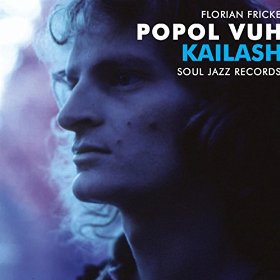
BOZ SCAGGS-A FOOL TO CARE.
BOZ SCAGGS-A FOOL TO CARE.
2015 has been the year of the comeback. Some of the biggest names of yesteryear have returned after a lengthy absence.
The year started well with critically acclaimed comeback album from Bob Dylan. Then recently, Dave Gilmour, released his first solo album since Pink Floyd called it a day. However, there’s been many more comebacks during 2015.
Troubadour James Taylor and former Eagle Don Henley both make welcome returns. Keith Richards made a return with was easily, the most overhyped comeback album of 2015. It was an album that was everywhere. Unlike Boz Scaggs’ recent comeback album Fool To Care. It was quietly released on 429 Records.
Unlike many of his contemporaries who hit the comeback trail during 2015, it had only been two years since Boz Scaggs released his last album Memphis. It reached number seventeen on the US Billboard 200, and became Boz Scaggs’ most successful album since 1980s Middleman. Not only did Middle Man reach number eight in the US Billboard 200, but was certified platinum. However, Boz Scaggs was no stranger to commercial success and critical acclaim.
Middleman was Boz Scaggs ninth album since his 1965 debut album Boz. It was recorded on September 30th 1965, in Stockholm, Sweden. Later in 1965, Boz was released, but failed to chart. For Boz Scaggs it would another four years before he released another solo album.
During that period, Boz Scaggs became part The Steve Miller Band. He featured on their first two albums, Children of the Future was released in July 1968 and reached just 134 in the US Billboard 200. Three months later, and The Steve Miller Band released Sailor in October 1968. It reached number twenty-four in the US Billboard 200. Despite the commercial success and critical acclaim Sailor enjoyed, both Boz Scaggs and Jim Peterman left the band.
Boz Scaggs returned to his solo career, and in August 1969, released Boz Scaggs. This was the album that saw Boz Scaggs make a commercial breakthrough. Although it reached just number 171 in the US Billboard charts, it looked as if Boz Scaggs was on his way.
Two years later, and Boz Scaggs returned with the first of two albums he released during 1971. The first was Moments, which was released in March 1971. It reached 124 in the US Billboard 200 charts. For many, it looked as if Boz Scaggs career was on the up.
Sadly, that wasn’t the case. When Boz Scaggs and Band was released in December 1971, the album failed commercially, reaching just 198 in the US Billboard 200 charts. Things improved slightly, when My Time was released in September 1972. It reached number 138 in the US Billboard 200 charts. Was that a sign that Boz Scaggs fortunes were improving?
That was the case. Between 1974 and 1980, Boz Scaggs could do no wrong. His sixth album, Slow Dancer was released in March 1974. Although it only reached number seventy-four in the US Billboard 200 charts, it was certified gold. Two years later, and Silk Degrees hit the shops in March 1976. Quickly, it became Boz Scaggs’ most successful album, reaching number two in the US Billboard 200 and number six in the US R&B charts. Silk Degrees sold over five million copies, and was certified platinum five times over. After the success of Silk Degrees, it was nineteen months before Boz Scaggs returned with a new album,
That new album was Down Two Then Left, which was released in November 1977. It reached number eleven in the US Billboard 200 charts and was certified platinum. Nearly two-and-a-half years passed before Boz Scaggs released Middle Man in April 1980. Not only did Middle Man reach number eight in the US Billboard 200 charts, but number thirty-six in the US R&B charts. Boz Scaggs was on a roll. Even his 1980 Hits! album reached number twenty-four, and was certified gold. Boz Scaggs had been one of the most successful artists of the late seventies. It looked like this success would continue into the eighties.
Looking back, that might have been the case. However, Boz Scaggs decided to take a break from music. This break lasted eight years. It wasn’t until August 30th 1988, that Boz Scaggs returned with Other Roads, an album of AOR. Realising his audience were eight years older, Boz Scaggs figured that AOR would be what they were listening to. While Other Roads and the single Heart Of Mine proved popular in the AOR charts, the US Billboard 200 and US Billboard 100 were another thing. Other Roads only reached number forty-seven in the US Billboard 200 and Heart Of Mine reached thirty-five in the US Billboard 200. For Boz Scaggs, it was a Pyrrhic victory.
Another six years passed before Boz Scaggs returned with his next album Some Change on April 5th 1994. It stalled at just ninety-one in the US Billboard 200. Despite its lowly chart placing, some critics boldly pronounced Some Change Boz Scaggs’ finest album since 1976s Silk Degrees. Sadly, it hadn’t enjoyed the same success.
Neither did Fade Into Light, which was only released in Japan. The album was released on November 19th 1996, and was only released in America in 2005. Meanwhile, it was another five months before Boz Scaggs released another album in America.
It wasn’t until April 8th 1997 that Boz Scaggs released Come On Home. Just like Some Change, Come On Home wasn’t a commercial success, reaching ninety-four in the US Billboard 200. For an artist who once was used to gold and platinum discs, this was a frustrating time. Nor was it going to get any better.
Four years passed before Boz Scaggs released his next album Dig. Boz Scaggs had recorded Dig in February 2001. He waited another seven months to release the album. The day chosen for the release of Dig, was a day that changed history forevermore.
That day was September 11th 2001. It was meant to be an ordinary day. Some music fans awaited the release of album by one of the veterans of American music, Boz Scaggs. However, tragedy struck, and the last thing Americans had on their mind was music. Despite the tragedy that unfolded, Dig reached number 146 in the US Billboard 200. It was another two years before Boz Scaggs returned.
With Boz Scaggs no longer as popular as he once was, he decided to think outside the box. He came up with the idea of recording an album jazz standards. But Beautiful was released on May 20th 2003, and although it only reached 167 in the US Billboard 200, it topped the US Jazz charts. Despite finding an audience among jazz fans, Boz Scaggs didn’t release another album until 2008.
Speak Low was released in 2008, and reached number 128 in the US Billboard 200. That was an improvement on But Beautiful. Despite the relative success of Speak Low, Boz Scaggs didn’t release another album for another five years.
When Boz Scaggs did eventually return, he returned with album of blues and rock, Memphis. It was produced by Steve Jordan, and was well received by critics. Record buyers were also won over by Memphis, which reached number seventeen on the US Billboard 200. Memphis became Boz Scaggs’ most successful album since 1980s Middleman. Fired up by the success of Memphis, Boz Scaggs returned recently with what’s the nineteenth studio album of his career A Fool To Care.
Unlike previous albums, A Fool To Care, features eleven cover versions and just one track penned by Boz Scaggs, Fool To Pay. The cover versions are an intriguing selection. Among them, are Richard Hawley’s There’s A Storm A Comin’, Curtis Mayfield’s I’m So Proud and Huey P. Smith’s High Blood Pressure. Another is Richard Danko and Robert Guidry’s Small Town Talk. Then there’s Al Green’s Full Of Fire, which Al penned with Willie Mitchell and Mabon Lewis Hodges. They’re just five of eleven cover versions which Boz Scaggs’ and an all-star band give a makeover.
Recording of A Fool To Care took place at Blackbird Studios, Nashville. Steve Jordan, who produced Memphis, produces A Fool To Care. However, the band is a mixture of musicians who play on all tracks or on some cases, just one or two. The rhythm section features drummer and percussionist Steve Jordan, bassist Willie Weeks and guitarists Ray Parker Jr., Boz Scaggs, Reggie Young and Al Anderson. Joining them are Paul Franklin plays steel guitar, pianist Eric Crystal, organist Seth Asarnow and Clifford Carter adds synths. Jim Cox however, switches between organ, piano and Wurlitzer. They’re augmented by The Love Sponge Strings and a horn section. Jim Hoke plays alto flute and various other woodwind instruments. Backing vocals come courtesy of Conesha “Ms. Monet” Owens, Fred Ross, Steve Jordan and Tony Lindsay. That’s not forgetting two special guests, Bonnie Raitt and Lucinda Williams. They feature on A Fool To Care, Boz Scaggs’ nineteenth album. It was released recently.
Many critics saw A Foot To Care as Boz Scaggs picking up where he left on Memphis. It’s a far cry from the albums he released during his wilderness years. Back then, Boz Scaggs seemed to lack direction. Not any more. With producer Steve Jordan, all-star band and two high profile guest artists, Boz Scaggs was on the comeback trail.
Rich Woman opens A Fool To Care. Straight away, Boz Scaggs languid, lived in vocal doesn’t so much deliver the lyrics, but lives them. A crunchy guitar and bass are joined by guitars and drums. Soon, braying horns enter. They accompany Boz as blues, country and rock combine. A glistening guitar sits below the mass of horns and rhythm section. Washes of Hammond organ add an atmospheric hue, as Boz delivers this paean to his Rich Woman “whose all mine.”
The Ted Daffan penned I’m A Fool To Care is given a bluesy makeover by Boz Scaggs and his band. Scorching horns, a piano and the rhythm section combine with Boz and Ray Parker Jr.’s guitars. They provide the perfect backdrop for Boz’ needy, hurt-filled vocal.
Hell To Pay sees Boz joined by Bonnie Raitt. She shares the lead vocal and plays slide guitar. They’re the perfect foil for each other. As the rhythm section provide the heartbeat, Al Anderson adds chunk guitar and Jim Cox electric piano. Bonnie meanwhile, delivers a sassy vocal. She plays a starring role, while Boz is left playing a supporting role. That doesn’t matter, when everything is combined, the result is an irresistible bluesy shuffle.
Just a lone Hammond organ opens Small Town Talk, and accompanies Boz’s emotive vocal. Behind his impassioned plea, drums provide a subtle backdrop. Jim Hoke plays accordion, adding, while bursts of chiming guitar and subtle bursts of Hammond organ provide a backdrop for Boz’s soul-baring vocal.
A wistful piano opens Last Tango On 16th Street. Soon, a bass and accordion play. Drums and percussion open Boz’s worldweary vocal. It sounds as if he’s lived and experienced the cinematic lyrics. He paints pictures, of life on 16th Street, while behind him, the arrangement takes the listener to French Quarter of New Orleans with this melancholy and cinematic song.
There’s A Storm A Comin’ was originally written and recorded by Richard Hawley. Boz Scaggs stays true to the original, almost crooning the lyrics about hurt and heartbreak. Meanwhile, the arrangement is atmospheric, mesmeric and understated. It features just synths, organs and the rhythm section. Along with Boz’s guitar, they give the track a vintage sound. That’s something Richard Hawley’s original has. Where it differs is the accordion solo. This is part of Boz and producer Steve Jordan’s “sound.” Together, they give this a beautiful, understated song a twist, as Boz becomes a crooner.
Boz and producer Steve Jordan remember Miles Davis’ quote about leaving space in a song. They do that on the cover of Curtis Mayfield’s I’m So Proud. It has an understated arrangement. Just the rhythm section, chiming crystalline guitar and washes of Hammond organ accompany Boz’s tender, heartfelt vocal. Fills of vibes and harmonies add the finishing touch to what’s one of the best covers on A Fool To Care.
A lone acoustic guitar sets the scene on I Want To See You. Willie Weeks’ bass is joined by percussion and piano. They give the track a Latin sound as Boz delivers a rueful, needy vocal. Behind him, washes of Hammond organ and accordion are added. However, the Latin influence is still present, as a lovestruck Boz delivers a hopeful, heartfelt vocal.
It was Huey “Piano” Smith who wrote High Blood Pressure. Fittingly, it’s the piano that opens the track. Soon, the rhythm section, crunchy guitars combine. The guitars are panned left, and are muffled. Meanwhile, Boz has being somewhat ambitious, and seems to struggle to reach the higher notes. Good as his band are, Boz lets the side down. High Blood Pressure is more suited to Dr. John. However, the addition of gospel tinged harmonies partly, makes amends. By then, Boz’s vocal is more relaxed. He’s no longer forcing it. Later, Jim Cox unleashes a stunning piano. Along with the harmonies the song is swinging. It’s just a pity about the guitar and parts of the vocal.
From the opening bars, Al Green’s Full Of Fire is almost unrecognisable as it unfolds. That’s no surprise. Al Green’s original is the definitive version. So it’s a case of reinventing the song. One way to do this is smoothing the song out. When the horns bray, the rhythm section land down lay down a slightly funky groove. Boz’s vocal veers between AOR and soulful, as he demonstrates his versatility. As The Love Strings swing, washes of Hammond organ are joined by a searing guitar that cuts through the arrangement. By then, Full Of Fire has taken on a slick, almost AOR sound. It’s far from Al’s original. While it’s impossible to fault the musicianship and arrangement, it’s way too smooth and slick.
It’s just a Hammond organ and drums that combine to open Love Don’t Love Nobody. They set the scene for Boz’s soulful, wistful vocal. His delivery is heartfelt, as a piano plays, and a guitar chimes. Producer Steve Jordan realises that Boz is delivering one of his finest vocals, and ensures that the arrangement doesn’t overpower it. So everything is subtle. Whether it’s the piano, washes of Hammond organ, cooing harmonies or drums, they’re raison d’être is to frame Boz’s vocal. They do this beautifully, and this Joseph Jefferson and Charles Simmons’ song is one of the highlights of A Fool To Care.
Whispering Pines closes A Fool To Care, and features Lucinda Williams. She shares the lead vocal. Against a backdrop of accordion, rhythm section, guitar and washes of Hammond organ, Lucinda unleashes a soul-searching vocal. When the baton passes to Boz, his vocal is full of emotion. Then when Lucinda and Boz trade vocals, Lucinda sometimes overpowers Boz’s vocal. That’s a shame.Producer Steve Jordan had taken great care with his production. He adds a weeping guitar and Hammond organ. They’re meant to compliment the vocals on what could’ve been a heart wrenching track. It’s good, not great, purely because Lucinda’s vocal powerhouse, sometimes overpowers Boz. Sadly, it’s a slightly disappointing end to A Fool To Care. However, there’s still the bonus tracks
A total of three bonus tracks feature on A Fool To Care. The best of this trio, is a cover of Curtis Mayfield’s Gypsy Woman. It’s followed by Joe Seneca’s Talk To Me, Talk To Me and Cecil and Linda Womack’s M.P.B. Just like the rest of A Fool To Care, they’re an eclectic selection of tracks. While the bonus tracks are always a welcome addition for many people, this means that Boz Scaggs recorded a total of fifteen tracks for A Fool To Care. That’s a far cry from days when vinyl was King.
Back then, artists were limited by the amount of music that could fit on an LP. If they were really lucky, the could squeeze forty-five minutes music. That was pushing it. Mostly, though, albums lasted thirty-four to thirty-six minutes and featured eight to ten tracks. This meant record buyers heard an artist’s best music. Albums were all killer and no filler. Not any more.
Since the advent of the compact disc, albums are sprawling affairs, and can feature anything up to twenty tracks. There’s no way that an artist can record twenty great songs. Nor fifteen. Even twelve is a push. That’s the case on A Fool To Care.
Of the twelve tracks on A Fool To Care, nine find Boz Scaggs rolling back the years. He comes up short on Hight Blood Pressure, Full Of Fire and Whispering Pines. This trio of tracks are far from disastrous. It’s just small things, that could’ve and should’ve been spotted. Boz’s seems to struggle to reach the higher notes on Hight Blood Pressure. Full Of Fire is way too smooth, and lacks musical ‘fire.’ On Whispering Pines Lucinda Williams overpowers Boz’s vocal. Despite these flaws, A Fool To Care sees Boz Scaggs more or less pickup where he left off on Memphis. Only time will tell whether it will sell in the same quantities. Personally, I think that’s highly unlikely.
Some of the artists on the comeback trail are no longer as popular as they once were. There are exceptions. Bob Dylan and Dave Gilmour will both sell huge quantities of albums. It’s unlikely that James Taylor and Don Henley enjoy the same popularity they once did. Even Keith Richards, with his latest effort is no longer the draw he once was. However, music and musical tastes have changed since Boz Scaggs’ glory days.
Despite this, Boz Scaggs is still a talented and versatile artist. He flits between blues, country, and rock on A Fool To Care. There’s even elements of funk, jazz, Latin and gospel tinged harmonies. A Fool To Care is an eclectic and captivating comeback album from Boz Scaggs, who fifty years ago, released his debut album Boz.
BOZ SCAGGS-A FOOL TO CARE.
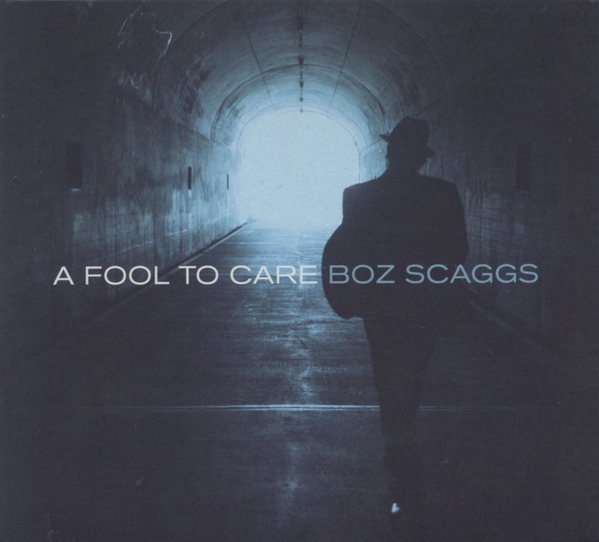
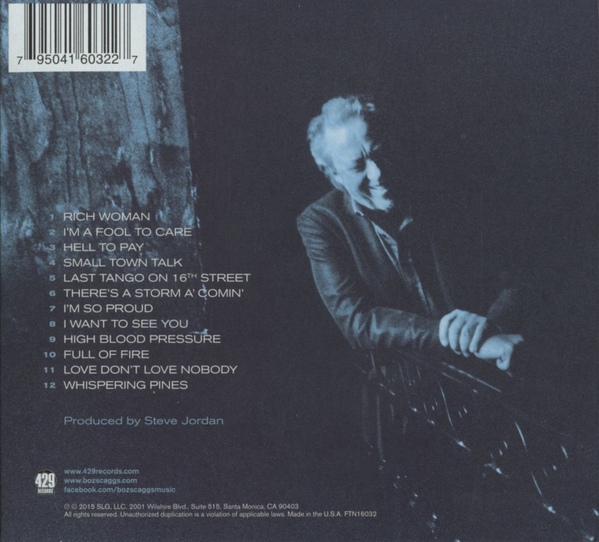
 dereksmusicblog
 dereksmusicblog