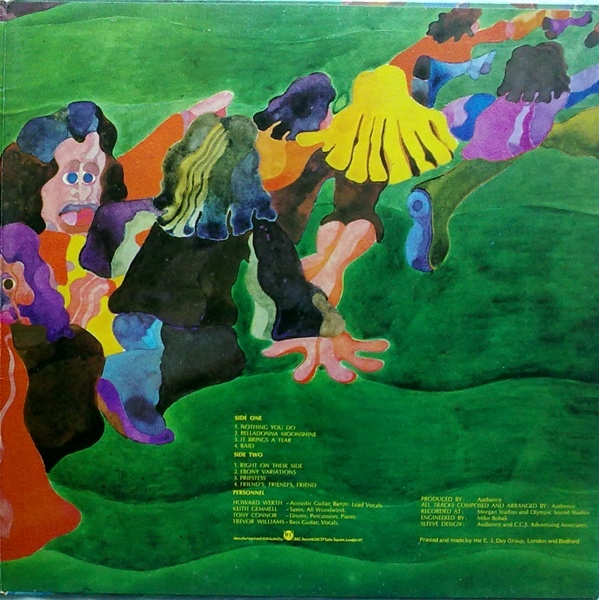
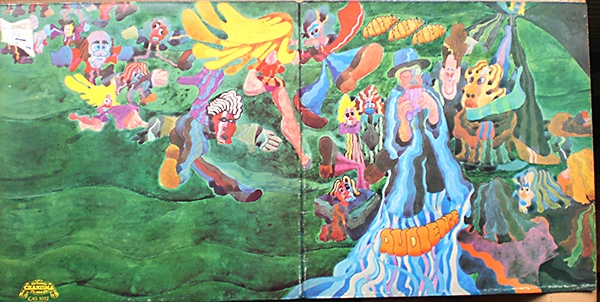
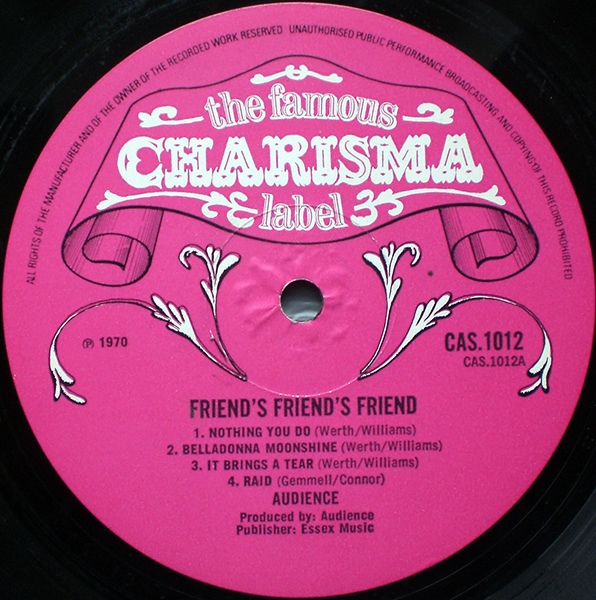
AUDIENCE-FRIENDS, FRIENDS, FRIEND.
Audience- Friend’s, Friend’s, Friend.
In October 1969, Audience were offered the opportunity to support Led Zeppelin at the Lyceum in London. For Audience, this was the opportunity of a lifetime as Led Zeppelin had just released their eponymous debut album on 12th of January 1969. It was well on its way to selling over ten million copies. With Led Zeppelin riding the wave of commercial success and critical acclaim, it was almost guaranteed that the great and good of music would be in the audience. This, the four members of Audience thought, could be the break they were looking for.
By October 1969, Audience had already come a long way in a short space of time. The story began earlier in 1969, when Lloyd Alexander Real Estate split up.
They were a semi-professional soul band who played the London club and pub circuit. They even released Gonna Live Again as a single on the President label in 1967. Although it wasn’t a hit, it became a favourite among mods. However, there was no followup, and in early 1969, Lloyd Alexander Real Estate split-up. Like a phoenix from the ashes of Lloyd Alexander Real Estate, rose Audience.
Three of the former members of Lloyd Alexander Real Estate decided to form a new band. Howard Werth, Keith Gemmell and Trevor Williams formed a new band, which they called Audience. There was a problem though. The nascent Audience needed a drummer.
Luckily, the other three members of the band new just the man. Tony Connor had auditioned for Lloyd Alexander Real Estate. However, he didn’t get the gig. This time round, he was in luck, and Tony Connor became the final member of Audience.
With the lineup complete, Audience started rehearsing. Soon, they had a manager. Quickly, everything fell into place. They had a publishing contract, a residency at the still prestigious Ronnie Scott’s Jazz Club and signed a recording contract with Polydor. Everything, it seemed, was going well for Audience.
Audience.
For their eponymous debut album, Audience had penned twelve tracks. Nine were written by Howard Werth and Trevor Williams. They also cowrote Maidens Cry with the other two members of Audience. Howard Werth wasn’t finished. He cowrote Pleasant Convalescence and Man On Box with Keith Gemmell. These twelve tracks were recorded at Morgan Studios, London.
When recording of Audience began at Morgan Studios Howard Werth played acoustic and electric guitar. He also took charge of the vocals. The rhythm section bassist Trevor Williams and drummer Tony Connor who also played vibes. Keith Gemmell played tenor saxophone, clarinet and flute. Producing Audience’s eponymous debut album was Chris Brough. Audience was recorded quickly, and released later in 1969.
On its release, Audience passed record buyers and critics by. Very quickly, Polydor deleted the album, and it wasn’t until much later that people began to appreciate Audience. With its fusion of art rock and prog rock, it’s regarded as an album that was way ahead of its time. Unfortunately after the commercial failure of Audience, a problem emerged.
Audience’s contract with Polydor wasn’t a multi-album deal. Nor did it last for a specified period. It was a one album deal. This meant Audience were back where they started, earlier in 1969, looking for a recording contract.
Fortunately for Audience, their luck started to change. Led Zeppelin had been booked to play at the Lyceum in London in October 1969. They needed a band to open for them. Although Led Zeppelin could’ve had their pick of bands to open for them, Audience got the gig. Their luck was starting to change.
When Audience arrived at the Lyceum, they were knew that the venue would be packed with the great and good of music. There was the possibility that watching, would be someone interested in signing them. So the four members of Audience agreed, tonight, they had to give it their best shot. There could be no regrets after their set.
As Audience took to the stage, they looked out at a sea of bodies. For many of them, Audience were just another unsigned band. By the time they left the Lyceum’s stage, that was about to change.
Unknown to Audience Tony Stratton-Smith was watching. He had just formed a new label, Charisma, and was impressed by Audience. He managed to make his way backstage, where he found the four members of Audience. Tony Stratton-Smith started telling the band how impressed he was by them, and how he wanted to sign them to his new label, Charisma Records. Realising that here was someone who was interested in their music, and believed in them, Audience agreed.
Now signed to Charisma, Audience found themselves signed to the same label as Van Der Graaf Generator and Lindisfarne. Quickly, Audience settled into life at Charisma, as Tony Stratton-Smith made plans for Audience’s sophomore, Friend’s, Friend’s, Friend.
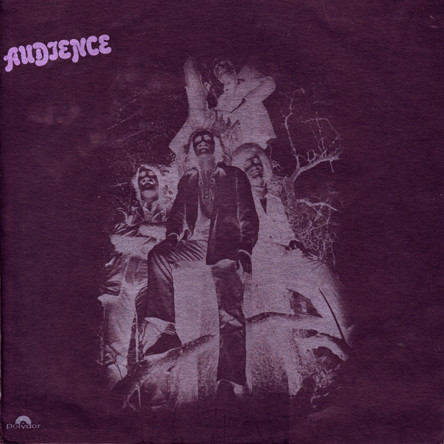
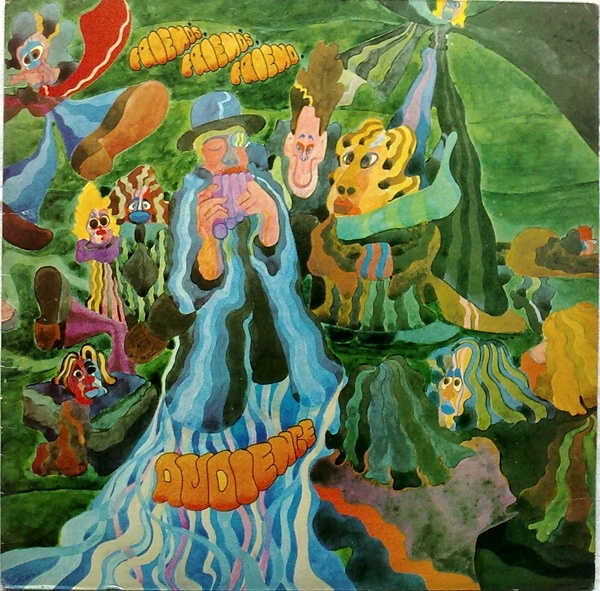
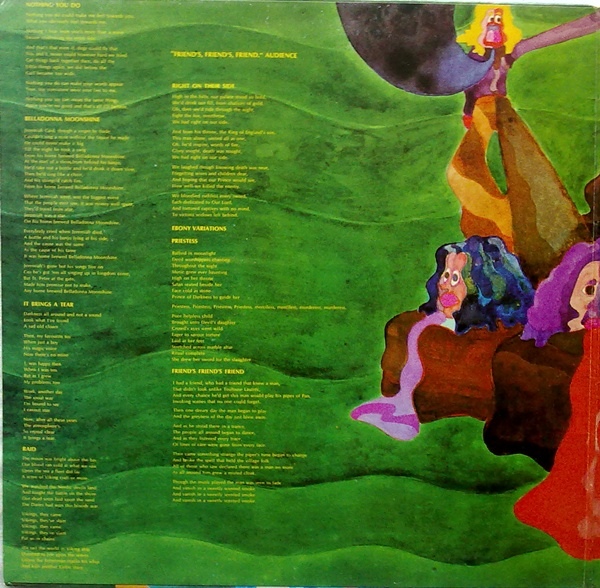
Friend’s Friend’s Friend.
Given that Audience were new to the Charisma label, Tony Stratton-Smith wanted to bring onboard high profile producer to produce their label debut. American producer Shel Talmy was the chosen one.
Previously, Shel Talmy worked with The Kinks, producing All Day and All of the Night, Tired of Waiting for You, Dedicated Follower of Fashion, Sunny Afternoon and Waterloo Sunset. The producer had also worked with The Who, producing their 1965 debut album My Generation, and with Roy Harper and Davy Jones who later, would become David Bowie. With such an impressive track record, Shel Talmy looked the perfect producer to transform Audience’s fortunes. They had been working on new material.
For Friend’s Friend’s Friend, the members of Audience had worked on eight songs. Six came from the pen of Howard Werth and Trevor Williams. Ebony Variations was credited to the four members of Audience. Tony Connor and Keith Gemmell cowrote Priestess. Having written eight songs new songs, Audience made their way to Olympic Studios.
At Olympic Studios, the four members of Audience showed producer Shel Talmy their eight new songs. Shel Talmy looked at the new material. Shel Talmy wasn’t impressed. Apart from Belladonna Moonshine, Shel Talmy didn’t like Audience’s new material. He then decided he didn’t want to produce what became Friend’s Friend’s Friend.
Many bands would’ve viewed this as a huge problem. Not Audience. There and then, they made the decision to produce their sophomore album, Friend’s Friend’s Friend. Not at Olympic Studios though.
Instead, the four members of Audience decamped to the familiar surroundings of Morgan Studios. With engineer Mike Bobak in tow, Audience got work. They weren’t complete novices when it came to production. Each of the members of Audience had been members of bands before. This included Lloyd Alexander Real Estate, who had released a single. Members of Audience had also been around studios with other bands, so it wasn’t a new experience. Guided by an experienced engineer like Mike Bobak, Audience felt capable of producing Friend’s Friend’s Friend got to work.
Lead singer Howard Werth, guitar played acoustic guitar and banjo. The rhythm section featured bassist Trevor Williams and drummer Tony Connor. He also played piano, percussion. Keith Gemmell played saxophone and woodwind. Despite never having produced an album before, Audience, guided by Mike Bobak soon had Friend’s Friend’s Friend recorded. All that was left was for Friend’s Friend’s Friend to released.
Audience were hoping to avoid a repeat of their eponymous debut album, when Friend’s Friend’s Friend was released in May 1970. If two consecutive albums flopped, that could prove catastrophic. The worst case scenario was that Audience’s career could be at a crossroads. For a band that had only been together just over a year, that would a disaster. However, Audience had covered all the bases.
Critics discovered that Friend’s Friend’s Friend was a truly eclectic album. There were elements of art rock, country, pop, progressive rock and rock. The mood veered between joyous and witty, to introspective and dark on Friend’s Friend’s Friend. There was something for all musical tastes on Audience’s sophomore album Friend’s Friend’s Friend.
Nothing You Do opened Friend’s Friend’s Friend, and is best described as a fusion of prog rock, folk and classic rock. There’s more than a nod to the Rolling Stones on Nothing You Do. Partly, that’s down to Howard’s mid-Atlantic drawl. He loses this on Belladonna Moonshine, which was released as a single. It has a much more joyous, good time sound. This struck a nerve with record buyers, and resulted in Audience making an appearance on British television show Top Of The Pops. Very different was It Brings A Tear. Wistful and melancholy describes this maudlin mixture of folk, pop, prog rock and rock. Why it wasn’t released as a single, seems strange? One of the highlights of Friend’s Friend’s Friend was The Raid. Not only does it feature Audience in full flight, but features barnstorming perfoemacen from saxophonist Keith Gemmell. It’s a fitting finale to side one of Friends, Friends, Friend.
Side two picks up where side one left off, with Keith’s saxophone driving Right On Their Side along. As Howard delivers lyrics inspired by Enland’s historical past, and tinged with triumph and tragedy, Keith switches between saxophone and flute. He plays a leading role in the song’s success. Ebony Variations was originally inspired by Mozart’s clarinet concerto. It’s very different from the rest of Friends, Friends, Friend. Everything from classical, folk, pop and rock combine, creating a captivating track. The final two tracks on Friends, Friends, Friend were inspired by controversial subjects, mysticism and the occult.
Back in the early seventies, this wasn’t unusual. Many musicians were taking an interest in these matters. Audience were no different. They were reading The Dawn Of Magic, which was written by Louis Pauwels and Jacques Bergier. This book influenced the dark, dramatic and otherworldly sound of Priestess and Friends, Friends, Friend which closes Audience’s sophomore album Friends, Friends, Friend.
Although Friends, Friends, Friend wasn’t a hugely successful album, it was a bigger success than their 1970 eponymous debut album. Partly, this was down to Audience’s appearance on Top Of The Pops, where they sung Belladonna Moonshine. Suddenly, a new audience were introduced to Audience’s music. Despite their appearance on what was the biggest music show on British television, it was the live circuit where Audience were most popular.
When Audience headed out on tour to promote Friends, Friends, Friend, they played in front of sell out crowds. It must have been frustrating. If everyone who watched Audience live had bought Friends, Friends, Friend, the album would’ve found its way onto the British charts. Sadly, that wasn’t to be. However, success wasn’t far away for Audience.
Audience released their third album House On The Hill in 1971. It was produced by Gus Dudgeon. Indian Summer was chosen as a single, and reached number seventy-four on the US Billboard 100 charts. Just like so many British bands before them, American audiences discovered Audience first.
The following year, 1972, Audience released their fourth and final album, Lunch. By then, Audience had spent the last three years touring. The band were almost burnt out. After touring with The Faces and Cactus, tensions were running high. Keith Gemmell left Audience, resulting in the band needing a new saxophonist.
Lunch was completed with the help of Bobby Keys and Jim Price, the Rolling Stones brass section. When the Gus Dudgeon produced Lunch was released, it reached number 175 in the US Billboard 200 charts. Lunch became the most successful album of Audience’s career. Sadly, it was also their swan-song.
After four albums and a handful of singles, art rock pioneers, Audience called time on their career. The remaining three members of Audience went their separate ways.
That was the last that anyone heard of Audience until they reformed in 2004. Howard Werth, Keith Gemmell and Trevor Williams played a series of concerts in Germany, Italy, Britain and Canada. By then, somewhat belatedly, Audience’s music was being appreciated and had found a wider audience. For Audience, it was a case of better late than never. Forty years after releasing four albums of eclectic and innovative music between 1969 and 1972, including their cult classic Friends, Friends, Friend their music has found the Audience it deserves.
Audience- Friend’s, Friend’s, Friend.

EARTH AND FIRE-TO THE WORLD OF THE FUTURE.
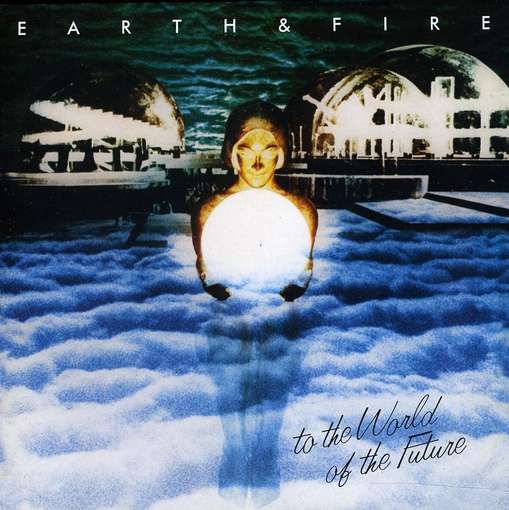
EARTH AND FIRE-TO THE WORLD OF THE FUTURE.
Alquin, Ekseption, Finch, Focus, Golden Earring and Trace all have something in common. Just like Earth and Fire, they were some of the most successful Dutch bands of the prog rock era. Their music is still popular today among connoisseurs of progressive rock. That’s why Earth and Fire’s fourth album To The World Of The Future has been recently released by Esoteric.
The World Of Future was released in 1974. By then, Earth and Fire were one of Holland’s most successful bands. Since 1970, Earth and Fire had enjoyed seven consecutive top ten singles. This included a number one single in 1972 with Memories. For twin brothers Chris and Gerard Koerts this had been what they were working towards since 1967.
That’s when Chris and Gerard Koerts formed Opus Gainful in The Hague, Holland. They weren’t newcomers to music. Chris and Gerard had been making music since 1960. Originally, they performed in front of friends and family. It was then that people started referring to Chris and Gerard as The Singing Twins. Then in 1962, The Singing Twins won a talent show.
By the time The Singing Twins won the talent show, they were already interested in pop and rock music. So was Hans Ziech, who would play an important part in Chris and Gerard later career. However, that in the future. The music The Singing Twins were singing was far from rock ’n’ roll. It was much more M.O.R. This wasn’t how Chris and Gerard saw their future.
So in 1963, Chris and Gerard joined a local band. It played mostly instrumentals. However, this didn’t both Chris and Gerard. This was part of their musical education. Then in 1965, the band changed its name to The Swinging Strings.
After the name change, The Swinging Strings became a covers band. They covered songs by a variety of bands, including The Beatles and The Byrds. Soon, The Swinging Strings were a popular draw, and were playing around north and south Holland. However, The Swinging Strings weren’t popular in The Hague, where Chris and Gerard were from. Musical tastes were different in The Hague. Despite this, The Swinging Strings were popular elsewhere.
Through playing in the south and north of Holland, The Swinging Strings had made enough money to buy their own equipment. This made a big difference to them. The Swinging Strings were able to use better equipment before. As a gimmick, The Swinging Strings even hired three Audrey Hepburn lookalikes to dance on the stage. By then, The Swinging Strings’ popularity was increasing. So they entered and won, various talent shows. Despite the popularity of The Swinging Strings, Chris and Gerard were becoming disillusioned with playing cover versions.
Part of the problem was, Chris and Gerard were perfectionists. Technically, keyboardist Chris, and guitarist Gerard, were much more proficient that the other members of The Swinging Strings. They wanted to play alongside better musicians, musicians who matched their skill. So Chris and Gerard decided to leave The Swinging Strings in 1967.
This was a big risk. The Swinging Strings were a popular group, who played regularly. They even had their own fan club, and were attracting the attention of a local DJ Willem van Kooten. Despite this, Chris and Gerard left The Swinging Strings.
That was the end of The Swinging Strings. According to other members of The Swinging Strings, Chris and Gerard’s departure was sudden. The two brothers renamed The Swinging Strings Opus Gainful. However, the newly renamed band needed a rhythm section. Luckily, Chris and Gerard knew two men who suited the role.
Hans Ziech was the twenty-four year old bass player with a local band, The Soul. Technically, he was a match for Chris and Gerard. So was The Soul’s drummer Cees Kalis. So The Soul’s rhythm section became Opus Gainful’s rhythm section. Eric Wenink, The Soul’s guitarist joined Eric Wenink Opus Gainful for a couple of years.
With the band’s lineup seemingly complete, they spent much of 1968 practising. By then, Opus Gainful had decided to add a vocalist. Manuela Berloth was chosen and became Opus Gainful’s first vocalist.
With Manuela Berloth onboard, Earth and Fire continued to practise. Chris and Gerard were perfectionists, and expected the same standards from other members of Earth and Fire. So, practise sessions were long, and gradually, Earth and Fire found their own sound and direction. This was partly due to the music Earth and Fire listened to.
After practise sessions, Opus Gainful listened to mostly American music. They were inspired by Jefferson Airplane, Moby Dick and Jimi Hendrix. Carefully, the members Earth and Fire listened as music continued to change. So did Opus Gainful.
One night in 1968, Opus Gainful had been booked to play in Beverwijk, in North Holland. Just before Opus Gainful took to the stage, a decision was made to change their name. That night, Earth and Fire were born. This led to a change in the band’s fortunes.
The newly named Earth and Fire entered a talent show in 1969, which they won. The first prize was the chance to record two songs. This however, didn’t result in a record company for Earth and Fire. By then, Gerard was doubting whether Earth and Fire’s latest recruit was suited to the rock ’n’ roll lifestyle?
Later in 1969, Manuela Berloth left Earth and Fire. Gerard later, said that Manuela Berloth: “was not a rock ‘n roll woman.” The loss of Manuela meant that Gerard and Chris took charge of lead vocals. This was only a temporary measure.
It wasn’t until Earth and Fire opened for Golden Earring in September 1969, that Gerard and Chris found their new vocalist. This was Jerney Kaagman, who would feature on Earth and Fire’s eponymous debut album.
Earth and Fire.
All Earth and Fire’s hard work, patience and persistence was rewarded, when the band signed to Polydor in 1970.
Straight away, they began work on their debut album Earth and Fire. Brothers Chris and Gerard Koerts wrote the majority of the ten tracks on the album. Chris wrote four tracks and Gerard one track. They cowrote another four tracks. The other track was Seasons, which was written by Golden Earring guitarist George Kooymans. That wasn’t the end of the Golden Earring connection. Fred Haayen, Golden Earring’s manager, produced Earth and Fire. Once Earth and Fire was complete, it was released in 1970.
Earth and Fire launched the career of Earth and Fire. It was well received by critics, and featured a trio of hit singles. Seasons reached number two in Holland and number four in Belgium. In Holland alone, Seasons sold 40,000 copies. The second single Ruby, then reached number four in Holland and number eleven in Belgium. Not long after the release of Ruby, there was another change in Earth and Fire’s lineup. Drummer Cees Kalis was replaced by Ton van der Kleij. The new recruit watched as Earth and Fire enjoyed their third hit single.
Wild and Exciting was the final single released from Earth and Fire. It reached number five in Holland, but only twenty-one in Belgium. With three hit singles to their name, Earth and Fire’s popularity was growing. They had a busy touring schedule. So it wasn’t until late 1970, that Earth and Fire began work on their sophomore album, Song of the Marching Children.
Song of the Marching Children.
It wasn’t until late 1970, that the new lineup of Earth and Fire began work on Song of the Marching Children. It’s a concept album based on reincarnation. Chris and Gerard continued to write most of the music. That’s apart from Ebbtide, which Ton van der Kleij cowrote. However, Chris, Gerard and Hans Ziech cowrote the lyrics to what was Earth and Fire’s most ambitious album, Song Of The Marching Children. It was produced by Golden Earring drummer, Jaap Eggermont and their manager Fred Haayen.
Especially, side two which featured the eight part suite Song Of The Marching Children. Along with Storm And Thunder, Song Of The Marching Children was hailed as Earth and Fire’s finest hour. It also featured Earth and Fire at their most ambitious and innovative. This resulted in two more hit singles for Earth and Fire.
The first of these was Invitation, which reached number five in Holland. Then the impressive Storm And Thunder reached number six in Holland. Earth and Fire had enjoyed two more hit sings. That made it five in a row. However, five would soon become six.
With Earth and Fire riding a wave of commercial success and critical acclaim, they headed out on gruelling tour. It took in Holland, Belgium, Germany and Britain.This meant that they weren’t able to release an album during 1972. However, they had enough time to record a single, Memories. This would keep their fans happy until Earth and Fire returned with their third album.
When Memories was released in 1972, it reached number one in Holland and two in Belgium. Memories became Earth and Fire’s first hit single in Germany, where it reached number thirty-one.The success story that was Earth and Fire continued apace.
Atlantis.
By 1973, Earth and Fire returned with their Atlantis. This was another concept album. It was written by four members of Earth and Fire. Chris, Gerard and Ton van der Kleij cowrote the music; while Chris, Gerard and Hans Ziech cowrote the lyrics. Atlantis was produced by Jaap Eggermont. Eventually, Atlantis was completed and ready for release later in 1973.
Just like previous albums, Atlantis was released to critical acclaim. Atlantis featured another hit single, Maybe Tomorrow, Maybe Tonight. It reached number three in Holland, nine in Belgium and forty-four in Germany. However, in their home country, Holland, Maybe Tomorrow, Maybe Tonight had given Earth and Fire their seventh consecutive top ten single. However, this was taking its toll on Gerard.
He felt under pressure to keep the hits coming. Polydor, Earth and Fire’s record company had been pressurising to keep the hits coming. As a result, Gerard felt Atlantis wasn’t Earth and Fire’s best album. Gerard wanted to try something different. The last thing he wanted, were Earth and Fire’s albums to become formulaic.
To the World of the Future,
As 1974 began, things looked good for Earth and Fire. Their live shows received rave reviews in the music press. There was talk of Earth and Fire touring with Mott The Hoople in September 1974. This never came to anything. So Gerard, Chris and Hans began work on their next single, Love Of Life.
When Earth and Fire recorded Love Of Life, it featured a much more funky sound. This could’ve divided their audience. It didn’t. When Love Of Life was released, the Jaap Eggermont produced single reached number two in Holland and number twenty in Belgium. Earth and Fire had just enjoyed their eighth consecutive top ten single. They should be celebrating.
They weren’t. Behind the scenes, things weren’t going well.There were tensions within the band. Chris and Gerard decided it would be best if Hans left. He was replaced in June 1974 Theo Hurt. Earth and Fire had a new bassist as they began work on their fourth album To the World of the Future.
For To the World of the Future, Gerard, Chris and Hans had penned four songs. They were How Time Flies, The Last Seagull, Only Time Will Tell and Love Of Life. To The World Of The Future was penned by Chris and Hans. Theo Hurts wrote Voice From Yonder. Gerard and Jerney Kaagman cowrote Circus. These seven songs became For To the World of the Future. It was recorded at Soundpush Studios, Blaricum, in Holland.
As recording began at Soundpush Studios the rhythm section featured bassist Theo Hurts, who also played acoustic guitar. His partner in the rhythm section was drummer and percussionist Ton van der Kleij. He also played bell tree and xylophone. Jerney Kaagman took charge of lead vocals. Chris Koerts played electric and acoustic guitar and synths. Gerard Koerts was like a one man band, playing organ, piano, mellotron, synths, clavinet and Fender Rhodes. Again, Jaap Eggermont produced To The World Of The Future, which was Earth and Fire’s fourth album. It was released in April 1975.
When critics heard To The World Of The Future, they noticed that Earth and Fire had moved away from the symphonic sound of earlier albums. Critics were impressed by what was a stylistic departure from Earth and Fire. It showed they weren’t content to stand still. While this was admirable, would this cost Earth and Fire sales?
By the time To The World Of The Future was released in April 1974, Earth and Fire were on a winning streak. They had released eight consecutive top ten singles in Holland. Sadly, this run was broken by Only Time Will Tell. It stalled at number twelve. While this was still a cause for celebration, little did Earth and Fire realise that this was a signal of what was to come. To The World Of The Future which I’ll tell you about, marked the end of an era.
Synths beep and squeak, as if communicating by some futuristic language as To The World Of The Future unfolds. Slow rolls of drums join with washes of synths, harmonies and percussion. Elements of electronica, funk and symphonic progressive rock combine. As the rhythm section add gospel tinged harmonies, briefly the vocal changes hands. Meanwhile, the cinematic lyrics paint pictures city life. Especially, the misery and loneliness of city life. The tempo rises and then falls. When it falls there’s an ethereal beauty to the arrangement and Jerney Kaagman’s heartfelt vocal. Then the arrangement is stripped bare. Just the rhythm section provide a backdrop for a Hammond organ and electric guitar. It launches into a blistering solo on this eleven minute epic. It’s full of twists and turns, including numerous tempo changes, before reaching a dramatic crescendo.
Following an eleven minute epic, How Time Flies is just a three minute track. Again, it’s a mixture of styles and influences. There’s an almost pastoral sound as an acoustic guitar plays. Then a rasping synth ushers in Jerney’s vocal. By then, elements of electronica, folk, progressive symphonic rock can be heard. Later, synths strings and a harp accompany Jerney’s reflective, wistful vocal.
A storm blows as The Last Seagull begins. After fifty seconds, they’re joined by a broody bass. It crawls moodily along, before cinematic synths are added. Keyboards then take the arrangement in the direction of funk and fusion. Some of the synths sounds could’ve inspired many an Acid House producer. Later, the arrangement becomes dramatic, and could easily be part of the soundtrack to a mid-seventies film or TV series. It has that sound. Another blistering guitar solo is added was Earth and Fire stretch their legs. They’re soon kicking loose, and showcasing their considerable skills. It’s an impressive sound and a reminder of Earth and Fire at their best.
A scorching, sizzling guitar solo is joined by the rhythm section on Only Time Will Tell. They set the scene for Jerney’s vocal. It’s accompanied by an organ, before the arrangement builds becoming dramatic and powerful. So is Jenny’s vocal, as she delivers a vocal full of social comment. Behind her, synths accompany the rhythm section and guitar. Again, Earth and Fire are at their rocky best, on what’s one of the highlights of To The World Of The Future.
Voice From Yonder features an excerpt from a seance held in 1928. The voice of ‘spiritualist’ Terry Brown can be heard. Before that, a Fender Rhodes adds a melancholy hue. It’s joined by the guitar and rhythm section. Soon, Earth and Fire are combining elements of funk, jazz psychedelia and rock. The sample of the seance is added. Now, the track is reminiscent of something from The Beatles Sgt. Peppers Lonely Heart’s Club Bands. From there, Earth and Fire combine musical influences. They also drop the tempo, which adds an element of drama. When this happens, a searing guitar solo cuts through the arrangement, as Voice From Yonder heads to its thoughtful ending. Although it’s a track that’s meant to stimulate debate, for many people it’s more Hocus Pocus than Earth and Fire.
Love Of Life is another short song. It lasts just three minutes, and features Earth and Fire’s funky side. This doesn’t mean they turn their back on symphonic rock. Swells and washes of symphonic strings accompany the rhythm section and uber funky guitar. It’s panned left, making room for Jenny’s impassioned vocal on this paean.
Circus closes To The World The Future. Jenny delivers a dramatic, heartfelt vocal. Soon, the rest of Earth and Fire are creating a slow, dramatic arrangement. It consists of just the rhythm section, guitar and synths. Slow, deliberate drums are joined by a blistering guitar. Another guitar is panned left, as Jenny combines power and passion. Soon, the tempo changes, only to change again. Earth and Fire embark upon a jazzy stroll. Just the rhythm section and keyboards combine. Later, a sizzling guitar solo and drum rolls are added. That’s the signal for another change, as Earth and Fire return to the earlier dramatic sound. Still, they’re not through teasing the listener. Further changes in tempo see this magical musical mystery tour continue before Earth and Fire take their leave, closing To The World The Future. It’s a return to form from Earth and Fire.
Gerard Koerts had been disappointed by their previous album Atlantis. He had felt pressurised to make the album that Polydor wanted. However, on To The World The Future, Gerard and the rest of Earth and Fire recorded the album they wanted to make. It was a fitting way to end an era.
Genre-melting describes To The World The Future. Earth and Fire combine everything from electronica, funk and jazz, to progressive rock, psychedelia, rock and symphonic rock. It was a journey through musical genres, with Earth and Fire as the listener’s tour guide. Sadly, To The World The Future wasn’t as successful.
Earth and Fire had released eight consecutive top ten singles in Holland before the release of To The World The Future. Sadly, this run was broken when Only Time Will Tell was released as a single and stalled at number twelve. This was a signal of what was to come.
Later in 1975, Earth and Fire’s next single reached number eight in Holland and number twenty-eight in Belgium. Their next two singles didn’t fare as well. What Difference Does It Make was released in 1976, and reached number twelve. Then in 1977, 7 8th Avenue the single released from Earth and Fire’s fifth album Gate to Infinity stalled at number eighteen in Holland. That was as good as it got for Earth and Fire until 1979. They were left without a record deal, and the next two years, Earth and Fire never released an album. However, the decline in Earth and Fire’s popularity can be traced back to 1975.
By 1975, disco was becoming one of the most popular musical genres. It overtook many genres. A year later, so did punk. It was born in 1976, and came kicking and screaming into life. Just like disco, the increase in punk’s popularity contributed to the downfall of many bands.
Many punk ‘musicians’ turned on rock, and especially prog rock groups. They were called musical dinosaurs, and a remnant of music’s past. However, it wasn’t just newly popular punk musicians who turned their guns on groups like Earth and Fire. So did a new breed of gunslinger critics. They too, saw prog rock groups as dinosaurs, who deserved to be slain. Sadly, this new breed of critics found an unquestioning audience. Like sheep, their readers believed this hook, line and sinker.
Now faced with the twin evils of disco and punk, it was a case of evolve or die for many prog rock bands. Although some bands were enjoying commercial success, others were struggling. This included Fire and Earth.
To make matters worse, of drummer Ton van der Kleij in 1978, He was replaced by Ab Tamboer. Former Focus bassist, Bert Ruiter joined Earth and Fire. He was Jerney Kaagman’s partner, so familiar with the band and their music. However, they still hadn’t a record deal. Then in 1979, Earth and Fire secured a deal with Phonograph Records. They were richly rewarded for placing their faith in Earth and Fire.
It just took Earth and Fire a few nights for them to record their sixth album, 1979s Reality Fills Fantasy. It was recorded at Soundpush Studios, with producer Gerrit-Jan Leenders. The result was a much more pop oriented album.
When Reality Fills Fantasy was released in 1979, it came as a shock to the system for those used to their early albums. Gone was the prog rock sound. While there were still elements of symphonic rock on Reality Fills Fantasy, it was all change. Elements of disco, Europop, pop and rock shawn through. Although this change wasn’t welcomed by their old fans, new fans embraced Earth and Fire’s new sound.
The single released from Reality Fills Fantasy, Weekend, reached number one in Holland, Belgium and Germany. Earth and Fire had had to evolve to stay relevant. However, it was a far cry from the glory days of their first four albums.
This started with Earth and Fire’s eponymous debut album. It was released in 1970. Five years later, in 1975, Earth and Fire released the last great album of their career, To The World Of The Future. It marked the end of an era, when Earth and Fire were one of greatest and most successful Dutch bands. They enjoyed commercial success and critical acclaim across Europe, and created music that was ambitious and innovative.This includes Earth and Fire’s fourth album To The World Of the Future.
EARTH AND FIRE-TO THE WORLD OF THE FUTURE.

TEN YEARS AFTER-STONEDHENGE.
TEN YEARS AFTER-STONEDHENGE.
In October 1967, Ten Years After released their eponymous debut album. The album failed to make an impression on either side of the Atlantic. It was a disappointing start to Ten Years After’s recording career. Especially considering how well things had been going for Ten Years After.
Ever since they had changed their name from Blues Yard to Ten Years After, their fortunes had changed. They had secured a residency at the Marquee, played a starring role at the Windsor Jazz Festival and then signed to Deram Records. It had been roller coaster ride. However, it was nothing compared to the next six years.
The story began in May 14th 1968, when Ten Years After played a small gig at the Klooks Kleek jazz club in London. Deram Records arranged for the concert to be recorded. This proved a masterstroke.
When Ten Years After took to the stage, they worked their way five genre-melting songs. Everything from blues and boogie to jump blues, rock and rock ’n’ roll were combined by Ten Years After. It was a truly barnstorming performance, and a perfect way to showcase Ten Years After’s considerable skills. Their performance would come to the attention of legendary American promoter Bill Graham, who began championing their music in America.
Three months later, Ten Years After released their live album Undead in August 1968, it proved a game-changer. It was heard by legendary promoted Bill Graham. He championed Ten Years After in America. As a result, Undead reached number 115 in the US Billboard 200. This was the start of a six year period when Ten Years After could do no wrong in the eyes of the American record buying public.
From Stonedhenge, which was recently released by Decca Music Group, right through to Ten Years After’s eighth and final studio album, Positive Vibrations, which was released in April 1974, Ten Years After spent much of their time in America. That wasn’t surprising. Ten Years After were much more popular stateside. They were the latest rock band to make it big in America. However, it was a far cry from the group’s early days, back in 1960.
That’s when Ivan Jay and the Jaycats were formed. They consisted of musicians from the Nottingham and Manfield area. This included vocalist Ivan Jay, guitarist and vocalist Alvin Lee and bassist Leo Lyons. In 1962, Ivan Jay became The Jaycats and later, Ivan and The Jaymen. Just as the name changed, so did the lineup.
Ivan Jay was the lead vocalists until 1962. He was replaced by Ray Cooper, who also played rhythm guitar. Drummer Pete Evans joined in 1962, but left in 1965, to be replaced by Dave Quickmire. Then in 1965, Ric Evans became The Jaybirds drummer. The following year, 1966, The Jaybirds were on the move, and changed their name.
Like so many bands, The Jaybirds headed to London, where they became The Ivy League. Later, in 1966, keyboardist Chick Churchill joined The Ivy League. They soon came to the attention of future Chrysalis founder, Chris Wright. He became The Ivy League’s manager, who changed their name to Blues Trip. However, the quartet made their debut as Blues Yard.
Chris Wright got the newly named Blues Yard the job of opening for Bonzo Dog Doo-Dah Band. That was their one and only concert as Blues Yard. Not long after this, Blues Yard became Ten Years After. This was the start of the rise and rise of Ten Years After.
Through the Chrysalis Booking Agency, Ten Years After secured a residency at the Marquee. This was a prestigious residency. Suddenly, people were taking notice of Ten Years After. However, it was their appearance at the Windsor Jazz Festival in 1967 that resulted in Ten Years After signing to the Deram, a subsidiary of Decca.
Ten Years After.
Now signed to Deram, Ten Years After began work on their eponymous debut album. Deram didn’t bother getting Ten Years After to record a single. Even then, it was obvious that Ten Years After were more of an albums band. So Ten Years After were sent into the studio to record their debut album.
For their eponymous debut album, Ten Years After chose a mixture of cover versions and new songs. Cover versions included Paul Jones’ I Want to Know, Al Kooper’s I Can’t Keep from Crying, Sometime, Willie Dixon’s Spoonful and the blues standard help me. Alvin Lee penned Feel It for Me, Love Until I Die and Don’t Want You, Woman. He also cowrote Adventures of a Young Organ with Chick Churchill and Losing the Dog with Gus Dudgeon. These ten tracks became Ten Years After.
Recording of Ten Years After took place at Decca Studios, London during September 1967. The rhythm section featured drummer Ric Lee, bassist Leo Lyons and guitar and vocalist Alvin Lee. Augmenting the rhythm section was keyboardist Chick Churchill. Producing Ten Years After were two experienced and practised producers, Mike Vernon and Gus Dudgeon. Once Ten Years After was completed, it was released in October 1967.
When Ten Years After was released in October 1967, the album was well received by critics. Many described the album as purely blues rock. That wasn’t quite the case.
Granted blues rock was the most obvious influence on Ten Years After. Other influences included Americana, country, jazz, psychedelia and rock. These influences shine through on Ten Years After, which was released in the Autumn of 1967.
Ten Years After was released on October 27th 1967. The album failed to chart on either side of the Atlantic. While this was a disappointment for Ten Years After and everyone at Deram, critics forecast a bright future Ten Years After. And so it proved to be. However, that might not have proved to be the case if Ten Years After hadn’t recorded their live album Undead.
Undead.
Just seven months after the release of their eponymous debut album, Ten Years After were scheduled to play a small gig on May 14th 1968. The venue was the Klooks Kleek jazz club in London. Deram Records had arranged for the concert to be recorded, and released as a live album. This proved a masterstroke.
When Ten Years After took to the stage, they worked their way five genre-melting songs. Everything from blues and boogie to jump blues, rock and rock ’n’ roll were combined by Ten Years After. It was a truly barnstorming performance, and a perfect way to showcase Ten Years After’s considerable skills. Their performance would come to the attention of legendary American promoter Bill Graham, who began championing their music in America.
Three months later, Ten Years After released their live album Undead in August 1968, it proved a game-changer. It was heard by legendary promoted Bill Graham. He championed Ten Years After in America. As a result, Undead reached number 115 in the US Billboard 200. This was good news for Ten Years After, who had just completed their sophomore studio album Stonedhenge. With Bill Graham championing their music, they hoped that Stonedhenge would build on Undead.
Stonedhenge.
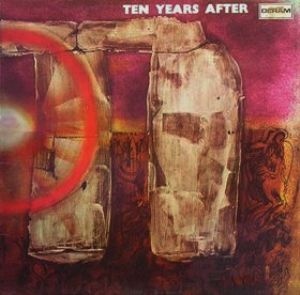
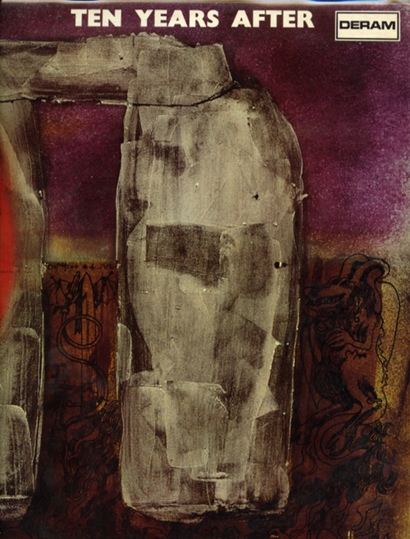
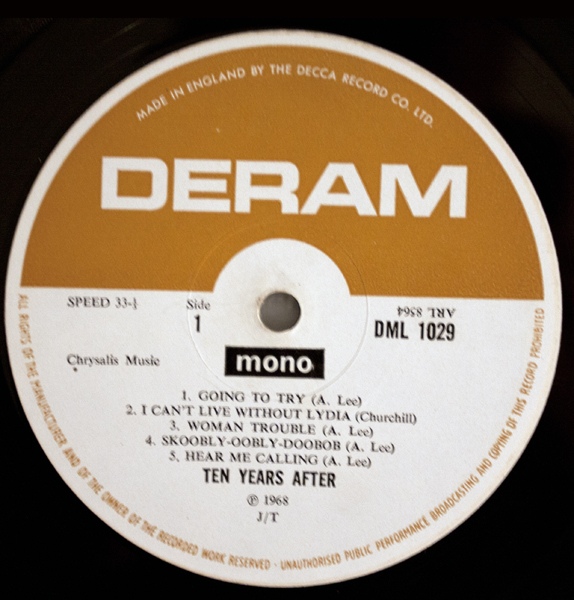
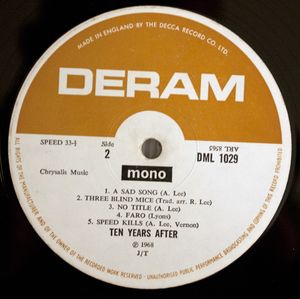
When work began on Stonedhenge, it was a familiar story. Alvin Lee was Ten Years After’s songwriter-in-chief, penning six songs, including Going To Try, Woman Trouble, Skoobly-Oobly-Doobob, Hear Me Calling, A Sad Song, No Title. He also cowrote Speed Kills with Mike Vernon. Keyboardist Chick Churchill contributed I Can’t Live Without Lydia, while Leo Lyons wrote Faro. Drummer Ric Lee’s contribution was arranging Three Blind Mice. Along with the other nine tracks, it was recorded at Decca Studios, in West Hampstead, London.
Recording of Ten Years After took place at Decca Studios, London between the 3rd and 15th September 1967. The rhythm section featured drummer Ric Lee, bassist Leo Lyons and guitar and vocalist Alvin Lee. Augmenting the rhythm section was keyboardist Chick Churchill. Producing Ten Years After was Mike Vernon. Once Ten Years After was completed, it was released on 22nd February 1969.
Before the release of Stonedhenge, critics had their say on Ten Years After’s second studio album. Their boogie rock sound was still present. So was the bluesy sound that featured on Ten Years After. However, producer Mike Vernon guided Ten Years After further down roads marked blues and jazz. He managed to do this, without Ten Years After forgetting their roots. There was something for everyone on Stonedhenge. Some critics compared Ten Years After to Canned Heat. This was ironic, as Ten Years After had just supported Canned Heat. They were enjoying the most successful period of their career. That was still to come for Ten Years After. It began with Stonedhenge.
When Stonedhenge was released on 22nd February 1969, it reached number sixty-one in the US Billboard 200 charts. This was a vast improvement on Undead, which reached number 115. The next chapter in the Ten Years After story had begun with Stonedhenge.
Going To Try opens Stonedhenge. Straight away, Ten Years are teasing the listener. From an understated introduction, a urgent arrangement unfolds. It’s a fusion of rock, blues and thanks to ethnic percussion, world music. There’s even a nod to prog rock, as continually, Ten Years After vary the tempo. From there, the musical mystery tour that’s Stonedhenge continues to tease and tantalise.
This starts with I Can’t Live Without Lydia, a short, jazz-tinged track. The jazz sound continues on Woman Trouble. It has a bluesy hue. Then on the jazzy Skoobly-Oobly-Doobob, Alvin Lee takes centre-stage. He scats and delivers a breathtaking guitar solo. Hear Me Calling which closed side one of Stonedhenge, features Ten Years After combining blues and boogie rock. They sound not unlike Canned Heat, the other purveyors of this sound.
Opening side tow of Stonedhenge was A Sad Song, which is a good description of this track. It has a slow, moody and somewhat haunting sound. It’s very much of its time, sounding as if it was recorded in the late sixties. Ten Years After combine elements of pop and rock with psychedelia and blues. Then Three Blind Mice, the children’s nursery rhyme, is transformed into a one minute drum lead instrumental. This is the weakest track on Stonedhenge. No Title, an eight minute jam more than makes up for Three Blind Mice.
No Title is a slow burner where Ten Years After showcase a slow, broody and lysergic sound. Blues, rock and psychedelia are combined, before Ten Years After start to stretch their legs, and unleash one of their best performances on Stonedhenge. Faro sadly, is a tantalising taste of what might have been. It sounds as if it’s an idea for a song, rather than a completed song. With some time and effort, Faro could’ve been a track that rivalled No Title. Speed Kills completes the musical journey that’s Stonedhenge. As the train leaves the station, Ten Years After climb onboard and combine blues and country. The country influence comes courtesy of Alvin Lee’s mid-Atlantic vocal. Meanwhile, the rest of Ten Years After kick loose, and ensure that their sophomore album Stonedhenge ends on a high.
For the four members of Ten Years After, the last two years had been a roller coaster. Their 1967 eponymous debut album had failed commercially on both sides of the Atlantic. This was a huge disappointment. The members of Ten Years After had spent seven years getting this far. However, their luck was about to change.
When promoter Bill Graham heard Ten Years After’s first live album Undead, he began to champion their music. Across America, a generation of record buyers decided to investigate this new British band. This resulted in Undead reaching number 115 on the US Billboard 200 on its release in August 1968. By then, Ten Years After had finished recording Stonedhenge, which was recently released by Decca Music Group.
On its release in February 1969, Stonedhenge reached number sixty-one in the US Billboard 200 charts. This was the start of a year Ten Years After would never forget. They played at the Newport Jazz Festival in July 1969. Next stop for Ten Years After was the Seattle Pop Festival later in July. Then on 17 August 1969, Ten Years After took to the stage at Woodstock, and played I’m Going Home. Their appearance would feature on both the soundtrack and movie. Ten Years After were about to become a musical phenomena.
That would be the case right through until 1974. when Ten Years After split-up. For six years Ten Years After could do no wrong, and were one of the biggest bands on both sides of the Atlantic. Although Undead was Ten Years After’s breakthrough album, it was their second studio album that brought the band to the attention of the wider record buying public. The American record buying public embraced Ten Years After for the next five years.
Stonedhenge was the start of America’s love affair with Ten Years After. The album has just been rereleased as a double album. Disc one features the mono and stereo version of Stonedhenge. On disc two, there’s six tracks, including B-Sides, live tracks and even a track from an Alvin Lee solo album. They’re be a welcome addition for anyone who wants to discover or rediscover Stonedhenge, which was the latest stop on Ten Year After’s road to commercial success and critical acclaim.
TEN YEARS AFTER-STONEDHENGE.
GTR-GTR.
GTR-GTR.
After his departure from Asia in 1985, guitarist Steve Howe was looking for a new project. Although Steve had nothing in the pipeline, he had an idea. It was a tantalising prospect.
Brian Lane, Yes’ former manager, realised this as the pair sat down to talk. Steve Howe explained that his idea involved forming what a new group with another member of progressive rock royalty. This was none other than former Genesis lead guitarist Steve Hackett.
After working on six studio albums, three live albums and seven singles, Steve Hackett left Genesis in 1977. Since then, he had had been concentrating on his solo career.
In 1978, Steve Hackett released his sophomore album, Please Don’t Touch. Although it reached just thirty-eight in Britain, Please Don’t Touch became his most successful album in America, reaching number 103 in the US Billboard 200. However, that was as good as it got for Steve in America. His next four album never reached the same heights stateside.
Spectral Mornings was released in May 1979, reaching twenty-two in Britain, and 138 in the US Billboard 200. This trend continued when Defector reached number nine in Britain, becoming his most successful album. However, in America, Defector reached just 144 in the US Billboard 200. When Cured was released in August 1981, it reached fifteen in Britain, but stalled at 169 in the US Billboard 200. Little did Steve Hackett realise that he none of his solo albums would chart in America.
When Steve Hackett released Highly Strung in April 1983, it reached number sixteen in the British charts. The album failed to chart elsewhere. Nobody realised that Steve Hackett’s career was about to enter choppy waters.
After Steve Hackett completed Bay Of Kings, he took the album to Charisma Records. They weren’t expecting an album of contemporary classical music. This wasn’t what Charisma Records expected or wanted. Executives at Charisma Records, fearing that Bay Of Kings would fail commercially, rejected the album. Not long after this, Steve Hackett left Charisma Records.
Bay Of Kings was released in October 1983, through Lamborghini Records, an independent label. Steve Hackett’s classical debut reached just number seventy in the British charts. The executives at Charisma Records were vindicated. However, for Steve Hackett this was just the start of his problems.
Following the disappointment of Bay Of Kings, he returned with Till We Have Faces. What was Steve’s eight solo album, was released in August 1984. I became the least successful album of his career, when it stalled at fifty-four in Britain. This was another blow for Steve Hackett. So much so, that it would be another nine years before Steve Hackett released another solo rock record. Classical music Steve Hackett thought, was the future. That was until he met former Yes manager Brian Lane.
Steve Howe had asked Brian Lane to approach Steve Hackett about the pair working on project together. When Brian Lane met Steve Hackett, he found the former Genesis lead guitarist receptive to the proposal. That wasn’t surprising.
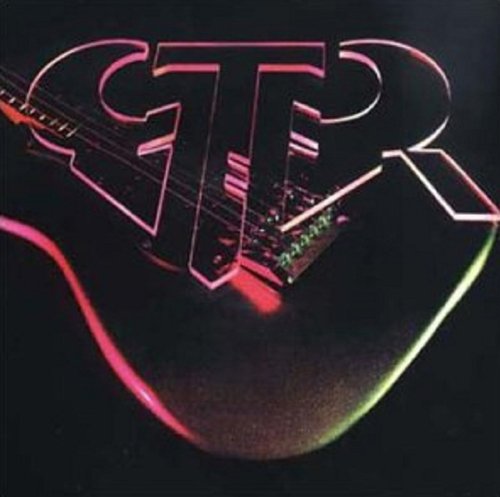
The last two years had taken their toll. Not only had Steve’s professional pride suffered, but so had his finances. A successful project with Steve Howe would allow Steve Hackett to embark on future classical projects. So Steve Hackett agreed to work with Steve Howe. All that was left was to complete the line-up of GTR, whose eponymous debut album was recently reissued as a double album by Esoteric Recordings.
Now that Steve Hackett and Steve Howe had agreed to work together, they began to recruit other musicians. Given the two founding members background, it was fitting that one of the recruits had been a member of a progressive rock band. That was Jonathan Moverm who previously, had been Marillion’s drummer. The American drummer was brought onboard. So was bassist Phil Spalding. His career began with Bernie Tormé, before being part of Mike Oldfield’s band. The final member of the band was Max Bacon, who had been a member of Moby Dick, Nightwing and Bronz. With the lineup complete now the nascent band could begin work on their debut album. First they needed a name.
The band’s name was simplicity itself. GTR was an abbreviation of guitar. This was how the instrument was abbreviated in multi-track recording studios. Fittingly, the guitar was the instrument that Steve Howe and Steve Hackett both found fame and fortune playing. It was also the U.S.P. of the band. GTR was one of very few bands to feature what was billed as “two superstar guitarists.” They weren’t just any “superstar guitarists,” they were among progressive rock royalty. Was this a clue to the band’s musical direction?
It wasn’t. When Steve Howe and Steve Hackett first began discussing ideas for the new band, they decided that they wanted the band not to use synths. By the eighties, synths were playing a bigger part in prog rock. That was why Steve Howe had became disillusioned with life in Asia. Increasingly, Asia had come to rely more and more upon synths. That he and Steve Hackett decided wasn’t going to happen in their new band. The closest they came, was using Roland guitar synthesiser pickups. So when either Steve touched the guitar strings, this triggered a midi signal which operated rack synths. It was an ambitious idea. However, before GTR could put their idea into practice, the new band needed a record deal.
Given Steve Howe and Steve Hackett’s track record, GTR’s manager, Brian Lane, must have thought getting the new band a record deal would be easy. The new band featured two of the greatest guitarists of the prog rock era. However, it was easier said than done. Initially, Brian Lane struggled to get a record company interested in GTR. The band couldn’t wait indefinitely, so GTR headed into the studio.
Joining GTR in the studio, was Yes keyboardist Geoff Downes. He was going to produce the album. However, straight away, problems arose. The two founding members disagreed on how to record the album. Steve Howe wanted to spend money on a good quality and well equipped studio. However, Steve Hackett disagreed. He felt that GTR should be a low budget project. Ultimately, Steve Howe’s approach won the day. This would come back to haunt GTR.
Now that GTR had agreed on how to record their debut album, they began recording ten tracks. Four came courtesy of the Hackett-Howe songwriting partnership. This included When the Heart Rules The Mind, Here I Wait, You Can Still Get Through and Toe the Line. The pair also penned Jekyll and Hyde with Max Bacon; Reach Out (Never Say No) with Phil Spalding; and Imagining with Jonathan Mover. Other tracks included Geoff Downe’ The Hunter, Steve Howe’s Sketches In The Sun and Steve Hackett’s Hackett To Bits. These ten tracks were recorded at the Townhouse Studios, in London, England.
Recording of what became GTR began in 1985. GTR and producer Geoff Downes would become familiar with the Townhouse Studios. The album wasn’t recorded quickly. However, when the sessions began, each member of GTR was ready to play their part. Steve Hackett and Steve Howe both played guitars, synths and added backing vocals. The rhythm section featured drummer and percussionist Jonathan Mover and bassist Phil Spalding. Both men added backing vocals. Max Bacon added vocals. Eventually, GTR was completed in early 1986, and was scheduled for release in July 1986.
Before GTR was released in July 1986, critics had their say on the latest supergroup’s debut album. Reviews of GTR were mixed. Critics felt that GTR was a concept that promised much, but ultimately, failed to deliver. It was an opportunity lost.
Against this backdrop, GTR released their eponymous debut album in July 1986. Despite the mixed reviews, GTR sold well, reaching number eleven in the US Billboard 200. This resulted in GTR being certified gold. Two singles were released from GTR. The Hunter stalled at number eighty-five in the US Billboard 100. However, When the Heart Rules the Mind, which opened GTR reached number fourteen in the US Billboard 100. GTR’s debut album, it seemed had been a resounding success.
This wasn’t a surprise. With two of the greatest guitarists of the prog rock era, the foundations were in place for GTR to become a successful supergroup. However, where things started to go awry, were bringing onboard three relative unknowns. They were talented musicians, but not of the stature of Steve Hackett and Steve Howe. It was like a musical version of Rocky, with Messrs. Hackett and Howe giving a trio of contenders a shot at the title. This didn’t involve fifteen rounds in the ring, but ten songs in the studio.
When critics heard GTR, they realised that the prog rock sound of Steve Hackett and Steve Howe’s pasts was gone. Replacing it, was meant to be a much more hard rocking sound.
Before the release of GTR, the album was described as hard rocking. This sound promising. It was meant to showcase the duel guitars of Steve Hackett and Steve Howe. This happens on When the Heart Rules the Mind, which opens GTR. As glistening guitars set the scene for sudden thunderous bursts drums. However, it’s the blistering guitars that stand out. Along with a prowling bass, they set the sound for Max Bacon’s vocal. It’s impassioned, but sometimes, seems lacking in power. Especially when compared to the rest of the arrangement. Harmonies augment Max’s vocal, before searing, screaming guitars steal the show. Aided and abetted by the rhythm section they combine AOR, eighties rock and prog rock. It’s a heady and potent brew.
Understated describes the introduction to The Hunter. Soon, the rhythm section and guitars are adding an element of drama They’re joined by Max’s vocal. A burst of thunderous drums signals that the arrangement is about to unfold. Max’s vocal grows in power. He sounds as if he’s pushing his vocal to the limit. By then, the drums sound distant, and could do with being brought forward in the mix. However, this allows the searing, scorching guitars to take centre-stage. What follows is a rocky, eighties power ballad. It’s good, but far from great. It’s let down by the production. Especially ratty, distant drums.
There’s an almost Eastern sound to the guitars that open Here I Wait. They’re a curveball. From this understated sound, a stomping rocky eighties anthem unfolds. The rhythm section provide the heartbeat, while Messrs. Howe and Hackett unleash machine gun guitars. Sometimes, rather than trading licks, the guitars run into each other, and clash. Mostly, GTR are producing one of their best performances. Max Bacon delivers a vocal powerhouse and a stomping, rocky anthem unfolds.
GTR take a musical diversion on Sketches In The Sun. It’s an instrumental, where the guitars dominate. This allows Steve Hackett and Steve Howe to take centre-stage. They play together, but don’t overcrowd each other. Unlike Here I Wait. Both Steve Hackett and Steve Howe deliver solo. Both scamper across the arrangement. Steve Hackett’s solo has a classical twist. There’s also a nod to their progressive rock past, on what’s one of GTR’s highlights.
Straight away, GTR launch into the uber rocky Jekyll And Hyde. Briefly, it pays homage to Steve Hackett and Steve Howe’s prog rock past. However, mostly, it’s GTR doing what they promised, rocking, and rocking hard. At the heart of the action are the guitars. They play starring roles unleashing scorching, searing and blistering licks. Meanwhile, the rhythm section lay down the heartbeat. Again, it sits back in the mix. It’s as if the song has been mixed so the guitars take centre-stage. The final piece of the jigsaw is Max Bacon’s vocal. He’s unleashing another powerhouse of a vocal. However, it’s the guitar’s that steal the show, as GTR are rocking, and rocking hard.
From the opening bars, You Can Still Get Through has an eighties sound. The first clue are the drums, then the synth strings. As the guitars enter, the rhythm section seem to be moved slightly back in the mix. Then when Max’s vocal enters, one of the guitars is moved back in the mix. He’s accompanied by harmonies. They play their part in what in 1986, GTR hoped would’ve a hard rocking, anthem. That may have been the case nearly thirty years ago. Sadly, nearly thirty years later, and You Can Still Get Through has aged badly. Its dated, eighties sound is a reminder of why the eighties weren’t music’s finest hour.
Short, sharp, bursts of guitars open You Can Still Get Through. Soon, the rest of GTR join the fray. The rhythm section lay down the groove for what’s another rocky power ballad. Machine gun guitars punctuate the arrangement, while Max delivers a hopeful vocal. Later, Messrs. Hackett and Howe unleash searing guitar licks. Along with the vocal, they’re the best thing about what’s a disappointing, disjointed track. The sudden changes in tempo, eighties synths and ratty drums disappoint. The annoying thing is, that there’s the basis of a very good track. It’s crying to be let out. Sadly, twenty-nine years later, it’s still trying to escape.
Just a lone acoustic guitar opens Toe The Line. It’s panned right, as another guitar is panned left. When it drops out, the vocal enters. This accusing vocal is accompanied by the acoustic guitars. That’s until the arrangement builds. The rhythm section and electric guitar are added. As the arrangement smoothes out, am AOR ballad shines through. It’s as if GTR have penned this track with a view to arena tours. However, they come close to spoiling their good work. Later, the guitars come close to overpowering the vocal. Especially as the arrangement heads towards its dramatic, heartfelt crescendo.
Hackett To Bits sees GTR become one, and blistering guitar solos, accompanied by a thunderous rhythm section. GTR kick loose, and unleash some of the hard rocking sound they promised. There’s a nod to their prog rock past as GTR combine drama to their hard rocking sound. Playing starring roles, are Messrs. Howe and Hackett, who showcase their considerable skills.
Imagining closes GTR. Again, it’s just an acoustic guitar that scampers across the arrangement. It’s joined by synth strings. Then after 1.26, it’s all change. The hard rocking sound of GTR makes its presence felt. As the rhythm section provide a pulsating heartbeat, bursts of searing guitars replace and accompany Max’s vocal. At 2.49, GTR seem to draw inspiration from Queen, circa 1975. Then they kick loose, and for the last time, show what they’re capable of. In full flight, GTR are an impressive sound, who although they sold 500,000 copies in America, still continue to divivd opinion.
As a concept GTR, offered much, but ultimately, failed to deliver what many expected. With two of the best musicians of the prog rock era, GTR could’ve been the start of another chapter in Steve Hackett and Steve Howe’s career. Sadly, that wasn’t the case.
Having decided to spend money on a top class studio, with the best of equipment, where they spent months, GTR racked up huge bills. Despite selling 500,000 copies in America, still GTR found themselves massively in debt. So, in 1987, GTR was dissolved. The group’s legacy was their eponymous album GTR.
Despite their prog rock roots, Steve Hackett and Steve Howe, decided to record a hard rocking album. Granted, that’s what they came up with. However, the music on GTR hasn’t stood the test of time.
Some of the songs have aged badly, and are a reminder of why, the eighties wasn’t music’s finest hour. Ironically, GTR starts off so well, with When the Hurt Rules the Mind. After that, there’s everything from anthems and power ballads. Some work, some don’t. Sometimes, the production isn’t as good as it could be.
Listen carefully, and the drums sounding distant. It’s as if everything is pushed back to allow the drums to take centre-stage. With GTR featuring two legendary guitarists, that would make sense. However, sometimes, this doesn’t work. Rather than trading licks, they play together. Occasionally, they cramp each other’s style. Other times, it’s as if they’ve an allotted time for solo. Having taken centre-stage, they then exit stage left. For much of the time on GTR, Steve Hackett and Steve Howe show why they’re remembered as two of the best guitarists of the prog rock era. They reinforce this on disc two.
It features a live performance from GTR. They played live at the Western Theatre, Los Angeles, on 19th July 1986. That night GTR work their way through fourteen tracks. Messrs. Howe and Hackett win friends and influence people during their only American tour. After that, GTR was consigned to musical history.
Since then, that’s where GTR have stayed. No wonder. GTR is far from a classic album. Even with the bonus disc, the newly remastered version of GTR is far from essential listening. That’s despite selling 500,000 copies in America. However, GTR was an album that was of its time. Some of the music on GTR has a dated eighties sound. IT was a snapshot of music circa 1986. GTR is a case of an album that promised much, but ultimately failed to deliver. Twenty-nine years after its initial release, that’s still the case. GTR sounds dated and is very much a reminder of eighties AOR. Especially with its power ballads and anthems. Its far from essential listening. That’s despite the best efforts of Steve Hackett and Steve Howe. They played starring roles in GTR, which was a mixed musical bag that GTR never bothered to repeat.
GTR-GTR.
ROGER WATERS-AMUSED TO DEATH-VINYL EDITION.
ROGER WATERS-AMUSED TO DEATH-VINYL EDITION.
Following the departure of Syd Barrett from Pink Floyd, bassist Roger Waters became the group’s creative force. This was the case from Pink Floyd’s third album, Ummagumma, which was released in 1969, right through to 1983s The Final Cut. After the release of The Final Cut, Roger Waters left Pink Floyd. It was a bitter breakup. However, things had been coming to a head for some time.
Richard Wright, one of the founding members of Pink Floyd had been sacked from the band. As a result, he didn’t feature on The Final Cut. It was the only Pink Floyd album that he didn’t feature on. This was just the tip of the iceberg.
Pink Floyd had been a group divided since 1978. That was when the members of Pink Floyd found out the perilous state of their finances. Some of the investments made on their behalf went south. Amid accusations of financial negligence, Pink Floyd needed to recoup some of the money they had lost. So, Roger Waters presented the other members of Pink Floyd with two propositions.
The Wall.
The first was the script to The Wall, Pink Floyd’s 1979 concept album. Roger Waters’ other proposition was The Pros and Cons Of Hitch Hiking. After giving both propositions some consideration, The Wall won out, and The Pros and Cons Of Hitch Hiking became Roger’s 1984 solo debut album. However, from that day on, things weren’t well within Pink Floyd.
Keyboardist Richard Wright’s contribution to The Wall was criticised by Roger Waters. He was accused of not contributing enough and being uncooperative. Eventually, a deal was struck that Rick Wright would remain a member of Pink Floyd until The Wall was complete. That was just as well.
When The Wall was released in 1979, on 21st March 1983, it was to critical acclaim. Soon, The Wall became Pink Floyd’s biggest selling album. Incredibly, The Wall outsold even Dark Side Of The Moon. In Britain, The Wall reached number three and was certified double platinum. Across the Atlantic in America, The Wall reached number one on the US Billboard 200, selling twenty-three million copes, resulting in the album being certified platinum twenty-three times over. This was just the tip of the iceberg.
Elsewhere, The Wall reached number one in Australia, Austria, Canada, France, Germany, Holland and New Zealand. This resulted in The Wall being certified eleven times platinum in Australia; diamond in France; seven times platinum in Germany; fourteen times platinum in New Zealand; three times platinum in Switzerland, two times diamond in Canada; fourteen times platinum in New Zealand. If The Wall was Rick Wright’s swan-song, it was a profitable one. Roger Water’s final album with Pink Floyd never came close to being the same commercial success.
The Final Cut.
Nearly four years passed before the release of The Final Cut. This was the first Pink Floyd album without Rick Wright. Most of the lyrics and music was penned by Roger Waters. Just like The Wall, The Final Cut was a very personal album for Roger. It was exploring what Roger believed was the betrayal fallen servicemen, including his father, who died while serving during World War II. The only other member of Pink Floyd to contribute to The Final Cut was David Gilmour. He cowrote Not Now John. Mostly, The Final Cut was Roger Water’s work. It was scheduled for release on 21st March 1983.
On the release of The Final Cut, it was accompanied by a short film. It was produced by Roger Waters and directed by Willie Christie. The film featured four songs from The Final Cut, The Gunner’s Dream, The Final Cut, The Fletcher Memorial Home and Not Now John. However, despite the final and what was a powerful and moving album, The Final Cut didn’t win favour with critics and cultural commentators. Reviews were mixed, as the release date loomed.
When 21st March 1983 came around, The Final Cut was released. The Final Cut reached number one in Britain and number six on the US Billboard 200. This resulted in a platinum disc in Britain and The Final Cut was certified double platinum in America. Elsewhere, The Final Cut hadn’t sold in the same vast quantities as The Wall. However, at least The Final Cut was certified gold in Austria, France and Germany. Pink Floyd didn’t even bother touring The Final Cut. Instead, they turned to their various solo projects.
The Pros and Cons Of Hitch Hiking.
In Roger Waters’ case, this was The Pros and Cons Of Hitch Hiking. This was the project he had presented Pink Floyd with in 1978. It was another concept album from the pen of Roger Waters. It’s set in California, and focuses on a man in the throes of a midlife crisis. He’s on a road trip through California, where he dreams of committing adultery with hitchhikers. Other times, he’s beset by fears and paranoia. All this takes place between 04:30:18 AM to 05:12 AM. To bring this to life, Roger called upon some of his musical friends.
This included guitarists Eric Clapton and Ry Cooder. They were joined drummer and percussionist Andy Newmark, percussionist Ray Cooper and saxophonist David Sanborn. Pianist Michael Kamen co-produced The Pros and Cons Of Hitch Hiking. It was recorded between February and December 1983. Once the recording was complete, The Pros and Cons Of Hitch Hiking was released on 30th April 1984.
Before the release of The Pros and Cons Of Hitch Hiking, the critics had their say. Reviews were mixed. Some critics were impressed with The Pros and Cons Of Hitch Hiking. Others hated it, and didn’t shy away from saying so. One of the fiercest critics was Rolling Stone magazine. They gave The Pros and Cons Of Hitch Hiking their lowest rating. This was a huge body blow for Roger Waters. He wanted his solo career to get off to a successful start.
When The Pros and Cons Of Hitch Hiking was released on 30th April 1984, it stalled at number thirty-one on the US Billboard 200, where it was certified gold. In Britain, The Pros and Cons Of Hitch Hiking reached just number thirteen in Britain. The Pros and Cons Of Hitch Hiking hadn’t been the success Roger had hoped.
Things went from bad to worse for Roger. He was due to The Pros and Cons Of Hitch Hiking in 1984 and 1985. The tour began in Stockholm on June 16th 1984. Eric Clapton was part of Roger’s new band. They were going to play new songs, songs from The Pros and Cons Of Hitch Hiking and Pink Floyd classics. However, quickly, it became apparent that the tour wasn’t a success.
Ticket sales were poor, and some of the concerts at larger venues were postponed. It was only when Roger began playing smaller venues, that the sold out signs went up. Eventually, when the tour was over, Roger Waters realised he had lost £400,000 on the tour. That was a conservative estimate. To add to Roger’s problems, the ghost of Pink Floyd was still making its presence felt.
Following the release of The Pros and Cons Of Hitch Hiking, Roger Waters announced that Pink Floyd would not be reuniting. The only problem was, he hadn’t discussed this with the other members of Pink Floyd. He also wanted to dismiss Pink Floyd’s manager Steve O’Rourke. In his place, Roger employed Peter Rudge to look after his affairs. For the other members of Pink Floyd, all this came as a surprise. However, Roger Waters wasn’t finished.
He wrote to EMI and Columbia, and told them that he had left Pink Floyd, and wanted to be discharged from his contractual obligations. Roger Waters had left Pink Floyd, and in the process, tried to wreck the possibility of the band rising like a phoenix from ashes. This was bound to end up in either tears, or court.
Later, Roger Waters said that, if he other members of Pink Floyd made an album using the band’s name, he thought that they would be in breach of contract. This could result in their royalty payments being suspended. Further, Roger alleged that the other members of Pink Floyd had forced him from the band, by threatening to sue him. While all this was going on, Pink Floyd and its members past and present were in a state of flux. Nobody was making music. A resolution had to be found. So, Roger Waters headed to the High Court in London.
Roger Waters wanted to dissolve Pink Floyd, and also prevent the use of the band name. He believed the band were “a spent force creatively.” However, he was in for a surprise.
His lawyers discovered that the Pink Floyd partnership had never been formally confirmed. It was therefore impossible to dissolve something that never existed in the first place. Despite this, Roger Waters returned to the High Court.
This time, he was trying to stop the other members of the band using the Pink Floyd name. Again, he lost out, and Dave Gilmour stated that “Pink Floyd would continue to exist.” With that, the leadership of Pink Floyd passed from Roger Waters to Dave Gilmour. Roger Waters returned to his solo career.
Radio K.A.O.S.
With Pink Floyd returning to the studio, so did Roger Waters. He had penned another concept album Radio K.A.O.S. It was based upon key policies of late eighties politics, especially monetarism. Roger also takes aim at the then Iron, now rusty Lady, Margaret Thatcher. He was an outspoken critic of Thatcher on The Final Cut. Four years on, and he was equally outspoken. Other subjects Roger tackles include the Cold War, eighties popular culture and world politics. These subjects are seen through the eyes of Billy.
On Radio K.A.O.S., Billy is a mentally and physically disabled man from Wales. His brother Benny, is sent to prison after protesting against the government after he loses his job as a miner. This Benny is told, is the result of market forces. With Benny in prison, there’s nobody left to look after Billy. So he has to live with his uncle David in Los Angeles. Radio K.A.O.S. eavesdrops on Billy’s Billy’s mind and worldview, as he converses with Jim a DJ at a fictitious L.A. radio station, Radio K.A.O.S. This story is brought to life by Roger and what he called his Bleeding Heart Band.
Between October and December 1986, Radio K.A.O.S. was recorded at the Billiard Room, London. Accompanying Roger, was a large band. This included many well known names, including guitarist Andy Fairweather Low, vocalist Paul Carrack and saxophonist Mel Collins. Clare Torry who featured on Great Gig In The Sky, from Pink Floyd’s Dark Side Of The Moon, featured on two tracks. Surely with such an all-star band accompanying Roger, Radio K.A.O.S. would be released to critical acclaim and commercial success?
The first most people knew about Radio K.A.O.S. was a press release from EMI, on on 6 April 1987. It announced that Roger Waters’ sophomore solo album, Radio K.A.O.S. would be released on 15th June 1987, and originally, it was hoped that this rock opera would become a film, stage show and live album. First of all, Radio K.A.O.S. would be released as a studio album.
Just like The Pros and Cons Of Hitch Hiking, reviews of Radio K.A.O.S. were mixed. At least Rolling Stone were more positive about Radio K.A.O.S. However, it was a long way from Pink Floyd’s glory days.
So were the sales of Radio K.A.O.S. It stalled at number fifty in the US Billboard 200 and number twenty-five in Britain. Elsewhere, Radio K.A.O.S. didn’t sell in vast quantities. To rub salt into the wound, five months later, on 7th September 1987, Pink Floyd returned with their first album since Roger Waters left, A Momentary Lapse Of Reason. This coincided with the Radio K.A.O.S. tour
The Radio K.A.O.S. tour began in mid-August 1987, and finished at the end of November 1987. Everywhere he went, copies of Pink Floyd’s comeback album, A Momentary Lapse Of Reason were for sale. It had been released on 7th September 1987, reaching number three in Britain and in the US Billboard 200. A Momentary Lapse Of Reason was certified gold in Britain, and four times platinum in America. Having sold four million copies in America alone, the success continued throughout the world. Gold and platinum discs came Pink Floyd’s way. In Canada, Australia and New Zealand, through Europe, A Momentary Lapse Of Reason was a huge success. As the Radio K.A.O.S. winded its way across the globe, Pink Floyd’s A Momentary Lapse Of Reason continued to outsell Radio K.A.O.S. Roger’s solo career wasn’t the commercial success he had hoped.
Later, Roger admitted that he wasn’t a fan of Radio K.A.O.S. He felt the album sounded “too modern.” That was down to Roger and Ian Ritchie’s production. It spoiled Radio K.A.O.S. for the man who masterminded the project. Maybe that’s why Radio K.A.O.S. wasn’t a huge commercial success? However, Roger hoped that his next album would see him rubbing shoulders with his old comrades commercially.
The Wall-Live In Berlin.
To celebrate the fall of the Berlin Wall eight months earlier, Roger Waters performed The Wall-Live In Berlin on 21st July 1990. Roger Waters financed the project, and put together an all-star cast. Joni Mitchell, Van Morrison, The Scorpions, Snowy White and Bryan Adams were just some of the names that made a guest appearance. The concert was staged in what had been no man’s land between East and West. 350,000 people watched the sellout show which recorded and filmed. It would be released a month later on 21t August 1990.
This was a really fast turnaround. The Wall-Live In Berlin was recorded, produced, mastered and marketed within a month. This was a big ask. Ultimately, it proved too ambitious.
Having financed the project himself, the plan was that once Roger Waters had recouped his expenses, the profits from the live album and film, profits would go the Memorial Fund For Disaster Relief, a British charity founded by Leonard Chesire. However, it was a case of the best laid plans of mice and men.
Sales of The Wall-Live In Berlin were disappointing. In Britain, The Wall-Live In Berlin reached number twenty-seven. Across the Atlantic, the album stalled at just number fifty-six in the US Billboard 200. Elsewhere, sales were disappointing. They failed to meet the projections. This had disastrous consequences for the charity.
With the sales not meeting expectations, the charity incurred heavy losses. This resulted in the trading arm of the charity, Operation Dinghy, being wound-up a couple of years later. By then, Roger Waters had released his third studio album, Amused To Death which was recently released on double vinyl by Columbia Records/Legacy Recordings.
Amused To Death.
Just like his two previous albums, Amused To Death was a concept album. Roger had been working on Amused To Death since 1987. It’s recently been remastered, reissued and remixed.
The inspiration for Amused To Death came from Neil Postman’s book Amusing Ourselves To Death. By the time the concept was complete, it revolves around the a monkey who randomly switches between television channels. As channels change, different subjects are discussed. Among them are the Gulf War, World War I, the bombing of Jordan and Libya, and the Tiananmen Square protests of 1989. A total of fourteen tracks feature on Amused To Death. It was recorded between 1987 and 1992.
Recording Amused To Death at various London studios. This includes The Billiard room, Olympic Studios, CTS Studios, Angel Studios and Abbey Road Studios Just like Roger’s two previous solo albums, Amused To Death features a large backing band.
Some feature throughout Amused To Death, others feature on just one or two tracks. Many are well known names. Among them are guitarists Jeff Beck, Andy Fairweather Low, Steve Lukather and B.J. Cole, bassist Randy Jackson and drummer Jeff Porcaro. John “Rabbit” Bundrick plays Hammond organ, while vocalists include Don Henley and Rita Coolidge. Once the tracks were recorded, it was mixed in QSound.
There was a reason for this. It was to enhance the spatial feel of the album. Especially, the sound effects used on Amused To Death. There’s a rifle range, sleigh bells, cars, planes, horses, crickets and dogs. They come to life on Amused To Death. It was produced by Roger and Patrick Leonard. Given the problems with production on Radio K.A.O.S. he wasn’t going to make the same mistake again. It had proved a costly mistake, one they weren’t going to repeat.
After five years of work, Amused To Death was released on 7th September 1992. Given the reception The Pros and Cons Of Hitchhiking and Radio K.A.O.S. received, Roger awaited the reviews with baited breath. Reviews were favourable of what was a cerebral, poignant and thoughtful album. Certain songs stood out.
In The Ballad of Bill Hubbard which opens Amused To Death, a sample of veteran Alfred “Raz” Razzel describing how he found William “Bill” Hubbard severely wounded on the battlefield. Several times Alfred tried to take William to safety. Eventually, he was forced to leave him in no man’s land. It’s a poignant and moving opening track. Unlike What God Wants.
It features a child saying “I don’t mind about the war. That’s one of the things I like to watch–if it’s a war going on. “Cos then I know if, um, our side’s winning, if our side’s losing.” Who would’ve believed a generation would see war as entertainment? This is examined by Roger in Perfect Sense.
Fittingly, Roger examine war as entertainment in Perfect Sense. By 1992, CNN was broadcasting the Gulf War live. Perfect Sense, a two part song sees Roger examine this latest and disturbing phenomenon. Later on Amused To Death remembers two other conflicts.
On The Bravery of Being Out of Range, Roger remembers an air strike in Jordan. It’s a poignant track, one that resonates. So does Late Home Tonight, Part I. It features the same scenario from two very different points of view. It’s the 1986 US air strike against Libya from perspective of two married women and a young American F-111 pilot. While the result of the bombings on both songs is death and destruction, there’s a sense of hope on Watching TV.
Roger duet with Don Henley Watching TV. It’s a song which deals with the media’s influence on the Tiananmen Square protests of 1989. They were a force for good, and told the world what was happening to those who dared to protest for democracy. This scenario is the latest to come to life courtesy of Roger Waters and his band on Amused To Death. Its reviews were better than his two previous albums.
After the favourable reviews, Amused To Death reached number eight on the British charts. This resulted in a silver disc, marking sales of 60,000. While it was a far cry from his days with Pink Floyd, it showed that Roger Waters’ solo career was on the right track.
In America, this proved to be the case. Amused To Death reached number twenty-one on the US Billboard 200. He even enjoyed a hit single, when What God Wants, Part I reached number four on the Mainstream Rock Tracks charts. After three albums and eight years, Roger Waters was forging a successful solo career. Record buyers awaited Roger Waters’ fourth studio album.
They waited a year. A year became two, three, four and five. Five became ten, and ten became twenty. Then twenty became twenty-three. Roger Waters has never released another studio album. He’s now approaching his seventy-second birthday, and with each year that passes, a new album seems increasingly unlikely. However, his former comrade in arms, David Gilmour will soon release a new album, Rattle That Lock. By then, Roger will be seventy-two. Maybe Rattle That Lock will inspire Roger to release his long awaited fourth album?
Until then, which Amused To Death was recently released as a double vinyl by Columbia Records/Legacy Recordings. The reissue of Amused To Death is an opportunity to either acquaint or reacquaint yourself with what was Roger Waters’ finest solo album. It was a case of third time lucky for Roger Waters, when he released the underrated Amused To Death in 1992. If I was to compare Amused To Death to a Pink Floyd album, it would be More. Both Roger Waters’ Amused To Death and Pink Floyd’s More are vastly underrated albums, that for far too long, many music aficionados will have overlooked. If that’s the case, the recent reissue of Amused To Death is the opportunity to right a wrong. Roger Waters would approve of that, in more than one way.
ROGER WATERS-AMUSED TO DEATH-VINYL EDITION.
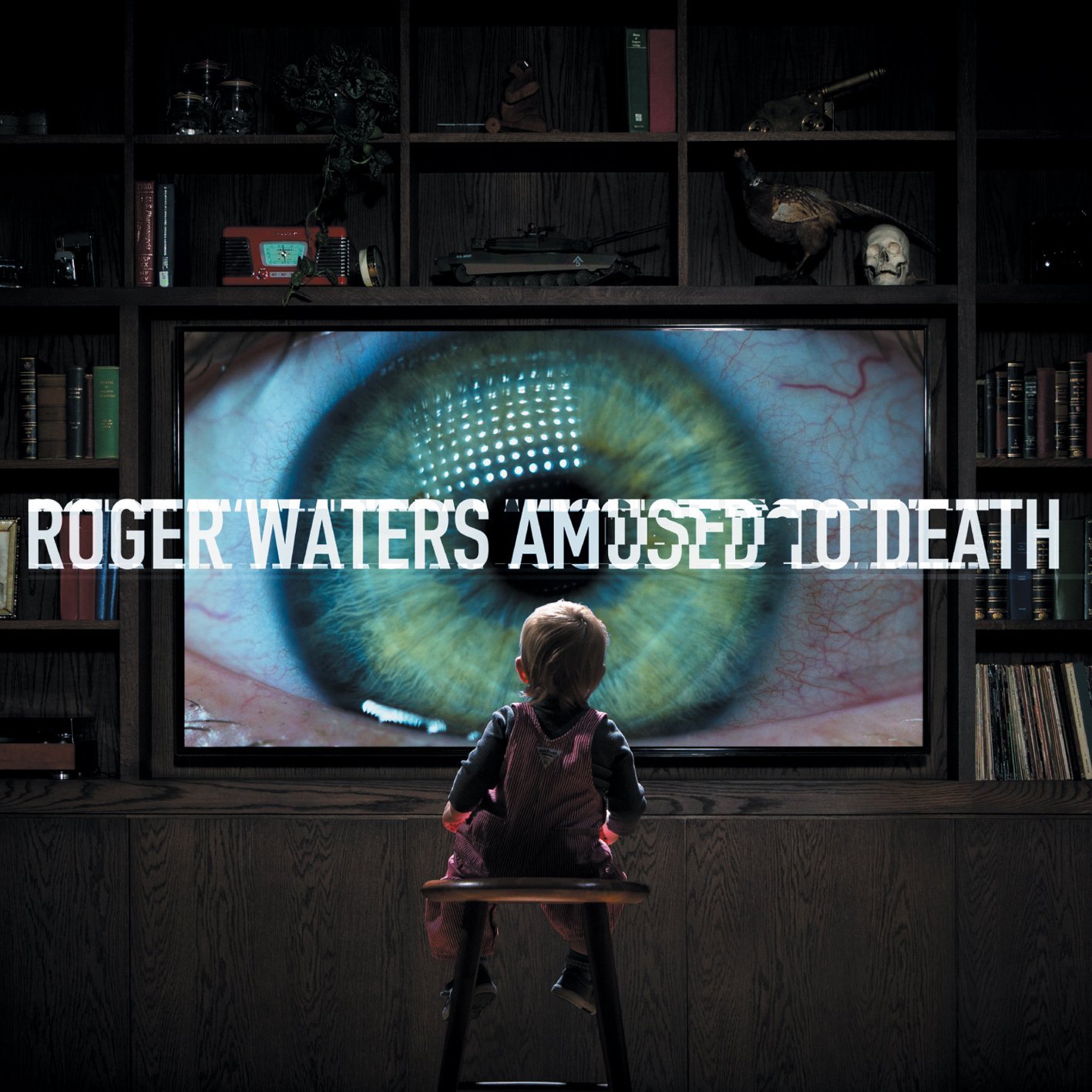
LOW DOWN-ORIGINAL MOTION PICTURE SOUNDTRACK.
LOW DOWN-ORIGINAL MOTION PICTURE SOUNDTRACK.
Each week, there’s countless compilations released. It seems that just about every genre is covered. Whether it’s psychedelia, rock and reggae or disco, funk and soul, there’s nearly something for everyone. I say nearly, because recently, there’s been a dearth of jazz compilations.
While there’s plethora of reissues of jazz albums and even low price box sets, compilations seem to have taken a back seat. That’s a great shame. Often, jazz compilations have been a gateway to the genre. They allow a newcomer to the genre to hear a variety of artists. It’s allows a newcomer to jazz to dip their musical toe into the water. When they discover that the water is indeed lovely, they embark upon a lifelong love affair with jazz. However, recently, the water has been choppy.
It seems compilers are turning their backs on jazz compilations . They’ve decided that other genres offer more profit potential. Nowadays, record companies aren’t willing to take risks. Instead, they’re risk averse. They’re unwilling to risk their capital on a lovingly compiled, lavish compilation of jazz which may only sell a few thousand copies. Especially, when they can play things safe.
One of the ways to play things safe, is to release a genre of music that’s guaranteed to sell. Northern Soul is a good example. A Northern Soul compilation is seen as a sure fire winner by many a record company. Usually, what the record company does, is get one of the supposed “faces” on the Northern Soul scene to throw together twenty-two predictable tracks. To that, they add a couple of rarities, and the job’s a good un. The result is a compilation that’s guaranteed to sell in vast quantities, purely because of the two rarities. It doesn’t matter that the other tracks feature on nearly every other Northern Soul compilation ever released. No at all; because the record company have minimised risk and guaranteed profit. That’s something they couldn’t have done with a jazz compilation.
So a new generations of music lovers, wanting to dip their toe into the world of jazz are left wondering how to do so? Many of the compilations that introduced a previous generation to jazz are now hard to find, or have been deleted. They’re left bewildered by how to find an introduction to jazz, which many sees as one of the most complicated musical genres.
Like all musical genres, there are sub-genres in jazz. A newcomer to jazz can be mystified by the various sub genres. Trying to distinguish the difference from bebop to post bop and modal jazz to free jazz isn’t easy. For many jazz veterans, compilations helped smooth their way through the waters, and played an important part in their jazz education. Recently, as Alice Cooer sung: “school’s out for summer.” I was beginning to wonder if he was right, and that: “school’s out forever?” That seemed to be the case. Or is it?
Having spent some time looking for a jazz compilation to review, the nearest I came was a soundtrack, which was recently released by Cinewax/Light In The Attic. Low Down-Original Motion Soundtrack tells the story of jazz pianist Joe Albany. It’s based on his daughter Amy-Jo Albany’s memoirs. She chose the fifteen tracks on Low Down-Original Motion Soundtrack. It includes seven tracks from Joe’s back-catalogue. This Amy-Jo Albany hopes that will be a primer for her father’s work. There’s also tracks from Coleman Hawkins, Max Roach and Thelonious Monk. These tracks may introduce a new generation to three jazz giants. There’s also tracks from Ohad Talmor’s score. His tracks pay stylistic homage to Joe Albany, whose been described as an ” extraordinary talent and life.” That’s what Joe Albany became. Joe’s Albany’s story began in 1957..
He was born Joseph Albani in Atlantic City, New Jersey on January 24th 1924. Growing up, Joe studied the piano. He was a natural. So much so, that by the time he was nineteen, he was making a living out of music.
By 1943, the nineteen year old Joe Albany was playing piano in Benny Carter’s orchestra. Three years later, in 1946, Joe accompanied Charlie Parker. The same year, he played alongside twenty year old Miles Davis. People were taking notice of the twenty-two year old pianist from New Jersey. He was one of jazz’s rising stars.
After rubbing shoulders with two future legends of jazz, Joe’s career continued apace. He worked with various artists, and in 1957, recorded an album with saxophonist Warne Marsh and bassist Bob Whitlock. The Right Combination was released on the Riverside label in 1957. Sadly, Joe wouldn’t record another album for two decades.
Disaster struck for Joe Albany. Like so many jazz musicians, Joe discovered heroin, and became addicted to heroin. For the rest of the fifties, and much of the sixties, bravely Joe battled his addiction. During this period, Joe lived a reclusive lifestyle in Europe, where many American jazz musicians now called home.
His time in Europe was part of Joe Albany’s lost years. The man who previously, had been one of jazz’s rising stars, was lost to music. This was a huge loss for anyone who loved jazz. Joe Albany was one of the great bebop pianists. To quote Marlon Brando. Joe; “could’ve been a contender, could’ve been someone.” However, for two decades he was lost to music.
It wasn’t until 1972, that Joe Albany recorded another album. Incredibly, for a musician that was a year away from celebrating thirty years in music, Joe hadn’t recorded a solo album. He rectified this with the release of Joe Albany At Home in 1972. This was the start of the most productive period of Joe’s career.
Twenty-six years after they last recorded together, Joe and Bob Whitlock reunited, were part of a trio who released Proto–Bopper in 1973. Later in 1973, Joe was part of another trio.
The trio featured Joe, Hans Nymand and Hugo Rasmussen. They released the live album, Birdtown Birds Recorded Live At Montmartre. This live album was Joe’s second of 1973. It seemed Joe Albany was the comeback king.
1974 saw Joe release another two album. He released Two’s Company with Danish bassist Niels-Henning Ørsted Pedersen. Then a quintet that featured Joe Albany and Joe Venuti released their eponymous album. Joe’s career seemed to have been rejuvenated. Living in Scandinavia was suiting him.
Another two years passed before Joe Albany released his sophomore solo album. He had been making music for over thirty years when Joe released This Is For Friends in 1976. It was a poignant title, given what Joe had overcome. He was now about to release three albums in the space of a year.
Like many musicians before him, Joe Albany delved into the great American songbooks. He released Plays George Gershwin and Burton Lane in 1977. The Albany Touch a trio recording with Art Davis and Roy Haynes. Live In Paris was the other album Joe released in 1977. It featured Alby Cullaz and Italian drummer Aldo Romano. After three albums in a year, it was another two years before Joe returned.
Bird Lives! was released in 1979, and saw Joe Albany reunite with Art Davis and Roy Haynes. The trio payed homage to a jazz great, Charlie Parker, who thirty-three years earlier, Joe had accompanied. Ironically, that proved the penultimate album that Joe was released during his life.
The final album released during Joe Albany’s lifetime was Portrait Of An Artist. It was a quartet recording featuring Jo, drummer Charlie Persip, cellist George Duvivier and guitarist Al Gafa. Portrait Of An Artist was released in 1982, and proved to be the final album of Joe Albany’s career. He died six years later on January 12th 1988 in New York. The cause of death was respiratory failure and cardiac arrest. Jazz was in mourning.
Joe Albany was only sixty-three when he died. However, he done enough living to last several lives. He had been married several times, and lived what’s best described as a colourful life. It’s documented in his daughter’s memoirs. Amy-Jo Albany penned Low Down: Junk, Jazz, and Other Fairy Tales from Childhood. It’s now been turned into a film. Amy-Jo has played a huge part in the project, and even features in the film. She even compiled the music on Low Down-Original Motion Soundtrack.
While Low Down-Original Motion Soundtrack isn’t a traditional compilation, it’s what Amy-Jo describes as a “primer.” It’s a primer that introduces newcomer’s to the music of her father, Joe Albany. He features five times on Low Down-Original Motion Soundtrack.
Fittingly, Joe’s first contribution to the Low Down-Original Motion Soundtrack is from The Right Combination, his collaboration with Joe Marsh. Lush Life comes from an Italian release The Legendary Joe Albany. Barbados featured on Joe’s 1972 comeback album At Home Alone. Lotus Blossom was a track from Joe’s 1976 album This Is For Friends. Everybody Knew But Me features a vocal that more than hints at betrayal. It’s a poignant track. Joe’s final contribution is The Nearness Of You. It’s another track from The Right Combination. This bookends Joe Albany’s contribution to the Low Down-Original Motion Soundtrack.
There’s also tracks from three legends of jazz. This includes Ruby, My Dear, which was penned by Thelonious Monk and featured on the Thelonious Monk Septet’s 1957 album Monk’s Music. The same year, Coleman Hawkins’ recorded his Think Deep album in New York on the 12th and 15th 1957. Around this time, Joe Albany was also making his recording debut. However, Think Deep was released until 1968. By then, Joe Albany had been lost to jazz for over a decade.
A year after Joe Albany made his recording debut, another of his contemporaries, Max Roach released his Deeds Not Words album. Amy-Jo Albany chose the title-track as part of the Low Down-Original Motion Soundtrack. She feels this is part of the perfect backdrop for her father’s life. Another man who features on Low Down-Original Motion Soundtrack was Ben Webster.
Despite being fifteen years Joe’s senior, Ben Webster had a lot in common with Joe Albany. After playing with Count Basie and then Duke Ellington, Ben played with everyone from Jimmy Withersoon to Oscar Peterson and Coleman Hawkins. He was also a member of Jack Teagarden And His Big Eight when they recorded Big Eight Blues. Eventually, Ben, like Joe left America. Ben spent the remained of his life in Copenhagen, Denmark, which became his adopted home until his death in 1973. One of Ben Webster’s most famous recordings, is Big Eight Blues which also features on the Low Down-Original Motion Soundtrack. It too was chosen by Amy-Jo Albany to provide the backdrop to his life-story. However, the man tasked with providing the score, was Ohad Talmor, a French saxophonist.
That’s just telling part of the story. Ohad Talmor was born in Lyon, France in 1970. His parents were Israelis, who moved to Switzerland. That’s where Ohad Talmor and mastered the saxophone. Since then, he’s come a long way.
Now the multitalented Ohad Talmor is a saxophonist, arranger and composer. He now resides in Brooklyn, which he’s called home for some time. Fittingly, that’s not far from where Joe Albany was born and brought up.
Ohad Talmor wrote the score to the Low Down-Original Motion Soundtrack. Daahoud, which Ohad Talmor opens the Low Down-Original Motion Soundtrack. Having set the scene, the story unfolds and Joe and some of the giants of jazz take centre-stage. It’s not until the seventh track, Free Couples that Ohad Talmor returns with the poignant and melancholy ‘Round Midnight. He then closes the Low Down-Original Motion Soundtrack with Ab Blues for Large Ensemble.
It brings to an end the story of Joe Albany’s eventful and colourful life. Low Down is based on his daughter Amy-Jo Albany’s memoirs. She tells her father’s story via the fifteen songs on Low Down-Original Motion Soundtrack. Amy-Jo Albany also features in Low Down, and is the executive producer. She’s a talented lady who described the soundtrack to Low Down as: “a beautiful homage to Joe Albany’s extraordinary talent and life.” That’s certainly the case.
Joe Albany was hugely talented pianist whose music is cherished by many. However, sadly, there are still people have yet to discover Joe Albany’s music. Amy-Jo Albany hopes that the Low Down-Original Motion Soundtrack will act as a primer for her father’s music. I certainly hope that that’s the case. Let’s also hope that any newcomer to jazz who buys the Low Down-Original Motion Soundtrack, will embark upon a lifelong love affair with jazz.
LOW DOWN-ORIGINAL MOTION PICTURE SOUNDTRACK.
THE JIMI HENDRIX EXPERIENCE-FREEDOM: ATLANTA POP FESTIVAL.
THE JIMI HENDRIX EXPERIENCE-FREEDOM: ATLANTA POP FESTIVAL.
On the 4th of July 1970, Jimi Hendrix journeyed 100 miles south of Atlanta. His destination was the second Atlanta International Pop Festival. It was being billed as the second Woodstock, and The Jimi Hendrix Experience were about play a starring role.
When The Jimi Hendrix Experience arrived at the Atlanta International Pop Festival, they were greeted by a crowd estimated to be between 300,000-400,000. What is now remembered as the “last great rock festival” was an unlikely event for Jimi Hendrix to appear at.
Byron, in Atlanta was in the heart of old the Deep South. This was Klan country. Racial tensions were always threatening to bubble over. The organisers of the 1970 Atlanta Pop Festival were well aware of this. So they made the conscious decision that the star of the show should be someone who appealed to everyone. This wasn’t going to be easy.
So the organisers set about thinking of an artist or band who would appeal to both sides of the racial, cultural and socio political divide. This wasn’t going be easy.
The organisers had to think how the audience would respond to certain artists, bands or situations. How would a rural audience in the Deep South feel about the so called long haired, hippie bands? Or how would they respond to black and white artists on the same bill? That could inflame an already volatile situation. While some promoters would’ve avoided this situation, the organisers of the Atlanta Pop Festival wanted to challenge the beliefs held by many of their potential audience. So, they booked a man who would unite the audience with the his music and his message of universal love, Jimi Hendrix.
It wasn’t just Jimi Hendrix that would star at the second Atlanta Pop Festival. No. On 4th of July 1970, the Jimi Hendrix Experience had reformed, and this alternate lineup of the Experience would take to the stage and work their way through sixteen songs that feature on Freedom-Atlanta Pop Festival, which was recently released by Sony Music. It’s a musical masterclass from a musical legend.
Accompanied by bassist Billy Cox and drummer Mitch Mitchell, Jimi Hendrix showman extraordinaire and guitar virtuoso had the huge audience spellbound as he worked his way through classics like Foxy Lady, Hey Joe and Purple Haze, plus a cover version of Bob Dylan’s All Along The Watchtower. Jimi even showcased songs from his next album, which was going to feature Room Full Of Mirrors, Freedom, Hear My Train A-Comin’ and Hey Baby (New Rising Sun) were heard by many for the first time. Then as fireworks exploded, Jimi launched into a rendition of The Star Spangled Banner. He wasn’t finished yet, and returned for an encore of Straight Ahead. When he left the stage that night, nobody realised that the second Atlanta Pop Festival would be the last major American concert Jimi Hendrix would play at. Ten weeks later on 18th September 1970, Jimi Hendrix was pronounced dead. He was just twenty-seven.
For Jimi Hendrix the last three years had been a whirlwind. He took music by storm when The Jimi Hendrix released their debut album Are You Experienced? in 1967. Music was never the same after the release of Are You Experienced?
Are You Experienced?
That was apparent from The Jimi Hendrix’s 1967 explosive debut album Are You Experienced. It featured the debut of the legendary power trio of drummer Mitch Mitchell, bassist Noel Redding and guitarist Jimi Hendrix. They fused rock and psychedelia on eleven tracks penned by Jimi Hendrix.
The eleven tracks that became Are You Experienced, were recorded between October and April 1966. Three London studios were used, De Lane Lea Studios, CBS, and Olympic Studios. That’s where The Jimi Hendrix Experience recorded their debut album Are You Experienced, which was produced by Chas Chandler. Once it was completed, it was released in Britain in May 1967.
When Are You Experienced was released, it was hailed as one of the greatest debut rock albums. It showcased an innovative fusion of rock and psychedelia. At the heart of the Are You Experienced’s sound was the freewheeling sound of Jimi Hendrix’s guitar. He could do things other guitarists could only dream of. Add to the equation Jimi’s languid, charismatic vocal and it’s no surprise that Are You Experienced was such a huge commercial success.
When Are You Experienced was released in Britain, in May 1967, it reached number two. This resulted in a gold disc for the Jimi Hendrix Experience. No wonder. Are You Experienced featured future Jimi Hendrix classics like Foxy Lady, Third Stone from the Sun and Are You Experienced? Three months later, in August 1967, Are You Experienced was released in the US. It reached number five, and was certified platinum five times over. For Jimi, this was the start of a three year period where he could do no wrong.
Axis: Bold As Love.
Seven months later, on 1st December 1967, the Jimi Hendrix Experience returned with their sophomore album Axis: Bold As Love in the UK. It featured thirteen tracks. Twelve were penned by Jimi. These tracks showed Jimi evolving as a songwriter. He may have just been twenty-five, but he was a talented songwriter. Proof of this were tracks like Spanish Castle Magic, Wait Until Tomorrow, Castles Made of Sand and Bold As Love. They featured Jimi coming of age as a songwriter. These songs were recorded at Olympic Studios, London.
Recording of Axis: Bold As Love took place at Olympic Studios, London. The sessions took place during May, June and October 1967. Axis: Bold As Love had to be released during 1967. The contract that the Jimi Hendrix Experience had signed stipulated this. Ironically, the album was nearly lost. However, Axis: Bold As Love was only released in Britain in December 1967.
One night, Jimi Hendrix took the master tapes to side one home. Unfortunately, Jimi left them in a taxi. The master tapes were never found. This resulted in side one being mixed again. This didn’t delay the release of Axis: Bold As Love.
Axis: Bold As Love, was released in Britain, on 1st December 1967. It was released to the same critical acclaim as Are You Experienced. Critics ran out of superlatives in an attempt to describe Axis: Bold As Love. Jimi was described as some sort of musical messiah, who had music’s future in his hands. Record buyers agreed with the critics description of Axis: Bold As Love.
When Axis: Bold As Love was released in Britain, it reached number five and was certified silver. Then on January 15th 1968, Axis: Bold As Love was released in America. However, Axis: Bold As Love hadn’t been released in America during 1967.
There was a reason for this. The Jimi Hendrix Experience’s record company were scared this would affect sales of Are You Experienced. So Axis: Bold As Love wasn’t released in America until January 1968. When it was released, it reached number three in the US Billboard 200 and was certified platinum. Although not as successful as Are You Experienced, Jimi Hendrix was riding the crest of a musical wave.
Electric Ladyland.
By October 1968, when The Jimi Hendrix Experience released Electric Ladyland, Jimi Hendrix was one of the most successful musicians in the world. His albums sold by the million, and when The Jimi Hendrix Experience played live, they were one of the hottest live acts. This showed when Electric Ladyland was released.
Unlike The Jimi Hendrix Experience’s two previous albums, Electric Ladyland was an ambitious double album. It featured sixteen songs. Thirteen songs were penned by Jimi. Two of the covers were Bob Dylan’s All Around The Watchtower and Earl King’s Come On (Let the Good Times Roll. These tracks, and the rest of Electric Ladyland were recorded at three recording studios.
Recording sessions took place between July and December 1967, then between January and April 1968. Three different studios in London and New York were used. This included Olympic Studios in London and Record Plant Studios and Mayfair Studios, New York. Once the sixteen tracks were recorded, Electric Ladyland was released in October 1968.
As soon as critics heard Electric Ladyland, they realised that this was The Jimi Hendrix Experience’s. It oozed quality. Tracks like Crosstown Traffic, Voodoo Chile, Voodoo Child (Slight Return), All Along the Watchtower and Gypsy resulted in what was the greatest album of The Jimi Hendrix Experience’s career. Critics hailed Electric Ladyland a career high for The Jimi Hendrix Experience. Record buyers agreed.
When Electric Ladyland was released in Britain, on 16th October 1968, it reached number six and was certified gold. Nine days, later, on 25th October 1968 Electric Ladyland was released in America. It reached number one on the US Billboard 200 and was certified double platinum. The rise and rise of The Jimi Hendrix Experience continued.
Just like their previous two albums, their third album Electric Ladyland became a classic. Electric Ladyland was the album that The Jimi Hendrix Experience were always capable of making. It was a coming of age for The Jimi Hendrix Experience. They’d released the finest album of their three album career. Sadly, there was a twist in the tale. Electric Ladyland would be The Jimi Hendrix Experience’s final album. However, it was a fitting swan-song from a legendary power trio.
Eight months after the release of Electric Ladyland, The Jimi Hendrix Experience played their last concert on June 29th 1969. This took place at Barry Fey’s Denver Pop Festival. This was a three day event. Little did anyone know The Jimi Hendrix Experience would only play one further concert. They reunited in 1970, to allow Jimi to spread his message of universal love. However, before that, Jimi’s new trio, Band Of Gypsys, recorded their only album
Band of Gypsys.
After The Jimi Hendrix Experience split-up, Jimi formed another trio, The Band Of Gypsys. The lineup featured drummer Buddy Miles, bassist Billy Cox and Jimi on guitar. The Band of Gypsys recorded their only live album on 1st January 1970.
When the Band Of Gypsys took to the stage at Filmore East, in New York, on 1st January 1970, they had been busy. They’d written six new songs. Jimi penned four tracks, including Who Knows and the funky, anti Vietnam War song Machine Gun. These two tracks comprise side one of Band Of Gypsys. He also wrote Power To Love and Message Of Love. Jazz drummer Buddy Miles, wrote Changes and We Gotta Live Together. These six tracks found the Band Of Gypsys moving in a different direction from The Jimi Hendrix Experience.
Elements of funk, R&B and soul shine through on Band Of Gypsys. This isn’t surprising, given Jimi’s bandmates’ past. However, Jimi’s trademark fusion rock and psychedelia is still present. What’s obvious, is that Jimi was keen to explore different musical directions. He wasn’t going to be tied to the one musical genre. Instead, he was willing to experiment musically. Band Of Gypsys was just the start.
When critics heard Band Of Gypsys, they were won over by the genre melting album. They realised that Band Of Gypsys was an ambitious album. Machine Gun, they felt, was the best track on Band Of Gypsys. It was the album’s centrepiece, and showed what Jimi Hendrix, musical maverick was capable of, even without The Jimi Hendrix Experience. Just like The Jimi Hendrix Experience, the Band Of Gypsys was the perfect vehicle for Jimi.
Band Of Gypsys was released in Britain on 25th March 1970. It reached number six. Nearly three months later, on June 12th 1970, Band Of Gypsys was released in America, reaching number five in the US Billboard 200. This resulted in Band Of Gypsys being certified double platinum. Jimi Hendrix it seemed could do no wrong. Everyone waited with baited breath to see what direction his career headed.
After the release of Band Of Gypsys, Jimi returned the studio, where he began work on his next album. Jimi was a prolific artist, and recorded many tracks over a relatively short space of time. So much so, that by the time he headed to the second Atlanta Pop Festival, which was held on the 4th of July 1970, there were many tracks in various states of completion. This was more than enough for several album’s worth of material. Some of the new songs newly reformed lineup of The Jimi Hendrix Experience planned to showcase at the Atlanta Pop Festival.
Freedon-Atlanta Pop Festival.
Lesser musicians than Jimi Hendrix would’ve been nervous about playing at the heart of the Deep South. Not Jimi. He relished the challenge of uniting a region divided. He planned to do so with the newly reformed lineup of The Jimi Hendrix Experience.
Sadly, bassist Noel Redding wasn’t going to take to the stage. Taking his place would be Band Of Gypsys bassist Billy Cox. At least Noel Redding The Jimi Hendrix Experience’s original drummer was by Jimi’s side as they took to the stage. What had been a legendary power trio were about to try to unite a region divided.
Disc One.
When The Jimi Hendrix Experience took to the stage at the Atlanta International Pop Festival, they were greeted by a crowd estimated to be between 300,000-400,000. The Jimi Hendrix Experience launched into what was a blistering set. A Jimi took to the stage, he’s greeted by an audience that’s united. As he tunes his guitar, he introduces the band. Only then does he launch into a blistering version of Fire, before moving on to Lover Man and Spanish Castle Magic. Red House sees a stylistic change, as Jimi pays homage to his bluesy roots. Not only does he unleash a spellbinding solo, but a testifying vocal. From there, Jimi showcased three new song.
The first of was Room Full of Mirrors, which The Jimi Hendrix Experience followup with Room Full Of Mirrors and Hear My Train A-Comin.’ It’s poignant listening to this trio of tracks, knowing that Jimi would be dead by the time these songs were released. After a trio of new songs, The Jimi Hendrix Experience kicks loose on Message to Love. Fittingly, Jimi’s guitar plays a starring role, while as the rhythm section of bassist Billy Cox and drummer Mitch Mitchell seem content to play a supporting role. It’s a fitting way to close disc one.
Disc Two.
Disc two opens with All Along the Watchtower. The Jimi Hendrix Experience are given an enthusiastic response as they launch into a classic track. It’s the first of several classics.
Before that, Freedom, The Jimi Hendrix Experience showcase another new songs Freedom. This is fitting. Jimi had gone into a region divided, and was preaching a message of universal love and now Freedom. Given the South’s history, it’s a poignant song. The way Jimi delivers the lyrics, it’s as if he’s making a point. Having done so, it’s nearly classic all the way.
A wash of feedback signals the introduction to Foxy Lady. It’s as if Jimi’s gotten something of his chest on Freedom, and unleashes a series of virtuoso performances. He launches into a blistering version Purple Haze then Hey Joe and Voodoo Child (Slight Return). The classics keep on coming, as Jimi teases the listener with a reworking of Stone Free. By then, he’s worked the audience into a frenzy. Sadly, his set is almost at an end.
Not quite. Jimi unleashes a version of the Star Spangled Banner on his guitar. Not everyone seems receptive to this. In the heart of Dixie, some see this as sacrilegious. There’s the odd jeer and whistle, before Jimi wins over the audience. All around him, fireworks explode. After that, Straight Ahead closes the show and the newly reformed Jimi Hendrix Experience take their leave.
The Jimi Hendrix Experience had written their place into music history by playing a starring role in what’s now remembered as the “last great rock festival.” Jimi had united a region that had been divided. His message of unity, universal love and Freedom had him friends on both sides of the racial divide. Now Jimi Hendrix could concentrate on completing his next album. However, that never happened
On 18th September 1970, music was in mourning. Jimi Hendrix, it was announced, was dead.
Jimi Hendrix had been found around 11a.m. on the 18th September 1970, that Jimi Hendrix was found unresponsive at an apartment in the Samarkand Hotel, in Notting Hill, London. He was rushed to the St. Mary’s Abbot’s Hospital, but pronounced dead at 12.45p.m. Jimi Hendrix was just twenty-seven. However, music had lost one of the most influential and innovative guitarists of his generation.
That’s despite Jimi’s solo career beginning just four years earlier. Since then, Jimi had released a trio of studio album and one live album. However, since Jimi’s death, numerous posthumous albums have been released. This includes Freedom: Atlanta Pop Festival, which was recently released by Sony Music. Freedom: Atlanta Pop Festival, is a reminder of a musical maverick at the peak of his powers.
Jimi Hendrix took music by storm, and vied for the title of rock’s greatest guitarist. Throughout his solo career, Jimi was a flamboyant showman, who growing up, modelled himself on T-Bone Walker.
It was T-Bone who Jimi saw playing his guitar with his teeth. When Jimi saw this, he took it as a challenge. This became part of Jimi’s routine. In years to come, Jimi played his guitar as if his life depended upon it. Jimi, on form, was like a man possessed. Some nights, Jimi played his guitar behind his back, played it with his teeth and as if trying to exercise some inner demons, set his guitar on fire. All this made Jimi one of the most exiting guitarists ever. However, Jimi was also a technically brilliant guitarists of his generation. That’s apparent on Freedom: Atlanta Pop Festival, which features a flamboyant, musical maverick at the peak of his powers. Along with the rest of The Jimi Hendrix Experience he combines classics, cover versions and new songs on Freedom: Atlanta Pop Festival, and in the process, united a region that previously, had been divided.
THE JIMI HENDRIX EXPERIENCE-FREEDOM: ATLANTA POP FESTIVAL.
JADE WARRIOR-FLOATING WORLD.
JADE WARRIOR-FLOATING WORLD.
All too often, musical innovators don’t get the credit they deserve. That was the case with Jade Warrior. Their fourth studio album, Floating World was released in 1974, and pioneered both ambient and world music. Floating World was the most ambitious album of Jade Warrior’s career. However, Floating World which was recently released by Esoteric Recordings, was an album that almost wasn’t released.
After releasing their third album Last Autumn’s Dream, in 1972, Jade Warrior headed off on a tour of America. When they returned home Jade Warrior were called to a meeting with Vertigo, who cancelled the band’s contract. Not long after this, Jade Warrior were dissolved. It looked like the Jade Warrior story was over.
This was ironic. Since signing to Vertigo in 1970, Jade Warrior had released a trio of groundbreaking albums, They released their eponymous debut album in 1971.
Jade Warrior.
When Jade Warrior began work on what became their eponymous debut album, they were a trio. The initial lineup featured guitarist Tony Duhig, flautist and percussionist Jon Field and bassist and vocalist Glyn Havard. They penned the ten tracks that became Jade Warrior. Little did they know the effect their debut album would have.
Jade Warrior was the album that pioneered the psychedelic-progressive sound. It combined elements of what would later, become known as world music. This came courtesy of the myriad of ethnic percussive sounds. They made up for the lack of drums, as at this point, Jade Warrior didn’t have a drummer. Adding another layer to Jade Warrior’s music were distorted, twisted guitars and ghostly, otherworldly sounds. The other ingredient was sudden changes in tempo. All this made Jade Warrior a groundbreaking album.
Critics realised this, and Jade Warrior received positive reviews. Despite this, Jade Warrior didn’t sell in vast quantities. However, Vertigo took the view that this was just Jade Warrior’s debut album. Maybe their fortune would change with their sophomore album Released?
Released.
When recording of Jade Warrior’s sophomore album Released began at Nova Sound in London, Jade Warrior were no longer a trio. Drummer Allan Price had joined Jade Warrior. Three had become four. With the addition of their latest recruit Jade Warrior began work on what’s on often called the difficult second album.
Thar wasn’t the case for Jade Warrior. At Nova Sound in London, Jade Warrior began recording the eight tracks the group had written. The nascent quartet were joined by Dave Conners. He added tenor and alto saxophone. One of his finest moments comes on the fifteen minute epic jam, Barazinbar. Dave Conners unleashes sheets of searing, soaring saxophone. His contribution is part of what was a stylistic departure for Jade Warrior. It was released in late 1971.
Gone was the world music influence of their eponymous debut album. Replacing it, was a much more progressive sound. Just like Jade Warrior, Released was well received by critics. They welcomed an album that was perceived as an album of contrasting songs. Ballads rubbed shoulders with jazz-tinged instrumentals and the much more progressive sounding tracks. Jade Warrior’s music, it seemed, was continuing to evolve.
Despite the continued evolution of Jade Warrior’s music, this didn’t translate into album sales. They were still to some extent, an underground band. Jade Warrior weren’t a prog rock Goliath. However, gradually, their reputation was growing. So they began work on their third album Last Autumn’s Dream.
Last Autumn’s Dream.
Having released two albums during 1971, Jade Warrior returned to the studio in early 1972 to record ten tracks. Nine of these tracks were penned by the four members of Jade Warrior, The other track, The Demon Trucker was penned by Tony Duhig and his brother David. He made two guest appearances on Last Autumn’s Dream.
When Jade Warrior made their way to the studio, they weer joined by David Duhig. He plays electric guitar on The Demon Trucker and lays down a solo on Snake. This wasn’t the first time had Jade Warrior had augmented their numbers with a guest musician, Nor would it be the last time.
Once Last Autumn’s Dream was recorded, Vertigo scheduled the release its release for the spring of 1972. After the release of Last Autumn’s Dream Jade Warrior were about to head off on a tour of America.
They embarked upon their American tour after some of the best reviews any of their three albums had enjoyed. Just like Released, Last Autumn’s Dream was an album of contrasts. Pensive instrumentals like Dark River, Obedience, Borne On The Solar Wind seemed reticent about sharing their secrets. Eventually, they did, and contrasted with the melodic nature of A Winter’s Tale and May Queen. Then on a trio of tracks, Jade Warrior found their inner rocker, and kicked loose on Snake, The Demon Trucker and Joanne. Critics were won over by the diversity of songs on Last Autumn’s Dream, and Jade Warrior’s versatility. Seamlessly, Jade Warrior flitted between musical genres, resulting in what critics called their finest moment. As Jade Warrior embarked upon their American tour, they felt like giants. After three albums they had arrived.
When Jade Warrior returned from their American tour, a new audience had been introduced to their music. However, back in Britain, Jade Warrior were still awaiting the big breakthrough. Last Autumn’s Dream wasn’t a commercial success. Three albums into their career, and still, none of Jade Warrior’s albums had proved a commercial success. It was a similar story with the two singles from Last Autumn’s Dream. Neither A Winter’s Tale nor The Demon Trucker charted. For Jade Warrior and Vertigo, this was a huge disappointment. However, Jade Warrior didn’t realise how disappointed Vertigo were.
Vertigo had had enough. They had supported Jade Warrior for three years and three albums. These albums had failed commercially. As a result, Jade Warrior were losing Vertigo money. It was all very well that they released innovative music. That however, didn’t pay the bills. So after the American tour was completed, Jade Warrior were invited into Vertigo’s offices. They were then told that Vertigo were cancelling Jade Warrior’s contract and Jade Warrior were dissolved. That looked like the end of the Jade Warrior story. However, it was only the end of of Vertigo years.
During 1973, Jade Warrior returned to the studio, and recorded enough material for two albums. Some of that music found its way onto various samplers. Despite this, no record label seemed willing to take a chance on Jade Warrior. That was until Steve Winwood of Traffic intervened, However, there was a catch.
Floating World.
By 1974, Steve Winwood of Traffic had spent the last seven years signed to Island Records. During that period, he had got to know Chris Blackwell quite well. Steve also knew Jade Warrior. He liked their music, and felt the group had potential. So had an old friend of Steve Winwood’s, Dave Mason.
The pair had played alongside each other in Traffic. Then in 1971 Dave embarked upon a solo career. On one of his tours, Dave asked Jade Warrior to open for him. That was a couple of years previously. Since then, Jade Warrior had been released by Vertigo and dissolved. However, there was still the chance that Jade Warrior may rise like a phoenix from the ashes. So, Steve Winwood spoke to Chris Blackwell.
Just like Steve Winwood, Chris Blackwell saw Jade Warrior’s potential. Both men saw Jade Warrior’s future as an instrumental group. So Chris Blackwell decided to offer Jade Warrior a contract. Steve Winwood suggested a four album deal. Chris Blackwell countered with a three album deal. Eventually, they settled on a four album deal. All that was left was to convince Jon Field and Tony Duhig to reform Jade Warrior.
The pair didn’t take a lot of convincing. After nearly two years without a record contract, Jade Warrior were back being paid to do what they enjoyed doing, making music. However,it was a case of absent friends. Glyn Havard hadn’t been included in the contract. Chris Blackwell thought that Jade Warrior’s future lay in making instrumental music. This was hugely popular in 1974, with Mike Oldfield’s Tubular Bells well on its way to selling millions of copies. Could Jade Warrior do the same thing?
While that was highly unlikely, given Jade Warrior’s track record, the Island years was the start of a new chapter in Jade Warrior’s career. For the first album in their four album deal with Island Records, Jade Warrior embraced the Japanese philosophy of Ukiyo.
The philosophy of Ukiyo, which translates as Floating World, is essentially, about being able to accept life and its surroundings. It’s also about living for the moment. Pleasure seeking is important in the Japanese philosophy of Ukiyo, whose roots can be traced back to the Edo period. It began in 1603 and lasted between until 1868. 106 years later, and the newly formed Jade Warrior were being inspired by Ukiyo.
Jade Warrior named their fourth, and comeback album Floating World. It featured ten tracks. Eight were penned by Jon Field and Tony Duhig. They also cowrote Quba with Martha Mdenge. the other track, Monkey Chant was a traditional song which Jade Warrior recorded for Floating World. It would feature Jade Warrior at their most versatile, seamlessly combining multiple musical genres.
From the moment Jade Warrior entered the studio, they were on the clock. Island Records had always a reputation for keeping an eye on costs. They gave artists a budget, and they had to work within it. Similarly, Jade Warrior only had a certain amount of time to record the ten tracks that became Floating World. Given how complex an album Floating World was, this wasn’t going to be easy. It was a challenge, and a challenge that Jade Warrior relished.
As the recording session began at Island Records studio, Tony Duhig began to lay down the bass, glockenspiel, guitars, organ, piano, percussion and vibraphone. Onlookers watched as Tony seamlessly switched between instruments. As a man once said, “you ain’t seen nothing yet.”
Jon Field arrived in the studio with various flutes and a myriad of percussion. This included bells, a bell tree, a cello, congas, flutes, a glockenspiel, gong, a harp, Japanese Flute, organ, piano, talking drum and vibraphone. Just like Tony Duhig, Jon Field was a truly versatile musician. This meant hardly any musicians were drafted in to augment Jade Warrior.
In total, only a six additional musicians featured on Floating World. Drummer Chris Carran played on Clouds and was joined on Mountain Of Fruit And Flowers by Coldridge Goode on string bass. Graham Deakin who was then part of John Entwistle’s touring band Ox, added drums on Red Lotus. David Duhig added lead guitar on Monkey Chant. Skalia Kanga added harp on Memories Of A Distant Sea. Martha Mdenge added vocal on Quba, which she cowrote with Tony Duhig and Jon Field. Along with the Orpington Junior Girl’s Choir who feature on the two versions of Clouds this completed the lineup of musicians who played on Floating World, Producing. Floating World, the first in the Island years quartet were Tony Duhig and Jon Field. Once Floating World was completed, it was released later in 1974.
Floating World was the most ambitious, complex, innovative and eclectic album of Jade Warrior’s career. Elements of ambient, classical, experimental jazz, prog rock, rock and world music combine with what’s now referred to as post rock. Jade Warrior were pushing musical boundaries to their limits on Floating World, their concept album based around the Japanese philosophy of Ukiyo.
The philosophy of Ukiyo saw like as a journey, and compared it to “a gourd floating along the river current.” Floating World was a journey, a musical journey through disparate musical genres. However, neither critics nor record buyers recognised Floating World for what it was, a truly groundbreaking album.
Critics were divided over Floating World. Some neither understood nor “got” Floating World, For those used to reviewing three chord pop or the output from the various American soul factories, they struggled and failed to understand a concept album based on an ancient Japanese philosophy. Some of the more erudite and cerebral critics grasped and understood where Jade Warrior were coming from on Floating World. However, while their reviews were positive, other reviews of this aural adventure were mixed. This didn’t bode well for the release of Floating World.
As Jade Warrior’s comeback album Floating World was released, sales were disappointing. History it seemed, was repeating itself all over again. However, Jade Warrior knew they had still three albums to write their way into Island Records history books. Little did they realise that they had already done this. Jade Warrior had released one of the most ambitious and innovative albums of their career, Floating World.
Over ten tracks Jade Warior take the listener on a captivating journey. It’s no ordinary journey. The listener to Floating World becomes the “gourd floating along the river current.” As they float down this musical river, the listener discovers twists and turns aplenty.
That’s the case on Clouds, which opens Floating World. Washes of ethereal harmonies from are joined by a classical acoustic guitar, Then from nowhere, there’s the first of several thunderous, dramatic interjection. It’s joined by glistening bells and gentle percussion. Contrasts abound. Especially as a searing guitar which cuts through the arrangement. Later, a much more understated, serene ambient sound returns. It meanders along, like the river carrying the gourd showcasing a Japanese influence.
This meandering musical journey continues on Mountain Of Fruit And Flowers. Again it has an understated sound. Haunting sounding flutes punctuate the arrangement as slowly, it grows in power and tempo. The rhythm section provide the heartbeat, with the bass and a jazz-tinged acoustic guitar plays leading roles. Horns and flutes are added, as the arrangement builds and the tempo rises. Elements of classical, jazz and prog rock are combined seamlessly by Jade Warrior, as this captivating musical journey continues.
Waterfall has a much more understated sound. Bells chime and glisten, before a wistful acoustic guitar plays. It’s joined by a blistering guitar. It plays in the background, its sound being reigned in. Gradually, it grows in power, but doesn’t quite overpower the rest of the arrangement. Each of the component parts are very different. A glockenspiel shimmers and percussion hurries along. Contrasts are everywhere as the music veers between elegiac and ethereal to dreamy and wistful. Other times, the music becomes urgent and dramatic. Especially as the percussion powers the arrangement along. All of a sudden, the journey gathers pace, before returning to a much more elegiac, melancholy sound.
An explosion of blistering rocky guitars cuts through the arrangement to Red Lotus. It takes centre-stage. Everything else seems to be playing a supporting role. That includes the percussion and crashing gong. Then the rhythm section kick loose. They seem determined to match the guitar every step of the way. Flutes are added. While they seem like unlikely bedfellows, this works. Opposites attract, as Jade Warrior veer between rock with an Eastern twist and freewheeling fusion. It’s a potent mix, before Jade Warrior throw a curveball. The arrangement almost comes to a halt, before meandering lazily along the river of life.
Clouds makes a reappearance on Floating World. A dramatic, almost discordant wash of sound reaches a crescendo, before being replaced by the ethereal sound of the choir and flutes. Mostly, though it’s the choir that work their ethereal magic.
Rainflower has a similar understated, mellow sound as the second part of Clouds. A wash of distant organ is joined by an electric guitar. At first, it’s in the distance. Gradually, it makes its way to the front of the arrangement, where its joined by an acoustic guitar. From there. instruments flit in and out of the arrangement. A harp, the searing, quivering electric guitar and the much more subtle sound of the acoustic guitar. Washes of organ are added resulting in an innovative and blissful soundscape that was years ahead of its time.
As Rainflower gives way to Easty, percussion plays and a flute shivers and quivers. It then floats above the arrangement, A hypnotic bass is joined by what’s best described as a myriad of percussive delights. Again, contrasting sounds melt into one. This includes a scorching, searing guitar. As it dissipates a much more mellow, jazzy sound unfolds. Jade Warrior jam, combining elements of ambient, jazz, lounge and world music. It’s another fascinating fusion of musical genres as Jade Warrior continue to captivate.
Monkey Chant is a traditional song, given a makeover by Jade Warrior. A hypnotic chant is augmented by a blistering, rocky guitar solo from David Duhig. It’s a show stealer, before a dramatic interjection punctuates the arrangement. After that, David Duhig continues to win friends and influence people with what’s a stunning solo.
It’s just a melancholy acoustic guitar that opens Memories Of A Distant Sea. Soon, it’s doubled and joined by a flute. A harp plays, and is joined by a cello on what’s a heartachingly beautiful song. Then at 2.36 Jade Warrior add an element of drama. An electric guitar threatens to cut through the arrangement. It never does, as drama and beauty combine to create a song the creates a sense of sadness and yearning.
Quba closes Floating World, the first in Jade Warrior’s Island years quartet. Just an acoustic guitar and melancholy flute combine. They’re distant, and sound as if they need brought forward in the mix. However, the way the song has been mixed, adds to the sense of melancholia. It evokes a sense of longing, longing for something long lost. When an electric guitar interjects, it adds an element of drama. Later, Martha Mdenge adds a spoken word vocal. This seems to highlight the sense of loss and longing, as the poignant musical journey that’s Floating World reaches its destination.
Floating World was the start of a new chapter in Jade Warrior’s career. No longer were the group a quartet. Instead, they were reduced to a duo, consisting of Tony Duhig and Jon Field. This multitalented pair could play a multitude of instruments. Their versatility is put to good use on Floating World.
Tony Duhig and Jon Field deploy a myriad of musical instruments, as they take the listener on a musical journey. The listener becomes “a gourd floating along the river current.” There’s plenty of twists and turns along the way on what’s best described as a genre-hopping album, Over Floating World’s ten tracks, Jade Warrior combine elements of African, ambient, avant-garde, classical, experimental, funk, fusion, post rock, prog rock, rock and world music. Continually, curveballs are thrown and surprises sprung. One minute the music is ethereal, serene and understated, the next it becomes dramatic and urgent. Always, though, the music on Floating World is ambitous, and innovative. Floating World is also captivating. There’s a reason for this.
The listener never knows what direction this music journey is heading? Is it heading for calm or rocky waters? It’s a case of waiting and seeing, as what’s a truly groundbreaking album reveals it secrets. Sadly, when Jade Warrior released Floating World, very few people discovered its delights. The album passed most people by.
It was only later, when a new generation of critics and record buyers reappraised Floating World that Jade Warrior’s fourth album found the audience it deserved, Since then, Floating World has been recognised as a groundbreaking album from a group who pioneered ambient and world music. Somewhat belatedly, Jade Warrior are receiving recognition for one of the great lost albums of the seventies, Floating World their cerebral concept album based on an ancient Japanese philosophy is a glorious aural adventure awaiting discovery.
JADE WARRIOR-FLOATING WORLD.
AS THE TIRED TRAINS CROSS EUROPE-LUCID MOMENTS.
AS THE TIRED TRAINS CROSS EUROPE-LUCID MOMENTS.
“Don’t believe the hype.” So sung Public Enemy in 1988. They could’ve been describing some of press releases that come the way of music critics. That’s not the case with the press release that accompanied the forthcoming album from As The Tired Trains Cross Europe. Their debut album Lucid Moments will be released by Big Pink Records, a new Norwegian label on the 18th September 2015. Big Pink Records and Vegard Eggum, the man behind As The Tired Trains Cross Europe take a refreshing approach to press releases. It combines honesty, modesty, mystery and brevity. Unlike some record companies I’ve come across.
Usually, when an artist or band sends an album to be reviewed, it comes complete with a press release about the artist’s achievements. Sometimes it runs to several pages. Occasionally, the press release is the equivalent to a novella. By the time a critic has ploughed through the artist’s achievements, they’re fully expecting a Grammy Award winning album. Sadly, though, they’re often disappointed.
What they discover is an album of third rate hip hop or nu soul. Most critics have experienced this. They’re left feeling disappointed and deflated. It’s at this time like this, that Johnny Rotten’s quote “do you ever feel you’ve been conned?” rings true. Sadly, certain labels are famous for over-egging the musical pudding. Others labels, including Big Pink Records take a very different approach. That’s to be welcomed.
Big Pink Records will be a new name to most people. There’s a reason for this. It’s a new label.The Norwegian label is so new, that it’s yet to release an album. They’ll rectify that on 18th September 2015, when Big Pink Records release Lucid Moments, the debut album from As The Tired Trains Cross Europe. This is a new project from Vegard Eggum. Lucid Moments came complete with a press release that took a new and welcome approach.
It was a mixture of modesty and mystery. It was also brevity personified. There was no wading through page after page of information. This had me hooked. I wanted to know more about As The Tired Trains Cross Europe’s debut album Lucid Moments.
What better way to find out about the making of Lucid Moments, than to find out from the man behind As The Tired Trains Cross Europe, Vegard Eggum. Modestly, Vegard Eggum described how “As The Tired Trains Cross Europe started life as a studio experiment.” It was just: “one guy, no rules and a hundred ideas.”
Ideas were something Vegard Eggum had in abundance. That’s not surprising. Vegard Eggum’s life has revolved around music. Growing up, a disparate selection of artists have helped shape, inspire and influence Vegard Eggum musically. Vegard Eggum explains who he was: “inspired by David Bowie, Flaming Lips, Beck and King Crimson.” This lead to Vegard Eggum embarking on a career as a musician.
Since then, Vegard Eggum has been a member of Meadows and Io, Sightseers and the Ulf Myrvold Band. However, despite enjoying life as a member of a band, Vegard Eggum was determined to put some of his “hundred ideas” into practice. So. Vegard Eggum decided to begin a new chapter in his carer
This latest chapter in Vegard Eggum’s career began at his Happy Hunting Studio. With a myriad of instruments and effects for company, Vegard Eggum got to work. By then, he had already written ten tracks. Soon, Vegard Eggum was playing all the instruments and adding vocals. Vegard Eggum also took charge of production and mixed Lucid Moments. However, when Vegard Eggum started, there was a sense of the unknown.
Vegard Eggum describes how he: “hit record just to see how far he could take it on his own. There was no real mission, no real plan, only the need to create.” The result was Lucid Moments a musical journey through the conscious and unconscious mind of Vegard Eggum.” This was no ordinary journey. Vegard Eggum describes it as “a dark yet colourful road filled with hope, wonder and fantastically great songs.” That’s no exaggeration, as you’ll realise when I tell you about Lucid Moment.
Velvet Maze opens As The Tired Trains Cross Europe’s debut album Lucid Moments. Straight away, the rhythm section combine, laying down a loping, dramatic arrangement. They’re joined by pans and percussion. As pans quiver and shiver, Vegard Eggum slowly and deliberately delivers the lyrics. He combines power and passion, delivering the lyrics with feeling. By then, Vegard sounds uncannily like David Bowie. Everyone they say, has a doppleganger. The Thin White Duke’s is Vegard Eggum. Later, he adds harmonies as Velvet Maze continues to draw the listen in. Resistance is impossible. Constantly, Velvet Maze teases and tantalises with its glorious genre-melting sound. Elements of eighties electronica, Krautrock, pop, post rock, psychedelia, reggae and rock can be heard as this musical adventure begins.
It continues with the ballad The Battles That We Escape. Just a crystalline guitar rings out, before tender harmonies give way to Vegard’s heartfelt vocal. When Vegard’s vocal drops out, it’s just the guitar. That’s all that’s needed. Anything else would be overkill. It’s only once the vocal returns that, the arrangement shares its secrets. Gradually, it builds. The rhythm section join the guitar, with the bass adding a moody sound. This reflects the cinematic lyrics. Vegard sings of dreams, escaping from battles, dining with kings and queens and even armageddon. It’s truly a musical journey through the conscious and unconscious mind of Vegard Eggum.”
There’s a sense of urgency as the rhythm section drive the arrangement to Enemy along. This urgency is apparent as Vegard delivers the vocal. He sings of the: “enemy that haunts me, creeping up behind me, short sword stabbing me.” His fear seems real. Sometimes, it comes close to paranoia. Especially, as he sings my soul is dying, tell me it’s not just me?” This fear and paranoia continues to make its presence felt: “cannibal torture, eating out my inner orchard, eating out my inner me.” The way Vegard Eggum delivers the lyrics his fear seems very real. It’s as if he’s lived the lyrics, and his delivery of them is a cathartic cleansing, where he releases his inner demons.
From the opening bars of the wistful sounding East Vs. West Vegard Eggum has the listener hooked. It’s just Vegard and his trusty guitar. He plays slowly and deliberately. Sometimes, there’s a country-tinged sound. Mostly, it’s as if Vegard is choosing every chord with the utmost care. Then he delivers a probing vocal, as he wonders: “why my soul turned to the east?” He can’t seem to work out why? That’s when Vegard adds ethereal harmonies. It’s as if he’s still trying to work out “why my soul turned to the east?” The question seems to haunt Vegard, who delivers an impassioned, despairing vocal. This vocal sounds like John Lennon circa Double Fantasy and Milk and Honey.
As Wives and Children unfolds, it has an understated, airy sound. Drums clap twice and Vegard strums his guitar. Soon, he’s delivering a tender, heartfelt vocal of family life. All isn’t well as Vegard paints pictures with his lyrics. Later, there’s a sense of urgency as harmonies and a guitar are added. When the vocal drops out, Vegard stretches his legs, becoming a one man band. When his vocal returns, it’s best described as a soul-baring confessional. What’s essentially a roller coaster of emotions continues to unfold, before reaching a poignant crescendo.
Gold Rush has a harder, rockier sound. This comes courtesy of the rhythm section and guitars. Similarly, Vegard’s vocal has a tougher sound. That’s until the arrangement takes on a captivating, melodic sound. Then Vegard’s vocal becomes hopeful, heartfelt and needy. Cooing harmonies and tinkling keyboards have been added. By then, it’s obvious that hooks certainly haven’t been rationed. It’s another irresistible and cinematic sounding track that shares its secrets over four melodic minutes.
Tender and With Soft Lies is the only track where Vegard didn’t play every instrument. Annema Fromyhr Eggum was drafted in to play the cello. That’s still to come. Before that, the arrangement has a slow, deliberate and rocky sound. There’s more than a nod to Neil Young. It’s just Vegard and his needy, hurt-filled vocal. He’s been betrayed, and his hurt shows. Behind him, a the rhythm section and harmonies seem to have been inspired by The Travelling Wilburys. The harmonies add a melodic hue. Then the wistful sound of the cello reflects Vegard’s hurt and pain. Later, the arrangement takes a diversion via jazz, post rock and rock. This shows musical adventurers Vegard Eggum’s determined to innovate, and to create music that’s both melodic and emotive.
Just a lone acoustic guitar opens Secret Doors. Stylistically, this picking style reminds me of Nick Drake. It sets the scene for what’s an impassioned, tender vocal. With just the acoustic guitar accompanying the vocal, it allows the listener to focus on the lyrics as the arrangement meanders along. That’s until Vegard’s dramatic interjection. His vocal soars above the arrangement. Mostly, though Secret Doors has an understated, minimalist and folk-tinged sound sound. However, that’s all that’s needed to frame the vocal and showcase Vegard Eggum’s versatility.
Washes of synths accompany Vegard’s guitar and needy vocal on Lucid Moments/Lone Birds. As arrangement quivers and shivers, it takes on an almost futuristic, sci-fi sound. This doesn’t overpower the arrangement. Instead, it compliments Vegard’s vocal. Then after two minutes, As The Tired Trains Cross Europe kick loose. The arrangement grows in power and drama. Drums pound, hypnotic harmonies chant and a myriad of disparate sounds combine. Seamlessly, they make sense as this song of two parts takes shape over five captivating minutes.
Mountain closes Lucid Moments, the first album from As The Tired Trains Cross Europe. Guitars shimmer, drums pound and Vegard delivers a thoughtful vocal. There a sense of sadness and inevitability in his voice. He sings of relationship that’s ending, but warn that it’ll never really be over. Nowhere to hide your soul, it is everyone you meet…no escaping your actions, you’ll never go back in time.” Behind the vocal, a slow, sombre and mesmeric arrangement provides the perfect accompaniment. They’re like yin and yang, as the first musical adventure from As The Tired Trains Cross Europe draws to a close, leaving you wanting more.
That’s no bad thing. Nowadays, albums are often sprawling affairs featuring fifteen or more tracks. That’s totally unrealistic. No artist can write, record and produce fifteen quality tracks. That’s asking too much. As The Tired Trains Cross Europe realised that, and for their debut album Lucid Moments, Vegard Eggum penned ten tracks.
These tracks were recorded at Vegard Eggum’s Happy Hunting Studio. They became As The Tired Trains Cross Europe’s debut album Lucid Moments, which will be released by Big Pink Records on 18th September 2015. Lucid Moments is the work of “one guy, no rules and a hundred ideas.”
That’s how Vegard Eggum the man behind As The Tired Trains Cross Europe describes the making of Lucid Moments. Modestly, Vegard describes how he: “hit record just to see how far he could take it on his own. There was no real mission, no real plan, only the need to create.” The result was Lucid Moments: “a musical journey through the conscious and unconscious mind of Vegard Eggum.” This was no ordinary journey. Vegard Eggum describes it as “a dark yet colourful road filled with hope, wonder and fantastically great songs.” That’s no exaggeration.
As The Tired Trains Cross Europe is the perfect showcase for the the multi-talented Vegard Eggum. He wrote, recorded, produced and mixed the ten tracks on Lucid Moments. It’s a musical roller coaster, where As The Tired Trains Cross Europe flits between and combines elements of country, electronica, folk, jazz, Krautrock, Nordic Wave, pop, post rock, psychedelia, reggae and rock. The result is a musical journey that all music loves should experience and embrace.
Over Lucid Moments’ ten tracks, Vegard Eggum becomes storyteller and troubadour. He embraces these roles, delivering vocals that are variously cathartic, heartfelt, hopeful, hurt-filled, impassioned, needy and soul-baring. Lyrics come to life, as Vegard Eggum lives them, on Lucid Moments, the debut album from his latest musical vehicle, As The Tired Trains Cross Europe. This is the perfect way to launch Norway’s latest record label, Big Pink Records.
Norway is home to some of the best independent record labels in Europe. Hubro Music and Rune Grammofon release music that’s ambitious, influential and innovative. They’ve been doing this for years. Now, Big Pink Records are about to follow in their footsteps. What better way to launch a new label, than with an album that, without doubt, is one of the best debut albums of 2015. It comes courtesy of As The Tired Trains Cross Europe, whose forthcoming debut album Lucid Moments, is a musical journey through the mind of musical adventurer and explorer Vegard Eggum.
AS THE TIRED TRAINS CROSS EUROPE-LUCID MOMENTS.


MICHAEL CHAPMAN-THE MAN WHO HATED MORNINGS.
MICHAEL CHAPMAN-THE MAN WHO HATED MORNINGS.
In 1977, Michael Chapman was about to release the eight album of his career, The Man Who Hated Mornings on Deram Records. That had been home to Michael since 1973, when he released his fifth album Millstone Grit. By then, Michael Chapman had released five albums in the four years since Michael Chapman’s career began in 1969.
Michael Chapman’s debut album was Rainmaker, which was released in 1969, on the prestigious Harvest label. He released a further three albums on Harvest. The first of this trio of albums proved to be the most successful album of Michael’s career.
That was Fully Qualified Survivor. It was released in 1970, and reached number forty-five in Britain. The following year, 1971, Michael Michael released two albums.
Following the success of Fully Qualified Survivor, Michael was keen to build on the album’s success. So, he went into the studio, and recorded his third album, Window. It was the most controversial album of Michael’s career. Michael disowned the album. He later, claimed it was an album of demos. However, the second album Michael released in 1971, Wrecked Again, was one of Michael’s finest albums. This proved to be a fitting way for Michael Chapman to leave Harvest.
After Michael Chapman left Harvest, it was another two years before he released another album. During that period, Michael toured almost non stop. That was his first musical love. It was also where he made his money. By then, Michael knew he was never going to get rich on record sales alone. So, Michael took to touring incessantly. He liked life on the road, and the camaraderie of travelling with his band. They were like modern day minstrels, heading from town to town. This appealed to Michael. However, after a two year period where he never released an album, Michael returned with the fifth album of his career.
Michael Chapman signed to Deram Records, and in 1973, released the first of four albums on their Deram Records’ imprint of Deram Records. After a gap of two years, Michael was back with the fifth album of his career, Millstone Grit.
Released in 1973, Millstone Grit was Michael’s Deram Records’ debut. It was a return to form from Michael, who was maturing as a singer and songwriter. Maybe, Michael had found his home at Deram Records?
Despite a busy touring schedule, Michael returned to the studio to record Deal Gone Down. It was released in 1974, and is one of the most underrated albums of Michael Chapman’s back-catalogue. Deal Gone Down is a showcase for Michael Chapman’s talent as a singer-songwriter, and his versatility. Sadly, Deal Gone Down didn’t sell well. However,thirty-three year old singer-songwriter seemed to be maturing with every album.
That was the case with Pleasures of the Street. Released in 1975, Pleasures Of The Street was Michael’s seventh album since 1969. Sadly, despite the quality of music on Pleasures of the Street, Michael was no nearer making a return to the chart. However, Michael Chapman was still a successful artist.
While Michael was averaging an album a year, it was touring where Michael was making his money. This meant Michael had a tempestuous relationship with the recording studio. He realised the longer he spent recording an album, the more money he lost through not touring. Unlike many artists, Michael realised this early in his career. It was no epiphany. Instead, it was a realisation that “time was money.” So Michael worked quickly in the studio. He was always keen to get back on the road. So were his band. The road was their natural habitat. So, when Michael arrived at the studio he was always ready to role.
This was the case when Michael began recording Savage Amusement. Michael had penned seven songs and covered Jimmie Rodgers’ Hobo’s Lament and Jimmy Reed’s How Can A Poor Man? These nine tracks were recorded at various studios, where Don Nix, formerly a member of the Stax Records’ house band, was tasked with reinventing Michael Chapman.
The sessions didn’t get off to the best start. When producer Don Nix arrived, he was on medication. This didn’t stop him heading out to a party. It was a party where Don Nix seemed to over indulge. The evening ended with Don Nix falling off a roof.
This didn’t please Michael. He realised that any delays would cost him money. So, Michael’s manager Max was dispatched to smooth things out.
While Michael’s manager Max, tried to sort out this little local difficulty, there was already an atmosphere. Then Michael took a dislike to the Dolby noise reduction filters. Eventually, though, Michael and Don Nix, got to work on Savage Amusement.
Recording of Savage Amusement took place at Sawmills Studios, Cornwall, Tapestry Studios, London and Ardent Studios, Memphis. Michael was a accompanied by members of his regular band, and a few guest artists. Once Savage Amusement was completed, Michael and his band returned to the road. His eighth album, Savage Amusement was scheduled for release in 1976.
Before the release of Savage Amusement, critics had their say. Straight away, they realised it was very different from Michael’s previous albums There was a reason for this. Many of Michael’s favourite guitarists came from Memphis. So, Michael wanted to make music where he could connect musically with them. Savage Amusement was essentially, a homage to the music Michael Chapman loved. He hoped it would see him return to the charts. So did executives at Deram Records.
A decision was made at Deram Records that Savage Amusement be heavily promoted. This was a first during Michael Chapman’s time at Deram Records. Given the change of direction, and quality of music on Savage Amusement, Deram Records thought the album might appeal to a wider audience.
That wasn’t the case. Savage Amusement didn’t connect with the wider record buying public. Apart from Michael’s loyal fans, Savage Amusement passed most people by. For Michael Chapman, it was a case of returning to his natural habitat, the road.
After the commercial failure of Savage Amusement, Michael could no longer afford to take a ten piece band on the road with him. Gradually, his band shrank. First ten became five. Then Michael Chapman’s band became a trio. This trio feature on The Man Who Hated Mornings, which was recently reissued by Secret Records.
As Michael and his band made their way to Sawmills Studio, Cornwall and Tapestry Studios, London, they had ten tracks to record for The Man Who Hated Mornings. Michael Chapman had penned seven tracks, Northern Lights, The Man Who Hated Mornings, Steel Bonnets, Dogs Got More Sense, Falling Apart, While Dancing The Pride Of Erin and Dreams Are Dangerous. Drummer Keef Hartley contributed I’m Sober Now. The other two tracks Michael chose were cover versions. Bob Dylan’s Ballad In Plain D and Blind Alf Reed’s Why Do You Bob Your Hair Girls? completed The Man Who Hated Mornings. It would be recorded by Michael tight trio and a few guest artists.
When recording of The Man Who Hated Mornings got underway, the rhythm section included drummer Keef Hartley, bassist Rick Kemp and guitarists Mick Ronson and Camel’s Andy Latimer. They were joined by steel guitarist B.J. Cole, violinist Johnny Van Derek and Pete Wingfield who played electric piano, organ and string synth. Backing vocals came courtesy of John McBurnie and Vivienne McAuliffe. They played their part in Michael Chapman’s new sound.
Critics noticed that The Man Who Hated Mornings had a much harder, electric sound. It’s apparent from the opening track Northern Lights, right through The Man Who Hated Mornings. Despite this stylistic change, still, commercial success eluded Michael Chapman. Despite his sound constantly evolving, his albums failed to sell in great quantities. Mind you, 1977 was the height of the disco era. Unfortunately, troubadours like Michael Chapman were out of fashion, and had been replaced by the inane sound of disco. For Michael Chapman, it was a frustrating time.
Especially considering the quality of music on The Man Who Hated Mornings. Northern Lights, the album opener, is one of seven songs Michael penned. It’s just Michael’s guitar that take centre stage. Soon, it’s joined by the bass, Michael’s heartfelt, needy vocal and cooing harmonies. Behind him, the rhythm section of drummer Keef Hartley and bassist Rick Kemp provide a steady groove. By then, Michael’s vocal is a combination of power and passion. Then when his vocal drops out, he adds a folk-tinged guitar. Later, synths strings and Johnny Van Derek’s violin are added. Providing yin to Michael’s yang are the harmonies. They compliment Michael’s vocal, as the Leeds born troubadour embarks upon a captivating new musical adventure.
Drummer Keef Hartley penned I’m Sober Now. It’s perfect for Michael’s lived-in sound. His vocal sometimes sounds like Bob Dylan. That’s still to come. Michael’s lone guitar is joined by the rhythm section. A roll of drums signals the arrival of Michael’s vocal. As he sings of carousing with a bottle, his band provide the harder, electric sound. Pete Wingfield plays Hammond organ and Mick Ronson unleashes a blistering guitar solo. Not to be outdone, the rhythm section adds an element of drama. The band stretch their legs, and showcase their considerable talents. So does Michael. Together, they play their part a melancholy missive, with a harder, contemporary sound. It’s hard to believe Michael recorded I’m Sober Now in 1977. Thirty-eight years later, and it has a timeless sound and quality.
Wistful and meandering describes the introduction to The Man Who Hated Mornings. Just a guitar plays in the distance. Then the rhythm section launch the arrangement. Meanwhile, Michael delivers a worldweary vocal. It’s joined by an electric piano and guitar. Michael lives the lyrics, sometimes, sounding like John Martyn. Both were troubadours who loved life and spent large parts of their career on the road. As a guitar injects some urgency, the band stretch their legs and take a jazzy diversion. This allows the listener to hear just how talented the band are. With Michael acting as bandleader, they enjoy the opportunity to stretch their legs and showcase their considerable skills.
Of all the Bob Dylan songs he could’ve covered, Michael decided to cover Ballad In Plain D. For many, this seems like an unlikely choice. However, it suits Michael. He unleashes choppy guitar licks and delivers a folk-tinged vocal. It brings the cinematic lyrics to life. So do his guitar licks. They veer between folk and blues, and provide a dramatic backdrop to his vocal.
Dogs Got More Sense was originally meant to be a single. Not this version though. Instead, it was bonus track on this reissued version of The Man Who Hated Mornings. It’s quite different to this version. It comes to life, showcasing Michael’s new sound. He’s accompanied by the rhythm section and B.J. Cole’s steel guitar. Confidently, Michael delivers the lyrics, while gospel tinged harmonies accompany him. By then, Michael and his band sound like early Dire Straits. Maybe Michael inspired Mark Knopfler and Co.? Certainly, the guitar lick must have inspired Duran Duran’s Girls On Film either consciously or unconsciously.
Later, Michael unleashes one of his best solos. Just at that moment, Pete Wingfield adds his string synths. While they don’t replace a string section, they work…just. At the breakdown, it’s just rhythm section and guitar, before the arrangement builds and reaches a crescendo. In doing so, one of the best tracks on The Man Who Hated Mornings takes shape.
Just a lone guitar opens Falling Apart before the rhythm section join Michael’s vocal. It’s full of heartbreak and despair. B.J. Cole’s steel guitar replies to Michael’s vocal. Meanwhile, the rhythm section march the arrangement along. Then B.J. Cole delivers a show stealing steel guitar solo, to what’s a melancholy tale of love gone wrong.
The rhythm section and guitars combine as Michael delivers an earnest, impassioned vocal on While Dancing The Pride Of Erin. B.J. Cole adds steel guitar. Harmonies reply to Michael’s vocal, which at one point, is panned hard left. The harmonies are then panned hard right. This balances the arrangement. Again, B.J. Cole’s steel guitar plays an important part in the songs sound and success. It’s a scene setter as Michael combines passion and urgency on a quite irresistible track.
From the distance, chugging guitars grow in power on Dreams Are Dangerous. They’re joined by searing guitar licks and the rhythm section. Michael’s powerful vocal is rueful. Soon, the tempo increases and the band kick loose. As the band stretch their legs, Michael drops the tempo. They continue to showcase their skills. When Michael’s vocal returns, Pete Wongfield adds boogie boogie piano and Camel’s Andy Latimer adds a blistering guitar solo. Everything is falling into place, as Michael and his band kick loose again, before dropping the tempo. Regardless of the tempo, it’s Michael Chapman and his band at their very best.
A cover of Blind Alf Reed’s Why Do You Bob Your Hair Girls? closes The Man Who Hated Mornings. From the opening bars, it has a sing-a-long sound. The rhythm section and guitars combine with Michael’s vocal. Again, the tempo is varied. To do this, a dramatic pause is added. Later, B.J. Cole delivers a country tinged steel guitar solo. Then the baton passes to Michael as he brings his eight album in eight years to a close.
Just like Savage Amusement, and indeed so many albums from Michael Chapman’s discography, The Man Who Hated Mornings is something of a hidden gem. It’s definitely worth discovering or rediscovering. Secret Records’ recent reissue is the perfect opportunity to do so. They also released Savage Amusement earlier this year. Both albums show how Michael Chapman’s music was evolving.
Savage Amusement, which Deram Records felt had huge potential was heavily promoted. It was Michael Chapman’s homage to the music of Memphis. However, Michael never made the same album twice. On The Man Who Hated Mornings he changes direction, and introduces a harder, electric sound. Accompanying him was his much smaller band. Previously, Michael was accompanied by a ten piece band. Not any more.
Times were hard. Ten became five. Then it was just Micael, drummer Keef Hartley and bassist Rick Kemp. Luckily, Michael could call on a few friends. This included two high profile guitarists, Mick Ronson and Camel’s Andy Latimer. They were joined by steel guitarist B.J. Cole, violinist Johnny Van Derek and keyboardist Pete Wingfield. Adding harmonies were John McBurnie and Vivienne McAuliffe. Each of these guest artists played their part in Michael Chapman’s new sound.
Sadly, Michael Chapman’s new sound wasn’t a commercial success. His loyal fans bought The Man Who Hated Mornings. However, trying to reach a wider audience wasn’t easy. What many British and indeed American record buyers was disco. Cerebral albums featuring elements of blues, country, folk and rock were out of fashion. This spelt the end of Michael Chapman’s time at Deram Records.
Michael Chapman’s time at Deram Records ended with The Man Who Hated Mornings. This is almost fitting, as it’s the best album of his time at Deram Records. Coming a close second is Savage Amusement, the album that preceded The Man Who Hated Mornings. After nine albums in nine years, Michael Chapman was looking for a new record label.
Ironically, a year after leaving Deram Records, Michael Chapman released another of his great “lost albums” Playing Guitar-The Easy Way. Just like Michael’s previous albums, commercial success managed to elude Playing Guitar-The Easy Way. It’s just one of many hidden gems in Michael Chapman’s back-catalogue, including Savage Amusement and The Man Who Hated Mornings. These two albums showcase one of the great British singer-songwriters, Michael Chapman, The Man Who Hated Mornings.
MICHAEL CHAPMAN-THE MAN WHO HATED MORNINGS.
JIGMASTAS-GRASSROOTS THE PROLOGUE DELUXE EDITION.
JIGMASTAS-GRASSROOTS THE PROLOGUE DELUXE EDITION.
By the time Jigmastas were formed in 1991, hip hop had come a long way from the genre was born in the Bronx in the late sixties. Its founding fathers were groups of African American and Latin American youths. This includes the Ghetto Brothers. They plugged the amplifiers for their instruments into the lampposts on 163rd Street and Prospect Avenue. Soon, music was being cranked out of their speakers. However, this was no ordinary music.
The music the Ghetto Brothers played was credited with breaking down racial barriers. It also had a social conscience. The Ghetto Brothers were involved with Puerto Rican independence, and the nascent Puerto Rican Socialist Party. Like future hip hoppers, they were determined to make a difference, and used their music to do so. Despite the importance of the music the Ghetto Brothers played, they only released one album Ghetto Brothers-Power-Fuerza in 1971. It’s become part of musical history. So have DJ Kool Herc’s block parties.
They took place at 1520 Sedgwick Avenue. At these parties, DJ Kool Herc sampled parts of records, looped breaks and added his imitable “shouts.” This was the equivalent to Jamaican DJs toasting. Nobody had ever done this before. It was a first. Modern hip hop was born, and DJ Kool Herc was its founding father. However, it was Afrika Bambaataa, who was of the Zulu Nation collective that identified the four key elements of hip hop.
Afrika Bambaataa believed DJing, MCing, B-boying and graffiti art were the four key elements of hip hop. It was only then, that many onlookers realised that there was more to hip hop that spinning records.
That was the DJs role. MCing or rapping saw the MC rap or chant rhyming lyrics. B-boying was the breakdancing that accompanied the music. Graffiti art was either writing or drawing that were illegally painted on a public place. This was the art of hip hop. Having identified the key components of hip hop and gone onto become one of the progenitors of breakbeat DJing, Afrika Bambaataa was about to join hip hop’s nascent hall of fame.
During the eighties, Afrika Bambaataa took to spreading the hip hop message worldwide. By then, a new generation of hip hop artists were making a breakthrough. Fab Five Freddy starting hosting parties in New York in 1981. The same year, RUN D.M.C. were founded. The released their eponymous debut album in 1984. Run–D.M.C. was released to critical acclaim and commercial success. Then in 1985, his LL Cool J his Radio album, Just like Run–D.M.C., it’s considered one of the most influential hip hop albums of the eighties. That’s the case with Run–D.M.C’s Raising Hell and the Beastie Boys Licensed to Ill, which sold over ten million copies. Hip hop was no longer the music of the streets. It was big business,
Rick Rubin realised this early on, and founded the Def Jam label in 1983. That was a shrewd piece of business. His label would release some of the biggest and most influential hip hop albums of the eighties.
While Eric B. and Rakim’s Paid in Full was released in 1987, on one of Def Jam’s competitors, 1988 proved to be a good year for Rick Rubin’s label. Def Jam released Slick Rick’s The Great Adventures of Slick Rick. Public Enemy’s seminal album It Takes a Nation of Millions to Hold Us Back. Full of social comment, It Takes a Nation of Millions to Hold Us Back sold a million copies in America alone. The album is now considered a hip hop classic. So would an album released by in another of Def Jam’s competitors.
Tommy Boy were another of hip hop’s biggest labels. It had been founded by Tom Silverman in 1981. In 1989, Tommy Boy released De La Soul’s 3 Feet High and Rising. Not only did it reach number one on the US R&B charts, but was hailed a classic. Another of Tommy Boy’s releases was Queen Latifah’s All Hail the Queen. This landmark released was certified gold in 1990.
That year, Public Enemy returned with another album bristing with outrage and social comment, Fear Of A Black Planet. Again, this Def Jam release was certified platinum. Another groundbreaking albums was A Tribe Called Quest’s People’s Instinctive Travels and the Paths of Rhythm. Given the success of hip hop during the eighties, hip hop was suddenly seen as a career choice.
As a new decade continued, 1991 proved a vintage year for hip hop. Albums like A Tribe Called Quest’s The Low End Theory, Cypress Hill’s double platinum eponymous debut album and De La Soul’s De La Soul Is Dead were among the highlights of the hip hop released 1991. They were also among the biggest selling hip hop albums of 1991. However, 1991, was also the year a new production duo was founded. Jigmastas.
DJ Spinna and Kriminul met, and founded Jigmastas in Brooklyn, This was the beginning of a long partnership for the DJ, producer-emcee combo. Their recording career began in 1995, when Jigmastas featured on Rude Rydims’ single Everybody Bounce, However, it wasn’t until 1996 that Jigmastas career began in earnest.
It’s documented on Jigmastas’ Grassroots The Prologue Deluxe Edition which will be released by BBE Music on 18th September 2015. This twenty-one track compilation documents part of Jigmastas’ twenty year recording career. Most of the tracks on Grassroots The Prologue Deluxe Edition are singles and non album tracks. They’re part of the Jigmastas story, which began in 1995.
Back in 1995, Jigmastas were making waves. A&R executives were constantly searching for hip hop’s next big thing. Some A&R executives thought Jigmastas were the future of hip hop. Especially, after they featured on Rude Rydims’ single underground hit Everybody Bounce. This brought Jigmastas to the attention of major labels. They knew hip hop was big money. That’s despite the change in hip hop. By 1995, the music had a much tougher edge.
That had been the case since the mid-eighties, when gangsta rap came to prominence. Many thought this glorification of the “thug” lifestyle would be a passing fad. It wasn’t. In 1992, Ice-T released one of the most controversial rap songs, Cop Killer. This caused outrage amongst the moral majority. The same year, 1992, Ice Cube released The Chronic.
It proved an equally controversial album. Described as G-Funk, it glorified the use of guns, alcohol, and marijuana. According to purveyors of G-Funk, this solved any problem. While three million people bought The Chronic, politicians and the album’s critics weren’t impressed by what was among the most explicit gangsta rap ever released. However, this was just the start.
The Chronic proved that what was explicit gangsta rap could prove commercially successful. After the success of The Chronic, West Coast gangsta rap came to dominate rap, and Death Row Records which released The Chronic, would become one of the most successful hip hop labels.
By then, hip hop was changing, and looking to its past. There was a resurgence in interest of Mafioso rap, after the release of Raekwon’s debut album Only Built 4 Cuban Linx…in August 1995. Then in October 1995, Nas released Doe or Die. This pseudo Mafioso rap continued the glorification of the criminal lifestyle. To some extent, it was playing out before hip hoppers eyes.
The East Coast-West Coast feud began in 1994. Suddenly, two of hip hop’s biggest names fell victim to the feud. Tupac Shakur was murdered in a drive-by shooting on September 13th 1996. The was just twenty-five. Less than a year later, twenty-four year old The Notorious B.I.G.died on March 9th 1997. Just like Tupac Shakur, he was the victim of a drive-by shooting. In the space of a year, two of the biggest names in New York hip hop were dead. By then, there was a new name in the New York hip hop block.
That was Jigmastas. Although they had interested major labels, DJ Spinna and Kriminul decided to found their own label, They called this new label Beyond Real Recordings. It had been inspired by a track Jigmastas had just recorded. Jigmastas decided that this would become their debut single Beyond Real. On the flip side, was Dead Man’s Walk. Both tracks feature on Grassroots The Prologue Deluxe Edition which will be released by BBE Music. What was Jigmastas gave them a minor underground hit, However, it was the last single Jigmastas released until 1998.
After two long years, Jigmastas returned with their new single Hip Hop. It was released on their own label Beyond Real Recordings. Hip Hop, which was produced by DJ Spinna features on Grassroots The Prologue Deluxe Edition. So does a remix of Beyond Mix. However, after the releae of Hip Hop, Jigmastas released a single on one of hip hop’s biggest labels.
Last Will & Testimony was the second single Jigmastas released during 1998. It was released on the Tommy Boy’s Black Label imprint. Jigmastas it seemed, were going up in the world.
Later in 1998, Soul Scream and Jigmastas released an E.P. in Japan. Soul Scream’s contribute was Vibe, while Jigmastas released the original and instrumental version of All Day. For Jigmastas, that was the story of 1998. 1999 would prove just productive.
During 1999, Jigmastas released another three singles. This included an E.P, with Defari. They both contributed three tracks. Jigmastas’ contribution was three versions of Let Me Hear It. Along with three version of Defari’s Blast, they were released on Tommy Boy’s Black Label imprint. After that, Jigmastas returned home to Beyond Real Recordings.
Chandon was one of two singles Jigmastas released on Beyond Real Recordings. On the flip side was Iz You Dee. Both the original and remix of Iz You Dee join Chandon on The Prologue-Deluxe Edition. So does if, an E.P. which featured Jigmastas and the then unsigned I.G. Off and Hazadous. Jigmastas contribution If, also features on Grassroots The Prologue Deluxe Edition. By then, Jigmastas’ music had a much more laid-back, mellow vibe. However, that would change with their next release.
As a new millennia dawned, Jigmastas were planning on releasing an all-star collaboration. This was their Lyrical Fluctuation E.P. Mos Def, Mr Complex, Pharoahe Monch, Shabaam Sahdeeq and Talib Kweli all featured on the Lyrical Fluctuation E.P. Two tracks. from the Lyrical Fluctuation E.P.,the Original Mix and 2000 Spinna Mix feature on Grassroots The Prologue Deluxe Edition. Both tracks have a much tougher sound than Chandon and Iz You Dee. It seemed Jigmastas’ sound was constantly evolving.
That became apparent when Jigmastas released a compilation album Grass Roots “Lyrical Fluctuation” in 2000. Over ten tracks Jigmastas showcase their musical prowess. That’s the case from Intro through Across The Globe. It features twice on Grassroots The Prologue Deluxe Edition. The other version on Grassroots The Prologue Deluxe Edition is the Joc Max remix, From Across The Globe, Jigmastas Keep On Rockin before dropping the Joc Max produced Matrimony. Jigmastas aren’t finished yet.
Awareness, Thief’s Theme and Outro conitune to showcase the skills and versatility of Jigmastas. Each of these tracks feature on Grassroots The Prologue Deluxe Edition. So does the remix of Iz Dee and the Original Mix and 2000 Spinna Mix of Lyrical Fluctuation. Essentially, the entire Grass Roots “Lyrical Fluctuation” album features on Grassroots The Prologue Deluxe Edition. It was released in 2000, which had been Jigmastas’ busiest, and most productive year.
2001 proved just as busy for Jigmastas. They released two singles and album. Their Infectious album was their debut album. It was released to critical acclaim and spawned two singles, Till The Day and Don’t Get Twisted. Both the Infectious album and the two singles were released on Jigmastas label Beyond Real Recordings, Just like Jigmastas, Beyond Real Recordings it seemed, was going from strength to strength.
2003 saw things slow down for Jigmastas. They released On The Strength on the Las Vegas label HipHopSite.com Recordings. That was the last we heard of Jigmastas until recently.
After releasing their debut album in 2001, Jigmastas released So What as a single in 2002. It was released on Beyond Real Recordings, and features on Grassroots The Prologue Deluxe Edition.
On 14th August 2015, Jigmastas dropped a new single Magnetize. It was released on Beyond Real Recordings, just in time for the release of Grassroots The Prologue Deluxe Edition. It’ll be released by BBE Music on 18th September 2015, and features twenty-one tracks from Jigmastas.
This includes Comments To The Sure Shot, which featured on the 1998 mix compilation Hip Hop Independents Day Volume 1. It makes a welcome reappearance on The Prologue-Deluxe Edition. So does Semi-Precious which in 1999, was one of three tracks Jigmastas contributed to The Beyond Real Experience compilation. These tracks complete the story of the Jigmastas compilation Grassroots The Prologue Deluxe Edition,
For anyone interested in hip hop, Grassroots The Prologue Deluxe Edition is the perfect introduction to Jigmastas. They celebrated twenty-five years together in 2016. That’s quite a feat in the world of hip hop. Especially hip hop in the mid to late nineties. However, Jigmastas were only interested in making music.
And music they made. Between 1995 and 2003, Jigmastas were at their most productive combining Moog synth riffs, sliced and diced samples and Krim’s gravelly vocals. The result is some of the most important underground hip hop to come out New York during the nineties and noughties. It features on the forthcoming Jigmastas compilation Grassroots The Prologue Deluxe Edition. It’ll be released on BBE Music on 18th September 2015. Grassroots The Prologue Deluxe Edition features twenty-one slices of Hip Hop Jigmastas style.
JIGMASTAS-GRASSROOTS THE PROLOGUE DELUXE EDITION.
LED ZEPPELIN-IN THROUGH THE OUT DOOR-DELUXE VINYL EDITION.
LED ZEPPELIN-IN THROUGH THE OUT DOOR-DELUXE VINYL EDITION.
On 15th August 1979, Led Zeppelin released their eighth studio album In Through the Out Door. By then, they were one of the biggest selling bands in the world. Their first seven studio albums and their 1976 live album The Song Remains The Same, had sold eighty-three million copies in America alone. Worldwide Led Zeppelin’s albums had sold over 100 million copies. However, little did the four members of Led Zeppelin realise that In Through the Out Door, which was recently reissued on vinyl as a double album, marked the end of an era.
In Through The Out Door was the last album to feature the original lineup of Led Zeppelin. Not for the first time, tragedy was about to touch Led Zeppelin. Things hadn’t been going well for Led Zeppelin since the 5th August 1975.
Before Led Zeppelin embarked upon an American tour, Robert Plant decided to take his family on holiday to Rhodes. Robert decided to hire a car so he could see the Island. Disaster struck on 5th August 1975, when the car spun off the road and crashed. He was taken to hospital where doctors discovered that Robert had broken his ankle and elbow. This resulted in the American tour being postponed.
Presence.
With the American tour cancelled, Robert Plant began the lengthy period of recuperation. His convalescence began in Jersey, where Robert began writing some of the lyrics for Presence. When Robert moved Malibu, he continued to write the lyrics for Presence. By then, he was joined by Jimmy Page. The pair began to knock the lyrics into shape. Soon, the Page and Plant songwriting partnership had enough material for an album.
and Robert’s recuperation looking like being lengthy, he he decided to write the lyrics for Led Zeppelin’s next album. This made sense. However, with Robert confined to a wheelchair, it wasn’t going to be easy for him to record his vocals.
Despite this, the early recording sessions for Presence took place at Hollywood’s SIR Studio. That’s where they spent the next month, working on the songs that became Presence. After a month, Led Zeppelin flew to Giorgio Moroder’s Musicland Studios, in Munich, Germany, which was perceived as the studio to record an album. Led Zeppelin were just the latest to make their way Musicland Studios.
As Led Zeppelin setup, onlookers something was missing. John Bonham’s drums and percussion were present. So were John Paul Jones four and eight string basses. Jimmy Pages’ array of guitars were setup in his corner of the studio. All Robert Plant brought was his trusty harmonica. Then it became clear what was missing, keyboards. It looked like Led Zeppelin were going to record an album without keyboards.
That’s what Led Zeppelin proceeded to do. Presence Plant and Page decided, should mark a change in Led Zeppelin’s sound. This should make Led Zeppelin’s return to hard rock. The riffs were much simpler, as Led Zeppelin moved towards guitar based jams. This was very different to some of the complex arrangements on Physical Graffiti. Another change was the lack of keyboards. Originally, they were meant to be absent. However, it was a case of needs must. Keyboards had to be used for the chorus on Candy Store Rock. Mostly, though, Presence was a much more stripped back, simpler and spontaneous album than previous Led Zeppelin albums. There was a reason for this.
Led Zeppelin had to work quickly. The Rolling Stones were scheduled to record Black and Blue. So, Led Zeppelin had to work quickly. They laid the tracks down quickly. There was an element of spontaneity in the sessions. Once the tracks were laid down, three nights were spent adding overdubs. By the 25th November 1975, Led Zeppelin’s yet unnamed album was recorded and mixed. It hadn’t been the ideal sessions for Led Zeppelin.
Usually, Led Zeppelin would spend much longer than eighteen days recording an album. However, they were against the clock.
If the album wasn’t recorded in time, Led Zeppelin would have to find another studio. They were determined not to have to do this, so they spent eighteen to twenty hours a day recording. Sometimes, members of Led Zeppelin fell asleep while mixing the album. Whoever was left awake, was left to mix the track. Somehow, Presence was recorded the album in eighteen days. Later, Robert Plant felt this showed.
With Robert Plant confined to a wheelchair, this made delivering his trademark vocals difficult. He couldn’t unleash the same power. As a result, Robert later though his vocal was “pretty poor”…and “sounds tired and strained.” Robert also felt “claustrophobic” as Led Zeppelin recorded in Musicland’s basement studios. He was also still suffering from the accident that happened three months earlier. Despite this, Robert soldiered on and the Presence sessions were finished on time.
Somehow, Led Zeppelin had managed what many thought was impossible, and recorded and mixed an album in eighteen days. It was ready for release in early 1976.
Before Presence was released on 31st March 1976, critics had their say about Led Zeppelin’s latest album. Previously, many critics hadn’t been fans of Led Zeppelin. It didn’t matter that they were one of the most successful bands in the world, certain critics enjoyed panning new Led Zeppelin albums. So, it was no surprise that Led Zeppelin tended to avoid the press. No wonder. Just like previous albums, Presence wasn’t well received by critics. Some critics remarked that the songs were all similar. Gone was the diversity of previous albums. Other critics called Presence inaccessible, and a difficult album to like. While Led Zeppelin had had bad reviews before, this didn’t bode well for the release of Presence.
Presence wasn’t released until 31st March 1976. The album had been delayed while the sleeve was completed. By the time Presence was released, it had racked up the highest ever advance orders in Britain. This resulted in Presence reaching number one and being certified gold upon its release, and later, was certified platinum. Across the Atlantic, Presence eventually reached number one in the US Billboard 200. It was the slowest selling of Led Zeppelin’s seven album career. Eventually, Presence sold just three million copies, and was certified triple-platinum. Considering Physical Graffiti had sold sixteen million copies, Presence was seen as a failure in America. Elsewhere, sales of Presence were slow.
In Australia, France, Japan, New Zealand, Norway, Spain and Sweden, Presence entered the top ten. Presence didn’t sell as well in Canada, where Led Zeppelin had always been popular. Gold and platinum discs were in short supply. Apart from Britain and America, Presence didn’t sell enough copies elsewhere. Nor did the single released from Presence.
Candy Store Rock was chosen as Presence’s lead single. It was perceived as one of Presence’s highlights. However, it failed to chart in any of the countries it was released in. For Led Zeppelin, Presence was a disappointing album commercially. Especially given Led Zeppelin were at the peak of their powers. What was even more galling was that Led Zeppelin were unable to tour. If they had headed out on tour, maybe sales of Presence would improve? Given Robert Plant’s injuries, this wasn’t possible. So Led Zeppelin decided to complete the concert film The Song Remains The Same.
The Song Remains The Same.
Ever since late 1969, Led Zeppelin had been planning a documentary film about the band. A performance was filmed at the Albert Hall in London, on 9th January 1970. However, the sound quality wasn’t satisfactory, so the idea was shelved temporarily.
Then on 20th July 1973, Led Zeppelin’s manager Peter Grant made contact with actor and director Joe Massot. He had previously filmed George Harrison’s Wonderwall. Joe was a friend of Peter Grant, and Jimmy Page. So when Peter Grant approached Joe about filming Led Zeppelin, he didn’t take much convincing. A month later, Joe was in New Your filming Led Zeppelin.
On 27th, 28th and 29th July 1973, Led Zeppelin were playing at Madison Square Garden. The three nights were filmed on 35mm film with a twenty-four track quadraphonic mobile recoding studio. This cost $85,000, which the four members of Led Zeppelin financed. After the three shows at Madison Square Garden, progress slowed. This didn’t please Peter Grant.
He decided to bring another direction onboard Peter Clifton to complete the project in July 1974. So, Peter Grant sent someone to Joe Massot’s house to collect the film. Joe Massot however, was owed money, and decided to hide the film. This he thought would ensure he was paid. Instead, Joe’s editing machine was taken as collateral. Before long, it was stalemate and Joe served a writ.
Once the writ had been served, Led Zeppelin’s lawyers paid Joe Massot the money he was owed. He delivered the films, and Peter Clifton was given the job of completing the film.This included Led Zeppelin recreating the Madison Square concerts at Shepperton Studios in August 1974. Eventually, The Song Remains The Same was completed after three years work.
A premiere of The Song Remains The Same took place at Atlantic Records. The label’s founder and president, Ahmet Ertegun is reported to have fallen asleep during the screening. This didn’t bode well for the release of The Song Remains The Same.
On 20th October 1976, the film and soundtrack to The Song Remains The Same was released. Critics weren’t impressed with the soundtrack. They felt the album was over-produced, clumsy and awkward. Even the four members of Led Zeppelin weren’t fans of The Song Remains The Same. Jimmy Page felt that The Song Remains The Same: “wasn’t necessarily the best live stuff we have. I don’t look upon it as a live album…it’s essentially a soundtrack.” Given the subsequent recreating of the Madison Square concerts and subsequent, there’s more than an element of truth in this. However, record buyers had the casting vote.
When The Song Remains The Same was released, it reached number one in Britain and number two in the US Billboard 200. Elsewhere, The Song Remains The Same reached the top ten in the album charts in Canada, Japan and New Zealand. The Song Remains The Same was certified gold in France and Germany, platinum in Britain and four times platinum in America. With around five millions sales, The Song Remains The Same had been a success for Led Zeppelin. However, 1977 proved to be the most difficult years of Led Zeppelin’s career.
With Robert Plant fully recovered, Led Zeppelin were ready to embark upon their American tour. Things however, didn’t go to plan. In February 1977, Robert Plant was diagnosed with laryngitis. This resulted in the opening date being postponed from February to April 1977. This further impacted upon ticket sales.
When Led Zeppelin announced their 1977 American Tour, the tickets sold well. However, they didn’t sell in the same quantities they had two years earlier. Back then, Led Zeppelin were at the peak of their popularity. Two years later, Led Zeppelin tickets weren’t selling as well. The postponement impacted upon the band.
With Led Zeppelin’s equipment being shipped to America, the band had no equipment to practice with. For a month, Jimmy Page never picked up a guitar. So when Jimmy played the first few shows, he stepped on-stage with a degree of trepidation. However, the shows went to plan, until Led Zeppelin reached Cincinnati.
The Cincinnati concert was marred by a group of ticketless fans forced their way into the stadium. Within minutes, all hell broke out. It was like a mini riot at the Riverfront Coliseum. This wasn’t the end of the controversy/
Two months later, in June 1977, Led Zeppelin were due to play in Tampa. The concert began, but didn’t finish. A thunderstorm forced the cancellation of the concert. Then the following month, Led Zeppelin were embroiled in controversy.
On 23rd July 1977 Led Zeppelin were playing in Oakland, California. The concert was promoted by Bill Graham. After the show, Led Zeppelin’s manger Peter Grant lead a group, which included John Bonham. They badly beat up one Bill Graham’s employees. This was just the latest example of darkness descending during the 1977 American tour. However, the events of three days later meant everything else paled into insignificance.
A couple of days after the events at Oakland, Robert Plant’s five year old son Karac contracted a stomach infection. Then on the 26th of July 1977 came the news, Karac Plant had died. His death was sudden and came without warning. Robert Plant was totally distraught. He struggled to come to terms with the death of Kovac.
Following the death of Kovac, Robert Plant returned home. He was struggling to cope. The press and media covered the story closely. All Robert wanted to do, was be around his family. John Bonham proved supportive of Robert. Music no longer interested Robert. At one point he applied, and was accepted for a career in education. Led Zeppelin it seemed were history. So it appeared were drugs.
Before the death of his son, Robert Plant, like the rest of Led Zeppelin lived the rock ’n’ roll lifestyle. They were regarded as one of the hardest living bands in rock music.
Ever since the early days, Led Zeppelin were one of the hardest living bands in rock music. They embraced the rock ‘n’ roll lifestyle. Especially on tour. Led Zeppelin lived the rock ’n’ roll dream. Drink, drugs and debauchery was commonplace. So was destruction. The four members of Led Zeppelin weren’t averse to wrecking hotel rooms. Having trashed a room in the Tokyo Hilton, Led Zeppelin were banned from the chain for life. Hotel rooms weren’t just trashed. Television sets out of hotel windows. Another time, John Bonham rode a motorcycle the Continental Hyatt House, which Led Zeppelin nicknamed Riot House. However, it wasn’t just on tour Led Zeppelin embraced the rock ‘n’ roll lifestyle.
When neither touring nor recording, Led Zeppelin lived the life becoming a rock star. Members of Led Zeppelin lived in mansions, drove fast cars and in Robert Plant’s case, flamboyant clothing and expensive jewellery. Robert Plant was every inch the rock star. He enjoyed the finer things in life, including holidays to the most glamorous of destinations. Robert Plant planned to give all this, and the rock ’n’ lifestyle up.
Later, Robert Plant claimed that following the death of his son, he quit the various drugs he was taking. Robert eschewed treatment, and went cold turkey. However, by the time Led Zeppelin began recording In Through The Out Door, he was addicted to heroin.
In Through The Out Door.
Sixteen months after the death of Robert Plant’s son, Led Zeppelin returned to the studio in November 1978. This was exactly three years since Led Zeppelin began recording their previous album Presence. Recording of Presence had taken just eighteen days. This time, Led Zeppelin would spend three weeks in November and December of 1978 recording In Through The Out Door. That’s quite incredible, given one member of Led Zeppelin was an alcoholic, and another a heroin addict.
By the time recording of In Through The Out Door began, John Bonham was an alcoholic. while Jimmy Page was addicted to heroin. This resulted in Led Zeppelin being split in two.
Robert Plant and John Paul Jones were clean. Although the pair had enjoyed the rock ’n’ roll lifestyle, they were clean. Neither were addicted to drink nor drugs when recording of In Through The Out Door began. They became the driving force of Led Zeppelin. Meanwhile, John Bonham and Jimmy Page became increasingly reliable. This resulted in John Paul Jones playing a bigger role in writing the songs that became In Through The Out Door.
Previously, Jimmy Page and Robert Plant proved a formidable songwriting partnership. That’s one of the reasons why by 1977, Led Zeppelin sold over 100 million albums worldwide. For In Through The Out Door, Jimmy Page and Robert Plant only penned one track, Hot Dog. They cowrote In The Evening, Fool In The Rain, Carouselambra and I’m Gonna Crawl with John Paul Jones. South Bound Saurez and All My Love. These seven tracks became In Through The Out Door, which was recorded in three weeks.
Gone were the days when Led Zeppelin spent months over an album. Instead, recording took began in November 1978 at Polar Studios, in Stockholm, Sweden. At Polar Studios, Led Zeppelin split in two. Jimmy Page and John Bonham teamed up. Sometimes, one or both of them failed to turn up for recording sessions. This meant that Robert Plant and John Paul Jones had to pick up the slack.
Bassist John Paul Jones was a happy man when the sessions began. Keyboards were back on In Through The Out Door. He played keyboards, piano, synths and mandolin. Jimmy Page added acoustic and electric guitars, and deployed his newly acquired Gizmotron effects device. He also produced In Through The Out Door. Recording took three weeks, with Robert Plant and John Paul Jones recording during the day. This allowed Robert Plant and John Paul Jones to tighten songs.However, when darkness descended, drummer John Bonham and guitarist Jimmy Page entered the studio. After three eventful weeks, recording of In Through The Out Door was complete in December 1978. Now the four members of Led Zeppelin could head home for Christmas. Little did they realise that the In Through The Out Door session were their final recording sessions together.
Once the holiday season was over, Led Zeppelin’s thoughts turned to their eighth album, In Through The Out Door. Hipgnosis who had designed previous Led Zeppelin albums needed to come up with an album cover. Each of their previous album covers were unusual. In Through The Out Door was no different.
Storm Thorgerson Hipgnosis’ inspiration for In Through The Out Door’s album cover came from the bootleg albums which were popular around 1978-1979. Many came wrapped in a plain brown sleeve, with the title of the album stamped on it by a rubber stamp. This Storm Thorgerson and Led Zeppelin decided would be perfect for their eight album. It was entitled In Through The Out Door, which was Led Zeppelin trying to describe what they had been through in the last few years.
The last few years had been tough on Led Zeppelin. Obviously, the death of Robert Plant’s Karac son had been the worst experience of this period. However, during this period, Led Zeppelin were tax exiles, and were living far from their friends and family. This was also taking its toll on Led Zeppelin. This meant In Through The Out Door was the perfect description of what Led Zeppelin had been through. Maybe, Led Zeppelin’s luck would change when In Through The Out Door was released?
Originally, In Through The Out Door was scheduled to be released before Led Zeppelin played two concerts at the 1979 Knebworth Festival. However, when Led Zeppelin took to the stage on the 4th of August 1979, In Through The Out Door had been postponed. Instead, it was released on 15th August 1979.
Before the release of In Through The Out Door, critics had their say. Many of the reviews were poor. Despite this, In Through The Out Door reached number one in Britain and in the US Billboard 200. In Through The Out Door was certified platinum in Britain and six times platinum in America. Across the border, In Through The Out Door reached number one. This was also the case in Australia, where In Through The Out Door was certified platinum. Elsewhere, In Through The Out Door reached the top twenty in Austrian, French, Italian, Japanese, Norwegian, Spanish and Swedish album charts. In West Germany, In Through The Out Door reached number twenty-eight. That wasn’t the end of the commercial success for Led Zeppelin.
Not for the first time, Led Zeppelin made history on the week beginning 23rd October 1979. In Through The Out Door, and each of Led Zeppelin’s previous albums charted in the US Billboard 200. Led Zeppelin repeated this feat a week later, on 3rd November 1979. Considering that critics had panned In Through The Out Door, Led Zeppelin were having the last laugh. However, were the critics correct to pan In Through The Out Door?
Opening In Through The Out Door is In The Evening. Jimmy Page’s low, droning washes of guitar combines with John Paul Jones’ bass. He uses his myriad of pedals to twist and torment the original sound. Meanwhile, John Bonham’s drums rumble in the distance. Gradually they grow in power, before Led Zeppelin unite. Robert Plant’s gritty, needy powerhouse of vocal is accompanied by blistering guitars. They quiver, soaring above the arrangement, as effects aplenty are deployed. Robert Plant struts his way through the arrangement. At 3.48, the arrangement explodes, and Led Zeppelin kick loose. After that the tempo drops, and a moody bluesy sound takes shape. That’s just a curveball, as Led Zeppelin return to their hard rocking sound. This Led Zeppelin doing what they do best
There’s no letting up on South Bound Saurez. This is just one of two Led Zeppelin tracks that Jimmy Page didn’t write or co-write. South Bound Saurez is built around John Paul Jones’ driving, honky tonk piano. Soon, a muted guitar and the rhythm section join the fray. Robert delivers a gnarled vocal, on a track that briefly borrows from A Whole Lotta Love. That’s no bad thing, as that’s a Led Zeppelin classic. Here, they unleash what’s a slice of good time rock ’n’ roll. This is just one of two Led Zeppelin tracks that Jimmy Page didn’t write or co-
Fool In The Rain marks a change of time signature. Led Zeppelin play in 12/8 time. This gives the song a Latin feel, John Paul Jones’ keyboards are at the heart of the arrangement. At first it’s the piano. The rest of the band play around him. Meanwhile, Robert delivers a deliberate, heartfelt vocal. Later, John Paul Jones flits between piano and keyboards, while a scorching guitar bounds along. Midway through song, the Latin influence becomes more apparent. A myriad of percussion and whistles are deployed, as Led Zeppelin show their versatility, one one of the hidden gems of their discography.
Jimmy Page’s guitar is counted in on Hot Dog. Soon, he’s unleashing blistering licks. John Paul Jones adds boogie woogie piano. Meanwhile, the rhythm section drive the arrangement along. Robert’s vocal is a country-tinged vamp. The rest of Led Zeppelin add harmonies, before searing, scorching guitars punctuate the arrangement. This results in country music with a Led Zeppelin rocky twist.
As Carouselambra unfolds, synths are to the fore. They’re then joined by crunchy, scorching guitars combine and the rhythm section. They create a wall of sound. It dominates the arrangement. So much so, that it almost overpowers Robert’s vocal. Even the drums are dwarfed by the synth driven arrangement. At one point, the arrangement sounds like a carousel. That’s before this near eleven minute epic charges on, taking a prog rock twist. There’s twists and turns aplenty as Led Zeppelin show their creativity and imagination. Stylistic changes, and changes in tempo are deployed effectively. Similarly, Jimmy Page unleashes some of his best, crystalline licks, despite his battle against heroin. Led Zeppelin were down, but far from out.
All My Love sees the tempo drop and synths play a leading role as the song takes shape. The synth is accompanied by drums, chiming guitars and Robert’s impassioned vocal. Again, there’s a prog rock influence on All My Love. It was written in honour of Robert Plant’s son Karac. He delivers a vocal that’s heartfelt and emotive. When it drops out, the synths take charge. Then when Robert’s vocal returns, he combines the same emotion as he delivers a paean to his late son.
I’m Gonna Crawl closes In Through The Out Door. Again, the synths opens the song. The tempo has dropped, as the rhythm section and a chiming guitar combine. The drums create a mesmeric backdrop for Robert’s tormented vocal. He’s infatuated and unleashes a soul-baring vocal on this dramatic, rocky ballad. It features another vocal powerhouse from Robert, who in the space of two tracks, shows his versatility as a vocalist. Along with the rest of Led Zeppelin, they take what would be their final bow, on this dramatic, rocky ballad.
Little did the four members of Led Zeppelin realise it, but the In Through The Out Door sessions were the last time they would record together.
On 25th September 1980 John Bonham was found dead. The previous day, he had drunk the equivalent of forty shots of 40% vodka. The day began, when John was heading for rehearsals, downed four quadruple vodkas. He continued to drink throughout the day. At the end of the day, Led Zeppelin headed to Jimmy Page’s house. When he went to bed, John had drunk 1.4 litres of 40% vodka. Despite putting him on his side, John Bonham was sick and choked on his own vomit. The next day, John Bonham was found dead, aged just thirty-two. In Through The Out Door was his swan-song.
In Through The Out Door also proved to be Led Zeppelin’s final studio album. Their final album, Coda which was released in 1982, was a compilation of unreleased tracks. Led Zeppelin’s final album was In Through The Out Door.
While In Through The Out Door wasn’t their finest moment, it wasn’t a a terrible album. Especially considering that Jimmy Page was addicted to heroin and John Bonham was an alcoholic. Led Zeppelin dug deep, and came up with an album that sees them flit between musical genres. There’s everything from blues, country, Latin, prog rock and rock. Not just any rock, but Led Zeppelin at their heaviest. Sadly, if In Through The Out Door didn’t feature Led Zeppelin at their hard rocking best, what a fitting finale it would’ve been to the 100 million selling band. Sadly, it wasn’t to be.
What put a lot of people off In Through The Out Door was the use of synths. Keyboards had long played an important part in the Led Zeppelin sound. Synths were something that divided opinion. Especially on In Through The Out Door, which was recently reissued by Atlantic Records, on vinyl as a double album. The second LP features an alternative version of In Through The Out Door. It comprises demos and alternate tracks. This will appeal to Led Zeppelin completists. However, whether In Through The Out Door will appeal to newcomers to Led Zeppelin is another thing?
They would be better beginning with Led Zeppelin and working their way through Led Zeppelin II, Led Zeppelin III, Led Zeppelin IV, Houses Of The Holy and Physical Graffiti. These six albums feature Led Zeppelin at their hard rocking best, and show just why Led Zeppelin have sold over 100 million albums. Led Zeppelin at their hard rocking best were, and are, one of the greatest bands in the history of rock. Led Zeppelin were at the top for ten years, and their swan song was In Through The Out Door, may not have been their greatest album, but is one of their most eclectic, and shows fleeting moments of their previous genius.
LED ZEPPELIN-IN THROUGH THE OUT DOOR-DELUXE VINYL EDITION.
LOWE COUNTRY-THE SONGS OF NICK LOWE.
LOWE COUNTRY-THE SONGS OF NICK LOWE.
Despite enjoying a career that’s lasted nearly fifty years, Nick Lowe’s music still hasn’t found the wider audience it deserves. His biggest hit came in 1978, when I Love The Sound Of Breaking Glass reached number seven in Britain. A year later, in 1979, Cruel To Be Kind reached number twelve in Britain and America. It looked like Nick Lowe’s was about to enjoy a successful solo career.
Commercial success was nothing new to Nick Lowe. He had enjoyed a degree of success with Brinsley Schwarz. They had started life as Kippington Lodge in 1969, However, in 1970 the group changes its name to Brinsley Schwarz. Great things were forecast for Brinsley Schwarz.
Their manager Dave Robinson of the Famepushers agency, got the band a vast amount of publicity. With Dave hyping his new band, he secured Brinsley Schwarz the opening for Van Morrison and Quicksilver Messenger Service at two concerts at the prestigious Filmore East in New York in November 1970. Dave Robinson even planed to fly a plane load of journalists out to review the concerts. Things didn’t go to plan.
When Brinsley Schwarz arrived in New York a few days early, they encountered visa problems. So they headed to Canada to practise in a small airplane. Meanwhile, the plane flying the journalists in was delayed. By the time the journalists arrived, they had made good use of the free bar. Brinsley Schwarz arrived to discover they were using hired instruments. This resulted in a performance that wasn’t their finest hour. The invited journalists didn’t hold back, and slated the performance. These journalists had previous with Brinsley Schwarz.
Back in April 1970 Brinsley Schwarz released their eponymous debut album Brinsley Schwarz was an album where country rock and pub rock collided head on. Critics described the music as drawing inspiration from The Band, C.S.N.Y., Buffalo Springfield and Yes. Reviews weren’t good. Far from it. They weren’t impressed by Brinsley Schwarz. That’s why Dave Robinson arranged the trip to America ahead of the release of Brinsley Schwarz’s sophomore album.
Brinsley Schwarz’s sophomore album Despite It All was released in December 1970. It was another mixture of country rock and pub rock. Again, critics weren’t impressed by Brinsley Schwarz’s music. However, Brinsley Schwarz were proving a popular live draw. So Brinsley Schwarz concentrated on playing liven and didn’t released another album for over a year.
When Brinsley Schwarz returned in February 1972, with their third album Silver Pistol, It was a much more eclectic album, with Brinsley Schwarz combining country, folk, pop, psychedelia and rock. Ironically, given the more understated sound, many people latched onto the the title-track. Silver Pistol had a pub rock sound, and launched the pub rock era. This proved to be the direction Brinsley Schwarz headed in.
After over a year without releasing an album, Brinsley Schwarz released their second album on 1972 in September. Nervous On The Road was mainly, an album of pub rock. There was a nod to classic rock. However, Brinsley Schwarz thought that pub rock was the future. That’s despite none of their first four albums selling in vast quantities.
Just over a year later, Brinsley Schwarz released Please Don’t Ever Change in October 1973. It featured several cover versions, including the Goffin-King penned title-track. Critics referred to Please Don’t Ever Change as Brinsley Schwarz’s finest album. Despite this, and the addition of tracks covered by The Beatles and The Crickets, commercial success continued to elude Brinsley Schwarz.
The lack of commercial success was having an effect on the members of Brinsley Schwarz. They were a hugely popular live band on the pub circuit. However, they weren’t selling albums in any great quantities. Despite this, very few people realised when Brinsley Schwarz entered the studio in April 1974, it would the last time they did so.
Recording of The New Favourites Of… Brinsley Schwarz took until May 1974. Producing the album was a new face, Dave Edmunds. This would prove significant.
The addition of Dave Edmunds was a masterstroke, He produced a much more polished album. It was well received by critics. However, The New Favourites Of… Brinsley Schwarz didn’t sell well. Brinsley Schwarz continued for another year, before disbanding in 1975. For Nick Lowe, this was the start of his solo career.
1976 saw the release of Nick Lowe’s debut single So It Goes. It was the first single released on the newly formed Stiff Records. While it failed commercially in Britain, So It Goes just missed out on the US Billboard 100. So It Goes stalled at 109. It was a case of so near but so far.
A year later, in 1978, Nick Lowe enjoyed what would be the biggest hit of his career with I Love The Sound Of Breaking Glass. It reached number seven in Britain and featured on his debut album 1978 Jesus Of Cool. This was the first of fourteen studio albums Nick Lowe released. They’ve played an important part in a recent project Lowe Country-The Songs Of Nick Lowe.
Recently, Lowe Country-The Songs Of Nick Lowe was released by Fiesta Red Records. Part of the proceeds go to the victims of the Nashville Floods and the Austin and Bastrop wildfires. These worthy clauses are being helped thirteen artists. They range from up-and-coming singers, to the great and good of Americana and country music, Each of themm cover songs from the Nick Lowe songnbook. This includes Caitlin Rose, Robert Ellis, Amanda Shires, Hayes Carl, Erin Enderlin, Colin Gilmore, Lori McKenna and Ron Sexsmith. They cover what’s a mixture of Nick Lowe’s best known songs and some of the hidden gems from his discography.
Caitlin Rose’s version of Lately I’ve Let Things Slide opens Lowe Country-The Songs Of Nick Lowe. This is a track from Nick’s 2010 album The Convincer. It’s one of Nick’s best albums of recent years, and showcases his skill as a singer, songwriter and producer. Lately I’ve Let Things Slide is given a makeover by Caitlin. Her vocal is tinged with sadness and despair. Behind her, her band add a country-tinged backdrop. This combination results in a beautiful cover of a minor classic from the Nick Lowe songbook.
The Parson Red Heads chose to cover Don’t Lose Your Grip On Love. It’s a track Nick penned for Brinsley Schwarz’s 1972 album Nervous On The Road. Heartfelt. That’s the best way to describe this ballad. Elements of Americana and Alt-Country are combined by The Parson Red Heads to create a heartfelt an wistful ballad.
Robert Ellis covers All Men Are Liars on Lowe Country-The Songs Of Nick Lowe. It was released as a single by Nick in 1990, produced by Dave Edmunds. Twenty-five years later, and Robert Ellis breathes life and meaning into this lesser known Nick Lowe song.
I Love The Sound Of Breaking Glass gave Nick Lowe the biggest single of his career when it reached number seven in Britain. Thirty-eight years later, Amanda Shires delivers a slow, spacious version of Nick’s biggest hit. She accentuates lyrics. Her band add an understated accompaniment, It allows Amanda’s vocal to take centre-stage, where it rightly belongs. Over the next four minutes, Amanda makes the song her own, and for me, delivers the definitive version.
With the whole of the Nick Lowe songbook to choose from, Jeff The Brotherhood go leftfield, and choose Marie Provost. It’s a track from Nick’s 1978 debut album Jesus Of Cool. Here, , Jeff The Brotherhood take the song in a very different direction from the original. Elements of Alt-Country and Americana shine through as Jeff The Brotherhood deliver a heart wrenching rendition of Marie Provost.
Hayes Carl chose to cover (I’m Gonna Start) Living Again If It Kills Me. This was a song Nick Lowe and Carlene Carter Hayes cowrote with Dave Edmunds for his 1981 album Twangin…Here, Hayes Carl doesn’t so much deliver the lyrics, but lives them.
Country singer Erin Enderlin covers Lover Don’t Go from Nick Lowe’s 1994 album The Impossible Bird. She delivers a truly impassioned rendition. So good is her rendition, that you’ll want to hear to hear from Erin Enderlin.
Originally, Nick Lowe penned When I Write The Book for Rockpile’s 1980 album Seconds Of Pleasure, Later, Elvis Costello recorded what’s regarded by many as the definitive version. of When I Write The Book, The Unsinkable Boxer’s country tinged cover takes the song in a totally new direction, one that reinvents and reinvigorates the song.
Probably, the most left-field choice on Lowe Country-The Songs Of Nick Lowe is You Make Me, which Colin Gilmore covers. It’s hardly Nick’s best known song. However, it’s one of the most underrated. You Make Me is given an understated and melancholy makeover by Colin Gilmore.
Straght out of Nashville. That describes Chatham County Line’s cover of Heart of the City. This was a track from Nick Lowe’s 1978 debut album Jesus Of Cool. Chatham County Line reinvent the track, They deliver a with an impassioned, soulful remake of Heart of the City. It’s straight outta Nashville.
Twenty-five years ago, Nick Lowe released his Party Of One album in 1990. It featured What’s Shakin’ On The Hill, which Lori McKenna covers. It’s just Lori accompanied by an acoustic guitar and harmonies. That’s all that needed to deliver a beautiful, country rendition of What’s Shakin’ On The Hill.
Back in 1979, that Nick Lowe enjoyed a minor hit with Cracking Up. It reached just thirty-four in the British charts, Despite that, many regard it as one of Nick’s finest songs. Griffin House’s cover stays true to original. It’s full of nervous energy as Griffin House combines elements of alt rock and Americana.
Closing Lowe Country-The Songs Of Nick Lowe is Ron Sexsmith’s Where’s My Everything? It’s a track from Nick’s 2010 album The Impossible Bird. Accompanied by his guitar Ron delivers lyrics bristling with biting social comment. Given the lyrics are just as relevant today, it’s a fitting way to close Lowe Country-The Songs Of Nick Lowe.
That’s the story of Lowe Country-The Songs Of Nick Lowe. It’s not just a compilation that pays homage to one of the most underrated singer, songwriter and producer’s of his generation. No. Lowe Country-The Songs Of Nick Lowe is also trying to raise money for some very worthy causes.
Part of the proceeds of Lowe Country-The Songs Of Nick Lowe go to the victims of the Nashville Floods and the Austin and Bastrop wildfires. For these very worthy causes, thirteen artists came together.
They range from up-and-coming singers, to the great and good of Americana and country music covered Nick Lowe’s songs.This includes Caitlin Rose, Robert Ellis, Amanda Shires, Hayes Carl, Erin Enderlin, Colin Gilmore, Lori McKenna and Ron Sexsmith. These artists breath new life and meaning into some of Nick Lowe’s songs. They also take the tracks in an entirely new direction.
Most of the songs head on Lowe Country-The Songs Of Nick Lowein the direction of country or Americana. The tracks are perfectly suited to this musical detour, and show a new side to these thirteen tracks from the Nick Lowe songbook. That’s not all. Lowe Country-The Songs Of Nick Lowe may introduce Nick’s music to a wider audience.
Sadly, Nick Lowe’s music never reached the same audience as some of contemporaries. Especially, Elvis Costello, whose careers began at the same time. Although Nick Lowe has flown under the musical radar, he’s enjoyed a long career as a singer, songwriter and producer. He’s penned tracks for everyone from Johnny Cash, Paul Carrack, Elvis Costello and pub rockers Dr. Feelgood. Nick has also produced John Hiatt, Carlene Carter, the Grammy nominated The Fabulous Thunderbirds, The Pretenders, The Dammed, Dr. Feelgood and The Men They Couldn’t Hang. That’s another reason why Nick Lowe is so widely respected within the music industry. They recognise this talented musician’s musician, whose music can be heard on the newly released compilation, Lowe Country-The Songs Of Nick Lowe.
LOWE COUNTRY-THE SONGS OF NICK LOWE.
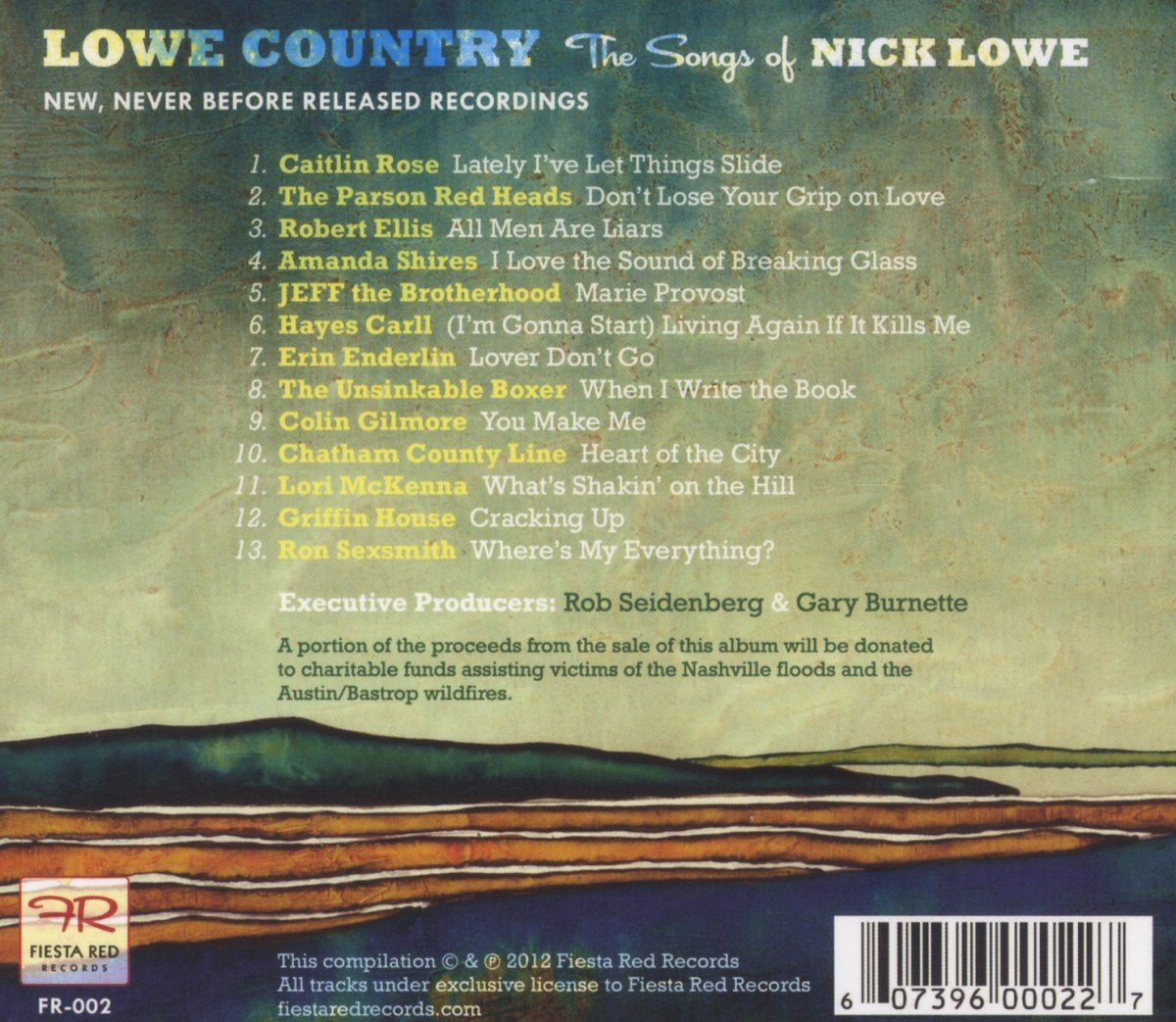
RIM KWAKU OBENG-RIM ARRIVES.
RIM KWAKU OBENG-RIM ARRIVES.
For collectors of Afro-funk and disco, many albums remain tantalisingly out of reach. This includes Ghanian drummer Rim Kwaku Obeng’s legionary lost debut album Rim Arrives. It was released in 1977, four years after a perilous time for Rim Kwaku Obeng.
He found himself stranded in London, without money, documents or friends. Soon, Rim found himself homeless, and spent six long and lonely months sleeping rough. It was only through a chance meeting with Joan Armatrading that Rim got his life back on track. This was the start of Rim Kwaku Obeng’s comeback.
By 1977, he found himself in San Francisco. Disco was at the peak of its popularity, Everyone was jumping on the disco bandwagon. Rim Kwaku Obeng was no different. When he entered the studio, Rim was determined to record an album that would fill dance-floors from Lagos to Los Angeles. He succeeded in doing so, However, it was long after 1977, that songs like Brushing Means Making Love, Gas Line and Believe In Yourself filled dance-floors.
When Rim Arrives was released, it failed to find the audience it deserved. It was only much later, that DJs spinning rare disco came across copies of Rim Arrives. They were the lucky ones. Very few copies of Rim Arrives still exist. Those that do, change hands for up to £200. This meant that Rim Arrives is beyond many connoisseurs of Afro-funk and disco. Not any more.
For their first release, the newly founded BBE Africa have released Rim Arrives. It’s available on CD, LP and digital download. Belatedly, this hidden gem of an album is available for all. That’s not all. As a bonus, BBE Africa have added two bonus tracks, International Funk. This is another rarity, which Rim recorded in the early eighties as Rim and The Believers. Along with the seven tracks on Rim Arrives, it’s the perfect introduction to Rim Kwaku Obeng.
He started life as Samuel K. Mfojo, in Begoro, Ghana.However, when his career in music began, he adopted the name Rim Kwaku Obeng. Music however, was in Rim’s blood.
Both his father and uncle were master drummers. It was no surprise when young Rim followed in their footsteps. Rim was a quick learner. By the time he was eighteen, he was a master drummer. There was no higher position. Or so it seemed.
Soon, Rim became the personal drummer to the Ashanti chief in his community. This was a position Rim held for the next eight years. He held this position until he was twenty-six, Then he heard the comedy group the Accra Trio.
They were playing a type of music that was new to Rim. It excited and inspired him. So much so, that Rim asked if he could tour with them. Given Rim’s position in the community, they agreed. It was to everybody’s benefit. He was after all, the Ashanti chief’s personal drummer.
This was the start of Rim’s professional career. It began with Rim touring with the Accra Trio. Then he was approached by Duke Oketa, the leader of one of the top Highlife bands in Ghana, the Uhuru Dance Band.
Over the next five years, Rim toured Britain, America and even Russia with the Uhuru Dance Band. During that period, he honed and perfected his playing style, Rim also became firm friends with Duke Oketa as the Uhuru Dance Band toured, All the time, their music continued to evolve. That was the case for five years, until Rim was called up and had to spend time in the armed forces.
Once Rim’s time in the armed forces was over, he was reunited with his old friend, Duke Oketa. He told Rim he was going to Los Angeles for a recording session. What’s more, he wanted Rim to accompany him. This was no surprise.
Rim and Duke travelled far and wide for five years. By then they had become firm friends. So when Duke Oketa headed to Los Angeles for a session, Rim went too.
By then, the Uhuru Dance Band could do no wrong. Every song they recorded, had the potential to be a hit. So, for their next session, Duke Oketa decided to head to Los Angeles, and one of the city’s top studios.
Once there, Duke booked a studio for a new recording. Duke, however, didn’t do things by halves. He booked one of L.A.’s top studios, A&M Studios. However, Duke wasn’t done yet. For his session, he hired a huge string section. They made their way to the A&M Studios expecting everything to be ready. It wasn’t.
There were no charts awaiting the string section. Duke had no option but to postpone the session for a week. Luckily, Duke knew a man who could have the charts ready within a week. That was his drummer and friend, Rim Kwaku Obeng. He got to work preparing the charts. Within a week they were completed. Duke was so pleased that he paid Rim $700. While all this was playing out, one Quincy Jones was watching on.
He just happened to be spending some time at A&M Studios. When Quincy Jones saw how Rim handled the situation with the charts, he was impressed, Preparing the charts within a week was a big ask. However, Rim managed it. So, Quincy Jones asked Rim to join him. Unfortunately for Rim. Duke got involved, and threatened to sue Quincy Jones if Rim left his employ. Despite ruining the opportunity of a lifetime, Rim stayed loyal to Duke. That was a big mistake.
After the L.A. escapade, Duke invited Rim to accompany him to London. Duke told Rim they were going to record with “a band called Traffic” and Joan Armatrading, who was then, an up-and-coming singer-songwriter. For Rim, this must have seemed like the opportunity of a lifetime. Sadly, that wasn’t the case.
When Duke and Rim arrived in London, they booked into a hotel. Everything it seemed, was going well. However, that was until Rim’s second morning in London. Rim discovered that Duke had checked out of the hotel taking with him Rim’s passport, documents, money and luggage. While the hotel staff were sympathetic at his plight, this left Rim with a huge problem, how did he get home? The answer was, he couldn’t.
With no money, passport or documents, Rim was stranded. What’s more, he had nowhere to live. In the space of little over twenty-four hours, Rim found himself homeless. For the next six long and lonely months. Rim spent them sleeping rough. He was down, out and destitute. It was as if his world had ended. Over the next six months, Rim experienced hell on earth. It was only after a chance meeting with Joan Armatrading that Rim turned his life around.
One day, Rim saw that Joan Armatrading was playing in Ronnie Scott’s jazz club. He recognised and remembered the name. Here was the young singer-songwriter that he was meant to work with when he arrived in London. So, he returned to Ronnie Scott’s the night Joan was playing. He couldn’t get in, given his dishevelled state. So, Rim tried plan B.
Rim found a phone box and tried to phone home, call collect. No luck. Eddie Lee who he was phoning wasn’t around. With things going from bad to worse, and Rim exhausted, he fell asleep in the phone box. That was until someone wanted to use the phone. Then Rim was on the move again. He was out of luck. Or was he?
Surrounded by hotels, Rim decided to try and find a hotel where he could either phone home, or spend the night. Then fate intervened, The hotel he decided to try was the one where he spent his first night in London. When the receptionist who had asked him to leave, saw the state of Rim she was worried. Rim told her what had happened, and slowly, she began to realise that he was a well known musician. So she allowed Rim to phone Eddie Lee.
Having got through to Eddie Lee, his old friend paid for a room in the hotel for three weeks. Eddie Lee also got in touch with Joan Armatrading
When she heard what had happened to Rim, and what he’d been through, Joan promised to help him.
No longer was London the lonely, scary place it had been for the past six months. During that period, Rim had survived by the skin of his teeth. It had been a terrifying time, Now life was looking up, and could only get better for Rim. Joan took Rim home, got him fed and cleaned him, and the next day, bought him new clothes. Soon, he was rehearsing with Joan’s band. Thanks to Joan Armatrading the next chapter in Rim’s life was about to begin.
By 1977, Rim Kwaku Obeng had gone from sleeping rough on the streets of London, to Los Angeles. He had struggled to raise the money to cross the Atlantic. Eventually, he had saved enough, that he could say goodbye to London.
When he arrived in L.A., Rim was able to stay with a friend while he found his feet. Soon, he was working with a group of expat African musicians. Some weren’t even professional. However, before long, Rim turned them into a crack band who were able to seamlessly, combine Western and African music. This fusion of musical influences, would feature on Rim’s debut album.
For his debut album, Rim Arrives. Rim had written seven tracks, He took the band he had honed, and augmented them with some top L.A. session players.
When the recording sessions for Rim Arrives began, Rim took his place in the rhythm section, where he played drums. That wasn’t all. He played piano, bells, clavinet, congas, piano, shaker and timbales. Joining Rim in the rhythm section were basists Baba Tunde, Max Bennett and Phillip Scott; and guitarists Arthur Adams, Jimmy Garrett and Kevin Way. Kwesi Topsy played congas, Fifi Essel shakers and Thomas Hensley piano. The horn section featured trombonist Steve Johnson; trumpeters Robert Hicks and Steve Kurash; and saxophonists Frank Mayes, Stanley Hood and Dennis Dreith who also played the flute. Anita Berry and Shirley Washington added backing vocals. Akua Sewaa switched between lead and backing vocals. Producing Rim Arrives were Rim and Kwaku Lynn. Together with a crack band of African and American musicians, they recorded what could’ve, and should’ve been an album of dance-floor fillers.
Especially with 1977, being the year disco’s popularity peaked. Everyone and anyone were releasing disco records. This included the biggest names in music, actors and stars whose career had hit the buffers. However, back in 1977 Rim was one of the rising stars of Afro-funk and disco. Rim Arrives, his debut album, many felt would lunch his career.
That didn’t happen. Instead, Rim Arrives failed to find an audience until much later. when DJs spinning rare disco came across copies of Rim Arrives. They were the lucky ones. Very few copies of Rim Arrives still exist. That’s until the recent release of Rim Arrives by BBE Africa. At last, this hidden gem can be heard by everyone. Here’s what’s in-store for them.
Gas Line opens Rim Arrives. Straight away, drums pound, horns sound and percussion plays. Stabs of horns are joined by what sounds like a party in the studio. By then, the rhythm section are laying down the funkiest of grooves. Meanwhile, Akua Sewaa takes charge of the lead vocal. It’s sultry and soulful. Backing vocals and blasts of horns reply to her call. All the time, the rhythm section and percussion are creating an irresistible, funky and dance-floor friendly backdrop. Add to this Akua Sewaa’s sassy,soulful vocal and belatedly, Rim has arrived.
As backing vocalists sing “Believe In Yourself,” a bass line bounds across the arrangement. Thunderous drums and stabs of blazing horns add an element of drama, while percussion punctuates the arrangement. The backing vocalists add a soulful sound to this anthemic dance track. It has everything you could want in a dance track. Funky? You bet? Soulful? Definitely. What more can anyone one with a track where African and Western influences combine seamlessly.
There’s a change of direction on Sunkwa (Life First). It has a much more traditional sound. Having said that, Western influences haven’t been negated. After almost cha-chaing into life, the Afro-beat influence takes over. A piano and guitar accompany Rim’s vocal. Then the horn and rhythm section combine with myriad of percussion. Rim unleashes a vampish vocal, as his band kick loose. It’s a joy to behold.
Backing vocalists add a jazz-tinged vocal as Funky Drummer deigns to show its funky delights. The drums are loud and proud. They’re accompanied by the rhythm section and guitars. Soon, musical genres are melting into one. As the vocal becomes soulful, elements of Afro-funk and disco can be heard. Soon, the track takes on a hypnotic quality, as Rim’s band lock down the groove. Playing a starring role are the backing vocalist, rhythm section and blistering guitar solo. The horns deserve an honourable mention, as five minutes of fabulously funky music shares its secrets.
Afro-disco with a funky twist. That describes Brushing Means Making Love. The backing vocalists get the party started, adding a soulful accompaniment to the pounding, dramatic and funky rhythm section. Stabs of horns punctuate the arrangement. So is percussion. Meanwhile, another sensual, sultry vocal is added. Harmonies accompany it, as elements of classic disco and Euro disco provide inspiration for Rim. By then, it’s apparent that Rim and his band are determined to the listener to 127 disco heaven.
Just the drums and percussion accompany the backing vocalists as Nothing Is Free unfolds. Soon, the bass and growling horns are dropped in. By the time the lead vocal enters, the arrangement is just the rhythm section and percussion. Backing vocalists respond to the vocal, as the arrangement builds. Horns blaze and growl, drums roll and a searing guitar solo is unleashed. It soars above the arrangement, as the band stretch their legs, before the track reaches a dramatic, and sassy crescendo.
Closing Rim Arrives is Spend Your Money. It follows a familiar formula to Nothing Is Free. Just drums and percussion accompany the backing vocalists. Then the arrangement bursts into life. Horns sound, guitars chime and chirp while the backing vocalists sings: “Spend Your Money, miser.” It’s impossible not to be won over by this track. Hooks haven’t been rationed during this good time, dance track. It has an anthemic quality. That’s not all. Like so much of Rim Arrives, Spend Your Money has a timeless sound. It has survived the test of time, and is guaranteed to fill floors and get parties started.
Thirty-eight years have passed since Rim Arrives was released. Like so many albums released during the seventies, they failed to find an audience first time around. It was only later, when a new generation of DJs were looking for rare disco to spin, that they came across copies of Rim Arrives. They were the lucky ones.
Given Rim Arrives wasn’t a commercial success, very few copies were sold. Later, in the seventies, a shortage of vinyl in parts of Africa, including Ghana, led to many albums being recycled. Doubtless, this included copies of Rim Arrives. That’s why nowadays, trying to find a copy of Rim Arrives in good condition, is like looking for the proverbial needle in a haystack. Even if a copy turns up, clued up record dealers will be asking anything up to £200. This makes Rim Arrives beyond the budget of most people, Thankfully, that’s no longer the case.
For their first release, BBE Africa, an imprint of BBE Music, have just released Rim Arrives. At last this glorious fusion of Afro-disco, Afro-funk, jazz, rock and soul can be heard by a much wider, and appreciative audience. They’ll be able to revel in this meeting of African and Western influences. As an added bonus, BBE Africa have added two bonus tracks, International Funk. This is another rarity, which Rim recorded in the early eighties as Rim and The Believers. These tracks are a welcome addition to the reissue of Rim Arrives.
It’s essential listening for anyone whose interested in either African, disco, funk or soul. The music on Rim Arrives is funky, soulful, dance-floor friendly and timeless. Rim Arrives is also guaranteed to fill dance-floors and get any party started.
RIM KWAKU OBENG-RIM ARRIVES.

P-FUNK ALL-STARS LIVE AT THE BEVERLEY THEATRE IN HOLLYWOOD.
P-FUNK ALL-STARS LIVE AT THE BEVERLEY THEATRE IN HOLLYWOOD.
The early eighties weren’t a good time for George Clinton, Parliament and Funkadelic were no more. He had been forced to dissolve both groups. His use of multiple names had caught up with him.
Throughout the seventies, and into the eighties, George Clinton had released albums using various names. Sometimes albums were credited to Parliament or Funkadelic. Other times, they were released as George Clinton solo albums. Then there was George Clinton and The P-Funk All-Stars. It was a confusing time for record buyers. However, most of the albums featured many of the same musicians. These musicians were retained by George Clinton and they toured and played on the various George Clinton projects. They had been successful during the seventies.
Both Funkadelic and Parliament had released commercially successful and critically acclaimed albums. Parliament could do no wrong between 1975 and 1979. During that period, they released five albums. The success began in 1975, when Parliament’s four album, Mothership Connection was certified platinum, A year later, and 1976s The Clones of Dr. Funkenstein was certified gold. Then in 1977, Parliament released Funkentelechy Vs. The Placebo Syndrome. Just like Mothership Connection, it sold a million and was were certified platinum. However, the success kept on coming. 1978s Motor Booty Affair and Gloryhallastoopid were both certified gold. Sadly, that was the end of this vainglorious run of commercial success.
When Parliament released Trombipulation in 1980, the album stalled at number sixty-one in the US Billboard 200, but reached number six in the US R&B charts. That was the last Parliament album. However, between 1975 and 1979, they sold over 3.5 million albums. During this period, Funkadelic were also enjoying the most successful period of their career.
Funkadelic’s most successful period came between 1978 and 1979. One Nation Under A Groove which was released in 1978, was certified platinum. A year later, 1979s Uncle Jam Wants You was certified gold. Having sold over 1.5 million albums in two years, Funkadelic’s album sales slumped between 1980 and 1981.
When Connections and Disconnection was released in 1980, it reached 151 in the US Billboard 200, but reached number forty-five in the US R&B charts. The Parliament-Funkadelic empire was beginning to crumble.
It was already experiencing financial problems. Partly, this was because George Clinton had retained so many musicians. By then, he had dozens of musicians under contract. Some felt sidelined. Others who had a stake in the Parliament-Funkadelic enterprise watched as the empire crumbled. George Clinton might have been a remarkable musician, but he hadn’t the skill set to manage the Parliament-Funkadelic empire.
Soon, there were clashes. Some musicians left. They couldn’t bear to stand and watch the Parliament-Funkadelic empire crumble. They had a stake in it. So they exited stage left. Incredibly, things were about to get worse.
With Funkadelic having completed their twelfth album, they took the double album to Warners. They quickly rejected the idea that The Electric Spanking of War Babies would be a double album. Instead, the best tracks were cherry picked and The Electric Spanking of War Babies released in April 1981. It fared slightly better than Connections and Disconnection, when it reached 105 in the US Billboard 200 and number forty in the US R&B charts. This was a far cry from when Funkadelic, like Parliament were being awarded gold and platinum discs. The end was neigh.
After twelve albums from Funkadelic and nine from Parliament, George Clinton’s enterprises were teetering on the edge. To make matters worse, there was shake-up at their record companies. Musical fashions were changing, and to some, it looked like P-Funk had had its day. So, after the release of The Electric Spanking of War Babies in April 1981, George Clinton began the process of dissolving the Parliament-Funkadelic empire. It was a case of R.I.P, Parliament and Funkadelic.
By 1983, George Clinton had a new band up-and-running. Just like before, George Clinton was using a variation on a theme. Whereas previously, there was George Clinton and The P-Funk All-Stars. they had metamorphosed into the P-Funk All-Stars.
1983 would be a big year for George Clinton’s new band. They released two albums that year. The first came in April 1983, when the P-Funk All-Stars took to the stage at the Beverley Theatre in Hollywood. That’s when they recorded the ten tracks that became P-Funk All-Stars Live At The Beverley Theatre In Hollywood. It was recently reissued as a double album by Westbound Records, an imprint of Ace Records. Later in 1983, the P-Funk All-Stars
release their one and only studio album Urban Dancefloor Guerillas. However, before that, George Clinton got his funkateers back together, and they made their way to The Beverley Theatre, in Tinseltown.
Despite everything that had gone before, George Clinton was still able to get some his best musicians to join the P-Funk All-Stars. Given the alleged financial mismanagement and money lost, the P-Funk All-Stars featured an enviable lineup. Its rhythm section featured drummer Dennis Chambers, bassist Rodney “Skeet” Curtis and guitarists George Clinton, Eddie Hazel, Lige Curry, Ron Ford, Gary “Mudbone” Cooper, Robert “Peanut” Johnson and Michael “Clip” Payne. They were joined by keyboardists Bernie Worrell and Jerome Rodgers.The horn section featured Grey Boyer, Bernie Cowan and Greg Thomas, the P Funk Horns. Vocals came courtesy of George Clinton, Lige Curry, Gary “Mudbone” Cooper, Ron Ford, Robert “Peanut” Johnson and Michael “Clip” Payne. Maceo Parker was the M.C. at the Beverley Theatre. He makes his presence felt early on.
As the P-Funk All-Stars take to the stage at The Beverley Theatre, it seems the audience haven’t lost their appetite for George Clinton and Co, They holler, chant and scream as the P-Funk All-Stars Live At The Beverley Theatre In Hollywood, Ecouraging them is M.C. Maceo Parker. As he hollers, the audience chant and clap their hands during P-Funk (Wants To Get Funked Up), Accompanying them is just a lone piano. The party is well and truly started.
After that, the P-Funk All-Stars are introduced to the audience. Again, it’s just the piano and M.C. Maceo Parker. It doesn’t matter, the audience are worked into a frenzy. Still, Maceo Parker continues to work the audience. He introduces the band during Do That Stuff. One of the biggest cheers goes when Eddie Hazel’s name is announced. Then when the introductions have been made, the P-Funk All-Stars launch into an uber P-funky groove. It’s a case of the boys are back in town. Before long, they’re rolling back the years. When the vocalists step up, Maceo Parker continues the introductions. However, by then, everyone is revelling in P-Funk royalty as they cut loose on this nine minute epic. With the audience in the palm of their hands, the P-Funk All-Stars unleash a classic.
That’s Cosmic Sloop. By then, Maceo Parker is still working the crowd. He hypes them up, and when he introduces George Clinton, the audience nearly lift the roof off. George unleashes a blistering guitar solo. Even when the vocal enters, Maceo is hyping the crowd up. Not that they need it. With the P-Funk All-Stars strutting their stuff, and George and Eddie Hazel going toe-to-toe it’s a case of sit back and enjoy the show.
From there the P-Funk All-Stars unleash an eight minute medley of Let’s Take It To The Stage, Mothership Connection (Star Child) and I Call My Baby Pussycat. All their years playing live shine through, with the P-Funk All-Stars’ rhythm and horn section at the heart of the sound and success. So are the banks of keyboards. Then there’s the vocal. It’s a mixture of power and passion. Other times, it’s a funky vamp. Regardless of which, the P-Funk All-Stars are strutting their way through the set, and decide to drop in another classic.
Give Up The Funk (Tear The Roof Off The Sucker) lasts twelve minutes, and allows the P-Funk All-Stars to stretch their legs. Blistering guitars and stabs of horns combine, while the funky rhythm section drive the arrangement along. The rabble rousing vocal hypes the audience up, while punchy harmonies are added. By then, George Clinton’s new band are reinventing a P-Funk classic, and storming through it, winning friends and influencing people. They continue to do so, as they mix soul and P-Funk,
The way they do this is by dropping in a near thirteen minutre version of (Not Just) Knee Deep. This George Clinton and Phillip Wynne penned song allows the P-Funk All-Stars to show their soulful side. The P-Funk All-Stars don’t turn their back on their funky side. Both sides can be heard. There’s even a diversion via jazz and rock. It’s a musical masterclass from the P-Funk All-Stars that closes disc one of P-Funk All-Stars Live At The Beverley Theatre In Hollywood, They pickup where they left off on disc two.
With twenty-one albums of Funkadelic and Parliament albums to choose from, the P-Funk All-Stars are spoiled for choice. They open disc two of P-Funk All-Stars Live At The Beverley Theatre In Hollywood with Maggot Brian, This George Clinton and Eddie Hazel composition last sixteen minutes. George narrates the song, before the All-Stars take their turn to shine. What follows is akin to musical theatre. That’s until, the All-Stars kick loose. This includes a scorching, searing guitar solos. It’s the best on P-Funk All-Stars Live At The Beverley Theatre In Hollywood, It comes courtesy of Eddie Hazel, who shows why he was one of the best funk guitarists of the seventies and early eighties. He’s plays his part in the best track on P-Funk All-Stars Live At The Beverley Theatre In Hollywood,
That’s despite following Maggot Brian with One Nation Under A Groove. This anthemic track about togetherness features the P-Funk All-Stars marching along, fusing funk and soul seamlessly. Everyone plays their part in the sound and success of One Nation Under A Groove. It comes a close second to Maggot Brian. The question is how do the P-Funk All-Stars top the two preceding tracks?
George Clinton’s secret weapon is a ten minute version of Atomic Dog. It sees the P-Funk All-Stars decide to slow things down. Then they unleash their unique brand of P-Funk. Above the arrangement sits a vampish vocal. It’s accompanied by harmonies. Again, the rhythm section play a leading role, providing the P-Funky heartbeat. Meanwhile, the audience are in raptures at the P-Funk All-Stars in full flow. Sadly, the show is nearly over.
Closing P-Funk All-Stars Live At The Beverley Theatre In Hollywood is an explosive version of Flash Light. It lasts just five minutes. By then, the audience have been worked into a frenzy by the audience. It’s a two way process. The P-Funk All-Stars cut loose, combining cartoon vocals with what’s like a joyous chant. It’s an unlikely combination, but accompanied by what’s an express train of an arrangement proves the perfect way to close P-Funk All-Stars Live At The Beverley Theatre In Hollywood.
After the recording of P-Funk All-Stars Live At The Beverley Theatre In Hollywood in April 1983, those who had attended the concert awaited the release of the live album. So did those that hadn’t been fortunate enough to get a ticket. They had a long wait.
Seven years passed before P-Funk All-Stars Live At The Beverley Theatre In Hollywood was released in 1990. By then, music had changed. Some remembered Parliament and Funkadelic’s glory days fondly. Others remembered just their greatest hits. However, for many people, P-Funk was a footnote in musical history. So when P-Funk All-Stars Live At The Beverley Theatre In Hollywood was belatedly released, it failed to find an audience. Since then, very few people have heard P-Funk All-Stars Live At The Beverley Theatre In Hollywood. That changed recently.
P-Funk All-Stars Live At The Beverley Theatre In Hollywood was recently reissued by Westbound Records, an imprint of Ace Records. The reissue of this live double album is to be welcomed. It’s a reminder, if any was needed of how good George Clinton and Co. were. Live they were legendary, and often, played three hour shows. That was the case with Parliament, Funkadelic and the P-Funk All-Stars, whose live album P-Funk All-Stars Live At The Beverley Theatre In Hollywood makes a welcome return twenty-five years after its initial release.
P-FUNK ALL-STARS LIVE AT THE BEVERLEY THEATRE IN HOLLYWOOD.


THE SOULJAZZ ORCHESTRA-RESISTANCE.
THE SOULJAZZ ORCHESTRA-RESISTANCE.
It’s ten years since The Souljazz Orchestra released their debut album Uprooted in 2005. However, The Souljazz Orchestra were no strangers to the Canadian music scene.
They came to prominence two years after a new millennia dawned. Since 2002, The Souljazz Orchestra have been showcasing their inimitable sound. Back then, The Souljazz Orchestra were fusing everything from Afro-beat, Carribbean, jazz, Latin and soul. That’s still the case.
Since 2002, The Souljazz Orchestra’s inimitable sound has come courtesy of blazing horns, vintage keyboards, a myriad of percussion and a oulsating rhythm section. They provide The Souljazz Orchestra’s heartbeat. In full flow, it’s an irresistible and impressive sound. Especially, when when The Souljazz Orchestra kick loose, That’s why The Souljazz Orchestra’s albums have been so popular.
Two years after releasing their debut album, The Souljazz Orchestra released their sophomore album Freedom Must Die in 2007, Manifesto followed in 2008 with their acoustic album Rising Sun released in 2010. For their fifth album Solidarity, which The Souljazz Orchestra’s first album for Strut Records, they changed direction musically.
Gone was the acoustic style of Rising Sun. Replacing it, was an electric, vocal driven style. Joining The Souljazz Orchestra were a number of guest artists, They join The Souljazz Orchestra and their eclectic selection of instruments, as they embark on a journey through African, Caribbean Latin music, via detours into jazz and soul. The result was an album that had raw lo-fi, analogue sound. It was released to widespread critical acclaim, This was a perfect way for The Souljazz Orchestra to celebrate their tenth anniversary.
Another two years passed, and The Souljazz Orchestra returned with their sixth album Inner Fire. Just like their previous albums, Inner Fire is a compelling fusion of musical influences and genres. That’s no surprise. The Souljazz Orchestra absorb influences like a sponge.
This is apparent on Inner Fire. Since the release of Solidarity, The Souljazz Orchestra have continued their musical voyage of discovery. Members of The Souljazz Orchestra have worked with some of the most talented musicians in Cuba, Haiti, Nigeria and Rwanda. These master musicians have influenced The Souljazz Orchestra. Their influence could be heard on Inner Fire. It was a musical melting pot, that was given a stir by The Souljazz Orchestra. The result was a tantalising tasting dish, best tasted often. That’s the case with The Souljazz Orchestra’s latest album Resistance.
Nineteen month after The Souljazz Orchestra released Inner Fire, they return with their seventh album Resistance. It was released by Strut Records on 4th September 2015. Resistance sees The Souljazz Orchestra add some new ingredients to their musical melting pot.
With each album,The Souljazz Orchestra always try something new. Theis means that can’t be accused of remaking that same album. So, when The Souljazz Orchestra began work on Resistance Pierre Chrétien explains that: “we approached this album with a fresh ear,” That was admirable, given the success they were now enjoying. Many groups having found a winning formula, would’ve stuck to it. Not The Souljazz Orchestra.
There was no way The Souljazz Orchestra were going to remake Solidarity or Inner Fire.” Far from it. What they were determined to do, was move forward. To do this, Pierre revisited the music that had inspired him. He explains: “We were keen to build on the band’s sound and message, so I brought in some of the French Caribbean and Francophone West African influences that I’ve loved since my youth.” To do this, Pierre and the rest of The Souljazz Orchestra have fused elements oupé-Décalé, Zouk, and Ndombolo to their usual mixture of Afro-beat, funk, jazz and soul. The result was Resistance, a ten track album that tells the next chapter in The Souljazz Orchestra story.
Just like previous albums Reisistance. the lyrics are full of searching, scathing social comment. Some of the tracks are dance-floor friendly. Both are what listeners have come to expect of The Souljazz Orchestra, They recorded Resistance their way at their Ottawa studio.
The Souljazz Orchestra’s studio in Ottawa is no ordinary studio. Far from it. It’s best described as an analogue studio, which is full of an eclectic selection of instruments. Many of these are instruments are long lost, sometimes unloved junk shop finds. A transistor organ, cheap guitars, reverb and echo units, an electric piano rescued from a dumpster and the crowning glory, an old eight-track Tascam tape machine, that was bought at a yard sale by the Royal Canadian Mounted Police. Incredibly, the ten tracks on Resistance were recorded on this old eight-track Tascam, which is described by The Souljazz Orchestra as temperamental. This gives Resistance a really raw lo-fi, analogue sound. Resistance features the now familiar lineup of The Souljazz Orchestra. They got to work recording their seventh album Resistance.
This included songwriter Pierre Chrétien. He plays a selection of vintage keyboards and adds percussion and vocals. Marielle Rivard adds percussion and vocals. The horn section features tenor saxophonist Steve Patterson, baritone saxophonist Ray Murray and alto saxophonist Zakari Frantz. They all add percussion and backing vocals. Providing The Souljazz Orchestra’s pulsating heartbeat is drummer, percussionist and backing vocalist Philippe Lafrenière. This time, the lead vocal changes hands. Pierre Chrétien, Ray Murray, Philippe Lafrenière and Marielle Rivard all deliver lead vocals. That’s the personnel that played on The Souljazz Orchestra’s latest album Resistance.
It’s described as “a defiant celebration of social justice and human empowerment.” Resistance also features the latest chapter in The Souljazz Orchestra story, as their music continues to evolve. They’re musical chameleons who are determined never to stand still. Constantly, they seek to reinvent themselves. This they do with each album. Similarly, with each album, word spreads about The Souljazz Orchestra’s unique, and inimitable sound. It’s showcased on Resistance which could well be their finest hour. Is that the case?
Greet The Dawn opens Resistance, The Souljazz Orchestra’s seventh album. Stabs of urgent growling horns combine with the pulsating rhythm section and percussion. Horns sound as a scatted vocal enters. Thunderous drums sound as the vocal becomes an impassioned plea: “for a better way of for the workers.” Meanwhile, the rest of The Souljazz Orchestra create an irresistible, genre-melting wall of sound. If there’s no change, there will be consequences the vocal warns: “if you kick a dog long enough, the dog bites back.” By then, the rhythm section keep things funky, while elements of Afro-beat, Caribbean and soul become one as The Souljazz Orchestra combine musical genres and social comment.
Shock And Awe explodes into life at breakneck speed. A myriad of percussion combines with a thunderous rhythm, searing guitars, vintage keyboards and braying horns. Briefly, a siren sounds before a vocal is unleashed. It’s a mixture of power, passion, energy and enthusiasm. Pierre sings call and response with the rest of The Souljazz Orchestra. By then, they’re in full flow and it’s a joy to behold. That’s why recently, they’ve opened for Stevie Wonder, Bob Dylan, and Femi Kuti.
The Souljazz Orchestra’s horn section explodes into life on Courage. Soon, they’re sashaying their way across the arrangement. As they do, a joyous and uplifting soundtrack accompanies them. It comes courtesy of the horn and rhythm section. They combine with percussion to create the backdrop for a vocal that sings of finding Courage. Later, a vintage synth plays during the breakdown. From there, this joyous and uplifting anthem rebuilds, sweeping everyone along in its wake.
Just percussion and drums open As The World Turns. Soon, a funky bass and guitar join. Next up is one The Souljazz Orchestra’s vintage keyboards. It’s a contrast the rest of arrangement. So is the beautiful sound of Marielle Rivard’s vocal. Her vocal is very different from Pierre’s. It’s perfectly suited to the sunshine soul of As The World Turns. Behind her, the rest of The Souljazz Orchestra are in full flow, As usual, they’re seamlessly fusing musical genres. This includes Afro-beat, electronica, folk, funk, jazz and soul. They’re combined to create a celebratory song that’ll get any party started.
Gradually, Life Is What You Make It arrangement’s unfolds. Straight away, The Souljazz Orchestra combine elements of Caribbean, funk, jazz and soul. Soon,they’re advising: “Life Is What You Make It, don’t let it pass you by.” By then, the listener realises this is an old song given a makeover. To do this, The Souljazz Orchestra combine braying horns with the rhythm section, keyboards and percussion. They provide the perfect backdrop for a heartfelt, hopeful vocal. It plays its part in the sound and success of the reinvention this familiar track.
Growling horns gallop along on Bull’s Eye. They’re joined by percussion and stabs of keyboards. Bursts of vocal are added. Mostly, though it’s just the rhythmic delights of The Souljazz Orchestra that takes centre-stage. They feed off each other, as if playing a game of daring do. The horn section taunt the rhythm section to reach the heights they’ve previously reached. Even the keyboards and chiming guitar get in on the act. So does an urgent vocal. Harmonies reply to the shouts of: “take a bull by the horn.” Then a blistering saxophone solo steals the show. After the breakdown, The Souljazz Orchestra gallop along as Bull’s Eye reaches its dramatic crescendo.
Briefly, The Souljazz Orchestra drop the tempo on Soleil Couchant. Before long, a thunderous drum beat drives the rhythm section along. Above the arrangement sits bursts of growling horns. Percussion punctuates the arrangement as Marielle Rivard delivers a joyous vocal. When her vocal drops out, it’s replaced by the horn section. Along with the rhythm section, they combine the music of the past and present. In The Souljazz Orchestra’s hands, it becomes the music of the future. Especially, with Marielle Rivard adding a vocal to this truly irresistible call to dance.
Pounding drums and blazing horns create a dramatic, urgent arrangement on Ware Wa. A vampish vocal is added. Then the tempo rises, and the tempo begins to play a more prominent role. By the harmonies are added. Soon, another dance-floor friendly arrangement unfolds. Crucial to is success are the dusty Hammond organ, percussion and blazing horns. They add a Caribbean sound to another joyful fusion of musical genres and influecnes.
As the rhythm section ensure arrangement to Kossa Kossa becomes uber funky, a James Brown-esque vamp is added. It has an Afro-beat influence. So do parts of the arrangement. That’s apart from the synths. They’ve an Acid House influence. The horns add an Afro-beat influence. So do the funky rhythm section. They’re responsible for a funky, hypnotic sound that’s truly delicious.
It’s Gonna Rain closes The Souljazz Orchestra’s new album Resistance. Stabs of drums and horns combine with percussion as The Souljazz Orchestra create a much more spacious, laid-back vibe. That’s the case with vocal as it sings: “It’s Gonna Rain, wash away your troubles.” Meanwhile, horns bray and blaze, while the rhythm section and keyboards combine, Later, a sultry saxophone is gonna “wash away your troubles.” That’s the case throughout Resistance, The Souljazz Orchestra’s new album. It’s without the best of their seven album career.
That’s no exaggeration. Resistance, which was recently released by Strut Records, see The Souljazz Orchestra at their very best. Good as Solidarity and Inner Fire were, Resistance, the third part in The Souljazz Orchestra’s Strut Records’ trilogy is a career defining album. No wonder.
The Souljazz Orchestra in full flight on Resistance is a joyous, impressive and irresistible sound. Especially when they’re tempting the listener to the dance-floor. They tease and tempt the listener with blazing horns, vintage keyboards, a myriad of percussion and a pulsating rhythm section. They provide The Souljazz Orchestra’s heartbeat. It’s an irresistible sound. Few can resist the delicious sound of The Souljazz Orchestra as they fuse everything from Afro-beat, Carribbean, jazz, Latin and soul with elements of Coupé-Décalé, Zouk, and Ndombolo. That’s not forgetting lyrics bristling with cutting social comment. The result is a potent and heady brew. It was recorded in The Souljazz Orchestra’s Ottawa studio.
It’s decidedly lo-fi. Don’t expect to find the latest equipment. No. It’s an analogue studio full of an eclectic selection of instruments. Many of these are instruments are long lost, sometimes unloved junk shop finds. A transistor organ, cheap guitars, reverb and echo units, an electric piano rescued from a dumpster and the crowning glory, an old eight-track Tascam tape machine, that was bought at a yard sale by the Royal Canadian Mounted Police. These instruments come to life in the hands of musical alchemists, The Souljazz Orchestra as they recorded their career defining album Resistance.
They’re proof that it’s not the type of equipment used to record an album, it’s what you do with it. In the case of The Souljazz Orchestra, they’ve recorded a career defining album, Resistance. It features The Souljazz Orchestra at their funkiest and most soulful. Especially when they kick loose, and tempt and tease listeners onto the dance-floors. Resistance is impossible The Souljazz Orchestra get the party started with their heady and irresistible musical brew.
THE SOULJAZZ ORCHESTRA-RESISTANCE.
GEIR SUNDSTOL-FURULUND.
GEIR SUNDSTOL-FURULUND.
Prolific. That’s a word that is often used to describe musicians. Often that’s an exaggeration. Not in the case of Geir Sundstøl.
Since his career began in 1988, Geir Sundstøl has featured on 260 different albums. This includes the albums he recorded as member of Rovers, and then Morris. Mostly, though, Geir Sundstøl has worked as the musical equivalent of a hired gun.
For much of his career, Geir Sundstøl has worked as a session musician. However, he’s no ordinary session musician. Most session players stick to one instrument. Not Geir Sundstøl. He describes himself as a guitarist and self-taught multi-instrumentalist. Geir Sundstøl can play guitarist, mandolin, pedal steel, banjo, dobro, marxophone and harmonica. There is, it seems, no end to Geir Sundstøl’s talents. That’s one of the reasons why so many artists have dialled Geir Sundstøl’s number.
This includes not just the great and good of Norwegian music. No. Geir Sundstøl has travelled far and wide recording albums.
He’s featured on album by everyone from A-ha to Henning Kvitnes, Lillebjørn Nilsen, D.D.E., Lynni Treekrem, Tim Scott, Onkel Tuka, Mulens Portland Combo and Lars Martin Myhre. Then there’s albums by Bjarne Brøndbo, Blister, Savoy, Jørun Bøgeberg, Bjørn Eidsvåg,Rita Eriksen and Nils Petter Molvær. Each and every one of these artists know Geir Sundstøl’s number. No wonder. He’s one of the most versatile musicians in music.
Unlike some session players, Geir Sundstøl can seamlessly switch between musical genres. He’s just as comfortable playing blues, country, jazz, pop, rock and roots music. That’s why he’s been asked to accompany everyone from deLillos to Di Derre, to Hangnal and Jimmie Dale Gilmore, who came across Geir in 1993.
The first time Jimmie Dale Gilmore came across Geir Sundstøl was at the 1993 Down On The Farm Festival. Before long, the pair were touring America. One night, film directors Joel and Ethan Coen were at one of the concerts. They were working on a new film, Fargo. However, they were still fleshing out the characters, and were looking for inspiration. When they saw Geir Sundstøl, the Coen brothers had their inspiration for Gaear Grimsrud, Peter Stormare’s character in their 1996 movie Fargo. By then, Geir Sundstøl had spent eight years recording and touring the world.
Nineteen years later, and Geir Sundstøl is still working just as hard. He’s worked on 260 albums and toured the world several times. However, there’s something he’s still to do, release his debut album. Geir Sundstøl will rectify this on 18th September 2015, when is released on Hubro Music.
Furulund is a much anticipated album. It’s the long-awaited debut album from Geir Sundstøl. Recording of Furulund took place at Geir Sundstøl’s home studio, Studio Intim. That’s where the eight soundscapes were recorded. They’ve been described as “atmospheric and evocative.” Geir Sundstøl played the majority of the instruments on Furulund, which was was recorded entirely in analogue. However, joining Geir Sundstøl on Furulund were some of his musical friends.
This includes Bernhoft keyboardist David Wallumrød. He’s joined by two drummers, including Erland Dahlen. He and Geir Sundstøl were members of both Nils Petter Molvær’s group and Morris. The other drummer Michael Blair, has accompanied Tom Waits, Elvis Costello and Lou Reed. They joined Geir Sundstøl at his home studio, Studio Intim.
It features many unusual instruments which Geir Sundstøl has collected over the years. Many are rarities. This doesn’t stop Geir Sundstøl using them on Furulund. It features eight instrumental soundscapes composed by Geir Sundstøl. Once Furulund was completed, it was mixed by Bård Ingebrigtsen at Amper Tone Studio, and was mastered by Helge Sten at Audio Virus Lab. Only then, was Furulund ready for release.
Furulund had been a long time coming. Geir Sundstøl’s career began in 1988, twenty-seven years ago. After working on 260 albums and touring the world several times, Geir Sundstøl was at last ready to release his long awaited debut album Furulund, which I’ll tell you about.
Din Gamle Arak opens Furulund. Just a lone, folk-tinged guitar plays. Soom, it’s joined by a shimmering steel guitar. They play their part in what’s an understated soundscape. However, an understated, wash of music can be heard in the distance. It’s panned left, and threatens to unfold. However, it’s a curveball. Out of nowhere, a cinematic sound unfolds. Bells chime, drums sound and guitars combine with the marxophone. By now, it sounds as of Geir Sundstøl is providing the soundtrack to a Spaghetti Western.
One has to listen intently to Furulund. In the distance, sounds stirs. Gradually, the arrangement builds. A piano plays. It’s joined by a country-tinged guitar and drums. Meanwhile, percussion plays in the background. By then,the music is moody, melancholy and thoughtful. It washes over their listener. Soon, their wallowing in its pensive beauty.
Just like previous tracks, the introduction to Punsj sparse and spacious. This seems to deliberate. The listener can’t help but wonder what direction the arrangement is heading? A lone country-influenced guitar plays. Soon, a myriad of percussion and sound effects are added. They punctuate the arrangement effectively. Their interjections makes sense. Whether it’s the guitar, percussion, weeping pedal steel or bells that chime, they’re dropped in at the right time. Geir Sundstøl’s alternative orchestra create a moody, wistful soundscape. It sounds as if it belongs in a Wim Wenders movie like Paris Texas.
Bells chime and a weeping pedal steel combines on Englehviin. Meanwhile, the wind blows and a guitar plays. Plink plonk percussion joins the bells and pedal steel. So do drums and sci-fi sound. Drums add an element of drama. However, the pedal steel is the most atmospheric and evocative sound. It tugs at your heartstrings in this cinematic soundscape.
A keyboard is played slowly and deliberately on Svi. Despite its understated sound, it’s moody and broody. Especially when shimmering guitars and organ are added. They add to the dark, moody and mesmeric sound. It has a country influence. Later, Eastern percussion is added briefly. Having appeared, is disappears, only to reappear later. By then, a searing guitar, and bass cuts through the arrangement. They’re joined by a weeping pedal steel and percussion. Together, they create a dreamy, fuzzy and lysergic soundscape.
Ry Cooder. That’s who I think of as Kamelsnurr unfolds. It’s just Geir and his slide guitar. Washes of music dissipate into the distance. That’s until he’s joined by another guitar and drum. Its raison d’être seems to be to add drama. It certainly succeeds in doing so. Especially with when it’s aided and abetted by the marxophone and percussion. They create a cinematic soundscape. All the listener needs to supply is their imagination, and they can direct the film that accompanies the moody, dramatic and wistful Kamelsnurr.
Washes of distant music sweep in on Sheriffen av Rotterdam. They’re spacey, as they shimmer and glisten. Again, Geir combines his trusty guitar and rumbling drums. While washes of guitar shimmer and shiver, drums rumble like distant thunder. Geir’s banjo adds a sense of urgency, on a track that’s mostly, beautifully mellow and atmospheric.
Dagens don’t closes Furulund, and is a combination of influences, including Ry Cooder, the Cocteau Twins and Buddhist music. The latter comes courtesy of the bells that ring out. Later, there’s a noticeable country influence. It’s down to Geir’s slide guitar. It takes centre-stage this moody, minimalist soundscape. Just like Din Gamle Arak, which opened Furulund, it sounds as if it belongs on a 21st Century Spaghetti Western. This seems a fitting way to close Geir Sundstøl’s long-awaited debut album Furulund.
It’s taken Geir Sundstøl twenty-seven years to get round to recording and releasing Furulund. It’s been well worth the wait. Furulund is a stunning debut album, featuring eight instrumental soundscapes. Geir Sundstøl plays most of the instruments himself. That’s apart from the drums and keyboards. Some of his musical friends add these parts. They play their part in what’s one of the best debut albums of 2015.
The music on Furulund is variously atmospheric, beautiful, broody, cinematic, dramatic, dreamy, ethereal, melancholy and moody. It’s capable of taking the listener on a journey. All the listener needs to supply is their imagination. Geir Sundstøl supplies the music.
Sometimes, the music sounds as if it belongs on a Spaghetti Western. Another track, Punsj, sound as if they belong on a Wim Wenders soundtrack. Other influences include the Cocteau Twins, Brian Eno, and Buddhist music. Add to this, ambient, Americana, blues, country, folk, post-rock and rock. Each and every one of these influences are part of the sound and success of Furulund, which will be released by Hubro Music on 18th September 2015.
Furulund is one of the best debut albums of 2015. The best way to describe the music on Furulund is cinematic. That describes the musical journey that is Furulund. It features eight soundscapes that last thirty-five magical minutes. Geir Sundstøl takes the listener on a cerebral and cinematic journey on Furulund, his long-awaited debut album which is sure to be one of the albums of 2015.
GEIR SUNDSTOL-FURULUND.
MORTEN QVENILD-PERSONAL PIANO.
MORTEN QVENILD-PERSONAL PIANO.
Over the last twenty years, Morten Qvenild has been at the heart of the Norwegian music scene. The thirty-seven year old pianist and keyboardist is one of the most versatile and creative musicians of his generation. That’s why, when anyone in the Norwegian music scene was looking for a pianist or keyboardist, they gave Morten Qvenild a call. This has resulted in Morten Qvenild playing on over fifty albums.
He’s has played on albums by the National Bank, Solveig Slettahjell Slomo Quintet, Susanne Sundfør, Arve Henriksen, Thomas Dybdahl, Marit Larsen, Nils Petter Molvær, Shining, Jaga Jazzist, Frida Ånnevik and Trinity. That’s not all. He’s part piano trio In the Country, half of the duo sPaceMonkey with drummer Gard Nilssen and Susanna Wallumrød’s partner in Susanna & the Magical Orchestra. However, there was one thing that Morten Qvenild still hadn’t done, until very recently. That was release a debut album.
Morten Qvenild has rectified this recently. On 4th September 2015, Morten Qvenild released his debut album Personal Piano on Hubro Music. As befitting one of the most creative musicians of his generations, Personal Piano is a groundbreaking album. It’s been several years in the making. However, Morten Qvenild’s career began twenty years ago.
Back in 1995, Morten Qvenild was only eighteen. He was born in Kongsberg on the 31st August 1978. Growing up, he learnt to play the piano. By the time Morten joined the Ung Musikk big band in 1995, he was a talented pianist and keyboard. So much so, that he was accepted into the prestigious Norwegian Academy of Music. This was where he spent the next few years, furthering his musical eduction.
Three years later, in 1998, Morten made his recording debut with Østenfor Sol. Their debut album Syng, Dovre was a genre melting album. Elements of folk jazz, pop and rock were combined on Syng, Dovre. The album was well received by critics, who forecast a great future was forecast for Østenfor Sol.
Østenfor seemed in no hurry to release their sophomore album. However, Morten was busy. He was working on a variety of projects, and a made a guest appearance on a couple of projects. The first came in 2000, when Morten made a guest appearance on Ra’s live@blaa. Then in 2001, he featured on the OJ Trio’s Breaks Even album. That year, Østenfor also released their long awaited sophomore album.
After three years away, Østenfor released their sophomore album Troillspel in 2001. Just like Syng, Dovre, Troillspel was well received by critics. Despite the positive reviews, Troillspel was the last album from Østenfor. However, Morten had plenty of projects lined up.
Jaga Jazzist.
In 2001, Morten was part of three projects who released their debut album. The first was Jaga Jazzist, a nine-piece instrumental band that started out in Tønsberg. Since then, its lineup has been fluid. Morten was a member of for three years.
He made his Jaga Jazzist debut on their third album, A Livingroom Hush. It was released in 2001. The following year, Jaga Jazzist released The Stix. That was the last Jaga Jazzist album Morten played on. The only other recording he played on was their Day E.P., which was released in 2002. For Morten that was the end of his time with Jaga Jazzist. However, he was busy with a variety of other projects, including Shining.
Shining.
Just like Jaga Jazzist, Shining released their debut album in 2001. This was Where The Ragged People Go. Again, Morten was only a member of the band for a few years.
Two years later, in 2003, Shining released their sophomore album Sweet Shanghai Devil. However, when Shining returned with their third album in 2005, In the Kingdom of Kitsch You Will Be a Monster proved to be Morten’s swan-song. He was busy with other projects, old and new. This included Slow Motion Orchestra.
Slow Motion Orchestra.
The third project Morten was involved in, who released their debut album in 2001, were the Slow Motion Orchestra. They released five albums between 2001 and 2009. Their debut album was Slow Motion Orchestra. However, it was another three years before the Slow Motion Orchestra released another album.
In 2004, Morten would be involved with four different projects who released albums. Slow Motion Orchestra released their critically acclaimed sophomore album Silver. Morten also featured on Jan Martin Smørdal’s Acoustic Accident. However, Slow Motion Orchestra was projects Morten and many critics had high hopes for.
And so it came to pass. After the critical response to Silver in 2004, Slow Motion Orchestra released Pixiedust in 2005 and Good Rain in 2006. By then, Slow Motion Orchestra’s star was in the ascendancy. However, it would another three years before they released another album.
By the time Slow Motion Orchestra released Tarpan Seasons in 2009, Morten Qvenild had been working on various projects. He was one of the hardest working men in Norwegian music. Apart from the various groups he was a member of, Morten had made guest appearance on various albums.
This included Nils Petter Molvær’s 2005 album Remakes. The following year, 2006, Morten played on Christer Knutsen’s Grand Hotel and Thomas Dybdahl’s Science. Then in 2007, Morten played on Susanna Wallumrød’s album Sonata Mix Dwarf Cosmos. This was no surprise, as Morten was a member of Susanna and The Magical Orchestra.
Susanna and The Magical Orchestra.
This had been the case since 2000, when Susanna Wallumrød and Morten Qvenild formed Susanna and The Magical Orchestra.
Four years later, they released their debut album List of Lights and Buoys in 2004. This however, wasn’t the only album Morten released in 2004. Two other projects he was involved in released projects, Trinity and The National Bank. Neither however, has enjoyed the longevity of Susanna and The Magical Orchestra.
Two years after the release of List of Lights and Buoys, Susanna and The Magical Orchestra returned with their sophomore album Melody Mountain. The aptly titled Melody Mountain was released in 2006, and won over the hearts and minds of critics. However, after the critically acclaimed Melody Mountain, it would be another three years before Susanna and The Magical Orchestra released their third album.
Fittingly, it was entitled 3. It featured the Norwegian pop, electronica and jazz duo at their best. Critics hailed 3 a career defining album. Since the release of 3 in 2009, Susanna and The Magical Orchestra haven’t released another album. However, in 2009, another of the projects Morten was involved in released its swan-song.
Trinity.
Trinity recording career began in 2004, the same year as Susanna and The Magical Orchestra and The National Bank’s. Trinity released their debut album Sparkling in 2004. Sparking was well received by critics, who were impressed by Trinity’s brand of innovative free jazz. Despite the reviews, Trinity never got round to releasing another album until 2009.
That was Breaking The Mold, which was released in 2009. Breaking the Mold was another album of ambitious free jazz. Just like Sparkling, reviews of Breaking The Mold recognised what Trinity were trying to do. They were trying to push musical boundaries to their limits, and sometimes, even further. That’s what people were coming to expect of Morten, was an experienced and award winning musician.
The National Bank.
Back in 2004, when Susanna and The Magical Orchestra and Trinity released their debut albums, so did another project Morten was involved with, The National Bank. They released their debut eponymous album in 2004. The National Bank was released to critical acclaim, and hailed as one of the albums of 2004.
So much so, that The National Bank won a Spellemannprisen, the Norwegian equivalent of a Grammy Award in 2004. Having won a Spellemannprisen for their debut album, The National Bank didn’t rush into the studio to record their sophomore album. By then, Morten had won another award.
In 2007, Morten was nominated for a Kongsberg Jazz Award. It was the twelfth time that the award had taken place at the Kongsberg Jazzfestival, which was founded in 1964. Since then, it’s one of the most prestigious European jazz festivals, attracting musicians from worldwide. The festival has also been a springboard for many up-and-coming Norwegian artists. They’ve gone on to bigger and better things after appearing at the Kongsberg Jazzfestival. However, by 2007, Morten Qvenild was an experienced artist.
So it was fitting that he was nominated for, and won a Kongsberg at the 2007 Kongsberg Jazzfestival. Along with the Spellemannprisen Morten won with The National Bank in 2004, they were two of three awards Morten had won. The other came with In The Country.
In The Country.
It was in 2003, in Oslo, that Morten Qvenild, Pål Hausken and Roger Arntzen formed the piano trio In The Country. Success came quickly for the trio. They won the JazzIntro Award at the Molde International Jazz Festival. A year later, In The Country were releasing their debut album.
After just two years together, In The Country released their debut album This Was the Pace of My Heartbeat in 2003. Expectancy and critical acclaim accompanied the release of This Was the Pace of My Heartbeat. After all, a year earlier, In The Country had won the JazzIntro Award. However, still, In The Country had to overcome the hurdle many bands fall at, the difficult second album. This could make or break a band.
While some groups struggle for years recording their second album, In The Country had no such problems. They released their sophomore album Losing Stones, Collecting Bones was released in 2006. It picked up where This Was the Pace of My Heartbeat left off. In The Country were one of Norwegian music’s rising stars.
After two albums in two years, it was another three years before In The Country released their sophomore album, Whiteout. It was released in 2009. During the three preceding years, Morten had juggled the disparate projects he was involved with. Somehow, he still found time to record Whiteout, which found favour among critics and cultural commentators. However, another four years passed before In The Country released their next studio album.
While In The Country didn’t release another album until 2013, they released the live album Sounds and Sights in 2011. Then two years later, after a four year wait, In The Country released Sunset Sunrise. The Oslo based piano trio were back, and back to their best. However, in the four preceding years, Morten had been busy.
Susanne Sundfør.
That was the case throughout his career. Constantly, Morten had been busy with the various bands he was a member. Then when he had the time, he played on other people’s albums. This included playing on two tracks on Susanne Sundfør’s 2007 album Your Favourite Music. This lead to Morten producing Susanne Sundfør’s 2010 album The Brothel. This was Morten’s production debut. Another avenue had opened up for Morten.
After producing The Brothel in 2010, Morten became part of Susanne Sundfør’s band that featured on her live album A Night at Salle Pleyel. This was just part of the story of 2011.
During 2011, Morten co-produced Solveig Slettahjell’s Antologie album. He made a guest appearance on Mathias Eick album Skala. That wasn’t all. Morten collaborated with Magic Pocket on their 2011 album The Katabatic Wind. Just like previous years, Morten Qvenild was one of the hardest working men in Norwegian music.
This didn’t change in 2012. Morten continued to play on, and produce other people’s music. He produced Bertine Zetlitz’s 2012 album Electric Feet. Then in 2013, Morten produced Budding Rose’s debut album Where Were Ye All? The following year, 2014, Morten split his time between producing Martin Hagfors’ third album Producers Politics Passion and the various projects he was involved with.
One of the projects Morten was working on during 2014, was the sPace monKey album The Karman Line. It was a collaboration with Gard Nilssen, that was released to widespread critical on Hubro Music. The following year, Hubro Music would release a album by another project Morten featured on, Finland.
Earlier in 2015, Hubro Music released Rainy Omen, Finland’s eagerly awaited debut album. Finland feature Ivar Grydeland, Jo Berger Myhrem Pål Hausken and Morten Qvenild. Just like sPace monKey, critical acclaimed Finland’s debut album. Rainy Omen was hailed a groundbreaking album, one that featured four of Norwegian music’s most talented sons. This includes Morten Qvenild, who on 4th September 2015, released his debut album Personal Piano on Hubro Music.
Over the last couple of years, Morten Qvenild has been working on what he calls “the HyPer(sonal) Piano”. This came about after he found the piano restrictive. So he set about integrating disparate types of electronics into his grand piano. This would expand the “instrument’s sonic palette.” Especially, on Personal Piano, an album where Morten Qvenild dawns the role of sonic explorer, as he innovates and improvises. It’s a project that’s very much his own.
For Personal Piano, Morten Qvenild penned six of the seven tracks. The exception is We Found Love from EDM ‘producer’ Calvin Harris. Morten Qvenild also arranged and produces Personal Piano, which was recorded at The Green Room.
At the Green Room, Morten plays his the HyPer(sonal) Piano, adds vocals and takes charge of programming. It’s very much his album. The only other artist that features is Christopher Blom. He features on just one track, Past. Once the album was recorded at the Green Room, it was mixed and mastered by Jørgen Træen. Only then was Personal Piano ready for release.
Personal Piano, has as a man once said, been a long time coming. Twenty years to be exact. Since then, Morten Qvenild has established a reputation as one of the most creative, ambitious and inventive musicians in Norwegian music. That becomes apparent on Personal Piano, an album where musically, things aren’t what they seem. That’s down to musical sorcerer and sonic adventurer, Morten Qvenild.
On Pesonal Piano Morten processes the sounds, resulting in the original sound being transformed into something totally different. This results in music that variously captivating,ethereal, intriguing, intense and melodic. It’s also innovative. That’s the case throughout the seven soundscapes on Personal Piano. Mostly, they’re instrumental. However, sometimes, Morten delivers a haunting vocal, including on Turning Returning, the opening track.
Opening Personal Piano is Turning Returning, a a minimalist, experimental sounding soundscape. As a piano plays,a myriad of disparate, almost industrial sounds whirr, beep, cheap, squeak and grind. Sounds flit in and out. Sometimes, it sounds as they’re tapping out some long lost code. Then Morten’s ethereal, but fragile, haunting vocal enters. As he delivers a tender, thoughtful vocal, he slowly and deliberately plays his piano. Both the piano and vocal are enveloped by futuristic, otherworldly sounds. Then when Morten’s vocal drops out, his piano takes centre-stage. However, dramatic wash of broody, moody music enters. Having made its presence felt, it dissipates, before being replaced by Morten’s melancholy vocal. Later, sounds bubble, beep, squeak and even growl, as musical alchemist begins this innovative and captivating musical journey.
Just a lone drum plays, before the piano enters on Kick and Glide. As it plays solemnly, it’s multi-tracked. Suddenly, two pianos and keyboard are combing. They’re joined by effects, percussion and what sounds like a guitar about to unleash waves of feedback. By then, there’s a hypnotic quality to the arrangement. As it crackles, it becomes dark and dramatic, before threatening to erupt like a musical volcano. When that happens, it’s as if Morten has been inspired by eighties electronica and the soundtrack to French thrillers from the sixties. Electronica isn’t the only influence. Avant-garde, experimental, free jazz and rock are thrown into the mix by Morten as the arrangement drives along and drama builds and builds to a blistering crescendo.
Experimental describes the introduction to Past. A variety of disparate sounds combine. Some tap out a code, while others provide a proto industrial backdrop for Morten and his piano. As he slowly and thoughtfully plays his piano, he delivers a hopeful vocal. When the vocal drops out, sound bristle, crack and shriek. Panning is used effectively, as everyday objects are deployed as part of an alternative, sci-fi inspired symphony. A drum thunders, Morse Code and feedback combine. Meanwhile, Morten sings and plays his piano. A vocoder is used on his vocal, which is now full regret and despair, as he ponders the Past.
Hilma is another of Personal Piano’s epics. It’s just over eight minutes long. Morten readies himself as he slowly, and delicately plays his piano. Soon, he’s playing quicker and more deliberately. Subtle effects have been used on the signal. They’re not overused. Sound effects bristle and crackly, before a futuristic vocal enters. By then, the arrangement sounds as if it’s about to reach a crescendo. As it does, sound shriek, chatter and scream. However, this proves the perfect accompaniment to the piano and vocoded vocal. Together, with Morten’s dreamy vocal, they play their part in a cinematic epic.
We Found Love sees Morten unleash a disparate and electric selection of sound effects and drones. They have a melodic quality. This increases when a piano, vocoded vocal and electronic drums are added. Together, they transform ‘producer’ Calvin Harris’ EDM track. In Morten’s hands, it takes on new life and meaning. It veers between dreamy, ethereal, futuristic, lysergic, melodic and gloriously otherworldly. To do this, Morten deploys his trusty HyPer(sonal) Piano.
As Morten’s slowly, and dramatically plays his piano on Blown Away, a code is tapped away in the background. It fills in the spaces left by the piano and percussion. Morten stabs deliberately at the piano. Just like other parts of the arrangement, it rings ominously out. Meanwhile, a march is beaten out on a drum. It’s as if someone is plotting their escape. By then, the signal from Morten’s piano is being twisted. Despite that, it still produces a comforting melodic sound. That’s despite the drums marching ominously towards you. They’re joined by Morten’s quivering, shimmering, scatted vocal. Moten uses his voice like an instrument, and its another layer to the swells of of beautiful, glistening music.
Wild Horses closes Personal Piano. Morten’s HyPer(sonal) Piano plays uncertainly, quivering and reverberating. That’s because the original signal has been processed heavily. So has Morten’s vocal. It arrives from deep down in the arrangement. Morten sings slowly and deliberately, as if wanting to get his message across. As Morten delivers a heartfelt vocal, he plays his piano.He picks each note with the utmost care. Meanwhile, strings briefly interject, as this haunting arrangement meanders alongs, closing Personal Piano on a beautiful high.
It’s taken Morten Qvenild twenty years to get round to recording his debut album, Personal Piano. No wonder. For the last twenty years, Morten Qvenild has been at the heart of the Norwegian music scene. The thirty-seven year old pianist and keyboardist is one of the most versatile, creative and innovative musicians of his generation. That becomes apparent after the first track on Personal Piano, which was released by Hubro Music recently.
Personal Piano reflects Morten Qvenild’s interests. The music has been inspired by Radiohead, James Blake, Frode Grytten, Olivier Messiaen, Hans Børli and Murakami. That’s not all. An interest in travelling, melodies, the landscape and skiing. His childhood, plastic, kayaking and his restlessness. So do dark chords and shimmering light. It seems even everything and the everyday items have inspired Morten Qvenild. So has twenty years making music.
During his career, Morten Qvenild has played on albums by the National Bank, Solveig Slettahjell Slomo Quintet, Susanne Sundfør, Arve Henriksen, Thomas Dybdahl, Marit Larsen, Nils Petter Molvær, Shining, Jaga Jazzist, Frida Ånnevik and Trinity. That’s not all. He’s part piano trio In the Country, half of the duo sPaceMonkey with drummer Gard Nilssen and Susanna Wallumrød’s partner in Susanna & the Magical Orchestra. However, there was one thing that Morten Qvenild still hadn’t done, until very recently. That was release a debut album. Now he’s rectified this.
After many years being a member of various groups, Morten Qvenild decided to release a solo album. It wasn’t as simple as it seemed. Morten Qvenild felt frustrated by the restrictions placed on him by the grand piano. So Morten Qvenild began working on what he calls “the HyPer(sonal) Piano”. It’s where Morten integrates disparate types of electronics into his grand piano. This expands and extends the “instrument’s sonic palette.”
That becomes apparent as Personal Piano unfolds. With the help of his HyPer(sonal) Piano, Morten Qvenild becomes a sonic explorer. He innovates and improvises. Constantly, he challenges musical norms, and pushing musical boundaries to their limits, and sometimes, way beyond. The result is Personal Piano, which is without doubt one of the most ambitious and innovative genre-melting albums of 2015.
On Personal Piano, Morten Qvenild combines disparate musical genres. Everything from ambient, avant-garde, classical, electronica, experimental, free jazz, post rock, psychedelia and rock are combined on Personal Piano. They’re thrown into Morten Qvenild’s musical melting pot, and given a stir. This heady musical brew he called Personal Piano.
Featuring seven improvised soundscapes, Personal Piano is a mesmeric fusion that’s guaranteed to captivate and compel. Morten Qvenild takes the listener of a seven musical adventures. The sonic sorcerer throws musical curveballs, before springing a series of musical surprises. Nothing is it seems. Using a myriad of effects, sounds are transformed. They become something very different. As a result, one minute the music is cinematic, the next dramatic and dreamy. Other times, it becomes moody and broody. Then the next, it veers between pensive and understated, to melancholy or melodic. Constantly, the music changes direction. It’s a case of expect the unexpected. Subtleties and sonic surprises are constantly sprung. Morten Qvenild becomes a musical sorcerer and explorer, as he takes listener on a magical mystery tour that’s his long awaited, and groundbreaking debut album Personal Piano.
MORTEN QVENILD-PERSONAL PIANO.
VAN MORRISON-MOONDANCE.
VAN MORRISON-MOONDANCE.
When Van Morrison released his third album, Moondance, in February 1970, little did he know he’d just released not only a classic album, but an album he’d never surpass. This wasn’t unexpected. After all, two years earlier in February 1968, Van Morrison has released Astral Weeks, an album which was a game-changer.
Astral Weeks has been described as concept album. That’s wrong. It was a song cycle where Van fused jazz, blues, poetry and classical music. Full of symbolism, this stream of consciousness was an exploration of earthy love and heaven. Critically acclaimed upon its release, Astral Weeks was very different from Van’s debut, 1967 Blowin’ Your Mind.
Critics was spellbound by Astral Weeks, this groundbreaking album from Van Morrison, who was seen as part-poet, part-musical visionary. On its release, Astral Weeks wasn’t originally a huge success. It was certified gold in the US, but failed to make much of an impression in the UK, where it stalled at number 140. Things would be very different when Van Morrison released Moondance, which will rereleased by Rhino on 16th October 2015.
Van Morrison was only twenty-five when he released his third album, Moondance in February 1970. Moondance had been two years in the making and was an introduction to Van’s Caledonian soul. It had taken Van ten months to write the lyrics to Moondance. The lyrics were written at Van’s mountaintop home, not far from Woodstock village, in upstate New York. For some time, Van had been living in Woodstock, which was now home for him and his wife. This was the perfect place to write a classic album, Moondance.
Inspired by his surroundings, family and memories, Van set about writing the lyrics to Moondance. They are poetic, evocative and mystical. Like an artist used his palette to create pictures, Van used words. He takes you on a series of journeys. On And It Stoned Me, Van takes you back to the Belfast of his youth, while Caravan conjurs up images of living life as a gypsy. You can imagine the pictures unfolding before your eyes. These were the lyrics that Van took into A&R Studios, in New York.
For the recording of Moondance, Van recruited his band from musicians based in Woodstock. They headed along to A&R Studios, in New York. When they got there, they discovered that Van hadn’t written the music to Moondance. No. The music and the arrangements existed in his head along. Somehow, Van had managed to make his band understated what he was hearing in his head. That’s no surprise. Van had recruited a crack band of musicians.
The musicians who played on Moondance included a rhythm section of bassist John Kingberg, guitarist John Platania and Gary Mallaber on drums and vibes. Jef Labes played clavinet, organ and piano and Guy Masson played congas. Horns came courtesy of Jack Schroer on alto and soprano saxophone, while Colin Tilton played tenor saxophone and flute. Adding harmonies were The Sweet Inspirations, Doris Troy, Cissy Houston and Jackie Verdell. As for Van, he played acoustic and rhythm guitar, plus harmonica and tambourine. Moondance marked Van’s debut as producer. Producing a critically acclaimed and commercially successful classic, was quite a start to Van’s production career.
When critics heard Moondance, they hailed it an instant classic. There were no dissenting voices. Moondance was perceived as a coming of age for Van Morrison. He’d set the bar high with Astral Weeks, but surpassed it. Moondance was no ordinary album. Far from it. Genres melted into one. Blues, country, jazz, rock and soul combined with Van’s Celtic roots. The result was a cerebral, challenging and genre-melting of poetic genius, which showcased Van Morrison at the height of his powers. Just like the critics, music lovers loved Moondance.
On its release, in February 1970, Moondance reached number twenty-nine in the US Billboard 200 and was certified triple-platinum. In the UK, Moondance reached just number thirty-two. Come Running was released as a single, but reached just number thirty-nine in the US Billboard 100. Then when Crazy Love was released as a single, it failed to chart. Maybe the problem was, that the singles released from Moondance didn’t work in isolation. Instead, they were part of something bigger, a classic album, Moondance, which I’ll tell you about.
Opening Moondance is And It Stoned Me, is a song about an experience Van had as a child. He was on his way fishing, when he asked an old man for a glass of water. Van was given some water the old man got from a stream. When Van drunk it, he remembers time standing still and heading into another dimension. With its mystical, almost surreal lyrics, Van paints potent pictures. There’s references to rural Ireland, where there’s county fairs and mountain streams. Van even references veteran jazzer Jelly Roll Morton. It’s as if when Van’s delivering the lyrics, he’s transported back in time. He’s right there, the scene unfolding before him. Behind him, a jazz-tinged piano, rasping horns and the rhythm section provide the perfect backdrop to this outpouring of surreal memories. Later, Van adds an acoustic guitar that’s a perfect foil for the piano. It sets the scene for his impassioned vocal, on this fusion of blues, jazz, country and Celtic soul.
Very few songs are as recognizable as Moondance. With its familiar jaunty arrangement, it skips and swings along. Driven along by an electric bass, the jazz-tinged arrangement is mostly acoustic. A guitar, flute, piano, saxophone and drums combine to create a small jazz band. Over-dubbing the flute was a masterstroke. It transforms the tracks. So does the piano solo, before the blazing saxophone panned left takes centre-stage. Together, the band ensure the song swings, as Van unleashes a vocal masterclass. Feeding off the band, he delivers the lyrics about autumn. You close your eyes and Van the poet, paints pictures. Evocative, images of Woodstock village where Van wrote Moondance come to mind. Later, as Van scats and the song reaches its dramatic crescendo, there’s only one word to describe this track “classic.”
Crazy Love shows another side of Van Morrison. An understated ballad, Van’s tender, heartfelt and needy vocal is joined by The Sweet Inspirations. They’re the perfect foil to Van. Bursts of their tender harmonies soar above the arrangement. Meanwhile, the band play thoughtfully, taking care not to overpower Van’s vocal. The result is an ethereal and beautiful paean, which shows Van’s romantic side.
Flourishes of piano open Caravan, a song about gypsy life. Straight away, Van unleashes a vocal powerhouse. Soon, he’s delivering lyrics which are full of imagery. So much so, you can imagine life on the open road, no worries, just days stretching in front of you. There’s a romanticism in the lyrics, which seems idealistic. There’s a melancholy, romantic sound. Van’s band provide the backdrop for his vocal. One minute his vocal is wistful, the next minute it’s a scat, as he trills. The guitar and Van’s vocal feed off each other. They’re crucial to the song’s success. As for the arrangement, it veers between understated to dramatic. Horns blaze adding drama, and with the piano add a jazz-tinged sound to this evocative, Joycean track.
Just an acoustic guitar, then meandering, thoughtful bass open Into The Mystic. As Van’s vocal emerges, it’s pensive and thoughtful. There’s a mysterious sound, as gradually, the arrangement unfolds. The band play gently, as if deferring to Van’s vocal. Piano, bass and acoustic guitars play an important part in the song. So do bursts of growling, jazzy horns. Again, imagery and romanticism are omnipresent. Van describes the sea, and the foghorn blowing as he makes his way home. Just on cue, a saxophone replicates the foghorn. Then his vocal grows in power and passion, as he unleashes another of his trademark vocal powerhouses. Along with his band, the lyrics come to life as Van poet and painter, create one of Moondance’s highlights.
Come Running has a country influence that’s obvious from the opening bars. Just the rhythm section, driven along by the bass, and the piano join forces to accompany Van. He sets the scene with even more imagery. You can imagine the train running down the track in the wind in rain. In the train, is Van lover. He’s sure of that. So sure, he delivers the line: “you’ll Come Running to me.” There’s a certainty that almost borders on arrogance. No wonder. This seems to be a game they play, given Van’s confident, feisty vocal. Their relationship is a turbulent one, one that’s brought to life in this fusion of blues, country, jazz and rock.
These Dreams Of You are driven along by a bluesy harmonica and the rhythm section. Chiming guitars accompany Van’s grizzled, heartbroken vocal. There’s a reason for this heartache. Van dreamt his idol Ray Charles had been assassinated. Soon the song becomes a mini soap opera. Soon, growling horns and Hammond organ are dropped in. They ensure the song swings and add the finishing touch as Van lays bare his soul and dreams for all to hear.
Brand New Day has a melancholy sound as piano and country guitars combine. Van’s vocal is slow and full of hope, hope for the future. He wrote the song when he was having problems spiritually. What follows is a cathartic outpouring of doubt. Cleansed of this doubt, it’s as if spiritually, his life begins again. His masterstroke on Brand New Day was having The Sweet Inspirations add gospel-tinged harmonies. Dramatic and spiritual, they’re the perfect accompaniment to Van on this spiritual awakening.
A clavinet opens Everyone, as the song explodes into life. It’s played powerfully and confidently. That describes Van’s impassioned vocal. It’s a mixture of power and passion, while the rhythm section provide a pounding, driving 12/8 beat. Later, a flute is overdubbed. It carries the melody, while acoustic guitar and occasional drums play supporting roles. With the 12/8 beat and choice of instruments, this track is very different from the rest of Moondance. Having said that, it showcases Van and his band’s versatility and undoubtable talent.
Closing Moondance is Glad Tidings. Inspiration from the song came from a letter Van received, marked that said “Glad Tidings” from London. With its R&B and soul influence, it’s as if Van’s been inspired by labels like Fame and Stax. That’s no bad thing. There’s a joyous, celebratory sound to the track, as Van’s vocal becomes a scat and vamp. Horns blaze, growl and rasp, punctuating the arrangement while the rhythm section provide the heartbeat and a Hammond organ adds its atmospheric sound. Van seems determined to close Moondance on a high. Encouraging his band, he vamps his way through this joyful, celebratory track. This seems a fitting way to end what’s a classic album.
Following up an album as critically acclaimed and commercially successful as Astral Weeks wasn’t going to be easy for Van Morrison. However, he wasn’t like other artists. Although he’d only released two albums, he was already establishing a reputation as one of the most talented singer-songwriters of his generation. Van was part-poet, part-musical visionary. Proof of that are the ten tracks on Moondance.
Van Morrison’s lyrics are on Moondance are poetic, evocative and mystical. Van’s songs takes you on a series of journeys. Full of imagery, he conjurs up images. These pictures unfold vividly before your eyes. Using inspiration from his life and everyday life, you’re introduced to a cast of characters and scenarios. Other tracks feature lyrics that are almost mystical and surreal. Then there’s songs about love, and love gone wrong. This includes Crazy Love and Come Running. Brand New Day is Van’s spiritual awakening. Of course, there’s the classic title-track, Moondance, which since 1970, has been a staple of radio stations everywhere. It’s one of the best known songs Van Morrison wrote, while Moondance is perceived as Van’s finest album.
Think of that. Van Morrison wrote Moondance, the best album of his career when he was just twenty-five. Moondance was just Van’s third album. After that, he’d go on to release another twenty-nine albums. While many of them were critically acclaimed and commercially successful, they never quite matched the quality of Moondance. Following Moondance, Van was constantly trying to replicate such a groundbreaking, critically acclaimed and commercially successful album. That must have been hugely frustrating. There were times when we heard tantalising glimpses of the quality of music on Moondance, which will rereleased by Rhino on 16th October 2015..
Quite simply, the music comes alive on the newly remastered version of Moondance. You hear subtleties and nuances you’ve never heard before. They clarity of music is much better than previous CD versions. It assails you and surrounds you. There’s a depth to the music. Layer upon layer of music reveal themselves. You can’t help but let the music wash over you and revel in is ethereal, emotive and spiritual beauty. As the music washes over you, Van Morrison’s unique brand of Caledonian Soul comes alive on Moondance.
Genres melted into one on Moondance. Blues, country, jazz, R&B, rock and soul combined with Van’s Celtic roots. The result was Moondance, a cerebral, challenging and genre-melting album which showcased Van’s Morrison’s poetic genius. Moondance, like its predecessor Astral Weeks, featured Van Morrison at the height of his powers. That’s why Moondance is worthy of being referred to as a classic, which belongs in the record collection of anyone remotely interested or passionate about music.
VAN MORRISON-MOONDANCE.

MASTERPIECES OF MODERN SOUL VOLUME 4.
MASTERPIECES OF MODERN SOUL VOLUME 4.
It was back in October 2003, when Kent Soul released the first instalment in the Masterpieces Of Modern Soul series. Since then, another three volumes have been released. The first came in January 2009, when Masterpieces Of Modern Soul Volume 2 was released. Just over two years passed, and then Masterpieces Of Modern Soul Volume 3 hit the shops in November 2011. Since then, connoisseurs of modern soul have patiently awaited the Masterpieces Of Modern Soul Volume 4.
A year passed. Two became three. Still no sign of Masterpieces Of Modern Soul Volume 4. Then after nearly four long long years, the much anticipated fourth volume in what’s one of Ace Records’ most popular series was release. That’s right, recently, Masterpieces Of Modern Soul Volume 4 hit the shops. However, has it been worth the wait?
Masterpieces Of Modern Soul Volume 4 features twenty-three tracks. They’re a mixture of familiar faces, minor classic and hidden gems. Among them are contributions from Garland Green, Street People, Herman Davis, The Pretenders, Gail Anderson, Viola Wills, Cesar and Alvin Robinson. There’s also eight tracks that have never been released before. This includes Luv Co, Jesse Johnson and Chocolate Fudge, Elaine Armstrong, The Dramatics and Elayne Starr. These are just a few of the tracks on Masterpieces Of Modern Soul Volume 4, which I’ll pick the highlights of.
It’s always important to start a compilation with a track that grabs the listener’s attention. Ady Croasdell certainly does that on Masterpieces Of Modern Soul Volume 4. Garland Green’s Just Loving You with the rap intro certainly does this. It was originally released in 1975, as the flip side of Just Loving You, Garland’s final single for Spring Records. The version on Masterpieces Of Modern Soul Volume 4 is an alternate version that first featured on Kent Soul’s 1990 Garland Green compilation The Spring Sides. Twenty-five years later, and Just Loving You makes a welcome return. It’s without doubt, a guaranteed floor filler.
When Greg Perry released It Takes Heart as a single in 1982,
little did anyone realise that it would be his swan-song. Greg penned and produced It Takes Heart. It was released on the Alfa label, and reached number twenty-eight on the US R&B charts. After three decades making music, Greg Perry’s career came to a fitting end with this fusion of boogie, funk, soul and gospel harmonies. Combined, they create a dance-floor friendly single.
The Natural Resources recorded If There Were No You in the seventies. It was a Bobby Swayne composition, produced by Lew Bedell. For some reason, this joyful, string drenched, soulful dancer was never released. That was until it found its way onto Kent Soul’s 2014 compilation Doré: L.A. Soul Sides. If There Were No You takes makes a welcome reappearance on Masterpieces Of Modern Soul Volume 4.
Street People were a soul quintet consisting of Roy Daniels and Milton Daniels, Thomas “Toot” Williams, Joe Gardner and Rick Johnson. They signed to Spring Records in 1974, and released I Wanna Get Over as their debut single. It was written and produced by Ray Dahrouge. Tucked away on the flip side was the irresistible Baby, You Got It All. It’s got everything. A hopeful lead vocal, tight, soulful harmonies and dancing strings. So good is Baby, You Got It All it could’ve been a single.
Another of the unreleased tracks on Masterpieces Of Modern Soul Volume 4 is Jesse Johnson and Chocolate Fudge’s There Will Never Be Another You. It was recorded for Johnny Otis’ Hawk Sound label in the early seventies. It’s Jesse Johnson at his soulful best. Partly, that’s down to Chocolate Soul’s harmonies. They compliment Jesse perfectly. Sadly, There Will Never Be Another You was never released, until now. It’s a welcome inclusion on Masterpieces Of Modern Soul Volume 4.
Toussaint McCall could never be described as prolific artist.
He released just eight singles between 1967 and 1970. Most of the singles he released were on Ronn Records. The exception was his lone single for Doré, Sweet Tea. It was released in 1970. That must have been when Toussaint McCall I’ll Laugh Till I Cry, which he penned with Patrick Robinson and produced by Lew Bedell. However, I’ll Laugh Till I Cry was never released by Doré until it found its way onto Kent Soul’s 2014 compilation Doré: L.A. Soul Sides. It’s a reminder of one of soul’s best kept secrets, Toussaint McCall.
If ever a track was designed to tug at the heartstrings, it’s Obrey Wilson’s Daddy Please Stay Home. It was recorded in 1975, and produced by Phillip Rault. However, it was never released. Since then, this tale impassioned plea to a two-timing father “Daddy Please Stay Home,” has remained in the vaults. Thankfully, not any more. Obrey’s impassioned plea, the funky arrangement and soulful harmonies made its debut on Soul Emissaries-SuperFunk, where it’s one of the compilation’s highlights. Daddy Please Stay Home makes a welcome return on Masterpieces Of Modern Soul Volume 4.
The Ovations featuring Louis Williams recorded You’re My Little Girl for the Sounds Of Memphis label. The version on Masterpieces Of Modern Soul Volume 4 is a demo, as only Louis features. Nothing happened to the demo, and the song lay in the Sounds Of Memphis’ vaults until 2008. That’s when Kent Soul released an The Ovations compilation, One In A Million. At last, this heartfelt ballad was heard by soul fans for the first time.
After working with Barry White, Viola Wills hooked up with Ray Jackson for her next single Sweetback, It was released on the Supreme label in 1971. Tucked away on the flip side was, I’ve Got News For You which. Ray arranged I’ve Got News For You and James Gadson produced this hidden gem. Viola is at her soulful best, as she unleashes what can only be described as a
vocal powerhouse.
Forty years ago, Bolivian Cesar Ascarrunz signed to Bob Thiele’s Flying Dutchman Productions. Cesar released his only album Cesar 830 in 1975. It was produced by Bob Thiele and arranged and conducted by Ted Macero, who worked extensively with Miles Davis. One of Cesar 830’s highlights was See Saw Affair, which features vocalist Linda Tillery. She plays an important in this glorious and joyous fusion of Latin, soul and rocky guitars.
Just like New Experience’s Never Felt Like This Before, George Soule’s Midnight Affair was penned and produced by Dave Hamilton. Neither track has been released before and both were mixed by Rob Keyloch. Both tracks, as we’ve come to expect from Dave Hamilton, are dance-floor friendly, and will appeal to anyone who likes their music soulful.
Fox Fire Featuring Johnny Adams close Masterpieces Of Modern Soul Volume 4 with You Amaze Me. The tempo drops and a the man formerly known as Little Johnny Adams, shows he’s all grown up. What follows is a steamy, sultry slice of soulful music. It was recorded by Modern, but has never been released before. It’s another songs that falls firmly into the category of hidden gem. What a way to close Masterpieces Of Modern Soul Volume 4.
Let’s hope that it doesn’t take another four years before Kent Soul, a subsidiary of Ace Records, releases the next instalment in the Masterpieces Of Modern Soul series. Even if it is, and it’s anywhere near as good as Masterpieces Of Modern Soul Volume 4 then it’ll be well worth the wait. Look at the music on the compilation.
There’s a mixture of familiar faces, minor classics and hidden gems. Garland Green, Street People, Herman Davis, The Pretenders, Gail Anderson, Viola Wills, Cesar and Alvin Robinson all feature. Then there’s unreleased tracks from Luv Co, Jesse Johnson and Chocolate Fudge, Elaine Armstrong, The Dramatics and Elayne Starr. These are just a few of the delights awaiting the listener on Masterpieces Of Modern Soul Volume 4.
Compiler Ady Croasdell has surpassed himself with Masterpieces Of Modern Soul Volume 4. All I can say is roll on Volume 5. if it’s anywhere near as good as Masterpieces Of Modern Soul Volume 4, it’ll be well worth waiting for.
MASTERPIECES OF MODERN SOUL VOLUME 4.


 dereksmusicblog
 dereksmusicblog