HADLEY CALIMAN-HADLEY CALIMAN.
HADLEY CALIMAN-HADLEY CALIMAN.
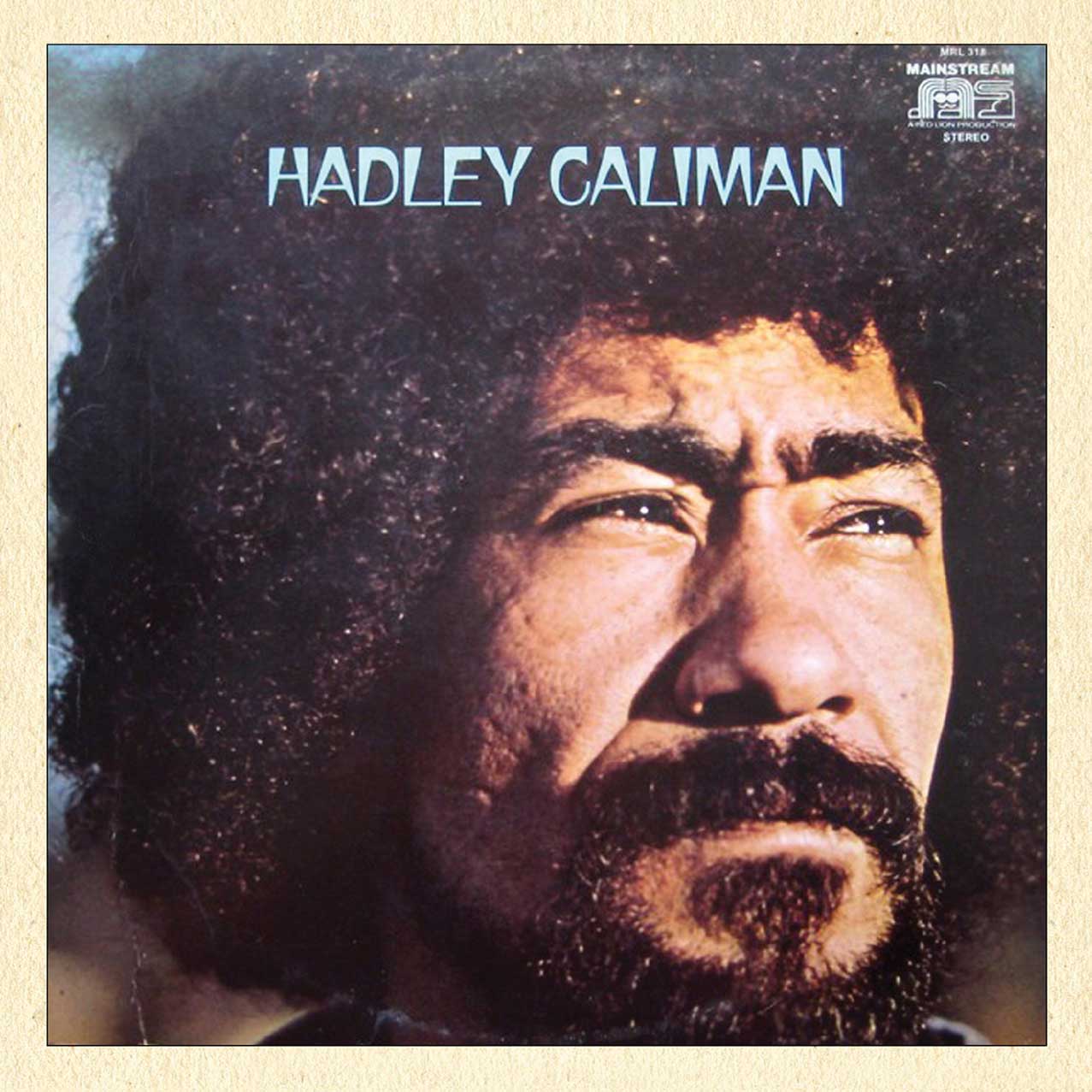
Although Hadley Caliman had worked as a sideman for Dexter Gordon and Art Farmer, he didn’t release his eponymous debut album until he was thirty-nine. This wasn’t down to a lack of talent. Far from it. Hadley Caliman was one of the most talented tenor saxophonists and flautists of his generation. Instead, it was because Hadley became addicted to heroin. Just like so many jazz musicians before him, Hadley succumbed to temptation. As a result, Hadley didn’t release his eponymous, debut album, Hadley Caliman until 1971. It was released on Mainstream Records, and will be rereleased on on Boplicity, an subsidiary of Ace Records on 1st December 2014. It’s a reminder of one of jazz’s most underrated reeds-man. His story began back in 1932.
It was in 1932, in Idabel, Oklahoma, that Hadley Caliman was born. He attended music lessons from an early age and grew up playing tenor saxophone and flute. At the Jefferson High School, Hadley studied alongside trumpeter Art Farmer and saxophonist Dexter Gordon. Just like Art and Dexter, Hadley knew he would’ve to leave Idabel to make a living as a jazz musician. So he headed to Los Angeles.
Having moved to Los Angeles, Hadley’s career began. He became part of Art Farmer and then Dexter Gordon’s band. By the time Hadley was part of Dexter’s band, he’d established a reputation as one of the jazz’s best up-and-coming musicians. However, all wasn’t well in Hadley’s life.
Just like so many jazz musicians before him, including Hadley’s former employer Dexter Gordon, Hadley Caliman discovered drugs, and specifically heroin. Having succumbed to temptation, heroin dug its claws into Hadley. Soon, he was addicted. This impacted badly upon Hadley’s career.
Hadley’s love-hate affair with drugs worsened. He realised he was slowly destroying his nascent career. Despite this, Hadley couldn’t help himself. Eventually, he found himself in throes of addition. Things got so bad, that Hadley ended up in jail. This meant that Hadley’s career was on hold. However, Hadley caught a break, when he entered rehab.
After several spells in jail, Hadley found himself in the Synanon Treatment Centre. It was literally make or break. Somehow, Hadley had to break the circle of addiction. Digging deep, deeper than he’d dug before, Hadley managed to get himself clean. This paid off.
As the second half of the sixties took shape, Hadley found himself working with Bobby Bryant’s band and The Gerald Wilson Big Band. Much as he enjoyed being a sideman, Hadley wanted to embark upon a solo career. So, in 1969, Hadley headed to San Francisco and formed his own band.
San Francisco proved to be the perfect place for Hadley to make music. The city’s eclectic music rubbed off on Hadley, and helped Hadley’s music to develop and evolve. Not long after this, Hadley signed to Bob Shad’s Mainstream Records.
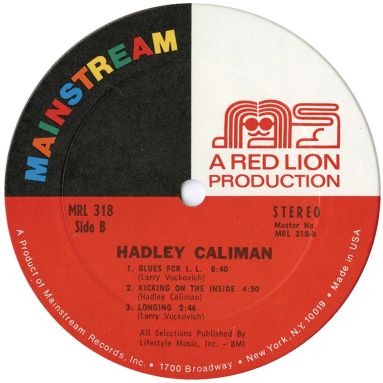
Now signed to Mainstream Records, Hadley Caliman began work on his debut album. He penned four of the six tracks. This included Cigar Eddie, Comencio, Little One and Kicking On The Inside. Pianist Larry Vuckovich contributed Blues For L.L. and Longing. These six tracks became Hadley’s eponymous debut album Hadley Caliman.
When recording of Hadley Caliman began, Hadley had put together a tight, talented quintet. Hadley played tenor saxophone and flute and Larry Vuckovich piano. The rhythm section featured drummer Clarence Becton, bassist Bill Douglas and guitarist John White Jr. Once Hadley Caliman was recorded, it was released in 1971.
By 1971, jazz was no longer the musical flavour of the month. Funk and fusion had replaced jazz in the popularity stakes. For Hadley, this was disappointing. His debut album Hadley Caliman was released in 1971, and seemed to pass people by. After waiting so long, and overcoming so much, this must have been a huge disappointment for Hadley Caliman, whose eponymous debut album, I’ll tell you about.
Cigar Eddie opens Hadley Caliman. From the get-go, the bass drives the arrangement along. Soon, chiming guitars, mesmeric drums and percussionist enter. They’ve set the scene for Eddie’s sultry saxophone. It floats above the arrangement. Soulful and summery describes the sound. Gradually, though, the arrangement becomes more complicated. Subtleties and nuances are revealed. Especially during the solos. Guitarist John White Jr’s solo stands out. John’s like a master craftsman. So is Hadley. His solo is one of the finest. His playing veers between powerful to subtle and understated. Along with the rest of his band, he creates a track that soulful, summery and full of nuances.
Bill Douglas’ pensive, probing bass then Clarence Becton’s understated drums join with Larry Vuckovich piano as Comencio unfolds. Straight away, the rhythm section are playing a crucial role. Then when Hadley’s tenor saxophone enters, it’s powerful and joyous. All the time, the bass is powering the arrangement along. It’s joined by drums and hissing hi-hats. They’re at the heart of everything that’s good. This inspires Hadley. He unleashes a raging, growling saxophone solo. Then its time for the solos. Hadley allows everyone the opportunity to shine. They grandstand, before joining together and playing with power, passion and seemingly, unbridled joy.
A roll of drums signals the entrance of a Hadley’s slow, sultry and beautiful saxophone. It literally glides across the arrangement. Accompanying it, are flamboyant flourishes of piano and the rhythm section. When Hadley’s saxophone drops out, Larry Vuckovich’s piano picks up where Hadley left off. Then when Hadley returns, his playing is slightly more restrained. His rasping saxophone quivers and growls, its beauty omnipresent and captivating.
Blues For L.L sees Hadley and his band draw inspiration from John Coltrane’s early sixties modal jazz. H-hits hiss and shimmer, before what can only be described as stabs and sheets of saxophone are unleashed. A Fender Rhodes adds texture, while Afro-influenced drums provide a pulsating backdrop. Hadley plays with power and freedom, creating an experimental, avant-garde sound. Ironically, this isn’t new. To some extent, it had been done before by ‘Trane. However, here, though, Hadley was picking up ‘Trane’s baton and taking the music in a new and even more innovative direction.
Hadley wrote Kicking On The Inside for his three year old daughter. Deliberate stabs of piano and subtle cymbals prove to be scene-setters. They’re joined joined by stabs of saxophone. They join forces with the piano and gradually, begin to swing. Meanwhile, Bill Douglas’ bass helps drive the arrangement along. It’s joined by Larry Vuckovich’s piano. Atop the arrangement, sits Hadley’s growling, raging saxophone. He plays with controlled power and passion. Later, he allows his band to showcase their skills. First up is Bill Douglas’ bass. It’s accompanied by percussion and cymbals. Then a slow, melancholy piano adds a late-night sound. Gradually, the tempo increases, adding a sense of urgency and drama. When Hadley’s saxophone enters, it adds a mixture of melancholia and longing, before the drums power the arrangement along. What follows is literally like a swirling wall of sound, on what’s one of the most intriguing and innovative tracks on Hadley Caliman.
Longing closes Hadley Caliman. It has an otherworldly, experimental sound. Partly, that’s down to Hadley’s quivering flute and bells. After a pregnant pause, drums and piano increase the tempo and the arrangement flows along. As the piano and drums provide the mainstay of the arrangement, the flute shimmers, quivers and soars above the arrangement. Gradually, the drama and power increases. Partly, this is down to the rhythm section, pounded piano and Hadley’s flute. It takes centre-stage. That’s until the solos come round. Larry Vuckovich’s piano then steals the show and bassist Bill Douglas, more than plays his part. As for Hadley, he proves that he’s as equally comfortable on flute as he is on saxophone.
Belatedly, Hadley Caliman released his eponymous debut album in 1971. Hadley Caliman was released on Bill Shad’s Mainstream label. Thirty-three years later, and Hadley Caliman will be reissued by Boplicity, an imprint of Ace Records on 1st December 2014. It was the album that Hadley should’ve released ten years earlier. Sadly, however, Hadley, like many jazz musicians before him, had succumbed to temptation.
Just like so many jazz musicians before him, Hadley Caliman discovered drugs. Hadley’s drug of choice was heroin. Having succumbed to temptation, heroin dug its claws into Hadley. Soon, he was addicted. Like so many addicts, Hadley spent years trying to replicate his first high. Little did he realise, that nothing comes close to the first high. His addiction impacted badly upon his career.
Hadley’s love-hate affair with drugs worsened. Slowly he was destroying his nascent career. Despite this, Hadley couldn’t help himself. An addict can’t. Before long, Hadleyfound himself in throes of addition. Things got so bad, that Hadley ended up in jail. This meant that Hadley’s career was on hold. However, when he got out of prison Hadley caught a break.
The break came when Hadley entered rehab. He managed to get himself clean. This wasn’t easy. However, he managed to stay clean and get his career back on track.
By 1971, he was ready to release his debut album Hadley Caliman. A six track album, it’s the perfect showcase for Hadley. On five tracks, he showcases his skills as a tenor saxophonist. He plays with power and passion. Other times his playing is joyous, dramatic, restrained and full of melancholia. Then on Longing, which closes Hadley Caliman, Hadley plays flute. He’s just as comfortable playing flute as he is tenor saxophone. Accompanied by a tight, talented band, the man they called Little Dex had belatedly, fulfilled his potential. There was a but though.
Sadly, Hadley Caliman’s debut album wasn’t a commercial success. Hadley Caliman is best described as an album of straight ahead jazz, albeit with health hints of spiritual jazz. That was out fashion in 1971. This wasn’t what music buyers were interested in. Funk and fusion were the flavour of the month. So, it’s no surprise that Hadley Caliman literally sunk without trace. That’s a great shame, as Hadley Caliman is the perfect introduction to one of jazz’s best kept secrets.
HADLEY CALIMAN-HADLEY CALIMAN.



FOLLOW ME DOWN-VANGUARD’S LOST PSYCHEDELIC ERA 1966-70.
FOLLOW ME DOWN-VANGUARD’S LOST PSYCHEDELIC ERA 1966-70.
Mention Vanguard Records, and most people will think of their blues and folk releases. Very few people will think of Vanguard Records as a psychedelic label. However, between 1966 and 1970, A&R men Sam Charters and Maynard Solomon Sam Charters decided that Vanguard Records should climb onboard the psychedelic bandwagon.
This being Vanguard Records, Sam Charters and Maynard Solomon ensured that the psychedelia being released was innovative and groundbreaking. It was far removed from much of the psychedelia being released during this period. Vanguard Records released psychedelia that was guaranteed to open the doors of perception. That was down to Sam Charters and Maynard Solomon A&R skills.
They spent time seeking out the most innovative musicians of the psychedelic age. This meant criss-crossing America. Up and down the East Coast, from New York to Philly Sam and Maynard travelled. They even headed down to Detroit, before heading to the West Coast. From Los Angeles, right through to San Francisco, Sam and Maynard spent time searching for psychedelia’s next big thing. Their patience and persistence paid off.
In 1967, they signed Country Joe and The Fish, who released their debut album Electric Music For The Mind and Body in 1967. Country Joe and The Fish were Vanguard Records’ highest profile and most successful psychedelic signing. However, there’s much more to Vanguard Records’ psychedelic era than Country Joe and The Fish.
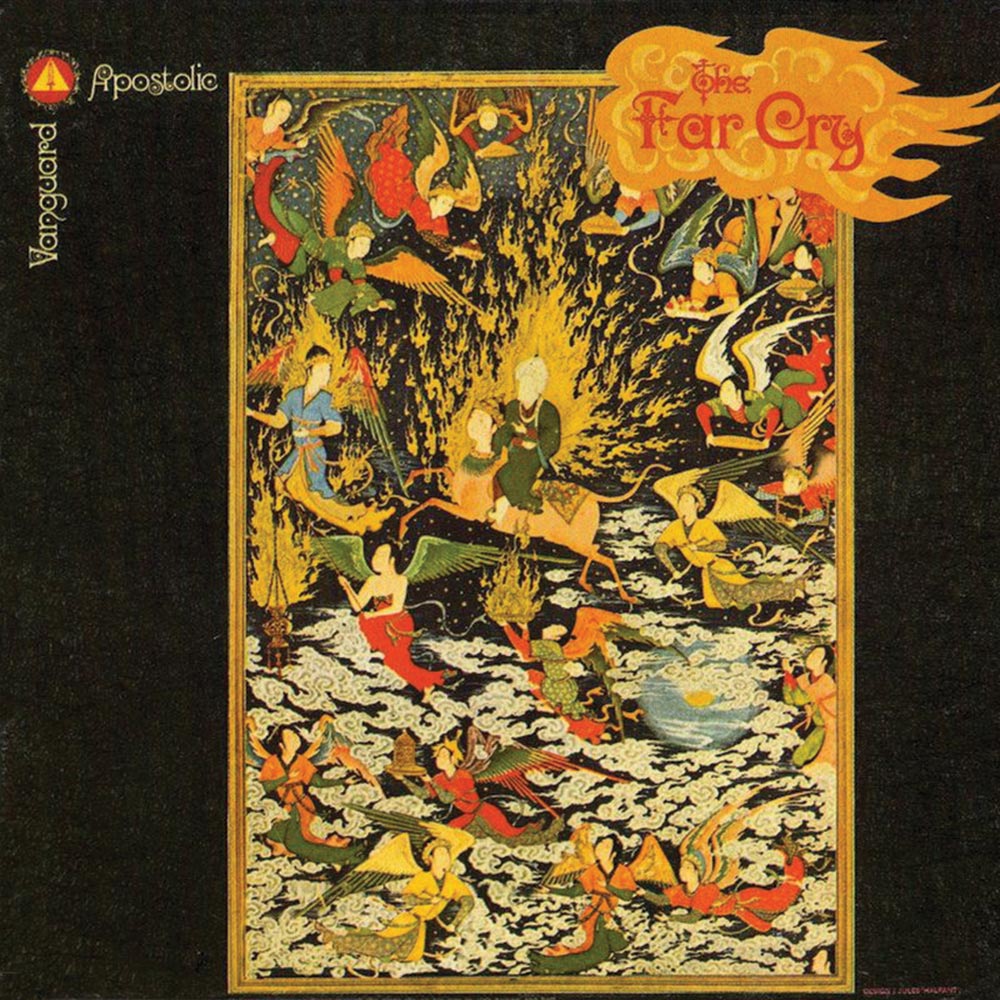
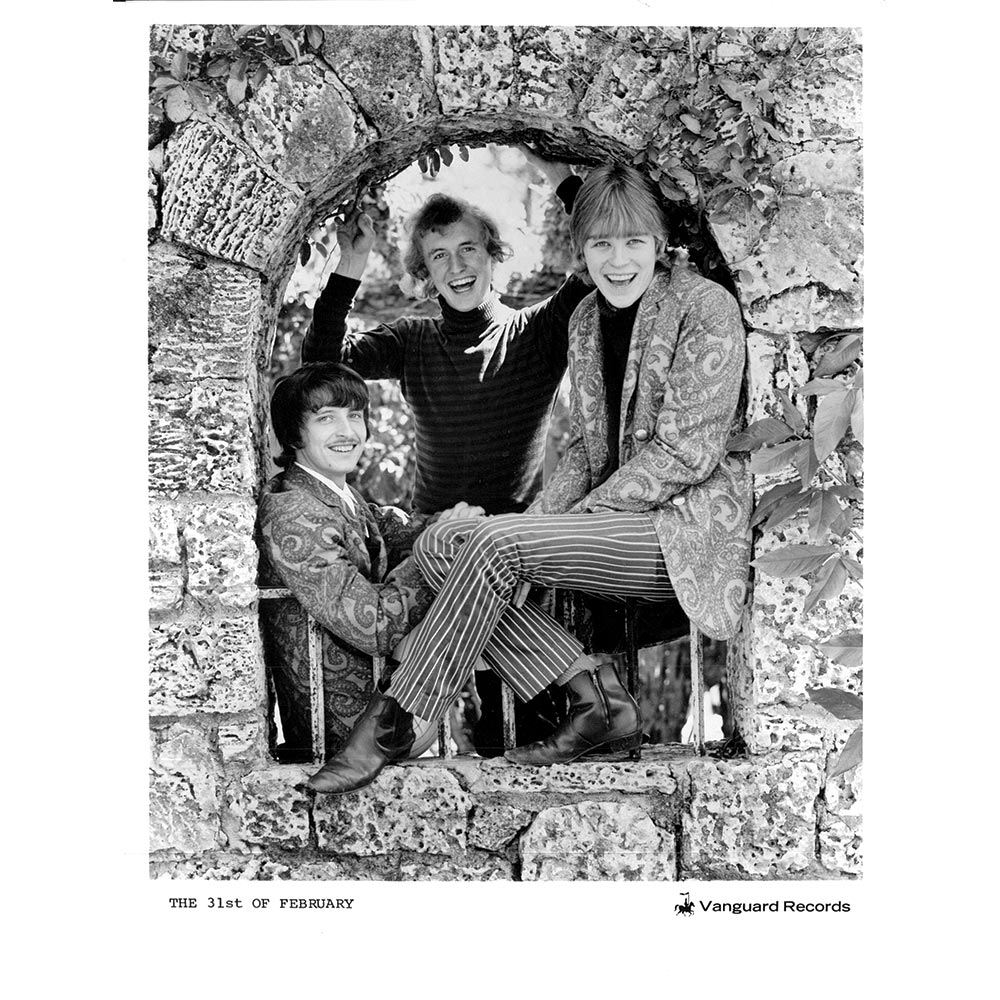
This includes The Third Power, Erik Heller, The 31st Of February, Circus Maximus, The Vagrants, The Serpent Power, The Family Of Apostolic and Far Cry. These are just a few of the artists on Follow Me Down-Vanguard’s Lost Psychedelic Era 1966-70, which was recently released by Ace Records. It’s an eighteen track treasure trove, which features forgotten hidden gems from Vanguard Records psychedelic era. You’ll realise that, when I pick some of the highlights of Follow Me Down-Vanguard’s Lost Psychedelic Era 1966-70.
Follow Me Down-Vanguard’s Lost Psychedelic Era 1966-70 opens with The Third Power’s Getting Together. This is one of two tracks from the Detroit trio. The other is Persecution. The Third Power honed their sound in Detroit clubs and eventually, were crowned psychedelia’s heaviest band. By 1970, The Third Power had signed to Vanguard Records. Later in 1970, they released their only album, Believe. It showcased The Third Power’s unique fusion of heavy rock and psychedelia. Aggressive and lysergic, this is epitomised by Getting Together and Persecution, two of Believe’s highlights.
Just like The Third Power, Erik Heller only released one album, 1968s Look Where I Am. It was written by Erik and produced by Samuel Charters. You Said/But I’ve Got My Way is very different from much of Look Where I Am. It’s a six minute epic, where screeching, searing guitar riff. It emulates the paranoia that Erik’s singing about. Dramatic, disturbing and decidedly trippy, it’s a hidden psychedelic gem from the Vanguard vaults.
Listening, a Boston based band, feature twice on Follow Me Down-Vanguard’s Lost Psychedelic Era 1966-70. They’re Stoned Is and See You Again. These tracks are taken from Listening’s 1968 eponymous album. It was recorded and mixed at Vanguard’s 23rd Street Studio, in New York. When the album was recorded, Listening managed to complete each song in one take. That’s not surprising. They’re a tight, talented band, capable of creating groundbreaking, mind-bending, psychedelia. Stoned Is, was penned by Gilbert Moses and Michael Tschudin, It’s a haunting, triply and timeless track. See You Again has a heavier, rockier sound. There’s even a nod to Jimi Hendrix, courtesy of Peter Malick’s guitar, as blues, psychedelia and rock combine seamlessly.
In 1968, Jeff Monn, the lead singer of The Third Bardo, a New York based band, signed to Vanguard Records as a solo artist. Later in 1968, Jeff released Reality, his debut solo album. It was produced by Maynard Solomon and featured I Can Understand Your Problem, a dramatic, soul-baring ballad. This is one of Jeff’s best vocals on Reality. It’s helped by Maynard Solomon’s production, which adds to the drama and emotion of Jeff’s vocal. Sadly, Reality wasn’t a commercial success. It was the only album Jeff released under his own name. In 1968, Jeff adopted the alias Chris Moon. Still commercial success eluded the former The Third Bardo frontman.
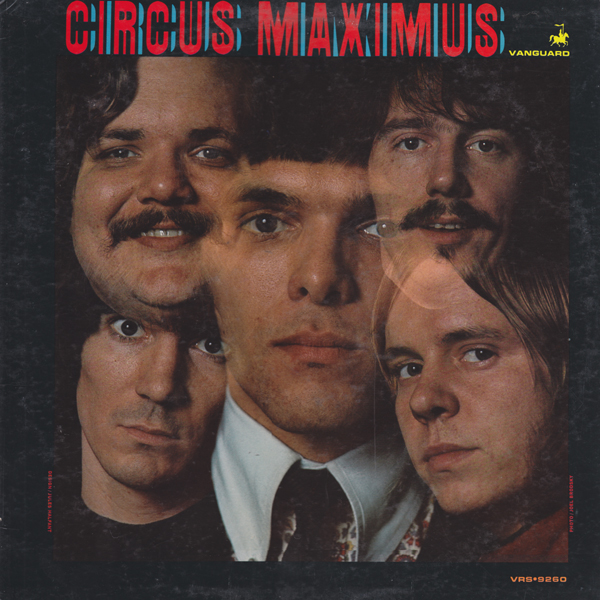
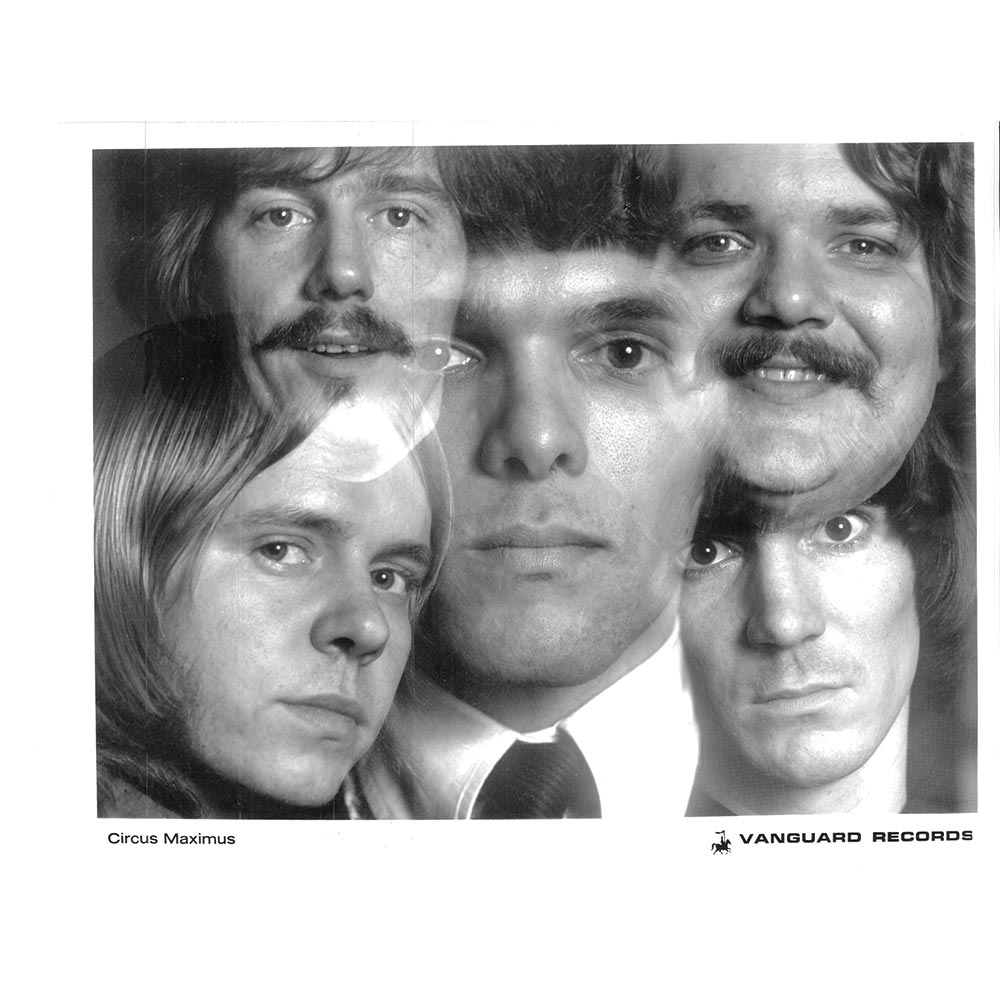
Originally, when Sam Charters signed Circus Maximus, they were called Lost Sea Dreamers. They were, however, forced to change their name. Their original name Vanguard Records thought, was too obvious a reference to drugs. So Lost Sea Dreamers became Circus Maximus. They released two albums between 1967 and 1968. Travelin’ Around opens their 1967 eponymous debut album. It was penned by Robert Bruno and was produced by Dan Eliot. From the opening bars of Travelin’ Around you’re hooked. Melodic, full of hooks and searing guitar licks, it’s a four minutes fusion of frantic power pop, rock and psychedelia.
When you look at the cover to Notes From The Underground’s 1968 debut eponymous album, they look like a good-time band. Nothing you’d think would faze them. Their raison d’être, it would appear, was to make music, and enjoy the cultural revolution. That’s what it sounds like the San Francisco based band were doing on Where I’m At and Why Did You Put Me On, two tracks from Notes From The Underground. They fuse jazz, jug, psychedelia and rock on the two tracks. There’s more than a nod to the Grateful Dead on both tracks. Sadly, Notes From The Underground didn’t enjoy the same longevity, and they only released one album. Mind you, what an album it was.
Former beat poet David Meltzer embraced the psychedelic era, forming The Serpent Power, a quintet. Sam Charters came across The Serpent Powers whilst on the road with Country Joe and The Fish. One night in Berkeley, he heard David Meltzer. Always on the look out for the next Country Joe and The Fish, Sam signed the psychedelic folk group. They weren’t Sam’s most successful signing. However, they recorded one album, The Serpent Powers in 1967. It features the thirteen minute genre-defying epic The Endless Tunnel, which is without doubt, The Serpent Powers’ finest hour.
The Hi-Five could’ve, and should’ve, been one of the biggest bands to come out of the Greenwich Village scene. However, success always seemed to elude them. Time and time again, they came tantalisingly close. This included being signed by Chas Chandler, who managed The Animals. Later, The Hi-Five cut demos for RCA and Columbia. However, neither RCA nor Columbia signed The Hi-Five. Instead, they signed to Vanguard and recorded Did You Have To Rub It In? It was never released. Instead, You’ll Never Know What’s In My Heart was released as a single. The Mamas and Papas inspired Did You Have To Rub It In? remained unreleased until 2011. It’s another hidden gem, which makes you wonder how different The Hi-Five’s career might have been if id You Have To Rub It In? had been released as a single.
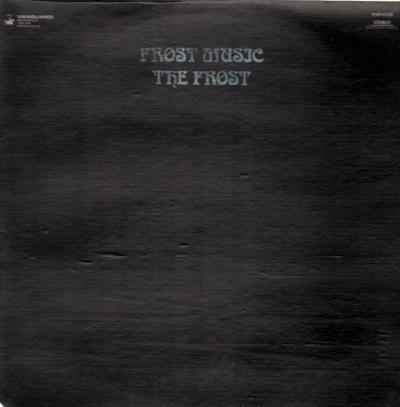
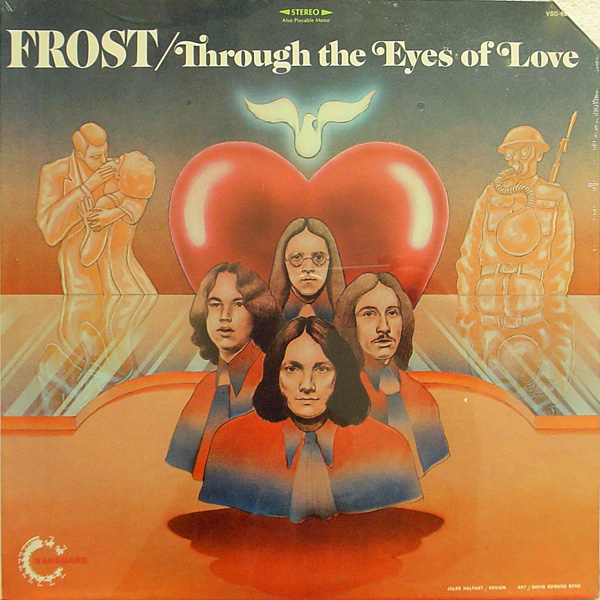
My final choice from Follow Me Down-Vanguard’s Lost Psychedelic Era 1966-70, is The Frost Big Time Spender. It’s the second track from The Frost. Their first was Take My Hand a track from their 1969 sophomore album Frost Music. Big Time Spender is a glorious slice of psychedelic rock. It’s much heavier than most of the tracks on Vanguard’s Lost Psychedelic Era 1966-70. That’s down to to The Frost’s rhythm section and a vocal powerhouse from lead singer Dick Wagner. Despite their obvious talents, The Frost never enjoyed the success their talent deserved. As a result, Dick ended up working with David Bowie, Lou Reed and Alice Cooper.
The story of The Frost typifies that of many of the artists on Vanguard’s Lost Psychedelic Era 1966-70. They could’ve and should’ve enjoyed critical acclaim and commercial success. Sadly, for whatever reason, groups like The Third Power, Listening, The Hi-Five and The Frost never reached the heights their undoubted talent deserved. Instead, these groups have been forgotten about. Not any more.
Recently, Ace Records released Vanguard’s Lost Psychedelic Era 1966-70, which features eighteen hidden gems from the treasure trove that’s Vanguard Records’ vaults. These eighteen tracks are just a tantalising taste of the psychedelic delights within Vanguard Records’ vaults. This includes albums from The Third Power, Erik Heller, The 31st Of February, Circus Maximus, The Vagrants, The Serpent Power, The Family Of Apostolic and Far Cry. They’re just a few of the artists who were signed to Vanguard Records during the psychedelic era.
This means that there’s more than enough for a followup to Follow Me Down-Vanguard’s Lost Psychedelic Era 1966-70. After all, the eighteen tracks ooze quality. It’s one of the very few cases where a compilation is all filler, and no killer. Indeed, so good are some of the tracks on Follow Me Down-Vanguard’s Lost Psychedelic Era 1966-70, that it would be good to see a comprehensive reissue of Vanguard’s psychedelic delights. Then we’ll be able to discover some of the most innovative and groundbreaking psychedelia released during the psychedelic era. Just like the psychedelia on Follow Me Down-Vanguard’s Lost Psychedelic Era 1966-70, it’ll be guaranteed to open the doors of perception.
FOLLOW ME DOWN-VANGUARD’S LOST PSYCHEDELIC ERA 1966-70.

PINK FLOYD-THE ENDLESS RIVER.
PINK FLOYD-THE ENDLESS RIVER.
Twenty years ago, there was no such thing as Twitter or Facebook. The term social media hadn’t even been coined. In fact, the internet and the technological age were in their infancy.
Compact discs were only a decade old. Debate raged about their merits and sound quality. Vinyl we were told, had had its day. We were told vinyl was a relic of the past. That proved not to be the case, with 2014 seeing record sales of vinyl. However, since 1994, the way music has been made has changed.
Recording studios, once the only way to record an album. Not any more. Now, bands bands don’t necessary need rerecording studios. Instead, all that’s needed is laptop containing a Digital Audio Workstation and some VSTs. Add to this, an audio interface and any aspiring band can record an album. They can then release their album without involving a record company.
Nowadays bands will have built up a loyal fan-base through the internet. This will probably have involved giving away music, which in 1994, would’ve given record company executive sleepless nights. However, in 2014, giving away music is one way bands build a loyal fan-base. Then when they release their album, they’ve a ready made audience ready to download their album or parts of it.
Music lovers no longer have to buy a whole album. They can cherry pick which tracks they want. So if they want just a few tracks that’s fine. Again, back in 1994, this would’ve given record company executives sleepless night. Not now. Now bands and record companies are happy for music lovers to download the tracks they like. These tracks can be downloaded as MP3, MP4 or wav files, which again, weren’t around back in 1994. Neither were the devices they’re played upon.
Over the last twenty years, the way we listen to music has changed. Back in 1994, music was listened to on hi-fi systems. If you wanted music on the move, the only option was the Sony Walkman. It however, was only capable of playing tapes that held a maximum of ninety minutes music. Nowadays, iPods, iPads, laptops and tablets and mobile phones can store hundreds and often thousands of hours of music. This was unthinkable back in 1994. Back then, life, and music was very different.
The Division Bell.
That was the world, that Pink Floyd released their fourteenth album, The Division Bell on 28th March 1994. This was the second album by the David Gilmour led Pink Floyd. The first was A Momentary Lapse of Reason, which was released in September 1987. That was two years after Roger Waters left Pink Floyd amidst bitterness and acrimony. Nine years after Roger Waters’ exit, Pink Floyd were a very different band.
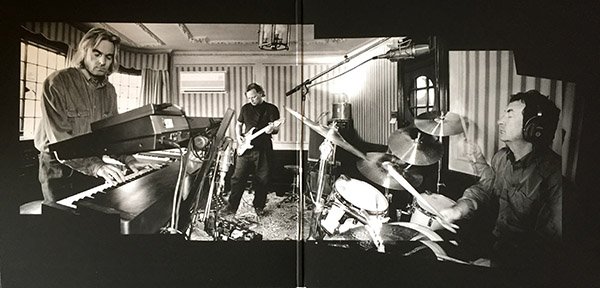
Time proved to be a great healer. Pink Floyd were a much happier band. They were reduced to a trio, consisting of David Gilmour, Rick Wright and Nick Mason. This was the lineup that recorded The Division Bell.
The Division Bell consisted of eleven tracks penned by David Gilmour and Rick Wright. They were recorded at various studios, including Britannia Row Studios, and Astoria, a houseboat owned by David Gilmour that had been transformed into a recording studio. That’s where The Division Bell took shape. It was then released in March 1994.
When critics heard The Division Bell, they gave Pink Floyd’s first album for seven years, mixed reviews from critics. Despite the mixed reviews, The Division Bell reached number one in Britain and America. Soon, The Division Bell reached number one in Australia, Austria, Chile, Holland, New Zealand, Norway Sweden and Switzerland. It seemed Pink Floyd still had the Midas touch.
Across the world, The Division Bell sold well. Gold and platinum discs came Pink Floyd’s way. The Division Bell was certified gold in Finland, Italy, Japan, Poland and Sweden. In Germany, The Division Bell was certified gold three times over. Then in Argentina, Australia, Austria, Brazil and Spain, The Division Bell was certified platinum. The Division Bell was certified double platinum in Britain, France and Germany. Meanwhile, three million copies of The Division Bell were sold in America, resulting in the album being certified triple platinum. However, in Canada and New Zealand, The Division Bell was certified quadruple platinum. Overall, The Division Bell sold over 6.5 million copies. However, Pink Floyd weren’t in any hurry to release the followup to The Division Bell.


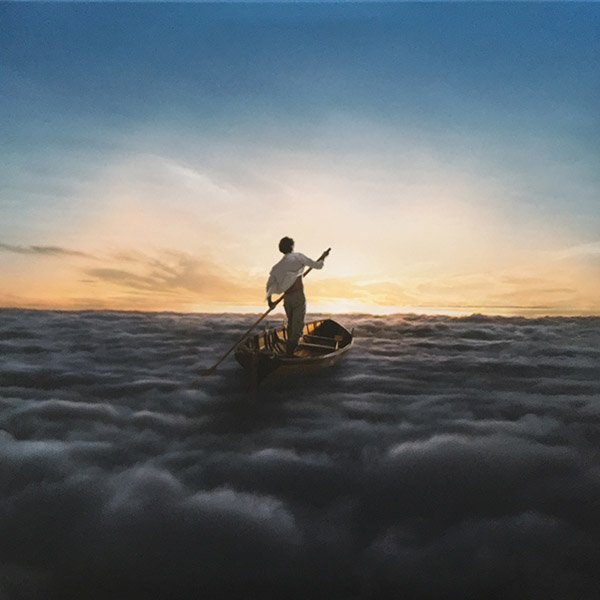
The Endless River.
Just over twenty years have passed since Pink Floyd released The Division Bell. Then totally out of the blue, an announcement was made on social media that Pink Floyd would release their fifteenth and final studio album The Endless River on Parlophone Records, on 10th November 2014. Joy was mixed with sorrow when Pink Floyd fans heard the news. Many, however, weren’t surprised.
Rick Wright, keyboardist and founding member had passed away on 15th September 2008. He was a crucial part of Pink Floyd’s sound and cowrote The Division Bell. A Pink Floyd album without Rick Wright wouldn’t work. However, Rick appears posthumously. This ensures that Pink Floyd’s swan-song is a fitting finale to one rock music’s greatest ever bands. The story begins back in 2012/
That’s when work began on The Endless River. Members of Pink Floyd began listening to music they’d recorded during the recording sessions for The Division Bell. These recording sessions took place back in 1993 and 1994. The sessions were recorded at various studios, including Britannia Row Studios, and Astoria, David Gilmour’s houseboat, that he transformed into a recording studio.
At these sessions, between five and six hours of music. Some of the music found its way onto The Division Bell. However, since the release of The Division Bell in 1994, Pink Floyd had never revisited the remainder of the music. It was a case of they always meant to get round to it. Eventually, in 2012, David Gilmour and Nick Mason decided to revisit the remainder of the music from The Division Bell sessions.
When David and Nick began, they had between five and six hours of music to sift through, and possibly, transform into an album. This was an uphill struggle. The two remaining members of Pink Floyd realised that they needed some help. So they brought Pink Floyd engineer Andy Jackson.
With Andy onboard, David, Nick and Andy spent twenty hours listening to the tapes. They featured the three members of Pink Floyd jamming, during The Division Bell sessions in 1993 and 1994. Once they heard what music they had, it was a case of sorting through it.
They wanted to sort through the music, so that at the end, they had music that they could either edit, rerecord or work on. Some of the music would be used as a starting point. New parts could then be added, resulting in the first 21st Century Pink Floyd album. Some music could be edited together, using different parts that they never envisaged putting together. The way to do this, would be by using music software, that wasn’t around back in 1994. Music technology, Pink Floyd realised, had come a long way in twenty years. They were going to use this to their advantage.
Choosing which music to include and exclude proved the hardest part of the project. After all, there were six hours of music on the DAT tapes. Eventually, David, Nick and Andy Jackson whittled down the six hours music. It was then edited by Andy Jackson. This album of ambient music was given the tentative title, The Big Spliff. However, Pink Floyd decided not to release The Big Spliff. That, however, wasn’t the end of the project. Some of the project was used for The Endless River.
Still, David and Nick wanted to release a new Pink Floyd album. Unbeknown to most people, David, Nick and Rick had spoken about a recording a new album prior to his death in 2008. They’d entered the recording studio, and had twenty hours of jamming recorded. David and Nick wondered if this could form the basis for a new Pink Floyd album?
So, they called Phil Manzanera, former Roxy Music lead guitarist, and now an established and successful producer. Intrigued at the prospect of being part of a new Pink Floyd album, Phil made his way to the studio.
Phil Manzanera and Pink Floyd have known each other since the seventies. Recently, Phil co-produced and played on David’s solo album On An Island. So, he knew how David worked. However, he had to hear the tapes before committing himself to the project.
Phil along with Andy Jackson and engineer Damon Iddins, listened to every minute of the twenty hours of recordings. Only then, could Phil make an informed decision about the music’s potential. However, having heard the tapes, felt that there was the potential for Pink Floyd’s first album of the new millennia. Now the hard work began.
Over the next six weeks, Phil spent his time writing four fourteen minute pieces. He passed these to David Gilmour. He then sent them to producer Youth, who added bass and guitar. After that, The Endless River began to take shape.
Back in November 2013, and unbeknown to Pink Floyd fans, David Gilmour organised the next recording session. He brought onboard drummer Nick Mason, bassist Guy Pratt, Phil Manzanera, Youth and Andy Jackson. They were joined by saxophonist Gilad Atzmon and backing vocalist Durga McBroom. She recorded the lead vocal on Louder Than Words, a song penned by Polly Gilmour, David’s wife. Gradually, The Endless River seemed to be nearing completion.
All that was left was some overdubbing. This was mostly drum and guitars. However, one addition to The Endless River was a relic of Pink Floyd’s past. This was an outtake from a 1969 rehearsal, featuring Rick Wright. A little piece of Pink Floyd’s history appeared on The Endless River, a four part album, co-produced by David, Phil, Andy Jackson and Youth.
The Endless River is made up of four “pieces”. On the vinyl edition, this works really well, as each side of the double album consists of a “piece.” The compact disc version, however, features the four “pieces” on one disc. For some people, this will be much more convenient. There’s no need to leave the sofa. Instead, you can sit back, relax and allow the eighteen track on Pink Floyd new album The Endless River, to wash over you. You bathe in their beauty of Pink Floyd’s swan-song, which was released on 10th November 2014.
When The Endless River was released, reviews were mixed. The Endless River was Marmite music, critics either liked or loathed it. One critic, who doesn’t deserve the oxygen of publicity, gave the album a one star review. For Pink Floyd, a one star review was a first. However, this typified the way certain bands are treated by music critics.
Ever since the onslaught of punk, many critics have perceived groups like Pink Floyd as relics of the past. They’ve never received a fair hearing. A review in some publications, is the equivalent of facing a kangaroo court. This was what The Endless River had been tried by. Music fans would have the final say.
Despite the mixed reviews, Pink Floyd’s loyal legions of fans bought The Endless River in huge quantities. Seventeen days after the release of The Endless River, and the album has reached number one in nineteen countries. The Endless River has also reached number three in the US Billboard 200 charts. That’s not all. In another six countries, The Endless River has reached the top ten. This has resulted in seven gold discs and three platinum discs for The Endless River. That’s after just seventeen days on sale. Who knows how many copies of The Endless River will eventually be sold. Not bad for album that many Napoleonic critics panned. Little did these Napoleonic music critics realise, that Pink Floyd were coming full circle on The Endless River.
Pink Floyd’s fifteenth and final album, The Endless River, sees Pink Floyd and friend pay homage to the group’s illustrious musical past. They revisit ambient, psychedelia and rock on the The Endless River’s four pieces. There’s even a detour via post-rock, a genre which Pink Floyd helped pioneer. The result is a captivating, ethereal and hauntingly beautiful album. Literally, you’re swept along in the wake of The Endless River’s beauty.
That’s the case from the opening bars of Things Left Unsaid which opens Part 1 of The Endless River. Right through to the closing notes of Louder Than Words, that closes The Endless River, Pink Floyd revisit their musical past. They draw inspiration from fourteen previous albums. Obvious influences include The Division Bell, Dark Side Of The Moon, A Momentary Lapse Of Reason, Wish Your Were Here and one of Pink Floyd’s most underrated albums, More. These influences shine through on The Endless River.
Despite being away for twenty years, Pink Floyd’s first album of the 21st Century, sees them bow out on a high. The Endless River is a musical journey full of twists and turns. Gradually, The Endless River reveals its secrets. It’s not just secrets The Endless River reveals, but subtleties and nuances. They shine through on The Endless River’s eighteen eclectic tracks.
The Endless River’s eclecticism reveals itself from the get-go. Things Left Unsaid, which opens Part 1 is an understated, ethereal soundscape. Slow, moody and bluesy describes It’s What We Do, which briefly references The Dark Side Of The Moon. It has Pink Floyd’s name written large all over it. Ebb And Flow is another understated and elegiac post rock track. It meanders along, gradually revealing its secrets, and closing Part 1.
Sum opens Part 2, which consists of four tracks. It’s dramatic and cinematic, while Unsung veers between understated to rocky and restrained. As musical journeys go, The Endless River is a captivating album. Especially tracks like Anisina, which closes Part 2. It’s a slow burner, which starts off understated, before reaching a glorious rocky crescendo. It’s another track that could only have been made by Pink Floyd.
That’s the perfect description of the wistful, dreamy and ethereal The Lost Art Of Conversation, which opens Part 3 of The Endless River. Although less than two minutes long, this fusion of ambient and modern classical music is hauntingly beautiful. Seamlessly, it gives way On Noodle Street, a short fusion of ambient, jazz and rock. Washes of synths provide the backdrop for Rick’s keyboards and David’s guitars. After Noodle Street, the dreamy, fuzzy, shimmering Night Light envelops you. It veers between ambient and post rock, and is a mini-masterpiece. From there Part 3 of The Endless River changes course.
Allons-y (1) sees Pink Floyd up the tempo, and unleash swathes of rocky guitars. Although they threaten to kick loose, they never do. Instead, they showcase their musicianship, as they roll back the years. Autumn ’68 has a somewhat gothic sound. It features a long forgotten Rick Wright organ rehearsal. Atop it, sits brief bursts of David’s guitar. It’s a reminder of Pink Floyd before drug casualties, fall-outs, and death changed the group forevermore. Following Autumn ’68, Allons-y (2) picks up whereAllons-y (1) left off. Again, it’s a reminder of Pink Floyd’s illustrious musical heritage. So too, is Talkin’ Hawkin, which features a sample of Stephen Hawking. It plays a part in another rock-tinged musical soundscape, that closes Part 3 of The Endless River.
The fourth and final part of The Endless River, Pink Floyd’s swan-song, features four parts. Calling has an experimental, sometime avant-garde, post-rock sound. Dark, gothic sci-fi sounds are reminiscent of Pink Floyd’s past. They also play their part in an intriguing, cinematic soundscape. Eyes To Pearls also has a cinematic sound. Here, it’s as if Pink Floyd are penning the soundtrack to a 21st Century Spaghetti Western. Surfacing shimmers, quivers and glimmers, before briefly, heading in the direction of Pink Floyd circa Wish You Were Here. It then becomes another post rock soundscape, where Pink Floyd showcase their considerable talents. Louder Than Words closes The Endless River. This is the only track with a vocal. The lyrics were written by David Gilmour’s wife Polly. Durga McBroom and David share lead vocal duties on what’s best described as a mini anthem. Given its thoughtful, wistful sound and obvious beauty, this proves the perfect way to close not just The Endless River, but Pink Floyd’s forty-seven year recording career.
During Pink Floyd’s forty-seven year recording career, often, commercial success and critical acclaim have been ever-present. In the case of The Endless River, and its predecessor, The Division Bell, critics gave both albums mixed reviews. That was very much the case with The Endless River.
Very few critics were won over by The Endless River. There’s a reason for that. Critics were looking for Pink Floyd to create an album of innovative music fit for the 21st Century. The critics felt short changed, when they heard The Endless River. They felt that The Endless River was Pink Floyd revisiting their past. That’s correct. The Endless River was an album of relics from Pink Floyd’s glorious past. What better way to end a forty-seven year recording career?
Listening back to The Endless River, Pink Floyd’s musical past is written large all over the album. Five decades music shines though on The Endless River. There’s hints of 1967s The Piper at the Gates of Dawn, 1969s More, 1973s Dark Side Of The Moon, 1975s Wish You Were Here, 1987s A Momentary Lapse of Reason and 1994s The Division Bell. All these albums have influenced the sound and direction of The Endless River.
On The Endless River, everything from ambient, avant garde, blues rock, experimental, post rock, psychedelia and rock can be heard. These musical genres and influences shine through during the The Endless River’s four parts and eighteen tracks. They play their part in a genre-melting album, where Pink Floyd draw inspiration from their musical past, for their swan-song. For many of the “hip young gunslingers” who call themselves music critics, this wasn’t the music of 2014.
To the “hip young gunslingers”, Pink Floyd were relics of music’s past. The Endless River, they said, was proof that Pink Floyd had failed to keep up with the changing face of music. However, what they failed to see, was that The Endless River was both an innovative album and an celebration of a recording career that stretched forty-seven years.
While The Endless River saw Pink Floyd revisit their musical past, they incorporated ambient and post-rock on their swan-song. Pink Floyd also utilised the latest musical technology on what’s akin to a musical tapestry. Music from Pink Floyd’s past was edited into music recorded in 2013. This allowed Rick Wright, the ghost of Pink Floyd to play an active role on The Endless River, an album full of twists and turns aplenty.
As The Endless River slowly revealed its secrets and subtleties, musical genres sat side-by-side. The result was music that’s captivating, cinematic, dramatic, ethereal, haunting, intriguing, melancholy and wistful. One thing The Endless River never is, is predictable. You never know where Pink Floyd are heading, as they take you on a musical journey down The Endless River. They’re your tour guide on what’s much more than a homage to Pink Floyd’s past.
Innovative, ambient soundscapes and post-rock tracks feature on The Endless River. So do a number of tracks where Pink Floyd revisit elements of their illustrious back-catalogue. This makes you want to revisit More or Dark Side Of The Moon. As you do so, you’re reminded that Pink Floyd, in their heyday, were one of the most innovative, progressive groups. That will always be the case. That’s the case right up to Pink Floyd’s unexpected swan-song The Endless River.
After twenty years away, Pink Floyd made a welcome return on 10th November 2014. Reduced to a duo, after the loss of their keyboardist Rick Wright in 2008, Pink Floyd take their fans down on a trip down The Endless River. Memories of a forty-seven year and fifteen album career come flooding back. By the end of The Endless River, only then do you realise that this is the last we’ll hear from one of the most successful, innovative and progressive bands in musical history. This leaves me wondering when will we see their likes again?
PINK FLOYD-THE ENDLESS RIVER.

THE VELVET UNDERGROUND-THE VELVET UNDERGROUND.
THE VELVET UNDERGROUND-THE VELVET UNDERGROUND.
Following disagreements about The Velvet Underground’s future musical direction, John Cale left the group. This was almost inevitable. For some time, John Cale and Lou Reed views about The Velvet Underground’s future differed. John Cale wanted The Velvet Underground to continue to innovate and create experimental music like White Light/White Heat, The Velvet Underground’s second album. Lou Reed, however, didn’t agree.
Lou Reed believed that The Velvet Underground’s music should become more pop oriented. This he felt, would broaden their appeal. No longer would they be an art rock group whose music appealed to discerning music lovers. Eventually, Lou Reed won over the rest of The Velvet Underground. For John Cale this was hugely disappointing. So, he decided the only option was to leave The Velvet Underground.
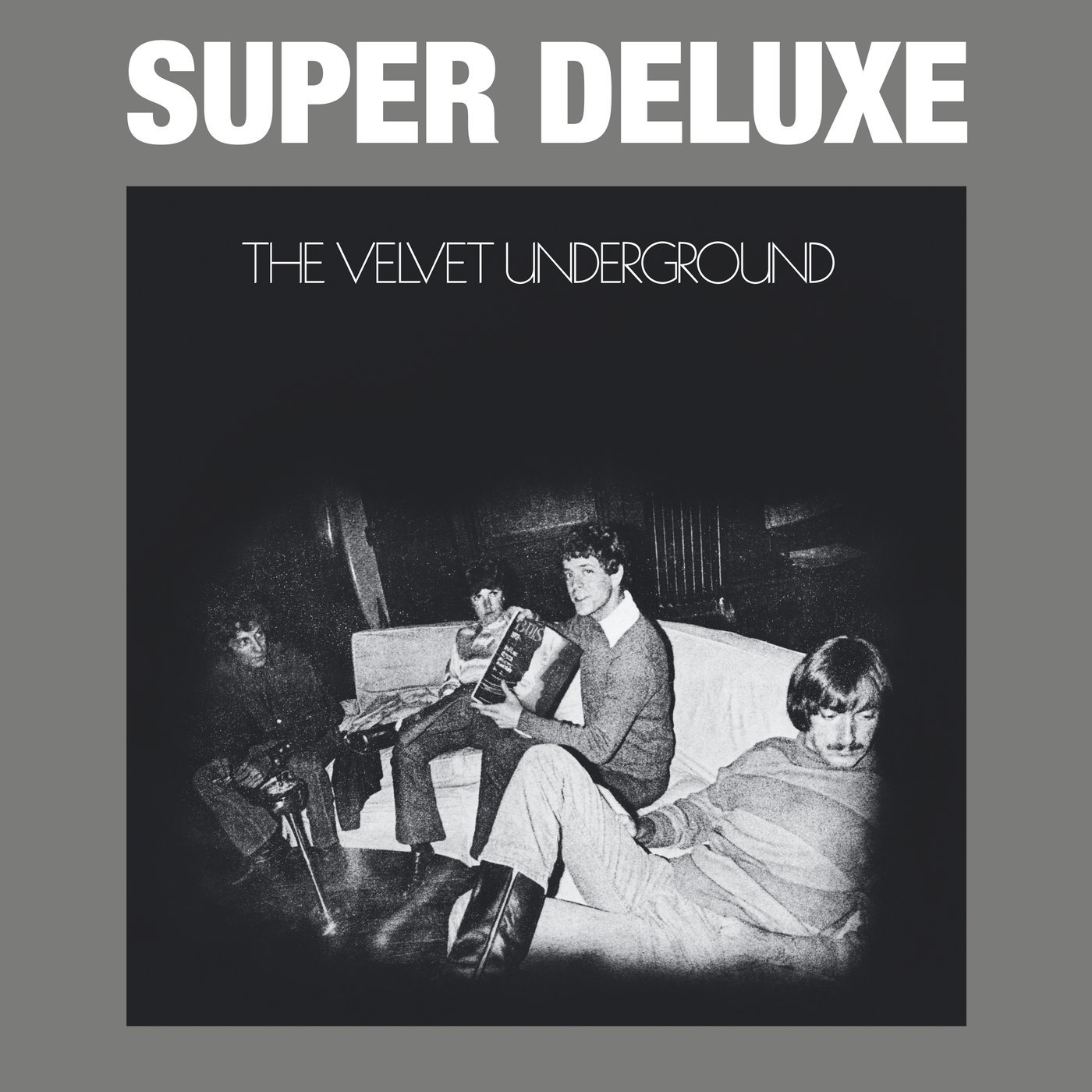
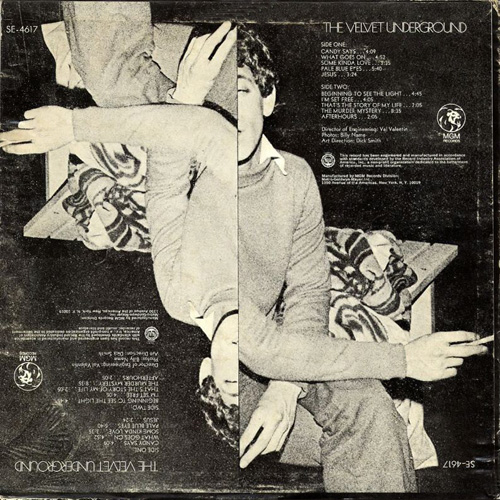
Replacing John Cale in the The Velvet Underground was Doug Yule. He made his Velvet Underground debut on their 1969 eponymous album, which has recently been released as a double album by Universal Music. The Velvet Underground was the start of a new chapter in the band’s career.
This new chapter began in November 1968, at TTG Studios, Hollywood. That’s where ten songs penned by Lou Reed were recorded by the new lineup of The Velvet Underground.
Lou Reed played piano, lead and rhythm guitar and added lead vocals. Sterling Morrison played rhythm and lead guitar. Maureen Tucker added percussion and sang lead vocal on After Hours. New member, Doug Yule, played bass, organ and sang lead vocal on Candy Says. These ten songs became The Velvet Underground, which debuted the band’s new sound.
The songs on The Velvet Underground were a mixture of ballads and rock songs. This was very different from The Velvet Underground’s first two albums. Lou Reed influence is writ large all over The Velvet Underground. That’s despite the production of The Velvet Underground being credited to the band. However, the rest of The Velvet Underground were happy with the change of direction.
Of the three other members of The Velvet Underground, Lou Reed had been the most vocal when it came to the band’s future direction. He was determined not to record White Light/White Heat II. So it seems, were the rest of The Velvet Underground. Percussionist Maureen Tucker was also willing to sacrifice the group’s old sound. She wanted to be part of a successful rock band. Especially now that Velvet Underground were signed to MGM Records. For the new lineup of The Velvet Underground, The Velvet Underground was a new start in more than one way.
On the release of The Velvet Underground in March 1969, the album was hailed to the most accessible of their career. Critics remarked upon the quality of the lyrics and vocals. The Velvet Underground was described as melodic and tuneful. It seemed that The Velvet Underground’s new sound had won over the critics. That wasn’t the case.
Lester Bangs, who, in 1969, was writing for Rolling Stone magazine, felt The Velvet Underground wasn’t as good as White Light/White Heat. However, he did concede that the much more accessible sound of The Velvet Underground would win over new fans.
That proved not to be the case. When The Velvet Underground was released in March 1969, it failed to chart. Neither of the singles charted. What Goes On was the lead single. It failed to chart. Neither did Pale Blue Eyes, the follow-up. However, seventeen years later, in 1985, somewhat belatedly, The Velvet Underground reached number 197 in the US Billboard 200 charts. By then, The Velvet Underground had been hailed as one of the group’s finest moments. However, is that the case?
Opening The Velvet Underground is Candy Says. It’s a pensive ballad about Candy Darling, a transsexual actress who Andy Warhol ‘discovered.’ She would provide the inspiration to Lou Reed’s 1972 single Walk On The Wild Side. Doug delivers a tender, melancholy vocal. He tells the story of a tortured soul, who died in 1974, aged just twenty-seven. Accompanying him are subtle drums played by brushes, a probing bass and jangling guitars. They frame the vocal, allowing it to shine. The way he delivers lyrics like “I wish I could walk away from me,” it’s as if this resonates with Doug. He’s able to breath meaning and emotion into the lyrics.
What Goes On has a rockier sound. Lou’s vocal is grizzled, while the rhythm section and jangling guitars power the arrangement along. Lightning fast slap bass and guitars join forces with a Hammond organ, as Lou struts his way through the lyrics. Then when his vocal drops out, The Velvet Underground kick out the jams. Rock meets psychedelia as the two sides of the old Velvet Underground collide head on, before later, Lou returns. By then, the ghost of John Cale has made an appearance as The Velvet Underground’s past and present combines to create one of the highlights of The Velvet Underground.
Drums and percussion combine with chiming, searing guitars on Some Kinda Love. They provide a pounding, pulsating, hypnotic backdrop for Lou’s drawling vocal. It’s a taste of what was to come from Lou Reed after The Velvet Underground. Guitars are panned left to right. Full use is made of the full stereo spectrum. As a result, the guitars envelop Lou’s vocal. The mesmeric drums provide the heartbeat, as Lou swaggers and drawls his way through Some Kinda Love.
An understated rhythm section and tambourine combine on Pale Blue Eyes another ballad. They provide the backdrop for Lou’s fragile, thoughtful vocal. Again chiming, crystalline guitars envelop his vocal. The rhythm section sit in the middle of the mix, providing the heartbeat. Meanwhile, Lou delivers a vocal on what’s a beautiful devotional that was inspired by Shelley Albin, Lou’s first love.
Jesus, which closed side one of The Velvet Underground, has a thoughtful, understated sound. A spartan arrangement meanders into being. Just a guitar, bass and harmonies accompany Lou’s vocal. It veers between needy, desperate and hopeful as he sings: “Jesus help me find my proper place.” A driving, strident, confident guitar and a dark moody bass accompany Lou. So do harmonies. They sound similarly fragile, as if able to empathise with Lou’s plight.
Originally, Beginning To See The Light opened side two. It’s the perfect track to do so. It literally explodes into life, The Velvet Underground’s rhythm section and guitars driving the arrangement along. Lou takes his lead from them, and unleashes a swashbuckling vocal. Literally, it oozes confidence as he joyously half sings, half screams “I’m Beginning To See The Light.” The result is a hook laden anthem from The Velvet Underground that inspired thousands of other groups.
I’m Set Free sees the tempo drop, but the drama remains. It comes courtesy of a lone pounding drum. It sits in the middle of jangling guitars. Gradually, it grows in power, moving forward in the mix. In doing so, it matches Lou’s vocal every step of the way. Then when his vocal drops out, a shimmering guitar and pounding drum vie for your attention. They then join with harmonies and Lou’s hopeful, heartfelt vocal as the track reaches a crescendo.
Unlike many of the tracks on The Velvet Underground, That’s The Story Of My Life has an unmistakable sixties sound. However, it’s a sound that’s inspired two generations of bands. The jaunty arrangement skips along. Just the rhythm section and chiming guitars accompany Lou’s wistful, lived-in vocal. He’s come to terms with his life, and realised he can’t change anything. Despite the sixties sound, it’s a track that’s aged well and shows another side of The Velvet Underground.
The Murder Mystery is the only track on The Velvet Underground to feature the four band members. However, it’s a much more avant-garde track. This is more like the music John Cale would’ve created. This is down to the structure. During each verse, Lou and Sterling recite different verses of poetry simultaneously. One vocal is panned left, the other right. Then during the choruses, Maureen and Doug sing different lyrics and melodies simultaneously. They too, were panned either left of right. All this gives the track a much more experimental sound. Especially with the free jazz backdrop. It comes courtesy of rolls of drums, washes of Hammond organ and crystalline guitar. All this sounds like a homage to John Cale, The Velvet Underground’s former creative force.
Closing The Velvet Underground is After Hours. It’s an acoustic track and sounds like something from another era. Here, Maureen delivers the lead vocalist. She is accompanied by a strummed acoustic guitar that’s panned right. A bass is panned left, but is way too loud. It should sit further back in the mix. Even then, After Hours wouldn’t rise above average. It’s a far from an innovative track. The best way to describe After Hours is ironic, in a late-sixties hipster sort of way. This proves a disappointing way to close The Velvet Underground.
However, for anyone whose bought the Deluxe Edition of The Velvet Underground, which was recently released by Universal Music, then there’s still disc two to come. It features tracks recorded Live At The Matrix on November 26th and 27th 1969. There’s some stonewall Velvet Underground classics to enjoy.
This proves the case from the get-go, with I’m Waiting For The Man opening the set. It’s a track from The Velvet Underground and Nico. So is Heroin, which is another of The Velvet Underground’s finest moments. They’re the only tracks from their debut that featured on the live set. There’s no Venus In Furs, Femme Fatale, All Tomorrow’s Parties or There She Goes Again. It seemed that these two nights in November 1969, The Velvet Underground were at their contrarian best.
That’s the case throughout the album. They turn their back many on old favourites. Not all the time, The Velvet Underground sometimes throw the dog a bone. Their version of the title-track from their sophomore album White Light/White Heat is one of the highlights of the twelve tracks. Unsurprisingly, mostly, the new lineup of The Velvet Underground showcase their eponymous third album.
They showcase versions of What Goes, Some Kind Of Love and Beginning To See The light from The Velvet Underground. They’re among The Velvet Underground’s highlights. However, there’s still more to come from The Velvet Underground Mk. II.
There’s unreleased versions of Over You and Pale Blue. The versions of Lisa Says, Rock and Roll and Sweet Jane all featured on the 1969 live album,The Velvet Underground Live. They showcase The Velvet Underground as they embark upon a new chapter in their career. It began with their third album The Velvet Underground.
When The Velvet Underground was released in March 1969, it marked the end of an era. For their first two albums, The Velvet Underground were one of the most innovative groups of the sixties. Their pioneering fusion of art rock, avant-garde, experimental, psychedelia and rock would inspire several generation of musicians. However, neither 1967s The Velvet Underground and Nico, nor White Light/White Heat were commercial successfully. This lead to a split in The Velvet Underground.
John Cale wanted The Velvet Underground to continue to create cutting-edge music. Lou Reed and Maureen Tucker eyed commercial success. They wanted to be part of a successful band. Even if this meant changing direction musically.
Lou Reed and Maureen Tucker won out. John Cale, left The Velvet Underground with his principles intact. He wasn’t in favour of The Velvet Underground releasing pop oriented music. He was an innovator, someone who was constantly ahead of the musical curve. Pop music didn’t interest him. So he went his own way.
The rest of The Velvet Underground brought onboard Doug Yule as John’s replacement. This was the lineup that recorded The Velvet Underground, an album of ballads and rocky tracks. It was meant to transform The Velvet Underground’s fortunes. However, fate intervened.
On The Velvet Underground’s release, it failed to chart. Lou and Maureen’s dreams of being part of a successful rock band lay in tatters. They’d sacrificed being part of one of the most innovative bands in musical history. It was all for nothing. Riches and fame still eluded The Velvet Underground.
Since then, The Velvet Underground has found a wider audience. Nowadays, every self-respecting record collection contains The Velvet Underground’s albums. However, not every Velvet Underground album was created equally.
For the newcomer to The Velvet Underground, then 1969s The Velvet Underground is their most accessible album. It’s far from their best album. 1967s The Velvet Underground and Nico was The Velvet Underground’s finest hour. It features The Velvet Underground at their innovative and influential best. 1968s White Light/White Heat comes a close second. Again, it features The Velvet Underground pushing musical boundaries to their limits, on what was a truly groundbreaking album. So much so, that critics wondered what was coming next from The Velvet Underground?
They certainly didn’t expect The Velvet Underground, with its ballads and rock-oriented tracks. For many people, The Velvet Underground had sold out. They’d sacrificed their creative force at the altar of fame and fortune. That was disappointing. After all, The Velvet Underground could’ve continued to transform music for years to come. Instead, they released just two more albums, 1970s Loaded and 1973s Squeeze. However, forty-five years have passed since the release of The Velvet Underground.
The dust has well and truly settled, and Universal Music’s 45th Anniversary edition allows everyone to reevaluate The Velvet Underground. It’s a reminder of a pioneering group, as they evolved, and changed direction musically. Beautiful, and sometimes, wistful ballads, rub shoulders with rocky, anthems on The Velvet Underground. This makes The Velvet Underground’ the most accessible album from one of music’s most innovative bands. However, one can’t help wonder what type of album The Velvet Underground would’ve released if they hadn’t sacrificed their creative force at the altar of fame and fortune?
THE VELVET UNDERGROUND-THE VELVET UNDERGROUND.
NEIL YOUNG-A LETTER HOME AND STORYTONE.
NEIL YOUNG-A LETTER HOME AND STORYTONE.
Having left Buffalo Springfield in 1968, Neil Young decided now was the time to embark upon a solo career. So, Neil put together an all-star band to record his eponymous debut album.
It featured guitarist Ry Cooder, pianist Jack Nitzche and backing vocalist Merry Clayton. They recorded Neil Young between August and October 1969. Once Neil Young was recorded, it was released in November 1968. This was meant to be the album that launched Neil Young’s solo career. However, Neil Young was an inauspicious debut album.
When the original version of Neil Young was released, Neil wasn’t happy with the mix. There was a reason for this. Neil Young was the first album to use the Haeco-CSG encoding system. It was meant to make stereo records compatible with mono record players. Things however, didn’t go to plan. There was a side effect of the new system. The sound quality suffered.
In the case of Neil Young, his vocal was buried deep in the mix, giving the album a muddy sound. For Neil, this was not the way he envisaged his solo career beginning. Eventually, Neil bit the bullet, and decided the only solution was to remix the album.
After remixing Neil Young in the summer of ‘69, the album was rereleased later that year. Still Neil Young failed to chart. However, it was a hint of what was to come from one of music’s greatest singer-songwriters.
Since 1968s Neil Young, the Canadian maverick singer-songwriter has released another thirty-four studio albums. These albums show the many sides of Neil Young. This includes everything from blues rock, country, folk, folk rock, grunge, new wave, psychedelia, rock and rockabilly. Neil Young is the original musical chameleon. He’s never content to stand still. No. A musician who stands still, in Neil’s world, risks becoming irrelevant. That’s never going to happen. So he’s constantly changing direction and throwing musical curveballs. That’s been the case during 2014.
A Letter Home.
Neil Young has released two albums during 2014. His first album of 2014, was A Letter Home, which was released in April. It saw Neil cover twelve classic songs from Bert Jansch, Bob Dylan, Tim Hardin, Willie Nelson, Bruce Springsteen and Willie Nelson. These cover versions were perfect for Neil. His lived-in vocal could bring new meaning to them. However, Neil Young decided to throw another curveball on A Letter Home.
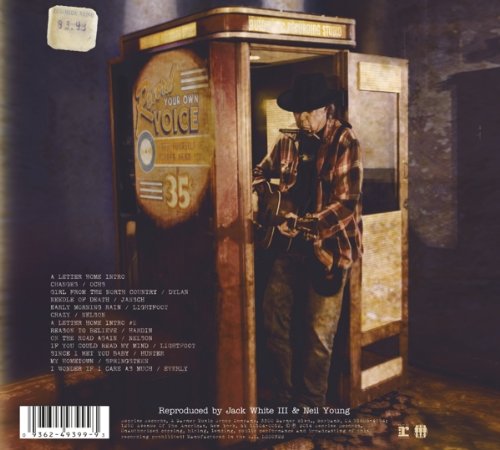
The curveball was the way A Letter Home was recorded. Rather than use a traditional recording studio, Neil decided to record A Letter Home in a refurbished 1947 Voice-O-Graph vinyl recording booth at Jack White’s Third Man Records recording studio in Nashville. Relying upon obsolete electro-mechanical technology was somewhat restrictive. Neil couldn’t bring onboard Crazy Horse. No. It was just Neil and his trusty acoustic guitar. When this slimmed down, lo-fi recording was released, opinion was divided.
This wasn’t the first time a Neil Young album polarised opinion. 1974s On The Beach Landing On Water, 1981s Re-actor, 1982s Trans and 1986s Landing On Water divided opinion. History repeated itself with A Letter Home.
There was no middle ground, critics either loved or loathed A Letter Home. It was either the act of a maverick genius, or a vanity project. Opinion was divided. So, record buyers had the casting vote.
When A Letter Home was released, it reached number thirteen in the US Billboard 200 and seventeen in Britain. Record sales were one thing though. What did people think of A Letter Home?
It was only after people had heard A Letter Home that they cast their vote. Record buyers, including even the most loyal Neil Young fans were similarly divided. Some were disappointed at what could’ve been a captivating project. Others felt the lo-fi sound suited the twelve songs, and they took on new meaning.
This was the case with Bert Jansch’s Needle of Death, Gordon Lightfoot’s Early Morning Rain and If You Could Read My Mind. They were tailor made for Neil’s voice. Later, Willie Nelson’s On The Road Again is given a lo-fi, old school, country makeover. A compelling take of Bruce Springsteen’s My Hometown caught the attention of some record buyers. Others, myself included, felt A Letter Home was a self-indulgent, vanity project where record buyers had been short changed. Neil Young owed record buyers an album.

Storytone.
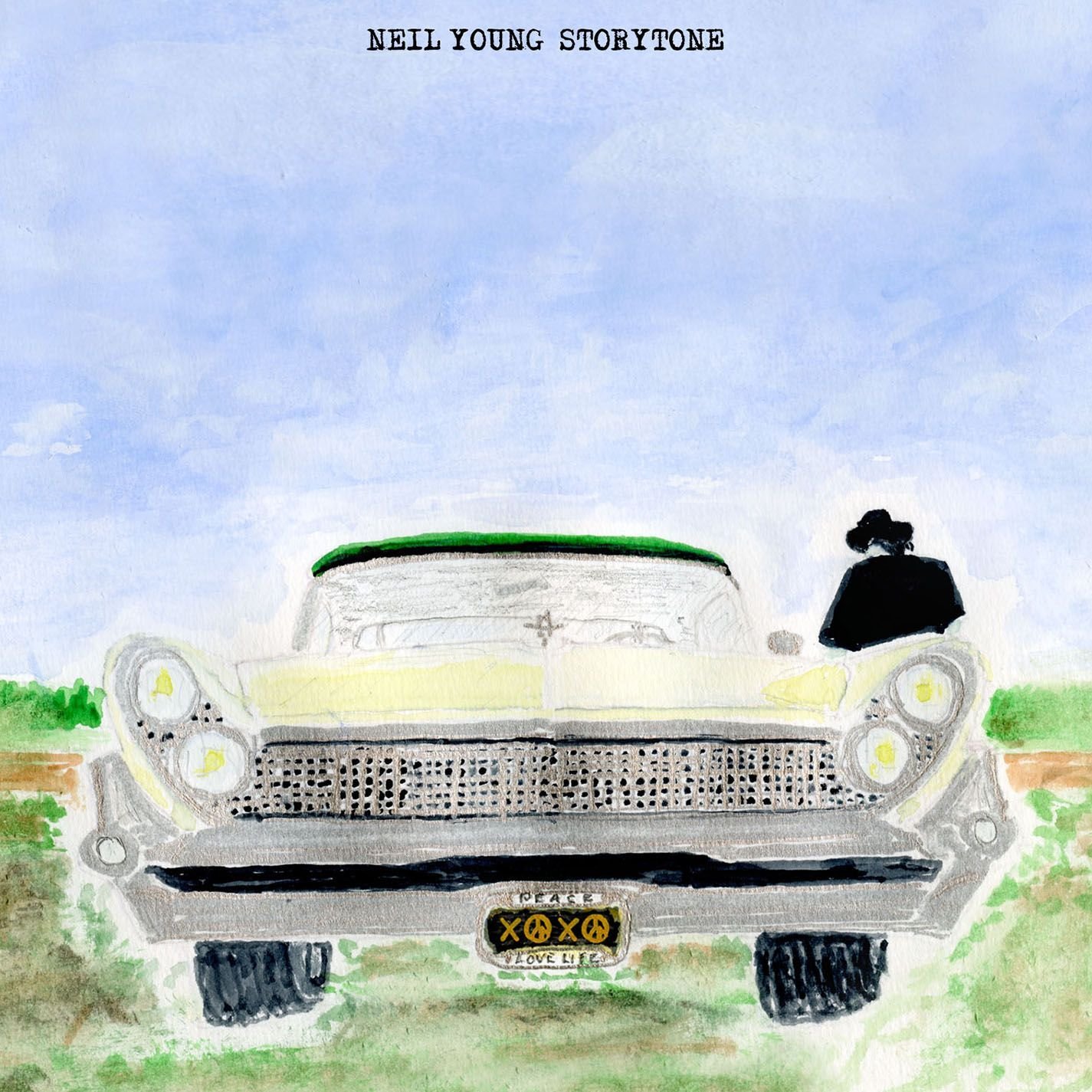
Less than seven months later, Neil Young returns with his thirty-fifth album Storytone, which was recently released on Reprise Records. Just like A Letter Home, and countless other albums, Neil Young wanted to try something new.
For Storytone, Neil penned ten new songs. When it came to recording of Storytone, this wasn’t going to be another lo-fi album. Far from it. Instead, Neil decided to record an album that was the polar opposite of A Letter Home.
When the recording of Storytone began in April 2014, Neil and co-producer Niko Bolas, a.k.a. The Volume Dealers, had hired what seemed like a cast of thousands. There was a big band and a ninety-two piece orchestra. That’s not all. On some tracks, a choir was drafted in to record one of Neil Young’s most lavish albums. It was recorded at Capitol Studios, Sony Scoring Stage and East West Studios in Hollywood. Once Storytone was recorded, it was scheduled for release early in November 2014. Could Storytone unite critics and music lovers?
On its release, Storytone continued to divide critics. Some were won over by what was perceived as a combination of Harvest and This Notes For You, another Volume Dealers production. Other critics felt Storytone was a somewhat chaotic and messy album. Yet again, music lovers had the casting vote.
November 4th 2014, was D-Day. That’s when Storytone was released. It reached number thirty-three in the US Billboard and number twenty in Britain. On the face of it, record buyers had been won over by the maverick Mr. Young’s latest offering, Storytone. However, is that the case?
Plastic Flowers opens Storytone. It’s the first of the tracks where Neil is accompanied by an orchestra. Swathes of the lushest strings, muted horns and flourishes of harp give way to a piano, and Neil’s fragile vocal. Hurt and sadness fills his voice as memories come flooding back. Meanwhile, swells of strings sweep, adding an element of drama. Later, the strings replace Neil’s vocal, adding to the drama, emotion and beauty of this opus.
Dramatic sweeping strings and woodwind set the scene for Neil on Who’s Gonna Stand Up? It’s a stirring track filled with social comment. Neil Young becomes evangelic about the environment, turning his guns on fracking and fossil fuel. This is admirable and well meaning. Sadly, the lyrics are far from vintage Neil Young. Proof of this is “end fossil fuel, draw the line, before we build another pipeline.” Later, he sings “damn the dams, save the rivers, starve the takers and feed the givers.” These lyrics disappoint. However, not the arrangement. It makes up for Neil lyrical failings. Dramatic flourishes strings, woodwind and a choir accompany Neil’s deliberate, earnest and evangelical vocal, before reaching a dramatic, thoughtful crescendo.
I Want To Drive My Car sees the big band make their debut. Neil’s band play their way into the track. They’re loose and gradually, find their feet. Blistering guitar licks accompany Neil’s thoughtful vocal. Then, all of sudden, the big band kick loose. Braying, blazing horns kick loose. They’re joined by a Hammond organ and later, a bluesy harmonica. All the time, the bass marches the arrangement along. Meanwhile scorching guitars accompany Neil’s grizzly, lived-in vocal, on what’s the highlight of Storytone so far.
Glimmer has a wistful, dreamy arrangement. That’s down to the strings and woodwind. They play slowly, leaving space within the arrangement. Strings float above the arrangement. Before long, you forget this is a Neil Young album. That’s until his tender, melancholy vocal enters. Again, memories come flooding back. He thinks of better days, when he first met the woman he loved. Back then, their love was young. Now things are changing. “New love, brings back everything to you, all the feelings in your heart are reawakened.” As Neil delivers these lyrics, it’s as if they resonate and ring true. Especially when accompanied by a swathes of lush strings. All this makes Glimmer a truly beautiful ballad, which features a wistful heartfelt vocal from Neil Young.
Say Hello To Chicago bursts into life. With the return of the big band, it’s like a return to another musical era. Bursts of grizzled horns, rolls of drums and washes of Hammond organ join a piano and upright bass in creating a swinging arrangement. They set the scene for Neil’s vocal. As if inspired, he delivers a vocal that swings. It sits atop this glorious jazzy backdrop, that brings back memories of another musical era.
Tumbleweed has an understated, wistful sound. Just the subtlest strings and woodwind join with a flourishes of harpsichord in creating a meandering, spacious backdrop. They’re joined by a pensive, reflective Neil Young. Tenderly, he delivers his vocal. Shimmering strings or woodwind respond to his call. All the time, flourishes of harpsichord add to the ethereal beauty of a song where Neil Young’s at his tenderest and most thoughtful.
A bluesy harmonica opens Like You Used To Do, which again, is reminiscent of This Notes For You. As the bass, drums and piano create the backdrop for Neil’s weary vocal, horns bray and blaze. Then when his vocal drops out, he unleashes a bluesy harmonica. It’s the perfect replacement for Neil’s vocal, on this bluesy, jazz-tinged track.
I’m Glad I Found You is another of the tracks where a full orchestra accompanies Neil. Strings sweep, as if determined to tug at your heartstrings. In the midst of the mix, horns bray and a piano plays. When the arrangement becomes understated, this is the signal for Neil’s needy, hopeful vocal to enter. He throws himself into the song, bringing out the lyric’s beauty. Neil breathes meaning and sincerity into his lyrics. They’re some of the finest on Storytone, and far removed from the disappointing Who’s Gonna Stand Up?
Straight away, When I Watch You Sleeping has a country tinged sound. Just a lone harmonica plays. It’s soon joined by a picked guitar and weeping pedal steel. They join Neil’s vocal. He can’t believe he’s found love and happiness. Tenderly, he gives thanks. Meanwhile, swathes of strings sweep above. This orchestral backdrop and the country-tinged sound may be opposites, but opposites attract. Not just that, but the compliment each other perfectly on another beautiful ballad.
All Those Dreams closes Storytone. Keyboards, guitar and the rhythm section join a tambourine in providing the backdrop for Neil’s vocal. So does the orchestra. Strings are to the fore. They’re occasionally jaunty, dancing above the rest arrangement, which is reminiscent of Harvest or Harvest Moon. Just like these two albums, the lyrics to All Those Dreams ooze quality. They’re vintage Neil Young. They’ve a poetic and cinematic quality. So much so, that when you close your eyes, Neil’s lyrics paint pictures that unfold before your eyes. That however, isn’t the end of Storytone.
Not if you’ve bought the Deluxe Version of Storytone. Neil Young includes another version of Storytone. This time, it’s an acoustic version. It’s very different from the original version. There’s neither an orchestra, nor a big band. Instead, it’s a much more stripped down sound. Sometimes, it’s just Neil and either his piano or guitar. This works, apart from Who’s Gonna Stand Up?, which becomes dirge like. That wasn’t Neil’s finest hour. Mostly, though the songs on Storytone work well with this stripped down approach. You tend to focus more on the lyrics, rather than the lavish arrangements. Having said that, the original version of Storytone is a joy to behold.
The songs on Storytone come alive with these lavish arrangements. Lush strings, woodwind and horns add to the emotion and potency of the songs. They take on new meaning. Much of that, is down to the strings. They’re perfect for adding emotion and drama to a song. On Storytone, Neil’s decision to work with the orchestra and big band was a masterstroke.
In the case of the tracks with the big band, this is reminiscent of This Notes For You. It was produced by The Volume Dealers, and is one of the most underrated albums in the Neil Young discography. For anyone who enjoys the tracks with the big band, then This Notes For You is well worth investigating. It shows yet another side to Neil Young, the original musical chameleon.
Over the past forty-six years, Neil Young has released thirty-five studio albums. He’s always determined to reinvent himself musically. He’s released albums of Americana, blues rock, country, folk, folk rock, grunge, new wave, psychedelia, rock and rockabilly. There’s n0 finding a winning formula, and then sticking with it. That’s not Neil’s style. The closest he came was during his dalliance with grunge. However, after that, Neil spread his wings and headed in a different direction. That’s what Neil has continued to do, and did in 2014.
During 2014, Neil Young released two albums. A Letter Home was one of the most disappointing Neil Young albums of recent years. It comes across as a self-indulgent. vanity project, from a musician who should’ve known better. That’s why A Letter Home is definitely not the starting place for a newcomer to Neil Young. Storytone is completely different.
Storytone marks a return to form from Neil Young. The original musical chameleon draws inspiration from previous albums like Harvest, Harvest Moon and This Notes For You. This is quite an eclectic source of inspiration. So it’s no surprise that Neil veers between melancholy and wistful, to soul-baring and soul-searching, right through to flat out hard rocking. It’s a glorious combination. Ballads and rockers rub shoulders on Storytone, where not for the first time, Neil Young becomes the comeback King.

ROBERT PLANT-LULLABY AND…THE CEASELESS ROAR.
ROBERT PLANT-LULLABY AND…THE CEASELESS ROAR.
For many musicians who were once part of one of the most successful bands in musical history, the day that band breaks up is one of the worst days in their life. That day, can mark the end of their career. Try as they may, they never reach the same heights as a solo artist. Musical history is littered with examples of artists who never reached the same giddy heights. This includes former members of The Beatles, Rolling Stones, Pink Floyd and Led Zeppelin. However, this doesn’t include Robert Plant.
Since the break of Led Zeppelin in 1980, Robert Plant has forged a career as a solo artist. His debut albums released was 1982s Pictures At Eleven. It was certified silver in Britain and platinum in America. This was the start of the commercial success and critical acclaim that’s come Robert Plant’s way.
After Pictures At Eleven, Robert Plant has released a further eight albums between 1983s The Principle of Moments and 2010s Band Of Joy. These eight albums have resulted in silver, gold and platinum discs coming Robert’s way. In Britain, Robert has received two silver and two gold discs. However, stateside, Robert Plant, just like Led Zeppelin, before him, took America by storm.
For Robert Plant, he’s always enjoyed more commercial success in America. It’s like Robert’s spiritual home. In America, 1985s Shaken ‘n’ Stirred, 1990s Manic Nirvana and 1995s Fate of Nations were certified gold and 1983s The Principle of Moments was certified platinum. However, Robert’s most successful album in America was 1988s Now and Zen. It sold over three million copies and was was certified triple platinum in America. For Robert Plant, this proved yet again, that there was life after Led Zeppelin.
However, four years have passed since Robert Plant last released a solo album. That was 2010s Band Of Joy. This was Robert’s third consecutive album not to receive a glittering prize in the land of the free. Robert, however, hadn’t lost his Midas touch.
No. He’d collaborated with Alison Krauss on her 2007 album Raising Sand. This was Robert’s first appearance since he released Mighty ReArranger in 2005. It was certified silver in Britain. However, Raising Sand was certified platinum in America, Britain and Canada. Robert Plant was back, and he what’s more, he hadn’t lost his Midas touch. Now seven years after Raising Sun, Robert Plant returns with his tenth solo album, Lullaby and…The Ceaseless Roar, which was recently released on Nonesuch Records. Lullaby and…The Ceaseless Roar is Robert’s first album since 2010. Hopefully, he’ll still have the Midas touch.
Lullaby and…The Ceaseless Roar might be Robert Plant’s tenth solo album, but it’s his first with his backing band The Sensational Space Shifters. Their lineup includes Justin Adam, Liam “Skin” Tyson, John Baggott, Billy Fuller, Dave Smith and Gambian griot player Juldeh Camara. They played an important part in the writing of Lullaby and…The Ceaseless Roar.
There are eleven tracks on Lullaby and…The Ceaseless Roar. Each of the tracks are collaborations between Robert and members of The Sensational Space Shifters. They arranged the traditional song Little Maggie and cowrote ten new songs.
Robert and members of The Sensational Space Shifters penned Pocketful of Golden, Embrace Another Fall and Arbaden (Maggie’s Babby). Rainbow, Stolen Kiss and Up On the Hollow Hill (Understanding Arthur) were written by Robert with Justin Adams, John Baggott, Billy Fuller and Liam “Skin” Tyson. They cowrote Turn It Up, Somebody There and House Of Love with Dave Smith. The other track, Poor Howard, was penned by Robert with Justin Adams, John Baggott, Billy Fuller, Juldeh Camara and Liam “Skin” Tyson. These songs were recorded at various studios.
Recording of Lullaby and…The Ceaseless Roar took place at three studios. They’re the Helium Studios, Wiltshire, Real World Studios, Bath and Contino Rooms, London. That’s where the eleven songs that became Lullaby and…The Ceaseless Roar, Robert Plant’s tenth album was recorded.
At these studios, The Sensational Shape Shifters took Robert’s music in a a variety of directions. Partly, this was down to the eclectic selection of instruments they used. Justin Adams played bendirs, djembe, guitars and tehardant. Liam “Skin” Tyson played banjo and guitar, Dave Smith drums and Juldeh Camara kologo and ritti. John Baggott played keyboards, moog bass, piano, tabal and loops. Billy Fuller palyed bass, omnichord, upright bass and took charge of drum programming. Adding backing vocals were Nicola Powell on Poor Howard and Julie Murphy on Embrace Another Fall. Robert Plant delivered his trademark lead vocals and produced Lullaby and…The Ceaseless Roar, which was released recently.
When the Robert Plant produced Lullaby and…The Ceaseless Roar was released, it was to widespread critical acclaim. After four years away, Robert Plant was crowned the crowned the comeback King on Lullaby and…The Ceaseless Roar. I’ll tell you why, when I tell you about Lullaby and…The Ceaseless Roar.
Opening Lullaby and…The Ceaseless Roar is a new version of the traditional song, Little Maggie. It’s rearranged by Robert and The Sensational Space Shifters. Just a banjo, buzzing bass, pounding drums and percussion create the backdrop for Robert’s tender, impassioned vocal. Behind him, the pulsating arrangement is a fusion of musical genres. Blues, country, folk, electronica and world music melt into. Later, the track takes a Celtic twist, as flutes enter. That’s the signal for Robert’s vocal and the arrangement to grow in power. After that, the arrangement reaches a glorious, genre-melting high.
Thunderous drums pound on Rainbow. Deliberate driving guitars and the bass join. They’re the perfect backdrop for Robert’s vocal. It’s heartfelt and restrained. Meanwhile, the arrangement oozes drama. You wonder when Robert and The Sensational Space Shifters are going to kick loose? This never happens. Instead, understated, cooing harmonies and then crystalline guitars accompany Robert, as he rolls back the years.
Pocketful of Golden is another track where musical genres and influences melt into one. Elements of electronica, folk, rock and world music can be heard. Robert’s vocal is understated and melancholy. He’s thoughtful, as guitars are unleashed. They join drums and washes of synths in creating a captivating post rock backdrop for Robert’s vocal. He doesn’t just sing the lyrics, he sounds as if he’s lived them, as he breathes life, meaning and emotion into the lyrics.
Washes of wistful synths open Embrace Another Fall. They’re joined by a picked guitar and bursts of thunderous drums. Then when Robert’s vocal enters, it’s a mixture of drama, hope and passion. His soul has been awakened, rescued from its slumbers by his lover. Behind him, bursts of searing guitars, swells of synths and pounding, pulsating drums combine. Then it’s all change. Blistering, screeching guitars are unleashed. It’s akin to Led Zeppelin in their pomp. All too soon, it’s all over. However, replacing it is the ethereal beauty of Julie Murphy’s vocal. It’s carried atop a wistful meandering arrangement where drama and beauty sit side-by-side.
Turn It Up has a crackly, bluesy backdrop. A riff is repeated while Robert’s vocal is restrained and lived-in vocal. He name checks blues legend Charlie Patton, all the time, threatening to cut loose. In doesn’t happen. Instead, searing, blistering guitars kick loose. They’re part of an rocky arrangement that’s a mixture of drama and space. Robert’s vampish vocal and a searing, blistering guitar riff play leading roles on a track full of social comment about 21st Century America.
A Stolen Kiss is very different to previous tracks. It’s an understated ballad. Just a hesitant piano, bass and Robert’s melancholy vocal combine. Hurt and longing fill his voice, as he “watches the days slip away.” A guitar weeps and is part of a subtle, but atmospheric arrangement. Along with Robert’s soul searching vocal, it’s without doubt, one of the highlights of Lullaby and…The Ceaseless Roar.
Somebody There sounds as if it’s paying homage to Robert’s glorious rocky past. Swathes of jangling, blistering guitars and pounding, mesmeric drums set the scene for Robert. When his vocal enters, the rest of the band take care not to overpower Robert’s vocal. They play around his vocal, adding a folk rock backdrop. All the time, they allow Robert’s thoughtful, pensive vocal to take centre-stage. Robert fondly remember times gone by, and delivers a stirring vocal against The Sensational Space Shifters’ folk rock backdrop.
Swells of synths open House of Love, before a searing guitar signals the rest of the rhythm section to kick loose. The drums are bold and loud. This sets the tone for the rest of the rhythm section. Scorching, blistering guitars are unleashed while the bass underpins the arrangement. Robert’s vocal is understated and compelling. Again, he rolls back the years. His lived-in, all-knowing vocal is perfect for the lyrics. They come to life. Then when his vocal drops out, The Sensational Space Shifters showcase their considerable talents. Later, Robert’s whispery vocal rejoins and proves yin to The Sensational Space Shifters’ yang.
Mysterious and atmospheric describes the introduction to Up on the Hollow Hill (Understanding Arthur). Guitars weep, reverberating into the distance. Then the rhythm section march the arrangement along. Searing, grinding guitars provide the accompaniment to Robert’s breathy, dramatic vocal. It adds to the mysterious, atmospheric sound of this classy rocky soundscape.
Arbaden (Maggie’s Babby) closes Lullaby and…The Ceaseless Roar. Synths add a moody, sci-fi sound. Then Robert scats and bubbling synths signal the introduction of the rocky rhythm section. They don’t mess about. No. They cut loose, and provide a driving arrangement. It’s a mesmeric fusion of blues, rock and haunting electronica.
After four years away, Robert Plant recently returned with his tenth solo album Lullaby and…The Ceaseless Roar. It was released on Nonesuch Records, an imprint of Warner Bros. Lullaby and…The Ceaseless Roar was released to widespread critical acclaim. He was accompanied by his backing band The Sensational Space Shifters. They played their part in a genre-melting album.
Everything from Americana, blues, country, electronica, folk, folk-rock, rock and world music can be heard on Lullaby and…The Ceaseless Roar. It’s a truly eclectic album that oozes quality from the opening bars of Little Maggie, right through to the closing notes of Arbaden (Maggie’s Babby). It’s a truly captivating album, one where Robert Plant pays homage to his musical past.
On Lullaby and…The Ceaseless Roar, Robert Plant relives his former glories. There’s a nod to Robert’s musical past, in the shape of blues, folk rock and rock. This is reminiscent of Led Zeppelin, as their music evolved. However, Robert combines other genres with rock. This includes electronica. Sometimes, washes of synths provide the backdrop to blistering guitars. It seems that, despite have just turned sixty-six, Robert Plant isn’t resting on his laurels.
He could easily do this. If Robert was to remake an album of seventies rock, it would find an audience. However, that wouldn’t be a challenge. So Robert has surrounded himself with a band of young, talented and innovative musicians
With their eclectic selection of instruments and an innovative way of working, Robert Plant, aided and abetted by The Sensational Space Shifters, played their part in a return to form from Robert Plant. Thirty-two years after the release of his debut solo album Pictures At Eleven, Robert Plant proves he’s still got the Midas touch on the genre-melting Lullaby and…The Ceaseless Roar, where the former Led Zeppelin frontman becomes a musical shapeshifter.
ROBERT PLANT-LULLABY AND…THE CEASELESS ROAR.

FIELD REPORT-MARIGOLDEN.
FIELD REPORT-MARIGOLDEN.
It was back in 2012, that Field Report, released their eponymous debut album. Two years later, and singer-songwriter Chris Porterfield and his band return with their sophomore album, Marigolden, which was recently released by Partisan Records. However, much has happened to Field Report in the intervening two years.
Since the release of Field Report’s debut album back in 2012, the Milwaukee-based band have been busy. They’ve been touring relentlessly across America. From tiny venues, right through to amphitheatres, audiences have been won over by Field Report. So have some of the biggest names in music.
This included two of Counting Crows and Aimee Mann. When they heard Field Report, they asked them to support them on their recent tours. For Field Report, this was a dream come true. They were huge fans of Counting Crows and Aimee Mann. However, it wasn’t just Counting Crows and Aimee Mann who were won over by Field Report.
Suddenly artists Field Report had previously looked up to, were championing their music. Artists like Mark Eitzel and Richard Thompson were championing their music. Then all of a sudden, the Blind Boys Of Alabama decided to cover one of Field Report’s songs. Everything in Field Report’s world seemed to be going so well. Then fate intervened.
Having recorded Field Report as a sextet, the group lost three members during 2013. The constant touring, and growing tensions within the band took their toll. This could’ve proved fatal for some groups. However, not Field Report. They regrouped and returned stronger.
So much so, that in December 2013, Field Report were ready to record their sophomore album Marigolden. So, singer-songwriter Chris Porterfield and the rest of Field Report, Chris headed to snowy Ontaria. That’s where Field Report recorded Marigolden, which was produced by Robbie Lackritz.
Recording of Marigolden took place at the Unicorn Ranch, Ontario. That’s where the slimmed down lineup of Field Report recorded the ten songs penned by Chris Porterfield. Chris also played guitar, piano, synths and added lead vocals. Shane Leonard played drums, guitar, banjo, Gourd banjo, violin, percussion, electronics and vocals. Ben Lester played pedal steel, synths, piano, percussion, electronics and guitar. Tamara Lindeman adds vocals and Travis Whitty plays bass, synths and adds vocals. Once Marigolden was recorded, in snowy Ontario, the album was delivered to Partisan Records.
They scheduled the release of Marigolden for November 2014. That’s two years since Field Report first burst onto the scene with their eponymous debut album. Has Marigolden been worth the two year wait? That’s what I’ll tell you.
Decision Day opens Marigolden. It has an understated arrangement. Just a slow, deliberate, acoustic guitar and pulsating percussion accompany Chris’ worldweary vocal. At last, the snow is melting and finally, he can see the world outside. Gradually, he sees the world outside taking shape. Boredom gives way to hope and maybe, happiness on Decision Day.
Home (Leave the Lights On) was the lead single from Marigolden. It’s a homecoming song, where Chris returns from a long, gruelling tour to his family. He sings: “but leave the lights on, cause it might be nighttime when I get there, but I’m on my way.” There’s a nod to The Travelling Wilburys on this track. That’s down to the vocal, rhythm section, acoustic guitar and weeping pedal steel. The only slight disappointment is the sometimes synthetic sounding drums and the use of a synth. Mostly though, this is a really catchy track, with a strong narrative and a feel good sound.
A wash of weeping guitar opens Pale Rider, setting the scene for Chris’ vocal, where he reconsiders sobriety. He delivers a soul searching vocal, where you’re privy to hear his deepest fears. He’s scared that he’s going to climb on the back of the “pale horse outside my door.” He knows where that leads. Birthdays forgotten, weekends lost and broken relationships. As Chris delivers his vocal, a minimalist arrangement envelops it. Just backing vocalists, weeping pedal steel and acoustic guitars accompany Chris, on what’s a heartfelt, soul-baring opus.
Just a muted, meandering and thoughtful guitar opens Cups and Cups. It’s the accompaniment for Chris’ tender, wistful vocal. Still the arrangement is understated. Drums, scrabbling percussion and muted guitars help drive the arrangement along. However, what grabs your attention is Chris’ vocal. It’s whispery and pensive, as memories come flooding back. Meanwhile, synthetic drums crack and stabs of piano, adding an element of drama. They’re the perfect accompaniment to Chris’ vocal on this eighties influenced soundscape.
On Ambrosia, a maudlin Chris, sings about the stark reality of his love-hate relationship with a bottle. His voice sounds as if it has been scarred by one too many drinks. It’s rough, ragged and hued by a lifetime of carousing. His lifelong, love-hate relationship with a bottle has made Chris maudlin. He reflect on his past, the people he knew, and what became of him. Accompanied by a piano on what sounds like a Neil Young inspired ballad, he ponders the future, wondering what it holds for him? Will he always want to drown himself in a bottle, or somehow, will he resist the temptation to do so?
Wings has a much more experimental sound. Slowly, the arrangement reveals its secrets. Just slow, deliberate keyboards and sci-fi sounds accompany Chris’ husky, drawl. He snaps his fingers, as if encouraging the rest of the band. Instruments are dropped in just at the right time. This includes a guitar, piano, percussion and a grandiose swell of synth strings. They set the scene for Chris. He’s desperate, out of luck and money. As the strings reach a crescendo, the arrangement shows not just its secrets, but another side and sound of Field Report.
Marigolden sees a return to a much more traditional sound. It’s best described as alt-country. Just a picked acoustic guitar and percussion accompanies Chris’ vocal. It veers between heartfelt, emotive and melancholy. Later, sweet harmonies accompany Chris’ what’s a tale of love lost and maybe, love found.
Meandering, dramatic, flourishes of piano open Michelle. It’s the only accompaniment to Chris’ vocal. It sometimes, reminds me of Jackson Browne in his seventies heyday. Just like Jackson, Chris is a talented singer-songwriter, who has the ability to paint pictures with his lyrics. The main difference is the arrangements. Chris’ arrangements are much more minimalist. Here, a weeping pedal steel, hypnotic drums, wistful acoustic guitar and piano create an understated backdrop. This however, allows Chris’ vocal to take centre-stage. His lyrics veer between dark and hopeful. It’s as if Chris’ inner pessimist and optimist are in conflict. Hence, lyrics like “I will drive us of the cliff to the ravine” and “now it’s leaking love in my captain’s car.” These lyrics showcase a hugely talented singer-songwriter, with a thousand stories to tell.
Washes of synths and lumbering drums set the scene for Chris’ vocal on Summons. He’s happy, that his tour is nearly over. He’ll be able to see his wife and family. Guitars weep and longing fills Chris’ vocal as he sings: “I’ll be coming home.” As tiredness and desperation threaten to overcome him, he looks forward to “coming home.”
The tracks that bookend an album have to standout. An artist wants to draw the listener in, keep their attention and leave them wanting more. That’s the case with Enchantment, which closes Marigolden. It’s just an acoustic guitar that accompanies Chris’ vocal. Guilt and sadness fill his voice. He cashed in a 30-day chip for a kiss. Now he’s racked with guilt. Guitars weep, synths sweep and harmonies coo. All the time, Chris tries to come to terms with his actions. He can’t though. Deep down, he knows he’s hurt his wife, who he misses, and loves, more than anything. Guilt, hurt, and regret all play their part in a heartbreaking song that leaves you wanting to hear much more from Field Report.
For many groups, their second album is the hardest of their career. There’s been many reasons put forward why that’s the case. Often a group that’s young and hungry, will have already written their debut album before they sign to a label. They’ve spent years writing and honing that album. Sometimes, the album is already recorded. All that’s left is for the record company to release it. They cover themselves by saying that the album is a demo. Then lo and behold, it’s a critical and commercial success. The band are then asked to write another album while touring their debut. This proves problematic. So when the sophomore album disappoints, in years to come, it’s often referred to as the “difficult second album.” Thankfully, that’s not the case with Field Report’s sophomore album Marigolden. It could’ve been though.
Since the release of Field Report’s debut album back in 2012, the Milwaukee-based band have been busy. They’ve been touring relentlessly across America. From tiny venues, right through to amphitheatres, audiences have been won over by Field Report. They’ve also backed the Counting Crows and Aimee Mann. For Field Report, this was a dream come true. They were huge fans of Counting Crows and Aimee Mann. Everything in Field Report’s world seem going so well. Then fate intervened.
Having recorded Field Report as a sextet, the group lost three members during 2013. The constant touring, and growing tensions within the band took their toll. This could’ve proved fatal for some groups. However, not Field Report. They regrouped and returned stronger.
That’s apparent when you listen to Marogolden. It’s a highly personal album that was penned by singer-songwriter Chris Porterfield. He writes about his loneliness on long, gruelling tours and his battle with alcohol. Listening to Marogolden, Chris appears to be a man whose constantly struggling darkness and demons. Out of his darkness comes music that’s poetic and personal.
During Marogolden’s ten track, Chris lays bare his soul. There’s no machismo involved. This isn’t an album that celebrates the rock ’n’ roll lifestyle. Far from it. Chris seems to shun and fight it. He doesn’t want to embrace the debauchery of a rock ’n’ roll tour. No. He’s a family man, who just so happens to be a musician. This can’t be easy. After all, temptation is around every corner. Chris realises this and instead, Marogolden is a warts and all album.
Chris isn’t afraid to share his problems on Marogolden. This could help others, especially those who face the same love-hate affair with the bottom of a bottle. The same goes for loneliness.
Just like many people, when Chris tours, he’s far from home. Many people will be able to relate to the loneliness of Summons. Hopefully, they’ll be able to resist cashing in their chips like Chris does in Enchantment, which closes Field Report’s sophomore album Marigolden.
Featuring ten tracks, Marigolden sees Field Report combine alt-country, folk, electronica, indie rock and rock over tracks. Field Report sound as if they’ve been influenced and inspired by Neil Young, Jackson Browne, The Jayhawks, Wilco and Gram Parsons. The result is Marigolden, an album of music that’s highly personal. It’s also variously beautiful, dramatic, emotive and full of darkness, hope, hurt and sadness. Marigolden, Field Report’s sophomore album sees them mature as a band.
Over the last two years, Field Report have grown and evolved as a band, since the release of their eponymous debut album. Marigolden, which was recently released by Partisan Records, has been well worth the two year wait. It’s a coming of age from the Milwaukee-based Field Report, who continue to win friends and influence people on their highly personal, soul baring, sophomore album Marigolden.
FIELD REPORT-MARIGOLDEN.


MEGA JAWNS-LITTLE LADY.
MEGA JAWNS-LITTLE LADY.
Nowadays, there aren’t many bands that manage to record an album in a week. Instead, some bands take years to record an album. Partly, that’s down to the way albums are recorded.
Forty years ago, the only way to record an album, was in a recording studio. That cost money. So, the only bands able to record an album, were those signed to a record company. Nowadays, that’s not the case.
In the last twenty years, the way in which albums are recorded has changed beyond recognition. No longer, do bands need recording studios. Instead, all that’s needed is laptop containing a Digital Audio Workstation and some VSTs. Add to this, an audio interface and any aspiring band can record their debut album. That’s exactly what the Mega Jawns did early this year.
The Mega Jawns were founded on 10th March 2014. That’s when two veteran producers met in a basement in West Philly. That’s where Philly keyboard player, vocalist and producer Will Brock and UK producer and DJ Will Sumsuch. Having shaken hands on the 10th March 2014, seven days later Mega Jawns’ debut album Ten Letters From Home was completed. Six months later, Ten Letters From Home was released by BBE Records on 22nd September 2014. Now, two months later, Mega Jawns have released Little Lady as a single. It’s the latest chapter in the story of two veteran producers.
Sometimes, artists or producers can struggle for years before they make a breakthrough. Then when they meet a new collaborator, their fortunes change. That wasn’t quite the way it was for the two Wills, Will Brock and Will Sumsuch. They were both enjoying relatively successful careers. However, they were approaching the stage in their musical careers when they were referred to as veterans. This was the case with the two Wills.
Philly keyboardist, vocalist and producer Will Brock has been a stalwart of the international jazz and soul scene for more years than he can care to remember. He’s spent what seems like a lifetime touring and performing. Will hasn’t just criss-crossed America, but the world. In doing so, Will has toured and played with everyone from The Stylistics, Miles Jaye and Marion Meadows. However, it’s not just touring that Will Brock enjoys.
When he’s at home, Will enjoys working in the studio. He’s a pianist and producer. Previously, Will has released singles on King Street Records. He’s also recorded with Stephanie Cooke and King Britt. Will is also one as one half of production duo Soul Dhamma. The other Will, Will number two, has an equally impressive CV.
Will Sumsuch is a UK based producer and DJ. He’s a mainstay of the European deep house scene. That’s been the case for over ten years. With his DJ case packed with the deepest house, Will has played all over Europe. One night it’ll be Barcelona, the next Helsinki. The life of a globe-trotting DJ is best described as have passport, will travel. When he’s not DJ-ing, Will’s a respected producer.
Just like most successful DJs, Will is also a producer. His music is popular among the DJ-ing community. Look into the DJ case of Ben Watt, Osunlade, Justin Martin and Jody Wisternoff, and they’ll have tracks by Will Sumsuch amongst their secret weapons. Will’s cerebral style of electronic music is winning over DJs and dancers. It was whist Will Sumsuchwas making one of his singles Simpatico, that he first met Will Brock.
That was back in 2013. The two Wills first collaborated on Will Sumsuch’s 2013 single Simpatico. Will released Simpatico on his own label Colour and Pitch. Quickly, Simpatico found a following within the DJ-ing fraternity. One of the first people to pick up on Simpatico was house vocalist Robert Owens. That was just the start. Soon, others got behind Simpatico. For the two Wills, this was the start of a fruitful collaboration.
Fast forward to 10th March 2014. That’s when the two Wills first met. Having shook hands, they started work. They joked about making an album within a week. However, they both thought that maybe, they’d manage to record a couple of tracks. After all, recording an album in a week was a step too far? Surely?
It wasn’t. Ten Letters From Home is proof of that. It’s a meeting of two musical minds. On Ten Letters From Home, Will Brock adds a Philly Soul influence. Meanwhile, Will Sumsuch adds an understated European electronica influence to Ten Letters From Home. The Mega Jawns debut album Ten Letters From Home, was an intriguing fusion of ideas, influences and genres. One of Ten Letters From Home’s highlights, was Little Lady, which was recently released on BBE Music as a single.
Unlike the “old days,” when a single had just an A and B side, nowadays, a single can contain anything up to eight tracks. The Mega Jawns’ new single features just three tracks. There’s the original version of Little Lady, which closed their debut album Ten Letters From Home. From the get-go, the arrangement to Little Lady gets funky. Bass, guitar and keyboards join forces with drums as Will delivers another powerhouse of a vocal. He’s augmented by harmonies. They add the finishing touch to this joyous, uplifting slice of Nu Philly Soul. There’s also the Eat More Cake remix which gives the single a delicious dance-floor friendly remix. The other version is the instrumental version. Again, this version will appeal to DJs who’ve discovered the sound and delights of Mega Jawns, who have taken advantage of the new way of recording.
Music has changed almost beyond recognition in the past twenty years. Nowadays, a generation of artists regard recording studios as a relic of the past. DAWs, drum machines and synths the way to make music. It’s a much cheaper and easier way to make music. The advent of technology accessible for a new generation of producers. This includes the Mega Jawns.
Nowadays, producers like Will Brock and Will Sumsuch can meet and collaborate over the internet. Using DAWs packed full of VSTs and samples, the Mega Jawns can collaborate across the Atlantic. All they need is a high speed broadband connection. Many producers collaborate like this. However, that’s not how Mega Jawns recorded Little Lady, their new single from their debut album Ten Letters From Home. Little Lady which was recently released by BBE Music was the result of transatlantic collaboration.
Will Sumsuch jumped on a plane and flew the redeye to Philly. That’s where he met Will Brock. They met on 10th March 2014 and joked about making an album in a week. That might have seemed like a pipe dream. It wasn’t. The Mega Jawns managed to record their debut album Ten Letters From Home in seven days.
The Mega Jawns wrote, recorded and mixed Ten Letters From Home within seven days. That’s good going nowadays. No longer do artists record quickly. Instead, they spend years trying to complete an album. That Ten Letters From Home was recorded within seven days. Many modern producers should learn from the Mega Jawns.
Too many producers don’t attach a monitory value to the time they spent within their home studio. They forget the maxim that time is money. For every hour, day and week they spent auditioning claps and kick drums, it’s costing them money. So if an artist spends a year on an album, there’s no way they’re really making money. Their royalties won’t come close to covering costs. The Mega Jawns didn’t make this mistake.
They worked quickly and they worked well. Pooling their resources, the Mega Jawns wrote, recorded, produced and mixed the ten tracks on Ten Letters From Home. One of its highlights was Little Lady. It was a case of the Mega Jawns keeping the best to last.
Little Lady is soulful, sultry, dance-floor friendly and full of hooks. Musical genres and influences literally melt into one. Nu Soul meets elements of jazz, jazzy house and soulful house. There’s even a nod to Philly’s soulful past. For anyone yet to discover the delights of the Mega Jawns, then Little Lady is the place to start. After that, you’re bound to want to discover the delights of the Mega Jawns’ debut album Ten Letters From Home.
MEGA JAWNS-LITTLE LADY

WINGS-VENUS AND MARS.
WINGS-VENUS AND MARS.
Although their first two albums had been a commercial success, Paul McCartney and Wings’ third album, Band On The Run, was a game-changer. It was released on 5th December 1973, and reached number one in America, Australia, Britain, Canada and Norway. This resulted in Band On The Run being certified triple platinum in America, and platinum in Britain and Canada. Band On The Run had surpassed the commercial success of 1971s Wild Life or 1973s Red Rose Speedway. That however, wasn’t the end of the accolades that came Band On The Run’s way.
In 1975, Band On The Run was nominated for three Grammy Awards. At the Grammy Award ceremony, Band On The Run won Grammy Awards, for Best Pop Performance by a Duo or Group with Vocals and Best Engineered Album, Non-Classical. For Paul McCartney, Band On The Run was a turning point.
After Band On The Run, Wings as the group became, would enjoy five consecutive platinum albums in America. The first of these albums was Venus and Mars, which was recently released as a double album by Universal Music Group. Venus and Mars was the first Wings album to feature Wings expanded lineup.
When Band On The Run was recorded, Wings were a trio, featuring Paul and Linda McCartney and guitarist Denny Laine. The following year, 1974, Paul McCartney decided that now, was the time to expand Wings lineup. In came lead guitarist Jimmy McCulloch and drummer Geoff Britton. The new lineup of Wings started recording Venus and Mars.
Some of the earliest sessions took place in Nashville. That’s where it became apparent that lead guitarist Jimmy McCulloch and drummer Geoff Britton didn’t get on. There was a personality clash, one that couldn’t be resolved. After six months as a member of Wings, Geoff Britton left Wings. American drummer, Joe English was auditioned and became the new Wings drummer. Geoff Britton’s contribution to Venus and Mars was just three songs. Another three songs were recorded at Abbey Road Studios, London.
By the time Wings arrived at Abbey Road Studios, in November 1974, Paul and Linda McCartney had already written a number of the new songs that featured on Venus and Mars. This included Letting Go, Love In Song and Medicine Jar. These were just there of the Paul and Linda McCartney compositions.
Eventually, Paul and Linda McCartney penned eleven of Venus and Mars’ thirteen tracks. New member, Jimmy McCullough, cowrote Medicine Jar with Colin Allen. The other track was the musical faux pax that was Tony Hatch’s Crossroads Theme. These thirteen tracks would eventually, become Venus and Mars, which was recorded at a variety of studios, including Sea-Saint Recording Studio, New Orleans.
With some of the material for Venus and Mars written, Wings headed to New Orleans. Their destination was Sea-Saint Recording Studio, New Orleans. That’s where overdubbing of the tracks recorded at Abbey Road took place between January and February. Right through to April 1975, Wings recorded songs for Venus and Mars at spent the Sea-Saint Recording Studio. However, that wasn’t the only studio they used in America.
The other studio Wings used, was Wally Heider’s Studio, in Los Angeles. This was a studio used by the great and good of music. It was highly regarded within the music industry, and many a classic album was recorded there. One night, at Wally Heider’s Studio, a familiar face visited Paul and Linda.
This was none other than John Lennon. His relationship with Yoko Ono was on hold. He was now in a relationship with May Pang. John was also in the midst of “lost weekend,” where he ran wild with Harry Nilsson. One night, however, he decided to visit the McCartneys at Wally Heider’s Studio. The two old friends tried to get repair their fractured friendship. This seemed to work. John told May Pang he was thinking about writing with the McCartneys. Sadly, this never happened, as John was reunited with Yoko Ono. Meanwhile, Wings released their fourth album.
By April 1975, Venus and Mars, Wings’ fourth album, was completed. It was scheduled for release on 27th May 1975. Before that, Listen To What The Man Said was chosen as the lead single from Venus and Mars. This was a masterstroke. When Listen to What the Man Said was released, it reached number one in the US Billboard 100 charts. For Wings, they looked like building on the commercial success of Band Of The Run.
When critics heard Venus and Mars, the reviews were mixed. They ranged from favourable to disappointing. Rolling Stone, still perceived as panacea of music criticism, weren’t won over by Venus and Mars. It was, they believed a mixed bag of songs. Classic McCartney songs sat side-by-side with filler. For Wings, the critical reception to Venus and Mars was disappointing. However, the people that mattered, record buyers, thought otherwise.
On Venus and Mars’ release on 27th May 1975, it reached number one in America, Britain, Canada, France and Norway. It also reached the top ten Australia, Japan and the Netherlands. In total, Venus and Mars sold over four million copies. This resulted in Venus and Mars was certified platinum in America, Britain and Canada. Although Venus and Mars wasn’t as popular as Band On The Run, Wings were well on their way to becoming one of the most popular bands in the world.
This wasn’t apparent when Letting Go was released as the second single from Venus and Mars. It was released in October 1975 and stalled at just number thirty-nine in the US Billboard 100. Over the Atlantic, Letting Go reached number four in Britain. The third and final single from Venus and Mars was Venus and Mars/Rock Show. Although it reached number twelve in the US Billboard 100, it failed to chart in Britain. However, overall, Venus and Mars had been a commercial success, and showcased Paul McCartney’s skills as a singer and songwriter.
There’s thirteen tracks on Venus and Mars, which features Paul McCartney is accompanied by the newly expanded lineup of Wings. Although many critics referred to Venus and Mars as a musical mixed bag, that’s somewhat unfair.
Venus and Mars starts with the wistful title-track. Then Rock Show explodes into life. Love In Song is a heartfelt ballad, but is far from a McCartney classic. The jaunty You Gave Me The Answer sees Paul roll back the years mixing hooks and humour. Magneto And Titanium Man sees the hooks keep on coming, as Wings mix perfect pop and rock. Closing side one is Letting Go. It’s moody, rocky and cinematic. Letting Go which is the perfect way to close side one, sounds like it belongs on the soundtrack to a James Bond film.
Side two opens with a reprise of Venus and Mars. Its familiar melancholy sound is comforting. Spirits Of Ancient Egypt, which features Denny Laine’s lead vocal proves a disappointment. The live version on Wings Over America is the definitive version. Medicine Jar sees the vocal change hands again. Jimmy McCullough delivers the lead vocal. Sadly, after a driving, dramatic, rocky and funky introduction Jimmy’s vocal proves too weak. It can’t carry the song. If Paul had taken charge of the vocal, Medicine Jar would’ve been transformed. Thankfully, Paul takes charge of the next three vocals.
This starts with Call Me Back Again. He delivers a vocal that’s a mixture of drama and power, on what’s always been an underrated track. It features some blistering guitar licks. They’re the perfect replacement for Paul’s vocal, as the newly expanded Wings kick loose. This continues on Listen To What The Man Said, which is without doubt, Venus and Mars’ best track. From the opening bars, right through to the closing notes, it’s Wings at their very best. The medley of Treat Her Gently and Lonely Old People is a reminder of Paul McCartney’s skills as a singer and songwriter. He breaths, life meaning, emotion and beauty into the lyrics. That would’ve been the perfect way to close Venus and Mars. However, Paul had an idea.
The story started when Dick James sold The Beatles publishing company, Northern Songs to Lew Grade. As a result, they became part of ATV Music. At first, Paul McCartney was angry and frustrated. So Paul and Lew Grade met to discuss the situation. At the meeting, Lew Grade agreed to administer Northern Songs at favourable rate. He also agreed to give Wings a television show that would help promote Wings in America and Britain. As the two men parted, Lew Grade jokingly asked Paul if he’d consider rerecording the theme tune to Crossroads, a low budget British television show. Little did he realise, that a few years later, he’d do just that.
At the Venus and Mars sessions, Wings rerecorded the Crossroads Theme. It was given a modern makeover, and closed Venus and Mars. Since then, the Crossroads Theme has been one of the most controversial songs that Wings ever recorded. However, the truth is, the Crossroads Theme, which closes Venus and Mars, was merely a quid pro quo.
On the second disc of Venus and Mars, there’s another fourteen tracks. This includes rare and unreleased tracks. Some of the tracks were recorded at the sessions in Louisiana and Los Angeles. Apart from the unreleased tracks, there’s the singles Junior’s Farm and Walking In The Park With Elois and B-Sides like Bridge On The River Suite, My Carnival and Lunch Box/Odd Sox. There’s also another version of Rock Show and the single version of Letting Go. These fourteen tracks show the newly expanded lineup of Wings evolving as a band. They’re an interesting and intriguing musical document, as Wings became one of the seventies’ supergroups.
Whilst Venus and Mars never replicated the commercial success of Band On The Run, it cemented Wings reputation as one of the most successful bands of the seventies. Venus and Mars was the start of a run where Wings enjoyed five consecutive platinum albums. They could do wrong. Right up until 1979s Back To The Egg, Wings enjoyed commercial success and sometimes, critical acclaim.
Band On The Run had been the start of this. Venus and Mars saw the commercial success continue. After the release of Venus and Mars, Wings embarked upon the Wings Over the World tour. It started in 1975 and finished in 1976. During that period, Wings criss crossed the world, showcasing their latest album, Venus and Mars.
Although Venus and Mars isn’t as good as Band On The Run, it’s an album that’s matured with age. Critics weren’t impressed with Venus and Mars upon its release. However, of the thirteen songs, nine of them are of the standard you’d expect from Paul McCartney. Ironically, Paul’s decision to make Wings a democracy backfired.
On Venus and Mars, Paul allowed Denny and Jimmy to take charge of the lead vocal on a track. This backfired. Neither Denny nor Jimmy were able to bring out either song’s potential. Spirits Of Ancient Egypt, featured Denny Laine’s lead vocal. It proved a disappointment. So does Medicine Jar, which sees the vocal change hands again. Jimmy McCullough delivered the lead vocal and didn’t have the power to make the song come alive. Two other tracks on Venus and Mars disappoint.
Love In Song may have been a heartfelt ballad, but was far from a McCartney classic. The controversial Crossroads Theme was the wrong song, on the wrong album. Instead, the medley of Treat Her Gently and Lonely Old People would’ve been the perfect way to close Venus and Mars, Wings’ fourth album, which was recently rereleased as a double album by Universal Music.
Venus and Mars may have not found favour with critics upon its release, but it’s a reminder of just how talented a singer, songwriter, musician and bandleader Paul McCartney was by 1975. While Wings were far from The Beatles, they were a talented group, who were one of the most popular groups of the seventies. They took three albums to find their voice. After 1973s Band On The Run, there was no stopping Wings. They spread their Wings, and released five further commercially successful albums, starting with Venus and Mars, which has matured with age since its release, back in 1975.
WINGS-VENUS AND MARS.


JIMI HENDRIX-THE CRY OF LOVE AND RAINBOW BRIDGE.
JIMI HENDRIX-THE CRY OF LOVE AND RAINBOW BRIDGE.
It was around 11a.m. on the 18th September 1970, that Jimi Hendrix was found unresponsive at an apartment in the Samarkand Hotel, in Notting Hill, London. He was rushed to the St. Mary’s Abbot’s Hospital, but pronounced dead at 12.45p.m. Jimi Hendrix was just twenty-seven. Music had lost one of the most influential and innovative guitarists of his generation.
That’s despite Jimi’s solo career beginning just four years earlier. Since then, Jimi had released a trio of studio album and one live album. However, since Jimi’s death, twelve posthumous albums have been released. The first of these were The Cry Of Love and Rainbow Bridge. Both albums were released back in 1971. Remastered versions of The Cry Of Love and Rainbow Bridge have been recently released by Sony Music. These albums are a remainder of a musical maverick at the peak of his powers.
Jimi Hendrix took music by storm, and vied for the title of rock’s greatest guitarist. Throughout his solo career, Jimi was a flamboyant showman, who growing up, modelled himself on T-Bone Walker.
It was T-Bone who Jimi saw playing his guitar with his teeth. When Jimi saw this, he took it as a challenge. This became part of Jimi’s routine. In years to come, Jimi played his guitar as if his life depended upon it. Jimi, on form, was like a man possessed. Some nights, Jimi played his guitar behind his back, played it with his teeth and as if trying to exercise some inner demons, set his guitar on fire. All this made Jimi one of the most exiting guitarists ever. However, Jimi was also a technically brilliant guitarists of his generation. That was apparent from his debut album with The Jimi Hendrix Experience.
Are You Experienced?
That was apparent from The Jimi Hendrix’s 1967 debut album Are You Experienced. It featured the debut of the legendary power trio The Jimi Hendrix Experience. It featured drummer Mitch Mitchell, bassist Noel Redding and guitarist Jimi Hendrix. They fused rock and psychedelia on eleven tracks penned by Jimi Hendrix.
The eleven tracks that became Are You Experienced, were recorded between October and April 1966. Three London studios were used, De Lane Lea Studios, CBS, and Olympic Studios. That’s where The Jimi Hendrix Experience recorded their debut album Are You Experienced, which was produced by Chas Chandler. Once it was completed, it was released in Britain in May 1967,
When Are You Experienced was released, it was hailed as one of the greatest debut rock albums. It showcased an innovative fusion of rock and psychedelia. At the heart of the Are You Experienced’s sound was the freewheeling sound of Jimi Hendrix’s guitar. He could do things other guitarists could only dream of. Add to the equation Jimi’s languid, charismatic vocal and it’s no surprise that Are You Experienced was such a huge commercial success.
When Are You Experienced was released in Britain, in May 1967, it reached number two. This resulted in a gold disc for the Jimi Hendrix Experience. No wonder. Are You Experienced featured future Jimi Hendrix classics like Foxy Lady, Third Stone from the Sun and Are You Experienced? Three months later, in August 1967, Are You Experienced was released in the US. It reached number five, and was certified platinum five times over. For Jimi, this was the start of a three year period where he could do no wrong.
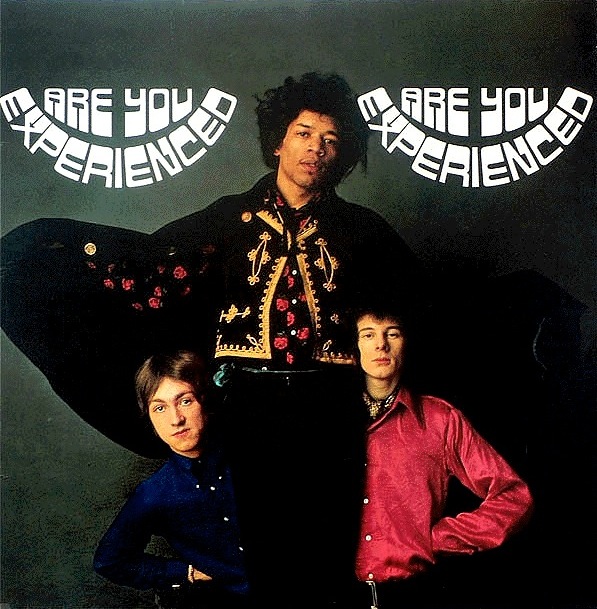
Axis: Bold As Love.
Seven months later, on 1st December 1967, the Jimi Hendrix Experience returned with their sophomore album Axis: Bold As Love in the UK. It featured thirteen tracks. Twelve were penned by Jimi. These tracks showed Jimi evolving as a songwriter. He may have just been twenty-five, but he was a talented songwriter. Proof of this were tracks like Spanish Castle Magic, Wait Until Tomorrow, Castles Made of Sand and Bold As Love. They featured Jimi coming of age as a songwriter. These songs were recorded at Olympic Studios, London.
Recording of Axis: Bold As Love took place at Olympic Studios, London. The sessions took place during May, June and October 1967. Axis: Bold As Love had to be released during 1967. The contract that the Jimi Hendrix Experience had signed stipulated this. Ironically, the album was nearly lost.
One night, Jimi Hendrix took the master tapes to side one home. Unfortunately, Jimi left them in a taxi. The master tapes were never found. This resulted in side one being mixed again. This didn’t delay the release of Axis: Bold As Love. As planned, Axis: Bold As Love was released in Britain in December 1967.
Axis: Bold As Love, was released in Britain, on 1st December 1967. It was released to the same critical acclaim as Are You Experienced. Critics ran out of superlatives in an attempt to describe Axis: Bold As Love. Jimi was described as some sort of musical messiah, who had music’s future in his hands. Record buyers agreed with the critics description of Axis: Bold As Love.
When Axis: Bold As Love was released in Britain, it reached number five and was certified silver. Then on January 15th 1968, Axis: Bold As Love was released in America. However, Axis: Bold As Love hadn’t been released in America during 1967.
There was a reason for this. The Jimi Hendrix Experience’s record company were scared this would affect sales of Are You Experienced. So Axis: Bold As Love wasn’t released in America until January 1968. When it was released, it reached number three in the US Billboard 200 and was certified platinum. Although not as successful as Are You Experienced, Jimi Hendrix was riding the crest of a musical wave.
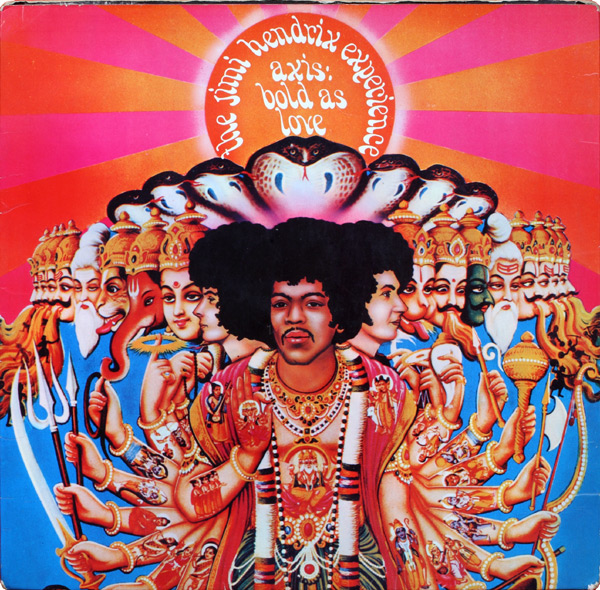
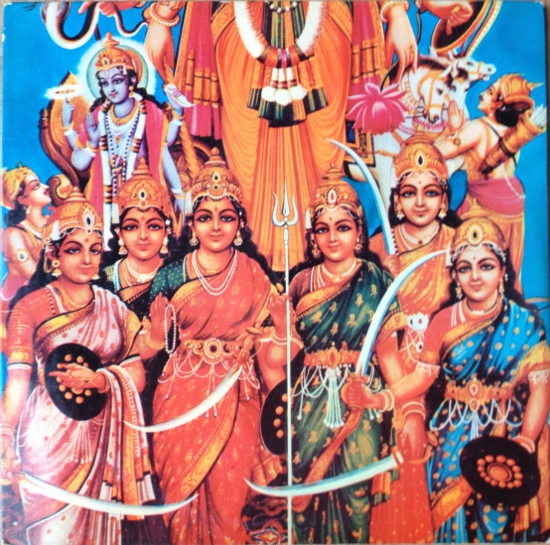
Electric Ladyland.
By October 1968, when The Jimi Hendrix Experience released Electric Ladyland, Jimi Hendrix was one of the most successful musicians in the world. His albums sold by the million, and when The Jimi Hendrix Experience played live, they were one of the hottest live acts. This showed when Electric Ladyland was released.
Unlike The Jimi Hendrix Experience’s two previous albums, Electric Ladyland was an ambitious album. It featured sixteen songs. Thirteen songs were penned by Jimi. Two of the covers were Bob Dylan’s All Around The Watchtower and Earl King’s Come On (Let the Good Times Roll. These tracks, and the rest of Electric Ladyland were recorded at three recording studios.
Recording sessions took place between July and December 1967, then between January and April 1968. Three different studios in London and New York were used. This included Olympic Studios in London and Record Plant Studios and Mayfair Studios, New York. Once the sixteen tracks were recorded, Electric Ladyland was released in October 1968.
As soon as critics heard Electric Ladyland, they realised that this was The Jimi Hendrix Experience’s best album. It oozed quality. Tracks like Crosstown Traffic, Voodoo Chile, Voodoo Child (Slight Return), All Along the Watchtower and Gypsy resulted in what was the greatest album of The Jimi Hendrix Experience’s career. Critics hailed Electric Ladyland a career high for The Jimi Hendrix Experience. Record buyers agreed.
When Electric Ladyland was released in Britain, on 16th October 1968, it reached number six and was certified gold. Nine days, later, on 25th October 1968 Electric Ladyland was released in America. It reached number one on the US Billboard 200 and was certified double platinum. The rise and rise of The Jimi Hendrix Experience continued.
Just like their previous two albums, their third album Electric Ladyland became a classic. Electric Ladyland was the album that The Jimi Hendrix Experience were always capable of making. It was a coming of age for The Jimi Hendrix Experience. They’d released the finest album of their three album career. Sadly, there was a twist in the tale. Electric Ladyland would be The Jimi Hendrix Experience’s final album.

Band of Gypsys.
Eight months after the release of Electric Ladyland, The Jimi Hendrix Experience played their last concert on June 29th 1969. This took place at Barry Fey’s Denver Pop Festival. This was a three day event. Little did anyone know, that never again, would The Jimi Hendrix Experience play live. However, six months later, Jimi’s new trio, Band Of Gypsys, recorded their only album
After The Jimi Hendrix Experience split-up, Jimi formed another trio, the Band Of Gypsys. The lineup featured drummer Buddy Miles, bassist Billy Cox and Jimi on guitar. The Band of Gypsys recorded their only live album on 1st January 1970.
When the Band Of Gypsys took to the stage at Filmore East, in New York, on 1st January 1970, they had been busy. They’d written six new songs. Jimi penned four tracks, including Who Knows and the funky, anti Vietnam War song Machine Gun. These two tracks comprise side one of Band Of Gypsys. He also wrote Power To Love and Message Of Love. Jazz drummer Buddy Miles, wrote Changes and We Gotta Live Together. These six tracks found the Band Of Gypsys moving in a different direction from The Jimi Hendrix Experience.
Elements of funk, R&B and soul shine through on Band Of Gypsys. This isn’t surprising, given Jimi’s bandmates’ past. However, Jimi’s trademark fusion rock and psychedelia is still present. What’s obvious, is that Jimi was keen to explore different musical directions. He wasn’t going to be tied to the one musical genre. Instead, he was willing to experiment musically. Band Of Gypsys was just the start.
When critics heard Band Of Gypsys, they were won over by the genre melting album. They realised that Band Of Gypsys was an ambitious album. Machine Gun, they felt, was the best track on Band Of Gypsys. It was the album’s centrepiece, and showed what Jimi Hendrix, musical maverick was capable of, even without The Jimi Hendrix Experience. Just like The Jimi Hendrix Experience, the Band Of Gypsys was the perfect vehicle for Jimi.
Band Of Gypsys was released in Britain on 25th March 1970. It reached number six. Nearly three months later, on June 12th 1970, Band Of Gypsys was released in America, reaching number five in the US Billboard 200. This resulted in Band Of Gypsys being certified double platinum. Jimi Hendrix it seemed could do no wrong. Everyone waited with baited breath to see what direction his career headed. Sadly, tragedy struck.
On the 18th September 1970, Jimi Hendrix died. He was the latest addition to the infamous twenty-seven club. Music was in mourning. No one could believe Jimi Hendrix was dead. However, given his appetite for the rock ’n’ roll lifestyle, Jimi must have cheated death many times. Sadly, his luck ran out. His musical legacy was just three studio albums and one live album. However, Jimi Hendrix had been a prolific recording artist.
There were many tracks in various states of completion. This was more than enough for several album’s worth of material. They would be released over the next forty-four years. The first of these albums was The Cry of Love
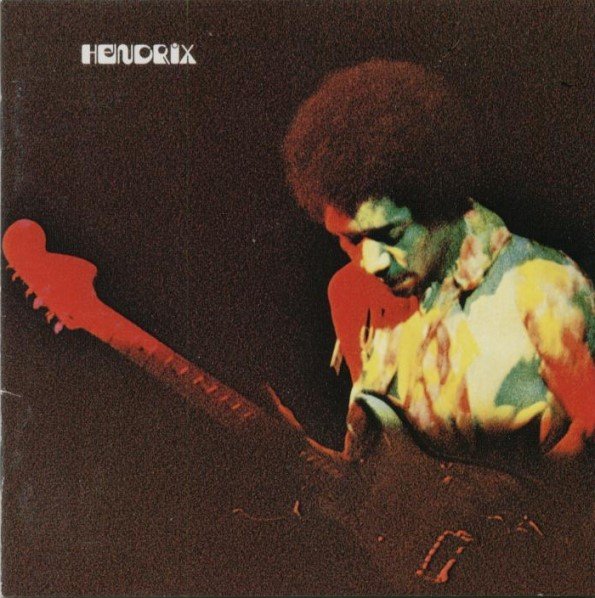

The Cry of Love.
The Cry of Love was the album that Jimi Hendrix was working on, at the time of his death. It was meant to be Jimi’s debut solo album. Sadly, fate intervened and The Cry of Love, was never released during his lifetime.
Jimi had been working on The Cry of Love since The Jimi Hendrix Experience split-up. He’d been working with drummer Mitch Mitchell and bassist Billy Cox on The Cry Of Love. It featured ten tracks which were penned by Jimi. These tracks were recorded at Jimi’s new Electric Lady Studios, in New York.
At Electric Lady, Jimi, Mitch Mitchell and Billy Cox had recorded the ten songs. Around half the songs were completed. The rest of the songs, were in various states of completion. In some cases, the tracks were work in progress. Other tracks required overdubbing. So, when Jimi died, recording engineer Eddie Kramer and Mitch Mitchell got to work.
They were joined by Jimi’s manager, Michael Jeffrey. Together, they got to work on completing Jimi’s first posthumous album, The Cry of Love. Commercial reality dictated that The Cry of Love had to be finished, and finished quickly. After all, interest in Jimi Hendrix’s music was at an all-time high. However, they had to be careful that The Cry of Love wasn’t perceived as a hastily compiled, cash-in.
That was never going to be the case. Everyone involved saw The Cry of Love as a homage to Jimi Hendrix. Time, care and attention was taken compiling The Cry of Love.
Before The Cry of Love, was completed, some overdubbing had to be carried out. Some new parts had to be added. Recording engineer Eddie Kramer and Mitch Mitchell were asked to coproduce The Cry Of Love. They mixed the tracks, albeit with some guidance from Eddie Kramer, Jimi’s manager. He and Mitch Mitchell were given then given the job of deciding the final track listing. Only then, was The Cry Of Love completed and ready for release.
When The Cry Of Love was released on 5th March 1971, less than six months after Jimi’s death, mostly, the reviews were critically acclaimed. A few contrarian reviews disagreed. This included the Rolling Stone magazine. It’s review was merely favourable. However, most critics realised, that if Jimi Hendrix had lived, The Cry Of Love would’ve been a trailblazing debut.
So did record buyers. On the release of The Cry Of Love, it reached number two in Britain. However, The Cry Of Love fared much better in America. It reached number three and was certified platinum. This equated to over one million sales. Six months after his death, Jimi Hendrix was one of the most successful and innovative musicians of his generation. However, many people thought that The Cry Of Love was the last they’d hear from Jimi Hendrix. That wasn’t the case.
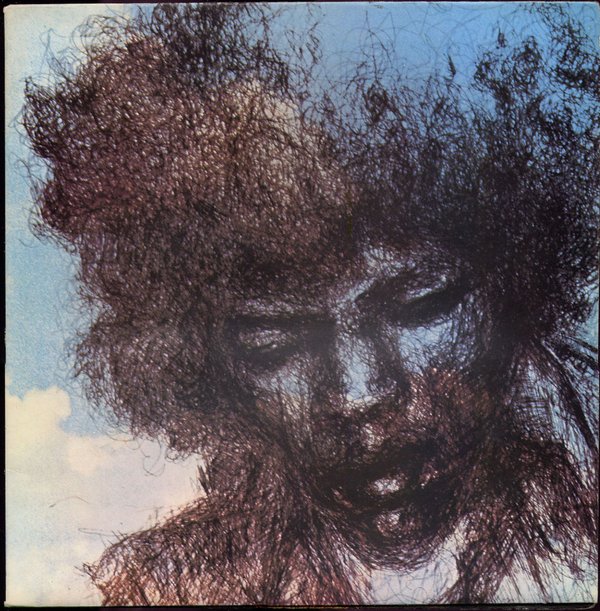
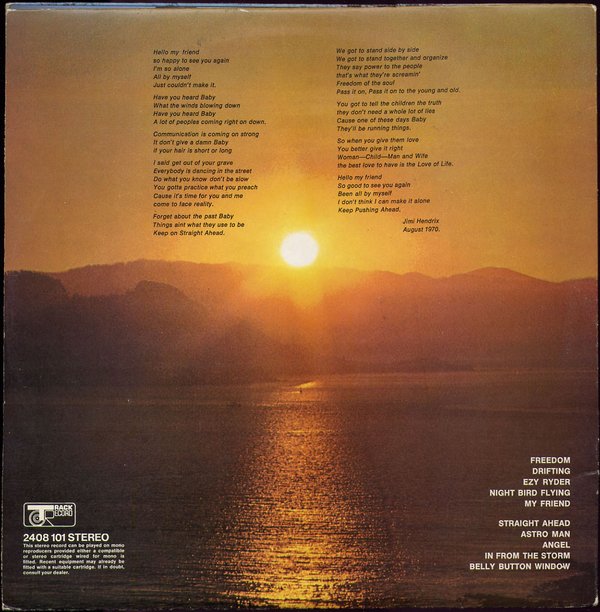
Rainbow Concert.
Seven months after the release of The Cry Of Love, the second posthumous Jimi Hendrix album was released. This was Rainbow Bridge. Just like The Cry Of Love, Rainbow Bridge consisted of recordings made after The Jimi Hendrix Experience split-up.
The eight tracks on Rainbow Concert were recorded during 1969 and 1970. Seven track were written by Jimi. They recorded with various musicians at various studios, including the Record Plant and Electric Lady Studios in New York. Way Over Yonder was recorded at TTG Studios, in Hollywood, Los Angeles. The other track, Hear My Train A Comin’ was recorded live at Berkeley Community Theatre, Berkeley, California. Just like the rest of the tracks, it featured some of Jimi’s musical friends.
This included Noel Redding and Mitch Mitchell of The Jimi Hendrix Experience. They’re joined by the Band Of Gypsys. Drummer Buddy Miles and bassist Billy Cox all feature on Rainbow Concert. So do The Ronettes, who add backing vocals on Rainbow Bridge. It’s one of eight tracks that showcase Jimi Hendrix evolving as a singer, songwriter and guitarist.
That’s also the case with an early version of Star Spangled Banner. It sees Band Of Gypsys’ bassist Billy Cox joins Jimi Hendrix Experience drummer Mitch Mitchell. They play their part of a captivating version of what became a Jimi Hendrix classic. Other future Jimi Hendrix classics include Dolly Dagger and what’s regarded as the definitive version of Hear My Train A Comin.’ These are just three reasons why Rainbow Bridge was such a commercial success.
Rainbow Bridge was released in November 1971. It was well received by critics. They remarked upon how Jimi was maturing as a musician, singer and songwriter on Rainbow Bridge. Sadly, Rainbow Bridge wasn’t as successful as previous albums. It stalled at number sixteen in Britain and number fifteen in the US Billboard 200. However, at least Rainbow Bridge was certified gold in America, where Jimi was still regarded as one of the greatest musicians in the history of rock music. That’s still the case.
Forty-three years after the release of The Cry Of Love and Rainbow Bridge, which were recently rereleased by Sony Music, Jimi Hendrix is still regarded as one of the greatest musicians in the history of modern music. He was a freewheeling, flamboyant, musical maverick, who did things his way. This included playing his guitar with his teeth. When Jimi saw T-Bone Walker do this, he took it as a challenge. Soon, it became part of Jimi’s routine.
In years to come, Jimi played his guitar as if his life depended upon it. Jimi, on form, was like a man possessed. Some nights, Jimi played his guitar behind his back, played it with his teeth and as if trying to exercise some inner demons, set his guitar on fire. All this made Jimi one of the most exiting guitarists ever. There’s no denying that Jimi Hendrix was also a technically brilliant guitarists of his generation. Sadly, he was also fundamentally flawed.
Just like so many musicians who came to the fore in the sixties, Jimi Hendrix had a penchant for the rock ’n’ roll lifestyle. Drink and drugs were ever-present as Jimi lived life in the fast lane. Life was for living, and Jimi was determined to try everything once. He took this as a challenge. As a result, Jimi had a few close calls. However, there’s only saw often you can dice with death. On on the 18th September 1970, Jimi Hendrix died from an accidental overdose of sleeping pills. That day, music lost one of its most talented sons. His musical legacy included three studio albums and one live album.
Since then, Jimi’s discography has grown. Twelve further albums have been released. The first of these albums were The Cry Of Love and Rainbow Bridge, which were recently reissued remastered by Sony Music. They feature Jimi Hendrix as he matured as a singer, songwriter and musicians. Goodness knows what kind of musical colossus he might have become, had he cheated death? He may have continued to have been one of the most innovative and influential musicians of his generation. Sadly, that’s speculation. What we do know, is that Jimi Hendrix leaves behind a rich musical legacy.
This started with the trio of albums Jimi released with The Jimi Hendrix Experience. Are You Experienced, Axis: Bold As Love and Electric Ladyland are stonewall classics that belong in any self-respecting record collection. Band Of Gypsys, Jimi’s first album after the breakup of The Jimi Hendrix Experience, sees him changing direction musically. This continues on The Cry Of Love and Rainbow Bridge, where Jimi Hendrix matures and evolves as a musician. The Cry Of Love and Rainbow Bridge are a tantalising taste of the direction Jimi Hendrix’s music was heading. Who knows what heights Jimi may have scaled, if he’d lived? Sadly, we’ll never know. What we do know, is that Jimi Hendrix left behind one of the richest musical legacies, which showcases a flamboyant, musical maverick at the peak of his powers.


JIMI HENDRIX-THE CRY OF LOVE AND RAINBOW BRIDGE.
LED ZEPPELIN-HOUSES OF THE HOLY.
LED ZEPPELIN-HOUSES OF THE HOLY.
When Led Zeppelin released Houses Of The Holy on 28th March 1973, they were one of the biggest bands in the world. Houses Of The Holy was their fifth album. Their four previous albums had sold over forty million copies. This made Led Zeppelin one of the biggest selling rock bands in the world. However, their reputation preceded them.
Around the world, Led Zeppelin were referred to as one the “unholy trinity of rock.” Their appetite for the rock ’n’ roll lifestyle was legendary. Excess was encouraged within the Led Zeppelin camp. They wore their infamy with pride. Drink, drugs and debauchery was commonplace. So was destruction. The four members of Led Zeppelin weren’t averse to wrecking hotel rooms. Having trashed a room in the Tokyo Hilton, Led Zeppelin were banned from the chain for life. Hotel rooms weren’t just trashed. Television sets out of hotel windows. Another time, John Bonham rode a motorcycle the Continental Hyatt House, which Led Zeppelin nicknamed Riot House. However, when it came time to recording an album, Led Zeppelin put their game head on. That was apparent when recording of Houses Of The Holy began.
Houses Of The Holy was Led Zeppelin’s fifth album. It was also an album that saw Led Zeppelin change direction. Gone was the bluesy sound of earlier albums. Replacing it, were songs that featured synths and orchestral arrangements. Funk, reggae, jazz and even doo wop influenced Houses Of The Holy. That wasn’t the end of the changes.
Producer, Jimmy Page decided to use layering extensively on Houses Of The Holy. This gave the album a much more multi textured sound. These changes in sound were apparent on the eight songs which feature on Houses Of The Holy, which was recently reissued as a remastered double album by Atlantic Records.
On Houses Of The Holy, the Jimmy Page and Robert Plant songwriting partnership cowrote four tracks, The Song Remains The Same, The Rain Song, Over the Hills and Far Away and Dancing Days. They also penned No Quarter with John Paul Jones. The other three tracks, The Crunge, D’yer Mak’er and The Ocean were written by Led Zeppelin. These eight tracks were recorded between January and August 1972.
Recording of Houses Of The Holy began as 1972 dawned. A recording session took place at Headley Grange. That’s where the original recording of No Quarter took place. After that, The Rolling Stones mobile recording studio was hired. Led Zeppelin headed to Mick Jagger’s country estate Stargroves, in Berkshire. That’s where recording sessions took place. By May 1972, Led Zeppelin were based in London. The next round of recording sessions took place at Olympic Studios, London. Then as Led Zeppelin embarked upon a tour of America, further sessions took place Electric Lady Studios, New York. Eventually, Led Zeppelin had more than enough songs for Houses Of The Holy.
So productive were the recording sessions, that Led Zeppelin had actually recorded more songs than they needed. This included Black Country Woman, The Rover and Houses of the Holy. Led Zeppelin decided to keep these songs for future albums, even though Houses of the Holy would’ve made the perfect title-track for Led Zeppelin’s fifth album.
Houses of the Holy was released on 28th March 1973. Originally, Houses of the Holy was meant to be released in January 1973. However, the controversy surrounding the album cover, meant that the release date was postponed.
The inspiration for Houses of the Holy’s album cover was Arthur C. Clarke’s Childhood’s End. Aubrey Powell of Hipgnosis shot a collage of photos at Giant’s Causeway in Northern Ireland. When the cover was completed, the collage, it featured photos two children shot in black and white, but multi-printed to create the effect of eleven people. Time and effort was taken, in an attempt to get the desired image. However, this didn’t quite work out.
Despite Aubrey Powell’s best efforts, it looked like Houses of the Holy’s album cover was going to fall short of what was envisaged. Then a mistake in the postproduction resulted in what many people perceived as a striking album cover. However, not everyone agreed.
Many people were uncomfortable with the image on Houses of the Holy’s album cover. They went as far as to describe the image as sinister. Even Atlantic Records weren’t entirely comfortable with the cover.
Peter Grant, Led Zeppelin’s manager, allowed Atlantic Records to add a wrap-around paper title band to British and American copies of Houses of the Holy. It obscured the image that Atlantic Records were uncomfortable with. Only when the piece of paper wrapped around the sleeve was broken or slid off, could the listener access the record. Despite doing this, Houses Of The Holy was banned in several Southern States of America. This ban lasted a number of years. However, despite this ban, Houses Of The Holy was a huge success.
Before the release of Houses Of The Holy, Led Zeppelin embarked upon a promotional tour. It seemed no expense was spared. Everyone new about Houses Of The Holy and Led Zeppelin’s new sound. Critics who previously, hadn’t been fans of Led Zeppelin, were won over by their new sound. However, as usual, the contrarian Rolling Stone magazine turned its ire on Led Zeppelin.
The supposed panacea of music criticism, Rolling Stone, seemed to have a blinkered attitude to Led Zeppelin. From their debut album, Rolling Stone never gave Led Zeppelin a fair chance. By Houses Of The Holy, it was getting to be a standing joke. Members of Led Zeppelin’s entourage awaited Rolling Stone’s tirade against rock ’n’ roll’s biggest group. They weren’t disappointed. Rolling Stone gave Houses Of The Holy a disappointing review. However, Led Zeppelin had the last laugh.
On its release, Houses Of The Holy reached number one in America, Britain, Canada and Australia. Houses Of The Holy also reached the top ten in Austria, France, Germany, Italy, Japan, Norway and Spain. Despite the success of Houses Of The Holy, the singles didn’t fare as well.
Over The Hills And Far Away was the lead single. It was released in May 1973, reaching number fifty-one in the US Billboard 100 charts. Then in September 1973, D’yer Mak’er reached number twenty in the US Billboard 100 charts. This was disappointing. However, Led Zeppelin were never really a singles band. That became apparent, as gold and platinum discs for Houses Of The Holy came Led Zeppelin’s way.
Houses Of The Holy was certified eleven times platinum in America and three times platinum in Britain. In Argentina, Germany and Spain, Houses Of The Holy was certified gold, while in France, Houses Of The Holy was certified gold twice over. Overall, Houses Of The Holy sold nearly twelve million copies. That was pretty good for an album that Rolling Stone panned. Ironically, Rolling Stone include Houses Of The Holy, which I’ll tell you about, in their list of the 500 best albums of all time.
Little did Led Zeppelin realise it, but Houses Of The Holy opens with a stonewall classic, The Song Remains The Same. Originally, the song was meant to be an instrumental. That’s apparent as the rhythm section of drummer John Bonham and bassist John Paul Jones lock into the tightest of grooves. They’re then joined by Jimmy Page’s frenzied, multi-tracked guitar playing. His fingers flit furiously up and down the fretboard. He unleashes a guitar masterclass, unleashing a series of scorching, searing licks. They’re multi-tracked, ensuring that a wall of sound assails you. Later, Robert Plant’s vocal enters. It’s been slightly speeded up. However, the focus of your attention is Jimmy’s guitar freewheeling masterclass. It encourages the rest of Led Zeppelin to even greater heights, as they embark upon a new era.
The inspiration for The Rain Song was George Harrison. He’d remarked to John Bonham that Led Zeppelin never write ballads. Page and Plant rectify this with a beautiful, wistful, string laden ballad. The arrangement is as far removed from Led Zeppelin as you can get. Their hard rocking rhythm section are restrained. Jimmy Page’s guitar chimes and shimmers. Meanwhile, Robert’s vocal veers between is heartfelt and emotive, to powerful and impassioned. Behind him, swathes of strings provide an orchestral backdrop for what’s an epic ballad from Led Zeppelin.
Over the Hills and Far Away is the third consecutive track from the Page and Plant songwriting partnership. They’d matured into one of the best songwriting partnerships in rock, by 1973. Again, the song has an understated introduction. A six string and twelve string acoustic guitar combine before Robert’s lived-in, needy vocal enters. It takes on an urgency. That’s apparent in the arrangement, which soon, unfolds. When it does, Led Zeppelin are at their hard rocking best. A driving, pounding, thunderous rhythm section and screaming, chugging guitars join Robert. He unleashes a vocal powerhouse, as he struts his way through the track. Later, with forty seconds to go, Led Zeppelin throw a curveball. A distant, eerie harpsichord fills the void left by Led Zeppelin at their hard rocking best.
On The Crunge, Led Zeppelin pay ‘homage’ to the self-styled Godfather of Funk, James Brown. During three minutes, Led Zeppelin combine funk and rock seamlessly. As drummer John Bonham provides the heartbeat, bassist John Paul Jones and guitarist Jimmy Page unleash some funky licks. Jimmy’s guitar chimes as he frantically plucks out some ringing licks. Meanwhile, stabs of synth provide part of the backdrop to Robert Plant’s vocal. He delivers an over the top, vampish vocal, that just like James Brown, sometimes, veers towards parodic.
As Dancing Days unfolds, Led Zeppelin grind their way through the introduction. Before long, Led Zeppelin’s legendary rhythm section cut loose. So does Jimmy’s searing, scorching guitar. Along with the rest of Led Zeppelin, they provide the backdrop for what’s one of Robert’s powerful, swaggering vocals. Again, Led Zeppelin augment their sound with synths. They compliment Led Zeppelin’s traditional, hard rocking sound. However, it’s Robert’s vocal that steals the show. With blistering guitars, synths and the rhythm section for company, Robert Plant delivers his finest vocal on House Of The Holy as he swaggers and struts his way through Dancing Days.
Houses Of The Holy didn’t just feature a detour into funk. On D’yer Mak’er, Led Zeppelin turn their hand to reggae. For Led Zeppelin fans weaned on their traditional fusion of blues and rock, this was a shock to their system. However, by 1973, reggae was growing in popularity, and moving towards the mainstream. D’yer Mak’er is a captivating fusion of reggae and rock. The drums are more rock than reggae, while the bass has a reggae feel. As for the guitars, they veer between rock and reggae, as Jimmy showcases his versatility. The same can be said of Robert. His vocal veers between heartfelt and powerful, on this what’s variously a laid-back, rock-tinged slice of reggae.
No Quarter sees another change of direction from Led Zeppelin. Subtle synths provide a moody backdrop, as the arrangement meanders along. Then a roll of drums and a searing guitar lick rings out. A buzzing bass then gives way to the moody synths and Robert’s heartbroken vocal. As he delivers the lyrics, they take on an air of mystery. They’ve also mystical quality. That’s no surprise. However, they’re more apparent here, than on earlier album. What really captures your attention is the arrangement. It’s loose and veers between understated to mysterious and dramatic. It flows and meanders along, and is always intense and truly captivating. Quite simply, it’s a seven minute musical tour de force from Led Zeppelin.
Closing Houses Of The Holy is The Ocean. It sees Led Zeppelin return to their traditional hard rocking sound. From the moment the band are counted in, they’re at their tightest, ready to explode into action. There’s No Quarter given. The rhythm section drive the arrangement along. John’s mesmeric drums provide the backdrop for Jimmy chugging, screaming licks and Robert’s swaggering vocal. It’s higher than previous tracks, as if it has been pitched up very slightly. Robert unleashes a powerhouse of a vocal. Then later, when his vocal drops out, the track takes a detour via jazz. The bass walks the arrangement along and a crystalline guitar is panned right. Then doo wop harmonies added. Even Robert is impressed. He can’t resist adding: “it’s so good.” He’s so right, as Led Zeppelin close Houses Of The Holy on a genre-melting high.
However, The Ocean is only the end of disc one of Atlantic Records’ recently reissued version of Houses Of The Holy. It’s a double album. Disc two features what’s best described as an alternative version of Houses Of The Holy.
There’s a variety of versions on this alternative version of Houses Of The Holy. This includes rough mixes of The Crunge, Dancing Days and No Quarter. The alternative mix of The Rain Song is one without the piano. This shows another side to the song. A real find for Led Zeppelin fans will be Guitar Mix Backing Track of Over The Hills And Far Away. Along with two other tracks, it’s among the highlights of this alternative version of Houses Of The Holy.
This includes the working mix of The Ocean, which bookends the alternative version of Houses Of The Holy perfectly. Six songs earlier, it opens with the Guitar Overdub Reference Mix of The Song Remains The Same. It’s gets the album of to a blistering start, and is, without doubt, another of the highlights of the alternative version of Houses Of The Holy. For fans of Led Zeppelin, these tracks make Atlantic Records’ recently released remastered version of Houses Of The Holy, a must have, for a variety of reasons.
For their fifth album, Houses Of The Holy, Led Zeppelin decided to change direction. Gone was the bluesy influence of their earlier albums. Replacing it, were songs that featured synths and orchestral arrangements. Funk, reggae, jazz and even doo wop influenced Houses Of The Holy. This made Houses Of The Holy a much more eclectic and album. However, that wasn’t the end of the changes.
Given production techniques had evolved since Led Zeppelin released their debut album in 1969, it’s not surprising Jimmy Page decided to make use of the new techniques. This included layering. It was used extensively on Houses Of The Holy. Overdubbing was also used extensively on Houses Of The Holy. This was very much the order of the day. That’s apparent throughout Houses Of The Holy, but is apparent on the opening track The Song Remains The Same. Jimmy Page overdubbed a twelve-string guitar, ensuring that a glorious wall of sound assails you.
This gave the album a much more multi textured sound. These changes in sound were apparent on the eight songs which feature on Houses Of The Holy, which feature Led Zeppelin evolving as a band. They were gradually moving away from their blues rock roots, becoming a much more eclectic band. Everything from blues, doo-wop, folk, funk, jazz, reggae and rock can be heard on Houses Of The Holy, which saw Led Zeppelin sell another eleven million albums. Despite this, they couldn’t please some critics.
Although Houses Of The Holy saw Led Zeppelin mature and evolved, still some critics weren’t convinced. As usual, Rolling Stone magazine turned its guns on Led Zeppelin. For Led Zeppelin, this had been frustrating. However, by Houses Of The Holy, they realised that regardless of how good an album they released, Rolling Stone would never be won over.
In Houses Of The Holy’s case, it was another classic album from Led Zeppelin. It sold over eleven million copies. That’s not surprising. By the time Led Zeppelin released House Of The Holy, they were one of the biggest bands in the world. They’d fans across the globe, who hungrily awaited each release. This was the case with House Of The Holy, which would later, receive classic status.
In the intervening forty-one years, critics have reappraised Houses Of The Holy. It’s now perceived as a stonewall classic, where Led Zeppelin become musical shape shifters. They were no longer just a hard rocking group. Their music was much more eclectic and all encompassing. Even the non-believers, like Rolling Stone, the so called panacea of music criticism, changed their about House Of The Holy. They included Led Zeppelin’s Houses Of The Holy in its list of the 500 best albums of all time. Its inclusion is deserving, as Led Zeplelin mature, evolve and come of age on House Of The Holy, which was a career defining album.
LED ZEPPELIN-HOUSES OF THE HOLY.
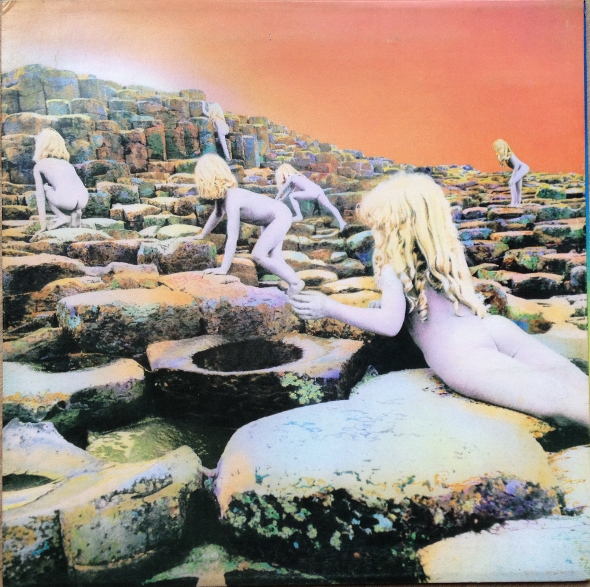
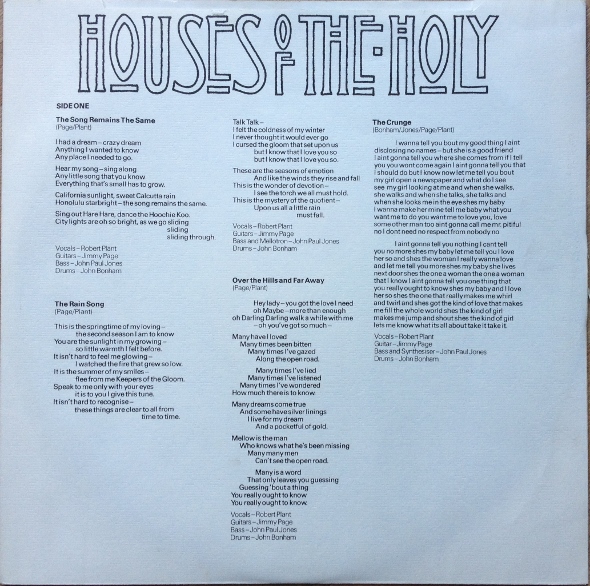
BUILDING INSTRUMENT-BUILDING INSTRUMENT.
BUILDING INSTRUMENT-BUILDING INSTRUMENT.
Although Building Instrument formed in 2008, it’s taken them six years to release their eponymous debut album. Building Instrument, which was recently released on Hubro Music was recorded over a period of several years. During that time, Building Instrument’s trademark sound evolved.
Originally, when Building Instrument formed, they decided to make electronic music. That was their raison d’être…briefly. Before long, Building Instrument, turned their back on electronic music. They settled on a sound that was acoustic, and allowed Building Instrument to improvise and innovate. It’s a sound that’s best described as genre defying and uniquely Building Instrument. No wonder.
Much of Building Instrument’s music is improvised. Building Instrument, you see, aren’t averse to throwing a curveball. One minute the music is understated, then the next it’s playful. The next track can be totally different, with Building Instrument losing their earlier self restraint, becoming bold as they kick out the jams. As a result, Building Instrument’s music is always innovative, inventive and interesting. That’s not all.
Building Instrument take you on a magical, musical mystery tour on their eponymous debut album. During Building Instrument’s seven tracks, glorious rhythms assail you. Other times, the music is melodic, before becoming adventurous and innovative, as Building Instrument improvise. Genres melt into one, on music that emotive, dramatic, ethereal and compelling. That’s not surprising, given the Building Instrument’s lineup.
Adventurous, bold, innovative and talented describes the three members of Building Instrument. Mari Kvien Brunvoll is the vocalist and takes charge of an eclectic and interesting selection of instruments. This includes the zither, percussion, kazoo and sampler. Øyvind Hegg-Lunde plays drums and percussion. He plays in two other bands that has recently released albums with the Big Almost and Crab is Crap, which features Ståle Storløkken. The final member of Building Instrument is Åsmund Weltzien, who takes charge of synths, electronics and melodica. Åsmund Weltzien plays with Thea Næss. The three members of Building Instrument recorded their eponymous debut album over a period of years, whilst juggling their other musical commitments.
In vocalist Mari Kvien Brunvoll’s case, this includes releasing two albums. She released her eponymous debut album in 2012. It was released on the Jazzland label, and was nominated for a Spellemannspris, which is a Norwegian Grammy, in the open category. So was Mari’s collaboration with Stein Urheim.
Mari’s next album, was Daydream Twin, a collaboration with Stein Urheim. It was released on 2013, on Hubro Music. Just like her debut album, Daydream Twin was released to widespread critical acclaim. Daydream Twin was also nominated for a Spellemannspris, in the open category. Meanwhile, Mari was being hailed as one of the rising stars of the Nordic music scene. So were Building Instrument.
Whilst Building Instrument had yet to release an album, they were receiving rave reviews. In the increasingly vibrant Norwegian music scene, Building Instrument were establishing a name for a an adventurous, inventive and innovative group. They’d forged and honed their own style over the last few years. During this period, they’d worked away at their eponymous debut album.
On Building Instrument. Mari Kvien Brunvoll sings the vocals in Norwegian, using the local Molde dialect. She also plays zither, percussion, kazoo and sampler. Øyvind Hegg-Lunde plays drums and percussion and Åsmund Weltzien synths, electronics and melodica. This disparate and eclectic selection of instruments played their part in Building Instrument’s long awaited eponymous debut album.
Eventually, Building Instrument’s eponymous debut album was ready to be released on Hubro Music. It featured seven songs which the band had written. Mari, Øyvind and Åsmun had worked hard on Building Instrument. Over a period of years, Building Instrument had honed what was their own unique sound. It’s best described as genre defying, and is showcased on Building Instrument, their eponymous debut album, which I’ll tell you about.
Historia opens Building Instrument. The arrangement bursts into life, with genres melting into one. Avant-garde, electronica, folk, jazz and rock combine. As a melodica plays, drums provide the heartbeat. Scrabbling percussion gallop along, giving way to the tender, ethereal beauty of Mari’s scatted vocal. When her vocal drops out, a disparate selection of instruments enter. There’s a zither, melodica and percussion. Then when Mari’s vocal returns, the zither and melodica accompany her tender scat. They all play their part in this beautiful, ethereal track.
Washes of synths and bells give Alt E Bra a dreamy, ambient sound. Mari adds cooing, ethereal vocals. Her vocal has a similar dreamy quality. In the distance, a drum beats. It pulsates, while Building Instrument become like a modern day Penguin Cafe Orchestra. An eclectic selection of instruments ensure the arrangement floats along. Sometimes, there’s a nod to sixties French film soundtracks. Later, Mari’s vocal grows in power, cascading above the captivating, dreamy, genre-melting arrangement.
Kanskje has an understated sound. Just a subtle drum and melodica accompany Mari’s tender, whispery vocal. Space is left within the cinematic arrangement, allowing it to breath. It meanders hypnotically along. Gradually however, the drama builds and wistful, thoughtful, cinematic sound unfolds. This takes over seven minutes, where Building Instrument provide the soundtrack to a film that’s yet to be made.
Bli Med is another lengthy track, lasting nearly eight minutes. This is no bad thing. It allows Building Instrument to stretch their legs, and take the music in unexpected directions. Drums drive the arrangement along, before washes of organ add an atmospheric hue. They’re the perfect accompaniment to Mari’s vocal. It’s delivered with a mixture of urgency and emotion. Her vocal rises and fall, reverberating into the distance. As she scats, drums and an organ play. Mari also adds subtle harmonies. They flit in and out, making a brief and welcome appearance. Dramatic, ethereal, haunting and moody, it’s a captivating soundscape which showcases Building Instrument at their inventive best.
Washes of jagged, ethereal synths accompany Mari on Klokka Sju. She delivers a heartfelt, urgent vocal. It soars above the arrangement as Mari improvises. By then, a myriad of percussion and drums provide the backdrop to Mari’s vocal. Her urgent, scatted vocal takes the song on a series of twists and turns. The rest of Building Instrument take their lead from Mari, improvising. A bobbing Hammond organ and rhythm section combine as Mari delivers a vocal that’s reminiscent of a jazz-tinged Kate Bush. She embarks upon a dramatic, scatted vamp accompanied by an orchestral wash of innovative music.
Thoughtfully, and pensively, washes of wistful music play as Mellomtida decides to share its beauty and secrets. Each note is played with the utmost care. However, there’s an inherent sadness and beauty to the music. That’s not all. Pensive, thoughtful and reflective also describes Mellomtida. It’s all these things and more.
Språk closes the long awaited eponymous debut from Building Instrument. Drums pound ominously and mesmerically. Meanwhile, a sprinkling of percussion provides a subtle accompaniment. Soon, a zither plays, providing another contrast. It adds a sense of melancholia. Then out of nowhere, the arrangement changes, becoming upbeat, joyous and melodic. Hooks haven’t been spared, as Building Instrument sweep you along. The finishing touch is Mari’s ethereal, scatted vocal. It sits above the arrangement as the rest of Building Instrument drive the arrangement along, ensuring Building Instrument ends on a glorious high.
Building Instrument, Building Instrument’s eponymous debut album, which was recently released on Hubro Music has been well worth the wait. It’s taken several years to record. No wonder. During that period, Building Instrument have been finding and honing their sound. This takes time, time and patience. However, Building Instrument’s patience has been rewarded.
During the last six years, Building Instrument’s music has evolved and taken shape. They’ve come a long way from their early days, when they decided to make electronic music. That was their raison d’être…briefly. Then, Building Instrument, turned their back on electronic music. They settled on a sound that was acoustic, and allowed Building Instrument to improvise and innovate. It’s a sound that’s best described as genre defying and uniquely Building Instrument. No wonder.
Much of Building Instrument’s music is improvised. Building Instrument, you see, aren’t averse to throwing a curveball. One minute the music is understated, then the next it’s playful. The next track can be totally different, with Building Instrument losing their earlier self restraint, becoming bold as they kick loose. As a result, Building Instrument’s music is always innovative, inventive and interesting.
On Building Instrument, Building Instrument’s sound is best described as genre-melting. It defies description. Everything from ambient, avant-garde, electronica, experimental, folk, free jazz, pop, and rock. There’s even a nod to sixties soundtracks and jazz. At the heart of Building Instrument’s sound, is the ethereal beauty of Mari Kvien Brunvoll’s vocal. However, Building Instrument isn’t a one woman band.
Far from it. Øyvind Hegg-Lunde and Åsmund Weltzien play important parts in Building Instrument’s sound and success. This sound has evolved,and taken shape over the last six years. During that period, Building Instrument’s reputation has been in the ascendancy. Great things have been forecast of Building Instrument. Now Building Instrument’s potential has been fulfilled on their eponymous debut album which has been a long time coming.
At last, the wait is over. Hubro Music recently released Building Instrument’s eponymous debut album. They’ve fulfilled their potential. Their eponymous debut album was released to widespread critical acclaim. That’s not all. Building Instrument is best described as a beautiful, cinematic, ethereal, innovative and inventive album of genre-melting music, where Building Instrument push musical boundaries to their limits, and sometimes, beyond.
BUILDING INSTRUMENT-BUILDING INSTRUMENT.
THE BLUE NILE-PEACE AT LAST.
THE BLUE NILE-PEACE AT LAST.
The Blue Nile were no ordinary band. They did things their way. Enigmatic, reluctant and contrarian are words that best of describe the Blue Nile, whose third album Peace At Last will belatedly be released on vinyl as a double album. The remastered vinyl version of Peace At Last will be released on the 14 December 2014 via their website, nine months after the CD version. This reissue has been a long time coming. However, it’s been well worth the wait.
Originally, Peace At Last was released in June 1996, seven years after the release of their critically acclaimed sophomore album, Hats. However, a further eighteen years passed, before The Blue Nile released a remastered CD version of Peace At Last. That’s not surprising.
Quite simply, The Blue Nile are unlike other bands. They do things their way, or not all. There’s no sense of urgency in the world of The Blue Nile. Things move slowly in the world of The Blue Nile. So it’s no surprise that it’s taken eighteen long years for Peace At Last to be rereleased. After all, there was a gap of seven years between The Blue Nile’s sophomore album Hats and 1996s Peace At Last. Looking back, with the benefit of hindsight, that’s not surprising.
It’s no exaggeration to say that The Blue Nile were the complete opposite of most bands. Describing the Blue Nile as publicity shy, is an understatement. Indeed, since Paul Buchanan, Robert Bell and Paul Joseph Moore formed the Blue Nile, they’ve been one of the most low-profile bands in musical history. It seems that when they formed thirty-one years ago, The Blue Nile ticked the “no publicity” box. This has proved a double-edged sword, and resulted in the Blue Nile becoming one of the most enigmatic groups ever. This would be apparent through The Blue Nile’s career, which began back in 1981, in Glasgow, Scotland’s musical capital.
The Blue Nile were formed in 1981, when two friends Paul Buchanan and Robert Bell, met Paul Joseph Moore. They all had one thing in common, they were graduates of Glasgow University. Paul and Robert had both been in a band before, Night By Night. However, they type of music Night By Night performed was not deemed commercial enough, and they were unable to gain a recording contract. This lead to the formation of The Blue Nile
Once The Blue Nile were formed, they set up their own record label Peppermint Records. It was on Peppermint Records that The Blue Nile released their debut single, I Love This Life. This single was then picked up and re-released on the RSO label. Unfortunately for The Blue Nile RSO became part of the Polygram label and I Love This Life disappeared without trace. Despite this setback, The Blue Nile kept writing and recording music.
Following the merger of RSO with Polygram, The Blue Nile continued to hone their sound. They wrote and recorded songs. Some of that material would later be found on A Walk Across the Rooftops. Then fate intervened and The Blue Nile met the man some people refer to as the fourth member of the band, recording engineer Calum Malcolm.
When Callum heard The Blue Nile’s music, he alerted Linn Electronics. This was to prove a fortuitous break for the band. Linn gave The Blue Nile money to record a song that they could use to demonstrate the quality of Linn’s top-class stereo products. However, when Linn heard the track they were so pleased that decided to set up their own record label to release A Walk Across the Rooftops, The Blue Nile’s debut album.
Although the formation of Linn allowed the band to finally release their debut album A Walk Across the Rooftops, Paul later speculated whether Linn was the right label for The Blue Nile? Paul said that he felt that Linn did not operate like a record label. However, he conceded that, during that period, The Blue Nile were not like a band. So, essentially, this was a match made in heaven for the release of A Walk Across the Rooftops.
On the release of A Walk Across the Rooftops, it was released to critical acclaim. Critics described the album as a minor classic. A Walk Across the Rooftops was described as ethereal, evocative, soulful and soul-baring. It also featured the vocals of troubled troubadour Paul Buchanan. Despite the critical acclaim A Walk Across the Rooftops enjoyed, it wasn’t a commercial success, reaching just number eight in the UK. However, since the A Walk Across the Rooftops has been recognised as a classic album. So has the followup Hats.
Unlike most bands, The Blue Nile weren’t in any rush to release their sophomore album Hats. There was a five year gap between A Walk Across the Rooftops and Hats. It was worth the wait. The Blue Nile had done it again. Hats was a classic.
Featuring seven tracks, written by Paul Buchanan, Glasgow’s answer to Frank Sinatra He’s a tortured troubadour, whose voice sounds as if he’s lived a thousand lives. Producing Hats was a group effort, with Paul, Robert and P.J. taking charge of production duties. Guiding them, was Callum Malcolm. On the release of Hats, British and American audiences proved more discerning and appreciative of the Blue Nile’s sophomore album Hats.
On the release of Hats in the UK in 1989, it was critically acclaimed and commercial success, reaching number twelve in the UK. Then when it was released in America in 1990, audiences seemed to “get” Hats. Not only did it reach number 108 in the US Billboard 200 Charts, but The Downtown Lights reached number ten in the US Modern Rock Tracks charts. While this was a small crumb of comfort for the Blue Nile, in the UK, they remained a well kept secret.
Since the release of Hats, like their debut album A Walk Across the Rooftops it’s become a minor classic. With The Blue Nile making a breakthrough in America, most bands would’ve been keen to build on this and released another album before long. Not The Blue Nile.
Seven long years passed, where Blue Nile fans wondered what had become of Glasgow’s most enigmatic trio. However, they’d been busy. After Hats found its way onto American radio stations, The Blue Nile, who previously, had been one of music’s best kept secrets, were heard by a number of prestigious musicians. Among them were Robbie Robertson and Annie Lennox, Michael McDonald. After a decade struggling to get their music heard, The Blue Nile were big news. During this period, America would become like a second home to The Blue Nile, especially Paul.
Paul took to life in America, and in 1991, decided to make it his home. This just so happened to coincide with Paul’s relationship with actress Rosanna Arquette between 1991 and 1993. Hollywood starlets and Sunset Boulevard was a long way from Glasgow’s West End. In the midst of Paul’s relationship, disaster struck for The Blue Nile, they were dropped by their label.
Linn Records and Virgin decided to drop The Blue Nile. For some groups this would’ve been a disaster. Not The Blue Nile.
They signed to Warner Bros. While this sounded like the ideal solution for The Blue Nile, Paul made the deal without telling P.J and Robert. He later explained that “none of the others were in town at the time.” With a new contract signed, The Blue Nile began thinking about their third album.
So the band started looking for the perfect location to record their third album. They travelled across Europe looking for the right location. This location had to be private and suit their portable recording studio. Cities were suggested, considered and rejected. Among them, were Amsterdam, Copenhagen and Venice. Being The Blue Nile, things were never simple. Eventually, after much contemplation The Blue Nile ended up recording what became Peace At Last in three locations, Paris, Dublin and Los Angeles. For the first time, The Blue Nile recorded an album outside of their native Scotland.
For what became Peace At Last, Paul wrote nine tracks and cowrote God Bless You Kid with Robert Bell. When recording began, Paul played guitar and synths. Robert played bass and synths, while P.J. played keyboards and synths. Joining The Blue Nile were drummer Nigel Thomas and a gospel choir consisting of Eddie Tate and Friends. They featured on Happiness. Craig Armstrong took charge of the strings on Family Life. Peace At Last was produced by The Blue Nile, with Callum Malcolm engineering the sessions. Once Peace At Last was completed, it was released in June 1996.
On the release of Peace At Last, in June 1996, it reached just number thirteen and sold poorly. For The Blue Nile this was disappointing, given it was their major label debut. Worse was to come when the lead single Happiness failed to chart. Why was this though?
Critics remarked upon the change of sound on Peace At Last. It had a much more understated, restrained sound. Acoustic guitars and piano play important parts. The Blue Nile’s beloved synths sound like synths. Occasionally, The Blue Nile use real strings. There’s even a gospel choir on Happiness. Gone was the sound of A Walk Across the Rooftops and Hats. Peace At Last showed a different side to The Blue Nile and their music, one that divided the opinion of critics and fans. Paul, Robert and P.J. were back, but it was a different sound. One constant was Paul’s worldweary vocal. He was still the tortured soul, who wore his heart on his sleeve on Peace At Last, which I’ll tell you about.
Opening Peace At Last is Happiness, the lead single. Just a sweeping synth and acoustic guitar combine, before Paul counts himself in. After seven years, the troubled troubadour is back, laying bare his soul. As he plays his trusty acoustic guitar, you can hear him change chords. His voice his just the same. It’s world weary, one that has lived a life. However there is one change. He sounds content. That’s apparent from the lyrics. Domestically and personally, Paul has found Peace At Last. Later, the minimalist sound changes. Joining the synths, bass, keyboards and chirping guitar are a gospel choir. They transform the track. Their short performance is joyous and uplifting After that Paul forever the optimist, ponders whether the happiness will last. Quite simply, a beautiful, melancholy song.
Tomorrow Morning starts in a similar vein to Happiness. Just a briskly strummed acoustic guitar and drums accompany Paul’s vocal. Pensive becomes hopeful, as he sings: “ we could be together tomorrow morning.” Synths replicate strings, as thoughtful keyboards and acoustic guitars accompany an insecure Paul. It’s that time of the night we’ve all experienced. Lying there, unable to sleep, we wonder what tomorrow brings. That’s Paul, His emotions go from total insecurity to euphoria and happiness in the space of half a verse. The lyrics are some of the best on the album. They allow the listener to hear the range on emotions Paul experiences. With a brisk, minimalist arrangement, where the acoustic guitar, piano and synths disguised as strings combine, the result is a thoughtful, stunning soul-searching song many people will be able to empathise with.
As Sentimental Man unfolds just an acoustic guitar and drums combine, creating a moody and pensive atmosphere. Unlike the two previous albums, there’s no drum machines. Instead, Nigel’s drums, Robert’s bass and Paul’s guitar power the track along. They also add to the funk factor. Paul is in a thoughtful mood, and sings that it’s “not about money, and all about love.” His contentment shines through on this song. He is truly a man at peace with world. The sound on this track is bigger and fuller, than the previous two tracks. This is helped by the arrangement. The bass is panned hard left and the guitars hard right. Synths and Paul’s vocal fill the rest of the arrangement. As the track progresses, the sound grows, peaking towards the end. Guitars, synths and drums dominate the track, while Paul’s vocal is loud and strong. He shrieks and whoops, something unheard of before. A transformation in sound, but one thing remains the same…the quality.
Drums crack and Paul strums his guitar and delivers a needy, sincere vocal on Love Come Down. It’s as if he’s realised he’s in love and wants his partner to know it. With chirping guitars, synths and drums for company, Paul delivers a vocal tour de force. It’s one of his best vocals, growing in power, passion and joy. Drums are loud and sit at the front of the mix, while the guitars are a constant and welcome accompaniment. However, what makes the song is Paul’s vocal. It’s a dramatic and passionate reading of the intelligent and thoughtful lyrics.
From the opening bars of Body and Soul, it’s obvious that this is one of the best songs on Peace At Last. The track has a familiar theme, acoustic guitar and vocal start the song. After that, the track builds, and opens out into one of the most beautiful and heartfelt songs on the album. Strings are used to augment the sound, they are understated, sit at the back of the mix, sweeping in and out of the track. The acoustic guitar is played loudly, with confidence, accompanying Paul’s soulful rendition of the lyrics. Speaking of the lyrics, they’re an evocative paean. How we feel when in love, and are an example of our feelings and hopes for the future when in love. Without are some of the best lyrics on Peace At Last.
Holy Love has a totally different sound and feel. In many ways, it owes much to the sound on previous Blue Nile albums. Just like the rest of Peace Of Last, the remastering makes the song come alive. New parts of the track shine through. In many ways, it owes much to the sound on previous Blue Nile album. Backing vocalists sing one note, synths and drums sound dark, almost dull. Synths squelch, drums have a retro sound and feel, and even Paul’s vocal style has changed. As the song progresses, you find yourself wondering what direction it’s heading. Lyrics are sparse, the vocal has an experimental sound and feel, with Paul having to almost improvise. Ethereal synths, chiming guitars, bursts of drum machines and Paul’s scatted vocal become one, on a track where Blue Nile’s past and present combine.
The Blue Nile return to a familiar theme on Family Man, contentment, contentment in your personal life. Family Man is a gentle song, one with similarities to Easter Parade on A Walk Across the Rooftops. It’s the sound and feel that make me draw this comparison. The track has a minimal sound, and starts with piano, which features heavily throughout the song. Later in the track, synths are transformed to sound like a string section. They add depth and feeling to the track. Paul’s voice is perfectly suited to deliver the heartfelt lyrics on this beautiful track.
After the minimal sounding last track, the sound changes dramatically on War Is Love. The sound is fuller, with a moody, dramatic sound. War Is Love starts with those magical strings, via the synths, drums are loud, slow and crisp. Quickly, the sounds builds, Buchanan’s voice sounds moody, perfect to deliver the lyrics, which are about the breakdown of a relationship. His voice fluctuates, getting the message over about a turbulent, troubled relationship. In contrast to the darkness, the strings sit behind his vocal, producing light to Paul’s darkness. A heartbreakingly sad song, delivered sincerely by Paul. So realistic is Paul’s cathartic outpouring of hurt and heartbreak, that it sounds as if he’s lived, loved and survived to tell the tale.
Drums and strings open God Bless You Kid, giving it a lush sound. Buchanan’s mood and vocal seem happier. The arrangement sweeps along, gradually developing. Mostly drums, strings and synths accompany Paul as the song takes on a cinematic quality. Later, a guitar can be heard in the background. As for the lyrics , they’re enigmatic, almost surreal. Especially, when Paul sings: “I never grew up, I never grew down” and “it’s like Memphis after Elvis.” Here we hear a very different side of Blue Nile, one that we never saw on A Walk Across the Rooftop or Hats. Like much of this album, it has a gentle, mellow and understated sound, quite different from their previous sound.
Peace At Last closes with Soon, another beautiful, gentle and mellow song. It starts slowly, keyboards playing, Paul sings. This is another love song. One about how can love coming soon, when we least expect it to. It can happen at given time, in even the most mundane situation. As you would expect from Blue Nile’s lyrics their clever, well constructed and the narrative is strong. You can close your eyes and imagine the scene being played out, and the characters involved. The track meanders, develops through time, building up slowly, until a great track evolves. One that Paul sings really well, behind a backdrop of sweeping strings, spacious plodding drums and percussion. It’s a lovely, soothing track, truly a thing of beauty, and the perfect way to end Peace At Last.
Although that’s the end of the remastered version of Peace At Last, there’s still disc two. It features six tracks. This includes the Lauren Canyon Mix of Soon, a New Vocal Mix of War Is Love and the Picture Mix of Holy. Then there’s Turn Yourself Around and an unreleased demo A Certain Kind Of Angel. Both of these tracks were penned by Paul and Robert Bell, who prove a potent songwriting partnership. The final track is the melancholy Paul Buchanan penned There Was A Girl. It’s a heartbreakingly beautiful song, with Paul’s lived-in, weary vocal bringing the lyrics to life. This reminds you of how good a group The Blue Nile are. Sadly, they only released four albums.
Of the quartet of albums The Blue Nile recorded, Peace At Last is their most underrated album. Peace At Last divided critics and fans. This new sound was very different from A Walk Across The Rooftops and Hats. That was then, this was now. Seven years had passed since Hats. If The Blue Nile had released an album similar to Hats, they’d have been accused of standing still. That’s one thing The Blue Nile never did.
Far from it. Constantly, The Blue Nile were on a mission to create innovative and influential music. This they succeeded in doing. From the opening bars of Happiness, right through to the closing notes of Soon, The Blue Nile create timeless, ethereal music. Here, was a very different group the one that recorded Hats.
For much of the seven years, The Blue Nile had lived separate lives. P.J. and Robert lived happily in the West End of Glasgow. Paul however, led a very different life. Based in Los Angeles, he dates Hollywood starlets and spent time on Sunset Boulevard. This was a long way from Ashton Lane, in Glasgow’s West End. However, The Blue Nile reconvened for the recording of Peace At Last. Lady Luck had smiled on them.
Having survived being dropped by Linn and Virgin, The Blue Nile signed to Warner Bros. Sadly, it was a one album deal. Following the commercial failure of Peace At Last, The Blue Nile were dropped. This wasn’t their fault. No. They’d recorded a minor classic at the wrong time.
Released in 1996, at the height of the vastly overrated Britpop boom, Peace At Last was the wrong album at the wrong time. Peace At Last took several years to record. By the 10th June 1996, when Peace At Last was released, music had changed. Britpop was King. Kinks and Beatles tribute bands were topping the charts. There was, it seems, no room for The Blue Nile, with Peace At Last only reaching number thirteen in the UK. It should’ve been a bigger commercial success.
During Peace At Last, The Blue Nile capture the listener’s attention with music that’s variously lush, atmospheric, beautiful, captivating, ethereal and lush. The Blue Nile draws the listener in, holding their attention. Before long, the listener has fallen in love. They fall in love with music that’s hauntingly beautiful, emotive, dramatic and pensive. Much of this is thanks to ten peerless vocal performances courtesy of Glasgow’s very own Frank Sinatra, Paul Buchanan. He plays the role of the troubled troubadour, to a tee. His worldweary, emotive, heartfelt and impassioned vocal sounds as if it’s lived the lyrics he’s singing about. Lived them not just once, but several times over. Paul’s vocal adds soulfulness to an album where The Blue Nile reinvent their music. The result is music that’s innovative, influential, ethereal and timeless.
With songs about love, love lost, betrayal, heartbreak, growing up and growling old, Peace At Last was a grown up album. It had a much more understated, restrained sound. Acoustic guitars and piano play important parts. The Blue Nile’s beloved synths sound like synths. Occasionally, The Blue Nile use real strings. There’s even a gospel choir on Happiness. Gone was the sound of A Walk Across the Rooftops and Hats. Peace At Last showed a different side to The Blue Nile and their music, one that divided the opinion of critics and fans. Paul, Robert and P.J. were back, but it was a different sound. One constant was Paul’s worldweary vocal. He was still the tortured troubadour, who wore his heart on his sleeve on A Walk Across The Rooftops and Hats. Sadly this new side of The Blue Nile’s music wasn’t as popular as their two previous albums A Walk Across the Rooftops and Hats. However, Peace At Last has aged well.
Whilst much is made of newly remastered albums, the remastered version of Peace At Last is truly stunning. Previously unheard subtleties, secrets and nuances. Layers, textures and hidden depths can be heard. This was the case with the remeasured versions of A Walk Across The Rooftops and Hats. Now it’s possible to hear The Blue Nile’s underrated classic Peace At Last in all its glories. This remastered vinyl version, which will be rereleased via The Blue Nile’s website on 14th December 2014, is worth every penny. It’s not unlike an old picture that after years covered in grime, is cleaned suddenly, a new picture emerges. That’s what remastering process has done to Peace At Last. Never again, will you reach for your original copy of Peace At Last, as the remastered version breathes new life into Peace At Last, which was The Blue Nile’s penultimate album.
Eight years later in 2004, The Blue Nile called time on their recording career, when they released High. That was their swan-song. Never again, would Paul, P.J. and Robert record another album. Their back-catalogue may only contain four albums, but it’s a rich musical legacy. The Blue Nile are one of the most innovative and influential groups in Scottish musical history. Similarly, their first two albums A Walk Across the Rooftops and Hats are two of the greatest albums released by a Scottish band. Their underrated third album, Peace At Last, is a minor classic, which shows another side to The Blue Nile and their music.
THE BLUE NILE-PEACE AT LAST.
THE LAST SKEPTIK-I DON’T EVEN LIKE YOU.
THE LAST SKEPTIK-I DON’T EVEN LIKE YOU.
Longevity. That’s what every artist hopes to enjoy. However, longevity doesn’t come easy. Constantly, an artist has to revaluate and reinvent them self. Their music has to evolve, in an attempt to stay relevant. The Last Skeptik realises that, and in 2014, celebrated his tenth anniversary with the release of his new E.P. I Don’t Even Like You on BBE Music. This is the latest step on a musical journey that began back in 2004.
It was back in 2004 that The Last Skeptik released his debut single Wordsearch on the Netgroove label. With The Last Skeptik laying down the beats, Wordsearch featured Squared with cuts by Jazz T and Dr. Zygote. Later in 2004, as Skeptik, he contributed a rap to a compilation Deprogrammed Productions Presents…”Friends Of The Family.” Little did The Last Skeptik realise it, but this was the start of what would be a successful career. This was a long way from when a young Last Skeptik skipped school to make his own beats. Throughout his nine year career The Last Skeptik has collaborated with many artists.
During 2005, The Last Skeptik was involved in two collaborations. There was his collaboration with Conflix on the Think Twice E.P, whichI was released on the Filthy Habits label. His other collaboration was Kashmere, featuring The Last Skeptik and Diversion Tactics’ E.P. This six-track E.P. was released on Boot Records. Two years later, The Last Skeptik would collaborate on what was his debut album.
Over the next two years, The Last Skeptik wasn’t just establishing a reputation as a talented producer. He was also the go-to-guy for anyone looking for a DJ, MC and remixer. Then in 2007, The Last Skeptik collaborated with Verb T on The Broken Window.
While The Broken Window was Verb T’s fourth album, it was The Last Skeptik’s debut album. Released on the Silent Soundz label, The Broken Window was well received. So too was Satisfied, a single taken from The Broken Window. With The Last Skeptik’s reputation and fan-base growing, things were looking good for The Last Skeptik.
Between 2008 and 2010, The Last Skeptik continued working as a songwriter, producer, remixer and DJ. During this period, The Last Skeptik remixed tracks by Conspicuous, The Streets, Daniel Meariweather, Brad Strut, David’s Lyre, Loudmouth Melvin and Marina and The Diamonds. These were just a few of the artists remixed by The Last Skeptik. He was quickly establishing a reputations as the go-to-guy for anyone looking for a remix. So, with his reputation in the ascendancy, it was time for The Last Skeptik to release another album.
This was The Last Skeptik Presents Same Day Different Sh*t. It was a compilation of remixes by The Last Skeptik Presents. Twelve of the tracks were written by The Last Skeptik. They were an eclectic collection of tracks. So much so, that The Last Skeptik Presents Same Day Different Sh*t is best described as a genre-sprawling album. It’s also an album that demonstrated just how innovative a producer The Last Skeptik was fast becoming. Critics were won over by The Last Skeptik Presents Same Day Different Sh*t.
On the release of The Last Skeptik Presents Same Day Different Sh*t in 2010, critics hailed The Last Skeptik as one of best up-and-coming remixers and producers. The tracks on The Last Skeptik Presents Same Day Different Sh*t became The Last Skeptik’s musical C.V. One listen, and artists knew exactly what he was capable of. This included rapper Rewd Adams.
Two years after the genre defying The Last Skeptik Presents Same Day Different Sh*t, The Last Skeptik hooked up with rapper Rewd Adams. The result was the critically acclaimed How Not To Make A Living. Released in 2012, not only did it receive widespread radio play, but further enhanced and reinforced The Last Skeptik’s reputation as a groundbreaking producer.
After the release of How Not To Make A Living, The Last Skeptik was busier than ever. He had a residency at London’s premier hip hop night Livin’ Proof and has spent time touring the US. The Last Skeptik also has spent time writing, remixing and producing artists. This includes being commissioned by major labels to produce musical luminaries like Kate Nash and Gorillaz. Given how busy The Last Skeptik has been, it’s hard to believe he’s found time to record his sophomore album Thanks For Trying, which was be released on BBE Music on 6th May 2013.
A year after the success of How Not To Make A Living, The Last Skeptik’s somehow, found time within his hectic schedule to produce his sophomore album Thanks For Trying. It was released to widespread, critical acclaim on BBE Music.
The Last Skeptik’s Thanks For Trying was, without doubt, one of the best hip hop albums of 2013. It incorporated everything from hip hop, jazz, classical, rock, ambient and Eastern music. The result was a truly is a genre defying album. Thanks For Trying was much more than a hip hop album. It’s a compelling, captivating album of eclectic music from one of the most inventive, influential and innovative producers of his generation. Filled with subtleties and surprises aplenty, the fifteen tracks that comprise Thanks For Trying was like an enthralling musical journey that further enhanced The Last Skeptik’s reputation.
Since the release of Thanks For Trying, The Last Skeptik has been busier than ever. Thanks For Trying really enhanced The Last Skeptik’s reputation. This was the benefit of being signed to one of independent music’s premier labels, BBE Music.
With his music reaching a much wider audience, the last eighteen months have been a whirlwind for The Last Skeptik. He embarked upon a gruelling DJ-ing schedule. This saw The Last Skeptik DJ everywhere from America, Japan and the Middle East. He’s also been busy with remixes and production work. Indeed, The Last Skeptik’s music has been used by television companies and advertisers. However, somehow, The Last Skeptik found the time to record his new tenth anniversary E.P. I Don’t Even Like You.
BBE Music recently released The Last Skeptik’s new tenth anniversary E.P. I Don’t Even Like You. It features seven new tracks. They see The Last Skeptik’s music move in a different direction. Electronica and hip hop are combined by The Last Skeptik on his E.P. I Don’t Even Like You. Five of the tracks are instrumentals. The other two tracks see The Last Skeptik joined by guest artists. This includes MTA Records’ Dream Mclean and pop starlet FEMME. They join The Last Skeptik in his tenth anniversary E.P. I Don’t Even Like You, which I’ll tell you about.
Opening I Don’t Even Like You, is Show Me. Straight away, a vocal is sung through a vocoder. Filters transform the sound. Then a dramatic, impassioned vocal shines through. The Last Skeptik, however, continues to tease you. He’s not finished with his filters and vocoder. Meanwhile, drums crack, synths shimmer, harmonies soar and the vocal stutters. Searing guitars are unleashes, as harmonies sweep above the arrangement to this soundscape. Then as this genre defying track draws to a close, braying horns are added, proving the icing on this musical cake.
Dark, almost gothic synths open Cheerio. They’ve a late seventies, Berlin sound. Think Bowie circa Low or The Lodger. When drums crack and crunch, there’s a brief nod to Kraftwerk. Then the arrangement takes on an ethereal, cinematic sound. Later, a flute adds a jazz influence, as the track reveals its secrets and subtleties. Listening to Cheerio, one of I Don’t Even Like You’s highlights, it’s no surprise that The Last Skeptik’s music is so popular with television companies and advertisers.
Wrong Tree features the first of The Last Skeptik’s guest artists, Dream Mclean. A futuristic, sci-fi sound gives way to a arrangement that takes on a dubby, then lysergic, hip hop sound. A swaggering rap is unleashed. It’s equal parts machismo and social comment. Meanwhile, the arrangement is a mixture pounding, thunderous drums and sci-fi synths. They provide the backdrop to Dream McLean’s swaggering, strutting rap.
Thunderous drums, handclaps and futuristic synths unite on Eye Gouge. The arrangement veers between eerie, to a sci-fi sound and cinematic. Throughoyt the track, The last Skeptik takes space invader synths and partners them with thunderous drums, handclaps and an eerie cry. It reverberates into the distance. Later, a synth line is picked out, adding to the dramatic cinematic sound. This is a track that would be perfect for a 21st Century horror film.
Propulsion features another guest artist, Femme. Straight away, a melodic, eighties influenced sound unfolds. Stabs of synths inject a sense of urgency. The drums have been reigned in. They’re much more subtle, and don’t overpower the sweet sound of FEMME’s tender, sometimes sassy vocal. Adding an old school sound, are a myriad of snap, crackle and pops. They bring to mind the sound of worn vinyl. Later, FEMME adds harmonies, which respond to her call. They add to the urgency of this melodic, hook-laden, dance track, which the best track on I Don’t Even Like You.
Computer Love sees another change of sound. The tempo drops as washes of synths meander in. They’ve an old school sound. So do the drums. They’re loud and proud, providing a pulsating heartbeat, as the arrangement marches along to the beat of the drums. Banks of synths are deployed, adding a dark, moody sound. This is very different to Propulsion. It’s dark, moody and sometimes, sinister. However, it showcases The Last Skeptik’s versatility.
Me and My closes The Last Skeptik’s I Don’t Even Like You E.P. Straight away, the track has a much more laid-back, jazz-tinged sound. A sample of a piano, accompanied by a standup bass and drums played by brushes provides the mainstay of the arrangement. It has a hypnotic, mesmeric sound. Literally, it washes over you. However, this being The Last Speptik, it’s obvious he’s going to throw a curveball. A thunderous drumbeat enters and a hi-hat hisses. In the distance, a braying horn plays. So do scratchy strings. Layers of sound assail you, endearing themselves to you, on this mesmeric, laid-back and lysergic track.
For The Last Skeptik, I Don’t Even Like You, which was recently released on BBE Music, is the perfect way to celebrate his tenth anniversary. After all, the music is cinematic, dark, dramatic, eerie, hypnotic, laid-back, lysergic, melancholy, melodic and mesmeric. These are just some of the words that describe I Don’t Even Like You. So does eclectic.
Quite simply, I Don’t Even Like You is a genre-defying E.P. Everything from ambient, dub, electronia, hip hop, jazz, rap and rock. A quite disparate selection of influences and genres have inspired The Last Skeptik on I Don’t Even Like You. As a result, no two tracks are the same. Along with his two guest artists, Dream McLean and FEMME, The Last Skeptik has produced a captivating, genre-defying E.P. Several tracks stand out.
I Don’t Even Like You’s standout track is, without doubt, Propulsion. It features one of the guest artists, Femme. Her sweet, sassy vocal plays an important part in a melodic, hook-laden dance track. Tracks like Show Me, Cheerio and Me and My are the perfect showcase for The Last Skeptik’s versatility. These soundscapes are full of nuances, subtleties and surprises. They’ve also got a cinematic sound, that’s bound to appeal to advertisers and television companies. The same can be said of Eye Gouge. It’s the perfect soundtrack to a modern day horror or slasher film. Computer Love sounds like a homage to the new way of making music. No longer are recording studios necessary. Producers like The Last Skeptik, can make music as they travel the world DJing. This wasn’t possible twenty years ago. Now it’s a reality. For producers like The Last Skeptik, this allows him to continue making music during his hectic touring schedule.
Even ten years ago, when The Last Skeptik released his debut single Wordsearch on the Netgroove label, things were very different. The way music is made, distributed and sold has changed beyond recognition. Many artists, couldn’t adapt to the new musical landscape. The Last Skeptik was able to, and has thrived.
The Last Skeptil is now one of the most successful DJs, producers and remixers. His latest genre-defying E.P, I Don’t Even Like You, sees The Last Skeptik pickup where he left off on the critically acclaimed Thanks For Trying.
THE LAST SKEPTIK-I DON’T EVEN LIKE YOU.

DISCO: A FINE SELECTION OF INDEPENDENT DISCO, MODERN SOUL AND BOOGIE 1978-82.
DISCO: A FINE SELECTION OF INDEPENDENT DISCO, MODERN SOUL AND BOOGIE 1978-82.
Never has a musical genre caused so much controversy as disco. It divided opinion back in the seventies. Even today, thirty-five years after disco survived a near death experience, disco continues to divide opinion. People seem to either love or loathe disco. There seems to be no in between. Controversy even surrounds disco’s birth, and its near death experience.
What was the first disco record is disputed. Ask a hundred music critics, and they’ll give you a different answer. Some critics believe disco was born in 1971, with Barry White and Isaac Hayes pioneering the disco sound. Other critics think 1972 was the year disco was born. They point towards singles like The O’Jays’ Love Train, Jerry Butler’s One Night Affair or Manu Dibango’s Soul Makossa. Even 1972 might be too early for disco’s birth?
It could be that disco wasn’t born until 1973, when the Hues Corporation released Rock The Boat. Some critics think George McCrae’s 1974 number one single got the disco ball rolling. However, it’s thought that disco was already celebrating its first birthday by then. The first article in the music press about disco was penned by Vince Aletti for Rolling Stone magazine in September 1973. Little did Vince know, he’d just written the first article about a true musical phenomenon.
Disco was born in America. Music historians have traced disco’s roots to clubs in Philly and New York. These two cities would play an important part in a disco. Philly and New York were where many of the most successful disco records were recorded. They were also home to some of disco’s top labels, Salsoul Records, SAM Records, West End Records and Casablanca. New York was also home to some of the top clubs, including David Mancuso’s Loft and Studio 54. Although born in America, soon disco’s influence was being felt worldwide.
Around the world, dancers danced to the pulsating disco beat. Disco crossed the continents and provided the musical soundtrack to dance-floors worldwide. Then in July 1979, disco nearly died. The story began eight months earlier.
Disco went from hero to zero in less of a year. Suddenly, disco sucked. Disco’s downfall started on Christmas Eve 1978, That’s when Steve Dahl was fired by Chicago radio station WDAI. It had previously been a rock station, but switched to disco. Steve wasn’t out of work long. He was hired by WLUP, a rival station. WLUP played rock, which suited Steve Dahl. He’d an inkling that disco wasn’t long for this world.
Steve wasn’t a fan of disco, and took to mocking disco on-air. Openly, he mocked WDAI’s “disco DAI.” It became “disco die” to to Steve. Soon, Steve had created the Insane Coho Lips, his very own anti-disco army. Along with cohost Gary Meier, they coined the now infamous slogan “Disco Sucks.” The backlash had begun.
From there, the Disco Sucks movement gathered momentum. Events were held all over America. This came to a head at Disco Demolition Derby, which was Steve Dahl’s latest anti-disco event. Each one was becoming bigger, rowdier and attracting even more publicity. Disco Demolition Derby, which was held at Comiskey Park, Chicago on 12th July 1979 surpassed everything that went before. WFUL were sponsoring a Chicago White Sox game at Comiskey Park. if fans brought with them a disco record, they’d get in for ninety-eight cents. These records would be blown up by Steve Dahl. An estimated crowd between 20-50,000 people attended. Quickly the event descended into chaos. Vinyl was thrown from the stands like frisbees. Then when Steve blew up the vinyl, fans stormed the pitch and rioted. Things got so bad, that the riot police were called. After the Disco Demolition Derby, disco nearly died.
Following Disco Derby Night, disco’s popularity plunged. Disco artists were dropped by major labels, disco labels folded and very few disco albums were released. Disco was on the critical list, and suffered a near death experience. It took a long time to recover. After disco’s demise, dance music changed.
No longer were record labels willing to throw money at dance music. Budgets were suddenly much smaller. Gone were the lavish productions of the disco orchestras of the seventies. This was epitomised by The Salsoul Orchestra and John Davis and The Monster Orchestra. Strings and horns were now a luxury. Music would have to go back to basics.
Replacing strings and horns would be sequencers, synths and drum machines, which during the last couple of years, had become much cheaper. Previously, they were only found in studios or were used by wealthy and famous musicians. Now they were within the budget of many musicians. This would prove crucial in the rise and rise of boogie, and later, modern soul, as these musical genres that replaced disco. They became the favoured choice of music for discerning dancers and DJs.
For DJs all over America, boogie and modern soul were the answer to their prayers. Disco’s demise had proved problematic. What were they going to play? If they even dared to drop a disco track, they risked clearing the dance-floor. As DJs wrestled with this problem, boogie was born. It was almost born out of necessity, and became the choice of discerning DJs. So did modern soul. Boogie and modern soul became part of the soundtrack in the most fashionable clubs. These genres also feature in Soul Jazz Records’ latest compilation Disco: A Fine Selection of Independent Disco, Modern Soul and Boogie 1978-82.
Soul Jazz Records will release Disco: A Fine Selection of Independent Disco, Modern Soul and Boogie 1978-82 on 17th November 2014. It’s the companion to Soul Jazz Records’ new 360-page hardback book Disco-An Encyclopedic Guide To The Cover Art of Disco. featuring over 2,000 album cover designs, as well as over 700 12″ sleeves. For anyone interested in boogie, disco or modern soul, Disco-An Encyclopedic Guide To The Cover Art of Disco will be a must have. So is Disco: A Fine Selection of Independent Disco, Modern Soul and Boogie 1978-82.
Disco: A Fine Selection of Independent Disco, Modern Soul and Boogie 1978-82 features nineteen tracks. There’s contributions from Superfunk, Jessie G, The Sunburst Band, Sparkle, Sympho State, Fantastic Alleems, Chemistry, Retta Young and Cordial. Many of these tracks are incredibly rare. There’s a reason for this.
The tracks on Disco: A Fine Selection of Independent Disco, Modern Soul and Boogie 1978-82 on small, independent labels. Often, only small amounts of these tracks were pressed. Many of the copies have been lost or forgotten about. Except by crate-diggers who swoon at the thought of finding a long lost, copy of Jupiter Beyond’s . The River Drive or Retta Young’s My Man Is On His Way. This however, comes at a price.
Given the rarity, and continued demand for the tracks on Disco: A Fine Selection of Independent Disco, Modern Soul and Boogie 1978-82, buying a copy of the nineteen tracks is beyond most people. It would require deep pockets or bank loan. Not any more. Instead, the nineteen tracks can be found on Disco: A Fine Selection of Independent Disco, Modern Soul and Boogie 1978-82, which I’ll pick the highlights of.
Disc One.
John Morales’ mix of The Fantastic Aleems’ Hooked On Your Love, which features Calebur, opens Disco: A Fine Selection of Independent Disco, Modern Soul and Boogie 1978-82. The Fantastic Aleems consisted of Identical twin brothers Taharqa Aleem and Tunde Ra Aleem. Their debut single was Hooked On Your Love. It was released in 1979, on NIA Records. Leroy Burgess arranged Hooked On Your Love and The Fantastic Aleems produced their debut single. A year later, John Morales remixed Hooked On Your Love, transforming this slice of boogie into a six minute epic.
In 1981, Jessie G released the Billy Nichols produced That’s Hot. It was released on the New Jersey based label Nugget Records. Written by Jesssie and Billy, swathes of strings, harmonies, handclaps, Chic guitars and harmonies accompany Jessie G. Together, they play their part in a hook laden fusion of boogie and disco.
Back in 1982, The Sunburst Band, who were based in York, Pennsylvania, released their one and only single. This was The Easton Assassin. It was produced by Samuel King and released on King Records. Copies of The Easton Assassin were then given away at Larry Holmes’ prize fights. Larry Holmes was born in Easton and given the nickname “The Easton Assassin.” The Sunburst Homage pay homage to one of the great American boxers of the early eighties on this innovative fusion of boogie, funk and hip hop. After releasing The Easton Assassin, The Sunburst Band continued to make a living on the New York club scene.
1979. That was the year disco went from hero to zero. It’s also the year Sparkle released Disco Madness on Jam Records. It was penned by Keith Cloud and Steve Sargent and produced Harold Sargent. In Sparkle’s hands, Disco Madness is a drive slice of funky, sassy disco.
Wayne Ford’s Dance to the Beat Freakout is my final choice from disc one of Disco: A Fine Selection of Independent Disco, Modern Soul and Boogie 1978-82. This was Wayne’s only single, released in 1979, just as disco cheated death. It was arranged by Peter and Patricia Brown, and produced by Michael Brown. He produced what’s best described as a thirteen minute epic where disco and elements of boogie melt seamlessly into one.
Disc Two.
Sympho State’s You Know What I Like opens disc two of Disco: A Fine Selection of Independent Disco, Modern Soul and Boogie 1978-82. It was the B-Side to Sympho State’s 1979 single Fever, which was released on ZE Records. Written by Eddie Cooley and John Davenport, You Know What I Like was recorded at Blank Tapes Studios, New York in July 1978. Back then, disco was at the height of its popularity. By the time Fever was released as a single, in 1979, disco’s popularity was on the slide. That’s a great shame, as You Know What I Like is a gloriously, soulful, dance-floor friendly hidden gem from one of disco least known orchestras, Sympho State.
Sexy Lady is another B-Side. It was the B-Side to Something Extra’s eponymous sophomore single. It was released in 1980, a year after Something Extra released their debut single Dancin’ With You Love on Unidisc. Dice, a Canadian label, released Something Extra. Good as the single was, the B-Side Sexy Lady was better. It’s a funky slice of boogie, which showed the direction music was heading, in the post disco era.
Cirt Gill and The Jam-A-Ditty Band released Turn This Disco Out in 1979. It was produced by Earl Gill and released on the Jam-A-Ditty label. On the A-Side was the vocal version, while the instrumental version featured on the B-Side. Boogie and funk collide head on, on a track that looks to the future, rather than the past. Maybe Cirt Gill and The Jam-A-Ditty Band knew that the disco boom was almost over?
Three years after releasing her debut single, You Beat Me To The Punch in 1975, Retta Young released My Man is On His Way. It was released on All Platinum in 1978. This was an Al Goodman, Harry Ray and William Morris composition. They also produced the track with Sammy Lowe. They’re responsible for an old school disco track. This is before boogie. So swathes of quivering strings and stabs of braying horns accompany Retta’s heartfelt, soulful and sometimes, sassy vocal. Together, they play their part in the highlight of Disco: A Fine Selection of Independent Disco, Modern Soul and Boogie 1978-82. Why? Well, My Man is On His Way epitomises everything that’s good about disco.
Cordial’s Wave closes Disco: A Fine Selection of Independent Disco, Modern Soul and Boogie 1978-82. It was originally recorded by Carlos Jobeme. In 1979, Cordial recorded their version of Wave in Bill Withers’ San Jose studio. They then released Wave on Tolimar Records, as part of their 1979 E.P. Their First. Of the three tracks on Their First, Wave is the standout track. This long lost disco track is the perfect way to closeDisco: A Fine Selection of Independent Disco, Modern Soul and Boogie 1978-82, and leaves you wanting more.
Indeed, hopefully, Soul Jazz Records, who released Disco: A Fine Selection of Independent Disco, Modern Soul and Boogie 1978-82 on 17th November 2014, are working on the followup. After all, Disco: A Fine Selection of Independent Disco, Modern Soul and Boogie 1978-82 oozes quality. Unlike lesser compilations, the guys at Soul Jazz Records have dug deep, eschewing the familiar and obvious.
Long forgotten slices of boogie, disco and modern soul can be found on Disco: A Fine Selection of Independent Disco, Modern Soul and Boogie 1978-82. These tracks were released on small, independent labels, during what was an important period for dance music.
Disco had gone from hero to zero, the space of eight months. From providing the soundtrack to dance-floors worldwide, disco became a musical pariah. DJs didn’t dare drop a disco track. If they did, they risked emptying a dance-floor. They’d also be perceived as behind the curve musically. So, they looked for alternatives. This included boogie, modern soul and the early house records that came out of Chicago. These records, including some of the tracks on Disco: A Fine Selection of Independent Disco, Modern Soul and Boogie 1978-82, ensured that dance-floors stayed full. However, in turning their back on disco, many sheep-like DJs turned their back on so much great music.
Unwilling to stand out from the crowd, many DJs turned their back on disco. None of them were willing backbone to keep spinning classic disco. No way. They feared the wrath of their contemporaries or peers. So, second rate music took the place of classic disco. That’s ironic.
After all, many of the people who were disco’s fiercest critics, were critical of what’s best described as manufactured disco. Much of this was released by labels jumping on the disco bandwagon. Disco became the last refuge of the failed pop or rock star. Not at some of the smaller, independent labels.
Among the small, independent labels were Salsoul, SAM and West End Records. They’d released some of the best music of the disco age. There was a reason for this. They were staffed by innovative musicians and producers. These musicians and producers were responsible for some of the most successful disco music. Much of that music has become timeless, and still features on compilations. However, following disco’s near death experience, it was persona non gratis on dance-floors.
So while disco teetered on the brink, boogie and modern soul flourished. Independent labels were founded all over America. They released short runs of singles. Many were popular within a small geographical area. However, since then, and especially in the internet age, word has spread about these hidden gems. They’re now prized amongst record collectors, crate-diggers and compilers. Especially compilers.
Over the last fifteen years, many compilations of rare boogie, disco and modern soul have been released. As regular readers of this blog will realise, these compilations differ in quality. They’re best described as the good bad and ugly. There’s everything from lovingly compiled and critically acclaimed compilations, like Disco: A Fine Selection of Independent Disco, Modern Soul and Boogie 1978-82, which will be released on 17th November 2014. It’s one of the best compilations of boogie, disco and modern soul released during 2014. However, and to misquote George Orwell in Animal Farm, not all compilations are created equally.
For every Disco: A Fine Selection of Independent Disco, Modern Soul and Boogie 1978-82, there’s several hastily compiled, thrown together, cash-in compilations. Ironically, many of the low rent disco compilations have been thrown together by those who turned their back on disco, in its time of need. Nowadays, they’re happy to cash in on the resurgence of interest in disco. This allows them to top up their pension pot, now they’ve hung up their Technics 1210s. These DJs don’t really love music. No. They love money. People who love music, create compilations like Disco: A Fine Selection of Independent Disco, Modern Soul and Boogie 1978-82.
DISCO: A FINE SELECTION OF INDEPENDENT DISCO, MODERN SOUL AND BOOGIE 1978-82.





NIPPON GIRLS 2-JAPANESE POP, BEAT AND ROCK ’N’ ROLL 1965-1970.
NIPPON GIRLS 2-JAPANESE POP, BEAT AND ROCK ’N’ ROLL 1965-1970.
It was five years ago, that Big Beat International, a subsidiary of Ace Records, released Nippon Girls- Japanese Pop, Beat and Bossa Nova 1966-1970 to critical acclaim. For many people, this was their introduction to the groovy, eclectic sounds of sixties Japanese pop. What an introduction it was.
Nippon Girls- Japanese Pop, Beat and Bossa Nova 1966-1970 was hailed a truly eclectic compilation. Beat, bossa nova, go-go rubbed shoulders with lounge, pop and psychedelia. So did cover versions and new songs. As a result, Nippon Girls- Japanese Pop, Beat and Bossa Nova 1966-1970 whetted the appetite of many Western music lovers. They eagerly awaited the followup to Nippon Girls- Japanese Pop, Beat and Bossa Nova 1966-1970. They’ve had to be patient
Five long years passed before Big Beat International announced the followup to Nippon Girls- Japanese Pop, Beat and Bossa Nova 1966-1970. That was Nippon Girls 2- Japanese Pop, Beat and Rock ’N’ Roll 1965-1970. It features twenty-four tracks from Kayoko Ishuu, Reiko Mari, Katsuko Kanai, Bay Beats, Akiko Nakamura, Ayui Ishida, Kiyoko Ito, Aki Izumi and Yuko Nagisa. These tracks are just a few of the delights on Nippon Girls 2- Japanese Pop, Beat and Rock ’N’ Roll 1965-1970, which I’ll pick the highlights of.
The first track on any album is always important. It has to grab the listener’s attention. That’s the case on Nippon Girls 2- Japanese Pop, Beat and Rock ’N’ Roll 1965-1970. Kayoko Ishuu’s version of Bazazz No. 1 literally, bursts into life, showcasing a quintessential groovy sixties sound. Atop this fusion of jazz, Latin, lounge and pop sits the sweetest of scatted vocals from session singer Kayoko Ishuu. She was a member of backing vocalists The Singers Three. Then in 1966, she covered Bazazz No. 1, which was released on Crown. A truly irresistible track, this is the perfect start to Nippon Girls 2- Japanese Pop, Beat and Rock ’N’ Roll 1965-1970.
In 1969, Japanese singer and actress Mari Henmi released Daniel Mon Amour as a single. It was released on the Columbia label, with Love Passes Like A Stomy Wind on the B-Side. Daniel Mon Amour sounds as if it has been inspired by Serge Gainsbourg and Jane Birkin’s J ‘taime. During two minutes of coquettish music, Mari’s “sexy kayou” sound takes shape, and she becomes Japan’s answer to Jane Birkin.
Just like a lot of Japanese singers, in the early sixtes, Katsuko Kanai started out releasing cover version. Then in 1962, Bobby Vee toured Japan. His support act were The Ventures. They made a bigger impression, spawning a wave of surf rock groups. Five years later, in 1967, Katsuko Kanai released Mini Mini Girl on RCA. It was penned by Japanese lyricist and composer, Kuranosuke Hamaguchi. In Katsuko’s hands, it becomes two minutes of energy and electricity, where surf and go-go combine head on, creating one of Nippon Girls 2- Japanese Pop, Beat and Rock ’N’ Roll 1965-1970’s highlights.
The tempo drops on Bay Beats version of Kizudarake No Taiyou. It’s a real find. This long forgotten track was was released as the B-Side to a Bay Beats single released on Polydor in 1970. Since then, it’s lain in Polydor’s vaults. That’s a great shame, as it’s a quite beautiful song. A slow, heartfelt vocal is accompanied by stabs of braying horns and crystalline guitars. They play their part in three minutes of beauty, drama and emotion.
As Akiko Nakamura’s Taiyou Ni Koi Wo Shite unfolds, it sounds like a homage to Herb Albert’s Tijuana Brass. It’s the percussion, braying horns and vibes. Then when Akiko’s jazzy vocal enters, the song starts to swing. Fool of hooks, it’s a truly irresistible track that was released as a single in 1967 on King.
Emy Jackson was a pioneer of the surf rock sound. A reminder of that is her 1966 single Namida No Go Go. It’s credited to Emy Jackson & Blue Comets. However, Emy Jackson was her stage name. She was born Emy Eaton in Essex, England, but spent her teenage years in Japan. That’s when she signed to Columbia. Her debut single, Crying In A Storm, was released in April 1965, and sold a million copies. Namida No Go Go was Emy’s fourth single and is a reminder of a musical pioneer, at the height of her career.
Chico Okumura was a model, who enjoyed a parallel career as a singer. She released her debut single in 1965. A year later, she released Koi Gurui, which translates as Love Crazy. It was released on Toshiba in 1970. In the intervening years, Chico’s releases had caused controversy. Her singles lyrical content, were sometimes, construed as lewd. Koi Gurui is somewhat tame by Chico’s standards. Featuring dramatic, string drenched backdrop, Chico delivers an impassioned, sassy vocal on what’s one of her best releases.
Back in 1966, Kiyoko Ito was one of 300 Japanese hopefuls to audition for the Christy Minstrels folk group. This didn’t work out. However, when Kiyoko returned home, she signed a recording contract with CBS Records. Two years later, Kiyoko released the wistful and understated single Mishiranu Sekai. It’s another of Nippon Girls 2- Japanese Pop, Beat and Rock ’N’ Roll 1965-1970’s highlights.
Pinky and Killers’ was one of a number of female fronted bands in Japan during the second half of the sixties. Their trademark look was to wear derby hats and suits. Each member of the group dawned an alias. Fronting the group, and delivering the lead vocal on the 1968, King single, Ore To Kanojo, was Pinky. She sings call and response with the Killers on another quintessentially sixties sounding track.
Actress and singer Akiko Nakamura released Namida No Mori No Monogatari in 1969, on King. Her vocal is best described as a mixture of power, passion and drama. It’s delivered against a lush string laden arrangement, and chirping, wah-wahing guitar. This compelling combinations showcases one of Japan’s best known beat singers.
Kazumi Yasui wasn’t just a singer, she was one of Japan’s most talented lyricists. She wrote lyrics for the great and good of Japanese music. Then, in 1975, she penned Nigai Namida for The Three Degrees. In 1970, she wrote the lyrics to Warui Kuse. It has a beautiful, understated, jazz-tinged sound that’s the perfect showcase for Kazumi’s tender, wistful vocal.
Yuko Nagisa’s Kyoto No Koi is my final choice from Nippon Girls 2- Japanese Pop, Beat and Rock ’N’ Roll 1965-1970. It was released as a single in 1970, on Toshiba. Despite being released in 1970, the song has an obvious sixties sound. Indeed, the guitars are still inspired by The Ventures. That’s no bad thing. Along with swathes of lush strings and an urgent rhythm section, they prove the perfect backdrop for Yuko’s impassioned vocal. So much so, that Kyoto No Koi, reached number one in Japan.
Although five years was a long time to wait for the followup to Nippon Girls- Japanese Pop, Beat and Bossa Nova 1966-1970, it’s been well worth the wait. Nippon Girls 2- Japanese Pop, Beat and Rock ’N’ Roll 1965-1970, which was recently released by Big Beat International, a subsidiary of Ace Records, picks up where its predecessor left off. It’s a case of digging deeper, in an attempt to unearth the eclectic and obscure.
This has worked. Nippon Girls 2- Japanese Pop, Beat and Rock ’N’ Roll 1965-1970 is a truly eclectic compilation. Beat, bossa nova, go-go and jazz rub shoulders with Latin, lounge, pop, psychedelia and surf rock. So eclectic is Nippon Girls 2- Japanese Pop, Beat and Rock ’N’ Roll 1965-1970, that you never know what’s about to happen. It’s a veritable musical feast. Indeed, Nippon Girls 2- Japanese Pop, Beat and Rock ’N’ Roll 1965-1970 is a bit like Forrest Gump’s box of chocolate, you never know what you’re gonna get.” Truly, there’s no end of surprises on Nippon Girls 2- Japanese Pop, Beat and Rock ’N’ Roll 1965-1970. No wonder. Look at the track listing.
Everyone from Kayoko Ishuu, Reiko Mari, Katsuko Kanai, Bay Beats, Akiko Nakamura, Ayui Ishida, Kiyoko Ito, Aki Izumi and Yuko Nagisa feature on Nippon Girls 2- Japanese Pop, Beat and Rock ’N’ Roll 1965-1970. They’re just a few of the musical delights on Nippon Girls 2- Japanese Pop, Beat and Rock ’N’ Roll 1965-1970, the long awaited followup to Nippon Girls- Japanese Pop, Beat and Bossa Nova 1966-1970.
Although five years have passed since the release of Nippon Girls- Japanese Pop, Beat and Bossa Nova 1966-1970, it’s been well worth the wait. Nippon Girls 2- Japanese Pop, Beat and Rock ’N’ Roll 1965-1970 is the perfect companion to Nippon Girls- Japanese Pop, Beat and Bossa Nova 1966-1970. One listen to Nippon Girls 2- Japanese Pop, Beat and Rock ’N’ Roll 1965-1970, and you’ll surely agree.
NIPPON GIRLS 2-JAPANESE POP, BEAT AND ROCK ’N’ ROLL 1965-1970.



MORENO VELOSO-COISA BOA.
MORENO VELOSO-COISA BOA.
Thirteen years have passed since Moreno Veloso released his debut album Music Typewriter. Since then, Moreno has put his solo career on hold, concentrating instead, on production. Moreno has spent over a decade years learning, and honing his production skills. This paid off.
In 2006, Moreno was asked to produce his father’s latest album Zii e Zie. This was no case of nepotism. Far from it. Caetano Veloso is a cultural icon in Brazil. He’s one of the most celebrated artists the country has produced. His reputation was at stake. So Caetano wouldn’t risk his reputation by indulging an aspiring producer. No. Moreno won the right to produce Zii e Zie.
Between the release of his debut album in 2001, and the released of Zii e Zie, Moreno had established a reputation as a talented producer. This was apparent when Zii e Zie was released to critical acclaim. It reinforced Moreno’s reputation as a top class producer. As a result, Moreno produced Caetano’s next two albums, 2010s Cê and 2012s Abraçaço. These two albums further reinforced Moreno’s reputation as a producer. However, after Abraçaço, Moreno decided it was time to return to his solo career.
Moreno hadn’t released any solo material since 2001. He had been involved with a couple of collaborations with his friends Domenico Lancelotti and Alexandre Kassin. They collaborated with Moreno on his 2001 debut album Music Typewriter. He returned the favour on Domenico 2004 album +2’s Sincerely Hot and 2007 album Kassin +2’s Futurismo. These three albums became known as the +2 trilogy. After collaborating on Futurismo, Morneo didn’t release any music until 2014.
That’s when three of Moreno’s songs featured on the soundtrack to Richard Linklater’s 2014 film Boyhood. These three songs also feature on Moreno’s sophomore album Coisa Boa, which will be released on November 17th 2014, on the Luaka Bop label.
Coisa Boa marks the welcome return of Moreno Veloso. Great things were forecast of Moreno, when he released his debut solo album back in 2001. However, Moreno put his solo career on hold. This meant that we never got the opportunity to see whether he could fulfil his potential…until now.
For Coisa Boa, Moreno penned several songs with Domenico Lancelotti and Alexandre Kassin. They also play on Coisa Boa. So do a number of Moreno’s friends. A total of thirty musicians featured on Coisa Boa. This includes guitarists Pedro Sá and Arto Lindsay, bassist Melvin Gibbs, pianist Daniel Jobim, keyboardist Rodrigo Bartolo and multi-instrumentalist Takako Minekawa. These musicians recorded the eleven tracks in in nine studios in a variety of locations, including Rio de Janeiro, Salvador, Japan and New York. Once the eleven songs were recorded and mixed, they became Coisa Boa, which I’ll tell you about.
The understated and mellow Lá e Cá opens Coisa Boa. A wash of synths, a gently plucked acoustic guitar and a myriad of disparate, subtle sounds seamlessly became one. They provide the backdrop to Moreno’s tender, heartfelt vocal. Not only that, but the arrangement compliments the vocal. The only way to describe the vocal is truly beautiful, just like Moreno’s guitar playing.
There’s an urgency to the guitar that opens Um Passo à Frente. Soon, one becomes two. Washes of sound reverberate, as an impassioned vocal is delivered with a similar urgency. Soon, the arrangement unfolds, building and blossoming. A pulsating bass, percussion and harmonies unite urgently. Then just as quickly, the urgency dissipates leaving a captivating, urgent vocal. After that, the urgency returns, as hooks, harmonies and musical genres unite, creating a delicious Latin backdrop.
Em Todo Lugar sees another change of tack. Moreno is a musical chameleon, who is showcasing his versatility. Elements of Latin, jazz and even funk are combined from the get-go. The rhythm section and a chiming guitar provide the backdrop for Moreno’s vocal. It’s needy, hopeful and heartfelt. This is perfect for captivating ballad.
Verso Simples has a much more traditional sound. Yet again, Moreno is content to keep the listener guessing. Just his acoustic guitar and percussion accompany his vocal. It’s tinged with emotion and sadness, as the arrangement meanders along, all the times, tugging at your heartstrings.
Wistful and spacious describes the title-track, Coisa Boa. It’s just a thoughtful Moreno playing his guitar. His vocal is tinged with melancholia. He leaves space within the arrangement, as if contemplating the lyrics he delivers.
Almost hesitantly, Jacaré Coruja unfolds. The band play their way into the track. Just a chiming, hypnotic guitar plays and a drum thoughtfully beats out a rhythm. Moreno play his guitar and delivers a vocal that veers between heartfelt, hurt-filled and dramatic. In doing so, he brings the lyrics to life.
Slow and melancholy describes the introduction to Num Galho de Acácias. Moreno is accompanied by dark strings and a soft, thoughtful piano. They’re the perfect accompaniment to Moreno’s vocal. However, it’s a tender female vocal that adds the finishing touch to what’s without doubt, the highlight of Coisa Boa. It’s Moreno’s finest hour.
De Tentar Voltar picks ups where Num Galho de Acácias left off. It’s another slow, understated track. Moreno’s vocal is full of hurt and regret. He’s accompanied by guitars, drums played with brushes and a bass. Later, a crystalline guitar and wistful strings enter, playing important roles as Moreno delivers another heartfelt and beautiful song.
Latin percussion and chiming guitars open Não Acorde o Neném. Moreno’s vocal is tender as gradually the arrangement shows its delights. A probing bass, crystalline guitar, percussion, handclaps and harmonies accompany Moreno. They take care not to overpower his vocal. Instead, they compliment his languid vocal on what’s best described as an irresistible slice of Latin music.
The guitar that opens Hoje, reminds me of Nick Drake. So does the bass. That’s not the end of the comparisons. Hoje’s arrangement has a similar stripped back sound. This allows the music to breath. Especially Moreno’s wistful vocal and the shapeshifting bass. A piano adds to the sense of melancholia. Its addition is the finishing touch to what sounds like a homage to the late, great, Nick Drake.
Closing Coisa Boa is Onaji Sora. Again, it has an understated sound. Percussion and an acoustic guitar accompany Moreno, as he delivers a duet. His partner is a female vocalist. They’re like yin and yang. Their voices compliment each other, and result in a tender, heartfelt track that’s the perfect way to close Coisa Boa, Moreno Veloso’s comeback album.
Leaving thirteen years between albums isn’t to be advised for an artist. By the time they make their comeback, their audience may have forgotten about them? That’s not all. Music will have changed. Their sound may not be relevant any more. That doesn’t apply in the case of Moreno Veloso.
He’s an artist with his own, unique sound. That’s apparent on Coisa Boa, Moreno’s long awaited sophomore album. On the first few songs, Moreno switches between musical genres. He’s something of a musical chameleon. Then when he delivers a series of slow, understated, ballads, it’s apparent that this is Moreno Veloso’s “sound.”
He dawns the role of troubadour, delivering songs that are a heartfelt, hopeful, melancholy and wistful. Sometimes, Moreno’s vocals are needy and full heartache and hurt. The way he delivers songs, it’s as if he’s lived the lyrics. However, there’s more to Moreno than the role of troubled troubadour.
Moreno Veloso is also a guitarist and producer. He’s a hugely talented, classically trained guitarist. That shows on Coisa Boa. He knows exactly what notes to play, and when. Often, just one note adds a sense of melancholy or a poignancy to a song. Sometimes, he realises less is more.
This isn’t just when he plays guitar. Often, Moreno leaves space between notes. It’s like a pregnant pause. Similarly, Moreno’s arrangement’s are understated, uncluttered. and spacious. Never, do the band overpower his vocals. Instead, they compliment his vocals. Always, Moreno’s vocals take centre-stage, as he becomes the comeback King.
Thirteen long years after his debut album, Music Typewriter, Moreno Veloso returns with his sophomore album Coisa Boa, which will be released by Luaka Bop on 17th October 2014. Coisa Boa has been worth the thirteen year wait, and sees Moreno Veloso more than fulfil the potential that was apparent on 2001s Music Typewriter.
MORENO VELOSO-COISA BOA.

ADRIAN CROWLEY-SOME BLUE MORNING.
ADRIAN CROWLEY-SOME BLUE MORNING.
Adrian Crowley never intended to be a musician. Originally, the Galway born singer-songwriter studied architecture, painting and photography. In his spare time, Adrian wrote a few songs. He never performed any of these songs until 1993, when Adrian was twenty-five. That was when Adrian first performed live. This show might never have happened though.
Just a few days before Adrian made his musical debut, he was looking through his attic. That’s where he found some songs he’d penned in early nineties. These songs became his debut set. Since then, Adrian hasn’t looked back. He’s just released his new album Some Blue Morning, on Chemikal Underground. It’s his seventh album since his 1999 debut.
It was back in 1999, that Adrian Crowley’s career began in earnest. Adrian Crowley was thirty-one, a relative latecomer to music. He was born in Slimea, in Malta in 1968 to an Irish father and Maltese mother. After Adrian’s birth, his family lived in Sierra Leone, Cameroon and Malta. By the early nineties, Adrian had settled in Dublin. Apart from some time spent in France, Dublin has been home to Adrian Crowley.
That’s where Adrian Crowley made his musical debut as a twenty-five year old. Adrian was an accidental singer-songwriter. If he hadn’t discovered the long lost songs in his attic, he might never have made his debut. Thankfully, he did. Six years later, Adrian released his debut album.
A Strange Kind.
It wasn’t until 1999, that Adrian released his debut album A Strange Kind. It was independently released on the Lam 99 label. Capricorn, the lead single, received some radio play and the album was well received upon its release. This was many people’s introduction to Adrian Crowley. The accidental singer-songwriter’s sophomore album arrived three years later.
When You Are Here You Are Family.
Adrian’s sophomore album was When You Are Here You Are Family. It was recorded over Easter 2001, at Electrical Audio studios in Chicago. This is home to Steve Albini. He recorded and mixed When You Are Here You Are Family.
When people heard that Adrian had worked with Steve on When You Are Here You Are Family, this gave his career a boost.
When You Are Here You Are Family was well received by critics. They saw what Steve Albini saw in Adrian, a talented singer-songwriter, who painted pictures with his music on When You Are Here You Are Family. It’s best described as fusion of folk-rock and indie rock, which Steve Albini helped hone. For Adrian, Steve’s involvement proved advantageous.
American record labels started paying attention to Adrian Crowley. A number of American labels began taking an interest in Adrian Crowley.
Eventually, Adrian signed to the New York based label Ba Da Bing! They were meant to release Adrian’s next two albums, including A Northern Country.
A Northern Country.
Two years passed between the release of When You Are Here You Are Family and Adrian’s delayed third album, A Northern Country. It had been an eventful time for Adrian. His contract with Ba Da Bing! didn’t work out. He was now signed to a smaller label, Misplaced Music. That’s why two years had passed between albums. For Adrian this was a huge disappointment.
He’d been on the cusp of making a commercial breakthrough. Steve Albini had mixed his sophomore album, and he’d signed to an American label. When that didn’t work out, it was as if he’d taken one step forward and two steps backwards. At least however, he had a record deal. Now belatedly, A Northern Country was released in 2004.
A Northern Country was released in 2004. It was mixed and produced by Thomas Haugh and saw a change in diction from Adrian. Acoustic, country and folk rock combine on A Northern Country. It was well received by critics. However, later, Adrian Crowley called A Northern Country as “the least ceremonious album of them all.” That’s not surprising, given what he been through. His luck, however, was about to change.
Long Distance Swimmer.
In 2004, Adrian decided to commit his future to music. This meant he had to give up his full time job as a photographer. It would prove to be the best decision he made.
Three years later, Adrian released his first album since becoming a full time musician. This was Long Distance Swimmer, Adrian’s fourth album.
Long Distance Swimmer was recorded at various locations between winter 2005 and spring 2006. This included at Adrian’s Dublin home, Thomas Haugh’s home and at producer Stephen Shannon’s Studio. A total of twelve tracks were recorded. They became Long Distance Swimmer, which was a game changer.
On its release, Long Distance Swimmer was critically acclaimed. Long Distance Swimmer was a career defining album for Adrian. Comparisons were drawn with Nick Drake and Tim Buckley, whose influence shawn through on Long Distance Swimmer, which was hailed a fusion of post rock, lo-fi and folk-rock. Before long,things got even better for Adrian.
Later in 2007, Long Distance Swimmer was nominated for the Choice Music Prize. At the end of the year, Long Distance Swimmer was included in the best of 2007 lists. This didn’t go unnoticed.
Chemikal Underground, the Glasgow based record label watched with interest. They were just one of a number of labels considering signing Adrian. Eventually, a deal was signed and Adrian was the latest musical luminary signed to Chemikal Underground. His Chemikal Underground debut was Season Of The Sparks.
Season Of The Sparks.
Another two years passed before Season Of The Sparks was released in 2009. This was Adrian’s Chemikal Underground debut. Again, Season Of The Sparks was produced by Adrian and Stephen Shannon. They’d worked successfully on Long Distance Swimmer, so renewed their partnership on Season Of The Sparks.
Ten tracks featured on Season Of The Sparks, when it was released in 2009. It was released to glittering reviews. Described as pastoral and beautiful, Season Of The Sparks was hailed Adrian’s most consistent album. When critics looked for comparisons, they compared Adrian to musical luminaries like Al Stewart and Leonard Cohen. Adrian Crowley, it seemed, was going places.
When the end of year awards were dished out, Adrian Season Of The Sparks won Season of the Sparks won the Choice Music Prize for Irish Album of the Year 2009. This came with a €10,000 cheque. For Adrian Crowley, 2009 was the best year of his ten year recording career.
I See Three Birds Flying.
After the success of Season Of The Sparks, Adrian resisted the urge to rush out a followup. He waited three years, before I See Three Birds Flying was released, in 2012. It was worth the wait.
When I See Three Birds Flying was released on Chemikal Underground in 2012, it was to widespread critical acclaim. It seemed Adrian could do no wrong. The Irish troubadour was going from strength-to-strength. Both critics and record buyers were one over by I See Three Birds Flying, which built on Season Of The Sparks. With every album, Adrian seemed to be developing and evolving as an artist. Will this continue on his latest album Some Blue Morning, which was recently released on Chemikal Underground.
Some Blue Morning.
For Some Blue Morning, Adrian penned eleven new songs. They were recorded at Experimental Audio, Dublin between winter 2013 and spring 2014. Accompanying Adrian, was a small, but talented band.
There’s no need for a large band on an Adrian Crowley session. Not when Adrian is a multi-instrumentalist. Guitars, violin, harmonium, synth, auto harp, marxophone, omnichord, clarinet saxophones and sound effects. Adrian’s co-producer, Stephen Shannon, plays guitar, bass and organ and Dan Higgerty drums. They were joined by cellist Kevin Murphy, violinist Emma Smith, violist Vince Sipprell and Ted Barnes on hammered dulcimer. Katie Sim added backing vocals on Some Blue Morning, which I’ll tell you about.
Some Blue Morning opens with the title-track. A harmonium plays and strings shimmer, before Adrian delivers a a slow, heartfelt hopeful vocal. Ethereal backing vocal provide a perfect foil to the strings. Together, they frame Adrian’s vocal as he delivers lyrics that are filled with hope, hope for a better future with the woman he loves. A quite beautiful song.
The Hungry Grass is best described as a cinematic track. From the get-go, Adrian sets the scene. Swathes of strings sweep and swirl, while drums pound. They add an element of drama, before once again, Adrian dawns the role of troubadour. His pensive, thoughtful vocal is accompanied by a multilayered, widescreen arrangement. It sweeps behind Adrian’s vocal, and then when the vocal drops out, replaces it. After that, the swells of drama unfold, on this cinematic track, which sounds like it should feature on the new series Twin Peaks.
Just a thoughtful acoustic guitar opens The Magpie Song. Soon, Adrian’s melancholy vocal enters. It sounds as if it’s been influenced by Johnny Cash. There’s a darkness to the lyrics, with their symbolism, and references to death. Swells and swathes of string add an element of drama, as Adrian sings “the magpie calls my name.” This is the signal for ethereal, angelic harmonies to sweep in, as if this is Adrian’s signal to “drift away.”
Just like on other tracks, The Stranger sees Adrain paints pictures. His vocal breathes life and meaning into his lyrics. He’s accompanied by an understated arrangement. Drums provide the heartbeat, while strings sweep and a harmonium plays. Adrian also unleashes a myriad of disparate instruments. From the acoustic guitar to the omnichord, they provide the perfect backdrop to this autumnal song, where strangers pass in the night.
“The only trouble you get around here, is when wet leaves stick to the railway track” opens Trouble. It’s like a lyric Nick Drake might have written. Just like Adrian, Nick was a wordsmith and storyteller. Here, Adrian’s lived-in, worldweary voice brings the lyrics to life. Especially with Katie Kim’s backing vocals accompanying him. So much so, that when you shut your eyes, the story unfolds before your eyes. You can imagine Adrian playing piano in the hotel lounge, during the long winter months. The reason for this, is the way Adrian delivers the lyrics, breathing life and meaning into them.
Washes of effects meander into the distance, as The Gift unfolds. They quiver, shiver and shimmer, teasing and toying with you. Before long, they’re gone, leaving just a pleasant memory.
Understated and dramatic collide head on, on The Angel. When Adrian’s vocal enters, it’s earnest and impassioned. Swathes of strings sweep urgently, as if to draw your attention to Adrian’s vocal. It’s delivered with a similar urgency and power. When it drops out, the strings combine drama and urgency on what’s one of Some Blue Morning’s highlights.
Wistful. That describes Follow If You Must. What sounds like waves breaking on a beach opens the track. Then just an acoustic guitar accompanies Adrian’s fragile vocal. Later, soothing harmonies accompany Adrian’s vocal. It’s a mixture of heartbreak and hurt. As he sings “Follow If You Must,” he sounds unsure whether he wants his partner to follow. It’s as if he’s loath to go through the pain and hurt again.
Adrian’s Dublin brogue shines through as he reads the lyrics to The Wild Boar. All the time, he’s accompanied by a meandering, chiming guitar and washes of effects. Later, an autoharp is plucked. Space is left in the arrangement. This adds to the mystery and drama, before Adrian throws a curveball.
As The Hatchet Song unfolds, it’s akin to an ethereal soundscape. Adrian deliberately plucks his guitar, allowing it to reverberate into the distance. It becomes a wash of of shimmering, glistening music. Then as the arrangement pauses, Adrian plucks his guitar and his vocal begins. It’s tender, and full of determination. He’s determined that nothing will get in the way of his love for his partner.
Golden Palaminos closes Some Blue Morning. Just Adrian’s pensive vocal and his trusty acoustic guitar combine. As he plucks his guitar he ponders, and philosophises bout how time slips away. He sings: “our days are Golden Palaminos, galloping away.” Accompanying Adrian are tender backing vocals and a harmonium. Together they play a part in a beautiful song, that makes you think about how quickly times slips away. It’s a beautiful, thoughtful way to close Some Blue Morning.
Although Adrian Crowley only released his debut album back in 1999, he’s come a long way since then. His career took-off after 2007s Long Distance Swimmer. Released to widespread critical acclaim, on Distance Swimmer was a building block for Adrian Crowley. It was the foundation to a successful career. Since then, has never looked back.
Long Distance Swimmer was a game-changer of an album. Since then, Adrian’s career has been in the ascendancy. Both critics and music lovers have been following the rise and rise of Adrian Crowley, the Dublin based troubadour.
He might have been a latecomer to music, but Adrian Crowley has been making up for lost time. Proof of that are his trio of albums for Glasgow based Chemikal Underground. 2009s award winning Season Of The Sparks, saw Adrian’s career continue on an upward trajectory. He didn’t rush out a followup. No. Keeping a cool head, he waited three years before releasing I See Three Birds Flying.
This calculated gamble paid off. I See Three Birds Flying picked up where Long Distance Swimmer left off, and saw Adrian’s music progress to the next level. No wonder. Adrian had matured and evolved as an artist, in the thee intervening years. His profile had risen, since the release of Season Of The Sparks. Another two years have passed, and Adrian has released his latest critically acclaimed album Some Blue Morning.
Wistful, melancholy, hopeful and cinematic describes Some Blue Morning, which was recently released on Chemikal Underground. Some Blue Morning features eleven songs from the pen of Adrian Crowley. They’re based upon Adrian Crowley life and experiences. Many of the songs are akin to short stories. They unfold before your eyes, while as Adrian Crowley becomes a storyteller par excellence. His lyrics come to life, as Adrian breathes life, meaning and emotion to the lyrics. Accompanied by a tight, talented band, these songs become like the soundtrack to a film that’s yet to be made.
There’s a reason for this. Adrian Crowley’s songs have a cinematic quality. Some of the songs wouldn’t sound out of place in a David Lynch or Wim Wenders film. That’s how good they are. Indeed, the songs on Some Blue Morning include some of the best of Adrian Crowley’s careers. That’s why Some Blue Morning is a career defining album for Dublin based troubadour, Adrian Crowley.
ADRIAN CROWLEY-SOME BLUE MORNING.



STEVE GUNN-WAY OUT WEATHER.
STEVE GUNN-WAY OUT WEATHER.
Although Philly born guitarist Steve Gunn’s career began fifteen years ago, it wasn’t until 2007 that he released his eponymous debut album. Before that, Steve was the guitarist in Kurt Vile’s band The Violators. Since then, Steve has enjoyed parallel careers.
Apart from his solo career, Steve has been a member of GHQ, Desert Heat, Golden Gunn, Gunn Diehl and the Gunn-Truscinski Duo. That’s not all. Steve has also found time to collaborate with Mike Cooper, Mike Gangloff, Jack Rose, Tom Carter, Meg Baird and Michael Chapman. It seems Steve Gunn is one of the hardest working musicians of recent years. This has paid off.
Nowadays, Steve Gunn has a huge following worldwide. This hasn’t happened overnight. No. Steve has embarked upon gruelling and relentless tours. It’s paid off. Now when he heads off on tour, the sold out signs hang outside his shows. For Steve Gunn, this must be hugely satisfying. He’s come a long way since he released his debut album Steve Gunn in 2007.
Seven years later, and Steve has just released his fifth album Way Out Weather, on the Paradise Of Bachelors label. It’s a coming of age for Steve Gunn. With his band, he creates eight intriguing, genre-melting soundscapes. They’ve been influenced by Steve’s musical influences.
Among the artists to influence Steve Gunn, are Robbie Basho, Michael Chapman, Sandy Bull and John Fahey. Each of these artists have influenced the development of Steve Gunn’s music. So have the artists Steve’s worked with, including everyone from Kurt Vile to Meg Baird and Michael Chapman. As a result, Steve Gunn’s music is a captivating fusion of blues, country, free jazz, and psychedelia. Gnawa and Carnatic music has also influenced Steve Gunn’s music. That’s been the case from his 2007 eponymous debut album, right through to his recent album, Way Out Weather.
Steve Gunn.
Steve Gunn’s solo career began back in 2007. That was when Steve released his eponymous debut album, Steve Gunn, on the Onomato label. The album was described as an ambitious fusion of acoustic, experimental and folk music.
On its released, the album was well received by critics. They realised that Steve Gunn was a pioneering musician. He was much more than Kurt Vile’s guitarist. Much more. So, they decided here was a musician whose career they would follow closely.
Sundowner.
A year later, in 2008, Steve returned a year later with his sophomore album Sundowner. It was released on Digitalis Recordings. Essentially, Sundowner was a progression from Steve Gunn.
The same fusion of experimental and folk was used as the building blocks. However, Steve took things further, for what was a series of innovative soundscapes. Critics and cultural commentators saw Sundowner as the next step in the career of a musical pioneer. However, Steve’s music wasn’t just attracting the attention of critics.
By then, Steve was building up a loyal fan-base. He toured relentlessly. This was the only way to spread the word about his music. He didn’t have a big budget and P.R. team behind him. So, he hit the road and did things the old fashioned way, by touring. He also found time to record his third album Boerum Palace.
Boerum Palace.
Boerum Palace, which was released in 2009, was Steve’s third album, but his first for Three Lobed Records. It saw Steve’s music evolve. He seemed to matured as a songwriter and also, found his voice. The combination of his guitar playing and vocals, were a potent one.
The critics agreed. Boerum Palace was hailed as Steve’s finest hour. His music was evolving, as elements of folk, psychedelia and rock melted into one. It was an album influenced by Steve’s record collection. However, it was also an ambitious and progressive album. There may have been more than a nod to the past, but Boerum Palace saw Steve make music that was ambitious and innovative. Just when it looked like Steve was making a breakthrough, he didn’t release another album for four more years.
During the next four years, Steve was still making music. He took time to collaborate with a number of artists including Mike Cooper, Mike Gangloff, Jack Rose, Tom Carter, Meg Baird and Michael Chapman. For Steve, this was all part of his musical education. So was working on his other projects.
Working with different artists allowed Steve to learn from them. This included Steve’s instrumental the Gunn-Truscinski Duo. They released Sand City in 2010 and Ocean Parkway in 2012. In between Sand City and Ocean Parkway, Steve Gunn released his live solo album, Live at the Night Light in 2011. These albums further cemented Steve’s reputation within music. His peers looked on, admiringly. They marvelled at his skills as a composer and his ability to improvise. A year after the release of Ocean Parkway, Steve returned with his fourth solo album, Time Off.
Time Off.
By 2013, Steve had signed to a new record label, Paradise of Bachelors. They released his fourth solo album Time Off. This was Steve’s first album as leader of a trio. It featured two of Steve’s friends drummer John Truscinski and bassist Justin Tripp. Just like Boerum Palace, one of the key features was Steve’s vocals.
Time Off saw Steve come out of his shell. He seemed more confident as a vocalist, as he introduces the listener to a series of stories and characters. His new band complimented him, providing the perfect backdrop for stories about his life and the people he knows. It was a truly captivating album, one that critics hailed as Steve Gunn at his best. He seemed to have matured as a musician, singer and songwriter. This continues on Way Out Weather, which is a coming of age for Steve Gunn.
Way Out Weather.
For Way Out Weather, which was recently released by Paradise Of Bachelors, Steve penned eight new tracks. They were recorded by Steve’s new band at Black Dirt Studio. It’s built around the trio that featured on Time Off.
On Time Off, drummer John Truscinski and bassist Justin Tripp accompanied Steve on guitar. They were joined by James Elkington, Jason Meagher, Jimy Seitang, Mary Lattimore and Nathan Bowles at Black Dirt Studio, where they recorded the eight tracks that became Way Out Weather, which I’ll tell you about.
Opening Way Out Weather, is the title-track. Washes of guitar reverberate into the distance. Hesitantly, guitars chirp and a piano produces an Eno-esque sound. Before long, the rhythm section and guitar unite. They’re accompanied by weeping, country-tinged guitars. Then when Steve’s vocal enters, it has a lived-in, worldweary sound. Other times, it veers towards dreamy and lysergic. As he lazily delivers the lyrics, you’re captivated. His vocal has a hypnotic quality. Especially with layers of sounds enveloping and surrounding him. They play their part in a mellow, dreamy and lysergic sounding soundscape.
Just country-tinged acoustic guitars open Wildwood. Soon, washes of reverberating guitar are panned left. They trail of into the distance. That’s the signal for Steve’s vocal to enter. It’s heartfelt and emotive, while guitars and the rhythm section provide a backdrop for his vocal. They provide a fuzzy, guitar driven soundscape. This is very different to Steve’s vocal. So much so, that they’re yin and yang. It’s a case of musical genres and influences meltong into one. Everything from alternative rock, country, folk, psychedelia and rock have influenced Wildwood.
A distant, dramatic was of sound opens Milly’s Garden. Soon, chiming, crystalline guitars trade licks. They’re joined by the rhythm section and then Steve’s vocal. It veers between languid and laid-back, to urgent and powerful. Meanwhile, his band provide a melodic, hook heavy backdrop as they kick loose. They play with an unbridled freedom, as Steve Gunn and his band explode into life, in the rocky Milly’s Garden. Quite simply, it’s the highlight of Way Out Weather, so far, and shows how far Steve’s come in seven years.
Shadow Bros. has a wistful, thoughtful sound. The tempo is slow and the arrangement lumbers along. Again, there’s a country influence as a myriad of disparate instruments unite. This includes guitars and a banjo. They provide an arrangement that frames Steve’s vocal. It takes centre-stage. It’s worldweary, and full of character as he paints pictures with his lyrics. The result is enigmatic and cinematic track.
Fiction has a much more fulsome arrangement. Again, there’s a country influence. Guitars jangle and chime, while the rhythm section drive the arrangement along. Then when Steve’s vocal enters, it’s whispery, and full of mystery. It sits back in the mix. The rest of the arrangement frames the vocal. It can just be heard. You’ve got to focus on it. That’s no bad thing. This means you focus on Steve’s lyrics. As the song ends, you realise that Steve has come of age as a singer, songwriter and musician.
The introduction to Drifter gives no hint at what’s about to happen. A folk influenced acoustic guitar plays. Then the drums pound. Blistering guitars and the bass cut loose. They set the scene for Steve’s vocal. It’s a drawl, sometimes, becoming fiery and powerful. Searing, blistering guitar licks are fired off. A thunderous, pulsating bass also plays a leading role, as Steve Gunn and his band mix rock, folk and country seamlessly.
Atmosphere has an experimental, sci-fi sound. It’s an ethereal soundscape. Steve’s distant vocal is sung through a vocoder. Meanwhile, chiming, chirping guitar are joined washes of synths on what’s best described as a dreamy, ethereal soundscape.
Tommy’s Congo closes Way Out Weather. It’s another experimental, genre-melting track. Afro-beat meets free jazz, experimental, psychedelia and rock. Layers of music unfold, showing their secrets and nuances. Then when Steve’s vocal enters, it veers between dramatic, deliberate and dreamy. All the time, there’s a sixties influence in his vocal. Meanwhile, the mesmeric arrangement worms its way into your consciousness. Although very different to much of Way Out Weather, Tommy’s Congo shows another side to the versatile and multitalented Steve Gunn.
For Steve Gunn, Way Out Weather is a coming of age. It’s the finest album of his five album solo career. No wonder. Way Out Weather has been seven years in the making. Everything Steve has released before, has been leading up to Way Out Weather.
This includes his four previous solo albums, and the various collaborations he’s been involved with. This includes his work with Mike Cooper, Mike Gangloff, Jack Rose, Tom Carter, Meg Baird and Michael Chapman. All these collaborations have influenced Steve, and Way Out Weather. That’s why Steve couldn’t have made Way Out Weather earlier in his career. He had to work with all these artists before he made Way Out Weather. It’s a coming of for Steve.
Innovative, genre-melting and full of subtleties, surprises and nuances, Way Out Weather is a career defining album from Steve Gunn. Way Out Weather features eight innovative, genre-melting soundscapes. Ambient, acoustic, Afro-beat, blues, country, folk, psychedelia and rock feature on Way Out Weather. It includes some of the best music of Steve Gunn’s career. That’s why Way Out Weather is seen as the next step in the career of a musical pioneer.
For Way Out Weather, this was Steve Gunn’s first album as bandleader. It’s a role Steve has settled comfortably into. That’s not a surprise. Steve lead a trio that featured on his previous album Time Off. However, leading a band is a new ball game. However, having lead a trio meant that Steve new what was expected of him.
This experience paid off on On Way Out Weather. His newly expanded band play an important part in Way Out Weather’s sound and success.
On Way Out Wether, Steve Gunn seemed more confident as a vocalist.Over eight tracks, he introduces the listener to a series of stories and characters. His new band complimented him, providing the perfect backdrop for stories about his life and the people he knows. This makes Way Out Weather, a truly captivating album, that features Steve Gunn at his very best. Since 2013s Time Off, Steve Gunn has matured as a musician, singer and songwriter. That’s why Way Out Weather is a coming of age for Steve Gunn.
STEVE GUNN-WAY OUT WEATHER.


T-BONE WALKER-T-BONE BLUES.
T-BONE WALKER-T-BONE BLUES.
When eventually, someone writes the history of blues music, T-Bone Walker’s name will loom large. There’s no doubt about that. T-Bone Walker was, without doubt, one of the most innovative and influential blues guitarists ever. He was a true musical pioneer.
T-Bone Walker was pioneer of firstly, the jump blues, then the electric blues. His music evolved, in an attempt to stay relevant. That’s why T-Bone Walker is remembered as a musical pioneer, who released groundbreaking music. That may seem like a bold statement, but it’s not. It’s the truth.
After all, T-Bone Walker was one of the first artists to wield an electric guitar. He honed and tamed the electric guitar and made that sound his own. That’s why nearly forty years after T-Bone Walker’s death he’s remembered not just as one of the best blues guitarists, but one of the top guitarists in musical history. What some people forget is that T-Bone Walker was also a flamboyant showman.
It was T-Bone Walker that Jimi Hendrix saw playing his guitar with his teeth. This was T-Bone Walker’s party trick. When he decided to showboat, T-Bone Walker played his guitar with his teeth. A young Jimi Hendrix saw this. He was awe struck. Here was a guitarist who could do things other guitarists could only dream of. For the young Jimi Hendrix, it was as if T-Bone had thrown down the gauntlet.
Jimi Hendrix went away and eventually, was able to play the guitar T-Bone Walker. His party trick was playing the guitar with his teeth. As the audiences watched, they thought this was new. It wasn’t. T-Bone Walker had done this before. He played his part in the rise and rise of Jim Hendrix.
After all, if Jim had never seen T-Bone play, would he have ever reached the heights he did? The same can be said of other artists T-Bone influenced.
Apart from Jimi Hendrix, T-Bone Walker influenced several generations of musicians. Among them are B.B. King, The Allman Brothers and Chuck Berry. Then there’s a generation of British musicians who grew up listening to artists like T-Bone Walker. This includes Eric Clapton, John Mayall, The Animals and Rolling Stones. Each and every one of these artists owe a debt of gratitude to the late, great, T-Bone Walker, whose 1959 Atlantic Records debut T-Bone Blues was recently reissued by Rhino. By 1960, T-Bone was forty-nine. His story began fifty years before the release of T-Bone Blues.
It was in May 1910, that T-Bone Walker was born Aaron Thibeaux Walker. Both T-Bone’s parents Movellia Jimmerson and Rance Walker were musicians. So, was T-Bone’s stepfather Marco Washington. Rance, like T-Bone’s mother, was a member of the Dallas String Band. He taught T-Bone to play guitar, banjo, violin, ukelele and piano. T-Bone couldn’t have asked for a better of a musical education. By the time T-Bone was a teenager, his career as a musician began.
Having left school aged ten, T-Bone became a professional musician when he was a teenager. His mentor was Blind Lemon Jefferson, who was a family friend. Blind Lemon helped T-Bone establish himself on the local blues circuit. Then when T-Bone was nineteen, he made his recording debut in 1929. He wasn’t billed as T-Bone Walker. No. Instead, he was billed as Oak Cliff T-Bone, when he released the single Wichita Falls Blues. This was the first recording in a career that lasted six decades.
By the time T-Bone was twenty-five, he was living in Los Angeles. He was married with five children. Sometimes, T-Bone was the guest vocalist for the Les Hite Orchestra. All the time, T-Bone was developing his musical style.
When T-Bone signed to Capitol Records in 1942, this was the start of one of the most important periods in his career. T-Bone’s sound was constantly evolving. So much so, that his single Mean Old World was a game-changer. His sound was totally unique and inimitable. This lead to T-Bone being referred to as a flamboyant, innovative and influential. Sometimes, T-Bone would play his guitar with his teeth, above his head or behind his back. Audiences were shocked and awe struck. Nobody had played a guitar like this. Then in 1947, T-Bone released a track that’s since become synonymous with him.
This was Call It Stormy Monday (But Tuesday Is Just As Bad). It was released on the Black and While label, which T-Bone has signed to in 1946. For two years between 1946 and 1948, T-Bone was releasing some of the most successful and pioneering music of his career. This included 1946s Bobby Sox Blues and West Side Baby, which gave T-Bone top ten hits. Having released some of the most important music of his career at Black and White, the fifties saw blues music fall out of favor and T-Bone flit between record companies.
Back then, this wasn’t new. Many artists signed one-off deals with labels. This was the case with T-Bone. He released several singles for Imperial and in 1959, released his debut album Sings The Blues. A year later, in 1960, T-Bone Blues was released on T-Bone Blues on Atlantic. It comprised eleven recordings from the fifties.
Of the eleven tracks on T-Bone Blues, T-Bone wrote eight tracks. This includes Two Bones And A Pick, T-Bone Shuffle, Stormy Monday Blues, Blues For Marili, T-Bone Blues, Shufflin’ The Blues, Play On Little Girl and Blues Rock. T-Bone also cowrote Mean Old World with Michael Goldsen and Papa Ain’t Salty with Grover McDaniels. The only cover version was Evenin,’ which was penned by Harry White and Mitchell Parish. These eleven tracks were recorded by T-Bone during the fifties.
This means that different line-ups play on different tracks on T-Bone Blues. The rhythm section included bassists Billy Hadnott and Joe Comfort, drummers Earl Palmer and Oscar Bradley and guitarists Barney Kessel and R.S. Rankin. They were joined by pianists Lloyd Glenn and Ray Johnson. Tenor saxophonist played on three tracks. T-Bone played guitar and added his inimitable vocal. Nesuhi Ertegun was credited as producer. T-Bone Blues was then released in 1960.
When T-Bone Blues was released in 1960, it was to widespread critical acclaim. T-Bone Blues was the perfect showcase for the master of the electric guitar. That was the case from the opening bars of Two Bones and A Pick, right through to Why Not, Mean Old Little Girl and a remake of the T-Bone Walker classic Stormy Monday and Pappa Ain’t Salty. During the eleven tracks, T-Bone and his small, tight and talented band feed off each other, driving each other to greater heights. That’s apparent on T-Bone Blues, which I’ll tell you about.
Two Bones and a Pick opens T-Bone Blues. It literally bursts into life, with T-Bone and his band combining blues and R&B. T-Bone is joined by guitarists R. S. Rankin and Barney Kessel. Both play important parts. R.S Rankin delivers the first guitar solo and Barney the second. The rhythm section and piano drive the arrangement along. Later, during the third guitar solo, T-Bone delivers some flamboyant, flashy guitar licks. He’s very much star of the show. That’s until a growling saxophone joins T-Bone. It matches him every step of the way. It’s like a musical duel. They drive each other to greater heights, resulting in a blistering fusion of blues and R&B.
Slow, and moody describes the introduction to Mean Old World. As T-Bone unleashes some driving, crystalline licks, the bass propels the arrangement along. Drums played with brushes provide the heartbeat. Meanwhile a melancholy piano meanders along. Taking centre-stage is T-Bone’s guitar. His fingers flit up and down the fretboard. Having set the scene, T-Bone delivers a despairing vocal “Some day, I’ll be six feet in the ground…it’s a Mean Old World.” Not only does this track showcase T-Bone’s guitar skills, but his vocal prowess and songwriting talents.
T-Bone Shuffle sees T-Bone and his band slow things down. The rhythm section and grizzled tenor saxophone unite. They combine blues and jazz. Before long, T-Bone’s vocal enters. He toys with the lyrics, before delivering a sassy vocal. Then when his vocal drops out, he delivers a searing, chiming guitar solo. Behind him, the rest of the band are in the groove, and are yin to T-Bone’s yang.
Stormy Monday Blues is, without doubt, T-Bone Walker’s most famous song. He rerecorded this track in the fifties. A pounding, driving rhythm section and piano set the scene for T-Bone. His vocal is tender and wistful. The way he delivers the lyrics, it’s as if he’s lived them, and survived to tell the tale. When his vocal drops out, he delivers some sparse, searing, crystalline licks. He takes care they don’t interrupt his vocal. Behind him, his band play slowly and thoughtfully. They take care to compliment T-Bone Walker, as he delivers a career defining song.
Just T-Bone’s chiming guitar opens Blues for Marili. Soon, a driving, dramatic piano and the rhythm section join him. Although the piano plays an important role, T-Bone is unleashing a guitar masterclass. The rest of his all-star band are content to let T-Bone play a starring role, as he delivers some of his best licks on T-Bone Blues.
T-Bone Blues has a wonderfully melancholy sound. Partly that’s down to the slow tempo, stabs of piano and the moody bass. Along with the drums, the bass anchors the track. T-Bone jams along with the rest of the band. His bands flit up and down the fretboard. All of a sudden, he delivers a searing lick. Then later, T-Bone delivers a worldweary vocal. He sings “ yes I love my woman, she’s so mean to me…I love my woman, I don’t care what she does to me.” The way T-Bone delivers the lyrics, it’s as if he knows he’s being mistreated, but can’t stand to walk away.
Shufflin’ the Blues is vintage T-Bone Walker. That’s the case from the opening bars. As his band provide a uptempo backdrop, T-Bone dawns the role of guitar hero. His guitar chimes and chirps. Other times, he duckwalks his way across the arrangement. It’s no surprise that T-Bone Walker influenced Chuck Berry. That’s apparent here. Later, T-Bone reaches new heights. He’s encouraged by whoops and hollers, as T-Bone proves that he’s a master of the electric guitar.
Evenin’ has a dark, broody, late-night sound. Blues and jazz collide head on, as a heartbroken T-Bone delivers a vocal full of hurt and regret. Meanwhile, his band provide a late-night, smokey sound. Washes of crystalline, chiming, searing guitars and a braying horn provide the perfect accompaniment to T-Bone, as he unleashes a soul-baring vocal.
Play On Little Girl is another of the slower tracks. A bluesy harmonica joins the rhythm section. They set the scene for T-Bone’s grizzled vocal. It’s needy, insecure and full of emotion, as he sings: “I love my baby, I really do.” When his vocal drops out, a bluesy harmonica takes centre-stage, soaring above the arrangement. Later, it accompanies T-Bone as the song reaches a dramatic crescendo.
Slow, bluesy and sultry. That describes Blues Rock. Partly that’s because of the tenor saxophone. It plays a starring role. It drops out when T-Bone’s guitar enters. He unleashes another of his trademark guitar solos. Slowly, and carefully, his blistering guitar solo unfolds. Later, it plays second fiddle to the growling saxophone. Just like T-Bone’s guitar, it plays a starring role in Blues Rock’s success.
Papa Ain’t Salty closes T-Bone Blues, an uptempo track. Straight away, T-Bone lays down some searing, crystalline licks. Meanwhile, his band play as one, providing a driving, mesmeric backdrop. Stabs of jangling piano and braying horns join the rhythm section. They set the scene for T-Bone, he delivers a rueful, weary vocal. Regret and hurt fill his vocal, as he asks: “why pretty baby did you have to go?” This is one of T-Bone’s best vocal. Heartfelt and tinged with heartbreak, T-Bone and his band ensure T-Bone Blues finishes on a high.
T-Bone Blues is a case of all killer and no filler. That’s what people had come to expect of the blues legend. From the opening bars of Two Bones and A Pick, right through Why Not, Mean Old Little Girl and a remake of the T-Bone Walker classic Stormy Monday, to Pappa Ain’t Salty, T-Bone Walker and his tight, talented band never miss a beat on a career defining album.
Of all the albums T-Bone Walker released, T-Bone Blues was the best album of his long and illustrious career. No wonder. His searing, driving, blistering licks are accompanied that inimitable, world weary voice. It’s a voice that sounds as if its lived a thousand lives. Add to the equation a band that’s features some of the best musicians of the day. That’s why T-Bone Blues was a coming of age for T-Bone Walker.
Sadly, T-Bone Blues which was recently released by Rhino, was T-Bone Walker’s only album for Atlantic Records. Indeed, T-Bone Walker didn’t release another album until 1965.
By then blues music was briefly back in fashion. A new generation of British musicians had been inspired by the blues, and name checked artists like T-Bone Walker, Muddy Waters, Little Walter and Howlin’ Wolf. As a result, these blues players careers enjoyed a renaissance. Sadly, this didn’t last long. Before long, blues had fallen out of fashion. However, some music doesn’t fall out fashion. This includes T-Bone Blues, a truly timeless album.
Released in 1959, fifty-five years ago, T-Bone Blues was a career defining album for T-Bone Walker. It was the greatest album of his long and illustrious career. So the reissue of T-Bone Blues is to be welcomed. My only criticism is that the running order is wrong. There’s the original version of T-Bone Blues, plus four bonus tracks, Why Not, T-Bone Blues Special, You Don’t Know What You’re Doing and How Long Blues. However, they’re in no apparent order. For blues purists, it would’ve been preferable if the original running order had been used, with the four bonus tracks tagged on the end. However, that’s a minor gripe. What’s important is that T-Bone Blues has been reissued.
For a newcomer to T-Bone Walker, then T-Bone Blues is the perfect starting point. To accompany T-Bone Blues I’d recommend the underrated Every Day I Have The Blues, which was recently reissued by Ace Records. However, the album that introduced many people to T-Bone Walker was T-Bone Blues.
It’s a reminder of one of the most innovative and influential blues musicians. That’s not all. T-Bone Walker was a flamboyant showman, who inspired a generation of musicians with his 1959 career defining album, T-Bone Blues.
T-BONE WALKER-T-BONE BLUES.
 dereksmusicblog
 dereksmusicblog