BOMBAY MONKEY-DARK FLOW.
BOMBAY MONKEY-DARK FLOW.
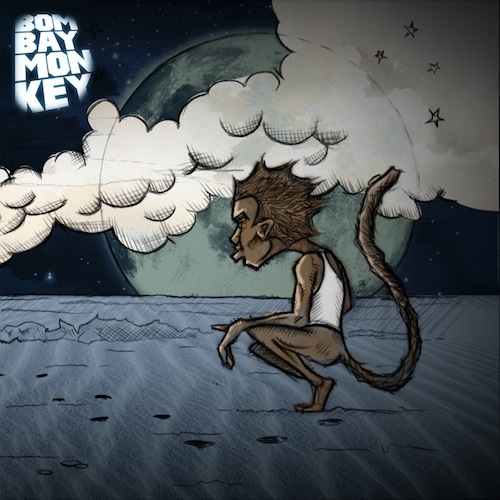
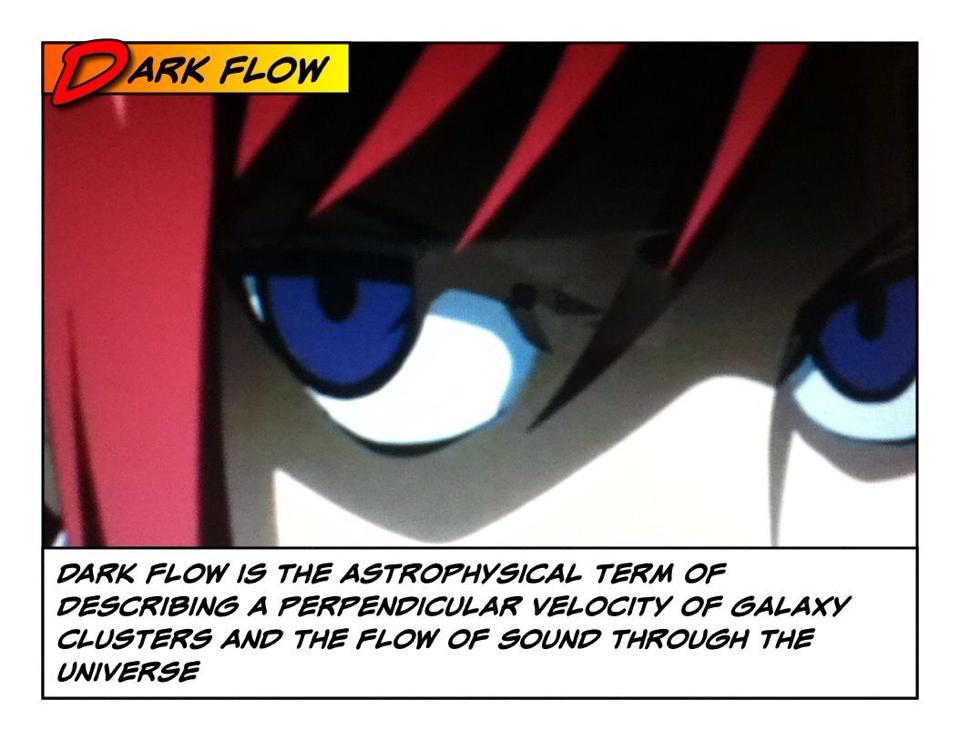
Mention Dark Flow and the words will mean different things to different people. To astrophysicists it’s a subject of conjecture and controversy. For music lovers, Dark Flow means something very different. Dark Flow is the highly anticipated fourth album from Bombay Monkey.
Dark Flow will be released on BBE Music on 19th May 2014, is the long awaited followup to 2008s 130 Astronauts. In the five years since the release of 130 Astronauts, much has happened to Bombay Monkey.
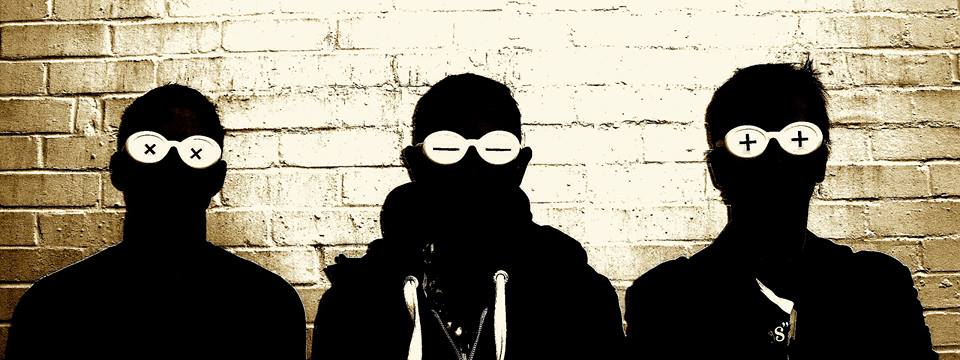
Back in 2008, Bombay Monkey were a duo consisting of Guy Martin and Andrew Organ. Since then, two has become three. Dave Tomkinsmith joined Bombay Monkey in 2012. He shares lead vocal duties with Andy. Depending up whose voice suits the song, one sings lead, the other adds backing vocals. This is very different to Bombay Monkey’s early days.
Guy and Andrew had known each other since the new millennia dawned. However, it wasn’t until 2003 that the two producers and songwriters began working together. This was when Bombay Monkey was born. In the early days, Bombay Monkey’s music consisted of cut-ups, montages and samples. Accompanying Bombay Monkey on their tour was an impressive audio visual setup. A Bombay Monkey show, wasn’t just about the music. It was an “experience.” The next step for Bombay Monkey was releasing their debut album.
For many bands, back in 2006, they’d book time in a local recording studio. Not Bombay Monkey. They decided to builds their own custom built studio, Lo-Tek. It was situated on a farm in rural Kent. That was where their eclectic debut album Vanish! was written recorded. Vanish! was released on Lo-Tek Audio in 2006. Its sound was quite different to later albums. Five of the eight tracks were instrumentals. On its release, Vanish was well received by critics who were impressed by the inventive, genre-melting music. Bombay Monkey’s sophomore album was released not long after Vanish!
The followup to Vanish! was the space inspired Time Travellers. Released to critical acclaim in 2006, it has a cinematic sound. Everything from ambient, dub, electronica, hip hop, psychedelia and trip hop melts into one. Time Travellers was a coming of age from Bombay Monkey. Two years later, came the followup to Time Travellers.
This was 2008s 130 Astronauts. It was described by Bombay Monkey “as part three in Bombay Monkey’s trilogy of four parts.” Bombay Monkey, as usual, were doing things their way. Again, seamlessly, Bombay Monkey fuse ambient, dub, electronica, hip hop, jazz, psychedelia and trip hop. Trippy, dubby and dreamy to ethereal and eclectic it was a mind-blowing, lysergic adventure. Surpassing 130 Astronauts wasn’t going to be easy.
Five long years passed since Bombay Monkey last released an album. Now a trio, they return with Dark Flow. It features eleven genre-melting tracks from the new look Bombay Monkey. Founding members Guy and Andrew have been joined by Dave Tomkinsmith. He’ll share lead vocal duties with Andy in the new lineup of Bombay Monkey, which makes it debut on Dark Flow, which I’ll tell you about.
Mindpower opens Dark Flow. Dark, eerie and gothic describes the introduction. There’s also a sci-fi sound before the vocal sweeps in. It’s briefly reminiscent of a seventies rock album, before dreamily, drifting into the distance. By now, electronica meets melodic, synth pop sound. Drums crack, synths, buzz and harmonies reverberate as musical genres melt into one. This includes classic rock, dub, electronica, psychedelia and synth pop. Bombay Monkey combine to create dreamy, lysergic, synth pop with a sci-fi twist.
Understated describes the introduction My Delihla. A backing vocal is panned while swathes of thoughtful synths create a backdrop for the tender, wistful vocal. Soon, Bombay Monkey bring out the big guns. By this, I mean their trusty synths. They produce a big, bold backdrop that play an important part in the track’s anthemic sound. Especially when combined with the vocals, stabs of keyboards, crisp drums and sci-fi sounds. The result is a track that’s bound to become an anthem at festivals during the summer.
Monkey See Monkey Do has a drum and bass inspired introduction. This is joined by dark strings and an urgent vocal. Soon, hooks are being unleashed as squelchy synths, dark strings and the drum and bass-tinged backdrop. It’s an irresistible and hook-laden track, with a big, bold and urgent arrangement.
A haunting, eerie spoken-word vocal introduction opens It’s Not My Dog. It’s accompanied by dark bass synth and a Madness inspired vocal. The vocal is almost Suggs’ like. Delivered at breakneck speed, the jive-talking vocal sometimes become a rap. As for the arrangement, it’s best described as jaunty. It swaggers along, the rhythm section joined by keyboards, percussion, synths and backing vocals. Here, Bombay Monkey, combine electronica, hip hop and indie roc to create a truly irresistible, swaggering track.
Cat Got Your Tongue? is a ninety second hip hop and jazz inspired interlude. Bombay Monkey replicate the sound of worn vinyl. The vinyl “plays” jangling, vintage arrangement. It veers between jazz-tinged, dubby and hip hop, all in the space of ninety second. No wonder Bombay Monkey exit stage left to riotous applause.
King Of The Jungle sounds as if it would be perfect for the new Star Wars movie. Its sci-fi sound glides into being. It’s dark and dramatic. Especially when the sci-fi tinged vocal emerges. It’s moody and broody, the perfect foil for the lead vocal. As the deliberate lead vocal reverberates into the distance, drums pound and synths join forces with the eerie, sci-fi vocal. Soon, the rhythm section, searing guitars and banks of synths. They combine elements of classic rock, synth pop and prog rock, to create a dark, dramatic, cinematic track.
Just a stabs of a lone melodic keyboards open Heartrush. Soon, things change. Drums pound and swathes of synth combine with a tender, thoughtful vocal. Again, this track has a heavier, darker, sound. That extends to the lyrics. They’ve a strong narrative. Bombay Monkey paint pictures. Dark, dramatic scenes unfold before your eyes. There’s a sense of urgency in the arrangement, which references early eighties electronica. Especially during a synth hook. After that, the tempo quickens, reflecting the sense of urgency in the lyrics. Bombay Monkey continue to combine electronica, pop and synth pop to create a track that’s melodic, dramatic and full of subtle hooks.
Istanbul Dub has light, airy and joyous introduction. Just a scatted female vocal skips across the arrangement. Drums and percussion provide the backdrop as a male and female vocal dance their way across the arrangement. They’re replaced by swathes of rumbling synths, crisp drums and a joyful male vocal. Samples, synths, and the scatted female vocal combine to create a compelling, multilayered arrangement. When the vocal returns, it continues to play an important role in what’s a delicious and joyous, dance-floor friendly track.
Straight away, Love’s An Illusion reminded me of Simple Minds. It’s the synths and vocal that leads to this comparison. The synths are slow, dark and meander along. As for the vocal, it melancholy and moody. Backing vocals reverberate above the arrangement. Meanwhile a probing bass and drums provide the backdrop, to this mid-eighties influenced track.
The Girl From The Future is a fusion of indie pop and synth pop. Just a dreamy vocal and melodic keyboards combine with sweeping synths. Harmonies sweep in as indie pop and synth pop combine. That’s before thundering dance beats cascade in. They provide the heartbeat, as poppy hooks combine to create big room anthem in waiting. Quite simply, this is a track ripe for a remix. After that, Bombay Monkey will be the toast of dance-floors.
Feed Your Fire closes Dark Flow. It has a broody, dark and dramatic sound. From the get-go, you’re spellbound, wondering where this track is heading. Big, bold and gothic synths sweeps over you. They’re joined by ethereal vocals. They provide a contrast as the arrangement glides along. Synth pop, electronica and indie pop combines to create a track that’s both beautiful and ethereal plus dark and dramatic.
Although five years have passed since the release of Bombay Monkey’s third album 130 Astronauts, the wait for Dark Flow has been worthwhile. The new lineup of Bombay Monkey have returned with an eclectic musical adventure. Dark Flow sees Bombay Monkey move in different directions. This includes towards the dance-floor on Heartrush and The Girl From The Future. It’s Not My Dog sounds like a Madness inspired sing-along. Dance-floor friendly, it shows another side of Bombay Monkey. Delicious, joyous, quirky and dance-floor friendly describes the other dance track Istanbul Dub. Then there’s the anthemic My Delihla. However, there’s more to Dark Flow than just five tracks.
Other tracks prove that Bombay Monkey haven’t turned their back on their music past. Mindpower which opens Dark Flow is a dreamy, lysergic, synth pop with a sci-fi twist. King Of The Jungle is dark, dramatic, cinematic track. Cat Got Your Tongue veers between jazz-tinged, dubby and hip hop, in the space of ninety seconds. Love’s An Illusion is an eighties-influenced track that reminds me of Simple Minds. The Girl From The Future somehow, manages to be simultaneously beautiful and ethereal plus dark and dramatic. That’s some feat. However, this is Bombay Monkey we’re talking about.
They’ve been around since 2003. This makes Bombay Monkey almost musical veterans. However, they added a new member in 2012, Dave Tomkinsmith. Dave and Andy share lead vocals on Dark Flow. When Dave sings lead vocal, Andy sings backing vocals. This works well. They’re like ying and yang on Dark Flow, which is an album of innovative, genre-melting music.
That’s what you get when combine ambient with classic rock, dub, electronica, indie rock, pop, prog rock, psychedelia and synth pop. The result is Dark Flow, an album that’s variously dark, dramatic and eerie to beautiful and ethereal, right through to anthemic, dance-floor friendly, hook laden, irresistible and joyous. Dark Flow also veers between cinematic and subtle, to melodic and melancholy. That to me, is the perfect description of Dark Flow, the fourth album from Bombay Monkey, which will be released on 19th May 2014, on BBE Music. That’s why Dark Flow is a career defining album Bombay Monkey, that’s sees them come age musically.
BOMBAY MONKEY-DARK FLOW.
R.M. HUBBERT-BREAKS AND BONE.
R.M. HUBBERT-BREAKS AND BONE.
For R.M. Hubbert, 2013 was the best year of his long musical career. A veteran, and some might say, unsung hero, of Glasgow’s music scene, Hubby won the Scottish Album Of The Year Award in June 2013, with his sophomore album, Thirteen Lost and Found. Considering the competition Hubby was up against, this was quite a feat. Paul Buchanan, Lau, Calvin Harris and Emile Sande were among the nominees. However, Hubby triumphed. Thirteen Lost and Found won the Scottish Album Of The Year Award. This was result of a musical journey that started back in 1991. Having savored the moment, it was straight back to work for Hubby on another album that would be nominated for 2014s Scottish Album Of The Year Award.
This was Breaks and Bone. It was the album Hubby was in the midst of recording. This was Hubby’s third album. Breaks and Bone was recorded in seven short, intensive sessions during a one-year period. Featuring ten tracks, which were produced by Paul Savage at his Chem 19 studios. Two themes run through Breaks and Bone, letting go and acceptance. They’re the threads that ran through Hubby’s first two albums. That’s hardly surprising. Hubby’s had to contend with the loss of both parents and a five year battle with depression. For Hubby and many listeners, Breaks and Bone, will prove a cathartic experience. Before I tell you about Breaks and Bone, I’ll remind you about Hubby’s musical journey.
Unlike many musicians, Hubby didn’t fully embrace Glasgow’s thriving musical scene. Instead, he made tentative steps into its vibrant midst. This was in 1991, when he formed Me, Hubby and Thom with Thom Falls. Thom was also drummer for The Blisters, who featured a young Alex Kapranos.
Through Thom, Hubby and Alex Kapranos became friends. Soon, they were running a club night and were bandmates. Hubby and Alex took over the running of the long lamented Kazoo Club. It was held at The 13th Note in Glasgow. When the original promoter suddenly left, the very future of the Kazoo Club was at risk. Enter Alex and Hubby. Saving the day, they took over promoting The 13th Note. Further cementing their friendship, Hubby joined The Blisters as second guitarist. This didn’t last long. Hubby left The Blisters in 1992, to join another Glasgow band Glue, Having spent three years as a member of Glue, Hubby joined the band where he made his name.
El Hombre Trajeado were formed in 1995. Consisting of Hubby, Stevie Jones, Ben Jones and Stef Sinclair, El Hombre Trajeado released three albums over the next ten years. Their debut album was Skipafone, released in 1998. Three years later, they released Saccade in 1998. Shlap was their final album. It was released in 2004, the year before the band split. During the ten years El Hombre Trajeado were together, they built a large, loyal following. This resulted in them being chosen to support Nick Cave and The Delgodos.
Following the breakup of El Hombre Trajeado, it was another four years before Hubby released any more music. He was constantly touring, supporting. Franz Ferdinand, The Delgados, Mogwai, Emma Pollock and The Twilight Sad. Then tragedy struck for Hubby when his parents died. This inadvertently lead to Hubby’s live album.
Trying to rid his mind of the tragedy he’d experienced, he recorded nine solo guitar tracks. They were just a way of taking his mind off what had happened. First and Last featured Hubby playing guitar, using flamenco style and structure. To do this, Hubby had built a custom built Spanish guitar. It was made by Anders Ellasson in South-West Spain. It’s perfect for Hubby’s distinctive flamenco style.
To give the music a more modern sound, Hubby took a different approach to melody. Once First and Last was finished, Hubby released it himself. Critically acclaimed, this lead to Glasgow’s premier label, Chemikal Underground signing Hubby in 2010. Now he was among his kith and kin, First and Last was reissued in early 2011. With his debut album released, and signed to a new label, Hubby looked to the past for his future.
Hubby had first thought about what became Thirteen Lost and Found back in 2009. Now with friends old and new, Hubby set about bring his idea to fruition. Alex Kapranos of Franz Ferdinand was chosen to produce Thirteen Lost and Found. Indeed, some of the recording took place at his studio in Glasgow. At three studios, ten tracks were recorded with some of Scotland’s top musicians. Aidan Moffat, Emma Pollock, Alex Kapranos, Marion Kenny, Paul Savage, Stevie Jones, Alistair Roberts, Rafe Fitzpatrick, Shane Connolly, John Ferguson and Luke Sutherland all passed through the studio doors playing starring roles in Thirteen Lost and Found, Hubby’s sophomore album.
Thirteen Lost and Found was released on Chemikal Underground Records in January 2012. Critics were won over by Thirteen Lost and Found. They hailed it as a Magnus Opus of a collaboration, one that was innovative and imaginative. It was all that and more.
When the long-list for 2012s Scottish Album of The Year Award was released, Thirteen Lost and Found featured on the long-list. The competition was fierce. Some of Scotland’s best artists were in contention for this prestigious award. Among them were Paul Buchanan, Lau, Calvin Harris and Emile Sandy. Then when the long-list became the shortlist, gone were Calvin Harris and Emile Sandy. Hubby was on the shortlist of ten. Then on 20th June 2013, when the winner of the Scottish Album of The Year Award was announced, Hubby had won Scotland’s most prestigious music award. Next for Hubby, was completing the recording of what was the last in a trilogy of albums.
Breaks and Bone was the final album in the Ampersand trilogy. The threads that run through the three albums are contending with the loss of both of his parents and a five year battle with depression. Hubby had hoped this would help to do this. He says it had, although not to the the extent he’d hoped. The trilogy was an attempt to reach out to friends he’d lost touch with. That’s worked much better.
On Breaks and Bone, Stevie Jones, Aidan Moffat, Emma Pollock, Andrew Savage and Paul Savage all make guest appearances at Chem 19. Producing Breaks and Bone, was Paul Savage. Breaks and Bone was then released on Chemikal Underground on 30th September 2013. Released to critical acclaim, Breaks and Bone which I’ll tell you about sees Hubby build on his first two albums.
Son of Princess, Brother of Rambo opens Breaks and Bone. It’s a mesmeric and spellbinding instrumental you lose yourself in. It washes over you. Thoughts race through your head. You realize what striking a chord means. Memories come back, emotions are stirred. Later, the music becomes a wash, wall or wave of music. Its potency and power, is hugely moving and emotive. It poses questions, that you’re left to answer.
Bolt tells the story of what’s best described as a dysfunctional relationship. This is apparent from the lyric: “he broke your heart, you broke his jaw.” Straight away, you wonder where the song is headed? The lyrics are dark, bleak and nihilistic. Especially when Hubby sings: “I wish you’d break my jaw.” That’s a dark place to be. With buzzing synths, drums and his trademark guitar for company, Hubby’s delivery is almost bereft of emotion. It’s as if he’s hurting inside. Hopefully, by articulating his feelings, this proves therapeutic and cathartic.
Driving and chiming guitars combine as Couch Crofting, another instrumental, reveals its mystery and ethereal beauty. Here, you’re concentrating on two parts of the song. There’s a sense of time ebbing away, and leading ultimately to loss. This comes courtesy of a buzzing sound. Meanwhile, Hubby like a painter, paints bold brush strokes with his guitar. His playing is confident and brisk. He questions and probes looking for answers. All the time, time is ebbing away, and answers still prove elusive.
Tongue Tied and Tone Deaf sees Hubby tackle the subject of depression. This is personal for him. He’s suffered from cronic depression for five years. When he sings: “keep your head afloat and wipe your tears…till the next time,” it’s obvious that Hubby is drawing upon experience of the “black dog.” This is personal and his vocal is heartfelt and sincere. There’s a worldweary sound to his voice. Hubby has lived with, and survived depression. His music is cathartic and his story inspirational.
Go Slowly has a melancholy sound as it unfolds. Just a flamenco guitar trails off into the distance. It has a crystalline, ethereal sound. Then Hubby almost punishes his guitar. Power and ethereal beauty sit side-by-side. It’s as if it’s telling the story of loss and grief. Although their death was relief, a relief from pain and suffering, for those left behind, they feel cheated and angry. Their overcome with loss and grief. Hubby vents his frustration via the guitar. His playing is full of frustration and anger. This fusion of emotion results in a track where darkness and light sit next to beauty and power. An outpouring of emotion, frustration and anger, it’s powerful, potent, emotive and beautiful.
Feedback Loops features some of Hubby’s best guitar playing on Breaks and Bone. Quite simply, it’s exquisite. Here, Hubby’s half-spoken vocal and chiming, reverberating guitar become one. They’re as one as they tell the story of going round in circles, never quite achieving anything. The problem is never ever solved. “Arguments help,” Hubby sings, but nothing quite gets to the root of the problem. There’s a weary, resigned sound in Hubby’s vocal, as he fears things will never be the same.
There’s an almost uplifting sound to For Helen. It’s a quite beautiful instrumental. Here, Hubby’s pulled out all the stops. His playing veers between intricate, wistful and melancholy, to bold, beautiful and ethereal. Whoever this is a homage to, must have been a special lady?
It’s obvious the date Dec 11 has some significance in Hubby’s life. He’s almost welling up with emotion, anger and frustration. His vocal is whispery and emotive. Memories come flooding back. You fear emotion and anger will get the better of Hubby. Somehow, he manages to keep himself together. Then, as his vocal drops out, he unleashes a mesmeric guitar solo. All his anger, frustration and sadness is channeled via his guitar. This seems to relieve Hubby of his emotion and hurt, proving therapeutic.
Buckstacy has an understated sound. Slowly and thoughtfully, Hubby toys with his guitar. This is just a curveball. As a drum pounds, it’s all change. It provides the heartbeat as Hubby’s hand flits up and down the fretboard. He plays in a bold, decisive and sometimes, flamboyant, almost un-Hubby like way. There’s a joyous, uplifting sound to a track that shows another sound to Hubby’s music.
Sights closes Breaks and Bone. There’s a melancholy sound to Hubby’s vocal as he sings: “we never really spoke, but I expected the last conversation would have some meaning.” These powerful words will ring true for so many people. They always expect, the last thing a loved one will say to them, especially a parent to a child, will have some significance or deep meaning. That isn’t usually the case. This leads to people feeling cheated or having been robbed of something. They feel the last words someone should speak, should have some deep meaning in how to cope with the travails of life. Sadly, as Hubby sings, that’s not the case.
Breaks and Bone is not just one of the most captivating albums of 2013, but an album that’s cerebral and inspirational. The last part in the Ampersand trilogy, Breaks and Bone has you spellbound from the opening track. Despite being an instrumental, Son Of Princess, Brother of Rambo is something of a roller coaster journey. Listen to the track with an open mind, and thoughts, memories and ideas will cascade past your mind’s eye. From there, the music veers between becomes dark, bleak and nihilistic on Bolt, through to thoughtful, melancholy, emotive, joyous and uplifting. Often it’s introspective and seeking answers. That’s no bad thing. Hubby like so many other people, is looking for answers.
Many other people, like Hubby, have lost loved ones and are still grieving. It’s an ongoing process that needs worked through. For Hubby, music proves cathartic. He lost both parents a few years ago. Like many people, music is a way of finding answers to questions. Part of his trying to come to terms with this loss, is the Ampersand trilogy. Breaks and Bone is the final chapter in this trilogy. Let’s hope it’s helped Hubby to come to terms with his loss. I hope it’s helped Hubby in another struggle.
Another theme explored during Breaks and Bone, was depression. Like many people, Hubby has suffered from depression. He’s fought chronic depression for five years. Music to Hubby, has proved therapeutic and cathartic. Part of his healing process was the Ampersand trilogy, including Breaks and Bone. Let’s hope it’s helped Hubby to come to terms with what is a truly debilitating and heartbreaking illness. Certainly, some of the music on Breaks and Bone is much more uplifting.
Several things haven’t changed from Thirteen Lost and Found. Breaks and Bone is another eclectic and emotional musical journey. It draws inspiration from disparate musical influences and genres. Folk, country, flamenco, Celtic, indie and Americana were thrown into the mix. Then there’s some of Scotland’s top musicians who played a part in the making of Breaks and Bone. Among them are Aidan Moffat, Emma Pollock and producer Paul Savage. Each of these musicians wanted to help one of the nicest men in Scottish music bring this very personal project to a close. Breaks and Bone, like the two previous chapters, is a highly personal, cerebral and emotive exploration of loss and depression.
Seeking answers, R.M. Hubbert embarked upon the Ampersand trilogy. Now this musical journey is over. Hubby has kept the best until last. Breaks and Bone is the result of a two year musical journey. We can only hope R.M. Hubbert found the journey that was Ampersand trilogy both therapeutic and cathartic. Breaks and Bone is also truly compelling and personal album, that could see R.M. Hubbert pick up 2014s Scottish Album Of The Year Award. It would a fitting reward for one of Scottish music’s best kept secrets R.M. Hubbert.
R.M. HUBBERT-BREAKS AND BONE.

[
THE PASTELS-SLOW SUMMITS.
THE PASTELS-SLOW SUMMITS.
There’s something almost contrary about certain Scottish bands, including The Blue Nile, The Bathers and The Pastels. Hugely talented, they’ve released critically acclaimed and commercially successful albums. Yet in a quintessentially Scottish way, as if unsure of fame, fortune and the trappings it brings with it, these bands fail to capitalize on the momentum they’ve built up. It’s as if they can’t or don’t want to quite make the next step. In some ways, this is understandable.
Maybe they don’t want to become part of the machine that is a major label? They don’t want to become part of the constant grind of releasing an album, publicizing it and then heading out on tour. Then they need do it again and again. They’re forced to make compromises and tow the party line. Some bands are willing to do all this and more, just to experience a taste of fame and not always fortune.
After all, they forget, everything they do, the record company is charging them for. Record companies aren’t charities. Far from it. There’s no such thing as a free lunch in the music industry. The artist pays for every lunch, promo album, photo shoot and new guitar that comes their way. For some bands they don’t want to become part of this. They’d rather do things their own way and at their own speed.
That’s be the case with The Pastels. Since forming in 1981, The Pastels have only released five albums. Their latest album is Slow Summits, which was recently released on Domino. Slow Summits is the first studio album The Pastels have released since 1997s Illumination. Having said that, they did provide the soundtrack to John McEntire’s The Last Great Wilderness in 2003. However, since then, things have been quiet on The Pastels’ front. Dedicated followers of The Pastels wondered if we’d ever hear from the group again. Then last year, came Slow Summit, The Pastels fifth album in the group’s thirty-two year career, which I’ll tell you about. It was a return to form for The Pastels, which saw them nominated for 2014s Scottish Album Of The Year Award. This is fitting for one of Scotland’s veteran bands.
The Pastels were formed in 1981 in Glasgow. Their original lineup consisted of bassist Gerry Love, guitarist John Hogarty, trumpeter Alison Mitchell, flautist and keyboardist Tom Crossley plus vocalist and guitarist Stephen McRobbie. They’ve been the backbone of the group. Like any band who have enjoyed the longevity of The Pastels, there’s been occasional changes to the lineup. However, that was the lineup that featured on their debut single.
1982 saw The Pastels release their debut single Songs For Children on the Whaam label. After that, The Pastels were signed to both Rough Trade and Creation, where they released a series of singles. During this period, The Pastels continued to hone their sound. It was a period of evolution. Quickly, they became an influential group within both the burgeoning fanzine movement and the Glasgow music scene. Then in 1986, The Pastels featured on the NME’s C86 compilation. Although this showcased a new generation of bands, its importance has been overstated. A year later, The Pastels released their debut album.
Six years after forming, The Pastels released Up For A Bit With The Pastels on the Glass label. Veering between indie pop, garage and post punk, it marked a new chapter in The Pastels’ career. Their sound had evolved and was much tighter. Produced by John Rivers Up For A Bit With The Pastels was critically acclaimed and perceived as a classic Scottish album. It’s in the top 100 Scottish albums. Up For A Bit With The Pastels looked like being the start of a successful career for The Pastels.
Two years later, The Pastels released their sophomore album Sittin’ Pretty. It had been recorded over a two year period and was released on the Chapter 22 label. The Pastels trademark sound changed. There was a harder edge to their music. Maybe this was because there had been a change of producer from Up For A Bit With The Pastels? Replacing John Rivers, was Paul Mazda. After the release of Sittin’ Pretty, it looked like The Pastels were no more. Rumours were rife in the music press that The Pastels were splitting up. Reports of their demise proved to be exaggerated.
While The Pastels didn’t split up, their lineup changed. Drummer Karina Mitchell joined the band in 1990. With the lineup settled again, The Pastels got back to work. Eventually, they released their third album Mobile Safari in February 1995. It featured the new lineup, plus contributions from many of Glasgow’s best musicians. The Pastels’ friends joined the band for their first album for six years. Produced by Paul Chisholm and The Pastels, this was their first album for the label that they’d call home for the next eighteen years.
Having released their first album in six years, The Pastels released their next album Illumination in 1997. Co-produced by Ian Carmichael, Gregor Reid and The Pastels, Illumination saw The Pastels draw inspiration from a wide range of sources. Melodic and similar to Mobile Safari, The Pastels had found their own sound. Released to critical acclaim, Illumination looked like the album would be The Pastels breakthrough album. It wasn’t. Instead, we never heard from The Pastels for another seventeen years.
Apart from providing the soundtrack to John McEntire’s The Last Great Wilderness in 2003, we never heard anything else from The Pastels. Even The Great Wilderness was a quite un-Pastels’ album. It was more like a series of soundscapes. Then earlier this year, rumors started doing the rounds that The Pastels were about to release a new album. Some people were sceptical. They were wrong. Glasgow’s forgotten group had been busy.
Slow Summits features nine tracks, four of which were penned by Stephen McRobbie. He penned Secret Music, Night Time Made Us, Summer Rain and Wrong Light. Karina Mitchell wrote Kicking Leaves and Come to the Dance. She and Stephen cowrote Check My Heart and After Image, while Stephen and Tom Crossley contributed the title-track Slow Summits. These nine tracks became Slow Summits, which was recorded at several studios in Glasgow.
This includes Chem 19, Cava Studios, LA Chunky and Castle of Doom studios in Glasgow. The Pastels were joined by a whole host of old friends, including Norman Blake, Craig Armstrong and Bill Wells. They recorded nine tracks, which became Slow Summit, The Pastels’ comeback album. Was it worth the wait?
There’s a understated, wistful sound to Secret Music. Distant cymbals give way to percussion, melancholy flute and pensive rhythm section. Guitars chime as Karina’s tender, almost whispered vocal takes on a wistful sound. Around her, the rest of The Pastels replicate the sound of the meandering nighttime traffic. Horns rasp, guitars chime and drums add mystery to a track where melancholia and the ethereal beauty of Karina’s vocal prove a potent combination.
Night Time Made Us sees The Pastels reminisce, remembering how they saw the world as children. Things they used to do, people they used to know and things they believed. In doing so, Stephen’s vocal takes on a pensive sound, as he remembers simpler times. Crystalline guitars, heartbreaking horns and harmonies accompany his vocal, as memories come flooding back. Soon, the track takes on not just a trademark Pastels’ sound, but a Glasgow sound. It reminiscent of a generation of bands who came through at the same time. Two of the best known are Teenage Fanclub and BMX Bandits. The other member of the triumvirate are The Pastels, who on form like this, are back.
Check My Heart sees the comeback continue on a truly genre-melting track. Everything from sixties girl groups, pop indie rock, garage and doo wop combine. Karina is accompanied by punchy harmonies. Meanwhile the rhythm section and scorching guitars drive the arrangement along. Stephen shares the lead vocal. His vocal provides is deeper and louder and is a contrast to Karina’s tender vocal on this paean.
Summer Rain sounds like Aztec Camera during the eighties. It’s the deliberate, crystalline guitars that leads to the comparison. What’s different is the vocal. Here, Stephen’s tenderly delivers the lyrics. His needy, heartfelt vocal is accompanied by cooing harmonies, distant rasping horns and guitars. Up until then, it’s a beautiful song. Then The Pastels noodle. They decide to experiment. Guitars, flute and the rhythm section are join by sci-fi sounds. For two minutes they’re sure to divide opinion. It can either be scene as innovative, jazz tinged exploration of the track’s nuances or a missed opportunity?
After Image has a somewhat subdued and experimental sound. It sounds like a relation of Summer Rain. An instrumental, bursts of ethereal harmonies provide a contrast to the dark, moody and broody sound of the arrangement. Keyboards, synths and guitars are unleashed, providing cinematic sounds to a wistful, futuristic soundscape.
Kicking Leaves written by Karina Mitchell is one of the highlights of Slow Summits. Her ethereal vocal is accompanied by cooing harmonies and strings that tug on your heartstrings. Guitars are strummed, as drums mark time. They’re playing a supporting role to Karina. Her lyrics have a strong narrative and are full of imagery. She paints pictures that unfold before your eyes. You can imagine her wandering through the Botanic Gardens frustratedly kicking leaves and singing hopefully Oh Kiss Me We Won’t You Kiss Me.
Wrong Light sees The Pastels roll back the years to when they and their fans were much younger. Stephen is in reflective mood, singing: “you were so young, a flower in the sung.” There’s a tinge of sadness and regret in his voice. Karina adds backing vocals, horns rasp and guitars scream. The rhythm section provide a thoughtful heartbeat and a harmonica adds to the emotion. Later, handclaps encourage what is one of the best guitar solos on Slow Summits. There’s even a bit of showboating, as The Pastels show they’ve not lost their mojo. They haven’t. Neither has Stephen McRobbie who wrote this wistful, poignant reminder of day opportunities lost.
Slow Summits is a six minute instrumental. It’s reminiscent of a track from the soundtrack to a sixties French art movie. It’s the flute lead instrumental that leads to the comparison. That and the meandering understated, pensive arrangement. Soon, it’s all change. Searing guitars cut their way through the arrangement. Their crystalline, chiming sound has a sixties sound. Clanking and chiming, the flute meanders wistfully above the arrangement. Eventually, The Pastels settle into a groove, where drama and ethereal beauty unite. Rasping horns, harmonies horns and blistering guitars join The Pastels as they revel in this opportunity to showcase their musical ability, on what could easily be part of a soundtrack to a film or television program.
Come to the Dance closes Slow Summits. Again, there’s a sense of melancholia. The Pastels might have Come to the Dance, but sound as if their heart has been broken. Karina’s vocal is tender and thoughtful. Harmonies, handclaps and the rhythm section join chiming guitars as her vocal veers between pensive, hopeful and heartbroken. She doesn’t sound as if she’s Come to the Dance, more to briefly escape her broken heart.
After seventeen years away, many people had forgotten about The Pastels. They thought the band had split up. After all, their last studio album Illumination was in 1997. They’d made a brief return with The Last Great Wilderness in 2003. After that…nothing. Having started their career with the critically acclaimed Up For A Bit With The Pastels, The Pastels “should’ve had a brilliant career.” Sadly, although The Pastels released three further albums, they never scaled the heights they should’ve.
Mind you, neither did their contemporaries. Neither The BMX Bandits nor Teenage Fanclub enjoyed the critical acclaim and commercial success their talent warranted. Although commercial success came their way, they should’ve sold many more albums. At least critics and their fellow musicians recognized their undoubtable talent.
Maybe though, groups like Teenage Fanclub and The BMX Bandits, The Pastels found a level of success that they were comfortable with? After all, look what fame and fortune did to Babyshambles and Nirvana? Possibly, The Pastels didn’t want to scale the heights Franz Ferdinand did? That would’ve meant sacrificing too much to the major label machine. For them, maybe that was a step too far?
Instead, The Pastels were content to follow in the footsteps of The Blue Nile. They released critically acclaimed and commercially successful albums on their own terms. That did The Blue Nile no harm. It added to the sense of mystery that shrouded them. The same can be said of The Pastels.
Where have they been since 1997? What have then been doing? All we can say with certainty, is that they’re back, older, wiser and more experienced on Slow Summits. Sometimes The Pastels sound worldweary and rueful, especially when Stephen takes charge of the lead vocal. Like those of a certain age, we realize our youth is but a distant memory. Sometimes, he sounds rueful as if unsure he’s done the right thing. Deep down I wonder if he’s wondering whether five albums in thirty-two years does The Pastels justice. As for Karina’s vocals, they’re ethereal, veering between wistful, melancholy, hopeful and needy. Her vocals breath life, meaning and emotion into lyrics. She sounds as she’s lived, experienced and survived the lyrics. Maybe she too, realizes they could’ve and should’ve been a much bigger band. Slow Summits is proof of this.
No wonder. The Pastels are a a band full of talented musicians and songwriters. They’re not content to replicate previous albums. Instead, they innovate, and move their music forward. That’s to their credit. After all, they’ve been making music since 1981. Eclectic music at that. On Slow Summits, everything from indie rock, pop, sixties girl groups, doo wop, garage is thrown into The Pastels mixing bowl. It’s stirred by producer John McEntire and The Pastels. The nine tracks are a compelling musical journey, where not once, do The Pastels take a wrong turn. Far from it. The Pastels haven’t just made a comeback on Slow Summit, but are back and are better than ever. Indeed, The Pastels have reached slowly and somewhat belatedly reached the summit with Slow Summits, which was one of the best Scottish albums of 2013. That’s why Slow Summits resulted in The Pastels being nominated for 2o014s prestigious Scottish Album Of The Year Award.
If The Pastels are crown winners, this will be fitting. The Pastels are a Scottish musical institution. Just like so many Scottish bands their contrarian. They’ll only do things their way. The result is five albums during a thirty-three year career. However, it’s quality not quantity that matters. Slow Summits is proof of this and could see the contrarian and quintessentially Scottish band The Pastels win the Scottish Album Of The Year Award.
THE PASTELS-SLOW SUMMITS.

[s
STRANGE BREAKS AND MR. THING III.
STRANGE BREAKS AND MR. THING III.
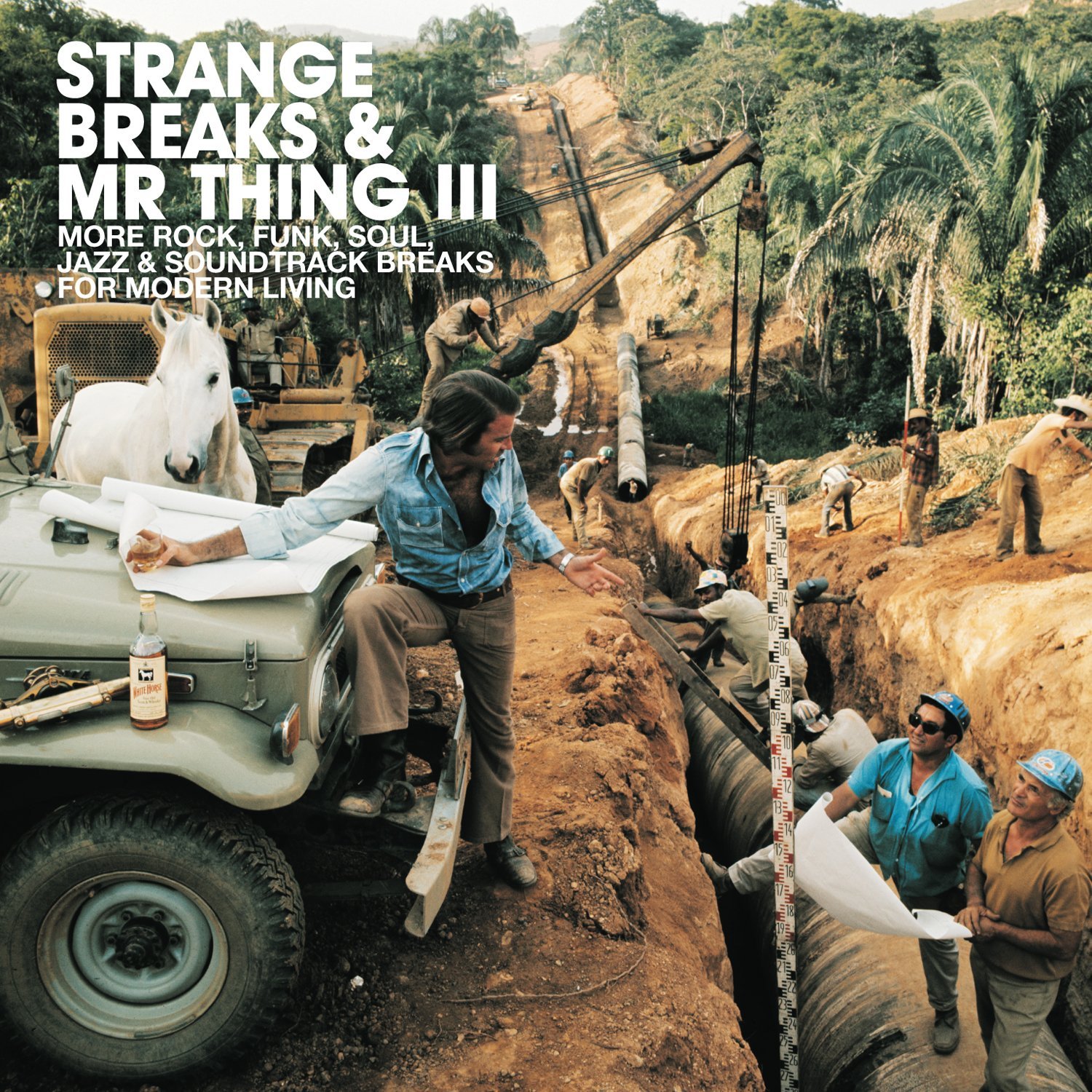
One of the most commercially successful and critically acclaimed compilation series makes a welcome return on 19th May 2014. That’s Strange Breaks and Mr. Thing III. It’s been a long time coming. Five years in fact. So, after a five year back, Mr. Thing makes a very welcome return with Strange Breaks and Mr. Thing III, which is the result of five years of crate digging.
Mr Thing. is without doubt, one of the most passionate and persistent crate-diggers, when it comes to unearthing hidden gems. No stone is left unturned in his search for elusive hidden gems. Quite simply, Mr. Thing digs where other crate diggers fear to dig. Whether it’s dusty basements, thrift stores, warehouses or record shops, nowhere is off limits. As a result, Mr. Thing’s choice of music is truly eclectic. That’s reflected on Strange Breaks and Mr. Thing III.
Rather than focus on one genre of music, Mr. Thing casts his net wider than other crate diggers. His eclectic and discerning musical taste is reflected on Strange Breaks and Mr. Thing III. It features fifteen slices of funk, jazz and soul from Mr. Thing’s legendary record collection. It’s a tantalising glimpse of what is a musical treasure trove. Just like previous instalments in the series, familiar faces sit side-by-side with hidden gems, killer cuts and rarities on Strange Breaks and Mr. Thing III, which is a double album.
Disc One of Strange Breaks and Mr. Thing III is a fifteen track DJ mix from Mr. Thing, who has been DJ-ing since 1987. Since then, Mr. Thing’s name has been synonymous with him. He’s a turntabilist’s turntabilist. Quite simply, Mr. Thing is one of the top hip DJs in Britain. That’s why he spends much of his time touring the world showcasing his finely honed skills. One listen to Mr. Thing’s DJ mix and you’ll realise his mixing skills are flawless. Then on disc two, Mr. Thing chooses nineteen slices of soulful, funky and jazzy music.
Among the nineteen artists on disc two of Strange Breaks and Mr. Thing III, you’re introduced to familiar faces sit side-by-side with hidden gems, killer cuts and rarities. This includes Dynamic Concept, Disco Orchestral, Woolwich Polytechnic School Concert Band, Chuck Jackson, Sharon Cash, Harry Beckett and Zulema. With its combination of funk, jazz and soul, choosing the highlights of Strange Breaks and Mr. Thing III isn’t going to be easy.
Opening Strange Breaks and Mr. Thing III is Disco Orchestral’s Do It Again. This is a track from Disco Orchestral’s only album Soupa Disco Sounds. It was produced by Tony Palmer. Released in 1976, on DJM Records, this twelve track album was described as “12 Favourite Varieties.” After it’s sassy intro, Do It Again unfolds. It’s best described as a fusion fusion of laid back funk, sassy, seductive soul and rocky guitars. A glorious melange of musical genres, Do It Again whets your appetite for the rest of Strange Breaks and Mr. Thing III.
Dum-Dum’s At The Grass has a dramatic, funky cinematic sound. It’s was taken from Dum-Dum’s 1972 album Dum-Dum. Released in 1972, this was their only album. It’s a real rarity. Copies of this album change hands for $200. No wonder. The music oozes quality. Funk and jazz is seamlessly combined by Dum-Dum to create moody, dramatic cinematic sound. This is reminiscent of the type of track you’d hear in early seventies low budget movie.
John Fitch and Associates released Romantic Attitude as a single in 1969. It was released on Beacon Records and is another rarity. It’s a captivating track. For much of the arrangement, it’s wistful and atmospheric. Then later, the scorching guitars take the track in the direction of psychedelic rock. One thing never changes, John’s vocal, which is a cathartic outpouring of hurt and heartbreak.
Soulful, funky and full of frustration and anger describes The Internationals’ Give A Damn. Released in 1969, on D’ar Recording Co. Inc, Give A Damn was penned by Richard Poindexter with his brother Robert and Jackie Members. They later wrote The Persuaders’ Thin Line Between Love and Hate. This is very different. It’s full of social comment, and features a vocal that’s impassioned, angry and frustrated. The result is a powerful comment on late sixties America.
New Jersey funk group Nu-Sound Express, Ltd, only released two singles. Their debut singls was One More Time Y’all. It was released in 1970, on Silver Dollar Records, it was written and arranged by Paul Kyser. It’s an uber funky slab of early seventies good time funk, with a jazzy twist. This is a welcome addition to Strange Breaks and Mr. Thing III, from Nu-Sound Express, Ltd, who’d later evolve into Rhyze and release two albums in the early eighties.
From the get-go, you realise that Dynamic Concept’s La Da Da is something special. Mind you, what would expect from what was essentially Edwin Starr’s backing band. In 1974 Dynamic Concept had released their debut single California. It wasn’t a commercial success. Neither was La Da Da, which was released on H.B. Barnum’s London-based Power Exchange Records & Tapes label. H.B. Barnum wrote, arranged and produced this funky hidden gem. Sadly, La Da Da proved to Dynamic Concept’s final single.
Asmral’s Trinidad Cavaliers released seven albums on Canadian label Calypan. Their penultimate album was Heat, which was released in 1975. Heat is a much prized album among record collectors and sample hungry producers. One of Heat’s highlights is the hypnotically funky hidden gem It Sure Is Funky. It’s a tantalising taste of Asmral’s Trinidad Cavaliers’ genre-melting music.
James Asher’s Oriental Workload featured on the 1979 album Action Disco, which is a really rare album. It was released on the Studio G label and featured tracks by James Asher, Pete Willsher and T. Kelly. It has a moody, lysergic, psychedelic and ambient sound. Full of subtleties and nuances, this is one of my favourite tracks from Strange Breaks and Mr. Thing III.
Without doubt, one of the most left-field and surprising choices on Strange Breaks and Mr. Thing III is Özel Türkbas’ Özel´s Dance Music. It’s a track from the 1972 album How To Make Your Husband A Sultan-Belly Dance With Özel Türkbaş. This track is a real discovery and is testament to Mr. Thing’s crate digging skills. It’s one of these albums that most people would walk past. Not Mr. Thing. He must have realised that there were breaks and samples awaiting discovery within the album. That was the case. Here, Mr. Thing has edited the track. As a result, its hypnotic and funky Eastern sound, it’s akin to a call to dance.
Zulema’s Giving Up is a track from her 1973 sophomore album Ms. Z. It was released on Sussex Records. After that, Zulema Cusseaux, soul, funk, disco and boogie singer and songwriter signed to RCA Victor. Giving Up shows why RCA Victor signed Zulema. She delivers a heartfelt, soulful vocal. She’s accompanied by backing vocalists, swathes of strings and an all-star band of top session players. They fuse soul, funk and disco strings to create the perfect backdrop for Zulema’s vocal.
Harry Beckett’s Ring Within Rings is a track from his 1975 album Joy Unlimited. This was Harry’s third album and was released on Cadillac Records. He was one of Britain’s top jazz musicians, who played trumpet and flugelhorn. During his career, he played with some of the legends of British and American jazz, induing Stan Tracey and Charles Mingus. Ring Within Rings sees Harry and his band veer between jazz and fusion. During this six minute epic, Harry unleashes a barnstorming solo that showcases his indisputable talent.
Not much is known about Smiling Hard. This is the case with their only single Fire To The Galleon. It was released on the Survival label and was produced by Steve Royal and Don White. What I do know, is that it’s a quality track. Funk, jazz and pop are combined by Smiling Hard. So are hooks during this mysterious slice of music.
When I heard The Woolwich Polytechnic School Concert Band’s version of The Sweeney, memories came flooding back. After all, The Sweeney was and still is, a favourite television program among people of my age. Back then, The Sweeney were the good guys, who lived hard, spun drums, chased villains and always enjoyed a punch up before the titles rolled. The Woolwich Polytechnic School Concert Band’s take on The Sweeney is from their 1981 album Poly Music. Released on the Tam Studio label, it’s a much more thoughtful version of a classic television theme.
The Caprellls with The Sul Brothers Band released Close Your Eyes in 1975. They’d been around since 1972, when they released their debut single Deep Love on Band. On 1975, they released two further singles, Dotty’s Party and Close Your Eyes, a soulful, funky track with a summery vibe.
Closing Strange Breaks and Mr. Thing III is Sharon Nash’s Nature Boy. It’s a track from Sharon’s 1970 album He Lives Within My Soul. It was released on Jay Ward’s Los Angeles independent label, Mothers Records and The Snarf Company. Produced by H.B. Barnum, Nature Boy features a slow, impassioned and soulful vocal. Later, the arrangement and Sharon’s vocal grows in power, becoming powerful vamp as the track reaches a dramatic, soulful crescendo.
After a five year break, Mr. Thing makes a welcome return with the latest in Strange Breaks and Mr. Thing series, Strange Breaks and Mr. Thing III. Mr. Thing has picked up where he left off on the previous volume, combining funk, jazz and soul. To that, there’s even disco strings, rocky guitars and a touch of psychedelia. That’s why the best way to describe Strange Breaks and Mr. Thing III is eclectic. Strange Breaks and Mr. Thing III is also a compilation that oozes quality.
It’s a case of sitting back and enjoying the music on Strange Breaks and Mr. Thing III. Not once do are you tempted to press next. Instead, Mr. Thing has you captivated. You wonder where he’s taking you now, on what’s akin to a musical journey. This is Mr. Thing’s take on the Magical Mystery Tour. Mr. Thing doesn’t disappoint during this double album. Far from it. That’s testament to Mr. Thing’s crate-digging skills.
During the truly eclectic compilation, Strange Breaks and Mr. Thing III, hidden gems and musical nuggets are discovered. Mr. Thing it seems, has been digging deep, deeper than he’s dug before. That’s why he’s surpassed his previous efforts. To do this, he’s combined numerous musical genres and influences. Mr. Thing mixes funk, fusion, jazz, pop, psychedelia, rock and soul. All this is thrown into Mr. Thing’s musical melting pot. What comes out is a mesmeric fusion that captivates and compels. You’re taken on the musical journey that’s Strange Breaks and Mr. Thing III which will be released by BBE Music on 19th May 2014.
During this journey that’s Strange Breaks and Mr. Thing III. the music veers between dramatic, dreamy, and trippy, to beautiful, understated and melancholy. Other times the music is moody and broody. On other tracks, the music is sassy and seductive. One thing the music never is, is boring. Not at all. Certainly not when Mr. Thing is in charge of the music. Subtleties and surprises are sprung. Mr. Thing isn’t afraid of changing direction. Using the musical equivalent of a handbrake turn, he performs a volte face. That’s what makes Strange Breaks and Mr. Thing III such a captivating and refreshing compilation that belongs in everyone’s record collection.
STRANGE BREAKS AND MR. THING III.
ROSIE BANS-BE BOLD.
ROSIE BANS-BE BOLD.
At this time of the year in Scotland, everyone involved in the music industry’s thoughts turns to the Scottish Album Of The Year Award. It’s Scotland’s premier award. So, it’s with baited breath that artists all over Scotland await the announce of the long-list of twenty albums. The long-list then becomes a shortlist of ten. Then at a glittering award ceremony in June, the great and good of the Scottish music industry gather for the announcement of the Scottish Album Of The Year Award. The next day, the search begins for Scottish music’s next big thing.
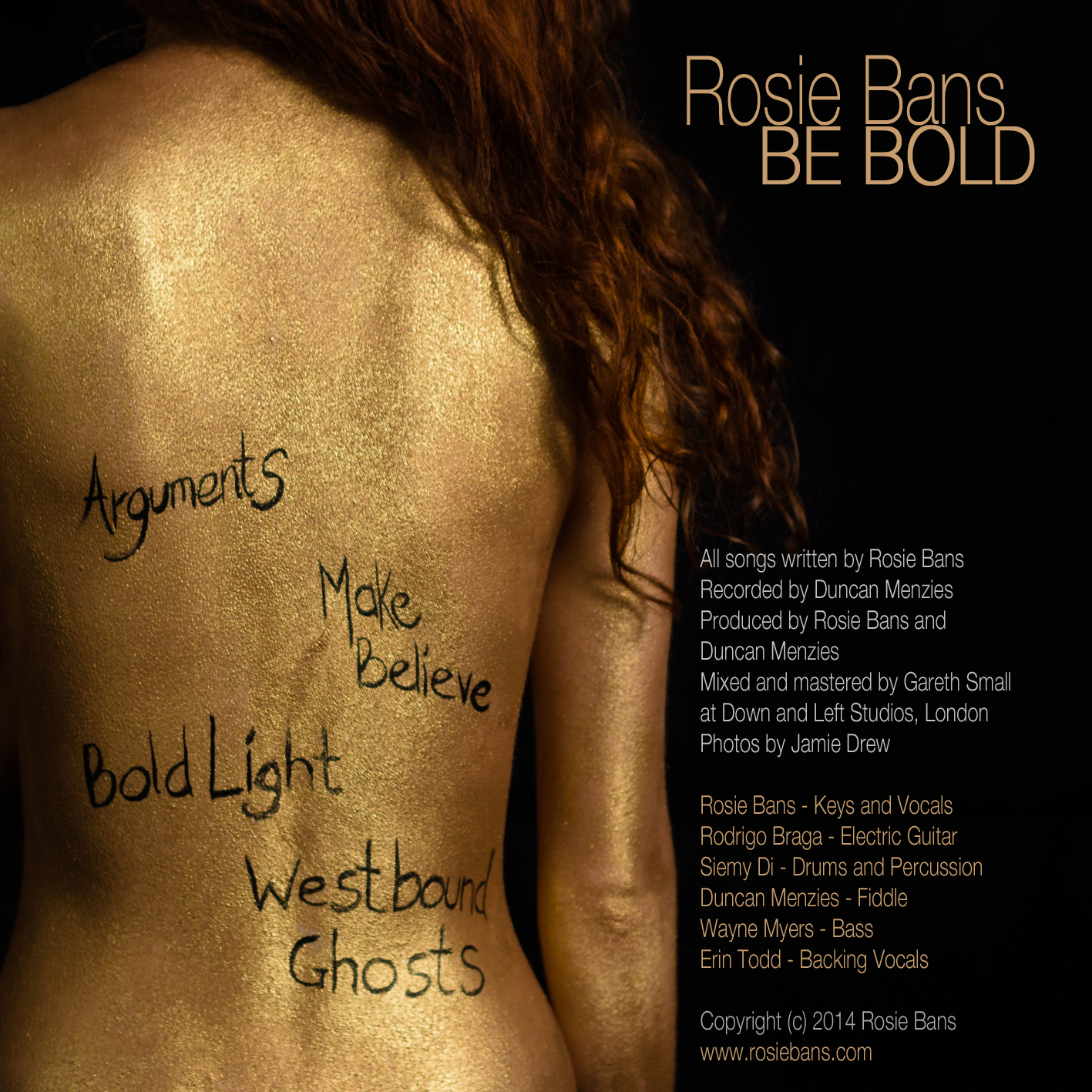
What follows is a search for the latest unsigned artists who might, be at future Scottish Album Of The Year Award ceremonies. This could include one of the best unsigned Scottish artists, Rosie Bans, who has just released her debut E.P. Be Bold. It’s the introduction to one of Scotland’s best kept musical secrets.
Not for much long. Glasgow born Rosie Bans is determined to make a name as a singer and songwriter. That’s why she moved South to London, seeking fame and fortune. So, far Glasgow and London audiences have been won over by Rosie. Her music and trademark banter have won friends and influenced people in London. No wonder, given the quality of Rosie’s songs.
Her songs are slick, melodic and hook-laden. They’re also variously heartfelt confessionals, complex, emotive, honest, soul searching, subtle and beautiful. Rosie writes songs that tell stories. She introduces you to a cast of characters. You empathise with them, share their pain, hurt, stories and lives. That’s the case on Be Bold, where Rosie sits down with her trusty piano and backing band lays bare her soul.
Opening the Be Bold E.P. is Arguments. Scorching, Led Zeppelin licks grab your attention. They join forces with the rhythm section in delivering a musical curveball. It’s a scene setter. In struts Rosie’s feisty vocal. It’s enveloped by scorching guitars, driving rhythm section and piano. Harmonies flit in and out the gloriously rocky arrangement. Later, the arrangement becomes jazz-tinged, before returning to its rocky norm. This is the perfect backdrop for Rosie’s vocal on this tale of a relationship gone wrong. Emotive, feisty and full of frustration, what an introduction to Rosie Bans.
Make Believe is very different to the previous track. Jazz-tinged describes the piano lead arrangement. Drums signal the arrival of Rosie’s vocal as she delivers a vocal tour de force. She’s lonely and alone, before her vocal becomes sassy and needy. It’s soft and tender, cascading above the arrangement. Drums, piano and cooing harmonies combine. Rosie’s vocal is breathy, ethereal and akin to an emotive confessional.
Bold Light has a slow, lush and atmospheric introduction. Vibes accompany Rosie’s vocal on a song that could be autobiographical. She recently moved to London, from Glasgow, her hometown. In the song, she’s lonely, confused and uncertain. She doesn’t alone, doesn’t know who she is any more and understandably, wants to go home to her old life. She wells up, emotion filling her vocal. Meanwhile, the punchy arrangement meanders alone, before becoming jaunty as Rosie lays bare her soul with a soulful vocal.
Westbound Ghosts closes the Be Bold E.P. It’s a homecoming song of sorts. Accompanied by the piano, Rosie sings about travelling up the east coast “to a place that I feel most fits like home,” By then, drums are providing the heartbeat and strings have swept in and are sweeping the arrangement along. Rosie paints pictures. There’s a sense of joy and trepidation about her homecoming. Her new and old lives are very different. Then a thunderous drum signals Rosie to kick loose. She unleashes a vocal powerhouse and ensures the song swings. Her jazzy vocal is a joy to behold. Especially when strings sweep and swirl and the jaunty piano and drums accompany here. It’s an irresistible, hook-laden fusion of jazz and pop from Rosie Bans.
Recently, Rosie Bans was hailed one of the best unsigned singers in Britain. That’s definitely the case. Rosie is a hugely talented singer and songwriter. The four tracks on Be Bold are a tantalising taste of what Rosie Bans is capable of.
On the four tracks on Be Bold, Rosie combines jazz, pop and soul. Rosie’s songs are slick, melodic and full of hooks. They’re also heartfelt confessionals. The songs are variously complex, emotive, honest, soul searching, subtle and beautiful. Rosie writes songs that tell stories. She introduces you to a cast of characters. You empathise with them, share their pain, hurt, stories and lives. That’s the case on Be Bold, which Rosie Bans will be showcasing on her forthcoming tour.
Hopefully, during Rosie Bans forthcoming tour, it won’t just be music fans that will be at each show. Hopefully, so will a whole host of A&R reps wanting to sign Rosie Bans. Having heard Be Bold, they’ll be wanting to add Rosie to their roster. No wonder. She’s an artist with a huge future. Be Bold is proof of that and is why it won’t be long until Rosie Bans is signed to a record company. After that, we’ll be hearing a lot more from Rosie Bans.
ROSIE BANS-BE BOLD.

MOGWAI-LES REVENANTS.
MOGWAI-LES REVENANTS.
Earlier this year, Glasgow’s very own Mogwai released their eighth studio album Rave Tapes. This was their first album in three years, since the release of Hardcore Will Never Die, But You Will. However, during that three year period, Mogwai had been busy. They contributed the soundtrack to the French television series Les Revenants which was recently nominated for 2014s Scottish Album Of The Year Award. This wasn’t the first soundtrack Mogwai had written. No. Quite the opposite.
Previously, Mogwai provided the soundtrack to the 2006 movie Zidane: A 21st Century Soundtrack. The same year, Mogwai collaborated with Clint Mansell on the soundtrack to The Fountain. Les Revenants was just latest project Mogwai had been involved with during their nineteen year career. So, before I tell you about Les Revenants, I’ll tell you about one of Scotland’s biggest and best bands Mogwai.
Mogwai’s roots can be traced to Glasgow in April 1991. That’s where guitarist Stuart Braithwaite and Dominic Aitchison first met. Four years later, they met drummer Martin Bulloch and formed Mogwai, which film buffs will remember, is a character from the movie Gremlins. Mogwai was always meant as a temporary name, but it stuck and was on the label of their 1996 debut single Tuner. It was released to critical acclaim and the NME awarded it their single of the week award. Two other singles were released during 1996 Angels v. Aliens and Summer. By then Mogwai were a quartet.
Guitarist John Cummings joined the band in 1995. He’s also something of a maestro when it comes to all things technical and is described as playing “guitar and laptop.” He was part of one of the hottest bands of the late nineties, Mogwai who released two more singles in 1997.
These two singes were New Paths To Helicon Pt. 1 and Club Beatroot. Just like their debut single Tuner, New Paths To Helicon Pt. 1 was won NME’s single of the week award. This was the perfect time for Mogwai to record their debut album, Mogwai Young Team.
For Mogwai Young Team, Mogwai brought onboard Brendan O’Hare the Teenage Fanclub’s drummer. Another guest artist was Aidan Moffat of Falkirk based band Arab Strap. He added the vocal to R U Still In 2 It. The rest of Mogwai Young Team consisted of instrumentals. Mogwai Young Team was recorded at Chem 19 studios and produced by ex-Delgado Paul Savage and Andy Miller, one of Scotland’s top producers. Once Mogwai Young Team was completed, it was released on Scotland’s biggest record label, Chemikal Underground.
On its release in October 1997, critics were one over by Mogwai Young Team. Mogwai were hailed Mogwai as a band with a big future. Mogwai Young Team was a groundbreaking album of post-rock, which sold over 30,000 copies and reached number seventy-five in the UK. The Mogwai Young Team were on their way. However, a few changes were about to take place.
A year later, Mogwai were back in the studio recording their sophomore album Come On Die Young. Much had changed. A new member had joined the band. Barry Burns a flautist and sometimes pianist, had played a few gigs with the band. They then asked him to become the fifth member of Mogwai. Violinst Luke Sutherland joined Mogwai, but not on a full-time basis. This wasn’t the only change.
Recording was split between New York and Glasgow. This time, they’d forsaken Chem 19 in Blantyre and recorded parts of the album in Tarbox Road Studios, New York. Some sessions took place in Glasgow’s Cava Studios. Producing Come On Die Young was Dave Fridman. Some critics felt his production style resulted in a much more orthodox sounding album. However, I’d argue that Come On Die Young was part of Mogwai discovering their “sound” and direction. Come On Die Young is a much more understated, but also ambient, experimental, multi-textured and melodic. There’s a fusion of ambient, grunge and post rock on Come On Die Young, which was released in March 1999. It reached number twenty-nine in the UK. Mogwai it seemed were now on their way to finding their sound and fulfilling the potential evident on their debut album.
Mogwai’s music continued to evolve on their third album 2001s Rock Action. More use was made of electronics on Rock Action. This was part of a process that would continue over the next few albums. There were even more layers and textures on Rock Action. It was as if Mogwai had expanded their palette. Seven of the songs were instrumentals, while Dial Revenge featured Gruff Rhys of Super Furry Animals.
Again, Rock Action was produced by Dave Fridman, while recording took place in New York and at Glasgow’s Cava Studios. Once Rock Action was completed, it became Mogwai’s first album to be released on Play It Again Sam.
Rock Action was released in April 2001, and proved to be Mogwai’s most successful album. It reached number twenty-three in the UK. Critics remarked upon how Rock Action wasn’t as dark an album as its predecessors. That didn’t mean that Mogwai’s view of the world had changed. They were still worldweary. Soon, they’d be happy people writing happy songs and making a breakthrough into the American market.
Happy Songs For Happy People was released in 2003. Mogwai’s evolution continued. Their music continued further down the electronic road. Yes, electric guitars and a drummer were used, but synths were playing a more important role in Mogwai’s music. So were the addition of strings and a piano. They played their part in what was a much more understated album. Part of this change in style was a change of producer.
Tony Doogan was brought onboard as producer. He replaced Dave Fridman. Gone were transatlantic recording sessions. Happy Songs For Happy People was recorded at Cava Sound Studios, Glasgow. On its release in June 2003, Happy Songs For Happy People was well received by critics. They welcomed the change in style. So did record buyers. While Happy Songs For Happy People only reached number forty-seven in the UK, it spent a week in the American charts, reaching number 182 in the US Billboard 200. After four albums, Mogwai had broken into the American market. Happy Songs For Happy People it seemed, was a landmark album.
Having made inroads into the lucrative American market, Mogwai didn’t rush their fifth album. It was released three years after Happy Songs For Happy People. There’s a reason for this. They were working on tree separate projects. The first was their fifth album Mr. Beast. Then there was the first soundtrack they’d written and recorded. This was for the 2006 movie Zidane: A 21st Century Soundtrack. Mogwai also collaborated with Clint Mansell on the soundtrack to The Fountain. Although soundtracks were a nice sideline for Mogwai, their fifth album Mr. Beast was of huge importance. Especially, if it was a commercial success in America.
Mr. Beast was released in March 2006. It had been recorded at Mogwai’s new studio, Castle Of Doom Studios in Glasgow. Recording took place between April and October 2005, with Tony Doogan and Mogwai producing Mr. Beast. On its release, it was mostly, to critical acclaim. Critics were fascinated at how Mogwai’s music continued to evolve. For Mogwai, standing still was going backwards. Ever the innovaors, they were rewarded by an album that reached number thirty-one in the UK and number 128 in the US Billboard 200. Mogwai were now one of Scotland’s most successful musical exports. They were certainly Scotland’s most innovative band. This was a title they weren’t going to give up without a fight.
To ensure they kept their title of Scotland’s most innovative bands, Mogwai returned to the studio where it all began, Chem 19 in Blantyre. Andy Miller who’d co-produced Mogwai Young Team, Mogwai’s debut album was chosen to produce what became The Hawk Is Howling. This was Mogwai’s sixth album and marked a first. It was Mogwai’s first album to consist of just instrumentals. Once The Hawk Is Howling was recorded, Garth Jones mixed the album at Castle Of Doom Studios in Glasgow. After that, The Hawk Is Howling was ready for release.
The Hawk Is Howling was released in September 2008. Critics were won over by The Hawk Is Howling. There were no dissenting voices. This was one of Mogwai’s best albums. So, it’s no surprise it sold well in the UK and America, reaching number thirty-five in the UK and number ninety-seven in the US Billboard 200. It seemed with each album, Mogwai’s music evolved and matured. This resulted in even more success coming their way. Would this continue with Hardcore Will Never Die, But You Will?
For their seventh album, Mogwai returned to Chem 19 Studios in Blantyre, where they hooked up with ex-Delgado Paul Savage. Since he’d produced Mogwai’s debut album, Mogwai Young Team Paul had established a reputation as one of Scotland’s best producers. He’d worked with everyone from Franz Ferdinand, Admiral Fallow and Camera Obscura to R.M. Hubbert. However, it was a very different Mogwai Paul encountered. They were very different to the band who recorded Mogwai Young Team. Their music had evolved and was continuing to do so. They’d matured as musicians and embraced the new technology. Hardcore Will Never Die, But You Will was proof of this.
Here was an album of groundbreaking, genre-melting post-rock with attitude. Hardcore Will Never Die, But You Will was also an album not short on humour. Especially, with tracks about poppy soulster Lionel Ritchie and Scotland’s nemesis Margaret Thatcher. With a combination of pioneering, post rock music crammed full of hooks, humour and attitude, surely Hardcore Will Never Die, But You Will couldn’t fail?
Yet again, Mogwai had won over critics with Hardcore Will Never Die, But You Will. It reached number thirty-five in the UK and number ninety-seven in the US Billboard 200. For Mogwai, they were now into their third decade as band and had just enjoyed their biggest album to date. What next?
The answer to that was Les Revenants, a soundtrack to a French television series. Les Revenants or The Returned is essentially a television program about zombies. Unlike similar programs, when the “undead” return to the town they lived in, it’s as they were, not how most films portray zombies. Another difference was the way Mogwai were commissioned.
Usually, someone writing a soundtrack can see the film they’re writing music to. Not Mogwai. They were just shown a few scripts. Then they were given an overview of what the series was about. From there, Mogwai wrote thirteen tracks. The other track they chose was What Are They Doing In Heaven Today, which was written by Charles Elbert Tilney. These fourteen tracks were recorded by Mogwai, who produced Les Revenants with Neil MacMenamin. Once Les Revenants was finished, it was released in February 2013.
Before Les Revenants was released an E.P. was released. It featured four tracks. That was a tantalising taster of what was to come. After all, Mogwai would approach a soundtrack like Les Revenants in a different manner. They wouldn’t do anything predictable. Les Revenants was a case of expect the unexpected. Critics loved Les Revenants and hailed the album as one of the best albums Mogwai had released. However, why was that?
Earlier, I described Mogwai’s music as multi-textured. That’s the case on Les Revenants. It’s an album of constantly shifting moods, full of nuances, subtleties and surprises. I’d also describe the music as dramatic and disturbing, right through to melancholy and menacing. Having said that, it’s also music that has a warmth and is ethereal. Another important way to describe Les Revenants is cinematic.
Here is music that paints pictures. Close your eyes, allow your imagination to run riot and Les Revenants appear before your eyes. This is the case from the moody drama of Hungry Face. It’s a fusion of ambient, electronica, indie rock and post rock. You can imagine the opening titles to Les Revenants rolling as the tension and drama builds. This drama continues on Jaguar. It builds and grows, washes of synths and piano joining a pulsating beat. It’s moody, dark and most importantly dramatic.
The Huts is very different to the previous tracks. It has a much more understated, spacious sound. Just pensive, tender driven post rock guitar and melancholy piano play their part in an ethereal, cinematic track. Kill Jester is another understated track. It’s a piano driven track, that builds and grows. Again it has an ethereal and melancholy quality. Then later, the track takes on a celestial quality.
There’s a change in style on This Messiah Needs Watching. Menacing, moody and dramatic, it’s a track that builds. Feedback is sprayed across the arrangement while a meandering piano and keyboards combine. Searing guitars add to the tension. One wonders what scene this accompanies, given the tension that’s building?
Thoughtful and spacious describes Whisky Time. It’s one of the shortest tracks on Les Revenants and has a pensive and contemplative quality. So does Special N. That’s partly because of the melancholy strings and chiming guitar. Drums provide a thoughtful heartbeat before the drama and tension builds. Still it’s a beautiful, ethereal track. Just like Whisky Time, Relative Hysteria is another track that’s slow, spacious and thoughtful. Just chiming guitars, keyboards and beats combine, before shimmering guitars glisten. They play their part in an atmospheric, evocative soundscape. Minimalist and moody describes Fridge Magic. Percussion, synths and cinematic string create a multilayered arrangement. It meanders dramatically along proving captivating. The cinematic synths make a reappearance on Portugal. So do droning synths and a keyboards. Soon, the track veers between understated to dramatic and disturbing, but is always cinematic.
Eagle Tax is played on a Fender Rhodes, producing a wistful introduction. Soon, guitars reverberate, reminding me of the soundtrack to a Wim Wenders film. That can only mean two men, Ry Cooder or Irmin Schmidt of Can. There’s even a similarity to Angelo Badalamenti’s Twin Peaks’ soundtrack. Soon, the Fender Rhodes and guitar are joined by drums as one of the most evocative, atmospheric and dramatic tracks unfolds.
Modern is totally unlike anything that’s gone before. Buzzing, droning synths and searing guitars join forces, while melancholy strings and meandering keyboards compete for your attention. Somehow, the track is dramatic, understated and ethereal simultaneously.
There’s a country sound to What Are They Doing In Heaven Today? Just a piano, guitars and steady beat provide the backdrop for a melancholy, pensive vocal. It’s tender, emotive and full of pain and frustration. This results in a truly beautiful, soul-searching song.
Wizard Motor closes Les Revenants and sees Mogwai throw another curveball. After the droning, dramatic and then melancholy introduction, drums pound and scorching, machine gun guitars are unleashed. Mogwai decide now’s the time to combine post-rock, grunge and indie rock as they close Les Revenants on a high. Seamlessly, the fuse musical genres and drama. There’s even avant-garde, electronica, experimental and folk thrown into the mix, as Mogwai, forever the innovators close Les Revenants on a dramatic, rocky high.
Ever since they released their debut album Mogwai Young Team in 1996, Mogwai have established a reputation as one of the most innovative groups of the past thirty years. During this period, Mogwai had sought to constantly reinvent themselves. Standing still it seems, isn’t an option. As a result, with each album Mogwai’s music evolves. Sometimes, it’s as if you’re listening to another band. That’s the case on Les Revenants.
Les Revenants is best described as a cinematic Magnus Opus. It’s an album of ambitious, bold, challenging, influential and innovative music. This is music full of nuances, subtleties and surprises. During fourteen tracks the mood constantly shifts. One minute, the music is wistful, melancholy and pensive, the next dark, disturbing, eerie and moody. By the same token, Les Revenants is sometimes, beautiful and melancholy. The music on Les Revenants tugs at your heartstrings, poses questions and paints pictures. The music is also ambitious, bold, challenging, influential and innovative. Quite simply, Mogwai take you on genre-hopping musical journey.
Over fourteen tracks, Mogwai combine everything from ambient, avant-garde, classical, experimental, folk, grunge, indie-rock and post-rock. This resulted in a genre-melting album, Les Revenants. It’s a mesmeric fusion that captivates and compels. You’re taken on a musical journey, one that veers between dramatic, dreamy, surreal and trippy, to beautiful, pensive, understated and melancholy Other times the music is dramatic, moody and broody. One thing the music never is, is boring.
Not at all. Certainly not with Mogwai providing the soundtrack to Les Revenants. Subtleties and surprises are sprung, while Mogwai aren’t afraid of changing direction. Using the musical equivalent of a handbrake turn, the Mogwai Young Team perform a volte face. That’s what makes Les Revenants such a captivating and refreshing soundtrack. Les Revenants is also one of the best albums Mogwai have recorded. That’s why Les Revenants must be one of the favourites to land Mogwai 2014s Scottish Album Of The Year Award.
MOGWAI-LES REVENANTS.

RICK REDBEARD-NO SELFISH HEART.
RICK REDBEARD-NO SELFISH HEART.
All too often, when I pore through each week’s new releases, I wonder where music is heading? It seems that nostalgia is now officially the future. A deluge of third-rate reissues seems to be all some record companies are releasing. Then there’s compilations. Like greetings cards, there are compilations for every occasion. Many record shops now seem to be musical equivalent of Hallmark. Not content with albums of Christmas music, we’re now treated to compilations for St. Valentine’s Day and fathers day. I’m fully expecting some enterprising record label to release an album for Bar Mitzvahs, first communions or even, music to celebrate the passing of your nearest and dearest. With songs like First Cut Is The Deepest, Little Ole Wine Drinker Me and Another One Bites The Dust, a new revenue stream awaits enterprising record companies. Even worse, there’s the D.I.Y. music.
With music software much more affordable, everyone thinks they’ve got what it takes to be a “star.” Sadly, that’s not the case. Sadly, each copy of Logic doesn’t come with talent enclosed. Worse still are edits. They’re are usually made by wannabe DJs lacking the talent to make remixes. Incredibly, record companies are now releasing compilations of edits. Then there’s beard stroking DJs releasing remixes of third rate eighties soul. Seriously, you couldn’t make this up. Of course, maybe we’re getting the music we deserve?
Living in the age of so called talent shows, “stars” are created over a period of weeks. Like so much of modern society, music is now instant and disposable. “Stars” are created almost overnight. Over a period of eight weekly hour shows, a star is born. So, it’s no surprise that their music is disposable. This weeks talent show winner is next month’s shelf stacker. Their music is equally disposable. Empty, vacuous and lacking in meaning and depth, their music is next month’s landfill. Thankfully, there is an alternative.
Despite all this and more being wrong with music, very occasionally, along comes an album that restores my faith in music. It makes up for everything I’ve described. Sometimes, the musical Gods are smiling on me. When this happens, the constant search for quality music becomes worthwhile. This was the case when last year, I came across Rick Redbeard’s No Selfish Heart, which I’m pleased to say has been nominated for 2014s Scottish Album Of The Year Award.
No Selfish Heart was released on Glasgow’s premier label, Chemikal Underground in January 2013. A long time in the making, at long last, Rick Redbeard’s debut album No Selfish Heart was out. Before I tell you the subtleties, nuances and melancholy delights of No Selfish Heart, which was eight years in the making, I’ll tell you about Rick Redbeard.
Although No Selfish Heart is Rick Redbeard’s debut album, it’s not his musical debut. Quite the opposite. That was with The Phantom Band. Using his real name, Rick Anthony, he’s been lead singer of one of Glasgow’s leading bands since hey released their debut single Throwing Bones in 2007. Two years later, they released their critically acclaimed debut album Checkmate Savage on Chemikal Underground Records. Just a year later, The Phantom Band were back with their sophomore album The Wants. Since then, The Phantom Band haven’t released another album. That gave Rick the opportunity to finish the No Selfish Heart, an album his alter-ego started eight years ago.
Work on No Selfish Heart began eight years before its release. The idea was to give Rick an outlet for his more pensive, thoughtful music. It was too good to lay unreleased, but unsuitable for The Polar Band. So, Rick invented his alter-ego Rick Redbeard. He was the polar opposite to the hard rocking lead singer of The Polar Band. Rick Redbeard was the perfect musical vehicle for these songs. Among the artists who have influenced No Selfish Heart are Tom Waits, Bruce Springsteen, Leonard Cohen and Nick Cave. To that, I’d add Paul Buchanan of The Blue Nile, Chris Thompson of The Bathers and the books of Alistair Gray and James Joyce. All these influences and more can be heard on the nine tracks on No Selfish Heart, which was recorded in unusual circumstances.
Eschewing Glasgow’s top recording studios, Rick took a different approach to recording No Selfish Heart. He split his time between his between two places. This included his flat in Glasgow’s West End, the city’s artistic quarter and his parent’s house in rural Aberdeenshire. From a technical viewpoint, this isn’t ideal. Listen carefully and you can hear imperfections like a piano stool creaking. While this might not make sense to many people, the intimate and familiar surroundings allowed an outpouring of emotion. In allowing Rick’s sensitive and pensive side to shine through. Eventually, after eight years hard work, No Selfish Heart, a true labor of love was completed.
When Rick Redbeard came to release No Selfish Heart, it made sense to release it on Chemikal Underground. After all, it was The Phantom Band’s label. Released in January 2013, No Selfish Heart was released to critical acclaim. Superlatives were exhausted by critics. They marveled at Rick Redbeard’s debut album No Selfish Heart. Eight years in the making, it had been time well spend. You’ll realize that too, when I tell you about No Selfish Heart.
Opening No Selfish Heart is Clocks. It features the unmistakable sound of a shruti-box, which is crucial to the song’s lament like sound. It accompanies Rick’s weary, wistful vocal. Pondering and wondering, he seems consumed by the sense that time is running out. It’s as if he’s realized that every minute, of every hour, of every day, of every year time is slipping. Mournful and melancholy it’s a wake up call that nobody is immortal.
Just an acoustic guitar and subtle strings accompany Rick’s vocal on Old Blue. Needy and lonely suffering from the breakup of a relationship, time, isn’t healing his hurt. Backing vocals sweep in. They seem sympathetic and share his hurt. This doesn’t matter. Still his loss is akin to a gaping wound, in that it still hurts badly.
There’s a country influence to Any Way I Can. It’s Rick’s vocal and the guitars that lead to this comparison. Expressive and evocative describe Rick’s lyrics. His voice paints pictures. It’s hardly one of domestic bliss. Instead, it’s a relationship on the rocks. Rick the lyricist, is like a latter day Johnny Cash. He sings: “put down the blade and come to bed…I won’t take back the things I’ve said… and..I can’t undo the things I’ve done.” Powerful, evocative and emotive, their love still lingers.
A Greater Brave is another example of Rick’s songwriting skills. Again, he paints pictures with his lyrics. It reminds me of The Blue Nile on A Walk Across The Rooftops describing a city as darkness falls. The understated arrangement, where acoustic guitar and punchy harmonies accompany his heartfelt, emotive vocal. Later, Josephine Anthony’s ethereal vocal joins the harmonies. It’s the perfect foil for Rick and his lyrics which seem inspired by James Joyce and Alistair Gray.
We All Float has a melancholy, some would say mournful introduction. No me. Instead, I’d describe it as pensive and beautiful. As Rick sings about man’s mortality, his voice is filled with emotion and sadness. There’s almost a sense surprise at this sudden realization that comes with age.
Kelvin Grove is a traditional Scottish song. It’s a love song given a makeover by Rick. Just acoustic guitars and strings accompany him. His vocal is slow, impassioned and emotive. Taking care with the lyrics, he delivers them thoughtfully, as if he’s singing them to someone. In doing so, he brings out the beauty in this traditional song.
Just his trusty acoustic guitar and percussion accompany Rick on Now We’re Dancing. It’s a song about the breakup of a relationship. Here, Rick sings about how his life seemed to stop when this happened. He describes it as: “my evolution’s come undone.” Memories come flooding back of happier times. They’re long gone. Rueful and almost superstitiously, as if scared to mention her name, he sings: “I would love to say your name, if only for the sake of it.” Poignant and filled with pathos, Rick’s hurt seems almost real.
Cold As Clay (The Grave) is a track whose roots are firmly in folk music. Here, Rick’s vocal is reminiscent of James Grant of Love and Money. Accompanied by accordion, guitar and strings, Rick’s vocal is a cathartic outpouring of hurt, grief and pain. Raw and heartfelt the reality of death is the cause of his pain. The only consolation is, that one day, he believes, they’ll be together again.
Wildlove features another outpouring of emotion from Rick. With just a guitar for company, he unleashes a vocal that’s equal parts power and pain. Conjuring up feelings emptiness and even grief, the lyrics, deal with love lost and the vacuum it leaves behind.
Closing No Selfish Heart is the title-track. A slow, deliberate guitar sets the scene for Rick’s vocal. He delivers lyrics that are evocative, expressive, poetic and Baroque. They take you on a musical journey, to another time and place. Rick’s vocal is heartfelt and filled with emotion and sincerity. Painting pictures with his lyrics, he sings of the woman who transformed: “his selfish heart.”How did he do this? “Only love can change a selfish heart,” one that seems unattainable and tantalizingly out of reach.
Although the ten songs on No Selfish Heart took eight years to record, they were well worth the wait. This was the same with The Blue Nile. They were far from a prolific group. Like The Blue Nile, Rick’s music is the polar opposite to so much modern music. Rather than being instant and disposable, it’s intelligent, evocative, expressive, poetic and thoughtful. Rick Redbeard sings of hurt and heartbreak, love and loss, life and death. Poignancy gives way to pathos, while there’s a sense of melancholia and wistfulness on several tracks. Indeed, several tracks are like a coming of age for Rick. There’s a realization that no longer he’s immortal. That’s something that comes with age, experience and maturity. Other songs, they’re akin to an outpouring of grief and loss. Rick’s vocal is at the heart of these songs, while the mostly acoustic arrangements are understated and subtle. Despite this, the songs are intricate and multilayered. Subtleties, surprises and nuances await discovery.
Like Paul Buchanan, Rick has a lived-in, world-weary sound. Both albums feature music that’s moody, broody, but sometimes hopeful. The music is also introspective, poignant and wistful music. That’s what I’d expect from Scotland’s latest troubled troubadours. Maudlin but beautiful, heartbreaking but hopeful and always heartfelt, Rick Redbeard’s No Selfish Heart, is well worth discovering. Indeed, Rick Redbeard’s No Selfish Heart, like Mid Air, is pensive and reflective music, that’s perfect for late-night listening. So it’s no surprise that No Selfish Heart, Rick Redbeard’s musical coming-of age has been nominated for 2014s Scottish Album Of The Year Award.
Rick Redbeard’s No Selfish Heart reminds me of Paul Buchanan’s Mid Air. It was nominated for 2013s Scottish Album Of The Year Award. Paul and Rick are both troubled troubadours, whose music is soul baring and beautiful. The songs on No Selfish Heart are akin to a confessional from Rick Redbeard as he lays bare his soul for all to see. This means No Selfish Heart is very different to other albums nominated for 2014s Scottish Album Of The Year Award. However, No Selfish Heart has one thing in common with most of the album, quality. Quite simply, No Selfish Heart oozes quality, emotion and beauty and means Rick Redbeard may be a genuine contender for 2014s Scottish Album Of The Year Award.
RICK REDBEARD-NO SELFISH HEART.

CAMERA OBSCURA-DESIRE LINES.
CAMERA OBSCURA-DESIRE LINES.
There aren’t many bands who announce on their website that they’re on maternity leave. Camera Obscura do. They’re another Scottish band who do things their way. So far, that’s worked well. They’ve released five albums since they were formed in Glasgow in 1996. Their most recent album, was Desire Lines, saw Camera Obscura change direction musically. This is always risky, but Camera Obscura have been vindicated by being nominated for the 2014 Scottish Album Of The Year Award.
For two albums, Camera Obscura had worked with Swedish producer, Jari Haapalainen, of The Bear Company. He’d produced their third album, 2006s Let’s Get Out Of This Country, then the followup, 2009s My Maudlin Career. Despite My Maudlin Career being Camera Obscura’s most successful album, Jari was replaced as producer. Camera Obscura decided to move their music forward. They’d been accused of sticking with the same formula. Certain critics accused My Maudlin Career of sounding like Let’s Get Out Of This Country. That must have stung. So Camera Obscura headed to Portland, Oregon, where Tucker Marine produced Desire Lines. Making guest appearances, were Neko Case and Jim James of My Morning Jacket. This was a brave move for Camera Obscura. After all, they’d enjoyed the most successful album of their career with My Maudlin Career. Would Camera Obscura’s decision to change direction work? Before I tell you that, I’ll tell you about Camera Obscura’s career so far.
It was back in 1996, that lead singer Tracyanne Campbell, John Henderson and Gavin Dunbar formed Camera Obscura. After that, the lineup has changed several times. The first was when David Skirving joined as guitarist. He played on their first two singles. Park and Ride was released in March 1998 and Your Sound released in December 1998. Both singles were released on Andmoresound. After that, it took three long years before they released their debut album. By then, their lineup had changed.
The next change in Camera Obscura’s lineup came when drummer Lee Thompson joined in 2000. Then in 2001, keyboardist Lindsay Boyd joined, while Kenny McKeeve replaced David Skirving. This was the lineup that played on Camera Obscura’s 2001 debut album Biggest Bluest Hi-Fi. Producing the album, was a stalwart of Glasgow’s music scene, Stewart Murdoch of Belle and Sebastian. Biggest Bluest Hi-Fi was released on Andmoresound in December 2001, but failed to chart. Critics liked Camera Obscura’s music. They were compared to Belle and Sebastian, and were tipped to become one of the best Scottish indie bands. The five years they’d spend honing their sound had been worthwhile.
Two years after releasing their debut album Biggest Bluest Hi-Fi, Camera Obscura signed to Spanish independent record label Elefant in 2002. They rereleased Biggest Bluest Hi-Fi while recording of the followup was taking place. Then in August 2003, Camera Obscura released Underachievers Please Try Harder. It was produced by another stalwart of the Scottish music scene, Geoff Alllan. On its release, it was well received by critics. Although critically acclaimed in some quarters, Underachievers Please Try Harder failed to chart. At least the lead single teenager gave Camera Obscura a minor hit single. It reached number 182 in the UK singles charts. Things however, would get better.
Following the release of Underachievers Please Try Harder, Camera Obscura headed out on their first nationwide tour. After touring Britain and Ireland, Camera Obscura toured America. Apart from releasing Keep It Clean from Underachievers Please Try Harder, Camera Obscura’s only other single was I Love My Jean. This was Robert Burns’ poetry put to music. The collaboration between Scotland’s national bard and Camera Obscura, resulted in their biggest hit single. Reaching number 101 in the UK would be a sign of what was about to happen.
Change was on the cards for Camera Obscura. Whereas their two previous albums had been recorded in Scotland and produced by Scottish producers, Camera Obscura headed to Sweden and worked with Swedish producer, Jari Haapalainen, of The Bear Company. He produced their third album Let’s Get Out Of This Country. Released in June 2008, this was Camera Obscura at their best. Perfect pop songs full of delicious melodies and poppy hooks, Let’s Get Out Of This Country was released to critical acclaim. Sadly, it only reached number 125 in the UK. The hook-laden Lloyd, I’m Ready To Be Heartbroken was chosen as the lead single. This was the reply to Lloyd Cole and The Commotions’ classic Are You Ready To Be Heartbroken. Tragically, Lloyd, I’m Ready To Be Heartbroken stalled at number 144. Maybe being signed to an indie was hampering Camera Obscura’s progress?
After Let’s Get Out Of This Country, Camera Obscura signed to 4AD in November 2008. They arrived at their new label with fourth album already recorded. My Maudlin Career was produced by Jari Haapalainen and released in April 2009. Most critics loved My Maudlin Career. However, there were a few dissenting voices. They felt My Maudlin Career was sounded the same as Let’s Get Out Of This Country. They’d have to eat their words when My Maudlin Career proved to be the most successful album of Camera Obscura’s career. Not only did it reach number thirty-two in the UK, but number eighty-seven in the US. After thirteen years and four albums, Camera Obscura had enjoyed the most successful album of their career. Then things started to change.
The first change was Nigel Baillie became a father. He decided quite rightly, to put his family before his career, so became a part-time member of the band. This must have started a trend. Other members of Camera Obscura headed off on maternity leave. Just now, Camera Obscura are officially on maternity leave. Despite this, Camera Obscura released their fifth album Desire Lines.
Jari Haapalainen was replaced as producer. Camera Obscura decided to move their music forward. Replacing him, was Tucker Marine. To work with Tucker, Camera Obscura headed to Portland, Oregon, where they recorded the twelve song written by Traceanne Campbell. Tracyanne played keyboards and sang lead vocals. Kenny McKeeve played guitar, Gavin Dunbar bass, Lee Thompson drums and Carey Lander keyboards. Making guest appearances, were Neko Case and Jim James of My Morning Jacket. This was a brave move for Camera Obscura. After all, they’d enjoyed the most successful album of their career with My Maudlin Career. Would this risk pay off?
On the release of Desire Lines, it was released to critical acclaim. Critics hailed Desire Lines as their finest album so far. Sadly, it didn’t quite replicate the success of My Maudline Career. Desire Lines reached just number thirty-nine in the UK and number 106 in the US Billboard 200. Despite that, the new Camera Obscura on Desire Lines was welcomed.
There was a familiarity to the music on Desire Lines. Having said that, it was innovative. Unlike other groups, Camera Obscura’s music was progressing in a new direction. Describing Desire Lines as cerebral, literate, intelligent, ethereal, quirky and emotive is selling the album short. It’s all that and more. Indeed, Desire Lines which I’ll tell you about, is the latest installment the Camera Obscura story.
Opening Desire Lines is Intro, a melancholy scene setter. Swathes of strings add a wistful and elegant sound, leaving you wanting more.
This Is Love (Feels Alright) is a tale of love gone wrong, with Tracyanne acting as arbiter and maybe seducer. Bluesy horns join the rhythm section as the arrangement meanders along. There’s a a sense of disappointment and inevitability that her friends have fallen out. Although they both have their faults, she’s a “killer tease.” He meanwhile, is a “good boy,” a good boy she’s attracted to. In her heart, he’s too good for the “killer tease.” So when she offers her advice, she wonders aloud. Should we “turn out the light, just give in to the night…on this fine night?” While this is three minutes of cerebral pop perfection, we never find out how this love triangle turned out.
Troublemaker sees the tempo increase as the rhythm section drive the arrangement along. Keyboards replicate sirens, which seems fitting as Tracyanne wants to crush: “what remains of this love.” Although opposites attract, they don’t necessary stay together. Chiming guitars, harmonies and pounding drums provide the backdrop to Traceyanne’s vocal, as frustration fills her vocal. She realizes the relationships over and is frustrated and disappointed that they can’t let go of each other.
William’s Heart is a track that only Camera Obscura could’ve recorded. It has their trademark sound. There’s even a touch of Lloyd Cole and The Commotions in the guitars. Add to that Tracyanne’s literate lyrics and its a potent combination. Not many bands refer to Byron in their lyrics. Camera Obscura do. There’s a fuller, rockier sound to the arrangement. Searing guitars join sweeping, ethereal harmonies as Tracyanne delivers a heartbreaking vocal. Her lyrics have a poignancy and poetic nature, that she brings to life. One of the most moving lyrics is: “is there enough of a spark to sparkle again?” This brings to mind a relationship that’s all but over and is a heartbreaking kitchen sink drama from Glasgow’s Queen of indie pop.
New Year’s Resolution is a laid-back, languid slice of pop perfection. The arrangement meanders along, fuzzy guitars, deliberate rhythm section and cooing harmonies accompanying Tracyanne’s tender, heartfelt vocal. Kenny McKeeve lays down some fuzzy, muted guitar solos. They don’t overpower Tracyanne’s vocal which takes centre-stage. That’s just as well. Her vocal is needy and full of emotion. She wants, needs reassurance that her relationship won’t end.
Do It Again sees Camera Obscura find their rocky side. Tracyanne finds her inner rock chick. Her vocal is not unlike Debbie Harry, while Kenny McKeeve unleashes blistering guitar licks. The rhythm section provide a pulsating, rocky heartbeat, while a feisty, sassy Tracyanne struts her way through the track.
Cri Du Coeur or Cry Of The Heart is a much slower, soul-baring but dramatic. Her vocal full of sadness, hurt and regret, Tracyanne lays bare her soul. Introspective she realizes her faults. “I never listen to people…I know, I know, I’ll cry.” Drums pound as Camera Obscura create a Spector-esque wall of sound. It replicates Tracyanne’s hurt on this heartbreaking, soul-searching Cri Du Coeur.
Crystalline, chiming guitars and pounding guitars open Every Weekday, an upbeat, joyous slice of pop. This sets the scene for Tracyanne’s vocal, as she delivers a grateful paean to friendship. Her vocal is full of pride and gratitude, as she delivers the slick, intelligent lyrics. Punchy harmonies accompany her, while guitars chime and the rhythm section drive the arrangement along. When it gets to the bridge, the track takes on an anthemic sound. No wonder. Full of slick poppy hooks, it’s Camera Obscura at their best and most joyous.
Fifth In Line To The Throne meanders, wistfully into being. Crystalline guitars reverberate into the distance while the rhythm section provide the melancholy heartbeat. Tracyanne wistfully, realizes that being Fifth In Line To The Throne means her chance is gone. No longer, will she ever get a shot at the title. Worse still, she doesn’t trust those around her, especially her King. She wonders aloud: “if you want me to leave then I’ll go, if you want me to stay, let it show.” A poignant, moving song, full of sadness I wonder what inspired her to write this song?
I Missed Your Party sees Tracyanne transformed into a 21st century Nancy Sinatra. The only difference is, Tracyanne has a better voice. It’s sultry and seductive, while the arrangement is a glorious reminder of another musical age. With bursts of growling horns for company, a standup bass and pounding drums propel the arrangement along. Add to this cooing harmonies and Tracyanne revels in this new style. This results in one of the highlights of Desire Lines.
Break It to You Gently is another kitchen sink drama from Camera Obscura.Tracyanne’s lyrics paint a picture of a somewhat tragic man. In four minutes, this tragi-comedy unfolds. It’s about an ambitious man who always gets things wrong. Talk about running before you can walk. He’s also about to have his heartbroken. As Tracyanne sings: “you had the office before you had the business, you had the ring before the girl,” the rest of the band provide a melancholy backdrop. Keyboards and a pounding rhythm section play their part in a melodic, dramatic tale of heartache. It reaches its heart-wrenching climax when Tracyanne delivers the line: “I’ll break it to you gently.” Heartbreak, hubris and humor, what more do you want in a song?
Desire Lines closes with the title-track. It sounds as if it should’ve been recorded in Nashville. A pedal steel weeps, as if breaking its heart. This sets the scene for Tracyanne’s tender, heartfelt, impassioned vocal. What follows, is an authentic slice of Americana. A tale of a doomed long distance love affair, Tracyanne hopefully sings: “we could send letters.” As her vocal drops out, the pedal steel replicates her grief and heartbreak on this authentic slice of Americana from Glasgow’s very own Queen of pop perfection.
Four years after the release of 2009s My Maudlin Career, Camera Obscura are back and better than ever. Desire Lines is a really grown up album.That’s partly because of Tracyanne Campbell’s lyrics. They demand to be listened to. This isn’t background music. No. It’s too good for that. If you want that, then buy some tawdry chill out album. Desire Lines is full of tales of relationships gone wrong, insecure people, tragi-comedies and kitchen sink dramas. Hurt and heartbreak sit side-by-side with hope. The lyrics sometimes, sound personal. They sound as if they’ve happened to Tracyanne or people she knows. She brings these situations to life. Characters seem very real. You feel sorry for them, laugh at them or pity them. That’s a credit Tracyanne’s skill as a writer. She’s a natural storyteller, one who could just as easily have been an author. Instead, she tells stories with her lyrics and brings them to life with her vocal.
Ethereal, heartfelt and impassioned, Tracyanne’s vocal is also full of hurt, heartbreak and regret. You believe every word she sings. That’s because with each performance, she gives something of herself. Each song that she wrote, is akin to a glimpse at her soul. By singing her lyrics, she reveals even more of her self. Not once on Desire Lines does she phone in her vocal. That’s not her style. Instead, every performance is impassioned and heartfelt. That encourages the rest of Camera Obscura to producing the best performances of their seventeen year career.
While I’ve mentioned Tracyanne most of all, she is the songwriter and lead vocalist, she couldn’t exist without the rest of Camera Obscura. They’re a tight, talented and versatile band. They provide the backdrop to Tracyanne’s stories of love gone wrong, kitchen sink dramas and tragi-comedies. Other times, they play a part in what can simply be described as joyous examples of pop perfection. Slick, polished and hook-laden, the rest of the band yang to Tracyanne’s ying. Over twelve tracks, musical genres melt into one. Americana, country, garage, indie pop, new wave, pop and rock can be heard on Desire Lines, Camera Obscura’s Magnus Opus. Their decision to change producer was vindicated.
Camera Obscura’s decision to change producer was a risk worth taking. From an artistic point of view, Desire Lines surpasses everything that’s gone before. Sadly, it didn’t quite replicate the commercial success of My Maudlin Career. Released to critical acclaim, it still gave the band a hit on both sides of the Atlantic. Another chapter in Camera Obscura’s seventeen year musical story was finished. It was the best of their career. Desire Line featured Camera Obscura at their cerebral, literate and intelligent best. Witty, quirky, but full of hurt, heartbreak and regret, Desire Lines is ethereal, elegant and beautiful. Hook-laden, slick, slices of pop perfection, Desire Lines is pop music at its best and is a contender for the 2014 Scottish Album Of The Year Award.
CAMERA OBSCURA-DESIRE LINES.

THE PERSUADERS-THIN LINE BETWEEN LOVE AND HATE.
THE PERSUADERS-THIN LINE BETWEEN LOVE AND HATE.
The Persuaders will always be synonymous with the soul classic, Thin Line Between Love and Hate. It’s the song that brought commercial success and critical acclaim The Persuaders way. The story began in New York, in 1969, when Douglas “Smokey” Scott, Willie Holland, James Barnes and Charles Stodghill formed The Persuaders. Previously, the four Persuaders had been members of other local doo wop groups The Internationals and The Majestics. These groups weren’t going anywhere. Doo wop was dead by 1969. So, with their careers at a crossroads, Douglas, Willie, James and Charles decided to form a new band, The Persuaders. It was the best decision they’d ever made.
Two years later, in 1971, The Persuaders signed to an label that was synonymous with soul label, Atlantic Records. The Persuaders were sent into the studio straight away. They were going to record a song penned by pianist and songwriter Richard Poindexter with his brother Robert and Jackie Members. This was a future soul classic Thin Line Between Love and Hate.
It was released in later in 1971 and transformed the fortunes of four Persuaders. Thin Line reached number fifteen in the US Billboard 100 and number one in the US R&B charts. This resulted in Thin Line Between Love and Hate being certified gold. Commercial success and critical acclaim came The Persuaders way. To build on the success of Thin Line Between Love and Hate, The Persuaders were sent back into the studio to record their debut album. This was Thin Line Between Love and Hate, which was recently released by Rhino, as part of their Japanese Soul and R&B series.
For Thin Line Between Love and Hate, the songwriting partnership of Richard Poindexter his brother Robert and Jackie Members got to work. They penned seven of the tracks, Thin Line Between Love And Hate, Let’s Get Down Together, Blood Brothers, You Musta Put Something In Your Love, Thanks For Loving Me, If This Is What You Call Love (I Don’t Want No Part Of It) and Mr. Sunshine. Richard, Robert and Jackie also penned Love Gonna Pack Up (And Walk Out) and Thigh Spy. The track that closed For Thin Line Between Love and Hate was Can’t Go No Further And Do No Better, which Richard and Robert cowrote with Howard Sledge. These ten tracks became Thin Line Between Love and Hate which was recorded at Atlantic Recording Studios, New York.
When recording began at Atlantic Recording Studios, New York, Richard and Robert Poindexter had been chosen to producer Thin Line Between Love and Hate. The arrangers were Richard Poindexter and Arif Mardin, who arranged the strings. Young, Gifted and Bad provided the rhythm section, Paul Young vibes and Richard Poindexter played piano. Once recording of Thin Line Between Love and Hate was finished, it was released later in 1971.
On the release of Thin Line Between Love and Hate in 1971, it reached number 141 in the US Billboard 200 and number thirty-five in the US R&B charts. The singles fared well. Love Gonna Pack Up (And Walk Out) then reached umber sixty-four in the US Billboard 100 and number twenty-one in the US R&B charts. If This Is What You Call Love (I Don’t Want No Part Of It) reached number twenty-seven in the US R&B charts. The Persuaders were now one of the most successful soul groups of their early seventies. They’d come a long way since they formed in 1969. Thin Line Between Love and Hate which I’ll tell you about, is their greatest album.
Opening Thin Line Between Love and Hate is the title-track. A slow, wistful piano is panned left and right, setting the scene for Douglas “Smokey” Scott’s emotive, fearful vocal as he sings about domestic abuse. He sings about domestic abuse from the man’s point of view, He’s been beaten and is bloodied. Douglas vocal is full of sadness, disbelief and hurt. Harmonies sweep in. Later, so do lush strings. Mostly, it’s just the piano and rhythm section. The bass matches the piano every step of the way, setting the scene for a soul-baring vocal. It’s akin to a confessional. Beautiful and oozing hurt and emotion, it’s a soul classic dealing with a difficult and despicable crime, domestic abuse.
Vibes and cooing harmonies open Let’s Get Down Together as Douglas delivers a vocal that’s heartfelt and needy. Harmonies soar above the arrangement. It consists of just piano and the rhythm section. This allows Douglas’ vocal to take centre-stage as he delivers a seductive vocal. There’s a nod to Sam Cooke and Bobby Womack, while The Persuaders revisit their doo wop past on this heartachingly beautiful ballad.
Blood Brothers is a song about racial togetherness and tolerance. The rhythm section join vibes and The Persuaders harmonies. Then Douglas unleashes a powerhouse of a vocal. Using controlled power, he pleads for unity, describing everyone as “Blood Brothers” regardless of their skin colour. Later, a soaring falsetto soars above the arrangement. Horns rasp and growl, strings sweep and vibes punctuate the arrangement. The pounding bass sits way down in the mix as The Persuaders deliver their impassioned plea for racial unity and understanding.
The rhythm section and piano drive the arrangement to You Musta Put Something In Your Love along. However, from the get-go, it’s obvious that this track isn’t working. Douglas’ delivers an impassioned grizzled vamp. He’s accompanied by urgent harmonies and a jaunty piano which seems unnecessary. As a result, the song comes across as lightweight.
Dramatic and soulful describes the introduction to Thanks For Loving Me. Stabs of piano and vibes combine with sweeping, dramatic vocal. Douglas’ vocal is heartfelt and emotive. He’s sings the lyrics like he means every word. Harmonies sweep in, adding to the drama and soulfulness. Strings add add to the songs beauty. However, the addition of the vibes seem unnecessary and result in the arrangement taking on a somewhat generic sound. This doesn’t detract from the beauty of ballad. Later, an airy falsetto soars above the arrangement and proves the perfect foil to Douglas vocal. Stabs of horns add the finishing to this glorious heartfelt ballad.
The rhythm section, searing guitars and vibes combine to create the backdrop for The Persuaders’ punchy harmonies on Love Gonna Pack Up (And Walk Out). Douglas’ vocal is full of sadness and frustration. He’s not going to watch his relationship fall apart. His vocal ls a needy and mixture of power, passion and emotion. Punchy and cooing harmonies are the perfect accompaniment to Douglas’ lead vocal. So are a jazz-tinged guitar and lush swirling strings. The only debatable inclusion is the vibes to a track that’s an outpouring of hurt and heartbreak.
Briefly, If This Is What You Call Love (I Don’t Want No Part Of It) reminds me of the title-track. That’s down to the piano that opens the track. It’s joined by the rhythm section and vibes. This results in another generic arrangement. The tempo is slow, adding to the drama and emotion of Douglas’ vocal. It’s one of his best. This seems to spur the rest of The Persuaders to greater heights. Their harmonies soar above the meandering arrangement and join the strings. All the time the bass is setting the tempo, as Douglas’ delivers what’s a best described as an outpouring of hurt. Quite simply, this is one of his best vocals.
As Mr. Sunshine unfolds, you wonder what direction the song is heading? Hesitant describes the introduction. Vibes are panned left while the funky rhythm section eventually create a summery vibe. It’s a track that seems reticent about revealing its secrets. That’s until The Persuaders take centre-stage. Douglas’ impassioned airy vocal is accompanied by soaring, cooing harmonies, rolls of drums and later, strings. The vibes are used to add to the summery vibe as The Persuaders deliver a summery slice of soulful music.
Thigh Spy is a fusion of funk and soul that’s reminiscent of Sam and Day. A driving, funky rhythm section and piano set the scene for The Persuaders as they vamp their way through the track. There’s even a nod to The Temptations on a track that’s funky, soulful and full of hooks.
Closing Thin Line Between Love And Hate is Can’t Go No Further And Do No Better. Bursts of drums are joined by a prowling bass and omnipresent vibes. As usual, the vibes are panned left where they compete with the bass. Together, the create a slow backdrop for a needy, soul searching vocal from Douglas. Meanwhile, a jazz-tinged guitar, vibes and bass create a hypnotic backdrop. Douglas’ vocal is full of despair as he realises that “I Can’t Go No Further And Do No Better.” He sounds devastated. So much so, that it’s as if the rest of The Persuaders are empathising with his plight, as Douglas breathes life, meaning and emotion into the lyrics.
Having began their career by releasing a soul classic, Thin Line Between Love And Hate, The Persuaders set the bar high. Thin Line reached number fifteen in the US Billboard 100 and number one in the US R&B charts. This resulted in Thin Line Between Love and Hate being certified gold. Commercial success and critical acclaim came The Persuaders way. Next came the biggest challenge of their career, releasing their debut album, Thin Line Between Love and Hate.
Thin Line Between Love and Hate is a good album, but not a classic. The reason for this is obvious. Some of the arrangements have a generic sound. This isn’t unusual in soul music. Motown especially, and sometimes Hi Records and Philadelphia International Records’ releases have a generic sound. That’s the case here. A case in point are the vibes. They’re omnipresent, regardless of whether the song requires vibes. Occasionally, the vibes overpower the rest of the arrangement. During Thin Line Between Love and Hate, the tempo doesn’t vary much. The album could’ve done with some quicker tracks, where The Persuaders were allowed to stretch their legs and show is another side to their music. Similarly, the bass is used in the same way. I can’t fault the playing, just the way the player is used. After a while, some of the arrangements become predictable. This is a great shame and does’t do justice to The Persuaders. The same can be said of one of the tracks on Thin Line Between Love and Hate,
This is You Musta Put Something In Your Love, It’s a really disappointing lightweight track. Despite The Persuaders’ best efforts, the track just doesn’t work. Another track that works, but only just, is Mr. Sunshine. Here, the problem is the hesitant introduction. When it eventually unfolds, things improve and a summery soulful sound takes shape. That’s down to The Persuaders. Maybe with a different producer these tracks would be very different? Having said that, there’s much to commend Thin Line Between Love and Hate.
Obviously, Thin Line Between Love and Hate is a soul classic. Let’s Get Down Together is a heartachingly beautiful ballad and Blood Brothers is an impassioned plea for racial unity and understanding. Thanks For Loving Me is a beautiful, heartfelt ballad. Thigh Spy is funky, soulful and full of hooks. Can’t Go No Further And Do No Better is a stunning ballad and the perfect way to close Thin Line Between Love and Hate. Add to this Love Gonna Pack Up (And Walk Out and Love Gonna Pack Up (And Walk Out) and Thin Line Between Love and Hate and Thin Line Between Love and Hate is just a couple of songs short of being a great album.
Despite this, Thin Line Between Love and Hate was the most successful album of The Persuaders’ five album career. Their career has lasted five decades and numerous changes in lineup. During this period, The Persuaders only released a quintet of albums. However, for many people, The Persuaders’ debut album Thin Line Between Love and Hate, was their finest album. For me, Thin Line Between Love and Hate is two tracks short of being a great album. However, it does feature The Persuaders’ timeless soul classic Thin Line Between Love and Hate.
THE PERSUADERS-THIN LINE BETWEEN LOVE AND HATE.
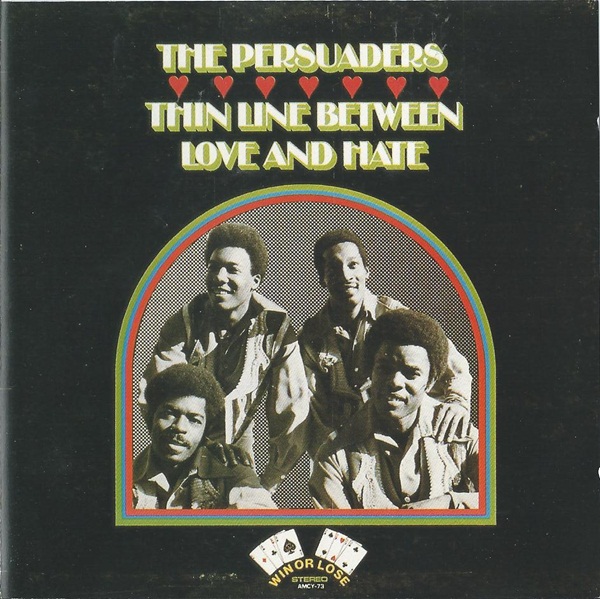
THE BLACK KEYS-TURN BLUE
THE BLACK KEYS-TURN BLUE.
The Black Keys have come a long way since they formed back in 2001. Since then, The Black Keys have released eight albums. Their latest album is Turn Blue, which was released on Nonesuch on 12th May 2014. Turn Blue is the followup to El Camino, which was certified platinum in the US and UK. El Camino was the most successful album of The Black Keys career, which began back in 2001.
It was back in 2001, when guitarist and vocalist Dan Auerbach and drummer Patrick Carney formed The Black Keys. The duo from Akron, Ohio dropped out of college to see if they could make a career out of music. Since then, Dan and Patrick have been living the rock ’n’ roll dream. Back in the early days, it was very different
When The Black Keys formed, they rehearsed and recorded in basements and garages. Dan and Patrick produced their early recordings, which were a fusion of garage, blues and rock. As The Black Keys honed and refined their sound, it was described as blues rock. That’s what featured on their debut album The Big Come Up.
May 2002 saw The Black Keys released their debut album, The Big Come Up. Produced by Patrick Carney, it was released on Los Angeles’ based Alive Records. Released to critical acclaim and hailed as one of the best album of recent years. Despite this, The Big Come Up failed to chart. However, a breakthrough wasn’t far away for The Black Keys.
Just eleven months after the release of The Big Come Up, The Black Keys released their sophomore album, Thickfreakness. It was released on Australian label Fat Possum Records in April 2003. The Black Keys raw, blues-tinged garage rock won friends and influenced people. Especially critics and music lovers in the UK and Australia. Thickfreakness reached number 182 and in the UK number ninety in Australia. Soon, however, The Black Keys’ popularity would spread much further afield.
That’s no surprise. The Black Keys were an old school band. They embarked on extensive and gruelling tours. That was their way of building a fan-base. It worked. Rubber Factory, which was released on Fat Possum Records in September 2004. Rubber Factory was hailed as The Black Keys’ finest album. It was also their most successful album, reaching number 131 in the US Billboard 200, number sixty-two in the UK, number eighteen in Australia and number 123 in France. Not bad for an album recorded in a disused factory in Akron, Ohio and like their previous album, produced by Dan and Patrick. The Black Keys were on their way.
So, it’s no surprise that they signed to a subsidiary of a major label. This was Nonesuch, a subsidiary of Warner Bros. Magic Potion was The Black Keys’ Nonesuch debut. Released in September 2006, Magic Potion was the first Black Keys’ album to feature only original material. Recording took place at The Audio Eagle Nest, Akron, Ohio. This was a studio in the basement of Patrick Carney’s house. It’s where the band’s first two albums were recorded. Both Patrick and Dan like the sound that could room produce. So did critics and record buyers.
Magic Potion was released to widespread critical acclaim. It was their most successful album, reaching number ninety-five in the US Billboard 200, number seventy-nine in the UK, number twenty-seven in Australia and number 109 in France. Belgian music fans discovered The Black Keys and Magic Potion reached number ninety-nine. With every album, The Black Keys’ success was growing.
For their fifth album Attack and Release, The Black Keys changed tact. They turned their back on recording in Patrick’s basement. Instead, they headed to Suma Recording Studio, Painesville, Ohio. Another change was that an outside producer was brought in. This was Grammy Award winning producer, Danger Mouse. He seemed an unlikely choice for The Black Keys, given his musical CV. Danger Mouse had worked with everything from ambient and hip hop acts through to folk, psychedelic and alternative rock groups. However, the combination of The Black Keys and Dangermouse was a huge success.
Attack and Release was released on April Fool’s Day in 2008. Critics hailed the partnership between The Black Keys and Dangermouse a masterstroke. This translated into sales. The album reached number fourteen in the US R&B Charts, number thirty-four in the UK and number twelve in Australia. Attack and Release charted across Europe, in Belgium, Denmark, France and Holland. However, it was in Canada that The Black Keys received their first gold disc. This marked the start of the most successful period in The Black Keys’ career.
Brothers was the album that transformed The Black Keys. It was recorded in studios in Muscle Shoals, Alabama, Portland and San Diego. Producing Brothers were The Black Keys, Mark Neill and Dangermouse who produced just one track, the lead single Tighten Up. It spent ten weeks at number one on the US Alternative charts and was The Black Keys first album to chart in the US Billboard 100 charts. Although peaked at number eighty-seven in the US Billboard 100 charts, it was certified gold. So was Howlin’ For You, another single released from Brothers. This was just a taste of the commercial success that was about to come The Black Keys’ way.
When Brothers was released in May 2010, it reached number three in the US Billboard 200 and twenty-nine in the UK. This resulted in Brothers being certified platinum in the US and silver in the UK. In Canada, Brothers was certified platinum. Brothers was a huge success across Europe, including Belgium, Denmark, France, Holland and Sweden. The latest country to be won over by The Black Keys was New Zealand. That wasn’t the end of the commercial success. No. in 2011, Brothers won three Grammy Awards, including The Grammy Award for Best Alternative Music Album. After six albums, it seemed, The Black Keys were a musical phenomenon.
The followup to Brothers was El Camino. This marked a return to the partnership between The Black Keys and Dangermouse. Recording of El Camino took place in Easy Eye Sound studio in Nashville. The result was an album inspired by the music released between the fifties and seventies. Everything from blues, glam, rock ’n’ roll, soul, rockabilly and surf influenced El Camino, which was released in December 2011. What followed, surpassed everything that had gone before.
El Camino was released to critical acclaim. There were no dissenters. Everyone was in agreement that El Camino was The Black Keys’ finest album. It certainly was a worthy successor to Brothers. On it release in December 2011, El Camino reached number two in the US Billboard 200 charts and number six in the UK. Across the world, El Camino reached the top ten. It was certified platinum in the US and UK and double platinum in Australia, Canada and New Zealand. Then there’s the singles released from Camino. They ensured the success continued.
Lonely Boy was the lead single from El Camino. Released in 2011, Lonely Boy reached number one in the US and Canadian Alternative and Rock Charts. This resulted in Lonely Boy being certified platinum in the US and Canada, and triple platinum. Gold On The Ceiling then was certified gold in the US, Canada and Australia. The final single released from El Camino was Little Black Submarine. It added to the haul of gold discs, when it was certified gold in Australia. El Camino was, by far, the most successful album of The Black Keys’ career. Surpassing its success won’t be easy.
It’s too soon to tell if Turn Blue will surpass the success of El Camino. It was only released yesterday. However, Turn Blue, has been released to widespread critical acclaim. Hook-laden, melodic and irresistible describes the music on Turn Blue. It consists of eleven tracks penned by Dan Auerbach and Patrick Carney. These tracks were recorded between January 2013 and February 2014.
Recording of Turn Blue was recorded at three studios. The sessions started at Key Club Recording, in Benton Harbour, Michigan. The Black Keys were on a break from their El Camino tour. For twelve days straight, The Black Keys never left the studio. During this period, they recorded three songs. Then in July 2013, The Black Keys headed to Sunset Sound in Hollywood. They stayed at Hollywood Sound until August 2013. The final sessions took place in during In Easy Eye Sound, Nashville February 2014.
At these sessions, Dan Auerbach played guitar, bass, keyboards and sung lead vocals. Patrick Carney played drums, keyboards and percussion. Accompanying The Black Keys were Brian Burton on keyboards and piano. Regina, Ann, and Alfreda McCrary added backing vocals on Weight of Love, Turn Blue and 10 Lovers. Producing Turn Blue, which I’ll tell you about, were the tried and tested partnership of The Black Keys and Danger Mouse. Will Turn Blue be a fitting followup to The Black Keys’ career defining album El Camino?
Weight of Love, which opens Turn Blue, is reminiscent of an old Neil Young. It meanders lazily and dreamily into being. A guitar is strummed while percussion rings out. Then the pounding drums and blistering guitars take centre-stage, it’s reminiscent of Pink Floyd in their pomp. Ladies and gentlemen, The Black Keys are in the building. Having built the drama up, the arrangement settles down and Dan’s vocal enters. By now the arrangement reminds me of late period Beatles. That’s before The Black Keys sweep you away. Backing vocals, searing crystalline guitars and a powerhouse of a rhythm section. It’s an impressive sound. Later, Dan’s vocal is needy and soulful, before The Black Keys fuse hooks with blues, psychedelia and classic rock. This proves the perfect appetiser for the rest of Turn Blue.
Ethereal harmonies and deliberate stabs of piano open In Time. That’s before thunderous guitars and searing, soaring guitars glide above the arrangement. When the vampish vocal arrives, it’s sung in a faux falsetto. As it drops out, harmonies, the rhythm section and keyboards sweep in. They’re replaced by Dan’s scorching guitar. He unleashes another glistening solo. Then when he returns to vocal duties, he vamps his way through the lyrics, before unleashing another guitar masterclass. Meanwhile, horns growl and strings add a wistful twist on this delicious fusion of glam rock, blues and rock. My only criticism is the album is way too loud.
A roll of drums and crystalline guitars Turn Blue. A buzzing sound cascades across the arrangement. This adds a dubby twist to what’s a much more understated track. Dan’s vocal is whispery and tender. Cooing harmonies and a piano accompany him, while the bass and guitar help drive the arrangement along. An occasional burst of horns punctuate the arrangement as The Black Keys reinvent themselves. There’s no way they were going to make El Camino Mk. II, so went back to the drawing back and combined a groundbreaking fusion of perfect pop, electronica, soul and rock. The result is one of the highlights of Turn Blue.
As Fever unfolds, it’s hard to believe that you’re listening to The Black Keys. They’re a band transformed. Long gone is their early bluesy sound. Instead, it’s as if they’ve gone through their record collection and drawn inspiration from everything from Kraftwerk, David Bowie, The Knack, Arcade Fire, Talking Heads, funk, post rock, psychedelia and jazz. There’s still the odd bluesy lick. It’s a compelling combination. Especially, the robotic, mechanical arrangement. Dan dramatically vamps his way through this genre-melting, experimental arrangement as The Black Keys are reborn.
There’s another change of direction on Year in Review. The pounding rhythm section set the backdrop for ethereal harmonies. They swirl above the arrangement, just like the strings that accompany Dan’s vocal. His punchy, frustrated vocal is filled with emotion. Harmonies coo, empathising with his worldview. Meanwhile, the rhythm section provide the heartbeat. Dan lays down what’s the best bass line on Turn Blue. Later, Dan unleashes a scorching guitar solo. They’re replaced by by strings and cooing harmonies as The Black Keys demonstrate their ability to write rock anthems.
Bullet in the Brain has a wistful, understated sound. Dan’s thoughtful vocal is joined by strummed guitars. As his vocal drops out, the arrangement takes on a spacey, psychedelic sound. Guitars reverberate, shimmer and quiver, while keyboards add subtle hooks. Soon, the rhythm section decide to up the tempo. Now, Dan’s vocal has taken on a late-sixties sound. Ambient, pop, classic rock, psychedelia and space rock are combined to create a dreamy, lysergic and psychedelic opus that’s trippy and rocky,
It’s Up to You Now sees The Black Keys return to the past for future. They combine everything from blues to classic rock, garage, psychedelia and stoner rock. Dan’s scathing, angry vocal is shrouded by filters as The Black Keys unleash some heavy rock licks. Thunderous drums and searing, screaming guitars combine. Sometimes, they return to the bluesy sound of The Black Keys’ early album. Other times, the track veers between muscular heavy rock and a lysergic sixties sound. This allows The Black Keys to shine like a glittering star.
Swathes of chiming guitars open Waiting on Words. They give way to a dreamy, heartfelt vocal. You hope this folk rock sound going to continue and that The Black Keys don’t kick out the jams. Guitars that sound as if they belong on a David Lynch reverberate into the distance. Then it’s all change. The arrangement fills out, and The Black Keys deliver a series of populist, poppy hooks. There’s still occasionally a rocky sound. It comes courtesy of the Hammond organ and pounding drums. However, from the folk rock of earlier in the track, a melodic and populist slice of pop unfolds. It’s melodic and full of hooks. Sadly, it’s not The Black Keys of their earlier album. Some would say, that The Black Keys seem to have sold out. Not me. It’s perfect pop par excellence.
10 Lovers sees the The Black Keys get a little funky. Keyboards add a poppy sound. So does Dan’s vocal. The populist pop of the previous track returns. As the rhythm section and keyboards drive the arrangement along, Dan vamps his way through the track. There’s even a guitar hero solo that closes the track. The result is a track that’s melodic, irresistibly catchy and full of poppy hooks. It’s also anthemic and ripe for a dance-floor friendly remix. However, good as this track is, it’s a long way from the blues rock of early albums.
In Our Prime is a Beatles-esque tracks. It sounds as if the jaunty, psychedelic and rocky arrangement has been inspired by Sgt. Pepper’s Lonely Hearts Club Band. A lone piano panned left opens the track. Drums play slowly and a guitar chimes, reverberates. Dan’s vocal sounds as if it has been inspired by John Lennon. Especially, when the arrangement becomes jaunty. It’s like climbing onboard the Magic Roundabout. Strings sweep, the bass drives the arrangement along and guitars quiver. Keyboards add to the psychedelic sound. Later, Dan unleashes one of his trademark scorching guitar solos. It sounds as if it belongs on either classic rock or sometimes, surf rock album. This combination of classic rock, surf and psychedelia is a compelling combination, and allows us to hear another side to The Black Keys and their music.
Gotta Get Away closes Turn Blue. it sees The Black Keys draw inspiration from the Rollings Stones and even glam rock. As the track unfolds, it could be Keith Richards unleashing some of his trademark licks. His guitar is double-tracked as the rhythm section and keyboards kick loose. Dan’s vocal is reminiscent of early seventies glam rock. Soon, The Black Keys pickup the baton from the New York Dolls and The Faces. They strut through this three minute rocker, leaving the audience wanting more of the same. It’s just a pity there wasn’t more songs like Gotta Get Away on Turn Blue.
For The Black Keys, trying to replicate the commercial success and critical acclaim of El Camino wasn’t going to be easy. It was, after all, the most successful album of their career. Recording the followup to El Camino was doubly difficult. The Black Keys were on a gruelling tour. So when they had downtime, they started recording Turn Blue. When they went into the studio, they were faced with a dilemma, what direction did they take?
Many bands would’ve been tempted to record El Camino Mk. II. Not The Black Keys. They’re one of the most groundbreaking bands in modern music. The Black Keys are also ambitious. Their ambition is to continue to create innovative music. That’s what their c-producer Danger Mouse always strives to do. So, there was no doubt that Turn Blue, The Black Keys’ eight album was going to be a fitting followup to their career defining album El Camino.
Turn Blue is best described as magical, musical mystery tour of genres. During the eleven tracks, The Black Keys combine everything from alternative rock, ambient, blues, classic rock, electronica, folk, garage, glam rock, perfect pop, post rock, psychedelia, rock, soul and space rock. There’s a nod to everyone from Arcade Fire, David Bowie, Kraftwerk, Pink Floyd. The Beatles, The Faces, The Knack, the New York Dolls and the Rolling Stones. Quite simply, Turn Blue is a captivating and compelling musical tour de force where The Black Keys reinvent themselves yet again. This is what we’ve come to expect from The Black Keys, who never stand still. Producer Danger Mouse wouldn’t let them. With Danger Mouse co-producing The Black Keys there’s no chance of that.
That’s why Turn Blue is full of music that’s dramatic, dreamy, hook-laden, irresistibly catchy, lysergic, muscular, populist, psychedelic and rocky. Over Turn Blue’s eleven tracks, The Black Keys throw a series of curveballs. It’s album full of twists and turns, and subtleties and nuances. With every listen you hear something new. Layers of music unfold. The music on Turn Blue is akin to a musical tapestry, that’s best described as ambitious, bold and groundbreaking. Turn Blue is a genre-melting album where The Black Keys draw inspiration from the music of the last sixty years. It’s a fitting followup up to the critically acclaimed and commercially successful El Camino. However, I’ve one problem with Turn Blue.
The problem is Turn Blue is far too loud. So much so, that Turn Blue is one of the loudest albums I’ve heard recently. There’s literally no headroom. That’s a great shame. It takes the edge of The Black Keys and Danger Mouse’s production. They spent over a year recording Turn Blue. They then passed it to Grammy Award winning mixer Tchad Blake. He played a huge part in the album’s sound and success of Turn Blue. So it must be frustrating to hear an album as loud as Turn Blue. Having said that, Turn Blue which was recently released by Nonesuch is still a fitting followup to El Camino.
Turn Blue features The Black Keys at their genre-melting best. They take you on a magical musical mystery tour, where The Black Keys combine musical genres with poppy hooks. The result is a captivating and compelling musical tour de force, Turn Blue, where The Black Keys reinvent themselves yet again.
THE BLACK KEYS-TURN BLUE.


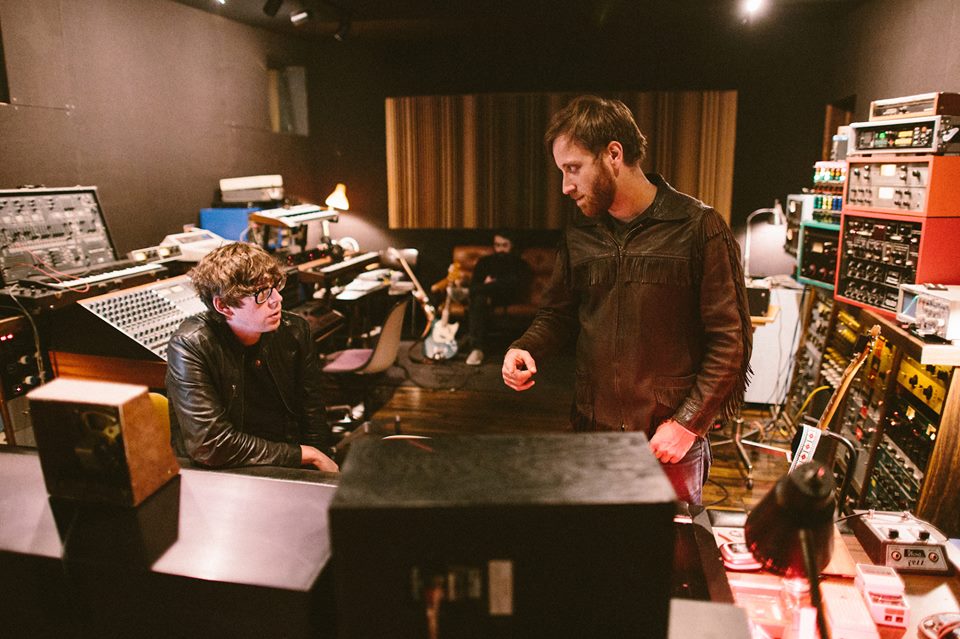
WAYNE COCHRAN-GOIN’ BACK TO MIAMI-THE SOUL SIDES 1965-1970.
WAYNE COCHRAN-GOIN’ BACK TO MIAMI-THE SOUL SIDES 1965-1970.
Unmistakable. That describes the outlandish outfits Wayne Cochran wore on-stage. Then there was his glistening peroxide bouffant. Wayne certainly grabbed your attention. Especially his music. It ranged from the raunchiest R&B to country soul and even biker funk. Eclectic described Wayne Cochran’s music. That’s obvious when you listen to Wayne Cochran-Goin’ Back To Miami-The Soul Sides 1965-1970, which was recently released by Ace Records.
Wayne Cochran-Goin’ Back To Miami-The Soul Sides 1965-1970 is no ordinary compilation. No way. It’s a luxurious and lovingly compiled double-album. Disc one features twenty-six tracks. This includes tracks from Wayne’s time at Mercury, Chess and King. There’s singles, rarities and unreleased track. Some of them are real finds. They fall into the category of hidden gem. That’s not the end of Wayne Cochran-Goin’ Back To Miami-The Soul Sides 1965-1970. Not at all.
Disc two of Wayne Cochran-Goin’ Back To Miami-The Soul Sides 1965-1970 is entitled The Wayne Cochran Show. It features twelve tracks recorded Live In Las Vegas between 1967 and 1970. For many people, this was Wayne Cochran in his prime. These tracks have never been released before. Originally, they were recorded by King Records, but never released. So for fans of Wayne Cochran, this is an exciting release. That’s also a good way to describe Wayne Cochran-Goin’ Back To Miami-The Soul Sides 1965-1970. Quite simply, Wayne Cochran-Goin’ Back To Miami-The Soul Sides 1965-1970 is the most comprehensive of compilation of Wayne Cochran in his prime. Everything that had gone before in Wayne Cochran’s career was leading up to this period.
The Wayne Cochran story begins back in 1939, in Thomaston, Georgia. That was where the the future White Knight of Soul was born. Wayne was always interested in music. His father played guitar before Wayne was born. So did his uncle. Then one day, his uncle through his guitar in the bin. No wonder. It had neither a bridge nor strings. So, Wayne rescued the guitar and headed to the local store. He bought a new bridge and strings. That was the start of Wayne’s musical journey.
Having learnt to play the guitar, Wayne formed his first band The Rocking Capris. By 1957, he was so confident in their ability, that he was advertising their availability in Billboard. Before long, The Rocking Capris were playing twice a week and earning $50. That was twice what his father was earning for a week working in the local cotton mill. Wayne was still in school. That’s until the school insisted he get his hair cut. He refused, quit school and got a job in the cotton mill. With his first paycheque, Wayne bought a new guitar, a Martin D-28 Jumbo. It cost him $250. This was an investment in Wayne’s future career.
Between 1959 and 1965, Wayne released around a dozen singles. This included his debut The Coo, which was released on Scottie in 1959. The Rocking Capris accompanied Wayne The Coo, which many radio stations banned. According to the radio stations, The Coo was “too vulgar.” It was inauspicious start to Wayne’s recording career. However, there was more to Wayne than a singer.
After this, Wayne released a string of other singles. Last Kiss was released on Galico Records in 1961. The same year, Wayne Cochran and The Rocking Capris released a cover of Ray Sharp’s Linda Lu on Confederate. Then in 1962, Wayne Cochran and The Rocking Capris released Liza Jane and Cindy Marie. However, it was Last Kiss that gave Wayne Cochran and The Rocking Capris the biggest hit of their career. It was a death disc single, similar to Tell Laura I Love Her. Released in Aire in 1962, Wayne Cochran and The Rocking Capris version of Last Kiss was a regional hit. Still, it surpassed the success of his previous singles. Despite this, Wayne was frustrated about the lack of success. So, he decided to launch his solo career. By then, Wayne was a budding entrepreneur.
Wayne also worked as a songwriter, musicians and publisher. Often, some of the songs he wrote were for artists who his manager Bob Smith produced or managed. Bob Smith was a local used car dealer who’d built a recording studio. Bob produced the artists who recorded in his studio. He was also their manager. So Bob needed a steady stream of new songs. This was where Wayne came in.
Away from his recording career, Wayne penned songs for Bob Smith’s artists. Wayne also had his own publishing company, Cochran Music. It published two song written by Otis Redding, who was a friend of Wayne’s. The pair were firm friends. Wayne had played on some of Otis’ earliest recordings. So, when Otis was looking for a publishing company for Shout Bamalama and These Arms Of Mine, he decided to use Cochran Publishing. For a new publishing company this was something of a coup. However, publishing wasn’t how Wayne wanted to make a living. No. He wanted to be a singer and in 1963, his solo career began.
Wayne’s debut solo single was a novelty single, Monkey Monkey (You Do It Like This). It was released in 1963, on the Deck label. The single sunk without trace. Re-recordings of Last Kiss and The Choo followed in 1964. August 1964 saw the release of Wrong Girl, Wrong Time, which was released on King Records. Just like Last Kiss, Wrong Girl, Wrong Time received some radio play, but very little in the way of sales. So, Wayne decided to head out on the road and build a fan-base.
He bought an old bus and took his new band out on the road. The new band were the C.C. Riders. Wayne Cochran and The C.C. Riders headed out on the first of a series of gruelling and lengthy tours. This was Wayne’s way of spreading the word about his music. It’s no surprise that this gruelling touring schedule coincided with what’s regard as Wayne Cochran in his prime. Everything it seemed was leading up to this period. The prime of Wayne Cochran also features on Wayne Cochran-Goin’ Back To Miami-The Soul Sides 1965-1970, which was recently released by Ace Records, which I’ll tell you about.
DISC ONE.
Disc one of Wayne Cochran-Goin’ Back To Miami-The Soul Sides 1965-1970 features twenty-six tracks released between 1965 and 1995. This includes tracks from Wayne’s time at King, Mercury and Chess. These tracks feature Wayne at his very best. The earliest songs are from Wayne’s time at King.
In 1965, Wayne was signed to Mercury. November 1965 saw Wayne release a cover of Bob and Earl’s Harlem Shuffle. Wayne accompanied by soulful backing vocalists, unleashes a grizzled vocal powerhouse. He fuses soul and R&B as he vamps his way through this soul classic. Tucked away on the B-Side was Somebody Please, where Wayne sounds uncannily like James Brown. An compelling inclusion is the unedited version of Think. Here, Wayne accompanies by braying horns vamps his way through this track, unleashing whoops and hollers aplenty.
Wayne’s second single for Mercury was Get Down With It. Released in March 1966, Wayne storms his way through the track. The B-Side was No Rest For The Wicked. It’s a ballad featuring a heartbroken Wayne. He don’t hold back, unleashing a powerful, emotive vocal. Later in 1966, Wayne unreleased the song that became his theme tune, Goin’ Back To Miami where Wayne and The C.C. Riders deliver a barnstorming performance. I’m In Trouble was a ballad and shows two side to Wayne Cochran. His vocal veers between restrained to a grizzled roar. It’s a horn drivenm stomper that Northern Soul fans will adore. Two other tracks from 1966 that will interest fans of Wayne Cochran are the alternate flip ofTo Make Me A Man and the Full Length version of Get Down On It. For Wayne Cochran completists, this makes Wayne Cochran-Goin’ Back To Miami-The Soul Sides 1965-1970 a must have.
By 1967, Wayne was signed Chess Records. That year, Wayne released his debut album Wayne Cochran. It featured some of the best music Wayne had recorded. Wayne Cochran was very much a coming of age musically. It featured eleven tracks. Wayne seems to have been tamed. He sacrifices power. Gone are the powerhouses of his time at Mercury. Get Ready features a much more understated vocal from Wayne, On I’m Leaving It Up To You and Big City Woman Wayne delivers tender, heart wrenching ballads. They’re glorious example of country soul. When My Baby Cries is another ballad. Wayne’s vocal literally oozes emotion, hurt and sadness. Little Bitty Pretty One and Some-A Your Sweet Love feature a soulful, vampish vocal and a funky arrangement. Later, Wayne kicks loose, but never overdoes it. The same can be said of The Peak Of Love, You Can’t Judge A Book By It’s Cover. Hoochie Coochie Man sees Wayne deliver a grizzled vocal where R&B, blues and soul combine. it suits the song. Still, he sings within himself. There’s no whoops or hollers, just a vocal tour de force.
Wayne was signed to Chess between 1967 and 1968. During that period, Wayne released his eponymous album and several singles, including Some-A’ Your Sweet Love, Get Ready and Willie Dixon’s You Can’t Judge A Book By The Cover. Hidden away on the B-Side was a wistful, dreamy, pop-tinged ballad. If it had been chosen as a a single, it could’ve helped Wayne Cochran crossover. That’s how good this track is. Chess it seemed was tailor made for Wayne Cochran. They seemed to tame Wayne. He was no longer whooping and hollering his way through tracks. His vocals were much more restrained. He combined country soul ballads with more uptempo tracks. Even on the uptempo tracks, Wayne didn’t overdo things. Instead, he sung within himself. This resulted in the best music of Wayne’s career. However, after his time at Chess, Wayne signed to King Records, which was home to his idol James Brown.
At King, Wayne released several singles. This included Life’s Little Ups And Downs (Part One) in 1969. The B-Side Life’s Little Ups And Downs (Part Two) features on Wayne Cochran-Goin’ Back To Miami-The Soul Sides 1965-1970, It’s a soul-searching, country soul ballad. Let Me Come With You (Part One) was released as a single in 1970. This is a much more uptempo track. Soulful and psychedelic, it’s propelled along percussion Wayne delivers a lysergic vocal. My Machine was a released as a single in 1970. Funky, it features a gravelly, but soulful vocal from Wayne. Chopper 70 is a driving slice of funk. It featured on Wayne’s 1971 album for King Wayne Cochran and The C.C. Riders. Horns join forces with the rhythm section in driving the uber funky instrumental along. The result is one of the funkiest track Wayne Cochran recorded.
The other four tracks on Wayne Cochran-Goin’ Back To Miami-The Soul Sides 1965-1970 are unreleased tracks. For Wayne Cochran fans, this makes the compilation a must. Especially the given the quality of Which One Should I Choose. It’s a fusion of soul, pop, funk and psychedelia. You Got It From Me is another driving slice of funk from a grizzled vocal from Wayne. This is much more like the music he was releasing for Mercury. If It Don’t Fit, Don’t Force It is a real hidden gem. Horns, piano and the rhythm section drive the arrangement along, before Wayne’s heartbroken, lived-in vocal floats in. The arrangement, like Wayne’s vocal then starts to build and Wayne showcases his vocal talent. Everybody is the final unreleased track. Best described as a stomper, it allows Wayne to unleash another vamp.
DISC TWO.
Disc Two of Wayne Cochran-Goin’ Back To Miami-The Soul Sides 1965-1970, The Wayne Cochran Show, features twelve tracks. They see Wayne work his way through a string of soul classics. These tracks were recorded in Las Vegas between 1967 and 1970. They’re eclectic and allow Wayne to showcase his vocal prowess.
Among the twelve tracks are a cover of Sly Stone’s Dance To The Music. In Wayne’s hands it’s storming fusion of soul and funk. Wayne grabs the song and vamps his way through the lyrics. Sam and Dave’s Soul Man is given a similar treatment, before Wayne delivers a beautiful version of When Something Is Wrong With My Baby. From there, he unleashes a rousing version of 634-5789. Then it’s all change and Wayne returns to balladry on Try A Little Tenderness. It’s a captivating take on a classic. Wayne literally lives the lyrics. From there, it’s all change.
Wayne storms through I Can’t Turn You Loose and Hard To Handle. I Wish It Would Rain sees power and passion combined by Wayne. It’s a ballad sung with real feeling. After that, Wayne struts his way through Isaac Hayes and David Porter’s Hold On I’m Comin’ and breaths life and meaning into Fa Fa Fa Fa Fa (Sad Song). Wayne’s closes his set with two Otis Redding songs (Sittin’ On) The Dock Of The Bay and I’ve Been Loving You Too Long. It’s case of keeping the best to last, as I’ve Been Loving You Too Long literally oozes emotion.
Thirty-eight songs spread over two discs, that’s what you’ll find on Wayne Cochran-Goin’ Back To Miami-The Soul Sides 1965-1970, which was recently released by Ace Records. It features Wayne Cochran in his prime. That’s the case whether it’s country soul, R&B or biker funk. Whichever it is, Wayne Cochran breathes life, meaning and emotion to the songs. Often, Wayne adds power. During his time at Mercury, and for some of his time at King Records, Wayne delivered what are best described as vocal powerhouses. Sometimes, he whoops and hollers his way through the lyrics. That wasn’t the case at Chess.
No. At Chess, Wayne Cochran was tamed. His vocals are much more restrained. It’s really effective. He’s transformed into a country soul singer. This should’ve been the start of something big. After all, Wayne it seemed, had found his musical identity. Sadly, Wayne’s time at Chess ended in 1968.
Next stop for Wayne was King Records. Wayne returned veered between his newfound understated style to his trademark powerhouse vocal. He vamped and strutted his way through tracks, combining power and passion. Other times, he drops the tempo and delivers heartfelt, tender vocals. This allows you to hear two sides of Wayne Cochran.
That’s the case throughout Wayne Cochran-Goin’ Back To Miami-The Soul Sides 1965-1970. It’s without doubt the most comprehensive compilation of Wayne Cochran’s music that’s been released. It features hit singles, rarities, hidden gems annd unreleased tracks. That’s why Wayne Cochran-Goin’ Back To Miami-The Soul Sides 1965-1970 is an essential purchase for anyone interested in the unmistakable and inimitable Wayne Cochran.
WAYNE COCHRAN-GOIN’ BACK TO MIAMI-THE SOUL SIDES 1965-1970.
MARGIE JOSEPH-FEELING MY WAY.
MARGIE JOSEPH-FEELING MY WAY.
When Margie Joseph released Feeling My Way in 1978, she was just twenty-eight. However, Feeling My Way was Margie’s seventh album since her debut Makes A New Impression. It was released on Volt Records, a subsidiary of Stax Records in 1970, a year after Margie signed to Volt. Margie Joseph had come a long way since then. This included signing to Atlantic Records, who released Feeling My Way, which was recently rereleased by Rhino, as part of their Japanese Soul and R&B series. The Margie Joseph story began in Mississippi, back in 1950.
Margie Joseph was born in August 1950, in Gautier, Mississippi. Growing up, Margie sang in her church choir. This was her introduction to music. When she left high school in 1967, Margie headed to Dillard University, in New Orleans, where she studied speech and drama. During this period, Margie sang demo recordings at Muscle Shoals Sound Studios. This was where Margie was discovered by Okeh Records.
Margie’s debut single for Okeh was Why Does a Man Have to Lie? Sadly, Why Does a Man Have to Lie was a commercial success. Neither was Margie’s debut for Volt Records, the next label she signed to.
In 1969, Margie released One More Chance for Volt Records. It was produced by Willie Tee. Despite this, One More Chance failed to chart. Neither did What You Gonna Do. Soon, Margie’s luck changed.
Your Sweet Lovin’ was Margie’s third single for Volt Records. Released in 1970, it was also her breakthrough single, reaching number forty-six in the US R&B Charts. Later in 1970, Margie’s debut album Sweet Impression was released. Sweet Impression featured Margie’s next hit single, Stop In The Name Of Love, which reached number ninety-six in the US Billboard 100 and number thirty-six in the US R&B charts. A year later, Margie released her sophomore album Phase II. The lead single from Phase II was the heartbreaking I’ll Always Love You. Although I’ll Always Love You failed to chart, it showed what Margie was capable of. This resulted in Margie signing to a major label, Atlantic Records.
Having signed to Atlantic Records, set about recording the first of a quintet of album for Atlantic Records. Margie Joseph was Margie’s Atlantic debut. Released in 1973, Margie Joseph reached number twenty-one in the US R&B Charts. One of the singles released from Margie Joseph was cover of Al Green’s Let’s Stay Together. It reached number forty-three in the US R&B charts. That year, 1973, Come Lay Some Lovin’ On Me, a non-album track gave Margie the biggest hit single of her career, when it reached number thirty-two in the US R&B Charts. Margie’s decision to Atlantic Records seemed to have resulted in her career being transformed.
In 1974, the success kept on coming for Margie. Her fourth album Sweet Surrender reached number 165 in the US Billboard 200 and number fifty-six in the US R&B Charts. Margie’s cover of Paul McCartney’s My Love resulted in her biggest hit single. It reached number sixty-nine in the US Billboard and number ten in the US R&B charts. Words (Are Impossible) also reached number ninety-one in the US Billboard and number twenty-seven in the US R&B charts. Margie Joseph was enjoying the most successful period of her career. Nothing it seemed could go wrong.
1975 was a huge year for Margie. She released her fifth album Margie. It reached number fifty-three US R&B charts. The single, Stay Still, reached number thirty-four in the US R&B Charts. Margie also collaborated with Philly Soul group Blue Magic on one of the tracks from their third album Thirteen Blue Magic. This was the Philly Soul classic What’s Come Over Me, which reached number eleven in the US R&B Charts.
For Margie’s sixth album, Hear The Words, Feel The Feeling, It was released on Atlantic Records’ subsidiary Cotillion. Hear The Words, Feel The Feeling saw a change in producer. Previously, Arif Mardin had produced Margie’s Atlantic Records’ albums. Not this time. Instead, Hear The Words, Feel The Feeling, was produced by Lamont Dozier. Margie and Lamont proved a potent partnership, with Hear The Words, Feel The Feeling reached number thirty-eight in the US R&B charts in 1976. Despite the success the Lamont Dozier and Margie Joseph enjoyed on Hear The Words, Feel The Feeling, Johnny Bristol was brought in to produce Feeling My Way, Margie’s seventh album.
For Feeling My Way Johnny Bristol played a huge part in the album. He penned five tracks and cowrote the three other tracks. Johnny’s compositions were Come On Back To Me Lover, You Turned Me On To Love, I Love Talking ‘Bout Baby, Love Takes Tears and All Good-Bye’s Aren’t Gone. Of the other three tracks, Johnny cowrote I Feel His Love Getting Stronger with James Jamerson Jr, He Came Into My Life with Sanra Leoncavallo, Picture Of A Clown with Hense Powell, How Will I Know with Robert Torres and Discover Me (And You Will Discover You) with Doris McNeil and Beatrice Verdi. These ten tracks became Feeling My Way.
Recording of Feeling My Way took place at Davlen Studio, North Hollywood, California. The rhythm section featured drummer James Gadson, bassist James Jamerson Jr. and guitarists David Williams, David T. Walker, Al McKay, Lee Ritenour and Mitch Holder. Bobby Hall and Larry Torres played percussion, Larry Farrow piano and Ernie Watts saxophone. Backing vocalists featured Debra Tibbs, Marsha Grimes and Lynda Evans. Strings and horns were arranged by Hense Powell and Sonny Burke, while Johnny Bristol produced Feeling My Way, which was released in 1978.
On the release of Feeling My Way, it failed to chart. This was a disaster, given the success of Margie’s previous albums for Atlantic. The increase in disco’s popularity had claimed another victim. Soul albums weren’t selling well. Disco was King. Even the singles weren’t particularly successful. Come On Back To Me Lover stalled at number eighty-five in the US R&B Charts. I Feel His Love Getting Stronger crept into the US R&B charts at number ninety-four. Feeling My Way, which I’ll tell you about marked the end of Margie Joseph’s time at Atlantic Records.
I Feel His Love Getting Stronger opens Feeling My Way. The arrangement literally floats into being. Swathes of strings, flourishes of piano, chiming guitars and hypnotic rhythm section join forces. They set the scene for Margie’s tender, needy vocal. She sings call and response with her backing vocalists. Their contribution is equally tender. Jazz-tinged guitar, a probing bass, swirling strings and flourishes of piano provide the perfect backdrop for Margie’s hurt-filled vocal.
Come On Back To Me Lover sounds not unlike the previous track. So is the tempo. It’s 91 beats per minute, instead of 90 beats per minute. As for the arrangement it’s understated and spacious. Similar instruments are used. This includes swathes of strings, occasional flourishes of piano, a chiming guitar and the understated rhythm section. There are some differences. Briefly, drums add drama, strings dance and horns rasp. They’re the perfect foil for the strings as the arrangement grows and fills out. Margie’s vocal veers between tender and needy to hopeful and impassioned. Again, backing vocals are used effectively. Sadly, the same can’t be said of the rocky guitar. It seems out of place on what’s another emotive soulful ballad.
You Turned Me On To Love is another slow, soul searching ballad. Against a string laden backdrop, Margie delivers a tender, heartfelt vocal. Cooing harmonies, percussion and piano join the rhythm section. Everyone plays subtly. That includes the crystalline guitar that replaces Margie’s vocal. Then when Margie returns, nobody risks overpowering the beauty and emotion of Margie’s vocal.
Drums mark time as a sultry saxophone drifts above the arrangement to I Love Talking ‘Bout Baby. Margie scats, her quivering vocal floating above the arrangement. Soon, a lovestruck Margie enters. She’s thankful that she’s found a man she loves. Her vocal is tender and oozes emotion. Keyboards meander across the arrangement. They’re subtle, just like the harmonies and crystalline guitars. The only problem is the drums. They need reined in, as they slightly overpower Margie’s vocal. They’ve been panned left and right, so not to crowd the vocal. Sadly, they take some of the shine off a quite beautiful ballad.
He Came Into My Life is a mid-tempo dance track. This marks a change of direction from Margie. It really suits her. That’s the case from the pounding drums and funky guitars that set the scene for Margie. Her vocal is sassy and wistful. That doesn’t stop Margie making the song swing. With harmonies for company, Margie grabs the song and makes it work. Stabs of piano, chiming, funky guitars and a sultry horn combined and transform Margie into a disco diva during this delicious dance track.
Pictures Of A Clown floats into being. Swathes of strings, percussion and piano combine with the rhythm section and pizzicato strings. Margie’s vocal veers between tender and heartfelt, to emotive and dramatic. Whispery harmonies accompany her vocal. Meanwhile, the rhythm section provide the heartbeat, strings sweep and swirl and guitars chime. Despite Margie’s best efforts, the song just doesn’t work. That’s not her fault. It’s the lyrics which are twee.
How Will I Know sees a return to form from Margie. It’s another ballad, where Margie unleashes an emotive powerhouse. Just like so many other tracks, Margie’s vocal is carried upon swathes of the lushest strings. Meanwhile, the piano, percussion, crystalline guitar and rhythm section provide the backdrop for Margie as the arrangement floats along. It reminds me of early Anita Baker. That’s the quality of this track, which is easily, one of the highlights of Feeling My Way.
Love Takes Tears is another mid-tempo dance track. Again, it’s a track that should’ve found favour with DJs. Sadly, it passed them by. The arrangement just meanders into being. Gradually it unfolds, when chiming guitars, lush strings, piano and the rhythm section combine. A flourish of a piano is the signal for Margie to strut centre-stage. She delivers a feisty, sassy, vocal. Harmonies accompany Margie as the song swings. Margie and her backing vocalists play leading roles. So does bassist James Jamerson Jr. and a jazz-tinged guitar from Lee Ritenour who like Margie, showcase their talents during Love Takes Tears.
All Goodbyes Aren’t Gone sees the tempo drop and Margie deliver another ballad. It’s something she does so well. Again, the arrangement is understated, meandering gently into being. Soon, strings sweep, harmonies coo and the rhythm section provide a jaunty backdrop for Margie’s heartbroken vocal. She sings call and response with her backing vocalists. They seem to encourage Margie to even greater heights of soulfulness and emotion, as Margie and the string drenched arrangement tug at your heartstrings.
Discover Me (And You Will Discover Love) closes Feeling My Way. Margie heads for the dance-floor for her Atlantic Records’ swan-song. It’s a real fusion of influences. There’s everything from soul, funk, jazz and even a twist of country from Margie. It’s a compelling track, where hooks haven’t been rationed. Margie’s vocal is sassy and sultry, while the funky, pounding rhythm section drive the arrangement along. Meanwhile, disco strings dance, flourishes of keyboards and sassy harmonies accompany Margie as struts her way through this dance track.
Feeling My Way marked the end of Margie Joseph’s time at Atlantic Records. She didn’t bow out on a high. Far from it. Instead, Feeling My Way was Margie’s least successful album for Atlantic Records. It failed to chart. This was very different to Margie’s four previous albums. They’d all charted and resulted in a string of hit singles. However, by 1978, music had changed.
Disco in 1978, was now the most popular musical genre. It had surpassed soul in popularity. So, Feeling My Way, an album featuring seven ballads wasn’t going to be a huge success. Granted there was a nod towards disco with He Came Into My Life, Love Takes Tears and Discover Me (And You Will Discover Love). That wasn’t enough though. They were on the slow side. Who knows though, if they’d been released as singles they might have taken dance-floors by storm? Sadly that wasn’t the case. Feeling My Way sunk without trace. It was the wrong album at the wrong time.
If Feeling My Way had been released in 1974 or 1975, it would’ve been a much bigger success. The music on Feeling My Way was what people wanted to hear. Sadly, three or four years is a long time in the music industry. It certainly was for Margie Joseph.
Despite four successful albums and a string of hit singles, Feeling My Way was Margie Joseph’s Atlantic Records’ swan-song. Margie was released by Atlantic Records. Nothing was head of Margie for five long years. During that period, she recorded an album with Dexter Wansel. Sadly, the label folded and it was never released. So, Margie returned to teaching. Then in 1983 released her comeback album Knockout.
Knockout reached number twelve in the US R&B Charts in 1983. This resulted in Margie resigning to Atlantic Records’ imprint Cotillion and released Ready For The Night in 1984. It was produced by Narada Michael Walden. When Ready For The Night wasn’t a commercial success, Margie was released by Cotillion. Two Margie Joseph albums, The Name Of Love and Stay were released in 1988. After that, Margie turned her back on music. It wasn’t until 2006, that Margie Joseph released Latter Rain, a gospel album. Latter Rain was a long way from her 1978 album Feeling My Way.
It’s no exaggeration to describe Feeling My Way is one of the hidden gems in Margie Joseph’s discography. It’s an album that’s stood the test of time and features a captivating combination of ballads and dance tracks. Margie is at her best on the ballads. She breathes life, meaning and emotion into the ballads. That’s why Margie Joseph was one of the most talented soul singers of the seventies. Her Atlantic Records’ swan-song Feeling My Way is a soulful hidden gem, and one of the most underrated albums in Margie Joseph’s discography.
MARGIE JOSEPH-FEELING MY WAY.


DORE L.A. SOUL SIDES.
DORE L.A. SOUL SIDES.
It was in 1955 that cousins Lew Bedell and Herb Newman decided to found their first record label, Era Records. The two cousins came from very different backgrounds. Lew Bedell had been a comedian, but his career was at a crossroads. So he was on the lookout for a new career. Herb Newman however, was a music industry veteran. He’d started out as a West Coast sales rep for Mercury and later Decca. Having learnt the ropes, Herb wanted to form his own company. With his cousin looking for a new career, this seemed like the perfect opportunity for the two cousins.
Herb and Lew were like brothers. This and been the case since Lew’s parents split-up. Lew was born in El Paso, Texas. After his parent’s divorce, his mother took Lew and his sister to New York. They didn’t stay in New York long. Instead, they headed to Los Angeles, where they stayed with Max Newman. Not long after this, Herb Newman was born. The two cousins were brought up as brothers. So it’s no surprise that the two cousins went in to business together.
With the financial support of Herb’s father Max Newman, they founded Era Records in 1955. Three years later, in 1955, Dore Records, an imprint of Era Records was founded. The newly founded Dore Records was named after Lew’s first son, who’d been born to Lew and his wife Dolores in 1957. The rationale behind forming a second label was that it would double the chances of having a record played on the radio. Dore Records would also allow Herb and Lew to release much more groundbreaking records.
This was the case from the day Dore Records opened its doors. Having released two singles, a young Phil Spector approached Herb and Lew with To Know Him Is To Love Him, by The Teddy Bears. When Herb heard the understated arrangement, he thought that if it was to be released on Era the record would be rerecorded. Phil disagreed. So did Lew. He heard the potential in the To Know Him Is To Love Him and agreed to release the track in its original form. It became a huge worldwide hit. For the next couple of years, Lew and Herb’s opinions on music differed. Eventually, in 1959, Lew and Herb decided to go their own ways in May 1959.
It was an amicable spilt. Herb Newman continued with Era Records. He moved the company to new premises. Lew retained Dore Records, which stayed at 1481 Vine Street, Hollywood. Dore Records became Lew’s baby. He was a shrewd judge of character and transformed Dore Records into one of the top independent soul labels of the sixties. That’s why Kent Soul, a subsidiary of Ace Records, recently released Dore L.A. Soul Sides, a compilation of music released by Dore Records and its subsidiaries Crescent and Horace’s.
Dore L.A. Soul Sides features twenty-four tracks. Twenty-one of the tracks were released between 1962 and 1969. This includes contributions from The Whispers, The Superbs, Ray Marchand, Milton James, The Fidels, Starbright, Kenard Gardner and Eddie Kool. There’s also two previously unreleased tracks from Toussaint McCall and The Natural Resources. The other tracks is Rita and The Tiaras’ Gone With The Wind Is My Love, which wasn’t released until 1994. These tracks are just a tantalising taste of the music Dore Records released. That’s why choosing the highlights of Dore L.A. Soul Sides isn’t going to be easy.
Opening Dore L.A. Soul Sides is The Whispers’ It Only Hurts For A Little While. It’s one two tracks from The Whispers, one of Dore’s most successful acts. They signed to Dore on 6th October 1964. Three days later, they recorded It Only Hurts For A Little While. Released in 1964, it’s an understated and beautiful ballad which showcases The Whispers’ harmonies. It was written by Mac Davis and Fred Spielmann, with Gene Page arranging this soulful gem. In 1965, The Whispers released the Nicholas Caldwell penned Dr. Love. An uptempo dancer arranged by Gene Page, it’s a taste of what The Whispers were capable of and shows why they were destined for greatness.
The Superbs feature twice on Dore L.A. Soul Sides. They signed to Dore in February 1964. They released Baby’s Gone Away in 1965. It was penned by Art Sibrie and Bobby Swayne and is tailor made to showcase The Superbs balladry. Eleanor Greene delivers a tender, heartfelt vocal that’s accompanied by needy harmonies. On A Day When It’s Raining is very different. It’s another Art Sibrie and Bobby Swayne composition. Released in 1965, it’s an uptempo number, featuring Beach Boys influenced harmonies and a crooning vocal. This shows another side to The Suberbs.
From the opening bars of The Natural Resources’ If There Were No You you’re hooked. It’s another track written by Bobby Swayne who’d been a member of The Superbs. He’d left The Superbs after an argument with Ronnie Cook. Bobby formed The Entertainers and then The Natural Resources. Sadly, If There Were No You was never released. That’s a great shame, as this is a hook-laden hidden gem.
The Entertainers IV were another group formed by Bobby Swayne. He’d left The Superbs, and with Charlie Davis, Kenard Gardner and Frank Monroe, formed The Entertainers IV. They released Temptation Walk (People Don’t Look No More) which was written by Bobby and Charles Davos. It’s a homage to The Temptations Don’t Look Back. This resulted in Dore’s biggest single, when Temptation Walk (People Don’t Look No More) reached number twenty-nine in the US R&B charts. Four years later, in 1969, The Entertainers IV released Do It Right Now. It features the third lineup of the group. Penned by Bill Howe and B.J. Hunter, Do It Right Now was The Entertainers IV swan-song and sees them leave Dore on a soulful high.
Ray Marchand’s Your Ship Of Fools is another hidden gem from the Dore discography. It was written by Ray with Glen Marchand and Art Sibrie. Full of hooks and dance-floor friendly, Ship Of Fools is real rarity among record collectors. Copies of this single change hands for ever increasing sums of money.
Betty Turner and The Chevelles recorded The Winds Kept Laughing for the San Diego label Crescent. They signed a distribution deal with Dore. Released in 1964, The Winds Kept Laughing was written and produced Leonard Green and John Gummoe. Here, soul meets early-sixties’ girl groups. They inspire Betty’s vocal. It’s an outpouring of emotion and sadness. The horns that punctuate the arrangement were provided by the local high school band. This uptempo track became a favourite in the UK Northern Soul scene in the early seventies.
Back in January 1975, Starbright released Aries Man. This was their debut single for their new lable Dore. Tucked away on the B-Side was another ballad, Sunshine. It’s slow and features a heartfelt, emotive vocal. Accompanied by swathes of the lushest strings, the result is a beautiful track that’s one of the highlights of Dore L.A. Soul Sides.
Rita And the Tiaras’ Gone With The Wind Is My Love bursts into life. Vibes give way to rasping horns and dancing strings. They set the scene for Rita Graham’s heartbroken vocal and sweeping harmonies. Written by Rod Baumgardner and Louie Baretto, who produced the track, the original version of this track wasn’t released until 1994. However, the two minute edited version has been a favourite of British soul fans since the early seventies. No wonder. It’s hook-laden, oozes emotion and is akin to a call to dance. Quite simply,Gone With The Wind Is My Love epitomise everything that’s good about soul music.
Eddie Kool released Where There’s A Will There’s A Way on Dore in 1968. It was written by Eddie Lee Williams and Robert Byrd, who arranged and conducted the track under the alias Bobby Day. By 1968, Bobby was into his second decade in the music industry. He’d been a singer, songwriter and producer. One of the artists Bobby worked with was Eddie Kool, who delivers an emotive powerhouse on Where There’s A Will There’s A Way. Sadly, despite its undoubted quality, commercial success eluded this track. That, sadly, was the story of Bobby’s career.
Friday’s Child’s As I Sit Here closes Dore L.A. Soul Sides. This is a cover of one The Whispers’ ballads. It was written by Bobby Swayne, Ronald Cook, Frances Lark and Gordy Harmon. As I Sit Here is a fusion of soul and foo woo. Lew Bedell got an female vocalist to deliver a heartbreaking vocal above the harmonies. This is hugely effective and brings the lyrics to life. Sadly, the female vocalist’s identity is unknown. Some people believe it was Frances Lark or Shirley Bertolet. Other people believe two vocalists were used. What I know is that this is a heart-wrenching hidden gem that’s the perfect way to close Dore L.A. Soul Sides.
Dore L.A. Soul Sides is the perfect introduction to Dore Records. Founded in 1958, Dore Records went on to become one of America’s top independent soul labels. The man behind the label was Lew Bedell. He and his cousin Herb Newman had founded Dore Records to release innovative and exciting music. That’s what Dore Records did. Especially after May 1959, when Lew took control of Dore Records.
Now Lew had the freedom to release music that Era Records would’ve shied away from releasing. Soon, Lew was signing some of the best up-and-coming artists. This includes The Whispers, The Superbs, Milton James, The Fidels, Starbright and Kenard Gardner. Compiler Ady Croasdell takes you on a journey through Dore Records’ discography. You’re introduced into some of the Dore’s biggest names. Then there’s artists who only played a walk-on part in the Dore Records’ story. These artists are responsible for both hits and hidden gems. That’s the beauty of compilations like Dore L.A. Soul Sides.
Whereas some labels release compilation full of familiar tracks. That makes for a predictable compilation. That’s not the case here. Far from it. Compiler Ady Croasdell has dug deeper for Dore L.A. Soul Sides. It was recently released by Kent Soul, an imprint of Ace Records. It’s crammed full of quality soul. Ballads and dancers sit side-by-side on Dore L.A. Soul Sides, which is a tantalising taste of Dore Records’ discography.
DORE L.A. SOUL SIDES.



OLIVER NELSON-SWISS SUITE.
OLIVER NELSON-SWISS SUITE.
It was at 1971s Montreux Jazz Festival that Oliver Nelson showcased Swiss Suite. Oliver had composed the four-part Swiss Suite especially for Montreux Jazz Festival, which was in its fourth year.
Founded in 1967, the Montreux Jazz Festival took place in one of the most the picturesque parts of Switzerland. Montreux was framed by mountains and took place in the wake of Lake Geneva. This might seem like an unlikey venue for a jazz festival. However, since 1967, it’s grown into one of the world’s premier jazz festivals. By 1971, the Montreux Jazz Festival was in its infancy.
Mostly, it was dominated by European musicians who headed to the Montreux Jazz Festival. So did some American musicians. Artists including Rahsaan Roland Kirk were trailblazers who headed to the Montreux Jazz Festival. Another trailblazer was Bob Thiele, who owned Flying Dutchman Productions. Bob realised the Montreux Jazz Festival was the perfect showcase for the artists on his label.
So, in 1971, Bob flew all of Flying Dutchman Productions’ biggest names into the Montreux Jazz Festival. This included Leon Thomas, Eddie “Cleanhead” Vinson, Gato Barbieri and Larry Coryell. They were all going to take part in a concert that showcased the music of Flying Dutchman Production. One of the centre-pieces of the evening was a set by Oliver Nelson. He had written a new four-part piece Swiss Suite especially for the occasion.
Swiss Suite featured an all-star band comprising some of Flying Dutchman Productions’ biggest names and a whole host of session players flown in specially for the occasion. Accompanying Oliver on Swiss Suite, which was recently rereleased by BGP Records, an imprint of Ace Records, were an all-star band. This included everyone from Bernard Purdie, Eddie “Cleanhead” Vinson, Gato Barbieri and Stanley Cowell. No expense had been spared for the debut of Swiss Suite.
Flying some of Flying Dutchman Productions’ biggest names from America to Switzerland wasn’t cheap. Bob Thiele’s label didn’t have the deep pockets that the major labels did. Luckily, Phillips, the electronics company and record label did. They released Flying Dutchman Productions’ releases in Europe. Phillips decided to picked up the tab for the trip. This was, after all, in Phillips’ interest. The appearance of the Flying Dutchman all-stars should result in more albums sold in Europe. Add in Oliver Nelson debuting Swiss Suite at the Montreux Jazz Festival, and it seemed a win-win situation.
By 1971, Oliver Nelson was thirty-three. He was born in St. Louis, Missouri, in June 1932. Oliver seemed destined to become a musician. He was playing in bands from the age of fifteen. Soon, he was playing with a jazz legend. Not long after making his professional debut, Oliver was playing second alto saxophone in Louis Jordan’s band. Everything it seemed, was going well for Oliver. Then in 1952, Oliver was drafted.
Having been drafted, Oliver spent four years in the US Navy. Oliver spent his four years playing woodwind in the 3rd Division band in Korea and Japan. It was in Japan that Oliver realised what he wanted to do with his life. On leave in Japan, Oliver saw the Tokyo Philharmonic Orchestra. That night, Oliver realised he wanted to make a career as a composer.
When Oliver left the Navy, he returned home and enrolled at the Washington and Lincoln Universities. Oliver studied musical composition. After he graduated, he headed to New York and began working with some of the biggest names in music.
Now living in New York, Oliver’s found himself accompanying Ernest Hawkins and Wild Bill Davis. After that, he joined the Quincy Jones Orchestra. It was during that period that Oliver started recording for Impulse, whose A&R man was Bob Thiele.
Before signing to Impulse, Oliver had released a trio of albums, 1959s Meets Oliver Nelson, 1960s Nocturne and Taking Care Of Business. During 1960, Oliver collaborated with King Curtis and Jimmy Forrest on Soul Battle. After this, came Oliver’s Impulse years.
Between 1961 and 1968, Oliver released a string of critically acclaimed albums on Impulse. He also collaborated with some of Impulse’s biggest names. Oliver’s first collaboration was The Blues and Abstract Truth. Released in 1961, it featured Bill Evans, Roy Haynes and Eric Dolphy, who Oliver collaborated with on 1961s Straight Ahead. Then in 1962, Oliver and Joe Newman collaborated on Main Stem. After this, Oliver divided his time between his solo career and working as a composer and session player.
1963 saw Oliver released Full Nelson for Verve Records. This was the first of two albums Oliver released on Verve during the sixties. The other was 1966s Leonard Feather Presents The Sound Of Feeling And The Sound Of Oliver Nelson. Mostly, Oliver recorded for Impulse, which was akin to his musical home.
It was certainly where he released the best music of the sixties. This includes 1964s More Blues and Abstract Truth. After that, 1965s Sound Pieces, 1966s Oliver Nelson Plays Michelle were released. The same year, 1966, Oliver wrote, arranged and conducted the Sonny Rollins Orchestra on the soundtrack to Alfie. A year later, Oliver and Steve Allen collaborated on 1968s Soulful Brass. That was Oliver’s Impulse swan-song.
Oliver’s next release was 3-2-1-0, a collaboration with Nobuo Hara and His Sharps & Flats. It was released in 1969, the year Bob Thiele founded Flying Dutchman Productions.
By the time Bob Thiele signed Oliver to Flying Dutchman Productions, Oliver had moved into the world of soundtracks. He’d been doing this for a few years. Alfie in 1967, was one of Oliver’s first soundtracks. In 1970, Oliver wrote the score to Zigzag. The same year, Oliver released another collaboration and his Flying Dutchman debut.
3 Shades Of Blue was a collaboration between Johnny Hodges, Leon Thomas and Oliver. It was released in 1970, the same year Oliver released his Flying Dutchman debut, Black, Brown and Beautiful. The other album Oliver worked on was Soul On Top. It featured James Brown With The Louie Bellson Orchestra. Oliver had been drafted in to conduct The Louie Bellson Orchestra. Oliver it seemed was one of the hardest working men in music.This continued in 1971.
During 1971, Oliver conducted and arranged The Count Basie Orchestra on Afrique. Oliver collaborated with Leon Thomas on Leon’s live album Berlin. Then on 18th June 1971, Oliver played at Montreux Jazz Festival.
The Montreux Jazz Festival was the perfect European place for Flying Dutchman to showcase their music. The label’s biggest names flew in especially. On the 18th June 1971, the Montreux Jazz Festival was given over to Flying Dutchman’s biggest names. The centre-piece was the debut of Oliver Nelson’s four-part Swiss Suite, which he’d written especially for Montreux Jazz Festival.
A twenty-seven piece band had flown in to accompany Oliver Nelson for the recording of Swiss Suite. This included some of the labels biggest names and top session players. No expense had been spared. Especially with a band featuring a rhythm section of drummer Pretty Purdie, bassists Victor Gaskin and Hugo Rasmussen. Eddie “Cleanhead” Vison played alto sax and Stanley Cowell piano. Besko Petrovic played drums, vibes and tarabooka, Na-Na berimbau and Sanny Morgan congas. Eddie “Cleanhead” Vison and Gato Barbieri played alto sax and Stanley Cowell piano. Add to this a full horn section and it was an impressive sound. What better way was there to showcase Flying Dutchman and Oliver Nelson’s newest composition Swiss Suite. It featured on side one of Swiss Suite, which I’ll tell you about,
Opening Swiss Suite is the title-track. It’s nearly twenty-seven minutes long and takes up the whole of the first side of Swiss Suite. As the bass and congas propel the arrangement along, bursts of blazing horns make their presence felt. Drums pound and horns growl. The arrangement in played in 6/8 time. Leading the band are alto saxophonists Eddie “Cleanhead” Vison and Gato Barbieri. They share the spotlight with Oliver’s alto sax. Their styles are very different. Gato’s alto saxophone rasps and growls. Then when Oliver’s alto sax enters, in soars high above the arrangement. Its ethereal sound is a contrast to Eddie roaring, howling sax. He blows his alto sax as if his life depends upon it. Power and passion are combined. The three saxophonists showcase their unique styles. Meanwhile, the audience love it. They whoop and holler as the band kick loose. Stabs of piano and grizzled horns join a myriad of persuasion as the track becomes a musical tour de force. It’s full of twists and turns, subtleties and surprises. This triumvirate of jazz virtuosos showcases not just Oliver’s latest composition, but what Flying Dutchman as a label were trying to achieve. By that I mean release groundbreaking music, which this is.
The rest of Swiss Suite features older tracks written by Oliver Nelson. Stolen Moments is the first. This is a very different version of the track. This is down to the twenty-seven piece band. They’re responsible for the slinky, sultry sound. Horns are at the heart of the action, as the rhythm section and piano drive the arrangement along. Congas and percussion are sprinkled across the arrangement. Neither Gato nor Eddie feature. They’d left to prepare for their solo spots. So, Danny Moore takes centre-stage. His trumpet solo is a show-stealer. It’s sultry and swings. For some people, the massed horns and trumpet solo gave the track an edge that hadn’t been present before. That’s no bad thing and is part of the reinvention of Stolen Moments, an Oliver Nelson classic.
Black, Brown and Beautiful has a much slower and understated sound. Horns rasp, their heart-achingly beautiful sound os akin to a cathartic outpouring of emotion. Especially Oliver’s alto saxophone. It’s a game-changer. It literally steals the show. As it soars elegantly above the arrangement it’s a reminder what Oliver Nelson is capable of. Later, the horns grow in power and drama. They never kick loose. Instead, their sound is understated, and sometimes, dramatic. However, one thing never changes their beauty. The horns are at the heart of this tracks inherent beauty.
Blues and The Abstract Truth, which closes Swiss Suite, is another Oliver Nelson classic. It’s akin to dramatic explosion. Horns punctate the arrangement, as the rhythm section propel the arrangement along. The horns rise and climb above the arrangement. Their grizzled sound swings and adds an element of drama. Stanley Cowell’s piano matches them every step of the way. It’s the counterpoint to the sweeping, cascading horns. They quiver, shiver, blaze and kick while deliberate, stabs of piano and drums punctate the arrangement. In full swing, Oliver Nelson and his band are a musical marriage made in heaven. Oliver unleashes a solo. It you think is peerless. Then later, Pretty Purdie gets in on the act. He enjoys showboating. After what’s a drum masterclass. He’s stolen the show. As Oliver Nelson and his band join together, they head to the track’s dramatic crescendo leaving 1971s Montreux Jazz Festival wanting more of this all-star band.
Swiss Suite features Oliver Nelson and his all-star band winning friends and influencing people at 1971s Montreux Jazz Festival. Listening to Swiss Suite, the audience were in awe of Oliver and his band. No wonder.The band features some of the biggest names in jazz, including Pretty Purdie, Victor Gaskin, Eddie “Cleanhead” Vison, Gato Barbieri and Stanley Cowell piano. Many of these musicians were at the height of their career. So it’s no surprise that the audience were captivated.
From the opening bars of the newly composed Swiss Suite the audience are spellbound. No wonder. Three of the top alto saxophonists feature on the twenty-seven minute epic Swiss Suite. Oliver is joined by Eddie “Cleanhead” Vison and Gato Barbieri. They seem to encourage each other to even greater heights. It’s akin to a case of daring do. Anything you can do, I can do better. After Swiss Suite Gato and Eddie exit stage left, to prepare for their own performances. There’s no drop in quality.
The all-star band reinvent a trio of Oliver Nelson classics. New life and meaning are breathed into these tracks. To do this, Oliver combines avant grade, free jazz and traditional jazz. There’s even a nod to Charlie Parker on some tracks, given the inventive way that Oliver plays. On Black, Brown and Beautiful, Oliver remembering Miles Davis’ maxim about space. He leaves space allowing the music to breath. Other times, the music is dramatic, frantic, joyous and sultry. It’s also beautiful, elegant, inventive and considering how Oliver reworked three classics, groundbreaking. That’s what makes Swiss Suite, which was recently rereleased by BGP Records, an imprint of Ace Records, such a captivating release.
Sadly, after three years after Swiss Suite was released in 1972, Oliver Nelson died of a heart attack. During the last few years of his life, he’d turned his back on jazz. Oliver made his return to jazz in 1974 when he recorded an album by Oily Rags and arranged Richard “Groove” Holmes’ Six Million Dollar Man. A year later, Oliver Nelson was dead. He was just forty-three. Jazz had been robbed of one of its most talented musicians, composers and arrangers. Swiss Suite is a reminder of Oliver Nelson in happier times, when he and his swinging all-star band won friends and influenced people at 1971s Montreux Jazz Festival.
OLIVER NELSON-SWISS SUITE.
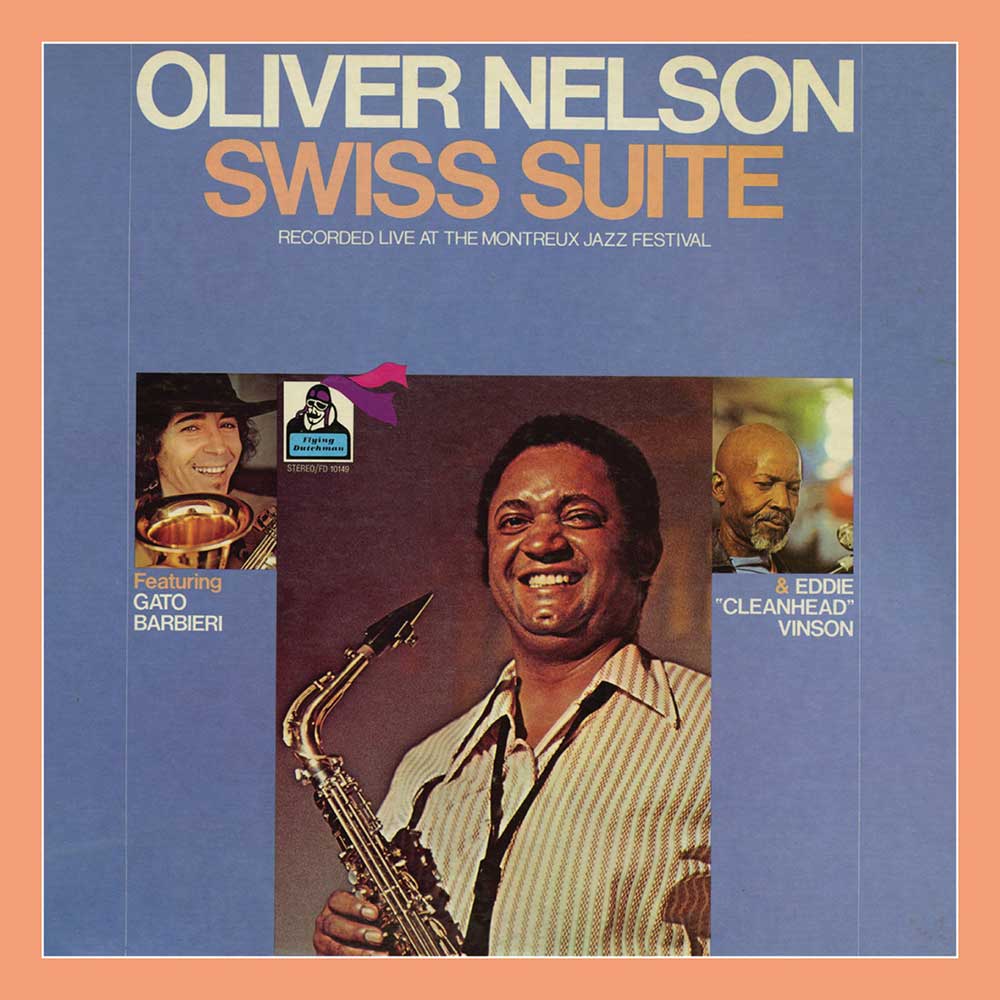

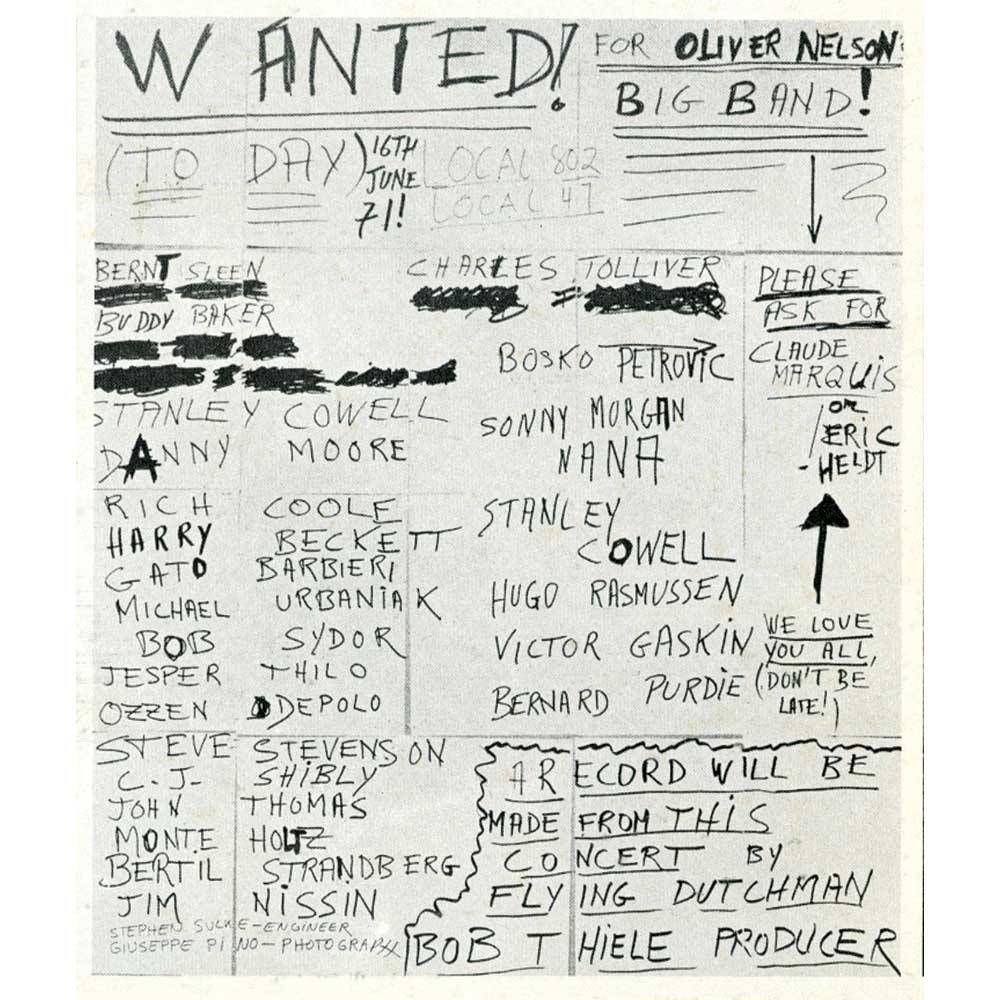

MOSKUS-MESTERTYVEN.
MOSKUS-MESTERTYVEN.
It was back in 2012 that pioneering jazz trio, Moskus, released their critically acclaimed debut album, Salmesykkel. A lot has happened since then. In 2013, Moskus were nominated for two Spellemannspris. They’re the Norwegian equivalent of a Grammy. Moskus were nominated for the highly prized best jazz album and best new act. For the three members of Moskus, this was the perfect start to their recording career. Since then, Moskus have been winning friends and influencing people throughout Europe and North America.
Just like several generations of bands, Moskus embarked on a gruelling touring schedule. At first, the three members of Moskus were touring Norway. They played at both clubs and some of the Norway’s biggest festivals. After that, the three members of Moskus pianist Anja Lauvdal, double bassist Fredrik Luhr Dietrichson and drummer Hans Hulbækmo have been playing much further afield.
Over the last couple of years, much of Europe has been introduced to Moskus’ unique and groundbreaking brand of Nordic jazz. Everywhere from England, Germany, Poland and Portugal, have been won over by Morkus’ music. Audiences realised that Morkus are the future of jazz. Having conquered Europe with their music, Morkus headed to North America. Canada was just the latest country to embrace Morkus’ music. Morkus gruelling touring scheduled had paid off.
Morkus’ profile is at its highest. No longer are Morkus just a Norwegian musical phenomenon. No. Now, Morkus are perceived as as one of the most exciting and pioneering jazz groups. This makes this the perfect time for Morkus release their sophomore album Mestertyven, which will be released by Hubro Music on 19th May 2014. Mestertyven marks a change in approach and direction from Morkus.
For their debut album Spellemannspris, Morkus recorded the album at Stockholm’s famous Atlantis Grammofon Studio. When the time came to record their sophomore album, Moskus decided to try a new approach to recording. Gone was the venerable surroundings of Atlantis Grammofon Studio. Its replacements was the Risør Church. It became a de facto recording studio, albeit one that didn’t have the same standard of equipment.
One of the most important pieces of equipment Atlantis Grammofon Studio has is grand piano. Morkus used this on their debut album Spellemannspris. Its unmistakable sound played an important part in Spellemannspris’ sound. For Mestertyven, Morkus exchanged the grand piano for an upright piano. The upright piano gave the piano a more intimate sound. This was all part of Morkus’ new sound which they showcase on Mestertyven.
Whereas the music on Spellemannspris, Morkus’ debut album were well rehearsed, the music that features on Mestertyven is new and untried. Morkus hadn’t spent ages honing and tightening the tracks. This was deliberate.
Recording of Mestertyven took place in the makeshift studios at Risør Church. The eleven songs were written by Moskus. Anja Lauvdal played piano, Fredrik Luhr Dietrichson double bassist and Hans Hulbækmo drums. Rather than bring in a producer, Moskus produced Mestertyven. Their approach to the sessions were simplicity itself.
As the sessions began, Moskus pressed record. Every single idea was recorded. This made sense. There was no chance that a moment of genius would be missed. Songs were recorded from their genesis to fruition. Songs evolved on the tapes. Eventually, Moskus were left with a pile of tapes. What they had to do was then sift through the tapes. Gradually, eleven songs took shape. Some ideas and experiments were kept, others discarded. The result was Mestertyven, an album that’s described as variously unique, melodic, playful and intimate. Is that the case? That’s what I’ll tell you.
Fjesing opens Mestertyven, which means master thief. Straight away, you notice the difference between the upright and grand piano. The richer sound of the grand piano is replaced by the more everyday sound of Anja’s upright piano. This a sound more people can relate to. Its jaunty, sometimes melodic sound is a mixture of jazz and free jazz. Hans drums and percussion are played in an inventive and ambitious free jazz style. He’s pushing boundaries. Meanwhile, the bass propels the arrangement along. It has a much more orthodox style, while the rest of Moskus continue to push musical boundaries to their limit.
Tandem med Sankt Peter has an almost dramatic, cinematic style. The piano is at the heart of the arrangement’s sound and success. It wanders and meanders along. Anja has found a groove and is exploring its every nuance. Moskus rhythm section are content to provide the backdrop for Anja’s piano. It plays a starring role. The result is one of the most melodic tracks on Mestertyven.
Wistful and innovative describes Yttersvingen. Here, jazz is combined with avant garde and experimental music. It’s a compelling combination. Anja’s piano wanders wistfully along, the bass in its shadow. They supply the jazz. Hans’ percussion adds an industrial sound. It’s ying to Anja’s yang, as avant garde meets experimental. Later, his pounding drums protest, bringing to an end an ambitious and enthralling fusion of musical genres and influences.
Just an understated piano is joined by pounding drums as Jag är ett ägg reveals its secrets. A scratchy fiddle adds another musical contrast. When all this combined the result is ethereal, haunting, moody and melancholy.
Rullings sees Moskus unleash their combined talents. Anja pounds her piano while the rhythm section lock horns. They propel the arrangement along. It’s an impressive sound. Then all of a sudden, the arrangement runs out of steam. Having gathered their thoughts, they do it all again. They veer between dark, dramatic, lively and playful, as Afro-Cuban, jazz and free jazz is combined by Moskus.
Flourishes of Anja’s piano open Lille Trille. They cascade across the arrangement. The rest of Moskus sit this track out. Anja gets the opportunity to deliver a lengthy solo. Quite simply, it’s spellbinding. This a reminder of how effective and underrated an instrument the piano is. It’s at the heart of a track that’s pensive, wistful, emotive and beautiful.
Percussion dominates Fuglene var I Ertehumør’s shuffling arrangement. Sharp stabs of piano and bass add to this hypnotic, experimental arrangement. It’s as if Moskus are jamming. They feed off each other, drawing inspiration from each other’s performances. From dark and dramatic, the music becomes playful and melodic and jaunty.
Understated and ethereal describes the introduction to Glasblåsern. Everyone plays gently. The bass flits across the arrangement. Plinking percussion and piano sit atop the arrangement. Gradually, the arrangement grows and unfolds. Anja deliberately pounds her piano, repeating the same note. At the same time, a brief ethereal vocal escapes from the arrangement. Sounds flit in and out the arrangement. Everything from ambient, avant garde, free jazz and jazz is combined seamlessly and peerlessly. Moskus do what they do best, innovate.
The bass that takes centre-stage as Leverpostei Med Mrie unfolds. Before long, the piano and drums join in. The piano picks up the baton and enjoys its moment in the sun. Moskus if you’ve not realised, comprise three hugely talented musicians. Meanwhile, the rhythm section provide the heartbeat. Anja’s piano takes centre-stage as she delivers another show stealing performance.
Melancholy, moody and cinematic describes Tradisjonskvelern. It meanders along atmospherically. It’s a track that paints in your mind. Just the mesmeric piano, hissing hi-hats and subtle bass combine. At one point, the arrangement is stripped bare. Just hi-hats and the scratchy bass remain. It’s almost haunting. Then the rest of this wistful, cinematic opus returns. It’s without doubt, one of Mestertyven’s highlights.
Gammel-Erik closes Mestertyven. Dark, dramatic and thoughtful are the words that spring to mind when this track begins to reveal its secrets. The piano takes centre-stage, while feedback escapes from the arrangement. Even this is a welcome addition to what’s an evocative and haunting track.
Mestertyven has been well worth the two year wait. Two years have passed since Moskus released their debut album Salmesykkel. Since then, Moskus have been busy. Far from it.
In 2013, Moskus were nominated for two Spellemannspris,the Norwegian equivalent of a Grammy. Moskus were nominated for the highly prized best jazz album and best new act. After that, Moskus headed out on a series of lengthy tours. Europe and North America were introduced to the magical and innovative sound of Moskus. Now they’re back with an album that’s a game-changer, Mestertyven.
Featuring eleven tracks, Mestertyven sees Moskus pickup where they left off on Salmesykkel. By that, I mean Moskus continue to create pioneering and ambitious music. There’s no chance that Moskus would stand still. That’s not what they’re about. Far from it. For Moskus, every album has to be a step forward. Mostkus’ raison d’être is to create music that’s innovative and challenges musical norms. To do this, Moskus draw inspiration from various sources.
This includes free jazz legends like Ornette Coleman, Charles Mingus, Albert Ayler and Sun Ra. They also reference ambient pioneers like Brian Eno and Harold Budd. There’s even a nod to Irmin Schmidt of Can’s soundtracks. The more you listen to Mestertyven, the more influences you hear. Everything from Afro-Cuban, ambient, avant garde, experimental, free jazz and jazz can be heard on Mestertyven. This results in music that’s variously ambitious, beautiful, challenging, dark, dramatic, ethereal, eerie, evocative, haunting, hypnotic and mesmeric. Mestertyven is also music that’s groundbreaking.
Although many bands set out to create a groundbreaking album, not many succeed. Often, the problem is that bands aren’t ambitious or brave enough. Moskus are. What also helped is that Moskus had a vision. So, when Moskus entered the Risør Church, where they recorded Mestertyven, they knew how they wanted their sophomore album to sound.
At Risør Church, there was no searching for an elusive sound. Instead, they plugged in pressed play. Moskus embarked upon a lengthy and inventive jam session. Every single idea was recorded. This made sense. There was no chance that a moment of genius would be missed. Songs were recorded from their genesis to fruition. Songs evolved on the tapes. Others took shape later when Moskus edited the tapes. Gradually, the eleven songs on Mestertyven took shape. Eventually, Mestertyven, Moskus’ long-awaited sophomore album was finished. Mestertyven will be released by Hubro Music on 19th May 2014. It’s an album that’s been well worth the two year wait.
Why? Well. Mestertyven features music that’s pioneering, dramatic, melodic, ethereal, wistful and intimate. That’s the perfect description of Moskus’ sophomore album, Mestertyven, which marks the return of jazz pioneers this groundbreaking opus.
MOSKUS-MESTERTYVEN.


LEON THOMAS-BLUES AND SOULFUL TRUTH.
LEON THOMAS-BLUES AND SOULFUL TRUTH.
Some labels are a perfect fit for an artist. This was the case with Leon Thomas and Bob Thiele’s Flying Dutchman Productions. They proved to be the musical equivalent of ying and yang.
By the late sixties, Leon Thomas had embraced free jazz fully. He turned his back on the blues and his vocal style was totally transformed. His vocal encompassed Afrobeat, blues, jazz R&B and soul as he scatted and yodeled. Leon’s vocal style was truly unique. Many people within the music industry didn’t understand what Leon was doing. Bob Thiele at Flying Dutchman Productions did.
During his career, Bob Thiele had worked with some of the most innovative and creative musicians in the history of jazz. Bob realised that often, large record companies aren’t the best environment for innovative and creative musicians. Often, these musical mavericks didn’t thrive within such an orthodox environment. Their creativity is restricted, meaning they’re unable to experiment and innovate like they’d like.
Having left Impulse following the musical equivalent of a musical coup d’tat, Bob Thiele founded Flying Dutchman Productions. His new label would be the perfect environment for musical mavericks to thrive. Bob signed some of the most innovative jazz musicians of the late-sixties and early seventies. Among them weer Ornette Coleman, Gil Scott Heron, Eddie “Cleanhead” Vinson, Louis Armstrong and Lonnie Liston Smith and His Cosmic Echoes. Another artist signed to Flying was Leon Thomas.
Leon Thomas released a quartet of albums between 1969 and 1973. His Flying Dutchman debut was 1969s Spirits Known And Unknown. The following year, Leon released his sophomore album The Leon Thomas Album in 1970. Flying Dutchman was the perfect label for Leon Thomas. It was as if having found a label that understood him, Leon was allowed to unleash his creativity. With each album, Leon pushed musical boundaries even further. His third album, 1972s Blues And The Soulful Truth, which was recently rereleased by BGP Records, found Leon at his creative zenith. He’d come a long way since he first heard Miles Davis back in St. Louis.
Leon Thomas was born in East St. Louis, Illinois, in October 1937. From an early age, Leon’s life revolved around music. His parents were avid music lovers and his hometown had a thriving musical scene. Inspired by a blues’ shouters like Big Joe Turner, was a familiar face on the local music circuit. Then when Miles Davis came to town, Leon had a musical awakening
The night Miles Davis played St. Louis, Miles’ band featured John Coltrane. That night, they embraced improvisation and pushed musical boundaries to their extremes. For Leon Thomas, this showed him what was possible musically. Here was musical that was inventive, innovative and influential. So much so, that it inspired Leon to study musical at Tennessee State University.
Having left Tennessee State University, Leon became a familiar face on the jazz circuit. Having signed to RCA in 1958, Leon recorded what should’ve been his debut album. It wasn’t released. After that, When Leon was the vocalist with Count Basie’s band in the early-sixties right through until the mid-sixties. During that time, Leon’s style is best described as traditional blues. However, his style changed when he headed to Los Angeles.
It was is Los Angeles that Leon Thomas embraced free jazz. Already an admirer of improvisation within jazz, free jazz took things further. Even better, Leon met musicians who not only shared similar musical philosophies, but political and social values. This included saxophonist Arthur Blythe, drummer Leroy Brooks and pianist Horace Tapscott. Together, they were the Underground Musicians and Artists Associations. Meeting these three musicians, resulted in Leon finding his real voice. With their help, Leon’s voice became like an instrument. He fused musical influences, with blues, jazz and Afro-beat combining with soul, as Leon’s vocal veered between a scat and yodel. This was unique, avant garde and groundbreaking. Leon Thomas was a pioneer, as he headed to New York, looking for fellow travellers.
By 1967, Leon Thomas had met saxophonist Pharoah Sanders. This was a perfect match for Leon. Here were two groundbreaking musicians. In Pharoah Sanders’ hands, the saxophone was transformed. He’d been a member of John Coltrane’s band, until his death in 1967. After that, he formed his own band. Comprising Leon, pianist Lonnie Liston Smith and Pharoah, this was a band of musical pioneers recorded Pharoah Sanders 1969 album Karma, which was released on Impulse. It featured The Creator Has A Master Plan, which showcased Leon’s unique vocal style. A compelling, spiritual track where Leon yodels and scats his way through the track, it was truly groundbreaking. One man who realized Leon Thomas’ potential was Bob Thiele, founder of Flying Dutchman Productions.Having heard Leon Thomas feature on Pharoah Sanders’ Karma album, Bob Thiele signed Leon to Flying Dutchman Records. Leon’s Flying Dutchman Records’ debut was 1969s Spirits Known and Unknown. It was an ambitious and groundbreaking album that showcased Leon’s unique vocal style. Plaudits and critical acclaim accompanied the release of Spirits Known and Unknown. Sadly, Spirits Known and Unknown wasn’t a commercial success. However, Spirits Known and Unknown was only Leon’s debut album.
A year later, Leon returned with The Leon Thomas Album. Released in 1970, as the new decade dawned, The Leon Thomas Album was hailed as innovative and ambitious. Critics realised that Leon was an artist who was determined to move jazz in a new direction. Standing still wasn’t an option for Leon. This was admirable. However, it wasn’t profitable. Sadly, The Leon Thomas Album didn’t sell well. The problem was, that Leon was way ahead of the musical curve. Would his third album Blues And The Soulful Truth, which was released in 1972.
For his third album, Blues And The Soulful Truth Leon wrote L-O-V-E and Love Each Other. He also arranged the traditional song C.C. Rider. Leon cowrote Shape Your Mind To Die with Neal Creque and Let’s Go Down To Lucy’s with Alfred Ellis. Alfred and Leon cowrote China Doll with Jesse Kilpatrick. Other tracks included covers of Gabor Szabo and George David Weiss’ Gypsy Queen and John Lee Hooker’s Boom-Boom-Boom. These eight tracks became Blues And The Soulful Truth.
When recording of Blues And The Soulful Truth began, Pee Wee Ellis had been drafted in to arrange and conduct the band. Pee Wee also played piano and tenor saxophone. Different lineups played on different tracks. So the rhythm section included variously drummers Bernard Purdie, Jesse Kilpatrick and Airto Moreira, bassists Stanley Clarke, Donald Pate and Gordon Edwards, plus guitarists Cornell Dupree and Larry Cornell They were joined by pianist Neal Creque, percussionist Baba Feme and Gene Golden on congas. Horns came courtesy of trumpeter Dick Griffin, trombonist John Eckert and bariton saxophonist Cecil Payne. Leon sang the vocals and played percussion on Blues And The Soulful Truth, which was released in 1972.
Blues And The Soulful Truth was released in 1972. It marked a change in direction from Leon. Critics referred to Blues And The Soulful Truth as the most accessible album Leon had released. The addition of Pee Wee Ellis had played an important part in this. He realised the importance of choosing the right tracks for the album. The eight tracks allowed Leon’s vocal to shine. They also allowed what’s a hugely talented band to showcase their considerable talents and sometimes, stretch their legs musically. The result was one of the most exciting and exhilarating vocal jazz albums of the early seventies. Despite this, Blues And The Soulful Truth passed record buyers by. Thankfully, since then, a new generation of music lovers have discovered Blues And The Soulful Truth, which I’ll tell you about.
Let’s Go Down To Lucy’s opens Blues And The Soulful Truth. From the get-go you’re hooked. Chiming guitars, growling horns and a funky rhythm section join forces with meandering keyboard. Leon unleashes a powerful, sassy, lived-in vocal. The rhythm section provide the funky, pulsating heartbeat. Meanwhile, bursts of blazing horns punctuate the arrangement as Leon vamps his way through the lyrics. He vamps and jive-talks his way through the track combining jazz and soul with power, sass and humour.
Finger clicks, percussion and a meandering piano create the groove to L-O-V-E. Soon, the bass, hissing hi-hats and soaring, soulful harmonies sweep in. That’s Leon’s signal to kick loose. Crystalline guitar licks, grizzled free jazz horns and a hypnotic bass combine. By now, Leon is singing call response with the backing vocalists. He seems to be drawing inspiration from Isaac Hayes on this gloriously soulful, funky track.
Straight away, Gypsy Queen sees Leon return to the more familiar sound of his two previous albums. Keyboards flit across the arrangement, while the arrangement create a shuffling, spacious beat. Leon scats tenderly. Then as rasping horns enter, Leon unleashes his vocal. He sounds not unlike Terry Callier. Heartfelt and growing in power and passion describes his vocal. The arrangement grows in power. Elements of jazz, funk and soul are combined. Leon scats and yodels. This is very different from the previous tracks. Especially when he unleashes a free jazz powerhouse. Gypsy Queen is transformed. It becomes something very different to the song Santana popularised on Abraxas. In Leon’s hands, he reinvents the song, transforming it into something that writers Gabor Szabo and George David Weiss never envisaged.
Love Each Other has a funky, jazz-tinged and soulful sound. The rhythm section, electric piano and harmonies accompany Leon’s impassioned, joyous. Horns rasp and growl, punctuating the arrangement. The rhythm section lock into a groove and with the electric piano create the perfect backdrop for Leon’s heartfelt, impassioned and soulful vocal tour de force.
Shape Your Mind To Die has an Eastern sound. That comes courtesy of the horns. They’re joined by percussion and the rhythm section. Just like the previous track the bass line is at the heart of the arrangement. Leon’s vocal is deliberate and dramatic. The lyrics are cerebral and full of social comment. Midway through the track, Leon unleashes a haunting laugh. That’s the signal for the band to stretch their legs. They don’t need to be asked twice, combining everything from funk, jazz, psychedelia and rock. When Leon returns, his vocal breathes life and meaning into the lyrics. It’s spiritual jazz at its finest.
Most people will know John Lee Hooker’s Boom-Boom-Boom. It’s a familiar blue track. However, Leon transforms the track. In his hands, the song swings. Driven along by the piano rhythm section and crystalline, rocky guitar Leon combines jazz, blues and rock. A scratchy fiddle and Hammond organ are added. By now, a tired old blues track has been transformed. Leon Thomas grabs the song and makes it swing.
China Doll marks another change of direction from Leon. Flourishes of piano join percussion, cymbals and finger clicks. Leon adds a scatted vocal and gradually, the arrangement shows its hidden secrets. A wistful piano, meandering bass and myriad of percussion combine. They create the backdrop to Leon’s needy, sassy vocal. Harmonies coo while the piano meanders and percussion is sprinkled across the understated arrangement. When all this is combined, the result is a track that’s soulful, sassy and jazz-tinged. It also showcases Leon’s versatility and talent as a storyteller who can bring lyrics to life.
The familiar sound of C.C. Rider closes Blues and The Soulful Truth. Growling horns, jazzy piano and the rhythm section combine blues, funk and jazz. They’re joined by a glistening guitar and scratchy fiddle. Together, they set the scene for Leon’s heartbroken vocal. He mixes power, frustration and despair. Then when his vocal drops out, his band take centre-stage. They enjoy the opportunity to kick loose. A glorious rocky guitar solo steals the show. Then an atmospheric Hammond organ picks up the baton. It unleashes flourishes of jazzy-tinged, funky and dramatic music. Stabs of piano, rocky guitar and scratchy fiddle compete for your attention. Leon seems content to let his all-star band to grandstand. However, with a minute to go, he returns delivering a heartbroken, dramatic and impassioned vocal powerhouse. This proves a fitting finale to Blues and The Soulful Truth.
Blues and The Soulful Truth was Leon Thomas’ third album for Flying Dutchman Productions. His two previous albums hadn’t sold well. So, something had to change. What changed was Leon’s musical direction. Gone was Leon’s unique and inimitable free jazz style.
Whereas Leon scatted and yodelled on his two previous albums, Blues and The Soulful Truth had a much more traditional sound. Granted Leon returned to his trademark sound on Gypsy Queen. Apart from that, Leon eschews scatting and yodellng. Instead, he sticks to a much more traditional vocal jazz style. Leon Thomas had moved towards the jazz mainstream. It was maybe, a case of needs must.
No record label can continue to release albums that don’t sell. That would be folly and a recipe for insolvency. So Leon recorded his most accessible and mainstream album, Blues and The Soulful Truth. It was a revelation. Blues and The Soulful Truth should’ve been a huge commercial success. It showcased a versatile and multi-talented vocalist. He could sing blues, jazz, R&B, rock or soul. Leon’s band were equally versatile. They strut their way through eight tracks, flitting between and sometimes, fusing blues, free jazz, funk, jazz, psychedelia, R&B, rock and soul. Not once do they miss a beat. Mind you, what do you expect from what was a band comprising some of America’s top musicians. Sadly, despite their best efforts, Blues and The Soulful Truth wasn’t a commercial success.
Leon Thomas it seemed, wasn’t going to enjoy the commercial success his music deserved. He’d even changed direction, releasing the most accessible and mainstream album of his career, Blues and The Soulful Truth which was recently released by BGP Records, a subsidiary of Ace Records. Blues and The Soulful Truth is the album that should’ve transformed Leon Thomas’ career and fortunes. Sadly, that wasn’t to be and Blues and The Soulful Truth proved to a lost classic.
That wasn’t the end of Blues and The Soulful Truth. No. For too long, his music was largely forgotten. As time went by, a new generation of music lovers discovered Leon Thomas’ music. They realised that Leon Thomas was one of music’s best kept secrets. Here was an artist whose groundbreaking, genre-melting albums should’ve enjoyed commercial success and critical acclaim aplenty. Sadly, talent alone doesn’t equate to commercial success and critical acclaim. If it did, then Leon Thomas would’ve been one of the most successful jazz singers of the early seventies. Unfortunately, that wasn’t the case. However, Leon Thomas will always be remembered as one of jazz music’s true pioneers.
Proof of that is the quartet of albums Leon Thomas released for Flying Dutchman Productions. His third album for Flying Dutchman Productions was Blues and The Soulful Truth. Blues and The Soulful Truth is the most accessible, mainstream album from Leon Thomas, one of jazz’s true pioneers.
LEON THOMAS-BLUES AND SOULFUL TRUTH.
LONNIE LISTON SMITH AND THE COSMIC ECHOES-COSMIC FUNK.
LONNIE LISTON SMITH AND THE COSMIC ECHOES-COSMIC FUNK.
Innovative, influential and way ahead of the musical curve, describes Lonnie Liston Smith. That is the perfect description of Lonnie Liston Smith and The Cosmic Echoes 1973 debut album Astral Travelling. The music on Astral Travelling was groundbreaking. So much so, that it’s hard to believe Astral Travelling was released in 1973. Lonnie Liston Smith was a musical visionary. He was determined to push musical boundaries to their limits, and sometimes, beyond. However, Astral Travelling never enjoyed the commercial success and critical acclaim it enjoyed.
So, Lonnie dusted himself down and returned with Lonnie Liston Smith and The Cosmic Echoes 1974 sophomore album, Cosmic Funk, which was recently rereleased by BGP Records, an imprint of Ace Records. Cosmic Funk is another genre-melting album of groundbreaking music from a true jazz pioneer, Lonnie Liston Smith, who is seemed was destined to become a musician.
For Lonnie Liston Smith, it was almost written in the stars that he’d become a musicians. Lonnie was born in 1940, into a musical family. His father was a member of Richmond Gospel music group the Harmonising Four. Growing up, members of gospel groups The Soul Stirrers and Swan Silvertones were regular visitors to the Smith household. With all this music surrounding him, Lonnie learned piano, tuba and trumpet in High School and college. After college, he headed to Morgan State University.
Inspired by Trane, Bird and Miles Davis, Lonnie embarked upon a degree in musical education. Throughout his time at University, Lonnie continued playing the pianist in local clubs and singing backing vocals. He played with alto saxophonist Gary Bartz and trombonist Graham Moncur. This was all part of Lonnie’s musical eduction. Having completed his BSc in musical education at Morgan State University, Lonnie walked straight into a job.
On leaving Morgan State University, Lonnie got a job with the Royal Theatre’s house band. For a young musician, this was would help turn them into a musical all-rounder. After all, they had to be able to accompany a wide range of artists. For Lonnie, this was the next stage in his musical education. The next part of his musical education took place in New York.
Having moved to New York, Lonnie was luck enough to get a gig playing piano in Betty Carter’s band. This helped Lonnie get his name known in the Big Apple. Then in early 1965, Lonnie caught a break. He joined Roland Kirk’s band and made his recording debut on March 14th 1965. That was when Here Comes The Whistleman was recorded live in New York Lonnie only played on the title-track, Making Love After Hours, Yesterdays and Step Right Up. Then Lonnie featured on Roland andAl Hibbler’s 1965 live album A Meeting Of The Times. After this Lonnie, joined one of jazz’s top bands.
Over the last few years, The Jazz Messengers had established a reputation for young musicians looking to make a name for themselves. Lonnie joined in 1965. He shared the role with Mick Nock and Keith Jarrett. However, with The Jazz Messengers ever evolving lineup, Lonnie only played three in concerts. These three concerts just so happened to be at the legendary Village Vanguard. For Lonnie, despite the prestigious venue, this must have been a disappointing time. Luckily, he was rehired by Roland Kirk.
Lonnie rejoined Roland Kirk’s band in time to play on his 1968 album Now Please Don’t You Cry, Beautiful Edith. This established Lonnie’s reputation as the go-to-guy for a pianist. It was the start of period where Lonnie worked with some of the most innovative and inventive jazz players. Musical boundaries were about to be pushed to their limits as Lonnie joined Pharaoh Saunders’ legendary free jazz band.
Pharaoh Saunders had worked closely with John Coltrane right up to his death in 1967. The following year, Pharaoh formed a new band. Their music is best described as free jazz. Musical boundaries were pushed to their limits and beyond. Recognising a fellow believer in free jazz, Pharaoh asked Lonnie to join his band. Lonnie went on to play on three of Pharaoh’s best albums. The first of this trio was 1969s Karma. It was followed in 1970 with Jewels of Thought and 1971s Thembi. The other Pharaoh Saunders album Lonnie played on was 1970s Summun Bukmun Umyun. which was released on Impulse. Just like the three albums Pharaoh recorded for Flying Dutchman Productions, it was a groundbreaking album.
During this period, Pharaoh and his band were constantly pushing boundaries and rewriting the musical rulebook. Their music was truly groundbreaking. Even Lonnie was challenged. On Thembi, Pharaoh asked Lonnie to play the Fender Rhodes. This was the first time that Lonnie came across an electric piano. However, he rose to challenge and wrote Thembi’s opening track Astral Travelling. Later, Astral Travelling would become synonymous with Lonnie Liston Smith and The Echoes. Before that, Lonnie would play with some of jazz’s mavericks. One of these was Gato Barbieri. He’d just signed to Bob Thiele’s nascent label Flying Dutchman Productions. It was establishing a reputation for providing musicians with an environment where innovative and creative musicians could thrive. Bob believed musical mavericks didn’t thrive within such an orthodox environment. Their creativity is restricted, meaning they’re unable to experiment and innovate like they’d like. So, Bob signed Gato to Flying Dutchman. Lonnie played on his 1969 debut album The Third World. Bob’s next signing was Leon Thomas and played on his debut album Spirits Known and Unknown. Soon, Lonnie was a regular at Flying Dutchman sessions.
When the time came for Gato to record his 1971 sophomore album Fenix, Lonnie was called upon. He played on Fenix and joined Gato’s band. Lonnie played on Gato’s 1972 album El Pampero. He also toured throughout Europe with Gato. Then came the opportunity of a lifetime. After El Pampero, Lonnie got the chance to work with another jazz legend.
Lonnie was a member of Gato Barbieri’s band when Miles Davis got in touch. He wanted Lonnie to join his band. At this time, Miles’ music was changing direction. The direction it was heading in was funk. Electronic instruments were the flavour of the month for Miles and he was exploring their possibilities. However, Miles was doing this outside the studio environment. That’s why there are very few recordings of Lonnie playing alongside Miles at that time. That came later, when Lonnie would later work with Miles. Meanwhile, Lonnie decided to move on with his solo career and his debut album Astral Travelling.
When recording of Astral Travelling began, Lonnie had put together some of the most talented and innovative musicians. The Cosmic Echoes’ rhythm section included bassist Cecil McBee, drummer David Lee and guitarist Joe Beck. Sonrily Morgan and James Mtume played percussion and conga, Gee Vashi tamboura and Badal Roy tabla. George Barron played tenor and soprano saxophone and Lonnie played piano and electric piano on Astral Travelling. Bob Theile produced Astral Travelling, which was released in 1973.
On its release in 1973, Astral Travelling was critically acclaimed. It was as if Lonnie had drawn upon all his experience working as a sideman. He’d worked with Pharaoh Saunders, Gato Barbieri, The Jazz Messengers, Leon Thomas, Stanley Turrentine and Miles Davis. This meant he was no ordinary musician. No. Lonnie Liston Smith was an innovator, who was determined to push musical boundaries to their limits and beyond. This was apparent on Astral Travelling. A year later, Lonnie returned with the followup up Astral Travelling, Cosmic Funk.
Cosmic Funk featured six tracks, three of which Lonnie wrote. They were the title-track Cosmic Funk, Beautiful Woman and Peaceful Ones. The other tracks were Wayne Shorter’s Footprints, James Mtume’s and John Coltrane’s Naima. These six tracks were recorded by an all-star band.
For the recording of Cosmic Funk, Lonnie had put together some of the most talented and innovative musicians. The Cosmic Echoes’ rhythm section included bassist Al Anderson, drummer Art Gore. Lawrence Killian played percussion and conga, while Doug Hammond, Ron Bridgewater and Andrew Cyrille played percussion. George Barron soprano saxophone, flute and percussion, while Donald Smith played piano, flute and added vocals. Lonnie played acoustic and electric piano plus persuasion on Cosmic Funk. Bob Theile produced Cosmic Funk, which was released in 1974.
Cosmic Funk was released in 1974. Critics heard a different side to Lonnie Liston Smith on Cosmic Funk. It was a much more orthodox album. One thing remained the same, the reaction of critics. Just like Astral Travelling, plaudits and critical acclaim followed the release of Cosmic Funk. Sadly, Cosmic Funk which I’ll tell you about, wasn’t a huge commercial success.
Opening Cosmic Funk is the title-track. An uber funky bass line and percussion set the scene. Briefly, you think you’ve put on a Blaxploitation soundtrack. Soon, hissing hi-hats join as the arrangement takes on a dubby sound. Subtle rasping horns are added before Donald Smith’s vocal is a fusion of power and passion. It’s akin to a cathartic outpouring of emotion. By now, the all-star band are jamming, feeding off-each other. Donald unleashes another vocal powerhouse. He literally screams “citizens of the world, it’s time for world peace.” His impassioned plea is accompanied by a Lonnie’s unique fusion of funk, jazz and soul, which can only be described as Cosmic Funk.
Footprints has an unmistakable sound. Penned by Wayne Shorter, Footprints featured on Miles Davis’ Miles Smiles’ album. Lonnie’s decision to cover the track could be seen as risky. After all, some people see Miles’ version as the definitive take on this track. Here, what’s noticeable is the unlike the previous track, it has a much more orthodox jazz sound. A wandering bass, flourishes of piano and soprano saxophone combine to create an understated, dreamy arrangement. It literally floats along, propelled by the rhythm section and piano. Percussion is sprinkled across the arrangement. Gradually, it grows in power and drama. Lonnie’s piano is key to the arrangement, feeding off the saxophone. After the saxophone drops out, Lonnie steals the show, delivering a masterclass he reinvents a classic track.
Beautiful Woman is the second of a trio of tracks penned by Lonnie. Flourishes of flamboyant piano, percussion and a shuffling rhythm section provide a Latin backdrop for Donald’s tender, heartfelt and seductive vocal. When his vocal drops out, Lonnie’s piano takes centre-stage. He’s accompanied by a subtle saxophone, a myriad of percussion and a pulsating rhythm section. However, it’s Lonnie’s piano that has you captivated. He plays with freedom and flamboyance during a lengthy solo. It’s one of the finest on Cosmic Funk. Meanwhile, Donald scats before picking up the baton from Lonnie and delivering the lyrics to the beautiful paean with passion and sincerity. The result is one of Cosmic Funk’s highlights.
Sais (Egypt) is eight minutes of spiritual jazz. It’s as if Lonnie’s been inspired by Pharaoh Saunders, who he used to play with. This track was penned by James Mtume, who played in Miles Davis’ band. However, it was Sonny Rollins who first recorded Sais (Egypt) on Horn Culture. Here, the arrangement is slow, with a mysterious, mystical sound. Just a lone bass plays before percussion, piano and drums enter. Lonnie’s piano playing is central to the track’s success. His playing is flamboyant, with flourishes of piano cascading across the arrangement. Playing an equally important role is the soprano saxophone. It too, cascades across the arrangement, while percussion and a reverberating piano add to the mystical, futuristic and experimental sound.
Peaceful Ones has a laid-back, mellow sound. The arrangement just meanders along. It has an understated, dreamy and floaty sound with envelops James’ vocal. It’s heartfelt. James sings as if he means every word. Especially the lyric “we’ll live in harmony.” When his vocal drops out the rhythm section, percussion and piano drive the arrangement along. Al Anderson’s bubbling electric bass plays a starring role. It’s panned right and Art Gore’s drums panned left. This add a sense of symmetry to the arrangement and allows James’ tender, beautiful and heartfelt vocal to take centre-stage, where it belongs.
Naima, which was written by John Coltrane, closes Cosmic Funk. Lonnie’s spacious piano reverberates and the arrangement unfolds. James picks up where he left off on Peaceful Ones. Heartfelt and tender describes his vocal. The understated arrangement floats and cascades around him. Bells chime, a flute bubbles and the bass probes. Percussion and Lonnie’s piano plays an important role. Especially when James’ vocal drops out. They briefly enjoy a starring role. Then when James’ vocal returns, they return to playing a supporting role on this wistful, ethereal and beautiful track.
Cosmic Funk proved to be a transitionary album for Lonnie Liston Smith. Released in 1974 critics heard a different side to Lonnie Liston Smith on Cosmic Funk. It was a much more orthodox jazz album. Jazz, funk, Latin and soul were combined on Cosmic Funk. However, one thing remained the same, the reaction of critics. Just like Astral Travelling, plaudits and critical acclaim accompanied Cosmic Funk which looking back, was a stepping stone for Lonnie Liston Smith.
The benefit of hindsight is a wonderful thing. However, anyone familiar with Lonnie Liston Smith’s back-catalogue will tell you that Cosmic Funk was a stepping stone for Lonnie. He found himself one step nearer what would be regarded as his trademark sound. He found his trademark sound on his third album, Expansions, which was released in 1975. For Lonnie, the first two albums of his career were part of a musical voyage of discovery.
During that journey, Lonnie embraced a whole host of ideas musically. That’s apparent on Cosmic Funk. Jazz, funk, Latin, soul and even electronica make an appearance on Cosmic Soul. That would be the case throughout Lonnie’s career. Some of the ideas worked. Others didn’t. These he cast aside, albeit sometimes temporarily. Sometimes, Lonnie would revisit them later in his career. Lonnie was always open minded musically. It was a case of neither ruling anything in, nor out. That’s why Lonnie Liston Smith will forever be regarded as an musical innovator and visionary.
Lonnie Liston Smith would go on innovate and influence several generations of musicians. Even today, forty years after the release of Cosmic Funk, Lonnie Liston Smith is still influencing generations. It seems belatedly, Lonnie Liston Smith’s music is finding a wider audience. Maybe, only now do people understand what Lonnie Liston Smith was trying to do? After all, his music was way ahead of the musical curve. However, Cosmic Funk which was recently rereleased by BGP Records is one of Lonnie Liston Smith’s most accessible albums.
Although Cosmic Funk was quite different to the music on Lonnie Liston Smith’s debut album Astral Travelling, it has one thing in common, quality. Cosmic Funk oozes quality. No wonder. Lonnie was accompanied by a band that features several former members of Miles Davis’ band. Each of them, played their part in Cosmic Funk’s sound and success. Cosmic Funk was very different to Lonnie’s debut album Astral Travelling. Despite its much more orthodox jazz sound, Cosmic Funk found Lonnie one step nearer finding his trademark sound. With its much more traditional sound, Cosmic Funk is one of the most accessible albums Lonnie Liston Smith and The Cosmic Echoes released. That’s why Cosmic Funk is the perfect introduction to Lonnie Liston Smith and The Cosmic Echoes’ unique brand of cosmic jazz.
LONNIE LISTON SMITH AND THE COSMIC ECHOES-COSMIC FUNK.

1982-A/B
1982-A/B
A/B the fourth album from enigmatic Norwegian improvisational trio 1982, sees them draw inspiration from the past. The result is another groundbreaking album A/B,, which will be released on Hubro Music, on 12th May 2014. It’s the followup to 2012s 1982 + B.J. Cole. This was the third album 1982 had released since they formed back in 2007. A lot has happened since then. A/B harks back to the age of the vinyl album and is the latest chapter in the 1982 story.
The 1982 story began back in 2007. That’s when Sigbjørn Apeland, Øyvind Skarbø and Nils Økland formed what was essentially a Norwegian supergroup consisting of innovative musicals. Each member of 1982 was an experienced and inventive musician. They’d all played on albums by other bands. Nils Økland had already released a trio of solo albums. 1982 would become a vehicle to showcase their collective talents.
Two years later, in 2009, 1982 released their debut album. Entitled Sigbjørn Apeland, Øyvind Skarbø, Nils Økland, it was released to critical acclaim. The improvisational trio had released an album of innovative, inventive and influential music. This was just the first chapter in the story of one of Norway’s most exciting bands.
Pintura was 1982s sophomore album. It was recorded at Grieghallen Studio, Bergen, on December 7th 2010. Released in 2011, on Hubro Music, Pintura featured saw 1982 pick up where they left off on their debut album. Critically acclaimed and featuring groundbreaking music, word was spreading about 1982 and their unique improvisational style. Their third album would be a collaboration with a musical veteran.
1982 + B.J. Cole saw Sigbjørn Apeland, Øyvind Skarbø and Nils Økland joined by legendary pedal steel player B.J. Cole. For many people, 1982 + B.J. Cole might have seemed like unlikely collaborators. Especially, given their different musical backgrounds. However, this is what people have come to expect from 1982. They’re determined to push musical boundaries to their limit, and sometimes, beyond. This is what they did on 1982 + B.J. Cole. The result was an ambitious and innovative album. For A/B, the followup to 1982 + B.J. Cole, 1982 have decided to collaborate again.
When work began on what would be A/B, 1982 decided their fourth album would be another collaboration. This time, 1982 invited wind players Fredrik Ljungkvist of Atomic, Erik Johannessen of Jaga Jazzist, plus Sofya Dudaeva, Hanne Liland Rekdal, Matthias Wallin and Stian Omenås. They’d play on what was an unorthodox collaboration.
A/B harks back to the days of the vinyl album. Essentially, it’s album of two parts, the A-side and B-Side. The A-Side features just one lengthy piece. Hence the title 18.16. It was penned by Sigbjørn Apeland, Øyvind Skarbø, Nils Økland and Stian Omenås. This piece is seen as the most innovative piece of music 1982 have recorded. Stian has composed and arranged a piece for a wind sextet. It’s another layer of music that sits atop the original improvisation. The rest of A/B was penned by Sigbjørn, Øyvind and Nils.
Just like 18:16, the other tracks 02:01, 03:51, 03:12, 1:08 and 5:00, indicate the length of the track. This isn’t new. 1982 have been doing this since their debut album. It’s actually a clever idea. With no traditional title, there’s nothing to give you a clue as to the meaning of the music. Instead, you can let your imagination run riot. That’s perfect for the music on A/B.
On the B-Side, 1982 return to playing as a trio. There’s a number of departures from previous 1982 albums. Sigbjørn plays piano on one track, and Nils delivers a vocal. This is just part of 1982s musical journey. During this journey, their raison d’être is to always create groundbreaking, innovative music. With each album, 1982 are determined to push things even further. This is the case on A/B.
Recording of A/B took place in two studios. 1982 recorded A/B in Grieghallen Studio in Bergen. This was just before the studio shut its doors for the last time in the summer of 2013. Nils played Hardanger fiddles and violins and added a vocal. Stian recorded the sextet in Oslo.
The sextet was recorded at Rainbow Studio, in Oslo, with technician Jan Erik Kongshaug, Fredrik Ljungkvist played clarinet, Sofya Dudaeva flute, Hanne Liland Rekdal bassoon, Matthias Wallin tenor horn, Erik Johannessen trombone and Stian Omenås trumpet. When the sextet had recorded 18:16 their part, it was layered atop the piece recorded by 1982 by producer Øyvind Skarbø. The result you’ll realise, when I tell you about A/B, is one of the most groundbreaking pieces of music 1982 have ever recorded, 18:16.
18:16 opens A/B, 1982s fourth album. It’s understated and ethereal as it reveals its subtleties and nuances. A harmonium, violin and wind instruments play gently, They play with care and subtlety. The arrangement meanders along, gradually unfolding. Soon, a clarinet enters. It adds an element of drama. Meanwhile, scratchy fiddles add a melancholy sound. By now, everything from ambient, avant garde, classical, experimental and jazz has been combined. Later, 1982 add their unique improvisational twist to the track. When free jazz enters the equation, the track veers between haunting, to eerie, disturbing and dramatic. Much later, the arrangement is spacious and pensive, before returning to a an understated, ethereal and wistful sound. This results in an epic track, one that’s ambitious, challenging, dramatic and groundbreaking. So much so, that it’s career defining track for 1982 that’s a game-changer as far as they’re concerned.
Just a lone piano opens the spacious 02:01. Soon, it’s all change. Drums, percussion and fiddles join forces. They dominate the arrangement. The piano adds to the drama, before the arrangement returns to an understated, wistful sound.
It’s just thoughtful drums that open 03:51. A distant violin makes its way forward. So does a droning sound. Mostly, it’s just the drums and fiddle that create an understated and melancholy arrangement. The addition of the droning sound adds to the melancholia. It also adds a melodic sound to this dreamy, thoughtful track.
03:12 picks up where 03:51 left off. The arrangement has an understated, thoughtful sound. A fiddle, harmonium and scatted vocal combine as the arrangement unfolds in waves. It’s a combination of ambient, avant grade, drone and 1982s unique improvisational style. Nils delivers an improvised vocal that’s the perfect foil for the rest of the arrangement. This results in a track that’s variously haunting, beautiful, ethereal and gloriously understated.
01:08 is a brief sonic experiment. It’s a taste of what 1982 are capable of. 1982 draw you in, improvising and taking you on a journey. Sadly, it’s over before it’s begin. However, you’ve had a tantalising taste of what 1982 are capable of where they’re capable of taking you.
05:00 closes A/B. Just like most of the music on the “B-Side” the music is understated, wistful and melancholy. Drums played by brushes join the harmonium and fiddle. They leave space within the arrangement. It’s as if they’re allowing music for the music to breathe. By then, it’s broody and eerie. Hi-hats hiss as ambient, classical and jazz combine with experimental music. Later, the music becomes broody, moody and heart-achingly beautiful.
A/B, which is the fourth album from Norwegian improvisational trio 1982, is without doubt, the best album of their career. Flawless describes this Nordic minimalist epic. So does innovative, understated, wistful, melancholy, dramatic, dreamy, eerie, beautiful, broody, moody and haunting. A/B are all these things and more as 1982 seamlessly, mix musical genres.
Everything from ambient, avant garde, classical, drone, experimental, free jazz and jazz is combined by 1982. The result is A/B an album of groundbreaking sonic journeys. A/B’s centrepiece is 18:16, the album’s Magnus Opus. It’s a collaboration with a wind sextet. This collaboration was one of the most ambitious pieces of music 1982 have ever recorded. Quite simply, it’s a groundbreaking piece of music that for 1982, will be game-changer. 18:16 is also a career defining track. It’s what everything else 1982 produce will be compared to. However, there’s more to A/B than 18:16.
The other five tracks are part of an innovative and influential sonic experience. 1982 take you combine musical genres to create music that’s emotive and tugs at your heartstrings. It’s also music that’s beautiful, complex and full of nuances. The music is multilayered, spectral and full of textures. These five tracks, just like 18:16, are part of an album that’s career defining. That’s how I’d described A/B, 1982s fourth album which was released on Hubro Music, on 12th May 2014. A/B is a career defining album from the groundbreaking Norwegian improvisational trio 1982.
1982-A/B

SHAWN LEE PRESENTS GOLDEN AGE AGAINST THE MACHINE.
SHAWN LEE PRESENTS GOLDEN AGE AGAINST THE MACHINE.
Shawn Lee’s new album, Shawn Lee Presents Golden Age Against The Machine, which was released on 5th May 2014, has been a labor of love. It’s Shawn paying homage to the golden age of hip hop, which influenced and inspired him. So much so, that Shawn decided to pursue a career as a producer.
His career began back in 1995, when he moved to London and recorded his 1996 debut album, Discomfort, for Giles Petersen’s Talking Loud label. Since then, Shawn has released a string of commercially successful and critically acclaimed albums. The latest addition to his discography is Shaun Lee Presents Golden Age Against The Machine. It’s been described as a “passion play.” It could also be described as a love letter to the golden age of hip hop, which Shaun believes was between the mid-eighties and mid-nineties. Featuring seventeen tracks, Shawn Lee Presents Golden Age Against The Machine is a one of the ambitious albums of Shawn’s career, which is now entering its third decade.
Shawn Lee was born and grew up in the outskirts of Wichita, Kansas. From an early age, Shawn began a lifelong love affair with soul and funk. He grew up listening to Sly and The Family Stone, The Isley Brothers and Blaxploitation soundtracks. Later, he discovered gospel music, when he started playing drums in the local baptist church. This didn’t go down well with some of Shawn’s supposed “friends.”
They disapproved of this. For Shawn, this proved the last straw. He decided to leave the Mid West. For Shawn this was doubly disappointing. Not only had his “friends” proved to be racists, but Shawn was enjoying playing in Lotus, a local band which featured a future country megastar, Martina McBride. However, Shawn headed across the Atlantic, to London, to record his debut album, Discomfort.
This was 1995. Now living in London, Shawn recorded his 1996 debut album, Discomfort. It was released on Giles Petersen’s Talking Loud label. Monkey Boy, his sophomore album, followed in 2000. Then between 2002 and 2003, Shaun released five volumes of his Ape Breaks series. So popular were the Ape Breaks series, that Shawn became the most sampled drummer of his generation. Following the Ape Breaks series Shawn released the first album by his newest project, Shawn Lee’s Ping Pong Orchestra.
Shawn Lee’s Ping Pong Orchestra released Music and Rhythm in 2004. Moods and Grooves followed in 2005, with Strings and Things released in 2006. Another seven albums would be released by Shawn Lee’s Ping Pong Orchestra between 2007 and 2012. With each album, their genre melting music was finding a wider audience. The same year, 2006, Shawn Lee’s Ping Pong Orchestra released Strings and Things, Sean released two further albums.
The first album was a soundtrack album, Rockstar Games Presents Bully Original Soundtrack. Then there was Shawn’s first release for BBE Music, Soul Vista. It was released to critical acclaim. Soul Vista marked a new chapter in Shawn’s career. So did two collaborations Shawn was involved with.
In 2008, Shawn and Clutchy Hopkins released their collaboration Clutch Of The Tiger. Shawn also collaborated on the Under The Sun Original Motion Picture Soundtrack with Afro Dizzi Act, Band of Frequencies and Low Pressure Sound System. Then in 2010, Bei Bei and Shawn collaborated on Into The Wind. The same year, Shawn released another solo album.
Sing A Song was released in 2010. It was the latest addition to Shawn’s discography. With each album, Shawn was evolving and maturing as a producer. He’d established a reputation as one of the most innovative producers of his generation. Shawn was also gaining a reputation as the hardest working producer in modern music.
2011 saw Shawn collaborate with Alex Rizzo, Elliot Ireland and The Fingers Malone Ensemble on The Organic Downbeats. This wasn’t the only album Shawn released. No. His latest collaboration made released their debut album in 2011.
Celestial Electric was the debut from A.M. and Shawn Lee. Their sophomore album La Musique Numérique followed in 2012. Shawn also released another solo album in 2012, the genre-melting Synthesizers In Space. The following year, Shawn was part of innovative transatlantic project,
In 2013, Shawn joined collaborated with Herbie Flowers, Tim Lee and Barry Morgan. The result of the quartet’s collaboration was New York Trouble / Electric Progression. This was the just the latest innovative addition to Shawn Lee’s discography. The next is Shawn Lee Presents Golden Age Against The Machine.
For Shawn. Shawn Lee Presents Golden Age Against The Machine is a deeply personal album. It harks back to the music that influenced and inspired him. It’s what he calls the golden age of hip hop, which he believes was between the mid-eighties and the mid-nineties. This was what Shawn listened to growing up and when he was embarking on his career as a producer.
What especially inspired Shawn was sample based production. This was new. No longer did you need musicians and a studio to record an album. It was now within the budget of a new generation. Like the previous generation, they dug deep looking for samples. Around this sample. producers, like Shawn, could build a track.
Often, it was a drum beat, guitar lick or horn riff. Sometimes, it was all three. This formed the basis for the track. Strings could be added. Possibly percussion or a snippet of a vocal. Maybe another sample or samples were added. Sometimes, the tempo was changed or effects added. All this was to disguise the sample’s identity. This describes how the music Shawn grew up listening to was made. It also describes what he did early in his career.
Shawn would play the drums while rappers vamped over Chic’s Good Times. He then graduated to playing Rufus’ Ain’t Nobody. Soon, Shawn had his own Linn drum machines, Dmx’s, SP 12 and 1200’s and MPC drum machines. His career was underway. He was a fully fledged hip hop producer.
Now, nearly twenty years later, Shawn is approaching the veteran stage of his career. He’s held in the highest esteem among the hip hop community. They’ve come out in their droves to accompany Shawn on his new album Shawn Lee Presents Golden Age Against The Machine. It’s an all-star cast the accompanies Shawn Lee on the gloriously old school Shawn Lee Presents Golden Age Against The Machine. However, it’s old school with a twist.
The old school hip hop albums from De La Soul, The Dust Brothers and Prince Paul that inspired Shawn were all sample based productions. Not Shawn Lee Presents Golden Age Against The Machine. It isn’t a sample based production. No way. Instead, Shawn played everything Shawn Lee Presents Golden Age Against The Machine. This includes every one note stab, lick and drum beat. That’s what makes Shawn Lee Presents Golden Age Against The Machine such a compelling project. It’s also a fitting homage to the golden age of hip hop. Helping Shawn were a cast of guest artists.
Among the guest artists on Shawn Lee Presents Golden Age Against The Machine, are Braille, MC ThinkTank, Lightheaded, Ohmega Watts, Miles Bonny, Earl Zinger, Busdriver, Princess Superstar and Andy “Undertaker” Cooper. All these artists helped Shawn Lee produce Shawn Lee Presents Golden Age Against The Machine, which may very well be his an old school hip hop Magnus Opus with a twist. Is that the case though?
Forward To The Past opens Shawn Lee Presents Golden Age Against The Machine. Straight away, it references hip hop roots. It draws inspiration from Chic’s Good Times, before a joyous fusion of soul, funk and disco unfolds. Blazing horns, chiming guitars and a funky rhythm section join forces with percussion and a strutting rap. The result is hook laden old school hip hop the new school way.
Stay On Course features the first guest artist Braille. He plays a part in the track’s tougher harder sound. A myriad of grizzled horns, crystalline guitars, stabs of piano and scratches provide the backdrop to Braille’s swaggering rap.
Back To The Future is a real fusion of styles. It also has an eighties sound. That’s no surprise. This is when Sean grew up. Everything from electronica, electro and funk are combined as MC ThinkTank swaggers his way through the track. Bubbling synths and effects are added, resulting in a futuristic sound as we take a trip Back To The Future.
After this, a string of guest artists make an appearance. Lightheaded features on Rocksteady, where elements of reggae, funk and soul are combined. The arrangement is dominated by keyboards, while stabs of horns, crisp drums, scratches and bursts of vocal escape from the arrangement to this genre-melting track. Ohmega Watts plays a huge part in We Got The Jazz. He plays the role of jive talking hep cat to a tee on this jazz-tinged slice of smokey hip hop.
Slow, moody and dubby describes the old-school influenced Boom Rap. It features a jazz-tinged guitar and the crackling sound of old vinyl. Later, stabs of horns are added to the understated arrangement to what could easily be a vintage hip hop classic.
Big Bad Wolf shows another side to Shawn Lee. It’s dark, dramatic and cinematic, as Shawn springs surprises during this magical musical mystery tour. It continues on Hip Hop Harpe. From the get go it’s slow and moody. Meandering, hypnotic, keyboards grab your attention. Sean’s other secret weapon are the drums. They plod along adding to the atmospheric, broody arrangement which again, has a cinematic sound.
The next few tracks see the return of the guest artists. Miles Bonny guests on the soulful, jazzy and beautiful Wake Up. Earl Zinger features on Jackie Chan. It veers between the atmospheric, disturbing, haunting and hypnotic.
Next stop is Christophe which features Busdriver. He unleashes a vocal at breakneck speed. Meanwhile the arrangement veers between soulful and uber funky. There’s even a brief nod to Canned Heat and hint of blues and poppy harmonies. Mostly, it’s funky, as if inspired by Shawn’s love of Blaxploitation. Princess Superstar features on I Just Had A Baby. She mixes Nu-Soul and hip hop with humour and hooks. Andy “The Undertaker” Cooper features on the wistful, dramatic hip hop anthem Ashes To Ashes. His vocal and the keyboards are at the heart of a track that’s dark, dramatic and anthemic.
School House Funk sees Shawn roll back the years. He replicates the youthful exuberance and energy of the high school band. This can’t help make you smile as Shawn’s musical journey continues.
Straight away, Baby Breakin’ reminds me of Queen’s Another One Bites The Dust. It’s an old school track, that reminds me of hip hop’s early years, especially Grandmaster Flash and the Furious Five. Featuring MC Shawny Shawn’s rap, it’s a homage to hip hop’s early years.
Marimba has a wistful introduction. That’s before the thunderous drums gallop in. They provide a contrast the the melancholy sound of the Marimba. Swathes of strings, keyboards and drums combine to create a wistful, sixties sounding cinematic track. Muson Magic closes Shawn Lee Presents Golden Age Against The Machine. It has futuristic, space-age sound. Add to that elements of funk and Kraftwerk and Muson Magic sounds like the soundtrack to a cult sci-fi film.
So that’s the story of Shawn Lee Presents Golden Age Against The Machine. This was Shawn’s Magnus opus, his love letter to the golden age of hip hop. Described as a “passion play,” Shawn Lee Presents Golden Age Against The Machine is anold school hip hop album the new school way.
By this, I mean Shawn eschews sample based production for playing each of the parts. Shawn played everything on Shawn Lee Presents Golden Age Against The Machine. This includes every one note stab, lick and drum beat. That and a cast of guest artists is what makes Shawn Lee Presents Golden Age Against The Machine such a compelling and critically acclaimed project.
Among the guest artists on Shawn Lee Presents Golden Age Against The Machine, are Braille, MC ThinkTank, Lightheaded, Ohmega Watts, Miles Bonny, Earl Zinger, Busdriver, Princess Superstar and Andy “Undertaker” Cooper. Each and every one of these guest artists played a part in the success of Shawn Lee Presents Golden Age Against The Machine. However, it’s Shawn that deserves the most credit.
Not only is he a talented producer, but a talented musician. Unlike many modern producers, he can actually play an instrument. He proves that here on Shawn Lee Presents Golden Age Against The Machine’s seventeen tracks. Shawn draws inspiration from everything from Blaxploitation, electro, electronic, funk, jazz, Nu-Soul, pop, rock and soul. The result is a captivating and compelling musical tapestry full of subtleties and surprises. Shawn throws a series of curveballs as he sets about winning friends and influencing people on Shawn Lee Presents Golden Age Against The Machine which will be released on 5th May 2014 on BBE Music.
Shawn Lee Presents Golden Age Against The Machine was an ambitious project. After all, trying to create an album that paid homage to the golden age of hip hop was never going to be easy. After all, many a classic album was released during this period. These albums are part of hip hop’s fabric and history. They represent part of the evolution of hip hop. Not only that, but they were the soundtrack to Shawn Lee’s youth and the start of his career as a producer. So, it must have been with a degree of apprehension that Shawn set about making Shawn Lee Presents Golden Age Against The Machine. However, in Shawn Lee Presents Golden Age Against The Machine, his love letter to the golden age of hip hop, he has made not just a fitting homage to hip hop’s golden age but an album that one day, will become part of hip hop’s history.
SHAWN LEE PRESENTS GOLDEN AGE AGAINST THE MACHINE.
BOWIE HEARD THEM HERE FIRST.
BOWIE HEARD THEM HERE FIRST.
David Bowie is, without doubt, one of the most influential and innovative artists of the last fifty years. So it’s fitting that Ace Records have recently released a compilation of music that influenced David Bowie. Bowie Heard Them Here First features twenty-four tracks and is a snapshot into the music that inspired David Bowie, who has sold over 140 million albums during a fifty-two year career that began in 1962.
Since 1962, David has refused to stand still. He wasn’t content to stand still. Instead, he constantly reinvented not just his music, but himself. That’s been the case since 1962, when fifteen year-old David Bowie formed his first band, The Konrads.
Success eluded The Konrads. This was the case with other groups joined. Whether it was blues groups like The King Bees and The Mannish Boys or The Lower Third, The Buzz and The Riot Squad commercial success eluded them. David’s solo career fared no better
Released in 1967, David’s eponymous debut album failed to chart. Not only was it a fusion of pop and psychedelia, but was influenced by the music hall. David Bowie passed record buyers by. For the next two years, commercial success eluded David Bowie. To make ends meet, David was a session singer, singing jingles for ice cream and chocolate bars. However, as the seventies dawned, David, with the help of manager Tony Defries, became one of the most successful artists of the seventies.
During the seventies, David was like a chameleon, his music constantly changing. He was an innovator who influenced a generation. His 1970 album The Man Who Sold the World gave birth to glam rock. The following year, David released Hunky Dory, which became his most successful album. It reached number three in the UK and was certified platinum. Hunky Dory also marked the debut of the lineup members of David’s legendary band The Spiders from Mars.
They played on David’s 1972 concept album The Rise and Fall of Ziggy Stardust and The Spiders from Mars. The album was based on the life of a fictional rock star, Ziggy Stardust. He became David’s alter-ego. The Rise and Fall of Ziggy Stardust and the Spiders from Mars was the album that saw David make his commercial breakthrough in the America. It was certified gold in America and platinum in the US. However, Aladdin Sane was the swan-song of The Spiders from Mars.
Aladdin Sane became David’s first number one albums and was certified gold in the UK and America in 1973. I also marked the retirement of Ziggy Stardust. After that another chapter in David’s career unfolded.
October 1973 saw the release of Pin Ups was an album of cover versions. It reached number one in the UK and was certified gold. Six months later, David released Diamond Dogs in April 1974. This was an ambitious album based partly on George Orwell’s 1984 and David’s glam-tinged post-apocalyptic world. Diamond Dogs was huge success, giving David his third UK number one and was certified gold in the UK and USA. After Diamond Dogs, David’s music became soulful and funky.
Young Americans is another example of David’s determination to innovate and move forward. Influenced by Philly Soul, the lushest of strings and hissing hits are combined with a pulsating rhythm section. Soulful and funky, 1976s Young Americans was certified silver in the UK and gold in the USA. The single Fame gave David a number one single. The rest of the seventies demonstrates David’s chameleon like nature.
1977s Station To Station marked the debut of The Thin White Duke, who was David’s last great musical alter-ego. This was tenth album and was an innovative album. The soul and funk of Young Americans was present, but there was a hint of what would become the Berlin Trilogy. Motorik drums beats and the influence of Neu, Kraftwek and Can were obvious. Given the innovative nature of Station To Station, it’s no surprise that the album was certified gold in the UK and USA. However, after this, David Bowie released the innovative and critically acclaimed Berlin Trilogy.
The Berlin Trilogy consists of 1977s Low and Heroes and 1979s Lodger. These three albums were all certified gold in the UK. David was collaborating with Brian Eno,who produced the Berlin Trilogy. They’re best described as innovative, experimental and avant garde, The influence of Motorik drums beats and Neu, Kraftwek and Can plays a huge part in what were three of the most innovative and influential albums of David Bowie’s career. Since the release of the Berlin Trilogy these three albums have been regarded as the most important albums of David Bowie’s long and illustrious career.
The seventies are a snapshot of David Bowie’s career as he constantly sought to reinvent not just his music, but himself. That’s why for newcomers to David Bowie’s music, the perfect starting place is the music he released between 1970 and 1979. That music was influenced by the music that features on Ace Records recently released compilation Bowie Heard Them Here First.
Bowie Heard Them Here First features twenty-four tracks and is a snapshot into the music that inspired David Bowie. There’s contributions from everyone from Bobby Bland, The Velvet Underground, The Pretty Things, The Kinks, Roxy Music, Jacques Brel, Tom Verlaine, Iggy Pop, The Walker Brothers and The Pixies. Quite simply, Bowie Heard Them Here First, which I’ll pick the highlights of, is a truly compelling and captivating compilation of eclectic music of music which influenced David Bowie.
Bobby Bland’s I Pity The Fool is my first choice from Bowie Heard Them Here First. It was released as a single in 1961 on Duke and features on Bobby’s debut album Two Steps From The Blues. Written by Deadric Malone, Bobby combines blues, soul and emotion. Rueful and full of frustration, Bobby unleashes a vocal powerhouse. This was the start of another chapter in Bobby’s long and successful career.
When you first hear Ron Davies on It Ain’t Easy, a track his 1970 album Silent Song Through The Land, he sounds not unlike Bob Dylan. He has a gnarled, lived-in vocal. His music is a fusion of rock, country and folk. Accompanied by backing vocalists and a tight talented band who sound straight out of Nashville, Ron proves why he’s one of American music’s best kept secrets.
The Velvet Underground are one of the most innovative and influential band in musical history. No wonder, with a lineup that featured Lou Reed, John Cale, Sterling Morrison, Maureen Tucker and Nico. White Light / White Heat is the title-track from The Velvet Underground’s 1968 sophomore album. This was a worthy followup to The Velvet Underground and Nico and features one of the most innovative, influential and controversial groups in their prime.
Formed in 1963, The Pretty Things were named after a Chuck Berry song. By 1964, they’d released Rosalyn as a single on Fontana. It’s a track from their 1965 eponymous album which reached number six in the UK. Rosalyn features The Pretty Things at their best. They snarl their way through the track fusing garage, rock, psychedelia and proto punk. It’s a glorious combination from one of the most underrated sixties bands.
Brothers Ray Dave Davies formed what became one of the most successful and influential bands of the sixties, The Kinks. Where Have All The Good Times Gone is an example of the perfect pop The Kinks were capable of producing. For some reason, was the B-Side of their 1965 single Till The End Of The Day. This hidden gems shows that some of The Kinks B-sides were better than some groups singles.
Back in 1966, Eddie Floyd released the soul classic Knock On Wood on Stax. The following year, Eddie released his debut album Knock On Wood. This was the first of seven albums Eddie released on Stax. However, the song that started this run of commercial success was the timeless soul classic Knock On Wood.
Jacques Brel was a Belgian singer and songwriter, actor and film director. He was twenty-eight when he released an E.P. which featured Amsterdam. The song also featured on Jacques’ 1978 album Amsterdam 3. Amsterdam features a heartfelt vocal sung in the chanson style by the enigmatic and charismatic Jacques Brel.
Most people remember Tom Verlaine as a member of Television. However, there’s more to his career than that. He also enjoyed a successful solo career. He released his eponymous debut album in 1981. It featured Kingdom Come where rock and new wave combine head on. There’s even a nod to David Bowie on Kingdom Come, which showcases the talents of the inimitable Tom Verlaine.
When many compilers decide to add include an Iggy Pop track on a compilation, they predictably, plump for Lust For Life. Not Mick Patrick, whose compiled Bowie Heard Them Here First. He’s chosen Sister Midnight, a track from Iggy’s 1979 album New Values. Soulful and sultry, it’s Iggy Pop, a true legend and innovator at his best.
Roxy Music released a string of critically acclaimed and commercially successful albums during the seventies. Their debut was Roxy Music, released in 1972, on Island Records. It featured If There Is Something which is a fusion of perfect pop, art rock, glam rock and soul. This marked the start of Roxy’s rise to rock royalty. No wonder Roxy Music had an abundance of talent. With Bryan Ferry as frontman and Brian Eno, Andy McKay, Graham Simpson, Paul Thompson and Phil Manzanera in the lineup, it’s no surprise Roxy Music reached the heights they did.
In 1978, The Walker Brothers released what was the last album of their career, Nite Flights. They’d reunited back in 1975 for No Regrets. Lines followed in 1976. Nite Flights was their swan-song. The title-track was one of four tracks penned by Scott Engel. The Walker Brothers transformed this into memorable slice of art rock. It’s no ordinary art rock. Instead, it’s given a makeover. Dance-floor friendly and ethereal thanks to the vocal and synth strings The Walker Brothers, like David Bowie, weren’t content to stand still. Not with the genius of Scott Walker at the band’s helm.
The Pixies’ Cactus is my final choice from Bowie Heard Them Here First. A driving fusion of indie rock, post punk and garage, Cactus is a track from what’s regarded as The Pixies’ best album Surfer Rosa. With tracks like Cactus, it’s no surprise that it’s regarded as an indie classic.
Bowie Heard Them Here First is the finest instalment in Ace Records’ Heard Them Here First Series. It literally oozes quality. No wonder. Look at the music on Bowie Heard Them Here First. There’s contributions from Bobby Bland, The Velvet Underground, The Pretty Things, The Kinks, Roxy Music, Jacques Brel, Tom Verlaine, Iggy Pop, The Walker Brothers and The Pixies. Fittingly, each and every one of them released innovative music.
Whilst these artist may not have sold 140 million albums like David Bowie, they’ve influenced several generations of musicians. Indeed, some of the artists on Bowie Heard Them Here First will be new to some people. Not any more. Hopefully, having heard Bowie Heard Them Here First will inspire people to go out and buy albums by Ron Davies, The Pretty Things, Tom Verlaine and even the late period Walker Brothers’ albums. That’s the beauty of albums like Bowie Heard Them Here First. They introduce people to artists and albums they may never have heard of. So in a sense, Bowie Heard Them Here First is the start of a musical journey of exploration. You discover albums you’v never heard before. These albums are a treasure trove of ambitious, groundbreaking, innovative, inventive and influential music. That’s the case from the get-go. As Paul Revere and The Raiders strike up Louie Go Home right through to closing bars of The Legendary Stardust Cowboy’s I Took A Trip On A Gemini Spaceship, Bowie Heard Them Here First is all killer no filler. So much so, that Bowie Heard Them Here First is one of the best and most eclectic compilations of 2014.
BOWIE HEARD THEM HERE FIRST.



 dereksmusicblog
 dereksmusicblog