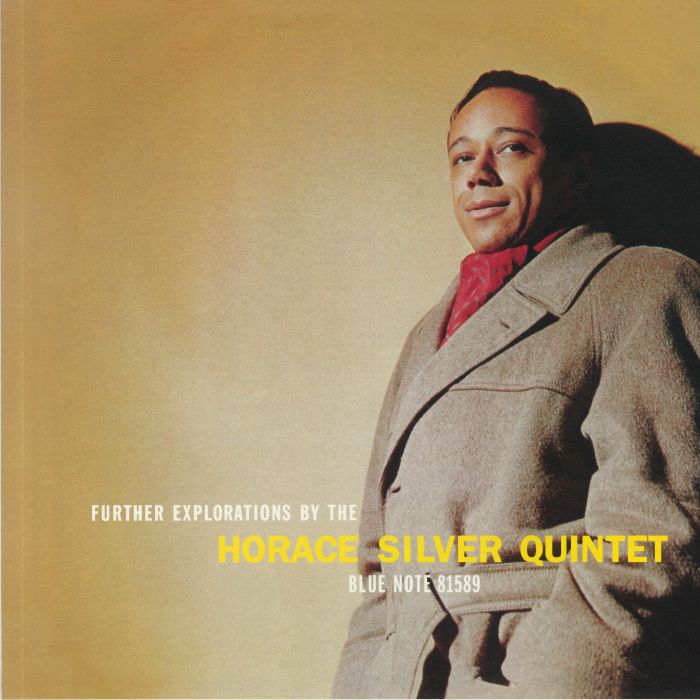
HORACE SILVER QUINTET-FURTHER EXPLORATIONS BY THE HORACE SILVER QUINTET.
Horace Silver Quintet-Further Explorations By The Horace Silver Quintet.
Label: Blue Note Records-Tone Poet Series.
Format: LP.
By 1950, composer and pianist Horace Silver was twenty-two and living in Hartford, Connecticut, where he had formed his own trio. They were already a familiar sight in the local clubs and are were quickly establishing a reputation as one of the up-and-coming jazz combos.
That was why when Stan Getz was booked to play in one of the clubs in Hartford, Horace Silver’s trio was booked to back him. The saxophonist was so impressed by the trio that he hired them to accompany him on tour. This was the big break that Horace Silver had been looking for.
The trio spent the rest of 1950 touring with Stan Getz, and in December he had a session booked to record a quartet album. This was Horace Silver’s recording debut but he wasn’t fazed and his career continued on an upward spiral. That was despite being replaced in Stan Getz’s group after a year.
Horace Silver moved to New York where he worked as a session musician. During this period, he established a reputation as a gifted composer and his bluesy piano playing was in demand. He worked with Lester Young, Coleman Hawkins and Lou Donaldson who he credited with helping develop his understanding of bebop.
In 1952, Lou Donaldson had signed to Blue Note Records and was about to record his debut album. It was a quartet recording at Van Gelder Studio that featured drummer Art Taylor, bassist Gene Ramey and Horace Silver. Little did he know how important a session this would be.
Later in 1952, Lou Donaldson was scheduled to record another quartet album for Blue Note Records. It was a slightly different lineup that made their way to the Van Gelder Studio. Art Taylor had been replaced by Art Blakey. However, someone else was missing…Lou Donaldson. The saxophonist had withdrawn from the session which presented a problem for Alfred Lion who had booked the studio. He offered Horace Silver the opportunity to record a trio album. History had just been made.
Horace Silver would go on to spend twenty-eight years with Blue Note Records. During this period, the bandleader recorded thirty-six studio albums and three live albums. This includes Further Explorations By The Horace Silver Quintet which was recently released by Blue Note Records as part of their Tone Poet Series.
Having made his recording debut, Horace Silver divided his time between his nascent solo career and his work as a sideman. His services were in demand and in 1953 he played on sessions for albums by Sonny Stitt, Howard McGhee and Al Cohen. The following year, 1954, he worked with some of the biggest names in jazz including Art Farmer, Miles Davis and Milt Jackson. Horace Silver also won Down Beat critics’ new star award for piano players in 1954, and was a member of the Modern Jazz Quartet at the first ever Newport Jazz Festival when he stood in for John Lewis. The twenty-six year old had come a long way in a short space of time.
Whilst he was living in New York, Horace Silver cofounded the Jazz Messengers with Art Blakey. In late 1954 and early 1955 the nascent group recorded two ten inch albums under Horace Silver’s name. They were later repackaged and reissued as Horace Silver and The Jazz Messengers in October 1956. It featured The Preacher which gave Horace Silver his first hit single.
Horace Silver was also a member of the Art Blakey Quintet when they recorded A Night at Birdland Volume 1. It was originally released as a ten inch album in 1954 and repackaged and reissued in 1956. It’s regarded as an important album in the development of hard bop.
So were At The Cafe Bohemia, Volumes 1 and 2 which Horace Silver recorded during his time with The Jazz Messengers. These albums feature the original lineup of the group and nowadays, are regarded as jazz classics. However, by the time the albums were released in 1956, Horace Silver had left The Jazz Messengers.
The last time Horace Silver recorded with The Jazz Messengers was in May 1956. Later that year, he left the band. He had been a Jazz Messenger for eighteen months and recored several important and influential albums during that period. However, towards the end of his time with the band, some of the members were becoming increasingly reliant on heroin. This was something he didn’t approve of and wanted no part of, so he left The Jazz Messengers and formed the Horace Silver Quintet.
This made sense for Horace Silver. While he was still a Jazz Messenger he had been contacted by club owners who had heard his albums and wanted to book him. Joining him in the first lineup of the Horace Silver Quintet was drummer Louis Hayes, bassist Doug Watkins, trumpeter Art Farmer and tenor saxophonist Hank Mobley. However, the lineup was fluid and changed over the next few years.
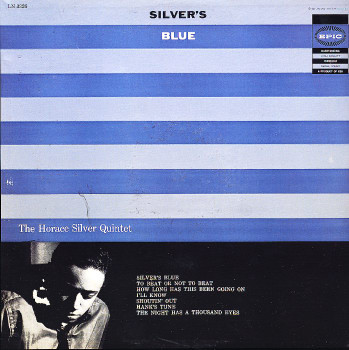
Silver’s Blue.
By the time that Silver’s Blue was recorded on July the ‘2nd,’ ‘17th’ and ‘18th’ of July 1956 the group’s lineup had evolved. Only Hank Mobley and Doug Watkins reminded from the original lineup. During the three day session, they were joined by drummers Art Taylor and Kenny Clarke and trumpeters Joe Gordon and Donald Byrd. They recorded a total of seven tracks which were produced by Carl Lampley.
When Silver’s Blue was eventually released in August 1957 and was an innovative album of funky jazz. It was an album that was ahead of its time which the critics didn’t understand. They gave the album mixed reviews and it was only much later that the album’s importance was recognised.
6 Pieces Of Silver.
Three months after the Silver’s Blue session, the Quintet made their way to Van Gender Studio on November the ‘10th’ 1956. The lineup was drummer Louis Hayes, bassist Doug Watkins, tenor saxophonist Hank Mobley and trumpeter Donald Byrd who played on five of the seven tracks. This was essentially the previous year’s lineup of The Jazz Messengers. This multitalented and versatile combo were joined by engineer Rudy Van Gelder and producer Alfred Lion. During the session, the Quintet continued to develop their sound and recorded a track that launched Horace Silver’s career.
This was the Horace Silver composition Señor Blues which went on to become a jazz standard. He also went on to write lyrics which were recorded for the first time in 1958 by the Quintet with vocalist Bill Henderson. However, when 6 Pieces Of Silver was released in January 1957 it was to critical widespread critical acclaim. This time, the Horace Silver Quintet had over critics with an album of hard bop. It was the start of a fruitful period for Horace Silver.

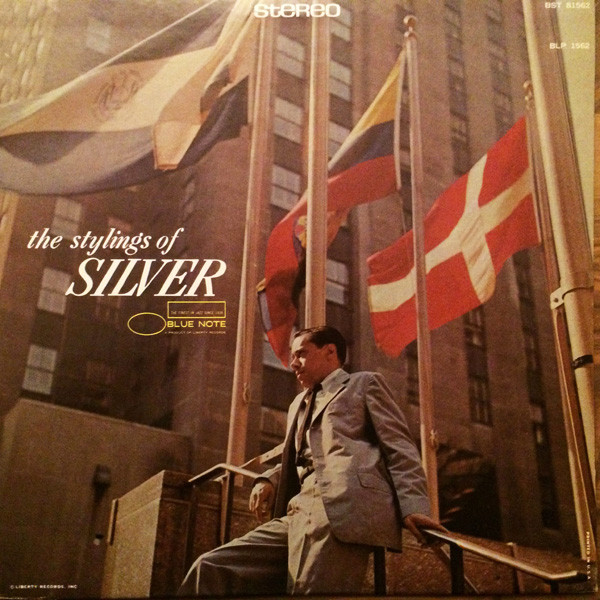
The Stylings Of Silver.
On May the ‘8th’ 1957 the Horace Silver Quintet journeyed to Van Gelder Studio to record what would become The Stylings of Silver. By then, the Quintet and their charismatic leader were a crowd pleasing combo who were already a popular draw in jazz. No wonder with such a talented lineup.
Horace Silver was joined by drummer Louis Hayes, bassist Teddy Kotick, tenor saxophonist Hank Mobley and trumpeter Art Farmer. Five of the six tracks were written by Horace Silver with My One and Only Love the only cover version. Just like the scions for 6 Pieces Of Silver, it was engineered by Rudy Van Gelder and produced by Alfred Lion.
When The Stylings Of Silver was released later in 1957, this album of swinging hard bop was well received by critics. It was a consistent and enjoyable album of finger popping and toe tapping hard hop that showcased Horace Silver’s skills as a composer, bandleader and pianist. He and his Quintet were going from strength-to-strength.
Further Explorations By The Horace Silver Quintet.
Another eight month passed before the Horace Silver Quintet returned to Van Gelder Studio on January the ’13th 1958. By then, Horace Silver was a successful bandleader and composer and was no longer working as a sideman. This was unusual as many successful jazz musicians still worked as sidemen. It was another source of income and allowed them to keep up with new developments in jazz. That was something that Horace Silver did throughout his career as his music evolved and he recorded everything from bebop and hard bop to soul-jazz and fusion.
When he recorded Further Explorations By The Horace Silver Quintet he was joined by drummer Louis Hayes, bassist Teddy Kotick, tenor saxophonist Clifford Jordan and trumpeter Art Farmer. Alfred Lion took charge of production and Rudy Van Gelder engineered the album which eventually feathered six tracks.
This included five Horace Silver compositions, The Outlaw, Melancholy Mood, Pyramid, Moon Rays and Safari which had been released as Horace Silver’s debut single in 1952. They were joined by a cover Harold Arlen and Ted Koehler’s Ill Wind on Further Explorations By The Horace Silver Quintet.
Two months after the recording session, Blue Note Records released Further Explorations By The Horace Silver Quintet was released in March 1958. The reviews of the album were positive with critics won over by another substantial and impressive album of hard bop that revealed the considerable talents and versatility of the Quintet. While the album was slightly more restrained than previous albums it had one thing in common…quality.
Side One.
Further Explorations By The Horace Silver Quintet featured a band that was firing on all cylinders from the opening bars of The Outlaw. The rhythm section power the arrangement along, and it sashays along fusing elements of reggae and bebop. Meanwhile, the horns are to the fore and play a starring role. Horace Silver is no slouch and gives an impressive performance during the solos and as he leads the Quintet on this irresistible future hard bop classic.
Very different is Melancholy Mood a much more understated and quite beautiful piano-led track which allows time to reflect and contemplate.
There’s a degree of urgency as the horns unite and open Pyramid. They’re joined by stabs of dramatic piano before the arrangement unfolds and there’s a fluidity to the trumpet and then the sultry tenor saxophone as they soar above the arrangement. Meanwhile, drummer Louis Hayes and Horace Silver piano play with freedom. He goes from jabbing and stabbing the piano to adding a slinky accompaniment before his fingers dance across the keyboard during a fleet fingered solo. He’s then joined by the horns and they reunite and play a starring role as he once again jabs and stabs his keyboard before the this Horace Silver composition reaches a crescendo and closes side one.
Side Two.
Initially, Moon Ray is slow and mournful and at times dramatic as it unfolds. Partly this is because of the horns which add a mournful sound while the drums and piano add a degree of drama. Soon, it’s all change as the Quintet kick loose and it’s as if the sun has come out after a thunderstorm as the horn carries the melody. Clifford Jordan sounds as if he’s enjoying himself before the baton passes to Art Farmer who unleashes one of his best solos. So does Horace Silver whose fingers effortlessly glide across the keyboard playing with speed on accuracy before he’s joined by the rest of band. By now, the joyous sounding arrangement is swinging. That’s until the last minute as the tempo drops but the quality remind on a track that would become a Horace Silver classic.
Safari bursts into life as scrabbling horns inject urgency as drums pound, hi-hats hiss and the piano punctuate the arrangement. The quintet is like a boy racer as they go from nought to 100 in the blink of an eye. It’s a case of sit back and enjoy the ride as play with urgency and invention on a track that epitomises everything that’s good about hard bop circa 1958.
Closing Further Explorations By The Horace Silver Quintet is a cover of the standard Ill Wind. The tempo drops and straight away, the arrangement seems to hark back to earlier era. The melancholy horns are to the fore with the piano playing a supporting role Drummer Louis Hayes adds occasional bursts of drama and with bassist Teddy Kotick drives the arrangement along. Meanwhile, Horace Silver showcases his versatility his piano stuttering before becoming slinky and fluid. He then joins the sultry, late night horns as the Quintet take their leave and close the album with a truly memorable track.
When Further Explorations By The Horace Silver Quintet was i n March 1958, it was well received by critics. However, the album was never regarded as one of the Quintet’s classic. By then, they had released their first classic, 6 Pieces of Silver. Over the next few years, the Quintet would release Blowin’ The Blues Away, The Tokyo Blues, Silver’s Serenade and Song For My Father which nowadays are regarded as jazz classics.
Meanwhile, Further Explorations By The Horace Silver Quintet has been reevaluate by critic and while it’s not regarded as a classic it’s an oft-overlooked and underrated album. There’s not a weak track on the album where the Quintet are firing on all cylinders as they showcase their talent and versatility. This includes tenor saxophonist Clifford Jordan whose playing was sometimes underrated. He plays a starring role on Further Explorations By The Horace Silver Quintet where he joins forces with Art Farmer to create a potent front line. They’re part of a Quintet where there’s no weak links. The result is a stunning, soulful and swinging album of hard bop that for too long was overlooked and underrated, but thankfully that’s no longer the case with Further Explorations By The Horace Silver Quintet.
Horace Silver Quintet-Further Explorations By The Horace Silver Quintet.
CULT CLASSICS: SIDIKU BUARI-FEELINGS AND SIDIKU BUARI AND HIS JAM BUSTERS.
Cult Classics: Sidiku Buari-Feelings and Sidiku Buari His Jam Busters.
There aren’t many people who forge a career in sport and music, but Ghanian-born Sidiku Buari managed to do just this. He was a silver medallist in the 400 metres at the 1963 All-Africa Games held in Dakar, Senegal. Two years later, in 1965, he was a member of the 4×400 relay team and the All-Africa Games in Brazzaville, the Republic Of Congo, and won a bronze medal. However, while Sidiku Buari was a talented and successful athlete he enjoyed more success as a musician.
Sidiku Buari was a prolific artist, arranger, composer and producer who released in excess of twenty-five albums. This includes two extremely rare albums , Feelings and Sidiku Buari and His Jam Busters on the short-lived and extremely collectable label Precious Records. These rarities are now regarded as cult classics and are a reminder of Sidiku Buari who led a remarkable life.
After his second appearance at the All-African Games, Sidiku Buari emigrated to America in 1966, and studied music at the New York School of Music. After that, he studied interior design at the La Sale University in Chicago, Illinois. By then, his musical career was underway, but his love of sport saw him playing baseball to a reasonable standard during his three decade stay in the United States.
In 1983, Sidiku Buari’s recorded Feelings which was the first of the two albums he released on Precious Records. The followup Sidiku Buari and His Jam Busters, was released in 1984, and featured a similar sound to Feelings. By then, Sidiku Buari had turned his back on the highlife and Afrodisco he made a name recording.
This was replaced by on Feelings and Sidiku Buari and His Jam Busters by Afroboogie, electrofunk and Accra funk. On both albums, Sidiku Buari deploys electronic drums and synths that provide a backdrop for his impassioned vocals that deliver lyrics full of socially conscious lyrics delivered in his native tongue. All this is a potent and powerful combination. The music is hook-laden, anthemic, dancefloor friendly and memorable.
Among the highlights of Feelings are Music and Anokwar (Truth) which bookend the album. Both feature squelchy synths on what are dancefloor friendly tracks that have stood the test of time. Then Let’s Go Funky Town opens Sidiku Buari and His Jam Busters before a slap bass powers along Minsumobo. Karambani is peerless example of dub disco, while Power To My People features poweful socially conscious lyrics featuring a heartfelt vocal. Closing Sidiku Buari and His Jam Busters is the truly memorable Rhythm Of Africa, where a flute plays a starring role on what’s one of the album’s highlights.
Feelings and Sidiku Buari and His Jam Busters are careful crafted albums that combined disparate musical genres as the Ghanian master musician headed in a different direction. He combined elements of African and Western music to create albums that for way too long were oft-overlooked hidden gems.
Sadly, neither Feelings nor Sidiku Buari and His Jam Busters sold well when they were released. It was only much later that DJs and record collectors discovered by DJs and record collectors. However, both albums are rarities started to change hands for increasingly large sums. Belatedly it seemed that justice was being done and these two oft-overlooked albums were belatedly starting to find the audience they deserved. They were just two of over twenty-five albums that Sidiku Buari released during his career.
He started off as an athlete, and became a singer, songwriter, musician, producer and arranger as well as an award-winning music video producer and later in life, the president of Ghana’s Musicians’ Union and a recipient of a Lifetime Achievement Award of the Pan- African Society. He’s a truly a remarkable man who was a prolific musician and Feelings and Sidiku Buari and His Jam Busters are both cult classics and among the finest albums he recorded during his long, varied, eventful and successful career that saw him effortlessly make the move from athlete to musician.
Cult Classics: Sidiku Buari-Feelings and Sidiku Buari His Jam Busters.

WHO WAS WILLIAM ONYEAEBOR?
Who Was William Onyeabor?
Enigmatic. That was the perfect word to describe synth funk pioneer, William Onyeabor who died on January 16th 2017 aged just seventy. That day, Nigerian music lost a musical pioneer. However, he was also one of the most mysterious, elusive and enigmatic musicians in musical history and much of his life was shrouded in mystery.
After releasing eight albums between 1978 and 1985, William Onyeabor became a born-again Christian. He turned his back on music and refused to talk about his life or music. In some ways, this helped perpetuate the myths surrounding William Onyeabor.
With William Onyeabor refusing to discuss his past, numerous rumours surrounded his life after music. Rumours were rife about what happened next. Some believe he studied cinematography in the Soviet Union, then returned to Nigeria where he founded his own film company, Wilfilms. Then there’s the rumour that he studied law in England and then became a lawyer in his native Nigeria. Others believe William Onyeabor became a businessman in Nigeria while others say he worked for the Nigerian government. Nobody can say with any degree of certainty. The only person who knew what happened next was William Onyeabor.
William Onyeabor wasn’t for telling. When he found religion and turned his back on music he refused to discuss his past. This means that little is known about Nigerian music’s most enigmatic musicians, William Onyeabor. The effect this has, to perpetuate the myth of a man who was a a musical riddle, wrapped in a mystery, inside an enigma. Sadly, the death of William Onyeabor means that this riddle will never be solved and there’s no clues in his biography.
Trying to write an accurate biography of William Onyeabor is almost impossible. Especially when he refused to talk about his past. There are some things we can say with a degree of certainty. The first is that growing up, William Onyeabor was a talented musician.
Prior to his death, nobody even knew William Onyeabor’s date of birth. Only William Onyeabor and he won’t say. It was speculated that he was born in 1944 However, it turned out that William Onyeabor was born on March 26th 1946. He was brought up Enugu, in the Nigerian provinces and growing up, showed an interest in music.
Soon, he was hooked and music began to play a bigger part in his life. Before long, he realised listening to music was one thing, bur he now he wanted to make his own music and decided it was tine to learn how to play an instrument. It’s thought that the first instrument he learnt to play were keyboards. That was his musical weapon of choice. Before long, it became apparent that William Onyeabor was a talented musician and some people thought that when he left school, he would make a living out of music. They were in for a surprise.
When William was a teenager and ready to leave high school, it’s thought he was awarded a scholarship to study cinematography in the old Soviet Union. That may, however, be one of the myths surrounding William Onyeabor.
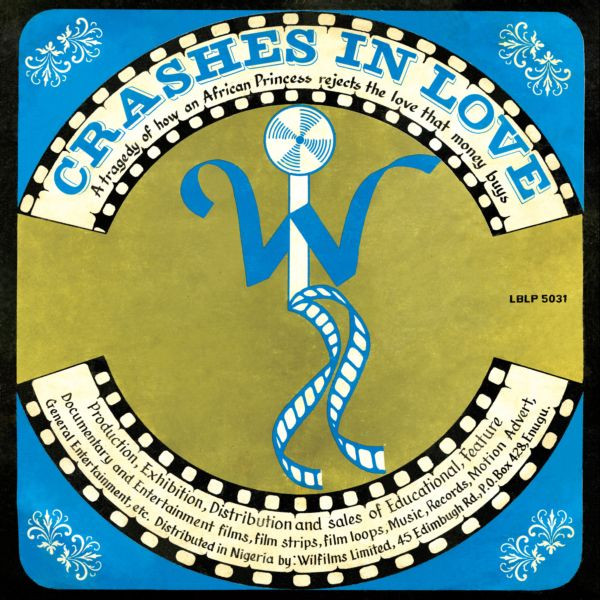
Anyone who has a copy of William Onyeabor’s 1977 debut album, Crashes in Love, will see he is described as an American and French trained filmmaker on the back cover. Crashes In Love is allegedly the soundtrack to the film of the same name. It’s meant to have been made by his own film company Winfilms. That however, is another of the controversies surrounding William Onyeabor.
On his return to his native Nigeria, William Onyeabor founded his own film company, Winfilms. Between 1977 and 1985, when his career was at its height, people wonder whether Winfilms released any films? However, nobody could say with a degree of certainty the company ever released a film.
That’s despite efforts have been made to trace any films that Winfilms released. The conclusions were that it’s unlikely the company ever released a film. This includes the much vaunted Crashes In Love which was billed as “a tragedy of how an African princess rejects the love that money buys.” However, another company William Onyeabor founded was more active and successful.
Wilfilms Records was a subsidiary of Winfilms and released William Onyeabor’s eight albums. They were recorded at Winfilms Recording Studio in Enugu, Nigeria including William Onyeabor’s debut album 1978s Crashes In Love.
Crashes In Love.
Crashes In Love was released in 1978 on Wilfilms Records and was supposedly a soundtrack album. However, no trace of the film Crashes In Love has ever been traced. That’s not the only mystery surrounding Crashes In Love.
Seemingly, there are two versions of Crashes In Love in existence. There’s the original album and what’s known as the electronic version. It’s essentially a remix album where the four songs have added drumbeats.
The original version of Crashes In Love has just five tracks. It opens with the ten minute spic Something You’ll Never Forget and after that, the music continues to be funky, soulful and dance-floor friendly. Especially Ride On Baby and Crashes In Love would showcase William Onyeabor’s trademark sound. However, with two version of Crashes In Love being released, it seems even mystery surrounds William Onyeabor’s debut album.

Atomic Bomb.
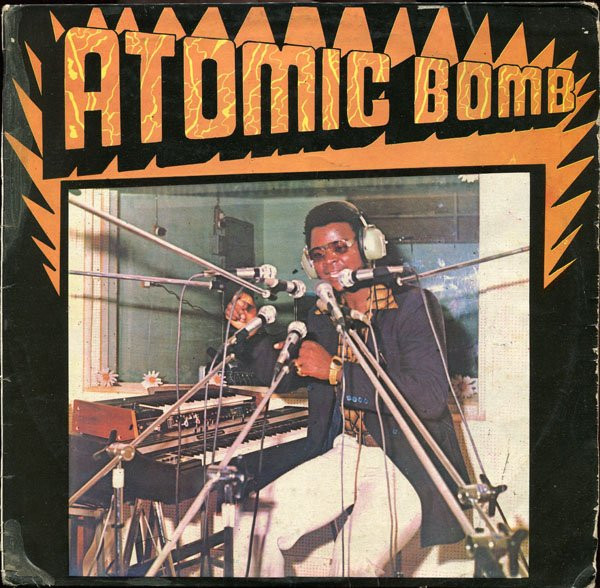
Following his debut album, William Onyeabor released his sophomore album Atomic Bomb in 1978. Featuring the Winfilms Resident Band, Atomic Bomb was groundbreaking, genre-sprawling album. Released on his own label, Wilfilms Records, Atomic Bomb was a career defining album further established is reputation as a pioneering musician.
Atomic Bomb is one of those albums where there are no weak tracks and it just oozes quality. From Beautiful Baby to the defiant, social comment of Better Change Your Mind and Atomic Bomb to the understated, spacey lo-fi funk of Shame and I Need You All Life it’s a musical tour de force and is why William Onyeabor would be hailed as one of the most innovative Nigerian musicians of the late seventies.
Tomorrow.
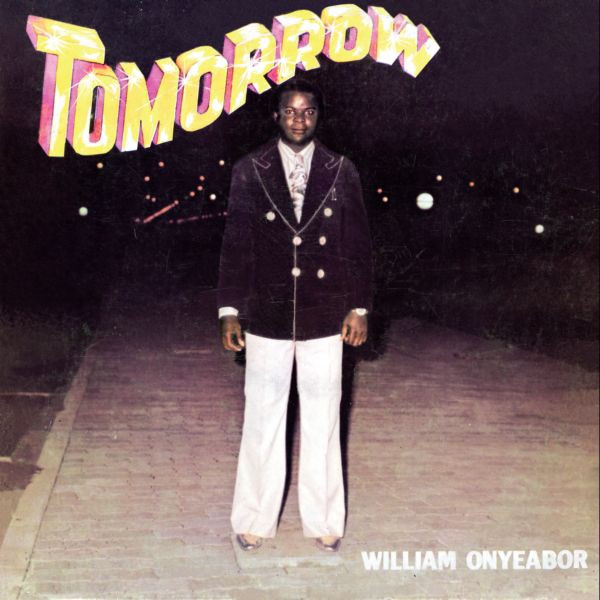
For the recording of his third album Tomorrow, William Onyeabor headed to the familiar surroundings of Wilfilms Studios Limited, in Awakunanaw, Enugu. That was where he would record five new tracks that would feature his trademark sound.
Essentially, this was funk and soul fused with pulsating Afrobeat. Sometimes, the female backing vocal took the music in the direction of gospel music. Especially when they sung call and response with William Onyeabor. The music was joyous and irresistible. What made William Onyeabor’s music stand out were the banks of synthesisers that he used on the album. This was very different from most of the music coming out of Nigeria.
William Onyeabor it seemed, was determined to stand out musically. Tomorrow and Fantastic Man are proof of this. This is Why Go To War was one of many ant-war songs he recorded and this music had a social conscience. His music was also evolving with each album. There was no chance of William Onyeabor standing still. That wasn’t his style. He was determined his music would continue to evolve and that would be the case as a new decade dawned.
Body and Soul.
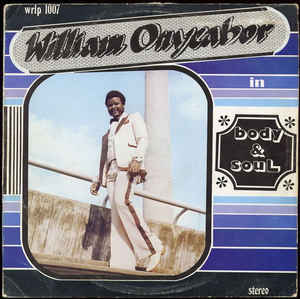
For the cover of Body and Soul, William Onyeabor dawns a while suit and bow tie which made him resemble Lou Rawls. So much so, that when record buyers dropped the needle on The Way To Win Your Love they must have been expecting a slice of the smoothest soul. They were in for a shock as it’s all beeps and squeaks from the music and sound-effects department of Wilfilms Ltd. Add to this stabs of horns and hissing hi-hats on an album were soul, funk and Afrobeat melt into one. This is the case right Poor Boy, Body and Soul and Believe In God, which provides a clue to William Onyeabor’s future.
Five years after the release of Body and Soul, William Onyeabor would become a born-again Christian. Was the release of Believe In God a hint of the direction William Onyeabor’s life was leading? He was certainly known for his anti-war songs and social conscience, but religion was apparently a new thing. Believe In God was just a hint that William Onyeabor was changing.
Great Lover.
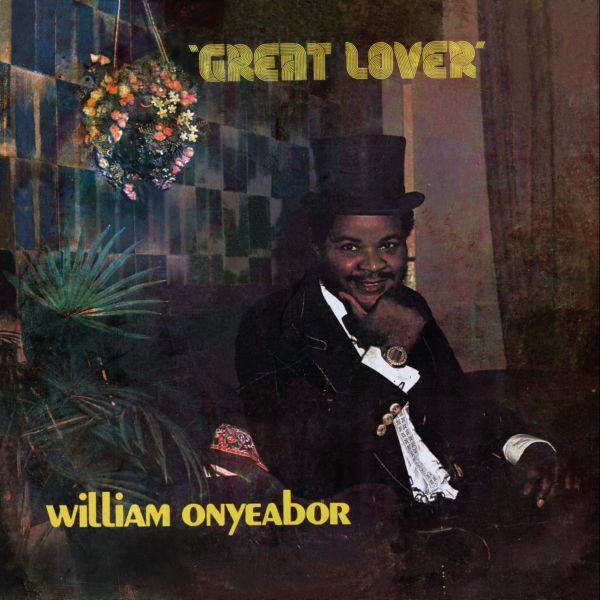
Just like Body and Soul, the cover of Great Lover is akin to a homage to the album covers of the giants of American soul. William Onyeabor dawns a tuxedo and top hat on Great Lover. Wearing a watch that’s the size of a dinner plate, he looks urban and debonair. This is very different to the younger version of William Onyeabor that headed to the former Soviet Union to study cinematography. The image on the album cover is also very different to the reality of William Onyeabor’s life.
By 1981, when he released Great Lover he wasn’t exactly a giant of Nigerian music. He was enjoying a modicum of success but wasn’t one of Nigerian’s most successful musical exports. It was no surprise that rumours continued to surround this mystery man. However, one thing wasn’t in doubt, William Onyeabor’s talent.
That’s apparent on his genre-hopping alum Great Lover. Elements of Afro-beat, Afro-Cuban, funk and soul melt into one during this concept album. Just like his previous albums, he’s determined to innovate and manages to do that on an album that’s soulful, funky and tinged with the influences of three continents.
Hypertension.
In 1982, William Onyeabor was ready to release his sixth album, Hypertension. It marked a change of direction from the man they called a musical chameleon, William Onyeabor.
He fused Afrobeat, funk, psychedelia, rock and there’s even a hint of soul on Hypertension. Songs of praise and protest songs sit side-by-side on this musical melange which found William Onyeabor back to his eclectic best.
Hypertension was probably William Onyeabor’s most eclectic and ambitious and akin to a musical magical mystery tour. That was the case from the opening bars of The Moon And The Sun which gave way to Papa Na Mama and Hypertension. However, on Politicians William Onyeabor’s social conscience shines through. He believes there not for the people and they’re to blame for Nigeria and the wider world’s problems. This impassioned track closes what was William Onyeabor’s most eclectic and innovative album, Hypertension.

Good Name.
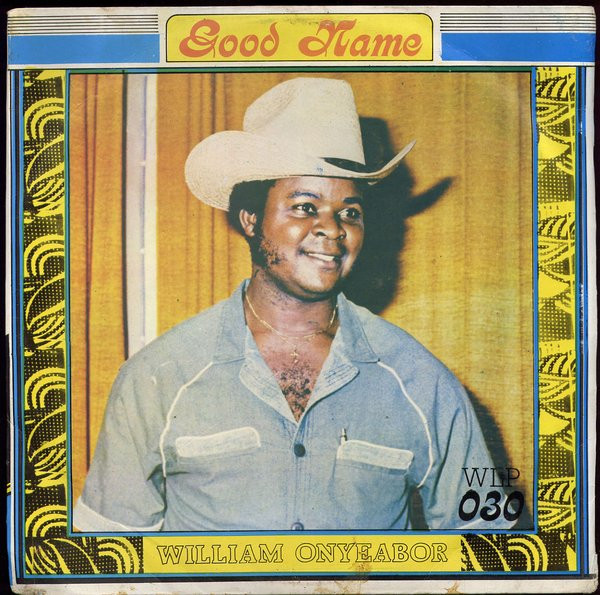
Little did anyone realise it, but 1983s Good Name would be the penultimate album William Onyeabor released. It’s a truly compelling album although it only features two tracks. They’re a fusion of Afrobeat, electronica and funk and speak volumes.
On side one, William Onyeabor dawns the role of a preacher and the message he preaches is about Love. That he believes leads to peace, harmony and happiness. Then on side two, he sings about the importance of good name which he believes is better than silver and gold. He reinforces this message by singing: “ No money, no money, no money, No money can buy good Name.” Looking back, this could be seen as the beginning of a change in William Onyeabor. Maybe this was the start of him turning his back on music?
Anything You Sow.
If Good Name gave a hint of what was about to happen, Anything You Sow spelt it out in large letters. Given the title, Anything You Sow, it looks as if he was changing. Maybe he was on the verge of a spiritual awakening and was questioning the world around him? This would explain songs like When The Going Is Smooth and Good, This Kind Of World, Anything You Sow and Everyday?
The album was a fusion of Afrobeat, funk and soul and the changes in his life didn’t affect the quality of music on Anything You Sow. William Onyeabor was continuing to push musical boundaries. He was determined to do so and was maybe even fearful of releasing music that didn’t evolve? There was no chance of that. Similarly, there was no hint of what was about to happen next.
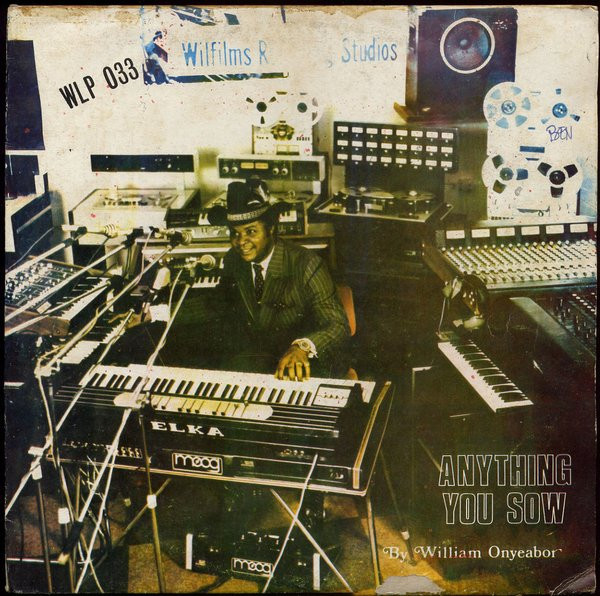
Looking at the back cover to Anything You Sow, William Onyeabor continued to give an impression that Wilfilms Limited was an important, thriving company. It wasn’t a case of what Wilfilms Limited did, it was case of what they didn’t do.
Their services were listed as “recording and record manufacturing industry. Music, video and film producers.” They also had within their portfolio of business interests an office, factory and recording studios within the Wilfilms Complex. To the onlooker, it looked like William Onyeabor was on his way to building a business empire on the back of his recording career.
That’s what it’s claimed that William Onyeabor had been doing. During the first half of the eighties, he opened a flour mill and food processing business. Both it’s claimed became flourishing businesses. If that’s the case maybe the success of William Onyeabor’s business interests resulted in what happened next.
After the release of Anything You Sow in 1985, William Onyeabor turned his back on music. He became a born-again Christian and refused to discuss his music or his past. Both his musical career and his past are another country. Since then, rumours, myths and speculation have surrounded William Onyeabor.
After his death, it has been claimed that William Onyeabor being awarded West African Industrialist of the Year in 1987. It’s also been claimed that at that when he was at peak of his popularity, he was given the honorary title of Justice Of The Peace. Further claims include that he was president of Enugu’s branch of the Musician’s Union, and the chairman of Enugu Rangers his local football team. However, like other parts of William Onyeabor’s life it’s hard to substantiate fact from fiction.
Indeed, there were even rumours that William Onyeabor didn’t even exist and the music had been made by other people. All the myths and mysteries were just part of a marketing strategy to sell records. This was just one of a myriad of rumours that surrounded William Onyeabor.
One of the most controversial parts of his life was where he studied.Which side of the Iron Curtain did William Onyeabor study? Originally, he claimed to have won a scholarship to study cinematography in the former Soviet Union. Then on his 1977 debut album Chains Of Love, which was the alleged soundtrack album, William Onyeabor claims to have studied cinematography in France and America. Just like the rest of his life, William Onyeabor refused to speak about this period of his life. So tight lipped was William Onyeabor, that he wouldn’t even confirm if he had ever made a film. As a result, allegations of the Russian connection in William Onyeabor’s life refuse to go away.
This is all part of the rumour, mystery and speculation that surrounds Nigerian synth funk pioneer, William Onyeabor who sadly, passed away on the 16th January 2017. Since then a few more details about William Onyeabor’s career have emerged since his death. Ironically, they have further fuelled the speculation surrounding William Onyeabor’s life after music. Alas, nobody will ever know exactly what happened to William Onyeabor after his sad and sudden retirement from music. Doubtless the speculation will continue. However, one thing that’s not in doubt is that William Onyeabor was a musical pioneer.
Over a seven-year period, William Onyeabor released eight innovative and inventive, groundbreaking, genre-melting albums. On each of these albums, was music that was way ahead of the musical curve. Everything from Afrobeat, cosmic funk, gospel, jazz, post-disco, proto-house, psychedelia, reggae, rock and soul was thrown into the melting pot by William Onyeabor. The music was the work of a musical visionary. That’s no exaggeration.
After all, how many people could successfully mix sci-fi synths with soul and jazz? William Onyeabor could, and does on Let’s Fall In Love. Then on Fantastic Man, William like a mystic, foresaw the changing of the musical guard. The ghost of disco passes the musical baton to Chicago house. This fusion of post-disco and proto-house demonstrates the versatility of William Onyeabor.
Indeed, William Onyeabor’s music evolves throughout the period between William released his 1978 debut album Crash In Love and 1983s Good Name. Whilst other artists were churning out albums of similar music, he was pushing musical boundaries. He wasn’t content to stand still. His albums are proof of this.
From 1980 onwards, his music evolved. It became much more reliant on synths, keyboards and drum machines. Sometimes, it’s best described as futuristic with a sci-fi sound. An example of this is Let’s Fall In Love, from his 1983 album Good Name. Buzzing, sci-fi synths are key to the track’s futuristic sound. To this inventive track, somehow, he welds soul and jazz. It’s a combination that shouldn’t work, but does. In a way, it’s just one example of the genius of William Onyeabor, which was lost to music after his 1985 album Anything You Sow.
That William Onyeabor turned his back on music, is music’s loss. Who knows what heights of innovation and inventiveness William Onyeabor might have reached? Alas, we will never know. Sadly, William Onyeabor who was elusive and enigmatic musical visionary passed away on the 16th of January 2017. The death of William Onyeabor means that music has lost another pioneer. However, he left behind a rich musical legacy for future generations to enjoy. They will are sure to embrace, enjoy and appreciate this groundbreaking music but are sure to wonder who was William Onyeabor?
Who Was William Onyeabor?

BOBBY HUTCHERSON-THE KICKER.
Bobby Hutcherson-The Kicker.
Label: Blue Note Records-Tone Poet Series.
Format: LP.
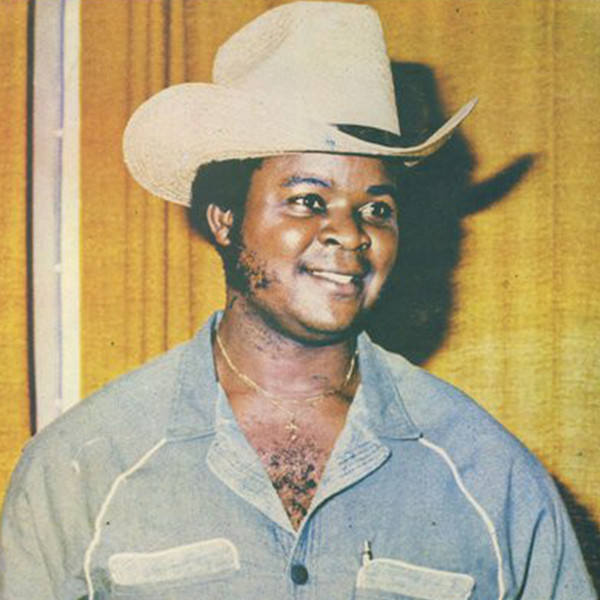
Less than three years after Bobby Hutcherson made his recording debut, the twenty-three year old vibraphonist recorded his debut album The Kicker for Blue Note Records in 1963. This was the start of the most prolific period of his long and illustrious career.
Over the next fourteen years, Bobby Hutcherson released fifteen studio albums, one live album, two collaborations with Herbie Hancock and five with Harold Land. Bobby Hutcherson was also the go-to-guy for anyone looking for a vibes player and played on over forty albums during his time at Blue Note Records. These albums featured the great and good of jazz, and most of them were released on Blue Note Records.
In 1977, Bobby Hutcherson released Knucklebean which was his fifteenth solo album and his swan-song for Blue Note Records. It was the end of era for Bobby Hutcherson whose recording career began seventeen years earlier.
On the ‘3rd’ of August 1960 nineteen year old Bobby Hutcherson made his debut with the Les McCann Trio when they recorded a single that was released on Pacific Jazz in 1961.
Just over four months after making his recording debut, Bobby Hutcherson joined the Curtis Amy-Frank Butler Sextet when they recorded Groovin’ Blue on December the ‘10th’ 1960. This was the first of many albums that featured Bobby Hutcherson’s vibes.
In 1962, Bobby Hutcherson moved to New York as he was determined to make a career as a full-time jazz musician. He found a place to live in the Bronx and soon, was spending part of the time working as a session musician. The rest of the time he drove a taxi to supplement his income.This he knew was only a temporary arrangement.
That was the case. Bobby Hutcherson met his childhood friend, the bassist Herbie Lewis who at the time, was working with The Jazztet and also hosted jam sessions at his apartment.
Bobby Hutcherson soon became a regular at the jam sessions which was where Grachan Moncur III who was a member of Jazztet and Jackie McLean’s band saw him play. Straight away, he realised that he might be a useful addition to Jackie McLean’s band and recommended him. When Jackie McLean heard him play, he asked him to join his band and he made his debut on the recording of One Step Beyond on April the ’30th’ 1963. This was also Bobby Hutcherson’s first session for Blue Note Records.
Over the new few months he played on three more Blue Note Records sessions. The first was on the ‘30th’ September when Jackie McLean recorded Destination… Out! Then on the ‘4th’ and ‘15th’ of November, Bobby Hutcherson played on Grant Green’s classic album Idle Moments. Less than a week later, on the ‘21st’ of November Bobby Hutcherson played on the sessions for Grachan Moncur III’s album Evolution. However, Bobby Hutcherson still had one more album to record and this time it was his debut solo album The Kicker which has just been reissued by Blue Note Records as part of their Tone Poet Series.
On the ‘29th’ of December 1963, Bobby Hutcherson and his band journeyed to Van Gelder Studio, in Englewood Cliffs, New Jersey where they would record The Kicker. Joining Bobby Hutcherson were drummer Al Harewood, bassist Bob Cranshaw, pianist Duke Pearson and tenor saxophonist Joe Henderson. Guitarist Grant Green played on two of the six tracks on the album which was produced by Alfred Lion and engineered by Rudy Van Gelder.
Bobby Hutcherson only wrote one track on The Kicker, For Duke P. It was joined by a cover of Jay Lerner and Frederick Loewe’s If Ever I Would Leave You, Joe Chambers’ Mirrors, Duke Pearson’s Bedouin plus Joe Henderson’s The Kicker and Step Lightly. These tracks were recorded during a one day session and became The Kicker.
Side One.
The album opens with Bobby Hutcherson’s reinvention of the ballad If Ever I Would Leave You. It starts off slowly and soon the band are moving up through the gears and have transformed this familiar and much-love ballad into an energetic example of hard bop where the all-star band are firing on all cylinders and showcasing their skills collectively and individually.
Quite different is Mirrors where the tempo drops and Joe Henderson’s tenor saxophone and Bobby Hutcherson’s vibes play leading roles in this ruminative sounding track that encourage the listener to reflect.
The tempo increases on For Duke P which is the only Bobby Hutcherson composition on the album. He flits in and out the track playing with speed and precision. Meanwhile, Duke Pearson’s fingers dance across the keyboard with Joe Joe Henderson’s saxophone matching him every step of the way as the drums add a degree of drama. The result is a breathtaking and scorching track that showcases a talented composer and his band.
Side Two.
Grant Green joins the band on The Kicker which epitomises everything that’s good about hard bop. This includes a dazzling performance from Joe Henderson. His blazing saxophone is played with power and speed while Duke Pearson’s hands dance across and pound the piano keyboard. Later, the saxophone drops out and is replaced by what’s one of dizzying vibes solo before Grant Green steps forward and shows why he was regarded as one of jazz’s leading guitarist. However, it’s Duke Pearson who steals the show on what’s without doubt the highlight of the album.
The tempo drops on Step Lightly which is just over fourteen minutes long. It starts off slowly with the rhythm section, slinky piano and tenor saxophone combining. The playing is understated with the band playing within themselves. However, it’s effective and Grant Green’s guitar solo is proof of this. Then when the solos come round they enjoy the opportunity to showcase their considerable skills. This includes bandleader and vibes virtuoso Bobby Hutcherson, pianist Duke Pearson and tenor saxophonist Joe Henderson who play their part in this beautiful blues based track where this talented band Step Lightly on another of The Kicker’s highlights.
Joe Henderson wrote Bedouin which closes The Kicker and his tenor saxophone and Duke Pearson’s piano are to the fore as the rhythm section playing briskly and inject some swing. Spurts of rapid fire saxophone are sprayed across the arrangement. A motif is repeated on the piano before the saxophone starts to play a freedom and swings. Meanwhile, stabs of piano and the repeated motif combine with a chirping, crystalline guitar before the vibes enter and a lengthy solo unfolds. Later, a slinky piano and drum rolls are added to a track that sometimes is mesmeric and is always memorable, melodic and swings.
When Bobby Hutcherson left Van Gelder Studio on the ’29th’ of December 1963, he must have thought it was only a matter of time before Blue Note Records released his debut album. He and his all-star band had recorded an album of hard bop and blues based jazz that had the potential to launch his solo career. However, The Kicker wasn’t released in 1964.
That was despite him winning the Talent Deserving Of Wider Recognition award in the 1964 DownBeat readers’ poll. The Kicker had been shelved indefinitely and what should’ve been Bobby Hutcherson’s debut album lay unreleased in the Blue Note Records’ vaults.
Bobby Hutcherson wasn’t alone and many artists signed to Blue Note Records recorded albums that weren’t released until much later. Sometimes, thirty or forty years passed before the albums were released and occasionally the artist had died by the time the album was released. Thankfully, that wasn’t the case with Bobby Hutcherson.
Somewhat belatedly The Kicker was released by Blue Note Records in 1999, and at last, jazz aficionados were able to hear Bobby Hutcherson’s lost classic of blues based jazz and hard bop for the first time.
Twenty-one years later and The Kicker is now regarded as a jazz classic, and Blue Note Records have reissued the album as part of their Tone Poet Series. It’s a welcome reissue of The Kicker which is a reminder of the prodigiously talented Bobby Hutcherson as he embarked on what was a long, illustrious and successful solo career.
Bobby Hutcherson-The Kicker.
NIMBUS SEXTET-TRAP DOOR.
Nimbus Sextet-Trap Door.
Label: Acid Jazz Records.
Format: Single from the album Dreams Fulfilled released “23rd October 2020.
For the best part of six decades, Scotland has enjoyed a vibrant and eclectic music scene and has produced many successful artists and bands that have gone on to enjoy commercial success and critical acclaim.
This began in the sixties with Sunshine Soldier Donavon, John Martyn and Al Stewart and continued into the seventies with Average White Band, Maggie Bell, Nazareth and the Sensational Alex Harvey Band who were among Scotland’s most successful musical exports.
Then as the eighties dawned, it soon became apparent that this was the start of a golden era for Scottish music. A nation of five million people had managed to produce bands of the quality of Orange Juice, Aztec Camera, Cocteau Twins, Deacon Blue, Del Amitri, Jesus and Mary Chain, Lloyd Cole and The Commotions, Love and Money, Simple Minds and The Blue Nile. These groups blossomed and released classic Scottish albums during the eighties.
During the nineties, Scotland’s eclectic and vibrant music scene continued to go from strength-to-strength. Groups like Belle and Sebastian, BMX Bandits, Boards of Canada, Mogwai, Primal Scream, Teenage Fanclub, The Bathers, The Beta Band, The Pearlfishers and The Trashcan Sinatras all released critically acclaimed albums and their careers continued into the next millennia.
In the noughties, Franz Ferdinand, Glasvegas and The Delgados prospered while new bands included Admiral Fallow, Biffy Clyro, Errors and Frightened Rabbit who were hailed as: “the new big thing.” Scottish music continued to thrive.
Between 2010 and 2019 eclectic described Scotland’s music scene. King Creosote was making the best music of his career while the rise and rise of Mogwai and Biffy Clyro continued and Chvrches became one of the most successful of the new Scottish bands. Meanwhile, Calvin Harris the DJ, producer and remixer from Dumfries was now one of the biggest names in music. Scottish music continued to punch above its weight and was one of the country’s most successful musical exports in the post industrial age.
The future looked was looking bright for Scottish music as a new decade dawned. Little did anyone know a pandemic was around the corner and this would have a devastating effect on the music industry worldwide.
Before that, critics and cultural commentators were asked which bands they though would make a breakthrough in 2020 and what were one with a big future ahead of them? Some through the names of obscure indie bands, post rockers and hip hoppers into the ring. However, one band that had been making waves in Scotland and further afield is the Glasgow-based jazz combo Nimbus Sextet who are definitely one to watch in 2020 and beyond.
The roots of the Glaswegian-based contemporary jazz combo can be traced Edinburgh where pianist, keyboardist and bandleader Joe Nichols was studying at Edinburgh University. That was where he met his long-time collaborators drummer Alex Palmer and bassist Mischa Stevens. They’ve been performing together since then.
In 2018, Nimbus Sextet’s lineup was almost complete when saxophonist Martin Fell and trumpeter Euan Allardice joined the group. The final piece of the musical jigsaw was the addition of James Mackay. And now there were six.
Since then, Nimbus Sextet have been honing their sound and playing live in Scotland and further afield. However, one of the most important gigs of the band’s nascent career was supporting Gilles Peterson at Glasgow’s much-missed Sub Club. Watching the band play was Wayne A. Dickson of Groove Line Records who spotted their potential and during the gig was convinced the Acid Jazz Records would be interested in signing Nimbus Sextet. They were and Wayne A. Dickson, who has a wealth of music industry experience is now managing Nimbus Sextet.
With his help and encouragement and a lot of hard work on their own part Nimbus Sextet are going from strength-to-strength. They embarked upon a UK tour in February and March of 2020. Anyone who has been fortunate enough to see Nimbus Sextet live will agree that it’s an impressive sight and sound. The starting point for their music is jazz which heads in the direction of fusion and jazz-funk and also incorporates elements of funk neo-soul and world music. Live Nimbus Sextet take the audience on a musical adventure and are at their best when they improvise. It allows this talented and versatile group to showcase their considerable skills as the musical alchemists reinvent the material they’ve written over the last couple of years.
This includes the lead single from Nimbus Sextet’s forthcoming album Dreams Fulfilled which will be released by Acid Jazz Records on the ‘23rd’ of October 2020. During Trap Door Nimbus Sextet showcase their unique take on jazz. They fuse everything from funk and fusion to jazz-funk during this hook-laden and truly memorable and melodic single Trap Door.
It’s a tantalising taste of Nimbus Sextet’s much-anticipated debut album Dreams Fulfilled which will be released in just three weeks time. This will be the start is a new chapter for this talented and versatile group who have a big future ahead of them. Nimbus Sextet is one of the rising stars of Scotland’s vibrant and eclectic music scene and look like becoming one of the success stories of the forthcoming decade and if they continue to record music of the quality of Trapdoor they could become of Scottish music’s most successful exports.
Nimbus Sextet-Trap Door.
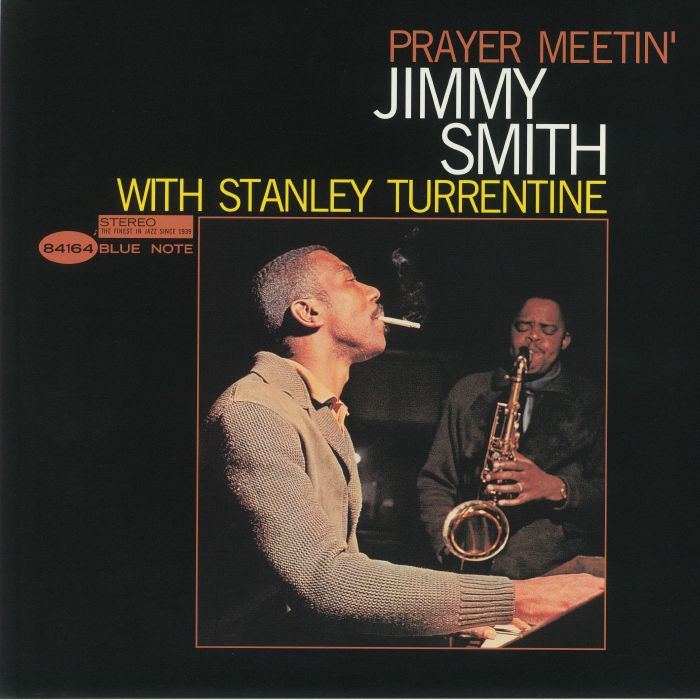
JIMMY SMITH WITH STANLEY TURRENTINE-PRAYER MEETIN’.
Jimmy Smith With Stanley Turrentine-Prayer Meetin’.
Label: Blue Note Records-Tone Poet Series.
Format: LP.
When Jimmy Smith entered Van Gelder Studio on February the ‘8th’ 1963, he was about to record his fourth album in a week. This meant that he had fulfilled the terms of his contract with Blue Note and could sign with Verve. The album he was about to record was Prayer Meetin’ which was a collaboration with tenor saxophonist Stanley Turrentine. It’s just been reissued by Blue Note Records as part of their Tone Poet series and was the third time Stanley Turrentine had played on a Jimmy Smith album.
The first time Stanley Turrentine played on a Jimmy Smith session was on April the ’25th’ 1960 at session for Blue Note Records at Van Gelder Studio. That day, he was part of a quartet that featured drummer Donald Bailey and guitarist Kenny Burrell. During the session which was engineered by Rudy Van Gelder and produced by Alfred Lion the quartet recorded enough material for two albums.
This included Midnight Special which was released to plaudits and praise in November 1961, At the time, the album was hailed as one of Jimmy Smith’s finest recordings for Blue Note Records. That’s still the case fifty-nine years later.
In April 1963, Back At The Chicken Shack was released to widespread critical acclaim. Just like Midnight Special, critics called at another of Jimmy Smith’s finest recordings for Blue Note Records. Nowadays, it’s regarded not just as a genre classic, but a jazz classic as he combined hard bop and soul-jazz.
Just two months before the release of Back At The Chicken Shack, Jimmy Smith had journeyed to Van Gelder Studio, in Englewood Cliffs, New Jersey, for the final day of what had been a marathon recording session. By the end of February the ‘8th’ 1963, he would’ve recorded four albums in a week. This included Prayer Meetin’ his collaboration with his friend Stanley Turrentine.
This time around, the band featured drummer Donald Bailey, guitarist Quentin Warren, tenor saxophonist Stanley Turrentine Jimmy Smith on Hammond organ. They were joined during for the session by bassist Sam Jones as they recorded eight tracks.
Bandleader Jimmy Smith had written Prayer Meetin’, Picnickin’ and Smith Walk. He decided to cover When The Saints Go Marching In and Ivory Joe Hunter’s I Almost Lost My Mind. They were joined by Wilmoth Houdini’s Stone Cold Dead In The Market (He Had It Coming), Gene Ammons’ Red Top plus Gene Austin and Nathaniel Shilkret’s Lonesome Road. Six of these tracks became Jimmy Smith’s Blue Note Records swansong Prayer Meetin’.
During the session which was engineered by Rudy Van Gelder and produced by Alfred Lion, bassist Sam Jones only played on Lonesome Road and Smith Walk. However, neither track made it onto Prayer Meetin’ which was released in 1964 and was another quartet recording.
When Prayer Meetin’ was released in 1964, the album was billed as Jimmy Smith With Stanley Turrentine. By then, soul-jazz pioneer Jimmy Smith had signed to Verve and embarked upon a new chapter in his career. He watched with interest when Prayer Meetin’ was released and critics lavished praise on his latest collaboration with Stanley Turrentine. It was hailed as the perfect way to close the triumvirate of albums they had recorded for Blue Note Records.
When the album was released in 1964, Prayer Meetin’ reached eighty-six on the US Billboard 200 where it spent twenty weeks. This meant the album was one of the most successful albums Jimmy Smith released on Blue Note Records. This was ironic given he had left the label a year earlier. However, he bowed out in style.
Side One.
Prayer Meetin’ was Jimmy Smith’s Blue Note Records’ swansong and found him flitting between and fusing musical genres. The album opener and title-track is best described as jazz-gospel while I Almost Lost My Mind has a late night bluesy sound that’s wistful and invites reflection. It also features some of the best solos from Messrs Smith and Turrentine on the album. Wilmoth Houdini who was born in Trinidad and Tobago and moved to American where he wrote Stone Cold Dead In The Market. The The cover stays true to the original and sashays along a Caribbean and Latin influences present as the sultry saxophone dances above the Hammond organ resulting in a track that will puts a smile on anyone’s face.
Side Two.
A joyous and uplifting version of When The Saints Go Marching In opens side two and finds the quartet combining gospel and soul-jazz. Add to this a jazz-tinged guitar and a spellbinding tenor saxophone solo from Stanley Turrentine and the result is a truly memorable cover of this classic. As Donald Bailey provides the heartbeat on Red Top washes and then stabs of Jimmy Smith’s Hammond organ accompany Stanley Turrentine’s swinging tenor saxophone. It plays a leading role before passing the baton to the bandleader before they’re reunited as the saxophone and organ soar above the arrangement on a funky, swinging and toe tapping slice of soul-jazz. The tempo rises on Picknickin’ which closes Prayer Meetin’. Jimmy Smith’s fingers fly up and down the keyboards while the drums and jazzy guitar play supporting roles. Right up until the last minute it’s the Jimmy show. Then Stanley Turrentine enters his playing his subtle as he fills the gaps and lets his friend Jimmy Smith play a starring role on what was the last album he recorded for Blue Note Records.
Despite Jimmy Smith’s last recording for Blue Note Records taking place in 1963, the label was still releasing new albums right up until 2007. was prolific during his time with Blue Note Records when he was one of the pioneers of soul-jazz and also one of its finest exponents.
The three albums he recorded with Stanley Turrentine are among the best soul-jazz albums he recorded for Blue Note Records. This began with Midnight Special and continued with his classic album Back At The Chicken Shack and ended with Prayer Meetin’. However, there’s much more to Prayer Meetin’ than soul-jazz.
Soul-jazz is a starting point for Jimmy Smith and Stanley Turrentine who combine switch between and combine blues, funk, gospel, hard bop and Latin on Prayer Meetin’. Seamlessly the move between and fuse disparate genres as they reinvent familiar tracks and take them in a new direction. Sometimes, the music is wistful and ruminative and other times it’s uplifting, joyous and stirring as Jimmy Smith and Stanley Turrentine prove to be a potent partnership. They bring out the best in each other on Prayer Meeetin’ which was Jimmy Smith’s swansong for Blue Note Records which nowadays, is regarded as one of the finest albums he recorded for the label.
Fifty-six years after the release of Jimmy Smith and Stanley Turrentine final’s collaboration for Blue Note Records, Britain and America are becoming secular societies, but their Prayer Meeetin’ is one where there would be standing room only and dancing in aisles.
Jimmy Smith With Stanley Turrentine-Prayer Meetin’.
MINA-THE QUEEN OF ITALIAN POP-CLASSIC RI-FI RECORDINGS 1963-1967.
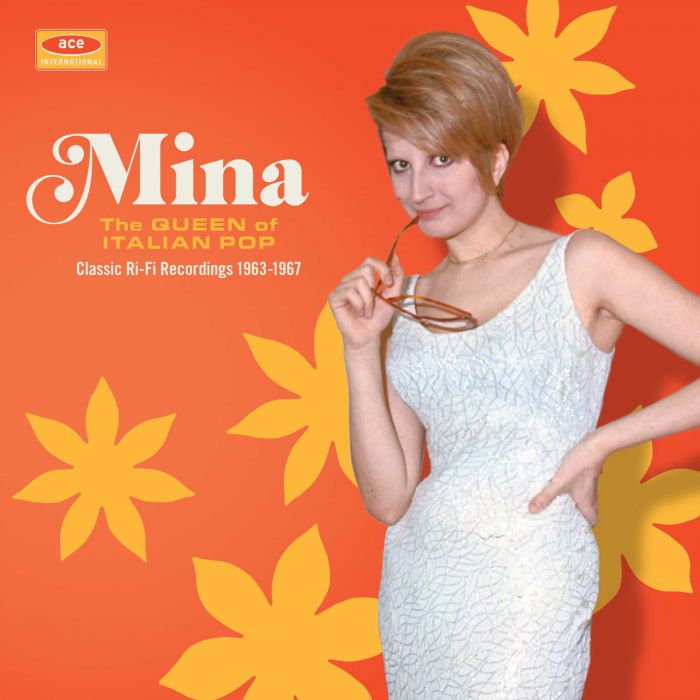
Mina-The Queen Of Italian Pop-Classic Ri-Fi Recordings 1963-1967.
Label: Ace Records.
Format: CD.
Mina Anna Mazzini was born in Busto Arsizio, in Italy, on the ’25th’ of March 1940, and by the time she was eighteen, Mina as she was now billed, had already embarked upon a career as a professional singer and released her debut single. In 1959, Mina made her debut on th,e variety shows that were popular on Italian television and would a familiar face right through to the late-seventies. By then, she was well on her way to becoming Italy’s most successful female recording artist.
Since releasing her debut single in 1958, Mina has released over 100 singles and in excess of seventy albums. In total, she has recorded over 1,500 songs, and has sold more that 150 million records worldwide. Mina has also enjoyed number one albums in Italy every decade since the sixties. She’s also enjoyed commercial success all around the world, but not in Britain where very few of her singles and albums were released. However, Ace Records have just released a new compilation The Queen Of Italian Pop-Classic Ri-Fi Recordings 1963-1967 which for newcomers to Mina’s music is the perfect introduction Italy’s biggest selling singer.
When Mina signed to Ri-Fi in 1963, she was seen as a controversial figure in conservative Italy and had been ostracised by the establishment. This came about after she had a relationship with married actor Corrado Pani and became pregnant. In Italy in the early sixties this fell foul of the Catholic church’s strict moral code and the nation’s moral arbiters were horrified. So much so, that the state broadcaster RAI had banned her from radio and television. This meant that the only time the public saw her was when she appeared on television commercials. Despite this, her popularity hadn’t been affected and neither had her record sales. Mina’s fan even campaigned for her return and the ban to be lifted. The twenty-three year old singer was just as popular as ever and after the after the birth of her son she signed to Ri-Fi which was the able to take a chance on Mina.
The signing made commercial sense. Mina was just as popular as ever and had fans all over Europe. Ri-Fi would exploit her emancipated bad girl image in an attempt to increase her popularity in Italy and further afield. To do this, they took time choosing the songs that she would release as singles and would feature on her albums. The twenty-four tracks on The Queen Of Italian Pop-Classic Ri-Fi Recordings 1963-1967 are taken from these albums.
Having signed to Ri-Fi, Città Vuota (It’s A Lonely Town) was chosen as her first single for the new label. The Gene Daniels composition reached number three in the Italian charts in 1963 and remained on the charts for six months. Mina was the comeback Queen.
The success continued when she released a cover of Jodie Miller’s È L’uomo Per Me (He Walks Like A Man) for her second single for Ri-Fi. It reached number one on the Italian charts where it stayed for nine weeks. This was just the start.
More success came Mina’s way when her third single Un Buco Nella Sabbia which reached number ten in the Italian charts and gave Mina a hit in Spain and Japan. The followup Io Sono Quel Che Sono then reached number four in Italy and was hit in Spain and Turkey. Ri-Fi’s decision to sign Mina had paid off.
Buoyed by the success of her first four singles for Ri-Fi, Mina released her first album for the label. It was very different to the albums she had released on Italdisc which were just collections of singles. Studio Uno was released in 1964 and was Mina’s first “proper” artist album. The album also reflected her musical taste and featured covers of songs by her idol Frank Sinatra and Jobim’s Bossa Nova classic Insensatez. It was joined on Studio Uno by her first four singles for Ri-Fi as well as So Che Mi Vuoi (It’s For You), L’ultima Occasione (Uno Come Te) and an impressive reading of Tu Farai..These tracks were part of a commercially successful album that helped lift Mina’s profile at home and abroad.
By the end of 1964, Mina was now one of the most popular television stars in Italy. It was hard to believe that she had just come in from the cold after being ostracised by the Italian establishment after her relationship with Corrado Pani came to light.
Meanwhile, Mina’s popularity was growing and in Europe and as far afield as Japan. She was one of Italy’s most successful musical exports, and that would continue to be the case.
In 1966, Mina returned with a new album Studio Uno 66. Eleven of the twelve songs had been released as singles she had released during 1965 and 1966. They were a mixture of ballads and uptempo tracks that showcased the twenty-six year old’s versatility. Some of the best tracks on the album were ballads. This includes her last single of 1965 Addio, which features an impassioned vocal. Two singles from 1966 find Mina living the lyrics of the songs. There’s her hurt-filled reading of Breve Amore (You Never Told Me) and a heartfelt and emotive cover of Se Telefonando…Its B-Side No, is also included on the compilation and features a powerful vocal on a jangly slice of pop. It’s one of the hidden gems on Studio 66 which was the next chapter in the rise and rise of Mina.
During 1966, Mina and singer and guitarist Giorgio Gaber released a split sided album Un’Ora Con Loro. Mina’s six songs were on the first side and included Più Di Te (I Won’t Tell) Brava where she used her full vocal range during a stunning rendition of the song. It showcased a talented and versatile singer whose popularity continued to grown.
In September 1966, Mina released Sono Come Tu Mi Vuoi as a single and it was her biggest hit of the year in her native Italy. The single peaking at number two in October, and became the theme to the radio show Gran Varieta which Mina was often a guest on.
Mina also released her second album of 1966 late in the year. Her previous album Studio 66 was a collection of singles, while Mina 2 featured a number of cover versions of songs made famous by Frank Sinatra. Other songs included her powerful interpretation of Invitation which was originally recorded by American torch singer Dakota Staton. It was joined by her breathtaking version of Un’Ora Con Loro which Cuban band La Sonora made famous in the fifties. These are two of the highlights of Mina 2 which was an accomplished album that showed a different side to Mina who was maturing as a singer.
This was evident on her next album Sabato Sera Studio Uno 1967. It featured songs of the quality of the ballads L’immensità and Sabati E Domeniche. They’re two of the highlights of the album along with the poppy sounding Conversazione which was the theme to a television show Mina regularly hosted. However, the best known song was the single La Banda (A Banda) which reached number three in 1967. Its B-Side Se C’è Una Cosa Che Mi Fa Impazzire features and is a hidden gem in Mina’s discography
In October 1967, Ri-Fi released Tu Non Mi Lascerai as a single and on the B-side was Cartoline. It went on to become a favourite of Mina’s fans old and new. This was all in the future.
Just before the end of 1967, Mina moved to Lugano, in Switzerland, where she and her father founded the PDU label. It was a new and exciting chapter in the twenty-seven year old singer’s career and saw her take control of her music. Mina was a musical pioneer and led the way for future generations of singers to found their own record labels. Fifty-three years later and Mina continues to release albums on her PDU label and is by far the most successful Italian female recording artist.
Before she founded PDU, Minawas signed to Ri-Fi where she kick-started her career after being ostracised by the Italian establishment. She came back stronger than ever and her career went from strength-to-strength at Ri-Fi as she enjoyed hit singles in Italy and across Europe and as far afield as Japan. The albums she released during this period were commercially successful and showcased a successful and versatile vocalist who was just as comfortable singing ballads as uptempo tracks. Proof of this can be found on Ace Records new Mina compilation The Queen Of Italian Pop-Classic Ri-Fi Recordings 1963-1967 which was compiled by Mick Patrick. It’s a reminder of when comeback Queen Mina reclaimed her crown and was crowned the undisputed Queen Of Italian pop between 1963-1967 and beyond.
Mina-The Queen Of Italian Pop-Classic Ri-Fi Recordings 1963-1967.



KENNY CARTER-SHOWDOWN THE COMPLETE 1966 RCA RECORDINGS.
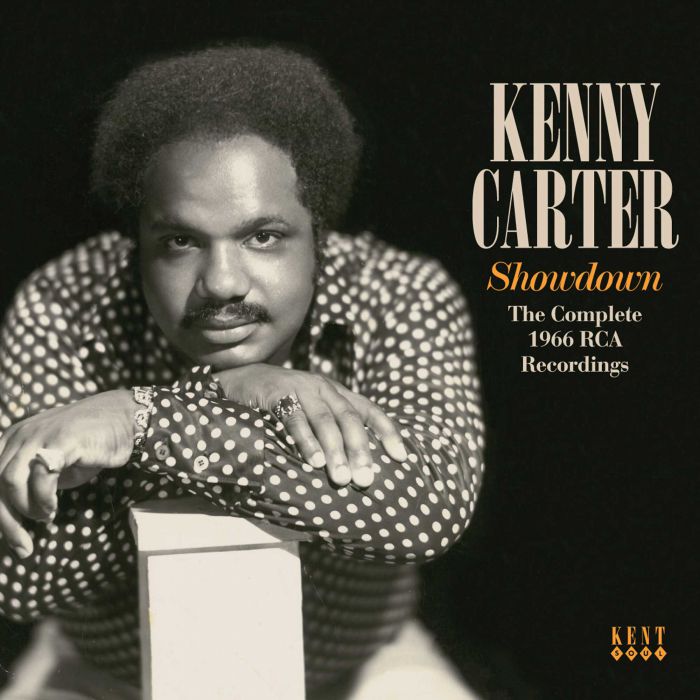
Kenny Carter-Showdown-The Complete 1966 RCA Recordings.
Label: Kent Soul.
Format: CD.
When twenty-five year old Kenny Carter signed to RCA Victor in 1965 this was an opportunity for the balladeer to kickstart his career. He had only released two singles in the early sixties but neither Hey Lover nor Will My Baby Be With Me came close to troubling the charts. Despite having no track record to speak of, and commercial success having eluded his two previous singles, the A&R scouts at RCA Victor recognised Kenny Carter’s potential and signed him on a long-term exclusive contract.
Two days after Christmas 1965, Kenny Carter made his way to the huge Studio A at Bell Sound in Manhattan where he met leading arranger Garry Sherman. He introduced RCA Victor’s latest signing to the orchestra and chorus plus backing vocalists Val Simpson, Nik Ashford, Leslie Miller and Toni Wine. They all thought they were going to feature on Kenny Carter’s debut album. Instead, these were the sessions for the million dollar album that was never released.
That’s until now when the twenty-two tracks from this session feature on the new Kenny Carter compilation Showdown-The Complete 1966 RCA Recordings that has just been released by Kent Soul. It’s a reminder of a session that it was hoped would transform Kenny Carter’s career.
No expense was spared for the session and this included the material that Kenny Carter was about to record. Some of the songs were written by Larry Banks’ songwriting team, which included Kenny Carter, Tony May and Herman Kelley. In total, twenty-two tracks including new material and covers were recorded between the ‘27th’ December 1965 and Friday the ‘1st’ of April 1966.
Garry Sherman who took charge of the sessions, was one of the leading arrangers and remember the session vividly. There was: “a multimillion-dollar orchestra and chorus. In the violin section we had at least seven or eight Strads (each valued at $1,000,000+)–many were concertmasters for major symphony orchestras and are on hundreds of hit records.” Would the feature on a hit single by Kenny Carter?
Monday 27th’ December 1965.
During the first day of the sessions, which took place between 7pm-10pm on the ‘27th’ December 1965 Kenny Carter recorded four tracks. This included a cover of Larry Banks and Milton Bennett’s Don’t Go which features a pleading vocal full of emotion and desperation. Kenny Carter dipped into the Great American Songbook as he reinvents Body and Soul. He also recorded Bey Boyce’s Round In Circles and his own composition I’ve Gotta Get Myself Together which later became a favourite on the UK Northern Soul scene. Although the session lasted just three hours, Kenny Carter had managed to record four songs. It must have seemed like a good start to this new chapter in his career.
Saturday ‘22nd’ January 1966.
Just under a month later, Kenny Carter returned to Bell Sound in Manhattan on Saturday ‘22nd’ January 1966 where he recorded two songs between 2pm and 5pm. This included I’ve Gotta Find Her which he wrote with Larry Banks. It features an orchestrated arrangement, soaring harmonies and a soul-baring vocal and was one of the finest tracks recorded at the first two sessions. The other track that was recorded during this session was the story telling ballad Showdown which Lawrence Banks and Milton Bennett cowrote. Thirty-one years after it was recorded it featured on Deep Soul Treasures (Taken From The Vaults…) (Volume 1).
Saturday ‘12th’ March 1966.
There was a gap of nearly seven weeks before Kenny Carter returned to the studio and recorded four tracks between 2pm and 6pm. This included the George and Larry Banks’ composition Living In The Land Of Heartache and What’s That On Your Finger which a year later was covered by Willie Kendrick. This Larry Banks, Anthony Cotto and Kenny Carter composition which features brassy horns, harmonies and a vocal full of disbelief and despair is without doubt one of the highlights of the compilation.
The other tracks recorded at this session included Larry Banks and Anthony Cotto’s I Can’t Stop Laughing where Kenny Carter promises “I’m gonna find me a new love” and promises “I can make it without you, forget about you” on this beautiful ballad which is a roller coaster of emotions. How Can You Say Goodbye was the final song recorded during the session and this melodic hidden gem featured on the B-Side of Kenny Carter’s final single for RCA Victor. That was all in the future.
Wednesday ‘16th’ March 1966.
Just four days later, on Wednesday ‘12th’ March 1966, Kenny Carter made his way to the studio and recorded four songs between 7:30pm and 10:30pm. This included a cover of Smile where arranger Garry Sherman adds flutes to the arrangement where Kenny Carter delivers a tender vocal. Another familiar song is Time After Time which was covered by Sarah Vaughan and Frank Sinatra. Kenny Carter’s cinematic cover sounds like a homage to the Chairman Of The Board.
George and Larry Banks penned I’m Not The One which features a vocal that’s a rueful vocal from Kenny Carter. He also joined forces with Larry Banks to write the mid-tempo big ballad You’d Better Get Hip Girl which was also recorded during this three hour session at Bell Sound.
Wednesday ‘23rd’ March 1966.
A week later Kenny Carter made the return journey to Bell Sound on Wednesday ‘23rd’ March 1966 where he recorded another four songs between 7:30pm and 10:30pm. This included I’ll Know from Guys and Dolls and the Larry Banks and Herman Kelley composition Like A Big Bad Rain. It feature a dramatic arrangement that’s the perfect accompaniment for a vocal full of emotion and despair. It’s a similar case on the cover of the Larry Banks composition Lights Out where the arrangement is tinged with drama and features a military drum roll. The final song recorded that night was a heartfelt and emotive cover of I Believe In You from the 1961 film How To Succeed In Business Without Really Trying.
Friday ‘1st’ April 1966.
The final session for Kenny Carter’s album took place on Friday ‘1st’ April 1966 :30pm and 10:30pm. That night, two standards and two Larry Banks and Kenny Carter compositions were recorded. I’ll Get By (As Long As I Have You) was the first of the standards and was followed by a beautiful cover of Cole Porter’s Every Time We Say Goodbye that’s full of emotion.
Joining the standards were I Still Love Her which features another soul-baring vocal that’s akin to a confession. The final song recorded during this final session was the ballad My Love. It’s a tale of love gone wrong ballad where Kenny Carter’s vocal is full of sadness and regret. His own mood must have been very different as he left the studio that night, as he had just recorded more than enough material for his debut album.
Later in April 1966, RCA Victor released Kenny Carter’s first single for his new label. This was Body and Soul which featured I’ve Gotta Find Her on the B-Side. However, the single failed to find the audience it deserved and added to the doubts that executives at RCA Victor had about Kenny Carter.
They had signed Roy Hamilton who had already recorded his album The Impossible Drama and the title-track was chosen as the lead single. A full page advert was out in Cash Box announcing the release of the single. This was the start of a two month PR campaign. Roy Hamilton was RCA Victor’s chosen one.
In May 1966, Kenny Carter returned with Showdown which featured I’ve Gotta Get Myself Together on the B-Side. Just like his previous single, it sunk without trace and this was another disappointment for Kenny Carter.
Another five months passed before he returned in October 1966 with his third single for RCA Victor, Don’t Go. Rather ironically it featured How Can You Say Goodbye on the B-Side. After the commercial failure of the single, RCA Victor said goodbye to Kenny Carter.
RCA Victor never released another Kenny Carter single and his album was shelved. That was despite signing him on a long-term exclusive contract in 1965. The singles had been well received but failed to sell. Executives at RCA Victor decided to spend their promotional budget on Roy Hamilton who was a well known singer with a track record. Kenny Carter’s time at RCA Victor was over before it had even begun.
Part of the problem seems to have been that RCA Victor didn’t know how to promote artists like Kenny Carter and decided to cut their losses. Their losses must have been considerable given they had hired arranger Garry Sherman, an orchestra and chorus plus backing vocalists Val Simpson, Nik Ashford, Leslie Miller and Toni Wine. The twenty-two tracks on Showdown-The Complete 1966 RCA Recordings are a reminder of the million dollar album that never was, by the balladeer who could’ve been a star, but sadly commercial success and critical acclaim eluded this talented singer and songwriter who had the ability to breath life and meaning into songs.
Kenny Carter-Showdown-The Complete 1966 RCA Recordings.
AL GREEN-GREEN IS BLUES.
Al Green-Green Is Blues.
Label: Fat Possum Records
Format: LP.
The day that Al Green met Willie Mitchell in 1969 was, without doubt, the most important day in the twenty-two year old singer’s career. His career had stalled and he someone who could get it back on track. Willie Mitchell was the man to do that and when he signed him to Hi Records mentored the young singer and become his vocal coach, songwriting partner and producer.
In October 1974, Al Green released his seventh album for Hi Records and eighth overall. This was Al Green Explores Your Mind, which gave him his fifth consecutive number one in the US R&B charts. Four of these albums had been certified gold and one platinum. Then there was the small matter of seven singles being certified gold and one platinum. By then, Al Green had sold over three million albums and over five million singles in America alone. Willie Mitchell had transformed Al Green’s career and he was one of the most successful soul singers of his generation. It was a remarkable transformation that began in 1969 with Green Is Blue which was recently reissued by Fat Possum Records.
When Willie Mitchell came across Al Green the producer, songwriter and bandleader was looking for a singer for his band who were playing a show in Texas. This was just the break that Al Green was looking for as his career had stalled.
His career began at high school when he founded Al Greene and The Creations which included Curtis Rodgers and Palmer James. The group would later change its name to Al Greene and The Soul Mates and by the two members would have formed a record label.
Curtis Rodgers and Palmer James formed the indie label Hot Line Music Journal and signed their friend Al Greene. The label released his debut solo album Back Up Train on March the ‘21st’ 1967 and it reached just 162 on the US Billboard 200 and thirty-seven in the US R&B charts. That was despite the title-track reaching forty-one on the US Billboard 100 and five in the US R&B charts. It was a disappointing start to Al Green’s solo career.
After this, he continued to perform with Al Greene and The Soul Mates bur commercial success continued to elude the group. Things changed for frontman Al Greene when he met Willie Mitchell.
He was looking for a singer for his band who were playing a show in Texas and decided that Al Greene fitted the bill. He joined the band for the show and it didn’t take long foe Willie Mitchell to realised what Al Greene was doing wrong.
Willie Mitchell realised thatAl Greene was trying to sing like Jackie Wilson, James Brown, Sam Cooke and Wilson Pickett rather than finding and developing his own voice. To help the young singer, Willie Mitchell became his vocal coach and helped him find his own voice. Al Greene was good pupil and a quick learner and Willie Mitchell signed him to Hi Records.
Having signed to Hi Records Willie Mitchell convinced Al Greene to change his name to Al Green. The pair also cowrote their first song together Tomorrow’s Dream and Al Green penned “Get Back Baby. Meanwhile, Willie Mitchell and Marshall “Rock” Jones wrote What Am I Gonna Do with Myself? while Charles Chalmers and Sandra Rhodes who would add backing vocals on many Al Green albums cowrote One Woman.
The rest of the tracks on the album were cover versions and included My Girl, The Letter, Jerry Butler, Curtis Mayfield and Billy Butler’s I Stand Accused,Carl Smith and Marion “Doc” Oliver’s Gotta Find A New World, Lennon and McCartney’s Get Back plus George and Ira Gershwin’s classic Summertime. These eleven tracks would become Green Is Blues.
Recording took place at producer Willie Mitchell’s Royal Studios and featured the Hi Rhythm and Horn Sections and backing vocalists Chalmers, Rhodes and Rhodes. The result was Green Is Blues, which was a very different album to his debut.
Green Is Blues was released on April the ‘15th’ 1969 two days after Al Green’s twenty-third birthday. The majority of reviews were positive apart from the forever contrarian Rolling Stone. Surely commercial success awaited the album?
When Green Is Blues was released it reached nineteen in the US Billboard 200 and three in the US R&B charts. Meanwhile, Canada, the album reached twenty-eight bringing more success Al Green’s way. This was just the start for the Willie Mitchell and Al Green partnership.
Willie Mitchell had spotted the potential in Al Green and was able to encourage and cajole a series of performances out of him that surpassed anything he had released before. The twenty-two year old worked his way through a mixture of new material and covers of contemporary pop and R&B hits. With the help of a crack band and backing vocalists Al Green gives them a makeover on an album of blues, R&B and Southern Soul.
Al Green sets the bar high on the ballad beautiful, tender ballad One Woman. Tomorrow’s Dream his first collaboration with Willie Mitchell features a heartfelt and emotive vocal on a track that showcases the sound that would bring success Al Green’s way. There’s more than a nod to James Brown on his composition Get Back.
Of the cover versions his needy reading of Talk To Me and his soulful pleadings on My Girl are highlights of the album. So an emotive and soul-baring Southern Soul cover of I Stand Accused and an a hurt-filled version of What Am I Gonna Do With Myself. Al Green then breezes through Lennon and McCartney’s Get Back before closing Green Is Blues with a gorgeous cover of Summertime where blues and Southern Soul melt into one. It’s one the finest versions of this much-covered classic and closes the album on a high.
Al Green’s meeting with Willie Mitchell transformed the young singer’s career and Green Is Blues was a stepping stone for him and allowed him to develop his sound and style.
Green Is Blues allowed Al Green to showcase his considerable skills as he breathes new life, meaning and emotion into these contemporary pop and R&B hits. They were reinvented by Al Green and producer Willie Mitchell whose production skills which shine through on Green Is Blues which was the start of the Al Green’s Hi Records’ years.
He would go on to enjoy the most successful period of his career at Hi Records. This journey started with Green Is Blues which was tantalising taste of what was to come from Al Green and producer Willie Mitchell.
Al Green-Green Is Blues.
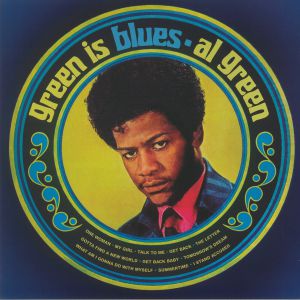
CULT CLASSIC: IKARUS-IKARUS.
Cult Classic: Ikarus-Ikarus.
In Greek mythology, Icarus, the son of the master craftsman Daedalus, who created the Labyrinth, met a tragic ending. Icarus and Daedalus were desperate to escape from Crete. So Daedalus constructed wings made of feathers and wax. As Icarus prepared to make his escape, Daedalus warned his son of complacency and hubris.
Icarus shouldn’t neither fly too high, nor too low. If he flew too high, the sun would melt the wax. However, if he Icarus flew too low, the dampness of would weigh down the feathers. It seemed Icarus was between the devil and the deep blue sea.
And so it proved to be. Icarus chose to ignore his father’s wise words, and flew too close to the sun. The sun’s rays melted the wax, and Icarus fell into the sea. He became the first of many people who flew too close to the sun.
Sadly, this includes many musicians. Among them are Syd Barrett, Skip Spence and Brian Wilson. These three legendary musicians flew too close to the sun, and as a result, never quite filled their early potential. Sadly, neither did Ikarus.
They could’ve gone on to become one of the greatest German rock bands of their generation. Sadly, Ikarus’ discography consists of just one studio album Ikarus. It was released on the Plus label in 1971. Ikarus showcased a talented, pioneering group, who many thought were destined for greatness. Their story began a few years earlier.
It was in the mid-sixties, in the musical hotbed that was Hamburg, that Ikarus were formed. They were just the latest beat group that had been formed in Hamburg. This was where The Beatles served their musical apprenticeship a few years earlier. Now a whole host of local groups wanted to follow in the Fab Four’s footsteps.
Ikarus were no different and they spent evenings and weekends practising in various Hamburg basements. They were determined to hone their sound, before making their debut. This didn’t take long, as Ikarus featured some talented musicians.
This included classically trained keyboardist Wulf Dieter Struntz and bassist Wolfgang Kracht. His party trick was to play a violin with his gloves on. Music seemed to come easily to the members of Ikarus, and it wasn’t long until they began to play live.
By 1966, Ikarus made tentative steps onto Hamburg’s live scene. Ikarus’ earliest concerts took place in youth clubs, where they played cover versions of popular song. At first,Ikarus were called Beautique In Corporation. Soon, this was soon shortened to BIC. This found favour among the band’s audience.
Although a relatively new group, BIC quickly won over audiences. Soon, they had large and enthusiastic audience. BIC played what they wanted to hear. They weren’t above playing covers of hits by Elvis Presley and Tom Jones. This was easy on the ear of the audience. However, before long, BIC’s setlist changed.
The band members began to write their own songs as Audiences expected to hear original material. They didn’t just want to hear cover versions. This suited the members of BIC who were classically trained musicians. Composition came easy to them.
These new songs were added to BIC’s sets. Some of these songs had a psychedelic sound. BIC’s music was evolving, as music evolved. This proved popular when BIC played live.
By then, BIC had graduated from the youth club circuit, and were by now familiar faces on the Hamburg and North German music scene. Their music was a mixture of psychedelia and rock. However, there was an element of comedy in BIC’s sets.
Some of the members of BIC enjoyed the new generation of German vaudeville comedians. So they began to combine vaudeville comedy with their psychedelic sound. It proved a potent and successful combination.
Soon, BIC were one of the most successful Hamburg bands. They were well on their way to becoming one of the leading lights of the Hamburg scene. So when they saw an advert for the 1969 Hamburg student beat band competition, BIC decided to enter.
All of the top Hamburg bands entered. The competition was fierce. Hamburg had a thriving music scene. While the other bands were professional, BIC were still an amateur band. This didn’t matter. When BIC took to the stage, they quickly won over the judges with their psychedelic sound. Once all the bands had played, the judges conferred and the winner was announced. It was BIC, the only amateur band in the competition. They had triumphed, and won what was Hamburg’s most prestigious competition.
Having won the 1969 Hamburg student beat band competition, BIC were invited to in the 1970 Hamburg Pop and Blues festival. It took place between the 1st and 3rd of April 1970. BIC were going to rub shoulders with some of the biggest band on that early seventies. Among them, were Chicken Shack, Steampacket, Alexis Corner and Hardin and York. Despite such an illustrious lineup, it was the hometown band that won the hearts and minds of the audience. BIC had stolen the show.
After their performance at the 1970 Hamburg Pop and Blues festival, things happened quickly for BIC. A live album of BIC’s performance at the Hamburg Pop and Blues festival was released as their debut album. It was augmented by performances from Frumpy and Tomorrow’s Gift. The album sold fairly well, and it looked like BIC’s star was in the ascendancy.
Just a few months later, BIC’s lineup changed, when two new names joined the band. Now BIC was a five piece band. The new lineup of BIC was then asked to open for British band Uriah Heep on their forthcoming tour. This was the start of the rise and rise of BIC.
Not long after this, BIC acquired a manager, who was also a concert promoter, Will Jahncke. One of his first suggestions was that BIC changed their name to Ikarus. While this seemed more in keeping with the psychedelic and progressive rock scene, BIC were a popular and successful band. However, the five members decided to change the band’s name to Ikarus.
Following the name change, Ikarus’ music changed. They were inspired to do so, by King Crimson, Yes, Colosseum and Frank Zappa. Soon, Ikarus were fusing fusion with progressive rock and experimental music. There was still a slight psychedelic sound to their music. However, the new sound didn’t please everyone.
When Ikarus played live, the audience were divided by the stylistic change. While some embraced and welcome Ikarus’ new sound, some weren’t as sure. They weren’t won over by the move towards progressive rock. Instead, they felt the lengthy songs, and changes in tempo and time signature were self-indulgent. However, critics disagreed, and continued to champion Ikarus.
With the critics championing their music, it made sense for Ikarus to record their debut album in the second half of 1971. So the five members of Ikarus made their way to the Windrose Studio, Hamburg.
By then, the members of Ikarus had written four songs. Each of the songs were collaborations between members of the band. That was apart from The Raven Including “Theme For James Marshall.” It was an Edgar Allan Poe poem set to music written by four members of Ikarus. This became a near twelve minute epic that featured on side two of Ikarus. With the album written, the band began recording their debut album.
At the Windrose Studio, there was a sense of anticipation.The original members of the band had spent six years playing in clubs and festivals. All this was preparation for the day that Ikarus recorded their eponymous debut album. If things went to play, Ikarus music would be heard by a much wider audience.
The members of Ikarus realised this as they setup their equipment. By then, the rhythm section featured drummer Bernd Schröder, bassist Wolfgang Kracht and guitarist Manfred Schulz. Jochen Petersen played guitar, but also switched between 12-string guitar, alto saxophone, tenor saxophone, flute and clarinet. Wulf Dieter Struntz played organ and piano. Lorenz Köhler took charge of the lead vocals on three tracks; while Manfred Schulz featured on Early Bell’s Voice. Producing Ikarus was Jochen Petersen. Eventually, the album was complete and all that was left was to release Ikarus.
With Ikarus complete, it was scheduled for release in February 1972. Miller International had decided to release it on their Plus imprint. However, before that, critics had their say on Ikarus.
For some time, critics had championed Ikarus’ music. Their eponymous debut album was no different. Ikarus, with its combination of fusion, progressive rock and psychedelia met with the critics approval. Critically acclaimed reviews followed, and Ikarus, who were still an amateur band, looked like they had a successful album on their hands.
So it proved to be. Ikarus sold well, and soon, the band were playing sellout shows across Germany. In Hamburg, Ikarus’ home town, they were asked open for Deep Purple. It looked like Ikarus were were well on their way to becoming one of the stars of the German music scene. Those that heard Ikarus concurred.
For some time, critics had championed Ikarus’ music. Their eponymous debut album was no different. Ikarus, with its combination of fusion, progressive rock and psychedelia met with the critics approval. Critically acclaimed reviews followed, and Ikarus, who were still an amateur band, looked like they had a successful album on their hands.
Although Ikarus only featured four tracks, they ooze quality. That’s apparent from Eclipse the opening bars of Eclipse to the closing notes of Early Bell’s Voice. Ikarus take the listener on a Joycean musical journey. It features thought proving lyrics with a social conscience. Especially, on the first two tracks, Eclipse and Mesentry. Throughout Ikarus, musical genres melt into one, including everything from avant-garde and experimental music to folk rock, free jazz and fusion to Krautrock, progressive rock, psychedelia and rock. Sometimes, musical genres melt into one resulting in a inventive and innovative genre-melting sound. There’s constant stylistic change and changes in tempo as the music constantly heads in new directions.
The music veers between impassioned, dramatic, symphonic and urgent, to emotive, theatrical and thoughtful. Sometimes, the music is pastoral and understated before becoming soulful, experimental and futuristic. Other times, the music becomes jazzy, moody, gothic, lysergic and cinematic. Constantly, Ikarus throw curveballs and nuances, subtleties and surprise unfold. The result is music that’s inventive and innovative. Ikarus were musical pioneers.
That was the case with the artists that have obviously influenced Ikarus. This includes King Crimson, Yes, Pink Floyd, Queen and Soft Machine. They influence Ikarus’s captivating, genre-melting, Joycean musical journey.
Sadly, Ikarus was the only album that Ikarus ever released. The Ikarus’ story is a case of unfilled potential.
On Ikarus, listeners were introduced to what could’ve been one of the most successful German bands of the seventies. Their was bang ‘on trend’. Progressive rock and fusion were both hugely popular by the mid-seventies.
That’s when Ikarus were offered a contract by Metronome. They were the owner of the legendary Brian label. For Ikarus, this was the opportunity to dine at the top table in German rock music. Surely, this was an offer that Ikarus couldn’t and wouldn’t resist?
They did. In the mid-seventies, Ikarus were still an amateur band. Its member felt that becoming a professional band was risky. There was no guarantee that their albums would sell. As an amateur band, they had the best of both worlds. Music was a hobby, one they were good at and that they made money with.
The live circuit was lucrative. It was a good way for the members of Ikarus to augment their income. However, to become a full-time band was a step too far for some members of Ikarus, and they decided the band should split-up. It was a case of what might have been.
Listening to Ikarus nearly forty-four years after its release, and one can’t help but wonder if the members of Ikarus regret their decision? Do they ever wonder what would’ve happened if they had signed to Metronome? Maybe they would’ve gone on to enjoy the same success as Can, Guru Guru, Eloy or Birth Control. Or maybe, it would’ve been another generation before Ikarus’ music finally received the recognition it deserves. That was the case with Neu!, Harmonia and Cluster and Ikarus had the talent to reach the higher echelons of German rock music. That is apparent on their eponymous debut album which is a tantalising reminder of Ikarus, Krautrock’s cult classic and a group who should’ve enjoyed a long and successful career.
Cult Classic: Ikarus-Ikarus.
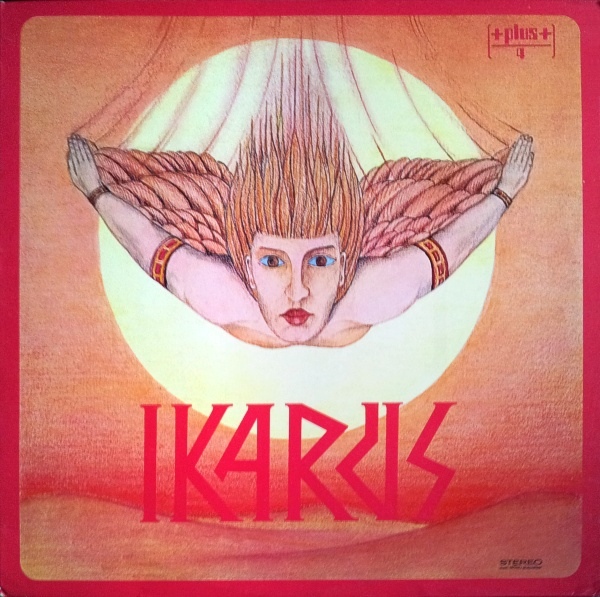
CULT CLASSIC: ARTURIO RUIZ DEL POZO-COMPOSICIONES NAVITAS
Cult Classic: Arturo Ruiz del Pozo-Composiciones Nativas.
Nobody knows what life has in store for them when they embark upon the adventure that is life. Arturo Ruiz del Pozo, who was born in the Peruvian capital Lima, in 1949, had no idea that he would become one of Peru’s leading avant-garde musicians and release a classic album.
By the time Arturo Ruiz del Pozo was a teenager, he had discovered music which was changing, and changing fast. When The Beatles made their breakthrough in 1962 with Love Me Do, he was just thirteen and watched with interest from afar. Two years later, the British Invasion groups arrived on American shores and The Rolling Stones, The Kinks and The Who became part of musical revolution that transformed American music. While this was of interest to Arturo Ruiz del Pozo, the music he was interested was very different.
After graduating from high school, he enrolled at the National Conservatory in Lima, where he studied with Edgar Valcárcel. When Arturo Ruiz del Pozo graduated in 1976, he decided to complete his musical education in a city 6,326 miles away…London.
Arturo Ruiz Del Pozo had decided to complete his musical educational at the prestigious Royal College of Music in London, England. The composer and musician packed some of his favourite Peruvian native instruments thinking that me might use them in future compositions during his time in London.
After leaving Lima, in 1976, Arturo Ruiz Del Pozo flew to London and the twenty-seven year old enrolled at the Royal College of Music. Arturo Ruiz Del Pozo was about to spend the next two years of his life studying towards a Master’s degree in electronic composition and would be taught by one of the most eminent figures in British electro acoustic composition Lawrence Casserly, who was a former student of the Royal College of Music.
In 1967, Lawrence Casserly had been one of the very first students of Electronic Music at the Royal College of Music. The original course was taught by Tristram Cary, who had influenced and encouraged Lawrence Casserly.
By 1969, his early electro acoustic compositions were being performed and this was the start of a long and illustrious career.
Just three years later in 1972, and Lawrence Casserly was regarded as pioneer of electronic music, who had also cofounded the mixed media group Hydra in 1972. They had made their named combining electroacoustic and instrumental sound with lasers, light smoke and projections. Hydra’s performances were groundbreaking and spectacular and brought them to the attention of the wider artistic community.
Soon, everyone from musicians and poets, to technicians, visual artists and writers wanted to collaborate with Hydra. Meanwhile, Lawrence Casserly’s academic career at the Royal College of Music was blossoming in 1976 when he first encountered Arturo Ruiz Del Pozo.
When he arrived at the Royal College of Music, he had already graduated from the National Conservatory, in Lima, and was looking forward to completing his musical education. Especially now that he was being taught by such an eminent figure as Lawrence Casserly.
He would influence all the students on the two-year Masters degree in electronic composition including Arturo Ruiz del Pozo. He spent two years between 1976 and 1978 working towards his degree and just like the rest of the students had to produce two new compositions. This was a requirement of the course.
For the two new compositions, Arturo Ruiz del Pozo decided to use the Peruvian native instruments that he had brought from his homeland. Combined with the knowledge that he had gained from Lawrence Casserly Arturo Ruiz del Pozo began working towards his two new compositions.
By then, Arturo Ruiz del Pozo had immersed himself electroacoustic music, and was exploring the richness and variety of the sounds produced by the traditional instruments that he had brought from home. Combined with his newfound knowledge that he had gained over the best part of two years, and the influence of Lawrence Casserly Arturo Ruiz del Pozo had soon completed his compositions.
These compositions were premiered at the Royal College Of Music later in 1978. This was the final obstacle that Arturo Ruiz del Pozo had to overcome, and just over two years after he arrived in London from Lima, graduated on the ‘18th’ of October 1978. For the twenty-nine year old, this was one of the proudest moments of his life.
After graduating from the Royal College of Music, Arturo Ruiz del Pozo who had fully immersed himself in the electroacoustic scene in his adopted home country, decided to return home.
By the end of the seventies, Arturo Ruiz del Pozo was back living in Lima, and was part of a new generation of musicians who were regarded as innovators. They were ancestral and forefront as they began combining the sounds of native instruments and new technology. By then, drum machines, sequencers and synths were much affordable and within the budget of many musicians. This opened up all sorts of new musical opportunities for musicians like Arturo Ruiz del Pozo.
Since his return home, he began to explore the vast riches of all the types of Peruvian indigenous music. This inspired Arturo Ruiz del Pozo to new make new, ambitious and innovative music. To do this, he took a variety of instruments, ranging from drums and flutes to gongs and rattles which had different tones and timbres. Having recorded the instruments, electronic processing and tape manipulation was used to transform the dry sound. The result was new, ambitious and truly innovative.
In 1984, Arturo Ruiz del Pozo released Composiciones Nativas on cassette. It featured five of his compositions including Estudio Para Quena, Lago de Totoras, Despegue, Noche Ashaninka and Selvynas. The five compositions were part of what was a truly groundbreaking release from a musical pioneer who was well on his way to becoming one of the leading lights of the Peruvian avant-garde scene.
By 2015, Composiciones Nativas was regarded as a Peruvian avant-garde classic. Given the importance of the album, it was no surprise when Buh Records, an independent label and research platform based in Lima, Peru, that focused in experimental music, decided to reissue an expanded version of the album on CD. Composiciones Nativas-Music For Native Peruvian Instruments and Magnetophonic Tape 1978 was part of the label’s Essential Sounds Collection, which is dedicated to publishing esoteric and interesting artefacts that were released by Peruvian experimental musicians during this period. However, the album was a limited edtion and it wasn’t long before the expanded reissue sold out.
Three years later and Buh Records released a limited edition version of Composiciones Nativas-Music For Native Peruvian Instruments and Magnetophonic Tape 1978 on vinyl. It was a welcome reissue of this Peruvian avant-garde classic from musical pioneer Arturo Ruiz del Pozo.
As Parantara opens Composiciones Nativas-Music For Native Peruvian Instruments and Magnetophonic Tape 1978, gongs that sound as if they should be used as part a religious ceremony combine with an unusual cyclical pipe motif sprinkled as metallic Fasutian sounds combine with drones. Later, urgent jangling sounds are added to the hypnotic soundscape that mesmerise as sounds assail the listener. Meanwhile, there’s a filmic sound to the mesmeric music which sounds as if belongs on a sci-fi film that tells the story of the discovery of a new civilisation in a faraway planet.
Gurgling, swirling sounds open Lago de Totoras as liquid disappears. Soon, the soundscape reverberates as effects are added and transform the dry signal. Soon, a myriad of disparate sounds are added and together provide an alternative symphony.They range from metallic and industrial sounds to rattling, jarring, gurgling, swirling and dubby sounds that add a strangely melodic and soothing sound as this alternative symphony.
Ethereal, angelic sounds combine with eerie, cinematic strings on Clarinete Cajamarquino which us just two minutes long. However, it still manages to be ethereal, elegiac, eerie and cinematic as this short avant-garde soundscape captivates.
Parka en Brujas’ had a much spartan and distant sound as high-pitched whistles combine with what sounds like birdsong. However, nothing is at seems as processing is added and sound are manipulated. As the birdsong seems to multiply, it unites with a murmuring metallic drone, which is later joined by a gravely sounding bass flute. It sounds as if it’s a remnant of Peru’s musical past, but plays its part in what was part of a groundbreaking release. It saw Arturo Ruiz del Pozo continues to push musical boundaries to their limits, and sometimes it seems, way beyond.
Estudio Para Quena is built around eerie, otherworldly tape-delayed sounds which sounds if they’ve been played on a Japanese Shakuhachi flute. They become part of cinematic backdrop to what sounds like part of the soundtrack to an early sci-fi film. Meanwhile, alien-beings or Martians chatter urgently, as the remainder of soundscape shimmers and glistens becoming melodic, mesmeric and even dramatic as Arturo Ruiz del Pozo paints pictures with his avant-garde music.
Futuristic and even otherworldly describes the introduction to Despegue, which sounds as if a UFO is hovering before a rocket is launched. It sounds as if Arturo Ruiz del Pozo is creating the soundtrack to an interplanetary adventure where earthlings go in search and sometimes, battle the extra terrestrials. The sound of an explosion brings to an end the battle, and as the rocket plunges to earth, it is a case extra terrestrials 1 earthlings 0. All this happens within the space of four captivating minutes of cinematic music that is rich in imagery.
Composiciones Nativas-Music For Native Peruvian Instruments and Magnetophonic Tape 1978 closes with Selvynas. What sounds like seashells rustling is combined with a foghorn drone that drifts in and out. Meanwhile, processing has been added to the drum which has an abstract sound and helical, coiling pipes add a haunting, spartan sound. With the drum adding dramatic, ominous sound, the rest of soundscapes is eerie, otherworldly and haunting but has a strange beauty that is omnipresent.
Thirty-two years after Arturo Ruiz del Pozo released Composiciones Nativas on cassette his groundbreaking avant-garde classic is starting to find a wider audience. It’s an ambitious and innovative album where Arturo Ruiz del Pozo combines elements of ambient, drone, electronica, electroacoustic, experimental, industrial and musique concrète to create what is a Peruvian avant-garde classic. The result was an album that features his carefully crafted collages of disparate and esoteric sounds. This ranges from sounds produced by traditional Peruvian instruments to the technology deployed by avant-garde pioneer Arturo Ruiz del Pozo. He adds effects and manipulates this array of sounds on the groundbreaking soundscapes on Composiciones Nativas. It’s essential listening for anyone interested in avant-garde or esoteric music, and is the perfect introduction to musical pioneer Arturo Ruiz del Pozo. There’s no better place top start than his avant-garde classic Composiciones Nativas.
Cult Classic: Arturo Ruiz del Pozo-Composiciones Nativas.

IF I HAVE TO WRECK L.A.-KENT AND MODERN RECORDS BLUES INTO THE 60S VOL 2.
If I Have To Wreck L.A.-Kent and Modern Records Blues Into The 60s Vol 2.
Label: Ace Records.
Format: CD.
As the sixties dawned, musical tastes were changing and soul music’s popularity had started to grow. By then, new independent labels were being founded all across America and labels like Stax, Atlantic and Motown became household names and hit-making machines. They released some of most successful soul music during what was a golden era.
By the end of the sixties, soul was much more popular than blues music. This would’ve been unthinkable a decade earlier when bluesmen plugged in electric blues’ popularity grew throughout the fifties. Especially in Chicago, Memphis, St Louis and Detroit where Muddy Waters, Howlin’ Wolf, T-Bone Walker, Jimmy Reed, Lightnin’ Slim and B.B. King provided part of the soundtrack to the fifties. However, just a few years later and soul had overtaken blues in the popularity stakes. The times they were a changing and so was music.
Despite this, there was a still an audience for the blues during the sixties and labels like ABC-Paramount and their imprint Bluesway plus Chess, Kent and Modern were home to some of the giants of the blues. However, the singles and albums they released sold in smaller amounts or passed many record buyer’s by. Some critics thought that the blues music was no longer relevant and it was destined to become a footnote in musical history.
That was despite a new generation of artists on both sides of the Atlantic flying the flag for the blues and trying to introduce the music a new audience. In Britain, The Rolling Stones, Cream, The Yarbirds, The Kinks, The Animals, John Mayall, Georgie Fame, Them, Fleetwood Mac and later Led Zeppelin all spoke of their love for the blues and acknowledged how it had influenced their music. There was even a British blues boom in the mid-sixties which resulted in a resurgence of interest in the music.
Across the Atlantic, a new generation of musicians and bands that had been influenced by the blues had embarked upon musical careers during the sixties. This included artists Ry Cooder, J.J. Cale, Jimi Hendrix and Janis Joplin as well as The Doors, Canned Head and Jefferson Airplane. They spoke of their love of the blues and how it had influenced their music. Despite this, the blues was no longer as popular as it had been and many musicians were struggling to make a living.
Part of the problem was that many of the clubs that blues musicians previously played in were now hosting rock groups. There were fewer places for bluesmen to play in towns and cities across America. To make matters worse, some record companies were reluctant to sign and release singles and albums by blues musicians. It was a tough and worrying time for blues musicians.
Two labels that were still signing and releasing blues music during the sixties were the Kent and Modern Records which were owned by the Bihari brothers. They had founded Modern Records in 1945 with RPM Records following in 1950, Meteor Records in 1952 and then Flair Records in the early fifties. This was followed by the budget label Crown Records and Yuletide Records which released Christmas music. The other label that the Bihari brothers founded was Kent Records in 1958. Just like Modern Records, Kent Records established a reputation for the blues music it released.
Recently, Dick Shurman compiled two volumes of blues from the vaults of Kent and Modern Records. The first was Dirty Work Going On-Kent and Modern Records Blues Into The 60s Vol 1 which was released a couple of months ago. Hard on the heels of this compilation of West Coast blues comes the followup If I Have To Wreck L.A.-Kent and Modern Records Blues Into The 60s Vol 2 It’s a compilation of Texas blues that focuses more on gutbucket, downhome blues. This means that the harmonica replaces the horns that were a feature of Volume 1. However, Volume 2 like its predecessor has been released to mark an important anniversary.
In 1999, the Japanese label P-Vine released the first instalment in its Modern/Kent Blues Treasures CD series. This was the first of four volumes which were limited editions of 300. Each of the compilations featured West Coast blues obscurities from the vaults of the Bihari Brothers’ labels. For some people this was the first time they had heard these tracks and was the start of a voyage of discovery.
Twenty-one years later and Ace Records have just released two more compilations of blues that were recorded or released by the Bihari Brothers’ labels. This is Dirty Work Going On-Kent and Modern Records Blues Into The 60s Vol 1 and the followup If I Have To Wreck L.A.-Kent and Modern Records Blues Into The 60s Vol 2. It looks back at the West Coast blues between 1965 and 1976 and features twenty-four tracks from Willie Headen, Smokey Wilson, Big Mama Thornton, Long Gone Miles, Willie Garland, Model T Slim and Lowell Fulson. They’re part of the much-anticipated followup to Dirty Work Going On-Kent and Modern Records Blues Into The 60s Vol 1.
During his time signed to Kent Records, Willie Headen, a blues guitarist from Austin, Texas, recorded just fourteen tracks for the Bihari brothers. He released a single on Smogville and two on Kent, while the remainder of the tracks lay unreleased. That was until 1999 when P-Vine released West Coast Modern Blues 1960’s Vol 3 and Take 3 of Hey Baby, Take 5 of If I Can Ever Make Up My Mind, Take 6 of Baby You’re Wrong and Take 6 of If I Have To Wreck LA made their debut on the compilation. They were a tantalising taste of what lay unreleased in the Kent Records’ vaults.
This also included Take 1 of If I Have To Wreck LA which opens the compilation and is the first of the unreleased tracks. It was recorded for Kent in 1968 and features a hurt-filled vocal that’s accompanied by moody and blistering blues guitar licks that replicate Willie Headen’s sadness and frustration.
Other unreleased tracks include Take 3 of Mama Said which he recorded for Kent in 1967. The following year he recorded Take 5 of If I Can Ever Make Up My Mind, Take 11 of You’re Too Cold and Take 2 of Hot Wire Baby. The eight tracks from Willie Headen are the perfect introduction to an oft-overlooked bluesman.
In 1976, Smokey Wilson was recording what would become his 1977 album Blowin’ Smoke. One of the songs recorded during the session but never released was You Told Me A Lie. There’s a mixture of hurt, disbelief and emotion in Smokey Wilson’s vocal during this long-lost hidden gem.
By 1965, drummer, harmonica player and blues vocalist Big Mama Thornton was signed to the Bihari brothers Kent Records. She recorded the Before Day (Big Mama’s Blues) which features a vocal powerhouse and augments it with her harmonica. However, when the single was released in 1965 but wasn’t a commercial success.
Blues singer Long Gone Miles was born in Lachute, LA, on May the ‘8th’ 1925 and was mentored by none other than Lightnin’ Hopkins. In 1968, he recorded ten tracks for Kent Records. A number of these tracks have never been released until they featured on If I Have To Wreck L.A.-Kent and Modern Records Blues Into The 60s Vol. 2. This includes Take 1 of War Time Blues, Gotta Find My Baby, Take 4 of Little Sweet Thing, Take 4 of Rocks In My Pillow, Take 2 of Let Me Play With Your Poodle, Take 4 of Low Down Dirty Shame and Miss Nella Belle which featured on the P-Vine compilation West Coast Modern Blues 1960s Vol. 3. These tracks are a reminder of a talented and underrated country blues singer who sadly only release one single on Kent Records.
In 1967, harmonica player, guitarist and vocalist Model T Slim recorded Somebody’s Done Hoodooed The Hoodoo Man for Kent Records. However, this slow and moody blues wasn’t released and makes a welcome debut on the compilation. The following year, 1968, he released Christine as a single with Baby, Don’t Tear My Clothes on the B-Side. Both sides are reminder of a talented and versatile bluesman whose career sadly, was curtailed because of a ill health.
One of the biggest known names on If I Have To Wreck L.A.-Kent and Modern Records Blues Into The 60s Vol. 2 is Lowell Fulson. He recorded Blues Pain for Kent Records and this unissued take made its debut on a P-Vine compilation in 2001. Nineteen years later it returns for an encore and is one of the hidden gems in Lowell Fulson extensive back-catalogue.
Less than a couple of months after the release of Dirty Work Going On-Kent and Modern Records Blues Into The 60s Vol 1 comes the much-anticipated followup If I Have To Wreck L.A.-Kent and Modern Records Blues Into The 60s Vol 2. It features another twenty-four tracks which were released between 1965 and 1976. Most of these tracks have never been released before and make their debut on this compilation of Texas blues that focuses more on gutbucket, downhome blues. This means that the harmonica replaces the horns. It’s quite different to the music on Volume 1 but just as good.
For anyone with even a passing interest in blues music If I Have To Wreck L.A.-Kent and Modern Records Blues Into The 60s Vol 2 this is a compilation they’ll want to add to their collection. Unlike so many blues compilations, compiler Dick Shurman has eschewed familiar tracks and instead, has chosen unreleased tracks, long-forgotten singles and B-Sides that were recorded by familiar faces and new names for Kent and Modern Records. They’re part of a compilation where the emphasis is on quality.
Just like Dirty Work Going On-Kent and Modern Records Blues Into The 60s Vol 1, If I Have To Wreck L.A.-Kent and Modern Records Blues Into The 60s Vol 2 is another lovingly curated blues compilation from Ace Records that’s a cut above the competition and is well worth buying whether you’re a blues connoisseur or a newcomer to the genre.
If I Have To Wreck L.A.-Kent and Modern Records Blues Into The 60s Vol 2.
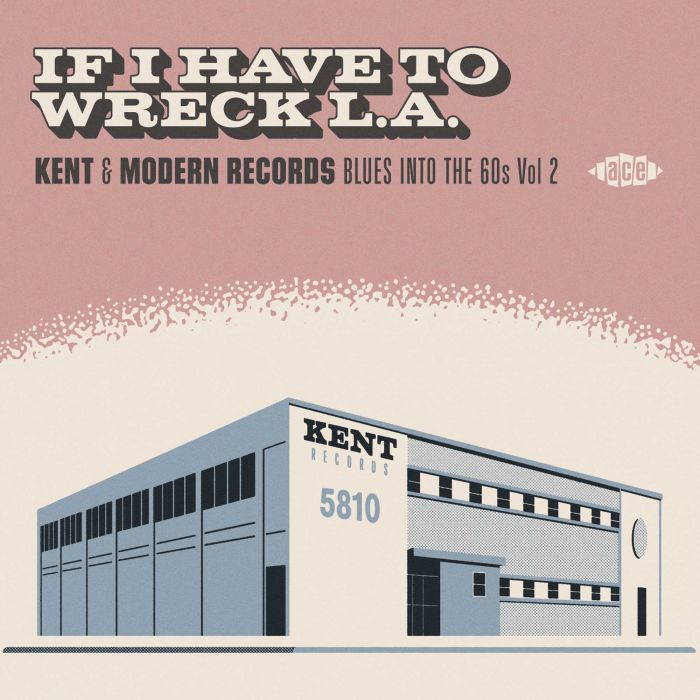
THE ‘SOUND’ OF THE R&B HITS.
The ‘Sound’ Of The R&B Hits.
Label: Ace Records.
Format: CD.
Release Date: ‘25th’ September 2020.
When The Beatles made their debut on the Ed Sullivan Show on February the ‘9th’ 1964, seventy-three million Americans watched on as the Fab Four performed All My Loving, Till There Was You, I Saw Her Standing There and their number one single I Want To Hold Your Hand. This was a major milestone in American music and was the start of the British Invasion.
Over the next few years, The Beatles, the Rolling Stones, The Who, The Kinks, The Animals and the Dave Clark Five were at the forefront of the British Invasion and their music would influence a generation of aspiring and up-and-coming American musicians.
Ironically, many of the British Invasion bands had been influenced by American music and especially Chicago blues, R&B and soul. This included The Beatles, The Rolling Stones, The Hollies, Georgie Fame and The Blue Flames as well as Dusty Springfield. Although they embraced and immersed themselves in American music one label was particularly influential…Motown.
So much so, that The Beatles recorded their sophomore album With The Beatles in 1963 they covered three Motown songs. For many record buyers, The Beatles’ covers of Please Mister Postman, You Really Gotta Hold On Me and Money was their introduction to Motown and R&B which would soon grow in popularity.
On the ’25th’ of April 1964, Record Mirror magazine published its first ever Rhythm & Blues Poll and Mary Wells was the Top Female Singer while The Miracles were voted Best Male Group. The article that accompanied the poll concluded that: “R&B in Britain is much bigger than anyone suspects.” This was a prescient comment because by then, R&B was emerging from the underground and was about to grow in popularity and become part of the soundtrack to the mid-sixties in Britain.
Later in 1964, the Stateside label released a new compilation that helped introduce Tamla-Motown to a wider audience. The ‘Sound’ Of The R&B Hits featured fourteen tracks, and as the liner notes stated, showcase the: “sound that identifies a Tamla-Motown production.” For many British record buyers this was their introduction to Tamla-Motown.
This included many Beatles’ fans who had purchased a copy of With The Beatles in 1963 and read about the group’s: “immense admiration” for The Miracles. Now they were holding a copy of The ‘Sound’ Of The R&B Hits which featured five tracks by The Miracles. This included Ace Records cofounder Roger Armstrong. He Everybody’s Gotta Pay Some Dues, I’ll Try Something New, What’s So Good About Goodbye, Broken Hearted and Do You Love Me which closed the compilation. However, it wasn’t just The Miracles that Roger Armstrong and other Beatles’ fans recognised.
Closing side one of With The Beatles was Please My Postman which was originally recorded by The Marvelettes. It was their biggest hit single but it didn’t feature on The ‘Sound’ Of The R&B Hits. Instead, three album tracks did and for many record buyers this was the first time they had ever heard Dream Baby and The One Who Really Loves You and showed another side to The Marvelettes.
Beatles fans also recognised the original version of Money which had been released as a single by Barrett Strong in 1959.
Some remembered reading that Mary Wells was the Top Female Singer in Record Mirror’s 1964 Rhythm & Blues Poll. Three tracks from her album Bye Bye Baby featured on The ‘Sound’ Of The R&B Hits. The compilation opened with Shop Around and included Bye Bye Baby and I Don’t Want To Take A Chance.
They were joined by The Supremes’ fourth single Let Me Go The Right Way which was released in 1962 and the instantly recognisable sound of Martha and The Vandellas’ Mockingbird. It was one of the best known tracks on The ‘Sound’ Of The R&B Hits.
For many young British record buyers the music on The ‘Sound’ Of The R&B Hits was a gamechanger and was one of the most important albums they bought. It was their introduction to Tamla-Motown and resulted in their lifelong love of soul music. That was the case for Roger Armstrong who went on to cofound Ace Records who are about to release an expanded version of The ‘Sound’ Of The R&B Hits which features twenty-eight tracks.
The additional fourteen tracks on this expanded version of The ‘Sound’ Of The R&B Hits are from the same era and are meant to compliment the Stateside compiler’s concept of “the sound that identifies a Tamla-Motown production.” This includes many familiar faces including some that featured on the original compilation.
There’s also further tracks from the artists that feature on the original version of The ‘Sound’ Of The R&B Hits. This includes The Marvelettes’ biggest selling single Please Mr Postman which topped the US Billboard 100 and US R&B charts and was certified gold in the UA and silver in Britain. It’s joined by I Want A Guy which was the B-Side to their 1961 single Twistin’ Postman. This is an example of where the B-Side is far better than the single. The Marvelettes’ Twistin’ Postman wasn’t able to replicate the success of Chubby Checker’s The Twist and didn’t result in a new dance craze.
The Miracles contributed five tracks to the original compilation in 1964. Two more tracks have been added to the expanded version of The ‘Sound’ Of The R&B Hits. This includes You’ve Really Got A Hold On Me which reached number eight in the US Billboard 100 and topped the US R&B charts. Then there’s I’ve Been Good To You from the album I’ll Try Something New which failed to chart in 1962. It’s one of the hidden gems in their back-catalogue.
Mary Wells returns with two US R&B numbers ones. The first was You Beat Me To The Punch which also reached number nine in the US Billboard 100 in 1962. The following year, 1963, Two Lovers reached number seven in the US Billboard 100. They’re two of Mary Wells’ finest singles and are welcome additions to the compilation.
Barrett Strong’s Money (That’s What I Want) featured on the compilation when it was released in 1964. The B-Side of the single was an emotive and powerful reading of the ballad Oh I Apologize. It’s another hidden soulful gem that is a reminder to always check the B-Side of a single.
One name that was missing from The ‘Sound’ Of The R&B Hits when it was released in 1964 was Marvin Gaye. Three of his singles feature on the newly expanded version. This includes Hitch Hike from 1962 and the gospel-tinged Pride and Joy which reached number ten in the US Billboard 100 and two in the US R&B charts. The followup was Can I Get A Witness which stalled at twenty-two in the US Billboard 100 but reached number three in the US R&B charts in 1963. In Britain, the song was a favourite of DJs and dancers in London and the North of England and has stood the test of time.
Other additions to the expanded version of the compilation include The Valadiers’ I Found A Girl which has a joyous feelgood sound. Very different is the bittersweet sounding I Found Myself A Brand New Baby by Mike and The Modifiers. Then there’s The Contours R&B single which was released in 1962 but failed to find the audience it deserved. It’s another welcome addition to the compilation.
Closing The ‘Sound’ Of The R&B Hits is Martha and The Vandellas’ 1963 single Heat Wave. This Motown classic that reached number four in the US Billboard 100 and topped the US R&B charts. It’s a case of saving the one of best until last.
When Stateside released The ‘Sound’ Of The R&B Hits in 1964, they had no idea how important and influential it would go on to be. That was despite none of the fourteen tracks on the original compilation being a hit single. They were a mixture of the ones that got away, album tracks and B-Sides. Despite that, the compilation introduced many British record buyers to the Tamla-Motown sound and this was the start of their lifelong love affair with the label and soul music.
For many of those who bought The ‘Sound’ Of The R&B Hits in 1964 it’s a love affair that continues to this day. They’ll welcome the newly expanded version of The ‘Sound’ Of The R&B Hits which features twenty-eight tracks from old friends, familiar faces and some new names which should introduce a new generation of music fans to one of the most famous labels in the history of soul music.
The ‘Sound’ Of The R&B Hits.
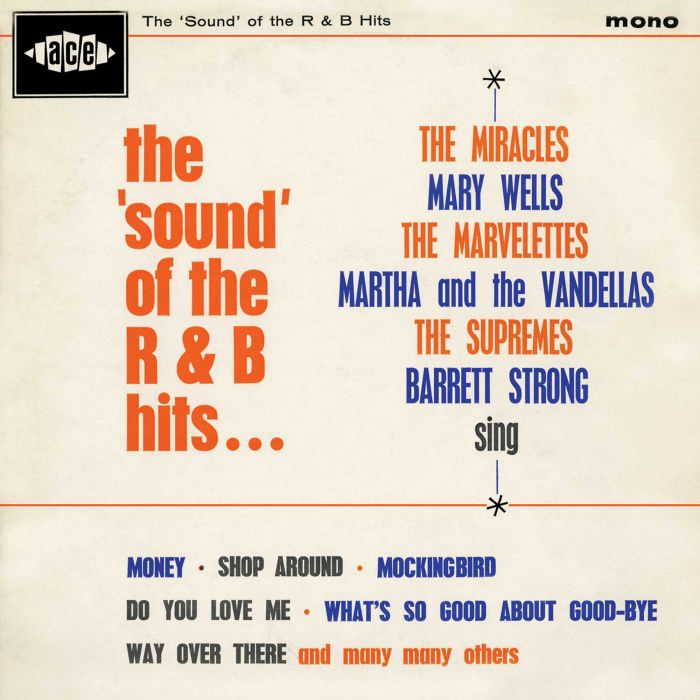
STANLEY TURRENTINE-THAT’S WHERE IT’S AT.
Stanley Turrentine-That’s Where It’s At.
Label: Blue Note Records.
In September 1962, twenty-eight year old saxophonist Stanley Turrentine released That’s Where It’s At which was his fifth album for Blue Note Records. It was his much-anticipated followup to Dearly Beloved which at the time, many critics hailed as his finest album. That’s Where It’s At had a lot to live up to.
It was also a new chapter in the career of Stanley Turrentine as it was the first time that he had collaborated with pianist Les McCann. He composed four of the tracks on That’s Where It’s At, and was part of the quartet who recorded the album at Van Gelder Studio, Englewood Cliffs, in New Jersey on January the ’2nd’ 1962. This was the seventh solo album that Stanley Turrentine had recorded for Blue Note Records since June 1960. He had come a long way since signing for the label.
Stanley William Turrentine was born on April the ‘5th’ 1934, in Pittsburgh, Pennsylvania and grew up in a musical family in the Hill District. His father Thomas Turrentine, Sr, was a saxophonist with Al Cooper’s Savoy Sultans, while his mother played piano and Stanley’s elder brother Thomas became a professional trumpeter. He was part of his brother’s band when he recorded Comin’ Your Way in 1961 and 1962s Jubilee Shout!!! That was in the future.
When Stanley Turrentine started out, he wasn’t playing jazz. Instead, he was a member of various blues and R&B bands. However, his main influence was jazz tenor saxophonist, Illinois Jacquet who is remembered for his solo on Flying Home, which nowadays, is regarded as the first ever R&B saxophone solo. He wrote his name into musical history and later, so would Stanley Turrentine.
During the fifties, Stanley Turrentine was a member of Lowell Fulson and Earl Bostic’s bands. However, when he joined Earl Bostic’s band he was literally standing in the shadow of a giant as he replaced John Coltrane in 1953. Stanley Turrentine was also a member of pianist Tadd Dameron’s band during this period. Then in the mid-fifties Stanley Turrentine was drafted.
During his time serving his country, Stanley Turrentine received the only formal musical training he ever had. When he left the US Army in 1959 he was a much more complete musician.
Upon leaving the military, Stanley Turrentine joined Max Roach’s band. He featured on four albums by the jazz drummer including 1959s Moon Faced and Starry Eyed, 1960s Quiet As It’s Kept and Parisian Sketches plus 1964s Long as You’re Living. However, when Stanley Turrentine wasn’t working with Max Roach he was in constant demand as a sideman.
Another album he played in during 1959 was Abbey Lincoln’s Abbey Is Blue. This was just the start of prolific period for Stanley Turrentine, who by then, had met his future wife.
As the new decade decade dawned, Stanley Turrentine married organist Shirley Scott in 1960, and the pair often played and recorded together. He accompanied his new wife on nine albums between 1961 and 1978. However, there was no sign of Shirley Scott when Stanley Turrentine recorded his debut album.
In 1960, he signed to Blue Note Records and on June the 16th recorded the six tracks with drummer Al Harewood, bassist George Tucker and pianist Horace Parlan that became Look Out! It was a recording of traditional bop which was quite different from his later bluesy, soul-jazz outings. However, his debut was well received by critics who were impressed by the power, clarity and sweet and articulate album where Stanley Turrentine played within himself. Look Out! was a sign of what was to come from Stanley Turrentine.
Apart from recording his debut album Look Out! in 1960, Stanley Turrentine recorded Blue Hour, a collaboration with and The Three Sounds. It was recorded on June the ‘29th’ and December ‘16th’ 1960 at Van Gelder Studio, Englewood Cliffs, in New Jersey.
That was also where hard bop and post bop pianist Horace Parlan recorded his album Speakin’ My Piece on July the ‘14th’ 1960. It was just one of a number of albums Stanley Turrentine played on during 1960. These albums were released during 1961.
As 1961 dawned, Stanley Turrentine journeyed to Van Gelder Studio, Englewood Cliffs, in New Jersey on January the ’20th’ 1961 to record his sophomore album Comin’ Your Way. The result was a breathtaking album of soul-jazz with diversions via hard bop and balladry that had the potential to transform Stanley Turrentine’s nascent solo career and raise his profile. Despite this, executives at Blue Note Records decided to shelf the project which was belatedly released in 1987.
In its place, Up At “Minton’s”, a live album that was recorded at the famous Harlem venue, just one month after the Comin’ Your Way session was released by Blue Note Records later in 1961. The album was a success, and Up At “Minton’s” Volume 2 followed later in 1961. This allowed executives at Blue Note Records to argue that their decision to shelf Comin’ Your Way was vindicated.
On June the ‘8th’ 1961, Stanley Turrentine returned to Van Gelder Studio to record his next solo album, Dearly Beloved. Joining him on this trio recording were his wife organist Shirley Scott and drummer Roy Brooks. It was released to critical acclaim in February 1962 and was called the finest album of his career. Nowadays, Dearly Beloved is regarded as one of the finest albums Stanley Turrentine recorded for Blue Note Records.
Just over three months later, Stanley Turrentine was making the return journey on the ‘13th’ of September 1961 to Van Gelder Studio where he would record his next solo album, ZT’s Blues. Joining his was an all-star band that featured drummer Art Taylor, bassist Paul Chambers, guitarist Grant Green and pianist Tommy Flanagan. The band recorded seven compositions with groove meisters Stanley Turrentine and Grant Green playing a starring role.
Despite the quality of music on ZT’s Blues, history repeated itself when the album was shelved. This must have been hugely disappointing as here was another album that had the potential to transform Stanley Turrentine’s career. Ironically, when the album was belatedly released in 1985 it was to widespread critical acclaim. For Stanley Turrentine ZT’s Blues was the one that got away.
That’s Where It’s At.
For his next album That’s Where It’s At, Stanley Turrentine decided to collaborate with composer and pianist Les McCann. Although the two men had never collaborated before Stanley Turrentine was no stranger to collaborating on albums. He had collaborated on The Three Sounds album Blue Hour in 1960 and with Shirley Scott on his previous album Dearly Beloved which was released to plaudits and praise in June 1961. That’s Where It’s At was the much-anticipated followup.
For That’s Where It’s At Stanley Turrentine wrote Soft Pedal Blues and his brother Tommy penned Light Blue. Les McCann composed Smile, Stacey, Pia, We’ll See Yaw’ll After While, Ya Heah and Dorene Don’t Cry, I. These six tracks became That’s Where It’s At which was recorded at Van Gelder Studio.
On January the ‘2nd’ 1962, Stanley Turrentine’s quartet travelled to Van Gelder Studio. None of the musicians who played on ZT’s Blues featured on That’s Where It’s At. Instead, the tenor saxophonist was accompanied by drummer Otis Finch who was in his wife Shirley Scott’s group. Joining him in the rhythm section was Herbie Lewis who was in Les McCann’s group. Completing the quartet’s lineup for the recording of That’s Where It’s At was pianist Les McCann. This was one and only album the band recorded.
When That’s Where It’s At was released in September 1962 the majority of critics were won over by Stanley Turrentine’s much-anticipated fifth solo album. That came as no surprise given the quartet was firing on all cylinders to create That’s Where It’s At’s bluesy, funky and soulful and sound as they fuse bop and soul-jazz. Playing leading roles were Stanley Turrentine and Les McCann who seemed to drive each other to greater heights throughout the album.
Stanley Turrentine’s hard blowing tenor saxophone is to the fore throughout That’s Where It’s At as Les McCann’s piano adds a bouncy swing while the rhythm section contribute slinky grooves. When all this is combined the result is a potent and heady musical brew.
That’s Where It’s At opens with the uptempo and joyous sounding Smile, Stacey where Les McCann matches Stanley Turrentine every step of the way. It’s one of the album’s highlights. Another is Soft Pedal Blues where the slow, moody and bluesy saxophone is to the fore and accompanied by the piano. It veers between slow and spacious to deliberate and dramatic and there’s even flamboyant flourishes and just like the saxophone produce a late night ruminative sounding track. Initially, Pia glides along with Stanley Turrentine playing within himself and leaving space before Les McCann adds some of his slinkiest piano playing. The pair feed off each other and seem to bring out the best in each other. Later, the saxophone is played with power and control and sometimes is understated while the rhythm section add swing to this irresistible and memorable mid-tempo track.
There’s no letup on We’ll See Yaw’ll After While, Ya Heah with the saxophone and piano playing leading roles. Stanley Turrentine’s bluesy finger popping saxophone swings as he combines power and emotion. Meanwhile, Les McCann’s fingers dance up and down the piano keyboard flamboyant flourishes stealing the show and proving the perfect foil for Stanley Turrentine. From the opening bars of the bluesy sounding Dorene Don’t Cry, a beautiful, poignant and cinematic sounding track unfolds and paints pictures of hurt, heartbreak and love gone wrong. Closing the album is Light Blue, another slower track where the quartet play within themselves. That includes Messrs. McCann and Turrentine who are to the fore on what’s one of the most soulful sounding tracks on That’s Where It’s At.
After the release of That’s Where It’s At, Stanley Turrentine spent the rest of the sixties signed to Blue Note Records and released albums of the quality of Hustlin’, Easy Walker, The Spoiler and The Look of Love. Then as the seventies dawned, Stanley Turrentine left Blue Note Records.
In 1970 Stanley Turrentine signed to Creed Taylor’s CTI Records and changed direction musically. He recorded a series of albums of fusion including one of his finest outings Sugar which was released in 1970. However, the following year 1971, Stanley Turrentine and Shirley Scott divorced after eleven years of marriage. They never recorded another album together.
Following his divorce, Stanley Turrentine continued to record for CTI Records and released several critically acclaimed album. This included Salt Song, Cherry with Milt Jackson and Don’t Mess with Mister T. Then in 1974, Stanley Turrentine left CTI Records and signed for Fantasy Records. It was the end of an era.
Just like his time at Blue Note Record and CTI Records, Stanley Turrentine was prolific during his time at Fantasy Records. He released nine albums between 1974 and 1980 which encompassed a variety of styles. These albums were orchestrated by the likes of Gene Page and featured an all-star group. Despite that, the albums received mixed reviews, with some of the negative reviews often unwarranted. The Fantasy Records’ years weren’t as successful as Stanley Turrentine’s time at Blue Note Record and CTI Records.
The time that Stanley Turrentine spent signed to Blue Note Records was his most productive and saw him release some of the best and most important albums of his career. This included That’s Where It’s At Stanley Turrentine where he collaborated with Les McCann who was a perfect foil for him throughout the album. Together, they play their part in an almost flawless and timeless album that’s bluesy, funky, soulful and swinging.
It was no surprise that when That’s Where It’s At was released in September 1962 it was well received by the majority of critics. One of the few dissenting voices was Downbeat magazine who gave the album a mixed review. That’s ironic as nowadays, That’s Where It’s At is regarded as one of the albums that gave birth to the soul-jazz genre. One of soul-jazz’s finest practitioners was the tenor saxophonist Stanley Turrentine and proof if any was needed are albums of the quality of Hustlin’, Easy Walker, The Spoiler and The Look of Love as well as That’s Where It’s At and Comin’ Your Way which have both been recently reissued by Blue Note Records as part of their Tone Poet series.
Stanley Turrentine-That’s Where It’s At.
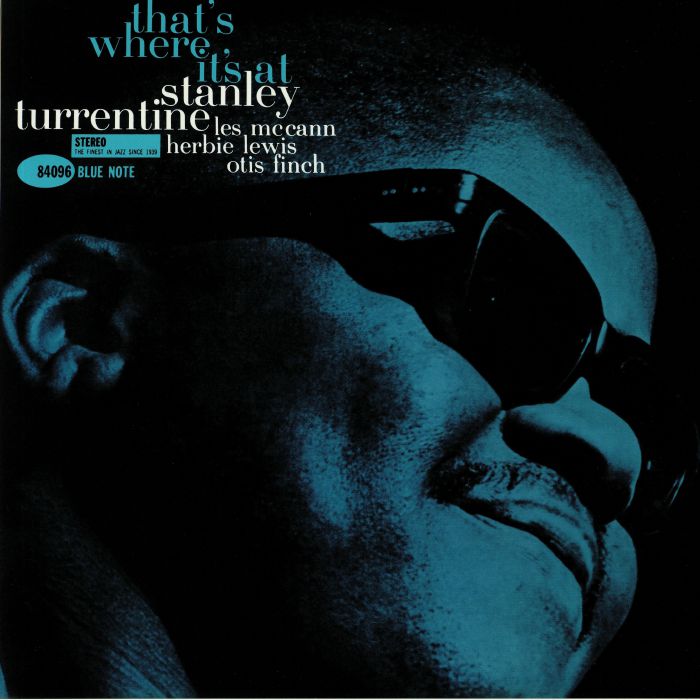
CULT CLASSIC: ADELBERT VON DEYEN-NORBORG
Cult Classic: Adelbert Von Deyen-Norborg.
After Adelbert Von Deyen released his debut album Sternzeit on Günter Körber’s Sky Records in 1978, the label became his home for the next nine years. This was the most productive period of Adelbert Von Deyen’s career. His creativity blossomed and he released eight studio albums and one live album. This included his third album Atmosphere. It marked the next chapter in the story of Adelbert Von Deyen, who originally, began making music as a hobby.
By 1977, Adelbert Von Deyen was working as a retoucher for a Berlin newspaper. While this kept him busy during the day, Adelbert had plenty of free time in the evenings. Wanting to put his free time to good use, Adelbert decided to take up a hobby. The hobby Adelbert Von Deyen chose was music.
This was no surprise, as at that time, Berlin had a thriving music scene. Many of the Krautrock bands, were formed in Berlin. Meanwhile, Tangerine Dream, Klaus Schulze, and Manuel Göttsching were pioneering the Berlin School of Electronic Music. However, Adelbert Von Deyen didn’t just want to listen to the music being made in Berlin, he wanted to make music.
The type of music Adelbert Von Deyen wanted to make was electronic music. So he began to working out what type of equipment he would need to buy. Having made a “shopping list” of equipment, Adelbert headed out and bought a second hand synth, a Revox A77 tape recorder and keyboards. Little did he realise that this was just the first of numerous shopping trips he would make.
Having started making music in the evenings as a hobby, gradually Adelbert Von Deyen was bitten by the music making bug. Soon, he was adding new pieces of equipment to his home studio. This meant making sacrifices. Sometimes, when Adelbert hadn’t enough money to buy new pieces of equipment, he borrowed from the funds from the bank. Adelbert was dedicated to making music.
When he returned from work each night, Adelbert Von Deyen began making music. He often worked late into the night, and sometimes, into the early hours of the morning as he perfected his elegiac soundscapes. This took time, patience and determination.
After eight months, Adelbert Von Deyen had finished his first compositions. He decided to tape the compositions, and send a copy to various German record companies. Maybe he hoped, one of the record companies would interested in his album? This was a long shot. Adelbert Von Deyen was a new artist, who had only been making music for eight months. However, it was a case of fortune favouring the brave.
One of the record companies Adelbert Von Deyen had sent his tape to, was Hamburg based Sky Records. They had been formed just three years earlier, in 1975 by Günter Körber. Since then, Sky Records’ had only released eighteen albums. However, Sky Records had released albums by Bullfrog, Streetmark, Wolfgang Riechmann, Michael Rother, Cluster, and Hans-Joachim Roedelius. This was already an impressive roster, and one that many musicians were keen to sign to.
Sky Records had already established a reputation for releasing groundbreaking music. Just like most record companies, Sky Records were being sent many tapes during 1978. Usually, the tapes would range from good and bad to indifferent. One of the tapes that Günter Körber had been sent was Adelbert Von Deyen’s. Having listened to the tape, Günter Körber made the decision to add a new name to the Sky Records’ roster,.. Adelbert Von Deyen.
Sternzeit,
Günter Körber contacted Adelbert Von Deyen to offer him a recording contract. Sky Records were willing to record Adelbert Von Deyen’s debut album worldwide. The as yet unnamed album became Sternzeit, which featured a distinctive cover painted by Adelbert Von Deyen.
Sky Records’ release of Sternzeit rewarded all the time and effort Adelbert Von Deyen’s had spent recording his debut album. From March to August 1978, Adelbert worked on the two lengthy tracks that became Sternzeit. They were Per Aspera Ad Astra ,which was a three-part suite, featuring Mental Voyage, Stellardance and Astral Projection. Then on the second side of Sternzeit was the title-track a twenty-five minute epic. These tracks were recorded in Adelbert new home studio.
Although Sternzeit was recorded in his home studio, Adelbert Von Deyen had access to an enviable array of equipment. This included a myriad of strings including an ARP Odyssey. They were joined by synth strings, an organ, electric piano and electric guitar. Adelbert Von Deyen played each instrument, and produced Sternzeit. Once the album was recorded, it was mixed at Star-Studio, in Hamburg. Now Sternzeit was ready for release.
When Sternzeit was released later in 1978, it was well received by critics. Sternzeit sold reasonably, well and certainly was more successful than many Krautrock and Berlin School albums. It was only later that Adelbert Von Deyen’s music would receive the credit and critical acclaim it deserved. By then, Adelbert Von Deyen had an enviable back-catalogue.

Norborg.
After the commercial success of Sternzeit, Adelbert Von Deyen was able to give up his job as a a retoucher for a Berlin newspaper and devote his energies to making music. This was a dream come true. Adelbert Von Deyen had also become something of a celebrity in his home town of Lübeck. He began to receive fan mail from record buyers, and was being booked to sign autographs. However, Adelbert Von Deyen wasn’t going to let his newfound celebrity status go to his head. Not when he had music to make.
When Adelbert Von Deyen had signed with Günter Körber’s Sky Records, the contract specified that he must deliver one album each year. So Adelbert Von Deyen’s thought’s turned to his sophomore album. Part of the inspiration for one of the tracks came something that happened during a short holiday after the release of Sternzeit.
To celebrate the success of Sternzeit, Adelbert Von Deyen decided to book a short holiday in Nordborg, on the Danish island of Alsen. This would allow Adelbert to recharge his batteries. He had spent the best part of a year juggling his full-time job and recording his debut album. Sometimes, Adelbert had worked into the wee small hours of the morning. So he was due a break. Little did Adelbert realise as he journeyed to Norborg, that his short break would later, provide the inspiration for his much-anticipated sophomore album.
On his return to Lübeck, Adelbert Von Deyen began work on his sophomore album, which he decided to call Norborg. His holiday provided plenty of inspiration for an album. On Side One, which Adelbert decided to call Moonrise, he decided to replicate sounds of life on Norborg from the moment the moon begins to rise. To do this, Adelbert decided to recreate the sound of nature and the elements taking their toll on Norborg. He remembered the wind blowing, eddying and swirling. Meanwhile, Seagulls cry and protest as they battled the buffeting wind. Other times, Adelbert remembered a calmness that descended. This brought with it a sense of serenity that he planned to replicate in a ruminative, ethereal and elegiac soundscape. It would invite introspection and reflection. Then on the B-Side, Adelbert planned to recreate a ferocious blizzard that he had witnessed during his break. This he decided to call Iceland. Having plotted the ideas for his sophomore album, Adelbert Von Deyen headed into his Turm-Studio, in Lübeck.
That was where Adelbert Von Deyen kept his enviable array of instruments. He was gradually adding new equipment to the studio. He would play on Norborg, a variety of instruments. This would include his ARP Odyssey, It was joined by a Farfisa String Orchestra, Hohner Electronic Piano, Farfisa Organ and Rhythm-Computer. These instruments were recorded into a Revox A 77 Taperecorder and mixed using a Roland Mixer. Gradually, the album began to shape.
Eventually, Norborg was completed. By then, Adelbert Von Deyen had written, recorded, played each instrument, produced and mixed Norborg. This was quite incredible, considering Adelbert was still a relative newcomer to music. He was making up for lost time.
With Norborg complete, Adelbert Von Deyen turned his attention to the album cover. Just like Sternzeit, Adelbert painted a picture that became the album cover to Norborg. This distinctive painting depicts perfectly the music on Norborg.
Now that the album was completed, Adelbert Von Deyen delivered the album to Günter Körber at Sky Records. Just like Sternzeit, he was won over by the music on Norborg. Its release was scheduled for later in 1979.
Before that, copies of Norborg were sent to critics. They too, were won over by the music on Norborg and the album received critical acclaim. That was no surprise.
Norborg is evocative, ethereal, elegiac and has a cinematic quality. So much so, that it’s possible to imagine the moon rising over Norborg as nature and the elements take centre-stage on Moonrise. Synths swirl, replicating the gusts of eddying winds, before the sound of seagulls battle the buffeting winds. Meanwhile, Adelbert Von Deyen continues to improvise, sculpting and carefully creating the ruminative, introspective, meditative and sometimes dramatic soundscape that is Moonrise.
Iceland where Adelbert Von Deyen recreates the ferocious blizzard he witnessed during his holiday in Norborg. What follows is the perfect musical storm. To create this, he deploys his arsenal of instruments effectively and creates an authentic sounding soundscape. It builds, ebbing and flowing, veering between dramatic to wistful and melancholy. Always, there’s a cinematic quality to this second ambient soundscape. It finds Adelbert successfully combining ambient, avant-garde, Berlin School and electronica on much-anticipated sophomore album Norburg. Its ethereal beauty was sure to find an audience.
That proved to be the case. When Norborg was released by Sky Records later in 1979 it was to widespread critical acclaim and commercial success. The album sold reasonably well, outselling many similar albums and surpassed the success of Adelbert Von Deyen’s debut album Sternzeit. The many months of hard work and dedication had paid off.
In his home studio, gradually, Adelbert Von Deyen honed and sculpted what was regarded as the finest album of his nascent career, Norborg. It’s variously atmospheric, cinematic, elegiac and ethereal. Occasionally an element of drama and darkness is introduced and so are futuristic, sci-fi sounds. Sometimes the soundscapes reveal a melancholy, wistful sound. They’re sometimes ruminative and invite introspection and reflection. There’s also beauty and a sense of melancholia and wistfulness on Norborg as Adelbert Von Deyen’s cult classic reveals its nuances, secrets and subtleties.
Nowadays, Norborg is regarded as Adelbert Von Deyen’s second genre classic. So would the followup album Atmosphere. He’s one of the few Berlin School artists whose first three albums are regarded as genre classics.
Despite this, they didn’t find the wider audience audience it deserved outside of Germany. Even at home, success was relative, and that was a case with Norborg which sold well compared to similar releases.
Forty-one years later, and sadly, Norborg is an oft-overlooked cult classic that most people won’t have heard of. However, connoisseurs of the Berlin School of Electronic Music hold Adelbert Von Deyen and his music in the highest regard. Especially his first three albums, including Norborg where the Berlin School pioneer fuses elements of ambient, avant-garde, electronica, experimental and Krautrock on this critically acclaimed and genre-melting cult classic that belongs in the collection of anyone with even a passing interest in electronic music.
Cult Classic: Adelbert Von Deyen-Norborg.
CULT CLASSIC: CANNED HEAT-ONE MORE RIVER TO CROSS.
Cult Classic: Canned Heat-One More River To Cross.
When Canned Heat released heir ninth album, The New Age, on the ‘8th’ of March 1973, it marked the end of an era for the band. It was their swan-song for Liberty Records. After six years and nine studio albums Canned Heat were about leave Liberty Records. They had managed to negotiate their release from their Liberty Records contract which left them free to sign for Atlantic Records. By then, Canned Heat had come a long way since they were formed in Los Angeles in 1965.
Canned Heat’s roots can be traced to a community of blues collectors in Topanga, California. They had been meeting at Bob Hite’s house for some time where the blues aficionados listened to music and traded records. Then in 1965, some of the people who attended the group decided to form a band.
The initial lineup featured vocalist Bob Hite, Alan Wilson on bottleneck guitar, Mike Perlowin on lead guitar, bassist Stu Brotman and drummer Keith Sawyer. With the lineup complete, all that was needed was a name. Eventually, they named their new band Canned Heat after Tommy Johnson’s 1928 song Canned Heat Blues. However, within a matter of days, the lineup changed.
Mike Perlowin and Keith Sawyer both dropped out. This was a huge disappointment for the nascent band. Fortunately, guitarist Kenny Edwards who was a friend of Alan Wilson agreed to replace Mike Perlowin. Then drummer Ron Holmes agreed to join until permanent replacements could be found.
Fortunately, a friend of Bob Hit’s was between bands. Henry Vestine had been sacked by Frank Zappa for “excessive drug use.” However, Henry Vestine was a talented and experienced lead guitarist and he joined Canned Heat, while it was agreed that Henry Edwards could remain on a temporary basis. Soon, though, he left Canned Heat to form The Stone Poneys with Linda Rostadt. With the lead guitarist role filled, all that was needed was a new drummer.
Canned Heat found their new drummer in Frank Cook. His previous employers included jazzers Charlie Haden, Chet Baker and Elmo Cook. With their second lineup complete, Canned Heat set about honing their sound.
By 1966, Canned Heat were playing in the clubs of the L.A, and were soon a popular draw. During their sets, they included a number of reinterpretations blues numbers. Canned Heat were keen to promote blues music which had fallen out of fashion. That was until the British Invasion groups began to promote its merits. Just like Canned Heat, they appreciated the blues and recognised its importance in modern music. It certainly played an important part in Canned Heat’s music as they played in the clubs of L.A. Later in 1966, Canned Heat recorded what should’ve been their debut album.
In the summer of 1966, Canned Heat hooked up with bandleader and producer Johnny Otis. He produced the twelve tracks that Canned Heat recorded. This included covers of Willie Dixon’s Spoonful and John Lee Hooker’s Louise. Once the album was recorded, Stu Brotman announced he was leaving Canned Heat. Worse was to come.
What should’ve been Canned Heat’s debut album lay unreleased until 1970. By then, Canned Heat were a successful band. So Janus Records decided to release the twelve tracks as Vintage Heat. It’s the only Canned Heat album to feature the lineup of Bob Hite, Alan Wilson, Frank Cook, Henry Vestine and Stu Brotman. After Stu Brotman’s departure, the search for a new bassist began.
Despite Canned Heat not having a permanent bassist, they still managed to secure a management contract with Skip Taylor and John Hartmann. Then in March 1967, Canned Heat finally found a permanent bassist in Larry Taylor. He had previously been a member of The Moondogs and had worked with Jerry Lee Lewis and Chuck Berry. Larry Taylor made his debut on the band’s eponymous debut album, Canned Heat.
Canned Heat.
Just month after the classic lineup of Canned Heat was finalised, Canned Heat began recording their debut album for Liberty Records in April 1967. Calvin Carter the former head of A&R was drafted in to produce what became Canned Heat. He was well qualified, having previously recorded albums with Jimmy Reed and John Lee Hooker.
Recording of Canned Heat took place in L.A., with twelve songs being recorded. Eleven of them were cover versions, including Muddy Waters’ Rollin’ and Tumblin’, Willie Dixon’s Evil (Is Going On) and Robert Johnson and Elmore James’ Dust My Broom. The only track penned by Canned Heat, was Bullfrog Blues. Once the twelve songs were recorded, Canned Heat would be released in July 1967.
Before that, Canned Heat were due to appear at the Monterey International Pop Music Festival, on June 17th 1967. Canned Heat pulled out all the stops, and produced one of the best performances of their two year career. Critics struggled for superlatives to describe Canned Heat’s performance. The twin guitars of Henry Vestine and Alan Wilson stole the show; while Bob Hite’s powerhouse vocals came a close second. Critics agreed, that Canned Heat had a bright future in front of them.
Following their successful appearance at the Monterey International Pop Music Festival, Canned Heat released their eponymous debut album in July 1967. Canned Heat reached seventy-six in the US Billboard 200, and in the process, launched the band’s career. Everything seemed to be going almost too well.
Already, drugs had entered the equation. Over the next few years, drugs would become a problem with Canned Heat. It earned them a degree of notoriety, and the reputation “the bad boys of rock.” One of the first incidents was when the band were arrested and jailed in Denver, Colorado on a possession charge. With Canned Heat in jail, their manager Skip Taylor had to sell the band’s publishing rights to Liberty Records’ to raise the bail of $10,000. It was a costly mistake, and cost Frank Cook his place in Canned Heat.
Replacing Frank Cook was Adolfo “Fito” de la Parra. He made his debut on December 1st 1967 at Long Beach Auditorium. That night, Canned Heat and The Doors shared top spot on the bill. This was the debut of the classic lineup of Canned Heat.
Boogie With Canned Heat.
Just six months after Canned Heat released their eponymous debut album, they returned with their sophomore album Boogie With Canned Heat. It was the first album to feature the classic lineup. By then, each member of Canned Heat had adopted a nickname. Canned Heat now featured Bob “The Bear” Hite, Alan “Blind Owl” Wilson, Henry “Sunflower” Vestine, Larry “The Mole” Taylor and Adolfo “Fito” de la Parra. They made their debut on Boogie With Canned Heat.
By then, Canned Heat were writing more of their own songs. They wrote four of the ten songs. Other songs were written by members of Canned Heat. Bob Hite penned Whiskey Headed Woman No. 2; Henry Vestine contributed Marie Laveau and Alan Wilson wrote An Owl Son. Alan Wilson also cowrote On The Road Again with Floyd Jones. It would play an important part in rise and rise of Canned Heat.
When Boogie With Canned Heat was released on 21st January 1968, it was to critical acclaim. The album epitomised Canned Heat’s unique sound. Loose limbed jams and Canned Heat’s trademark boogies rubbed shoulders on Boogie With Canned Heat. This found favour with record buyers when Boogie With Canned Heat reached number eighteen in the US Billboard 200. That wasn’t an end of the success.
Boogie With Canned Heat included what’s without doubt, Canned Heat’s most famous single, On The Road Again. It reached the top ten in the US Billboard 100. The success of On The Road Again further cemented Canned Heat’s reputation was one of America’s top bands.
Living The Blues.
After the success of Boogie With Canned Heat, there was no resting on their laurels for Canned Heat. They returned to the studio and recorded their part of third album Living The Blues. It was a double album with a twist.
The eight songs on sides one and two were recorded in the studio. They were a mixture cover versions and original songs. The covers included Charley Patton’s Pony Blues, Jimmy Rogers’ Walking by Myself and Blind Lemon Jefferson’s One Kind Flavour. Canned Heat penned nine part suite Parthenogenesis. Bob Hite wrote Sandy’s Blues and Alan Wilson wrote My Mistake. Alan also wrote another of Canned Heat’s best known songs, Going Up The Country. These songs were recorded between August and October 1968, at .D. Sound Studios. However, the two lengthy jams on sides three and four Refried Boogie I and II were recorded live at The Kaleidoscope, Hollywood, This mixture of studio and live songs became Living The Blues.
When Living The Blues was released in October 1968, the reviews of this sprawling double album were mixed. The experimental nature of Parthenogenesis seemed to catch critics on the hop. They didn’t seem to know what to make of this genre-melting collage. However, one track stood out on Living The Blues, Going Up The Country.
When Living The Blues was released, it reached number eighteen in the US Billboard 200 and number forty-five in the US R&B charts. The lead single Going Up The Country seemed to speak to a generation, and it reached number eleven US Billboard 100, and number one in twenty-five countries worldwide. Later, Going Up The Country became the unofficial anthem to Woodstock. That was still to come.
Before that, Canned Heat enjoyed a triumphant end to 1968, when they played at the Shrine Auditorium in L.A. To crown what had been a barnstorming performance from Canned Heat, they were joined by Bob Hope sitting a atop an elephant. It was a surreal sight, but proof that Canned Heat were now one of the biggest bands in America.
Hallelujah.
Canned Heat returned to I.D. Sound Recorders Hollywood, in May 1969. They recorded eleven tracks that became their fourth album Hallelujah. Canned Heat wrote two tracks, while individual members of the band wrote most of the tracks. Alan Wilson contributed four tracks, Change My Ways, Time Was, Do Not Enter and Get Off My Back. He was quickly becoming Canned Heat’s songwriter in chief, and played an important role in Hallelujah.
Canned Heat released their fourth album, the blues based, Hallelujah on July 8th 1969. Again, the reviews were mixed. They ranged from favourable to positive. However, again, there was no consensus on Hallelujah. Despite this, Hallelujah still reached thirty-seven on the US Billboard 200. This in part, was a result of Canned Heat taking Woodtstock by storm. Before that, the classic lineup of Canned Heat was no more.
Just after the release of Hallelujah, Canned Heat were due to play two nights at Fillmore West. On the first night, there was an onstage altercation between Larry Taylor and Henry Vestine. After the show, Henry Vestine left Canned Heat.
With Canned Heat a man down for the second show, Mike Bloomfield and Harvey Mandel filled the void left by Henry Vestine. They jammed onstage with Canned Heat. So impressive were their performances, that both men were offered a place in Canned Heat. However, it was Harvey Mandel that agreed to join Canned Heat.
Harvey Mandel made his official Canned Heat debut in August 1969. Canned Heat played two nights at the Fillmore West, in preparation for their performance at the Woodstock Music and Art Fair.
The Woodstock Music and Art Fair took place between the 15th and 18th August 1969. Canned Heat were booked to play on the 16th August 1969. Logistically, the only way for Canned Heat to arrive was in a helicopter. They flew over what was a heaving mass of humanity. Having arrived by helicopter, Canned Heat took to the stage as the sun set. Their legendary set included some of their greatest songs, including On The Road Again and Going Up The Country, which became the unofficial anthem to Woodstock. As they left the stage, it was apparent that Canned Heat were one of the stars of the Woodstock Music and Art Fair.
Future Blues.
1969 had been both an eventful and momentous year for Canned Heat. They had lost a member of the classic lineup of Canned Heat, then were one of the stars of Woodstock. By 1970, “the bad boys of rock” had been booked to tour Europe. With some time to spare, Canned Heat decided to record their fifth album, Future Blues.
Canned Heat headed to Village Recorders, where they were due to record nine songs. This included covers of Eddie Shuler’s Sugar Bee; Charley Patton’s Shake It and Break It; Arthur “Big Boy” Crudup’s That’s All Right (Mama) and Wilbert Harrison’s Let’s Stick Together. Canned Heat penned So Sad (The World’s In A Tangle) and Future Blues. Alan Wilson who was still Canned Heat’s songwriter-in-chief wrote Skat, London Blues and sadly, prophetic My Time Ain’t Long. Once the album was complete, it was scheduled for release in late summer 1970.
Future Blues was well received by critics. They praised the album, calling it Canned Heat’s best albums of recent years. With critical acclaim accompanying its release, Future Blues was released on August 3rd 1970. However, Future Blues stalled at fifty-nine on the US Billboard 200. This made Future Blues Canned Heat’s least successful album since their eponymous debut album. The only small crumb of comfort for Canned Heat and Liberty Records, was that Let’s Work Together reached twenty-six in the US Billboard 100. By then, Larry Taylor and Harvey Mandel dropped a bombshell.
The two men announced that they were leaving Canned Heat not long after the release of Future Blues. Larry Taylor joined John Mayall’s band, and Harvey Mandel followed in his footsteps. This left just drummer Adolfo de la Parra, vocalist Bob Hite and guitarist Alan Wilson.

Hooker ’N’ Heat.
After the departure of Larry Taylor and Harvey Mandel, guitarist Henry Vestine rejoined Canned Heat. Replacing bassist Larry Taylor was Antonio de la Barreda. He had previously played alongside Adolfo de la Parra in Mexico. This new lineup of Canned Heat entered the studio to record an album with veteran bluesman John Lee Hooker.
Canned Heat had met John Lee Hooker at an airport in Portland, Oregon. When they got talking, the members of Canned Heat told John Lee Hooker they were longtime fans of his music. It turned out that apparently, John Lee Hooker just happened to be a fan of Canned Heat’s music. So they decided to record an album together.
This would be no ordinary album. Instead, Hooker ’N’ Heat was a sprawling double album. It was recorded at Liberty Records, in Los Angeles, with Bob Hite and Skip Taylor taking charge of production. John Lee Hooker wrote or cowrote every song on Hooker ’N’ Heat. Some of the songs, featured just John Lee Hooker. On other tracks, Canned Hat were reduced to a backing band on Hooker ’N’ Heat. Once Hooker ’N’ Heat was completed, the album was scheduled for release in January 1970.
Between the completion and release of Hooker ’N’ Heat, tragedy touched Canned Heat in September 1970. Just after the completion of the Hooker ’N’ Heat, Alan Wilson attempted to commit suicide when he drove his van off a a cliff near Bob Hite’s home in Topanga Canyon. Fortunately, Alan Wilson survived. Sadly, not for long.
After years of bravely battling depression, Alan Wilson’s life came to an end on the 3rd of September 1970. Alan Wilson was found dead on a hillside at the rear of Bob Hite’s Topanga home. The cause of death was an overdose of barbiturates. When the other members of Canned Heat were told of Alan Wilson’s death, they believed that he had committed suicide. It was a huge blow for the rest of Canned Heat. They were grieving over the loss of a not just a bandmate, but a friend.
Despite the death of Alan Wilson, Canned Heat were due to tour America, Australia and Europe. Then they had a studio time booked to record a new album. So Joel Scott Hill, who had been a member of The Strangers and Moby Grape was drafted in to replace Alan Wilson. Then in January 1971, Hooker ’N’ Heat was released.
Reviews of Hooker ’N’ Heat were mixed. However, critics agreed that Canned Heat had returned to their R&B roots. Some of the songs varied in quality. Especially some that featured only the veteran bluesman. Two of the poorest songs on Hooker ’N’ Heat were Send Me Your Pillow and Drifter. However, things improved when Canned Heat joined the fray. Together, they formed a potent partnership, and suddenly, Hooker ’N’ Heat was a very different album. Despite this, Hooker ’N’ Heat stalled at seventy-three in the US Billboard 200. Normally, this would be regarded as disappointing. However, given the death of Alan Wilson, this hardly seemed to matter. Some things mattered more than music and the loss of a friend was one of them.
Live At Topanga Corral.
Later in 1971, Canned Heat belatedly released the first live album of their career. The band had wanted to release a live album for several years. However, Liberty Records who Canned Heat were contracted to, weren’t interested in releasing a live album. Despite this, Canned Heat’s manager Skip Taylor managed to get Canned Heat’s live album released.
Skip Taylor took to Liberty Records a recording of five tracks. They he said, had been recorded at the Topanga Corral during 1966 and 1967. That wasn’t strictly true. The recording was of a concert that took place in 1969, at the Kaleidoscope. When Liberty Records heard that Live At Topanga Corral had been recorded in 1966 and 1967, they allowed Canned Heat to release the album on Wand Records.
When Live At Topanga Corral was released, the album was well received by critics. It featured the lineup of Bob Hite, Alan Wlson, Henry Vestine, Larry Taylor and Adolfo de la Parra. They open the set with Bullfrog Blues, and work their way through Sweet Sixteen, I’d Rather Be The Devil, Dust My Broom, Wish You Would and When Things Go Wrong. Sadly, despite being one of the best live recording of Canned Heat, it failed to find an audience. However, it’s a fitting farewell to Alan Wilson. Their next album, Historical Figures and Ancient Heads was the start of a new era for Canned Heat.
Historical Figures and Ancient Heads.
Having released an album in January 1971, Canned Heat closed the year with the released of their eighth album, Historical Figures and Ancient Heads. It was released in December 1971, and was the first album not to feature Alan Wilson. Joel Scott Hill was given the job of replacing Alan Wilson on guitar. His were big shoes to fill.
Alan Wilson was more than a musician. He was also a songwriter. On Historical Figures and Ancient Heads, Canned Heat penned just the one song, Utah. The other seven songs were cover versions. This included Jessie Mae Robinson’s Sneakin’ Around and Jimmy Rogers’ That’s All Right. They were recorded by Canned Heat, and a few friends.
This included Little Richard on the Skip Taylor and Richard Wayne Penniman penned Rockin’ With the King. Harvey Mandel returned to add lead guitar on a cover of That’s All Right. Charles Lloyd joined Canned Heat when they covered his song I Don’t Care What You Tell Me. Producing Historical Figures and Ancient Heads were Skip and Jim Taylor. Once the album was complete, it was released in December 1971.
When Historical Figures and Ancient Heads was released, the reviews were mixed. Some critics felt Canned Heat were no longer the same group. While they still were still able to boogie with the best of them, Canned Heat seemed to have lost their bluesy roots. However, Historical Figures and Ancient Heads was not without merit.
Cherokee Dance and Utah were regarded as the highlights of the album. Both songs found their way onto FM playlists. Another highlight of Historical Figures and Ancient Heads was Rockin’ With The King, where Canned Heat joined forces with Little Richard. They proved a potent partnership. Despite this, and Cherokee Dance and Utah finding their way onto FM radio, the album stalled at a lowly eighty-seven in the US Billboard 200. Historical Figures and Ancient Heads became the least successful album of Canned Heat’s career. Surely, the only way was up?
Following Historical Figures and Ancient Heads, all wasn’t well within Canned Heat. Joel Scott-Hill and Antonio de la Barreda seemed to have developed an attitude problem. This lead to drummer Adolfo de la Parra threatening to quit the band. Fortunately, he was talked out of leaving Canned Heat, and instead, the insurgents exited stage left. This meant another change of lineup for their next album The New Age.
The New Age.
Joining Canned Heat for their ninth album The New Age, were rhythm guitarist and vocalist James Shane, keyboardist Ed Beyer on keyboards and bassist Richard Hite. Bob Hite’s brother would slot into the rhythm section alongside drummer Adolfo de la Parra and rhythm guitarist James Shane. They headed to The Record Plant in Los Angeles to record The New Age.
For The New Age, nine songs were chosen. Most of them were new songs, which were penned by members of Canned Heat. The only cover version was Lieber and Stoller’s Framed. Bob Hite penned Keep It Clean, Don’t Deceive Me and Rock and Roll Music. However, the new recruit came up trumps. Ed Bayer wrote You Can Run, But You Sure Can’t Hide and Election Blue. James Shane went one better, and wrote a trio of songs. This included Lookin’ For My Rainbow, So Long Wrong and the biker anthem Harley Davidson Blues. It would become a favourite of Canned Heat fans. That was still to come. Before that, Canned Heat had an album to record.
When recording of The New Age began at The Record Plant, Clara Ward joined Canned Heat. Her vocal features on Lookin’ For My Rainbow. Sadly, this was the last recording of one the most successful gospel singers. She joined the latest lineup of Canned Heat, as they tried to get their career back on track.
Despite the best efforts of Canned Heat and producer Skip Taylor, The New Age wasn’t the start of a new era for Canned Heat. The album wasn’t well received. One critic in particular, was less than impressed. Lester Bangs savaged The New Age. His over the top review was regarded as “disrespectful,” and Lester Bangs was sacked by Rolling Stone. However, the damage was done.
Other critics took a much more balanced approach to The New Age. They pointed out highlights like Lookin’ For My Rainbow and the biker anthem Harley Davidson Blues. However, when The New Age was released on March 9th 1973, the album failed to trouble the charts. Worse was to come for Canned Heat.
They were now heavily in debt. Skip Taylor was desperately looking for a solution to the problem. That’s when it’s alleged that Skip Taylor advised Canned Heat to sign away all their future royalties to Liberty Records and United Artists’ recordings, and in return, Canned Heat would be allowed to sign to Atlantic Records. If this was the case, it would prove to be one of the worst deals in the history of music.
One More River To Cross.
Having negotiated a release from their Liberty Records’ contract, Canned Heat signed to Atlantic Records in 1973. They began work on their tenth studio album One More River To Cross. However, Canned Heat’s time at Atlantic Records got off to a bad start.
Bob Hite and Henry Vestine were about to use a vending machine at Atlantic Records when suddenly, the pair began to argue and a brawl began. Now two members of Atlantic Records’ latest signing were fighting amongst themselves. While this didn’t present Canned Heat in a good light. Things didn’t get much better. surely things would improve?
For One More River To Cross ten songs were chosen. Again, they were a mixture of cover versions and new songs. Among the cover versions were Daniel Moore’s One More River To Cross, plus Charles Calhoun and Joel Scott Hill’s classic Shake, Rattle and Roll. Just like The New Age, there was also another Lieber and Stoller song, I’m a Hog for You Baby. The other cover version was entitled We Remember Fats. Canned Heat planned to work their way through eight songs penned by Fats Domino and Dave Bartholomew in just five minutes. This would be a remarkable feat. However, this was just part of the story of One More River To Cross came.
The rest of One More River To Cross came from the pen of Canned Heat. L.A. Town, Bagful Of Boogie, Bright Times Are Coming and Highway 401 were credited to Canned Heat. Bob Hite wrote I Need Someone and James Shane penned You Am What You Am. These tracks, plus the cover version became One More River To Cross.
Rather than recording One More River To Cross in L.A., it was decided that the album be recorded at Muscle Shoals Sound Studio, in Sheffield, Alabama. That was home to Roger Hawkins and Barry Beckett of the Muscle Shoals Rhythm Section. They would produce One More River To Cross.
At Muscle Shoals Sound Studio, Canned Heat’s rhythm section featured drummer Adolfo de la Parra, bassist Richard Hite and rhythm guitarist James Shane. Henry Vestine played lead guitar, Ed Beyer played piano and Bob Hite took charge of the lead vocals. Joining them, were drummer Roger Hawkins and keyboardist Barry Beckett. The final piece of this musical jigsaw was the Muscle Shoals Horns. They added a new dimension to Canned Heat’s sound on One More River To Cross which was completed and ready for release later in 1973.
One More River To Cross was released later in 1973. It wasn’t just Canned Heat’s Atlantic Records’ debut and the band’ tenth studio album. This was a remarkable feat considering Canned Heat only released their debut in 1967. A lot had happened since then. The lineup had changed numerous times, there had been countless drugs busts and controversies aplenty. However, only one Canned Heat album failed to chart. That was their previous album The New Age. Sadly, One More River To Cross followed in its footsteps.
Despite that, One More River To Cross has been regarded as a truly underrated album. One of the reasons was Roger Hawkins and Barry Beckett’s approach to production. It made a refreshing change from previous albums and showed another side to Canned Heat. They seemed to have been reinvigorated by the change of studio and producer. Roger Hawkins and Barry Beckett seemed to encourage Canned Heat to loosen up and play with new found freedom. Canned Heat sounds as if they’re enjoying themselves on what was one of their best albums of recent years.
One More River To Cross found Canned Heat seamlessly combining musical genres. They combined blues and boogie with funk, R&B, rock and Southern Soul. Ballads, blues and boogie sat side-by-side with funky jams, R&B and rock ’n’ roll. There was something for everyone. Alas, One More River To Cross failed commercially on this oft-overlooked hidden gem that is one of Canned Heat’s most underrated and expensive albums.
Especially if the allegations that Skip Taylor advised Canned Heat to sign away all their future royalties to Liberty Records and United Artists’ recordings, so they could sign to Atlantic Records were true? After the commercial failure of One More River To Cross, Atlantic Records cut their ties with Canned Heat. Their relationship with Atlantic Records was brief and potentially ruinously expensive.
If the allegation regarding future royalties are indeed true, then Canned Heat were very badly advised. The decision to trade their future royalties for their freedom backfired and backfired badly. Who knows how much this cost Canned Heat in lost royalties? The cost continues to rise with each passing day, and is why One More River To Cross will go down in musical history as one of the most expensive albums ever recorded.
Cult Classic: Canned Heat-One More River To Cross.

CULT CLASSIC FOUND: EBO TAYLOR-PALAVER.
Cult Classic Found: Ebo Taylor-Palaver.
In the history of Ghanian music one man looms large, Ebo Taylor. He’s a colossus of Ghanian music who deserves to be described as an innovator and as someone who went on to influence future generations of Ghanian musicians. Nearly forty years later, and Ebo Taylor’s influence is still being felt not just in Ghanian music, but further afield.
Ebo Taylor was born in Ghana in 1936, and his career started in the fifties when he was the leader of two highlife bands in Ghana, The Stargazers and The Broadway Dance Band. These weren’t just any highlife bands, and were two of the best and most important Ghanian highlife bands. Being the leader of these bands allowed Ebo Taylor to establish a reputation as a bandleader and musician before he decided to spread the gospel of Ghanian music in London.
By 1962, Ebo Taylor had moved to London, where he founded The Blackstar Highlife Band. Having founded his own band, he could dictate musical policy. What Ebo Taylor wanted to do, was create a fusion of disparate musical genres and influences. This included traditional Ghanian music and other West African musical genres as well as funk and jazz.
What The Blackstar Highlife Band eventually created was akin to a musical melting pot where Afrobeat, highlife, jazz and funk came together to form a hypnotic and enthralling fusion of African and Western music. Before long, The Blackstar Highlife Band became a popular group not just in London, but further afield. The effect this had on Ebo Taylor’s career was considerable, and on his return to Ghana, his services as a producer were greatly in demand.
Having returned to Ghana, Ebo Taylor was like the all-conquering hero. Word had spread about the genre-melting music he had created in London with The Blackstar Highlife Band.Job offers came thick and fast for Ebo Taylor who was a musician, songwriter, arranger and producer and could turn his hand to anything.
He was a member of the short-lived The Apagya Show Band, who released one single, Tamfo Nyi Ekyir in 1973. They also released one album which lay unreleased for thirty-nine years. From working as a musician Ebo Taylor decided to move onto arranging and production.
Then in 1975, Ebo Taylor arranged CK Mann and His Carousel 7’s 1975 album Funky Highlife. Later that year, he produced Gyedu-Blay Ambolley’s album Simigwa. It was through production that allowed Ebo Taylor to put his new ideas about music into practice. Ebo Taylor it seemed had done just about everything in music. However, he hadn’t written many songs and and had still to release a solo album. This was about to change.
Two years later, in 1977, he wrote several songs for Pat Thomas and Marijata’s eponymous album. Ebo Taylor was also asked to arrange the album. This he enjoyed doing and was good practise as he was later that year he would enter the studio to record his debut solo album.
Ebo Taylor had done many things during his three decade career, but had never had the opportunity to release a solo album. This rectified in 1977 when he released his eponymous debut album Ebo Taylor on the Ghanian label Essiebons. This was just the start of his solo career and before long, he would release his sophomore album.
Twer Nyame was Ebo Taylor’s sophomore album, and was released on Phillips West-African Records. Having released two solo albums in the space of a year, it was another two years before Ebo Taylor released another album.
His next album was collaboration with the Saltpond Barkers Choi, Me Kra Tsie which was released in 1979, on the Ghanian label Essiebons. The following year, Ebo Taylor released another collaboration and recorded another album.
For what was his fourth album Conflict, Ebo Taylor joined forces with Uhuru Yenzu. When the album was released in 1980 it was a commercial success in Ghana, but failed to find an audience in other parts of Africa.
Despite this, Ebo Taylor was a popular live draw in other parts of Africa. This included Nigeria, and in 1980 Ebo Taylor and his r touring band embarked upon a club tour, which was how he met none other tham Chief Tabansi of Tabansi Records.
Within a few short days, Chief Tabansi had offered Ebo Taylor a one album deal, which he signed. With the deal concluded, Ebo Taylor and his touring band entered the studio and recorded an album’s worth of material which under the terms of the deal was to be released exclusively on Tabansi Records. Once the album was recorded Ebo Taylor competed his Nigerian club tour.
Ebo Taylor was under the impression that Tabansi Records would release the album he had recorded Palaver, later in 1980 or in 1981. Sadly, for reasons lost in the mists of time, the album was never released and Palaver sat in the Tabansi Records’ vaults for thirty-nine years.
Nothing was head of the album until 2019 when Peter Adarkwah of BBE Music agreed a deal with Chief Tabansi’s son Joe to reissue around sixty albums recorded and released by the label and its imprints. That was when Joe Tabansi mentioned the tantalising prospect of unreleased material. That was when Joe Tabansi produced the master-tapes to Palaver. Little did Peter Adarkwah realise that he had struck musical gold.
Palaver features five new tracks penned by Ebo Taylor, which were recorded by his band who accompanied him on tour and in the studio.The lineup included George Amissah, Mat Hammond, George Kennedy and George Abunuah. They were responsible for what’s a long lost hidden gem that for thirty-nine years lay in the Tabansi Records vaults.
Palaver is a genre-melting fusion of African and Western influences that features Ebo Taylor and his band at the peak of their powers. By 1980, Ebo Taylor was a vastly experienced musician and bandleader. He had nearly thirty years experience as a musician, and drew upon all that experience, fusing African and Western music on Palaver. Everything from funk and jazz to Afrobeat and highlife are combined on Palaver, which deserves to be called a lost masterpiece from Ghana’s greatest ever musician, and the King of Ghanaian Funky-Highlife, Ebo Taylor.
Cult Classic Found: Ebo Taylor-Palaver.

CULT CLASSIC: YASUAKI SHIMIZU-MUSIC FOR COMMERCIALS: MADE TO MEASURE VOLUME 12.
Cult Classic: Yasuaki Shimizu-Music For Commercials: Made To Measure Volume 12.
In 1980, musician and producer Marc Hollander founded his own record label Crammed Discs in the Belgian capital Brussels. Later that year, his avant-rock group Aksak Maboul released their groundbreaking sophomore album Un Peu de l’Âme des Bandits on Crammed Discs. Little did Marc Hollander realise that his label would still be going strong forty years later, and would still be releasing ambitious, innovative and progressive music.
Having founded Crammed Discs, Marc Hollander took charge of the day-to-day running of the nascent label and became its artistic director. He spent much of his time listening to demos and looking for new artists to sign to the label. Over the next three years, the label went from strength-to-strength and singles and albums were released to critical acclaim and enjoyed a degree of commercial success. It was no surprise when founder Marc Hollander stared to cast his net even wider looking for right artist to sign to Crammed Discs’ eclectic roster.
By 1983, the label was thriving and Marc Hollander decided to launch the Made To Measure series which over the next four decades would release albums by mavericks, innovators and pioneers whose raison d’être was to release exciting, esoteric and experimental music that was way ahead of the musical curve. The music was usually much more experimental than was being released by the other artists signed to Crammed Discs. Many of the artists who released instalments in the Made To Measure series specialised in ambient and electronic music. There was also a loose concept to the Made To Measure series. Each album in the Made To Measure series could’ve been a soundtrack to a film, television program or dance. When the series was launched in 1983 it was quite different to what other labels were doing.
Four years later in 1987, Marc Hollander signed Japanese composer and saxophonist Yasuaki Shimizu to Crammed Discs. Later that year, he released his timeless cult classic Music For Commercials: Made To Measure Volume 12 which was the latest instalment in the Made To Measure series. It featured twenty-four tracks. Twenty-three were short pieces of music were originally meant to provide the soundtrack to commercials on Japanese television. They also showcased Yasuaki Shimizu’s versatility as a composer and saxophonist as he flitted between musical genres on tracks with titles like Seiko 1, Boutique Joy, Sharp 1, Honda and Bridgestone 4. These tracks lasted less than two minutes. The exception was Ka-Cho-Fu-Getsu which was the soundtrack to a computer animated short film. Just like the rest of the tracks it was a captivating introduction to Yasuaki Shimizu who by 1987 was already an experienced composer and musician.
Composer, saxophonist and producer Yasuaki Shimizu was born in Shimada, Shizu on August the ‘9th’ 1954. Growing up, he embraced music and learnt to play the saxophone. By the early seventies Yasuaki Shimizu had decided to embark upon a career as a professional musician.
The first many people heard of Yasuaki Shimizu was when the twenty-four year saxophonist released his debut solo album, Get You, in 1978. This carefully crafted combination of jazz and jazz-funk and would introduce Yasuaki Shimizu to Japanese music fans.
A year later, and Yasuaki Shimizu returned with his sophomore album Far East Express in 1979. By then, Yasuaki Shimizu had formed a new experimental rock band, Mariah.
The newly founded Mariah released their eponymous debut album later in 1979. This was the first of six albums that Mariah released between 1979 and 1983.
Mariah returned with their sophomore album Yen Dreams in 1980. By then, Mariah music was continuing to evolve. That would be the case throughout the band’s career.
Despite leading the experimental rock band Mariah, Yasuaki Shimizu continued his solo career. He released his sophomore album Berlin in 1980, with his third album IQ 179 following in 1981. Meanwhile, Yasuaki Shimizu’s groundbreaking band Mariah were about to release two albums during 1981.
The first of these albums was Auschwitz Dream which was followed by Marginal Love and then Red Party in 1982. By then, Mariah’s music continued to evolve and was being discovered by a wider, international audience.
It was a similar case with Yasuaki Shimizu’s solo albums. He was already regarded as a musical pioneer, and someone who was capable of pushing boundaries to their limits, and sometimes, way beyond. That was the case on Kakashi, which was released in 1982, and nowadays, is regarded as a genre classic. However, it was the last album Yasuaki Shimizu released until 1987.
The following year, Mariah released what was their swan-song Utakata no Hibi which fused traditional Japanese festival rhythms with rock tempos and sounds. It was hailed as an ambitious album that nowadays is regarded as a genre classic and this was a fitting farewell from Mariah.
With Mariah consigned to musical history and Yasuaki Shimizu’s solo career seemingly on hold, the musical pioneer embarked on yet another musical project, Yasuaki Shimizu and The Saxophonettes. This was essentially a one-man band, and over the next two years, Yasuaki Shimizu released two albums as Yasuaki Shimizu and The Saxophonettes.
Later in 1983, Yasuaki Shimizu and The Saxophonettes released their debut album was L’Automne à Pekin. It was an ambitious homage to the golden age of Hollywood, albeit with a twist. Yasuaki Shimizu and The Saxophonettes combined lush, underrated strings with a myriad of electronic sounds and a reggae rhythm section. It was an intriguing and captivating combination that found favour with critics. So did the followup Stardust, when it was released in 1985. By then, Yasuaki Shimizu had left Japan, and was spending his time in Europe.
Yasuaki Shimizu was dividing his time between London and Paris, where he became part of both cities vibrant music scenes. Marc Hollander remembers: “I met Yasuaki Shimizu when he was living in Paris, around the mid-eighties. We were mutually interested in a Shimizu/Crammed collaboration, and we came up with the idea to gather the short pieces he had created for television commercials, and release them in our Made To Measure composers’ series which, at the time, already included ten releases of mostly instrumental music.”
Now that Crammed Discs had agreed to release a Yasuaki Shimizu album, the Japanese composer, saxophonist and producer began choosing the tracks that would feature on Music For Commercials: Made To Measure Volume 12. It featured twenty-four instrumentals, with twenty-three tracks lasting two minutes or less. There was one exception, Ka-Cho-Fu-Getsu which was the soundtrack to a computer animated short film. Mostly, though Yasuaki Shimizu was keen to showcase his work creating Music For Commercials.
Yasuaki Shimizu recalls how: “TV commercials in the late ’70s and ’80s didn’t advertise the practical features of products, they were meant to build strategic corporate images. You might even say they took a musical approach in their visual expression, though perhaps that’s an overstatement. Being restricted to a time span of a minute or less made it ideal work for refining my intuitive powers. I made a conscious choice not to remix the tracks for this album. The final version of the original recordings appear here untouched, although I do remember working to link the individual tunes, and on the overall mood.” That is apparent throughout Music For Commercials: Made To Measure Volume 12.
When Crammed Discs released Music For Commercials: Made To Measure Volume 12 in 1987, critics and cultural commentators lavished plaudits and praise on this captivating and intriguing compilation of music. It finds Yasuaki Shimizu fusing elements of ambient, avant-garde, classical, electronic and experimental with jazz and traditional Japanese music. These genres are combined on twenty-four tracks that are very different.
Tachikawa is elegiac and ethereal, before Seiko 1 becomes urgent and dramatic, while Seiko 4 has a similar urgency. Very different are Seiko 2 and Seiko 3 which are understated soundscapes with an enchanting minimalist sound. Sen-Nen 1’s is a beautiful ambient sounding track, and like many of the tracks in evocative and rich in imagery. It’s a similar case with tracks like Boutique Joy. By comparison, Ricoh 1 has a much more experimental sound. So does Ricoh 2, which is a genre-melting track with a mesmeric and futuristic sound. Laox also showcases a futuristic eighties sound and combines with this with lush strings. This is an intriguing and successful combination, and like all the tracks on Music For Commercials: Made To Measure Volume 12, has a cinematic sound and is full of imagery.
Shiseido has an orchestrated and evocative sound that is guaranteed to paints pictures. It’s also one of the most memorable tracks on Music For Commercials: Made To Measure Volume 12. Seiko 5 has a jaunty robotic sound, as if trying to sell a groundbreaking futuristic product. It gives way to Sharp, which mixes sultry jazz with electronics, avant-garde and industrial music. Sen-Nen 2 finds Yasuaki Shimizu combining his jazz saxophone with experimental and ambient music. Mesmeric but beautiful describes Honda, which is one of several tracks which incorporates elements of Japanese music. It’s a similar case on Suntory, where a myriad of percussion adds an almost hypnotic sound. Knorr is another genre-melting track where classical vocal and cello combine with occasional flourishes of piano and crisp drum rolls. They may be unlikely bedfellows but play their part in the success of this beautiful, evocative soundscape. It gives way to the Bridgestone 5.
This is the five soundscapes that Yasuaki Shimizu recorded for Bridgestone. They have a much more experimental sound than many of the other tracks. Bridgestone 1 head in the direction of free jazz So to some extent does Bridgestone 2, which combines a myriad of experimental and ethereal sounds. Then on Bridgestone 2 found and experimental sounds are fused with a braying horn and drama. Very different is Bridgestone 4 where the saxophone plays slowly and ruminatively before strings sweep and swirl on Bridgestone 5. It closes the Bridgestone quintet.
Ka-Cho-Fu-Getsu is ten minute soundtrack where Yasuaki Shimizu showcases his skills and versatility during this captivating musical adventure. It takes twists and turns as Yasuaki Shimizu throws curveballs springs surprises, as a myriad of subtleties unfold as this musical pioneer creates a groundbreaking and genre-melting opus. Closing Music For Commercials: Made To Measure Volume 12 is Seibu, which sounds like an excerpt from an opera and shows another side the versatile virtuoso Yasuaki Shimizu
After its release in 1987, Music For Commercials: Made To Measure Volume 12 became Crammed Discs most sought after releases as a new generation of record buyers discovered the delights of this groundbreaking album. Eventually, it was almost impossible to find a copy of Music For Commercials: Made To Measure Volume 12. Those that owned a copy of the album were holding on to them. As a result, demand was greatly outstripping supply. That was no surprise.
When the album was released in 1987 only a relative small number of LPs and CDs were released in 1987. By then, Marc Hollander knew how many albums one of his releases could sell. He was determined not to press too many copies and knew he could always repress this Music For Commercials: Made To Measure Volume 12, which showcases Yasuaki Shimizu’s versatility as a composer and saxophonist as he flits between and combines musical genres. The result was a captivating album from a true musical pioneer, and one of the best instalments in Crammed Discs’ Made To Measure series.
Thirty-three years later and the Made To Measure series is still going strong. However, Music For Commercials: Made To Measure Volume 12 is still regarded as one of the best instalments in Crammed Discs’ long-running and prestigious series. That will continue to be the case for the foreseeable future as Yasuaki Shimizu’s Music For Commercials: Made To Measure Volume 12 is an ambitious album of inventive, innovative and cinematic music that is evocative, rich in imagery and is truly timeless.
Cult Classic: Yasuaki Shimizu-Music For Commercials: Made To Measure Volume 12.

SPIRITUAL JAZZ 12: IMPULSE!
Spiritual Jazz 12: Impulse!
Label: Jazzman Records.
Format: 2CD.
Little did anyone at Jazzman Records know when they released Spiritual Jazz (Esoteric, Modal and Deep Jazz From The Underground 1968-77) in 2008, that this was the first instalment in what would become their longest-running and most successful compilation series. Over the next twelve years, they’ve released compilations of European, Islamic, Japanese and vocal spiritual jazz. They also turned their attention to some of the most important and prestigious jazz labels and dug deep into the vaults of Blue Note, Prestige and most recently Steeplechase for further critically acclaimed compilations of spiritual jazz. By then, there were eleven instalments in the series.
The big question on many critics and jazz fans was which label was next? One label that was perfect for Jazzman Records’ next compilation of spiritual jazz was Impulse! It was home to some of the giants of jazz including John Coltrane, Elvin Jones, Max Roach, Yusef Lateef, Freddie Hubbard, McCoy Tyner, Archie Shepp, Alice Coltrane and Pharoah Sanders. All these artists and more feature on Spiritual Jazz 12: Impulse! It’s just been released and is a two CD set that features seventeen tracks from the Impulse! vaults.
The roots of Impulse! can be traced to 1955 when the American Broadcasting Company decided the time was right to diversify into the record business. History was made on June ‘14th’ 1955 when Am-Par Record Corporation was incorporated and Samuel H. Clark became the company’s first president. He oversaw the birth of what would become one of the biggest record companies in America.
Soon, the nascent label was producing and releasing records, licensing masters from independent record producers and purchasing records that had been regionally. These were then distributed nationwide by Am-Par Record Corporation. Some of the singles and albums proved popular and indeed profitable for the new label.
Over the next five years, the Am-Par Record Corporation continued to expand. New artists joined their roster as success began to come the Am-Par Record Corporation’s way. Soon, the label was looking at expanding, and one genre they were particularly interested in, was jazz.
In 1960, Am-Par Record Corporation decided to form their own jazz label which they called Impulse! Arranger and producer Creed Taylor was hired and became the nascent label’s A&R manager.
One of the earliest signings made by Creed Taylor was Ray Charles. Another of Impulse!’s early signings was Oliver Nelson. He released his post bop album The Blues and the Abstract Truth in February 1961. It sported Impulse!’s distinctive black, orange, and white livery.
A month later, in March 1961, Ray Charles released His Genius + Soul = Jazz was released in March 1961, and gave the label its first successful album. The decision to appoint Creed Taylor as Impulse!’s A&R man had paid off.
Despite the success of Ray Charles’ His Genius + Soul = Jazz Creed Taylor decided to leave Impulse! in the summer of 1961. He had been approached to run Verve Records. Replacing Creed Taylor was the man who would be synonymous with Impulse!, Bob Thiele.
He would play a huge role in the rise and rise of Impulse! Bob Thiele ran Impulse! between 1961 and 1968. During that period, he began to expand the label. He had two very different roles, A&R and production. Somehow, he was able to successfully juggle the two roles. Soon, Bob Thiele was adding some of the biggest names in jazz to Impulse!’s roster. Then he would produce their albums for Impulse! This includes many of the albums that the tracks on Spiritual Jazz 12: Impulse! are taken from.
Disc One.
Opening disc one is John Coltrane’s spiritual jazz classic A Love Supreme Pt 1: Acknowledgement. It’s taken from his 1965 Magnus Opus A Love Supreme, which was produced by Bob Thiele, and is an album that belongs in every record collection
Although Elvin Jones was the drummer on John Coltrane’s A Love Supreme, he was also a solo artist and in 1965 released the album Dear John C. It’s another Bob Thiele production and features a cover of Duke Ellington’s Fantazm which features pianist Hank Jones. It’s one of the highlights of this underrated albums that is a reminder of one of the greatest jazz drummers of his generation.
In 1962, Max Roach and His Chorus released It’s Time, an album of hard bop and modal jazz that was produced by Bob Thiele. The thirty-eight year old drummer had written the six compositions on the album including Lonesome Lover which features a beautiful, heartfelt and hopeful vocal from Abbey Lincoln. It plays an important part in the sound and success of the song which is a welcome addition to the album.
After leaving Blue Note, trumpeter, composer and bandleader Freddie Hubbard signed to Impulse! His debut for the label was The Artistry Of Freddie Hubbard which was released in 1963. It’s another album that was engineered by Rudy Van Gelder and produced by Bob Thiele. One of the highlights of this album of post bop was the Freddie Hubbard composition The 7th Day where he’s joined in the horn section by trombonist Curtis Fuller and tenor saxophonist John Gilmore. This talented triumvirate play leading roles in this oft-overlooked spiritual jazz gem.
Archie Shepp’s composition Le Matin Des Noire closes disc one of Spiritual Jazz 12: Impulse! The track was recorded at the Newport Jazz Festival in 1965, and featured on John Coltrane and Archie Shepp’s 1966 album New Thing At Newport which was produced by Bob Thiele. The concert took place four days after John Coltrane recorded his Ascension album which featured Archie Shepp. By then, John Coltrane and music had evolved and moved towards the avant-garde. So had Archie Shepp’s. He had become politically conscious and was fusing African rhythms and cultural concepts with his freeform avant-garde saxophone playing. The result was ambitious and groundbreaking music like Le Matin Des Noire.
Disc Two.
By the time Michale White released his Pneuma album in 1972, Bob Thiele had left Impulse! and had founded his own label Flying Dutchman. Ed Michel produced the album which showcased this groundbreaking violinist whose music could be demanding, innovative and also rewarding. That was the case with his spiritual jazz gem The Blessing Song.
When Phil Woods recorded his Greek Cooking album with producer Bob Thiele, he recorded Bobby Scott and Ric Marlow’s A Taste Of Honey. The band fuse traditional and Greek instruments on this modal jazz track which was one of the highlights of the album when it was released in 1967.
Pharoah Sanders features twice on disc two. His first contribution is Hum-Allah-Hum-Allah-Hum-Allah from his 1969 Jewels Of Thought which was produced by Ed Michel. It was a groundbreaking album from the free jazz pioneer. So was Thembi which was released in 1971 and is one of his finest albums. The title-track just like Hum-Allah-Hum-Allah-Hum-Allah is a spiritual jazz and welcome addition to the compilation.
The title-track to Alice Coltrane’s fourth solo album Journey In Satchidananda closes Spiritual Jazz 12: Impulse! It was part of what was an accessible album of modal and experimental jazz that had been influenced by a number of things including Alice Coltrane’s love of Middle Eastern and North African music and culture. However, the title-track reflected how she had been inspired by the Indian religious teacher and spiritual master Swami Satchidananda Saraswati. It’s a powerful and spiritual track that’s without doubt one of the highlights of the compilation.
Spiritual Jazz 12: Impulse! is also one of the finest instalments in Jazzman Records’ long-running compilation series. That’s no surprise given that many of the giants of jazz spent part of their career signed to Impulse!
It was unlike many other jazz labels. Part of the reason was that Bob Thiele gave artists creative freedom. There was nobody trying to tell artists what direction their music should head in. While this may not have resulted in music that was hugely successful, much of the music Impulse! released was innovative and influential. Especially during the period Bob Thiele was at the hem of Impulse!
Nowadays, Bob Thiele’s name is synonymous with Impulse! He was at at the helm between 1961 and 1969. That was when Impulse! released some of its most important and influential music. When he left Impulse! after a musical coup d’état and his replacement was thirty-five year old Ed Michel.
Suddenly, commentators wondered whether Impulse! would be the same label? Still, Impulse! continued to release important, innovative and influential albums, albeit not as regularly as it once had. Some of the albums were hit or miss affairs and no longer was the label releasing as many classic albums. Despite that, Impulse! remained one of the most important labels in the history of jazz.
That’s still the case today and the seventeen tracks by on Spiritual Jazz 12: Impulse! are a reminder of the label at the peak of its powers. During this period, Impulse! was home to many pioneering musicians and some of the biggest names of jazz. They played their part in the rise and rise of Impulse! which was well on its way to becoming one of the most important labels in the history of jazz.
Proof of that is the music on Spiritual Jazz 12: Impulse! which is a snapshot of a legendary label when it was home to some of the giants of jazz, who were able to experiment and innovate, and had the freedom to create some of the most important and influential jazz of the sixties and early seventies.
Spiritual Jazz 12: Impulse!
DR JOHN-REMEDIES-RECORD STORE DAY 2020.
Dr John-Remedies-Record Store Day 2020.
Label: Get On Down.
Format: LP
Although Dr John eventually won six Grammy Awards and was inducted into the Rock and Roll Hall of Fame in March 2011, commercial success and critical acclaim didn’t come overnight for the great showman who released thirty studio albums and nine live albums during a career that spanned six decades where his music fell in and out of fashion. Dr John it’s safe to say enjoyed a roller coaster career and made an impression on anyone who saw him live.
His theatrical stage show was inspired by medicine shows, Mardi Gras costumes and voodoo ceremonies while his inimitable genre-melting sound was a fusion of blues, boogie-woogie, funk, jazz, pop, R&B and rock ’n’ roll. Dr John in full flow was a spellbinding sight as he mixed music and theatre. However, it took time for Dr John’s albums to find the audience they deserved.
Dr John’s first three albums failed to trouble the charts. This included his third album Remedies which was released by Atco on April the ‘9th’ 1970. It was a frustrating time for twenty-nine year old Dr John who must have wondered whether Atco was the right label for him? He was releasing music that was variously ambitious, dark, otherworldly, powerful and poignant. However, very few people had heard his first three albums including Remedies which just been reissued by Get On Down for Record Store Day 2020. It was the latest chapter in the Dr John story.
The future Dr John was born Malcolm John “Mac” Rebennack Jr, on November the ‘20th’ 1940, in New Orleans, Louisiana. He grew up in the Third Ward of New Orleans, and music was always around him.
His father Malcolm John Rebennack ran an appliance shop in the East End of New Orleans, where he repaired radio and televisions and sold records. He introduced his son to the music of King Oliver and Louis Armstrong. However, one of the people who inspired Mac Rebennack was his grandfather who he heard singing minstrel songs. So did hearing his aunts, uncles, cousins and sister playing the piano. Despite this, Mac Rebennack wasn’t inspired to take music lessons.
This only came later when he was a teenager. He also joined a choir, but was soon asked to leave. However, over the next few years Mac Rebennack learnt to play the guitar and later piano, and through his father’s contacts in the local music scene was soon playing alongside some well known names including Guitar Slim and Little Richard. This was just the start for Mac Rebennack.
When he was thirteen, he met Professor Longhair and he was instantly impressed by the flamboyant showman. Mac Rebennack was soon playing alongside his new hero, and this was the start of his professional career.
Around 1955 or 1956, Mac Rebennack made his debut in the recording studio when he was signed as a singer and songwriter by Eddie Mesner at Aladdin Records. The future Dr John’s career was underway and towards the end of 1957 with the help of Danny Kessler, he joined the musician’s union. That was when he considered himself to be a professional musician.
By the time he was sixteen, Mac Rebennack had been hired by Johnny Vincent at Ace Records as a producer. This led to him working with Earl King, James Booker and Jimmy Clayton. This was all good experience for the young, up-and-coming musician
Despite his new career, Mac Rebennack was still a student at Jesuit High School. This didn’t stop him playing in night clubs and forming his first band The Dominoes. The Jesuit fathers weren’t happy with Mac Rebennack’s lifestyle and issued him with an ultimatum. He was to either stop playing in nightclubs or leave the school. Not long after this, he was expelled from the school. It turned out to be the best thing that happened to him as he was able to concentrate on music full time.
By the late-fifties, Mac Rebennack was playing with various bands in and around New Orleans. This included his own band Mac Rebennack and The Skyliners. However, the young bandleader had also embarked upon a career as a songwriter.
In 1957 Mac Rebennack cowrote his first ever rock ’n’ roll song Lights Out. It was recorded by New Orleans based singer Jerry Byrne, and released on Specialty Records later in 1957 and give him a regional hit.
Two years later, in 1959, Mac Rebennack also enjoyed a regional hit single when he released Storm Warning, a Bo Diddley insprired instrumental, on Rex Records. This was the first hit he enjoyed in a long, illustrious and eventful career.
After Storm Warning, Mac Rebennack and Charlie Miller joined forces and recorded singles for various local labels. This included Ace, Ron, and Ric. They continued to release singles until Charlie Miller decided to move to New York to study music. Mac Rebennack stayed in the Big Easy and continued his career.
Around 1960, Mac Rebennack was playing a gig in Jacksonville, Florida, when his career was changed forevermore. That night, his ring finger on his left hand was injured by a gun shot during an incident. This was a disaster for a right handed guitarist and when he recovered he made the switch to bass guitar. However, after a while Mac Rebennack switched to the instrument he made his name playing, the piano.
Soon, Mac Rebennack had developed a style that was influenced by Professor Longhair who he had met when he was thirteen. It looked as if this was a new chapter in Mac Rebennack’s musical career.
That wasn’t the case and Mac Rebennack ended up getting involved in the dark underbelly of The Big Easy. He was using and selling illegal drugs and at one point, running a brothel. It was almost inevitable that Mac Rebennack was going to have a brush with the law.
He did. In 1963, when Mac Rebennack was arrested on drug charges and sentenced to two years in the Federal Correctional Institution, in Fort Worth, Dallas. By the time his sentence ended and he was released in 1965, New Orleans was a different place.
There had been a campaign to rid the city of its clubs, which meant that musicians like Mac Rebennack found it hard to find work. That was why he decided to move to LA where he knew he could find work as a session musician.
It turned out to be a good decision, and it wasn’t long before Mac Rebennack was one of the first call session musicians in LA. That was the case for the rest of sixties and the seventies. He was also a member of the legendary Wrecking Crew and worked with some of the biggest names in music. This was the new start Mac Rebennack had been looking for when he left New Orleans.
Growing up Mac Rebennack had developed an interest in New Orleans voodoo. This was something he revisited during his early years in LA when he began to develop the concept of Dr John, which initially he thought could be a persona for his friend Ronnie Barron. The concept was based on the life of Dr John, a Senegalese prince, a witch doctor, herbalist and spiritual healer who travelled to New Orleans from Haiti. He was a free man of colour who lived on Bayou Road, and claimed to have fifteen wives and over fifty children. It was believed Dr John also kept a variety of lizards, snakes, embalmed scorpions as well as animal and human skulls, and sold gris-gris, voodoo amulets which were meant to protect the wearer from harm. This Mac Rebennack incorporated into the project he was working on for Ronnie Barron.
Soon, Mac Rebennack had decided to write, produce and play on an album and stage show based on his concept with Dr John emblematic of New Orleans’ heritage. It was meant to feature Ronnie Barron. However, when he dropped out of the project Man Rebennack took over the role and adopted the identity of Dr John. This was a turning point in the life and career of the man born Mac Rebennack.
Dr John became the name that he found fame as and won five Grammy Awards. However, that was still to come.
Having adopted the moniker Dr John,The Night Tripper he was signed by Atco Records and recorded his debut album Gris Gris. It was his his own “voodoo medicine” and marked the start of what’s now regarded as a golden era for Dr John.
Gris Gris.
When a copy of Dr John’s debut album Gris Gris, which was sent to Atlantic Records’ founder Ahmet Ertegun he disliked the album so much, that he was reluctant to even release the album and said: “how can we market this boogaloo crap?” This wasn’t the response that Dr John had been hoping when he recorded Gris Gris which was a combination of psychedelia, blues, free jazz, R&B, soul, funk, jazz. Add to this psychedelic stew the authentic music of the melting pot that is New Orleans and the voodoo image that Dr John had carefully cultivated and Gris Gris was like no other album that Atlantic Records had released. That presented the label with a huge problem.
Atlantic Records’ PR department had idea to promote an album like Gris Gris, as they had no cultural reference points, nothing to compare the album to. Despite the best efforts of Atlantic Records PR department, when Gris Gris was released on January the ’22nd’ 1968 and introduced the world to Dr John The Night Tripper, it failed to trouble the charts and neither critics nor record buyers understood Dr John’s groundbreaking debut album. However, like so many albums that fail to find an album on their release, Gris Gris was later reappraised and belatedly, was recognised as a seminal album that was the start of a rich vein of form from Dr John.
Gris Gris was the start of a six-year period when Dr John could no wrong, and released seven innovative albums that are among the his finest work.

Babylon.
This included his sophomore album Babylon on January the ’17th’ 1969. It was a powerful, cerebral and innovative genre-melting album which socially had much in common with Dr John’s debut album Gris Gris.
Sadly, critics didn’t ‘get’ Babylon and the album which failed commercially. However, just like Gris Gris, Babylon was later reappraised by critics and nowadays is regarded as one of his finest albums and a minor classic.
Remedies.
Following the commercial failure of Babylon, things went from bad to worse for Dr John, before he could begin work on his third album Remedies. This started when a deal went south, and he was arrested by the police and ended up in jail. It was a worrying time for Dr John who was parole, and if he ended up with a parole violation, he knew he might end up in the infamous Angola jail. That didn’t bare thinking about, and already Dr John was desperate to get out of the local jail. However, he needed someone to post bail, so contacted his managers who he remembers: “were very bad people.” This proved to be an understatement.
Not long after this, Dr John’s managers had him committed to a psychiatric ward, where he spent some time. By then, it was obvious to Dr John that his managers were no longer playing by the rules. All he wanted to do was make music, and everything that had happened recently were nothing to do with music. Instead, it was all connected to Dr John’s increasingly chaotic lifestyle, which made it all the more frustrating for those that realised just how talented the Gris Gris Man was.
Eventually, and having managed to put his problems behind him, Dr John was discharged from the psychiatric ward. By then, he was worried about violating his parole and ending up back in jail. Especially the infamous Louisiana State Penitentiary, where one of his friends Tangleye had spent forty years.
When Tangleye was released he told Dr John: “I’m gonna sell you this song. Got it in Angola, but ain’t nobody ever cut this song.” This was Angola Anthem which he recorded during the Remedies sessions. It featured on the second side of the album. Forty years after he recorded the song Dr John said: ” Even now guys I know getting out of Angola know this song. It’s still a horrible place to be.”
Having bought Angola Anthem Dr John wrote the other five songs that became Remedies using his real name Mac Rebennack. Among the tracks Dr John had written was What Goes Around Comes Around which later became a favourite during his live shows and Mardi Gras Day which paints pictures of New Orleans when it comes out to play. They’re very different to Angola Anthem which became an eighteen minute epic that took up all of side two of Remedies. Just like the rest of Remedies, it was produced by one of the most successful producers of the day.
Although Harold Battiste had produced Gris Gris and Babylon, he was replaced by Tom Dowd and Charles Greene who were tasked with transforming Dr John’s career. However, although Tom Dowd was enjoying the most successful period of his career, he had never worked with anyone like Dr John.
When Remedies which was released in the spring of 1970, just like his two previous albums, critics didn’t seem to understand Remedies, which was credited to Dr John The Night Tripper. Remedies was another ambitious album of genre-melting, voodoo-influenced album where Dr John The Night Tripper through everything from psychedelia, blues, R&B, soul, funk and jazz into the musical melting pot and gave it a stir to create an album where the music was mysterious, otherworldly and haunting.
The songs on side one were loose, swampy, expressive and lysergic and as Dr John delivers photo raps, humorous rhymes and uses New Orleans’ street slang and lyrics that are full of innuendo. As he chants and raps his incantations take on a mysterious and otherworldly sound. It’s a spellbinding and inimitable sound. Meanwhile, the rhythms were funky, fluid and slinky as the horns bray and blaze lazily through an acidic haze. Then on side two there’s the eighteen minute epic Angola Anthem where Dr John retails the terror of life in the Louisiana State Penitentiary. This he does against a backdrop that features Afrobeat inspired drumming and understated instrumental parts that add to the drama, horror and terror of forty years in the pen. This was a powerful and poignant way to close Remedies which Dr John hoped would be his breakthrough album.
By the time Remedies was released on April ‘9th’ 1970, some FM radio stations had picked up on the album, and were playing it on their late shows. Despite the radio play Remedies had received, the album never troubled the charts, and it was only much later that record buyers realised that they had missed out on another important and innovative album from Dr John.
Remedies was the third of seven albums that Dr John released for Atco Records between 1968 and 1974. While these albums weren’t always appreciated or understood by critics, they’re now regarded as part of what was a golden era for Dr John.
He was at his creative zenith during his Atco Records years and was often misunderstood even by the supposed experts who ran the label. It was only much later that critics reappraised the albums that Dr John released for Atco Records and realised that he was recording and releasing ambitious, imaginative and innovative albums of genre-melting music.
This included Remedies which was one of the finest of the seven albums that Dr John released while signs to Atco Record. It’s also one of the best albums of a career that spanned six decades. It was long and sometimes illustrious career. Other times, it was a roller coaster career lows following highs.
It wasn’t always been smooth sailing for Dr John who battled heroin addiction but eventually he conquered his demons and continued to released albums and tour. By the time of his death on June the ‘6th’ 2019 aged just seventy-seven, Dr John had released thirty studio albums and nine live albums. This includes the seven albums he recorded during the six years he was signed to Atco Records. Looking back, these albums set the bar high for the rest of Dr John’s career.
It was only much later when Dr John’s Atco albums were reappraised that critics and cultural commentators realised their importance and what he was trying to achieve. Dr John was way ahead of his time, which and is part of the reason why his first three albums, including Remedies failed to find an audience. On its release, Remedies passed record buyers by and critics failed to understand what’s nowadays regarded as one of the finest and most ambitious albums Dr John released on Atco. Remedies showcases Dr John’s inimitable genre-melting sound and is part of his rich musical legacy and is a reminder of a truly talented, maverick musician and flamboyant showman during what was one of the most productive periods of his six decade career.
Dr John-Remedies-Record Store Day 2020.
 dereksmusicblog
 dereksmusicblog