LEE MORGAN-THE RUMPROLLER.
Lee Morgan-The Rumproller.
Label: Blue Note Records.
In 1964, twenty-six year old hard bop trumpeter Lee Morgan’s career was transformed when he enjoyed a crossover hit with The Sidewinder. Instantly recognisable and incredibly catchy, it became a jazz standard and nowadays, is regarded as Lee Morgan’s best known composition.
Buoyed by the success of the single, Blue Note Records released The Sidewinder album in July 1964. It became the label’s biggest selling album and reached number twenty-five in the US Billboard 200. In doing so, it transformed the career of the prodigiously talented Lee Morgan.
It should’ve been a time for celebration for the trumpeter who had just celebrated his twenty-sixth birthday, and had broken sales records at Blue Note Records. However, Lee Morgan wasn’t happy. He had discovered that Chrysler was using The Sidewinder as background music on a commercial that was being shown during the Word Series. There was a problem thpugh. The car giant hadn’t asked his permission, and it was only after he threatened to sue the company that they agreed not to show the advert again. It was a moral victory for Lee Morgan.
Little did he know that he had just enjoyed the biggest single and the most successful album of his career. Buoyed by the success of The Sidewinder, Lee Morgan and many other artists were encouraged to try to replicate the track’s boogaloo sound. They were essentially trying find a formula for a hit single, and took this further firstly with Lee Morgan’s future albums.
Given The Sidewinder was the most successful album Blue Note Records had ever released, executives at the label wanted Lee Morgan to follow a similar formula for future albums. They decided that his future albums would open with a lengthy, funky blues and he would follow this with a number of hard bop compositions. This became the formula for other artists.
While labels like Motown were known to record and release formulaic music, this was a first for artists signed to Blue Note Records.
By then, Lee Morgan had already recorded his Tom Cat album at Van Gelder Studio, on August the ‘11th’ 1964. However, Alfred Lion shelved both Tom Cat and Search For The New Land which was recorded on February the ‘15th’ 1964. Alfred Lion wanted to build on the success of The Sidewinder and encouraged Lee Morgan to Morgan to record a new funky theme, which was dubbed as: “the Sidewinder lineage.” The resulted was The Rumproller the title-track from the album that Alfred Lion hoped would replicate the success of The Sidewinder.
The Rumproller.
With Blue Note Records wanting Lee Morgan to come up with another hit single, he began writing material for his new album which eventually became The Rumproller. However, he wrote just two of the five tracks, Desert Moonlight and Eclipso. The other compositions were Andrew Hill’s The Rumproller, Wayne Shorter’s Edda and Rudy Stevenson’s The Lady. Just like The Sidewinder and previous albums, it was recorded at a familiar studio.
This was the Van Gelder Studio, at 445 Sylvan Avenue, Englewood Cliffs, New Jersey. The first of two sessions took place on the ‘9th’ of April 1965. Joining trumpeter Lee Morgan were drummer Billy Higgins, bassist Victor Sproles, pianist Ronnie Mathews and tenor saxophonist Joe Henderson. While Alfred Lion produced the session he was ably assisted by recording engineer Rudy Van Gelder. They had worked together for many years, and many albums were recorded in a day. However, that wasn’t the case with The Rumproller.
Twelve days later, on the ‘21st’ of April 1965, the same personnel reconvened at the Van Gelder Studio to complete the album. This they managed to do and Alfred Lion had the album he hoped would replicate the success of The Sidewinder.
Sadly, that wasn’t the case. When The Rumproller was released as a single in 1966 it wasn’t a commercial success and failed to chart. This didn’t augur well for the release of the album.
The Rumproller was well received by many critics, but it wasn’t hailed as a classic like The Sidewinder. It was a career defining album and the most successful album of Lee Morgan’s career. This was a lot to live up to, and when The Rumproller was released in mid-January 1966 it wasn’t the commercial success that Lee Morgan, his band and Alfred Lion had hoped. It was the album that got away for Lee Morgan.
Now fifty-four years after the release of The Rumproller, it has recently been reissued by Blue Note Records as part of the label’s eightieth anniversary celebrations. It’s a welcome reminder of the much-missed and prodigiously talented trumpeter.
Opening The Rumproller is the title-track, which Alfred Lion hoped would replicated the commercial success of his boogaloo hit The Sidewinder. It doesn’t take long to realise that The Rumproller has been inspired by The Sidewinder. The two tracks have much in common and are from the same lineage. Lee Morgan’s trumpet and Ronnie Mathews’ piano play starring roles, and later, so does tenor saxophonist Joe Henderson. He blows hard, playing with power and passion before Ronnie Mathews’ piano takes centrestage before the band are reunited as this ten minute epic draws to a close. It’s one of the highlights of the album and an oft-overlooked track.
Straight away, Desert Moonlight has a cinematic sound and transports the listener to a faraway land. Meanwhile, Lee Morgan and his band create a joyous sounding track. Horns are to the fore as the rhythm section ensure the track swings and Ronnie Mathews’ fingers dance across the keyboard. Later, Lee Morgan plays his trumpet with speed, power and accuracy before being replaced by Joe Henderson’s braying, growling and rasping tenor saxophone. He’s accompanied by Ronnie Matthews who plays a flawless solo, his fingers flying across the keyboard before the horns unite and the band play as one. They showcase their considerable skills during a quite beautiful, memorable and melodic musical journey
Initially, the introduction to Eclipso is understated before Lee Morgan leads his quintet from the front. Bursts and stabs of horns blaze and rasp as the Ronnie Matthews stabs and jabs at his piano and the rhythm section provide the heartbeat. Soon, drummer Billy Higgins adds a degree of drama and Victor Sproles firmly and confidently plucks his bass. Still the horns play a starring role. They’re played with speed, power and control as Ronnie Matthews jabs, stabs and pounds his piano before it’s all change and he plays a subtle and melodic solo. He’s accompanied by Billy Higgins who powers his way around the kit playing with a swagger as the horns unite before the track reaches a memorable crescendo.
Ronnie Matthews’ piano leads the way on Edda before the rest of the quintet enter. The horns play a starring role soaring above the arrangement quivering, shivering, rasping and braying as the rhythm section propel the joyous arrangement which almost dances along. By then, the quintet is in full flight and Lee Morgan is unleashing one of his finest solos. It’s flawless as he plays with speed, fluidity and an enviable inventiveness. He seems to lift the rest of the quintet to new heights on what’s without doubt another of the album’s highlights.
Closing The Rumproller is The Lady, a ruminative sounding track that invites reflection. It sounds like a track about love, love lost and The Lady who got away. Maybe she was the one as well? One can imagine Lee Morgan and his band in a smokey jazz club, late at night playing The Lady as those who have loved and lost think about what might have been and how different their lives could’ve been?
It was a similar case with The Rumproller. Sadly, when it was released in the middle of January 1966, The Rumproller failed to replicate the commercial success and critical acclaim of The Sidewinder. That was never going to be easy given the success of The Sidewinder.
The title-track gave Lee Morgan his biggest hit single of his career, and The Sidewinder was his most successful album. It was also the biggest selling album in Blue Note Records’ history. That was why Alfred Lion wanted Lee Morgan attempted to replicate the single’s boogaloo sound and use The Sidewinder as a formula for future albums.
Lee Morgan was placed in an impossible position after the success of The Sidewinder. Producer and Blue Note Records cofounder Alfred Lion had shelved two albums, Search For The New Land and Tom Cat, so that Lee Morgan could record and release Rumproller. It was a huge risk and one that sadly, backfired.
When The Rumproller was released as a single, stylistically it had much in common with The Sidewinder. However, it wasn’t a commercial success when released as a single and neither was the album. Maybe the problem was that Lee Morgan’s fans were looking for something new from him? Instead, they received an album that in many ways had been heavily inspired by The Sidewinder.
Despite that, The Rumproller is one of the oft-overlooked hidden gems in Lee Morgan’s discography. It’s recently been reissued by Blue Note Records and this is the perfect opportunity to revisit an underrated album where the boogaloo of The Rumproller rubs shoulders with hard bop and the beautiful ballad The Lady.
Sadly, The Rumproller failed to build upon the success of Lee Morgan’s career defining classic The Sidewinder. While he enjoyed further success with the title-track from his 1967 Cornbread album and Yes I Can, No You Can’t from 1968s The Gigolo, The Rumproller was a case of what might have been and was the one that got away for the prodigiously talented trumpeter Lee Morgan.
Lee Morgan-The Rumproller.

AKSAK MABOUL-FIGURES.
Aksak Maboul-Figures.
Label: Crammed Discs.
Nowadays, there aren’t many bands that are still together and releasing new albums after five decades. The same can be said of record labels founded in the seventies. Sadly, bands and record labels aren’t enjoying the same longevity in the modern music business.
All too often, bands release a couple of moderately successful albums that find favour with critics who forecast a bright future for the group and the label that released the album. Then, within a couple of years, the band and the label are no more. They’re a mere footnote in musical history, and remembered fondly by a coterie of tastemakers and musical connoisseurs who mourn their passing. Longevity in the modern music business is it seems a thing of the past. Or is it?
Some bands and labels that were founded in the late-seventies are still going strong. They tend to be releasing ambitious, influential and innovative music. That is the case with the Belgian label Crammed Discs, which was formed by Marc Hollander who also cofounded the group Aksak Maboul with Vincent Kenis. They’re back with Figures, the new album from Aksak Maboul and the latest chapter in a story that began in 1977.
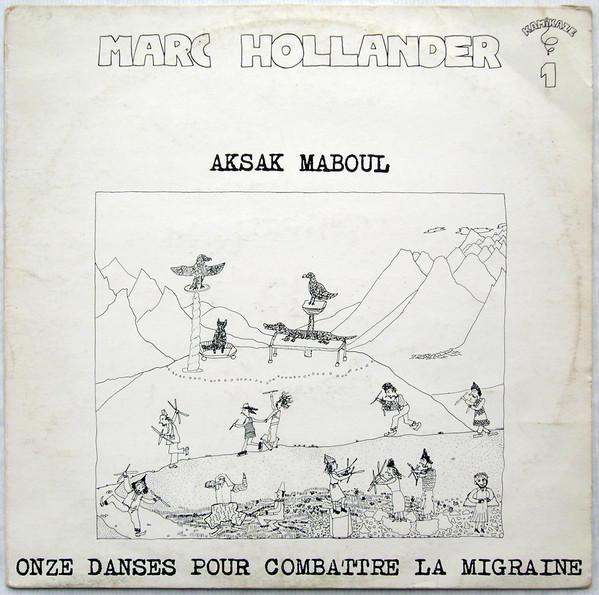
That was when Marc Hollander and Vincent Kenis founded Belgian avant-garde rock band Aksak Maboul. Marc played keyboards, reeds and percussion, while Vincent played guitar, bass guitar and keyboards. Later, keyboardist Marc Moulin joined Aksak Maboul. So did percussionist and keyboardist Chris Joris. This was the lineup that recorded Aksak Maboul’s debut album Onze Danses Pour Combattre la Migraine.
Onze Danses Pour Combattre La Migraine.
The recording of Onze Danses Pour Combattre La Migraine began in April 1977. Although Aksak Maboul worked quickly, it still took them two months to finish their debut album.
Mostly, this genre-defying album was the work of Marc Hollander. That was why Onze Danses Pour Combattre La Migraine was credited to Marc Hollander and Aksak Maboul when it was released in 1977, on the Belgian label Kamikaze.
Upon its release, Onze Danses Pour Combattre La Migraine was well received by critics. It was an ambitious, adventurous and groundbreaking album where genres literally melted into one. This included avant-garde, classical music, electronica free jazz, progressive rock, rock and world music. There was more than a nod to Frank Zappa, minimalism and Captain Beefheart on an album that would eventually, become a cult classic.
Sadly, like so many groundbreaking albums Onze Danses Pour Combattre la Migraine didn’t find the audience it deserves upon its release. It was only later after it was reappraised and rediscovered by everyone from critics and cultural commentators to fans of progressive rock. They delved deep into Onze Danses Pour Combattre la Migraine and somewhat belatedly discovered its eclectic delights. Little did Aksak Maboul realise the effect their debut album would eventually have. Back in 1977, all Aksak Maboul were interested in doing was recording their sophomore album, Un Peu de l’Ame des Bandits.
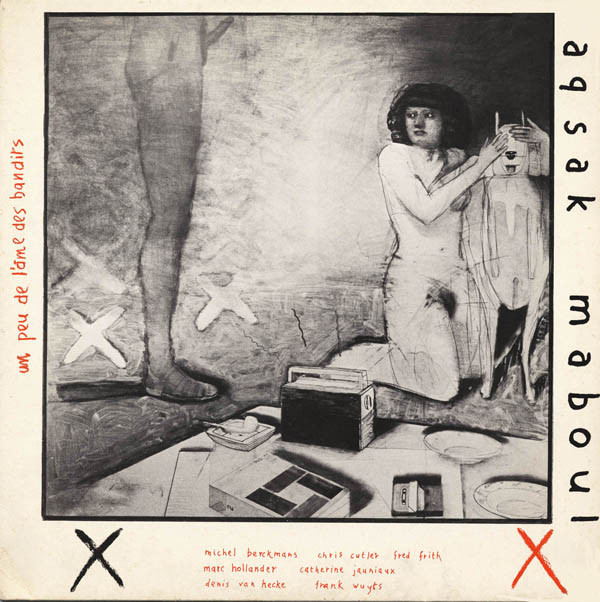
Un Peu de l’Ame des Bandits.
Towards the end of 1977, Aksak Maboul decided to start playing live.This marked the start of a new chapter in the Aksak Maboul story. However, not long after this, the band’s line up changed.
Marc Moulin and Chris Joris both decided to leave Aksak Maboul. They were replaced by percussionist and keyboardist Frank Wuyts who was the first of a number of new addition’s to the band’s lineup.
Not long after this, cellist Denis van Hecke joined Aksak Maboul. The next addition was Michel Berckmans, who played oboe and bassoon. He had left Belgian progressive band Univers Zéro. This wasn’t the end of the changes in Aksak Maboul’s lineup.
At the start of 1979, Henry Cow had just split-up and Chris Cutler and Fred Frith were asked to join Aksak Maboul. They agreed to do so, and Aksak Maboul started work on their sophomore album, Un Peu de l’Ame des Bandits.
This involved a trip to Switzerland where recording of Un Peu de l’Ame des Bandits took place at Sunrise Studio, Kirchberg, St. Gallen. It was here that Aksak Maboul pushed musical boundaries even further than they had before.
The music Un Peu de l’Ame des Bandits took on a new intensity and complexity. It veered towards avant-garde and experimental. Again, musical genres melted into one on Un Peu de l’Ame des Bandits. Everything from ambient and chamber rock to punk, tangos and Turkish music. It was a very different album from Aksak Maboul. That wasn’t the end of the differences.
Forever determined to innovate, Aksak Maboul used sampling for the first time on Un Peu de l’Ame des Bandits. However, there was a problem. Samplers were relatively new. They were still prohibitively expensive, and way outside the budget of most groups. That wouldn’t stop Aksak Maboul making use of sampling.
Instead, Aksak Maboul had to improvise which was all part of Aksak Maboul’s determination to make music that was ambitious, innovative and unique. They wanted to be trailblazers, rather than following in other group’s wakes. That proved to the case on Un Peu de l’Ame des Bandits.
When Un Peu de l’Ame des Bandits was released in 1980, it was on a different label, Crammed Discs. It had been founded by Marc Hollander and one of the nascent label’s first releases was Un Peu de l’Ame des Bandits. The album received favourable reviews and was an underground album. Those who heard the album marvelled at a complex, compelling, eclectic and innovative genre-melting album.
With such a wide variety of musical genres, influences and ideas sitting side-by-side on Un Peu de l’Ame des Bandits, it was an album that could just as easily not have worked. However, it did. With every listen some new subtitles or nuances would shine through. It was a compelling and beguiling album. Critics, cultural commentators and music lovers awaited Aksak Maboul’s next step. They were in for a surprise.
The Honeymoon Killers-Les Tueurs De La Lune De Miel.
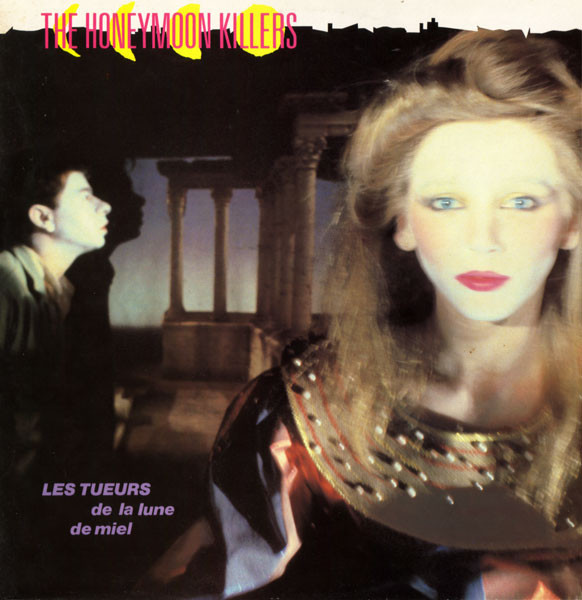
The Honeymoon Killers-Les Tueurs De La Lune De Miel.
In early 1980, Marc Hollander and Vincent Kenis, the two founding members of Aksak Maboul left the band. They decided to join forces with Yvon Vromman, JF Jones Jacob, and Gérald Fenerberg of Les Tueurs de la Lune de Miel in a new band. The new band they called The Honeymoon Killers. The only thing missing was a lead singer.
This is where Véronique Vincent came in. She became the final piece in the musical jigsaw when joined The Honeymoon Killers.
They headed out on tour in 1980 and 1981. Witth two bands and a vocalist becoming one they had to hone their sound. Just Aksak Maboul The Honeymoon Killers were pioneers.
They were one the first to use pre-recorded drum machine loops which they played on cassette. This was just the starting point. Layers of bass, drums, guitar, percussion and tinny organ sounds provided a backdrop for the vocals. The music was experimental and some of their songs lasted nearly twenty minutes. It seemed that The Honeymoon Killerswere determined to do things their way.
This extended to The Honeymoon Killers’ setlist. They switched seamlessly between from free jazz and French chanson, to punk and rockabilly. Each musical genre was interpreted by The Honeymoon Killers in their own unique way. During these concerts, The Honeymoon Killers found their sound. Now the new lineup of The Honeymoon Killers were ready to release some new music.
Later in 1981, the new lineup of The Honeymoon Killers released cover of Charles Trenet Route Nationale 7 as a single. It was a hit in France and Belgium. So The Honeymoon Killers headed into the studio, to release what was their sophomore album, Les Tueurs de la Lune de Miel.
Having recorded Les Tueurs de la Lune de Miel at various studios across Europe, the album was released on Crammed Records in 1982. Reviews ranged from positive to critically acclaimed as The Honeymoon Killers’ unique and quirky brand of genre hopping music, was winning friends and influencing people.
This proved to be the case. In Belgium, France, Germany and Britain, Les Tueurs de la Lune de Miel sold relatively well. It became something of a cult album. Considering this was the first album by the new lineup of The Honeymoon Killers, it looked like they were going places. Sadly, that wasn’t to be.
Never again, would The Honeymoon Killers release another album and their only singles was 1982s Décollage. However, their legacy was Les Tueurs de la Lune de Miel, which is hailed as the best Belgian rock album ever. However, eventually, The Honeymoon Killers would return.
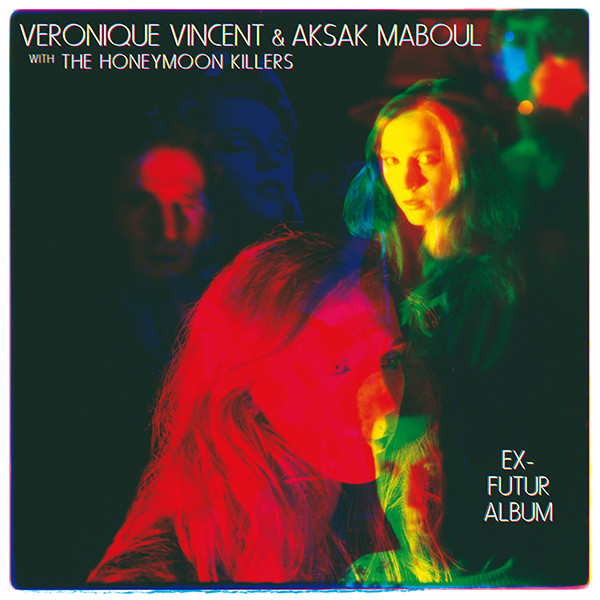
Ex-Futur Album.
Although Marc Hollander and Vincent Kenis, the two original members of Aksak Maboul left the band, the Aksak Maboul story wasn’t over. The band began working on their their third album in 1980, and over the next three, years recorded ten tracks. This wasn’t just an Aksak Maboul album though. It was a collaboration between the great and good of Belgian progressive music.
Vocalist Veronique Vincent and The Honeymoon Killers joined Aksak Maboul in the studio. Right up until 1983, this all-star cast of Belgian musicians were working on album that sadly, was never completed. The project ground to a halt in 1983 and it looked like the album would never be released.
That album lay in the Crammed Discs vaults until 2014 when it was rediscovered. It featured ten tracks, including nine penned by Marc Hollander and Veronique Vincent. The other track was a cover My Kind Of Doll. These tracks became the Ex-Futur Album.
When the Ex-Futur Album was released in 2014, it was hailed as an ambitious and innovative album where musical boundaries were pushed to their limits and sometimes, it seemed way beyond. Even in its unfinished form, it was a reminder of what Veronique Vincent and Aksak Maboul with The Honeymoon Killers were capable of in their early eighties glory days.
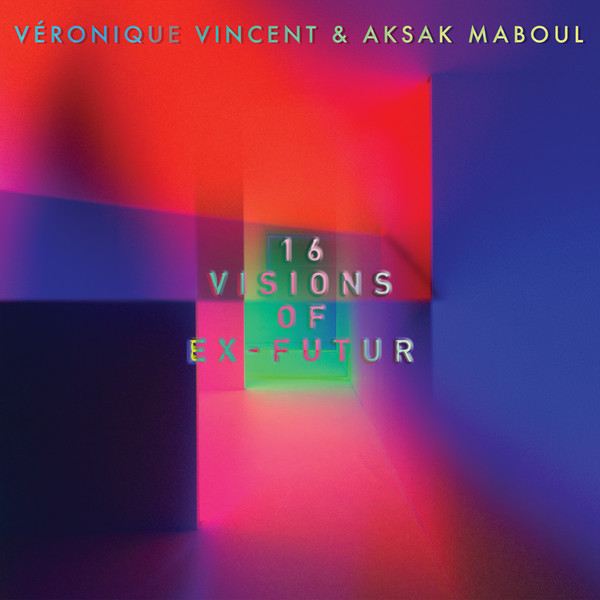
Veronique Vincent and Aksak Maboul, 16 Visions Of Ex-Futur.
Two years later, in 2016, Crammed Discs released Veronique Vincent and Aksak Maboul, 16 Visions Of Ex-Futur. It was a celebration of the music on the Ex-Futur Album which was reimagined and reinvented by the likes of Jaakko Eino, Forever Pavot, Marc Collin, Laetitia Sadder, Lena Willikens, Bullion, Flavien Berg, Aquaserge, Capitol K, Hello Skinny and Burnt Friedman.
They were responsible for captivating and innovative reworks, remixes and covers of an avant pop classic which won over critics. For their fans the album was a welcome addition to the Aksak Maboul discography.
Before And After Bandits (Documents 1977-1980, 2015).
So was Before And After Bandits (Documents 1977-1980, 2015) a limited edition album of rarities released on Crammed Discs in 2018. It featured demos, lo-fi live recordings and music that was described “strange, wild & often shambolic.” These tracks were from the first five phases of the Aksak Maboul story. Many of the band’s fans wondered if there would be a phase six?
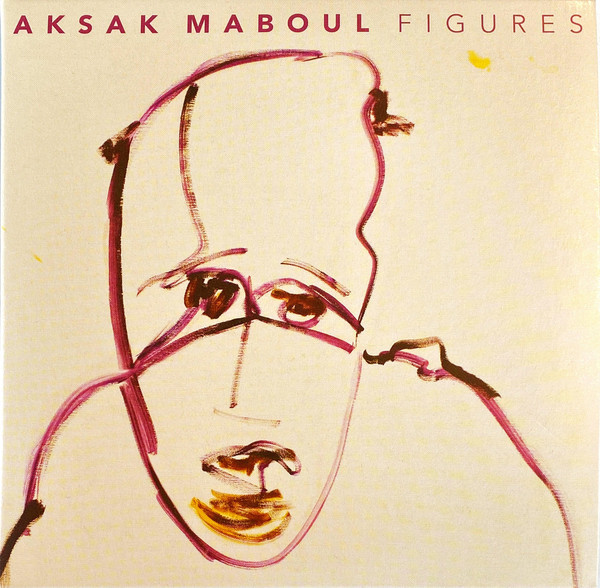
Figures.
Some were doubtful and thought it more likely that Lord Lucan would ride Shergar to victory in the Derby in 2020. Most of their fans thought that it was highly unlikely that Aksak Maboul would ever return with a new album.
They were wrong and recently, Aksak Maboul released Figures on Crammed Discs. Belgium’s legendary experimental pop band are back with their first album in forty years.
The Figures project was conceived by Marc Hollander one of the cofounders of Aksak Maboul and the founder of the Crammed Discs label. Over the last couple of years, he wrote, played all the instruments on the album which he produced with Véronique Vincent, the former singer with The Honeymoon Killers.
On Figures, which has been released as CD or a two LP set, Aksak Maboul draw inspiration from a myriad of musical genres which have always inspired the band. This includes avant-garde, chamber pop, contemporary classical, delta blues, electronica and experimental music, jazz, minimalism, pop, psychedelia and ye-ye. There’s also elements of Turkish and Polynesian on this genre melting album. It’s an absorbing and thought-provoking album where Aksak Maboul explore gender dynamics over twenty-two tracks.
These tracks were recorded over a couple of years and find Aksak Maboul combining acoustic and electronic instruments as they program beats and songs. They also deploy found objects and improvise and create sound collages on an imaginative album that features secret passages and interconnections. The result isn’t an album for those with a short attention span. Instant gratification it’s not.
Instead, Figures is a two-part album of cerebral music that lasts seventy-five minutes. The music is melodic, multilayered, full of detail, subtleties, nuances and social comment.
Figures looks at a world where sadly, the misogyny of the sixties lives on and unfortunately has managed to find new places to hide and rear their its ugly head. The conflict between Véronique Vincent’s lyrics and Marc Hollander’s lyric reflects the album’s gender battles.
Throughout Figures, there’s fragments and found sounds. There’s sometimes a restlessness to Marc Hollander’s arrangements which feature everything from an electric guitar and electronic beats to jazz piano, programmed beats and woodwinds. However, for much of the album the arrangements are much smoother than on Aksak Maboul’s early albums. As a result, they’re the perfect backdrop for chanteuse Véronique Vincent, as she delivers heartfelt and impassioned vocals that are full of emotion as she breathes life and meaning into lyrics the lyrics on Figures which marks the return of Aksak Maboul.
They’re still going strong forty-three years after releasing their debut album Onze Danses Pour Combattre La Migraine. The latest chapter in the Aksak Maboul story is Figures, which was released by Crammed Discs. It’s another ambitious and innovative album of absorbing, cerebral and thought-provoking music. The music is also engaging and melodic as musical genres seamlessly melt into one on what’s akin to a carefully crafted musical tapestry. It was woven by Marc Hollander and chanteuse and lyricist Véronique Vincent with a little from their friends and finds Aksak Maboul continuing to innovate and push musical boundaries to their limits. This is something they’ve been doing throughout their career and continue to do on Figures, where Aksak Maboul make a welcome return with the most important album of their career as they explore gender dynamics over twenty-two tracks.
Aksak Maboul-Figures.
CULT CLASSIC: LEON THOMAS-BLUES AND THE SOULFUL TRUTH.
Cult Classic: Leon Thomas-Blues and The Soulful Truth.
Some labels prove to be the perfect fit for an artist. This was the case when Leon Thomas signed to Bob Thiele’s Flying Dutchman Productions.
By the late sixties, Leon Thomas had embraced free jazz fully. He turned his back on the blues and his vocal style was totally transformed. His vocal encompassed Afrobeat, blues, jazz R&B and soul as he scatted and yodeled. Leon Thomas’ vocal style was truly unique. Many people within the music industry didn’t understand what he was doing but Bob Thiele at Flying Dutchman Productions did.
During his career, Bob Thiele had worked with some of the most innovative and creative musicians in the history of jazz. He realised that often, large record companies aren’t the best environment for innovative and creative musicians. Often, these musical mavericks didn’t thrive within such an orthodox environment. Their creativity is restricted, meaning they’re unable to experiment and innovate like they’d like.
Having left Impulse following the musical equivalent of a musical coup d’tat, Bob Thiele founded Flying Dutchman Productions. His new label would be the perfect environment for musical mavericks to thrive. He signed some of the most innovative jazz musicians of the late-sixties and early seventies. Among them weer Ornette Coleman, Gil Scott Heron, Eddie “Cleanhead” Vinson, Louis Armstrong and Lonnie Liston Smith and His Cosmic Echoes. Another artist signed to Flying was Leon Thomas.
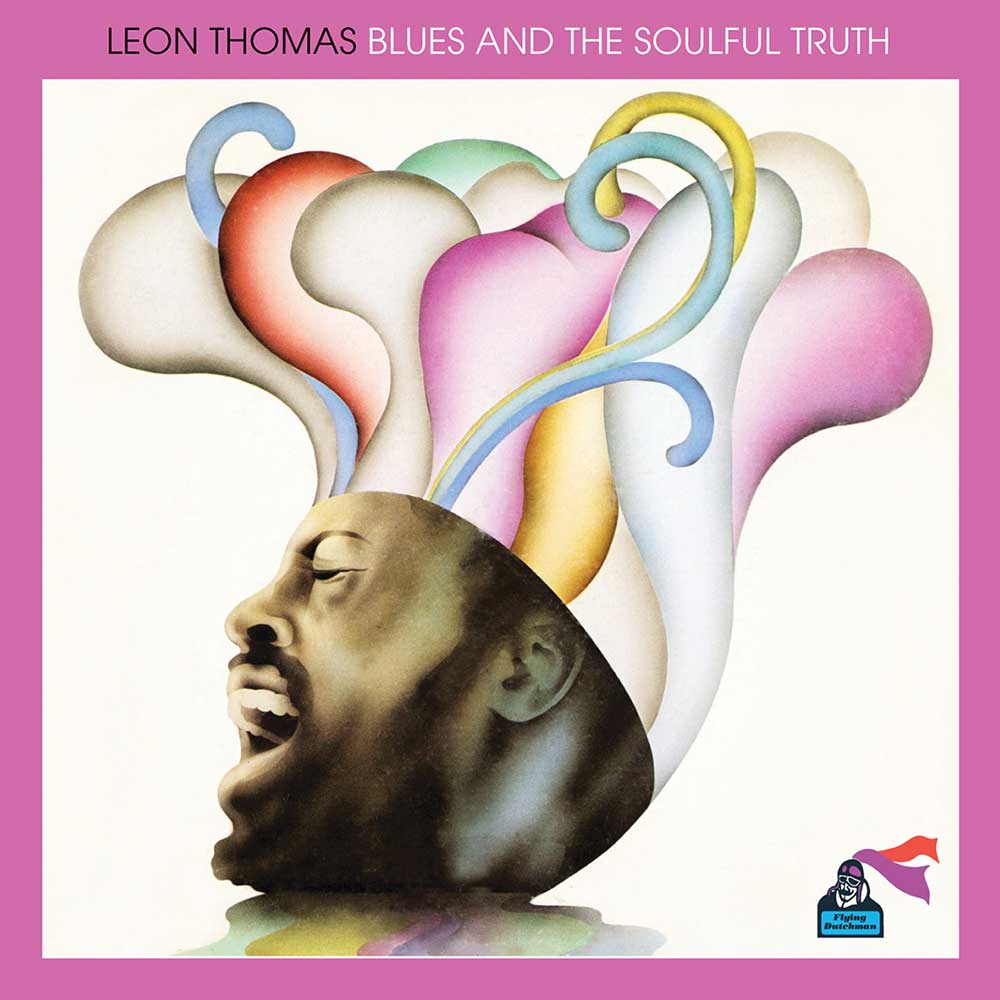
Leon Thomas released a quartet of albums between 1969 and 1973. His Flying Dutchman debut was 1969s Spirits Known And Unknown. The following year, he released his sophomore album The Leon Thomas Album in 1970. Flying Dutchman was the perfect label for Leon Thomas. It was as if having found a label that understood him, Leon Thomas was allowed to unleash his creativity. With each album, he pushed musical boundaries even further, and that was the case on his third album, 1972s Blues And The Soulful Truth. He had come a long way since he first heard Miles Davis back in St. Louis.
Leon Thomas was born in East St. Louis, Illinois, in October 1937. From an early age, his life revolved around music. His parents were avid music lovers and his hometown had a thriving musical scene. Inspired by a blues’ shouters like Big Joe Turner, was a familiar face on the local music circuit. Then when Miles Davis came to town, Leon had a musical awakening
The night Miles Davis played St. Louis, Miles’ band featured John Coltrane. That night, they embraced improvisation and pushed musical boundaries to their extremes. For Leon Thomas, this showed him what was possible musically. Here was musical that was inventive, innovative and influential. So much so, that it inspired Leon Thomas to study musical at Tennessee State University.
Having left Tennessee State University, Leon Thomas became a familiar face on the jazz circuit. Having signed to RCA in 1958, Leon recorded what should’ve been his debut album. It wasn’t released. After that, When Leon was the vocalist with Count Basie’s band in the early-sixties right through until the mid-sixties. During that time, his style is best described as traditional blues. However, his style changed when he headed to Los Angeles.
It was is Los Angeles that Leon Thomas embraced free jazz. Already an admirer of improvisation within jazz, free jazz took things further. Even better, Leon Thomas met musicians who not only shared similar musical philosophies, but political and social values. This included saxophonist Arthur Blythe, drummer Leroy Brooks and pianist Horace Tapscott. Together, they were the Underground Musicians and Artists Associations. Meeting these three musicians, resulted in Leon finding his real voice. With their help, Leon’s voice became like an instrument. He fused musical influences, with blues, jazz and Afro-beat combining with soul, as Leon Thomas’ vocal veered between a scat and yodel. This was unique, avant garde and groundbreaking. Leon Thomas was a pioneer, as he headed to New York, looking for fellow travellers.
By 1967, Leon Thomas had met saxophonist Pharoah Sanders. This was a perfect match for Leon. Here were two groundbreaking musicians. In Pharoah Sanders’ hands, the saxophone was transformed. He’d been a member of John Coltrane’s band, until his death in 1967.
After that, he formed his own band comprising Leon Thomas, pianist Lonnie Liston Smith and Pharoah Sanders. Thisband of musical pioneers recorded Pharoah Sanders 1969 album Karma, which was released on Impulse. It featured The Creator Has A Master Plan, which showcased Leon Thomas’ unique vocal style. A compelling, spiritual track where he yodels and scats his way through the track, it was truly groundbreaking. One man who realised Leon Thomas’ potential was Bob Thiele, founder of Flying Dutchman Productions.Having heard Leon Thomas feature on Pharoah Sanders’ Karma album, Bob Thiele signed Leon Thomas to Flying Dutchman Records.
His Flying Dutchman Records’ debut was 1969s Spirits Known and Unknown. It was an ambitious and groundbreaking album that showcased Leon Thomas’ unique vocal style. Plaudits and critical acclaim accompanied the release of Spirits Known and Unknown. Sadly, Spirits Known and Unknown wasn’t a commercial success. However, Spirits Known and Unknown was only Leon Thomas’ debut album.
A year later, he returned with The Leon Thomas Album. Released in 1970, as the new decade dawned, The Leon Thomas Album was hailed as innovative and ambitious. Critics realised that Leon was an artist who was determined to move jazz in a new direction. Standing still wasn’t an option for Leon. This was admirable. However, it wasn’t profitable. Sadly, The Leon Thomas Album didn’t sell well. The problem was, that Leon Thomas was way ahead of the musical curve. Would his third album Blues And The Soulful Truth, which was released in 1972.
For his third album, Blues And The Soulful Truth Leon wrote L-O-V-E and Love Each Other. He also arranged the traditional song C.C. Rider. Leon cowrote Shape Your Mind To Die with Neal Creque and Let’s Go Down To Lucy’s with Alfred Ellis. Alfred and Leon cowrote China Doll with Jesse Kilpatrick. Other tracks included covers of Gabor Szabo and George David Weiss’ Gypsy Queen and John Lee Hooker’s Boom-Boom-Boom. These eight tracks became Blues And The Soulful Truth.
When recording of Blues And The Soulful Truth began, Pee Wee Ellis had been drafted in to arrange and conduct the band. Pee Wee also played piano and tenor saxophone. Different lineups played on different tracks. So the rhythm section included variously drummers Bernard Purdie, Jesse Kilpatrick and Airto Moreira, bassists Stanley Clarke, Donald Pate and Gordon Edwards, plus guitarists Cornell Dupree and Larry Cornell They were joined by pianist Neal Creque, percussionist Baba Feme and Gene Golden on congas. Horns came courtesy of trumpeter Dick Griffin, trombonist John Eckert and bariton saxophonist Cecil Payne. Leon Thomas sang the vocals and played percussion on Blues And The Soulful Truth, which was released in 1972.
Blues And The Soulful Truth was released in 1972. It marked a change in direction from Leon. Critics referred to Blues And The Soulful Truth as the most accessible album Leon had released. The addition of Pee Wee Ellis had played an important part in this. He realised the importance of choosing the right tracks for the album. The eight tracks allowed Leon’s vocal to shine. They also allowed what’s a hugely talented band to showcase their considerable talents and sometimes, stretch their legs musically. The result was one of the most exciting and exhilarating vocal jazz albums of the early seventies. Despite this, Blues And The Soulful Truth passed record buyers by. Thankfully, since then, a new generation of music lovers have discovered Blues And The Soulful Truth.
Let’s Go Down To Lucy’s opens Blues And The Soulful Truth. From the get-go you’re hooked. Chiming guitars, growling horns and a funky rhythm section join forces with meandering keyboard. Leon unleashes a powerful, sassy, lived-in vocal. The rhythm section provide the funky, pulsating heartbeat. Meanwhile, bursts of blazing horns punctuate the arrangement as Leon Thomas vamps his way through the lyrics. He vamps and jive-talks his way through the track combining jazz and soul with power, sass and humour.
Finger clicks, percussion and a meandering piano create the groove to L-O-V-E. Soon, the bass, hissing hi-hats and soaring, soulful harmonies sweep in. That’s Leon’s signal to kick loose. Crystalline guitar licks, grizzled free jazz horns and a hypnotic bass combine. By now, Leon is singing call response with the backing vocalists. He seems to be drawing inspiration from Isaac Hayes on this gloriously soulful, funky track.
Straight away, Gypsy Queen sees Leon return to the more familiar sound of his two previous albums. Keyboards flit across the arrangement, while the arrangement create a shuffling, spacious beat. Leon scats tenderly. Then as rasping horns enter, Leon unleashes his vocal. He sounds not unlike Terry Callier. Heartfelt and growing in power and passion describes his vocal. The arrangement grows in power. Elements of jazz, funk and soul are combined. Leon scats and yodels. This is very different from the previous tracks. Especially when he unleashes a free jazz powerhouse. Gypsy Queen is transformed. It becomes something very different to the song Santana popularised on Abraxas. In Leon’s hands, he reinvents the song, transforming it into something that writers Gabor Szabo and George David Weiss never envisaged.
Love Each Other has a funky, jazz-tinged and soulful sound. The rhythm section, electric piano and harmonies accompany Leon Thomas’ impassioned, joyous. Horns rasp and growl, punctuating the arrangement. The rhythm section lock into a groove and with the electric piano create the perfect backdrop for his heartfelt, impassioned and soulful vocal tour de force.
Shape Your Mind To Die has an Eastern sound. That comes courtesy of the horns. They’re joined by percussion and the rhythm section. Just like the previous track the bass line is at the heart of the arrangement. Leon Thomas’ vocal is deliberate and dramatic. The lyrics are cerebral and full of social comment. Midway through the track, he unleashes a haunting laugh. That’s the signal for the band to stretch their legs. They don’t need to be asked twice, combining everything from funk, jazz, psychedelia and rock. When Leon Thomas returns, his vocal breathes life and meaning into the lyrics on a tracks which is spiritual jazz at its finest.
Most people will know John Lee Hooker’s Boom-Boom-Boom. It’s a familiar blue track. However, Leon Thomas transforms the track. In his hands, the song swings. Driven along by the piano rhythm section and crystalline, rocky guitar he combines jazz, blues and rock. A scratchy fiddle and Hammond organ are added. By now, a tired old blues track has been transformed. Leon Thomas grabs the song and makes it swing.
China Doll marks another change of direction from Leon Thomas. Flourishes of piano join percussion, cymbals and finger clicks. He adds a scatted vocal and gradually, the arrangement shows its hidden secrets. A wistful piano, meandering bass and myriad of percussion combine. They create the backdrop to Leon’s needy, sassy vocal. Harmonies coo while the piano meanders and percussion is sprinkled across the understated arrangement. When all this is combined, the result is a track that’s soulful, sassy and jazz-tinged. It also showcases Leon Thomas’ versatility and talent as a storyteller who can bring lyrics to life.
The familiar sound of C.C. Rider closes Blues and The Soulful Truth. Growling horns, jazzy piano and the rhythm section combine blues, funk and jazz. They’re joined by a glistening guitar and scratchy fiddle. Together, they set the scene for Leon’s heartbroken vocal. He mixes power, frustration and despair. Then when his vocal drops out, his band take centre-stage. They enjoy the opportunity to kick loose. A glorious rocky guitar solo steals the show. Then an atmospheric Hammond organ picks up the baton. It unleashes flourishes of jazzy-tinged, funky and dramatic music. Stabs of piano, rocky guitar and scratchy fiddle compete for your attention. Leon Thomas seems content to let his all-star band to grandstand. However, with a minute to go, he returns delivering a heartbroken, dramatic and impassioned vocal powerhouse. This proves a fitting finale to Blues and The Soulful Truth.
Blues and The Soulful Truth was Leon Thomas’ third album for Flying Dutchman Productions. His two previous albums hadn’t sold well. So, something had to change. What changed was Leon’s musical direction. Gone was Leon’s unique and inimitable free jazz style.
Whereas Leon Thomas scatted and yodelled on his two previous albums, Blues and The Soulful Truth had a much more traditional sound. Granted he returned to his trademark sound on Gypsy Queen. Apart from that, Leon Thomas eschews scatting and yodelling and instead sticks to a much more traditional vocal jazz style. Leon Thomas had moved towards the jazz mainstream. Maybe it was a case of needs must?
No record label can continue to release albums that don’t sell. That would be folly and a recipe for insolvency. It was why Leon Thomas recorded his most accessible and mainstream album, Blues and The Soulful Truth. It was a revelation and Blues and The Soulful Truth should’ve been a huge commercial success. It showcased a versatile and multi-talented vocalist. He could sing blues, jazz, R&B, rock or soul. Leon Thomas’ band were equally versatile as they strut their way through eight tracks flitting between, and sometimes, fusing blues, free jazz, funk, jazz, psychedelia, R&B, rock and soul. Not once do they miss a beat. Mind you, what do you expect from what was a band comprising some of America’s top musicians? Sadly, despite their best efforts, Blues and The Soulful Truth wasn’t a commercial success.
Leon Thomas it seemed, wasn’t going to enjoy the commercial success his music deserved. He’d even changed direction, releasing the most accessible and mainstream album of his career, Blues and The Soulful Truth which is the album that should’ve transformed Leon Thomas’ career and fortunes. Sadly, that wasn’t to be and Blues and The Soulful Truth proved to a lost classic.
That wasn’t the end of Blues and The Soulful Truth. No. For too long, his music was largely forgotten. As time went by, a new generation of music lovers discovered Leon Thomas’ music. They realised that Leon Thomas was one of music’s best kept secrets. Here was an artist whose groundbreaking, genre-melting albums should’ve enjoyed commercial success and critical acclaim aplenty. Sadly, as many artists have discovered talent alone doesn’t result in commercial success. If it did, then Leon Thomas would’ve been one of the most successful jazz singers of the early seventies. Sadly, that wasn’t the case. However, Leon Thomas will always be remembered as one of jazz music’s true pioneers.
Proof of that is the quartet of albums Leon Thomas released for Flying Dutchman Productions. His third album for Flying Dutchman Productions was the cult classic Blues and The Soulful Truth, which was the most accessible and mainstream album of Leon Thomas career, and a reminder of a pioneering jazz vocalist who had his own unique and inimitable vocal style.
Cult Classic: Leon Thomas-Blues and The Soulful Truth.
CULT CLASSIC: LEON THOMAS-FULL CIRCLE.
Cult Classic: Leon Thomas-Full Circle.
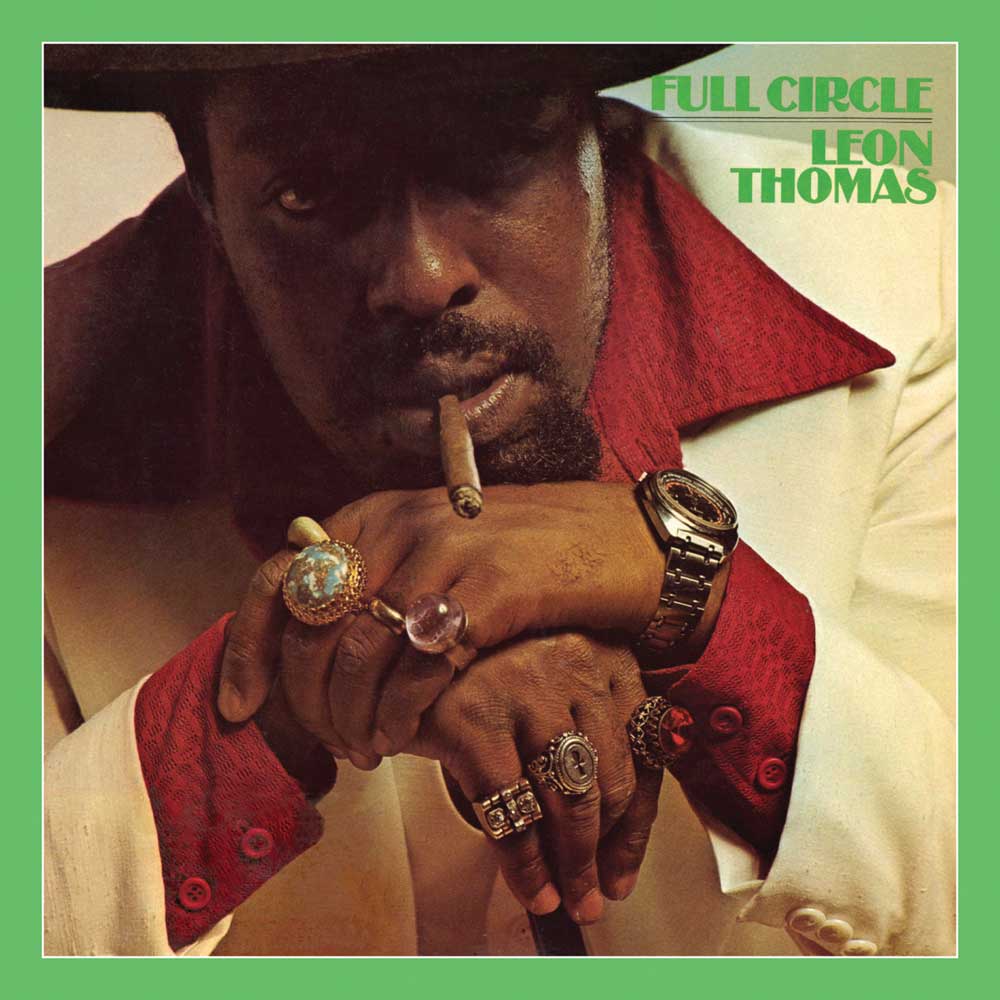
For Leon Thomas, Full Circle represented the end of an era. It was the last album Leon Thomas released on Flying Dutchman Productions, and marked the end of his “classic period.” It had started four years earlier in 1969, when Leon Thomas released his debut album Spirits Known and Unknown. Since then, Leon Thomas’ star had been in the ascendancy. Full Circle which was recently rereleased by BGP, an imprint of Ace Records, Leon Thomas’ fourth solo album and the last great album he released. His story began in 1937.
Leon Thomas was born in East St. Louis, Illinois, in October 1937. From an early age, Leon’s life revolved around music. His parents were avid music lovers and his hometown had a thriving musical scene. Inspired by blues’ shouters like Big Joe Turner, Leon was a familiar face on the local music circuit. Then when Miles Davis came to town, Leon had a musical awakening.
The night Miles Davis played St. Louis, Miles’ band featured John Coltrane. That night, they embraced improvisation and pushed musical boundaries to their extremes. For Leon Thomas, this showed him what was possible musically. Here was musical that was inventive, innovative and influential. So much so, that it inspired Leon to study musical at Tennessee State University.
Having left Tennessee State University, Leon became a familiar face on the jazz circuit. Having signed to RCA in 1958, Leon recorded what should’ve been his debut album. It wasn’t released. After that, When Leon was the vocalist with Count Basie’s band in the early-sixties right through until the mid-sixties. During that time, Leon’s style is best described as traditional blues. However, his style changed when he headed to Los Angeles.
It was is Los Angeles that Leon Thomas embraced free jazz. Already an admirer of improvisation within jazz, free jazz took things further. Even better, Leon met musicians who not only shared similar musical philosophies, but political and social values. This included saxophonist Arthur Blythe, drummer Leroy Brooks and pianist Horace Tapscott. Together, they were the Underground Musicians and Artists Associations. Meeting these three musicians, resulted in Leon finding his real voice. With their help, Leon’s voice became like an instrument. He fused musical influences, with blues, jazz and Afro-beat combining with soul, as Leon’s vocal veered between a scat and yodel. This was unique, avant garde and groundbreaking. Leon Thomas was a pioneer, as he headed to New York, looking for fellow travelers.
By 1967, Leon Thomas had met saxophonist Pharoah Sanders. This was a perfect match for Leon. Here were two groundbreaking musicians. In Pharoah Sanders’ hands, the saxophone was transformed. He’d been a member of John Coltrane’s band, until his death in 1967. After that, he formed his own band. Comprising Leon, pianist Lonnie Liston Smith and Pharoah, this was a band of musical pioneers recorded Pharoah Sanders 1969 album Karma, which was released on Impulse. It featured The Creator Has A Master Plan, which showcased Leon’s unique vocal style. A compelling, spiritual track where Leon yodels and scats his way through the track, it was truly groundbreaking. One man who realized Leon Thomas’ potential was Bob Thiele, founder of Flying Dutchman Records.
Having heard Leon Thomas feature on Pharoah Sanders’ Karma album, Bob Thiele signed Leon to Flying Dutchman Records. Leon’s Flying Dutchman Productions’ debut was 1969s Spirits Known and Unknown. Released to critical acclaim, Spirits Known and Unknown featured a version of The Creator Has A Master Plan, which Leon and Pharoah cowrote. There was also a cover of Horace Silver’s Song For My Father. Hailed not just as innovative and groundbreaking, but soulful, spiritual and full of social comment, Spirits Known and Unknown launched the career of Leon Thomas. Following up such a critically acclaimed and innovative album wasn’t going to be easy.
A year later, Leon returned with The Leon Thomas Album. Released in 1970, as the new decade dawned, The Leon Thomas Album was hailed as innovative and ambitious. Critics realised that Leon was an artist who was determined to move jazz in a new direction. Standing still wasn’t an option for Leon. This was admirable. However, it wasn’t profitable. Sadly, The Leon Thomas Album didn’t sell well. The problem was, that Leon was way ahead of the musical curve. Although he was admired and lauded by the critics, he wasn’t selling enough records. Both Bob Thiele and Leon Thomas had bills to pay. Somehow, Leon had to rescue his career. Would his third album Blues And The Soulful Truth, do so?
Blues And The Soulful Truth was released in 1972. It marked a change in direction from Leon. Critics referred to Blues And The Soulful Truth as the most accessible album Leon had released. The addition of Pee Wee Ellis had played an important part in this. He realised the importance of choosing the right tracks for the album. The eight tracks allowed Leon’s vocal to shine. They also allowed what’s a hugely talented band to showcase their considerable talents and sometimes, stretch their legs musically. The result was one of the most exciting and exhilarating vocal jazz albums of the early seventies. Despite this, Blues And The Soulful Truth passed record buyers by. For Leon Thomas and Bob Thiele this was a worrying time.
Despite his career having stalled, Leon Thomas got to work on his fourth album, which would become Full Circle.
For Full Circle, nine tracks were chosen. Leon Thomas only wroteWhat Are Gonna Do? and with Neil Creque cowrote Balance Of Life (Peace Of Mind). Neil Creque also wrote It’s My Life I’m Fighting For. These tracks were augmented by some familiar songs.
This included Never Let Me Go, which came from the pen of a pioneer of rock ’n’ roll, Joe Scott. There were also covers of B.B. King and Jules Bihari’s Sweet Little Angel; Arthur Ross and Leon Ware’s I Wanna Be Where You Are; Stevie Wonder’s You Are The Sunshine Of My Life and a cover of Elliot Willensky’s Got To Be There. A cover of Santana’s Just In Time To See The Sun was a fitting addition.
Carlos Santana, Greg Rolle and Michael Shrieve had penned Just In Time To See The Sun for their 1972 album Caravanserai. By then, Carlos Santana had ‘discovered’ Leon Thomas, and wanted him to join Santana. Leon added vocals on their 1973 album Welcome. He would then join their touring band. So the inclusion of Just In Time To See The Sun seemed fitting. Just like the rest of the tracks on Full Circle, they had been carefully chosen.
They had to be. Leon Thomas’ last two albums had flopped. So Leon and Bob Thiele must have considered carefully what tracks should feature on Full Circle. If they chose some familiar songs, maybe this would widen Leon Thomas’ commercial appeal? This had worked for Esther Phillips at CTi.
Her career was rejuvenated after years in the doldrums. This resulted in Esther Phillips’ album From A Whisper To A Scream being nominated for a Grammy Award. Bob Thiele was hoping to do the same with Leon Thomas. After all, the status quo wasn’t an option.
An artist who wasn’t selling albums was a liability to a record company. It didn’t matter how innovative their music is. What counted was the bottom line. Bob Thiele couldn’t continue to release albums that didn’t sell. With reality hitting home, Bob Thiele decided to target the soul market. With this in mind, Leon Thomas entered the studio.
When recording of Full Circle began, Bob Thiele had rung the changes. It was a very different band that arrived at the studio. Although there were a few familiar faces, new names gathered to record Full Circle. Again, Bob Thiele would produce the album. However, he had brought onboard a new arranger and conductor. Glen Osser replaced Pee Wee Ellis. He still featured on Full Circle, albeit in a much reduced capacity, playing tenor saxophone on Never Let Me Go and soprano saxophone on Just In Time To See The Sun. Pee Wee Ellis’ replacement Glen Osser, played piano, electric piano. This wasn’t the end of the changes.
There was a big change in the band’s lineup. While there were a few familiar faces, it seemed that it was out with the old and in with the new. The rhythm section featured drummers Bernard “Pretty” Purdie and Herbie Lovelle; bassist Richard Davis; and guitarists Joe Beck and Lloyd Davis. Jimmy Owens played trumpet and flugelhorn; Richard Landrum played bata and percussion; and Sonny Morgan played berimbau and percussion. The final piece of the jigsaw was Leon Thomas, who added vocals and maracas. Once Full Circle was complete, the album was scheduled for release in 1973.
On the release of Full Circle in 1973, critics welcomed the move towards a much more commercial sound. Leon Thomas had set out to record an album that appealed to soul fans. He had succeeded. Full Circle was his most commercial offering. Some of his fans, thought that Leon Thomas had ‘sold out.’
It wasn’t a ‘sell out.’ Instead, it more a case of reality biting. He couldn’t continue to release albums that weren’t selling. The fans that cried ‘sell out,’ were wrong though. Occasionally, Full Circle offered Leon Thomas the opportunity to innovate. The best example was on Stevie Wonder’s You Are The Sunshine Of My Life. Mostly though, Full Circle was a soul album where Leon Thomas tried to attract a wider audience. That was the theory.
Before the release of Full Circle, Just In Time To See The Sun was released as a single, but failed to chart. Then when Full Circle was released in 1973, the album reached fifty-four in the US R&B charts. This was hardly going to make Leon Thomas and Bob Thiele rich men, but proved a point. However, that was as good as it got for Leon Thomas. His time at Flying Dutchman Production was at an end. Full Circle was his swan-song.
A cover of B.B. King’s Sweet Little Angel opens Full Circle. Strings sweep as a hypnotic standup bass, drums and flourishes of piano combine with a chiming guitar. Stylistically it pays homage to B.B. King. Then when the strings drop out, Leon’s vocal enters. It’s slow, bluesy, needy and full of sass. His band of top New York session players stay true to the original. Even the strings sound sound as if they were recorded in another era, back when B.B. King first recorded Sweet Little Angel. Leon doesn’t try and reinvent the song. Instead, he stays true to the original as he rediscovers his bluesy roots.
Just In Time To See The Sun must have come as a shock to those who had bought Leon Thomas’ previous albums. It’s a funky, Latin-tinged cover of a Santana song. Literally, the song bursts into life, propelled along by the rhythm section, guitars and percussion. Leon delivers an impassioned plea, before a trumpet and flugelhorn are unleashed. They both enjoy their moment in the spotlight, as the reinvention of Leon Thomas begins in earnest. Playing an important part are the band. Seamlessly, the combine elements of funk, fusion, jazz and Latin. Meanwhile, Leon delivers a vocal that’s a mixture of power and soulfulness. Sometimes, he reminds me of Terry Callier. Sadly, neither men enjoyed the commercial success their talent deserved.
A Fender Rhodes opens It’s My Life I’m Fighting For. It’s a ten minute epic, where a funky rhythm section join percussion and the Fender Rhodes. Quickly, Leon is combining power and emotion. He sounds as if he’s lived the lyrics, and experienced what he singing about. Meanwhile, a subtle flugelhorn floats across the arrangement. So does a trumpet. That’s the signal for Leon to unleash one of his trademark yodels. However, it’s cut short, as the horns take centre-stage. Along with an uber funky rhythm section and percussion, they stretch their legs. Then when Leon returns he showcases his versatility, yodelling, as his voice is transformed into an instrument. He doesn’t overdo this. It’s as if Bob and Leon were scared that this would impinge upon the album’s commerciality. The song doesn’t suffer for this. Far from it. Leon and his band seem to feed off each other, one encouraging the other to even greater heights.
By the time Leon covered Joe Scott’s Never Let Me Go, it was almost a standard. A lone rasping tenor saxophone is panned left before lush strings, stabs of piano and an understated rhythm section combine. By then, Leon’s band have recreated the sound of a mid-fifties’ hop. When Leon’s vocal enters, he tenderly, croons his way though the lyrics. Meanwhile, a piano plays, a horn rasps and the rhythm section create the heartbeat. Adding the finishing touch to this beautiful ballad are the lushest of strings.
Arthur Ross and Leon Ware penned I Wanna Be Where You Are. It’s interpreted by Leon. Accompanying him are swathes of slow strings, a lone horn and the rhythm section. It’s augmented by percussion, before Leon delivers another tender heartfelt vocal. His vocal is tinged with regret, before becoming needy, hopeful and powerful. Then when it drops out a trumpet solo takes charge. Just below, Richard Davis’ bass underpins the arrangement. Not for the first time, he plays a starring role, as this crack band of New York musicians continue the reinvention of Leon Thomas.
Elliot Willensky wasn’t a prolific songwriter. However, he hit the jackpot when he penned Got To Be There. After Michael Jackson enjoyed a hit with the single, suddenly, everyone from Black Ivory, The Ramsey Lewis Trio, Grant Green, Smokey Robinson and The Miracles, Julius Brockington, Peter Nero, Sonny Stitt and The Jackson 5 had covered Got To Be There between 1972 and 1973. Despite this, Leon Thomas decided he would cover Got To Be There for Full Circle.
Rather than reinvent Got To Be There, Leon stays true to the original. Slow, wistful string, a chiming guitar and thoughtful rhythm section combine before harmonies sing “Got To Be There.” They’re reminiscent of Michael Jackson’s version. Then when Leon’s vocal enters it’s much more powerful and full of emotion. Soon, it grows in power as the strings sweep and percussion is panned right. Again, Richard Davis’ prowling bass underpins the arrangement. Later, a trumpet adds a wistful hue, setting the scene for Leon’s hopeful, heartfelt vocal. It’s one of his finest on Full Circle.
A myriad of percussion opens Balance Of Life (Peace Of Mind). For just over forty seconds they’re scene setters. Then some of the percussion exits stage left. This frees up space for the rhythm section and Leon’s slow, deliberate and powerful vocal. When Leon yodels, he again cuts this short. This is different from previous albums where he transformed his vocal into another instrument. However, maybe Leon and Bob Thiele thought that many newcomers to Leon’s music wouldn’t ‘understand’ or ‘get’ this. At the break, it just congas panned left and percussion panned right. Then the arrangement rebuilds and Leon Thomas shows why in 1973, he was one of the finest practitioners of vocal jazz.
Anyone covering Stevie Wonder’s You Are The Sunshine Of My Life is in a no-win situation. It’s regard as the definitive version. All covers of the are compared against the original. So Leon tries to reinvent the songs. He slows the song down and vintage arranger Glenn Osser drenches the arrangement in the lushest of strings. The rhythm section play subtly, while Leon delivers a heartfelt vocal. By then, this paean is taking on new life and meaning. Later, a wistful horn and chiming guitar join percussion and strings replace Leon’s vocal. When he returns, the reinvention of You Are The Sunshine Of My Life is complete. It becomes a beautiful jazz-tinged, soulful ballad.
What Are We Gonna Do? closes Full Circle. A piano plays, and with occasional flamboyant flourishes setting the scene for Leon’s impassioned plea. With just the piano for company, he delivers a soul-searching, emotive vocal. Then when Leon’s vocal drops out, the piano adds occasional dramatic flourishes. When Leon returns, the same passion, sincerity and belief is present. This impassioned plea seems a fitting way to end Leon’s time at Flying Dutchman Productions.
Leon Thomas’ time at Flying Dutchman Productions ended on a high. Full Circle became his most successful album. That’s despite only reaching fifty-four in the US R&B charts. Bob Thiele, the veteran music man had been vindicated.
After Leon Thomas’ last two albums had failed commercially, something had to change. So Bob Thiele decided to try and steer Leon Thomas towards the lucrative soul market. Bob Thiele got the idea from Creed Taylor. He had successfully transformed Esther Phillips’ career at CTi Records by turning her into a soul singer. Her album From A Whisper To A Scream was then nominated for a Grammy Award. Bob Thiele had hoped that by encouraging Leon Thomas to change direction, success would come his way.
That proved to be the case. Full Circle, which was recently released by BGP, an imprint of Ace Records, was the most successful album of Leon Thomas’ career. Together, Leon and Bob Thiele had cultivated a very accessible album. Mostly, it featured Leon Thomas singing soul. However, there were occasional diversions via blues and jazz. Meanwhile, Leon’s band seamlessly shifted between blues, funk, jazz, Latin and soul. This crack band of New York session players ensured that Leon’s final album for Flying Dutchman Productions was a memorable one.
Full Circle was also the album that introduced Leon Thomas to a much wider audience. It was seen as a much more accessible album. Given the relative success of Full Circle, many thought that this was Leon Thomas would go on to greater things at Flying Dutchman Productions. Sadly, that wasn’t to be.
By then, Carlos Santana had ‘discovered’ Leon Thomas, and wanted him to join Santana. Leon added vocals on their 1973 album Welcome, and then joined their touring band. So there was no followup to Full Circle. Leon Thomas’ time at Flying Dutchman Productions was over. Maybe, Bob Thiele had had a lucky escape?
When Leon Thomas returned from a one year tour with Santana, his career stalled. There were rumours of drug usage. Leon Thomas then became a stranger to recording studios. He never recorded another album until Piece Of Cake in 1980. However, by then, his best days were behind him.
Leon Thomas’ “classic period” was at Flying Dutchman Productions. It began with his 1969 debut album Spirits Known and Unknown and included The Leon Thomas Album and Blues and Soulful Truth. This “classic period” ended with Full Circle. By then, Leon Thomas had come Full Circle. His career began at Flying Dutchman Productions began as a free jazz pioneer, before encompassing blues and soul. By then, the versatile and talented Leon Thomas’ career had come Full Circle.
Cult Classic: Leon Thomas-Full Circle.
CULT CLASSIC: THE MONKEES-HEAD.
Cult Classic: The Monkees-Head.
On September the ‘8th’ 1965, the Daily Variety contained an advert that said: “Folk & Roll Musicians-Singers for acting roles in new TV series.” This was a new sitcom that had been written by Bob Rafelson and Bert Schneider about a struggling rock band from Los Angeles. The new sitcom would follow the adventures of Micky, Davy, Michael, and Peter as they searched for their big break. 437 musicians looking for their big break responded to the advert.
Eventually, Bob Rafelson and Bert Schneider whittled their way through the hopeful applicants, and settled on three Americans Micky Dolenz, Michael Nesmith, Peter Tork and British actor and singer Davy Jones. They became The Monkees, which Mickey Dolenz later described as: “a TV show about an imaginary band … that wanted to be The Beatles, [but] that was never successful.”
While The Monkees never replicated the success of The Beatles, Bob Rafelson and Bert Schneider’s television show proved popular in America and further afield. It ran for three series’ between 1966 and 1968, with Americans tuning in to fifty-eight episodes that followed the adventures of Micky, Davy, Michael, and Peter. During this period, The Monkees were one of the biggest selling bands in America.
The Monkees recording career began in October 1966 with their eponymous debut album, and lasted four years. Less than four years later, The Monkees released their swan-song Changes, in June 1970. Within a year, The Monkees has split-up after releasing nine album in less than four years.
These albums divided the opinion of critics, cultural commentators and record buyers, and continue to do so, forty-six years after The Monkees originally split-up. Some critics and record buyers regard The Monkees’ music as perfect pop, while others claim it as nothing more than bubblegum pop or manufactured pop. Both sides are firmly entrenched in their views about the merits or otherwise of The Monkees’ music. However, an oft-overlooked side of The Monkees’ career is their psychedelic era between 1966 and 1968. This was when The Monkees released some of the most memorable music of their career. Before that, The Monkees released their debut single.
When The Monkees released Last Train To Clarksville as their debut single on ‘18th’ August, the single started climb the charts, and reached number one in Canada and on the US Billboard 100. This was enough to give The Monkees their first gold disc in America. However, tucked away on the B-Side of the single was a taste of the psychedelic side of The Monkees, Take A Giant Step. It would feature on The Monkees’ eponymous debut album.
The Monkees.
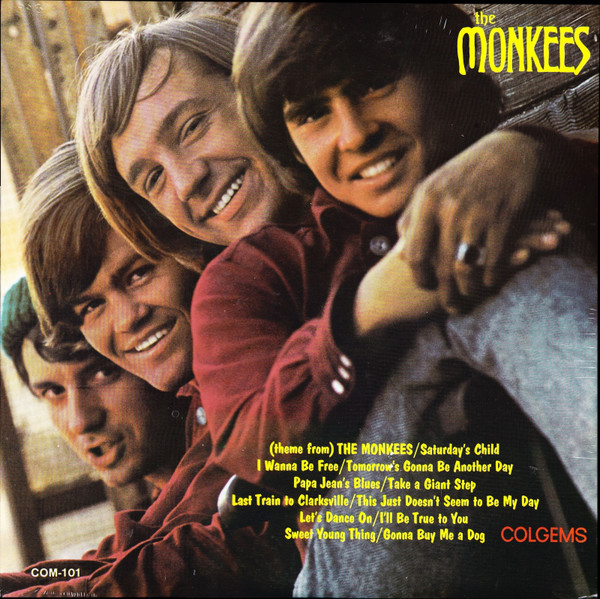
Just a month after The Monkees released their debut single, they released their debut album The Monkees in September 1966. Reviews of the album were mixed, with some critics still not convinced that The Monkees were a serious band. However, the positive reviews outnumbered the negative reviews of The Monkees. It started climbing the charts, and reached number one in Britain, Canada and on the US Billboard 200. The Monkees sold five million copies in America alone, and was certified platinum five times. Micky, Davy, Michael, and Peter’s debut album had proven popular and appealed to a wide range of record buyers.
It wasn’t just fans of pop and rock that were won over by The Monkees. So were fans of psychedelic music. The Monkees’ psychedelic side first emerged on their eponymous debut album. Goffin and King’s Take A Giant Step and David Gates’ Saturday’s Child showcased the psychedelic sound of The Monkees, which was very different to other songs on the album. Maybe The Monkees had designs on becoming a serious band?
More Of The Monkees.
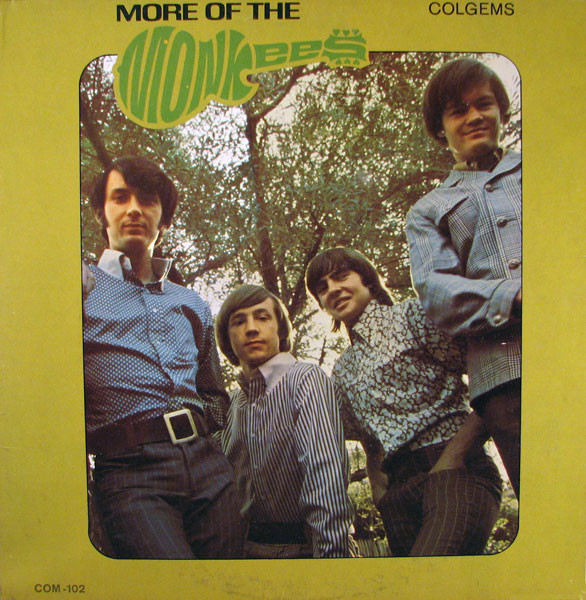
Just four months after the release of The Monkees, America’s version of the Fab Four returned with their sophomore album More Of The Monkees in January 1967. By then, what had been dubbed Monkeemania was in full swing. As a result, More Of The Monkees was rushed out to capitalise on the band’s popularity. This showed, and More Of The Monkees proved not to be the band’s finest hour.
Critics weren’t won over by More Of The Monkees, and their reviews reflected this. They weren’t alone. The Monkees weren’t happy with their contribution to More Of The Monkees. It consisted of adding the vocals, and very occasionally playing the instruments that they were meant to be playing. Mostly, though, the interments were played by members of the Wrecking Crew who stood in for The Monkees. They weren’t happy about this and wanted full artistic control.
Three weeks after the release of More Of The Monkees, Michael Nesmith began lobbying the creators of The Monkees to play their instruments on future records. Don Kirshner who had been brought onboard to secure music for The Monkees was against the idea of The Monkees playing their instruments on future records.Things came to a head a heated meeting between The Monkees, Don Kirshner and Colgems lawyer Herb Moelis. At one point, Michael Nesmith threatened to leave The Monkees. Given the album sales, there was only going to be one winner.
From their third album, The Monkees, not members of the Wrecking Crew would play their instruments. Executives at the Colgems label were scared of upsetting the cash cow that was The Monkees. While More Of The Monkees wasn’t the band’s finest hour, it reached number one in Britain, Norway, Canada and America. More Of The Monkees sold five million copies and was certified platinum five times over. This was pretty good for an album that many considered to be rushed out to cash in on the popularity of Monkeemania.
One of the finest songs on More Of The Monkees is She, which was penned by Tommy Boyce and Bobby Hart. Micky Dolenz adds a vocal on She, which featured The Monkees at their most lysergic. The psychedelic sound of The Monkees would return on their third album, Headquarters.
Headquarters.
Four months after the release of More Of The Monkees, came the release of The Monkees’ third album Headquarters in May 1967. Headquarters which was produced by Chip Douglas, was the first album where The Monkees enjoyed full artistic control over their music. This came at a price.
After the dismissal of Don Kirshner, the songs that he had supervised were discarded. They wouldn’t feature on the album. Instead, it would only feature tracks where The Monkees enjoyed full artistic control. Still, though, session musicians were occasionally used, but they seemed to be a thing of the past.
Another difference was that much of the albums was written by members of The Monkees. This included the Micky Dolenz penned Randy Scouse Git and For Pete’s Sake which was written by Peter Tork and Joey Richards. Both songs were sung by Micky Dolenz and featured the psychedelic side of The Monkees. The strongest of the two tracks was For Pete’s Sake, which marked the start of a new era for The Monkees.
While most of the reviews of Headquarters were positive, some critics weren’t impressed by the first album where The Monkees enjoyed full artistic control. They felt some of the songs penned by members of The Monkees shouldn’t have made the cut. They wouldn’t if Don Kirshner had been around,and already it was apparent that his loss cost The Monkees dearly.
When Headquarters was released in May 1967 the album reached number two in Britain and Norway. In North America, Headquarters reached number one in Canada and in the US Billboard 100. However, the album sales were way down, with Headquarters selling ‘just’ two million copies. While this resulted in Headquarters being certified double platinum, the album had sold three million copies less than More Of The Monkees. To make matters worse, when Randy Scouse Git was released as a single, it never came close to troubling the charts. The Monkees had learnt an expensive lesson from Headquarters, that full artistic control came at a cost.

Two months after the release of Headquarters, The Monkees released a cover of Goffin and King’s Pleasant Valley Sunday as a single in July 1967. This example of perfect pop was one of the finest songs of The Monkees’ psychedelic era. It reached number three and was the fourth Monkees single to be certified gold. Maybe The Monkees’ luck was starting to change?
Pisces, Aquarius, Capricorn and Jones Ltd.
There was no let up for The Monkees, who returned with another album in November 1967, Pisces, Aquarius, Capricorn and Jones Ltd. It was a quite different album from Headquarters.
Unlike Headquarters, where seven out of the twelve songs were written by members of The Monkees, only three of thirteen songs were written by the band. The remainder was cover versions, including songs written by successful songwriters and songwriting partnerships. This included Tommy Boyce and Bobby Hart’s Words, Barry Mann and Cynthia Weil’s Love Is Only Sleeping and Goffin and King’s Star Collector. They were joined by Goffin and King’s Pleasant Valley Sunday. These songs would showcase the psychedelic side of The Monkees.
When they came to record Pisces, Aquarius, Capricorn and Jones Ltd, session musicians were drafted in. They had featured to some extent on Headquarters, but played a bigger part in the recording of Pisces, Aquarius, Capricorn and Jones Ltd. This made sense, as they weren’t accomplished enough musicians to record an entire album. The Monkees played their instruments on some of the songs, but elsewhere on the album, session musicians took their place. However, as the years went by, The Monkees improved as musicians.
The Chip Douglas produced Pisces, Aquarius, Capricorn and Jones Ltd was released in November 1967, and was well received by most of the critics. However, The Monkees had their critics, who saw the them as nothing more than a made for television band. That was unfair, as The Monkees had just released one of the best albums, and an album that pioneered the use of the Moog synth.
While Pisces, Aquarius, Capricorn and Jones Ltd was released, it reached number five in Britain, four in Norway and three in Canada. In America, it became The Monkees’ fourth album to reach number one. However, Pisces, Aquarius, Capricorn and Jones Ltd ‘only’ sold two million copies in America, and was certified double platinum. Maybe The Monkees’ popularity had peaked?

The Birds, The Bees and The Monkees.
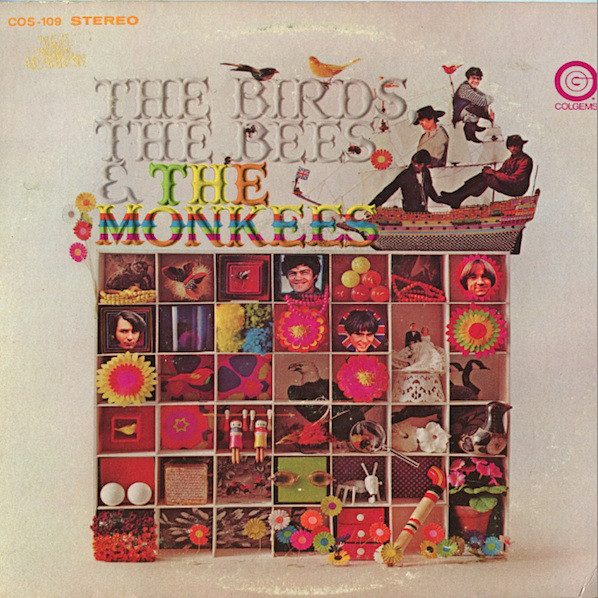
Five months after the release of Pisces, Aquarius, Capricorn and Jones Ltd, The Monkees returned with their fifth album The Birds, The Bees and The Monkees. It marked the start of a new era for The Monkees, who had rung the changes in their pursuit of full artistic control. The Monkees had dispensed with the services of producer Chip Douglas, who had produced The Monkees first four albums. This was a huge risk.
By the time The Birds, The Bees and The Monkees was released, The Monkees television show had been cancelled. As a result, The Monkees were concentrating all their efforts on their music. Deep down, they wanted to be seen as a serious band. However, still, many critics and record buyers saw The Monkees as a manufactured, made for television band. They hoped that The Birds, The Bees and The Monkees would convince their critics that there was much more to them than that.
For their fifth album, members of The Monkees wrote six of the twelve tracks. This included Tapioca Tundra which was penned by Michael Nesmith. When it was recorded, The Monkees fused psychedelia and country. During the sessions, The Monkees continued to employ session musicians, who added backing vocals on some tracks. This was playing into the hands of The Monkees’ critics, who continued to accuse them of not being a ‘proper’ band. Their fans pointed The Monkees were a successful band, whose first four albums had sold in excess of fourteen million albums.
Before the release of The Birds, The Bees and The Monkees, critics had their say. The reviews were mixed, and again, there was no consensus amongst the critics. Some of the reviews were positive, while other were critical of The Monkees’ fifth album and the first they had produced themselves. With no consensus amongst the critics,record buyers had the casting vote.
The perfect pop of Daydream Believer was chosen as the lead single, and released in October 1967, It reached number one on the US Billboard 100 and was certified gold. Alas, Daydream Believer was the last of The Monkees’ nineteen singles to top the charts. However, the success of Daydream Believer augured well for the release of When The Birds, The Bees and The Monkees.
When The Birds, The Bees and The Monkees was released in April 1968, it failed to replicate the success of previous albums. The album failed to trouble the charts in Britain, where The Monkees had always been popular. It was a similar case in Canada, where The Birds, The Bees and The Monkees stalled at number six. In America, The Monkees was hoping that The Birds, The Bees and The Monkees would give them their fifth consecutive number one album. It was a case of close but no cigar, when The Birds, The Bees and The Monkees reached number three in the US Billboard 200. For The Monkees this was another disappointment. Especially when they heard that the album had sold just over a million copies. While this was enough for a platinum disc, it was a far cry from when both The Monkees and More Of The Monkees sold five million copies. Monkeemania it seemed, was now a thing of the past.
Maybe not? In February 1968, The Monkees released Valleri as the second single from The Birds, The Bees and The Monkees. The followup to Daydream Believer reached number three in the US Billboard 100 and was certified gold. Little did The Monkees realise that Valleri was their last single to be certified gold.
The followup to Valleri was D. W. Washburn, which was released in June 1968. However, it stalled at number nineteen in the US Billboard 100. This was a sign of what was to come
Head.
Four months later, and The Monkees returned with a new single in October 1968. The song that had been chosen was Goffin and King’s Porpoise Song, which featured on the soundtrack to Head. The Monkees had been asked to provide the soundtrack, and with a few friends created a soundtrack that mixed satire and darkness. Porpoise Song was a taste of what The Monkees had in store for their fans. However, the single stalled at a lowly sixty-two in the US Billboard 100, and became the second least successful single when it stalled at a lowly sixty-two in the US Billboard 100. This was worrying as Head was due to be released in late 1968.
Just like their previous albums, reviews of Head were mixed and there was no consensus among critics. While some critics loved the albums, others loathed it. This was nothing new. However, Head was the first soundtrack album The Monkees had recorded, and it featured six songs, including the lysergic Porpoise Song. It’s one of the best songs on Head. These six songs were joined by Ken Thorne’s incidental music, dialogue fragments, and sound effects from the film. As a result, it was very different to previous albums and it was unfair to compare Head to The Monkees’ studio albums. That was what the critics had done.
On the release of Head in December 1968, the album stalled a lowly forty-five in the US Billboard and twenty-four in Canada. This was the lowest chart placing in either country. Across the Atlantic in Britain, Head was the second album that failed to trouble the charts. This was a worrying time for The Monkees.
Not long after the release of Head, Peter Tork left The Monkees, citing exhaustion. The Monkees had recorded six albums in less than three years. They also filmed three series of the television series The Monkees and toured extensively. It was no wonder Peter Tork was exhausted. However, leaving The Monkees proved costly, as he had four years remaining on his contract. After paying a large, six figure sum of money, Peter Tork was no longer a Monkee. However, he would feature on The Monkees’ swan-song Good Times!

Instant Replay.
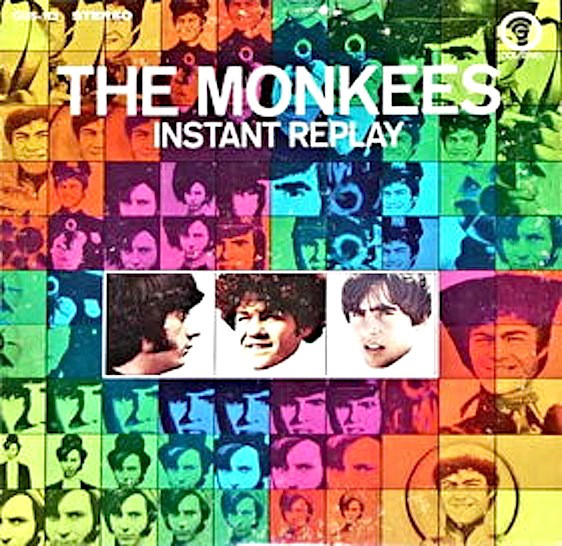
Just four months after the release of Head in 1968, The Monkees returned with their seventh studio album Instant Replay in February 1969. Instant Replay was the first album The Monkees released after the departure of Peter Tork, and was the only one of the nine original studio albums that hadn’t featured in the original TV series.
By the tine work began on Instant Replay, Brendan Cahill had been appointed The Monkees’ new musical supervisor. He was tasked with transforming the group’s fortunes. Brendan Cahill decided to look into The Monkees’ vaults for songs that had been recorded when they were in the musical prime. This Brendan Cahill hoped would restore the group to the top of the US Billboard 200.
Eventually, Brendan Cahill settled on twelve songs that would become Instant Replay. These songs included Tommy Boyce and Bobby Hart’s Through the Looking Glass, Don’t Listen To Linda, Me Without You and Tear Drop City. Two Goffin and King songs Won’t Be the Same Without Her and A Man Without a Dream joined Carol Bayer Sager and Neil Sedaka’s The Girl I Left Behind Me. The three remaining original members of the Monkees penned the rest of the album, Micky Dolenz wrote Just a Game and Shorty Blackwell, while Michael Nesmith contributed Don’t Wait For Me and While I Cry. Davy Jones wrote You and I with Bill Chadwick. This mixture of cover songs and original material had been recorded over a period of thirty-one months.
Brendan Cahill chose some songs recorded in the summer of 1966 by the original lineup of The Monkees. They joined new songs recorded in 1968 and 1969, including A Man Without a Dream and Someday Man were produced by Bones Howe and recorded at Wally Heider’s studio. Bones Howe brought onboard some of the Wrecking Crew to accompany The Monkees. Eventually, Instant Replay was completed, it featured of twelve songs recorded between July 1960 and January 1969.
When Instant Replay was released in February 1969, reviews of the album were mixed. Its mixture of pop, psychedelia and rock didn’t receive the same reception as previous albums. This was a disappointment for The Monkees.
When it came to releasing a lead single from Instant Replay, Brendan Cahill chose Tear Drop City, which was one of the songs from The Monkees’ vaults. Brendan Cahill decided to increase the tempo nine percent changing the song’s key from G to A-flat. Alas, that didn’t help Tear Drop City which stalled at fifty-six in the US Billboard 1o0 and forty-seven in the UK. For The Monkees this was another disappointment. Things didn’t get much better when Instant Replay was released, and reached just thirty-two in the US Billboard 200, forty-five in Canada and twenty-six in Japan. This was another disappointment for The Monkees, who were no longer as popular as they had once been. Proof of this was the followup single to Tear Drop City was Someday Man, which reached eighty-one in the US Billboard 1o0 and forty-four in the UK. It was beginning to look as if The Monkees’ career was at a crossroads.
The Monkees Present.
By the time The Monkees began work on their eighth album The Monkees Present, which is sometimes known as The Monkees Present Micky, David, Michael, their popularity had peaked. As a result, Screen Gems were no longer as interested in The Monkees, who were no longer the cash cow they had once been. This resulted in The Monkees being left to their own devices when it came to producing the The Monkees Present.
Originally, The Monkees Present was meant to be a double album, which devoted one side to the album to each member of The Monkees. That was until Peter Tork left The Monkees. To make matters worse, by the time it came to record the album, Michael Nesmith, Micky Dolenz and Davy Jones had all embarked upon solo careers. As a result, a decision was made that The Monkees Present would be a single album.
For The Monkees Present, Tommy Boyce and Bobby Hart only contributed Looking For The Good Time and Ladies Aid Society. They joined Michael Martin Murphey’s Oklahoma Backroom Dancer and Janelle Scott and Matt Willis’ Pillow Time. The rest of the album was penned by The Monkees, with Michael Nesmith contributing Good Clean Fun, Never Tell A Woman Yes and Listen To The Band. Micky Dolenz wrote Mommy and Daddy and cowrote Bye Bye Baby Bye Bye with Ric Klein. Davy Jones wrote If I Knew with Bill Chadwick who penned French Song. These songs became The Monkees Present.
Just like Instant Replay, some of the songs had been recorded between August and October 1966, when The Monkees were in their prime. The rest of the album was recorded between June 1968 and August 1969. The result was an album that combined it was hoped combined classic Monkees with their new music. Surely this would be a winning formula?
Sadly, that wasn’t the case when The Monkees Present was released in October 1969. Critics weren’t impressed by what was one of The Monkees’ weakest album. They had eschewed their psychedelic sound and switched between country rock, folk rock, pop and rock. The Monkees Present wasn’t the most cohesive album The Monkees had released, and was slightly disjointed. This didn’t bode well for the release of The Monkees Present.
Things didn’t get any better when the lead single Listen To The Band stalled at sixty-three in the US Billboard 100. Then when The Monkees Present was released in early October 1969 it stalled at a lowly 100 in the US Billboard 200, and became The Monkees’ least successful album. Adding to The Monkees’ woes was the single Good Clean Fun struggling to eighty-three in the US Billboard 100. For The Monkees this was a worrying time.
Just when The Monkees thought things couldn’t get any worse, Michael Nesmith left the band. This left just Davy Jones and Micky Dolenz to fulfil The Monkees’ recording contract.
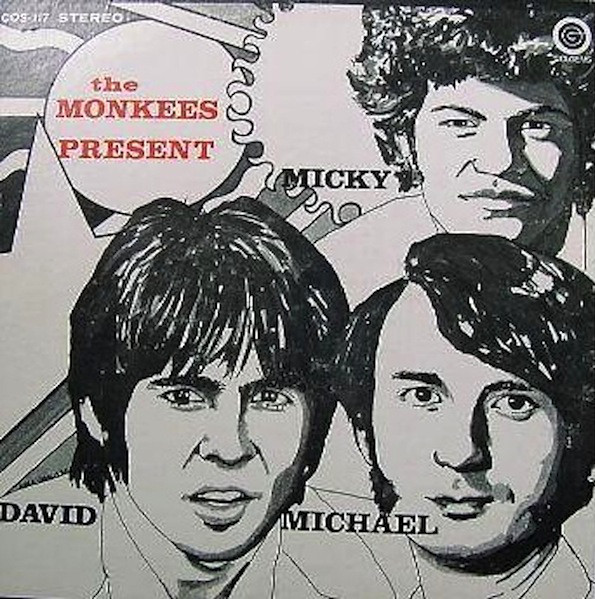
Changes.
With just Davy Jones and Micky Dolenz remaining, recording The Monkees ninth studio album wasn’t going to be easy. However, the two remaining Monkees were reunited with producer Jeff Barry who cowrote much of the material on Changes.
Of the twelve songs on Changes, Jeff Barry wrote or cowrote six of them. He penned 99 Pounds and Tell Me Love and cowrote On My My, Do You Feel It Too and I Love You Better with Canadian singer-songwriter wrote Andy Kim. Jeff Barry and Bobby Bloom wrote Ticket on a Ferry Ride and You’re So Good to Me. The Tommy Boyce and Bobby Hart songwriting partnership contributed I Never Thought It Peculiar while Ned Albright and Steven Soles wrote Acapulco Sun and All Alone In The Dark. They joined Neil Goldberg’s It’s Got To Be Love and Micky Dolenz’s Midnight Sun on Changes.
Just like The Monkees two previous albums, Changes was a mixture of old and new songs. Some songs were recorded during sessions that place in October 1966 with others recorded in January and February 1967. The Monkees had recorded other songs between July and September 1969 and then returned to the studio between February and April 1970. This allowed Colgems Records, a division of Columbia Records to put out an album as cheaply as possible. The only problem was the risk that it wouldn’t sound like a cohesive album when it was released in June 1970.
When critics heard Changes, they weren’t overly impressed with what was an essentially an album of bubblegum pop. Just like The Monkees two previous albums, Changes wash’t a cohesive album, and sounded like an assortment of tracks from the past four years. Even two remaining Monkees weren’t fans of Changes. Davy Jones called it his: “least favourite Monkees album” and said he had: “terrible memories of making Changes.” By then, The Monkees was over as a group, and Davy Jones and Micky Dolenz were merely fulfilling contractual obligations,
The Monkees went out with a whimper when Oh My My struggled into the lower reaches of the US Billboard 100 at ninety-eight. Then when Changes was released in June 1970, it stalled at 152 in the US Billboard 200. This was a new low for The Monkees.
On September ‘22nd’ 1970, Davy Jones and Micky Dolenz recorded what was their swan-song as The Monkees. That day, they recorded Do It In The Name of Love and Lady Jane. However, Do It in the Name Of Love wasn’t mixed until February ‘ 9th’ 1971, and was released as a single later in 1971. However, Do It in the Name Of Love failed to chart and this was an inauspicious ending to The Monkees’ story.
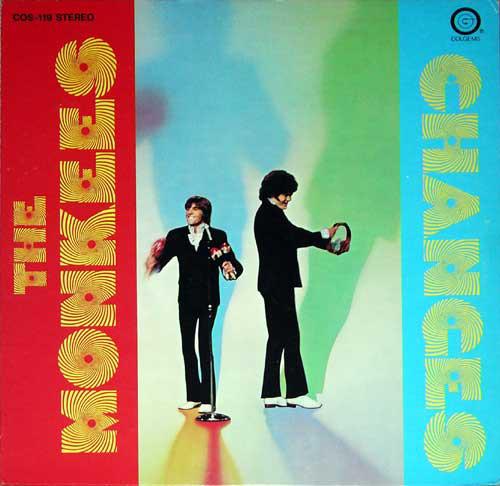
The Monkees split-up in late 1971, and everyone thought that this was the end of a group who for five years, had divided the opinion of critics, cultural commentators and even music fans. However, in 1976, Davy Jones and Micky Dolenz reformed the band and brought onboard Tommy Boyce and Bobby Hart to makeup America’s once fab four. This was the first of several Monkees reunions and revivals that have taken place over the past forty years.
During their comebacks, The Monkees have recorded three new albums, including 1987s Pool It! ,1996s Justus and Good Times! in 2016. It was the album that saw The Monkees revisit their psychedelic sound,
Good Times!
After the commercial failure of Head, The Monkees didn’t revisit their psychedelic side until 2016, when they were celebrating the fiftieth anniversary of their eponymous debut album. To celebrate the anniversary, a new album was commissioned, which became Good Times!
This was the twelfth album of The Monkees career, and the first album since the death of Peter Tork. He appears posthumously on Little Girl, alongside the remaining Monkees Micky Dolenz, Michael Nesmith and Peter on Good Times! It’s one of thirteen songs on Good Times!, which reached number twelve in the US Billboard 200.
The songs on Good Times! are a mixture of old new and old. Some of the songs are penned by giants of music including the late, great Harry Nilsson and Neil Diamond. Others were written by successful songwriting partnerships like Tommy Boyce and Bobby Hart and the legendary Goffin and King. One of the new songs, Birth Of An Accidental Hipster, was written by Noel Gallagher and Paul Weller and finds The Monkees revisiting their psychedelic side one last time.

The Monkees psychedelic years began in 1966 and lasted until 1969. However, it was between 1966 and 1968 that The Monkees released the best psychedelic music of their career. That coincides with what was the most successful period of The Monkees career.
Some of the psychedelic music The Monkees made between 1966 and 1968 wasn’t overtly psychedelic. Instead, they find The Monkees moving in the direction of psychedelia. Maybe this was The Monkees seeking credibility in the eyes of critics and record buyers?
Despite their dalliances with psychedelia, The Monkees never fully embraced the genre like other sixties bands. Maybe it was a relationship that lacked commitment? The Monkees certainly never released a psychedelic masterpiece. The Monkees soundtrack album Head, which was released in December 1968, certainly wasn’t a psychedelic masterpiece, and was an an album that critics either loved or loathed. It was one of The Monkees’ occasional dalliances with psychedelia, and looking back with the benefit of hindsight, Head was a much better album than many critics were willing to admit. It’s an ambitious and innovative genre-melting album, but one the took its on The Monkees, when Peter Tork left the group. It was the end of an era for The Monkees who were one of the most successful bands of that period.
While The Monkees may have never fully embraced psychedelia like many other sixties bands, ironically, this worked in their favour. The music on their first five albums, including the psychedelic side of The Monkees was accessible and was hugely popular, selling fifteen million copies in America alone. However, by December 1968, The Monkees had already enjoyed the most successful years of their career.
In America six of The Monkees singles had been certified gold, while one album of their albums had been certified platinum, two double platinum and The Monkees and More Of The Monkees had been certified platinum five times over. Never again would The Monkees reach these heights again.
The Monkees split-up in 1971, and later, made several comebacks. They even recorded three albums, including their swan-song Good Times! in 2016. By then, The Monkees had released nineteen singles, twelve studio albums and six live albums between 1966 and 2016. However, still, the most successful period of The Monkees career was between 1966 and 1968. Sadly, the oft-overlooked Head wasn’t the commercial success that previous Monkees albums had been.
For just over two years, The Monkees were one of the biggest bands in America. They had found a winning formula, with albums that featured pop, rock and sometimes psychedelia. Head featured all the and more from The Monkees, and is an oft-overlooked album that nowadays is regarded as a cult classic from America’s very own Fab Four, The Monkees.
Cult Classic: The Monkees-Head.
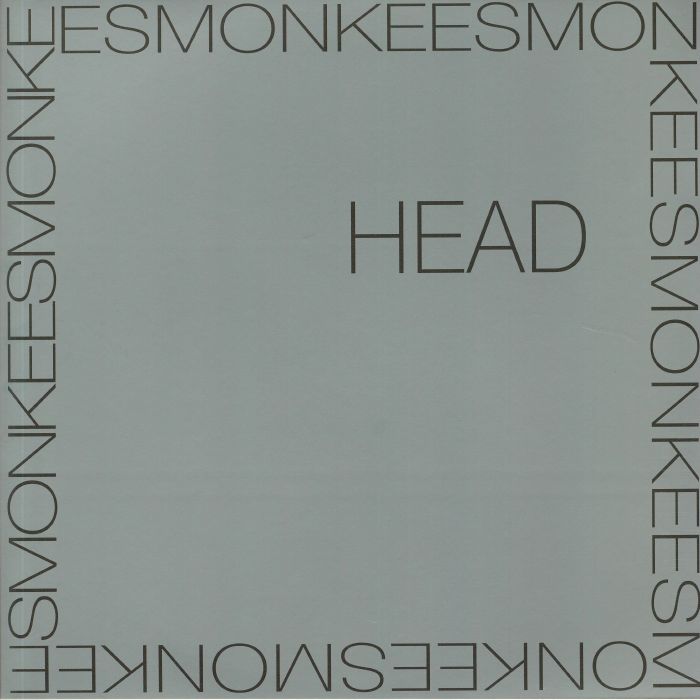
CULT CLASSIC: NICOLETTE LARSON-ALL DRESSED UP AND NO PLACE TO GO.
Cult Classic: Nicolette Larson-All Dressed Up and No Place To Go.
Nowadays, far too many people are scared to follow their dream and instead, settle for second best and the drudgery of working 9-5. Sadly, it’s only much later, when it’s too late, that they realise what they gave up and what might have been. Nicolette Larson was determined that wasn’t going to happen to her and after spending three semesters at the University Of Missouri and working various dead-end jobs, left to pursue a career in music. This must have left her friends and family shaking their heads and sagely saying that it was a decision that Nicolette Larson would live to regret.
How wrong they were. Over the next few years, Nicolette Larson sang backing vocals for Commander Cody and His Lost Planet Airmen, Eric Anderson, Linda Ronstadt and Neil Young. Later, she added harmonies on albums by Marcia Ball, Norton Buffalo and Rodney Crowell. By then, Nicolette Larson had been signed to the country division of Warner Bros, and in 1978 her debut album Nicolette was certified gold. Although 1979s In The Nick Of Time and 1980s Radioland didn’t replicate the same success as Nicolette, they were both carefully crafted albums that showcased the truly talented and versatile Nicolette Larson. She returned in 1982 with her fourth album All Dressed Up and No Place To Go, which was recently reissued and remastered by BGO Records. It was the next chapter in the Nicolette Larson story, which began thirty years earlier.
Nicolette Larson was born in Helena, Montana on July the ’17th’ 1952, and led a somewhat a nomadic existence growing up. This couldn’t be helped, as her father worked for the US Treasury, and was often transferred to other towns and cities. Sometimes, Nicolette was just starting to make friends and settling into a new school, when the Larson family were on the move again. By the time Nicolette Larson graduated high school, the Larson family were living in Kansas City, Missouri. Next stop for Nicolette Larson was the University Of Missouri.
Having enrolled at the University Of Missouri, it wan’t long before Nicolette Larson realised that student life wasn’t for her. After spending what must have been three long semesters studying at the University Of Missouri, Nicolette Larson decided to leave academia behind.
Things didn’t get much better for Nicolette Larson, over the next few weeks and months, worked a variety of dead-end jobs in Missouri. She waited tables and experienced the nine to five drudgery of working in an office. Eventually, Nicolette Larson decided to follow her dream, and pursue a career in music.
This Nicolette Larson knew wasn’t going to be easy, and was going to take time, persistence and dogged determination. It also meant that she would need to leave Missouri behind, and head to one of America’s musical cities, and eventually, settled on San Francisco, which had a thriving music scene.
That had been the case since the birth of rock ’n’ roll. Nicolette Larson’s first job in San Francisco, was in one of the city’s many record stores. In her spare time, Nicolette Larson volunteered at the Golden Gate Country Bluegrass Festival.
As Nicolette Larson watched the artists perform at the Golden Gate Country Bluegrass Festival, she became even more determined to become a singer. So much so, that she was willing to travel to Canada to make her debut opening for vocalist Eric Anderson in Vancouver, British Columbia. Buoyed by having made her professional debut as a singer, Nicolette Larson returned home, and began looking for work as a singer.
Fortunately, Hoyt Axton was looking for backing singers to join his band, Hoyt Axton and The Banana Band, who were due to open for Joan Baez on her 1975 Diamonds and Rust tour. Nicolette Larson passed the audition, and joined Hoyt Axton and The Banana Band the tour. During the tour, Nicolette Larson made a big impression on Hoyt Axton was also producing country rock band Commander Cody and His Lost Planet Airmen’s album Tales From The Ozone. He was looking for singers to add backing vocals.
Nicolette Larson and Guthrie Thomas fitted the bill, and they both made her debut on Tales From The Ozone. It was released in 1975, and was just the first of a number of artists Nicolette Larson worked with. Often though, Nicolette Larson worked with Guthrie Thomas, and other times she worked alone.
Having worked with Hoyt Axton and Guy Clark in 1976, soon word was spreading about this new backing vocalist Nicolette Larson who was working with some big name musicians. This included Billy Joe Shaver, Gary Stewart, Jesse Colin Young, Jesse Winchester Mary Kay Place and Rodney Crowell. Nicolette Larson recorded another album with Commander Cody and His Lost Planet Airmen. However, in 1977 Nicolette got the opportunity to work with two of the biggest names in music.
The first was Grammy Award winning singer-songwriter Emmylou Harris who was about to record her 1977 album Luxury Liner. She brought Nicolette Larson onboard to sing backing vocals on the album. Her finest moment on the album came on Hello Stranger, where Nicolette features prominently and plays a starring role. During the recording sessions for Luxury Liner, Nicolette Larson met Linda Ronstadt and the two women became firm friends. This resulted in Nicolette getting the opportunity of a lifetime.
One day, Neil Young phoned Linda Ronstadt to ask if she could recommend a female vocalist to sing on what became his American Stars ’N’ Bars album. Little did Linda Ronstadt know, that she was the third person Neil Young had asked that question. Just like the first two, Linda Ronstadt replied “Nicolette Larson.” That made Neil Young’s mind up, and Nicolette Larson got the call to head to his ranch and cut vocals for American Stars ’N’ Bars.
Joining Nicolette Larson for the American Stars ’N’ Bars’ sessions, was Linda Ronstadt, and the pair harmonised, while Neil Young laid down the vocals and played guitar. When Stars ’N’ Bars was released, Nicolette and Linda Ronstadt were billed as The Bullets. However, only one of The Bullets would return to sing on Neil Young’s next album.
In November 1977, Neil Young was recording Comes A Time in Nashville, and Nicolette Larson was asked to join what was an all-star cast. She contributed harmonies on eight of the ten tracks on Comes A Time was released in October 1978, and played an important part in Nicolette’s future.
Before that, Nicolette Larson continued to work as a backing vocalist, and 1978 got off to a good start when Emmylou Harris’ Quarter Moon In A Ten Cent Town album reached number three in the US Billboard 100, and was certified gold. Meanwhile, Nicolette Larson also added harmonies to albums by Marcia Ball, Norton Buffalo and Rodney Crowell before Neil Young’s Comes A Time was released in October 1978. However, it wasn’t the most successful album Nicolette Larson featured later in 1978.
That honour fell to The Doobie Brothers’ Minute By Minute, where Nicolette Larson added harmonies on two tracks. When Minute By Minute was released on ‘1st’ December 1978 it reached number one album, was certified triple platinum and won four Grammy Awards. However, by the time Minute By Minute was released Nicolette Larson’s career had begun.
By then, Nicolette Larson had already signed to the country division of Warner Bros. This came about after she had worked with Commander Cody and His Lost Planet Airmen and Neil Young. Executives at Warner Bros realising that Nicolette Larson was a talented artist with huge potential, wasted no time in signing her to their country division. They then paired Nicolette Larson with a top producer Ted Templeman.
Nicolette Larson had already worked with Ted Templeman before, on The Doobie Brothers’ album Little By Little. He was already one of the most successful producers of the late-sixties and seventies. He had worked with Van Morrison, Little Feat, The Doobie Brothers, Captain Beefheart, Montrose, The Beau Brummels and Carly Simon. Ted Templeman next assignment was producing Nicolette Larson’s debut album Nicolette.
Nicolette.
Having signed to Warner Bros, work began on Nicolette Larson’s debut album Nicolette. The ten tracks that were chosen for the album, were all cover versions as Nicolette Larson wasn’t known as a songwriter. As a result, Nicolette Larson and Ted Templeman began choosing songs that would suit Nicolette’s voice.
This included Neil Young’s Lotta Love; Jesse Winchester’s Rhumba Girl; Sam Cooke’s You Send Me; Lauren Wood’s Can’t Get Away From You; Bill Payne’s Give a Little; Adam Mitchell’s French Waltz and Bob McDill’s Come Early Mornin’. They were joined by Bob Hillard and Burt Bacharach’s Mexican Divorce; Holland, Dozier, Holland’s Baby Don’t You Do It; Adam Louvin’s Angels Rejoiced and Glen Frey and JD Souther’sLast in Love which would close Nicolette. Before that, these Nicolette was recorded with an all-star band
When it came to recording Nicolette, a huge cast of musicians and backing vocalists were involved in the recording. This included musicians who Nicolette had previously worked with. Both Linda Ronstadt and Michael McDonald added backing vocals on Nicolette. Meanwhile, members of Little Feat and The Doobie Brothers, two the most successful bands of the seventies made guest appearances alongside bassist Klaus Voormann; guitarist Herb Pedersen, Memphis Horns’ saxophonist Andrew Love and Eddie Van Halen laid down a guitar solo on Can’t Get Away From You. Meanwhile, Ted Templeman took charge of production of Nicolette which was completed in time to be released in the autumn of 1978.
The release of Nicolette was scheduled for September the ‘29th’ 1978, but before that, critics had their say on Nicolette. The reviews of Nicolette were all positive, with Nicolette Larson’s blend of pop, rock, soul, country and folk proving popular amongst critics. Critical acclaim accompanied the release of Nicolette which reached number fifteen in the US Billboard 200 and number one in the Canadian charts. This resulted in gold discs in America and Canada. That wasn’t the end of the commercial success.
Meanwhile, Lotta Love had reached number eight on the US Billboard 100 and number one on the US Billboard’s Adult Contemporary chart. Across the border in Canada, Lotta Love reached number four, and number one in the Adult Contemporary chart. This was the perfect start for Nicolette’s carer.
The followup to Lotta Love, Rhumba Girl reached forty-seven in the US Billboard 100 and thirty-eight on the US Billboard’s Adult Contemporary chart. Meanwhile in Canada, Rhumba Girl reached fifteen and number four in the Adult Contemporary charts. Soon, two hits would become three.
The final single from Nicolette, Give A Little reached number nineteen in the US Billboard’s Adult Contemporary charts. That was the third hit single from Nicolette which had just been certified gold. This was the perfect start to Nicolette Larson’s solo career, and was no surprise to those who had heard her debut album.
Nicolette which featured a carefully considered selection of songs which showcase a versatile and talented singer. That was apparent from Nicolette’s folk rock take on Lotta Love, via her country-tinged cover of Rhumba Girl to the needy, soulful version of You Send Me. Can’t Get Away From You with its gospel tinged harmonies allows Nicolette to cut loose, and showcase her versatility. Mexican Divorce then becomes a wistful country ballad, before Holland, Dozier, Holland’s Baby, Don’t You Do It is totally transformed, and takes on a much more grownup, sultry sound. After this, it’s all change.
One of the most beautiful songs is Give A Little, an AOR ballad which reinforces Nicolette’s versatility. She seems equally comfortable singing AOR as she does country, folk, pop and rock. Not many artists were as versatile. Proof of this is Angels Rejoiced, with its authentic country sound, where Nicolette’s vocal takes centre-stage. French Waltz is another tender ballad, which just like Angels Rejoiced, has a slow, understated arrangement. Nicolette seamlessly switches between English and French as she delivers the lyrics. The final song on Nicolette was Last In Love, another heart-wrenching ballad where the vocal is akin to a confessional, as strings and a piano accompany her. It’s a beautiful and moving song, that whets the listener’s appetite for her sophomore album.
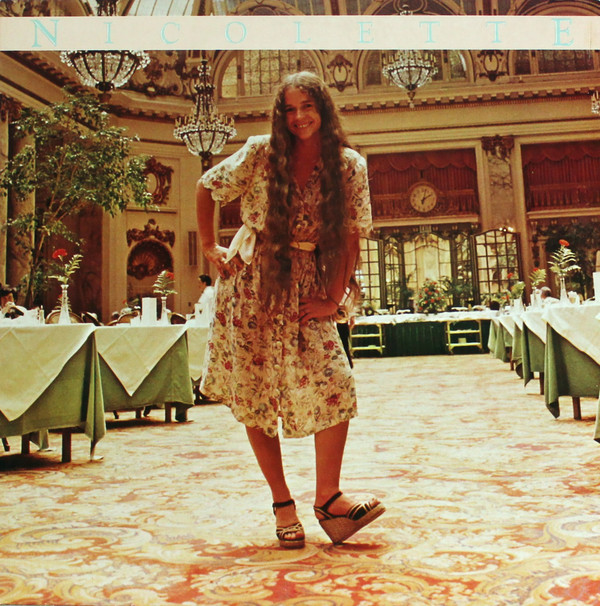
In The Nick Of Time.
For In The Nick Of Time, Ted Templeman returned to produce the album. Ten tracks were chosen, including Just in the Nick of Time which Nicolette cowrote with Ted Templeman and Lauren Wood. She had written Can’t Get Away from You for Nicolette, and contributed Breaking Too Many Hearts and Fallen to In The Nick Of Time. They were joined by songs from successful songwriting partnerships.
Just like Nicolette, In The Nick Of Time featured a track from Holland, Dozier, Holland, Back in My Arms. It was joined by Dancin’ Jones which Lieber and Stoller wrote with John Sembello and Ralph Dino. They were joined by Michael McDonald and B.J. Cook Foster’s Let Me Go, Love; Richard Torrance and John Haeny’s Rio de Janeiro Blue; Bobby Troup’s Daddy; Karla Bonoff’s Isn’t It Always Love and Lowell George’s Trouble. These songs would become In The Nick Of Time, where Nicolette, was once again, joined by an all-star band.
At the core of Nicolette’s band for the recording of In The Nick Of Time, once again were Little Feat’s guitarist Paul Barrere and keyboardist Bill Payne. They were joined by The Doobie Brothers’ live drummer and percussionist Bobby LaKind. Making guest appearances were The Memphis Horns; guitarist Ronnie Montrose; keyboardist Van Dyke Parks and Michael McDonald who duetted with Nicolette on Let Me Go, Love. This glittering array of musical talent joined Nicolette and producer Ted Templeman in recording In The Nick Of Time. However, could and would it match the commercial success and critical acclaim of Nicolette?
That was never going to be easy. Nicolette had received critically acclaimed reviews, and was certified gold. Throughout Nicolette, her enthusiasm is infectious. It was as if she was determined to grasp this opportunity with both hands. That was the case, as she brought each song to life, breathing meaning into the lyrics. However, the reviews of In The Nick Of Time weren’t as positive
Partly, this was because music was changing, and so were the critics. A new breed of cynical, gunslinger critics turned their guns on any type of music that was remotely establishment sounding. This included progressive rock, classic rock and even singer-songwriters like Nicolette Larson. Many albums didn’t stand a chance, and weren’t judged on their merits. Instead, the critic’s prejudice affected their judgement, and this didn’t bode well for Nicolette Larson’s sophomore album In The Nick Of Time.
On the release of In The Nick Of Time in 1979, the album stalled at forty-seven in the US Billboard 200, and seventy-one in Canada. There were no gold discs for Nicolette Larson this time around. To add to the disappointment neither the lead single Dancin’ Jones nor the followup Back in My Arms charted. This was a huge disappointment as In The Nick Of Time was an album that deserved to fare much better?
Dancin’ Jones an uptempo dance track that comes complete with rasping horns opens In The Nick Of Time, and although it’s very different to the music on her debut album, Nicolette embraces this stylistic change and does so with aplomb. It’s a similar case on the other dance tracks. On Just In The Nick Of Time Nicolette becomes a strutting diva, before gospel-tinged harmonies accompany her soulful vocal on Breaking Too Many Hearts and Back In My Arms are soulful dance tracks as gospel-tinged harmonies accompany, Nicolette. However, this new dancefloor friendly sound tells only part of the story of In The Nick Of Time.
Michael McDonald joins Nicolette on the ballad the smooth, soulful ballad Let Me Go, Love, which is followed by Rio De Janeiro Blue where a jazz-tinged arrangement accompanies Nicolette’s heartfelt and soulful vocal The same can be said of the hopeful ballads Fallen and Isn’t It Always Love? Quite different is Daddy which takes on a jazzy, theatrical sound, and shows another side to Nicolette Larsson. Closing In The Nick Of Time was Lowell George’s Trouble, which becomes a quite beautiful, reflective ballad. Nicolette had kept one of the best until last.
In The Nick Of Time was very different album to Nicolette, and found the twenty-seven year old singer widening her musical horizons. Whether this was Nicolette Larson’s decision is another matter? There was no need for her to change direction as Nicolette had just sold over 500,000 copies. Despite that, a quartet of dance-floor friendly tracks were added to In The Nick Of Time, which featured everything from disco, jazz, soul, pop and AOR. This executives at Warner Bros hoped would be a winning formula.
While disco was still popular when In The Nick Of Time was recorded, by July 1979 it was a musical pariah by the time the album was released. The decision to reinvent Nicolette Larsson as a disco diva backfired.
The problem with In The Nick Of Time was that it wasn’t the album that Nicolette Larson’s fans expected. They didn’t want to hear dance tracks, even ones as good as those on In The Nick Of Time. Instead, they liked the ballads, soulful songs and jazz-tinged tracks on In The Nick Of Time, and wanted an entire album of similar songs. Essentially, if Nicolette Larson had released another album of AOR, country, folk, pop and rock maybe In The Nick Of Time would’ve been a more successful album? As a result, Nicolette Larson knew that she would have to reinvent herself on her third album Radioland.
Radioland.
Following the disappointing performance of In The Nick Of Time, work began on Radioland. Ted Templeman was retained to produce Radioland which featured nine songs from a variety of songwriters and songwriting partnerships.
This including the Andrew Kastner penned How Can We Go On and Straight From The Heart, and who teamed up with Larry John McNally and Nicolette Larson to write When You Come Around. Lauren Wood who had contributed to Nicolette Larson’s two previous albums contributed Been Gone Too Long. These songs were joined by Adam Mitchell’s Fool For Love; Lowell George’s Long Distance Love; Allen Toussaint’s Tears, Tears And More Tears; Sumner Merings’ Radioland and Annie McLoone’s Ooo-Eee. These songs became the album that could make or break Nicolette Larson’s career…Radioland.
When work began on Radioland, many of the same musicians that worked on Nicolette Larson’s first two albums were present. Little Feat’s guitarist Paul Barrere and Bill Payne who this time around, played synths. They were joined by The Doobie Brothers’ guitarist Patrick Simmons and their live drummer Bobby LaKind, who added percussion. Making a guest appearance was Linda Ronstadt who added backing vocals. Meanwhile, the rhythm section two top session players, drummer Rick Shlosser and bassist Tiran Porter, who provided Radioland’s heartbeat. Just like Nicolette’s two previous albums, Ted Templeman took charge of production. Little did he know it would be for the last time.
Reviews of Radioland were mainly positive, with critics much more impressed by the change in sound. Stylistically, it was closer to Nicolette Larson’s debut album as element of pop, rock and soul joined funk, fusion and jazz on an album where ballads and rubbed shoulders with uptempo tracks. Radioland was a return to form from Nicolette Larson.
Despite this, when Radioland was released in 1980, the album stalled at sixty-two in the US Billboard 200, and failed to chart in Canada. Sadly, it was a familiar story with the singles Ooo-Eee, When You Come Around and Radioland failing to troubled the charts. This was hugely disappointing for Nicolette and Ted Templeman. Indeed, for Ted Templeman it was the last time he worked with Nicolette Larson. His swan-song was Radioland.
Radioland opens with the title-track which comes complete with eighties synths in a track where there’s a brief nod to Teena Marie. Then on Ooo-Eee a blistering guitar ushers in Nicolette’s vocal which is accompanied by harmonies, as she delivers a vocal that’s a mixture of power, emotion and soulfulness. How Can We Go On is a wistful mid-tempo ballad which much more like the music on Nicolette. So too is When You Come Around, which is another tender, hopeful and dreamy ballad. After this, it’s all change.
Tears, Tears And More Tears is a fusion of jazz, funk and soul and features a vocal powerhouse from Nicolette, who continues to showcase her versatility. This continues on Straight From The Heart, where Nicolette delivers a tender, but impassioned and rueful vocal. Equally rueful, but sometimes hopeful is Nicolette’s vocal on Been Gone Too Long. Just like on In The Nick Of Time, Nicolette finishes with a Lowell George song, Long Distance Love. She’s kept the best until last, as she breathes new life and aided and abetted by Billy Payne on keyboards, breathes meaning into this beautiful paean. It closes what’s one of the most underrated albums of Nicolette Larson’s career which was definitely at the crossroads.
All Dressed Up and No Place To Go.
A year after the release of Radioland, Nicolette Larson began work on her all-important fourth album All Dressed Up and No Place To Go. There was a lot riding on this album, which had the potential to make or break her career.
This time though, there was no sign of Ted Templeman who had produced Nicolette Larson’s first three albums. He had stepped down, although he is given a credit as executive producer of All Dressed Up and No Place To Go. Replacing Ted Templeman was singer, songwriter, multi-instrumentalist and producer Andrew Gold. He was tasked with transforming Nicolette Larson’s fortunes on All Dressed Up and No Place To Go.
For All Dressed Up and No Place To Go Nicolette Larson and Andrew Gold chose ten tracks which were a mixture of cover versions and new songs. This included Nicolette Larson and Andrew Gold’s I Want You So Bad. It was joined by Andrew Gold’s Still You Linger On, Andrew Kastner’s Just Say I Love You, Lowell George’s Two Trains and Paul Barrere’s Love, Sweet, Love. They were joined by Allee Willis and Patrick Henderson’s Talk To Me; Craig Doerge, Jackson Browne and Rosemary Butler’s I’ll Fly Away (Without You); Ivor Raymonde and Mike Hawkers I Only Want To Be With You; Kathy Wakefield and Leonard Caston’s Nathan Jones and Gary Ogan and Leon Russell’s Say You Will. These tracks would become All Dressed Up and No Place To Go which was Nicolette Larson’s fourth album.
Recording took place at Sunset Sound, in Los Angeles between October 1981 and January 1982. This time around, Nicolette Larson’s band featured a rhythm section of drummer Rick Schlosser, bassist Scott Chambers and guitarist Fred Tackett. That was apart from on Want You So Bad, where drummer Michael Botts and bassist Bob Glaub and guitarist John McFee replaced the usual rhythm section.
Joining the rhythm sections were Mark Jordan who switched between organ and Fender Rhodes; Billy Payne on synths; Arno Lucas on congas, tambourine and timbales; conga player Bobby LaKind, trumpeter Lee Thornberg and saxophonist Jim Horn. Meanwhile, producer Andrew Gold also played acoustic, electric and slide guitar, piano, percussion synths and added backing vocals. Other backing vocalists included Linda Ronstadt, Valerie Carter, Julia Tillman, Maxine Willard and Wendy Waldman. They spent three months recording All Dressed Up and No Place To Go which Nicolette Larson hoped would transform her career.
Critics on hearing All Dressed Up and No Place To Go were impressed with what was slick, carefully crafted and tasteful album that played to Nicolette Larson’s strengths. This was her versatility and her ability to breath life and meaning into the lyrics of a wide variety of songs. That was the case on All Dressed Up and No Place To Go.
It opens with I’ll Fly Away [Without You] which is melodic song that veers between soulful and rocky as this hook-laden track sets the bar high for the rest of All Dressed Up and No Place To Go. This includes the carefully crafted cover of I Only Want To Be With You combines elements of pop, country and rock. The ballad Just Say I Love You with its weeping guitars is one of the most beautiful songs on the album. Nathan Jones is then reinvented and Andrew Gold doesn’t spare the hooks on this poppy track that features a sultry saxophone. So does I Want You So Bad which features a needy vocal full of longing. However, this is just part of the story.
Nicolette delivers a sassy vocal on her cover of Lowell George’s Two Trains, which gives way to a country-tinged cover of Paul Barrère’s Love, Sweet Love. Say You Will allows Nicolette to unleash a powerful, emotive vocal while harmonies accompany her on another of Andrew Gold’s slick but tasteful arrangements. Talk To Me ls a mid-tempo track where Nicolette’s vocal is full of despair and hurt as she breaths life and meaning into the lyrics. It’s a similar case on the ballad Still You Linger On, which features a soul-baring album and closes the album on a high.
Given the quality of music on All Dressed Up and No Place To Go, the albums should’ve transformed Nicolette Larson’s career. Sadly, the album stalled at seventy-five in the US Billboard 200 and ninety-five in Australia. When I Only Want To Be With You was released as the lead single it reached fifty-three in the US Billboard 100 and gave Nicolette Larson a top ten hit in the US Adult Contemporary charts when it reached number nine. This was a small crumb of comfort for Nicolette Larson, whose fourth album hadn’t reached the audience it deserved. This was a huge disappointment for Nicolette Larson and producer Andrew Gold.
For Nicolette Larson the disappointing sales of All Dressed Up and No Place To Go spelt the end of her time at Warner Bros. After four albums she left Warner Bros later in 1982, and after that, signed to MCA Records, where she released …Say When in 1984. Sadly, Nicolette Larson never ever replicated the success of her 1978 debut album Nicolette.
After the released of Nicolette in 1978, which was certified gold and featured three hit singles, it looked as if this was the start of a long and successful career for Nicolette Larson. Sadly, it wasn’t to be.
The decision to combine disco with AOR, gospel, jazz, pop rock and soul on 1979s In The Nick Of Time was one which Nicolette Larson would regret. Maybe this was part of a plan to market Nicolette Larson to a much wider audience? However, when it failed to replicate the success of her debut album Nicolette, twenty-seven year old Nicolette Larson’s career was at the crossroads.
This might never have happened if whoever was advising Nicolette Larson hadn’t encouraged her to change direction musically. While it’s a slick and electric album, the excursions into dance music on In The Nick Of Time alienated part of her core audience. When this happened, it was difficult for Nicolette Larson to win her former fans back
When Nicolette Larson returned in 1980 with Radioland, some of the music was much more like that on Nicolette. However, there was still the occasional dance track on the third and final Nicolette Larson album that was produced by Ted Templeman. Lightning struck twice when Radioland failed to chart. Maybe after the commercial failure of In The Nick Of Time, producer Ted Templeman should’ve been replaced, and new blood brought in?
Andrew Gold was brought onboard for All Dressed Up and No Place To Go and was responsible for a slick and carefully crafted album were Nicolette Larson showcases her talent and versatility. Sadly, despite All Dressed Up and No Place To Go being one of the finest albums of Nicolette Larson’s career, it never enjoyed the success it deserved.
Sadly, that was the story of Nicolette Larson’s career, and a singer who had potential and talent to become one of the greatest singers of the late-seventies and early eighties never fulfilled her potential. However, the four albums that Nicolette Larson released on Warner Bros features the best music of her career. This includes her fourth album All Dressed Up and No Place To Go, which features some of the best music of her career. Sadly, Nicolette Larson’s career was cut tragically sort.
Fifteen years after the release of All Dressed Up and No Place To Go, Nicolette Larson passed away on December the ‘16th’ 1997, aged just forty-five. That day, music lost a truly talented singer who could’ve and should’ve gone on to enjoy a long and successful career. Sadly, that wasn’t to be. However, Nicolette Larson left behind a rich musical legacy, including the four albums she released on Warner Bros, including the cult classic All Dressed Up and No Place To Go.
Cult Classic: Nicolette Larson-All Dressed Up and No Place To Go.
TROUBLED TROUBADOURS.
Troubled Troubadours.
Label: Iron Mountain Analogue Research.
Release Date: “8th’ June 2020.
Ever since the birth of popular music, many troubled troubadours have laid bare their soul. For some it’s a cathartic experience as they share their troubles and the hurt, heartache and the hardships that they’ve experienced. This goes back to the days of the blues men in the Deep South. However, they’re not the only troubled troubadours.
Country music has also had its fair share of troubled troubadours over the years. These tormented souls are often hard living men who have laid bare their souls and sung about fighting their demons, and often their love rivals behind the local bar. They’ve also sung about the jobs they done, the money they’ve won, sometimes on the toss of a coin or the turn of a card. Living has been hard for the troubled troubadours who sing of the women they’ve loved and lost and the children they no longer see and that they’ll never be free or triumph over adversity. It’s music that tugs at the heartstrings and is full of emotion and heartache.
That is the case with the sixteen tracks on Troubled Troubadours, a new compilation which will be released by the Iron Mountain Analogue Research label on the “8th’ of June 2020.
Side One.
Opening Troubled Troubadours is Hank Williams Jr’s No Meaning and No End. It was released by MGM Records in 1967, and is a wistful soundtrack to the lost soul who is self-destructing as they struggle through life lacking purpose and direction brought life by a legend of country music.
Although Lorene Mann is know for her duets with Archie Campbell and Justin Tubb, she went on to enjoy a successful solo career. She wrote Hide My Sin, which was released in 1972 one RCA Victor Records. It’s a controversial and heartbreaking song with a vocal that’s a mixture of emotion, confusion and guilt as she sits in a clinic about to abort the baby she’s carrying.
In 1968, Dolly Parton released the album Just Because I’m A Woman on RCA Victor Records. It featured The Bridge which tells the story of an abandoned mother-to-be. The often misunderstood and underrated Dolly Parton plays the role to perfection and breathes life and meaning into the lyrics.
There’s two songs back-to-back from Trooper Jim Foster, who by day was a road safety officer in Florida. By night he was a country singer. On Four Chrome Wheels, released on Turret Records in 1967, he combines his two roles on a song about a young man injured in a road traffic accident who ends up on a wheelchair which has Four Chrome Wheels.
Trooper Jim Foster’s other contribution Campaign Spot #1 which was an advert from his campaign to reach the Tallahassee State Legislature in 1974.
Side Two.
Hank Williams Jr released the album Ballads Of The Hills and Plains album on MGM Records in 1965. It features Rainmaker which is about a small rural community desperate for rain. It arrives eventually and it’s a tale with a happy ending except for the Rainmaker.
Way before success came his way Roger Miller was a talented singer-songwriter capable of writing songs of the calibre of The Animal Of Man. It was released by Columbia Records in 1973 and is a dark, ruminative and thought-provoking song that reflects on the car crash that is mankind.
Bobby Bare’s Your Credit Card Won’t Get You Into Heaven was released on Columbia Records in 1980, and is best described as tragic-comedy country style.
Burl Ives released his cover of Bob Dylan’s The Times They Are A Changin’ on Columbia Records in 1968. It finds this troubadour delivering a sombre and reflective cover that dwells on troubled times and those who chronicle them.
Closing Troubled Troubadours is Homer and Jethro’s I Couldn’t Spell PFFFT. This rather strange and ill fated attempt at comedy was released in 1974 and doesn’t work. It’s a rather disappointing end to the compilation.
Troubled Troubadours features sixteen slices of soul baring country music from many familiar faces and what will be some new names. Apart from Homer and Jethro’s I Couldn’t Spell PFFFT it’s another lovingly curated compilation from Iron Mountain Analogue Research which features quality music all the way.
Just like Hillbillies In Hell-Country Music’s Tormented Testament (1952-1974) Volume X which is also being released on the ‘8th’ of June 2020 this a compilation anyone interested in country music will enjoy.
The poignant, powerful and thought-provoking songs by these Troubled Troubadours are about tormented men and women who lay bare their souls, have fought their demons and loved and lost yet survived to tell the tale.
Troubled Troubadours.
HILLBILLIES IN HELL-COUNTRY MUSIC’S TORMENTED TESTAMENT (1952-1974) VOLUME X.
Hillbillies In Hell-Country Music’s Tormented Testament (1952-1974) Volume X.
Label: Iron Mountain Analogue Research.
Release Date: “8th’ June 2020.
One genre that divides the opinion of critics and music lovers is country music. It’s been referred to as Marmite music, you either like it or loathe it. There’s plenty of people love country music and have enjoyed Iron Mountain Analogue Research’s Hillbillies In Hell compilation series. The latest instalment in this long-running and successful series is Hillbillies In Hell-Country Music’s Tormented Testament (1952-1974) Volume X, which will be released on the “8th’ June 2020.
Nowadays, very few compilations series’ are still going strong after ten volumes. That is a remarkable achievement and testament to the label and compiler.
Especially since most compilations are one offs. They’re lovingly curated and take years to compile. Some return for a second instalment, and the lucky ones for a third. After that, the compiler and label are reliant on constantly finding new or suitable material. It can be even harder with compilations that focus on a specific genre of music or have a theme. The compilers of the Hillbillies In Hell compilation series have never let the quality drop during the previous nine instalments. Will that be the case with Hillbillies In Hell-Country Music’s Tormented Testament (1952-1974) Volume X?
Side One.
Opening side one is The Phipps Family and Brother Tye’s God Is Getting Worried With Your Wicked Ways which was released by Phillips in 1966. It features a lived-in, world-weary, God fearing vocal from a group who were obviously influenced by the Carter Family.
John Reedy and His Stone Mountain Trio were from Dayton, Ohio and they combine bluegrass and gospel on Oh Death. It was released on their own label John Reedy Records in 1960. This version of the song is regarded by connoisseurs of country music as the best by far.
During their long, successful and prolific career the Georgia bluegrass gospel group The Lewis Family released over fifty albums. In 1966 The Lewis Family (and Carl Story) released the righteous sounding Fire and Brimstone which is a captivating cut.
Richard Miller was a remarkable singer, songwriter and musician who was blessed with a wonderful voice and throughout his life had to overcome adversity. He was born without arms or legs yet learned to play the guitar, drive a car, went to university and graduated with an MBA and then became a minister. He also wrote a book about is life and was a gospel singer and in 1964 released Jesus Is On My Side on his label Miller Records. It’s beautiful song with an impassioned delivery of the lyrics. Sadly, after retiring to Mexico, Richard Miller was murdered on the ‘4th’ of November 2018. However, Jesus Is On My Side is a reminder of a remarkable and inspirational man.
Closing side one is Jesus Is Coming Soon by The Sheltons. They were at the peak of their considerable powers between 1962 and 1972. In the middle of this period they released Jesus Is Coming Soon on Halo Records in 1967, which features an angelic vocal and is one of the most melodic and memorable songs on the compilation.
Side Two.
The AL Phipps Family covered Death’s Black Train, which was released on Starday Records in 1962. This cover version is part song, part sermon and is very different to the original.
There’s a gospel influence to Heaven Bound Train which was released by The Lewis Family (with Carl Story) in 1966. It’s another sermon that has been turned into a song and romps along as The Lewis Family (with Carl Story) try to convince the listener that climbing on that train is something to look forward to. It might be better to book a cab that day.
Little Jimmy Dickens poses an interesting question on Are You Insured Beyond The Grave? That sounds like one for your financial adviser. Released in 1955 on Columbia Records, this was one of four singles that this talented and versatile singer released that year. It’s also one of the best and a welcome addition to the compilation.
Ernest Carter and The Hymn Trio are out to save souls on Filthy Sea Of Sin. It was written by Ernest Carter and released on Ark Records in 1962.
Joel Hemphill and Labreeska Hemphill’s Satan Has No Claim On Me was released by Canaan Records in 1968. It’s an upbeat and energetic song that romps along claiming that Satan is powerless in the face of prayer.
Closing Hillbillies In Hell-Country Music’s Tormented Testament (1952-1974) Volume X is Brother Claude Ely’s There Ain’t No Grave Gonna Hold My Body Down. This gospel classic was recorded in 1953 and released on King Records in 1954. It ensures the compilation ends on a high.
Hillbillies In Hell-Country Music’s Tormented Testament (1952-1974) Volume X is yet another welcome addition to this lovingly curated compilation series that began five years ago in 2015. Since then, each volume has been of the highest quality. That is testament to the compiler who digs deep looking for quality cuts for future instalment in the series.
Everyone at the Iron Mountain Analogue Research label play their part in the Hillbillies In Hell compilation series. They’ve never let the listener down and consistently release compilations that are a cut above the competition.
That is the case with Hillbillies In Hell-Country Music’s Tormented Testament (1952-1974) Volume X which feature familiar faces and new names. They all play their party in the success of this captivating collection of songs that is of the highest quality and are proof that this is compilation series that is going to run and run. Hillbillies In Hell-Country Music’s Tormented Testament (1952-1974) Volume X is proof of that.
Hillbillies In Hell-Country Music’s Tormented Testament (1952-1974) Volume X.
EDDIE HARRIS-THE IN SOUND.
Eddie Harris-The In Sound.
Label: Pure Pleasure Records.
When Eddie Harris released The In Sound on Atlantic Records in late 1965, the Chicago born jazz saxophonist was thirty-four, and had already established a reputation as a versatile, inventive and innovative musician. That was despite only releasing his debut album Exodus To Jazz on Vee-Jay Records in 1961. It featured Exodus which have Eddie Harris his first hit single and helped launch his career. The next four years were a roller coaster ride for Eddie Harris. However, his story began in the Windy City in 1934.
Eddie Harris was born in Chicago on October the ’20th’ 1934. His father was Cuban and his mother was originally from Mississippi. The Harris family had settled in Chicago, and when Eddie Harris was just three his cousin, Bernice Benson, who played piano at the church his mother attended began teaching him how to play the piano. Initially, he learned to play by ear and later, learned to read music.
By then, Eddie Harris had started his career as a singer and was singing in baptist churches around Chicago. He was a student at DuSable High School, where he studied music under Captain Walter Dyett who also taught Clifford Jordan, Dinah Washington, Gene Ammons and Nat King Cole. When he graduated high school, Eddie Harris could play clarinet, organ, piano, saxophone and vibes and knew he wanted to make a career out of music.
Having graduated high school Eddie Harris enrolled at the Roosevelt University where he studied music. That was where he met Gene Ammons and although still students, the pair played professionally together. By then, Eddie Harris who was already a talented tenor saxophonist could also play organ, piano and vibes. He would put this versatility to use later in his career.
After graduating from Roosevelt University Eddie Harris was drafted and served in the United States Army. It was while he was serving in Europe, that he was accepted into the 7th Army Band, which at the time also included Cedar Walton, Don Ellis and Leo Wright. This was the next part of Eddie Harris’ musical education.
When Eddie Harris left the United States Army he headed first for New York, but then decided to return home to Chicago where he signed to Vee-Jay Records.
In 1961, Eddie Harris released debut album Exodus To Jazz to critical acclaim. It was an album of bop and soul jazz that featured original material and cover versions that were snappy yet swang. This included Ernest Gold’s theme from the movie Exodus which was given a jazzy makeover. When an edited version was released as a single it entered the US Billboard 100, reached sixteen in the US R&B charts and was certified gold. This launched Eddie Harris career.
He returned later in 1961 with Mighty Like A Rose, which was another album of bop and soul jazz. It was released to plaudits and praise but wasn’t as successful as Exodus To Jazz. However, Eddie Harris was regarded as one of jazz’s rising stars.
Critics were just as impressed with his third album Jazz For “Breakfast At Tiffany’s.” It was a jazz interpretation of Henry Mancini’s score for Breakfast at Tiffany’s and was released later in 1961. In the first year of his recording career, Eddie Harris had already released three albums.
When he returned in 1962 with his fourth album A Study In Jazz, it was the first to feature some of Eddie Harris’ own compositions. Critics and record buyers were won over by this talented, up-and-coming composer.
Quite different was the other album Eddie Harris released during 1962. This was his fifth album Eddie Harris Goes To The Movies, which was released later in 1962 found him accompanied by an orchestra conducted by Dick Marx. String drenched arrangements provided an accompaniment for Eddie Harris’ tenor saxophone as he covered many popular film themes. The result was an album of sensuous mood music that at times veered towards easy listening.
Eddie Harris returned to the studio in November 1962, and recorded the album Bossa Nova. It featured six compositions including three that Lalo Schifrin had written early in his career. Eddie Harris wrote Lolita Marie, which was part of what critics called his finest albums and a return to form when it was released in 1963. This he followed with Half and Half which was his Vee-Jay Records swansong.
In 1964, Eddie Harris signed to Columbia Records, and later that year, released Cool Sax, Warm Heart. The album wasn’t well received and critics said it wasn’t as strong as some of the albums he had released for Vee-Jay Records. This wasn’t the best way for Eddie Harris to begin life at Columbia Records.
Things didn’t get much better when he returned later in 1964 with Here Comes The Judge. While the reviews were slightly better than Cool Sax, Warm Heart, it seemed that Eddie Harris wasn’t making progress at Columbia Records. Maybe it was the wrong label for him?
Some critics thought that was the case when Eddie Harris released Cool Sax From Hollywood To Broadway in 1965. Just like his two previous albums, it was an average album that disappointed critics and his fans. It wasn’t one of Eddie Harris’ finest recordings, and it looked like his career was at a crossroads.
The next album that Eddie Harris released on Columbia Records was one of the most important of his career. He had released three disappointing albums since signing to the label, and needed to record an album that would transform his fortunes. Executives at Columbia Records also realised this, and Nesuhi Ertegun replaced Tom Scott as producer when recording of The In Sound began.
For the recording of The In Sound, Eddie Harris had written Cryin’ Blues and Freedom Jazz Dance which was recorded by Miles Davis in 1966 and became a jazz standard. The other four tracks were cover versions including Johnny Mandel and Paul Francis Webster’s Love Theme From The Sandpiper (The Shadow Of Your Smile); Mel Tormé and Robert Wells’ Born To Be Blue; Cole Porter’s Love For Sale plus George and Ira Gershwin’s ‘S Wonderful. These tracks were recorded by Eddie Harris’ quintet.
The two sessions took place on August the ‘9th’ and the ’30th’ 1965 and featured a rhythm section of drummer Billy Higgins; bassist Ron Carter and pianist Cedar Walton. Trumpeter Ray Codrington and Eddie Harris made up the front line and Nesuhi Ertegun took charge of production. Once the album was completed, The In Sound was released later in 1965.
Critics were won over by The In Sound a stunning album of bop that marked a return to form on what was called one of the finest albums of Eddie Harris’ career. He was back with what’s nowadays regarded as one of his greatest albums.
That is apparent from the opening bars of Love Theme From The Sandpiper (The Shadow Of Your Smile). It’s one of the earliest versions and is slow, laid-back and mellow sounding as Eddie Harris and his band explore the song’s subtleties and nuances. Pianist Cedar Walton plays a starring role and then Eddie Harris who plays with power and passion but is always in control during what’s now regarded as a classic.
Born To Be Blue conjures up images of a smokey jazz club in the mid-sixties late at night. With its wistful, rueful and ruminative sound it encourages reflection, and is the perfect soundtrack for those who have loved and lost.
Very different is Love For Sale where Eddie Harris and his band romp their way through the track. It’s a similar case on a joyous and swinging version of the standard ‘S Wonderful.
Closing The In Sound is Freedom Jazz Dance where Eddie Harris explores and investigates what were then the latest developments in jazz. The result was a much more innovative sounding track. It was very different to what Eddie Harris had recorded for Columbia Records. Initially, it’s a piano blues for the first sixteen bars. Later, there’s a nod to Ornette Coleman during the melody. Then when the solos come around the front line come into their own and trumpeter Ray Codrington and tenor saxophonist Eddie Harris take charge against a pulsating arrangement. They play their part in what became a jazz classic which was recorded by Miles Davis in 1966.
After three disappointing albums for Columbia Records Eddie Harris returned with The In Sound. This prodigiously talented multi-instrumentalist was back with one of the finest albums of his short recording career and critics called him the comeback king.
Ironically, they had been wondering what had happened to Eddie Harris since signing to Columbia Records? He had gotten his career back on track with The In Sound, which nowadays is regarded as one of the finest albums from a versatile, inventive and innovative musician. Seamlessly he switches between melancholy ballads before romping through much-loved standards on The In Sound. It’s one of the finest moments in Eddie Harris long and distinguished career and The In Sound has just been reissued on vinyl by Pure Pleasure Records and is the perfect introduction to Eddie Harris and a reminder of a jazz great at his creative zenith.
Eddie Harris-The In Sound.

CULT CLASSIC: OLIVER NELSON-SWISS SUITE.
Cult Classic: Oliver Nelson-Swiss Suite.
In 1971, Oliver Nelson and his all-star band were flown by Bob Thiele, the founder and owner of Flying Dutchman Productions, to the Montreux Jazz Festival to showcase his latest composition, the four-part, Swiss Suite. It had been written by Oliver Nelson especially for the Montreux Jazz Festival, which was only in its fourth year.
Founded in 1967, the Montreux Jazz Festival took place in one of the most the picturesque parts of Switzerland. Montreux was framed by mountains and took place in the wake of Lake Geneva. This might seem like an unlikey venue for a jazz festival. However, since 1967, it’s grown into one of the world’s premier jazz festivals. By 1971, the Montreux Jazz Festival was still in its infancy.
Mostly, it was dominated by European musicians who headed to the Montreux Jazz Festival. So did some American musicians. Artists including Rahsaan Roland Kirk were trailblazers who headed to the Montreux Jazz Festival. Another trailblazer was Bob Thiele, who owned Flying Dutchman Productions. Bob realised the Montreux Jazz Festival was the perfect showcase for the artists on his label.
That was why in 1971, Bob Thiele flew all of Flying Dutchman Productions’ biggest names into the Montreux Jazz Festival. This included Leon Thomas, Eddie “Cleanhead” Vinson, Gato Barbieri and Larry Coryell. They were all going to take part in a concert that showcased the music of Flying Dutchman Production. One of the centre-pieces of the evening was a set by Oliver Nelson. He had written a new four-part piece Swiss Suite especially for the occasion.
Swiss Suite featured an all-star band comprising some of Flying Dutchman Productions’ biggest names and a whole host of session players flown in specially for the occasion. Accompanying Oliver Nelson when he performed Swiss Suite was an all-star band. This included everyone from Bernard Purdie, Eddie “Cleanhead” Vinson, Gato Barbieri and Stanley Cowell. No expense had been spared for the debut of Swiss Suite.
Flying some of Flying Dutchman Productions’ biggest names from America to Switzerland wasn’t cheap. Bob Thiele’s label didn’t have the deep pockets that the major labels did. Luckily, Phillips, the electronics company and record label did. They released Flying Dutchman Productions’ releases in Europe. Phillips decided to picked up the tab for the trip. This was, after all, in Phillips’ interest. The appearance of the Flying Dutchman all-stars should result in more albums sold in Europe. Add in Oliver Nelson debuting Swiss Suite at the Montreux Jazz Festival, and it seemed a win-win situation.
By 1971, Oliver Nelson was thirty-three. He was born in St. Louis, Missouri, in June 1932. Oliver seemed destined to become a musician. He was playing in bands from the age of fifteen. Soon, he was playing with a jazz legend. Not long after making his professional debut, Oliver was playing second alto saxophone in Louis Jordan’s band. Everything it seemed, was going well for Oliver. Then in 1952, Oliver was drafted.
Having been drafted, Oliver spent four years in the US Navy. Oliver spent his four years playing woodwind in the 3rd Division band in Korea and Japan. It was in Japan that Oliver realised what he wanted to do with his life. On leave in Japan, Oliver saw the Tokyo Philharmonic Orchestra. That night, Oliver realised he wanted to make a career as a composer.
When Oliver Nelson left the Navy, he returned home and enrolled at the Washington and Lincoln Universities. Oliver studied musical composition. After he graduated, he headed to New York and began working with some of the biggest names in music.
Now living in New York, Oliver Nelson found himself accompanying Ernest Hawkins and Wild Bill Davis. After that, he joined the Quincy Jones Orchestra. It was during that period that Oliver started recording for Impulse, whose A&R man was Bob Thiele.
Before signing to Impulse, Oliver Nelson had released a trio of albums, 1959s Meets Oliver Nelson, 1960s Nocturne and Taking Care Of Business. During 1960, Oliver collaborated with King Curtis and Jimmy Forrest on Soul Battle. After this, came Oliver Nelson’s Impulse years.
Between 1961 and 1968, he released a string of critically acclaimed albums on Impulse. He also collaborated with some of Impulse’s biggest names. His first collaboration was The Blues and Abstract Truth. Released in 1961, it featured Bill Evans, Roy Haynes and Eric Dolphy, who Oliver collaborated with on 1961s Straight Ahead. Then in 1962, Oliver Nelson and Joe Newman collaborated on Main Stem. After this, Oliver Nelson divided his time between his solo career and working as a composer and session player.
In 1963, he released Full Nelson for Verve Records. This was the first of two albums Oliver Nelson released on Verve during the sixties. The other was 1966s Leonard Feather Presents The Sound Of Feeling And The Sound Of Oliver Nelson. Mostly, he recorded for Impulse which was akin to his musical home.
It was certainly where he released the best music of the sixties. This includes 1964s More Blues and Abstract Truth. After that, 1965s Sound Pieces, 1966s Oliver Nelson Plays Michelle were released. The same year, 1966, Oliver wrote, arranged and conducted the Sonny Rollins Orchestra on the soundtrack to Alfie. A year later, Oliver Nelson and Steve Allen collaborated on 1968s Soulful Brass. That was his Impulse swan-song.
Oliver Nelson’s next release was 3-2-1-0, a collaboration with Nobuo Hara and His Sharps & Flats. It was released in 1969, the year Bob Thiele founded Flying Dutchman Productions.
By the time Bob Thiele signed Oliver Nelson to Flying Dutchman Productions, he had moved into the world of soundtracks. This was something he had been doing this for a few years. He had written the score to Alfie in 1967, the three years later in 1970, wrote the score to Zigzag. The same year, OliverNelson released another collaboration and his Flying Dutchman debut.
3 Shades Of Blue was a collaboration between Johnny Hodges, Leon Thomas and Oliver. It was released in 1970, the same year Oliver released his Flying Dutchman debut, Black, Brown and Beautiful. The other album Oliver Nelson worked on was Soul On Top. It featured James Brown With The Louie Bellson Orchestra. He had been drafted in to conduct The Louie Bellson Orchestra. Oliver it seemed was one of the hardest working men in music.This continued in 1971.
During 1971, Oliver conducted and arranged The Count Basie Orchestra on Afrique. Oliver collaborated with Leon Thomas on Leon’s live album Berlin. Then on 18th June 1971, Oliver played at Montreux Jazz Festival.
The Montreux Jazz Festival was the perfect European place for Flying Dutchman to showcase their music. The label’s biggest names flew in especially. On the 18th June 1971, the Montreux Jazz Festival was given over to Flying Dutchman’s biggest names. The centre-piece was the debut of Oliver Nelson’s four-part Swiss Suite, which he’d written especially for Montreux Jazz Festival.
A twenty-seven piece band had flown in to accompany Oliver Nelson for the recording of Swiss Suite. This included some of the labels biggest names and top session players. No expense had been spared. Especially with a band featuring a rhythm section of drummer Pretty Purdie, bassists Victor Gaskin and Hugo Rasmussen. Eddie “Cleanhead” Vison played alto sax and Stanley Cowell piano. Besko Petrovic played drums, vibes and tarabooka, Na-Na berimbau and Sanny Morgan congas. Eddie “Cleanhead” Vison and Gato Barbieri played alto sax and Stanley Cowell piano. Add to this a full horn section and it was an impressive sound. What better way was there to showcase Flying Dutchman and Oliver Nelson’s newest composition Swiss Suite. It features on side one of Swiss Suite.
Opening Swiss Suite is the title-track. It’s nearly twenty-seven minutes long and takes up the whole of the first side of Swiss Suite. As the bass and congas propel the arrangement along, bursts of blazing horns make their presence felt. Drums pound and horns growl. The arrangement in played in 6/8 time. Leading the band are alto saxophonists Eddie “Cleanhead” Vison and Gato Barbieri. They share the spotlight with Oliver’s alto sax. Their styles are very different. Gato’s alto saxophone rasps and growls. Then when Oliver’s alto sax enters, in soars high above the arrangement. Its ethereal sound is a contrast to Eddie roaring, howling sax. He blows his alto sax as if his life depends upon it. Power and passion are combined. The three saxophonists showcase their unique styles. Meanwhile, the audience love it. They whoop and holler as the band kick loose. Stabs of piano and grizzled horns join a myriad of persuasion as the track becomes a musical tour de force. It’s full of twists and turns, subtleties and surprises. This triumvirate of jazz virtuosos showcases not just Oliver Nelson’s latest composition, but what Flying Dutchman as a label were trying to achieve as they create groundbreaking music.
The rest of Swiss Suite features older tracks written by Oliver Nelson. Stolen Moments is the first. This is a very different version of the track. This is down to the twenty-seven piece band. They’re responsible for the slinky, sultry sound. Horns are at the heart of the action, as the rhythm section and piano drive the arrangement along. Congas and percussion are sprinkled across the arrangement. Neither Gato nor Eddie feature. They are left to prepare for their solo spots so Danny Moore takes centre-stage. His trumpet solo is a show-stealer. It’s sultry and swings. For some people, the massed horns and trumpet solo gave the track an edge that hadn’t been present before. That’s no bad thing and is part of the reinvention of Stolen Moments, an Oliver Nelson classic.
Black, Brown and Beautiful has a much slower and understated sound. Horns rasp, their heart-achingly beautiful sound os akin to a cathartic outpouring of emotion. Especially Oliver’s alto saxophone. It’s a game-changer. It literally steals the show. As it soars elegantly above the arrangement it’s a reminder what Oliver Nelson is capable of. Later, the horns grow in power and drama. They never kick loose. Instead, their sound is understated, and sometimes, dramatic. However, one thing never changes their beauty. The horns are at the heart of this tracks inherent beauty.
Blues and The Abstract Truth, which closes Swiss Suite, is another Oliver Nelson classic. It’s akin to dramatic explosion. Horns punctate the arrangement, as the rhythm section propel the arrangement along. The horns rise and climb above the arrangement. Their grizzled sound swings and adds an element of drama. Stanley Cowell’s piano matches them every step of the way. It’s the counterpoint to the sweeping, cascading horns. They quiver, shiver, blaze and kick while deliberate, stabs of piano and drums punctate the arrangement. In full swing, Oliver Nelson and his band are a musical marriage made in heaven. Oliver unleashes a solo. It you think is peerless. Then later, Pretty Purdie gets in on the act. He enjoys showboating and delivers a drum masterclass. He’s stolen the show. As Oliver Nelson and his band join together, they head to the track’s dramatic crescendo leaving 1971s Montreux Jazz Festival wanting more of this all-star band.
Swiss Suite features Oliver Nelson and his all-star band winning friends and influencing people at 1971s Montreux Jazz Festival. Listening to Swiss Suite, the audience were in awe of Oliver and his band. No wonder.The band features some of the biggest names in jazz, including Pretty Purdie, Victor Gaskin, Eddie “Cleanhead” Vison, Gato Barbieri and Stanley Cowell piano. Many of these musicians were at the height of their career and it’s no surprise that the audience were captivated.
From the opening bars of the newly composed Swiss Suite the audience are spellbound. No wonder. Three of the top alto saxophonists feature on the twenty-seven minute epic Swiss Suite. Oliver is joined by Eddie “Cleanhead” Vison and Gato Barbieri. They seem to encourage each other to even greater heights. It’s akin to a case of daring do. Anything you can do, I can do better. After Swiss Suite Gato and Eddie exit stage left, to prepare for their own performances. There’s no drop in quality.
The all-star band reinvent a trio of Oliver Nelson classics. New life and meaning are breathed into these tracks. To do this, Oliver combines avant grade, free jazz and traditional jazz. There’s even a nod to Charlie Parker on some tracks, given the inventive way that Oliver plays. On Black, Brown and Beautiful, Oliver remembering Miles Davis’ maxim about space. He leaves space allowing the music to breath. Other times, the music is dramatic, frantic, joyous and sultry. It’s also beautiful, elegant, inventive and considering how Oliver Nelson reworked three classics, groundbreaking. That’s what makes Swiss Suite such a captivating release.
During the last few years of his life, he had turned his back on jazz. Oliver Nelson made his return to jazz in 1974 when he recorded an album by Oily Rags and arranged Richard “Groove” Holmes’ Six Million Dollar Man. A year later, Oliver Nelson was dead aged just forty-three. Jazz had been robbed of one of its most talented musicians, composers and arrangers. His cult classic Swiss Suite is a reminder of Oliver Nelson in happier times, when he and his swinging all-star band won friends and influenced people at 1971s Montreux Jazz Festival.
Cult Classic: Oliver Nelson-Swiss Suite.
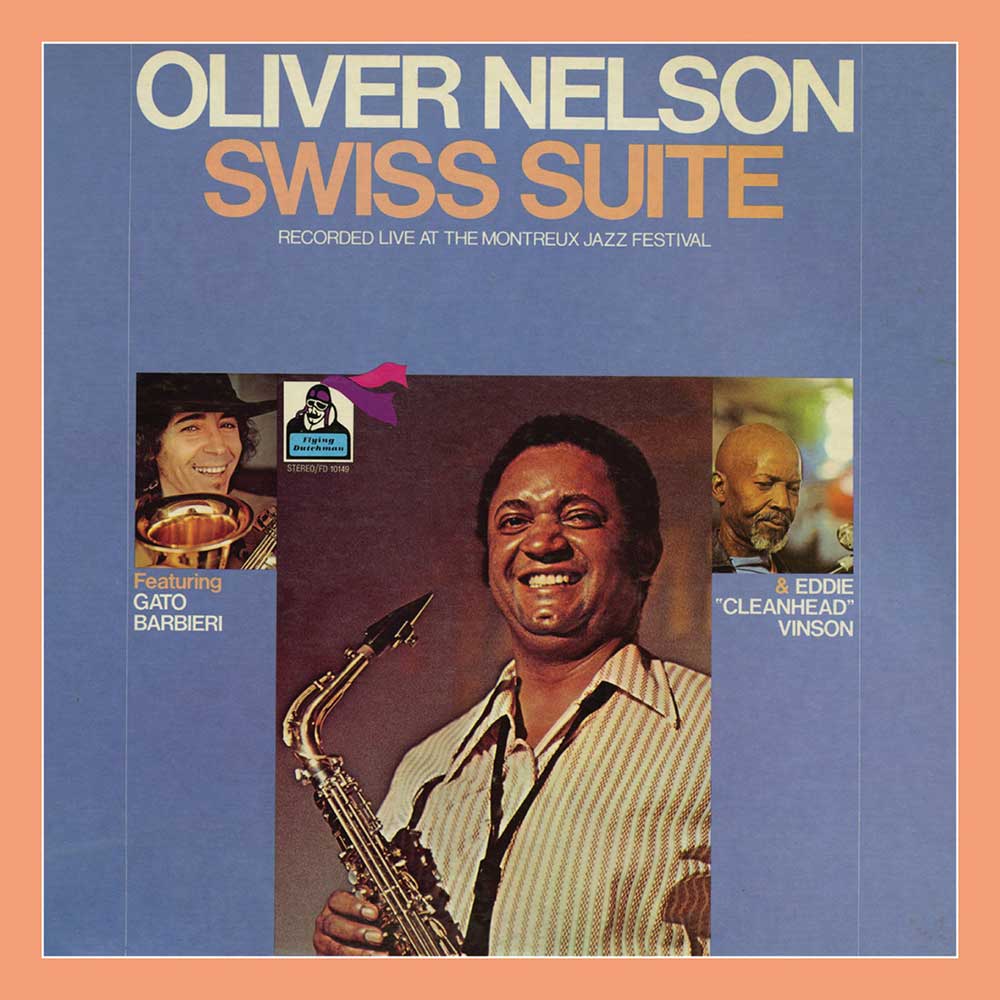
THE BLUE NILE-HIGH
The Blue Nile-High.
Label: Confetti Records.
Format: Vinyl.
Release Date: ‘5th’ June 2020.
Enigmatic, reluctant and contrarian are words that best of describe The Blue Nile. They’re the complete opposite of most bands. The Blue Nile have been described as publicity shy. That’ is an understatement. Ever since Paul Buchanan, Robert Bell and Paul Joseph Moore formed the Blue Nile, they’ve been one of the most low-profile bands in musical history. It seems that when they were formed thirty-nine years ago, The Blue Nile ticked the “no publicity” box. This has proved a double-edged sword, and resulted in The Blue Nile becoming one of the most enigmatic groups ever. Their story began thirty-nine years ago.
The Blue Nile were formed in 1981, when two friends Paul Buchanan and Robert Bell, met Paul Joseph Moore, all of whom met at Glasgow University. Before forming The Blue Nile, Buchanan and Bell were previously members of a band called Night By Night. Try as they may, a recording contract eluded them. Night By Night’s music wasn’t deemed commercial enough. So Paul, Robert and P.J. decided to form a new band, The Blue Nile.
Once The Blue Nile were formed, they set up their own record label Peppermint Records. It was on Peppermint Records that The Blue Nile released their debut single, I Love This Life. This single was then picked up and rereleased on the RSO label. Unfortunately for the Blue Nile, RSO became part of the Polygram label and I Love This Life disappeared without trace. Despite this setback, Blue Nile persisted.
Still, The Blue Nile kept writing and recording material after the merger of RSO with Polygram. Some of that material would later be found on A Walk Across the Rooftops. That was in the future.
Recording of The Blue Nile’s demos took place at Castlesound studio near Edinburgh. That’s home to the man whose often referred to as the fourth member of The Blue Nile, recording engineer Calum Malcolm. He was listening to recently recorded demos through the studio’s Linn Electronics system. It had recently had a new set of speakers fitted. So the company founder, Ivor Tiefenbrun, decided to visit Calum Malcolm to hear his thoughts on the speakers. That’s when Ivor Tiefenbrun first heard The Blue Nile.
Calum Malcolm played Ivor Tiefenbrun a demo of Tinseltown In The Rain. Straight away, the founder of Linn was hooked. He decided to offer The Blue Nile a record contract to the label he was in the process of founding. Most bands would’ve jumped at the opportunity. Not The Blue Nile.
It took The Blue Nile nine months before they replied to Ivor Tiefenbrun’s offer. When they did, the answer was yes. The Blue Nile’s debut album A Walk Across The Rooftops would be released on Ivor Tiefenbrun’s new label Linn Reords.
A Walk Across the Rooftops.
Linn Records and The Blue Nile seemed a marriage made in musical heaven. Linn Records weren’t like a major label, pressurising The Blue Nile into making a decision and delivering an album within a certain timeframe. Instead, Linn Records allowed The Blue Nile to do what they did best, make music. From the outside, this looked as if it was working, and working well.
Years later, Paul Buchanan commented that during Linn Records didn’t operate like a record label. Mind you, he conceded that, during this period, The Blue Nile didn’t operate as a band. However, eventually, in May 1984 The Blue Nile’s debut album was released on Linn Records.
On the release of A Walk Across the Rooftops, it was released to critical acclaim. Critics described the album as a minor classic. A Walk Across the Rooftops was described as atmospheric, ethereal, evocative, soulful and soul-baring. It also featured the vocals of troubled troubadour Paul Buchanan. Despite the critical acclaim A Walk Across the Rooftops enjoyed, it wasn’t a huge commercial success, reaching just number eighty in the UK. However, since the A Walk Across the Rooftops has been recognised as a classic album. So has the followup Hats.

Hats.
Unlike most bands, The Blue Nile weren’t in any rush to release their sophomore album Hats. There was a five year gap between A Walk Across the Rooftops and Hats. It was worth the wait. The Blue Nile had done it again. Hats was a classic.
Featuring seven tracks, written by Paul Buchanan, Glasgow’s answer to Frank Sinatra He’s a tortured troubadour, whose voice sounds as if he’s lived a thousand lives. Producing Hats was a group effort, with Paul, Robert and P.J. taking charge of production duties. Guiding them, was Callum Malcolm. On the release of Hats, British and American audiences proved more discerning and appreciative of the Blue Nile’s sophomore album Hats.
On the release of Hats in the UK in 1989, it was critically acclaimed and commercial success, reaching number twelve in the UK. Then when it was released in America in 1990, audiences seemed to “get” Hats. Not only did it reach number 108 in the US Billboard 200 Charts, but The Downtown Lights reached number ten in the US Modern Rock Tracks charts. It seemed that The Blue Nile were more popular in America, than in Britain. Gradually, The Blue Nile’s music was beginning to find a wider and more appreciative album. Especially when The Blue Nile decided to embark upon their debut tour later in 1989.

Although The Blue Nile were formed in 1981, and Hats was The Blue Nile’s sophomore album, the band had never toured. Partly, The Blue Nile seemed worried about replicating the sound of their first two albums. They needn’t have worried, with The Blue Nile seamlessly replicating the sonic perfection of A Walk Across The Rooftops and Hats on the sold out tour. The Blue Nile’s star was in the ascendancy.
Their first ever tour had been a huge success. The Blue Nile had conquered Britain. However, The Blue Nile had also made a breakthrough in America. Hats had sold well, and their American tour had been successful. Most bands would’ve been keen to build on this and released another album before long. Not The Blue Nile.
Seven long years passed, where Blue Nile fans wondered what had become of Glasgow’s most enigmatic trio. However, they’d been busy. After Hats found its way onto American radio stations, The Blue Nile, who previously, had been one of music’s best kept secrets, were heard by a number of prestigious musicians. Among them were Robbie Robertson and Annie Lennox, Michael McDonald. After a decade struggling to get their music heard, The Blue Nile were big news. During this period, America would become like a second home to The Blue Nile, especially Paul.
Paul took to life in America, and in 1991, decided to make it his home. This just so happened to coincide with Paul’s relationship with actress Rosanna Arquette between 1991 and 1993. Hollywood starlets and Sunset Boulevard was a long way from Glasgow’s West End. In the midst of Paul’s relationship, disaster struck for The Blue Nile, they were dropped by their label.
Linn Records and Virgin decided to drop The Blue Nile. For some groups this would’ve been a disaster. Not for The Blue Nile.
They signed a million Dollar deal with Warner Bros. While this sounded like the ideal solution for The Blue Nile, Paul made the deal without telling P.J and Robert. He later explained that “none of the others were in town at the time.” With a new contract signed, The Blue Nile began thinking about their third album, Peace At Last.
Peace At Last.
So the band started looking for the perfect location to record their third album. They travelled across Europe looking for the right location. This location had to be private and suit their portable recording studio. Cities were suggested, considered and rejected. Among them, were Amsterdam, Copenhagen and Venice. Being The Blue Nile, things were never simple. Eventually, after much contemplation The Blue Nile ended up recording what became Peace At Last in three locations, Paris, Dublin and Los Angeles. For the first time, The Blue Nile recorded an album outside of their native Scotland.
For their first album for a major label, things began to change for The Blue Nile. They brought onboard drummer Nigel Thomas, a string section and a gospel choir. Peace At Last was going to be a quite different album to A Walk Across The Rooftops and Hats. However, one things stayed the same, The Blue Nile continued to work with Calum Malcolm. With his help, Peace At Last was ready for release in June 1996. Before that, critics had their say.
Critics remarked upon the change of sound on Peace At Last. It had a much more understated, restrained sound. Acoustic guitars and piano play important parts. Still, The Blue Nile’s beloved synths remain. Occasionally, The Blue Nile add strings. There’s even a gospel choir on Happiness. Gone was the sound of A Walk Across the Rooftops and Hats. Peace At Last showed a different side to The Blue Nile and their music, one that divided the opinion of critics and fans. Paul, Robert and P.J. were back, but it was a different sound. One constant was Paul’s worldweary vocal. Glasgow’s very own Frank Sinatra, Paul Buchanan plays the role of the troubled troubadour, to a tee on songs about love, love lost, betrayal, heartbreak, growing up and growling old. Paul was still the tortured soul, who wore his heart on his sleeve on Peace At Last.
On the release of Peace At Last, in June 1996, it reached just number thirteen and sold poorly. For The Blue Nile this was disappointing, given it was their major label debut. Worse was to come when the lead single Happiness failed to chart. The Blue Nile’s major label debut hadn’t gone to plan. Alas, Peace At Last was the only album The Blue Nile released on a major label.

High.
Following Peace At Last, it was eight years before The Blue Nile released another album. High was released in 2004. During the last eight years, the three members of The Blue Nile had been leading separate lives. While P.J. and Robert were content with their lives in the West End of Glasgow, while Paul had been spending his time between Glasgow and Hollywood. Now they were back and ready to record their fourth album, High.
Once High was recorded, all that was left was for The Blue Nile to find a label to release the album. The Blue Nile had been dropped by Warner Bros. So with the completed album, The Blue Nile shopped High to various labels. Eventually, they settled on Sanctuary, which would release High in August 2004. However, before that, critics welcomed back The Blue Nille.
Eight years after the release of Peace At Last, critics remarked that High was a much more grownup album. Songs of family life and heartbreak sat side-by-side. Paul who had been suffering with illness and fatigue, seemed to have found a new lease of life. His lyrics are emotional, observational, cinematic and rich in imagery. They’re also poignant, and full hope, hurt and anguish. Meanwhile, Paul’s vocals were worldweary and knowing, while the music is emotive, ethereal and evocative. Critics love High. So did music lovers.
When High in August 2004, the album reached number ten in the UK. High proved to be The Blue Nile most successful album. This proved to be fitting.
Opening High is The Days Of Our Lives. Stabs of hypnotic, melancholy keyboards are repeated throughout the track. They provide the backdrop to Paul’s worldweary vocal. Soon, washes of synths, swathes of string and the occasional bursts of funky bass can be heard. Later, drums crack, adding to the drama, while Paul’s vocal is wistful and full of pathos. Just like he’s done so often, he makes the lyrics come alive, as he looks backwards at the past. This proves fitting, as High was their swan-song.
I Would Never was the first released from High. It has an understated, lush arrangement. That comes courtesy of washes of crystalline synths, acoustic guitar and pulsating bass. Then there’s Paul’s vocal. Glasgow’s troubled troubadour delivers a heartfelt vocal as he assures his partner “I Would Never turn my back on.” Quite simply, this is a beautiful ballad from a grown up Blue Nile.
Broken Loves opens with Paul’s half-spoken vocal accompanied by stabs of urgent keyboards. Frustration and emotion fill his voice as it grows in power and despair. The despair is caused by a relationship that’s all but over. This results in some soul searching from Paul. He paints pictures, reminiscing about their pasts. Memories from childhood seem to trigger an outpouring of emotion. His vocal becomes needy, and he’s determined they don’t give up on their relationship. Dramatic, emotive and heartbreaking, it’s an evocative description of a relationship gone wrong.
Just a lone acoustic guitar opens Because Of Toledo, as Paul delivers a world-weary vocal. Heartbroken and despondent, his life’s lost meaning and direction, because his relationship has ended. Again, Paul makes the lyrics come to life. They take on a cinematic quality. Soon, pictures unfold before your eyes, a heartbroken Paul sitting despondent, in the motel he sings about during this heartbreakingly beautiful breakup song.
Ethereal describes the introduction of She Saw The World. That’s before the tempo and drama increases. Driven along by drums, keyboards and washes of synths Paul delivers an urgent emotive vocal. Memories come flooding back as he reminisces about two people who drifted apart. Sadness fills his voice as he sings: “ She Saw The World and wanted it all.” Paul he remembers what he once had and lost. Oozing emotion, Paul’s lived-in, weary vocal and one of the best arrangements on High, result in one of the album’s many highlights.
Washes of synths shimmer, while a lone piano provides a contrast as High unfolds. Paul’s vocal is tender, but with a sense of resignation at the relationship that’s gone wrong. A drum machine provides the heartbeat as Paul’s vocal becomes a cathartic outpouring of emotion. Mixing power, passion and drama Paul lays bare his weary soul for all to hear.
As Soul Boy unfolds, drums crack and are matched by a pulsating bass and meandering guitar. Paul’s vocal is tender and needy. He delivers the some of the best lyrics on High. This includes: “let me be the one, there’s been no other one, trusted and true, for so long…I just want to be loved by you.” With an arrangement that’s reminiscent of vintage Blue Nile and Paul’s needy seductive, vocal this is The Blue Nile back to their best.
Everybody Else is quite different from the previous track. It shows The Blue Nile are determined their music stays relevant. It’s an uptempo track that’s the nearest thing to a dance track The Blue Nile produced. Paul’s vocal is accompanied by swathes of sweeping strings, pounding bass and hypnotic drums. He’s plays the role troubled troubadour to perfection, as The Blue Nile demonstrate another side to their music, on a track that’s not short of poppy hooks.
Stay Close closes High and sadly, the recording career of The Blue Nile. The tempo is dropped, a drum machine, crystalline guitar and washes of synths providing a melancholy backdrop for Paul’s vocal. He’s saved the best to last. It’s as if he knew this was farewell. Digging deep, he unleashes a soul-baring Magnus Opus. His vocal is needy as he pleads, “Stay Close to me.” However, he knows though, “you’ll go your own way.” You’re drawn into this scenario, feel and share Paul’s pain and heartache. He’s not giving up though, and delivers a heartachingly beautiful vocal on this heartbreaking paean. What a way for The Blue Nile to call time on their recording career?
Although The Blue Nile only recorded four albums in a twenty year period, it’s the quality of music that matters. These four albums were almost flawless. Certainly A Walk Across The Rooftop and Hats are classics. Peace At Last is probably the most underrated album in The Blue Nile’s back-catalogue. That brings us to High.
Having not released an album for eight years. During that period, The Blue Nile had been living separate lives. P.J. and Robert were living in the West End of Glasgow, while Paul lived a nomadic existence, flitting between Hollywood, Europe and Glasgow. He’d been involved in some high profile relationships, and by 2004, just when everyone thought The Blue Nile were no more, rose like a Phoenix from the ashes. They didn’t even have a record deal, so agreed a deal with Sanctuary Records to release High. It proved to be the most successful album of their career.
During the time they’d been away, The Blue Nile had matured as a band. Some people said they’d grownup. What had happened was life. Having been outside the bubble that was Blue Nile, P.J. and Robert had to get on with life. The Blue Nile was on a hiatus, maybe a permanent one. As for Paul, he was leading a very different life. This gave him the material for High.
On the nine songs that comprise High, you’re drawn into the album’s lush, atmospheric sound. Having captured your attention, The Blue Nile don’t let go. Before long, the listener has fallen in love. They fall in love with music that’s hauntingly beautiful, emotive, dramatic and pensive. Much of this is thanks to peerless vocal performances of Glasgow’s very own Frank Sinatra, Paul Buchanan. He plays the role of the troubled troubadour, to a tee. His worldweary, emotive, heartfelt and impassioned vocal sounds as if it’s lived the lyrics he’s singing about. Lived them not just once, but several times over. Paul’s vocal adds soulfulness to an album that references Brian Eno, Kraftwerk, Tim Buckley, classic soul and seventies funk. The result is a compelling, innovative album, High.
After High, people thought that The Blue Nile would return, possibly after another lengthy break. Sadly, that wasn’t to be. The Blue Nile were no more.
At least they did things their way. Right up until the release of High, The Blue Nile were enigmatic, almost reclusive and publicity shy. The Blue Nile weren’t exactly your normal band. Not for them the rock “n” roll lifestyle favoured by other bands. In many ways, musical fashions and fads didn’t affect them. Their attitude was almost contrarian. Albums were recorded slowly and methodically as The Blue Nile strived for musical perfection. This wasn’t a group willing to jump onto a musical bandwagon in pursuit of fame, fortune or starlets. Quite the opposite. It seemed to be their way or no way in the pursuit of musical perfection. The Blue Nile achieved that perfection four times, and ended their career on a High.
The Blue Nile-High.
CULT CLASSIC: TEENAGE FANCLUB- TALES FROM NORTHERN BRITAIN.
Cult Classic: Teenage Fanclub-Tales From Northern Britain.
There aren’t many Scottish bands have enjoyed the longevity and commercial success that Teenage Fanclub have enjoyed over the past four decades. Scotland’s Kings of jangle pop have been together for thirty-one years, released ten albums and toured the world several times and are still going strong. However, like many bands before them, it took a couple of albums before they established their “sound.”
This coincided with Teenage Fanclub signing to Creation Records where they enjoyed the most successful period of their career. The Creation Records Years began with 1991s The King and ended with their Tales From Northern Britain in 1997. It was their most successful album in Britain but failed to find a wider audience in North America and Europe. For Teenage Fanclub it was case of what might have been as a new chapter began in their career. Their story began eight years earlier in 1989 in a small town not far from Scotland’s musical capital, Glasgow.
For those unfamiliar with the geography of Scotland, Bellshill, is a small town twelve miles from Glasgow, where Teenage Fanclub were born in 1989. The nascent band emerged out of Glasgow’s C86 scene, and had been inspired by West Coast bands like The Beach Boys and The Byrds. Another major influence on Teenage Fanclub were Big Star, who Teenage Fanclub would be later be compared to.
Unlike Big Star, Teenage Fanclub was a quartet, whose original lineup featured guitarist Norman Blake, lead guitarist Raymond McGinley, bassist Gerard Love and drummer Francis MacDonald. From the early days of the band, Norman Blake, Raymond McGinley and Gerard Love who were Teenage Fanclub’s three principal songwriters shared lead vocal duties. That was the case when they came to record their debut album A Catholic Education for Paperhouse Records.
A Catholic Education.
Just a year after the band was founded, Teenage Fanclub released their debut album in 1990. A Catholic Education would later be described as a quite un-Teenage Fanclub album. The music was dark, harsh and peppered with cynicism and controversy.
Most of the controversy stemmed from Teenage Fanclub’s decision to turn their sights on Catholic church. For a band from a city divided by religion, that was a controversial move, and one that could alienate people. What made the decision to “attack” the Catholic church, was that Teenage Fanclub prided themselves on being apolitical band. The other surprise for a band who admired The Byrds, The Beach Boys and Big Star was the sound of A Catholic Education.
For much of A Catholic Education, Teenage Fanclub unleashed a mixture of grunge and heavy metal. The only hint of what was to come from Teenage Fanclub was the Norman Blake penned Everything Flows. It was a glorious slice of power pop and something that Teenage Fanclub would return to later. Before that, A Catholic Education was released on June 11th 1991.
Before that, critics reviewed A Catholic Education. Reviews of the album were mixed, and very few critics forecast the critical acclaim and commercial success that came Teenage Fanclub’s way. When A Catholic Education was released by Matador, the album failed to even trouble the British or American charts and was an inauspicious debut from Teenage Fanclub.
The King.
Just two months after the released of A Catholic Education, Teenage Fanclub returned with what was meant to be their sophomore album, The King. However, to some, The King was a quickly assembled collection of tracks.
The tracks that became The King had been recorded once Teenage Fanclub had completed what would be their third album, Bandwagonesque. Teenage Fanclub recorded nine tracks, including covers of Madonna’s Like A Virgin and Pink Floyd’s Interstellar Overdrive. Norman Blake remembers the recording: “One night we all got completely wasted. … and we said, “Let’s make a LP overnight. We’ll just improvise some songs and do some covers and cobble it all together”
Once The King was recorded, Teenage Fanclub hoped this would allow them to discharge heir contractual obligations to the US label Matador. This plan could have backfired.
Teenage Fanclub owed Matador an album, and as long as Matador accepted The King, then they had fulfilled their contractual obligations. The only problem was there was a possibility that the album could be rejected, if Matador didn’t believe the album was off a certain commercial standard. Fortunately, they didn’t despite the covers of Madonna’s Like A Virgin and Pink Floyd’s Interstellar Overdrive.
Nowadays, Teenage Fanclub deny any and all allegations that the album was an attempt to their contractual obligations. The band said that the loose, spontaneous and improvised nature of the album was the influence of producer Don Fleming. However, back in 1991 The King was a controversial album.
The King wasn’t exactly Teenage Fanclub’s finest hour, but despite this, Matador released the album stateside in August 1991 and deleted the same day.
Meanwhile, The King was released in Britain by Creation Records. Teenage Fanclub believed that the album was a mid-price limited edition of 1,000. However, the label passed 20,000 and sold them at full price. This some critics thought was optimistic.
Reviews of The King weren’t favourable, but despite this, Teenage Fanclub’s sophomore album reached fifty-three in the UK charts. This was ironic as very few critics thought that The King would even trouble the charts. Teenage Fanclub had the last laugh.

Bandwagonesque.
Now signed to Alan McGhee’s Creation Records, Teenage Fanclub like a magician pulling a rabbit from a hat, delivered the completed version of Bandwagonesque. It had been recorded at Amazon Studios, Liverpool, between the ‘9th’ April to the ‘12th’ of May 1991. Bandwagonesque featured twelve songs which saw Teenage Fanclub come of age musically.
Just like previous albums, songwriting duties were split between the band members. Raymond McGinley wrote I Don’t Know and Norman Blake penned The Concept, What You Do to Me, Metal Baby and Alcoholiday. Meanwhile, Gerard Love had written December, Star Sign, Pet Rock Guiding Star and Is This Music? Gerald Love then joined forces to write Sidewinder, while the only track credited to Teenage Fanclub was Satan. These twelve tracks would find Teenage Fanclub maturing as songwriters and musicians.
When it came to choosing a producer for Bandwagonesque, the partnership of Paul Chisholm, Don Fleming and Teenage Fanclub returned. They were responsible for an album that stood head and shoulders above Teenage Fanclub’s two previous albums, Bandwagonesque.
On Bandwagonesque Teenage Fanclub’s trademark ‘sound’ began to take shape. It had been influenced by The Byrds and Big Star. Byrdsian, jangling guitars were joined by close, cooing, harmonies and a melodic fusion of indie rock and hook-laden power pop. Seamlessly, though, Teenage Fanclub could switch between laid back and melodic to a much more powerful, rocky sound. This would find favour with critics and record buyers.
Before Bandwagonesque was released, critics had their say on the album. For once, critics were in agreement, and there were no dissenting voices. Bandwagonesque, critics agreed, was one of the finest albums of 1991. No wonder, with songs of the quality of The Concept, What You Do To Me, Star Sign, Alcoholiday and Is This Music? For Teenage Fanclub, Bandwagonesque was a career defining album. Spin Magazine went further, and named Bandwagonesque its best album of 1991. Things were looking good for Teenage Fanclub.
Especially when Star Sign was released in August 1991, and reached number four on the US Modern Rock charts. Meanwhile, Star Sign stalled at just forty-four in the UK. The followup The Concept, a rocky anthem, reached a disappointing fifty-one in the UK, but reached number twelve on the US Modern Rock charts. Teenage Fanclub’s music was finding an audience in America for the first time. Maybe Teenage Fanclub’s third album would find them cracking America for the first time?
That was the case. When Bandwagonesque was released on 19 November 1991, it reached number twenty-two in the UK, and 137 on the US Billboard 200. Teenage Fanclub it seemed, were going places.
Having toured Bandwagonesque, and enjoyed their newfound fame, eventually, Teenage Fanclub’s thoughts turned to their fourth album. This they would name after a song by one of their favourite bands.
Thirteen.
Unlike most bands, Teenage Fanclub wasn’t reliant on one or two songwriters, and every member of the band was contributing songs. That was the case with their fourth album, Thirteen, which was named after a song by Big Star.
The four members of Teenage Fanclub had all contributed songs for Thirteen, with Gerard Love writing Hang On, Radio, Song to the Cynic, Fear Of Flying and Gene Clark.Norman Blake’s contributions were The Cabbage, Norman 3, Commercial Alternative and Ret Liv Dead, while Raymond McGinley wrote 120 Mins and Tears Are Cool. Drummer Brendan O’Hare’s only contribution to Thirteen was Get Funky, which like the rest of the album was recorded in Glasgow’s CaVa Studios.
When work began in October 1992, Teenage Fanclub had decided to produce Thirteen themselves. They had co-produced their first three albums, so felt ready to make the step up. The only problem was, it took six months to record Thirteen. This was quite unlike Teenage Fanclub who usually recorded albums quickly. The problem was they were missing a co-producer.
Teenage Fanclub had previously employed a co-producer, who acted as a sounding board for the band, and would’ve also ensured they didn’t spend too long honing, polishing and perfecting the tracks on Thirteen. That’s what seemed to have happened, and eventually, Thirteen was finished by April 1993. This left six months before the album was released.
Prior to the release of Thirteen, critics received their advance copies of the album, and to say they didn’t like the album was an understatement. Critics seemed to loathe the album and reviews of Thirteen were scathing. That’s despite songs of the quality of Hang On, Norman 3, Radio and Song to the Cynic. For Teenage Fanclub this was a huge and crushing blow.
At least when the lead single from Thirteen, Radio was released in August 1993, it reached number thirty-one in UK. The followup Norman 3, was released in September 1993, but stalled at just fifty in the UK single’s charts. This was another disappointment for Teenage Fanclub.
Despite the disappointing reviews and failure of the single Norman 3, Teenage Fanclub’s fortunes were set to improve when Thirteen was released in October 1993, and reached number fourteen in Britain. This meant Thirteen was Teenage Fanclub’s most successful British album. The only disappointment was that Thirteen failed to trouble the US Billboard 200. However, this wasn’t the only disappointment for Teenage Fanclub.
After the release of Thirteen, drummer Brendan O’Hare announced he was leaving Teenage Fanclub and The usual “musical differences” were cited. Paul Quinn, the former Soup Dragons’ drummer was drafted in to replace Brendan O’Hare. Despite this, it was was a worrying time for Teenage Fanclub,.There was one small crumb of comfort though.
In February 1994, Hang On was released as the third and final single from Thirteen. It reached number nineteen on the US Modern Rock charts. Little did Teenage Fanclub realise that it was the last hit single they would enjoy in America.

Grand Prix.
Although Thirteen had been the most successful album of Teenage Fanclub’s career, the scathing reviews hurt. They had spent six months recording, honing and perfecting Thirteen, and to make matters worse, Brendan O’Hare had left the band. This was a testing time for Teenage Fanclub, as they began work on their fifth album.
For the new album, thirteen songs were written. Norman Blake wrote “Mellow Doubt, Neil Jung, Tears, I Gotta Know and Hardcore Ballad. Gerard Love wrote Sparky’s Dream, Don’t Look Back, Discolite and Going Places, while Raymond McGinley contributed About You, Verisimilitude, Say No and I Gotta Know to what would become Grand Prix.
Recording of Grand Prix began on the ‘5th’ of September 1994, and by then, Teenage Fanclub had decided to employ David Bianco as co-producer. He became their sounding board over the next month spent recording at The Manor, Shipton-On-Cherwell. Just over a month later, on the ‘9th’ of October 1994, Grand Prix was complete. Little did they realise they had recorded one of their finest albums.
When critics heard Grand Prix, they were in no doubt, the album was a minor classic. It veered between melodic and melancholy, became ruminative and rocky. Grand Prix literally oozed quality, with About You, Sparky’s Dream, Don’t Look Back, Neil Jung and I’ll Make It Clear showcasing Teenage Fanclub’s considerable musical skills. They seemed to have been stung by the criticism of Thirteen, and returned with the best album of their career.
When Grand Prix was released on May 29th 1995, it was a hit on three continents. In the UK Grand Prix reached number seven, becoming the most successful album of their career. Elsewhere Grand Prix reached sixty-eight in Japan and fifty-seven in Australia. Teenage Fanclub were now one of the biggest indie bands in Britain.

Songs From Northern Britain.
What made the rise and rise of Teenage Fanclub all the more incredible was that they had only been formed in 1989, since then, they had released five albums and and were popular across the globe. Everything was happening fast for Teenage Fanclub, who were ready to record a new album by 1996.
Just like previous albums, the band’s songwriters got to work. Norman Blake wrote Start Again, I Don’t Want Control of You and Winter then cowrote Planets with former band member Francis MacDonald. Gerard Love penned Ain’t That Enough, Take the Long Way Round, Mount Everest and Speed Of Light. Raymond McGinley played his part writing Can’t Feel My Soul, It’s A Bad World, I Don’t Care and Your Love Is the Place Where I Come From. These songs were recorded at some of London’s top studios with co-producer David Bianco.
Some of Songs From Northern Britain was recorded at Abbey Road Studios, while other sessions took place at AIR Studios. Other sessions saw Teenage Fanclub head to leafy Surrey, and Rich Farm Studios. Eventually, after recording at various studios, Teenage Fanclub had completed their sixth album, which was released in summer on the ‘29th’ of July 1997.
Songs From Northern Britain which was a tongue-in-cheek reference to the Britpop movement, saw Teenage Fanclub pickup where they left off on Grand Prix. It was another album of carefully crafted songs, including Start Again, Can’t Feel My Soul, Don’t Want Control of You and I Don’t Care. Despite an album that was variously cerebral, defiant, hook-laden, joyous, melodic, mellow, playful and reflective critics were undecided. Some loved the album, others loathed it. Rolling Stone which had been supportive of Teenage Fanclub, set their sights on the band. Not for the first time, were Rolling Stone left with egg on their face.
When Songs From Northern Britain was released. It reached number three in Britain, and became Teenage Fanclub’s most successful album. In Australia, Songs From Northern Britain reached number seventy. Elsewhere, including America, Teenage Fanclub continued to be a popular live draw. However, they sold more albums in Britain, than anywhere else, where the Creation Records years were drawing to a close.
The Creation Records was when Kings of Jangle Pop, Teenage Fanclub, released the best music of their career. This began with Bandwagoneque, which musical magicians Teenage Fanclub pulled from their hat. While Thirteen was an album that failed to win over critics. Grand Prix and Tales From Northern Britain were both minor classics. Teenage Fanclub left Creation Records on a resounding high.
Twenty-three years later, and with the benefit of hindsight, Teenage Fanclub released the finest music of their four decade at career at Creation Records. This includes Bandwagoneque, Grand Prix and their Creation Records’ swansong Tales From Northern Britain a hook-laden cult classic with anthems aplenty which is the perfect introduction to Scotland’s very own Kings of Jangle Pop, Teenage Fanclub.
Cult Classic: Teenage Fanclub-Tales From Northern Britain.

CULT CLASSIC: MACARTHUR-MACARTHUR.
Cult Classic: MacArthur-MacArthur.
Having completed a tour of duty with the United States Marine Corps, Ben MacArthur returned home to Sagina, Michigan in 1977. By then, jobs were few and far between, and it looked as if a recession was about to hit the rustbelt. It was hardly the welcome home he had envisaged. The future looked bleak. Then he met Bill Heffelfinger, a seventeen year old musical prodigy.
Since Ben MacArthur had been away, Bill Heffelfinger had started dating his younger sister. When the two men met, Ben discovered that Bill was not just a talented musician, but a gifted arranger. One day, it became apparent that Bill wasn’t just a virtuoso guitarist, but was equally comfortable on keyboards.
Ben only realised this when he heard Bill playing the piano in his parent’s house. He was stopped in his tracks as Bill played Neil Young’s The Last Trip To Tulsa. What made this remarkable, was Bill didn’t even know the song. However, Bill could read music so was able to play The Last Trip To Tulsa. What’s more, Bill made it look so easy. Maybe Bill was just the person Ben MacArthur was looking for?
For some time, Ben had been writing poetry. This began when Ben was a member of the U.S. Marine Corps. In his spare time, he retired to his bunk and wrote poetry. Ben was unburdening himself emotionally via poetry. This was maybe a cathartic process, and helped Ben survive his tour of duty. However, when he returned home safely, Ben didn’t stop writing.
After watching Bill play The Last Trip To Tulsa, Ben began talking to his sister’s boyfriend. Soon, they were talking music. Ben told Bill about Neil Young, and then began to tell him about the poetry he had written. Not long after this, Ben went to watch Bill playing with the band Labyrinth.
They were playing at a local fair. When Labyrinth took to the stage, Ben noticed that Bill was playing guitar. Soon, it became apparent that he was an even better guitarist than keyboardist. With Bill giving a virtuoso performance on guitar, he had the band eating out of his hand. Especially, when Labyrinth covered Rush’s 2112. By then, Ben had made his mind up, that he would be in a band with Bill. That was in the future.
Soon, the two men began to write songs together.They were an unlikely partnership. Ben was the senior partner, who had already written a few songs. He was fresh out of the U.S. Marine Corp, and had seen a bit of the world. Bill was just seventeen, but already was regarded as a musical whizz kid. Both men however, had time on their hands.
With jobs scarce, the pair needed something to fill their days. So they grabbed a couple of guitars and began to write songs. For Ben, writing songs wasn’t much different to writing poetry. Both men unburdened themselves through music, and quickly they realised that the songs they were writing had potential. Bill took them away to arrange them.
Despite being just seventeen, Bill was able to arrange the songs so that they took on a classic sound. By then, Ben MacArthur knew that Bill Heffelfinger was no ordinary seventeen year old. The word prodigy had been invented for him. With Bill’s arrangements in place, the two friends began to think about putting together a band. This band would become MacArthur, who released their eponymous debut album in 1979, which was an ambitious concept album.
What they needed was a rhythm section. Ben MacArthur found his bassist in the unlikeliest of places…on a building site. By then, Ben was working as a roofer, when he met guitarist Scott Stockford. As the two men became friends, they began to write songs together. Eventually, Ben asked Scott if he would interested in joining the nascent band. However, there was a rub, Ben wanted John to play bass. Straight away, he agreed.
That day, Scott Stockford went out and bought a brand new bass. When he arrived at the first band rehearsal, Scott brought along drummer Jeff Bauer. It seemed all Ben’s problems were solved in one fell swoop.
And so it proved. Not only did Jeff Bauer prove to be a talented drummer, but Scott Stockford soon mastered the bass. He was a natural and formed a potent partnership with drummer Jeff Bauer in the rhythm section. The final pieces in the jigsaw that was MacArthur had fallen into place.
By 1978, MacArthur began playing together regularly. They were soon honing their songs and sound. It didn’t take long for them to realise that the songs that MacArthur were playing had potential. So MacArthur decided to record an album in 1979.
Despite deciding to record an album in 1979, MacArthur didn’t play live often. There weren’t many venues who were putting on live bands. The late-seventies was the disco era, and many live venues had been converted into discos. When MacArthur played live, they combined their owns songs with covers of songs by Led Zeppelin, Yes, Pink Floyd and Neil Young. However, concerts were few and far between. Maybe after recording and releasing their debut album, doors would open for MacArthur?
In 1979, the four members of MacArthur began working on their eponymous debut album. Ben MacArthur wrote all the lyrics, while members of MacArthur wrote the music. Everyone had played their part in the album. The music to Laughing Like A Lark, Generations-First Contact and Of Only Then waspenned by the four members of MacArthur. Light Up and Push Up were credited to MacArthur and Bill Heffelfinger. He also penned the music to The Black Forest, Prelude No.1 In C Major and The Shock Of The New. These eight tracks were recorded by MacArthur using what was the latest piece of musical equipment for hobbyist musicians, the four-track recorder.
Using a four-track recorder to record MacArthur wasn’t going to be easy. Ideally, MacArthur could’ve used many more tracks than four. Luckily, Bill Heffelfinger proved to be a talented engineer, and managed to record what was an ambitious album. Partly that was because of how many instruments MacArthur used to record their eponymous debut album.
With their four-track recorder, MacArthur headed to the studio. This was familiar territory for them. With very few live venues where they could play, MacArthur spent most of their time in the studio. This time, though, MacArthur were about to record their eponymous debut album. So when the band began to setup, their must have been a degree of trepidation. The rhythm section of drummer and percussionist Jeff Bauer and bassist Scott Stockford would provide the album’s heartbeat. Lead vocalist Ben MacArthur played acoustic and electric guitar. Bill Heffelfinger played organ, piano, synths and acoustic, classical and electric guitar. He also produced MacArthur, bringing the album together over many a long night. Eventually, MacArthur was completed and now all that was left was to release MacArthur.
That was easier said than done. There was no record company riding to the rescue of MacArthur and offering to released their eponymous debut album. Instead, MacArthur had to find a record company that would press a small amount of albums. However, most labels required an order of 500 or 1,000 album. That was way beyond MacArthur’s budget. It also meant they could be left with piles of unsold albums. Eventually, Bill Heffelfinger’s father found a solution.
Eugene Heffelfinger was a teacher at the local high school, and had a contact at RPC Records, in Camden, New Jersey. Regularly, Euegen Heffelfinger put business RPC Records’ way. So they agreed to press 200 albums for $2,000. There was a problem though..money.
Eventually, Scott Stockford took out a loan for $2,000 and 200 copies of MacArthur were pressed. This left MacArthur to sell the copies.
Once the copies of the album arrived, the members of MacArthur spent time sticking labels on the front of plain white album covers, and then glueing credits on the back. With the money spent on pressing the 200 albums, and it was a case of needs must. After that, MacArthur concentrated on selling the albums.
The members of MacArthur spent their time travelling between Saginaw, Midland and Bay City. They sold copes of MacArthur to record shops, record dealers and at record fairs. MacArthur even managed to secure an appearance on the WKYO radio station, where they promoted the album. All their efforts paid off, and the majority of the MacArthur albums were sold by 1980.
By then, MacArthur had been well received locally. Reviews and radio stations forecast a great future for MacArthur. However, with most of the albums sold, and the members of the MacArthur were drifting apart. The band spent less time playing together, and more time completing college degrees. Gradually, MacArthur drifted apart, and eventually the band went their separate ways.
Their legacy was MacArthur, a progressive, psychedelic concept album that looks at the human condition. Everything from new beginnings to difficulties and discoveries are considered by MacArthur, on their eponymous debut album.
Light Up, a three minute instrumental opens MacArthur. Crystalline, chiming guitars play while galloping drums join with a piano. Soon, a scorching guitar solo cuts through the arrangement. It’s panned right to left, as gradually, the arrangement builds. Already, it’s hard to believe the album was recorded using just four tracks Engineer and producer Bill Heffelfinger worked miracles. Instruments are spread across the stereo spectrum. The guitar that’s been panned hard right steals the show. This blistering solo is played with speed and accuracy, as the rest of MacArthur jam on what’s a hopeful sounding track. It allows MacArthur to showcase their considerable skills.
Just a quiet, wistful acoustic guitar opens Laughing Like A Lark. Soon, Ben’s impassioned vocal enters. Briefly, he sounds like Led Zeppelin’s Robert Plant. Then, the volume increases and his vocal grows in power as instruments enter. The rhythm section, synths and a droning organ combine. They accompany Ben whose vocal is a mixture of emotion, frustration and drama. When his vocal drops out, MacArthur jam, before the guitar takes centre-stage. As it drops out, rolls of drums are panned right to left, as an acoustic guitar is strummed. Each member of MacArthur gets the chance to shine. Especially Bill as another stunning, bristling guitar solo unfolds. Later, the tempo changes, and the urgency is gone. Replacing it isa much more laid back progressive sound. Gradually, the arrangement stirs as Ben’s vocal returns and he breathes meaning into the lyrics while washes of organ accompany him. Just like the previous track, MacArthur’s playing is almost flawless as they combine elements of classic and progressive rock with fusion.
As Generations-First Contact unfolds, just a guitar laden with effects plays. It’s joined by a wash of synths before Ben’s vocal enters. His vocal is full of emotion, as he sings of an over populated world and a solution to this. Meanwhile, the arrangement is slow, deliberate and moody. A strummed guitar, drums and searing electric guitar enter, and another solo unfolds. Again, it’s flawless as Bill delivers a virtuoso performance. Then at 4.39 the tempo changes, and the arrangement slows, and meanders alone before Ben’s vocal returns. He continues to consider the problem of an over populated world. Then when his vocal drops out, MacArthur enjoy the opportunity to jam, and reserve one of their best performances for a genre-melting track they cowrote.
Just a picked classical acoustic guitar opens Push On. It’s multi-tracked, and panned left and right. Soon, electric guitars replace their acoustic cousins, as the rhythm section enter. as MacArthur soon are combining classic and progressive rock with folk rock. By then, Ben’s singing about fear can haunt people if they fail to deal with it.So much so, that sometimes, they have to briefly escape from it. “In the woods out in the country, there’s a secret place you go, to walk out from reality, but never let it show.” Behind him, guitars, the rhythm section and an organ combine to create a mid-tempo arrangement. When the vocal drops out, the rest of MacArthur stretch their legs. A blistering guitar solo is at the heart of the arrangement. Meanwhile mesmeric guitars are panned right and left, and join with the rhythm section in creating what’s one of the best tracks on MacArthur. Especially given the quality of Ben MacArthur’s thought provoking lyrics.
A distant keyboard opens Of Only Then, and grows nearer.As it does, it’s joined by the rhythm section and guitar. They take care not to overpower Ben’s emotive vocal. Adding to the emotion is the keyboard, as an anthem begins to unfold. Meanwhile, Ben sings of loneliness, love, hopes, dreams and sadness. The most poignant lines are; “I won’t forget your loving stare…and now the time has come to go my weary way.” As the song unfolds, and heads into anthem territory, it’s reminiscent of REO Speedwagon, Styx and even early Chicago. Then at 3.22 the vocal drops out, and MacArthur the song becomes an instrumental. Again, this allows MacArthur to showcase their considerable musical skills. They seem to relish the opportunity to jam. Just like previous tracks, the guitar is at the heart of the song. So is the piano, which adds a beautiful, melancholy hue.
The Black Forest is a six part instrumental suite, lasting six minutes. From an understated introduction, MacArthur take the listener on a musical adventure. Just acoustic guitars play, before an effects laden guitar signals all change. The arrangement becomes rocky, as it explodes into life. Just the guitar and rhythm section kick loose, before the arrangement chugs along. Then when a bristling guitar is unleashed, and unites with the drums there’s an element of drama and urgency. It’s the scorching guitar that’s stealing the show. Briefly, it’s panned, before the drums take centre-stage as the track moves from progressive to futuristic. Later, as if spent, the arrangement takes on an understated sound with just subtle guitars meandering alone, and leaving just a pleasing and pleasant memory of a musical adventure.
Prelude No.1 In C Major is very different to previous tracks. Just a lone acoustic guitar is played in a classical style. It’s played slowly and gently, with space left in the arrangement. Then at 1.39 the track dissipates, and there’s near silence. That’s until a rumbling piano is played with power and passion. It continues the classical theme, as it’s played deliberately and dramatically. Towards the end, the arrangement slows, before reaching a crescendo. By then, this reinforces that MacArthur, a truly versatile band, were no ordinary group.
The Shock Of The New, a piano lead track closes MacArthur. Deliberate, mesmeric stabs and flourishes of piano are replaced by a buzzing synth. Music’s past is replaced by music’s future, as synths dominate the arrangement. A buzzing bass synth and whirling vortexes of synths are joined by an organ. It’s a reminder of music’s past. So are dark chords played on the piano. They’re allowed to take centre-stage, as MacArthur draws to a close. A flamboyant flourish brings to an end what surely the four members of MacArthur thought was only the start of the story.
Sadly, MacArthur was the only album that the band released. By 1980, the band had run its course. The members of the band were concentrating on careers and college degree. MacArthur just drifted apart.
Of the 200 albums that they had pressed, at most 180 had been sold. MacArthur was one of music’s best kept secrets. With its mixture of classic rock. folk rock,fusion, jazz, psychedelia and progressive rock, MacArthur was a truly timeless album. Sadly, it didn’t find the audience it deserved upon its release.
Nowadays, record collectors speak almost reverentially in hushed tones about MacArthur. Original copies were almost impossible to find, and if one became available, the price was prohibitive to most record collectors. So the reissue of MacArthur, a cerebral, timeless concept album will be welcomed.
MacArthur were a band who could’ve and should’ve reached greater heights. They oozed talent. In Ben MacArthur, they had a talented lyricists, vocalist and guitarist. Bill Heffelfinger was a virtuoso guitarist, who was also a gifted keyboardist and producer. Along with a rhythm section of bassist Scott Stockford and drummer Jeff Bauer, MacArthur were a band who were technically flawless. Part of the problem was, MacArthur had to release their eponymous debut album themselves.
They had to find $2,000 to press 200 albums, and then sell them. It must have been a soul-destroying experience, hauling albums from shop to shop, and city to city. Even then, MacArthur didn’t sell the 200 album. Ten albums were impounded by the police, when a record shop that was selling them was raided. Still, MacArthur persisted, and continued the round of record shop, record dealers, record fairs and radio stations. Eventually, the majority of the copies of MacArthur were sold. By then, MacArthur must have wondered how different things might have been if they had been signed to a record label?
If MacArthur had been signed to a record label, one can only wonder what producer Bill Heffelfinger would’ve been able to do with a forty-eight track recording studio at his disposal? He had worked wonder with the four-track recorder on MacArthur, and created an album is a truly timeless, genre-melting cult classic.
Cult Classic: MacArthur-MacArthur.
DR JOHN-DR JOHN’S GUMBO.
Dr John-Dr John’s Gumbo.
Label: Music On Vinyl.
Release Date: ‘29th’ May 2020.
Success didn’t come overnight for the late, great Dr John. His first three albums failed to chart and his fourth album The Sun, Moon and Herbs stalled at 184 in the US Billboard 200 in August 1971. This was progress for one of music’s great survivors. He was on his way and returned in April 1972 with his breakthrough album Dr John’s Gumbo which will be reissued by Music On Vinyl on the ‘29th’ May 2020. By then, Dr John was thirty-one and was into his third decade as a musician.
The future Dr John was born Malcolm John “Mac” Rebennack Jr, on November the ‘20th’ 1940, in New Orleans, Louisiana. He grew up in the Third Ward of New Orleans, and music was always around him.
His father Malcolm John Rebennack ran an appliance shop in the East End of New Orleans, where he repaired radio and televisions and sold records. He introduced his son to the music of King Oliver and Louis Armstrong. However, one of the people who inspired Mac Rebennack was his grandfather who he heard singing minstrel songs. So did hearing his aunts, uncles, cousins and sister playing the piano. Despite this, Mac Rebennack wasn’t inspired to take music lessons.
This only came later when he was a teenager. He also joined a choir, but was soon asked to leave. However, over the next few years Mac Rebennack learnt to play the guitar and later piano, and through his father’s contacts in the local music scene was soon playing alongside some well known names including Guitar Slim and Little Richard. This was just the start for Mac Rebennack.
When he was thirteen, he met Professor Longhair and he was instantly impressed by the flamboyant showman. Mac Rebennack was soon playing alongside his new hero, and this was the start of his professional career.
Around 1955 or 1956, Mac Rebennack made his debut in the recording studio when he was signed as a singer and songwriter by Eddie Mesner at Aladdin Records. The future Dr John’s career was underway and towards the end of 1957 with the help of Danny Kessler, he joined the musician’s union. That was when he considered himself to be a professional musician.
By the time he was sixteen, Mac Rebennack had been hired by Johnny Vincent at Ace Records as a producer. This led to him working with Earl King, James Booker and Jimmy Clayton. This was all good experience for the young, up-and-coming musician
Despite his new career, Mac Rebennack was still a student at Jesuit High School. This didn’t stop him playing in night clubs and forming his first band The Dominoes. The Jesuit fathers weren’t happy with Mac Rebennack’s lifestyle and issued him with an ultimatum. He was to either stop playing in nightclubs or leave the school. Not long after this, he was expelled from the school. It turned out to be the best thing that happened to him as he was able to concentrate on music full time.
By the late-fifties, Mac Rebennack was playing with various bands in and around New Orleans. This included his own band Mac Rebennack and The Skyliners. However, the young bandleader had also embarked upon a career as a songwriter.
In 1957 Mac Rebennack cowrote his first ever rock ’n’ roll song Lights Out. It was recorded by New Orleans based singer Jerry Byrne, and released on Specialty Records later in 1957 and give him a regional hit.
Two years later, in 1959, Mac Rebennack also enjoyed a regional hit single when he released Storm Warning, a Bo Diddley insprired instrumental, on Rex Records. This was the first hit he enjoyed in a long, illustrious and eventful career.
After Storm Warning, Mac Rebennack and Charlie Miller joined forces and recorded singles for various local labels. This included Ace, Ron, and Ric. They continued to release singles until Charlie Miller decided to move to New York to study music. Mac Rebennack stayed in the Big Easy and continued his career.
Around 1960, Mac Rebennack was playing a gig in Jacksonville, Florida, when his career was changed forevermore. That night, his ring finger on his left hand was injured by a gun shot during an incident. This was a disaster for a right handed guitarist and when he recovered he made the switch to bass guitar. However, after a while Mac Rebennack switched to the instrument he made his name playing, the piano.
Soon, Mac Rebennack had developed a style that was influenced by Professor Longhair who he had met when he was thirteen. It looked as if this was a new chapter in Mac Rebennack’s musical career.
That wasn’t the case and Mac Rebennack ended up getting involved in the dark underbelly of The Big Easy. He was using and selling illegal drugs and at one point, running a brothel. It was almost inevitable that Mac Rebennack was going to have a brush with the law.
He did. In 1963, when Mac Rebennack was arrested on drug charges and sentenced to two years in the Federal Correctional Institution, in Fort Worth, Dallas. By the time his sentence ended and he was released in 1965, New Orleans was a different place.
There had been a campaign to rid the city of its clubs, which meant that musicians like Mac Rebennack found it hard to find work. That was why he decided to move to LA where he knew he could find work as a session musician.
It turned out to be a good decision, and it wasn’t long before Mac Rebennack was one of the first call session musicians in LA. That was the case for the rest of sixties and the seventies. He was also a member of the legendary Wrecking Crew and worked with some of the biggest names in music. This was the new start Mac Rebennack had been looking for when he left New Orleans.
Growing up Mac Rebennack had developed an interest in New Orleans voodoo. This was something he revisited during his early years in LA when he began to develop the concept of Dr John, which initially he thought could be a persona for his friend Ronnie Barron. The concept was based on the life of Dr John, a Senegalese prince, a witch doctor, herbalist and spiritual healer who travelled to New Orleans from Haiti. He was a free man of colour who lived on Bayou Road, and claimed to have fifteen wives and over fifty children. It was believed Dr John also kept a variety of lizards, snakes, embalmed scorpions as well as animal and human skulls, and sold gris-gris, voodoo amulets which were meant to protect the wearer from harm. This Mac Rebennack incorporated into the project he was working on for Ronnie Barron.
Soon, Mac Rebennack had decided to write, produce and play on an album and stage show based on his concept with Dr John emblematic of New Orleans’ heritage. It was meant to feature Ronnie Barron. However, when he dropped out of the project Man Rebennack took over the role and adopted the identity of Dr John. This was a turning point in the life and career of the man born Mac Rebennack.
Dr John became the name that he found fame as and won five Grammy Awards. However, that was still to come.
Having adopted the moniker Dr John,The Night Tripper he was signed by Atco Records and recorded his debut album Gris Gris. It was his his own “voodoo medicine” and marked the start of what’s now regarded as a golden era for Dr John.
Gris Gris.
When a copy of Dr John’s debut album Gris Gris, which was sent to Atlantic Records’ founder Ahmet Ertegun he disliked the album so much, that he was reluctant to even release the album and said: “how can we market this boogaloo crap?” This wasn’t the response that Dr John had been hoping when he recorded Gris Gris which was a combination of psychedelia, blues, free jazz, R&B, soul, funk, jazz. Add to this psychedelic stew the authentic music of the melting pot that is New Orleans and the voodoo image that Dr John had carefully cultivated and Gris Gris was like no other album that Atlantic Records had released. That presented the label with a huge problem.
Atlantic Records’ PR department had idea to promote an album like Gris Gris, as they had no cultural reference points, nothing to compare the album to. Despite the best efforts of Atlantic Records PR department, when Gris Gris was released on January the ’22nd’ 1968 and introduced the world to Dr John The Night Tripper, it failed to trouble the charts and neither critics nor record buyers understood Dr John’s groundbreaking debut album. However, like so many albums that fail to find an album on their release, Gris Gris was later reappraised and belatedly, was recognised as a seminal album that was the start of a rich vein of form from Dr John.
Gris Gris was the start of a six-year period when Dr John could no wrong, and released seven innovative albums that are among the his finest work.

Babylon.
This included his sophomore album Babylon on January the ’17th’ 1969. It was a powerful, cerebral and innovative genre-melting album which socially had much in common with Dr John’s debut album Gris Gris.
Sadly, critics didn’t ‘get’ Babylon and the album which failed commercially. However, just like Gris Gris, Babylon was later reappraised by critics and nowadays is regarded as one of his finest albums and a minor classic.
Remedies.
Following the commercial failure of Babylon, things went from bad to worse for Dr John, before he could begin work on his third album Remedies. This started when a deal went south, and he was arrested by the police and ended up in jail. It was a worrying time for Dr John who was parole, and if he ended up with a parole violation, he knew he might end up in the infamous Angola jail. That didn’t bare thinking about, and already Dr John was desperate to get out of the local jail. However, he needed someone to post bail, so contacted his managers who he remembers: “were very bad people.” This proved to be an understatement.
Not long after this, Dr John’s managers had him committed to a psychiatric ward, where he spent some time. By then, it was obvious to Dr John that his managers were no longer playing by the rules. All he wanted to do was make music, and everything that had happened recently were nothing to do with music. Instead, it was all connected to Dr John’s increasingly chaotic lifestyle, which made it all the more frustrating for those that realised just how talented the Gris Gris Man was.
Eventually, having managed to put his problems behind him, Dr John wrote the six tracks that became Remedies using his real name Mac Rebennack. Among the tracks Dr John had written was What Goes Around Comes Around which later became a favourite during his live shows and Mardi Gras Day which paints pictures of New Orleans when it comes out to play. Very different was Angola Anthem which was inspired by a friend of Dr John’s who had just been released from Angola, the Louisiana State Penitentiary after forty years. Dr John paid tribute to his friend with an eighteen minute epic that took up all of side two of Remedies. It was produced by one of the most successful producers of the day.
Although Harold Battiste had produced Gris Gris and Babylon, he was replaced by Tom Dowd and Charles Greene who were tasked with transforming Dr John’s career. However, although Tom Dowd was enjoying the most successful period of his career, he had never worked with anyone like Dr John.
When Remedies which was released in the spring of 1970, just like his two previous albums, critics didn’t seem to understand Remedies, which was credited to Dr John The Night Tripper. Remedies was another ambitious album of genre-melting, voodoo-influenced album where Dr John The Night Tripper through everything from psychedelia, blues, R&B, soul, funk and jazz into the musical melting pot and gave it a stir to create an album where the music was mysterious, otherworldly and haunting.
By the time Remedies was released on April ‘9th’ 1970, some FM radio stations had picked up on the album, and were playing it on their late shows. Despite the radio play Remedies had received, the album never troubled the charts, and it was only much later that record buyers realised that they had missed out on another important and innovative album from Dr John.
The Sun, Moon and Herbs.
Despite Dr John’s first three albums failing to find an audience, many of his fellow musicians were fans of his music, and were only too happy to feature on his fourth album The Sun, Moon and Herbs. This included Eric Clapton, Mick Jagger, Bobby Whitlock, Graham Bond, Carl Radle, Jim Gordon and Doris Troy. They were joined by The Memphis Horns as Dr John and Charles Greene took charge of production.
They were responsible for a dark and swampy sounding album that is rich in imagery and paints of New Orleans on a hot, sticky night as thunder crackles and rumbles in the distance like the drums on The Sun, Moon and Herbs. When it was released on August the ’31st’ 1971, still critics struggled to understand Dr John’s music, but this time, The Sun, Moon and Herbs which featured an all-star cast, spent five weeks in US Billboard 200 and peaked at 184. At last, Dr John’s music was starting to find a wider audience.
Dr John’s Gumbo.
Buoyed by the success of The Sun, Moon and Herbs, Dr John decided to record an album of cover versions for his fifth album. These weren’t just any cover versions. Instead , they were billed as an album of covers of New Orleans’ classics. These tracks became Dr John’s Gumbo which was produced by Harold Battiste and Jerry Wexler and ironically, was recorded in Los Angeles.
For his fifth album, Mac Rebennack aka Dr John wrote Somebody Changed The Lock which joined eleven other New Orleans classics. This included the traditional song Stack-A-Lee; Professor Longhair’s Tipitina; James “Sugar Boy” Crawford’s Iko Iko; Earl Gaines’ Big Chief; Bob Shad’s Junko Partner; Ahmet Ertegun’s Mess Around; Huey “Piano” Smith and Izzy Cougarden’s Blow Wind Blow and Earl King wrote Let the Good Times Roll and cowrote Those Lonely Lonely Nights with Johnny Vincent. He cowrote Little Liza Jane with Huey Piano Smith and the medley of High Blood Pressure, Don’t You Just Know It and Well I’ll Be John Brown. These tracks became were recorded in LA and became Dr John’s Gumbo.
The recording took place at Sound City Studios, in LA with Dr John playing guitar, piano, cornet and taking charge of the vocals. He was joined by drummer and percussionist Fred Staehle, bassist Jimmy Calhoun and guitarist Ken Klimak. They were joined by percussionist Richard Washington, a horn section plus backing vocalists Shirley Goodman, Tammy Lann, Robbie Montgomery and Jessica Smith. Producing Dr John’s Gumbo were Harold Battiste and Jerry Wexler.
They produced what was Dr John’s tribute to the music of the city of his birth. It was a very different album to his four previous releases. Dr John’s Gumbo marked a move away from what his persona Dr John The Night Tripper. Some critics didn’t understand Dr John’s musical alter ego and certainly didn’t “get” the voodoo references. Despite that, he had a cult following. That was about to change.
When Dr John’s Gumbo was released critics called it one of Dr John’s finest albums. They preferred and understood the music on the album which was much more straightforward, accessible and steeped in New Orleans’ R&B traditions. Especially, tracks like Iko Iko, Somebody Changed The Lock, Mess Around, Let The Good Times Roll, Junko Partner, Those Lonely Lonely Nights and the Huey Smith Medley. These songs were part of what was akin to a homage to the Big Easy that showcased Dr John’s considerable talents. It was also Dr John’s most accessible album.
Dr John’s Gumbo was released on April the ‘20th’ 1972, it spent and spent seven weeks in the US Billboard 200. On June the ‘24th’ 1972 it reached 112 in the US Billboard 200 and became Dr John’s most successful album.
Dr John’s Gumbo was the fifth of seven albums that Dr John released for Atco Records between 1968 and 1974. While these albums weren’t always appreciated or understood by critics, they’re now regarded as part of what was a golden era for Dr John.
He was at his creative zenith during his Atco Records years and was often misunderstood even by the supposed experts who ran the label. It was only much later that critics reappraised the albums that Dr John released for Atco Records and realised that he was recording and releasing ambitious, imaginative and innovative albums of genre-melting music. Ironically when he returned to what was a much more traditional R&B sound on Dr John’s Gumbo he enjoyed the most successful album of his career. It’s also one of the finest albums of not just Dr John’s Atco Records’ years but a career that spanned six decades.
During what was a long and illustrious career, Dr John had released thirty studio albums and nine live albums. He won six Grammy Awards and was inducted into the Rock and Roll Hall of Fame in 2011. However, it wasn’t always been smooth sailing for Dr John who battled heroin addiction but eventually he conquered his demons and continued to released albums and tour.
Sadly, Dr John passed away on June the ‘6th’ 2019 aged just seventy-seven. Dr John a truly talented and maverick musician left behind a rich musical legacy which includes the seven albums he recorded during his Atco Records years including one of his finest and most accessible, Dr John’s Gumbo, which is ranked at number 404 on Rolling Stone magazine’s list of the 500 greatest albums of all time, and is the perfect introduction to a musical legend.
Dr John-Dr John’s Gumbo.
.
PETE LA ROCA-BASRA.
Pete La Roca-Basra.
Label: Blue Note Records.
Sadly, Pete La Roca’s career is another case of what might have been. The New York born jazz drummer only released a triumvirate of solo albums during an eventful career that promised much.
During the early years of his career he worked with Jackie McLean, John Coltrane, Tony Scott, Bill Evans, Joe Henderson, Freddie Hubbard and Sonny Rollins. By 1965, Pete La Roca had signed to Blue Note Records and released his debut album Basra. Critics called the album a classic and forecast a bright future for the twenty-seven year old.
Three years later, Pete La Roca stopped working as a sideman and at one time, ended up driving a cab in the Big Apple. Later, he attended law school at New York University and it wasn’t until 1979 that Pete La Roca returned to jazz. It was the latest chapter in the story of Pete La Roca which began in 1938.
The future Pete La Roca was born Peter Sims, on the ‘7th’ of April 1938, in Harlem, New York. That was where he was brought up by his mother who was a pianist and his stepfather who played trumpet. However, it was Peter Sims’ uncle Kenneth Bright, a major shareholder in Circle Records and the manager of the rehearsal spaces above the Lafayette Theatre, in Harlem, who introduced him to music.
Peter Sims started to play percussion in public school, and then at the High School of Music and Art and later at the City College of New York. By then, he was playing timpani in the CCNY Orchestra. However, soon Peter Sims became Pete La Roca.
By then, he was still in the early stages of his career and he was playing timbales for various Latin bands. This he continued to do for six years. Then he was spotted by one of the giants of jazz, Max Roach.
In 1957, Max Roach happened to be in Birdland and saw Pete La Roca jamming. He watched the nineteen year old for a while and that was when he remembered that his friend Sonny Rollins was looking for a drummer. Max Roach recommended Pete La Roca to Sonny Rollins who his Trio.
Pete La Roca joined the Sonny Rollins Trio for the afternoon set at the Village Vanguard in 1957. However, only A Night In Tunisia found its way onto A Night At The Village Vanguard when it was released by Blue Note Records in 1958. This was the start of Pete La Roca’s career as a sideman.
He also recorded with Sonny Clark in 1957, and in 1958 which was a busy one for Pete La Roca. The twenty year old drummer recorded with Tony Scott, Sonny Rollins, Slide Hampton and Jackie McLean on his New Soil album. It was released to critical acclaim by Blue Note Records in August 1959.
As the sixties dawned, Pete La Roca was in demand as a sideman. His big break came early in 1960 when John Coltrane was forming his first quartet after leaving Miles Davis’ band but couldn’t get the musicians he wanted. Miles Davis recommended Pete La Roca who spent ten weeks playing at the Jazz Gallery in New York. This was good experience for Pete La Roca.
During the rest of 1960 he played on albums by Slide Hampton, JR Monterose and the Steve Kuhn Trio. Reliable, talented and versatile Pete La Roca was regarded as one of jazz’s rising stars.
Still only twenty-three in 1961, Pete La Roca played alongside Bill Barron, Rocky Boyd, Ted Curson, Scott LaFaro, Slide Hampton, Booker Little and the Paul Serrano Quintet. Still Pete La Roca found time to play on Jackie McLean’s Bluesnik album which was released to critical acclaim in February 1962.
During 1962 Pete La Roca worked with George Russell, Jaki Byard and the Don Friedman Trio. All the time, his reputation was growing as he divided his time between playing live and working in the studio.
He continued to do this in 1963, working with the Steve Kuhn Trio, Paul Bley and three albums released on Blue Note Records. This includes the first two albums by Joe Henderson. Page One was his debut and was released in October 1963 and nowadays, is regarded as a hard bop classic. It was followed by Our Thing in May 1964 which was proof that Joe Henderson had the potential to become one of the great tenor saxophonists of his generation. Two months later and Johnny Coles’ Little Johnny C was released in July 1964 and finds Pete La Roca playing on the second side of this ambitious album. This was the latest Blue Note Records release to feature Pete La Roca who had also formed his own band.
The twenty-six year old drummer was now dividing his time between his own band and session work. During 1964 Pete La Roca played on albums by Anamari and Art Farmer. In 1965, Pete La Roca would record his debut album. However, before that, he worked on three other albums as sideman.
This included the first two sessions for Freddie Hubbard’s Blue Note Records’ swansong Blue Spirits during February 1965. The album was eventually released in 1967. Pete La Roca then spent March the 8th on a session recording tracks for Charles Lloyd’s album Of Course, Of Course which was released in November 1965. Then on the ‘9th’ and ‘10th’ of April 1965 Pete La Roca recorded another Freddie Hubbard album The Night Of The Cookers which was released later that year. So was his debut album Basra
Pete La Roca had been signed by Blue Note Records and on May the ‘19th’ 1965 he journeyed to the Van Gelder Studio, at at 445 Sylvan Avenue, Englewood Cliffs, New Jersey. He was about to lead the quartet who would record Basra which was produced by Alfred Lion.
Joining drummer Pete La Roca were bassist Steve Swallow, pianist Steve Kuhn and tenor saxophonist Joe Henderson. They recorded six compositions that day.
This included the Pete La Roca compositions Candu, Tears Come From Heaven and Basra, while Steve Swallow wrote Eiderdown. The other tracks were Ernesto Lecuona’s Malagueña and John La Touche and Jerome Moross’ Lazy Afternoon. These six tracks would become Basra, which was released in October 1965.
When Pete La Roca’s debut album Basra was released it was to widespread critical acclaim. The album is now regarded as a classic and is a reminder of a truly talented bandleader, composer and drummer.
Side A.
Basra was the first of three Pete La Roca solo album. It opens with Malagueña which was written by Cuban composer Ernesto Lecuona who escaped from Fidel Castro’s clutches in 1960 and settled in Florida. The quartet vamp their way through the track Pete La Roca’s cymbals powering and propelling this impassioned and inspirational cover of a Latin classic.
It gives way to the bluesy and ruminative sounding Candu, and then what’s without doubt the most complicated track on the album Tears Come From Heaven. When the solos come round tenor saxophonist Joe Henderson sets the bar high. Next up is pianist Steve Kuhn who gives a peerless performance that not even Pete La Roca at the peak of his power can quite match. It’s a close run thing.
Side B.
The third of the three consecutive Pete La Roca compositions is the ten minute title-track Basra. It’s a captivating composition despite never deviating from the same chord. Very different is Lazy Afternoon a beautiful, haunting and heart wrenching ballad that is the highlight of Basra.
Closing the album is Eiderdown where Joe Henderson’s tenor saxophone takes the lead and is matched every step of the way pianist Steve Kuhn as the tempo rises. Meanwhile the saxophone soars above the arrangement before Steve Kuhn takes centrestage and his fingers fly across the keyboard before bassist Steve Swallow enjoys his moment in the sun. Then Joe Henderson returns and plays with control and subtlety his saxophone quivering as he takes lead and the arrangement swings. Sadly, all too soon the track and Basra is over but the memory remains of this magical album.
There aren’t many jazz musicians who release their debut album and it’s regarded as a classic. That was the case with Pete La Roca’s Basra which was recently reissued by Blue Note Records to celebrate the label’s eightieth anniversary.
Basra features Pete La Roca at the peak of his powers. He was joined by Steve Kuhn, Steve Swallow and Joe Henderson who all play their part in the sound and success of this classic album. It Pete La Roca’s finest hour and he only released two further solo albums.
Neither 1967s Turkish Women At The Bath nor 1997s Swingtime came close to matching Pete La Roca’s classic album Basra. He had set the bar high with his debut album. This maybe frustrated Pete La Roca who knew he could never reach these heights again? That might explain why he turned his back on jazz, and ended up driving a cab in New York.
Although he made a comeback in 1979, Pete La Roca’s career is a case of what might have been, and Basra is a tantalising taste of what he was capable of at the peak of his powers, during a career that promised so much.
Pete La Roca-Basra.
SEAHAWKS-ISLAND VISIONS.
Seahawks-Island Visions.
Label: Be With Records.
Ten years ago in 2010, Jon Tye and Pete Fowler embarked upon a new chapter in their career when they released Ocean Trippin’, which was their debut album as Seahawks. Since then, the intrepid musical explorers have released at least one, sometimes two or even three albums a year. These albums find the prolific and versatile duo exploring a variety different styles. This resulted in Seahawks receiving an invite to work on a prestigious project.
Given their versatility and their ability to make paint pictures with music it was no surprise when Seahawks were asked by the legendary library music label KPM to contribute to their catalogue. The result was the cinematic sounding Island Visions, which was added to their digital catalogue on the ‘20th’ of November 2019. That was just part of the story.
Six months later, and Be With Records released Seahawks’ album Island Visions on vinyl. It finds Jon Tye and Pete Fowler exploring sound for vision where Seahawks have constructed “audio micro-worlds to explore and inhabit.” The thirteen tracks on Island Visions are akin to a journey from the poolside in the evening to the sunrising as a new day dawns.
Most of Island Visions was recorded at The Centre Of Sound in Cornwall, with the rest of the sessions taking place in Studio 34 in London. Joining Jon Tye and Pete Fowler was the master of boogie Sven Atterton on fretless bass and keyboards, percussionist Nick Mackrory plus two familiar faces, Dan Hillman and Alik Peters-Deacon, who are part of Seahawks live sound. This was the band that recorded Island Grooves which is a captivating album of genre-melting music.
Island Grooves is an album that has been influenced by the music of the past and present. This includes library music and especially two names form KPM’s illustrious past. This includes guitarist, saxophonist, composer and orchestra leader Mike Vickers who is responsible for the classic library music album A Moog For All Reasons as well as A Moog For More Reasons and Brass Plus Moog. The influence of Brian Bennett who cowrote and recorded the library music classic Synthesis with Alan Hawkshaw.
Then there’s the influence of Delia Derbyshire and David Vorhaus from the BBC Radiophonic Workshop and the lush sounding soundtracks of the late composer Les Baxter. They’re joined by ambient, Balearic, funk, jazz and new age music on the cinematic sounding Island Visions.
Just like so many of KPM suites released over the years, Island Visions is an album with two very different sides. Both tell a story.
Side A
As the sun rises on an exotic island as the tired and weary listener heads poolside to revitalise their jaded self. Over the speakers at the poolside they’re greeted by the spacious and atmospheric sounding Hot Sand Shuffle with features some of Seahawks’ trademark “deck shoegaze.” It gives way to the slow, smooth and cinematic Sky Blue Sky which encourages the listener to lie back, relax and unwind. This they do, before feeling revitalised they head to the Mystic Beach where waves break on the beach as its inhabitants soak up the sun’s rays.
Next stop is the Crystal Forest which a river runs through as birds sing, bells ring. There’s ambient, new age and Eastern influences before a squelchy synth and drums drive the arrangement along and add a degree of urgency as the intrepid explorers cross the island and head to the Distant Shore. They relax as an ethereal and elegiac soundtrack plays. Then Seahawks throw a curveball and pounding 4/4 drums are added signalling it’s time to embark upon a River Run.
Initially River Run is slow as it meanders along revealing its atmospheric and cinematic sound. Birdsong greets the listener as a hang drum, electric gamelan, flute and loon play creating music that soothes and relaxes during this captivating musical journey.
Side B.
It continues during Side B and finds the revellers enjoying a variety of cocktails by the pool, before some dance the night away at a beachside bar. Other sit in the local chill out bar content to watch the sunset and bask in the beauty of their island idyll.
Catch A Wave bursts into life as bubbling synths, crisp drums and a synthetic guitar combine to create an uptempo track that could well be the soundtrack to an afternoon playing and lazing by the beach in some exotic location. There’s a retro sound as crispy beats and a phat buzzing bass synth open Paradise Bird Bath. It almost swaggers and struts into being before birdsong and a marimba add a contrast. A myriad of sounds flit and shimmer in and out of the atmospheric and cinematic arrangement which is proof that travel to this island broadens the mind.
Dark, dramatic, dubby, lysergic and cinematic describes Smooth Running perfect poolside listening and one of the highlights of Island Visions. So is Spirits Have Flown where a glistening, shimmering synth and dreamy saxophone are joined by a marimba and chilled beats. They provide the perfect backdrop for the revellers who sit on the beach waiting for the sun to set on another day on their island paradise. As they do, waves from the Rolling Deep blue ocean break on the beach. Behind them, music plays and they listen as shimmering, glistening rhythms combine with the sensual sounding saxophone and the unmistakable sound of a seductive rhythms, fretless bass. It’s a sound they’ll remember once they return home.
With their adventure nearly over, the revellers left on the beach have the Island Blues and this melancholy soundscape articulates how they feel. Tonight they will give one final Sun Salute, and as the DJ at the chill out bar plays this beautiful, atmospheric soundscape they leave the beach for the final time knowing the drudgery of the nine-to-five grind awaits them on Monday.
When Seahawks were asked by the legendary library music label KPM to contribute to their catalogue this must have been a huge honour for Jon Tye and Pete Fowler. They would know that they were following in the footsteps of luminaries like Alan Hawkshaw, Alan Parker, Brian Bennett, John Cameron, Johnny Pearson, Keith Mansfield and Mike Vickers who had recorded landmark albums of library music for KPM. Spurred on by this knowledge, Seahawks rose to the challenge and recorded a modern album of library music Island Visions.
During Island Visions, Seahawks paint pictures with their unique brand of cinematic music. They take the listener on a journey to an exotic island idyll where the sea is blue and alluring and the beaches golden with beachside bars serving cocktails to the weary and jaded travellers. These are the pictures that Seahawks paint on Island Visions which sounds like the soundtrack to a film that has yet to be made, and deserves to be made so that a wider audience can hear Seahawks finest album and a welcome addition the KPM Music library.
Seahawks-Island Visions.
CULT CLASSIC: LARAAJI: VISION SONGS VOLUME 1.
Cult Classic: Laraaji: Vision Songs Volume 1.
During a career that has spanned five decades, American multi-instrumentalist Laraaji has released around thirty albums and countless collaborations. Many of these albums were self released by Laraaji on cassettes, and feature his unique and inimitable genre-melting sound. This best described as a fusion of ambient, avant-garde, experimental and psychedelia which is hypnotic, mesmeric and meditative which features the zither, Mbira and piano. However, Laraaji is best known as a zither player, and as the man who transformed and reinvented this traditional instrument.
Having bought a zither in a local pawn shop in the early seventies, Laraaji set about converting it into an electronic instrument. This he succeeded in doing, to the bemusement of traditionalists who saw the zither as an acoustic instrument. Soon, that was no longer the case, as Laraaji began experimenting and playing his newly adapted zither like a piano. Nobody had ever seen this before, not even Brian Eno.
He and Bill Laswell were walking through Washington Square Park, when they came across Laraaji sitting cross-legged on top of a blanket with his eyes closed, played his zither using the open tunings he favoured. Brian Eno watched for a while and realising he was watching a talented musician wrote a message, which he left for Laraaji.
The next day, Brian Eno and Laraaji met and discussed ambient music and electronics. Three weeks later, Laraaji, recorded Ambient 3 (Day Of Radiance) at Apple Studios, in Green Street, New York. Once the album was recorded, Ambient 3 (Day Of Radiance) was released later in 1980. This album it was hoped would launch Laraaji’s career, and transform the busker’s fortunes.
While Ambient 3 (Day Of Radiance) was released to critical acclaim, and is nowadays, considered a cult classic, it didn’t change Laraaji’s life. Three years after Brian Eno ‘discovered’ Laraaji, the zither player back self-releasing albums, including Vision Songs Volume 1, which was just the latest chapter in the Laraaji story, which began in 1943.
Laraaji was born Edward Larry Gordon in Philadelphia in 1943, and at early age, moved with his family to New Jersey. That was where the future Laraaji studied violin, piano, trombone and took singing lessons. At high school, he played in the school band and orchestra. Music was part of his life, and he was exposed to an eclectic range of music.
His family attended the local Baptist church, where Larry heard choral and gospel music, as well as negro spirituals. At home though, he heard very different music.
Larry sat and absorbed everything from jazz to R&B and rock ’n’ roll. However, it was the great piano players that especially inspired Edward Larry Gordon, including Oscar Peterson, Fats Domino and Ahmad Jamal. Over the next months and years, Laraaji spent much of his time listening to music. Still, though, he continued to play the violin, piano, trombone and sang. Music was his passion and it was no surprise that having graduated from high school this talented multi-instrumentalist decided to study music.
Having won a scholarship to study piano and composition, Larry headed to one of the most prestigious universities in America, Howard University, in Washington DC. During the next few years, Larry totally immersed in music, and where he first discovered marijuana in his second year and also psychedelic drugs. They would play a part in opening Larry’s consciousness during his spiritual awakening, while he would later use marijuana as an aide to the creative process. Before that, his friend and family were sure that Larry was destined to pursue a career in music. However, that wasn’t the case.
After graduating from Howard University, Larry decided not to pursue a career in music, which was a huge surprise to his friends, including this he had studied alongside. Instead, Larry decided to pursue a career as a standup comic. His love of comedy began in college, and when he left University, Larry and his comedy partner decided to head to New York to audition at the Bitter End, who regularly held talent shows.
This was where Bill Cosby’s comedy career began. For an aspiring comedian, the Bitter End seemed the perfect place to launch their new career. However, the night Larry and his comedy partner were meant to make their debut, his partner never turned up. After being left in the lurch, Larry had not option to make his debut as a solo artist. He was well received, and this was the start of his new comedy career. Soon he became a regular on New York’s thriving comedy circuit. However, comedy wasn’t the only career Larry had.
Through his exploits as a comedian, Larry came to the attention of Ernestine McClendon, who was a respected theatrical agent. She took Larry under her wing and guided his nascent career. Soon, she was sending Larry to auditions, and before long, he found himself appearing on television commercials, theatre and even films.
One of these films that Larry appeared in was Putney Swope, which was a comedy directed by Robert Downey which examined the of role race and advertising in America. Putney Swope was very different to anything Larry appeared in before, as much of the film was improvised. This which was new to Larry, but something he coped with admirably in the film.
In Putney Swope, the chairman of an advertising company dies, and the firm’s executive board must elect someone to fill the vacant position. However, each member, is unable to vote for himself, and Swope who was the token African-American on the board is unexpectedly elected chairman. He decides to do things his way, and fires all the staff, apart from a lone white employee. Swope then renames the company Truth and Soul, Inc. and decides that he will no longer accept represents companies selling tobacco, alcohol and war toys. The film must have made a big impression on Larry, because when Putney Swope was released it inspired him to look at the role of the mass media. Looking for answers, Larry read books and learnt to meditate.
To help him, he turned to teachers who taught Larry how to meditate properly He soon was practising meditation and calisthenics. Larry was also using piano exercises as an outlet which was how he discovered spontaneous music. Everything was improvised, off-the-cuff and experimental. Straight away, Larry realised the possibilities were endless. However, meditation was key to this. Soon, Larry was starting to realise just what he could do with music and art now that he had discovered meditation. Discovering meditation was akin to the first part of Larry’s spiritual awakening. Before long, the next part of Larry’s Meditation spiritual awakening took place.
Around 1974 or 1975, Larry found himself was living not far from JFK airport, and decided to go out for a walk in the evening. On his return home, he started hearing what he describes as: “the music of the spheres.” This was akin to a cosmic symphony where the music was joyous and celebratory. Larry became part of the music and was at one with the music. The whole experience had a lasting effect and was his spiritual and cosmic awakening.
Suddenly, he understood things that had previously puzzled him. Things now started to make sense after what Larry refers to as: “a trigger for a cosmic memory.” It was as if Larry had been enlightened. However, he wanted to know more about what had happened, and decided to embarked on a course of study.
To further understand what had happened to him, Larry embarked upon a study of Vedic teachings. Part of the Vedic teachings is that the yogis hear music in layers. When Larry heard this, he realised this what he had experienced and was why he was able to describe the music so vividly. His teachers told him that he had reached such a high level of consciousness that he was now able to see things differently from most people. It seemed his spiritual and cosmic awakening was almost complete. Now he decided that he wanted to recreate the music that he heard that night near JFK Airport.
At last, Larry was able to put his musical education to good use. He had always played music, even when he was working as a comedian and actor. Latterly, he’d been playing the Fender Rhodes, but was fed up having to transport such a heavy instrument. One night as he was preparing to go onstage, he told his “cosmic ear” that he would: “like a lighter instrument to share his musical consciousness with the world.”
A few days later, Larry found himself in a pawn shop where he was ready to pawn his guitar when suddenly, out of nowhere, a voice told Larry to swap his guitar for a stringed instrument in the shop window. This he realised was an autoharp, which he was unable to play. However, Larry decided to swap his guitar for the autoharp, and he after that, he headed home, where he was determined to master this new instrument.
When Larry took the instrument home, he tuned it to his favourite piano chords and open guitar tunings. The effect this had, was to return it to what was essentially a zither, whose roots can be traced back the ancient, traditional instrument the kithara. Gradually, through a process of experimentation, Larry discovered what the autoharp was capable of. Then when he added an electric pickup, this was a game-changer, and he discovered that the possibilities were endless. He was able to begin creating the music that he had heard that fateful night, albeit with a little help from a friend.
Not long after Larry begin playing the autoharp, he was strumming and plucking it like a guitar which seemed to him the way to play the autoharp. That was until he met Dorothy Carter who was a hammered dulcimer artist and encouraged Larry to play his autoharp with hammers. The other thing Dorothy did, was invite Larry to the Boston Globe Music Fest where he met another innovator.
At the Boston Globe Music Fest, Larry met Steven Halpern who is one of the pioneers of New Age music. Meeting Steven exposed him to music that he never knew existed, and changed Larry’s way of thinking. He realised that music didn’t need to follow the structures that he had been taught as a child and at university. Music didn’t need to have a beginning, end or even a melody. Instead, it could be a freeform stream of consciousness. Larry also learnt that there was always room for experimentation and improvisation within music. For Larry this changed his approach to music. Inspired and confident in his ability to play the autoharp, Larry was ready to make his debut.
The old saying that the world is a stage proved to be the case for Larry, who made his debut as a busker on the streets of New York in 1978. He had released his first album Celestial Vibration in 1978, which he hoped would introduce his music to a wider audience.
A year later, Larry was still busking and had self-released his sophomore album Lotus-Collage in 1979. However, he was busking abet in a different location. This proved fortuitous, while other said it was fate.
Larry was now busking in Washington Square Park and on that fateful day, he sat on top of a blanket, cross-legged and with his eyes closed, played his zither using the open tunings he favoured. As a result, he never saw Brian Eno standing watching him play. The man who many called The Godfather of ambient music was transfixed as he watched Larry play. Little did Brian Eno realise when he walked through the park with Bill Laswell that he would come across a fellow innovator. Recognising the potential that Larry had, Brian Eno wrote a message on a piece of paper which Laraaji as he was now calling himself found later.
The next day Brian Eno met with Laraaji and the two men spoke about ambient music and electronics. Straight away, they got on and three weeks Laraaji, was heading to Apple Studios, in Green Street, New York where he recorded Ambient 3 (Day Of Radiance).
When Laraaji arrived at Apple Studios, he brought with him his zither and dulcimer, and five tracks that he had composed. With Brian Eno taking charge of production the five tracks that became Ambient 3 (Day Of Radiance) were recorded, which was the latest instalment in this groundbreaking series.
Later in 1980, Laraaji was preparing to release Ambient 3 (Day Of Radiance), which it was hoped would launch his career and transform him from an underground artist to a successful experimental musicians. The only worry was in the post punk days, the snarling angry young gunslingers in the music press weren’t exactly accommodating to music that didn’t fit their particular agenda. However, some critics gave Ambient 3 (Day Of Radiance) a chance, and realised that this was a groundbreaking album where elements of ambient, avant-garde, dub, electronica, experimental, folk, New Age and world music were combined by Laraaji on this future cult classic.
Despite the critically acclaimed reviews of Ambient 3 (Day Of Radiance), the album wasn’t a huge success and didn’t transform Laraaji’s career. It was disappointing for Laraaji who over the next few years, continued to record new music, often late at night in his flat not far from Columbus University which was where a young man called Barrack Obama was studying.
In 1981 Laraaji returned with his new album, I Am Ocean which was released on the Celestial Vibration label, and was the much-anticipated followup to Ambient 3 (Day Of Radiance). However, it failed to make much of an impression upon its release. Later in 1981, Laraaji was back to self-releasing his next album Unicorns in Paradise. This was something he would do regularly throughout his five decade career.
A year later, when Laraaji released Rhythm N’ Bliss in 1982, it was on the Third Ear label. This was the start of a period when Laraaji was a prolific artist, who often self-released his own music on cassettes which are now sought after.
1984 was one of the most prolific years of Laraaji’s career. He released a triumvirate of albums including Om Namah Shivaya on the Celestial Vibration label and self-released Sun Zither. However, one of the most important albums he released at this period was his epic album Vision Songs Volume 1.
Unlike previous albums, which featured freeform songs where Laraaji enjoyed the opportunity to improvise, Vision Songs Volume 1 featured eighteen gospel inspired songs where he wrote and sang the vocals. This was a stylistic departure from Laraaji, who had released his debut album Celestial Vibration six years previously in 1978. By 1984, Laraaji who was a talented and versatile multi-instrumentalist who wasn’t afraid to innovate.
Laraaji who already had an array of instruments including a zither, dulcimer and Mbira, was keen to try out the new musical technology including a Casio MT-70 synth which was meant to replicate the sound of a Hammond organ. It also came with equipped with a drum machine which Laraaji knew he could put to good use Vision Songs Volume 1.
Just like previous albums, Laraaji played all of the instruments on Vision Songs Volume 1, and was recordist and producer. Although it was just five years since he had recorded Ambient 3 (Day Of Radiance) with Brian Eno. By then he was used to recording on his own, and often transformed his flat into a makeshift studio. That was where he setup his zither, dulcimer, Mbira and the latest addition to his musical arsenal the Casio MT-70 synth. These instruments he recorded onto a multitrack recorder. When it came time to record the vocals, Laraaji laid them down without using a vocal booth that were a feature of all the studios in New York. Eventually, the eighteen tracks on Vision Songs Volume 1 were complete.
Now Laraaji set about having cassette tapes of Vision Songs Volume 1 produced, which came complete with the track listing. Laraaji had even included details of how to contact him at PO Box 227 Cathedral Station New York, NY 10025. The forty-one year old musician was also trying to promote his career and what was later hailed as his Magnus Opus, Vision Songs Volume 1.
Laraaji had surpassed himself with Vision Songs Volume 1, which what was an album of otherworldly devotional synth pop that had been recorded spontaneously. Just like previous albums, everything was off-the-cuff and Laraaji did’t record countless takes in a search for sonic perfection. That wasn’t his way as he sought inspiration during endless late-night recording sessions that sometimes lasted into the following morning.
During these sessions, Laraaji deployed his zither which were use to create the melodies. Other times, he used drum machine on Casio MT-70 synth, which click, clips and cracks. However, there was a limit to the drums patterns available within the Casio MT-70 synth, so when Laraaji found the right one, he decided to stick to it. The drums are part of an arrangement which feature Laraaji’s zither, hammered dulcimer and the Casio MT-70 synth which was meant to replicate a Hammond organ. It comes close on the beautiful, cerebral and spiritual sounding I Can Only Bliss Out (F’Days) which showcased Laraaji’s skills as a lyricist.
That is the case from the mystical mantra Hare Jaya Jaya Rama I which opens Vision Songs Volume 1 where Laraaji sings about awareness and enlightenment on what was his first ever gospel inspired lyrical album. That Laraaji decided to record such an album was no surprise after spiritual awakening a few years earlier. Unlike many musicians, he wasn’t about to hide his spiritual side, and it features throughout the album.
Vision Songs Volume 1 was the first Laraaji album that didn’t feature lengthy instrumentals, and it turned out that Laraaji was a talented lyricist who was capable of writing cerebral, spiritual and thought-provoking lyrics. These songs were properly structured which was to be expected from someone who had graduated with a degree in music. The lyrics were delivered by Laraaji’s secret weapon…his voice.
It was a surprise to many people that Laraaji was also a talented vocalist, as they hadn’t heard him sing until Vision Songs Volume 1. He had the ability to breath life, meaning, emotion and a spiritual quality to the songs on Vision Songs Volume 1, as his vocals veered between emotive, heartfelt, hopeful, impassioned and soulful. There was a spiritual quality to songs like Hare Jaya Jaya Rama II, We Shall Be Lifted, Allah. It’s a similar case with Om Namah Shivaya which is uplifting and rousing, while the addition of the Casio MT-70 synth on Today Is This Magic Quality manages to replicate the sound of a church organ on another spiritual sounding song. Often, Laraaji’s vocals were spirited, impassioned and sung with a clarity and lucidity that would’ve been the envy of many more experienced vocalists. So were some of the catchy songs on Vision Songs Volume 1 which weren’t short of a hook. Laraaji seemed to be a natural when it came to songwriting.
He was also a natural singer and storyteller whose performances were captivating. Sometimes, there’s a tender to his vocals, while other times there’s a warmth and hope in his voice on All Of A Sudden, which is an eight-minute epic about the birth of what he Laraaji believed to be a new era of awareness. However, Laraaji the future laughter meditation guru reveals not just a playfulness, but his sense of humour earlier in his career he used to great effect. This humour is apparent on Cosmic Joe, and later, on the final part of a trilogy Is This Clear? III which closes Vision Songs Volume 1.
Having released Vision Songs Volume 1, Laraaji in 1984, Laraaji was back selling cassettes of the album wherever he played live. Those who bought Vision Songs Volume 1 had no idea of the importance of this groundbreaking gospel inspired lyrical album. Vision Songs Volume 1 marked the debut of Laraaji as a lyricist and vocalist, and showed a new side to this talented and versatile multi-instrumentalist.
On Vision Songs Volume 1, Laraaji combines avant-garde, gospel, synth pop and new age plus elements of ambient, experimental and even occasional hints of dub, psychedelia and rock. Laraaji had eschewed lengthy freeform instrumentals for a much more focused album which featured traditional songs, albeit songs that featured a degree of spontaneity. This was one of Laraaji’s trademarks during the early years of his long career which seemed to have stalled.
Sadly, due to Laraaji’s decision to self-release Vision Songs Volume 1, it was another album that slipped under the musical radar. The majority of record buyers never got the opportunity to discover an album that was variously beautiful, cerebral, dreamy, ethereal, hypnotic, meditative, melancholy, mesmeric, mystical, soulful, spiritual, thought-provoking and uplifting. However, only a lucky few who bought Laraaji’s tapes of Vision Songs Volume 1 when he self-released the album in 1983. It was a case of what might have been.
Thirty-seven years later, and sadly, Laraaji is still one of music’s best kept secrets. However, over the last few years, Laraaji’s music has started to find a wider audience. This includes Vision Songs Volume 1, which is regarded by many as Laraaji’s Magnus Opus, and an album that will make music fans wonder why he’s still one of music’s best kept secrets?
Cult Classic: Laraaji: Vision Songs Volume 1.
LOST ALBUM FOUND: TAPIMAN-HARD DRIVE.
Lost Album Found: Tapiman-Hard Drive.
During the seventies, the hard rocking Spanish power trio Tapiman, released a trio of albums between 1972 and 1979. This includes Tapiman, which is a cult classic, that nowadays, changes hands for over £800. It was, without doubt Tapiman’s finest hour. Sadly, these three albums amount to everything that Tapiman recorded during their seventies heyday. Recently, it became apparent that that wasn’t strictly true.
The three albums released by Tapiman during the seventies, were recorded by what was the second lineup of the band. However, the original lineup of Tapiman recorded ten tracks in 1971. Very few people were aware of these homemade recordings, which include a cover of Black Sabbath’s Planet Caravan. This lost album was found and belated released in 2017.
It features Tapiman at their hard rocking best, as they switch between, and combine, hard rock, proto-metal and even a hint of psychedelia and the Canterbury Scene. These eleven tracks on Hard Drive are reminder of the original lineup of Tapiman in 1971, as their career began,
Tapiman were formed in Barcelona, Spain in early 1971 by drummer Joseph María Vilaseca “Tapioles” and guitar virtuoso Miguel Angel Núñez. The pair struggled for a while to find the right bassist. They auditioned a few different bassists, but the chemistry just wasn’t right. Things changed when Pepe Fernández auditioned. Suddenly, the nascent band had found its bassist. Now the power trio had an enviable lineup of experienced musicians.
By then, Joseph María Vilaseca “Tapioles” was regarded as one of the best drummers at the time. He had previously been a member of Máquina, and played on their legendary 1970 debut album Why? Máquina looked as if they were destined to become one of the biggest rock groups in Spain. That was until lead singer Jordi Batiste left Máquina.
This was essentially the end of the road for Máquina. While different line-ups of the band were tried out, it was never the same band. The end came for Joseph María Vilaseca “Tapioles” when three other members of the Máquina formed a new band. This Joseph decided the time for him to found his own band.
Not long after this, Joseph María Vilaseca “Tapioles” met Miguel Angel Núñez. The pair soon formed a friendship, and realising that they worked well together, decided to form a new band. This was the basis for a successful band, as they were both experienced and talented musicians.
Previously, Miguel Angel Núñez had been already been a member of several different bands. At first he was the singer, but gradually, he began to play guitar in the some of the bands. Soon, Miguel Angel Núñez was well on his way to becoming one of Spain’s most exciting and flamboyant guitarists. He found the perfect home for his talents in the new group.
This new group didn’t as yet, have a name. Soon, the two friends hit on an idea that would provide the name for their band. They decided to take the first letters of their names and combine them. Joseph María Vilaseca “Tapioles” took the first four letters from surname (Tapi), while Miguel Angel Núñez took the initials from each name (man) and Tapiman was born. All that remained was finding a bassist.
After trying a few bassists, Tapiman discovered Pepe Fernández, who was the final piece in the jigsaw. Not only did his playing style suit the new band’s, but he well known with Barcelona’s progressive rock scene. Pepe had also previously been a member of the psychedelic blues band Vértice who recorded the single Take Me Away in 1970. Given his experience and track record, Pepe was the perfect addition to the nascent power trio. Sadly, Tapiman would only be together less than a year.
Despite only being together such a short time, Tapiman certainly made their mark on Spanish music. The rise and rise of Tapiman was certainly rapid. After Tapiman had honed their sound, Barcelona’s newest power trio started playing on live. Soon, Tapiman were a familiar face on the local music scene. Unlike most new bands, Tapiman soon became a popular draw. However, it wasn’t just music lovers that arrived at their gigs.
Three months after Tapiman were formed, an A&R representative from a local record label, Edigsa arrived at one of their concerts. They wanted to sign Tapiman, and for the group to record and release their debut single on Edigsa.
This wasn’t going to be just any single though. No, Claudi Marti who owned Edgisa, had very specific ideas about the single. It had to last a certain time, and have a “unique” sound so that record stations would play the single.
Having signed a contract with Edgisa, the three members of Tapiman got to work, and penned Hey You, where Miguel Angel Núñez’s vocal and Pepe Fernández’s play lead roles in the sound and success of the song. For the B-Side, Miguel Angel Núñez penned Sugar Stone. These two songs became Tapiman’s debut single, when it was released in 1971. For Tapiman, this was the next part of a musical adventure.
Not long after the release of their debut Hey You, Tapiman entered the First Trocadero Music Festival. While Tapiman were one of the favourites, the competition was fierce. Two Barcelona based prog-psych bands, Máquina! and Pan and Regaliz were regarded as the favourites. Both were experienced campaigners. Despite their experience, it was Tapiman that triumphed. They proved to be the favourites of what was an enthusiastic audience.
This was just one of many enthusiastic audiences Tapiman played in front of. Others included their morning shows at the Iris and at the Barbarella club in Mallorca. This was just one of the many top clubs that Tapiman played at during what was one of the busiest periods of their short career. However, one of the highlights came when they played at the Granollers First Festival of Progressive Rock.
Tapiman who were one of the newest groups on the bill at the First Festival of Progressive Rock. Despite this, they stole the show with their acid rock sound. Suddenly, the Spanish music press were heaping praise on Tapiman. They were hailed as one of the rising stars of Spanish underground rock, who had a bright future in front of them.
It certainly looked that way. Suddenly, Tapiman were receiving offers from far and wide. This included from Jim Inman, who managed American bands. He wanted to take Tapiman to America, where they would spend a month touring San Francisco and the West Coast of America with major bands like Jefferson Airplane. This Jim Inman hoped, would Tapiman to the lucrative American market. That never happened though.
Instead, Tapiman were meant to start recording their debut album. It was hoped that the album would capture Tapiman’s live sound. Tapiman live shows were raw and energetic. To capture this sound, a decision was made to record the album live. After Tapiman encountered technical difficulties, they had to rethink their approach to recording the album.
Eventually, Tapiman decided to record the album at Gema Studios, in Barcelona. Rather than a closed session, Tapiman decided to record the album with members of the public present. This method had been used in America, but never before in Spain. The lucky members of the public that arrived at the studio got to hear Tapiman in full flight, on what was a musical first in Spain. Once again, Tapiman were breaking new ground. Things were looking good for Tapiman.
They were regarded as one of the rising stars of Spanish underground rock. Tapiman were a popular live draw, who were starting to play further afield. This included a concert in Andorra, that took place not long after Tapiman had recorded their debut album. For Tapiman, this should’ve been a time to celebrate, as soon, their debut album would be completed and ready for release. Sadly, that wasn’t the case.
By the time of the concert in Andorra, there had been was some arguments between members of the band. This isn’t unusual in bands. Especially one like Tapiman, which featured three talented and creative people, who over the last few months had spent much of their time together. It was only natural that there will be the occasional disagreement. What nobody was prepared for, was Miguel Angel Núñez’s announcement that he was leaving Tapiman. For the other two members of the band this was a huge body blow.
Tapiman had just recorded their debut album. All that remained was to do some overdubbing, and then the album would be ready for release. That wouldn’t be possible without Miguel Angel Núñez, whose guitar playing was a crucial part of the album. Without him, the album wouldn’t be finished. It was imperative that Miguel Angel Núñez changed his mind, and the album was completed. After all, this album was what Tapiman had spent the last few months working towards. Now it looked like it would all be for nothing.
Despite the best efforts of Joseph María Vilaseca “Tapioles” and Pepe Fernández, Miguel Angel Núñez wasn’t willing to change his mind. Even Claudi Marti who owned the Edgisa label, couldn’t convince Miguel Angel Núñez to change his mind about leaving Tapiman. It was the end of an era.
The ten tracks that were recently released as Hard Drive were never released, and since 1971, have lain in the Tapiman vaults. That was a great shame, as they showcase they combined and considerable talents of the original lineup of Tapiman.
Opening Hard Drive is the title-track, which is one of the songs recorded at Tapiman’s rehearsal space. Drum rolls and Miguel’s searing guitar riffs give way to Pepe’s bounding bass and soon, Tapiman are in full flight. As the drums provide the heartbeat, the bass and searing, scorching guitar play leading roles in this hard rocking track. They’re soon joined by Miguel’s urgent rocky vocal, which sounds as if it’s been inspirited by Black Sabbath, Deep Purple or Led Zeppelin. When the vocal drops out, Tapiman unleash a raw, rocky jam. Their playing is tight, inventive and briefly, pays homage to The Who, before reaching a glorious rocky crescendo.
No Control was meant to feature on the B-Side of Tapiman’s sophomore album No Control, which was never unreleased. As is often the case, B-Sides prove to be hidden gems. A searing, psychedelic guitar sets the scene for a vocal powerhouse. Meanwhile, Tapiman’s rhythm section lock down a groove as Miguel struts and swaggers his way through the lyrics. Behind him, drums pound, the bass bounds and cymbals crash. Miguel unleashes a fleet fingered, bristling guitar solo, before spraying machine gun riffs across the arrangement as hard rock meets psychedelia. If ever a song deserved to fare better than a B-Side, it’s No Control, which is a tantalising reminder of what the ordinal lineup of Tapiman were capable of.
Eight is the third of five tracks Tapiman recorded in their rehearsal rooms. This instrumental is like hearing the original lineup of Tapiman live. As the rhythm section lay down a groove, the bass bounds and snakes around the drumbeats. Soon, Miguel steps up, and delivers an effects laden solo. Behind him, Joseph continues to works his way round the kit, sometimes relying upon the ride, before pounding the drums enthusiastically. It’s a much more restrained performance, which results in much more mellow and melodic track. Latterly, the arrangement is stripped bare, when a drum roll, gives way to wailing feedback. Miguel’s searing guitar ensures the psychedelic rock of Eight reaches an impressive crescendo.
Time On Space is another instrumental, and is a showcase for a guitar masterclass from Miguel. He unleashes a blistering solo, while the bass cuts through the arrangement and drums power the arrangement along. Although Tapiman are a talented power trio, it’s Miguel that steals the show with another scorching, fleet fingered solo from a musical wizard.
Joseph’s drums take centre-stage on No Title as he powers his way round the kit. Soon, Pepe’s bass and Miguel’s Hendrix inspired guitar join and the tempo rises. The rhythm section power the arrangement along, with the bass matching the guitar every step of the way. Meanwhile, Miguel’s playing is fast, fluid and flamboyant, as the bass provides the heartbeat. Soon, the drums enjoy their moment in the sun, with flamboyant flourishes of guitar adding the final touch as Tapiman reach new heights. As astounded studio audience gasp in disbelief, before a walking bass and effects laden guitar power the arrangement along as No Title reaches a dramatic ending. It’s one of the highlights of Hard Drive.
Having counted the band in a tack piano plays on Before Last Minute. Soon, it’s joined by quivering effects laden guitar as the rhythm section provide the heartbeat. Meanwhile, the music of two decades melts into one. Elements of sixties psychedelia and seventies rock melt combine to create a punchy, driving dramatic instrumental
Straight away, lysergic and dreamy describes Miguel’s vocal on Long Sea Journey. Again, there’s a sixties psychedelic sound to the understated and spacious arrangement. Here, less is more as guitars and swirling, droning organ are deployed. Along with the vocal, they play leading roles in this cinematic psychedelic song.
Just a lone acoustic guitar accompanies a wistful vocal as Tapiman cover Black Sabbath’s Planet Caravan. Soon, rhythm section enter, and Tapiman march to the beat of Joseph’s drum. Meanwhile, a prowling bass works its way across the arrangement, before a scorching, psychedelic guitar soars high above the arrangement. When it drops out, a military beat, prowling bass and acoustic guitar accompany the emotive, wistful vocal on this poignant cover of Black Sabbath’s Planet Caravan.
Closing Hard Drive is an acoustic demo version of Eight, which features the shimmering, glistening guitars that intertwine. They’re at the heart of this short instrumental, that lasts just over a minute. That is enough to hear how the track evolved, and became the version that featured earlier on Hard Drive. However, it’s the demo of Eight that closes this chapter in the Tapiman story.
The chapter in the Tapiman story that Hard Drive covers, is one that very few people were aware of. Some people were aware that it was the second lineup of Tapiman that recorded three albums between 1972 and 1979, Tapiman, Rock ’n’ Roll Music and En Ruta. However, very few knew that the original lineup of Tapiman began work on an album before they split-up. They certainly weren’t aware that the album wasn’t almost complete. Sadly, it was never completed.
Instead, Max Sunyer joined the band and they embarked upon a new chapter in their career. This was the most successful period in their career. However, if Miguel Angel Núñez hadn’t decided to leave the band in 1971, there’s every chance that the original lineup of Tapiman would’ve gone on to reach even greater heights.
The ten tracks on Hard Drive are a tantalising reminder of what the original lineup of Tapiman sounded like. How would the songs have sounded if they had been completed, and album released? Maybe that would’ve been the first step in a musical journey that saw Tapiman become not just one of the biggest Spanish bands of the seventies, but a giant of European music. Tapiman certainly had the talent. Sadly, their differences got in the way of a successful career.
Maybe if they a manager who could’ve helped the three members of Tapiman resolve their differences, then things would’ve been very different? Certainly Tapiman’s debut album wouldn’t have lain unreleased for forty-six years. Sadly, that was what happened and it’s a great shame.
Hard Drive features Tapiman at their hard rocking best, as they switch between and combine hard rock, proto-metal and even a hint of psychedelia. There’s even a nod to the Canterbury Scene, on Hard Drive. It features the hard rocking sound of Tapiman in full flight on Hard Drive, which is a tantalising reminder of what the original lineup of Tapiman were capable of, and the heights they could’ve and should’ve achieved.
Lost Album Found: Tapiman-Hard Drive.
CULT CLASSIC: MICHAEL CHAPMAN-WINDOW.
Cult Classic: Michael Chapman-Window.
Michael Chapman never set out to be a make a living as a musician and originally, he was a teacher. By day, Michael Chapman taught art and photography and music was something he did in his spare time. However, there was a sense of inevitability that one day soon, Michael Chapman would leave the classroom behind.
Although Michael Chapman was a part time musician, he travelled the length and breadth of England. He was a regular on the folk circuit and often, traveled from his home county of Yorkshire, as far afield as London and Cornwall. Maybe in the back of his mind, Michael Chapman was hoping to make a living from music? If that was the case, eventually, his persistence paid off in 1967.
For Michael, 1967 was the year zero. That was the year that Michael Chapman was “discovered.” By then, hel was already twenty-six. However, it was another two years before Michael Chapman released his debut album Rainmaker on Harvest.
Rainmaker.
Harvest Records, a subsidiary of Capitol Records, was home to Pink Floyd, Kevin Ayers, Third Ear Band and Deep Purple. Michael Chapman found himself in illustrious company. Here were some of the most progressive musicians of the late-sixties. Michael was well thought of. Executives at Harvest thought Michael had a big future. They brought in Gus Dudgeon to produce Rainmaker, Michael’s 1969 album.
On its release, Rainmaker was released to critical acclaim. A cut above mainstream British folk, Rainmaker showcased Michael Chapman’s skill as a songwriter, musician and singer. Sadly, the fusion of folk, blues and rock that was Rainmaker, wasn’t a commercial success. Harvest persisted with Michael Chapman, believing success wasn’t far away. So, a year later, in early 1970, Michael released his sophomore album, Fully Qualified Survivor.

Fully Qualified Survivor.
Fully Qualified Survivor, Michael Chapman’s sophomore album. Released in early 1970, Fully Qualified Survivor saw Michael focusing on strengthening his songwriting skills. He seemed to be a perfectionist when it came to songwriting. This paid off.
For Fully Qualified Survivor, which like his debut album, was produced by Gus Dudgeon, Michael Chapmanbrought a new lead guitarist onboard. This was Mick Ronson, who’d later, make his name as David Bowie’s guitarist. A combination of some of Michae Chapmanl’s best songs, Gus’ production work and a guitar masterclass resulted in critics hailing Fully Qualified Survivor as a mini-masterpiece. It struck a nerve with music fans, reaching number forty-five in the UK.
After the commercial success and critical acclaim Fully Qualified Survivor enjoyed, it looked like Michael Chapman was about to become one of the most successful artists of the early seventies. However, that wasn’t to be. Window, Michael Chapman’s third album, which was the most controversial album of his short career.
Window.
Over the last few years, Michael Chapman had been constantly touring. Taking time off to record an album was almost an inconvenience. Michael Chapman was a realist and knew that if he wasn’t touring, he wasn’t making money. That meant Michael Chapman couldn’t pay the three meters of his band, and obviously they weren’t going to be happy. After all, “man cannot live by bread alone.” Michael Chapman had realised this the hard way, and was faced with a problem.
Harvest Records wanting him to record his third album which would become Window. Michael Chapman was reluctant to do so, and eventually he decided to record the album quickly as possible. It would get his label off his back.
For some time, Harvest Records had been wanting Michael Chapman to record the followup to Fully Qualified Survivor. He wasn’t keen, and had managed to stall them. However, eventually, their patience ran out and faced with no alternative, Michael Chapman was told to record his third album.
Michael Chapmanhad already written the nine songs that became Window and all he needed was a studio. Harvest Records told him to book a studio. Michael Chapman chose Trident Studios, in London, which in 1971, was one of the most expensive studios in Britain. However, it was one of the best sounding rooms in London and full of the latest equipment. That’s why it was home to some of the top musicians, including Michael Chapman.
When recording began at Trident Studios, Michael Chapman’s usual band accompanied him. This included drummer and tambourinist Richie Dharma and bassist Rick Kemp who also played maracas. They were joined by a number of guest artists including lead guitarist Phil Greenberg. He adopted the alias P. Harold Fatt, so as not to attract the attention of the British immigration department. He was joined by violinist Johnny Van Derek and pianist Alex Atterson. Producing Window, was Gus Dudgeon, who was now, making a name for himself with Elton John.
When work began on Window, Gus Dudgeon decided to take a different approach with Michael Chapman. Gus Dudgeon seemed to allow him more freedom. After all, Window was Michael’s third album and he knew how things worked by now. The result was a much more eclectic album than Rainmaker or Fully Qualified Surveyor, Window.
As soon as Window was completed, Michael Chapman and his band got back on the road. He was keen to make some money as the time he ad spent in the studio meant no money was coming in. Deep down, Michael Chapmanhad his doubts about Window. Forever the realist he realised Window wasn’t going to make him rich and headed back out on tour, which didn’t please Michael’s wife. However, the rest of the band liked life on the road which was a form of escapism from the drudgery of daily life.
With Michael Chapman on tour, he wasn’t around to handle the fallout from the release of Window. When critics heard Window, Michael Chapman’s third album divided opinion. Compared to Rainmaker and Fully Qualified Survivor, Window critics didn’t perceive as Window as progression and some critics felt Michael Chapman’s music seemed to have stood still. Maybe Gus Dudgeon’s decision to give Michael more freedom had backfired? Either that, or his decision to record Window as quickly as possible had backfired on him? That seemed to be the case.
When Window was released in 1970, it failed to chart on its release in 1970. Record buyers turned their back on Window. So did Michael Chapman.
Following the release of Window, Michael Chapman disowned Window allegeding it comprised a series of unfinished demos, which Harvest released whilst he was on tour. Ironically, Window, the album Michael Chapmandisowned, has been have reevaluated by critics and it’s now seen as Michael’s most underrated album.
Opening Window is Lady On The Rocks/Song For September. A firmly strummed guitar is soon joined by the rhythm section. It’s propelled along by Rick Kemp’s pounding bass and dramatic rolls of drums. They set the scene for Michael’s despairing, hurt-filled vocal. He’s hurt at what he sees as his partner’s betrayal. Later, when the vocal drops out, the band showcase their combined talents. Especially, Phil Greenberg’s bristling, searing guitar licks and Rick’s strident bass. When Michael returns, he’s made his mind up that this is the end of the affair. There’s no going back and with harmonies for company, a despairing Michael shares his frustration and hurt. Then as the track reaches its crescendo, Michael throws another curveball as congas help drive the arrangement along to its dramatic ending.
Last Lady Song is another relationship song. This time, however, they’re ships that pass in the night. Michael’s guitar is panned right, and drives the arrangement along. Then when his band enter, things get funky. This shows another side to Michael Chapman. Against this backdrop, Michael delivers a hopeful, needy vocal, asking: “will you stay another day?” He knows that’s unlikely. They’re ships that pass in the night. As he realises this, Paul Greenberg delivers a show stealing solo. Aided and abetted by Michael’s tight, talented band they seamlessly combine elements of folk, folk, funk and rock, showing another side of Michael’s music.
The slow, melancholy and thoughtful Among The Trees, sees Michael return to his folk roots. As Michael delivers a lived-in vocal, he strums his trusty acoustic guitar. Along with Rick Kemp’s bass, they play leading roles in framing Michael’s reflective vocal. It’s accompanied by harmonies, as Michael remembers times gone by. They were it seems better times, and maybe, “the best of times.”
Urgently Michael’s fingers flit up and down the fretboard as An Old Man Remembers unfolds. Soon, he’s joined by the rhythm section. This signals the entrance of Michael’s vocal. Again he’s reflecting, this times on an old relationship. With harmonies for company, a melancholy Michael remembers days gone by, when he was young, carefree and in love.
A hesitant, crystalline acoustic guitar opens In The Valley and is a scene setter for Michael’s Dylan-esque vocal. Against this understated arrangement, his vocal enters. Again, there’s a sense of melancholy in the vocal. That’s apparent when he sings: “days pass so slowly In The Valley of my mind,” and how far is it down, why must a fall?” Accompanying his vocal, are chiming, crystalline guitars and washes of percussion that add to an almost ominous sounding arrangement. This reflects the darkness and despair in Michael’s vocal.
First Lady Song is less than a minute long. Michael’s worldweary vocal is accompanied by just his acoustic guitar, as he remembers a femme fatale from his past. However, before long, First Lady Song is over. With a flourish of guitar, Michael bids farewell, on what’s a tantalising taste of what might have been.
Just like many of the tracks on Window, Michael’s acoustic guitar opens Landships. It sets the scene for Michael’s Bowie-esque vocal. He’s accompanied by harmonies, as he accentuates, and highlights, words and phrases. Meanwhile, rolls of drums, acoustic guitars and percussion accompany Michael. They all add to the drama, as we hear another side to Michael Chapman. It’s very different to what’s gone before. No wonder, with elements of country, folk, pop and rock shining through.
Having previously been inspired by Bob Dylan and David Bowie, Led Zeppelin and inspire Michael on A Scholarly Man. That only becomes apparent later. As the song opens, it’s Michael’s guitar that sets the scene. Soon, Michael delivers a tormented vocal, while frantically strumming his guitar. It’s akin to a cry for help, from a man on the edge. Later, there’s an Eastern influence as the arrangement glistens and shimmers. Sometimes, his guitar playing is reminiscent of Jimmy Page. However, Michael’s vocal is unique and unmistakable, as he delivers a despairing vocal, as the lyrics come to life.
Closing She Came In Like The “6.15” And Made A Hole In The Wall. From the get-go, it has a looser sound. That’s not surprising. It’s just Michael and some of his musician friends enjoying a singalong. It sounds like a good night has been had by all one and all on what’s a unusual choice of track to close Window
Fifty years have passed since Michael Chapman released Window. Back in 1970, it was an album that divided the opinion of critics. Window was Marmite music, you either loved or loathed it. Michael Chapman fell into the latter category and disliked Window so much, that after its release, he disowned his third album. This was hugely controversial.
Record buyers were hardly inclined to buy an album the artist has disowned. However, that’s what Michael Chapman did which didn’t please executives at Harvest Records. The album failed commercially and it was a frustrating time for Michael Chapman and Harvest Records.
Looking back at Window, the album finds Michael Chapman flitting between musical genres. Country, folk, folk rock, funk, pop and rock can be heard on Window which was, without doubt, the most eclectic album of his three album career. That’s not surprising.
Producer Gus Dudgeon gave Michael much more freedom on Window. Michael repaid him with Window, an eclectic album, where we hear various sides of Michael Chapman. Sadly, neither the critics, nor his fans, who were won over by Window. However, forty-five years later, and critics have reappraised Window.
Nowadays, Window, is seen as one of the most underrated albums in Michael Chapman’s discography. It features Michael Chapman at his cerebral and reflective best, as he paints pictures of love, love lost and times gone by. That’s why Window is certainly one of Michael Chapman’s most eclectic albums, and showcases a talented singer, songwriter and storyteller on the most underrated album of his career, Window.
Cult Classic: Michael Chapman-Window.
CULT CLASSIC: DAVID KAUFFMAN AND ERIC CABOOR-GREETINGS FROM SUICIDE BRIDGE.
Cult Classic: David Kauffman and Eric Caboor-Greetings From Suicide Bridge.
Often when recording an album, an artist thinks about an album cover only once they’ve finished recording. Not David Kauffman and Eric Caboor. They put the cart before the horse, in the spring of 1983, and came up with an album cover before they had even recorded their debut album.
The photo shoot for the album cover took place in the spring of 1982. David Kauffman remembered the perfect place for the photo shoot, Colorado Street Bridge, which connects Pasadena to the northeast tip of Los Angeles. It wasn’t the spectacular architecture that made David Kauffman remember Colorado Street Bridge. Far from it.
Instead, it was that every time he crossed the Colorado Street Bridge as an eight year old, it sent shivers down his spine. That’s not surprising, given its history.
Fast forward to the spring of 1983, and the Colorado Street Bridge still had a bad reputation. That had been the case since it opened in 1913. For the last seventy years, over one hundred people had killed themselves by jumping off Colorado Street Bridge. Unsurprisingly, locals took to referring to Colorado Street Bridge as Suicide Bridge. That’s where David and Eric decided to shoot the photo for their debut album.
Early one spring morning in 1983, David and Eric made their way to Suicide Bridge. Accompanying them was a photographer. They found Suicide Bridge eerily deserted. There was not a car in sight. At first, they thought the bridge was abandoned. This set their imagination running. So, they decided not to hang about. They would have their photos taken, and beat a hasty retreat. Various photos of David and Eric walking across Suicide Bridge clutching their guitar cases were taken. After that, they headed home. Only at a later date did they discover Suicide Bridge was closed for repairs.
By then, Eric Caboor had hit on a title for the album they still to record. He phoned David Kauffman with the suggestion that their debut album be called Greetings From Suicide Bridge. Nervously, they laughed at the irony of the title.
When David Kauffman and Eric Caboor released their debut album on their own label, Donkey Soul Music, in 1984, the title of the album was indeed, Greetings From Suicide Bridge. On its release, it was as if the curse of Suicide Bridge had struck again and the album sunk without trace. So did three years of hopes and dreams.
It was the autumn of 1981, that David Kauffman and Eric Caboor first met. David arrived at The Basement club, which was situated in the basement of the Echo Park United Methodist Church. It was one of the last folk venues in Los Angeles. Singers on their way up, those on the way down and those hoping for a break made their way to The Basement. They played in front of folk fans and those sheltering from the realities of life. While it wasn’t a glamorous venue, it was full of likeminded music lovers. This included Eric Caboor.
Occasionally Eric accompanied his friend on guitar. That suited him fine as he didn’t have the confidence to take centrestage and was happy to stay in the background. That wasn’t the case with another singer he met one night, David Kauffman.
Just like Eric, David was also an aspiring singer-songwriter. Aspiring was the word. Try as he may, he couldn’t get a break. So, David was waiting tables. He didn’t enjoy this, but the money was good and he only had to work twenty-five hours. The rest of the time, he could spend writing songs and chasing the dream. This included turning up at The Basement one night.
With so many people wanting to play at The Basement, time was limited. Singers were only allowed three songs. Then their time was up. So when David’s time came, he didn’t bother with the banter other singers indulged in. Instead, he launched into his three songs. Literally, David poured out his soul during the three songs. The audience were captivated. Especially, Eric Caboor.
When David had packed up his guitar, he was all set to head home. Eric decided to introduce himself. Having complimented David on his performance, Eric said he would like to hear more of his music. This was the start of a firm friendship.
Straight away, David and Eric began to spend a lot of time together. The two aspiring singer-songwriters had a lot in common. They both wanted to make a career out of music.
That was why David moved to L.A. David’s dream hadn’t turned out the way he had hoped, and he was waiting tables. Eric’s luck was out too. He was still living in his parent’s home. Deep down, he wanted to make a living out of music. Eric however, was reluctant to follow his dreams. As they sympathised with each other’s plight David and Eric hatched a plan to record an album together.
That’s how, in the spring of 1983, David and Eric found themselves on Suicide Bridge. With their album cover shot, all they needed was to write and record their debut album. It didn’t even have a title. That was until David suggested the title Greetings From Suicide Bridge. Not only did they have a title, but inspiration as to what the music
After their visit Suicide Bridge the photographs that had been shot were received by David and Eric. As they looked at the shots, they gave them an idea as to how Greetings From Suicide Bridge should sound.
For Greetings From Suicide Bridge, David and Eric originally had written and recorded thirteen songs. What they had forgotten, was the time restrictions of an LP. So, Greetings From Suicide Bridge went from a thirteen song album, to one featuring just ten. They were penned by David and Eric.
Of the ten songs that made it only Greetings From Suicide Bridge, David contributed Kiss Another Day Goodbye, Life Without Love, Life and Times On The Beach, Where’s The Misunderstanding? and Tinsel Town. David also penned the lyrics to Midnight Willie, while Eric wrote the music. Eric’s other contributions were Neighbourhood Blues, Angel Of Mercy, Backwoods and One More Day (You’ll Fly Again). These ten tracks, which became Greetings From Suicide Bridge, were recorded between June and October of 1983.
As recording of Greetings From Suicide Bridge began, it wasn’t in one of L.A.’s recording studios. Instead, David and Eric recorded their debut album after they had finished work. Eric played acoustic, electric, slide and steel guitars, plus dulcimer, mandolin and vocals. David played bass, piano, acoustic and electric guitar. This complicated matters.
For their recording sessions, David and Eric only had a four-track portastudio. Eric had bought it in a music store in Van Nuys. It used just blank cassettes. However, given the wide variety of instruments the pair were using, they didn’t have enough channels.
This wasn’t going to stop David and Eric. Necessity was indeed, the mother of invention. The pair were forced to improvise, so that they could layer instruments. It was a complicated and time consuming process, but one that seemed to have worked. However, there was a problem.
When David and Eric took their cassettes to be professionally transferred onto reel-to-reel tapes, Norm Stepanski of Hillside Recordings, Encino thought that the tapes were so badly damaged that Greetings From Suicide Bridge would have to be rerecorded. David and Eric’s hearts sank. However, Norm promised to work out a way to save the project.
As David and Eric left Hillside Recordings, it was with a heavy heart. Four months’ work was at stake. It could all be for nothing. If they had to start again, they might never replicate the same sound. Especially, the way they layer had been done. They needed Norm to save the day.
And save the day he did. Somehow, Norm worked out a way to save the tapes. The thirteen tracks were transferred across. Norm had saved the day. David and Eric enjoyed the journey to Hillside Recordings, where Norm told them that if they “doing this again, ring me first.” That was the future, now David and Eric had a record to release.
It was then that they realised that the thirteen songs they had originally recorded wouldn’t fit on Greetings From Suicide Bridge. So, thirteen songs became ten. Even then, David and Eric were pushing their luck. They managed to utilise ninety-nine percent of the vinyl. With the ten songs chosen, now came the process of sequencing Greetings From Suicide Bridge. With that done, David and Eric played their forthcoming album for the first time.
The person chosen to appraise Greetings From Suicide Bridge was David’s girlfriend. Her reaction was that the album was that they had taken “their most depressing songs, and put them on one record…isn’t that a bit much?” This made David and Eric think. So, they switched the closing track. One More Day (You’ll Fly Again) closes Greetings From Suicide Bridge which was recorded in January 1984, and is the perfect counterpoint to the album opener Kiss Another Day Goodbye. With this new track listing, the record was ready to be pressed.
To press Greetings From Suicide Bridge Quiex, a company who specialised in short runs of vinyl were chosen. Partly, this was because of the sound quality they promised. There would be no erroneous clicks or crackles during Greetings From Suicide Bridge’s quiet parts. This was perfect for an album like Greetings From Suicide Bridge, which has a number of quiet parts. If the sound quality complimented the music, so did Greetings From Suicide Bridge’s album cover.
On the front cover of Greetings From Suicide Bridge, David and Eric decided that the picture should be underexposed. The back cover however, was overexposed. This results in an atmospheric, poignant, and in the case of back cover, eerie scene. It was bound to catch the eye of record buyers.
David and Eric only had enough money to print 500 copies of Greetings From Suicide Bridge. This they hoped would be the first of many pressings. With the 500 copies, David and Eric took turns at writing the album title. This took time, but the end was in sight. All that was left was to send out promos and sell the rest of the copies of Greetings From Suicide Bridge.
A total of 150 promo copies of Greetings From Suicide Bridge were sent out to college and independent radio stations. David and Eric were hoping this would garner some radio play. This wasn’t the case. The 150 promo copies of Greetings From Suicide Bridge failed to illicit any interest. Record sales weren’t doing any better.
A few copies were sold at local record shops. Then when David and Eric played at The Basement, they managed to sell some copies of Greetings From Suicide Bridge. There were even a few copies sold via mail order. Apart from these few sales, Greetings From Suicide Bridge passed most people buy. That was apart from a couple of DJs in the unlikeliest of locations.
Neither David nor Eric thought to send copies of Greetings From Suicide Bridge to DJs in Halifax, Novia Scotia, or Sitka, Alaska. However, somehow, these two DJs heard about Greetings From Suicide Bridge and requested promo copies. It seemed that an album written and recorded in L.A. had struck a nerve much further afield. That’s still the case today.
Recently, there has been a resurgence in interest in David Kauffman and Eric Caboor’s debut album Greetings From Suicide Bridge is a cult classic. No wonder given the quality of songs on the album.
Kiss Another Day Goodbye opens Greetings From Suicide Bridge. Just an understated acoustic guitar plays in the distance. Gradually, it moves to the front of the mix, and in the process, usher’s the vocal in. It’s despairing, and full of sadness at the breakup of his relationship. This heartache is apparent when he sings: “and I don’t know, how much longer I can feel the way I feel, and never cry.” Washes of guitar shimmer, complimenting the soul-baring vocal, on what’s a heartachingly beautiful song.
Neighbourhood Blues is quite different from the opening track. Elements of blues and folk combine during the track. That’s the case lyrically. Eric seems to draw inspiration from both vintage blues and the Laurel Canyon sound. As he picks his guitar, he delivers a reflective vocal. He can’t relate to his family, and his friend has moved to the suburbs. However, he needs to tell someone how he feels. His only option is to write to a stranger: “some lonesome loser, who’ll hear what I’ve got to say.”
Straight away, Life Without Love sounds as of it belongs on an early Sting solo album. Again, an underrated arrangement accompanies a reflective vocal. Guitars combine with a subtle bass. They frame the vocal. Again, it’s full of despair. Then midway, through the track, a curveball is thrown. A dramatic flourish sees the guitar played with a degree of urgency, while the vocal grows in power. It veers between a scat to a despairing vocal. The cause of this despair, is the thought of Life Without Love.
Just acoustic guitars open Angel of Mercy. They set the scene for the vocal. From the opening line, “oh I should have seen it coming,” the vocal is rueful and reflective. Folk rock and country are combined on this cinematic track. It’s a song about someone whose lost their way; and spends their time drinking and making the same mistakes. Then when the vocal drops out, some of the best guitar playing can be heard. It’s neither flashy, nor overcomplicated. It is the perfect replacement for the rueful vocal. Once the vocal returns, the scene is set for the finale, and the poignant closing lines: “and I’ve never learned to pray, until today.”
Stabs of piano open Life and Times on the Beach. It sounds as if it’s a homage to Neil Young, who in 1975, recorded his On The Beach album. However, again, the vocal sounds like Sting. It’s delivered against the piano and occasional, but subtle bursts of guitar. They provide the backdrop to a vocal that’s remembering a life that’s drawing to a close. The sands of time are slowly slipping away. Then after 2.22 a mandolin proves a game changer as it injects a sense of urgency. It’s as if the realisation that time is quickly running out. As the vocal drops out, there’s a brief Celtic influence. With just over a minute to go, the arrangement becomes slow, understated and thoughtful. There’s also a beauty to this soul searching song.
Backwoods is an eight minute epic where David and Eric combine folk and country. Just like previous tracks, the folk-tinged arrangement has an understated sound. Just a guitar accompanies the vocal, before David and Eric harmonise. Then when the vocal drops out, the guitars add an element of drama. This isn’t new. It’s been used before on Greetings From Suicide Bridge, and has proved effective. That’s the case here, on this tale of a guy who came from the country seeking riches. These riches have eluded him, but still the city: “won’t let me go.” It’s a poignant and cinematic song, that many people will be able to relate to.
From the opening bars, Midnight Willie has a wistful sound. David’s lived-in vocal is perfect for the lyrics, and brings them to life. With guitars for company, the pictures of a drifter and musician, jumping trains and moving from town to town. One wonders if it was based on Mark Phillips, who organised The Basement club, where David and Eric met? He too, was a one time drifter who had dreams of making it as a musician. Who knows, maybe this is David and Eric’s homage to him? If it is, they’ve done him proud, given Midnight Willie is one of Greetings From Suicide Bridge’s best tracks.
Folk, blues and country combine on Where’s the Understanding? It’s a two minute track with a slightly experimental sounding arrangement. A blistering guitar cuts through the arrangement. Meanwhile, an urgent acoustic guitar and vocal combine. It’s as if David is tormented by the “pain that has filled me…and has drilled me.” This makes Where’s The Understanding? a powerful track.
Tinsel Town is a song about L.A. at Christmas. It’s not a song with a happy ending. Instead, it’s about broken promises and broken dreams. 3,000 miles from whatever went before and going down. Christmas in the Southland, lonely to the bone.” Desperation is omnipresent. “I’ve tried to do my best, and tried to live with nothing less, all it’s getting me is deeper in this mess.” With just washes of quivering guitar, a soul-baring Neil Young inspired vocal oozes despair.
One More Day (You’ll Fly Again) was recorded in January 1984, and replaced one of the original tracks on Greetings From Suicide Bridge. A twenty-seven second meandering acoustic guitar sets the scene for the vocal. It’s reminiscent of James Taylor, as David sings of a musician going from town to town, always hoping that the good times will return. This ensures that Greetings From Suicide Bridge ends on a positive sounding high.
Thirty-six years ago, David Kauffman and Eric Caboor released Greetings From Suicide Bridge and only a few of the 500 copies sold. They sent more promo copies out than they sold. Some of the promos found their way into record shop bargain bins. That’s where the lucky ones found this cult classic.
Greetings From Suicide Bridge was neither a success nor appreciated upon its release. That isn’t unusual as all too often, good music fails to find an audience first time around. It’s only at later date that their music finds the audience it deserves. That was the case with Greetings From Suicide Bridge.
The album find David and Eric creating music that is understated, rueful, wistful, melancholy, despairing, poignant, hopeful and beautiful. Other times, the music on Greetings From Suicide Bridge is also stark and personal. Sometimes, the music is cathartic, when David or Eric unleash their hurt and heartbreak. When this is the case, Greetings From Suicide Bridge becomes like a confessional. Always though, the music on Greetings From Suicide Bridge is captivating. Not once does the listener one think about missing a track. Far from it. On every track the listener is drawn in, just in case David and Eric throw one of their curveballs.
They do that several times on Greetings From Suicide Bridge. When this happens, the song changes totally. Often it’s totally unexpected. This is another reason why Greetings From Suicide Bridge is such a compelling album. It’s also an album where David and Eric flit between and fuse musical genres combining elements of blues, folk rock, country and rock. Their playing is mostly subtle, and proves the perfect foil for the vocals on Greetings From Suicide Bridge.
It’s an album that deserved to find a wider audience but like so many private presses, failed to find the audience it deserves and the story of Greetings From Suicide Bridge is a case of what might have been? This long-lost cult classic found David Kauffman and Eric Caboor’s laying bare their souls and unleashing their hurt and heartbreak during Greetings From Suicide Bridge which is a powerful and poignant cathartic confessional.
Cult Classic: David Kauffman and Eric Caboor-Greetings From Suicide Bridge.
 dereksmusicblog
 dereksmusicblog