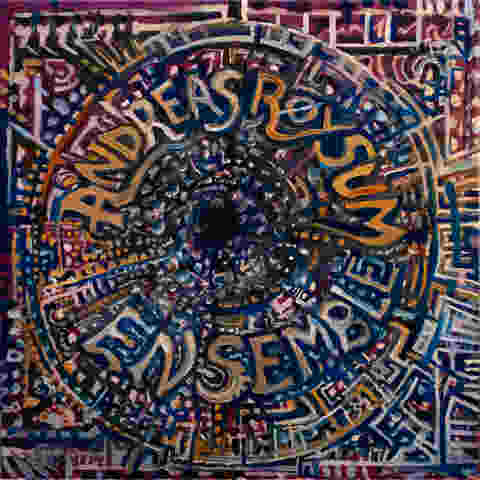
ANDREAS ROYSUM ENSEMBLE-ANDREAS ROYSUM ENSEMBLE.
Andreas Røysum Ensemble-Andreas Røysum Ensemble.
Label: Motvind Records.
Over the last decade, the Norwegian jazz scene has been thriving, and today is one of the most vibrant in Europe as a new generation of up-and-coming musicians follow their dreams to make a living playing jazz. They hope to follow in the footsteps of Jan Garbarek, Terje Rypdal, Nils Petter Molvaer and Ketil Bjørnstad who were amongst the first generation of Norwegian jazz musicians, and musical pioneers who influenced and inspired several generations of musicians.
This includes the latest generation of Norwegian jazz musicians who spend their time collaborating and others forming new bands that go on to release albums of ambitious, imaginative and innovative music. The latest to do so is the Andreas Røysum Ensemble who recently released their eponymous debut album on Motvind Records. It’s the latest chapter in the story of bandleader, composer and clarinetist Andreas Røysum, who is another of the rising stars of Norwegian jazz.
He’s also articulate, engaging and has some interesting things to say about life and music: “Most of the time that I am not playing or listening to others play, I hear beautiful music in my own head. Melodies, harmonies, rhythms and sounds single-handedly turn out, as gifts that I luckily have the opportunity to receive and further develop. This is the way the music on this record originated. This far I have a fairly similar experience with composition, playing music and life in general; submission of too many rigid concepts will eventually burn out the light that is constantly giving. By basing my music on these gifts I feel like a medium in a precise point in history. It enables me to be an artist.”
And Andreas Røysum has been an artist for several years now. During that period, he’s been involved in number of different projects. He was part of the musician’s collective Nakama, the Marthe Lea Band and has collaborated with German trumpeter Axel Dörner and Danish drummer Kresten Osgood. Still he found time to work with Anders Brørby on his 2018 album Traumas. That is only part of the Andreas Røysum story.
The same year 2018, Andreas Røysum was part of Miman when they released their critically acclaimed debut album Ulme on Motvind Records. Just a year later in 2019, Miman returned with the highly anticipated followup Stora Mängder Rymdgru. It was an innovative album of improv that was released to plaudits and praise. Andreas Røysum had played his part in the sound and success of the album, but in August of 2019 he had embarked upon a new project.
He had founded the Andreas Røysum Ensemble. Joining him in the new Ensemble were nine of best friends from Oslo thriving jazz scene. These talented and like-minded musicians were about to join record an album, and on the ‘20th’ of August 2019 headed to Flerbruket to work with recordist and producer Magnus Nergaard.
Joining bandleader, composer and clarinetist Andreas Røysum were drummer Ivar Myrset Asheim; double bassists John Andrew Wilhite-Hannisdal and Christian Meaas Svendsen; alto saxophonist Signe Emmeluth; tenor saxophonist Marthe Lea; flautist Henriette Eilertsen; violinist Hans Kjorstad; cellist Joel Ring and Sanskriti Shresta played tablas. They recorded six tracks during two sessions which Andreas Røysum Ensemble’s eponymous debut album.
Each session became a side of the album, which showcases the combined and individual talents of the ten young jazz musicians. They’ve all been in a number of groups and have a wealth of experience. This they put to good use whether playing as one or embarking on a solo on an album where disparate genres melt into one.
There’s elements of everything from African and Indian music as well as avant-garde, chamber music, experimental, folk, free jazz, gospel, improv and Nordic jazz on Andreas Røysum Ensemble. There’s also the influence of Albert Ayler, Don Cherry, Pharaoh Saunders and Sun Ra on an album where the music is new, exciting and innovative.
That’s the case as the album opener Novas Dans unfolds, and the Andreas Røysum Ensemble is like a big band the music initially playful and melodic as it swings. Then when the horns take centrestage they’re played blaze, bray and rasp before becoming smooth and sinuous. They’re joined by the flute as cymbals ring and crash and drums are pounded and the clarinet swings. Together they play their in a beautiful, joyous and uplifting track that has been influenced by Don Cherry, Albert Ayler and Sun Ra.
Kvartett Fra Tidens Begynnelse #1 (Quartet From The Beginning Of Time» #1) was written by French composer Olivier Messiaen whilst he was a prisoner of war. Scratchy, plink plonk strings and a myriad of otherworldly noise flit in and out of the arrangement. There’s screeching, howling, sci-fi and metallic sounds as well as bangs, crashes, scraping, scratching and wheezy sounds from this alternative orchestra. The music is edgy, eerie, cinematic and dramatic. Adding to the drama is a bass that is plucked firmly, droning horns, crashing cymbals and the wind quartet that quiver, shiver and flutter painting pictures durum what’s now a haunting, melancholy and thought-provoking epic.
Tablas open Indialuring and is joined by strings before the tempo increases. The tablas propel the sensuous, rhythmic and energetic arrangement along. It sways seductively as it casts a spell and leaves a lasting impression.
Initially, På Tur has a relatively simple arrangement, and at its heart is the interplay of the rhythm section of Sanskriti Shresta’s and drummer Ivar Myrset Asheim. They’re joined by ruminative horns and scratchy, droning and almost discordant strings. Later, they become thoughtful, questioning and probing as the drums and tablas propel the arrangement along. Together they create an enigmatic, joyous and jubilant track that captivates.
Kvartett Fra Tidens Begynnelse #2 is the shortest composition on the album. It’s just over two minutes long, but it’s unforgettable. The wind quartet is responsible for what’s akin to a musical skirmish, and Andreas Røysum is it the heart of this dramatic confrontation
Quite different is Til Albert which closes Andreas Røysum Ensemble. The six majestic minutes veer between hard blowing free jazz and a more melodic sounding track that is beautiful, uplifting, elegant and engaging. Playing a starring role is bandleader and clarinetist Andreas Røysum. He’s saved one of the best until last.
When Andreas Røysum was putting together his Ensemble he was lucky to have so many talented friends to call upon. They play their part in the sound and success of Andreas Røysum Ensemble. It finds them flitting between and fusing disparate genres including African and Indian music as well as avant-garde, chamber music, experimental, folk, free jazz, gospel, improv, jazz and Nordic jazz and draw inspiration from Albert Ayler, Don Cherry, Pharaoh Saunders and Sun Ra. These are the ingredients for an album of ambitious, imaginative, innovative and often powerful and thought-provoking music from the truly talented ten strong Andreas Røysum Ensemble.
Andreas Røysum Ensemble-Andreas Røysum Ensemble.
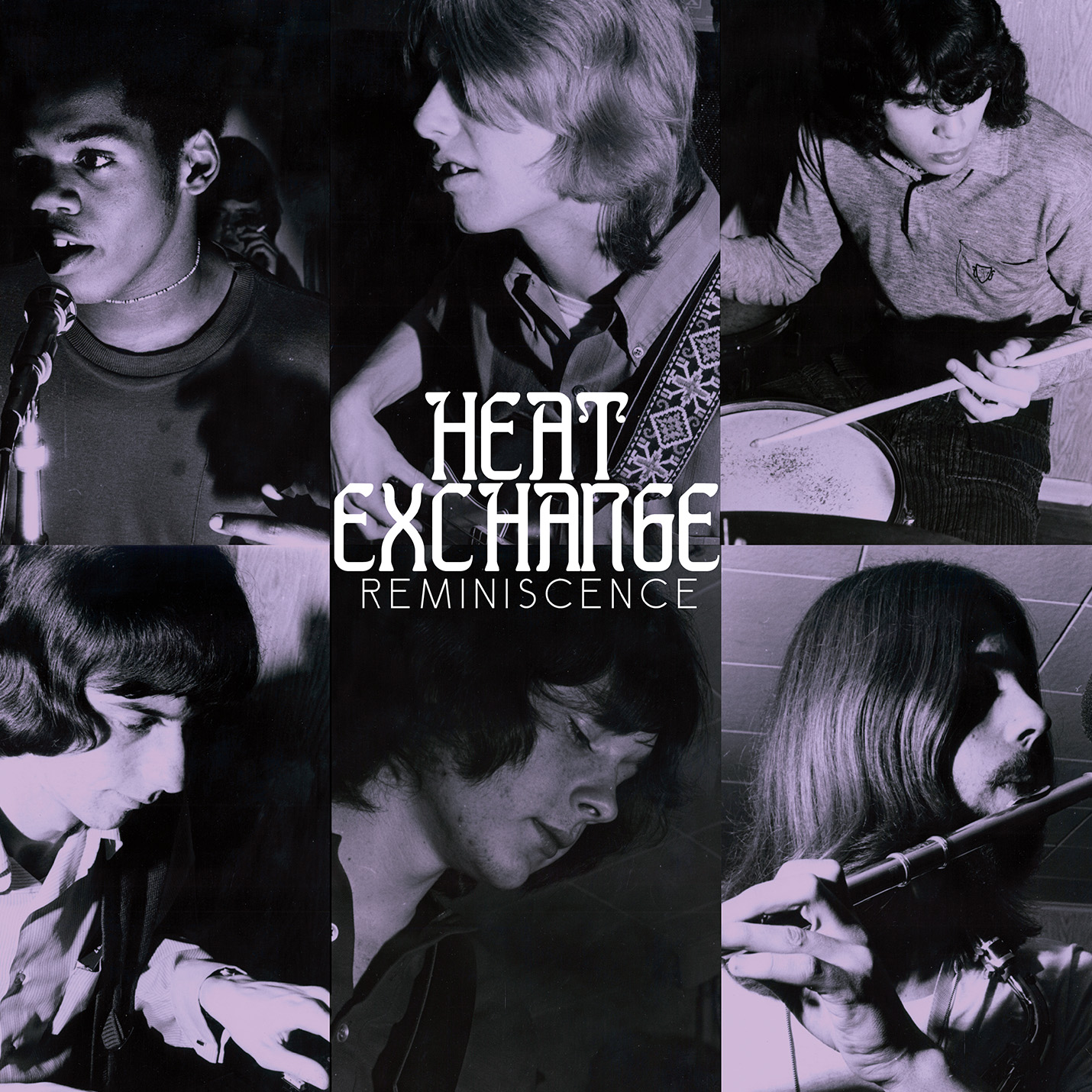
LOST CLASSIC FOUND: HEAT EXCHANGE-REMINISCENCE.
Lost Classic Found: Heat Exchange-Reminiscence.
Heat Exchange’s root’s can be traced to a Toronto high school, in the late-sixties. That was when four school friends decided to form a blues band, which they named Cloud. Just a couple of years later, and Cloud were one of the top bands in Toronto.
Several record labels were chasing Cloud’s signature. Major and independent labels vied for Heat Exchange’s signature. At one point, RCA looked like securing the signature of Cloud. Then at the last minute, Yorkville Records trumped RCA’s offer with what saxophonist Craig Carmody called: “a phenomenal offer.” It was too good to turn down, so Cloud signed on the dotted line. That was when Yorkville Records discovered another band called The Clouds. So to avoid any confusion, the record company suggested that Cloud should change their name.
After drawing up a shortlist, Yorkville Records’ favoured the name Heat Exchange. This they felt was the perfect name for the label’s newest latest signing. However, as recording began, the band hadn’t settled on a new name. Eventually, the band adopted the name Heat Exchange. It was meant to feature on their debut album Reminiscence. This should’ve been the start of the rise and rise of Heat Exchange. However, Reminiscence was never released and was just another chapter in the story of Heat Exchange, which began in the late sixtes.
Cloud were formed in a Toronto high school in the late sixties, when four school decided to form a blues band, Cloud. Its initial lineup featured a rhythm section of drummer and vocalist Marty Morin, bassist Ralph Smith and guitarist Neil Chapman. They were joined by keyboardist and harmonica player Gord McKinnon. The nascent band made one of its first performances in the high school cafeteria. Watching Cloud play was a future member of the band.
The new addition was saxophonist and flutist Craig Carmody. He was invited to join Cloud, and although he was a couple of year older than the rest of the band accepted the invitation. Now Cloud began working out how to incorporate the saxophone to their existing song. Soon, Cloud had successfully incorporated the saxophone into their sound. Soon, though, five became six as Cloud expanded their lineup again.
This time, Cloud decided to add a new lead vocalist to the band. Up until then, drummer Marty Morin had been the lead vocalist. It wasn’t easy for him combining the two roles. Eventually, the members of Cloud decided that it would be best if the added a lead vocalist and allowed Marty Morin to concentrate on his duties as drummer. So Cloud began the search for a new vocalist.
Eventually, they had settled on a shortlist of potential vocalists. The next step was auditioning them. However, when Mike Langford began to sing, the rest of Cloud new they had their new vocalist. Cloud were now a sextet.
With Mike Langford now Cloud’s new vocalist, the new lineup of the band began looking for somewhere to rehearse. Finding a rehearsal space wasn’t going to be easy. Fortunately, Cloud met Blaine Pritchett, a familiar face in the Toronto music scene. He owned a local music shop, and allowed Cloud to rehearse in the basement.
In the music shop’s basement, Cloud began to hone their sound and write their own songs. This took time, practice and dedication. Gradually, though, Cloud became a tight band and new sound began to take shape. Now Cloud were ready to make tentative steps onto the Toronto’s live scene.
Cloud were determined to things properly. They wanted to be taken seriously, so registered with the local branch of the Musician’s Union. Next stop, was a booking agency, who Cloud hoped would get them some bookings.
The booking agent came up trumps, and soon, Cloud had several bookings. This included a booking at the three day Rock Hill music festival.
Despite being relatively new on the live scene, Cloud lucked out and found themselves playing on the main stage at the Rock Hill music festival. That day Cloud gave what was a career defining performance.
A couple of days after Cloud returned home from the Rock Hill music festival, Craig Carmody received a phone call from Blaine Pritchett. He had taken on the roll of Cloud’s road manager and sound man since the band made their live debut. Blaine Pritchett explained that he had received a phone call from Roland Paquin, who managed many of the Toronto’s top bands. Roland Paquin had heard Cloud at the Rock Hill music festival and like what he heard. So much so, that he wanted to become Cloud’s manager. Things were looking up for Cloud.
A couple of days later and a meeting was scheduled between Cloud Roland Paquin. After listening to what Roland Paquin had to say, Cloud agreed that he would become their new manager. With an agreement in place Roland Paquin went in search for a record company to sign Cloud.
Over the next weeks and months, Roland Paquin brought record companies to hear Cloud. They would play a selection of songs that Cloud and Roland Paquin had picked earlier. These songs showcased then band’s considerable talents. One of the labels that came to hear Cloud were RCA. Having heard Cloud, were keen to sign the band.
Despite this, Roland Paquin the Canadian label Arc Sound to hear Cloud play. By then, Cloud were leaning towards signing to RCA. Still Cloud agreed to play for Bill Gilliland and Richard Gael and from Arc Sound. After Cloud band had finished playing, Roland Paquin headed out to wine and dine the record company executives. Later that night, Roland Paquin came baring news Craig Carmody.
Roland Paquin told Craig Carmody that Arc Sound’s record company Yorkville Records were interested in signing Cloud. They had spotted Cloud’s potential and really wanted to sign the band. Yorkville Records’ offer was an indication of how keen they were to sign the band. However, the offer came with conditions.
Yorkville Records wanted the band to concentrate all their efforts of recording album. This meant stopping playing live until the album was recorded. In return, the members of Cloud would receive a salary that would allow them to live while they practised and then recorded the album. Then once the album was released. If Cloud agreed, they could use the label’s recording studios and would be assigned a full-time producer. It was an incredible offer and was thought to be the biggest recording contract offered to any Canadian band up until then. So it was no surprise that Cloud were keen to sign. So Cloud put pen to paper, and signed on the rotten line. However, it soon became apparent there was a problem with the band’s name.
It turned out that another band had released an album as The Clouds. This could lead to record buyers confusing the two bands. So a decision was made to rename the band. The members of Cloud drew up a list of names, but when it came to choosing the name, it was Yorkville Records that was calling the shots. They eventually settled on the name Heat Exchange.
By then, Heat Exchange began work on their debut album Reminiscence. Bill Gilliland was named the executive producer while Richard Gael took charge of production. The two executives played a hands on roll, helping choose the material for the album. Eventually, ten tracks for the album were chosen and Heat Exchange were ready to begin work on what became Reminiscence.
Each day, Heat Exchange arrived at the studio, at 10am and rehearsed until 6pm. Some nights, the band used their key to let themselves into the studio, where they continued to work late into the night. Then at the end of the week, Heat Exchange received their salary which didn’t amount to much. However, for six young men still living at home, they were living the dream.
Especially as Heat Exchange moved to Manta Sound, which was then Toronto’s top recording studio. That was where the band met David Green who owned Manta Sound. He was also the in-house engineer David Green, and would by Heat Exchange’s side as began recording ten tracks written by the band. This was just as well, as Heat Exchange were working without a producer. Despite this, the band recorded a rough mix of Reminiscence.
This rough mix of Reminiscence David Green told Heat Exchange had been played to executives at major labels in America. They liked the album, but wanted to know more about the band. Two questions that kept coming up were had Heat Exchange had a hit single and what were they like live? By then, Heat Exchange hadn’t played live for over a year, and hadn’t released a single. So Heat Exchange decided to release a single. This should generate interest in the album when it was released.
Heat Exchange decided to choose the most commercial song on the album in the hope of it beaming a FM hit. Can You Tell Me fitted the bill, and was released with Inferno on the B-Side. It proved popular in some Canadian cities, and is thought to have reached the top ten in at least one city. However, it failed to reach the Canadian charts. The problem was that Yorkville Records didn’t seem willing to promote the single properly. That was worrying.
Having failed to write a FM hit, Heat Exchange were encouraged to write an AM hit. The song they came up was Scorpio Lady, which showcased a more poppy sound. On the B-Side Heat Exchange added Reminiscence. This Heat Exchange hoped would provide them with that elusive single. Especially since Yorkville Records seemed to be reigning in their expenditure.
Originally, the label had been so keen to sign Heat Exchange that they outbid RCA. Now though, everything had changed for Heat Exchange. They were no longer receiving their salary from Yorkville Records and had to return to playing live to make ends meet. Heat Exchange travelled far and wide playing live. Meanwhile, the label wanted the band to come up with a hit single. That was despite commercial success eluding their two previous singles. Despite this, Heat Exchange decided to write and record one more single.
They were hoping it would be third time lucky when She Made Me All Alone was released as a single. On the flip-side was Philosophy. When the single was released, it failed to make any impression on the Canadian charts. For two members of Heat Exchange that was the final straw.
For two members of the band, Heat Exchange’s dream of becoming a successful band was almost over. Saxophonist and flautist Craig Carmody decided to leave Heat Exchange. So did bassist Ralph Smith. This proved to be the beginning of the end for Heat Exchange.
The other four members of Heat Exchange started to get involved with another group Truck. They began to tour with Truck. For Heat Exchange, the dream was over. Their debut album Reminiscence was never released by Yorkville Records. Record buyers never got the opportunity to hear Heat Exchange at their creative zenith on Reminiscence.
For Those Who Listen opens Reminiscence. Machine gun riffs are unleashed as the rhythm section and keyboards drive the arrangement along. Straight away, Heat Exchange are rocking hard, and it’s apparent that something special is about to unfold. Heat Exchange don’t disappoint, After Mike Langford’s vocal enters, Heat Exchange soon sound like Jethro Tull in their progressive rock pomp. Meanwhile, Craig Carmody drizzles his braying saxophone above the arrangement where which combines elements of folk rock and psychedelia. Later during the breakdown, a harpsichord, flute and walking bass combine. They’re soon joined by pounding drums, Neil Chapman’s searing guitar and the braying saxophone as hard rocking Heat Exchange set the bar high on this fusion of progressive rock, folk rock and psychedelia.
From the opening bars of Inferno, guitarist Neil Chapman’s fingers fly up and down the fretboard as he unleashes a myriad of effects. Meanwhile, Heat Exchange rhythm section have locked into a groove. Seamlessly they switching between tempo and time signature and between progressive and hard rock. Mike’s vocal soars above the arrangement, as Heat Exchange sound like Cream. Later, Craig adds rasping saxophone, and during the lengthy breakdown delivers a blistering solo. Not to be outdone, Neil’s steps up, and unleashes a blistering, scorching, rocky solo that wah-wahs. Drummer Marty Morin gets in on the act, adding a mesmeric solo. Once the solos are complete, Heat Exchange play as one and continue to combine hard rock and progressive rock. However, Neil Chapman’s blistering guitar solo steals the show, as Inferno reaches a hard rocking crescendo.
It’s Neil Chapman’s blazing guitar that’s at the heart of the action on Reminiscence. It sits above the arrangement, before chugging along and becoming funky as Mike’s vocal enters. His vocal is heartfelt, as Craig plays the flute. Meanwhile, hard rock meets progressive rock. This changes when the vocal drops out. Heat Exchange stretch their legs, and seamlessly switch between progressive rock, fusion and funk. When Mike’s vocal returns, the arrangement meanders melodically along. Briefly Heat Exchange eschew their hard rocking sound for a much mellow, laid back sound that shows another side to a truly talented band.
Can You Tell Me was one of the three singles that Heat Exchange released. It sounds as if it’s been written with radio in mind. The introduction is understated, which would be perfect for radio DJs to introduce the song. After that, Heat Exchange’s rhythm section kick loose and Mike delivers a hurt-filled vocal . As the rhythm section lock down the groove as stabs of piano and a searing guitar solo are added. Later, progressive rock keyboards and a blazing saxophone accompany Mike, as everything falls into place. Heat Exchange showcase a freewheeling, radio friendly and melodic slice of rock that could’ve transformed their career.
Just a piano plays on Stopwatch as a cymbal rinses. Eventually, Mike’s emotive vocal enters as the arrangement begins to unfold. The rhythm section make their presence felt, playing with power, while flourishes of piano are added. Soon, a dreamy jazz tinged saxophone solo is added as the arrangement becomes understated. The saxophone gives way to harmonies. Suddenly, Heat Exchange are marching to the beat of a drum. Just the drum and stabs of piano combine as the drama builds. Then all of a sudden, Heat Exchange throw a curveball, and the arrangement becomes understated, as drama gives way to beauty. However, Heat Exchange have one more track up their sleeve, before the track reaches a rocky and dramatic crescendo.
Straight away, Heat Exchange are playing as one on She Made Me All Alone. It’s a fusion of blues, funk, jazz and rock. The rhythm section underpin the arrangement with the bass playing a leading role. Meanwhile, a scorching saxophone joins with a guitar that’s veers between bluesy to rocky and funky. Mike unleashes a vocal powerhouse, as Heat Exchange unleash a genre-melting jam. Horns and a blistering, searching guitar play leading roles as Mike struts his way though the lyrics to one of the highlights of Reminiscence.
Philosophy literally explodes into life as a hard rocking Heat Exchange kick loose. The rhythm section, organ and searing guitar provide a backdrop for Mike as he unleashes another vampish, vocal powerhouse. Then when his vocal drops out, the rest of the band enjoy their moment in the sun. A braying saxophone, chugging rhythm section and scorching guitar combine, and rock hard. This continues even when Mike’s vocal returns. Heat Exchange enjoy the opportunity to cut loose on this hard rocking anthem-in-waiting.
Scorpio Lady was another of the three singles Heat Exchange released. They had hoped it would give them an AM. Sadly, through no fault of their own, it wasn’t to be. It was a good attempt though. As the song unfolds, the rhythm section lay down a hypnotic beat and Craig’s braying saxophone. They provide a backdrop for Mike’s vocal, as the rocky arrangement unfolds. Heat Exchange add tight harmonies, a jangling piano, searing guitar and a scorching saxophone. Everything fall into place as Heat Exchange don’t spare the hooks on this this catchy, memorable, and melodic radio single.
A fleet fingered bass and hissing hi-hats accompany Mike’s vocal on the jazzy Scat. Soon, Heat Exchange have kicked loose and are combining musical genres. The rhythm section power the arrangement along, as a braying saxophone is joined by a scorching guitar. Then after fifty-four seconds guitarist Neil Chapman unleashes a thirty second guitar solo. It’s a virtuoso performance. He then passes the baton to Craig’s saxophone and then Gord McKinnon on keyboards. By then, Heat Exchange have combined elements of fusion, hard rock, jazz and progressive rock. However, when Mike returns, it’s jazz all the way as he scats. Bassist Ralph Smith gets in on the act as Heat Exchange showcase their versatility.
Closing Reminiscence is Four To Open The Door, a near ten minute epic. It bursts into life, with the rhythm section driving the arrangement along. A braying saxophone and washes of Hammond organ join with a blistering guitar as Heat Exchange kick loose. The music is rocky and dramatic before it’s all change. Suddenly, the tempo drops as the Hammond organ and flute create a sinister, cinematic backdrop. Adding to the eerie backdrop is Mike’s dark vocal, pounding driving drums and searing guitars. Eventually, the Hammond organ signals all change and a freewheeling Heat Exchange combine folk rock, fusion and progressive rock. That’s until it’s time for the solos. Drummer Marty Morin unleashes lengthy solo and never misses a beat. After that, the band play together before the rest of the band enjoy their moment in the sun. The Hammond organ, bass and piano all get the opportunity to shine. Especially pianist Gord McKinnon, who has the last word on this Magnus Opus.
It’s almost fitting that Reminiscence closed with such an epic track as Four To Open The Door. Heat Exchange never returned to the recording studio together, and Reminiscence was the only album the band recorded. That was a great shame, as Heat Exchange were a hugely talented band who had the potential to go on to become one of the most successful Canadian bands of the early seventies. They might have fulfilled their potential if they had signed to RCA.
Instead, Heat Exchange signed to Yorkville Records and spent the best part of a year recording album. During that period, the band weren’t playing live, and instead, were receiving a salary from Yorkville Records. However, after Heat Exchange failed to delver a hit single, Yorkville Records began to lose interest in the band. Their singles weren’t prompted properly, and eventually, they stopped receiving their weekly salary. This resulted in Heat Exchange heading back out on the road.
As Heat Exchange toured the length and breadth Canada trying to eke out a living, Yorkville Records were still wanting the band to deliver a hit single. By then, Craig Carmody the elder statesmen of the band was looking to future. He was about to get married, and needed a steady income. Craig decided to leave Heat Exchange. So did Ralph Smith. Suddenly, six became four and the writing was on the wall for Heat Exchange.
Meanwhile, the other four members of Heat Exchange started to get involved with another group Truck. They began to tour with Truck. For Heat Exchange, it was the end of the line. Heat Exchange’s debut album Reminiscence was never released by Yorkville Records.
Sadly, Reminiscence lay unreleased for forty-five years. Nobody got to hear Heat Exchange’s genre-melting album. Heat Exchange took as their starting point hard rock, and added to the musical melting pot folk rock, funk, fusion, jazz and progressive rock. Heat Exchange switched between and fused these disparate genres over the tracks on Reminiscence. It showcases truly talented band who were who had recorded an almost flawless album of hard rocking, catchy, complex, melodic and memorable music. That album was Reminiscence, which was only released recently.
Forty-five years after Heat Exchange completed Reminiscence long lost classic eventually saw the light of day in 2017, and is a reminder of one of Canada’s great lost groups in the early seventies, looked destined for greatness.
Lost Classic Found: Heat Exchange-Reminiscence.
ROB LUFT-LIFE IS THE DANCER.
Rob Luft-Life Is The Dancer.
Label: Edition Records.
When Rob Luft released his debut album Riser in July 2017, it was to widespread critical acclaim, with some critics drawing comparisons to such jazz luminaries as Wes Montgomery and Pat Metheny. This was high praise indeed for the twenty-three year old bandleader, composer, producer and guitarist from London. He had come a long way since graduating from the Royal Academy of Music, and winning the prestigious Kenny Wheeler Music Prize. Many critics wondered how what was next from Rob Luft, and how he would followup Riser?
Just under three years later, Rob Luft returned with his much-anticipated sophomore album Life Is The Dancer. Just like his debut album Riser, it was released by Edition Records and showcases the considerable talents of one of the rising stars of jazz who has a bright future ahead of him.
Rob Luft was born on the ‘27th’ of November 1993, in Sidcup, in south-east London. Growing up, he attended The Judd School, in Tonbridge, Kent, and while a pupil, joined the National Youth Jazz Orchestra in 2010 and was a member until 2015. During his time with the National Youth Jazz Orchestra Rob Luft made his recording debut on their 2012 album The Change and Fifty released in 2015. It was one of five albums he played on during that year.
During 2015, Rob Luft also played on Patrick Hayes’ Back To The Grove; Enzo Zirilli’s ZiroBop; Liane Carroll’s and Seaside. He was also one of the co-leaders of the Deco Ensemble when they self-released their Encuentro album. This was all good experience for one of British’s jazz’s rising stars.
In 2016, Rob Luft entered the guitar competition at the Montreux Jazz Festival, which was judged by legendary jazz guitarist John McLaughlin. When the results were announced twenty-two year old Rob Luft had come a very credible second. This introduced the young guitarist to a wider audience, and they would be hearing a lot more of him in the next year.
Rob Luft continued to work as sideman, and in 2016 played on Luna Cohen’s album November Sky. However, 2017 was the busiest year of his short career.
During 2017, Rob Luft was one of the co-leaders of Big Bad Wolf when they released their album Pond Life. He was also in demand as a sideman and played on Misha Mullov-Abbado’s Unquiet Quiet; Tom Ridout’s No Excuses and Joy Ellis’ Life on Land. However, the most important album of 2017 was his debut album Riser.
When Riser was released by Edition Records on the ‘28th’ of July 2017, it was to widespread critical acclaim. There were no dissenting voices amongst the critics, with some critics drawing comparisons to jazz luminaries like Wes Montgomery and Pat Metheny. This was high praise indeed, but was putting pressure on the twenty-three year old bandleader, composer and guitarist. However, this didn’t faze Rob Luft whose star was in the ascendancy.
Having released his debut album in 2017, 2018 saw Rob Luft back to working as sideman. He played on three albums during 2018, Karen Lane’s Passarim; the Scottish National Jazz Orchestra’s Sweet Sister Suite and Enzo Zirilli’s Ten To Late! This was all good experience for Rob Luft who in 2019 would record his much-anticipated sophomore album.
Before that, Rob Luft was part of Laura Jurd’s band when she recorded Stepping Back, Jumping In at The Sage Gateshead, on the ‘4th’ and ‘5th’ of March 2019. He also played on Alice Zawadzki’s album Within You Is A World Of Spring. However, the main event was the recording of his sophomore album Life Is The Dancer.
Recording of Life Is The Dancer took place at Eastcote Studios, London, on the ‘18th’ and ‘19th’ of June 2019. The Rob Luft who played guitar and took charge of production were his band. The lineup included drummer Corrie Dick, bassist Tom McCredie, tenor saxophonist Joe Wright and pianist Joe Webb who also plays Hammond organ. They were joined by guest artists Byron Wallen and Luna Cohen as they recorded ten tracks.
Eight of the tracks were composed and arranged by Rob Luft. He also joined forces with Enzo Zirilli to write Synesthesis. The only cover version on Life Is The Dancer was the album opener Anders Christensen’s Berlin. It took just two days to record Life Is The Dancer which was scheduled for release in the spring of 2020.
Before that, Byron Wallen, who makes a guest appearance on Life Is The Dancer, released his new album Portrait in March 2020. It featured Rob Luft on guitar.
Less than a month later, on the ‘17th’ of April 2020 Life Is The Dancer was released to critical acclaim. Rob Luft was back with an album that surpassed his debut Riser, and cemented his reputation as one British jazz’s best guitarists.
The album’s title is Life Is The Dancer is part of a quote from the German-Canadian spiritual teacher Eckhart Tolle. That is fitting given the opening track is Berlin, which was composed by Danish bassist Anders Christensen . It’s a truly captivating track where drums pound and prove unrelenting. They’re saying we’re here to stay, and that’s the case even as Rob Luft unleashes his effect’s laden guitar and later, as Joe Webb’s shimmering piano plays. Together, they provide the amuse bouche until the main event begins at 2:20. What follows is a spellbinding guitar solo which is reminiscent in parts to Pat Metheny. Effects are deployed by the musical wizard as weaves his magic during this breathtaking call to dance. It whets the listener’s appetite for the rest of the album.
Washes of guitar open Life Is A Dancer before drums and horns combine. They’re joined by Luna Cohen whose wispy, scatted vocal adds a dreamy, pastoral sound. Later, Byron Wallen’s trumpet is played with speed, power and passion before the band kick loose and jam. Horns are to the fore before the drums and a swirling Hammond organ enjoy their moment in the sun. So do Byron Wallen’s muted trumpet and Joe Wright’s tenor saxophone. By then, the band led by Rob Luft who is an inventive guitarist, are stretching their legs before the track reaches a crescendo.
All Ways Moving is a slow, understated and pensive sounding track. Tanpura and Other Wise are both shorter tracks, and like Bad Stars have a thoughtful and ruminative sound that invites reflection. These tracks show a different side to Rob Luft and his band.
Cinematic initially describes One Day In Romentino which starts slowly with a sultry horn playing. Soon, the band move through the gears and Rob Luft is unleashing another spellbinding solo as he plays with speed, accuracy and an inventiveness. Then he lets tenor saxophonist Joe Wright take centrestage and he plays a starring role on this beautiful, uptempo track.
Another uptempo track is Synesthesia where a shimmering, weeping guitar sits below the punchy horns which are played with speed and result in quick fire changes in tempo. Not to be outdone, Joe Webb’s finger fly across the piano. Then after a couple of minutes, Rob Luft takes centrestage. He plays with speed his guitar chiming, chirping and searing, before deploying effects and producing shimmering, glistening, and echoey sounds before this memorable track dissipates after five magical minutes.
Snow Country starts off slowly meandering along before gradually the tempo builds. The tenor saxophone combines with Rob Luft’s weeping, shimmering guitar before the horn drifts high above the arrangement. It rasps before the crystalline guitar is briefly transformed by effects. This is very different to what’s gone before or what follows.All too soon after this the band are taking their on what’s one of the album’s highlights.
Closing Life Is The Dancer is Expect The Unexpected which marks the return of trumpeter Byron Wallen and vocalist . He plays slowly and vocalist Luna Cohen. The two guests artist plays their part in what’s a beautiful seven minute track that like other on the album invites contemplation and reflection.
Nearly three years after the release of his debut album Riser, Rob Luft returns with his much-anticipated and critically acclaimed sophomore album Life Is The Dancer. It features a mixture of uptempo workouts full of energy and invention tracks as slower, thoughtful sounding tracks. This talented band cope admirably with both types of tracks and are the perfect foil for Rob Luft.
He’s an inventive and innovative and guitarist who enjoys improvising and does so during Life Is The Dancer. He’s obviously been influenced by Pat Metheny and sometimes, when he deploys his away of effects, is reminiscent of the late, great John Martyn. Rob Luft puts them to good use during the album, but doesn’t overuse them. He realises that less is more and uses effects sparingly on this genre-melting album.
Rob Luft and his band combine everything from jazz, fusion and rock to new age, psychedelia and soul-jazz during the ten tracks on Life Is The Dancer. Sometimes it’s a case of Expect The Unexpected from Rob Luft on Life Is The Dancer, where uptempo workouts rub shoulders with ruminative sounding tracks that invite the listener to reflect and contemplate against a backdrop of breathtakingly beautiful music.
Rob Luft-Life Is The Dancer.

DR JOHN-IN A SENTIMENTAL MOOD.
Dr John-In A Sentimental Mood.
Label: Music On CD.
There aren’t many musicians who enjoy the longevity that the late, great Dr John enjoyed. His career lasted the best part of sixty years and he released thirty studio albums and nine live albums. Dr John also won six Grammy Awards and was inducted into the Rock and Roll Hall of Fame in 2011. By then, his music which influenced thousands of musicians was enjoying a resurgence in popularity.
It hadn’t always been smooth sailing for Dr John who had battled heroin addiction and eventually conquered his demons. Sometimes, his music fell out of favour and Dr John went back to working as a session musician. That was how he spent much of the eighties, when he only released three albums including In A Sentimental Mood, which was recently reissued by Music On CD. It’s an album that shows a different side to Dr John and marked a return to form from one of music’s great survivors.
The future Dr John was born Malcolm John “Mac” Rebennack Jr, on November the ‘20th’ 1940, in New Orleans, Louisiana. He grew up in the Third Ward of New Orleans, and music was always around him.
His father Malcolm John Rebennack ran an appliance shop in the East End of New Orleans, where he repaired radio and televisions and sold records. He introduced his son to the music of King Oliver and Louis Armstrong. However, one of the people who inspired Mac Rebennack was his grandfather who he heard singing minstrel songs. So did hearing his aunts, uncles, cousins and sister playing the piano. Despite this, Mac Rebennack wasn’t inspired to take music lessons.
This only came later when he was a teenager. He also joined a choir, but was soon asked to leave. However, over the next few years Mac Rebennack learnt to play the guitar and later piano, and through his father’s contacts in the local music scene was soon playing alongside some well known names including Guitar Slim and Little Richard. This was just the start for Mac Rebennack.
When he was thirteen, he met Professor Longhair and he was instantly impressed by the flamboyant showman. Mac Rebennack was soon playing alongside his new hero, and this was the start of his professional career.
Around 1955 or 1956, Mac Rebennack made his debut in the recording studio when he was signed as a singer and songwriter by Eddie Mesner at Aladdin Records. The future Dr John’s career was underway and towards the end of 1957 with the help of Danny Kessler, he joined the musician’s union. That was when he considered himself to be a professional musician.
By the time he was sixteen, Mac Rebennack had been hired by Johnny Vincent at Ace Records as a producer. This led to him working with Earl King, James Booker and Jimmy Clayton. This was all good experience for the young, up-and-coming musician
Despite his new career, Mac Rebennack was still a student at Jesuit High School. This didn’t stop him playing in night clubs and forming his first band The Dominoes. The Jesuit fathers weren’t happy with Mac Rebennack’s lifestyle and issued him with an ultimatum. He was to either stop playing in nightclubs or leave the school. Not long after this, he was expelled from the school. It turned out to be the best thing that happened to him as he was able to concentrate on music full time.
By the late-fifties, Mac Rebennack was playing with various bands in and around New Orleans. This included his own band Mac Rebennack and The Skyliners. However, the young bandleader had also embarked upon a career as a songwriter.
In 1957 Mac Rebennack cowrote his first ever rock ’n’ roll song Lights Out. It was recorded by New Orleans based singer Jerry Byrne, and released on Specialty Records later in 1957 and give him a regional hit.
Two years later, in 1959, Mac Rebennack also enjoyed a regional hit single when he released Storm Warning, a Bo Diddley insprired instrumental, on Rex Records. This was the first hit he enjoyed in a long, illustrious and eventful career.
After Storm Warning, Mac Rebennack and Charlie Miller joined forces and recorded singles for various local labels. This included Ace, Ron, and Ric. They continued to release singles until Charlie Miller decided to move to New York to study music. Mac Rebennack stayed in the Big Easy and continued his career.
Around 1960, Mac Rebennack was playing a gig in Jacksonville, Florida, when his career was changed forevermore. That night, his ring finger on his left hand was injured by a gun shot during an incident. This was a disaster for a right handed guitarist and when he recovered he made the switch to bass guitar. However, after a while Mac Rebennack switched to the instrument he made his name playing, the piano.
Soon, Mac Rebennack had developed a style that was influenced by Professor Longhair who he had met when he was thirteen. It looked as if this was a new chapter in Mac Rebennack’s musical career.
That wasn’t the case and Mac Rebennack ended up getting involved in the dark underbelly of The Big Easy. He was using and selling illegal drugs and at one point, running a brothel. It was almost inevitable that Mac Rebennack was going to have a brush with the law.
He did. In 1963, when Mac Rebennack was arrested on drug charges and sentenced to two years in the Federal Correctional Institution, in Fort Worth, Dallas. By the time his sentence ended and he was released in 1965, New Orleans was a different place.
There had been a campaign to rid the city of its clubs, which meant that musicians like Mac Rebennack found it hard to find work. That was why he decided to move to LA where he knew he could find work as a session musician.
It turned out to be a good decision, and it wasn’t long before Mac Rebennack was one of the first call session musicians in LA. That was the case for the rest of sixties and the seventies. He was also a member of the legendary Wrecking Crew and worked with some of the biggest names in music. This was the new start Mac Rebennack had been looking for when he left New Orleans.
Growing up Mac Rebennack had developed an interest in New Orleans voodoo. This was something he revisited during his early years in LA when he began to develop the concept of Dr John, which initially he thought could be a persona for his friend Ronnie Barron. The concept was based on the life of Dr John, a Senegalese prince, a witch doctor, herbalist and spiritual healer who travelled to New Orleans from Haiti. He was a free man of colour who lived on Bayou Road, and claimed to have fifteen wives and over fifty children. It was believed Dr John also kept a variety of lizards, snakes, embalmed scorpions as well as animal and human skulls, and sold gris-gris, voodoo amulets which were meant to protect the wearer from harm. This Mac Rebennack incorporated into the project he was working on for Ronnie Barron.
Soon, Mac Rebennack had decided to write, produce and play on an album and stage show based on his concept with Dr John emblematic of New Orleans’ heritage. It was meant to feature Ronnie Barron. However, when he dropped out of the project Man Rebennack took over the role and adopted the identity of Dr John. This was a turning point in the life and career of the man born Mac Rebennack.
Dr John became the name that he found fame as and won five Grammy Awards. However, that was still to come.
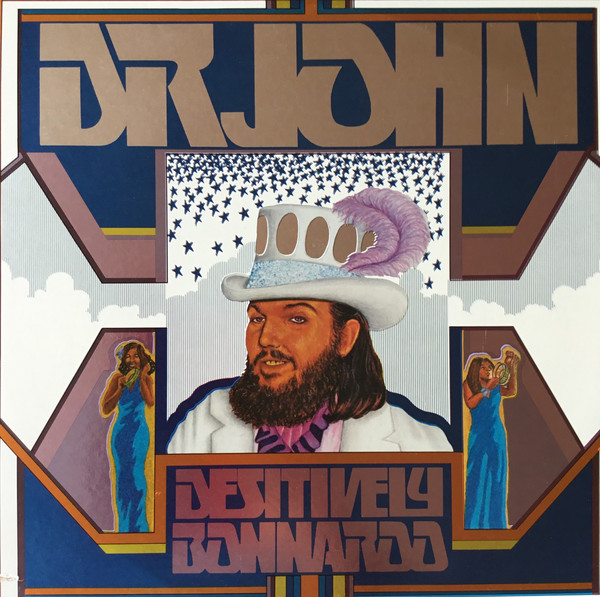
Having adopted the moniker Dr John,The Night Tripper he was signed by Atco Records and recorded his debut album Gris Gris. It was his his own “voodoo medicine” and marked the start of what’s now regarded as a golden era for Dr John.
Gris Gris.
When a copy of Dr John’s debut album Gris Gris, which was sent to Atlantic Records’ founder Ahmet Ertegun he disliked the album so much, that he was reluctant to even release the album and said: “how can we market this boogaloo crap?” This wasn’t the response that Dr John had been hoping when he recorded Gris Gris which was a combination of psychedelia, blues, free jazz, R&B, soul, funk, jazz. Add to this psychedelic stew the authentic music of the melting pot that is New Orleans and the voodoo image that Dr John had carefully cultivated and Gris Gris was like no other album that Atlantic Records had released. That presented the label with a huge problem.
Atlantic Records’ PR department had idea to promote an album like Gris Gris, as they had no cultural reference points, nothing to compare the album to. Despite the best efforts of Atlantic Records PR department, when Gris Gris was released on January the ’22nd’ 1968 and introduced the world to Dr John The Night Tripper, it failed to trouble the charts and neither critics nor record buyers understood Dr John’s groundbreaking debut album. However, like so many albums that fail to find an album on their release, Gris Gris was later reappraised and belatedly, was recognised as a seminal album that was the start of a rich vein of form from Dr John.
Gris Gris was the start of a six-year period when Dr John could no wrong, and released seven innovative albums that are among the his finest work.

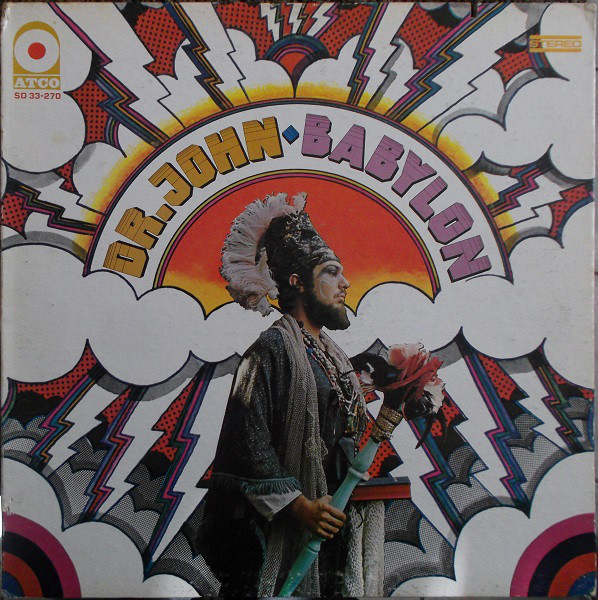
Babylon
This included his sophomore album Babylon on January the ’17th’ 1969. It was a powerful, cerebral and innovative genre-melting album which socially had much in common with Dr John’s debut album Gris Gris.
Sadly, critics didn’t ‘get’ Babylon and the album which failed commercially. However, just like Gris Gris, Babylon was later reappraised by critics and nowadays is regarded as one of his finest albums and a minor classic.
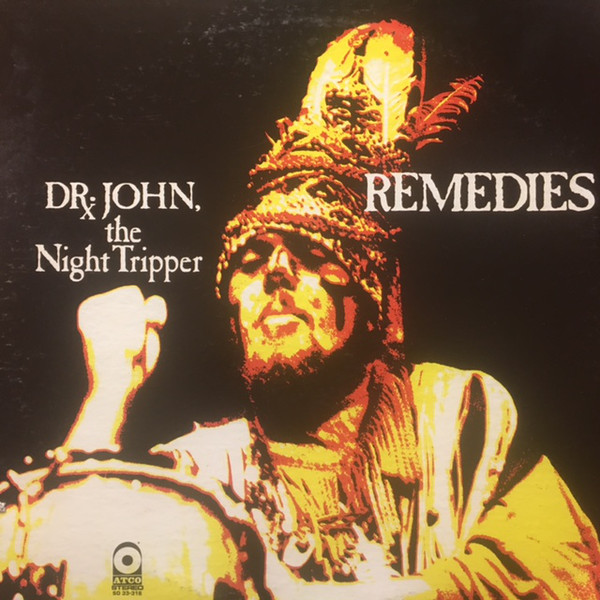
Remedies.
Following the commercial failure of Babylon, things went from bad to worse for Dr John, before he could begin work on his third album Remedies. This started when a deal went south, and he was arrested by the police and ended up in jail. It was a worrying time for Dr John who was parole, and if he ended up with a parole violation, he knew he might end up in the infamous Angola jail. That didn’t bare thinking about, and already Dr John was desperate to get out of the local jail. However, he needed someone to post bail, so contacted his managers who he remembers: “were very bad people.” This proved to be an understatement.
Not long after this, Dr John’s managers had him committed to a psychiatric ward, where he spent some time. By then, it was obvious to Dr John that his managers were no longer playing by the rules. All he wanted to do was make music, and everything that had happened recently were nothing to do with music. Instead, it was all connected to Dr John’s increasingly chaotic lifestyle, which made it all the more frustrating for those that realised just how talented the Gris Gris Man was.
Eventually, having managed to put his problems behind him, Dr John wrote the six tracks that became Remedies using his real name Mac Rebennack. Among the tracks Dr John had written was What Goes Around Comes Around which later became a favourite during his live shows and Mardi Gras Day which paints pictures of New Orleans when it comes out to play. Very different was Angola Anthem which was inspired by a friend of Dr John’s who had just been released from Angola, the Louisiana State Penitentiary after forty years. Dr John paid tribute to his friend with an eighteen minute epic that took up all of side two of Remedies. It was produced by one of the most successful producers of the day.
Although Harold Battiste had produced Gris Gris and Babylon, he was replaced by Tom Dowd and Charles Greene who were tasked with transforming Dr John’s career. However, although Tom Dowd was enjoying the most successful period of his career, he had never worked with anyone like Dr John.
When Remedies which was released in the spring of 1970, just like his two previous albums, critics didn’t seem to understand Remedies, which was credited to Dr John The Night Tripper. Remedies was another ambitious album of genre-melting, voodoo-influenced album where Dr John The Night Tripper through everything from psychedelia, blues, R&B, soul, funk and jazz into the musical melting pot and gave it a stir to create an album where the music was mysterious, otherworldly and haunting.
By the time Remedies was released on April ‘9th’ 1970, some FM radio stations had picked up on the album, and were playing it on their late shows. Despite the radio play Remedies had received, the album never troubled the charts, and it was only much later that record buyers realised that they had missed out on another important and innovative album from Dr John.
The Sun, Moon and Herbs.
Despite Dr John’s first three albums failing to find an audience, many of his fellow musicians were fans of his music, and were only too happy to feature on his fourth album The Sun, Moon and Herbs. This included Eric Clapton, Mick Jagger, Bobby Whitlock, Graham Bond, Carl Radle, Jim Gordon and Doris Troy. They were joined by The Memphis Horns as Dr John and Charles Greene took charge of production.
They were responsible for a dark and swampy sounding album that is rich in imagery and paints of New Orleans on a hot, sticky night as thunder crackles and rumbles in the distance like the drums on The Sun, Moon and Herbs. When it was released on August the ’31st’ 1971, still critics struggled to understand Dr John’s music, but this time, The Sun, Moon and Herbs which featured an all-star cast, spent five weeks in US Billboard 200 and peaked at 184. At last, Dr John’s music was starting to find a wider audience.
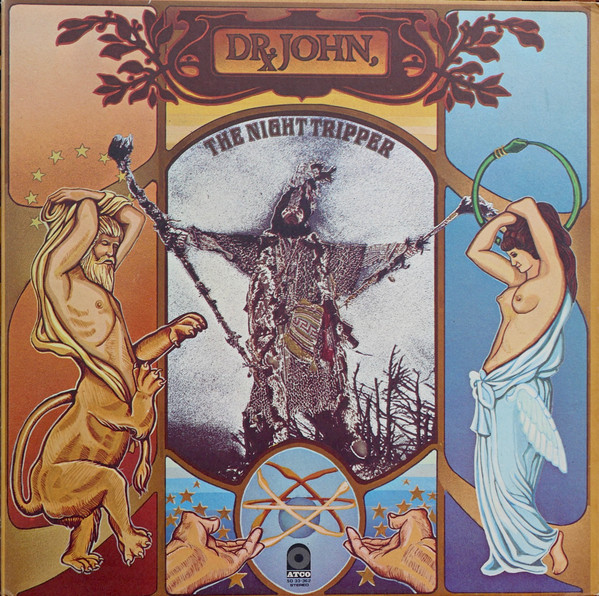
Dr John’s Gumbo.
Buoyed by the success of The Sun, Moon and Herbs, Dr John decided to record an album of cover versions of New Orleans’ classics for his fifth album Dr John’s Gumbo. It was produced by Harold Battiste and Jerry Wexler and ironically given Dr John’s Gumbo featured tracks by legends some of the New Orleans’ musical legends including Professor Longhair, Huey “Piano” Smith, James “Sugar Boy” Crawford and Dr John the album was recorded in LA. However, Dr John’s Gumbo was The Night Tripper’s most successful album.
Unlike previous albums, Dr John’s Gumbo was a much more straightforward album of R&B, and it found favour with critics. After Dr John’s Gumbo was released to critical acclaim, it reached entered the US Billboard 200 where it spent eleven weeks, peaking at 112. Dr John was on his way.
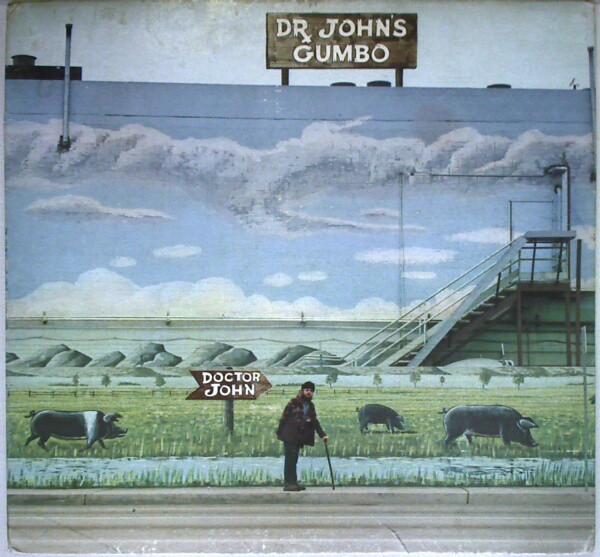
In The Right Place.
Following the success of Dr John’s Gumbo, Dr John headed to Criteria Studios, in Miami, where he recorded In The Right Place with songwriter, musician, arranger and producer Allen Toussaint. He was one of the most influential figures in the New Orleans’ music scene, and was able to bring out the best in Dr John as he laid down songs of the quality of Right Place, Wrong Time, Same Old Same Old, Peace Brother Peace and Such A Night. Once In The Right Place was completed, the two men returned to the Big Easy and watched as Dr John’s popularity soared.
Critics on hearing In The Right Place which was a fusion of funk, blues and New Orleans R&B hailed the album was one of his finest. Record buyers agreed when In The Right Place was released on February the ’25th’ 1973 thirty-three weeks in the US Billboard 200 and peaked at twenty-four. What Ahmet Ertegun had foolishly described as: “boogaloo crap” just a few years earlier, was now proving profitable for his company. Dr John was having the last laugh.
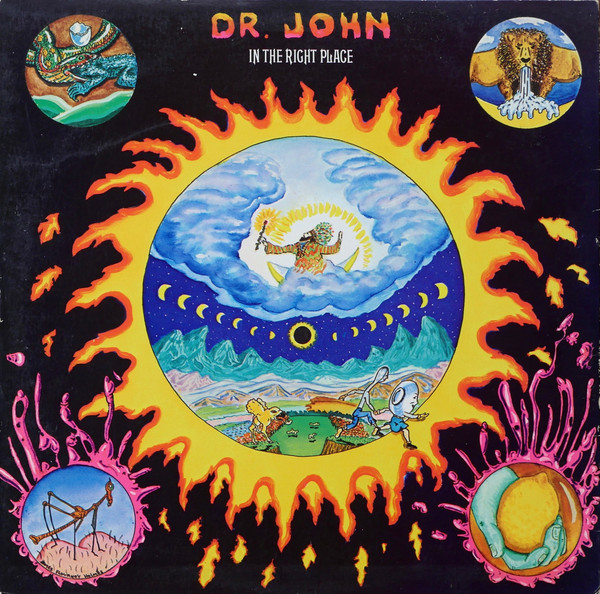
Desitively Bonnaroo.
The success of In The Right Place was a game-changer for Dr John, whose popularity soared. After six albums, he was enjoying the commercial success and critical acclaim his music deserved. However, Dr John knew that he would have to think about his seventh album, and began writing what became Desitively Bonnaroo.
When critics heard Desitively Bonnaroo they were once again won over by another carefully crafted album of funk and New Orleans R&B from Dr John. It was released on April the ‘8th’ 1974, spending eight weeks on the US Billboard 200 stalling at 105. Despite the quality of Desitively Bonnaroo it had failed to replicate the commercial success of In The Right Place, which must have been a huge disappointment for Dr John.
Sadly, Desitively Bonnaroo was the last album that Dr John released on the Atlantic Records imprint Atco, and was the end of a golden period for Dr John.
Hollywood Be Thy Name.
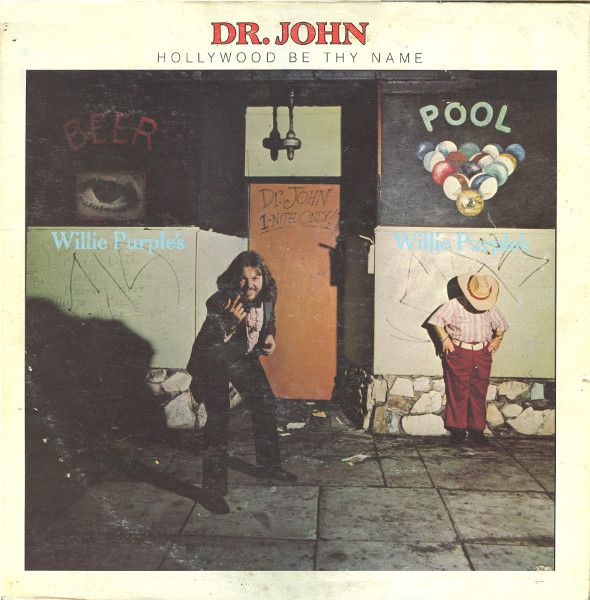
In 1975, Dr John’s manager Richard Flanzer, hired producer Bob Ezrin to produce a live album which became Hollywood Be Thy Name. It was recorded live at Cherokee Studios, in Los Angeles, which for one night only, was transformed into a New Orleans nightclub. The album was released later in 1975.
Hollywood Be Thy Name was released on October the ‘6th’ 1975. Critics weren’t won over by an album which was a mixture of original material and cover versions. To make matters worse for Dr John, the album wasn’t the commercial success his last three albums had been. Was this just a temporary blip?
City Lights.
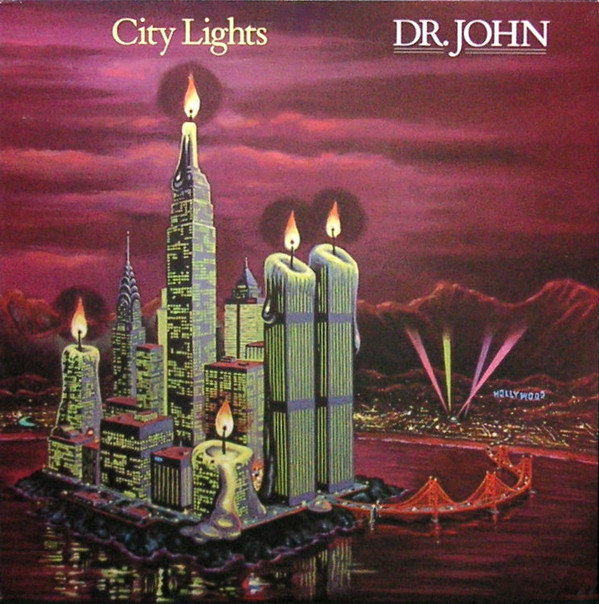
Dr John didn’t return to the studio until 1978. By then, he had signed to Horizon, an imprint of A&M and recorded City Lights. It featured three of his own compositions and five he cowrote with various songwriting partners. These songs were recorded with a crack band of musicians and was a return to form from Dr John.
City Lights was released in February 1979, and was well received by critics. However, the album which featured everything from cool jazz, fusion, R&B and soul-jazz failed to find an audience. For Dr John this was another disappointment.
Tango Palace.
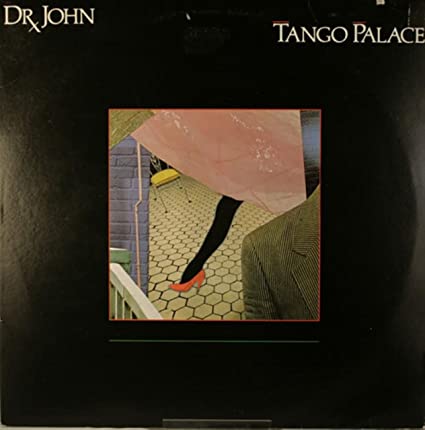
By the time Dr John released Tango Palace later in 1979 he was spending more of his time working as a session musician and had played keyboards on Rickie Lee Jones eponymous debut album. Now he was about to release his with studio album and tenth album overall.
When Tango Palace was released it wasn’t well received by critics who believed it was the weakest album of his career. This came as a blow to Dr John.
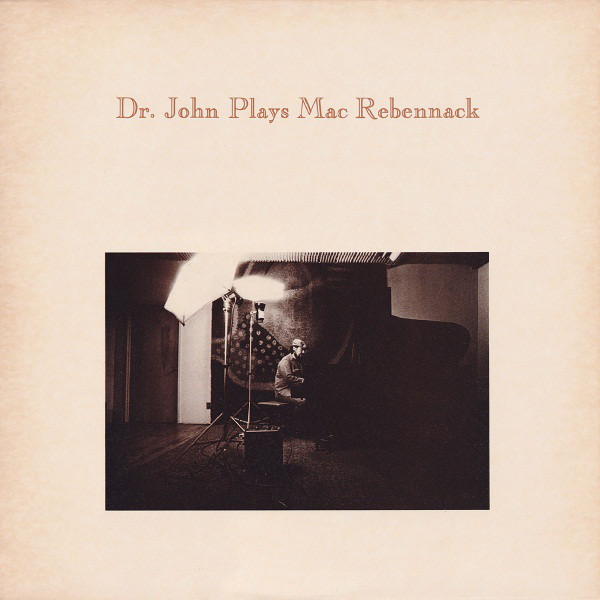
Dr John Plays Mac Rebennack.
The eighties began with the release of Dr John Plays Mac Rebennack in 1981. It featured many of his own boogie woogie compositions and showcased the Dr John’s piano playing. The rest of the eighties was a fallow period for Dr John until he released In A Sentimental Moon in 1989.
In A Sentimental Mood
After over a decade recording for smaller labels In A Sentimental Mood saw Dr John recording for a major label, Warner Bros. The sessions for the album took place in two prestigious recording studios, The Power Station in New York, and Los Angeles’ Ocean Way Studio. With a full string and horn section, and a tight band in tow, Dr John recorded some classic songs from yesteryear, including Makin’ Whoopee, Accentuate the Positive and Don’t Let the Sun Catch You Crying. These songs, and other classics, which feature on On In A Sentimental Mood, are reinterpreted by Dr John as he gives them his own unique twist.
In A Sentimental Mood opens with Makin’ Whoopee. It’s given the big band treatment by Dr John, slowed right down, and given a jazzy twist. Rickie Lee Jones sings the female part, as Dr John gives this old classic a new twist. With horns a blazing and drums pounding slowly, the song opens, giving way to Dr John’s tinkling piano. It’s only then that his raspy vocal enters, and you can almost imagine him singing the mildly suggestive lyrics with a big smile on his face. When Rickie Lee enters, her voice is sweet and coy, a real contrast to the Dr’s raspy, more powerful voice. Behind them, the strings sweep and horns rasp and blaze, the tempo slow, the arrangement swings and band play with power on what’s a welcome return to form for Dr John, one that hints at later albums, where he would cover classic by Duke Ellington and Johnny Mercer.
When you hear Dr John’s version of Candy there’s only one man that springs to mind, Ray Charles. Indeed, in the sleeve notes to the album, Dr John gives credit to Ray Charles and Charles Brown for their inspiration. This smoky sounding cover is a fitting testament and tribute to one of the giants of music. The tempo is slow, rasping horns and lush strings sweep and swirl as Dr John gives a beautiful and heartfelt rendition of the lyrics. His piano playing is sparse and jazz tinged, and when he and the piano drop out, the strings take his place. Here, the horns play second fiddle to the strings, with the strings playing a starring role. Of course, the other key ingredient is Dr John’s rasping vocal. Later a saxophone solo drifts above the arrangement, the rest of the horns playing with a subtly. Marty Paich’s arrangement of the strings and horns plays an important part in making this such a great song.
Johnny Mercer becomes the latest of the great songwriters Dr John pays tribute to on Accentuate The Positive. With high kicking horns almost marching through the track, accompanying Dr John’s gruff, rough and rocking vocal. He really gets the song swinging, after a slow and somewhat thoughtful introduction, where a meandering piano solo gives way to his earthy vocal. It’s only after that, that the song unfolds, transforming into a swinging, rocking number with the piano at the forefront and those high kicking horns rasping and adding drama. The combination is a potent and swinging one, that gets even better when a saxophone solo blows gloriously, as the song heads towards a dramatic crescendo.
One of the most beautiful songs on the album is My Buddy, co-written by Gus Kahn and Walter Donaldson. This song has a lovely, understated lush arrangement, with strings playing a major roll, while horns play a supporting roll. It’s just Dr John with his trusty piano that opens the track, with cymbals hissing gently in the background. When the strings enter, they’ve the lushest sound, a perfect accompaniment for Dr John’s thoughtful vocal and piano playing. Behind him a bass meanders, with the strings and later, gently rasping horns entering. Together, they produce a poignant and quite melancholy sound, one that
In A Sentimental Mood benefits from an understated arrangement, with the piano and lovely, lush strings combining as the track meanders along. It’s a song from a different age, gentle and beautiful, as it slowly reveals itself. A few jazzy flourishes from the piano accompany the swathes of strings that float above. During the song, Dr John’s piano playing is among the best on the album, as is Marty Paich’s string arrangement. Together with producer Tommy Lipuma, they combine to produce a beautiful, piano led track, that features swathes of lush strings.
Black Night finds Dr John upping the tempo, on a song written by Jessie Mae Robinson. Dramatic flourishes of piano and braying horns combine as the song opens, with Dr John demonstrating his talent and versatility as a pianist. When his vocal enters, it’s a downbeat and despondent Dr John we hear, as horns rasp and a bass makes its presence felt. The arrangement is full, and drama laden, horns swirling grandly, while the rhythm more than section play their part in the song’s success. By now, Dr John’s raspy voice is powerful, regret and sadness his only friends. As the arrangement reverberates, a combination of jazz players new and modern, including drummer Harvey Mason and bassist Abe Laboriel play their part in helping Dr John give an old song a new magical new twist.
One of the saddest songs on the album is a version of Joe Greene’s Don’t Let the Sun Catch You Crying. As strings swirl in, flourishes of dramatic piano, give way to a wistful vocal from the Dr John. With chiming guitars, strings and piano combining, the song meanders along, flourishes of piano escaping, while a butter and rueful Dr John delivers the lyrics. The arrangement taps into perfectly into the sadness of the lyrics, which have a melancholy, and almost bittersweet quality. Again the arrangement has a somewhat understated sound, relying on the strings, instead of horns. This works well, getting across perfectly the sadness and emotion in the lyrics, especially when delivered by Dr John.
When you talk about the greatest American songwriters of the first half of the twentieth century, then you can’t not mention Cole Porter. Similarly, Dr John couldn’t record an album featuring some of the greats of American songwriting and not cover a Cole Porter song. The one he chose was Love For Sale, choosing to transform the track, with some of his best piano playing on the album. Here he veers between some rollicking jazzy piano playing with flourishes of drama included, while strings sweep and swirl grandly, their sound vaguely reminding me of a movie soundtrack, while horns rasp and blaze, reverberating and the rhythm section provide a light sprinkling of funk. It’s a track that absolutely swings, and has an irresistible sound. Towards the end, Dr John almost raps over the arrangement, a brilliant track, just getting even better.
In A Sentimental Mood ends with More Than You Know, which opens with the wistful strings which have a real retro sound, in keeping with music. They give way to a thoughtful vocal from Dr John while his piano meanders along. He delivers the lyrics perfectly, with a tenderness and thoughtfulness. Above him, sits the strings, which float in and out of the arrangement, with Harvey Mason playing the drums with subtlety, forsaking sticks for brushes. Similarly, the bass meanders, the playing sparse, leaving flourishes of Dr John’s piano playing and his thoughtful vocal to take centre-stage, on what was a tender, beautiful and heartfelt delivery of the lyrics. This thoughtful and somewhat poignant and melancholy song seems the perfect way to end the album.
For anyone who has only experienced the music of Dr John’s vintage Atco Records years, the music on In A Sentimental Mood will come as something of a surprise when they hear it. It features a different side to Dr John’s music. He was a a musical chameleon who seamlessly could flit between musical genres Proof of that is In A Sentimental Mood which was very different to his previous albums.
In A Sentimental Mood is an album that was perfect for late night listening as Dr John revisits a different musical era with an all-star cast for company. Effortlessly Dr John transports the listener to another time and place during the album with his lived-in, worldweary vocal and peerless piano playing during In A Sentimental Mood.
During In A Sentimental Mood Dr John with a string and horn section in tow, transform nine standards, breathing new life and energy into them, as gives them his own unique twist. After In A Sentimental Mood his music continued to evolve, with aalbums rediscovering the music of Duke Ellington, Johnny Mercer and the wonderful music of New Orleans. That is no surprise.
Throughout his career, the late great Dr John was always an innovator, never afraid to try something new, sometimes, even becoming a contrarian. However, he always provided his many fans with some majestic and memorable music, which they’ll always cherish, and return to. This includes In A Sentimental Mood which marks a return to form from Dr John, and is a reminder of this flawed genius who is much missed.
Dr John-In A Sentimental Mood.

CULT CLASSIC: AUDIENCE-FRIEND’S, FRIEND’S, FRIEND.
Cult Classic: Audience- Friend’s, Friend’s, Friend.
In October 1969, Audience were offered the opportunity to support Led Zeppelin at the Lyceum in London. For Audience, this was the opportunity of a lifetime as Led Zeppelin had just released their eponymous debut album on 12th of January 1969. It was well on its way to selling over ten million copies. With Led Zeppelin riding the wave of commercial success and critical acclaim, it was almost guaranteed that the great and good of music would be in the audience. This, the four members of Audience thought, could be the break they were looking for.
By October 1969, Audience had already come a long way in a short space of time. The story began earlier in 1969, when Lloyd Alexander Real Estate split up.
They were a semi-professional soul band who played the London club and pub circuit. They even released Gonna Live Again as a single on the President label in 1967. Although it wasn’t a hit, it became a favourite among mods. However, there was no followup, and in early 1969, Lloyd Alexander Real Estate split-up. Like a phoenix from the ashes of Lloyd Alexander Real Estate, rose Audience.
Three of the former members of Lloyd Alexander Real Estate decided to form a new band. Howard Werth, Keith Gemmell and Trevor Williams formed a new band, which they called Audience. There was a problem though. The nascent Audience needed a drummer.
Luckily, the other three members of the band new just the man. Tony Connor had auditioned for Lloyd Alexander Real Estate. However, he didn’t get the gig. This time round, he was in luck, and Tony Connor became the final member of Audience.
With the lineup complete, Audience started rehearsing. Soon, they had a manager. Quickly, everything fell into place. They had a publishing contract, a residency at the still prestigious Ronnie Scott’s Jazz Club and signed a recording contract with Polydor. Everything, it seemed, was going well for Audience.
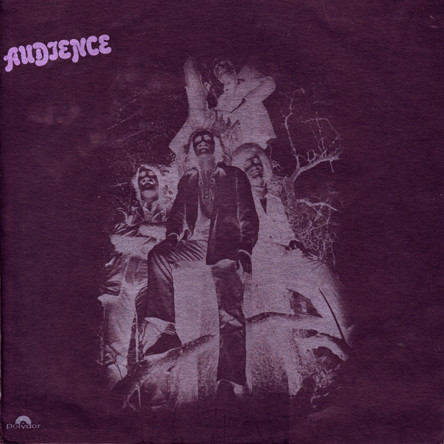
Audience.
For their eponymous debut album, Audience had penned twelve tracks. Nine were written by Howard Werth and Trevor Williams. They also cowrote Maidens Cry with the other two members of Audience. Howard Werth wasn’t finished. He cowrote Pleasant Convalescence and Man On Box with Keith Gemmell. These twelve tracks were recorded at Morgan Studios, London.
When recording of Audience began at Morgan Studios Howard Werth played acoustic and electric guitar. He also took charge of the vocals. The rhythm section bassist Trevor Williams and drummer Tony Connor who also played vibes. Keith Gemmell played tenor saxophone, clarinet and flute. Producing Audience’s eponymous debut album was Chris Brough. Audience was recorded quickly, and released later in 1969.
On its release, Audience passed record buyers and critics by. Very quickly, Polydor deleted the album, and it wasn’t until much later that people began to appreciate Audience. With its fusion of art rock and prog rock, it’s regarded as an album that was way ahead of its time. Unfortunately after the commercial failure of Audience, a problem emerged.
Audience’s contract with Polydor wasn’t a multi-album deal. Nor did it last for a specified period. It was a one album deal. This meant Audience were back where they started, earlier in 1969, looking for a recording contract.
Fortunately for Audience, their luck started to change. Led Zeppelin had been booked to play at the Lyceum in London in October 1969. They needed a band to open for them. Although Led Zeppelin could’ve had their pick of bands to open for them, Audience got the gig. Their luck was starting to change.
When Audience arrived at the Lyceum, they were knew that the venue would be packed with the great and good of music. There was the possibility that watching, would be someone interested in signing them. So the four members of Audience agreed, tonight, they had to give it their best shot. There could be no regrets after their set.
As Audience took to the stage, they looked out at a sea of bodies. For many of them, Audience were just another unsigned band. By the time they left the Lyceum’s stage, that was about to change.
Unknown to Audience Tony Stratton-Smith was watching. He had just formed a new label, Charisma, and was impressed by Audience. He managed to make his way backstage, where he found the four members of Audience. Tony Stratton-Smith started telling the band how impressed he was by them, and how he wanted to sign them to his new label, Charisma Records. Realising that here was someone who was interested in their music, and believed in them, Audience agreed.
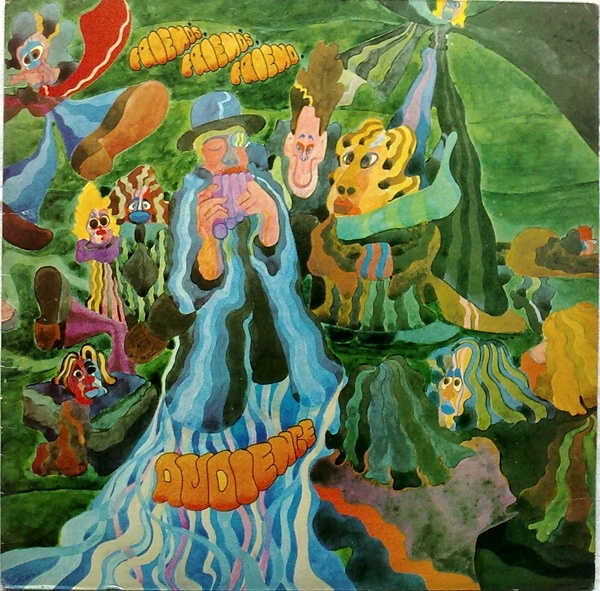
Now signed to Charisma, Audience found themselves signed to the same label as Van Der Graaf Generator and Lindisfarne. Quickly, Audience settled into life at Charisma, as Tony Stratton-Smith made plans for Audience’s sophomore, Friend’s, Friend’s, Friend.
Friend’s Friend’s Friend.
Given that Audience were new to the Charisma label, Tony Stratton-Smith wanted to bring onboard high profile producer to produce their label debut. American producer Shel Talmy was the chosen one.
Previously, Shel Talmy worked with The Kinks, producing All Day and All of the Night, Tired of Waiting for You, Dedicated Follower of Fashion, Sunny Afternoon and Waterloo Sunset. The producer had also worked with The Who, producing their 1965 debut album My Generation, and with Roy Harper and Davy Jones who later, would become David Bowie. With such an impressive track record, Shel Talmy looked the perfect producer to transform Audience’s fortunes. They had been working on new material.
For Friend’s Friend’s Friend, the members of Audience had worked on eight songs. Six came from the pen of Howard Werth and Trevor Williams. Ebony Variations was credited to the four members of Audience. Tony Connor and Keith Gemmell cowrote Priestess. Having written eight songs new songs, Audience made their way to Olympic Studios.
At Olympic Studios, the four members of Audience showed producer Shel Talmy their eight new songs. Shel Talmy looked at the new material. Shel Talmy wasn’t impressed. Apart from Belladonna Moonshine, Shel Talmy didn’t like Audience’s new material. He then decided he didn’t want to produce what became Friend’s Friend’s Friend.
Many bands would’ve viewed this as a huge problem. Not Audience. There and then, they made the decision to produce their sophomore album, Friend’s Friend’s Friend. Not at Olympic Studios though.
Instead, the four members of Audience decamped to the familiar surroundings of Morgan Studios. With engineer Mike Bobak in tow, Audience got work. They weren’t complete novices when it came to production. Each of the members of Audience had been members of bands before. This included Lloyd Alexander Real Estate, who had released a single. Members of Audience had also been around studios with other bands, so it wasn’t a new experience. Guided by an experienced engineer like Mike Bobak, Audience felt capable of producing Friend’s Friend’s Friend got to work.
Lead singer Howard Werth, guitar played acoustic guitar and banjo. The rhythm section featured bassist Trevor Williams and drummer Tony Connor. He also played piano, percussion. Keith Gemmell played saxophone and woodwind. Despite never having produced an album before, Audience, guided by Mike Bobak soon had Friend’s Friend’s Friend recorded. All that was left was for Friend’s Friend’s Friend to released.
Audience were hoping to avoid a repeat of their eponymous debut album, when Friend’s Friend’s Friend was released in May 1970. If two consecutive albums flopped, that could prove catastrophic. The worst case scenario was that Audience’s career could be at a crossroads. For a band that had only been together just over a year, that would a disaster. However, Audience had covered all the bases.
Critics discovered that Friend’s Friend’s Friend was a truly eclectic album. There were elements of art rock, country, pop, progressive rock and rock. The mood veered between joyous and witty, to introspective and dark on Friend’s Friend’s Friend. There was something for all musical tastes on Audience’s sophomore album Friend’s Friend’s Friend.
Nothing You Do opened Friend’s Friend’s Friend, and is best described as a fusion of prog rock, folk and classic rock. There’s more than a nod to the Rolling Stones on Nothing You Do. Partly, that’s down to Howard’s mid-Atlantic drawl. He loses this on Belladonna Moonshine, which was released as a single. It has a much more joyous, good time sound. This struck a nerve with record buyers, and resulted in Audience making an appearance on British television show Top Of The Pops. Very different was It Brings A Tear. Wistful and melancholy describes this maudlin mixture of folk, pop, prog rock and rock. Why it wasn’t released as a single, seems strange? One of the highlights of Friend’s Friend’s Friend was The Raid. Not only does it feature Audience in full flight, but features barnstorming perfoemacen from saxophonist Keith Gemmell. It’s a fitting finale to side one of Friends, Friends, Friend.
Side two picks up where side one left off, with Keith’s saxophone driving Right On Their Side along. As Howard delivers lyrics inspired by Enland’s historical past, and tinged with triumph and tragedy, Keith switches between saxophone and flute. He plays a leading role in the song’s success. Ebony Variations was originally inspired by Mozart’s clarinet concerto. It’s very different from the rest of Friends, Friends, Friend. Everything from classical, folk, pop and rock combine, creating a captivating track. The final two tracks on Friends, Friends, Friend were inspired by controversial subjects, mysticism and the occult.
Back in the early seventies, this wasn’t unusual. Many musicians were taking an interest in these matters. Audience were no different. They were reading The Dawn Of Magic, which was written by Louis Pauwels and Jacques Bergier. This book influenced the dark, dramatic and otherworldly sound of Priestess and Friends, Friends, Friend which closes Audience’s sophomore album Friends, Friends, Friend.
Although Friends, Friends, Friend wasn’t a hugely successful album, it was a bigger success than their 1970 eponymous debut album. Partly, this was down to Audience’s appearance on Top Of The Pops, where they sung Belladonna Moonshine. Suddenly, a new audience were introduced to Audience’s music. Despite their appearance on what was the biggest music show on British television, it was the live circuit where Audience were most popular.
When Audience headed out on tour to promote Friends, Friends, Friend, they played in front of sell out crowds. It must have been frustrating. If everyone who watched Audience live had bought Friends, Friends, Friend, the album would’ve found its way onto the British charts. Sadly, that wasn’t to be. However, success wasn’t far away for Audience.
Audience released their third album House On The Hill in 1971. It was produced by Gus Dudgeon. Indian Summer was chosen as a single, and reached number seventy-four on the US Billboard 100 charts. Just like so many British bands before them, American audiences discovered Audience first.
The following year, 1972, Audience released their fourth and final album, Lunch. By then, Audience had spent the last three years touring. The band were almost burnt out. After touring with The Faces and Cactus, tensions were running high. Keith Gemmell left Audience, resulting in the band needing a new saxophonist.
Lunch was completed with the help of Bobby Keys and Jim Price, the Rolling Stones brass section. When the Gus Dudgeon produced Lunch was released, it reached number 175 in the US Billboard 200 charts. Lunch became the most successful album of Audience’s career. Sadly, it was also their swan-song.
After four albums and a handful of singles, art rock pioneers, Audience called time on their career. The remaining three members of Audience went their separate ways.
That was the last that anyone heard of Audience until they reformed in 2004. Howard Werth, Keith Gemmell and Trevor Williams played a series of concerts in Germany, Italy, Britain and Canada. By then, somewhat belatedly, Audience’s music was being appreciated and had found a wider audience. For Audience, it was a case of better late than never. Forty years after releasing four albums of eclectic and innovative music between 1969 and 1972, including their cult classic Friends, Friends, Friend their music has found the Audience it deserves.
Cult Classic: Audience- Friend’s, Friend’s, Friend.
CULT CLASSIC: JADE WARRIOR-FLOATING WORLD.
Cult Classic: Jade Warrior-Floating World.
All too often, musical innovators don’t get the credit they deserve. That was the case with Jade Warrior. Their fourth studio album, Floating World was released in 1974, and pioneered both ambient and world music. Floating World was the most ambitious album of Jade Warrior’s career and almost wasn’t released.
After releasing their third album Last Autumn’s Dream, in 1972, Jade Warrior headed off on a tour of America. When they returned home Jade Warrior were called to a meeting with Vertigo, who cancelled the band’s contract. Not long after this, the group was dissolved and it looked like the Jade Warrior story was over.
This was ironic for the band. Since signing to Vertigo in 1970, Jade Warrior had released a trio of groundbreaking album They released their eponymous debut album in 1971.
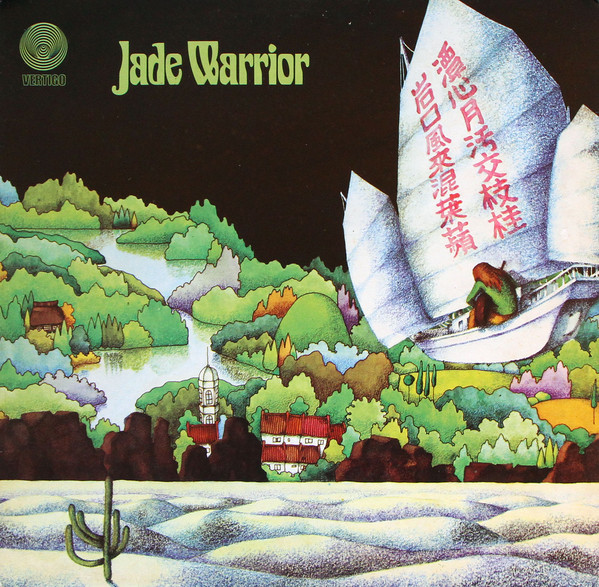
Jade Warrior.
When Jade Warrior began work on what became their eponymous debut album, they were a trio. The initial lineup featured guitarist Tony Duhig, flautist and percussionist Jon Field and bassist and vocalist Glyn Havard. They penned the ten tracks that became Jade Warrior. Little did they know the effect their debut album would have.
Jade Warrior was the album that pioneered the psychedelic-progressive sound. It combined elements of what would later, become known as world music. This came courtesy of the myriad of ethnic percussive sounds. They made up for the lack of drums, as at this point, Jade Warrior didn’t have a drummer. Adding another layer to Jade Warrior’s music were distorted, twisted guitars and ghostly, otherworldly sounds. The other ingredient was sudden changes in tempo. All this made Jade Warrior a groundbreaking album.
Critics realised this, and Jade Warrior received positive reviews. Despite this, Jade Warrior didn’t sell in vast quantities. However, Vertigo took the view that this was just Jade Warrior’s debut album. Maybe their fortune would change with their sophomore album Released?
Released.
When recording of Jade Warrior’s sophomore album Released began at Nova Sound in London, Jade Warrior were no longer a trio. Drummer Allan Price had joined Jade Warrior. Three had become four. With the addition of their latest recruit Jade Warrior began work on what’s on often called the difficult second album.
Thar wasn’t the case for Jade Warrior. At Nova Sound in London, Jade Warrior began recording the eight tracks the group had written. The nascent quartet were joined by Dave Conners. He added tenor and alto saxophone. One of his finest moments comes on the fifteen minute epic jam, Barazinbar. Dave Conners unleashes sheets of searing, soaring saxophone. His contribution is part of what was a stylistic departure for Jade Warrior. It was released in late 1971.
Gone was the world music influence of their eponymous debut album. Replacing it, was a much more progressive sound. Just like Jade Warrior, Released was well received by critics. They welcomed an album that was perceived as an album of contrasting songs. Ballads rubbed shoulders with jazz-tinged instrumentals and the much more progressive sounding tracks. Jade Warrior’s music, it seemed, was continuing to evolve.
Despite the continued evolution of Jade Warrior’s music, this didn’t translate into album sales. They were still to some extent, an underground band. Jade Warrior weren’t a prog rock Goliath. However, gradually, their reputation was growing. So they began work on their third album Last Autumn’s Dream.

Last Autumn’s Dream.
Having released two albums during 1971, Jade Warrior returned to the studio in early 1972 to record ten tracks. Nine of these tracks were penned by the four members of Jade Warrior, The other track, The Demon Trucker was penned by Tony Duhig and his brother David. He made two guest appearances on Last Autumn’s Dream.
When Jade Warrior made their way to the studio, they weer joined by David Duhig. He plays electric guitar on The Demon Trucker and lays down a solo on Snake. This wasn’t the first time had Jade Warrior had augmented their numbers with a guest musician, Nor would it be the last time.
Once Last Autumn’s Dream was recorded, Vertigo scheduled the release its release for the spring of 1972. After the release of Last Autumn’s Dream Jade Warrior were about to head off on a tour of America.
They embarked upon their American tour after some of the best reviews any of their three albums had enjoyed. Just like Released, Last Autumn’s Dream was an album of contrasts. Pensive instrumentals like Dark River, Obedience, Borne On The Solar Wind seemed reticent about sharing their secrets. Eventually, they did, and contrasted with the melodic nature of A Winter’s Tale and May Queen. Then on a trio of tracks, Jade Warrior found their inner rocker, and kicked loose on Snake, The Demon Trucker and Joanne. Critics were won over by the diversity of songs on Last Autumn’s Dream, and Jade Warrior’s versatility. Seamlessly, Jade Warrior flitted between musical genres, resulting in what critics called their finest moment. As Jade Warrior embarked upon their American tour, they felt like giants. After three albums they had arrived.
When Jade Warrior returned from their American tour, a new audience had been introduced to their music. However, back in Britain, Jade Warrior were still awaiting the big breakthrough. Last Autumn’s Dream wasn’t a commercial success. Three albums into their career, and still, none of Jade Warrior’s albums had proved a commercial success. It was a similar story with the two singles from Last Autumn’s Dream. Neither A Winter’s Tale nor The Demon Trucker charted. For Jade Warrior and Vertigo, this was a huge disappointment. However, Jade Warrior didn’t realise how disappointed Vertigo were.
Vertigo had had enough. They had supported Jade Warrior for three years and three albums. These albums had failed commercially. As a result, Jade Warrior were losing Vertigo money. It was all very well that they released innovative music. That however, didn’t pay the bills. So after the American tour was completed, Jade Warrior were invited into Vertigo’s offices. They were then told that Vertigo were cancelling Jade Warrior’s contract and Jade Warrior were dissolved. That looked like the end of the Jade Warrior story. However, it was only the end of of Vertigo years.
During 1973, Jade Warrior returned to the studio, and recorded enough material for two albums. Some of that music found its way onto various samplers. Despite this, no record label seemed willing to take a chance on Jade Warrior. That was until Steve Winwood of Traffic intervened, However, there was a catch.
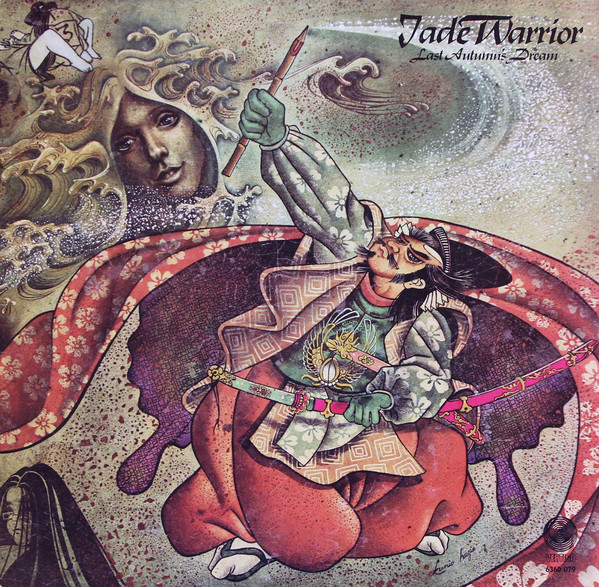
Floating World.
By 1974, Steve Winwood of Traffic had spent the last seven years signed to Island Records. During that period, he had got to know Chris Blackwell quite well. Steve also knew Jade Warrior. He liked their music, and felt the group had potential. So had an old friend of Steve Winwood’s, Dave Mason.
The pair had played alongside each other in Traffic. Then in 1971 Dave embarked upon a solo career. On one of his tours, Dave asked Jade Warrior to open for him. That was a couple of years previously. Since then, Jade Warrior had been released by Vertigo and dissolved. However, there was still the chance that Jade Warrior may rise like a phoenix from the ashes. So, Steve Winwood spoke to Chris Blackwell.
Just like Steve Winwood, Chris Blackwell saw Jade Warrior’s potential. Both men saw Jade Warrior’s future as an instrumental group. So Chris Blackwell decided to offer Jade Warrior a contract. Steve Winwood suggested a four album deal. Chris Blackwell countered with a three album deal. Eventually, they settled on a four album deal. All that was left was to convince Jon Field and Tony Duhig to reform Jade Warrior.
The pair didn’t take a lot of convincing. After nearly two years without a record contract, Jade Warrior were back being paid to do what they enjoyed doing, making music. However,it was a case of absent friends. Glyn Havard hadn’t been included in the contract. Chris Blackwell thought that Jade Warrior’s future lay in making instrumental music. This was hugely popular in 1974, with Mike Oldfield’s Tubular Bells well on its way to selling millions of copies. Could Jade Warrior do the same thing?
While that was highly unlikely, given Jade Warrior’s track record, the Island years was the start of a new chapter in Jade Warrior’s career. For the first album in their four album deal with Island Records, Jade Warrior embraced the Japanese philosophy of Ukiyo.
The philosophy of Ukiyo, which translates as Floating World, is essentially, about being able to accept life and its surroundings. It’s also about living for the moment. Pleasure seeking is important in the Japanese philosophy of Ukiyo, whose roots can be traced back to the Edo period. It began in 1603 and lasted between until 1868. 106 years later, and the newly formed Jade Warrior were being inspired by Ukiyo.
Jade Warrior named their fourth, and comeback album Floating World. It featured ten tracks. Eight were penned by Jon Field and Tony Duhig. They also cowrote Quba with Martha Mdenge. the other track, Monkey Chant was a traditional song which Jade Warrior recorded for Floating World. It would feature Jade Warrior at their most versatile, seamlessly combining multiple musical genres.
From the moment Jade Warrior entered the studio, they were on the clock. Island Records had always a reputation for keeping an eye on costs. They gave artists a budget, and they had to work within it. Similarly, Jade Warrior only had a certain amount of time to record the ten tracks that became Floating World. Given how complex an album Floating World was, this wasn’t going to be easy. It was a challenge, and a challenge that Jade Warrior relished.
As the recording session began at Island Records studio, Tony Duhig began to lay down the bass, glockenspiel, guitars, organ, piano, percussion and vibraphone. Onlookers watched as Tony seamlessly switched between instruments. As a man once said, “you ain’t seen nothing yet.”
Jon Field arrived in the studio with various flutes and a myriad of percussion. This included bells, a bell tree, a cello, congas, flutes, a glockenspiel, gong, a harp, Japanese Flute, organ, piano, talking drum and vibraphone. Just like Tony Duhig, Jon Field was a truly versatile musician. This meant hardly any musicians were drafted in to augment Jade Warrior.
In total, only a six additional musicians featured on Floating World. Drummer Chris Carran played on Clouds and was joined on Mountain Of Fruit And Flowers by Coldridge Goode on string bass. Graham Deakin who was then part of John Entwistle’s touring band Ox, added drums on Red Lotus. David Duhig added lead guitar on Monkey Chant. Skalia Kanga added harp on Memories Of A Distant Sea. Martha Mdenge added vocal on Quba, which she cowrote with Tony Duhig and Jon Field. Along with the Orpington Junior Girl’s Choir who feature on the two versions of Clouds this completed the lineup of musicians who played on Floating World, Producing. Floating World, the first in the Island years quartet were Tony Duhig and Jon Field. Once Floating World was completed, it was released later in 1974.
Floating World was the most ambitious, complex, innovative and eclectic album of Jade Warrior’s career. Elements of ambient, classical, experimental jazz, prog rock, rock and world music combine with what’s now referred to as post rock. Jade Warrior were pushing musical boundaries to their limits on Floating World, their concept album based around the Japanese philosophy of Ukiyo.
The philosophy of Ukiyo saw like as a journey, and compared it to “a gourd floating along the river current.” Floating World was a journey, a musical journey through disparate musical genres. However, neither critics nor record buyers recognised Floating World for what it was, a truly groundbreaking album.
Critics were divided over Floating World. Some neither understood nor “got” Floating World, For those used to reviewing three chord pop or the output from the various American soul factories, they struggled and failed to understand a concept album based on an ancient Japanese philosophy. Some of the more erudite and cerebral critics grasped and understood where Jade Warrior were coming from on Floating World. However, while their reviews were positive, other reviews of this aural adventure were mixed. This didn’t bode well for the release of Floating World.
As Jade Warrior’s comeback album Floating World was released, sales were disappointing. History it seemed, was repeating itself all over again. However, Jade Warrior knew they had still three albums to write their way into Island Records history books. Little did they realise that they had already done this. Jade Warrior had released one of the most ambitious and innovative albums of their career, Floating World.
Over ten tracks Jade Warior take the listener on a captivating journey. It’s no ordinary journey. The listener to Floating World becomes the “gourd floating along the river current.” As they float down this musical river, the listener discovers twists and turns aplenty.
That’s the case on Clouds, which opens Floating World. Washes of ethereal harmonies from are joined by a classical acoustic guitar, Then from nowhere, there’s the first of several thunderous, dramatic interjection. It’s joined by glistening bells and gentle percussion. Contrasts abound. Especially as a searing guitar which cuts through the arrangement. Later, a much more understated, serene ambient sound returns. It meanders along, like the river carrying the gourd showcasing a Japanese influence.
This meandering musical journey continues on Mountain Of Fruit And Flowers. Again it has an understated sound. Haunting sounding flutes punctuate the arrangement as slowly, it grows in power and tempo. The rhythm section provide the heartbeat, with the bass and a jazz-tinged acoustic guitar plays leading roles. Horns and flutes are added, as the arrangement builds and the tempo rises. Elements of classical, jazz and prog rock are combined seamlessly by Jade Warrior, as this captivating musical journey continues.
Waterfall has a much more understated sound. Bells chime and glisten, before a wistful acoustic guitar plays. It’s joined by a blistering guitar. It plays in the background, its sound being reigned in. Gradually, it grows in power, but doesn’t quite overpower the rest of the arrangement. Each of the component parts are very different. A glockenspiel shimmers and percussion hurries along. Contrasts are everywhere as the music veers between elegiac and ethereal to dreamy and wistful. Other times, the music becomes urgent and dramatic. Especially as the percussion powers the arrangement along. All of a sudden, the journey gathers pace, before returning to a much more elegiac, melancholy sound.
An explosion of blistering rocky guitars cuts through the arrangement to Red Lotus. It takes centre-stage. Everything else seems to be playing a supporting role. That includes the percussion and crashing gong. Then the rhythm section kick loose. They seem determined to match the guitar every step of the way. Flutes are added. While they seem like unlikely bedfellows, this works. Opposites attract, as Jade Warrior veer between rock with an Eastern twist and freewheeling fusion. It’s a potent mix, before Jade Warrior throw a curveball. The arrangement almost comes to a halt, before meandering lazily along the river of life.
Clouds makes a reappearance on Floating World. A dramatic, almost discordant wash of sound reaches a crescendo, before being replaced by the ethereal sound of the choir and flutes. Mostly, though it’s the choir that work their ethereal magic.
Rainflower has a similar understated, mellow sound as the second part of Clouds. A wash of distant organ is joined by an electric guitar. At first, it’s in the distance. Gradually, it makes its way to the front of the arrangement, where its joined by an acoustic guitar. From there. instruments flit in and out of the arrangement. A harp, the searing, quivering electric guitar and the much more subtle sound of the acoustic guitar. Washes of organ are added resulting in an innovative and blissful soundscape that was years ahead of its time.
As Rainflower gives way to Easty, percussion plays and a flute shivers and quivers. It then floats above the arrangement, A hypnotic bass is joined by what’s best described as a myriad of percussive delights. Again, contrasting sounds melt into one. This includes a scorching, searing guitar. As it dissipates a much more mellow, jazzy sound unfolds. Jade Warrior jam, combining elements of ambient, jazz, lounge and world music. It’s another fascinating fusion of musical genres as Jade Warrior continue to captivate.
Monkey Chant is a traditional song, given a makeover by Jade Warrior. A hypnotic chant is augmented by a blistering, rocky guitar solo from David Duhig. It’s a show stealer, before a dramatic interjection punctuates the arrangement. After that, David Duhig continues to win friends and influence people with what’s a stunning solo.
It’s just a melancholy acoustic guitar that opens Memories Of A Distant Sea. Soon, it’s doubled and joined by a flute. A harp plays, and is joined by a cello on what’s a heartachingly beautiful song. Then at 2.36 Jade Warrior add an element of drama. An electric guitar threatens to cut through the arrangement. It never does, as drama and beauty combine to create a song the creates a sense of sadness and yearning.
Quba closes Floating World, the first in Jade Warrior’s Island years quartet. Just an acoustic guitar and melancholy flute combine. They’re distant, and sound as if they need brought forward in the mix. However, the way the song has been mixed, adds to the sense of melancholia. It evokes a sense of longing, longing for something long lost. When an electric guitar interjects, it adds an element of drama. Later, Martha Mdenge adds a spoken word vocal. This seems to highlight the sense of loss and longing, as the poignant musical journey that’s Floating World reaches its destination.
Floating World was the start of a new chapter in Jade Warrior’s career. No longer were the group a quartet. Instead, they were reduced to a duo, consisting of Tony Duhig and Jon Field. This multitalented pair could play a multitude of instruments. Their versatility is put to good use on Floating World.
Tony Duhig and Jon Field deploy a myriad of musical instruments, as they take the listener on a musical journey. The listener becomes “a gourd floating along the river current.” There’s plenty of twists and turns along the way on what’s best described as a genre-hopping album, Over Floating World’s ten tracks, Jade Warrior combine elements of African, ambient, avant-garde, classical, experimental, funk, fusion, post rock, progressive rock, rock and world music. Continually, curveballs are thrown and surprises sprung. One minute the music is ethereal, serene and understated, the next it becomes dramatic and urgent. Always, though, the music on Floating World is ambitous, and innovative. Floating World is also captivating. There’s a reason for this.
The listener never knows what direction this music journey is heading? Is it heading for calm or rocky waters? It’s a case of waiting and seeing, as what’s a truly groundbreaking album reveals it secrets. Sadly, when Jade Warrior released Floating World, very few people discovered its delights. The album passed most people by and nowadays is regarded as a cult claassic.
It was only later, when a new generation of critics and record buyers reappraised Floating World that Jade Warrior’s fourth album found the audience it deserved, Since then, Floating World has been recognised as a groundbreaking album from a group who pioneered ambient and world music. Somewhat belatedly, Jade Warrior are receiving recognition for one of the great lost albums of the seventies, Floating World their cerebral concept album based on an ancient Japanese philosophy is a glorious aural adventure awaiting discovery.
Cult Classic: Jade Warrior-Floating World.
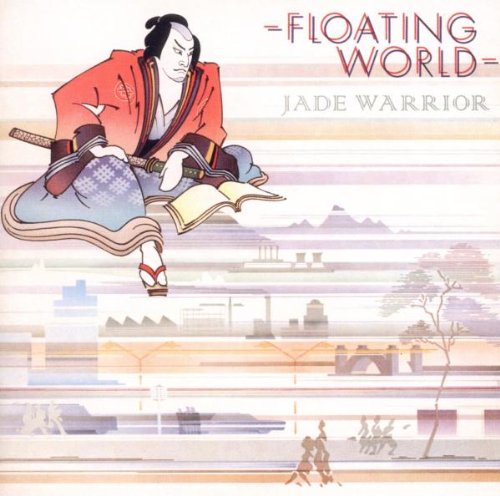
CULT CLASSIC: MOGWAI-COME ON DIE YOUNG.
Cult Classic: Mogwai-Come On Die Young.
It’s hard to believe that twenty-one years have passed since Mogwai released their sophomore album, Come On Die Young, in March 1999. Back then, Glasgow-based Mogwai were one of the best up-and-coming bands not just in Scotland, but Britain. Since then, Mogwai have established a reputation as one of Britain’s top bands. They’ve also established a large and loyal fan-base across the globe. Mogwai are one of Scotland’s most successful and hardest working bands.
Since 2003s Happy Songs For Happy People, have released another nine studio albums, two live albums and seven soundtracks. This includes ZeroZeroZero which was released on May the ‘1st’ 2020. It was the latest release from a group who have been around for four decades.
Mogwai’s roots can be traced to Glasgow in April 1991. That’s where guitarist Stuart Braithwaite and Dominic Aitchison first met. Four years later, they met drummer Martin Bulloch and formed Mogwai, which film buffs will remember, is a character from the movie Gremlins. Mogwai was always meant as a temporary name, but it stuck and was on the label of their 1996 debut single Tuner. It was released to critical acclaim and the NME awarded it their single of the week award. Two other singles were released during 1996 Angels v. Aliens and Summer. By then Mogwai were a quartet.
Guitarist John Cummings joined the band in 1995. He’s also something of a maestro when it comes to all things technical and is described as playing “guitar and laptop.” He was part of one of the hottest bands of the late nineties, Mogwai who released two more singles in 1997.
These two singes were New Paths To Helicon Pt. 1 and Club Beatroot. Just like their debut single Tuner, New Paths To Helicon Pt. 1 was won NME’s single of the week award. This was the perfect time for Mogwai to record their debut album, Mogwai Young Team.
Mogwai Young Team.
For Mogwai Young Team, Mogwai brought onboard Brendan O’Hare the Teenage Fanclub’s drummer. Another guest artist was Aidan Moffat of Falkirk based band Arab Strap. He added the vocal to R U Still In 2 It. The rest of Mogwai Young Team consisted of instrumentals. Mogwai Young Team was recorded at Chem 19 studios and produced by ex-Delgado Paul Savage and Andy Miller, one of Scotland’s top producers. Once Mogwai Young Team was completed, it was released on Scotland’s biggest record label, Chemikal Underground.
On its release in October 1997, critics were one over by Mogwai Young Team. Mogwai were hailed Mogwai as a band with a big future. Mogwai Young Team was a groundbreaking album of post-rock, which sold over 30,000 copies and reached number seventy-five in the UK. The Mogwai Young Team were on their way. However, a few changes were about to take place.
Come On Die Young.
A year later, Mogwai were back in the studio recording their sophomore album Come On Die Young. Much had changed. A new member had joined the band. Barry Buns a flautist and sometimes pianist, had played a few gigs with the band. They then asked him to become the fifth member of Mogwai. Violinist Luke Sutherland joined Mogwai, but not on a full-time basis. This wasn’t the only change.
Recording was split between New York and Glasgow.This time, they’d forsaken Chem 19 in Blantyre and recorded parts of the album in Rarbox Road Studios, New York. Some sessions took place in Glasgow’s Cava Studios. Producing Come On Die Young was Dave Fridman. When the recording of Come On Die Young began, it was a new look Mogwai.
Founding member Stuart Braithwaite played guitar and sang the vocal to Cody. Joining Stuart in the rhythm section were bassist Dominic Aitchison, drummer and guitarist Martin Bulloch. New members Luke Sutherland played violin and Barry Burns played piano, keyboard, guitar and flute. A few session players were called upon. Richard Formby played lap steel on Cody and Wayne Myers played trombone on Punk Rock/Puff Daddy/Antichrist. Producer Dave Fridmann played on a few tracks. When Come On Die Young was finished, it would be released in March 1999.
On its release, in March 1999, Come On Die Young was released to widespread critical acclaim. Mogwai had overcome “the difficult second album syndrome.” However, as is always the case, there were a few dissenting voices. Some critics felt his production style resulted in a much more orthodox sounding album. However, I’d argue that Come On Die Young was part of Mogwai discovering their “sound” and direction. Come On Die Young is a much more understated, but also ambient, experimental, multi-textured and melodic album. There’s a fusion of ambient, grunge and post rock on Come On Die Young. Given the minor spat between critics, record buyers had the casting vote.
Released in March 1999, Come On Die Young reached number twenty-nine in the UK. Record buyers welcomed the change in direction from Mogwai. Come On Die Young had surpassed the commercial success of their debut album Mogwai Young Team. Mogwai it seemed were now on their way to finding their sound and fulfilling the potential evident on their debut album on Come On Die Young.
Punk Rock opens Come On Die Young. A lone crystalline guitar meanders along, while a sample of Iggy Pop plays in the background. It’s an excerpt from an interview he gave on CBS on 11th March 1977, where Iggy talks about punk. Mogwai allow Iggy to take centre-stage, while they create an understated backdrop. However, it won’t be long before Mogwai take centre-stage.
Cody, like much of Come On Die Young has an understated, mellow sound. Stuart’s vocal is whispery, while chiming guitar, pensive drums and crashing cymbals combine ambient, indie rock, post rock. Adding the finishing touch is Richard Formby’s lap steel guitar. It shimmers and quivers, during this haunting, hypnotic opus.
Originally, Helps Both Ways featured John Madden’s commentary from a A.F.N.L. game between the San Francisco 49ers and the Green Bay Packers. Unfortunately, the sample hadn’t been cleared, so had to be replaced by a sample of another commentary. Just like with the Iggy Pop sample, it provides the backdrop for Mogwai as they create a maudlin, wistful backdrop. Drums crack, guitars chime and bass sits way down in the mix. Adding to the wistful, mesmeric sound is a flute. It floats in and out as this moody soundscape unfolds.
A brief snippet of a sample opens Year 2000. After that, the track is a fusion of musical genres with a futuristic, sci-fi influence. That comes courtesy of the feedback, synths and sound effects. Meanwhile, Mogwai rediscover their indie rock roots, as they drive the slow, broody arrangement along. Searing guitars join the rhythm section. They get into the groove and sometimes, unleash a spray of feedback during this genre-melting track. Seamlessly, Mogwai combine everything from avant garde, electronica, experimental, indie rock, Krautrock, psychedelia and post rock to create an innovative and futuristic soundscape that’s adventurous, bold and dark
Subtle, chirping guitars open Kappa. After that, bursts of thunderous drums interject. So do stabs of keyboards and driving guitars. Waves of music overpowers the rest of the arrangement. That’s no bad thing, because soon, Moqwai will be in full flight. It’s a joy to behold. There’s even a nod to Pink Floyd. Then Mogwai the strip the arrangement bare. Just the drums and chirping guitars combine. Soon, waves of dramatic music return. Bursts of feedback escape from the arrangement as Mogwai combine power, drama and subtle hooks.
Waltz For Aidan sees Mogwai dedicate the song to another Scottish musician, Aidan Moffat of Arab Strap. It’s their way of thanking Aidan. He contributed vocals on Mogwai’s debut E.P. and debut album 1997 Mogwai Young Team. A guitar chirps before the pounding rhythm section and crystalline guitar combines. Mogwai keep the tempo slow. The melodic and melancholy music floats along allowing you to hear its ethereal beauty.
May Nothing But Happiness is an epic track, nearly nine minutes long. Just like many tracks on Come On Die Young the introduction is understated. Chiming guitars set the scene. They’re joined by the rhythm section who create a dreamy, lysergic and mesmeric backdrop. Later, washes of keyboards sweep in and out, as Mogwai explore the song’s subtleties. There’s a strong Can influence. Just like Can, Mogwai seem at their best jamming. Things change when a driving guitar enters. It adds an element of drama, as Mogwai threaten to kick loose. Cymbals crash and there’s even a drum roll thrown in for good measure. Before long, normality returns and the track becomes a haunting, ambient soundscape.
Avant garde. That’s the best way to describe Oh! How The Dogs Stack Up. Mogwai replicate the sound of crackly vinyl. A spoken word sample is combined with deliberate stabs of piano. Bells chime and then a myriad of sound effects are unleashed by Mogwai. This adds an avant garde, experimental influence to a track that’s truly compelling.
Ex-Cowboy is another lengthy track. It’s nine minutes long. This allows Mogwai to experiment. Just like previous tracks, the introduction is understated. A searing guitar and bass combine before plodding drums enter. So do violins. They sweep back in forth. Cymbals crash as the drama builds and Mogwai head in the direction of grunge and post rock. Machine gun guitars, pounding drums and wailing feedback are combined with discordant strings. Then all of a sudden, it’s as if the storm is over. There’s a return to the understated, mellow sound. From, there, the two sides of Mogwai make reappearances during what’s a musical Magnus Opus.
A rumbling introduction opens Chocky. The drama builds and grows. You wonder if it’s about to explode? It never happens though. Instead, the buzzing, rumbling sound is joined by a lone, wistful piano. They may seem like strange bedfellows, but work well together. So do the rhythm and chirping, chiming guitars. Then there’s a spoken word sample that sits atop the arrangement. It adds a space-age influence. By now, the arrangement is being driven along by the guitars. Slow, melodic and melancholy, there’s a nod to Brian Eno and Pink Floyd, as Mogwai fuse elements of ambient, avant garde, experimental and post rock. In doing so, they create another genre-melting epic.
A lone crystalline guitars meanders along as Christmas Steps begins to unfold. Understated with an ethereal beauty, the music washes over you cleansing your soul. However, the driving guitars and buzzy bass signals a change in direction. Is it time? Will Mogwai kick out the jams? They threaten to do so. Guitars and bass lock horns. Before long, drums pound and cymbals crash. Eventually, it happens Mogwai rediscover their inner rocker. When they slow things down, the violins make an entrance. After that, the track’s ethereal beauty returns and you’re wallow in its midst for the remainder of the track.
Punk Rock/Puff Daddy/An Chris closes Come On Die Young. It’s just two minutes long. Here, Wayne Myers unleashes washes of his haunting trombone. They sit atop the arrangement’s eerie, sci-fi sound.
Sophomore albums are notoriously difficult. Many bands have realised that. Some bands spend years and fortunes trying to record their sophomore album. A prime example of this were The Stone Roses. It destroyed them. Not Mogwai though.
Far from it. They didn’t struggle with the notorious “second album syndrome.” Instead, they rose to the challenge and created one of the greatest albums of their career.
Come On Die Young saw Mogwai discover their “sound” and direction. It’s a much more reserved and understated album than their debut album, Mogwai Young Team. The music is also melodic, melancholy, dramatic, dreamy, wistful, lysergic and haunting. It’s the type of album where you need to let the music wash over you and discover its beauty, nuances, subtleties and secrets. With every listen, you hear something new and fresh as with each listen to this cult classic. That’s the case twenty-one years later.
On Come On Die Young, Mogwai combined musical genres and influences. Listen carefully and you’ll hear Mogwai combine everything from ambient, avant garde, electronica, experimental, grunge, indie rock, Krautrock, post rock and psychedelia. Mogwai have been influenced by a number of bands and artists. There’s a nod to Brian Eno, John Hopkins, Neil Young, Nirvana and Pink Floyd. Closer to home, the Cocteau Twins ethereal, fuzzy soundscapes influenced Mogwai when they were making Come On Die Young back in 1998 and 1999.
Nowadays, Come On Die Young is regarded as one of the finest albums Mogwai have released, and is also one of the best Scottish albums of the last forty years. It was a stepping stone for Mogwai who in 2020 are one of Scotland’s most successful bands who also strive and succeed to make groundbreaking and stay relevant. Long may that continue to be the case.
Cult Classic: Mogwai-Come On Die Young.
JACKIE MCLEAN-A FICKLE SONANCE.
Jackie McLean-A Fickle Sonance.
Label: Blue Note Records.
On October the ’26th’ 1961, thirty year old alto-saxophonist Jackie McLean made the now familiar journey to the Van Gelder Studio, at 445 Sylvan Avenue, Englewood Cliffs, New Jersey, to record a new album with his quintet. The album became A Fickle Sonance, which was released in late 1962 and was recently reissued by Blue Note Records. It’s regarded as a landmark album where Jackie McLean’s music starts to evolve as he begins to move from hard bop to free jazz. This was the latest instalment in the Jackie Mclean story.
Alto saxophonist, bandleader and composer Jackie McLean was born into a musical family in New York, on May ‘17th’ 1931. His father was a guitarist in Tiny Bradshaw’s successful swing orchestra, and he taught his young son about music. Tragedy struck in 1939, when Jackie McLean’s father passed away when he was just eight. However, his musical education continued.
Jackie McLean was fortunate to be surrounded by people who were immersed in music. This included his godfather and then his stepfather who owned a record shop. However, by the time he was a teenager, Jackie McLean wanted to learn an instrument and decided to learn the saxophone.
He started out playing the soprano saxophone, but after a while, switched to the alto sax. He was fortunate to receive music lessons from some respected teachers and some of his neighbours. This included Bud Powell, Thelonious Monk and Charlie Parker who were happy to give Jackie McLean informal lessons.
Charlie Parker proved to be a huge influence on Jackie McLean. Later in his career, Jackie McLean was described as one of Charlie Parker’s disciples. The two men also shared much in common apart from music. That was in the future.
Before that, the informal lessons paid off, and by the time he was in high school Jackie McLean was in a band that featured Kenny Drew, Sonny Rollins and Captain Kirk, the son of Andy Kirk. Three members of the band would go on to record for Blue Note Records, and in 1951 played alongside Miles Davis.
In 1951, Jackie McLean became a professional musician. By then, the twenty year old was prodigiously talented alto saxophonist who was already writing his own compositions. The young saxophonist and composer came to the attention of Miles Davis later in 1951.
Jackie McLean and his high school friend Sonny Rollins were invited to join Miles Davis’ band for the recording of Dig. It was one of Sonny Rollins earliest recordings, while Dig was Jackie McLean’s first recording session. He had written the title track, and played on four of the five tracks. While playing on Dig helped launch Jackie McLean’s career, there was a negative side to the experience.
Miles Davis and many of his friends were heroin addicts. This wasn’t uncommon in jazz, and it was seen by some as an occupational hazard. Sadly, Jackie McLean would become addicted to heroin.
In 1955, he recorded his debut album Presenting… Jackie McLean which was released by Ab Lib in 1956. This was the only album Jackie McLean released for Ad Lib.
By 1956, Jackie McLean like so many other jazz musicians was battling heroin addiction. This included his mentor and idol Charlie Parker. He had died in 1955 aged just thirty-four. Just two years earlier the pair had been walking through Greenwich Village looking for a club where they could play. That was when a frustrated Bird stopped and turned to twenty-two year old Jackie McLean and asked him to give him a public kicking. Bird was frustrated, annoyed and angry that he had squandered his prodigious talent and neglected himself. Now it was happening all over again to Jackie Mc:ean who risked losing everything.
After leaving Ad Lib, Jackie McLean signed to Prestige Records, and in January 1956, recorded Lights Out! It was released June 1956 and showcased Jackie McLean trademark hard bop sound. Right through to August 1957 he continued to record for Prestige, and by the time he left the label had recorded nine albums.
Jackie McLean also spent much of his time working as a sideman and accompanied some of the biggest names in jazz. He had joined Gene Ammons band and played on four albums he released between 1956 and 1957. This including two of his finest albums, Funky and Jammin’ in Hi Fi with Gene Ammons which were both released in 1957.
In 1956, Jackie McLean was also a member of Charles Mingus’ band when he recorded his Pithecanthropus Erectus album. However, Jackie McLean left after the album was completed. The bandleader had a reputation as being volatile and difficult to deal with this. That was the case during the session when, he alleged that Charles Mingus had punched him. Jackie McLean fearing for his life pulled out a knife and for a split second thought about using it in self defence. He didn’t and instead, left Charles Mingus’ employ.
Jackie McLean was hired by drummer Art Blakey and became a member of the Jazz Messengers. He played on seven albums between 1956 and 1957 before he decided to leave the Jazz Messengers.
During 1957, Jackie McLean found time to record two solo albums for the Jubilee label, and played on albums by Kenny Burrell, Art Farmer, Max Wadron and Ray Draper. However, later in 1957, disaster struck for Jackie McLean when he was arrested on drugs charges.
While he was awaiting trial Jackie McLean played Sonny Clark’s Cool Struttin’ album which was recorded in early 1958. The next eleven months were spent imprisoned on Rikers Island. Jackie McLean had hit rockbottom.
When he was released from prison, Jackie McLean discovered that like his mentor Charlie Parker and Thelonious Monk he had lost his New York cabaret card, and for over seven years couldn’t play live in the Big Apple. He knew that he was going to have to rely heavily on session work for the next few years.
On the ‘21st’ of December 1958, Jackie McLean made his return to the recording studio when he played on Donald Byrd’s Off To The Races. It was his first session in eleven months, but over the next few years, the studio would be like a second home for Jackie McLean.
He signed to Blue Note Records in 1959, which was his musical home until 1967. Blue Note Records paid better than other labels and offered a greater degree of artistic control. This was important to Jackie McLean who was about to begin the most productive and prolific period of his career.
Having lost his New York cabaret card, session work became even more important to Jackie McLean. Over the next eight years he played on albums by Bobby Hutcherson, Dexter Gordon, Donald Byrd, Freddie Hubbard, Freddie Redd, Lee Morgan, Sonny Clark and Tina Brooks at Blue Note Records. Jackie McLean also played alongside one of the pioneers of free jazz Ornette Coleman who would influence his music. That was later in the Blue Note Records’ years.
New Soil.
This new era began on May the ‘2nd’ 1959 at Van Gelder Studio when Jackie McLean led a quintet that included drummer Pete La Roca, bassist Paul Chambers, pianist Walter Davis Jr and trumpeter Donald Byrd. They recorded two compositions by Jackie McLean and three by Walter Davis Jr which became New Soil.
When New Soil was released in August 1959, it was to critical acclaim. The album found Jackie McLean trying to move beyond the boundaries of hard bop. He had been playing hard bop since he released his debut album in 1956 and was already looking to the future, and eventually free jazz.
Swing, Swang, Swingin’.
Two months after the release of New Soil, Jackie McLean returned to Van Gelder Studio on October the ‘20th’ 1959 to lead a quartet that included drummer Art Taylor, bassist Jimmy Garrison and pianist Walter Davis Jr. They recorded seven compositions during the session. The majority were standards, apart from the Jackie McLean’s composition 116th and Lenox. These tracks became Swing, Swang, Swingin’.
When Swing, Swang, Swingin’ was released in March 1960 it featured a newly invigorated Jackie McLean. He plays a starring role in each and every track. Having unleashed the melody, Jackie McLean improvises as if his very life depends on it. He plays with freedom and an inventiveness as he leads a tight and talented quartet. They were the perfect foil for Jackie McLean who for the next few years could do no wrong.
Capuchin Swing.
Just a month after the release of his second album for Blue Note Records, Jackie McLean was back in the now familiar surrounding of the Van Gelder Studio. On the ‘17th’ of April 1960, he was leading a quintet that featured drummer Art Taylor, bassist Paul Chambers, pianist Walter Davis Jr and trumpeter Blue Mitchell. They recorded six compositions, including three by Jackie McLean and they became Capuchin Swing.
When Capuchin Swing was released in early December 1960, the album was well received. It was mostly an album of hard bop, albeit with a hint of the freer sound Jackie McLean would later embrace. The tracks were a mixture of blues and mid to fast tempo tracks that swung. They were the perfect showcase for some of the finest purveyors of hard bop. Jackie McLean’s playing was progressive, inventive and sometimes inspirational on an album that is often underrated and overlooked. That wasn’t the case with the followup Jackie’s Bag.
Jackie’s Bag.
By the time Jackie McLean began work on his fourth album for Blue Note Records, a number of tracks he had previously recorded had yet to be recorded. This included three Jackie McLean compositions recorded at the original Van Gelder Studio on January the ’18th’ 1959. They were recorded by a quintet that included drummer Philly Joe Jones, bassist Paul Chambers, pianist Sonny Clark and trumpeter Donald Byrd. However, the three tracks weren’t enough for an album so Jackie McLean returned to the studio.
On the ‘1st’ of September 1960, led a sextet that included drummer Art Taylor, bassist Paul Chambers, pianist Kenny Drew, trumpeter Blue Mitchell and tenor saxophonist Tina Brooks. They recorded two Jackie McLean compositions and Tina Brooks’ Isle Of Java. As usual, Alfred Lion took charge of production of the tracks that completed Jackie’s Bag.
Blue Note Records scheduled the release of Jackie’s Bag in June 1961. When critics heard the album they didn’t think it was Jackie McLean’s most innovative album. It was an album of two sides.
The strongest material came from the second session, and the addition of Tina Brooks was a masterstroke. He proved to be the perfect foil for Jackie McLean, and the interplay between the pair is among the highlights of the album. It was mostly an album of hard bop but sometimes, Jackie McLean showed his more adventurous side. It was as if he was yearning to break free and try something new.

Bluesnik.
Just seven months after the release of Jackie’s Bag, Jackie McLean returned with his next album Bluesnik in February 1962. It had been recorded on the ‘6th’ of January 1961.
Jackie McLean headed to the Van Gelder Studio to record with his quintet. It featured drummer Pete La Roca, bassist Doug Watkins, pianist Kenny Drew and trumpeter Freddie Hubbard. They recorded six compositions that became Bluesnik, including three by Jackie McLean.
Bluesnik was released in February 1962 and was hailed not just as Jackie McLean’s most accessible album for Blue Note Records but his strongest. He blew hard on Bluesnik which was an album that swings thanks to the all-star rhythm section. The band blazes their way through Bluesnik which is mostly an album of hard bop and blues. Sometimes becomes more adventurous as Jackie McLean experiments on Bluesnik. This he continued to do on his next album A Fickle Sonance.
A Fickle Sonance.
Nine months after he recorded Bluesnik, Jackie McLean returned to the Van Gelder Studio on October the ‘26th’ 1961 to record what became a A Fickle Sonance. That day he led a talented and versatile quintet which featured some familiar faces as well as a newcomer.
Joining Jackie McLean was a new rhythm section of drummer Billy Higgins and bassist Butch Warren. They were joined by pianist Sonny Clark. Another newcomer was trumpeter Tommy Turrentine. The band wrote or cowrote four of the six compositions on A Fickle Sonance.
Jackie McLean had written two new compositions, Subdued and A Fickle Sonance. Sonny Clark penned Sundu, Tommy Turrentine contributed Enitnerrut and Butch Warren wrote Lost which closed the album. However, Sonny Clark arrived at the sessions with an exciting find.
He had been at Thelonious Monk’s house when it’s claimed he discovered the lead sheet to Two Timer. Sonny Clark finished the composition which he renamed Five Will Get You Ten. It was credited to Thelonious Monk and Sonny Clark and would open the album.
Just like his previous albums, Rudy Van Gelder was the engineer and Alfred Lion produced A Fickle Sonance. The session lasted just the one day, and thirteen months later A Fickle Sonance was released by Blue Note Records.
On its release in November 1962, most critics welcomed and were won over by A Fickle Sonance. It was Jackie McLean doing what he did best, playing hard bop. This was something he had been doing since he released his debut album. However, Jackie McLean was determined to take hard bop in a new direction on A Fickle Sonance.
Just like on Bluesnik, Jackie McLean’s playing had a swinging, bluesy style and he played with speed, and power. However, this time around, Jackie McLean was accompanied by what was essentially a new band.
They were the perfect foil for him and he seemed to be reinvigorated. His playing was imaginative and inventive as he showcased his unique sound. It was raw, emotive and piercing almost shrill. Although he had honed a bluesy style, sometimes gospel-tinged was the best way to describe Jackie McLean’s style on A Fickle Sonance. However, the best way to describe him is versatile.
Five Will Get You Ten opens A Fickle Sonance. Straight away Jackie McLean’s alto saxophone has that shrill sound as it swings and quivers. He plays with speed and power and the band match him every step of the way. When the solos come around his playing is aggressive and edgy, while Tommy Turrentine and Sonny Clark’s are much more laid back. Meanwhile, Billy Higgins’ drums add energy and are like a musical spark plug that propels the arrangement along. Although everyone plays their part in the sound and success of the track, it’s bandleader Jackie McLean who steals the show.
The tempo drops on the ballad Subdued, where Jackie McLean’s alto saxophone takes centrestage. He plays within himself and shows restraint. His playing is expressive, emotive and takes on a ruminative sound. It allows the listener to reflect and during this beautiful Subdued composition that shows another side to Jackie McLean.
As Sundu unfolds, the piano answers the horns’ call. Then when it’s time for Jackie McLean’s solo its simple, unfussy and in a bluesy. Sonny Clark’s piano solo is also bluesy and his finger fly across the keyboard as he plays one of his best solos on this memorable blues.
Dissonant describes the introduction to A Fickle Sonance. This is akin to a curveball because soon, it’s all change as the band moves through the gears into a quick swing. They keep things tight, especially during the main melodic statement. Later, the modal changes result in some of the finest solos on the album. Sonny Clark once again plays a starring role and latterly plays with an inventiveness and power that inspires the rest of quintet to greater heights.
Tommy Turrentine wrote the funky, minor themed Enitnerrut. It features some of the best soloing on A Fickle Sonance from every member of the band. The rest of this truly talented quintet enjoy the opportunity to shine and their fifteen minutes of fame.
Butch Warren’s Lost closes A Fickle Sonance and is similar to Enitnerrut. It veers between a Latin feel to a swaggering swing. At one point, Butch Warren unleashes a solo and showcases his considerable skills on what’s the perfect way to close the album.
By the time Jackie McLean rebased A Fickle Sonance he had spent a decade forging his own unique sound. Critics and jazz fans recognised Jackie McLean’s alto saxophone whether he was bandleader or sideman. He was by 1962, one of the hardest working musicians signed to Blue Note Records.
He became a professional musician eleven years earlier, and was enjoying the most successful period of his career. He had signed to Blue Note Records in 1959, and three years later, A Fickle Sonance was the sixth album that Jackie McLean had released. It was also one of the best and just like his previous album Bluesnik it was one of his most accessible.
By 1962, Jackie McLean was trying to rebuild his life after a number of years when he was addicted to heroin. It looked as if he was about to follow in the footsteps of his mentor Charlie Parker and waste his talent. However, three years after the death of Bird, Jackie McLean received a wake up call.
He was found guilty of narcotics charges and sentenced to an eleven month jail sentence on the infamous Rikers Island. He spent most of 1958 in prison and only played on two albums that year.
Four years later, he was still making up for lost time and rebuilding a career that promised so much. He was a prolific musician who spent much of his time in the studio working as a sideman and recording six solo albums. This includes A Fickle Sonance it marked the end of a chapter in his career. He was about to embrace avant-garde and free jazz from his next album. This move would divide the opinion of critics who either preferred his old sound, or his modernist music.
Of the first six albums that Jackie McLean recorded for Blue Note Records, Capuchin Swing, Bluesnik and A Fickle Sonance feature the maverick alto saxophonist at his very best as he rebuilt his career. Recently, A Fickle Sonance was reissued by Blue Note Records on vinyl and ths is an opportunity to discover or rediscover the delights of the album that marked the end of an era for Jackie McLean.
Jackie McLean-A Fickle Sonance.
INSTRUMENTAL GEMS VOL. 1: SPANISH FUNK AND GROOVE 1974/1977.
Instrumental Gems Vol. 1: Spanish Funk and Groove 1974/1977.
Label: Adarce Records.
During the seventies, many Spanish musicians found themselves struggling to make ends meet. Times were tough, especially for up-and-coming musicians. Some of them had dreamt of becoming a professional musician since the first started to play the guitar, bass or drums. Eventually, after years of practise, dedication and hard work they some able to fulfil their lifetimes ambition and become a professional musician. It was what they had worked towards and dreamt about for as long as they could remember.
The young musicians had grown up dreaming of being in a successful pop or rock band, who recorded ambitious and innovative albums. This would lead to them touring the world and finding fame and fortune. Sadly, it hadn’t turned out like that, and they weren’t about to record the Spanish equivalent of Dark Side Of The Moon.
Some of the musicians ended up joining the many dance bands and orchestras that had sprung up across Spain. While it wasn’t they had hoped for, they were about to make a living doing what they loved, making music.
This they hoped was one step nearer the fame and fortune they had dreamt about. However, as they looked enviously at the new bands who were making a breakthrough in Britain and America, they realised how different things were in Spain.
The music the dance bands and orchestras were playing was very different. When they played live their sets featured Bossa Nova, easy listening, lounge music and soul as well as the light music that was popular at that time. This included rhythm ’n’ blues-pasodoble and Spanish soul. It was a case of playing music that people knew. That was why they covered popular Spanish songs and the current international hit singles. However, not many of the dance bands and orchestras ever entered the recording studio.
When dance bands and orchestras entered the studio some recorded cover versions. It was a case of recording music that was familiar, which they hoped would appeal to record buyers. This they often augmented with their own compositions when they recorded their album.
Sometimes, the orchestra changed their names for the recording sessions. This was often an attempt to sound modern. Other times it was purely for commercial purposes. They weren’t alone.
At the same time, many artists who entered the studio were using nicknames. They also recorded albums that include cover versions and new material, and along with the dance bands and orchestras were part of a new scene that was soon blossoming.
Especially in Aragon and Catalonia where new labels were founded, often to release and promote the albums the artists and orchestras were releasing. However, these small, independent regions labels didn’t release huge amounts of music. Within their back-catalogues are a number of hidden gems which, over forty years later, have become particularly sought after.
Especially some of the oft-overlooked instrumentals with were released during the mid to late seventies. They’re already firm favourites of a number of DJs and collectors of disco, funk, rare groove and soul. However, they’re sure to appeal to a wider audience which is why Adarce Records have compiled two volumes of instrumentals. The first is Instrumental Gems Vol. 1: Spanish Funk and Groove 1974/1977 which is a limited edition of 500.
Instrumental Gems Vol. 1: Spanish Funk and Groove 1974/1977 features fourteen tracks from Gregorio García Segura, Los Brandis Con María Nevada, Lin Barto, Blas and His Friends, Jorge Enrique, Roberto Serrano, Rafael Martínez, Orquesta A. Latorre, Orquesta Miramar, Conjunto Nueva Onda, Ramón Gil, Mesie Bató, Red-Key and Unidades. They’re responsible for some of the rarest instrumental tracks that feature the early Spanish funk and groove sounds. These tracks were released by small regional Spanish labels.
Side A.
Opening side A is Gregorio Garcia Segura’s cinematic funk epic Harlem Pop, which was released by Beverley Records in 1976.
Los Brandis Con Maria Nevada’s Life’s Song was released by BOA in 1974. It’s a dancefloor friendly slice of Spanish groove which showcases some truly talented musicians.
Magnetic released Sax Pop in 1976, and finds Lin Barto fusing funk, pop and easy listening on this hidden gem.
The DMB label released Blas and His Friends’ Supermarket in 1974. It’s a dramatic filmic sounding track that brings to marries the music of the late-sixties and early-seventies to create a track from a lost soundtrack.
Jorge Enrique is responsible for one Go Go a driving slice of filmic funk released by BOA in 1976. It’s one of the compilations highlights.
Although Roberto Serrano’s Retorno was released by the Audio label in 1976, it sounds as if it has been influenced by sixties soul jazz. A churning, swirling Hammond organ plays a starring role in the sound and success of the track.
Moody, atmospheric, cinematic and describes Rafael Martinez’s Funny Comic which was released by BOA in 1975.
Side B.
Orquesta A Latorre’s genre-melting Hotel Don Felipe was released by BCD in 1975. Elements of groove, soul jazz and funk have been thrown into the musical melting pot and left to simmer.
Orquesta Miramar’s Pop Song was released by DMB in 1975. Horns are to the fore for much of the track although the rhythm section play a supporting role. It’s a quite beautiful track and a real find that showcases the considerable talents of Orquesta Miramar.
Conjunto Nueva Onda’s A Su Aire was released by the Magnetic label in 1976. It’s another track where horns are to the fore as the track swings and conjures up images of Spain in the seventies.
BOA released Ramon Gil’s Mercurio forty-five years ago in 1975. He fuses elements of rock, funk and jazz to create a timeless dancefloor friendly track.
Mesie Bato’s Violeta was released by Audio in 1975, and combines funk and jazz with bursts of drama to create a joyous, dramatic and memorable sounding track
Another track released by Audio was Red-Key’s Morning. They combine elements of funk, fusion and jazz to create a futuristic and innovative sounding track. It’s one of the compilation’s highlioghts. that’s one of the comp
In 1976, the Zarton label released Unidades’ Caballo Salvaj. It’s a melodic and memorable hidden gem that is the perfect way to close Instrumental Gems Vol. 1: Spanish Funk and Groove 1974/1977.
The tracks on Instrumental Gems Vol. 1: Spanish Funk and Groove 1974/1977 are already favourites of a number of DJs and record collectors who manage to unearth these fourteen hidden gems. That would be almost impossible to do nowadays as these tracks are rarities. They were released in small quantities by regional record labels and very few copies will have survived since the seventies.
There is another way and that’s to pickup a copy of Instrumental Gems Vol. 1: Spanish Funk and Groove 1974/1977 which is a lovingly created compilation. Adarce Records have dug deep into the vaults of several small Spanish labels in search of musical treasure and have struck gold. Proof of that is Instrumental Gems Vol. 1: Spanish Funk and Groove 1974/1977.
Instrumental Gems Vol. 1: Spanish Funk and Groove 1974/1977.
CULT CLASSIC: THE SEEDS-FUTURE.
Cult Classic: The Seeds-Future.
For any band with what might be described as a “generous” recording budget, the temptation to experiment and push musical boundaries must be tantalizing. Especially back in 1967, at the dawn of the psychedelic era. For The Seeds, resisting temptation was impossible. The Seeds can’t be criticised for this.
They had spent the two previous years working tirelessly to build a reputation as an innovative band who pushed musical boundaries and had released albums of eclectic and esoteric music. This describes A Web Of Sound and The Seeds, which featured Pushin’ Too Hard, the biggest single of their career. After this success, The Seeds decided to push musical boundaries to their limits for their third album Future.
Future didn’t see The Seeds push musical boundaries to their limits. Instead they blew these limits away. The result was a mind-blowing fusion of psychedelia, garage, rock and pop. Veering towards jazz and soul, eclectic doesn’t even come close to describing Future. This was a long way from The Seeds roots as a garage band. This was very different. Maybe too different. Since 1967, when Future was released, it’s perceived as a cult classic and an album that was ahead of its time.
By 1967, the four members of The Seeds, Sly Saxon, Daryl Hooper, Jon Savage and Rick Andridge were enjoying the fruits of their musical labors. They’d enjoyed two hit singles, Pushin’ Too Hard and Can’t Seem To Make You Mine. This brought commercial, critical acclaim and a much higher profile. It also afforded The Seeds the opportunity to push musical boundaries further.
No longer were The Seeds a garage band. That was in the past. Music was changing and so were The Seeds. The Beatles’ psychedelic masterpiece Sgt. Pepper’s Lonely Heart’s Club Band was the way music was heading. It was unique, a musical one-off. No other band could replicate Sgt. Pepper’s Lonely Heart’s Club Band. They could be inspired directly or indirectly. After all, it had worked its way into music fan’s subconscious. That would be the case with Future.
Just like the two previous Seeds albums, the eleven tracks were written by the band. The Seeds leader, Sly Saxon, was at the heart of Future, playing his part in each track. He wrote four tracks, Painted Doll, Flower Lady and Her Assistant, Two Fingers Pointing At You and Six Dreams and penned Out Of The Question with Russ Serpent collaborating. Sly and Daryl Hooper proved a potent songwriting partnership. They penned Intro/March Of The Flower Children and Fallin,’ They pair also cowrote Travel With Your Mind, Now A Man and A Thousand Shadows with Jon Savage. With more than enough material, and a more generous budget than previous albums, The Seeds headed into the Future.
Work on what became Future first started on 3rd November 1966. The first track recorded was Travel With Your Mind. Guitarist Sky Saxon was absent for laying down the rhythm tracks. Only three Seeds were present. They were drummer Rick Andridge, guitarist Jon Savage and keyboardist Daryl Hooper. Playing bass Harvey Sharpe. Later, Hammond organ, tremolo guitar and cymbals were overdubbed. Then a reverberating bass, Sky’s vocal and tambourine were overdubbed. At last Travel With Your Mind was recorded. Now The Seeds headed out on tour.
16th January 1967. The first track they recorded was March Of The Flower Children. On what was day one of recording, The Seeds were experimenting. They were joined by trumpeters Ray Caton and Oliver Mitchell. Thinking on their feet, The Seeds experimented. Sixteen takes later, and having incorporated a myriad of studio trickery, on what was essentially basic studio equipment, The Seeds had a take. Now they went on tour.
After nearly two weeks on tour around Northern California, The Seeds returned to Gold Star Studios. Again, recording was an involved process. Numerous takes and an eclectic selection of instruments were used to record what became The Flower Lady and Her Assistant and Rides Too Long. Two more songs in the bag, that was the only recording session until 3rd February. Slow progress describes the recording of Future.
That proved to be the case. The recording sessions on 3rd February proved to be fruitful. They worked on Rides Too Long, Sad and Alone and Flower Lady. Even better, a new song, Two Fingers Pointing At You was recorded. Demonstrating the experimental and eclectic nature of what became Future, a harpsichord and maracas were brought in. This was the start of a pattern that would emerge.
Recording stretched into March, April and May. Numerous session musicians were brought in to play on Future. This included Beach Boys’ drummer Hal Blaine, a string section, tuba player George Callendar, harpist Gayle Levant and multi-instrumentalist Tjay Cantrelli, who played flute, vibes, clarinet, woodwind and harmonica. Even an unknown tabla player came and went like a ghost. For anyone who happened to be around the studio, watching Future unfold must have been tantalising. Eventually, recording was over. The Seeds had more music than enough music for Future. Having whittled Future down to eleven tracks, Future was released during the second half of 1967.
Before the release of Future, A Thousand Shadows was released as a single. It stalled at just number seventy-two in the US Billboard 100. Future didn’t do any better. It stalled at just eighty-seven in the US Billboard 200. While Future hadn’t been a huge commercial success, it proved to be a minor classic. It’s best described as a mind-blowing, genre-sprawling, slice of sunshine-psychedelia. Quite simply, what I’m about to tell you about is a musical tour de force of trippiness.
Opening The Seeds third album Future is Intro / March Of The Flower Children. Flourishes of harp accompany drawling half-spoken vocal. This understated backdrop gradually fills out. Organ, guitar and a tuba panned hard left are joined by growling horns and piano panned hard right. Whips crack, while the almost surreal, whimsical lyrics aren’t so much sung, but half-spoken. Psychedelia, folk, jazz and pop are rolled into one. Think of excerpts of J.R.R. Tolkien’s Hobbit put to song, and you’re getting close.
Searing guitars open Travel With Your Mind which The Seeds dedicated to everyone who was incarcerated in institutions. Quickly, the track combines rock and Eastern music. As two continents music meet head on, Sly’s earnest vocal is enveloped by layers of eclectic, enthralling sounds. Giving the track a particularly trippy sound is the way very different instruments are panned left and right. Mind you, that’s no bad thing. The guitars which are panned right dominate the right half of the mix while tablas, percussion and bongos adds an exotic Eastern influence. Along with what are easily the best lyrics on Future, this is an early contender for the highlight of Future.
Out Of The Question sees is very different from previous track. Here, The Seeds become a hard rocking garage band, while Sly’s vocal is best described as proto-punk. The Seeds haven’t forgotten the psychedelia. There’s still a lysergic influence as towards the end of the track, The Seeds remind me of The Doors. I keep expecting them to launch into: ”break on through to the other side” from L.A. Woman. Chameleon-like, The Seeds veer almost seamlessly between garage, proto-punk, and rock.
Straight away, you realize Painted Doll is played at the tempo of a waltz. Adding to what’s a compelling nature of the track are sweeping doo-wop harmonies. Meanwhile Sly becomes a fifties crooner. With weeping strings, harpsichord and piano for company, it’s a heartbreaking, melancholy combination. Especially, when Sly delivers a soul-baring vocal. By the end of the track you’re confused and excited at the sheer eclectic nature of the track. I’d describe it as what you’d get if Bing Crosby jumped onboard the Magic Roundabout with Frankie Lymon’s Teenagers.
Sounding like the soundtrack for a sixties horror film, Flower Lady And Her Assistant unfolds. Soon, it’s all change. It’s psychedelia time. Keyboards, driving rhythm section and tambourine accompany Sly’s strutting, Jagger-esque vocal. As the tempo increases, harmonies sweep in, as the track fuses rock, psychedelia, garage rock and even a twist of folk. Again, there’s more than a hint of The Doors buried in the mix. Having said that, that’s just one of a myriad of influence you encounter. The lyrics? They’re surreal and lysergic and have a trademark sixties sound. Best described as an eclectic fusion, its charms are hard to resist.
Dramatic. That describes the introduction to Now A Man. Sounding like The Who, a driving rhythm section power The Seeds along. Chiming guitars and chugging bass accompany a preening, boastful, strutting vocal. It comes across as ironic. Whether that was the idea, who knows? If it was, then the lyrics could be seen as a scathing comment on what it takes to become a man. Pop your cherry and suddenly, you become invincible. Even though many critics have criticized the lyrics on Future, this is proof that The Seeds could write a great three-minute pop song.
Haunting, moody and dramatic. That’s what A Thousand Shadows sounds like before it explodes into life. It’s another fusion of musical genres and influences. Everything from folk, psychedelia, rock and jazz are rolled into one. As the rhythm section drive the galloping arrangement along, a chiming guitar replies to Sly’s gnarled, dramatic vocal. Two minutes later, A Thozacateusand Shadow have set. One of Future’s most dramatic and evocative tracks is over all too quickly.
Searing Hendrix guitars, shakers and harpsichord join a broody bass as Two Fingers Pointing On You unfolds. Like so many tracks, it’s a melting pot of influences, instruments and surprises. By now, you’ve realized don’t second guess The Seeds. It’s like climbing onboard a psychedelic roundabout. Tubas, organ, thunderous drums and jangly pianos assault your senses. They’re all in the mix. Sly struts and snarls, while cascading harmonies add to this mind-altering, gene-sprawling opus.
It’s all change again on Where is the Entrance Way to Play. Sly scats as harmonies accompany him. Soon stabs of keyboards, harpsichord and woodwind join The Seeds rhythm section. Sly’s vocal is languid drawl, while the arrangement is bristling with energy and electricity. Proof of this is the piano, which is pounded. The keys are punished. It’s worth it though, as this fusion of folk, psychedelia and rock reaches a dramatic crescendo.
When rolls of thunder give way to floods and thunderstorms at the start of Six Dreams, I’m fully expecting the Four Horsemen of The Apocalypse to arrive at my door. Dramatic, broody and moody describes the arrangement, while Sly dawns a disguise. It fits the bleak backdrop. His vocal is reminiscent of Jethro Tull and a whole host of prog rock bands. Veering between broody, moody, haunting and disturbing, by the end of the track I’m hiding behind the sofa, fearing the arrival of either the Four Horsemen of The Apocalypse or the rapture. That’s how evocative a track this is. Indeed, it’s a demonstration of The Seeds versatility and creativity.
Closing Future, is Fallin,’ a near eight-minute epic. It picks up on the drama of Six Dreams. Flourishes of harpsichord, pizacato strings and the rhythm section join forces. Sly’s vocal is a dramatic, snarl as the frenzied track unfolds at breakneck speed. Again the piano is punished, before theatrical sound-effects sweep in. Later, fuzzy guitars, washes of Hammond organ, rolls and fills of drums join feedback. Briefly, Sly’s vocal is akin to primal scream therapy. Fast and furiously, the track unravels. Curveballs and surprises flit in and out. Brief bursts of harmonica, further flourishes of harpsichord and a cacophony of spirited harmonies and shrieks combine. By now, it’s like a freeform jam session. Everyone does their own thing. Remarkably, it all makes sense. As the track ends, The Seeds are nearly spent, exhausted at the effort expended in this grande finale.
Describing The Seeds’ third album Future as eclectic is an understatement. It draws inspiration from disparate musical genres and influences. Everything from rock, garage rock, psychedelia, folk, jazz, doo-wop, free jazz, proto-punk and even prog rock, before the genre was invented. With every listen, further surprises and subtleties reveal their hidden secrets. Rather than seamlessly flowing from one genre-specific track to another, Future is like a musical chameleon. Every track is like a surprise, with hidden depths. Bravely, The Seeds even change tempo. 4/4 isn’t enough, a 3/4 waltz beat is introduced. Similarly, a diverse selection of instruments are deployed. Joining The Seeds rhythm section and keyboards, are a string section, woodwind, tuba, harp, harmonica, clarinet, percussion, piano and Hammond organ. Then there’s tablas. Indian instruments are used extensively on Future.
Indian music and instruments are used throughout Future. That’s not unusual. What The Beatles did, everyone copied. That’s including their psychedelic masterpiece Sgt. Pepper’s Lonely Heart’s Club Band. Future is no Sgt. Pepper’s Lonely Heart’s Club Band. Granted Future is a fusion of influences, including psychedelia, but it lacks the polish of Sgt. Pepper’s Lonely Heart’s Club Band. Considering The Seeds started life as a garage band, that’s no surprise. It would be easier to say that The Seeds were influenced by Frank Zappa, Thirteenth Floor Elevators, even the nascent Doors, The Who and the British invasion bands. After all, there’s more than a healthy twist of flower power combined with The Seeds psychedelia. Listen again, and other influences reveal themselves. There’s jazz and doo-wop which less than a decade earlier, was popular musical genre.
Future is a genre-defying album and defies definition. Magpie-like, The Seeds seem to collect musical genres and influences, put them into their lysergic melting pot and sprinkle some secret ingredients. What comes out of The Seeds melting pot was Future, the aural equivalent of lysergic acid. Under appreciated upon its release, that’s no longer the case as Future is a mind-blowing, boundary breaking and genre-defying cult classic whereThe Seeds tear up the rule book and rewrite it.
Cult Classic: The Seeds-Future.

PACIFIC BREEZE 2: JAPANESE CITY POP AOR AND BOOGIE 1972-1986.
Pacific Breeze 2: Japanese City Pop AOR and Boogie 1972-1986.
Label: Light In The Attic Records.
Release Date: ‘15th’ of May 2020.
In May 2019, Seattle-based Light In The Attic Records released Pacific Breeze: Japanese City Pop, AOR and Boogie 1976-1986 to widespread critical acclaim. This lovingly curated compilation was what many music fans had been waiting for.
Many of the tracks on the compilation were rarities that were impossible to find outside of Japan. Even many record dealers in America and Europe struggled to lay their hands on the these rarities. To buy the individual tracks on Pacific Breeze: Japanese City Pop, AOR and Boogie 1976-1986 would prove prohibitively expensive and mostly likely impossible to find.
That was unless you knew record dealers who specialised in the type of music Pacific Breeze: Japanese City Pop, AOR and Boogie 1976-1986. Even then you’ll need deep pockets as these are rarities that change hands for large sums of money. It would be an expensive exercise and in reality one that would be impossible to accomplish.
The only people who might be able to find the tracks on the compilation were record buyers who regularly travelled to Japan. They could spend their spare time searching record shops for the rarities on the compilation. They may strike it lucky and find a couple of the tracks on the compilation. It would be a long shot, and most likely prove a fruitless and frustrating search.
The disappointed and frustrated record collector will end up wishing they had saved themselves a lot of heartache and bought a copy of Pacific Breeze: Japanese City Pop, AOR and Boogie 1976-1986. They won’t make that mistake again, and will have preordered their copy of Pacific Breeze 2: Japanese City Pop AOR and Boogie 1972-1986 which is out on Light In The Attic Records on the ‘15th’ May 2020 on CD and LP. Just like the first instalment in the series it features tracks from familiar faces as well as hidden gems and rarities.
There’s a total of sixteen tracks on Pacific Breeze 2: Japanese City Pop AOR and Boogie 1972-1986. This includes contributions from Bread and Butter, Eiichi Ohtaki, The Mystery Kindaichi Band, Anri, Tomoko Aran, Sadistics, Piper, Eri Ohno, Kyoko Furuya and Yuji Toriyama.
Bread and Butter released their debut album Moonlight in 1972. Two years later, they released their third album Barbecue which saw the pop duo make a breakthrough. The album featured Pink Shadow, which is an irresistible slice of proto-city pop funk. It’s the perfect way to open Pacific Breeze 2: Japanese City Pop AOR and Boogie 1972-1986, and sets the bar high for the rest of the compilation.
Nowadays, Eiichi Ohtaki, who passed away on the ‘30th’ December 2013 is regarded as one of the most talented singer-songwriters of his generation. When he began recording his 1972 eponymous debut album he was still a member of the Japanese language rock band Happy End. They joined Eiichi Ohtaki in the studio and feature on many of the songs on his album. This includes the sultry, soulful and funky Yubikiri which was one of the album’s highlights.
In 1970, Kimiko Kasai released her debut album Just Friends on London Records. By then, she was twenty-five and previously, had been the singer in several jazz bands. This she continued to do over the next few years, collaborating with Gil Evans, Cedar Walton and Oliver Nelson in 1974. Three years later, Kimiko Kasai released her album Tokyo Special which featured Vibration (Love Celebration). It’s a sensual sounding track where her band combine jazz and soul on what’s one of the highlights of the compilation.
The Mystery Kindaichi Band was a studio band who recorded an album that was inspired by the Detective Kindaichi Kosuke book series. It was released in 1977 and featured Kindaichi Kosuke No Theme which combines seventies disco orchestras with funk, a breathy vocal and blistering, searing rocky guitar. This hidden gem is welcome addition to the compilation and a tantalising taste of The Mystery Kindaichi Band’s 1977 album.
Anri was only seventeen, when she released her debut single So Long, in Los Angeles in 1982. Four years later, Anri released her fourth album Last Summer Whisper on For Life Records. It features the beautiful ballad Last Summer Whisper, which showcases a talented singer-songwriter whose enjoyed a long and successful career
When Tomoko Aran released her third album Fuyü-Kükan in 1983, it featured I’m In Love. It features a tender vocal delivered against an arrangement which combines eighties new wave, city pop and even a hint of funk.
In 1977, the Sadistics released their eponymous debut album on the Invitation label. One of the album’s highlights was the memorable hidden gem Tokyo Taste, which marries elements of fusion, experimental and pop.
After releasing their debut album I’m Not In Love in 1981, Piper returned in 1984 with their long-awaited sophomore album Summer Breeze. It featured Hot Sand, where Piper combine boogie, funk, city pop and rock to create a truly memorable track that has stood the test of time.
Rainy Saturday Coffee Break is track from Junko Ohashi and Minoya Central Station 1977 sophomore album. It’s a slick, soulful and jazz-tinged ballad with a hint of proto-boogie and rock in the carefully crafted genre-melting arrangement.
Closing Pacific Breeze 2: Japanese City Pop AOR and Boogie 1972-1986 is Yuji Toriyama’s Bay/Sky Provincetown 1977. It’s a quite beautiful, atmospheric and mesmeric track from their 1985 album Taste Of Paradise that combines electro and fusion.
Pacific Breeze 2: Japanese City Pop AOR and Boogie 1972-1986 picks up where the first instalment in the series left off and is another lovingly curated compilation of quality music from Light In The Attic Records. Just like its predecessor, it’s there’s no filler on what’s a truly eclectic compilation. There’s elements of AOR, boogie, city pop, disco, electro, experimental music, jazz, funk, fusion, new wave, pop, rock and synth pop on the sixteen tracks on Pacific Breeze 2: Japanese City Pop AOR and Boogie 1972-1986.
There’s many rarities and hidden gems on Pacific Breeze 2: Japanese City Pop AOR and Boogie 1972-1986 and after hearing these tracks, you’ll want to hear more from the artists involved. Hopefully, we’ll hear more from these artists in the future, and Pacific Breeze 2: Japanese City Pop AOR and Boogie 1972-1986 is just the latest instalment in what will be a long-running series.
Pacific Breeze 2: Japanese City Pop AOR and Boogie 1972-1986.
CULT CLASSIC: LITTLE RICHARD-THE SECOND COMING.
Cult Classic: Little Richard-The Second Coming.
Little Richard, who passed away on the ‘9th’ of May 2020 aged eighty-seven, was a flamboyant showman, a strutting, preening peacock and musical pioneer, whose career was transformed when he released Tutti Frutti as a single in October 1955. It reached number two on the US R&B charts, sold two million copies and in the process, launched Little Richard’s career
Up until then, the twenty-two year old was a journeyman singer who for four years had struggled to make a breakthrough. After spells at RCA Victor and Peacock, Little Richard signed to Speciality where he met Bumps Blackwell who produced Tutti Frutti and played an important part in the rise of Little Richard.
Bumps Blackwell produced Long Tall Sally which was released in March 1956 as the followup to Tutti Frutti. It topped the US R&B charts and outsold Tutti Frutti. After this, the hits kept on coming.
This included Rip It Up, The Girl Can’t Help It, Lucille and Keep-A-Knockin’ which was released in August 1957 and reached number eight in the US Billboard 100 and two in the US R&B charts. Little Richard it seemed could do no wrong.
In October 1957, Little Richard flew to Australia with Gene Vincent and Eddie Cochran to take part in a package tour. It would prove to be one that changed his career.
On an internal flight from Melbourne to Sydney, the plane that Little Richard was travelling on started experiencing some technical difficulties. Later, when he wrote his autobiography he told how he saw the plane’s red hot engines and felt that angels were “holding it up.” Little Richard was “deeply shaken” by the incident, and thought this was a “sign from God” to stop performing secular music and leave behind the rock ’n’ roll lifestyle he had been enjoying. Despite his management explaining him he had witnessed the Sputnik satellite returning to Earth, that night, at the end of the concert in Sydney announced he was going to follow a life in the ministry.
Little Richard travelled home ten days earlier than had been expected, and discovered that that a plane he had been due travel to Australia on had crashed into the Pacific Ocean. This he took as another sign to “do as God wanted.”
Before he embarked upon his ministry, Little Richard made what was his “farewell performance” at the Apollo Theater in Harlem. There was then a “final” recording session with Specialty Records later that month, and then the original wild man of rock ‘ n’ roll enrolled at Oakwood College in Huntsville, Alabama, to study theology. His fans were confused at what had happened.
As was often the case with Little Richards, things weren’t always as seemed. Little Richard later admitted that his reasons for leaving Speciality Records were financial. He wasn’t aware that the label had cut the percentage of royalties he was to earn for his recordings. Despite that, he continued to release singles on Speciality Records until 1960.
This included Good Golly Miss Molly which was released in January 1958 and reached number ten in the US Billboard 100 and four in the US R&B charts. Despite turning his back on secular music, Little Richard was still one of the most successful musicians of his generation.
That changed in early 1958 he released his sophomore album Little Richard which failed to trouble the charts. This must have come as a shock to one of the most successful men in music.
During the rest of his time signed to Speciality Records success eluded Little Richards. The singles he had recorded during the “final” recording session failed to find an audience. No longer was Little Richard one of the biggest names in rock ’n’ roll.By 1960, Little Richard’s time at Speciality Records was over.
Things didn’t get any better for Little Richard during the sixties. He signed Mercury after leaving Speciality Records and after that, bounced between labels enjoying largely unsuccessful spells at Coral, Atlantic, Little Star, Vee-Jay, Modern, Okeh and Brunswick. It was a tough time for Little Richard who took break from recording in 1967.
After a three years absence, Little Richard hit the comeback trail on the 11th March 1970. That was when he began work on his new album The Rill Thing. This would be the first album the thirty-five year old rock ’n’ roller had released since Little Richard’s Greatest Hits: Recorded Live! in July 1967.
It was his second and final album for Okeh. Ironically, Little Richard’s Greatest Hits: Recorded Live! was his first album to chart in ten years. The album reached 184 in the US Billboard 200 and twenty-eight in the US R&B charts. However, this was a far cry from Little Richard’s debut album.
Here’s Little Richard was released in March 1957, on Speciality, and reached thirteen on the US Billboard 200. Since then, album after album failed to chart.
By the time Little Richard’s Greatest Hits: Recorded Live! was released in July 1967, music had changed beyond recognition. Despite this, Little Richard hadn’t changed. Some critics thought he was a relic of music’s past, and of little relevance to modern music. Given how important a part Little Richard had played in the birth of rock ’n’ roll, this must have been hard to take. Some saw it as tough love. After all, the psychedelic era was in full swing, and still, Little Richard kept playing the same songs he had played five and ten years previously. Something had to give.
What nobody expected was for three years to pass without a new Little Richard album. That’s what happened. However, maybe that’s no surprise.
By the mid-sixties, tongues were wagging about Little Richard There were allegations that he was drinking and smoking heavily. This was just the latest indiscretion in a controversial life.
Little Richard’s had been arrested in 1962 for an act of voyeurism in Long Beach, California. This wasn’t the first time he had been arrested for a similar offence. The first time was when he was in his early twenties. That was before he became a he found fame and fortune as a rock ’n’ roll singer. His latest arrest must have caused untold damage to his reputation.
Especially in America’s bible belt, where Little Richard would’ve hoped to sell copies of his new gospel album The King Of The Gospel Singers. It was released in March 1962, and was his third gospel album. The King Of The Gospel Singers proved to be Little Richard’s dalliance with gospel for some time. Little Richard returned to singing what had been called the devil’s music, rock ’n’ roll.
That was the case until 1967. However, Little Richard was out of luck, and after his contract with Okeh expired, didn’t record and release an album for three years. Little Richard’s comeback album was The Rill Thing, which was released on Reprise in August 1970.
The Rill Thing.
Three years after recording Little Richard’s Greatest Hits: Recorded Live!, Little Richard began work on his comeback album. He had signed to Reprise Records, and they decided to send Little Richard to Rick Hall’s Fame Studios, in Muscle Shoals.
Strangely, Little Richard had decided not hire Rick Hall to produce his comeback album. This seemed a strange move. After all, if anyone could get Little Richard’s career back on track, it was Rick Hall. He had worked with some of the biggest names in music, and had rejuvenated and transformed careers. However, Little Richard was confident in his own abilities, and was going to arrange and produce his comeback album, The Rill Thing. It was an album of cover versions and songs from the pen of Little Richard.
Nine songs had been chosen for what became The Rill Thing. Little Richard had written Somebody Saw You and Rill Thing, using his real name Richard Wayne Penniman. He also wrote Freedom Blues with Esquerita. The pair then penned Dew Drop Inn with Keith Winslow. Spreadin’ Natta, What’s The Matter? was the final song Little Richard cowrote, this time, with Robert “Bumps” Blackwell and Maybelle Jackson. These Little Richard compositions were joined by four cover versions.
This included Hank Williams’ Lovesick Blues and Lennon and McCartney’s I Saw Her Standing There. They joined Larry Lee’s Two-Time Loser and Travis Wammack and Albert Lowe Jr’s Greenwood, Mississippi. These songs, and the rest of the album, would be recorded in Fame Studios.
When recording began at Fame Studios, Little Richard accompanied himself on piano on Freedom Blues, Dew Drop Inn and Rill Thing. Then for the rest of The Rill Thing, the band joined him. They accompanied Little Richard who not only played piano and added vocals, but took charge of arranging and production. After nearly three months of recording, Little Richard and his band completed The Rill Thing on the 2nd of June 1970. Now his comeback could begin in earnest.
With Little Richard having recorded The Rill Thing, Reprise Records scheduled the release of the album for August 1970. This left just two months to promote Little Richard’s comeback album.
By then, Freedom Blues had been released as a single in April 1970. It reached number forty-seven in the US Billboard 100 and twenty-eight in the US R&B charts. This made Freedom Blues Little Richard’s most successful single for twelve years. Critics and record buyers awaited the release of Little Richard’s comeback album with interest.
The only albums that had been released while Little Richard had been away, were repackaged compilations of songs. What critics, and indeed record buyers wanted, was a new album from Little Richard. Especially if it offered something new. The Rill Thing certainly did.
On The Rill Thing, Little Richard’s music heads in a new direction, swamp rock. With this multitalented band for company, Little Richard set about reinventing himself. To do this, they combine elements of blues, funk, jazz, R&B and rock. The result was a much more contemporary sounding album. This was what he should’ve done years ago. It was a case of better late than never.
Critics and record buyers who had longed for Little Richard to reinvent himself were richly rewarded. The music was full of energy and excitement, and was a reminder why Little Richard was once vied for the title of The King Of Rock ’N’ Roll. With a multitalented band for company, Little Richard had recorded his best album in many a long year. Many critics thought this was a new beginning for Little Richard?
Despite the positive reviews, when The Rill Thing was released in August 1970, it failed to chart. That’s despite selling over 200,00 copies. However, Little Richard enjoyed a minor hit single.
When Greenwood, Mississippi was released, it stalled at just number eighty-five in the US Billboard 100 in 1970. However, with an album that sold over 200,000 copies and two hit singles, The Rill Thing had launched Little Richard’s comeback. Now he had to build upon The Rill Thing. Maybe, The Rill Thing was the Second Coming Of The King Of Rock ’N’ Roll?
The King Of Rock ’N’ Roll.
After Little Richard’s comeback album, The Rill Thing, the man who once vied for the title The King Of Rock ’N’ Roll, began to think about the followup. Surely, Little Richard would make the return journey to Fame Studios, and hookup with the same band?
He didn’t. Instead, Little Richard hooked up with producer H. B. Barnum, to record what was an eclectic album. Despite selling 200,000 copies of The Rill Thing, Little Richard turned his back on swamp rock. This was a disappointment for his fans who liked the swamp rock sound of The Rill Thing. However, this wasn’t the only change Little Richard made.
Whereas he wrote much of The Rill Thing, Little Richard only wrote In The Name and arranged the traditional song Midnight Special. These songs were joined by nine cover versions.
Among them, were two which producer H. B. Barnum cowrote. He penned King Of Rock ‘N’ Roll with Bradford Craig and Green Power with John Anderson. They were joined by Hoyt Axton’s Joy To The World; Keith Richards and Mick Jagger’s Brown Sugar; Hank Williams’ I’m So Lonesome I Could Cry; Ed G. Nelson and Fred Rose’s Settin’ The Woods On Fire and John Fogerty’s Born On The Bayou. The other two songs came from the Motown songbook, including Marvin Gaye and William “Mickey” Stevenson’s Dancing In The Street. It was joined by Robert Rodgers and William “Smokey” Robinson’s The Way You Do the Things You Do. This eclectic collection of songs would become the followup to The Rill Thing.
Recording of The King Of Rock ‘N’ Roll began at the Record Plant, Los Angeles, on 25th of May 1971. Little Richard played electric piano and added his vocals. Behind him, the band covered songs by Hank Williams, The Temptations, Martha and the Vandellas, Three Dog Night and The Rolling Stones. Many of these songs seemed a strange choice for Little Richard. However, he and producer H. B. Barnum reworked the songs, and sometimes, took them in unexpected directions on a truly eclectic album, The King Of Rock ‘N’ Roll.
Despite The King Of Rock ‘N’ Roll’s eclecticism, not all critics were won over by the album. Reviews were mixed. Some critics liked the album, and felt that Little Richard was on the right road. Other critics, including the ever contrarian Rolling Stone magazine weren’t impressed by The King Of Rock ‘N’ Roll. They were the biggest critics of the album. Their criticisms included the way the album had been mixed; the album was under produced; the music was too commercial and Little Richard’s decision to eschew his trusty acoustic piano. However, the times they were a changing, and so was Little Richard. He was determined to return to the album charts.
And so he did. When The King Of Rock ‘N’ Roll was released in October 1971, the album sneaked into the US Billboard at 193. That was as good as it got. Neither of the singles, Green Power which was released in October 1971, nor Dancing in the Streets, which was released in December 1971 charted. However, at least The King Of Rock ‘N’ Roll had charted. This gave Little Richard something to build on. Maybe Little Richard’s luck was changing?
It wasn’t. Around the time Little Richard recorded The King Of Rock ‘N’ Roll, it’s thought that he began taking cocaine. This would eventually cost Little Richard $1,000 a day. Before that, Little Richard had another album to record, Second Coming.

The Second Coming.
By the time Little Richard’s thoughts turned to his new album, his profile was higher than it had been for years. He was a familiar face on American television. Little Richard was also collaborating with a new generation of artists.
Over the last couple of years, Little Richard had recorded Miss Ann with Bonnie and Delaney, for their fourth album To Bonnie From Delaney. It was released in September 1970. Joey Covington of The Jefferson Airplane and Hot Tuna was keen to record with Little Richard, and the pair cut a Bludgeon Of A Bluecoat (The Man). Alas, the song was never released. Little Richard’s duet with Mylon LeFevre on He’s Not Just A Soldier. It found his way onto his 1972 album Over The Influence. The calls kept coming Little Richard’s way.
He was asked to record But I Try with The James Gang. Just like the song Little Richard cut with Joey Covington, the collaboration with The James Gang was never released. Another group that recorded with Little Richard, were Canned Heat. They recorded Rockin’ With The King in late 1971. Little Richard was busier, than ever, and even recorded two songs for a soundtrack. However, as 1972 dawned, Little Richard’s thoughts turned to his new album.
For his third album for Reprise Records, Little Richard was reunited Robert “Bumps” Blackwell. He wrote song for, and produced Little Richard during the time he was signed to Speciality. These were Little Richard’s glory days, and Robert “Bumps” Blackwell had played an important part in the rise and rise of Little Richard. However, could Robert “Bumps” Blackwell do so again, and lead Little Richard into the promised land of commercial success and critical acclaim?
Unlike The King Of Rock ‘N’ Roll, Little Richard wrote most of the songs on The Second Coming. This was an apt title, given it was The Second Coming of the Robert “Bumps” Blackwell and Little Richard partnership. Little Richard wrote Mockingbird Sally, The Saints, Prophet of Peace and Sanctified, Satisfied Toe-Tapper. He cowrote Second Line with Robert “Bumps” Blackwell; It Ain’t What You Do, It’s The Way How You Do It with Pete Kleinman; Rockin’ Rockin’ Boogie with Seabrun Hunter and Thomasine with Maybelle Jackson. The only song Little Richard played no part in, was Nuki Suki with Bill Hemmons wrote. He was part of Little Richard’s band when recording of The Second Coming began.
For the recording of Second Coming, Little Richard and Robert “Bumps” Blackwell who co-produced the album, had put together a band featuring some two generations of top session players. Some were from the fifties, while others would make their name during the seventies. They headed to the Record Plant, Los Angeles, where The King Of Rock ‘N’ Roll had been recorded.
When recording began on the 27th March 1972, the rhythm section featured drummer Earl Palmer, bassist Chuck Rainey and guitarists Mike Deasey, George Davis, Adolph Jacobs and David T. Walker. They were joined by Sneaky Pete Kleinow on pedal steel guitar, baritone saxophonist Bill Horn and tenor saxophonists Lee Allen and Bill Hemmons. Little Richards played piano, added vocals and lead the band. By the 12th of April 1972, Second Coming was complete. The album had been recorded in just sixteen days. Second Coming was scheduled for release in September 1972.
With Little Richard and Robert “Bumps” Blackwell reuniting for Second Coming, it was an exciting prospect for critics and fans alike. Eventually, critics received their advance copy of Second Coming, and at last were able to decide whether the album was the Second Coming of The King Of Rock ‘N’ Roll.
Mockingbird Sally explodes into life, and open Second Coming. It’s powered along by the piano and rhythm section while horns augment, a vampish, powerhouse of a vocal. It’s a reminder of Little Richard’s glory days. Second Line finds Little Richard vamping, while his band combine R&B, funk and jazz. There’s no letup on It Ain’t What You Do, It’s The Way How You Do It. Again, Little Richard combines power and soul, before he and his band showcase their considerable skills. Seamlessly, two generations of musicians unite.
It’s a similar case on The Saints. Although it’s credited to Little Richard, the song has been inspired by When The Saints Go Marching In. It’s given a makeover, as jazz, funk and R&B are combined by Little Richard and his tight, talented band. Nuki Suki is a similar to The Saints, and features another musical masterclass by the band. Again, they fuse jazz, funk and R&B as Little Richard, ever the showman vamps his way through this Bill Hemmon composition. Then on Rockin’ Rockin’ Boogie, Little Richard unleashes some boogie woogie piano, and a vocal that’s a mixture of raw power and enthusiasm. He’s always in control though, as he pounds his piano, that drives the arrangement along. Soon though, Little Richard rings the changes.
Prophet Of Peace has a much more contemporary sound. Funky describes the introduction, before Little Richard’s band combine blues and rock. Meanwhile eschews power for a soliloquy, on one of Second Coming’s highlights. On Thomasine, Little Richard’s hurt-filled vocal sits atop the rhythm section and horns. They drive the funky arrangement along, while Little Richard lays bare his hurt for all to hear. Sanctified, Satisfied Toe-Tapper closes Second Coming. and is a truly irresistible track where funk and R&B combine with soul jazz and boogie woogie on this epic jam. It seems Little Richard has kept the best until last. Critics agreed.
The Second Coming won the approval of most critics, and it looked as if the renewal of the Little Richard and Robert “Bumps” Blackwell had worked. Critics were won over by Second Coming, which mixed elements of Little Richard’s old sound with a new, funkier, contemporary sound. However, how would record buyers respond when Little Richard released The Second Coming?
Sadly, when The Second Coming was released in September 1972, the album never troubled the charts. By then, Little Richard felt that his three Reprise Records’ albums hadn’t been promoted sufficiently. It was a frustrating time for him. Adding to Little Richard’s frustrations, was the commercial failure of Mockingbird Sally. It was released in November 1972, but failed to chart. For Little Richard, this marked the beginning of the end of his time at Reprise Records.
Although Little Richard recorded one further album for Reprise Records, Southern Child was shelved and never released until 2005. The Second Coming proved to be the last album Little Richard released for Reprise Records. At least Little Richard’s Reprise Records’ swan-song was an album to be proud of.
The renewal of the Little Richard and Robert “Bumps” Blackwell partnership resulted in an album that found Little Richard at his enthusiastic and energetic best. If more time and money had been spent promoting the album, maybe just maybe, Little Richard would’ve returned to the US Billboard 200 and surpassed the success of The King Of Rock ‘N’ Roll? Second Coming was an album that deserved to fare better than it did. Alas, it failed commercially, and to all intents and purposes ended Little Richard’s time at Reprise Records. Sadly, this period of his career is often overlooked.
That’s a great shame, as the trio of albums Little Richard recorded for Reprise Records marked a return to form and after a decade in the doldrums. The man who was once regarded as The King Of Rock ‘N’ Roll made a comeback in 1970 and by the time he released The Second Coming in 1972 was making progress. Maybe if the album had been promoted properly things would’ve been different? Nowadays, it’s regarded as a cult classic that could’ve proved a stepping stone for The King Of Rock ‘N’ Roll, and marked The Second Coming of the late, great Little Richard a flamboyant showman and strutting, preening peacock of a performer whose likes we’ll never see again.
Cult Classic: Little Richard-The Second Coming.
CULT CLASSIC: CESAR 830-CESAR.
Cult Classic: Cesar 830-Cesar.
Originally, Cesar Ascarrunz came from Bolivia to California to study economics and psychology. He wanted to continue his education and the University of California, in Berkeley seemed the perfect place. When he arrived in California in 1960, he was twenty-five. Although interested in music, he couldn’t play an instrument. This changed in 1961, when Cesar was at a student party and nobody could play the piano. So, he sat down and with one finger, played Besame Mucho. That was it, Cesar was hooked. Music became Caesar’s first love.
Within a week, Cesar Ascarrunz had picked up another nine songs. Soon, he became more proficient and by October 1961, was playing professionally. Cesar was soon winning over audiences in local venues, and before long, Chad taught himself to play everything from vibes, organ, guitar and Latin percussion instruments including timbales and congas. In the space of just a few months, he became a multi-instrumentalist. Usually, this takes most people a lifetime. Not Cesar Ascarrunz who managed this whilst studying economics and clinical psychology and quickly became a musical phenomenon.
Around the San Francisco bay area, Cesar Ascarrunz was one of the most popular musicians. Music lovers flocked to his own room, Cesar’s Latin Club. If strangers arrived there, they couldn’t believe the scenes. Literally, the room was packed. Describing it as standing room only is almost an exaggeration. People were packed in cheek by jowl. Then when Cesar Ascarrunz took the stage he unleashed a glorious melange of Latin music. The rhythm section and percussion drove the audience into a frenzy. Soon, the word was out. For discerning lovers of Latin music, the place to be was Cesar’s Latin Club.
People came from far and wide to Cesar’s Latin Club. This included Mexico and Europe. That’s how far word had spread about Cesar. That’s no surprise though. Not only was Cesar a musical phenomenon, but a budding entrepreneur.
His time spent at the University Of California was well spent. Caesar realised the importance of raising his profile. Soon, he had a radio and television show. For him and his new band, this allowed people out-with California to hear about Cesar. This included the owner of one of the most innovative labels, Bob Thiele.
Bob had spent his like working in the music industry. He’d spent eight years transforming Impulse Records into a musical powerhouse. It gained a reputation for releasing groundbreaking music. During that time, Bob Thiele enjoyed the busiest period of his career. Bob, he was hardly away from the studio, producing over 150 albums in eight years. This included John Coltrane’s seminal album A Love Supreme. During his time working with some of the most innovative and creative musicians in the history of jazz, Bob Thiele must have realised that often, large record companies aren’t the best environment for innovative and creative musicians. Often, these musical mavericks didn’t thrive within such an orthodox environment. Their creativity is restricted, meaning they’re unable to experiment and innovate like they would like.
Soon, Bob Thiele, would be able to create an environment where this would be possible. By 1969, Bob had been at Impulse for eight years. He’d been responsible for producing some of the most important jazz music of the sixties. However, there’s no sentiment in music. In the musical equivalent of a musical coup d’tat, Bob Thiele was ousted from his role at Impulse. This proved to the start of the next chapter in his career.
Leaving Impulse in 1969, Bob Thiele founded Flying Dutchman Productions. This would become home to everyone from Ornette Coleman, through Gil Scott Heron, Leon Thomas, Eddie “Cleanhead” Vinson and Louis Armstrong. Another artist signed to Flying Dutchman was Lonnie Liston Smith and His Cosmic Echoes. They’d just enjoyed commercial success with their 1975 album Expansions. This vindicated Bob’s belief that within the right environment, innovative musicians could thrive, creating music that’s influential and forward-thinking. Bob Thiele’s label was on a roll, so they signed Cesar Ascarrunz’s band Cesar 830 to Flying Dutchman.
Now signed to Flying Dutchman, Caesar 830 began work on their debut album Cesar. Eight tracks, which were a mixture of new songs and cover versions were chosen. They became Cesar 830. Cesar wrote Descarga and Teo Macero who arranged Cesar wrote three tracks. They were The Devil and Montezuma, Navidad Latino and Bridges. P.E. Smith penned See Saw Affair and Louis Ramirez wrote Azucar. Angelo, Benny Velarde and Jim Vincent wrote Gotta Get Away, while Tomas Gutierrez, Eddie Palmieri and Ismael Quintana wrote The Lady In My Life. These eight tracks became Cesar.
When recording of Cesar began, Bob Thiele would produce the album and Teo Macero arranged it and conducted the band. The band included a rhythm section of drummer Tony Smith, bassists Harold Martin and Thomas Rutley plus guitarists Jim Vincent, Joe Jammer and Steven Busfield. Caesar, Mark Levine and Merl Saunders played piano and Hadley Caliman flute. Adding Latin percussion were Benny Velarde on timbales and Will Collon on bells and bongos. The horn section included alto saxophonist Martin Fierro, soprano saxophonist Steve Marcus, trombonist Jules Rowell, trumpeter Joseph Ellis Jr, tenor saxophonist Hadley Caliman and Martin Fierro. Backing vocalists came from Benny Velarde. Francis Aquabella, Tony Smith and Wills Colon. Once Cesar was recorded, the album was released later in 1975.
Given how successful Cesar 830 were, with their live shows, plus their television and radio shows, many people thought that their debut album Caesar would be a commercial success. On its release in 1975, it failed to chart. Caesar didn’t enjoy the commercial success other albums of Latin music enjoyed. Sadly, it proved to be the only album Cesar 830 released.
Opens Cesar is Descarga, which means an expression of the soul. It’s a joyous track that literally, bursts into life. With the piano, rhythm section, growling horns and a myriad of percussion, the arrangement is driven along. It sashays joyously along, with Cesar 830 in the tightest of grooves. A vocal escapes from the arrangement before trombone solo sores above the arrangement. It’s enveloped by percussion and sets the bar high. When it’s time for the next solo, it has a lot to live up t0. That’s no problem. The saxophone does. So does a searing, psychedelic guitar solo. Not only does it provide the icing on the cake, but the cherry too. Quite simply, this is an irresistible and joyous irresistible fusion of Latin jazz, funk and even a twist of rocky guitars.
Straight away, See Saw Affair, the best known track from Caesar, reminds me of Santana in their prime. It’s the crystalline, glistening rock-tinged guitars that lead to this comparison. They’re accompanied by a funky rhythm section and percussion as Latin jazz, salsa, rock and two step soul combine. The soul comes courtesy of Linda Tillery’s heartfelt and sensual vocal. She struts her way through the track, adding whoops and hollers, while braying horns and drums add to the drama.That’s why this has track has long been a favourite of clubbers. No wonder. Soulful, jazz-tinged and dance-floor friendly describes this track.
The Devil and Montezuma is a dramatic, cinematic track. It’s reminiscent of the type of track that would feature on a Blaxploitation soundtrack. Rolls of drums, a blistering saxophone solo, reverberating guitars and percussion unite. Thunderous rhythms are the order of the day. Stabs of grizzled horns compete with the alto-saxophone and guitars. In the midst of the mix Cesar’s piano competes for your attention. Mostly, it’s the blazing, blistering horns that take centre-stage. Everything else plays a supporting role on this dramatic, cinematic opus. It’s a track that would be perfect for the dramatic scenes in the next Tarantino movie.
Navidad Latino you think, is a much more laid-back affair. With a wistful sound that meanders into being, Cesar 830 throw a curveball. Horns blaze, while the rhythm section, piano and percussion drive the arrangement along. It unfolds in waves, revealing its secrets and beauty. A horn rasps and floats above the arrangement, which sashays along, sweeping you in its wake. While not as dramatic as other tracks it has one thing in common, it’s quality.
Azucar is a cover of Louie Ramirez track. It featured on Louis and Pete Bonet’s 1971 album Pete and Louie. It’s an explosive fusion of musical genres. Dramatically bursting into life, thunderous drums join percussion and Santana-esque guitars. Bursts of braying horns add to the drama as everything from funk, jazz, Latin and rock combines. Later, harmonies usher in Linda’s sassy vocal. She sings call and response, before Cesar 830 kick loose. In full flow, it’s an impressive sound. For the fifth time, I’m left asking myself one question, why wasn’t Caesar a hugely successful album? After all it’s shaping up to be a lost classic?
Gotta Get Away sees Cesar transformed into big band. They unleash a storming slice of Latin jazz. Oozing drama from the opening bars, it’s as if vocalist Linda Tillery is making her escape. There’s an urgency in her vocal. The rest of Cesar 830 pickup on this. Blistering guitar solos, a funky bass, braying, blazing horns and a myriad of percussion provide the dramatic backdrop as Linda sings she’s “Gotta Get Away.”
After the drama and urgency of Gotta Get Away, Bridges sees a change in style. For the moment, the drama and urgency dissipates. The arrangement is driven along by a melancholy saxophone which takes centre-stage. Everyone else plays a supporting role.This includes revving guitars, percussion, keyboards and the rhythm section the drives the arrangement along. The drama, urgency and power of earlier tracks returns. This allows Cesar 830 to showcase their talent and versatility, as they create a delicious fusion of funk, jazz and Latin music.
The Lady In My Life closes Caesar. It was written by Eddie Palmieri. Stabs of horns and bursts of drums announce the arrival of Cesar 830 for the last time. The arrangement sashays along, percussion, piano and vocal uniting. The vocal carries the melody, while drums add occasional bursts of drama. Horns add a sultry Latin sound. Then with two minutes to go, Cesar 830 decide to kick loose. Blistering rocky guitars, galloping percussion and bongos join the rhythm section combine. Having stretched their legs, the track returns to its earlier sound. The arrangement sashays its way to a joyous and dreamy close, bookending the Caesar perfectly.
Earlier, I said that throughout Cesar, I’d wondered why the album wasn’t a huge commercial success? After all, there’s not a poor track on the album. From the open ing bars of Descarga, right through to The Lady In My Life, Cesar oozes quality. It’s an album that’s all killer no filler. Despite this, Cesar was a commercial failure. That was the end of Cesar 830’s recording career. Abruptly, it came a halt. Since then, Cesar has lain unreleased and unloved. That’s apart from a discerning group of music lovers. They recognised the importance of Caesar and the music released by Flying Dutchman.
Bob Thiele was a musical maverick and visionary. Often, these musical innovators didn’t thrive within such an orthodox environment. Their creativity is restricted. This means they’re unable to experiment and innovate like they’d like. So Bob Thiele was determined to give innovative and creative musicians an environment where they could thrive. The result was Flying Dutchman.
By 1975, his label was six years old and had just enjoyed commercial success with Liston Smith and His Cosmic Echoes’ 1975 album Expansions. Buoyed by this success, Bob realised that Latin music was enjoying a resurgence in popularity. With Cesar 830 a successful act around San Francisco, and thanks to television and radio shows, further afield signing them seemed a no-brainer.
Sadly, despite providing Cesar 830 the environment and freedom to create groundbreaking music their 1975 debut album wasn’t a commercial success. That’s despite Caesar being a delicious and irresistible fusion of funk, jazz, Latin, psychedelia, rock samba and soul. Dance-floor friendly, jazz-tinged and soulful, Cesar 830 were one of the top Latin bands. However, still commercial success and critical acclaim eluded them. Why?
Maybe the problem was, that Flying Dutchman wasn’t a big enough label for Cesar 830? They were popular throughout Europe and South America. Possibly, Flying Dutchman weren’t big enough to promote them throughout three continents, North America, South America and Europe? A major label would’ve been able to do this. Sadly, major labels weren’t the right place for artists to experiment and innovate. Majors wanted success and wanted it quickly. Smaller labels like Flying Dutchman nurtured artists like Cesar 830 before they released an album.
Sadly, despite this nurturing Cesar 830’s only album for Flying Dutchman Caesar wasn’t a commercial success. Instead, Cesar was a victim of circumstances and is best described as a lost Latin classic.
Cult Classic: Cesar 830-Cesar.
DR. LONNIE SMITH-ALL IN MY MIND.
Dr. Lonnie Smith-All In My Mind.
Label: Blue Note Records.
Forty-six years after he left Blue Note Records, Dr. Lonnie Smith returned in 2016 and released a new studio album Evolution. It was released to critical acclaim and marked the homecoming of the last of the great soul-jazz organists.
His career began in 1960, and in the Dr. Lonnie Smith was about to celebrate his seventy-fifth birthday by recording a live album at the Jazz Standard in New York City with his Trio. It was producer by Don Was, the Blue Note Records’ President.
Joining the veteran Hammond organist were drummer Jonathan Blake and guitarist Jonathan Kreisberg. They had been playing together for many years and formed a formidable partnership. That would become apparent when they took to the stage that night and showcased their considerable skills. The set was recorded, and became the live album All In My Mind. It was originally released in 2018, and has just been reissued as part of Blue Note Records’ Tone Poet series. This is a welcome reissue, and according to Dr. Lonnie Smith is much more representative of him as a musician.
“When I’m playing live, the people get exactly what I’m about. When you do studio work, they have a tendency to want you to record over and over again, but you can mess up the song and make it sound very mechanical.” Dr. Lonnie Smith would rather his band plays with freedom, feeling, honesty and sincerity.“That’s what I want, I want exactly what you feel at that moment when you’re playing it. Of course, people say I could have done a better job or there’s a mistake here, but who cares? It’s all about the feeling, and I want to hear that feeling.” That was the case when All In My Mind was recorded.
The set opens with a smoking cover Wayne Shorter’s Juju. It’s Jonathan Kreisberg’s fluid freewheeling crystalline guitar that takes centrestage which he plays effortlessly. When Dr. Lonnie Smith’s Hammond organ enters he’s not to be outdone as his fingers fly up and down the keyboard as subtitles and nuances of the original melody. Later, drummer Jonathan Blake powers his way round then kit during a stunning solo as the guitar plays a supporting role before the maestro returns and stamps his soul-jazz sound on this modal classic.
The tempo drops on Devika which initially has an understated sound as a chirping, spacious guitar meanders as the distant Hammond swirls and wheezes. Meanwhile, drummer Jonathan Blake caresses his kit as the guitar and Hammond move centrestage and play starring roles. The tempo and volume briefly increase before returning to a much more understated sound, and is dreamy, beautiful and ruminative before it reaches a crescendo.
Paul Simon’s Fifty Ways To Leave Your Lover might seem an unusual inclusion, but it’s been part of his sets for many years. As it unfolds, Jonathan Kreisberg’s chirping, crystalline guitar plays the melody. Joe Dyson replaces drummer Jonathan Blake and his drums have a ratty sound. However, his funky, syncopated breaks combines well with what’s one of Dr. Lonnie Smith’s best solos. Fleet-fingered and funky he puts fifty-seven years of experience to good use as the Trio reinvent this classic which veers between languid and laid-back to funny and soulful.
Very different is the rendition of Tadd Dameron’s On A Misty Night. It’s a slow, spacious and understated sounding track. Less is more and nobody overplays. Instead they play within themselves on what’s a beautiful, sensuous, expressive and emotive reading of this classic.
A jaunty rework of Up Jumped Spring closes All In My Mind. There’s a playfulness as the veteran organist’s fingers glide and dance up and down the keyboard. Other times he jabs and stabs the keyboard adding a degree of drama. As he works his way through the gears, Jonathan Blake and Jonathan Kreisberg match the maestro every step of the way. They prove the perfect foil on what’s a flawless cover of this Freddie Hubbard composition that closes the album on resounding high.
Dr. Lonnie Smith’s 2018 album All In My Mind was his second album since he returned home to Blue Note Records after a forty-six year absence. He was by then, the last great soul-jazz organist, and showcases his considerable talent and versatility on the album.
Joining him in the Trio were Jonathan Blake and Jonathan Kreisberg who play their part in the sound and success of All In My Mind. Both are outstanding musicians, and without them, it wouldn’t be the same album. They were augmented by drummer Joe Dyson who plays on Fifty Ways To Leave Your Lover. Good as he is, and he’s a talented and inventive drummer he won’t unseat Jonathan Blake anytime soon. The current trio gel perfectly and the chemistry between them resulted in what’s one of the best albums Dr. Lonnie Smith released in a number of years.
The big question is does it deserve to be part of Blue Note Records’ Tone Poet Series? Looking at the recent instalments like Herbie Hancock’s The Prisoner, Hank Mobley’s Poppin’, Grant Green’s Nigeria and Lee Morgan’s The Cooker are all jazz classics. So were Andrew Hill’s Black Fire, Stanley Turrentine’s Hustlin’,Dexter Gordon’s Clubhouse, Grant Green’s Born To Be Blue and Wayne Shorter’s Etcetera which were all released in 2019 as part of the Tone Poet Series. Does All In My Mind belong amongst what are classic albums?
That begs the question is All In My Mind a classic album? Personally, I don’t think it is although it’s one of the best jazz albums released in 2018 and on Blue Note Records over the past few years. Maybe that is why it’s been included in the Tone Poet Series?
All In My Mind one of the best jazz albums released during 2018, and is All In My Mind is also one the best albums that Dr. Lonnie Smith has released in the past couple of decades. He rolls back the years on All In My Mind which is the latest instalment in Blue Note Records’ Tone Poet Series, which is also a reminder why Dr. Lonnie Smith is regarded as one of the greatest Hammond organists of his generation.
Dr. Lonnie Smith-All In My Mind.
NKEM NJOKU AND OZZOBIA BROTHERS-OZABIA SPECIAL.
Nkem Njoku and Ozzobia Brothers–Ozobia Special.
Label: BBE Africa.
Tabansi Records was founded in Nigeria in 1952, and filled a void when major labels like Decca and later, Philips closed the doors on their Nigerian operations. Chief Tabansi, who lent his name to what would become Nigeria’s most important label, recorded artists and then pressed the records at The United African Company’s pressing plant. After that, record vans promoted the latest releases in Nigerian villages. This was just the start for Tabansi Records.
In the sixties, The United African Company decided to concentrate on importing American and European music. With very little competition, Tabansi Records was able to concentrate on local music, which The United African Company had turned its back on. This was a big mistake.
During the seventies, Tabansi Records was the most successful Nigerian label, and its founder Chief Tabansi was one of the leading light’s of country’s thriving and vibrant music scene. He had invested in the company he had founded in, in Onitsha, Lagos, all these years ago, which had its own studios and pressing plant. The company was going from strength-to-strength.
By the eighties, Chief Tabansi was joined in the company by his son Godwin. He helped promoting and developing the artists on the Tabansi roster. This included Nkem Njoku and Ozzobia Brothers’ debut album Ozobia Special, which was recently released by BBE Africa, an imprint of BBE Music.
When Nkem Njoku and Ozzobia Brothers came to record Ozobia Special in the early eighties, Igbo highlife was still a hugely popular genre. Its roots can be traced back to the late-fifties, and Onitsha, a city which was located on the banks of the Niger River in Nigeria’s Anambra State. That was where Igbo highlife was born.
Igbo highlife grew in popularity during the sixties, just after Nigeria gained independence. However, all wasn’t well in Nigeria. There was poverty, wages were low and housing was overcrowded and dangerous. This resulted in strikes and by June 1964 the Nigerian people had enough and there was a general strike. Although this resulted in wage increases, therek was tension between the army and civilians who believed the government was corrupt. It went to the polls at the end of 1964.
On the ‘30th’ of December 1964, there was meant to be an election in Nigeria. However, in some parts of the country the election didn’t take place until the ‘18th’ of March 1965. The Northern People’s Alliance won the election, but the result was marred by violence accusations that the result had been manipulated. Sadly, things were about to get worse for the people of Nigeria.
Ten month later was a military coup on the ’15th’ of January 1966. Just four months later, the 1966 anti-Igbo pogrom began in May and lasted until September. By then, an estimated 80,000 to 100,000 Igbos and people of southern Nigerian origin had been murdered. Another million Igbos fearing for their lives fled from the Northern Region to eastern Nigeria.
This led to the secession of the eastern Nigeria region and the declaration of the Republic of Biafra. Sadly, those that had sought sanctuary were now caught up in the Nigeria-Biafra war which began on the ‘6th’ of July 1967, and lasted until the ’13th’ of January 1970. After a war lasting two years, six months, one week and two days there had been 100,000 military casualties, while between 500,000 and three million Biafran civilians died of starvation and Biafra rejoined Nigeria.
During what was a bloody period in Nigerian history, Igbo highlife’s popularity grew. It was primarily guitar-based music, which also included a combination of horns and vocal rhythms. They’re sung in a call and-response style in Igbo or pidgin English. The music takes its 6/8 time signature from the Ogene bell that take a prominent place at the front of Igbo gatherings. It can be heard on Nkem Njoku and Ozzobia Brothers’s debut album Ozobia Special.
The six tracks that became Ozobia Special were recorded and later mixed at Tabansi Recording Studio, Onitsha, in Nigeria. Just like all the Tabansi sessions, top musicians were used including a rhythm section of drummer and percussionist George Atomba, bassist Isidore Modjo and John Kante who adds his unmistakable soukous guitar. They were joined by pianist Sonny Enang, Highlife keyboard keyboard maestro Jake Sollo on synths, plus percussionists Chukwudi Nwafor, Friday Pozo and Candido Obajimi. The horn section featured saxophonist Ngoma and trumpeters Kofi Adjololo and Ray Stephen Oche, and adding backing vocals on Ozobia Special were Judith Ezekoka and Kenny George. They played their part in what would later be regarded as a cult classic.
When Nkem Njoku and Ozzobia Brothers released their debut album Ozobia Special the music was joyous, uplifting with an infectious and memorable sound. Igbo highlife combines with boogie era keyboards and funk. The vocals veer between heartfelt, impassioned and soulful. There’s even a touch of gospel righteousness on Ozobia Special. Most of the time, it’s feel-good music that shows another side to highlife.
Ozobia Special opens the album and is special with a capital S. No wonder given the ingredients used to make this musical feast. Part of the recipe is a circus fanfare horn chart. Add to that boogie synths, a mesmeric guitar motif and an impassioned vocal sung in a call and response style. Set the musical oven at 6/8 tempo and enjoy the celebratory sound Igbo highlife in full flight.
Like the other tracks Ofu Obi (Onye Achuna Uwa Nike) is in 6/8 time but is a shuffle, with bells, whistles and blazing horns getting the party started. A boogie era Prophet synth punctuates the arrangement while the vocal is heartfelt and soulful. It’s Igbo highlife meets boogie, and is joyous, uplifting and memorable with vocalist Nkem Njoku and keyboardist Jake Sollo playing starring roles.
Unlike other tracks on the albumOsula Nwa Eje Ubi Eje Oba is played in 4/4 time. Straight away, where there’s an elements of drama before the arrangement reveals its secrets and heads for the dancefloor. It’s an irresistibly catchy call to dance with a timeless sound, and is one of the album’s highlights.
It’s as if Nkem Njoku and Ozzobia Brothers are determined to grab the listener’s attention as Ije Eluwa unfolds. Isidore Modjo lays down an uber funky bass line that bounds over John Kante’s repetitive guitar licks that eventually mesmerise. Old school synths join drums and a myriad of percussion before the vocal enters. Nkem Njoku seems to be in a hurry, his vocal is emotive and a mixture of power and passion. When all this is combined the result is a track that leaves the listener with a smile on their face.
Akwa Obi is played at 6/8 time and marks the return of the Ogene bell. Initially, the arrangement is understated, soulful and sounds as of it’s been influenced by gospel. Then it’s all change as the rhythm section, chiming guitar, percussion and the Ogene bell combine with Nkem Njoku’s vocal. He alternates between Igbo or pidgin English as soulful backing vocals reply to his call . Meanwhile, Ogene drumming, gospel tinged harmonies and braying horns are a feature of the arrangement. By the, the band and Nkem Njoku are in full flight and it’s a joy to behold on what’s the best track on Ozobia Special.
Closing Ozobia Special is Egwu Oyoliba which bursts into life as if Nkem Njoku and Ozzobia Brothers are keen to close the album on a high. To do that, they combine percussion and whistles with robotic and squelchy synths. They provide the backdrop to the vocal on what’s highlife with a twist. Later, blazing horns the whistles are punctuate the arrangement on before the vocal returns and Nkem Njoku and Ozzobia Brothers succeed in leaving a lasting impression.
For anyone with even a passing interest in African music, then Nkem Njoku and Ozzobia Brothers’ debut album Ozobia Special will be of in test to them. It’s an album of the finest Igbo highlife which is combined with elements of boogie, funk, gospel, jazz and soul. Ozobia Special features some of Nigeria’s top musicians making music that is joyful, uplifting, catchy, soulful and dancefloor friendly. It makes you want to smile and dance for joy even in such difficult times.
Ozobia Special is just one of sixty albums from the Tabansi Records vaults that BBE Africa, an imprint of BBE Music, will release over a two year period. It’s part of their Tabansi Gold reissue series, which got underway last year and is a reminder of what’s the most important, influential and innovative Nigerian record label of the past six decades. They released so many important albums during the seventies and eighties which was golden era for Chief Tabansi’s label. This was when Tabansi Records released Nkem Njoku and Ozzobia Brothers’s oft-overlooked debut album of Igbo highlife Ozobia Special, which is a cult classic that is guaranteed to brighten up your day and will bring some sunshine into your life.
Nkem Njoku and Ozzobia Brothers–Ozobia Special.
ISLANDMAN-KAYBOLA.
Islandman-Kaybola.
Label: Music For Dreams.
Three years ago in 2017, Islandman released their debut album Rest In Space to widespread critical acclaim. Since then, the Turkish trio have been busy, and have crisscrossed the globe playing gigs in clubs and at festivals. They’ve also spent the best part of two years recording their much-anticipated sophomore album Kaybola, which was recently released by Danish label Music For Dreams. It’s a captivating cross cultural sonic adventure with surprises aplenty in store, and the latest chapter in the Islandman story.
It’s a story that began in 2010, when Istanbul-based singer, songwriter, musician and producer Tolga Böyük started his new solo project Islandman. By then, he was a familiar face in Istanbul’s vibrant psychedelic scene and had self-released a string EPs and albums. Tolga Böyük was also a member of the band Farfara, but Islandman allowed him to take Anatolian psychedelic rock in a new and different direction.
To do this, he planned to fuse disparate musical genres. This was something that Turkish musicians had been doing for many years. The most popular instrument was the guitar, and many musicians started off playing Anatolian folk music and combined it with various Western influences. This was what Tolga Böyük planned to do by combining Anatolian psychedelic music with what was a Mediterranean vibe and a balearic sound. It was very different to the music other musicians were making.
In 2015, the Islandman LP was released digitally and featured nine unnamed tracks that were mixed into each other. This included early versions of what became Ağit, Ikaru and Hold Your Breath. These tracks would feature on Islandman’s first two albums.
When Islandman began recording Rest In Space, the group was a trio. Tolga Böyük had brought onboard guitarist Erdem Başer and percussionist Eralp Güven. They recorded ten genre-melting tracks which were written and produced by Tolga Böyük, and became Rest In Space.
What’s now regarded as Islandman’s debut album, Rest In Space, was released in October 2017, to critical acclaim and hailed as an album of ambitious and innovative music. Elements of Antolian psychedelic rock were combined with downtempo, electronica, jazz and traditional folk on Rest In Space to create what was an ambitious and innovative debut album from Islandman.
After the success of Rest In Space, Islandman spent part of their time playing live, and were regulars on the festival circuit and often played in clubs. However, they also started work on their sophomore album which became Kaybola.
When Islandman came to record Kaybola, Tolga Böyük and Erdem Başer both played guitar and synths. They were joined by percussionist Eralp Güven and some guest artists. This included The Swan and The Lake, Frederik Langkilde, DJ Pippi, Copenema and Troels Hammer. They recorded the fourteen tracks that found their way onto the CD version of Kaybola, their much-anticipated sophomore album.
Kaybola is crammed full of ethno-cultural material from all over the world. This includes field recordings from Bulgaria and Japan as well as throat singers from Tuva, in Southern Siberia. Add to this shamanic rhythms, nomadic guitars, the familiar sound of the Roland 808 drum machine, experimental electronics and a sprinkling of Turkish instrumentation that can be heard throughout the album. There’s also electronic structures that transform Kaybola’s jazz elements into dance movements. All these is part of a captivating and magical album where seamlessly genres melt into one.
Kaybola opens with the new single Dimitro, which is a remake of a traditional Bulgarian wedding song. Islandman combine an 808 drum machine, bass and the original vocals which manage to sound both raw and soulful. They also sound as if they’re part of an ancient ritual, and are combined with a slow, sultry and hypnotic hip shaking arrangement. It’s a potent combination and whets the listener’s appetite for what’s to come.
This includes the beautiful, sun kissed sound of Kaybola. Islandman combine a rock guitar with the Balearic sound and electronica. Very different is Zebra, an atmospheric soundscape where a soliloquy is combined with Antolian psychedelia, dub and electronica. It’s a dreamy, trippy and ruminative sounding track that invites reflection.
Field recordings are used during Hold Your Breath, where the synths seem to have been influenced by Pink Floyd. Meanwhile, a dark, pulsating bass is combined with haunting and hypnotic sounds to create a lysergic and cinematic soundscape.
It’s all change on Sahara, were a squelchy synth, vocoder, Eastern sounds and trumpet combine to create a memorable sounding track.
Initially Sem Voce which features DJ Pippi and Copenema is a slow burner as the bass plays before a hypnotic Antolian guitar is added. When the vocal enters, it’s soon obvious that the track is destined for the dancefloor. It becomes joyous and melodic with an unforgettable hook.
Islandman change things around on Khepre which under normal circumstances would be a favourite in beachside chill out bars as the sunsets in places like Ibiza.
Shu! is best described as a slow burner where impassioned and powerful vocal gives way to a combination of traditional instruments and synths. By then, the music is moody, atmospheric and hints of exotic faraway places before eventually becoming a chugging dancefloor filler.
When Islandman released the lead single from Kaybola they chose Lamani. Whispery vocals, synths and Antolian sounds combine to create an atmospheric, mesmeric and psychedelic dance track that will fill any dancefloor.
Atmospheric describes the introduction to Sumeru which closes the album. It meanders along the music sounding moody, haunting and filmic. Then when vocals and synths are added this transforms the track and it becomes joyous and moderne.
Three years after the release of Islandman’s critical acclaimed debut album Rest In Space, the Turkish trio return with the much-anticipated followup, Kaybola. It’s been well worth the long wait.
Kaybola finds Islandman combining disparate genres and musical influences throughout the album. Sometimes, it seems like these combinations shouldn’t work, but they do. That was the case on the penultimate track and dancefloor filler, Shu! However, producer Tolga Böyük takes the pieces of what’s akin to a musical jigsaw puzzle and makes the pieces fit. They aways do and throughout this fourteen track CD.
The two years that Tolga Böyük and the other two members of Islandman spent writing and recording Kaybola were well spent. Islandman have created a magical and captivating cross cultural sonic adventure with surprises aplenty in store, and they become apparent with each listen to Kaybola.
Islandman-Kaybola.
ROY BUDD-THE INTERNECINE PROJECT.
Roy Budd-The Internecine Project.
Label: Trunk Records.
By 1974, London born jazz pianist, arranger, bandleader and composer Roy Budd was twenty-seven, and had been performing professionally since the age of fifteen. A year later, he formed his own quartet, and in 1967, released his debut album Roy Budd At Newport. The young pianist was a prodigious talent, who by 1970 had turned his attention to the world of film scores.
Roy Budd’s first film score was for Soldier Blue which was directed by Ralph Nelson and released in August 1970. Just a year later he was commissioned to write the score to the gangster film Get Carter which was released in 1971, and starred Michael Caine and Britt Ekland. Over the next three years Roy Budd continued to combine his work as a bandleader and musician with writing film scores.
He was commissioned to write the score for The Internecine Project, a British thriller which was directed by Ken Hughes and starring James Coburn and Lee Grant. Joining Roy Budd when the soundtrack was recorded were his usual rhythm section of drummer Chris Karan and bassist Pete Morgan. They were joined by legendary tenor saxophonist Tubby Hayes and the National Philharmonic Orchestra when the soundtrack to The Internecine Project was recorded. Sadly, when the film was released no soundtrack album was available, and it’s never been released until Trunk Records recently released The Internecine Project on vinyl for the first time. It’s a reminder of the multitalented Roy Budd at the peak of his powers.
Roy Budd was born on the ‘14th’ of March, 1947, and by the age of three music was already part of his life. He used to listen to jazz playing on the radio. Just a year later, when he was four, Roy Budd started to play piano by ear. Then he started to copy the melodies he heard on the radio. This included Knees Up Mother Brown which he used to tap out with just one finger. Those who watched Roy Budd play said music came effortlessly to him, and he was regarded as a child prodigy.
The following year, 1952, Roy Budd met Winifred Atwell, who was one of his favourite pianists. When she heard the five year old copy the way she played she was stunned and said: “I’ve never seen anything like it, his sense of rhythm is superb. There’s a real genius here all right.”
Just a year later, in 1953, Roy Budd made his official debut at the London Coliseum. Although the six year old had only recently made his live debut American pianist Liberace had already heard about Roy Budd. He wanted to meet the young pianist, so sent Roy Budd and his parents tickets to one of his shows. Unfortunately, Liberace’s bodyguard didn’t believe the Budd’s had an appointment and they never got to meet him. To ensure this didn’t happen the next time, Roy Budd was sent a photo that included a personal note. This allowed him to prove he had an appointment with Liberace the next time he was in London.
By the time Roy Budd was eight, he could also play the Wurlitzer organ. This was another example of his prodigious talent.
Two years later, in 1957, ten year old Roy Budd was already a familiar face on British television, and had played before the royal family at The London Palladium. He had achieved so much since he made his debut just four years earlier. He was a special talent who said in an interview: “I have no idea of how the music comes. When I hear the a tune I just sit down at the piano and the music flows from my fingers.” That would be the case throughout his career.
During his early teens, Roy Budd discovered jazz. This inspired him to form the Roy Budd Trio.
By the time he was fifteen, Roy Budd had already started playing professionally. Soon, he was being nominated and winning awards for the best jazz pianist. This included winning the UK jazz poll in the category of best pianist for five years running. Roy Budd’s life was transformed as he played at some of the most prestigious venues across the globe.
He was by then regularly appearing on radio and television. Roy Budd had also started to write his own jazz compositions. This was a natural progression for the young musician.
So was forming his own band. When he turned sixteen, he formed the Roy Budd Quartet which featured drummer David May, Graham Jones or Steve Clark on bass with guitarist Pete Smith completing the lineup. They played at various venues in London, and regularly played at the Green Man and at the Lillipop Hall at Tower Bridge where they were a popular draw. Jazz fans from all over London travelled to see the young pianist and his new band.
Despite forming the Quartet when he was sixteen, the Roy Budd Trio was still going strong. The same year, Roy Budd brought drummer Chris Karan and bassist Pete Morgan onboard and they became what’s regarded as the classic lineup of the Trio. This new lineup of the Roy Budd Trio was influenced by its leader’s love of Brazilian music and would play together for over forty years.
At the time he turned professional, Roy Budd also decided to hire agent Doug Stanley. He would help the young musician for the next three years before emigrating to Australia. By then the two men had become friends and Doug Stanley had guided Roy Budd’s career.
Later, Roy Budd became the resident pianist at the Bull’s Head, Barnes. That was where he met songwriter Jack Fishman. He was so impressed with Roy Budd’s musical ability that he used his contacts at MCA to secure him a three-year recording contract.
This must have looked like the start of another successful chapter in Roy Budd’s career. However, after year, MCA used a clause in the contract that allowed the company to drop Roy Budd after the release of his 1965 debut single Birth Of The Budd. For a young musician who was only used to success, this must have been a huge blow to Roy Budd.
Despite this, Roy Budd bounced back and signed to Pye, and in 1967 released three albums. This included his debut solo album Pick Yourself Up!!! This Is Roy Budd. Later that year, he retained with his sophomore album Roy Budd Is The Sound Of Music. The Roy Budd Trio also released their debut album Roy Budd At Newport during 1967. It had been a big year for the twenty year old pianist, bandleader and composer.
Roy Budd also wrote the theme for the Granada TV police drama Mr Rose. Little did he realise that he would soon be better known for his film scores. That was all in the future.
In 1969, Lead On Roy Budd was released, with Budd ‘N’ Bossa following in 1970. By then, Roy Budd was about to change direction and write his first film score.
The opportunity arose when he heard that director Ralph Nelson was looking for an English composer to write the score to his controversial revisionist western, Soldier Blue. Roy Budd was so keen to write the score that he sent Ralph Nelson a tape featuring music written by Dimitri Tiomkin, Jerry Goldsmith, John Williams, Lalo Schifrin and Max Steiner’s lesser known works claiming that it was own. Unsurprisingly, when Ralph Nelson heard the quality of music on the tape, he commissioned Roy Budd to write the score to Soldier Blue. There was a problem though.
Although Roy Budd could write music he couldn’t conduct an orchestra, which he was expected to do when the soundtrack was being recorded. Fortunately, he remembered Jack Fishman’s advice to never look at the control room. Heeding his friend’s he put his head down and conducted the Royal Philharmonic Orchestra during the recording of the Soldier Blue soundtrack.
When the controversial and bloody film was released in 1970, the soundtrack to Soldier Blue played its part in the success of the western. Other filmmakers hearing Roy Budd’s soundtrack commissioned him to write the score to their films.
This included Mike Hodges who was the director of the gangster film Get Carter which starred starred Michael Caine and Britt Ekland. There was a catch though, the budget for the soundtrack was only £450. To save money, Roy Budd only used three musicians, and he played Fender Rhodes and harpsichord on what’s one of his finest soundtracks.
Sadly, when the film Get Carter was released in 1971, it wasn’t a commercial success. Despite that, Roy Budd was commissioned to write more soundtracks.
Later in 1971, Roy Budd wrote the soundtrack to Flight Of The Doves, then Fear Is The Key which was released in 1972 and The Stone Kill in 1973. Between 1970 and 1974 Roy Budd was prolific and wrote the score to sixteen films. This included The Internecine Project which was released in 1974.
The Internecine Project.
The Internecine Project was a British thriller that was written by Mort W. Elkind, Barry Levinson and Jonathan Lynn. It was directed by Ken Hughes and starred James Coburn and Lee Grant, and was released in 1974, by United Artists.
The film was set in London in the early seventies, and tells the story of a former secret agent Robert Elliot, who is about to be promoted and become a government advisor. He decides that he wants to get rid of anything and that relates to his past. To do this, he comes up with a plan where his four former associates will unknowingly kill each other on the same night.
This they do against a soundtrack featuring sixteen of Roy Budd’s compositions which were arranged by Frank Barber. They were recorded at CTS Wembley in 1974, and featured some familiar faces from Roy Budd’s past. This included drummer Chris Karan and bassist Jeff Clyne while the National Philharmonic Orchestra who he had conducted on Soldier Blue provided the strings.
They were joined by guitarist Judd Proctor, violinist Sidney Sax, percussionists Frank Barber and Tristan Fry, while Paul Fishman played synths. Horns came courtesy of tenor saxophonist Tubby Hayes and trumpeter and flugelhorn player Kenny Baker. Roy Budd played piano, harpsichord, clavinet, Fender Rhodes and synths. Together with this multitalented group of musicians he recorded one of his finest soundtracks The Internecine Project. It has Roy Budd’s name written all over it.
Side One.
Anyone who has listened to and studied the key ingredients of a Roy Budd theme will spot what can only be described as a big theme that is memorable, melodic and tuneful. That is the case from the ruminative sounding Main Theme, with its haunting strings which in an instant transports the listener back to the early seventies when The Internecine Project was set. Somebody’s Going To Have To Kill Him features dramatic, heavy orchestral riffs and as tablas play and strings sweep. It’s a gripping and full of tension. So is Never Think Twice where Roy Budd takes a less is more approach before the strings sweep and a pulsating bass and pounding piano adds to the drama as it builds. There’s tension and drama throughout The Deal, as if hinting that something could go horribly wrong at any time. It’s one of Roy Budd’s finest moments on The Internecine Project and one where he plays a starring role. Cinematic, chilling, eerie and haunting describes Find A Solution where the tension continues to build. That’s the case on Alright Alex where Roy Budd combines a harpsichord, chilling strings and timpani to accentuate the sense of drama and danger. The tension continues in Room 716 where bursts of drama can be heard before the chilling and menacing sounding Waiting For Murder unfolds.
Side Two.
The arranged to Mr Easy quivers and shivers, as it becomes funky, mesmeric, melodic and filmic. Roy Budd again uses the strings to add darkness and drama to Death In The Shower as percussion, piano harpsichord and horns are deployed and add the finishing touches to another of the soundtrack’s highlights. During Witness the darkness and drama of the previous track returns and strings add a chilling backdrop, timpani adds drama and the harpsichord adds that early seventies sound. Cinematic strings sweep in as You Or Him unfolds as percussion, a pulsating bass and otherworldly sounds combine as a dramatic, menacing sounding track reveals its secrets. Chilling, haunting, dramatic with a hint of desperation describes Finish The Job. Borrowed Time is a filmic track that is full of drama and paints pictures, while End Theme manages to be both melancholy and beautiful. Then on 5 Minutes Left To Live. funk, fusion and Latin rhythm combine to create a dramatic ending before Roy Budd drops in his trademark harpsichord leaving the listener wondering what happened, who lived, who died and was there a twist in the tail?
Although The Internecine Project wasn’t a high profile film with big budget, Roy Budd wrote and recorded what was a stunning soundtrack. It’s better than the film itself which wasn’t particularly successful. Very few people saw The Internecine Project when it was released in 1974, and it was about decade later when it started to appear late at night on commercial television in Britain.
After writing the score to The Big Bang, which was released in 1987, Roy Budd turned his back on the world of soundtracks and returned to his first love jazz. That was the case until his sudden and tragic death after suffering a brain haemorrhage on the ‘7th’ of August 1993 aged just forty-six. British music had lost a prodigious talent.
Now twenty-seven years after Roy Budd’s death, critics, film fans and record buyers are looking beyond his best known soundtracks to Soldier Blue, Get Carter, Flight Of The Doves and Fear Is The Key. Roy Budd wrote the soundtrack to thirty films, and sadly, many of these films weren’t a commercial success.
That was the case with The Internecine Project, which is an oft-overlooked hidden gem that is worth watching the next time it’s on television. However, the best thing about The Internecine Project is Roy Budd’s soundtrack which transports the listener back to the early seventies and is chilling, haunting, full of drama and tension, but is also funky, mesmeric, melodic and truly memorable and a reminder of a prodigiously talented composer, bandleader and musician at the peak of his considerable powers.
Roy Budd-The Internecine Project.
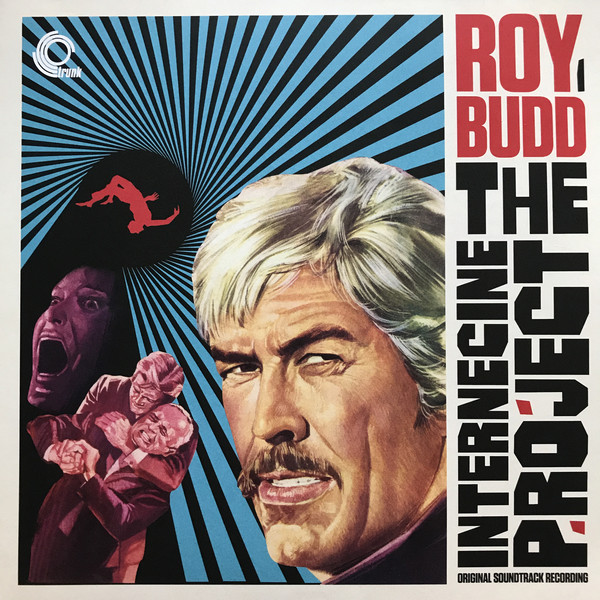
DUKE ELLINGTON, CHARLIE MINGUS, MAX ROACH-MONEY JUNGLE.
Duke Ellington, Charlie Mingus, Max Roach-Money Jungle.
Label: Blue Note Records.
On Monday, September the ‘17th’ 1962, bassist Charles Mingus and drummer Max Roach made their way to Sound Makers Studio, in New York. The two friends were en route to a session where they would record an album with one of the giants of jazz, Duke Ellington and producer Alan Douglas. This album would become Money Jungle, which was recently reissued by Blue Note Records as part of their Tone Poet series. It’s an album whose roots can be traced to Paris, as the sixties dawned.
In the early sixties, producer Alan Douglas and Duke Ellington were both working in Paris, France. One day, the producer was helping the big band leader and pianist. It was the way Alan Douglas was, and he was only too pleased to help Duke Ellington. Little did he realise their paths would cross again in the not too distant future.
In 1962, Alan Douglas took charge of United Artists’ jazz division and moved to New York. One of the first albums he recorded was Art Blakey and The Jazz Messengers’ Three Blind Mice. This was followed by trumpeter Kenny Dorham’s a quintet recording Matador, which also featured Jackie McLean and Bobby Timmons. Already, Alan Douglas had recorded two classic albums. Soon, two would become three. However, there’s two versions of how that third classic album came about.
According to Duke Ellington, as soon as Alan Douglas began his new role at United Artists’ jazz division he called the veteran pianist. During the call, Duke Ellington came up with the idea that he record an album with Charles Mingus and Max Roach. However, that is slightly different to Alan Douglas’ recollection of what happened in 1962, when he had an unexpected visit from a giant of jazz.
Alan Douglas’ visitor that day in 1962 was Duke Ellington, who by then, was sixty-three, and without a recording contract. The head of United Artists Jazz remembers it was Duke Ellington who suggested recording a piano-based album. As the two men spoke, Alan Douglas thought about a possible lineup. He suggested forty year old bassist Charles Mingus who was signed to United Artists, and had very briefly been part of Duke Ellington’s band.
That was in 1953, when Charles Mingus deputised for Duke Ellington’s double bassist. He had only been a member of the band for four days when he got into a fight with trombonist and composer Juan Tizol, who cowrote the jazz standards jazz standards Caravan. Charles Mingus was fired by Duke Ellington but they would be reunited nine years later. There was a but though.
Charles Mingus said he would play on the recording, but insisted that he was joined by thirty-eight year old drummer Max Roach. This was not up for negotiation. If Duke Ellington wasn’t willing to accept Max Roach as drummer the session wouldn’t happen. The veteran bandleader agreed. Without a recording contract he knew that Charles Mingus who was signed to United Artists Jazz was holding all the aces.
Duke Ellington knew Max Roach who had briefly been a member of his band in 1950, and a decade later played on his Paris Blues soundtrack. However, by the time of the Money Jungle sessions, Max Roach like Charles Mingus had stepped out of Duke Ellington’s shadow as they both forged successful careers.
The day before the recording, on Sunday, September the ‘16th’ 1962 the three men met and Duke Ellington who told them to: “Think of me as the poor man’s Bud Powell.” He also told Charles Mingus and Max Roach that he didn’t just want to play only his own compositions. This wasn’t true though.
The session at Sound Makers Studios, in New York, was due to begin at 1pm on Monday, September the ‘17th’ 1962. Max Roach arrived at the studio at midday to set his drums up and Duke Ellington was already there and writing out some material. That was when it became clear that despite what he had said the previous day, all the compositions that Duke Ellington wanted to use were his own.
Of the seven compositions that made it onto the album, Duke Ellington wrote Money Jungle, Fleurette Africaine (African Flower), Very Special, Warm Valley and Wig Wise. They were joined by Solitude which Duke Ellington wrote with Eddie DeLange and Irving Mills. Ironically the other track was Caravan, which Charles Mingus’ nemesis Juan Tizol cowrote with Duke Ellington and Irving Mills. When it came to recording the tracks Duke Ellington took an unusual approach.
When Max Roach was asked about the sessions in 1968 he remembered how Duke Ellington passed out: “a lead sheet that just gave the basic melody and harmony.” He also gave them a sheet of paper with a visual image. One said: “crawling around on the streets are serpents who have their heads up; these are agents and people who have exploited artists. Play that along with the music.”
Having looked at the lead sheet and read the visual images Charles Mingus and Max Roach declined the opportunity to rehearse. Instead, they decided to record straight to tape. This would be the first time that they had played the material together. It’s thought it wasn’t the easiest session.
There’s various versions of the clashes that allegedly took place during the session. According to Alan Douglas, Charles Mingus complained about Max Roach’s playing, and then picked up his bass and left the studio mid-session. Duke Ellington managed to catch up with him and after talking on the street outside, managed to persuade Charles Mingus to return. However, Duke Ellington’s version has one slight difference in that he persuaded him to return as they stood at the elevator. With at least four people in the room there’s other versions of what happened.
Another version was that Charles Mingus was unhappy that none of his compositions were used during the Money Jungle sessions. There was certainly tension in the air during the recording session and that can be heard from the opening track.
The tracks were recorded in the same order as they appeared on the album, and the tension builds during the uptempo tracks. It’s thought that Charles Mingus left after they recorded the album opener Money Jungle. By then the tension is palpable and is apparent the way he plucks the strings with his fingernails. It’s a mixture of power and frustration as they seesaw and he ensures the track swings. Meanwhile, Max Roach plays pounding polyrhythms as Duke Ellington pounds, stabs and jabs the piano and as he improvises playing dissonant chords. It was after that it’s thought Charles Mingus picked up his bass and left the studio.
After Charles Mingus returns, they record the ballad Fleurette Africaine (African Flower) which unfolds and emerge from what’s essentially a simple melody. It’s followed by Very Special, another twelve-bar blues, and then Warm Valley which veers between melancholy to dramatic as Duke Ellington’s piano takes centre-stage.
The tempo rises on Wig Wise, a jaunty, uptempo track where the piano and then bass take the lead. When Charles Mingus’ bass takes the lead this seems to spur Duke Ellington on to greater heights. He has the same effect on Charles Mingus Throughout the rest of the track they drive each other to even greater heights. There’s no stopping the trio and the tempo continues to rise on Caravan where Duke Ellington’s fingers dance across the keyboard as the rhythm section propel the arrangement along and play with a freedom and invention. Again, Duke Ellington jabs and stabs the keyboard which then twinkles and sparkles before becoming dark and dramatic as the track closes and the tension seems to build. Closing Money Jungle is Solitude, a beautiful standard which offers the chance to reflect and ruminate. Sadly, by then the relationship between the three giants of jazz was fractured despite having recorded what would later be regarded as a classic album of post bop.
After the session, the trio who had a two album deal with United Artists Jazz couldn’t be persuaded to play together. It was the end of the line for this short-lived collaboration. At the time, Duke Ellington was the biggest loser, as he didn’t have a recording deal. Meanwhile, Charles Mingus and Max Roach stars were in the ascendancy, and were both regarded as pioneering jazz musicians. When Money Jungle was released by United Artists Jazz it was further proof of this.
Money Jungle was released in mono and stereo in February 1963 and the reviews were mostly favourable. Much of the plaudits were reserved for Charles Mingus and Max Roach. Down Beat magazine’s Don DeMicheal called them: “some of the fastest company around.” They were also praised for taking Duke Ellington out of comfort zone and taking him in a new direction musically and he needs to improvise like he’s never done before. He rises to challenge and thrives on an album that has been called everything from “memorable” to a “masterpiece.” Despite that, many critics felt that Charles Mingus stole the show during Money Jungle which was the only album featuring three members of jazz royalty.
This meant that Money Jungle was a historical recording. However, there was a problem with the standard of the original stereo recording of Money Jungle. When the instruments were setup, the piano was at the front and in centre with the double bass panned right and the drums in the left channel behind the piano. Some critics described the recording as sounding “wooly” with instances of distortion emanating from the piano microphone. This was disappointing given the importance of the album.
Critics realised when they heard Money Jungle that despite their different backgrounds and what had happened during the session that the three giants of jazz had recorded what was a classic album. The critics knew that Charles Mingus and Max Roach were capable of this, as they regularly recorded albums of groundbreaking music. The same critics doubted that Duke Ellington would ever record another classic album.
By 1963, when Money Jungle was released the veteran bandleader and pianist was sixty-four. Duke Ellington was born in 1899, and was regarded by some critics as yesterday’s man and part of jazz’s establishment. He was very different to his collaborators on Money Jungle.
Charles Mingus and Max Roach were both modernest musicians and were regarded by critics as musical revolutionaries. Critics hailed their modernist sound as the future of jazz. Despite that, they respected Duke Ellington and his music had influenced both men. However, when they joined forces in 1962 they seemed unlikely collaborators.
Despite what happened during the session Duke Ellington was spurred on by the two younger men. They brought out the best in the legendary bandleader and encouraged him to improvise like he had never improvised before. There was a chemistry between the three men who poured a roller coaster of emotions into the music. Sometimes, frustration and anger can be heard, other happiness and joy, and at other times a sense sadness and melancholy. For much of Money Jungle there’s a sense of tension and that’s apparent as the tempo rises, until the closing track Solitude, where the trio seem to reflect on what’s gone before. It was the perfect way to close the Money Jungle.
Since the original release of Money Jungle in 1963, there have been notable reissues of Money Jungle in 1987 and 2002 where the remastering process has resulted in an improvement in sound quality. That is the case on the recently reissued Tone Poet vinyl version which was remastered by Kevin Gray and is without doubt the best vinyl version available. It’s the perfect way to discover this landmark album where sparks fly and Duke Ellington, Charlie Mingus, Max Roach, three giants of jazz, make musical history on Money Jungle, a post bop classic that is a must have for anyone who loves and is passionate about jazz.
Duke Ellington, Charlie Mingus, Max Roach-Money Jungle.
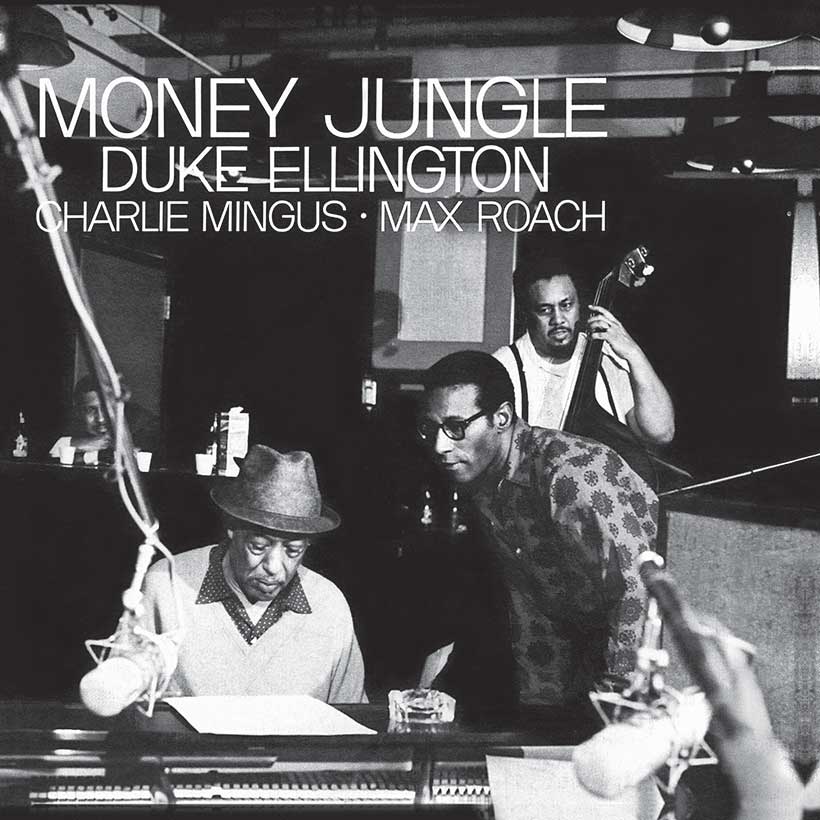
CULT CLASSIC: CLAUDE LOMBARD-CHANTE.
Cult Classic: Claude Lombard-Chante.
By 1969, twenty-four year old Belgian chanteuse Claude Lombard had been involved in the music industry for seven years, and had already written several scores and appeared as a session singer on numerous singles. Claude Lombard had also represented Belgium at Eurovision Song Contest and released a number of singles during the rises and rise of yé-yé music. Somehow, Claude Lombard still found time to study for a degree and postgraduate degree. The twenty-four year old had achieved a lot in a relatively short space of time. There was however, one thing she had still to do,…release an album. That changed when she released Chante, which was an album of groundbreaking chanson psychedelia. Chante was the latest chapter in the Claude Lombard story.
Claude Lombard was born in Brussels in 1945, and brought up in a musical family. Her mother was actress Claude Alix, who later went on to sing rock ’n’ roll as Rita Roque, while Claude Lombard’s father was a jazz pianist and singer. He introduced his daughter to music at an early, and Claude Lombard caught the music bug.
By the time Claude Lombard was a teenager, she was taking music lessons. She studied the guitar, music, harmony, counterpoint and composition. This would stand Claude Lombard in good stead for the future. However, as she prepared to leave high school, Claude Lombard was unsure what the future held for.
As a result, Claude Lombard decided to study law at university. It looked as if Claude Lombard was about to turn her back on music. That wasn’t the case. When she arrived at university, Claude Lombard decided enrol in some dramatic arts courses. However, it wasn’t long before Claude Lombard decided to change direction academically. Law wasn’t for Claude Lombard.
Instead, Claude Lombard decided to enrol at the Superior Institute of Arts and Choreography (ISAC). It soon became apparent that this was Claude Lombard had found her calling. She immersed herself in the new course and studied all aspects of music, dance and theatre. Some of the classes would prove useful when Claude Lombard embarked upon a musical career. Especially the classes in interpretation and the music lessons that Claude Lombard took. By the time she left ISAC, she had honed her skills as a pianist and guitarist. This would stand her in good stead when she graduated from ISAC.
Having left ISAC, one of Claude Lombard’s first jobs was writing the score to the musical adaptation of Boris Vian’s The Foam Of The Daze. Not long after that, she joined forces with her mother and wrote the score to Flower Power. Meanwhile, Claude Lombard was working as a session singer, and featured on countless singles and the occasional album. Claude Lombard’s career had taken off.
Still, Claude Lombard found time to write and record her debut single L’Amour De Toi, which was released by Decca in 1965. By then, yé-yé music had swept much of mainland Europe and was hugely popular. Claude Lombard was keen to add yé-yé singer to her burgeoning CV.
By then, Claude Lombard was spending much of her time writing and recording. Although she was constantly busy, Claude Lombard was determined to improve herself musically. She had an insatiable thirst for knowledge and self-improvement, and decided to enrol on a doctorate course.
Despite returning to the world of academia, Claude Lombard continued to embark on new musical challenges. She became part of the contemporary music group Music Nouvelles and the Jazz Orchestra of Belgian Radio Television. This resulted in Claude Lombard meeting Peter Bartholome, who was one of the leading lights of Belgian music.
He offered Claude Lombard a role in the Luciano Berio’s opera Laborintus, which was being staged at the Theatre Royal in Brussels. At first, Claude Lombard was unsure about accepting the role as she still unsure about her talent and ability. Eventually, she accepted the role and Claude Lombard’s role in Laborintus received praise and plaudits. This helped Claude Lombard’s confidence.
After her appearance in Laborintus, Claude Lombard was due to make an appearance at the Festival Mundial de la Cancion Latina. The competition was fierce, with forty participants vying for this prestigious prize. Claude Lombard sung Petit Frère, which featured lyrics by Freddy Zegers. While Claude Lombard finishes in a respectable tenth place, Freddy Zegers won the gold medal for his lyrics to Petit Frère, which later opened Chante.
After returning from the Festival Mundial de la Cancion Latina, Claude Lombard and Freddy Zegers formed a formidable songwriting partnership. Claude Lombard and Freddy Zegers also released the Profond EP Palette in October 1967. Alas, the EP failed to find an audience and it was back to the drawing board for Claude Lombard.
Later in 1967, Claude Lombard released a solo EP which featured four of her own compositions. Stylistically, Bains De Mousse, Tendresse De Chevet, Aux Quatre Coins and Jupon Vole were all very different and ranged from bossanova to chanson and pop. Alas, when the EP was released on Polydor it also failed to find an audience. However, Claude Lombard wasn’t about to give up.
Her persistence paid off when Claude Lombard was chosen to represent Belgium at the 1968 Eurovision Song Contest, which was being held at the Royal Albert Hall, in London, England. That night, Claude Lombard sang Quand Tu Reviendras and finished in a very respectable seventh place.
Quand Tu Reviendras was released as a single by Palette in April 1968. On the B-Side was Claude Lombard and Freddy Zegers composition Les Petits Couteaux. It found Claude Lombard and Freddy Zegers reunited as they duetted once again. Despite the relative success of Quand Tu Reviendras at the Eurovision Song Contest, widespread commercial success continued to elude Claude Lombard.
Despite her lack of success in Belgium, Claude Lombard’s singles were released all over Europe, including in France, Germany, the Netherlands and Spain. Yé-yé music was still popular across mainland Europe, and Claude Lombard was marketed as a yé-yé singer. This would change when Claude Lombard released her debut album Chante in 1969.
For her debut album Chante, the Claude Lombard wrote the music to eleven new songs while Freddy Zegers penned the lyrics. They joined Petit Frere, which Claude Lombard had sung at the Festival Mundial de la Cancion Latina just a few years previously. It made a welcome return on Chante, which was recorded at Studio Madeleine, in Brussels, with producer Roland Kluger. With Chante complete, all that was left was to release Claude Lombard’s debut album.
The label that Claude Lombard chose to release Chante, was Disques Jacques Canetti. When it was founded in 1962, by Jacques Canetti, it became the first ever French independent record label. Disques Jacques Canetti released Chante in 1969, but sadly, it failed to find the audience it so richly deserved. This was a great shame, as Chante was an album of beautiful, groundbreaking and influential album of chanson psychedelia that sometimes, headed in the direction of avant-garde and sci-fi pop. Sadly, Chante was way ahead of its time and record buyers neither understood nor grasped the importance of this future cult classic.
As Petit Frère opens Chante, plucked plink plonk strings, a strummed guitar and bass combine, while the drummer marks time on the ride as Claude Lombard delivers a rueful and emotive vocal. Soon, the tempo rises, adding to the drama and emotion. Meanwhile, the rhythm section is joined by washes of organ, occasional Arabian sounds and later, swathes of wistful strings. They sweep and swell, adding to the to the sense of melancholia as the arrangement floats along. All the time, the strings provide the perfect accompaniment to Claude’s heartfelt vocal. Still, instruments flit in and out, including a guitar, piano and sci-fi sounds. They all play their part in the sound and success of this beautiful, wistful example of “canonical chanson.”
Straight away, drums pound and power the arrangement to Polychromés along. Meanwhile, horns bray as Claude delivers a brisk and urgent vocal. Adding to the urgency is the drums, while futuristic keyboards add a lysergic sound to this genre-melting, cinematic track. Already, elements of avant-garde, experimental, jazz, pop, and psychedelia are being combined by Claude and her band. They create an ambitious, dreamy, hypnotic and lysergic backdrop that dance along, and sets the scene for Claude’s urgent and sometimes, ethereal vocal.
Chimes and bells ring as Les Enfants Perle unfolds. Soon, the rhythm section and brisk guitar join shimmering, glistening keyboards and otherworldly, futuristic sounds. They provide an accompaniment to Claude Lombard’s tender, heartfelt vocal. Later, the chimes and bells flit in and out, playing their part in this beautiful, dreamy reminder of the Queen of chanson psychedelia at her best.
Stabs of piano quicken, creating an urgent backdrop on Midi. It’s joined by the bass, before the rest of the band join the frae. They create a backdrop the flits seamlessly between jazz, soul jazz and incorporates psychedelia. Meanwhile, Claude’s vocal veers between urgent, sultry, soulful and when the arrangement becomes understated, tender and lysergic. Especially, when reverb is added to her vocal. Adding to the psychedelic backdrop is washes of Hammond organ, before the arrangement takes on jazzy cinematic sound. Claude embraces this new sound, before the tempo rises and she joins her band, who power this cinematic song along until it reaches a memorable crescendo.
It’s all change on Mais, where a piano sets the scene for Claude on this jazz-tinged song. The twenty-four year old chanteuse delivers one of her most tender, heartfelt vocals and shows maturity beyond her years. It’s as if the band realise that this one of Claude’s finest moments and take care not to overpower her vocal. Instead, an organ and joins the piano, which plays a leading role in the sound and success of the song. It features one of the finest vocals on Chante from chanteuse Claude Lombard who delivers expressive vocal as she breathe meaning and emotion into the lyrics.
As La Coupe starts to reveal its secrets sci-fi sounds combine with the rhythm section, piano and guitar. Claude delivers a slow, thoughtful and tender vocal. Sometimes, her vocal soars above the arrangement as it skips along, with a piano combining with the rhythm section and guitar. They’re joined by shimmering keyboards and futuristic, otherworldly sounds. This is the final piece of the jigsaw. Later, effects transform Claude’s vocal, which becomes ghostly as she scats during this genre-melting, cinematic, chanson psychedelic opus.
A clock chimes as Claude singe “Sleep Well” tenderly. Meanwhile, chanson psychedelic sound starts to unfold. Sci-fi sounds combine with the rhythm section and guitar. who play slowly and deliberately. Meanwhile Claude’s vocal rises and falls, cascading across the arrangement during what sounds like a modern lullaby. That is apart from when sci-fi sounds are added and briefly, effects are added to Claude’s vocal. They add a twist to this modern lullaby before it reaches a crescendo. By then, Sleep Well sounds as if it belongs in a short gothic film.
A shrill sound drones briefly, before giving way to a funky guitar, rhythm section and tough keyboards that combine on L’Usine to create an urgent backdrop for Claude. Her vocal is equally urgent, but also powerful, ethereal and impassioned. Meanwhile, otherworldly and futuristic sound are added. Later, they become more prominent and create a cinematic backdrop for Claude’s vocal. Adding to the cinematic sound is Claude’s effect-laden vocal which soars high above the arrangement. Latterly, otherworldly sounds dominate the arrangement adding to the cinematic sounds on a track that fuses drama with avant-garde, experimental, funk, Musique Concrète and chanson psychedelia.
Lush strings sweep and combine with flourishes of piano on Les Vieux Comptoirs. Soon, washes of a swirling Hammond organ and guitar combine as Claude delivers one of her most tender and elegiac vocals. It sits atop the arrangement as it flows along constantly tugging at one’s heartstrings. By the end of this beautiful, orchestrated track it’s apparent that this is chanteuse Claude Lombard’s finest moment on Chante.
Drums pound ominously on Les Musiciens, and join stabs of piano and otherworldly sounds that provide the backdrop for Claude’s heartfelt vocal. They’re joined by a funky guitar and swirling Hammond organ. Soon, Eastern, experimental and lysergic sounds are added to this musical tapestry, as Claude delivers her vocal with urgency and emotion. It soars high above the arrangement, with sci-fi sounds and rat-a-tat drums providing a contrast to the funky guitar and the dusty swirling Hammond organ. They accompany Claude as she continues to combine drama, emotion and urgency during this poignant and truly memorable song.
From the opening bars, L’Arbre et L’Oiseau has an unmistakable sixties sound. That is the case from the moment the song bursts into life, with Claude’s band playing as one. The rhythm section and funky guitar combine with the Hammond organ as Claude grabs the song by the scruff of the neck and makes it her own. She combines power and emotion, while her band combine funk, with pop, psychedelia and rock. With just over thirty-seconds left, Claude passes the baton to her multitalented band, who ensure this irresistible song ends on a high.
La Camarde, which closes Chante, is akin to a journey on an old steam train. Drums replicate the sound a steam train makes as it heads across the tracks. Meanwhile, a whistle blows, Hammond swirls and the bass marches the arrangement along and is later, joined by a piano. Adding the finishing touch is Claude’s vocal, which veers between tender to ethereal, dramatic and sultry. While Claude’s vocal plays a leading role during this last part of the musical journey, her talented and versatile band play their part in the sound and success of La Camarde. There’s an element of theatre to this melodic and memorable song that closes Belgian chanteuse Claude Lombard’s debut album Chante.
Seven years after she embarked upon a musical career, Claude Lombard finally got found to recording her debut album Chante. By then, Claude Lombard sung opera, appeared at the Eurovision Song Contest in 1968 and had even been a yé-yé singer. When Claude Lombard released Chante in 1969, it was important, innovative and influential album of.
That was despite Chante failing to find an audience upon its release in 1969. Back then, people failed to understand an album that was way ahead of the musical curve. While Chante was ostensibly an album of chanson psychedelia and sci-fi pop, there’s much more to this genre-melting album. It finds Claude Lombard fusing and flitting between avant-garde, chanson electronica, experimental, funk, Musique Concrète, pop, psychedelia and rock. The result was an album of music that was variously beautiful, dramatic, dreamy, lysergic, melancholy, orchestral and wistful. Sometimes, the addition of futuristic and sci-fi sounds transformed the music, and it became otherworldly and cinematic. Given this cinematic sound, it’s as if Claude Lombard’s carefully sculpted songs were meant to be part of the soundtrack to a short films. These songs were also very different from much of music being released in Belgium in 1969.
Twenty-four year old chanteuse Claude Lombard pioneered the chanson psychedelia and sci-fi pop on Chante 1969. Somewhat belatedly Chante found the audience it so richly deserved and went on to influence and inspire several generations of musicians. Especially, it seems, groups like Broadcast and Stereolab. Their music has obviously been influenced and inspired by Chante which nowadays, is regarded as a cult classic and a truly groundbreaking album. It features twenty-four year old Belgian chanteuse Claude Lombard, who pioneered chanson psychedelia and sci-fi pop on her 1969 debut album Chante, which went on to influence and inspire several generations of musicians, and will continue to do so.
Cult Classic: Claude Lombard-Chante.
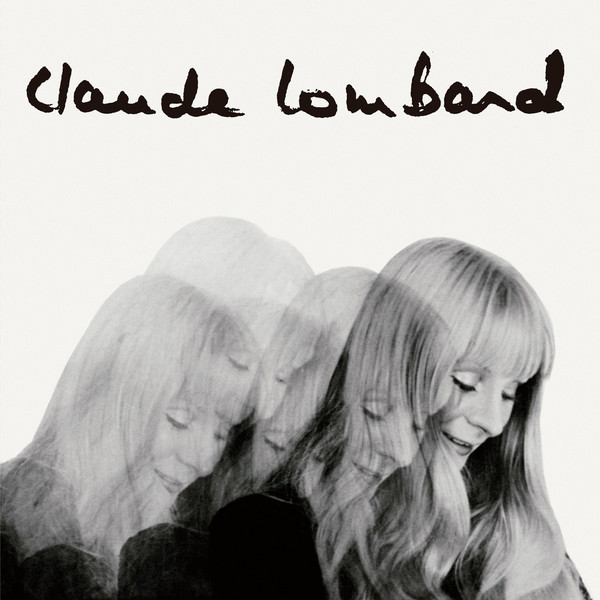
CULT CLASSIC: ISAAC HAYES MOVEMENT-DISCO CONNECTION.
Cult Classic: Isaac Hayes Movement-Disco Connection.
Disco. Never has a musical genre divided opinion like the D word. It’s been described as musical Marmite. People either love disco, or they loathe it. There’s no in-between. However, forty years ago, in 1976, disco’s star was in the ascendancy. Artists were jumping onto the disco bandwagon. Especially artists whose career was stalling. That however, wasn’t the case with Isaac Hayes.
Ever since he released his sophomore album Hot Buttered Soul, Isaac Hayes in 1969, he could do wrong. Hot Buttered Soul reached number eight in the US Billboard 200 and number one in the US R&B charts. The followup, 1970s The Isaac Hayes Movement also reached number eight in the US Billboard 200 and number one in the US R&B charts. Later, in 1970, …To Be Continued reached number eleven in the US Billboard 200 and number one in the US R&B charts. 1970 had been a hugely successful year for Isaac Hayes. So would 1971.
In July of 1971, Isaac Hayes released his first soundtrack album, Shaft. Not only did it reach number one on the US Billboard 200 and US R&B charts, but spawned the hit single Shaft. This Blaxploitation classic reached number two on the US Billboard 100 and number one in the US R&B charts. The when Isaac Hayes released Black Moses later in 1971, it reached number ten in the US Billboard 200 and number one in the US R&B charts. Live at the Sahara Tahoe, Isaac’s first live album, reached number fourteen the US Billboard 200 and number one in the US R&B charts. That made it six number one albums on the US R&B charts. However, six didn’t became seven.
The run was broken when 1973s Black Moses “only” reached reached number sixteen in the US Billboard 100 and number two in the US R&B charts. However, Isaac Hayes seemed to lose his Midas touch in 1974.
During 1974, Isaac Hayes was commissioned to compose two soundtracks. Neither proved particularly successful. Tough Guys stalled at number 148 in the US Billboard 200, while Truck Turner only reached number 158 in the US Billboard 200. So, Isaac Hayes decided to have a musical rethink. A year later, in 1975, and Isaac Hayes returned with a quite different album.
Hot Chip had been influenced by disco, which by 1975, was growing in popularity. So his seventh studio album, Hot Chip incorporated elements of disco. It reached number eighteen in the US Billboard 100 and number one in the US R&B charts. Given the popularity of disco, and the response to Hot Chip. Isaac Hayes decided to release a disco album with his backing band the Isaac Hayes Movement. This would be no ordinary album. Disco Connection was an instrumental album from Isaac Hayes.
Disco was a relatively new musical genre by the time Isaac Hayes decided to release Disco Connection in 1975. It had been around since the early seventies. However, what the first disco record was, is still disputed?
Some critics believe disco was born in 1971, with Barry White and Isaac Hayes pioneering the disco sound. Other critics think 1972 was the year disco was born. They point towards singles like The O’Jays’ Love Train, Jerry Butler’s One Night Affair or Manu Dibango’s Soul Makossa. Even 1972 might be too early for disco’s birth?
It could be that disco wasn’t born until 1973, when the Hues Corporation released Rock The Boat. That argument would find favour with many critics. However, some critics dispute Hues Corporation being one of the earliest disco records. They think disco was born in 1974.
Nowadays, a number of critics think George McCrae’s 1974 number one single got the disco ball rolling. It was released on Henry Stone’s T.K. Records in April 1974 and reached number one in America. Some critics will try to convince you that George McCrae and Henry Stone’s T.K. Records were responsible for getting the disco ball rolling. Others beg to differ.
It’s thought that disco was already celebrating its first birthday by then. The first article in the music press about disco was penned by Vince Aletti for Rolling Stone magazine in September 1973. Little did Vince know, he’d just written the first article about a true musical phenomenon.
Disco was born in America. Music historians have traced disco’s roots to clubs in Philly and New York. These two cities would play an important part in a disco. Philly and New York were where many of the most successful disco records were recorded. They were also home to some of disco’s top labels, Salsoul Records, SAM Records, West End Records and Casablanca. This quartet of labels are perceived as disco’s premier labels. They provided the soundtrack to America’s clubs for the next few years.
Many clubs became synonymous with disco. Especially New York. It was also home to some of the top clubs, including David Mancuso’s Loft, Paradise Garage and Studio 54. While these trio of clubs were soon perceived as some of the most influential clubs of the disco era, disco was making its presence felt worldwide.
Although born in America, soon disco’s influence was being felt worldwide. Around the world, dancers danced to the pulsating disco beat. Disco crossed the continents and provided the musical soundtrack to dance-floors worldwide.
Among the most successful purveyors were Salsoul Records, SAM Records, West End Records and Casablanca. They were creating what is remembered as some of disco’s finest moments. Other labels and artists looked on enviously. Soon, they decided to jump on the disco bandwagon.
Before long, artists whose career had been on the slide for years, were reinventing themselves as disco stars. Johnny Mathis, Cissy Houston, Herbie Mann and Tony Orlando were all willing to undergo a disco makeover to revive flagging and failing careers. Isaac Hayes however, was one of the biggest names in soul, funk and R&B.
While a number of yesterday’s stars jumped on the disco bandwagon, Isaac Hayes had enjoyed the most successful period of his career. Granted, it hadn’t been all smooth sailing, but he was happy with where he was. However, Isaac was determined not to stand still. He was determined to move forward musically. There was though a problem on the horizon.
For a while, Stax Records had been experiencing financial problems. Isaac Hayes was owed a lot of money in royalties. When they weren’t forthcoming, Isaac had no option but to issue writs in 1974. Still, the royalties weren’t forthcoming. So, Isaac, with the backing of ABC Records, founded his own Hot Buttered Soul label. Chocolate Chip had been his first album on his new label. Disco Connection would be the second.
For Disco Collection, Isaac Hayes had penned eight new tracks. They were recorded by the Isaac Hayes Movement at Hot Buttered Soul Recording Studio, in Memphis. Lester Snell and Isaac arranged most of Disco Collection, except Aruba, which they arranged with Johnny Allen. Isaac however, took charge of the production. This was quite a challenge, given Isaac Hayes Movement featured twenty-two musicians and a string section.
The Isaac Hayes Movement’s rhythm section consisted of Willie Cole and William Hall on drums and tambourines, bassist Errol Thomas and guitarists Anthony Shinault, Charles Pitts, Michael Toles and William Vaughn. Keyboardist Sidney Kirk was joined by Jimmy Thompson on congas and Bryant Munch and Richard Dolph on French horn. Add to this a horn section and The Memphis Strings, and the Isaac Hayes Movement took shape. They recorded eight tracks which became Disco Connection.
Disco Connection wasn’t released until 12th January 1976. By then, Isaac Hayes had been back in the studio and recorded his next album, Groove-A-Thon. It would be released on St. Valentines Day, which was less than a month away. This wasn’t a good idea.
With two albums being released in a short space of time, this confused record buyers. Record buyers looking for Isaac Hayes’ next solo album, mistakenly bought Groove-A-Thon. Similarly, those who had enjoyed Disco Connection, bought Groove-A-Thon thinking it would be more of the same were in for a surprise. By releasing two albums in a short space of time, all that had happened, was that sales of both albums were disappointing.
Disco Connection stalled at a disappointing eighty-five in the US Billboard 200 and nineteen in the US R&B charts. Groove-A-Thon fared slightly better, reaching number forty-five in the US Billboard 200 and eleven in the US R&B charts. However, in years to come, the sales of Groove-A-Thon would be seen as a success. Isaac Hayes’ years of number one US R&B albums were a thing of the past. Despite embracing disco on Disco Connection, would he later become another victim of the disco phenomenon?
The First Day Of Forever opens Disco Connection. Straight away, elements of Philly Soul, funk and disco combine. Considering Disco Connection was recorded in Memphis, this is ironic. Strings shiver and dance while the rhythm section and congas combine. They’re joined by braying horns and a Norman Harris’ influenced guitar. By then, the arrangement is gliding elegantly along. Above the arrangement sits the dancing disco strings. During the breakdown, the arrangement slows down and the a melancholy French horn sounds. Pounding drums and a chiming guitars combine, as the arrangement cha cha’s along. Then when the dancing string reenter, this glorious slice of tailor made disco comes alive and all of sudden, it’s 1976 again.
While the rhythm section provide the heartbeat to St. Thomas Square, funky guitars, disco strings and woodwind combine. They’re soon joined by rasping horns and galloping congas. Again, there’s a wistful sound to the track. This soon changes, as the horns and strings unite. Along with the funky rhythm section they add a feel good sound. There’s almost a cinematic sound. That’s not surprising, as Isaac Hayes had written three soundtracks. Later,a jazz tinged guitar unites with braying horns and lush strings. Together, they play their part in what’s an emotive, cinematic slice of disco.
The introduction to Vykk II sees the tempo drop. Gone is the disco sound of the two previous tracks. However, the way the organ, horns and the rhythm section combine, have Isaac Hayes name written all over it. It’s much more like his earlier music, and is best described as soulful, sultry, funky, jazzy and dramatic. Horns play an important part. So does Isaac’s keyboards and the strings. They’re slow and lush, while the sultrier of saxophone drenches the arrangement. It’s aided and abetted by subtle horns that add to the soulful, dreamy and sensual sound.
With its neo Shaft introduction, Disco Connection is disco with a twist. The ride is ridden, before elements of Giorgio Moroder’s Euro Disco combines with an industrial sound. It’s like a whip cracking. Meanwhile, the rhythm section and keyboards keep things funky. Horns growl and bray, strings shimmer and dance. A clavinet adds a heavy duty funky sound. By now, it’s like a ride on a musical roller coaster. Everything from disco, Euro disco, funk, fusion and soul are combined the Isaac Hayes Movement. This combination results in a funky slice of dramatic disco.
Disco Shuffle is an eight minute epic, where Isaac Hayes combines elements of Blaxploitation, disco, funk, jazz, rock and soul. From small acorns, a musical oak grows. Buzzing keyboards join a rhythm and horn section that could just as easily belong on Blaxploitation movie. Anthony Shinault Hendrix-esque guitar solo takes centre-stage. Meanwhile, growling horns and sweeping strings join the buzzing keyboards and the rhythm section. They drive the arrangement along. Soon, the Isaac Hayes Movement are in full flow. It’s a joy to behold. Especially, as stabs of horns sound, drums pound and Anthony Shinault unleashes a blistering guitar solo. The result is a funky, strutting symphony.
A wah-wah guitar joins the rhythm section and growling horns on Choppers. Gradually, the arrangement grows in power and drama. Strings sweep and swirl, as the Isaac Hayes Movement threaten to kick loose. Stabs of keyboards and chiming guitars combine. Still, the quivering shimmering strings that threaten to cut loose. Eventually, swathes of strings dance. Having briefly cut loose, Isaac Hayes reigns them in. A funky guitar and looming horns take centre-stage. Soon, they’re joined by the shimmering strings and washes of Hammond organ. Then the strings dance for joy. It sounds as if the classic lineup of The Salsoul Orchestra had been asked to provide the soundtrack to a blaxploitation movie in 1976. Later, the the Isaac Hayes Movement jam. Seamlessly, the combine musical genres on one of Disco Connection’s highlights.
Keyboards and congas combine to create a dramatic introduction to After Five. Soon, drums, percussion and a flute are added. A chiming, crystalline guitar and deliberate bass are added as the arrangement glides along. Atop the arrangement sits the lushest of strings. Adding a contrast are bursts of pounding drums and a jazz guitar. They add the finishing touches to the genre-melting After Five.
Closing Disco Collection is Aruba. It has an almost avant-garde introduction. For forty-four seconds, an otherworldly sound is accompanied by hypnotic drums and the mellow sound of a Fender Rhodes. Only then does the arrangement unfolds. It’s classic Isaac Hayes. Stabs of blazing horns, swathes of strings, a subtle Fender Rhodes are accompanied by piano and the rhythm section. Gradually, the arrangement builds and builds. That’s until Isaac throws a curveball. The earlier otherworldly sound briefly returns. Then the Isaac Hayes Movement power their way through the rest of Aruba, ensuring Disco Collection ends on a high.
Given the quality of music on Disco Connection, it deserved to fare better than it did. However, the decision to release Groove-A-Thon a month later proved costly. This confused record buyers, who struggled to differentiate between an Isaac Hayes’ solo album and an album by the Isaac Hayes Movement. As a result, confusion reigned and some record buyers ended up buying the wrong album. Other record buyers couldn’t afford to buy both albums, so chose one. The result was that neither album sold in huge quantities. It was a far cry from when eight out of the nine albums Isaac Hayes released between 1969 and 1973, reached number one in the US R&B charts. These were the glory days. Although Chocolate Chip reached number one n the US R&B charts in 1975, that was as good as it got for Isaac Hayes.
Disco Connection and then Groove-A-Thon were the start of a period when Isaac Hayes was no longer the huge star he had once been. His albums either stalled in the lower reaches of the charts, or failed to chart. A few years ago, that would’ve been unthinkable. The most successful album Isaac Hayes released, was 1979s Don’t Let Go. Even then, it only reached number thirty-nine in the US Billboard 200a and number nine in the US R&B charts. The disco years hadn’t been kind to Isaac Years. However, he wasn’t alone.
That had been the case for many soul, funk and R&B artists. Many of these albums were overlooked, despite the quality of music on them. Even albums by some of the biggest names in rock and pop were being cast aside in favour of disco. This was ironic, as the seventies were one of the greatest musical decades ever. Some of the greatest rock music ever was being released. Yet all radio program directors wanted their listeners to hear was disco. Someone had to make a stand. Enter Steve Dahl.
Right up until Christmas Eve 1978, Steve Dahl was a DJ on WDAI, a Chicago radio station. WDAI had been a rock station for a long time. Then on Christmas Eve 1978, it was announced WDAI was going to become a disco station. Given the change in music policy, Steve Dahl was fired. Little did anyone know, that Steve Dahl’s firing would result in disco’s death.
Steve wasn’t out of work long. He was soon hired by WLUP, a rival station. WLUP played rock, which suited Steve Dahl. He had a feeling that disco wasn’t long for this world. The disco bubble was about to burst; and it wouldn’t take long.
Steve wasn’t a fan of disco, and took to mocking disco on-air. Openly, he mocked WDAI’s “disco DAI.” It became “disco die” to to Steve. Soon, Steve had created the Insane Coho Lips, his very own anti-disco army. Along with cohost Gary Meier, they coined the now infamous slogan “Disco Sucks.” The backlash had begun.
From there, the Disco Sucks movement gathered momentum. Events were held all over America. This came to a head at Disco Demolition Derby, which was Steve Dahl’s latest anti-disco event. Each one was becoming bigger, rowdier and attracting even more publicity. Disco Demolition Derby, which was held at Comiskey Park, Chicago on 12th July 1979 surpassed everything that went before. WFUL were sponsoring a Chicago White Sox game at Comiskey Park. if fans brought with them a disco record, they’d get in for ninety-eight cents. These records would be blown up by Steve Dahl. An estimated crowd between 20-50,000 people attended. Quickly the event descended into chaos. Vinyl was thrown from the stands like frisbees. Then when Steve blew up the vinyl, fans stormed the pitch and rioted. Things got so bad, that the riot police were called. After the Disco Demolition Derby, disco nearly died.
Following Disco Derby Night, disco’s popularity plunged. Disco artists were dropped by major labels, disco labels folded and very few disco albums were released. Disco was on the critical list, and suffered a near death experience. It took a long time to recover. After disco’s demise, dance music changed.
No longer were record labels willing to throw money at dance music. Budgets were suddenly much smaller. Gone were the lavish productions of the disco orchestras of the seventies. This was epitomised by The Salsoul Orchestra and John Davis and The Monster Orchestra. Strings and horns were now a luxury. Music would have to go back to basics.
Replacing strings and horns would be sequencers, synths and drum machines, which during the last couple of years, had become much cheaper. Previously, they were only found in studios or were used by wealthy and famous musicians. Now they were within the budget of many musicians. However, with disco now dead, a generations of musicians who suffered during the disco era, could make a comeback. This included Isaac Hayes.
Although Isaac Hayes had never been away, he might as well have been. Many of his albums were overlooked by record buyers as he wasn’t “on-trend” during the disco years. That’s apart from when he released Disco Connection, which is a long lost and oft-overlooked cult classic that’s a reminder that disco is still alive and thriving forty-one years after its supposed death.
Cult Classic: Isaac Hayes Movement-Disco Connection.
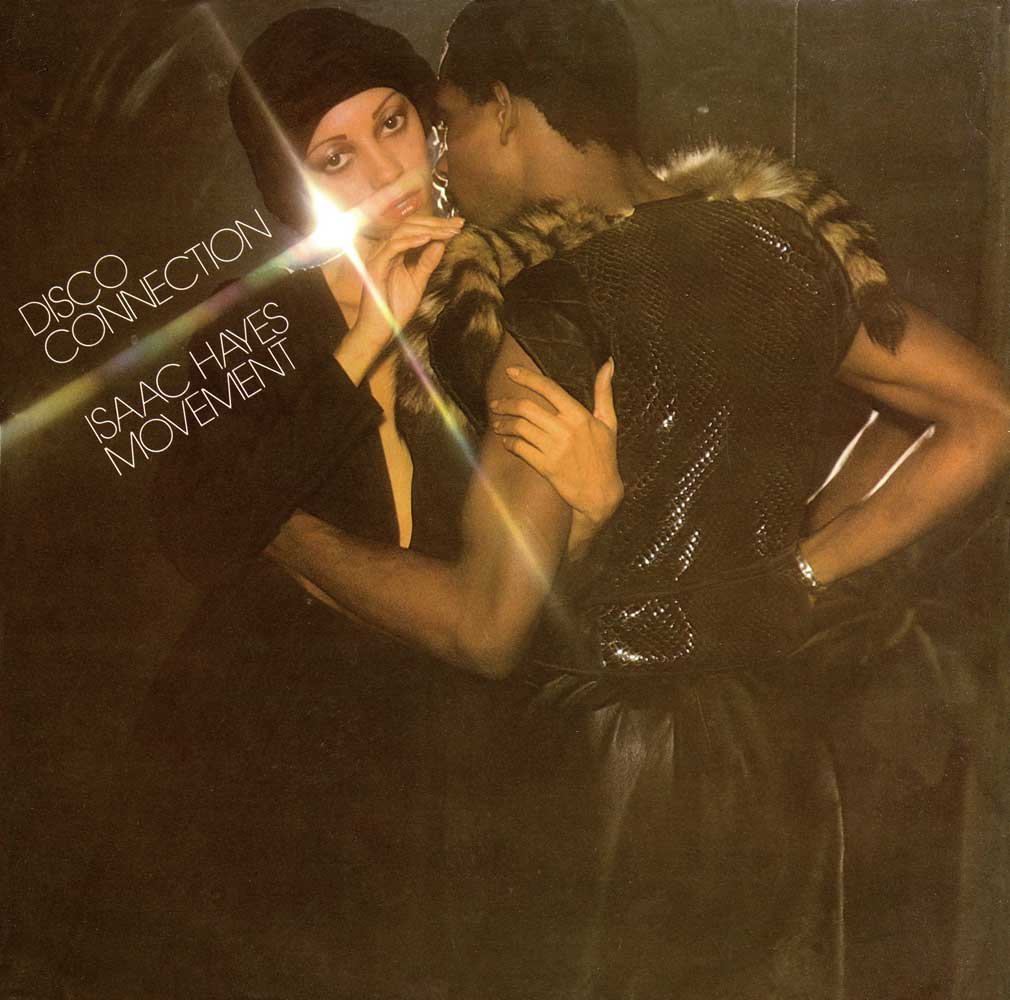
 dereksmusicblog
 dereksmusicblog